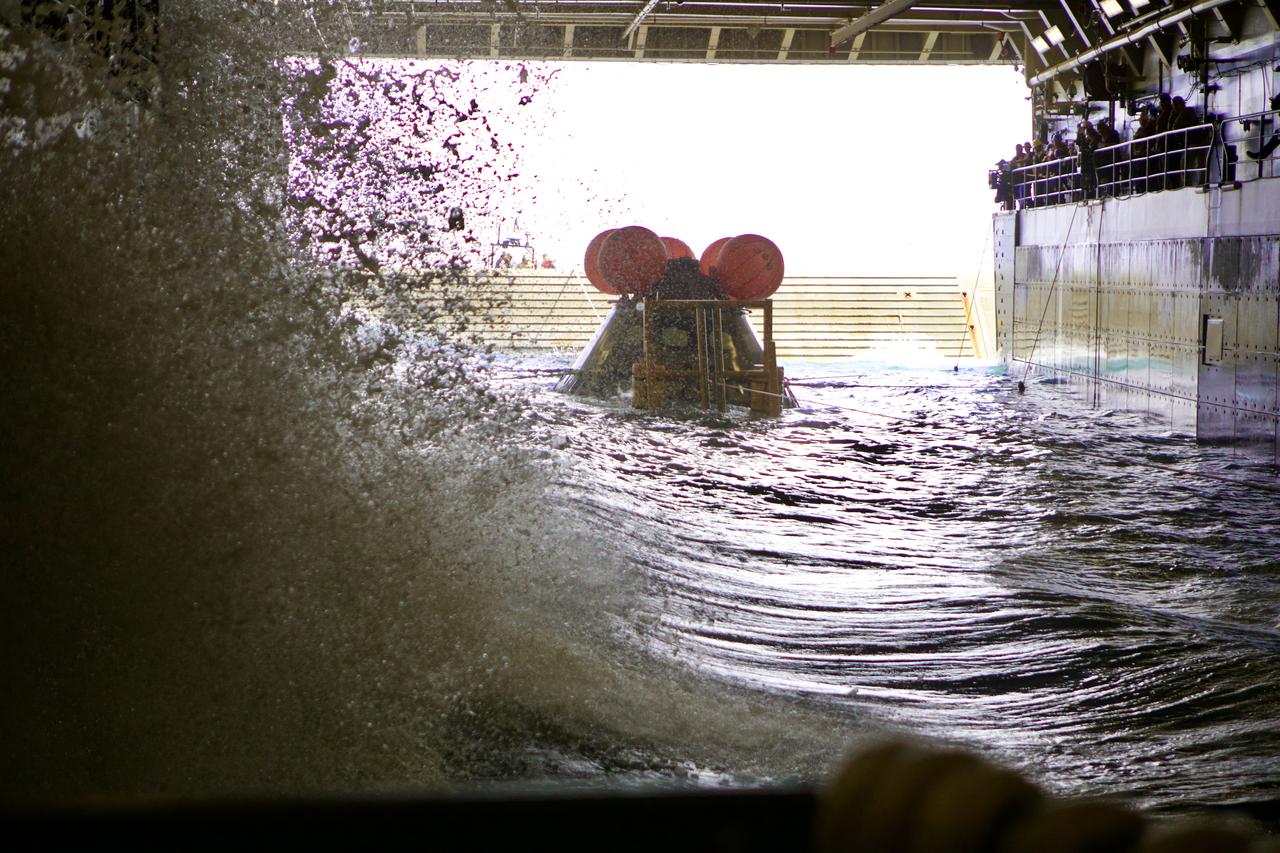
NASA’s Landing and Recovery team practice bringing a test version of the Orion capsule into the well deck of a Navy ship during Underway Recovery Test-8. During the test, the team practiced to ensure recovery procedure timelines are validated as NASA plans to send Artemis I around the Moon and splashdown in the Pacific Ocean.
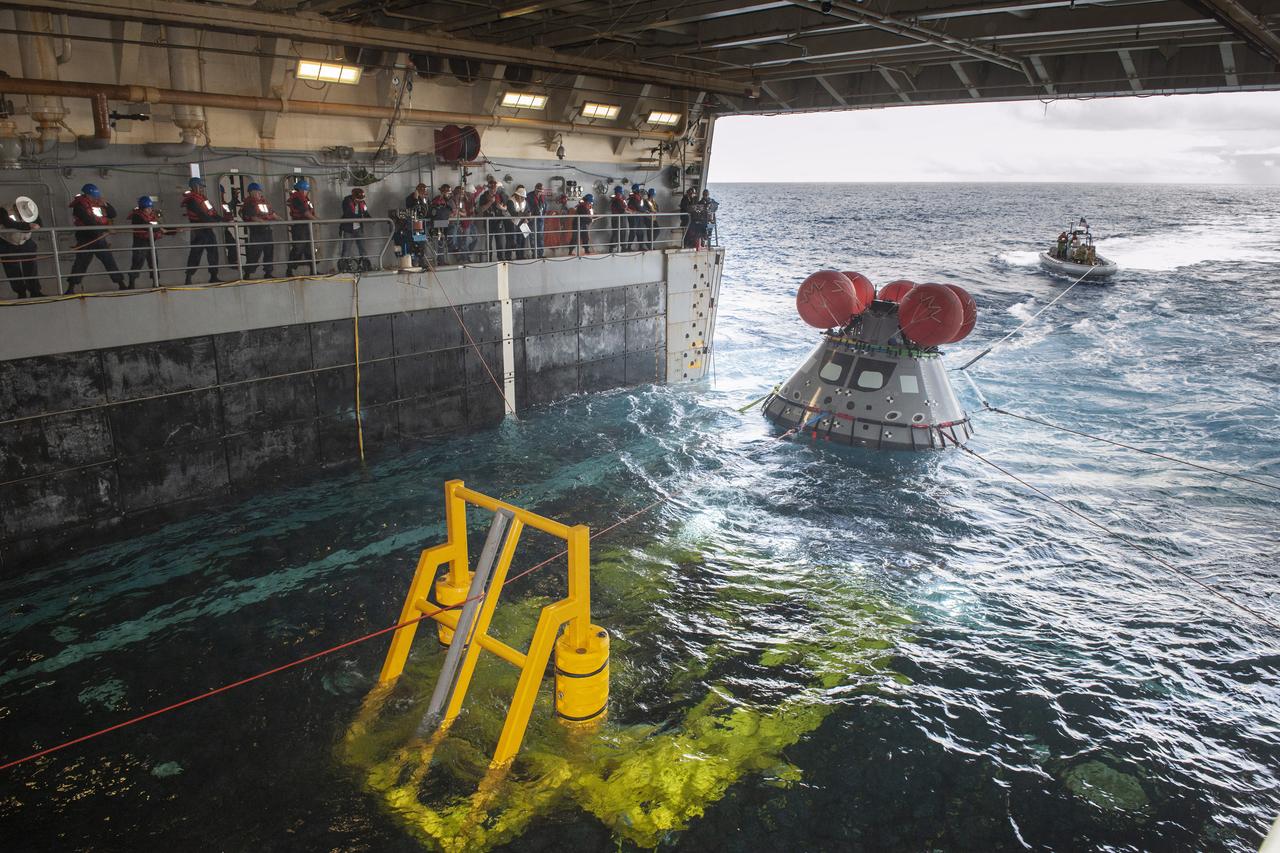
In the well deck of the USS San Diego, recovery team members monitor a portion of Underway Recovery Test 5 in the Pacific Ocean off the coast of California on Oct. 27, 2016. A test version of the Orion crew module is floating in open waters. NASA's Ground Systems Development and Operations Program and the U.S. Navy are conducting a series of tests using the ship's well deck, the test module, various watercraft and equipment to prepare for recovery of Orion on its return from deep space missions. The test will allow the team to demonstrate and evaluate recovery processes, procedures, hardware and personnel in open waters. Part of Batch images transfer from Flickr.

Members of the recovery team watch as the test version of the Orion crew module is guided into the flooded well deck of the USS San Diego during Underway Recovery Test 5 in the Pacific Ocean off the coast of California on Oct. 30, 2016. NASA's Ground Systems Development and Operations Program and the U.S. Navy are conducting a series of tests using the ship's well deck, the test module, various watercraft and equipment to prepare for recovery of Orion on its return from deep space missions. The testing will allow the team to demonstrate and evaluate recovery processes, procedures, hardware and personnel in open waters. Part of Batch images transfer from Flickr.
During Underway Recovery Test-8, NASA's Landing and Recovery team from Exploration Ground Systems at Kennedy Space Center performed their first full mission profile test of the recovery procedures for Artemis I aboard the USS John P. Murtha in the Pacific Ocean. Artemis I will be the first integrated flight test of NASA's Deep Space Exploration Systems: the Orion spacecraft, Space Launch System rocket, with the newly upgraded Exploration Ground Systems at Kennedy Space Center.
During Underway Recovery Test-8, NASA's Landing and Recovery team from Exploration Ground Systems at Kennedy Space Center performed their first full mission profile test of the recovery procedures for Artemis I aboard the USS John P. Murtha in the Pacific Ocean. Artemis I will be the first integrated flight test of NASA's Deep Space Exploration Systems: the Orion spacecraft, Space Launch System rocket, with the newly upgraded Exploration Ground Systems at Kennedy Space Center.
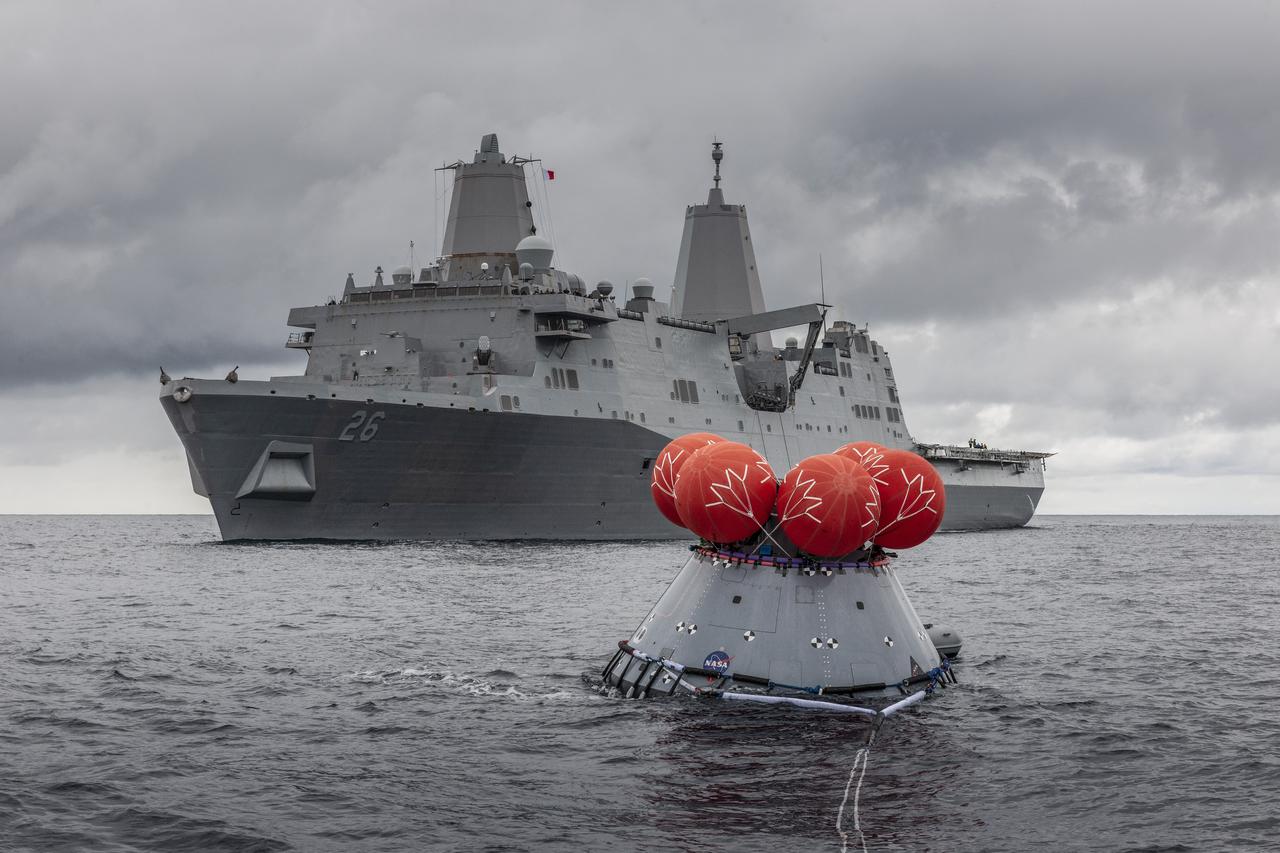
During Underway Recovery Test-8, NASA's Landing and Recovery team from Exploration Ground Systems at Kennedy Space Center performed their first full mission profile test of the recovery procedures for Artemis I aboard the USS John P. Murtha in the Pacific Ocean. Artemis I will be the first integrated flight test of NASA's Deep Space Exploration Systems: the Orion spacecraft, Space Launch System rocket, with the newly upgraded Exploration Ground Systems at Kennedy Space Center.
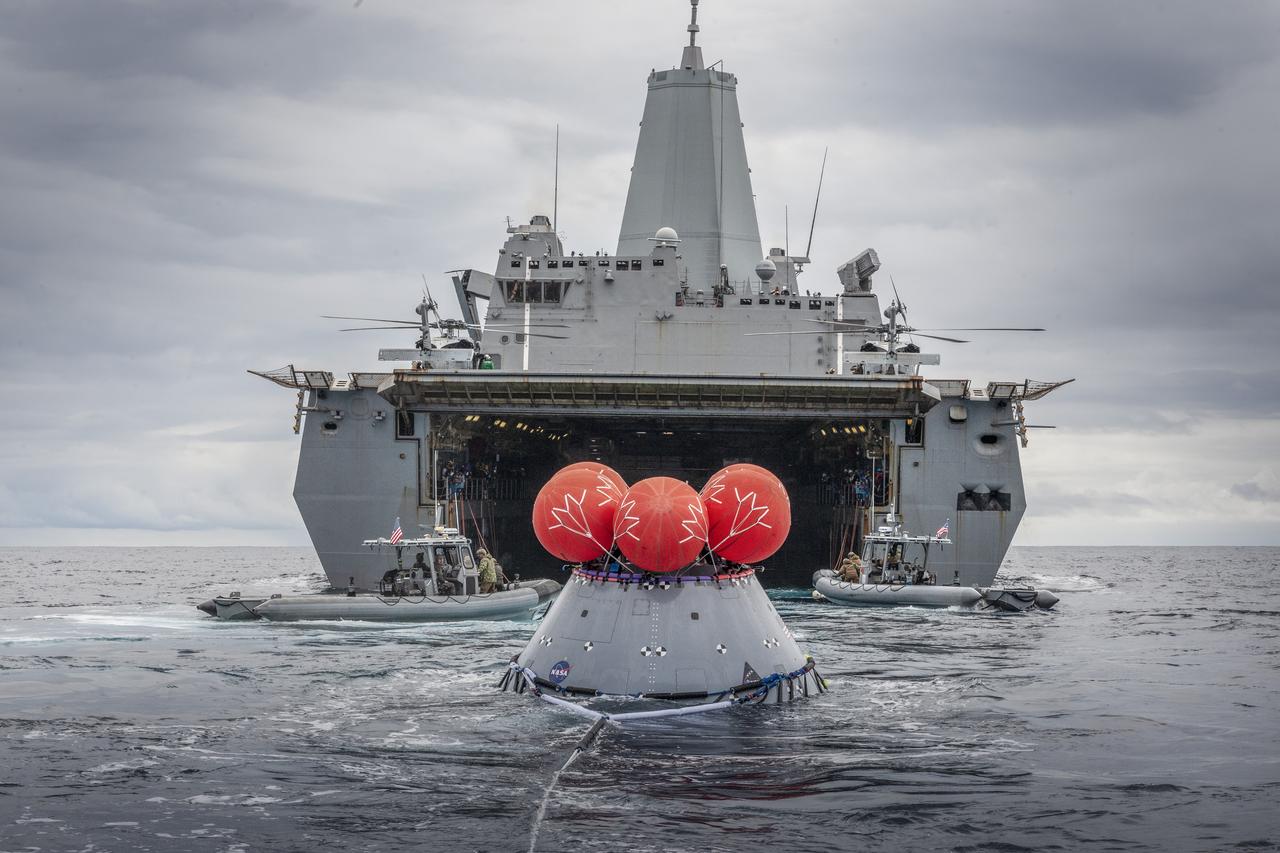
During Underway Recovery Test-8, NASA's Landing and Recovery team from Exploration Ground Systems at Kennedy Space Center performed their first full mission profile test of the recovery procedures for Artemis I aboard the USS John P. Murtha in the Pacific Ocean. Artemis I will be the first integrated flight test of NASA's Deep Space Exploration Systems: the Orion spacecraft, Space Launch System rocket, with the newly upgraded Exploration Ground Systems at Kennedy Space Center.
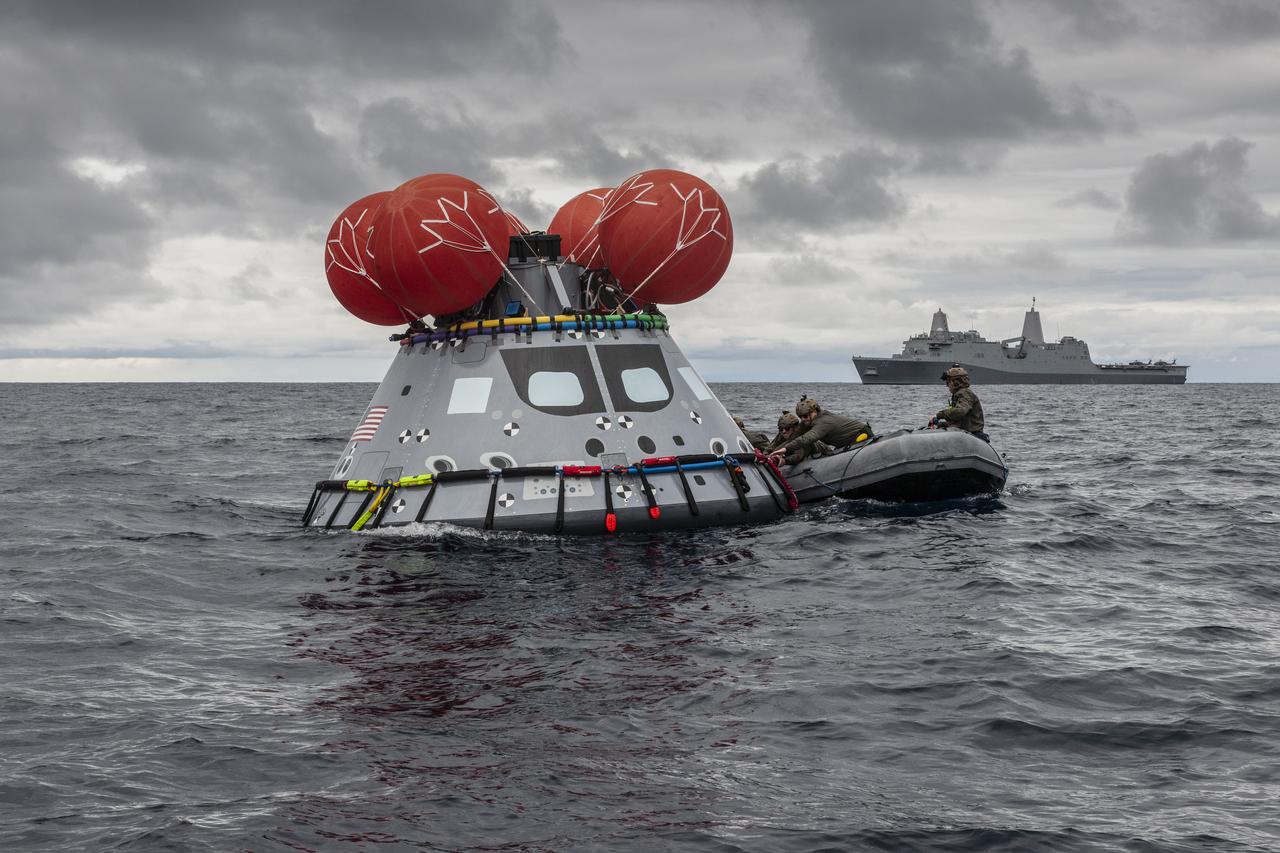
During Underway Recovery Test-8, NASA's Landing and Recovery team from Exploration Ground Systems at Kennedy Space Center performed their first full mission profile test of the recovery procedures for Artemis I aboard the USS John P. Murtha in the Pacific Ocean. Artemis I will be the first integrated flight test of NASA's Deep Space Exploration Systems: the Orion spacecraft, Space Launch System rocket, with the newly upgraded Exploration Ground Systems at Kennedy Space Center.
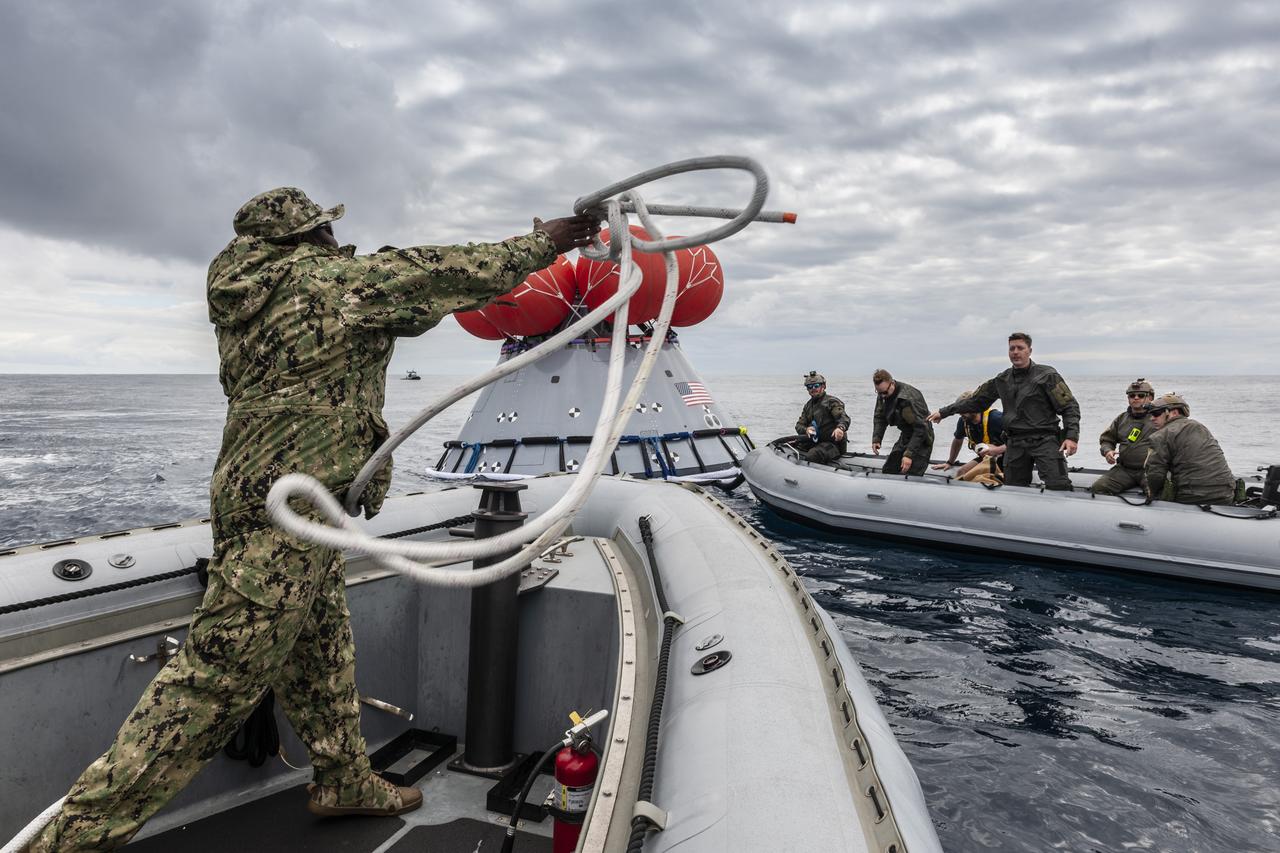
During Underway Recovery Test-8, NASA's Landing and Recovery team from Exploration Ground Systems at Kennedy Space Center performed their first full mission profile test of the recovery procedures for Artemis I aboard the USS John P. Murtha in the Pacific Ocean. Artemis I will be the first integrated flight test of NASA's Deep Space Exploration Systems: the Orion spacecraft, Space Launch System rocket, with the newly upgraded Exploration Ground Systems at Kennedy Space Center.
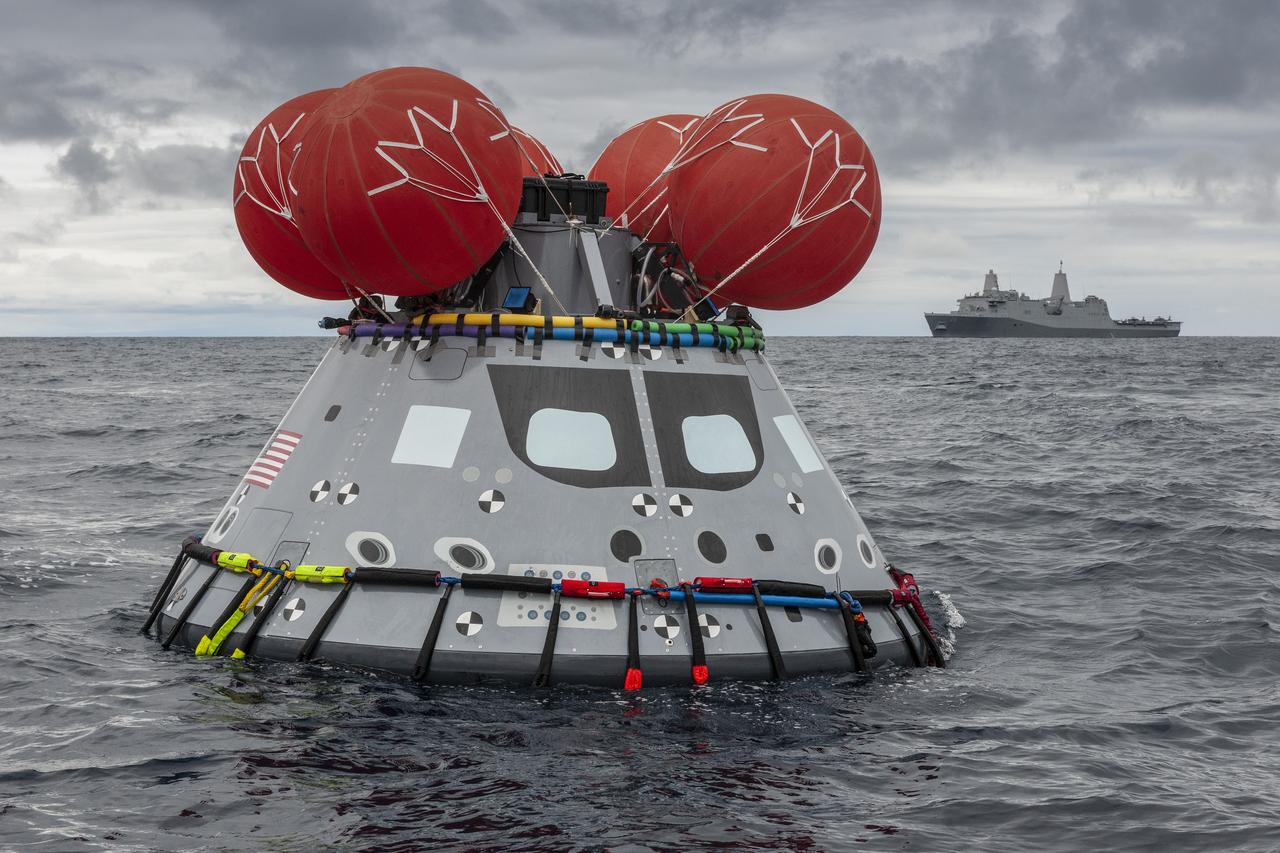
During Underway Recovery Test-8, NASA's Landing and Recovery team from Exploration Ground Systems at Kennedy Space Center performed their first full mission profile test of the recovery procedures for Artemis I aboard the USS John P. Murtha in the Pacific Ocean. Artemis I will be the first integrated flight test of NASA's Deep Space Exploration Systems: the Orion spacecraft, Space Launch System rocket, with the newly upgraded Exploration Ground Systems at Kennedy Space Center.
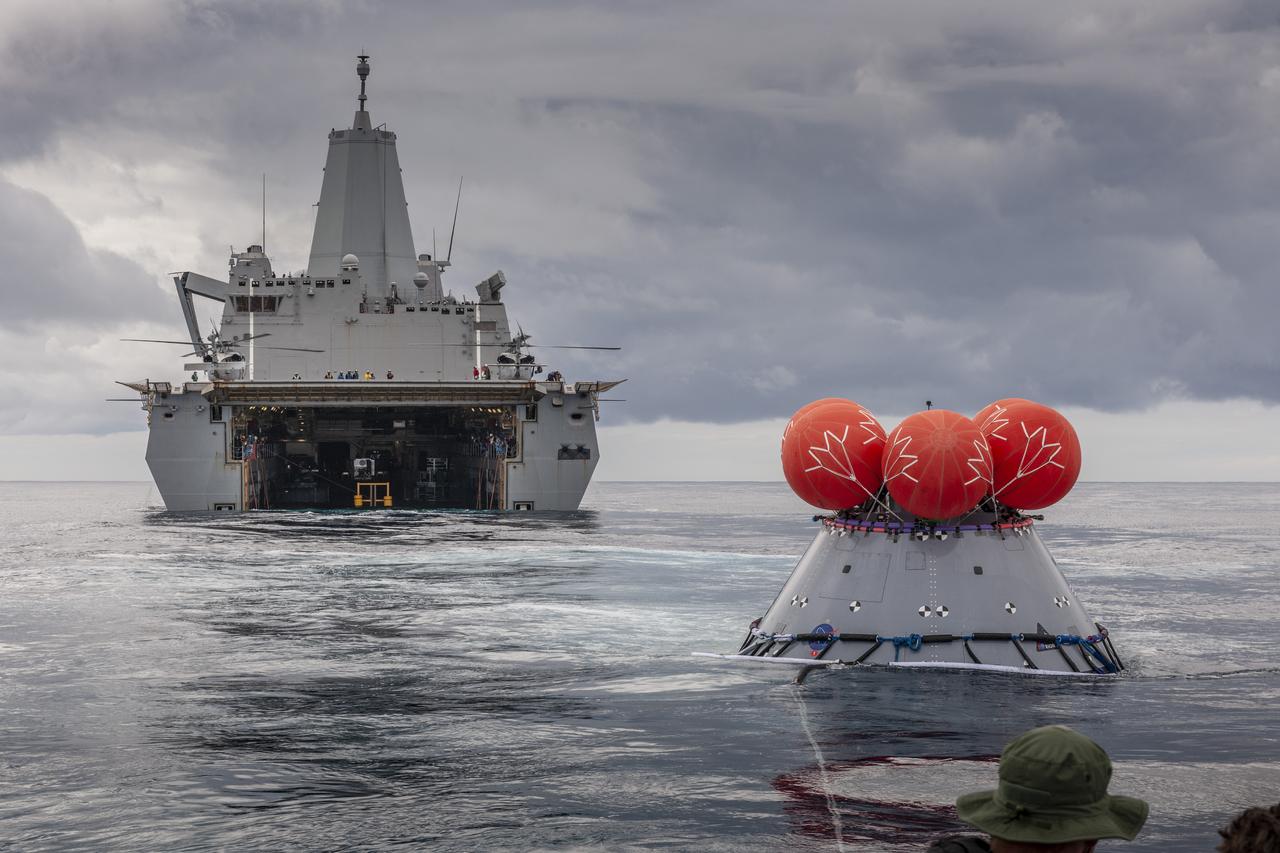
During Underway Recovery Test-8, NASA's Landing and Recovery team from Exploration Ground Systems at Kennedy Space Center performed their first full mission profile test of the recovery procedures for Artemis I aboard the USS John P. Murtha in the Pacific Ocean. Artemis I will be the first integrated flight test of NASA's Deep Space Exploration Systems: the Orion spacecraft, Space Launch System rocket, with the newly upgraded Exploration Ground Systems at Kennedy Space Center.
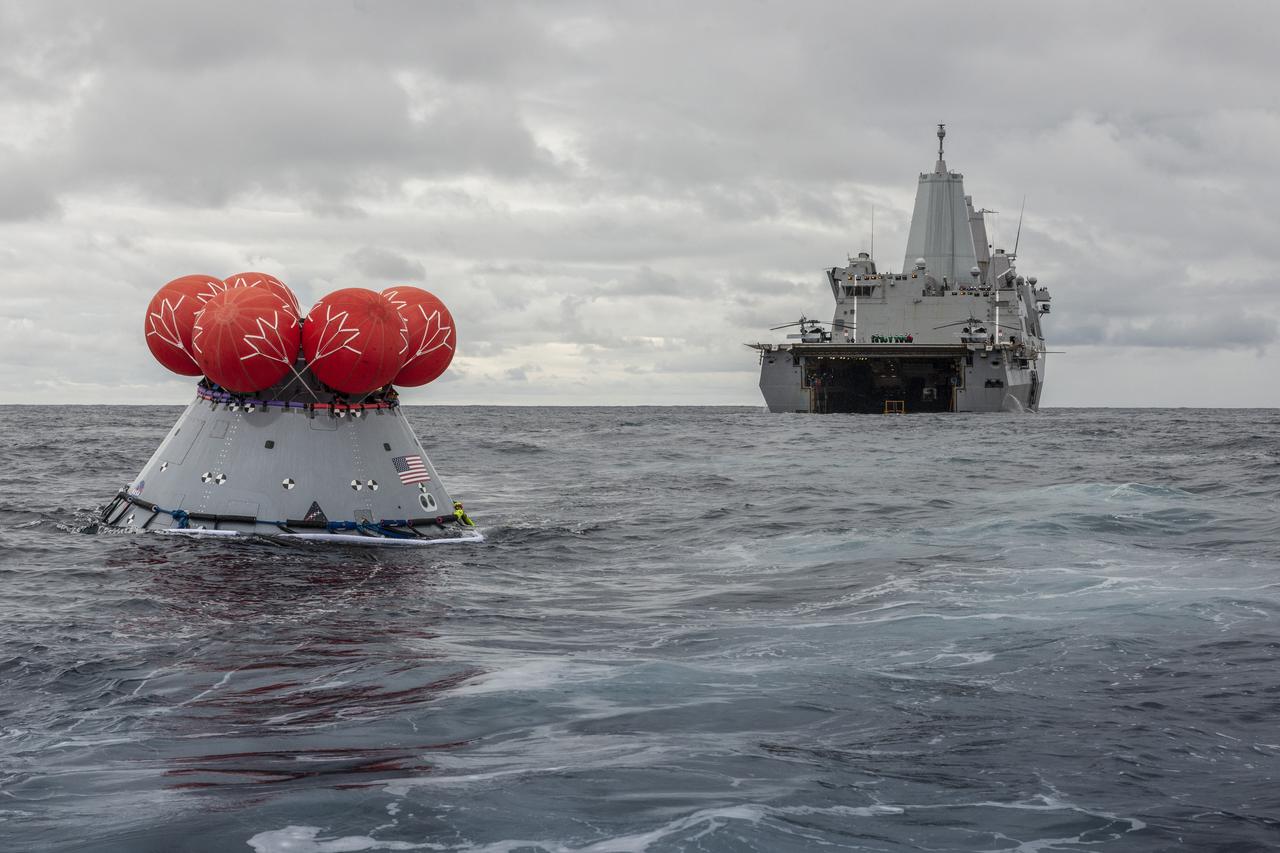
During Underway Recovery Test-8, NASA's Landing and Recovery team from Exploration Ground Systems at Kennedy Space Center performed their first full mission profile test of the recovery procedures for Artemis I aboard the USS John P. Murtha in the Pacific Ocean. Artemis I will be the first integrated flight test of NASA's Deep Space Exploration Systems: the Orion spacecraft, Space Launch System rocket, with the newly upgraded Exploration Ground Systems at Kennedy Space Center.
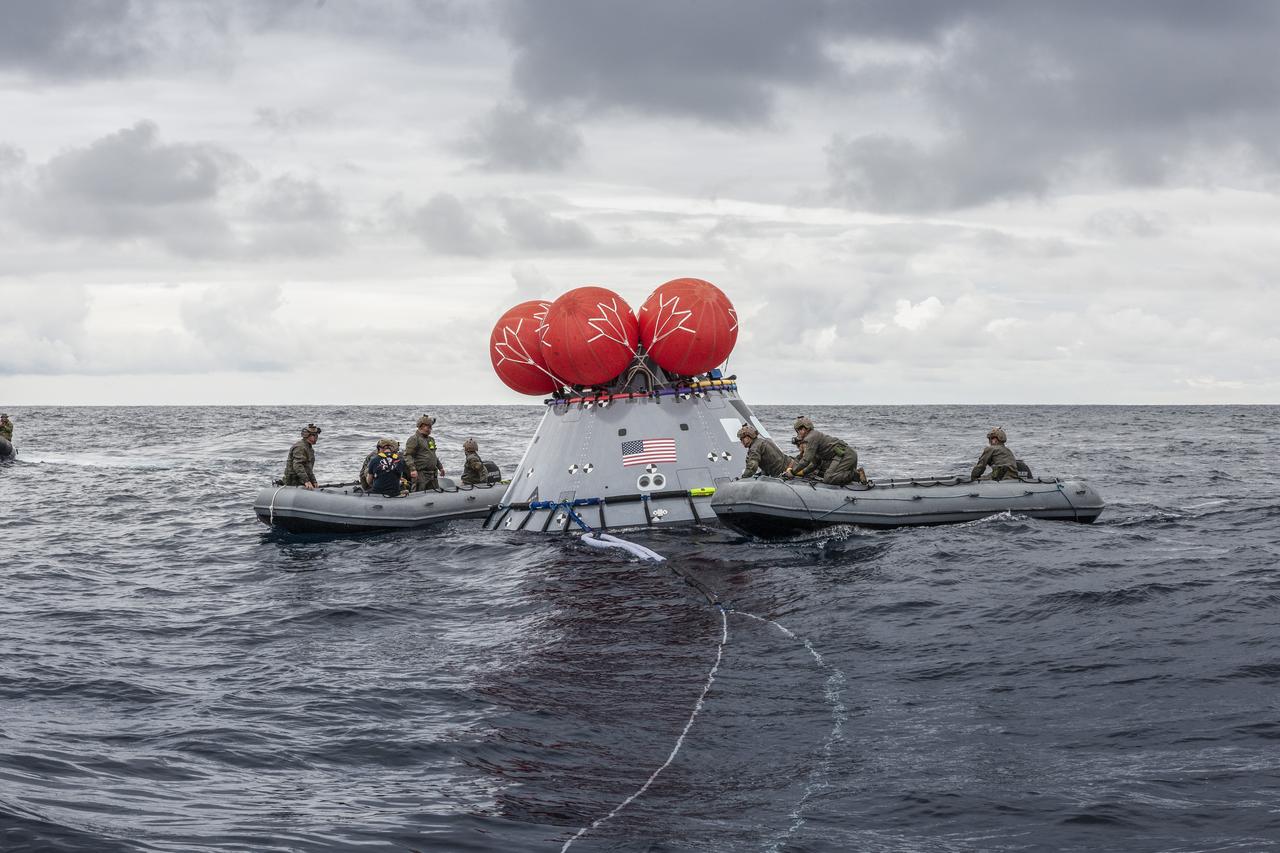
During Underway Recovery Test-8, NASA's Landing and Recovery team from Exploration Ground Systems at Kennedy Space Center performed their first full mission profile test of the recovery procedures for Artemis I aboard the USS John P. Murtha in the Pacific Ocean. Artemis I will be the first integrated flight test of NASA's Deep Space Exploration Systems: the Orion spacecraft, Space Launch System rocket, with the newly upgraded Exploration Ground Systems at Kennedy Space Center.
During Underway Recovery Test-8, NASA's Landing and Recovery team from Exploration Ground Systems at Kennedy Space Center performed their first full mission profile test of the recovery procedures for Artemis I aboard the USS John P. Murtha in the Pacific Ocean. Artemis I will be the first integrated flight test of NASA's Deep Space Exploration Systems: the Orion spacecraft, Space Launch System rocket, with the newly upgraded Exploration Ground Systems at Kennedy Space Center.
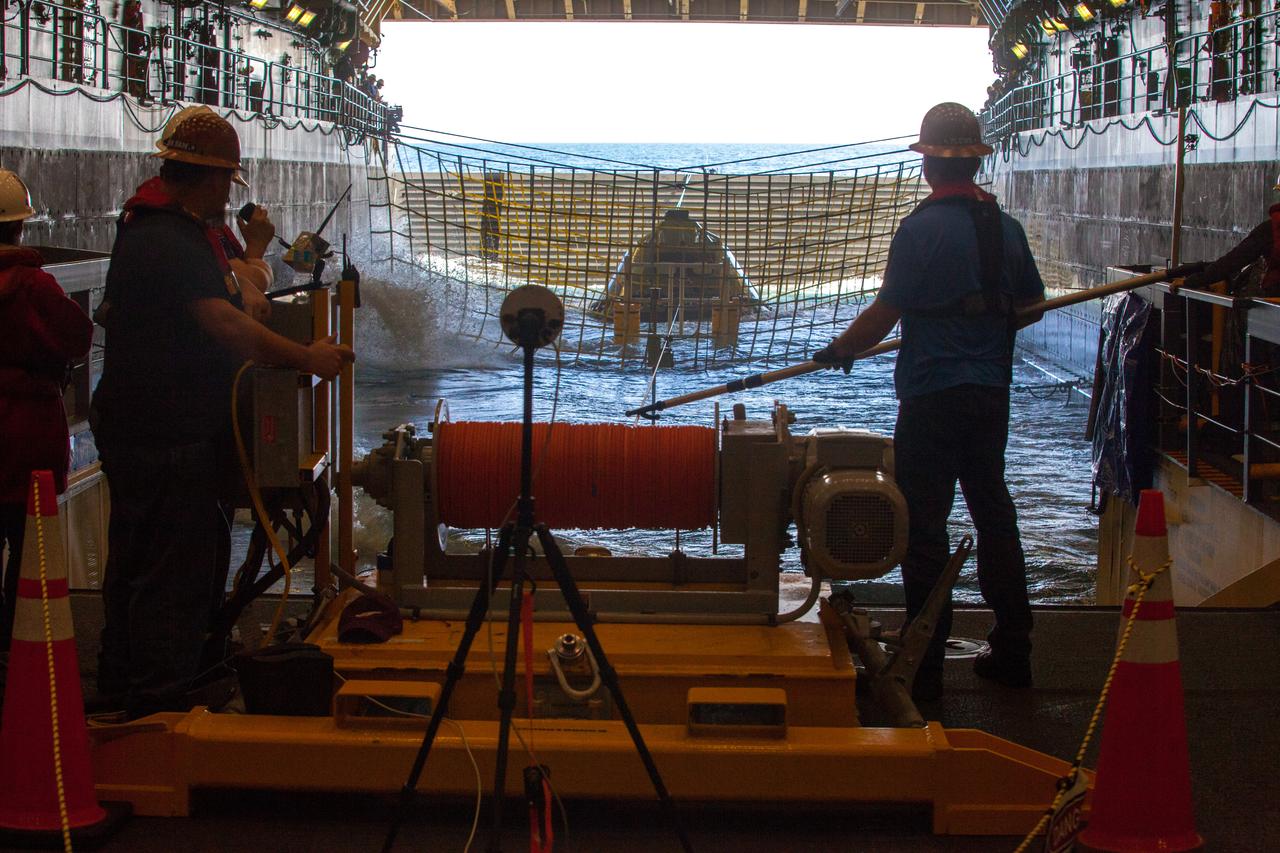
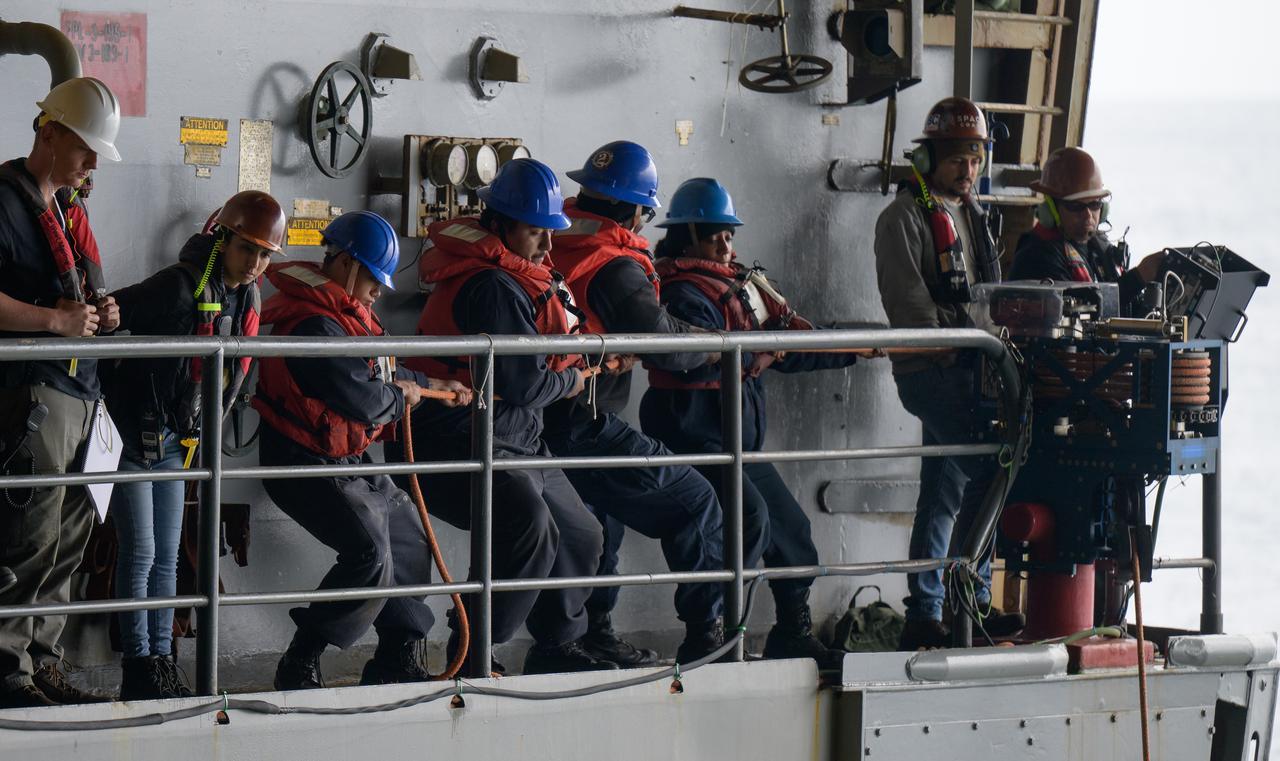
Winch team operators help guide a test version of the Orion crew module into the flooded well deck of the USS San Diego during Underway Recovery Test 5 in the Pacific Ocean off the coast of California. NASA's Ground Systems Development and Operations Program and the U.S. Navy are conducting a series of tests to prepare for recovery of Orion on its return from deep space missions. The testing will allow the team to demonstrate and evaluate recovery processes, procedures, hardware and personnel in open waters. Part of Batch images transfer from Flickr.
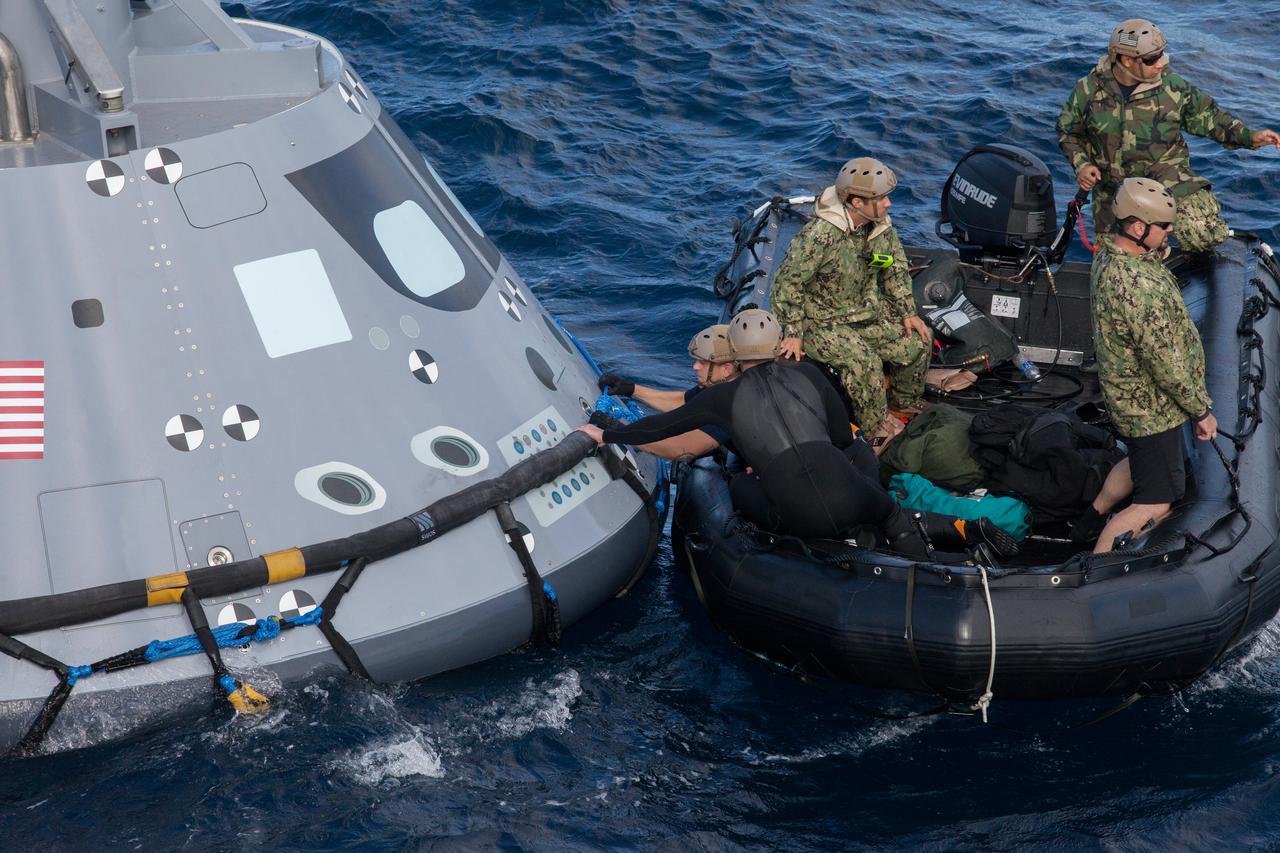
U.S. Navy divers and other personnel in a Zodiac boat secure a harness around a test version of the Orion crew module during Underway Recovery Test 5 in the Pacific Ocean off the coast of California on Oct. 28, 2016. Tether lines will be attached to the test module to help guide it back to the well deck of the USS San Diego. NASA's Ground Systems Development and Operations Program and the U.S. Navy are practicing recovery techniques to prepare for recovery of Orion on its return from deep space missions. The testing will allow the team to demonstrate and evaluate recovery processes, procedures, hardware and personnel in open waters. Part of Batch images transfer from Flickr.
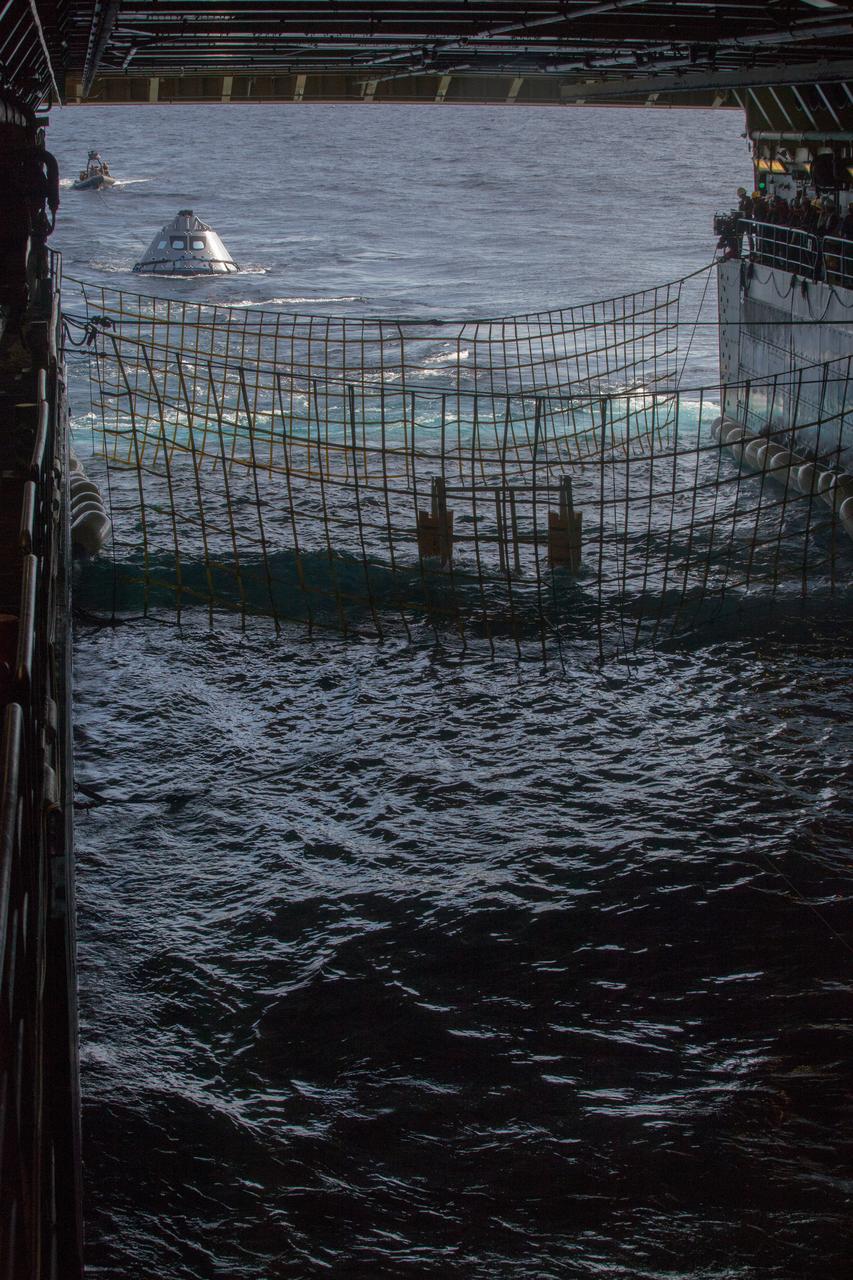
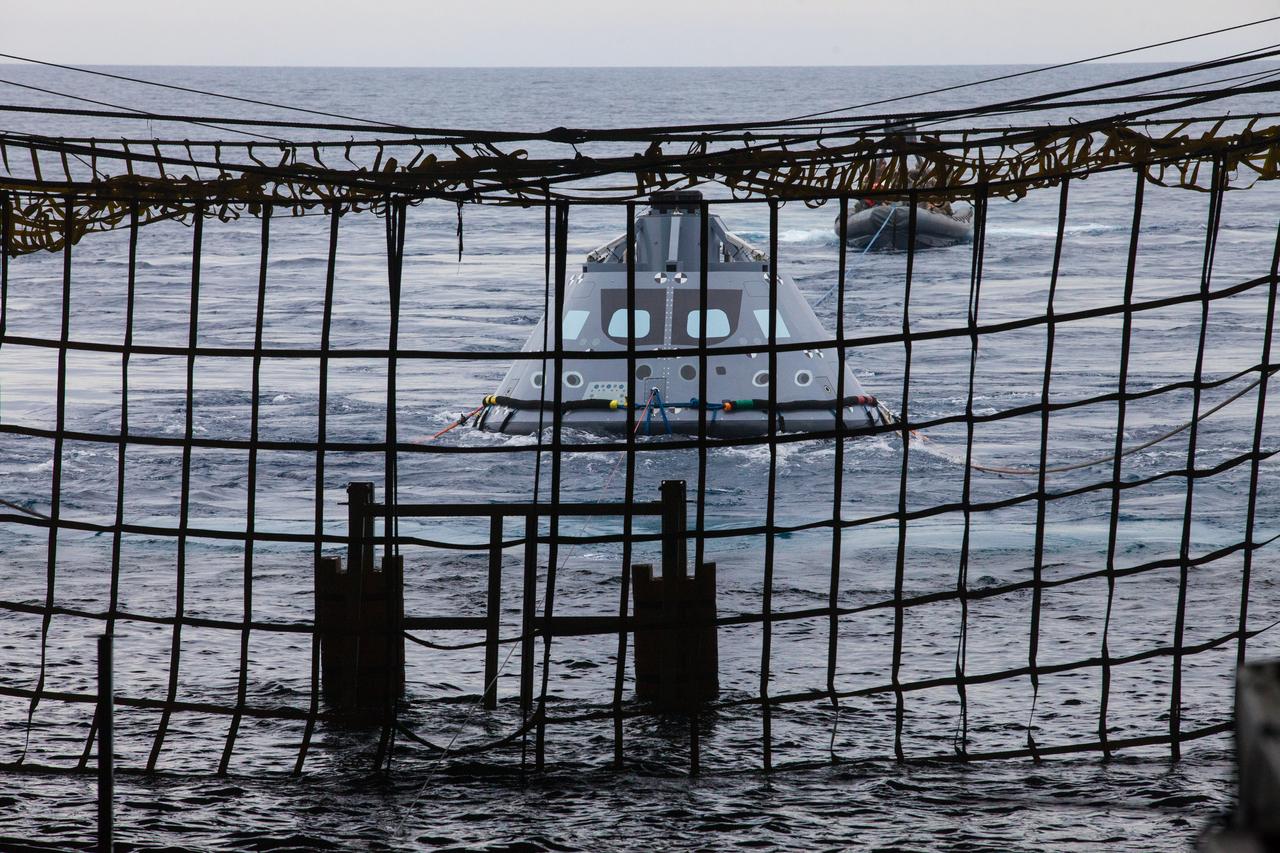
A test version of the Orion crew module floats outside the well deck of the USS San Diego during Orion Underway Recovery Test 5 in the Pacific Ocean off the coast of California on Oct. 29, 2016. In the distance are U.S. Navy divers in a rigid hull inflatable boat. NASA's Ground Systems Development and Operations Program and the U.S. Navy are practicing recovery techniques using the well deck of the ship and the test version of the crew module to prepare for recovery of Orion on its return from deep space missions. The testing will allow the team to demonstrate and evaluate recovery processes, procedures, hardware and personnel in open waters. Part of Batch images transfer from Flickr.
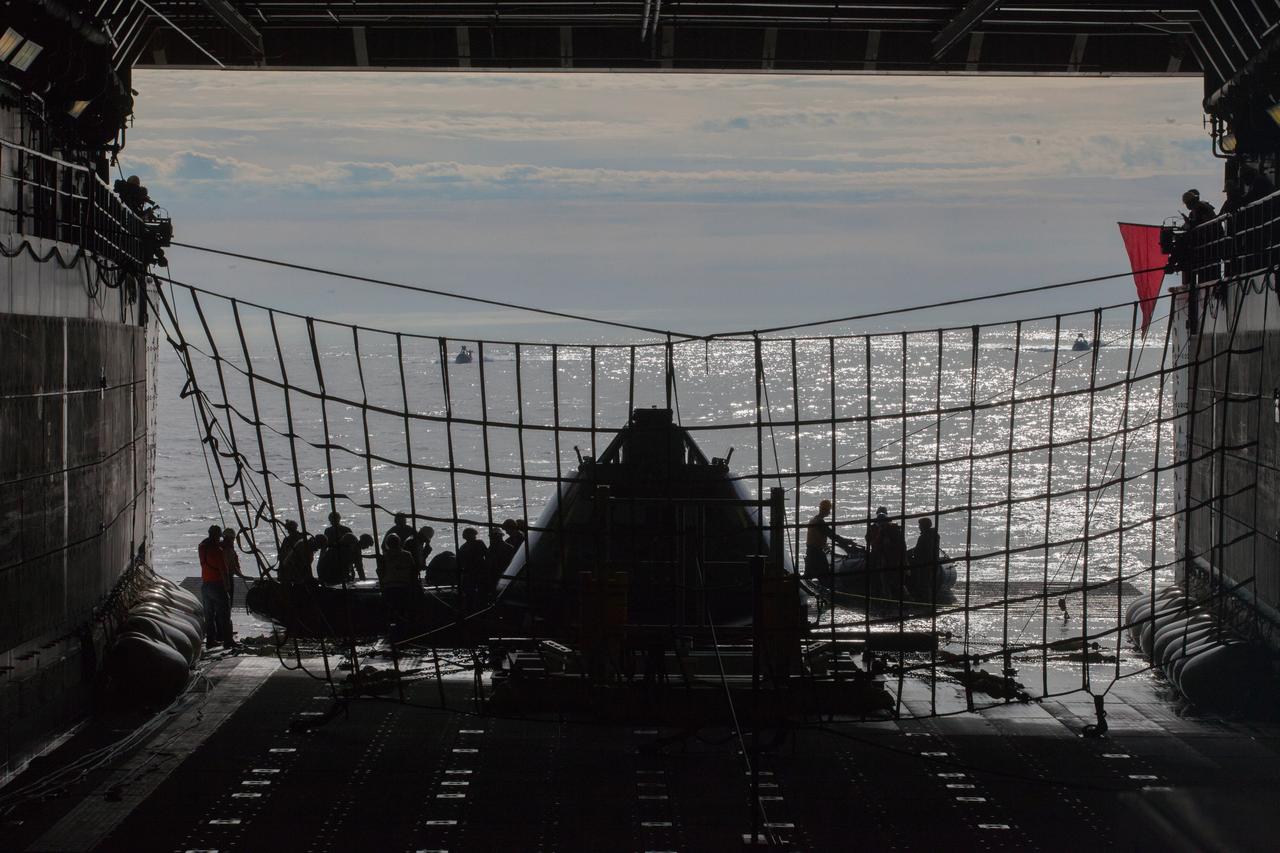
NASA's Ground Systems Development and Operations Program and the U.S. Navy prepare for another day of Underway Recovery Test 5 in the Pacific Ocean off the coast of California on Oct. 30, 2016. A test version of the Orion crew module is in the well deck of the ship, and U.S. Navy divers and other personnel are in rigid hull inflatable boats preparing to head out into the open water. The recovery team is conducting a series of tests to prepare for recovery of Orion on its return from deep space missions. The testing will allow the team to demonstrate and evaluate recovery processes, procedures, hardware and personnel in open waters. Part of Batch images transfer from Flickr.
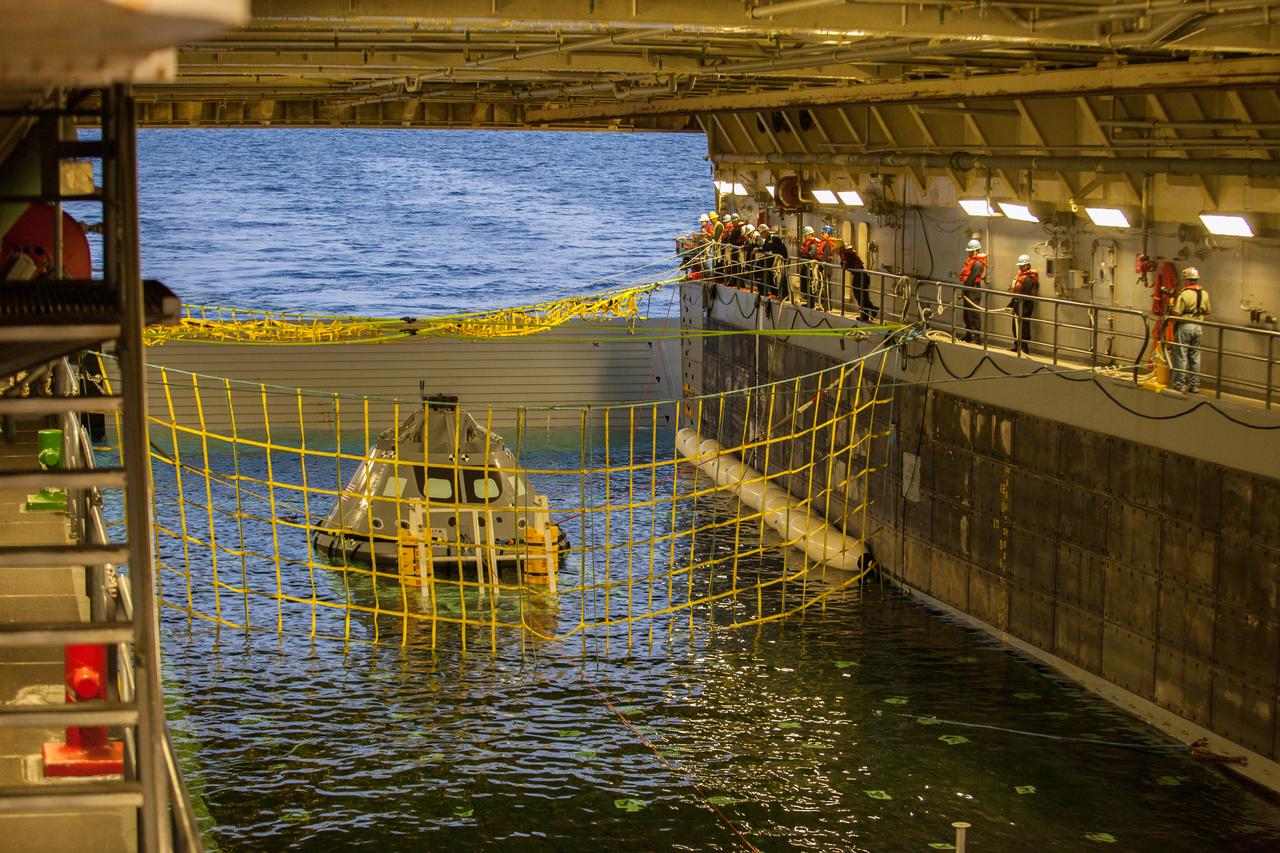
A golden sheen lights up a test version of the Orion crew module in the flooded well deck of the USS San Diego during Underway Recovery Test 5 in the Pacific Ocean off the coast of California on Oct. 26, 2016. Recovery team personnel have secured a net around the crew module. NASA's Ground Systems Development and Operations Program and the U.S. Navy will conduct a series of tests to prepare for recovery of Orion on its return from deep space missions. The testing will allow the team to demonstrate and evaluate recovery processes, procedures, hardware and personnel in open waters. Part of Batch images transfer from Flickr.
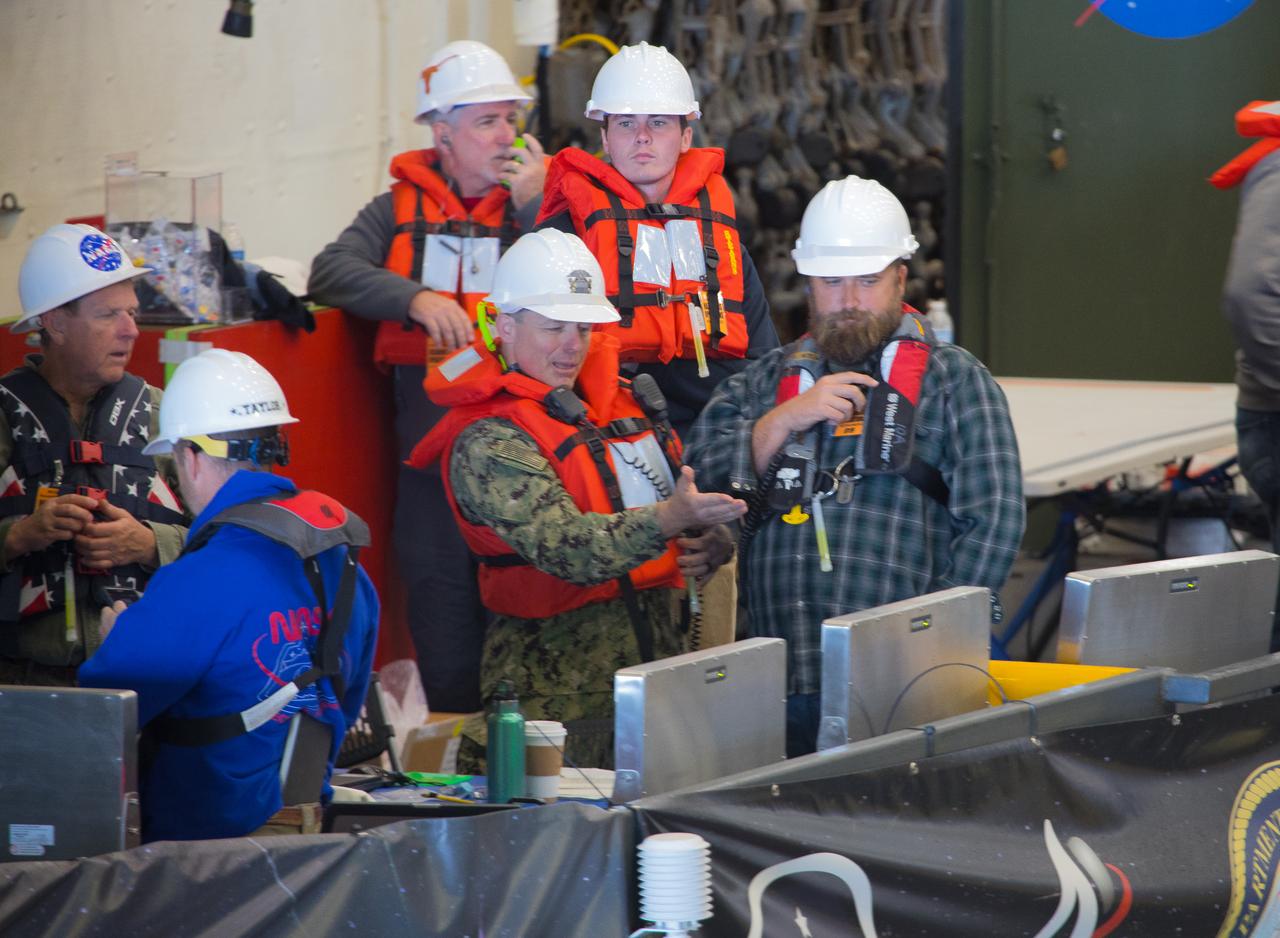
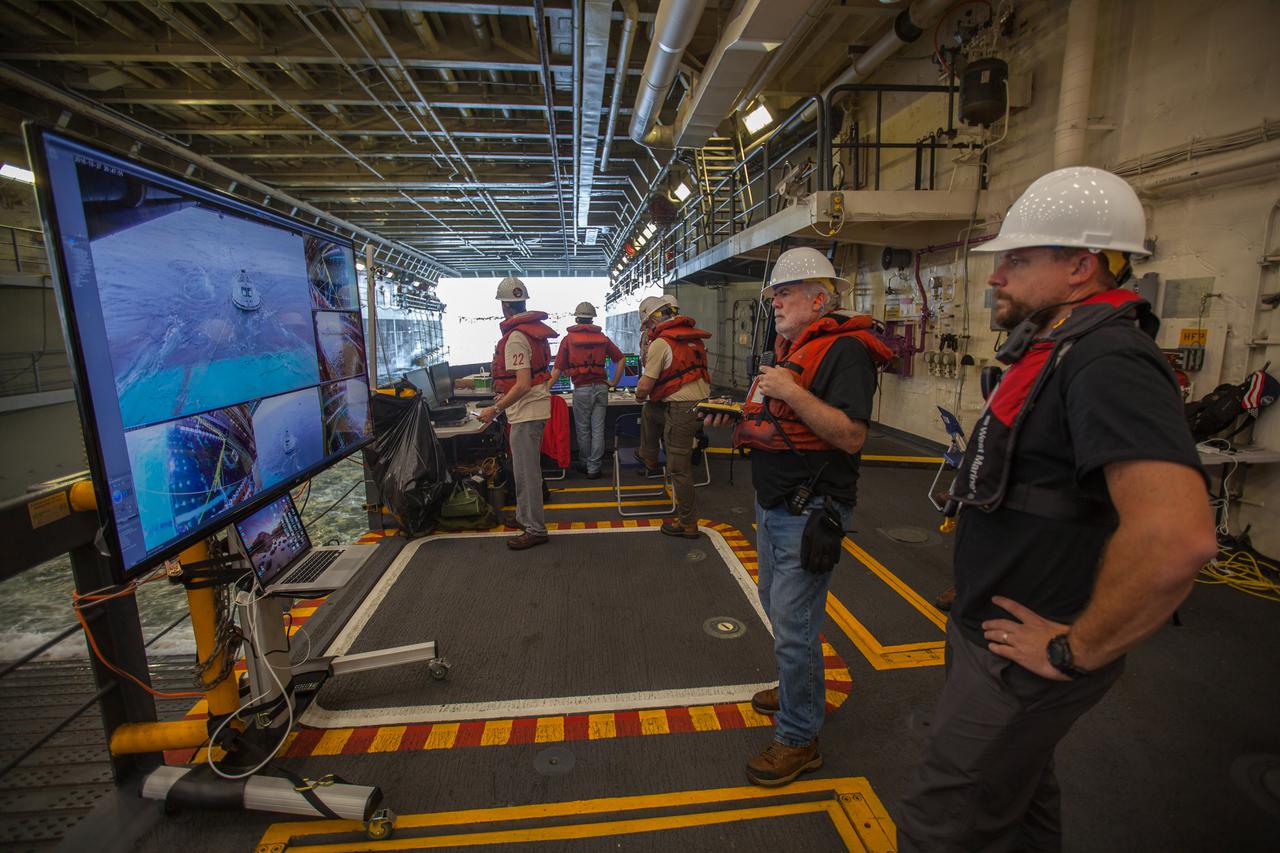
Members of NASA’s Landing and Recovery Team review wave data during Underway Recovery Test-8 off the coast of California. By tracking wave direction and length, the team will ensure a smoother recovery of the Orion spacecraft into the well deck of a Navy ship. During the test, the team practiced to ensure recovery procedure timelines are validated as NASA plans to send Artemis I around the Moon and splashdown in the Pacific Ocean.
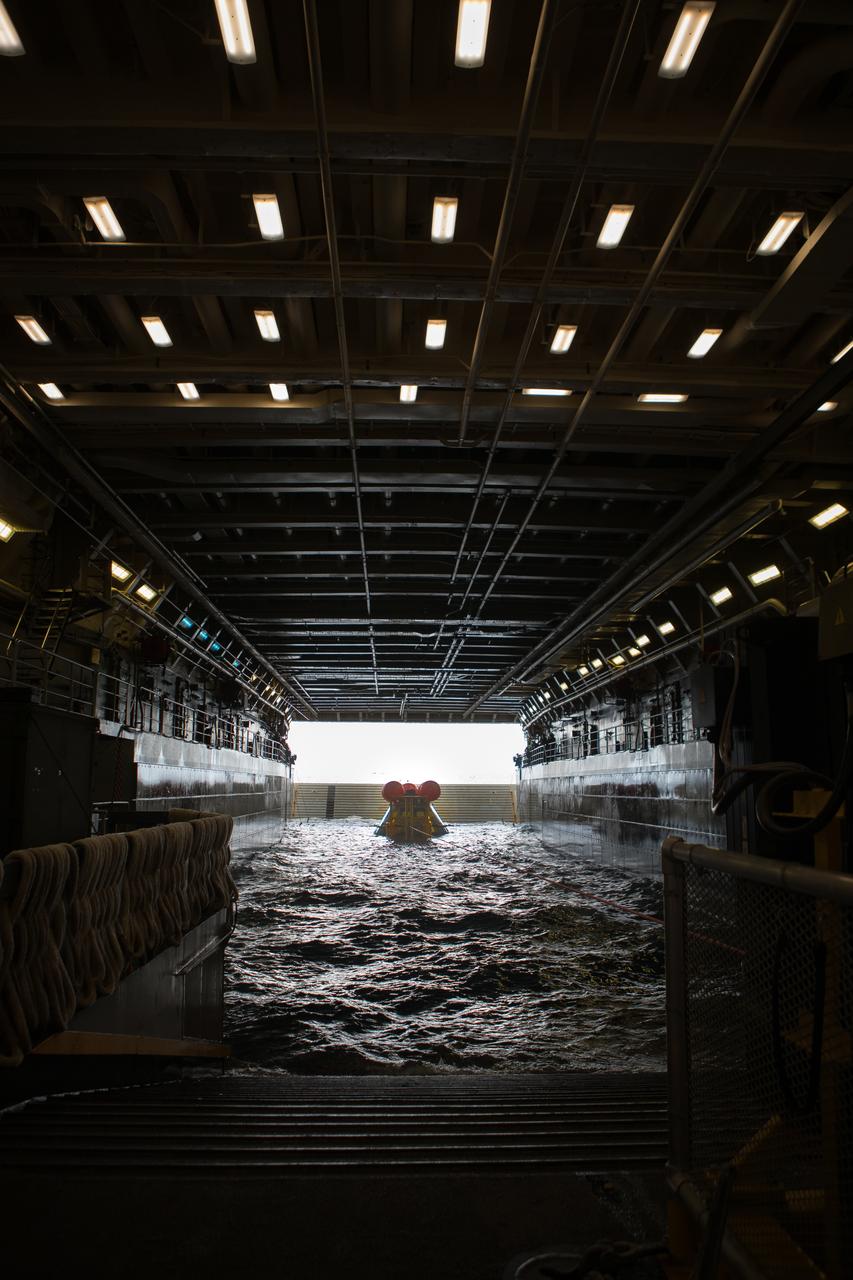
A test version of Orion sits nestled in its cradle during Underway Recovery Test-8 off the coast of California. During the test, the team practiced to ensure recovery procedure timelines are validated as NASA plans to send Artemis I around the Moon and splashdown in the Pacific Ocean.
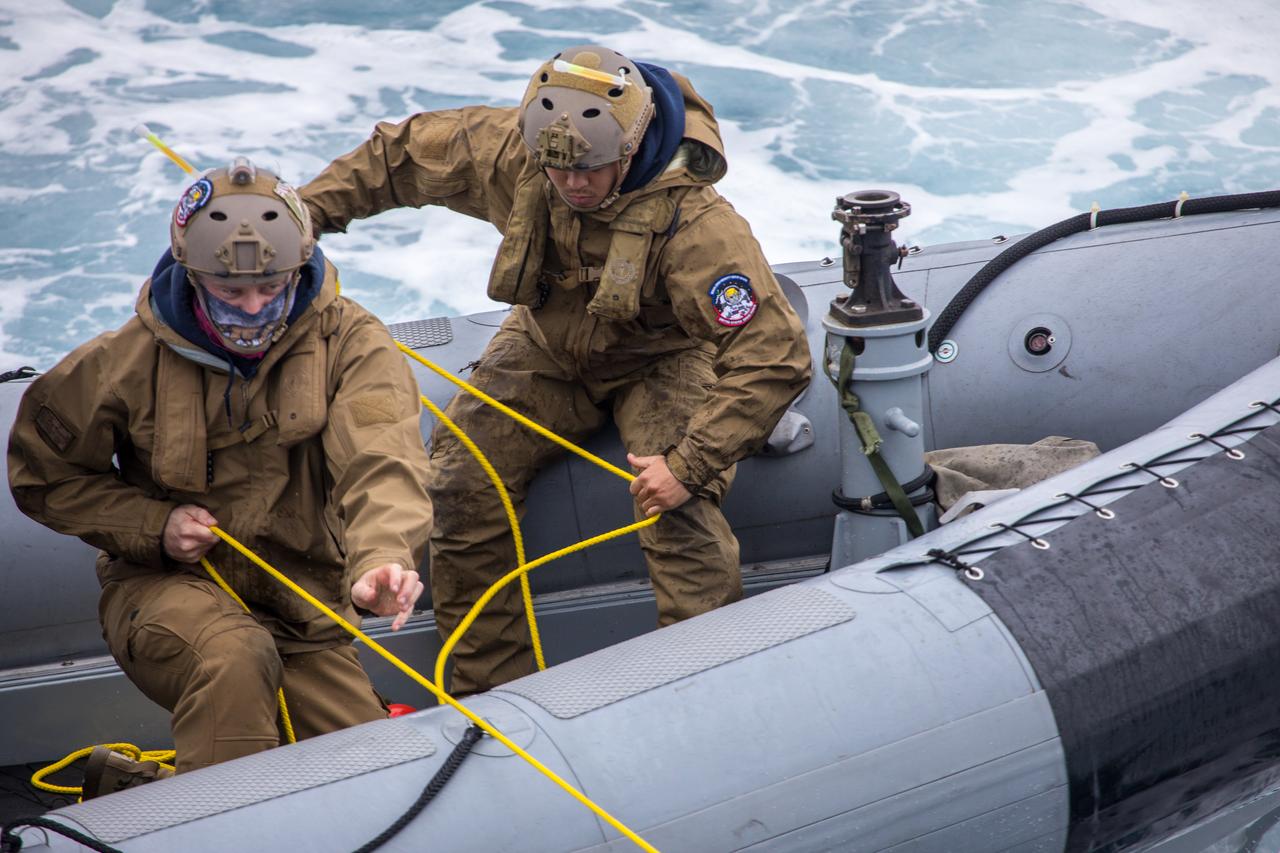
During the first full mission profile test of the recovery procedures for Artemis I, NASA’s Landing and Recovery team met their objectives. The team works with members of the DoD to hone their procedures before Orion splashes down in the Pacific as part of NASA’s Artemis program. During Underway Recovery Test-8, two divers from EOD Mobile Unit 3, MDS Company 3-1work the tending line while a test version of Orion is being pulled into the well deck of the USS John P. Murtha.

During Underway Recovery Test-8, Navy Seaman Daniel Ricci helps manage the lines to help control a test version of the Orion spacecraft as it is brought into the well deck of the USS John P. Murtha (LPD 26). During this first full mission profile test of the recovery procedures for Artemis I, NASA’s Landing and Recovery team met their objectives.
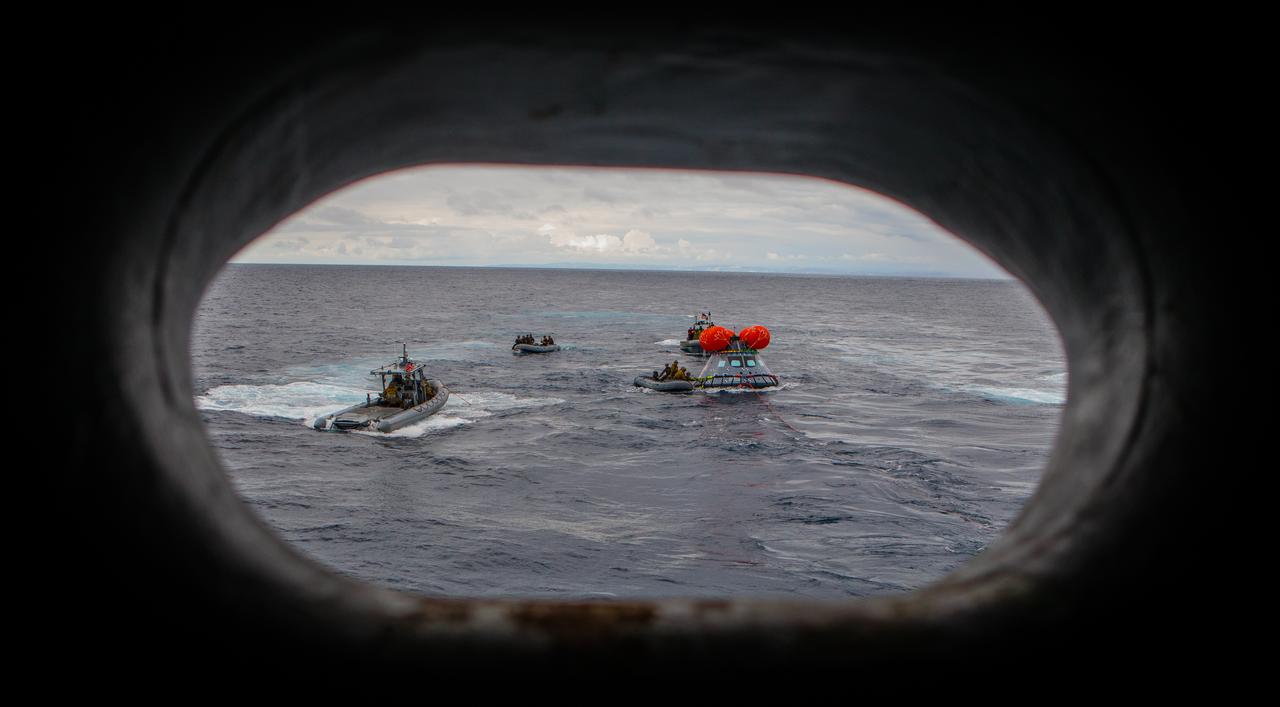
During Underway Recovery Test-8, Navy Seaman Daniel Ricci helps manage the lines to help control a test version of the Orion spacecraft as it is brought into the well deck of the USS John P. Murtha (LPD 26). During this first full mission profile test of the recovery procedures for Artemis I, NASA’s Landing and Recovery team met their objectives.
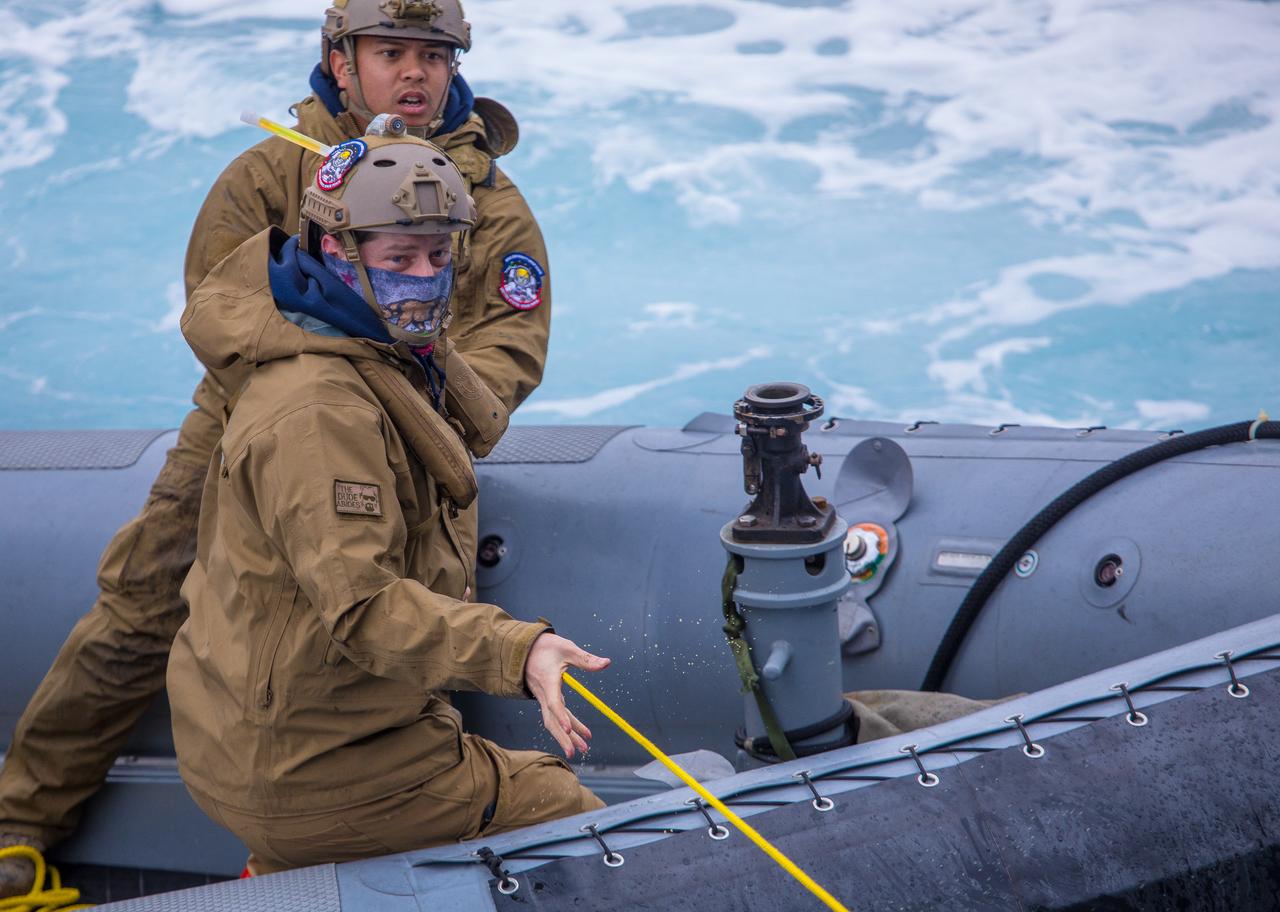
During the first full mission profile test of the recovery procedures for Artemis I, NASA’s Landing and Recovery team met their objectives. The team works with members of the DoD to hone their procedures before Orion splashes down in the Pacific as part of NASA’s Artemis program. During Underway Recovery Test-8, two divers from EOD Mobile Unit 3, MDS Company 3-1 work the tending line while a test version of Orion is being pulled into the well deck of the USS John P. Murtha.

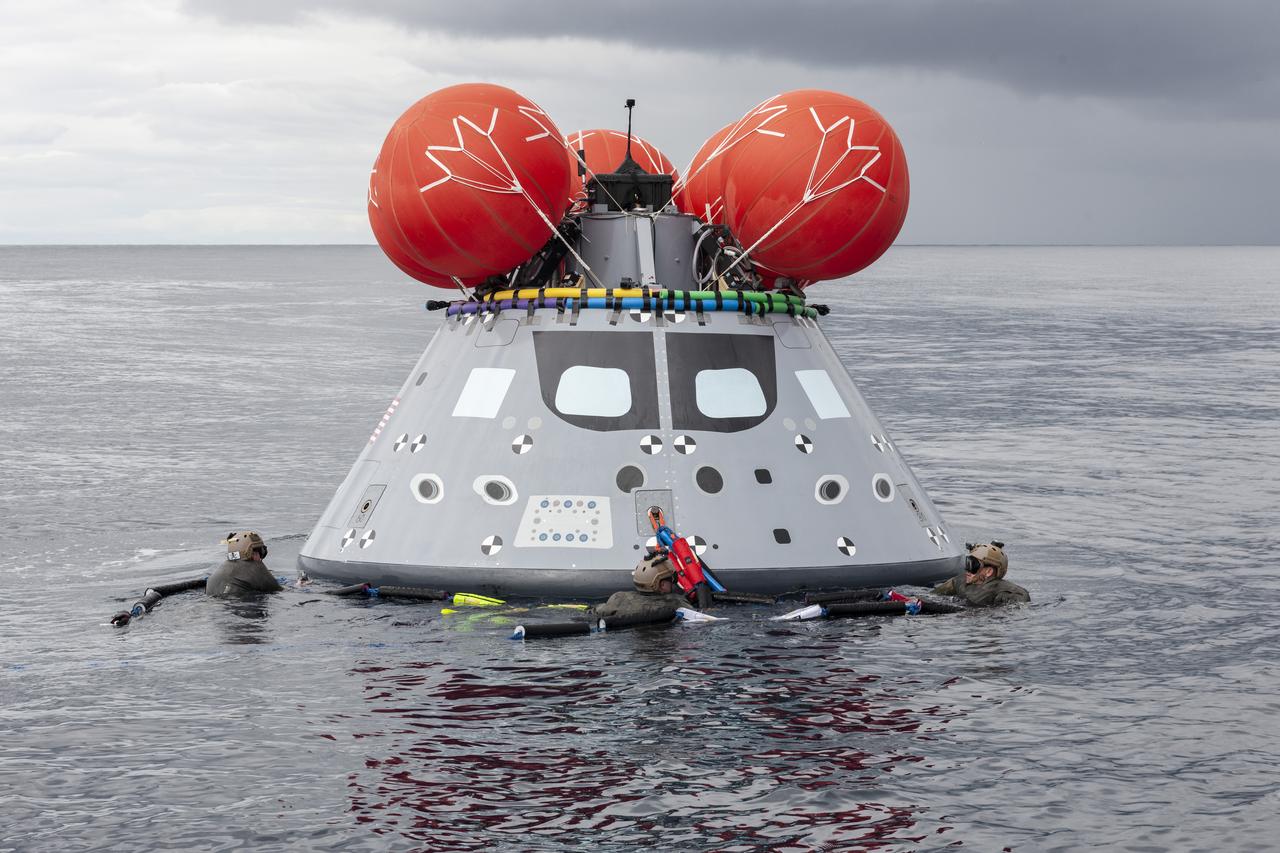
Members of NASA’s Landing and Recovery Team, along with Navy sailors from the USS John P. Murtha (LPD 26) and divers from EOD Mobile Unit 3, MDS Company 3-1, attach tending lines a test version of Orion during Underway Recovery Test-8 off the coast of California. During the test, the team practiced to ensure recovery procedure timelines are validated as NASA plans to send Artemis I around the Moon and splashdown in the Pacific Ocean.

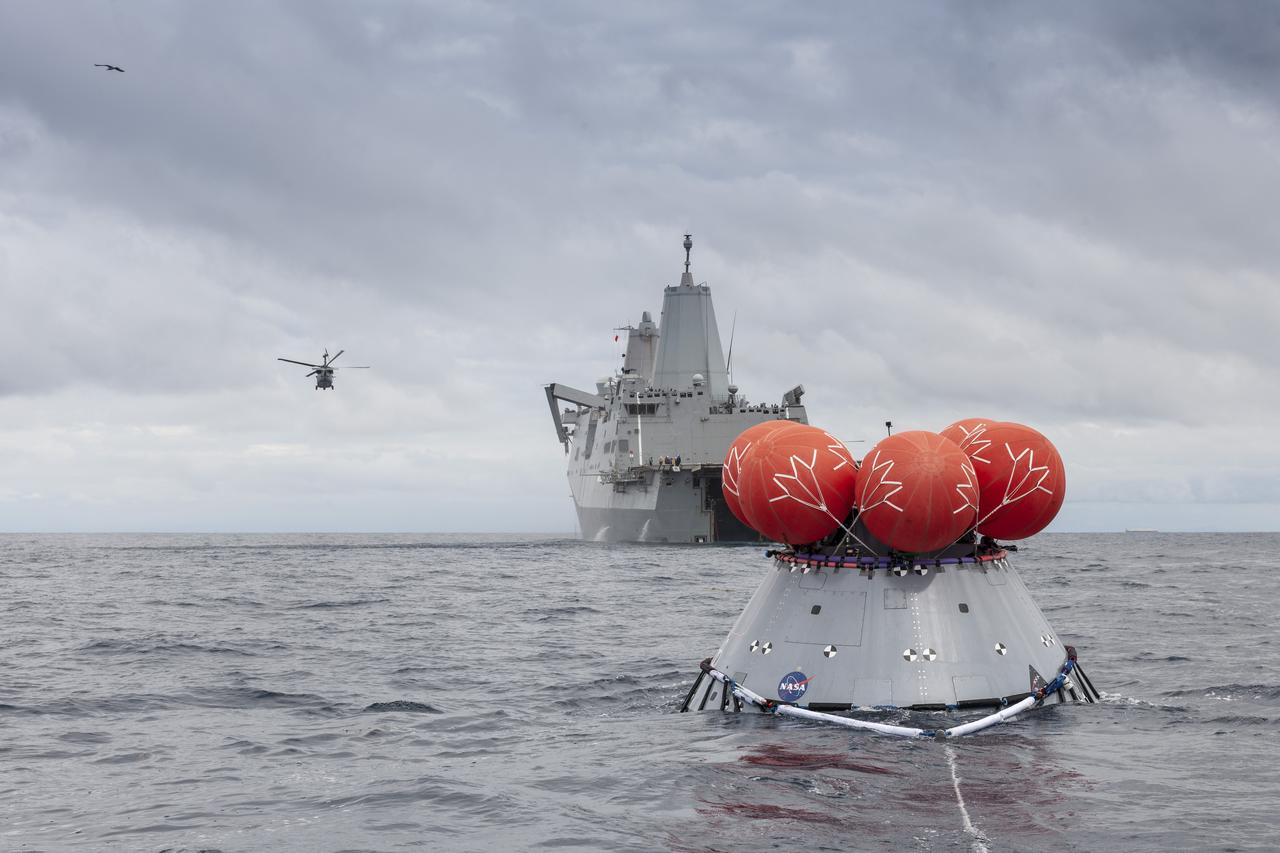
With the USS John P. Murtha (LPD 26) in the distance, Seahawks from the Helicopter Sea Combat Squadron 23, also known as Wildcards, fly by a test version of an Orion capsule during Underway Recovery Test-8 in the Pacific Ocean. During this first full mission profile test of the recovery procedures for Artemis I, NASA’s Landing and Recovery team met their objectives.
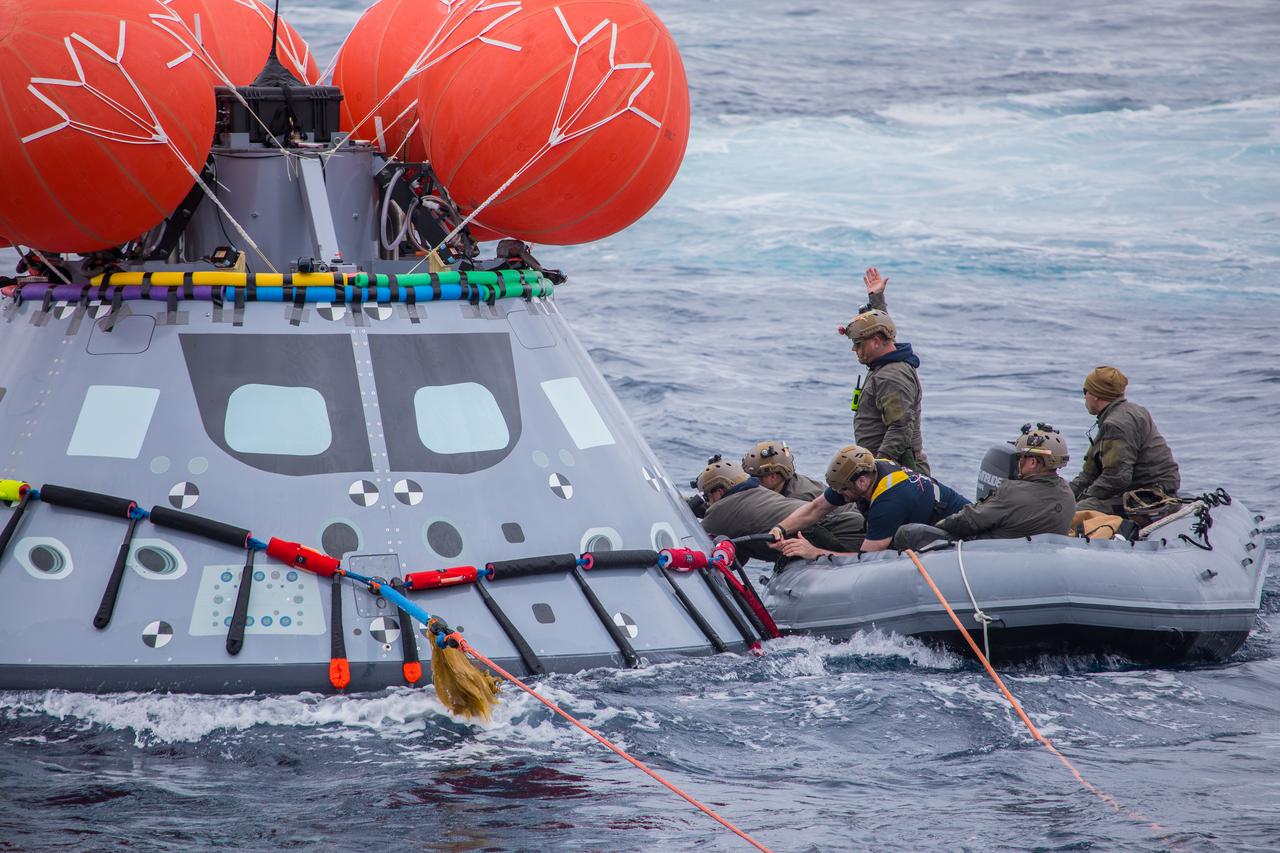
During Underway Recovery Test-8, Navy Seaman Daniel Ricci helps manage the lines to help control a test version of the Orion spacecraft as it is brought into the well deck of the USS John P. Murtha (LPD 26). During this first full mission profile test of the recovery procedures for Artemis I, NASA’s Landing and Recovery team met their objectives.
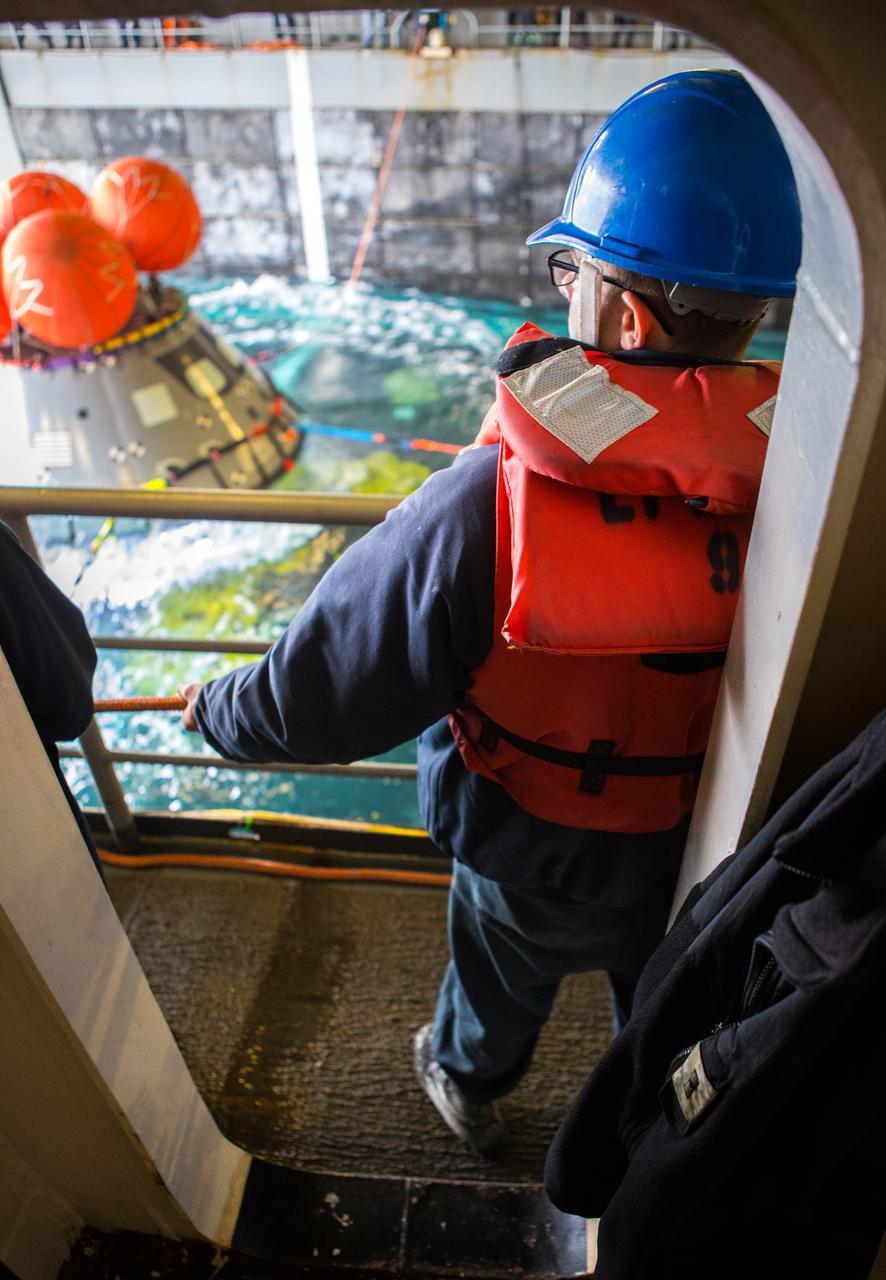
During Underway Recovery Test-8, Navy Seaman Daniel Ricci helps manage the lines to help control a test version of the Orion spacecraft as it is brought into the well deck of the USS John P. Murtha (LPD 26). During this first full mission profile test of the recovery procedures for Artemis I, NASA’s Landing and Recovery team met their objectives.
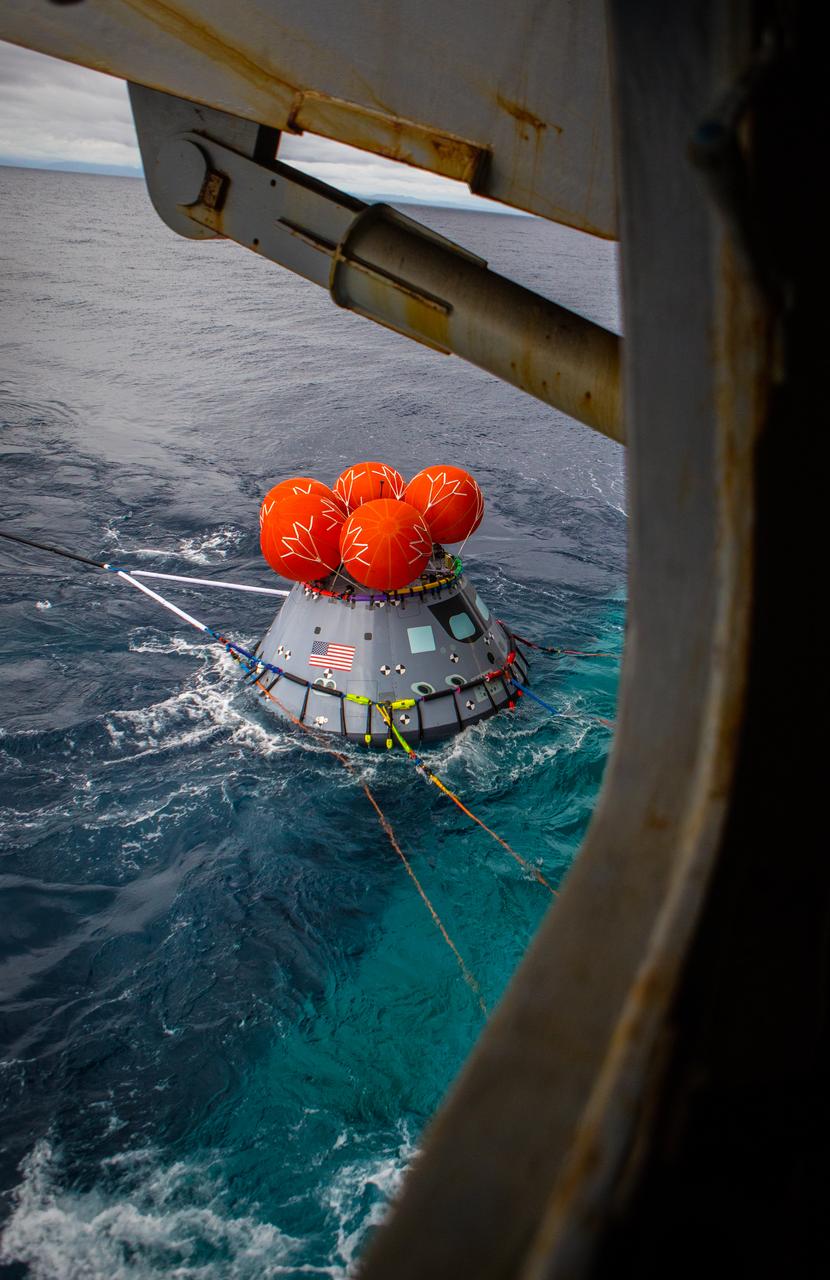
During Underway Recovery Test-8, Navy Seaman Daniel Ricci helps manage the lines to help control a test version of the Orion spacecraft as it is brought into the well deck of the USS John P. Murtha (LPD 26). During this first full mission profile test of the recovery procedures for Artemis I, NASA’s Landing and Recovery team met their objectives.
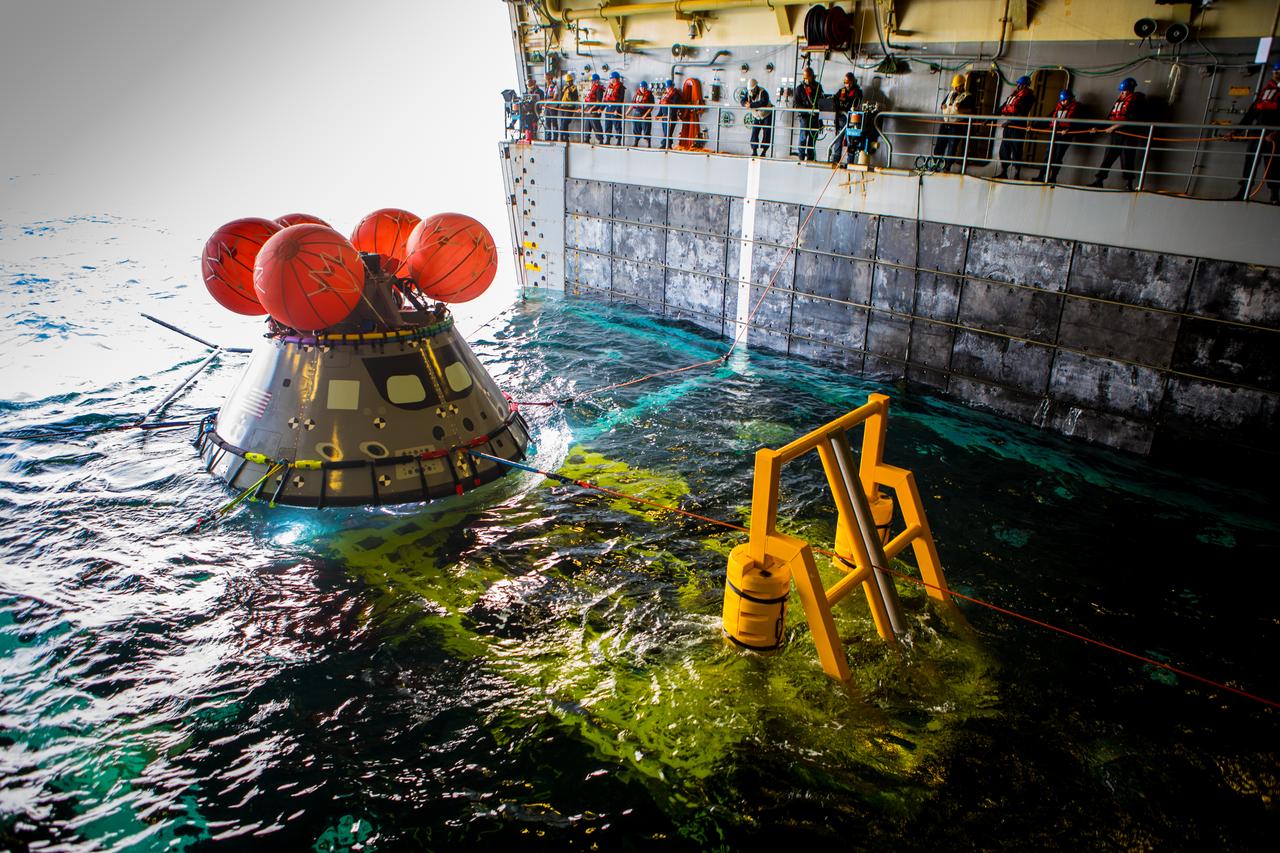
Members of NASA’s Landing and Recovery Team, along with Navy sailors from the USS John P. Murtha (LPD 26) practice bringing in a test version of Orion during Underway Recovery Test-8 off the coast of California. During the test, the team practiced to ensure recovery procedure timelines are validated as NASA plans to send Artemis I around the Moon and splashdown in the Pacific Ocean.
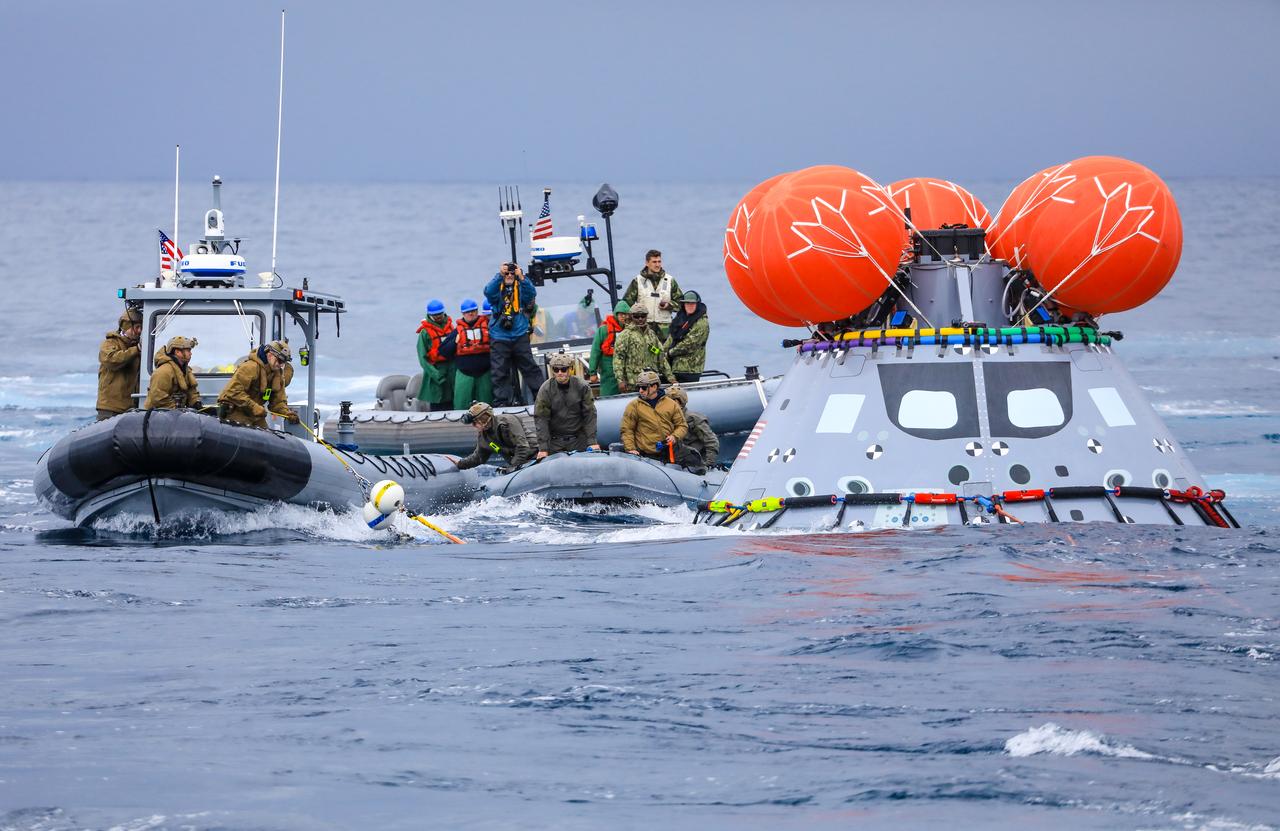
Members of NASA’s Landing and Recovery Team, along with Navy sailors from the USS John P. Murtha (LPD 26) and divers from EOD Mobile Unit 3, MDS Company 3-1, approach a test version of Orion during Underway Recovery Test-8 off the coast of California. During the test, the team practiced to ensure recovery procedure timelines are validated as NASA plans to send Artemis I around the Moon and splashdown in the Pacific Ocean.

A test version of the Orion crew module is secured in the well deck of the USS San Diego for Underway Recovery Test 5 on Oct. 26, 2016. NASA's Ground Systems Development and Operations Program and the U.S. Navy will conduct a series of tests using the ship's well deck, the test module, various watercraft and equipment to prepare for recovery of Orion on its return from deep space missions. The test will allow the team to demonstrate and evaluate recovery processes, procedures, hardware and personnel in open waters. Part of Batch images transfer from Flickr.
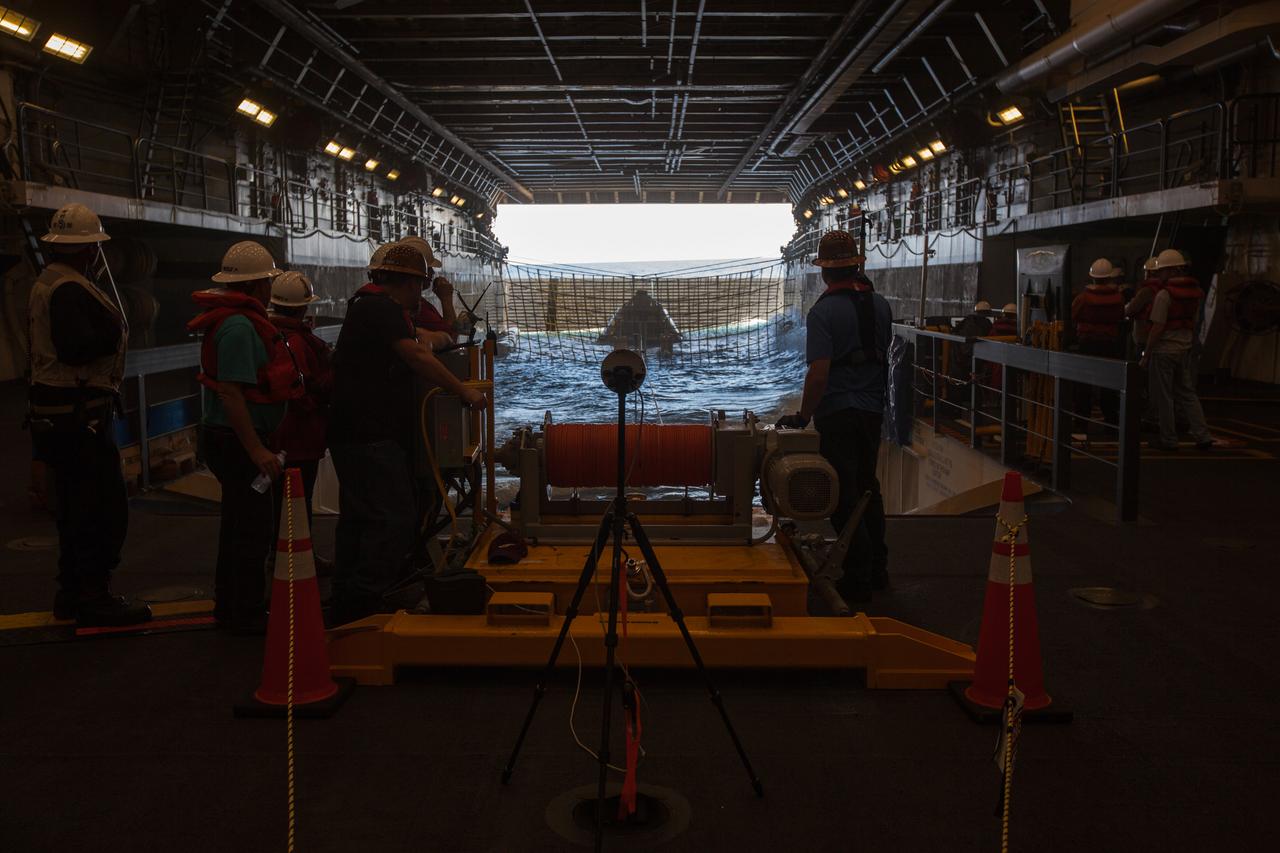
Winch team operators help guide a test version of the Orion crew module in the flooded well deck of the USS San Diego during Underway Recovery Test 5 in the Pacific Ocean off the coast of California on Oct. 29, 2016. NASA's Ground Systems Development and Operations Program and the U.S. Navy are conducting a series of tests using the ship's well deck, the test module, various watercraft and equipment to prepare for recovery of Orion on its return from deep space missions. The testing will allow the team to demonstrate and evaluate recovery processes, procedures, hardware and personnel in open waters. Part of Batch images transfer from Flickr.
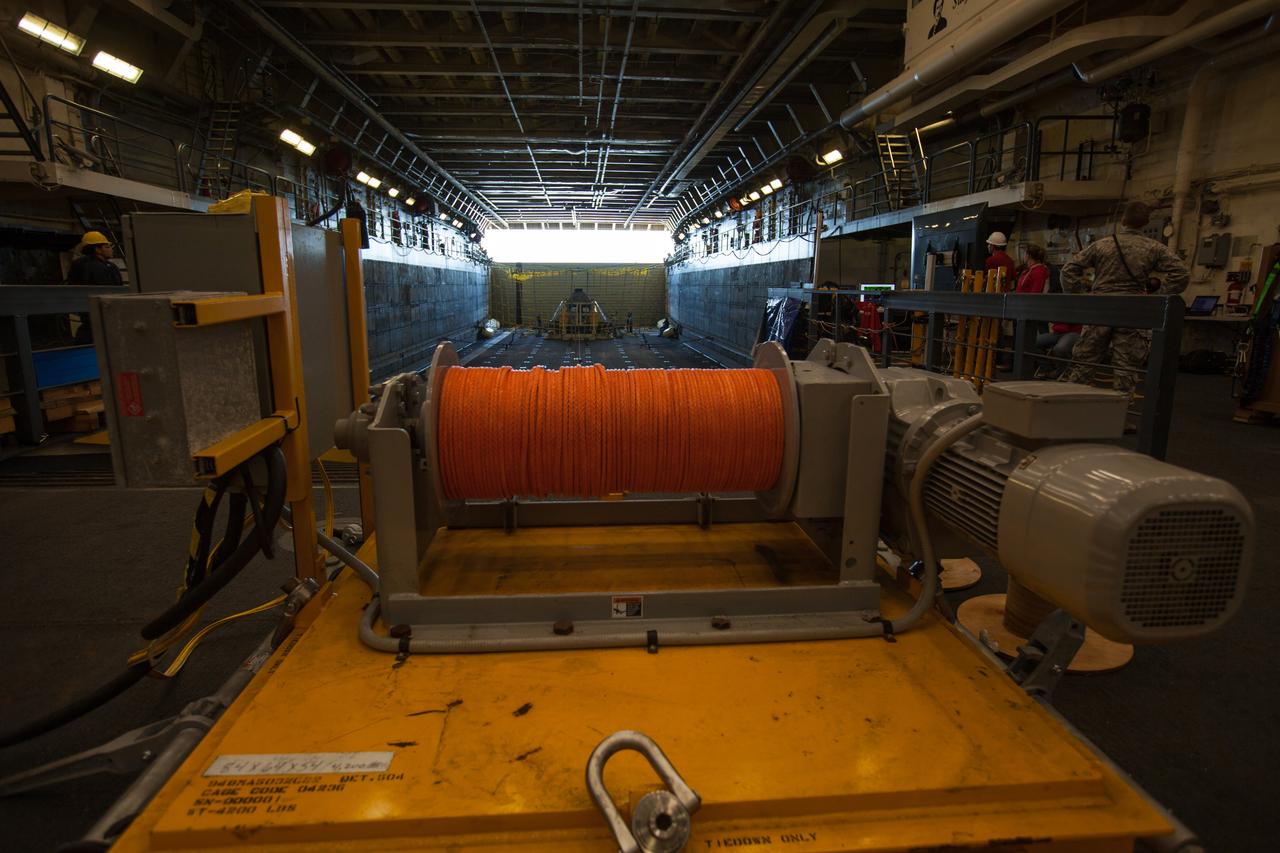
A test version of the Orion crew module is secured in the well deck of the USS San Diego for Underway Recovery Test 5 on Oct. 26, 2016. NASA's Ground Systems Development and Operations Program and the U.S. Navy will conduct a series of tests using the ship's well deck, the test module, various watercraft and equipment to prepare for recovery of Orion on its return from deep space missions. The test will allow the team to demonstrate and evaluate recovery processes, procedures, hardware and personnel in open waters. Part of Batch images transfer from Flickr.
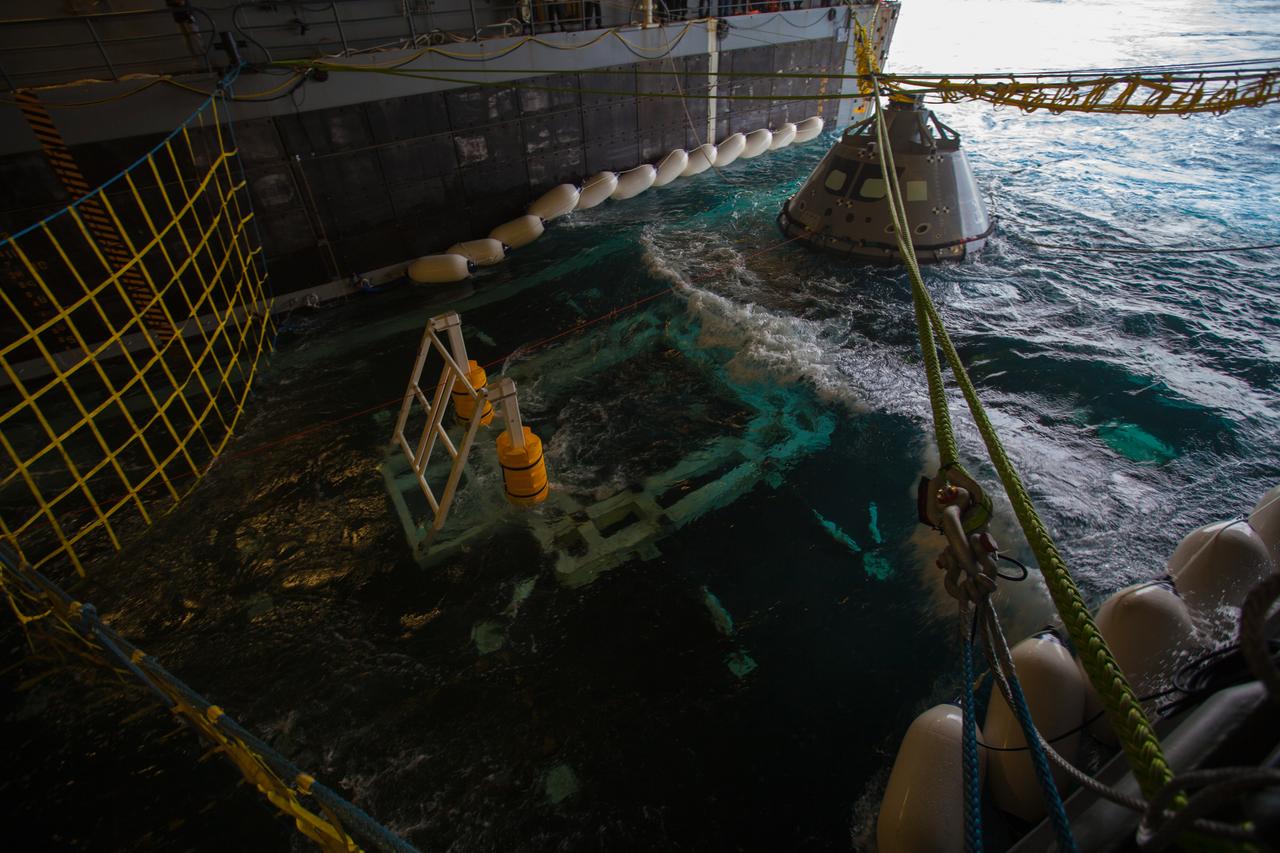
A test version of the Orion crew module is secured in the well deck of the USS San Diego for Underway Recovery Test 5 on Oct. 26, 2016. NASA's Ground Systems Development and Operations Program and the U.S. Navy will conduct a series of tests using the ship's well deck, the test module, various watercraft and equipment to prepare for recovery of Orion on its return from deep space missions. The test will allow the team to demonstrate and evaluate recovery processes, procedures, hardware and personnel in open waters. Part of Batch images transfer from Flickr.
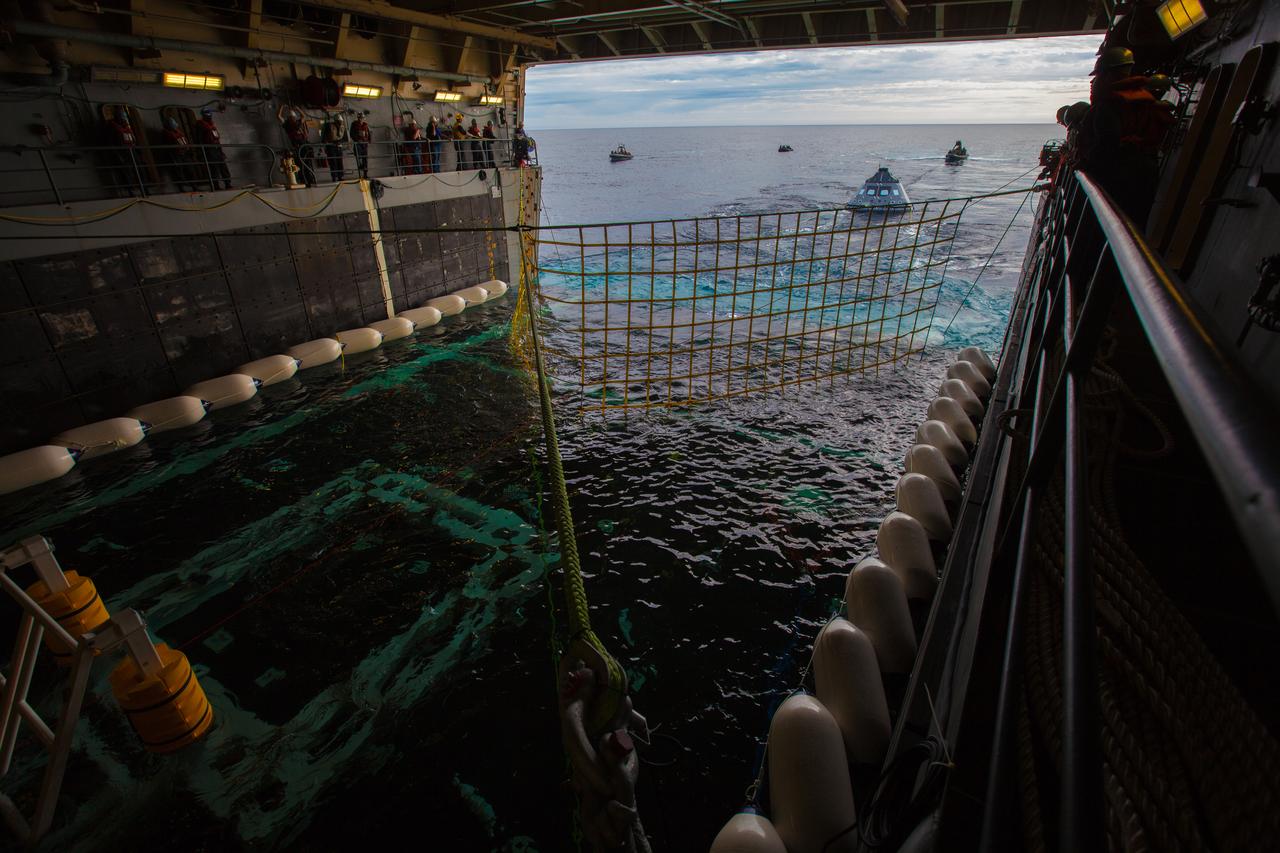
A test version of the Orion crew module is guided toward the flooded well deck of the USS San Diego during Underway Recovery Test 5 on Oct. 28, 2016. NASA's Ground Systems Development and Operations Program and the U.S. Navy are conducting a series of tests using the ship's well deck, the test module, various watercraft and equipment to prepare for recovery of Orion on its return from deep space missions. The test will allow the team to demonstrate and evaluate recovery processes, procedures, hardware and personnel in open waters. Part of Batch images transfer from Flickr.
A test version of the Orion crew module is secured in the well deck of the USS San Diego for Underway Recovery Test 5 on Oct. 26, 2016. NASA's Ground Systems Development and Operations Program and the U.S. Navy will conduct a series of tests using the ship's well deck, the test module, various watercraft and equipment to prepare for recovery of Orion on its return from deep space missions. The test will allow the team to demonstrate and evaluate recovery processes, procedures, hardware and personnel in open waters. Part of Batch images transfer from Flickr.
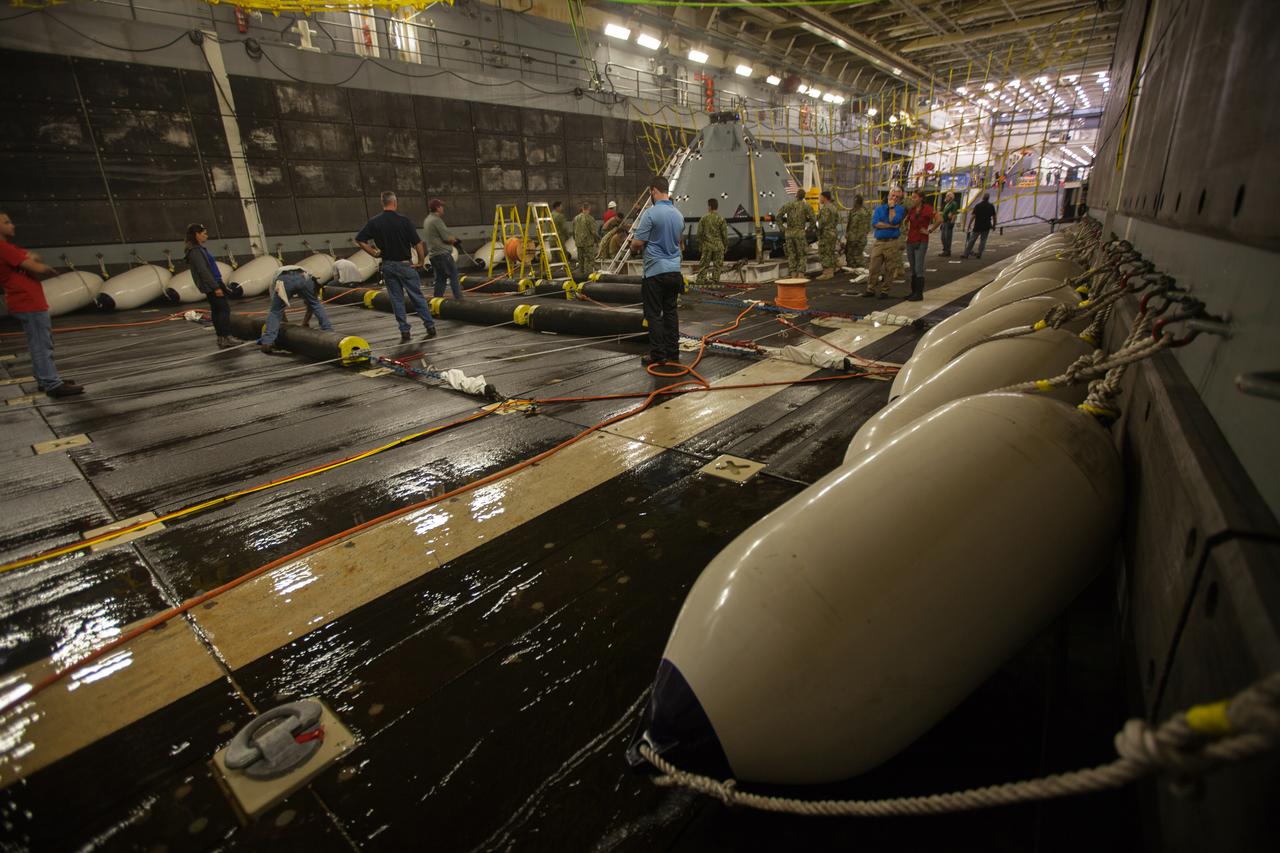
A test version of the Orion crew module is secured in the well deck of the USS San Diego for Underway Recovery Test 5 on Oct. 26, 2016. NASA's Ground Systems Development and Operations Program and the U.S. Navy will conduct a series of tests using the ship's well deck, the test module, various watercraft and equipment to prepare for recovery of Orion on its return from deep space missions. The test will allow the team to demonstrate and evaluate recovery processes, procedures, hardware and personnel in open waters. Part of Batch images transfer from Flickr.
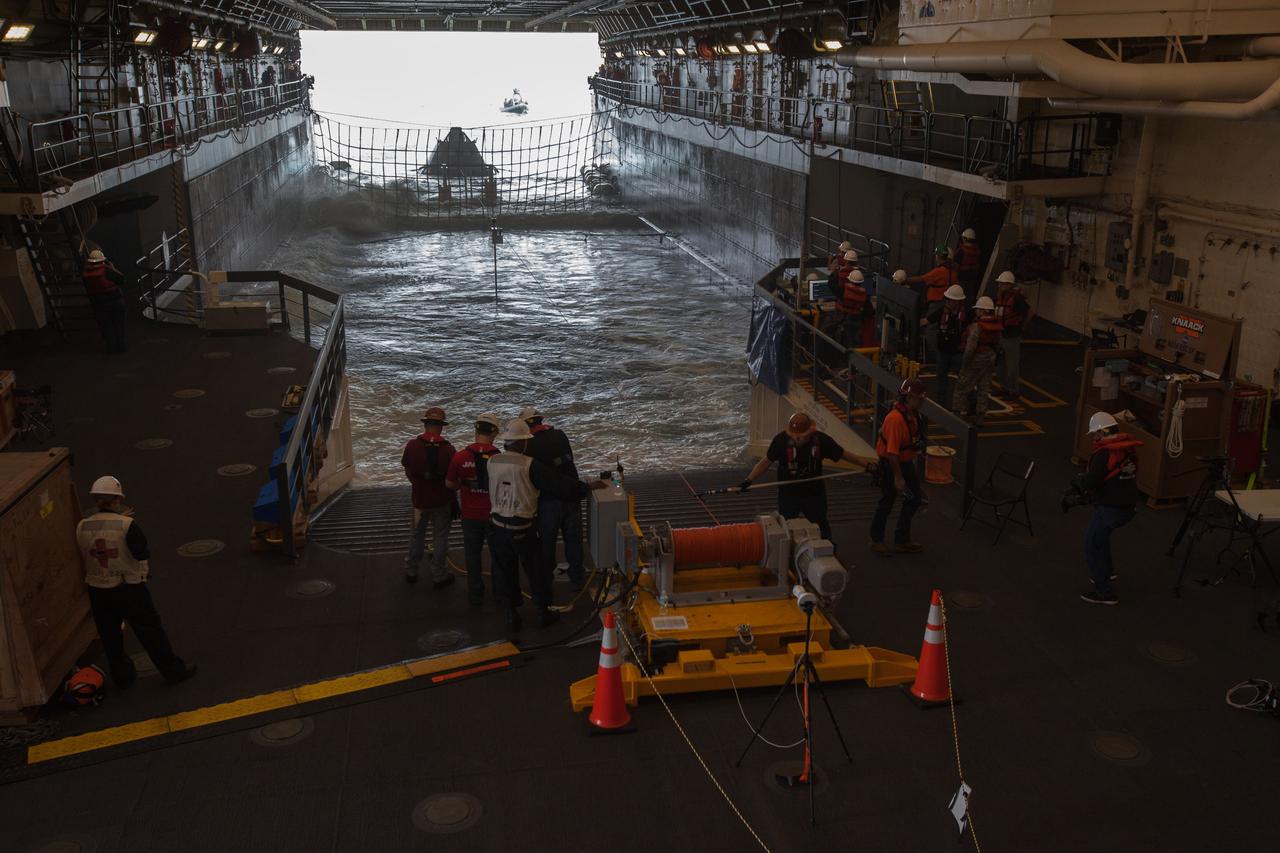
Winch team operators help guide a test version of the Orion crew module into the flooded well deck of the USS San Diego during Underway Recovery Test 5 in the Pacific Ocean off the coast of California on Oct. 30, 2016. NASA's Ground Systems Development and Operations Program and the U.S. Navy are conducting a series of tests using the ship's well deck, the test module, various watercraft and equipment to prepare for recovery of Orion on its return from deep space missions. The testing will allow the team to demonstrate and evaluate recovery processes, procedures, hardware and personnel in open waters. Part of Batch images transfer from Flickr.
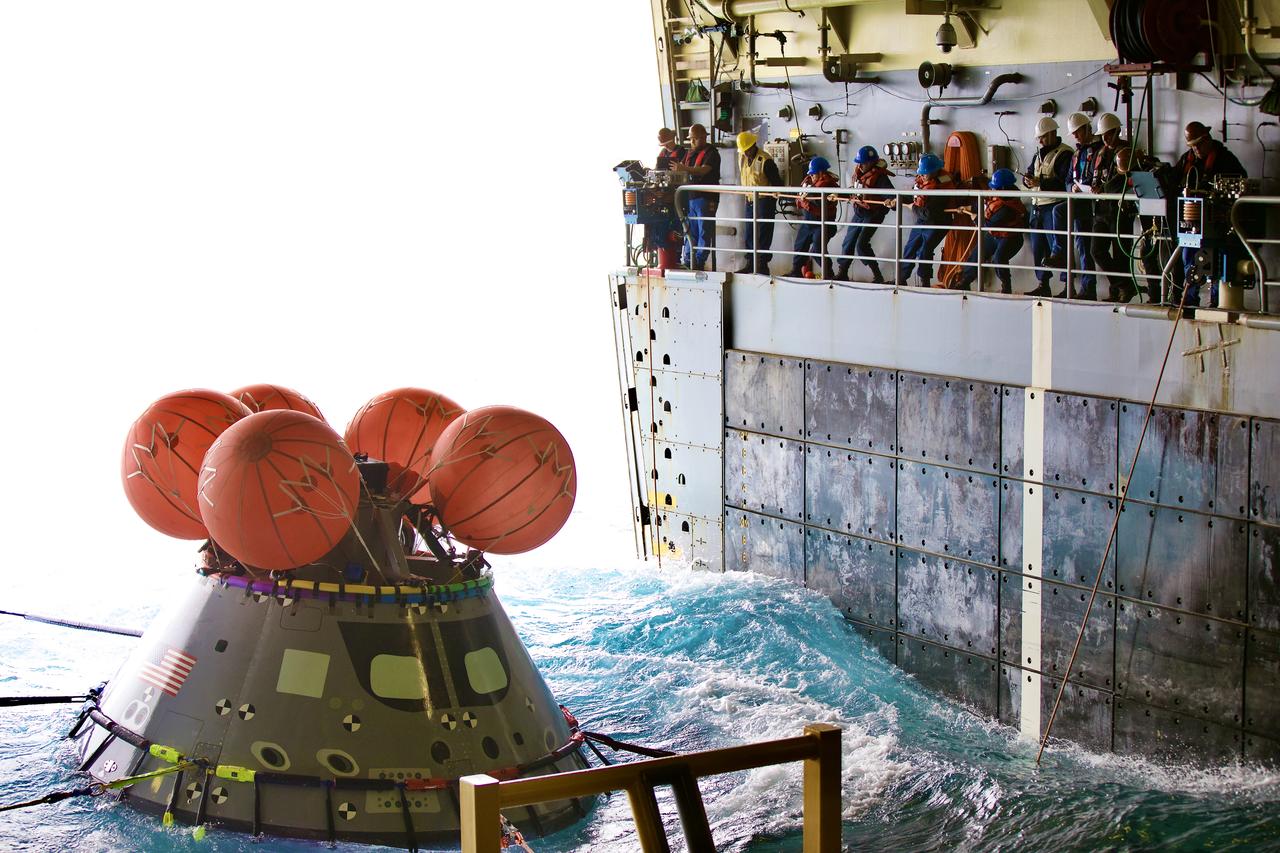
NASA’s Landing and Recovery team, composed of members from the Department of Defense, NASA and contractor Jacobs, practiced securing a test version of Orion into the well deck of a ship. During the test, the team practiced to ensure recovery procedure timelines are validated as NASA plans to send Artemis I around the Moon and splashdown in the Pacific Ocean.

NASA’s Landing and Recovery team, composed of members from the Department of Defense, NASA and contractor Jacobs, practiced securing a test version of Orion into the well deck of a ship. During the test, the team practiced to ensure recovery procedure timelines are validated as NASA plans to send Artemis I around the Moon and splashdown in the Pacific Ocean.
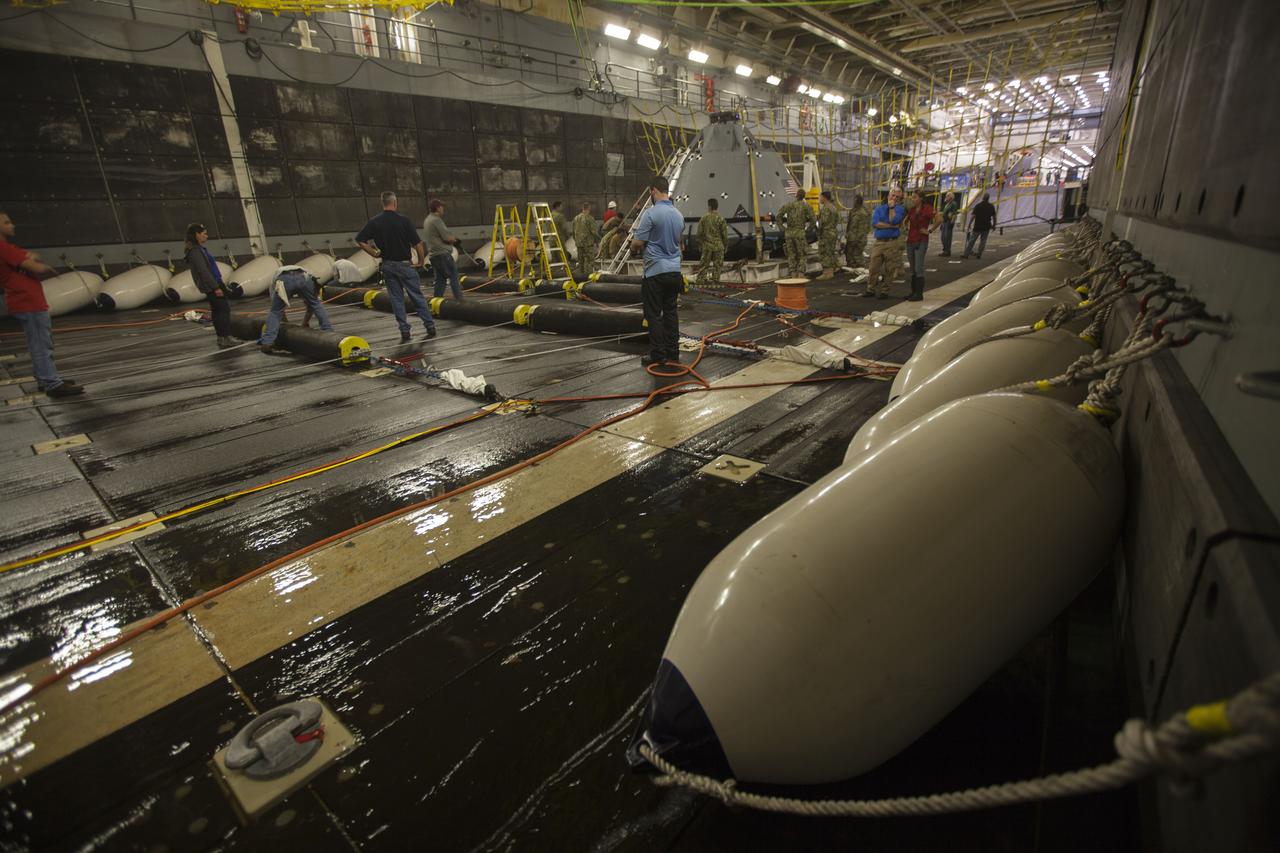
A test version of the Orion crew module is secured in the well deck of the USS San Diego and recovery team members are preparing for Underway Recovery Test 5 in the Pacific Ocean off the coast of California. NASA's Ground Systems Development and Operations Program and the U.S. Navy will conduct a series of tests using the ship's well deck, the test module, various watercraft and equipment to prepare for recovery of Orion on its return from deep space missions. The test will allow the team to demonstrate and evaluate recovery processes, procedures, hardware and personnel in open waters. Orion is the exploration spacecraft designed to carry astronauts to destinations not yet explored by humans, including an asteroid and NASA's Journey to Mars. It will have emergency abort capability, sustain the crew during space travel and provide safe re-entry from deep space return velocities. Orion is scheduled to launch on NASA's Space Launch System in late 2018. For more information, visit http://www.nasa.gov/orion.
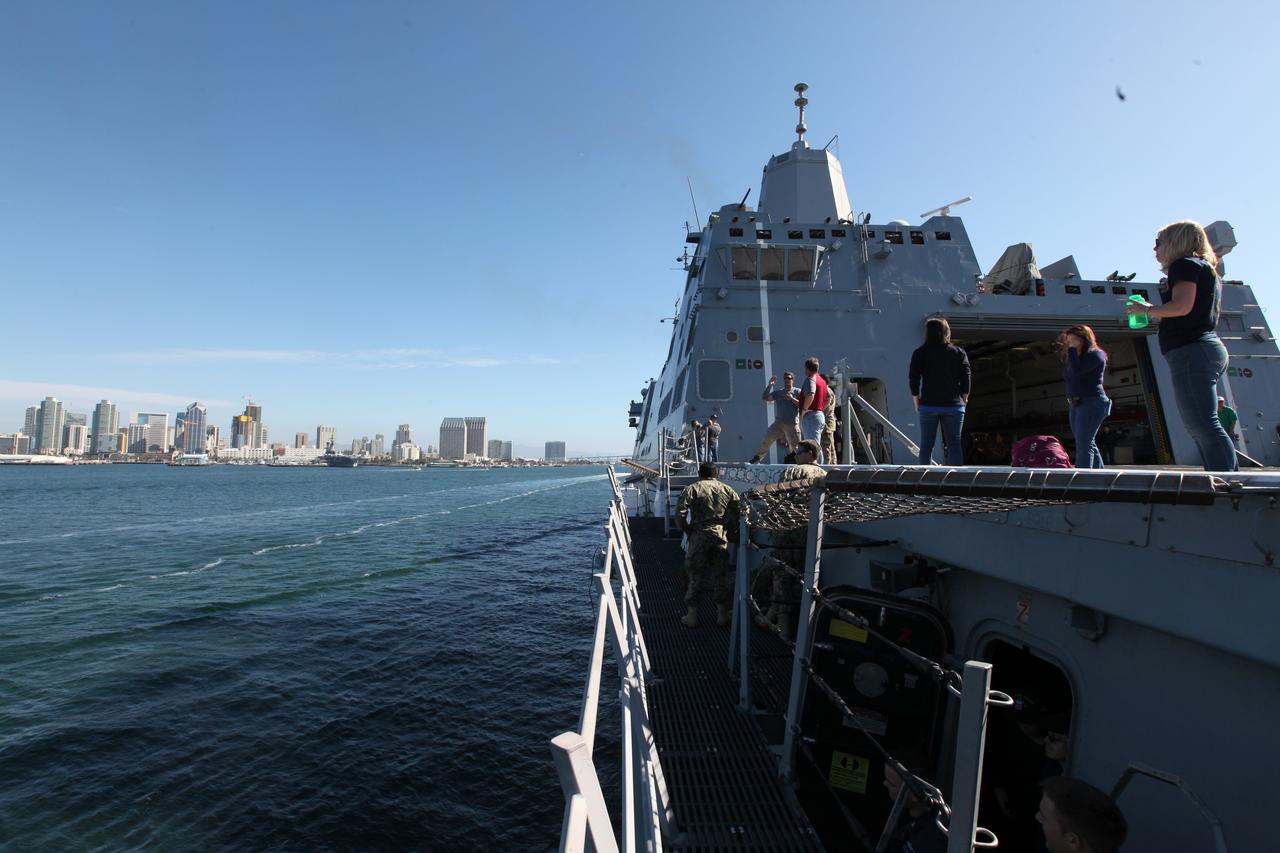
The USS San Diego approaches the coast of San Diego, California after completion of Underway Recovery Test 5 in the Pacific Ocean. NASA's Ground Systems Development and Operations Program and the U.S. Navy conducted a series of tests, called Underway Recovery Test 5, using the ship's well deck and a test version of the Orion crew module to prepare for recovery of Orion on its return from deep space missions. The testing allowed the team to demonstrate and evaluate recovery processes, procedures, hardware and personnel in open waters. Orion is the exploration spacecraft designed to carry astronauts to destinations not yet explored by humans, including an asteroid and NASA's Journey to Mars. It will have emergency abort capability, sustain the crew during space travel and provide safe re-entry from deep space return velocities. Orion is scheduled to launch on NASA's Space Launch System in late 2018. For more information, visit http://www.nasa.gov/orion.
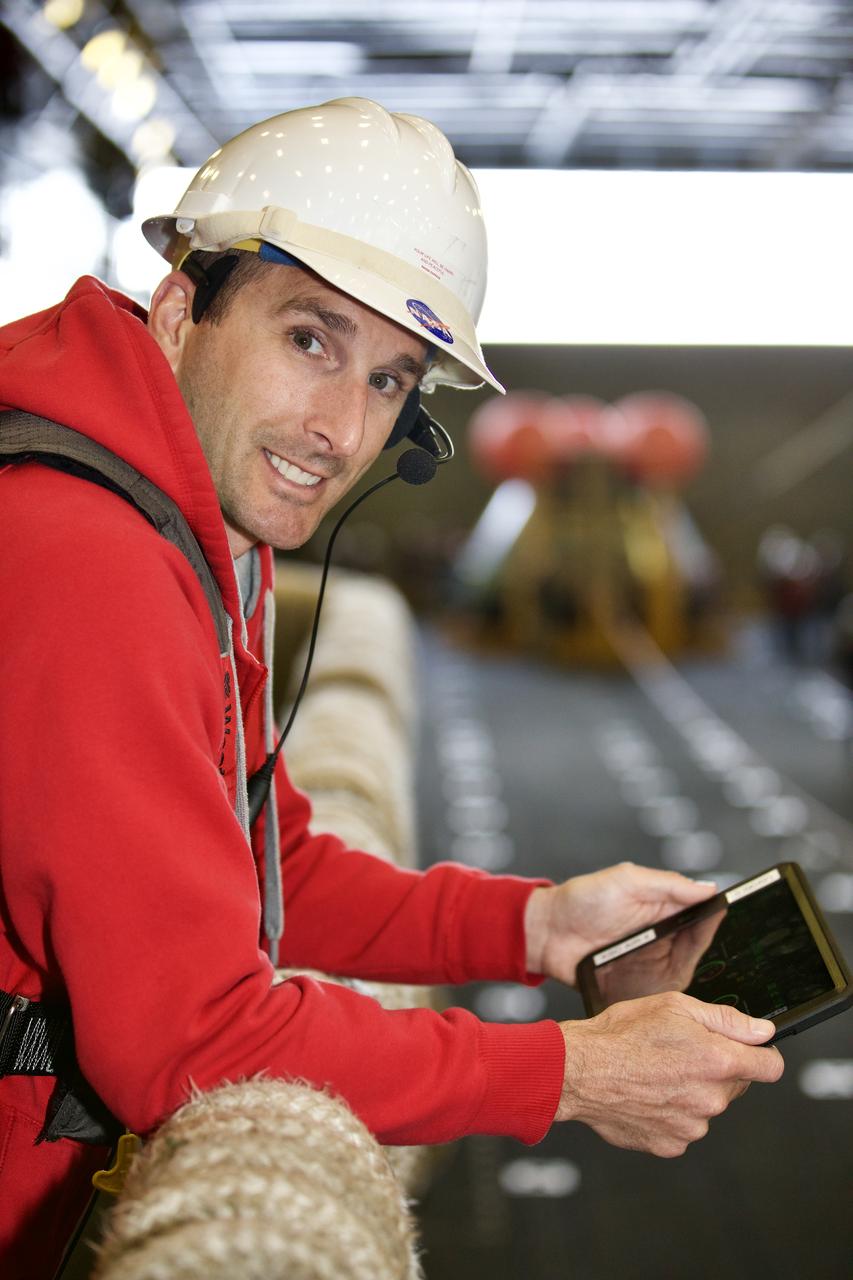
Jeremy Parr participates in the training of new Landing and Recovery team members during Underway Recovery Test-8. NASA is preparing for an Orion splashdown in the Pacific Ocean after Artemis I.
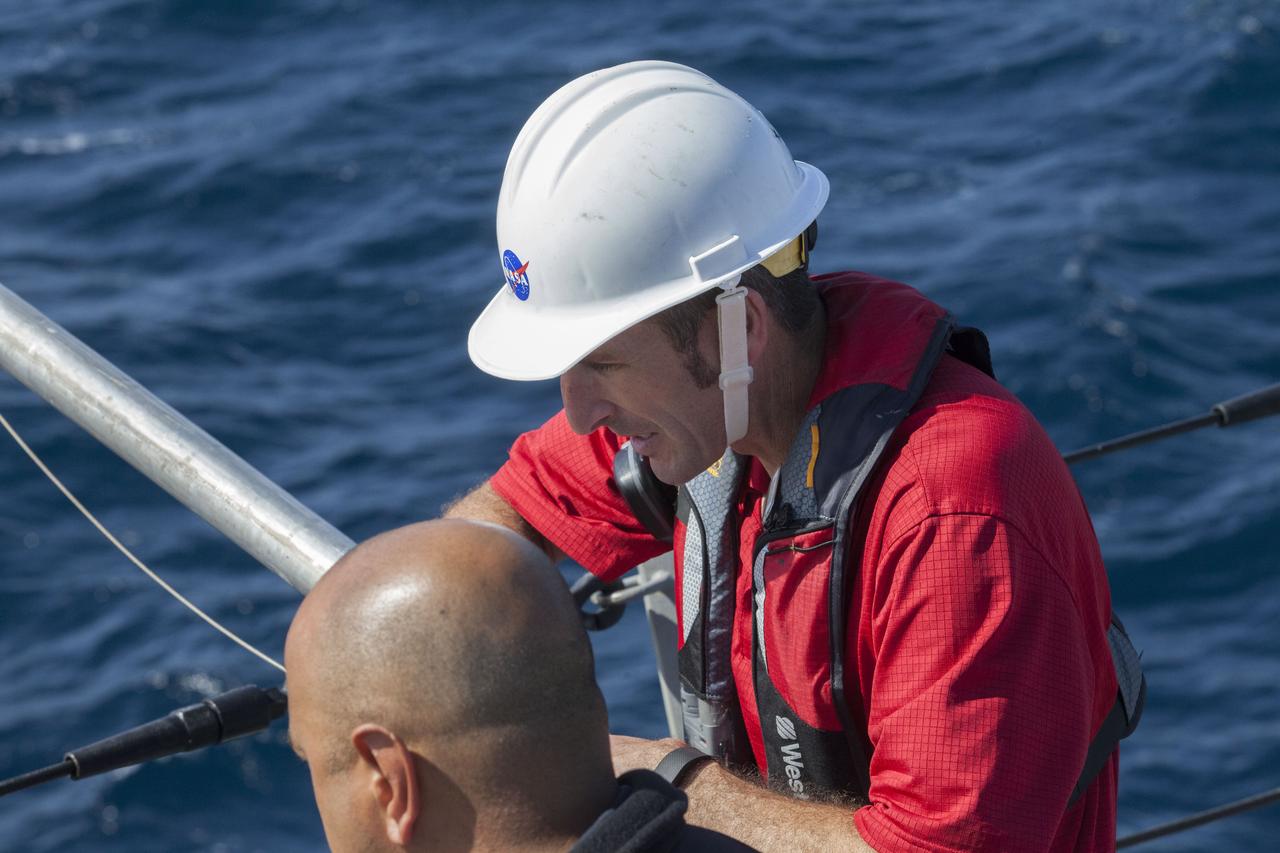
Recovery team members watch Orion Underway Recovery Test 5 activities on the flight deck of the USS San Diego in the Pacific Ocean off the coast of California. NASA's Ground Systems Development and Operations Program and the U.S. Navy are practicing recovery techniques using the well deck of the ship and a test version of the Orion crew module to prepare for recovery of Orion on its return from deep space missions. The testing will allow the team to demonstrate and evaluate recovery processes, procedures, hardware and personnel in open waters. Orion is the exploration spacecraft designed to carry astronauts to destinations not yet explored by humans, including an asteroid and NASA's Journey to Mars. It will have emergency abort capability, sustain the crew during space travel and provide safe re-entry from deep space return velocities. Orion is scheduled to launch on NASA's Space Launch System in late 2018. For more information, visit http://www.nasa.gov/orion.
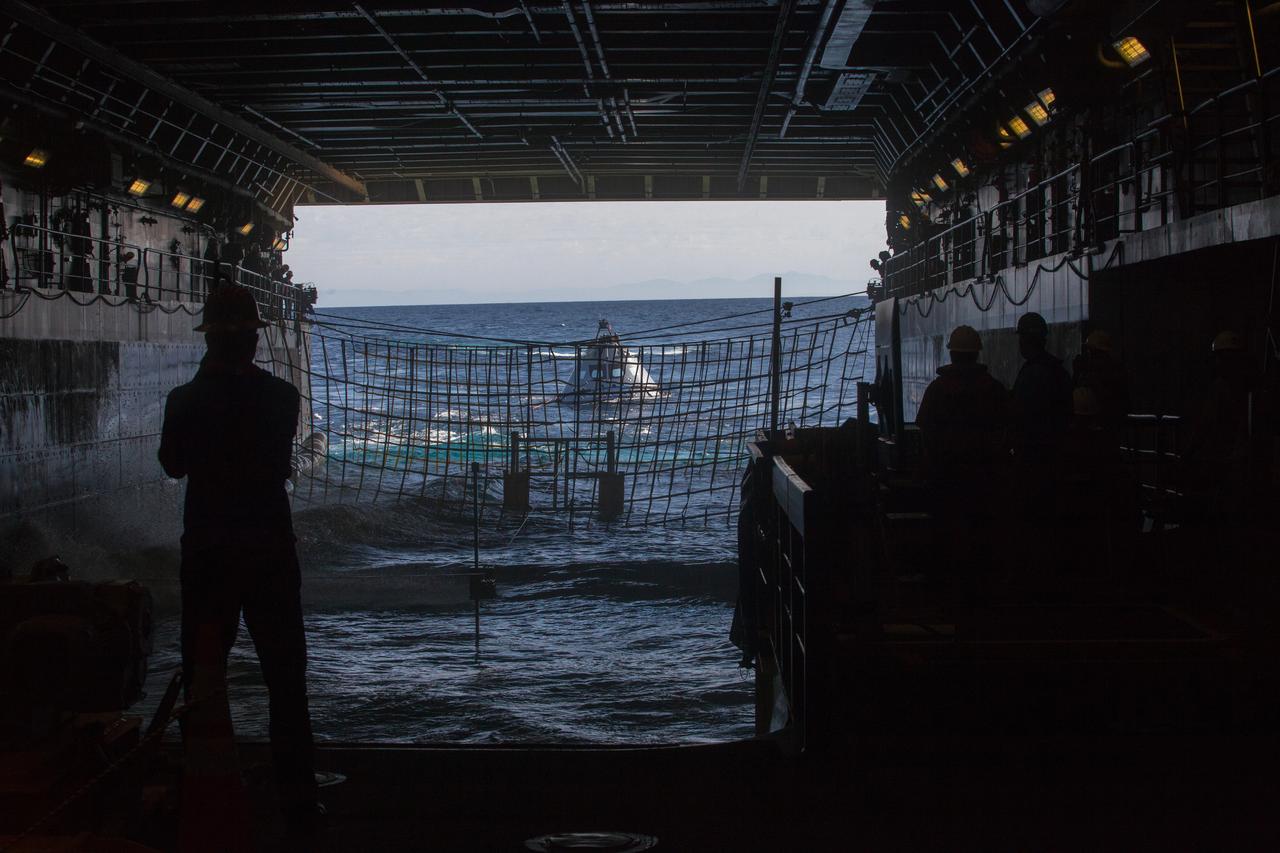
A test version of the Orion crew module floats outside the well deck of the USS San Diego during Underway Recovery Test 5 in the Pacific Ocean off the coast of California on Oct. 29, 2016. NASA's Ground Systems Development and Operations Program and the U.S. Navy are conducting a series of tests using the ship's well deck, several watercraft, support equipment and personnel to prepare for recovery of Orion on its return from deep space missions. The testing will allow the team to demonstrate and evaluate recovery processes, procedures, hardware and personnel in open waters. Part of Batch images transfer from Flickr.
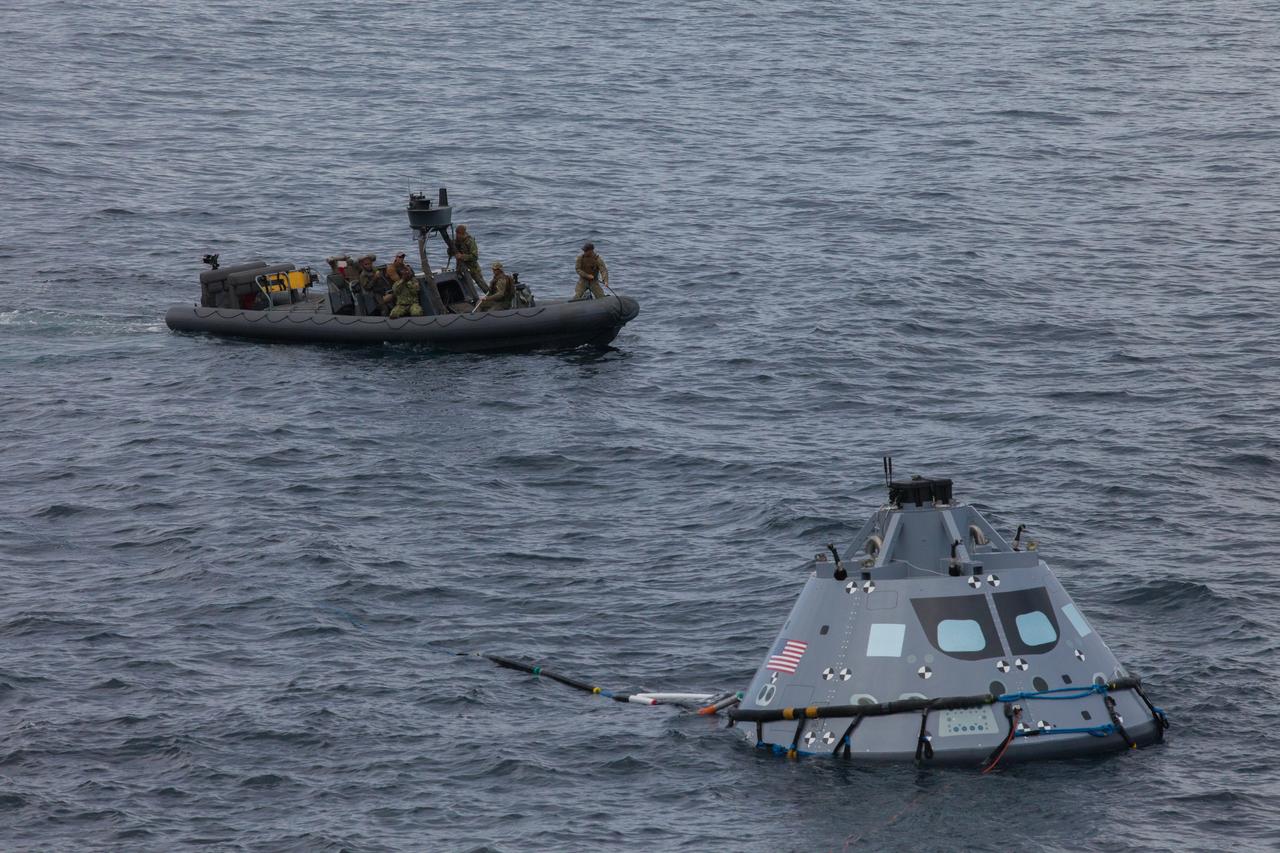
A test version of the Orion crew module floats in the Pacific Ocean during Underway Recovery Test 5 in the Pacific Ocean off the coast of California on Oct. 30, 2016. Nearby are U.S. Navy divers and other personnel in a rigid hull inflatable boat. NASA's Ground Systems Development and Operations Program and the U.S. Navy are conducting a series of tests using the well deck of the USS San Diego, several watercraft, support equipment and personnel to prepare for recovery of Orion on its return from deep space missions. The testing will allow the team to demonstrate and evaluate recovery processes, procedures, hardware and personnel in open waters. Part of Batch images transfer from Flickr.
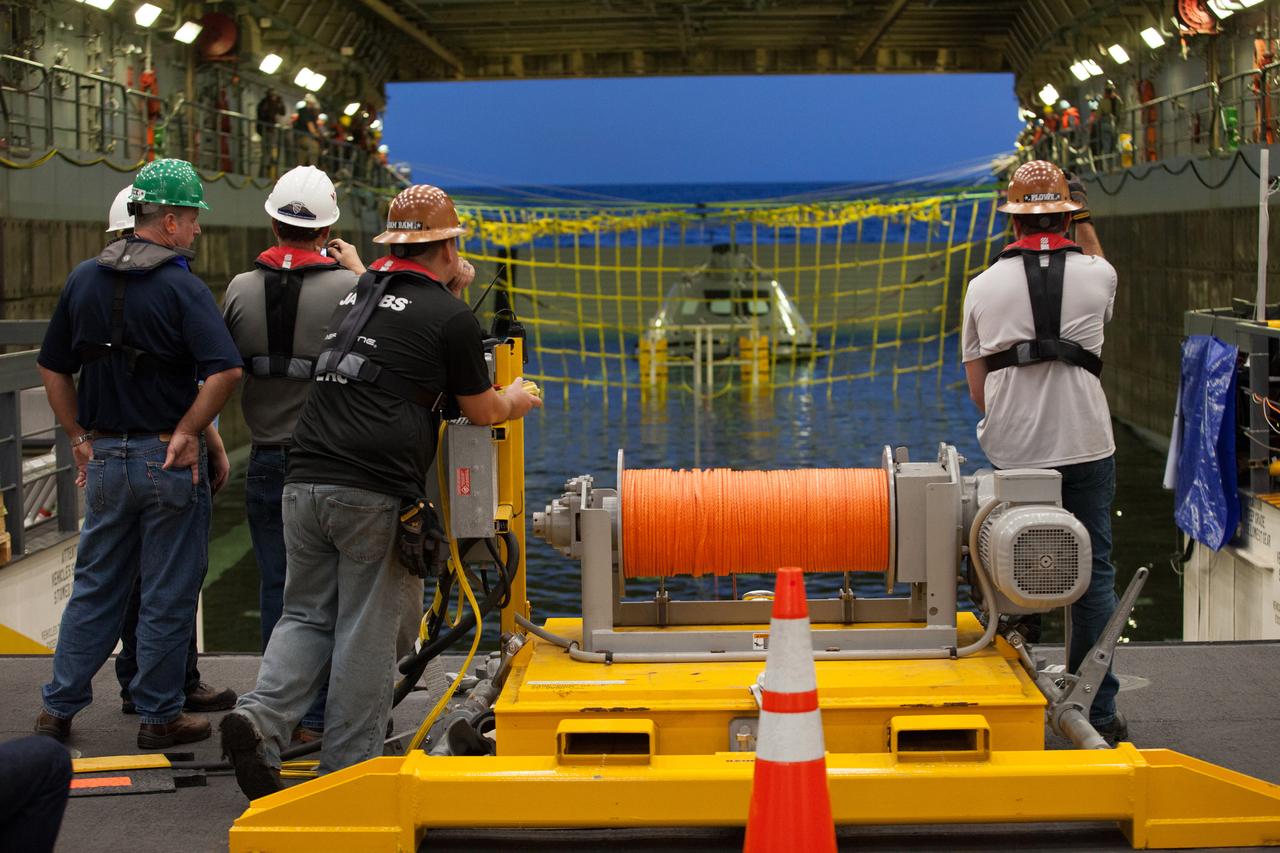
Winch operations team members watch as a test version of the Orion crew module is secured in the flooded well deck of the USS San Diego for the start of Underway Recovery Test 5 in the Pacific Ocean off the coast of California. NASA's Ground Systems Development and Operations Program and the U.S. Navy are conducting a series of tests to prepare for recovery of Orion on its return from deep space missions. The testing will allow the team to demonstrate and evaluate recovery processes, procedures, hardware and personnel in open waters. Part of Batch images transfer from Flickr.
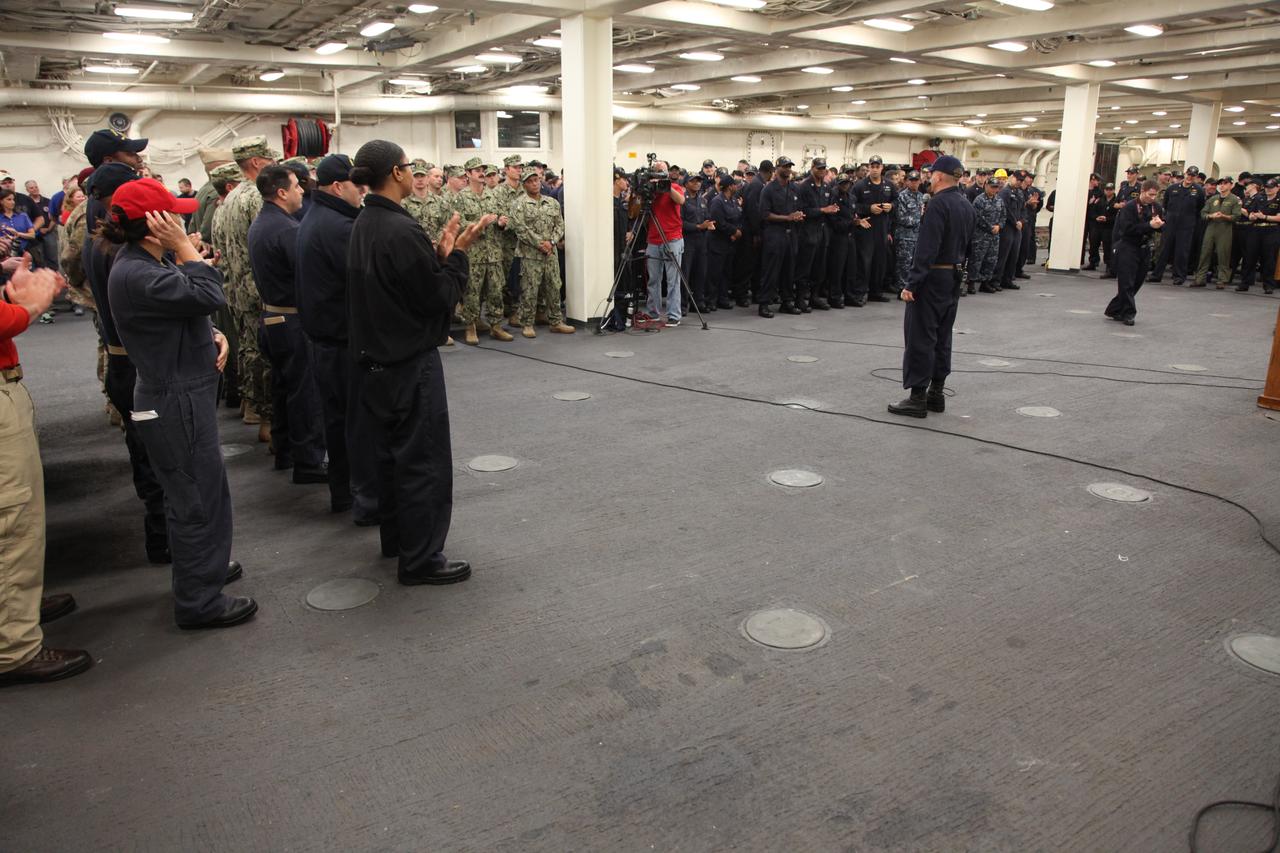
Orion Underway Recovery Test 5 team members gather in the USS San Diego during wrap up of the series of tests. NASA's Ground Systems Development and Operations Program and the U.S. Navy practiced recovery techniques in the Pacific Ocean off the coast of California over several days, using the well deck of the ship and a test version of the Orion crew module to prepare for recovery of Orion on its return from deep space missions. The testing allowed the team to demonstrate and evaluate recovery processes, procedures, hardware and personnel in open waters. Orion is the exploration spacecraft designed to carry astronauts to destinations not yet explored by humans, including an asteroid and NASA's Journey to Mars. It will have emergency abort capability, sustain the crew during space travel and provide safe re-entry from deep space return velocities. Orion is scheduled to launch on NASA's Space Launch System in late 2018. For more information, visit http://www.nasa.gov/orion.
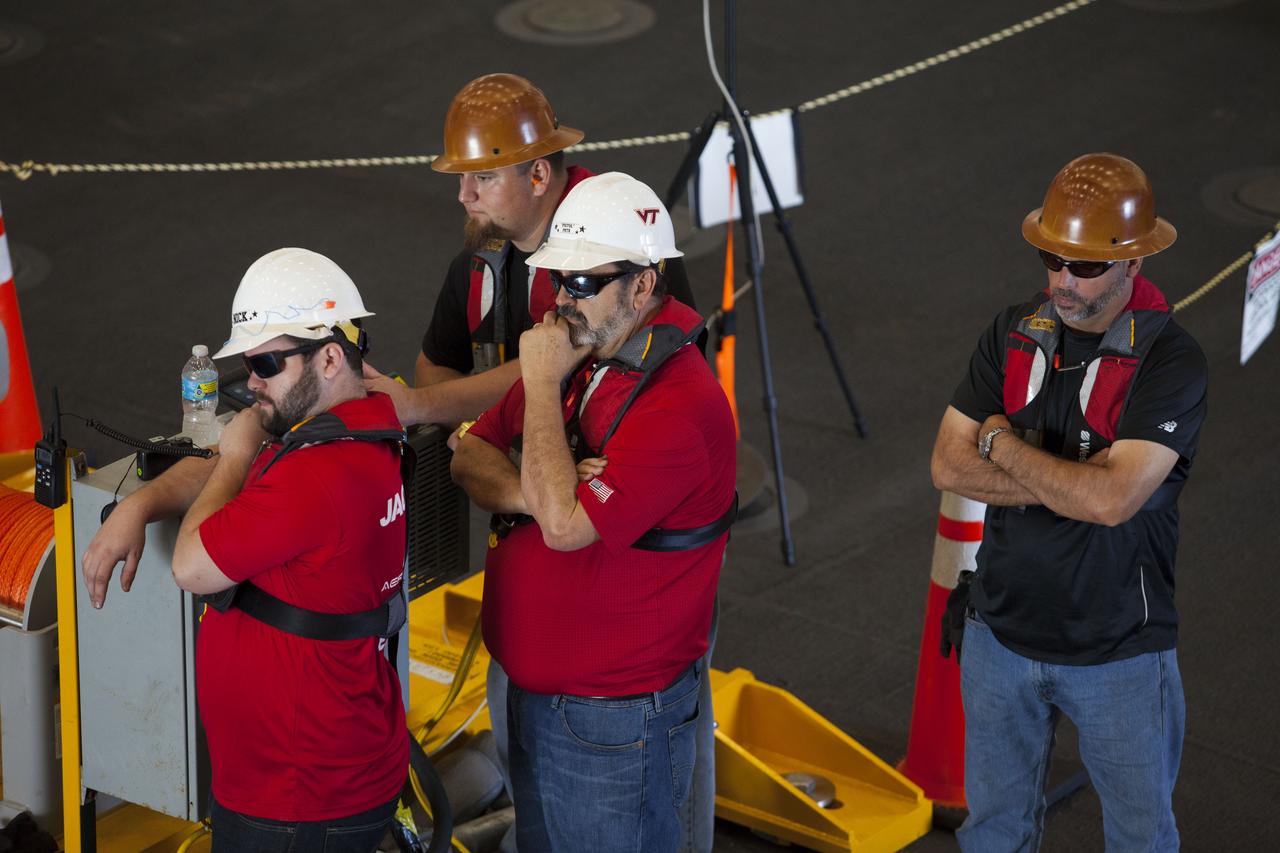
Members of the recovery team watch as a test version of the Orion crew module is secured in the flooded well deck of the USS San Diego during Underway Recovery Test 5 in the Pacific Ocean off the coast of California. NASA's Ground Systems Development and Operations Program and the U.S. Navy are conducting a series of tests to prepare for recovery of Orion on its return from deep space missions. The testing will allow the team to demonstrate and evaluate recovery processes, procedures, hardware and personnel in open waters. Orion is the exploration spacecraft designed to carry astronauts to destinations not yet explored by humans, including an asteroid and NASA's Journey to Mars. It will have emergency abort capability, sustain the crew during space travel and provide safe re-entry from deep space return velocities. Orion is scheduled to launch on NASA's Space Launch System in late 2018. For more information, visit http://www.nasa.gov/orion.

Members of the recovery team secure ropes and tether lines in the well deck of the USS San Diego during Underway Recovery Test 5 in the Pacific Ocean off the coast of California. Using a test version of the Orion crew module, NASA's Ground Systems Development and Operations Program and the U.S. Navy are conducting a series of tests to prepare for recovery of Orion on its return from deep space missions. The testing will allow the team to demonstrate and evaluate recovery processes, procedures, hardware and personnel in open waters. Orion is the exploration spacecraft designed to carry astronauts to destinations not yet explored by humans, including an asteroid and NASA's Journey to Mars. It will have emergency abort capability, sustain the crew during space travel and provide safe re-entry from deep space return velocities. Orion is scheduled to launch on NASA's Space Launch System in late 2018. For more information, visit http://www.nasa.gov/orion.
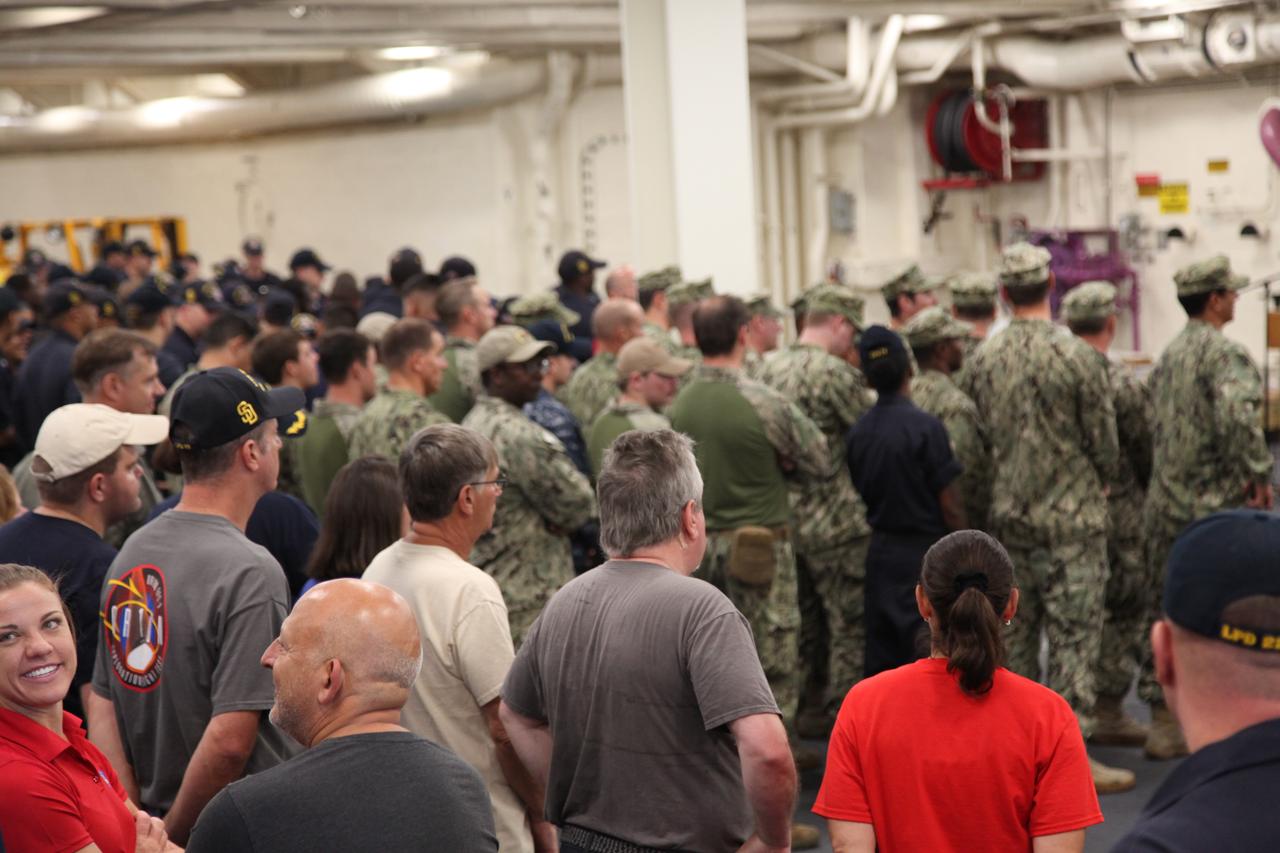
Orion Underway Recovery Test 5 team members gather in the USS San Diego at the end of a series of tests. NASA's Ground Systems Development and Operations Program and the U.S. Navy practiced recovery techniques in the Pacific Ocean off the coast of California over several days, using the well deck of the ship and a test version of the Orion crew module to prepare for recovery of Orion on its return from deep space missions. The testing allowed the team to demonstrate and evaluate recovery processes, procedures, hardware and personnel in open waters. Orion is the exploration spacecraft designed to carry astronauts to destinations not yet explored by humans, including an asteroid and NASA's Journey to Mars. It will have emergency abort capability, sustain the crew during space travel and provide safe re-entry from deep space return velocities. Orion is scheduled to launch on NASA's Space Launch System in late 2018. For more information, visit http://www.nasa.gov/orion.
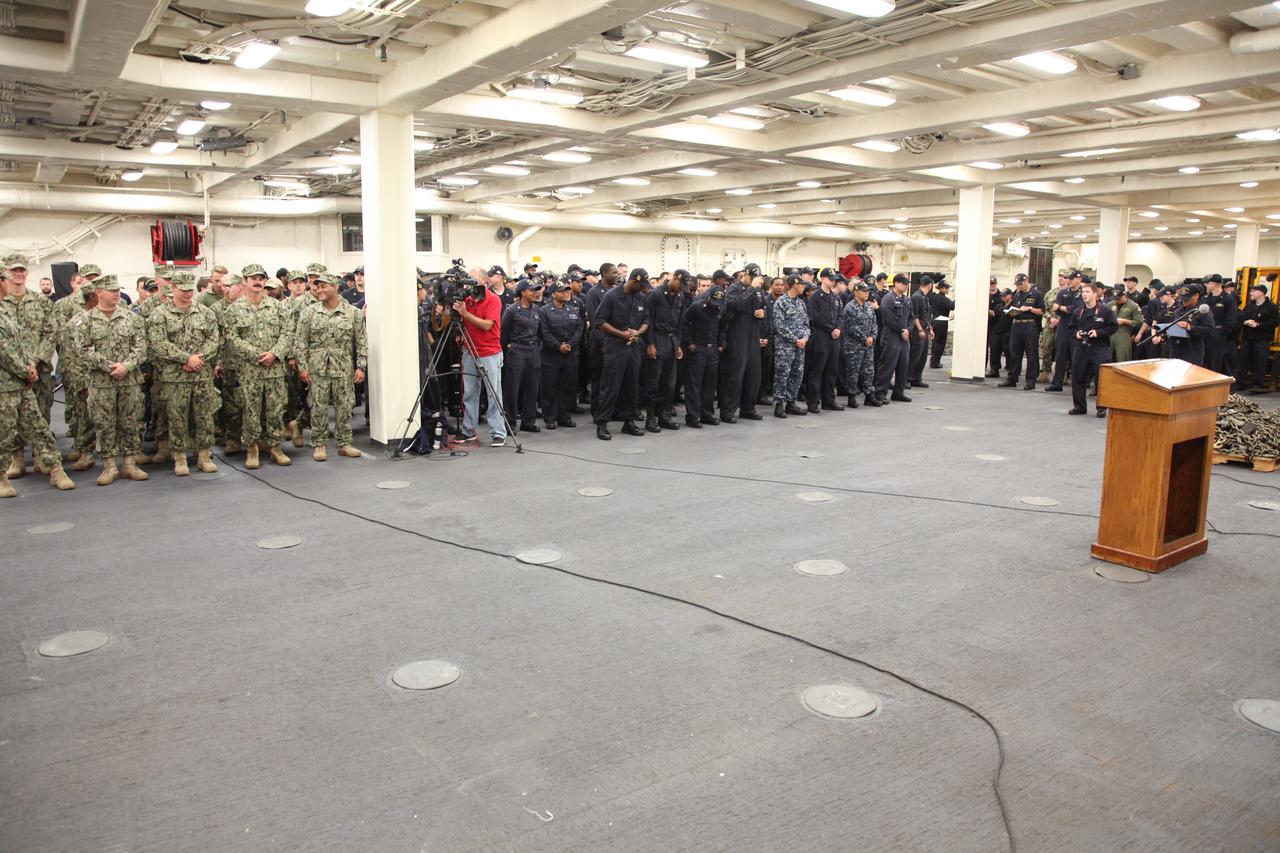
Orion Underway Recovery Test 5 team members gather in the USS San Diego at the end of a series of tests. NASA's Ground Systems Development and Operations Program and the U.S. Navy practiced recovery techniques in the Pacific Ocean off the coast of California over several days, using the well deck of the ship and a test version of the Orion crew module to prepare for recovery of Orion on its return from deep space missions. The testing allowed the team to demonstrate and evaluate recovery processes, procedures, hardware and personnel in open waters. Orion is the exploration spacecraft designed to carry astronauts to destinations not yet explored by humans, including an asteroid and NASA's Journey to Mars. It will have emergency abort capability, sustain the crew during space travel and provide safe re-entry from deep space return velocities. Orion is scheduled to launch on NASA's Space Launch System in late 2018. For more information, visit http://www.nasa.gov/orion.
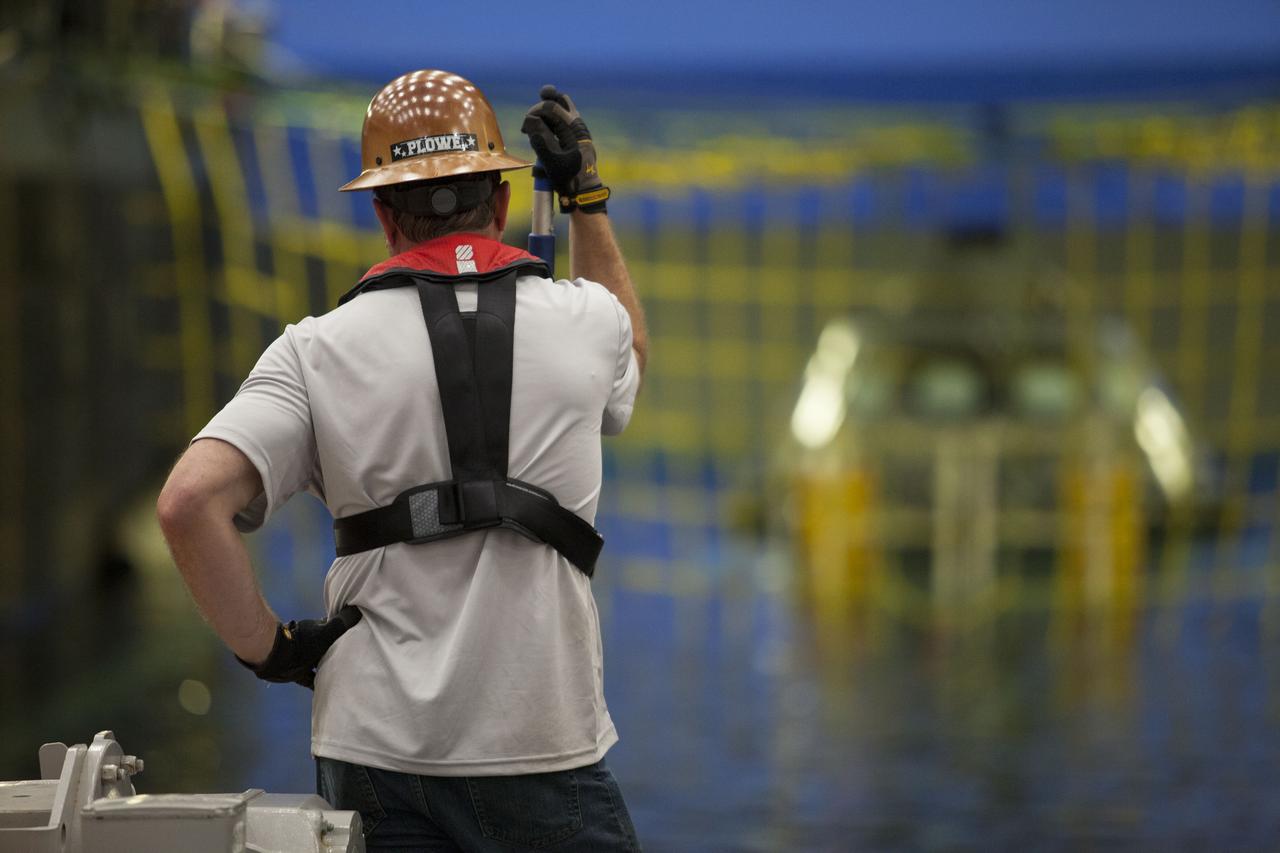
A member of the recovery team watches as a test version of the Orion crew module is secured in the flooded well deck of the USS San Diego for the start of Underway Recovery Test 5 in the Pacific Ocean off the coast of California. NASA's Ground Systems Development and Operations Program and the U.S. Navy are conducting a series of tests to prepare for recovery of Orion on its return from deep space missions. The testing will allow the team to demonstrate and evaluate recovery processes, procedures, hardware and personnel in open waters. Orion is the exploration spacecraft designed to carry astronauts to destinations not yet explored by humans, including an asteroid and NASA's Journey to Mars. It will have emergency abort capability, sustain the crew during space travel and provide safe re-entry from deep space return velocities. Orion is scheduled to launch on NASA's Space Launch System in late 2018. For more information, visit http://www.nasa.gov/orion.
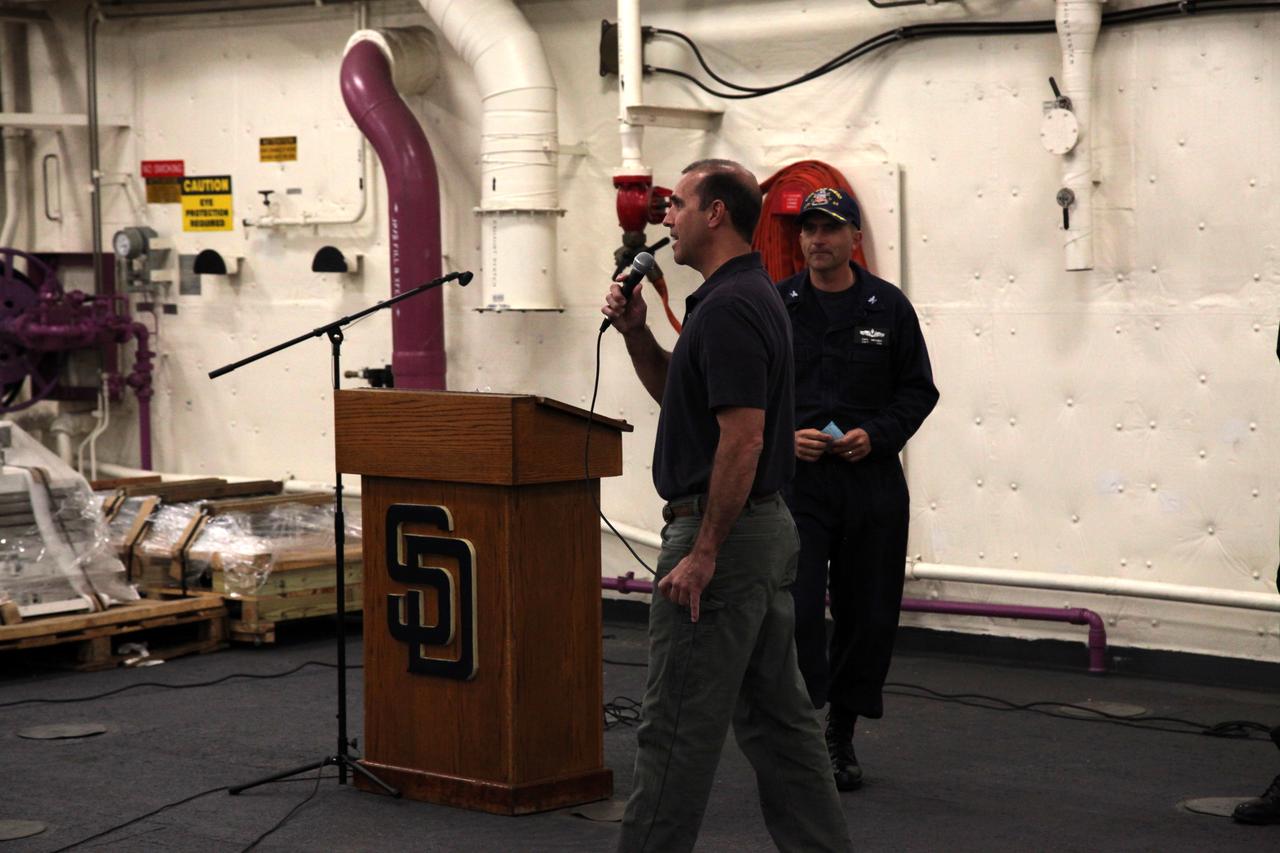
Orion Underway Recovery Test 5 team members gather in the USS San Diego during wrap up of the series of tests. NASA's Ground Systems Development and Operations Program and the U.S. Navy practiced recovery techniques in the Pacific Ocean off the coast of California over several days, using the well deck of the ship and a test version of the Orion crew module to prepare for recovery of Orion on its return from deep space missions. The testing allowed the team to demonstrate and evaluate recovery processes, procedures, hardware and personnel in open waters. Orion is the exploration spacecraft designed to carry astronauts to destinations not yet explored by humans, including an asteroid and NASA's Journey to Mars. It will have emergency abort capability, sustain the crew during space travel and provide safe re-entry from deep space return velocities. Orion is scheduled to launch on NASA's Space Launch System in late 2018. For more information, visit http://www.nasa.gov/orion.
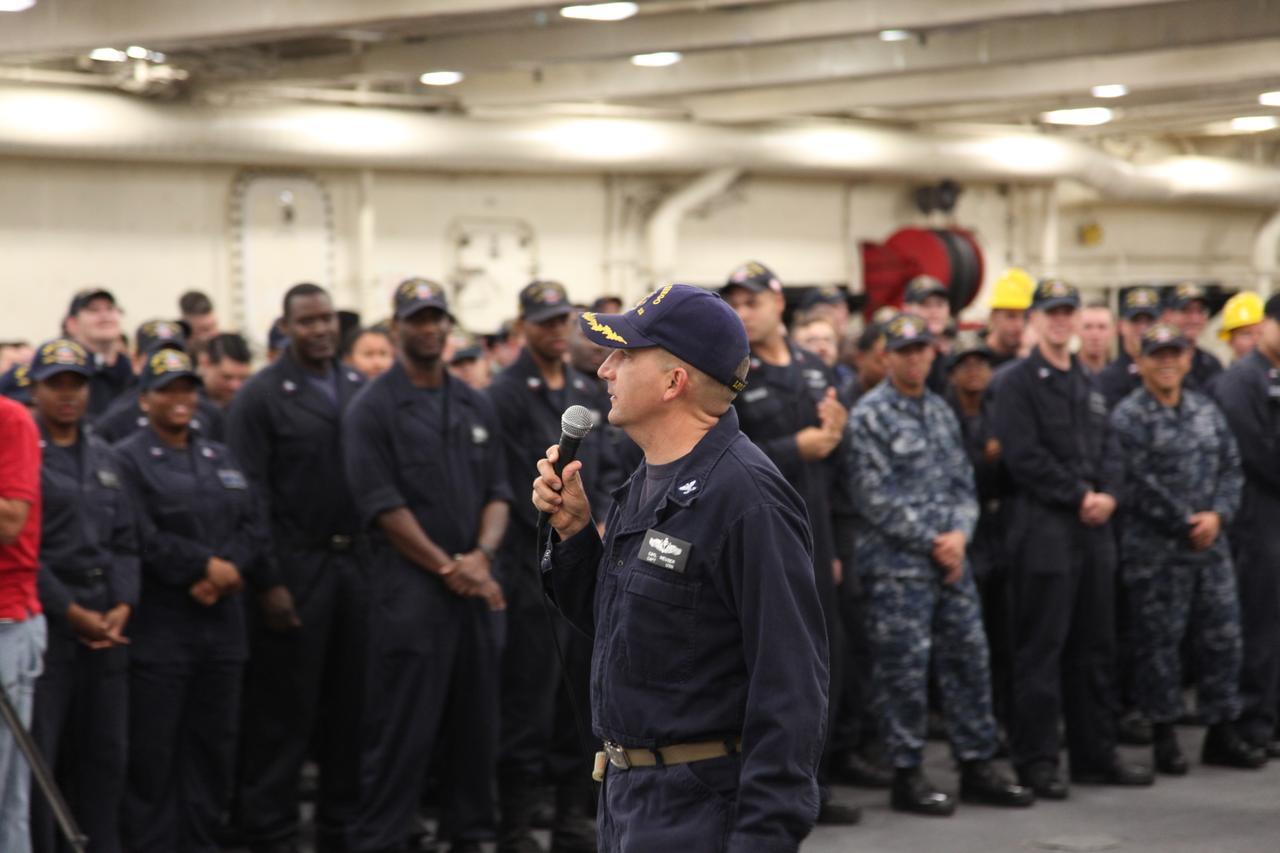
Orion Underway Recovery Test 5 team members gather in the USS San Diego during wrap up of the series of tests. NASA's Ground Systems Development and Operations Program and the U.S. Navy practiced recovery techniques in the Pacific Ocean off the coast of California over several days, using the well deck of the ship and a test version of the Orion crew module to prepare for recovery of Orion on its return from deep space missions. The testing allowed the team to demonstrate and evaluate recovery processes, procedures, hardware and personnel in open waters. Orion is the exploration spacecraft designed to carry astronauts to destinations not yet explored by humans, including an asteroid and NASA's Journey to Mars. It will have emergency abort capability, sustain the crew during space travel and provide safe re-entry from deep space return velocities. Orion is scheduled to launch on NASA's Space Launch System in late 2018. For more information, visit http://www.nasa.gov/orion.
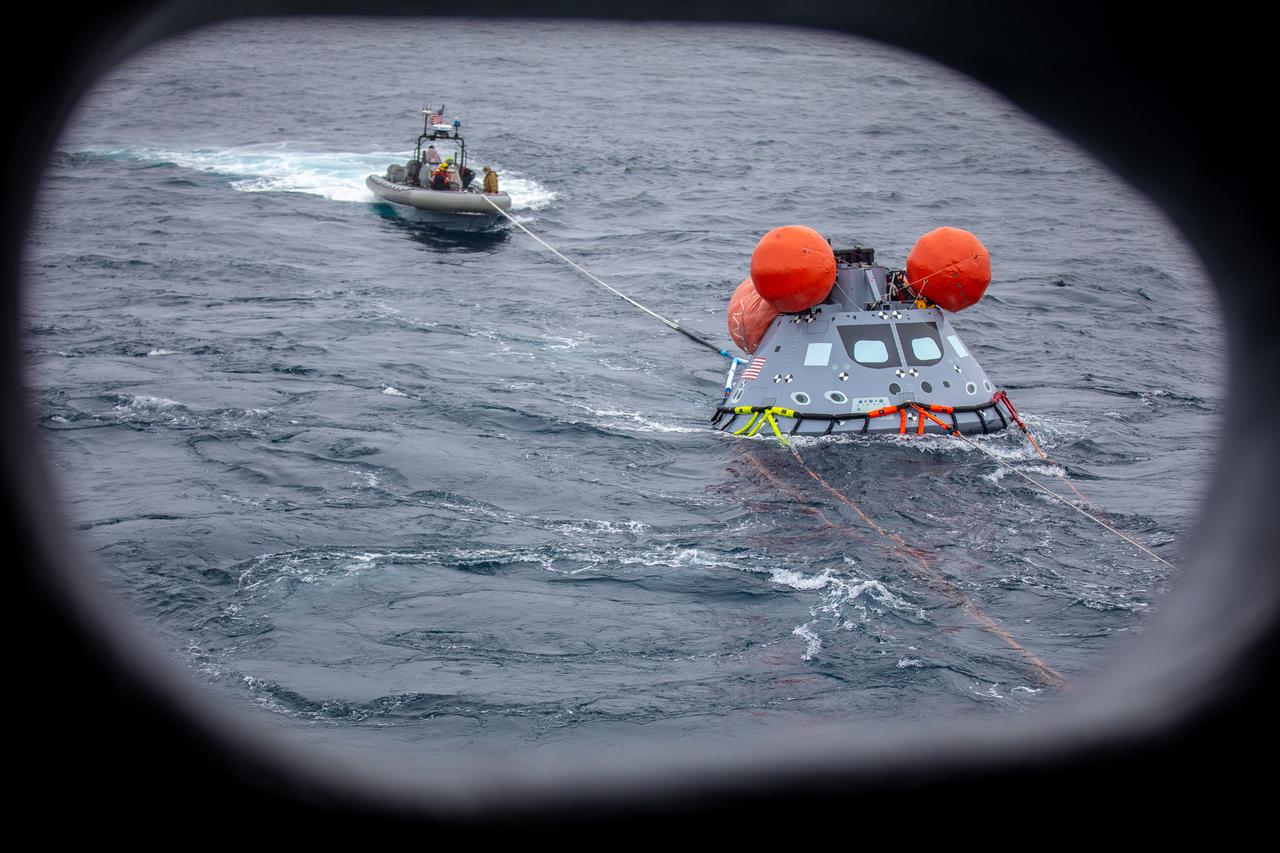
Day 2 of Underway Recovery Test 9 (URT-9) put NASA’s Landing and Recovery Team through its paces as they practiced recovering a mock Orion capsule into the back of the USS John P. Murtha. During the weeklong test, NASA’s Landing and Recovery team is performing their final mission certification ahead of Artemis I.
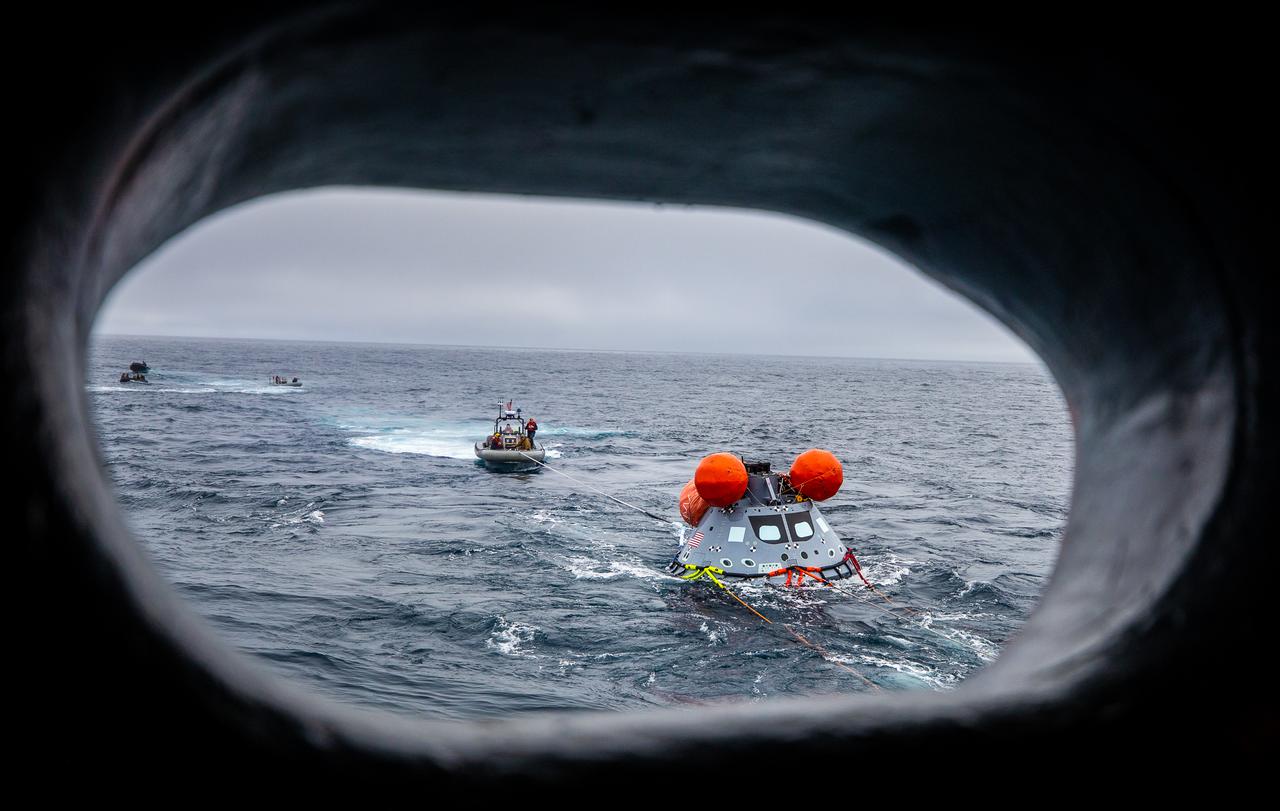
Day 2 of Underway Recovery Test 9 (URT-9) put NASA’s Landing and Recovery Team through its paces as they practiced recovering a mock Orion capsule into the back of the USS John P. Murtha. During the weeklong test, NASA’s Landing and Recovery team is performing their final mission certification ahead of Artemis I.
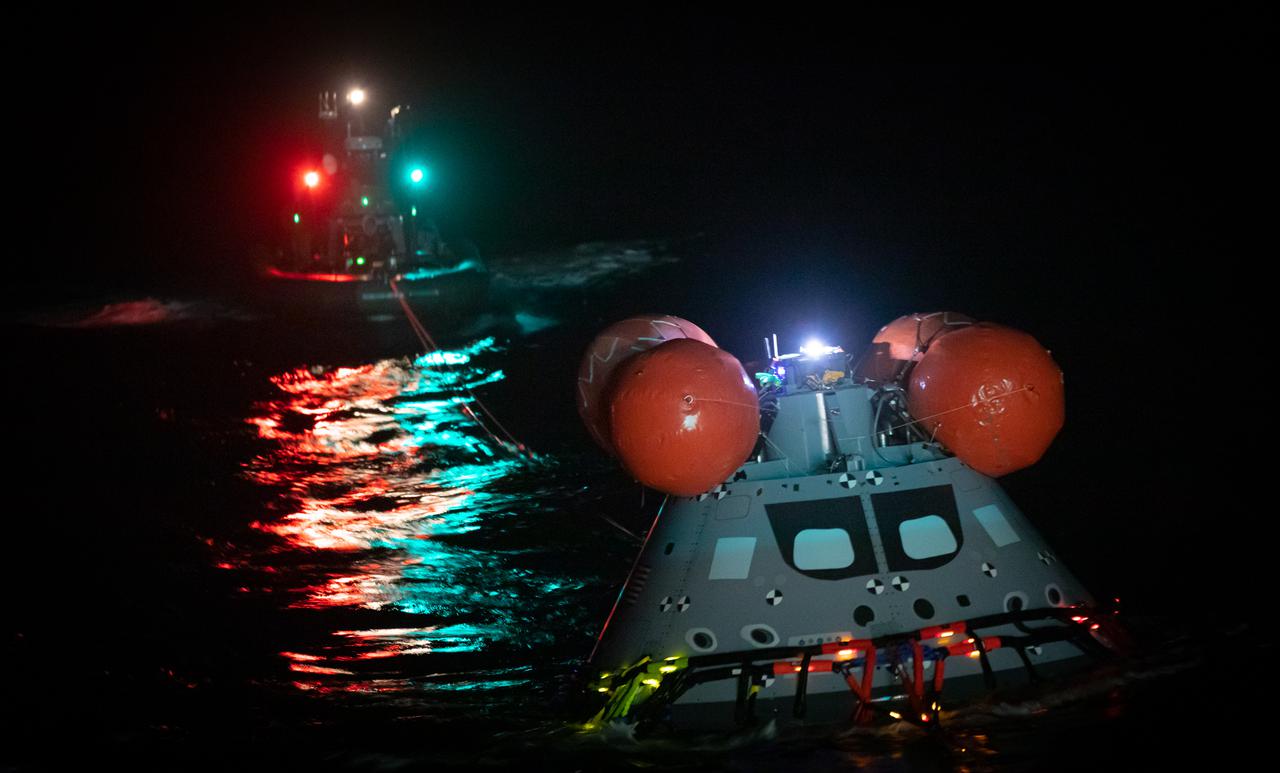
NASA’s Landing and Recovery Team secures a mock Orion capsule during the last exercise of Underway Recovery Test 9 (URT-9) aboard the USS John P. Murtha. During the weeklong test, NASA’s Landing and Recovery team is performing their final mission certification ahead of Artemis I.
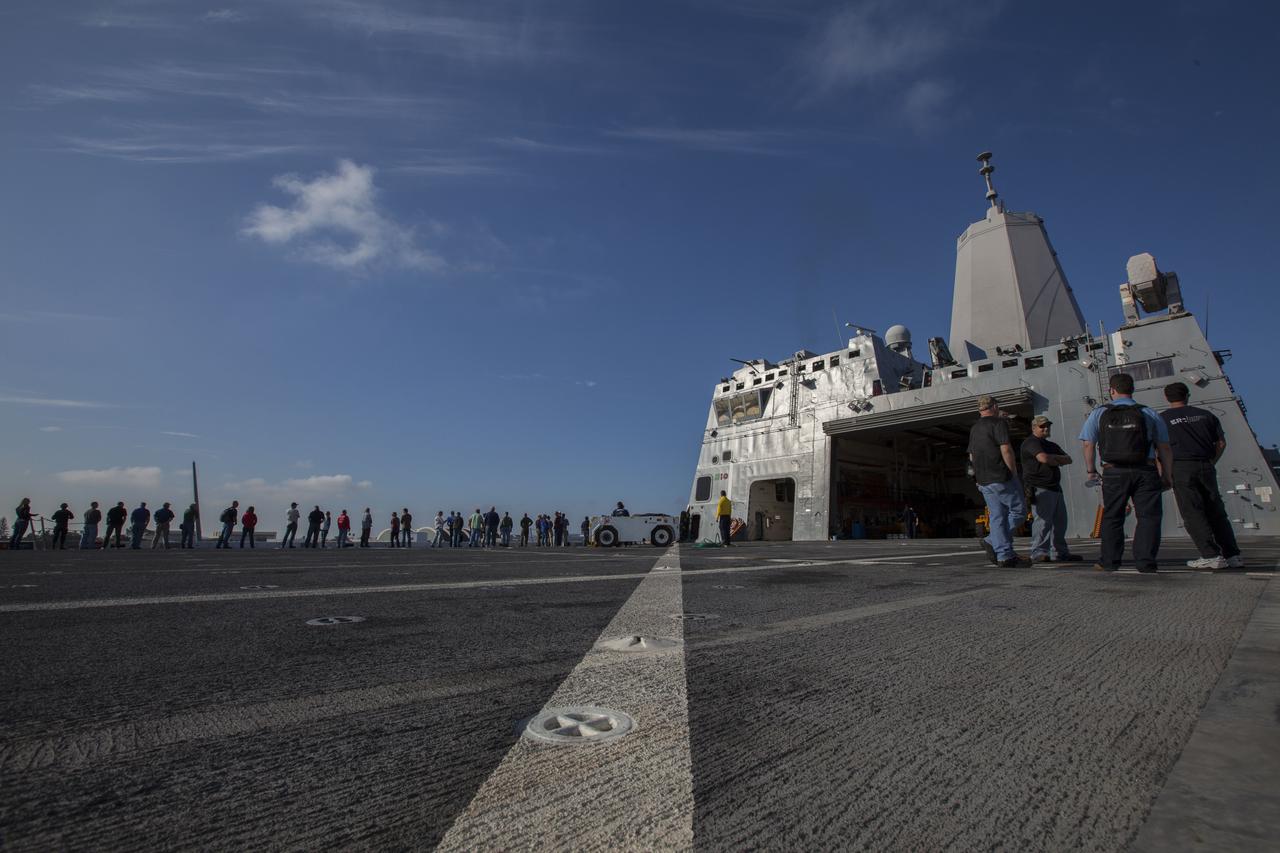
The USS San Diego departs Naval Base San Diego in California on its way out to sea in the Pacific Ocean for the Orion Underway Recovery Test 5. NASA's Ground Systems Development and Operations Program and the U.S. Navy will practice recovery techniques using the well deck of the ship and a test version of the Orion crew module to prepare for recovery of Orion on its return from deep space missions. The testing will allow the team to demonstrate and evaluate recovery processes, procedures, hardware and personnel in open waters. Orion is the exploration spacecraft designed to carry astronauts to destinations not yet explored by humans, including an asteroid and NASA's Journey to Mars. It will have emergency abort capability, sustain the crew during space travel and provide safe re-entry from deep space return velocities. Orion is scheduled to launch on NASA's Space Launch System in late 2018. For more information, visit http://www.nasa.gov/orion.
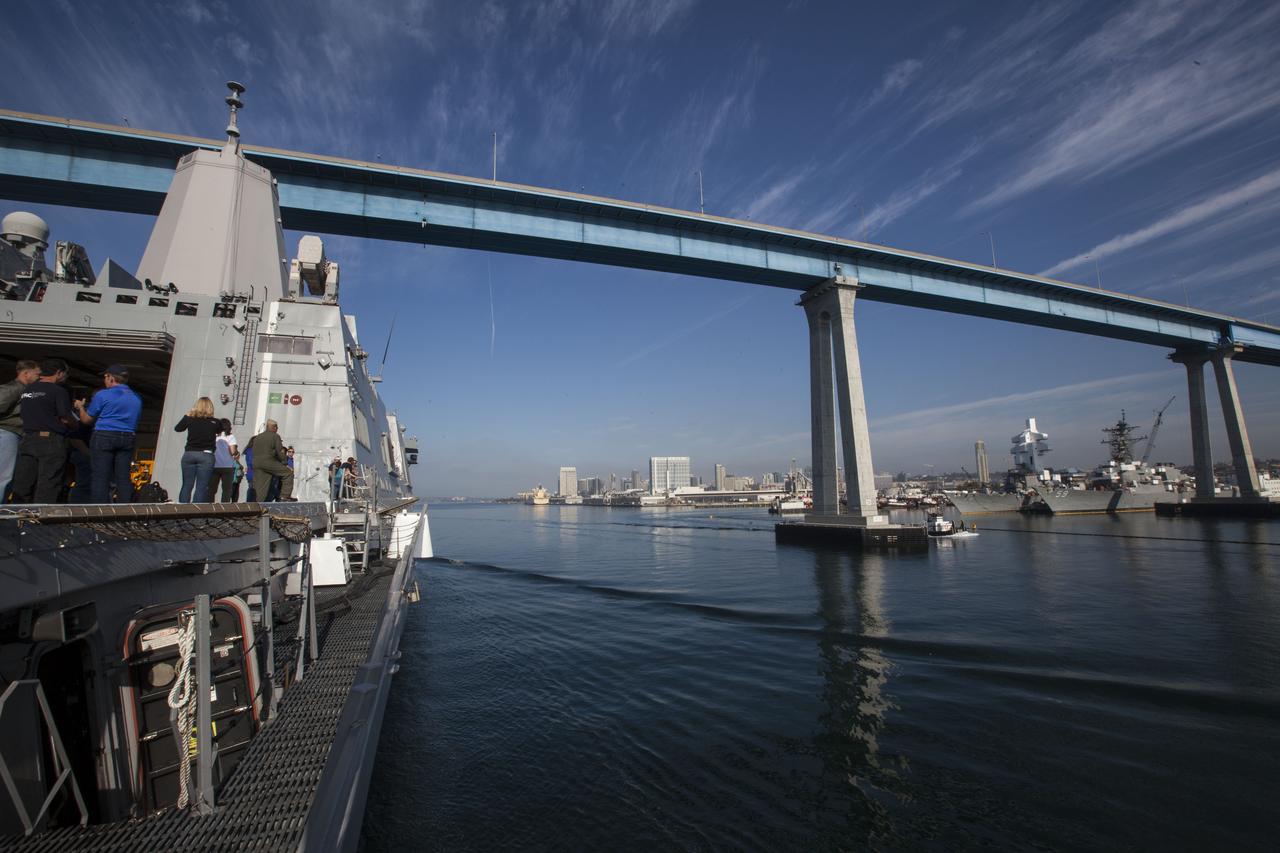
The USS San Diego departs Naval Base San Diego in California on its way out to sea in the Pacific Ocean for the Orion Underway Recovery Test 5. NASA's Ground Systems Development and Operations Program and the U.S. Navy will practice recovery techniques using the well deck of the ship and a test version of the Orion crew module to prepare for recovery of Orion on its return from deep space missions. The testing will allow the team to demonstrate and evaluate recovery processes, procedures, hardware and personnel in open waters. Orion is the exploration spacecraft designed to carry astronauts to destinations not yet explored by humans, including an asteroid and NASA's Journey to Mars. It will have emergency abort capability, sustain the crew during space travel and provide safe re-entry from deep space return velocities. Orion is scheduled to launch on NASA's Space Launch System in late 2018. For more information, visit http://www.nasa.gov/orion.
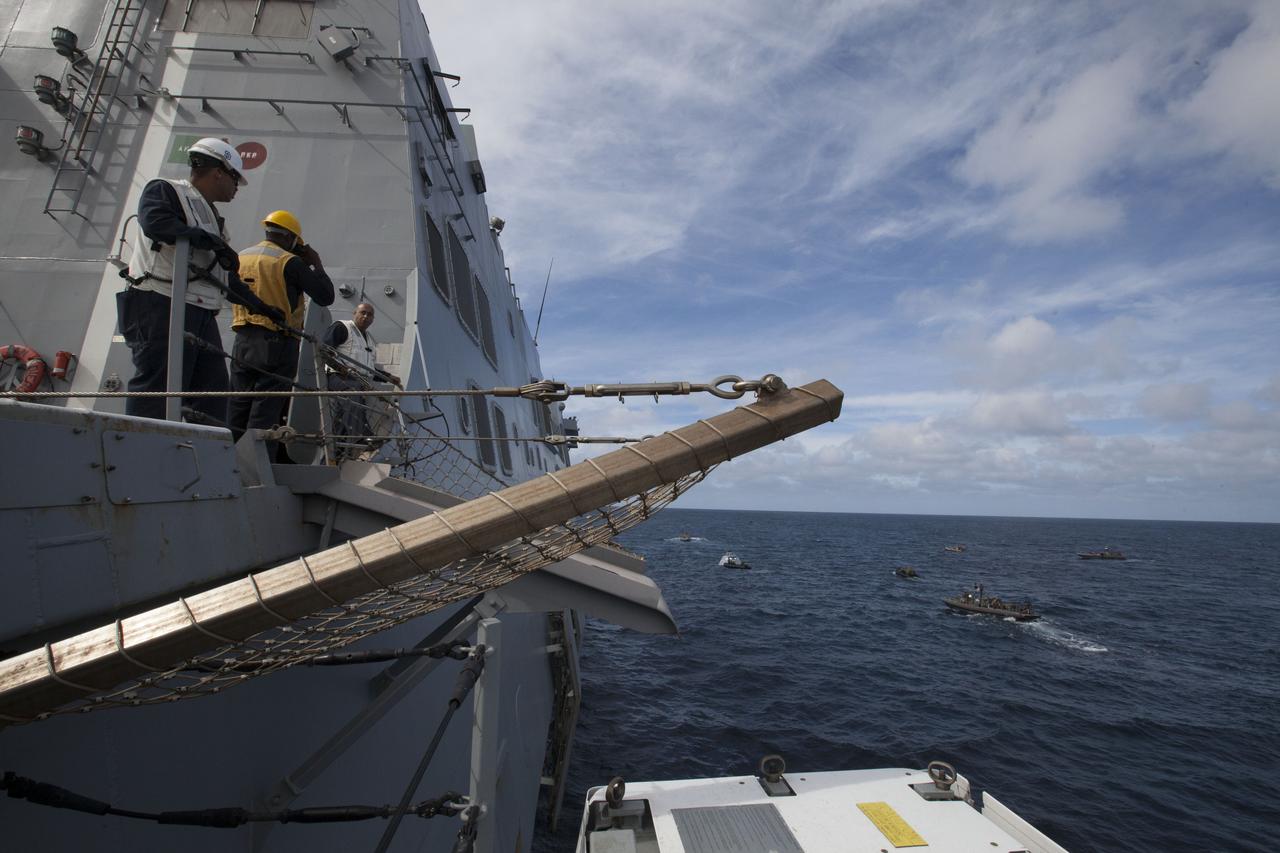
Recovery team members watch Underway Recovery Test 5 from the deck of the USS San Diego in the Pacific Ocean off the coast of California. NASA's Ground Systems Development and Operations Program and the U.S. Navy are using a test version of the Orion crew module, several rigid hull inflatable boats and support equipment to prepare to prepare for recovery of Orion on its return from deep space missions. The testing will allow the team to demonstrate and evaluate recovery processes, procedures, hardware and personnel in open waters. Orion is the exploration spacecraft designed to carry astronauts to destinations not yet explored by humans, including an asteroid and NASA's Journey to Mars. It will have emergency abort capability, sustain the crew during space travel and provide safe re-entry from deep space return velocities. Orion is scheduled to launch on NASA's Space Launch System in late 2018. For more information, visit http://www.nasa.gov/orion.
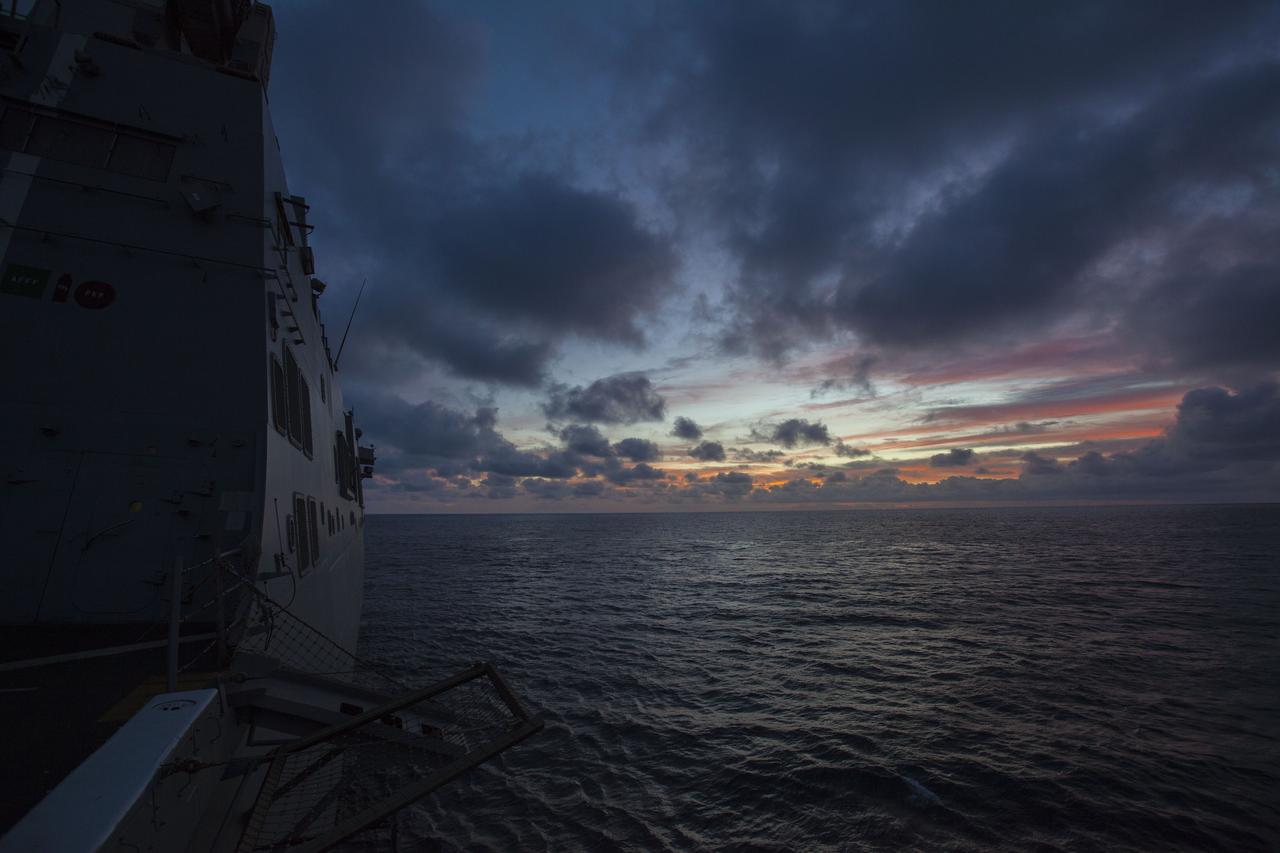
A sunrise colors the sky as another day of Underway Recovery Test 5 begins on the USS San Diego in the Pacific Ocean off the coast of California. NASA's Ground Systems Development and Operations Program and the U.S. Navy are practicing recovery techniques using the well deck of the ship and a test version of the Orion crew module to prepare for recovery of Orion on its return from deep space missions. The testing will allow the team to demonstrate and evaluate recovery processes, procedures, hardware and personnel in open waters. Orion is the exploration spacecraft designed to carry astronauts to destinations not yet explored by humans, including an asteroid and NASA's Journey to Mars. It will have emergency abort capability, sustain the crew during space travel and provide safe re-entry from deep space return velocities. Orion is scheduled to launch on NASA's Space Launch System in late 2018. For more information, visit http://www.nasa.gov/orion.
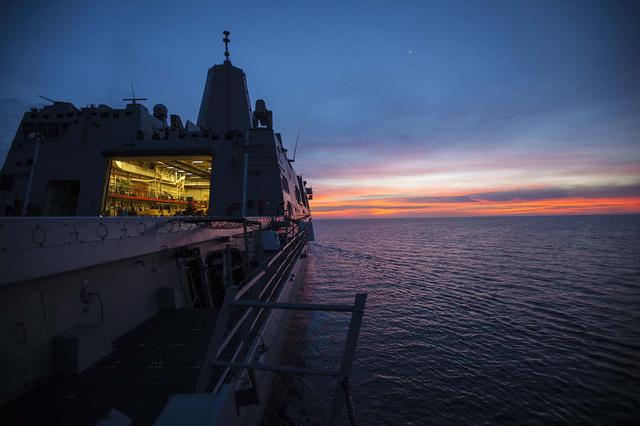
A colorful sunrise illuminates the water on the second day of Underway Recovery Test 5 in the Pacific Ocean off the coast of California. NASA's Ground Systems Development and Operations Program and the U.S. Navy will practice recovery techniques using the well deck of the USS San Diego and a test version of the Orion crew module to prepare for recovery of Orion on its return from deep space missions. The testing will allow the team to demonstrate and evaluate recovery processes, procedures, hardware and personnel in open waters. Orion is the exploration spacecraft designed to carry astronauts to destinations not yet explored by humans, including an asteroid and NASA's Journey to Mars. It will have emergency abort capability, sustain the crew during space travel and provide safe re-entry from deep space return velocities. Orion is scheduled to launch on NASA's Space Launch System in late 2018. For more information, visit http://www.nasa.gov/orion.
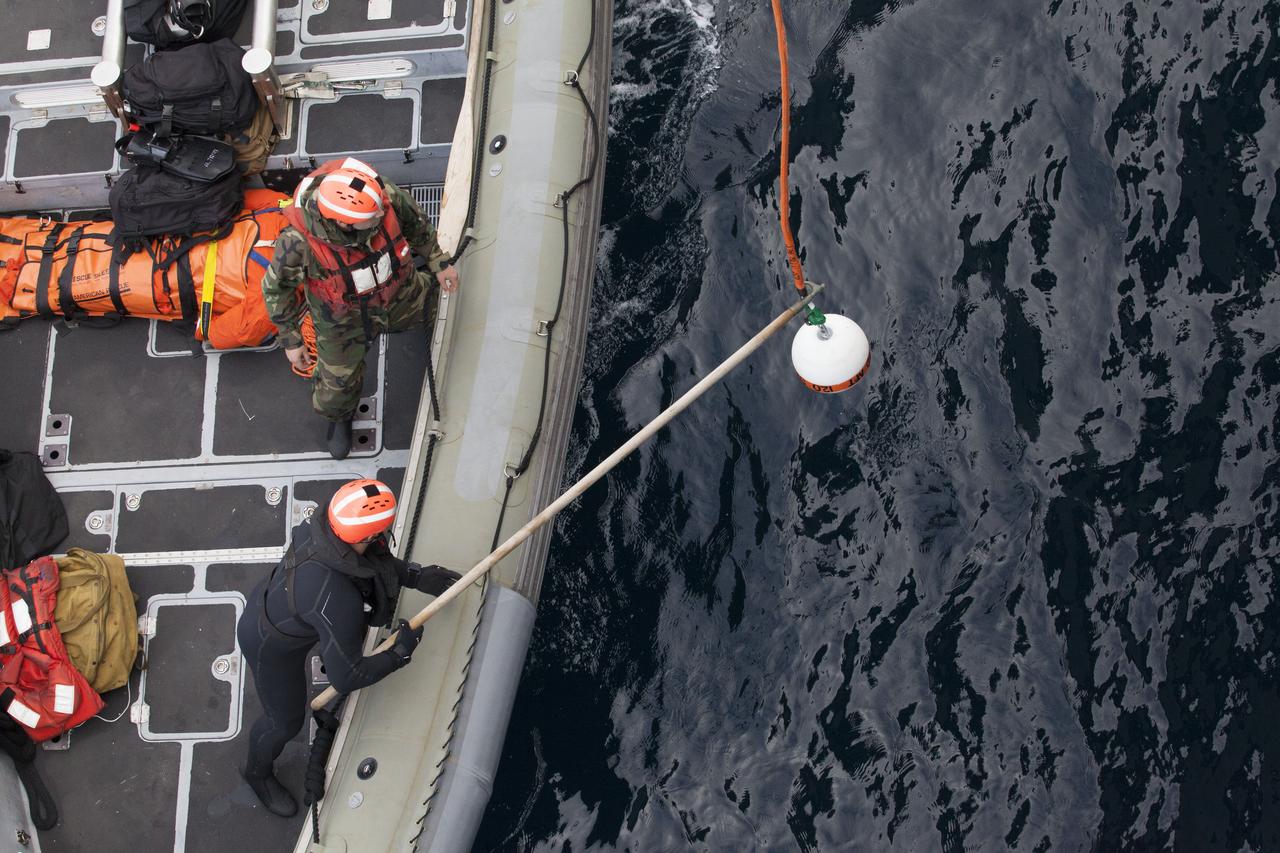
A U.S. Navy diver in a rigid hull inflatable boat uses a hook to capture a tow line during Underway Recovery Test 5 in the Pacific Ocean off the coast of California. NASA's Ground Systems Development and Operations Program and the U.S. Navy are using the well deck of the USS San Diego and a test version of the Orion crew module to practice recovery techniques to prepare for recovery of Orion on its return from deep space missions. The testing will allow the team to demonstrate and evaluate recovery processes, procedures, hardware and personnel in open waters. Orion is the exploration spacecraft designed to carry astronauts to destinations not yet explored by humans, including an asteroid and NASA's Journey to Mars. It will have emergency abort capability, sustain the crew during space travel and provide safe re-entry from deep space return velocities. Orion is scheduled to launch on NASA's Space Launch System in late 2018. For more information, visit http://www.nasa.gov/orion.
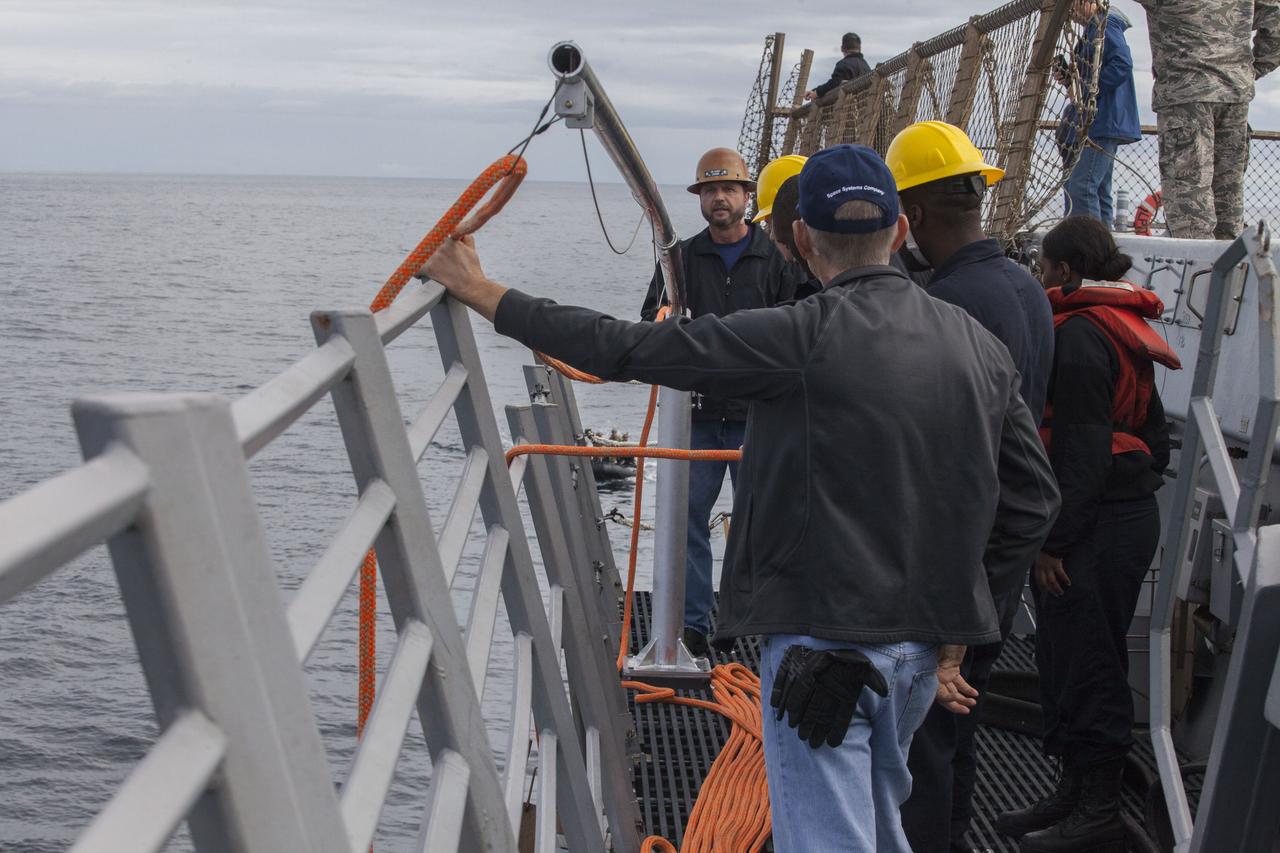
The Orion Underway Recovery Test 5 is in progress aboard the USS San Diego in the Pacific Ocean off the coast of California. Team members are reviewing procedures on the flight deck of the ship. NASA's Ground Systems Development and Operations Program and the U.S. Navy are practicing recovery techniques using the well deck of the ship and a test version of the Orion crew module to prepare for recovery of Orion on its return from deep space missions. The testing will allow the team to demonstrate and evaluate recovery processes, procedures, hardware and personnel in open waters. Orion is the exploration spacecraft designed to carry astronauts to destinations not yet explored by humans, including an asteroid and NASA's Journey to Mars. It will have emergency abort capability, sustain the crew during space travel and provide safe re-entry from deep space return velocities. Orion is scheduled to launch on NASA's Space Launch System in late 2018. For more information, visit http://www.nasa.gov/orion.
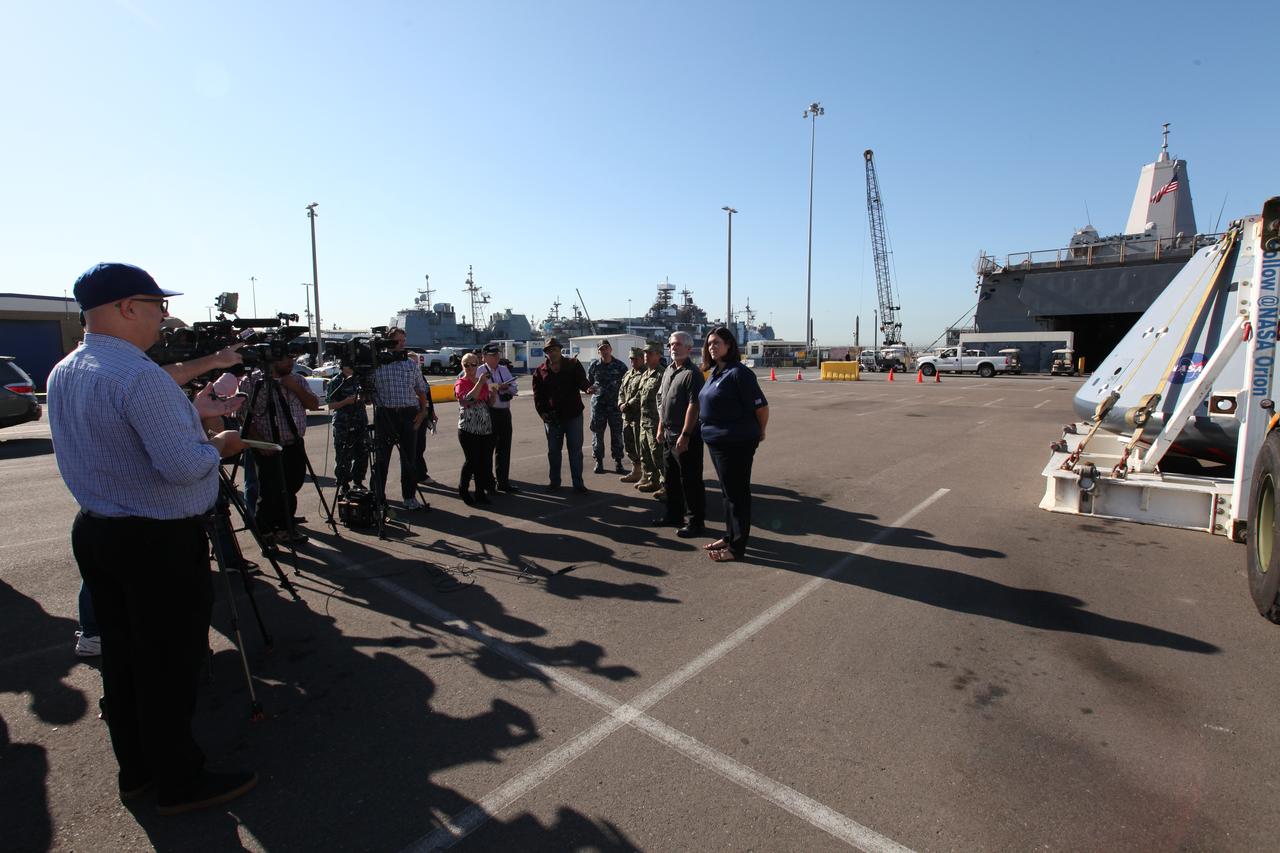
Melissa Jones, far right, Landing and Recovery director with the Ground Systems Development and Operations Program (GSDO), and other members of the recovery team speak to members of the media about Orion Underway Recovery Test 5. The USS San Diego is docked at Naval Base San Diego in California and the test version of the Orion crew module, secured on its handling fixture, was offloaded from the well deck of the ship. NASA's GSDO Program and the U.S. Navy completed a series of tests using the ship's well deck, the test module, various watercraft and equipment to prepare for recovery of Orion on its return from deep space missions. The testing allowed the team to demonstrate and evaluate recovery processes, procedures, hardware and personnel in open waters. Orion is the exploration spacecraft designed to carry astronauts to destinations not yet explored by humans, including an asteroid and NASA's Journey to Mars. It will have emergency abort capability, sustain the crew during space travel and provide safe re-entry from deep space return velocities. Orion is scheduled to launch on NASA's Space Launch System in late 2018. For more information, visit http://www.nasa.gov/orion.
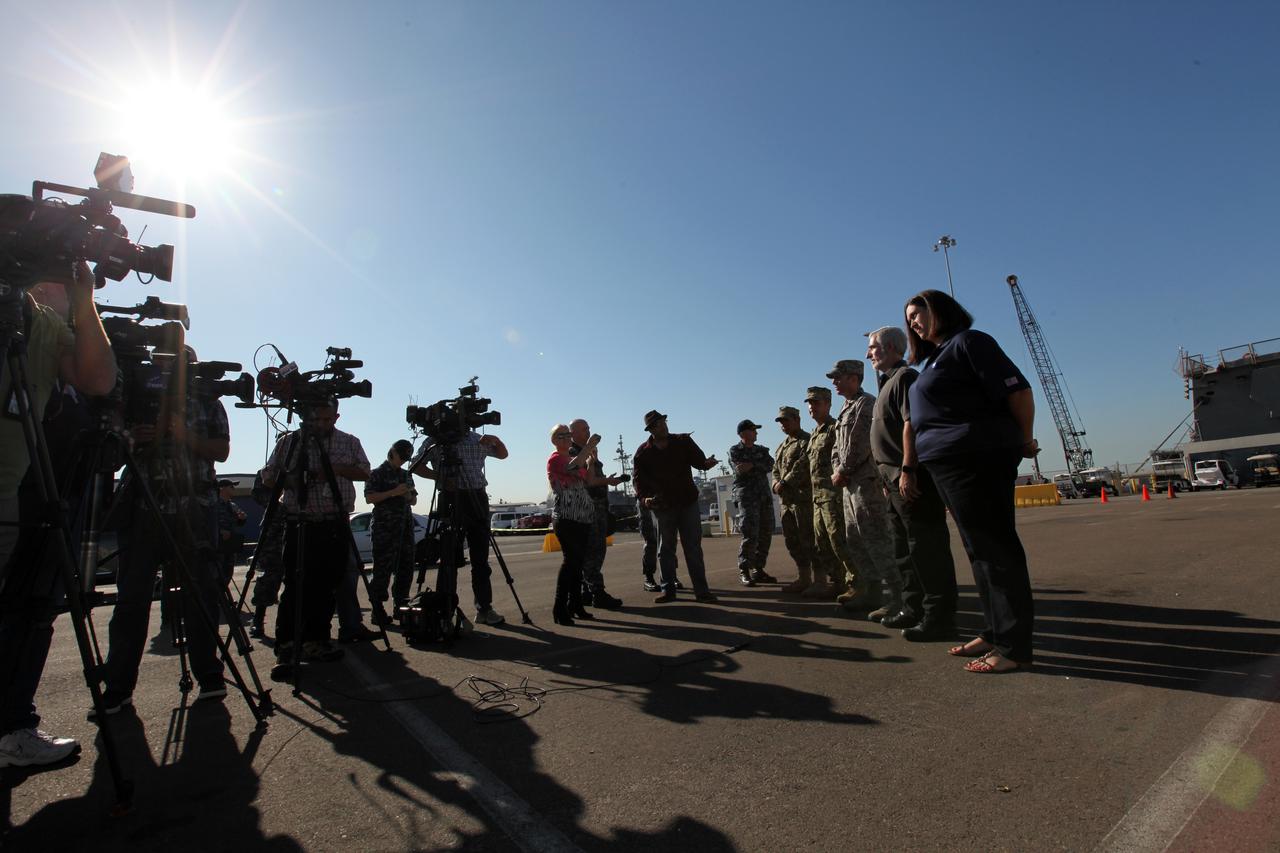
Melissa Jones, far right, Landing and Recovery director with the Ground Systems Development and Operations Program (GSDO), and other members of the recovery team speak to members of the media about Orion Underway Recovery Test 5. The USS San Diego is docked at Naval Base San Diego in California and the test version of the Orion crew module, secured on its handling fixture, was offloaded from the well deck of the ship. NASA's GSDO Program and the U.S. Navy completed a series of tests using the ship's well deck, the test module, various watercraft and equipment to prepare for recovery of Orion on its return from deep space missions. The testing allowed the team to demonstrate and evaluate recovery processes, procedures, hardware and personnel in open waters. Orion is the exploration spacecraft designed to carry astronauts to destinations not yet explored by humans, including an asteroid and NASA's Journey to Mars. It will have emergency abort capability, sustain the crew during space travel and provide safe re-entry from deep space return velocities. Orion is scheduled to launch on NASA's Space Launch System in late 2018. For more information, visit http://www.nasa.gov/orion.

Melissa Jones, far right, Landing and Recovery director with the Ground Systems Development and Operations Program (GSDO), and other members of the recovery team speak to members of the media about Orion Underway Recovery Test 5. The USS San Diego is docked at Naval Base San Diego in California and the test version of the Orion crew module, secured on its handling fixture, was offloaded from the well deck of the ship. NASA's GSDO Program and the U.S. Navy completed a series of tests using the ship's well deck, the test module, various watercraft and equipment to prepare for recovery of Orion on its return from deep space missions. The testing allowed the team to demonstrate and evaluate recovery processes, procedures, hardware and personnel in open waters. Orion is the exploration spacecraft designed to carry astronauts to destinations not yet explored by humans, including an asteroid and NASA's Journey to Mars. It will have emergency abort capability, sustain the crew during space travel and provide safe re-entry from deep space return velocities. Orion is scheduled to launch on NASA's Space Launch System in late 2018. For more information, visit http://www.nasa.gov/orion.
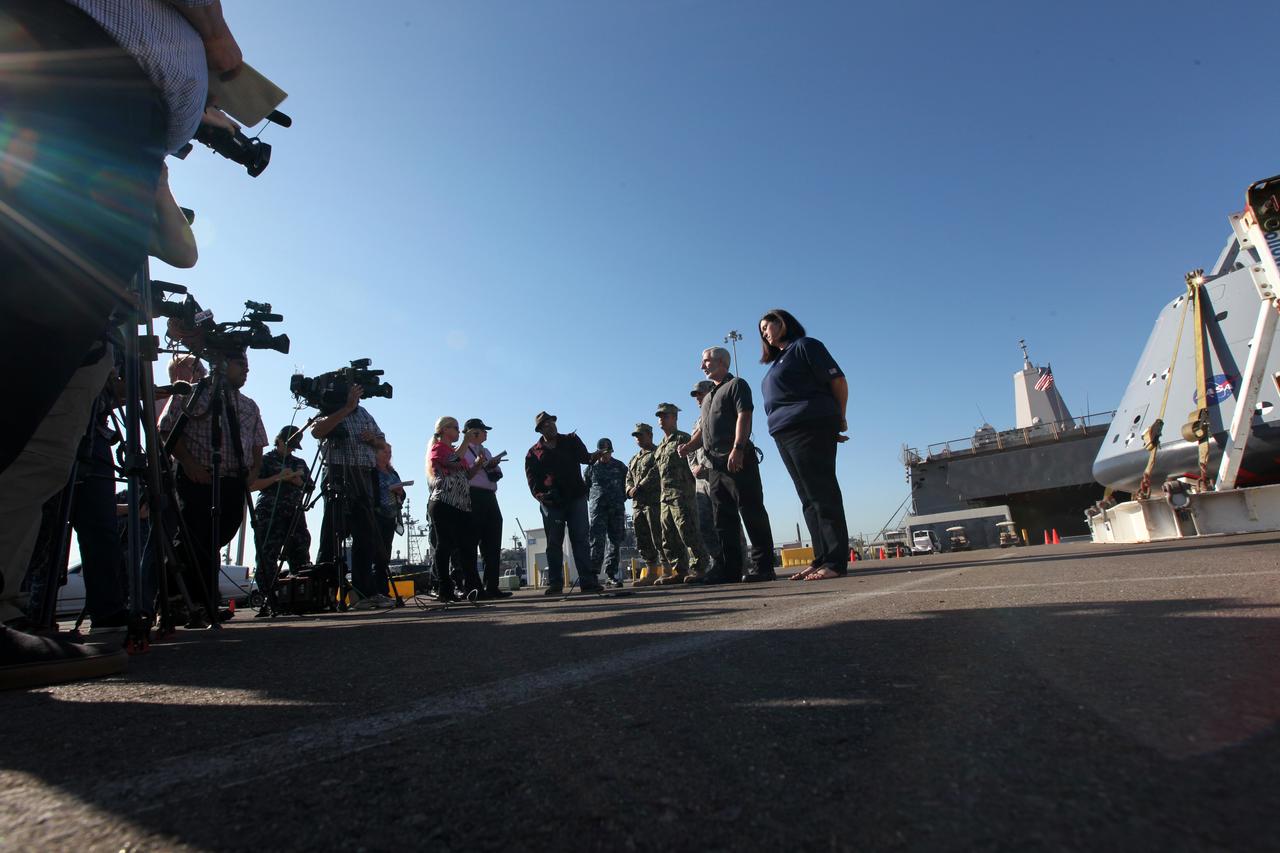
Melissa Jones, far right, Landing and Recovery director with the Ground Systems Development and Operations Program (GSDO), and other members of the recovery team speak to members of the media about Orion Underway Recovery Test 5. The USS San Diego is docked at Naval Base San Diego in California and the test version of the Orion crew module, secured on its handling fixture, was offloaded from the well deck of the ship. NASA's GSDO Program and the U.S. Navy completed a series of tests using the ship's well deck, the test module, various watercraft and equipment to prepare for recovery of Orion on its return from deep space missions. The testing allowed the team to demonstrate and evaluate recovery processes, procedures, hardware and personnel in open waters. Orion is the exploration spacecraft designed to carry astronauts to destinations not yet explored by humans, including an asteroid and NASA's Journey to Mars. It will have emergency abort capability, sustain the crew during space travel and provide safe re-entry from deep space return velocities. Orion is scheduled to launch on NASA's Space Launch System in late 2018. For more information, visit http://www.nasa.gov/orion.
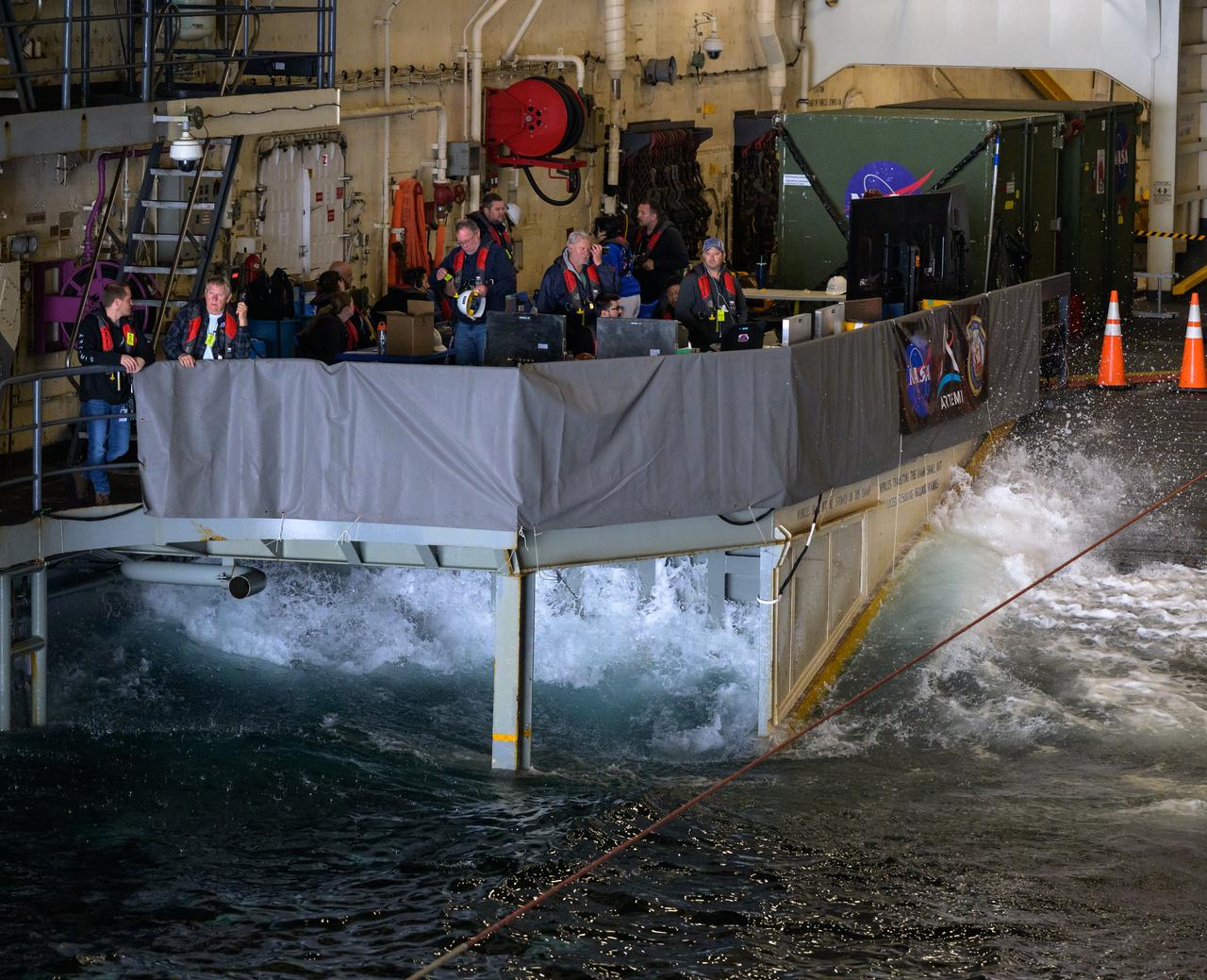
Members of NASA’s Landing and Recovery team are seen as they recover the Crew Module Test Article (CMTA), a full scale mockup of the Orion spacecraft, as teams practice Artemis recovery operations during Underway Recovery Test-12 onboard USS Somerset off the coast of California, Saturday, March 29, 2025. During the test, NASA and Department of Defense teams are practicing to ensure recovery procedures are validated as NASA plans to send Artemis II around the Moon and splashdown in the Pacific Ocean. Photo Credit: (NASA/Bill Ingalls)
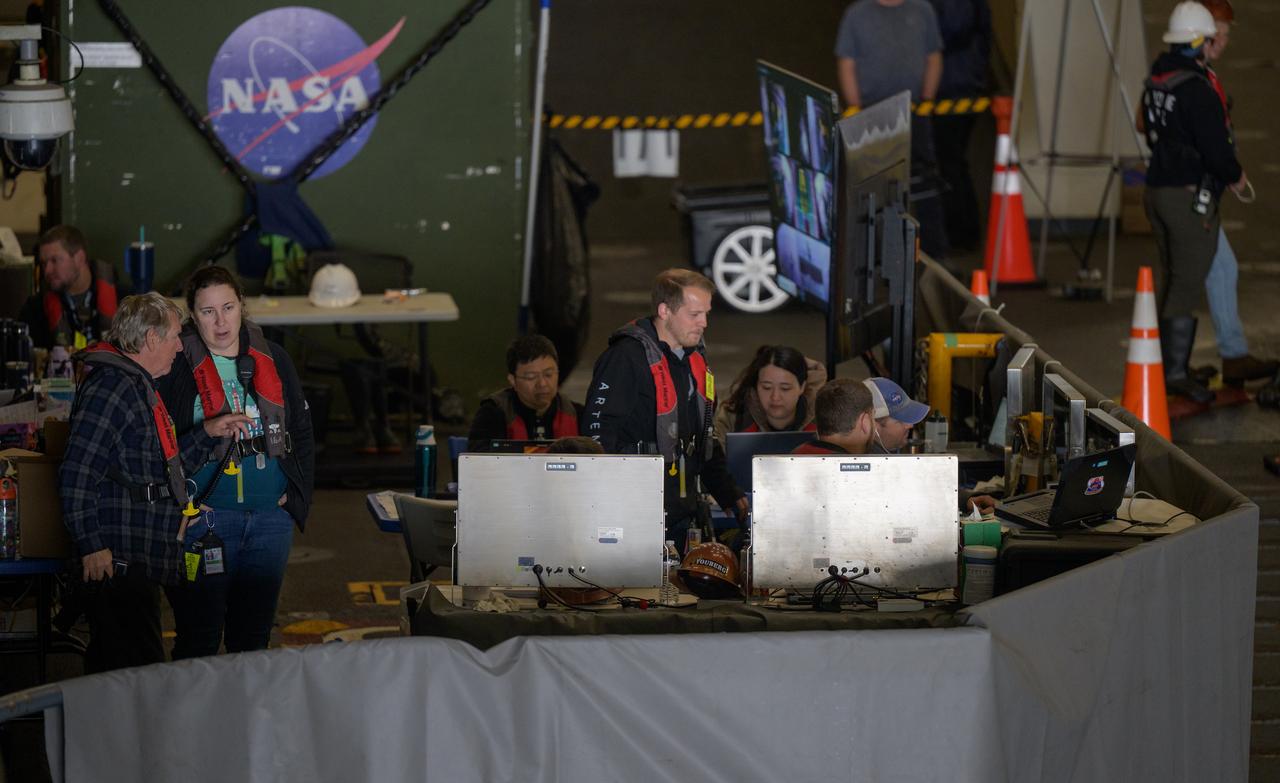
Members of NASA’s Landing and Recovery team are seen as they recover the Crew Module Test Article (CMTA), a full scale mockup of the Orion spacecraft, as teams practice Artemis recovery operations during Underway Recovery Test-12 onboard USS Somerset off the coast of California, Saturday, March 29, 2025. During the test, NASA and Department of Defense teams are practicing to ensure recovery procedures are validated as NASA plans to send Artemis II around the Moon and splashdown in the Pacific Ocean. Photo Credit: (NASA/Bill Ingalls)
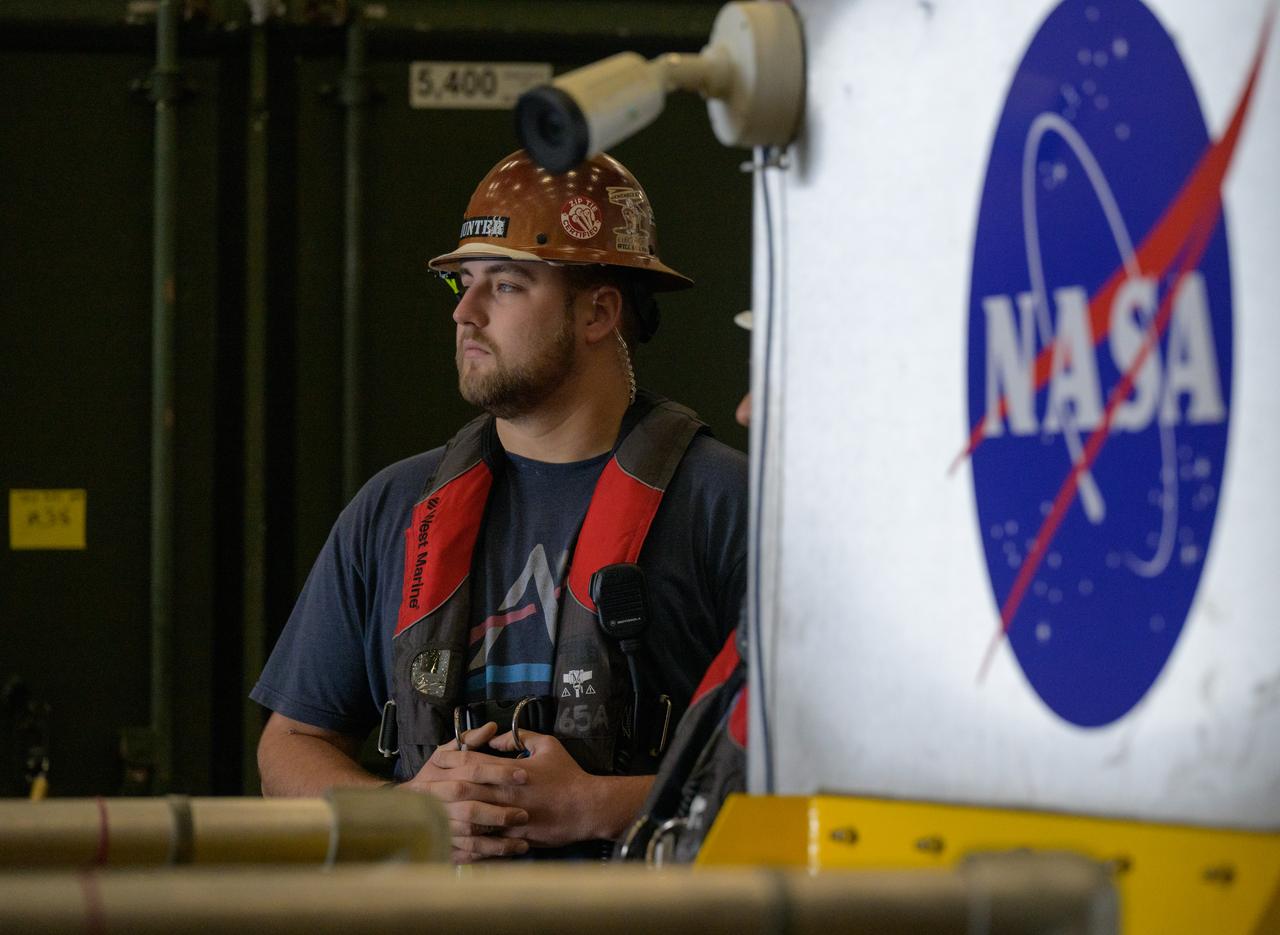
Members of NASA’s Landing and Recovery team are seen as they recover the Crew Module Test Article (CMTA), a full scale mockup of the Orion spacecraft, as teams practice Artemis recovery operations during Underway Recovery Test-12 onboard USS Somerset off the coast of California, Saturday, March 29, 2025. During the test, NASA and Department of Defense teams are practicing to ensure recovery procedures are validated as NASA plans to send Artemis II around the Moon and splashdown in the Pacific Ocean. Photo Credit: (NASA/Bill Ingalls)
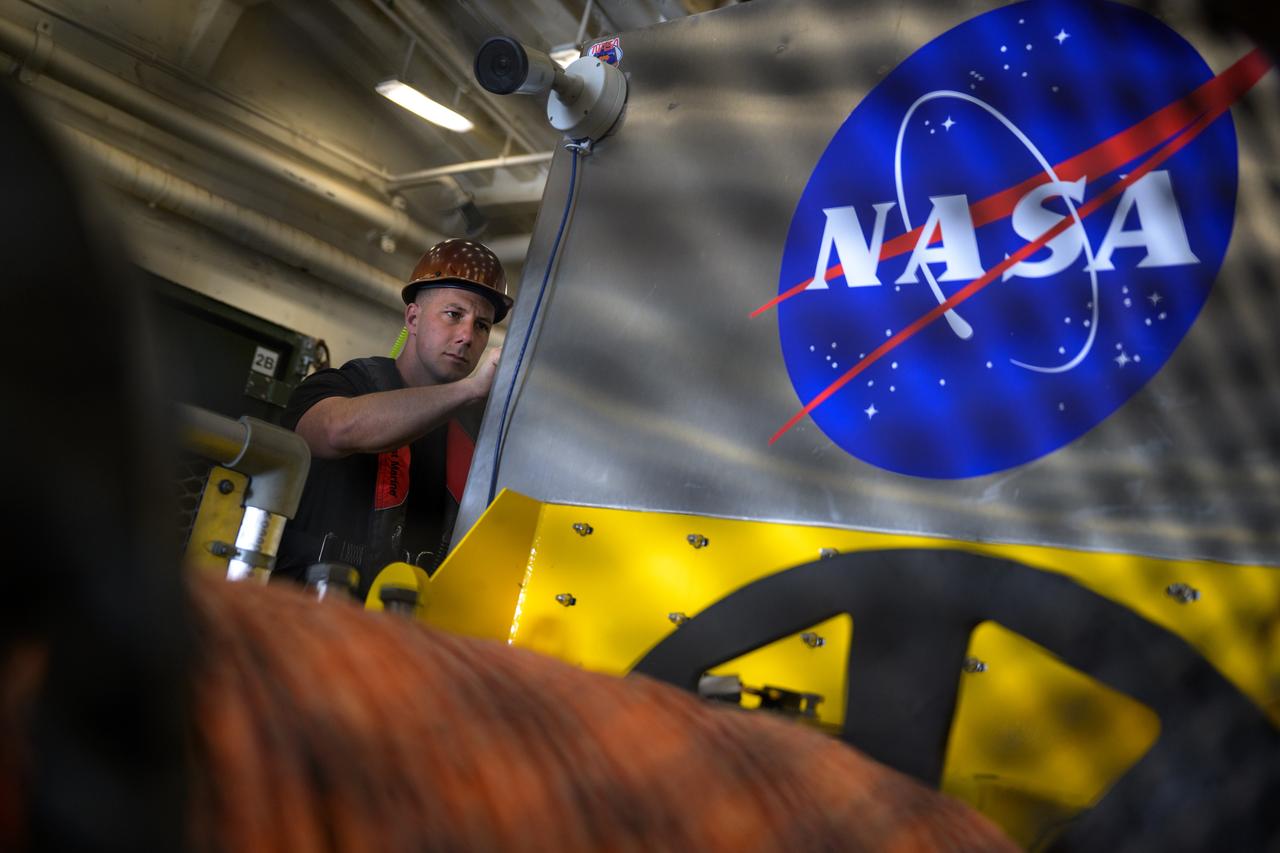
Members of NASA’s Landing and Recovery team are seen as they recover the Crew Module Test Article (CMTA), a full scale mockup of the Orion spacecraft, as teams practice Artemis recovery operations during Underway Recovery Test-12 onboard USS Somerset off the coast of California, Saturday, March 29, 2025. During the test, NASA and Department of Defense teams are practicing to ensure recovery procedures are validated as NASA plans to send Artemis II around the Moon and splashdown in the Pacific Ocean. Photo Credit: (NASA/Bill Ingalls)
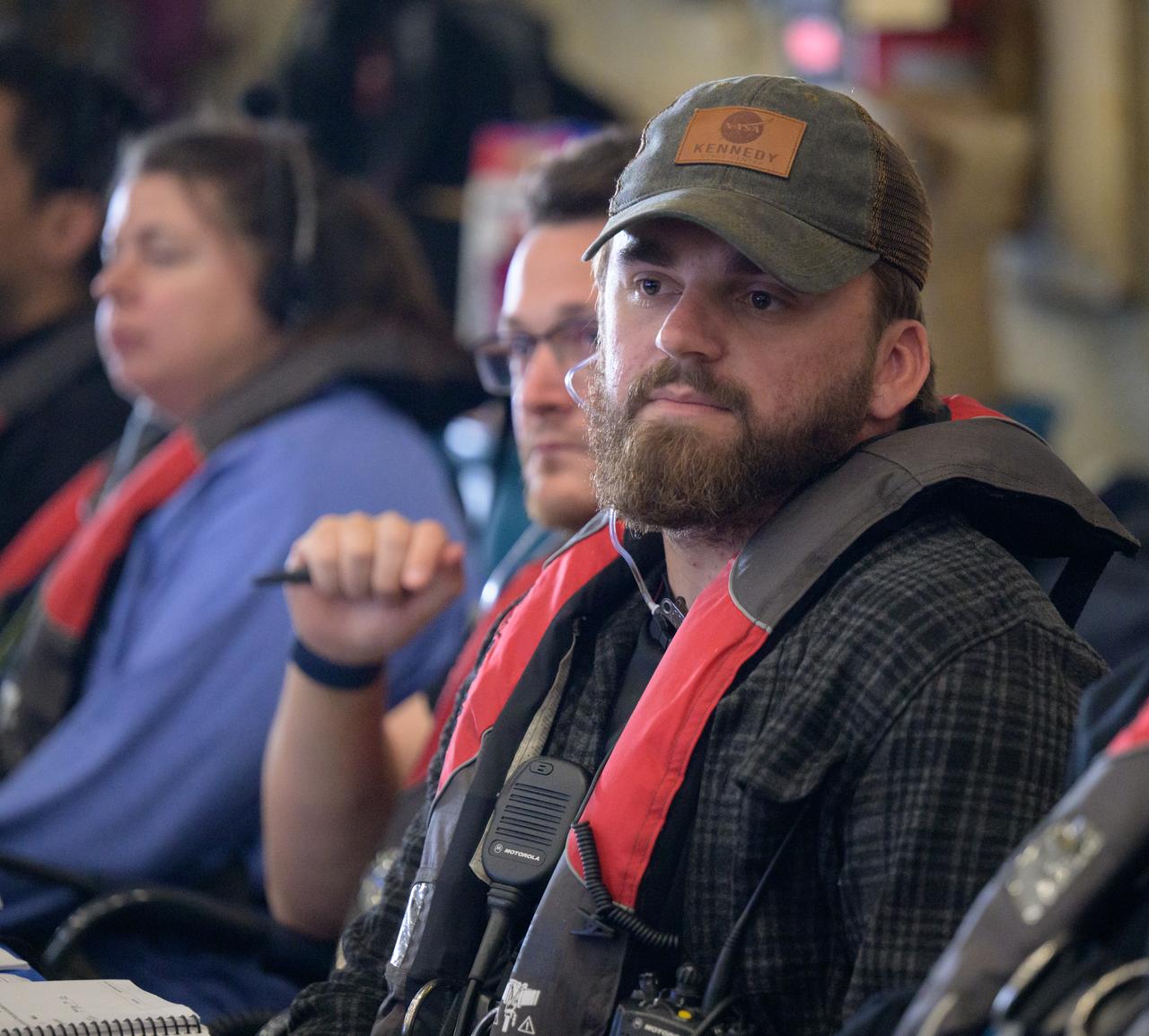
Members of NASA’s Landing and Recovery team are seen as they recover the Crew Module Test Article (CMTA), a full scale mockup of the Orion spacecraft, as teams practice Artemis recovery operations during Underway Recovery Test-12 onboard USS Somerset off the coast of California, Saturday, March 29, 2025. During the test, NASA and Department of Defense teams are practicing to ensure recovery procedures are validated as NASA plans to send Artemis II around the Moon and splashdown in the Pacific Ocean. Photo Credit: (NASA/Bill Ingalls)
Sailors from USS Somerset assist in the recovery of the Crew Module Test Article (CMTA), a full scale mockup of the Orion spacecraft, as teams practice Artemis recovery operations during Underway Recovery Test-12 onboard USS Somerset off the coast of California, Saturday, March 29, 2025. During the test, NASA and Department of Defense teams are practicing to ensure recovery procedures are validated as NASA plans to send Artemis II around the Moon and splashdown in the Pacific Ocean. Photo Credit: (NASA/Bill Ingalls)
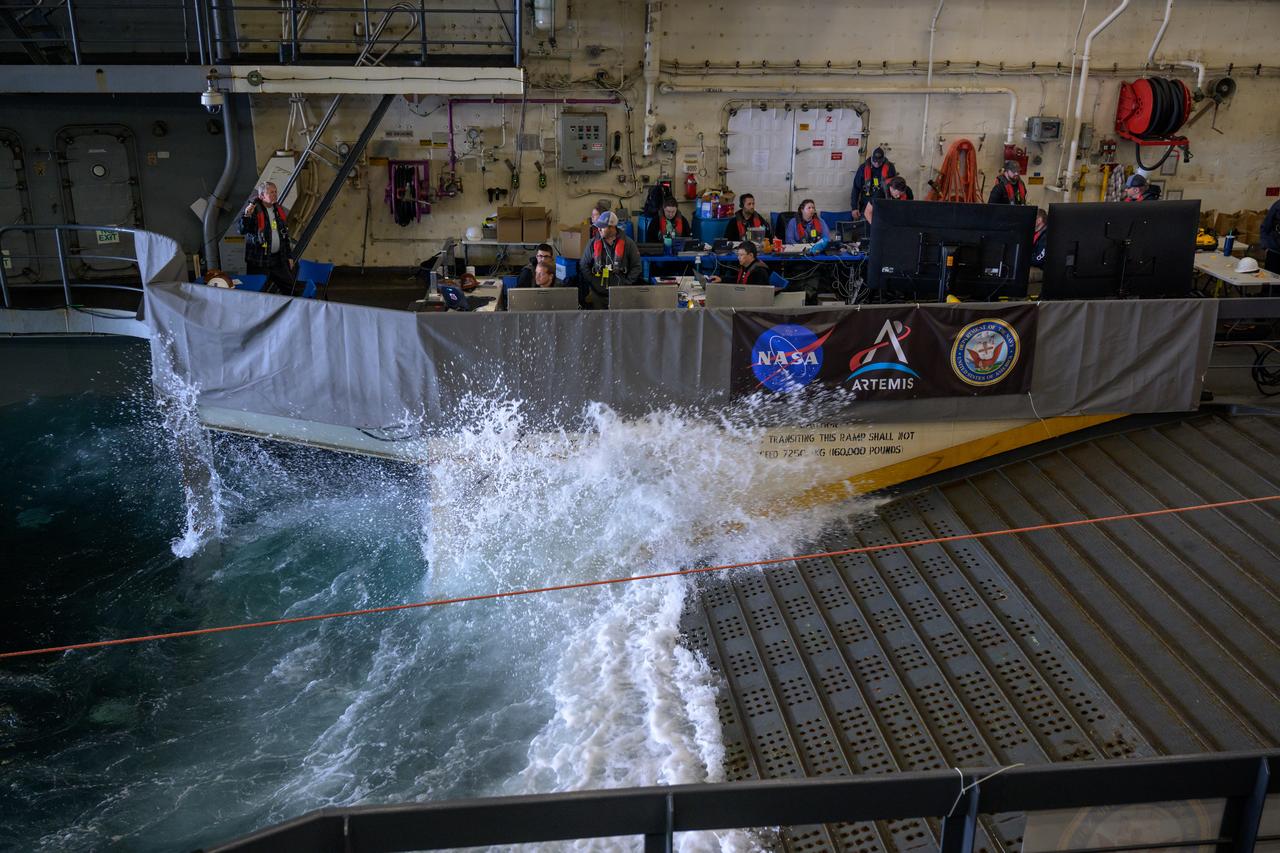
Members of NASA’s Landing and Recovery team are seen as they recover the Crew Module Test Article (CMTA), a full scale mockup of the Orion spacecraft, as teams practice Artemis recovery operations during Underway Recovery Test-12 onboard USS Somerset off the coast of California, Saturday, March 29, 2025. During the test, NASA and Department of Defense teams are practicing to ensure recovery procedures are validated as NASA plans to send Artemis II around the Moon and splashdown in the Pacific Ocean. Photo Credit: (NASA/Bill Ingalls)
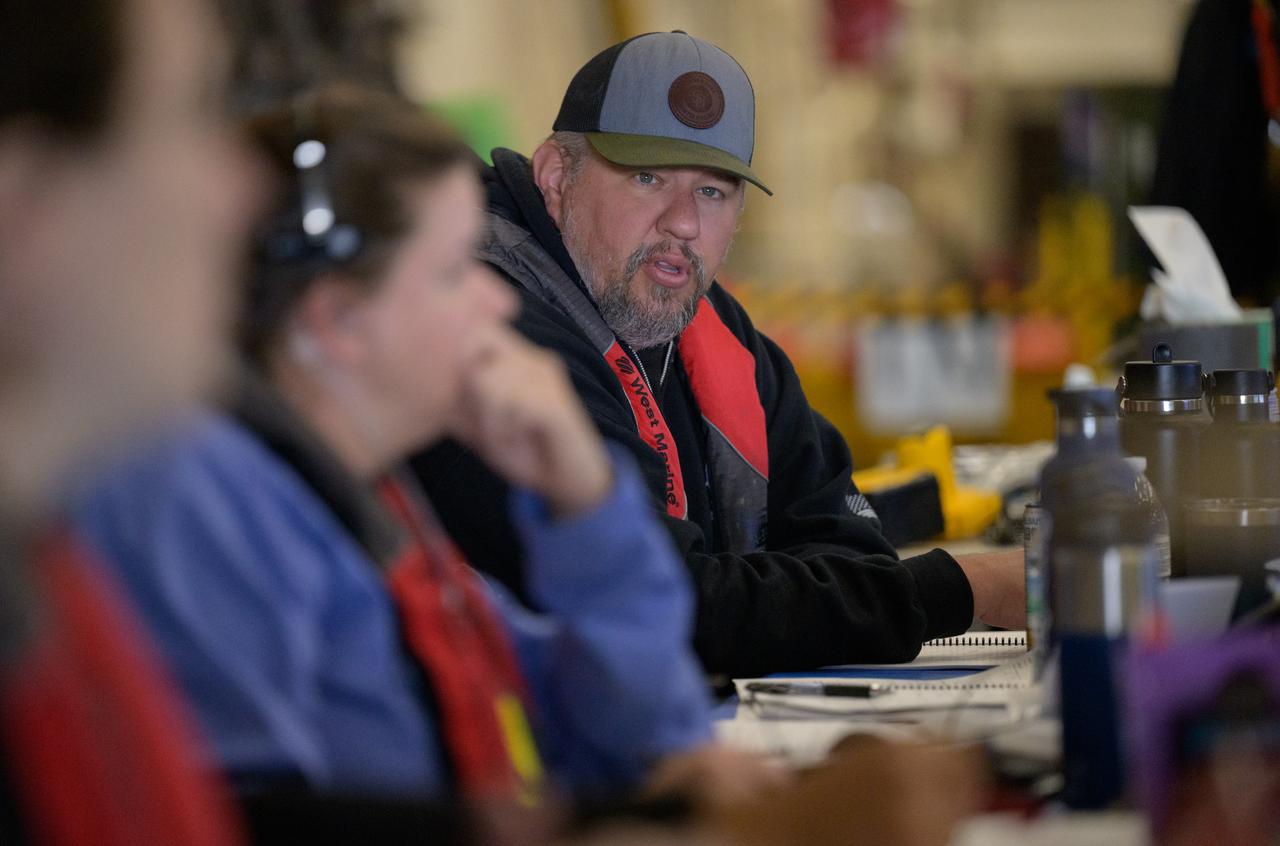
Members of NASA’s Landing and Recovery team are seen as they recover the Crew Module Test Article (CMTA), a full scale mockup of the Orion spacecraft, as teams practice Artemis recovery operations during Underway Recovery Test-12 onboard USS Somerset off the coast of California, Saturday, March 29, 2025. During the test, NASA and Department of Defense teams are practicing to ensure recovery procedures are validated as NASA plans to send Artemis II around the Moon and splashdown in the Pacific Ocean. Photo Credit: (NASA/Bill Ingalls)
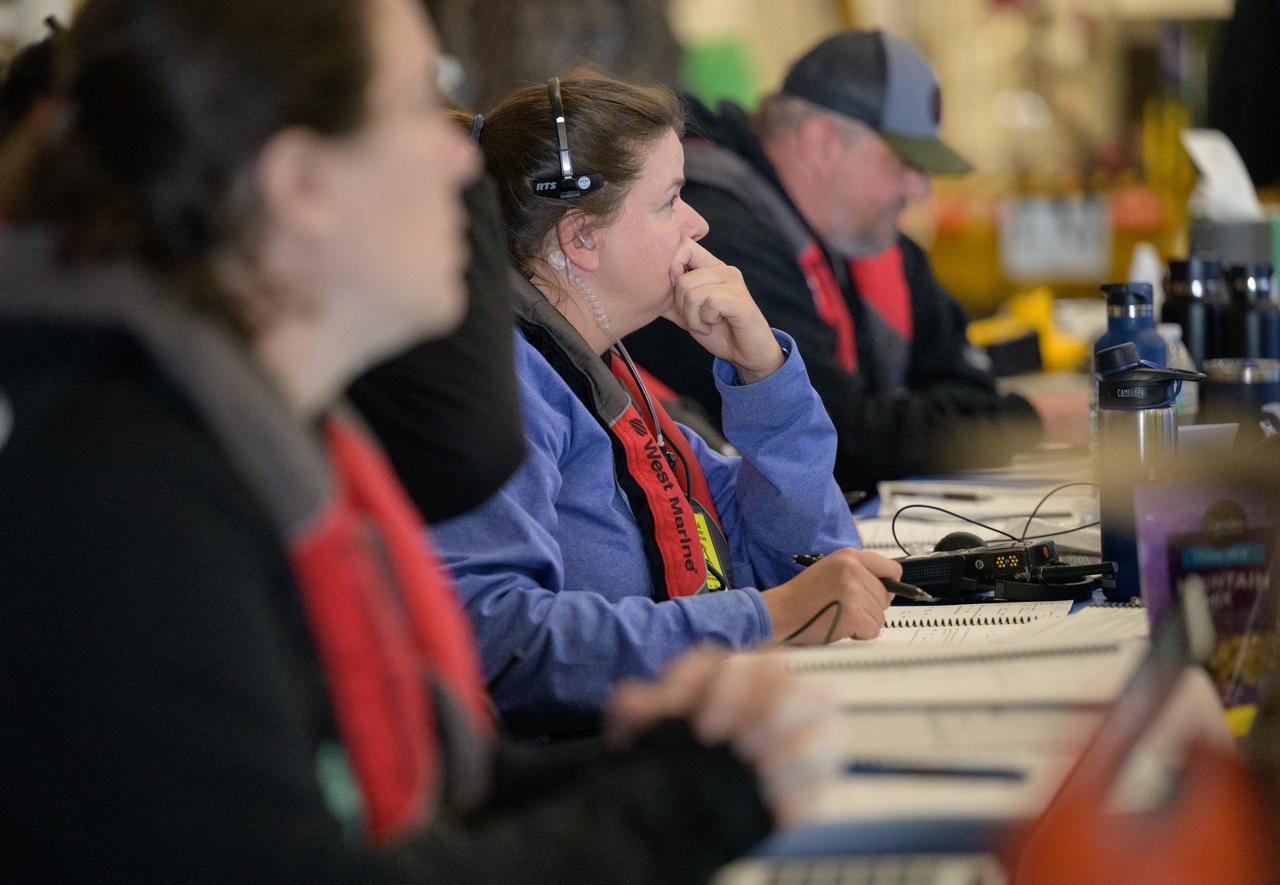
Members of NASA’s Landing and Recovery team are seen as they recover the Crew Module Test Article (CMTA), a full scale mockup of the Orion spacecraft, as teams practice Artemis recovery operations during Underway Recovery Test-12 onboard USS Somerset off the coast of California, Saturday, March 29, 2025. During the test, NASA and Department of Defense teams are practicing to ensure recovery procedures are validated as NASA plans to send Artemis II around the Moon and splashdown in the Pacific Ocean. Photo Credit: (NASA/Bill Ingalls)
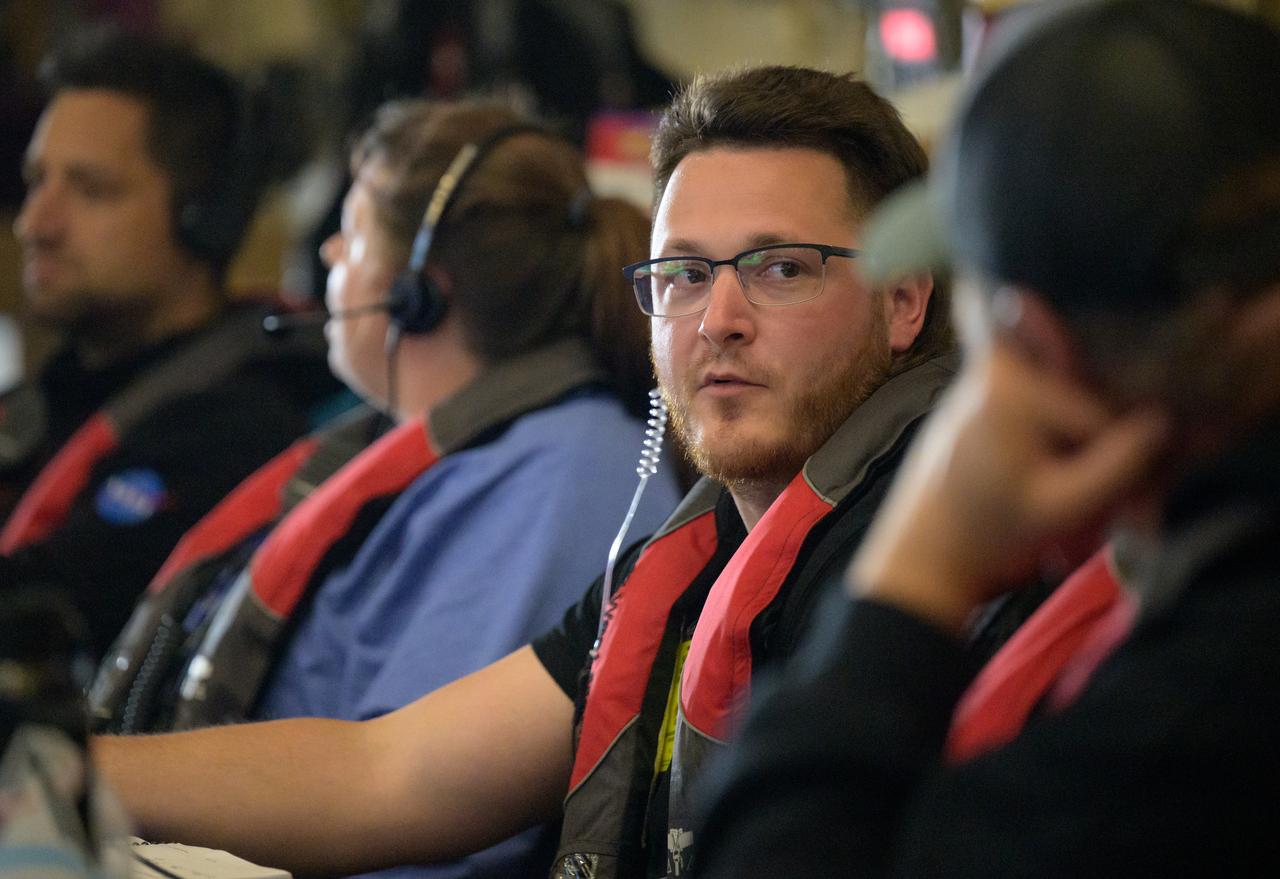
Members of NASA’s Landing and Recovery team are seen as they recover the Crew Module Test Article (CMTA), a full scale mockup of the Orion spacecraft, as teams practice Artemis recovery operations during Underway Recovery Test-12 onboard USS Somerset off the coast of California, Saturday, March 29, 2025. During the test, NASA and Department of Defense teams are practicing to ensure recovery procedures are validated as NASA plans to send Artemis II around the Moon and splashdown in the Pacific Ocean. Photo Credit: (NASA/Bill Ingalls)
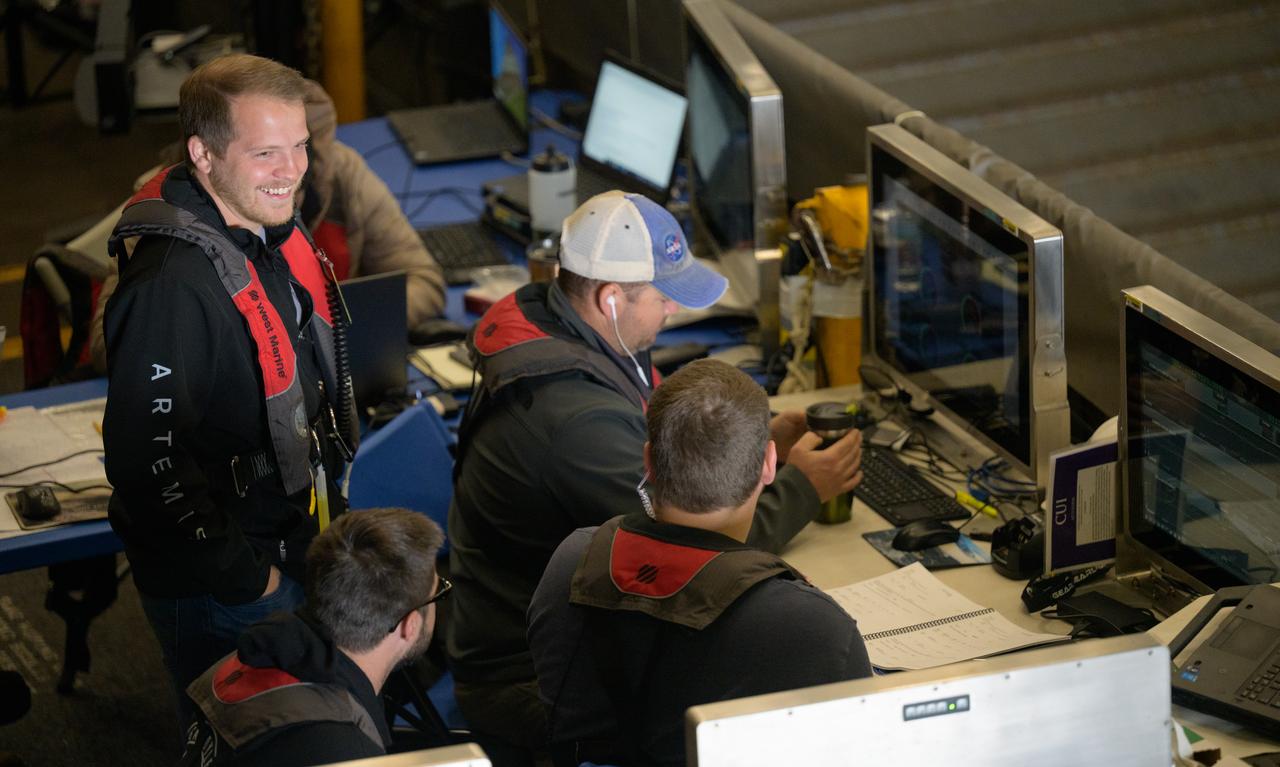
Members of NASA’s Landing and Recovery team are seen as they recover the Crew Module Test Article (CMTA), a full scale mockup of the Orion spacecraft, as teams practice Artemis recovery operations during Underway Recovery Test-12 onboard USS Somerset off the coast of California, Saturday, March 29, 2025. During the test, NASA and Department of Defense teams are practicing to ensure recovery procedures are validated as NASA plans to send Artemis II around the Moon and splashdown in the Pacific Ocean. Photo Credit: (NASA/Bill Ingalls)
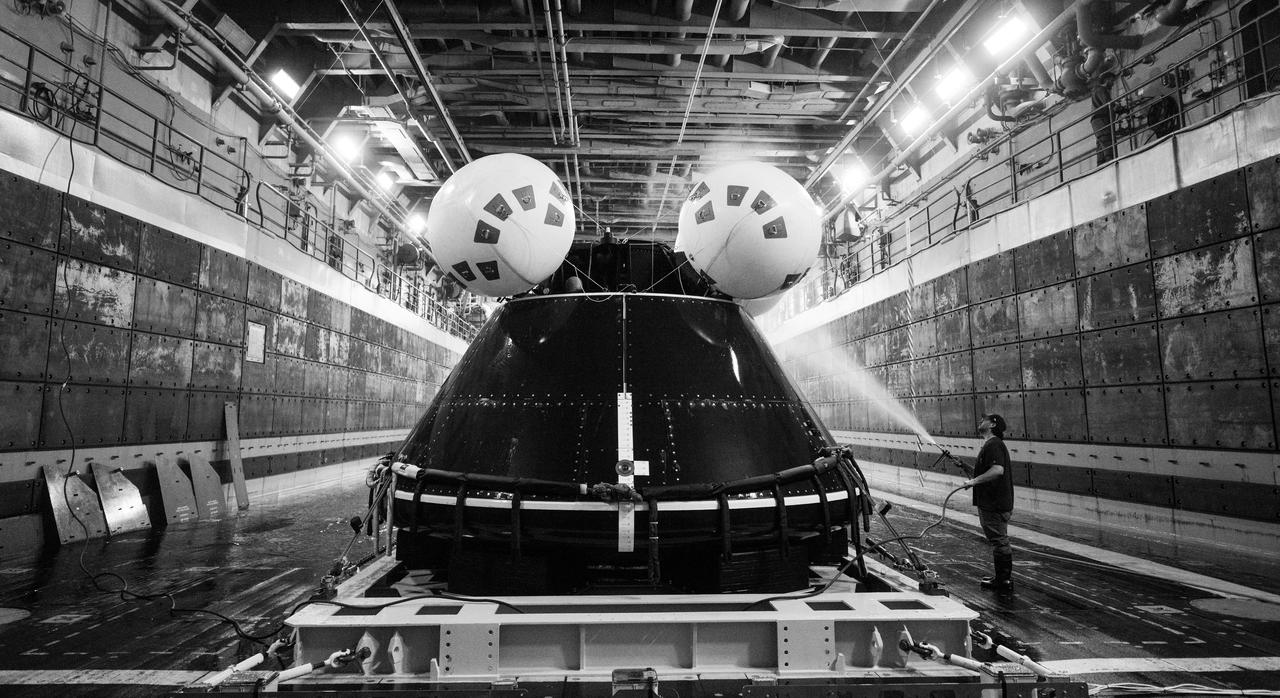
A member of NASA’s Landing and Recovery team washes saltwater off of the Crew Module Test Article (CMTA) after teams practiced recovery operations during Underway Recovery Test-12 onboard USS Somerset off the coast of California, Saturday, March 29, 2025. During the test, NASA and Department of Defense teams are practicing to ensure recovery procedures are validated as NASA plans to send the Artemis II astronauts around the Moon and splashdown in the Pacific Ocean. Photo Credit: (NASA/Joel Kowsky)
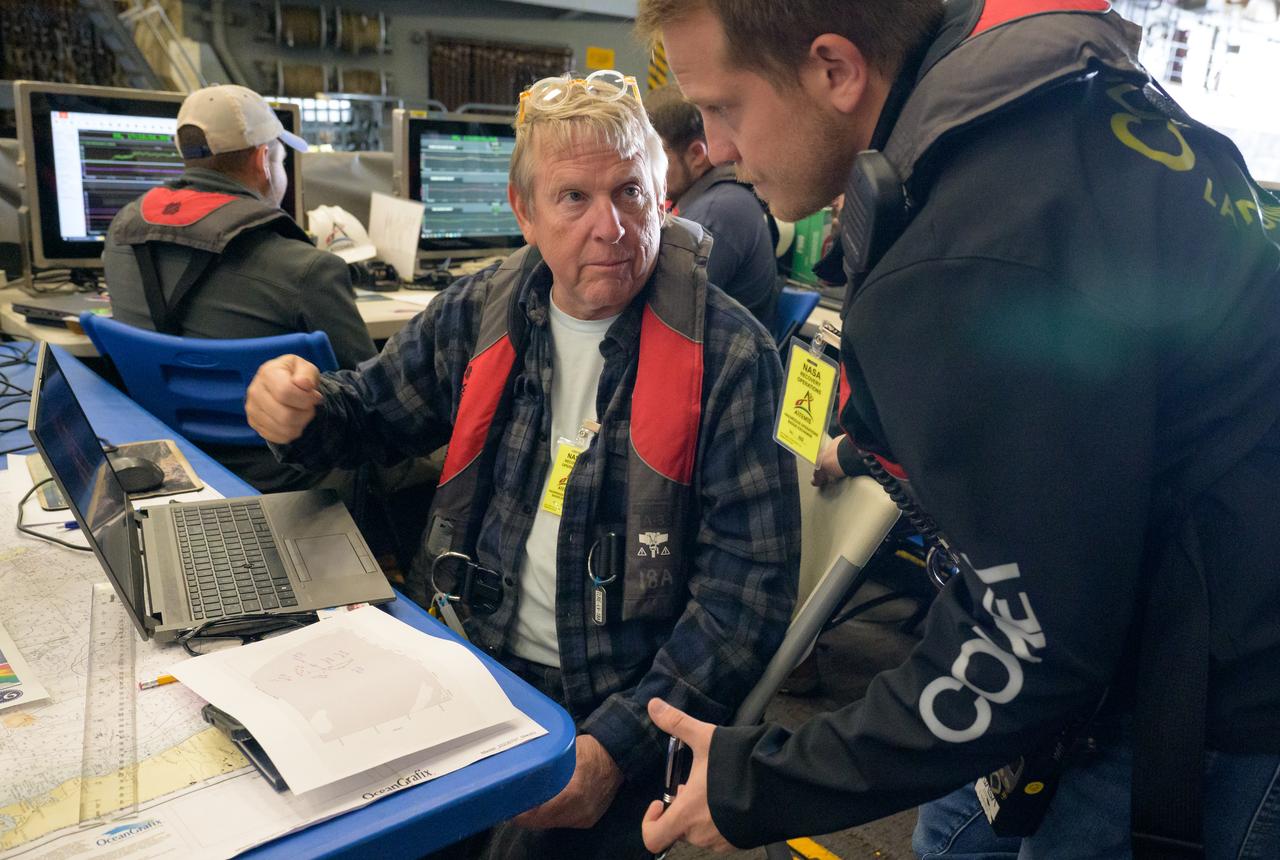
Members of NASA’s Landing and Recovery team are seen as they recover the Crew Module Test Article (CMTA), a full scale mockup of the Orion spacecraft, as teams practice Artemis recovery operations during Underway Recovery Test-12 onboard USS Somerset off the coast of California, Saturday, March 29, 2025. During the test, NASA and Department of Defense teams are practicing to ensure recovery procedures are validated as NASA plans to send Artemis II around the Moon and splashdown in the Pacific Ocean. Photo Credit: (NASA/Bill Ingalls)
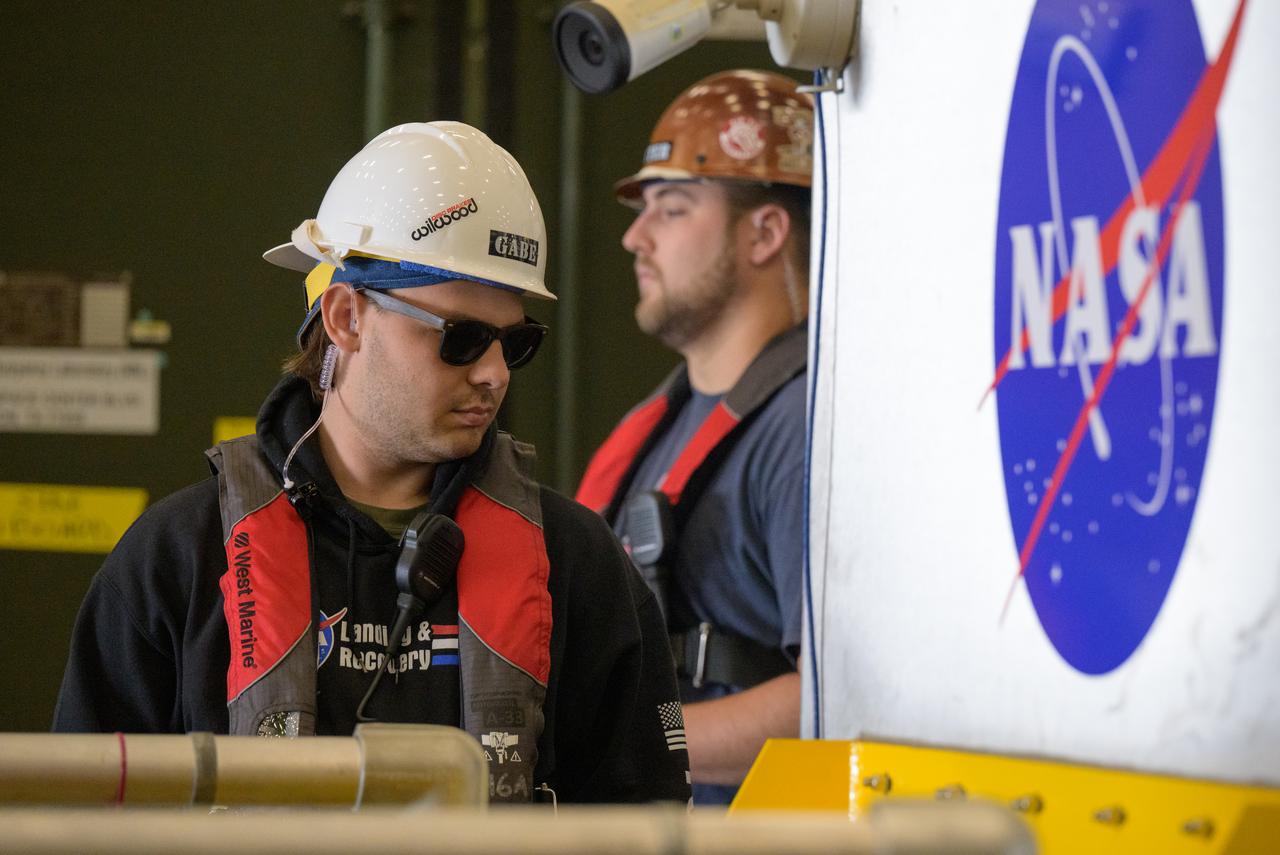
Members of NASA’s Landing and Recovery team are seen as they recover the Crew Module Test Article (CMTA), a full scale mockup of the Orion spacecraft, as teams practice Artemis recovery operations during Underway Recovery Test-12 onboard USS Somerset off the coast of California, Saturday, March 29, 2025. During the test, NASA and Department of Defense teams are practicing to ensure recovery procedures are validated as NASA plans to send Artemis II around the Moon and splashdown in the Pacific Ocean. Photo Credit: (NASA/Bill Ingalls)
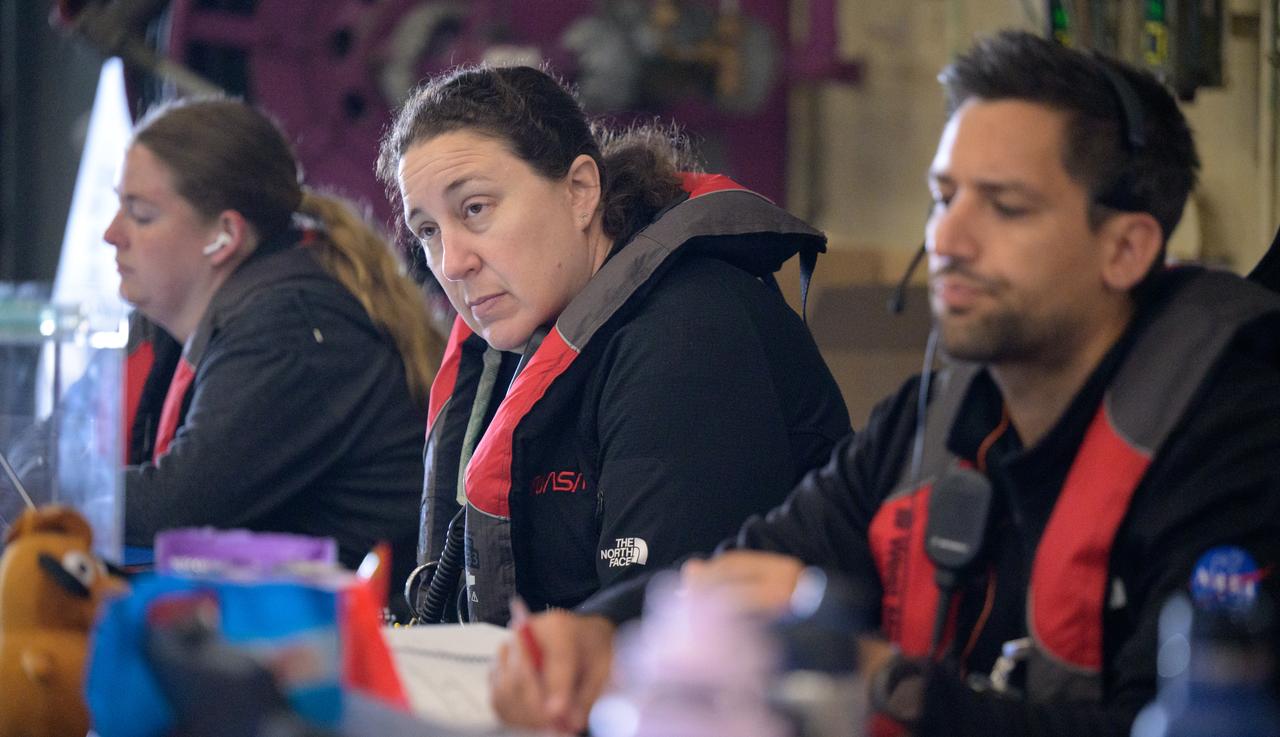
Members of NASA’s Landing and Recovery team are seen as they recover the Crew Module Test Article (CMTA), a full scale mockup of the Orion spacecraft, as teams practice Artemis recovery operations during Underway Recovery Test-12 onboard USS Somerset off the coast of California, Saturday, March 29, 2025. During the test, NASA and Department of Defense teams are practicing to ensure recovery procedures are validated as NASA plans to send Artemis II around the Moon and splashdown in the Pacific Ocean. Photo Credit: (NASA/Bill Ingalls)

Members of NASA’s Landing and Recovery team are seen as they recover the Crew Module Test Article (CMTA), a full scale mockup of the Orion spacecraft, as teams practice Artemis recovery operations during Underway Recovery Test-12 onboard USS Somerset off the coast of California, Saturday, March 29, 2025. During the test, NASA and Department of Defense teams are practicing to ensure recovery procedures are validated as NASA plans to send Artemis II around the Moon and splashdown in the Pacific Ocean. Photo Credit: (NASA/Bill Ingalls)
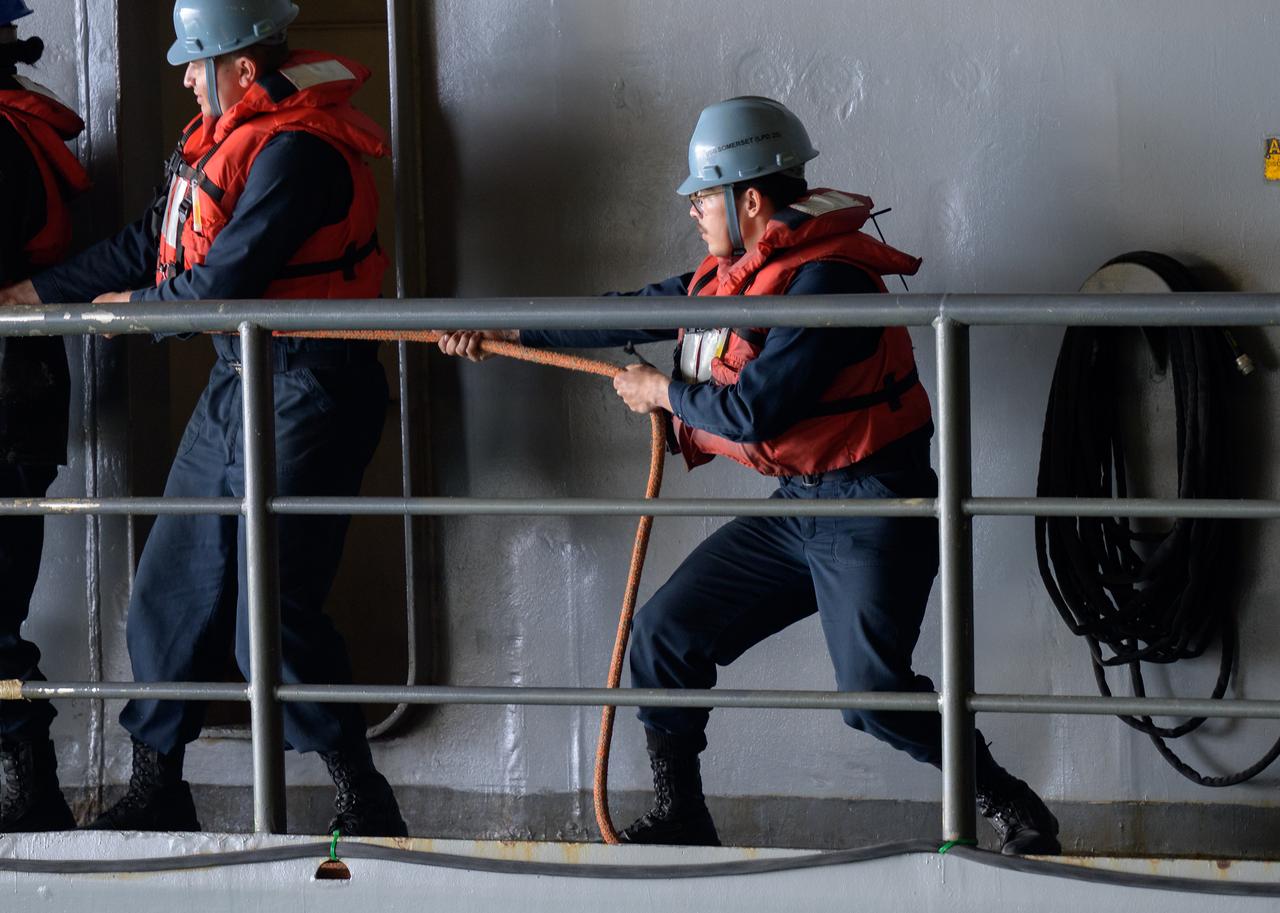
Sailors from USS Somerset assist in the recovery of the Crew Module Test Article (CMTA), a full scale mockup of the Orion spacecraft, as teams practice Artemis recovery operations during Underway Recovery Test-12 onboard USS Somerset off the coast of California, Saturday, March 29, 2025. During the test, NASA and Department of Defense teams are practicing to ensure recovery procedures are validated as NASA plans to send Artemis II around the Moon and splashdown in the Pacific Ocean. Photo Credit: (NASA/Bill Ingalls)
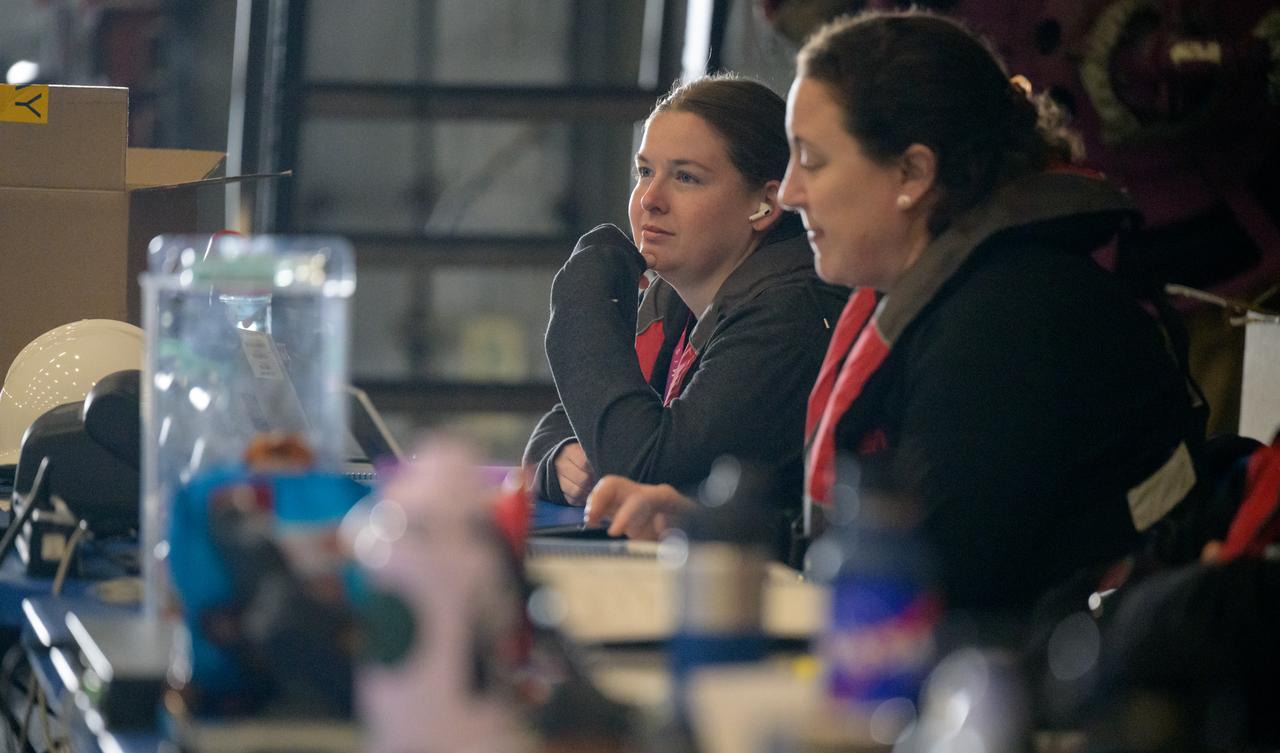
Members of NASA’s Landing and Recovery team are seen as they recover the Crew Module Test Article (CMTA), a full scale mockup of the Orion spacecraft, as teams practice Artemis recovery operations during Underway Recovery Test-12 onboard USS Somerset off the coast of California, Saturday, March 29, 2025. During the test, NASA and Department of Defense teams are practicing to ensure recovery procedures are validated as NASA plans to send Artemis II around the Moon and splashdown in the Pacific Ocean. Photo Credit: (NASA/Bill Ingalls)

Melissa Jones, Landing and Recovery director with NASA's Ground Systems Development and Operations Program (GSDO) speaks to the recovery team during wrap up of Underway Recovery Test 5 aboard the USS San Diego. GSDO and the U.S. Navy practiced recovery techniques using the well deck of the ship and a test version of the Orion crew module in the Pacific Ocean off the coast of California to prepare for recovery of Orion on its return from deep space missions. The testing allowed the team to demonstrate and evaluate recovery processes, procedures, hardware and personnel in open waters. Orion is the exploration spacecraft designed to carry astronauts to destinations not yet explored by humans, including an asteroid and NASA's Journey to Mars. It will have emergency abort capability, sustain the crew during space travel and provide safe re-entry from deep space return velocities. Orion is scheduled to launch on NASA's Space Launch System in late 2018. For more information, visit http://www.nasa.gov/orion.
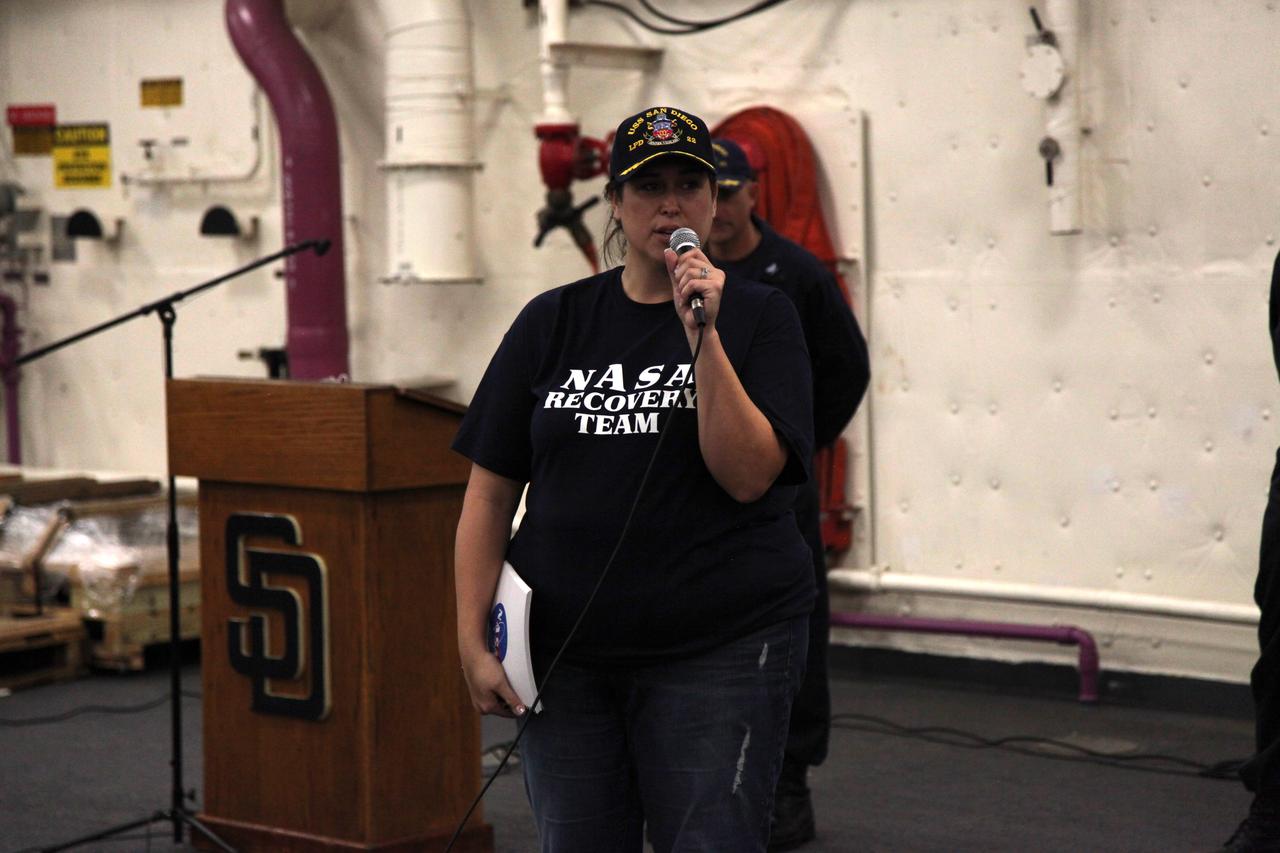
Melissa Jones, Landing and Recovery director with NASA's Ground Systems Development and Operations Program (GSDO) speaks to the recovery team during wrap up of Underway Recovery Test 5 aboard the USS San Diego. GSDO and the U.S. Navy practiced recovery techniques using the well deck of the ship and a test version of the Orion crew module in the Pacific Ocean off the coast of California to prepare for recovery of Orion on its return from deep space missions. The testing allowed the team to demonstrate and evaluate recovery processes, procedures, hardware and personnel in open waters. Orion is the exploration spacecraft designed to carry astronauts to destinations not yet explored by humans, including an asteroid and NASA's Journey to Mars. It will have emergency abort capability, sustain the crew during space travel and provide safe re-entry from deep space return velocities. Orion is scheduled to launch on NASA's Space Launch System in late 2018. For more information, visit http://www.nasa.gov/orion.
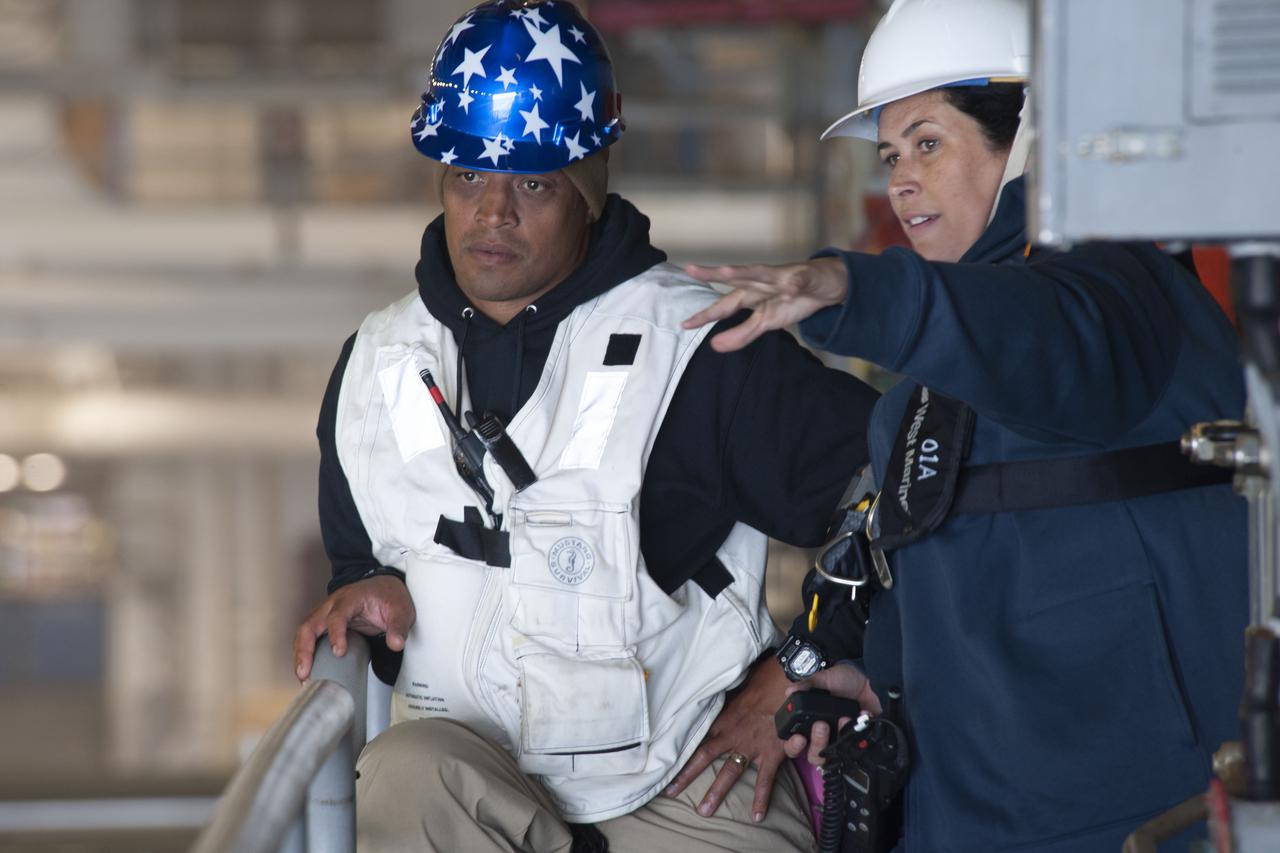
NASA Landing and Recovery Director Melissa Jones points out recovery operations to Capt. Gervy Alota, commanding officer, USS John P. Murtha (LPD 26), during Underway Recovery Test 9 (URT-9). During the weeklong test, NASA’s Landing and Recovery team is performing their final mission certification ahead of Artemis I.
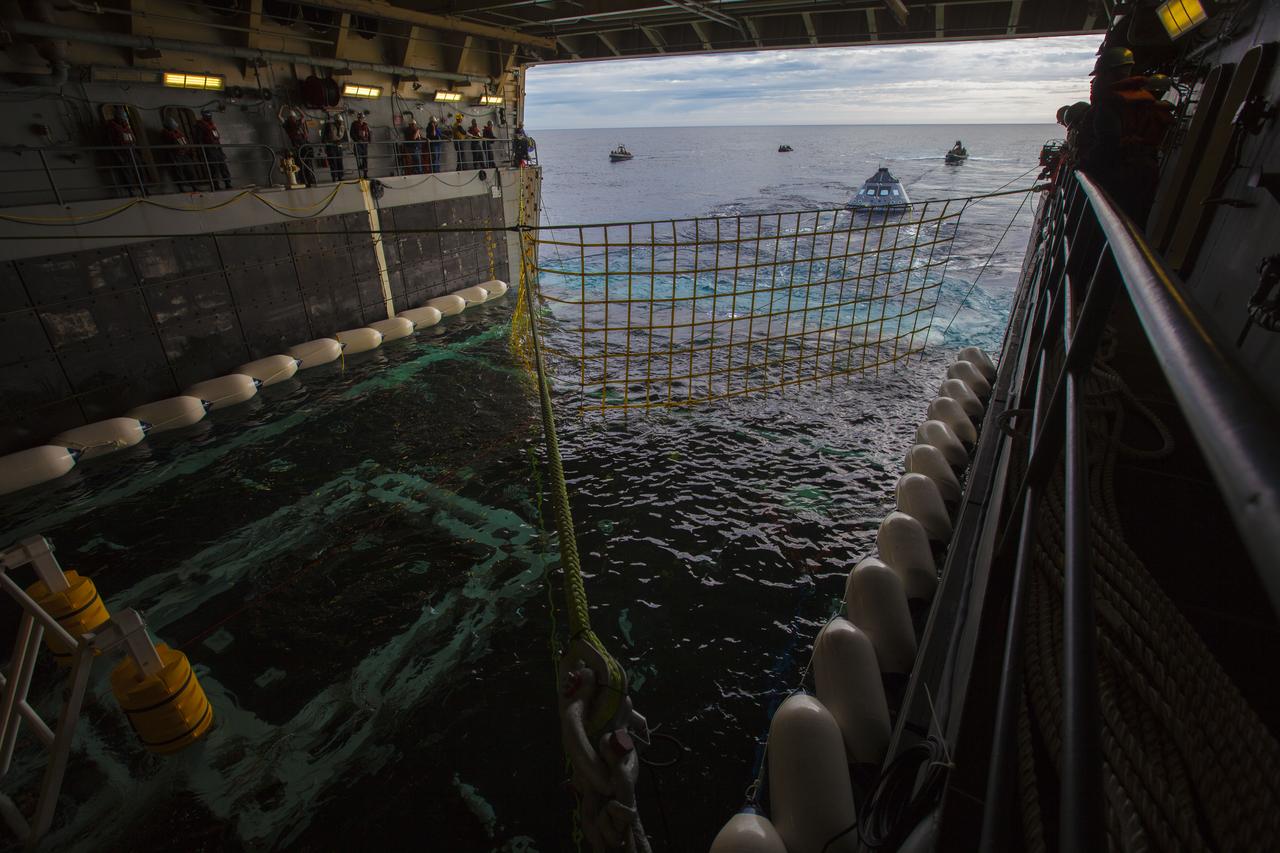
A test version of the Orion crew module is guided toward the flooded well deck of the USS San Diego during Underway Recovery Test 5. NASA's Ground Systems Development and Operations Program and the U.S. Navy are conducting a series of tests using the ship's well deck, the test module, various watercraft and equipment to prepare for recovery of Orion on its return from deep space missions. The test will allow the team to demonstrate and evaluate recovery processes, procedures, hardware and personnel in open waters. Orion is the exploration spacecraft designed to carry astronauts to destinations not yet explored by humans, including an asteroid and NASA's Journey to Mars. It will have emergency abort capability, sustain the crew during space travel and provide safe re-entry from deep space return velocities. Orion is scheduled to launch on NASA's Space Launch System in late 2018. For more information, visit http://www.nasa.gov/orion.
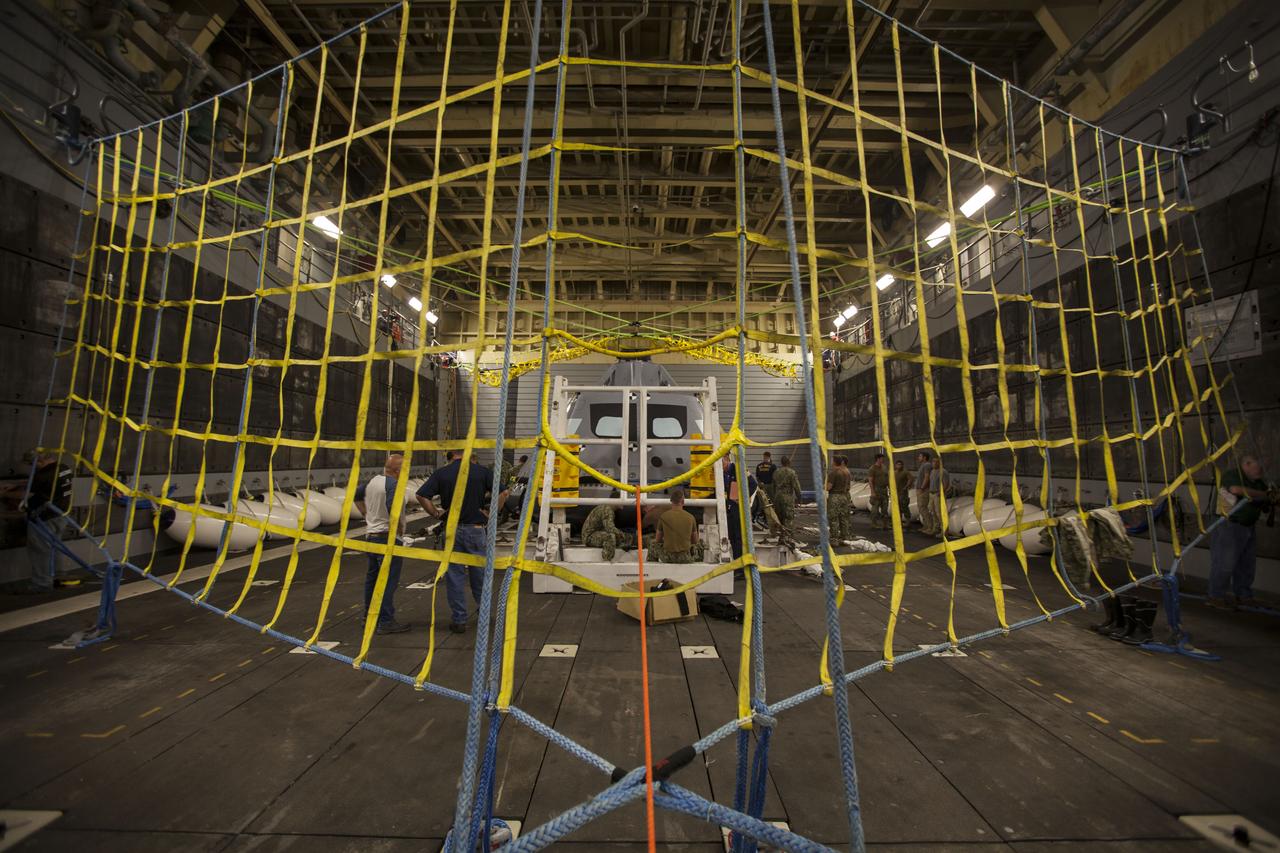
A test version of the Orion crew module is secured in the well deck of the USS San Diego for Underway Recovery Test 5. NASA's Ground Systems Development and Operations Program and the U.S. Navy will conduct a series of tests using the ship's well deck, the test module, various watercraft and equipment to prepare for recovery of Orion on its return from deep space missions. The test will allow the team to demonstrate and evaluate recovery processes, procedures, hardware and personnel in open waters. Orion is the exploration spacecraft designed to carry astronauts to destinations not yet explored by humans, including an asteroid and NASA's Journey to Mars. It will have emergency abort capability, sustain the crew during space travel and provide safe re-entry from deep space return velocities. Orion is scheduled to launch on NASA's Space Launch System in late 2018. For more information, visit http://www.nasa.gov/orion.
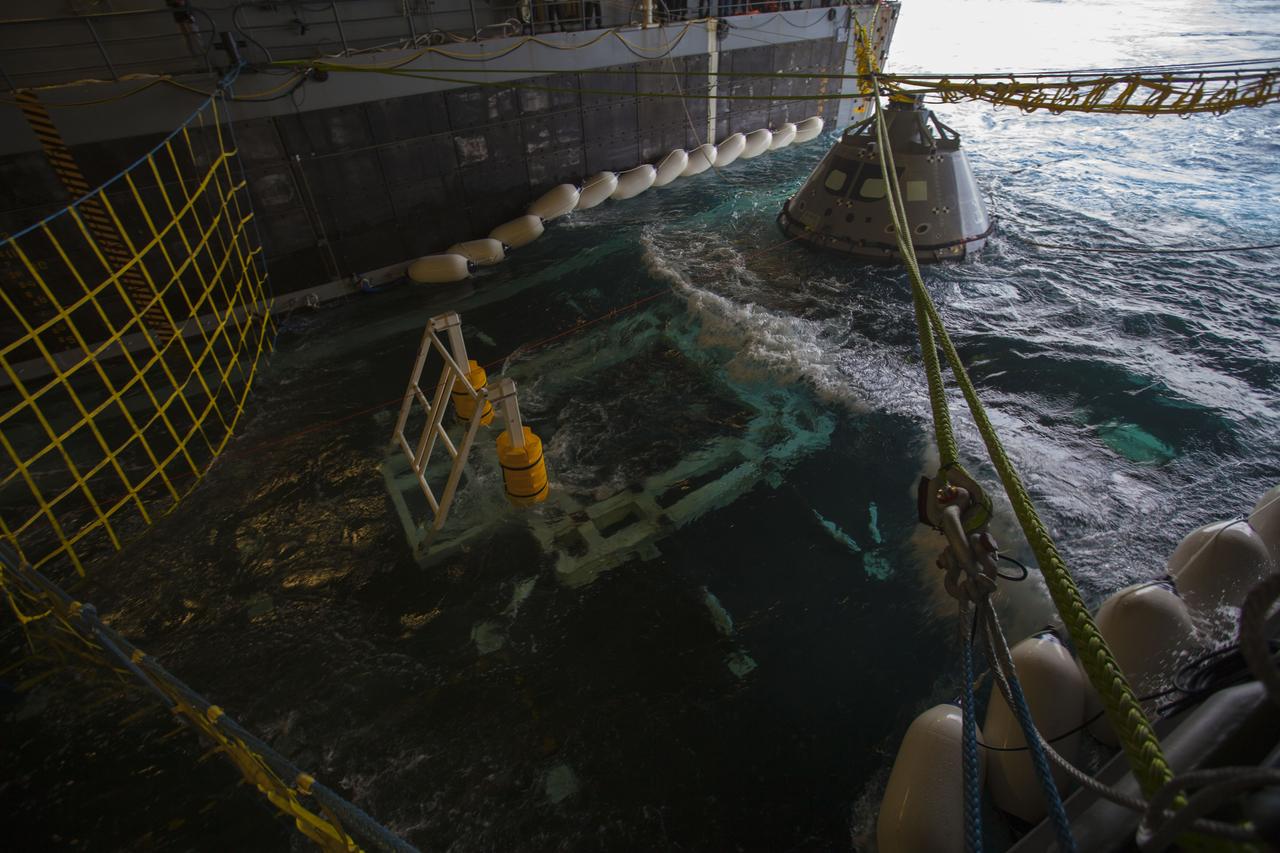
A test version of the Orion crew module is guided into the flooded well deck of the USS San Diego for Underway Recovery Test 5. NASA's Ground Systems Development and Operations Program and the U.S. Navy will conduct a series of tests using the ship's well deck, the test module, various watercraft and equipment to prepare for recovery of Orion on its return from deep space missions. The test will allow the team to demonstrate and evaluate recovery processes, procedures, hardware and personnel in open waters. Orion is the exploration spacecraft designed to carry astronauts to destinations not yet explored by humans, including an asteroid and NASA's Journey to Mars. It will have emergency abort capability, sustain the crew during space travel and provide safe re-entry from deep space return velocities. Orion is scheduled to launch on NASA's Space Launch System in late 2018. For more information, visit http://www.nasa.gov/orion.
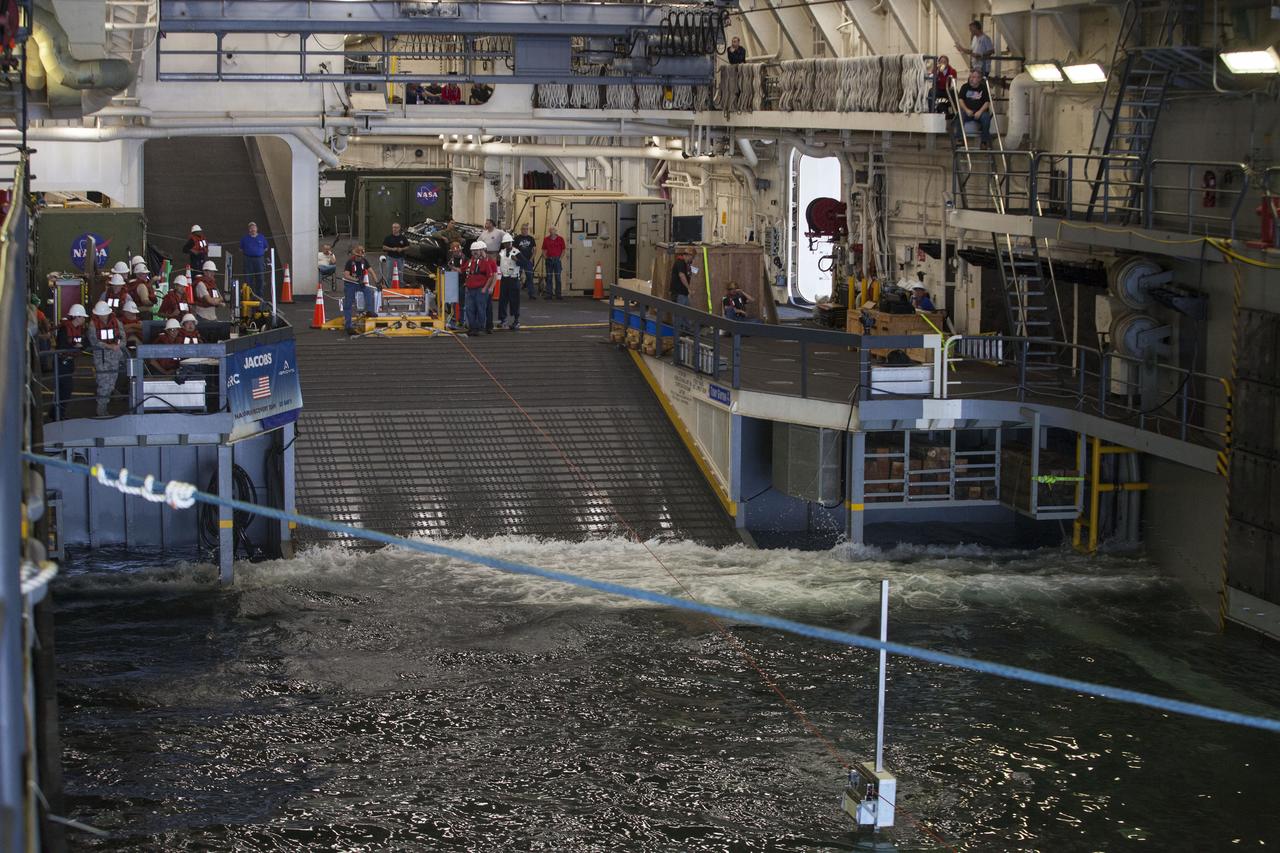
In the flooded well deck of the USS San Diego, recovery team members watch as a winch line is operated to help guide a test version of the Orion crew module into the well deck during Orion Underway Recovery Test 5 in the Pacific Ocean off the coast of California. NASA's Ground Systems Development and Operations Program and the U.S. Navy will practice recovery techniques using the well deck of the ship and a test version of the Orion crew module to prepare for recovery of Orion on its return from deep space missions. The testing will allow the team to demonstrate and evaluate recovery processes, procedures, hardware and personnel in open waters. Orion is the exploration spacecraft designed to carry astronauts to destinations not yet explored by humans, including an asteroid and NASA's Journey to Mars. It will have emergency abort capability, sustain the crew during space travel and provide safe re-entry from deep space return velocities. Orion is scheduled to launch on NASA's Space Launch System in late 2018. For more information, visit http://www.nasa.gov/orion.
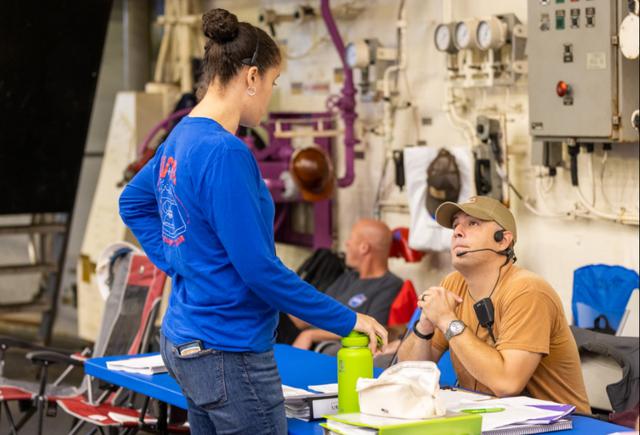
NASA Test Director (NTD) Christine St. Germain consults with fellow NTD Paul Sierpinski on day 2 of Underway Recovery Test 9 (URT-9) aboard the USS John P. Murtha. During the weeklong test, NASA’s Landing and Recovery team is performing their final mission certification ahead of Artemis I.
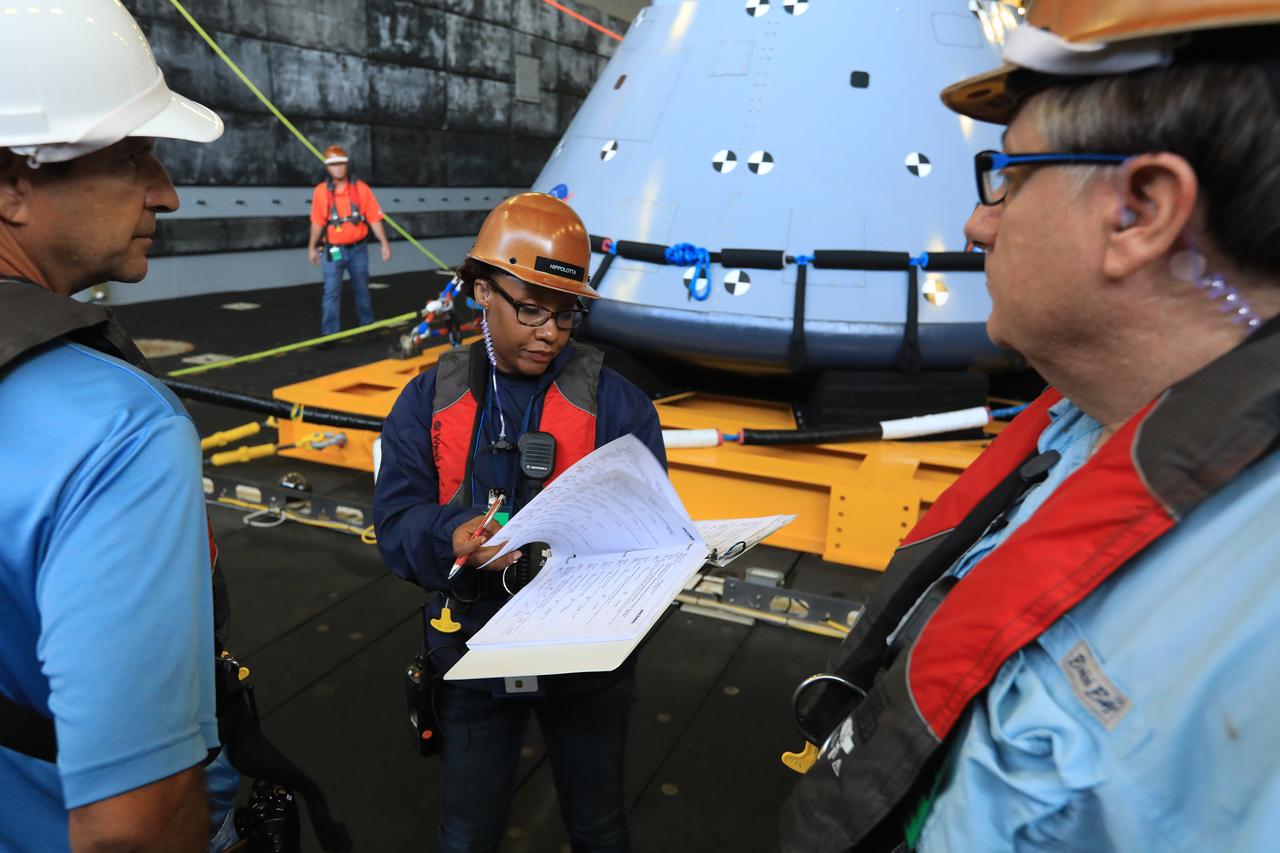
Tracy Parks, center, with Jacobs, serves as the Recovery Operations Integrator during Underway Recovery Test-7 (URT-7) aboard the USS John B. Murtha in the Pacific Ocean. On Oct. 31, 2018, during the second morning of URT-7, she reviews recovery operations with team members in the well deck of the ship. The Exploration Ground Systems recovery team and the U.S. Navy are using a test version of the Orion crew module, several rigid hull inflatable boats and support equipment to verify and validate processes, procedures, hardware and personnel during recovery of Orion in open waters. The test is one in a series of tests to verify and validate procedures and hardware that will be used to recover the Orion spacecraft after it splashes down in the Pacific Ocean following deep space exploration missions. Orion will have emergency abort capability, sustain the crew during space travel and provide safe re-entry from deep space return velocities.
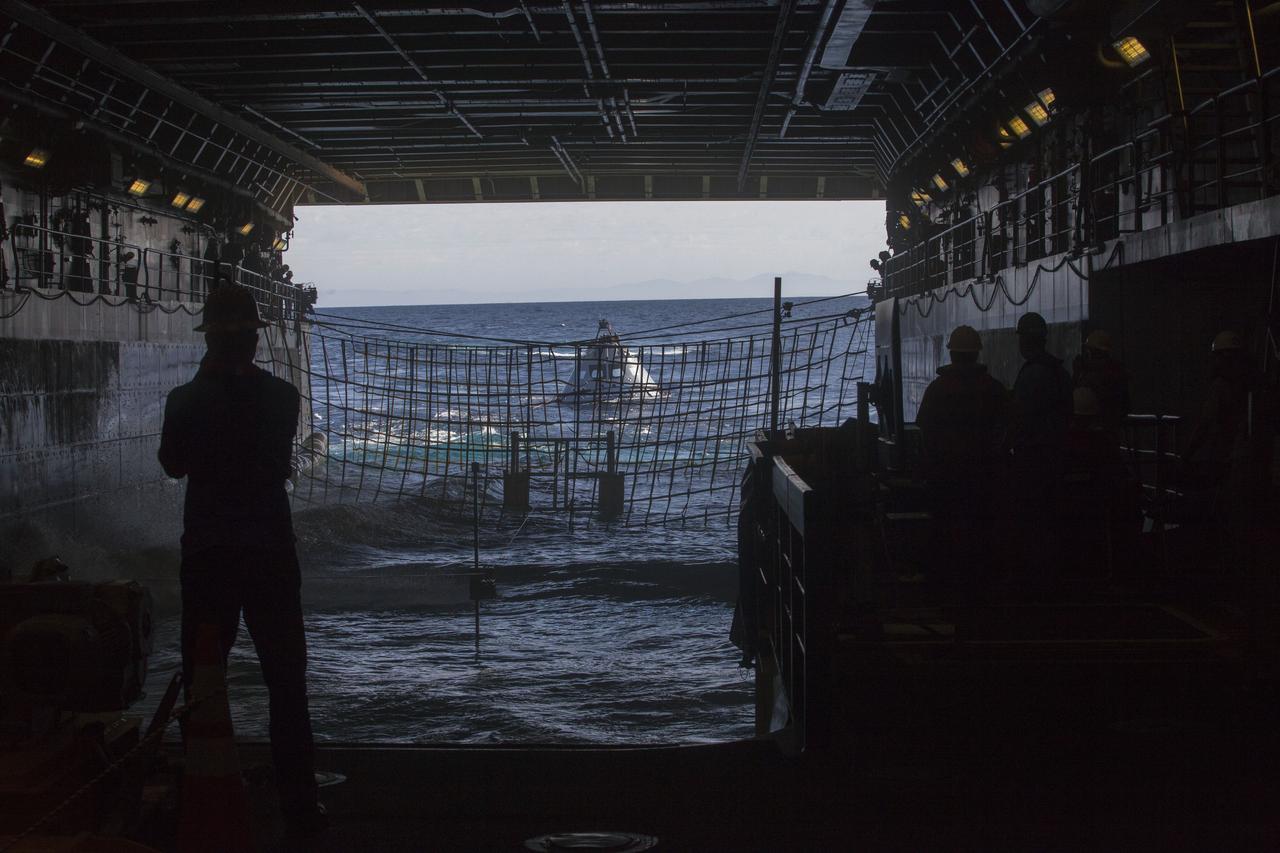
A test version of the Orion crew module floats outside the well deck of the USS San Diego during Underway Recovery Test 5 in the Pacific Ocean off the coast of California. NASA's Ground Systems Development and Operations Program and the U.S. Navy are conducting a series of tests using the ship's well deck, several watercraft, support equipment and personnel to prepare for recovery of Orion on its return from deep space missions. The testing will allow the team to demonstrate and evaluate recovery processes, procedures, hardware and personnel in open waters. Orion is the exploration spacecraft designed to carry astronauts to destinations not yet explored by humans, including an asteroid and NASA's Journey to Mars. It will have emergency abort capability, sustain the crew during space travel and provide safe re-entry from deep space return velocities. Orion is scheduled to launch on NASA's Space Launch System in late 2018. For more information, visit http://www.nasa.gov/orion.
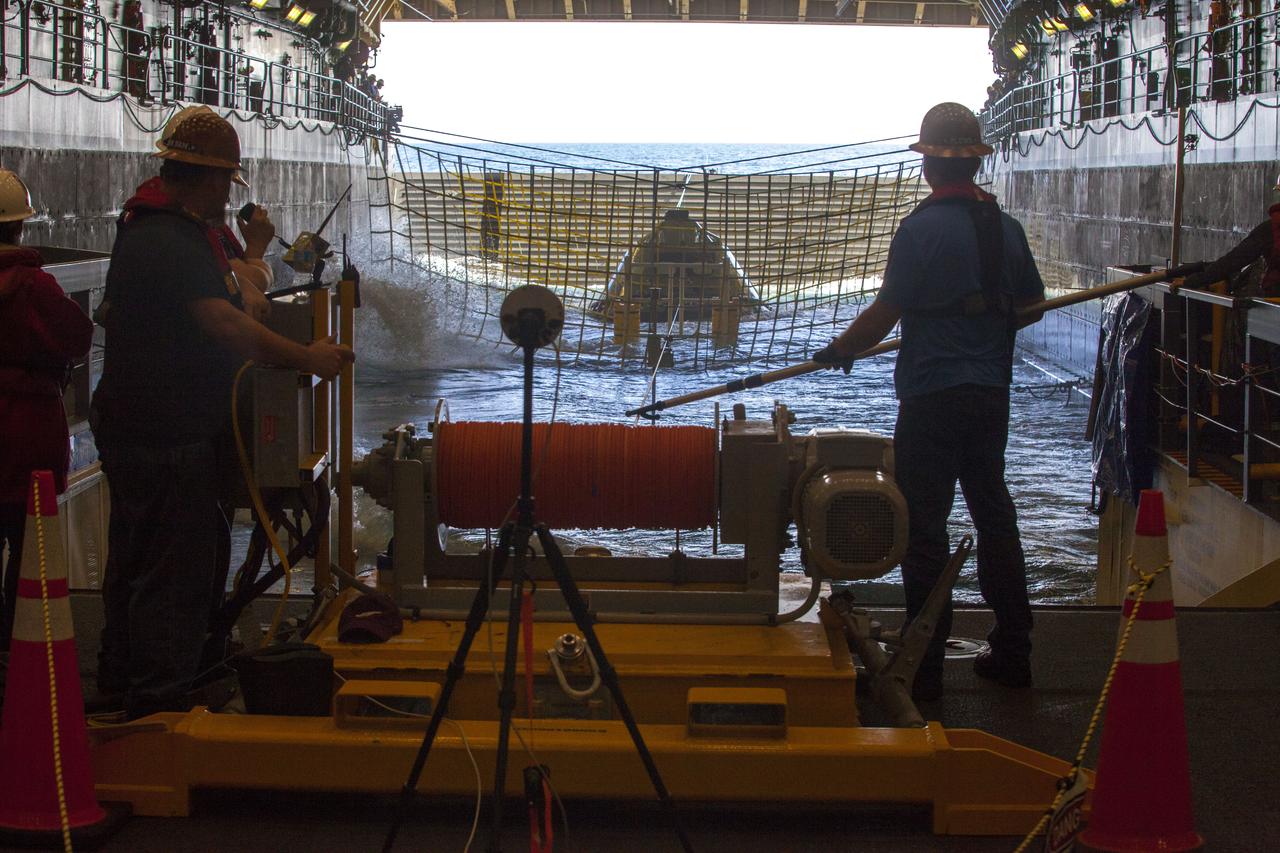
Winch team operators help guide a test version of the Orion crew module into the flooded well deck of the USS San Diego during Underway Recovery Test 5 in the Pacific Ocean off the coast of California. NASA's Ground Systems Development and Operations Program and the U.S. Navy are conducting a series of tests to prepare for recovery of Orion on its return from deep space missions. The testing will allow the team to demonstrate and evaluate recovery processes, procedures, hardware and personnel in open waters. Orion is the exploration spacecraft designed to carry astronauts to destinations not yet explored by humans, including an asteroid and NASA's Journey to Mars. It will have emergency abort capability, sustain the crew during space travel and provide safe re-entry from deep space return velocities. Orion is scheduled to launch on NASA's Space Launch System in late 2018. For more information, visit http://www.nasa.gov/orion.