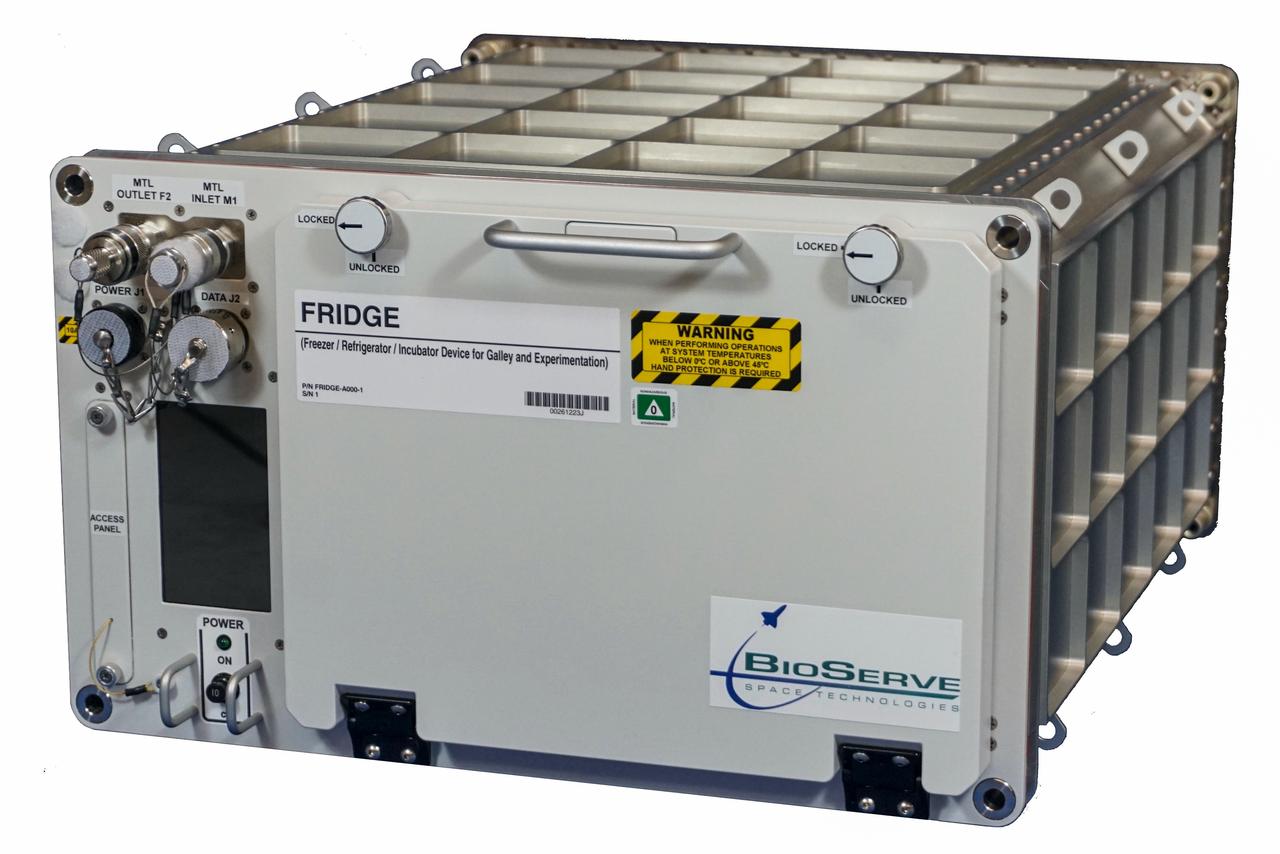
jsc2020e040949 (2/21/2020) --- A preflight view of Freezer / Refrigerator / Incubator Device for Galley and Experimentation (FRIDGE). The Galley Refrigerator-Freezer, or Freezer/Refrigerator/Incubator Device for Galley and Experimentation (FRIDGE) is a locker-sized unit that provides active temperature control with a range from -20.0°C to +48.0°C. It can accommodate storage of both crew galley items and scientific research samples and can be fully operated and maintained from the ground.
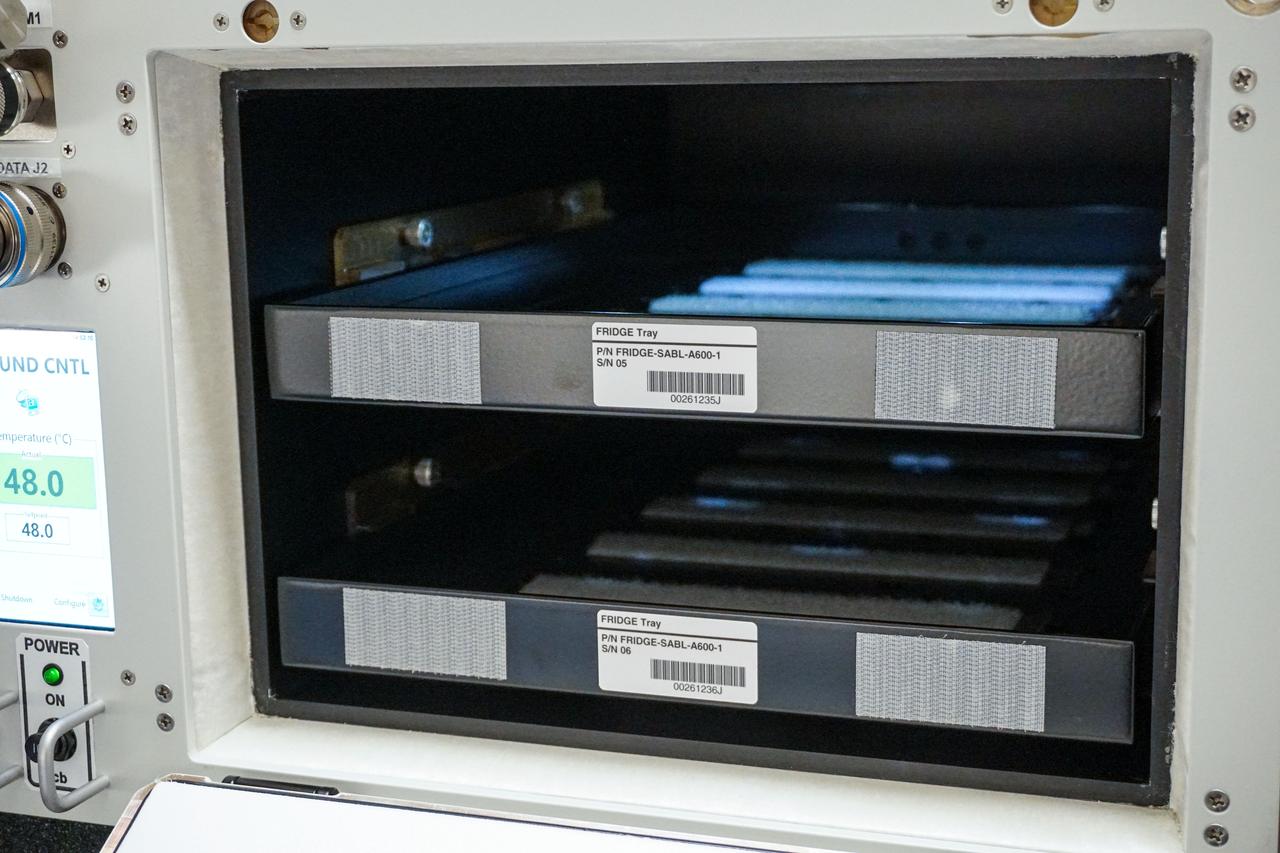
jsc2020e040952 (8/3/2020) --- A prefligt interior view of Freezer / Refrigerator / Incubator Device for Galley and Experimentation (FRIDGE) in nominal configuration with 2 trays. The Galley Refrigerator-Freezer, or Freezer/Refrigerator/Incubator Device for Galley and Experimentation (FRIDGE) is a locker-sized unit that provides active temperature control with a range from -20.0°C to +48.0°C. It can accommodate storage of both crew galley items and scientific research samples and can be fully operated and maintained from the ground.

These compressors inside the Refrigeration Building at the National Advisory Committee for Aeronautics (NACA) Aircraft Engine Research Laboratory were used to generate cold temperatures in the Altitude Wind Tunnel (AWT) and Icing Research Tunnel. The AWT was a large facility that simulated actual flight conditions at high altitudes. The two primary aspects of altitude simulation are the reduction of the air pressure and the decrease of temperature. The Icing Research Tunnel was a smaller facility in which water droplets were added to the refrigerated air stream to simulate weather conditions that produced ice buildup on aircraft. The military pressured the NACA to complete the tunnels quickly so they could be of use during World War II. The NACA engineers struggled with the design of this refrigeration system, so Willis Carrier, whose Carrier Corporation had pioneered modern refrigeration, took on the project. The Carrier engineers devised the largest cooling system of its kind in the world. The system could lower the tunnels’ air temperature to –47⁰ F. The cooling system was powered by 14 Carrier and York compressors, seen in this photograph, which were housed in the Refrigeration Building between the two wind tunnels. The compressors converted the Freon 12 refrigerant into a liquid. The refrigerant was then pumped into zig-zag banks of cooling coils inside the tunnels’ return leg. The Freon absorbed heat from the airflow as it passed through the coils. The heat was transferred to the cooling water and sent to the cooling tower where it was dissipated into the atmosphere.
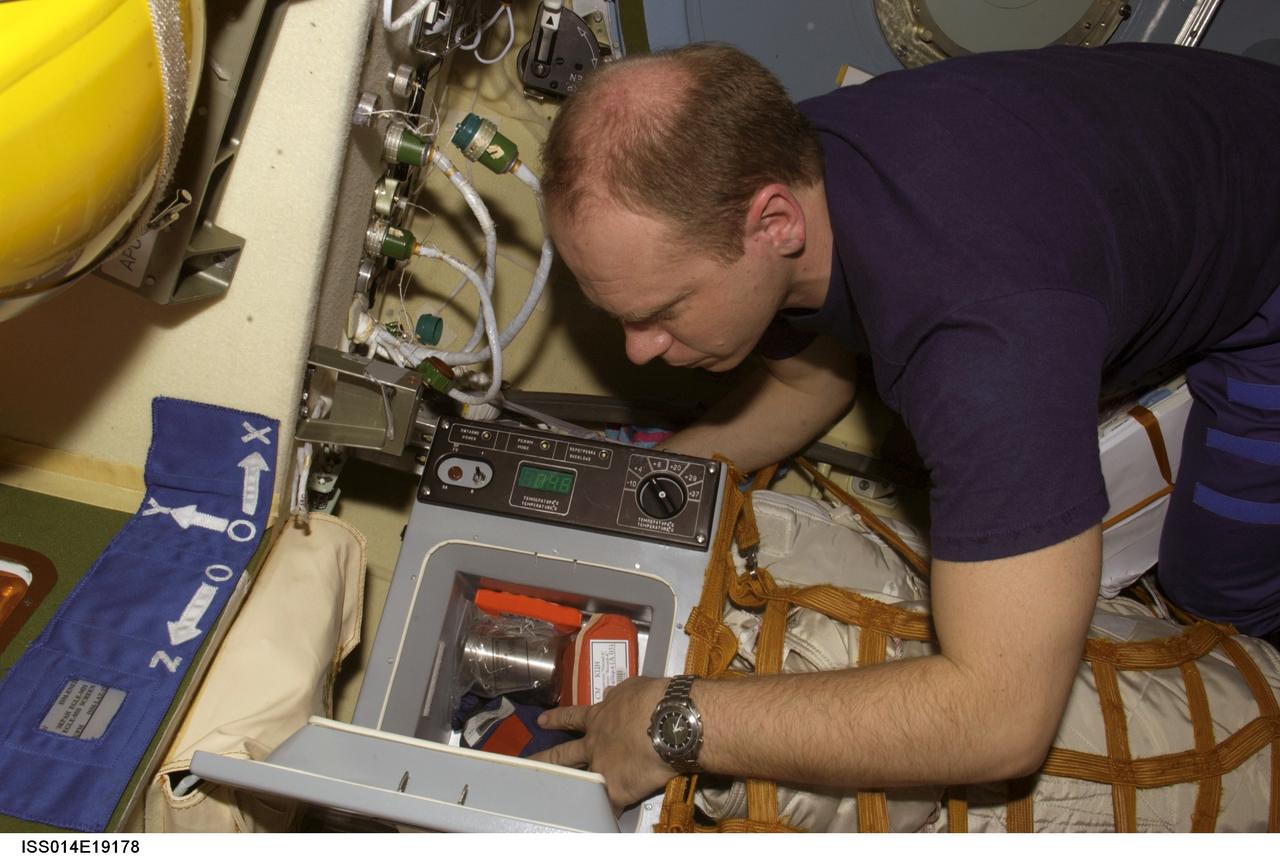
ISS014-E-19178 (April 2007) --- Cosmonaut Oleg V. Kotov, Expedition 15 flight engineer representing Russia's Federal Space Agency, works with a Cryogem-03 refrigerator in the Zvezda Service Module of the International Space Station.
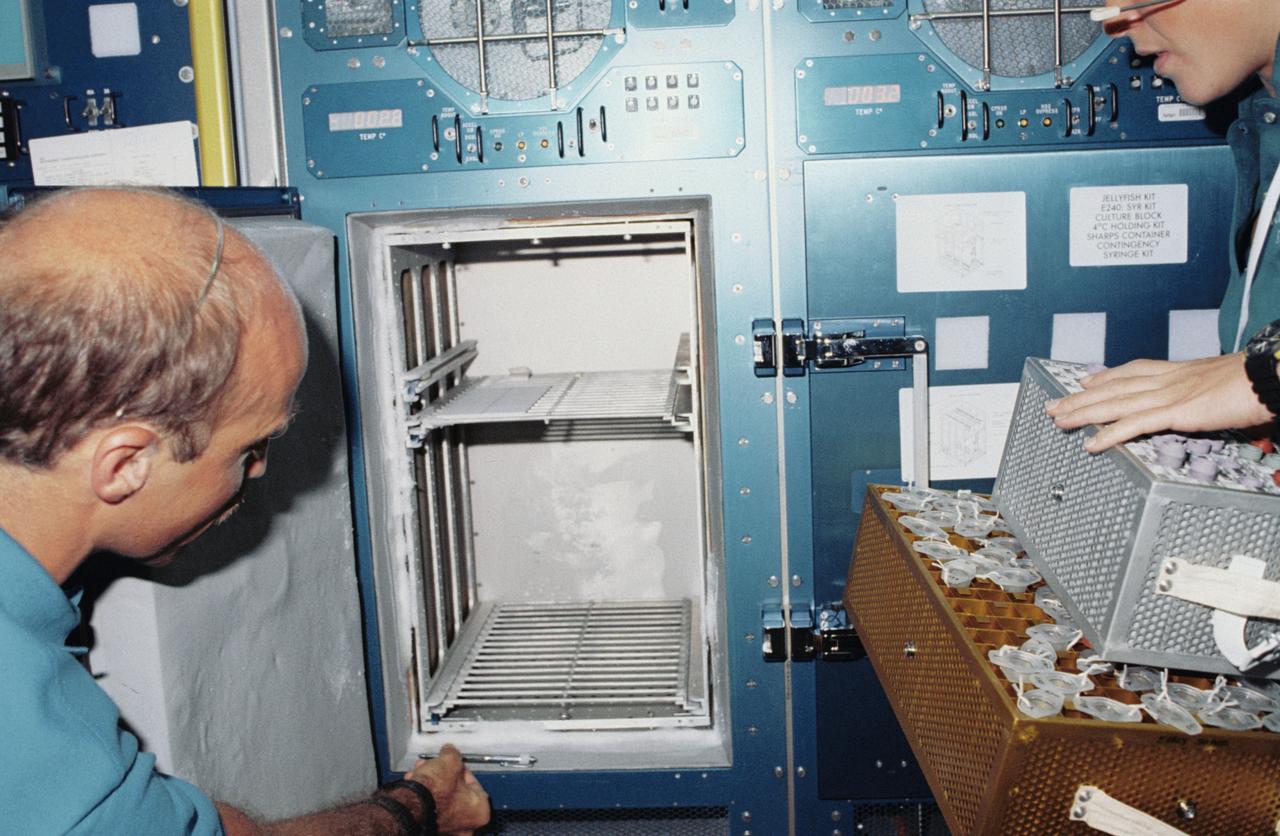
STS040-202-033 (5-14 June 1991) --- A medium closeup scene shows astronaut James P. Bagian (left) and an unidentified crewmember (partially out of frame) looking at a vacant refrigerator in the Spacelab Life Sciences (SLS-1) module aboard the Earth-orbiting Space Shuttle Columbia. Following the detection of problems with the refrigerator, its contents were temporarily removed. This scene was photographed with a 35mm camera.
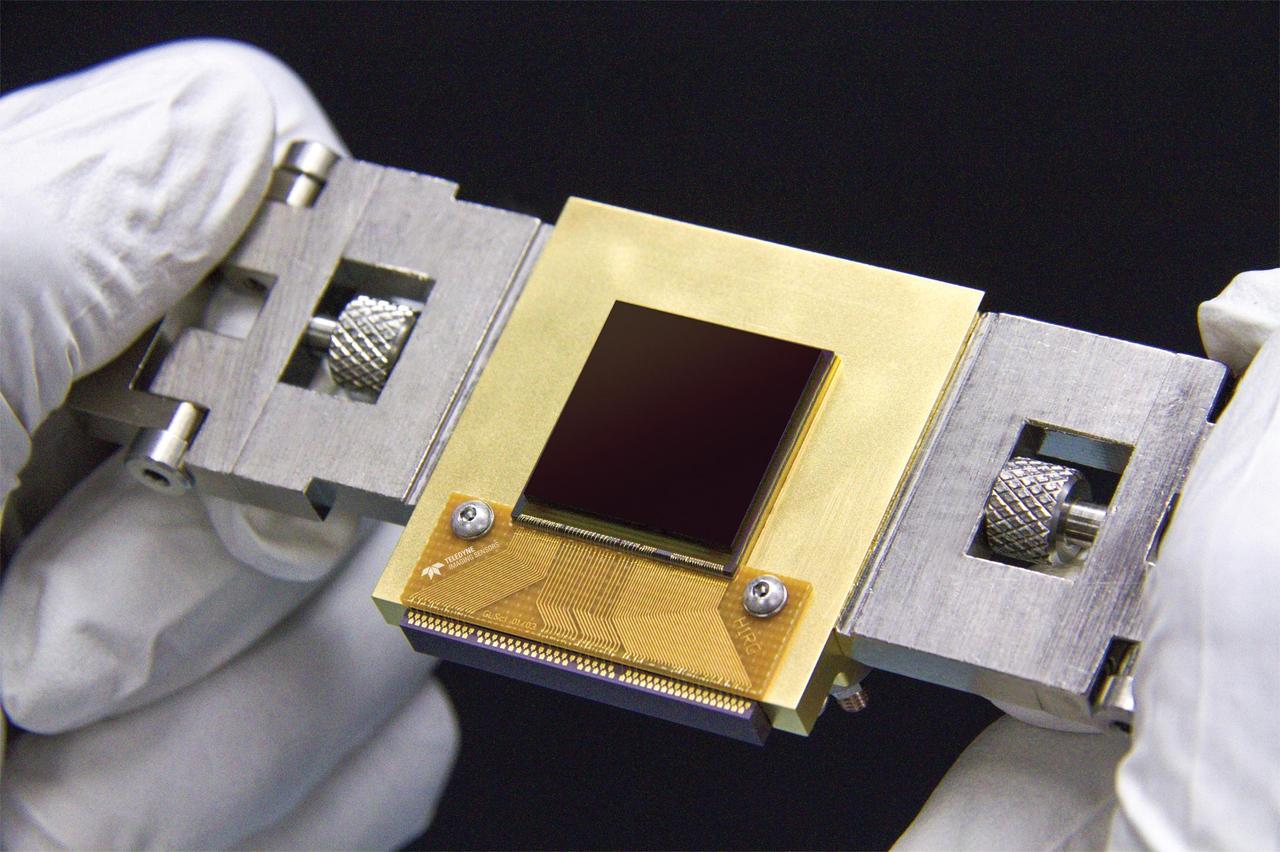
The NEOCam chip is the first megapixel sensor capable of detecting infrared wavelengths at temperatures achievable in deep space without refrigerators or cryogens.
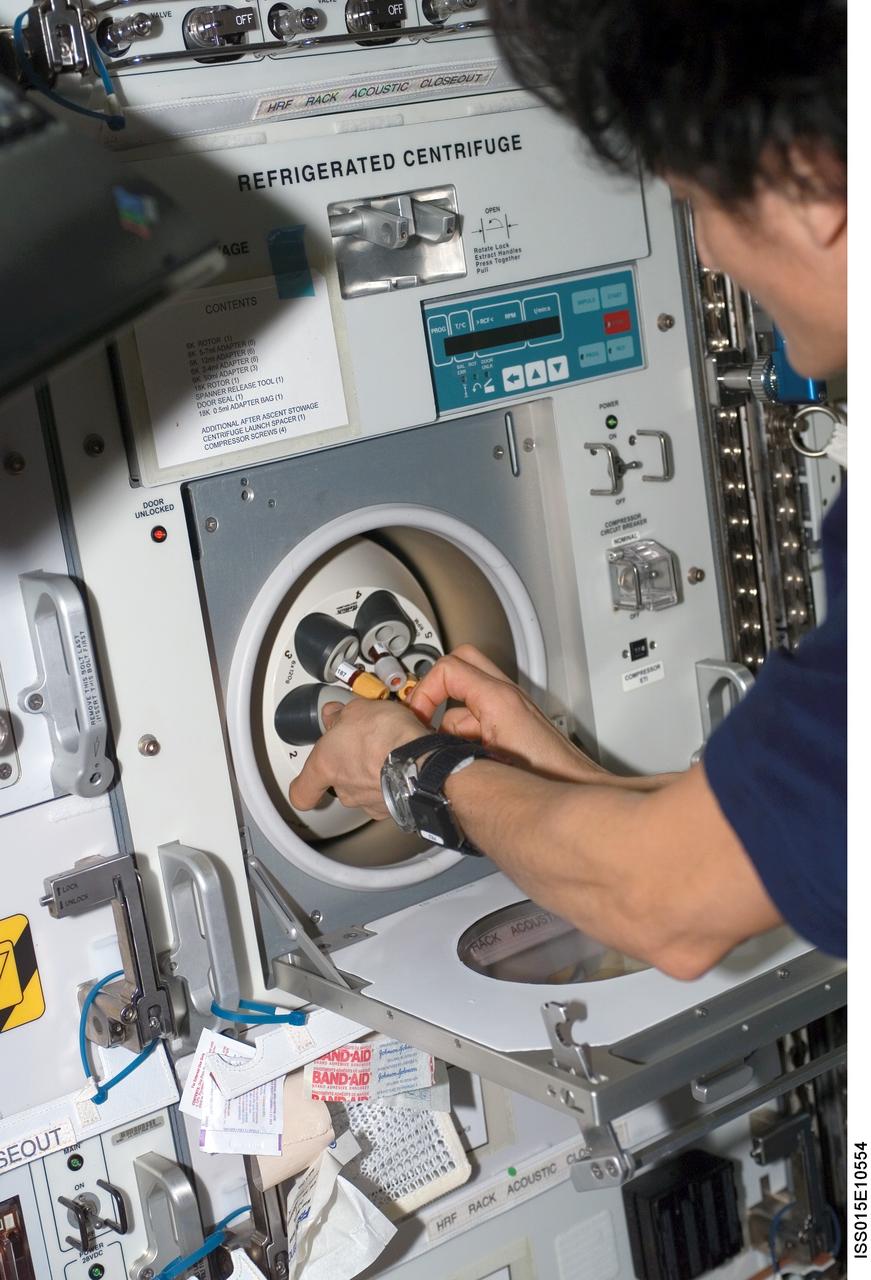
ISS015-E-10554 (1 June 2007) --- Astronaut Sunita L. Williams, Expedition 15 flight engineer, loads test samples in the Human Research Facility 2 (HRF-2) Refrigerated Centrifuge as a part of the Nutritional Status Assessment (Nutrition) experiment in the Destiny laboratory of the International Space Station. The results of the Nutrition experiment will be used to better understand the time course effects of space flight on human physiology.
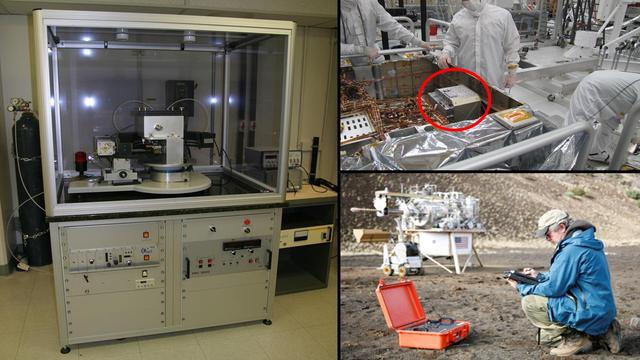
A conventional X-ray diffraction instrument left is the size of a large refrigerator, in contrast to the compact size of the Chemistry and Mineralogy CheMin instrument on NASA Curiosity rover top right.
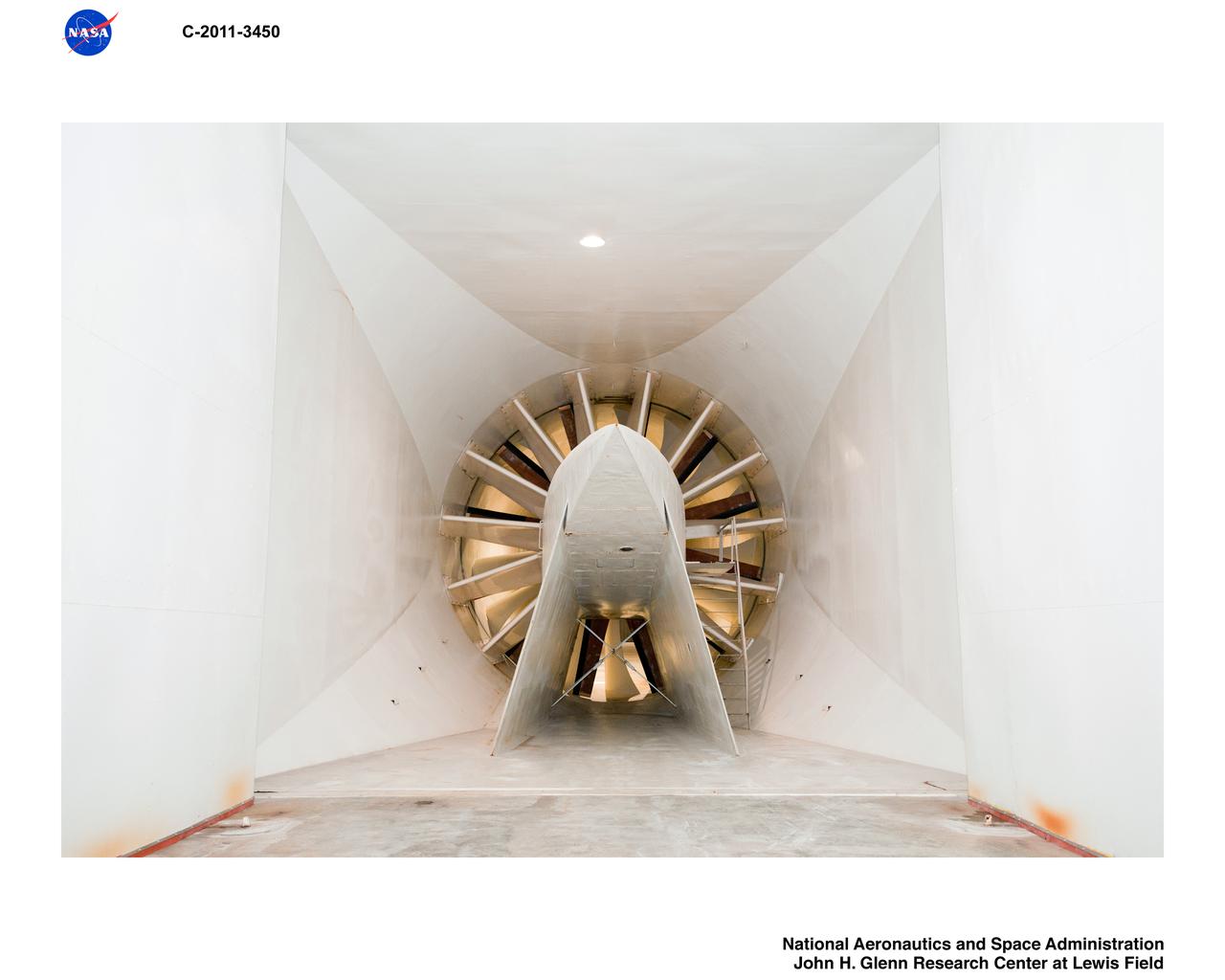
Construction of the Icing Research Tunnel, IRT, Refrigeration Plant-Newly Installed Heat Exchanger
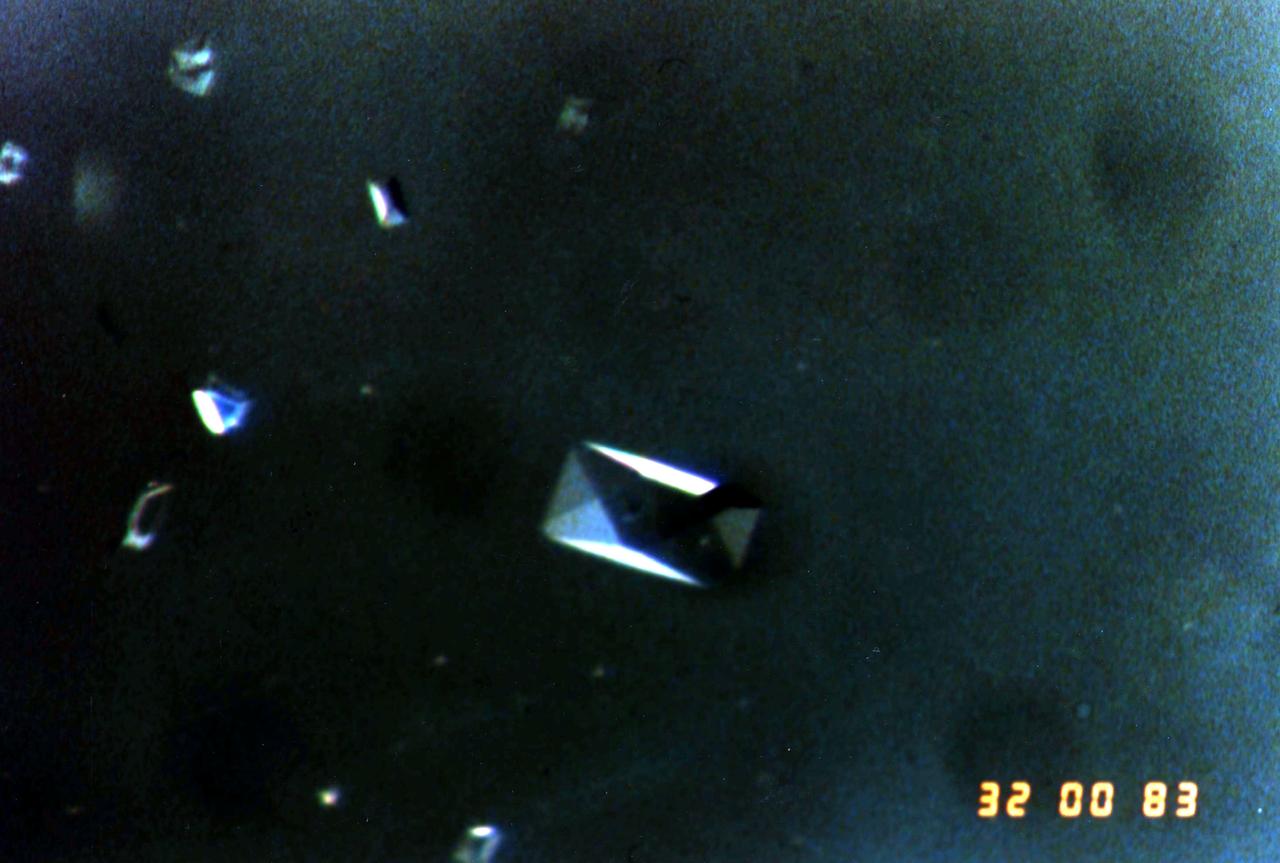
Orbital Documentation of Porcine Elastase grown in (PCG) Protein Crystal Growth (RIM) Refrigerator Incubator Module
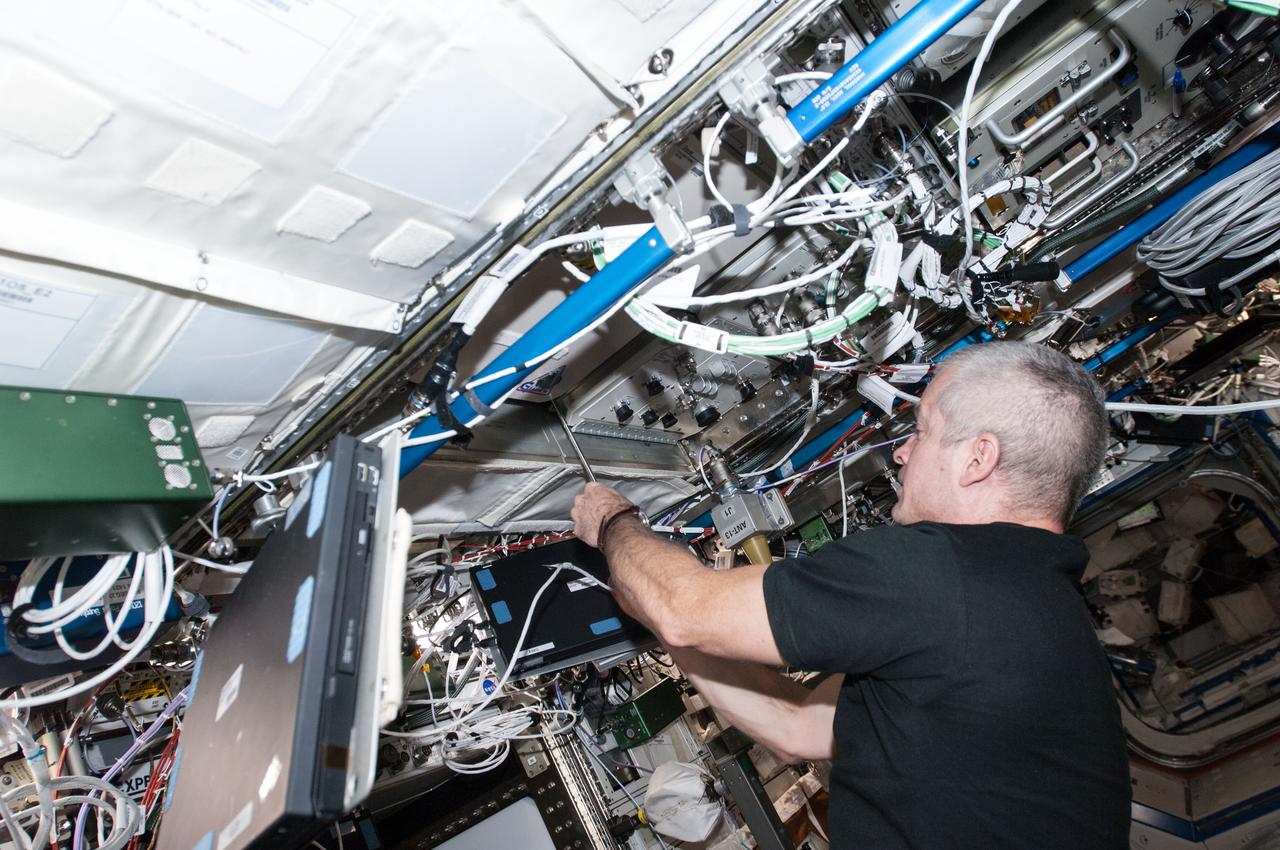
ISS040-E-000297 (16 May 2014) --- NASA astronaut Steve Swanson, Expedition 40 commander, works with the General Laboratory Active Cryogenic ISS Experiment Refrigerator (GLACIER) in the Destiny laboratory of the International Space Station.
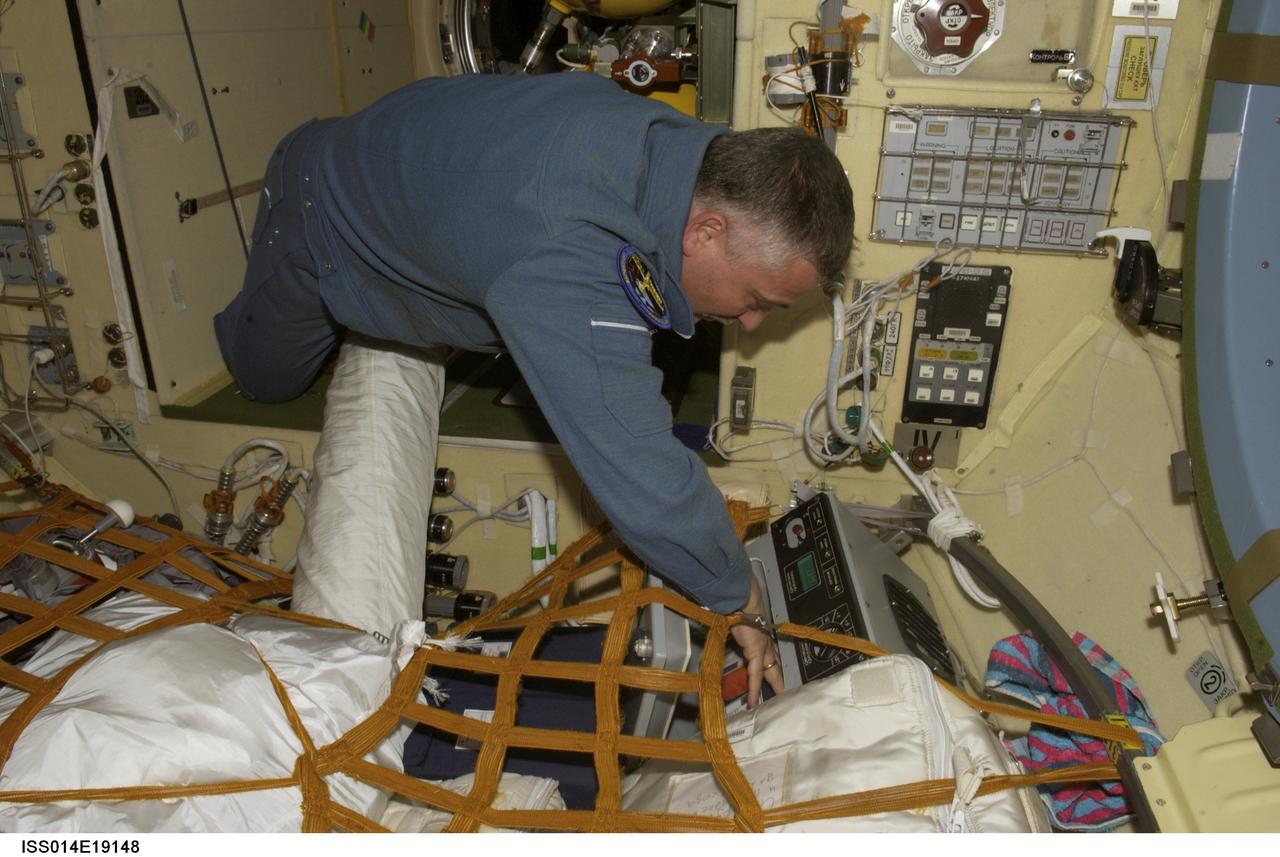
ISS014-E-19148 (April 2007) --- Cosmonaut Fyodor N. Yurchikhin, Expedition 15 commander representing Russia's Federal Space Agency, works with a Cryogem-03 refrigerator in the Zvezda Service Module of the International Space Station.
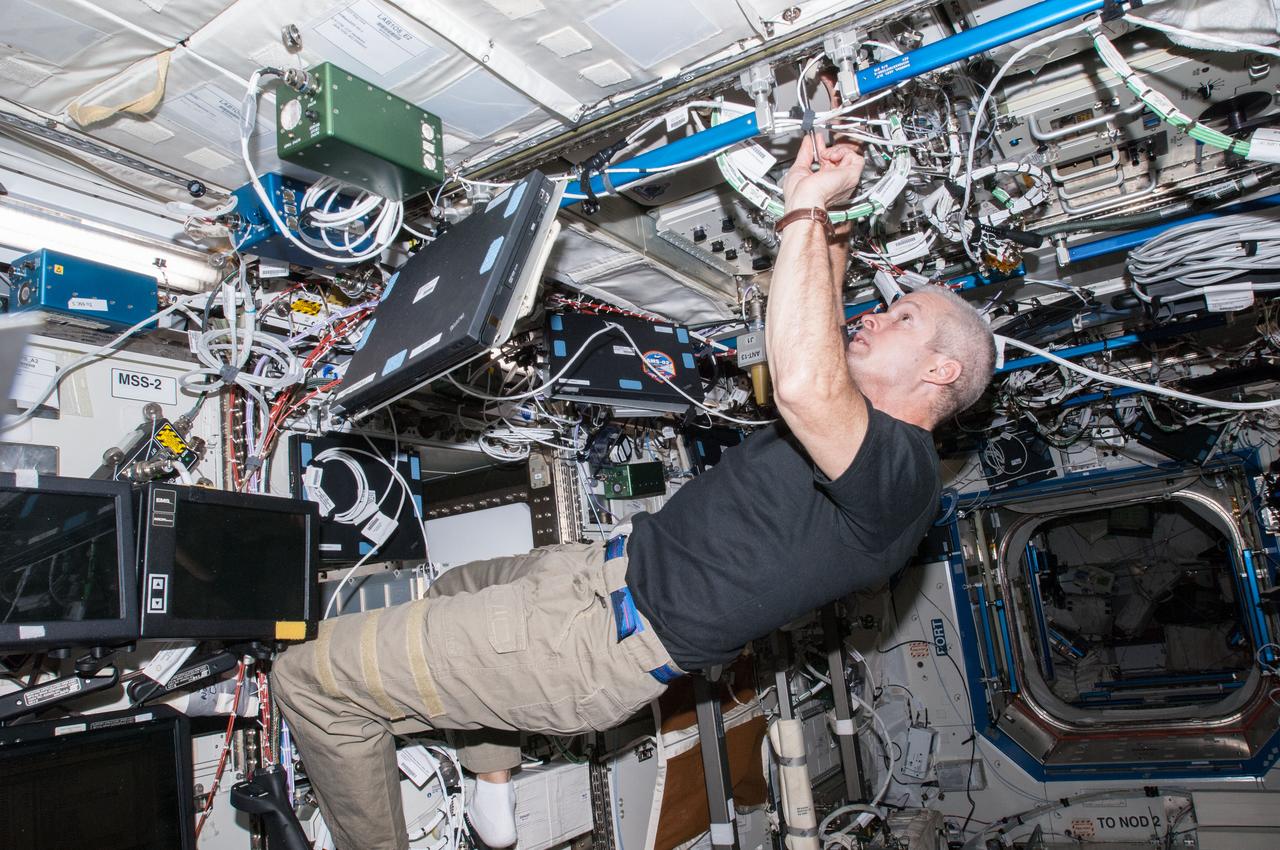
ISS040-E-000298 (16 May 2014) --- NASA astronaut Steve Swanson, Expedition 40 commander, works with the General Laboratory Active Cryogenic ISS Experiment Refrigerator (GLACIER) in the Destiny laboratory of the International Space Station.
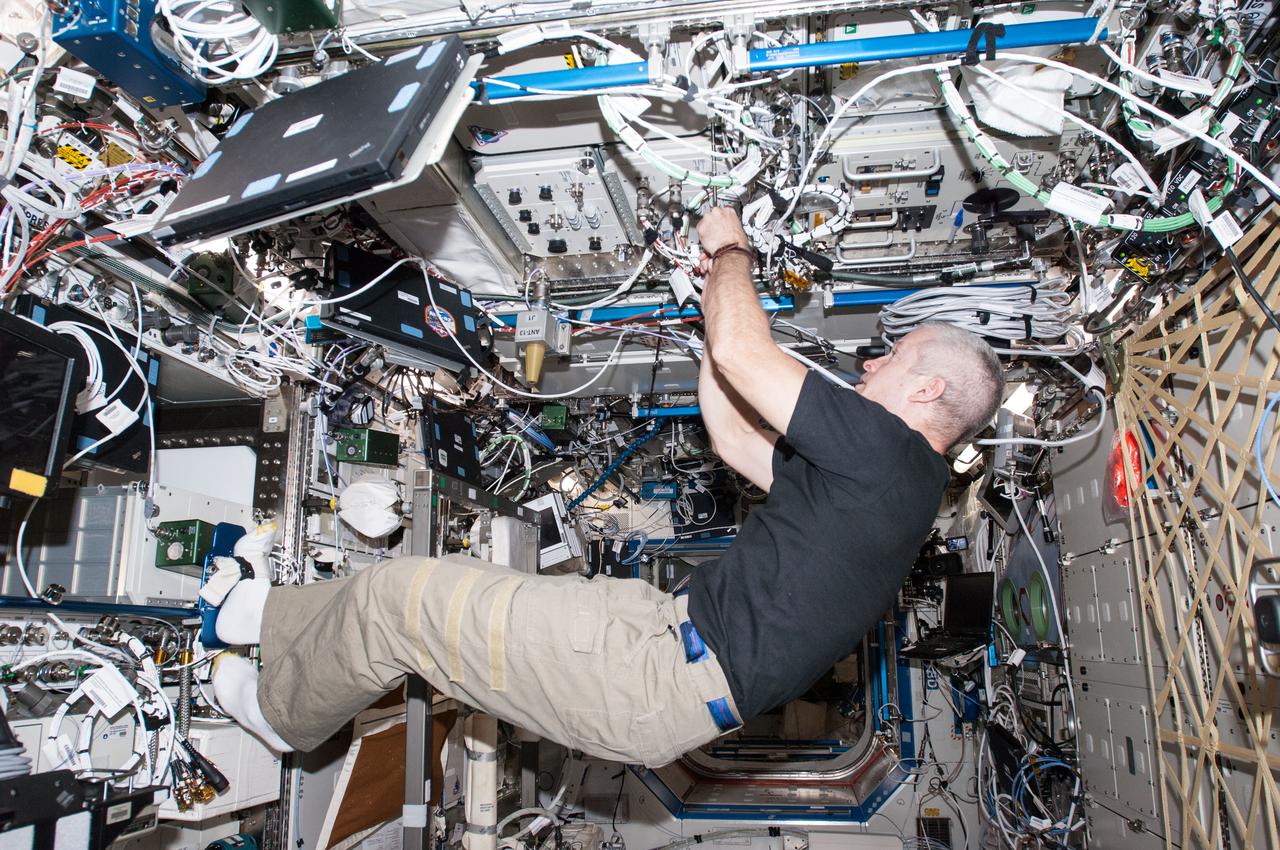
ISS040-E-000296 (16 May 2014) --- NASA astronaut Steve Swanson, Expedition 40 commander, works with the General Laboratory Active Cryogenic ISS Experiment Refrigerator (GLACIER) in the Destiny laboratory of the International Space Station.

KENNEDY SPACE CENTER, FLA. - In the Space Station Processing Facility, a technician prepares to install the the Minus Eighty Degree Laboratory Freezer for ISS (MELFI) science rack into the Multi-Purpose Logisitics Module Leonardo. Leonardo will fly on Space Shuttle Atlantis on mission STS-121. The MELFI will provide cooling and storage for scientific experiment samples and perishable materials in four insulated containers, known as dewars, with independently selectable temperatures of -80 degrees Celsius, -26 degrees Celsius, and +4 degrees Celsius. MELFI will also be used to transport samples to and from the Station. MELFI is provided as laboratory support equipment by the European Space Agency. STS-121 is the second Return to Flight mission to the International Space Station. The launch window extends from Sept. 9 through Sept. 24.
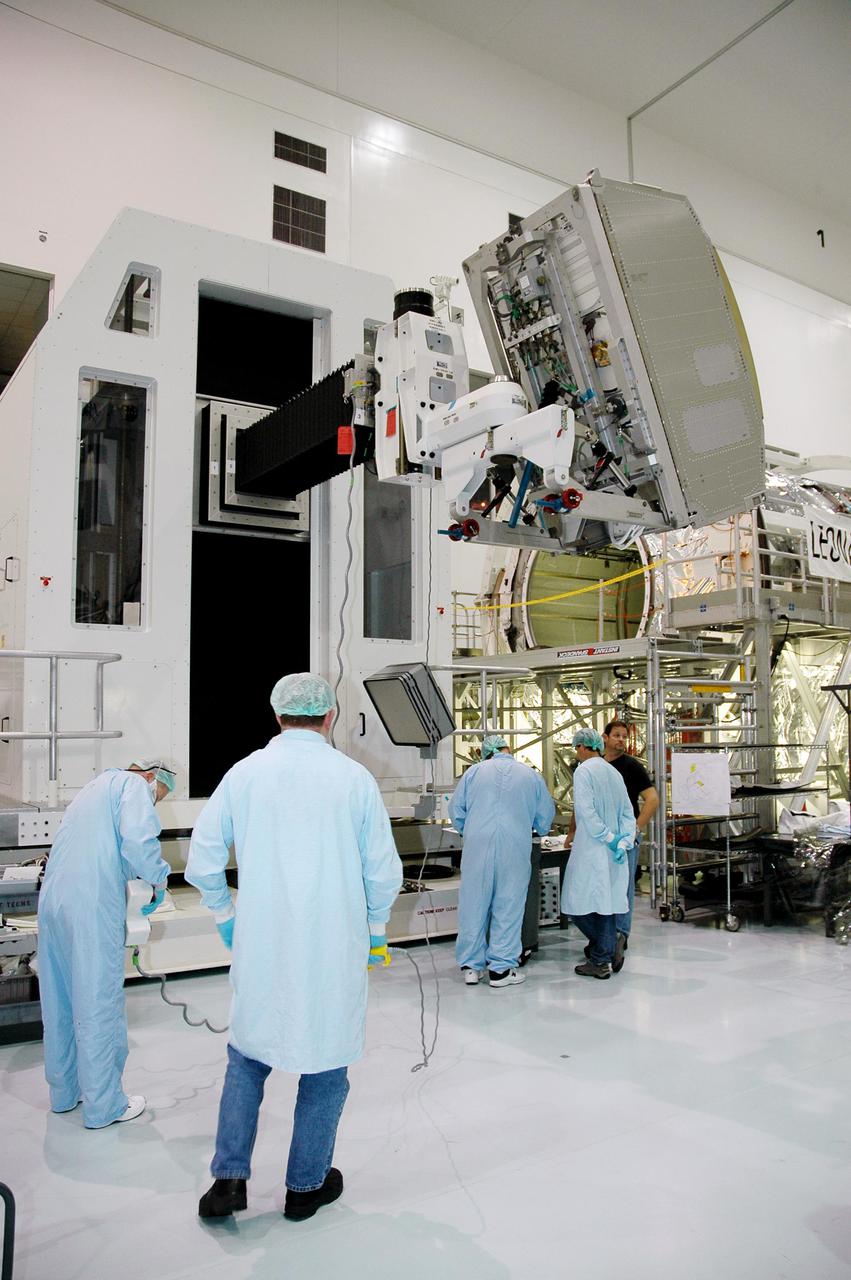
KENNEDY SPACE CENTER, FLA. - In the Space Station Processing Facility, technicians position the the Minus Eighty Degree Laboratory Freezer for ISS (MELFI) science rack for installation into the Multi-Purpose Logisitics Module Leonardo. Leonardo will fly on Space Shuttle Atlantis on mission STS-121. The MELFI will provide cooling and storage for scientific experiment samples and perishable materials in four insulated containers, known as dewars, with independently selectable temperatures of -80 degrees Celsius, -26 degrees Celsius, and +4 degrees Celsius. MELFI will also be used to transport samples to and from the Station. MELFI is provided as laboratory support equipment by the European Space Agency. STS-121 is the second Return to Flight mission to the International Space Station. The launch window extends from Sept. 9 through Sept. 24.
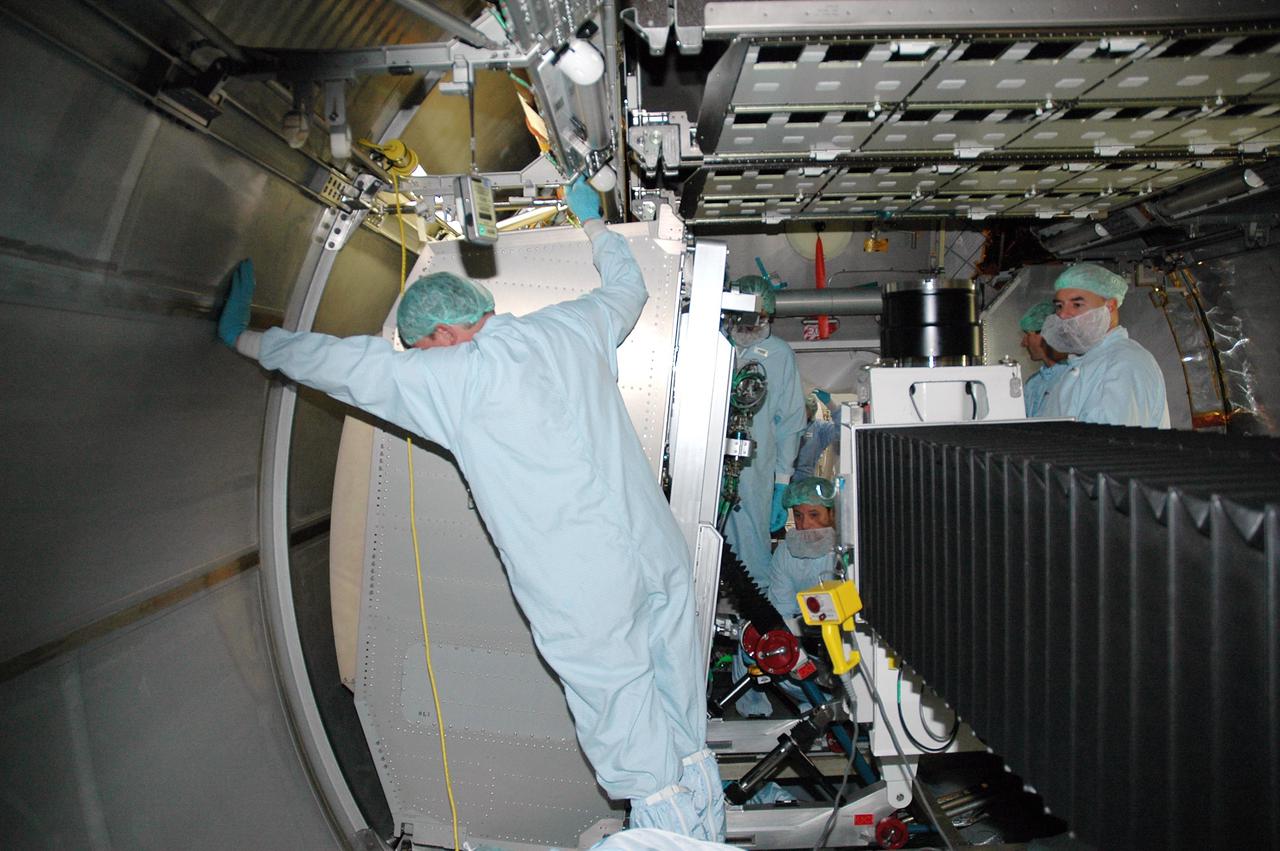
KENNEDY SPACE CENTER, FLA. - In the Space Station Processing Facility, technicians install the the Minus Eighty Degree Laboratory Freezer for ISS (MELFI) science rack into the Multi-Purpose Logisitics Module Leonardo. Leonardo will fly on Space Shuttle Atlantis on mission STS-121. The MELFI will provide cooling and storage for scientific experiment samples and perishable materials in four insulated containers, known as dewars, with independently selectable temperatures of -80 degrees Celsius, -26 degrees Celsius, and +4 degrees Celsius. MELFI will also be used to transport samples to and from the Station. MELFI is provided as laboratory support equipment by the European Space Agency. STS-121 is the second Return to Flight mission to the International Space Station. The launch window extends from Sept. 9 through Sept. 24.
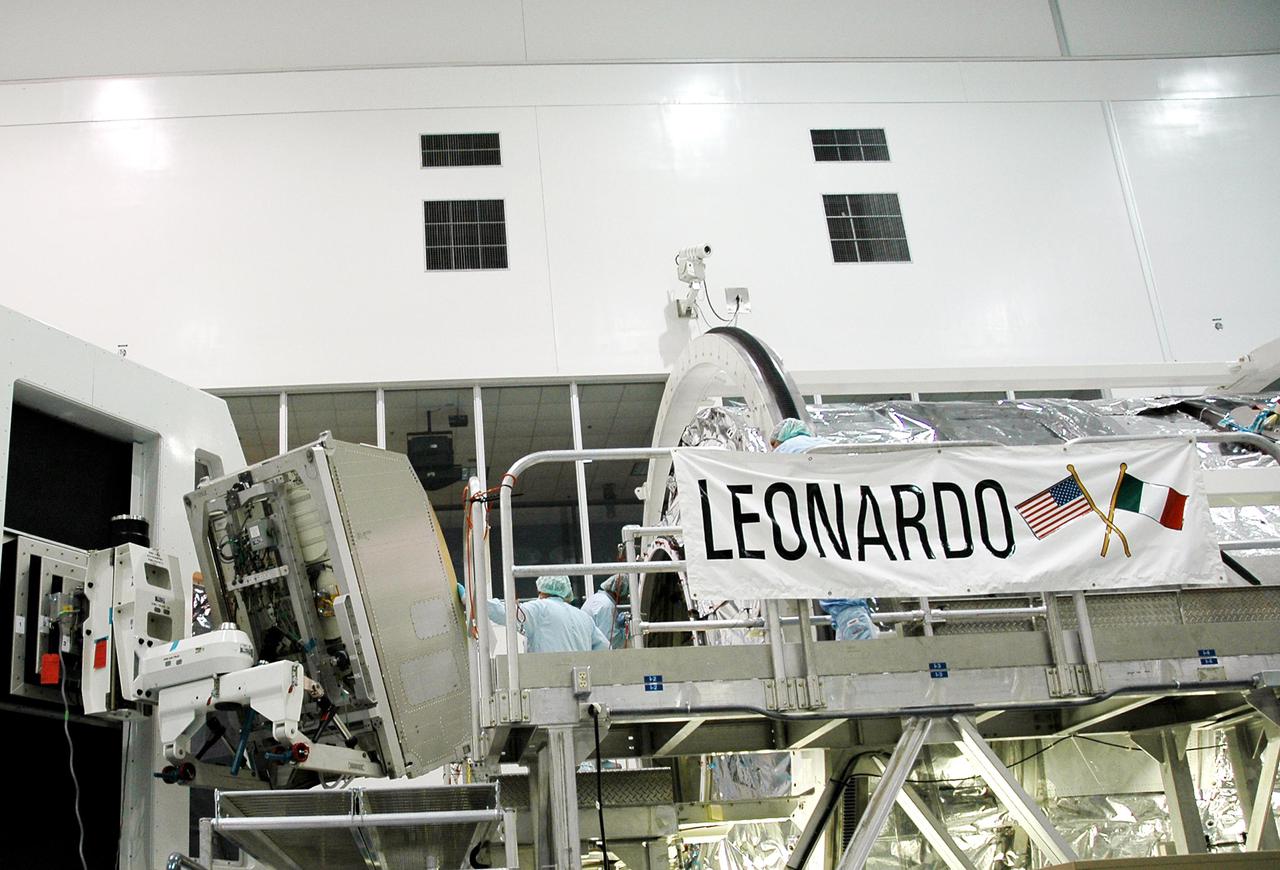
KENNEDY SPACE CENTER, FLA. - In the Space Station Processing Facility, technicians prepare to install the the Minus Eighty Degree Laboratory Freezer for ISS (MELFI) science rack into the Multi-Purpose Logisitics Module Leonardo. Leonardo will fly on Space Shuttle Atlantis on mission STS-121. The MELFI will provide cooling and storage for scientific experiment samples and perishable materials in four insulated containers, known as dewars, with independently selectable temperatures of -80 degrees Celsius, -26 degrees Celsius, and +4 degrees Celsius. MELFI will also be used to transport samples to and from the Station. MELFI is provided as laboratory support equipment by the European Space Agency. STS-121 is the second Return to Flight mission to the International Space Station. The launch window extends from Sept. 9 through Sept. 24.
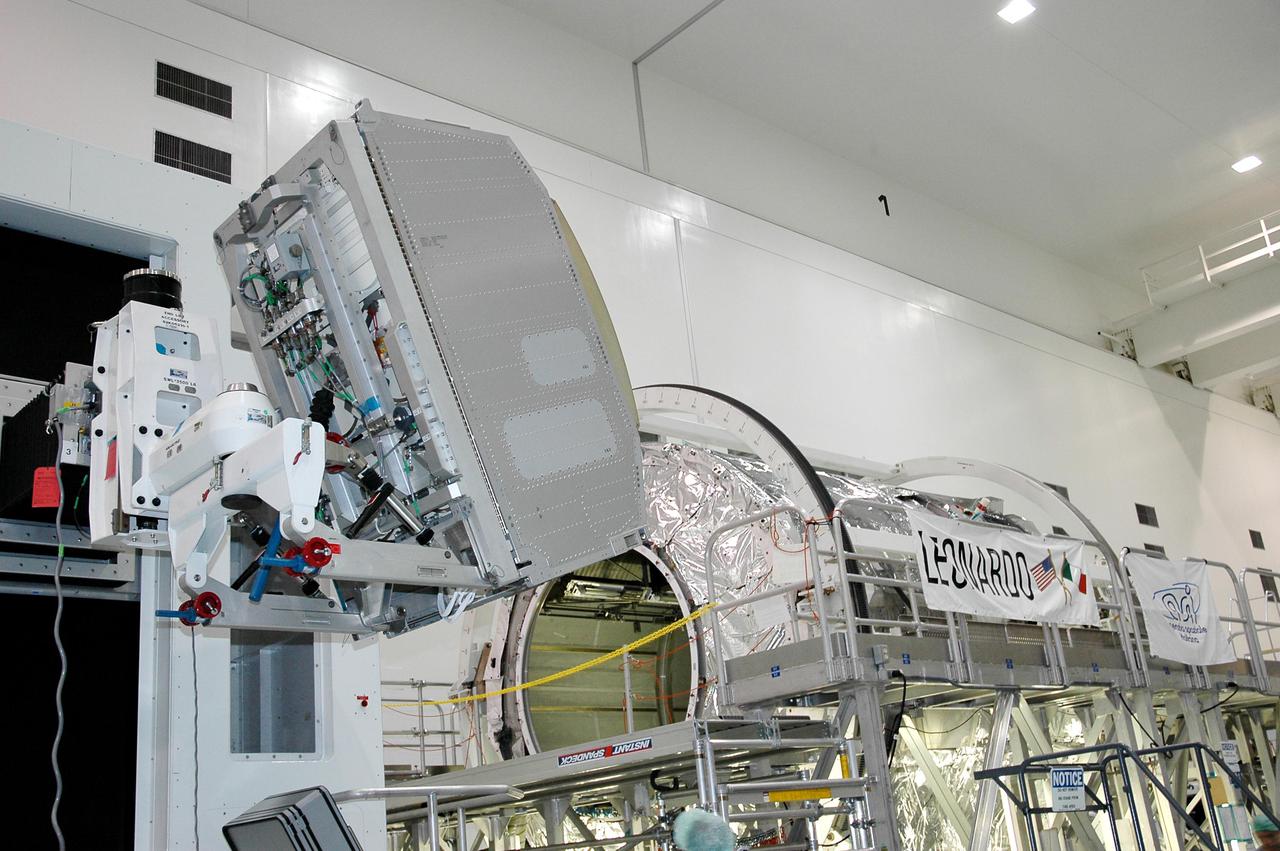
KENNEDY SPACE CENTER, FLA. - In the Space Station Processing Facility, the Minus Eighty Degree Laboratory Freezer for ISS (MELFI) science rack (left) is moved into position for installation into the Multi-Purpose Logisitics Module Leonardo. Leonardo will fly on Space Shuttle Atlantis on mission STS-121. The MELFI will provide cooling and storage for scientific experiment samples and perishable materials in four insulated containers, known as dewars, with independently selectable temperatures of -80 degrees Celsius, -26 degrees Celsius, and +4 degrees Celsius. MELFI will also be used to transport samples to and from the Station. MELFI is provided as laboratory support equipment by the European Space Agency. STS-121 is the second Return to Flight mission to the International Space Station. The launch window extends from Sept. 9 through Sept. 24.
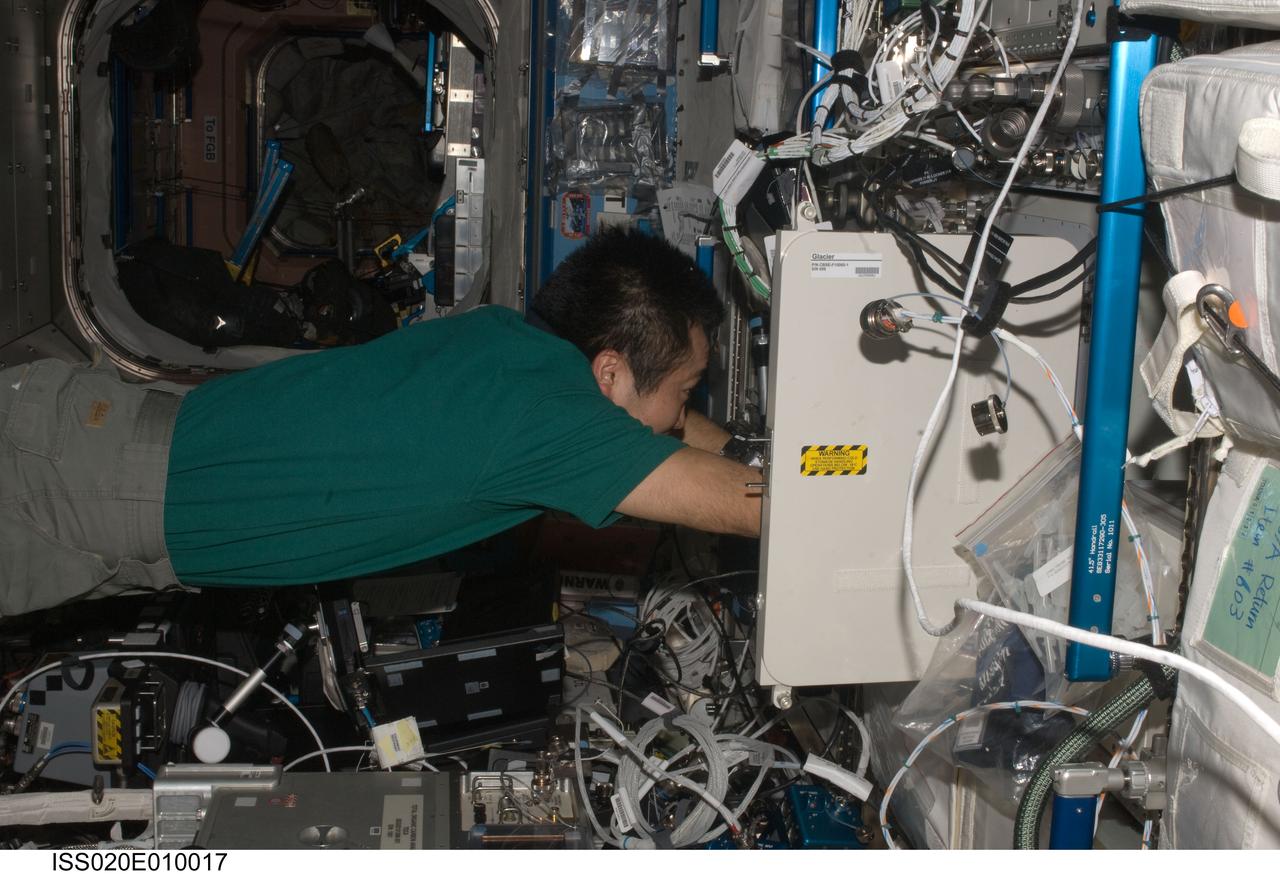
ISS020-E-010017 (15 June 2009) --- Japan Aerospace Exploration Agency (JAXA) astronaut Koichi Wakata, Expedition 20 flight engineer, works with the General Laboratory Active Cryogenic ISS Experiment Refrigerator (GLACIER) in the Destiny laboratory of the International Space Station.
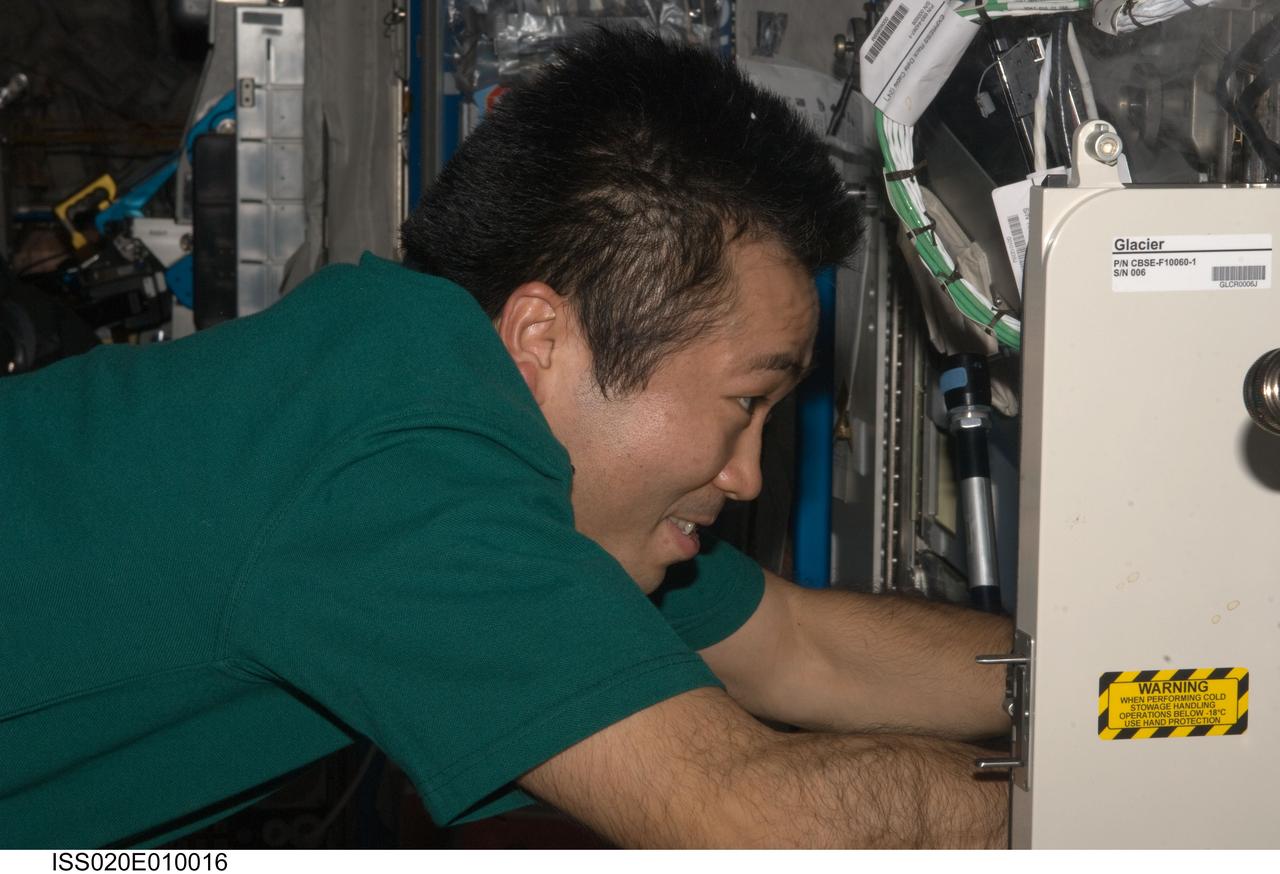
ISS020-E-010016 (15 June 2009) --- Japan Aerospace Exploration Agency (JAXA) astronaut Koichi Wakata, Expedition 20 flight engineer, works with the General Laboratory Active Cryogenic ISS Experiment Refrigerator (GLACIER) in the Destiny laboratory of the International Space Station.
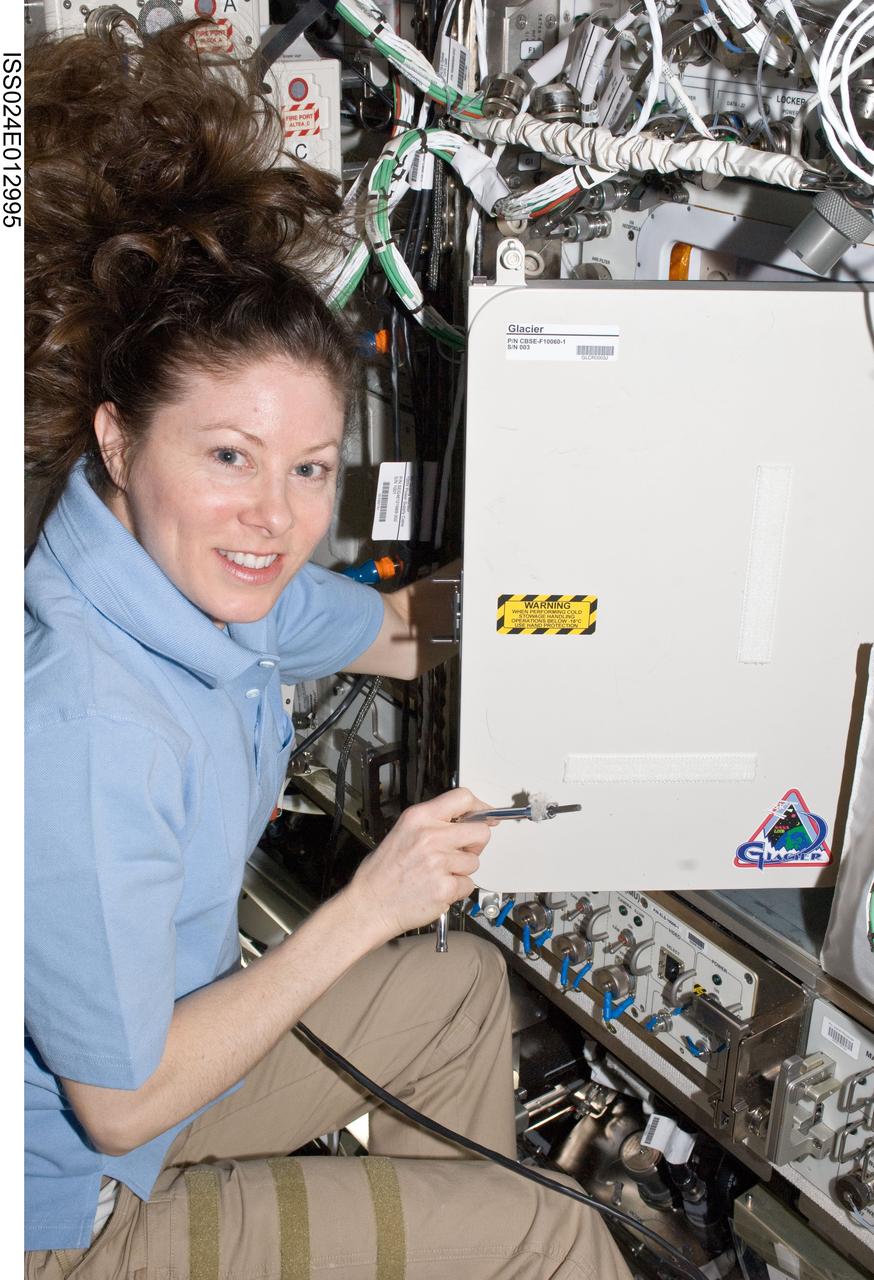
ISS024-E-012995 (1 Sept. 2010) --- NASA astronaut Tracy Caldwell Dyson, Expedition 24 flight engineer, works with the General Laboratory Active Cryogenic ISS Experiment Refrigerator (GLACIER) in the Destiny laboratory of the International Space Station.
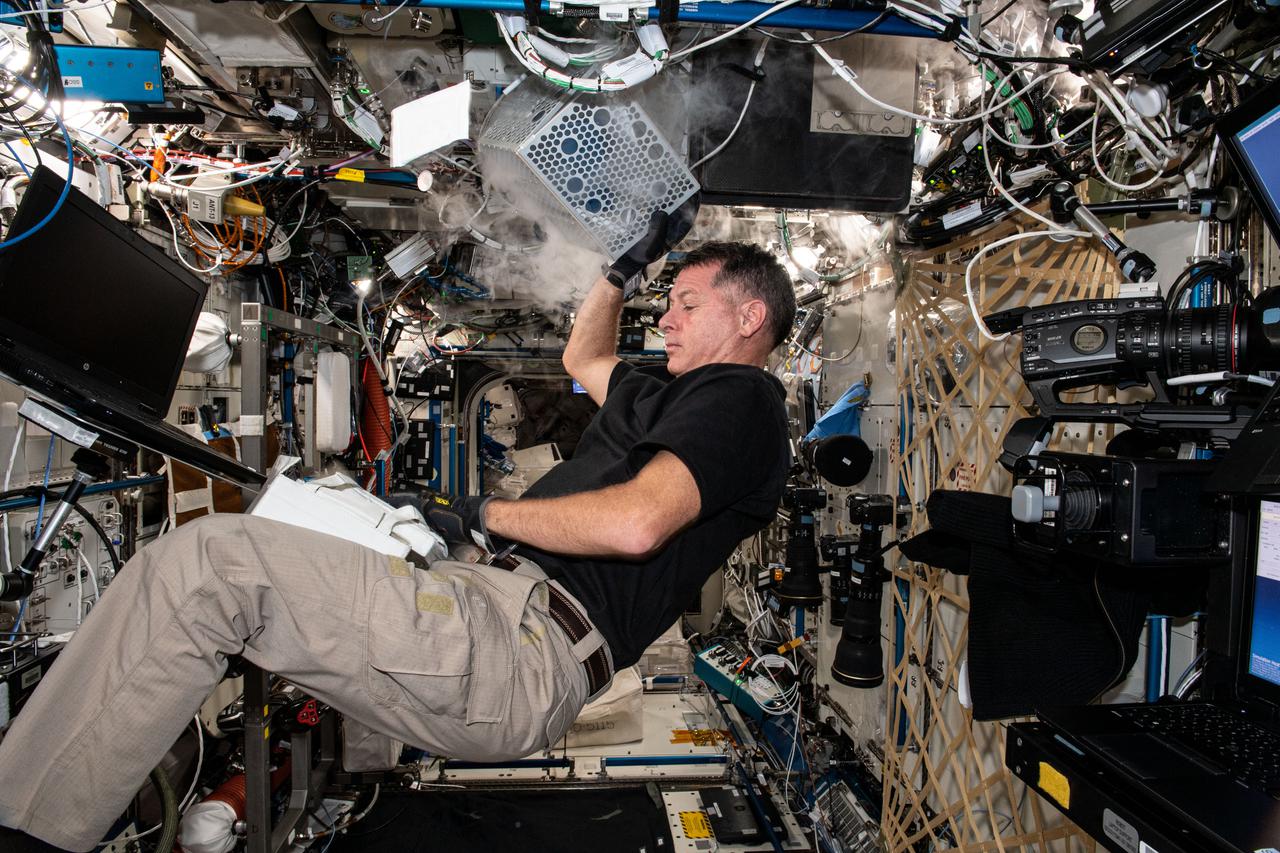
iss065e095956 (June 11, 2021) --- NASA astronaut and Expedition 65 Flight Engineer Shane Kimbrough services hardware inside an ultra-cold science freezer, also known as General Laboratory Active Cryogenic International Space Station (ISS) Experiment Refrigerator, or GLACIER.

S89-E-5207 (25 Jan 1998) --- This Electronic Still Camera (ESC) image shows astronaut Michael P. Anderson, mission specialist, checking the Biotechnology Refrigerator (BTR) while transferring logistics onboard the Space Shuttle Endeavour. This ESC view was taken on January 25, 1998, at 18:56:29 GMT.

S89-E-5204 (25 Jan 1998) --- This Electronic Still Camera (ESC) image shows astronaut Michael P. Anderson, mission specialist, checking the Biotechnology Refrigerator (BTR) while transferring logistics, onboard the Space Shuttle Endeavour. This ESC view was taken on January 25, 1998, at 18:54:53 GMT.
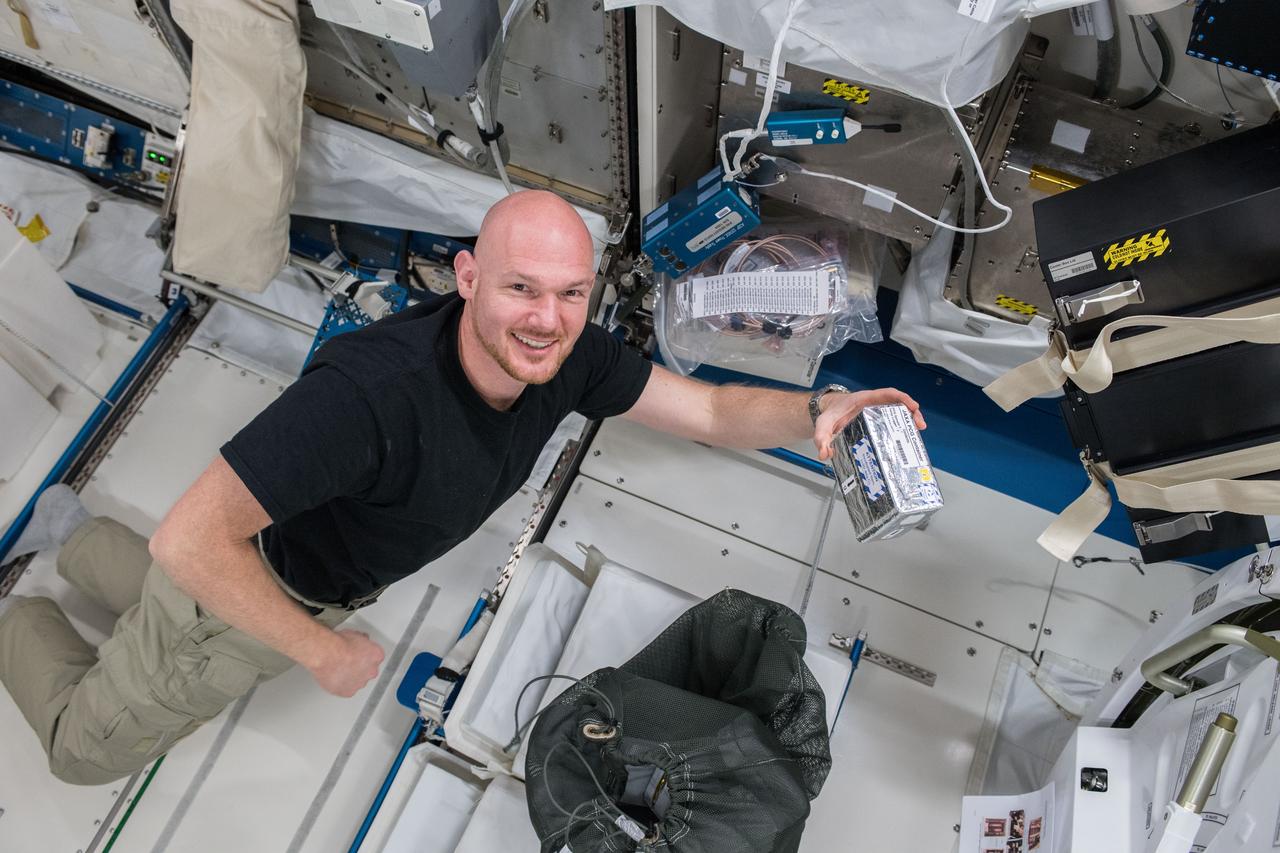
iss056e075928 (7/3/2018) --- Astronaut Alexander Gerst of ESA (European Space Agency), during the JAXA Protein Crystal Growth (PCG) sample retrieval from the Freezer-Refrigerator Of Stirling Cycle 2 (FROST2) and initiation of the crystallization of the samples before inserting them back into the FROST2, where crystallization will continue.
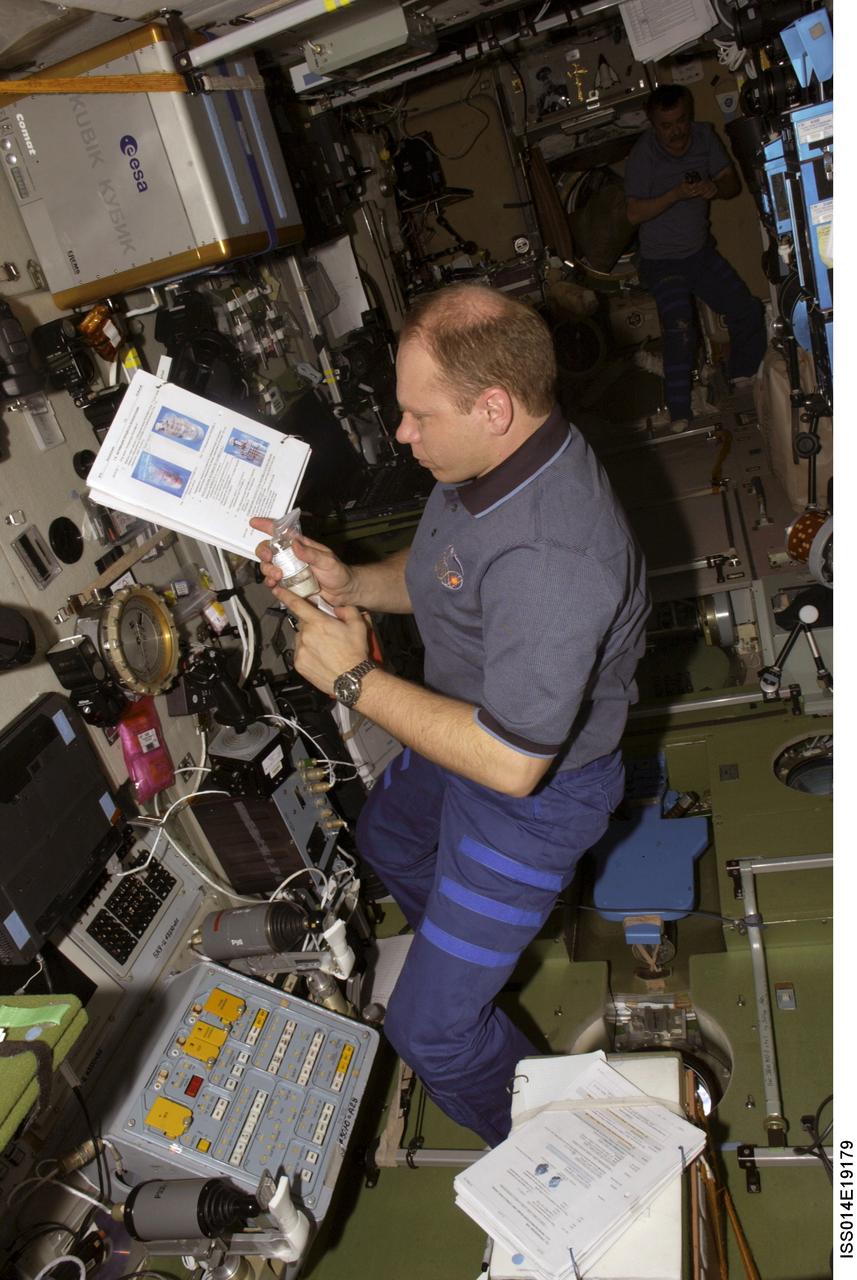
ISS014-E-19179 (April 2007) --- Cosmonaut Oleg V. Kotov, Expedition 15 flight engineer representing Russia's Federal Space Agency, works with a test sample in the Zvezda Service Module of the International Space Station.
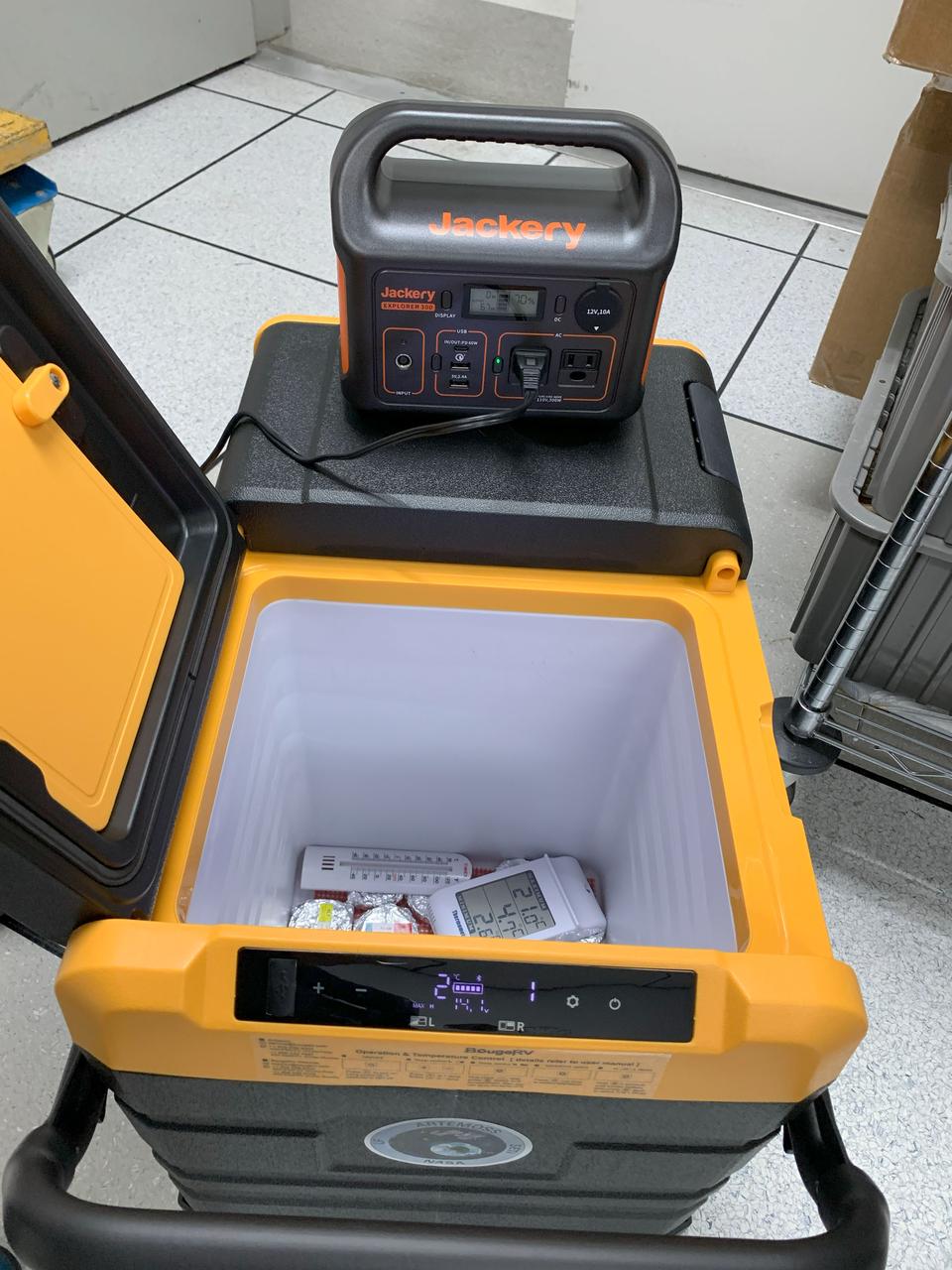
jsc2024e062112 (9/13/2024) --- The ANT1 Radiation Tolerance Experiment with Moss in Orbit on the Space Station (ARTEMOSS) plates are inserted into 12V car refrigerator for travel from Brookhaven National Laboratory (BNL), NY to NASA Kennedy Space Center (KSC), FL for payload integration. The ARTEMOSS investigation examines whether and how an Antarctic moss repairs damage caused by cosmic radiation and microgravity. Image courtesy of Agata Zupanska.
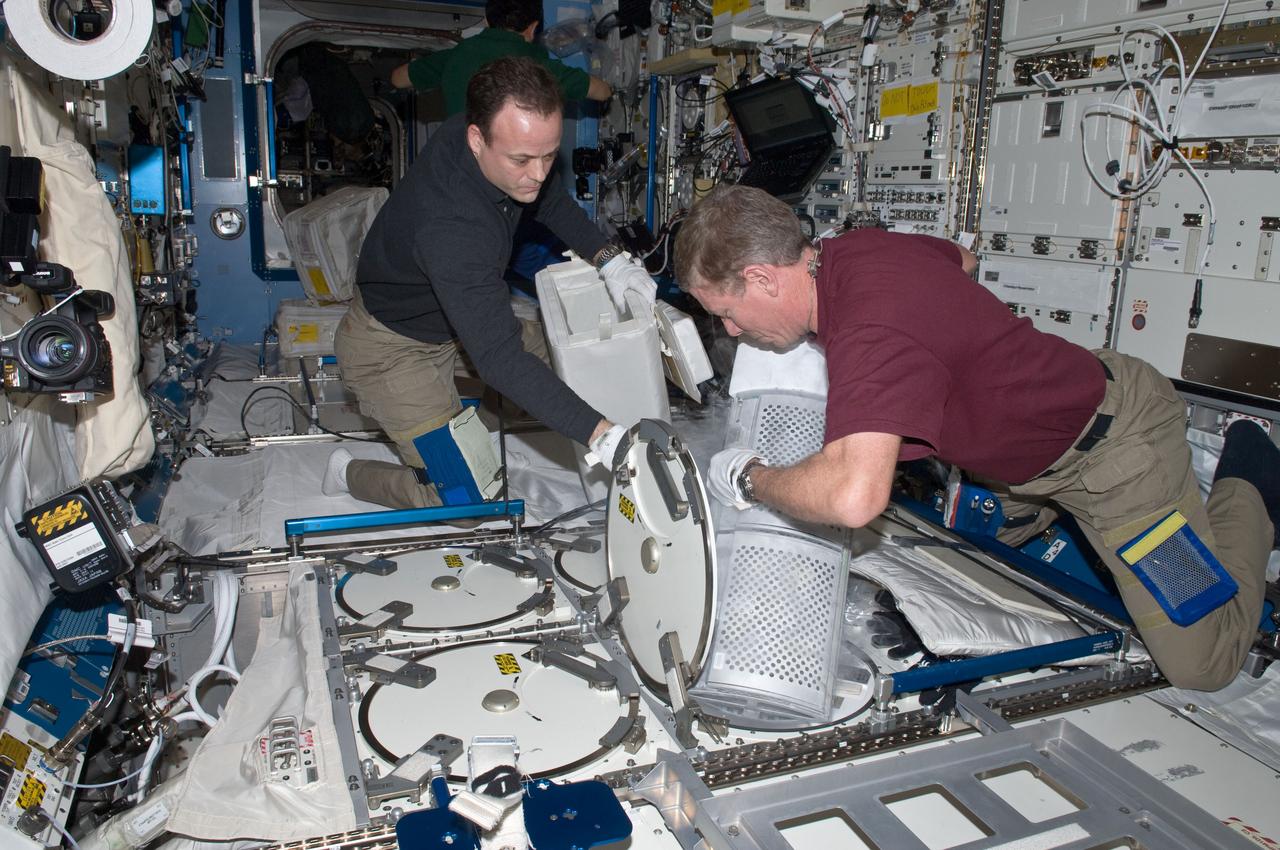
ISS028-E-014916 (8 July 2011) --- NASA astronauts Ron Garan (left) and Mike Fossum, both Expedition 28 flight engineers, remove samples from the General Laboratory Active Cryogenic ISS Experiment Refrigerator (GLACIER) and insert in the Minus Eighty Degree Laboratory Freezer for ISS (MELFI-1) in the Kibo laboratory of the International Space Station.
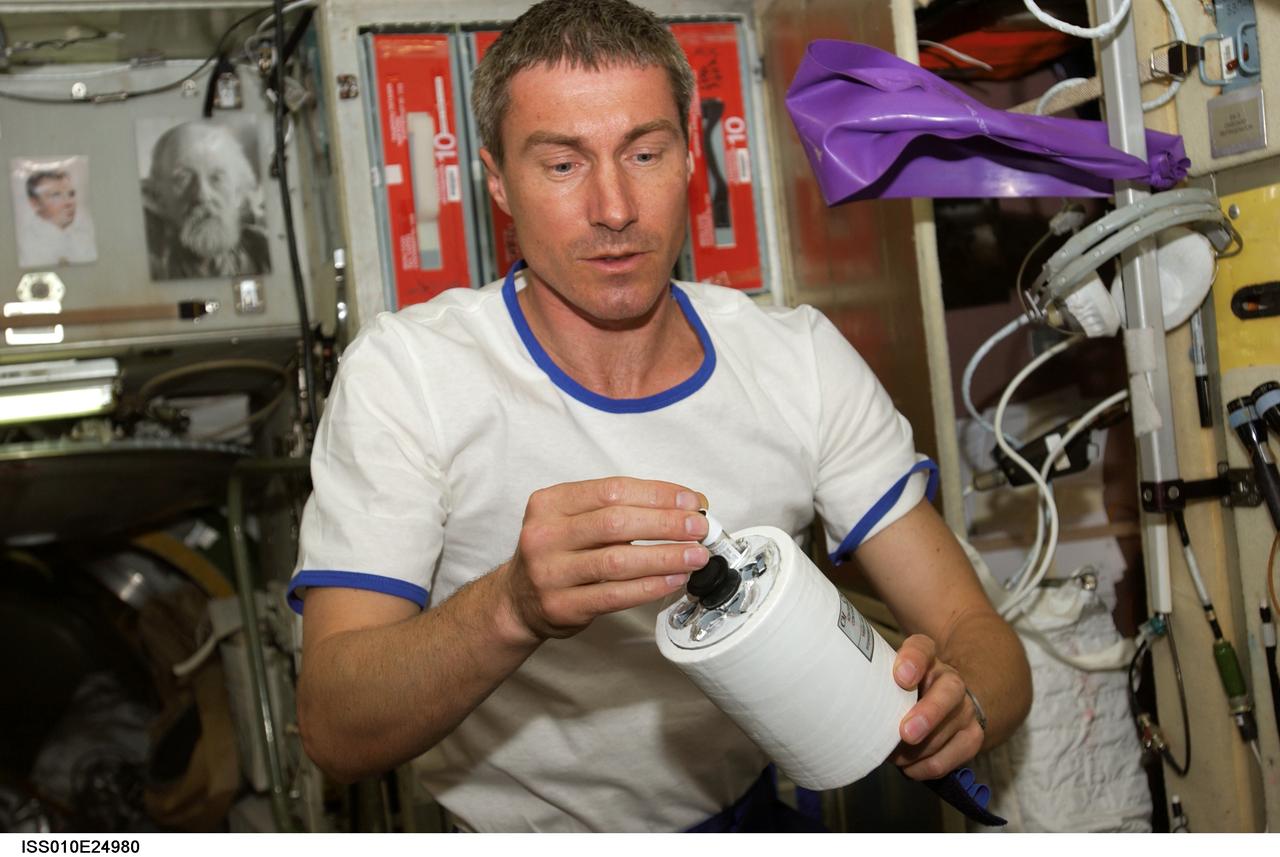
ISS010-E-24980 (18 April 2005) --- Cosmonaut Sergei K. Krikalev, Expedition 11 commander representing Russia's Federal Space Agency, holds a sample tube within the Commercial Protein Crystallization Facility-2 (CPCF-2) Activation Mechanism which is part of the Kriogem-03 refrigerator in the Zvezda Service Module of the International Space Station (ISS).
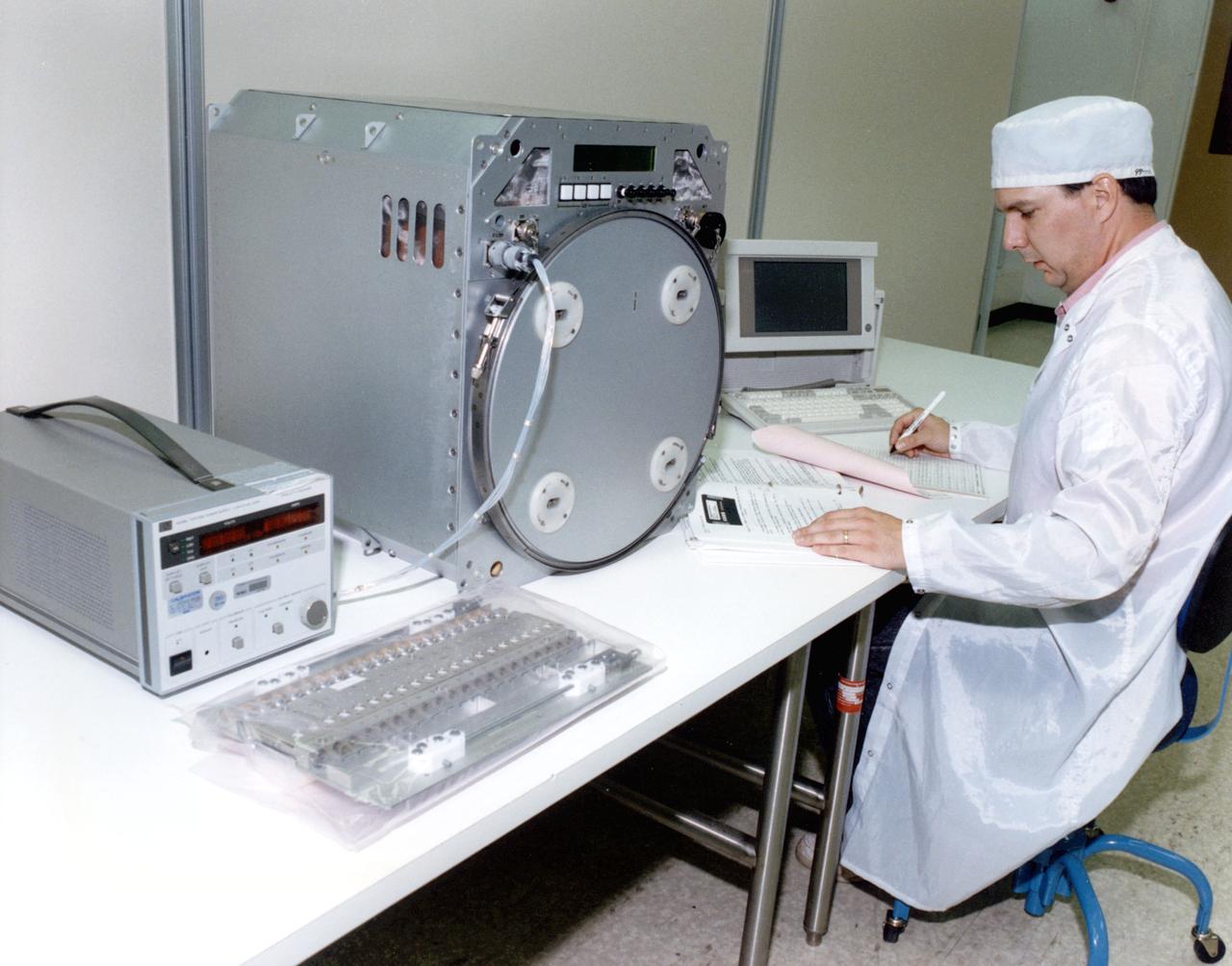
MSFC Test Engineer performing a functional test on the TES. The TES can be operated as a refrigerator, with a minimum set point temperature of 4.0 degrees C, or as an incubator, with a maximum set point temperature 40.0 degrees C of the set point. The TES can be set to maintain a constant temperature or programmed to change temperature settings over time, internal temperature recorded by a date logger.
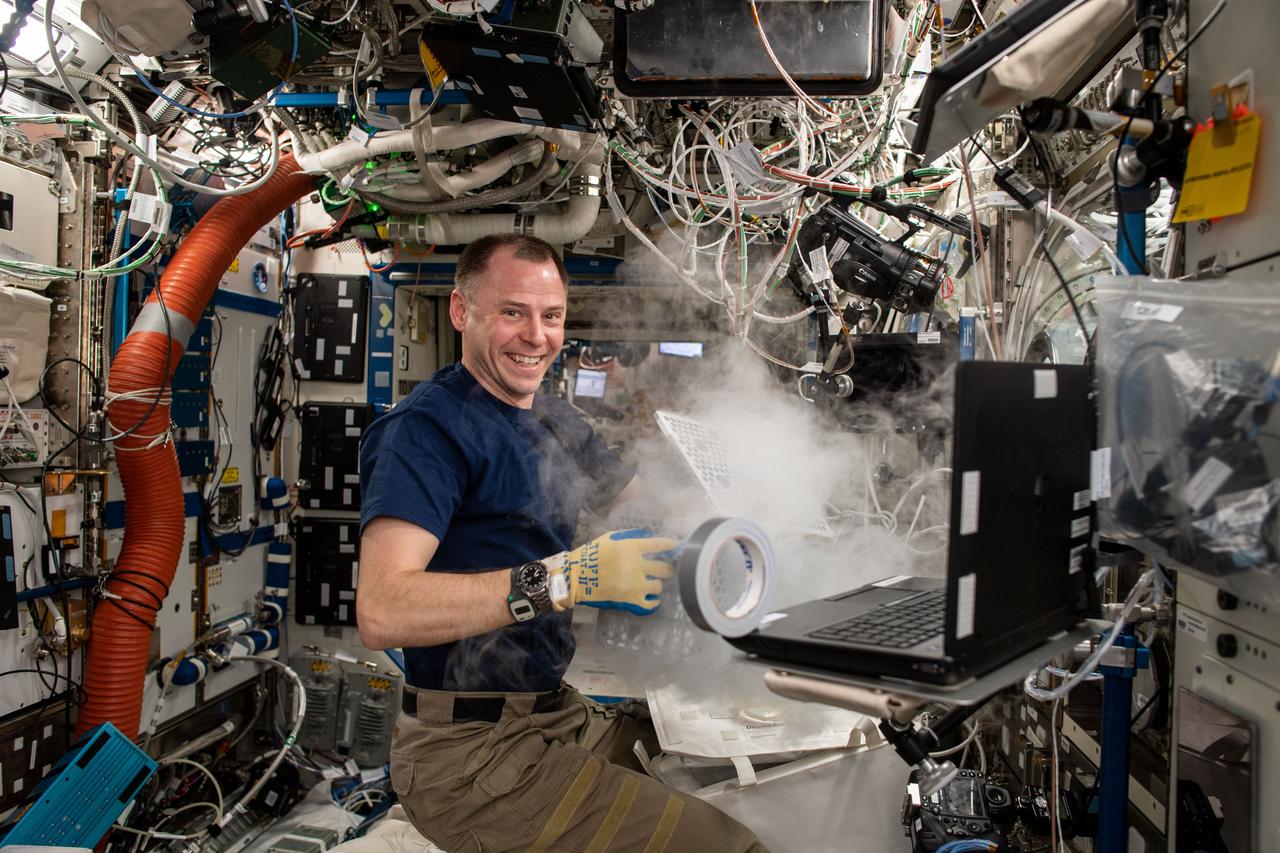
iss059e072412 (May 24, 2019) --- NASA astronaut Nick Hague transfers research samples into a specialized science freezer located in the European Space Agency's Columbus laboratory module. The ultra-cold freezers are nicknamed GLACIER, short for The General Laboratory Active Cryogenic International Space Station (ISS) Experiment Refrigerator, and store samples at temperatures as low as -160 °C (-301 °F).

ISS022-E-091395 (12 March 2010) --- NASA astronaut Jeffrey Williams, Expedition 22 commander, works with test samples in the Human Research Facility 2 (HRF-2) Refrigerated Centrifuge as a part of the Nutritional Status Assessment (Nutrition) experiment in the Columbus laboratory of the International Space Station. The results of the Nutrition experiment will be used to better understand the time course effects of space flight on human physiology.
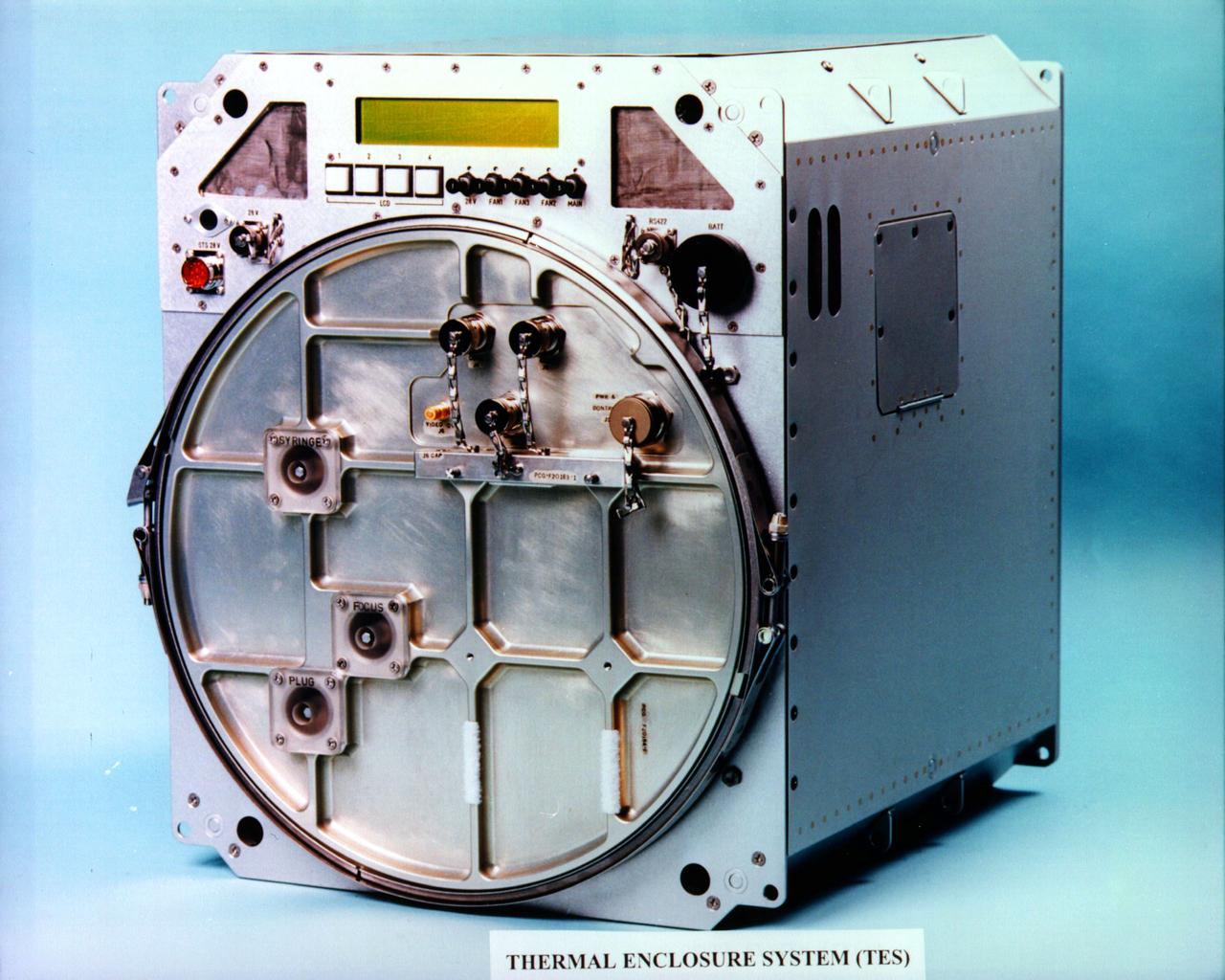
The Thermal Enclosure System (TES) provides thermal control for protein crystal growth experiments. The TES, housed in two middeck lockers on board the Space Shuttle, contains four Vapor Diffusion Apparatus (VDA) trays. Each can act as either a refrigerator or an incubator and its temperature can be controlled to within one-tenth degree C. The first flight of the TES was during USMP-2 (STS-62).
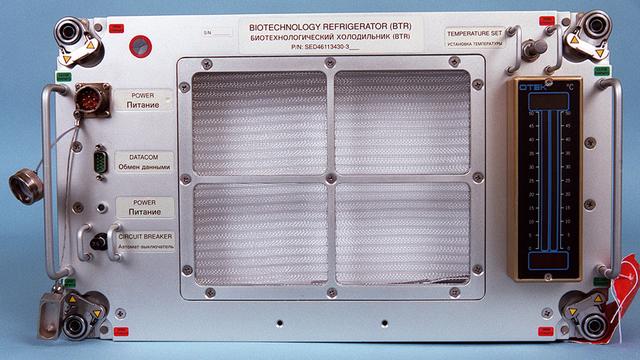
Biotechnology Refrigerator (BTR) holds fixed tissue culture bags at 4 degrees C to preserve them for return to Earth and postflight analysis. The cultures are used in research with the NASA Bioreactor cell science program. The work is sponsored by NASA's Office of Biological and Physical Research. The bioreactor is managed by the Biotechnology Cell Science Program at NASA's Johnson Space Center (JSC).
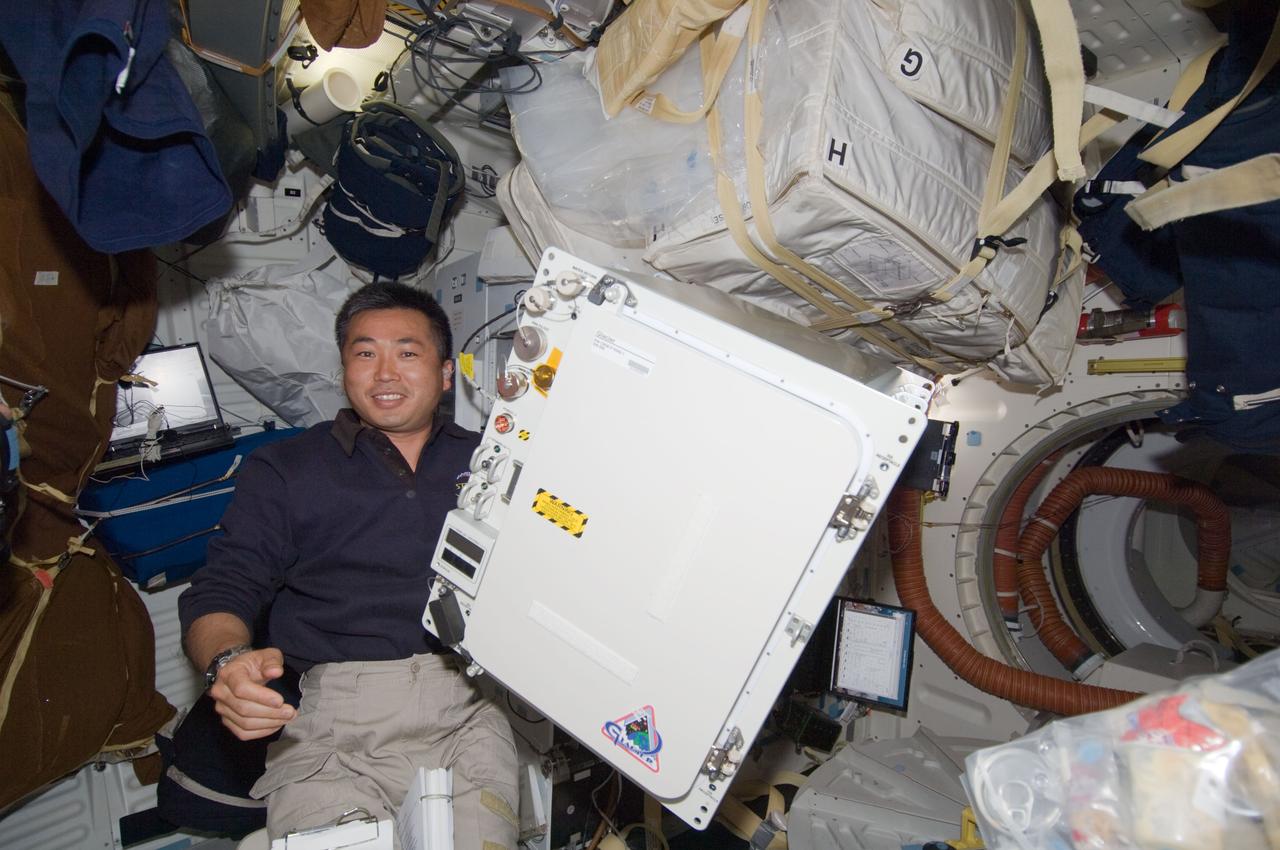
S119-E-006764 (20 March 2009) --- Japan Aerospace Exploration Agency astronaut Koichi Wakata is pictured on Discovery's middeck with the General Laboratory Active Cryogenic ISS Experiment Refrigerator (GLACIER). The astronauts changed out the International Space Station's glacier with a new one on March 20 to return urine, saliva, and blood samples from the Expedition 18 crew to Earth with Discovery's STS-119 astronauts. Wakata will be serving with both the current (Expedition 18) and the following (Expedition 19) crews aboard the station.
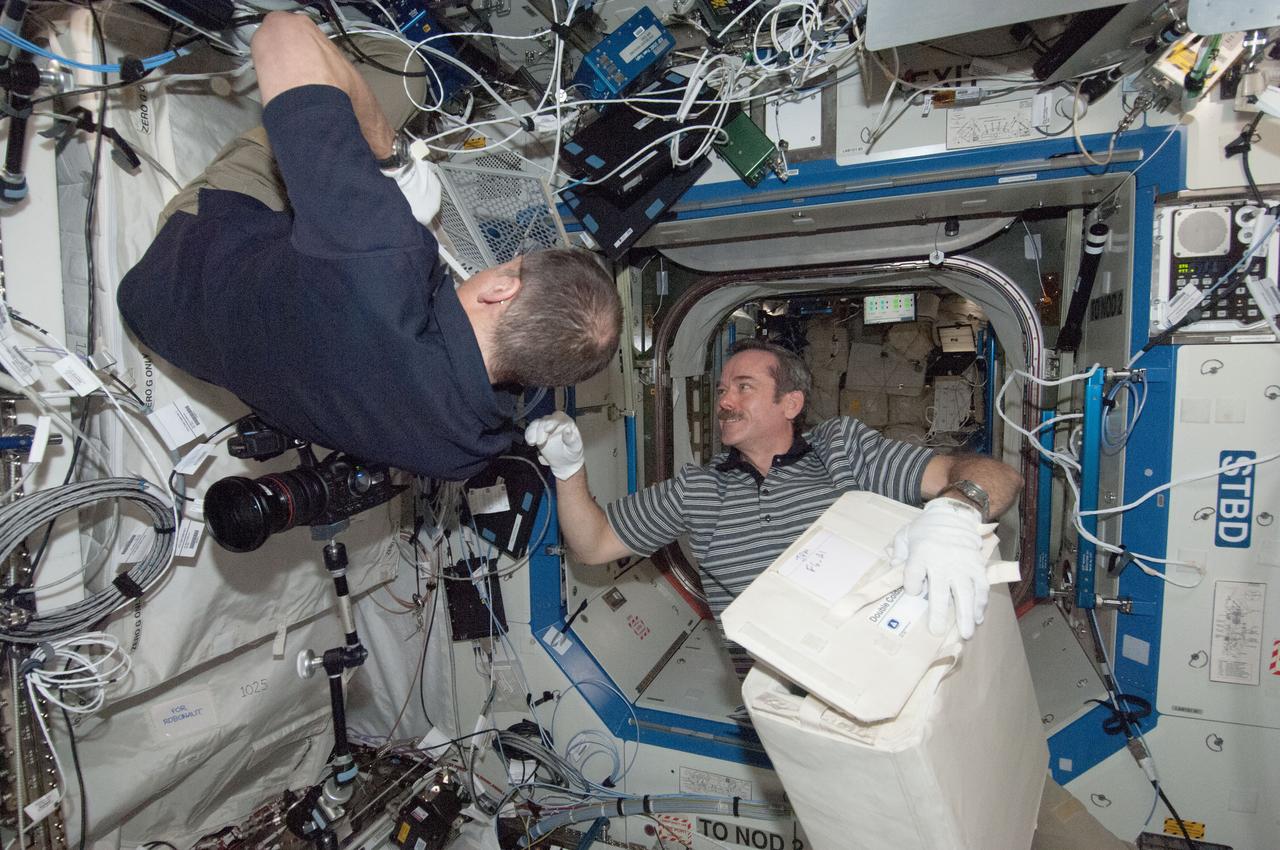
ISS034-E-067263 (12 March 2013) --- Canadian astronaut Chris Hadfield, right, assists fellow Expedition 34 flight engineer and NASA astronaut Tom Marshburn during Minus Eighty-Degree Laboratory Freezer for International Space Station (MELFI)operations. The two are doing transfers of samples connected to the General Laboratory Active Cryogenic ISS Experiment Refrigerator or GLACIER in the U.S. lab Destiny.
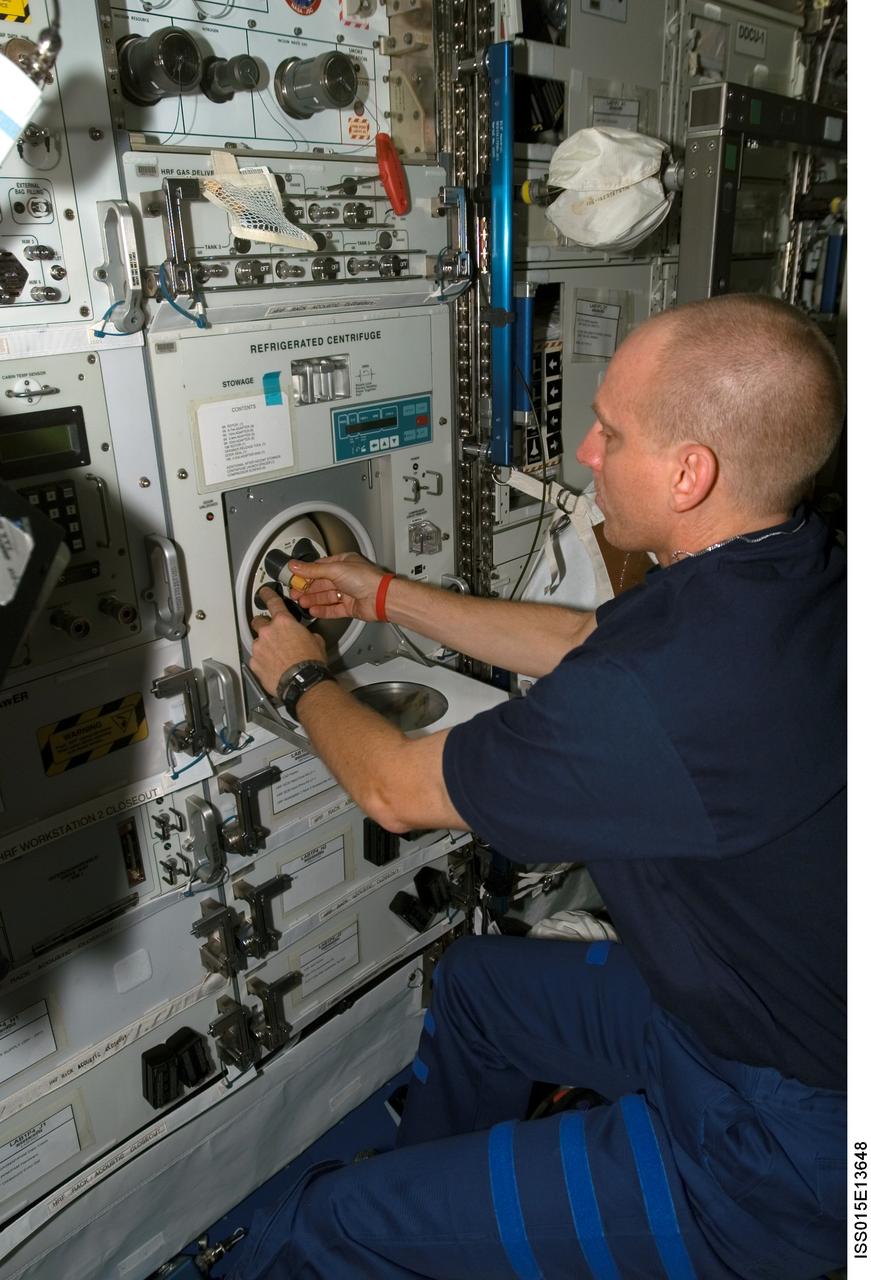
ISS015-E-13648 (25 June 2007) --- Astronaut Clayton Anderson, Expedition 15 flight engineer, works with test samples in the Human Research Facility 2 (HRF-2) Refrigerated Centrifuge as a part of the Nutritional Status Assessment (Nutrition) experiment in the Destiny laboratory of the International Space Station. The results of the Nutrition experiment will be used to better understand the time course effects of space flight on human physiology.
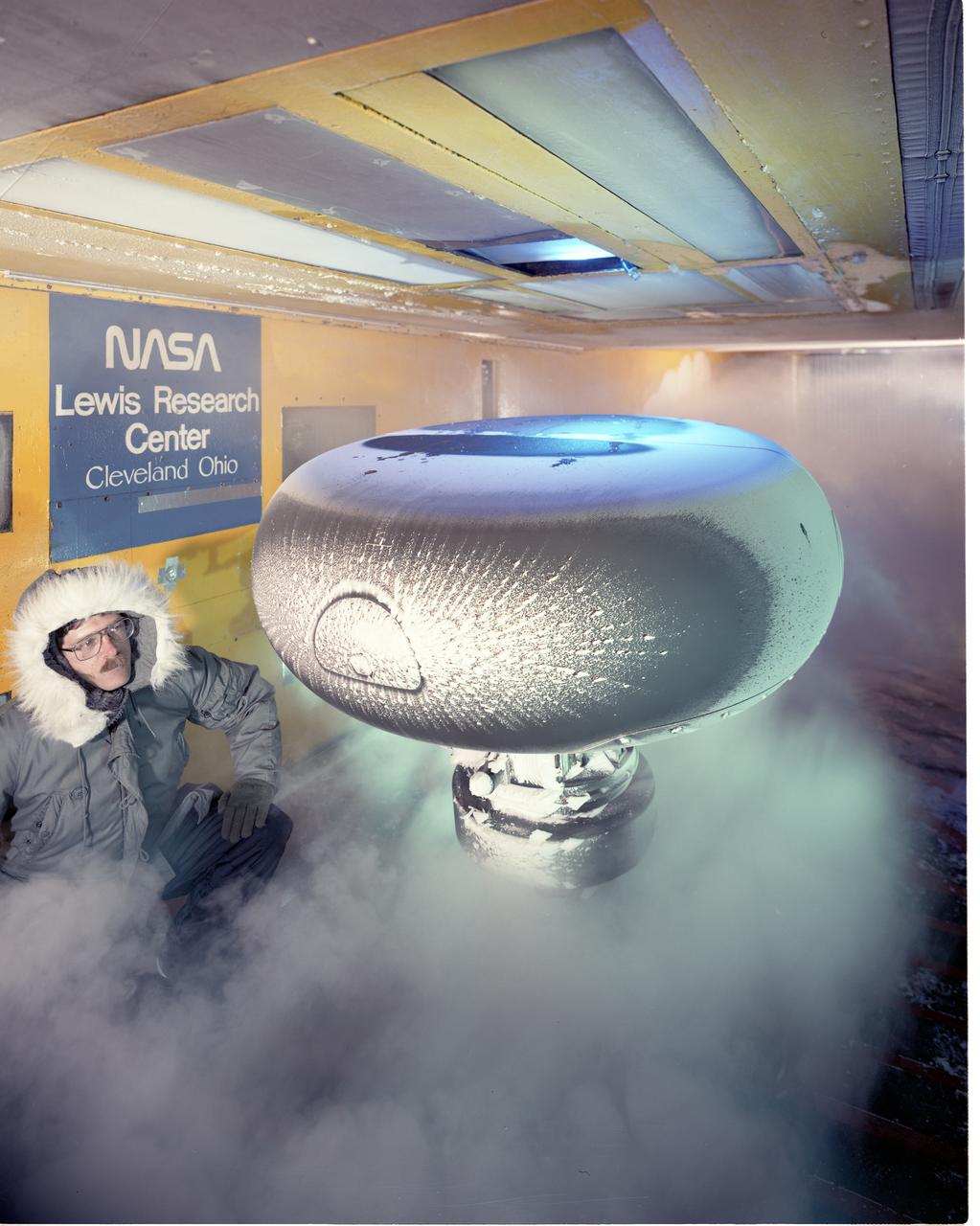
An AH-64 (Apache) Longbow fire control full size radar photographed during icing tests in the Icing Research wind tunnel. Built at the end of World War II, the Icing Research Tunnel is the oldest and largest refrigerated icing wind tunnel in the world. It can produce winds that travel up to 395 miles per hour and reach temperatures as low as -30 degrees Fahrenheit. The facility simulates ice formation during flight by spraying a cloud of super-cooled water droplets onto an aircraft component or model.
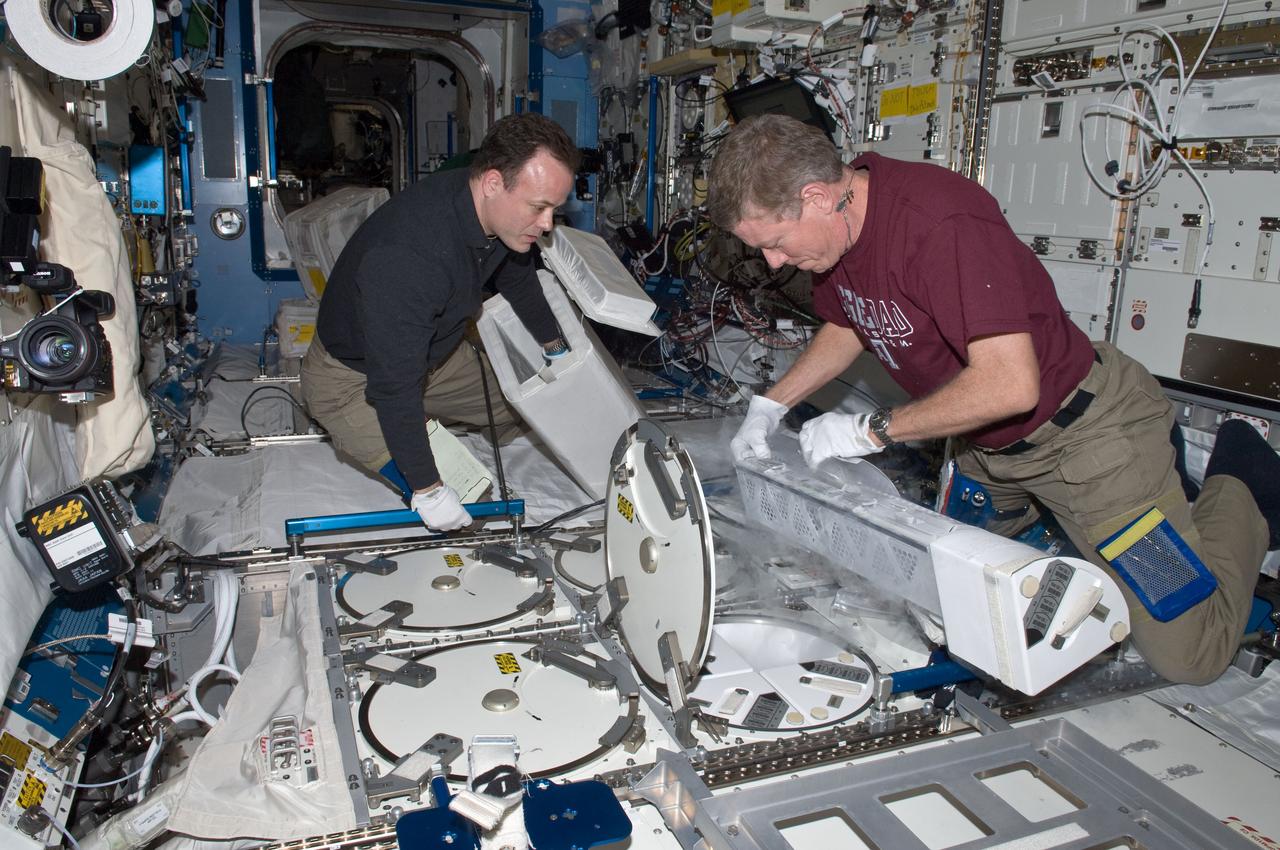
ISS028-E-014918 (8 July 2011) --- NASA astronauts Ron Garan (left) and Mike Fossum, both Expedition 28 flight engineers, remove samples from the General Laboratory Active Cryogenic ISS Experiment Refrigerator (GLACIER) and insert in the Minus Eighty Degree Laboratory Freezer for ISS (MELFI-1) in the Kibo laboratory of the International Space Station.
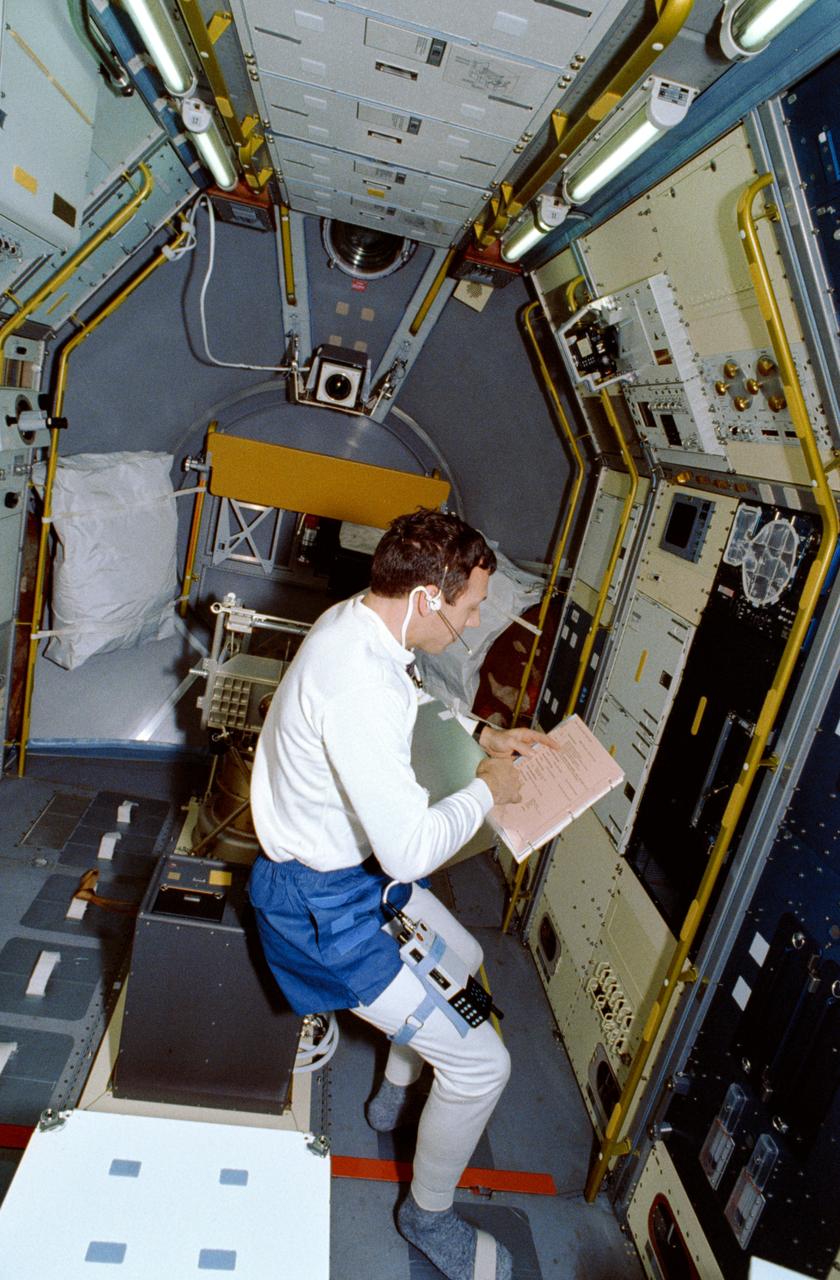
STS042-17-001 (22 Jan 1992) --- Astronaut David C. Hilmers, mission specialist, looks over a checklist at the Johnson Space Center refrigerator/freezer, in which perishable samples are stowed. The view gives an overall perspective of the science module -- heavily utilized for eight-days of scientific research supporting the International Microgravity Laboratory (IML-1) -- in Discovery's cargo bay.
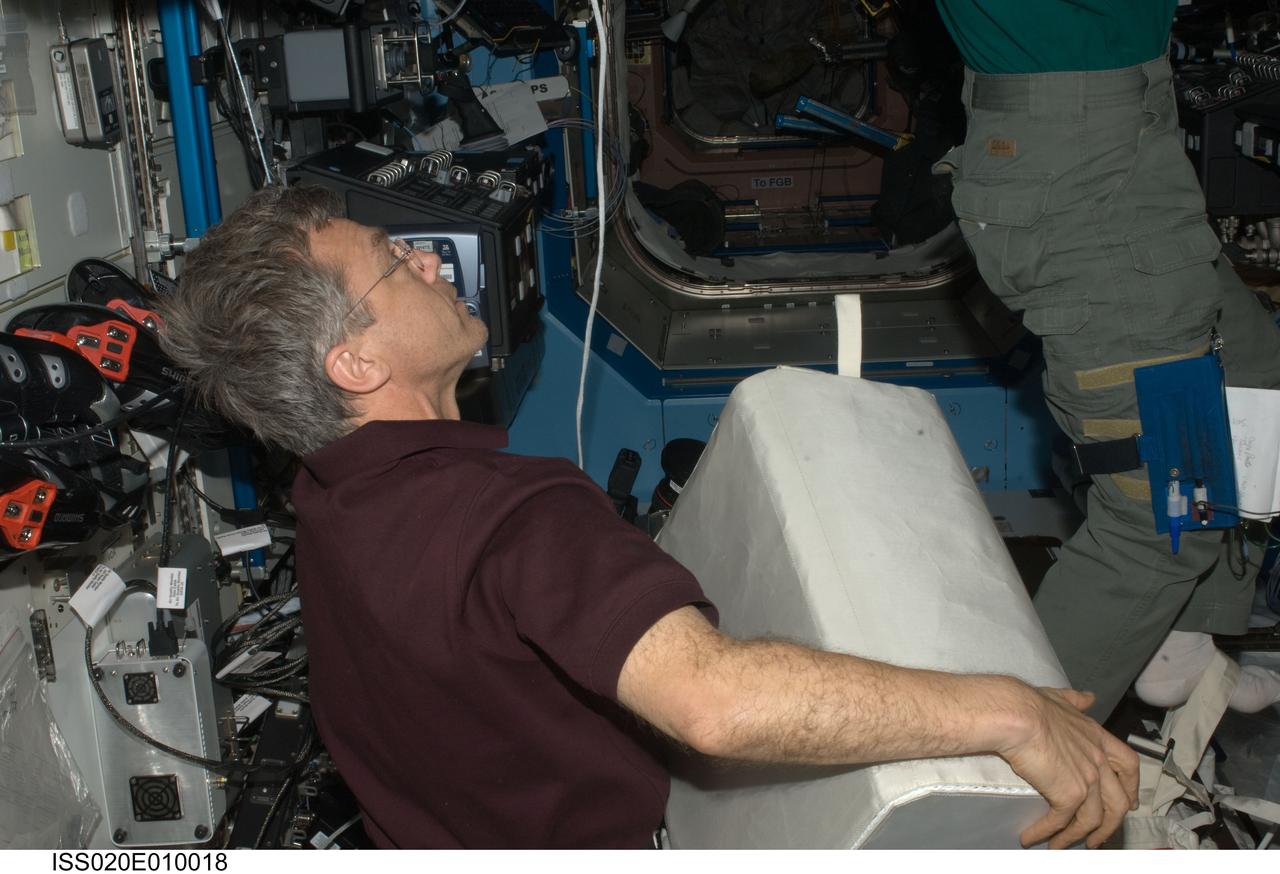
ISS020-E-010018 (15 June 2009) --- Canadian Space Agency astronaut Robert Thirsk and Japan Aerospace Exploration Agency (JAXA) astronaut Koichi Wakata (partially out of frame at right), both Expedition 20 flight engineers, work with the General Laboratory Active Cryogenic ISS Experiment Refrigerator (GLACIER) in the Destiny laboratory of the International Space Station.
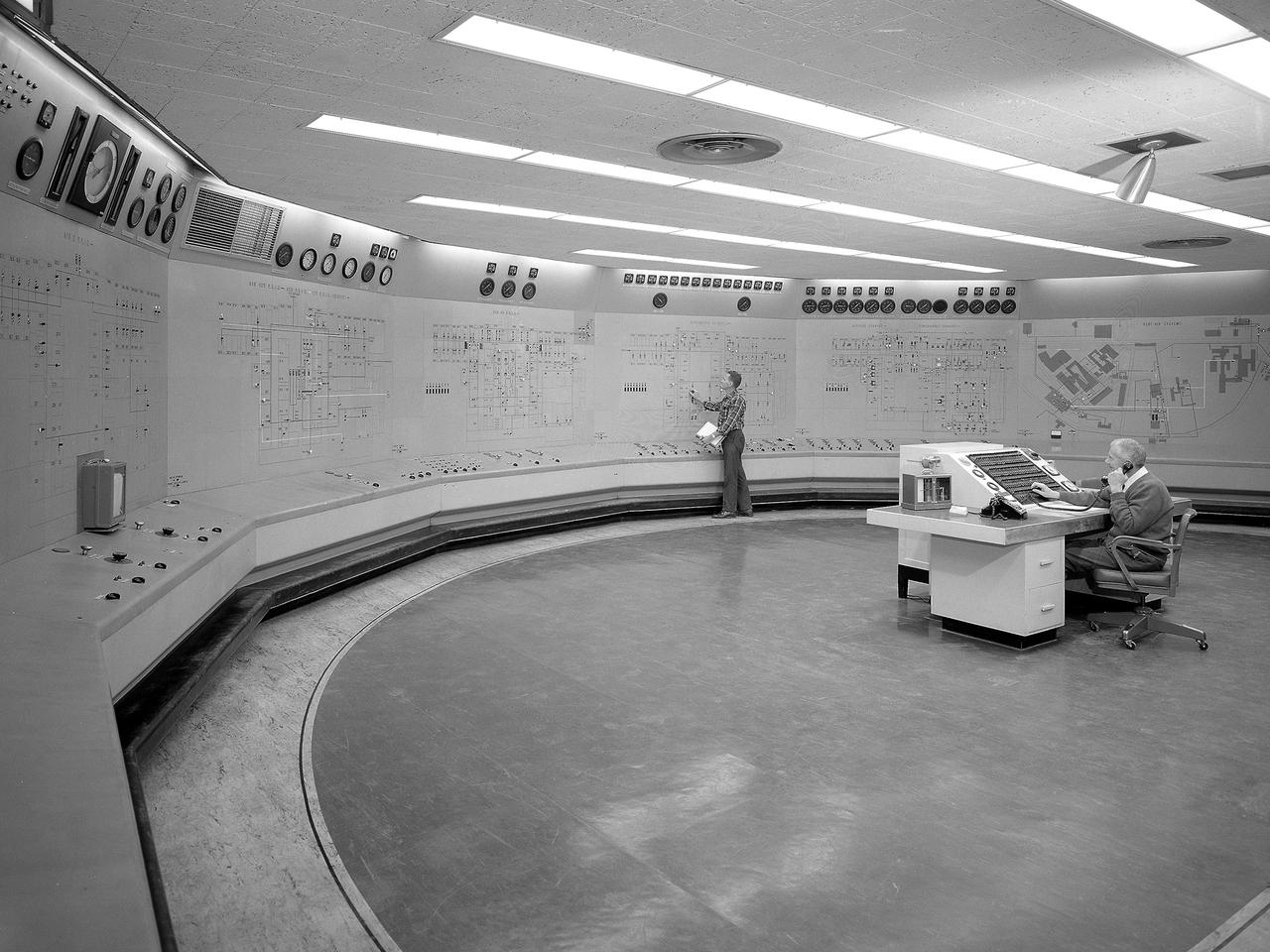
Operators in the Engine Research Building’s Central Control Room at the National Aeronautics and Space Administration (NASA) Lewis Research Center. The massive 4.25-acre Engine Research Building contains dozens of test cells, test stands, and altitude chambers. A powerful a collection of compressors and exhausters located in the central portion of the basement provides process air and exhaust for these test areas. This system is connected to similar process air systems in the laboratory’s other large test facilities. The Central Control Room coordinates this activity and communicates with the local utilities. The panels on the wall contain schematics with indicator lights and instrumentation for the atmospheric exhaust, altitude exhaust, refrigerated air, and process air systems. The process air equipment included twelve exhausters, four compressors, refrigeration system, cooling water, and an exhaust system. The operators in the control room kept in contact with engineers running the process air system and those conducting the tests in the test cells. The operators also coordinated with the local power companies to make sure enough electricity was available to operate the powerful compressors and exhausters.
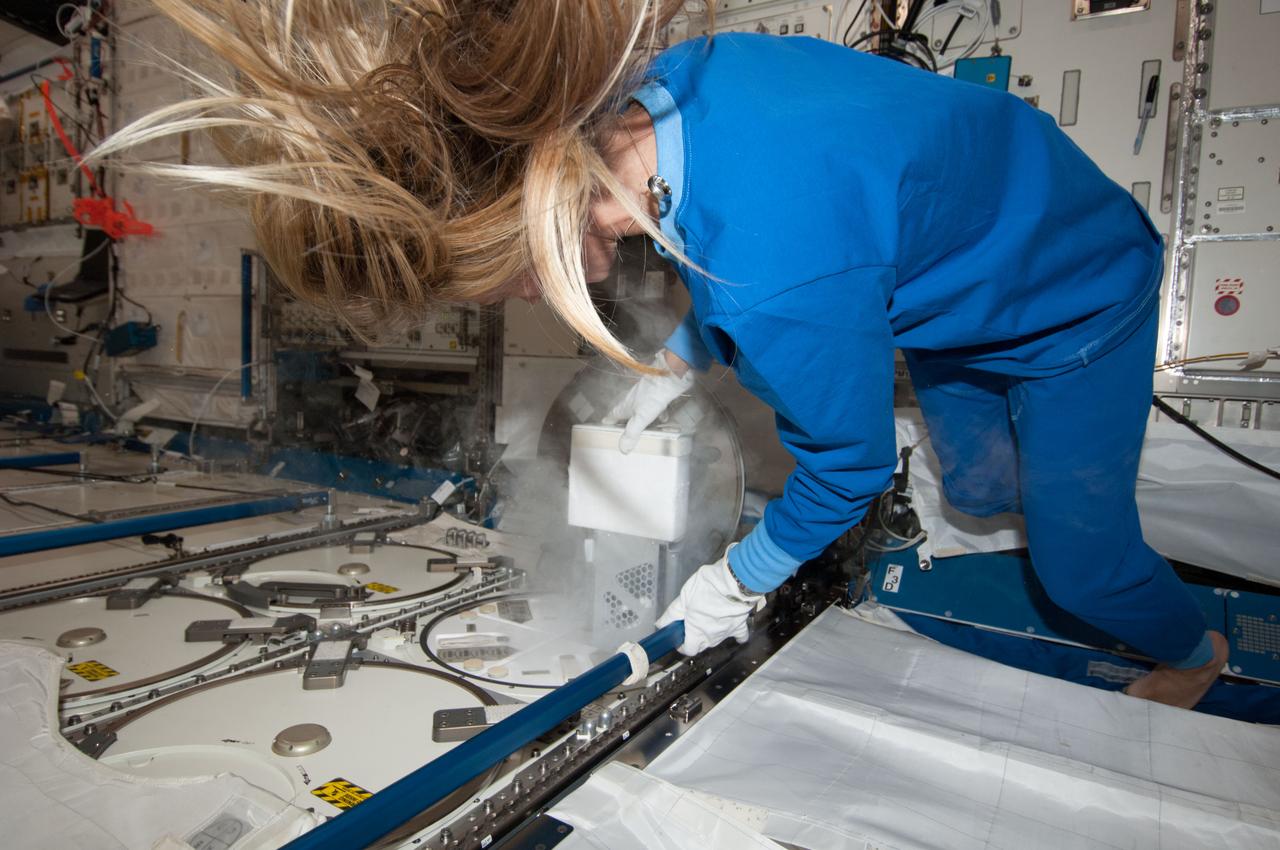
Astronaut Karen Nyberg,Expedition 36 flight engineer,works with samples in Minus Eighty-Degree Laboratory Freezer for ISS (MELFI-3) in the Destiny laboratory of the Earth-orbiting International Space Station.
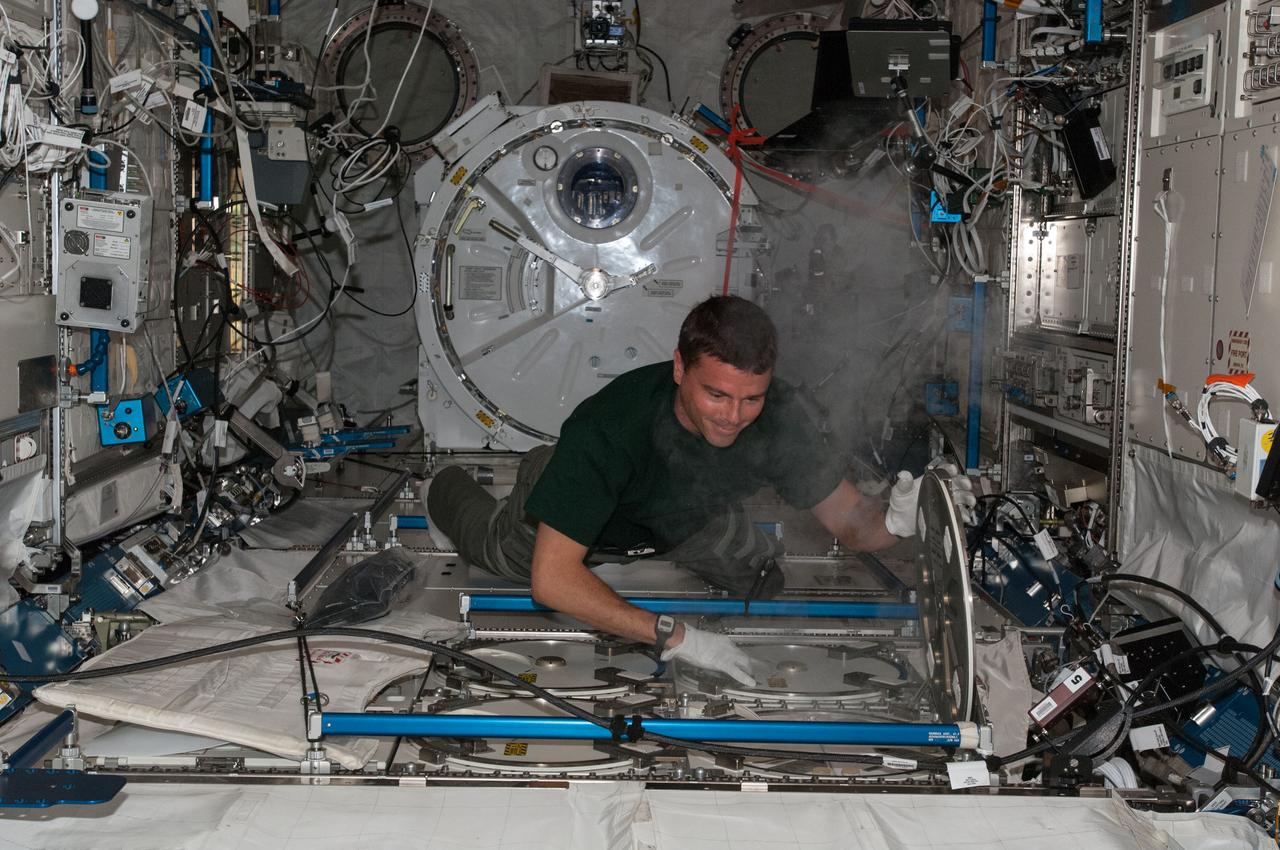
View of Astronaut Reid Wiseman,Expedition 40 flight engineer,inserting urine samples in the Minus Eighty Laboratory Freezer for ISS (MELFI) located in the Japanese Experiment Module (JEM).
ISS037-E-010721 (5 Oct. 2013) --- A specimen of human blood or a body fluid like saliva and urine is stowed by astronaut Michael Hopkins onboard the International Space Station on Oct. 5, 2013. The objects of post-mission research by scientists on the ground, all the various aforementioned biological samples have to be frozen until the return to Earth.
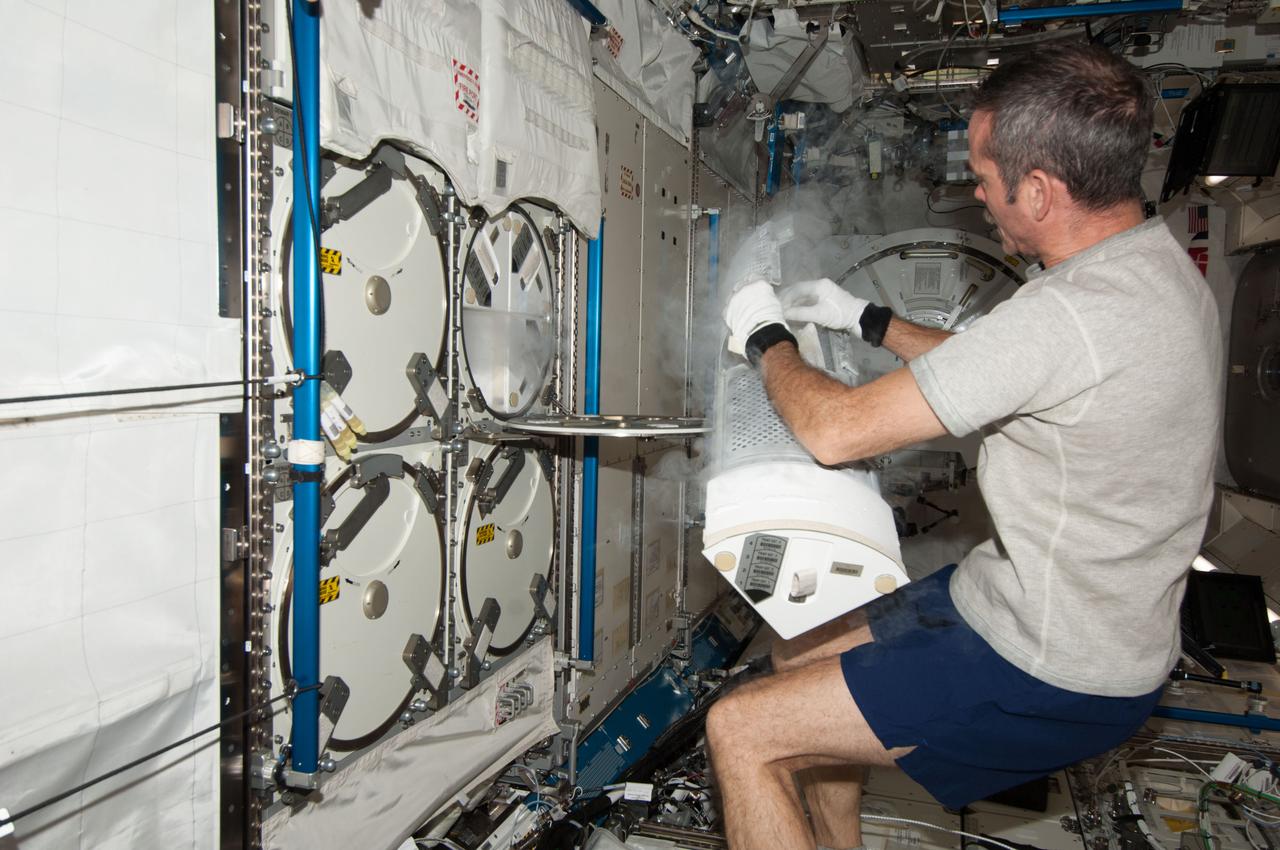
View of Canadian Space Agency (CSA) Chris Hadfield,Expedition 34 Flight Engineer (FE),preparing to insert biological samples in the Minus Eighty Laboratory Freezer for International Space Station (ISS) - (MELFI-1),in the Japanese Experiment Module (JEM) Pressurized Module (JPM). Photo was taken during Expedition 34.
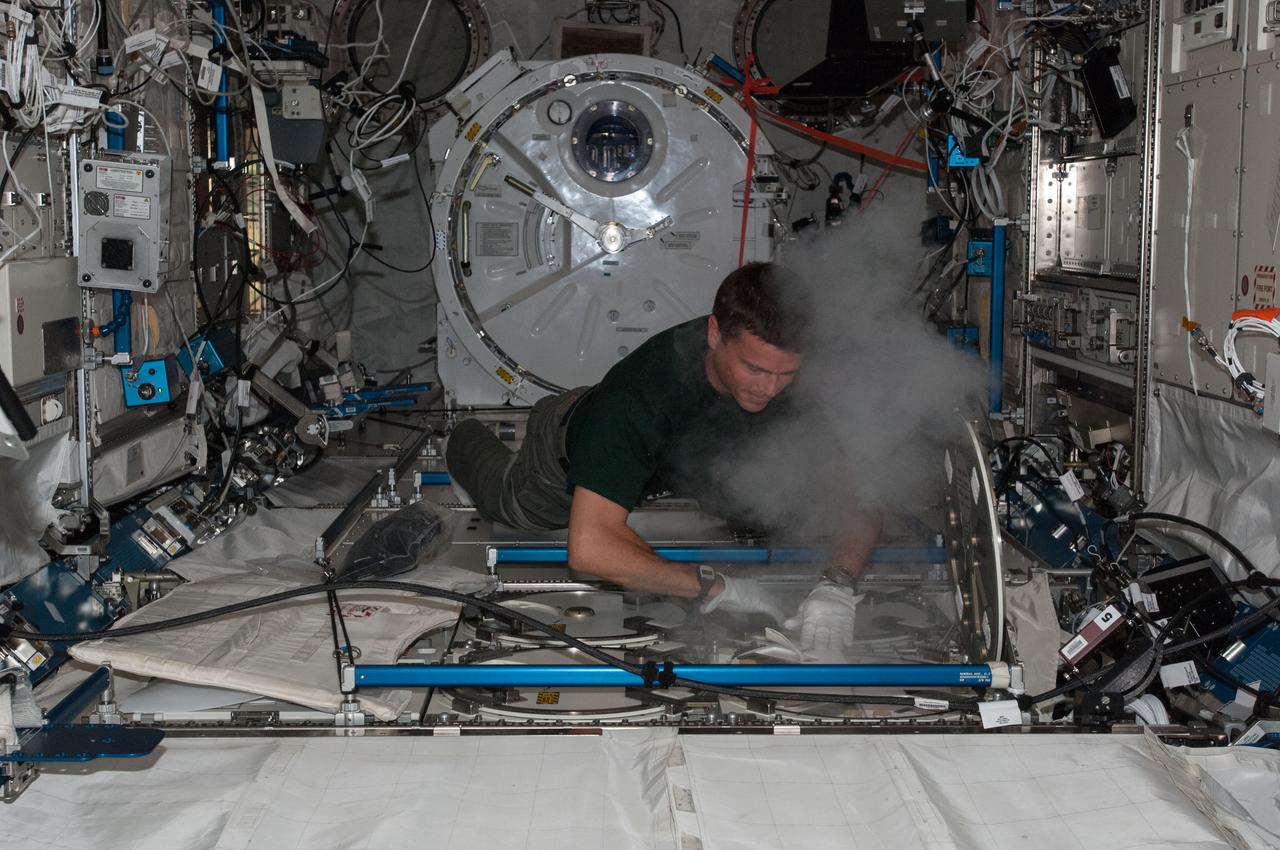
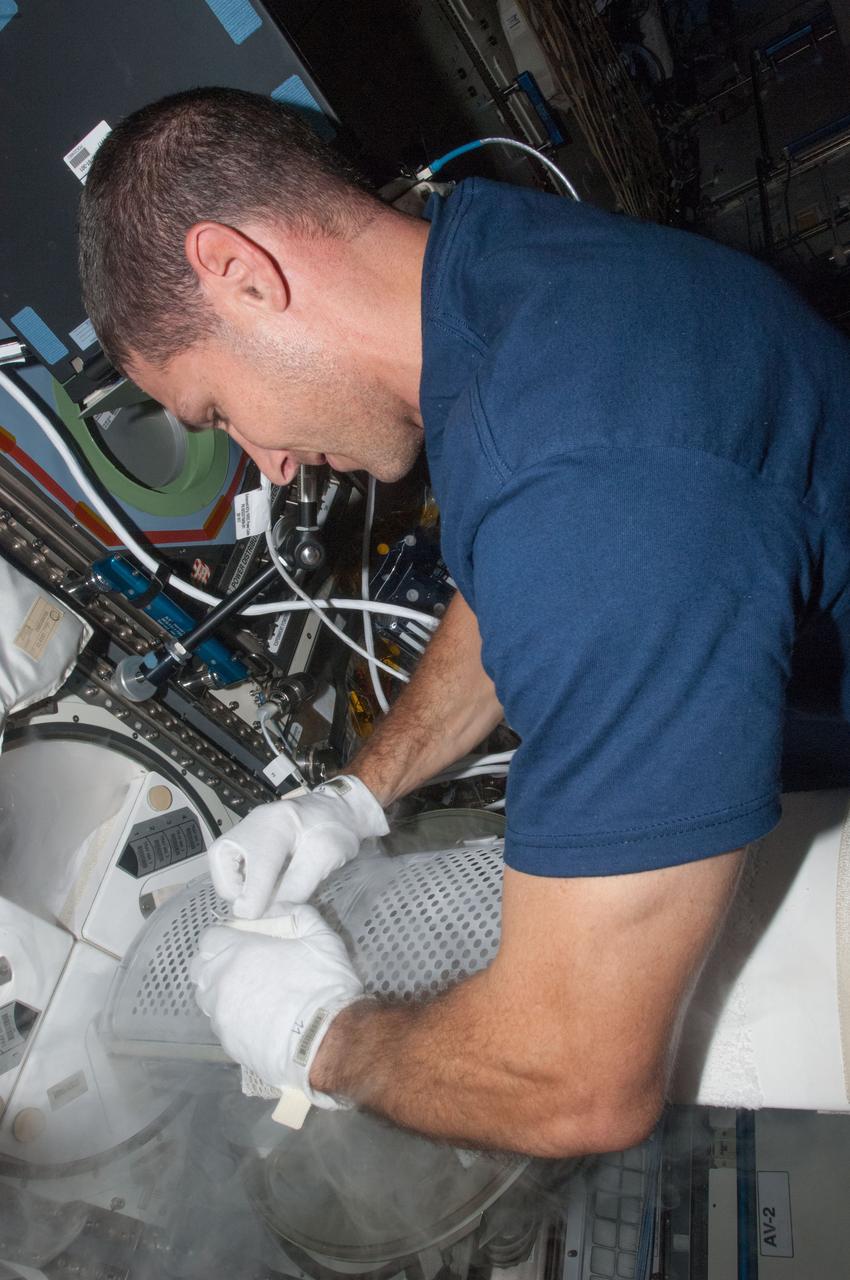
View of Astronaut Reid Wiseman,Expedition 40 flight engineer,inserting urine samples in the Minus Eighty Laboratory Freezer for ISS (MELFI) located in the Japanese Experiment Module (JEM).
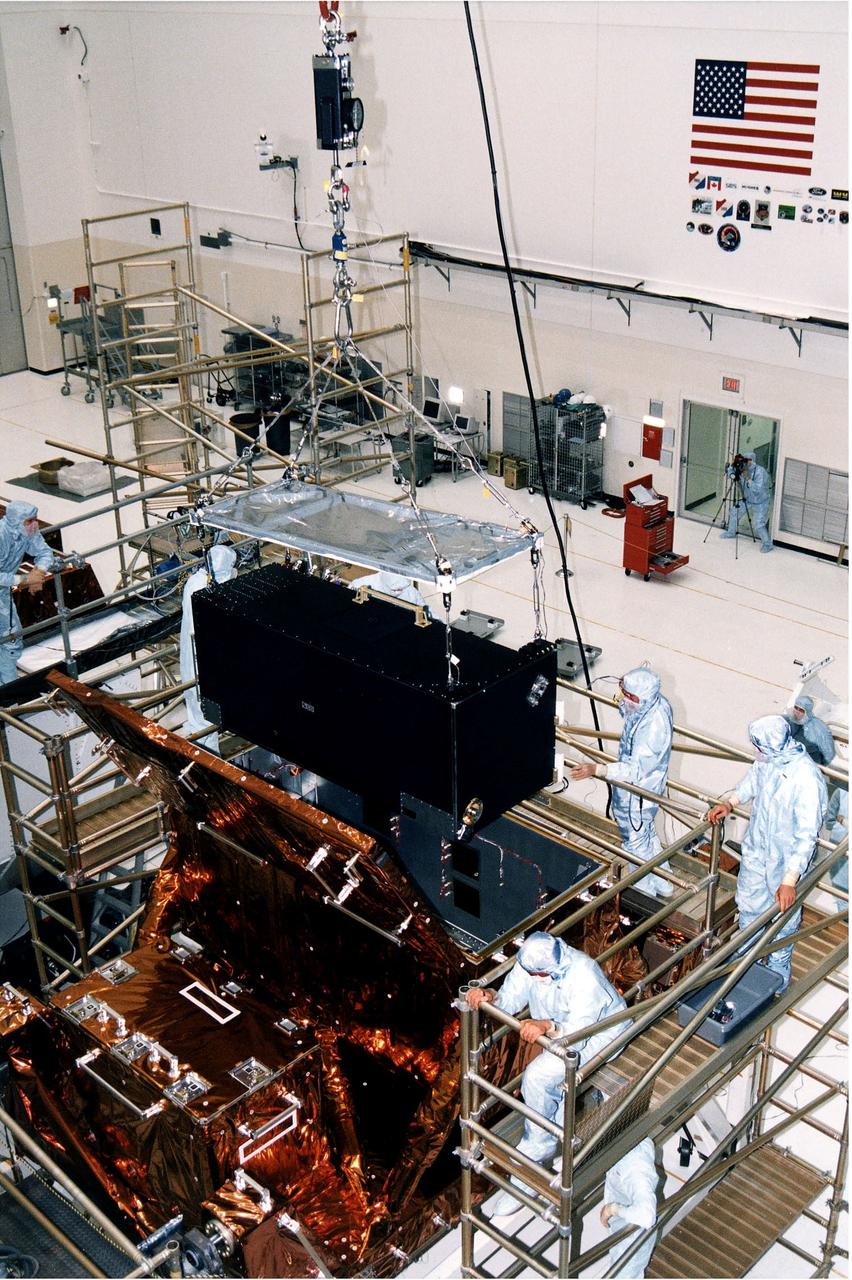
KENNEDY SPACE CENTER, FLA. - Workers in KSC's Vertical Processing Facility lower the Near Infrared Camera and Multi-Object Spectrometer (NICMOS) into the Second Axial Carrier. NICMOS is one of two new scientific instruments that will replace two outdated instruments on the Hubble Space Telescope (HST). NICMOS will provide HST with the capability for infrared imaging and spectroscopic observations of astronomical targets. The refrigerator-sized NICMOS is HST's first cryogenic instrument -- its sensitive infrared detectors must operate at very cold temperatures of minus 355 degrees Fahrenheit or 58 derees Kelvin. NICMOS will be installed in Hubble during STS-82, the second Hubble Space Telescope servicing mission. Liftoff is targeted Feb. 11 aboard Discovery with a crew of seven.
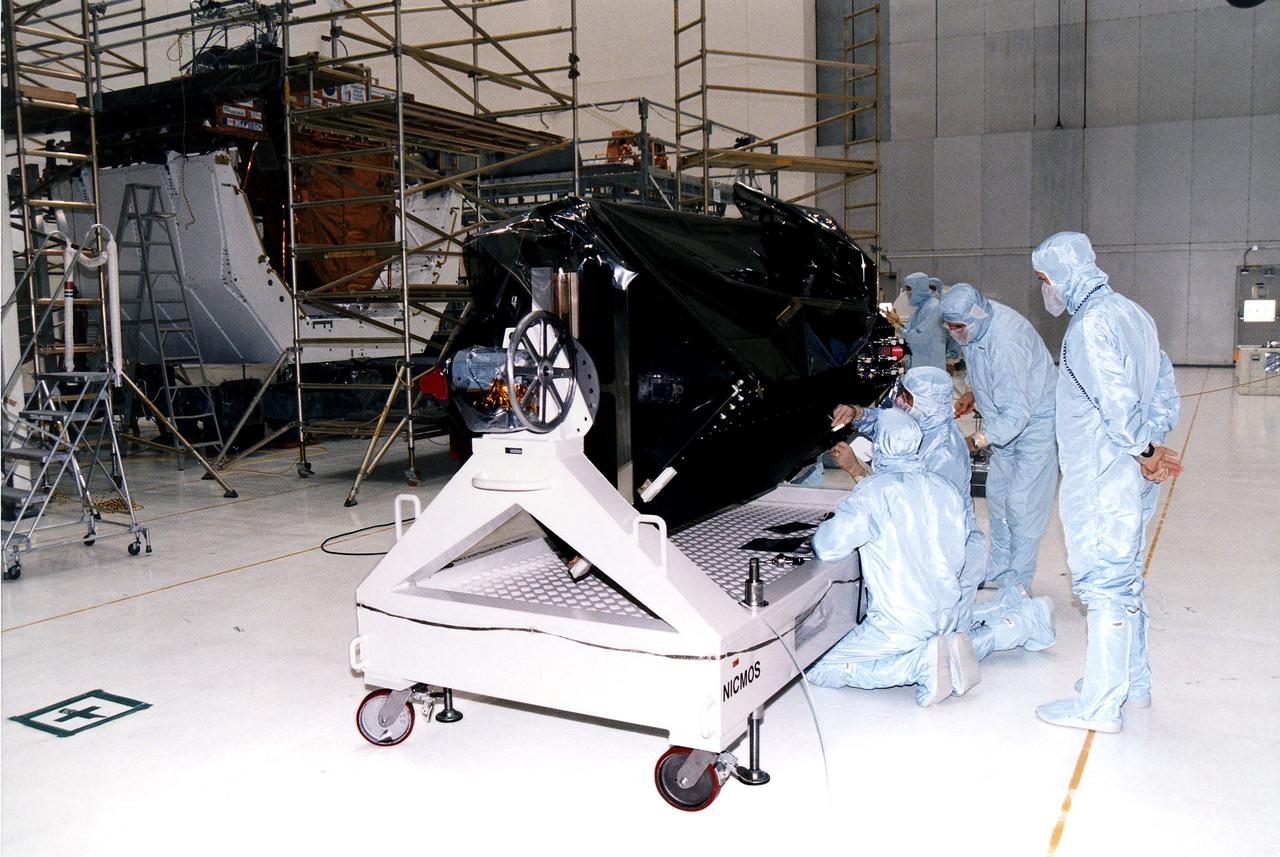
KENNEDY SPACE CENTER, FLA. - Workers in KSC's Vertical Processing Facility inspect the Near Infrared Camera and Multi-Object Spectrometer (NICMOS) on its handling fixture. NICMOS is one of two new scientific instruments that will replace two outdated instruments on the Hubble Space Telescope (HST). NICMOS will provide HST with the capability for infrared imaging and spectroscopic observations of astronomical targets. The refrigerator-sized NICMOS also is HST's first cryogenic instrument — its sensitive infrared detectors must operate at very cold temperatures of minus 355 degrees Fahrenheit or 58 degrees Kelvin. NICMOS will be installed in Hubble during STS-82, the second Hubble Space Telescope servicing mission. Liftoff is targeted Feb. 11 aboard Discovery with a crew of seven.
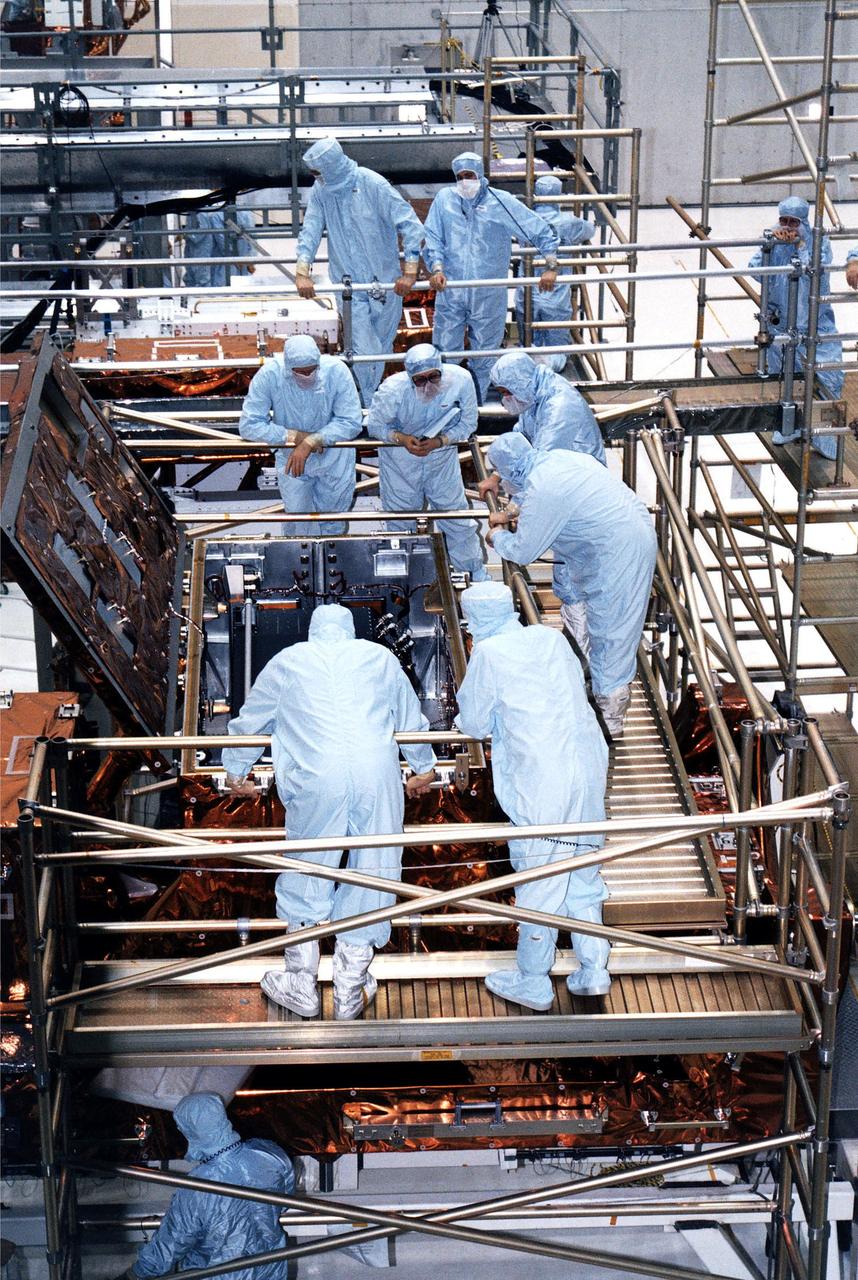
KENNEDY SPACE CENTER, FLA. - STS-82 crew members and workers at KSC's Vertical Processing Facility get a final look at the Near Infrared Camera and Multi-Object Spectrometer (NICMOS) in its flight configuration for the STS-82 mission. The crew is participating in the Crew Equipment Integration Test (CEIT). NICMOS is one of two new scientific instruments that will replace two outdated instruments on the Hubble Space Telescope (HST). NICMOS will provide HST with the capability for infrared imaging and spectroscopic observations of astronomical targets. The refrigerator-sized NICMOS also is HST's first cryogenic instrument - its sensitive infrared detectors must operate at very cold temperatures of minus 355 degrees Fahrenheit or 58 degrees Kelvin. NICMOS will be installed in Hubble during STS-82, the second Hubble Space Telescope servicing mission. Liftoff is scheduled Feb. 11 aboard Discovery with a crew of seven.
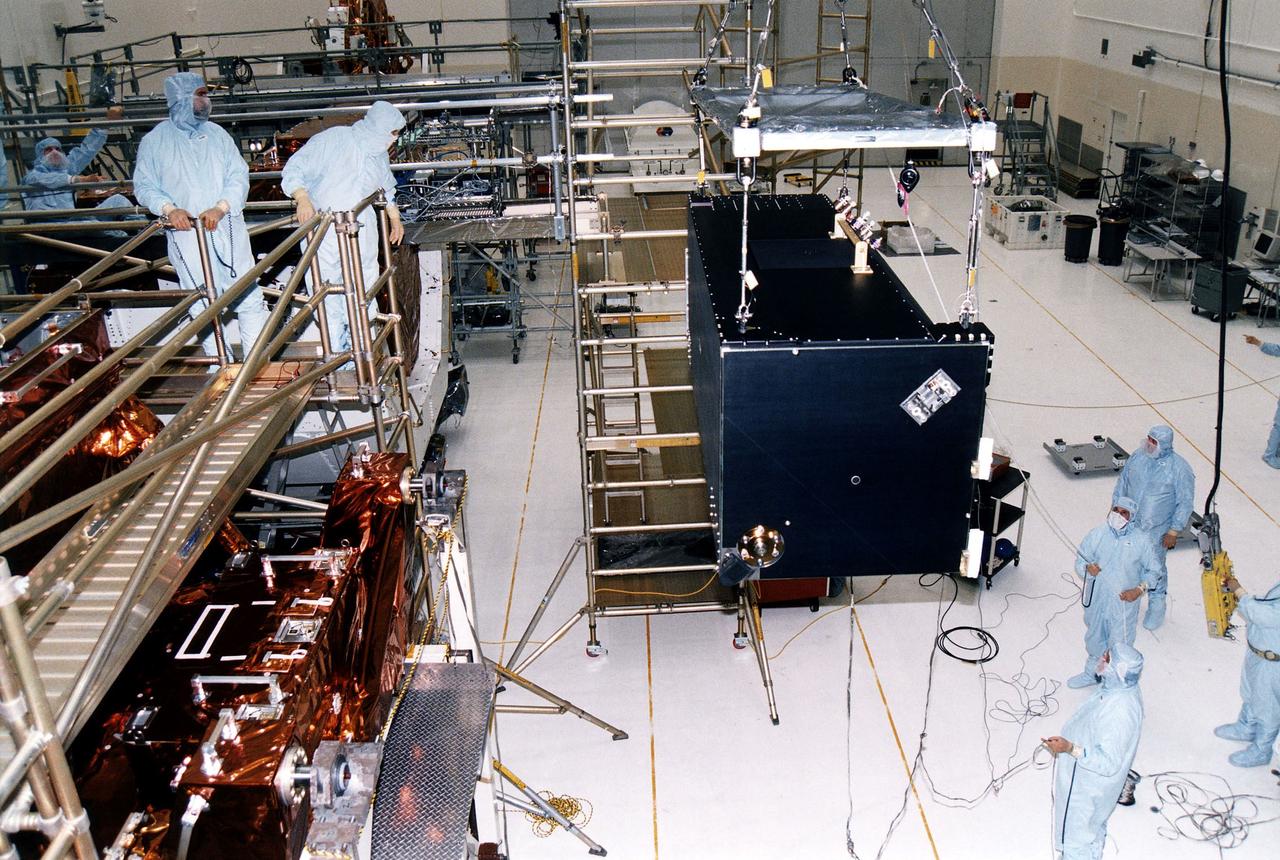
KENNEDY SPACE CENTER, FLA. - Workers in KSC's Vertical Processing Facility lift the Near Infrared Camera and Multi-Object Spectrometer (NICMOS) prior to its installation in the Second Axial Carrier. NICMOS is one of two new scientific instruments that will replace two outdated instruments on the Hubble Space Telescope (HST). NICMOS will provide HST with the capability for infrared imaging and spectroscopic observations of astronomical targets. The refrigerator-sized NICMOS also is HST's first cryogenic instrument — its sensitive infrared detectors must operate at very cold temperatures of minus 355 degrees Fahrenheit or 58 degrees Kelvin. NICMOS will be installed in Hubble during STS-82, the second Hubble Space Telescope servicing mission. Liftoff is targeted Feb. 11 aboard Discovery with a crew of seven.
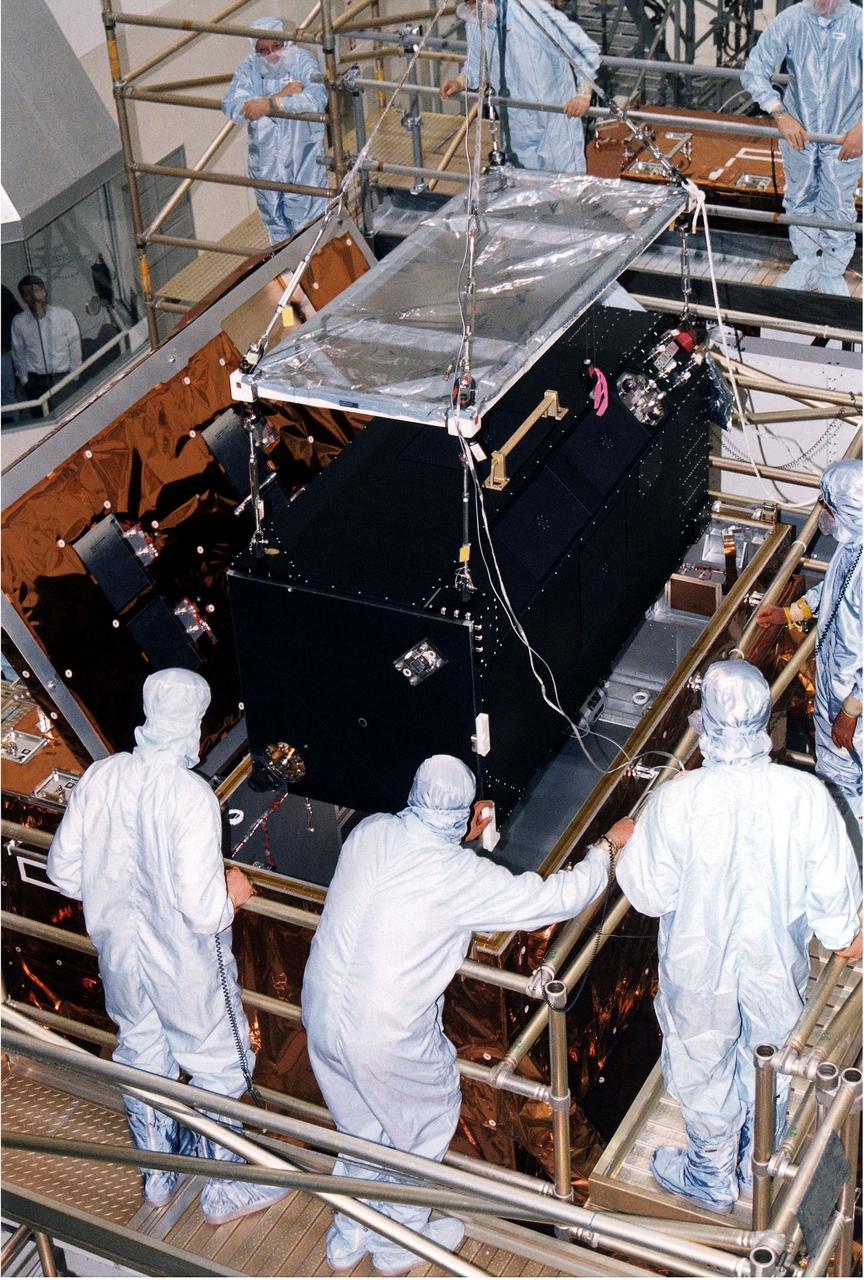
KENNEDY SPACE CENTER, FLA. - Workers in KSC's Vertical Processing Facility lower the Near Infrared Camera and Multi-Object Spectrometer (NICMOS) into the Second Axial Carrier. NICMOS is one of two new scientific instruments that will replace two outdated instruments on the Hubble Space Telescope (HST). NICMOS will provide HST with the capability for infrared imaging and spectroscopic observations of astronomical targets. The refrigerator-sized NICMOS also is HST's first cryogenic instrument — its sensitive infrared detectors must operate at very cold temperatures of minus 355 degrees Fahrenheit or 58 degrees Kelvin. NICMOS will be installed in Hubble during STS-82, the second Hubble Space Telescope servicing mission. Liftoff is targeted Feb. 11 aboard Discovery with a crew of seven.
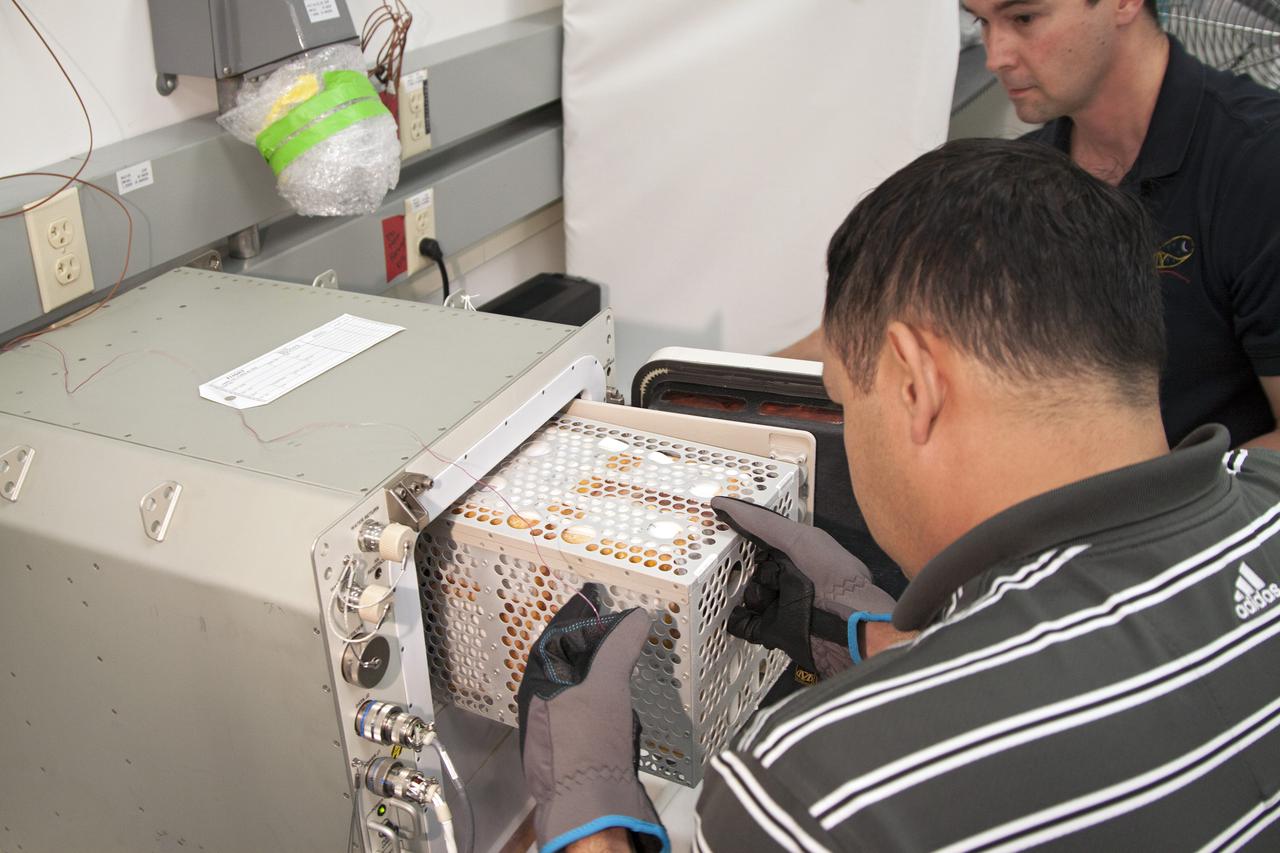
CAPE CANAVERAL, Fla. - In the Space Station Processing Facility at NASA's Kennedy Space Center in Florida, engineers load experiments requiring low temperatures into the General Laboratory Active Cryogenic International Space Station ISS Experiment Refrigerator, or GLACIER. The samples will then be transported to Space Launch Complex-40 on Cape Canaveral Air Force Station where the GLACIER will be loaded aboard the SpaceX Dragon capsule. Scheduled for launch on March 1 atop a Falcon 9 rocket, Dragon will be marking its third trip to the space station. The mission is the second of 12 SpaceX flights contracted by NASA to resupply the orbiting laboratory. For more information, visit http:__www.nasa.gov_mission_pages_station_structure_launch_spacex2-feature.html Photo credit: NASA_Kim Shiflett
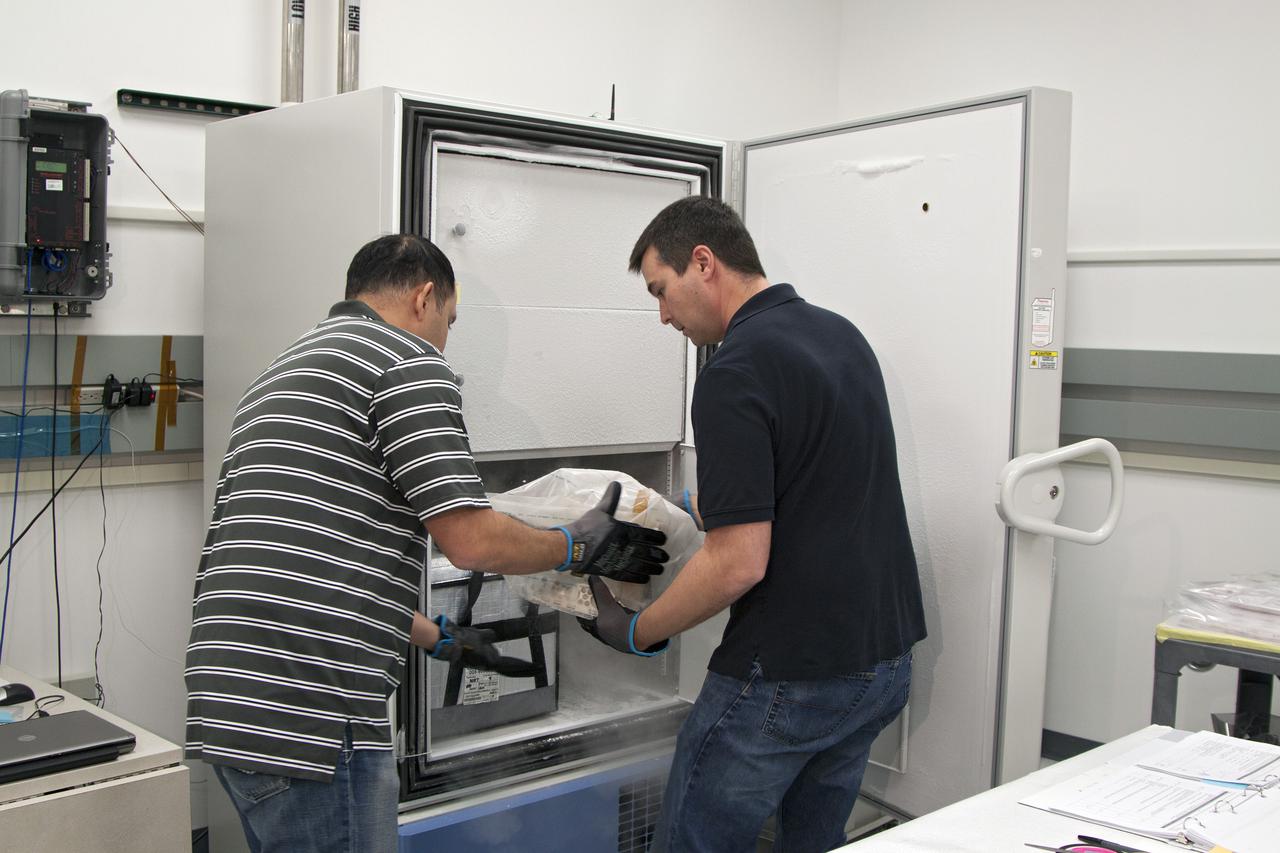
CAPE CANAVERAL, Fla. - In the Space Station Processing Facility at NASA's Kennedy Space Center in Florida, engineers prepare to load experiments requiring low temperatures into the General Laboratory Active Cryogenic International Space Station ISS Experiment Refrigerator, or GLACIER. The samples will then be transported to Space Launch Complex-40 on Cape Canaveral Air Force Station where the GLACIER will be loaded aboard the SpaceX Dragon capsule. Scheduled for launch on March 1 atop a Falcon 9 rocket, Dragon will be marking its third trip to the space station. The mission is the second of 12 SpaceX flights contracted by NASA to resupply the orbiting laboratory. For more information, visit http:__www.nasa.gov_mission_pages_station_structure_launch_spacex2-feature.html Photo credit: NASA_Kim Shiflett
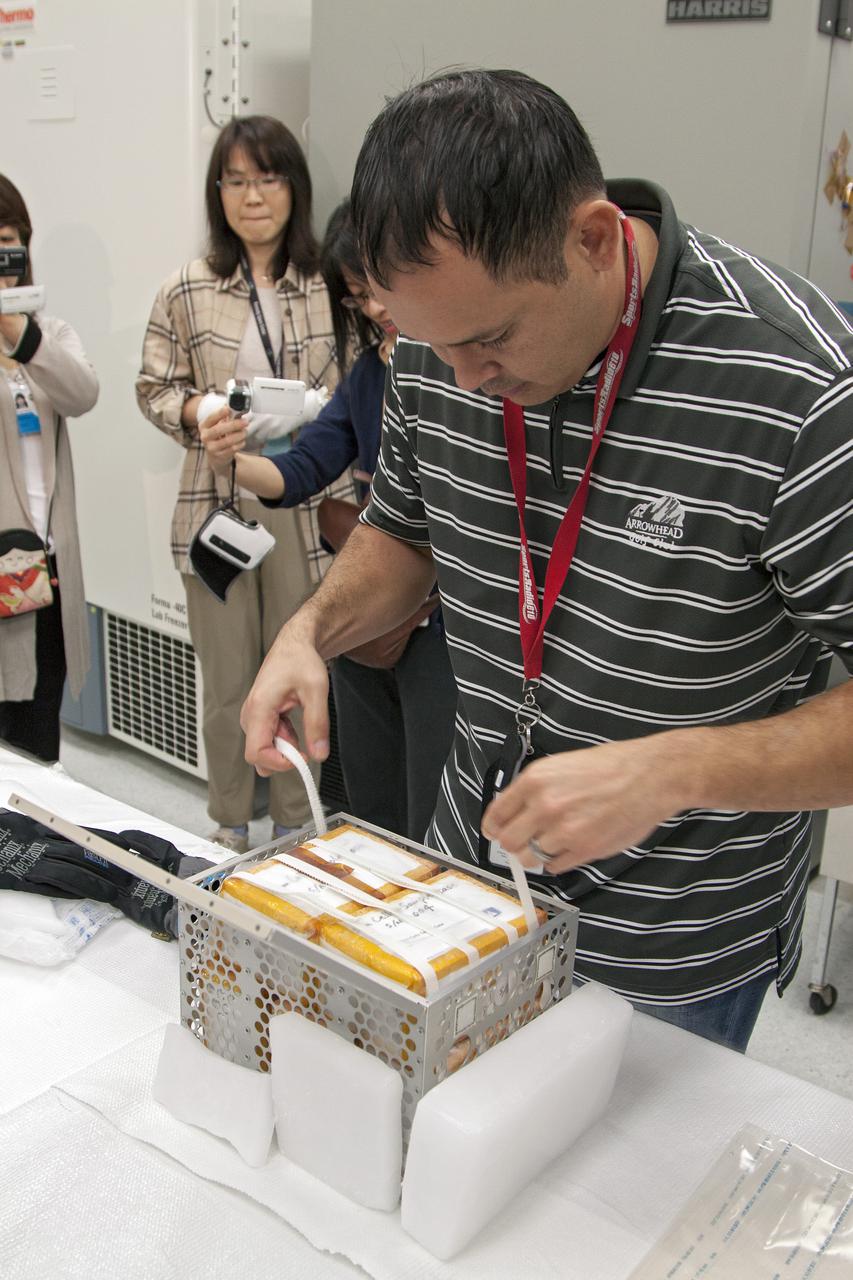
CAPE CANAVERAL, Fla. - In the Space Station Processing Facility at NASA's Kennedy Space Center in Florida, engineers prepare to load experiments requiring low temperatures into the General Laboratory Active Cryogenic International Space Station ISS Experiment Refrigerator, or GLACIER. The samples will then be transported to Space Launch Complex-40 on Cape Canaveral Air Force Station where the GLACIER will be loaded aboard the SpaceX Dragon capsule. Scheduled for launch on March 1 atop a Falcon 9 rocket, Dragon will be marking its third trip to the space station. The mission is the second of 12 SpaceX flights contracted by NASA to resupply the orbiting laboratory. For more information, visit http:__www.nasa.gov_mission_pages_station_structure_launch_spacex2-feature.html Photo credit: NASA_Kim Shiflett
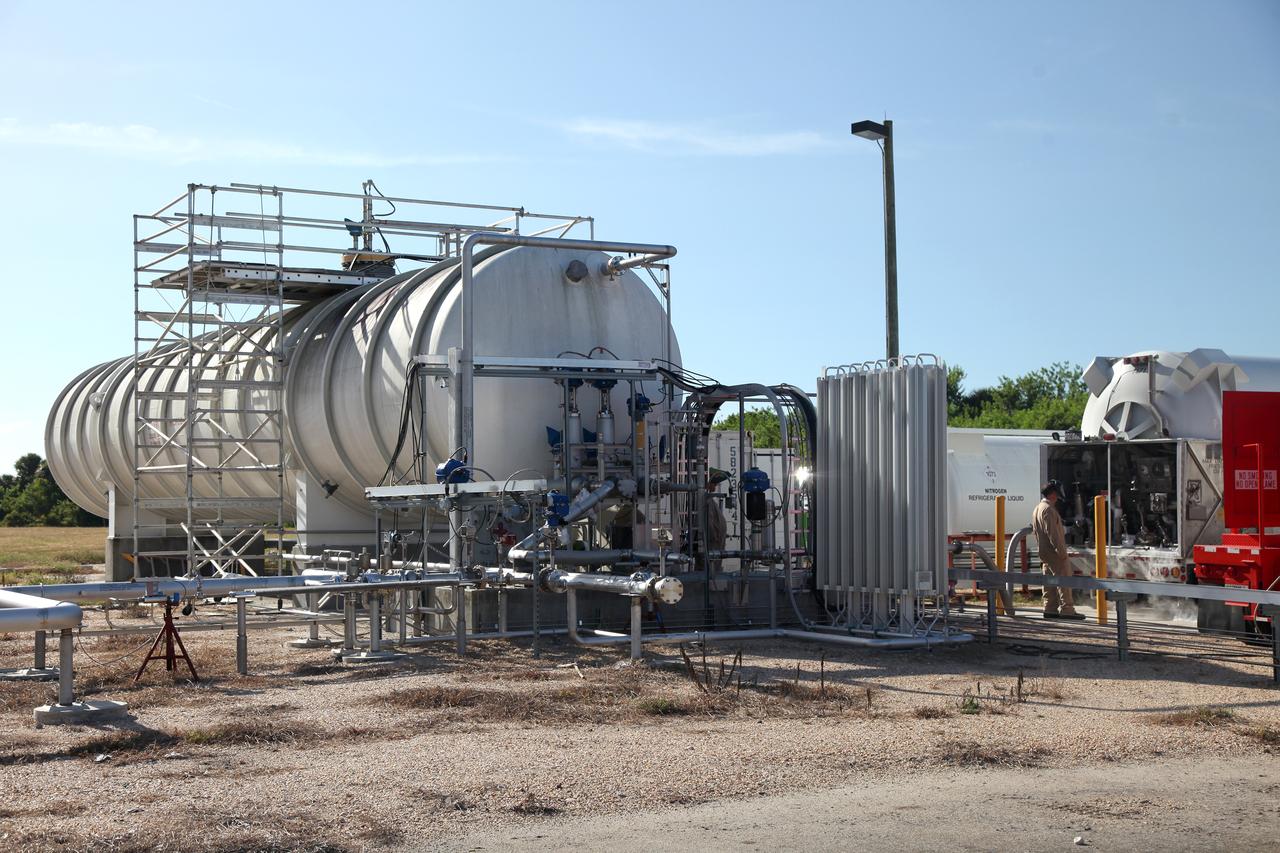
Engineers complete a test of the Ground Operations Demo Unit for liquid hydrogen at NASA's Kennedy Space Center in Florida. The system includes a 33,000 gallon liquid hydrogen storage tank with an internal cold heat exchanger supplied from a cryogenic refrigerator. The primary goal of the testing is to achieve a liquid hydrogen zero boil-off capability. The system was designed, installed and tested by a team of civil servants and contractors from the center's Cryogenic Test Laboratory, with support from engineers at NASA's Glenn Research Center in Cleveland and Stennis Space Center in Mississippi. It may be applicable for use by the Ground Systems Development and Operations Program at Launch Pad 39B.
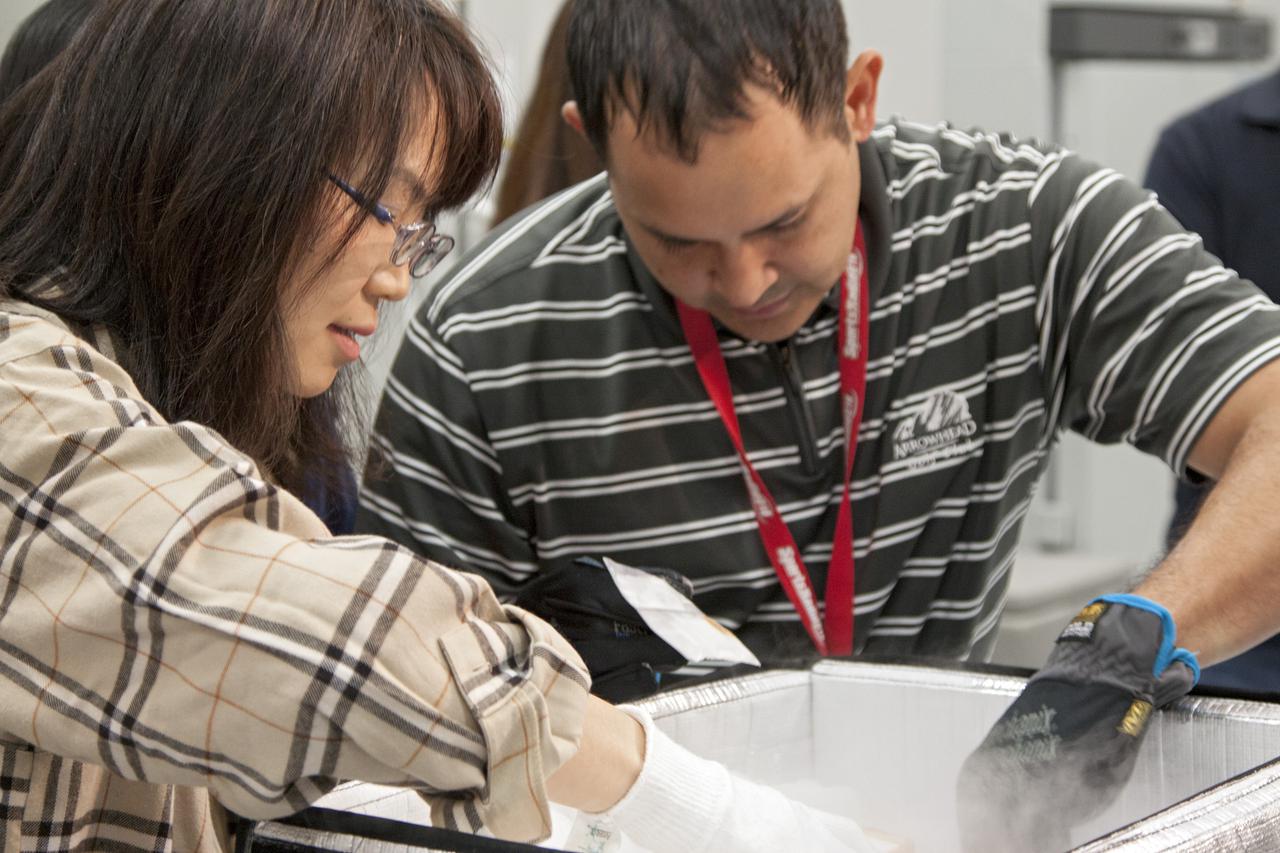
CAPE CANAVERAL, Fla. - In the Space Station Processing Facility at NASA's Kennedy Space Center in Florida, engineers prepare to load experiments requiring low temperatures into the General Laboratory Active Cryogenic International Space Station ISS Experiment Refrigerator, or GLACIER. The samples will then be transported to Space Launch Complex-40 on Cape Canaveral Air Force Station where the GLACIER will be loaded aboard the SpaceX Dragon capsule. Scheduled for launch on March 1 atop a Falcon 9 rocket, Dragon will be marking its third trip to the space station. The mission is the second of 12 SpaceX flights contracted by NASA to resupply the orbiting laboratory. For more information, visit http:__www.nasa.gov_mission_pages_station_structure_launch_spacex2-feature.html Photo credit: NASA_Kim Shiflett
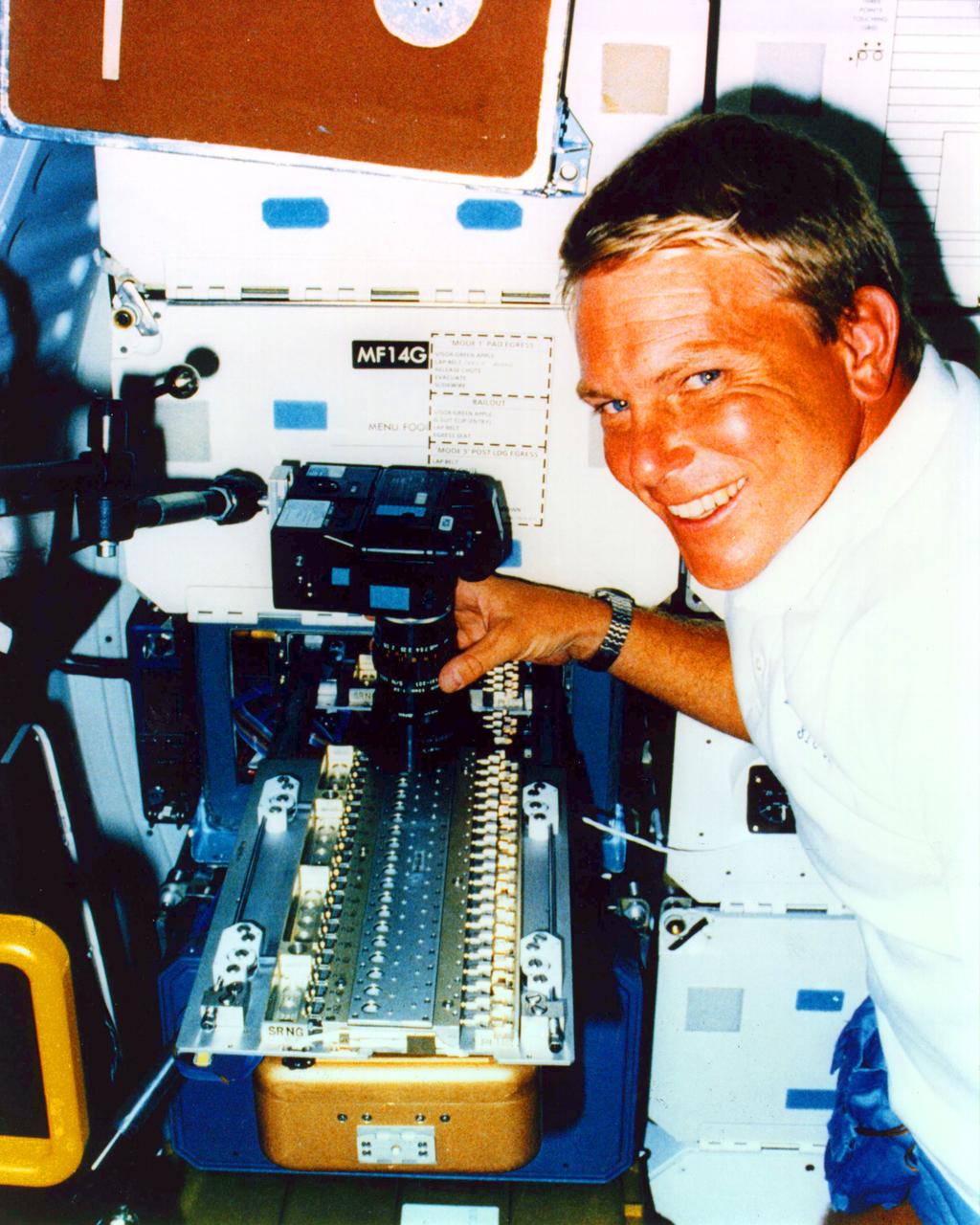
Mission Specialist George (Pinky) D. Nelson uses a 35 mm camera to photograph a protein crystal grown during the STS-26 Protein Crystal Growth (PCG-II-01) experiment. The protein crystal growth (PCG) carrier is shown deployed from the PCG Refrigerator/Incubator Mocule (R/IM) located in the middeck forward locker. The R/IM contained three Vapor Diffusion Apparatus (VDS) trays (one of which is shown). A total of sixty protein crystal samples were processed during the STS-26 mission.
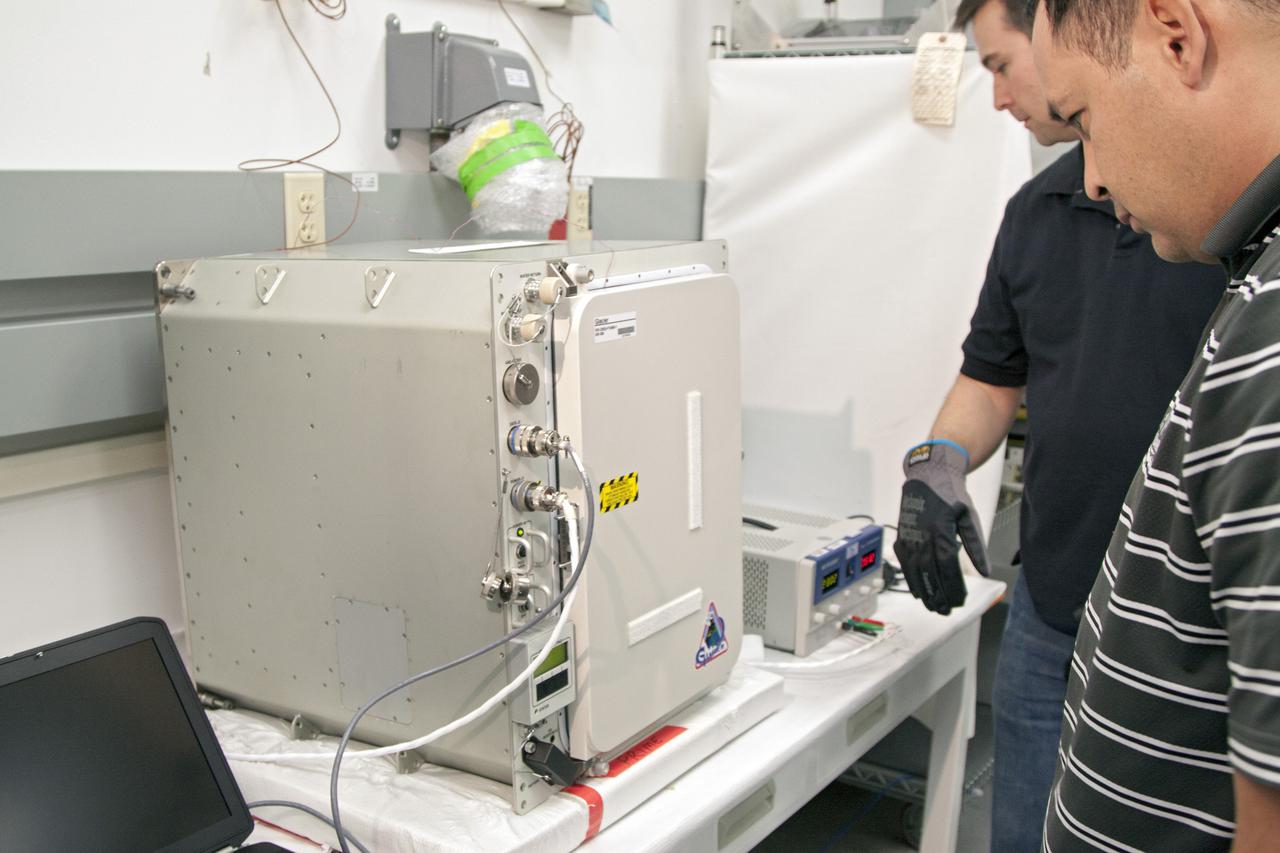
CAPE CANAVERAL, Fla. - In the Space Station Processing Facility at NASA's Kennedy Space Center in Florida, engineers load experiments requiring low temperatures into the General Laboratory Active Cryogenic International Space Station ISS Experiment Refrigerator, or GLACIER. The samples will then be transported to Space Launch Complex-40 on Cape Canaveral Air Force Station where the GLACIER will be loaded aboard the SpaceX Dragon capsule. Scheduled for launch on March 1 atop a Falcon 9 rocket, Dragon will be marking its third trip to the space station. The mission is the second of 12 SpaceX flights contracted by NASA to resupply the orbiting laboratory. For more information, visit http:__www.nasa.gov_mission_pages_station_structure_launch_spacex2-feature.html Photo credit: NASA_Kim Shiflett
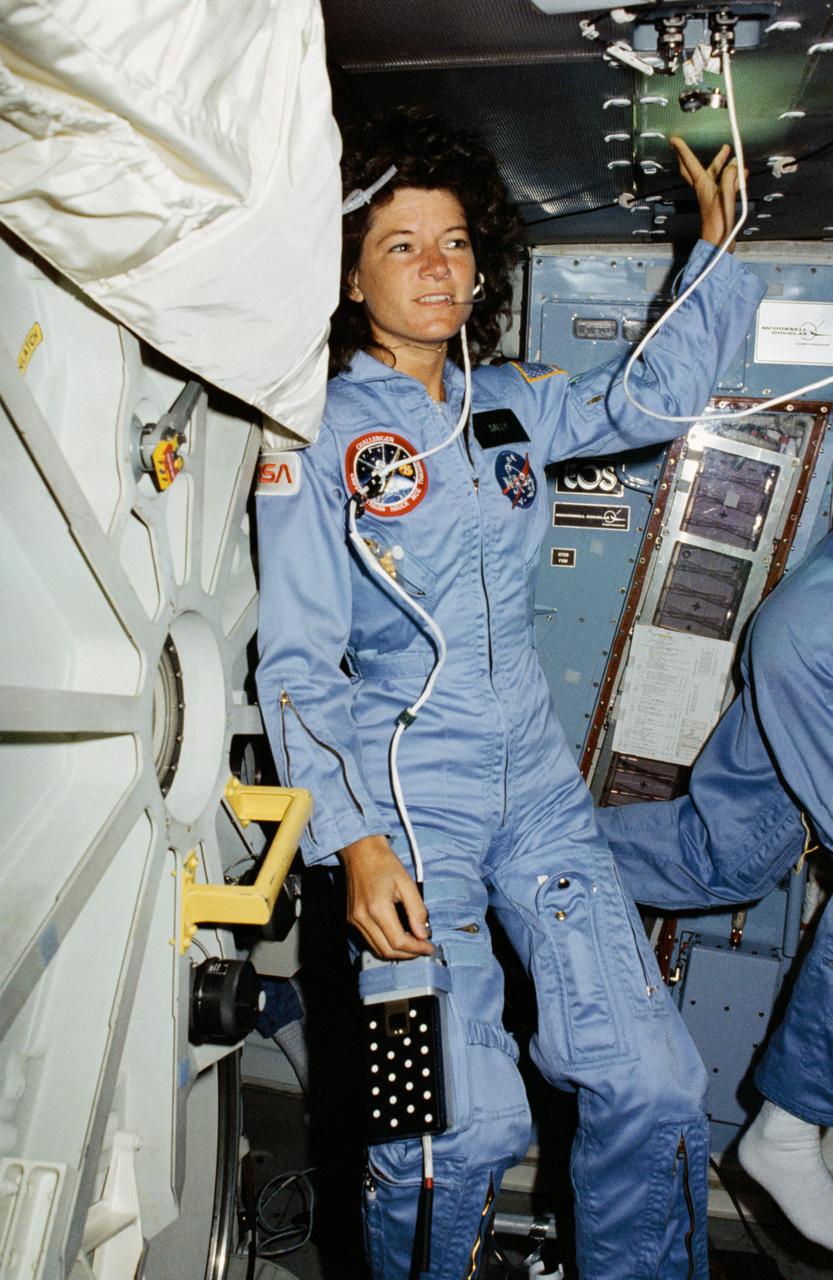
STS007-02-020 (21 June 1983) --- Astronaut Sally K. Ride, STS-7 mission specialist, STS-7 mission specialist, stands in the mid deck of the orbiting Space Shuttle Challenger near one of the experiment with which she has devoted a great deal of time. The continuous flow electrophoresis system (CFES) experiment, about the size of a household refrigerator, stands nearby. One of her fellow crewmembers moves partially out of frame in the background. The tube on her face is part of a communications system linking Dr. Ride to ground controllers in Houston.
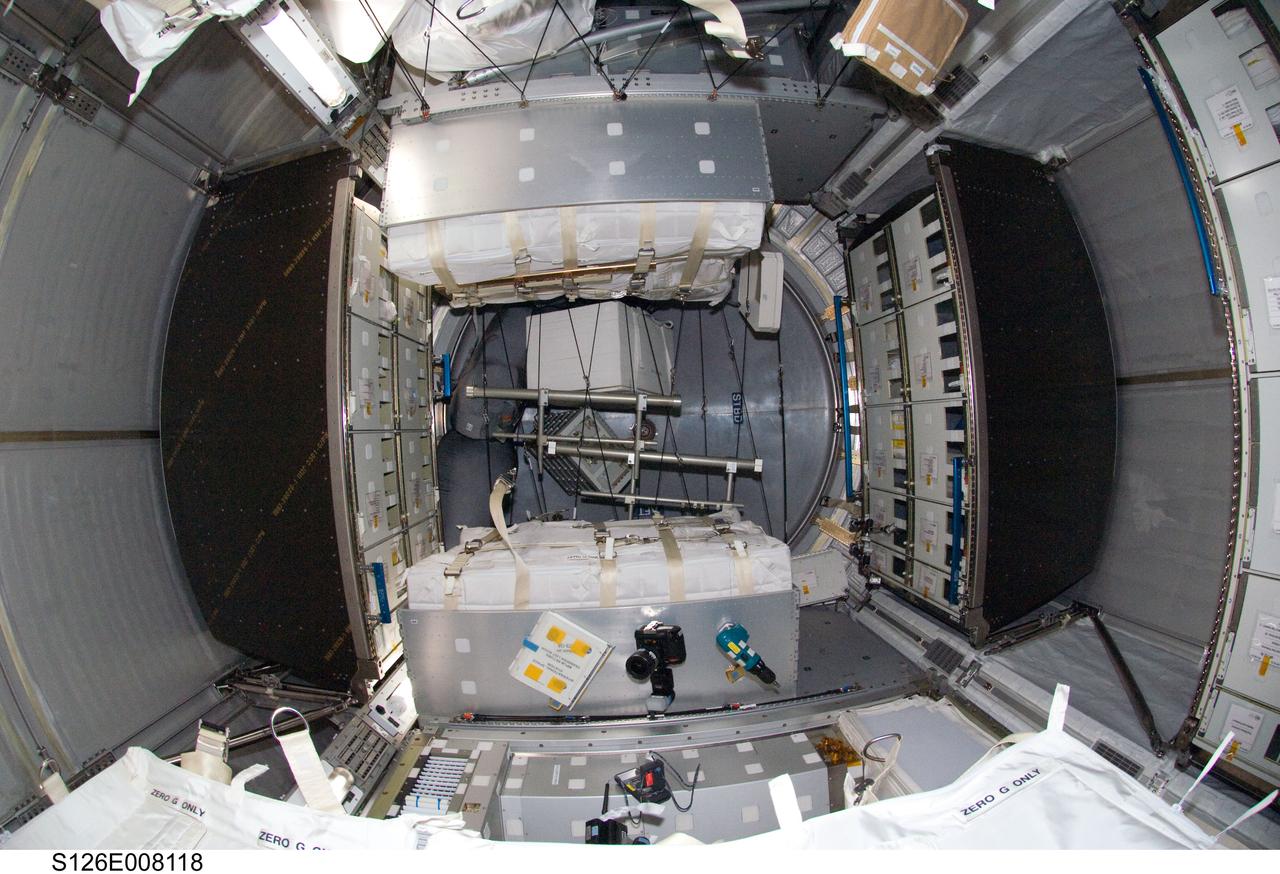
S126-E-008118 (18 Nov. 2008) --- Interior view of the Leonardo Multi-Purpose Logistics Module attached to the Earth-facing port of the International Space Station's Harmony node. Leonardo was moved from Space Shuttle Endeavour's cargo bay and linked to the station on Nov. 17, carrying two water recovery systems racks for recycling urine into potable water, a second toilet system, new gallery components, two new food warmers, a food refrigerator, an experiment freezer, combustion science experiment rack, two separate sleeping quarters and a resistance exercise device (aRED) that allows station crewmembers to perform a variety of exercises.
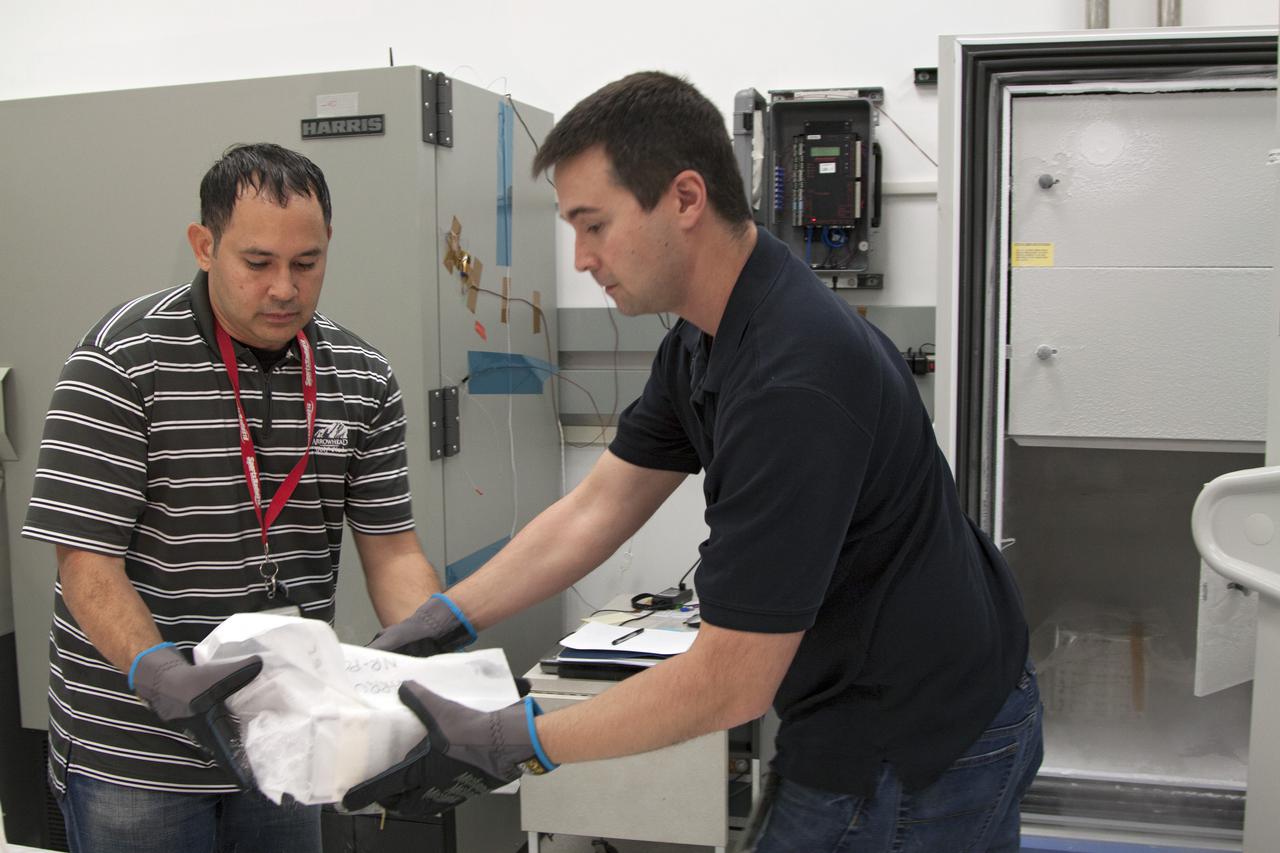
CAPE CANAVERAL, Fla. - In the Space Station Processing Facility at NASA's Kennedy Space Center in Florida, engineers prepare to load experiments requiring low temperatures into the General Laboratory Active Cryogenic International Space Station ISS Experiment Refrigerator, or GLACIER. The samples will then be transported to Space Launch Complex-40 on Cape Canaveral Air Force Station where the GLACIER will be loaded aboard the SpaceX Dragon capsule. Scheduled for launch on March 1 atop a Falcon 9 rocket, Dragon will be marking its third trip to the space station. The mission is the second of 12 SpaceX flights contracted by NASA to resupply the orbiting laboratory. For more information, visit http:__www.nasa.gov_mission_pages_station_structure_launch_spacex2-feature.html Photo credit: NASA_Kim Shiflett
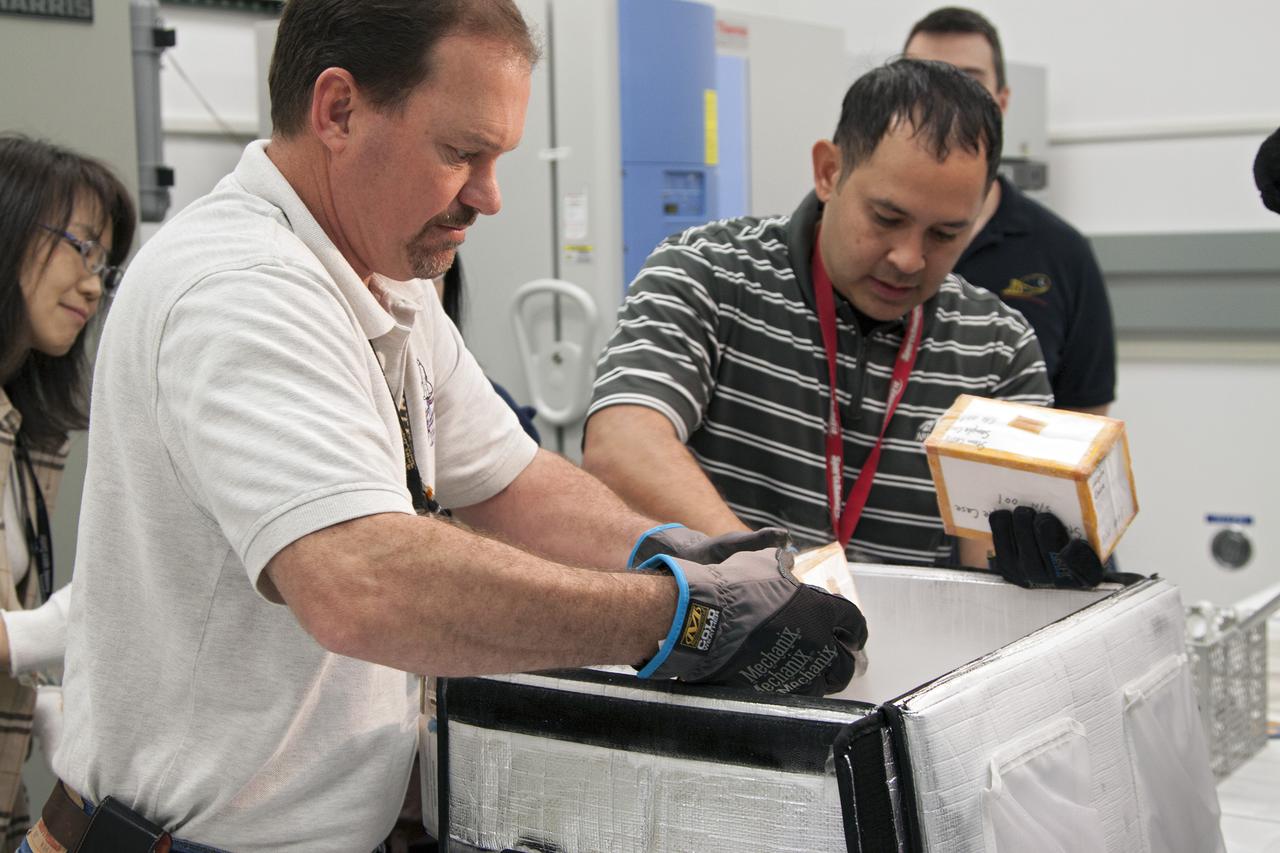
CAPE CANAVERAL, Fla. - In the Space Station Processing Facility at NASA's Kennedy Space Center in Florida, engineers prepare to load experiments requiring low temperatures into the General Laboratory Active Cryogenic International Space Station ISS Experiment Refrigerator, or GLACIER. The samples will then be transported to Space Launch Complex-40 on Cape Canaveral Air Force Station where the GLACIER will be loaded aboard the SpaceX Dragon capsule. Scheduled for launch on March 1 atop a Falcon 9 rocket, Dragon will be marking its third trip to the space station. The mission is the second of 12 SpaceX flights contracted by NASA to resupply the orbiting laboratory. For more information, visit http:__www.nasa.gov_mission_pages_station_structure_launch_spacex2-feature.html Photo credit: NASA_Kim Shiflett
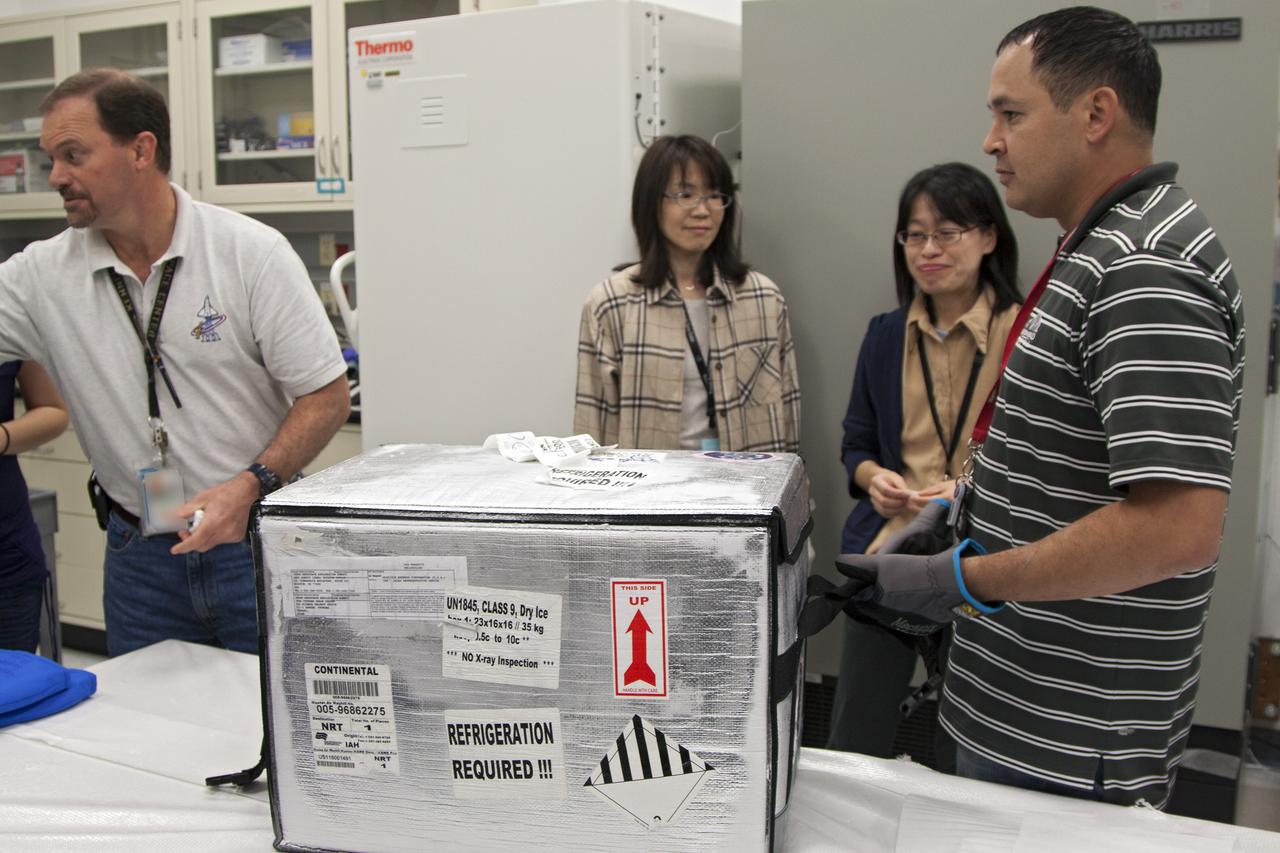
CAPE CANAVERAL, Fla. - In the Space Station Processing Facility at NASA's Kennedy Space Center in Florida, engineers prepare to load experiments requiring low temperatures into the General Laboratory Active Cryogenic International Space Station ISS Experiment Refrigerator, or GLACIER. The samples will then be transported to Space Launch Complex-40 on Cape Canaveral Air Force Station where the GLACIER will be loaded aboard the SpaceX Dragon capsule. Scheduled for launch on March 1 atop a Falcon 9 rocket, Dragon will be marking its third trip to the space station. The mission is the second of 12 SpaceX flights contracted by NASA to resupply the orbiting laboratory. For more information, visit http:__www.nasa.gov_mission_pages_station_structure_launch_spacex2-feature.html Photo credit: NASA_Kim Shiflett
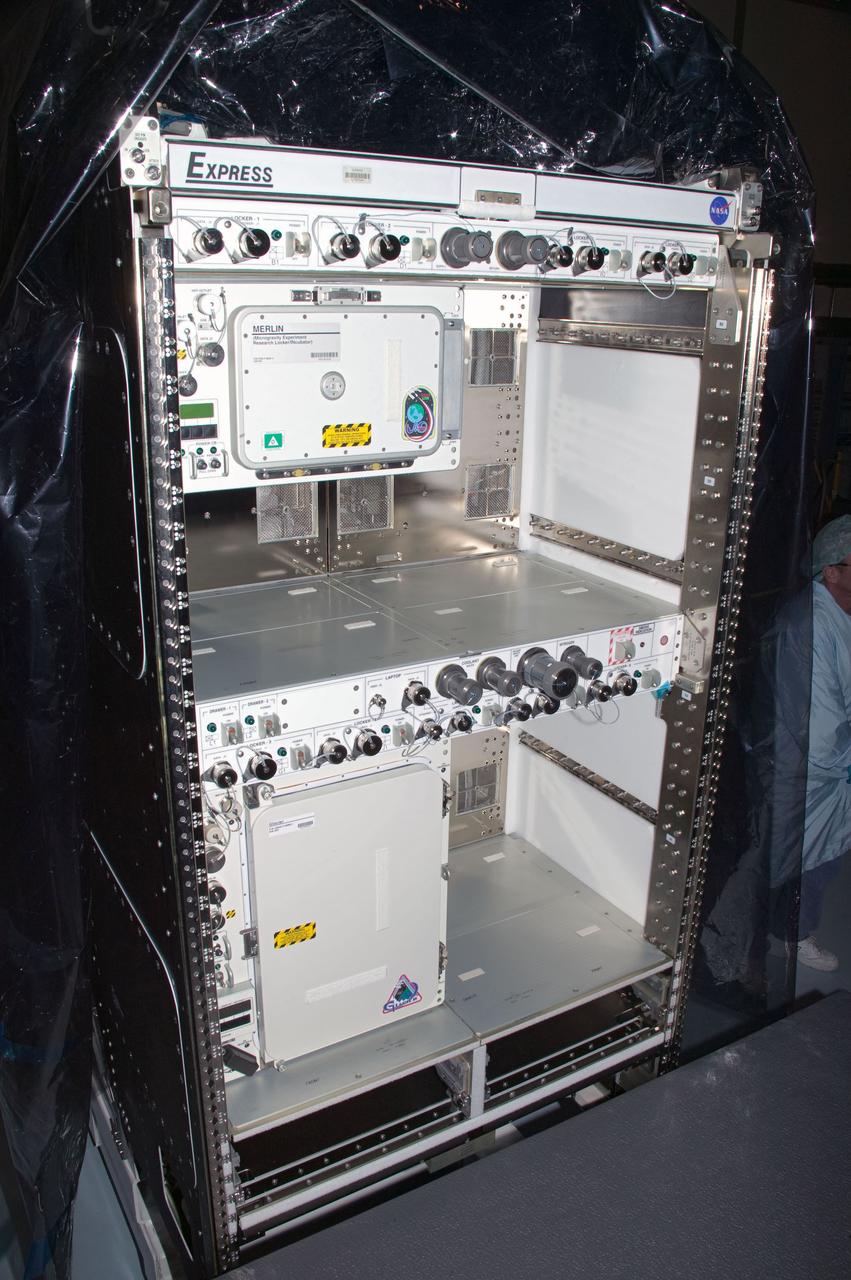
CAPE CANAVERAL, Fla. – This photo shows the crew galley that will be delivered to the International Space Station aboard space shuttle Endeavour on the STS-126 mission. It is designed to make use of the top half of EXPRESS Rack 6 for power, cooling and water. It will consist of one potable water dispenser, one food warmer, and one MERLIN refrigerator. Once on orbit, the galley will be transferred to the U.S. Lab. Endeavour and its crew of seven are scheduled to lift off at 7:55 p.m. Nov. 14 for the 15-day STS-126 mission. Photo credit: NASA
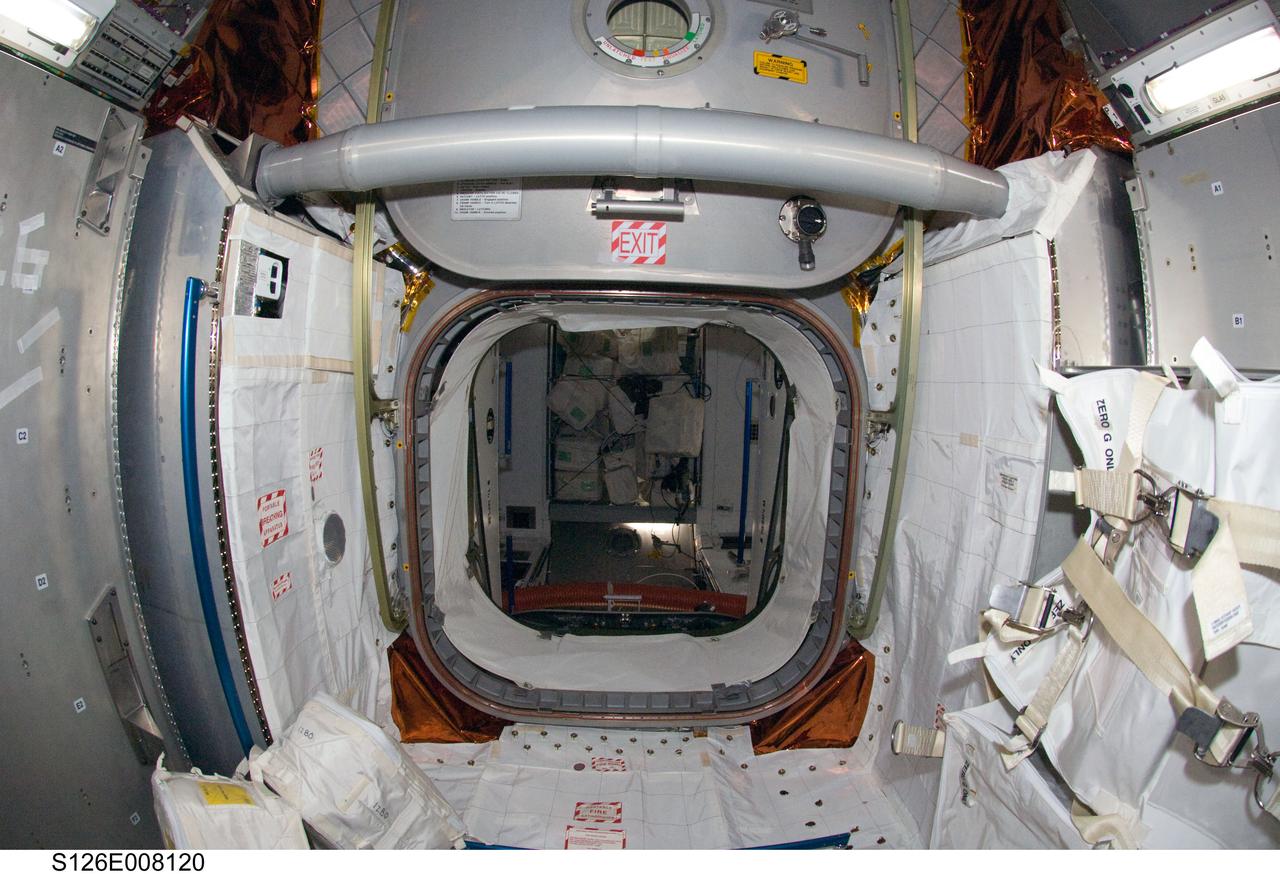
S126-E-008120 (18 Nov. 2008) --- Interior view of the Leonardo Multi-Purpose Logistics Module attached to the Earth-facing port of the International Space Station's Harmony node. Leonardo was moved from Space Shuttle Endeavour's cargo bay and linked to the station on Nov. 17, carrying two water recovery systems racks for recycling urine into potable water, a second toilet system, new gallery components, two new food warmers, a food refrigerator, an experiment freezer, combustion science experiment rack, two separate sleeping quarters and a resistance exercise device (aRED) that allows station crewmembers to perform a variety of exercises.
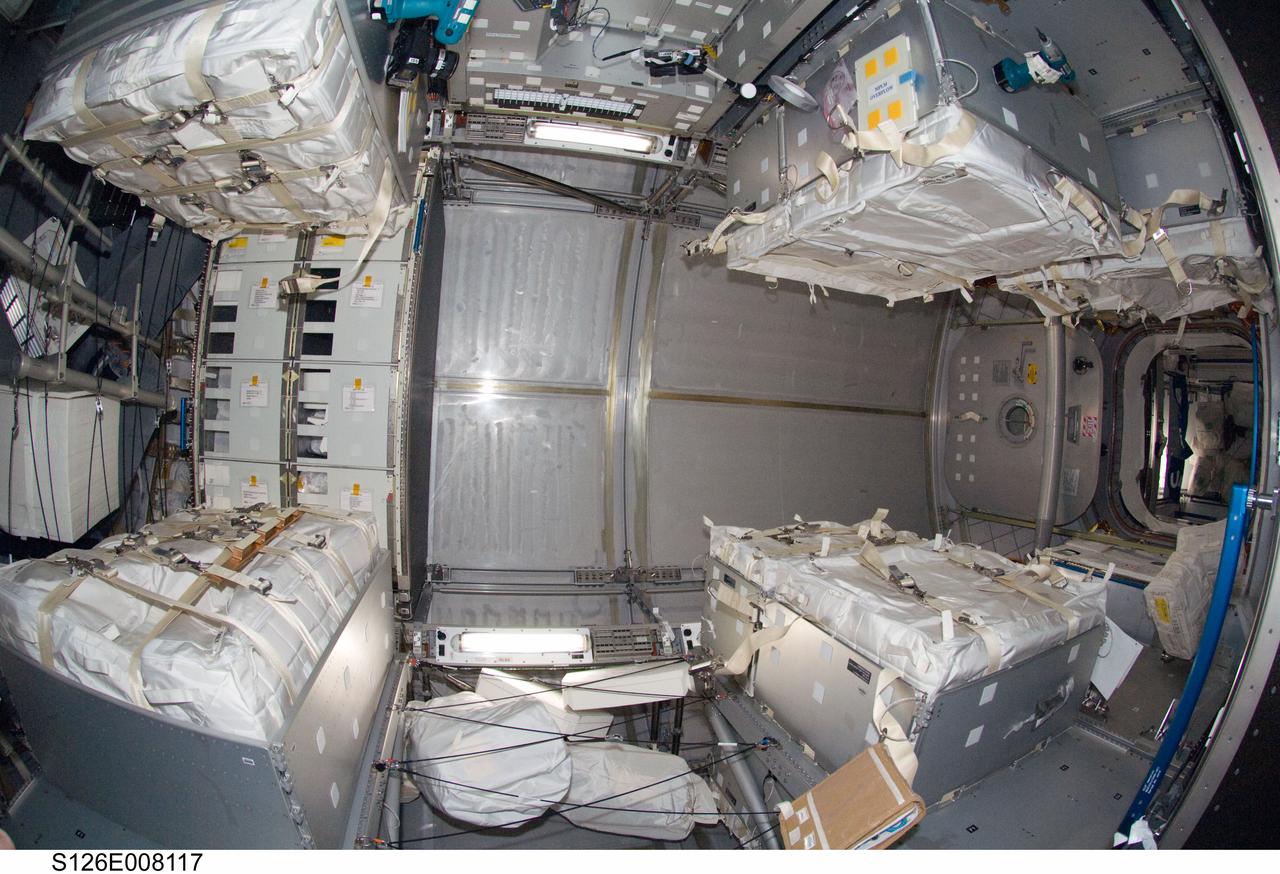
S126-E-008117 (18 Nov. 2008) --- Interior view of the Leonardo Multi-Purpose Logistics Module attached to the Earth-facing port of the International Space Station's Harmony node. Leonardo was moved from Space Shuttle Endeavour's cargo bay and linked to the station on Nov. 17, carrying two water recovery systems racks for recycling urine into potable water, a second toilet system, new gallery components, two new food warmers, a food refrigerator, an experiment freezer, combustion science experiment rack, two separate sleeping quarters and a resistance exercise device (aRED) that allows station crewmembers to perform a variety of exercises.
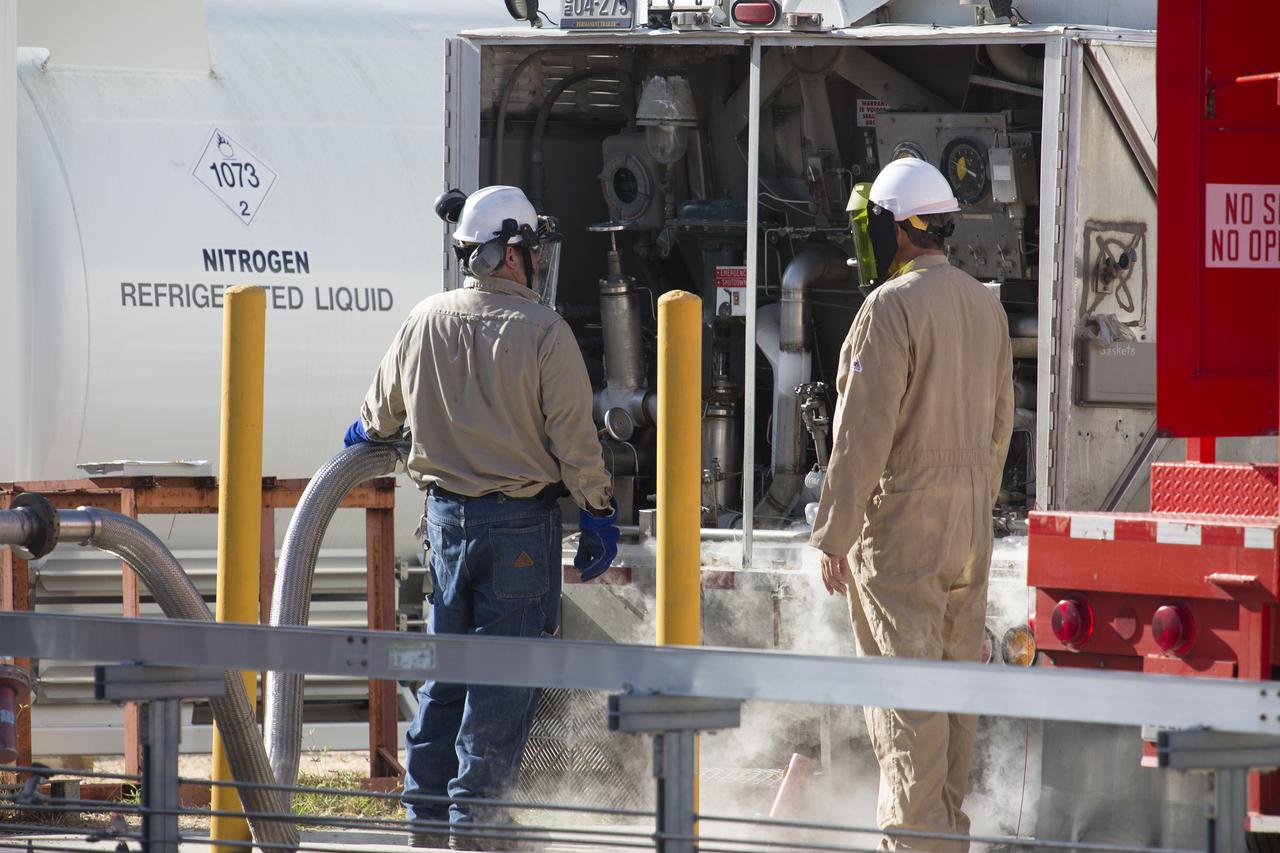
Technicians with Praxair pressurize the hydrogen trailer before offloading liquid hydrogen during a test of the Ground Operations Demo Unit for liquid hydrogen at NASA's Kennedy Space Center in Florida. The system includes a 33,000 gallon liquid hydrogen storage tank with an internal cold heat exchanger supplied from a cryogenic refrigerator. The primary goal of the testing is to achieve a liquid hydrogen zero boil-off capability. The system was designed, installed and tested by a team of civil servants and contractors from the center's Cryogenic Test Laboratory, with support from engineers at NASA's Glenn Research Center in Cleveland and Stennis Space Center in Mississippi. It may be applicable for use by the Ground Systems Development and Operations Program at Launch Pad 39B.
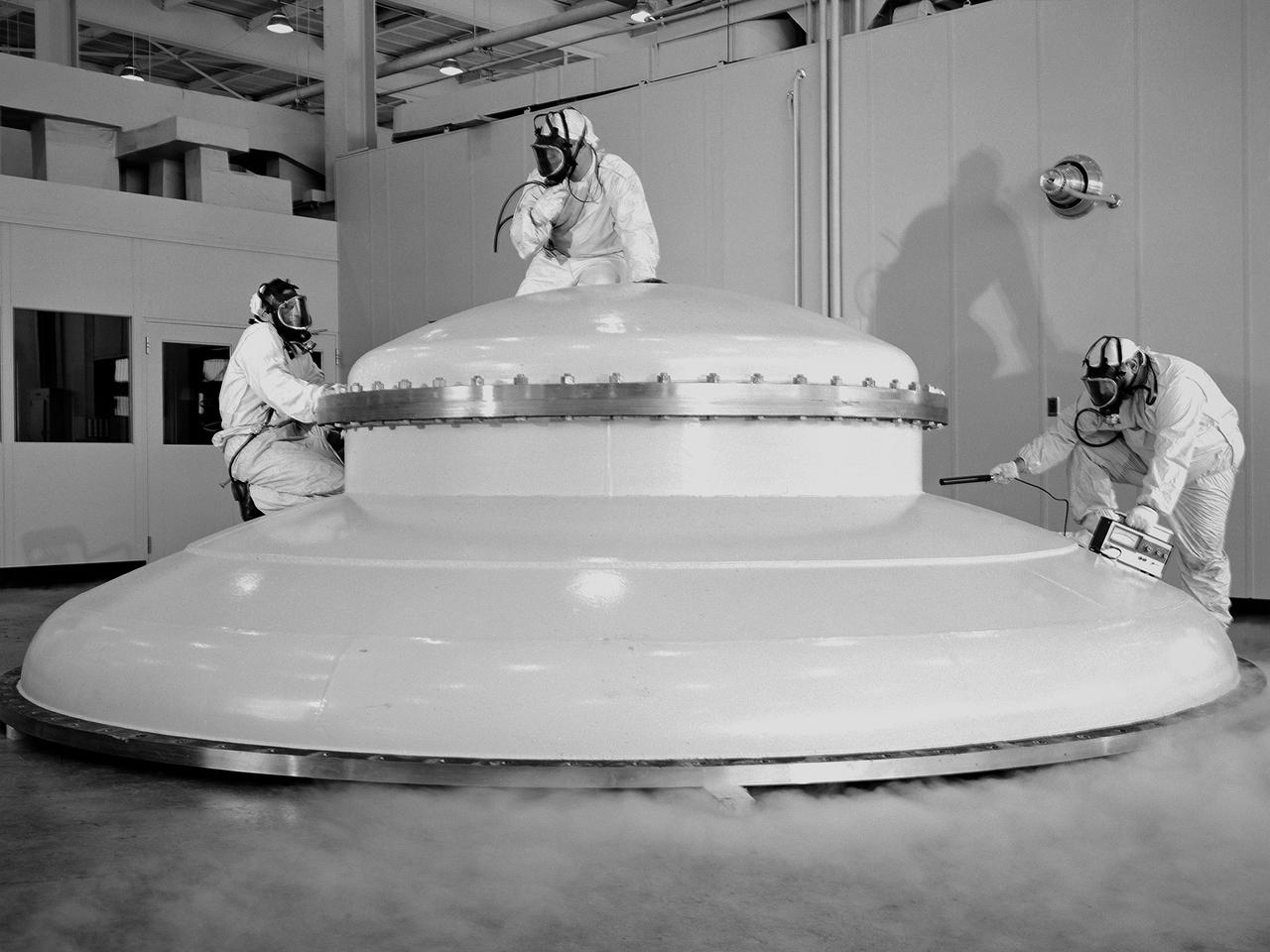
Engineer Paul Reader and his colleagues take environmental measurements during testing of a 20-inch diameter ion engine in a vacuum tank at the Electric Propulsion Laboratory (EPL). Researchers at the Lewis Research Center were investigating the use of a permanent-magnet circuit to create the magnetic field required power electron bombardment ion engines. Typical ion engines use a solenoid coil to create this magnetic field. It was thought that the substitution of a permanent magnet would create a comparable magnetic field with a lower weight. Testing of the magnet system in the EPL vacuum tanks revealed no significant operational problems. Reader found the weight of the two systems was similar, but that the thruster’s efficiency increased with the magnet. The EPL contained a series of large vacuum tanks that could be used to simulate conditions in space. Large vacuum pumps reduced the internal air pressure, and a refrigeration system created the cryogenic temperatures found in space.
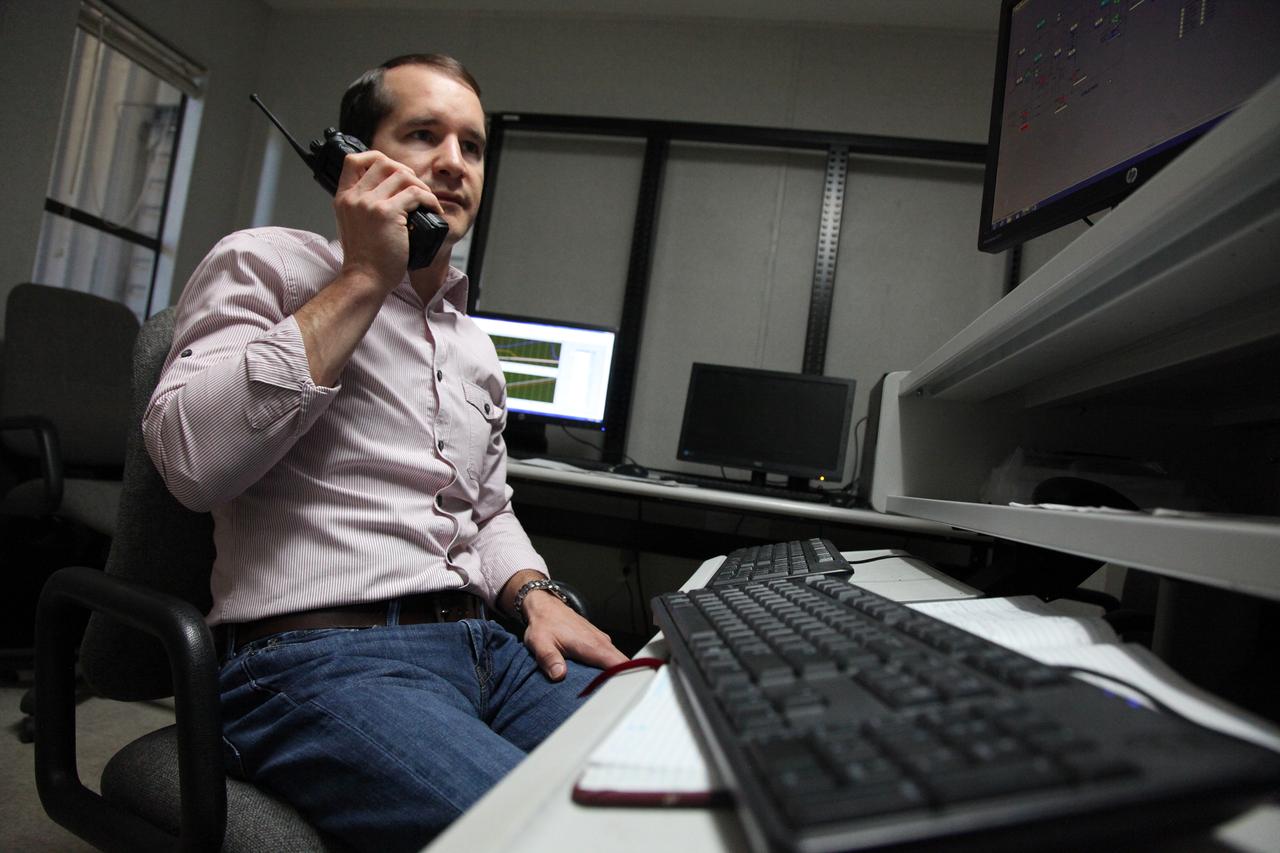
Inside a control building at NASA's Kennedy Space Center in Florida, Adam Swinger, cryogenic research engineer in the Exploration Research and Technology Directorate, communicates with team members during a test of the Ground Operations Demo Unit for liquid hydrogen. The system includes a 33,000 gallon liquid hydrogen storage tank with an internal cold heat exchanger supplied from a cryogenic refrigerator. The primary goal of the testing is to achieve a liquid hydrogen zero boil-off capability. The system was designed, installed and tested by a team of civil servants and contractors from the center's Cryogenic Test Laboratory, with support from engineers at NASA's Glenn Research Center in Cleveland and Stennis Space Center in Mississippi. It may be applicable for use by the Ground Systems Development and Operations Program at Launch Pad 39B.
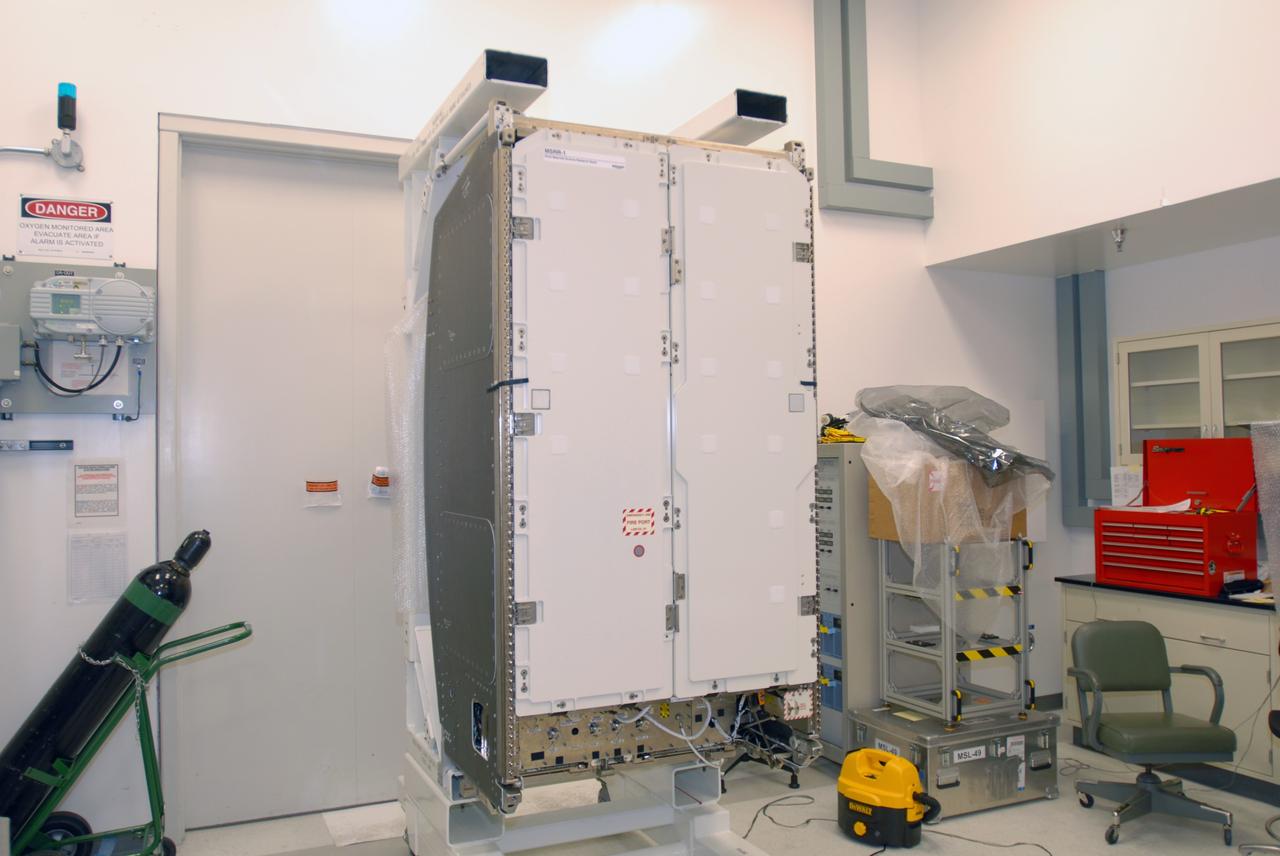
CAPE CANAVERAL, Fla. – The Materials Science Research Rack-1, or MSRR-1, arrived at NASA's Kennedy Space Center in Florida for final flight preparations. The size of a large refrigerator, MSRR-1 is 6 feet high, 3.5 feet wide and 40 inches deep and weighs about 1 ton. MSRR-1 is the payload for the STS-128 mission targeted to launch in August. The rack will be installed in the Leonardo Multi-Purpose Logistics Module for transport to the International Space Station . After arriving at the station, the rack will be housed in the U.S. Destiny laboratory. MSRR-1 will allow for study of a variety of materials including metals, ceramics, semiconductor crystals and glasses onboard the orbiting laboratory. Photo credit: NASA/Jim Grossmann
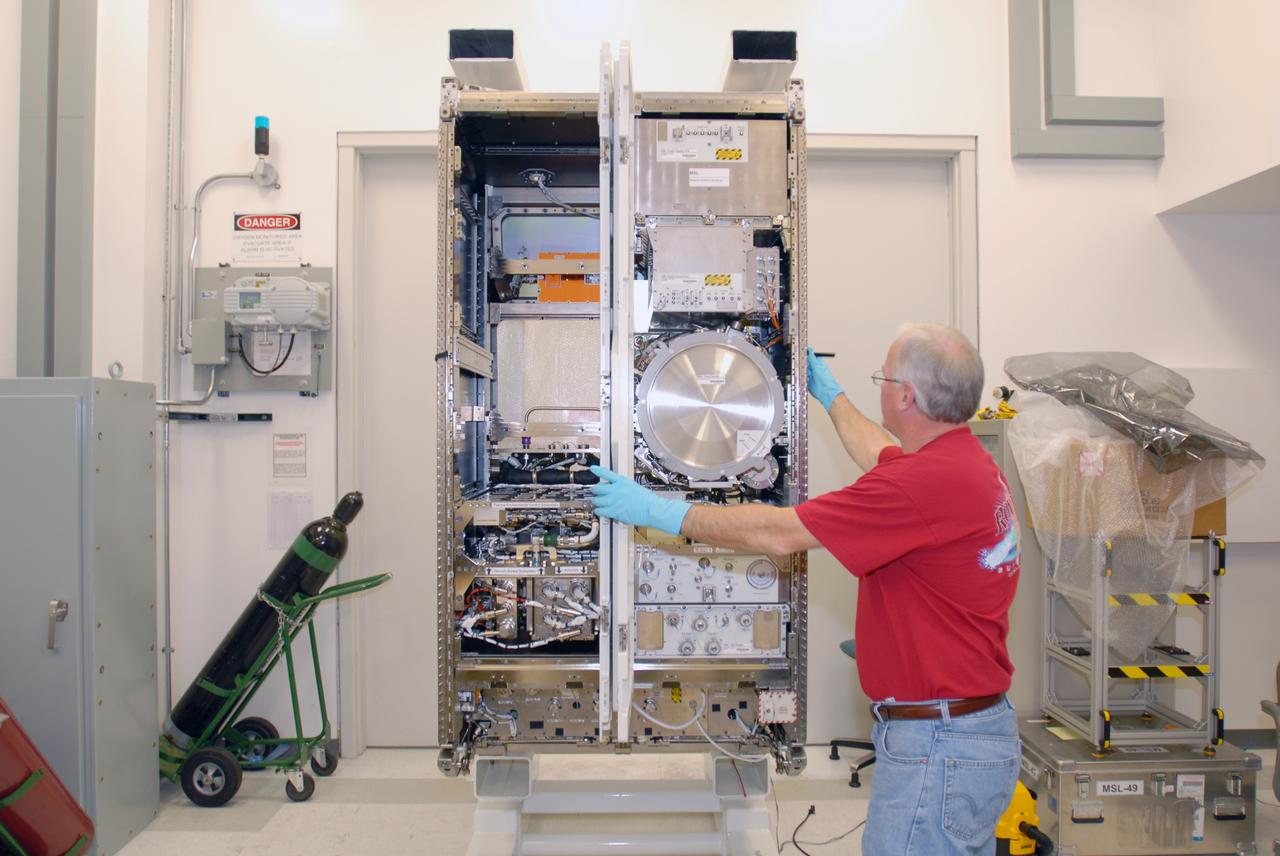
CAPE CANAVERAL, Fla. – At NASA's Kennedy Space Center in Florida, a technician checks out the Materials Science Research Rack-1, or MSRR-1, which will undergo final flight preparations. The size of a large refrigerator, MSRR-1 is 6 feet high, 3.5 feet wide and 40 inches deep and weighs about 1 ton. MSRR-1 is the payload for the STS-128 mission targeted to launch in August. The rack will be installed in the Leonardo Multi-Purpose Logistics Module for transport to the International Space Station . After arriving at the station, the rack will be housed in the U.S. Destiny laboratory. MSRR-1 will allow for study of a variety of materials including metals, ceramics, semiconductor crystals and glasses onboard the orbiting laboratory. Photo credit: NASA/Jim Grossmann
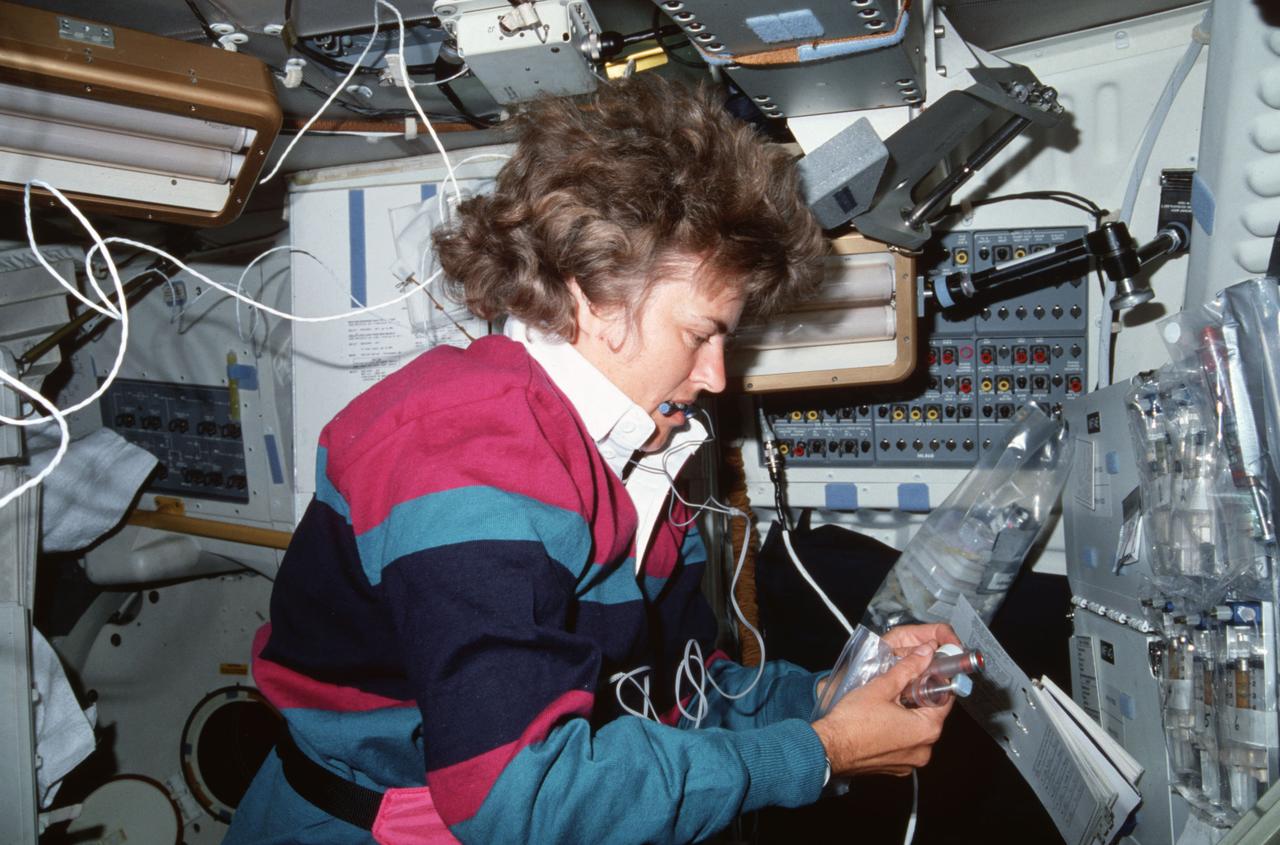
STS043-03-001 (2-11 Aug 1991) --- Astronaut Shannon W. Lucid, STS-43 mission specialist, is pictured with a sample from the Bio-serve Instrumentation Technology Associates Materials Dispersion Apparatus (BIMDA). BIMDA is designed to obtain data on scientific methods and commercial potential for growing large high quality protein crystals in microgravity. The experimental focus is on both synthetic and natural biological processes that provide the foundation of the assembly of large structures from macromolecules. In addition, cell processes and membrane (cell and artificial) processes are being evaluated. BIMDA experiments are stored and operated on the middeck in a refrigerator/incubator module (R/IM). During this flight, the R/IM maintains a constant internal temperature of 20 degrees Celsius. This experiment also flew on NASA?s STS-37 mission.
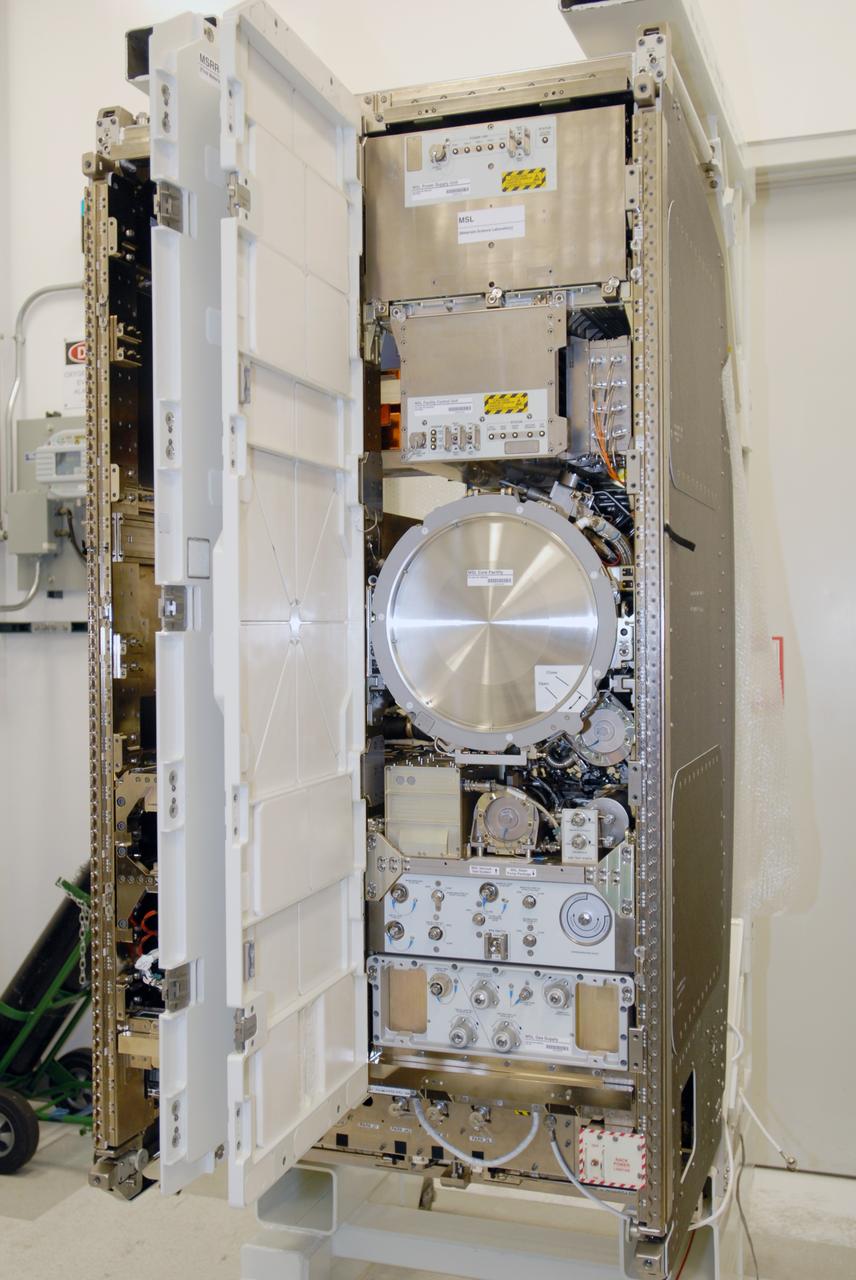
CAPE CANAVERAL, Fla. – This close-up shows some of the components of the Materials Science Research Rack-1, or MSRR-1, which arrived at NASA's Kennedy Space Center in Florida for final flight preparations. The size of a large refrigerator, MSRR-1 is 6 feet high, 3.5 feet wide and 40 inches deep and weighs about 1 ton. MSRR-1 is the payload for the STS-128 mission targeted to launch in August. The rack will be installed in the Leonardo Multi-Purpose Logistics Module for transport to the International Space Station . After arriving at the station, the rack will be housed in the U.S. Destiny laboratory. MSRR-1 will allow for study of a variety of materials including metals, ceramics, semiconductor crystals and glasses onboard the orbiting laboratory. Photo credit: NASA/Jim Grossmann
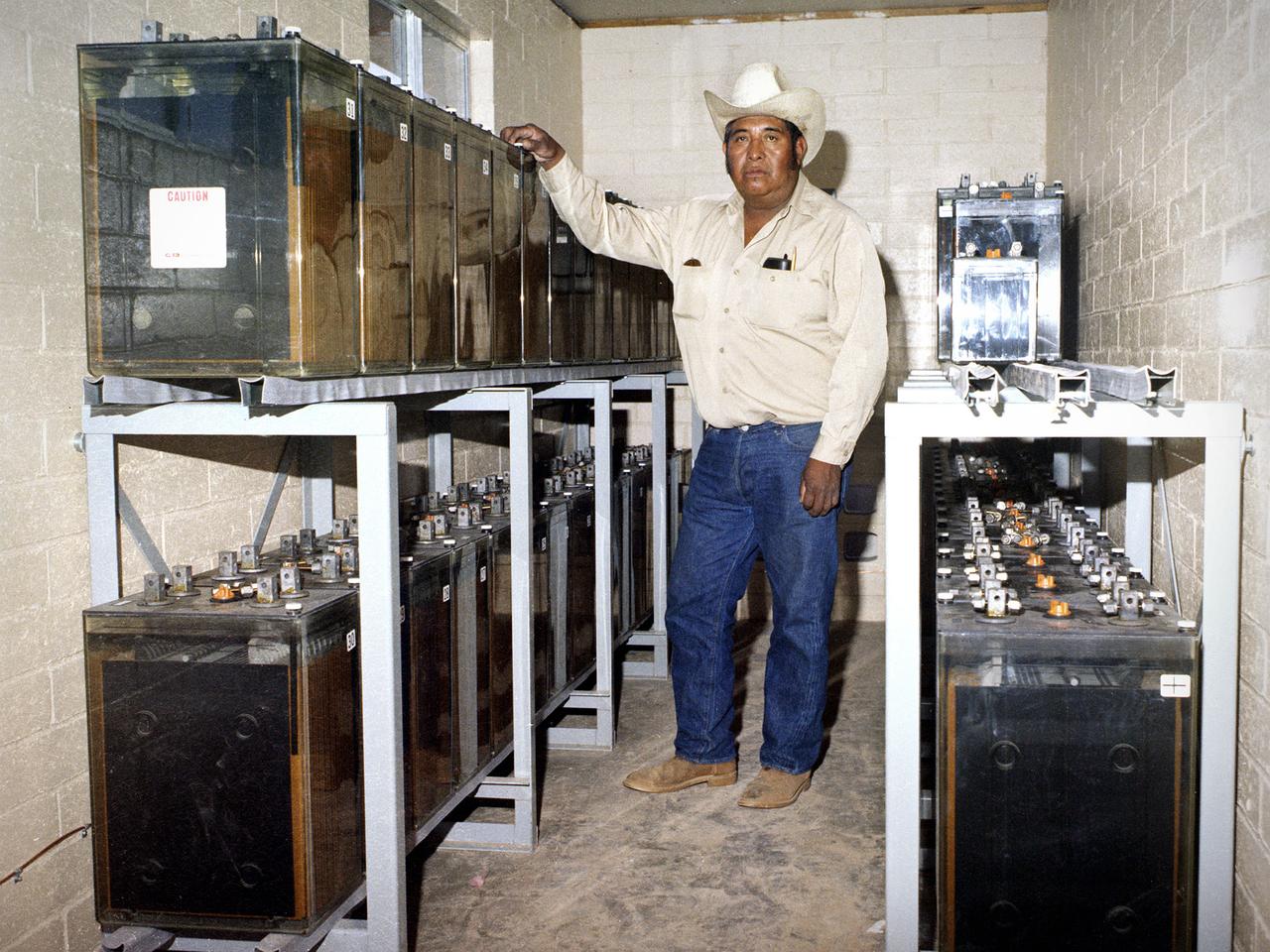
National Aeronautics and Space Administration (NASA) Lewis Research Center. NASA signed an agreement with the Papago tribe in May 1978 to provide the village with solar-generated electricity within the year. The project was funded by the Department of Energy and managed by NASA Lewis. Lewis provided all of the equipment and technical assistance while the tribe’s construction team built the arrays and support equipment, seen here. The 3.5-kilowatt system was modest in scope, but resulted in the first solar electric village. The system provided power to operate a refrigerator, freezer, washing machine, and water pump for the village and lights in each of the 16 homes. The system was activated on December 16, 1978. During the next year officials from around the world travelled to Schuchuli to ascertain if the system was applicable to their areas. The major television networks and over 100 publications covered the story. Less than one percent of the cells failed during the first year of operation.
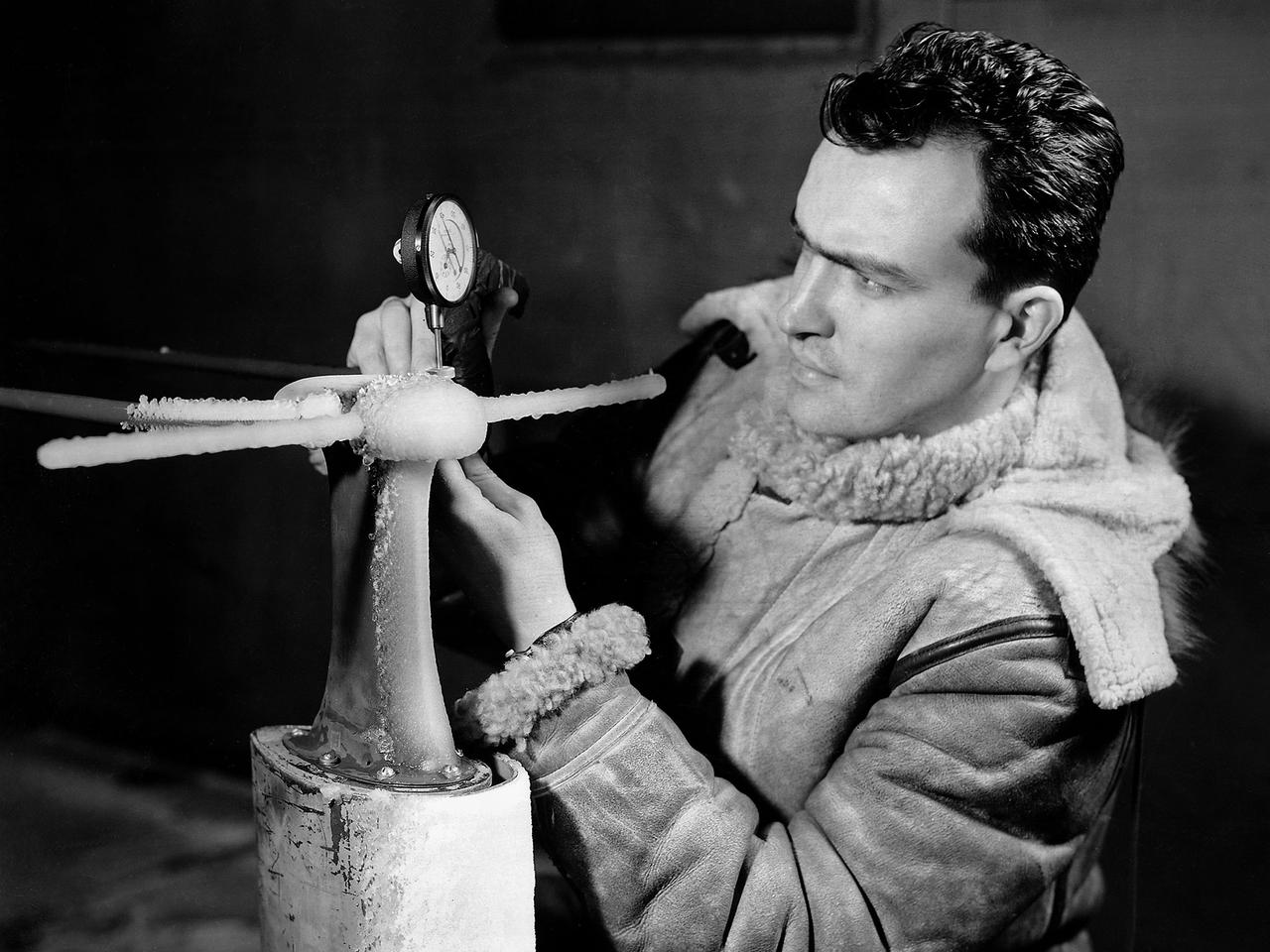
A National Advisory Committee for Aeronautics (NACA) researcher measures the ice thickness on a landing antenna model in the Icing Research Tunnel at the Aircraft Engine Research Laboratory. NACA design engineers added the Icing Research Tunnel to the original layout of the new Aircraft Engine Research Laboratory to take advantage of the massive refrigeration system being built for the Altitude Wind Tunnel. The Icing Research Tunnel was built to study the formation of ice on aircraft surfaces and methods of preventing or eradicating that ice. Ice buildup adds extra weight, effects aerodynamics, and sometimes blocks air flow through engines. The Icing Research Tunnel is a closed-loop atmospheric wind tunnel with a 6- by 9-foot test section. Carrier Corporation refrigeration equipment reduced the internal air temperature to -45 degrees F and a spray bar system injected water droplets into the air stream. The 24-foot diameter drive fan, seen in this photograph, created air flows velocities up to 400 miles per hour. The Icing Research Tunnel began testing in June of 1944. Early testing, seen in this photograph, studied ice accumulation on propellers and antenna of a military aircraft. The Icing Research Tunnel’s designers, however, struggled to develop a realistic spray system since they did not have access to data on the size of naturally occurring water droplets. The system would have to generate small droplets, distribute them uniformly throughout the airstream, and resist freezing and blockage. For five years a variety of different designs were painstakingly developed and tested before the system was perfected.
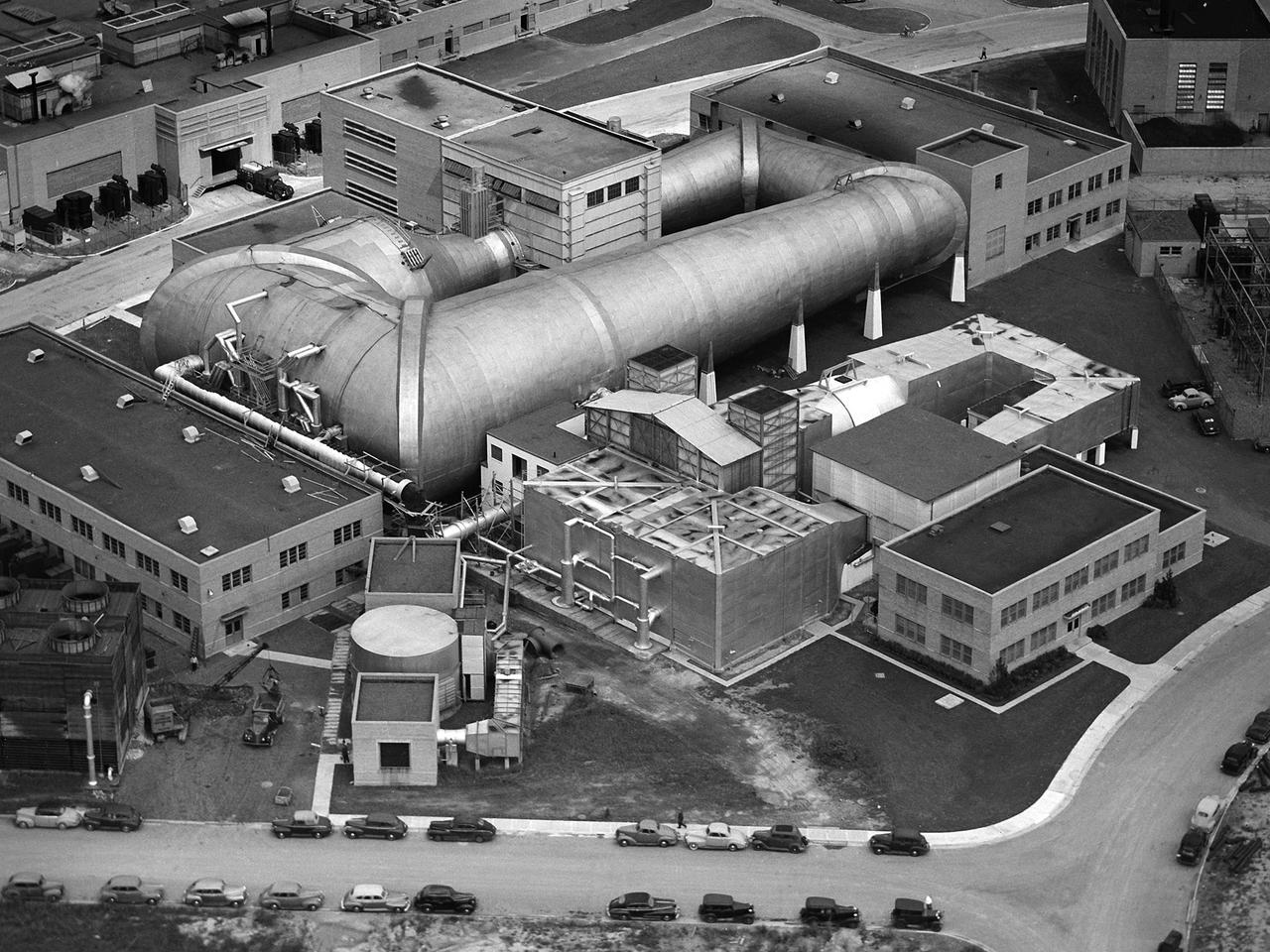
This aerial photograph shows the entire original wind tunnel complex at the National Advisory Committee for Aeronautics (NACA) Aircraft Engine Research Laboratory. The large Altitude Wind Tunnel (AWT) at the center of the photograph dominates the area. The Icing Research Tunnel to the right was incorporated into the lab’s design to take advantage of the AWT’s powerful infrastructure. The laboratory’s first supersonic wind tunnel was added to this complex just prior to this September 1945 photograph. The AWT was the nation’s only wind tunnel capable of studying full-scale engines in simulated flight conditions. The AWT’s test section and control room were within the two-story building near the top of the photograph. The exhauster equipment used to thin the airflow and the drive motor for the fan were in the building to the right of the tunnel. The unique refrigeration equipment was housed in the structure to the left of the tunnel. The Icing Research Tunnel was an atmospheric tunnel that used the AWT’s refrigeration equipment to simulate freezing rain inside its test section. A spray bar system inside the tunnel was originally used to create the droplets. The 18- by 18-inch supersonic wind tunnel was built in the summer of 1945 to take advantage of the AWT’s powerful exhaust system. It was the lab’s first supersonic tunnel and could reach Mach 1.91. Eventually the building would house three small supersonic tunnels, referred to as the “stack tunnels” because of the vertical alignment. The two other tunnels were added to this structure in 1949 and 1951.
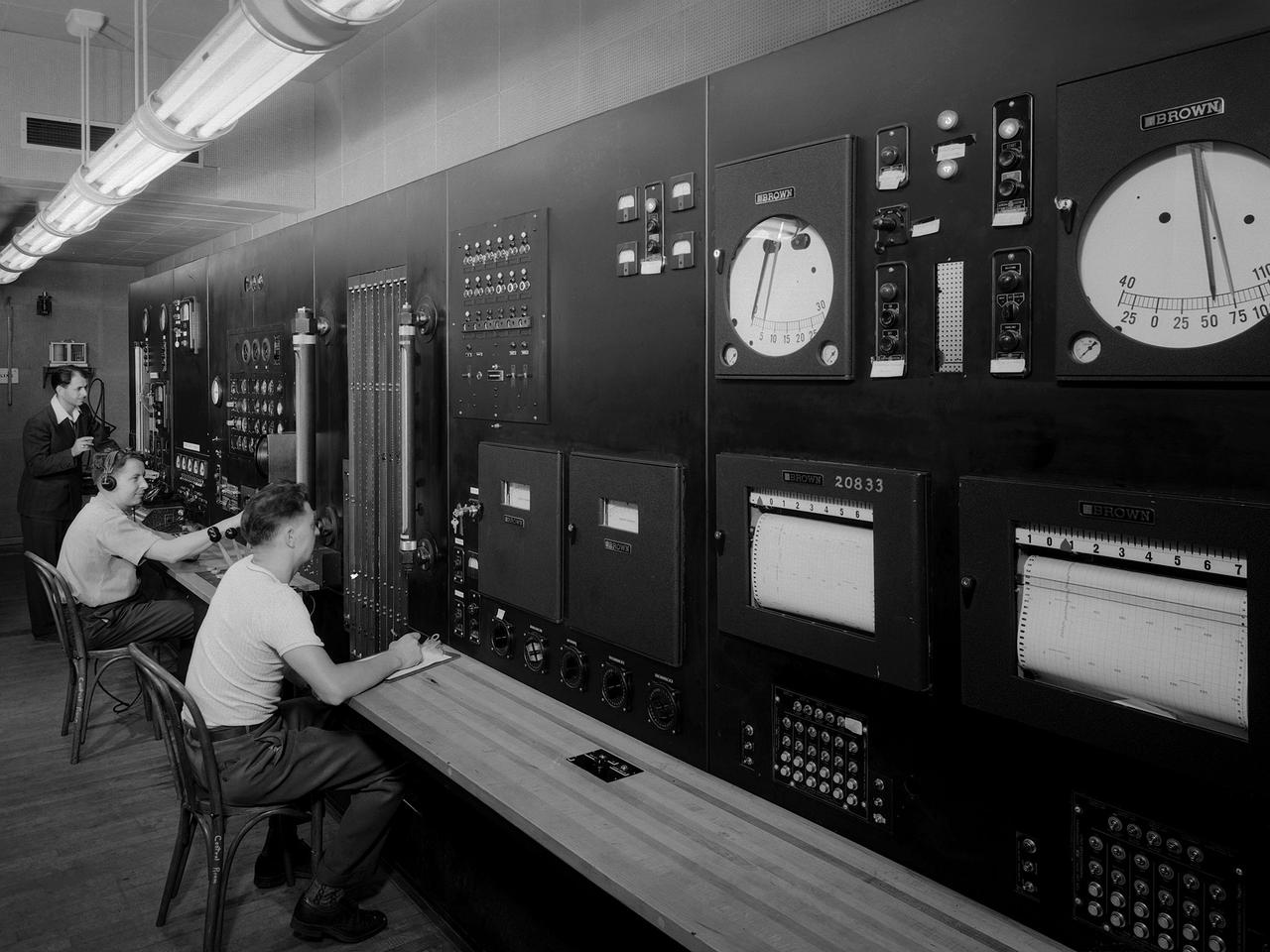
Operators in the control room for the Altitude Wind Tunnel at the National Advisory Committee for Aeronautics (NACA) Aircraft Engine Research Laboratory remotely operate a Wright R–3350 engine in the tunnel’s test section. Four of the engines were used to power the B–29 Superfortress, a critical weapon in the Pacific theater during World War II. The wind tunnel, which had been in operation for approximately six months, was the nation’s only wind tunnel capable of testing full-scale engines in simulated altitude conditions. The soundproof control room was used to operate the wind tunnel and control the engine being run in the test section. The operators worked with assistants in the adjacent Exhauster Building and Refrigeration Building to manage the large altitude simulation systems. The operator at the center console controlled the tunnel’s drive fan and operated the engine in the test section. Two sets of pneumatic levers near his right forearm controlled engine fuel flow, speed, and cooling. Panels on the opposite wall, out of view to the left, were used to manage the combustion air, refrigeration, and exhauster systems. The control panel also displayed the master air speed, altitude, and temperature gauges, as well as a plethora of pressure, temperature, and airflow readings from different locations on the engine. The operator to the right monitored the manometer tubes to determine the pressure levels. Despite just being a few feet away from the roaring engine, the control room remained quiet during the tests.
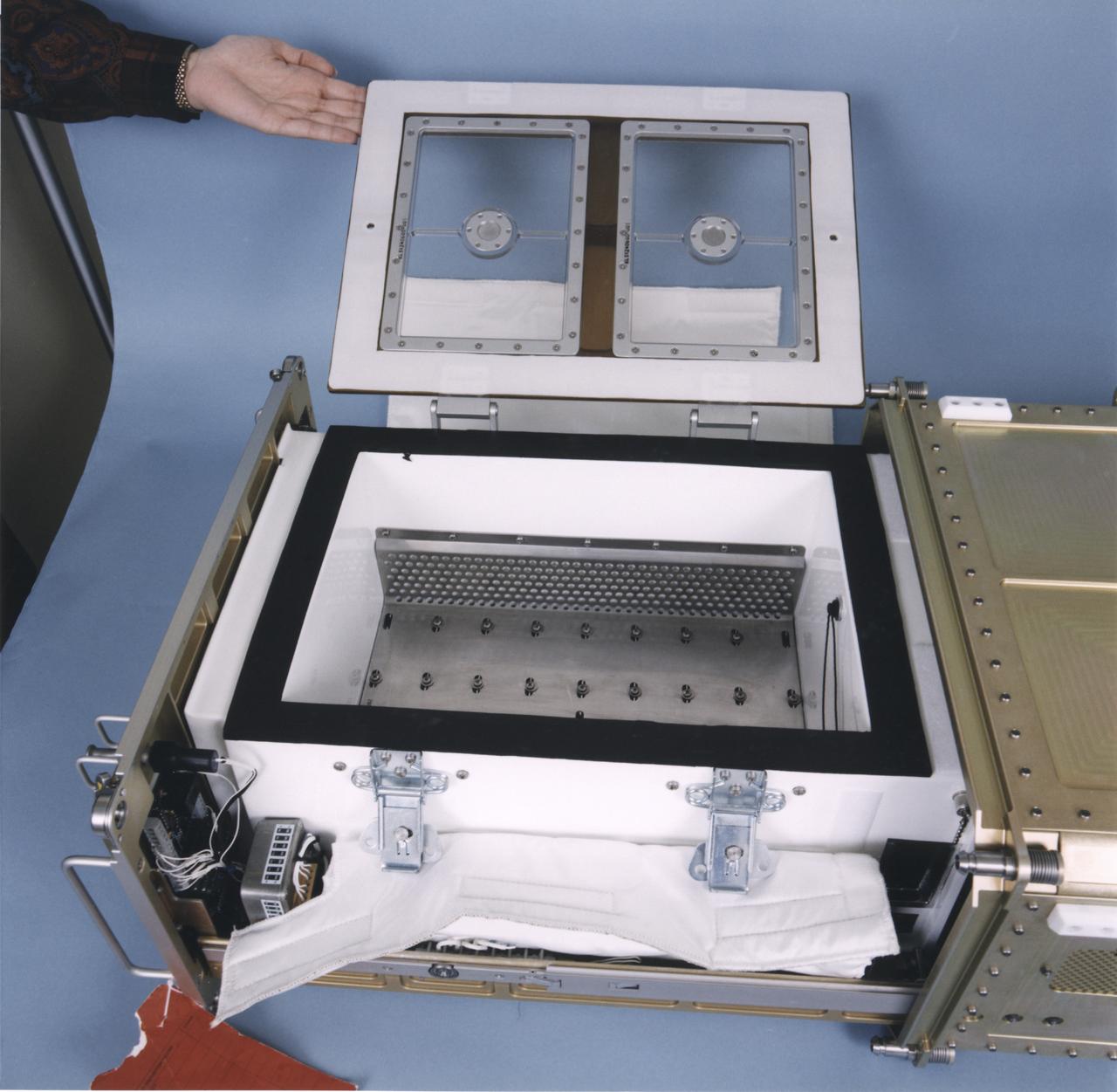
Interior of a Biotechnology Refrigerator that preserves samples for use in (or after culturing in) the NASA Bioreactor. The unit is shown extracted from a middeck locker shell. The NASA Bioreactor provides a low turbulence culture environment which promotes the formation of large, three-dimensional cell clusters. The Bioreactor is rotated to provide gentle mixing of fresh and spent nutrient without inducing shear forces that would damage the cells. Due to their high level of cellular organization and specialization, samples constructed in the bioreactor more closely resemble the original tumor or tissue found in the body. The work is sponsored by NASA's Office of Biological and Physical Research. The bioreactor is managed by the Biotechnology Cell Science Program at NASA's Johnson Space Center (JSC). NASA-sponsored bioreactor research has been instrumental in helping scientists to better understand normal and cancerous tissue development. In cooperation with the medical community, the bioreactor design is being used to prepare better models of human colon, prostate, breast and ovarian tumors. Cartilage, bone marrow, heart muscle, skeletal muscle, pancreatic islet cells, liver and kidney are just a few of the normal tissues being cultured in rotating bioreactors by investigators.
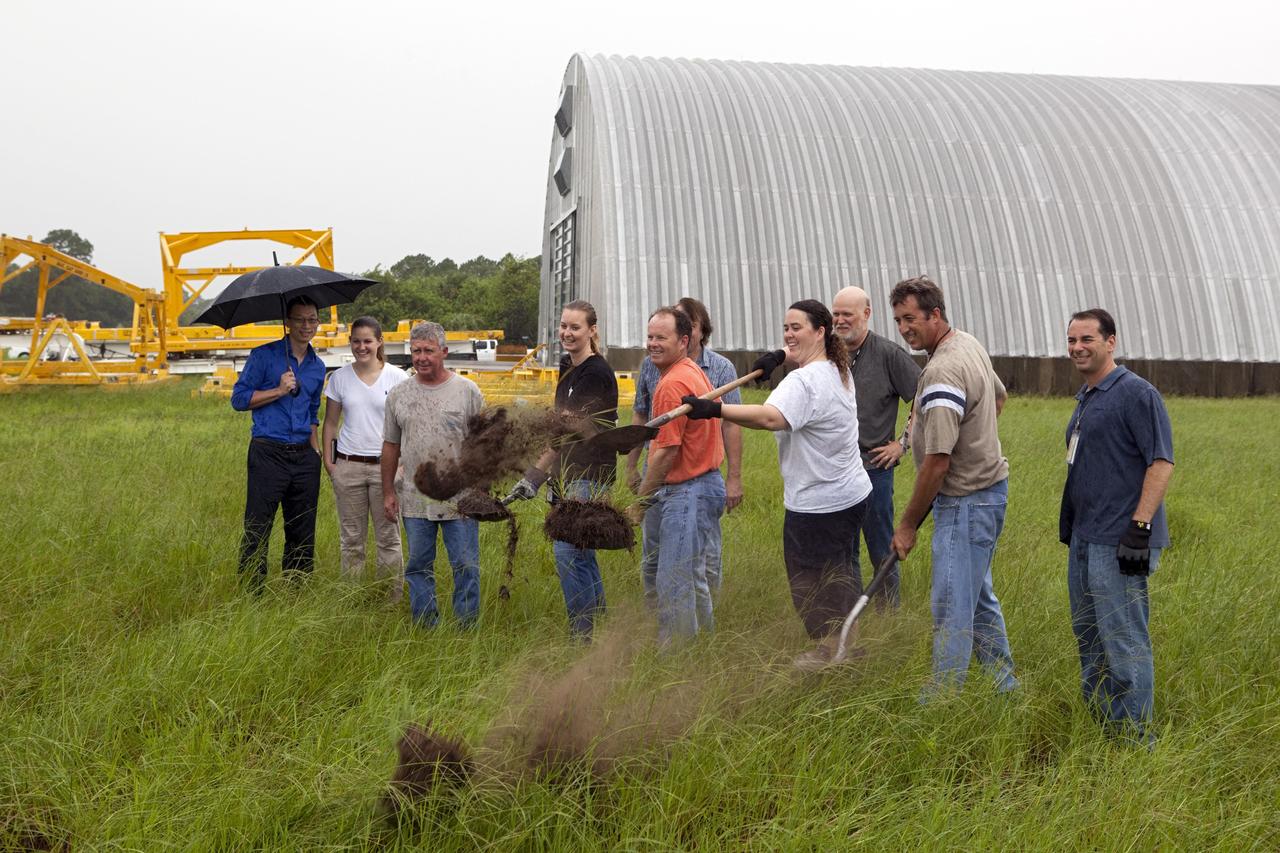
CAPE CANAVERAL, Fla. – Near the Hypergolic Maintenance Facility at NASA’s Kennedy Space Center in Florida, a groundbreaking ceremony was held to mark the location of the Ground Operations Demonstration Unit Liquid Hydrogen, or GODU LH2, test site. From left, are Johnny Nguyen, Fluids Test and Technology Development branch chief Emily Watkins, engineering intern Jeff Walls, Engineering Services Contract, or ESC, Cryogenics Test Lab engineer Kelly Currin, systems engineer Stephen Huff and Rudy Werlink partially hidden, cryogenics engineers Angela Krenn, systems engineer Doug Hammond, command and control engineer in the electrical division William Notardonato, GODU LH2 project manager and Kevin Jumper, ESC Cryogenics Test Lab manager. The GODU LH2 test site is one of the projects in NASA’s Advanced Exploration Systems Program. The site will be used to demonstrate advanced liquid hydrogen systems that are cost and energy efficient ways to store and transfer liquid hydrogen during process, loading, launch and spaceflight. The main components of the site will be a storage tank and a cryogenic refrigerator. Photo credit: NASA/Dimitri Gerondidakis
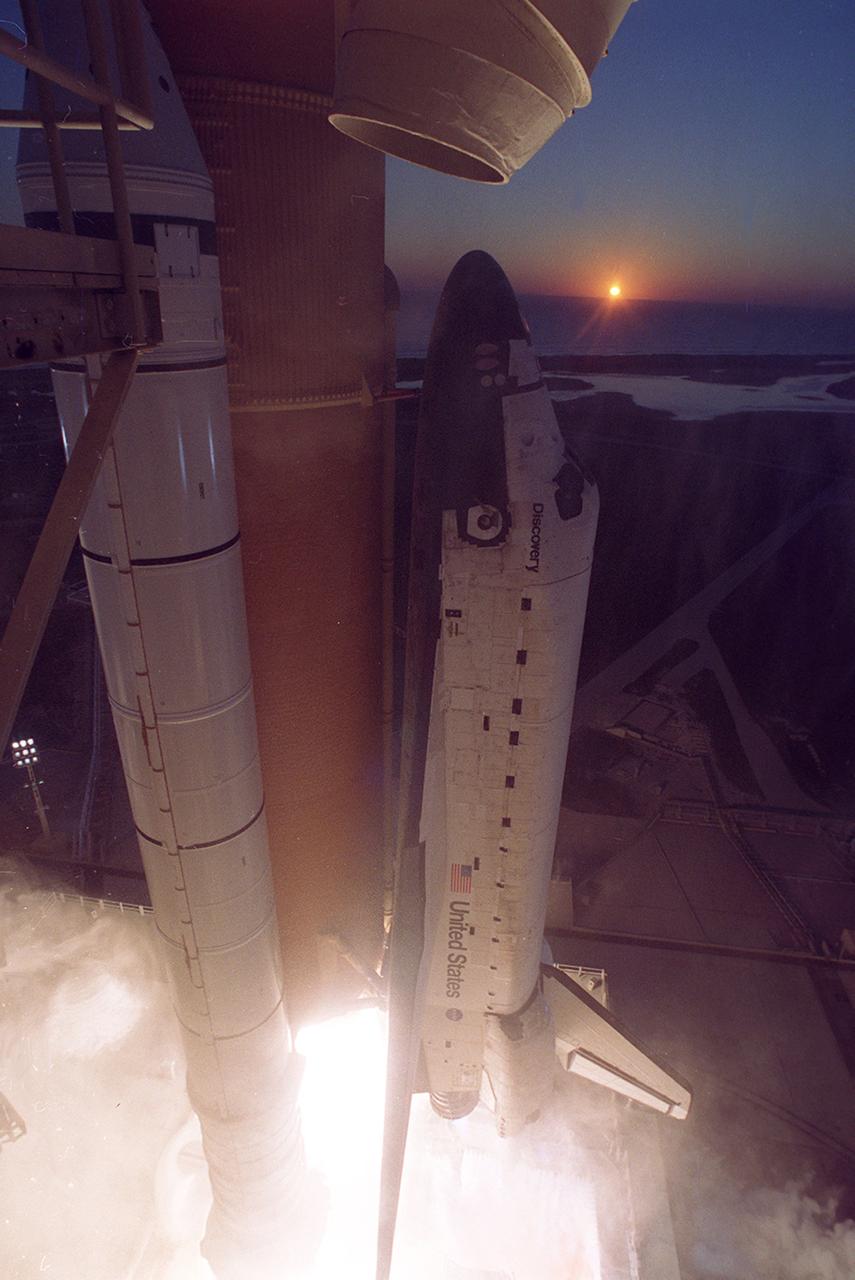
The Space Shuttle Discovery, STS-102 mission, clears launch pad 39B at the Kennedy Space Center as the sun peers over the Atlantic Ocean on March 8, 2001. STS-102's primary cargo was the Leonardo, the Italian Space Agency built Multipurpose Logistics Module (MPLM). The Leonardo MPLM is the first of three such pressurized modules that will serve as the International Space Station's (ISS') moving vans, carrying laboratory racks filled with equipment, experiments, and supplies to and from the Station aboard the Space Shuttle. The cylindrical module is approximately 21-feet long and 15- feet in diameter, weighing almost 4.5 tons. It can carry up to 10 tons of cargo in 16 standard Space Station equipment racks. Of the 16 racks the module can carry, 5 can be furnished with power, data, and fluid to support refrigerators or freezers. In order to function as an attached station module as well as a cargo transport, the logistics module also includes components that provide life support, fire detection and suppression, electrical distribution, and computer functions. NASA's 103rd overall flight and the eighth assembly flight, STS-102 was also the first flight involved with Expedition Crew rotation. The Expedition Two crew was delivered to the station while Expedition One was returned home to Earth.
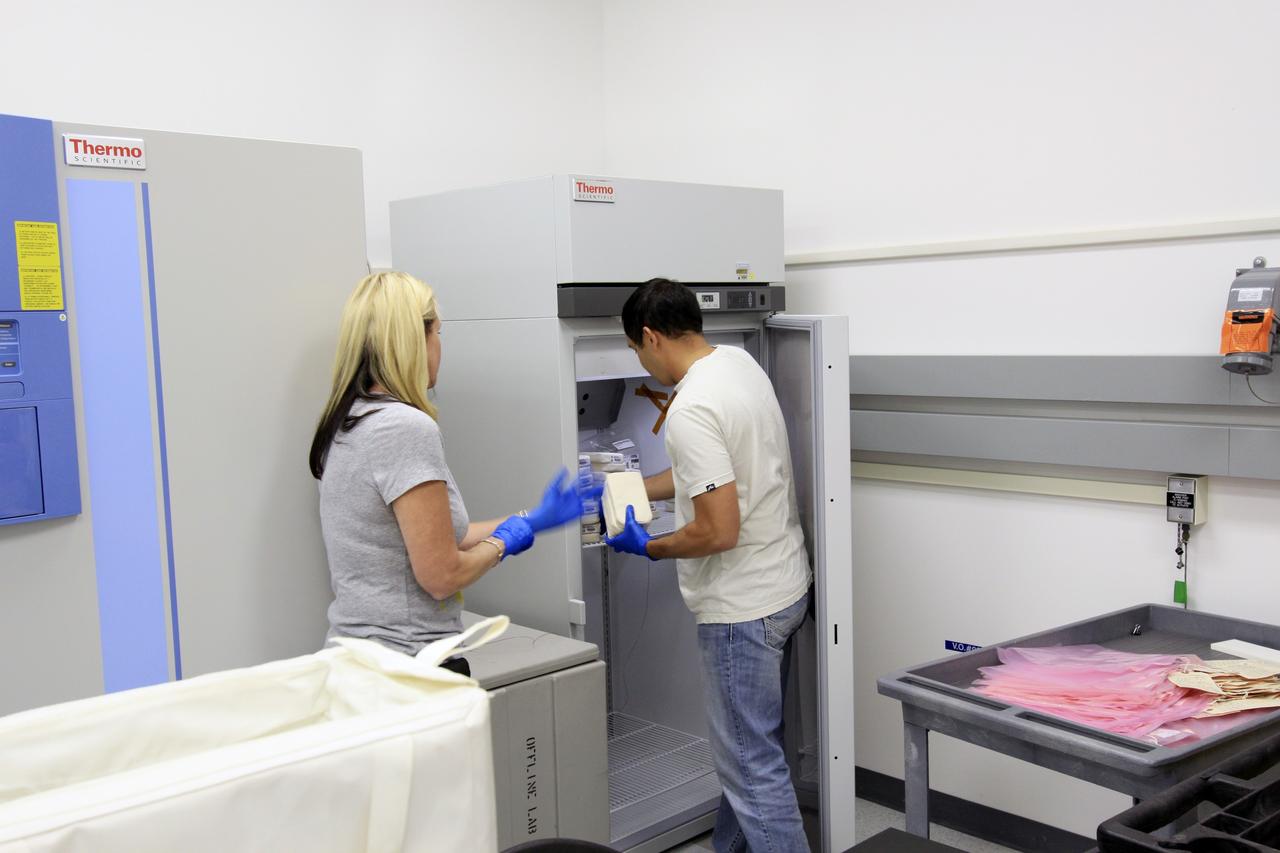
CAPE CANAVERAL, Fla. – In the Space Station Processing Facility at NASA’s Kennedy Space Center in Florida, refrigerated NanoRacks-CubeLabs Module-9 experiments are being prepared for transport to Space Launch Complex-40 on nearby Cape Canaveral Air Force Station. There, the bags will be loaded into the Space Exploration Technologies Dragon capsule in preparation for its scheduled April 30 liftoff aboard a Falcon 9 rocket. NanoRacks-CubeLabs Module-9 uses a two-cube unit box for student competition investigations using 15 liquid mixing tube assemblies that function similar to commercial glow sticks. The investigations range from microbial growth to water purification in microgravity. Known as SpaceX, the launch will be the company's second demonstration test flight for NASA's Commercial Orbital Transportation Services program, or COTS. During the flight, the capsule will conduct a series of check-out procedures to test and prove its systems, including rendezvous and berthing with the International Space Station. If the capsule performs as planned, the module and other cargo will be transferred to the station. The cargo includes food, water and provisions for the station’s Expedition crews, such as clothing, batteries and computer equipment. Under COTS, NASA has partnered with two private companies to launch cargo safely to the station. For more information, visit http://www.nasa.gov/spacex. Photo credit: NASA/Jim Grossmann
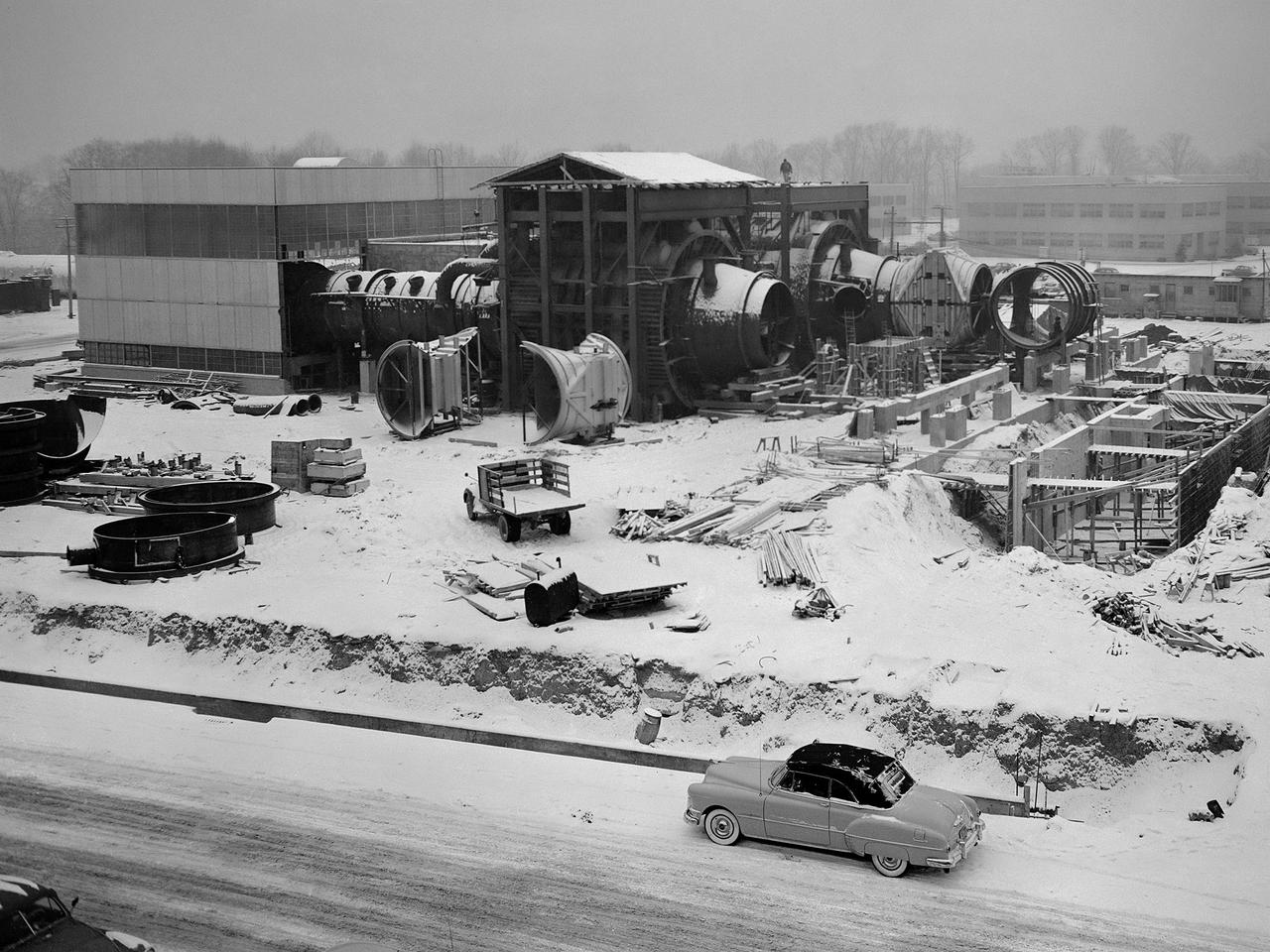
Construction of the Propulsion Systems Laboratory No. 1 and 2 at the National Advisory Committee for Aeronautics (NACA) Lewis Flight Propulsion Laboratory. When it began operation in late 1952, the Propulsion Systems Laboratory was the NACA’s most powerful facility for testing full-scale engines at simulated flight altitudes. The facility contained two altitude simulating test chambers which were a technological combination of the static sea-level test stands and the complex Altitude Wind Tunnel, which recreated actual flight conditions on a larger scale. NACA Lewis began designing the new facility in 1947 as part of a comprehensive plan to improve the altitude testing capabilities across the lab. The exhaust, refrigeration, and combustion air systems from all the major test facilities were linked. In this way, different facilities could be used to complement the capabilities of one another. Propulsion Systems Laboratory construction began in late summer 1949 with the installation of an overhead exhaust pipe connecting the facility to the Altitude Wind Tunnel and Engine Research Building. The large test section pieces arriving in early 1951, when this photograph was taken. The two primary coolers for the altitude exhaust are in place within the framework near the center of the photograph.
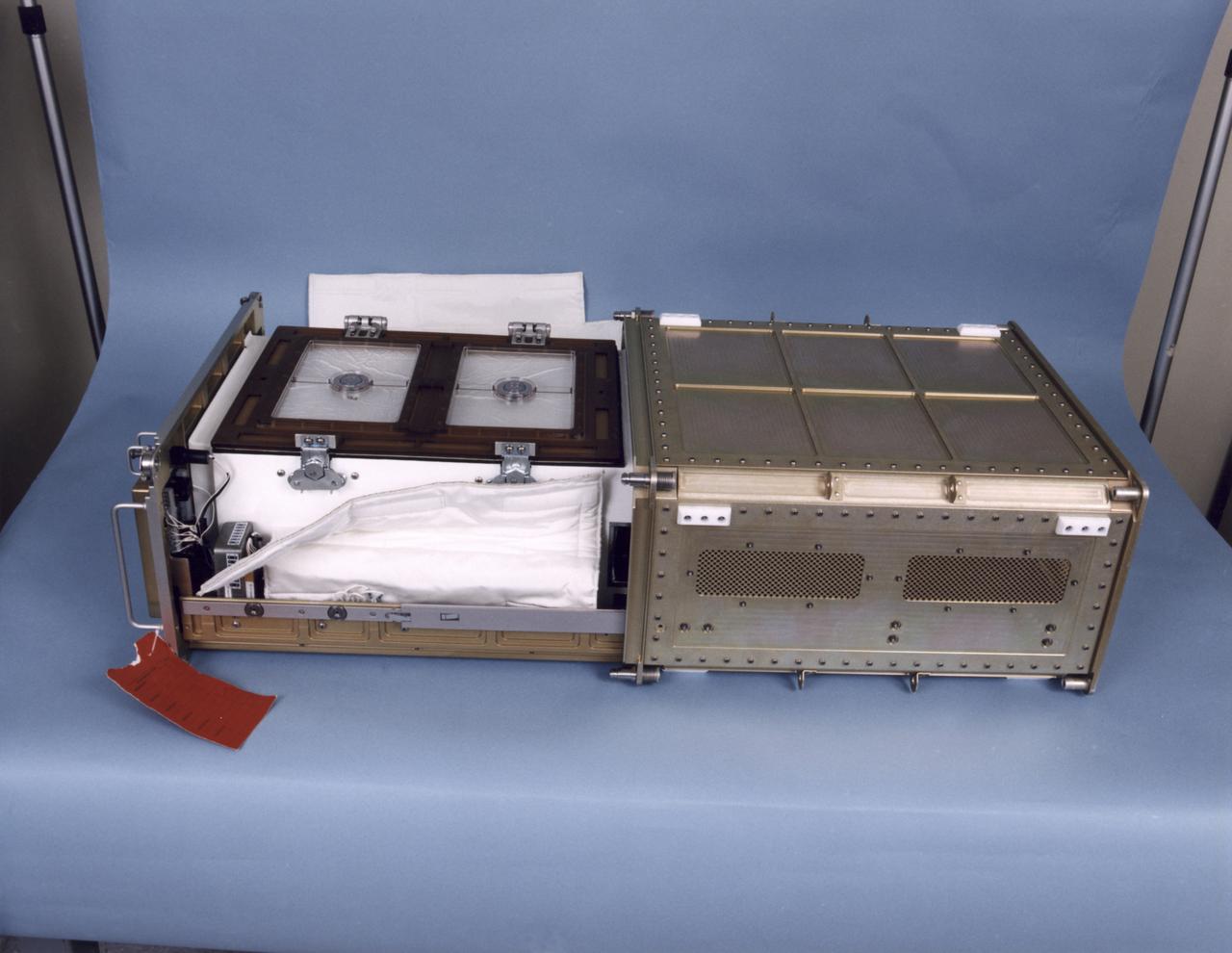
Biotechnology Refrigerator that preserves samples for use in (or after culturing in) the NASA Bioreactor. The unit is shown extracted from a middeck locker shell and with thermal blankets partially removed. The NASA Bioreactor provides a low turbulence culture environment which promotes the formation of large, three-dimensional cell clusters. The Bioreactor is rotated to provide gentle mixing of fresh and spent nutrient without inducing shear forces that would damage the cells. Due to their high level of cellular organization and specialization, samples constructed in the bioreactor more closely resemble the original tumor or tissue found in the body. The work is sponsored by NASA's Office of Biological and Physical Research. The bioreactor is managed by the Biotechnology Cell Science Program at NASA's Johnson Space Center (JSC). NASA-sponsored bioreactor research has been instrumental in helping scientists to better understand normal and cancerous tissue development. In cooperation with the medical community, the bioreactor design is being used to prepare better models of human colon, prostate, breast and ovarian tumors. Cartilage, bone marrow, heart muscle, skeletal muscle, pancreatic islet cells, liver and kidney are just a few of the normal tissues being cultured in rotating bioreactors by investigators.
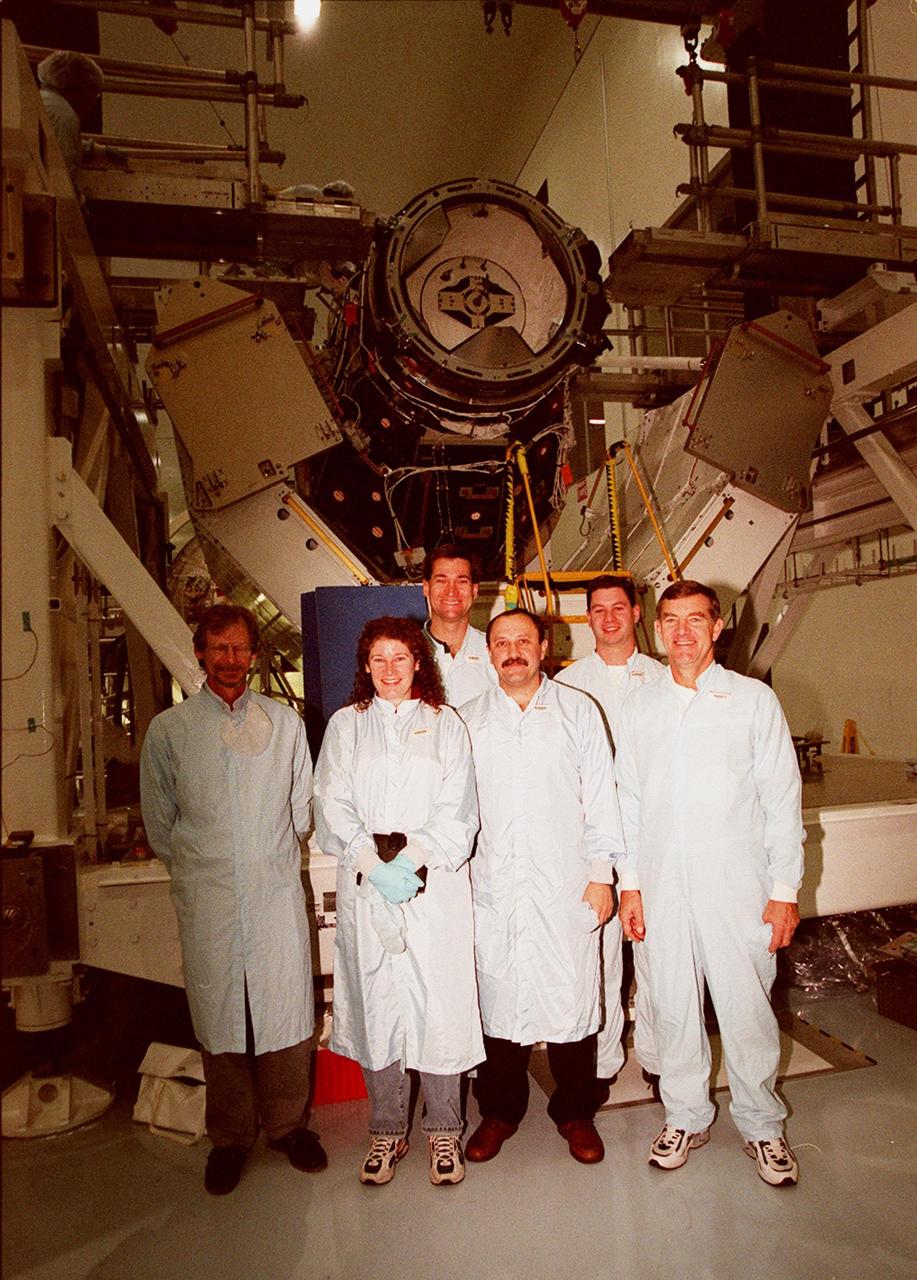
KENNEDY SPACE CENTER, FLA. -- In the Space Station Processing Facility, members of the STS-102 crew pose with workers from Johnson Space Center in front of the Pressurized Mating Adapter (PMA-3), a component of the International Space Station (ISS). From left are Dave Moore (JSC), Susan J. Helms, Arne Aamodt (JSC), Yuriy Vladimirovich Usachev, Matt Myers (JSC) and James S. Voss. Voss, Helms and Usachev, known as the Expedition II crew, will be staying on the ISS, replacing the Expedition I crew, Bill Shepherd, Sergei Krikalev and Yuri Gidzenko. Along with the crew, Mission STS-102 also will be carrying the Leonardo Multi-Purpose Logistics Module (MPLM) to the ISS. The Leonardo will be filled with equipment and supplies to outfit the U.S. laboratory module, which will have been carried to the ISS on a preceding Shuttle flight. In order to function as an attached station module as well as a cargo transport, logistics modules (there are three) also include components that provide some life support, fire detection and suppression, electrical distribution and computer functions. Eventually, the modules also will carry refrigerator freezers for transporting experiment samples and food to and from the station. STS-102 is scheduled to launch no earlier than Oct. 19, 2000, from Launch Pad 39A, Kennedy Space Center
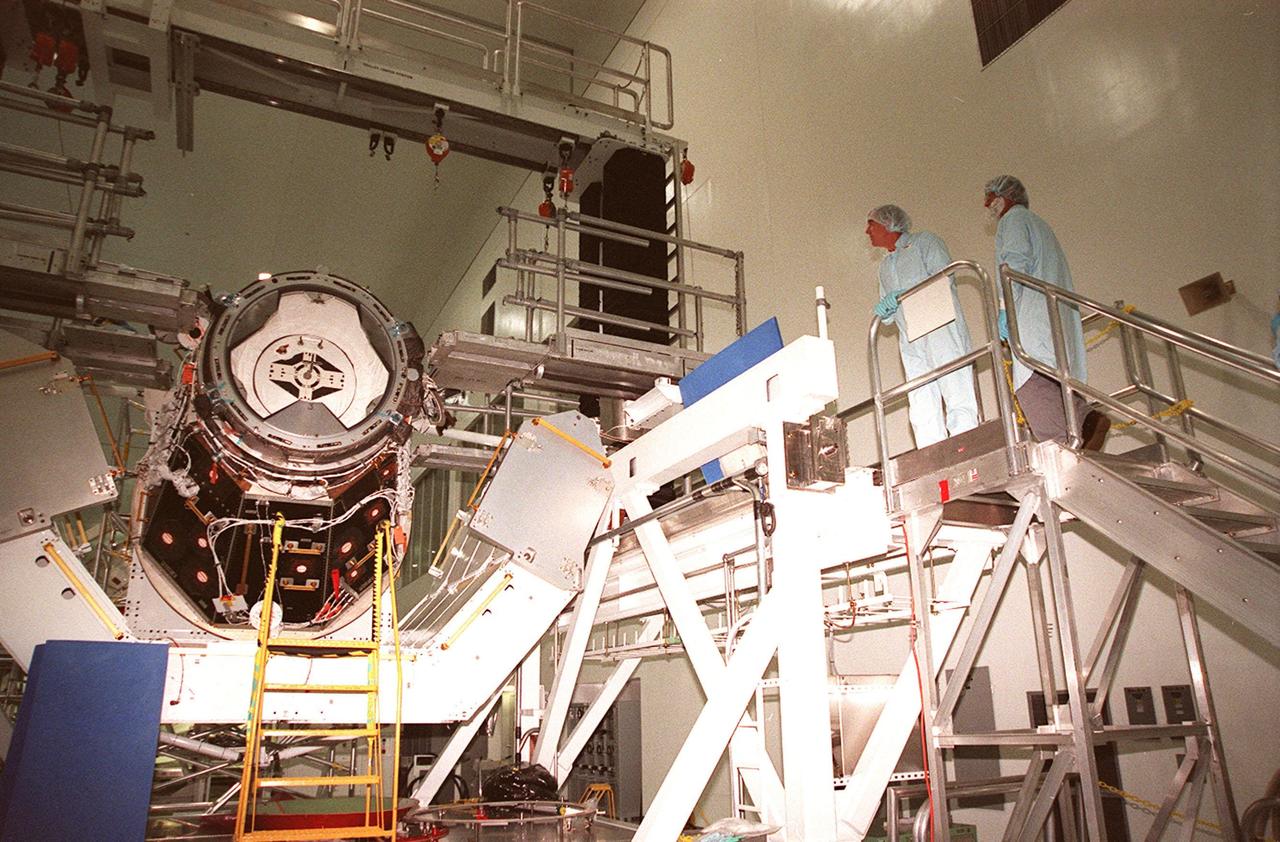
KENNEDY SPACE CENTER, FLA. -- From a work stand in the Space Station Processing Facility, STS-102 crew members James S. Voss (left) and Yuriy Vladimirovich Usachev (right), of Russia, look over the Pressurized Mating Adapter (PMA-3). The PMA-3 is a component of the International Space Station (ISS). Voss and Usachev are two crew members who will be staying on the ISS as the Expedition II crew. The third is Susan J. Helms. Along with the crew, Mission STS-102 also will be carrying the Leonardo Multi-Purpose Logistics Module (MPLM) to the ISS. The Leonardo will be filled with equipment and supplies to outfit the U.S. laboratory module, which will have been carried to the ISS on a preceding Shuttle flight. In order to function as an attached station module as well as a cargo transport, logistics modules (there are three) also include components that provide some life support, fire detection and suppression, electrical distribution and computer functions. Eventually, the modules also will carry refrigerator freezers for transporting experiment samples and food to and from the station. On the return of STS-102 to Earth, it will bring back the first crew on the station: Bill Shepherd, Sergei Krikalev and Yuri Gidzenko. STS-102 is scheduled to launch no earlier than Oct. 19, 2000, from Launch Pad 39A, Kennedy Space Center
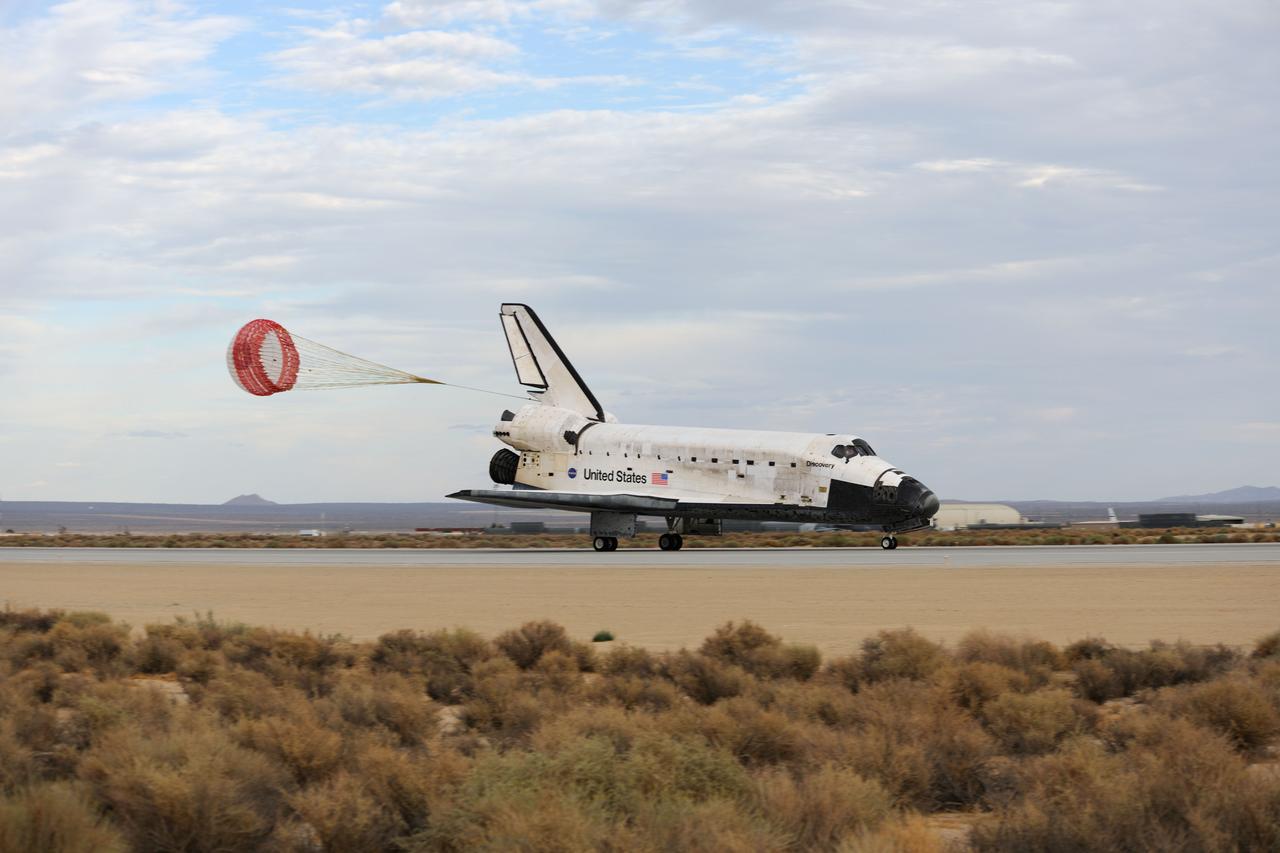
STS128-S-048 (11 Sept. 2009) --- With its drag chute deployed, Space Shuttle Discovery slows to a stop after landing at NASA's Dryden Flight Research Center at Edwards Air Force Base in California, concluding a successful mission to the International Space Station. Onboard are NASA astronauts Rick Sturckow, commander; Kevin Ford, pilot; John ?Danny? Olivas, Patrick Forrester, Jose Hernandez and Tim Kopra, all mission specialists; along with European Space Agency astronaut Christer Fuglesang, mission specialist. Discovery landed at 5:53 p.m. (PDT) on Sept. 11, 2009 to end the STS-128 mission, completing its almost 14-day journey of more than 5.7 million miles in space. The landing was diverted to California due to marginal weather at the Kennedy Space Center. Discovery?s mission featured three spacewalks and the delivery of two refrigerator-sized science racks to the space station. One rack will be used to conduct experiments on materials such as metals, glasses and ceramics. The results from these experiments could lead to the development of better materials on Earth. The other rack will be used for fluid physics research. Understanding how fluids react in microgravity could lead to improved designs for fuel tanks, water systems and other fluid-based systems.
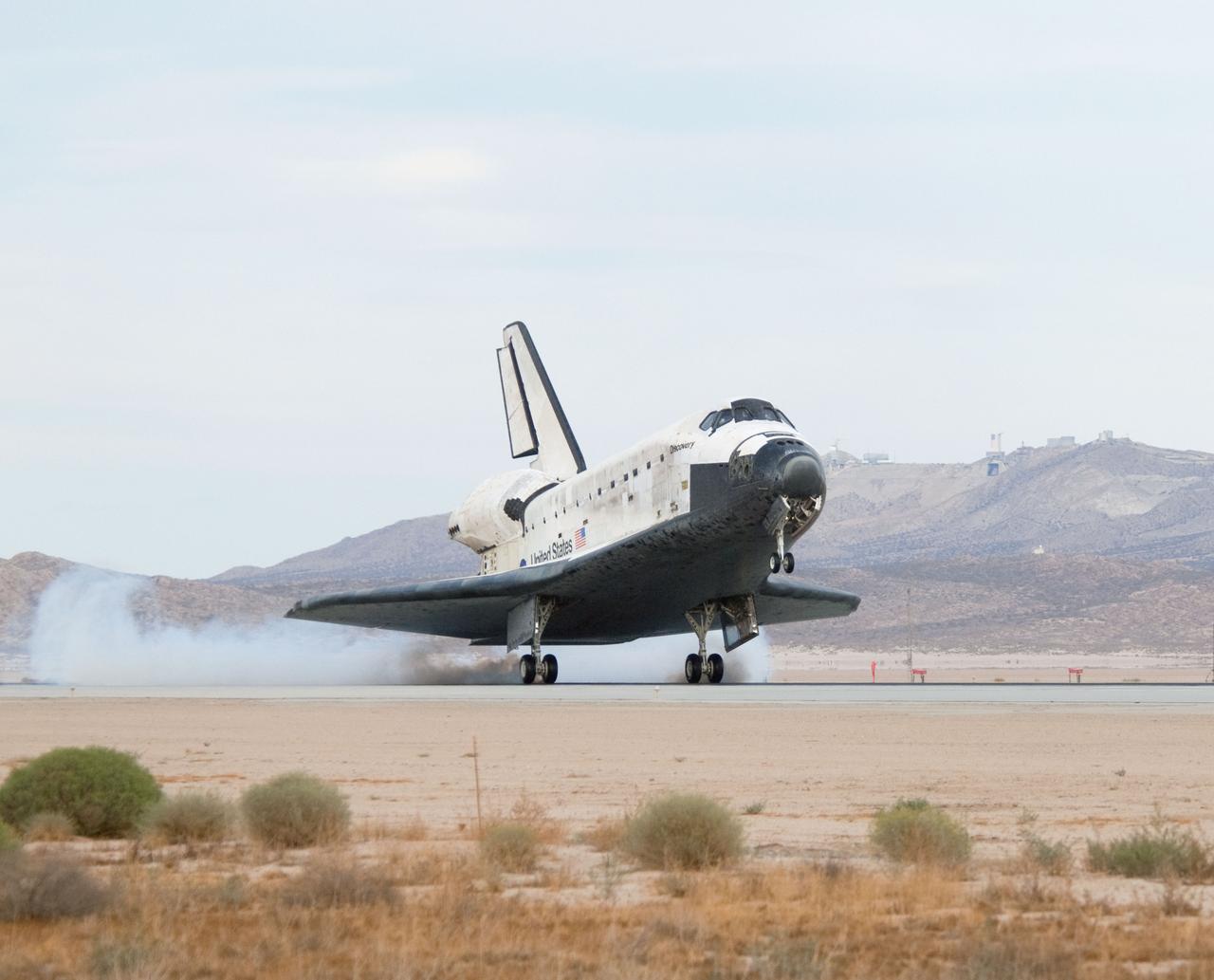
STS128-S-045 (11 Sept. 2009) --- Space Shuttle Discovery?s main landing gear touches down at NASA's Dryden Flight Research Center at Edwards Air Force Base in California, concluding a successful mission to the International Space Station. Onboard are NASA astronauts Rick Sturckow, commander; Kevin Ford, pilot; John ?Danny? Olivas, Patrick Forrester, Jose Hernandez and Tim Kopra, all mission specialists; along with European Space Agency astronaut Christer Fuglesang, mission specialist. Discovery landed at 5:53 p.m. (PDT) on Sept. 11, 2009 to end the STS-128 mission, completing its almost 14-day journey of more than 5.7 million miles in space. The landing was diverted to California due to marginal weather at the Kennedy Space Center. Discovery?s mission featured three spacewalks and the delivery of two refrigerator-sized science racks to the space station. One rack will be used to conduct experiments on materials such as metals, glasses and ceramics. The results from these experiments could lead to the development of better materials on Earth. The other rack will be used for fluid physics research. Understanding how fluids react in microgravity could lead to improved designs for fuel tanks, water systems and other fluid-based systems.
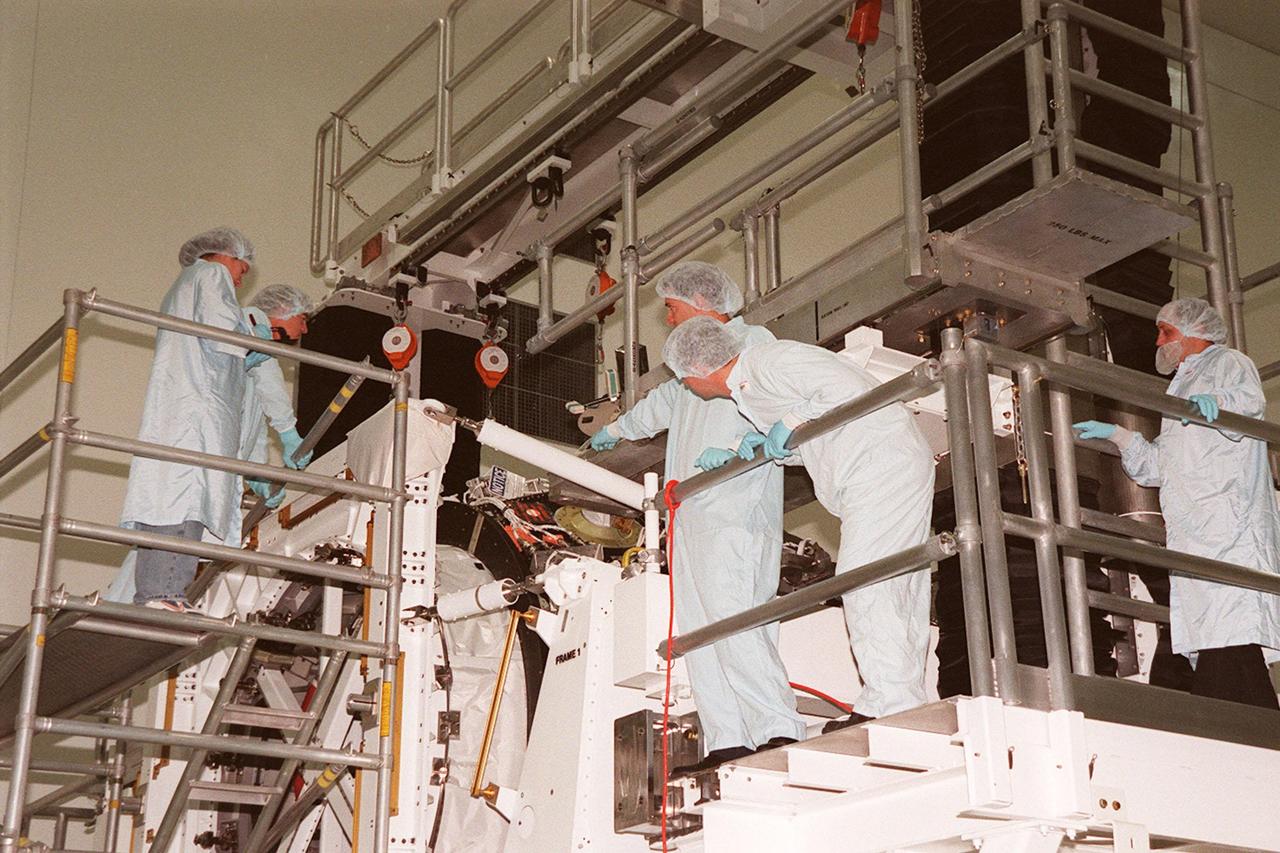
KENNEDY SPACE CENTER, FLA. -- Members of the STS-102 crew, known as the Expedition II crew, and workers from Johnson Space Center get a close look at the Pressurized Mating Adapter (PMA-3) in the Space Station Processing Facility. The PMA-3 is a component of the International Space Station (ISS). Making up the Expedition II crew are James S. Voss, Susan J. Helms and Yuriy Vladimirovich Usachev, of Russia. Along with the crew, Mission STS-102 also will be carrying the Leonardo Multi-Purpose Logistics Module (MPLM) to the ISS. The Leonardo will be filled with equipment and supplies to outfit the U.S. laboratory module, which will have been carried to the ISS on a preceding Shuttle flight. In order to function as an attached station module as well as a cargo transport, logistics modules (there are three) also include components that provide some life support, fire detection and suppression, electrical distribution and computer functions. Eventually, the modules also will carry refrigerator freezers for transporting experiment samples and food to and from the station. On the return of STS-102 to Earth, it will bring back the first crew on the station: Bill Shepherd, Sergei Krikalev and Yuri Gidzenko. STS-102 is scheduled to launch no earlier than Oct. 19, 2000, from Launch Pad 39A, Kennedy Space Center
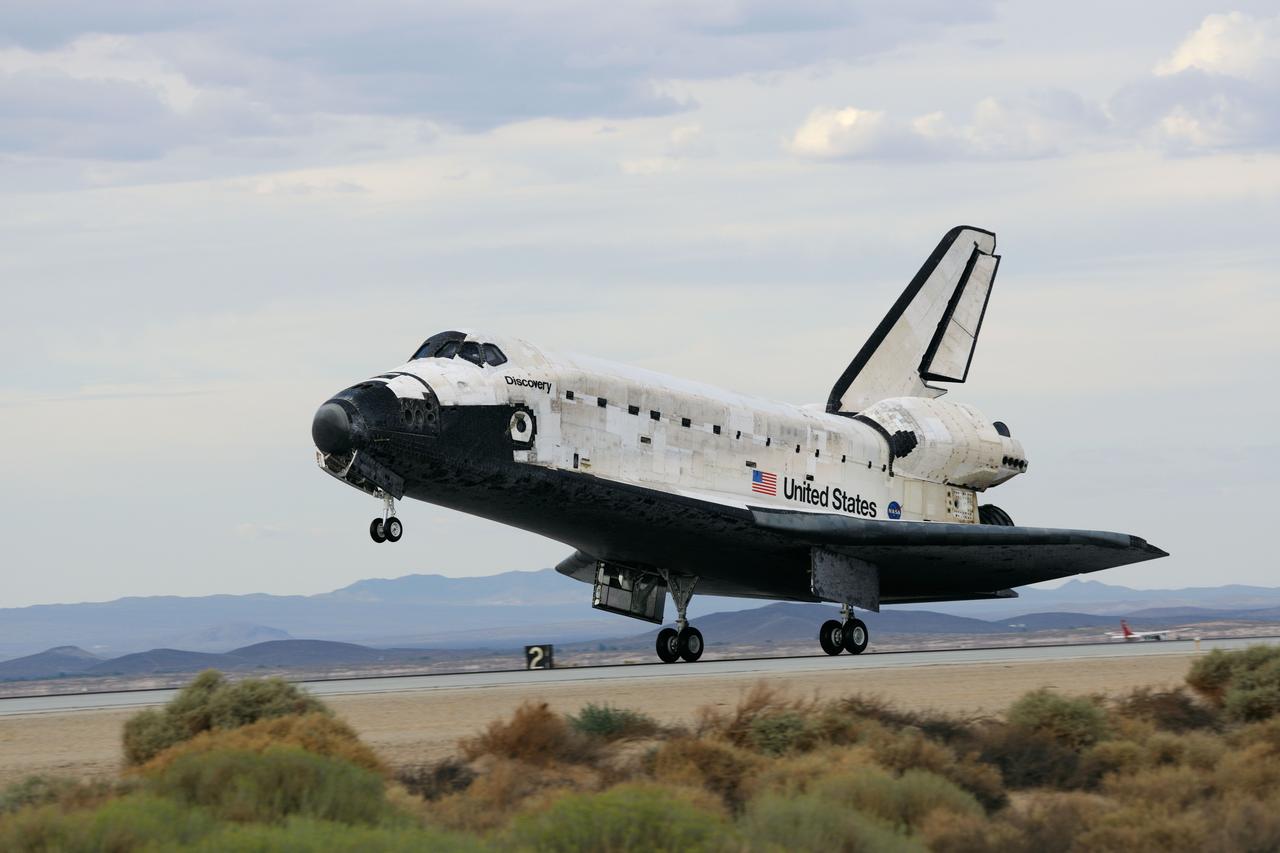
STS128-S-046 (11 Sept. 2009) --- Space Shuttle Discovery?s main landing gear touches down at NASA's Dryden Flight Research Center at Edwards Air Force Base in California, concluding a successful mission to the International Space Station. Onboard are NASA astronauts Rick Sturckow, commander; Kevin Ford, pilot; John ?Danny? Olivas, Patrick Forrester, Jose Hernandez and Tim Kopra, all mission specialists; along with European Space Agency astronaut Christer Fuglesang, mission specialist. Discovery landed at 5:53 p.m. (PDT) on Sept. 11, 2009 to end the STS-128 mission, completing its almost 14-day journey of more than 5.7 million miles in space. The landing was diverted to California due to marginal weather at the Kennedy Space Center. Discovery?s mission featured three spacewalks and the delivery of two refrigerator-sized science racks to the space station. One rack will be used to conduct experiments on materials such as metals, glasses and ceramics. The results from these experiments could lead to the development of better materials on Earth. The other rack will be used for fluid physics research. Understanding how fluids react in microgravity could lead to improved designs for fuel tanks, water systems and other fluid-based systems.
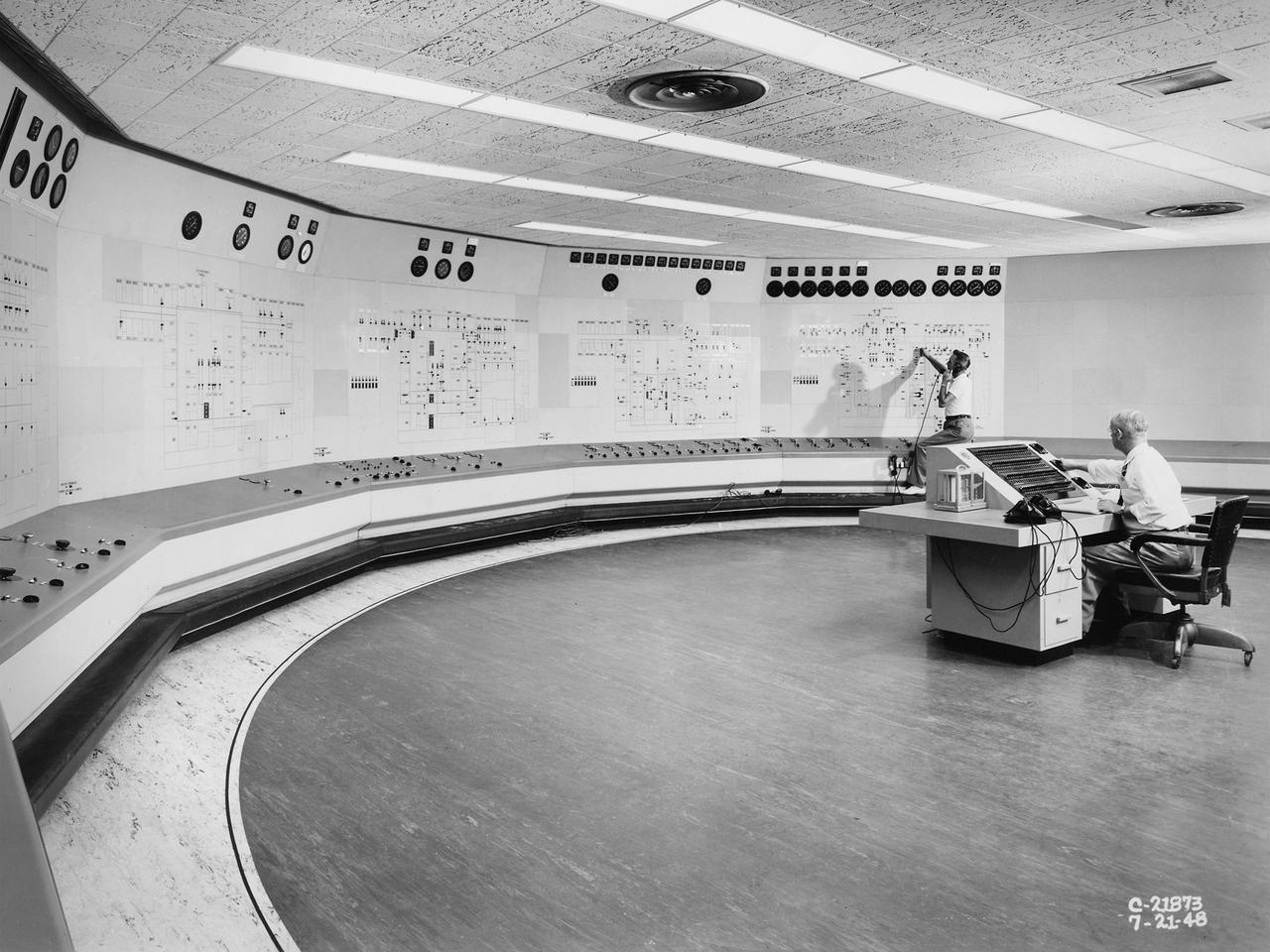
Operators in the Engine Research Building’s Central Control Room at the National Advisory Committee for Aeronautics (NACA) Lewis Flight Propulsion Laboratory. The massive 4.25-acre Engine Research Building contains dozens of test cells, test stands, and altitude chambers. A powerful collection of compressors and exhausters located in the central portion of the basement provided process air and exhaust for these test areas. This system is connected to similar process air systems in the laboratory’s other large test facilities. The Central Control Room coordinates this activity and communicates with the local utilities. This photograph was taken just after a major upgrade to the control room in 1948. The panels on the wall contain rudimentary floor plans of the different Engine Research Building sections with indicator lights and instrumentation for each test cell. The process air equipment included 12 exhausters, four compressors, a refrigeration system, cooling water, and an exhaust system. The operators in the control room kept in contact with engineers running the process air system and those conducting the tests in the test cells. The operators also coordinated with the local power companies to make sure enough electricity was available to operate the powerful compressors and exhausters.
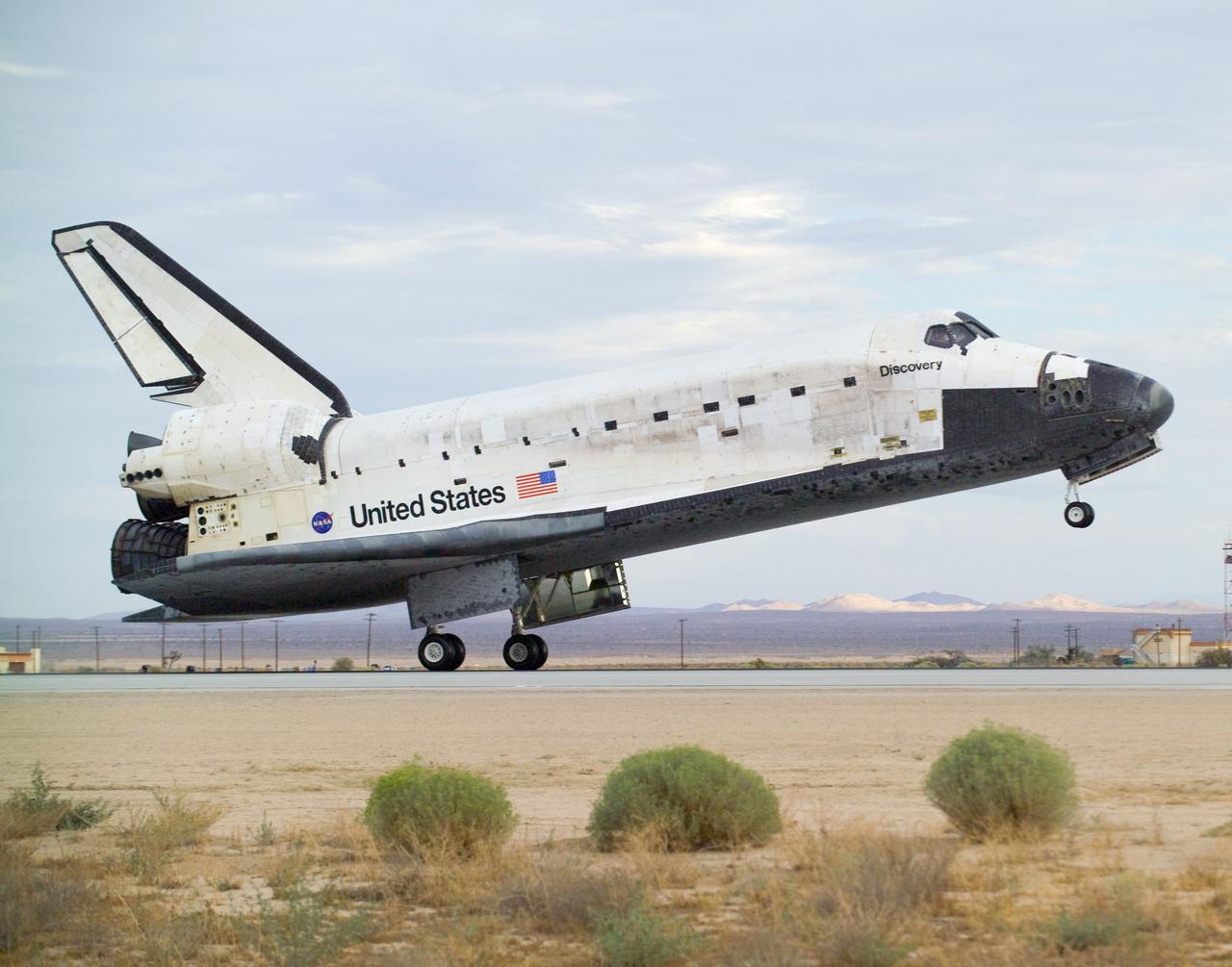
STS128-S-047 (11 Sept. 2009) --- Space Shuttle Discovery?s main landing gear touches down at NASA's Dryden Flight Research Center at Edwards Air Force Base in California, concluding a successful mission to the International Space Station. Onboard are NASA astronauts Rick Sturckow, commander; Kevin Ford, pilot; John ?Danny? Olivas, Patrick Forrester, Jose Hernandez and Tim Kopra, all mission specialists; along with European Space Agency astronaut Christer Fuglesang, mission specialist. Discovery landed at 5:53 p.m. (PDT) on Sept. 11, 2009 to end the STS-128 mission, completing its almost 14-day journey of more than 5.7 million miles in space. The landing was diverted to California due to marginal weather at the Kennedy Space Center. Discovery?s mission featured three spacewalks and the delivery of two refrigerator-sized science racks to the space station. One rack will be used to conduct experiments on materials such as metals, glasses and ceramics. The results from these experiments could lead to the development of better materials on Earth. The other rack will be used for fluid physics research. Understanding how fluids react in microgravity could lead to improved designs for fuel tanks, water systems and other fluid-based systems.
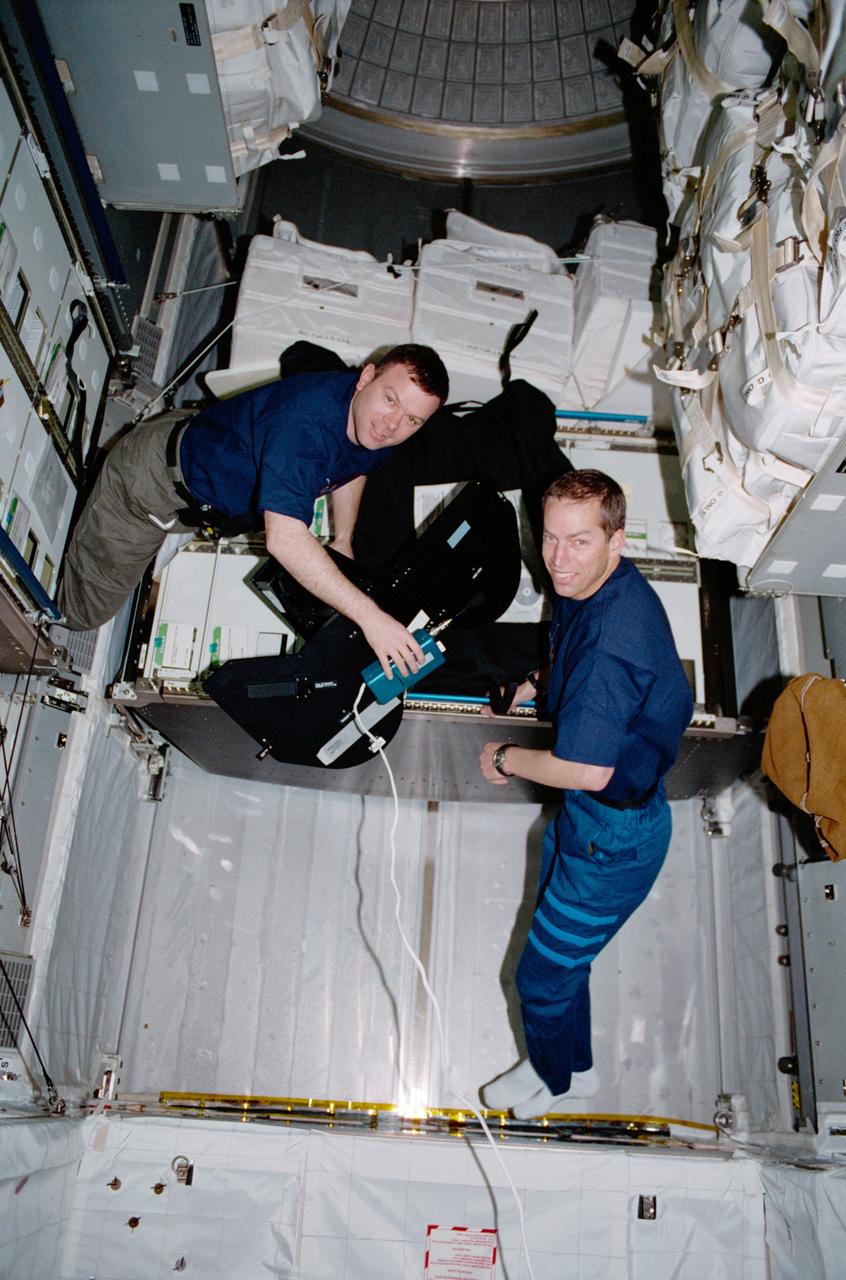
Pilot James M. Kelly (left) and Commander James D. Wetherbee for the STS-102 mission, participate in the movement of supplies inside Leonardo, the Italian Space Agency built Multipurpose Logistics Module (MPLM). In this particular photograph, the two are handling a film magazine for the IMAX cargo bay camera. The primary cargo of the STS-102 mission, the Leonardo MPLM is the first of three such pressurized modules that will serve as the International Space Station's (ISS') moving vans, carrying laboratory racks filled with equipment, experiments, and supplies to and from the Station aboard the Space Shuttle. The cylindrical module is approximately 21-feet long and 15- feet in diameter, weighing almost 4.5 tons. It can carry up to 10 tons of cargo in 16 standard Space Station equipment racks. Of the 16 racks the module can carry, 5 can be furnished with power, data, and fluid to support refrigerators or freezers. In order to function as an attached station module as well as a cargo transport, the logistics module also includes components that provide life support, fire detection and suppression, electrical distribution, and computer functions. The eighth station assembly flight, the STS-102 mission also served as a crew rotation flight. It delivered the Expedition Two crew to the Station and returned the Expedition One crew back to Earth.
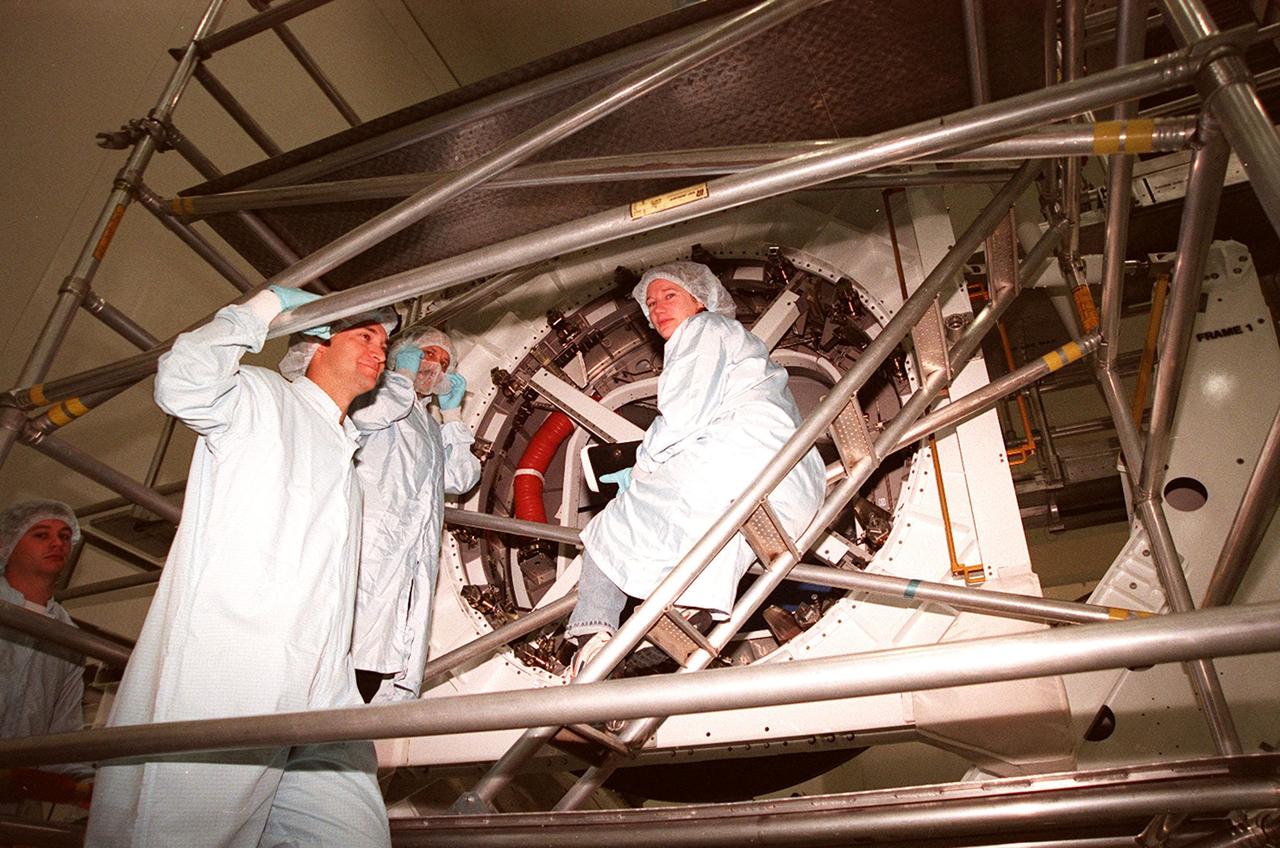
KENNEDY SPACE CENTER, FLA. -- Looking over a Pressurized Mating Adapter (PMA-3) in the Space Station Processing Facility are Arne Aamodt, with Johnson Space Center, Yuriy Vladimirovich Usachev and Susan J. Helms. Usachev and Helms are two members of the STS-102 crew, who will be staying on the International Space Station (ISS). The third crew member is James S. Voss. They have been designated the Expedition II crew. Mission STS-102 also will be carrying the Leonardo Multi-Purpose Logistics Module (MPLM) to the ISS. The Leonardo will be filled with equipment and supplies to outfit the U.S. laboratory module, which will have been carried to the ISS on a preceding Shuttle flight. In order to function as an attached station module as well as a cargo transport, logistics modules (there are three) also include components that provide some life support, fire detection and suppression, electrical distribution and computer functions. Eventually, the modules also will carry refrigerator freezers for transporting experiment samples and food to and from the station. On the return of STS-102 to Earth, it will bring back the first crew on the station: Bill Shepherd, Sergei Krikalev and Yuri Gidzenko. STS-102 is scheduled to launch no earlier than Oct. 19, 2000, from Launch Pad 39A, Kennedy Space Center

One of the two primary coolers at the Propulsion Systems Laboratory at the National Advisory Committee for Aeronautics (NACA) Lewis Flight Propulsion Laboratory. Engines could be run in simulated altitude conditions inside the facility’s two 14-foot-diameter and 24-foot-long test chambers. The Propulsion Systems Laboratory was the nation’s only facility that could run large full-size engine systems in controlled altitude conditions. At the time of this photograph, construction of the facility had recently been completed. Although not a wind tunnel, the Propulsion Systems Laboratory generated high-speed airflow through the interior of the engine. The air flow was pushed through the system by large compressors, adjusted by heating or refrigerating equipment, and de-moisturized by air dryers. The exhaust system served two roles: reducing the density of the air in the test chambers to simulate high altitudes and removing hot gases exhausted by the engines being tested. It was necessary to reduce the temperature of the extremely hot engine exhaust before the air reached the exhauster equipment. As the air flow exited through exhaust section of the test chamber, it entered into the giant primary cooler seen in this photograph. Narrow fins or vanes inside the cooler were filled with water. As the air flow passed between the vanes, its heat was transferred to the cooling water. The cooling water was cycled out of the system, carrying with it much of the exhaust heat.
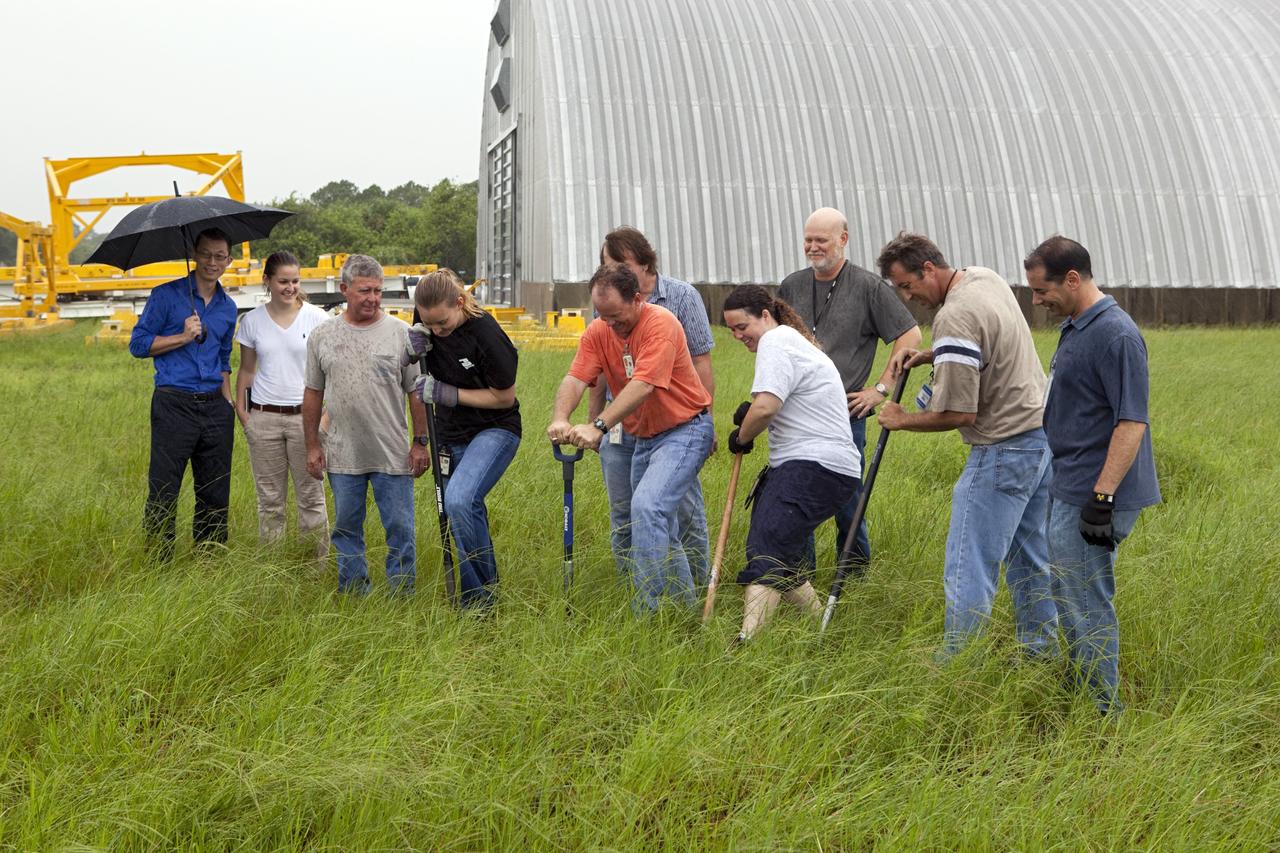
CAPE CANAVERAL, Fla. – Near the Hypergolic Maintenance Facility at NASA’s Kennedy Space Center in Florida, a groundbreaking ceremony was held to mark the location of the Ground Operations Demonstration Unit Liquid Hydrogen, or GODU LH2, test site. From left, are Johnny Nguyen, Fluids Test and Technology Development branch chief Emily Watkins, engineering intern Jeff Walls, Engineering Services Contract, or ESC, Cryogenics Test Lab engineer Kelly Currin, systems engineer Stephen Huff and Rudy Werlink partially hidden, cryogenics engineers Angela Krenn, systems engineer Doug Hammond, command and control engineer in the electrical division William Notardonato, GODU LH2 project manager and Kevin Jumper, ESC Cryogenics Test Lab manager. The GODU LH2 test site is one of the projects in NASA’s Advanced Exploration Systems Program. The site will be used to demonstrate advanced liquid hydrogen systems that are cost and energy efficient ways to store and transfer liquid hydrogen during process, loading, launch and spaceflight. The main components of the site will be a storage tank and a cryogenic refrigerator. Photo credit: NASA/Dimitri Gerondidakis
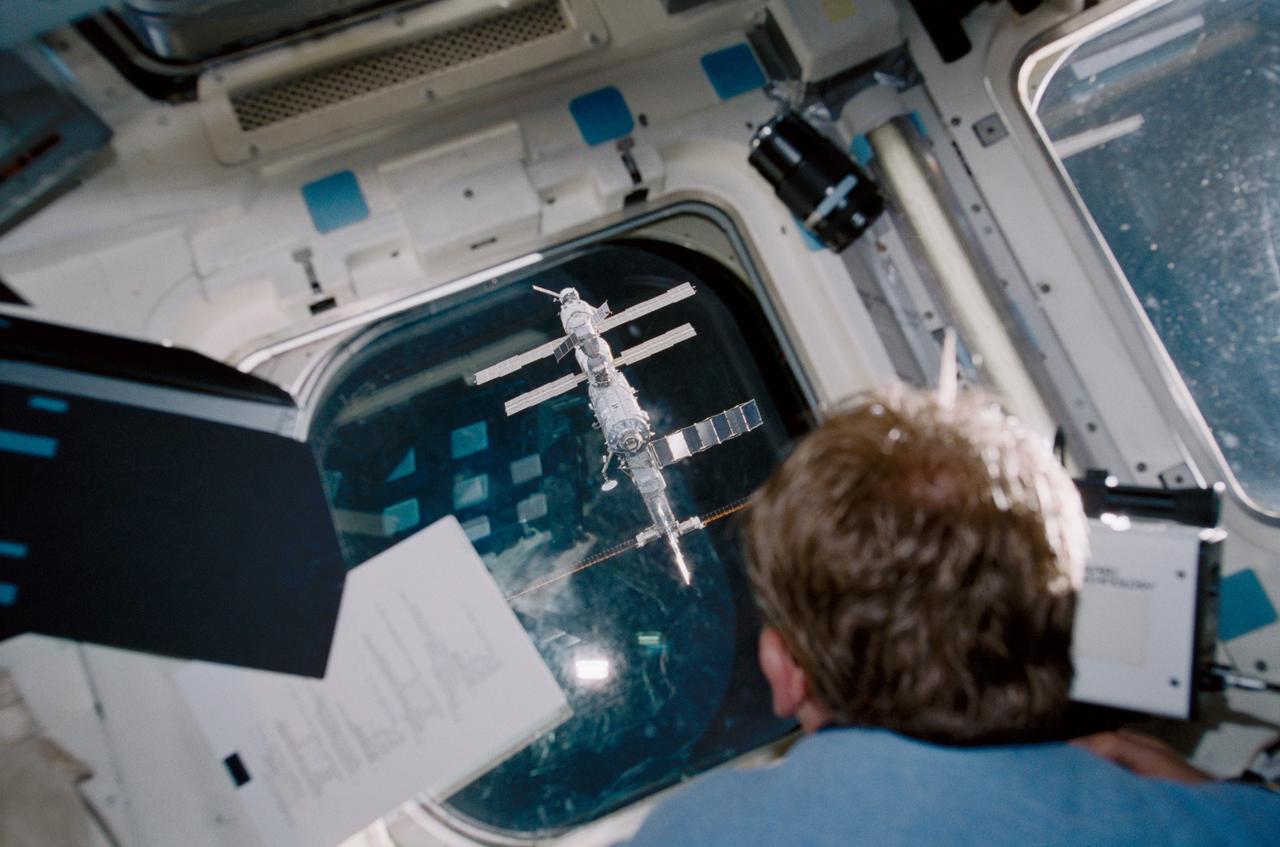
STS-102 astronaut and mission specialist, Andrew S.W. Thomas, gazes through an aft window of the Space Shuttle Orbiter Discovery as it approaches the docking bay of the International Space Station (ISS). Launched March 8, 2001, STS-102's primary cargo was the Leonardo, the Italian Space Agency-built Multipurpose Logistics Module (MPLM). The Leonardo MPLM is the first of three such pressurized modules that will serve as the ISS's moving vans, carrying laboratory racks filled with equipment, experiments, and supplies to and from the Station aboard the Space Shuttle. The cylindrical module is approximately 21-feet long and 15- feet in diameter, weighing almost 4.5 tons. It can carry up to 10 tons of cargo in 16 standard Space Station equipment racks. Of the 16 racks the module can carry, 5 can be furnished with power, data, and fluid to support refrigerators or freezers. In order to function as an attached station module as well as a cargo transport, the logistics module also includes components that provide life support, fire detection and suppression, electrical distribution, and computer functions. NASA's 103rd overall mission and the 8th Space Station Assembly Flight, STS-102 mission also served as a crew rotation flight. It delivered the Expedition Two crew to the Station and returned the Expedition One crew back to Earth.
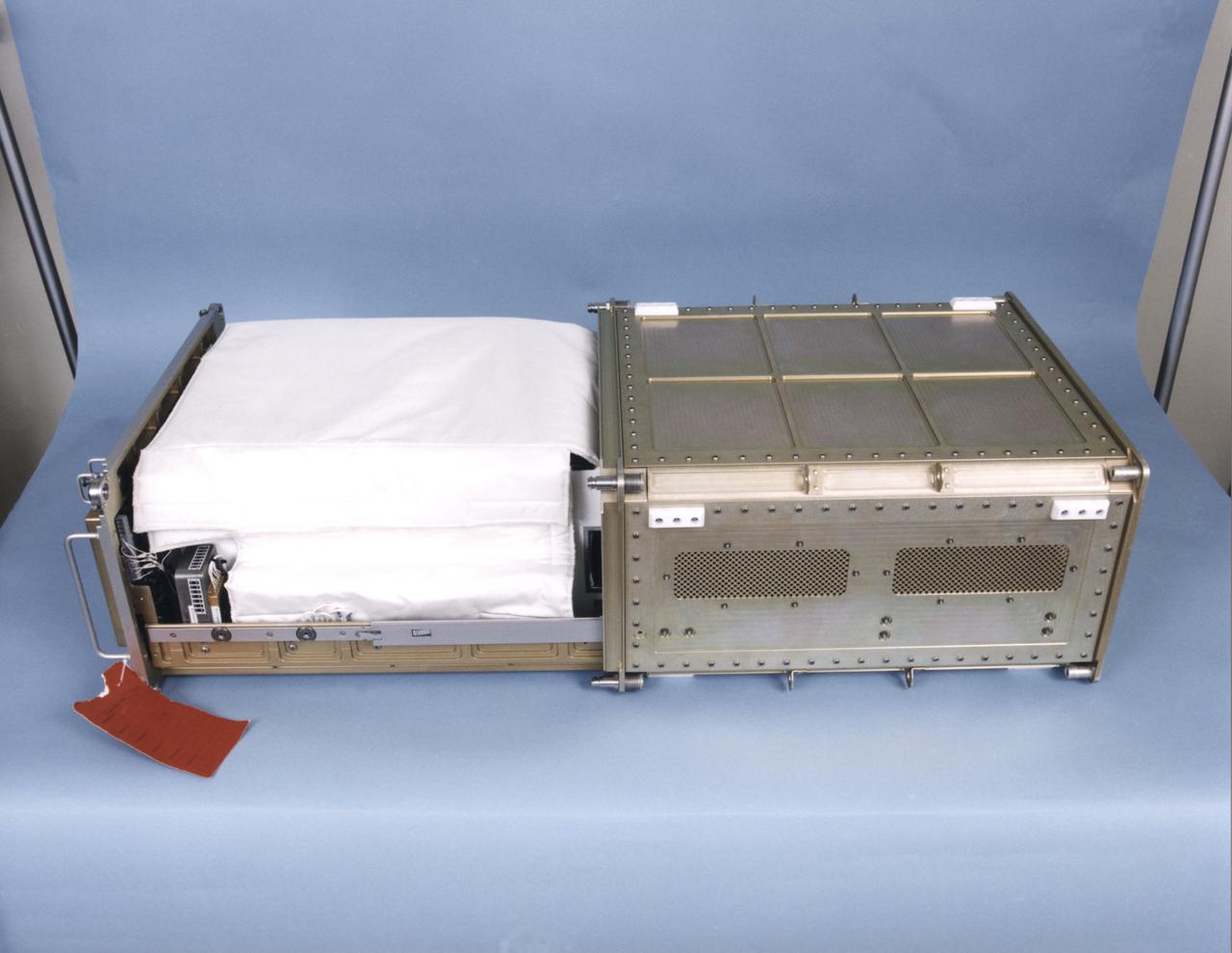
Biotechnology Refrigerator that preserves samples for use in (or after culturing in) the NASA Bioreactor. The unit is shown extracted from a middeck locker shell. The NASA Bioreactor provides a low turbulence culture environment which promotes the formation of large, three-dimensional cell clusters. The Bioreactor is rotated to provide gentle mixing of fresh and spent nutrient without inducing shear forces that would damage the cells. Due to their high level of cellular organization and specialization, samples constructed in the bioreactor more closely resemble the original tumor or tissue found in the body. The work is sponsored by NASA's Office of Biological and Physical Research. The bioreactor is managed by the Biotechnology Cell Science Program at NASA's Johnson Space Center (JSC). NASA-sponsored bioreactor research has been instrumental in helping scientists to better understand normal and cancerous tissue development. In cooperation with the medical community, the bioreactor design is being used to prepare better models of human colon, prostate, breast and ovarian tumors. Cartilage, bone marrow, heart muscle, skeletal muscle, pancreatic islet cells, liver and kidney are just a few of the normal tissues being cultured in rotating bioreactors by investigators.
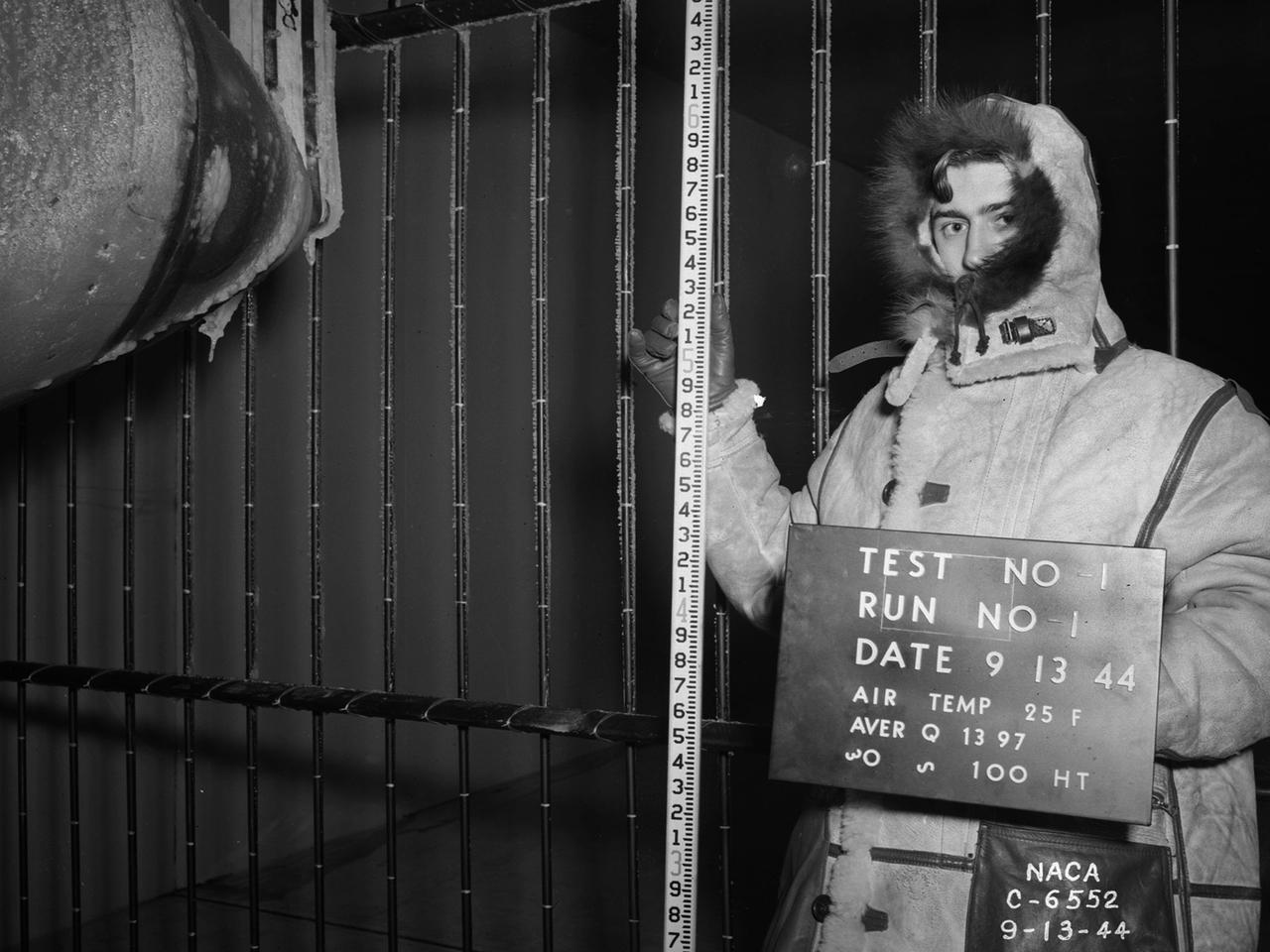
National Advisory Committee for Aeronautics (NACA) design engineers added the Icing Research Tunnel to the new Aircraft Engine Research Laboratory’s original layout to take advantage of the massive refrigeration system being constructed for the Altitude Wind Tunnel. The Icing Research Tunnel was built to study the formation of ice on aircraft surfaces and methods of preventing or eradicating that ice. Ice buildup adds extra weight, effects aerodynamics, and sometimes blocks airflow through engines. The Icing Research Tunnel is a closed-loop atmospheric wind tunnel with a 6- by 9-foot test section. The tunnel can produce speeds up to 300 miles per hour and temperatures from about 30 to –45⁰ F. Initially the tunnel used a spray bar system to introduce moisture into the airstream. NACA engineers struggled for nearly 10 years to perfect the spray system. The Icing Research Tunnel began testing in June of 1944. Initial testing, seen in this photograph, studied ice accumulation on propellers of a military aircraft. NACA reserach also produced a protected air scoop for the C–46 transport aircraft. A large number of C–46 aircraft were lost due to icing while flying supply runs over the Himalayas during World War II.