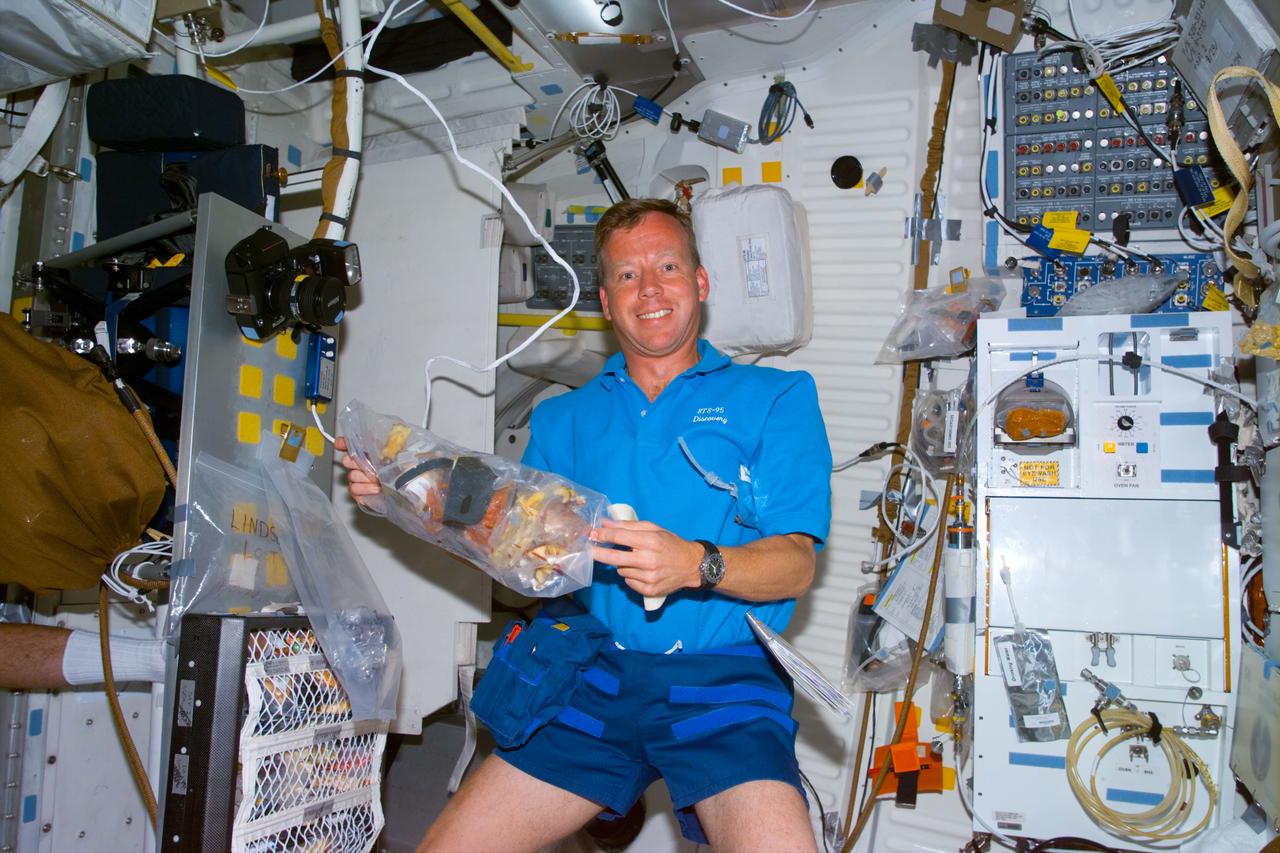
STS095-E-5026 (10-29-98) --- Astronaut Steven W. Lindsey, pilot, with a bag of refuse on Discovery's mid deck as the STS-95 crew members begin to settle in for a nine-day stay in Earth orbit. The photo was taken with an electronic still camera (ESC) at 11:23:04 GMT, Oct. 29.

Six hundred and fifty light-years away in the constellation Aquarius, a dead star about the size of Earth, is refusing to fade away peacefully. NASA Hubble and Spitzer Space Telescopes have captured the complex structure of the Helix nebula.
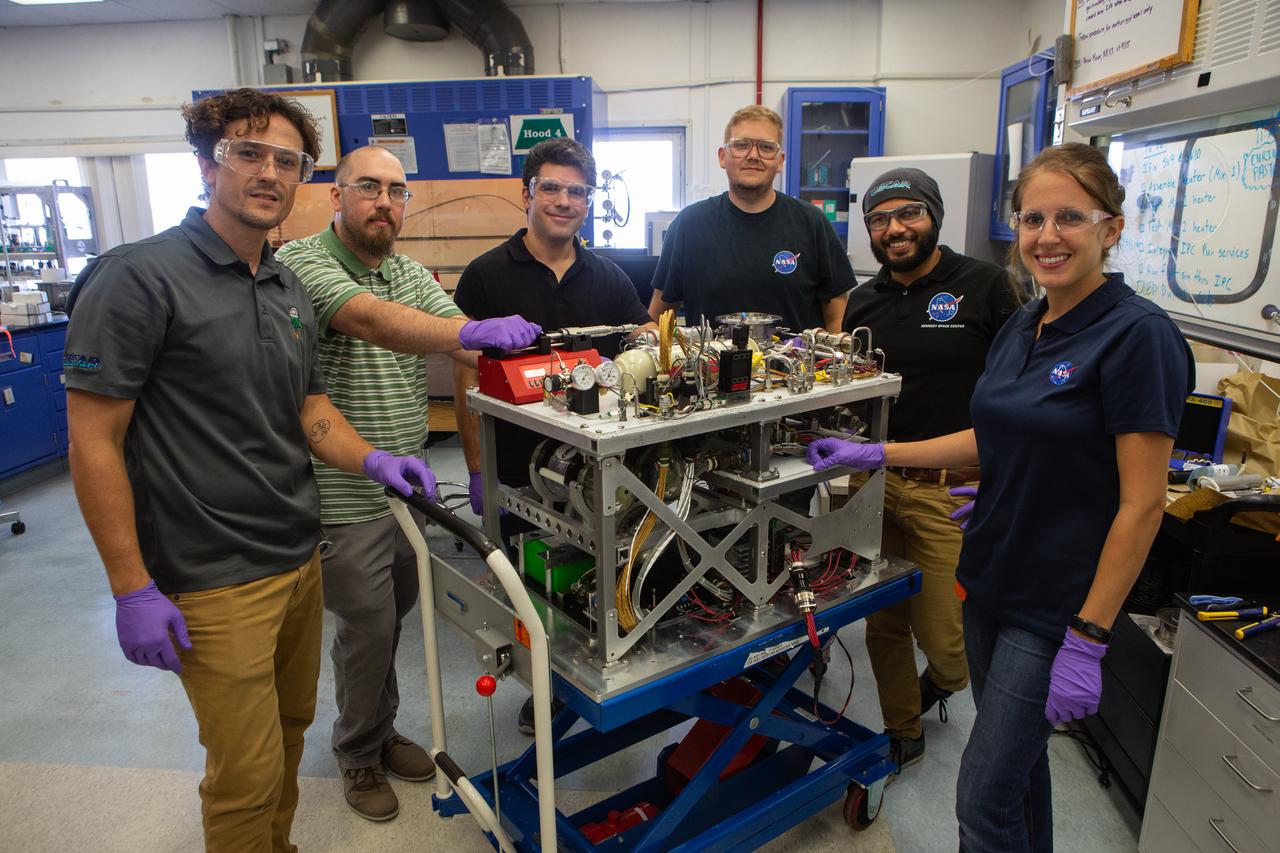
Members of NASA’s Orbital Syngas Commodity Augmentation Reactor, or OSCAR, team pause for a photo with the flight hardware on Oct. 10, 2019, in the Space Station Processing Facility at the agency’s Kennedy Space Center in Florida. From left are Gino Carro, Tom Cauvel, Jaime Toro, Evan Bell, Malay Shah and Annie Meier. OSCAR is an Early Career Initiative project at the spaceport that studies technology to convert trash and human waste into useful gasses such as methane, hydrogen and carbon dioxide. By processing small pieces of trash in a high-temperature reactor, OSCAR is advancing new and innovative technology for managing waste in space. A prototype has been developed, and the team is in the process of constructing a new rig for a suborbital flight test.
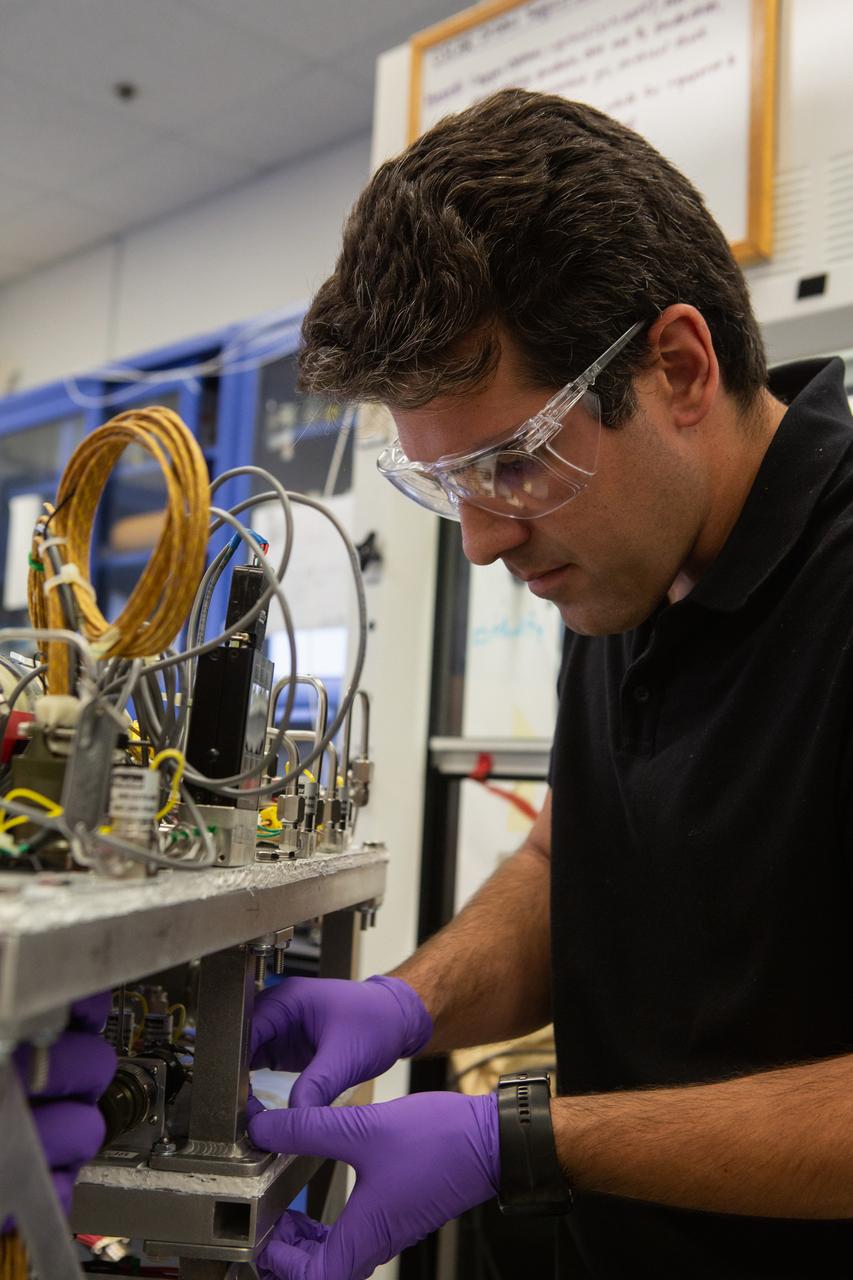
Jaime Toro assembles the flight hardware for NASA’s Orbital Syngas Commodity Augmentation Reactor, or OSCAR, on Oct. 10, 2019, in the Space Station Processing Facility at the agency’s Kennedy Space Center in Florida. OSCAR is an Early Career Initiative project at the spaceport that studies technology to convert trash and human waste into useful gasses such as methane, hydrogen and carbon dioxide. By processing small pieces of trash in a high-temperature reactor, OSCAR is advancing new and innovative technology for managing waste in space. A prototype has been developed, and the team is in the process of constructing a new rig for a suborbital flight test.
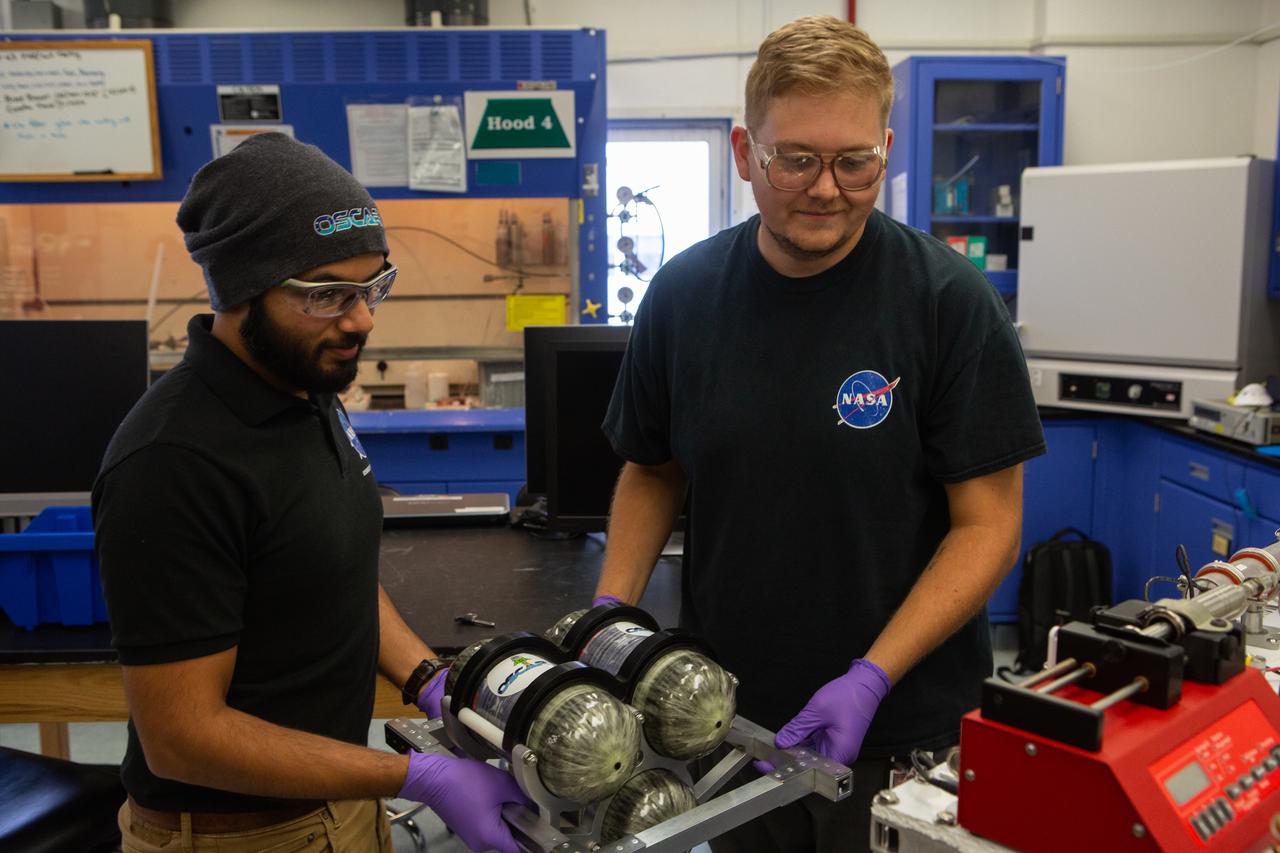
Team members Malay Shah, left, and Evan Bell assemble the flight hardware for NASA’s Orbital Syngas Commodity Augmentation Reactor, or OSCAR, on Oct. 10, 2019, in the Space Station Processing Facility at the agency’s Kennedy Space Center in Florida. OSCAR is an Early Career Initiative project at the spaceport that studies technology to convert trash and human waste into useful gasses such as methane, hydrogen and carbon dioxide. By processing small pieces of trash in a high-temperature reactor, OSCAR is advancing new and innovative technology for managing waste in space. A prototype has been developed, and the team is in the process of constructing a new rig for a suborbital flight test.
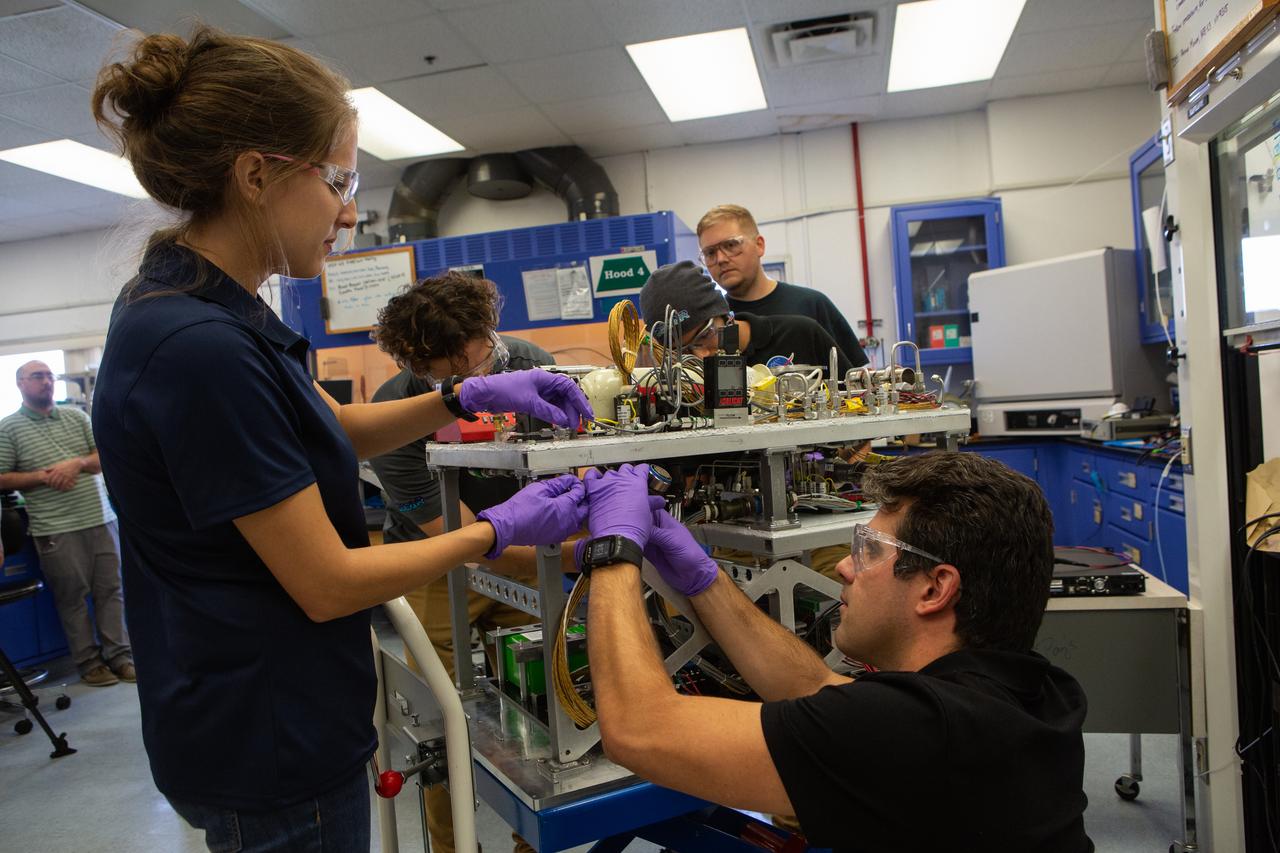
Team members assemble the flight hardware for NASA’s Orbital Syngas Commodity Augmentation Reactor, or OSCAR, on Oct. 10, 2019, in the Space Station Processing Facility at the agency’s Kennedy Space Center in Florida. From left are Annie Meier, Gino Carro, Evan Bell and Jamie Toro. OSCAR is an Early Career Initiative project at the spaceport that studies technology to convert trash and human waste into useful gasses such as methane, hydrogen and carbon dioxide. By processing small pieces of trash in a high-temperature reactor, OSCAR is advancing new and innovative technology for managing waste in space. A prototype has been developed, and the team is in the process of constructing a new rig for a suborbital flight test.
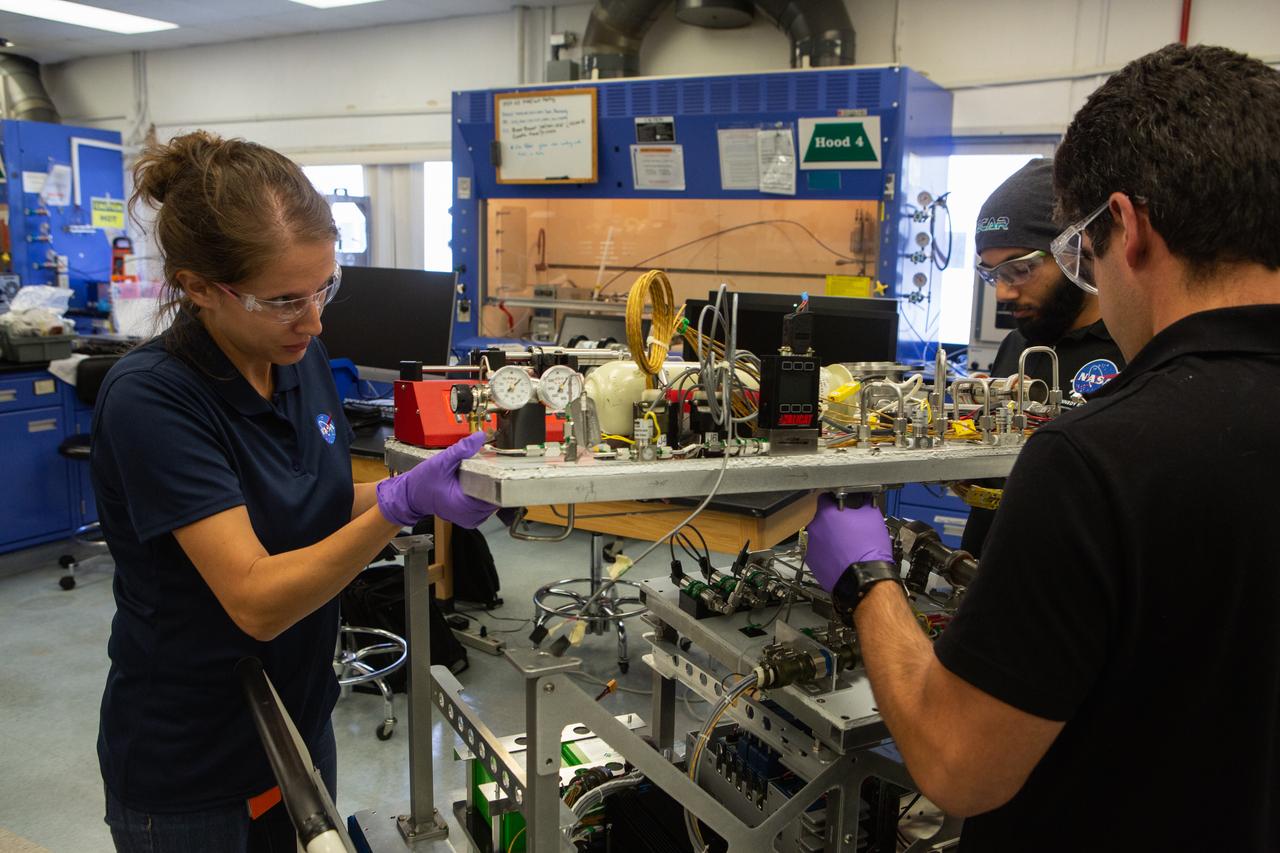
From left, team members Annie Meier, Malay Shah and Jamie Toro assemble the flight hardware for NASA’s Orbital Syngas Commodity Augmentation Reactor, or OSCAR, on Oct. 10, 2019, in the Space Station Processing Facility at the agency’s Kennedy Space Center in Florida. OSCAR is an Early Career Initiative project at the spaceport that studies technology to convert trash and human waste into useful gasses such as methane, hydrogen and carbon dioxide. By processing small pieces of trash in a high-temperature reactor, OSCAR is advancing new and innovative technology for managing waste in space. A prototype has been developed, and the team is in the process of constructing a new rig for a suborbital flight test.
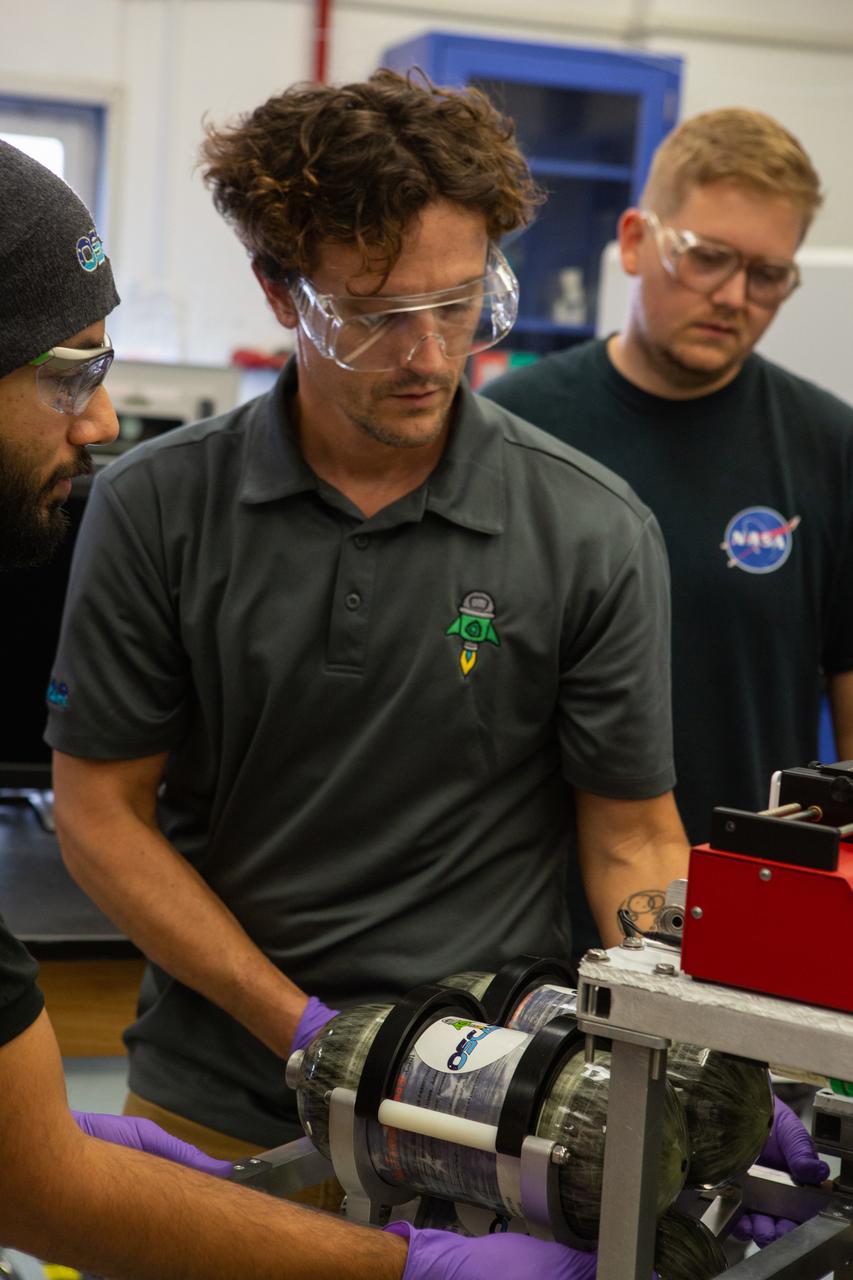
From left, team members Malay Shah, Gino Carro and Evan Bell assemble the flight hardware for NASA’s Orbital Syngas Commodity Augmentation Reactor, or OSCAR, on Oct. 10, 2019, in the Space Station Processing Facility at the agency’s Kennedy Space Center in Florida. OSCAR is an Early Career Initiative project at the spaceport that studies technology to convert trash and human waste into useful gasses such as methane, hydrogen and carbon dioxide. By processing small pieces of trash in a high-temperature reactor, OSCAR is advancing new and innovative technology for managing waste in space. A prototype has been developed, and the team is in the process of constructing a new rig for a suborbital flight test.
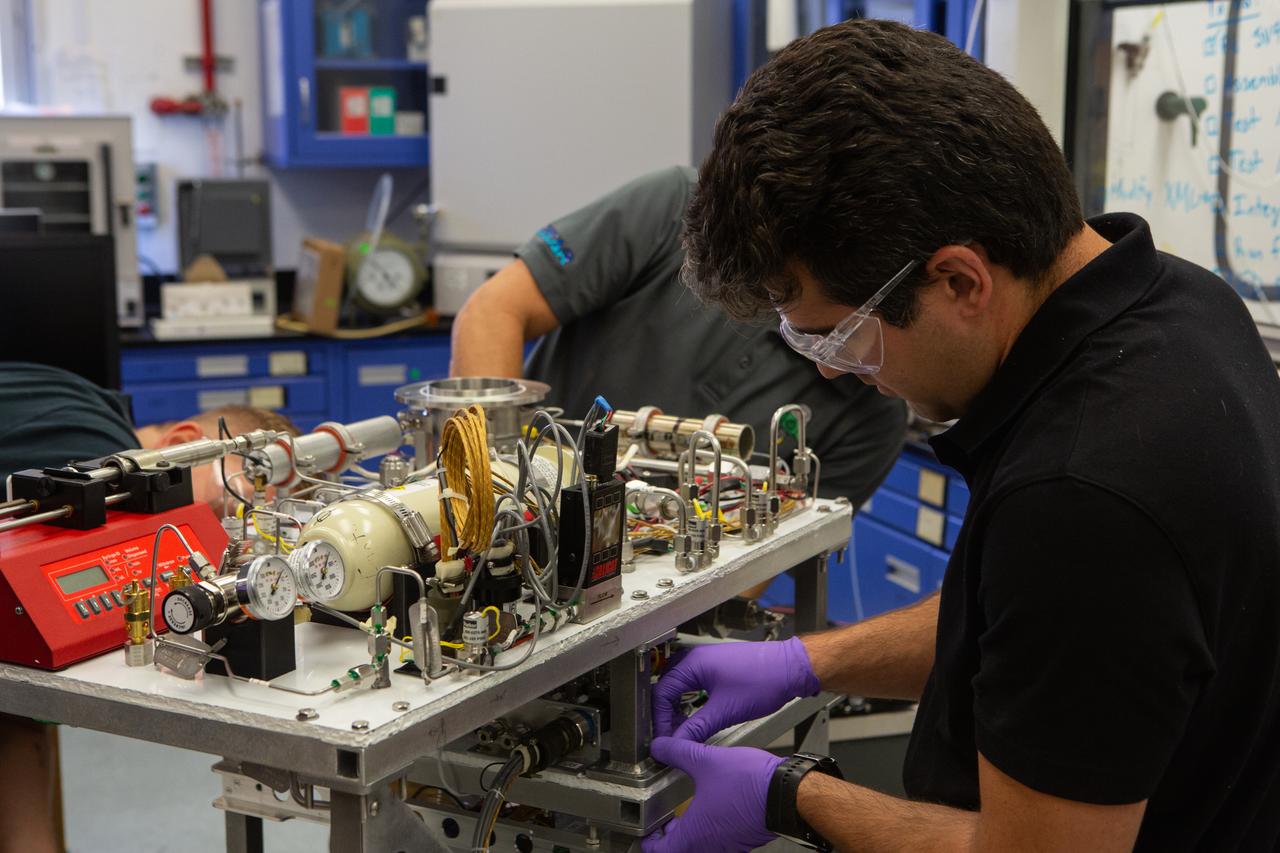
Jaime Toro assembles the flight hardware for NASA’s Orbital Syngas Commodity Augmentation Reactor, or OSCAR, on Oct. 10, 2019, in the Space Station Processing Facility at the agency’s Kennedy Space Center in Florida. OSCAR is an Early Career Initiative project at the spaceport that studies technology to convert trash and human waste into useful gasses such as methane, hydrogen and carbon dioxide. By processing small pieces of trash in a high-temperature reactor, OSCAR is advancing new and innovative technology for managing waste in space. A prototype has been developed, and the team is in the process of constructing a new rig for a suborbital flight test.
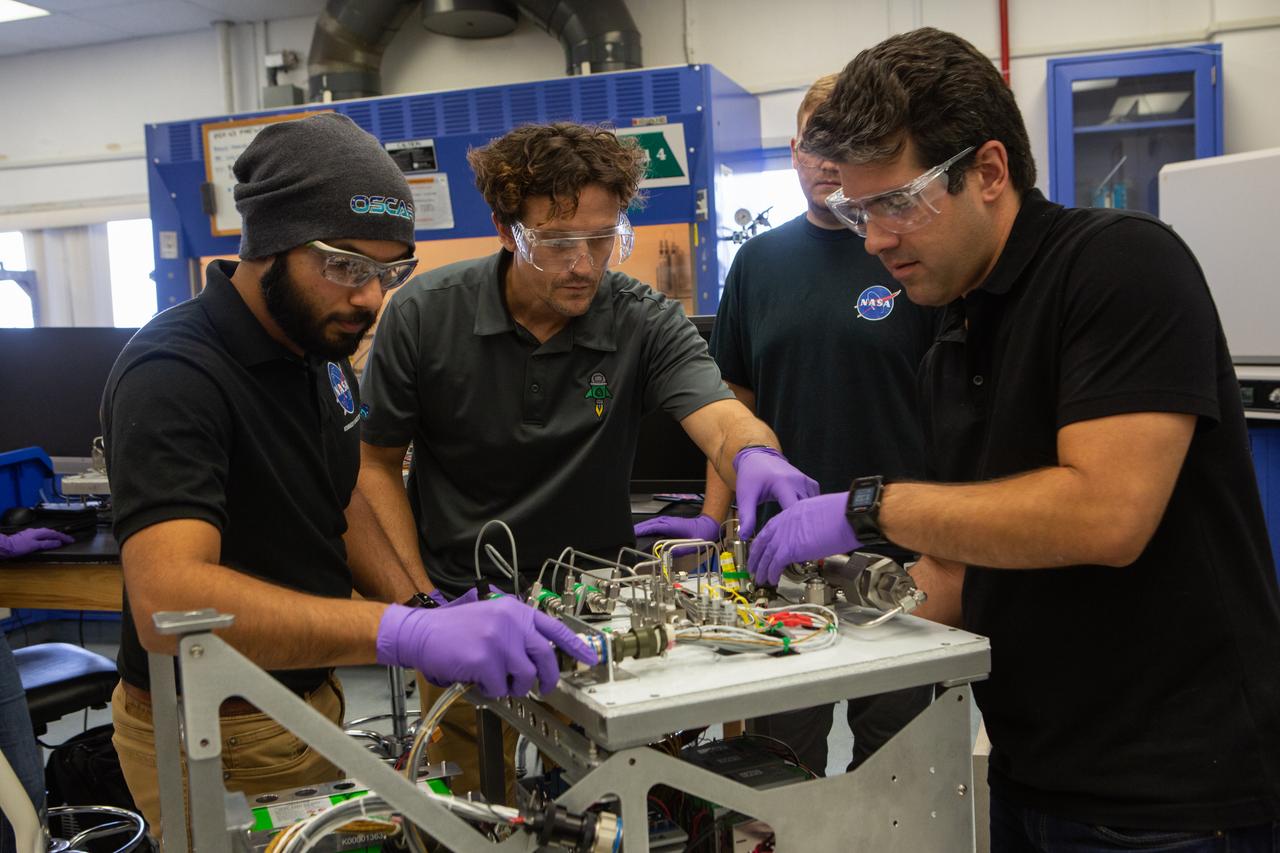
From left, team members Malay Shah, Gino Carro, Evan Bell and Jamie Toro assemble the flight hardware for NASA’s Orbital Syngas Commodity Augmentation Reactor, or OSCAR, on Oct. 10, 2019, in the Space Station Processing Facility at the agency’s Kennedy Space Center in Florida. OSCAR is an Early Career Initiative project at the spaceport that studies technology to convert trash and human waste into useful gasses such as methane, hydrogen and carbon dioxide. By processing small pieces of trash in a high-temperature reactor, OSCAR is advancing new and innovative technology for managing waste in space. A prototype has been developed, and the team is in the process of constructing a new rig for a suborbital flight test.
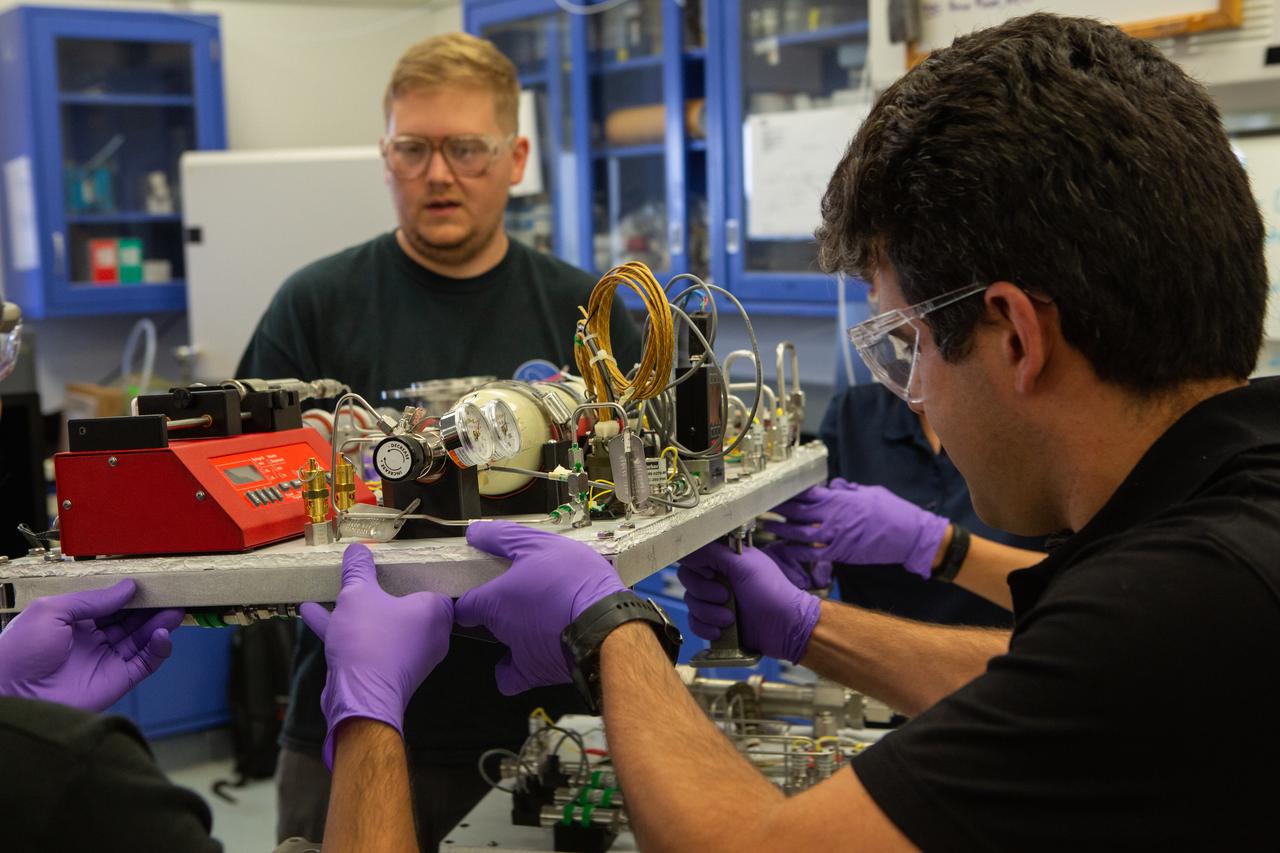
Team members Evan Bell, left, and Jaime Toro assemble the flight hardware for NASA’s Orbital Syngas Commodity Augmentation Reactor, or OSCAR, on Oct. 10, 2019, in the Space Station Processing Facility at the agency’s Kennedy Space Center in Florida. OSCAR is an Early Career Initiative project at the spaceport that studies technology to convert trash and human waste into useful gasses such as methane, hydrogen and carbon dioxide. By processing small pieces of trash in a high-temperature reactor, OSCAR is advancing new and innovative technology for managing waste in space. A prototype has been developed, and the team is in the process of constructing a new rig for a suborbital flight test.
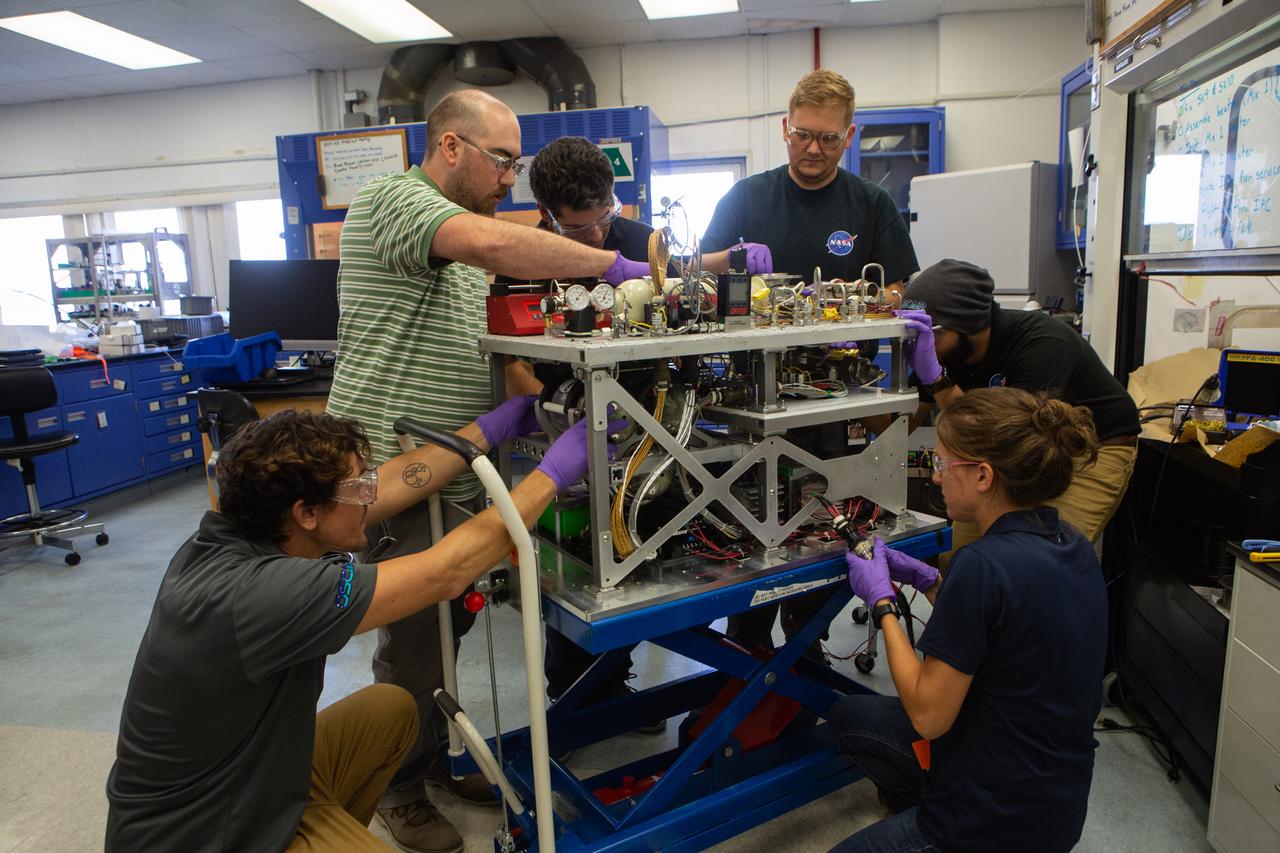
Team members assemble the flight hardware for NASA’s Orbital Syngas Commodity Augmentation Reactor, or OSCAR, on Oct. 10, 2019, in the Space Station Processing Facility at the agency’s Kennedy Space Center in Florida. From left are Gino Carro, Tom Cauvel, Jaime Toro, Evan Bell, Malay Shah and Annie Meier. OSCAR is an Early Career Initiative project at the spaceport that studies technology to convert trash and human waste into useful gasses such as methane, hydrogen and carbon dioxide. By processing small pieces of trash in a high-temperature reactor, OSCAR is advancing new and innovative technology for managing waste in space. A prototype has been developed, and the team is in the process of constructing a new rig for a suborbital flight test.
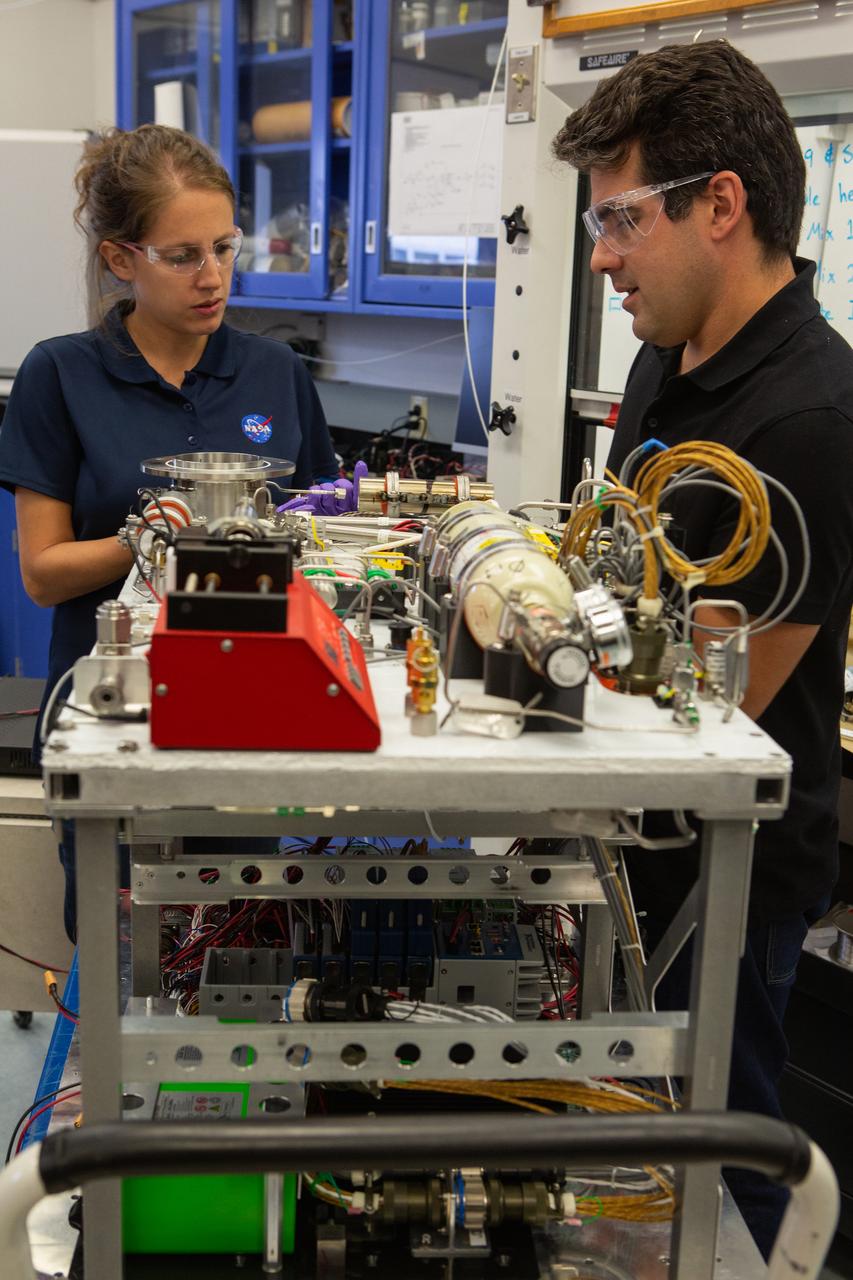
Team members Annie Meier, left, and Jamie Toro assemble the flight hardware for NASA’s Orbital Syngas Commodity Augmentation Reactor, or OSCAR, on Oct. 10, 2019, in the Space Station Processing Facility at the agency’s Kennedy Space Center in Florida. OSCAR is an Early Career Initiative project at the spaceport that studies technology to convert trash and human waste into useful gasses such as methane, hydrogen and carbon dioxide. By processing small pieces of trash in a high-temperature reactor, OSCAR is advancing new and innovative technology for managing waste in space. A prototype has been developed, and the team is in the process of constructing a new rig for a suborbital flight test.
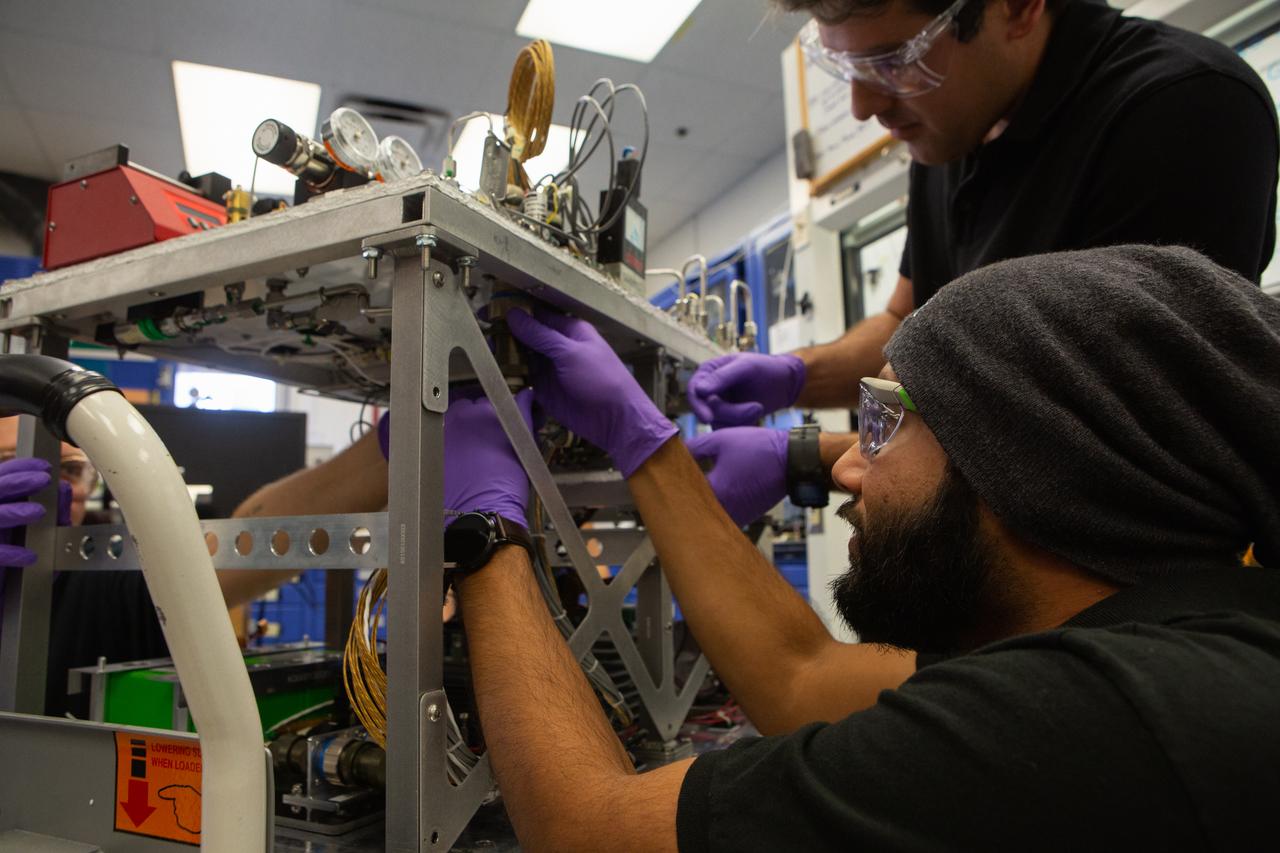
Team members Malay Shah, foreground, and Gino Carro assemble the flight hardware for NASA’s Orbital Syngas Commodity Augmentation Reactor, or OSCAR, on Oct. 10, 2019, in the Space Station Processing Facility at the agency’s Kennedy Space Center in Florida. OSCAR is an Early Career Initiative project at the spaceport that studies technology to convert trash and human waste into useful gasses such as methane, hydrogen and carbon dioxide. By processing small pieces of trash in a high-temperature reactor, OSCAR is advancing new and innovative technology for managing waste in space. A prototype has been developed, and the team is in the process of constructing a new rig for a suborbital flight test.
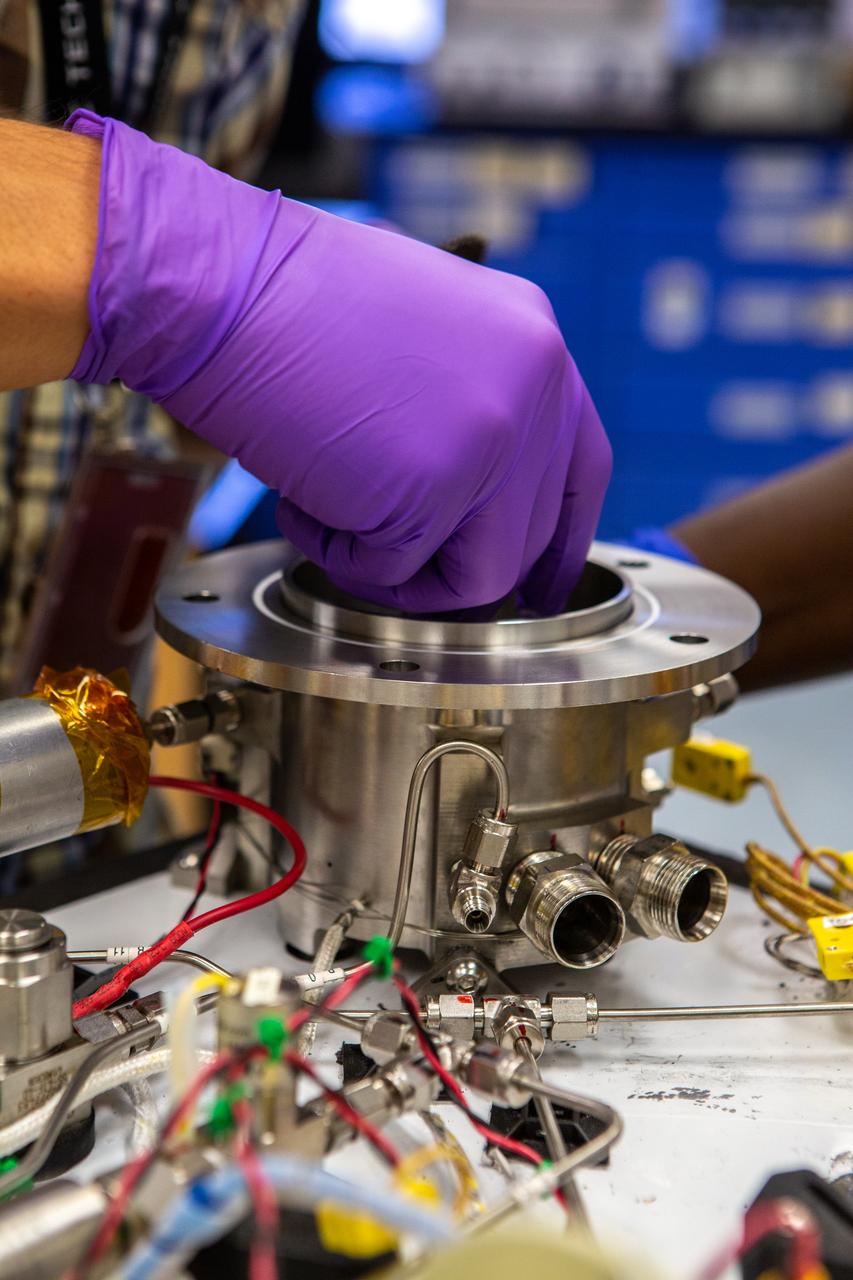
Technicians wearing protective equipment perform work for a future mission on flight hardware for NASA’s Orbital Syngas Commodity Augmentation Reactor, or OSCAR, at the Neil Armstrong Operations and Checkout Facility at the agency’s Kennedy Space Center in Florida on Aug. 10, 2020. OSCAR began as an Early Career Initiative project at the spaceport that studies technology to convert trash and human waste into useful gasses such as methane, hydrogen, and carbon dioxide. By processing small pieces of trash in a high-temperature reactor, OSCAR is advancing new and innovative technology for managing waste in space.
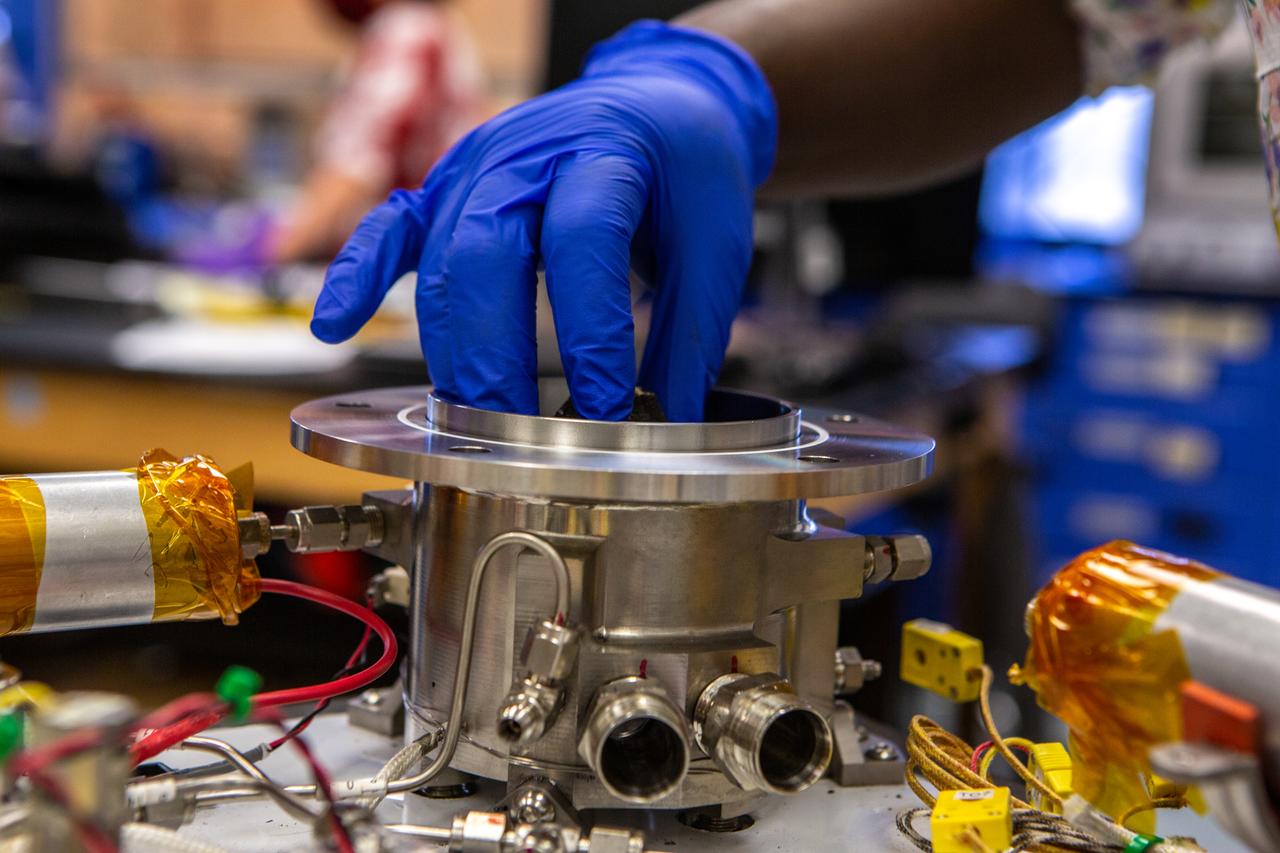
Technicians wearing protective equipment perform work for a future mission on flight hardware for NASA’s Orbital Syngas Commodity Augmentation Reactor, or OSCAR, at the Neil Armstrong Operations and Checkout Facility at the agency’s Kennedy Space Center in Florida on Aug. 10, 2020. OSCAR began as an Early Career Initiative project at the spaceport that studies technology to convert trash and human waste into useful gasses such as methane, hydrogen, and carbon dioxide. By processing small pieces of trash in a high-temperature reactor, OSCAR is advancing new and innovative technology for managing waste in space.
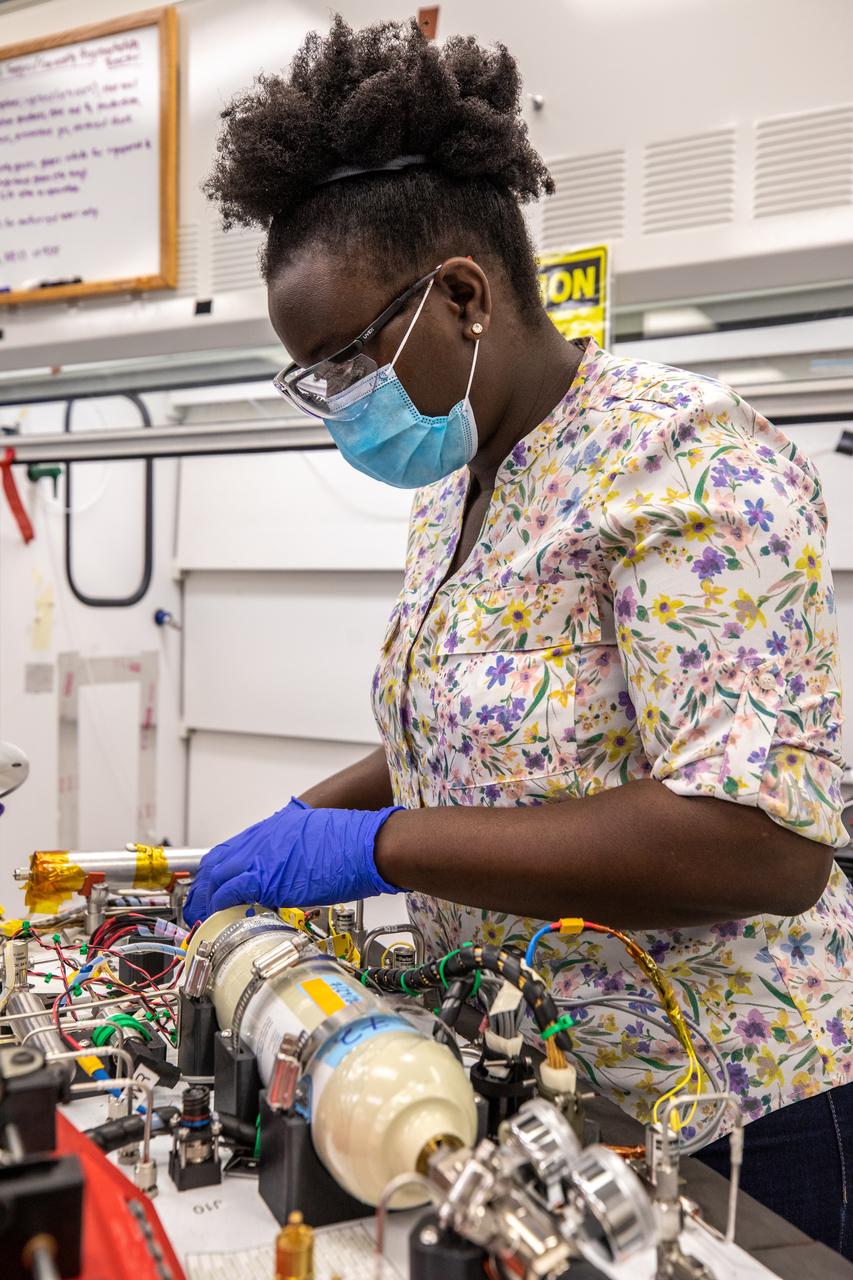
Technicians wearing protective equipment perform work for a future mission on flight hardware for NASA’s Orbital Syngas Commodity Augmentation Reactor, or OSCAR, at the Neil Armstrong Operations and Checkout Facility at the agency’s Kennedy Space Center in Florida on Aug. 10, 2020. OSCAR began as an Early Career Initiative project at the spaceport that studies technology to convert trash and human waste into useful gasses such as methane, hydrogen, and carbon dioxide. By processing small pieces of trash in a high-temperature reactor, OSCAR is advancing new and innovative technology for managing waste in space.
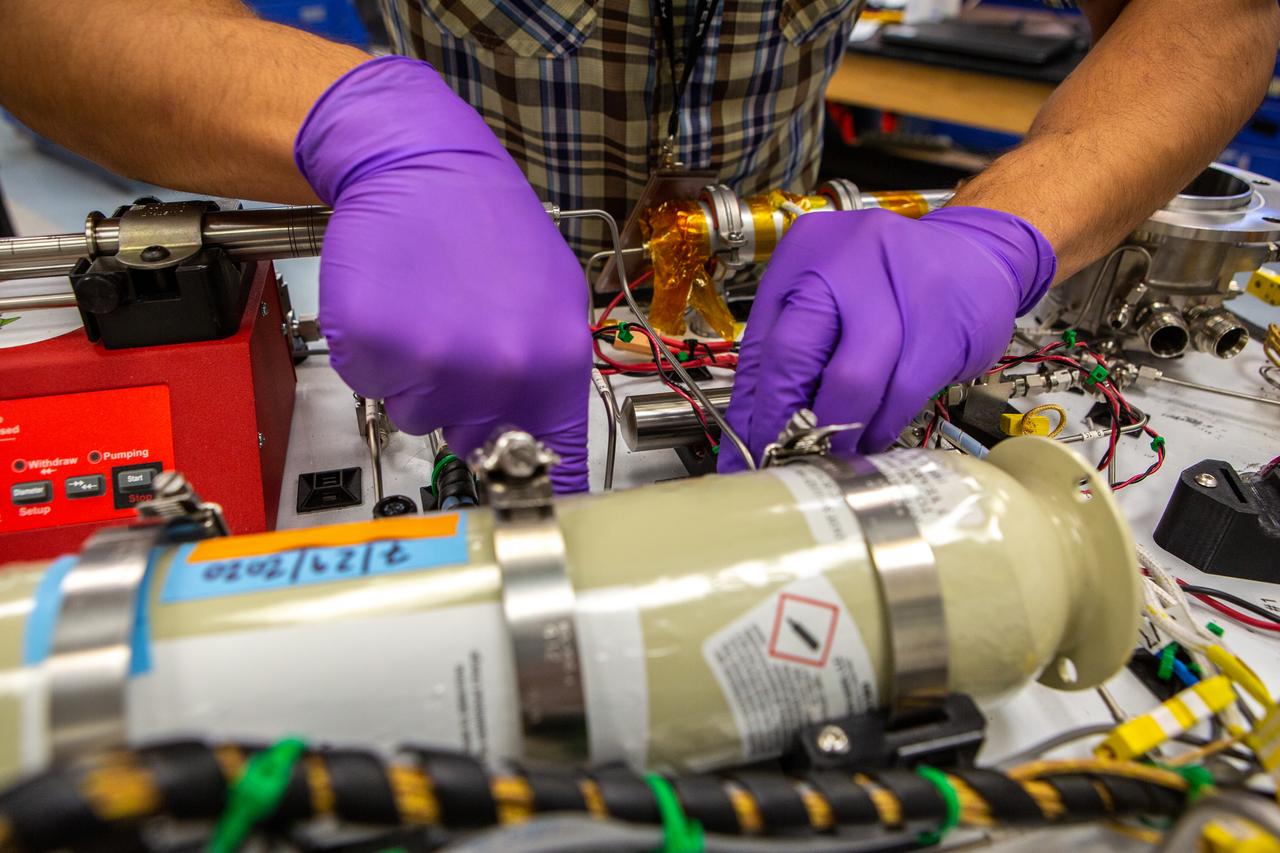
Technicians wearing protective equipment perform work for a future mission on flight hardware for NASA’s Orbital Syngas Commodity Augmentation Reactor, or OSCAR, at the Neil Armstrong Operations and Checkout Facility at the agency’s Kennedy Space Center in Florida on Aug. 10, 2020. OSCAR began as an Early Career Initiative project at the spaceport that studies technology to convert trash and human waste into useful gasses such as methane, hydrogen, and carbon dioxide. By processing small pieces of trash in a high-temperature reactor, OSCAR is advancing new and innovative technology for managing waste in space.
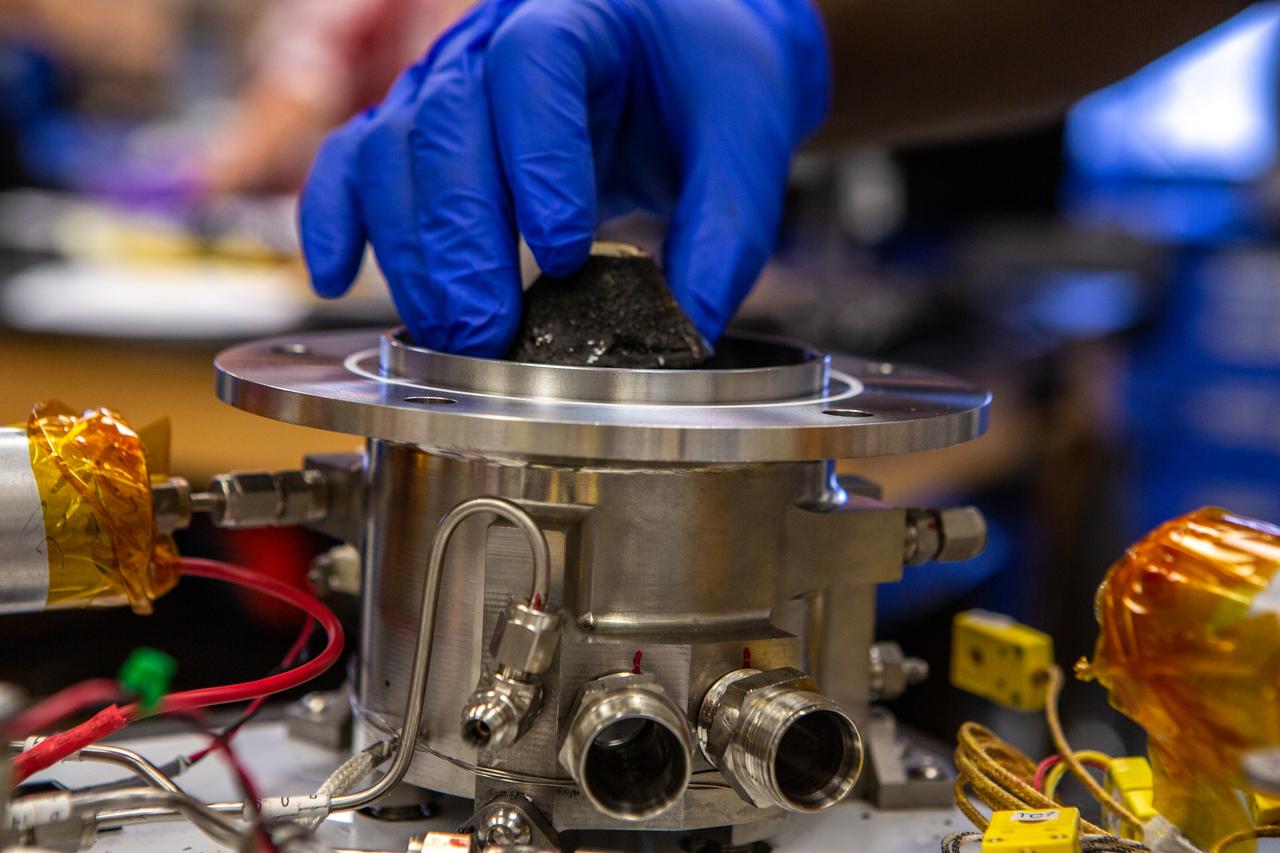
Technicians wearing protective equipment perform work for a future mission on flight hardware for NASA’s Orbital Syngas Commodity Augmentation Reactor, or OSCAR, at the Neil Armstrong Operations and Checkout Facility at the agency’s Kennedy Space Center in Florida on Aug. 10, 2020. OSCAR began as an Early Career Initiative project at the spaceport that studies technology to convert trash and human waste into useful gasses such as methane, hydrogen, and carbon dioxide. By processing small pieces of trash in a high-temperature reactor, OSCAR is advancing new and innovative technology for managing waste in space.