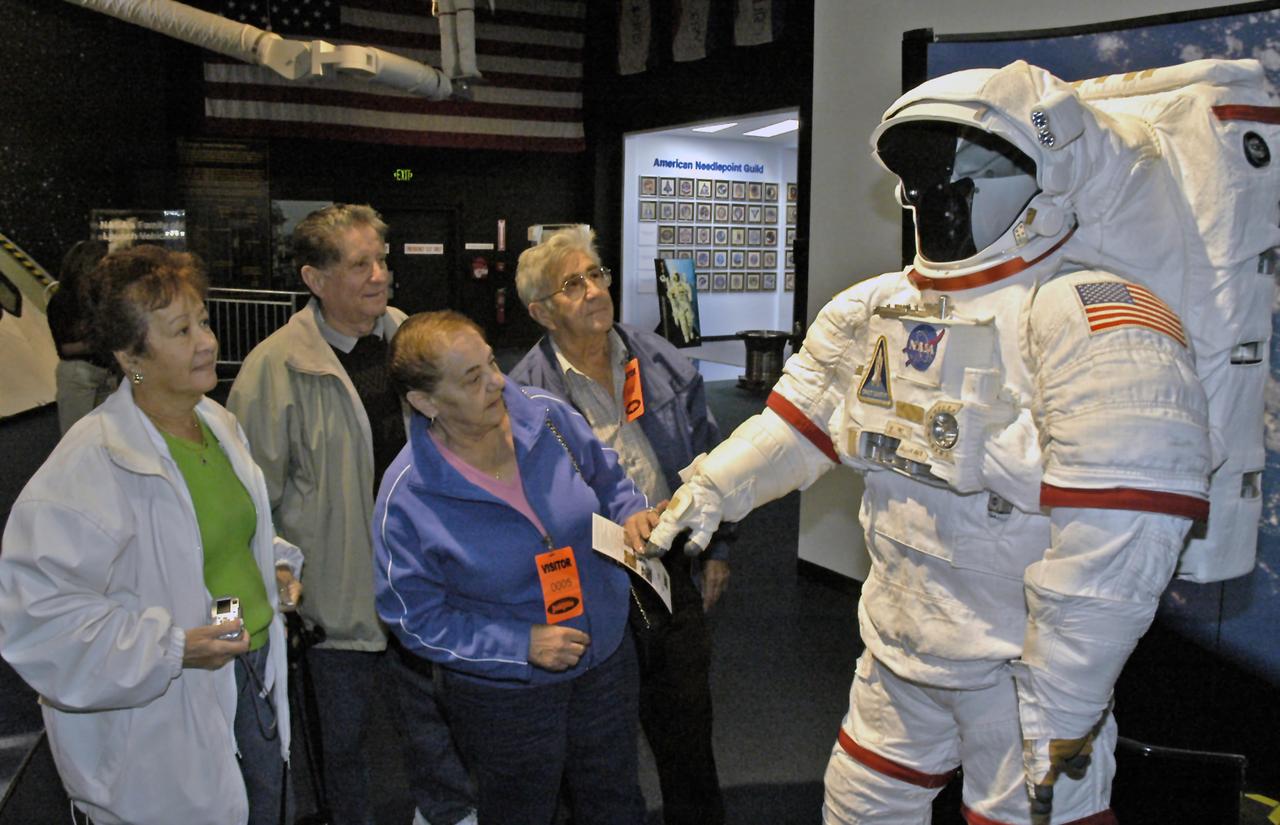
StenniSphere reopened Jan. 18, 2006, almost five months after Hurricane Katrina damaged the basement of the building that houses the visitor center. Thanks to the staff's careful preparations before the storm, no artifacts or exhibits were harmed.
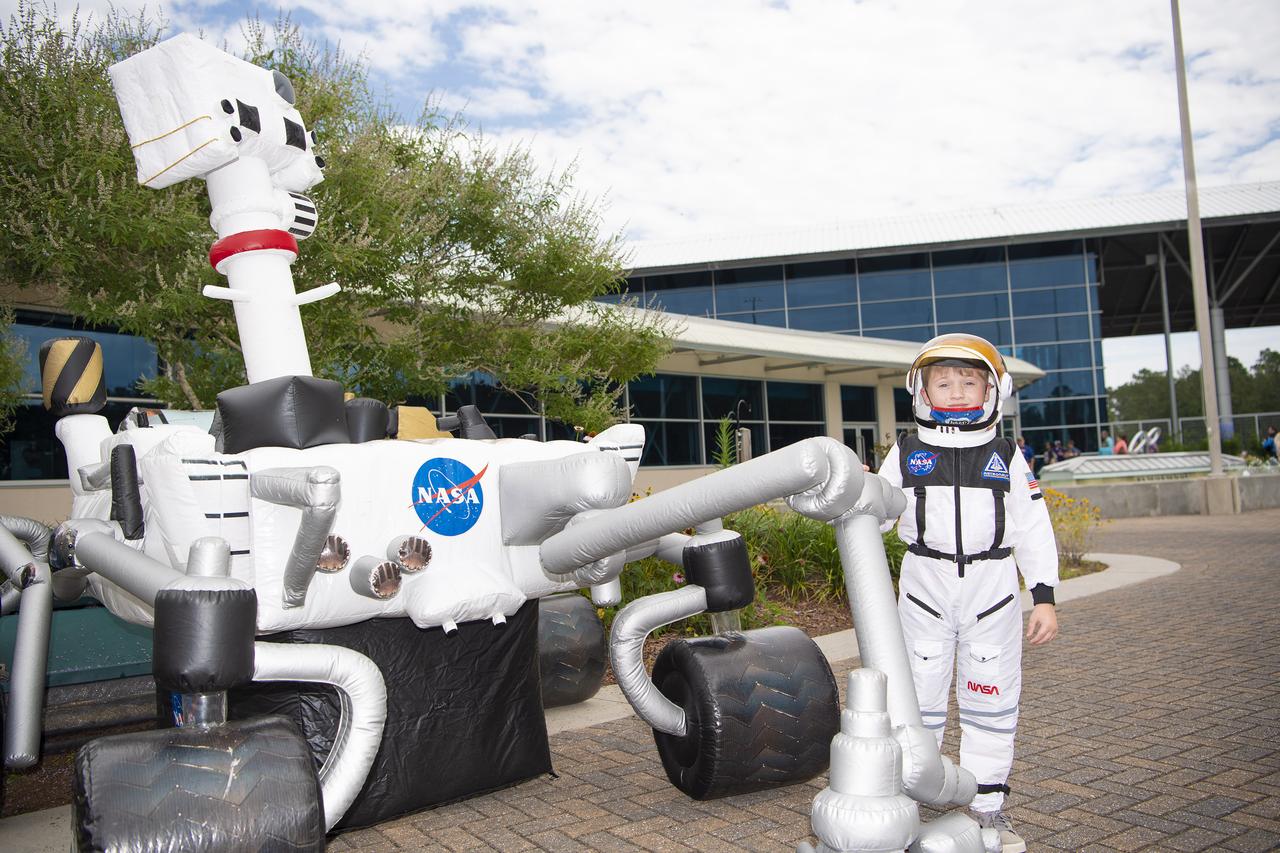
Jackson Barber of Mandeville, LA, poses in front of an inflatable Mars Rover outside INFINITY Science Center adjacent to NASA’s Stennis Space Center. The science center held its grand reopening on May 29, 2021, after closing in 2020 due to Covid 19.
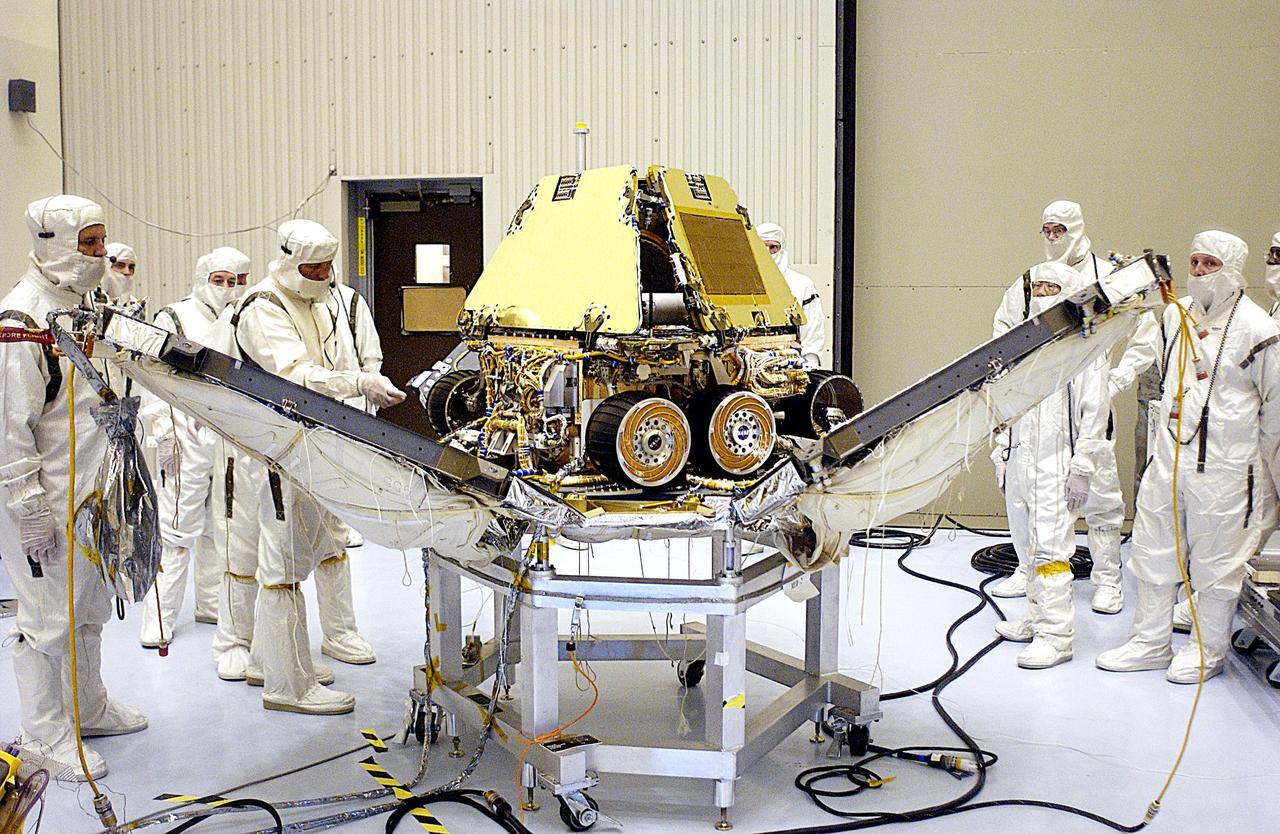
In the Payload Hazardous Servicing Facility, technicians reopen the lander petals of the Mars Exploration Rover 2 MER-2 to allow access to one of the spacecraft circuit boards.
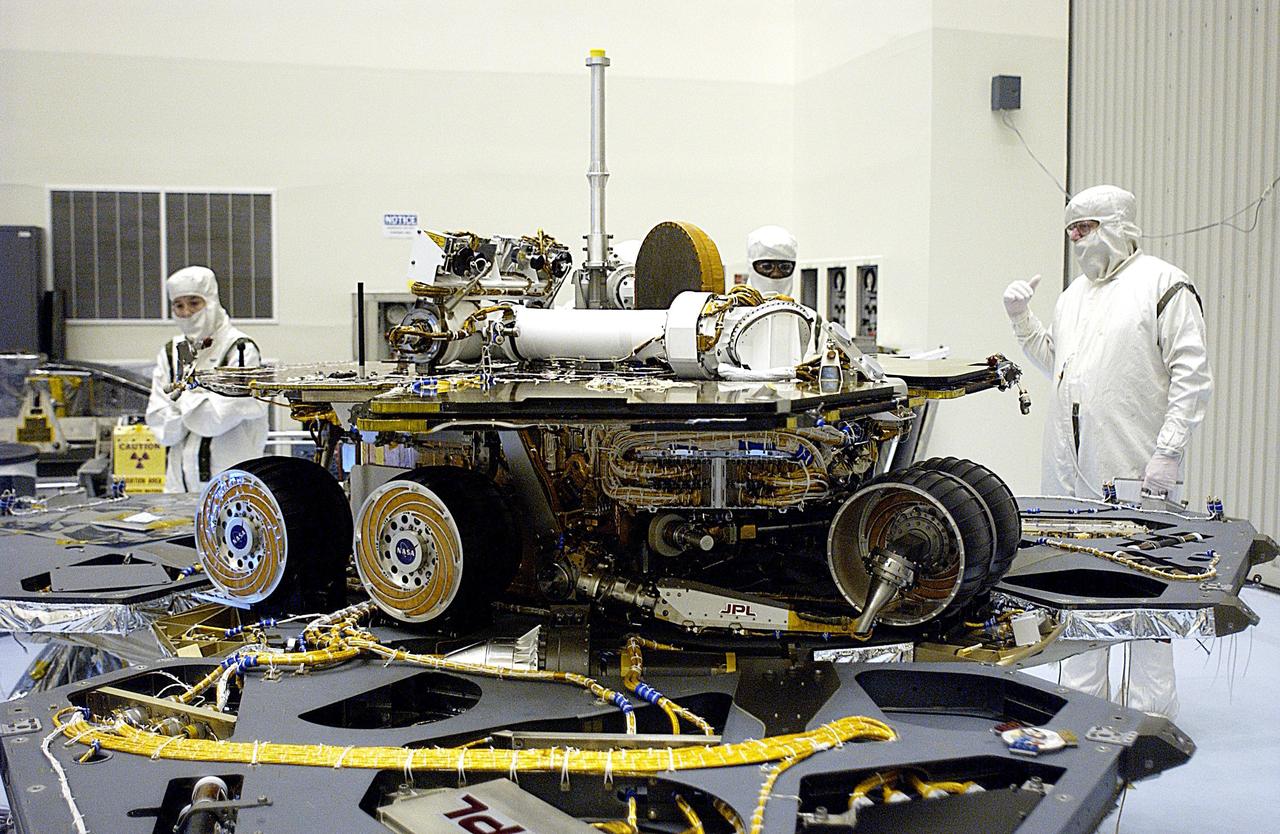
In the Payload Hazardous Servicing Facility, the lander petals of the Mars Exploration Rover 2 MER-2 have been reopened and its solar panels deployed to allow technicians access to the spacecraft to remove one of its circuit boards.
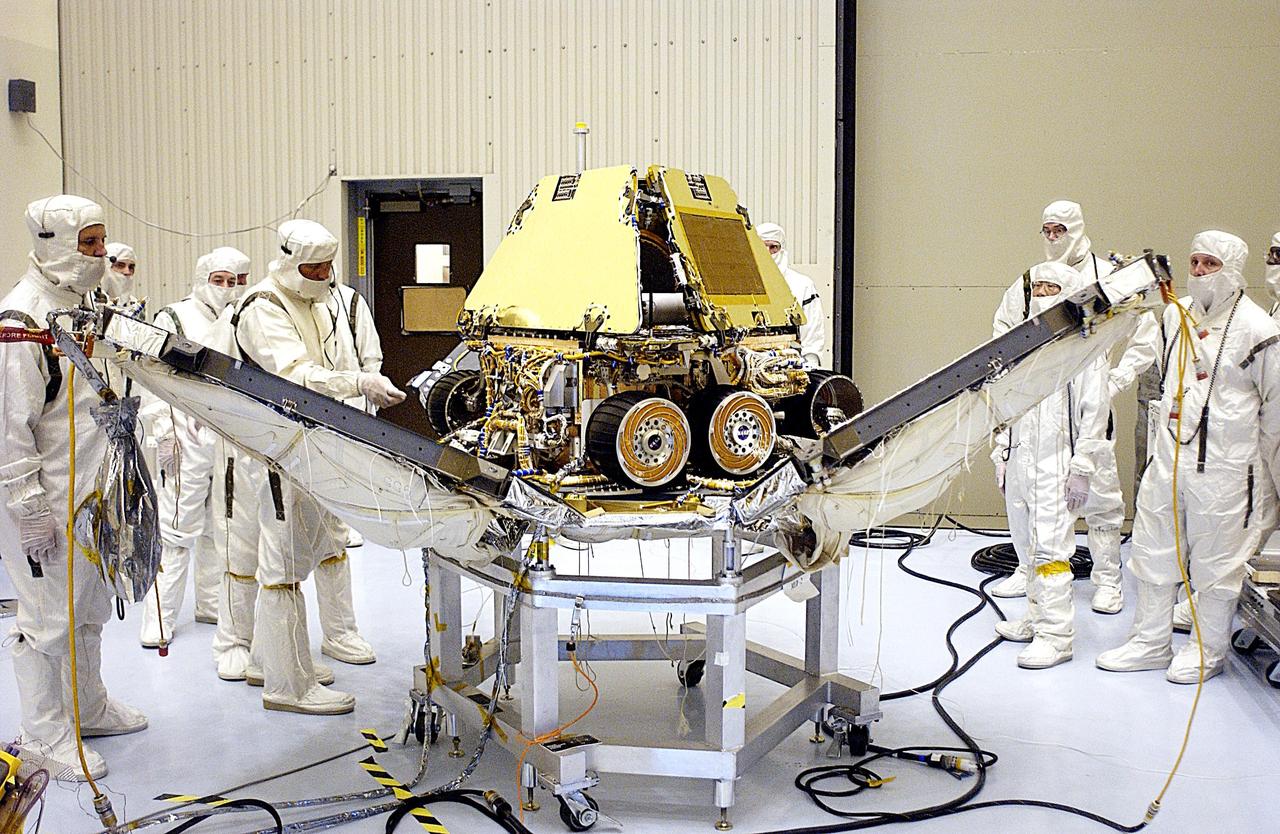
KENNEDY SPACE CENTER, FLA. -- In the Payload Hazardous Servicing Facility, technicians reopen the lander petals of the Mars Exploration Rover 2 (MER-2) to allow access to one of the spacecraft's circuit boards. A concern arose during prelaunch testing regarding how the spacecraft interprets signals sent from its main computer to peripherals in the cruise stage, lander and small deep space transponder. The MER Mission consists of two identical rovers set to launch in June 2003. The problem will be fixed on both rovers.
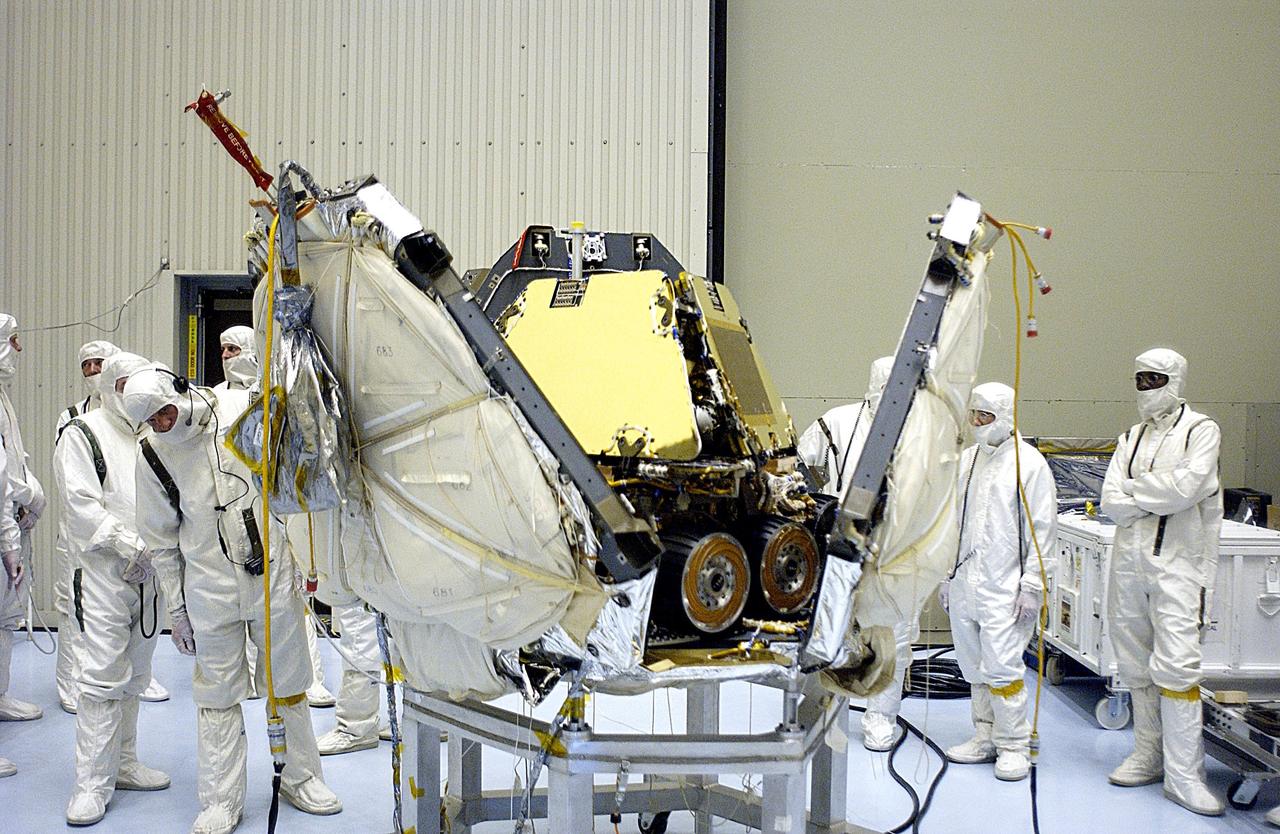
KENNEDY SPACE CENTER, FLA. -- In the Payload Hazardous Servicing Facility, technicians reopen the lander petals of the Mars Exploration Rover 2 (MER-2) to allow access to one of the spacecraft's circuit boards. A concern arose during prelaunch testing regarding how the spacecraft interprets signals sent from its main computer to peripherals in the cruise stage, lander and small deep space transponder. The MER Mission consists of two identical rovers set to launch in June 2003. The problem will be fixed on both rovers.
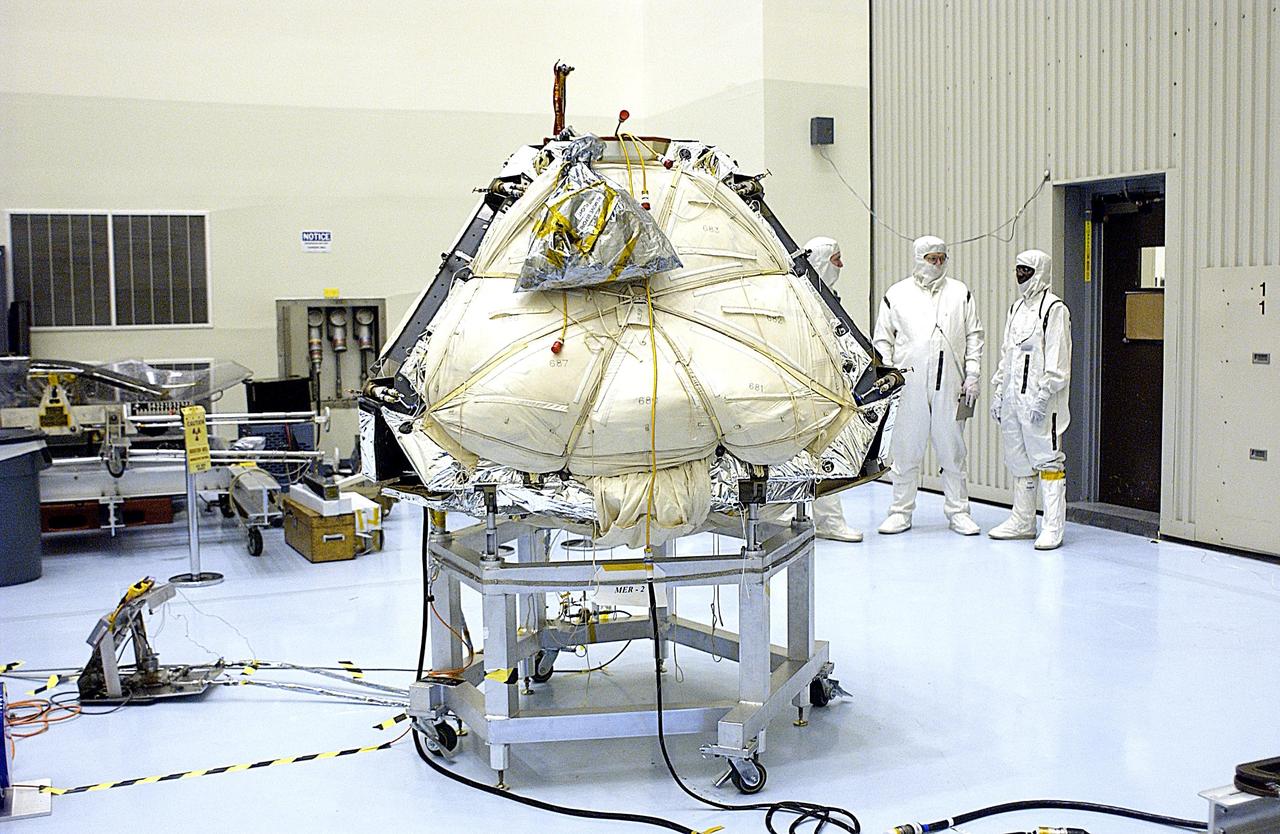
KENNEDY SPACE CENTER, FLA. -- In the Payload Hazardous Servicing Facility, preparations are under way to reopen the lander petals of the Mars Exploration Rover 2 (MER-2) to allow technicians access to one of the spacecraft's circuit boards. A concern arose during prelaunch testing regarding how the spacecraft interprets signals sent from its main computer to peripherals in the cruise stage, lander and small deep space transponder. The MER Mission consists of two identical rovers set to launch in June 2003. The problem will be fixed on both rovers.
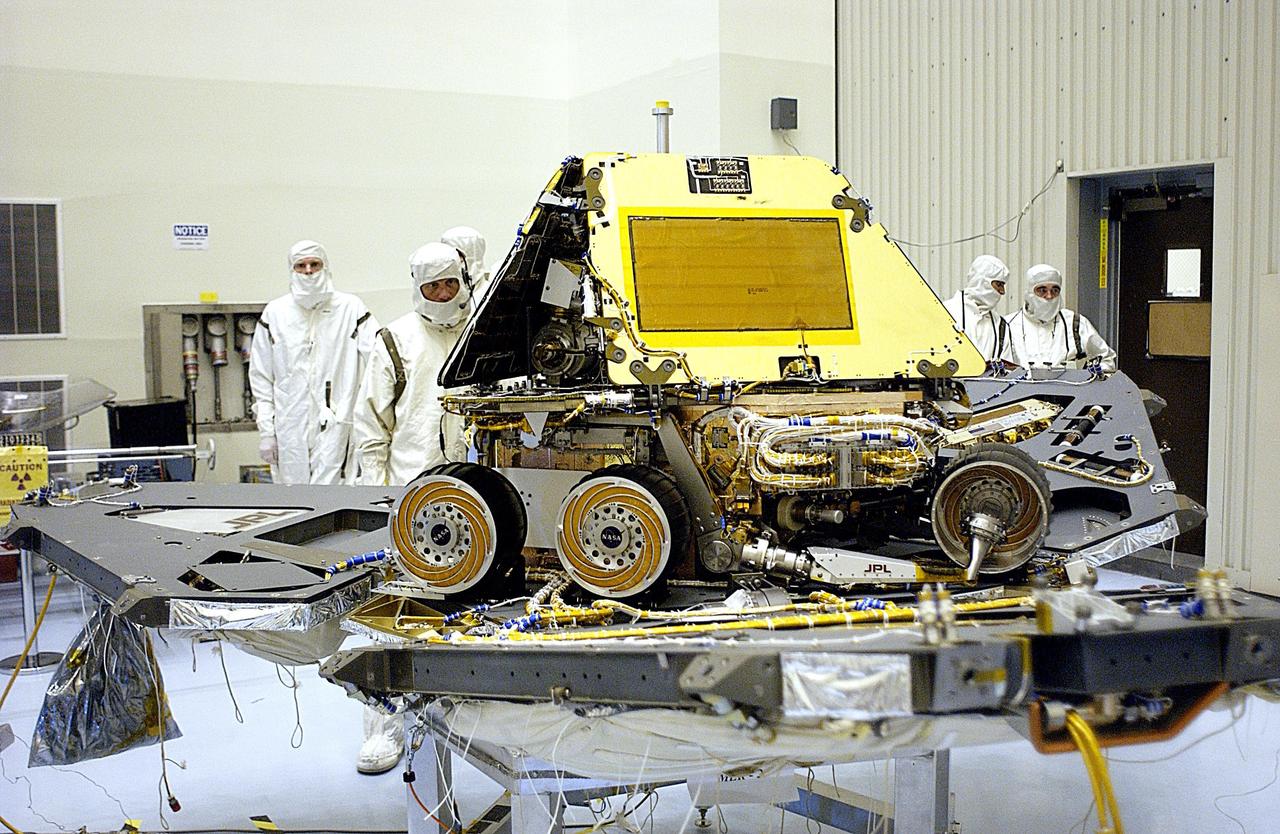
KENNEDY SPACE CENTER, FLA. -- In the Payload Hazardous Servicing Facility, the lander petals of the Mars Exploration Rover 2 (MER-2) have been reopened to allow technicians access to one of the spacecraft's circuit boards. A concern arose during prelaunch testing regarding how the spacecraft interprets signals sent from its main computer to peripherals in the cruise stage, lander and small deep space transponder. The MER Mission consists of two identical rovers set to launch in June 2003. The problem will be fixed on both rovers.
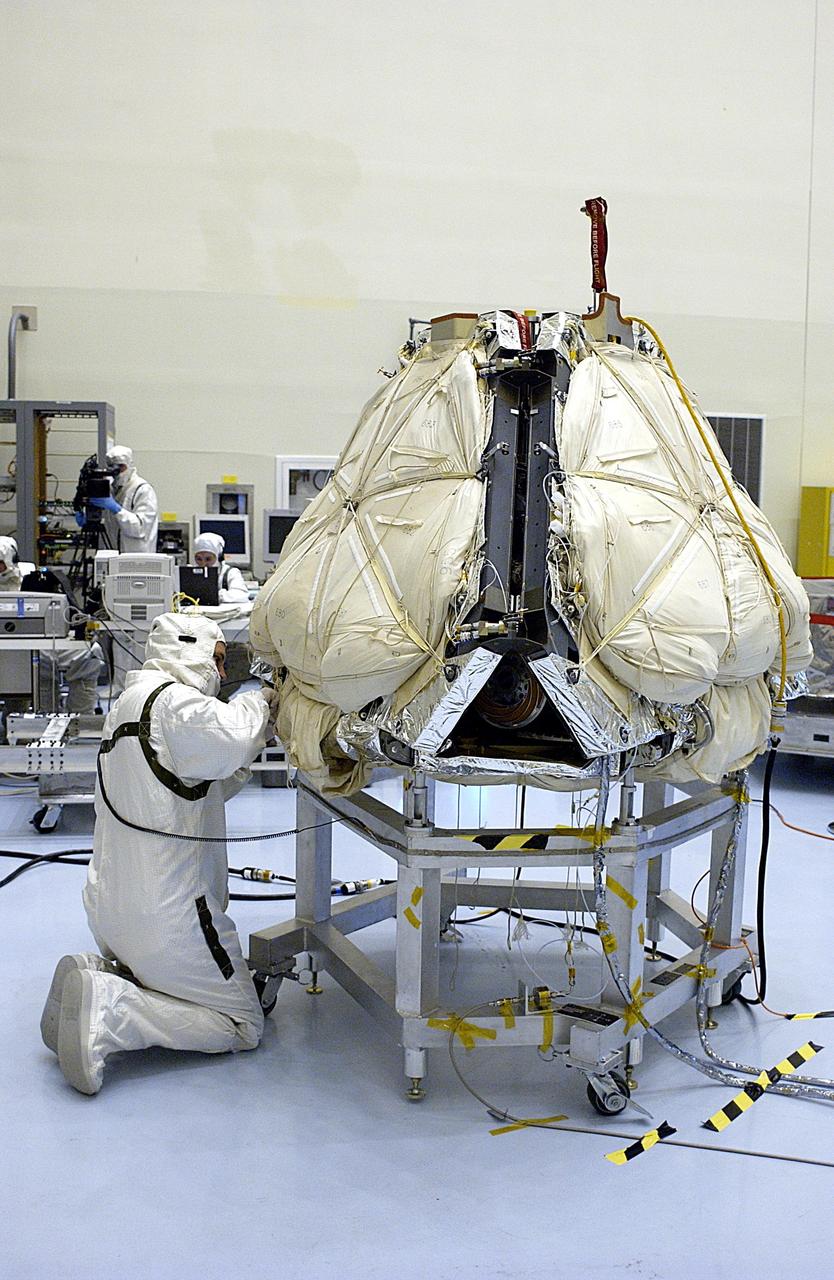
KENNEDY SPACE CENTER, FLA. -- In the Payload Hazardous Servicing Facility, a technician prepares to reopen the lander petals of the Mars Exploration Rover 2 (MER-2) to allow access to one of the spacecraft's circuit boards. A concern arose during prelaunch testing regarding how the spacecraft interprets signals sent from its main computer to peripherals in the cruise stage, lander and small deep space transponder. The MER Mission consists of two identical rovers set to launch in June 2003. The problem will be fixed on both rovers.
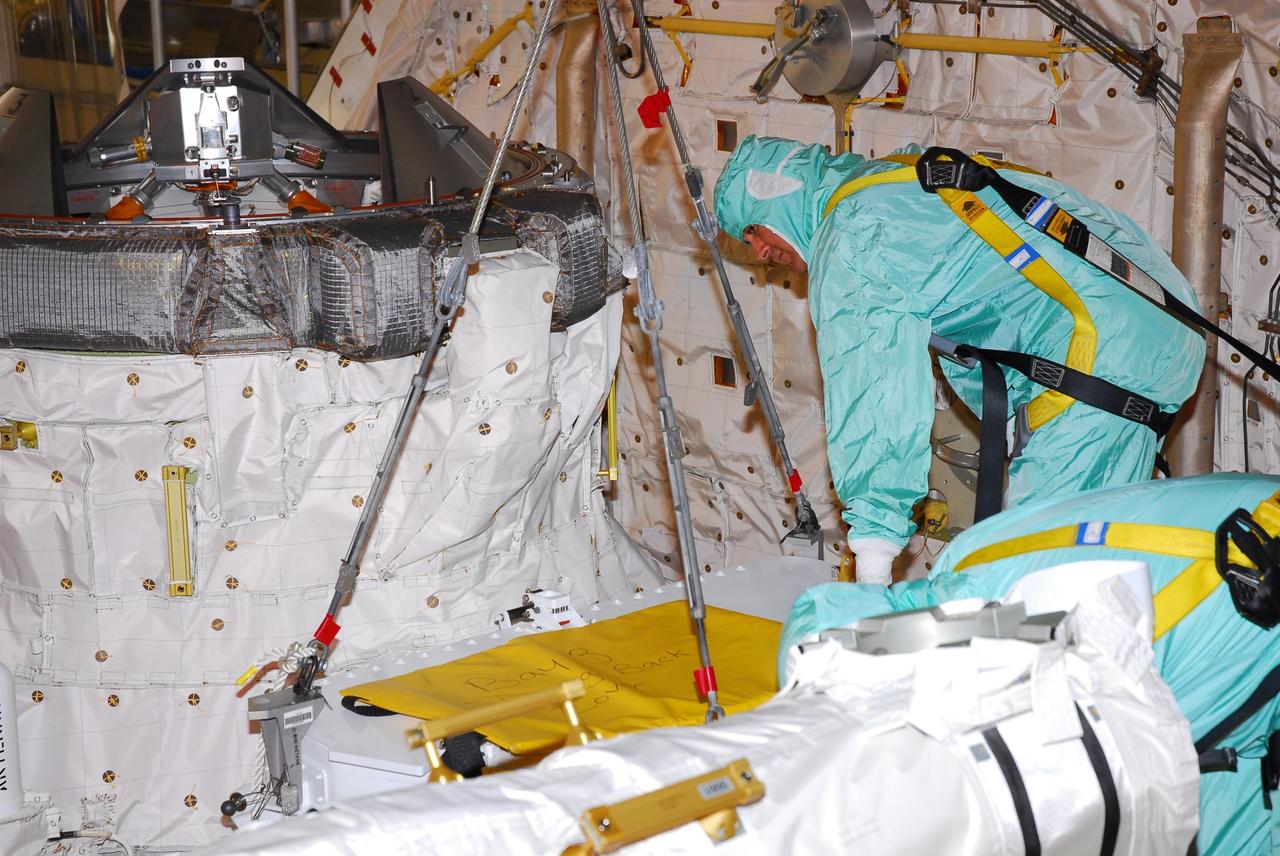
KENNEDY SPACE CENTER, FLA. -- In bay 3 of the Orbiter Processing Facility, workers move the tool storage assembly unit into place in Discovery's payload bay, where it will be stored. The tools may be used on a spacewalk, yet to be determined, during mission STS-120. In an unusual operation, the payload bay doors had to be reopened after closure to accommodate the storage. Space shuttle Discovery is targeted to launch Oct. 23 to the International Space Station. It will carry the U.S. Node 2, a connecting module, named Harmony, for assembly on the space station. Photo credit: NASA/Amanda Diller

CAPE CANAVERAL, Fla. – This aerial view shows the high water surrounding Launch Pad 39A at NASA's Kennedy Space Center following Tropical Storm Fay. In the foreground is the Atlantic Ocean. The storm passed over the center Aug. 20 and then stalled offshore, bringing with it heavy rain and tropical storm force wind. Kennedy closed Aug. 19 because of Fay and reopened for normal operations Aug. 22. Based on initial assessments, there was no damage to space flight hardware, such as the space shuttles and Hubble Space Telescope equipment. Some facilities did sustain minor damage. Photo credit: NASA/Amanda Diller
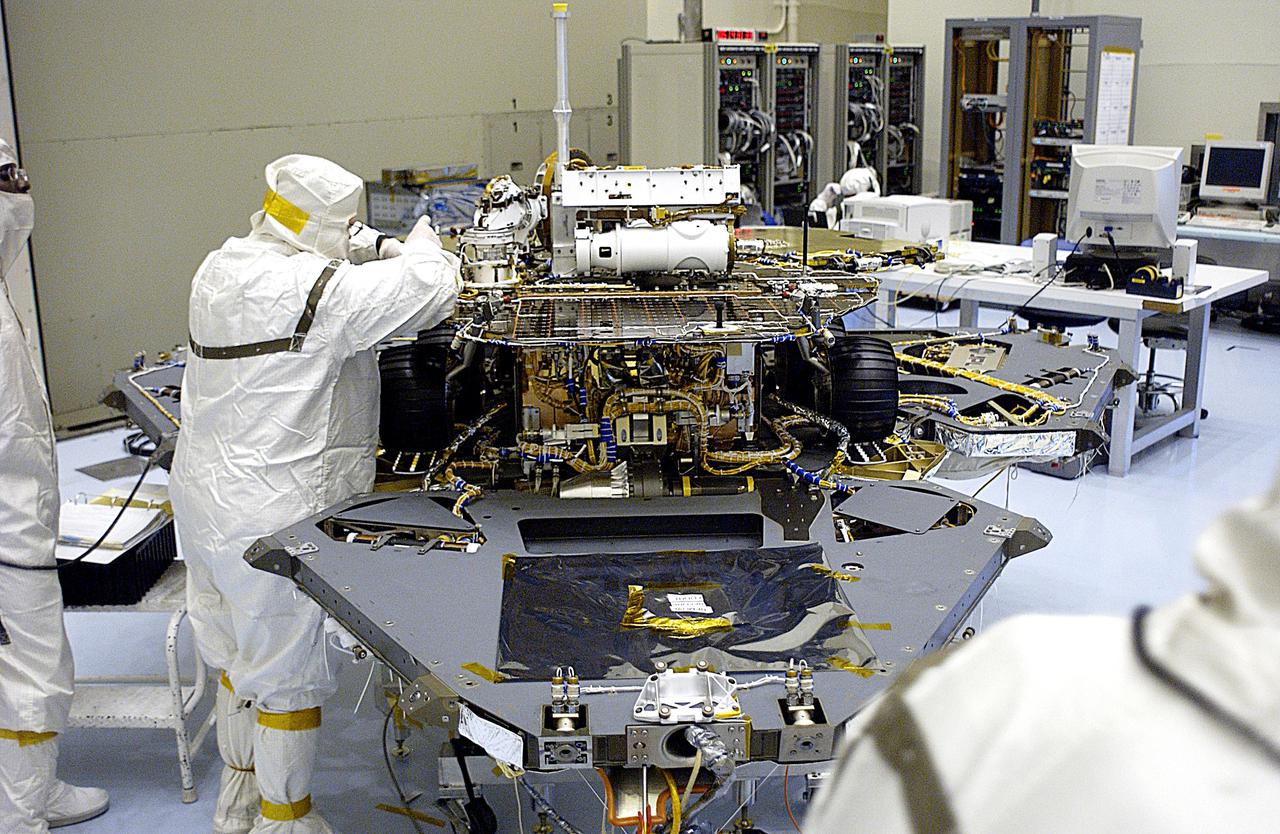
KENNEDY SPACE CENTER, FLA. -- In the Payload Hazardous Servicing Facility, the lander petals of the Mars Exploration Rover 2 (MER-2) have been reopened and its solar panels deployed to allow technicians access to the spacecraft to remove one of its circuit boards. A concern arose during prelaunch testing regarding how the spacecraft interprets signals sent from its main computer to peripherals in the cruise stage, lander and small deep space transponder. The MER Mission consists of two identical rovers set to launch in June 2003. The problem will be fixed on both rovers.
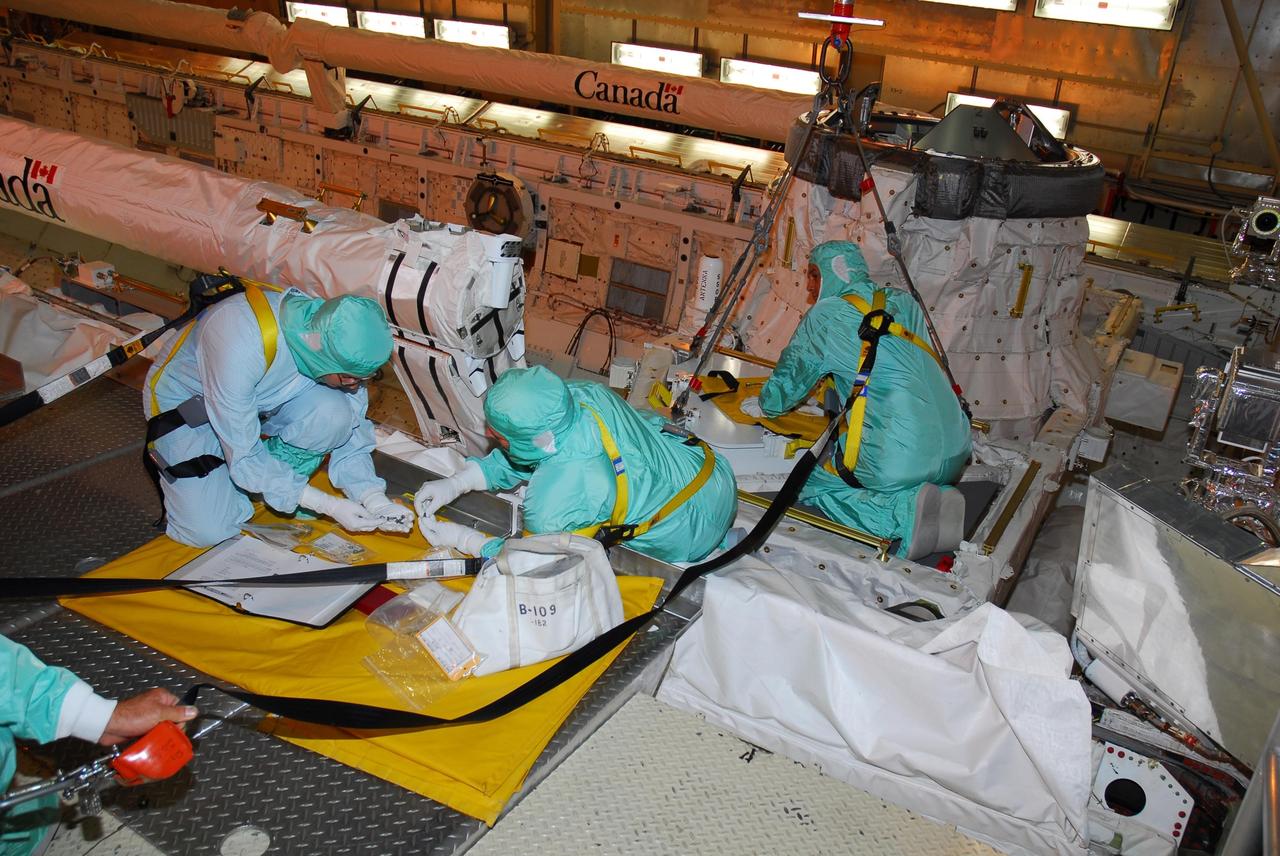
KENNEDY SPACE CENTER, FLA. -- In bay 3 of the Orbiter Processing Facility, workers secure the tool storage assembly unit into place in Discovery's payload bay, where it will be stored. The tools may be used on a spacewalk, yet to be determined, during mission STS-120. In an unusual operation, the payload bay doors had to be reopened after closure to accommodate the storage. Space shuttle Discovery is targeted to launch Oct. 23 to the International Space Station. It will carry the U.S. Node 2, a connecting module, named Harmony, for assembly on the space station. Photo credit: NASA/Amanda Diller
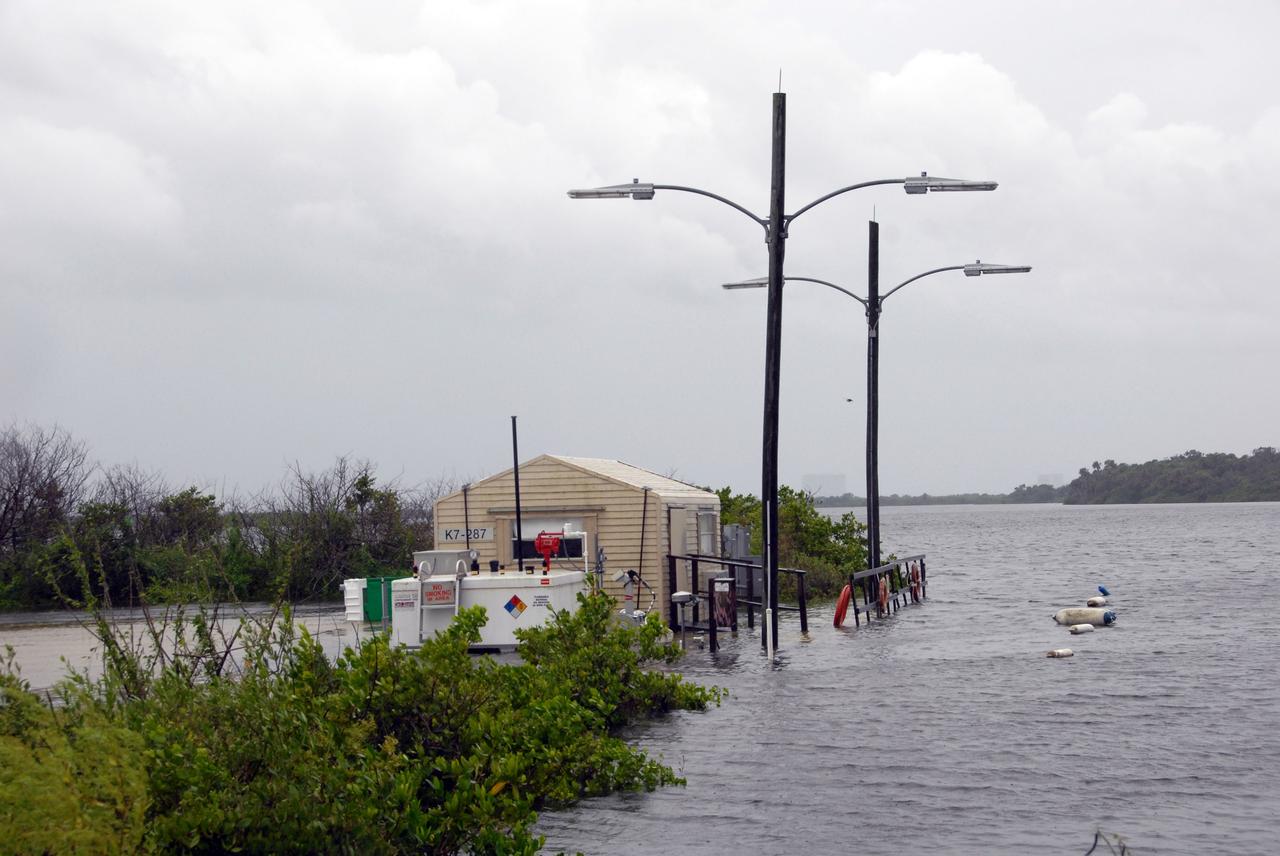
CAPE CANAVERAL, Fla. – Due to Tropical Storm Fay, the ground is flooded on a road alongside the turn basin at NASA's Kennedy Space Center. The storm passed over the center Aug. 20 and then stalled offshore, bringing with it heavy rain and tropical storm force wind. Kennedy closed Aug. 19 because of Fay and reopened for normal operations Aug. 22. Based on initial assessments, there was no damage to space flight hardware, such as the space shuttles and Hubble Space Telescope equipment. Some facilities did sustain minor damage. Photo credit: NASA/Jack Pfaller
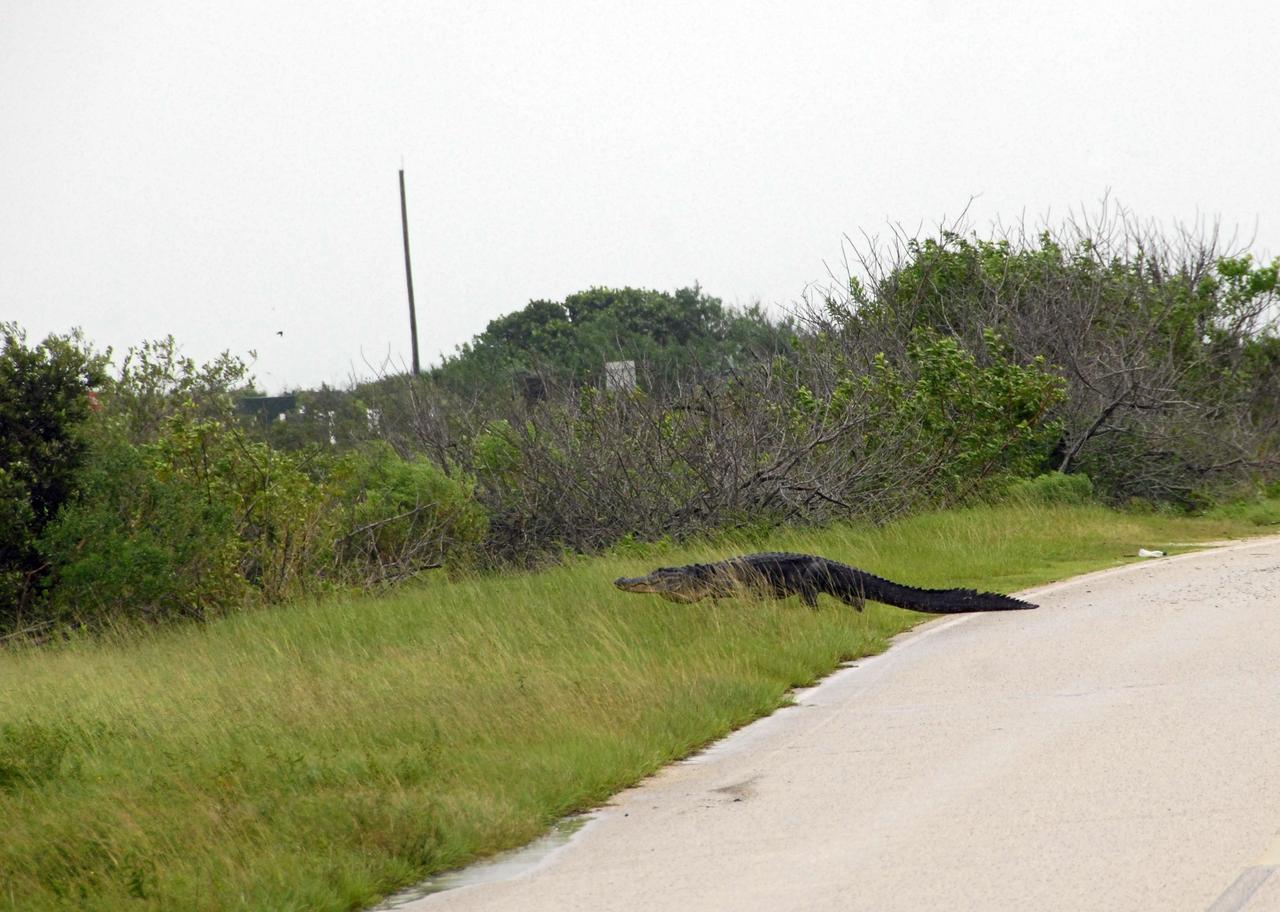
CAPE CANAVERAL, Fla. – An alligator seeks higher ground alongside a road at NASA's Kennedy Space Center during the onslaught of Tropical Storm Fay. The storm passed over the center Aug. 20 and then stalled offshore, bringing with it heavy rain and tropical storm force wind. Kennedy closed Aug. 19 because of Fay and reopened for normal operations Aug. 22. Based on initial assessments, there was no damage to space flight hardware, such as the space shuttles and Hubble Space Telescope equipment. Some facilities did sustain minor damage. Photo credit: NASA/Jack Pfaller
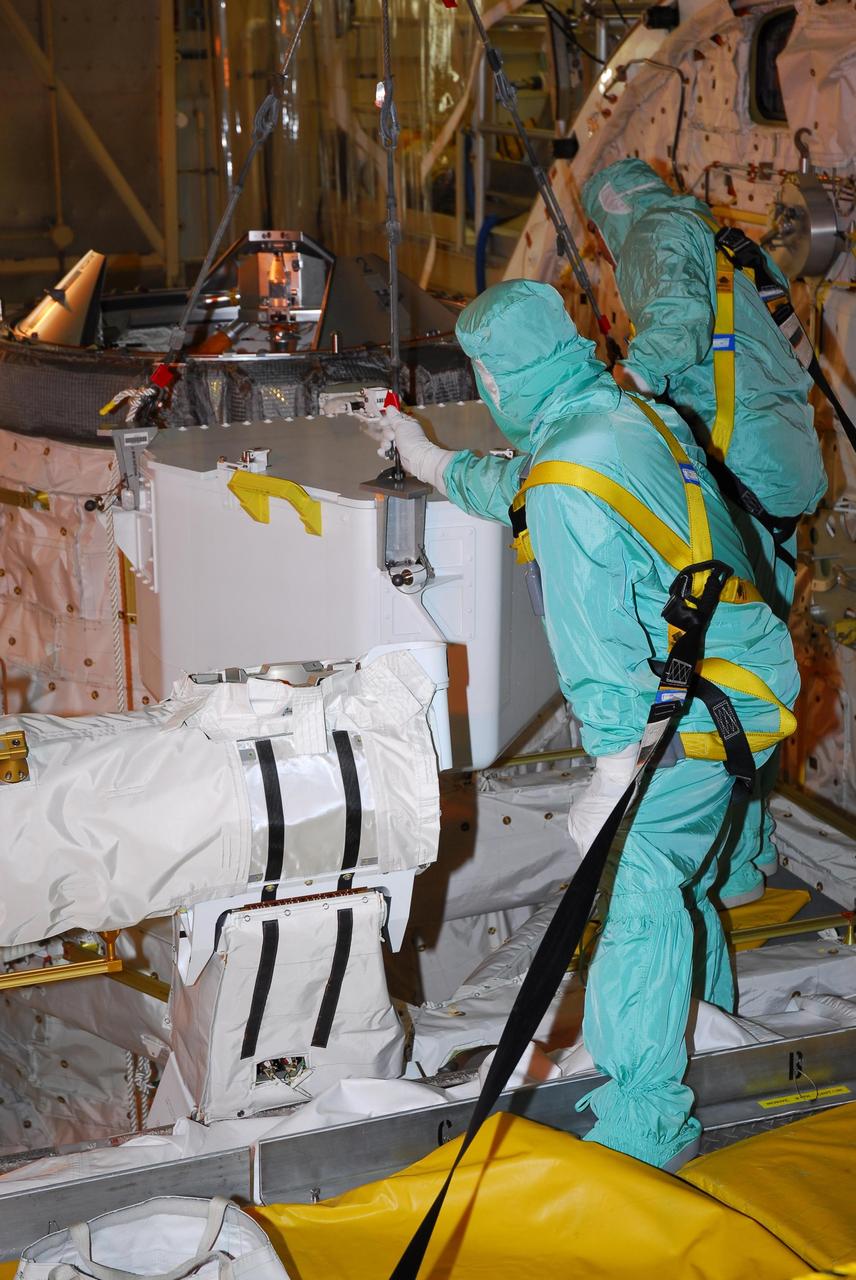
KENNEDY SPACE CENTER, FLA. -- In bay 3 of the Orbiter Processing Facility, workers maneuver the tool storage assembly unit into place in Discovery's payload bay, where it will be stored. The tools may be used on a spacewalk, yet to be determined, during mission STS-120. In an unusual operation, the payload bay doors had to be reopened after closure to accommodate the storage. Space shuttle Discovery is targeted to launch Oct. 23 to the International Space Station. It will carry the U.S. Node 2, a connecting module, named Harmony, for assembly on the space station. Photo credit: NASA/Amanda Diller
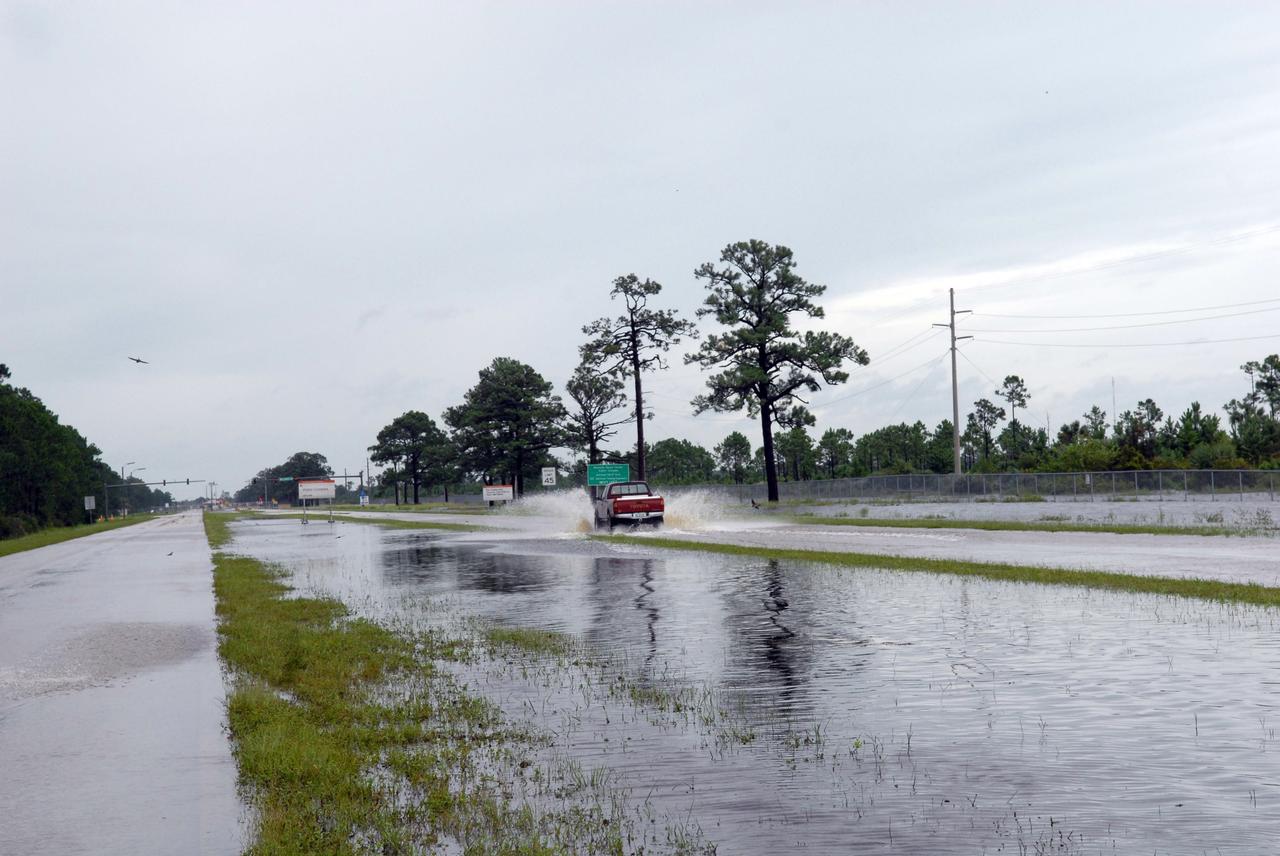
CAPE CANAVERAL, Fla. – The median of one of the roads on NASA's Kennedy Space Center is flooded from Tropical Storm Fay. An emergency vehicle illustrates the flooding on the road as well. The storm passed over the center Aug. 20 and then stalled offshore, bringing with it heavy rain and tropical storm force wind. Kennedy closed Aug. 19 because of Fay and reopened for normal operations Aug. 22. Based on initial assessments, there was no damage to space flight hardware, such as the space shuttles and Hubble Space Telescope equipment. Some facilities did sustain minor damage. Photo credit: NASA/Jack Pfaller
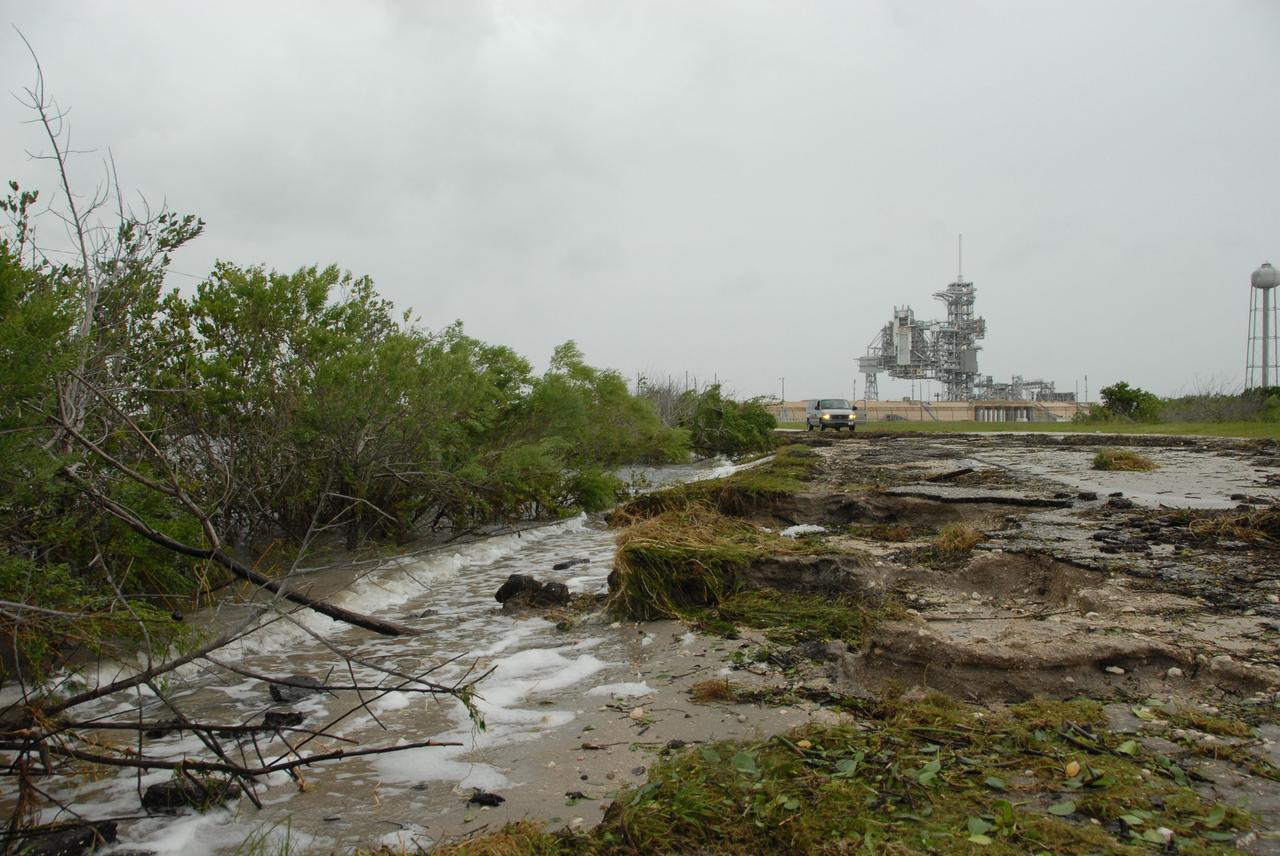
CAPE CANAVERAL, Fla. – Debris covers a road eroded by Tropical Storm Fay near Launch Pad 39A at NASA's Kennedy Space Center. The storm passed over the center Aug. 20 and then stalled offshore, bringing with it heavy rain and tropical storm force wind. Kennedy closed Aug. 19 because of Fay and reopened for normal operations Aug. 22. Based on initial assessments, there was no damage to space flight hardware, such as the space shuttles and Hubble Space Telescope equipment. Some facilities did sustain minor damage. Photo credit: NASA/Jack Pfaller

CAPE CANAVERAL, Fla. – A member of the "ride-out crew," a group of emergency personnel, at NASA's Kennedy Space Center monitors effects from Tropical Storm Fay. In the background is the Operations Support Building I in the Launch Complex 39 Area. The storm passed over the center Aug. 20 and then stalled offshore, bringing with it heavy rain and tropical storm force wind. Kennedy closed Aug. 19 because of Fay and reopened for normal operations Aug. 22. Based on initial assessments, there was no damage to space flight hardware, such as the space shuttles and Hubble Space Telescope equipment. Some facilities did sustain minor damage. Photo credit: NASA/Jack Pfaller
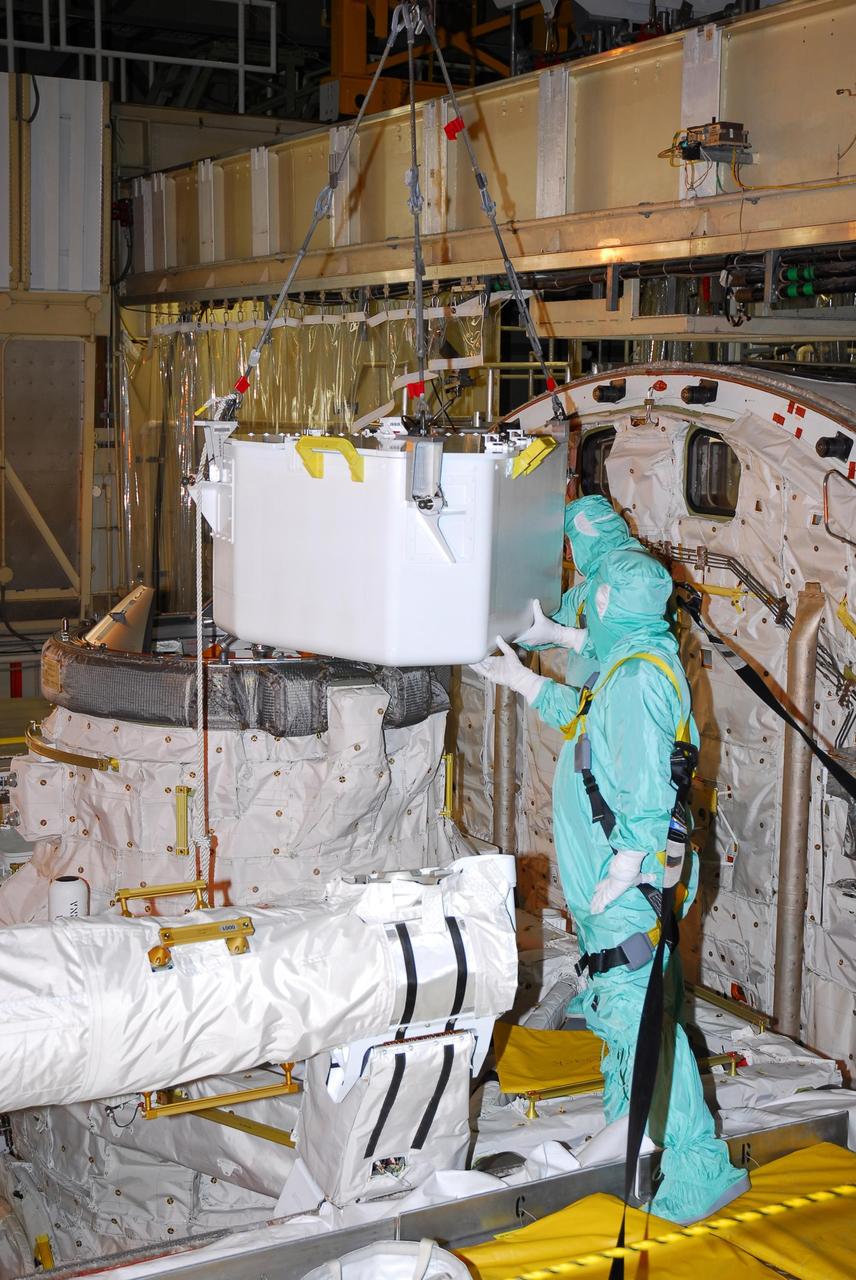
KENNEDY SPACE CENTER, FLA. -- In bay 3 of the Orbiter Processing Facility, workers guide the tool storage assembly unit into place in Discovery's payload bay, where it will be stored. The tools may be used on a spacewalk, yet to be determined, during mission STS-120. In an unusual operation, the payload bay doors had to be reopened after closure to accommodate the storage. Space shuttle Discovery is targeted to launch Oct. 23 to the International Space Station. It will carry the U.S. Node 2, a connecting module, named Harmony, for assembly on the space station. Photo credit: NASA/Amanda Diller
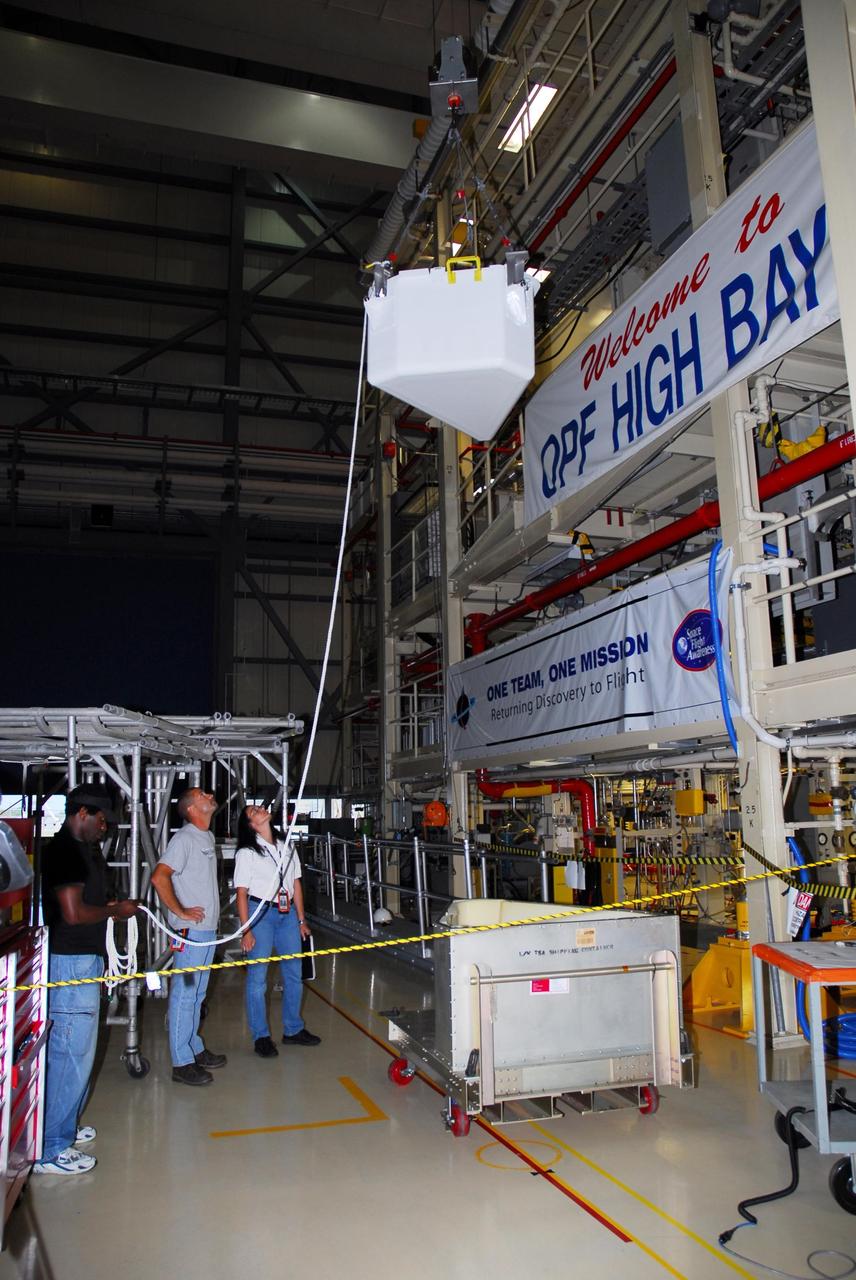
KENNEDY SPACE CENTER, FLA. -- In bay 3 of the Orbiter Processing Facility, a tool storage assembly unit is being moved for storage in Discovery's payload bay. The tools may be used on a spacewalk, yet to be determined, during mission STS-120. In an unusual operation, the payload bay doors had to be reopened after closure to accommodate the storage. Space shuttle Discovery is targeted to launch Oct. 23 to the International Space Station. It will carry the U.S. Node 2, a connecting module, named Harmony, for assembly on the space station. Photo credit: NASA/Amanda Diller
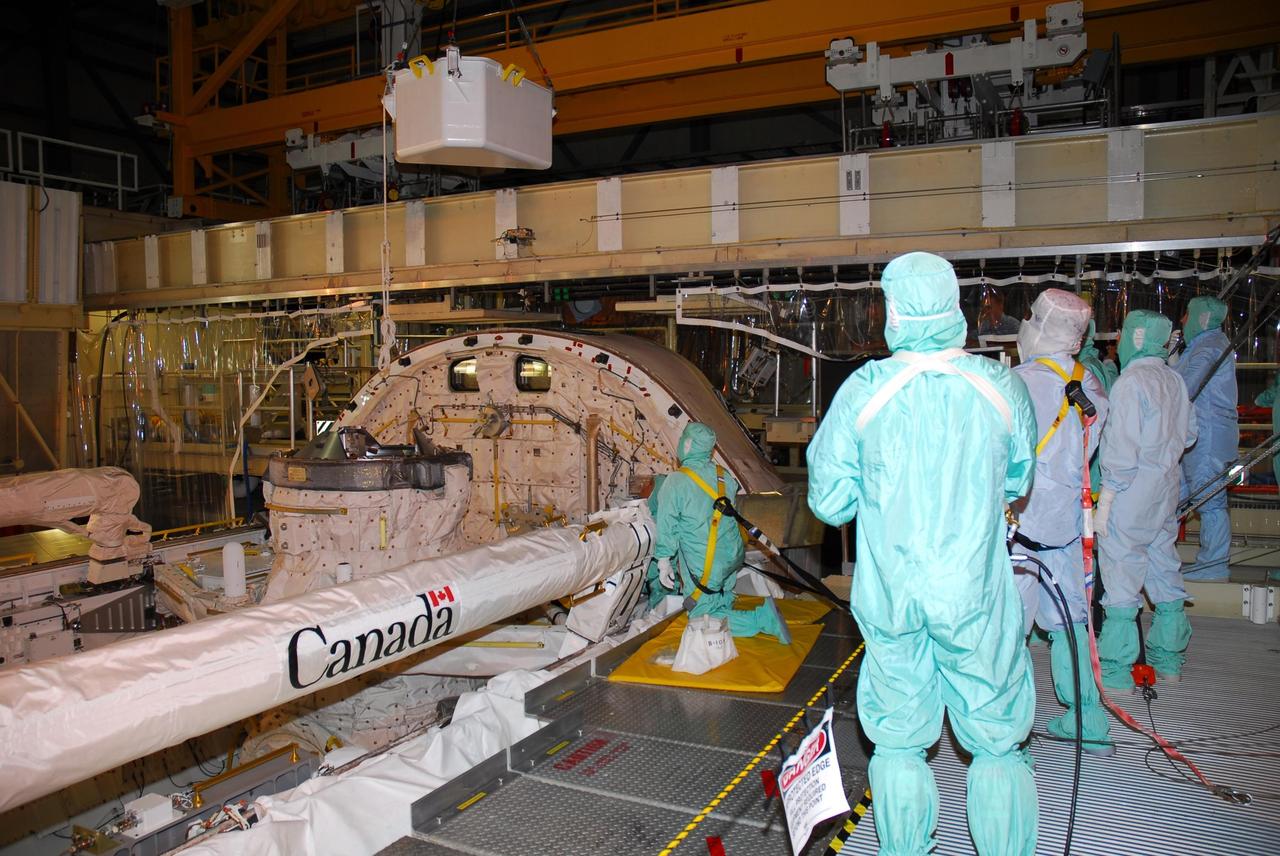
KENNEDY SPACE CENTER, FLA. -- In bay 3 of the Orbiter Processing Facility, workers oversee the lowering of the tool storage assembly unit into Discovery's payload bay, where it will be stored. The tools may be used on a spacewalk, yet to be determined, during mission STS-120. In an unusual operation, the payload bay doors had to be reopened after closure to accommodate the storage. Space shuttle Discovery is targeted to launch Oct. 23 to the International Space Station. It will carry the U.S. Node 2, a connecting module, named Harmony, for assembly on the space station. Photo credit: NASA/Amanda Diller

CAPE CANAVERAL, Fla. – The large windows of a building at NASA's Kennedy Space Center are covered by plywood and sandbags to protect against the wind and rain driven by Tropical Storm Fay. The storm passed over the center Aug. 20 and then stalled offshore, bringing with it heavy rain and tropical storm force wind. Kennedy closed Aug. 19 because of Fay and reopened for normal operations Aug. 22. Based on initial assessments, there was no damage to space flight hardware, such as the space shuttles and Hubble Space Telescope equipment. Some facilities did sustain minor damage. Photo credit: NASA/Jack Pfaller
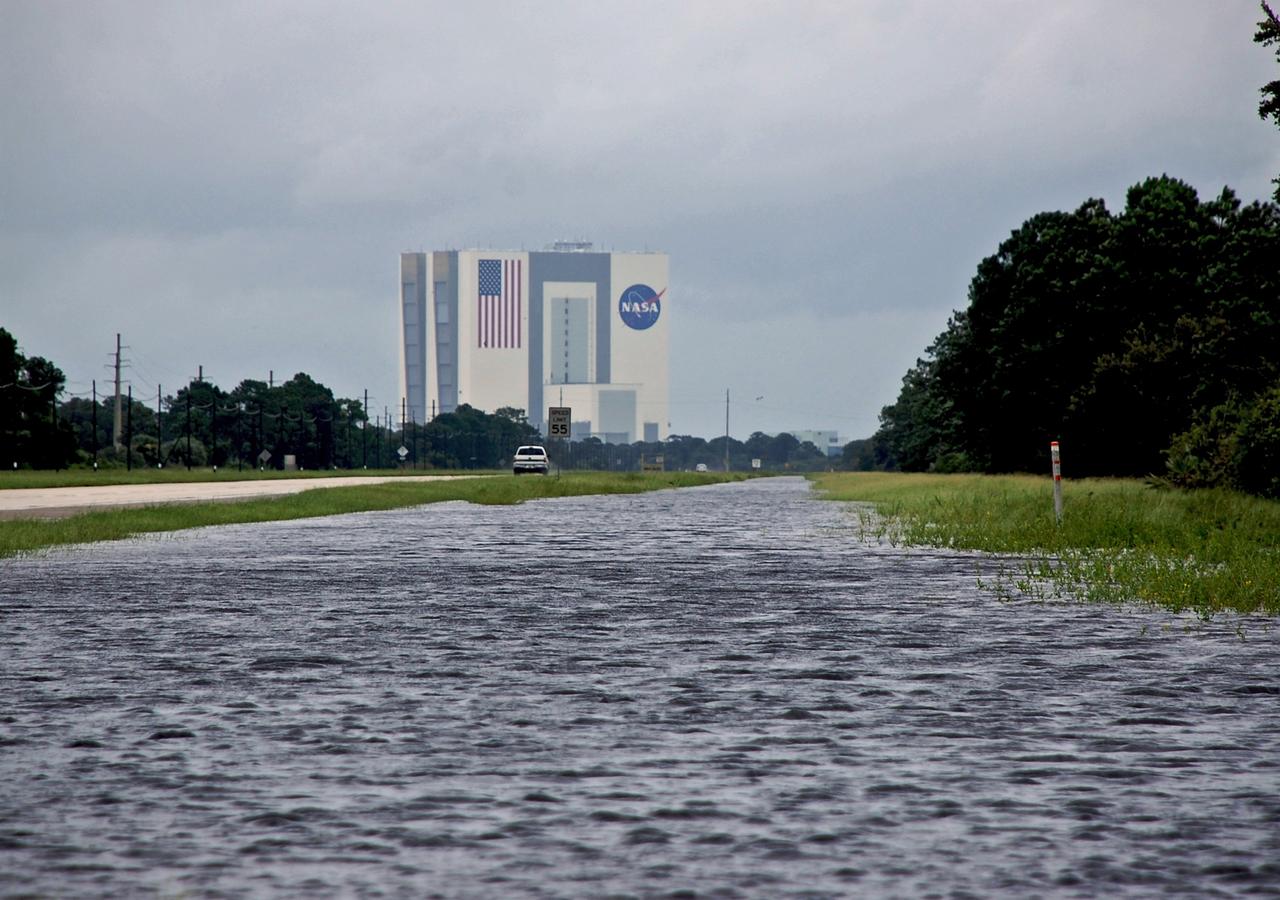
CAPE CANAVERAL, Fla. – Due to Tropical Storm Fay, the roadside canals and surrounding grounds are flooded at NASA's Kennedy Space Center. In the background is the Vehicle Assembly Building. The storm passed over the center Aug. 20 and then stalled offshore, bringing with it heavy rain and tropical storm force wind. Kennedy closed Aug. 19 because of Fay and reopened for normal operations Aug. 22. Based on initial assessments, there was no damage to space flight hardware, such as the space shuttles and Hubble Space Telescope equipment. Some facilities did sustain minor damage. Photo credit: NASA/Ben Smegelsky
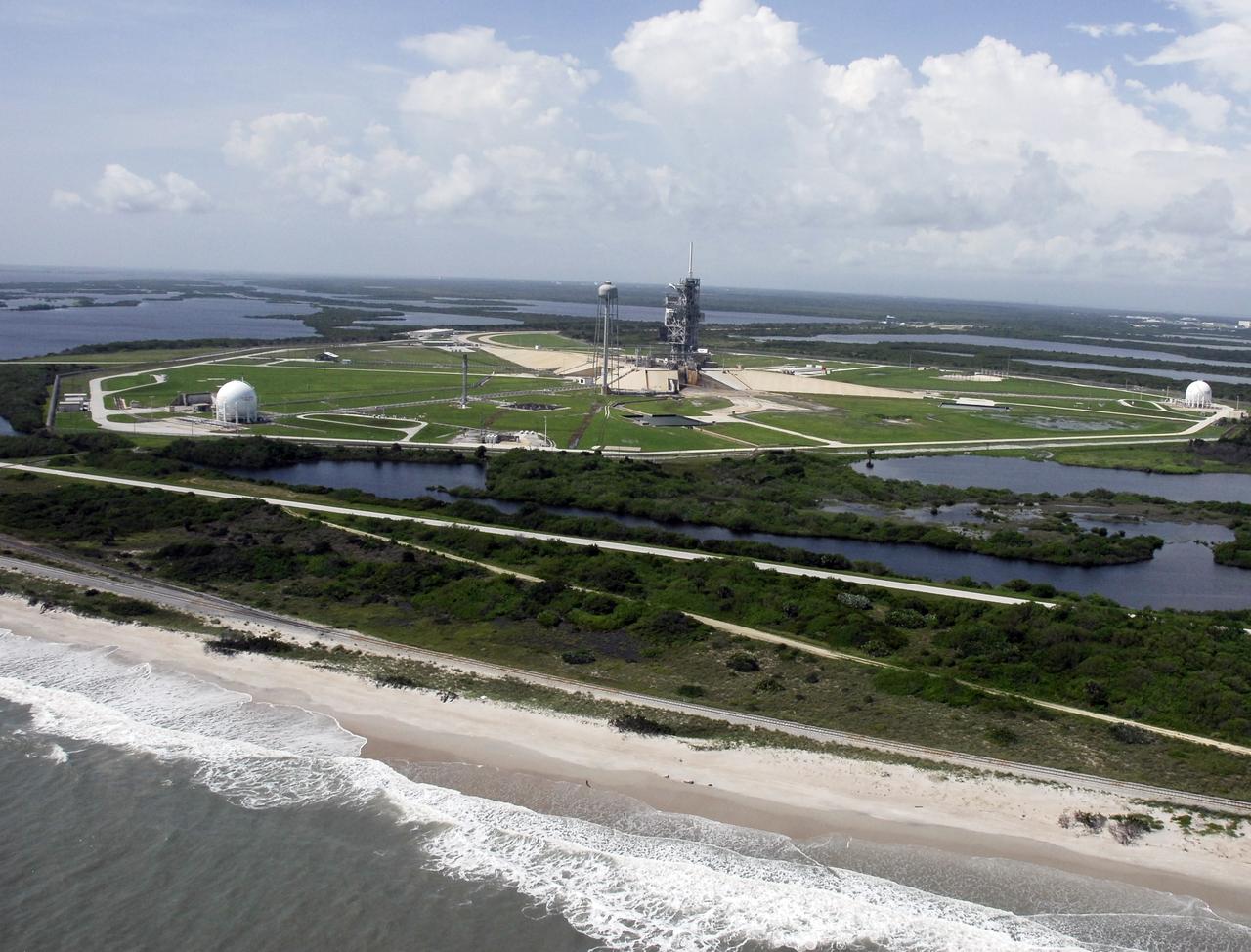
CAPE CANAVERAL, Fla. – Launch Pad 39A seems to be an island in the high water surrounding it caused by Tropical Storm Fay. In the distance is the Atlantic Ocean. The storm passed over the center Aug. 20 and then stalled offshore, bringing with it heavy rain and tropical storm force wind. Kennedy closed Aug. 19 because of Fay and reopened for normal operations Aug. 22. Based on initial assessments, there was no damage to space flight hardware, such as the space shuttles and Hubble Space Telescope equipment. Some facilities did sustain minor damage. Photo credit: NASA/Amanda Diller
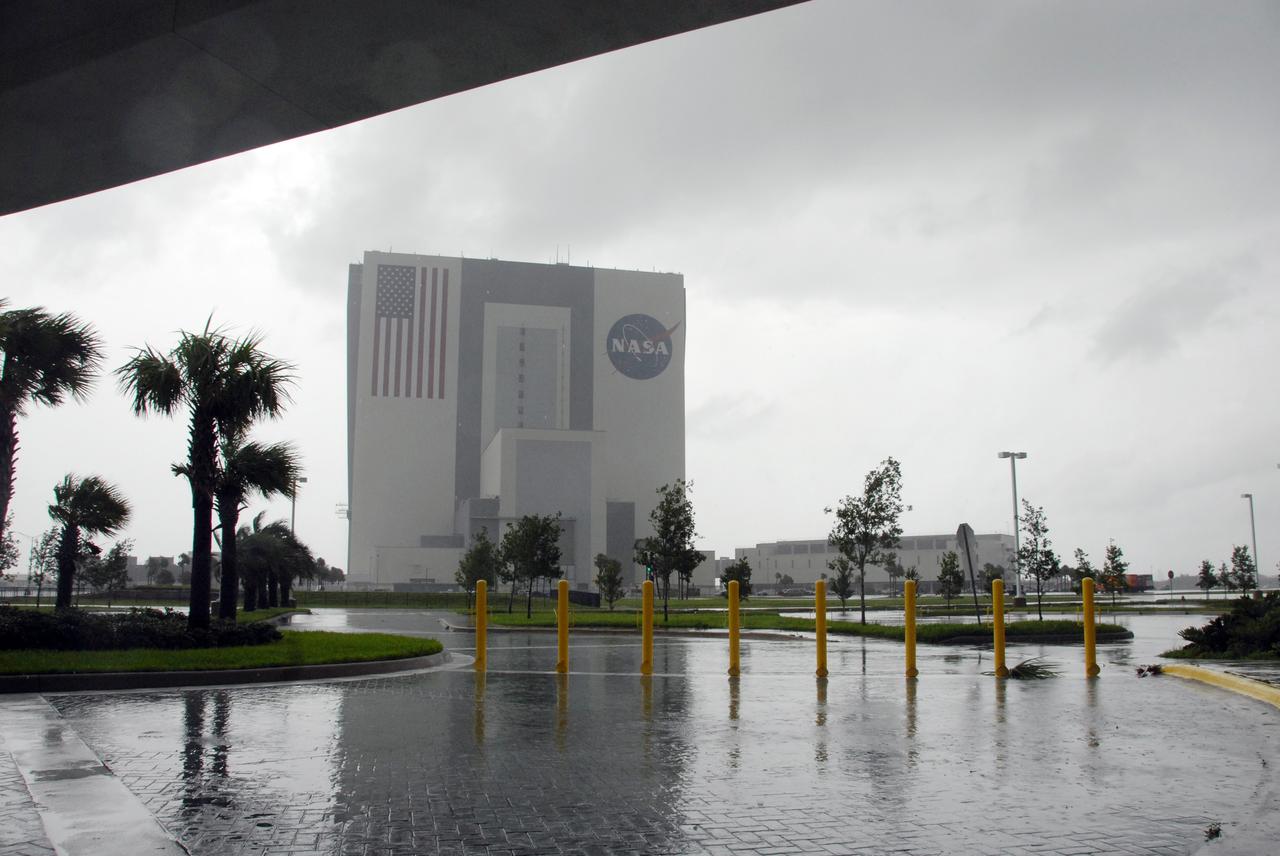
CAPE CANAVERAL, Fla. – Flooding and some tree damage near the Vehicle Assembly Building are results from Tropical Storm Fay at NASA's Kennedy Space Center. The storm passed over the center Aug. 20 and then stalled offshore, bringing with it heavy rain and tropical storm force wind. Kennedy closed Aug. 19 because of Fay and reopened for normal operations Aug. 22. Based on initial assessments, there was no damage to space flight hardware, such as the space shuttles and Hubble Space Telescope equipment. Some facilities did sustain minor damage. Photo credit: NASA/Jack Pfaller
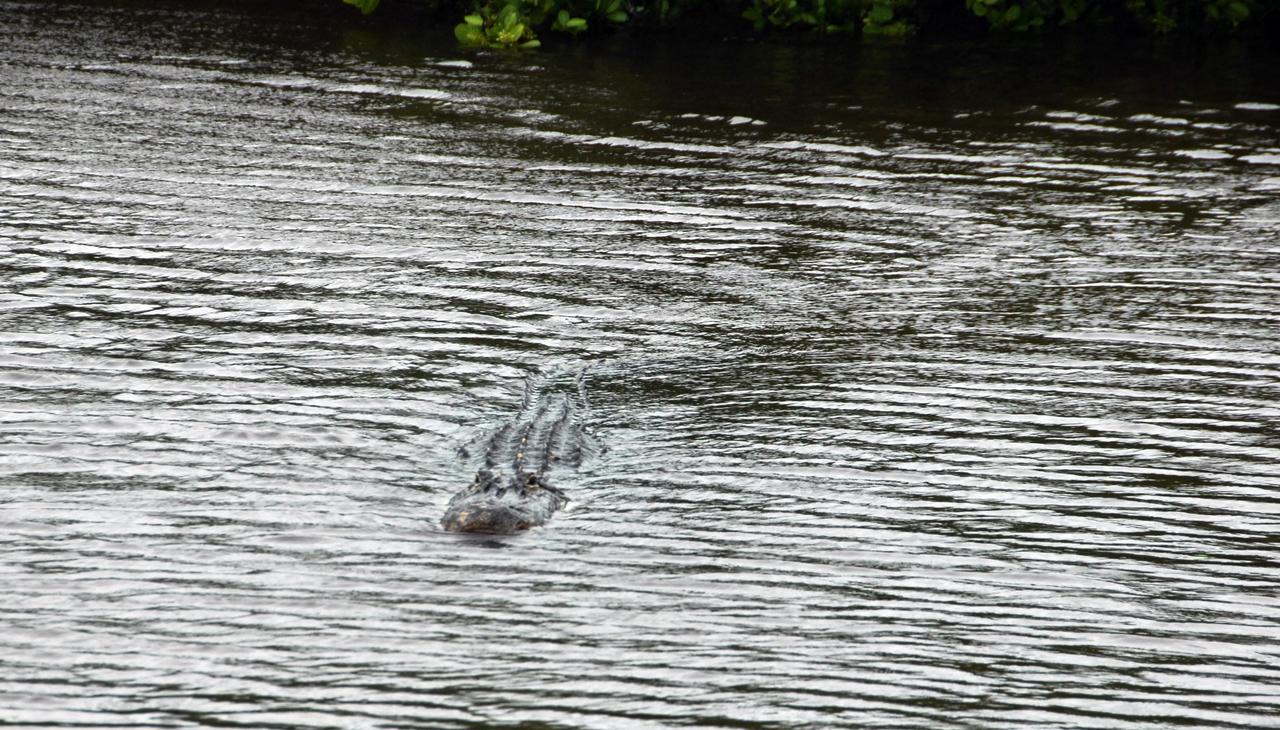
CAPE CANAVERAL, Fla. – At NASA's Kennedy Space Center, this alligator was spotted cruising the flood waters caused by Tropical Storm Fay. The storm passed over the center Aug. 20 and then stalled offshore, bringing with it heavy rain and tropical storm force wind. Kennedy closed Aug. 19 because of Fay and reopened for normal operations Aug. 22. Based on initial assessments, there was no damage to space flight hardware, such as the space shuttles and Hubble Space Telescope equipment. Some facilities did sustain minor damage. Photo credit: NASA/Jack Pfaller
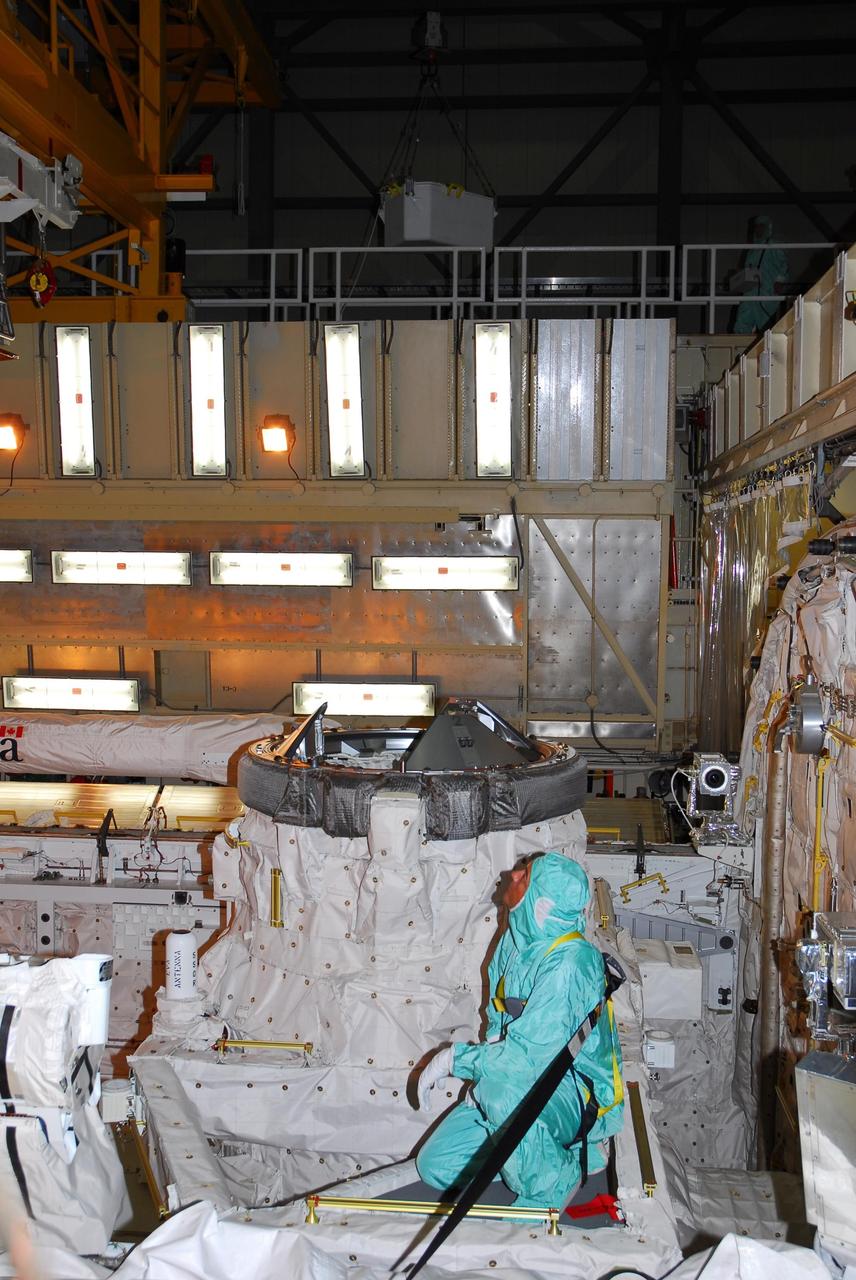
KENNEDY SPACE CENTER, FLA. -- In bay 3 of the Orbiter Processing Facility, a worker inside Discovery's payload bay waits for the tool storage assembly unit (near top of photo) to be moved and lowered into the orbiter, where it will be stored. The tools may be used on a spacewalk, yet to be determined, during mission STS-120. In an unusual operation, the payload bay doors had to be reopened after closure to accommodate the storage. Space shuttle Discovery is targeted to launch Oct. 23 to the International Space Station. It will carry the U.S. Node 2, a connecting module, named Harmony, for assembly on the space station. Photo credit: NASA/Amanda Diller
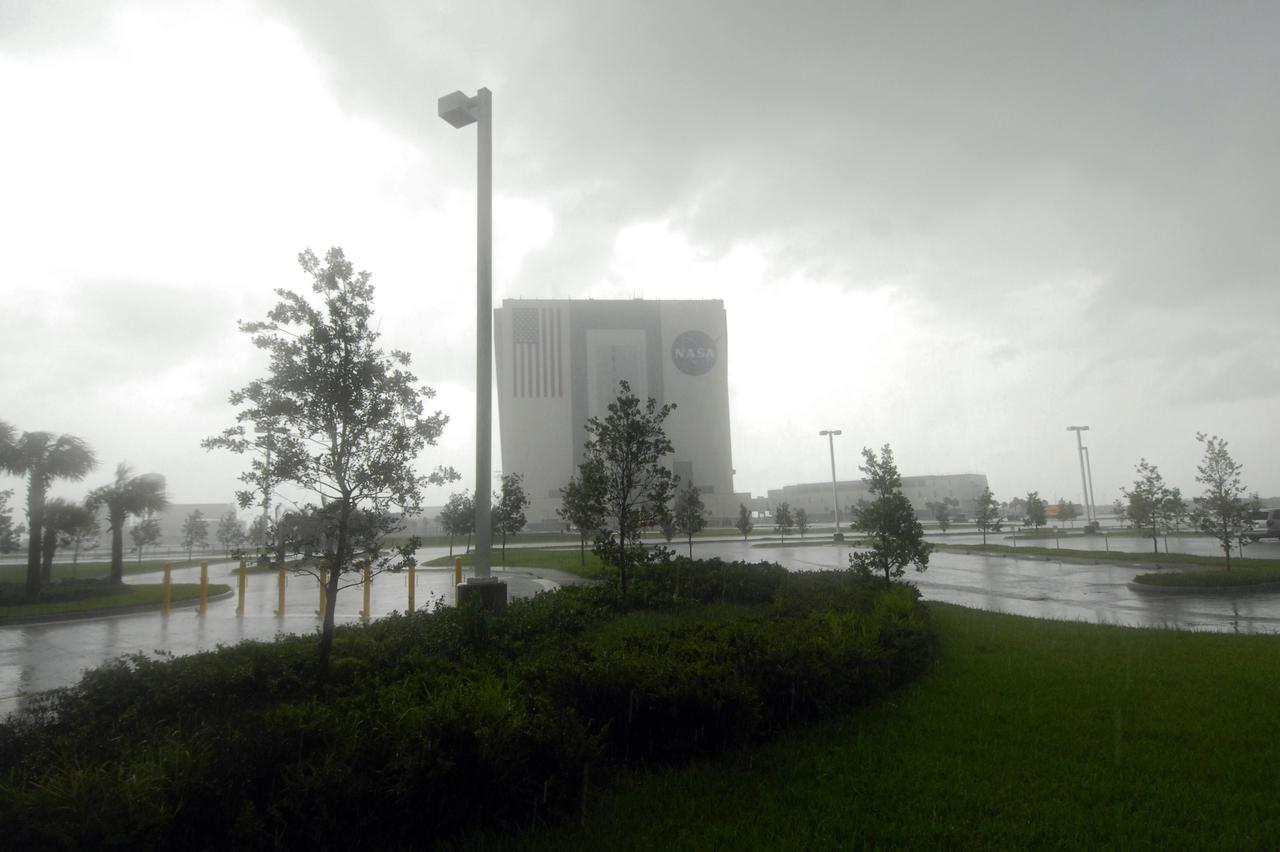
CAPE CANAVERAL, Fla. – Wind and rain from Tropical Storm Fay pummel the area near the Vehicle Assembly Building at NASA's Kennedy Space Center. The storm passed over the center Aug. 20 and then stalled offshore, bringing with it heavy rain and tropical storm force wind. Kennedy closed Aug. 19 because of Fay and reopened for normal operations Aug. 22. Based on initial assessments, there was no damage to space flight hardware, such as the space shuttles and Hubble Space Telescope equipment. Some facilities did sustain minor damage. Photo credit: NASA/Jack Pfaller
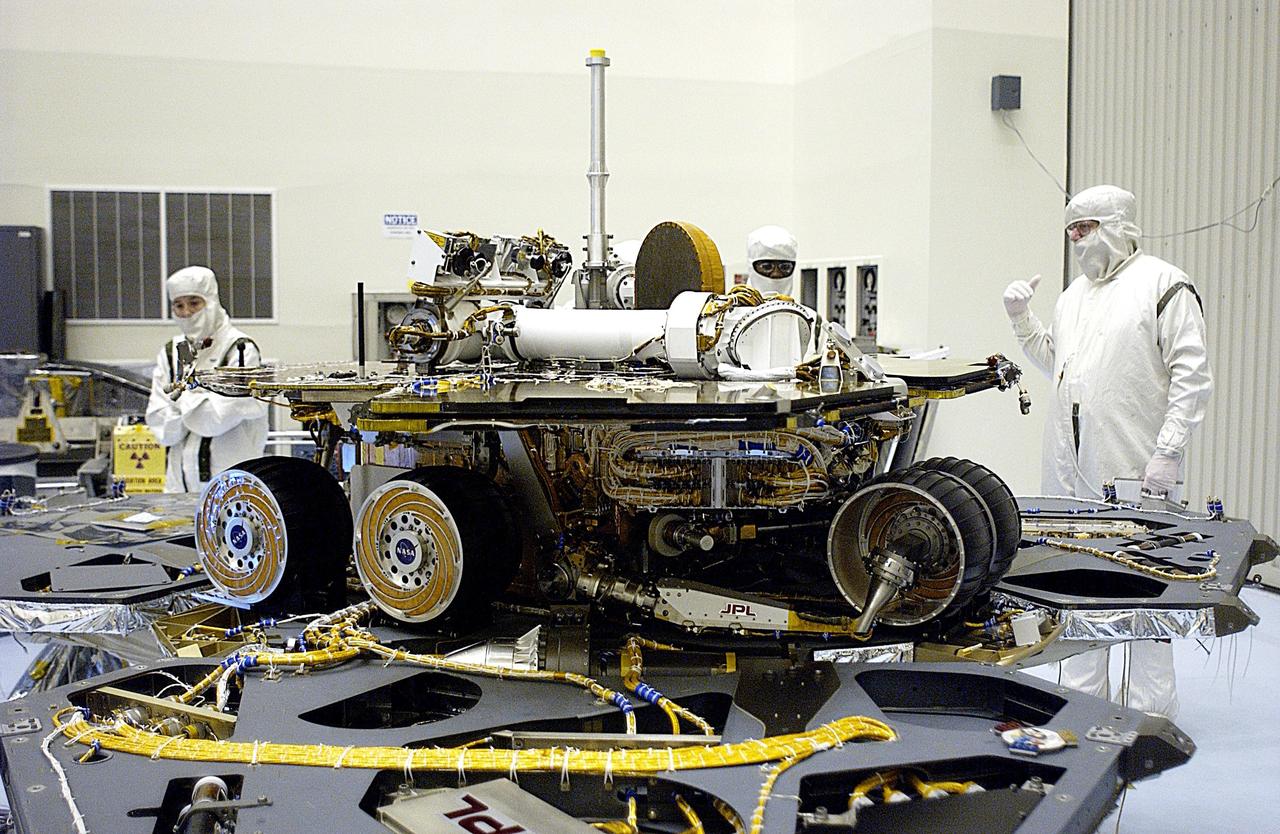
KENNEDY SPACE CENTER, FLA. -- In the Payload Hazardous Servicing Facility, the lander petals of the Mars Exploration Rover 2 (MER-2) have been reopened and its solar panels deployed to allow technicians access to the spacecraft to remove one of its circuit boards. A concern arose during prelaunch testing regarding how the spacecraft interprets signals sent from its main computer to peripherals in the cruise stage, lander and small deep space transponder. The MER Mission consists of two identical rovers set to launch in June 2003. The problem will be fixed on both rovers.
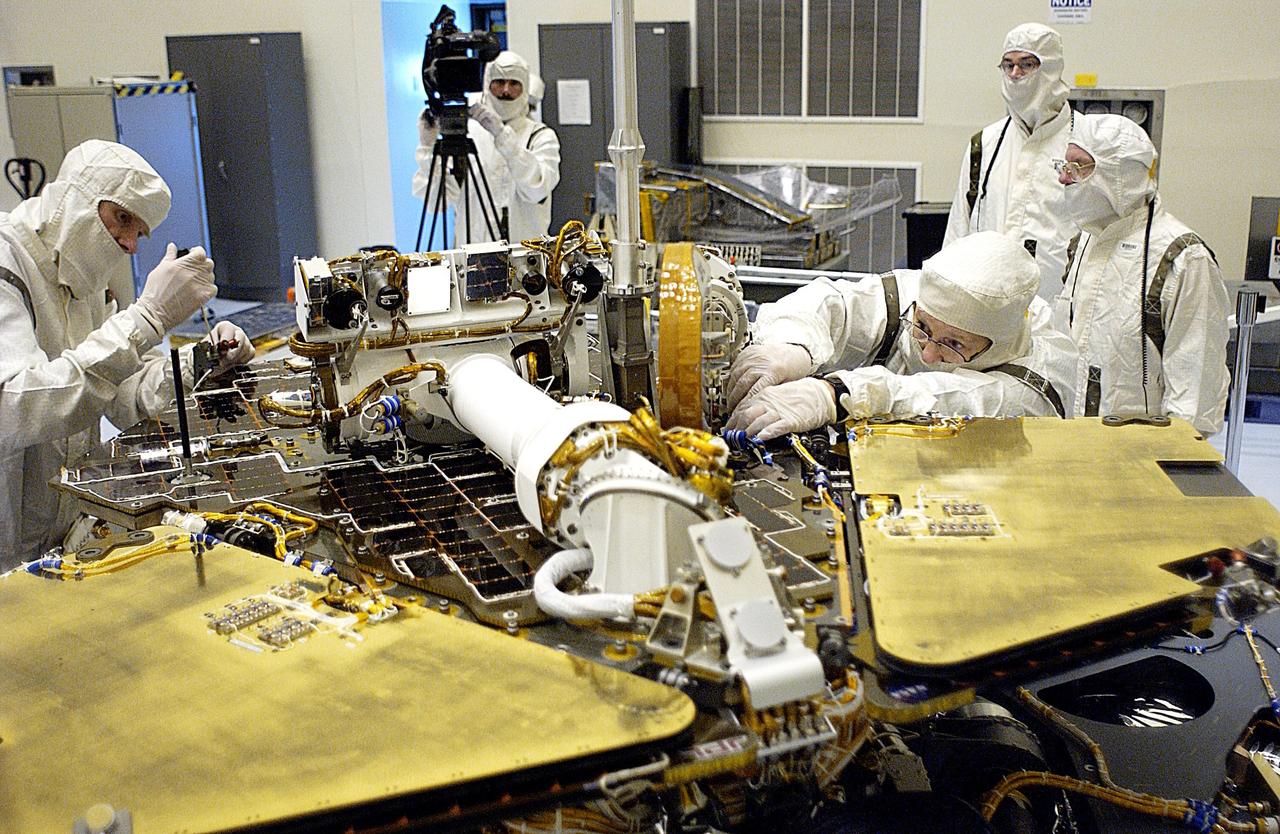
KENNEDY SPACE CENTER, FLA. -- In the Payload Hazardous Servicing Facility, technicians remove one of the circuit boards on the Mars Exploration Rover 2 (MER-2). To gain access to the spacecraft, its lander petals were reopened and its solar panels deployed. A concern arose during prelaunch testing regarding how the spacecraft interprets signals sent from its main computer to peripherals in the cruise stage, lander and small deep space transponder. The MER Mission consists of two identical rovers set to launch in June 2003. The problem will be fixed on both rovers.
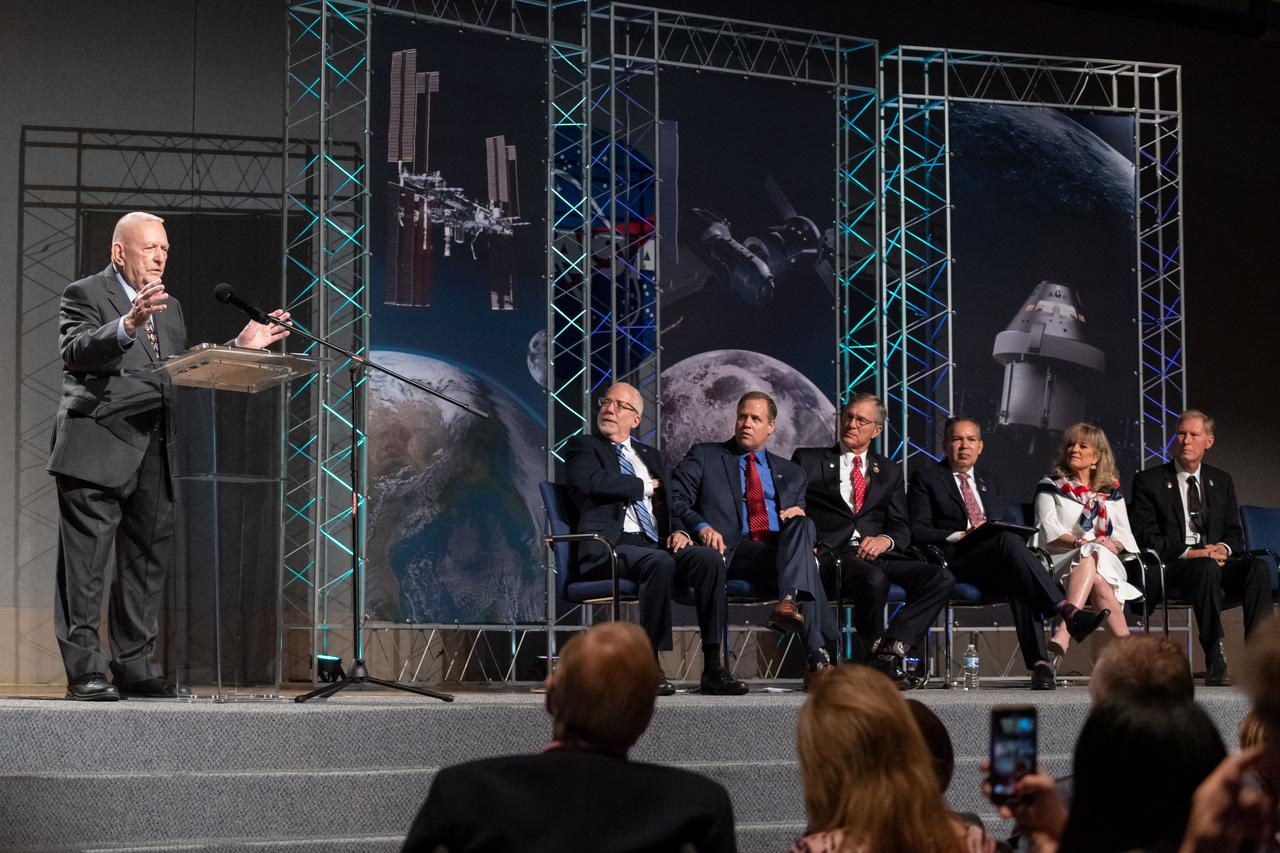
jsc2019e036696 (June 28, 2019) – Apollo 11 flight director Gene Kranz talks to grand opening visitors in NASA Johnson Space Center’s Teague Auditorium. NASA’s Johnson Space Center reopened the fully restored Apollo Mission Control Center with a grand opening and ribbon cutting event with NASA Administrator Jim Bridenstine on June 28. The room now is reconfigured to its Apollo-era condition. Many of the items in the restored room are original pieces from 1969 that were found or donated, and the missing items were replicated to ensure walking into the viewing room would feel like taking a step back in time. The restoration team used old photographs, footage, documents and interviews and discussions with Apollo veterans to set everything in its proper place, including coffee mugs, clothing articles and ashtrays. Beginning July 1, the Apollo Mission Control Center will become part of daily tours at Johnson hosted by Space Center Houston.
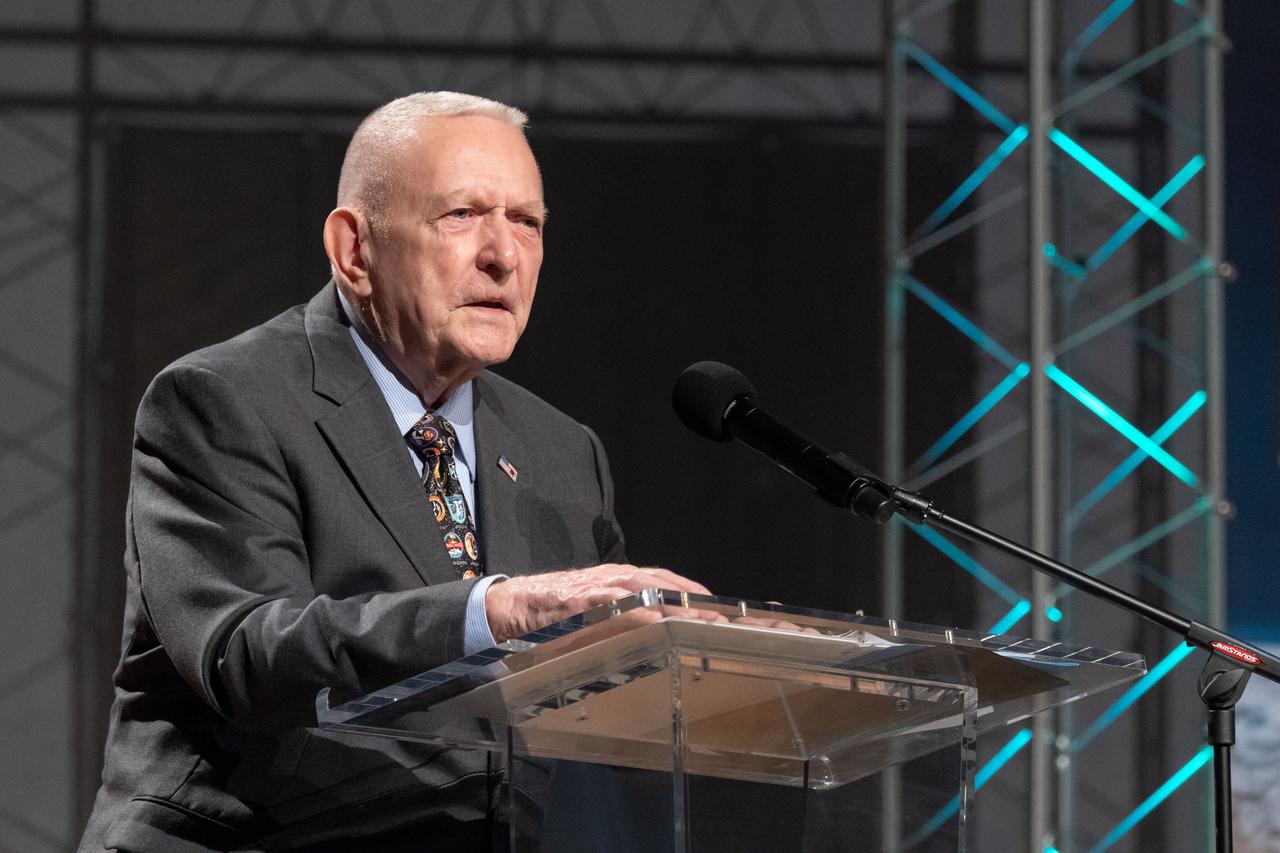
jsc2019e036695 (June 28, 2019) – Apollo 11 flight director Gene Kranz talks to grand opening visitors in NASA Johnson Space Center’s Teague Auditorium. NASA’s Johnson Space Center reopened the fully restored Apollo Mission Control Center with a grand opening and ribbon cutting event with NASA Administrator Jim Bridenstine on June 28. The room now is reconfigured to its Apollo-era condition. Many of the items in the restored room are original pieces from 1969 that were found or donated, and the missing items were replicated to ensure walking into the viewing room would feel like taking a step back in time. The restoration team used old photographs, footage, documents and interviews and discussions with Apollo veterans to set everything in its proper place, including coffee mugs, clothing articles and ashtrays. Beginning July 1, the Apollo Mission Control Center will become part of daily tours at Johnson hosted by Space Center Houston.
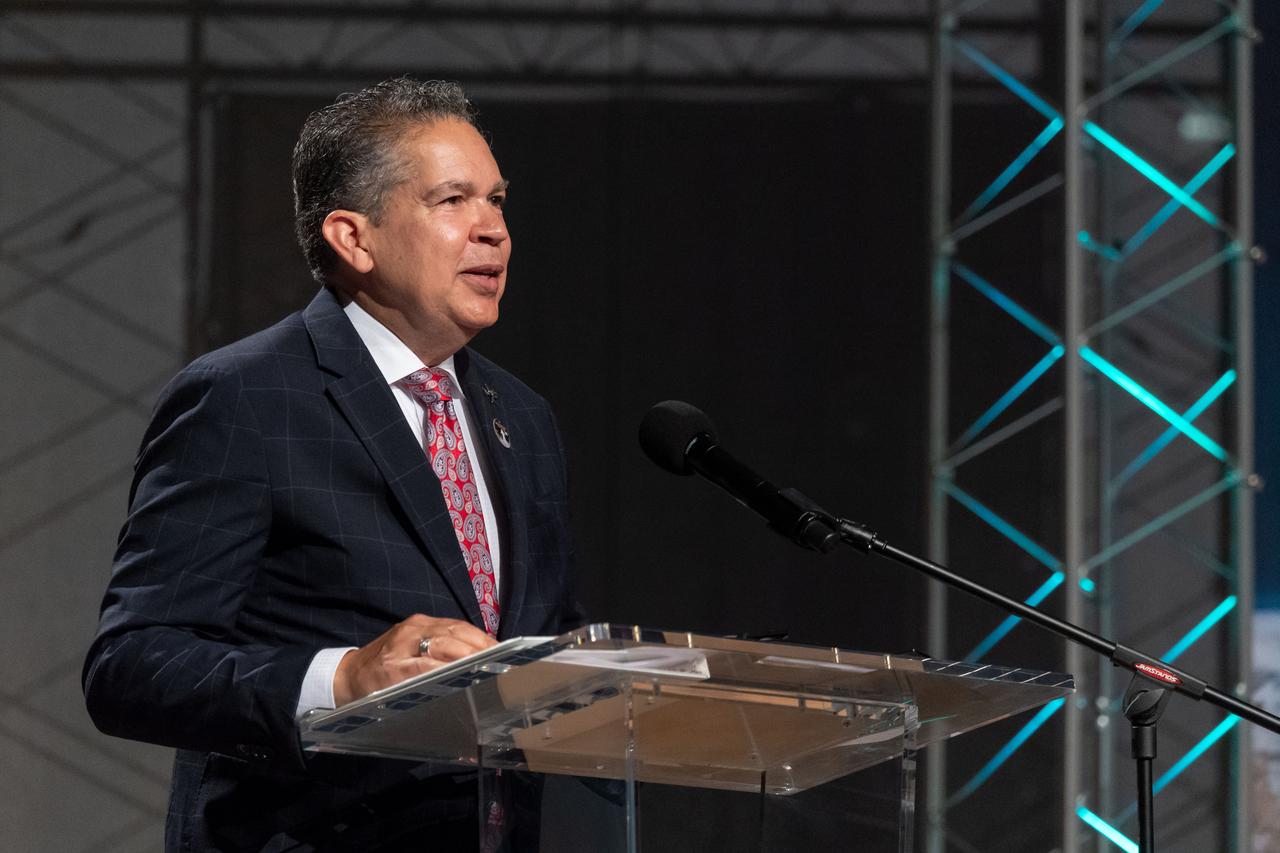
jsc2019e036685 (June 28, 2019) – Space Center Houston CEO William Harris talks to the audience for the grand opening of the fully restored Apollo Mission Control Center. NASA’s Johnson Space Center reopened the facility with a grand opening and ribbon cutting event on June 28. The room now is reconfigured to its Apollo-era condition. Many of the items in the restored room are original pieces from 1969 that were found or donated, and the missing items were replicated to ensure walking into the viewing room would feel like taking a step back in time. The restoration team used old photographs, footage, documents and interviews and discussions with Apollo veterans to set everything in its proper place, including coffee mugs, clothing articles and ashtrays. Beginning July 1, the Apollo Mission Control Center will become part of daily tours at Johnson hosted by Space Center Houston.
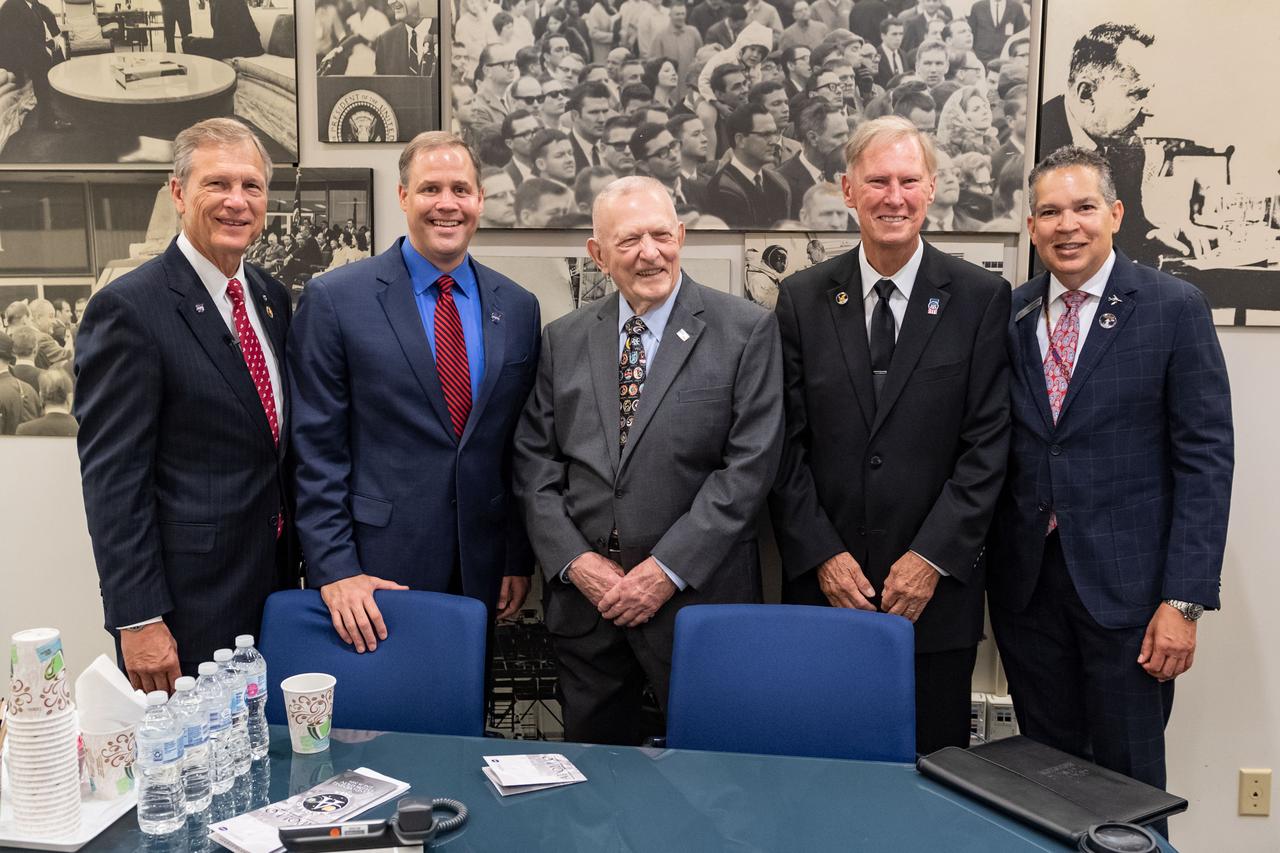
jsc2019e036671 (June 28, 2019) – Apollo 11 flight director Gene Kranz is surrounded by grand opening participants (from left) U.S. Rep. Brian Babin, NASA Administrator Jim Bridenstine, Kranz, Advisory Council on Historic Preservation’s Chairman Milford Wayne Donaldson and Space Center Houston CEO William Harris in the visitors in NASA Johnson Space Center’s Teague Auditlorium. NASA’s Johnson Space Center reopened the fully restored Apollo Mission Control Center with a grand opening and ribbon cutting event with NASA Administrator Jim Bridenstine on June 28. The room now is reconfigured to its Apollo-era condition. Many of the items in the restored room are original pieces from 1969 that were found or donated, and the missing items were replicated to ensure walking into the viewing room would feel like taking a step back in time. The restoration team used old photographs, footage, documents and interviews and discussions with Apollo veterans to set everything in its proper place, including coffee mugs, clothing articles and ashtrays. Beginning July 1, the Apollo Mission Control Center will become part of daily tours at Johnson hosted by Space Center Houston.
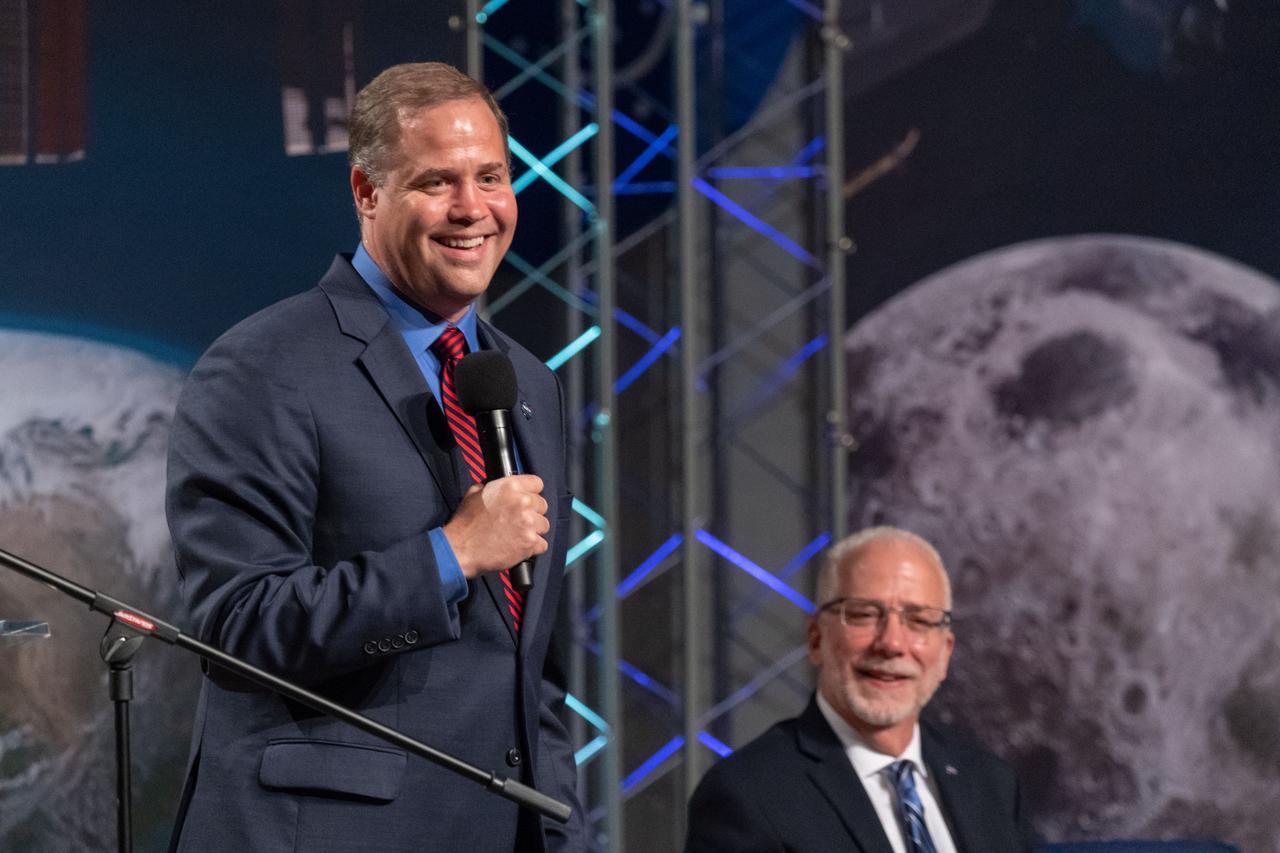
jsc2019e036680 (June 28, 2019) – NASA Administrator Jim Bridenstine talks to grand opening visitors in NASA Johnson Space Center’s Teague Auditorium as Johnson Space Center Director Mark Geyer looks on. NASA’s Johnson Space Center reopened the fully restored Apollo Mission Control Center with a grand opening and ribbon cutting event with Bridenstine on June 28. The room now is reconfigured to its Apollo-era condition. Many of the items in the restored room are original pieces from 1969 that were found or donated, and the missing items were replicated to ensure walking into the viewing room would feel like taking a step back in time. The restoration team used old photographs, footage, documents and interviews and discussions with Apollo veterans to set everything in its proper place, including coffee mugs, clothing articles and ashtrays. Beginning July 1, the Apollo Mission Control Center will become part of daily tours at Johnson hosted by Space Center Houston.
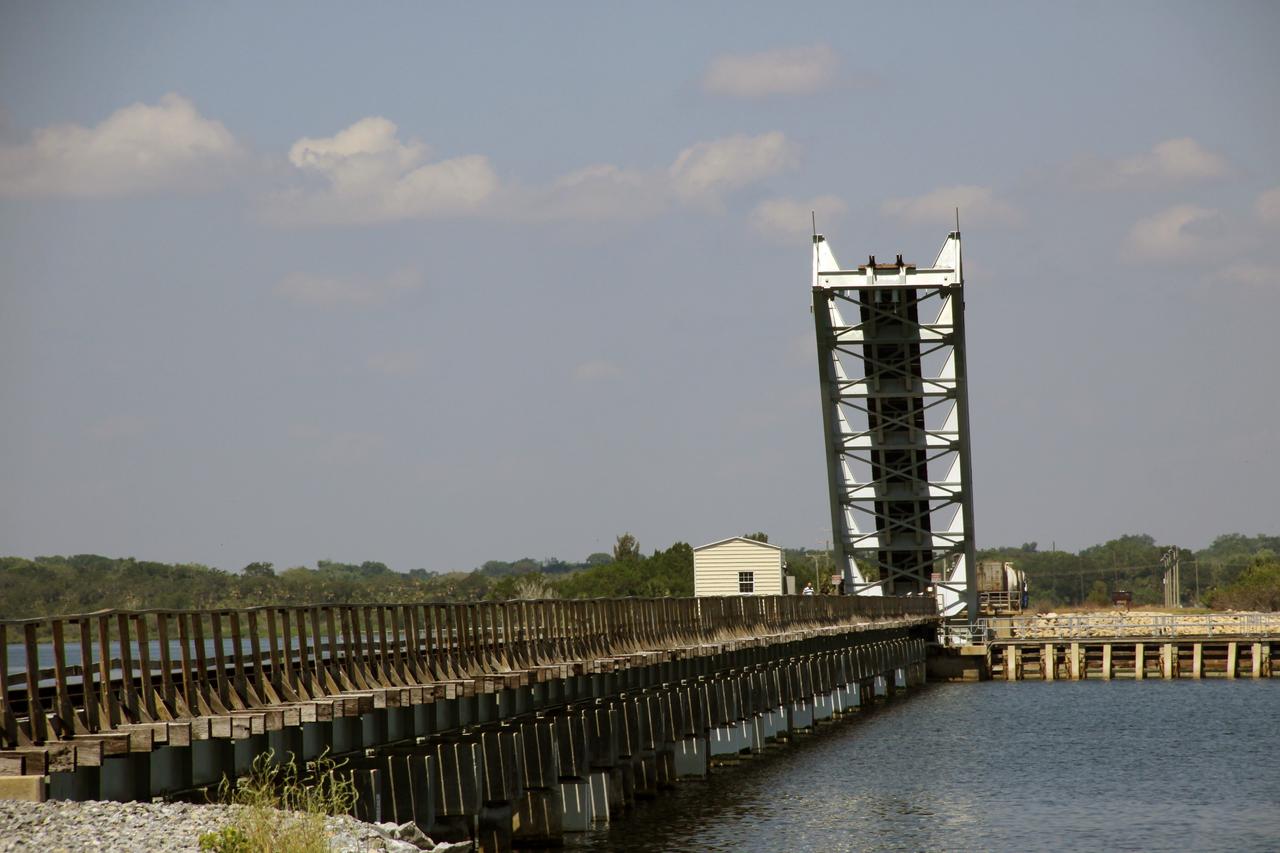
CAPE CANAVERAL, Fla. – The drawbridge span of the NASA Railroad’s Jay Jay Railroad Bridge over the Indian River north of Launch Complex 39 at NASA’s Kennedy Space Center in Florida is reopened following the passage of a NASA Railroad train. The permanent configuration of the bridge is open the span is lowered only for a train to cross. The railroad cars were needed in support of the Space Shuttle Program but currently are not in use by NASA following the completion of the program in 2011. Originally, the tankers belonged to the U.S. Bureau of Mines. At the peak of the shuttle program, there were approximately 30 cars in the fleet. About half the cars were returned to the bureau as launch activity diminished. Five tank cars are being loaned to SpaceX and repurposed to support their engine tests in Texas. Eight cars previously were shipped to California on loan to support the SpaceX Falcon 9 rocket launches from Space Launch Complex-4 on Vandenberg Air Force Base. SpaceX already has three helium tank cars previously used for the shuttle program at Space Launch Complex-40 on Cape Canaveral Air Force Station in Florida. For more information, visit http://www.nasa.gov/spacex. Photo credit: NASA/Jim Grossmann
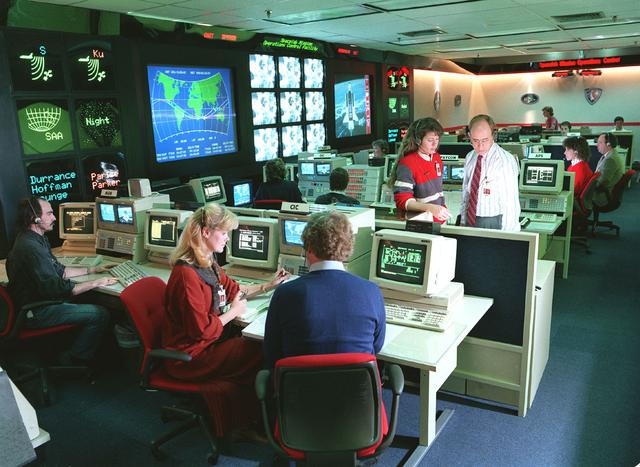
Activities in the Spacelab Mission Operations Control facility at the Marshall Space Flight Center (MSFC) are shown in this photograph. All NASA Spacelab science missions were controlled from and the science astronauts were supported by this facility during the missions. Teams of flight controllers and researchers at the MSFC Space Mission Operations Control Center directed all NASA science operations, sent commands directly to the crew of Spacelab, and received and analyzed data from experiments on board the Spacelab. The facility used the air/ground communications charnels between the astronauts and ground control teams during the Spacelab missions. Spacelab science operations were a cooperative effort between the science astronaut crew in orbit and their colleagues in the Space Mission Operations Control Center. Though the crew and the instrument science teams were separated by many miles, they interacted with one another to evaluate observations and solve problems in much the same way as they would when working side by side in a ground-based laboratory. Most of the action was centered in two work areas: The payload control area from which the overall payload was monitored and controlled and the science operations area where teams of scientists monitored their instruments and direct experiment activities. This facility is no longer operational since the last Spacelab mission, U.S. Microgravity Payload-4 in December 1997, and has become one of the historical sites at MSFC. The facility was reopened as the International Space Station Payload Operations Center in March 2001.