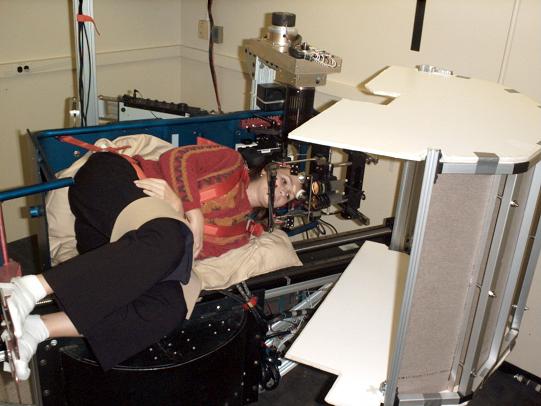
The short-arm centrifuge subjects an astronaut to conflicting sensory input and study the astronaut's perception of motion. It is one of several instruments used in the Spatial Reorientation Following Space Flight investigation to be conducted after astronauts return to Earth. During space flight, the vestibular organs no longer respond in a familiar way. Instead, inputs from the irner ear do not match those coming from the eyes. While on Earth, you can open your eyes to see if you truly are spinning, but astronauts do not have this luxury. Astronauts can see the floor, but have no sense of down; when they bend their heads forward, the otoliths are not stimulated properly. This state, called sensory conflict, must be resolved by the brain to maintain orientation. When they first return to Earth, astronauts are again disoriented because of sensory conflict. They undergo a period of spatial reorientation, as their brains reconcile what their eyes see and what their vestibular system senses. Recovery can take anywhere from hours to days depending on the length of the mission. Principal Investigator: Dr. William Paloski, Johnson Space Center, Houston, TX.
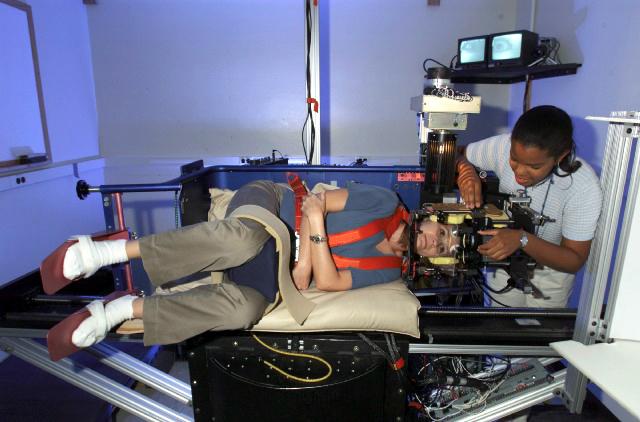
The short-arm centrifuge subjects an astronaut to conflicting sensory input and study the astronaut's perception of motion. It is one of several instruments used in the Spatial Reorientation Following Space Flight investigation to be conducted on crewmembers. During space flight, the vestibular organs no longer respond in a familiar way. Instead, inputs from the irner ear do not match those coming from the eyes. While on Earth, you can open your eyes to see if you truly are spinning, but astronauts do not have this luxury. Astronauts can see the floor, but have no sense of down; when they bend their heads forward, the otoliths are not stimulated properly. This state, called sensory conflict, must be resolved by the brain to maintain orientation. When they first return to Earth, astronauts are again disoriented because of sensory conflict. They undergo a period of spatial reorientation, as their brains reconcile what their eyes see and what their vestibular system senses. Recovery can take anywhere from hours to days depending on the length of the mission. Principal Investigator: Dr. William Paloski, Johnson Space Center, Houston, TX.
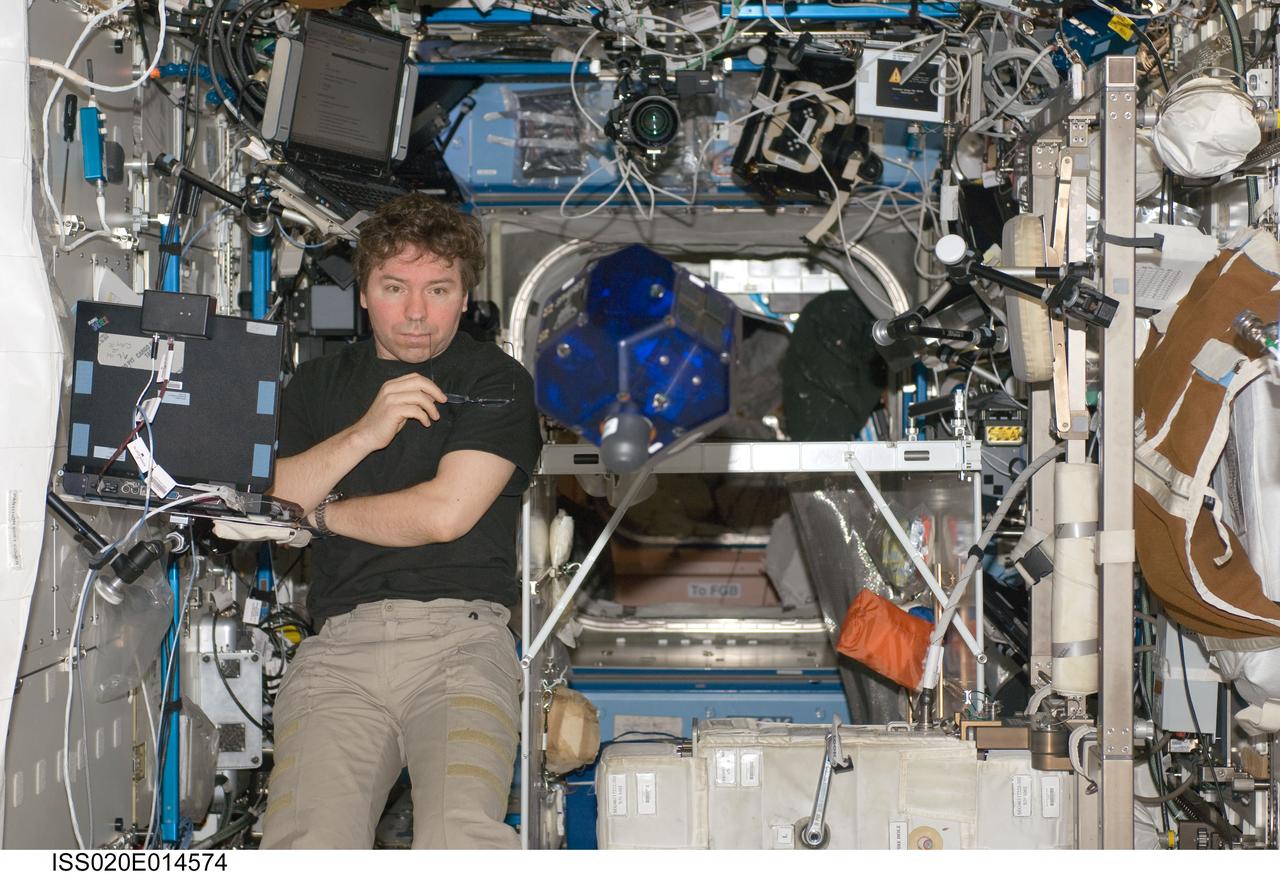
ISS020-E-014574 (26 June 2009) --- NASA astronaut Michael Barratt, Expedition 20 flight engineer, does a check of the Synchronized Position Hold, Engage, Reorient, Experimental Satellites (SPHERES) Beacon / Beacon Tester in the Destiny laboratory of the International Space Station.
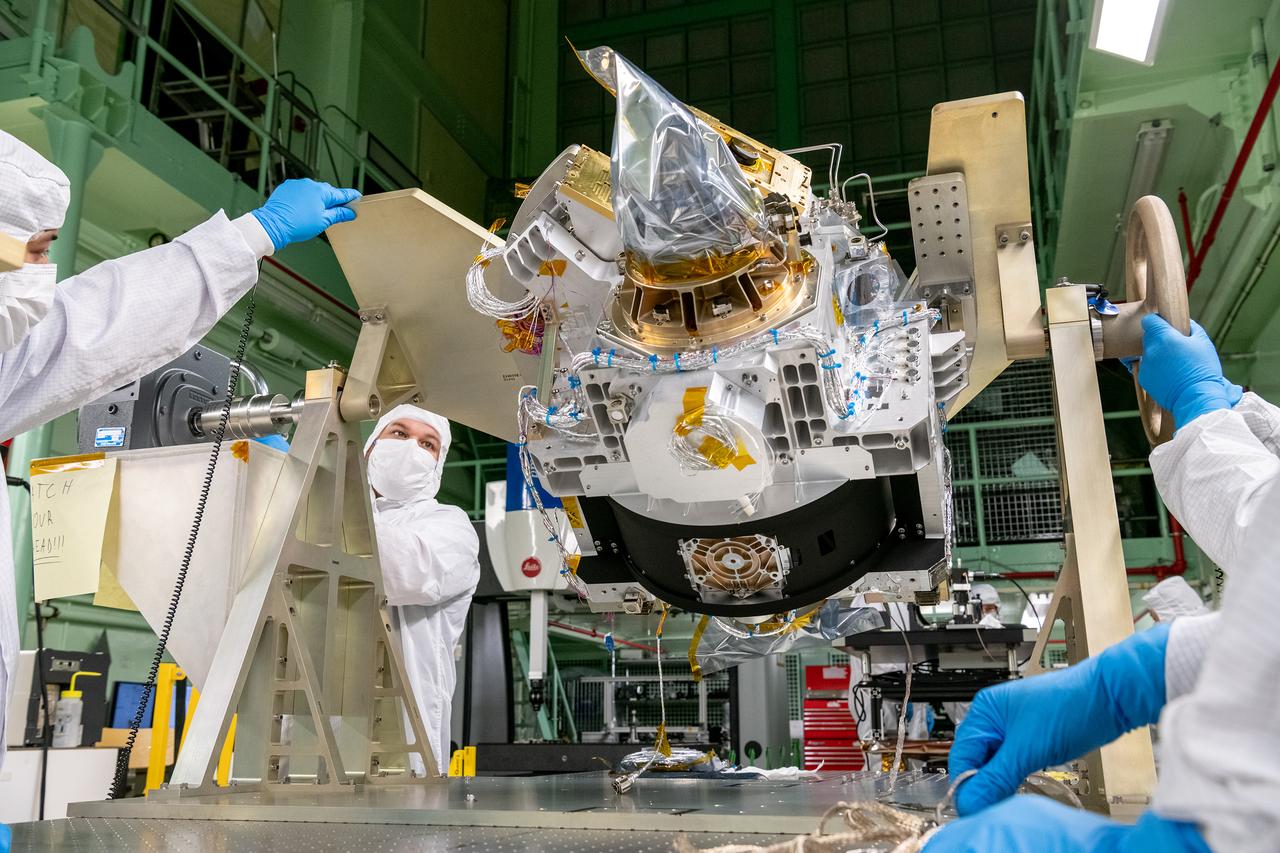
Mechanical technicians reorient the Ocean Color Instrument (OCI) Optical Module on a rotation fixture to allow for additional hardware integration. OCI is a highly advanced optical spectrometer that will be used to measure properties of light over portions of the electromagnetic spectrum. It will enable continuous measurement of light at finer wavelength resolution than previous NASA satellite sensors, extending key system ocean color data records for climate studies. OCI is PACE's (Plankton, Aerosol, Cloud, ocean Ecosystem) primary sensor built at Goddard Space Flight Center in Greenbelt, MD.
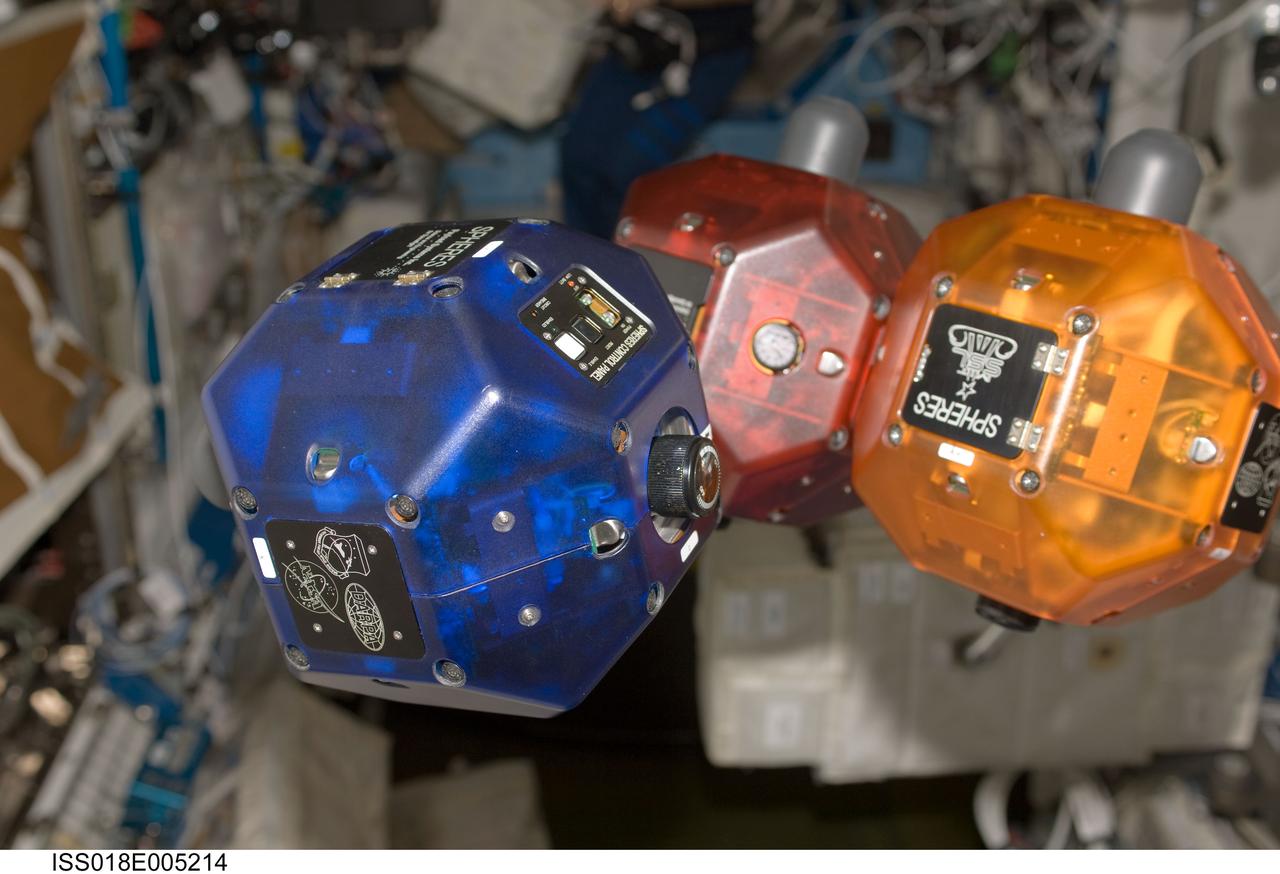
ISS018-E-005214 (26 Oct. 2008) --- This close-up view shows three bowling-ball-sized free-flying satellites called Synchronized Position Hold, Engage, Reorient, Experimental Satellites (SPHERES) in the Destiny laboratory of the International Space Station. SPHERES were designed to test control algorithms for spacecraft by performing autonomous rendezvous and docking maneuvers inside the station. The results are important for multi-body control and in designing constellation and array spacecraft configurations.
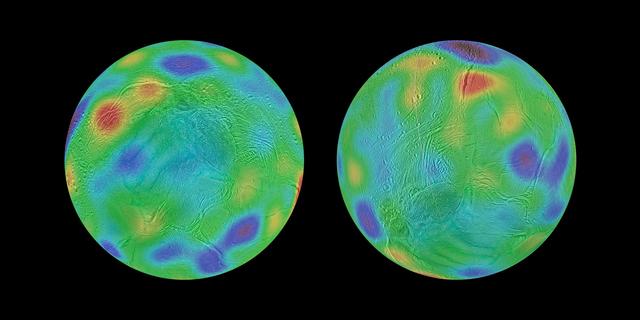
Working with image data from NASA's Cassini mission, researchers have found evidence that Saturn's moon Enceladus may have tipped over, reorienting itself so that terrain closer to its original equator was relocated to the poles. This phenomenon is known as true polar wander. Researchers discovered a chain of basins across the surface of Enceladus along with a pair of depressions that line up with an equator and poles, respectively, if the moon's axis of rotation was reoriented by about 55 degrees of latitude. These maps look toward the icy moon's southern hemisphere, with colors representing highs and lows. Purple represents the lowest elevations, while red represents the highest. The map at left shows the surface of Enceladus in its possible ancient orientation, millions of years ago. The chain of basins representing topographic lows can be seen in blue and purple, running along the equator, with an additional low region around the original south pole. The region that encloses the moon's currently active south polar terrain, with its long, linear "tiger stripe" fractures, would have been at middle latitudes just south of the equator. The map at right shows the current orientation of Enceladus. https://photojournal.jpl.nasa.gov/catalog/PIA21612
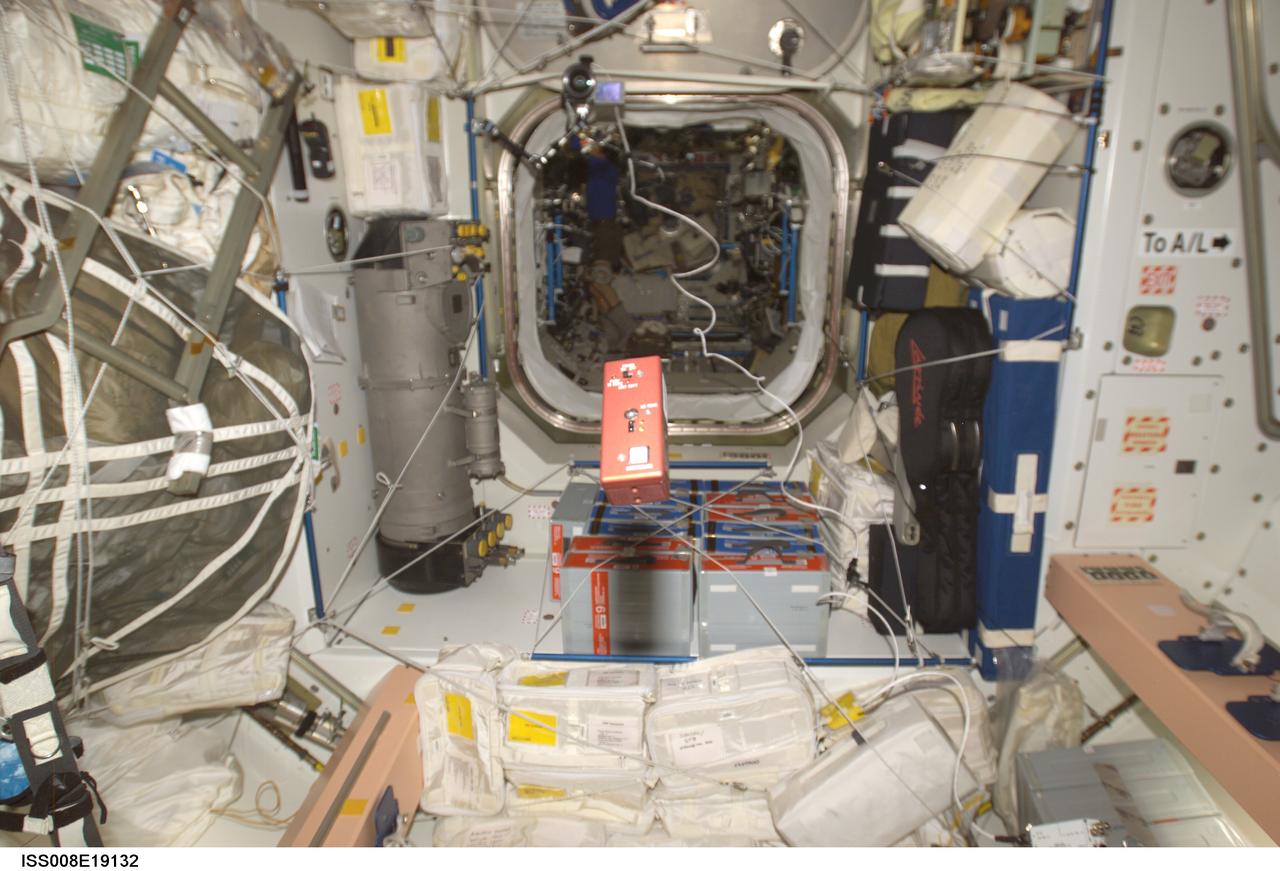
ISS008-E-19132 (24 March 2004) --- The Synchronized Position Hold, Engage, Reorient, Experimental Satellites (SPHERES) Beacon / Beacon Tester floats in the Unity node of the International Space Station.
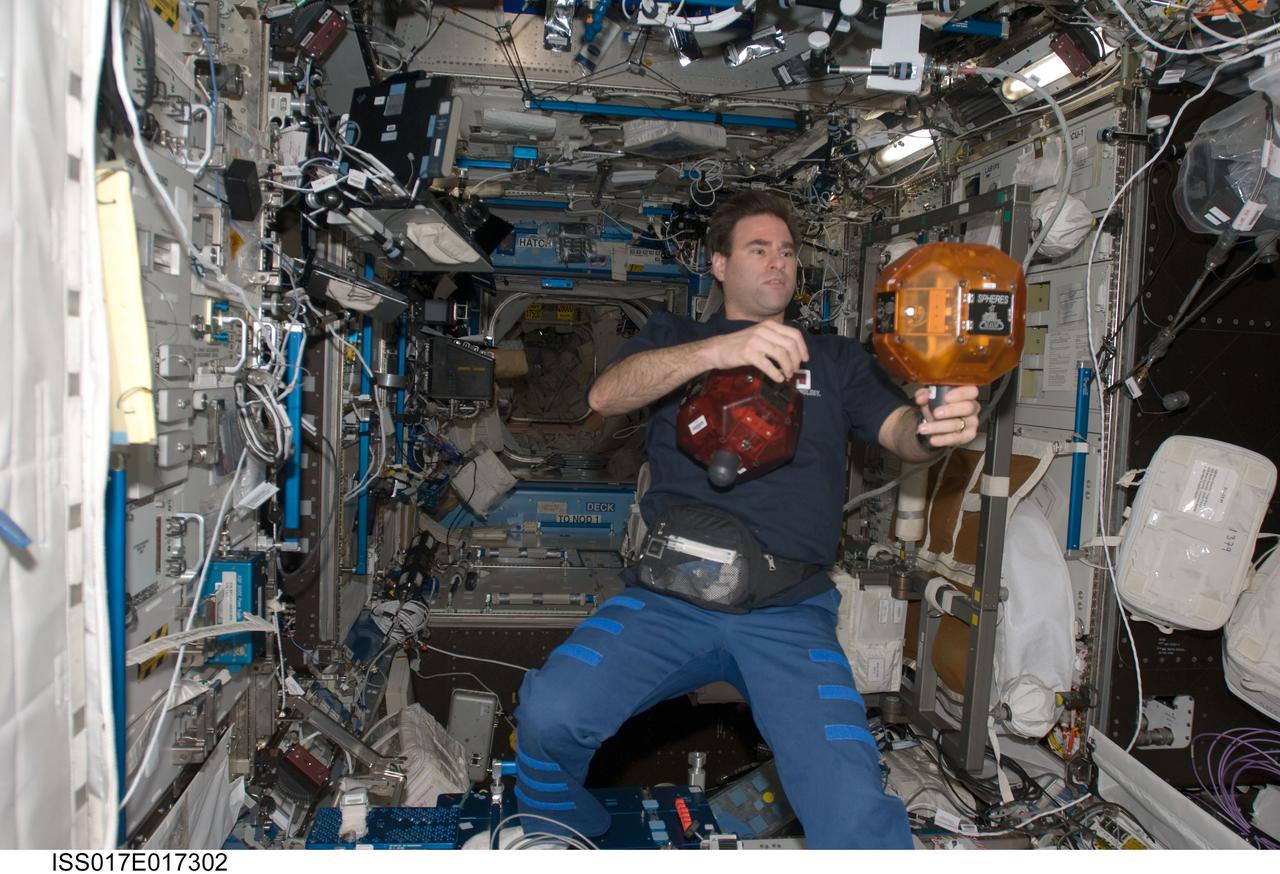
ISS017-E-017302 (27 Sept. 2008) --- Astronaut Greg Chamitoff, Expedition 17 flight engineer, works with the Synchronized Position Hold, Engage, Reorient, Experimental Satellites (SPHERES) in the Destiny laboratory of the International Space Station.
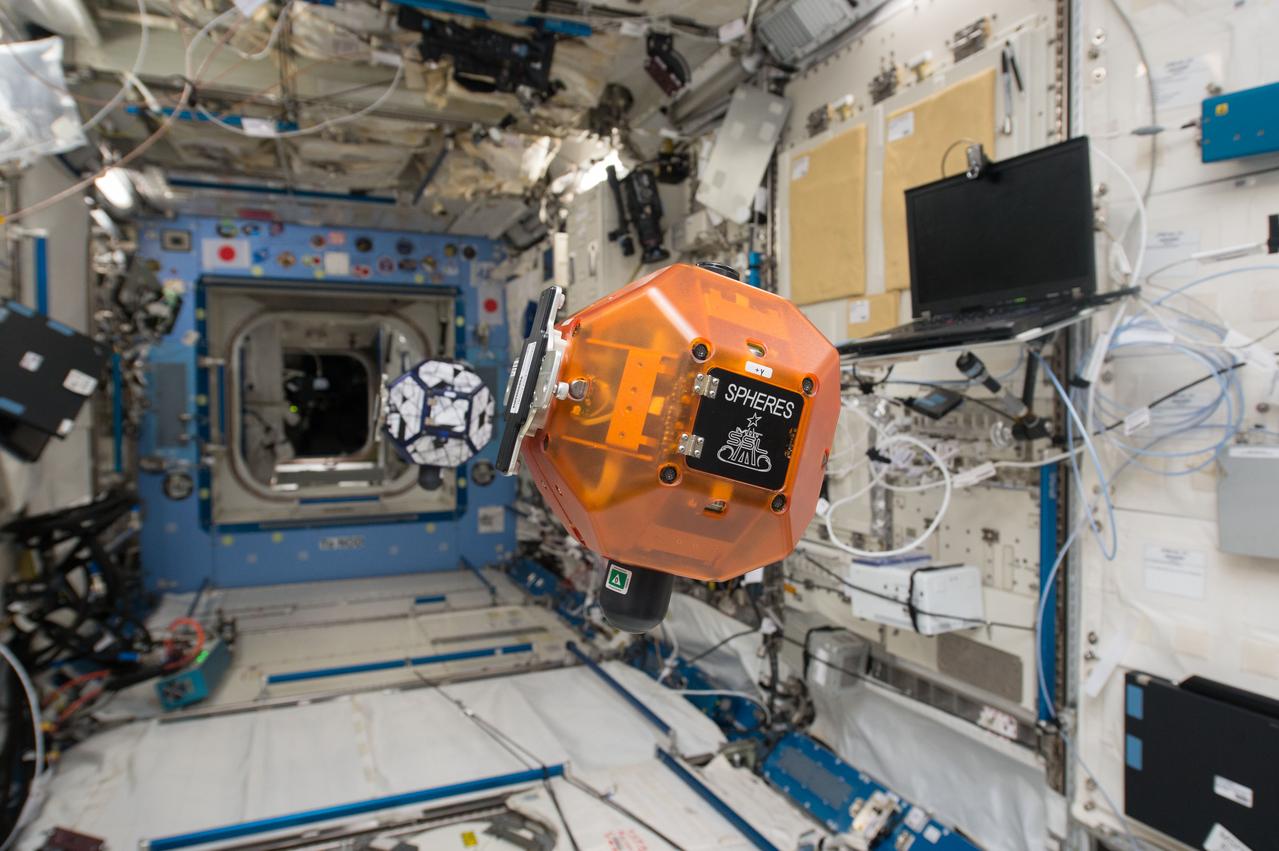
iss042e046207 (12/16/2018) --- Photographic documentation taken during the Synchronized Position Hold Engage and Reorient Experimental Satellites (SPHERES) test run in the Japanese Experiment Module (JEM).
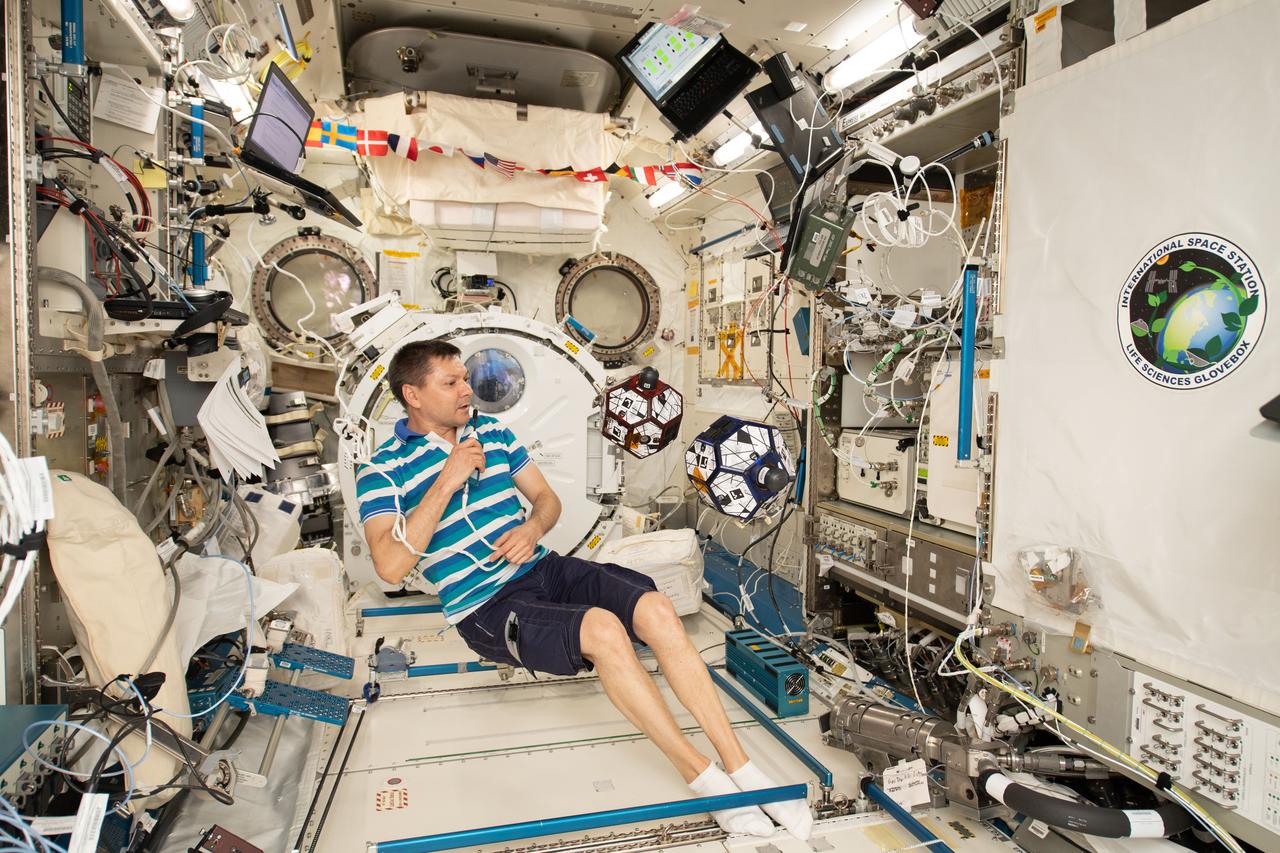
iss058e003128 (Jan. 14, 2019) --- Commander Oleg Kononenko works inside the Japanese Kibo lab module monitoring a pair of tiny internal free-flying satellites known as SPHERES (Synchronized Position Hold, Engage, Reorient, Experimental Satellites). High school students compete to design the best algorithms that control the basketball-sized satellites to mimic spacecraft maneuvers and formation flying.
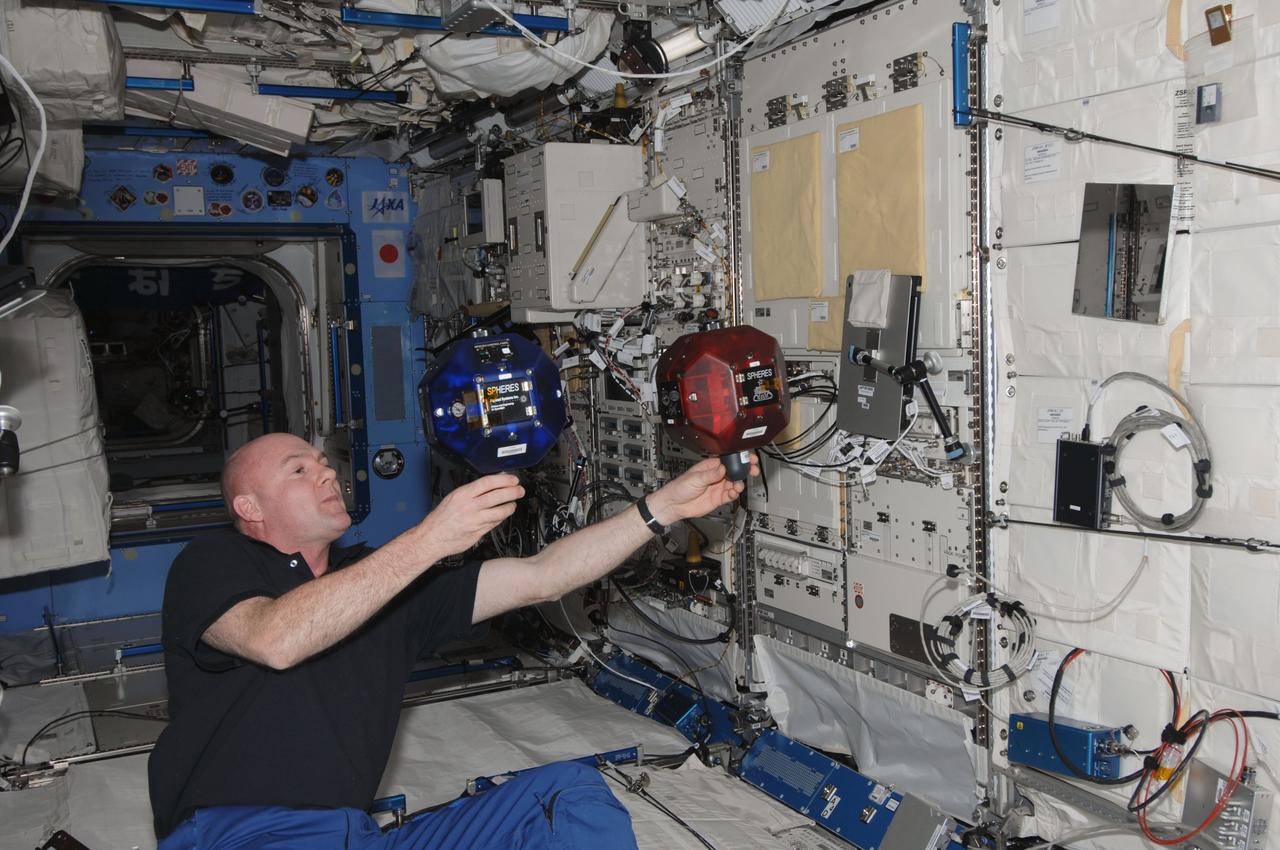
ISS030-E-156310 (23 Jan. 2012) --- European Space Agency astronaut Andre Kuipers, Expedition 30 flight engineer, works with the Synchronized Position Hold, Engage, Reorient, Experimental Satellites Zero Robotics (SPHERES ZR) experiment in the Kibo laboratory of the International Space Station.
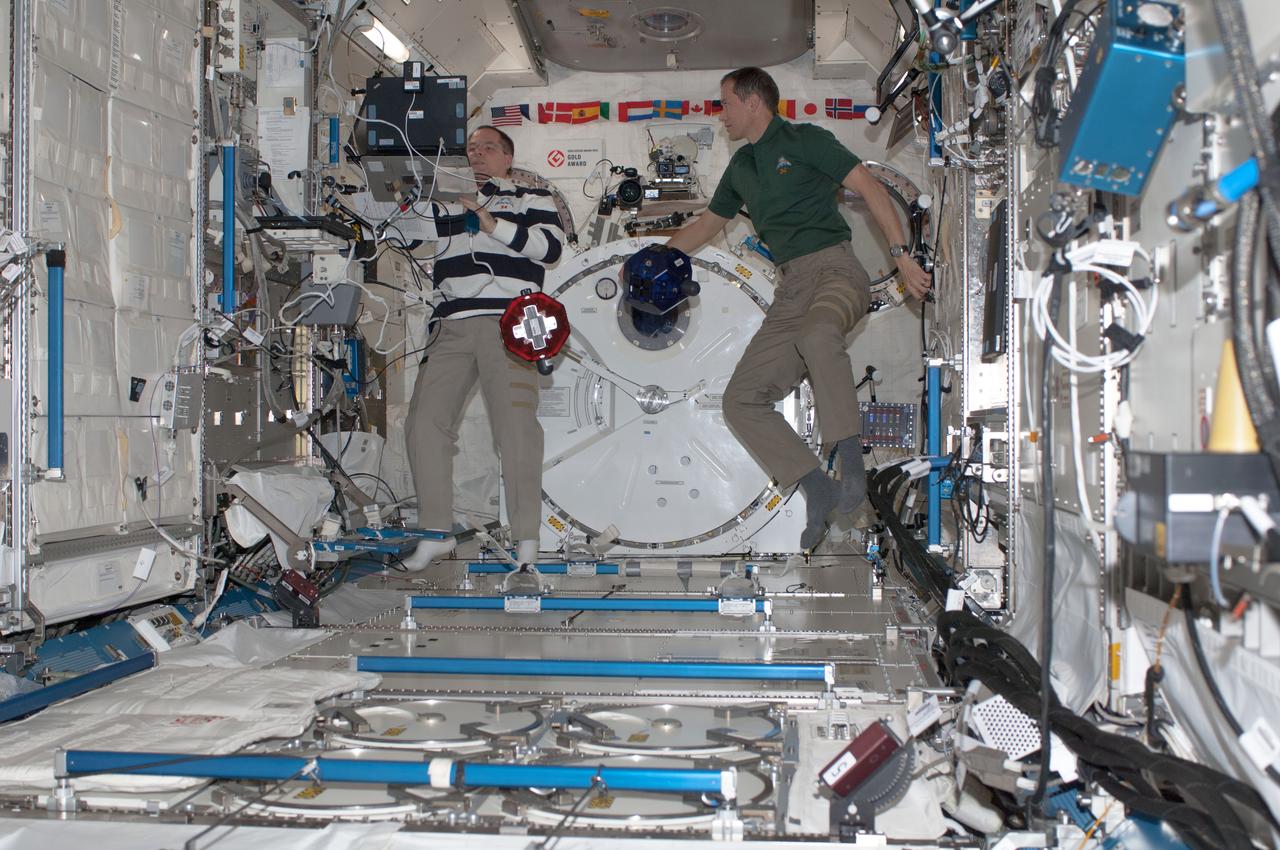
ISS034-E-028342 (11 Jan. 2013) --- NASA astronauts Kevin Ford (left), Expedition 34 commander; and Tom Marshburn, flight engineer, conduct a session of the Synchronized Position Hold, Engage, Reorient, Experimental Satellites Zero Robotics (SPHERES ZR) program in the Kibo laboratory of the International Space Station.
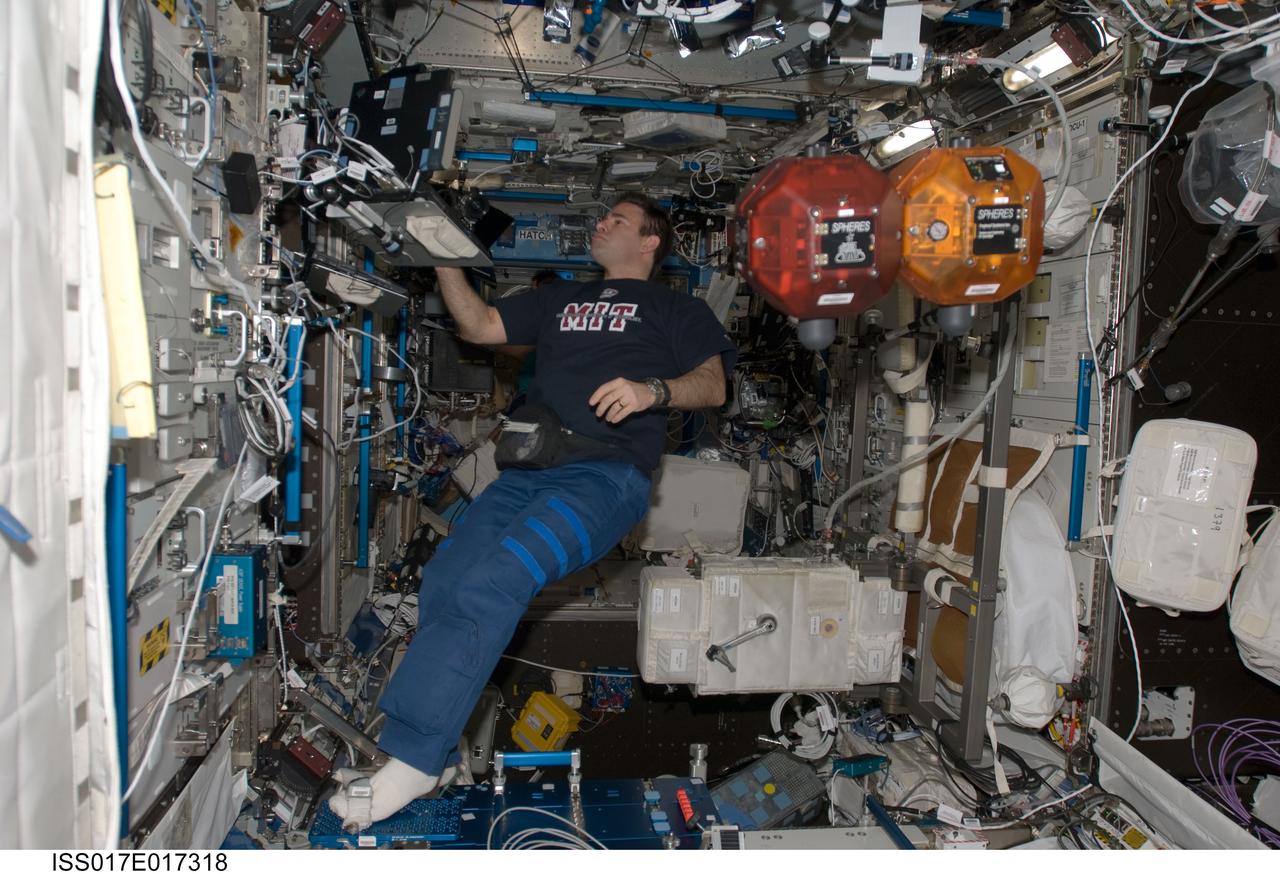
ISS017-E-017318 (27 Sept. 2008) --- Astronaut Greg Chamitoff, Expedition 17 flight engineer, uses a computer while working with the Synchronized Position Hold, Engage, Reorient, Experimental Satellites (SPHERES) in the Destiny laboratory of the International Space Station.
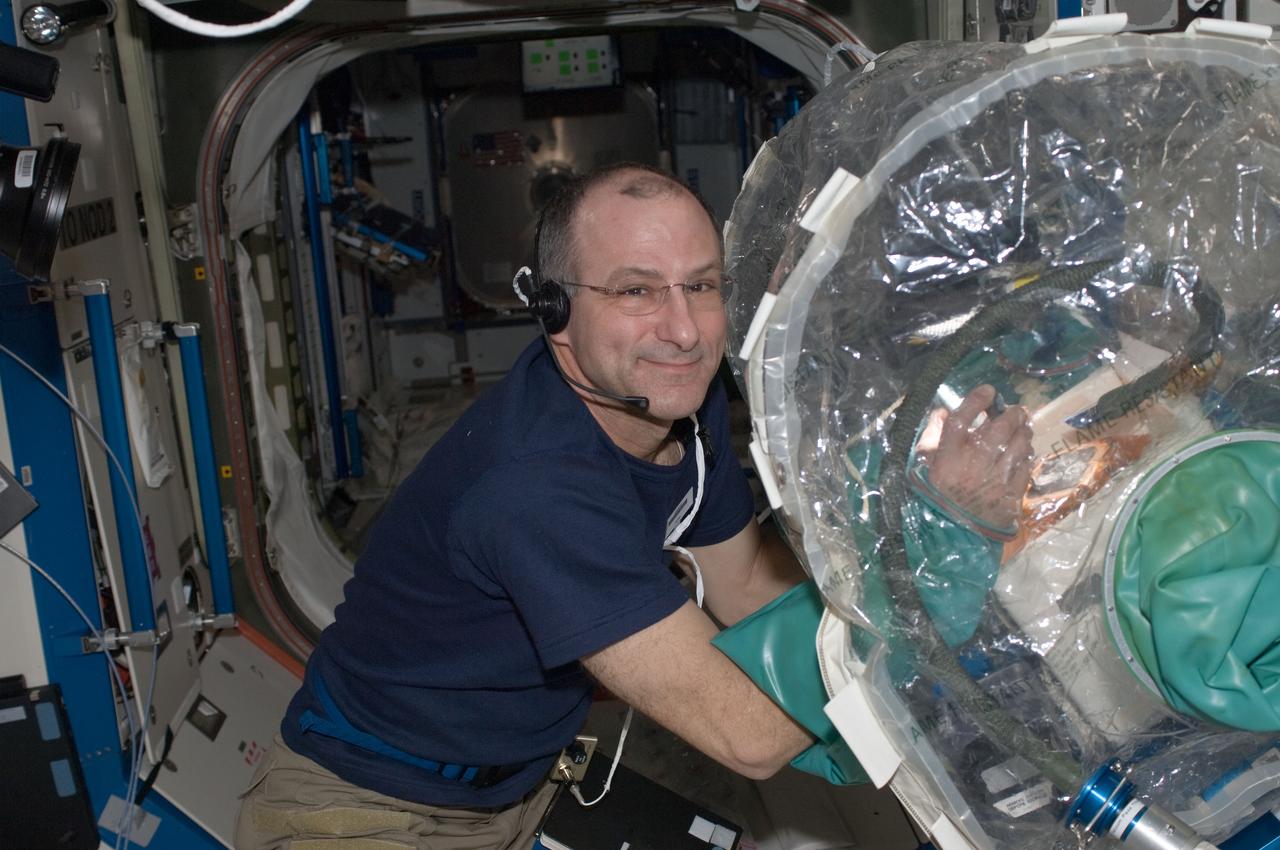
ISS030-E-051104 (27 Jan. 2012) --- NASA astronaut Don Pettit, Expedition 30 flight engineer, works on a Synchronized Position Hold, Engage, Reorient, Experimental Satellite (SPHERES) in a portable glovebox facility in the Destiny laboratory of the International Space Station.
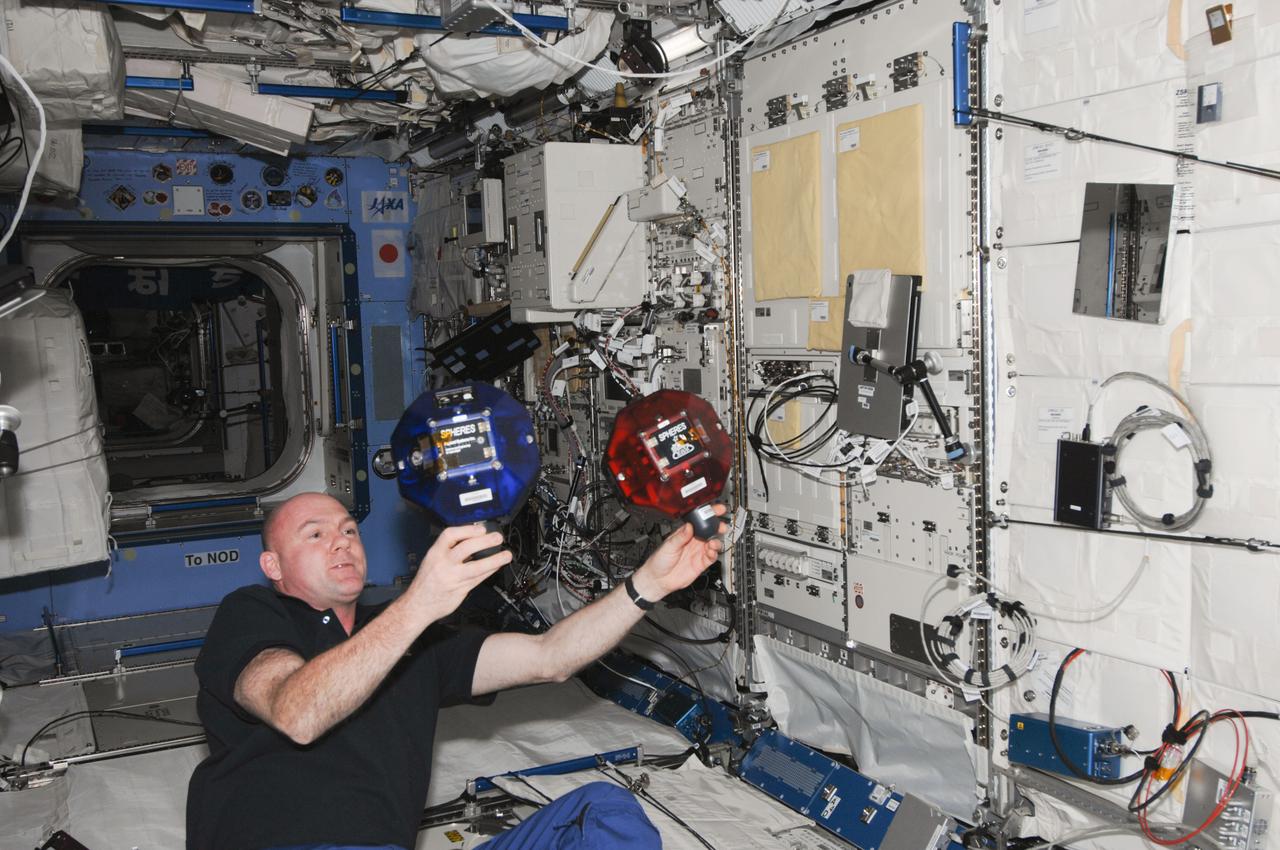
ISS030-E-156313 (23 Jan. 2012) --- European Space Agency astronaut Andre Kuipers, Expedition 30 flight engineer, works with the Synchronized Position Hold, Engage, Reorient, Experimental Satellites Zero Robotics (SPHERES ZR) experiment in the Kibo laboratory of the International Space Station.
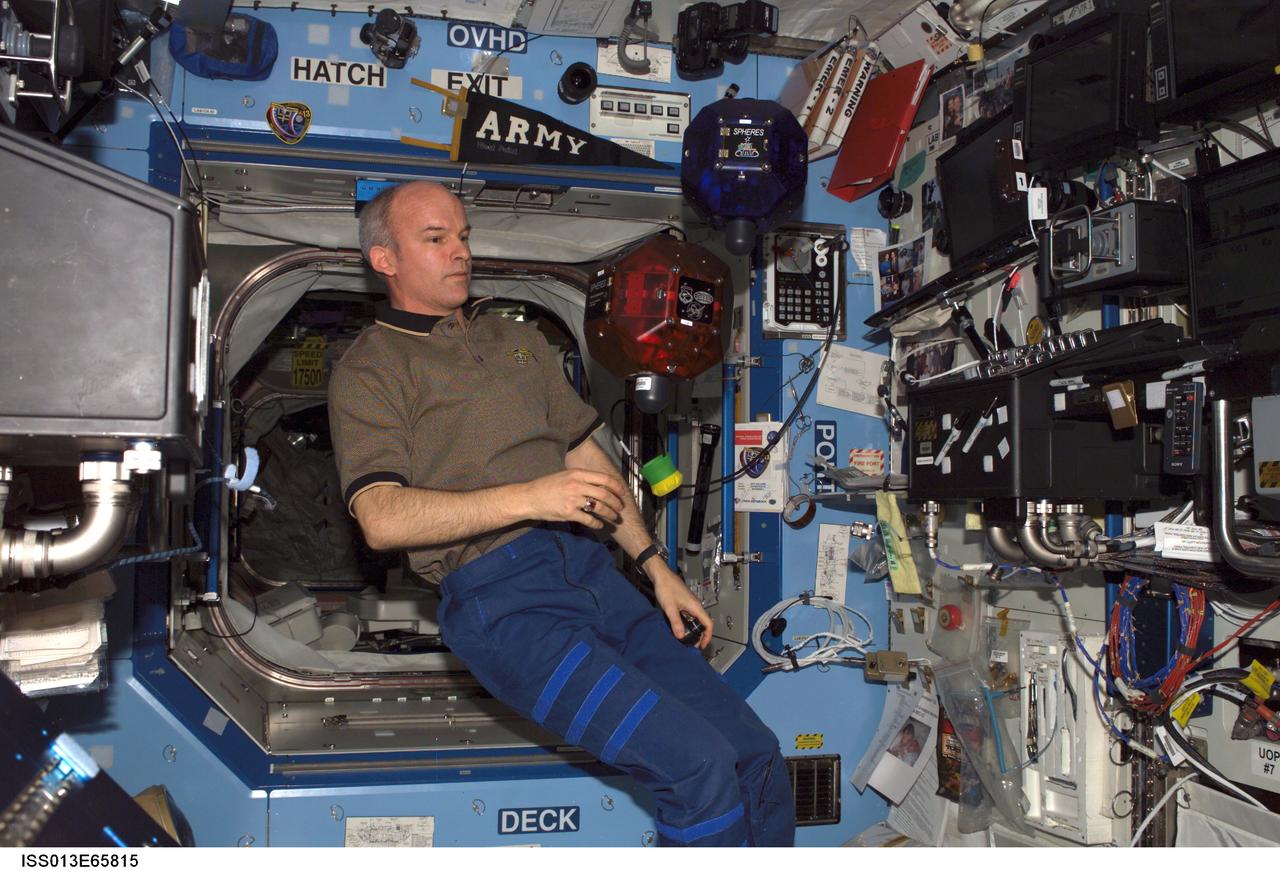
ISS013-E-65815 (12 Aug. 2006) --- Astronaut Jeffrey N. Williams, Expedition 13 NASA space station science officer and flight engineer, does a check of the Synchronized Position Hold, Engage, Reorient, Experimental Satellites (SPHERES) Beacon / Beacon Tester in the Destiny laboratory of the International Space Station.
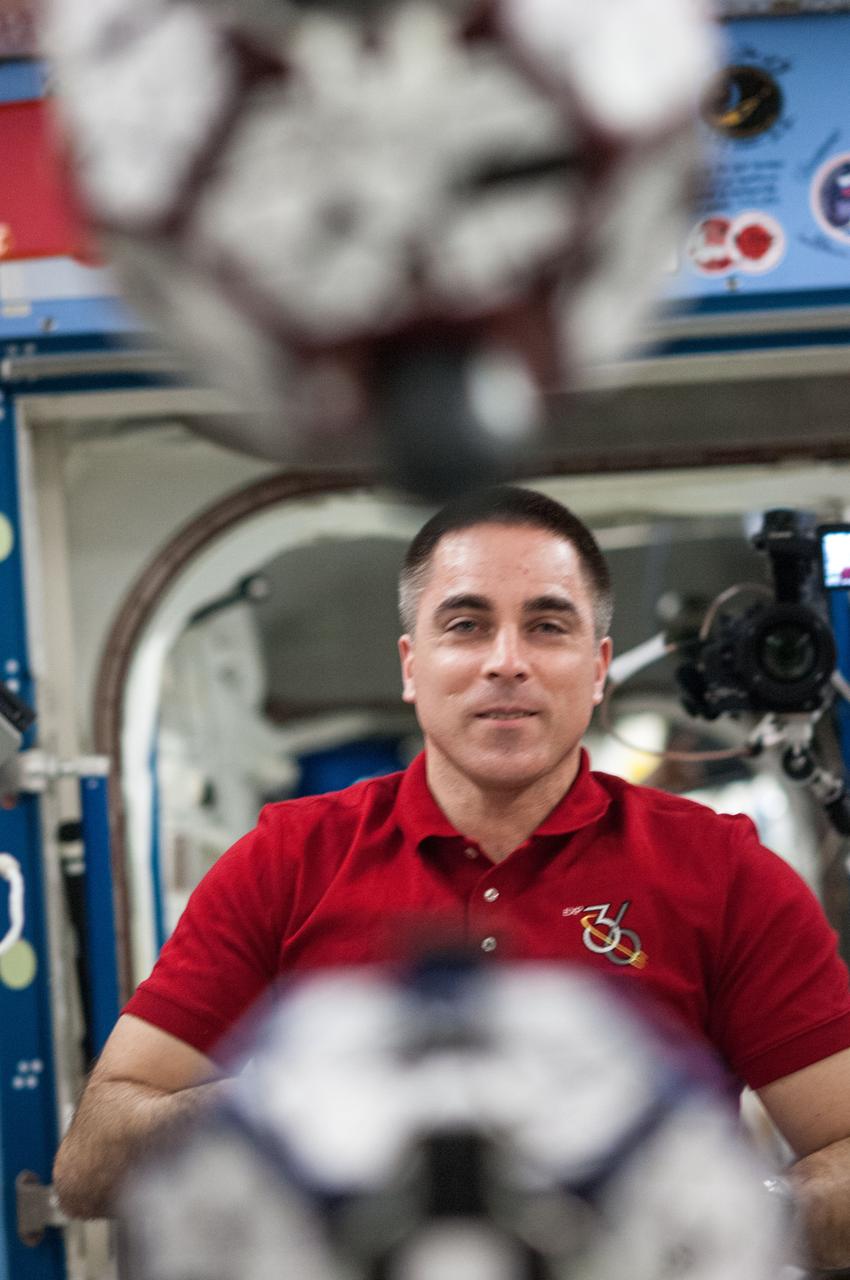
ISS036-E-031684 (13 Aug. 2013) --- In the International Space Station’s Kibo laboratory, NASA astronaut Chris Cassidy, Expedition 36 flight engineer, conducts a session with a pair of bowling-ball-sized free-flying satellites known as Synchronized Position Hold, Engage, Reorient, Experimental Satellites, or SPHERES.
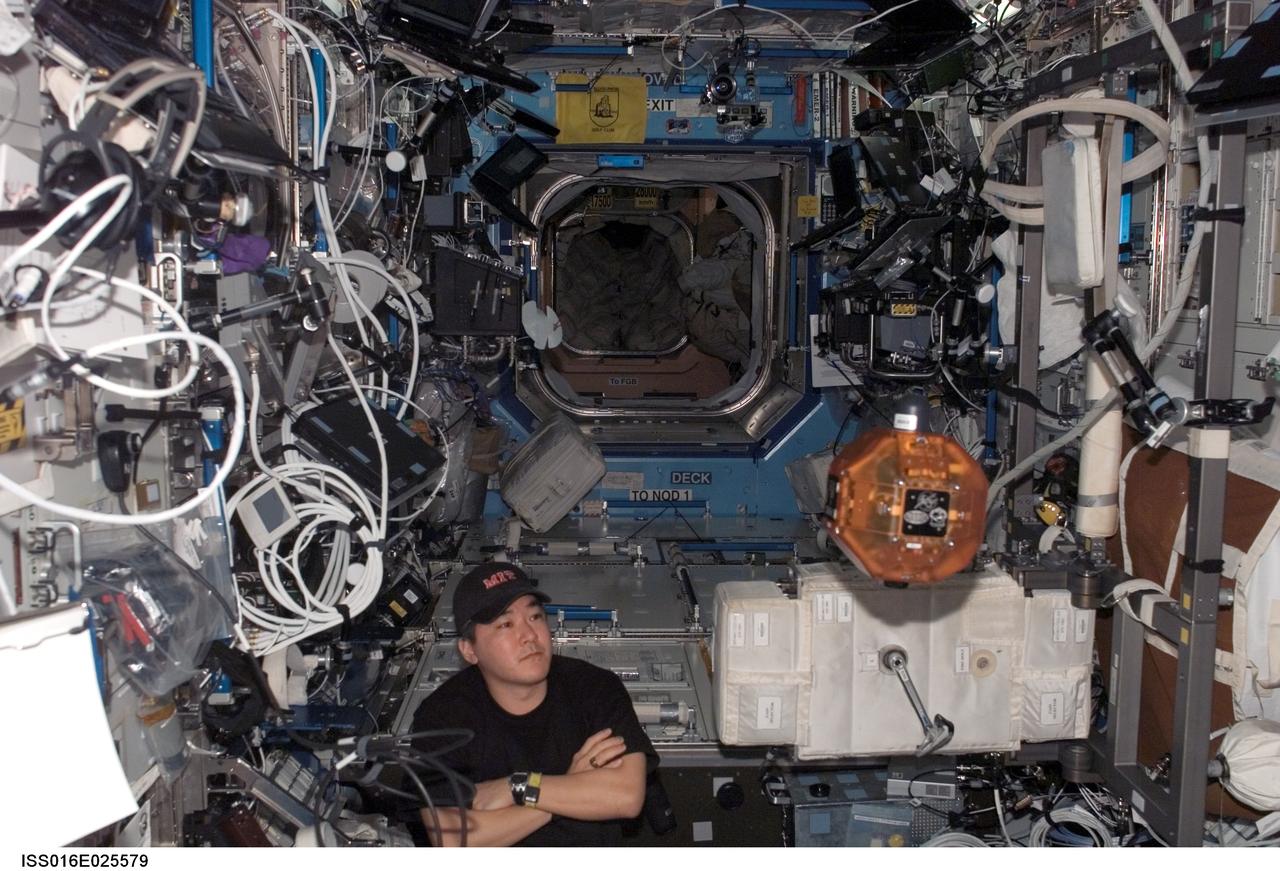
ISS016-E-025579 (27 Jan. 2008) --- Astronaut Daniel Tani, Expedition 16 flight engineer, does a check of the Synchronized Position Hold, Engage, Reorient, Experimental Satellites (SPHERES) Beacon/Beacon Tester in the Destiny laboratory of the International Space Station.
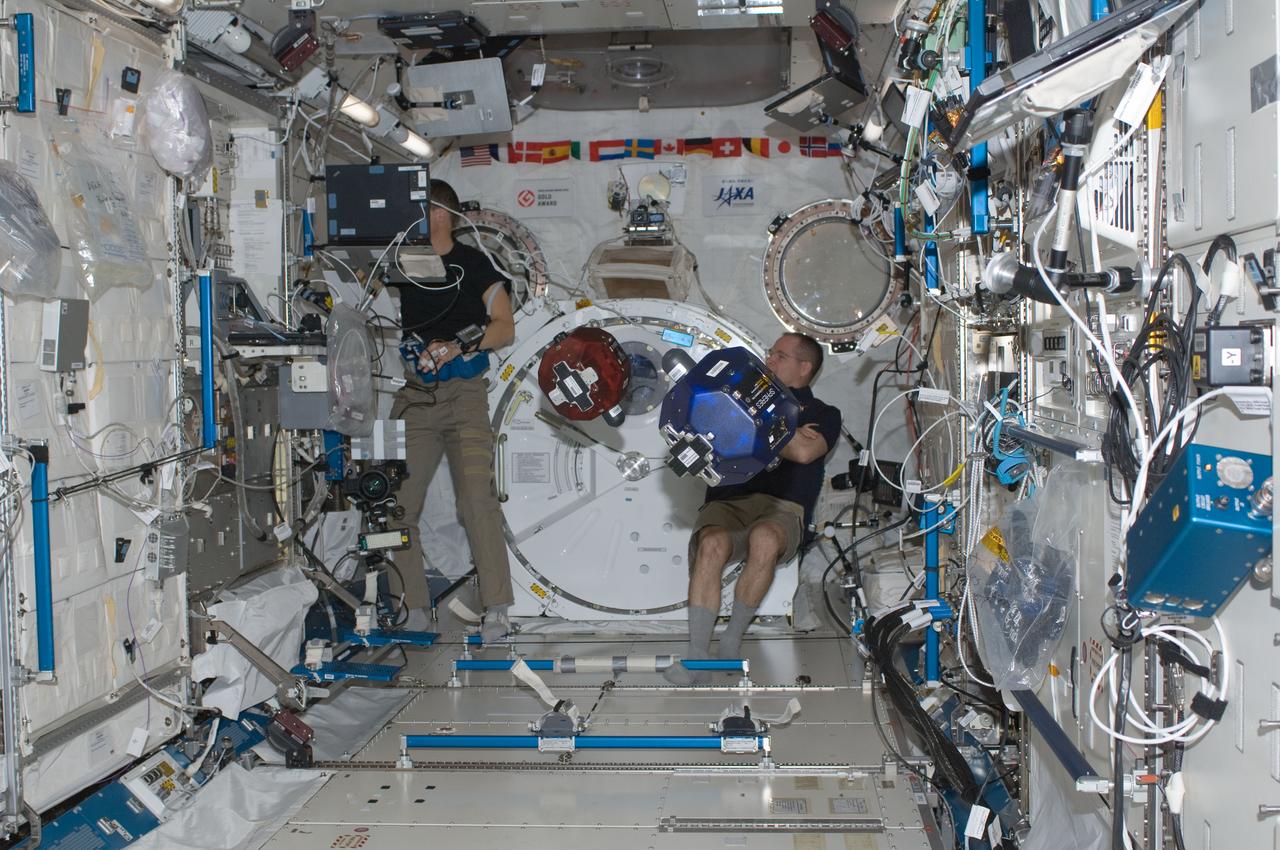
ISS034-E-014548 (4 Jan. 2013) --- With their feet anchored in floor restraints, NASA astronauts Kevin Ford (right), Expedition 34 commander; and Tom Marshburn, flight engineer, conduct a session of the Synchronized Position Hold, Engage, Reorient, Experimental Satellites (SPHERES) program in the Kibo laboratory of the International Space Station.
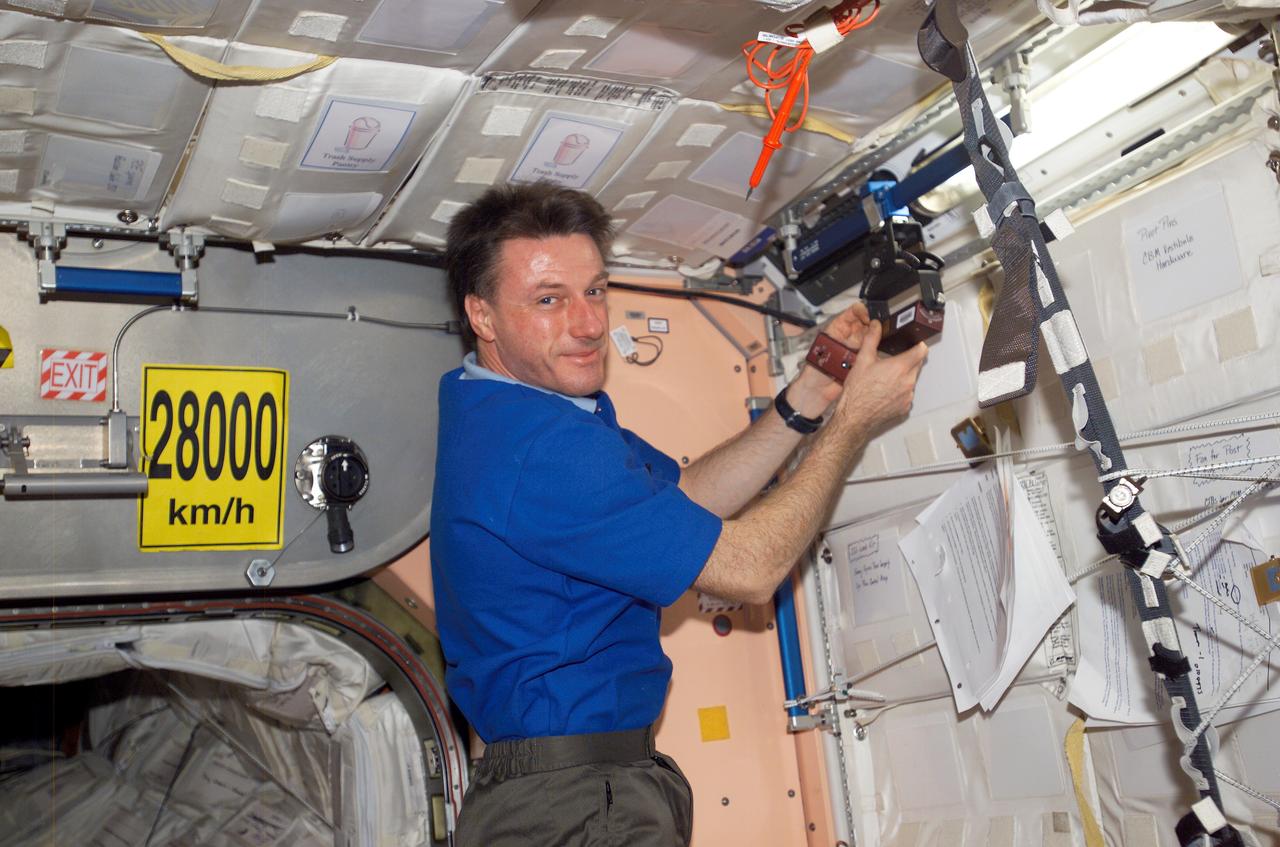
ISS008-E-19136 (24 March 2004) --- Astronaut C. Michael Foale, Expedition 8 commander and NASA ISS science officer, does a check of the Synchronized Position Hold, Engage, Reorient, Experimental Satellites (SPHERES) Beacon / Beacon Tester in the Unity node of the International Space Station.
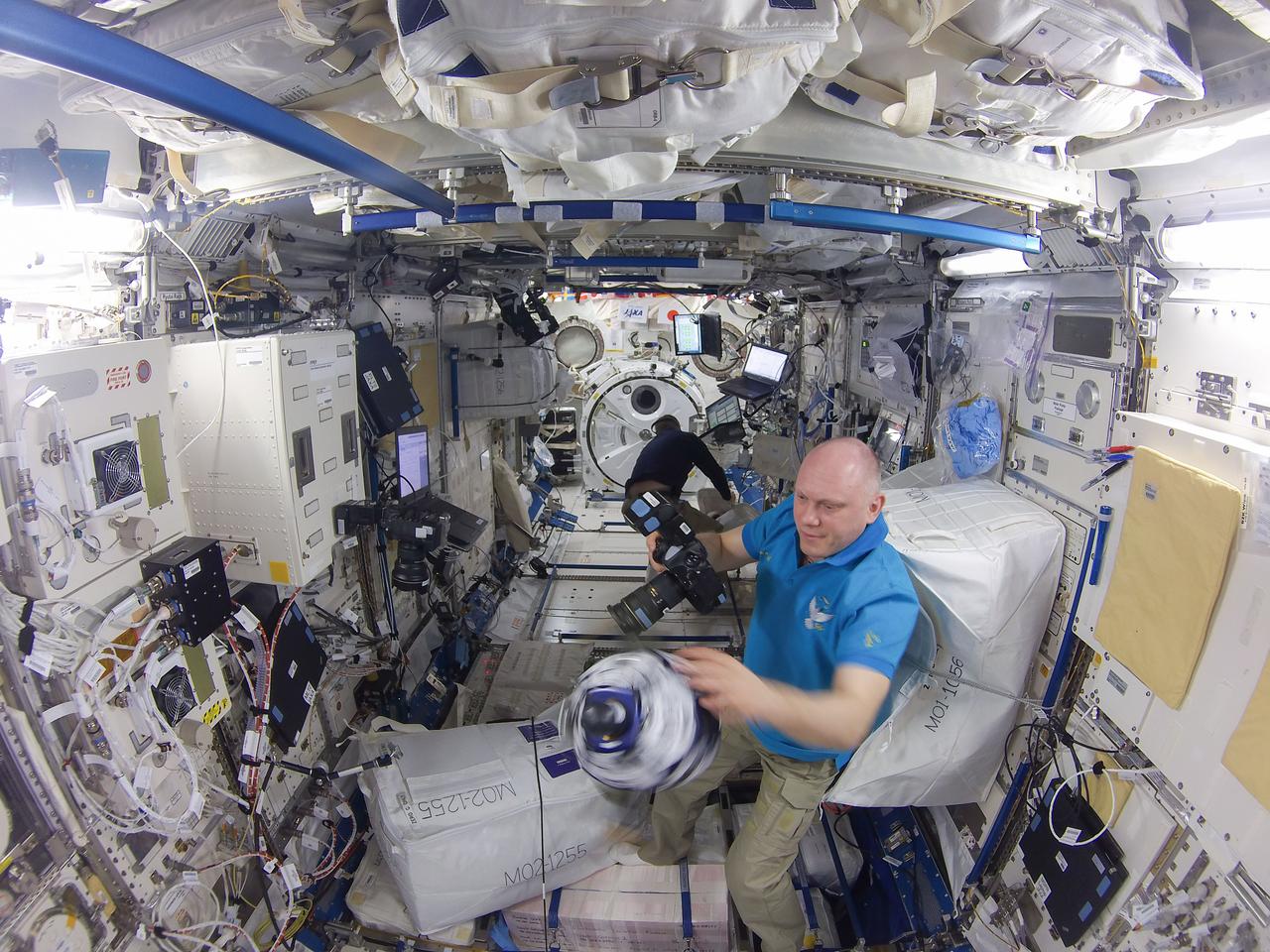
iss056e050302 (6/28/2018) --- Cosmonaut Oleg Artemyev and NASA astronaut Ricky Arnold during the Synchronized Position Hold Engage and Reorient Experimental Satellites (SPHERES) maintenance session two, in the Japanese Experiment Module (JEM) Pressurized Module (JPM).
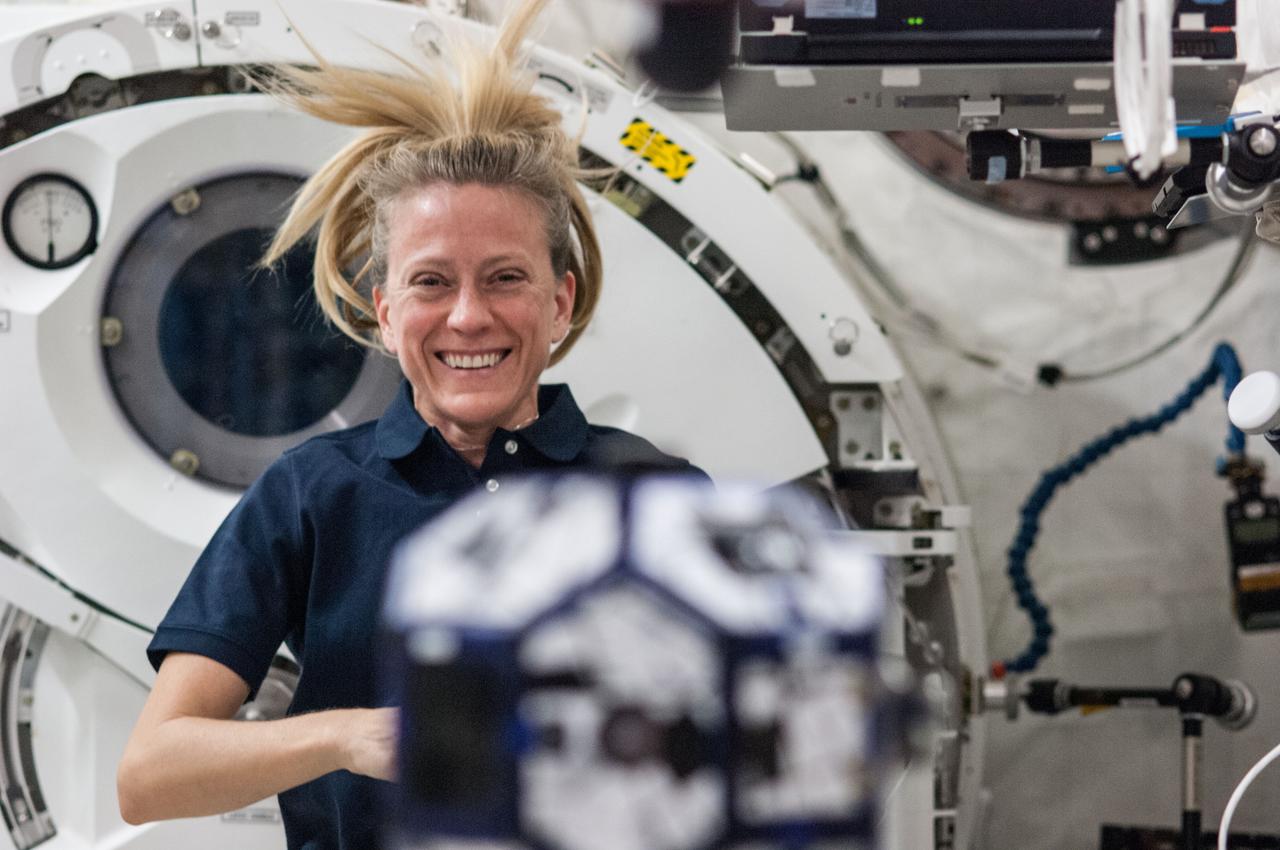
ISS036-E-031668 (13 Aug. 2013) --- In the International Space Station’s Kibo laboratory, NASA astronaut Karen Nyberg, Expedition 36 flight engineer, conducts a session with a pair of bowling-ball-sized free-flying satellites known as Synchronized Position Hold, Engage, Reorient, Experimental Satellites, or SPHERES.
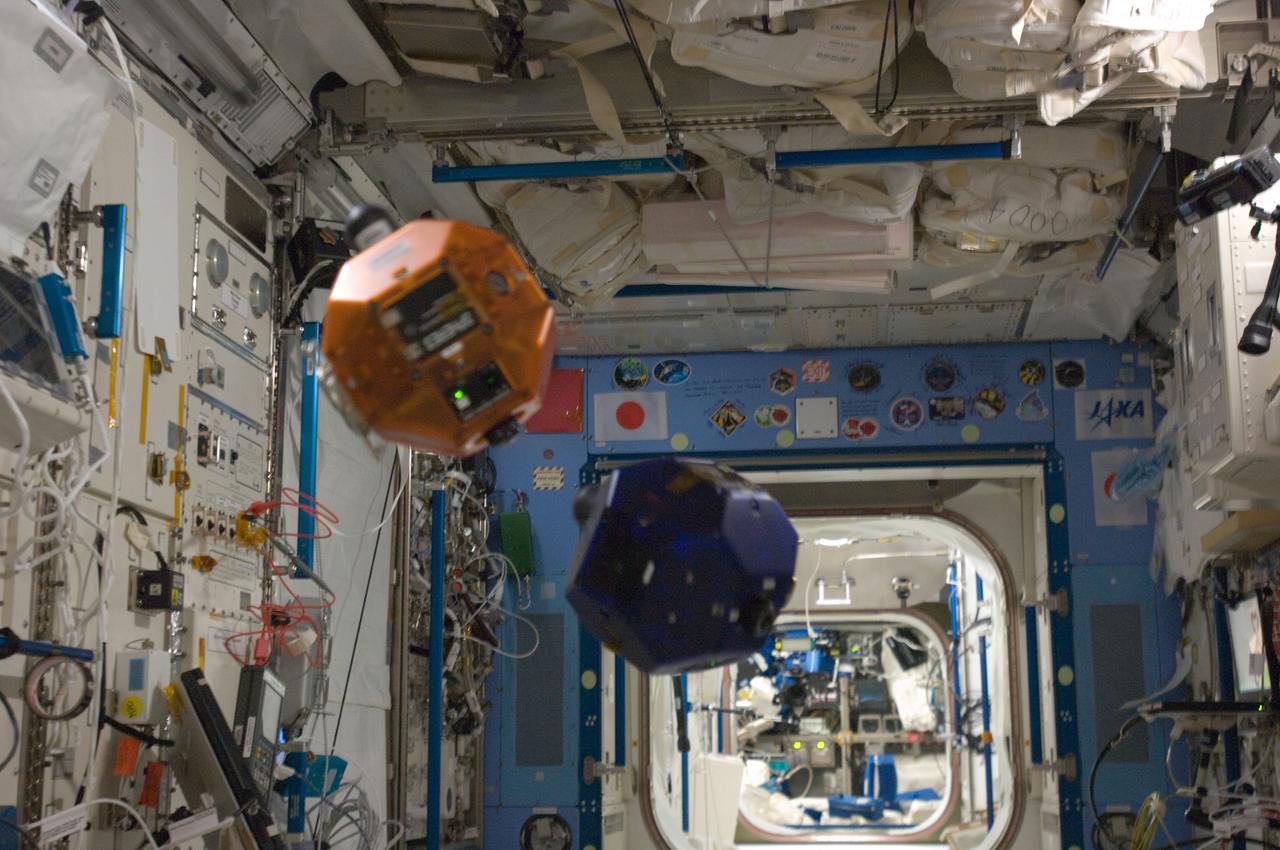
ISS031-E-140676 (22 June 2012) --- Two bowling-ball-sized free-flying satellites called Synchronized Position Hold, Engage, Reorient, Experimental Satellites Zero Robotics (SPHERES ZR) are pictured during a test session in the Kibo laboratory of the International Space Station.
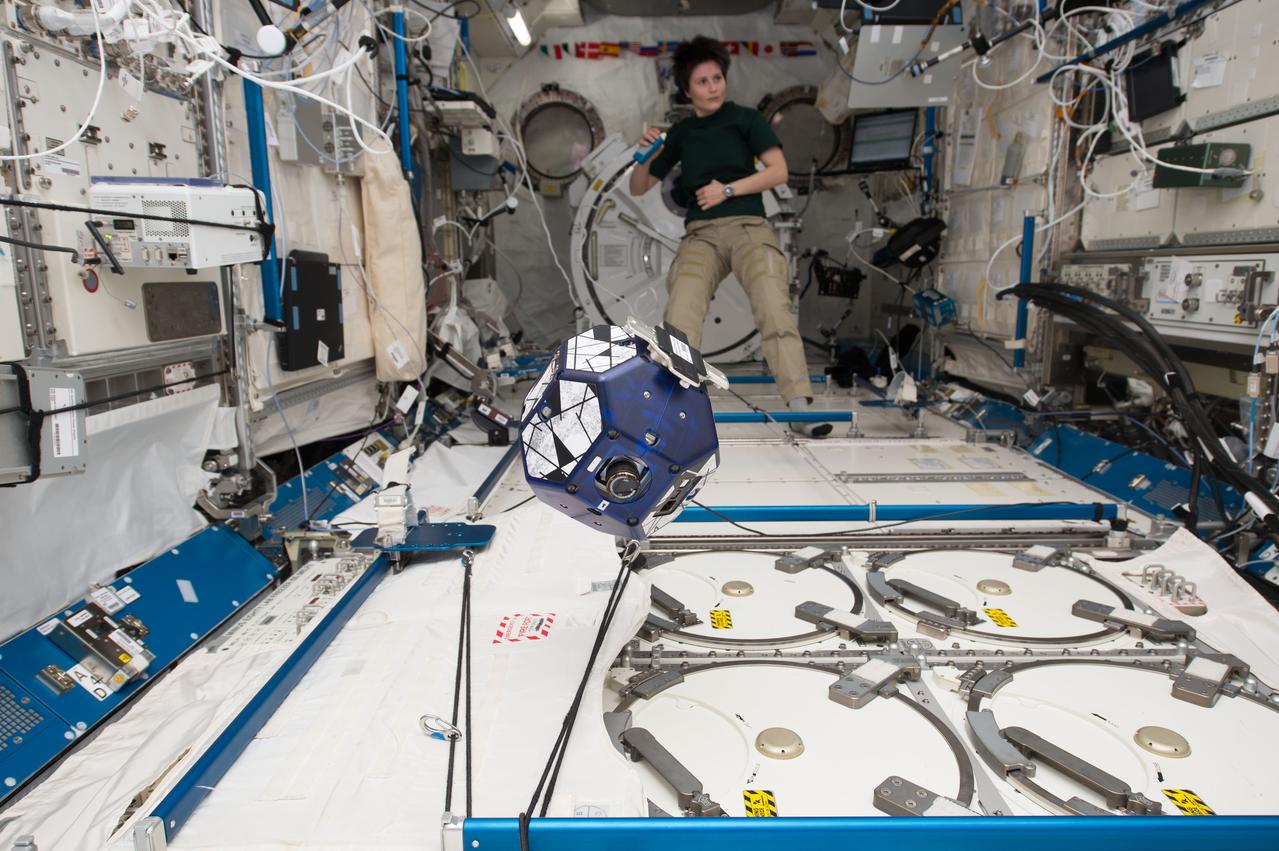
iss042e046171 (12/16/2018) --- Photographic documentation taken during the Synchronized Position Hold Engage and Reorient Experimental Satellites (SPHERES) test run in the Japanese Experiment Module (JEM). European Space Agency (ESA) astronaut Samantha Cristoforetti is visible conducting the test.
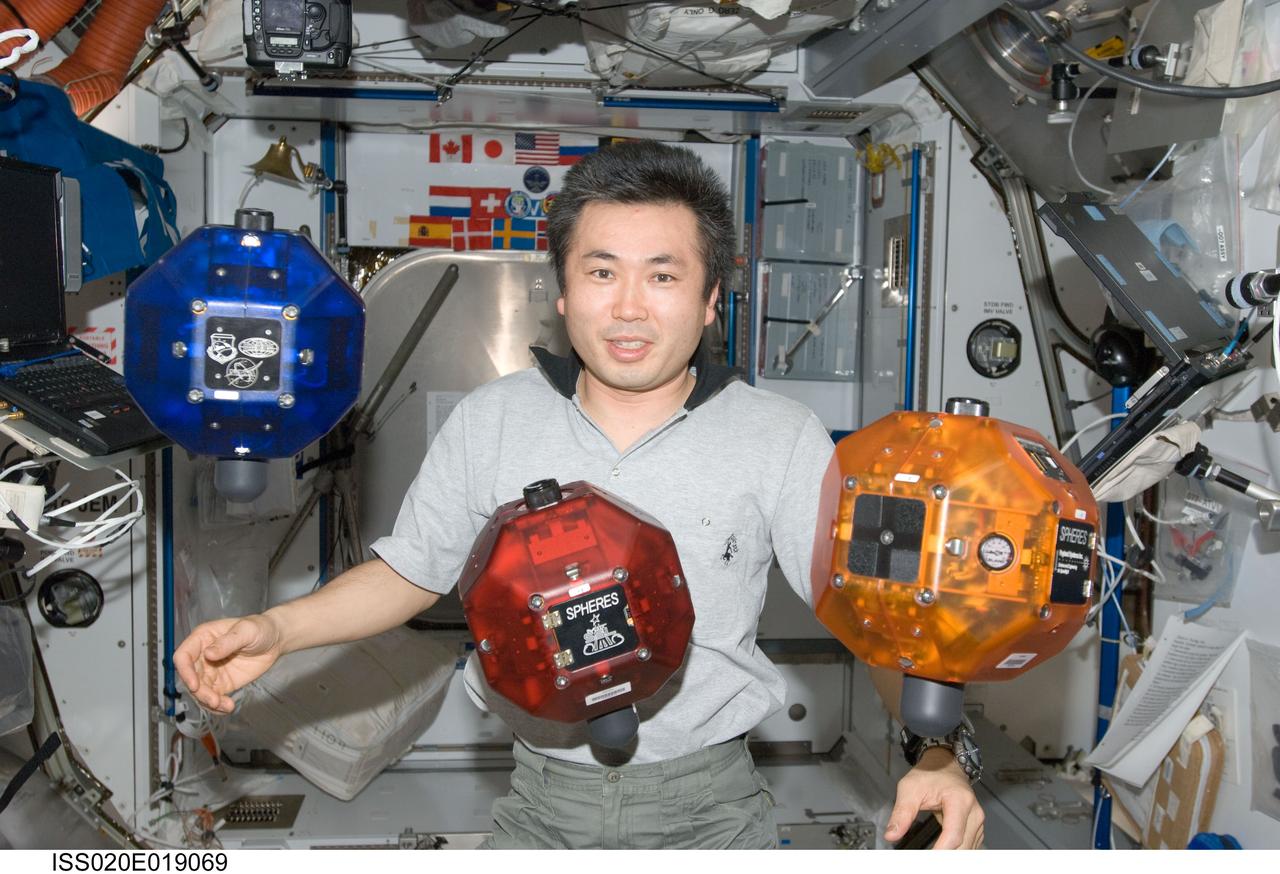
ISS020-E-019069 (11 July 2009) --- Japan Aerospace Exploration Agency (JAXA) astronaut Koichi Wakata, Expedition 20 flight engineer, is pictured near three Synchronized Position Hold, Engage, Reorient, Experimental Satellites (SPHERES) floating freely in the Harmony node of the International Space Station.

ISS036-E-032134 (13 Aug. 2013) --- In the International Space Station?s Kibo laboratory, NASA astronaut Chris Cassidy, Expedition 36 flight engineer, conducts a session with a pair of bowling-ball-sized free-flying satellites known as Synchronized Position Hold, Engage, Reorient, Experimental Satellites, or SPHERES.
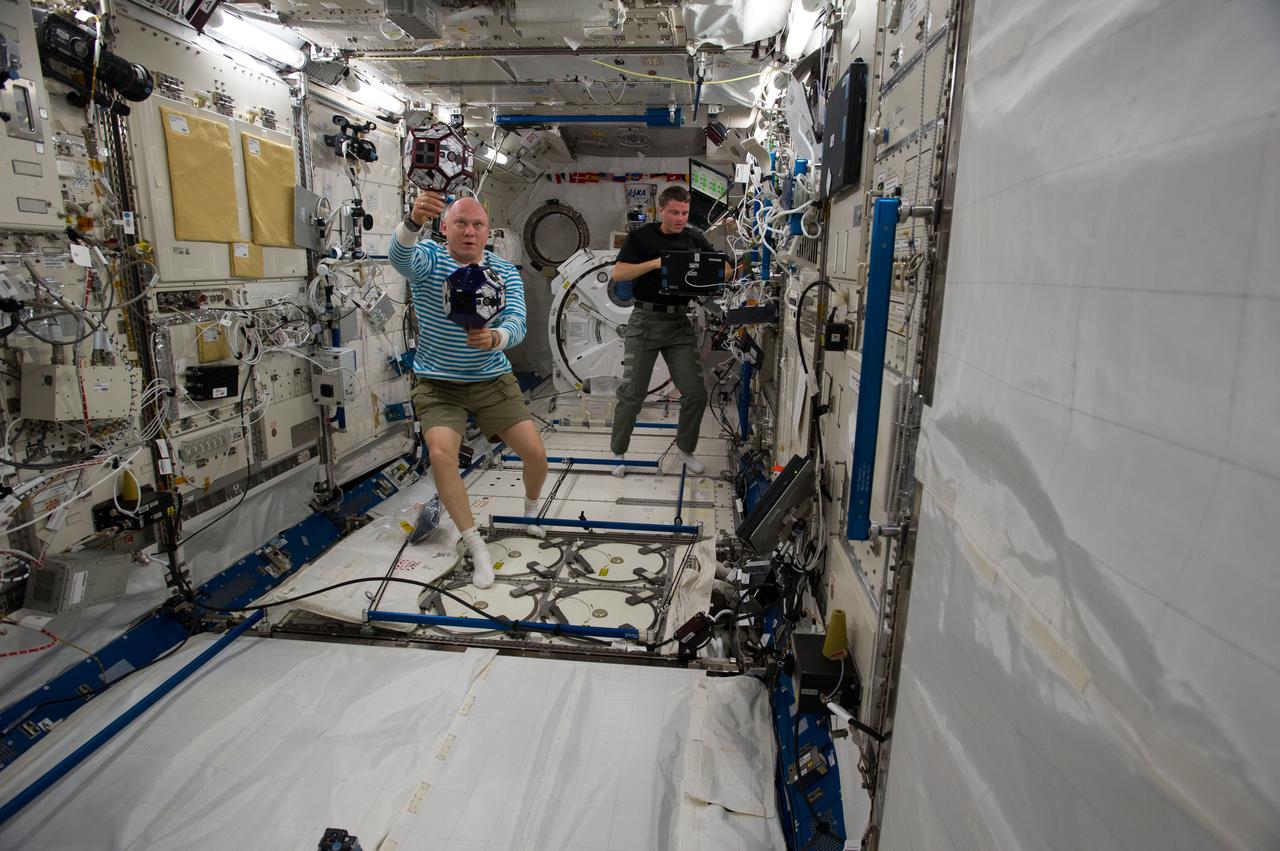
ISS040-E-018417 (24 June 2014) --- Russian cosmonaut Oleg Artemyev (left) and NASA astronaut Reid Wiseman, both Expedition 40 flight engineers, conduct a session of the Synchronized Position Hold, Engage, Reorient, Experimental Satellites Zero Robotics (SPHERES ZR) program in the Kibo laboratory of the International Space Station.
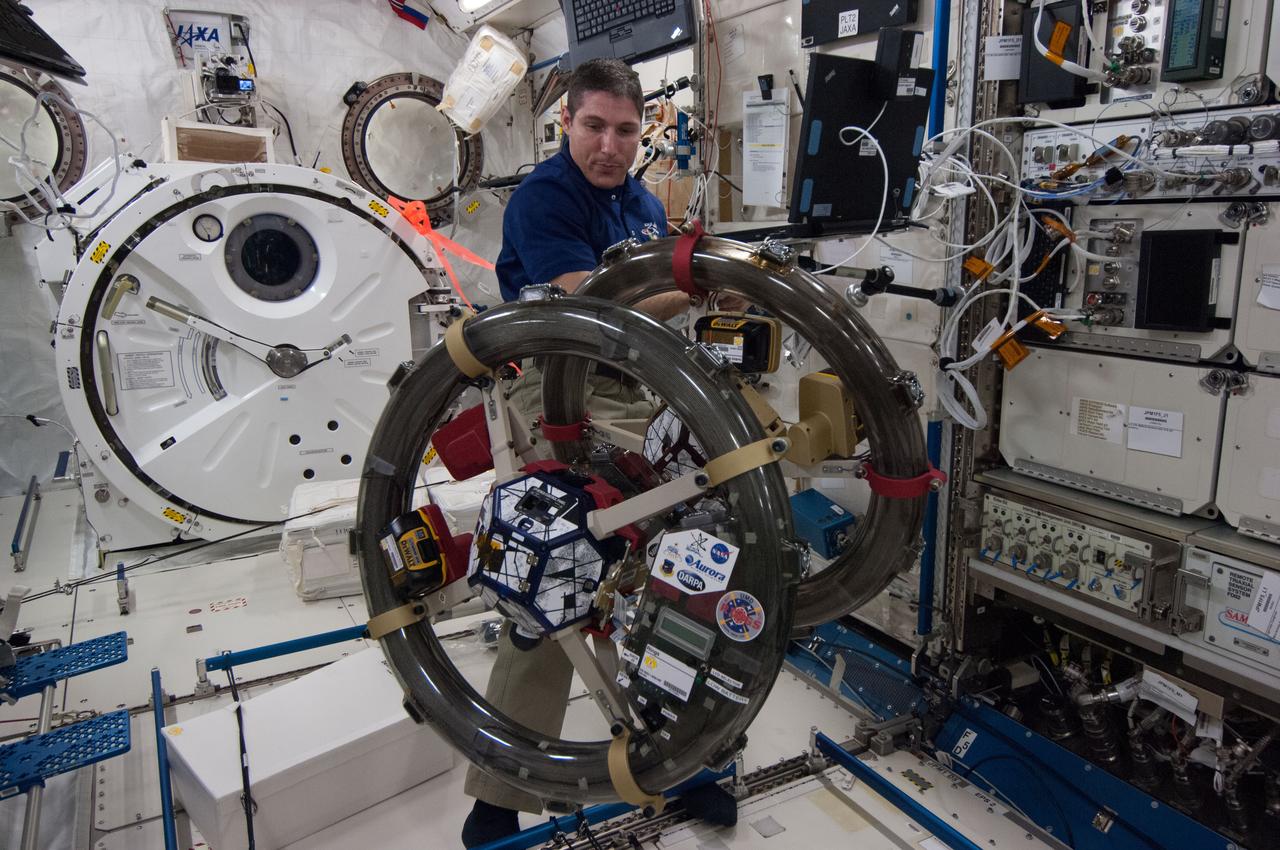
ISS038-E-045620 (10 Feb. 2014) --- NASA astronaut Mike Hopkins, Expedition 38 flight engineer, works with the Synchronized Position, Hold, Engage, Reorient, Experimental Satellites-Resonant Inductive Near-field Generation System (SPHERES-RINGS) experiment gear in the Kibo laboratory of the International Space Station.
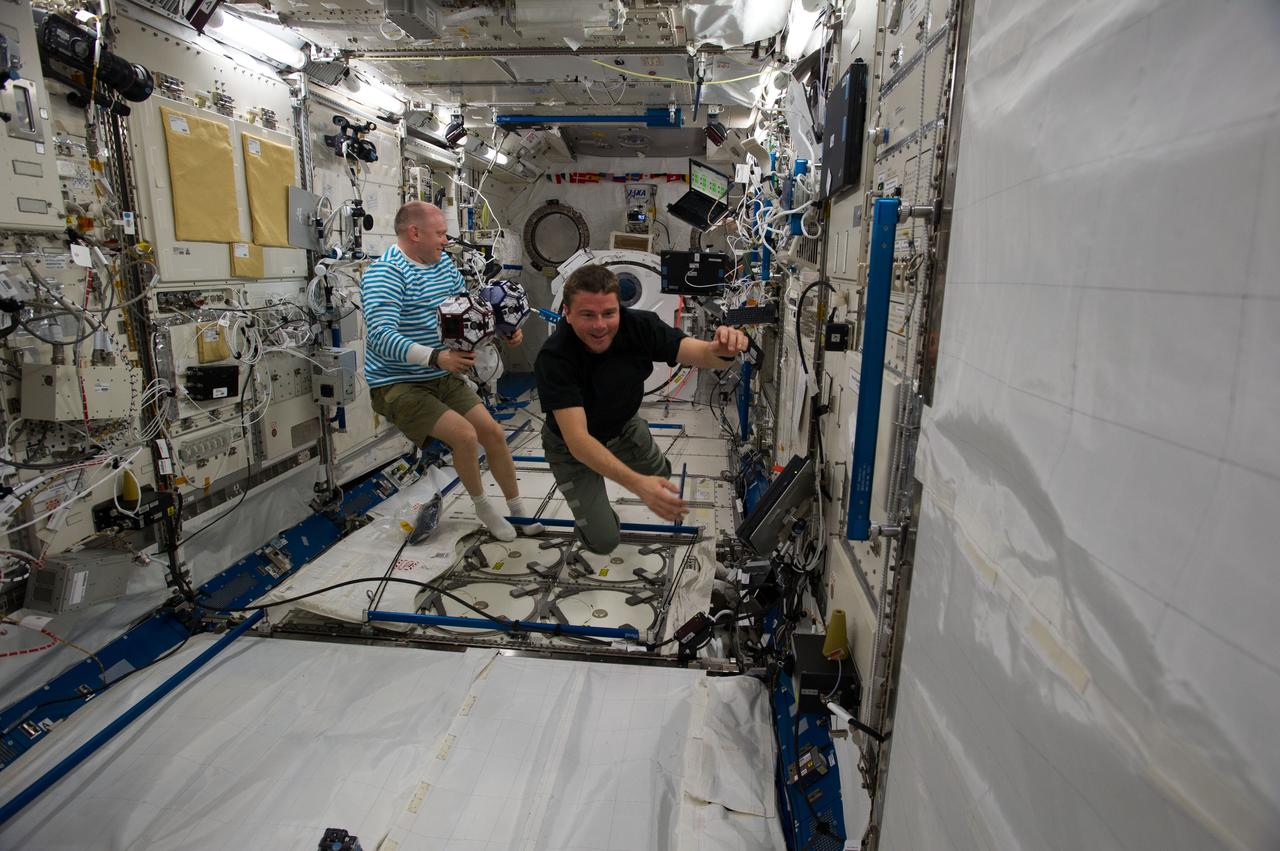
ISS040-E-018486 (24 June 2014) --- Russian cosmonaut Oleg Artemyev (left) and NASA astronaut Reid Wiseman, both Expedition 40 flight engineers, conduct a session of the Synchronized Position Hold, Engage, Reorient, Experimental Satellites Zero Robotics (SPHERES ZR) program in the Kibo laboratory of the International Space Station.
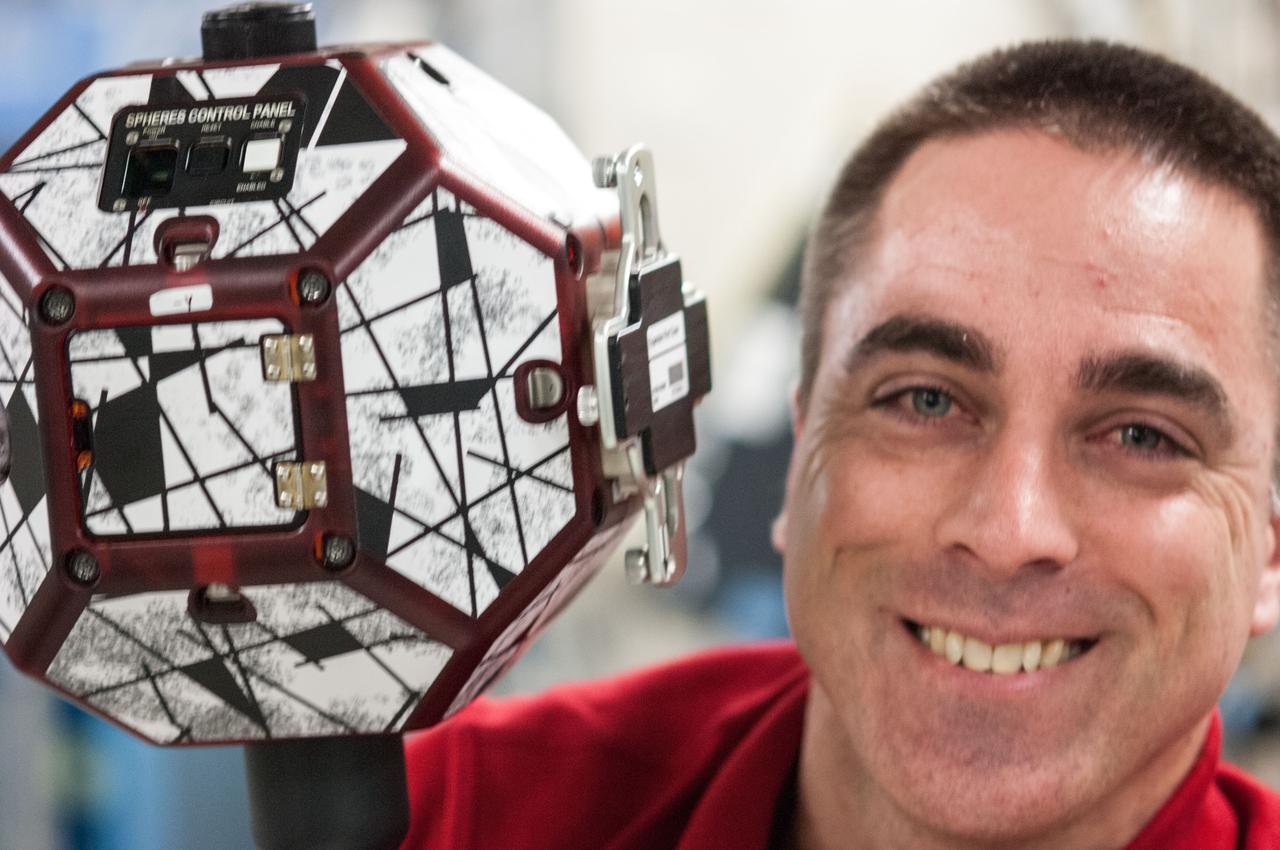
ISS036-E-031698 (13 Aug. 2013) --- In the International Space Station’s Kibo laboratory, NASA astronaut Chris Cassidy, Expedition 36 flight engineer, poses for a photo while conducting a session with a pair of bowling-ball-sized free-flying satellites known as Synchronized Position Hold, Engage, Reorient, Experimental Satellites, or SPHERES.
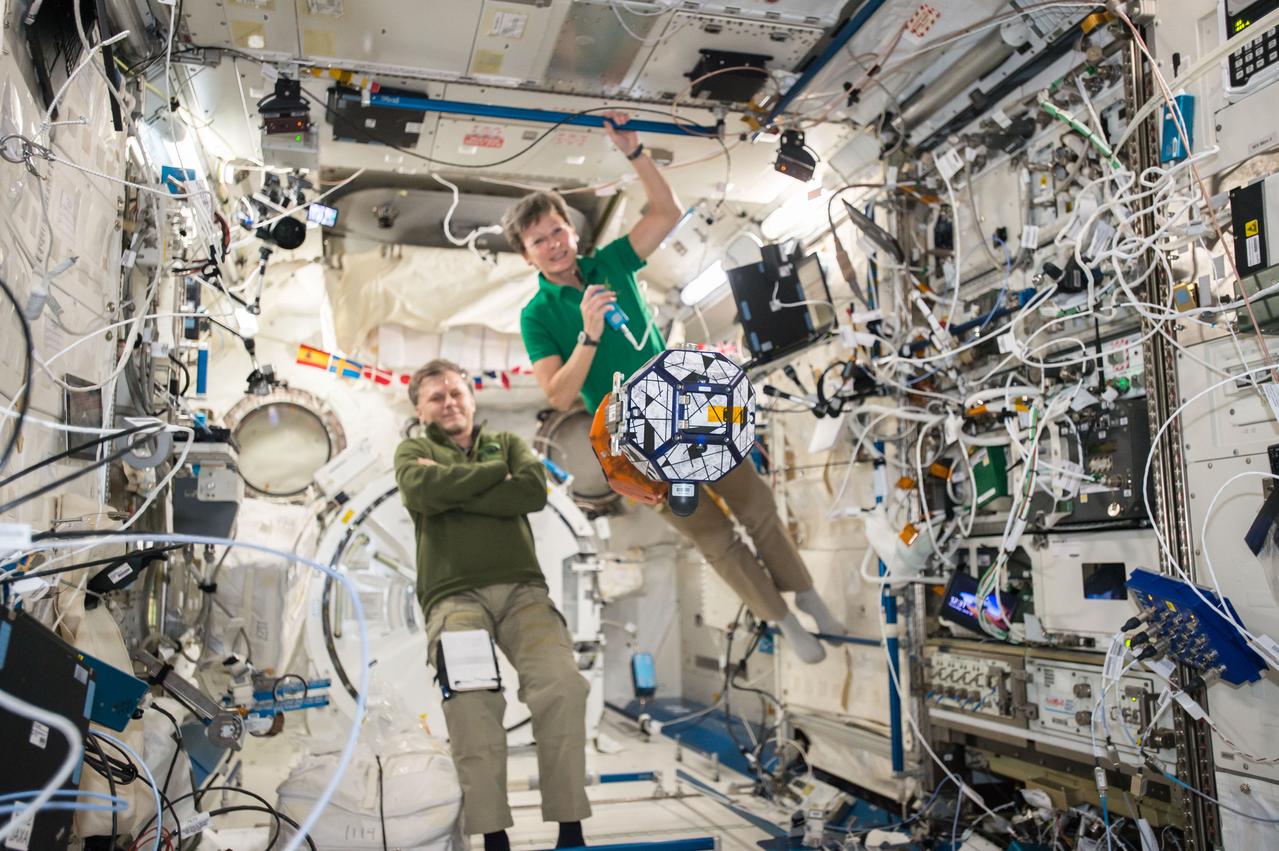
iss050e036008 (1/27/2017) --- NASA astronaut Peggy Whitson, and Cosmonaut Andrei Borisenko setting up cameras and performing Synchronized Position Hold, Engage, Reorient, Experimental Satellites (SPHERES) Zero Robotics tests, in the Japanese Experiment Module (JEM) Pressurized Module (JPM).
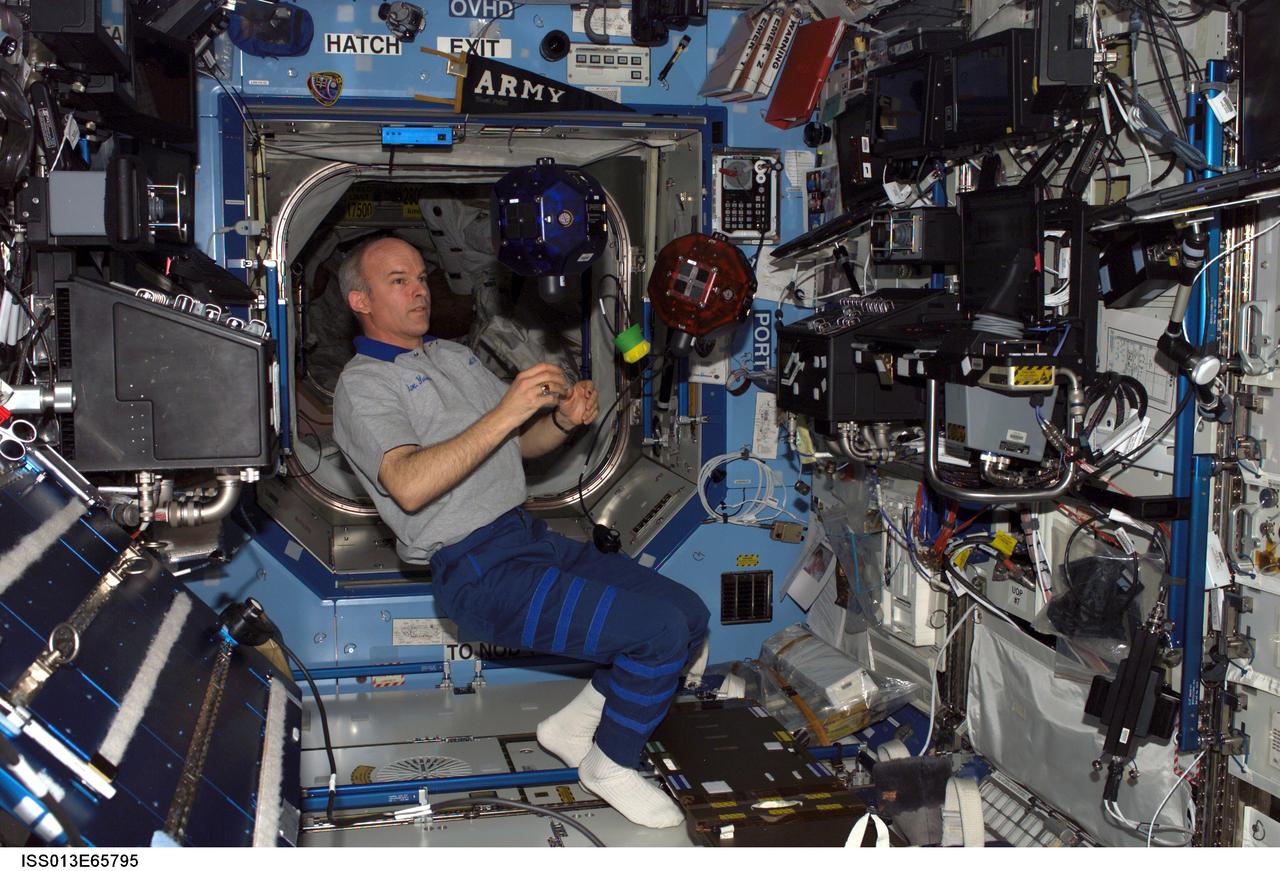
ISS013-E-65795 (12 Aug. 2006) --- Astronaut Jeffrey N. Williams, Expedition 13 NASA space station science officer and flight engineer, does a check of the Synchronized Position Hold, Engage, Reorient, Experimental Satellites (SPHERES) Beacon / Beacon Tester in the Destiny laboratory of the International Space Station.

ISS029-E-011297 (28 Sept. 2011) --- NASA astronaut Mike Fossum, Expedition 29 commander, performs a check on Synchronized Position Hold, Engage, Reorient, Experimental Satellites (SPHERES) floating freely in the Kibo laboratory of the International Space Station.
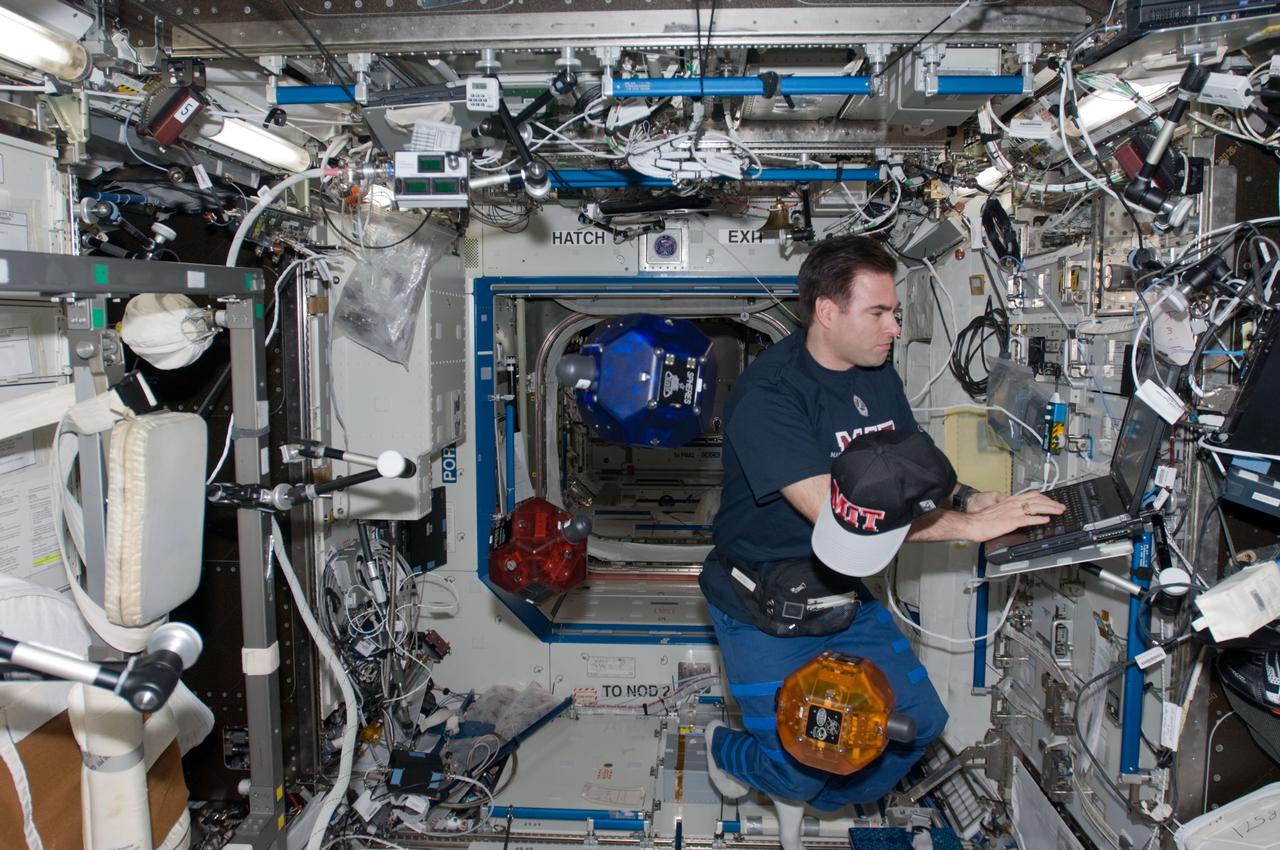
ISS017-E-015130 (30 Aug. 2008) --- Astronaut Greg Chamitoff, Expedition 17 flight engineer, uses a computer while doing a check of the Synchronized Position Hold, Engage, Reorient, Experimental Satellites (SPHERES) Beacon/Beacon Tester in the Destiny laboratory of the International Space Station.
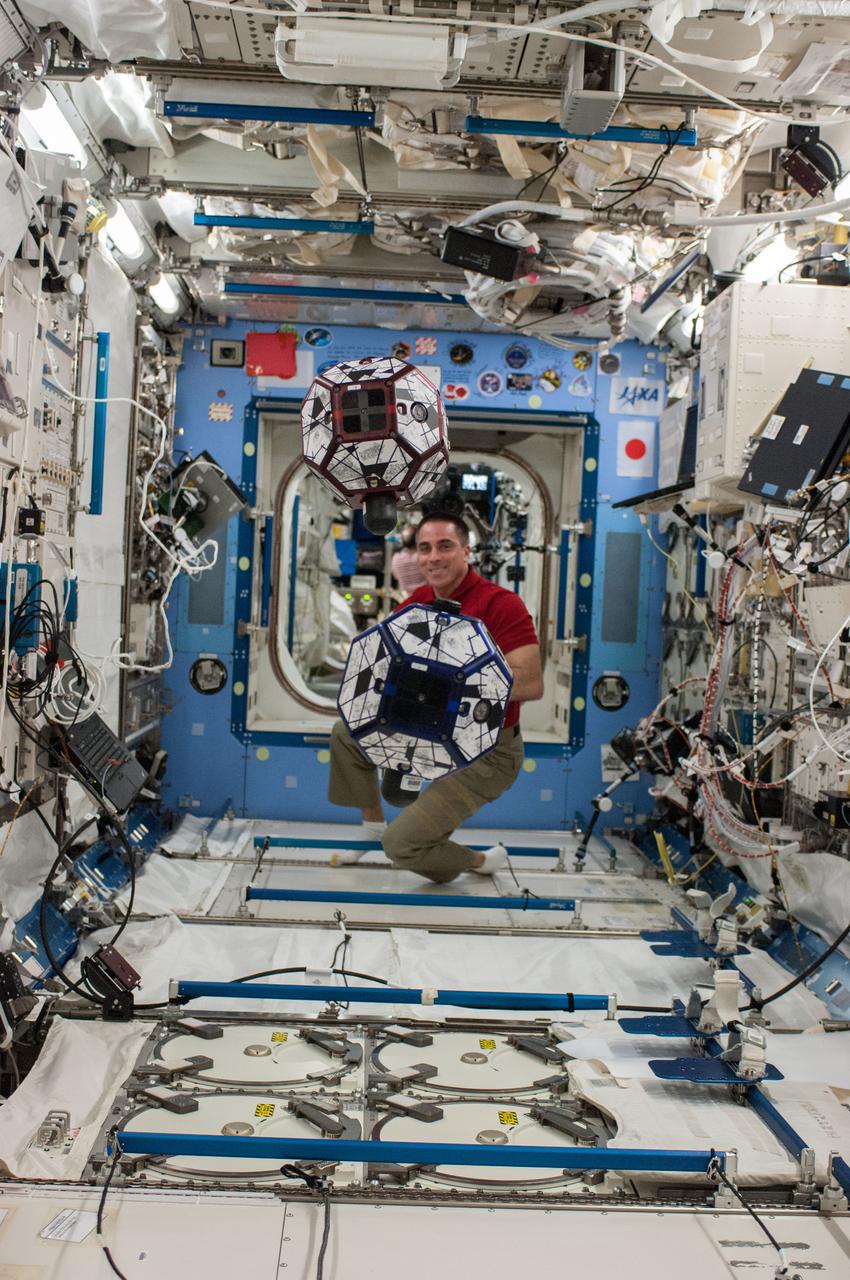
ISS036-E-032138 (13 Aug. 2013) --- In the International Space Station?s Kibo laboratory, NASA astronaut Chris Cassidy, Expedition 36 flight engineer, conducts a session with a pair of bowling-ball-sized free-flying satellites known as Synchronized Position Hold, Engage, Reorient, Experimental Satellites, or SPHERES.
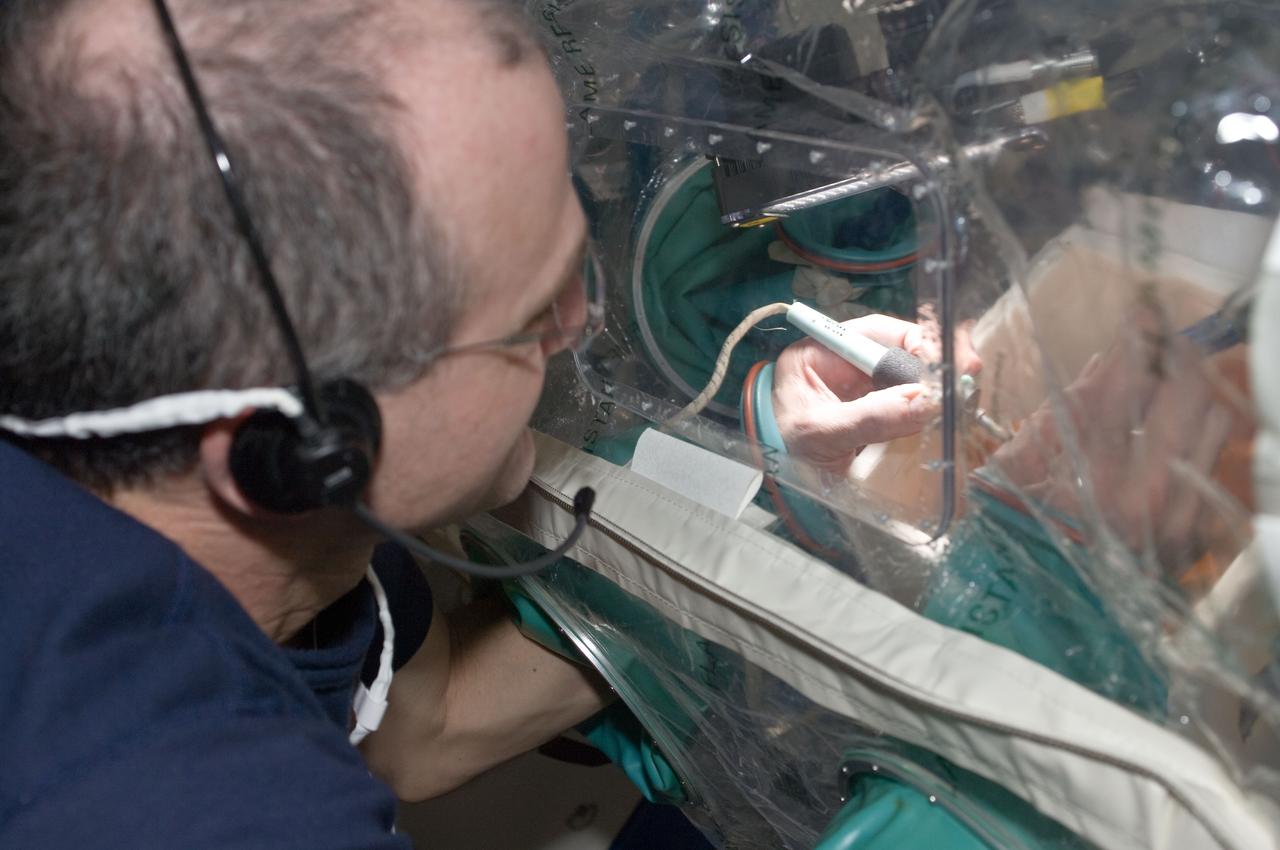
ISS030-E-051107 (27 Jan. 2012) --- NASA astronaut Don Pettit, Expedition 30 flight engineer, works on a Synchronized Position Hold, Engage, Reorient, Experimental Satellite (SPHERES) in a portable glovebox facility in the Destiny laboratory of the International Space Station.
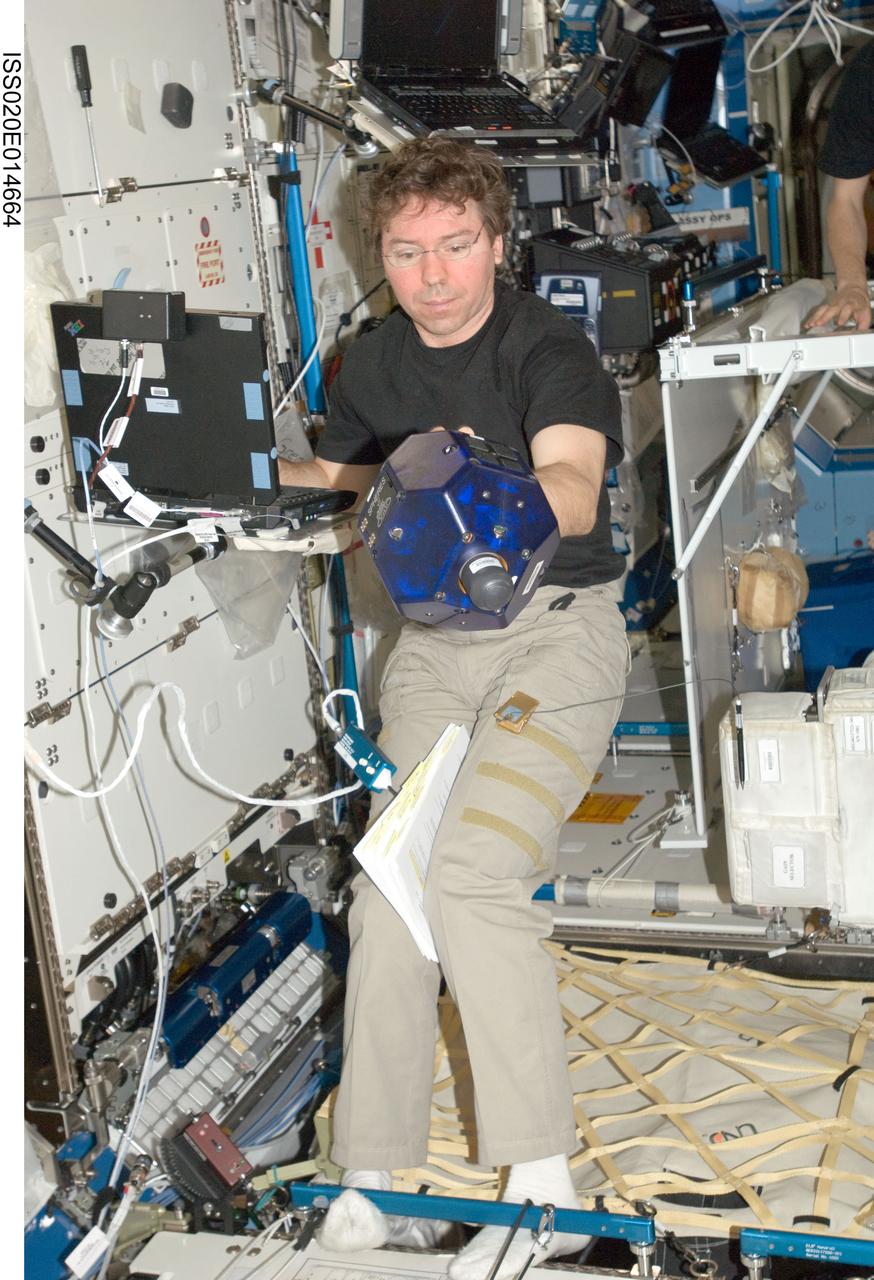
ISS020-E-014664 (26 June 2009) --- NASA astronaut Michael Barratt, Expedition 20 flight engineer, does a check of the Synchronized Position Hold, Engage, Reorient, Experimental Satellites (SPHERES) Beacon / Beacon Tester in the Destiny laboratory of the International Space Station.
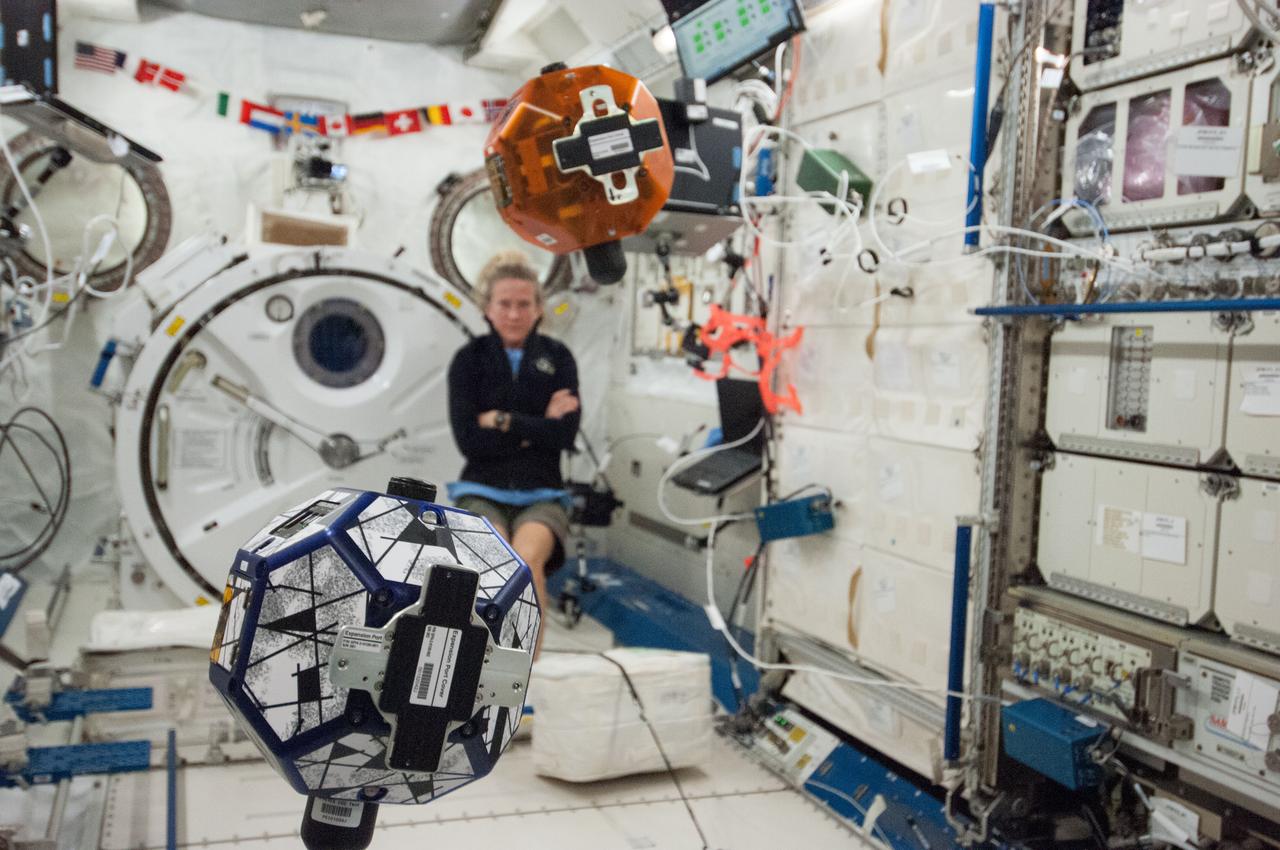
Astronaut Karen Nyberg, Expedition 36 flight engineer, conducts a session with the bowling-ball-sized free-flying satellite known as Synchronized Position Hold, Engage, Reorient, Experimental Satellites, or SPHERES in the International Space Stations Japanese Experiment Module (JEM) Kibo laboratory. Also sent as Twitter message.

ISS025-E-013444 (9 Nov. 2010) --- NASA astronaut Scott Kelly, Expedition 25 flight engineer, is pictured near three Synchronized Position Hold, Engage, Reorient, Experimental Satellites (SPHERES) floating freely in the Kibo laboratory of the International Space Station.
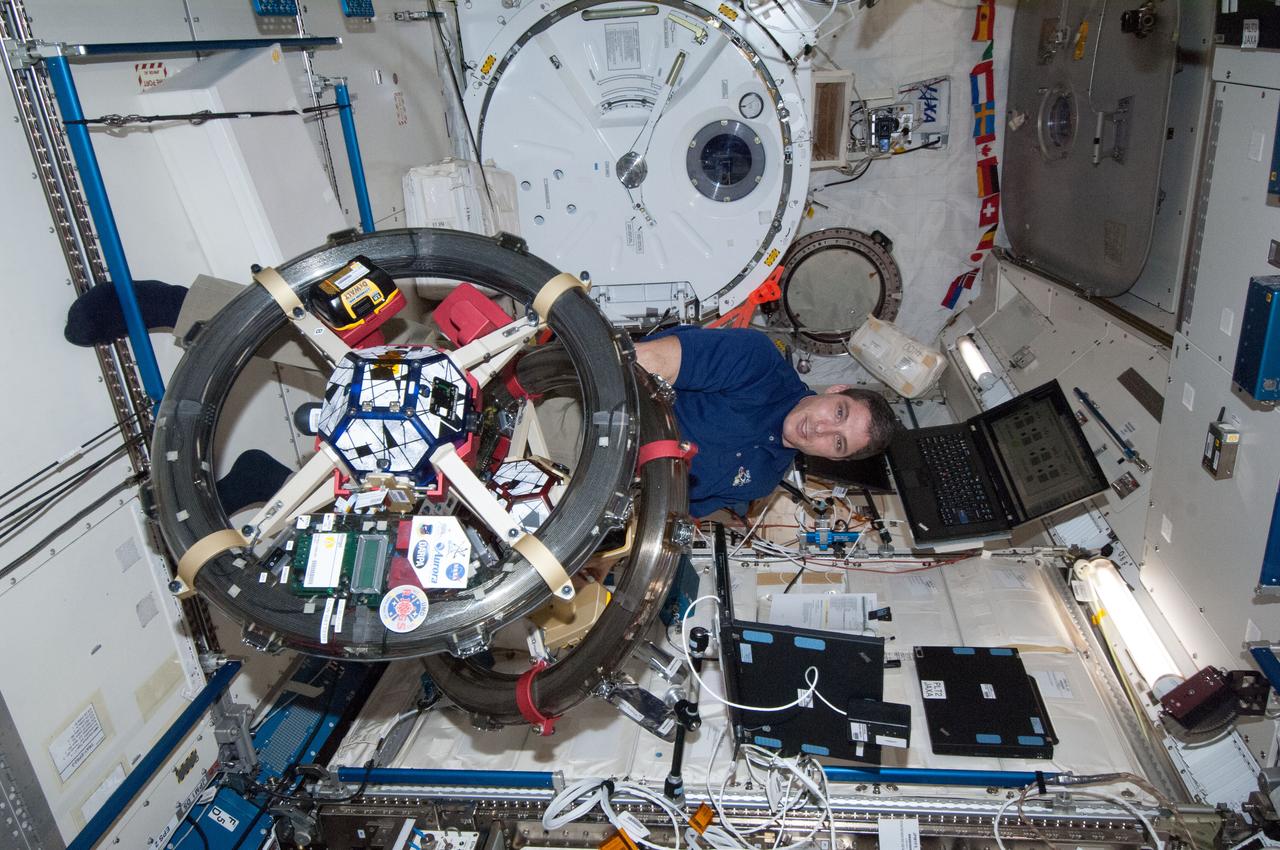
ISS038-E-045622 (10 Feb. 2014) --- NASA astronaut Mike Hopkins, Expedition 38 flight engineer, works with the Synchronized Position, Hold, Engage, Reorient, Experimental Satellites-Resonant Inductive Near-field Generation System (SPHERES-RINGS) experiment gear in the Kibo laboratory of the International Space Station.
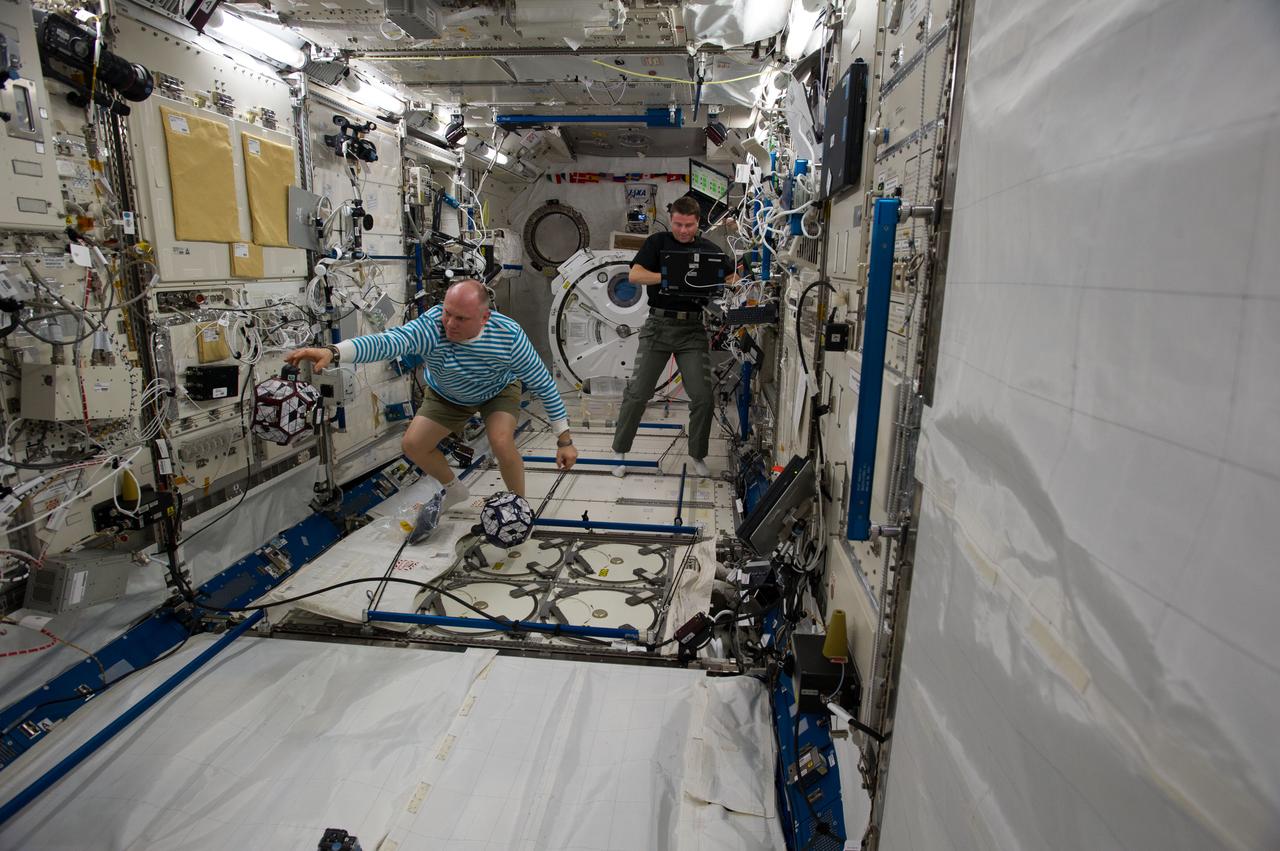
ISS040-E-018466 (24 June 2014) --- Russian cosmonaut Oleg Artemyev (left) and NASA astronaut Reid Wiseman, both Expedition 40 flight engineers, conduct a session of the Synchronized Position Hold, Engage, Reorient, Experimental Satellites Zero Robotics (SPHERES ZR) program in the Kibo laboratory of the International Space Station.
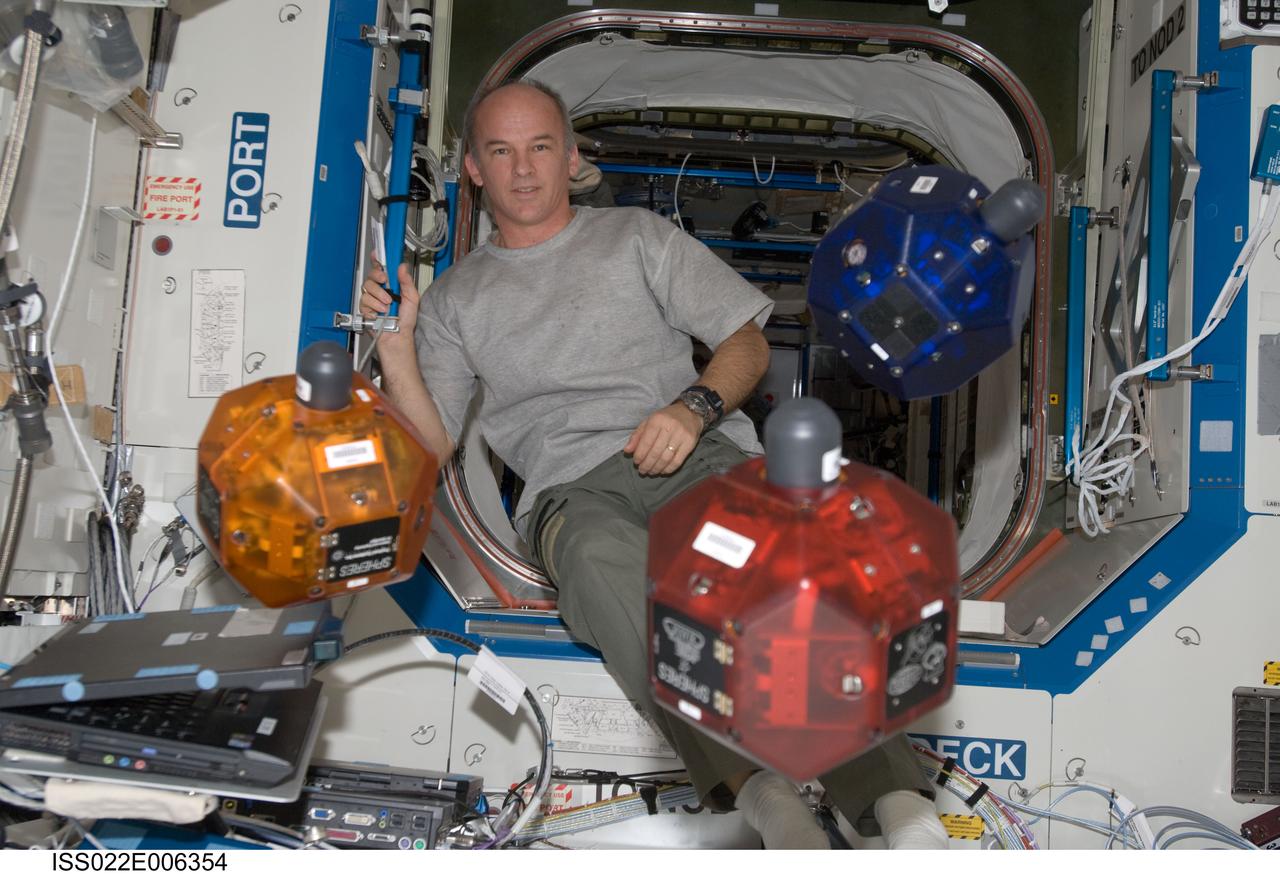
ISS022-E-006354 (5 Dec. 2009) --- NASA astronaut Jeffrey Williams, Expedition 22 commander, performs a check of the Synchronized Position Hold, Engage, Reorient, Experimental Satellites (SPHERES) Beacon / Beacon Tester in the Destiny laboratory of the International Space Station.
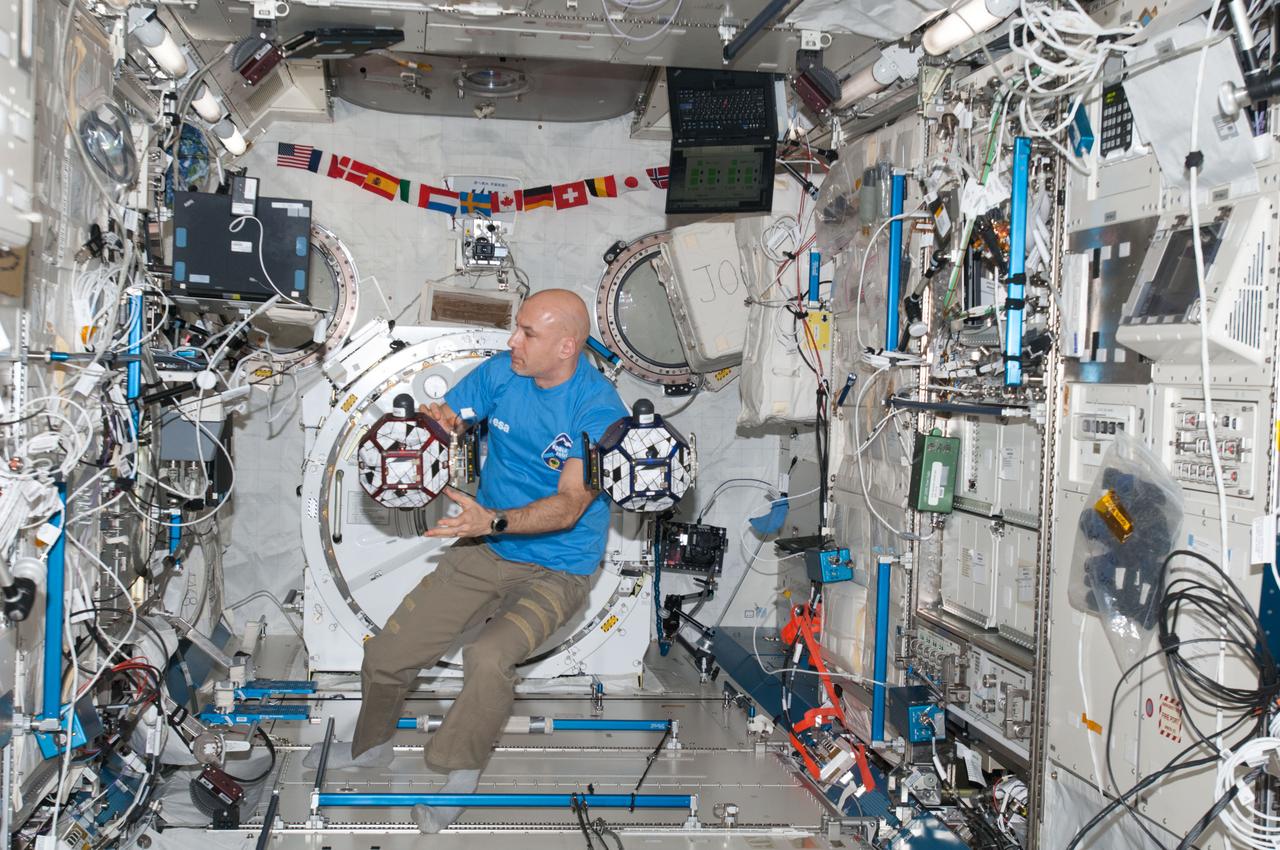
ISS036-E-039697 (4 Sept. 2013) --- In the International Space Station's Kibo laboratory, European Space Agency astronaut Luca Parmitano, Expedition 36 flight engineer, conducts a session with a pair of bowling-ball-sized free-flying satellites known as Synchronized Position Hold, Engage, Reorient, Experimental Satellites, or SPHERES.
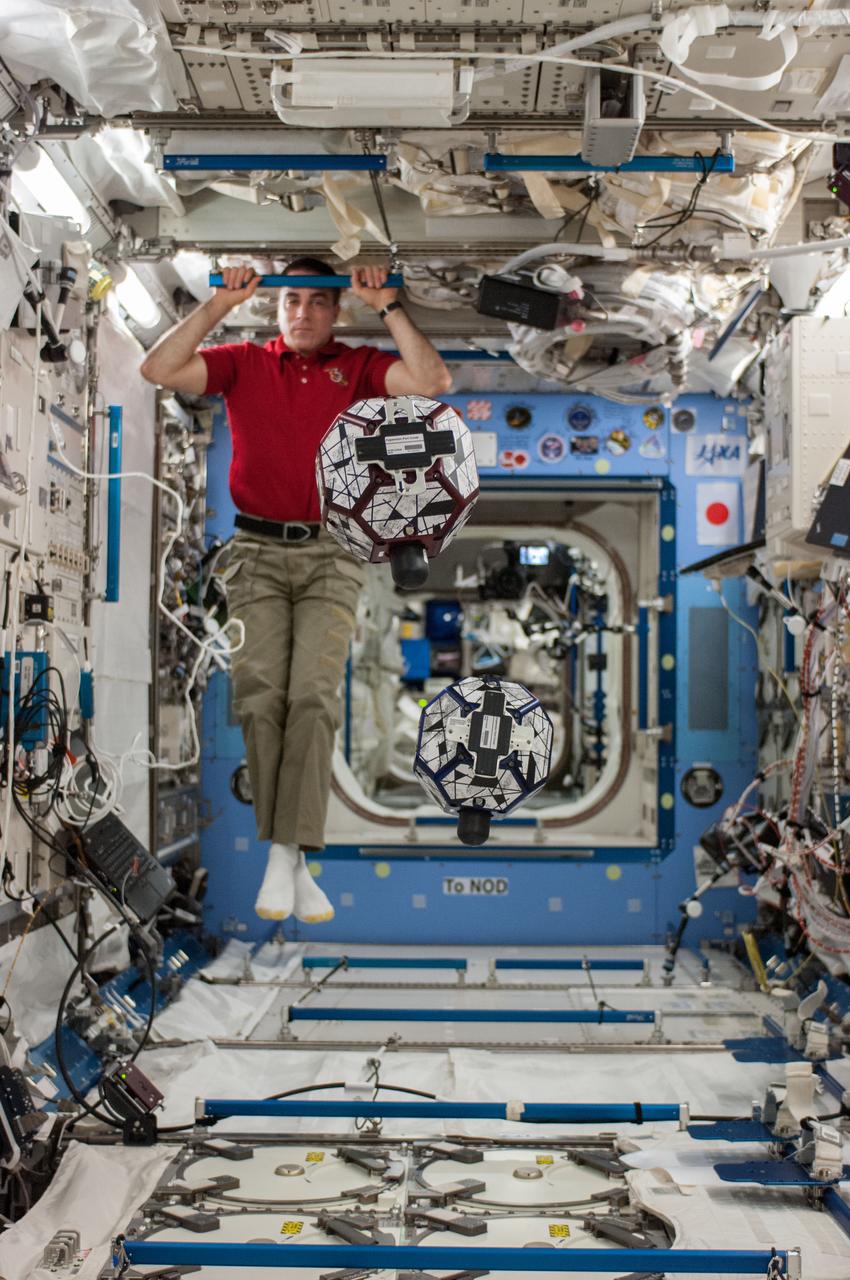
ISS036-E-032180 (13 Aug. 2013) --- In the International Space Station?s Kibo laboratory, NASA astronaut Chris Cassidy, Expedition 36 flight engineer, conducts a session with a pair of bowling-ball-sized free-flying satellites known as Synchronized Position Hold, Engage, Reorient, Experimental Satellites, or SPHERES.
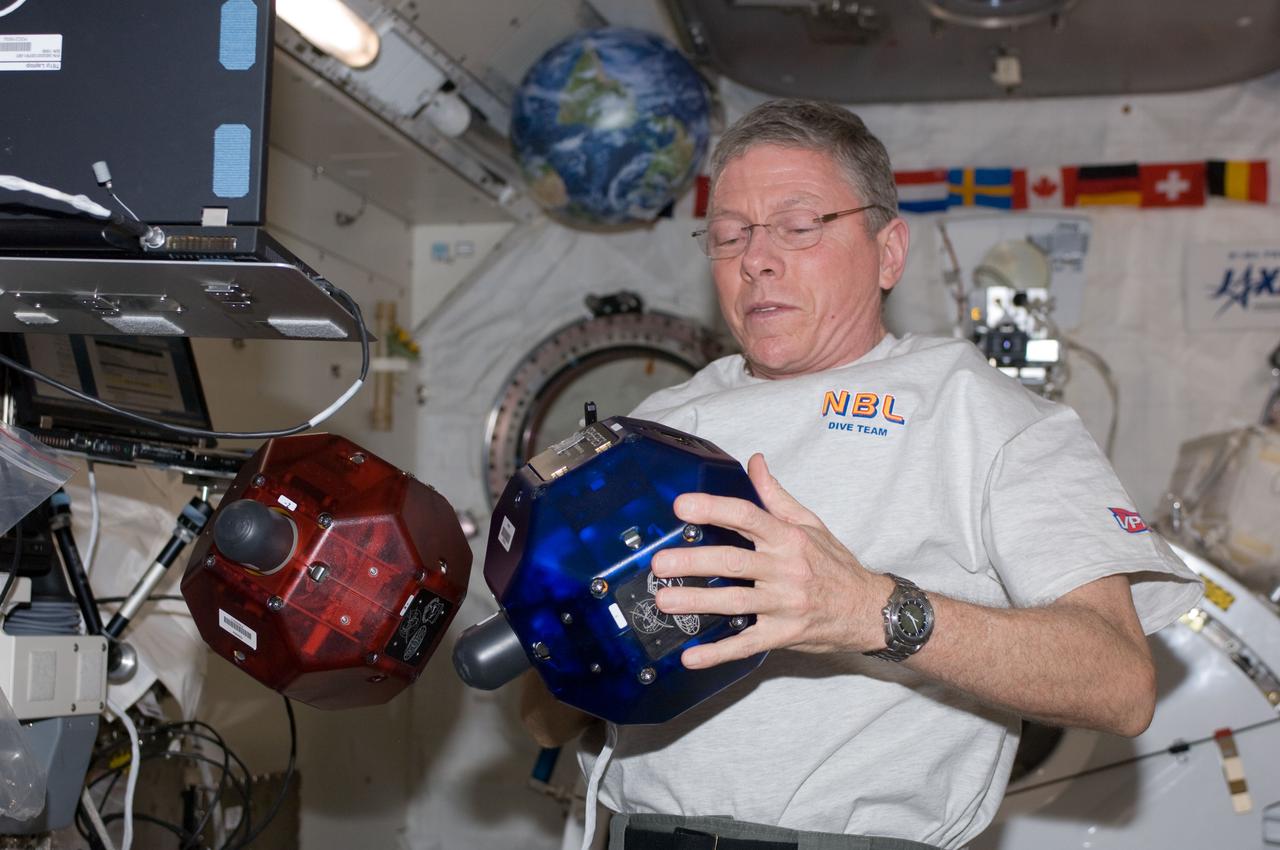
ISS029-E-011310 (28 Sept. 2011) --- NASA astronaut Mike Fossum, Expedition 29 commander, performs a check on Synchronized Position Hold, Engage, Reorient, Experimental Satellites (SPHERES) floating freely in the Kibo laboratory of the International Space Station.
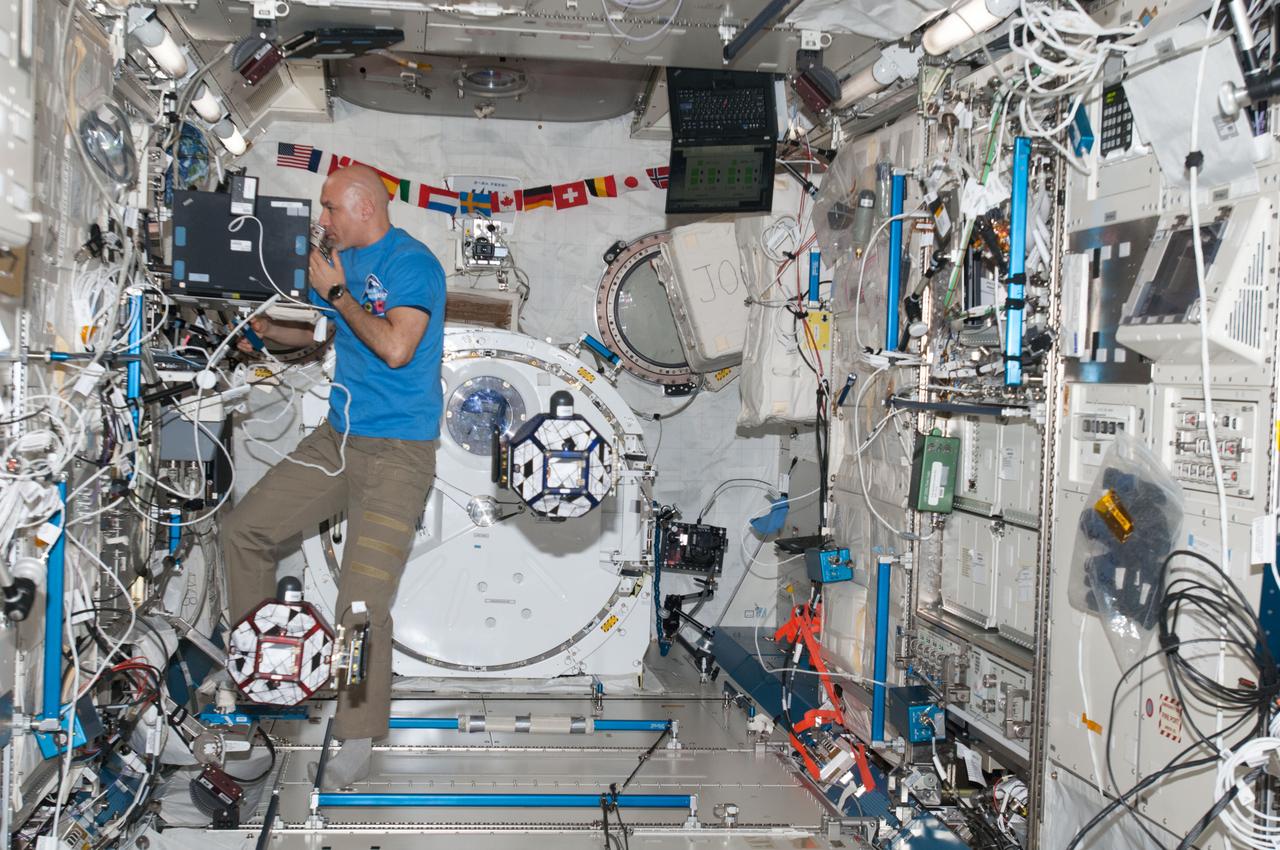
ISS036-E-039743 (4 Sept. 2013) --- In the International Space Station's Kibo laboratory, European Space Agency astronaut Luca Parmitano, Expedition 36 flight engineer, conducts a session with a pair of bowling-ball-sized free-flying satellites known as Synchronized Position Hold, Engage, Reorient, Experimental Satellites, or SPHERES.
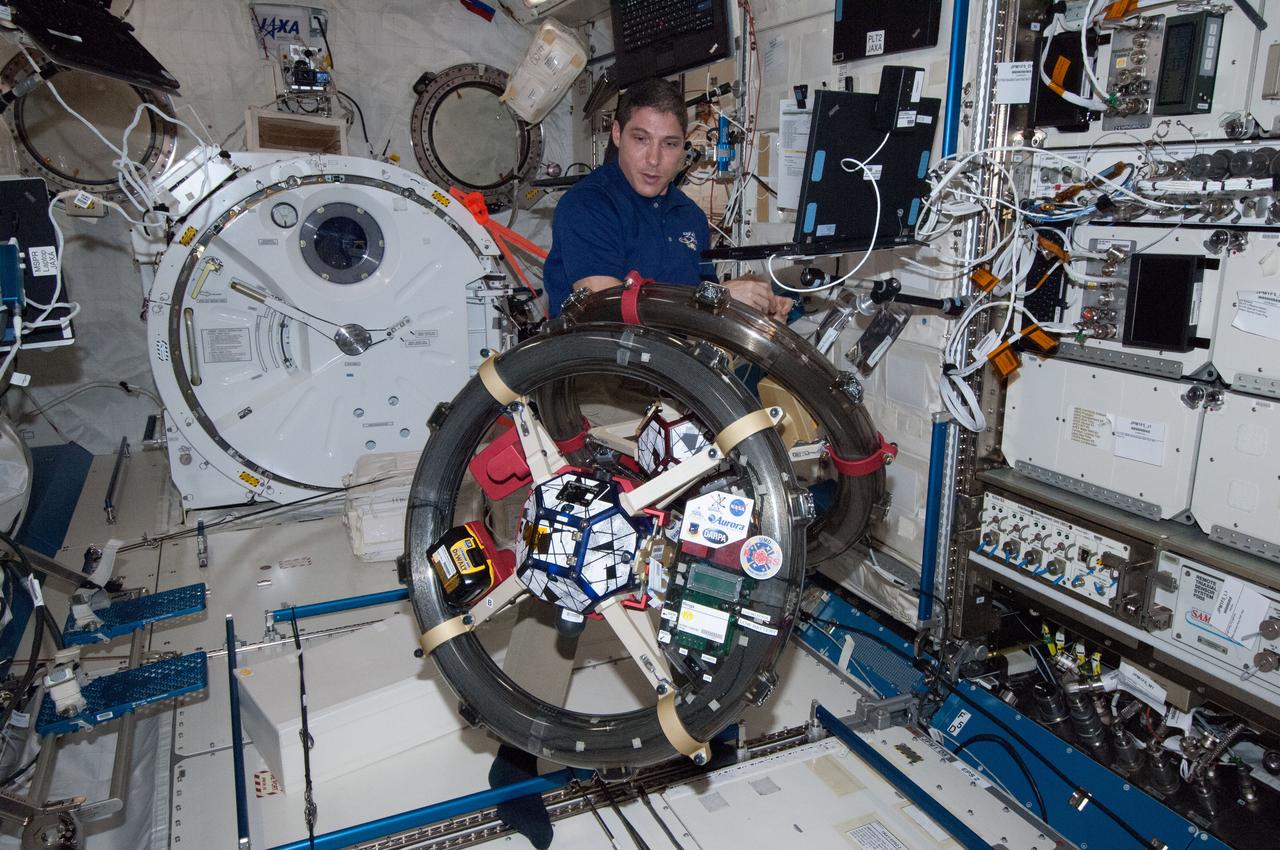
ISS038-E-045621 (10 Feb. 2014) --- NASA astronaut Mike Hopkins, Expedition 38 flight engineer, works with the Synchronized Position, Hold, Engage, Reorient, Experimental Satellites-Resonant Inductive Near-field Generation System (SPHERES-RINGS) experiment gear in the Kibo laboratory of the International Space Station.
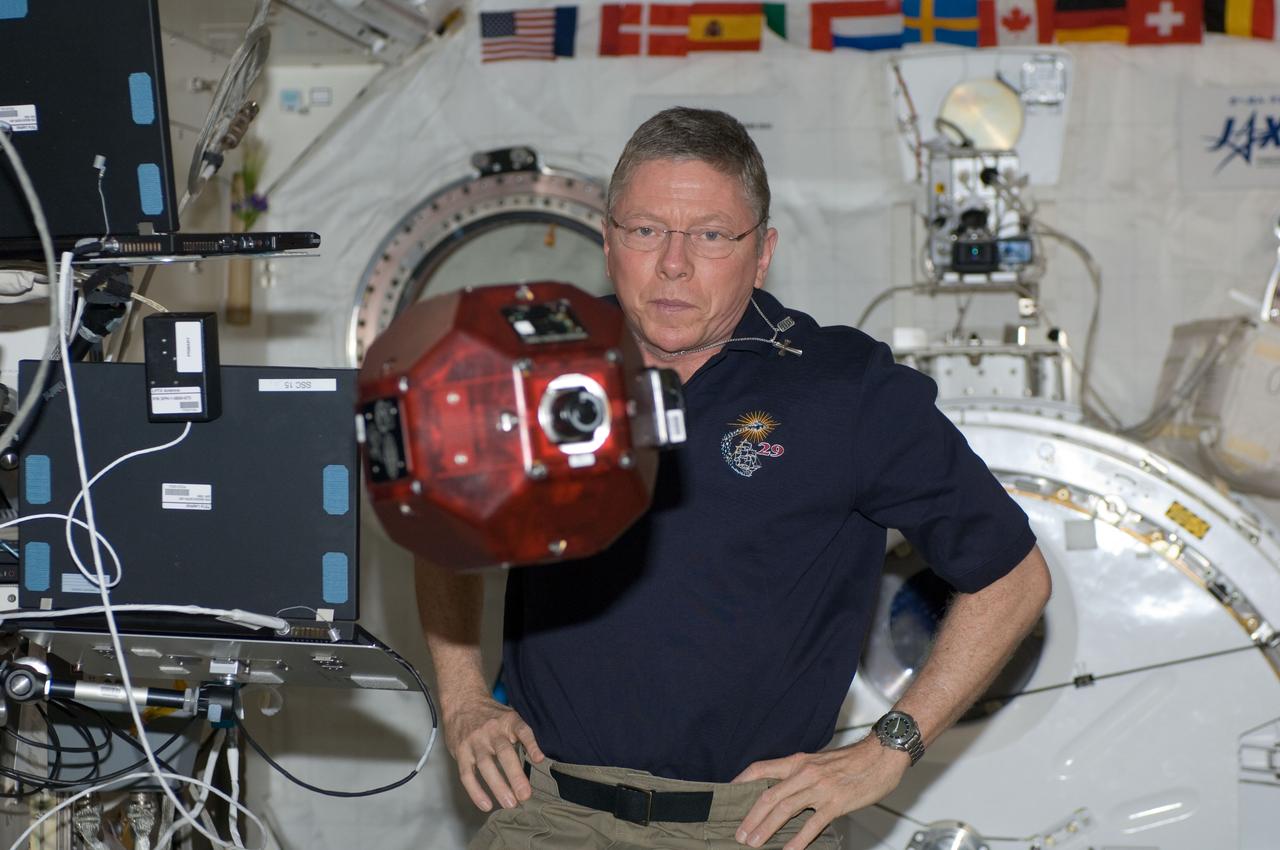
ISS029-E-036497 (1 Nov. 2011) --- NASA astronaut Mike Fossum, Expedition 29 commander, conducts a session of the Synchronized Position Hold, Engage, Reorient, Experimental Satellites (SPHERES) program in the Kibo laboratory of the International Space Station.
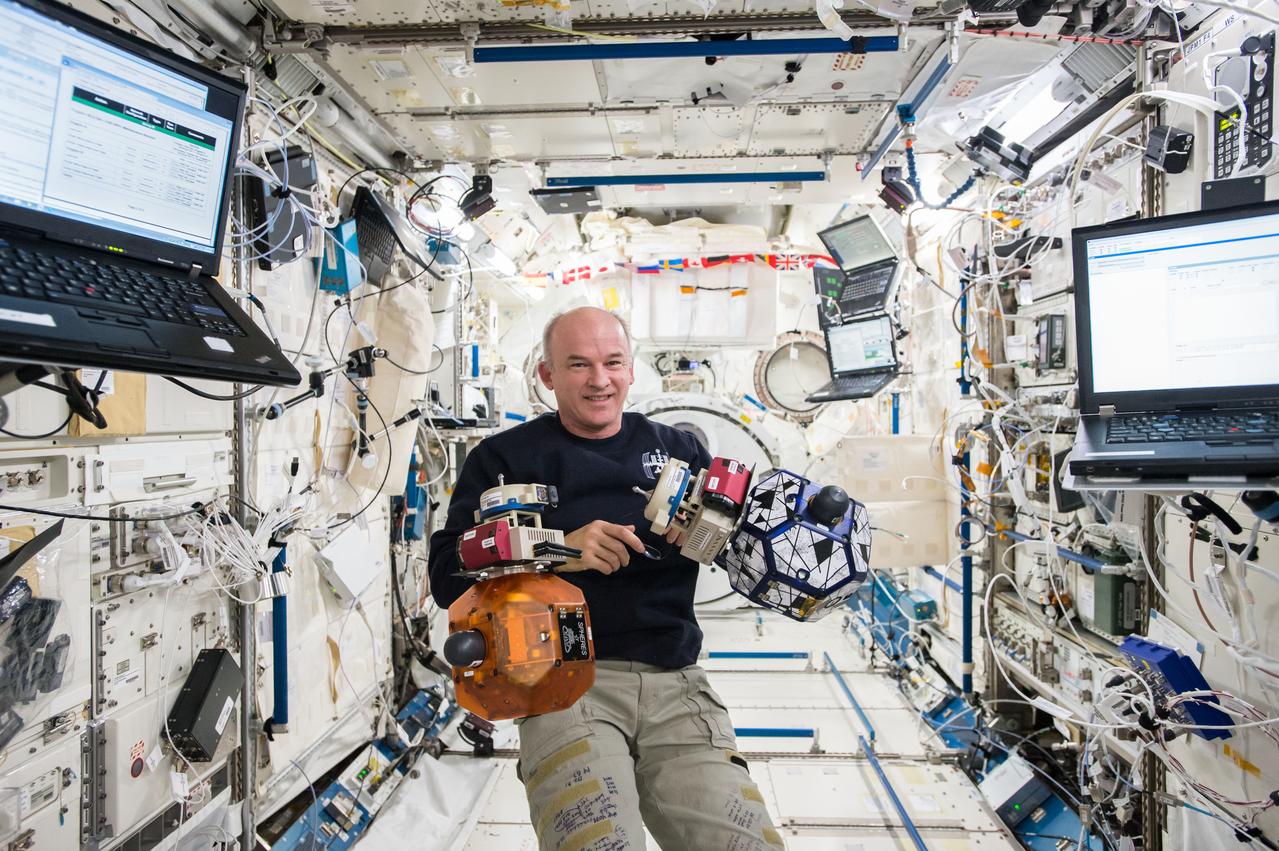
iss048e017435 (6/30/2016) --- Commander Jeff Williams monitors bowling ball-sized internal satellites known as SPHERES (Synchronized Position Hold, Engage, Reorient, Experimental Satellites) during a maintenance run in the Japanese Kibo Laboratory Module.
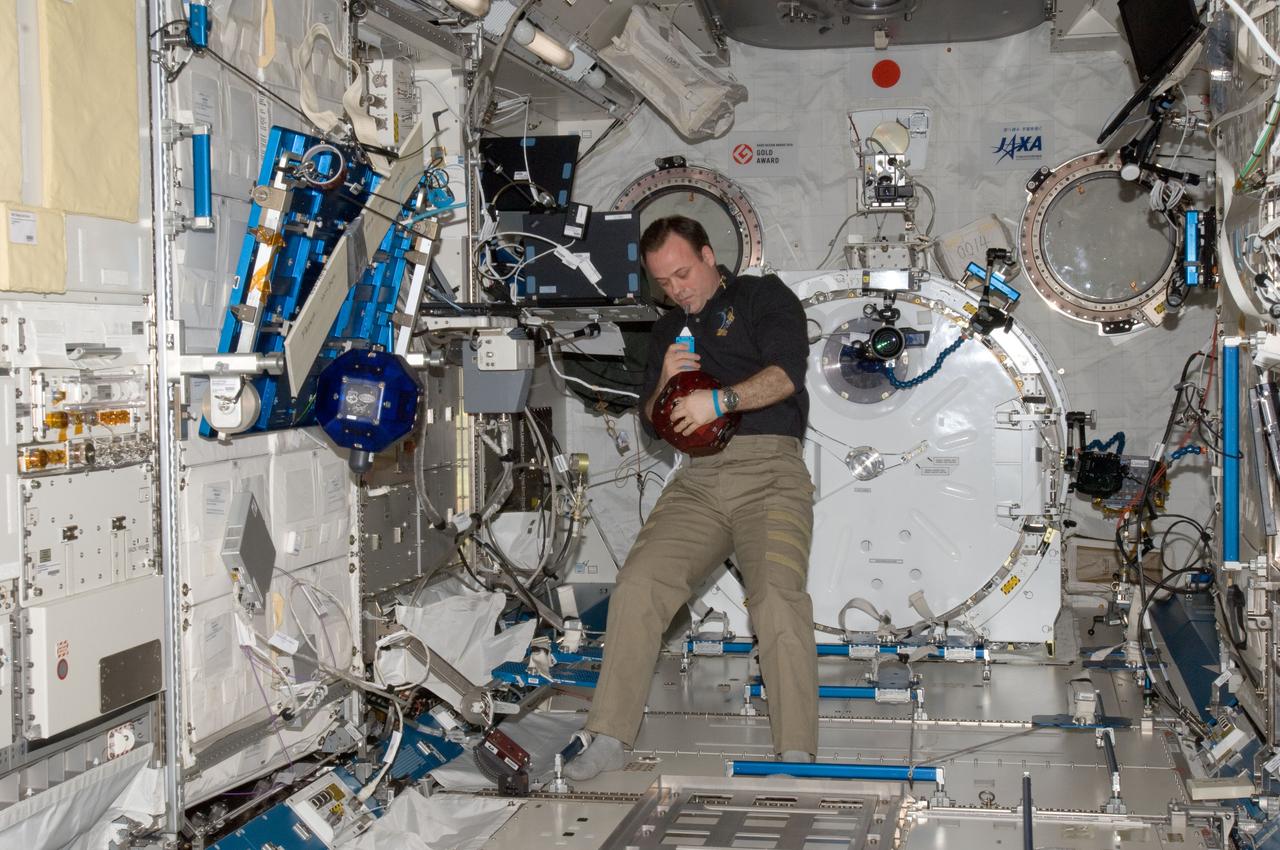
ISS028-E-025567 (16 Aug. 2011) --- NASA astronaut Ron Garan, Expedition 28 flight engineer, uses a communication system while holding one of the Synchronized Position Hold, Engage, Reorient, Experimental Satellites (SPHERES) in the Kibo laboratory of the International Space Station. A second SPHERES is at left.
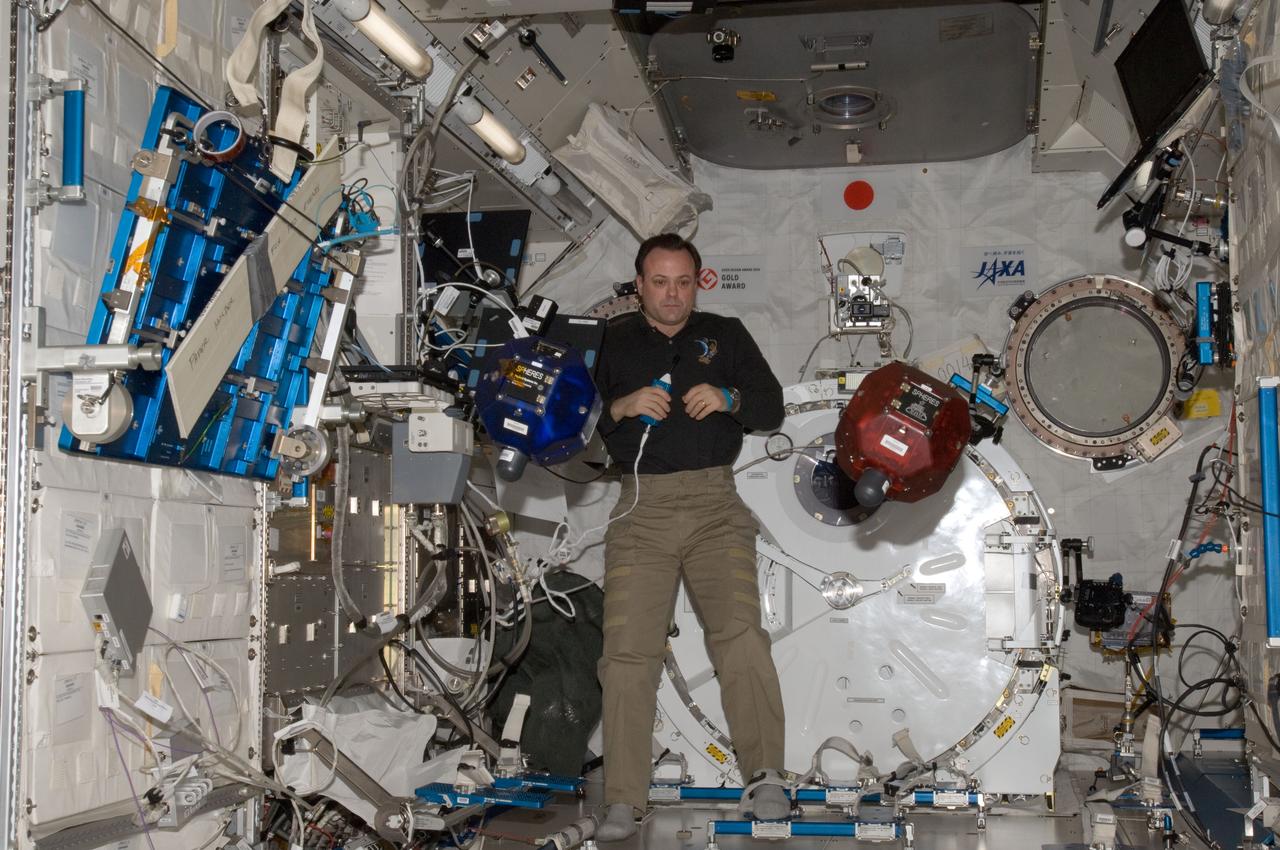
ISS028-E-025573 (16 Aug. 2011) --- NASA astronaut Ron Garan, Expedition 28 flight engineer, performs a check on Synchronized Position Hold, Engage, Reorient, Experimental Satellites (SPHERES) floating freely in the Kibo laboratory of the International Space Station.
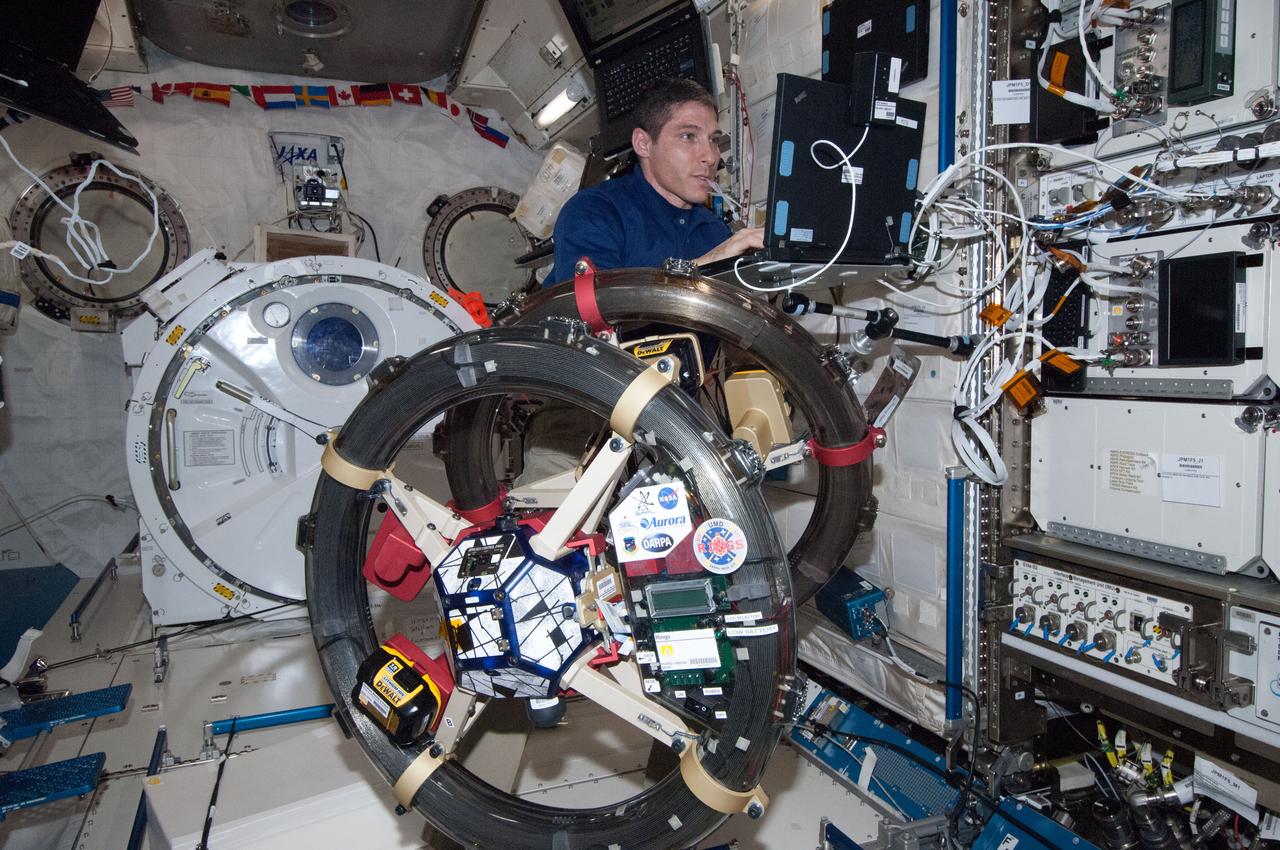
ISS038-E-045623 (10 Feb. 2014) --- NASA astronaut Mike Hopkins, Expedition 38 flight engineer, works with the Synchronized Position, Hold, Engage, Reorient, Experimental Satellites-Resonant Inductive Near-field Generation System (SPHERES-RINGS) experiment gear in the Kibo laboratory of the International Space Station.
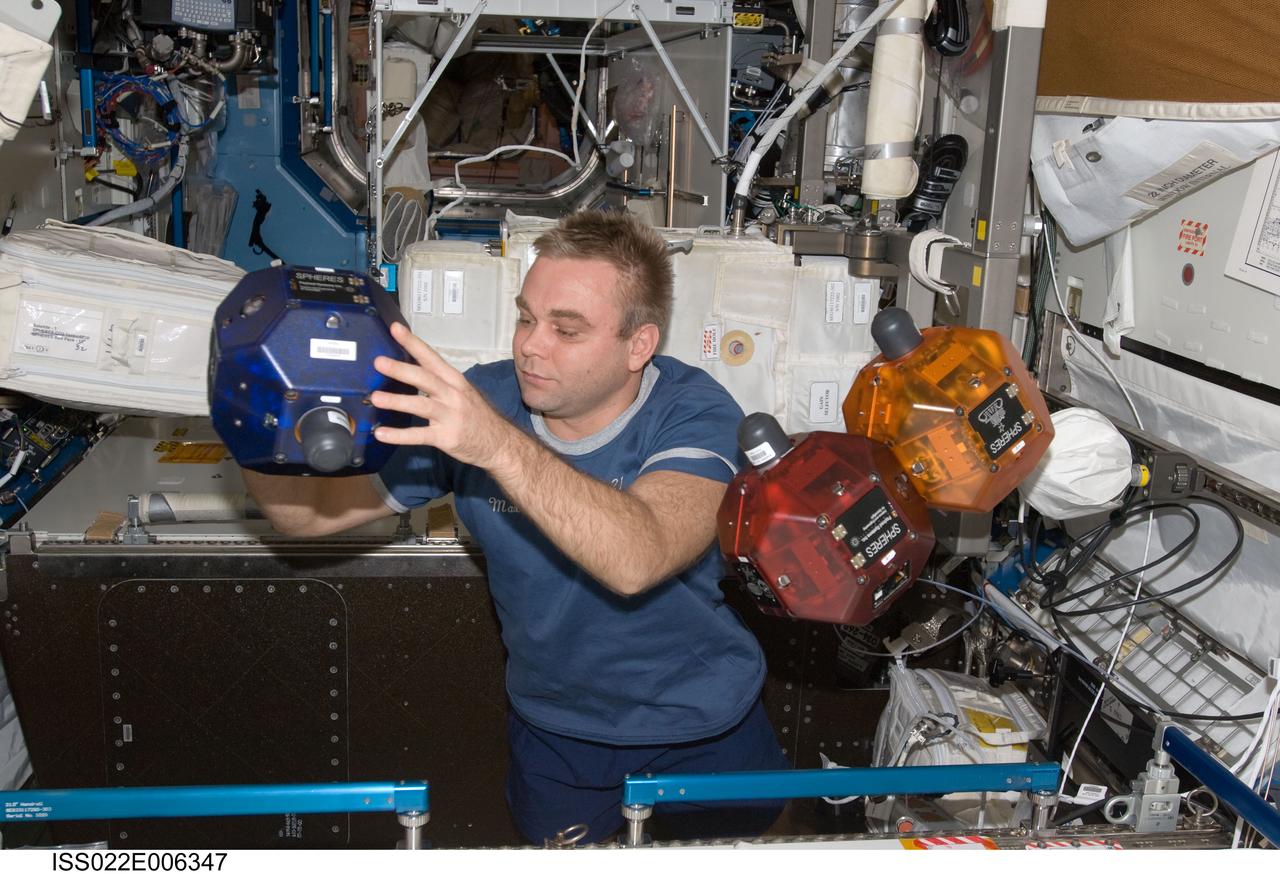
ISS022-E-006347 (5 Dec. 2009) --- Russian cosmonaut Maxim Suraev, Expedition 22 flight engineer, performs a check of the Synchronized Position Hold, Engage, Reorient, Experimental Satellites (SPHERES) Beacon / Beacon Tester in the Destiny laboratory of the International Space Station.
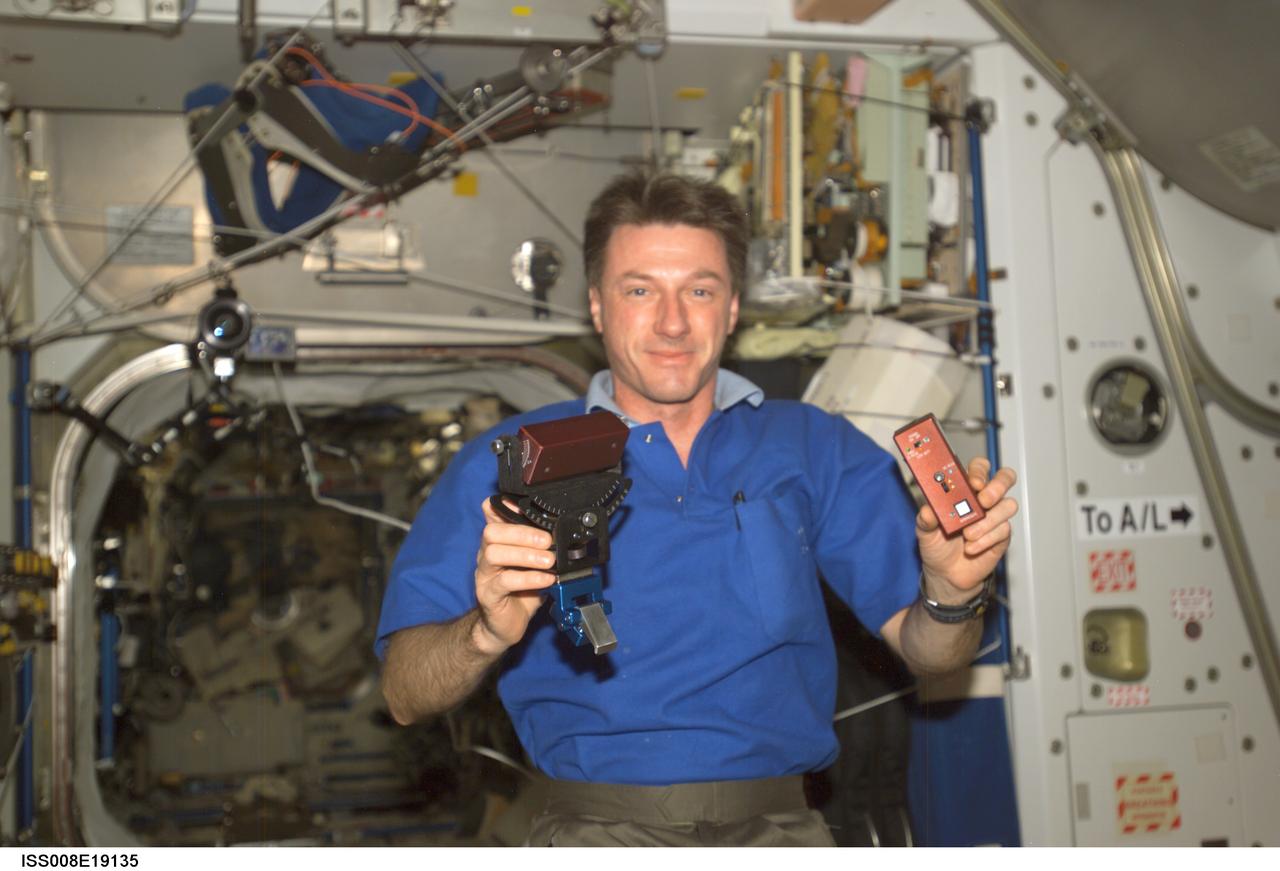
ISS008-E-19135 (24 March 2004) --- Astronaut C. Michael Foale, Expedition 8 commander and NASA ISS science officer, holds the Synchronized Position Hold, Engage, Reorient, Experimental Satellites (SPHERES) Beacon / Beacon Tester in the Unity node of the International Space Station.
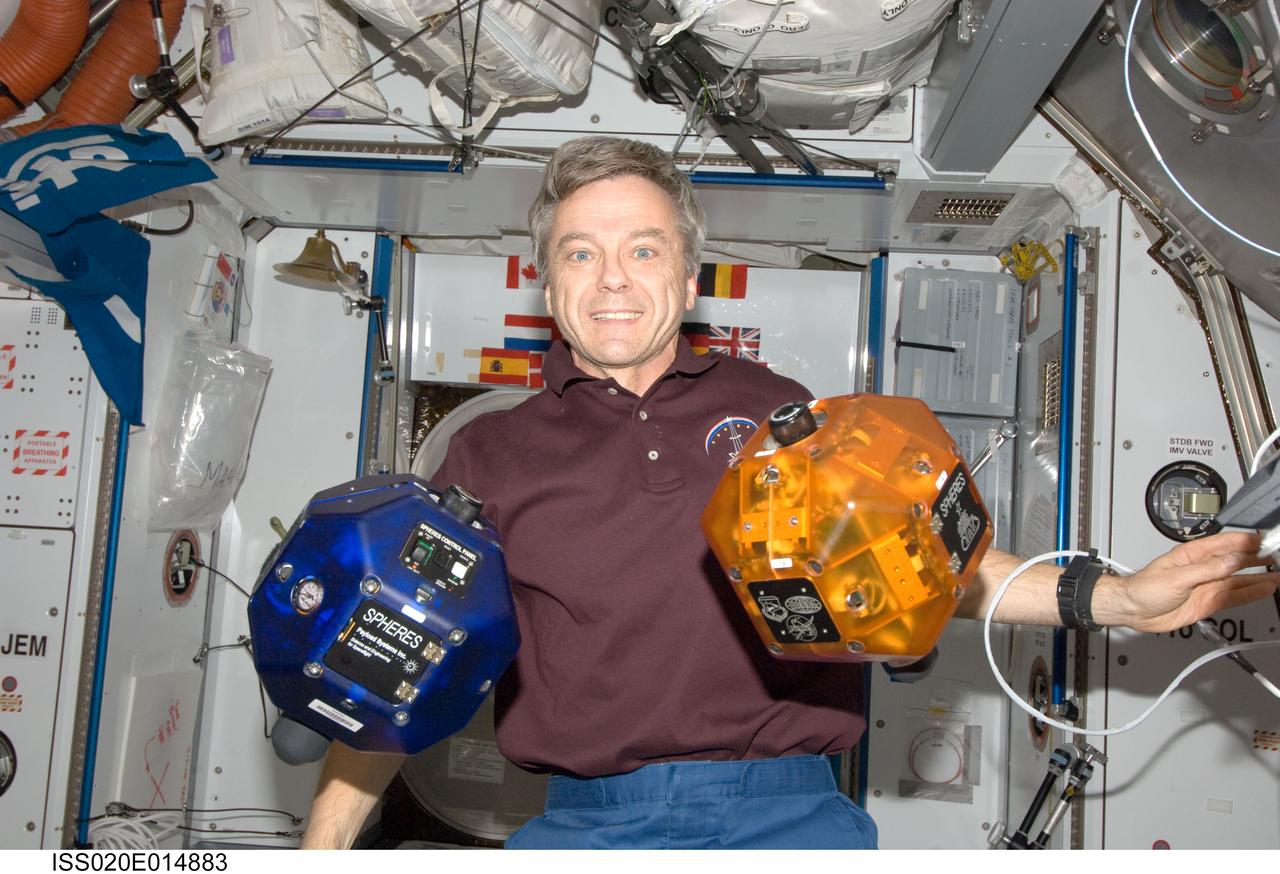
ISS020-E-014883 (26 June 2009) --- Canadian Space Agency astronaut Robert Thirsk, Expedition 20 flight engineer, is pictured near two Synchronized Position Hold, Engage, Reorient, Experimental Satellites (SPHERES) floating freely in the Harmony node of the International Space Station.
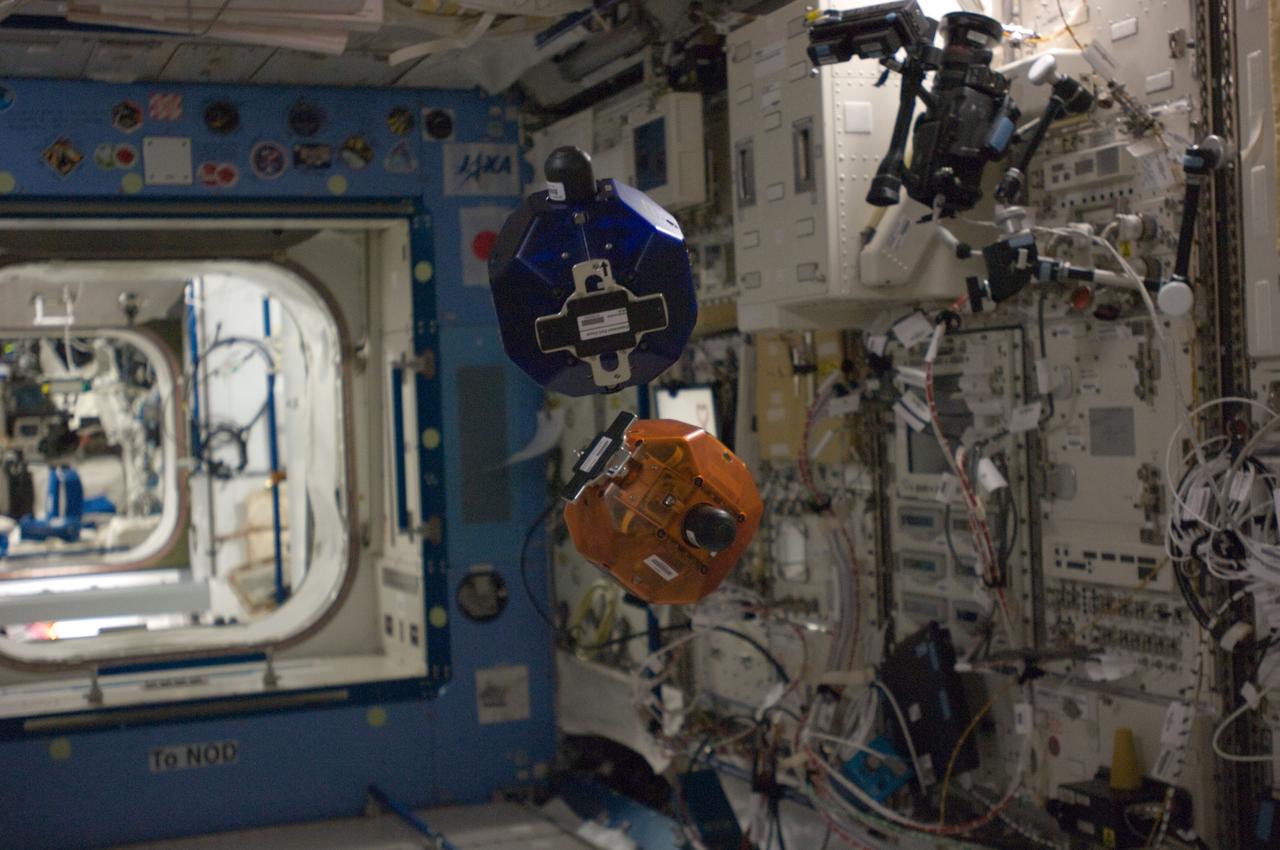
ISS031-E-140672 (22 June 2012) --- Two bowling-ball-sized free-flying satellites called Synchronized Position Hold, Engage, Reorient, Experimental Satellites Zero Robotics (SPHERES ZR) are pictured during a test session in the Kibo laboratory of the International Space Station.
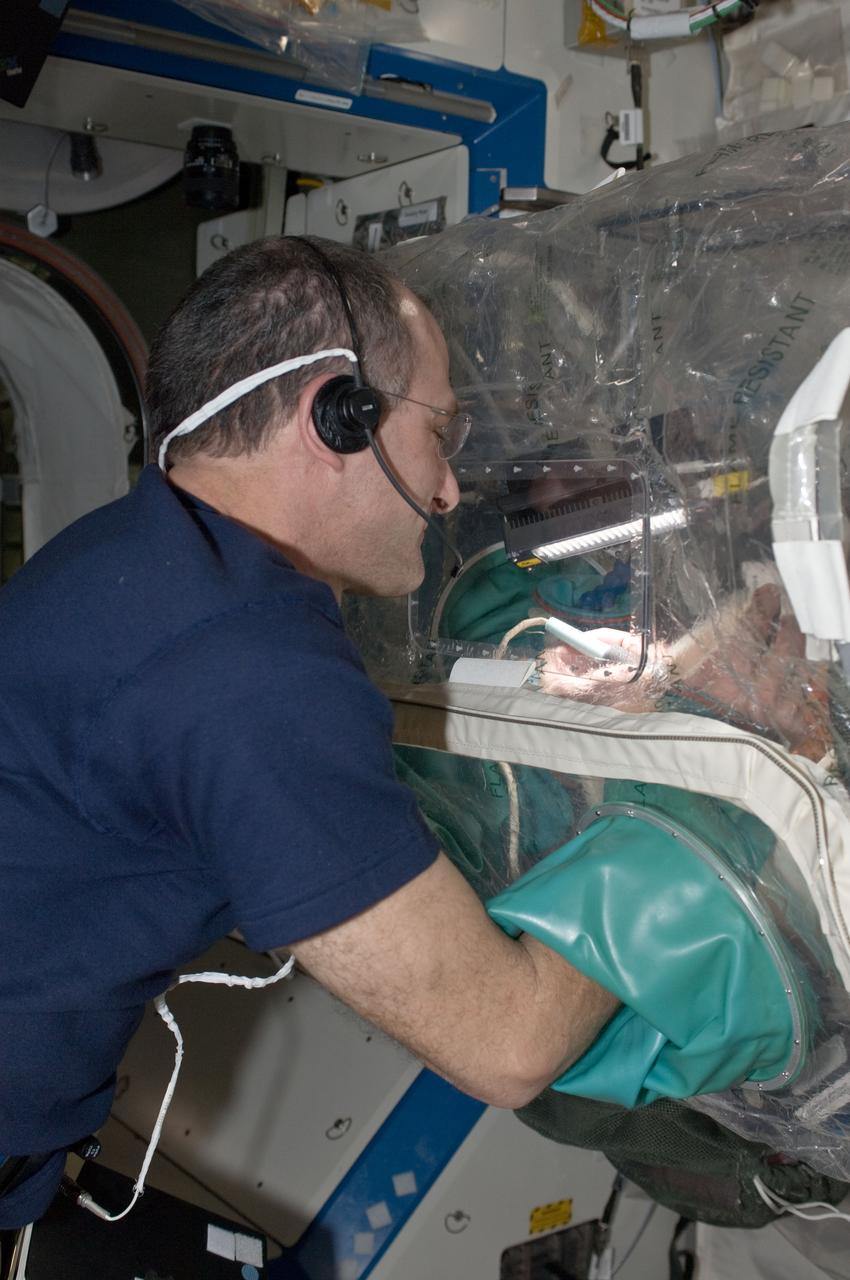
ISS030-E-051108 (27 Jan. 2012) --- NASA astronaut Don Pettit, Expedition 30 flight engineer, works on a Synchronized Position Hold, Engage, Reorient, Experimental Satellite (SPHERES) in a portable glovebox facility in the Destiny laboratory of the International Space Station.
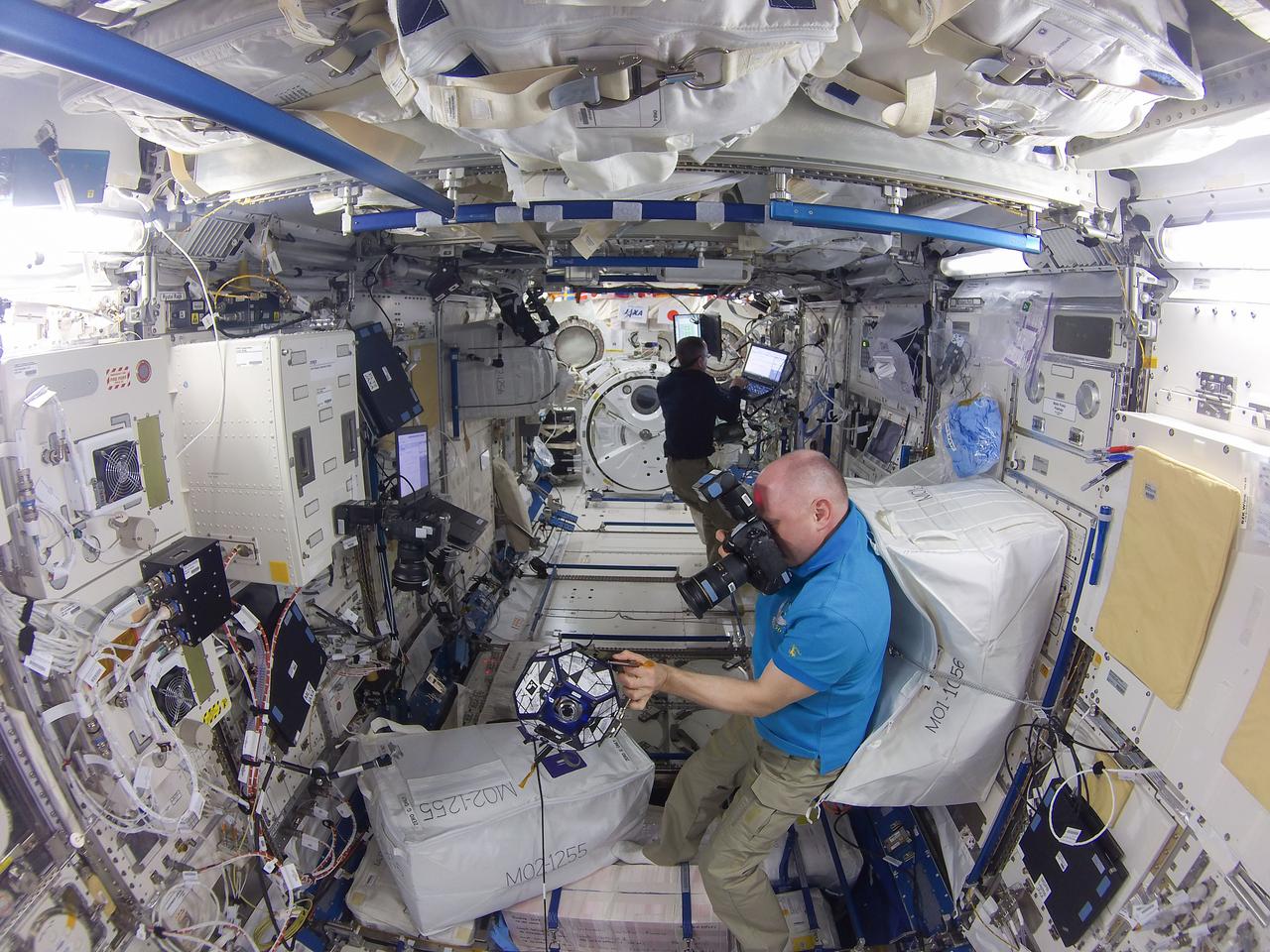
iss056e050304 (6/28/2018) --- Cosmonaut Oleg Artemyev and NASA astronaut Ricky Arnold during the Synchronized Position Hold Engage and Reorient Experimental Satellites (SPHERES) maintenance session two, in the Japanese Experiment Module (JEM) Pressurized Module (JPM).
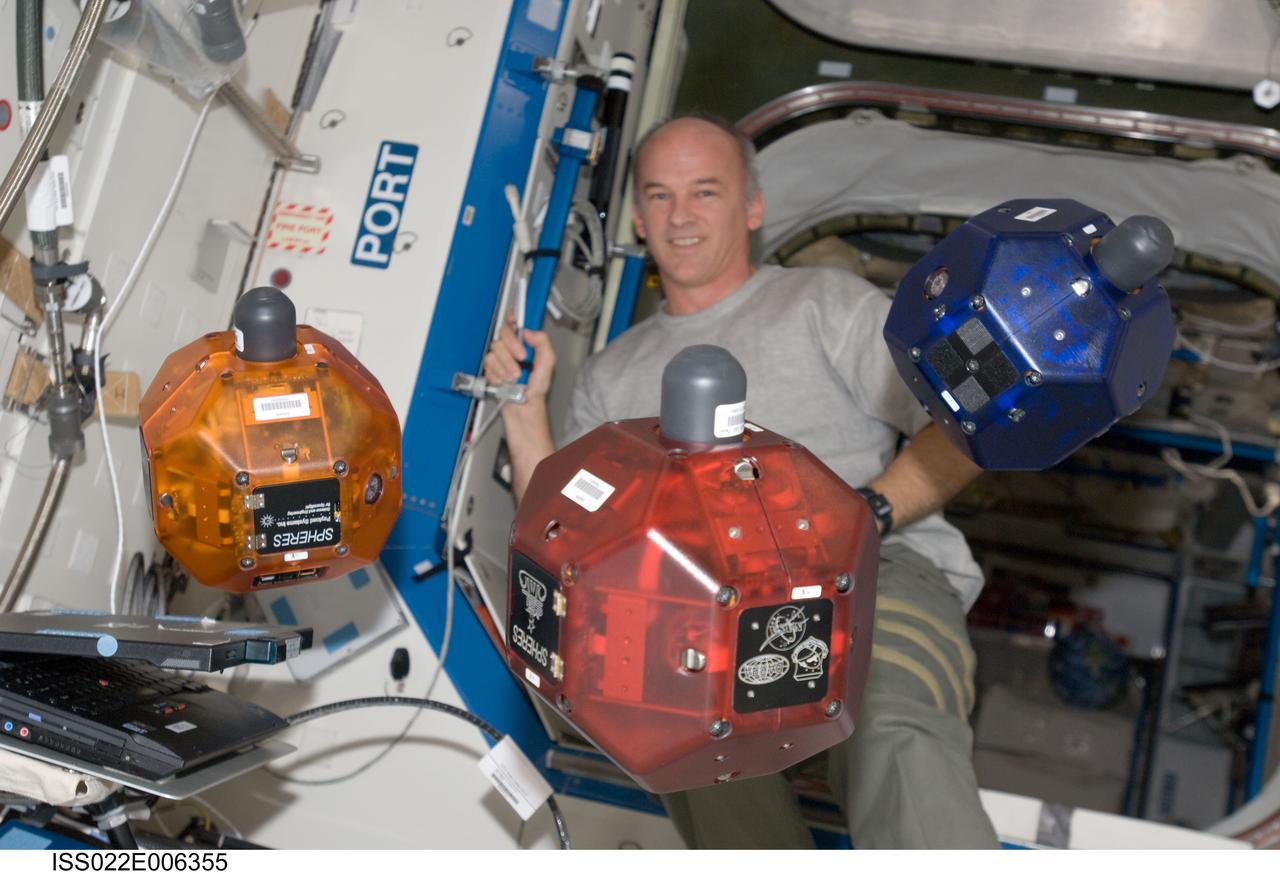
ISS022-E-006355 (5 Dec. 2009) --- NASA astronaut Jeffrey Williams, Expedition 22 commander, performs a check of the Synchronized Position Hold, Engage, Reorient, Experimental Satellites (SPHERES) Beacon / Beacon Tester in the Destiny laboratory of the International Space Station.
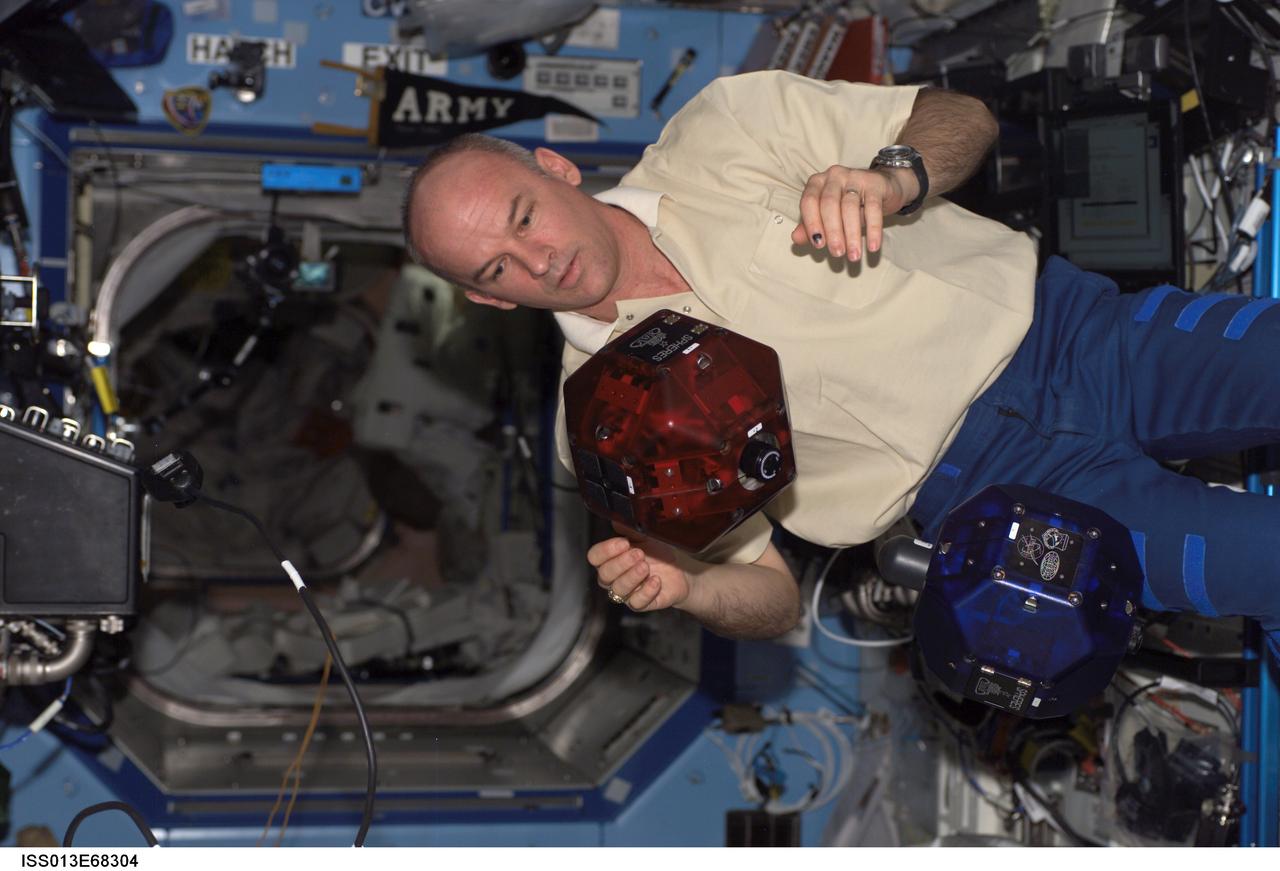
ISS013-E-68304 (19 Aug. 2006) --- Astronaut Jeffrey N. Williams, Expedition 13 NASA space station science officer and flight engineer, does a check of the Synchronized Position Hold, Engage, Reorient, Experimental Satellites (SPHERES) Beacon / Beacon Tester in the Destiny laboratory of the International Space Station.
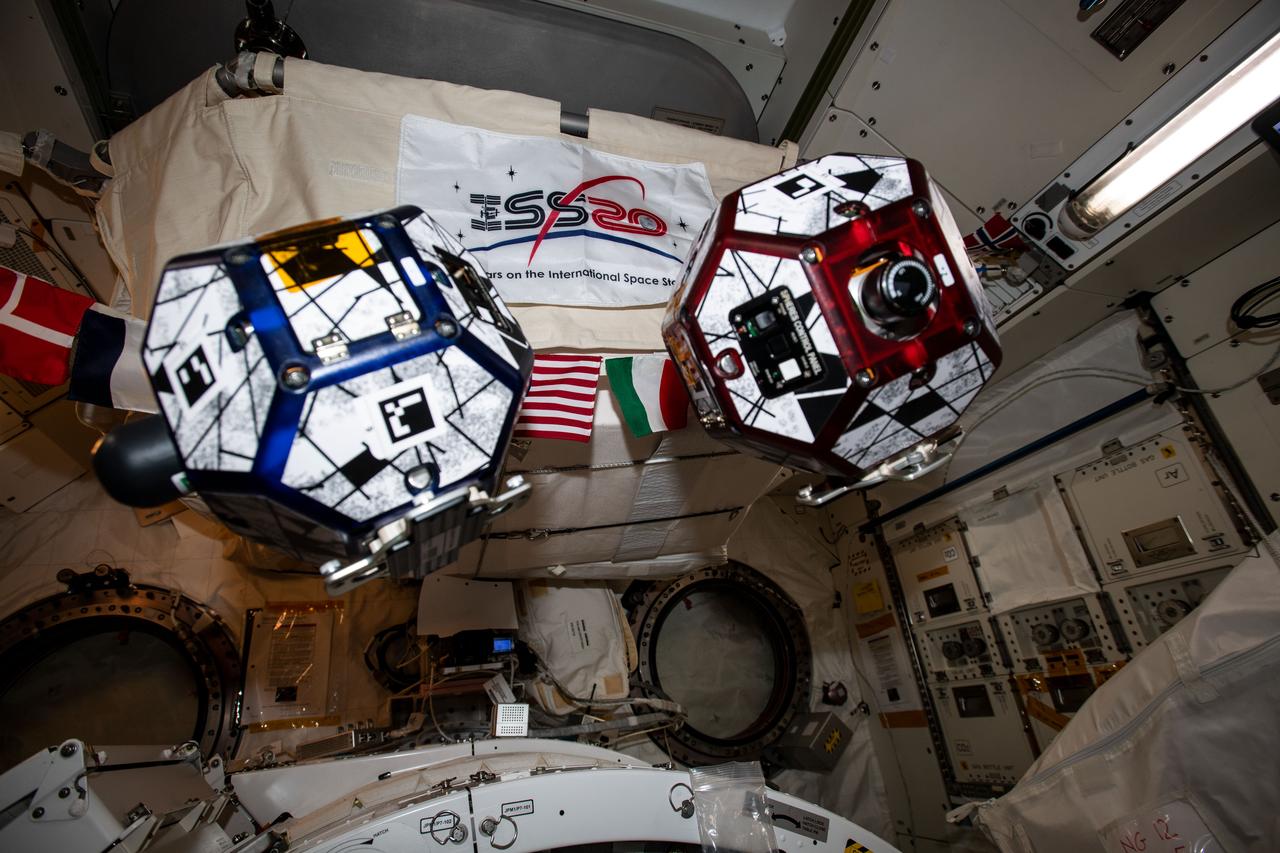
iss061e112435 (Dec, 31, 2019) --- A pair of tiny, free-floating satellites, also known as SPHERES (Synchronized Position Hold, Engage, Reorient, Experimental Satellites), are pictured during a session testing formation flying using algorithms programmed in to the bowling-ball sized devices.
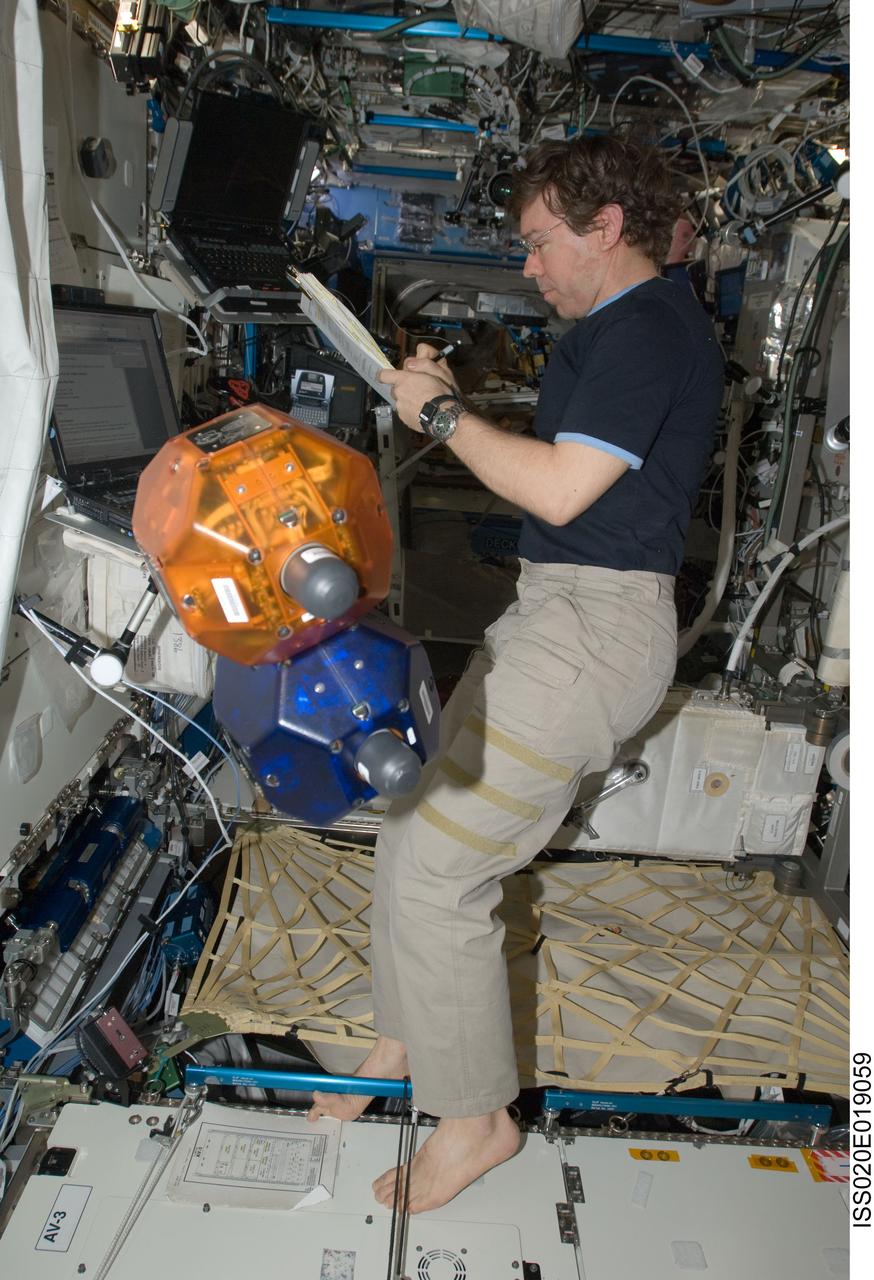
ISS020-E-019059 (11 July 2009) --- NASA astronaut Michael Barratt, Expedition 20 flight engineer, writes notes while performing a check of the Synchronized Position Hold, Engage, Reorient, Experimental Satellites (SPHERES) Beacon / Beacon Tester in the Destiny laboratory of the International Space Station.
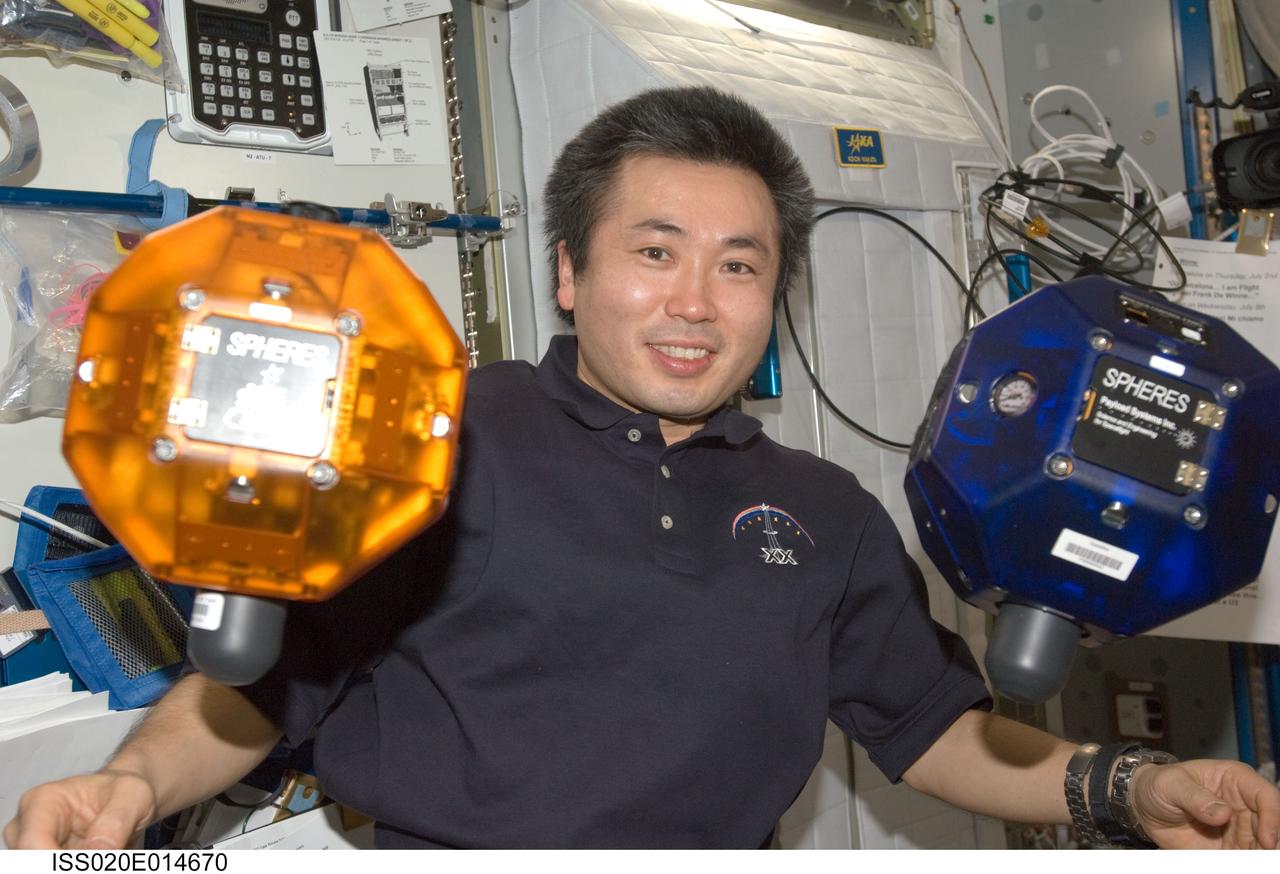
ISS020-E-014670 (26 June 2009) --- Japan Aerospace Exploration Agency (JAXA) astronaut Koichi Wakata, Expedition 20 flight engineer, is pictured near two Synchronized Position Hold, Engage, Reorient, Experimental Satellites (SPHERES) floating freely in the Harmony node of the International Space Station.
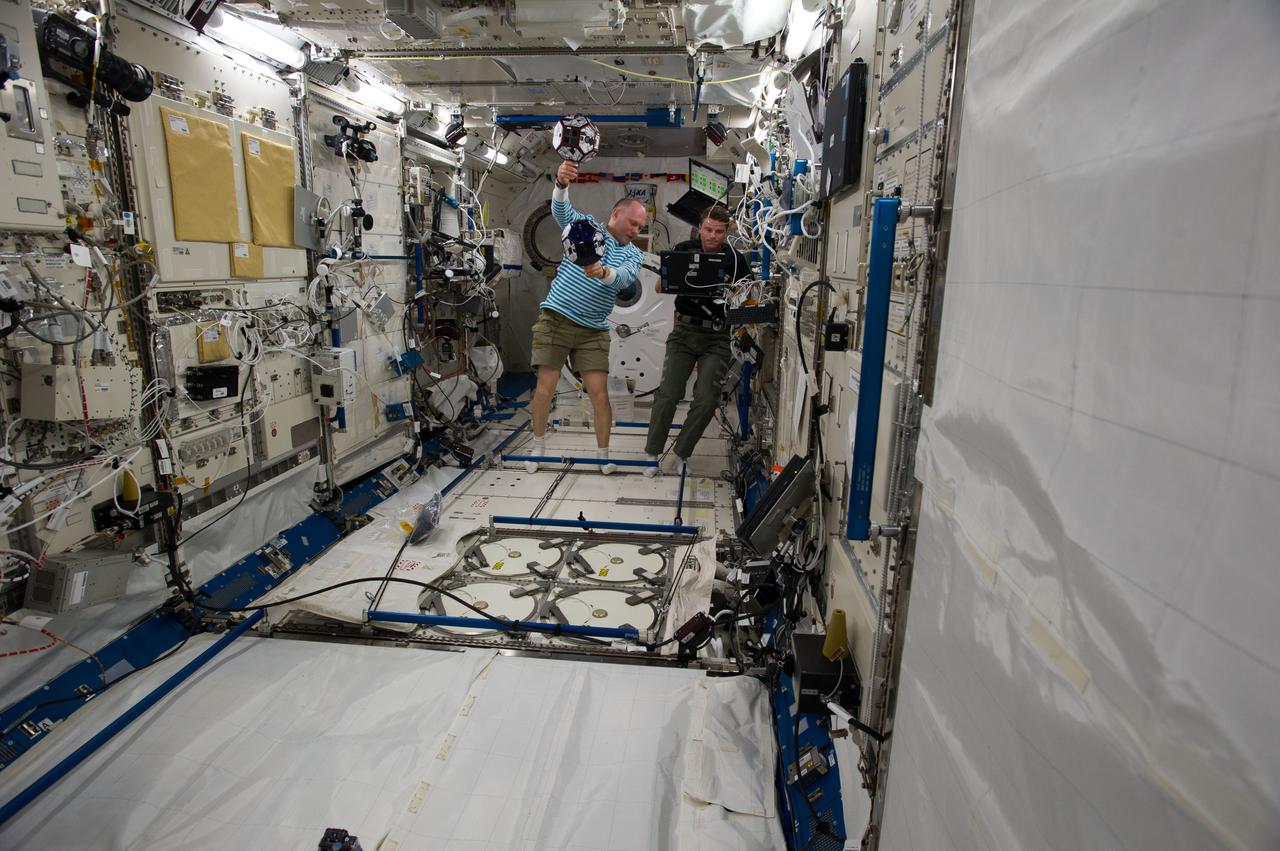
ISS040-E-018390 (24 June 2014) --- Russian cosmonaut Oleg Artemyev (left) and NASA astronaut Reid Wiseman, both Expedition 40 flight engineers, conduct a session of the Synchronized Position Hold, Engage, Reorient, Experimental Satellites Zero Robotics (SPHERES ZR) program in the Kibo laboratory of the International Space Station.
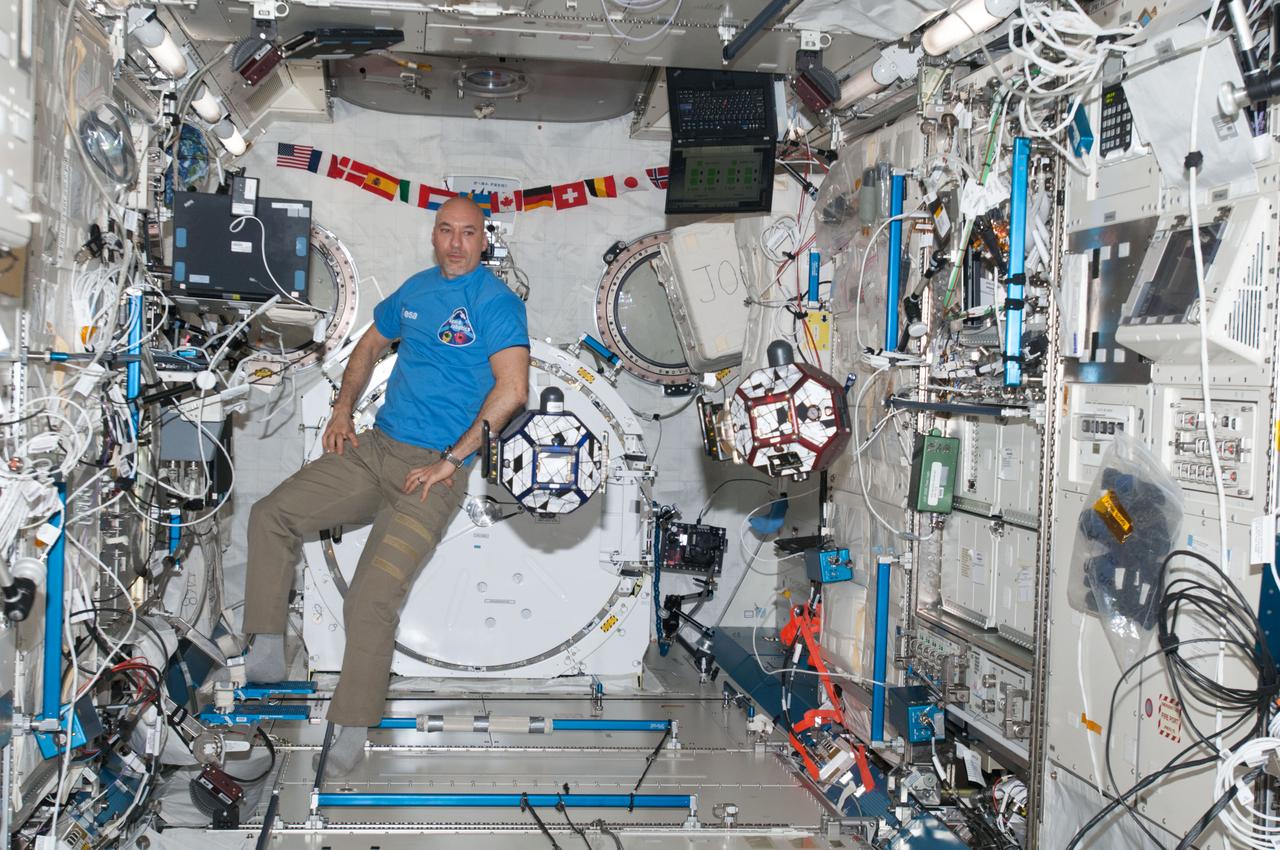
ISS036-E-039685 (4 Sept. 2013) --- In the International Space Station's Kibo laboratory, European Space Agency astronaut Luca Parmitano, Expedition 36 flight engineer, conducts a session with a pair of bowling-ball-sized free-flying satellites known as Synchronized Position Hold, Engage, Reorient, Experimental Satellites, or SPHERES.
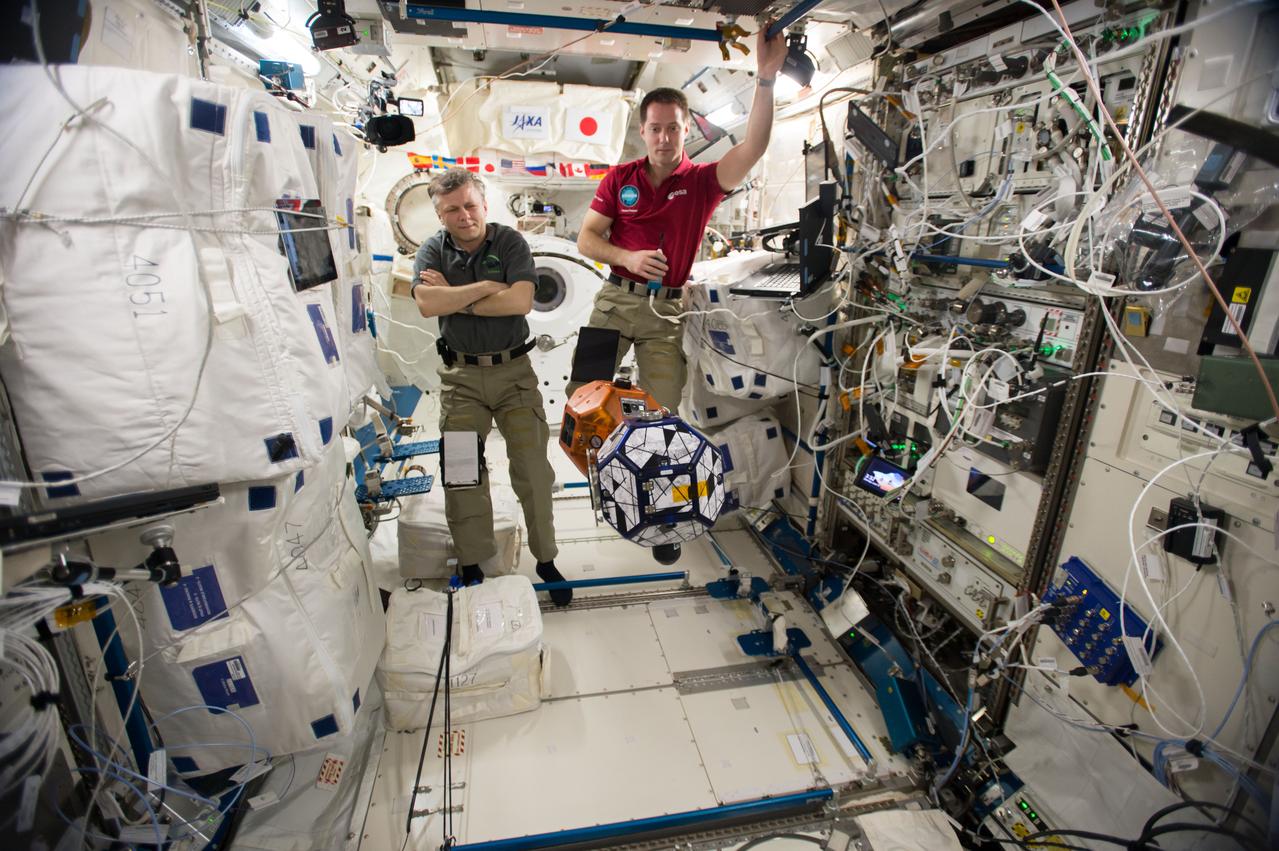
iss050e031138 (1/16/2017) --- A view of Cosmonaut Andrei Borisenko, and European Space Agency (ESA) astronaut Thomas Pesquet during set up and execution of Synchronized Position Hold, Engage, Reorient, Experimental Satellites (SPHERES) hardware dry run for the Zero Robotics, in the Japanese Experiment Module (JEM) Pressurized Module.
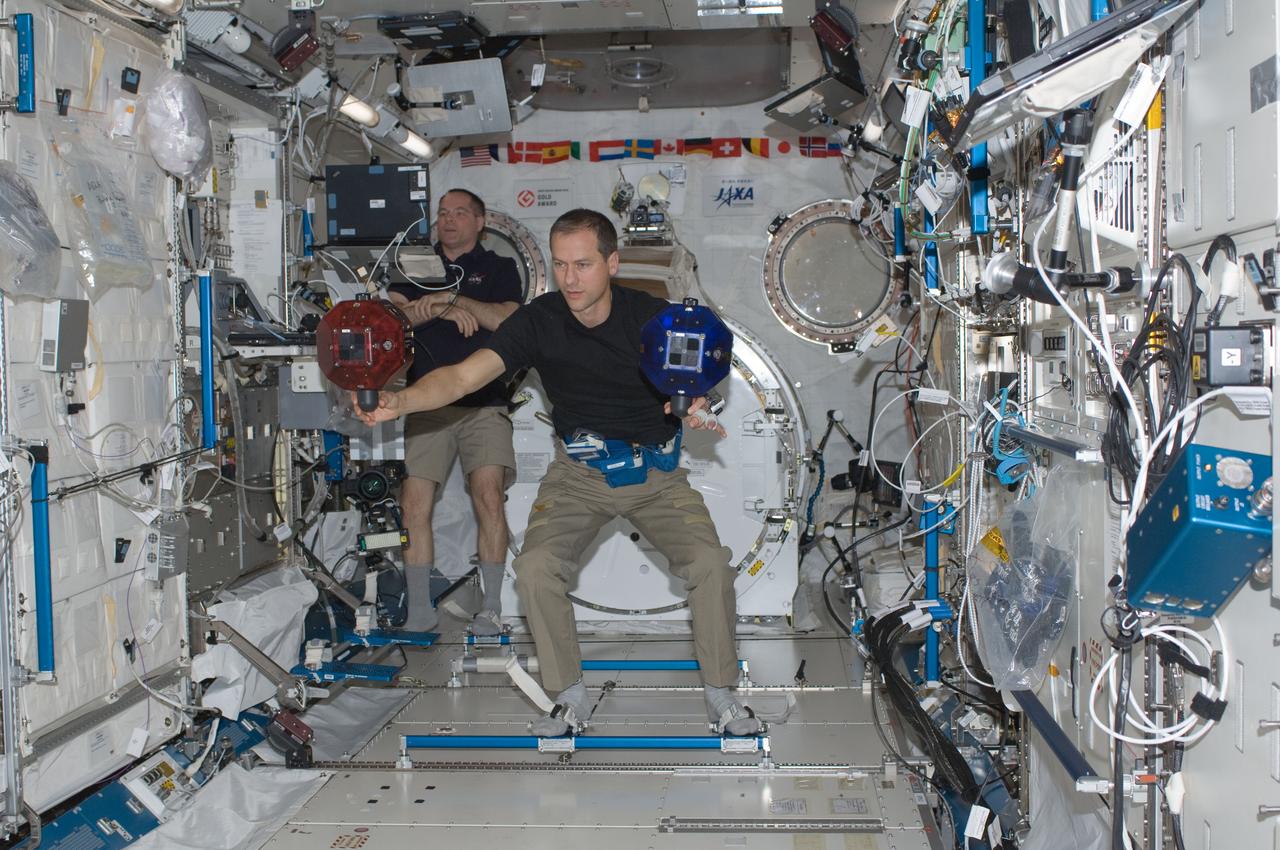
ISS034-E-014543 (4 Jan. 2013) --- With their feet anchored in floor restraints, NASA astronauts Kevin Ford (background), Expedition 34 commander; and Tom Marshburn, flight engineer, conduct a session of the Synchronized Position Hold, Engage, Reorient, Experimental Satellites (SPHERES) program in the Kibo laboratory of the International Space Station.
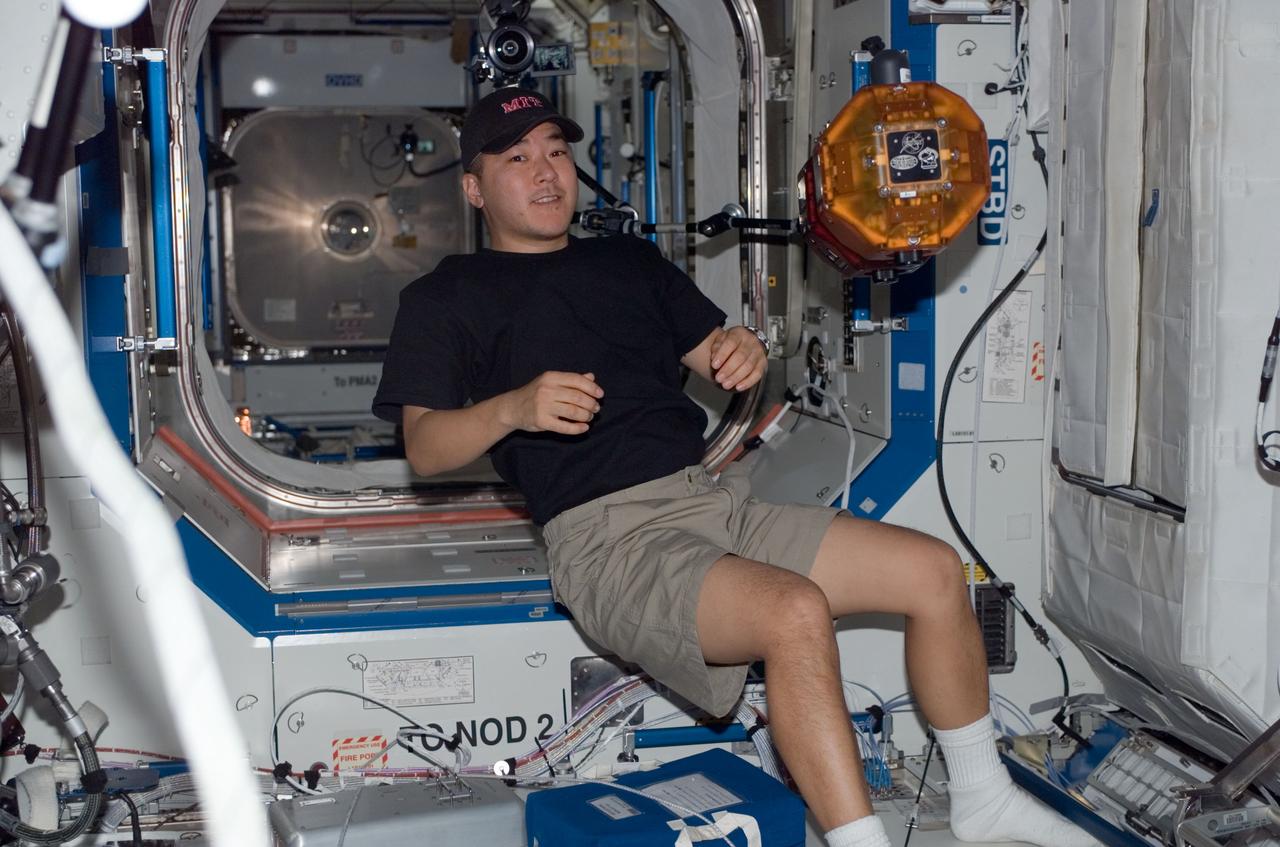
ISS016-E-014207 (2 Dec. 2007) --- Astronaut Daniel Tani, Expedition 16 flight engineer, does a check of the Synchronized Position Hold, Engage, Reorient, Experimental Satellites (SPHERES) Beacon / Beacon Tester in the Destiny laboratory of the International Space Station.
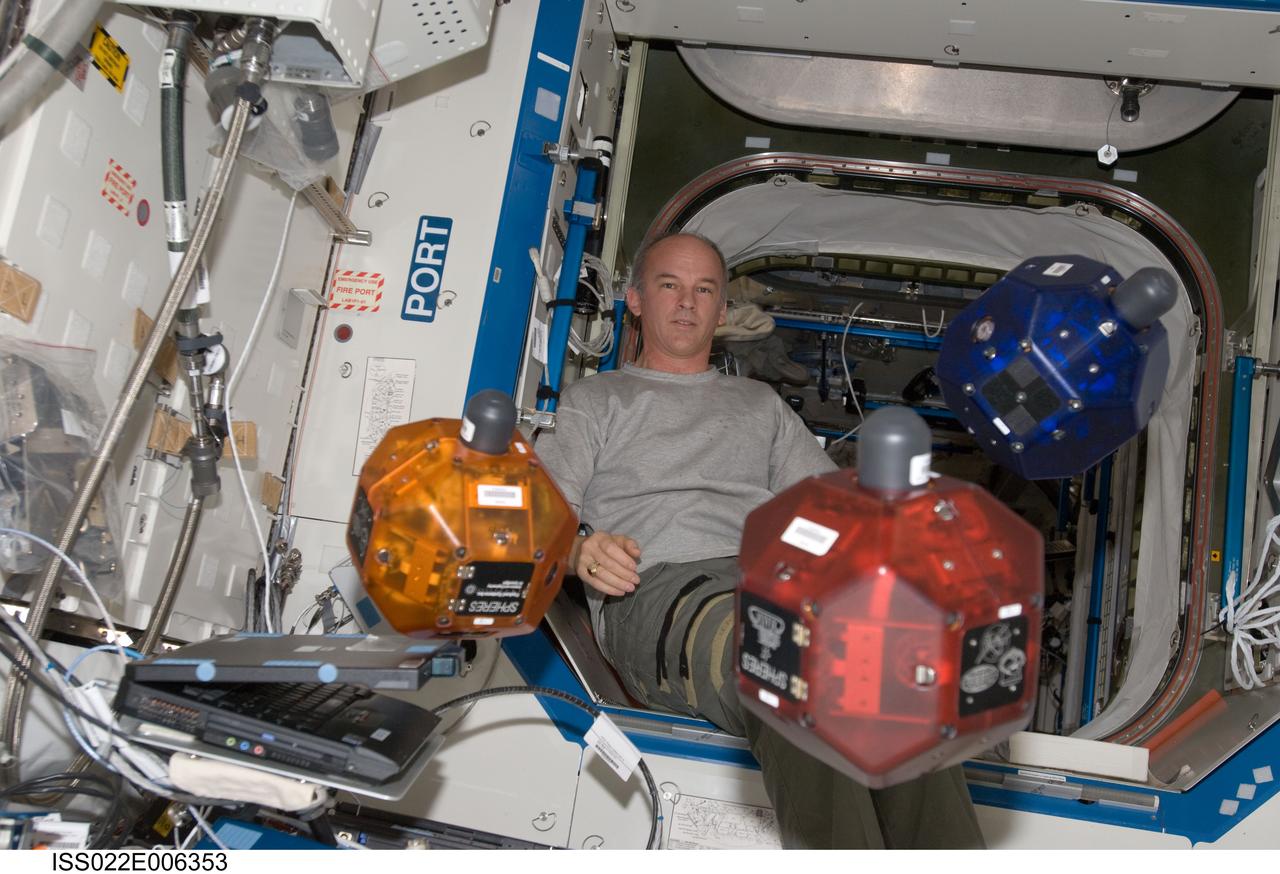
ISS022-E-006353 (5 Dec. 2009) --- NASA astronaut Jeffrey Williams, Expedition 22 commander, performs a check of the Synchronized Position Hold, Engage, Reorient, Experimental Satellites (SPHERES) Beacon / Beacon Tester in the Destiny laboratory of the International Space Station.
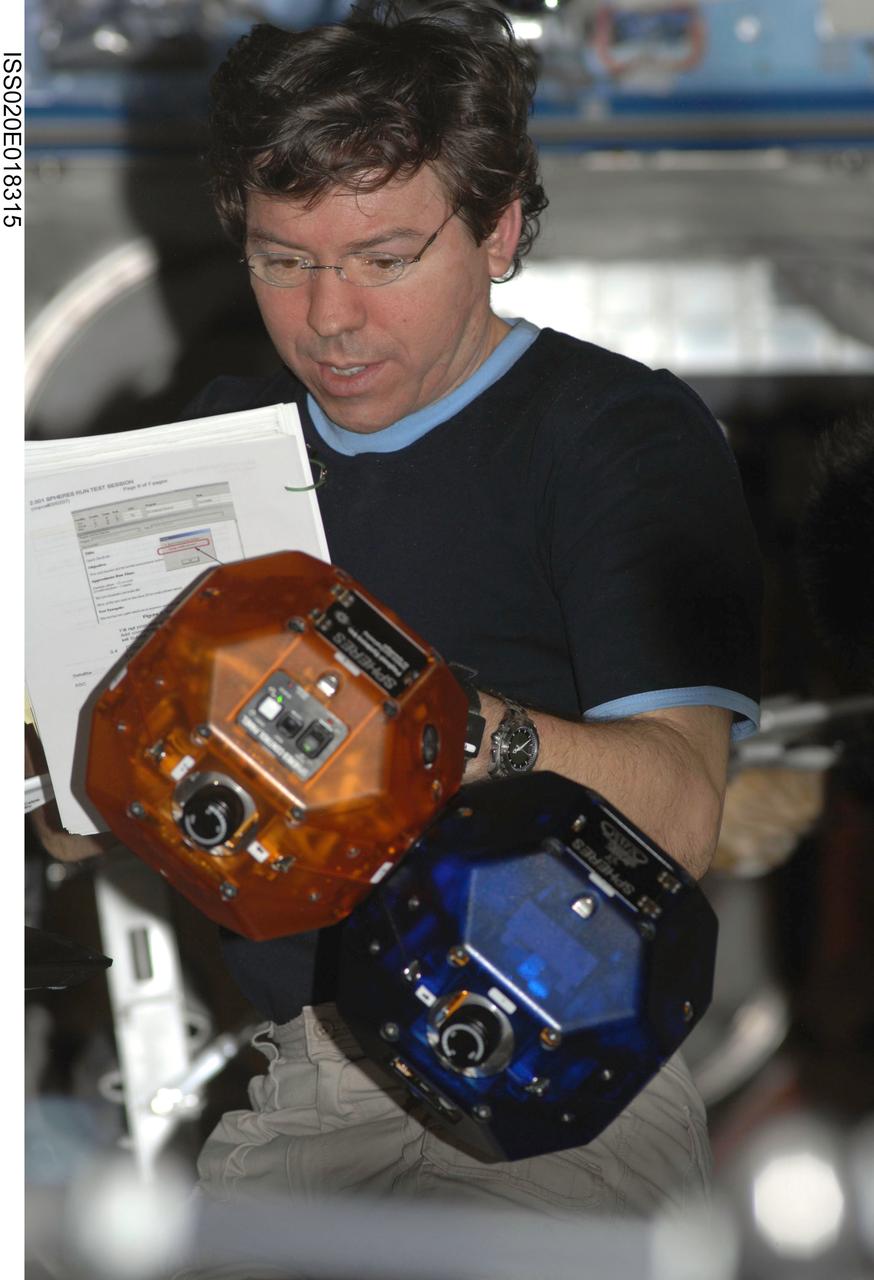
ISS020-E-018315 (11 July 2009) --- NASA astronaut Michael Barratt, Expedition 20 flight engineer, reads a checklist while performing a check of the Synchronized Position Hold, Engage, Reorient, Experimental Satellites (SPHERES) Beacon / Beacon Tester in the Destiny laboratory of the International Space Station.
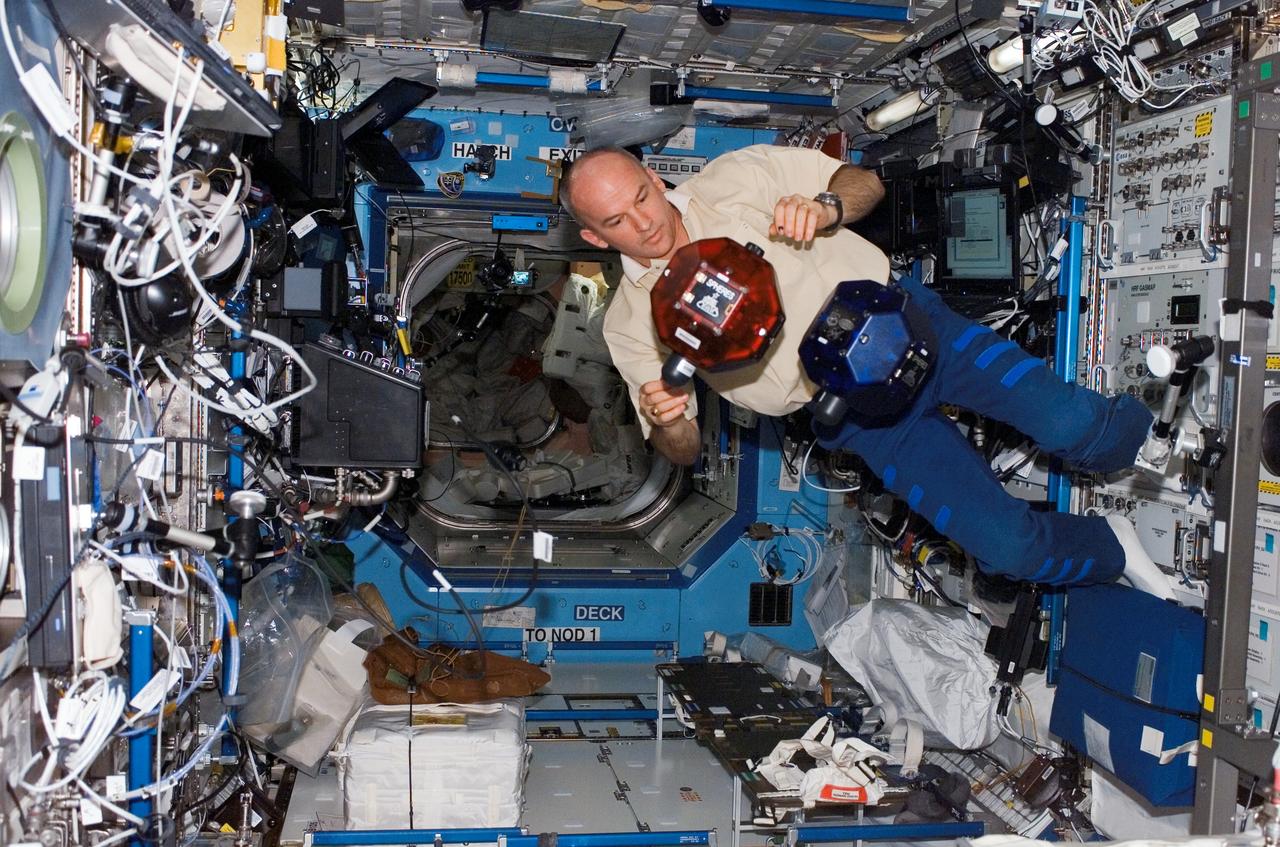
ISS013-E-68303 (19 Aug. 2006) --- Astronaut Jeffrey N. Williams, Expedition 13 NASA space station science officer and flight engineer, does a check of the Synchronized Position Hold, Engage, Reorient, Experimental Satellites (SPHERES) Beacon / Beacon Tester in the Destiny laboratory of the International Space Station.
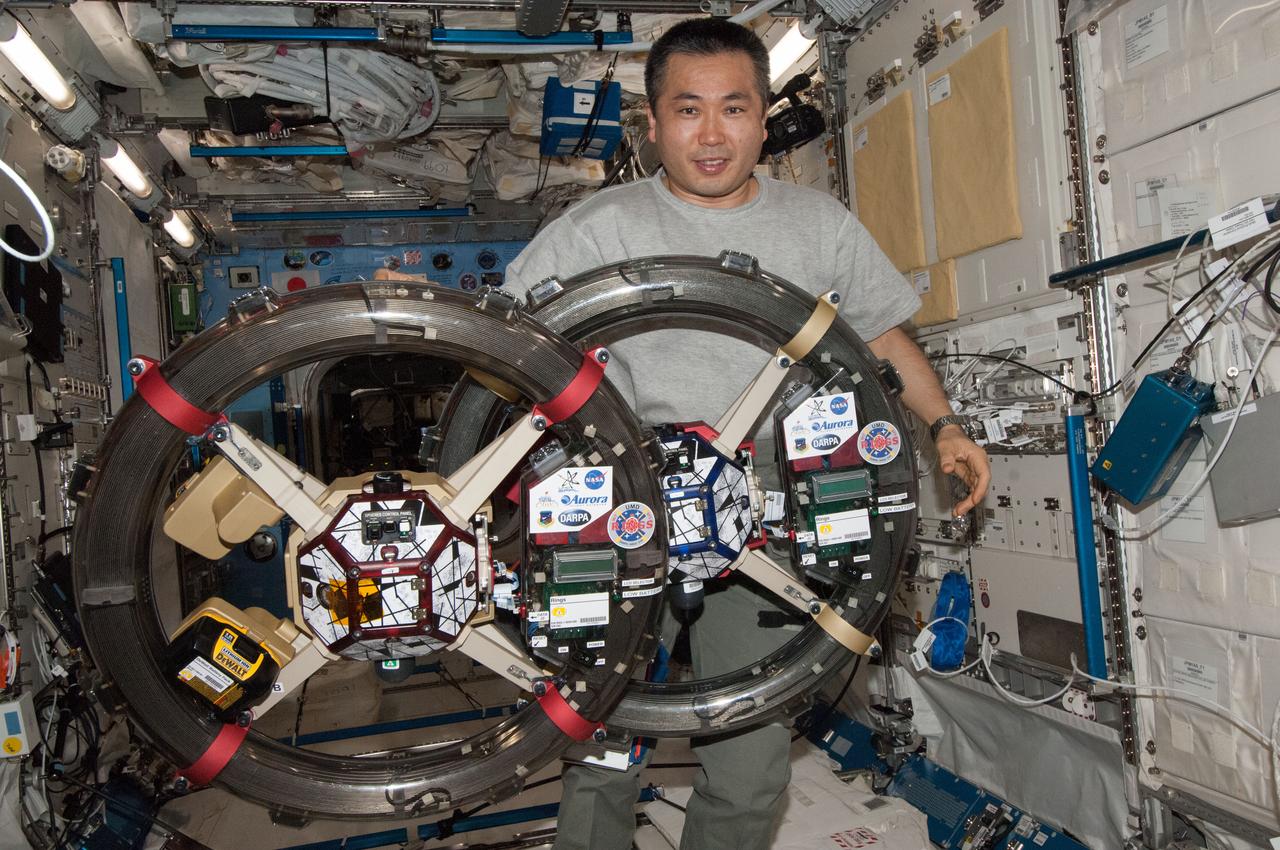
ISS038-E-045631 (10 Feb. 2014) --- Japan Aerospace Exploration Agency astronaut Koichi Wakata, Expedition 38 flight engineer, works with the Synchronized Position, Hold, Engage, Reorient, Experimental Satellites-Resonant Inductive Near-field Generation System (SPHERES-RINGS) experiment gear in the Kibo laboratory of the International Space Station.
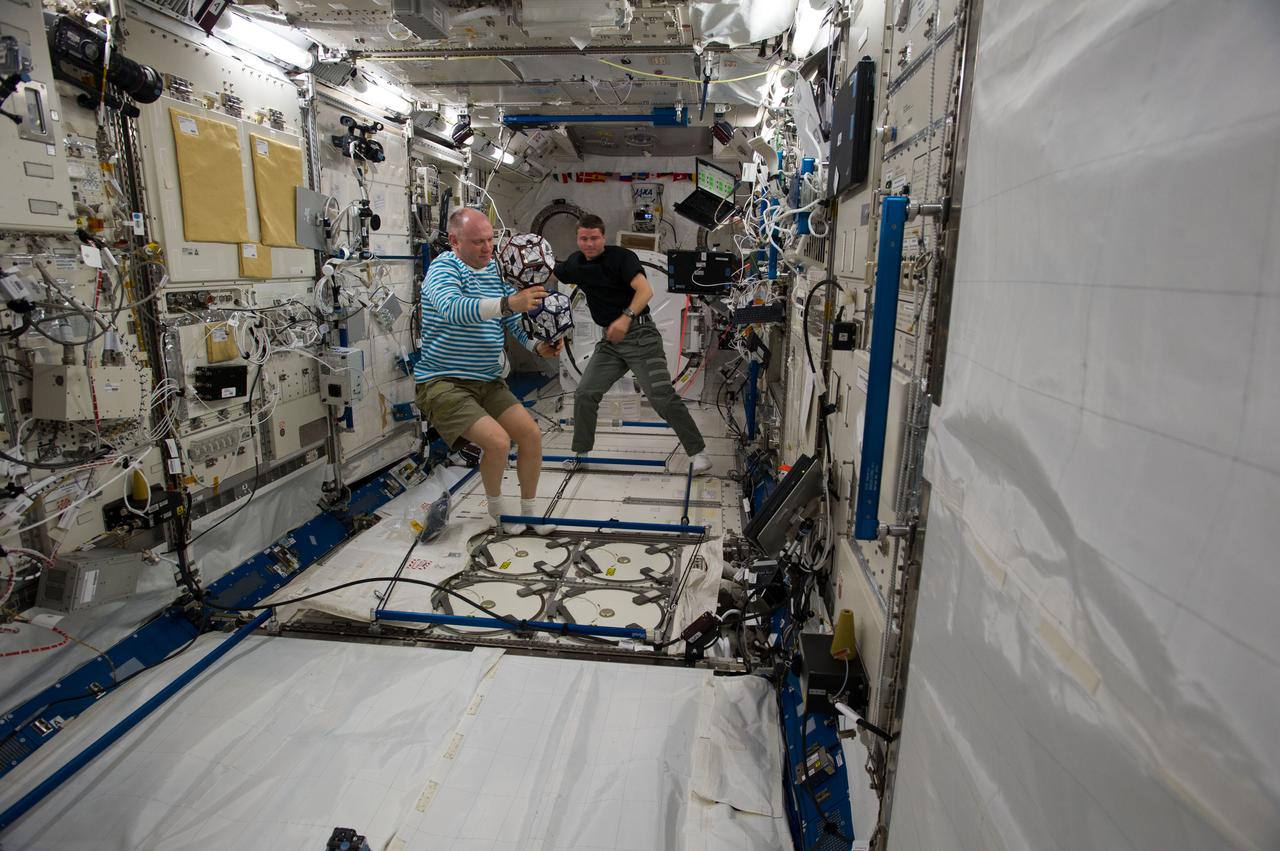
ISS040-E-018572 (24 June 2014) --- Russian cosmonaut Oleg Artemyev (left) and NASA astronaut Reid Wiseman, both Expedition 40 flight engineers, conduct a session of the Synchronized Position Hold, Engage, Reorient, Experimental Satellites Zero Robotics (SPHERES ZR) program in the Kibo laboratory of the International Space Station.
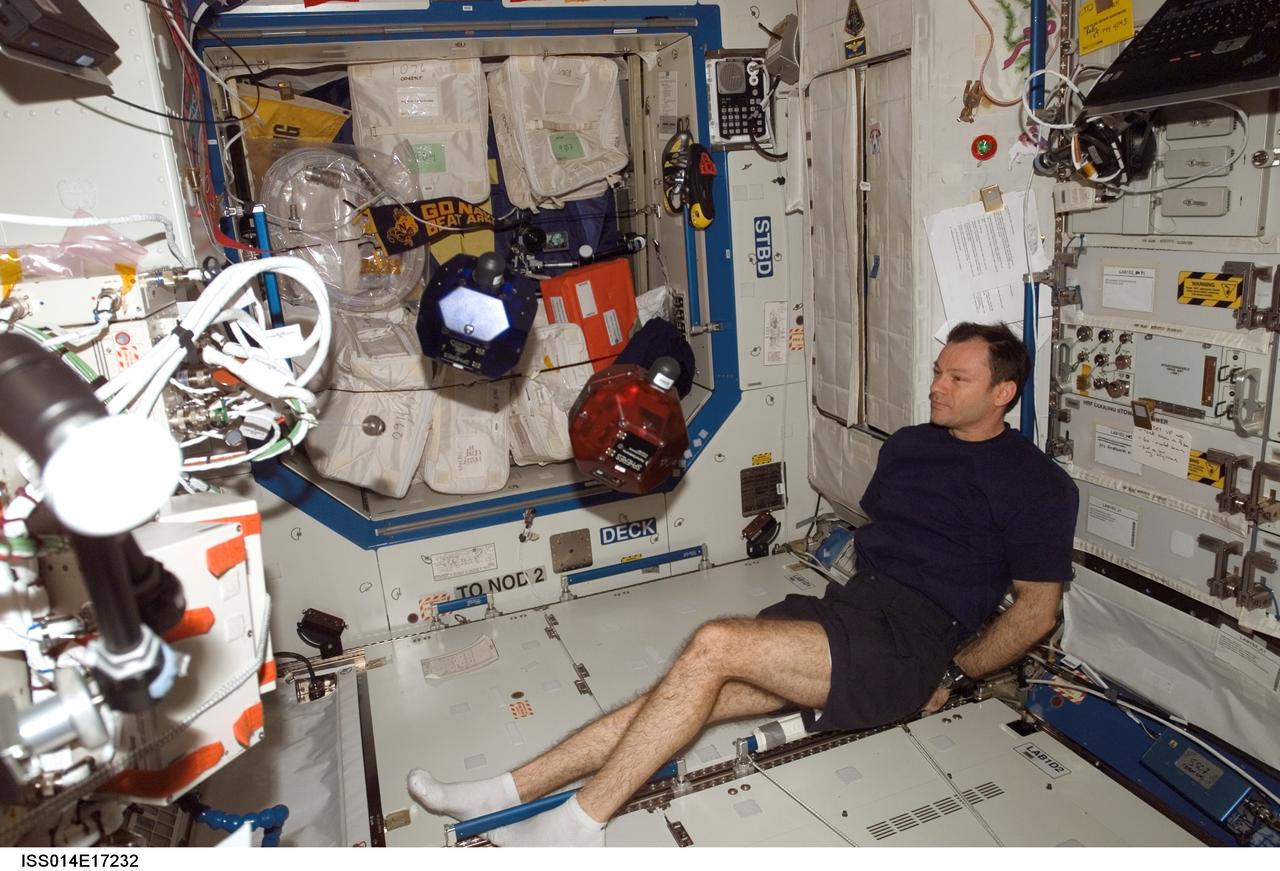
ISS014-E-17232 (17 March 2007) --- Astronaut Michael E. Lopez-Alegria, Expedition 14 commander and NASA space station science officer, does a check of the Synchronized Position Hold, Engage, Reorient, Experimental Satellites (SPHERES) Beacon / Beacon Tester in the Destiny laboratory of the International Space Station.
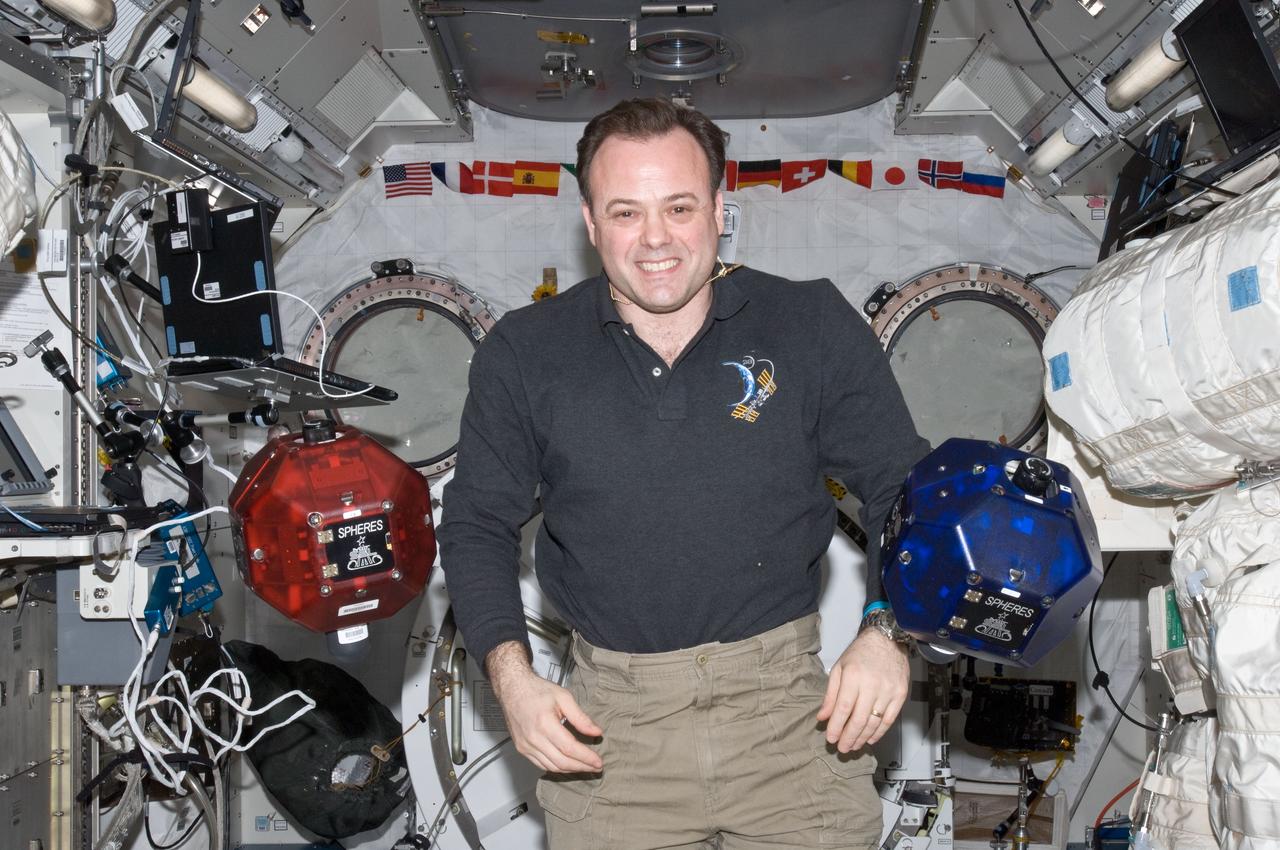
ISS028-E-023284 (8 Aug. 2011) --- NASA astronaut Ron Garan, Expedition 28 flight engineer, is pictured near two Synchronized Position Hold, Engage, Reorient, Experimental Satellites (SPHERES) floating freely in the Kibo laboratory of the International Space Station.
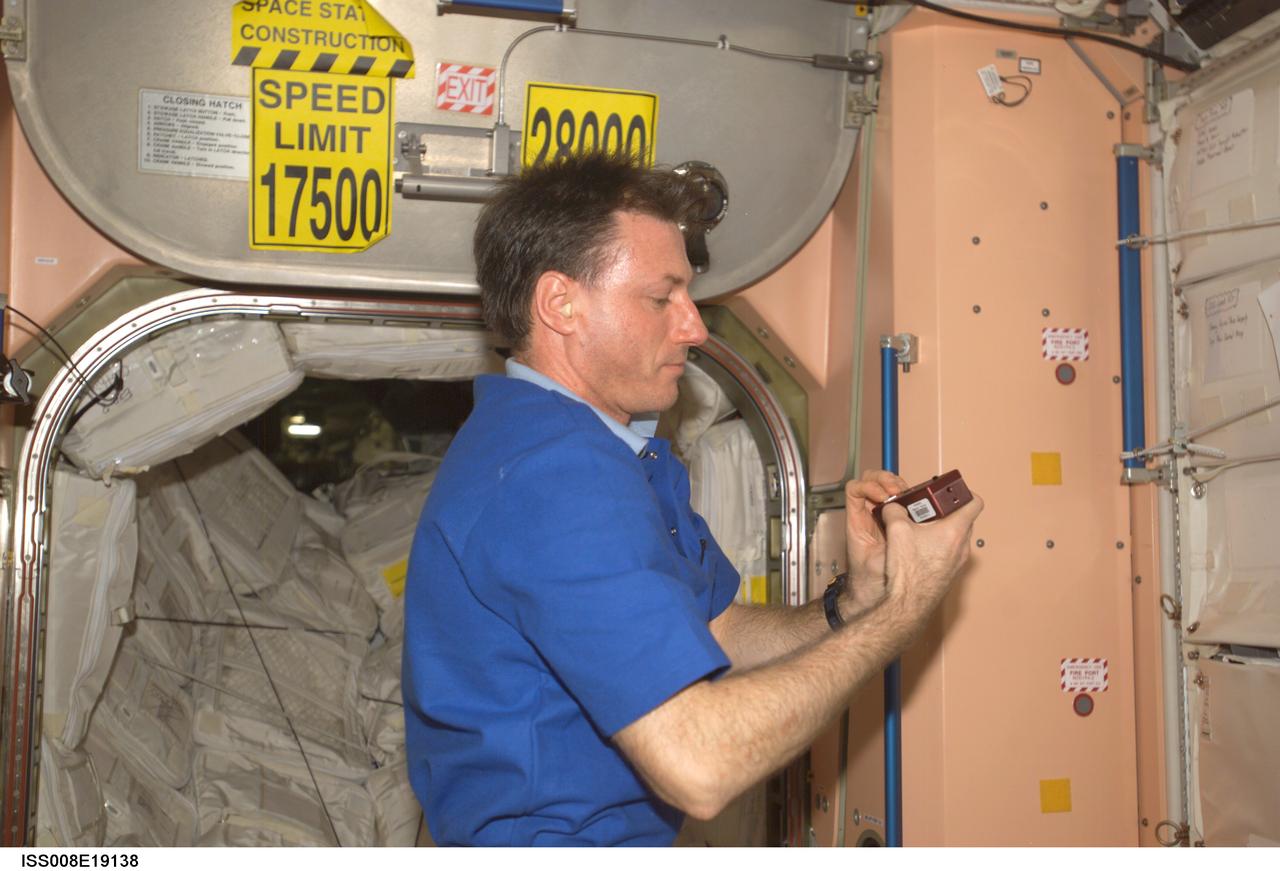
ISS008-E-19138 (24 March 2004) --- Astronaut C. Michael Foale, Expedition 8 commander and NASA ISS science officer, does a check of the Synchronized Position Hold, Engage, Reorient, Experimental Satellites (SPHERES) Beacon / Beacon Tester in the Unity node of the International Space Station.
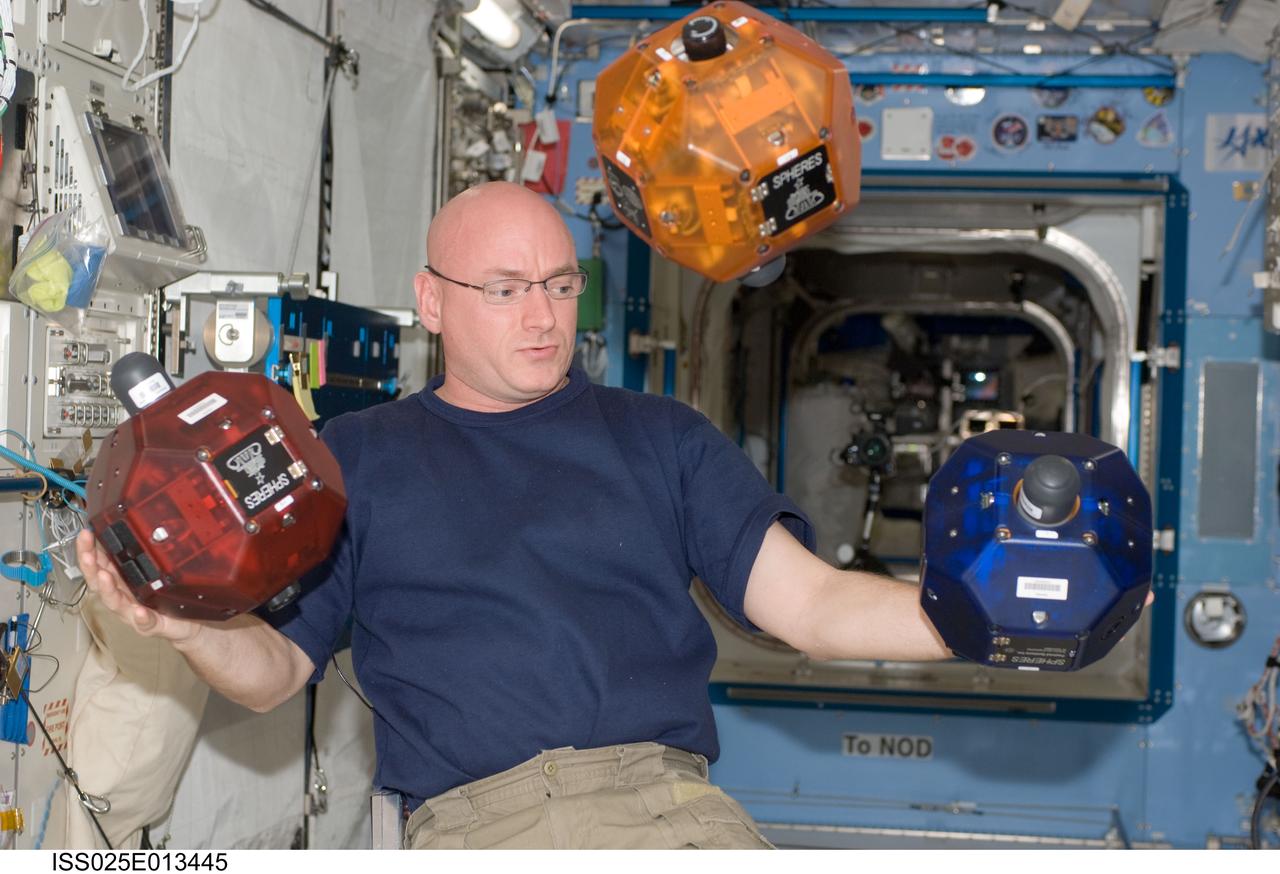
ISS025-E-013445 (9 Nov. 2010) --- NASA astronaut Scott Kelly, Expedition 25 flight engineer, is pictured near three Synchronized Position Hold, Engage, Reorient, Experimental Satellites (SPHERES) floating freely in the Kibo laboratory of the International Space Station.
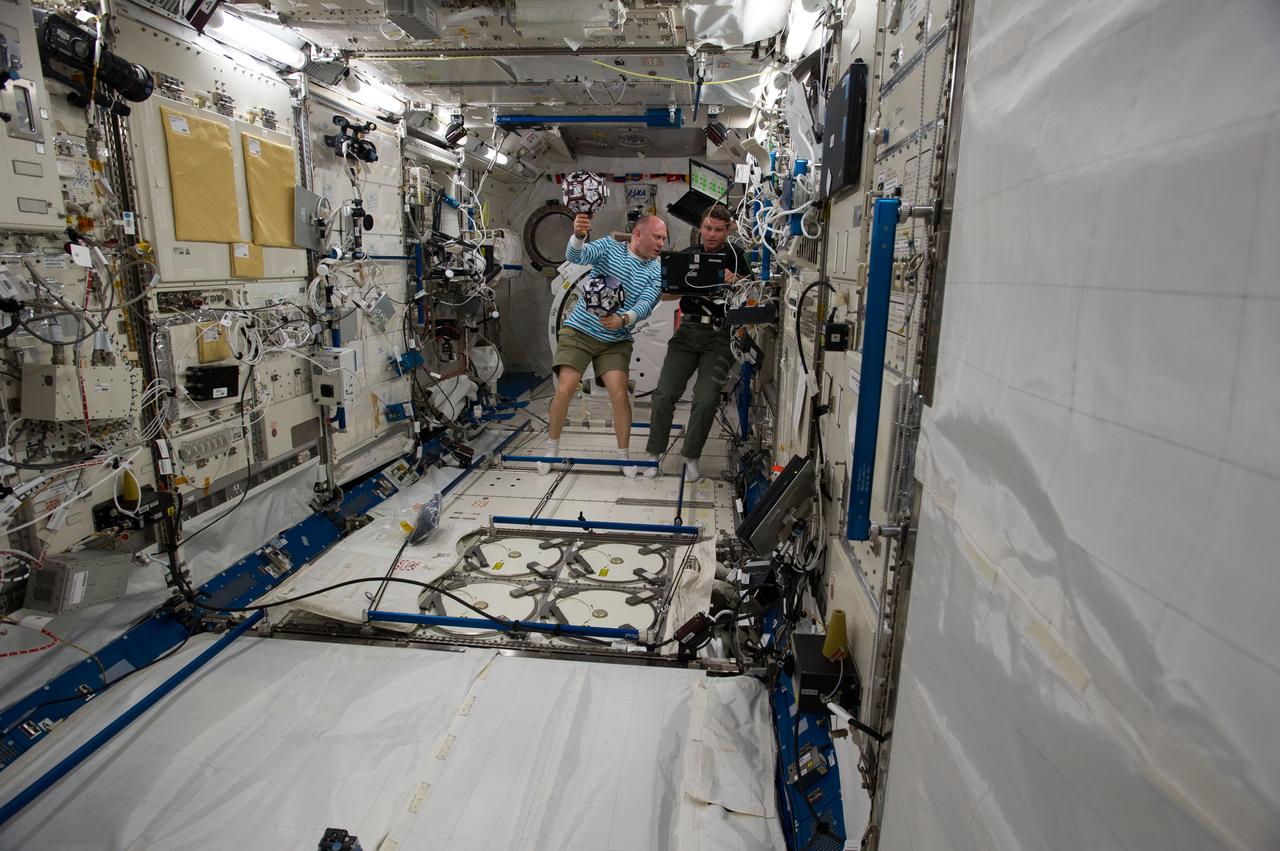
ISS040-E-018383 (24 June 2014) --- Russian cosmonaut Oleg Artemyev (left) and NASA astronaut Reid Wiseman, both Expedition 40 flight engineers, conduct a session of the Synchronized Position Hold, Engage, Reorient, Experimental Satellites Zero Robotics (SPHERES ZR) program in the Kibo laboratory of the International Space Station.
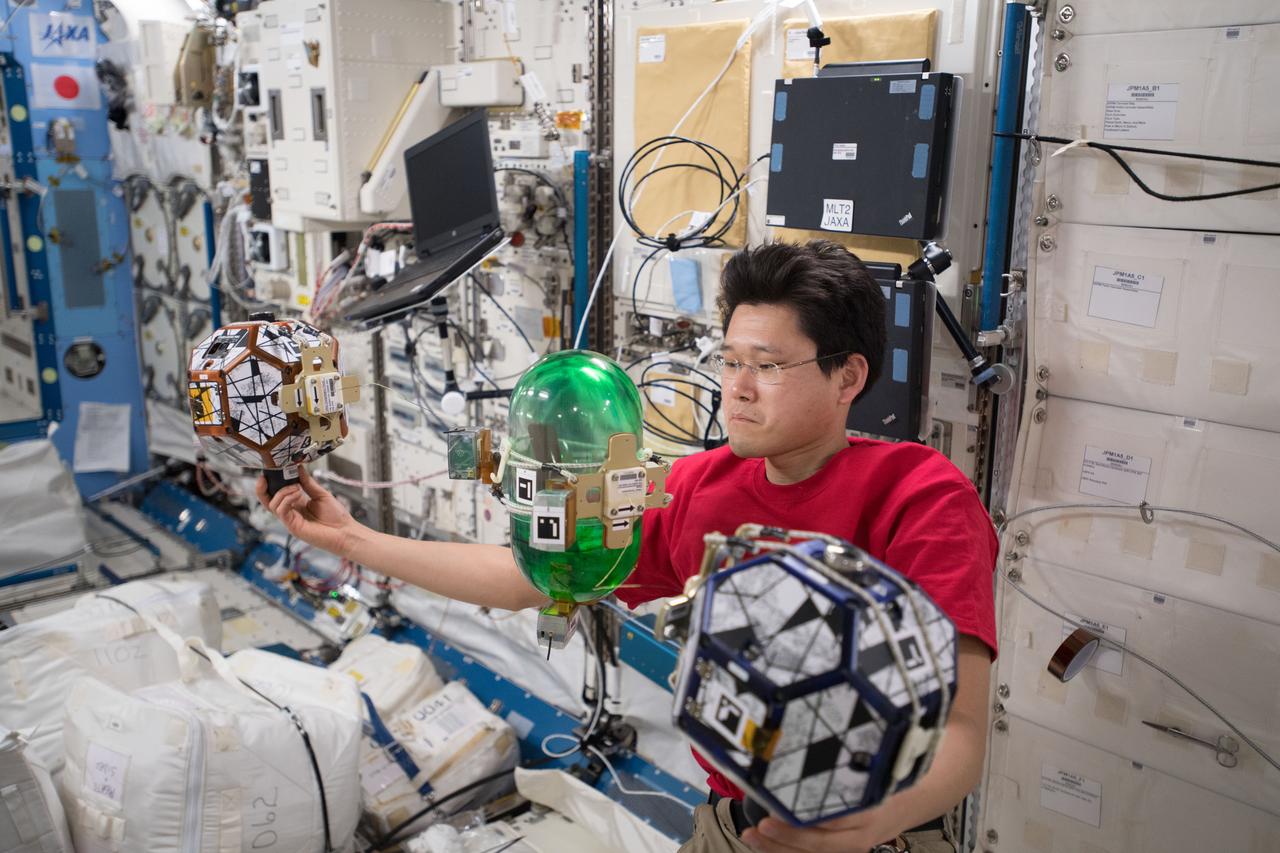
iss054e022175 (1/17/2018) --- Japan Aerospace Exploration Agency (JAXA) astronaut Norishige Kanai is photographed during a Synchronized Position Hold, Engage, Reorient, Experimental Satellites (SPHERES) Tether Slosh experiment test session run. Photo was taken in the Kibo Japanese Experiment Pressurized Module (JPM) aboard the International Space Station (ISS). SPHERES Tether Slosh combines fluid dynamics equipment with robotic capabilities aboard the ISS to investigate automated strategies for steering passive cargo that contain fluids. In space, the fluid fuels used by spacecraft can slosh around in unpredictable ways making space maneuvers difficult. SPHERES Tether Slosh uses two Synchronized Position Hold, Engage, Reorient, Experimental Satellites (SPHERES) robots tethered to a fluid-filled container covered in sensors to test strategies for safely steering spacecraft such as dead satellites that might still have fuel in the tank.
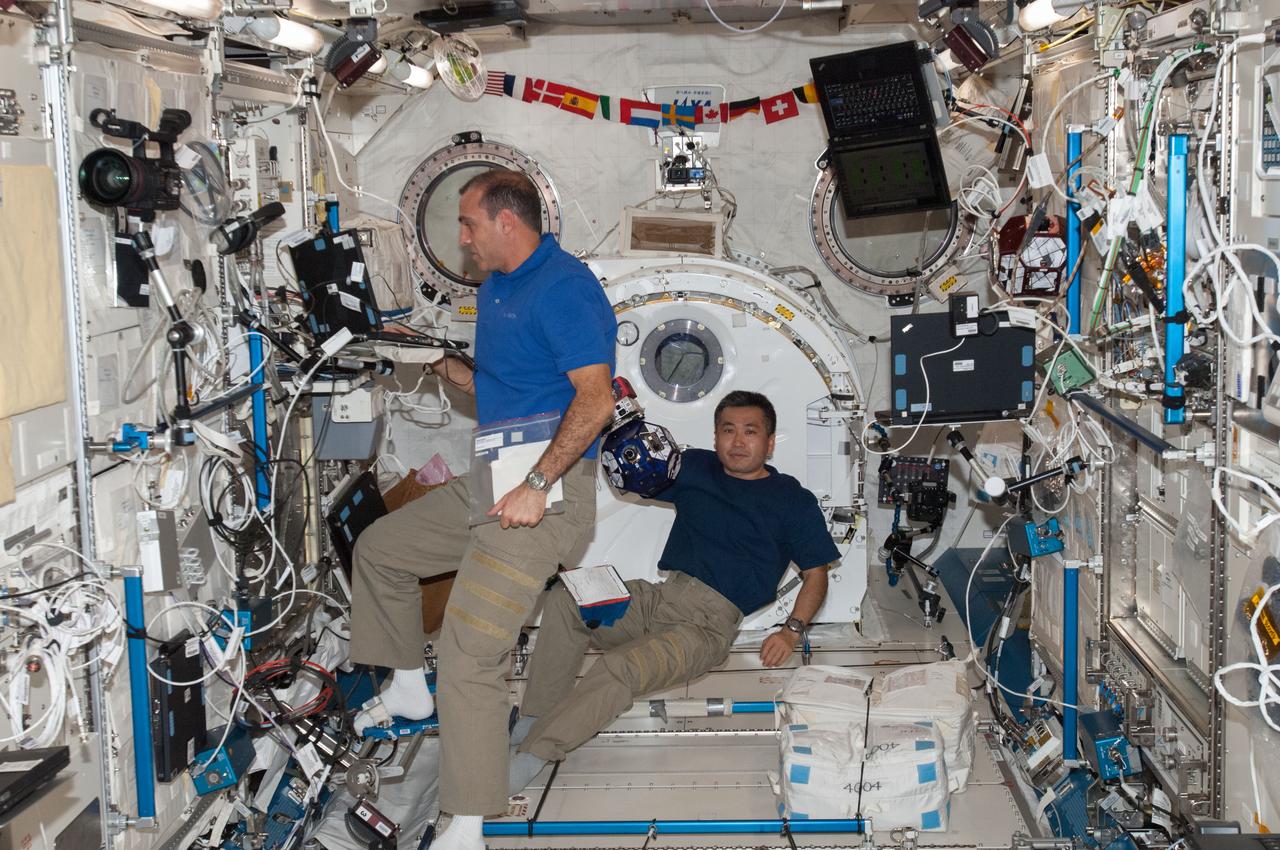
ISS037-E-028591 (10 Nov. 2013) --- NASA astronaut Rick Mastracchio (left) and Japan Aerospace Exploration Agency astronaut Koichi Wakata, both Expedition 38 flight engineers, work in the Kibo laboratory of the International Space Station.
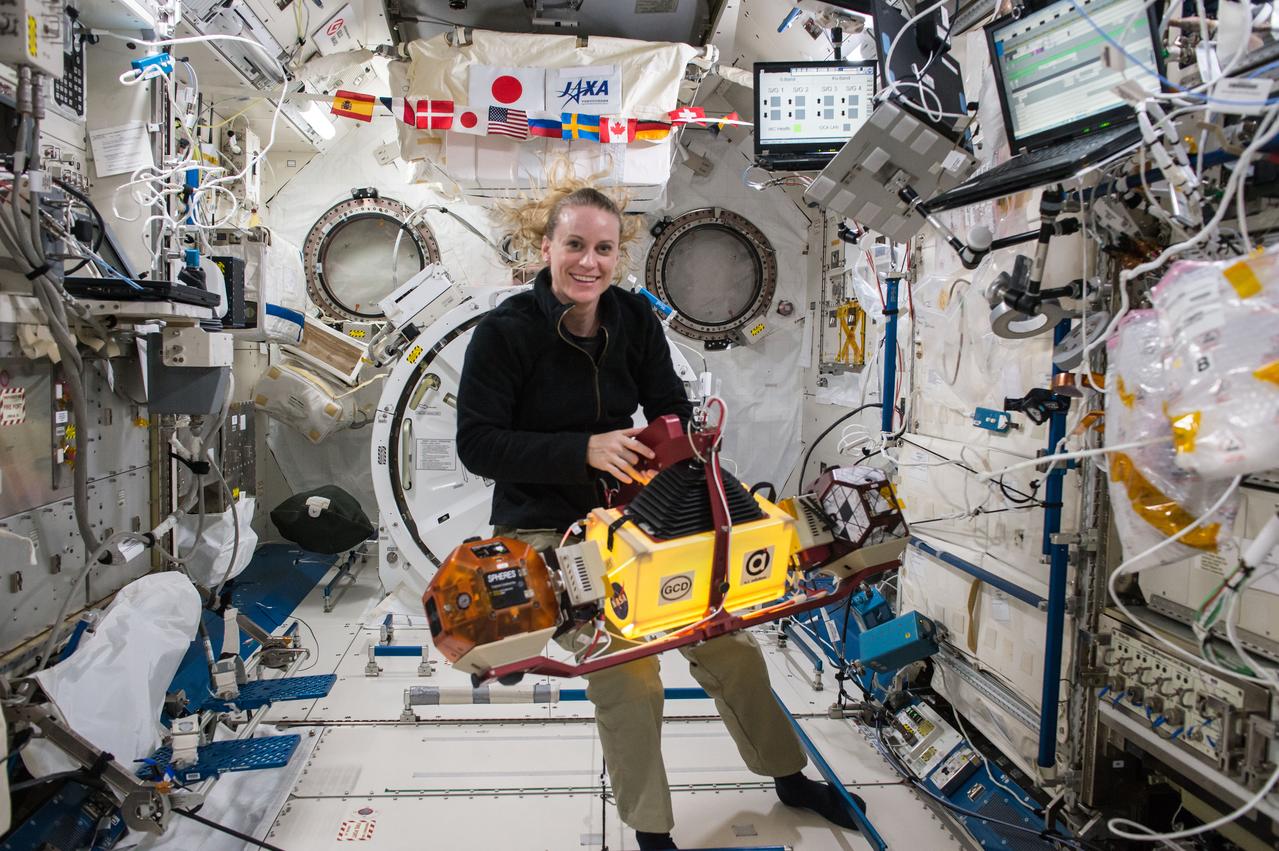
iss049e033811 (10/7/2016) --- NASA sstronaut Kate Rubins is photographed configuring the SPHERES-Slosh experiment setup using two SPHEREs satellites and the slosh assembly. The SPHERES-Slosh investigation examines the way liquids move inside containers in a microgravity environment.
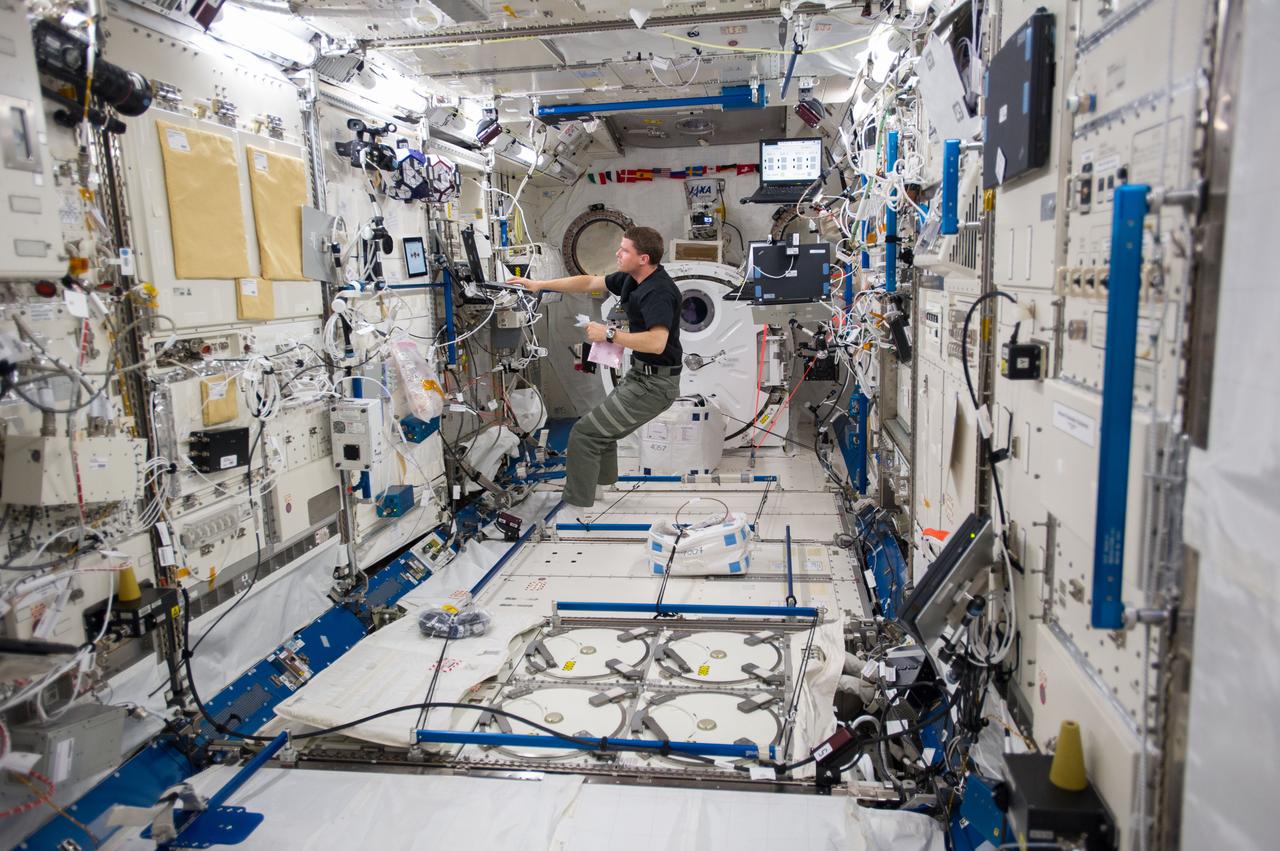
ISS040-E-013952 (18 June 2014) --- In the International Space Station's Kibo laboratory, NASA astronaut Reid Wiseman, Expedition 40 flight engineer, enters data in a computer during test runs of the SPHERES-Slosh experiment, using the soccer-ball-sized, free-flying satellites known as Synchronized Position Hold, Engage, Reorient, Experimental Satellites, or SPHERES (out of frame). The SPHERES-Slosh investigation uses small robotic satellites on the space station to examine how liquids move around inside containers in microgravity.
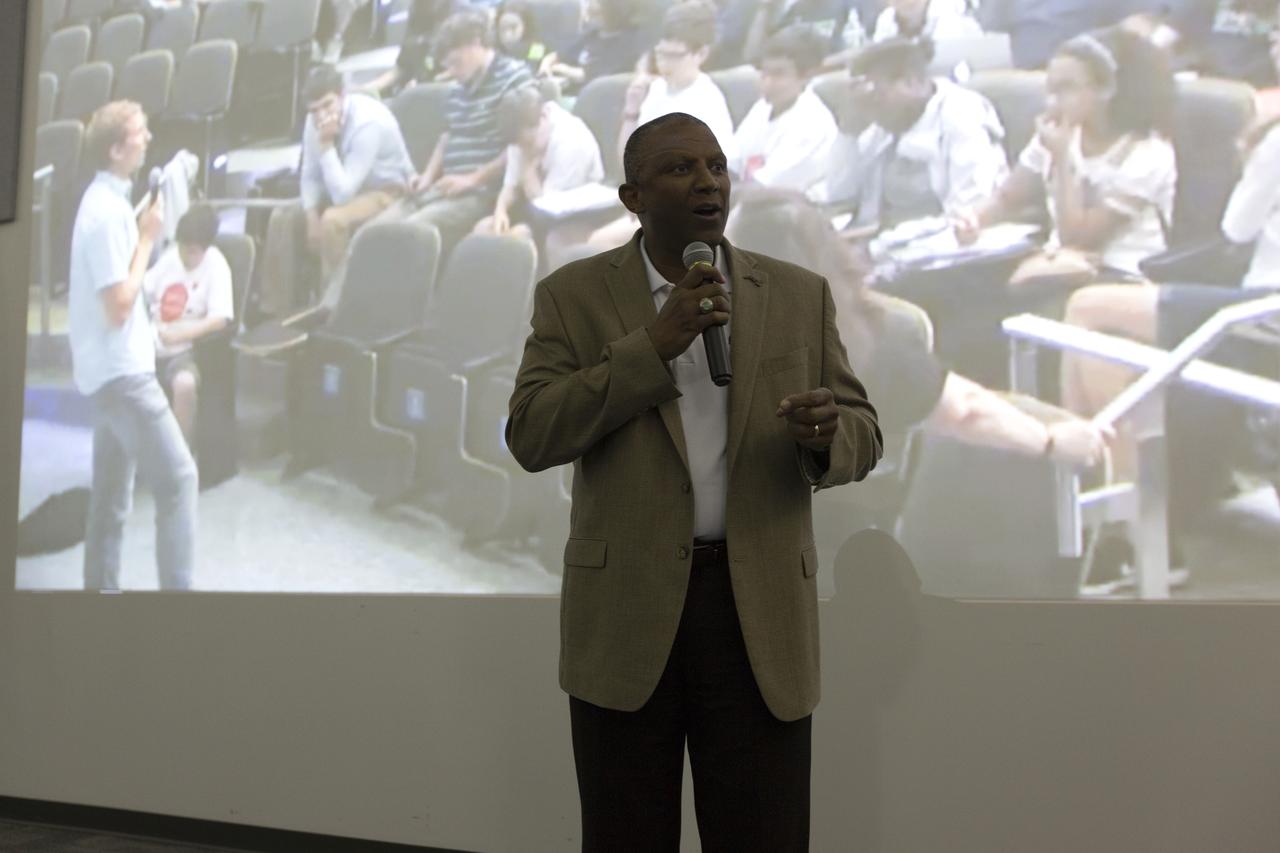
NASA Kennedy Space Center Associate Director Kelvin Manning speaks to students and sponsors in the spaceport’s Center for Space Education. Teams from across the state of Florida were gathered at Kennedy for the finals of the Zero Robotics Middle School Summer Program national championship. The five-week program allows rising sixth- through ninth-graders to write programs for small satellites called SPHERES (Synchronized, Position, Hold, Engage, Reorient, Experimental Satellites). Finalists saw their code tested aboard the International Space Station.
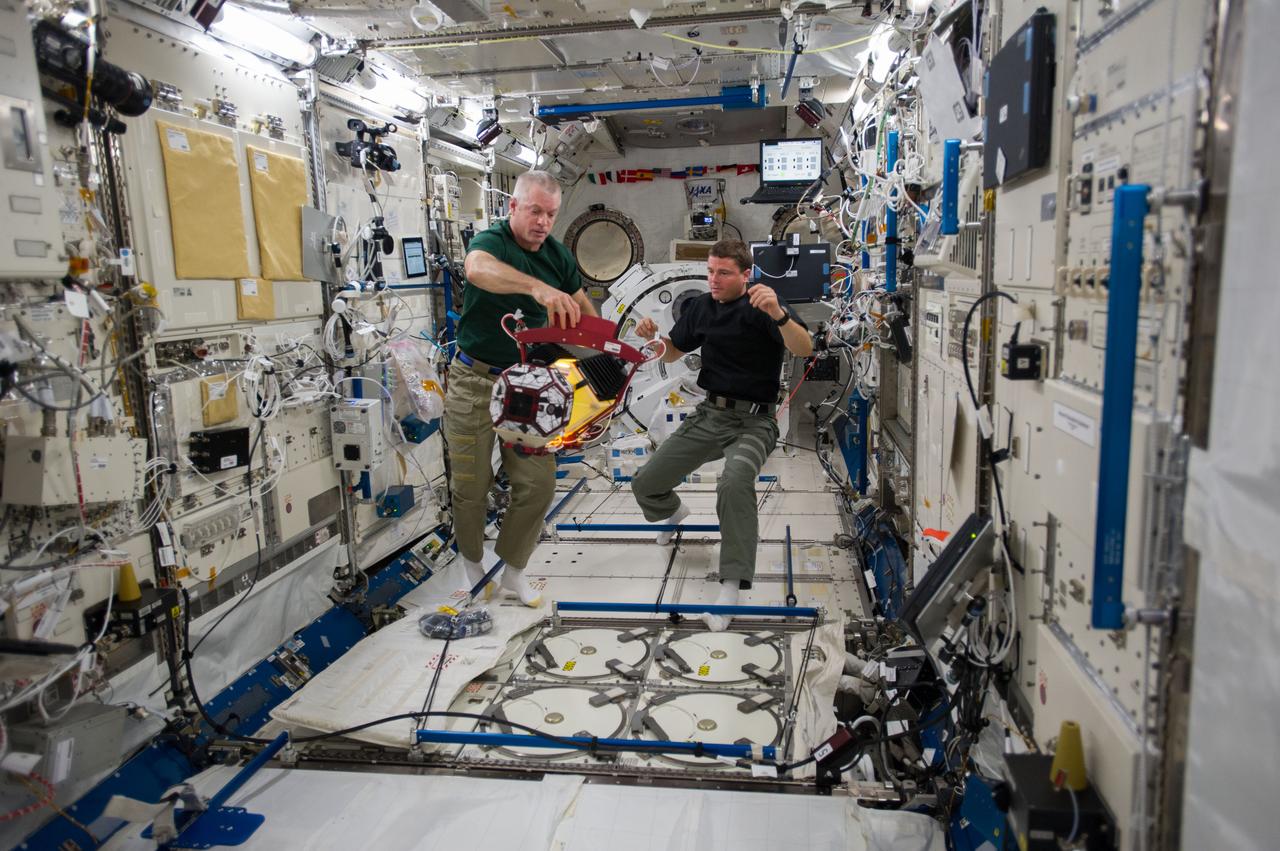
ISS040-E-014536 (18 June 2014) --- In the International Space Station's Kibo laboratory, NASA astronauts Steve Swanson (left), Expedition 40 commander; and Reid Wiseman, flight engineer, conduct test runs of the SPHERES-Slosh experiment, using the soccer-ball-sized, free-flying satellites known as Synchronized Position Hold, Engage, Reorient, Experimental Satellites, or SPHERES. The SPHERES-Slosh investigation uses small robotic satellites on the space station to examine how liquids move around inside containers in microgravity.
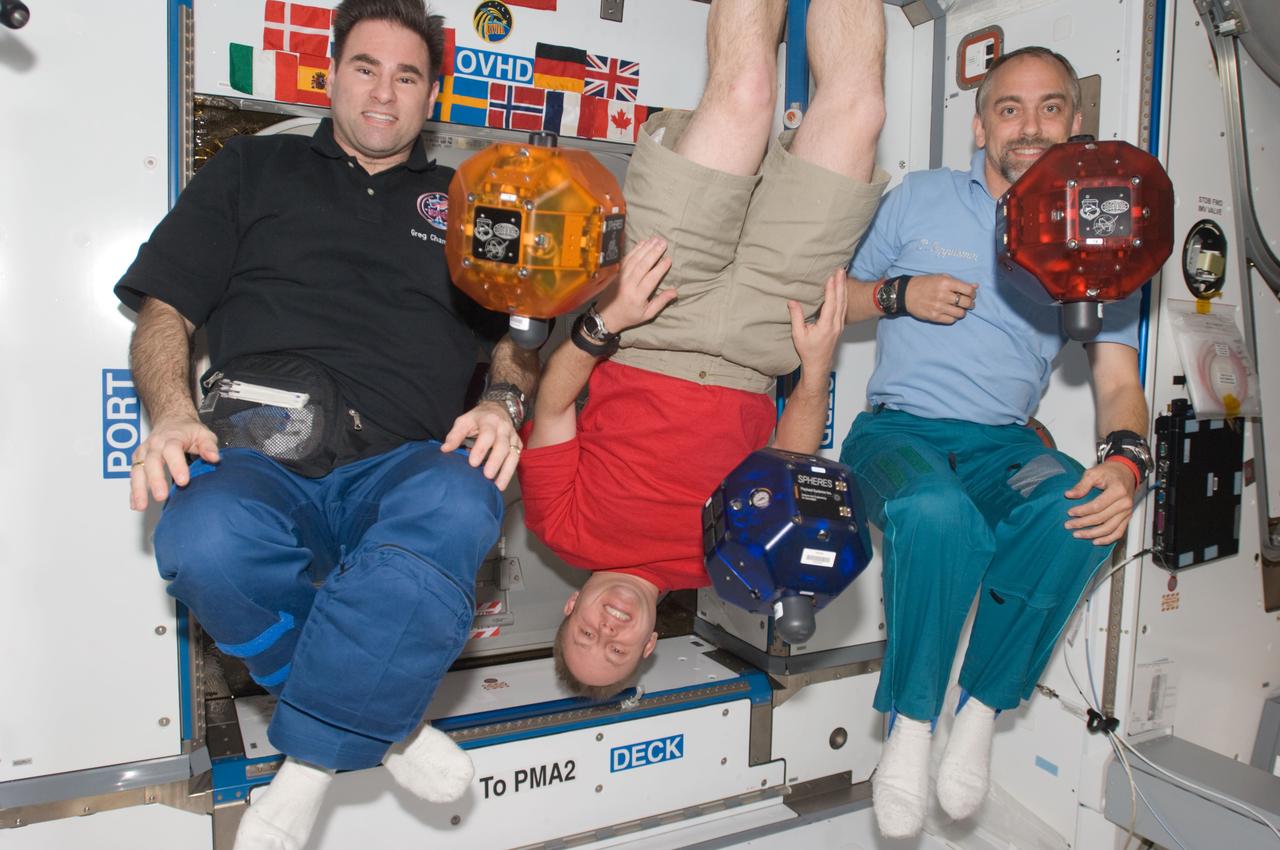
ISS017-E-021362 (22 Oct. 2008) --- Astronauts Greg Chamitoff (left), Michael Fincke, Expedition 18 flight engineer and commander, respectively; and American spaceflight participant Richard Garriott pose for a photo in the Harmony node of the International Space Station. Synchronized Position Hold, Engage, Reorient, Experimental Satellites (SPHERES) float freely in the foreground.
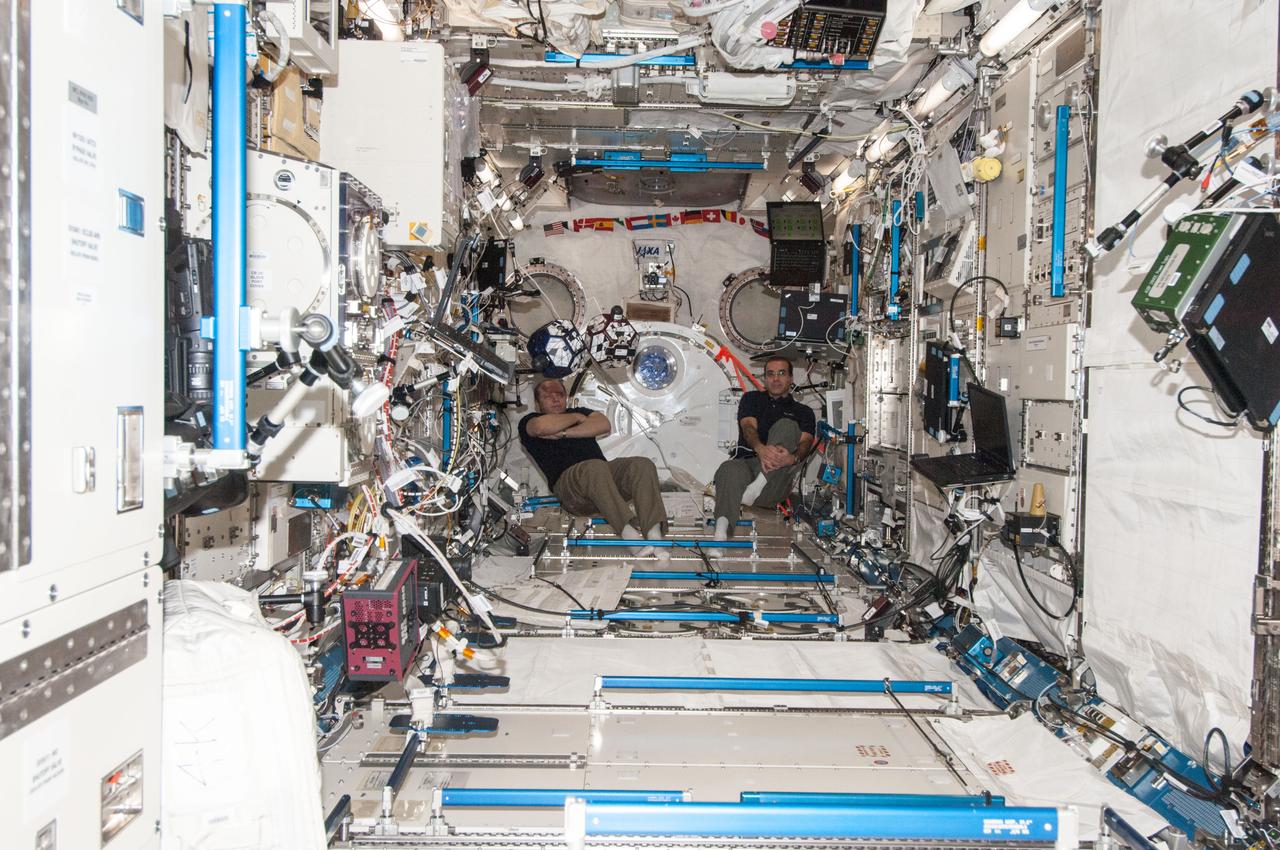
ISS038-E-031405 (15 Jan. 2014) --- In the International Space Station's Kibo laboratory, Russian cosmonaut Oleg Kotov (left), Expedition 38 commander; and NASA astronaut Rick Mastracchio, flight engineer, conduct a session with a pair of bowling-ball-sized free-flying satellites known as Synchronized Position Hold, Engage, Reorient, Experimental Satellites, or SPHERES. The experiment uses student written algorithms that operate the small satellites to demonstrate critical mission tasks such as formation flying and vehicle dockings.
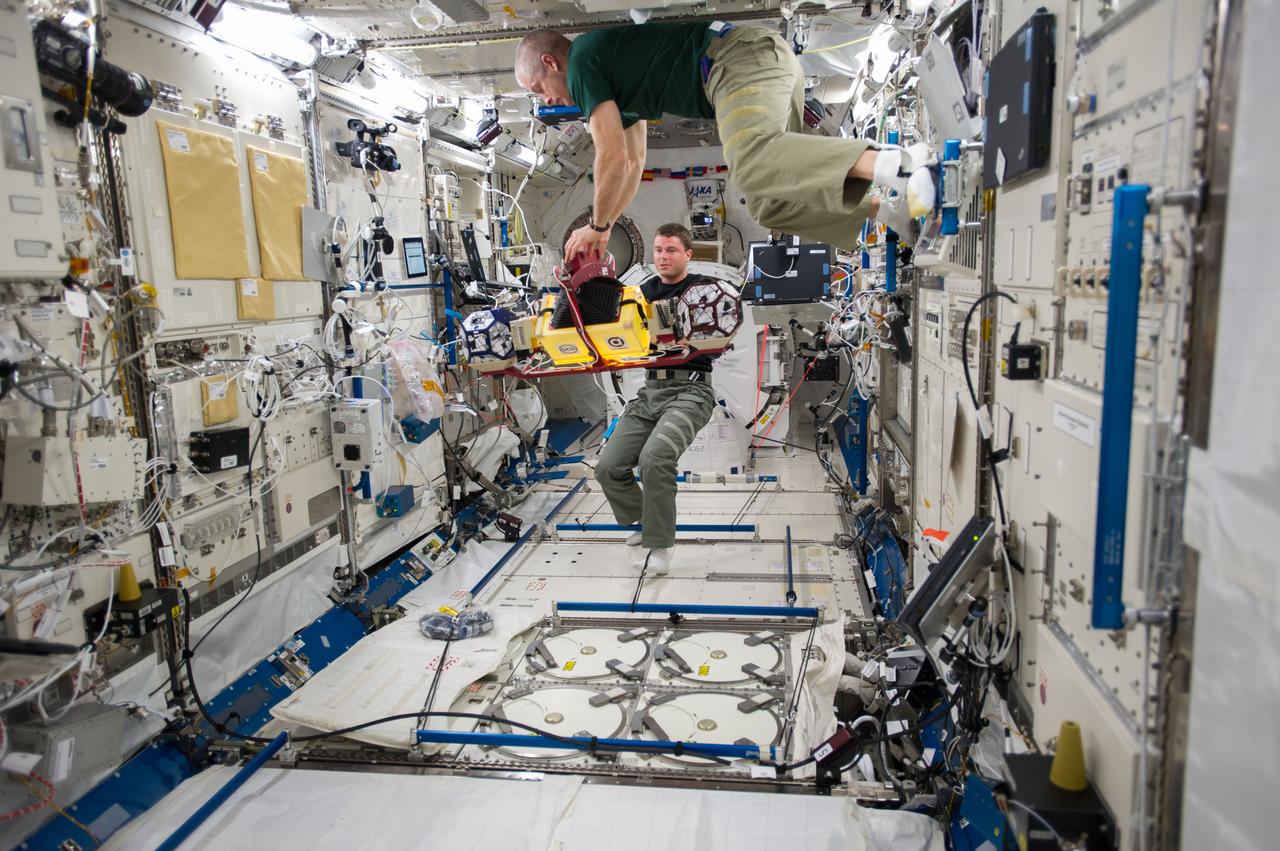
ISS040-E-014615 (18 June 2014) --- In the International Space Station's Kibo laboratory, NASA astronauts Steve Swanson (top), Expedition 40 commander; and Reid Wiseman, flight engineer, conduct test runs of the SPHERES-Slosh experiment, using the soccer-ball-sized, free-flying satellites known as Synchronized Position Hold, Engage, Reorient, Experimental Satellites, or SPHERES. The SPHERES-Slosh investigation uses small robotic satellites on the space station to examine how liquids move around inside containers in microgravity.
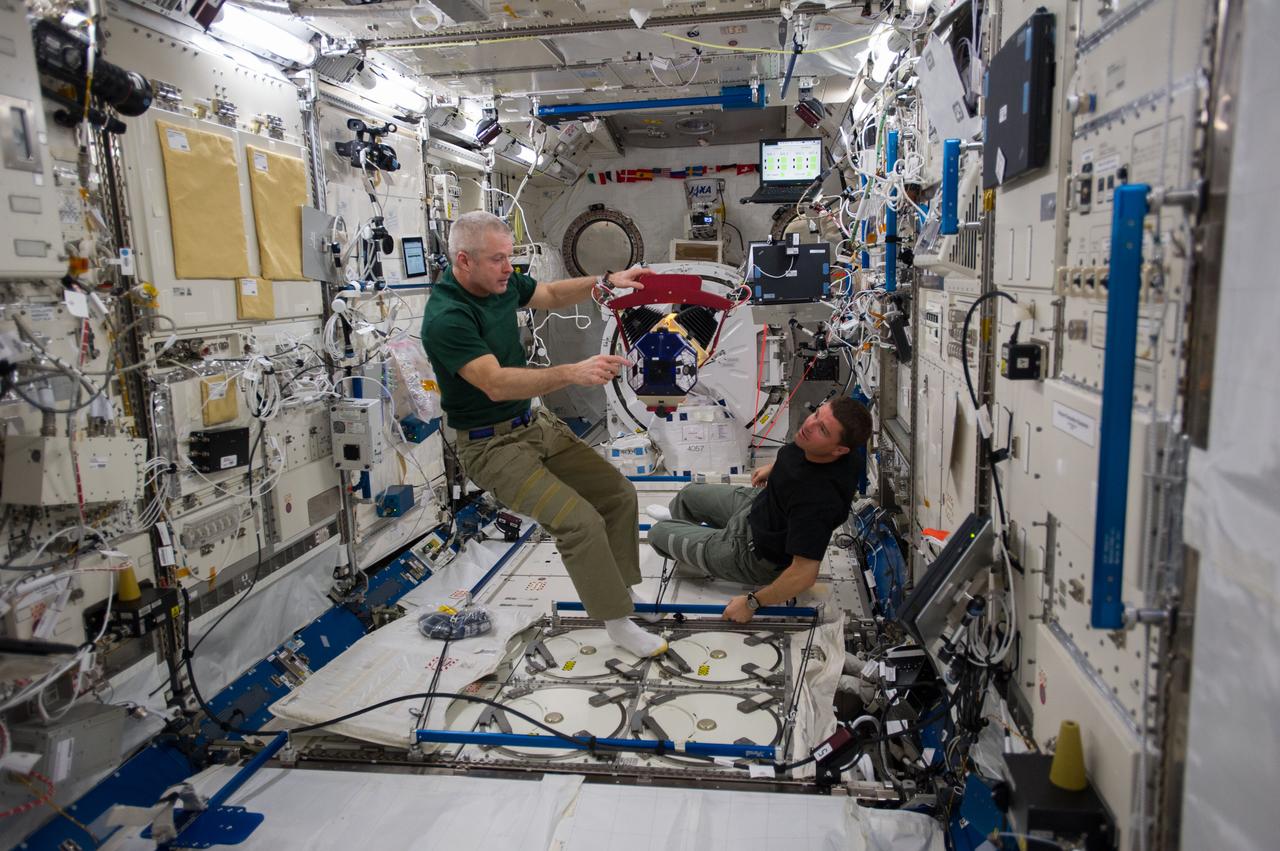
ISS040-E-014444 (18 June 2014) --- In the International Space Station's Kibo laboratory, NASA astronauts Steve Swanson (left), Expedition 40 commander; and Reid Wiseman, flight engineer, conduct test runs of the SPHERES-Slosh experiment, using the soccer-ball-sized, free-flying satellites known as Synchronized Position Hold, Engage, Reorient, Experimental Satellites, or SPHERES. The SPHERES-Slosh investigation uses small robotic satellites on the space station to examine how liquids move around inside containers in microgravity.
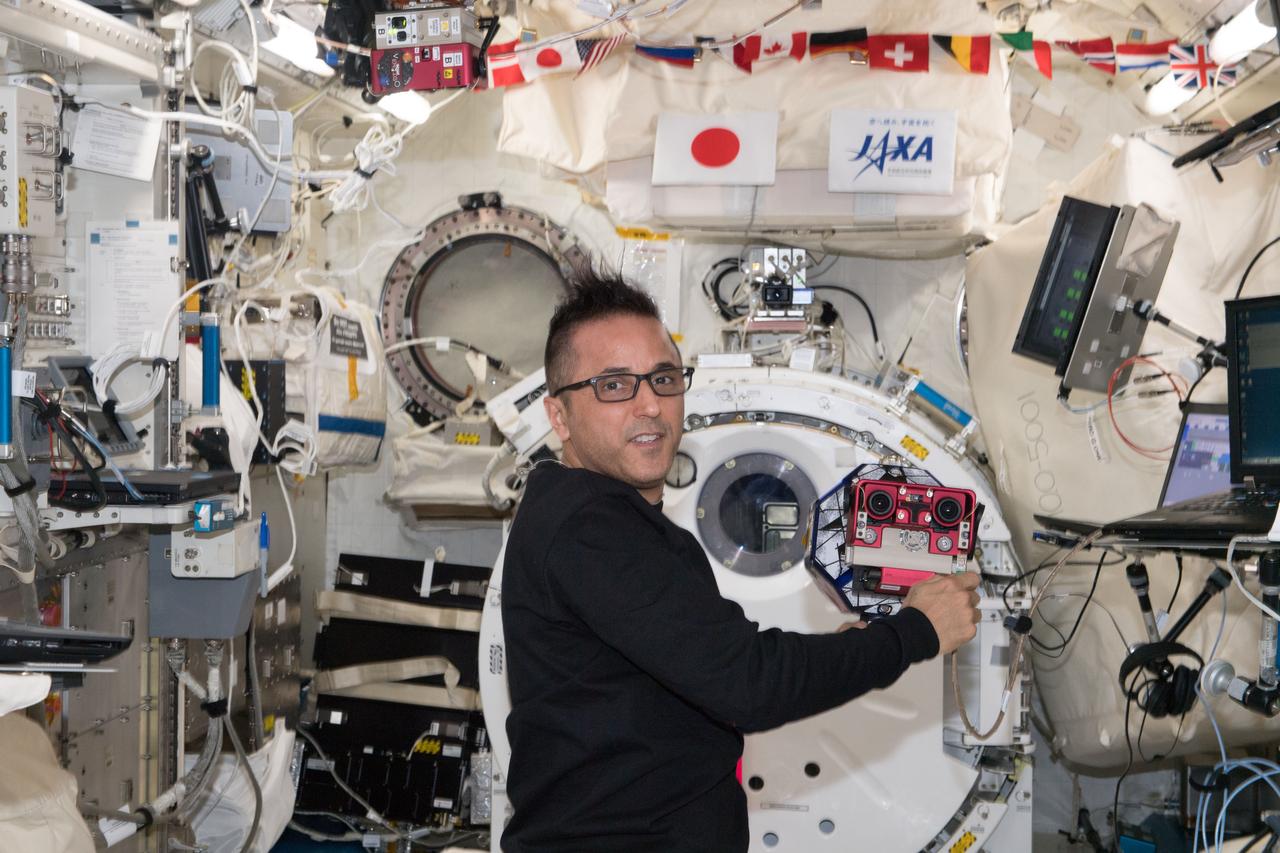
iss054e026583 (Jan. 31, 2018) --- NASA astronaut Joe Acaba during a Synchronized Position Hold, Engage, Reorient, Experimental Satellites (SPHERES) Smoothing-Based Relative Navigation (SmoothNav) experiment test run. SPHERES is a self-contained, free-flying satellite to test autonomous capabilities and docking maneuvers within the International Space Station (ISS). SmoothNav software uses a unique computational method to estimate position and velocity in multi-satellite formations.
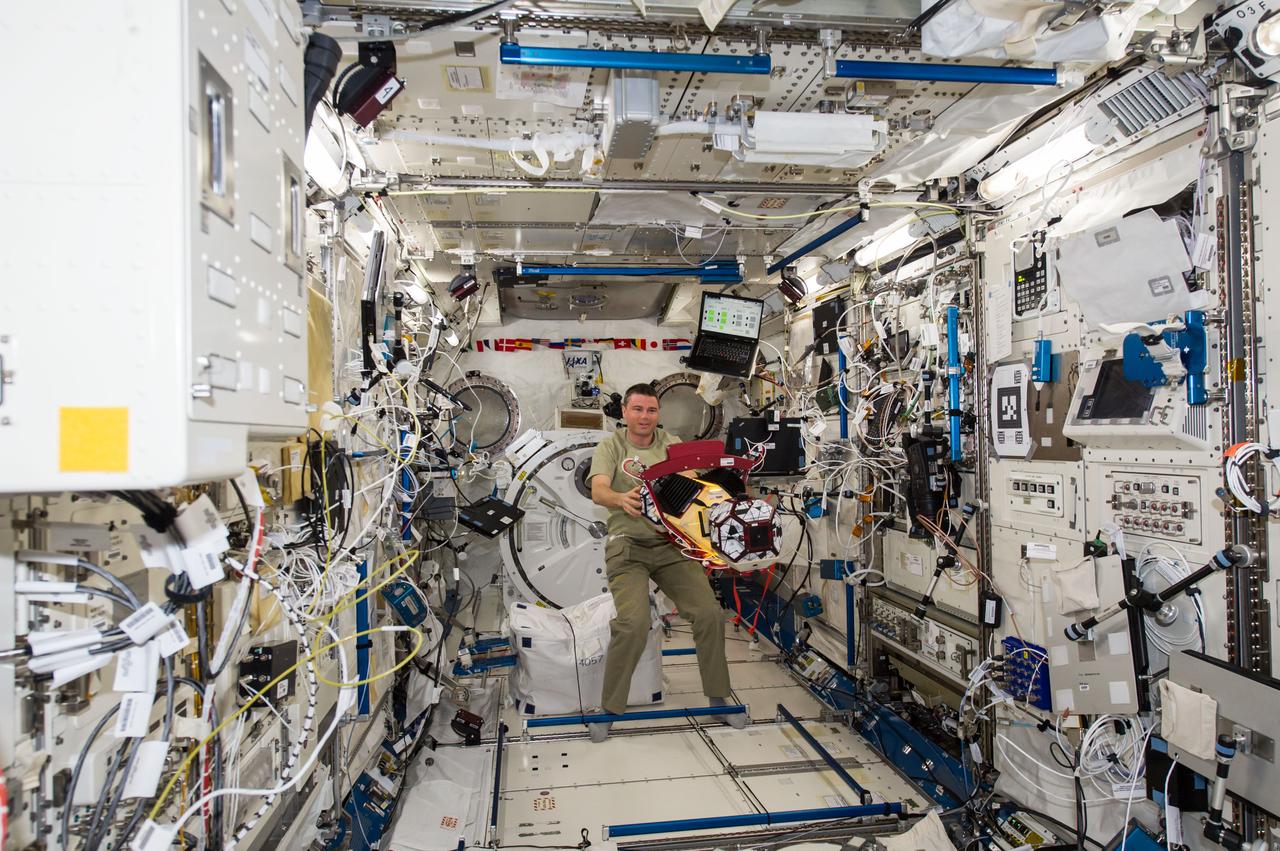
ISS040-E-139549 (9 Sept. 2014) --- In the International Space Station’s Kibo laboratory, NASA astronaut Reid Wiseman, Expedition 40 crew member, works with the bowling ball-sized satellites known as SPHERES (Synchronized Position Hold Engage Reorient Experimental Satellites) to study how liquids behave inside containers in microgravity. The experiment, named SPHERES-Slosh, maneuvers the tiny satellites similar to an actual spacecraft with an externally mounted tank and observes the interaction between the sloshing fluid and the tank/vehicle dynamics.
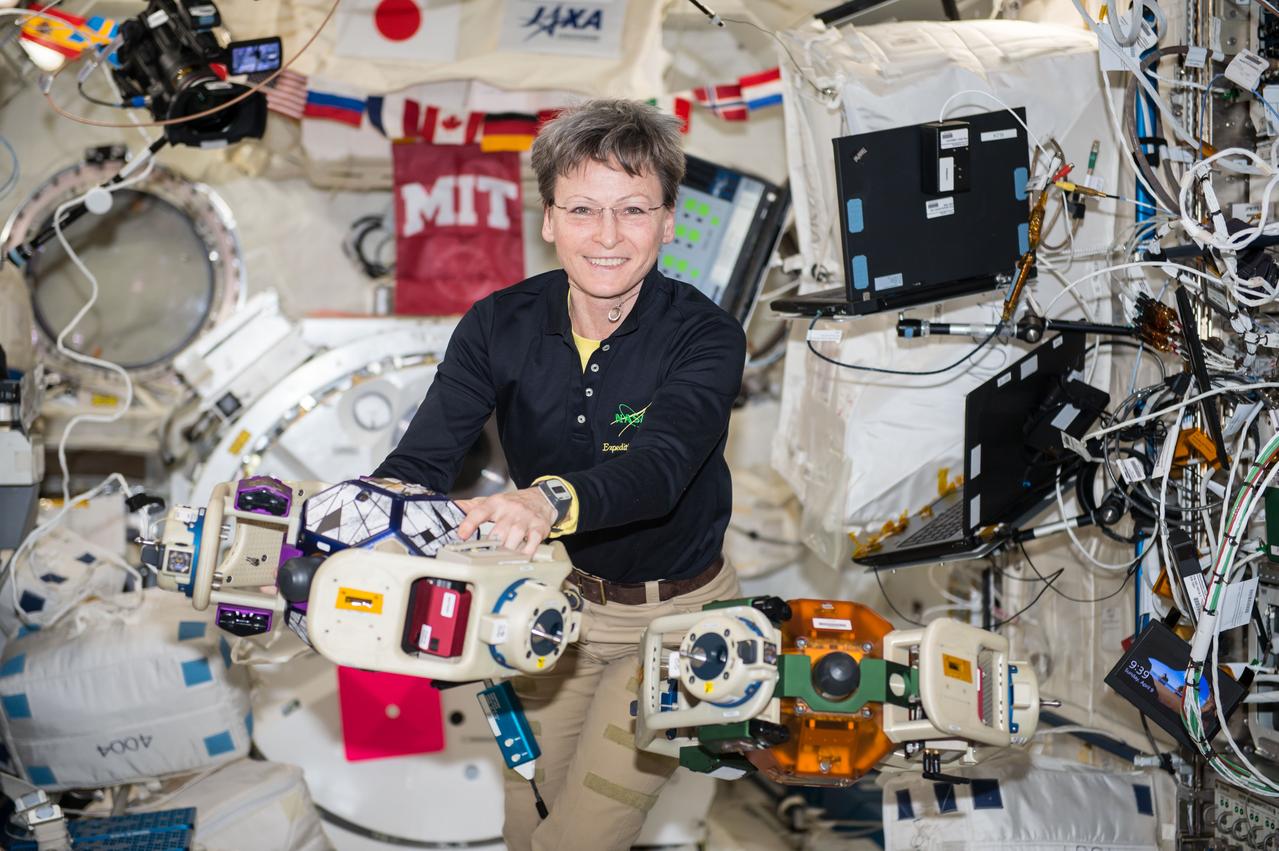
iss052e006482 (6/23/2017) --- Astronaut Peggy Whitson is photographed during a test session of the Synchronized Position Hold, Engage, Reorient, Experimental Satellites (SPHERES) Halo investigation in the Kibo module. The SPHERES Halo investigation studies the possibility of launching several separate components and then attaching them once they are in space. The investigation upgrades the International Space Station’s fleet of SPHERES to enable each SPHERE to communicate with six external objects at the same time, testing new control and remote assembly methods.
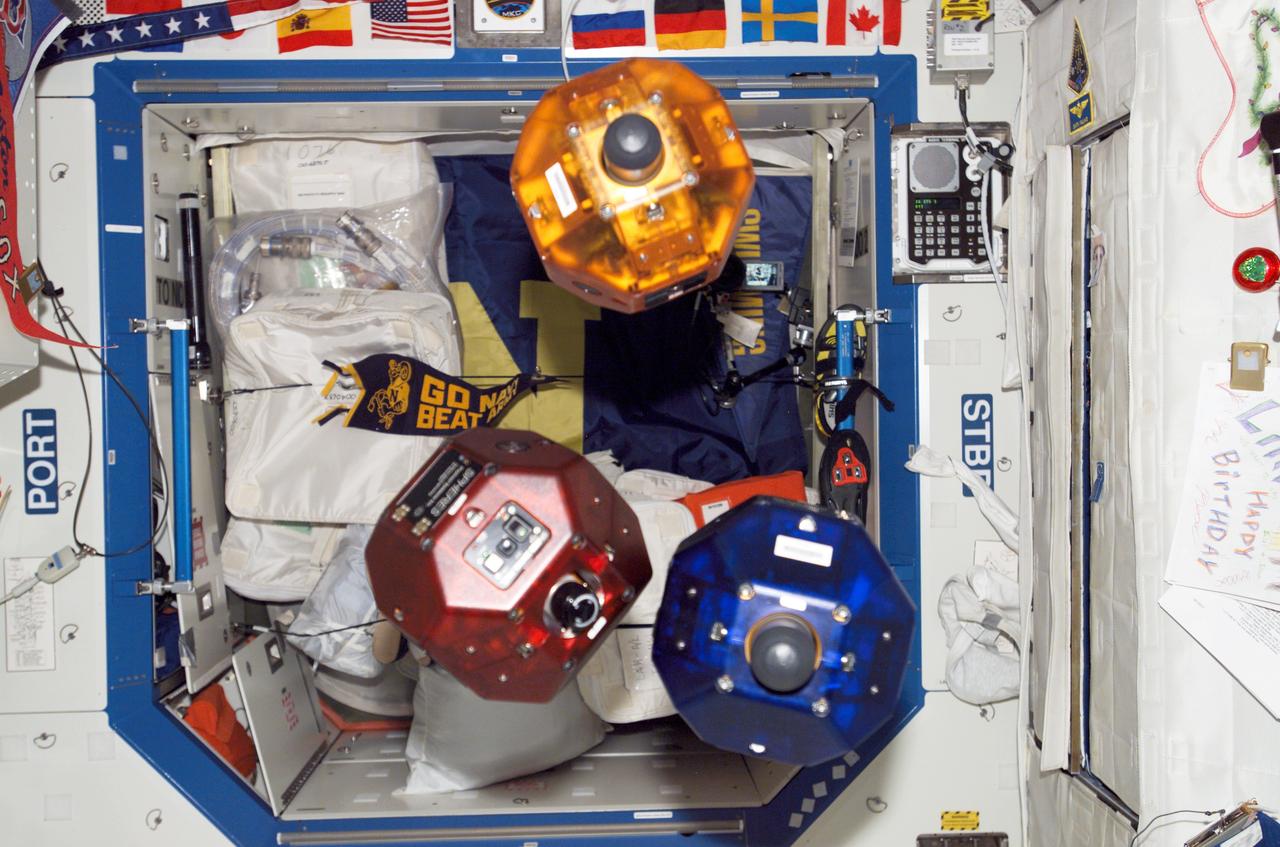
ISS014-E-17880 (24 March 2007) --- This medium close-up view shows three bowling-ball-sized free-flying satellites called Synchronized Position Hold, Engage, Reorient, Experimental Satellites (SPHERES) in the Destiny laboratory of the International Space Station. SPHERES were designed to test control algorithms for spacecraft by performing autonomous rendezvous and docking maneuvers inside the station. The results are important for multi-body control and in designing constellation and array spacecraft configurations.

ISS038-E-014012 (9 Dec. 2013) --- In the International Space Station's Kibo laboratory, NASA astronauts Rick Mastracchio (left) and Michael Hopkins, both Expedition 38 flight engineers, conduct a session with a pair of bowling-ball-sized free-flying satellites known as Synchronized Position Hold, Engage, Reorient, Experimental Satellites, or SPHERES.
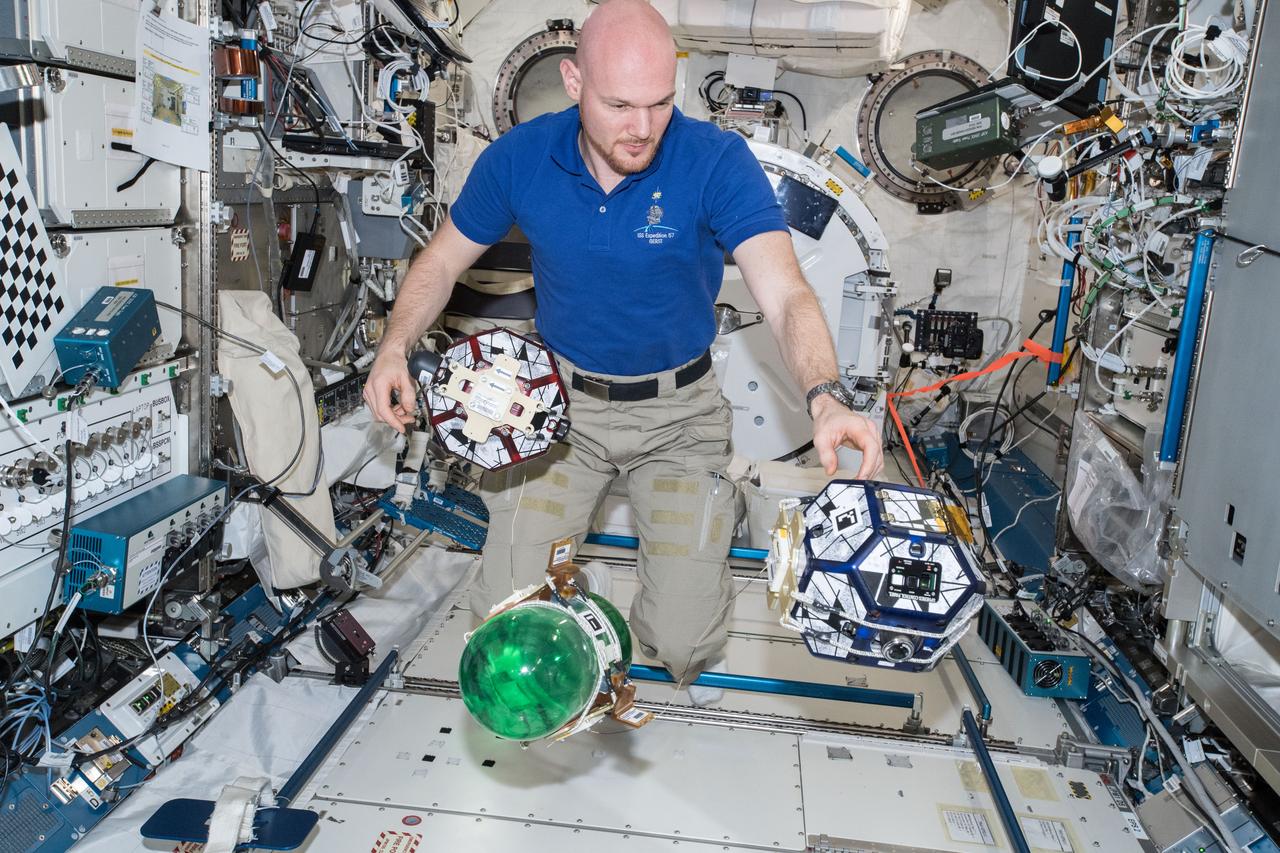
iss057e055052 (10/18/2018) --- European Space Agency astronaut Alexander Gerst is photographed during a Synchronized Position Hold, Engage, Reorient, Experimental Satellites (SPHERES) Tether Slosh experiment test session run. Photo was taken in the Kibo Japanese Experiment Pressurized Module (JPM) aboard the International Space Station (ISS). SPHERES Tether Slosh combines fluid dynamics equipment with robotic capabilities aboard the ISS to investigate automated strategies for steering passive cargo that contain fluids.
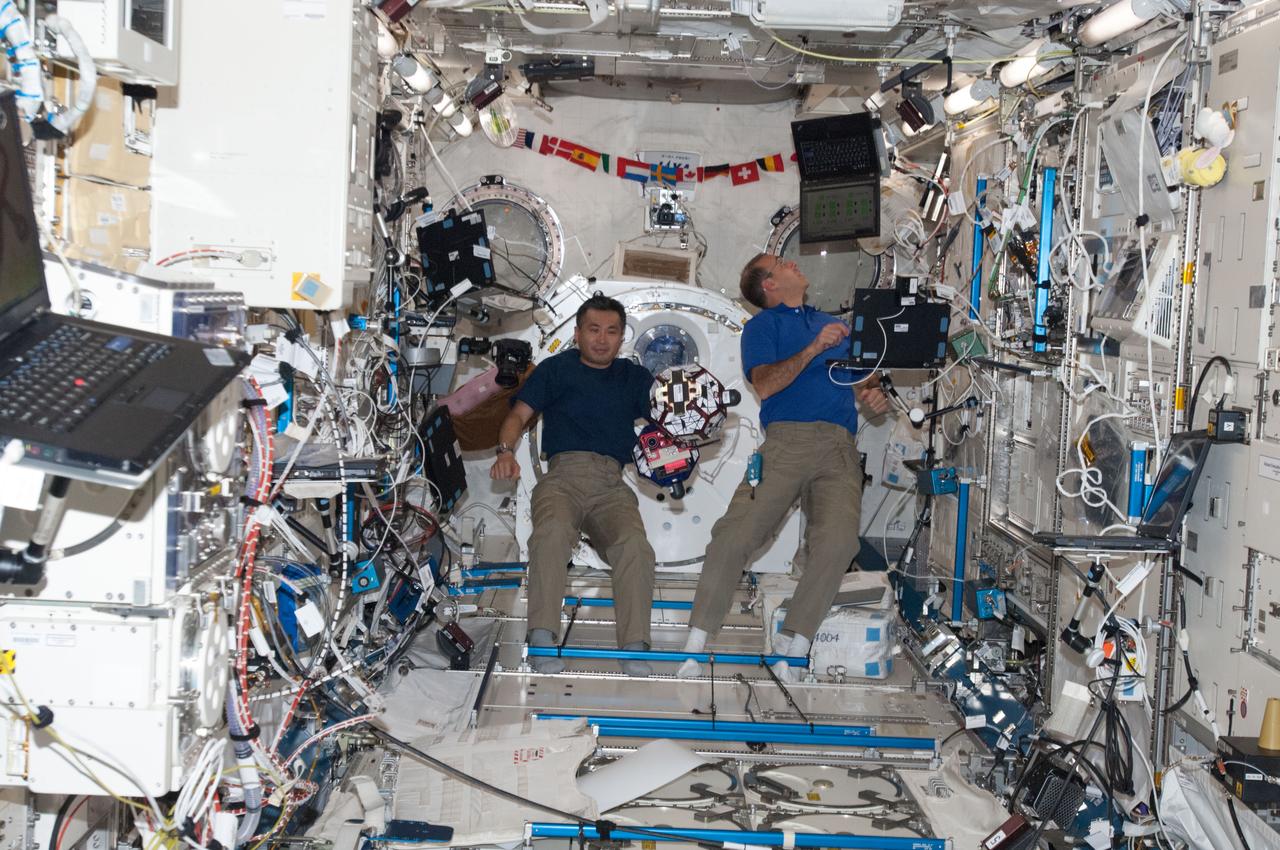
ISS038-E-000068 (10 Nov. 2013) --- In the International Space Station?s Kibo laboratory, Japan Aerospace Exploration Agency astronaut Koichi Wakata (left) and NASA astronaut Rick Mastracchio, both Expedition 38 flight engineers, conduct a session with a pair of bowling-ball-sized free-flying satellites known as Synchronized Position Hold, Engage, Reorient, Experimental Satellites, or SPHERES.
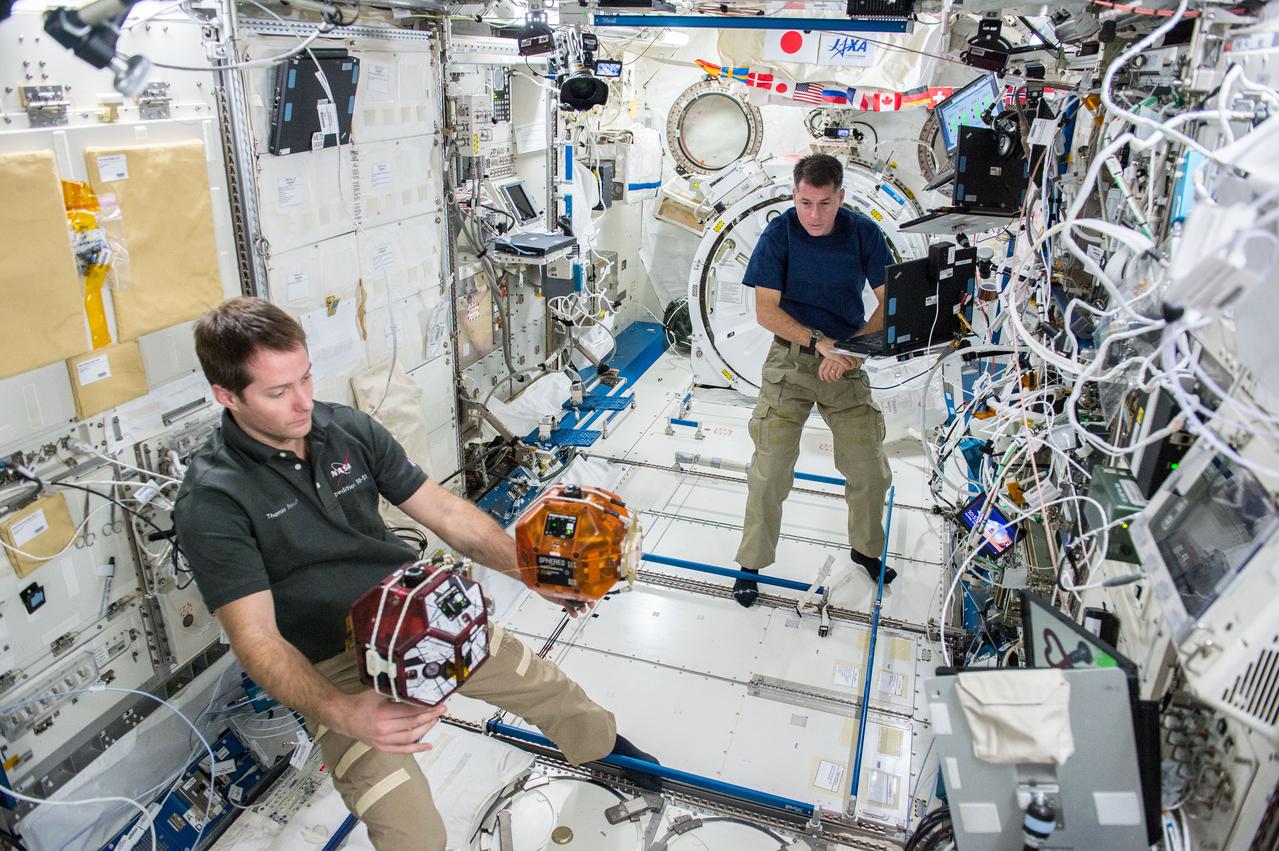
iss050e013146 (12/1/2016) --- NASA astronaut Shane Kimbrough and European Space Agency (ESA) astronaut Thomas Pesquet during the Synchronized Position Hold, Engage, Reorient, Experimental Satellites Tether Demo, in the Japanese Experiment Module (JEM) Pressurized Module (JPM). The SPHERES Tether Demo studies the dynamics of a tethered capture object and a “space tug” chase vehicle, improving computer programs needed for removing space debris as well as capturing scientific samples from other planets.
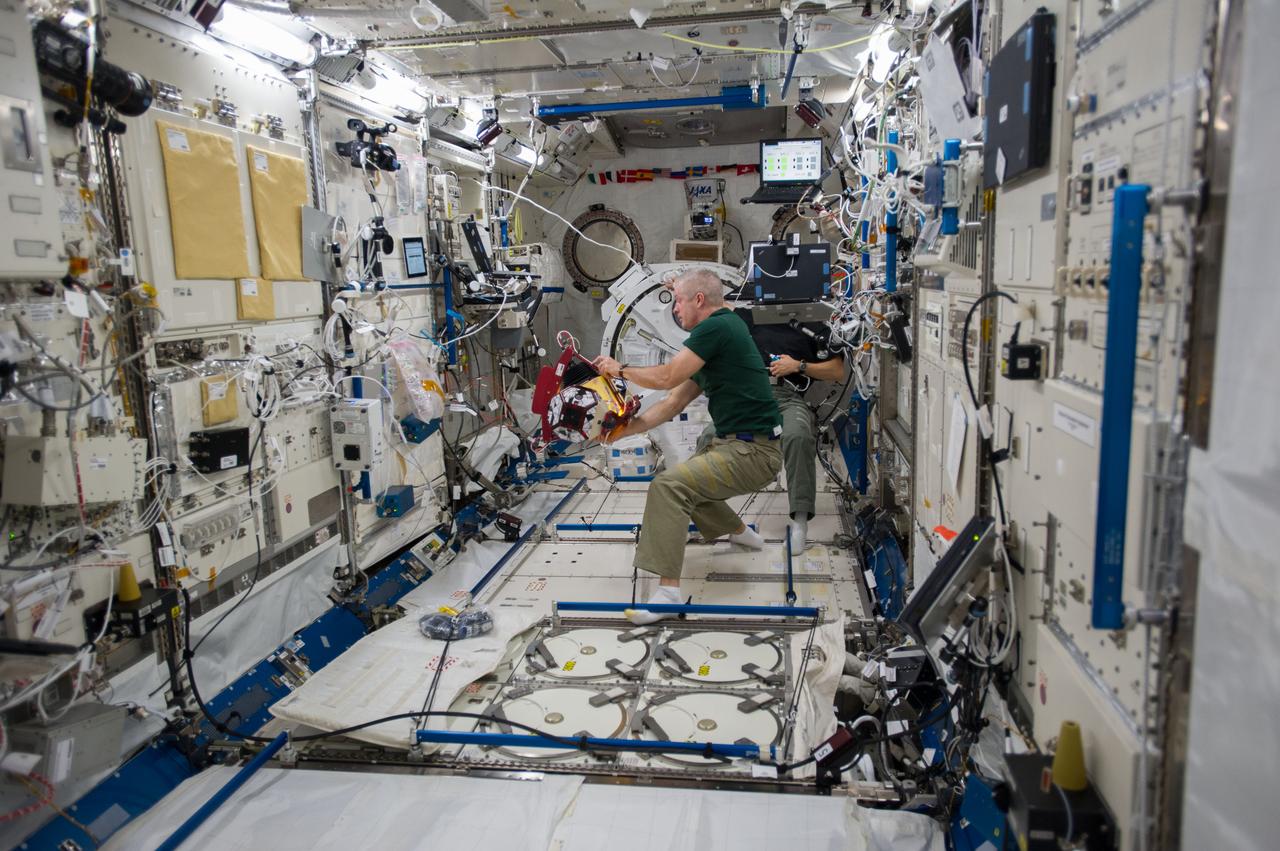
ISS040-E-015415 (18 June 2014) --- In the International Space Station's Kibo laboratory, NASA astronauts Steve Swanson, Expedition 40 commander; and Reid Wiseman (partially obscured), flight engineer, conduct test runs of the SPHERES-Slosh experiment, using the soccer-ball-sized, free-flying satellites known as Synchronized Position Hold, Engage, Reorient, Experimental Satellites, or SPHERES. The SPHERES-Slosh investigation uses small robotic satellites on the space station to examine how liquids move around inside containers in microgravity.
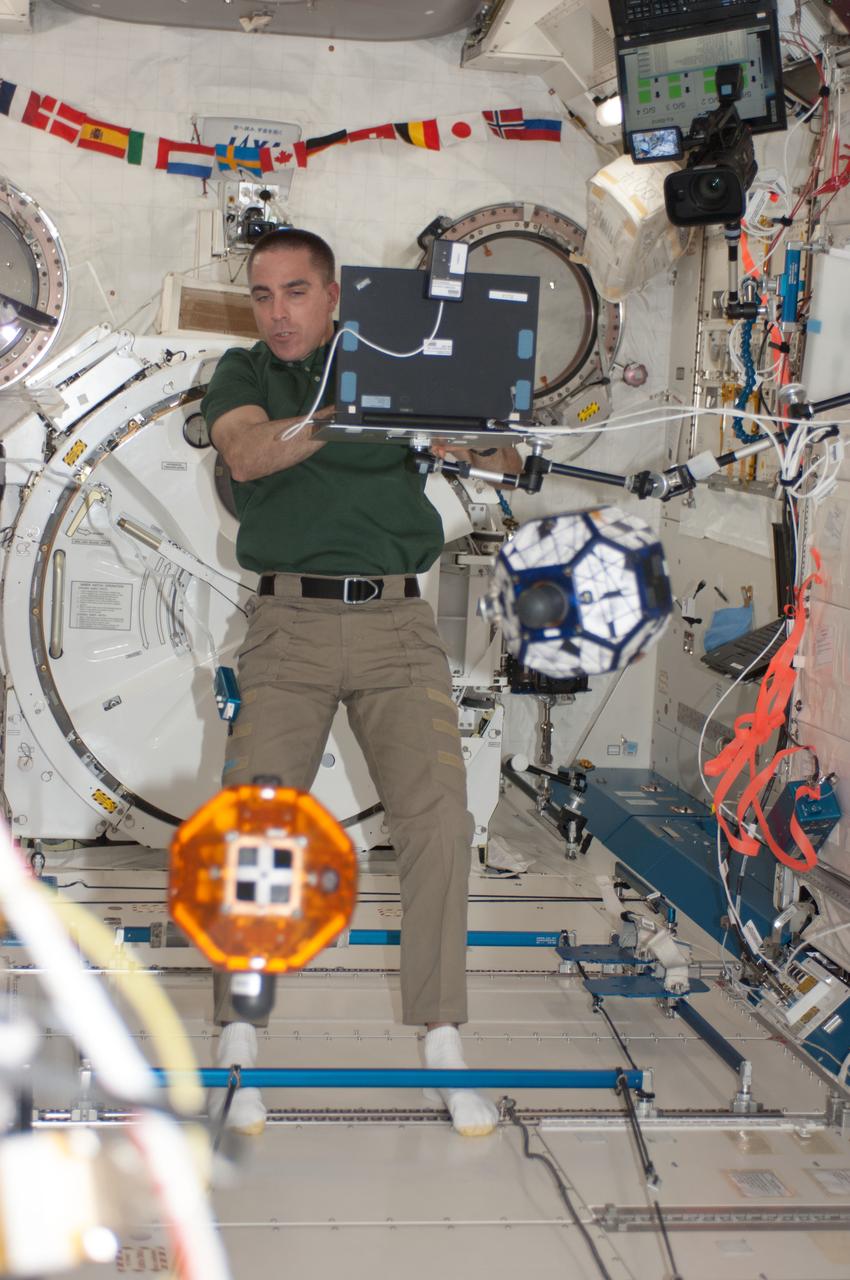
ISS036-E-015549 (5 July 2013) --- In the International Space Station’s Kibo laboratory, NASA astronaut Chris Cassidy, Expedition 36 flight engineer, watches as he devotes some time with the long-running SPHERES experiment, also known as Synchronized Position Hold Engage and Reorient Experimental Satellites. The experiment is run in conjunction with students who program bowling ball-sized satellites using algorithms. The free-floating satellites are programmed to perform maneuvers potentially influencing the design of future missions.
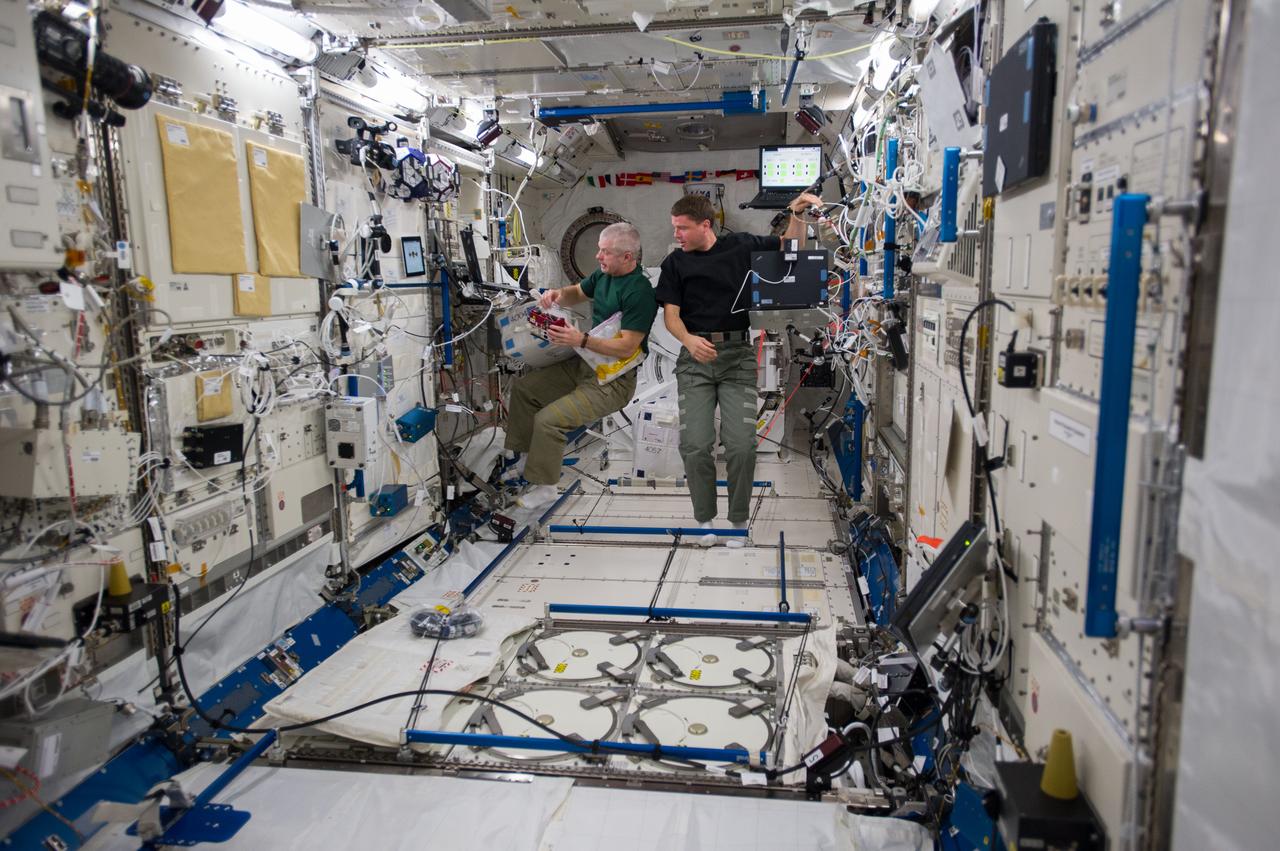
ISS040-E-013914 (18 June 2014) --- In the International Space Station's Kibo laboratory, NASA astronauts Steve Swanson (left), Expedition 40 commander; and Reid Wiseman, flight engineer, conduct test runs of the SPHERES-Slosh experiment, using the soccer-ball-sized, free-flying satellites known as Synchronized Position Hold, Engage, Reorient, Experimental Satellites, or SPHERES. The SPHERES-Slosh investigation uses small robotic satellites on the space station to examine how liquids move around inside containers in microgravity.
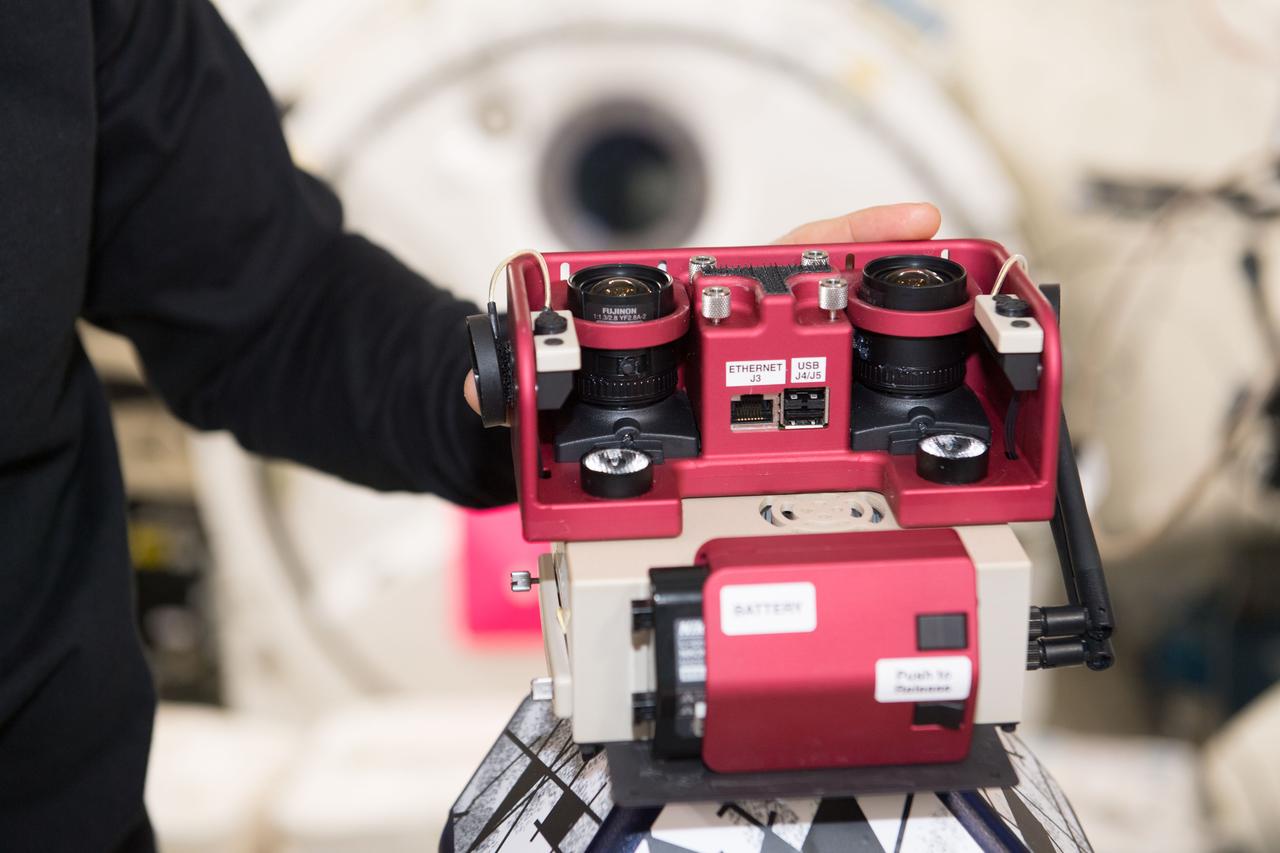
iss054e026578 (Jan. 31, 2018) --- Vertigo hardware used on Synchronized Position Hold, Engage, Reorient, Experimental Satellites (SPHERES) during a test run of Smoothing-Based Relative Navigation (SmoothNav). SPHERES is a self-contained, free-flying satellite to test autonomous capabilities and docking maneuvers within the International Space Station (ISS). SmoothNav software uses a unique computational method to estimate position and velocity in multi-satellite formations.