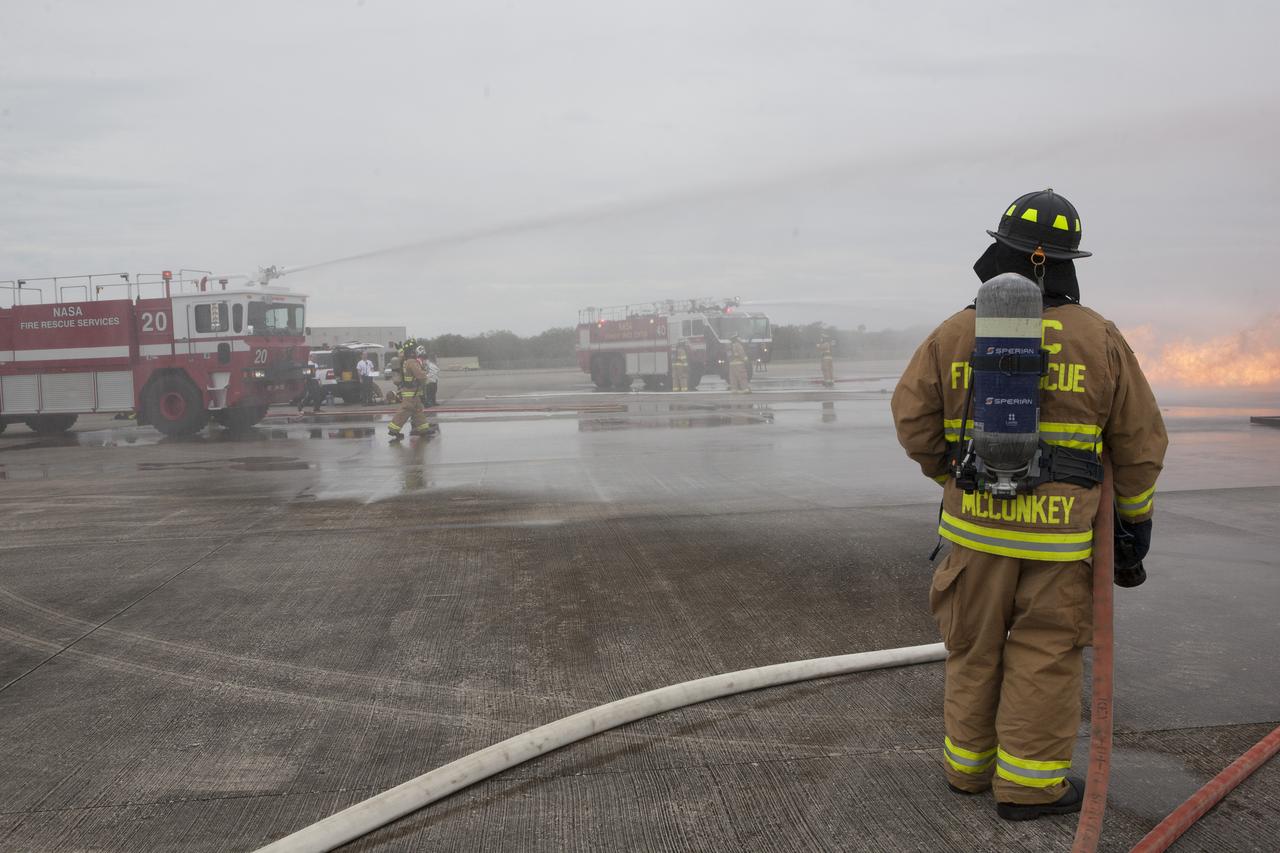
CAPE CANAVERAL, Fla. - Special Rescue Operations firefighters with NASA Fire Rescue Services in the Protective Services Office at NASA’s Kennedy Space Center in Florida prepare to participate in a training exercise at the Shuttle Landing Facility. A small fire is burning near a mock-up of a plane during the training exercise. Kennedy’s firefighters recently achieved Pro Board Certification in aerial fire truck operations and completed vehicle extrication training using the Jaws of Life. The Protective Services Office is one step closer to achieving certification in vehicle machinery extrication and other rescue skills. Kennedy’s firefighters are with G4S Government Solutions Inc., on the Kennedy Protective Services Contract. Photo credit: NASA/Kim Shiflett
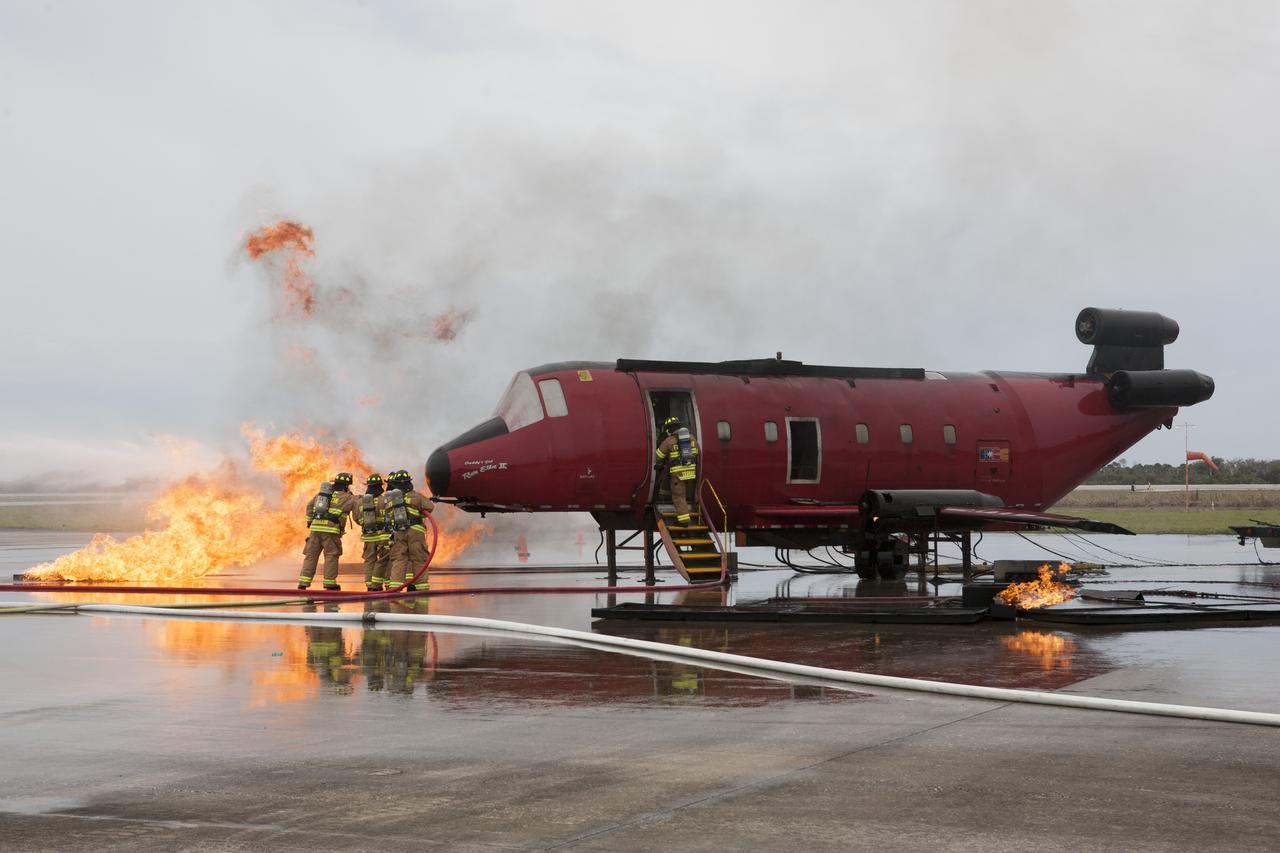
CAPE CANAVERAL, Fla. - Special Rescue Operations firefighters with NASA Fire Rescue Services in the Protective Services Office at NASA’s Kennedy Space Center in Florida participate in a training exercise at the Shuttle Landing Facility. Firefighters, wearing protective gear, use hoses to put out a fire burning near the mock-up of a small plane as another firefighter checks inside the plane. Kennedy’s firefighters recently achieved Pro Board Certification in aerial fire truck operations and completed vehicle extrication training using the Jaws of Life. The Protective Services Office is one step closer to achieving certification in vehicle machinery extrication and other rescue skills. Kennedy’s firefighters are with G4S Government Solutions Inc., on the Kennedy Protective Services Contract. Photo credit: NASA/Kim Shiflett
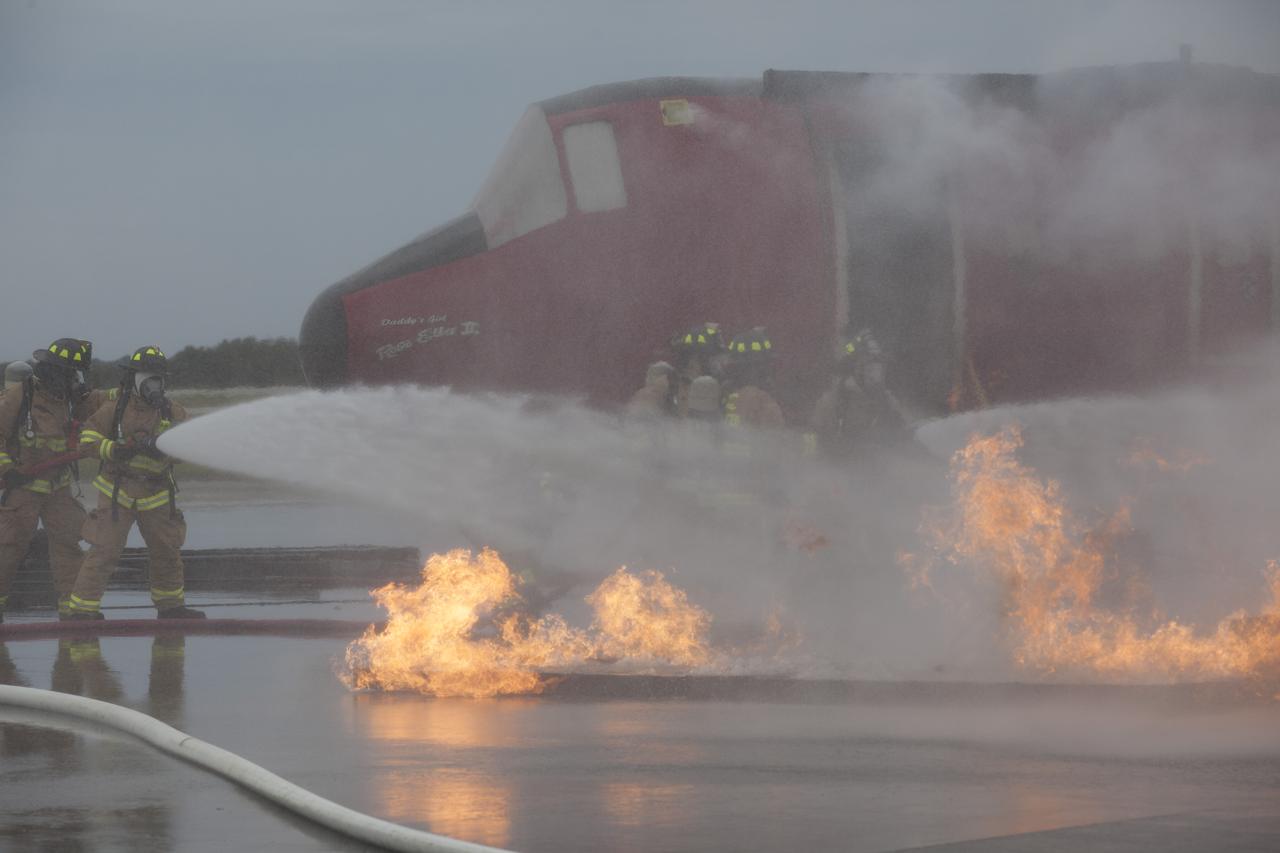
CAPE CANAVERAL, Fla. - Special Rescue Operations firefighters with NASA Fire Rescue Services in the Protective Services Office at NASA’s Kennedy Space Center in Florida participate in a training exercise at the Shuttle Landing Facility. Firefighters, wearing protective gear, use hoses to put out a fire burning close to a mock-up of a small plane. Kennedy’s firefighters recently achieved Pro Board Certification in aerial fire truck operations and completed vehicle extrication training using the Jaws of Life. The Protective Services Office is one step closer to achieving certification in vehicle machinery extrication and other rescue skills. Kennedy’s firefighters are with G4S Government Solutions Inc., on the Kennedy Protective Services Contract. Photo credit: NASA/Kim Shiflett
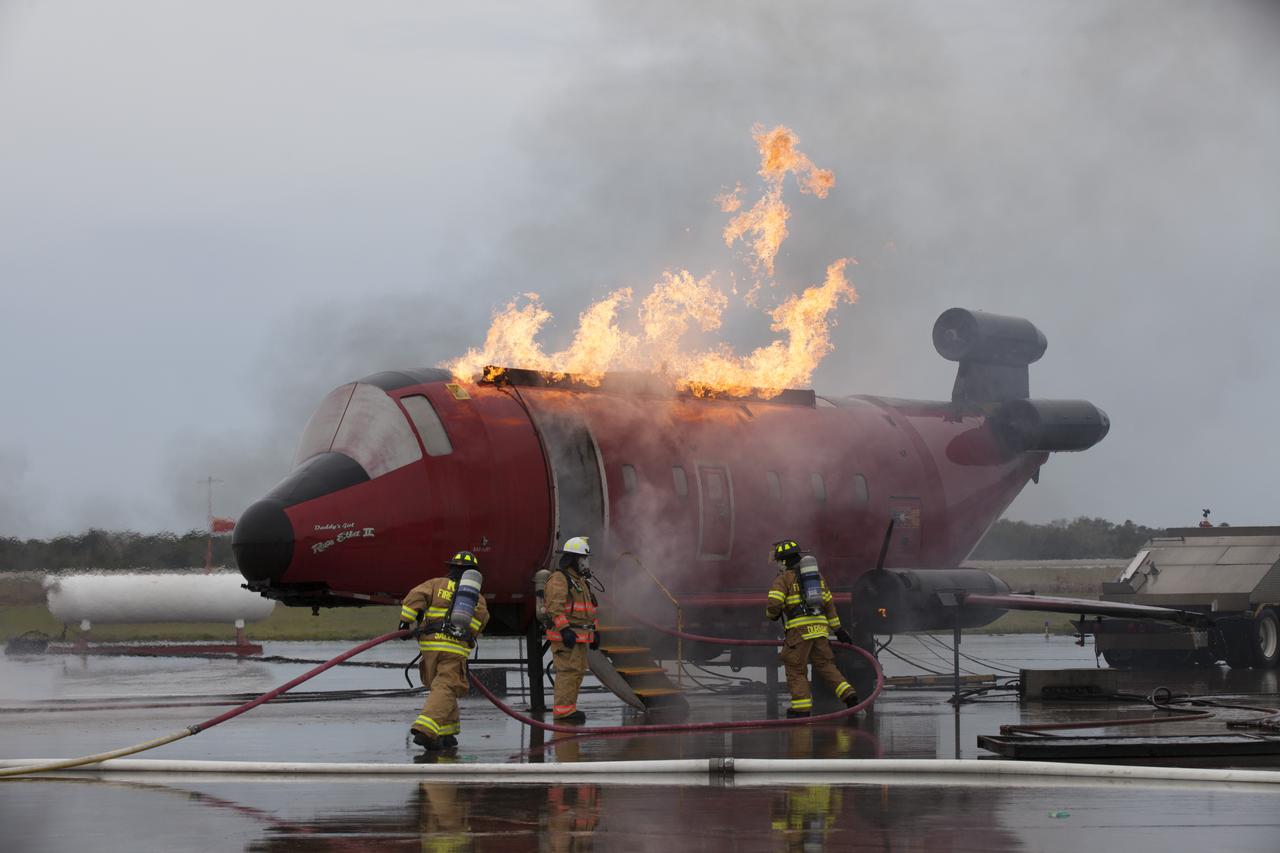
CAPE CANAVERAL, Fla. - Special Rescue Operations firefighters with NASA Fire Rescue Services in the Protective Services Office at NASA’s Kennedy Space Center in Florida participate in a training exercise at the Shuttle Landing Facility. Firefighters, wearing protective gear, use hoses to put out a fire burning on a mock-up of a small plane. Kennedy’s firefighters recently achieved Pro Board Certification in aerial fire truck operations and completed vehicle extrication training using the Jaws of Life. The Protective Services Office is one step closer to achieving certification in vehicle machinery extrication and other rescue skills. Kennedy’s firefighters are with G4S Government Solutions Inc., on the Kennedy Protective Services Contract. Photo credit: NASA/Kim Shiflett
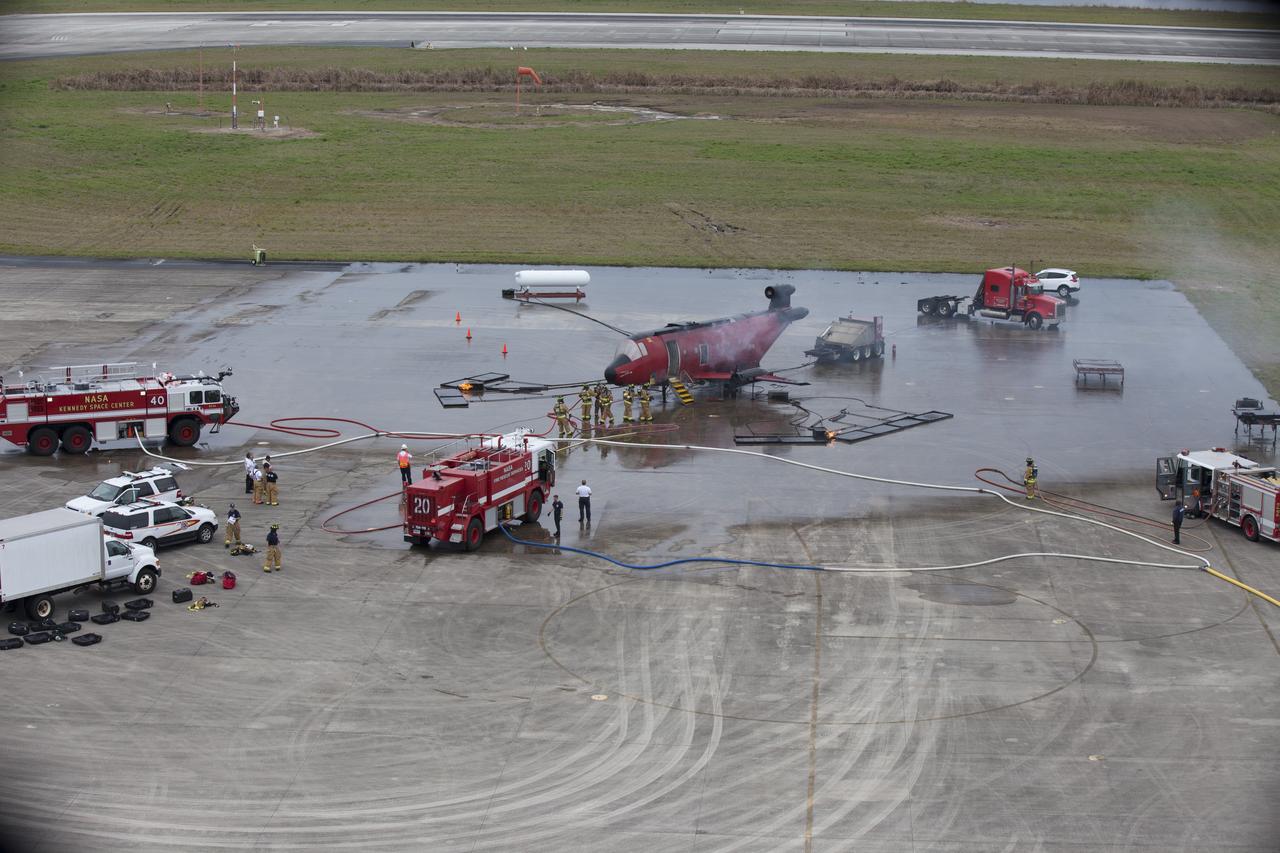
CAPE CANAVERAL, Fla. - Special Rescue Operations firefighters with NASA Fire Rescue Services in the Protective Services Office at NASA’s Kennedy Space Center in Florida participate in a training exercise at the Shuttle Landing Facility. Firefighters use fire trucks and hoses to extinguish flames burning on and around a mock-up of a small plane. Kennedy’s firefighters recently achieved Pro Board Certification in aerial fire truck operations and completed vehicle extrication training using the Jaws of Life. The Protective Services Office is one step closer to achieving certification in vehicle machinery extrication and other rescue skills. Kennedy’s firefighters are with G4S Government Solutions Inc., on the Kennedy Protective Services Contract. Photo credit: NASA/Kim Shiflett
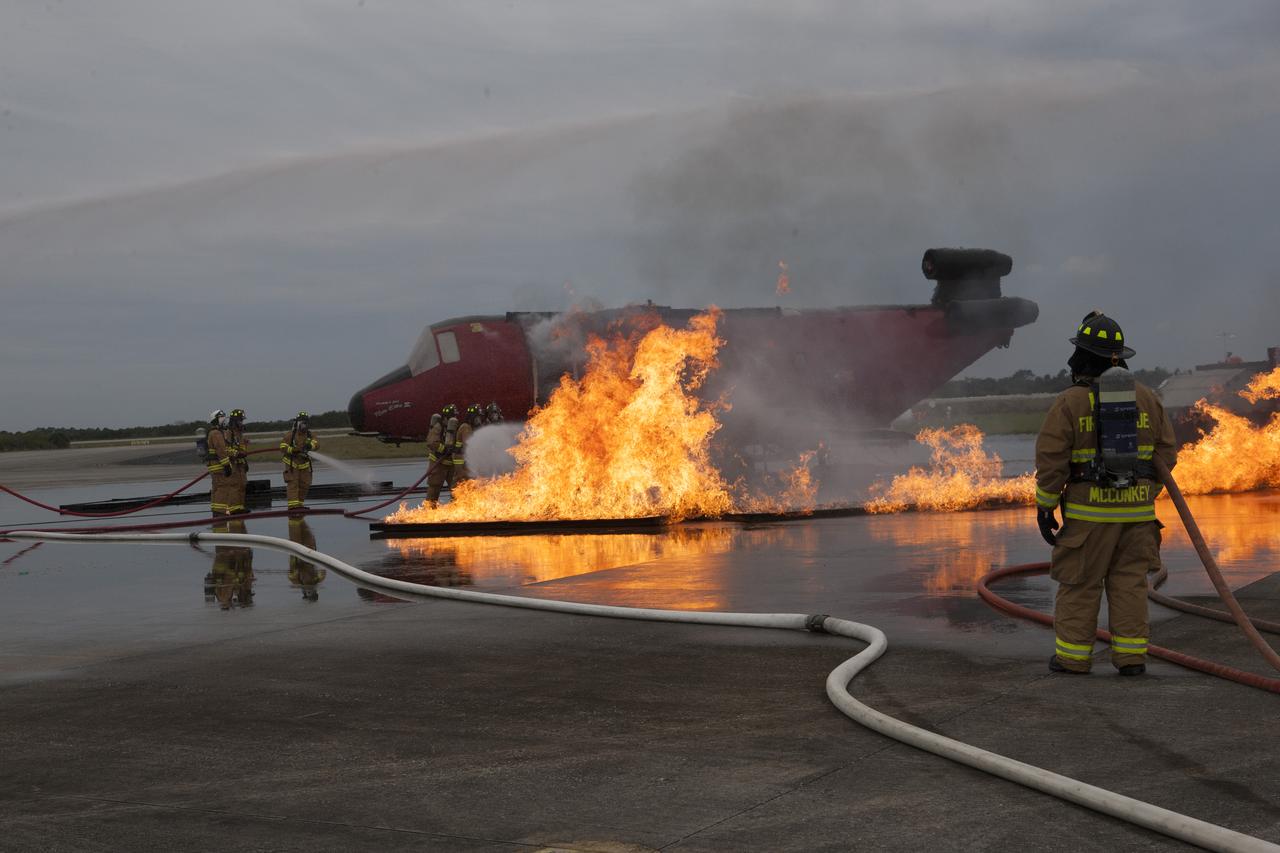
CAPE CANAVERAL, Fla. - Special Rescue Operations firefighters with NASA Fire Rescue Services in the Protective Services Office at NASA’s Kennedy Space Center in Florida participate in a training exercise at the Shuttle Landing Facility. Firefighters, wearing protective gear, use hoses to put out a fire burning near the mock-up of a small plane. Kennedy’s firefighters recently achieved Pro Board Certification in aerial fire truck operations and completed vehicle extrication training using the Jaws of Life. The Protective Services Office is one step closer to achieving certification in vehicle machinery extrication and other rescue skills. Kennedy’s firefighters are with G4S Government Solutions Inc., on the Kennedy Protective Services Contract. Photo credit: NASA/Kim Shiflett
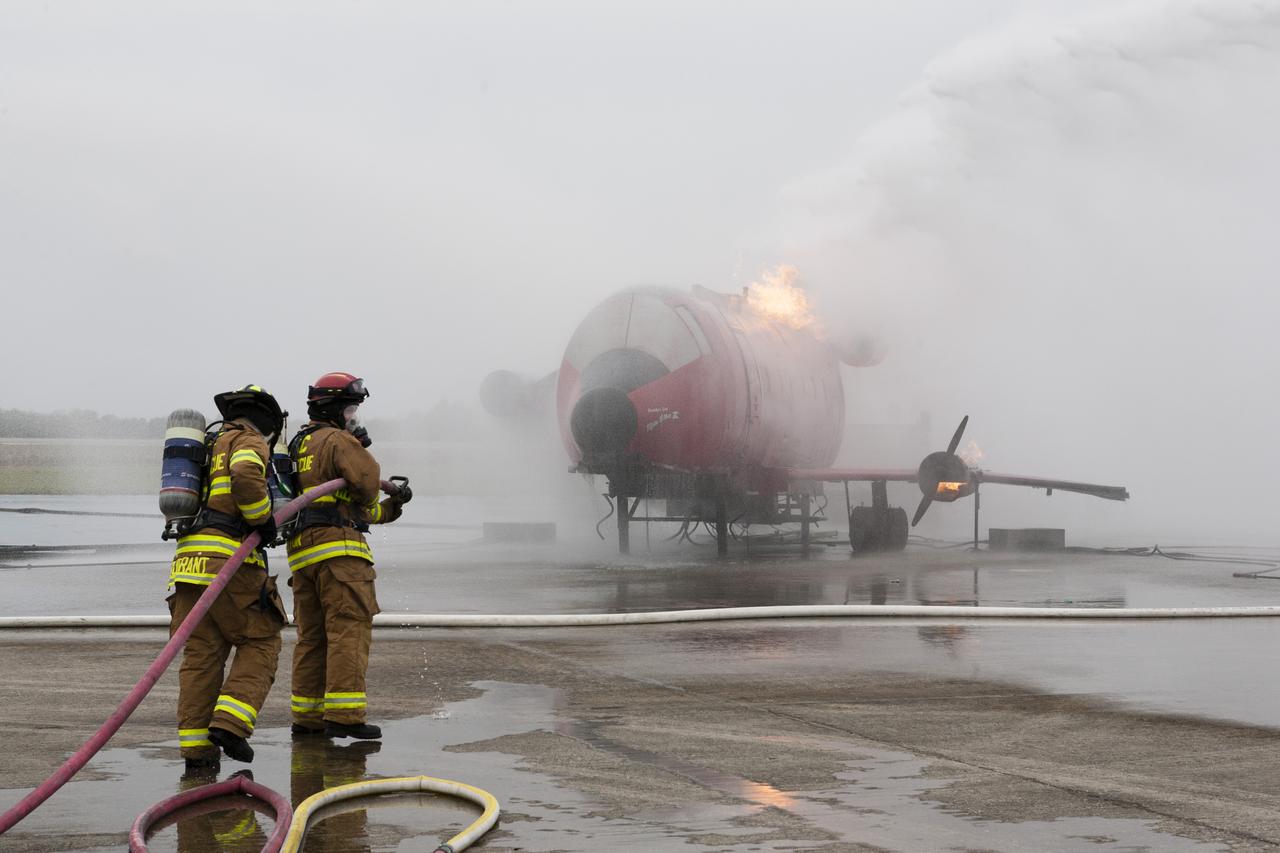
CAPE CANAVERAL, Fla. - During a training exercise, Special Rescue Operations firefighters with NASA Fire Rescue Services in the Protective Services Office at NASA’s Kennedy Space Center in Florida use hoses to put out a fire burning on a mock-up of a small plane at the Shuttle Landing Facility. They are wearing protective gear for the training exercise. Kennedy’s firefighters recently achieved Pro Board Certification in aerial fire truck operations and completed vehicle extrication training using the Jaws of Life. The Protective Services Office is one step closer to achieving certification in vehicle machinery extrication and other rescue skills. Kennedy’s firefighters are with G4S Government Solutions Inc., on the Kennedy Protective Services Contract. Photo credit: NASA/Kim Shiflett
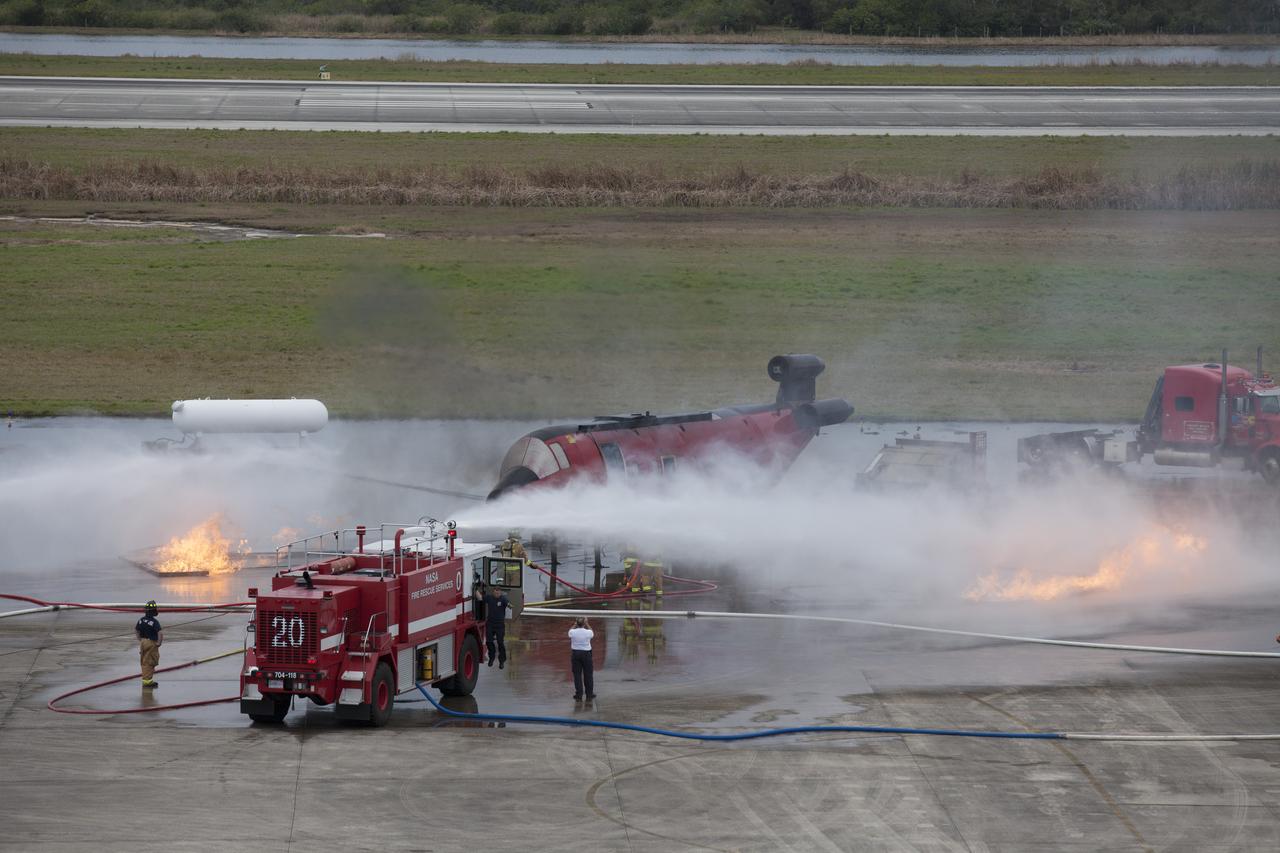
CAPE CANAVERAL, Fla. - Special Rescue Operations firefighters with NASA Fire Rescue Services in the Protective Services Office at NASA’s Kennedy Space Center in Florida participate in a training exercise at the Shuttle Landing Facility. Firefighters use a fire truck to put out a fire burning close to a mock-up of a small plane and a truck. Kennedy’s firefighters recently achieved Pro Board Certification in aerial fire truck operations and completed vehicle extrication training using the Jaws of Life. The Protective Services Office is one step closer to achieving certification in vehicle machinery extrication and other rescue skills. Kennedy’s firefighters are with G4S Government Solutions Inc., on the Kennedy Protective Services Contract. Photo credit: NASA/Kim Shiflett
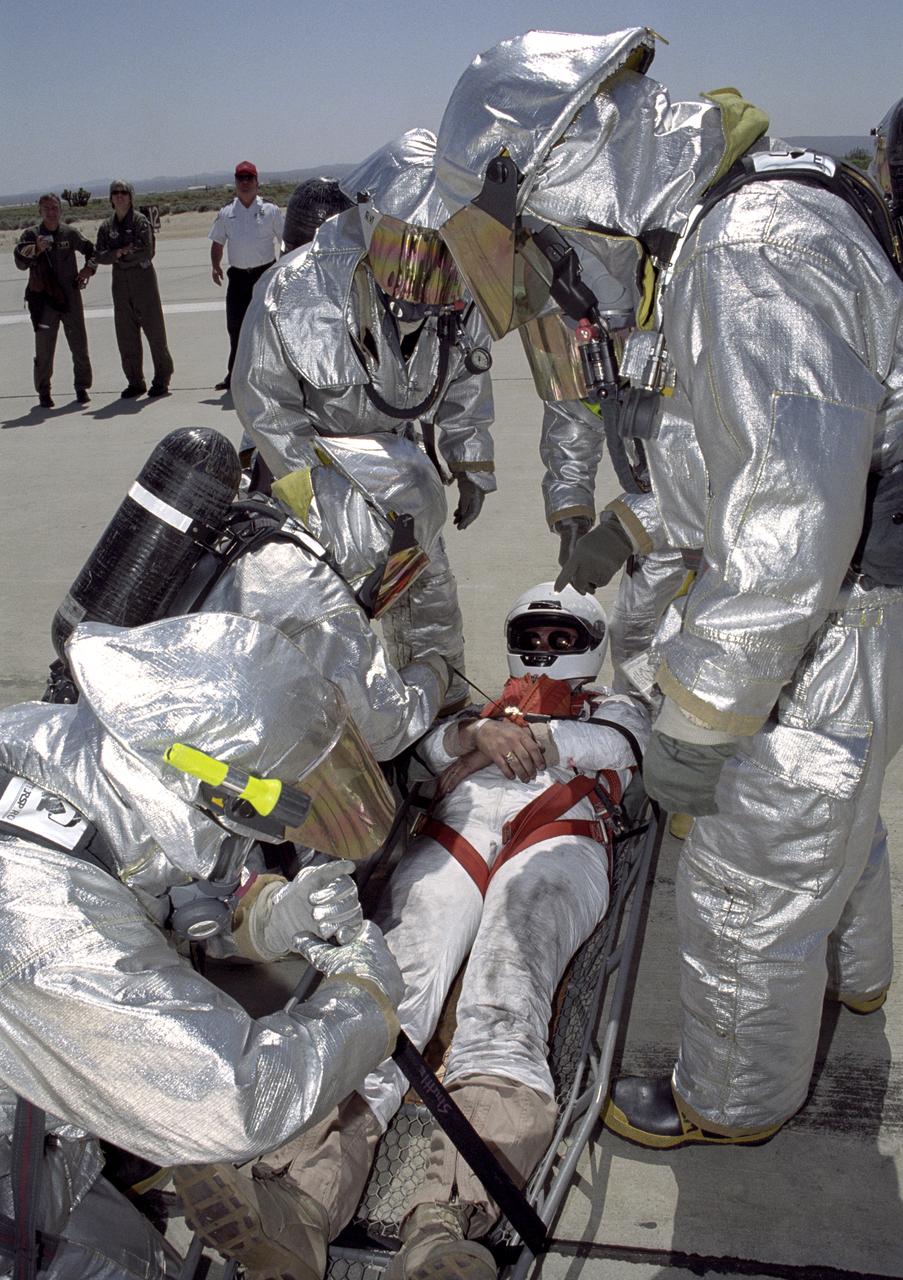
Clad in full thermal protection suits, Air Force fire-rescue crews strap a stand-in "astronaut" into a litter during a Space Shuttle rescue training exercise at Edwards AFB.
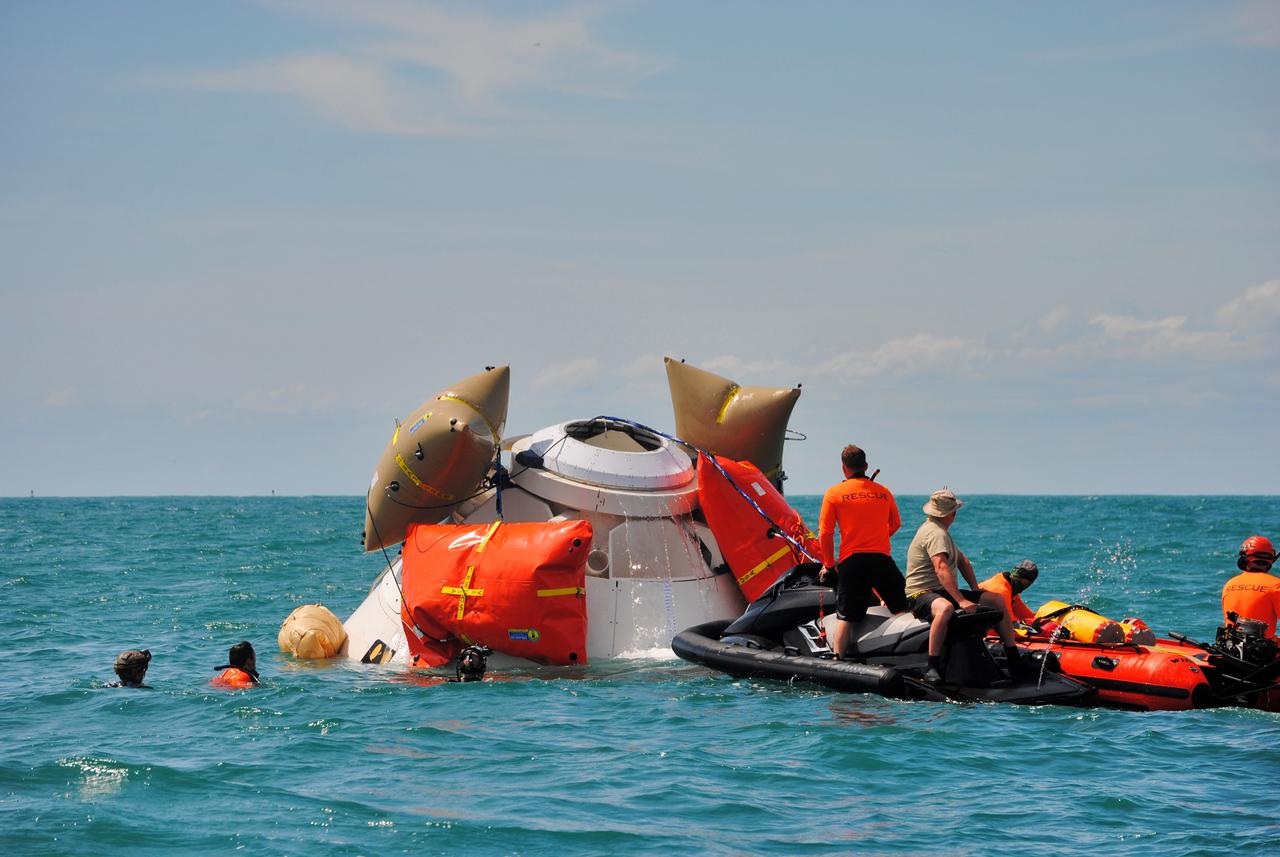
Rescue team members are using a Boeing CST-100 Starliner training capsule to rehearse a search and rescue training exercise in the unlikely event of an emergency resulting in a splashdown. NASA and the Department of Defense (DoD) Human Space Flight Support Office Rescue Division conducted the open-ocean exercise, after nearly two weeks of training, off the coast of Cape Canaveral near the agency’s Kennedy Space Center in Florida on April 25, 2019. This exercise provides team members with the necessary training ahead of Boeing’s Crew Flight Test with astronauts targeted for later this year. During normal return scenarios, Boeing’s Starliner will land in a safe zone of about 15 square miles in the Western United States. Throughout the commercial crew development phases with NASA, Boeing has performed dozens of qualification tests on its parachute and airbag systems simulating conditions on land and in the water.
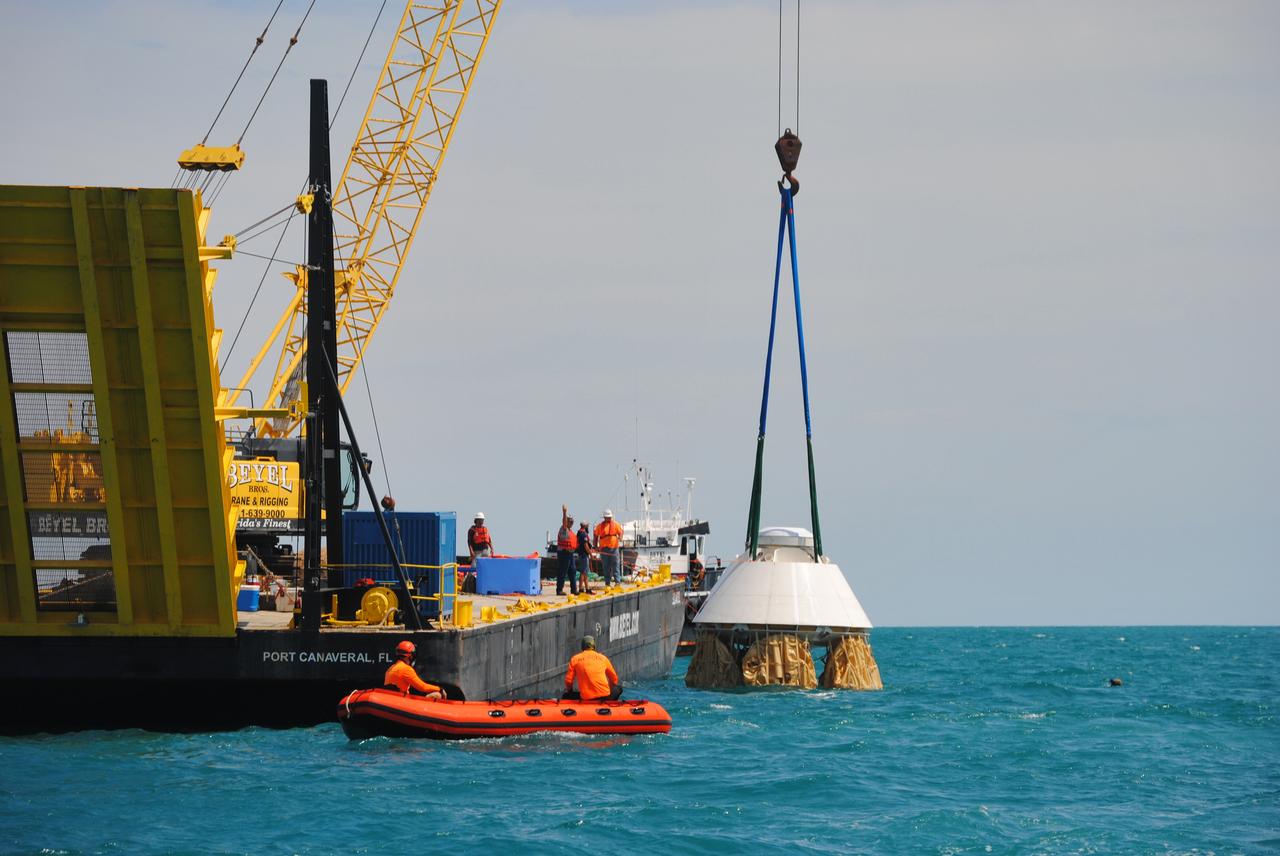
Rescue team members are using a Boeing CST-100 Starliner training capsule to rehearse a search and rescue training exercise in the unlikely event of an emergency resulting in a splashdown. NASA and the Department of Defense (DoD) Human Space Flight Support Office Rescue Division conducted the open-ocean exercise, after nearly two weeks of training, off the coast of Cape Canaveral near the agency’s Kennedy Space Center in Florida on April 25, 2019. This exercise provides team members with the necessary training ahead of Boeing’s Crew Flight Test with astronauts targeted for later this year. During normal return scenarios, Boeing’s Starliner will land in a safe zone of about 15 square miles in the Western United States. Throughout the commercial crew development phases with NASA, Boeing has performed dozens of qualification tests on its parachute and airbag systems simulating conditions on land and in the water.
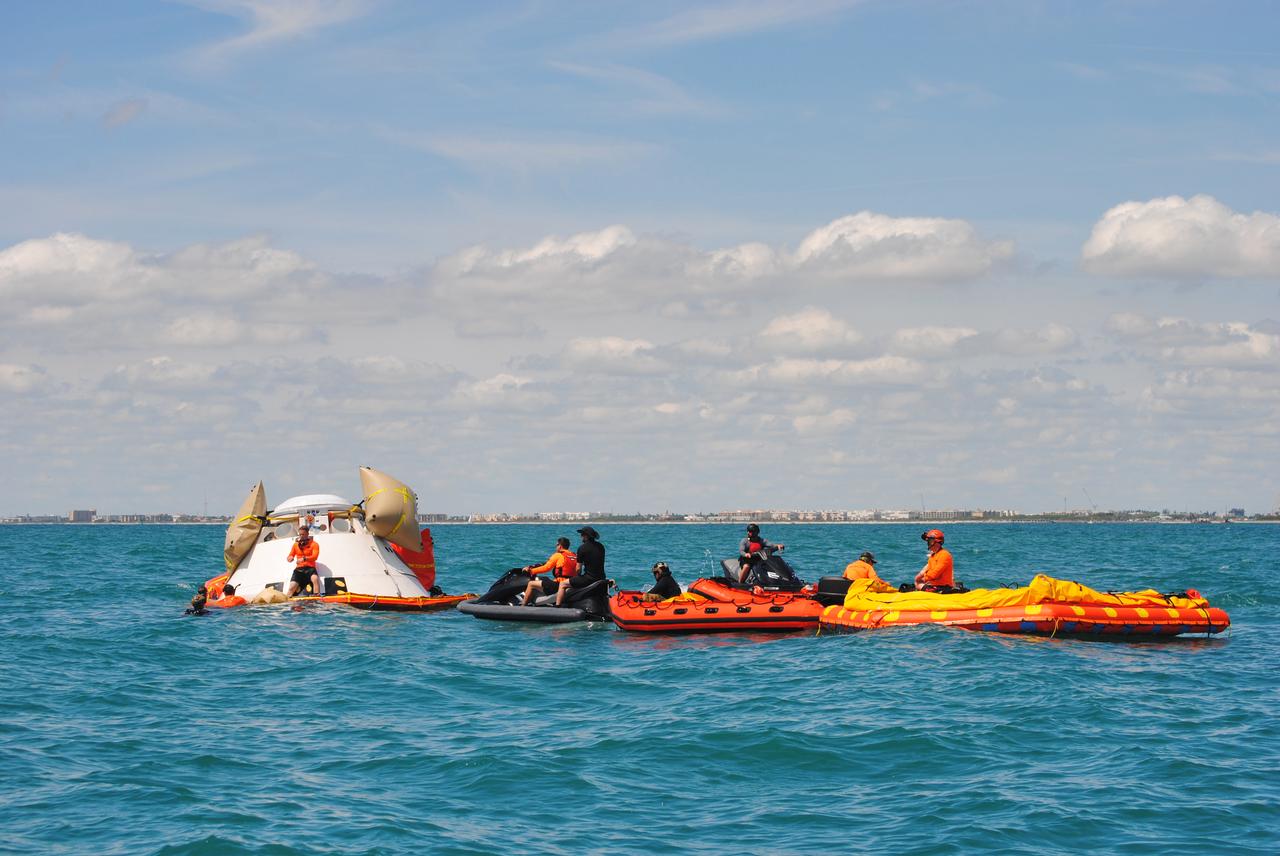
Rescue team members are using a Boeing CST-100 Starliner training capsule to rehearse a search and rescue training exercise in the unlikely event of an emergency resulting in a splashdown. NASA and the Department of Defense (DoD) Human Space Flight Support Office Rescue Division conducted the open-ocean exercise, after nearly two weeks of training, off the coast of Cape Canaveral near the agency’s Kennedy Space Center in Florida on April 25, 2019. This exercise provides team members with the necessary training ahead of Boeing’s Crew Flight Test with astronauts targeted for later this year. During normal return scenarios, Boeing’s Starliner will land in a safe zone of about 15 square miles in the Western United States. Throughout the commercial crew development phases with NASA, Boeing has performed dozens of qualification tests on its parachute and airbag systems simulating conditions on land and in the water.
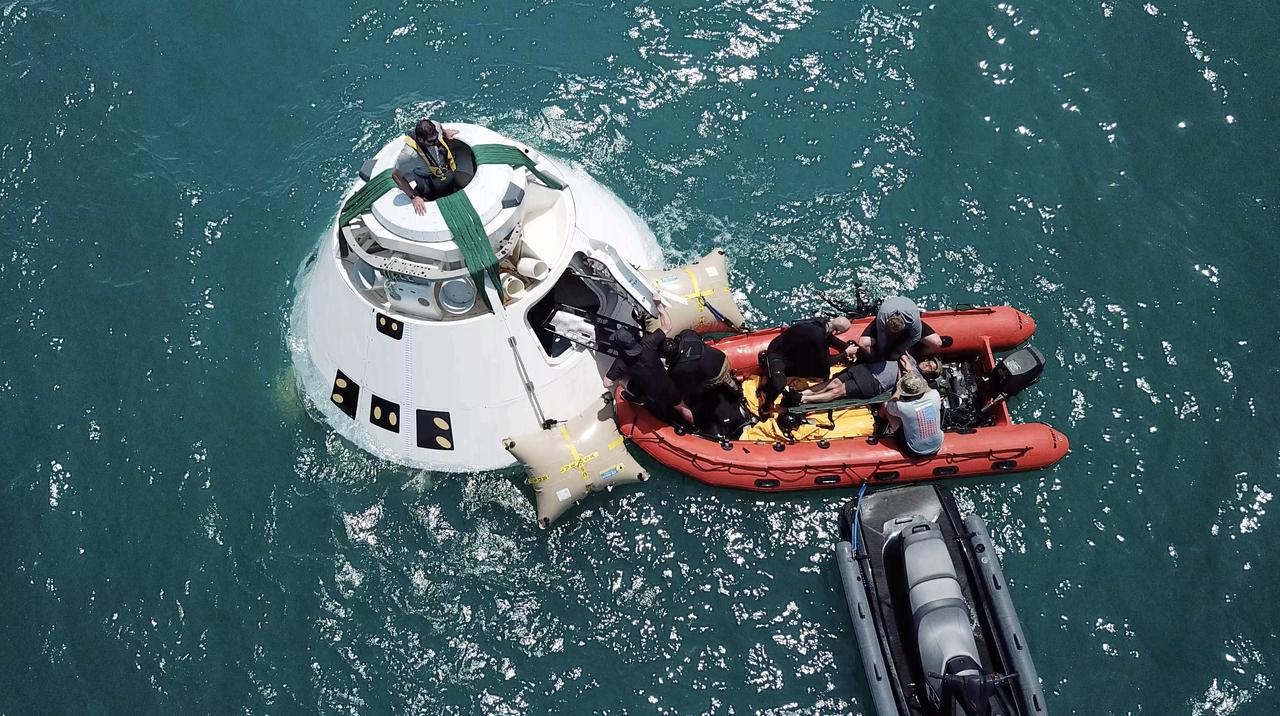
Rescue team members are using a Boeing CST-100 Starliner training capsule to rehearse a search and rescue training exercise in the unlikely event of an emergency resulting in a splashdown. NASA and the Department of Defense (DoD) Human Space Flight Support Office Rescue Division conducted the open-ocean exercise, after nearly two weeks of training, off the coast of Cape Canaveral near the agency’s Kennedy Space Center in Florida on April 25, 2019. This exercise provides team members with the necessary training ahead of Boeing’s Crew Flight Test with astronauts targeted for later this year. During normal return scenarios, Boeing’s Starliner will land in a safe zone of about 15 square miles in the Western United States. Throughout the commercial crew development phases with NASA, Boeing has performed dozens of qualification tests on its parachute and airbag systems simulating conditions on land and in the water.
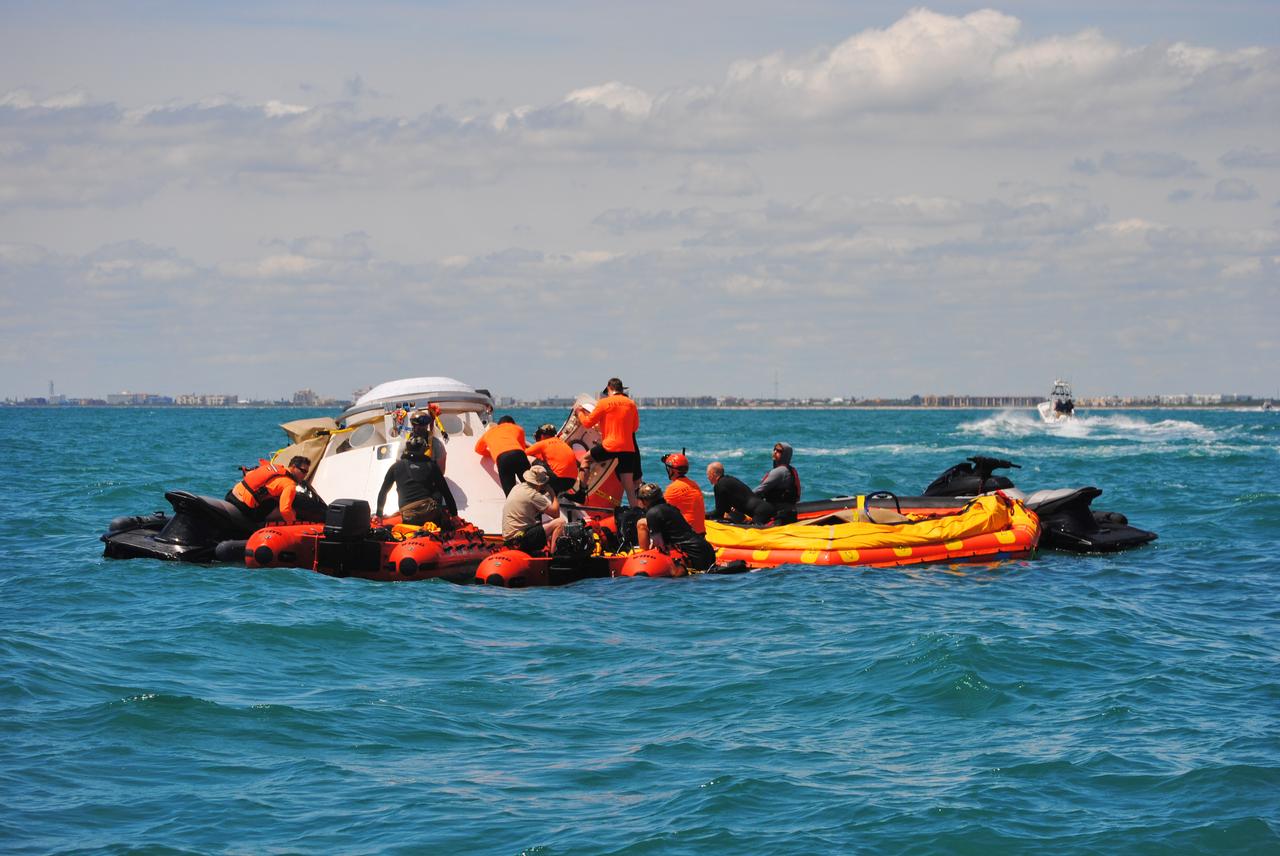
Rescue team members are using a Boeing CST-100 Starliner training capsule to rehearse a search and rescue training exercise in the unlikely event of an emergency resulting in a splashdown. NASA and the Department of Defense (DoD) Human Space Flight Support Office Rescue Division conducted the open-ocean exercise, after nearly two weeks of training, off the coast of Cape Canaveral near the agency’s Kennedy Space Center in Florida on April 25, 2019. This exercise provides team members with the necessary training ahead of Boeing’s Crew Flight Test with astronauts targeted for later this year. During normal return scenarios, Boeing’s Starliner will land in a safe zone of about 15 square miles in the Western United States. Throughout the commercial crew development phases with NASA, Boeing has performed dozens of qualification tests on its parachute and airbag systems simulating conditions on land and in the water.
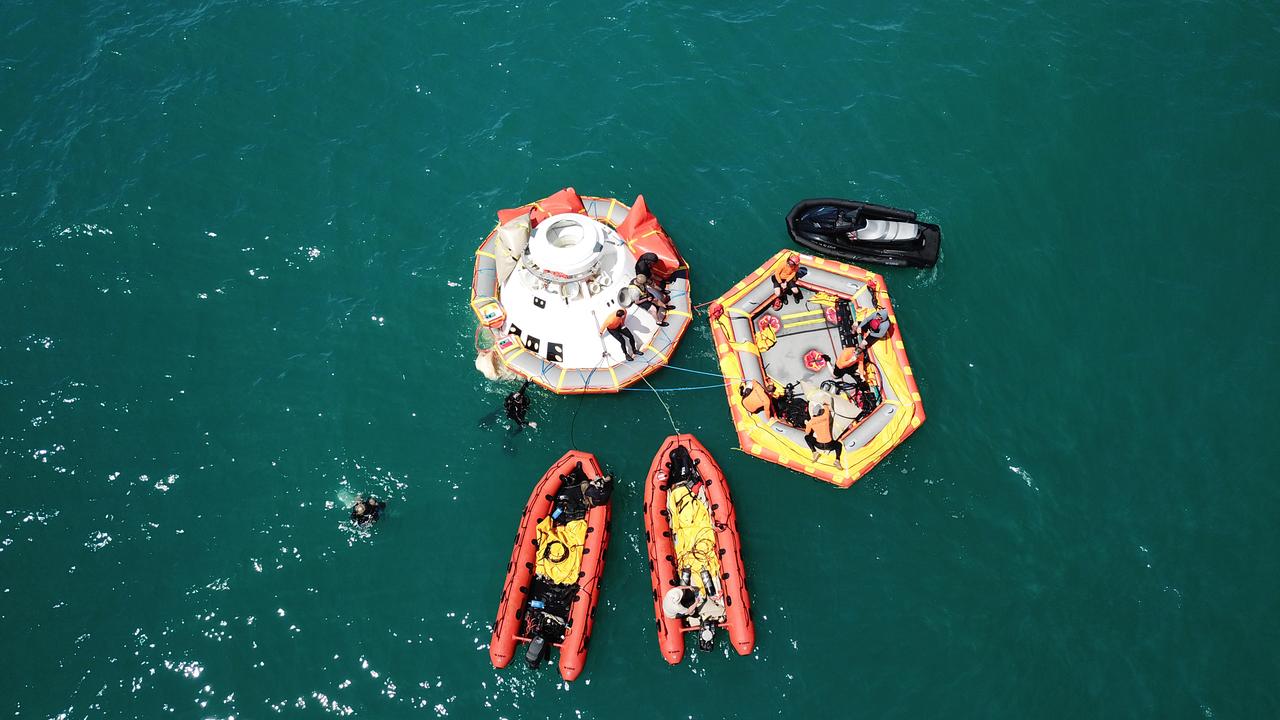
Rescue team members are using a Boeing CST-100 Starliner training capsule to rehearse a search and rescue training exercise in the unlikely event of an emergency resulting in a splashdown. NASA and the Department of Defense (DoD) Human Space Flight Support Office Rescue Division conducted the open-ocean exercise, after nearly two weeks of training, off the coast of Cape Canaveral near the agency’s Kennedy Space Center in Florida on April 25, 2019. This exercise provides team members with the necessary training ahead of Boeing’s Crew Flight Test with astronauts targeted for later this year. During normal return scenarios, Boeing’s Starliner will land in a safe zone of about 15 square miles in the Western United States. Throughout the commercial crew development phases with NASA, Boeing has performed dozens of qualification tests on its parachute and airbag systems simulating conditions on land and in the water.
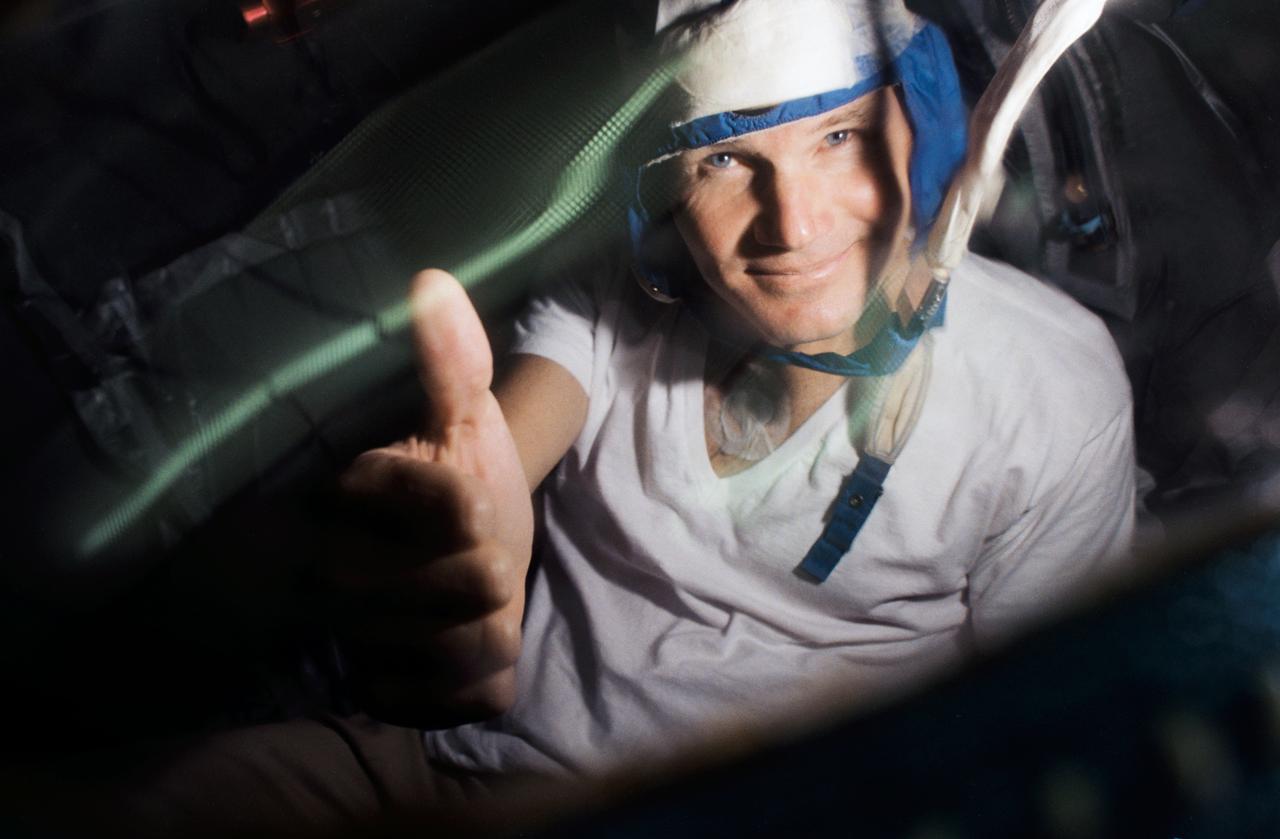
U.S. Representative Bill Nelson (D.,Florida) gives a thumbs up signal from inside a small ball called a personal rescue sphere (PRS). The PRS is not part of STS 61-C hardware, but serves to evaluate a subject's reaction to close quarters. The photo was taken through a visor on the 39-inch diameter fabric rescue sphere.
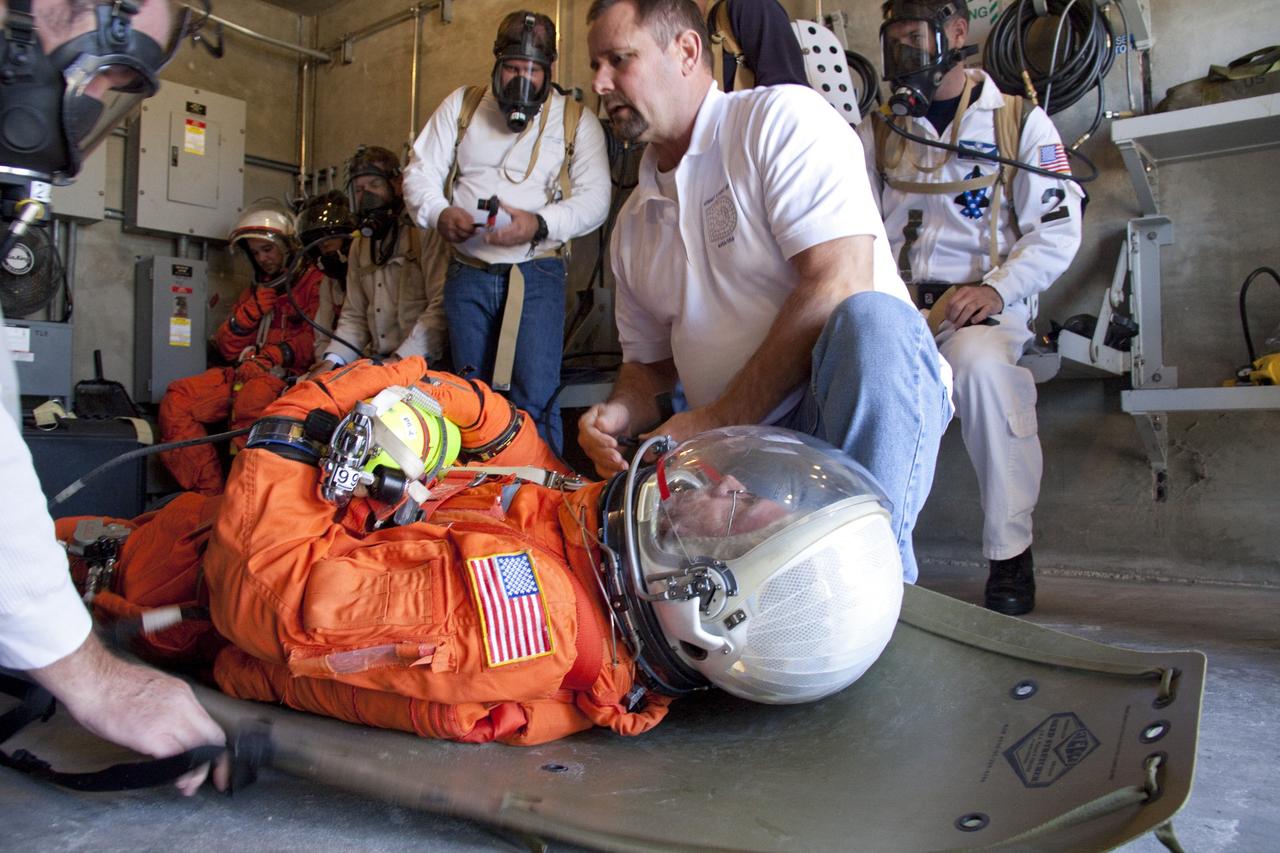
CAPE CANAVERAL, Fla. -- On Launch Pad 39A at NASA's Kennedy Space Center in Florida, members of an emergency escape training team perform a simulated evacuation exercise in the bunkers behind the slidewire basket landing site. For several days, volunteers portraying astronauts, take part in training exercises which allow teams to practice emergency response procedures, including helicopter evacuation to local hospitals. Training normally involves NASA fire rescue personnel, personnel from the Air Force's 920th Rescue Wing, and medical trauma teams from central Florida hospitals, and is required every 18 months to certify Fire Rescue and Closeout Crew personnel. Photo credit: NASA/Troy Cryder
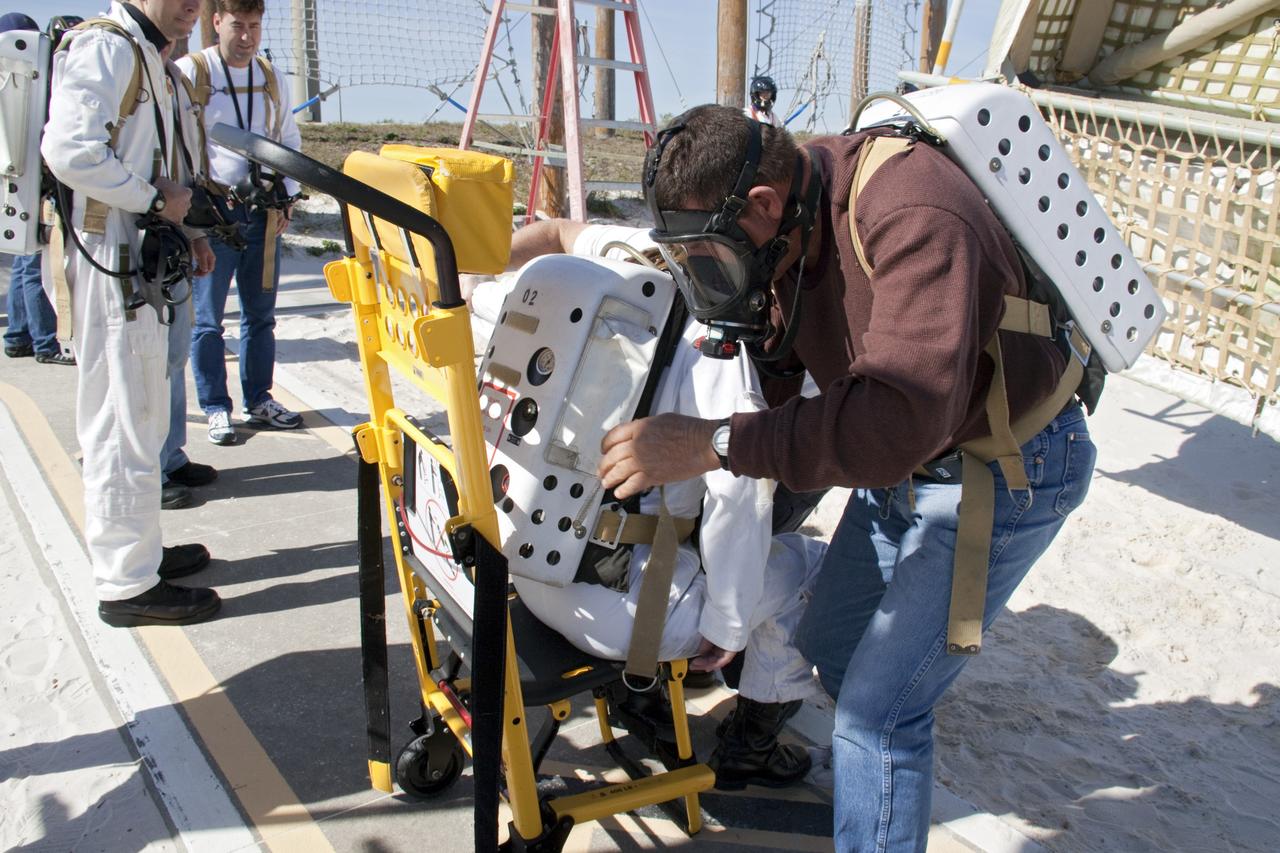
CAPE CANAVERAL, Fla. -- On Launch Pad 39A at NASA's Kennedy Space Center in Florida, members of an emergency escape training team perform a simulated evacuation exercise at the slidewire basket landing site. For several days, volunteers portraying astronauts, take part in training exercises which allow teams to practice emergency response procedures, including helicopter evacuation to local hospitals. Training normally involves NASA fire rescue personnel, personnel from the Air Force's 920th Rescue Wing, and medical trauma teams from central Florida hospitals, and is required every 18 months to certify Fire Rescue and Closeout Crew personnel. Photo credit: NASA/Troy Cryder
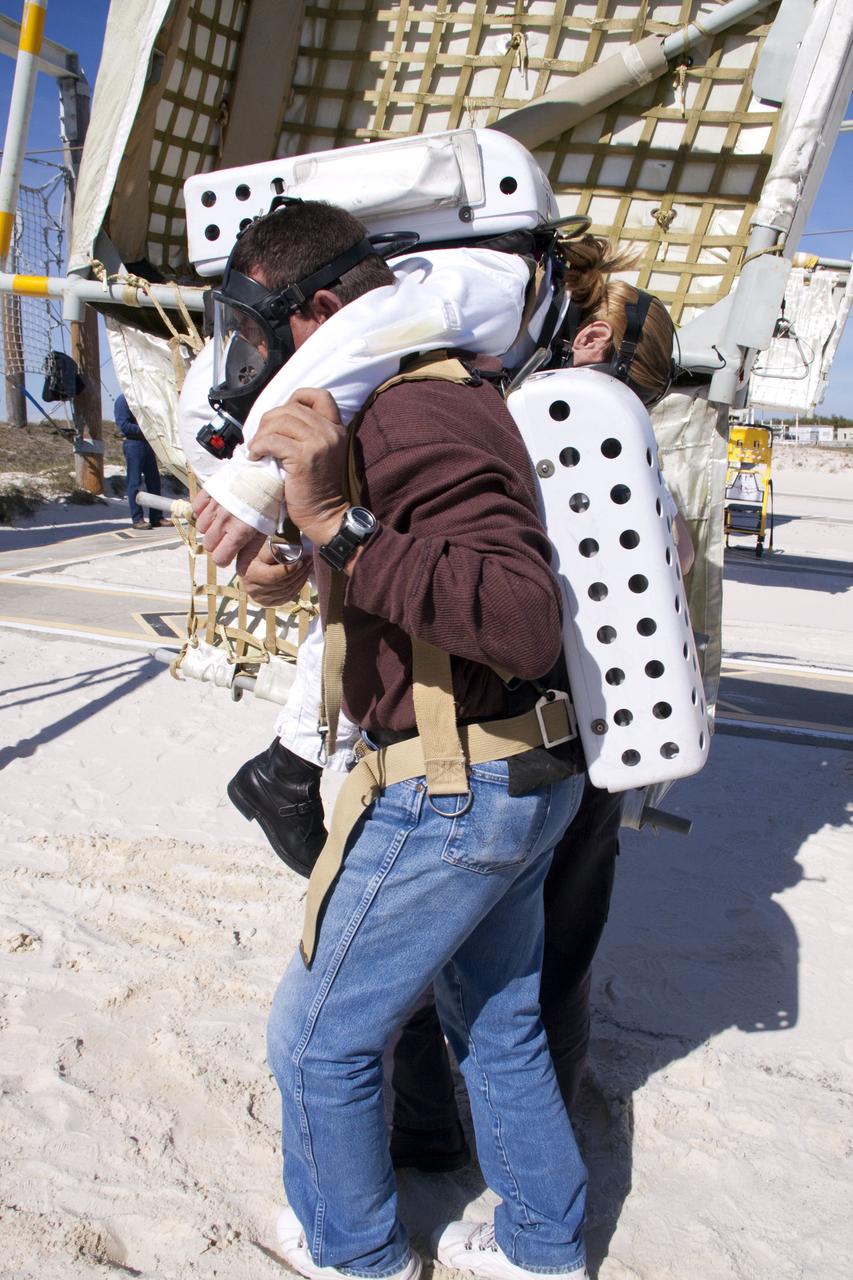
CAPE CANAVERAL, Fla. -- On Launch Pad 39A at NASA's Kennedy Space Center in Florida, members of an emergency escape training team perform a simulated evacuation exercise at the slidewire basket landing site. For several days, volunteers portraying astronauts, take part in training exercises which allow teams to practice emergency response procedures, including helicopter evacuation to local hospitals. Training normally involves NASA fire rescue personnel, personnel from the Air Force's 920th Rescue Wing, and medical trauma teams from central Florida hospitals, and is required every 18 months to certify Fire Rescue and Closeout Crew personnel. Photo credit: NASA/Troy Cryder
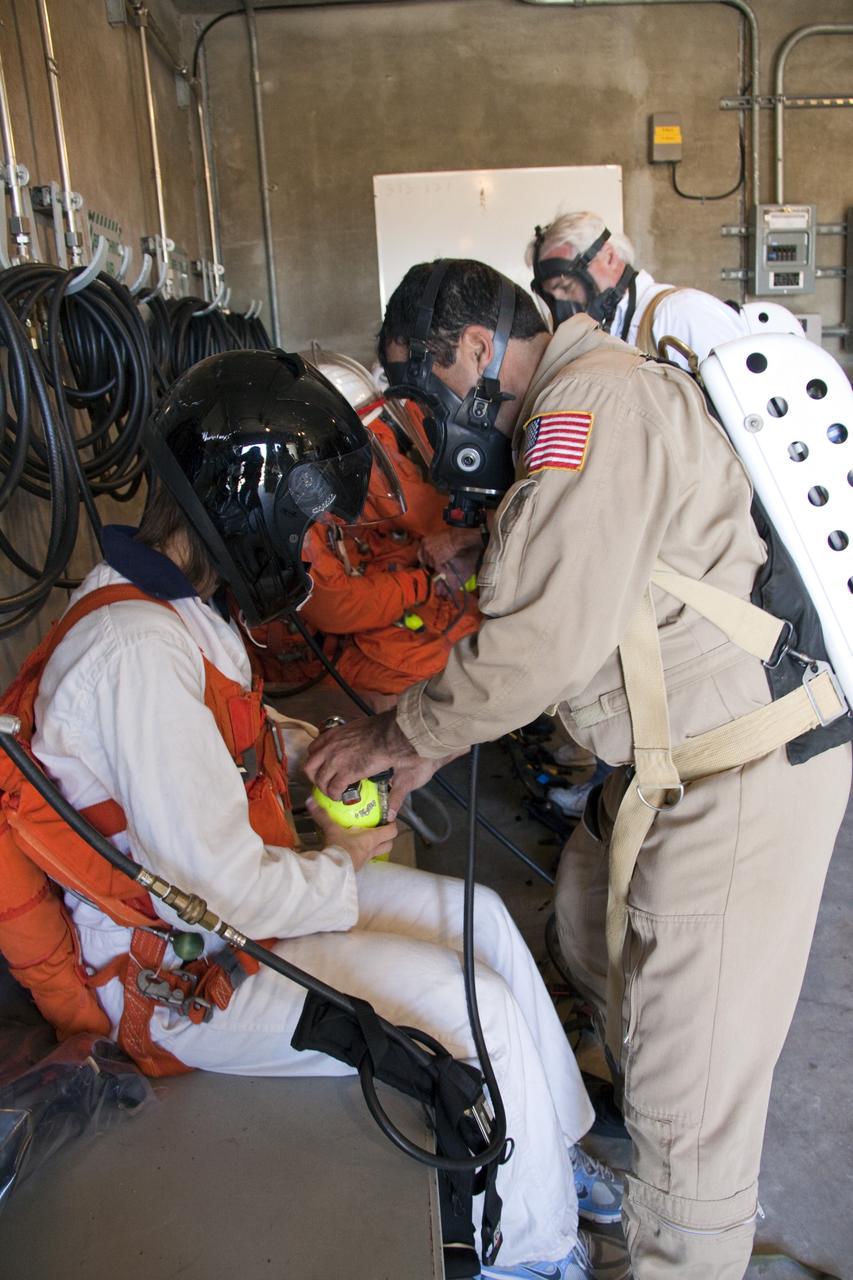
CAPE CANAVERAL, Fla. -- On Launch Pad 39A at NASA's Kennedy Space Center in Florida, members of an emergency escape training team perform a simulated evacuation exercise in the bunkers behind the slidewire basket landing site. For several days, volunteers portraying astronauts, take part in training exercises which allow teams to practice emergency response procedures, including helicopter evacuation to local hospitals. Training normally involves NASA fire rescue personnel, personnel from the Air Force's 920th Rescue Wing, and medical trauma teams from central Florida hospitals, and is required every 18 months to certify Fire Rescue and Closeout Crew personnel. Photo credit: NASA/Troy Cryder
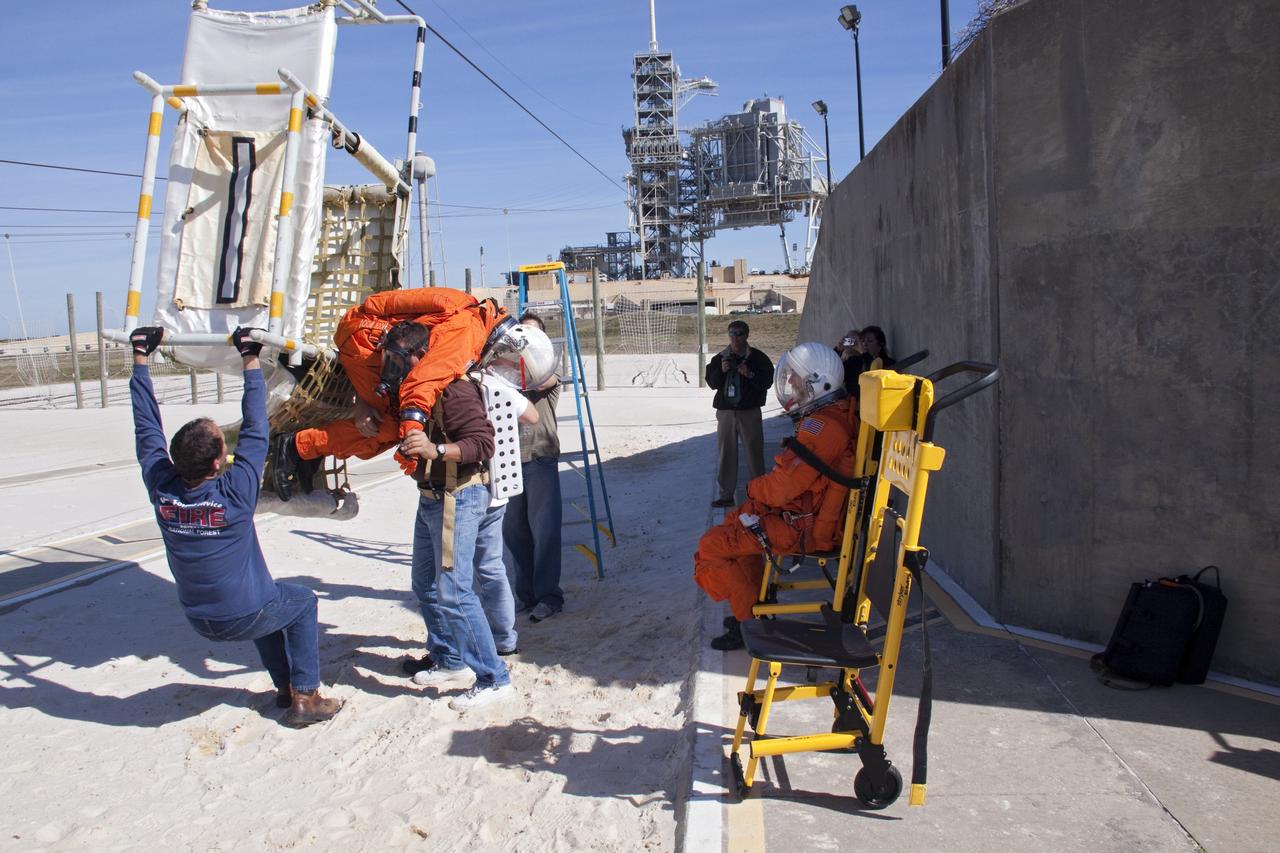
CAPE CANAVERAL, Fla. -- On Launch Pad 39A at NASA's Kennedy Space Center in Florida, members of an emergency escape training team perform a simulated evacuation exercise in the bunkers behind the slidewire basket landing site. For several days, volunteers portraying astronauts, take part in training exercises which allow teams to practice emergency response procedures, including helicopter evacuation to local hospitals. Training normally involves NASA fire rescue personnel, personnel from the Air Force's 920th Rescue Wing, and medical trauma teams from central Florida hospitals, and is required every 18 months to certify Fire Rescue and Closeout Crew personnel. Photo credit: NASA/Troy Cryder
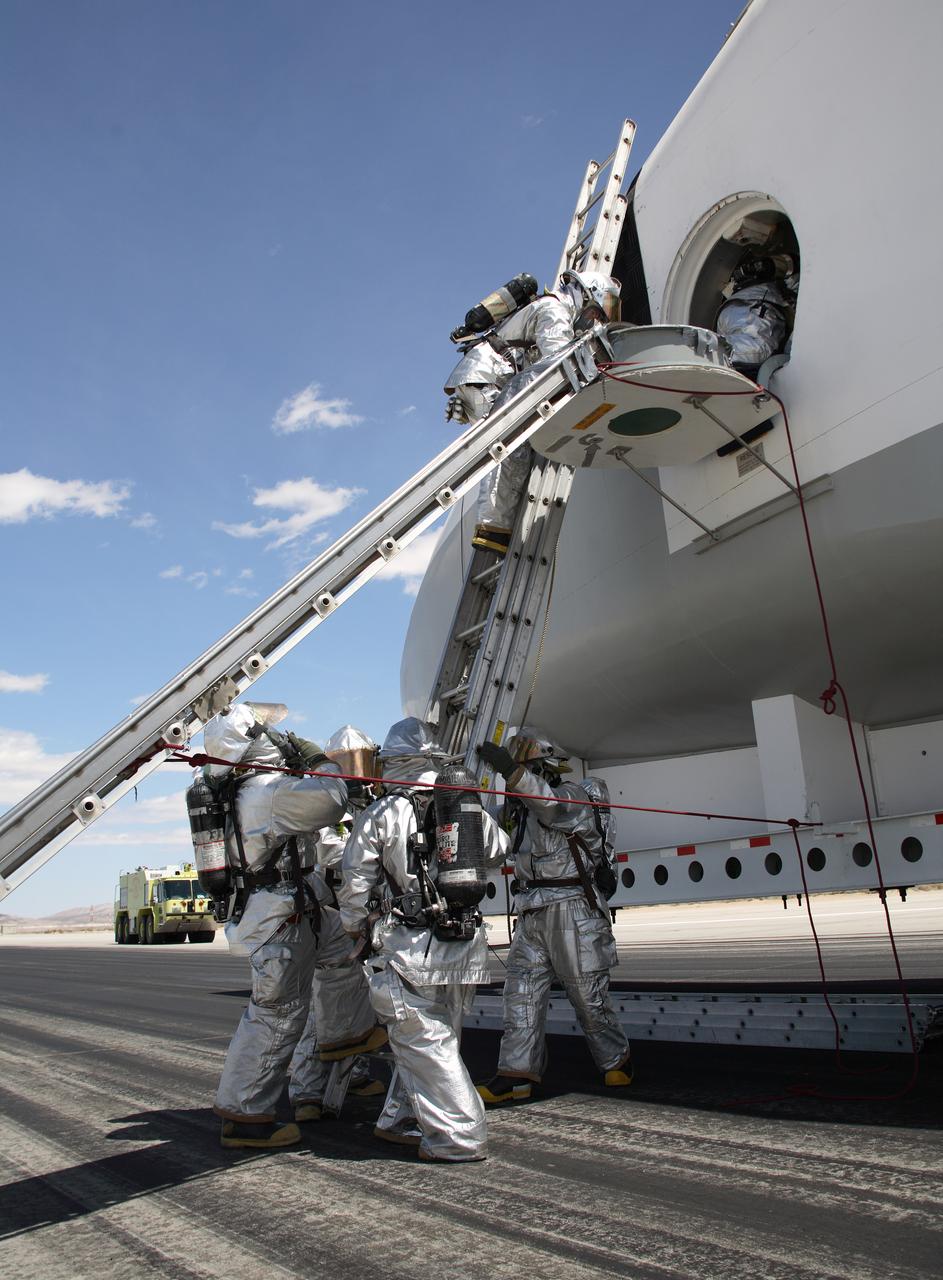
Air Force fire/rescue crew enter the space shuttle cabin mockup hatch to evacuate the shuttle crew during a shuttle rescue training exercise at Edwards AFB. (USAF photo # 070505-F-1287F-118)
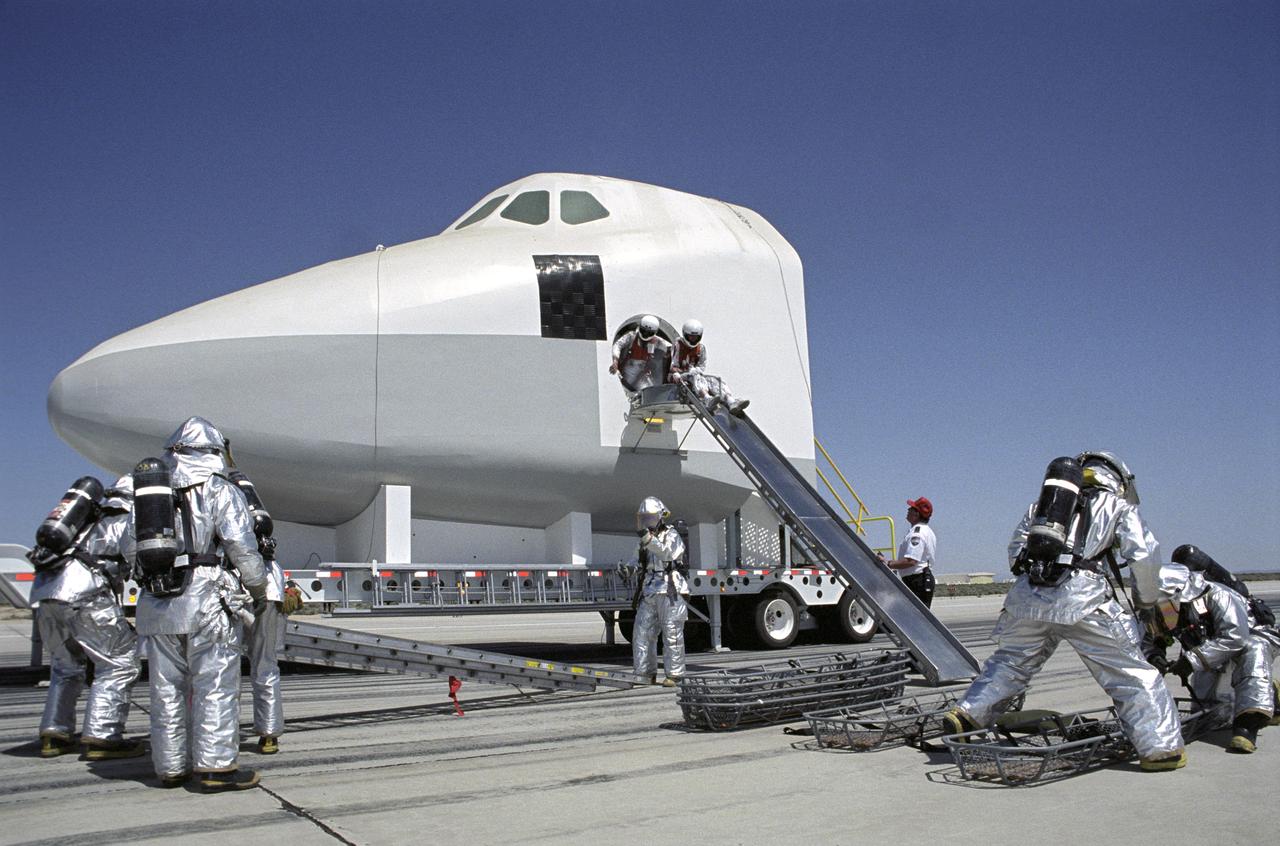
While fire-rescue personnel prepare evacuation litters, two stand-in "astronauts" prepare to use an exit slide from a Shuttle mockup during a rescue training exercise.
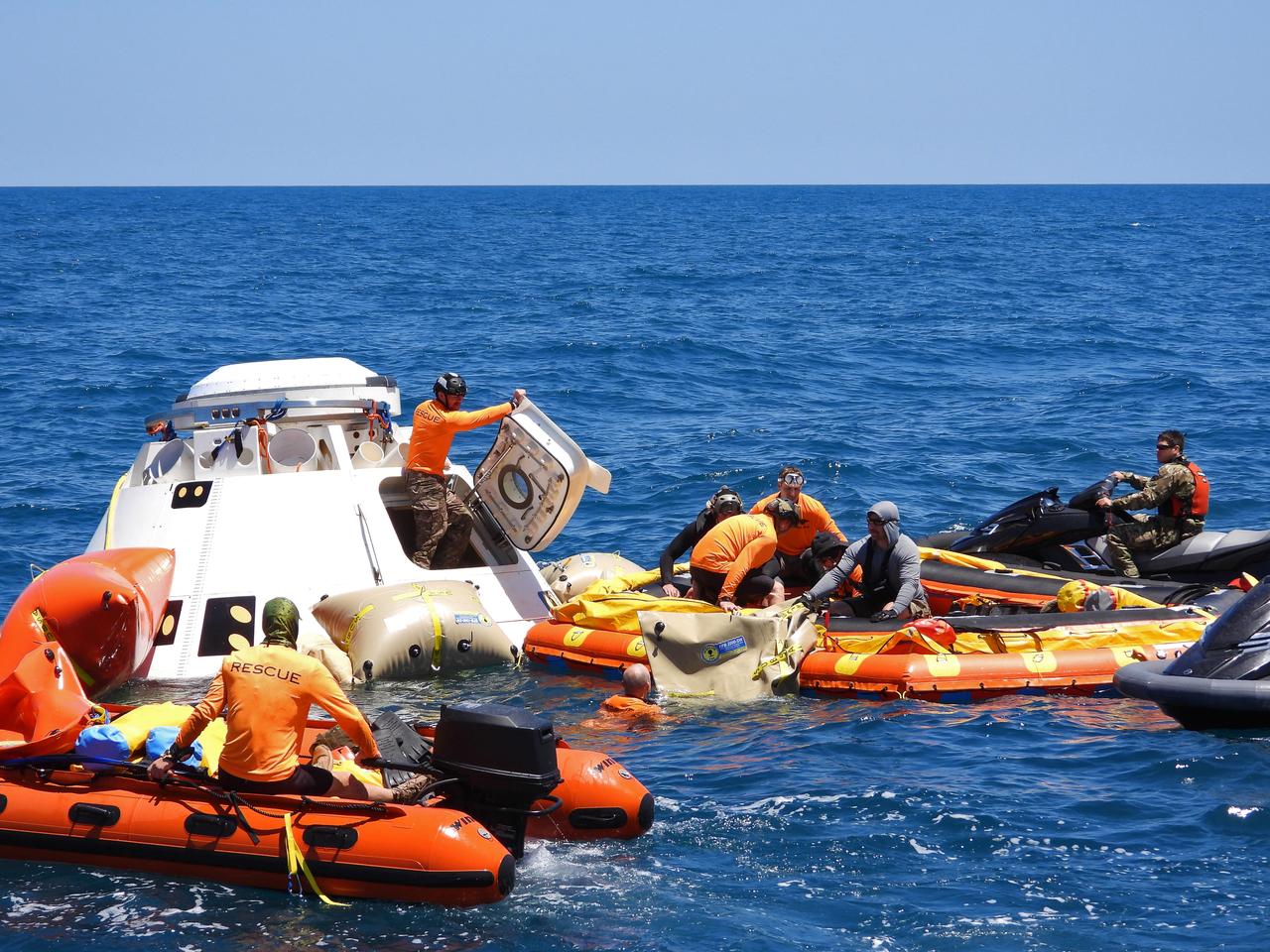
Rescue team members are using a Boeing CST-100 Starliner training capsule to rehearse a full mission profile training exercise in the unlikely event of an emergency resulting in a splashdown. NASA and the Department of Defense (DoD) Human Space Flight Support Office Rescue Division conducted the exercise, after a culmination of nearly two weeks of training, off the coast of Cape Canaveral near the agency’s Kennedy Space Center in Florida on April 27, 2019. The team rehearsed assisted egress, extracting DoD team members acting as astronauts, from the capsule and providing immediate medical treatment. This open-ocean exercise provides team members with the necessary training ahead of Boeing’s Crew Flight Test with astronauts targeted for later this year. During normal return scenarios, Boeing’s Starliner will land in a safe zone of about 15 square miles in the Western United States. Throughout the commercial crew development phases with NASA, Boeing has performed dozens of qualification tests on its parachute and airbag systems simulating conditions on land and in the water.

Rescue team members are using a Boeing CST-100 Starliner training capsule to rehearse a full mission profile training exercise in the unlikely event of an emergency resulting in a splashdown. NASA and the Department of Defense (DoD) Human Space Flight Support Office Rescue Division conducted the exercise, after a culmination of nearly two weeks of training, off the coast of Cape Canaveral near the agency’s Kennedy Space Center in Florida on April 27, 2019. The team rehearsed assisted egress, extracting DoD team members acting as astronauts, from the capsule and providing immediate medical treatment. This open-ocean exercise provides team members with the necessary training ahead of Boeing’s Crew Flight Test with astronauts targeted for later this year. During normal return scenarios, Boeing’s Starliner will land in a safe zone of about 15 square miles in the Western United States. Throughout the commercial crew development phases with NASA, Boeing has performed dozens of qualification tests on its parachute and airbag systems simulating conditions on land and in the water.
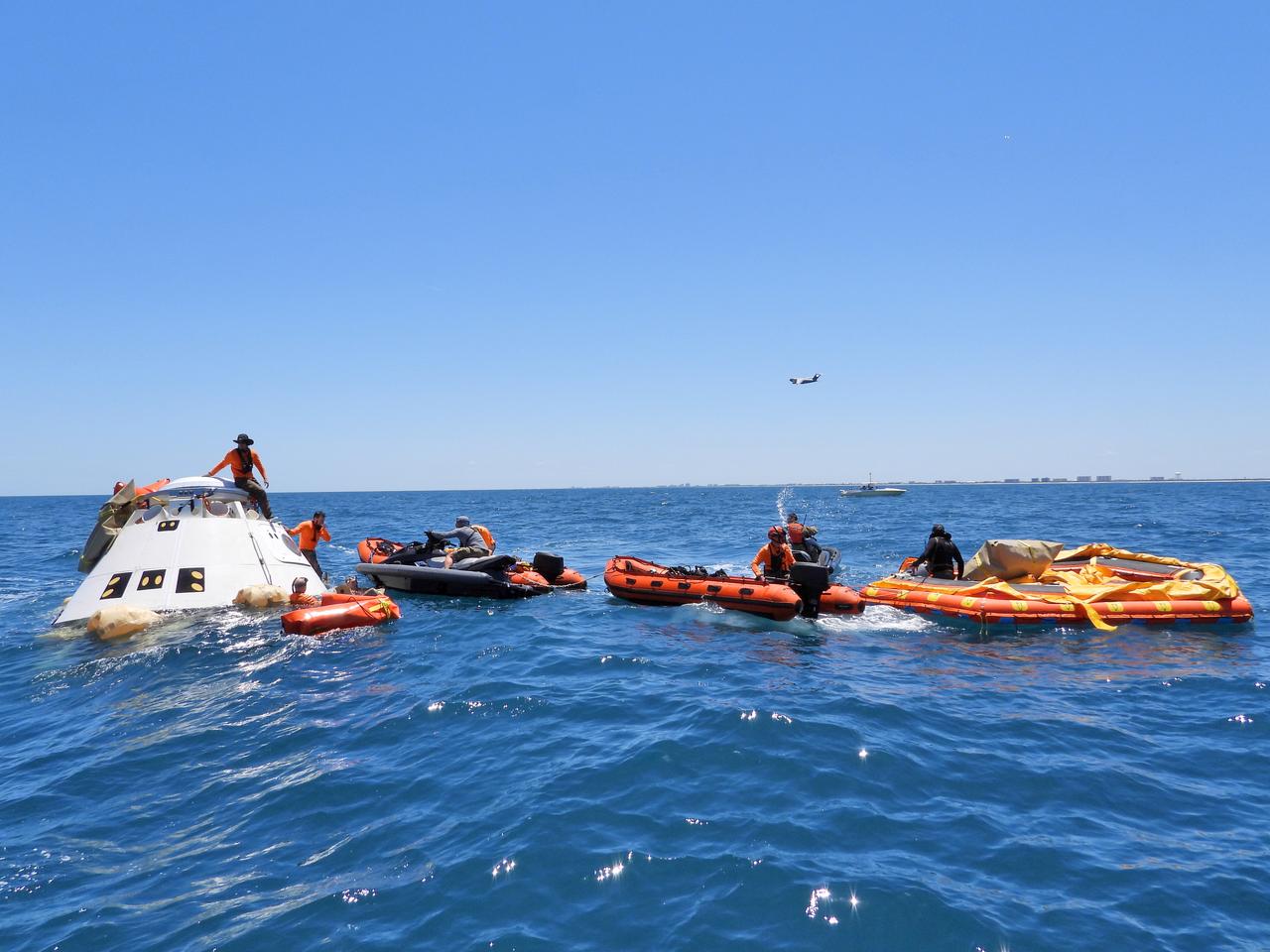
Rescue team members are using a Boeing CST-100 Starliner training capsule to rehearse a full mission profile training exercise in the unlikely event of an emergency resulting in a splashdown. NASA and the Department of Defense (DoD) Human Space Flight Support Office Rescue Division conducted the exercise, after a culmination of nearly two weeks of training, off the coast of Cape Canaveral near the agency’s Kennedy Space Center in Florida on April 27, 2019. The team rehearsed assisted egress, extracting DoD team members acting as astronauts, from the capsule and providing immediate medical treatment. This open-ocean exercise provides team members with the necessary training ahead of Boeing’s Crew Flight Test with astronauts targeted for later this year. During normal return scenarios, Boeing’s Starliner will land in a safe zone of about 15 square miles in the Western United States. Throughout the commercial crew development phases with NASA, Boeing has performed dozens of qualification tests on its parachute and airbag systems simulating conditions on land and in the water.

Rescue team members are using a Boeing CST-100 Starliner training capsule to rehearse a full mission profile training exercise in the unlikely event of an emergency resulting in a splashdown. NASA and the Department of Defense (DoD) Human Space Flight Support Office Rescue Division conducted the exercise, after a culmination of nearly two weeks of training, off the coast of Cape Canaveral near the agency’s Kennedy Space Center in Florida on April 27, 2019. The team rehearsed assisted egress, extracting DoD team members acting as astronauts, from the capsule and providing immediate medical treatment. This open-ocean exercise provides team members with the necessary training ahead of Boeing’s Crew Flight Test with astronauts targeted for later this year. During normal return scenarios, Boeing’s Starliner will land in a safe zone of about 15 square miles in the Western United States. Throughout the commercial crew development phases with NASA, Boeing has performed dozens of qualification tests on its parachute and airbag systems simulating conditions on land and in the water.
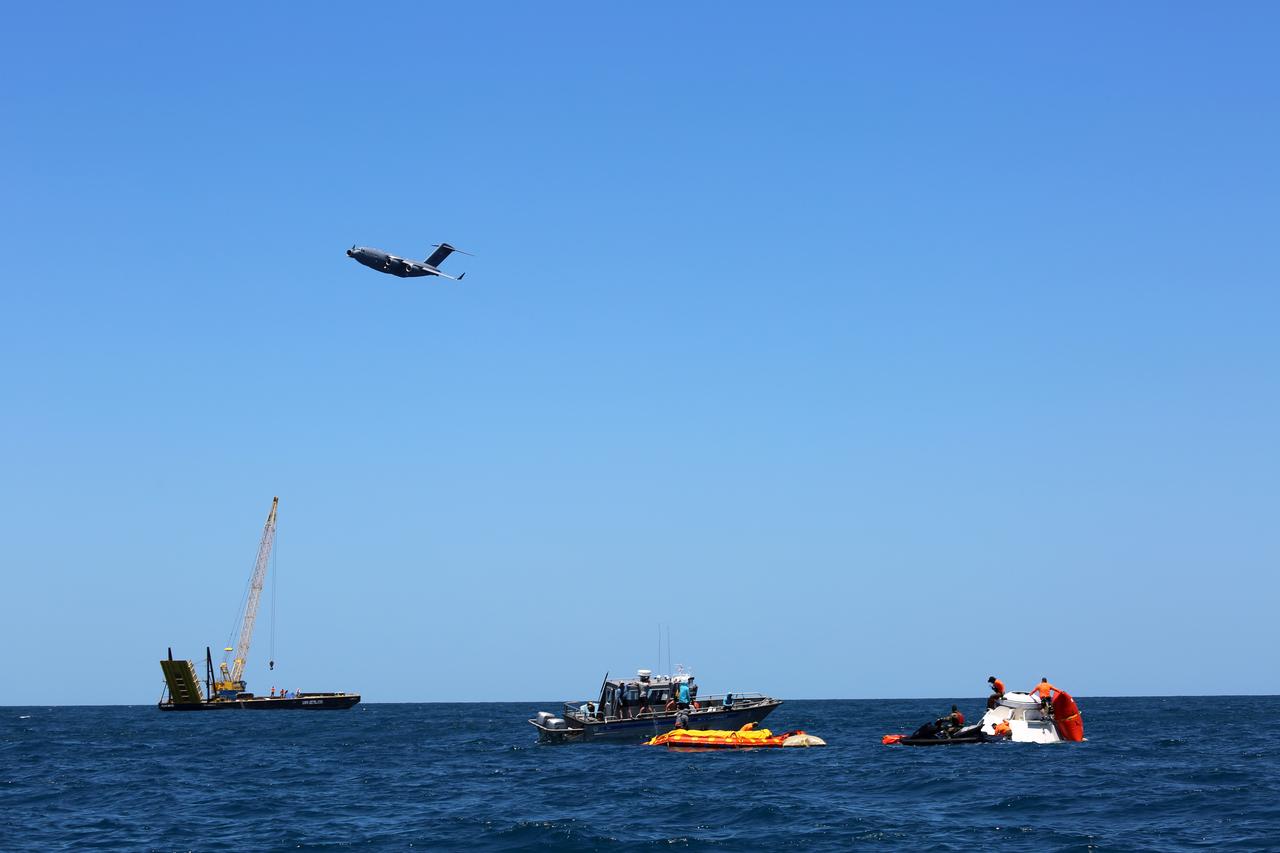
Rescue team members are using a Boeing CST-100 Starliner training capsule to rehearse a full mission profile training exercise in the unlikely event of an emergency resulting in a splashdown. NASA and the Department of Defense (DoD) Human Space Flight Support Office Rescue Division conducted the exercise, after a culmination of nearly two weeks of training, off the coast of Cape Canaveral near the agency’s Kennedy Space Center in Florida on April 27, 2019. The team rehearsed assisted egress, extracting DoD team members acting as astronauts, from the capsule and providing immediate medical treatment. This open-ocean exercise provides team members with the necessary training ahead of Boeing’s Crew Flight Test with astronauts targeted for later this year. During normal return scenarios, Boeing’s Starliner will land in a safe zone of about 15 square miles in the Western United States. Throughout the commercial crew development phases with NASA, Boeing has performed dozens of qualification tests on its parachute and airbag systems simulating conditions on land and in the water.
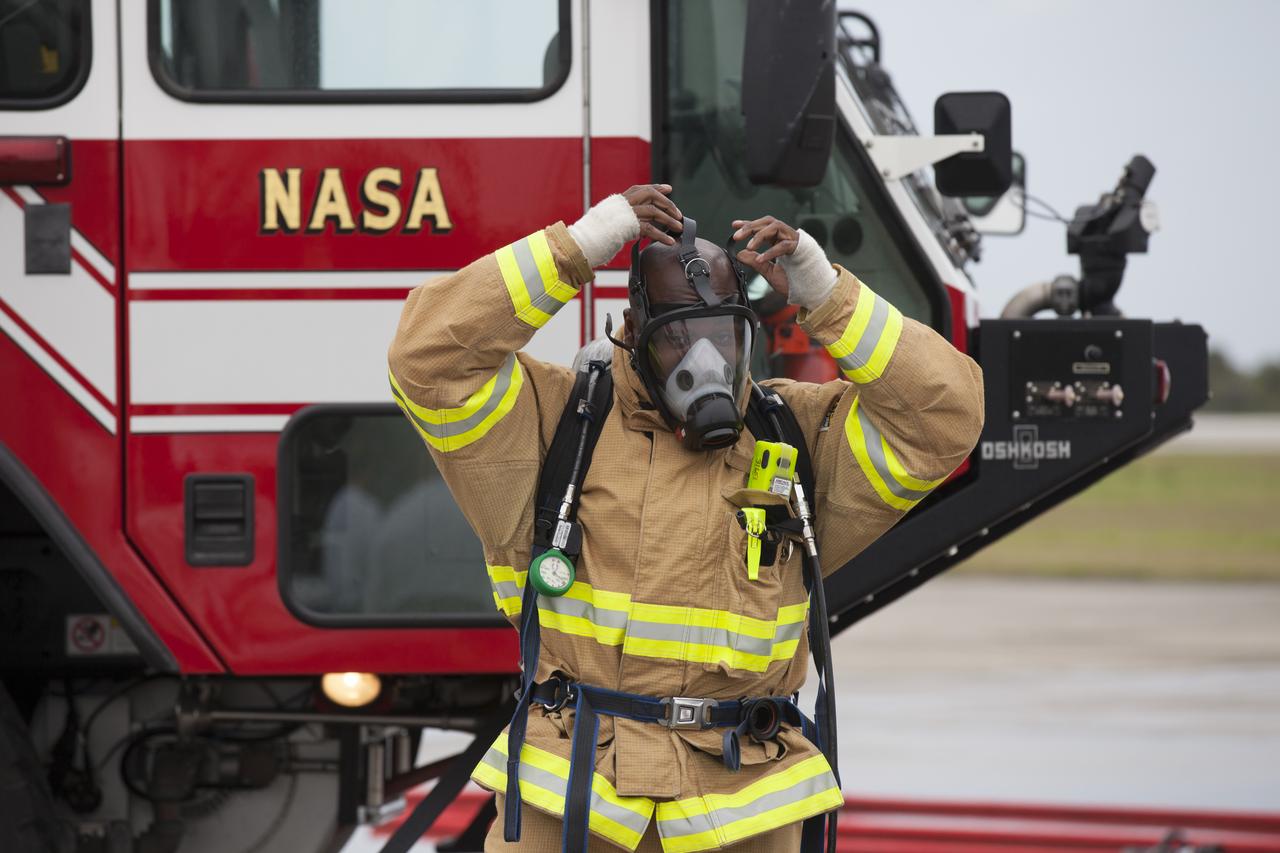
CAPE CANAVERAL, Fla. - Special Rescue Operations firefighters with NASA Fire Rescue Services in the Protective Services Office at NASA’s Kennedy Space Center in Florida practice firefighting skills at the Shuttle Landing Facility. A firefighter dons protective gear to prepare for the training simulation. Kennedy’s firefighters recently achieved Pro Board Certification in aerial fire truck operations and completed vehicle extrication training using the Jaws of Life. The Protective Services Office is one step closer to achieving certification in vehicle machinery extrication and other rescue skills. Kennedy’s firefighters are with G4S Government Solutions Inc., on the Kennedy Protective Services Contract. Photo credit: NASA/Kim Shiflett
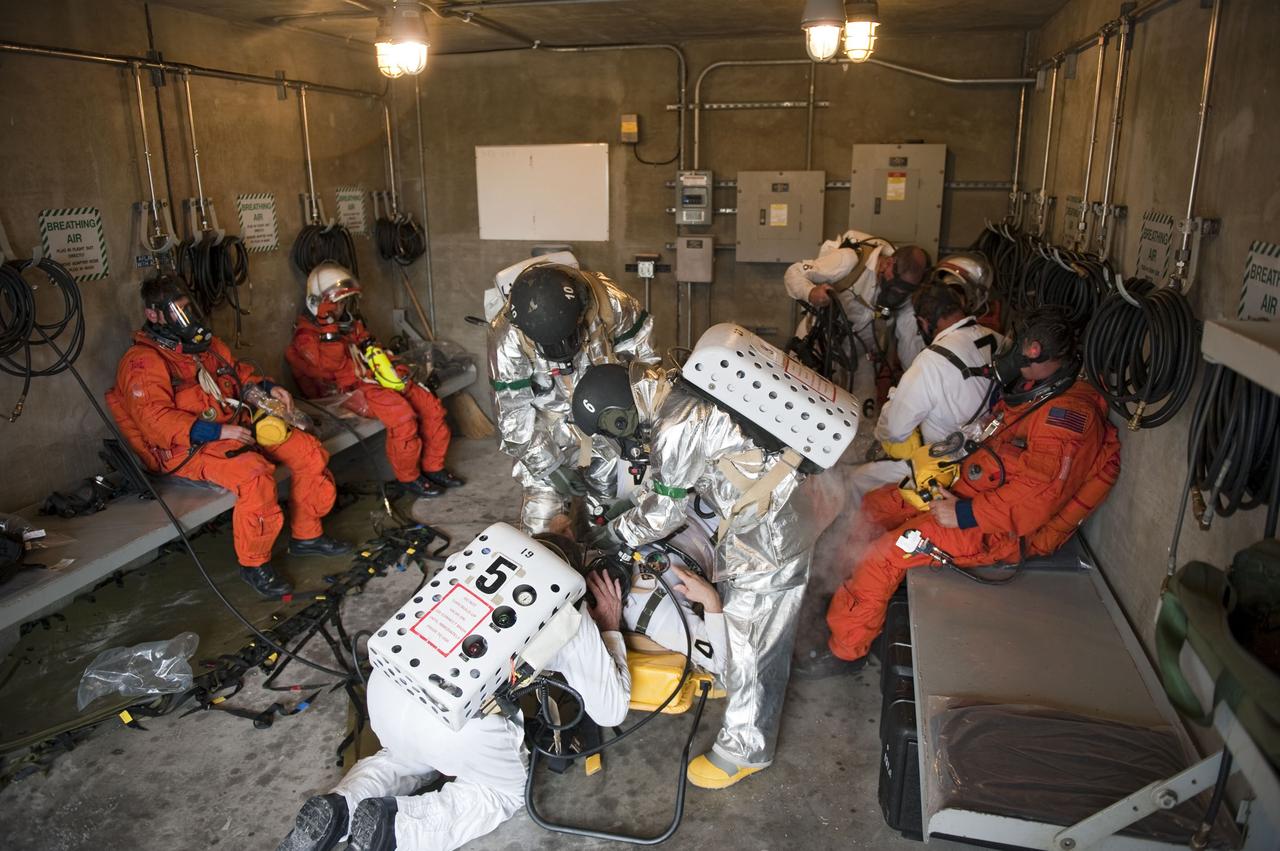
CAPE CANAVERAL, Fla. – An emergency exit, or Mode II/IV, exercise is under way in a bunker of Launch Pad 39A at NASA's Kennedy Space Center in Florida. The exercise involves NASA fire rescue personnel, volunteers portraying astronauts with simulated injuries, helicopters and personnel from the Air Force’s 920th Rescue Wing, and medical trauma teams at three Central Florida hospitals. The drill allows teams to practice an emergency response at the launch pad, including helicopter evacuation to local hospitals. Photo credit: NASA/Kim Shiflett
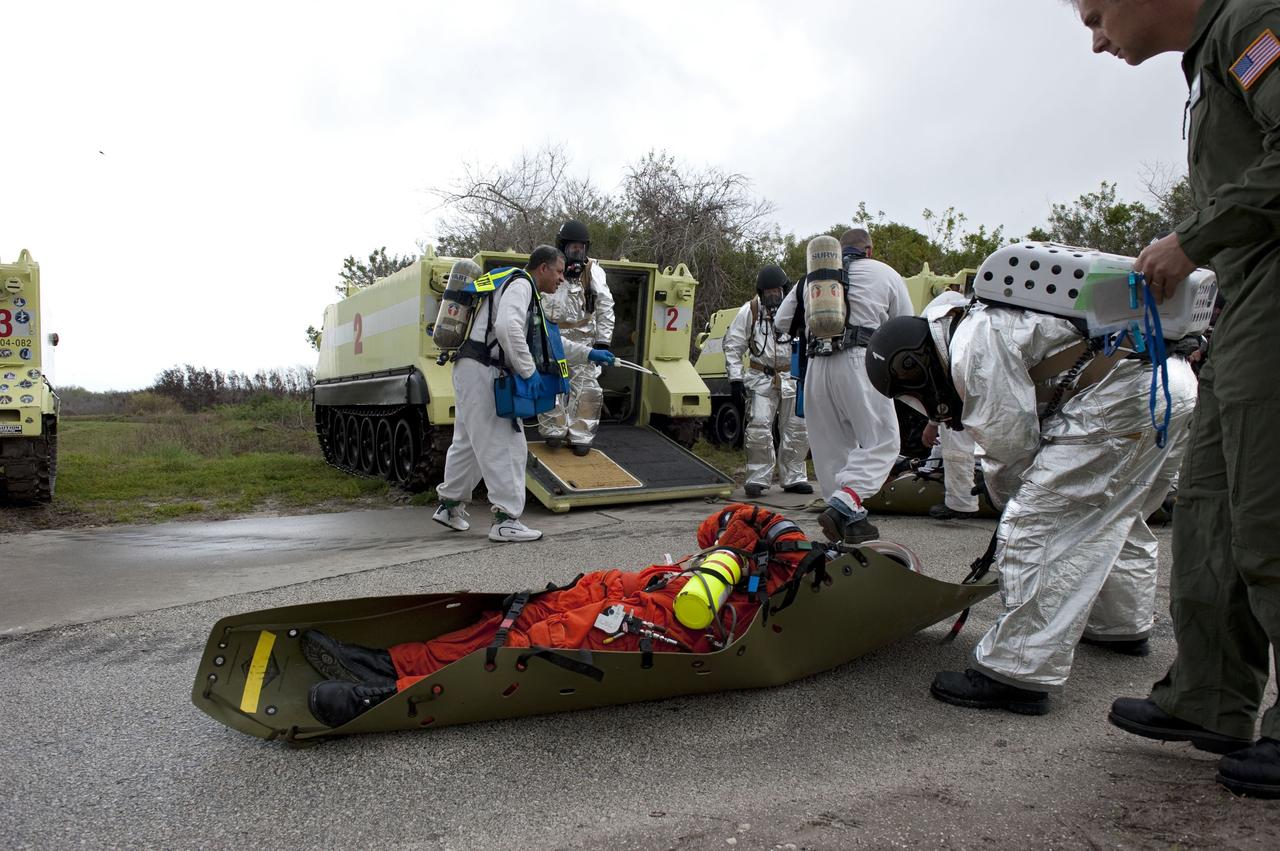
CAPE CANAVERAL, Fla. – An emergency exit, or Mode II/IV, exercise is under way near Launch Pad 39A at NASA's Kennedy Space Center in Florida. The exercise involves NASA fire rescue personnel, volunteers portraying astronauts with simulated injuries, helicopters and personnel from the Air Force’s 920th Rescue Wing, and medical trauma teams at three Central Florida hospitals. The drill allows teams to practice an emergency response at the launch pad, including helicopter evacuation to local hospitals. Photo credit: NASA/Kim Shiflett

CAPE CANAVERAL, Fla. – An emergency exit, or Mode II/IV, exercise is under way near Launch Pad 39A at NASA's Kennedy Space Center in Florida. The exercise involves NASA fire rescue personnel, volunteers portraying astronauts with simulated injuries, helicopters and personnel from the Air Force’s 920th Rescue Wing, and medical trauma teams at three Central Florida hospitals. The drill allows teams to practice an emergency response at the launch pad, including helicopter evacuation to local hospitals. Photo credit: NASA/Kim Shiflett
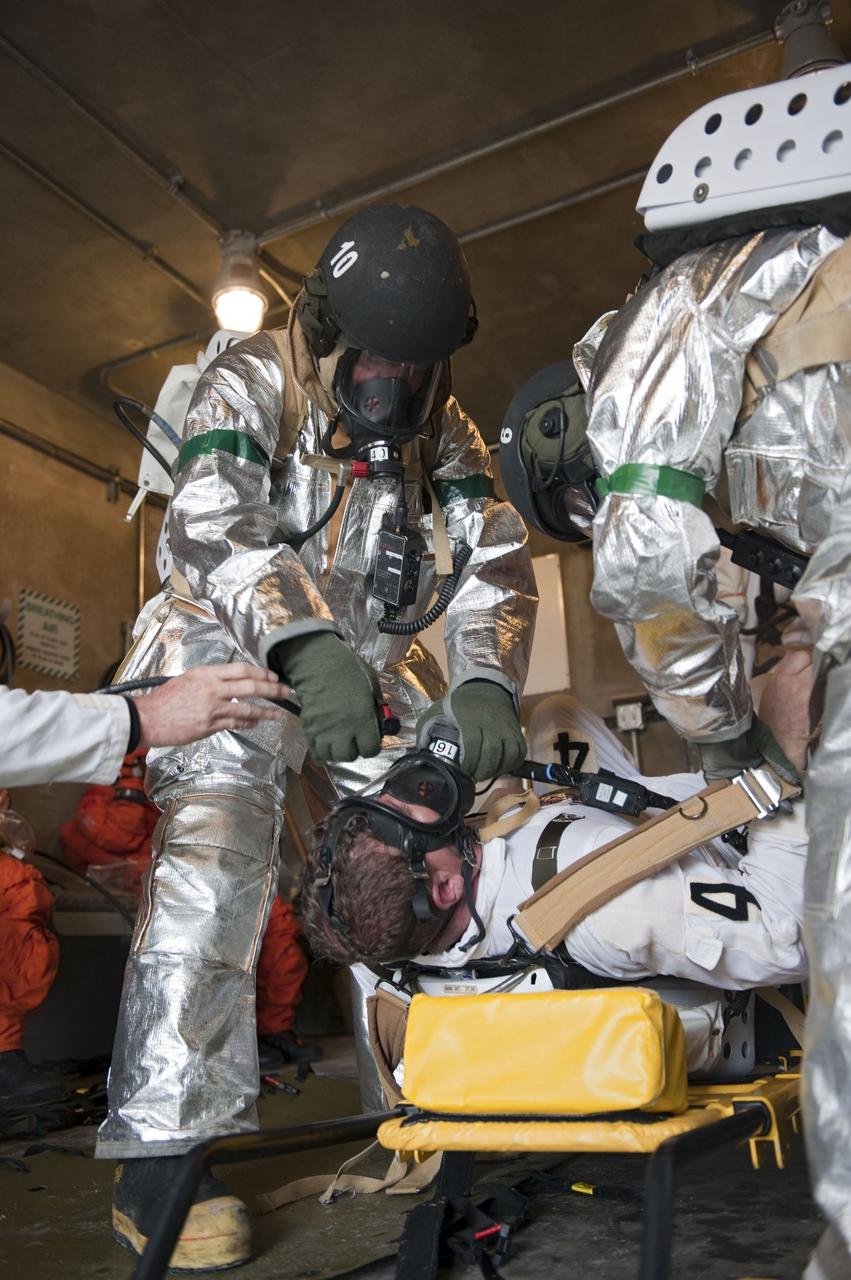
CAPE CANAVERAL, Fla. – An emergency exit, or Mode II/IV, exercise is under way in a bunker of Launch Pad 39A at NASA's Kennedy Space Center in Florida. The exercise involves NASA fire rescue personnel, volunteers portraying astronauts with simulated injuries, helicopters and personnel from the Air Force’s 920th Rescue Wing, and medical trauma teams at three Central Florida hospitals. The drill allows teams to practice an emergency response at the launch pad, including helicopter evacuation to local hospitals. Photo credit: NASA/Kim Shiflett
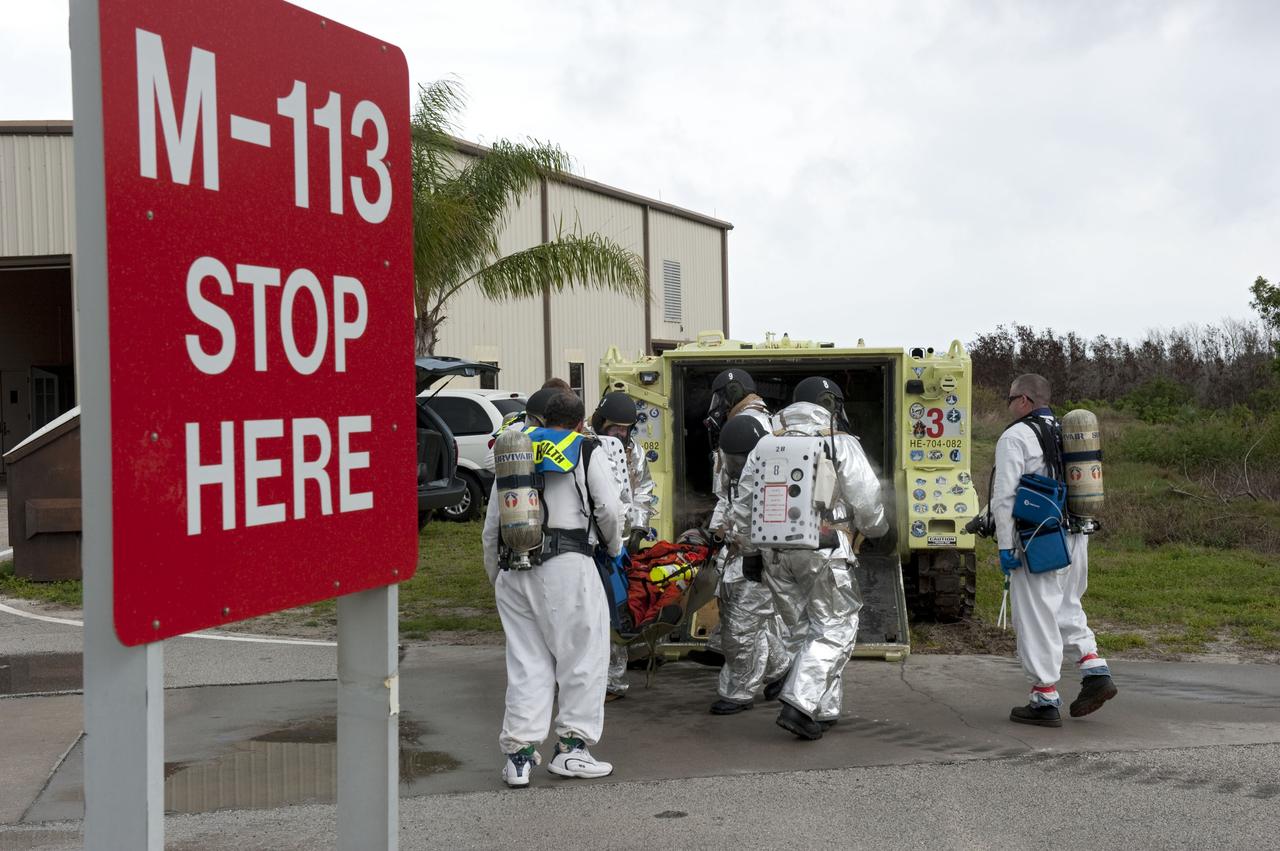
CAPE CANAVERAL, Fla. – An emergency exit, or Mode II/IV, exercise is under way near Launch Pad 39A at NASA's Kennedy Space Center in Florida. The exercise involves NASA fire rescue personnel, volunteers portraying astronauts with simulated injuries, helicopters and personnel from the Air Force’s 920th Rescue Wing, and medical trauma teams at three Central Florida hospitals. The drill allows teams to practice an emergency response at the launch pad, including helicopter evacuation to local hospitals. Photo credit: NASA/Kim Shiflett
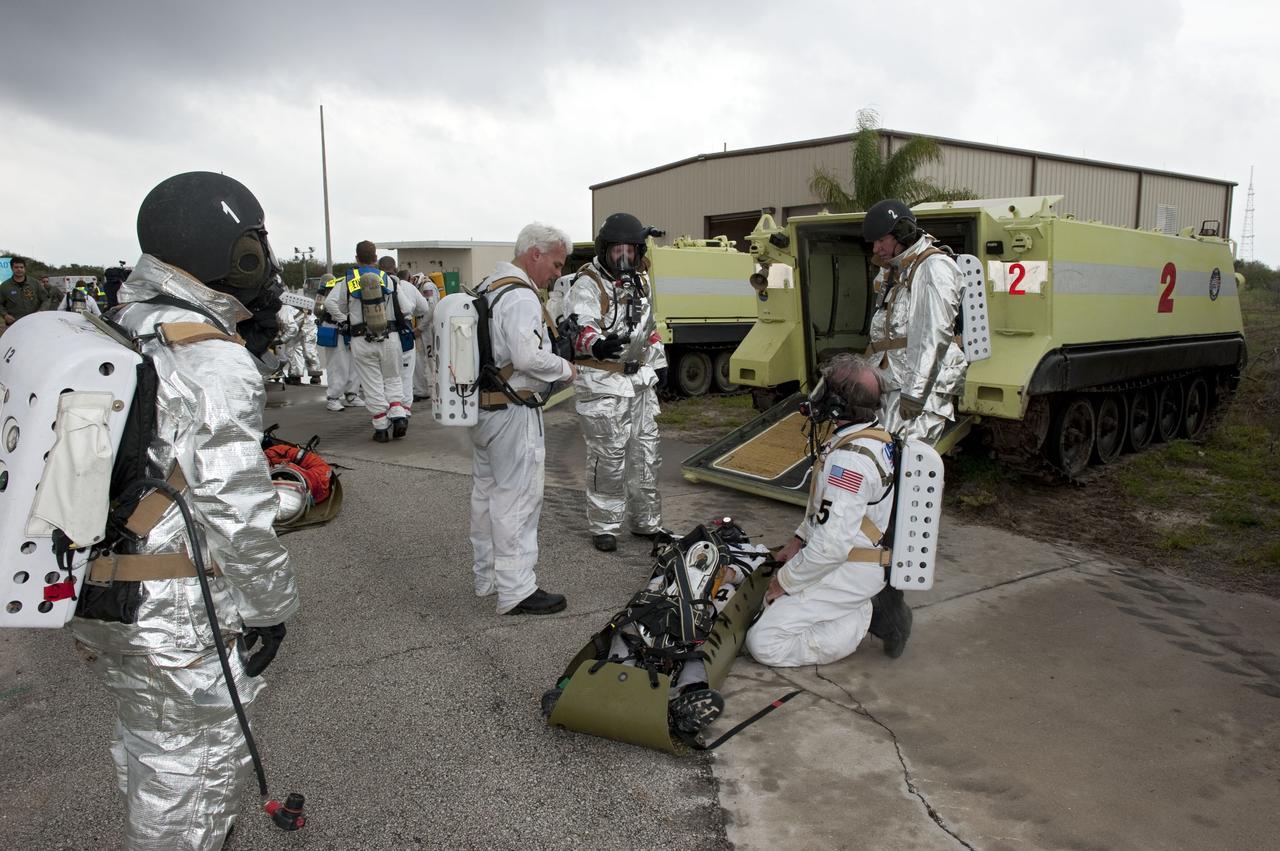
CAPE CANAVERAL, Fla. – An emergency exit, or Mode II/IV, exercise is under way near Launch Pad 39A at NASA's Kennedy Space Center in Florida. The exercise involves NASA fire rescue personnel, volunteers portraying astronauts with simulated injuries, helicopters and personnel from the Air Force’s 920th Rescue Wing, and medical trauma teams at three Central Florida hospitals. The drill allows teams to practice an emergency response at the launch pad, including helicopter evacuation to local hospitals. Photo credit: NASA/Kim Shiflett
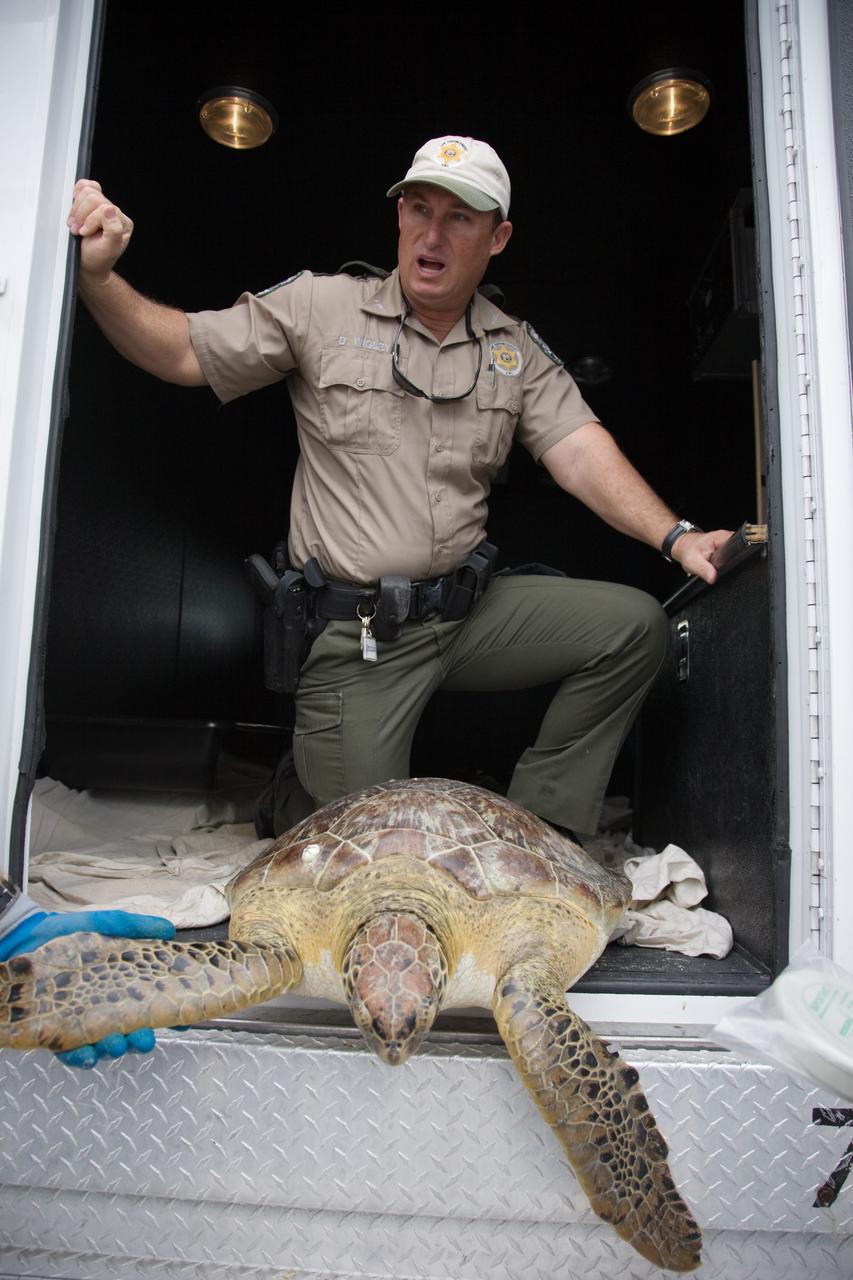
CAPE CANAVERAL, Fla. - A wildlife officer offers assistance as an endangered green sea turtle is prepared for release into the waters of the Banana River at NASA's Kennedy Space Center in Florida. The turtle was one of nearly 2,000 that were "stunned" by a recent drop in temperatures. Many of the turtles were rescued from the Mosquito Lagoon, with others coming from the Indian River Lagoon and Cocoa Beach. Biologists, environmentalists, wildlife experts and other volunteers joined forces with a massive rescue effort at the Merritt Island National Wildlife Refuge, where the turtles were identified, examined and transported to rehabilitation facilities throughout Florida and South Georgia. The animals stayed at these facilities until local waters warmed up to safe temperatures. Photo credit: NASA/Troy Cryder
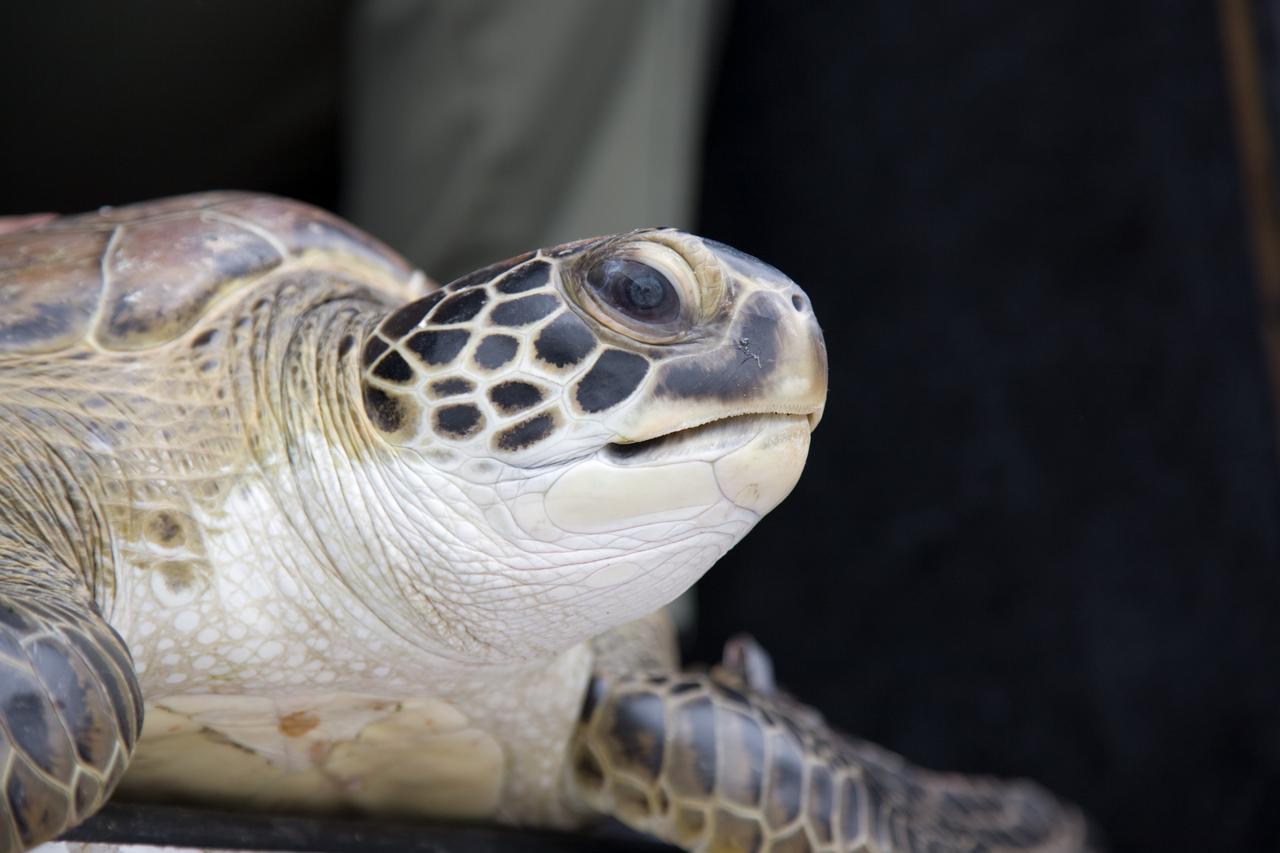
CAPE CANAVERAL, Fla. - This juvenile green sea turtle is ready to swim off into the waters of the Banana River at NASA's Kennedy Space Center in Florida. A recent cold snap left this turtle and nearly 2,000 others "stunned" and in need of help. Many of the turtles were rescued from the Mosquito Lagoon, with others coming from the Indian River Lagoon and Cocoa Beach. Biologists, environmentalists, wildlife experts and other volunteers joined forces with a massive rescue effort at the Merritt Island National Wildlife Refuge, where the turtles were identified, examined and transported to rehabilitation facilities throughout Florida and South Georgia. The animals stayed at these facilities until local waters warmed up to safe temperatures. Photo credit: NASA/Troy Cryder
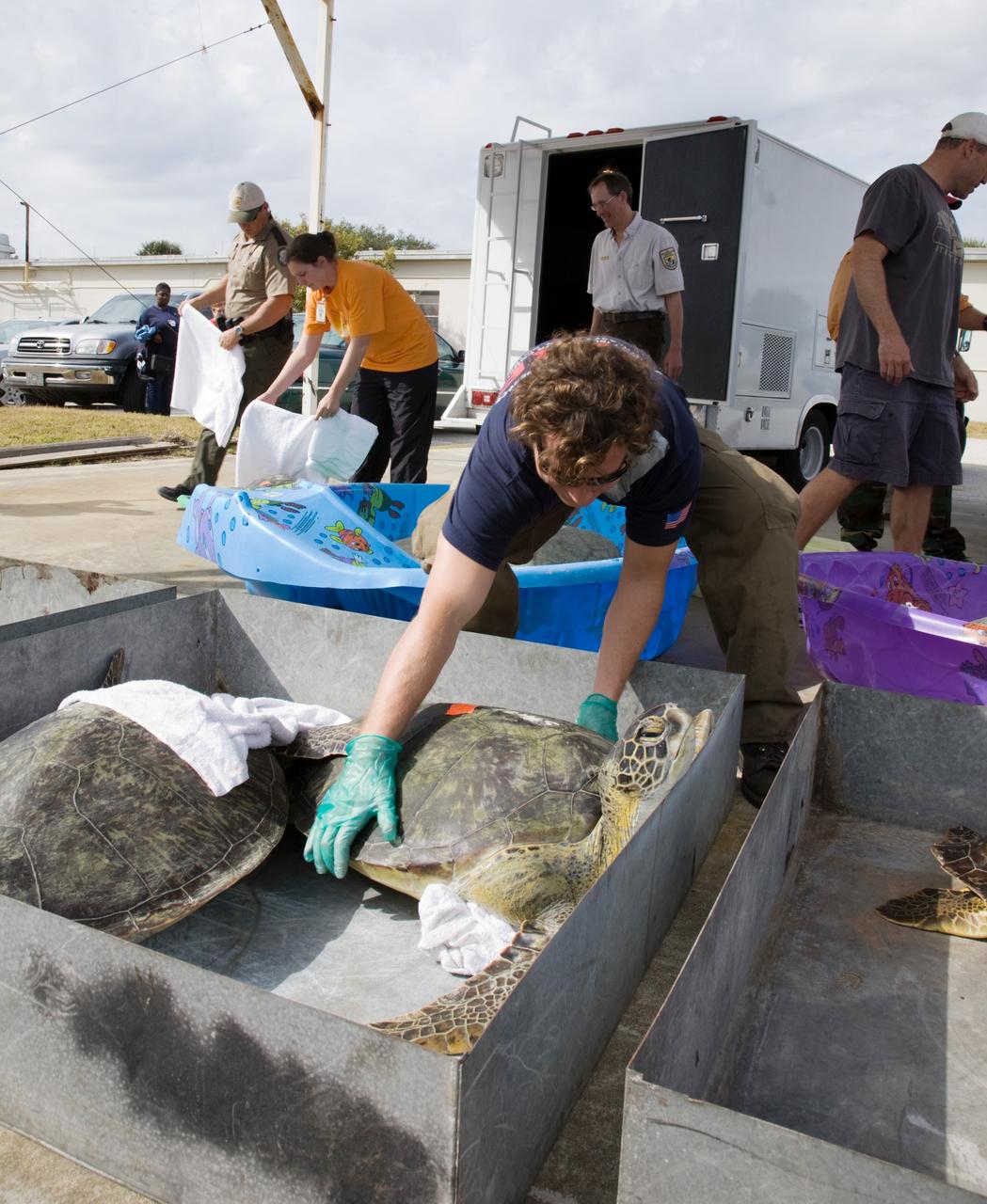
CAPE CANAVERAL, Fla. - Wildlife personnel prepare to release several endangered green sea turtles into the waters of the Banana River at NASA's Kennedy Space Center in Florida. The turtles were some of nearly 2,000 that were "stunned" by the recent drop in temperatures. Many of the turtles were rescued from the Mosquito Lagoon, with others coming from the Indian River Lagoon and Cocoa Beach. Biologists, environmentalists, wildlife experts and other volunteers joined forces with a massive rescue effort at the Merritt Island National Wildlife Refuge, where the turtles were identified, examined and transported to rehabilitation facilities throughout Florida and South Georgia. The animals stayed at these facilities until local waters warmed up to safe temperatures. Photo credit: NASA/Troy Cryder
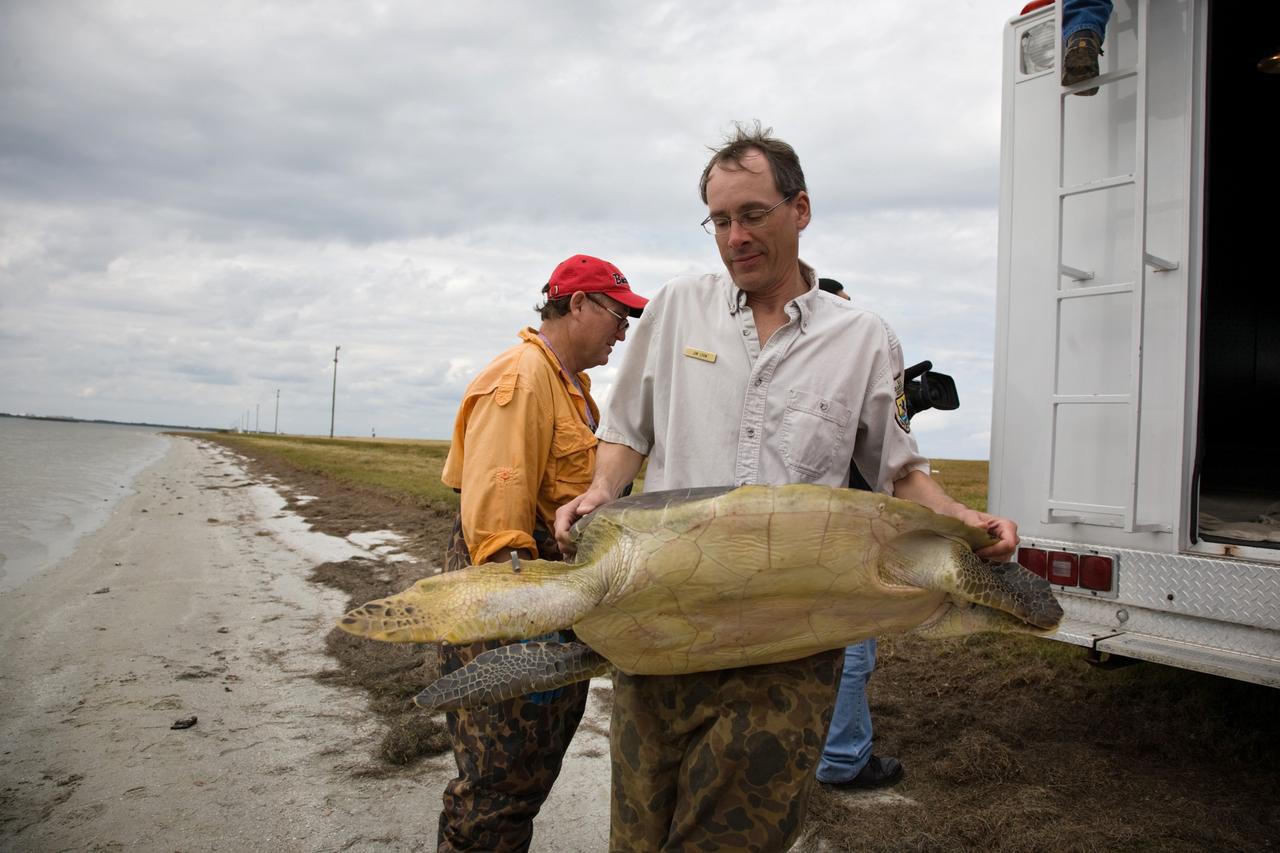
CAPE CANAVERAL, Fla. - Jim Lyon, biological science technician with the Merritt Island National Wildlife Refuge, carries a green sea turtle toward the waterline of the Banana River at NASA's Kennedy Space Center in Florida. A recent cold snap left this turtle and nearly 2,000 others "stunned" and in need of help. Many of the turtles were rescued from the Mosquito Lagoon, with others coming from the Indian River Lagoon and Cocoa Beach. Biologists, environmentalists, wildlife experts and other volunteers joined forces with a massive rescue effort at the Merritt Island National Wildlife Refuge, where the turtles were identified, examined and transported to rehabilitation facilities throughout Florida and South Georgia. The animals stayed at these facilities until local waters warmed up to safe temperatures. Photo credit: NASA/Troy Cryder
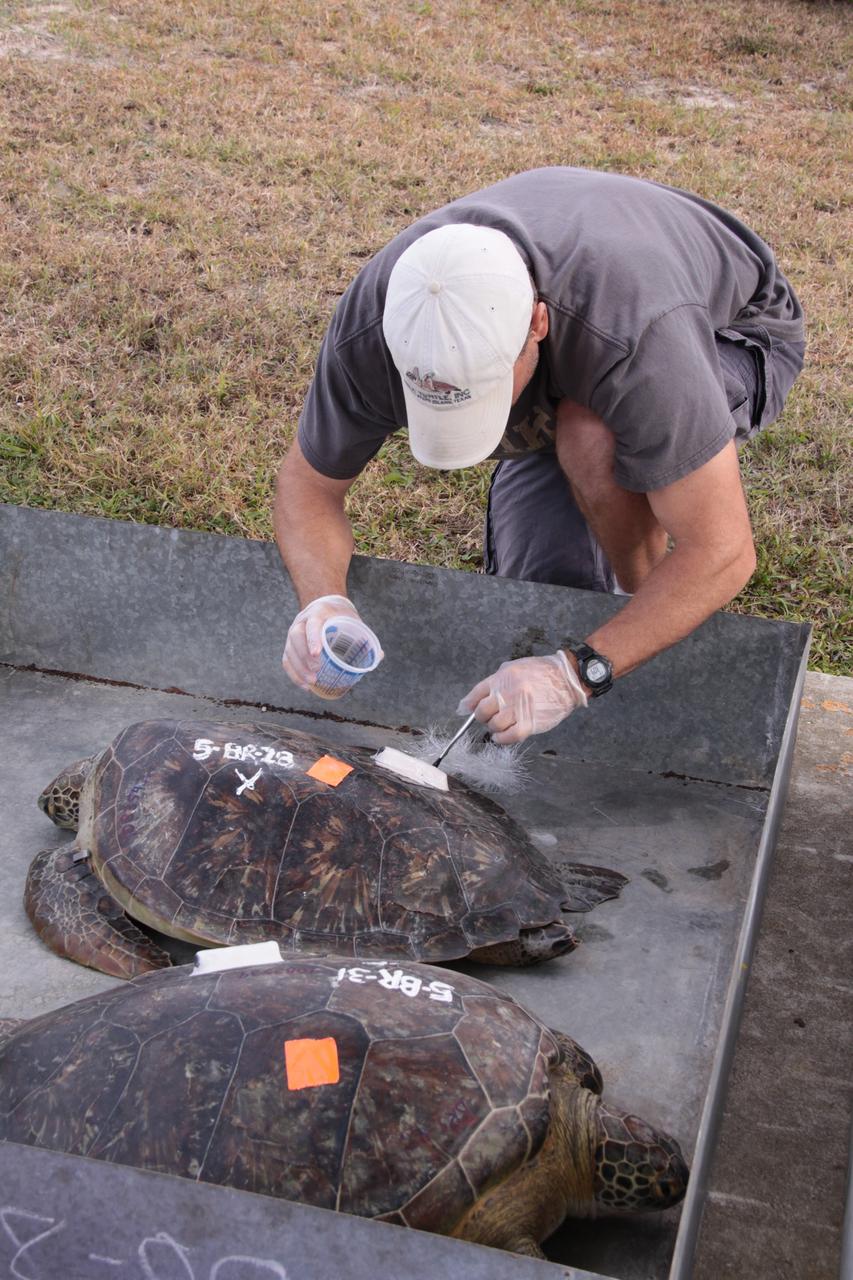
CAPE CANAVERAL, Fla. - A tracking transmitter is installed on the shell of an endangered green sea turtle at Cape Canaveral Air Force Station in Florida. A recent cold snap left this turtle and nearly 2,000 others "stunned" and in need of help. Many of the turtles were rescued from the Mosquito Lagoon, with others coming from the Indian River Lagoon and Cocoa Beach. Biologists, environmentalists, wildlife experts and other volunteers joined forces with a massive rescue effort at the Merritt Island National Wildlife Refuge, where the turtles were identified, examined and transported to rehabilitation facilities throughout Florida and South Georgia. The animals stayed at these facilities until local waters warmed up to safe temperatures. Photo credit: NASA/Jack Pfaller
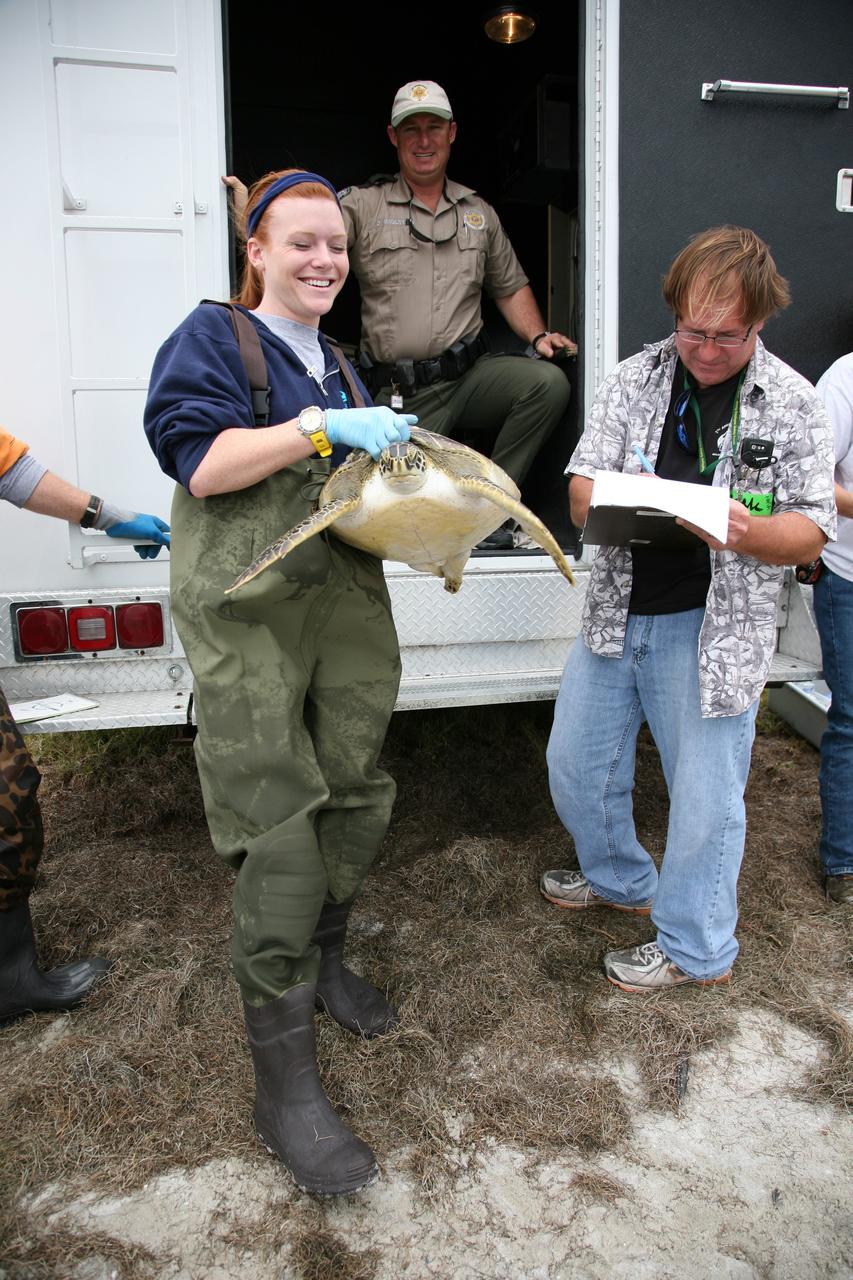
CAPE CANAVERAL, Fla. - Wildlife personnel carry an endangered green sea turtle away from a transport van prior to the animal's release into the Banana River at NASA's Kennedy Space Center in Florida. The turtle was one of nearly 2,000 that were "stunned" by a recent drop in temperatures. Many of the turtles were rescued from the Mosquito Lagoon, with others coming from the Indian River Lagoon and Cocoa Beach. Biologists, environmentalists, wildlife experts and other volunteers joined forces with a massive rescue effort at the Merritt Island National Wildlife Refuge, where the turtles were identified, examined and transported to rehabilitation facilities throughout Florida and South Georgia. The animals stayed at these facilities until local waters warmed up to safe temperatures. Photo credit: NASA/Troy Cryder
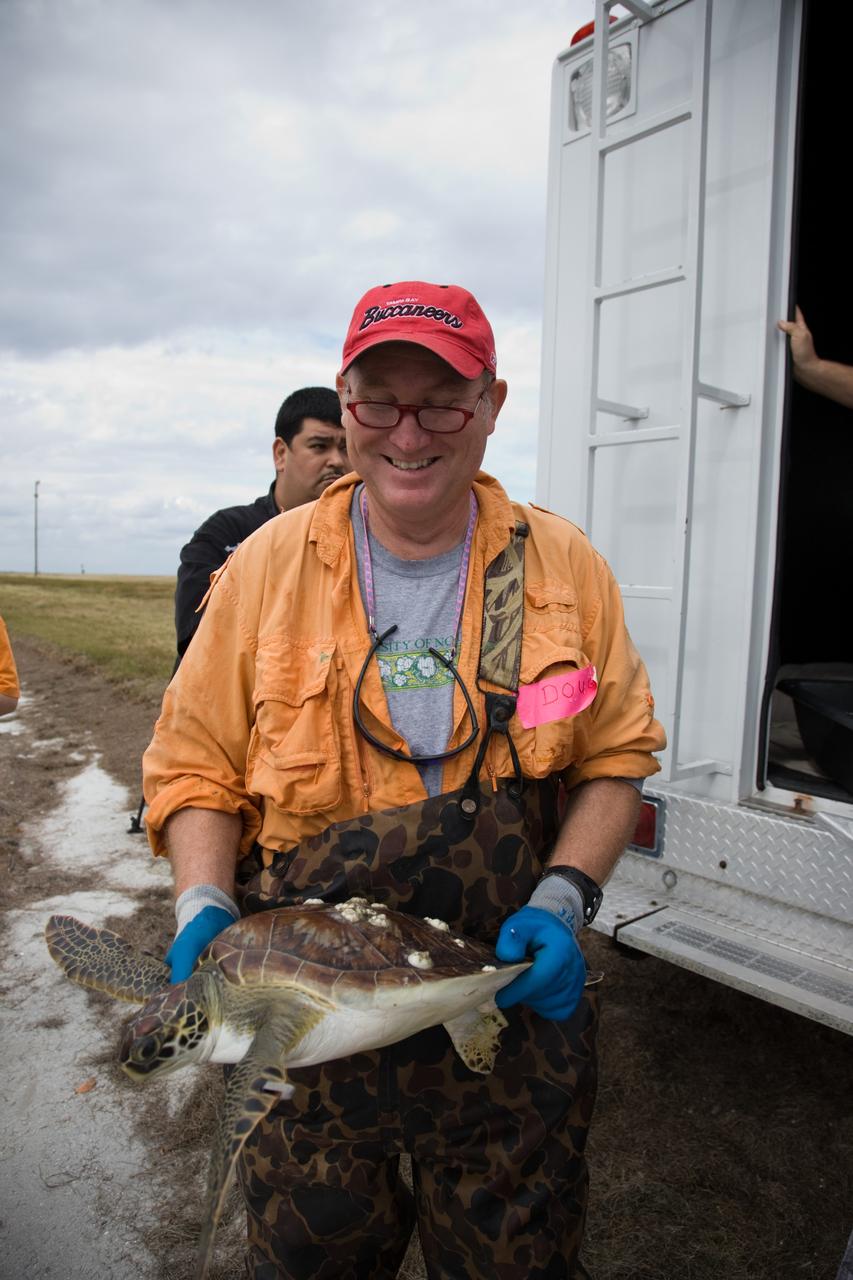
CAPE CANAVERAL, Fla. - Doug Scheidt, an employee of Innovative Health Applications at NASA's Kennedy Space Center in Florida, holds a juvenile green sea turtle prior to its release into the Banana River. The turtle was one of nearly 2,000 that were "stunned" by a recent drop in temperatures. Many of the turtles were rescued from the Mosquito Lagoon, with others coming from the Indian River Lagoon and Cocoa Beach. Biologists, environmentalists, wildlife experts and other volunteers joined forces with a massive rescue effort at the Merritt Island National Wildlife Refuge, where the turtles were identified, examined and transported to rehabilitation facilities throughout Florida and South Georgia. The animals stayed at these facilities until local waters warmed up to safe temperatures. Photo credit: NASA/Troy Cryder
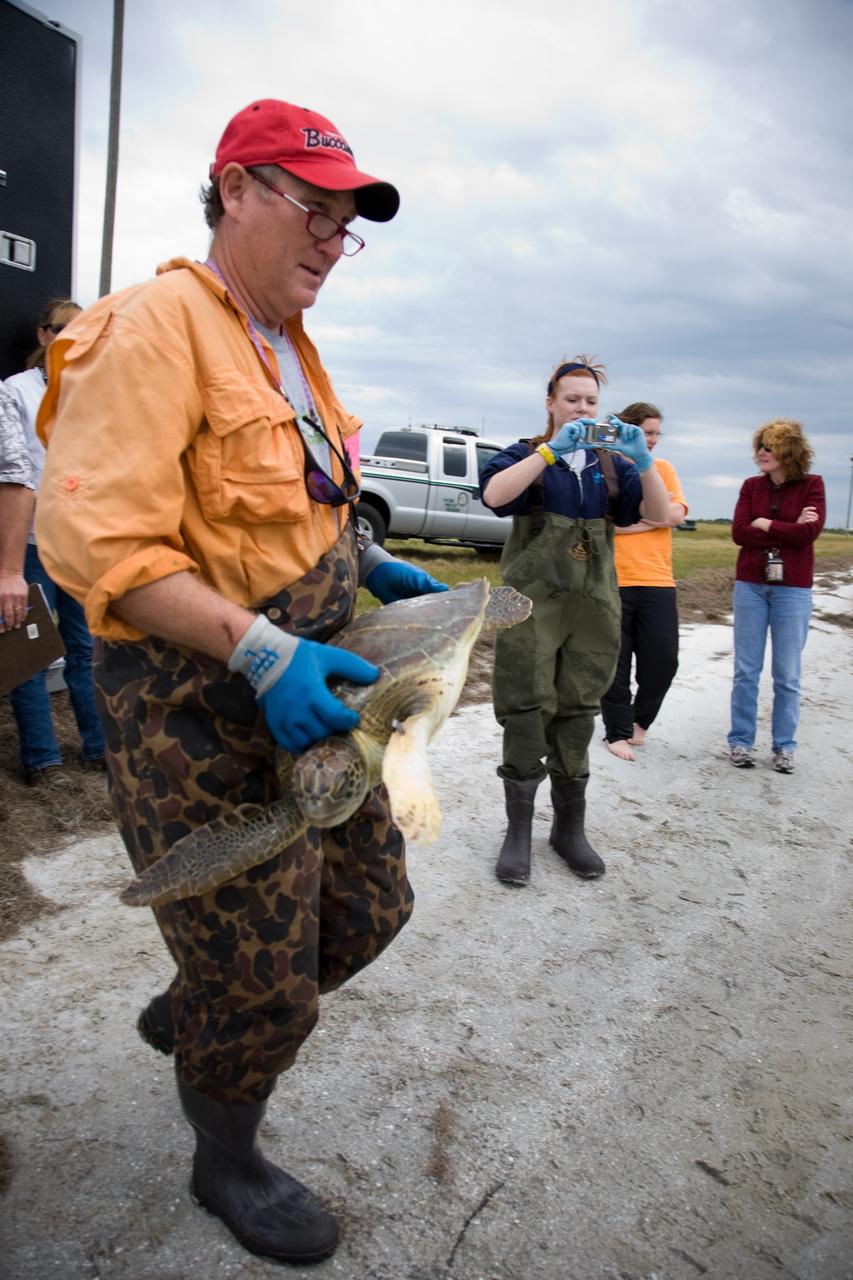
CAPE CANAVERAL, Fla. - Doug Scheidt, an employee of Innovative Health Applications at NASA's Kennedy Space Center in Florida, carries a green sea turtle to be released into the Banana River. The turtle was one of nearly 2,000 that were "stunned" by a recent drop in temperatures. Many of the turtles were rescued from the Mosquito Lagoon, with others coming from the Indian River Lagoon and Cocoa Beach. Biologists, environmentalists, wildlife experts and other volunteers joined forces with a massive rescue effort at the Merritt Island National Wildlife Refuge, where the turtles were identified, examined and transported to rehabilitation facilities throughout Florida and South Georgia. The animals stayed at these facilities until local waters warmed up to safe temperatures. Photo credit: NASA/Troy Cryder
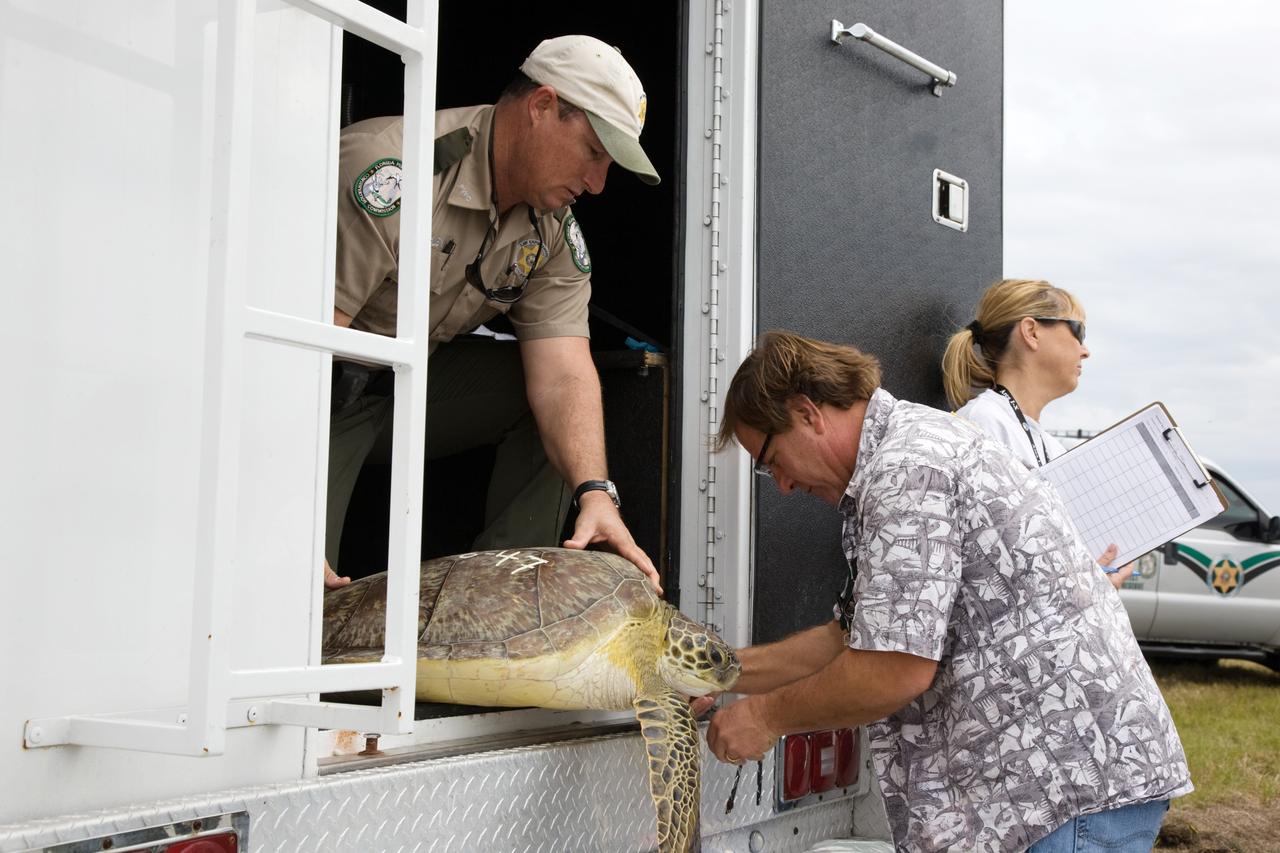
CAPE CANAVERAL, Fla. - An endangered green sea turtle is unloaded from a truck prior to its release into the waters of the Banana River at NASA's Kennedy Space Center in Florida. Wildlife personnel and volunteers are releasing groups of the federally protected turtles after nearly 2,000 of the animals were "stunned" by prolonged cold temperatures. Many of the turtles were rescued from the Mosquito Lagoon, with others coming from the Indian River Lagoon and Cocoa Beach. Biologists, environmentalists, wildlife experts and other volunteers joined forces with a massive rescue effort at the Merritt Island National Wildlife Refuge, where the turtles were identified, examined and transported to rehabilitation facilities throughout Florida and South Georgia. The animals stayed at these facilities until local waters warmed up to safe temperatures. Photo credit: NASA/Troy Cryder
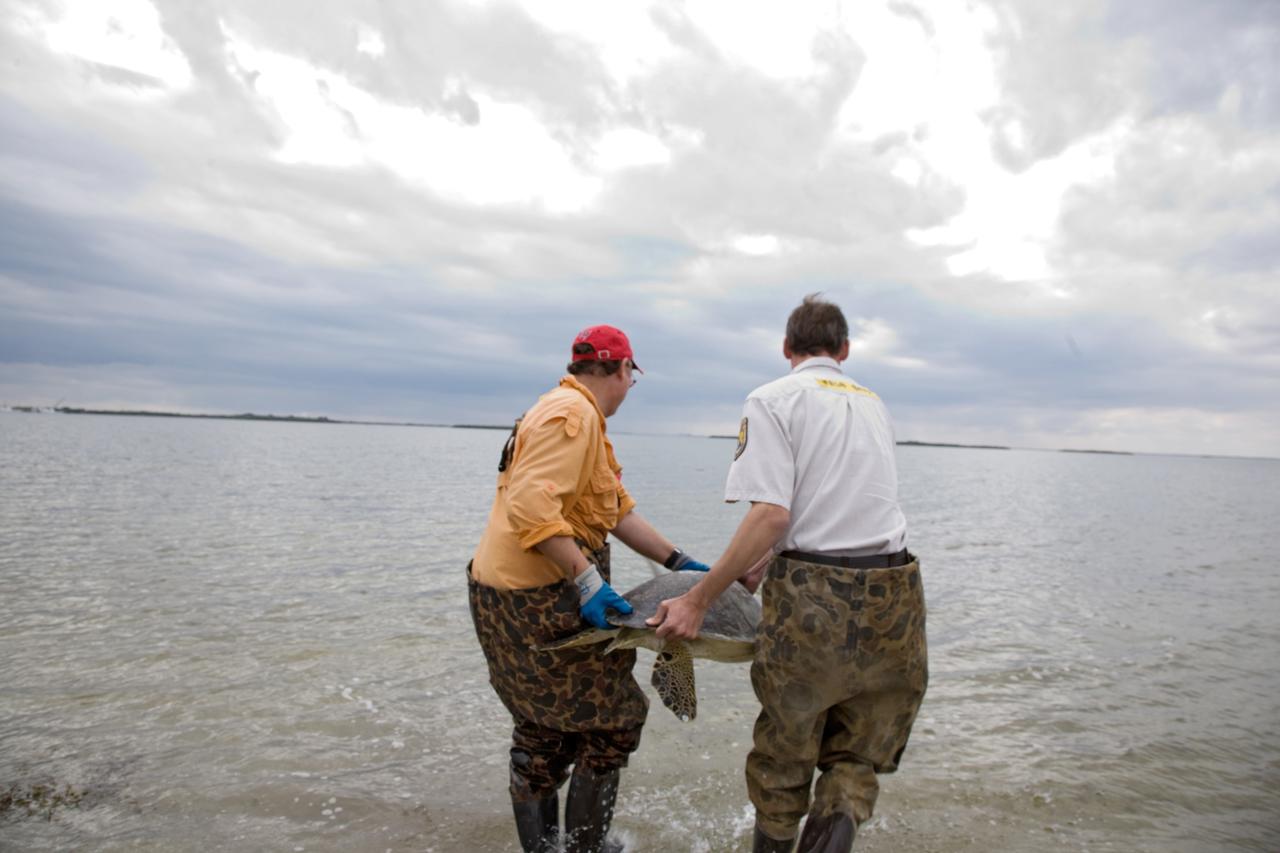
CAPE CANAVERAL, Fla. - Wildlife personnel carry an endangered green sea turtle toward the Banana River at NASA's Kennedy Space Center in Florida, ready to release the animal back into its usual environment. A recent cold snap left this turtle and nearly 2,000 others "stunned" and in need of help. Many of the turtles were rescued from the Mosquito Lagoon, with others coming from the Indian River Lagoon and Cocoa Beach. Biologists, environmentalists, wildlife experts and other volunteers joined forces with a massive rescue effort at the Merritt Island National Wildlife Refuge, where the turtles were identified, examined and transported to rehabilitation facilities throughout Florida and South Georgia. The animals stayed at these facilities until local waters warmed up to safe temperatures. Photo credit: NASA/Troy Cryder
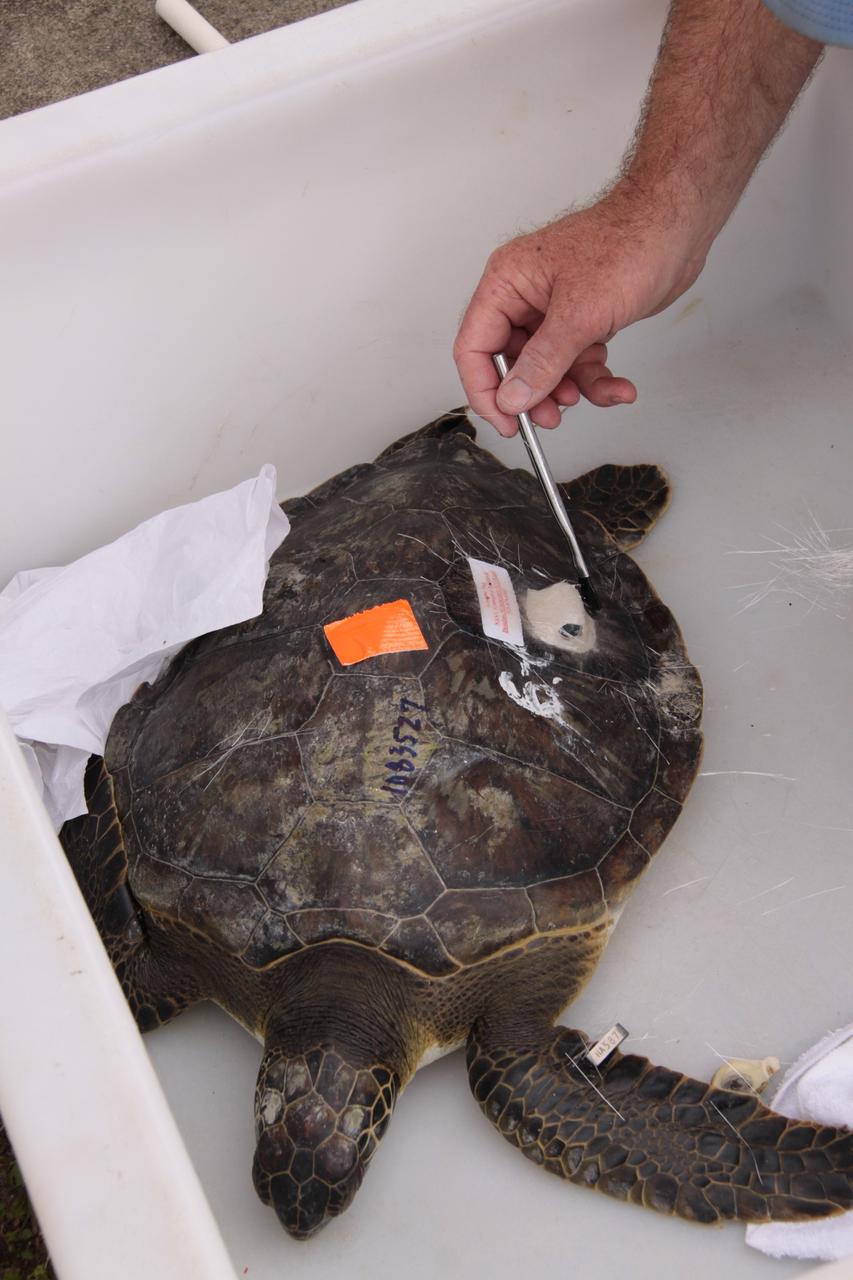
CAPE CANAVERAL, Fla. - An endangered green sea turtle awaits release as its shell is tagged with a tracking transmitter at Cape Canaveral Air Force Station in Florida. A recent cold snap left this turtle and nearly 2,000 others "stunned" and in need of help. Many of the turtles were rescued from the Mosquito Lagoon, with others coming from the Indian River Lagoon and Cocoa Beach. Biologists, environmentalists, wildlife experts and other volunteers joined forces with a massive rescue effort at the Merritt Island National Wildlife Refuge, where the turtles were identified, examined and transported to rehabilitation facilities throughout Florida and South Georgia. The animals stayed at these facilities until local waters warmed up to safe temperatures. Photo credit: NASA/Jack Pfaller
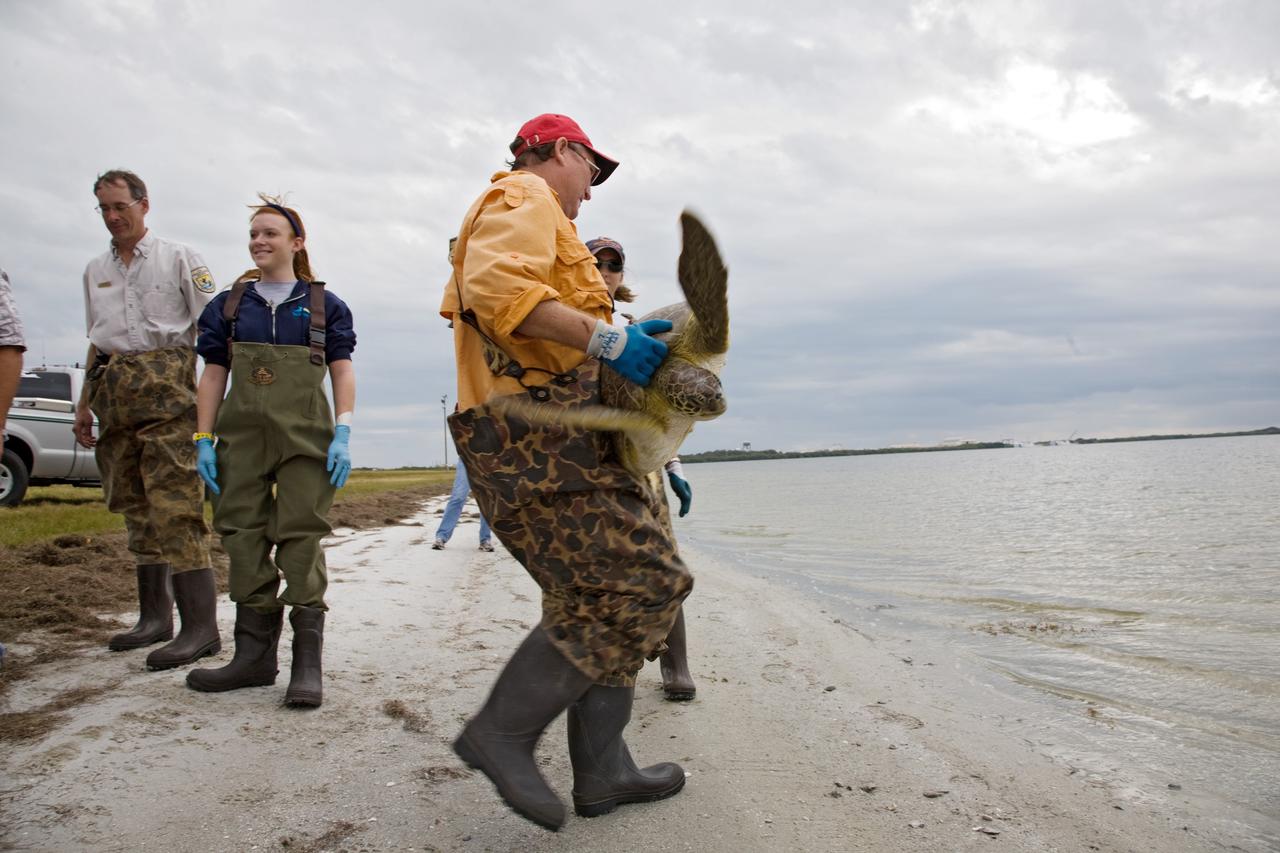
CAPE CANAVERAL, Fla. - A green sea turtle is carried toward the water's edge prior to the animal's release into the waters of the Banana River at NASA's Kennedy Space Center in Florida. The turtle was one of nearly 2,000 that were "stunned" by a recent drop in temperatures. Many of the turtles were rescued from the Mosquito Lagoon, with others coming from the Indian River Lagoon and Cocoa Beach. Biologists, environmentalists, wildlife experts and other volunteers joined forces with a massive rescue effort at the Merritt Island National Wildlife Refuge, where the turtles were identified, examined and transported to rehabilitation facilities throughout Florida and South Georgia. The animals stayed at these facilities until local waters warmed up to safe temperatures. Photo credit: NASA/Troy Cryder
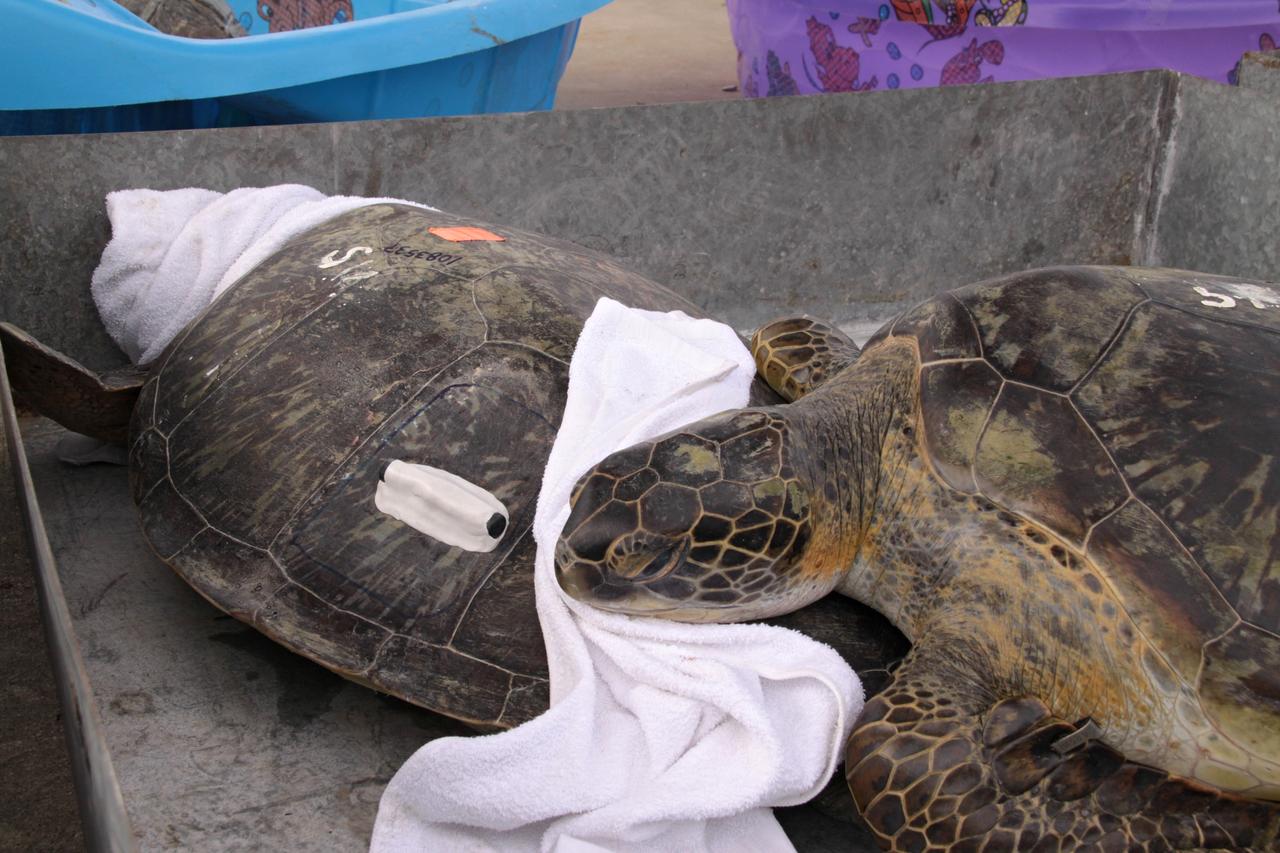
CAPE CANAVERAL, Fla. - A green sea turtle rests its head on a companion as the animals are tagged with tracking transmitters and prepared for release at Cape Canaveral Air Force Station in Florida. The turtles were some of nearly 2,000 that were "stunned" by the recent drop in temperatures. Many of the turtles were rescued from the Mosquito Lagoon, with others coming from the Indian River Lagoon and Cocoa Beach. Biologists, environmentalists, wildlife experts and other volunteers joined forces with a massive rescue effort at the Merritt Island National Wildlife Refuge, where the turtles were identified, examined and transported to rehabilitation facilities throughout Florida and South Georgia. The animals stayed at these facilities until local waters warmed up to safe temperatures. Photo credit: NASA/Jack Pfaller
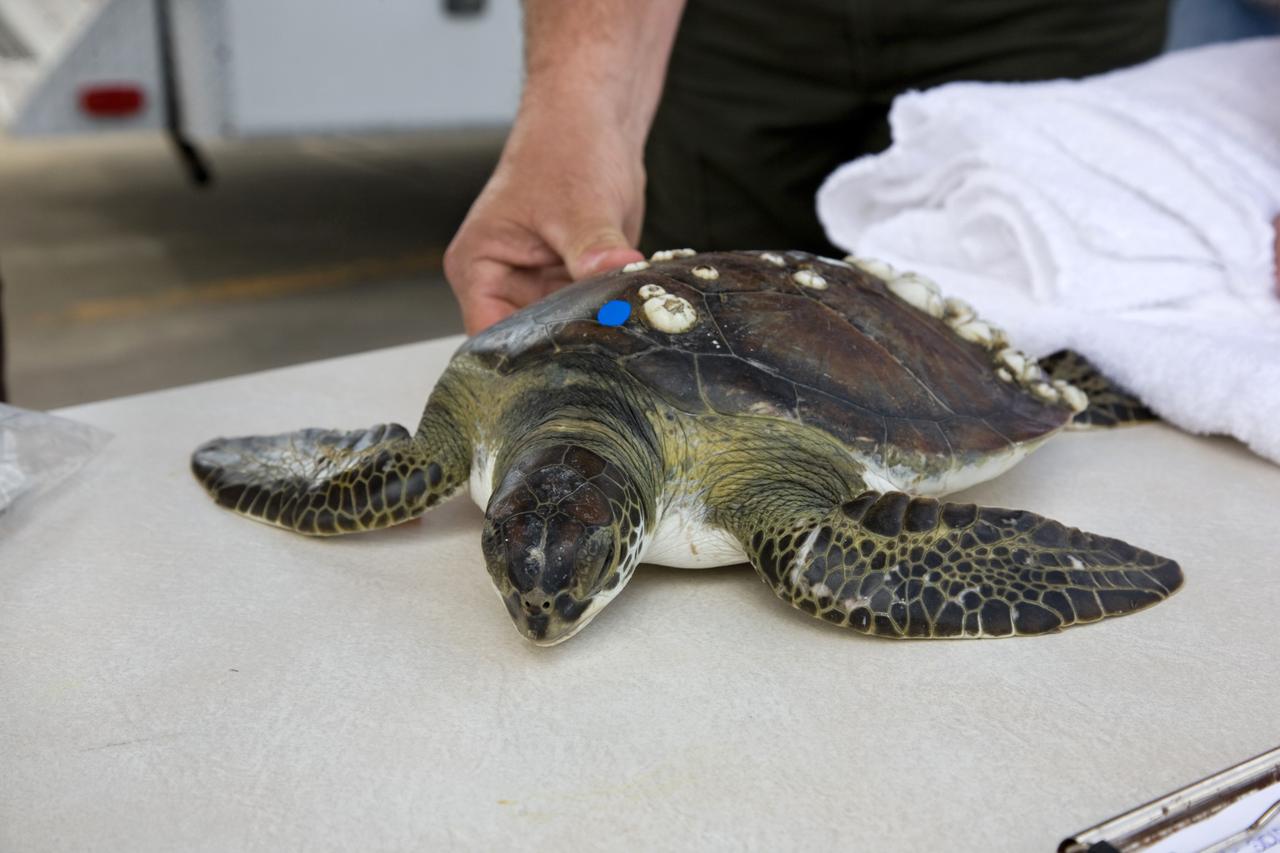
CAPE CANAVERAL, Fla. - A juvenile green sea turtle is prepared for its release into the waters of the Banana River at NASA's Kennedy Space Center in Florida. The turtle was one of nearly 2,000 that were "stunned" by the recent drop in temperatures. Many of the turtles were rescued from the Mosquito Lagoon, with others coming from the Indian River Lagoon and Cocoa Beach. Biologists, environmentalists, wildlife experts and other volunteers joined forces with a massive rescue effort at the Merritt Island National Wildlife Refuge, where the turtles were identified, examined and transported to rehabilitation facilities throughout Florida and South Georgia. The animals stayed at these facilities until local waters warmed up to safe temperatures. Photo credit: NASA/Troy Cryder
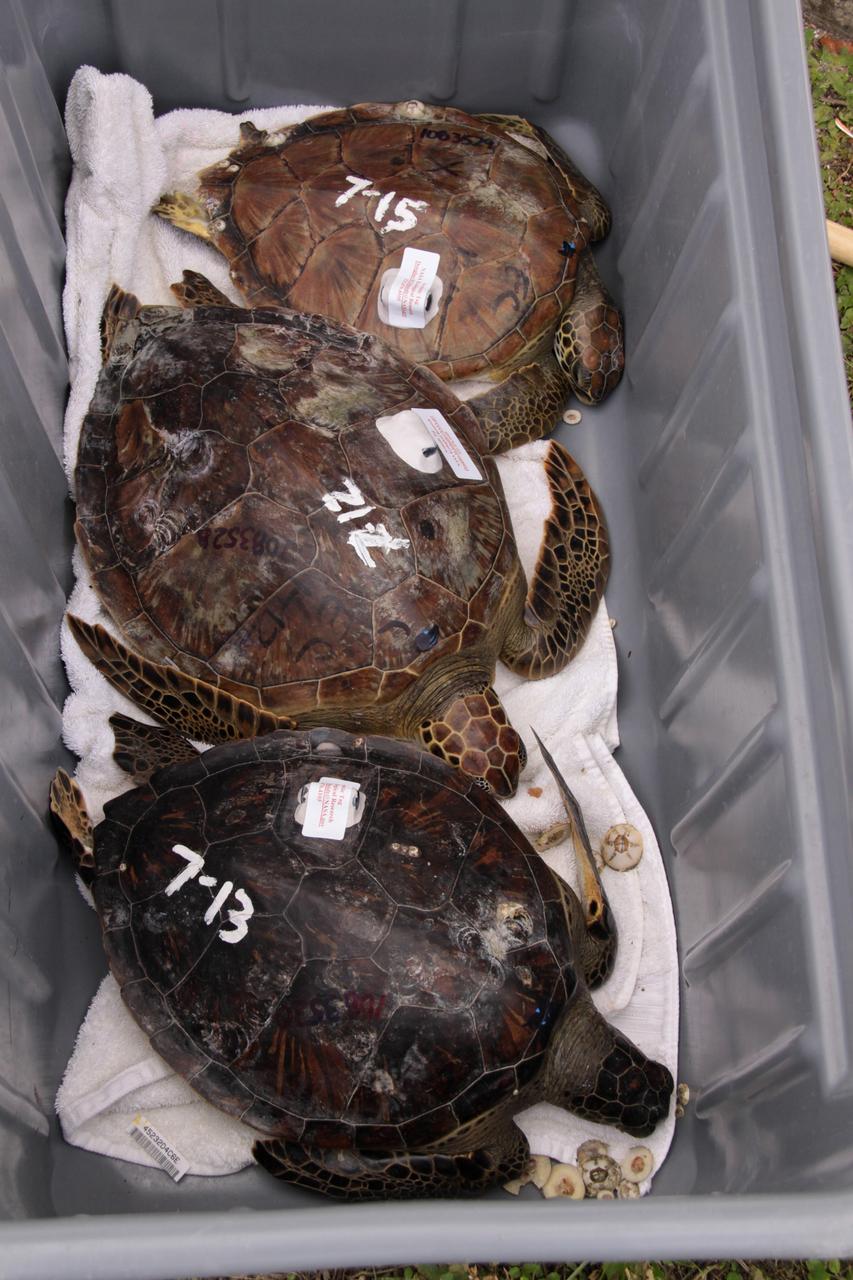
CAPE CANAVERAL, Fla. - A trio of green sea turtles rest in a box at Cape Canaveral Air Force Station in Florida after the animals were outfitted with tracking transmitters. The turtles were some of nearly 2,000 that were "stunned" by the recent drop in temperatures. Many of the turtles were rescued from the Mosquito Lagoon, with others coming from the Indian River Lagoon and Cocoa Beach. Biologists, environmentalists, wildlife experts and other volunteers joined forces with a massive rescue effort at the Merritt Island National Wildlife Refuge, where the turtles were identified, examined and transported to rehabilitation facilities throughout Florida and South Georgia. The animals stayed at these facilities until local waters warmed up to safe temperatures. Photo credit: NASA/Jack Pfaller
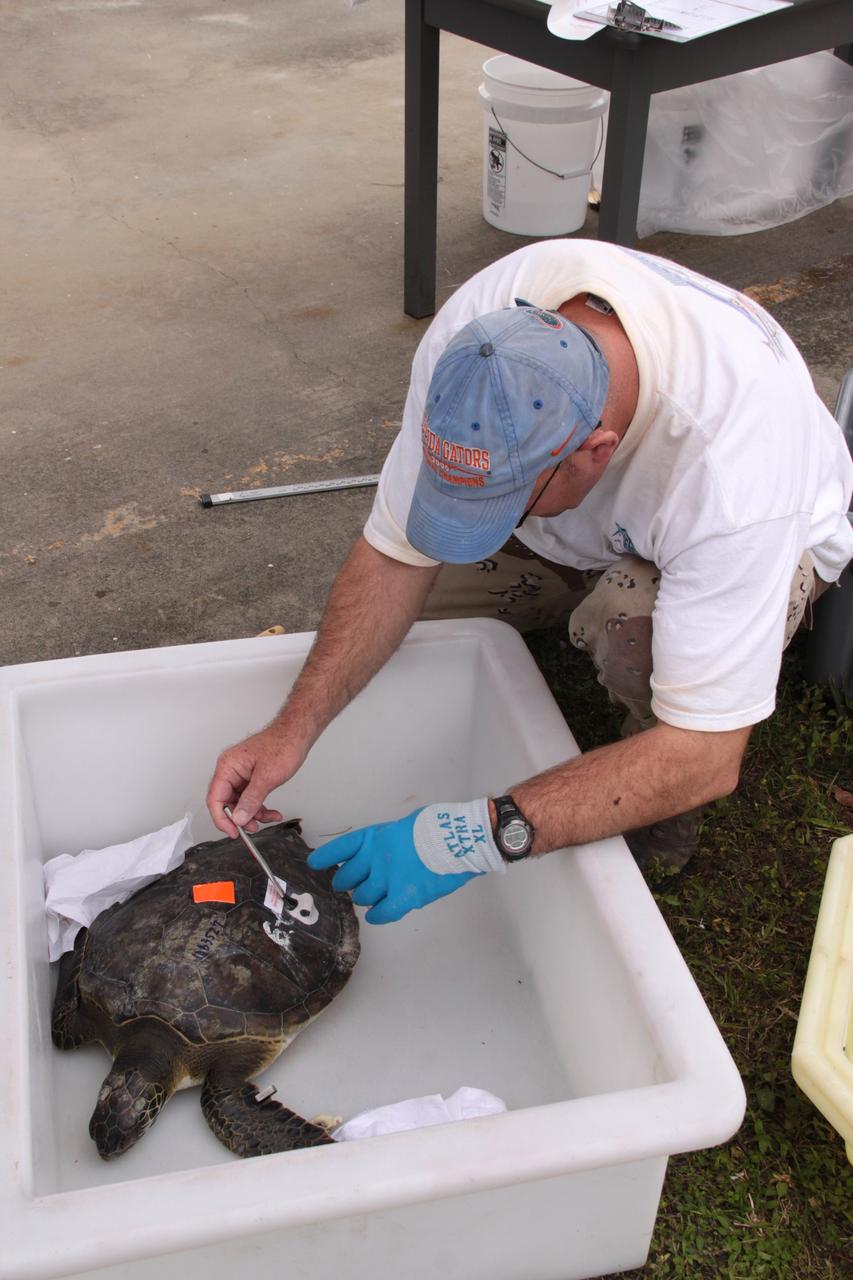
CAPE CANAVERAL, Fla. - An endangered green sea turtle is outfitted with a tracking transmitter at Cape Canaveral Air Force Station in Florida. A recent cold snap left this turtle and nearly 2,000 others "stunned" and in need of help. Many of the turtles were rescued from the Mosquito Lagoon, with others coming from the Indian River Lagoon and Cocoa Beach. Biologists, environmentalists, wildlife experts and other volunteers joined forces with a massive rescue effort at the Merritt Island National Wildlife Refuge, where the turtles were identified, examined and transported to rehabilitation facilities throughout Florida and South Georgia. The animals stayed at these facilities until local waters warmed up to safe temperatures. Photo credit: NASA/Jack Pfaller
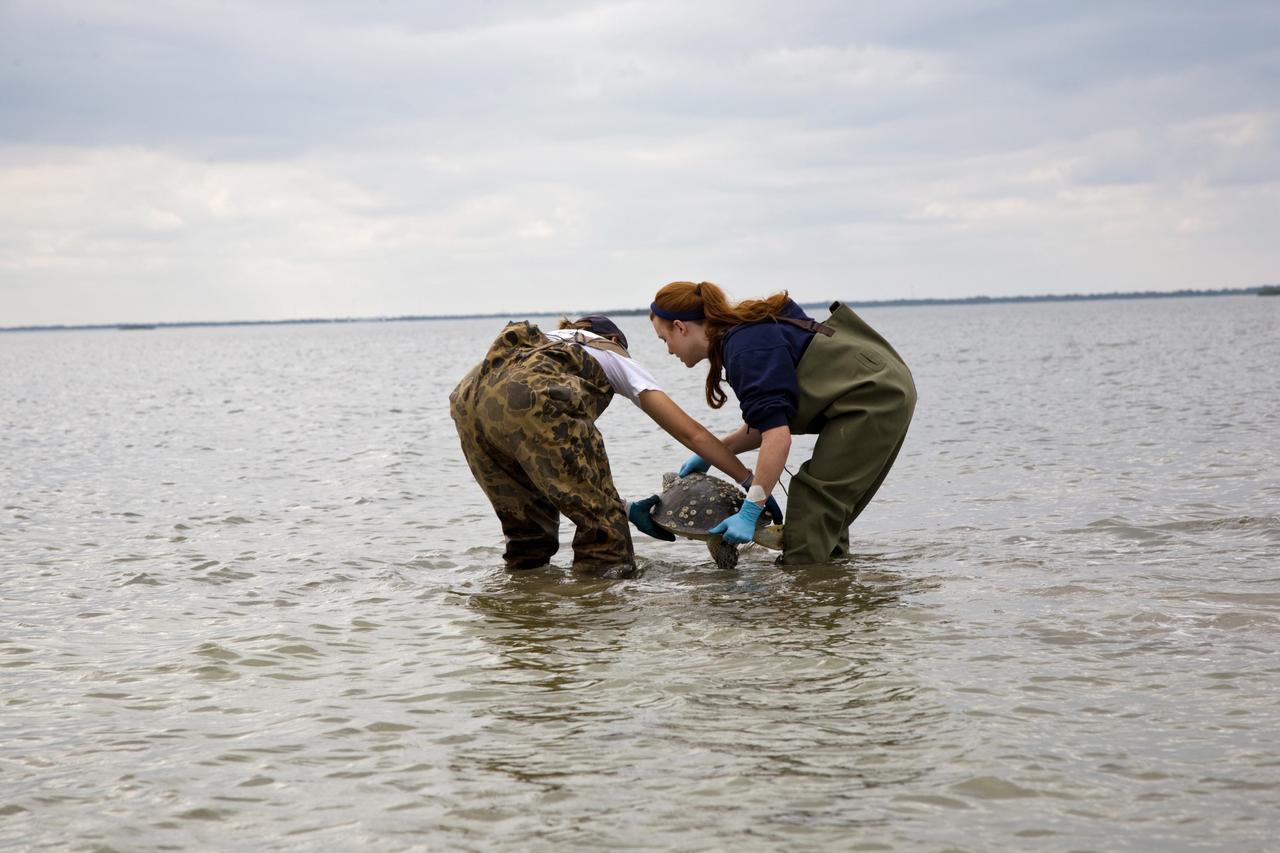
CAPE CANAVERAL, Fla. - An endangered green sea turtle is headed toward freedom as wildlife personnel carry it toward the Banana River at NASA's Kennedy Space Center in Florida. The turtle was one of nearly 2,000 that were "stunned" by a recent drop in temperatures. Many of the turtles were rescued from the Mosquito Lagoon, with others coming from the Indian River Lagoon and Cocoa Beach. Biologists, environmentalists, wildlife experts and other volunteers joined forces with a massive rescue effort at the Merritt Island National Wildlife Refuge, where the turtles were identified, examined and transported to rehabilitation facilities throughout Florida and South Georgia. The animals stayed at these facilities until local waters warmed up to safe temperatures. Photo credit: NASA/Troy Cryder
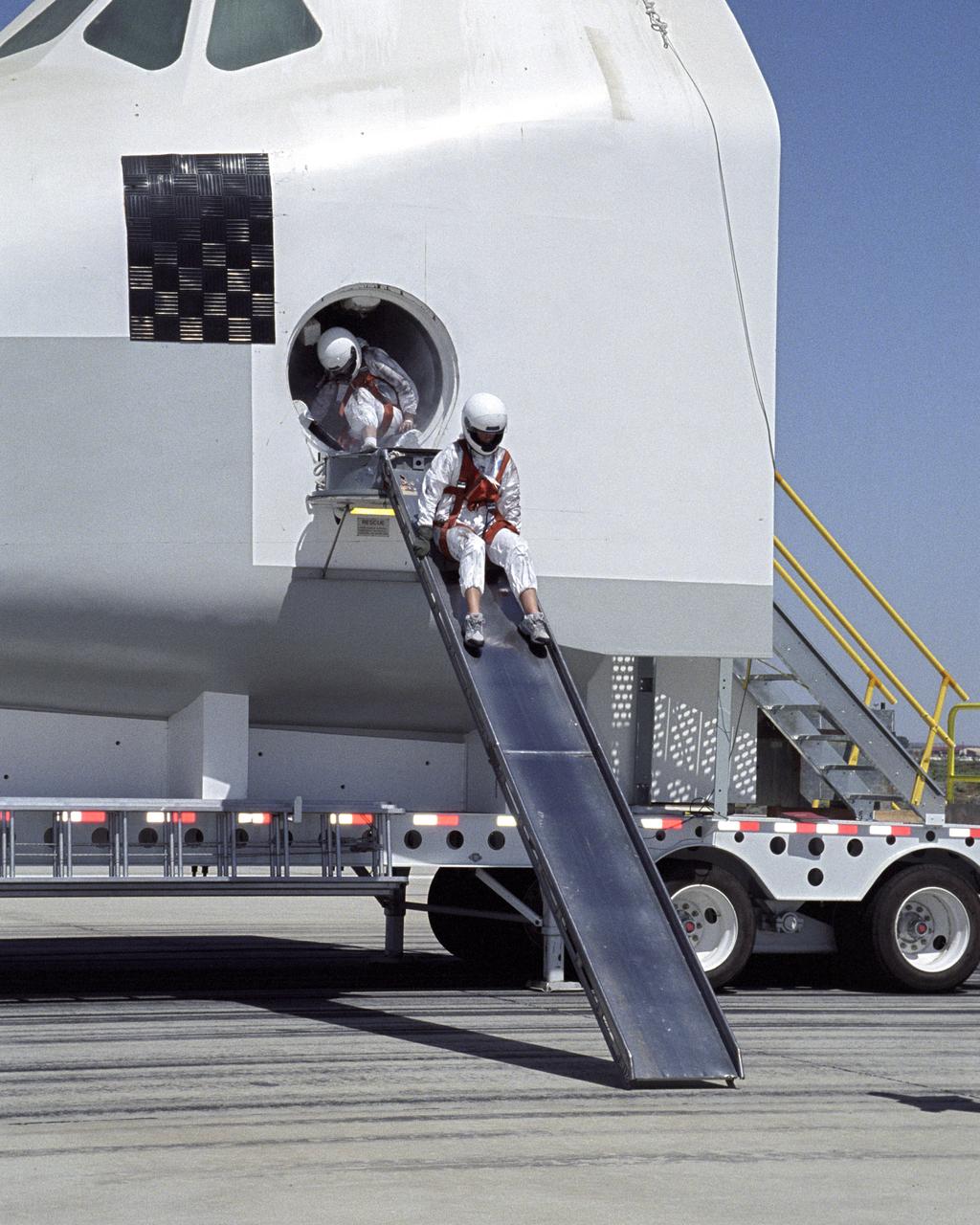
A volunteer "astronaut" starts down an exit slide from a Space Shuttle crew compartment mockup during a rescue and recovery training exercise.
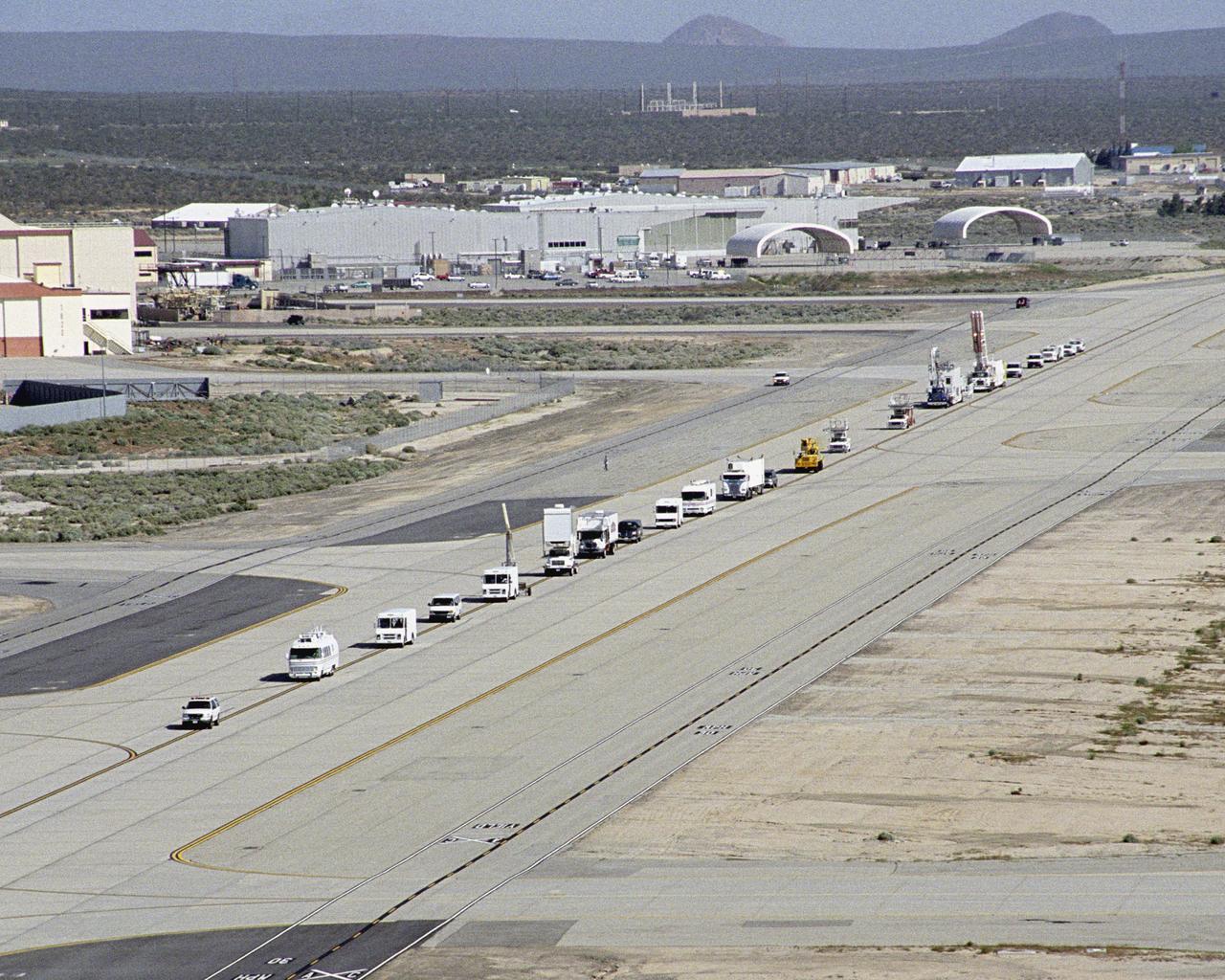
A long string of specialized NASA vehicles convoys down a taxiway at Edwards Air Force Base to begin a Space Shuttle rescue and recovery training exercise.
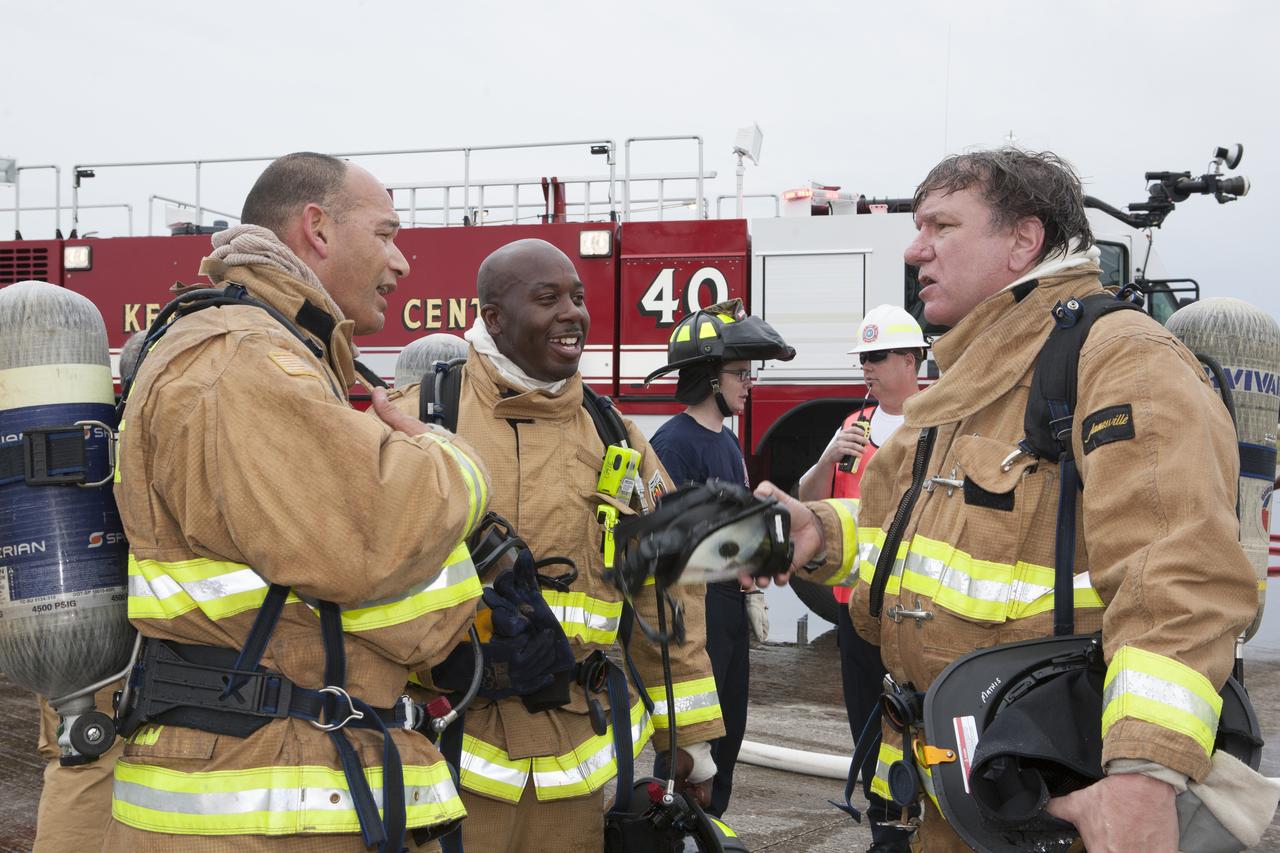
CAPE CANAVERAL, Fla. - Special Rescue Operations firefighters with NASA Fire Rescue Services in the Protective Services Office at NASA’s Kennedy Space Center in Florida review procedures after participating in a training exercise at the Shuttle Landing Facility. During the training simulation, firefighters used fire trucks and hoses to extinguish flames burning on and around a mock-up of a small plane. Kennedy’s firefighters recently achieved Pro Board Certification in aerial fire truck operations and completed vehicle extrication training using the Jaws of Life. The Protective Services Office is one step closer to achieving certification in vehicle machinery extrication and other rescue skills. Kennedy’s firefighters are with G4S Government Solutions Inc., on the Kennedy Protective Services Contract. Photo credit: NASA/Kim Shiflett
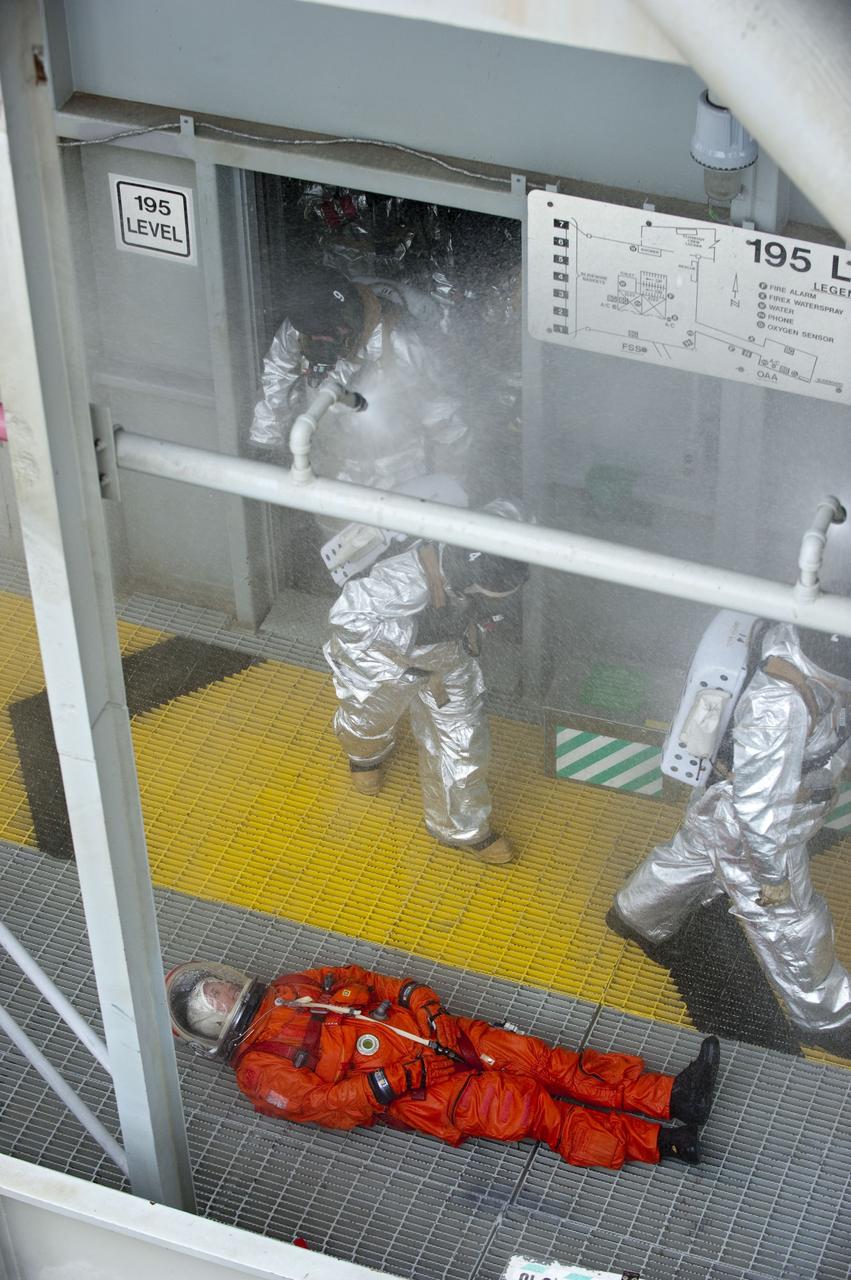
CAPE CANAVERAL, Fla. – An emergency exit, or Mode II/IV, exercise is under way at the 195-foot level of Launch Pad 39A at NASA's Kennedy Space Center in Florida. The exercise involves NASA fire rescue personnel, volunteers portraying astronauts with simulated injuries, helicopters and personnel from the Air Force’s 920th Rescue Wing, and medical trauma teams at three Central Florida hospitals. The drill allows teams to practice an emergency response at the launch pad, including helicopter evacuation to local hospitals. Photo credit: NASA/Kim Shiflett

CAPE CANAVERAL, Fla. – An emergency exit, or Mode II/IV, exercise is under way at the slidewire basket landing site of Launch Pad 39A at NASA's Kennedy Space Center in Florida. The exercise involves NASA fire rescue personnel, volunteers portraying astronauts with simulated injuries, helicopters and personnel from the Air Force’s 920th Rescue Wing, and medical trauma teams at three Central Florida hospitals. The drill allows teams to practice an emergency response at the launch pad, including helicopter evacuation to local hospitals. Photo credit: NASA/Kim Shiflett
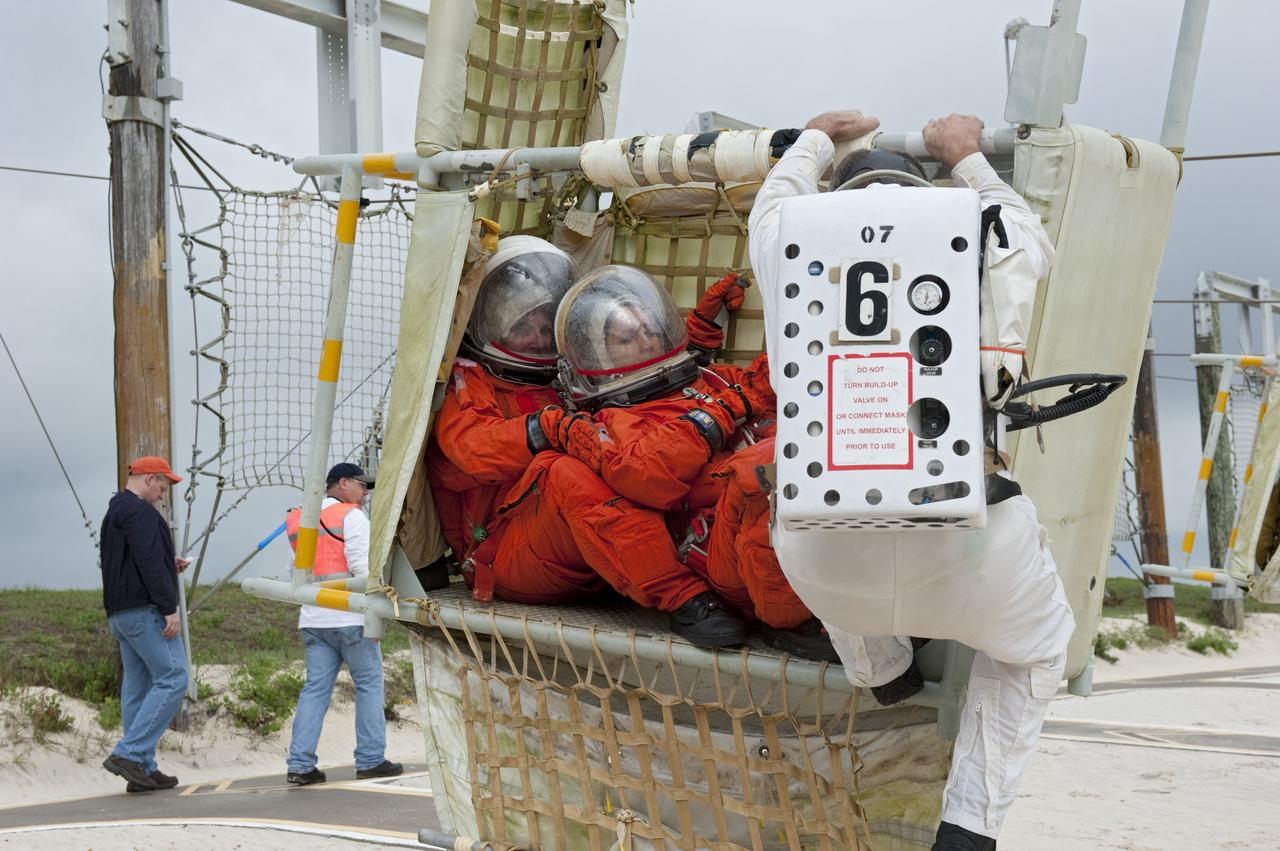
CAPE CANAVERAL, Fla. – An emergency exit, or Mode II/IV, exercise is under way at the slidewire basket landing site of Launch Pad 39A at NASA's Kennedy Space Center in Florida. The exercise involves NASA fire rescue personnel, volunteers portraying astronauts with simulated injuries, helicopters and personnel from the Air Force’s 920th Rescue Wing, and medical trauma teams at three Central Florida hospitals. The drill allows teams to practice an emergency response at the launch pad, including helicopter evacuation to local hospitals. Photo credit: NASA/Kim Shiflett
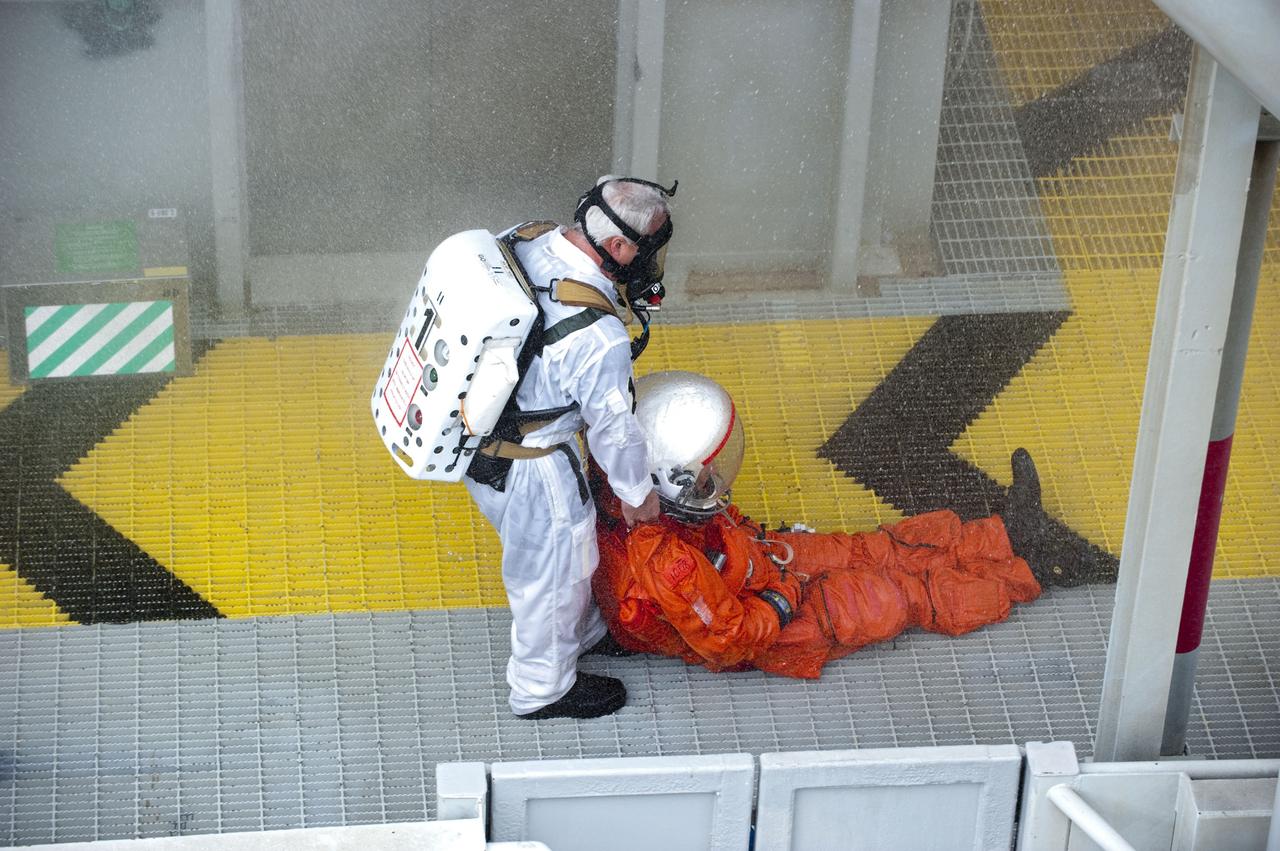
CAPE CANAVERAL, Fla. – An emergency exit, or Mode II/IV, exercise is under way at the 195-foot level of Launch Pad 39A at NASA's Kennedy Space Center in Florida. The exercise involves NASA fire rescue personnel, volunteers portraying astronauts with simulated injuries, helicopters and personnel from the Air Force’s 920th Rescue Wing, and medical trauma teams at three Central Florida hospitals. The drill allows teams to practice an emergency response at the launch pad, including helicopter evacuation to local hospitals. Photo credit: NASA/Kim Shiflett
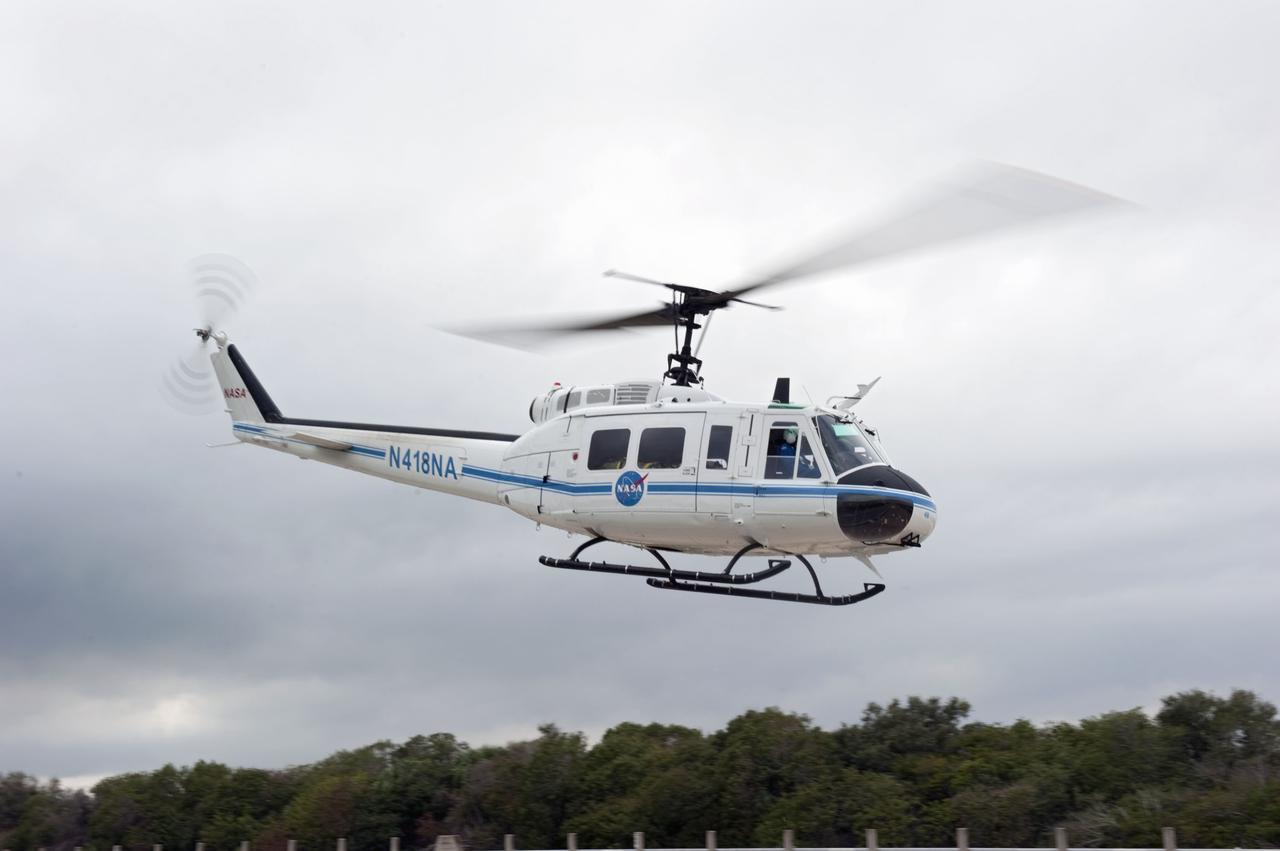
CAPE CANAVERAL, Fla. – A helicopter takes part in an emergency exit, or Mode II/IV, exercise that allows teams to practice an emergency response at Launch Pad 39A at NASA's Kennedy Space Center in Florida. The exercise involves NASA fire rescue personnel, volunteers portraying astronauts with simulated injuries, helicopters and personnel from the Air Force’s 920th Rescue Wing, and medical trauma teams at three Central Florida hospitals. The drill allows teams to practice an emergency response at the launch pad, including helicopter evacuation to local hospitals. Photo credit: NASA/Kim Shiflett
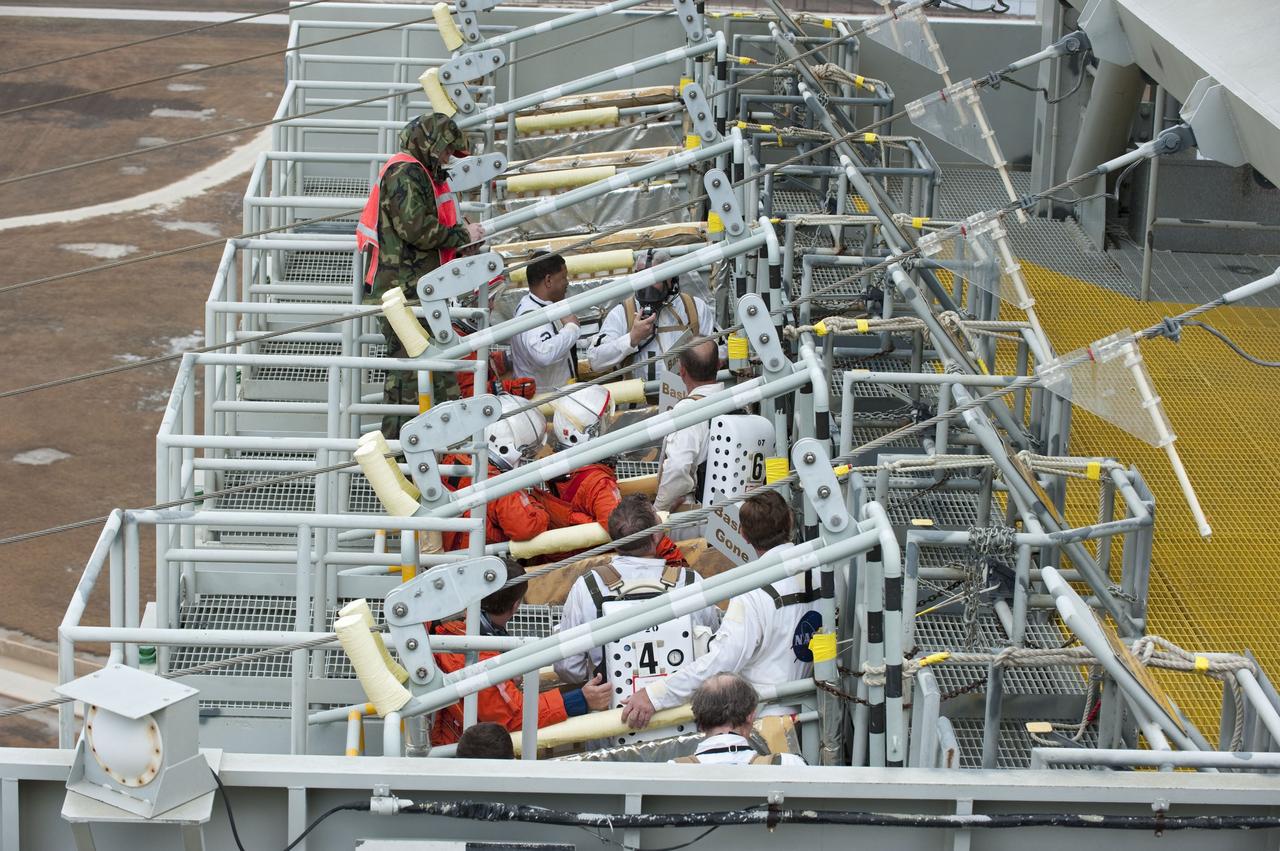
CAPE CANAVERAL, Fla. – An emergency exit, or Mode II/IV, exercise is under way at the slidewire basket area of Launch Pad 39A at NASA's Kennedy Space Center in Florida. The exercise involves NASA fire rescue personnel, volunteers portraying astronauts with simulated injuries, helicopters and personnel from the Air Force’s 920th Rescue Wing, and medical trauma teams at three Central Florida hospitals. The drill allows teams to practice an emergency response at the launch pad, including helicopter evacuation to local hospitals. Photo credit: NASA/Kim Shiflett
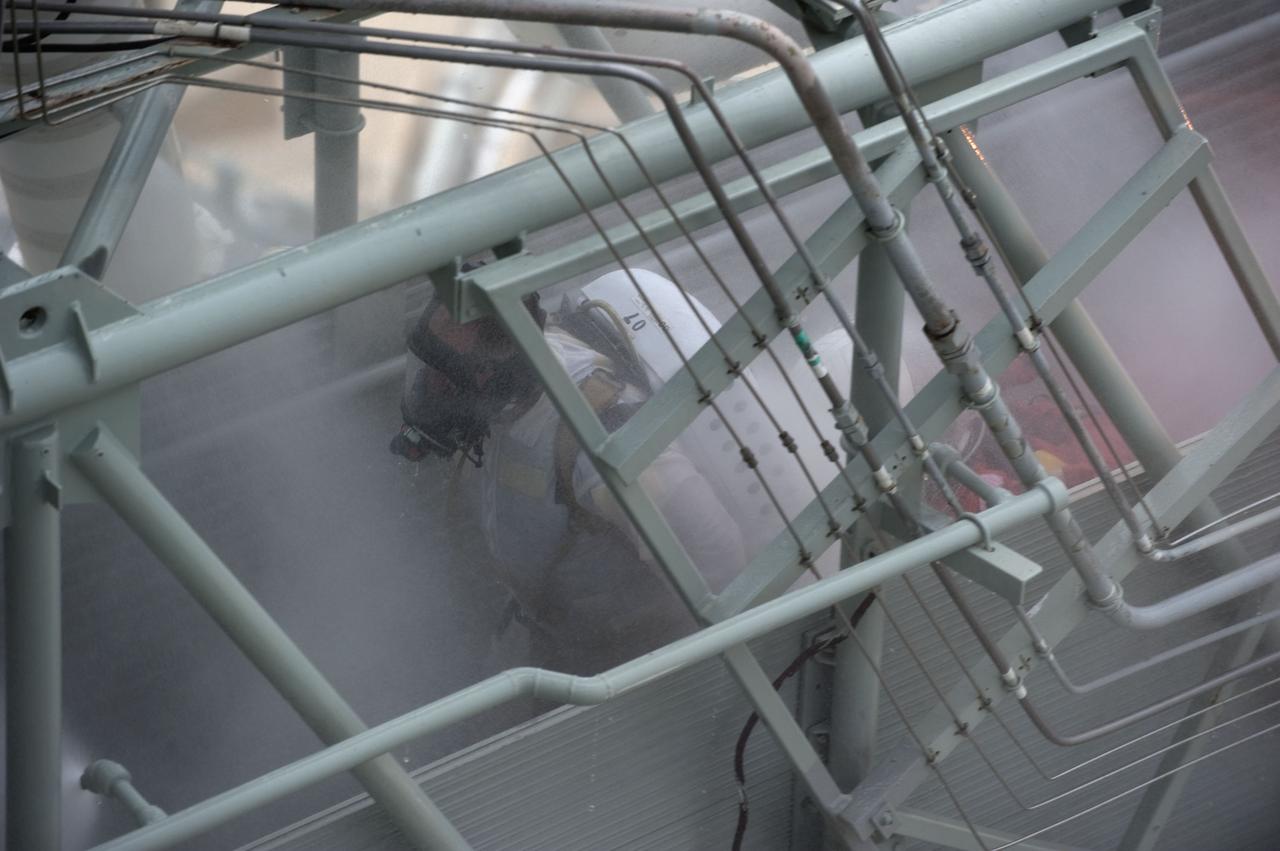
CAPE CANAVERAL, Fla. – An emergency exit, or Mode II/IV, exercise is under way at the 195-foot level of Launch Pad 39A at NASA's Kennedy Space Center in Florida. The exercise involves NASA fire rescue personnel, volunteers portraying astronauts with simulated injuries, helicopters and personnel from the Air Force’s 920th Rescue Wing, and medical trauma teams at three Central Florida hospitals. The drill allows teams to practice an emergency response at the launch pad, including helicopter evacuation to local hospitals. Photo credit: NASA/Kim Shiflett
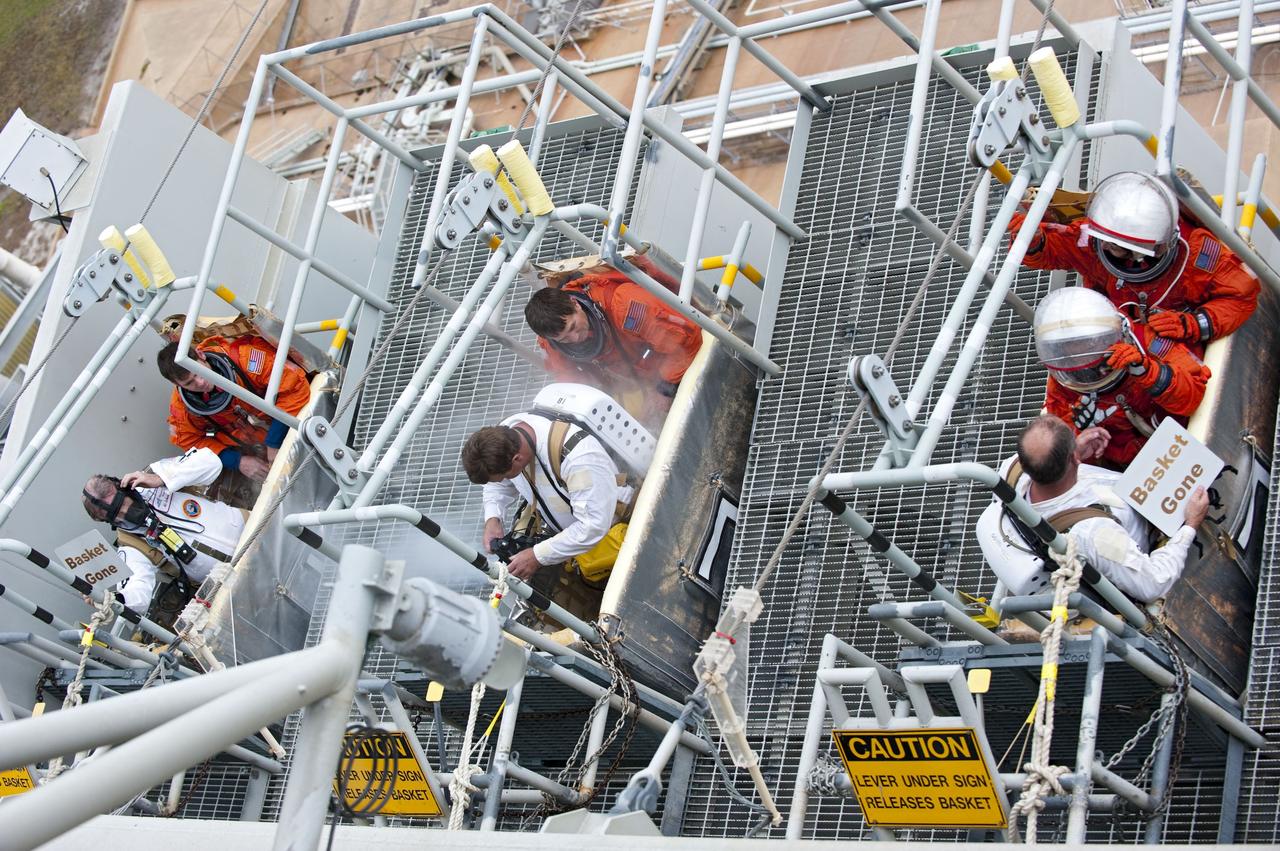
CAPE CANAVERAL, Fla. – An emergency exit, or Mode II/IV, exercise is under way at the slidewire basket area of Launch Pad 39A at NASA's Kennedy Space Center in Florida. The exercise involves NASA fire rescue personnel, volunteers portraying astronauts with simulated injuries, helicopters and personnel from the Air Force’s 920th Rescue Wing, and medical trauma teams at three Central Florida hospitals. The drill allows teams to practice an emergency response at the launch pad, including helicopter evacuation to local hospitals. Photo credit: NASA/Kim Shiflett
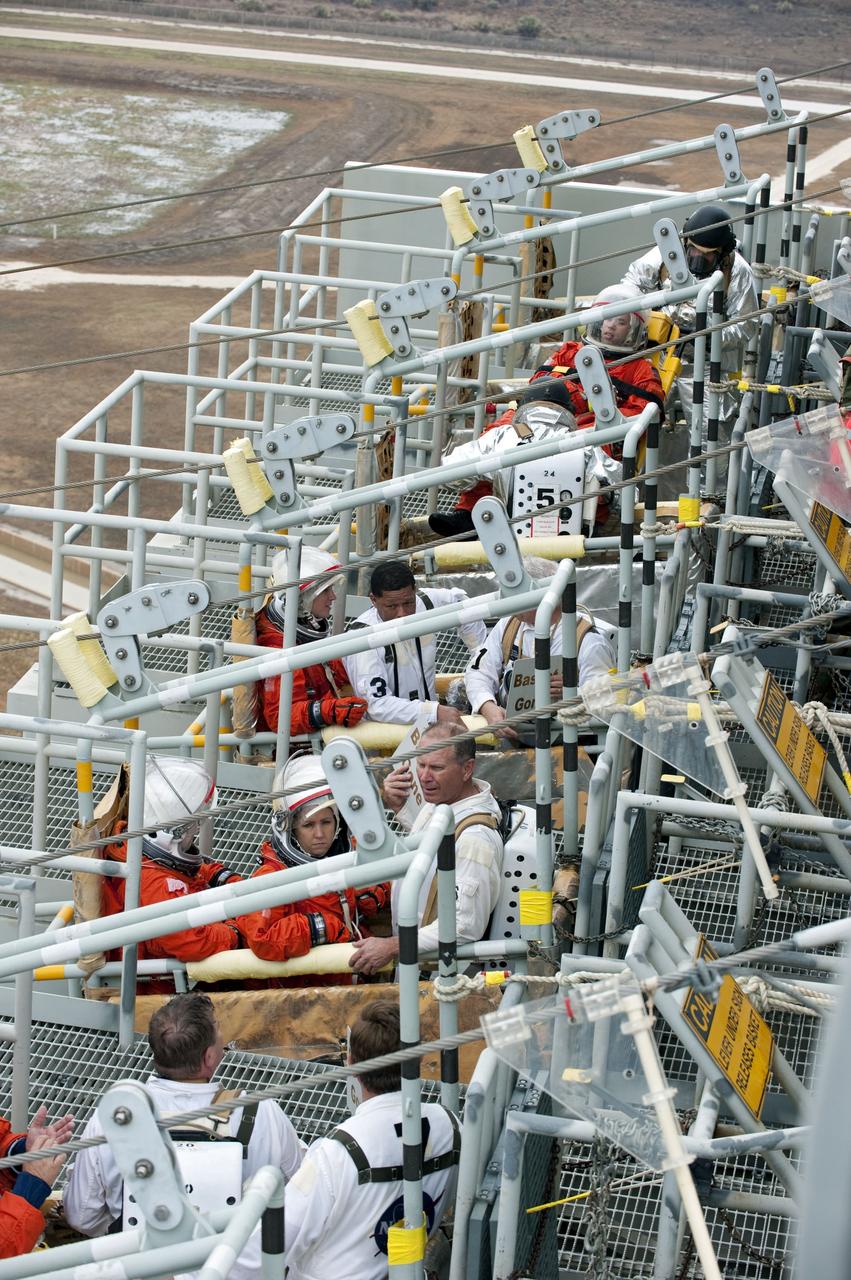
CAPE CANAVERAL, Fla. – An emergency exit, or Mode II/IV, exercise is under way at the slidewire basket area of Launch Pad 39A at NASA's Kennedy Space Center in Florida. The exercise involves NASA fire rescue personnel, volunteers portraying astronauts with simulated injuries, helicopters and personnel from the Air Force’s 920th Rescue Wing, and medical trauma teams at three Central Florida hospitals. The drill allows teams to practice an emergency response at the launch pad, including helicopter evacuation to local hospitals. Photo credit: NASA/Kim Shiflett
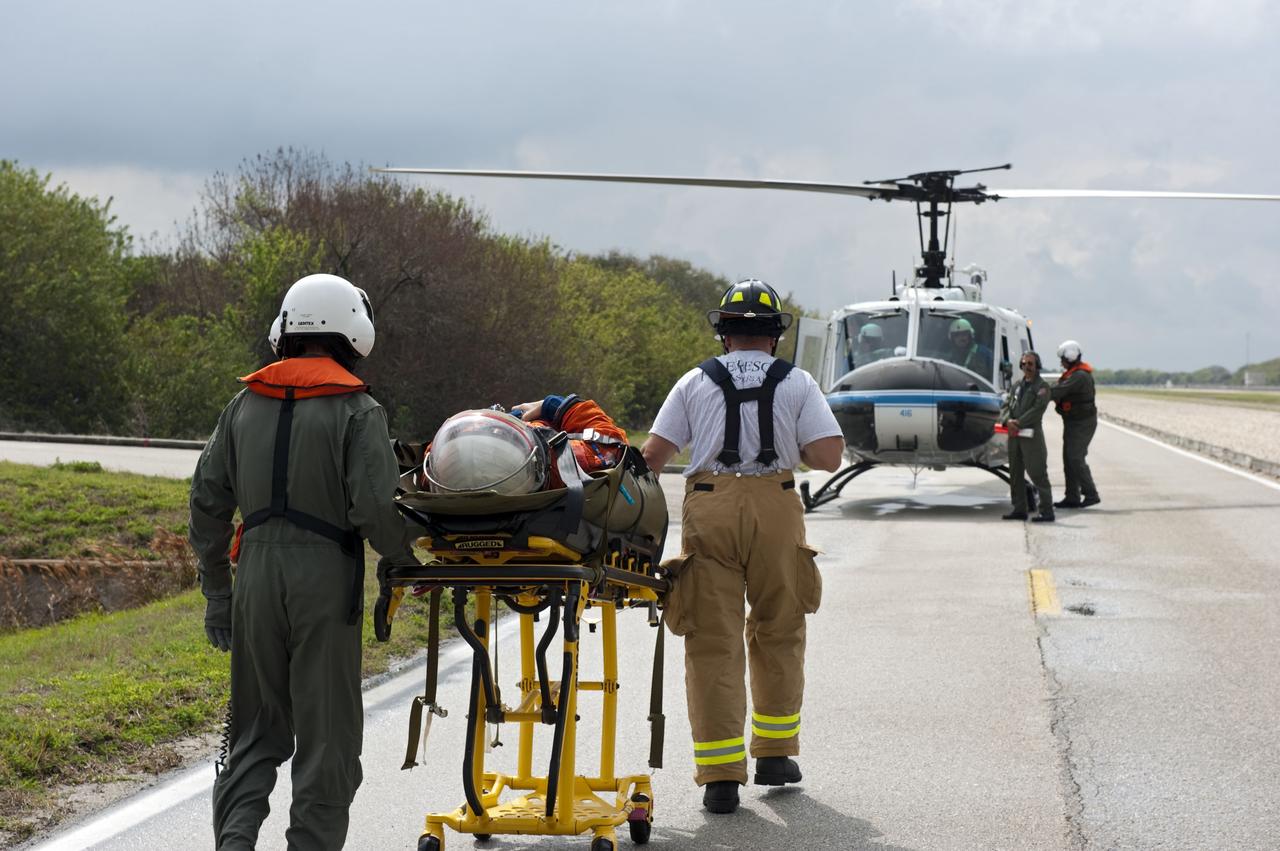
CAPE CANAVERAL, Fla. – Volunteers portraying injured astronauts are transported to a helicopter as part of an emergency exit, or Mode II/IV, exercise that allows teams to practice an emergency response at Launch Pad 39A at NASA's Kennedy Space Center in Florida. The exercise involves NASA fire rescue personnel, volunteers portraying astronauts with simulated injuries, helicopters and personnel from the Air Force’s 920th Rescue Wing, and medical trauma teams at three Central Florida hospitals. The drill allows teams to practice an emergency response at the launch pad, including helicopter evacuation to local hospitals. Photo credit: NASA/Kim Shiflett
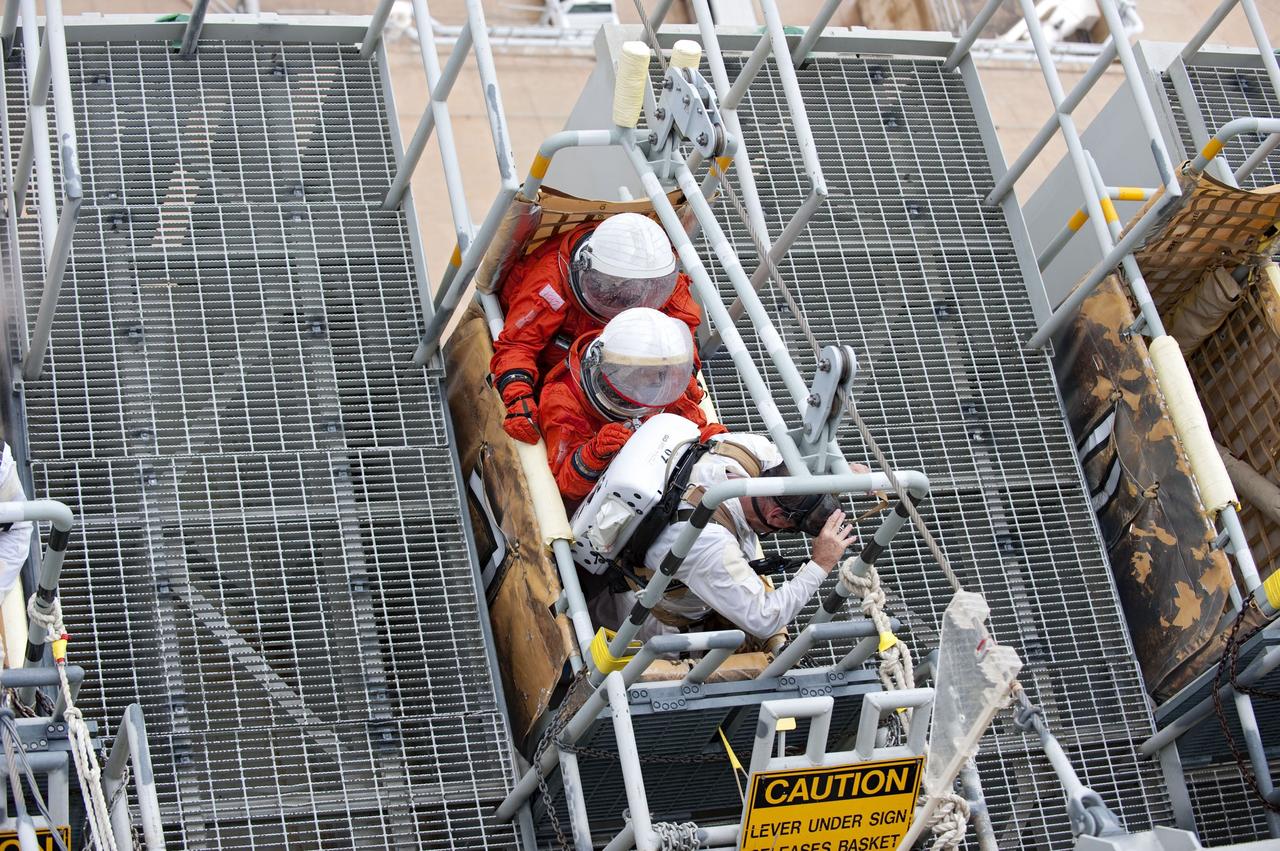
CAPE CANAVERAL, Fla. – An emergency exit, or Mode II/IV, exercise is under way at the slidewire basket area of Launch Pad 39A at NASA's Kennedy Space Center in Florida. The exercise involves NASA fire rescue personnel, volunteers portraying astronauts with simulated injuries, helicopters and personnel from the Air Force’s 920th Rescue Wing, and medical trauma teams at three Central Florida hospitals. The drill allows teams to practice an emergency response at the launch pad, including helicopter evacuation to local hospitals. Photo credit: NASA/Kim Shiflett
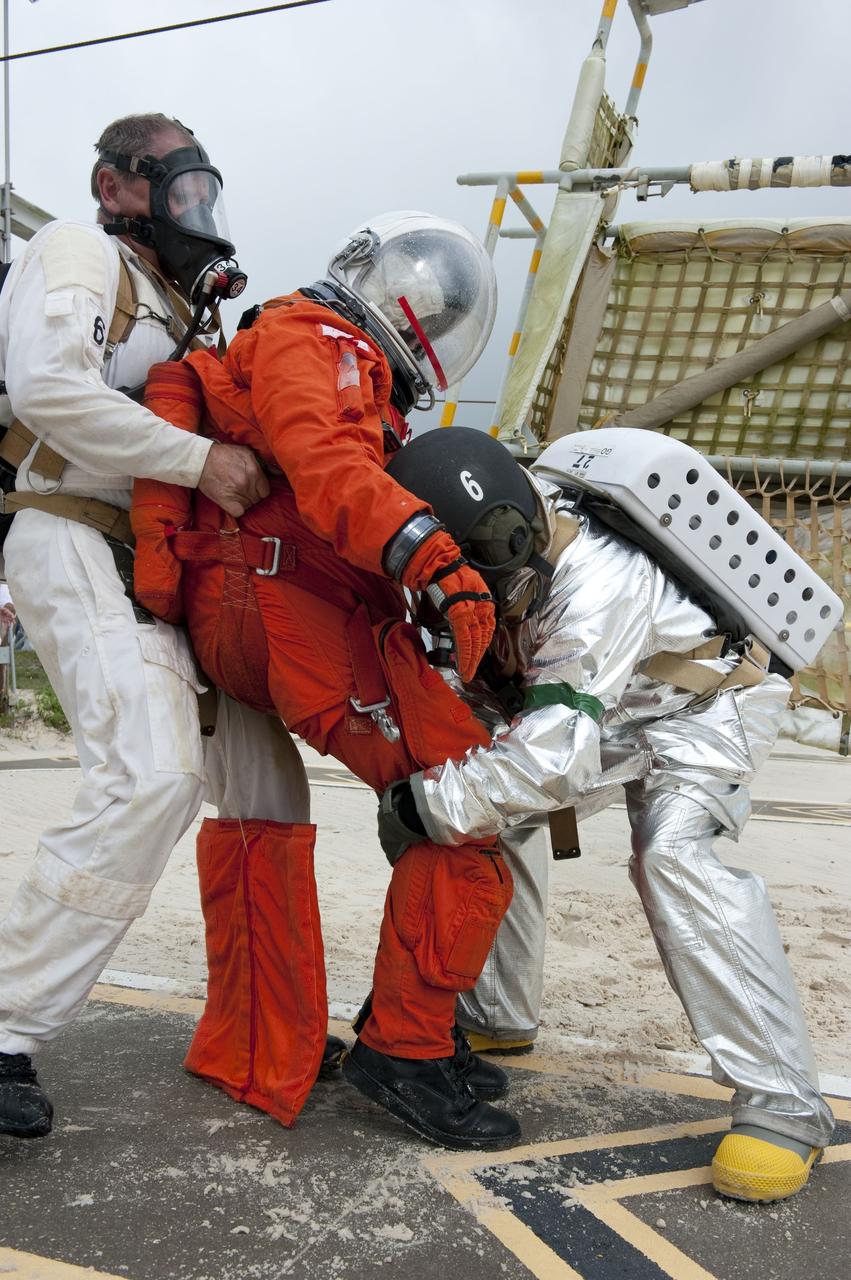
CAPE CANAVERAL, Fla. – An emergency exit, or Mode II/IV, exercise is under way at the slidewire basket landing site of Launch Pad 39A at NASA's Kennedy Space Center in Florida. The exercise involves NASA fire rescue personnel, volunteers portraying astronauts with simulated injuries, helicopters and personnel from the Air Force’s 920th Rescue Wing, and medical trauma teams at three Central Florida hospitals. The drill allows teams to practice an emergency response at the launch pad, including helicopter evacuation to local hospitals. Photo credit: NASA/Kim Shiflett
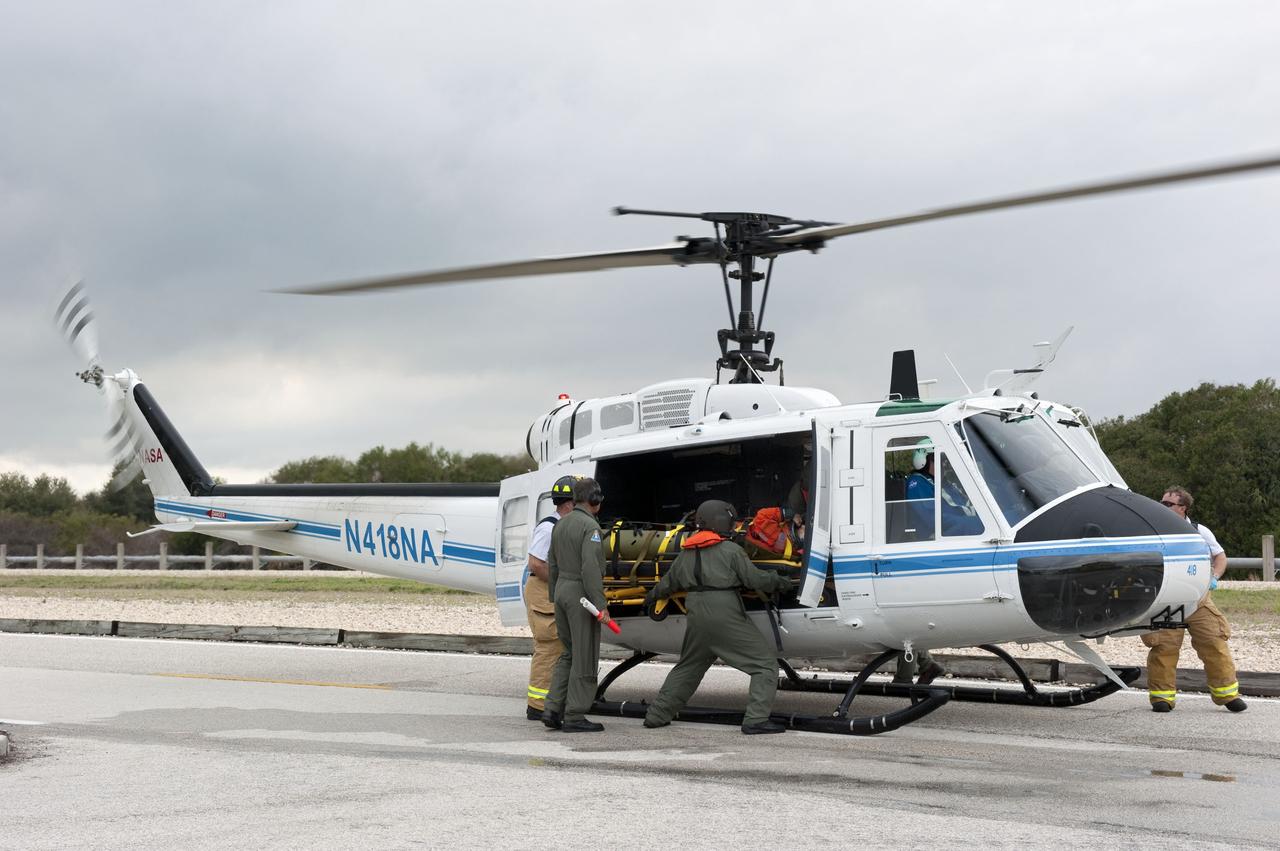
CAPE CANAVERAL, Fla. – Volunteers portraying injured astronauts are loaded onto a helicopter as part of an emergency exit, or Mode II/IV, exercise that allows teams to practice an emergency response at Launch Pad 39A at NASA's Kennedy Space Center in Florida. The exercise involves NASA fire rescue personnel, volunteers portraying astronauts with simulated injuries, helicopters and personnel from the Air Force’s 920th Rescue Wing, and medical trauma teams at three Central Florida hospitals. The drill allows teams to practice an emergency response at the launch pad, including helicopter evacuation to local hospitals. Photo credit: NASA/Kim Shiflett
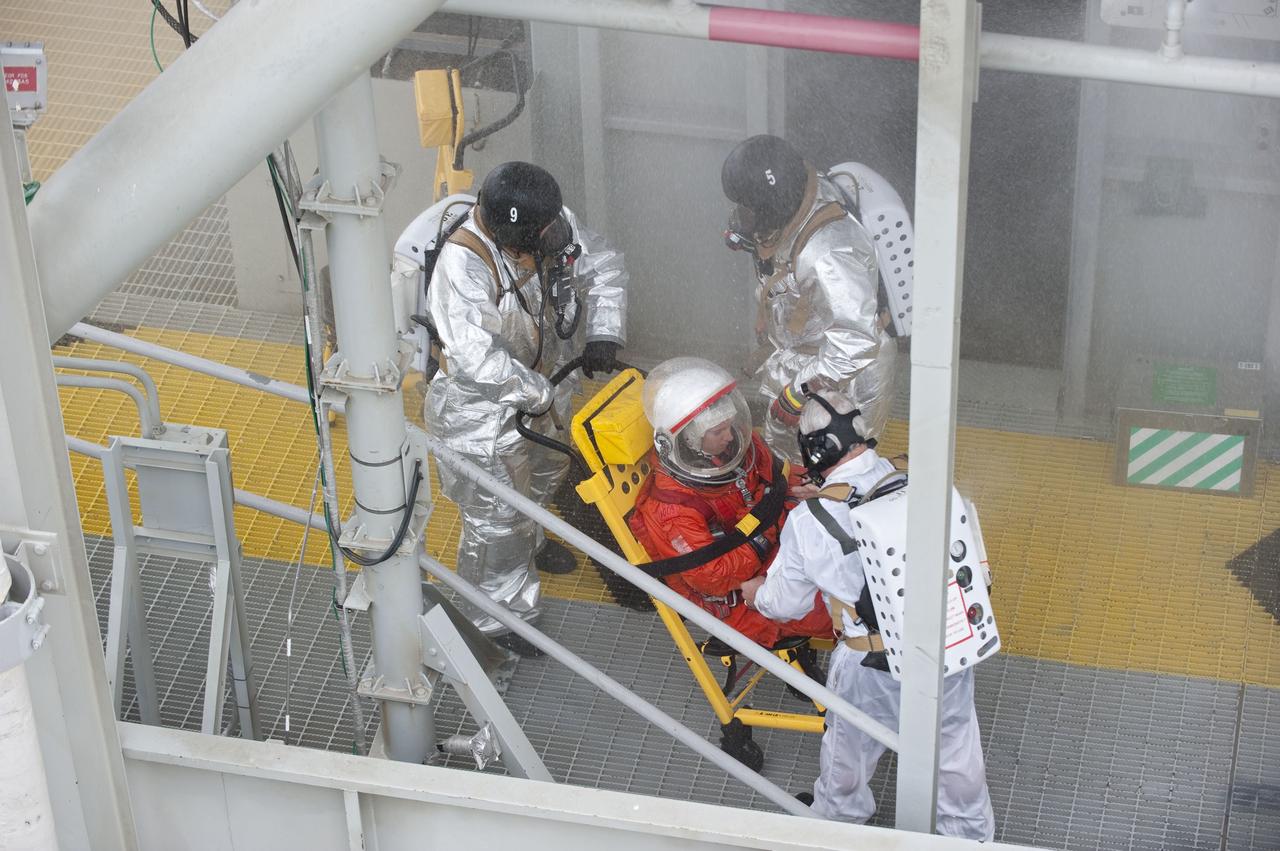
CAPE CANAVERAL, Fla. – An emergency exit, or Mode II/IV, exercise is under way at the 195-foot level of Launch Pad 39A at NASA's Kennedy Space Center in Florida. The exercise involves NASA fire rescue personnel, volunteers portraying astronauts with simulated injuries, helicopters and personnel from the Air Force’s 920th Rescue Wing, and medical trauma teams at three Central Florida hospitals. The drill allows teams to practice an emergency response at the launch pad, including helicopter evacuation to local hospitals. Photo credit: NASA/Kim Shiflett
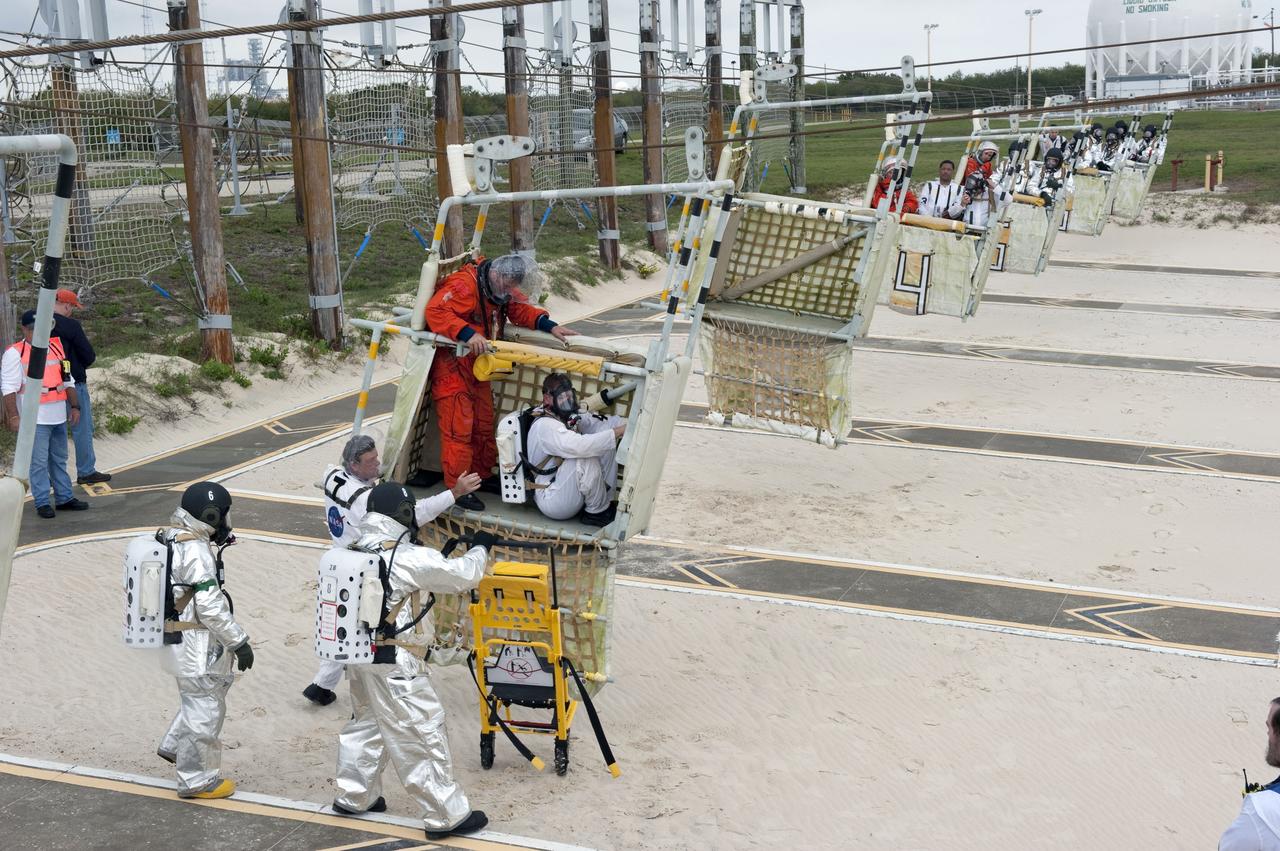
CAPE CANAVERAL, Fla. – An emergency exit, or Mode II/IV, exercise is under way at the slidewire basket landing site of Launch Pad 39A at NASA's Kennedy Space Center in Florida. The exercise involves NASA fire rescue personnel, volunteers portraying astronauts with simulated injuries, helicopters and personnel from the Air Force’s 920th Rescue Wing, and medical trauma teams at three Central Florida hospitals. The drill allows teams to practice an emergency response at the launch pad, including helicopter evacuation to local hospitals. Photo credit: NASA/Kim Shiflett
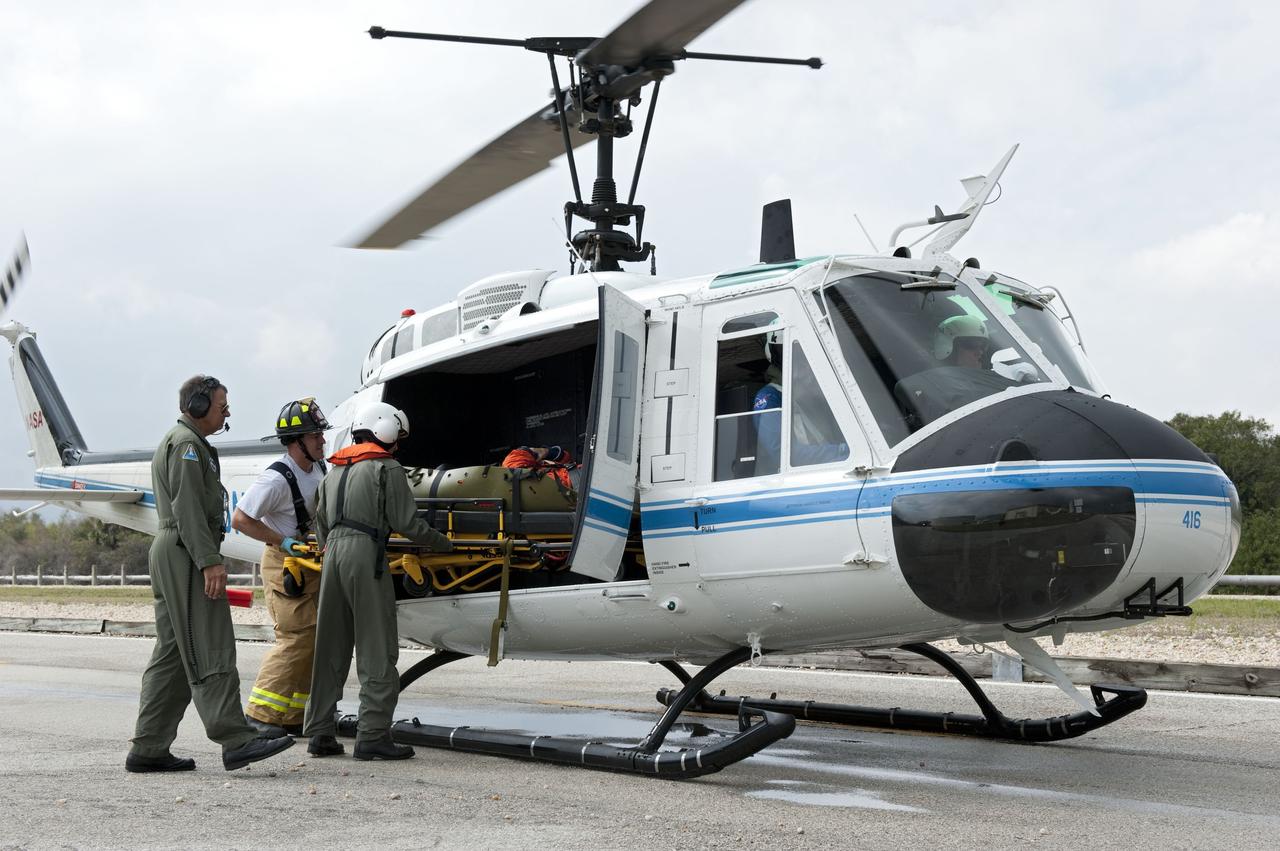
CAPE CANAVERAL, Fla. – Volunteers portraying injured astronauts are loaded onto a helicopter as part of an emergency exit, or Mode II/IV, exercise that allows teams to practice an emergency response at Launch Pad 39A at NASA's Kennedy Space Center in Florida. The exercise involves NASA fire rescue personnel, volunteers portraying astronauts with simulated injuries, helicopters and personnel from the Air Force’s 920th Rescue Wing, and medical trauma teams at three Central Florida hospitals. The drill allows teams to practice an emergency response at the launch pad, including helicopter evacuation to local hospitals. Photo credit: NASA/Kim Shiflett
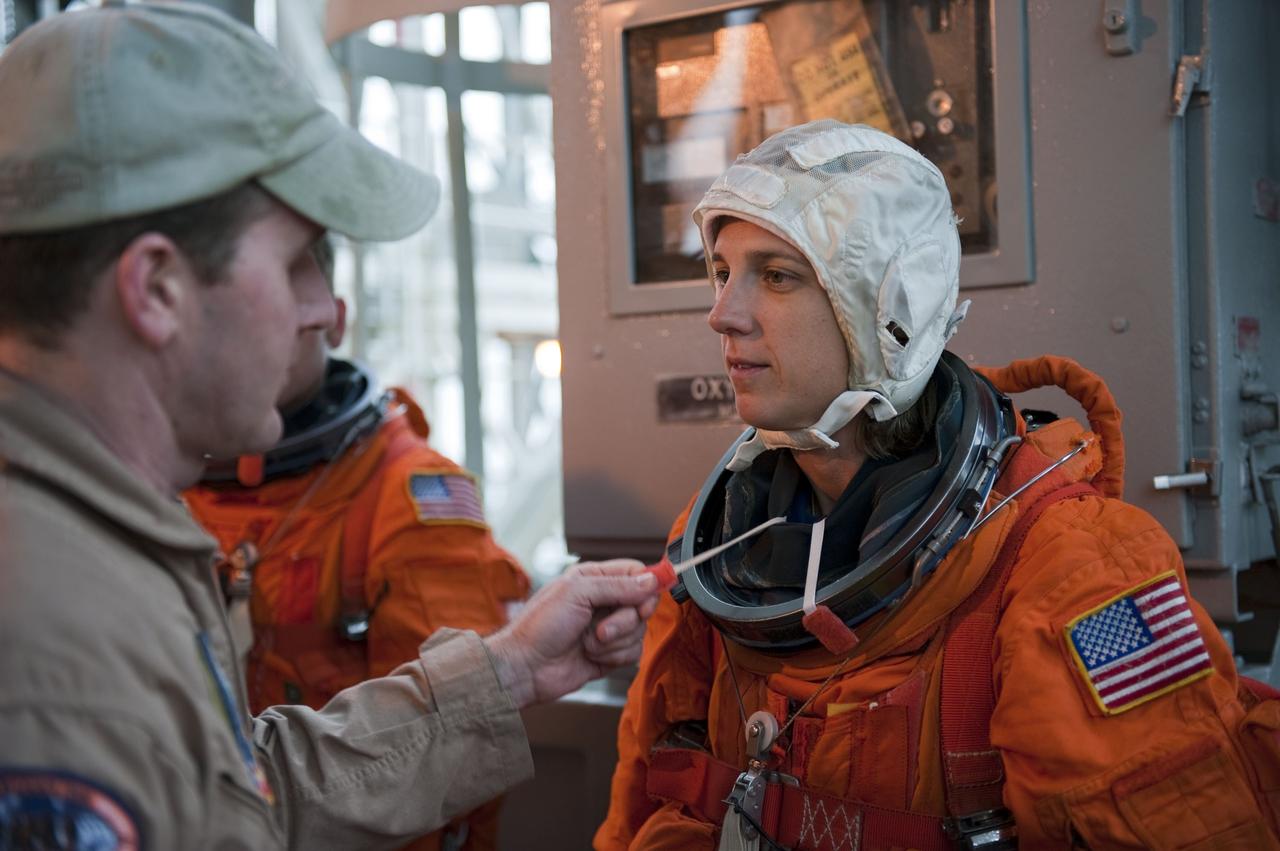
CAPE CANAVERAL, Fla. – An emergency exit, or Mode II/IV, exercise is under way at the 195-foot level of Launch Pad 39A at NASA's Kennedy Space Center in Florida. The exercise involves NASA fire rescue personnel, volunteers portraying astronauts with simulated injuries, helicopters and personnel from the Air Force’s 920th Rescue Wing, and medical trauma teams at three Central Florida hospitals. The drill allows teams to practice an emergency response at the launch pad, including helicopter evacuation to local hospitals. Photo credit: NASA/Kim Shiflett
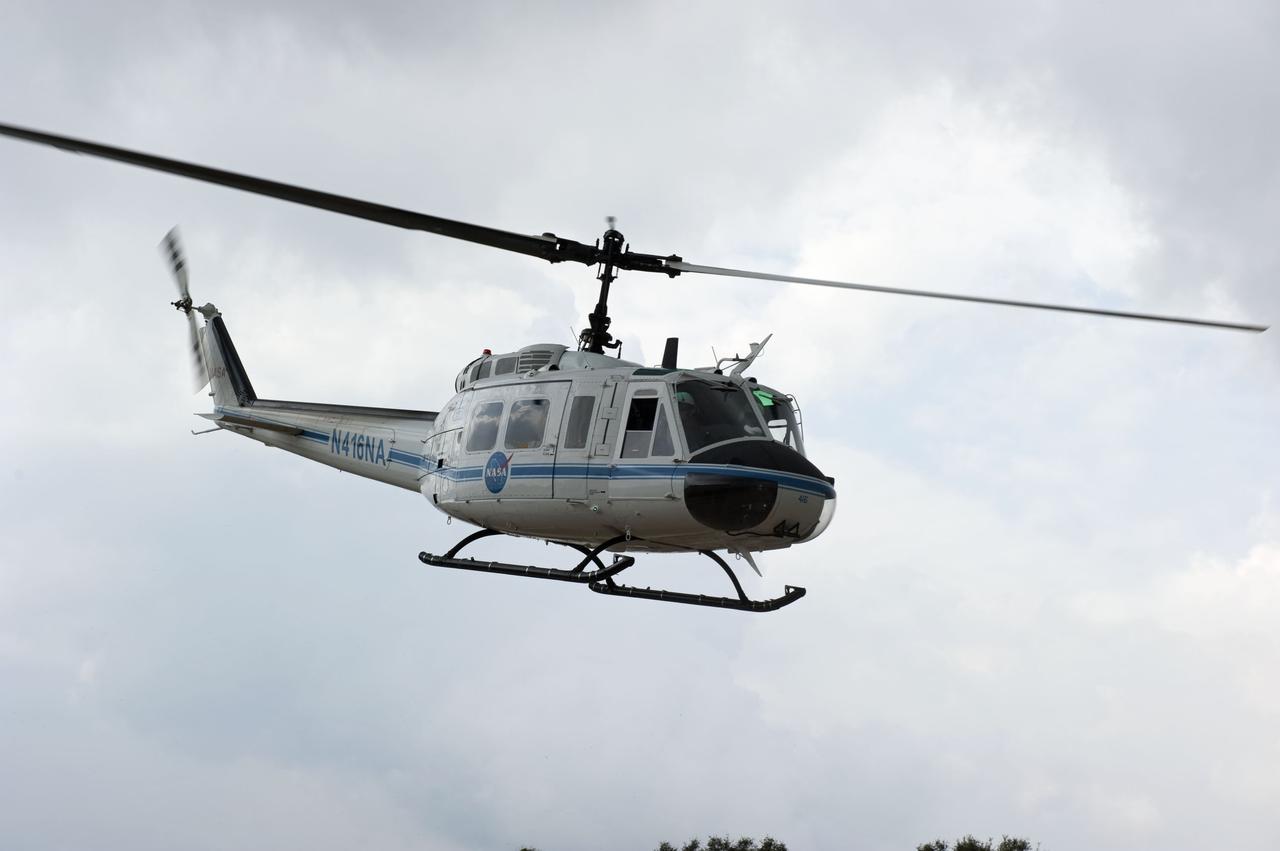
CAPE CANAVERAL, Fla. – A helicopter takes part in an emergency exit, or Mode II/IV, exercise that allows teams to practice an emergency response at Launch Pad 39A at NASA's Kennedy Space Center in Florida. The exercise involves NASA fire rescue personnel, volunteers portraying astronauts with simulated injuries, helicopters and personnel from the Air Force’s 920th Rescue Wing, and medical trauma teams at three Central Florida hospitals. The drill allows teams to practice an emergency response at the launch pad, including helicopter evacuation to local hospitals. Photo credit: NASA/Kim Shiflett
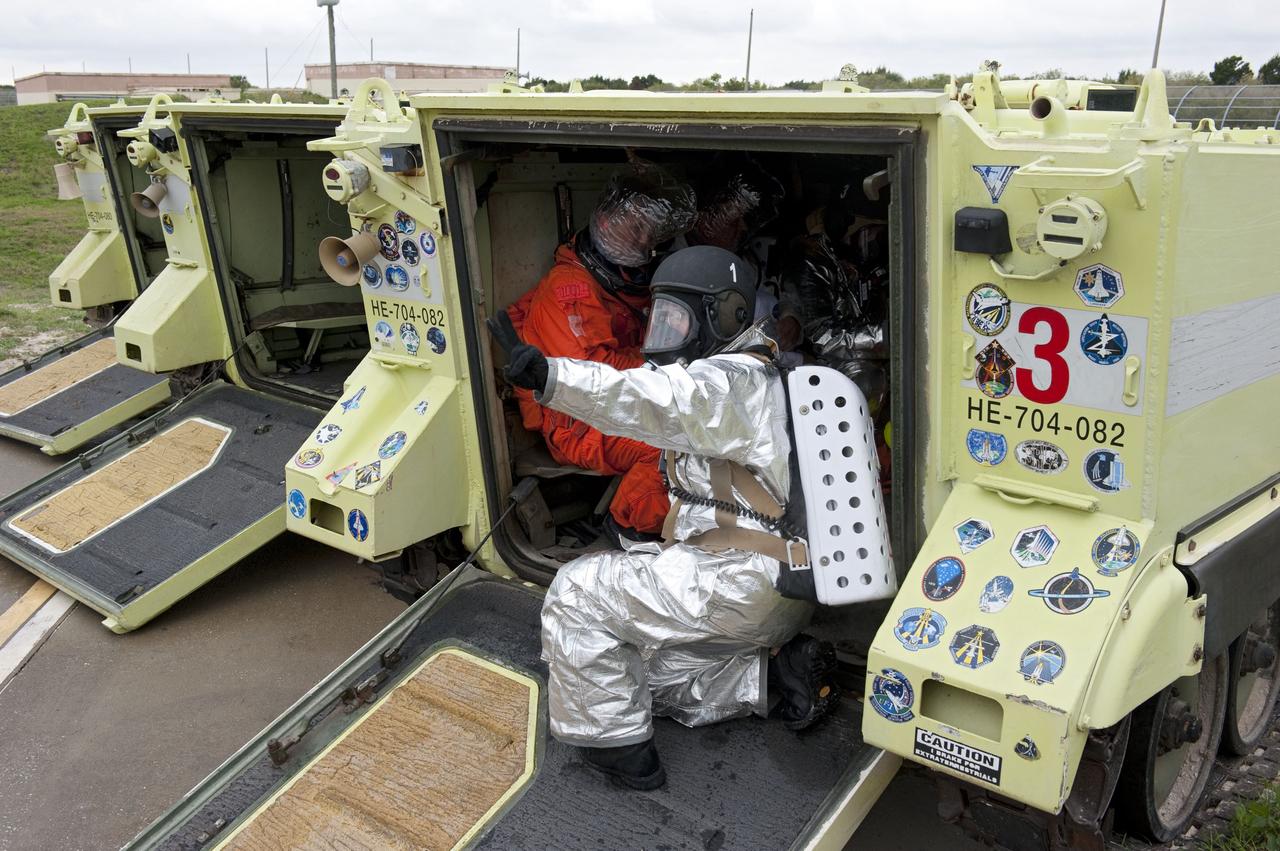
CAPE CANAVERAL, Fla. – On Launch Pad 39A at NASA's Kennedy Space Center in Florida, an emergency exit, or Mode II/IV, exercise is under way. Seen here are M-113 armored personnel carriers near the slidewire basked landing site. The exercise involves NASA fire rescue personnel, volunteers portraying astronauts with simulated injuries, helicopters and personnel from the Air Force’s 920th Rescue Wing, and medical trauma teams at three Central Florida hospitals. The drill allows teams to practice an emergency response at the launch pad, including helicopter evacuation to local hospitals. Photo credit: NASA/Kim Shiflett

CAPE CANAVERAL, Fla. – An emergency exit, or Mode II/IV, exercise is under way in M-113 armored personnel carriers at Launch Pad 39A at NASA's Kennedy Space Center in Florida. The exercise involves NASA fire rescue personnel, volunteers portraying astronauts with simulated injuries, helicopters and personnel from the Air Force’s 920th Rescue Wing, and medical trauma teams at three Central Florida hospitals. The drill allows teams to practice an emergency response at the launch pad, including helicopter evacuation to local hospitals. Photo credit: NASA/Kim Shiflett
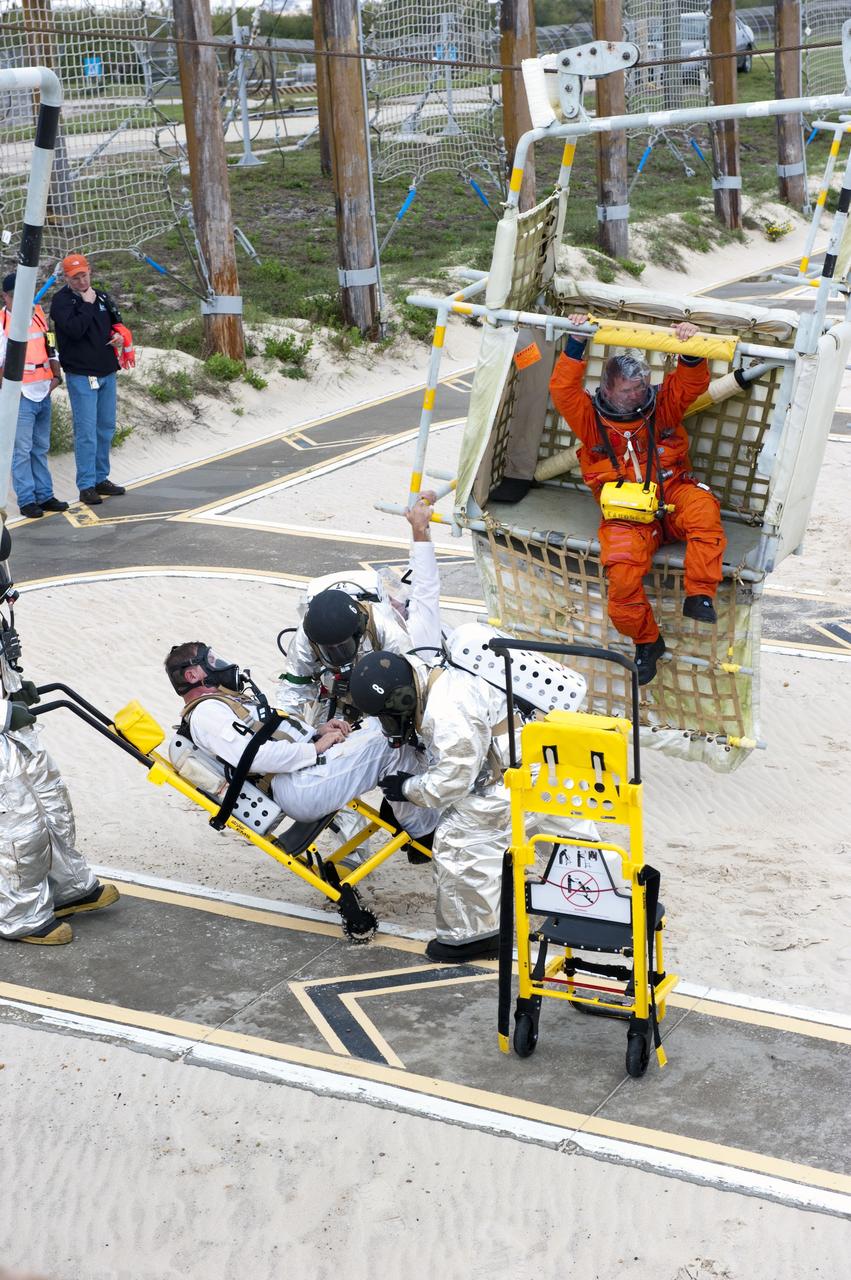
CAPE CANAVERAL, Fla. – An emergency exit, or Mode II/IV, exercise is under way at the slidewire basket landing site of Launch Pad 39A at NASA's Kennedy Space Center in Florida. The exercise involves NASA fire rescue personnel, volunteers portraying astronauts with simulated injuries, helicopters and personnel from the Air Force’s 920th Rescue Wing, and medical trauma teams at three Central Florida hospitals. The drill allows teams to practice an emergency response at the launch pad, including helicopter evacuation to local hospitals. Photo credit: NASA/Kim Shiflett
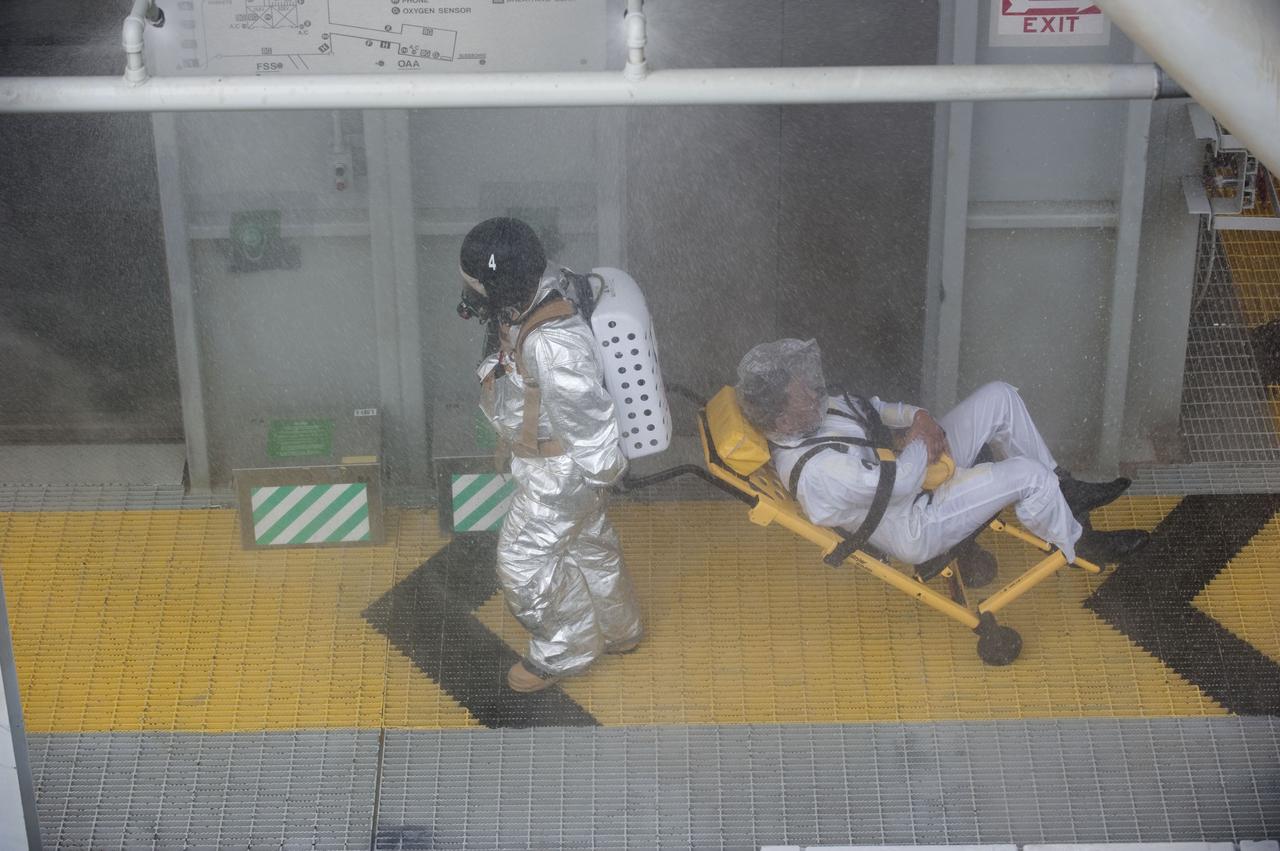
CAPE CANAVERAL, Fla. – An emergency exit, or Mode II/IV, exercise is under way at the 195-foot level of Launch Pad 39A at NASA's Kennedy Space Center in Florida. The exercise involves NASA fire rescue personnel, volunteers portraying astronauts with simulated injuries, helicopters and personnel from the Air Force’s 920th Rescue Wing, and medical trauma teams at three Central Florida hospitals. The drill allows teams to practice an emergency response at the launch pad, including helicopter evacuation to local hospitals. Photo credit: NASA/Kim Shiflett
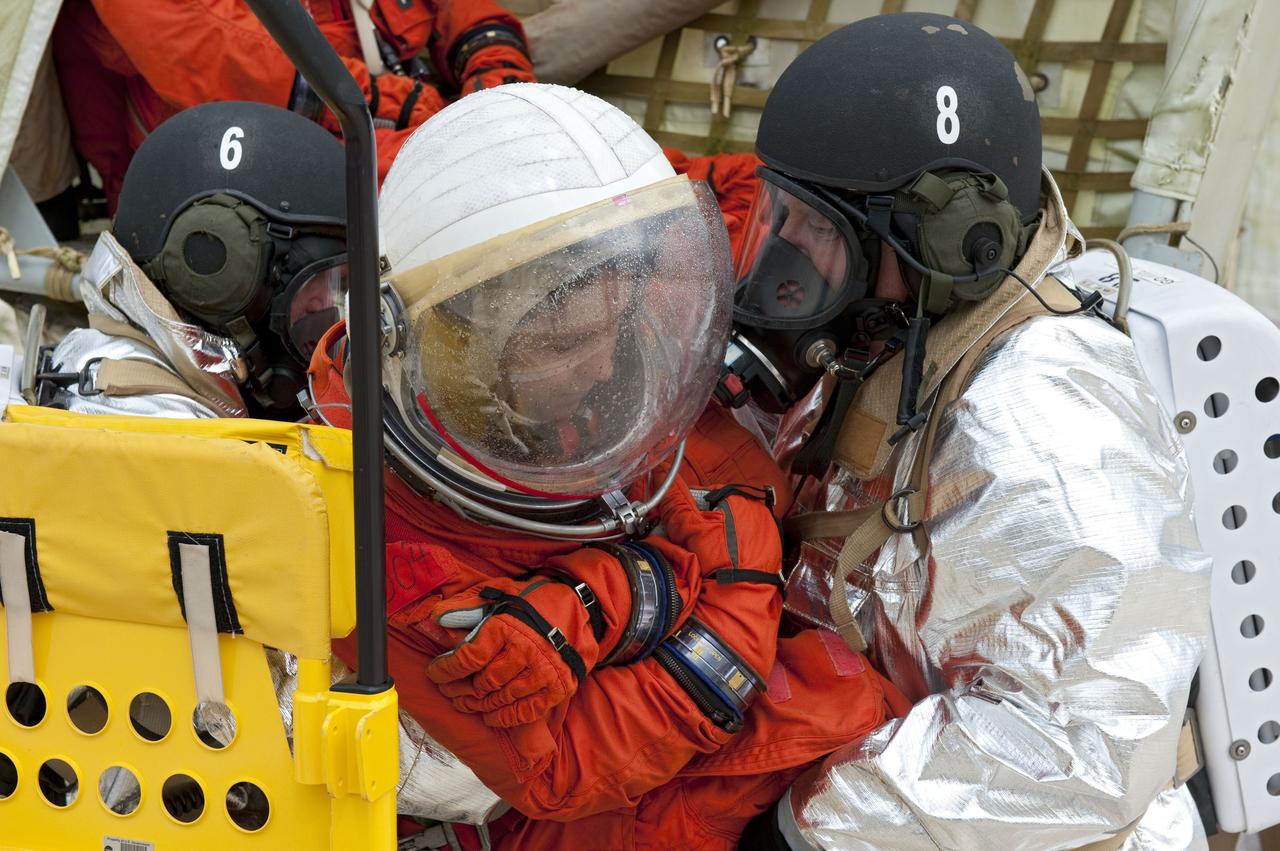
CAPE CANAVERAL, Fla. – An emergency exit, or Mode II/IV, exercise is under way at the slidewire basket landing site of Launch Pad 39A at NASA's Kennedy Space Center in Florida. The exercise involves NASA fire rescue personnel, volunteers portraying astronauts with simulated injuries, helicopters and personnel from the Air Force’s 920th Rescue Wing, and medical trauma teams at three Central Florida hospitals. The drill allows teams to practice an emergency response at the launch pad, including helicopter evacuation to local hospitals. Photo credit: NASA/Kim Shiflett
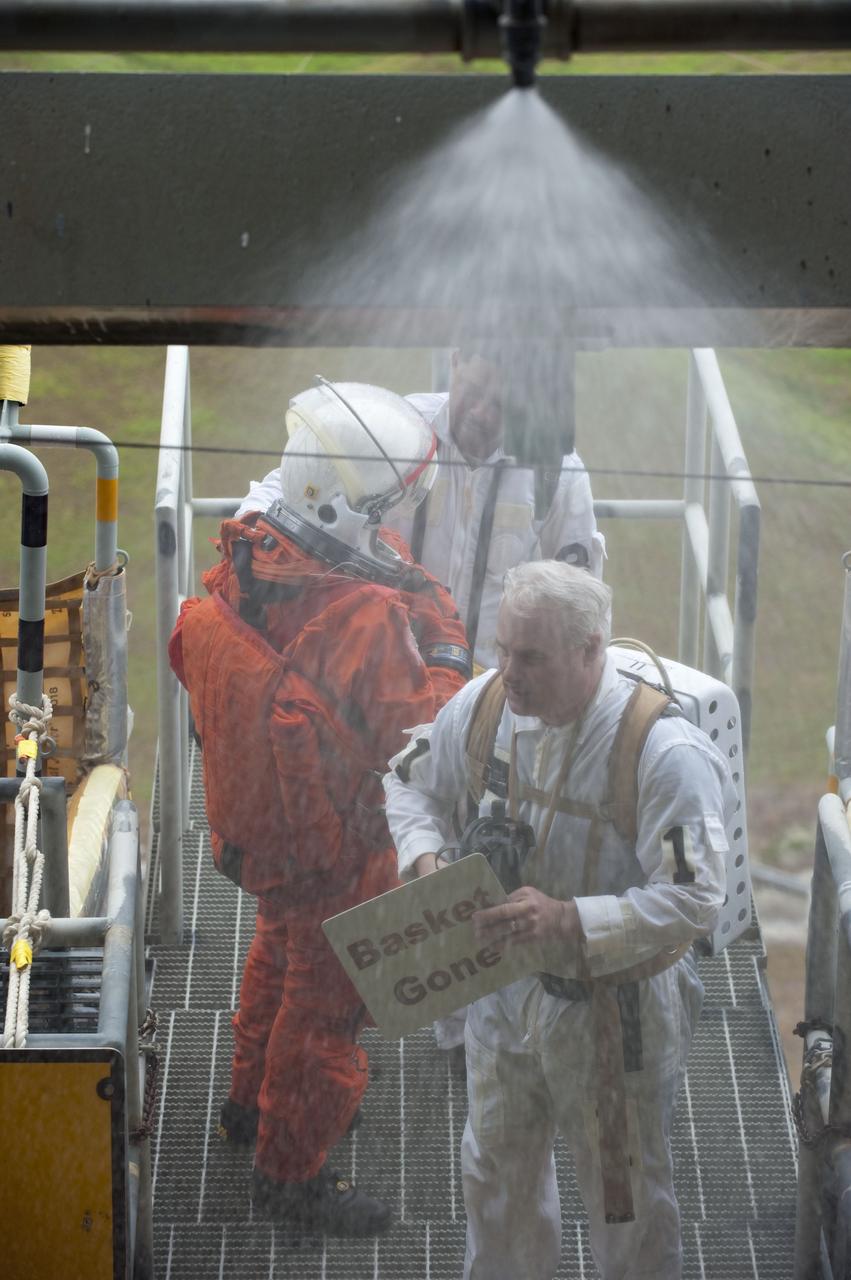
CAPE CANAVERAL, Fla. – An emergency exit, or Mode II/IV, exercise is under way at the slidewire basket area of Launch Pad 39A at NASA's Kennedy Space Center in Florida. The exercise involves NASA fire rescue personnel, volunteers portraying astronauts with simulated injuries, helicopters and personnel from the Air Force’s 920th Rescue Wing, and medical trauma teams at three Central Florida hospitals. The drill allows teams to practice an emergency response at the launch pad, including helicopter evacuation to local hospitals. Photo credit: NASA/Kim Shiflett
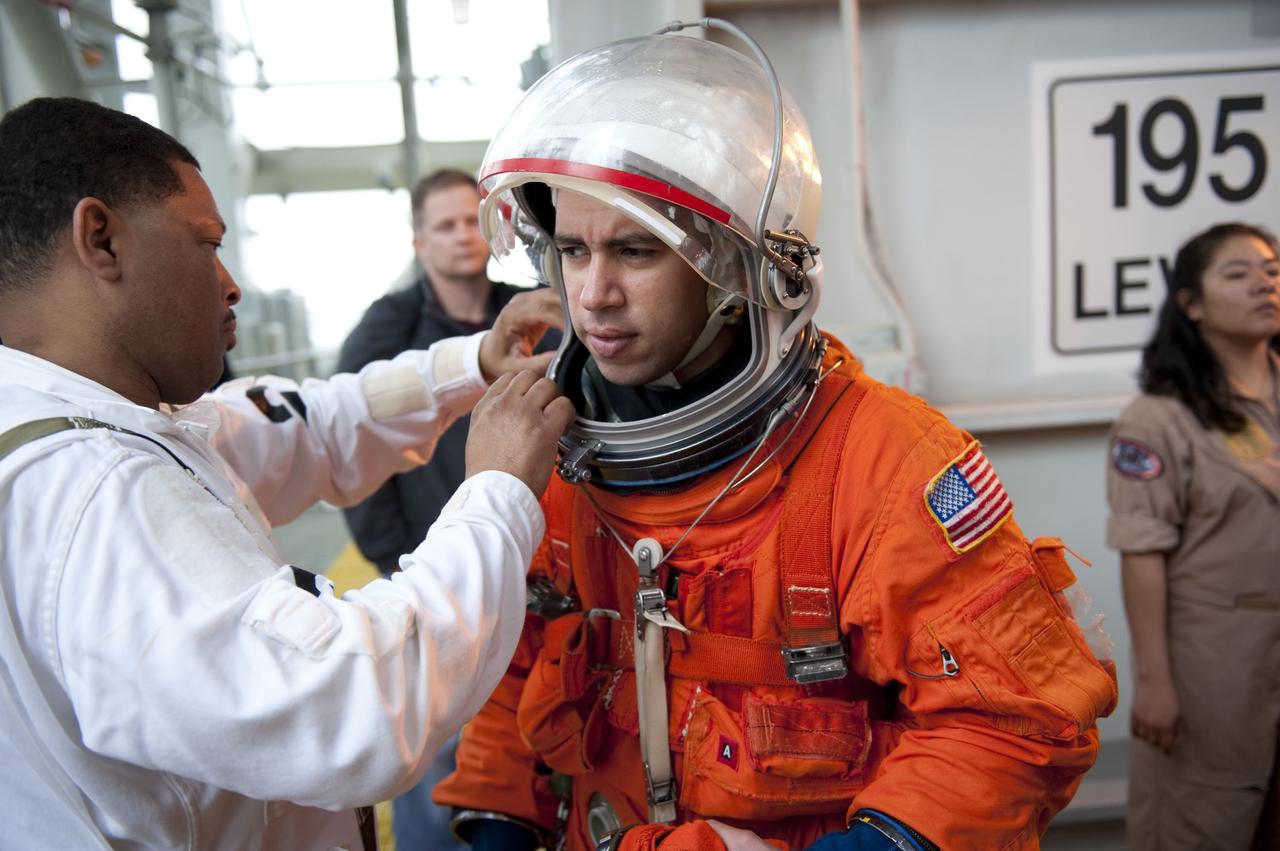
CAPE CANAVERAL, Fla. – An emergency exit, or Mode II/IV, exercise is under way at the 195-foot level of Launch Pad 39A at NASA's Kennedy Space Center in Florida. The exercise involves NASA fire rescue personnel, volunteers portraying astronauts with simulated injuries, helicopters and personnel from the Air Force’s 920th Rescue Wing, and medical trauma teams at three Central Florida hospitals. The drill allows teams to practice an emergency response at the launch pad, including helicopter evacuation to local hospitals. Photo credit: NASA/Kim Shiflett
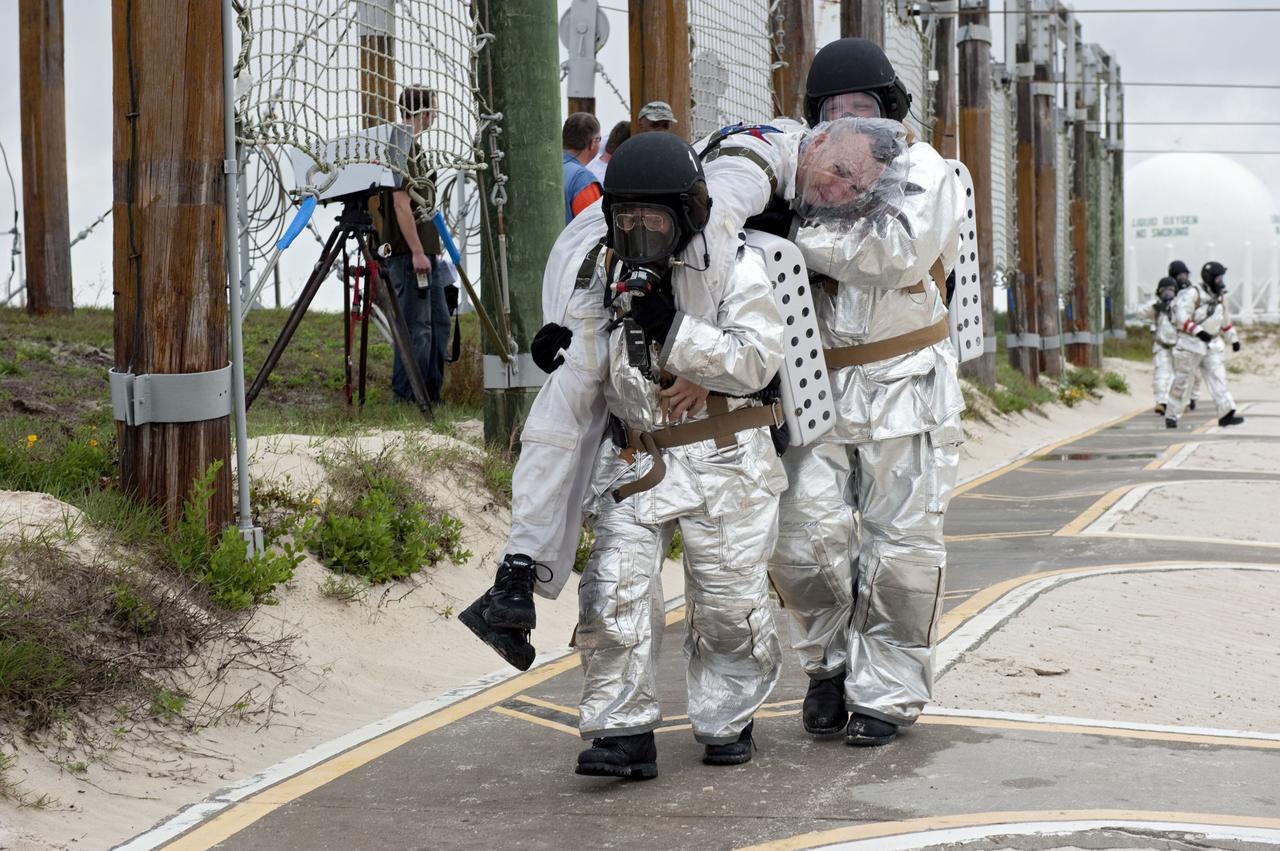
CAPE CANAVERAL, Fla. – An emergency exit, or Mode II/IV, exercise is under way at the slidewire basket landing site of Launch Pad 39A at NASA's Kennedy Space Center in Florida. The exercise involves NASA fire rescue personnel, volunteers portraying astronauts with simulated injuries, helicopters and personnel from the Air Force’s 920th Rescue Wing, and medical trauma teams at three Central Florida hospitals. The drill allows teams to practice an emergency response at the launch pad, including helicopter evacuation to local hospitals. Photo credit: NASA/Kim Shiflett
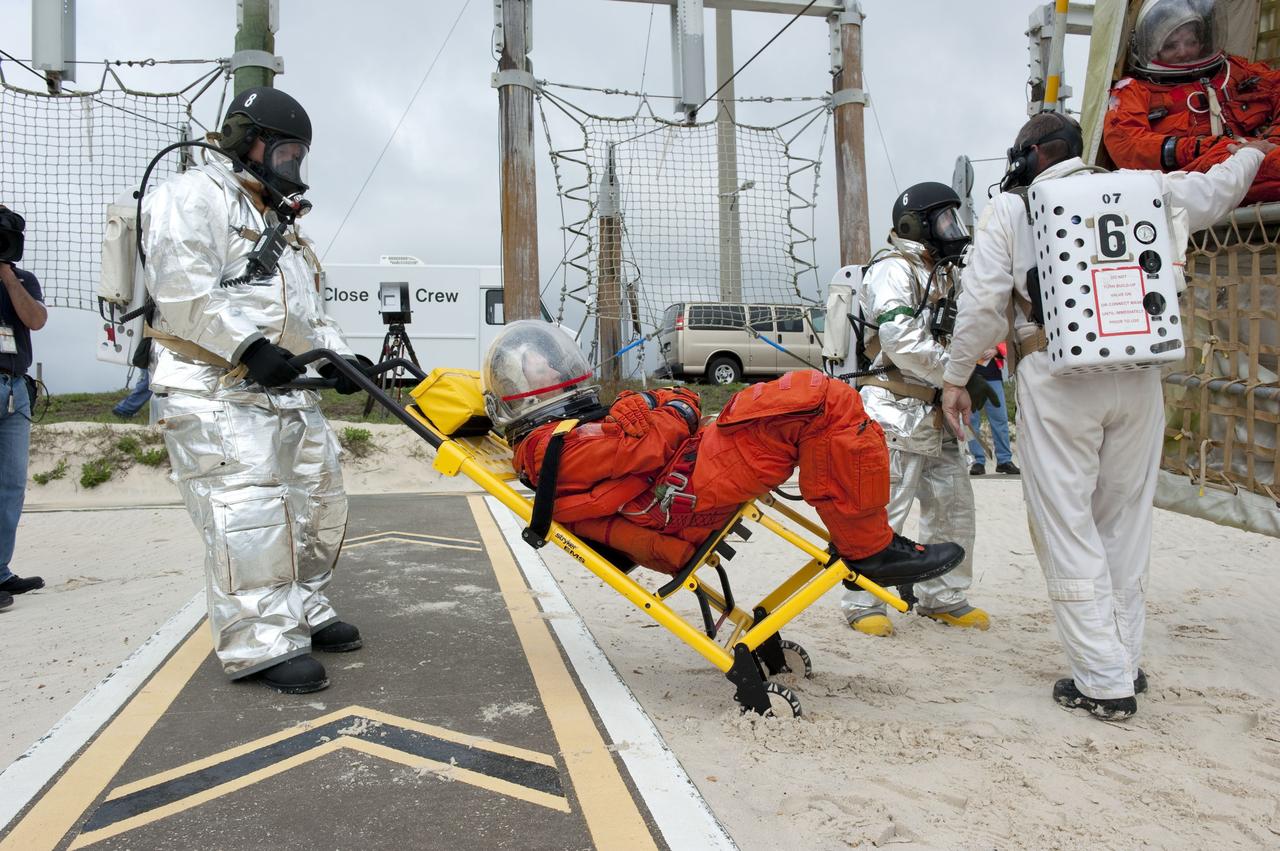
CAPE CANAVERAL, Fla. – An emergency exit, or Mode II/IV, exercise is under way at the slidewire basket landing site of Launch Pad 39A at NASA's Kennedy Space Center in Florida. The exercise involves NASA fire rescue personnel, volunteers portraying astronauts with simulated injuries, helicopters and personnel from the Air Force’s 920th Rescue Wing, and medical trauma teams at three Central Florida hospitals. The drill allows teams to practice an emergency response at the launch pad, including helicopter evacuation to local hospitals. Photo credit: NASA/Kim Shiflett
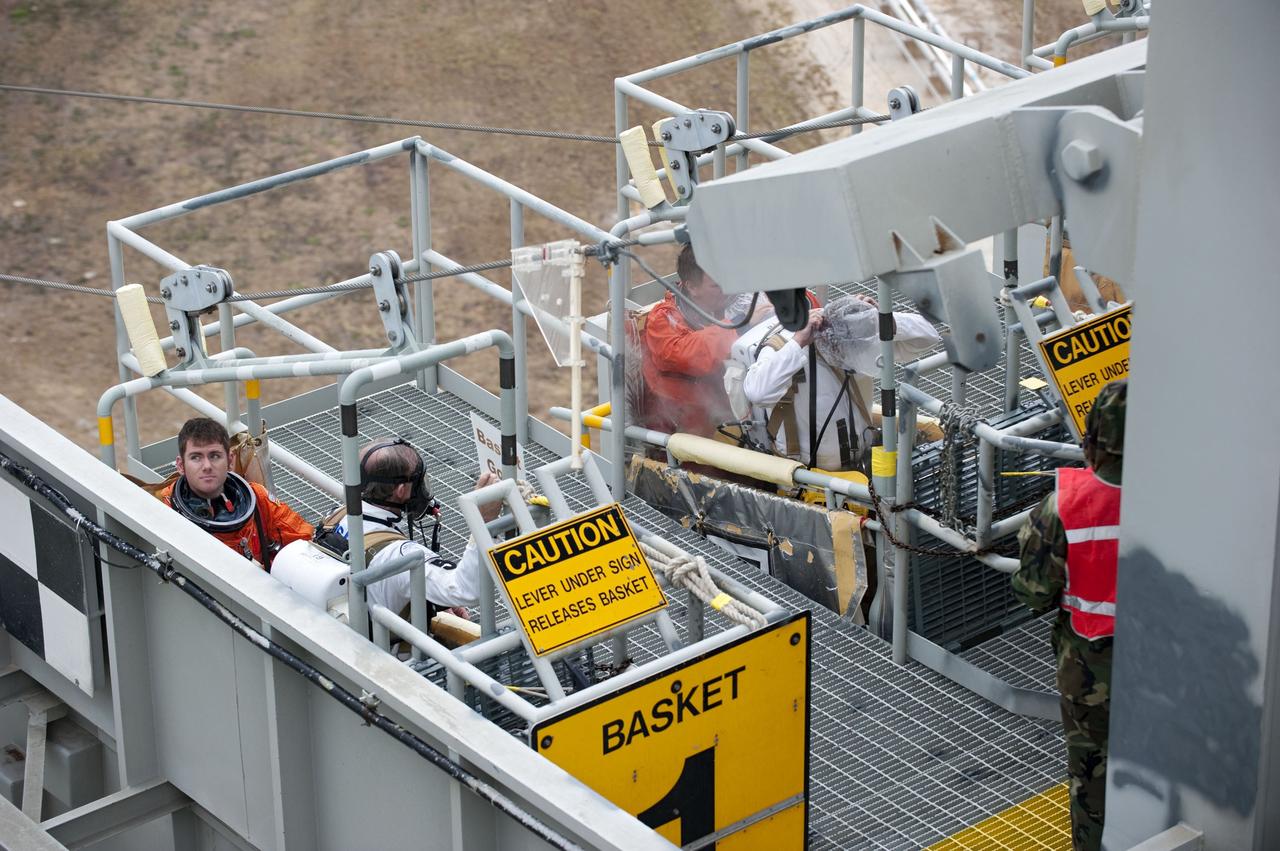
CAPE CANAVERAL, Fla. – An emergency exit, or Mode II/IV, exercise is under way at the slidewire basket area of Launch Pad 39A at NASA's Kennedy Space Center in Florida. The exercise involves NASA fire rescue personnel, volunteers portraying astronauts with simulated injuries, helicopters and personnel from the Air Force’s 920th Rescue Wing, and medical trauma teams at three Central Florida hospitals. The drill allows teams to practice an emergency response at the launch pad, including helicopter evacuation to local hospitals. Photo credit: NASA/Kim Shiflett
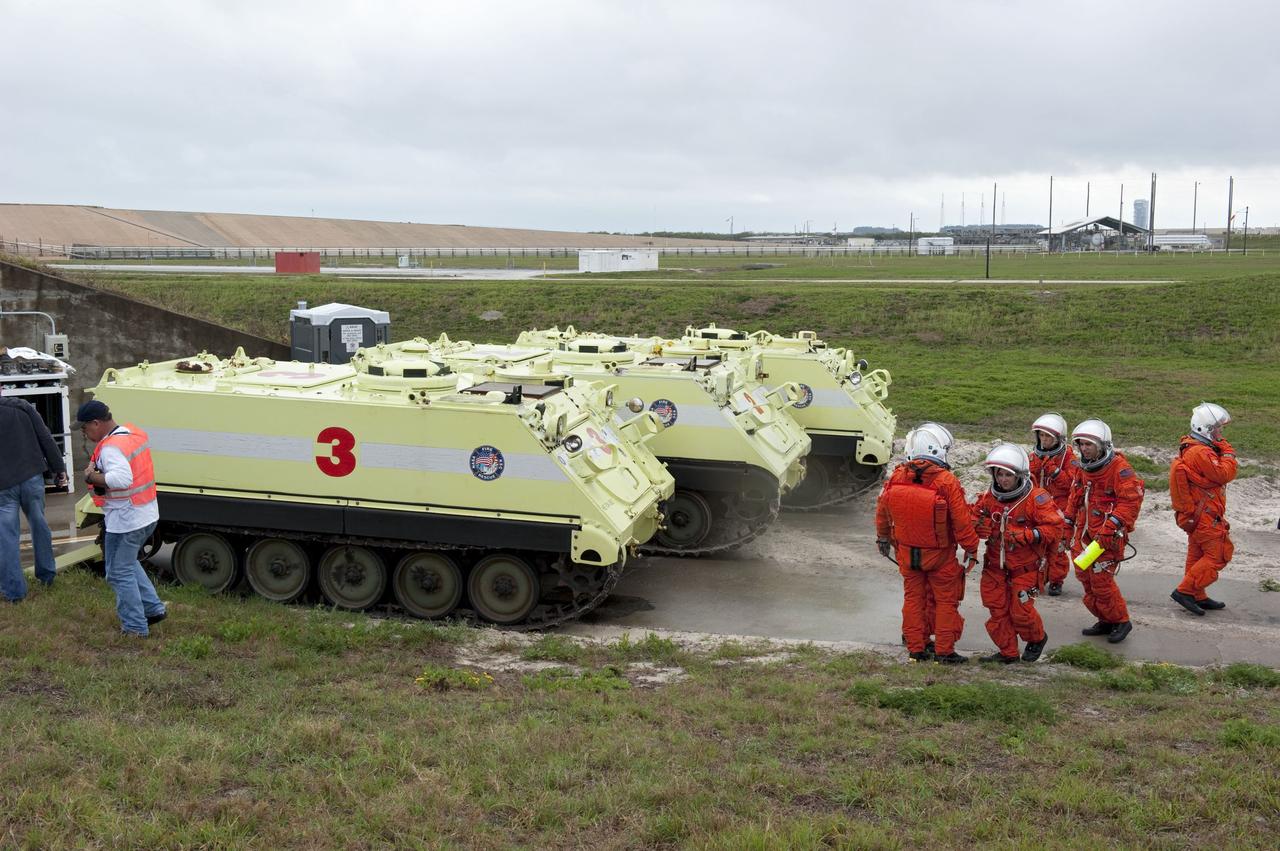
CAPE CANAVERAL, Fla. – On Launch Pad 39A at NASA's Kennedy Space Center in Florida, an emergency exit, or Mode II/IV, exercise is under way. Seen here are M-113 armored personnel carriers near the slidewire basked landing site. The exercise involves NASA fire rescue personnel, volunteers portraying astronauts with simulated injuries, helicopters and personnel from the Air Force’s 920th Rescue Wing, and medical trauma teams at three Central Florida hospitals. The drill allows teams to practice an emergency response at the launch pad, including helicopter evacuation to local hospitals. Photo credit: NASA/Kim Shiflett
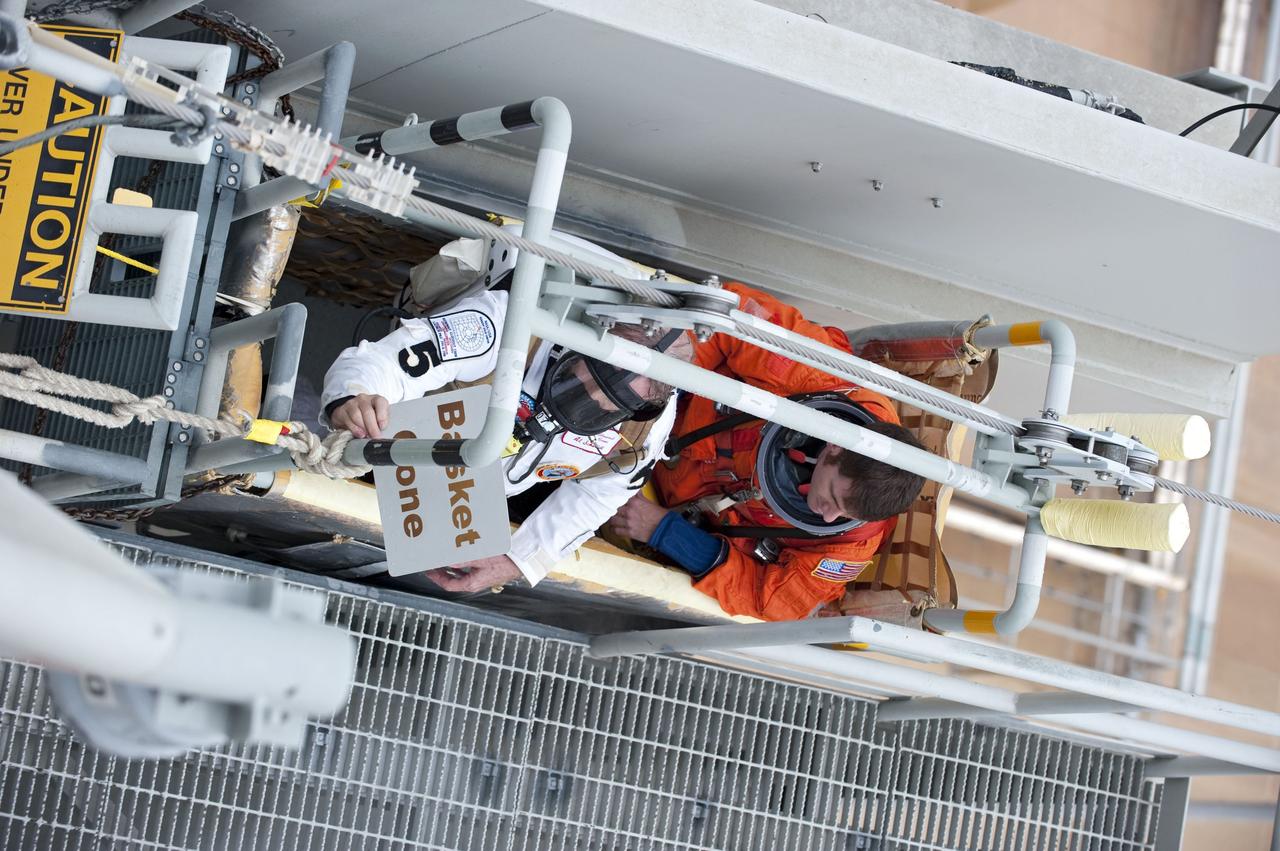
CAPE CANAVERAL, Fla. – An emergency exit, or Mode II/IV, exercise is under way at the slidewire basket area of Launch Pad 39A at NASA's Kennedy Space Center in Florida. The exercise involves NASA fire rescue personnel, volunteers portraying astronauts with simulated injuries, helicopters and personnel from the Air Force’s 920th Rescue Wing, and medical trauma teams at three Central Florida hospitals. The drill allows teams to practice an emergency response at the launch pad, including helicopter evacuation to local hospitals. Photo credit: NASA/Kim Shiflett
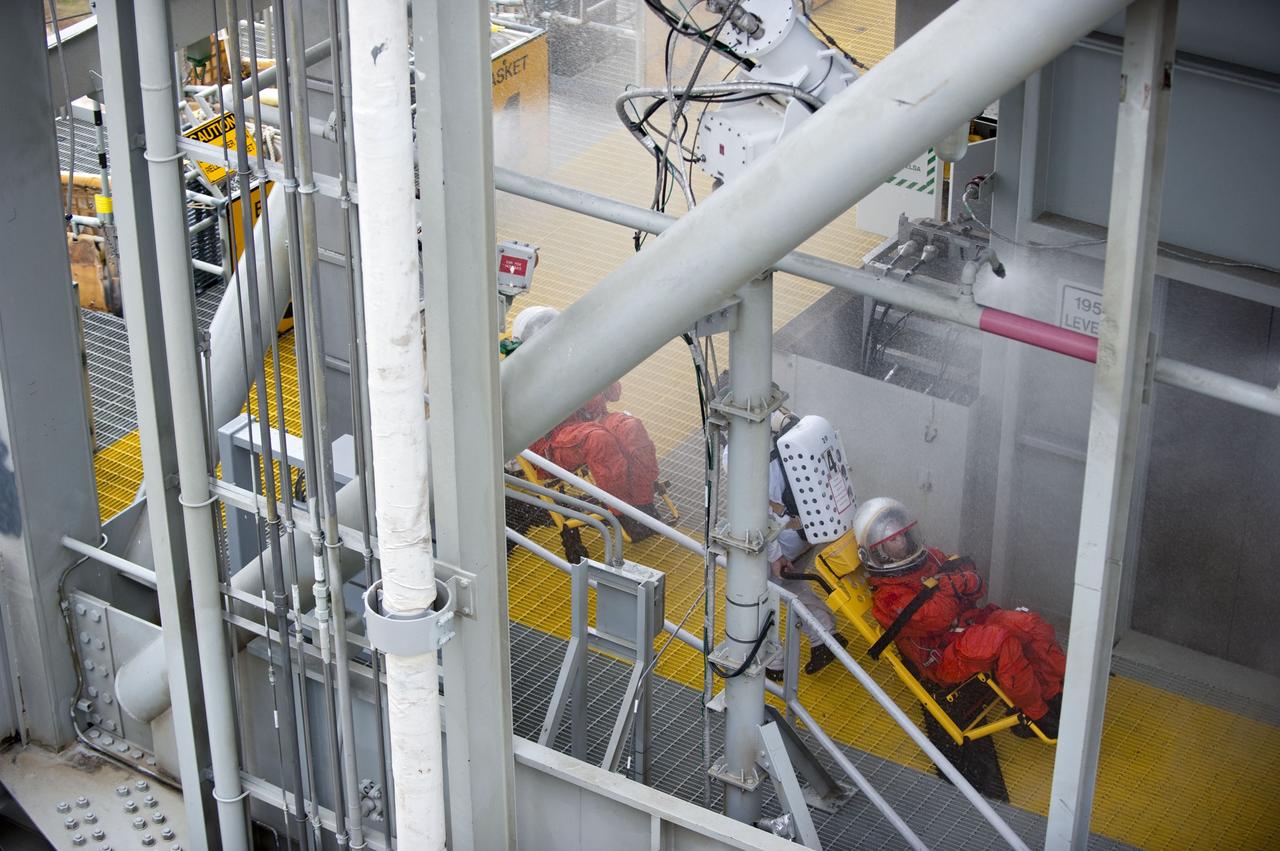
CAPE CANAVERAL, Fla. – An emergency exit, or Mode II/IV, exercise is under way at the 195-foot level of Launch Pad 39A at NASA's Kennedy Space Center in Florida. The exercise involves NASA fire rescue personnel, volunteers portraying astronauts with simulated injuries, helicopters and personnel from the Air Force’s 920th Rescue Wing, and medical trauma teams at three Central Florida hospitals. The drill allows teams to practice an emergency response at the launch pad, including helicopter evacuation to local hospitals. Photo credit: NASA/Kim Shiflett
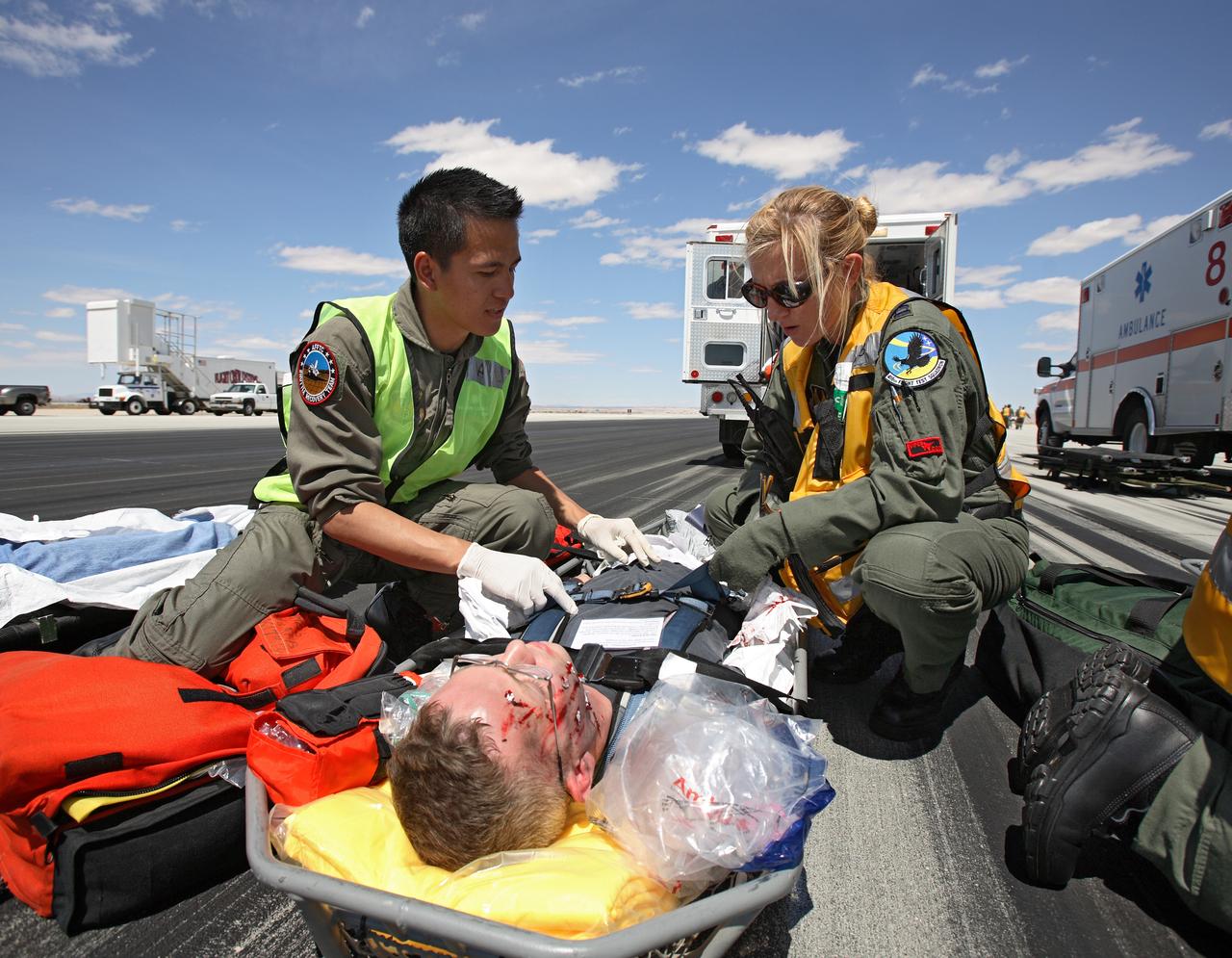
Complete with makeup to simulate facial injuries, a volunteer "astronaut" is tended to by aeromedical rescue staff after evacuation from the shuttle mockup. (USAF photo # 070505-F-1287F-145)
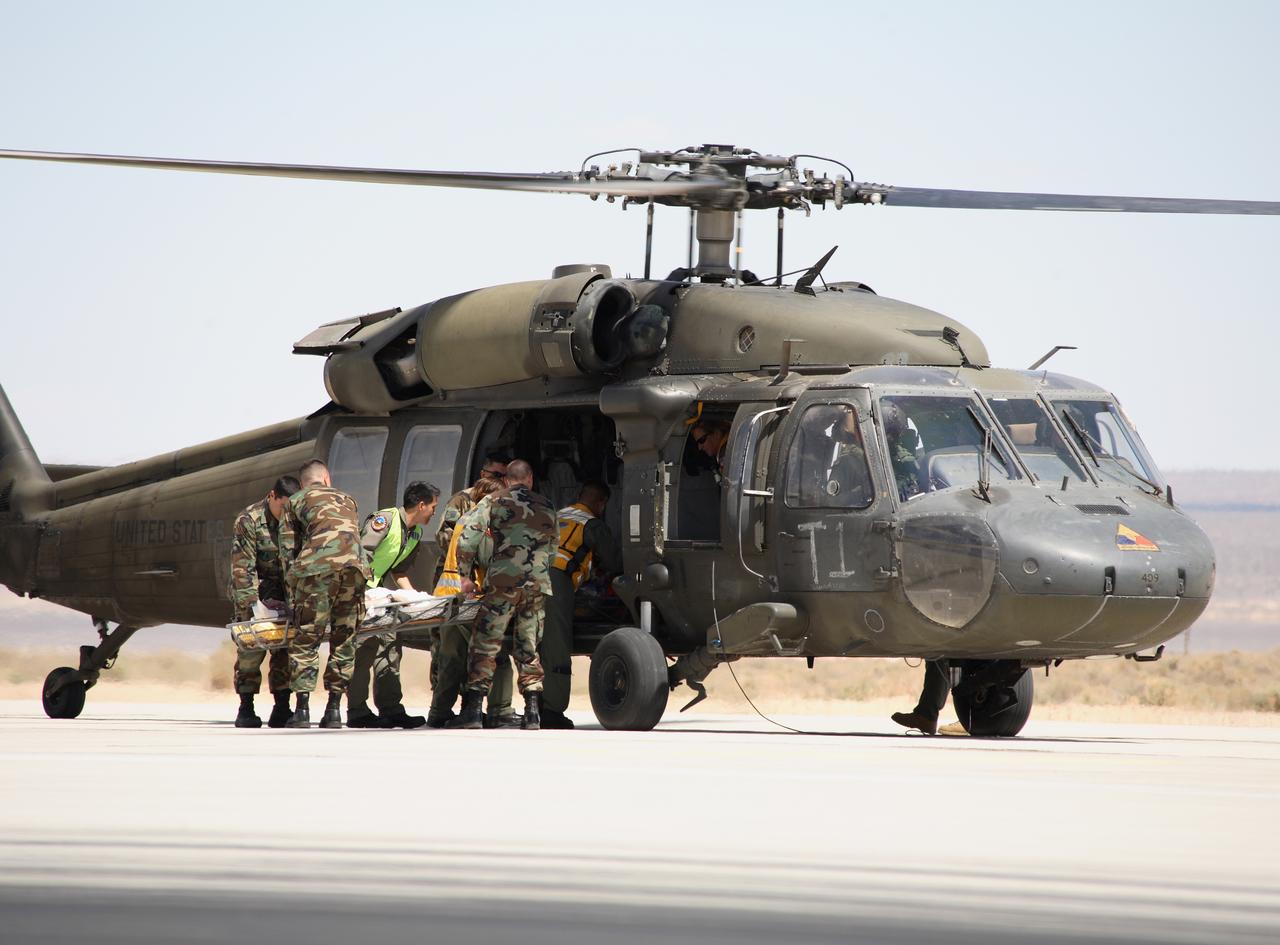
Air Force rescue team members load the volunteer "injured astronaut" on a stretcher into a Blackhawk helicopter for evacuation to a hospital during the exercise. (USAF photo # 070505-F-1287F-166)
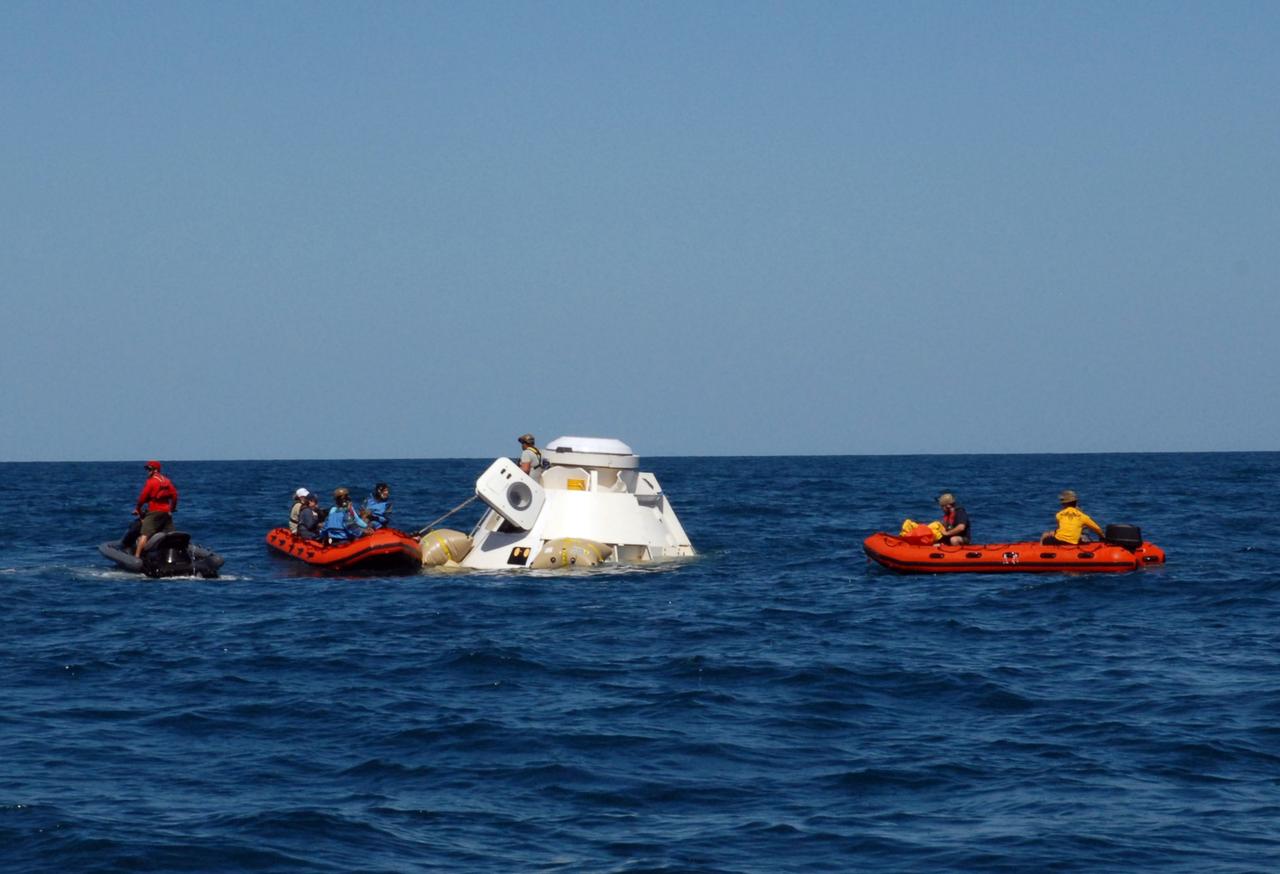
NASA astronauts Suni Williams and Barry “Butch” Wilmore rehearse the steps they would take to exit Boeing’s CST-100 Starliner spacecraft without assistance in the unlikely event of an emergency resulting in a splashdown. The training exercise, which occurred April 27, 2019, took place several miles off the coast of Cape Canaveral near NASA’s Kennedy Space Center in Florida. It included the astronauts unloading a rescue raft from inside the spacecraft, climbing out through a hatch at the top of the spacecraft, jumping into the Atlantic Ocean and boarding the raft. This open-ocean exercise provides the astronauts with the necessary training ahead of Boeing’s Crew Flight Test and subsequent missions. During normal return scenarios, Boeing’s Starliner will land in a safe zone of about 15 square miles in the Western United States. Throughout the commercial crew development phases with NASA, Boeing has performed dozens of qualification tests on its parachute and airbag systems simulating conditions on land and in the water.
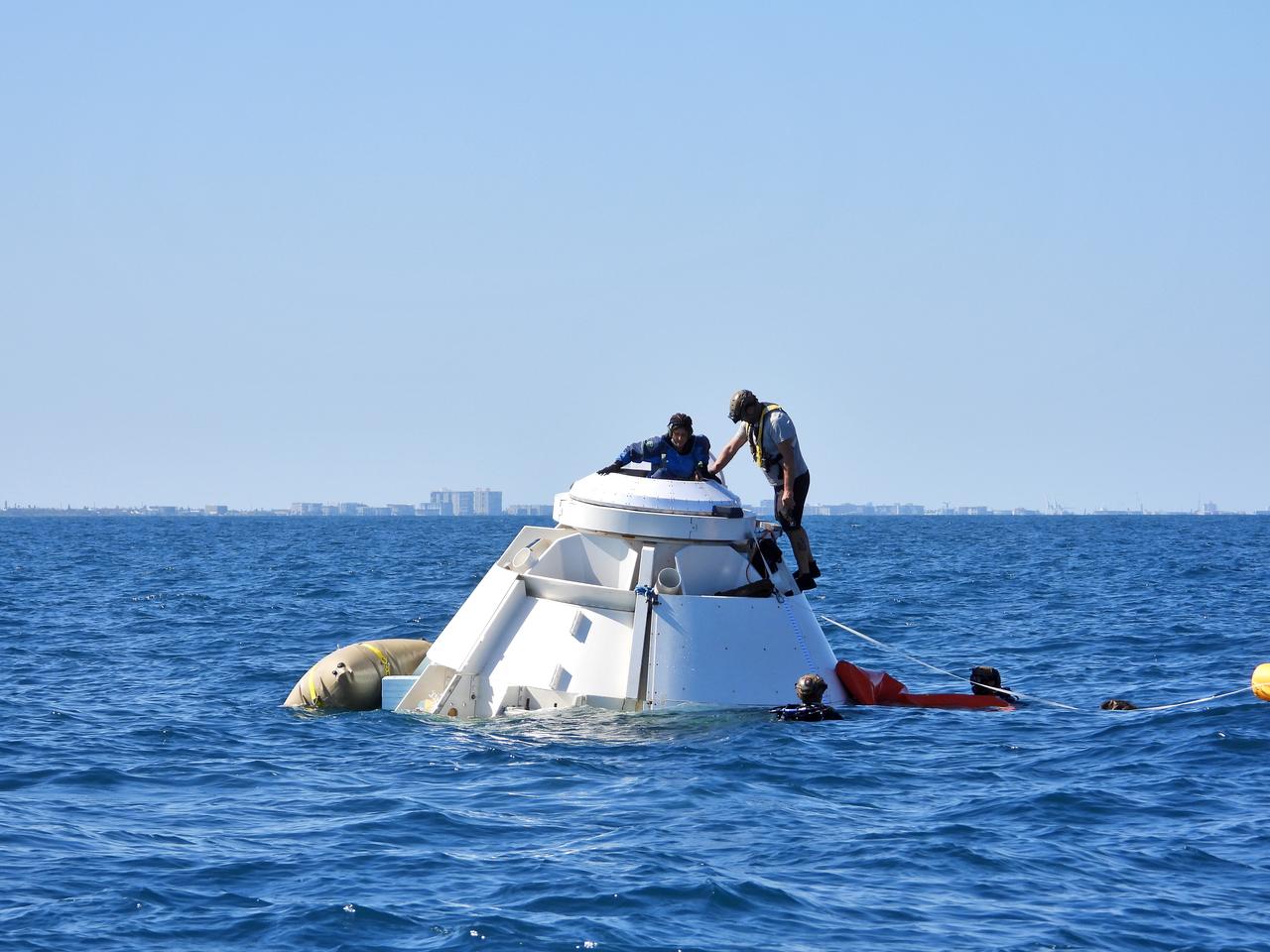
NASA astronauts Suni Williams and Barry “Butch” Wilmore rehearse the steps they would take to exit Boeing’s CST-100 Starliner spacecraft without assistance in the unlikely event of an emergency resulting in a splashdown. The training exercise, which occurred April 27, 2019, took place several miles off the coast of Cape Canaveral near NASA’s Kennedy Space Center in Florida. It included the astronauts unloading a rescue raft from inside the spacecraft, climbing out through a hatch at the top of the spacecraft, jumping into the Atlantic Ocean and boarding the raft. This open-ocean exercise provides the astronauts with the necessary training ahead of Boeing’s Crew Flight Test and subsequent missions. During normal return scenarios, Boeing’s Starliner will land in a safe zone of about 15 square miles in the Western United States. Throughout the commercial crew development phases with NASA, Boeing has performed dozens of qualification tests on its parachute and airbag systems simulating conditions on land and in the water.
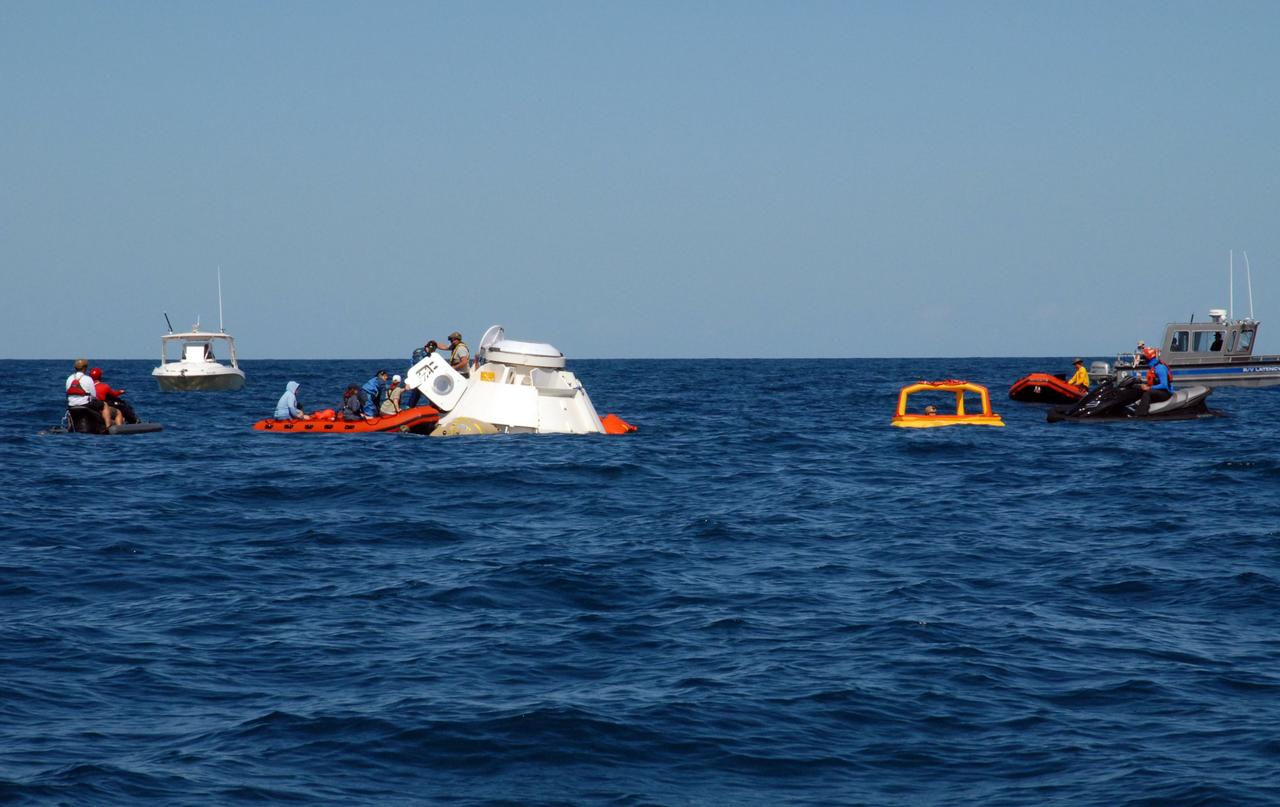
NASA astronauts Suni Williams and Barry “Butch” Wilmore rehearse the steps they would take to exit Boeing’s CST-100 Starliner spacecraft without assistance in the unlikely event of an emergency resulting in a splashdown. The training exercise, which occurred April 27, 2019, took place several miles off the coast of Cape Canaveral near NASA’s Kennedy Space Center in Florida. It included the astronauts unloading a rescue raft from inside the spacecraft, climbing out through a hatch at the top of the spacecraft, jumping into the Atlantic Ocean and boarding the raft. This open-ocean exercise provides the astronauts with the necessary training ahead of Boeing’s Crew Flight Test and subsequent missions. During normal return scenarios, Boeing’s Starliner will land in a safe zone of about 15 square miles in the Western United States. Throughout the commercial crew development phases with NASA, Boeing has performed dozens of qualification tests on its parachute and airbag systems simulating conditions on land and in the water.

U.S. Air Force “Guardian Angel” Pararescue forces are airdropped into the Atlantic Ocean off the coast of Cape Canaveral near Kennedy Space Center in Florida to rehearse a full mission profile training exercise on April 27, 2019. The exercise included using a Boeing CST-100 Starliner training capsule to run through the necessary steps in the unlikely event of an emergency resulting in a splashdown. NASA and the Department of Defense (DoD) Human Space Flight Support Office Rescue Division conducted the training, which included rehearsing assisted egress, extracting DoD team members acting as astronauts, from the capsule and providing immediate medical treatment. This open-ocean exercise provides team members with the necessary training ahead of Boeing’s Crew Flight Test with astronauts targeted for later this year. During normal return scenarios, Boeing’s Starliner will land in a safe zone of about 15 square miles in the Western United States. Throughout the commercial crew development phases with NASA, Boeing has performed dozens of qualification tests on its parachute and airbag systems simulating conditions on land and in the water.
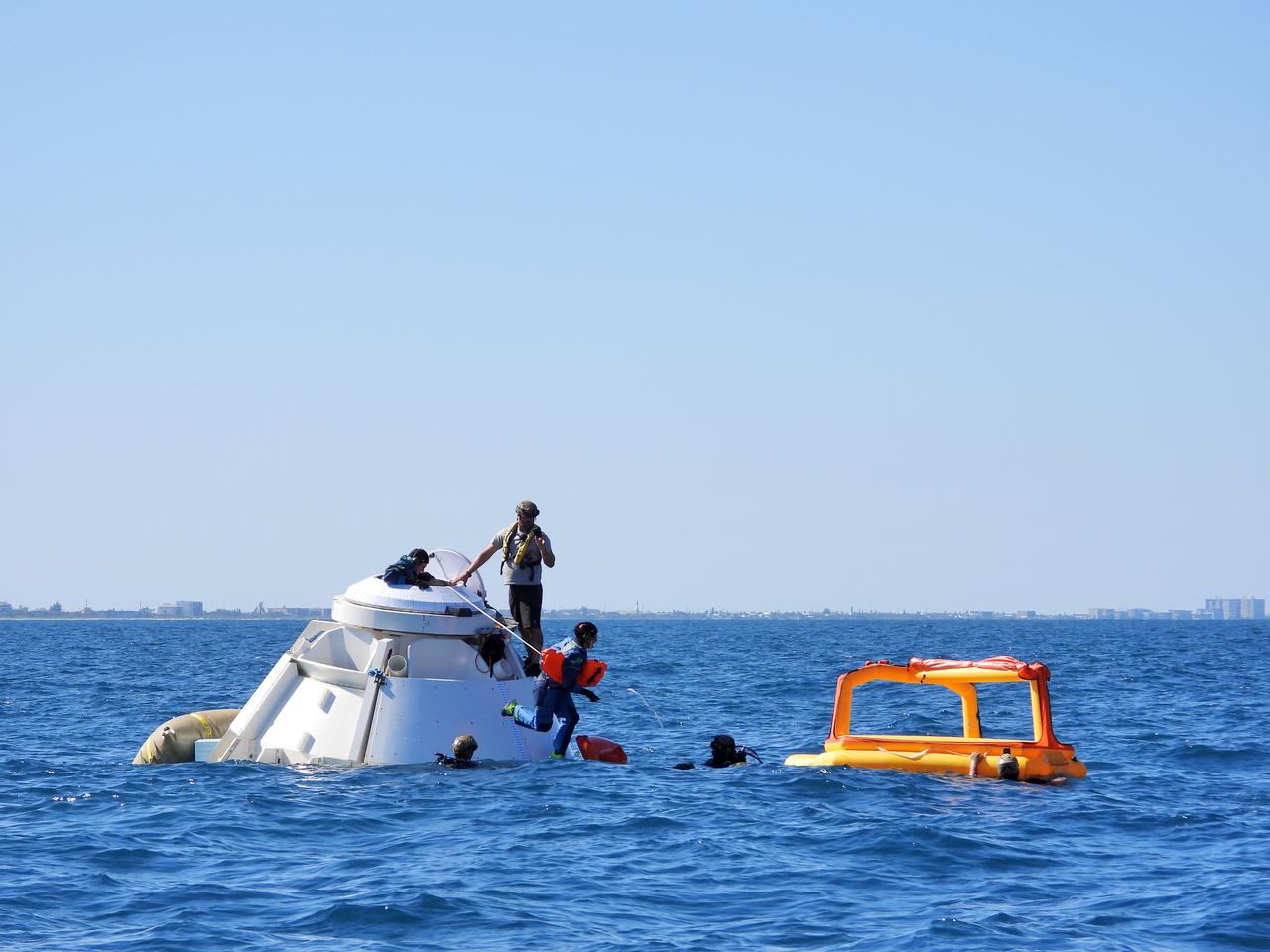
NASA astronauts Suni Williams and Barry “Butch” Wilmore rehearse the steps they would take to exit Boeing’s CST-100 Starliner spacecraft without assistance in the unlikely event of an emergency resulting in a splashdown. The training exercise, which occurred April 27, 2019, took place several miles off the coast of Cape Canaveral near NASA’s Kennedy Space Center in Florida. It included the astronauts unloading a rescue raft from inside the spacecraft, climbing out through a hatch at the top of the spacecraft, jumping into the Atlantic Ocean and boarding the raft. This open-ocean exercise provides the astronauts with the necessary training ahead of Boeing’s Crew Flight Test and subsequent missions. During normal return scenarios, Boeing’s Starliner will land in a safe zone of about 15 square miles in the Western United States. Throughout the commercial crew development phases with NASA, Boeing has performed dozens of qualification tests on its parachute and airbag systems simulating conditions on land and in the water.
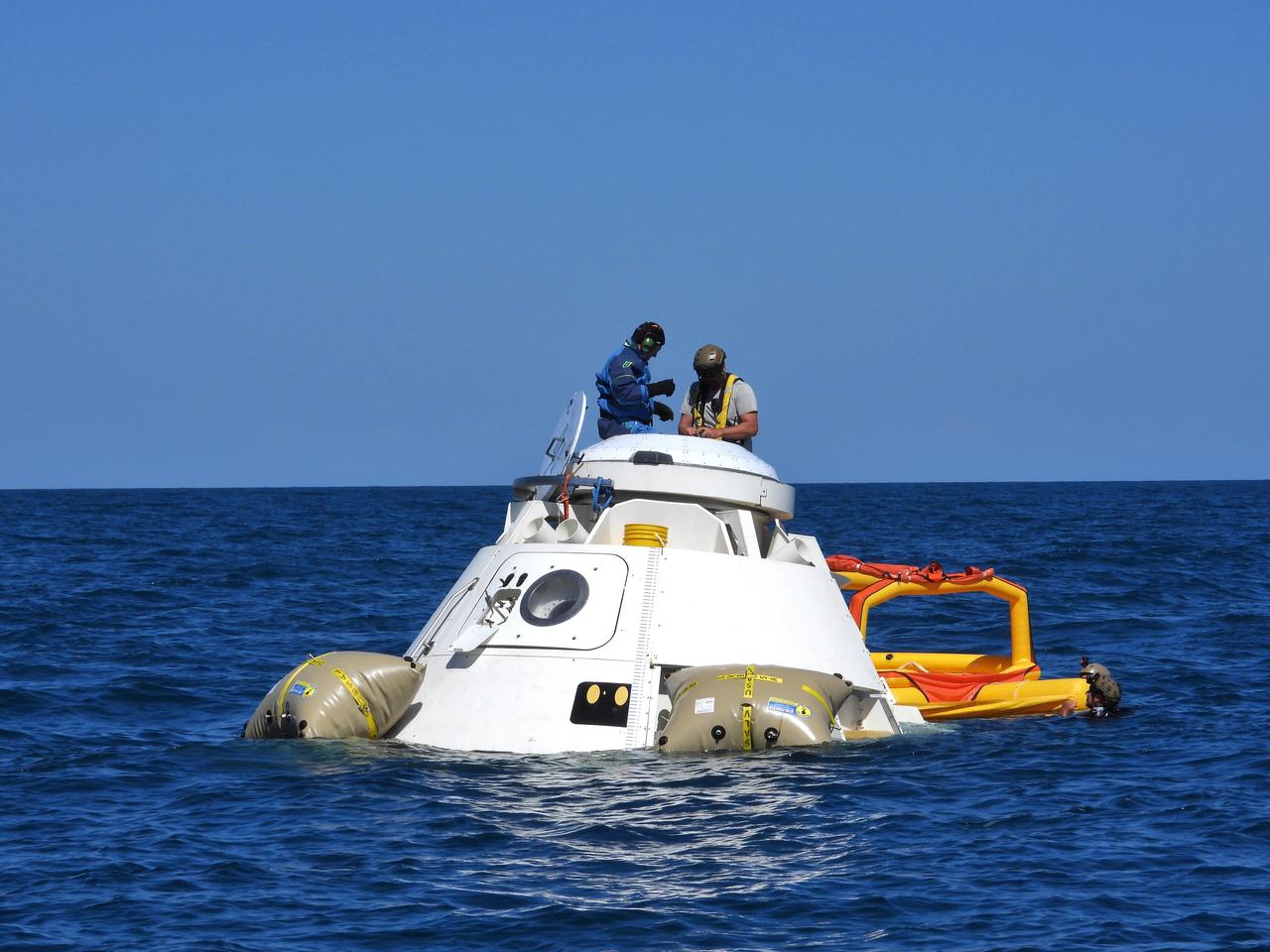
NASA astronauts Suni Williams and Barry “Butch” Wilmore rehearse the steps they would take to exit Boeing’s CST-100 Starliner spacecraft without assistance in the unlikely event of an emergency resulting in a splashdown. The training exercise, which occurred April 27, 2019, took place several miles off the coast of Cape Canaveral near NASA’s Kennedy Space Center in Florida. It included the astronauts unloading a rescue raft from inside the spacecraft, climbing out through a hatch at the top of the spacecraft, jumping into the Atlantic Ocean and boarding the raft. This open-ocean exercise provides the astronauts with the necessary training ahead of Boeing’s Crew Flight Test and subsequent missions. During normal return scenarios, Boeing’s Starliner will land in a safe zone of about 15 square miles in the Western United States. Throughout the commercial crew development phases with NASA, Boeing has performed dozens of qualification tests on its parachute and airbag systems simulating conditions on land and in the water.
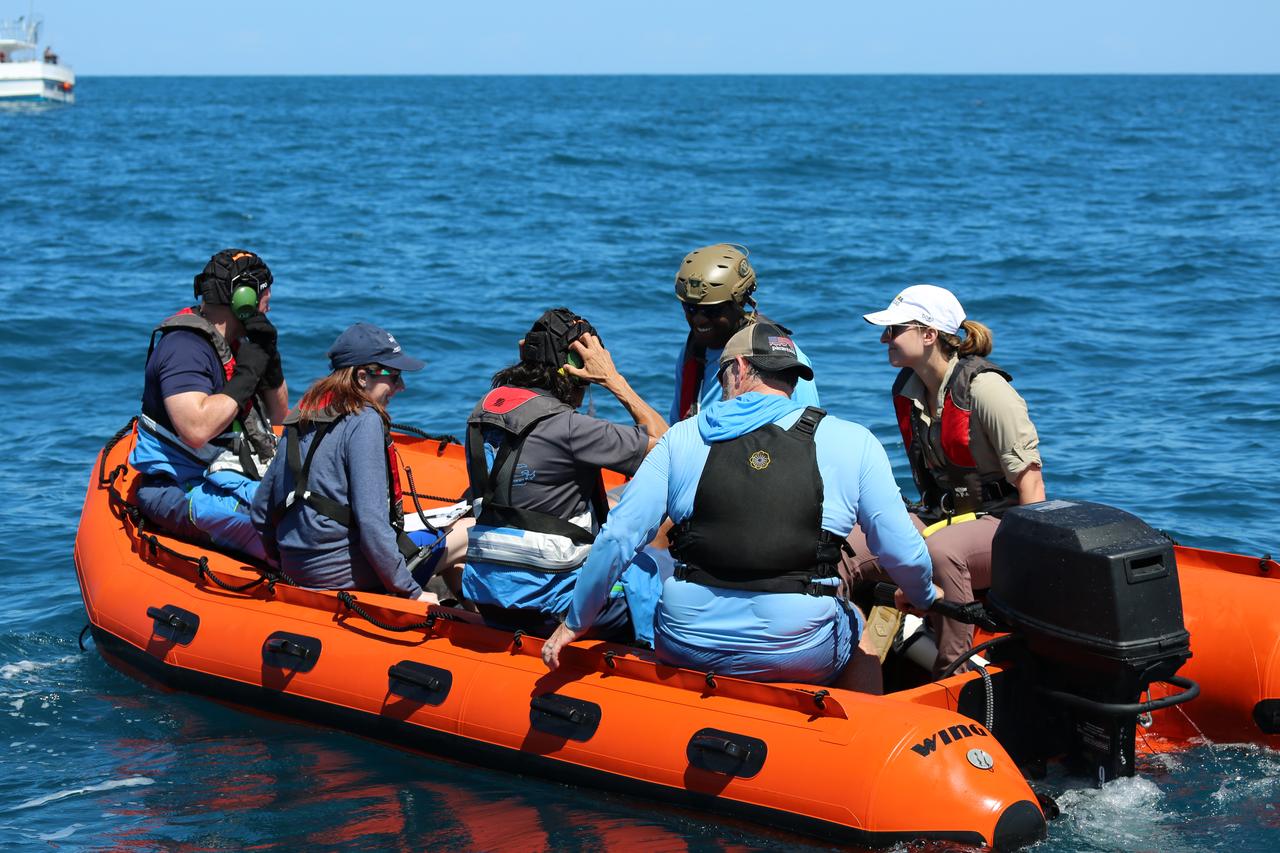
NASA astronauts Suni Williams and Barry “Butch” Wilmore, joined by their training team on a watercraft in the Atlantic Ocean, secure their safety gear as they prepare to rehearse the steps they would take to exit Boeing’s CST-100 Starliner spacecraft without assistance in the unlikely event of an emergency resulting in a splashdown. The training exercise, which occurred April 27, 2019, took place several miles off the coast of Cape Canaveral near NASA’s Kennedy Space Center in Florida. It included the astronauts unloading a rescue raft from inside the spacecraft, climbing out through a hatch at the top of the spacecraft, jumping into the Atlantic Ocean and boarding the raft. This open-ocean exercise provides the astronauts with the necessary training ahead of Boeing’s Crew Flight Test and subsequent missions. During normal return scenarios, Boeing’s Starliner will land in a safe zone of about 15 square miles in the Western United States. Throughout the commercial crew development phases with NASA, Boeing has performed dozens of qualification tests on its parachute and airbag systems simulating conditions on land and in the water.
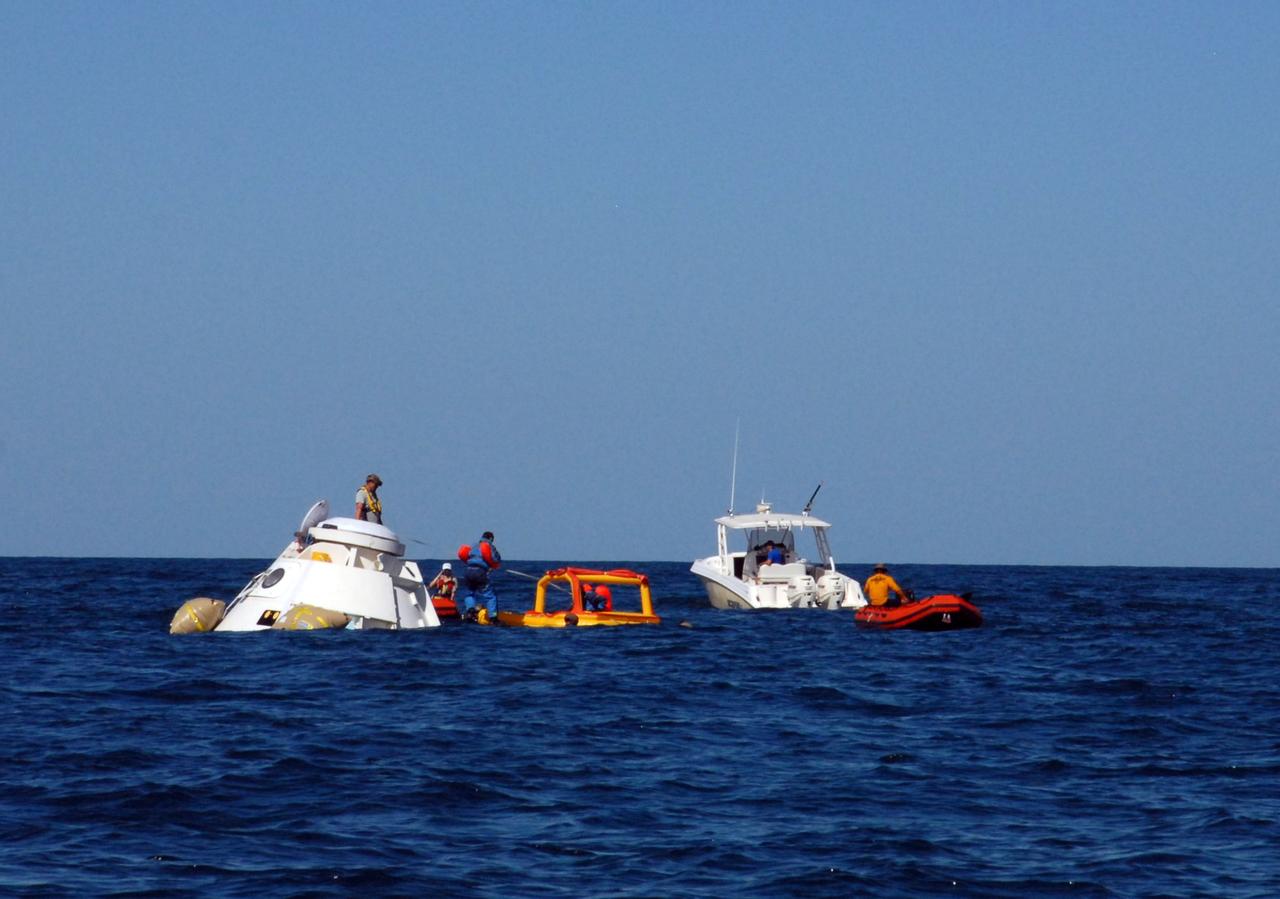
NASA astronauts Suni Williams and Barry “Butch” Wilmore rehearse the steps they would take to exit Boeing’s CST-100 Starliner spacecraft without assistance in the unlikely event of an emergency resulting in a splashdown. The training exercise, which occurred April 27, 2019, took place several miles off the coast of Cape Canaveral near NASA’s Kennedy Space Center in Florida. It included the astronauts unloading a rescue raft from inside the spacecraft, climbing out through a hatch at the top of the spacecraft, jumping into the Atlantic Ocean and boarding the raft. This open-ocean exercise provides the astronauts with the necessary training ahead of Boeing’s Crew Flight Test and subsequent missions. During normal return scenarios, Boeing’s Starliner will land in a safe zone of about 15 square miles in the Western United States. Throughout the commercial crew development phases with NASA, Boeing has performed dozens of qualification tests on its parachute and airbag systems simulating conditions on land and in the water.
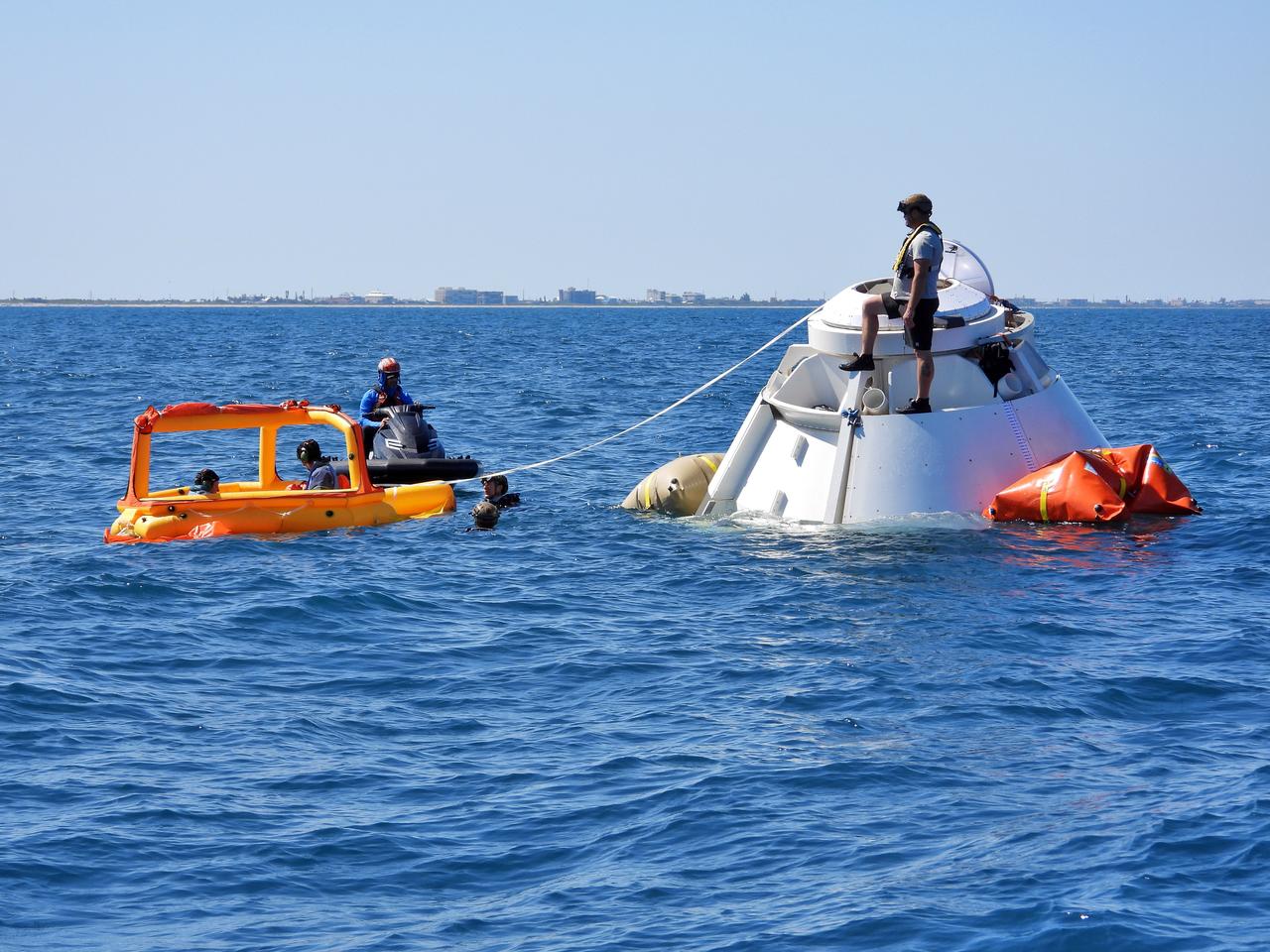
NASA astronauts Suni Williams and Barry “Butch” Wilmore rehearse the steps they would take to exit Boeing’s CST-100 Starliner spacecraft without assistance in the unlikely event of an emergency resulting in a splashdown. The training exercise, which occurred April 27, 2019, took place several miles off the coast of Cape Canaveral near NASA’s Kennedy Space Center in Florida. It included the astronauts unloading a rescue raft from inside the spacecraft, climbing out through a hatch at the top of the spacecraft, jumping into the Atlantic Ocean and boarding the raft. This open-ocean exercise provides the astronauts with the necessary training ahead of Boeing’s Crew Flight Test and subsequent missions. During normal return scenarios, Boeing’s Starliner will land in a safe zone of about 15 square miles in the Western United States. Throughout the commercial crew development phases with NASA, Boeing has performed dozens of qualification tests on its parachute and airbag systems simulating conditions on land and in the water.
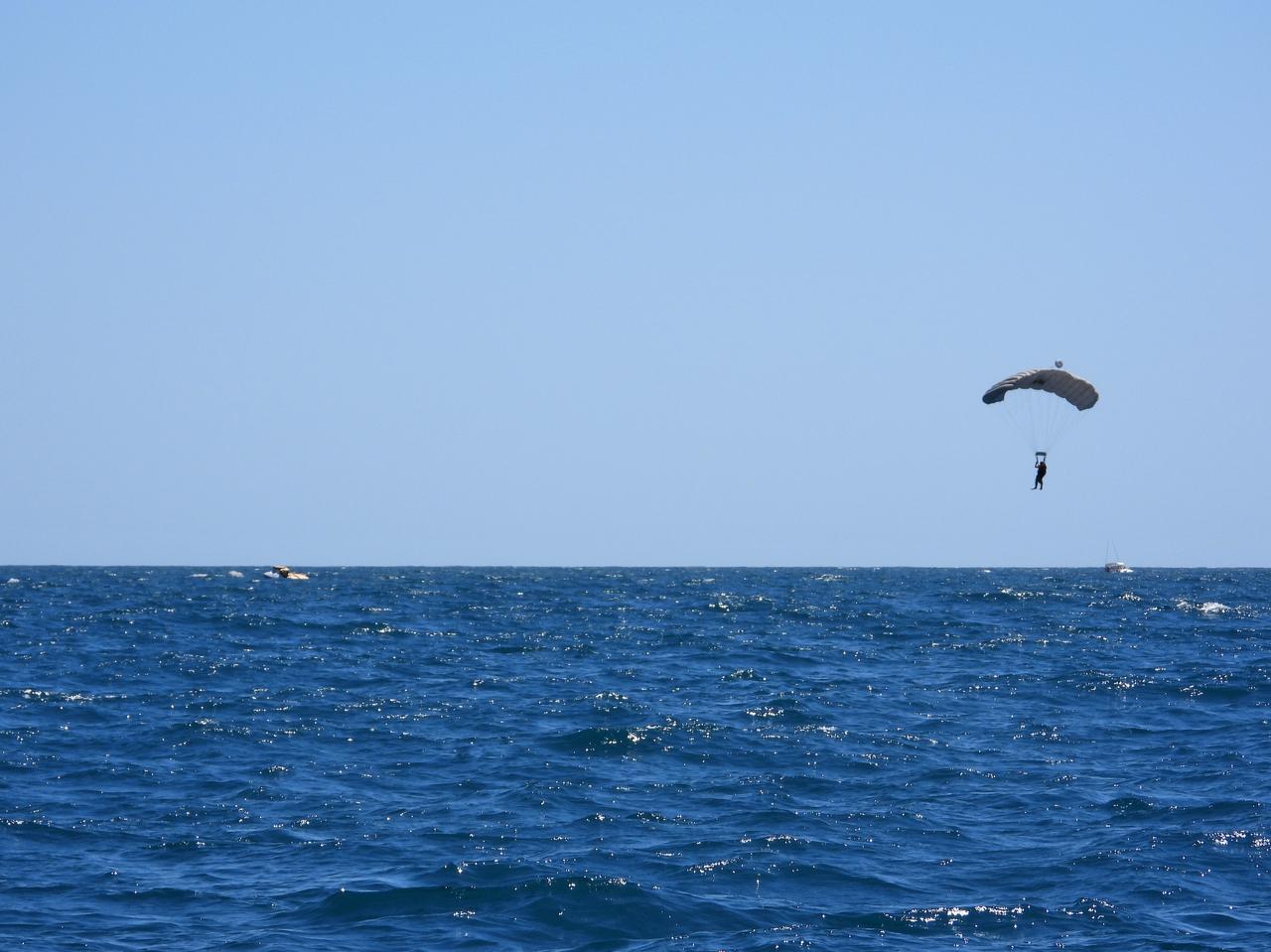
U.S. Air Force “Guardian Angel” Pararescue forces are airdropped into the Atlantic Ocean off the coast of Cape Canaveral near Kennedy Space Center in Florida to rehearse a full mission profile training exercise on April 27, 2019. The exercise included using a Boeing CST-100 Starliner training capsule to run through the necessary steps in the unlikely event of an emergency resulting in a splashdown. NASA and the Department of Defense (DoD) Human Space Flight Support Office Rescue Division conducted the training, which included rehearsing assisted egress, extracting DoD team members acting as astronauts, from the capsule and providing immediate medical treatment. This open-ocean exercise provides team members with the necessary training ahead of Boeing’s Crew Flight Test with astronauts targeted for later this year. During normal return scenarios, Boeing’s Starliner will land in a safe zone of about 15 square miles in the Western United States. Throughout the commercial crew development phases with NASA, Boeing has performed dozens of qualification tests on its parachute and airbag systems simulating conditions on land and in the water.
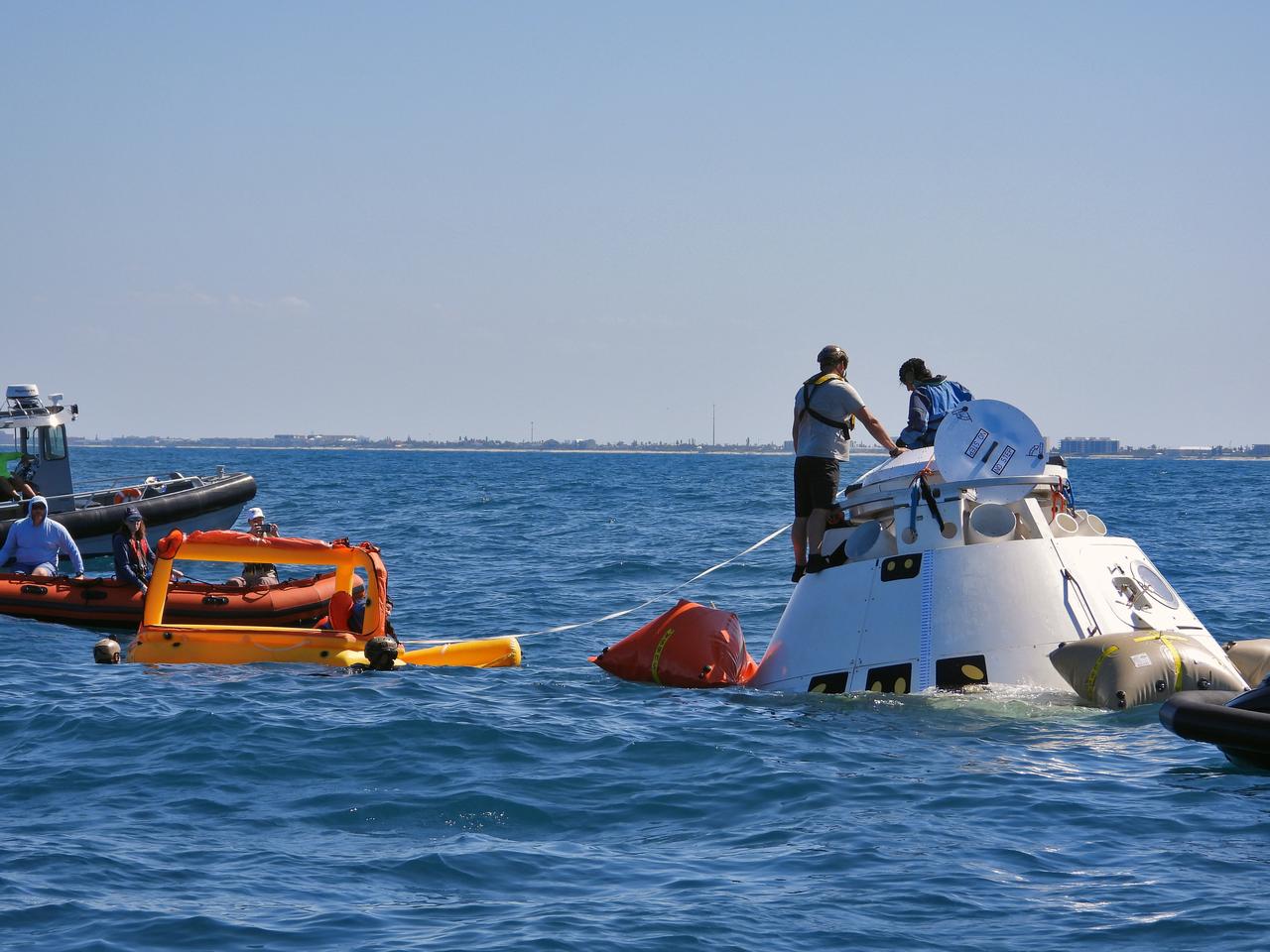
NASA astronauts Suni Williams and Barry “Butch” Wilmore rehearse the steps they would take to exit Boeing’s CST-100 Starliner spacecraft without assistance in the unlikely event of an emergency resulting in a splashdown. The training exercise, which occurred April 27, 2019, took place several miles off the coast of Cape Canaveral near NASA’s Kennedy Space Center in Florida. It included the astronauts unloading a rescue raft from inside the spacecraft, climbing out through a hatch at the top of the spacecraft, jumping into the Atlantic Ocean and boarding the raft. This open-ocean exercise provides the astronauts with the necessary training ahead of Boeing’s Crew Flight Test and subsequent missions. During normal return scenarios, Boeing’s Starliner will land in a safe zone of about 15 square miles in the Western United States. Throughout the commercial crew development phases with NASA, Boeing has performed dozens of qualification tests on its parachute and airbag systems simulating conditions on land and in the water.
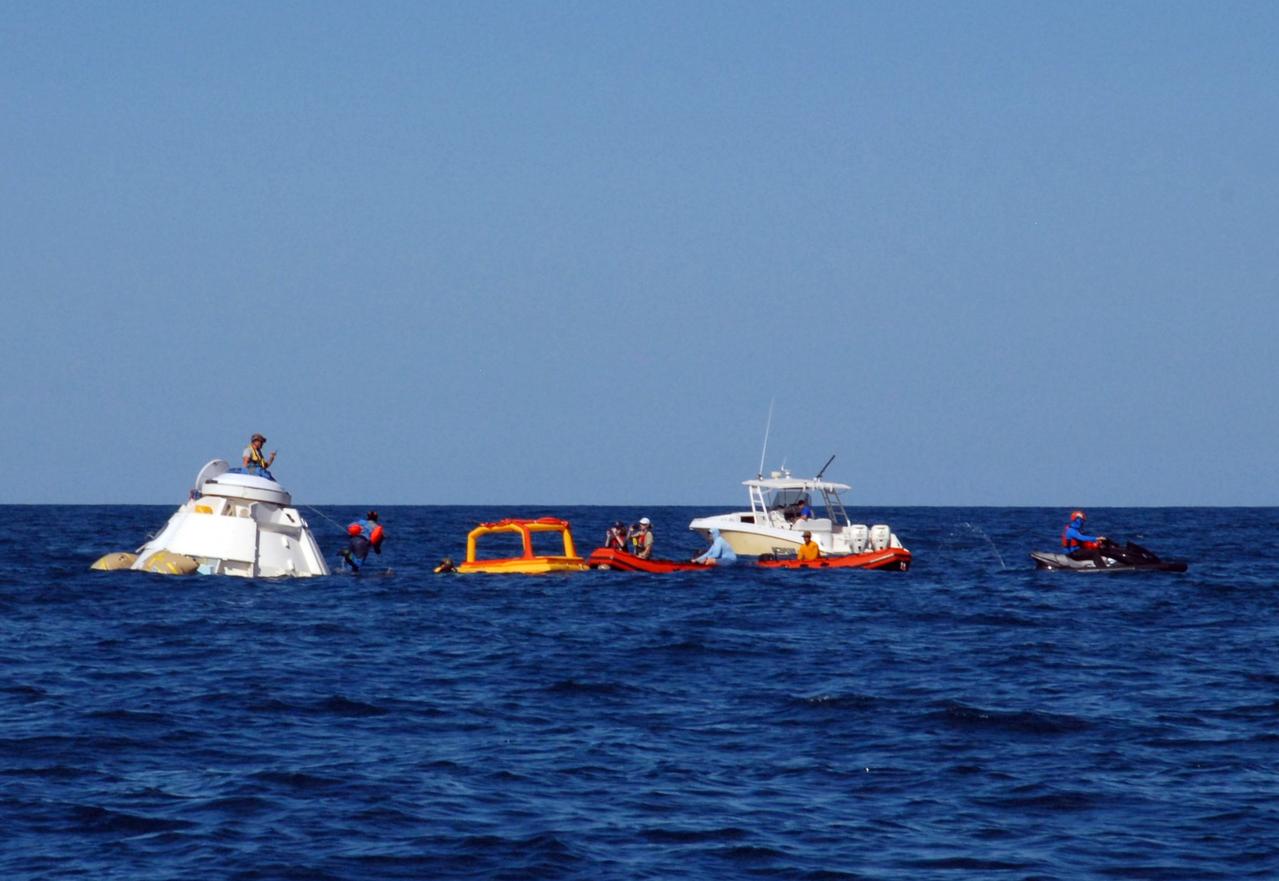
NASA astronauts Suni Williams and Barry “Butch” Wilmore rehearse the steps they would take to exit Boeing’s CST-100 Starliner spacecraft without assistance in the unlikely event of an emergency resulting in a splashdown. The training exercise, which occurred April 27, 2019, took place several miles off the coast of Cape Canaveral near NASA’s Kennedy Space Center in Florida. It included the astronauts unloading a rescue raft from inside the spacecraft, climbing out through a hatch at the top of the spacecraft, jumping into the Atlantic Ocean and boarding the raft. This open-ocean exercise provides the astronauts with the necessary training ahead of Boeing’s Crew Flight Test and subsequent missions. During normal return scenarios, Boeing’s Starliner will land in a safe zone of about 15 square miles in the Western United States. Throughout the commercial crew development phases with NASA, Boeing has performed dozens of qualification tests on its parachute and airbag systems simulating conditions on land and in the water.