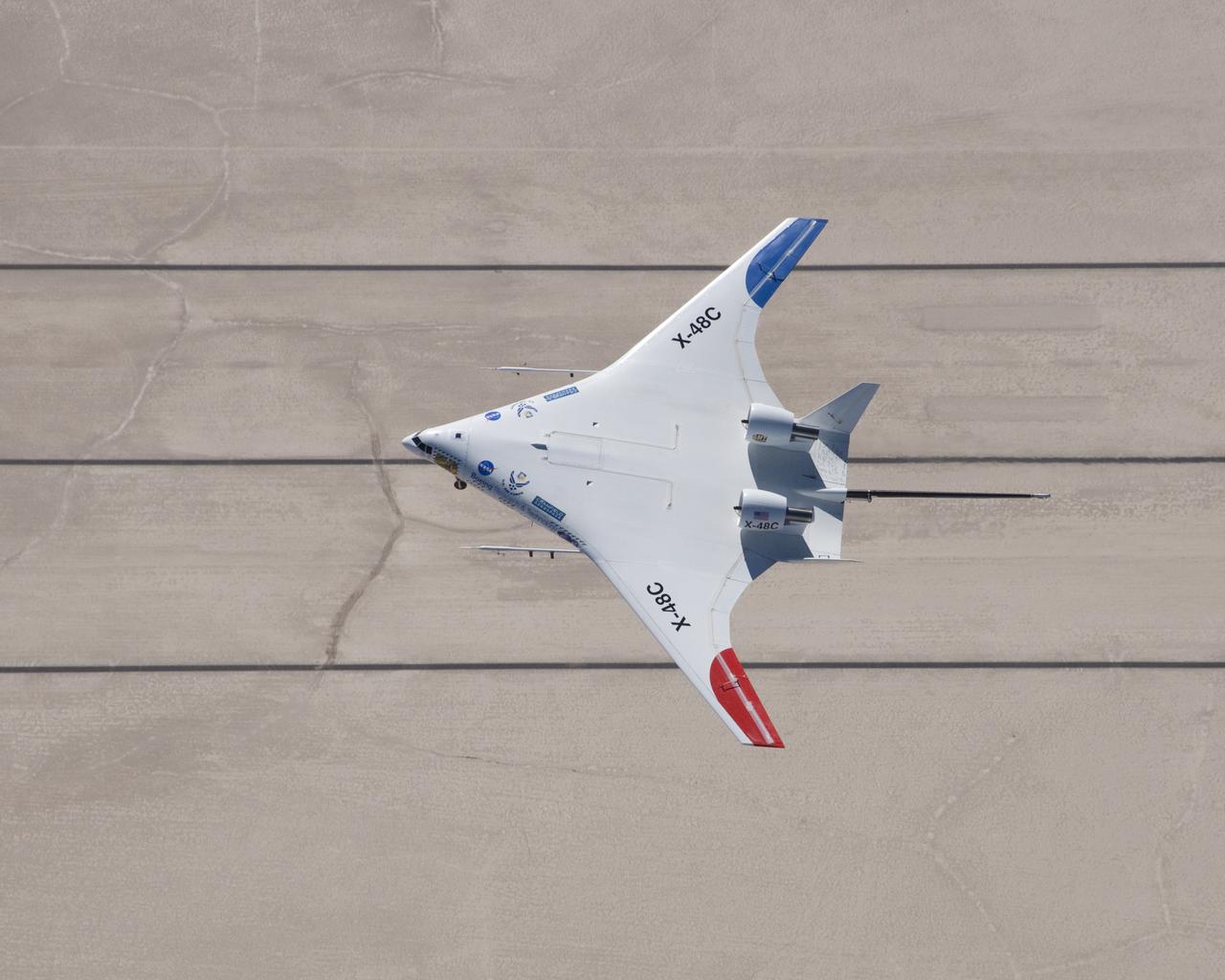
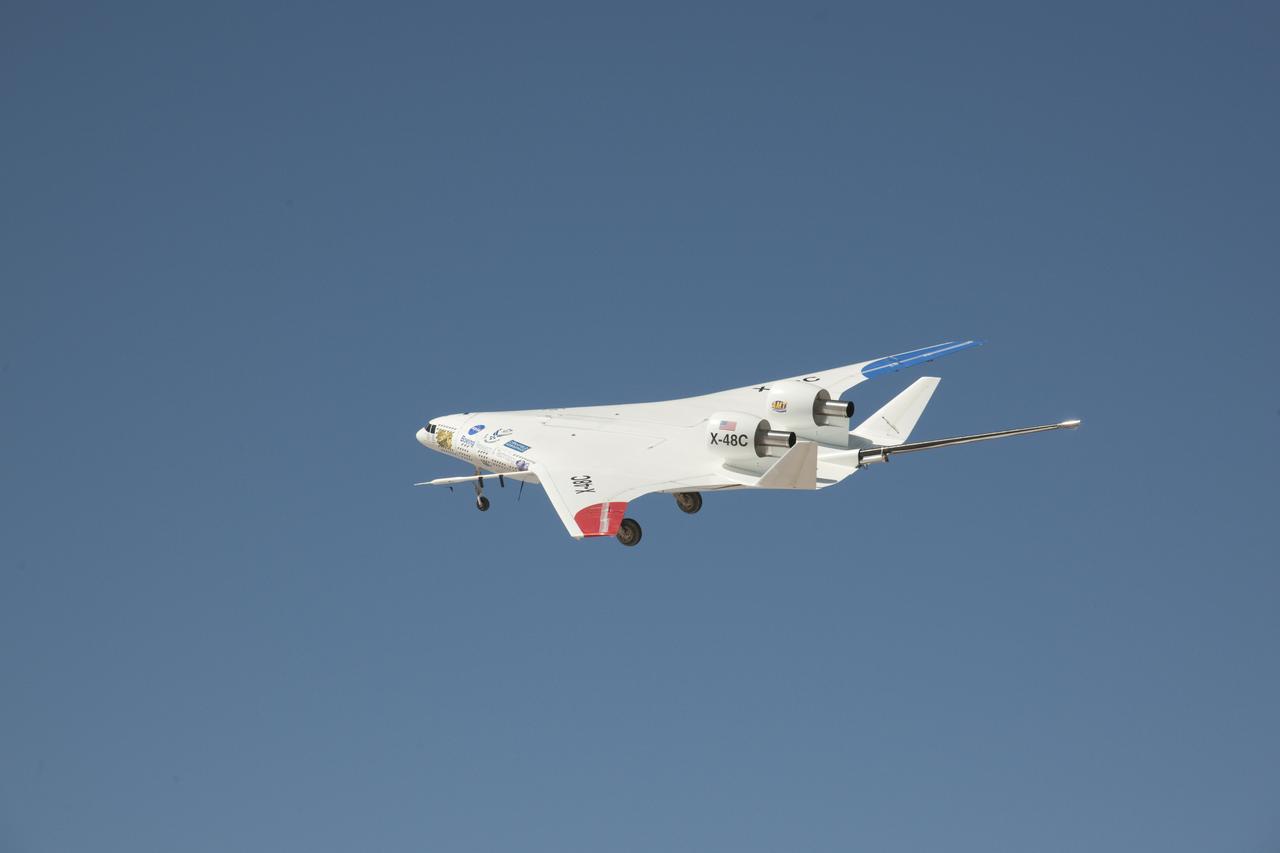
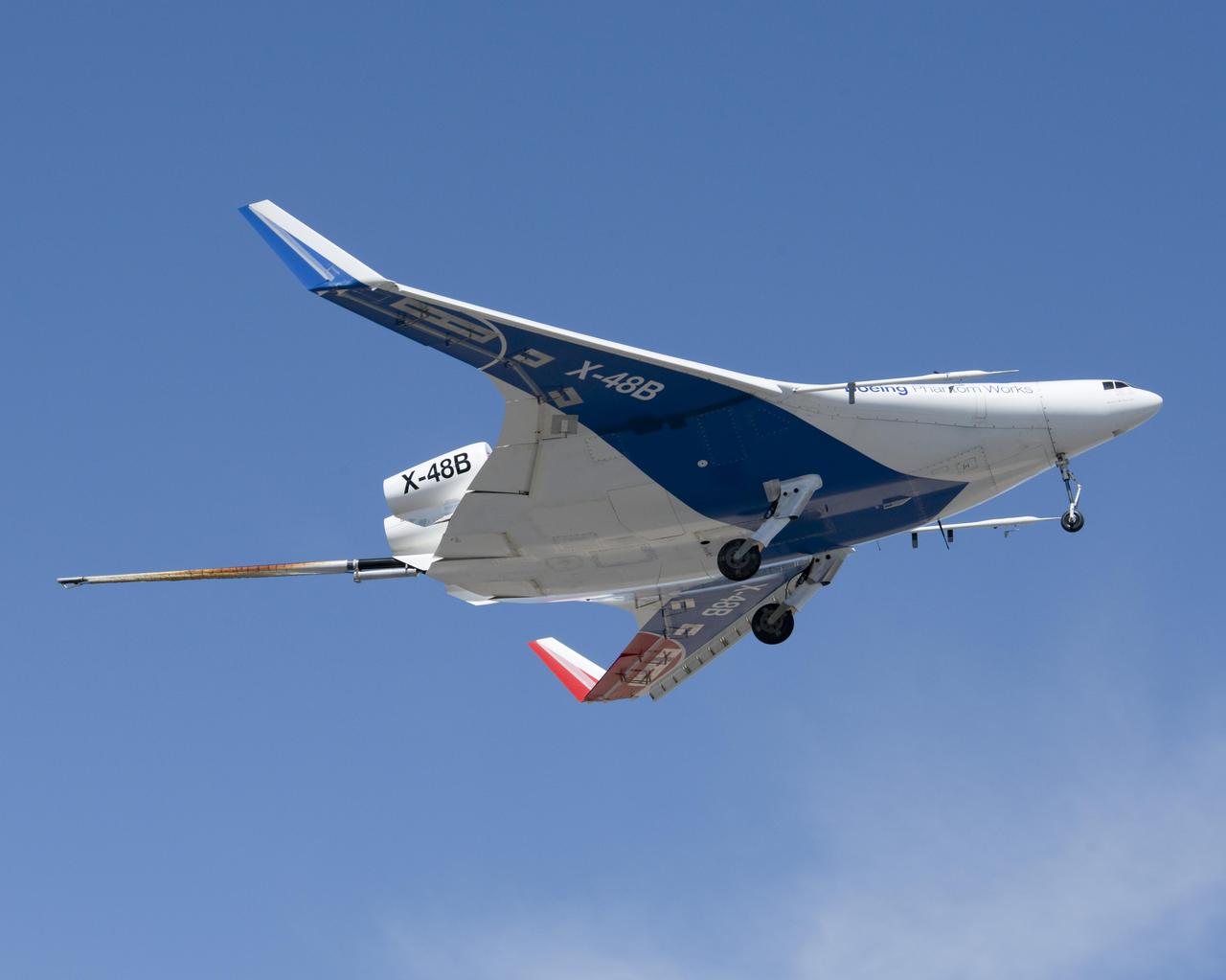
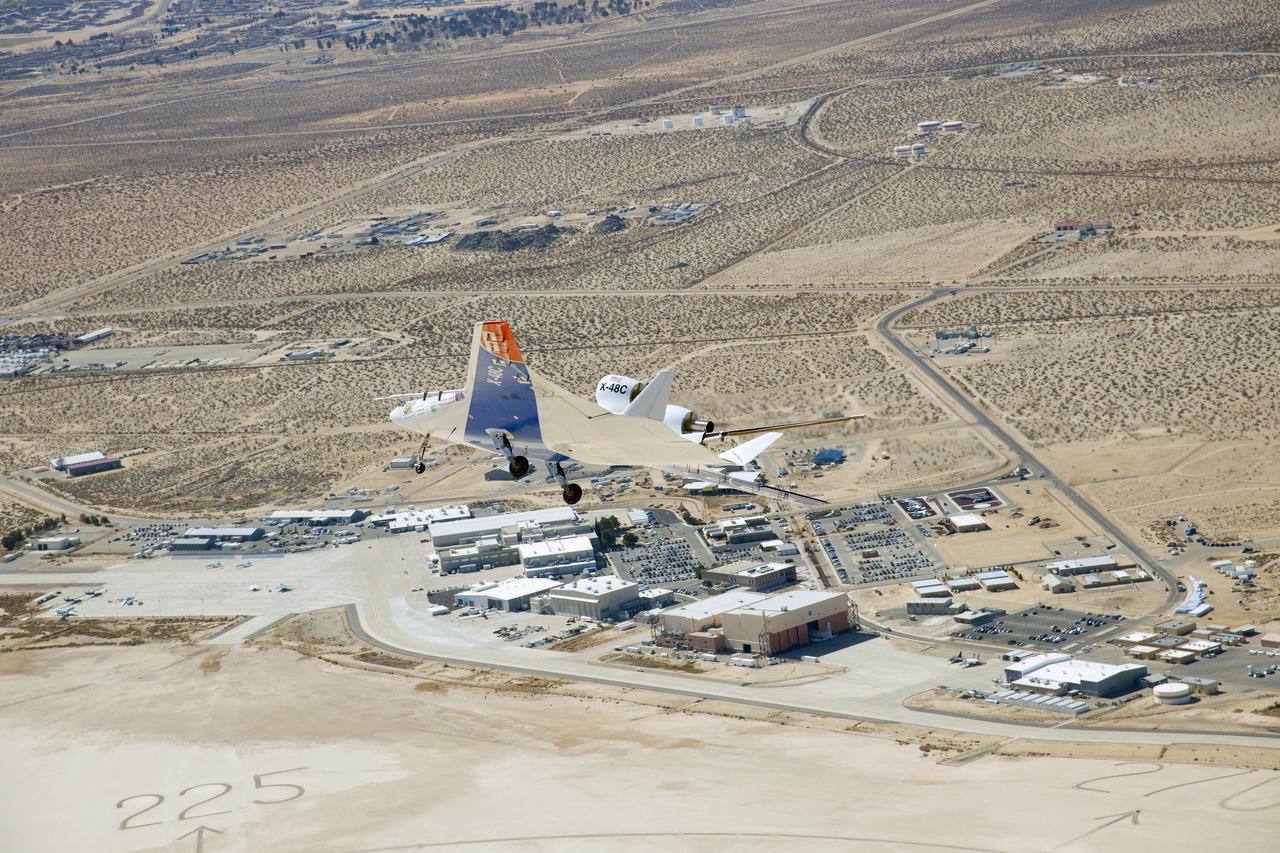
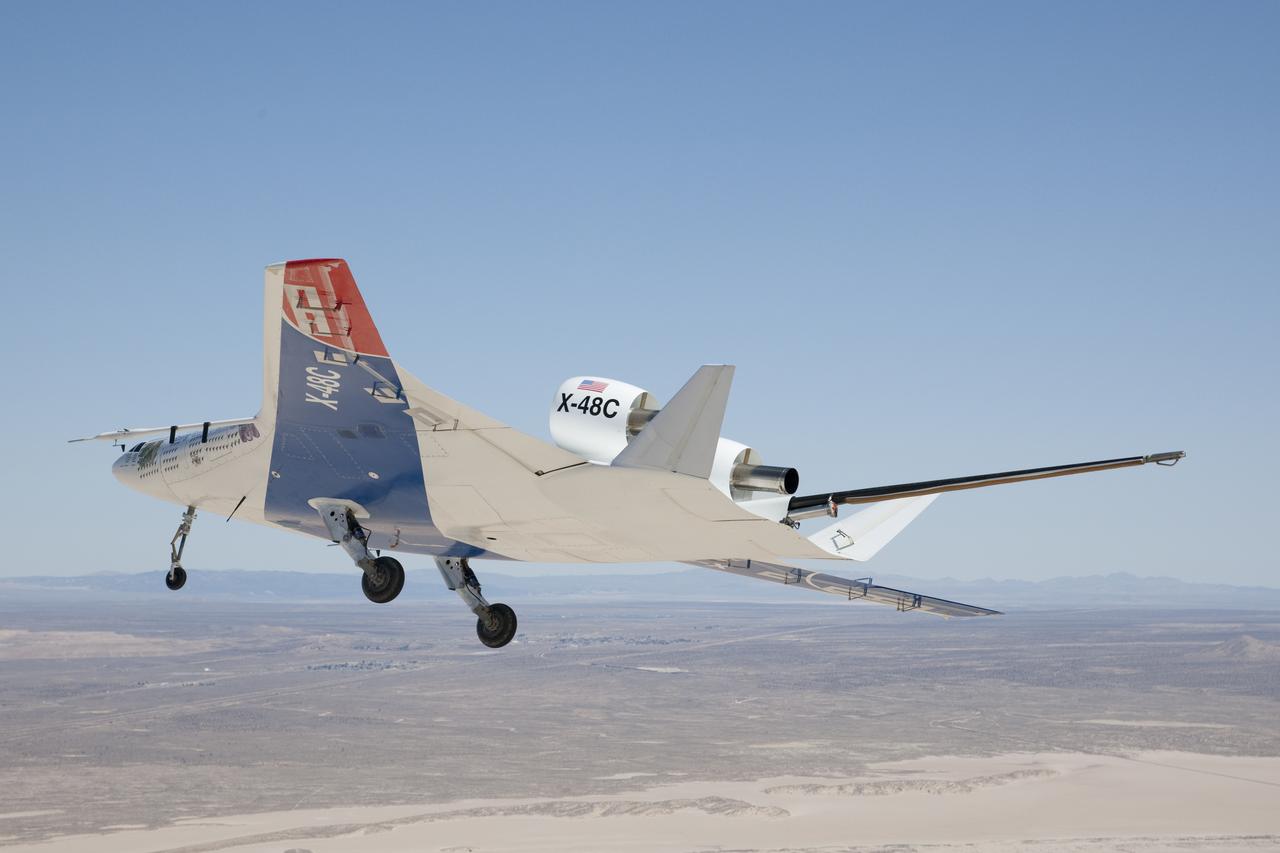
The X-48C Hybrid Wing Body research aircraft banked right over NASA's Dryden Flight Research Center at Edwards, CA during one of the sub-scale aircraft's final test flights on Feb. 28, 2013.
X-48C Banks over Dryden Flight Research Center
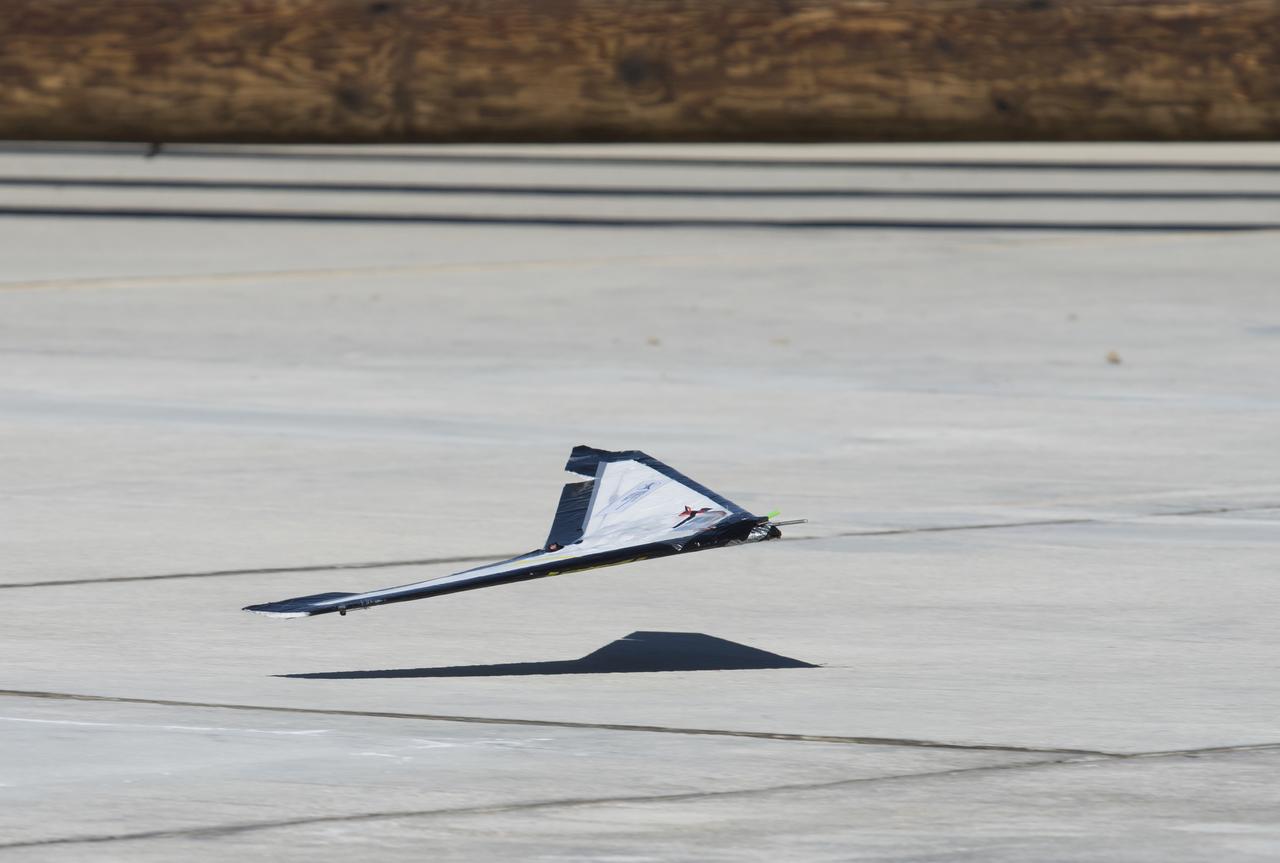
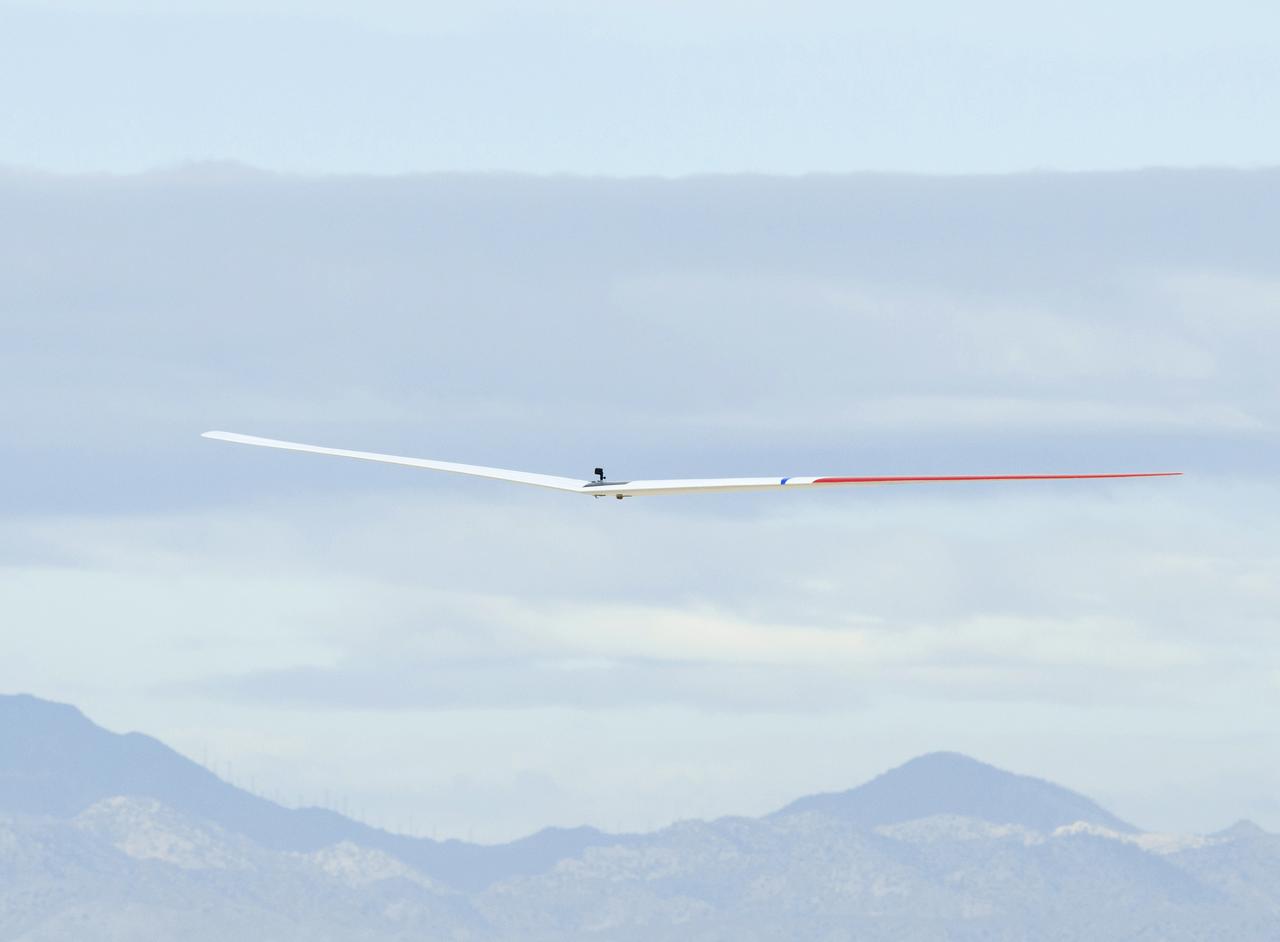
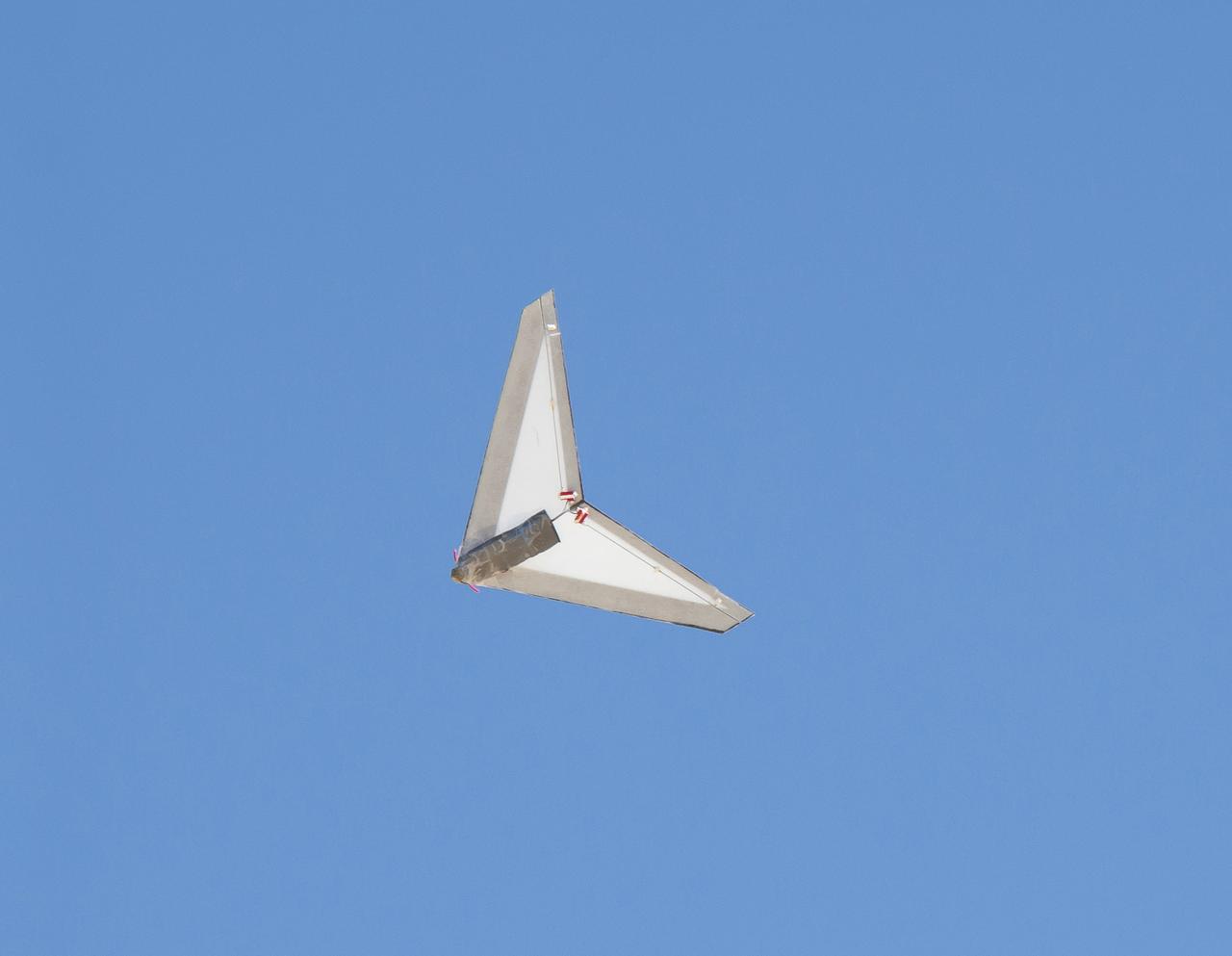
The Prandtl-M completes a successful research flight.
Potential Mars Airplane Resumes Flight
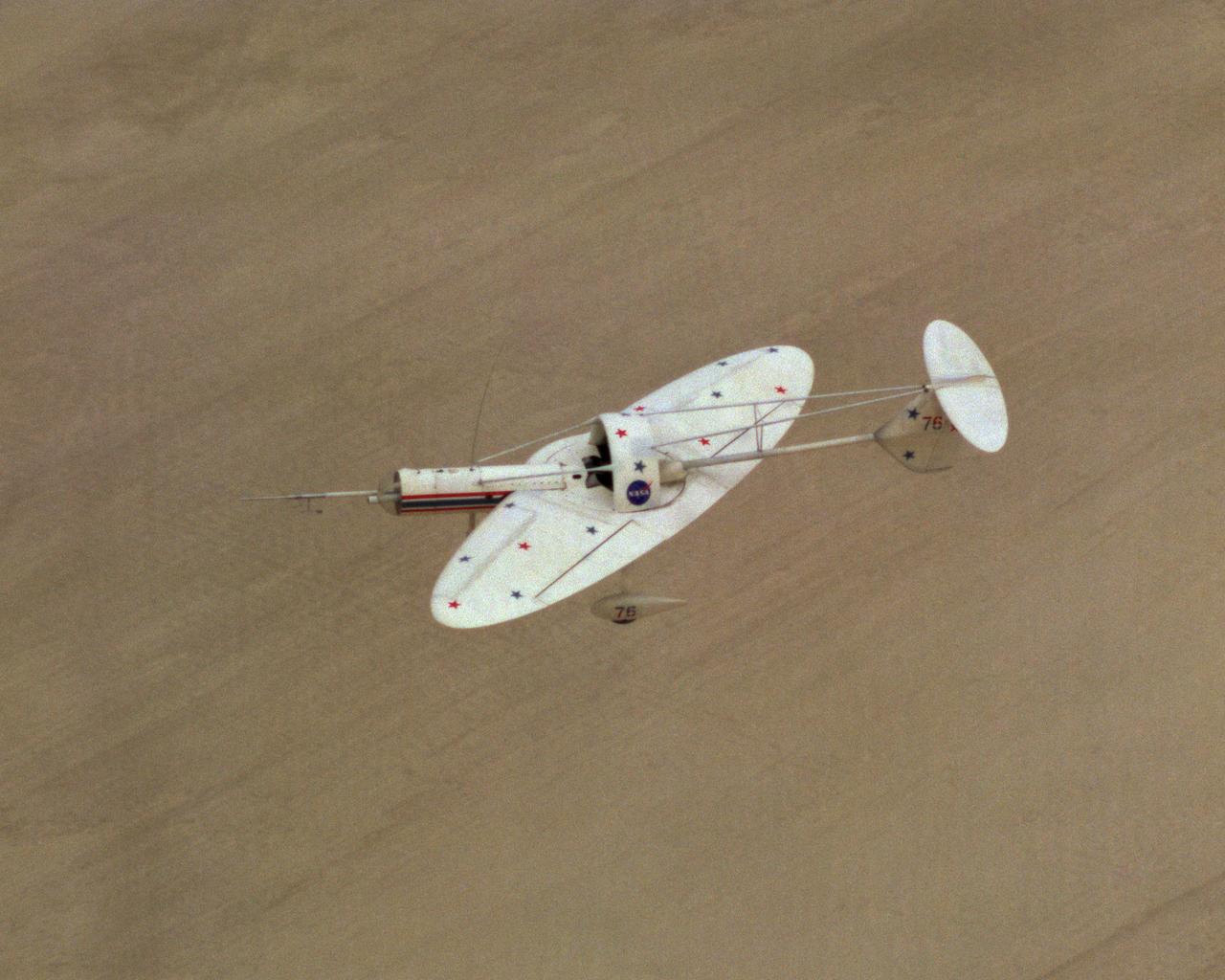
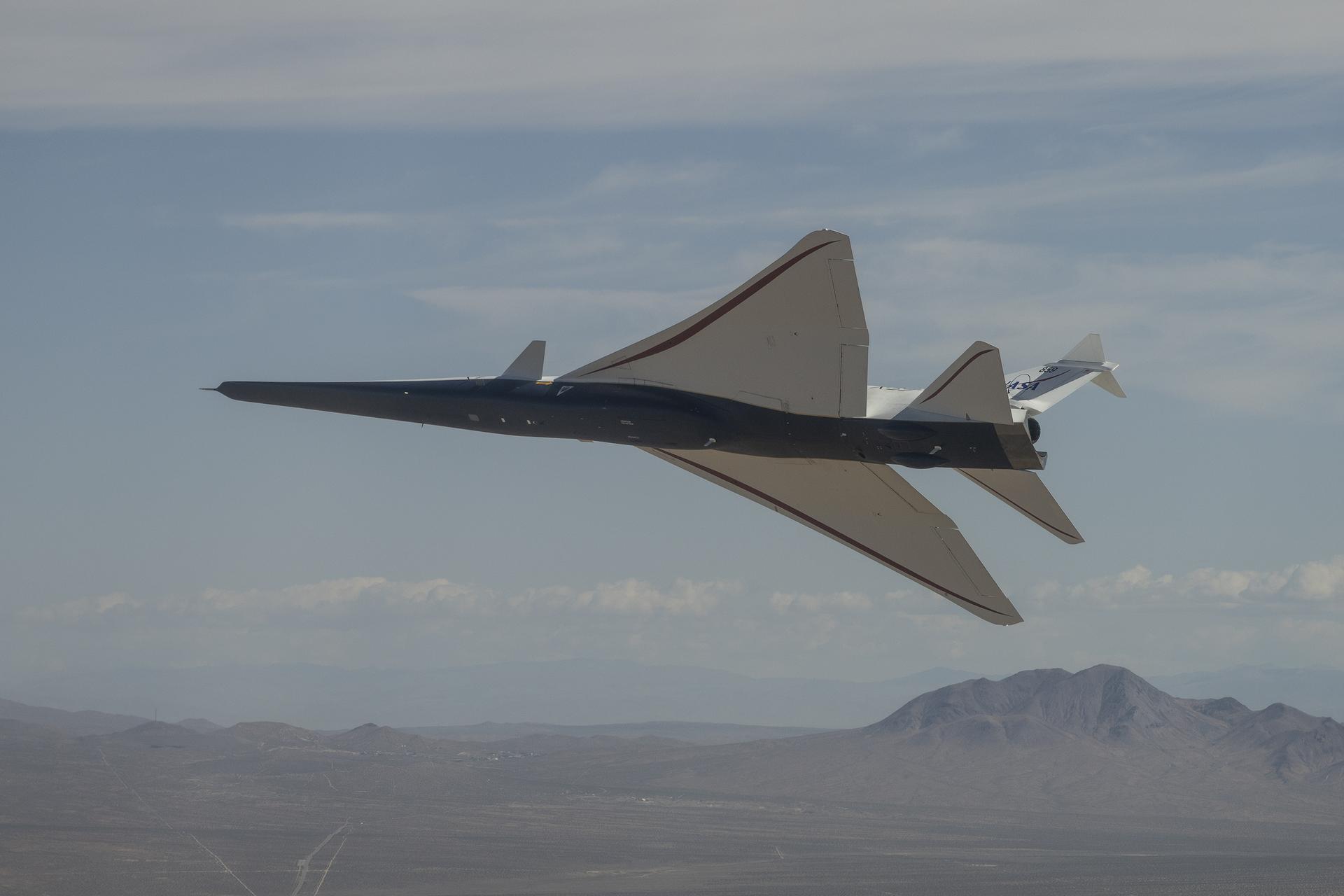
Oblique Wing Research Aircraft in flight
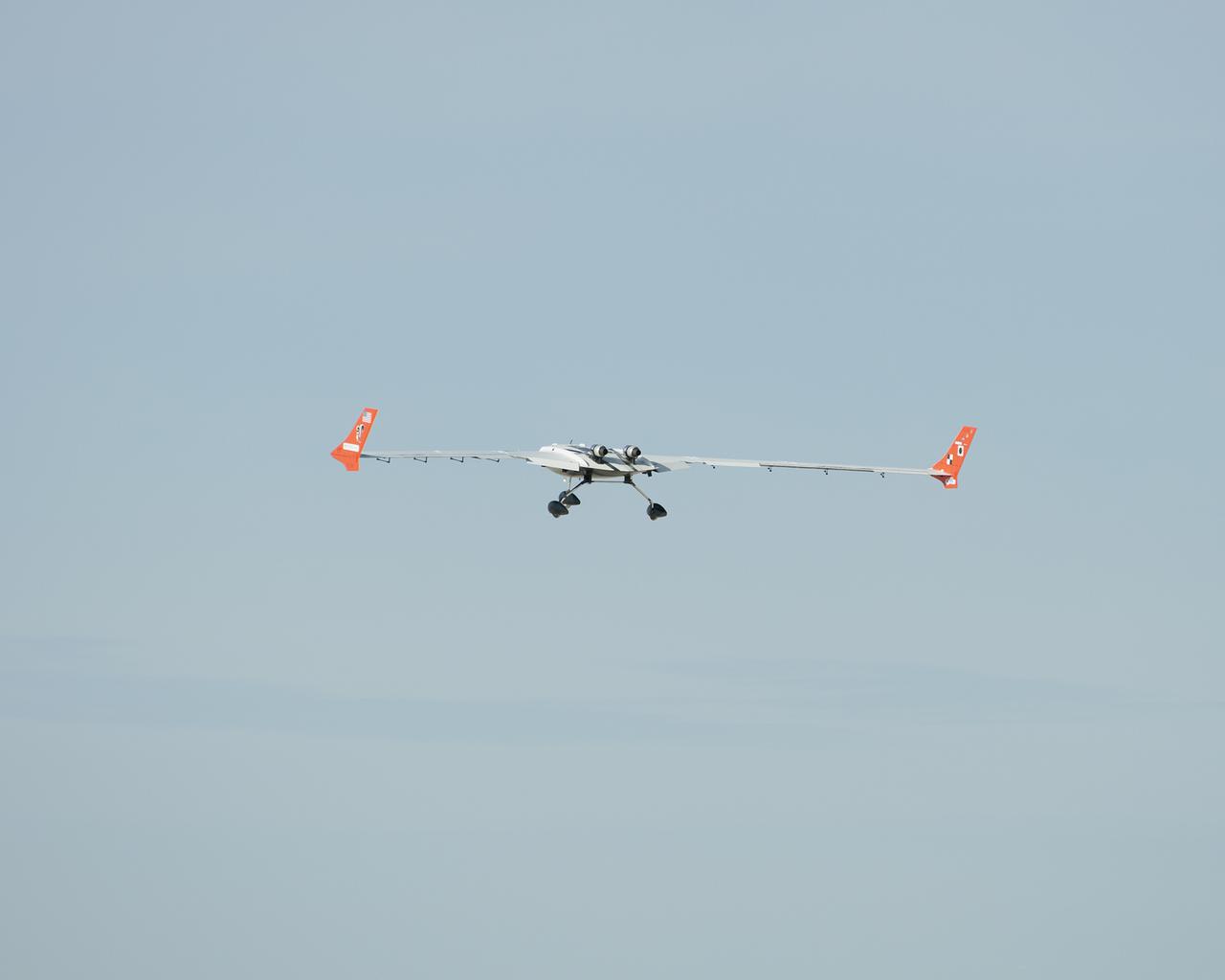
The X-56A takes off on its maiden flight from NASA Armstrong Flight Research Center, Edwards, California.
Second X-56A MUTT Makes First Flight
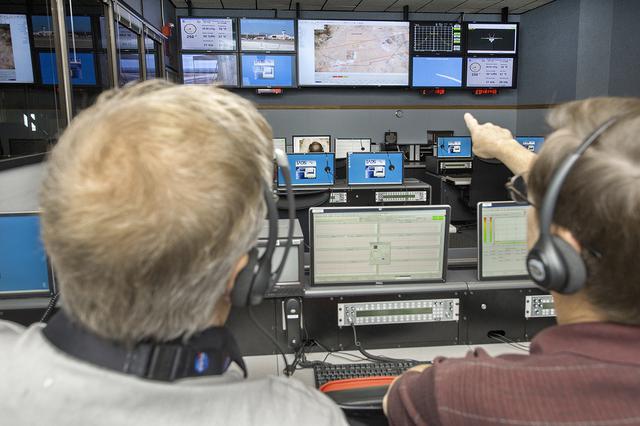
Engineers and researchers at NASA’s Armstrong Flight Research Center monitored the flights, and were able to observe the mapping of the sonic boom carpet from the F-18, from the center’s Mission Control Center.
NASA’s Improved Supersonic Cockpit Display Shows Precise Locations of Sonic Booms
The Prandtl-D No. 3 research aircraft is being readied for new flight tests this summer. It had its first flight on Oct. 28, 2015.
ED15-0330-079
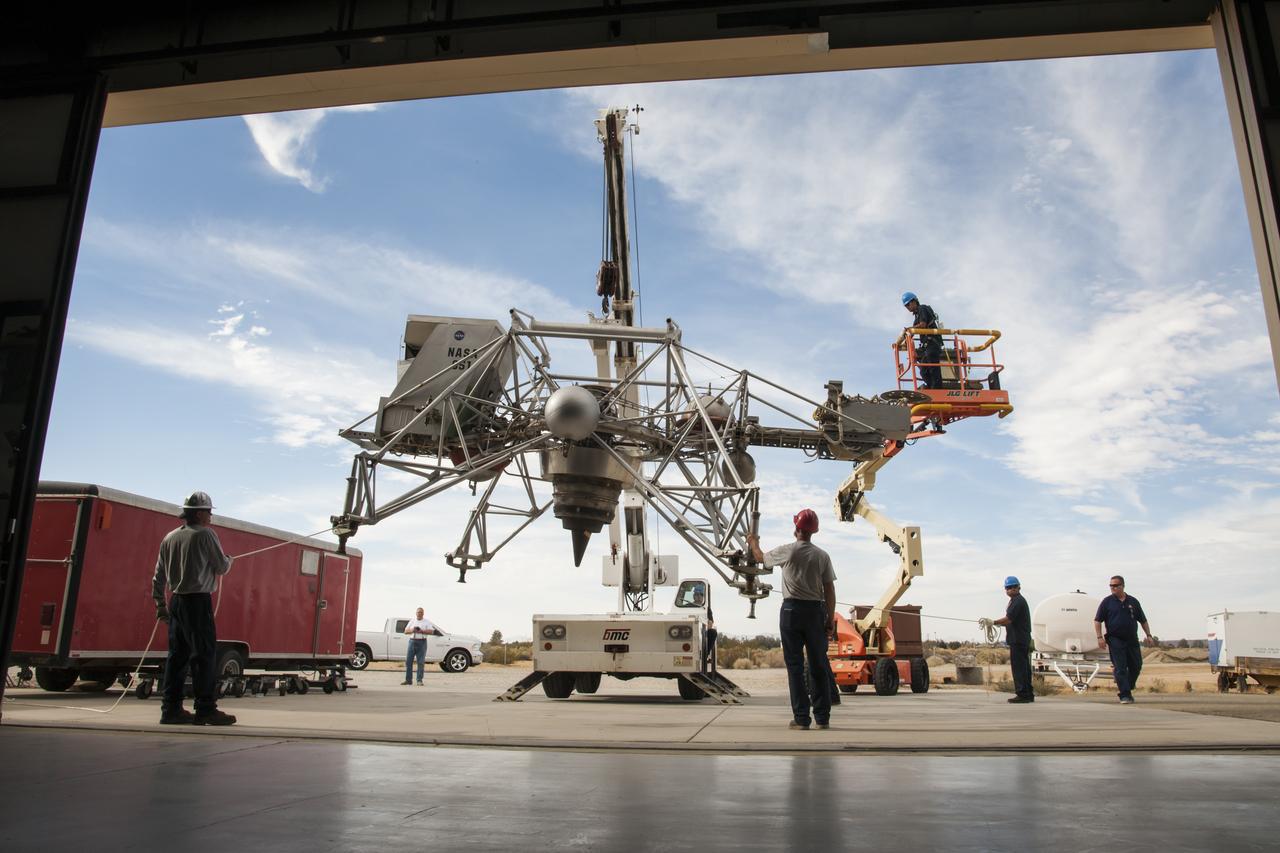
Workers move the Lunar Landing Research Vehicle, or LLRV, into the Edwards Air Force Base Flight Test Museum in California for temporary display.
NASA Lends Space Artifacts to Air Force Museum
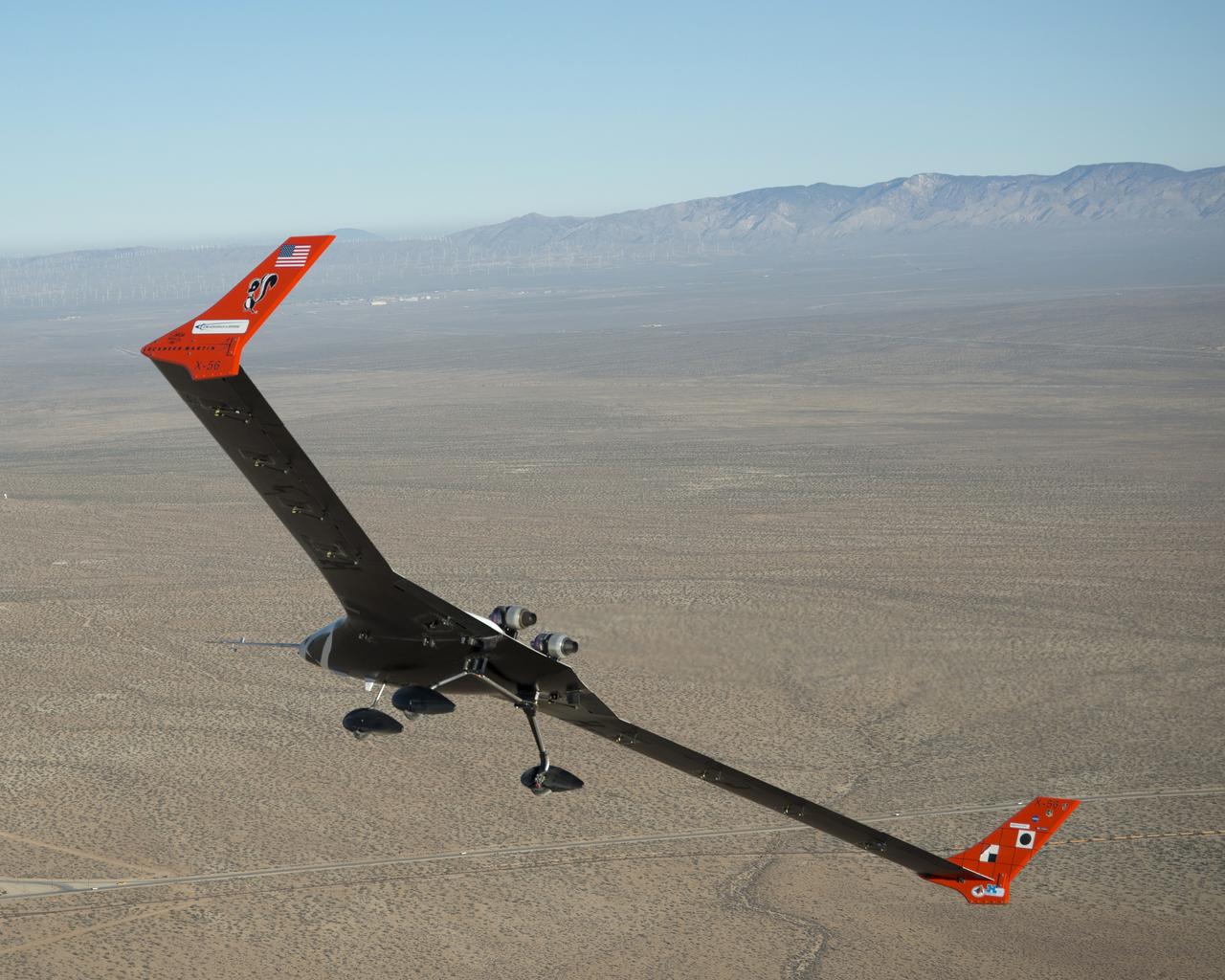
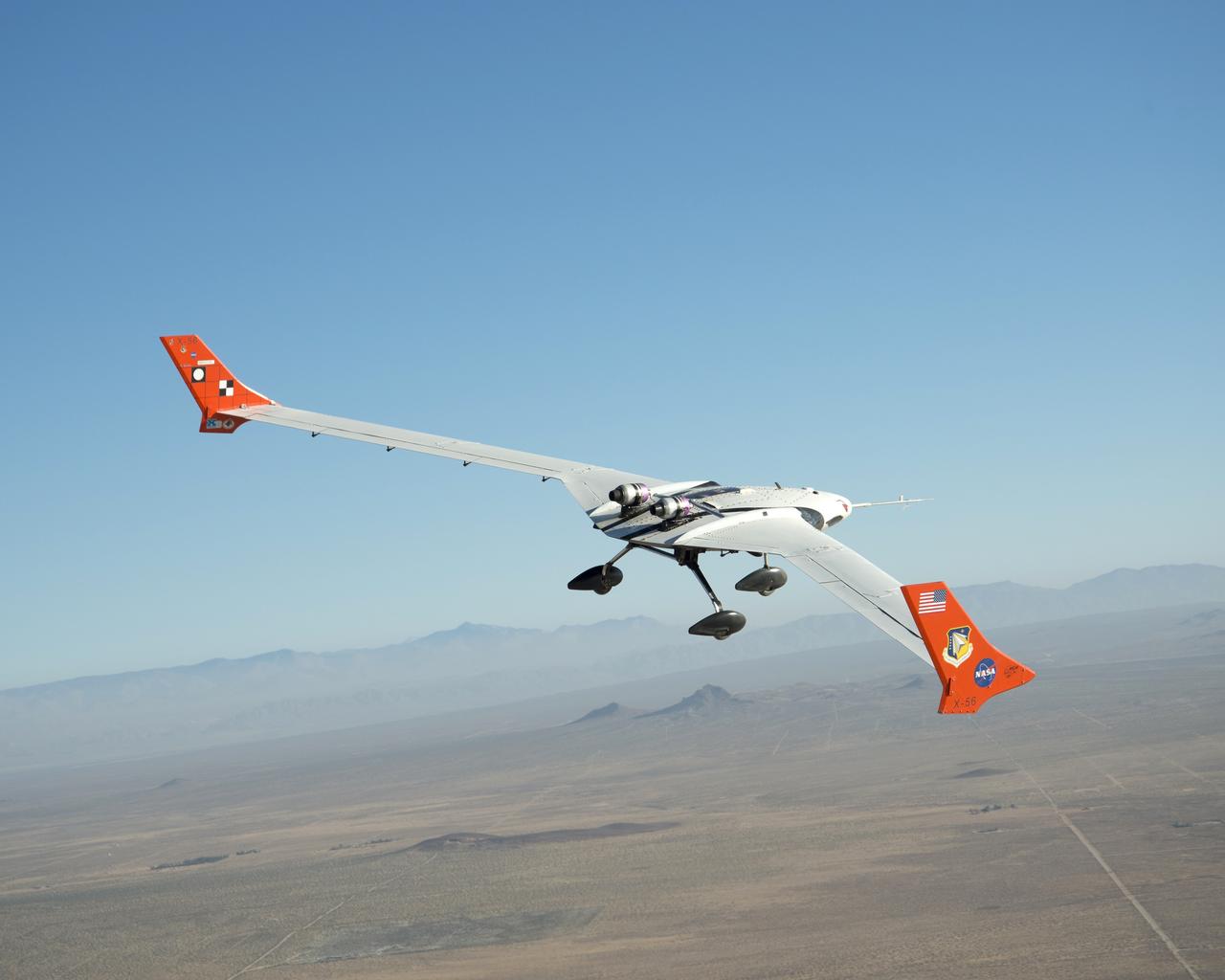
The X-56A flies over the desert near NASA Armstrong Flight Research Center, Edwards, California.  NASA researchers are using the remotely piloted X-56A to explore the behavior of lightweight, flexible aircraft structures.
ED15-0241-21
The X-56A flies over the desert near NASA Armstrong Flight Research Center, Edwards, California.  NASA researchers are using the remotely piloted X-56A to explore the behavior of lightweight, flexible aircraft structures.
ED15-0241-05
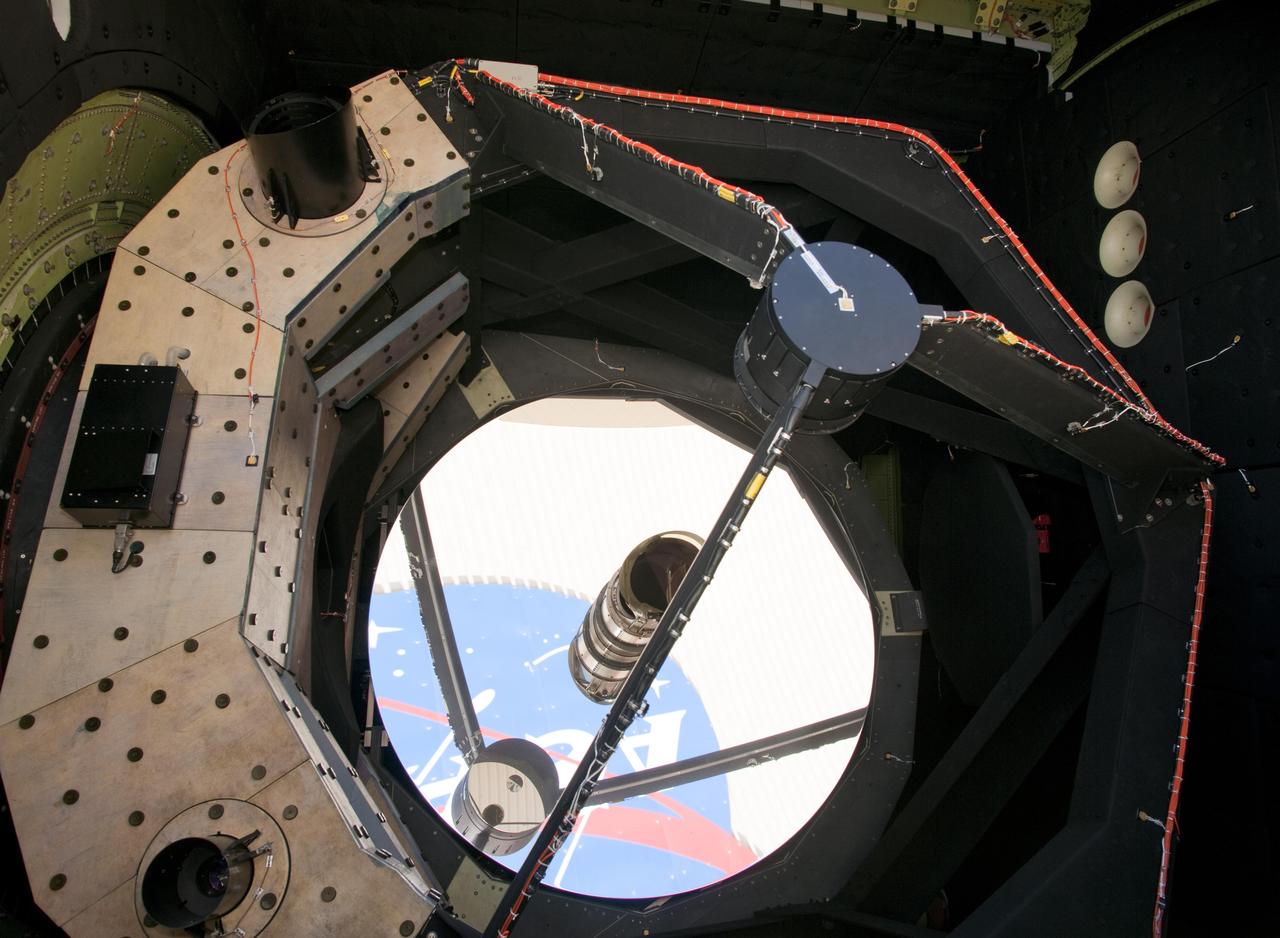
The NASA logo on Bldg. 703 at Armstrong Flight Research Center in Palmdale, Calif., is reflected in the telescope's 2.5-meter primary mirror.
ED11-0173-076
NASA Dryden Flight Research Center's T-34 support aircraft provided safety chase for the joint NASA/Boeing X-48B.
Dryden's T-34 Chases the X-48B
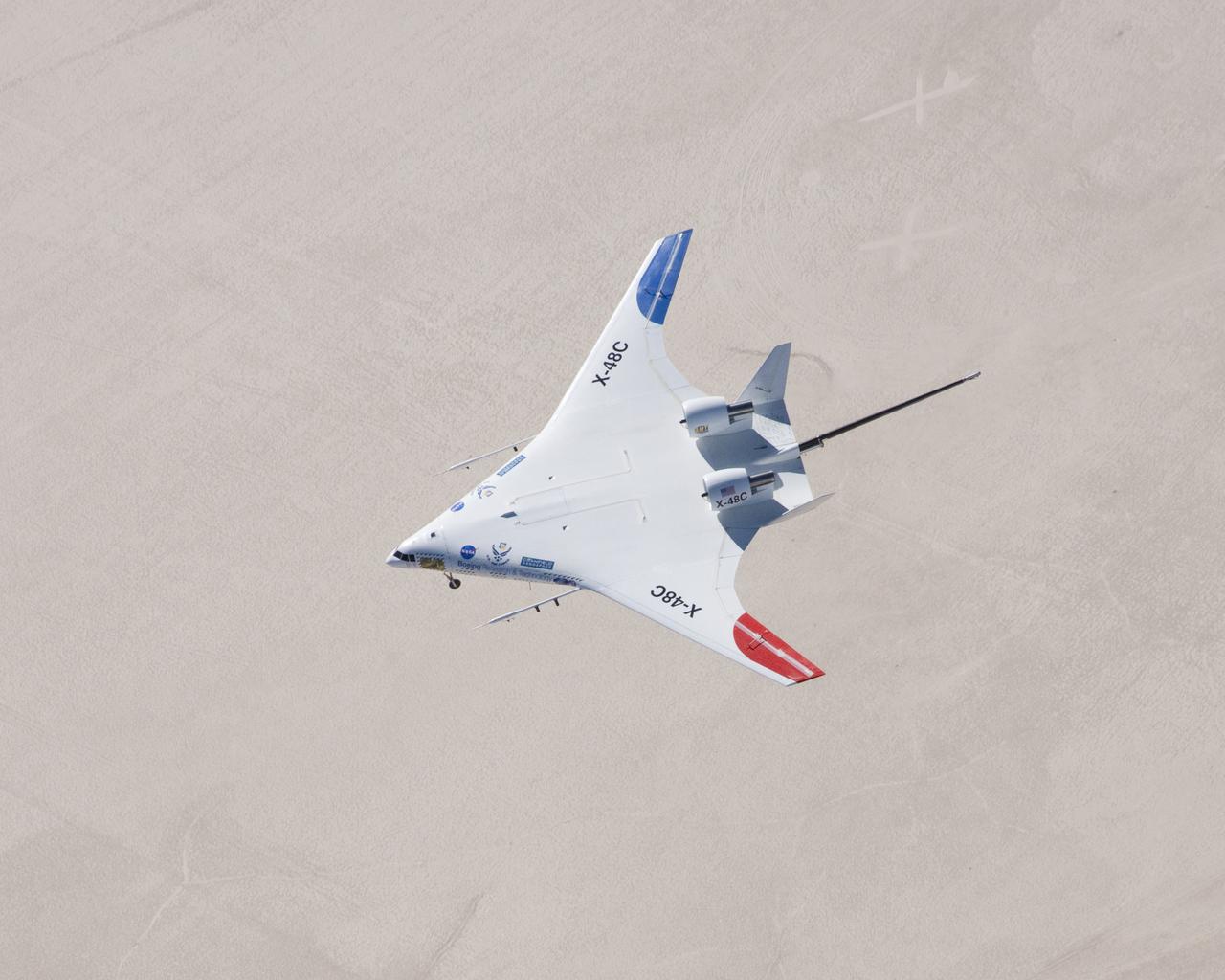
NASA X-48C Hybrid Wing Body aircraft flew over one of the runways laid out on Rogers Dry Lake at Edwards Air Force Base, CA, during a test flight from NASA's Dryden Flight Research Center on Feb. 28, 2013.
X-48C Hybrid - Blended Wing Body Demonstrator
The NASA-Boeing X-48C Hybrid/Blended Wing Body research aircraft banked left during one of its final test flights over Edwards Air Force Base from NASA's Dryden Flight Research Center on Feb. 28, 2013.
X-48C Hybrid - Blended Wing Body Demonstrator
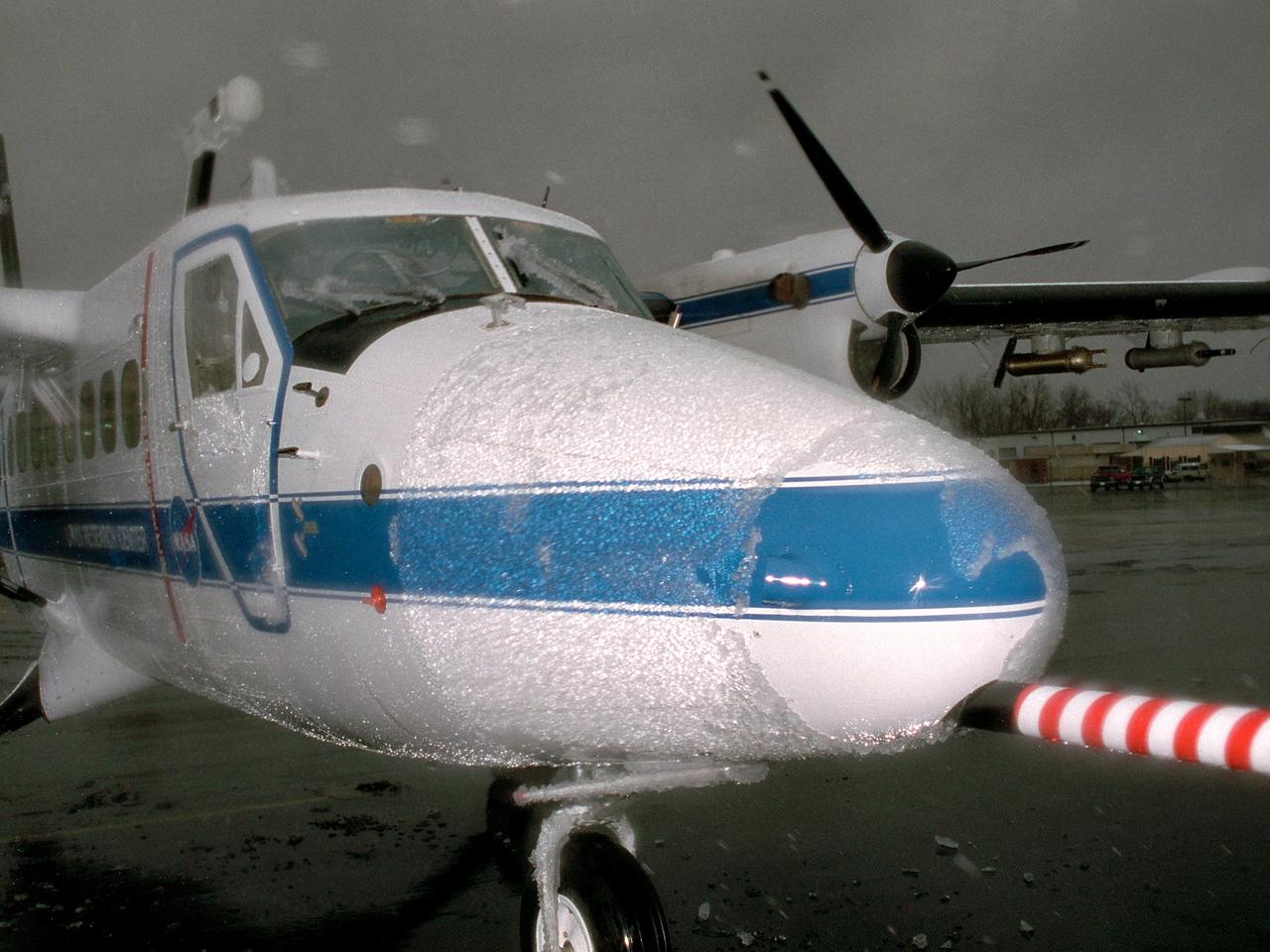
Supercooled Large Droplet (SLD) icing encounter in the Twin Otter icing research aircraft.
Icing Research Flight
A joint NASA/Boeing team completed the first phase of flight tests on the unique X-48B Blended Wing Body aircraft at NASA's Dryden Flight Research Center at Edwards, CA. The team completed the 80th and last flight of the project's first phase on March 19, 2010.
X-48B Skyray Takeoff
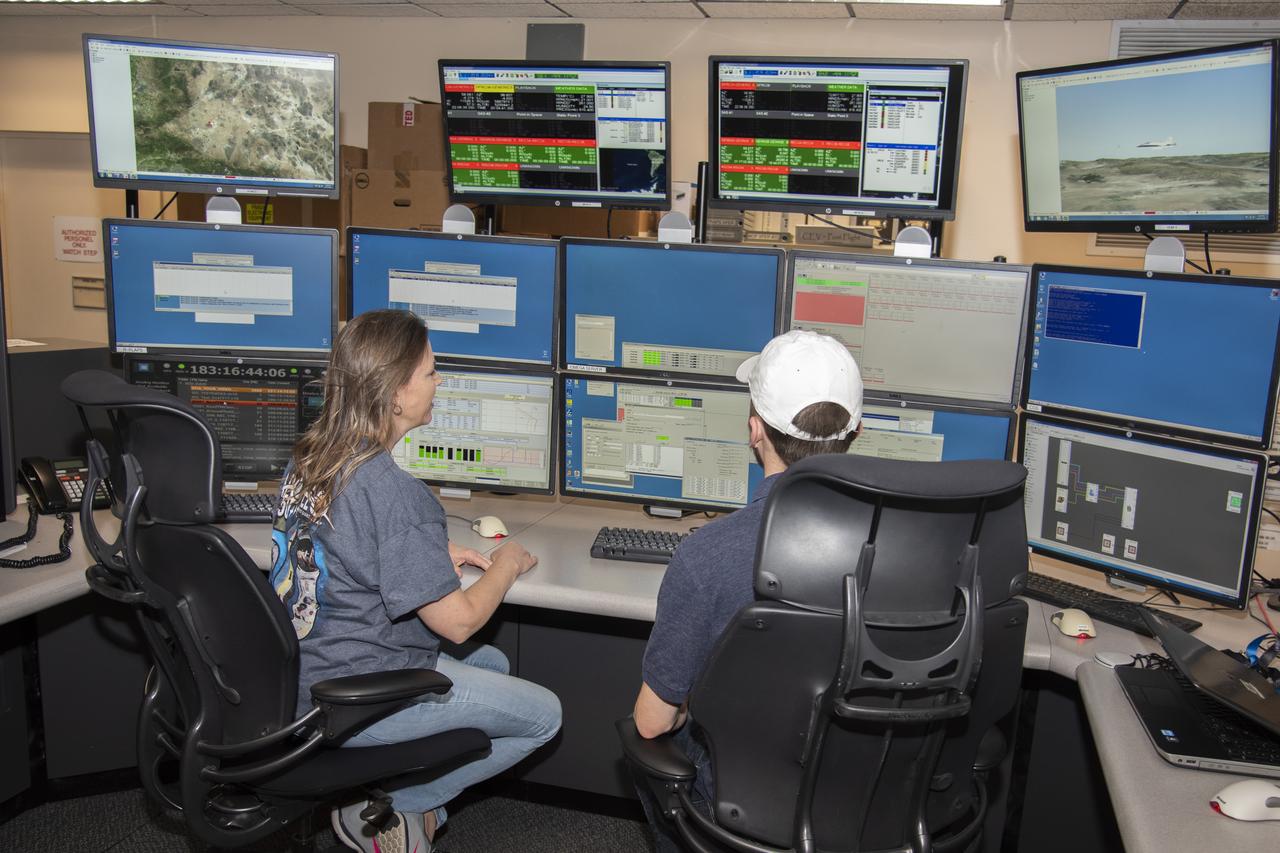
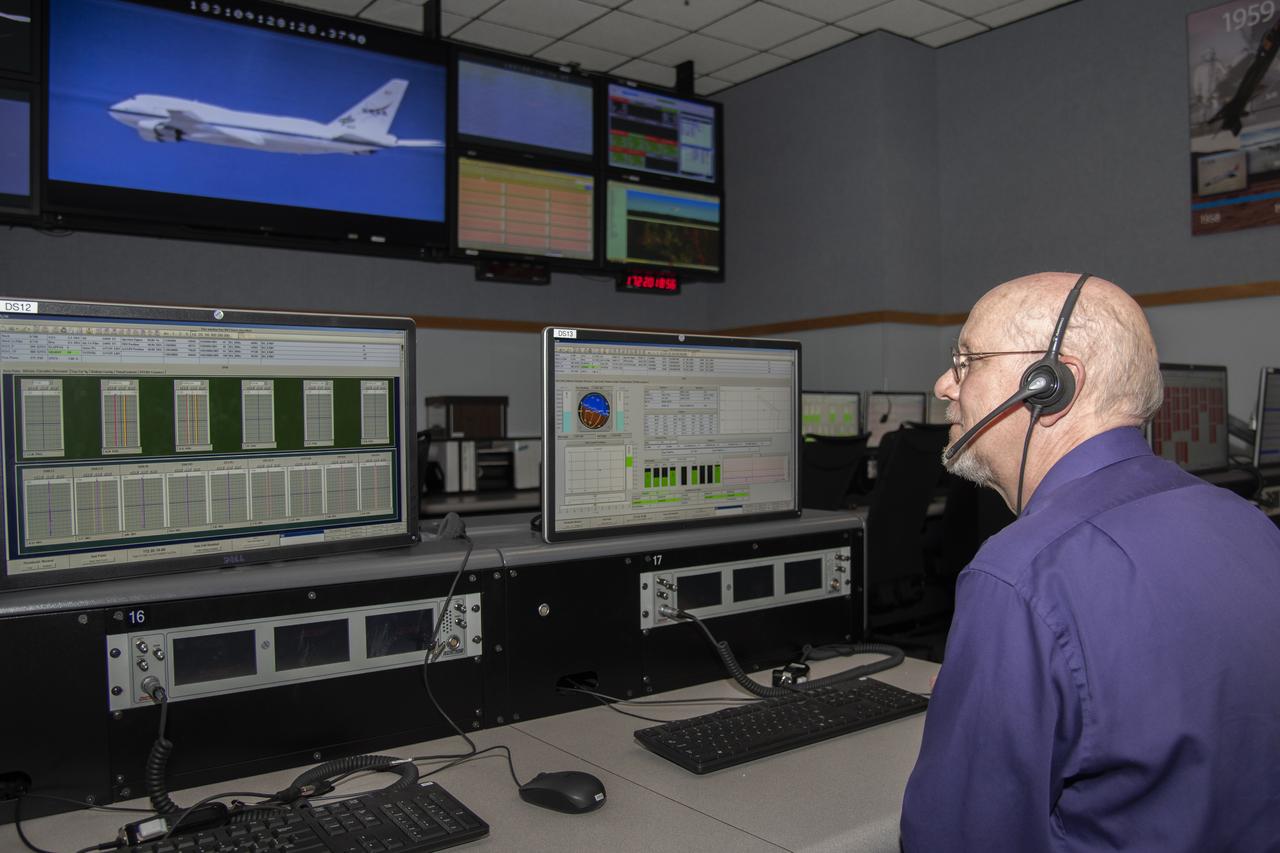
NASA Armstrong’s Mission Control Center, or MCC, is where culmination of all data-gathering occurs. Engineers, flight controllers and researchers monitor flights and missions as they are carried out. Data and video run through the MCC and are recorded, displayed and archived. Data is then processed and prepared for post-flight analysis.
AFRC2017-0076-1
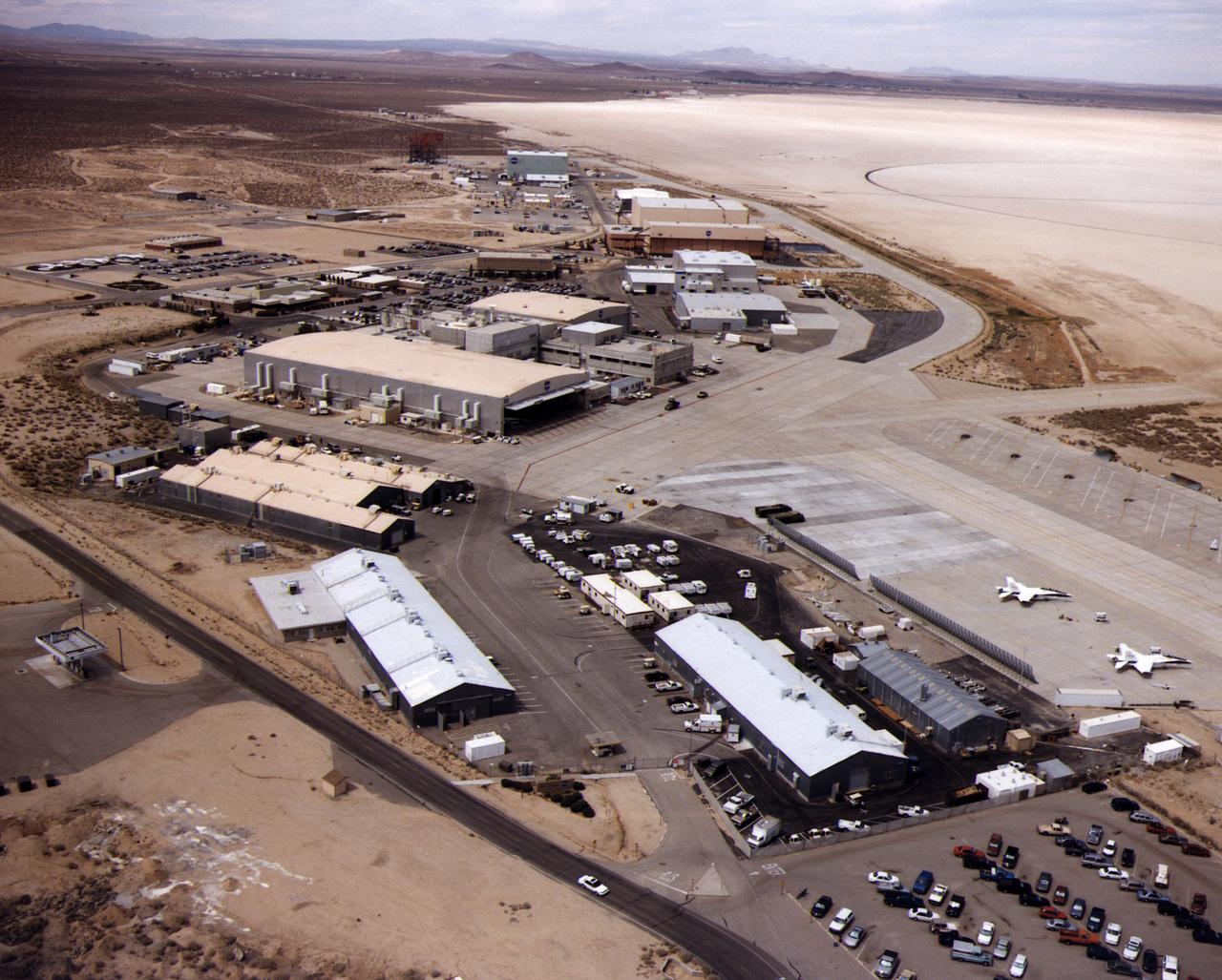
Aerial photo looking north over NASA Dryden Flight Research Center
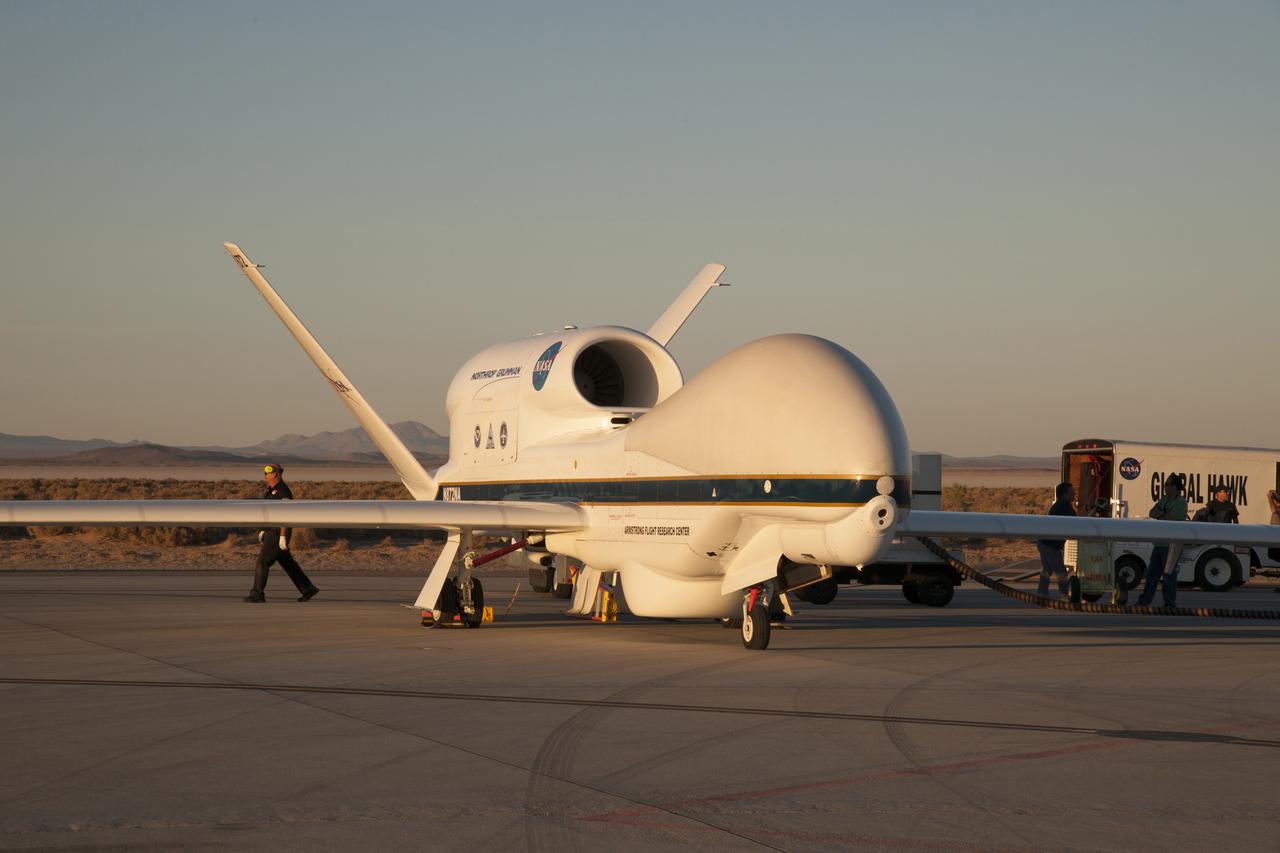
NASA’s Global Hawk aircraft was deployed to Florida from Armstrong Flight Research Center at Edwards, CA. on Oct. 6 to monitor and take scientific measurements of Hurricane Matthew.  The unmanned Global Hawk will gather scientific data in support of NOAA’s Sensing Hazards with Operational Unmanned Technology (SHOUT) mission.
AFRC2016-0292-08
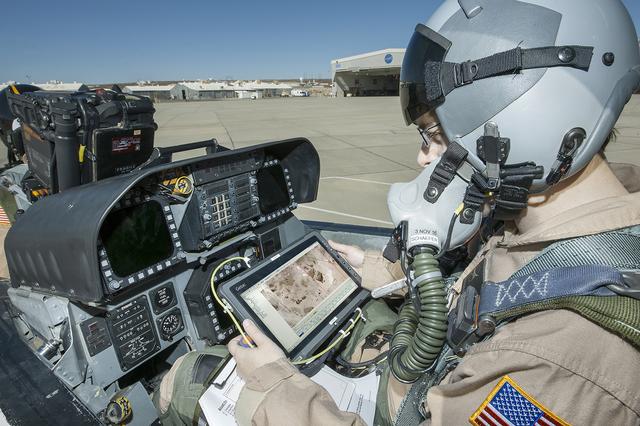
Flight Test Engineer Jacob Schaefer inspects the Cockpit Interactive Sonic Boom Display Avionics, or CISBoomDA, from the cockpit of his F-18 at NASA’s Armstrong Flight Research Center in Edwards, California.
NASA’s Improved Supersonic Cockpit Display Shows Precise Locations of Sonic Booms
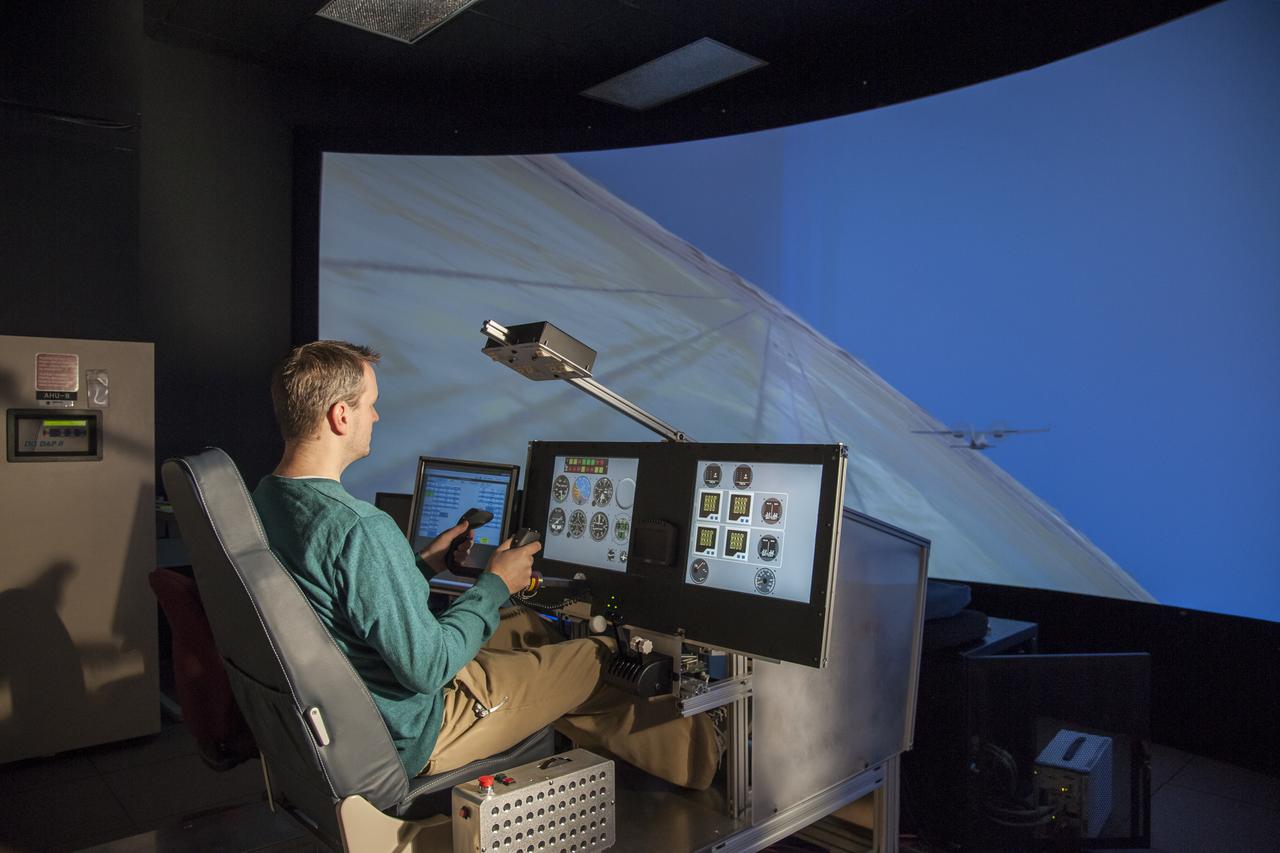
X-57 principal investigator Sean Clarke flies the X-57 simulator at NASA’s Armstrong Flight Research Center, examining ideal maneuvers and reaction times for flight.
NASA X-57 Simulator Prepares Pilots, Engineers for Flight of Electric X-Plane
A NASA F/A-18 demonstrates different volumes of sonic booms for attendees of a NASA Social at the NASA Armstrong Flight Research Center in California.
AFRC2016-0154-071
Earth and sky met as the X-48C Hybrid Wing Body aircraft flew over Edwards Air Force Base on Feb. 28, 2013, from NASA's Dryden Flight Research Center, Edwards, CA. The long boom protruding from between the tails is part of the aircraft's parachute-deployment flight termination system.
X-48C Hybrid - Blended Wing Body Demonstrator
The X-48C Hybrid Wing Body aircraft flew over Rogers Dry Lake on Feb. 28, 2013, from NASA's Dryden Flight Research Center, Edwards, CA. The long boom protruding from between the tails was part of the aircraft's parachute-deployment flight termination system.
Parachute-Deployment Flight Termination System on X-48C
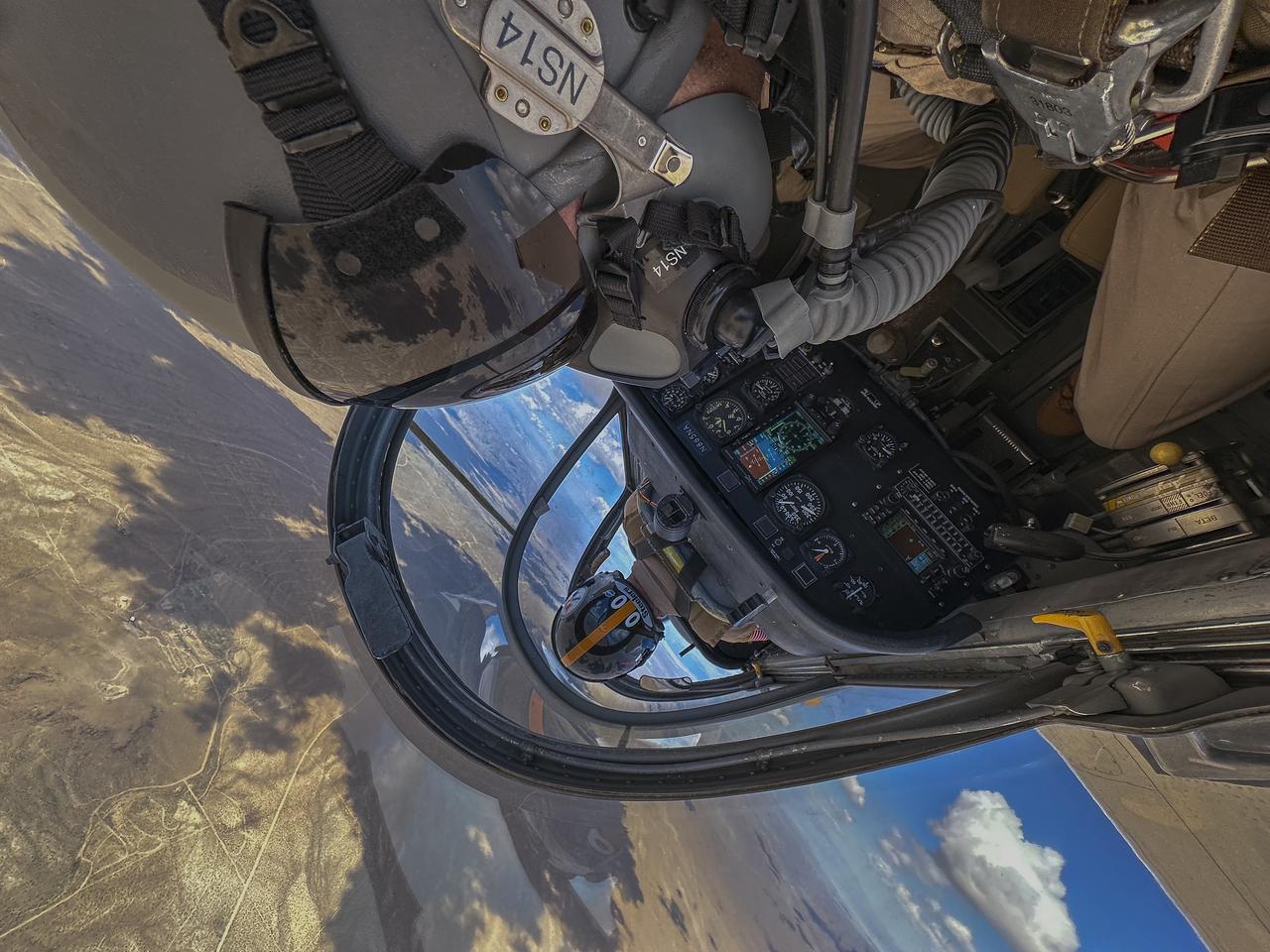
NASA research pilot Nils Larson and photographer Jim Ross complete aerobatic maneuvers in a NASA Armstrong Flight Research Center in Edwards, California owned T-34C aircraft during a proficiency flight. 
NASA Armstrong Flight Research Center T-34C Aircraft in Flight
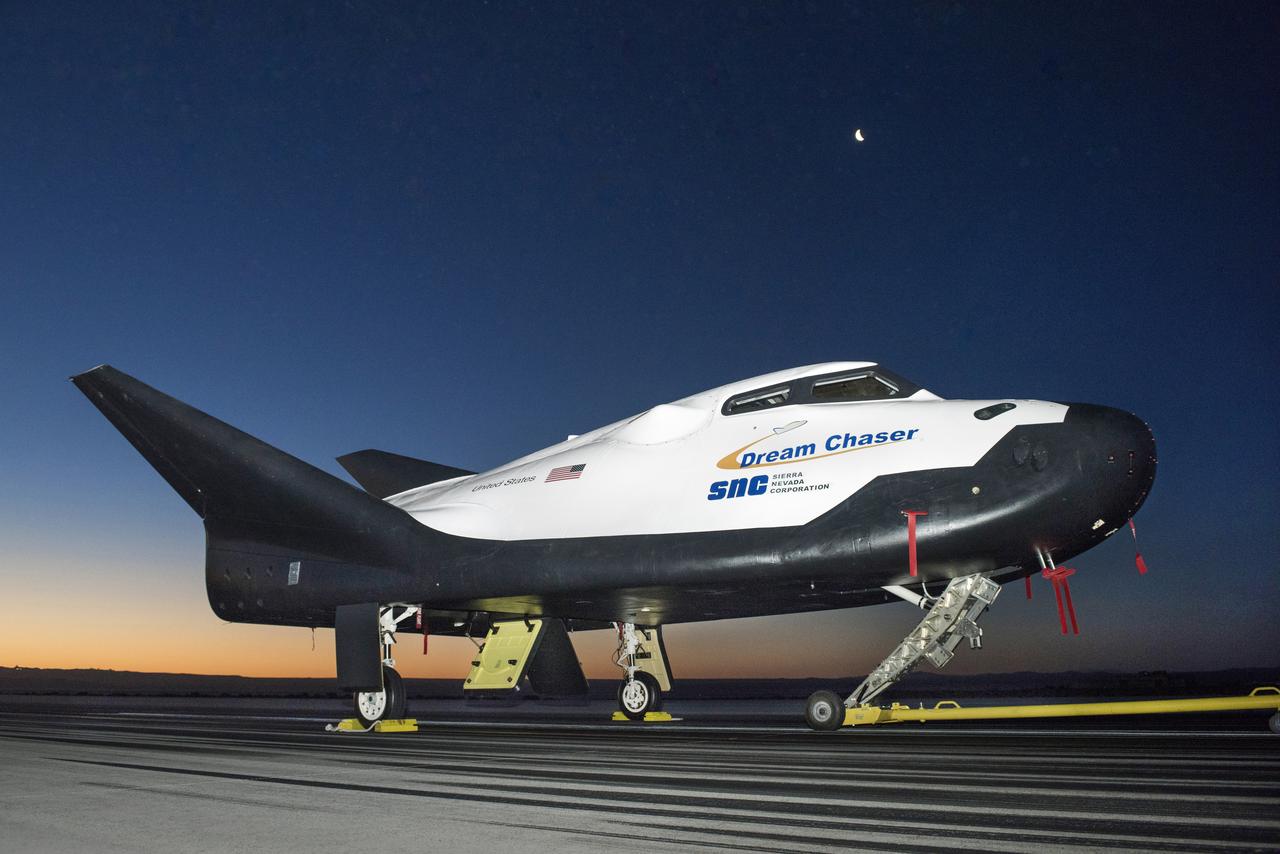
Sierra Nevada Corporation's (SNC) Dream Chaser® spacecraft shown on the runway at NASA's Armstrong Flight Research Center on May 20 preparing for a tow-test. The spacecraft is undergoing ground tests leading up to a free flight test later this year.
AFRC2017-0124-015
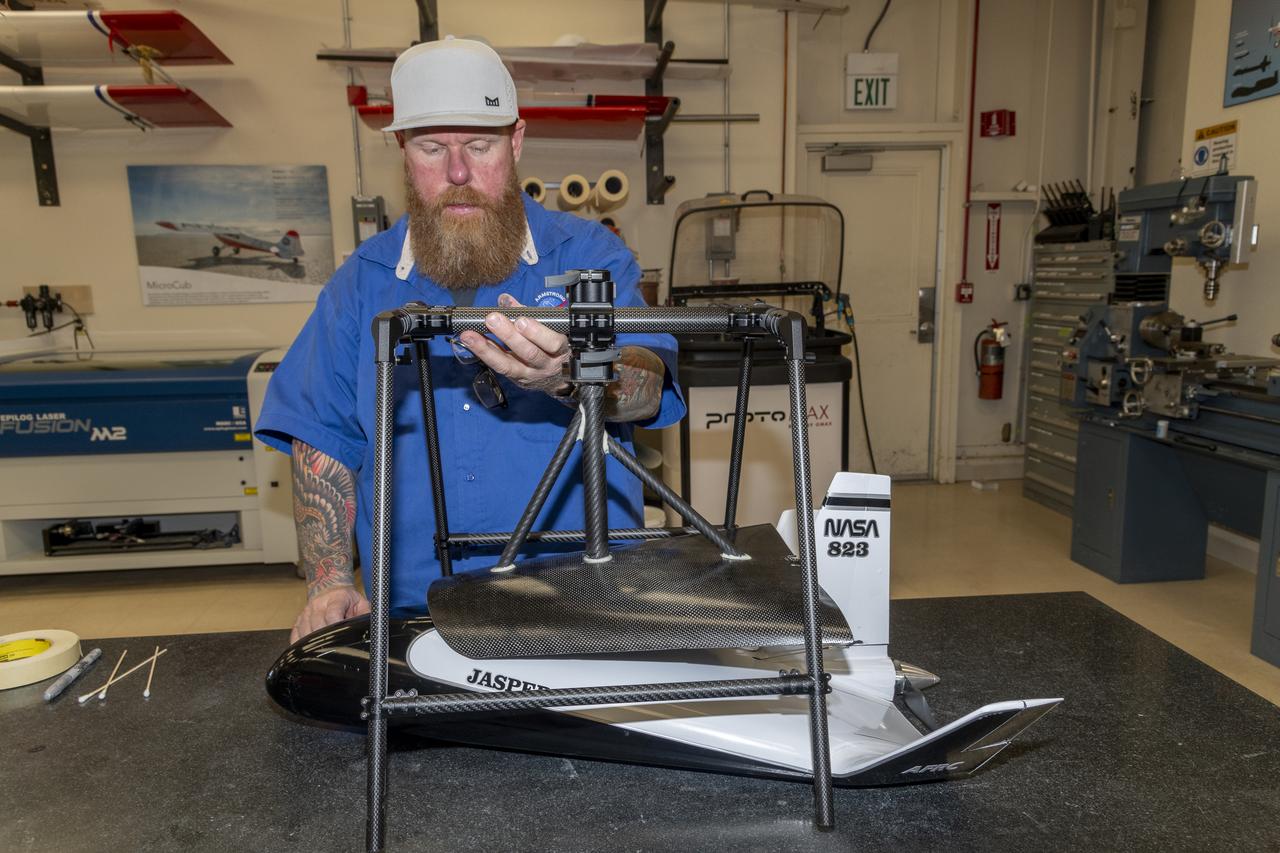
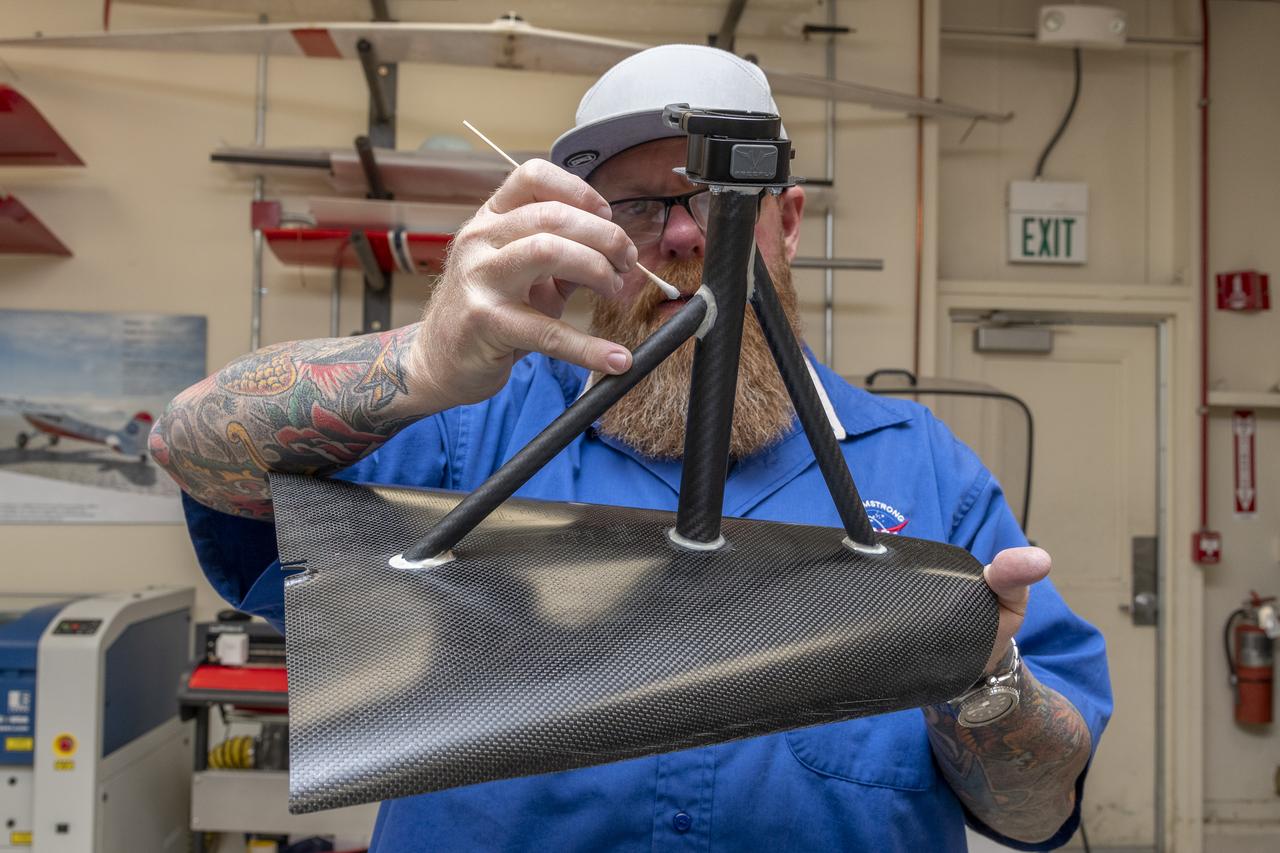
Justin Hall assembles parts of a cradle for a rotorcraft that will air launch a proposed atmospheric probe in summer 2024 at NASA’s Armstrong Flight Research Center in Edwards, California. Hall is a designer, technician, and pilot at the center’s Dale Reed Subscale Flight Research Laboratory.
NASA Researchers Prepare Atmospheric Probe Prototype for Flight
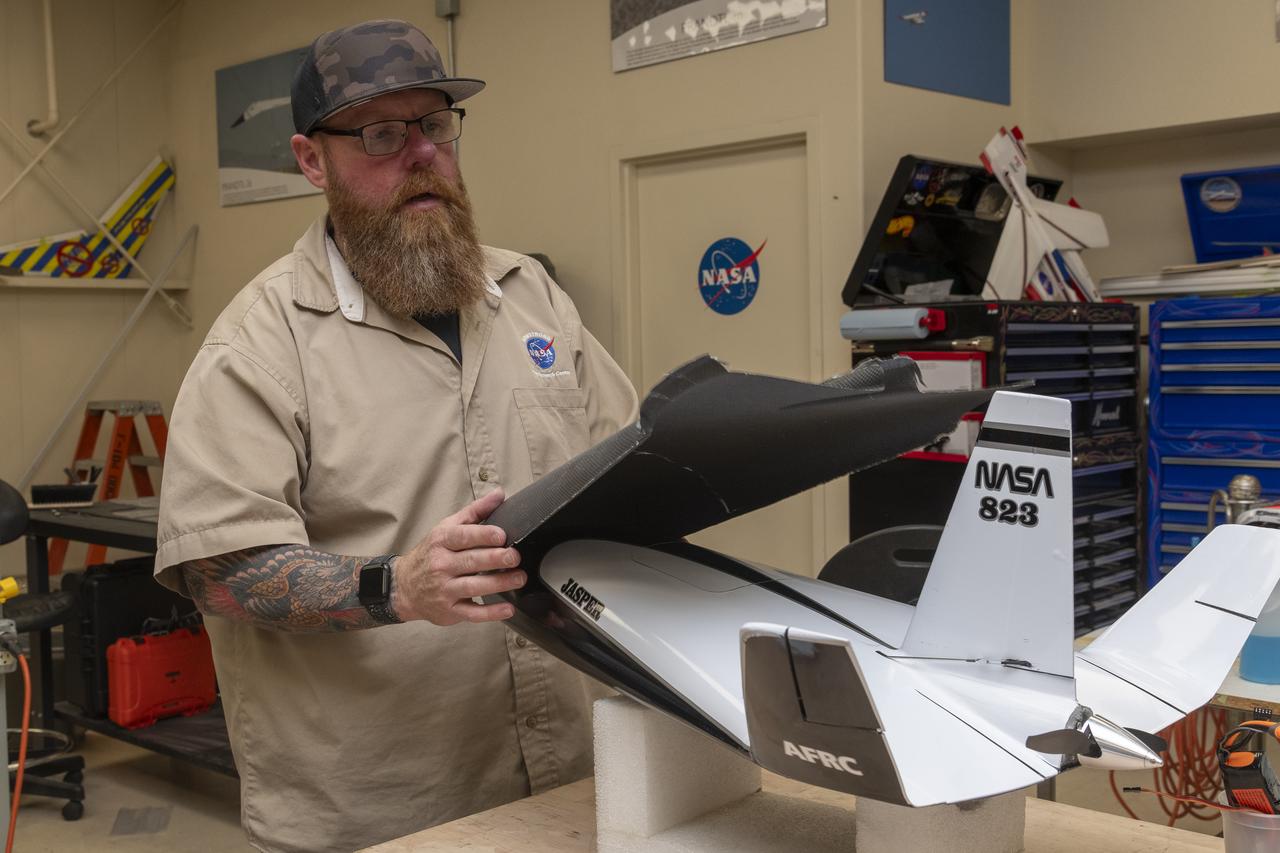
Justin Hall holds a mold of the top section of an atmospheric probe. The probe is incorporated into part of a modified cradle for a rotorcraft, which will air launch the probe in summer 2024 at NASA’s Armstrong Flight Research Center in Edwards, California. Hall is a designer, technician, and pilot at the center’s Dale Reed Subscale Flight Research Laboratory.
NASA Researchers Prepare Atmospheric Probe Prototype for Flight
Justin Hall bonds pieces of a cradle for a rotorcraft launch system for a proposed atmospheric probe set to fly in summer 2024 at NASA’s Armstrong Flight Research Center in Edwards, California. Hall is a designer, technician, and pilot at the center’s Dale Reed Subscale Flight Research Laboratory.
NASA Researchers Prepare Atmospheric Probe Prototype for Flight
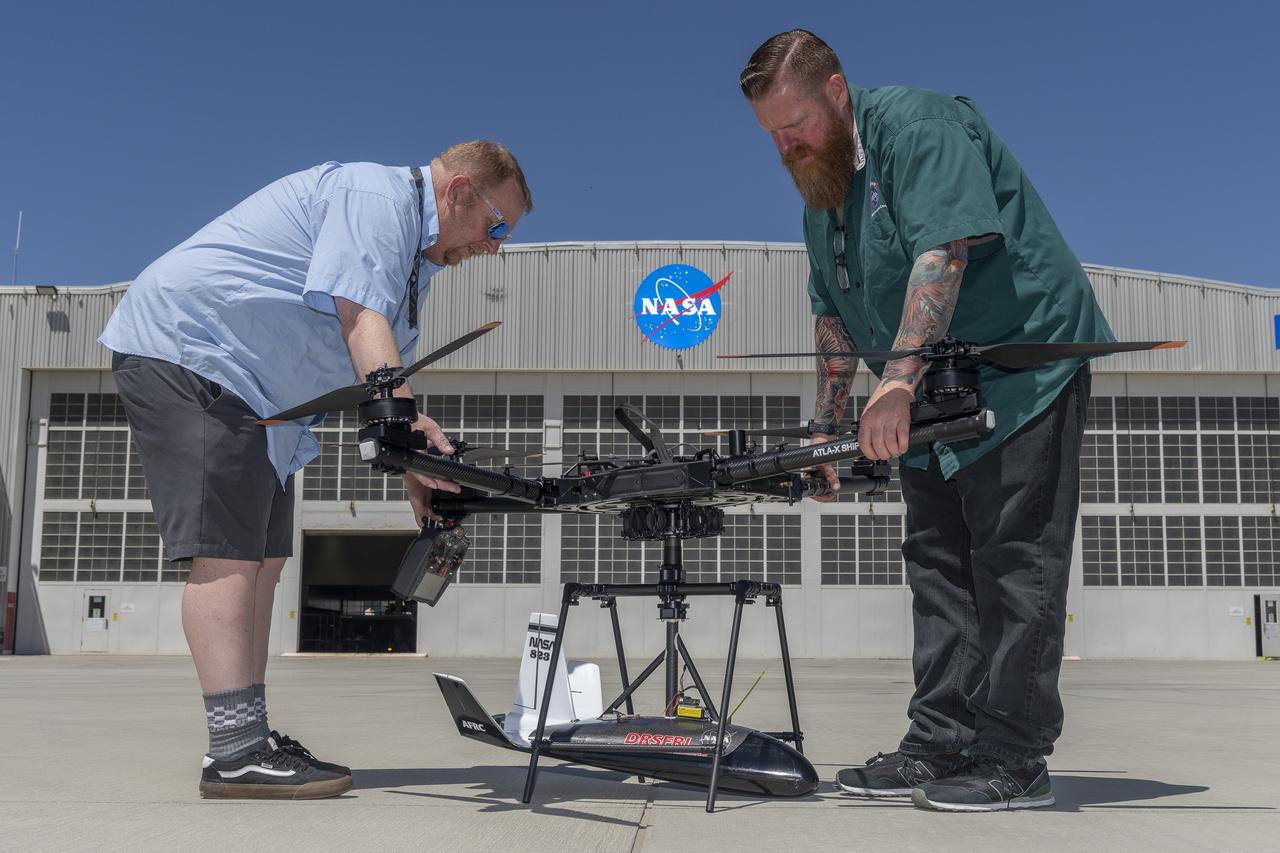
Robert “Red” Jensen and Justin Hall position an atmospheric probe, its host cradle, and the rotorcraft that will air launch the probe at NASA’s Armstrong Flight Research Center in Edwards, California. Jensen and Hall are designers, technicians, and pilots at the center’s Dale Reed Subscale Flight Research Laboratory.
NASA Researchers Prepare Atmospheric Probe Prototype for Flight
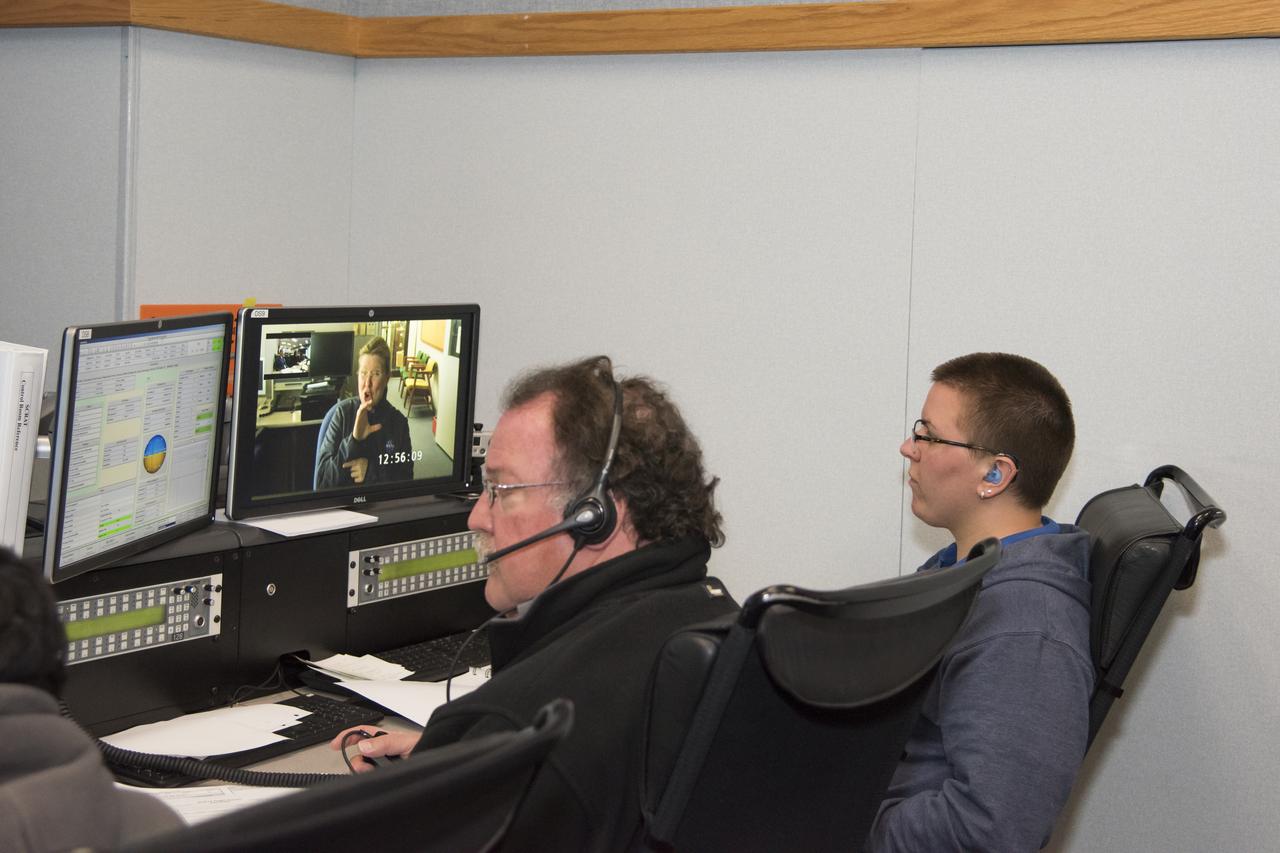
Johanna Lucht, observing data from the Mission Control Center at NASA’s Armstrong Flight Research Center in California, received flight communications from an interpreter, seen on Lucht’s monitor, through American Sign Language. Two-way visual communication was established between Lucht and the interpreter, located at NASA’s Langley Research Center in Virginia, for the flight. Interpreting technical terminology often requires cooperation to develop specific signs to ease communication. Using a familiar interpreter who is adept or practiced in the technical terminology of a NASA flight was beneficial, Lucht says.
AFRC2017-0076-3
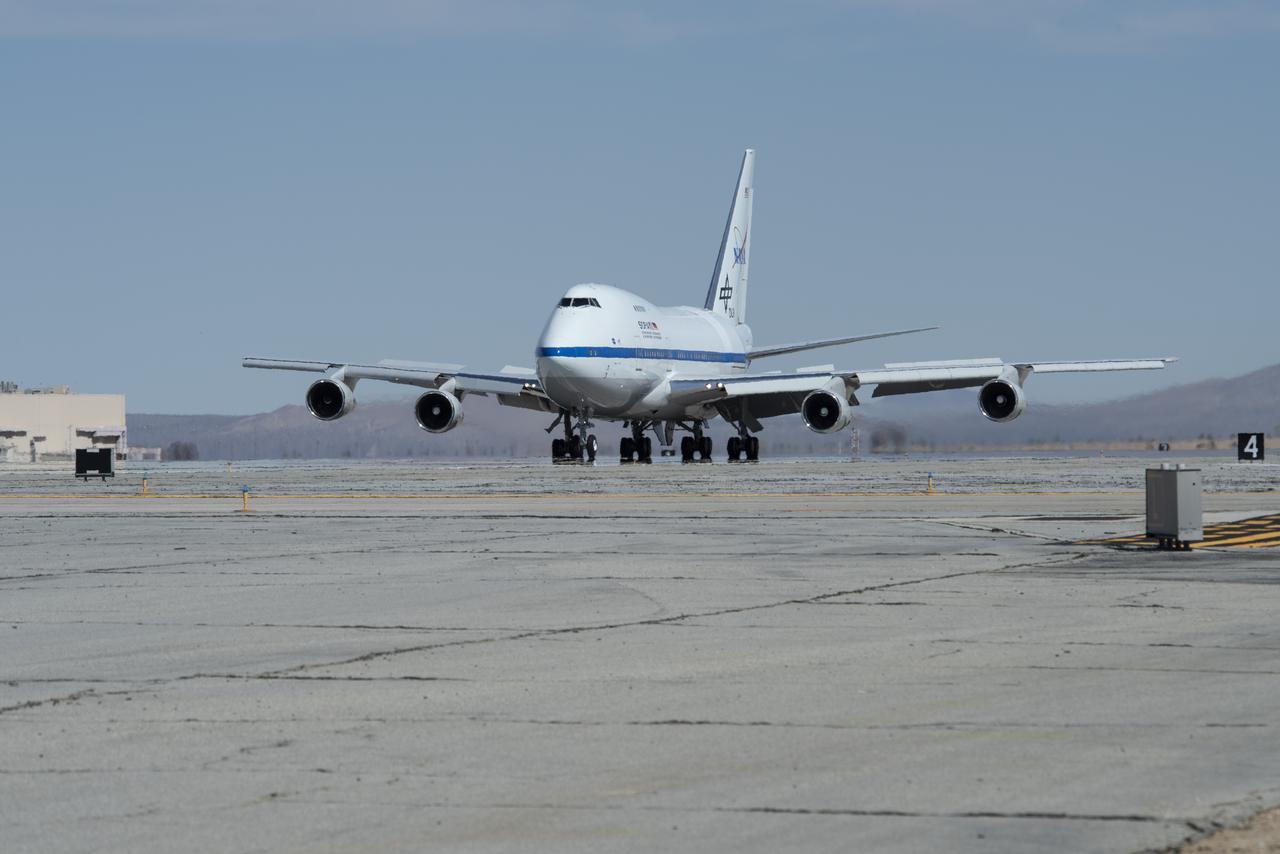
SOFIA Returns to NASA's Armstrong Flight Research Center Building 703 Caption: SOFIA returns to NASA's Armstrong Flight Research Center building 703 in Palmdale, California on March 16, 2021 after spending six months in Germany conducting science observations.
SOFIA Returns to NASA's Armstrong Flight Research Center Building 703
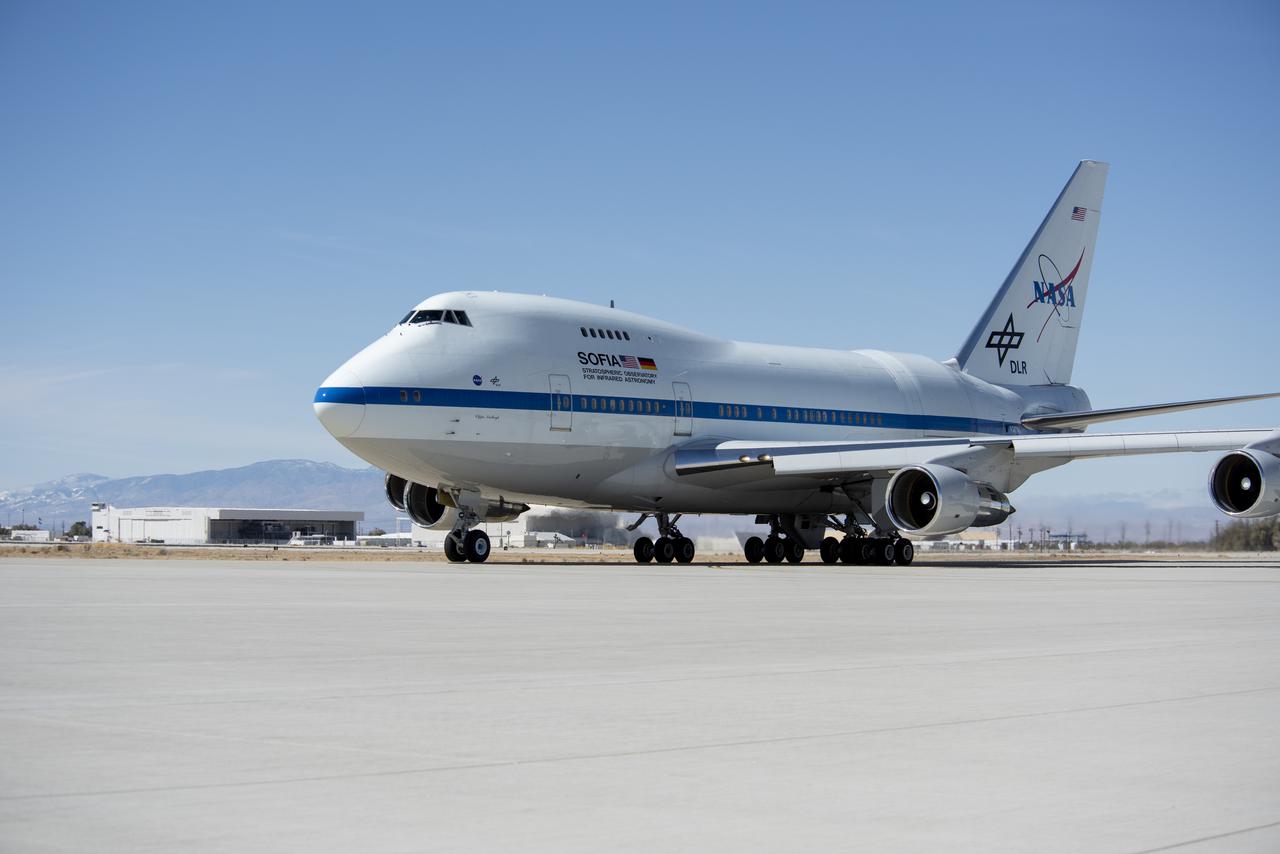
SOFIA Returns to NASA's Armstrong Flight Research Center Building 703 Caption: SOFIA returns to NASA's Armstrong Flight Research Center Building 703 in Palmdale, California on March 16, 2021 after spending six months in Germany conducting science observations.
SOFIA Returns to NASA's Armstrong Flight Research Center Building 703
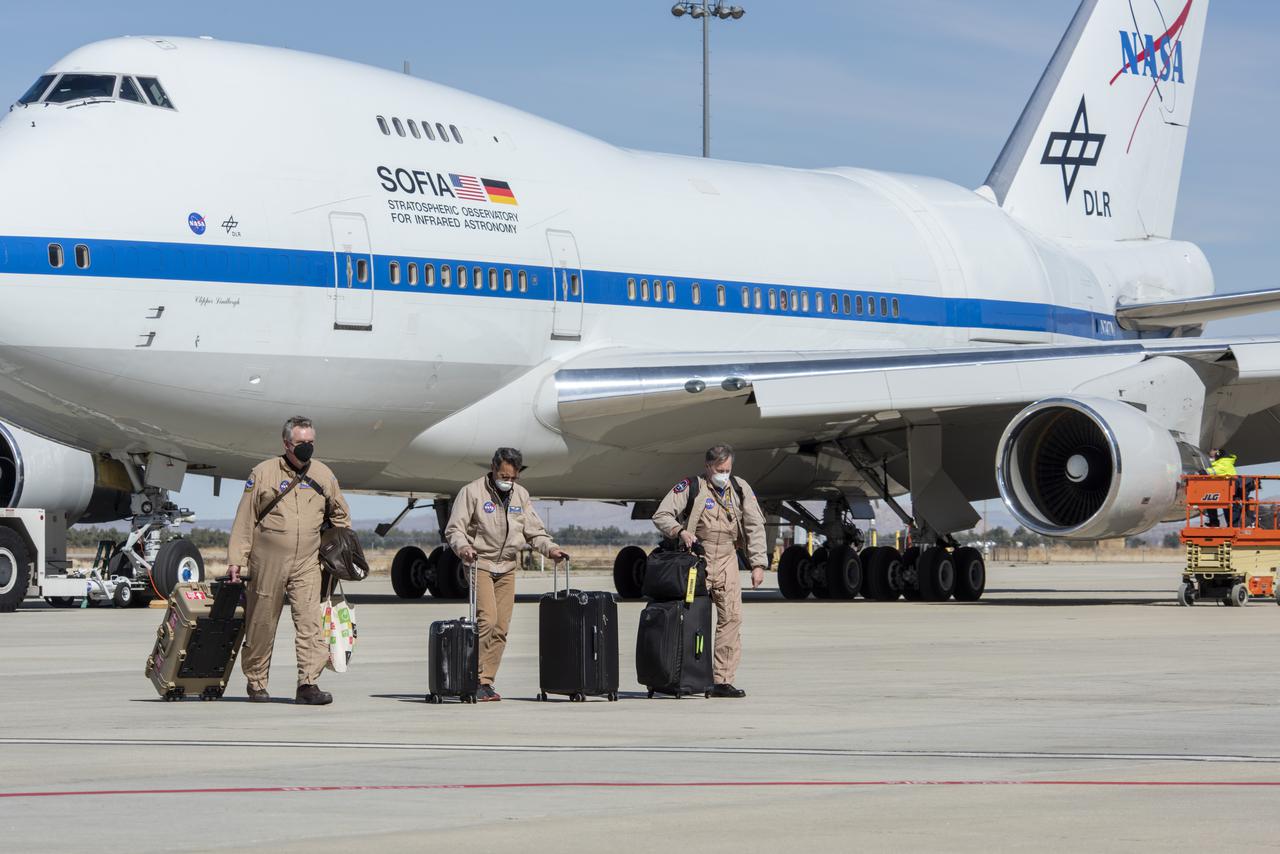
SOFIA Returns to NASA’s Armstrong Flight Research Center Building 703 Caption: SOFIA pilots are welcomed home to NASA’s Armstrong Flight Research Center Building 703 in Palmdale, California on March 16, 2021. From left to right: Tracy Phelps, Jeff Borton and Wayne Ringelberg
SOFIA Returns to NASA’s Armstrong Flight Research Center Building 703
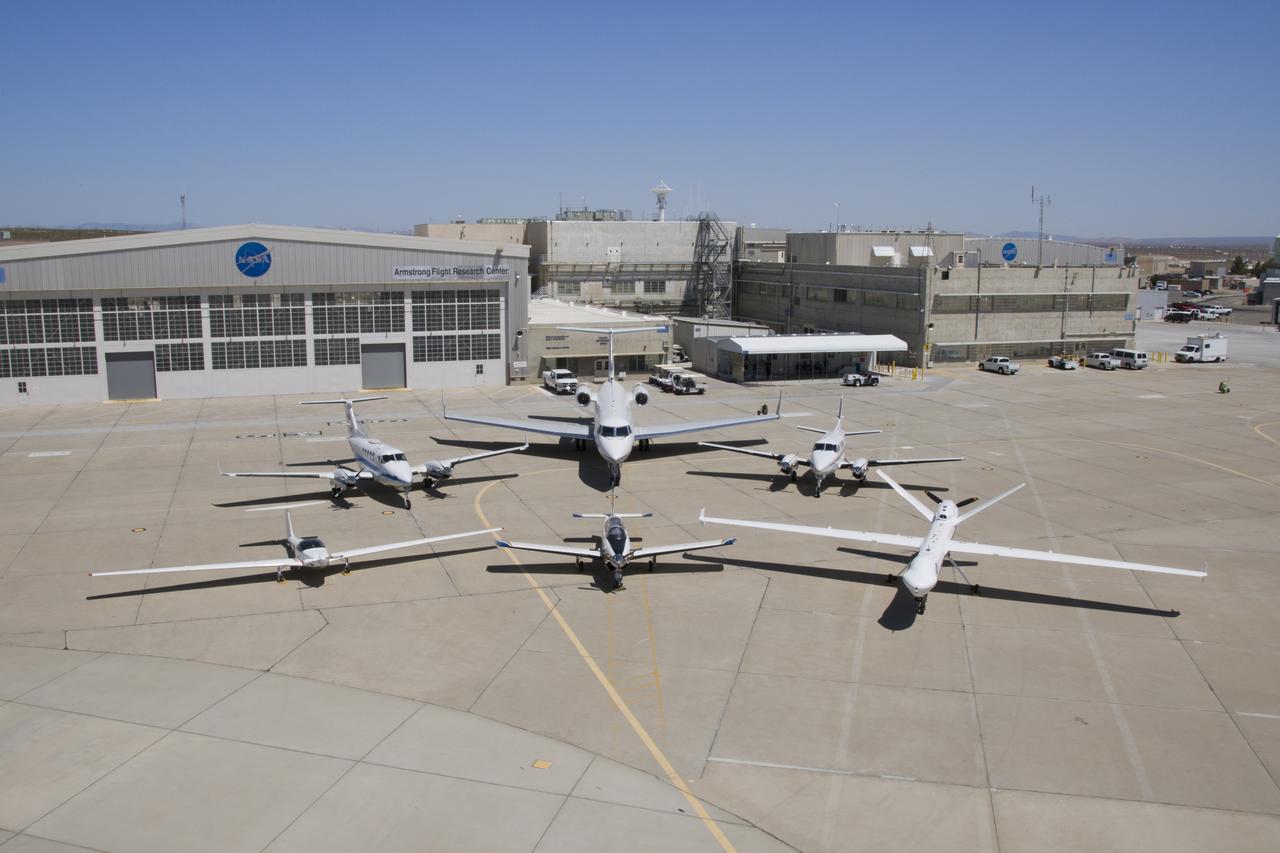
NASA’s Ikhana remotely piloted aircraft (front-right) is situated near NASA Armstrong Flight Research Center’s Hangar 4802 after an Unmanned Aircraft Systems Integration into the National Airspace System Flight Test Series 4 flight, along with five flight “intruders.” These intruders, which include NASA’s TG-14 (front-left), T-34C (front-center), B-200 King Air (back-left), Gulfstream-III (back-center) and a Honeywell C-90 King Air (back-right), fly within a pre-determined distance to Ikhana to test Detect-and-Avoid technology during research flights.
AFRC2016-0138-01
Sonja Belcher and Zach Springer show some of what they would do during a flight mission at a Telemetry and Radar Acquisition Processing System at NASA’s Armstrong Flight Research Center in California
DATR Supports Space Communication, Research Flights
The Dryden Aeronautical Test Range at NASA’s Armstrong Flight Research Center in California uses radars, such as those in the photo, for tracking aircraft and spacecraft.
DATR Supports Space Communication, Research Flights
The Dryden Aeronautical Test Range at NASA’s Armstrong Flight Research Center in California uses radars, such as those in the photo, for tracking aircraft and spacecraft.
DATR Supports Space Communication, Research Flights
The communication antenna is used primarily for test flights to receive downlink flight data and video from test aircraft and also to support command uplink of data to test aircraft for command and control. It is one of two such assets of the Dryden Aeronautical Test Range at NASA’s Armstrong Flight Research Center in California.
DATR Supports Space Communication, Research Flights
The communication antenna is used primarily for test flights to receive downlink flight data and video from test aircraft and also to support command uplink of data to test aircraft for command and control. It is one of two such assets of the Dryden Aeronautical Test Range at NASA’s Armstrong Flight Research Center in California.
DATR Supports Space Communication, Research Flights
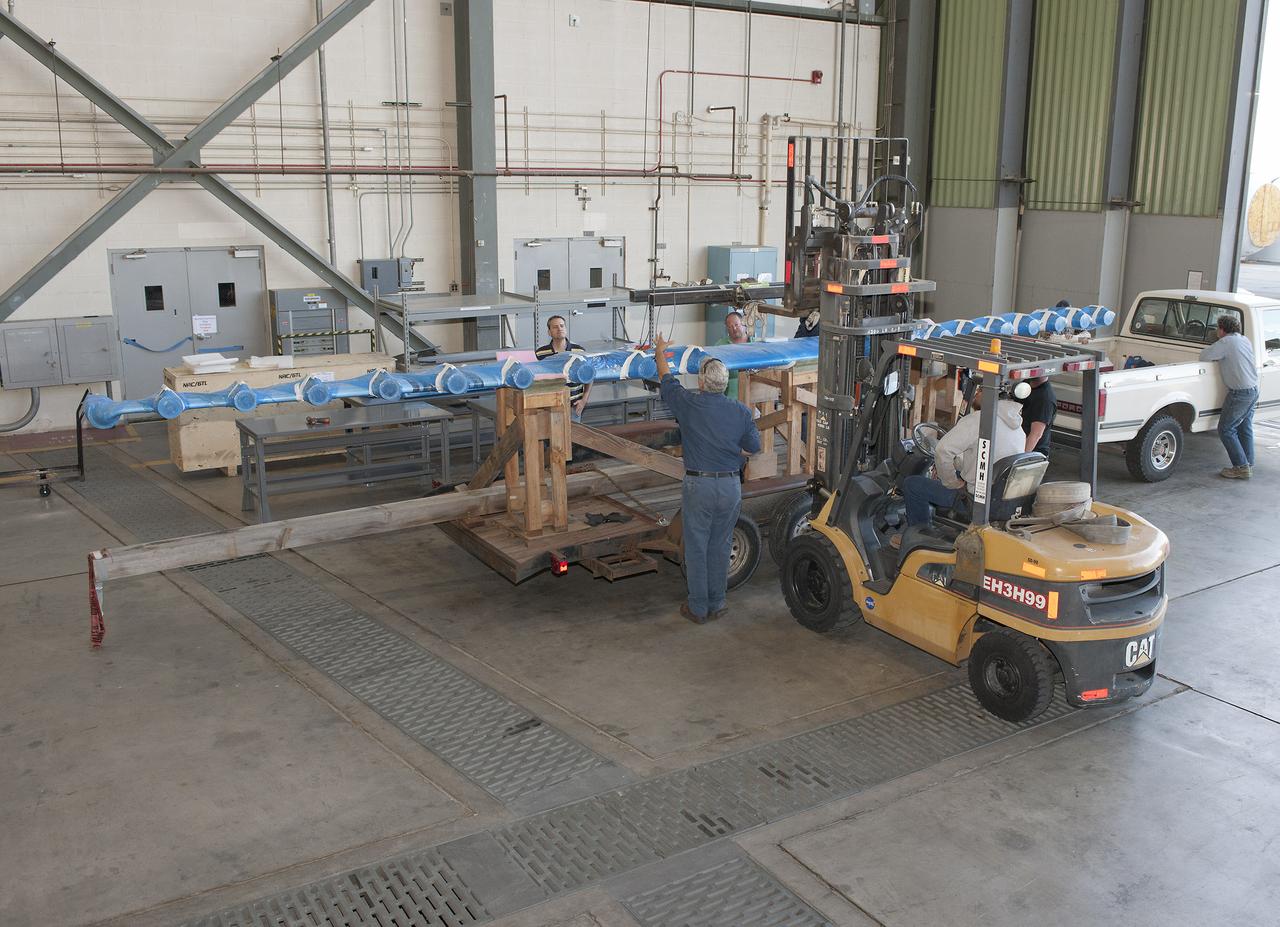
Technicians unload the LEAPTech experimental wing upon its arrival at NASA Armstrong Flight Research Center. Ground testing will begin after the wing is mounted on a specially modified truck.
LEAPTech to Demonstrate Electric Propulsion Technologies
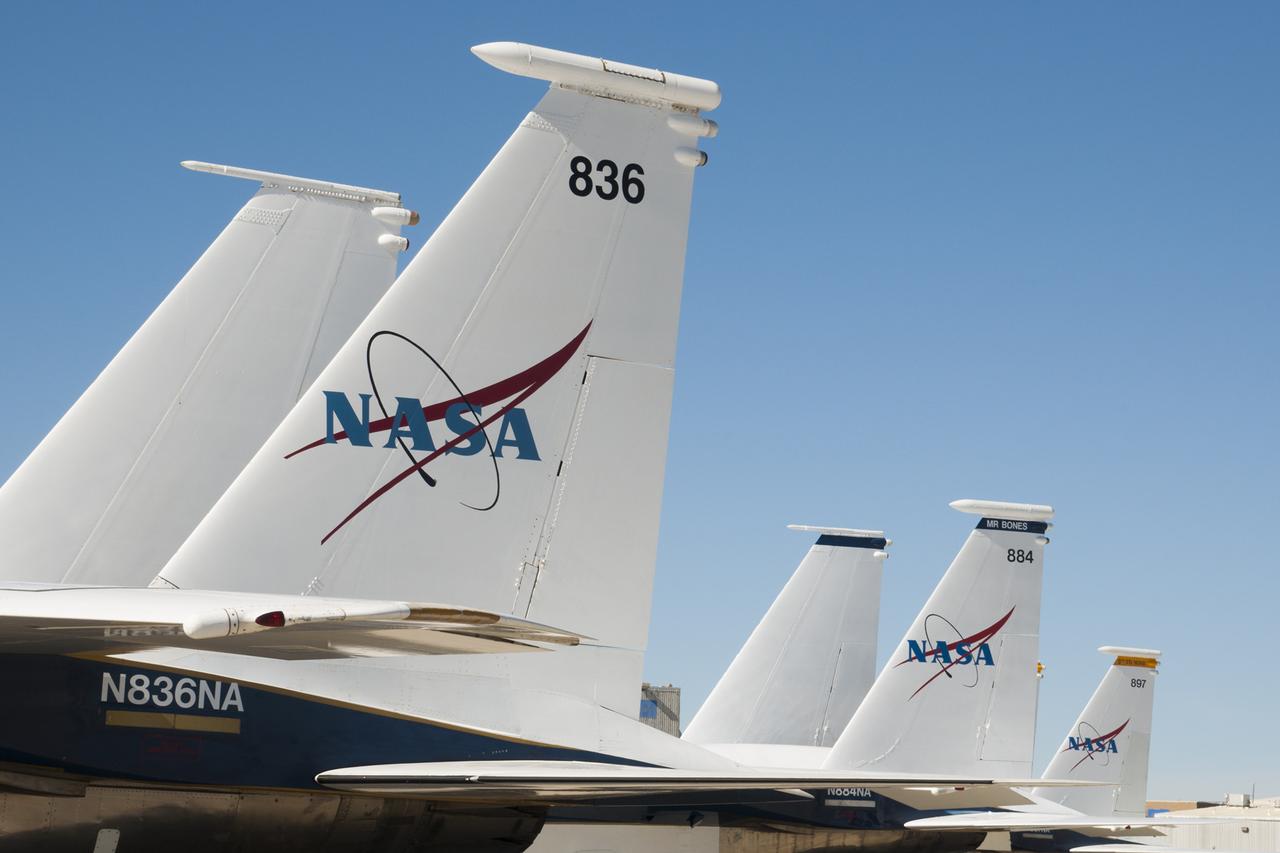
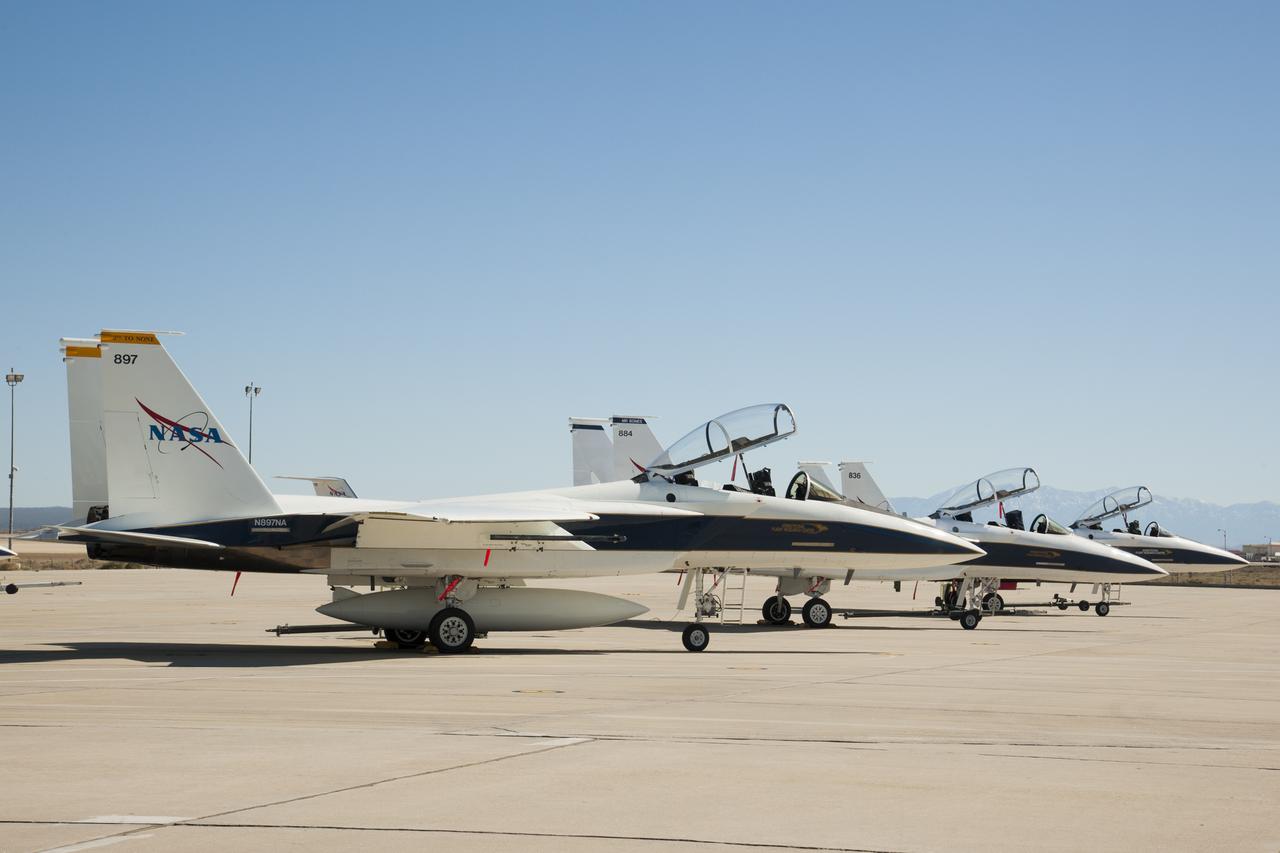
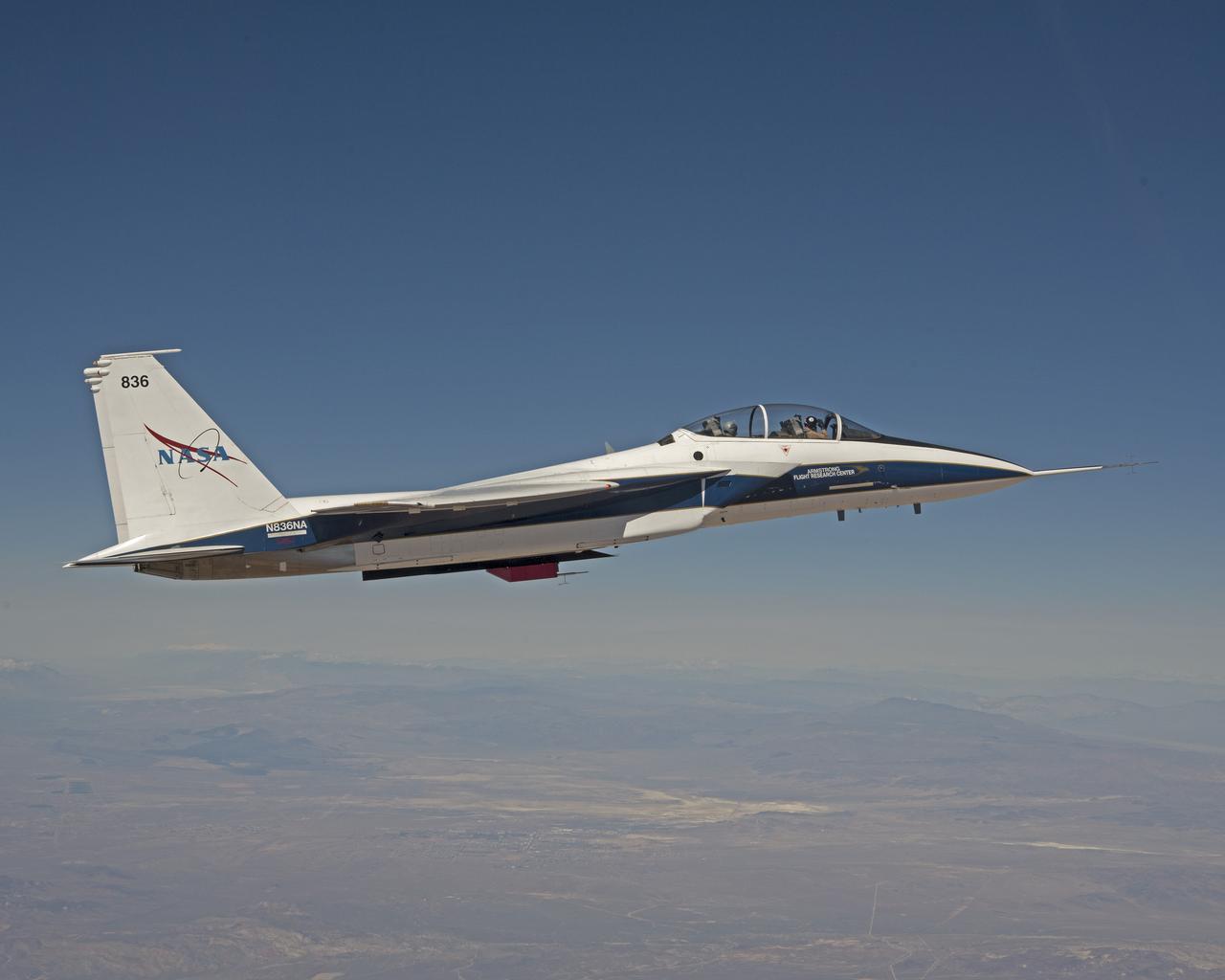
Left to right: workhorse F-15B #836, "Mr. Bones" F-15D #884, and "2nd to None" F-15D #897 on the back ramp at NASA's Neil A. Armstrong Flight Research Center.
AFRC2016-0073-72
Left to right: "2nd to None" (F-15D #897), "Mr. Bones" (F-15D #884), and workhorse F-15B #836 on the back ramp at NASA's Neil A. Armstrong Flight Research Center.
AFRC2016-0073-80
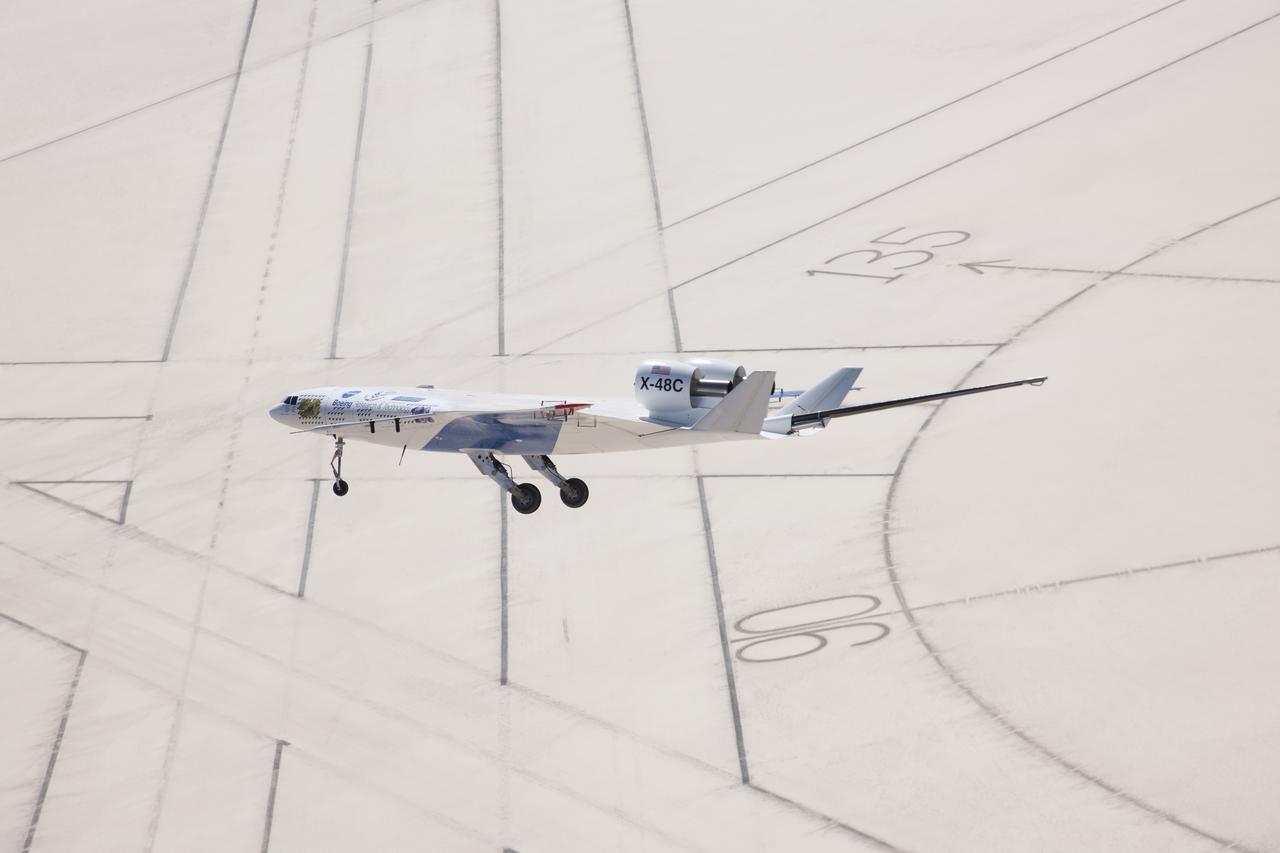
The X-48C Hybrid Wing Body research aircraft flew over the intersection of several runways adjacent to the compass rose on Rogers Dry Lake at Edwards Air Force Base during one of the sub-scale aircraft's final test flights on Feb. 28, 2013.
X-48C Flies Over Intersecting Runways
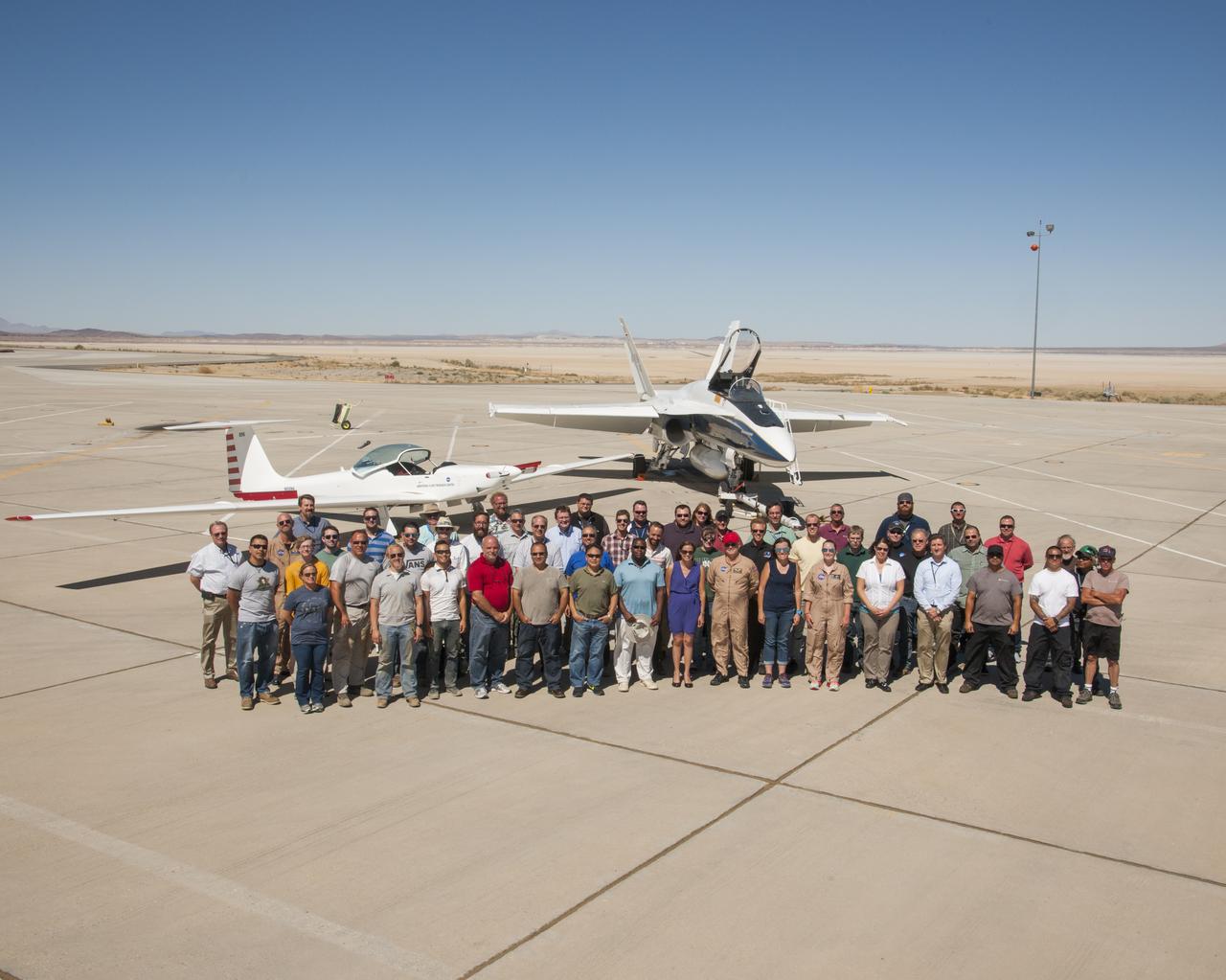
NASA’s SonicBAT team poses in front of the TG-14 motor glider and F/A-18 research aircraft, sitting side-by-side in front of Rogers Dry Lake prior to a SonicBAT flight at Armstrong Flight Research Center on Edwards Air Force Base, California. The TG-14 collected sound signatures of shockwaves created by the F/A-18, to compare with signatures collected on the ground.
NASA Test Flights Examine Effect of Atmospheric Turbulence on Sonic Booms
The Triplex 7M telemetry antenna at far right and the two radars to the left are a few assets of the Dryden Aeronautical Test Range at NASA’s Armstrong Flight Research Center in California.
DATR Supports Space Communication, Research Flights
Jeff Koenig and Carlos Torres  at NASA’s Armstrong Flight Research Center in California prepare to support communications with the International Space Station and the Soyuz spacecraft scheduled for a rendezvous later that day.
DATR Supports Space Communication, Research Flights
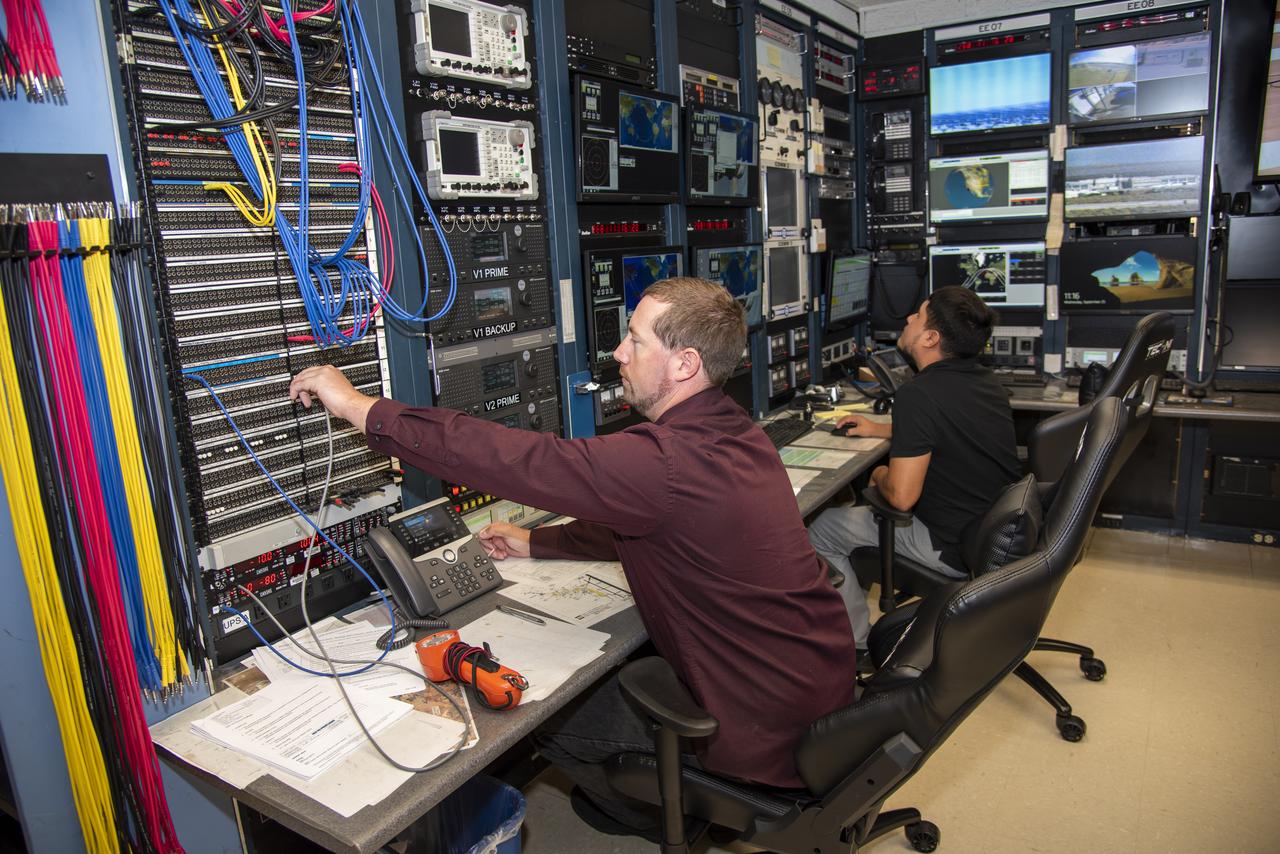
Kevin Knutson sits at a station in the main Blue Control Room at NASA’s Armstrong Flight Research Center in California used during complex flight missions to house the many technical discipline experts required to gather all of the required data and to enhance mission safety.
DATR Supports Space Communication, Research Flights
Research on the Eagle Aero Probe is ongoing from an F-15B flight test fixture, as the aircraft flies missions over the high desert.
AFRC2016-0072-01
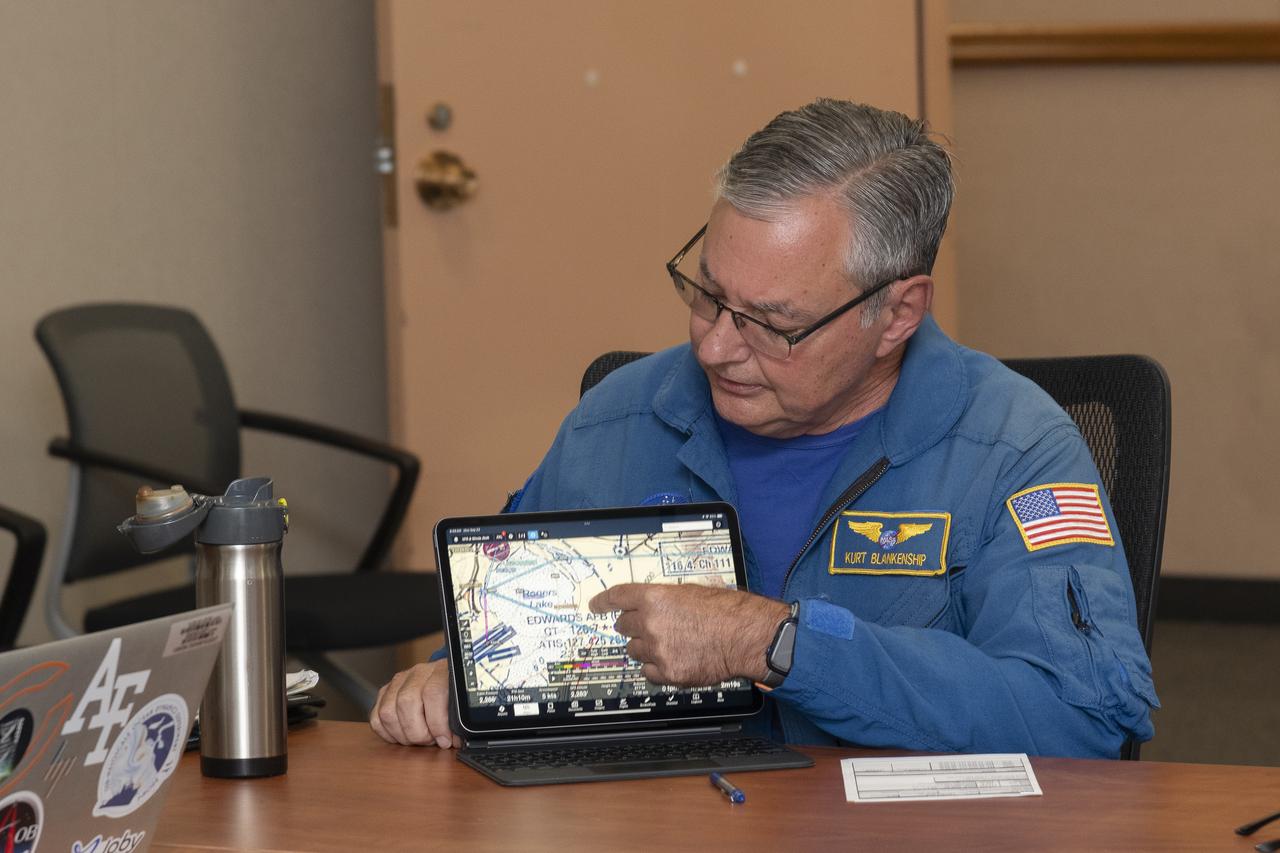
NASA pilot Kurt Blankenship maps out flight plans during a pre-flight brief. Pilots, crew, and researchers from NASA’s Armstrong Flight Research Center in Edwards, California and NASA’s Glenn Research Center in Cleveland are briefed on the flight plan to gather Automatic Dependent Surveillance-Broadcast signal data between the aircraft and ping-Stations on the ground at NASA Armstrong. These flights are the first cross-center research activity with the Pilatus-PC-12 at NASA Armstrong.
NASA pilot Kurt Blankenship reviews flight plans during the pre-flight brief to gather Automatic Dependent Surveillance-Broadcast data using NASA’s Pilatus PC-12 at NASA’s Armstrong Flight Research Center in Edwards, California on Sept. 23, 2024.
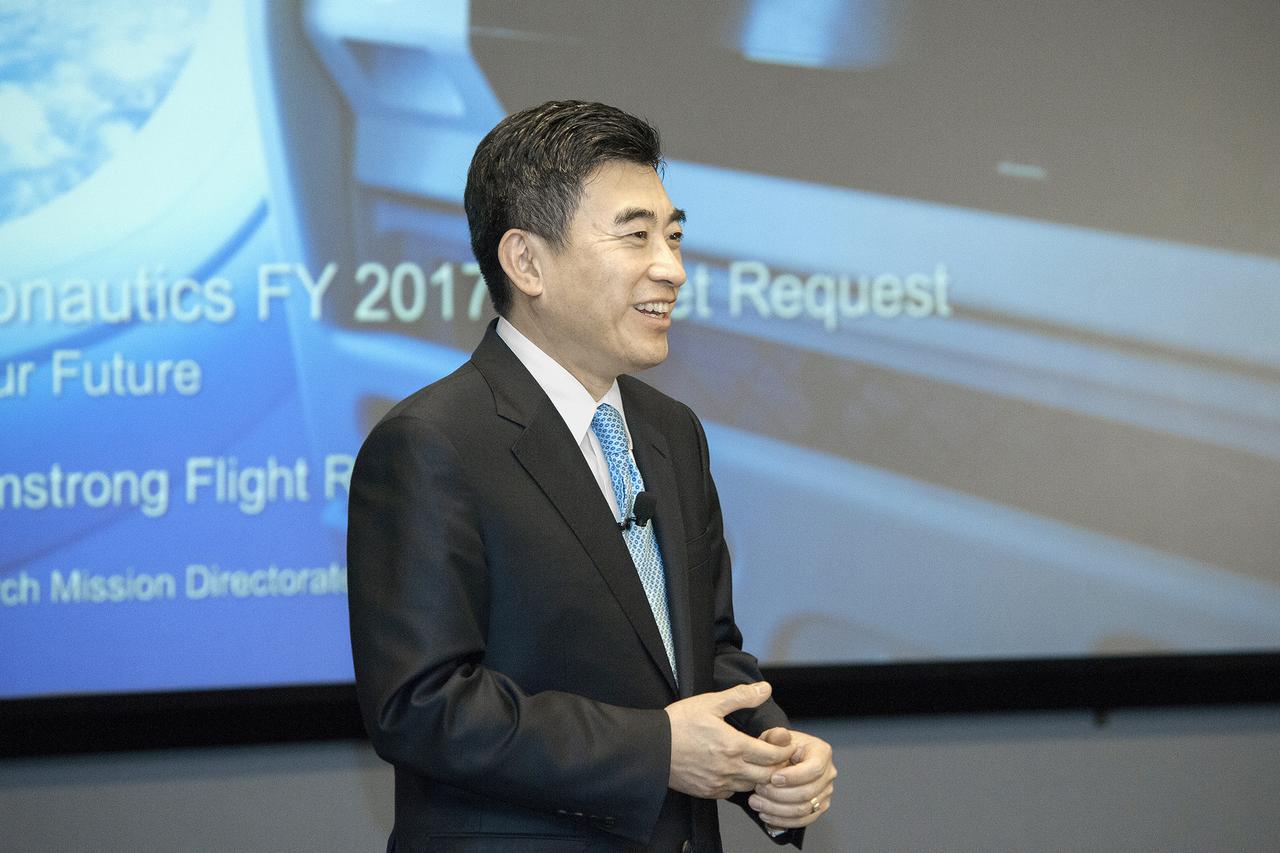
NASA Associate Administrator for Aeronautics Jaiwon Shin talked to staff and managers at NASA Armstrong Flight Research Center in California March 17 about the New Horizons initiative. The 10-year plan could substantially improve aviation and provide major economic benefits.
AFRC2016-0090-13
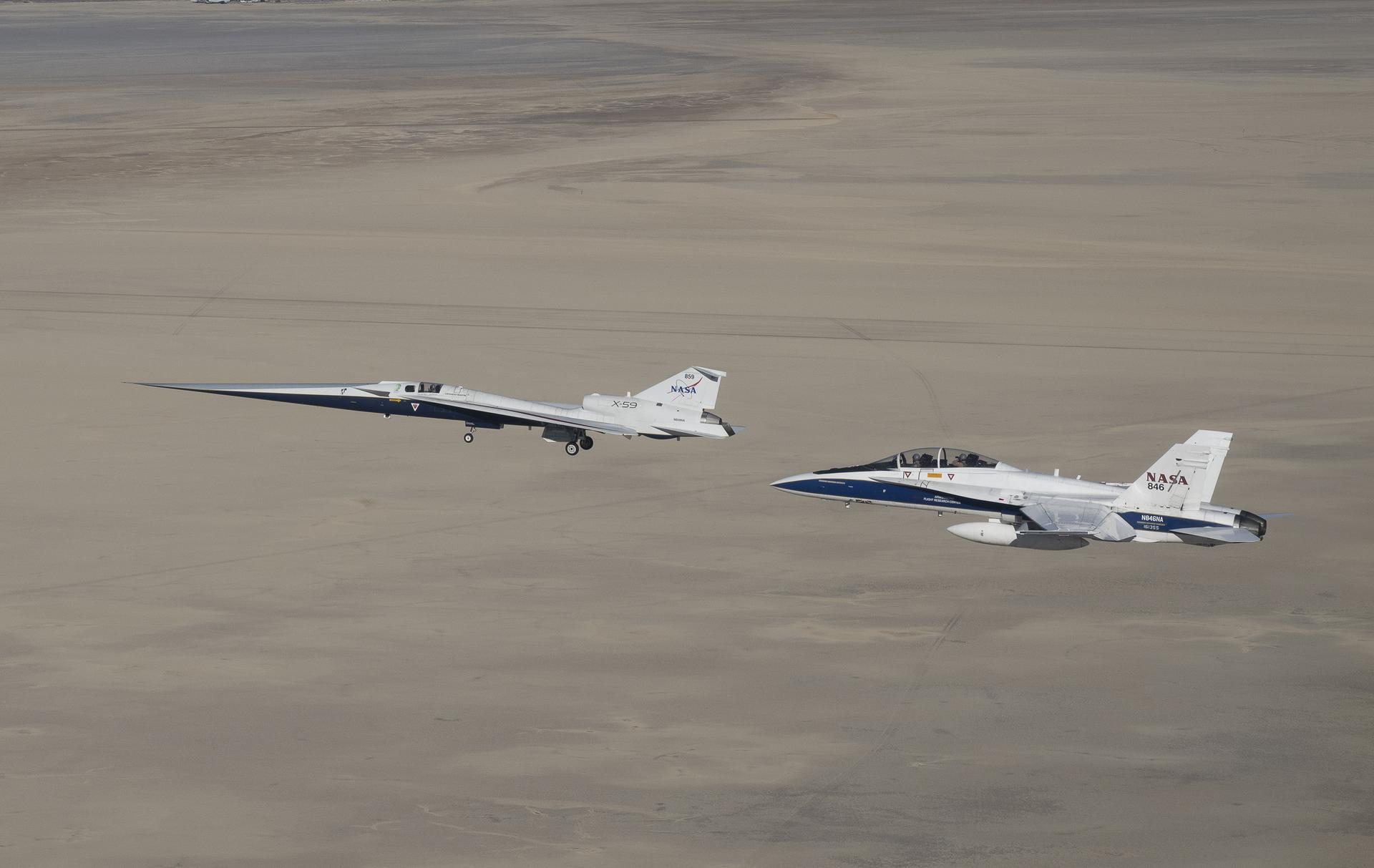
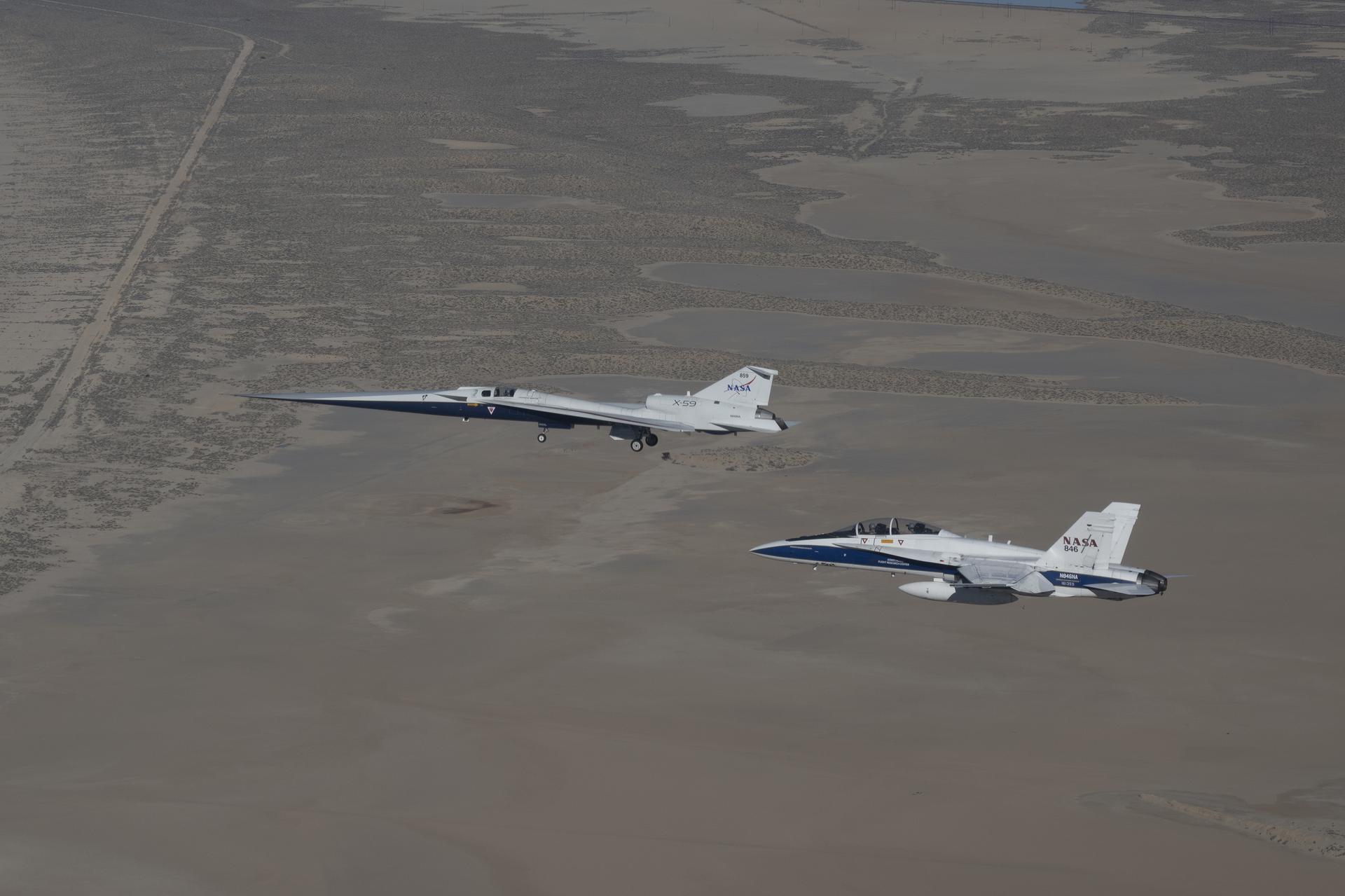
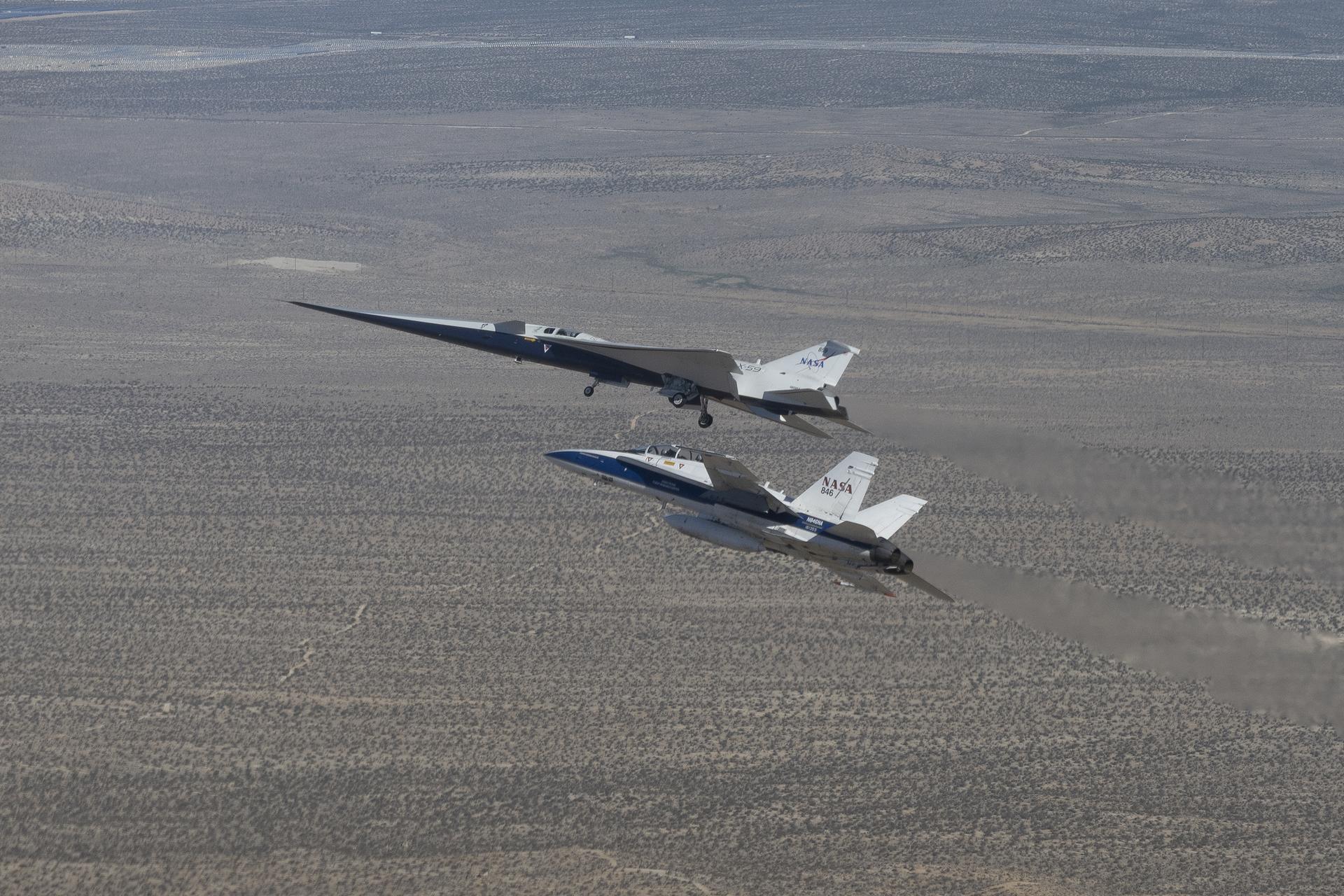
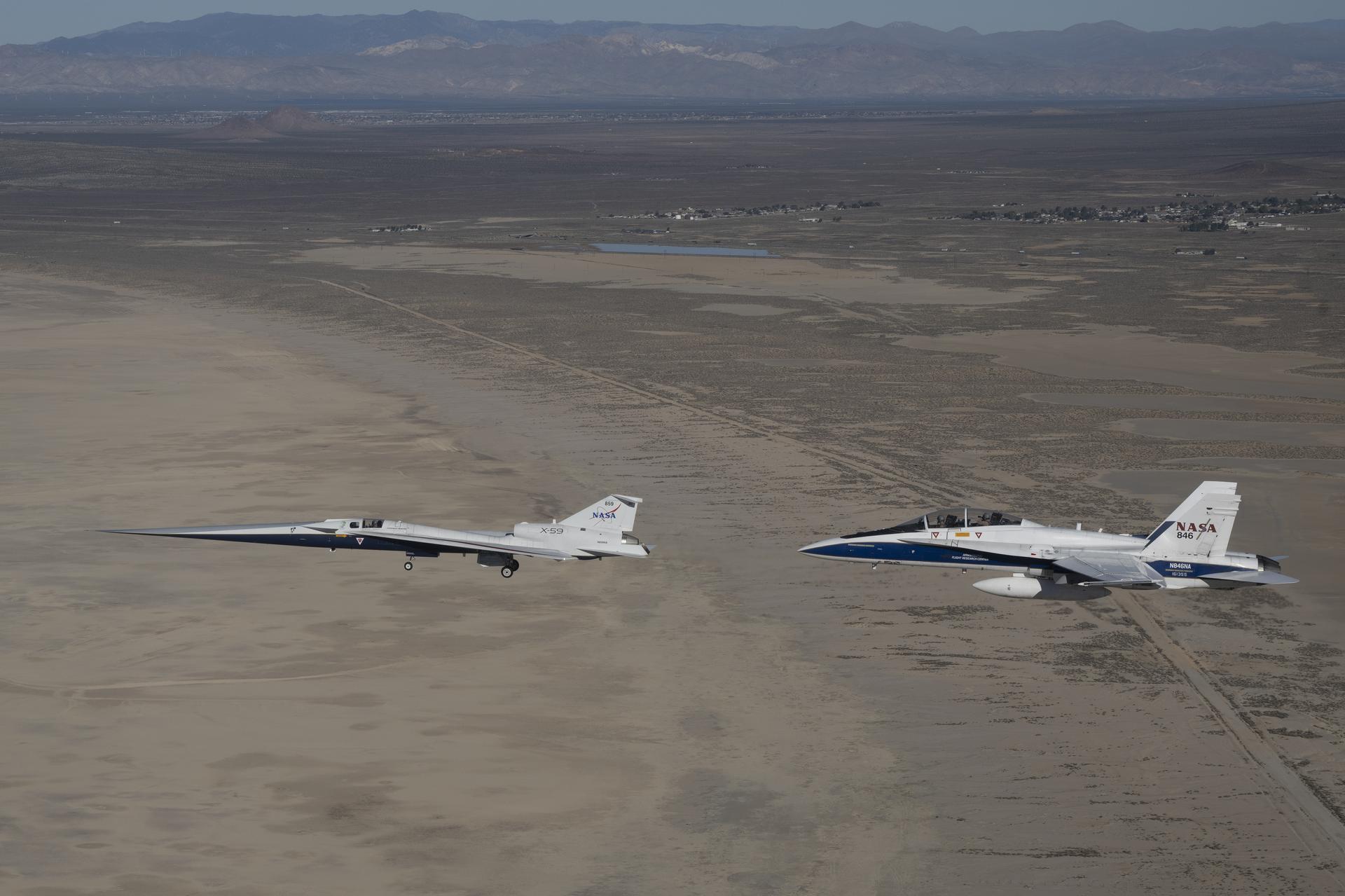
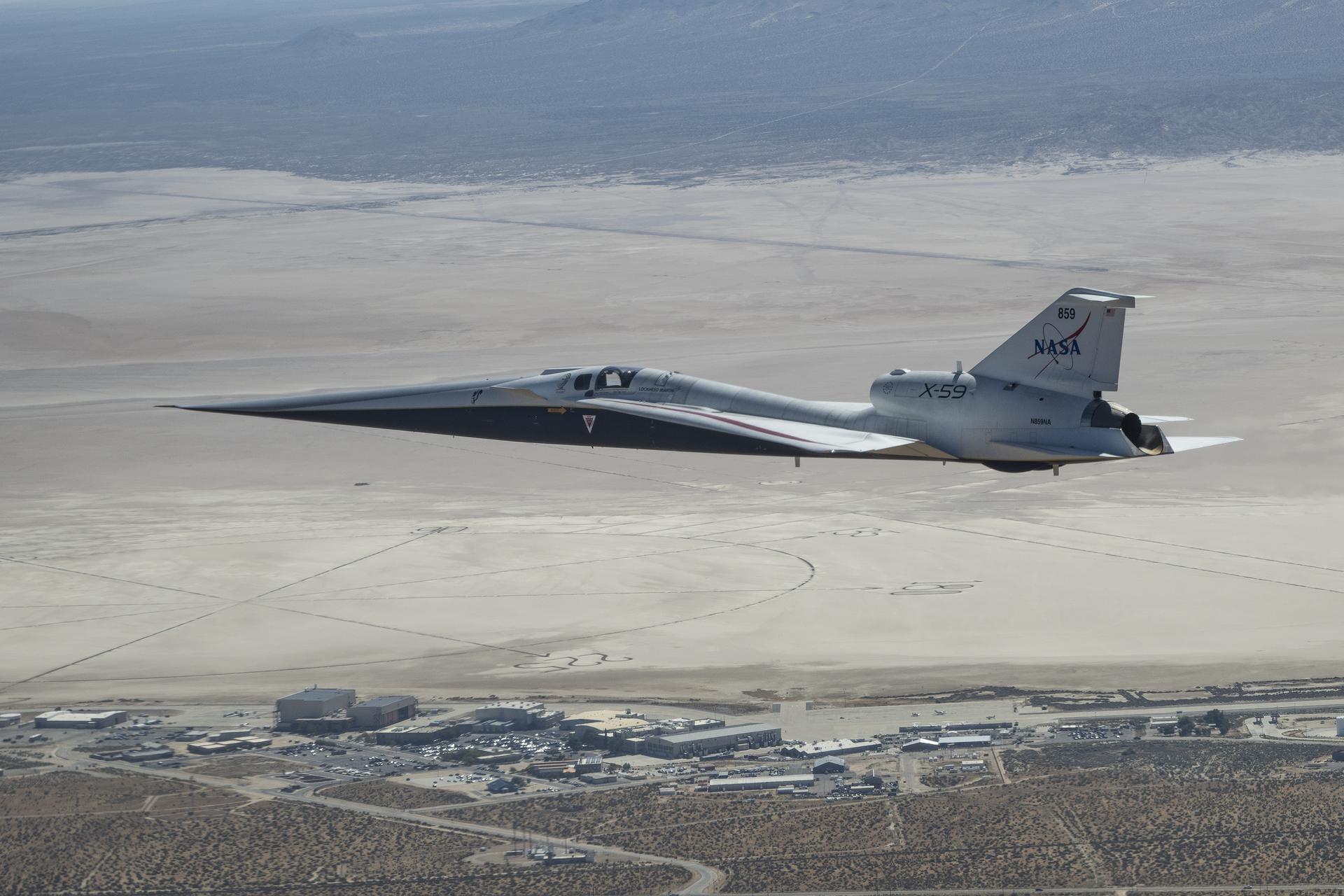
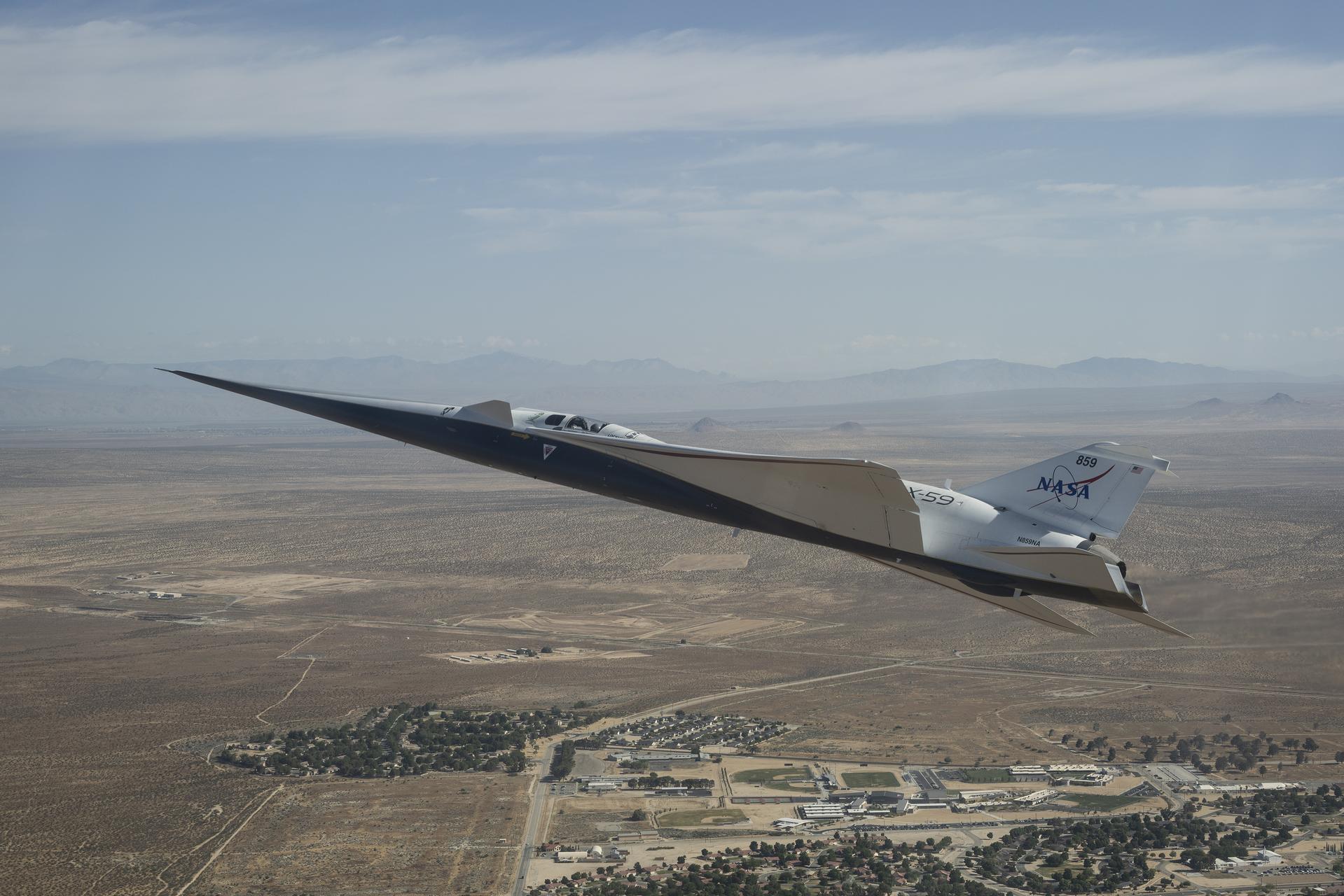
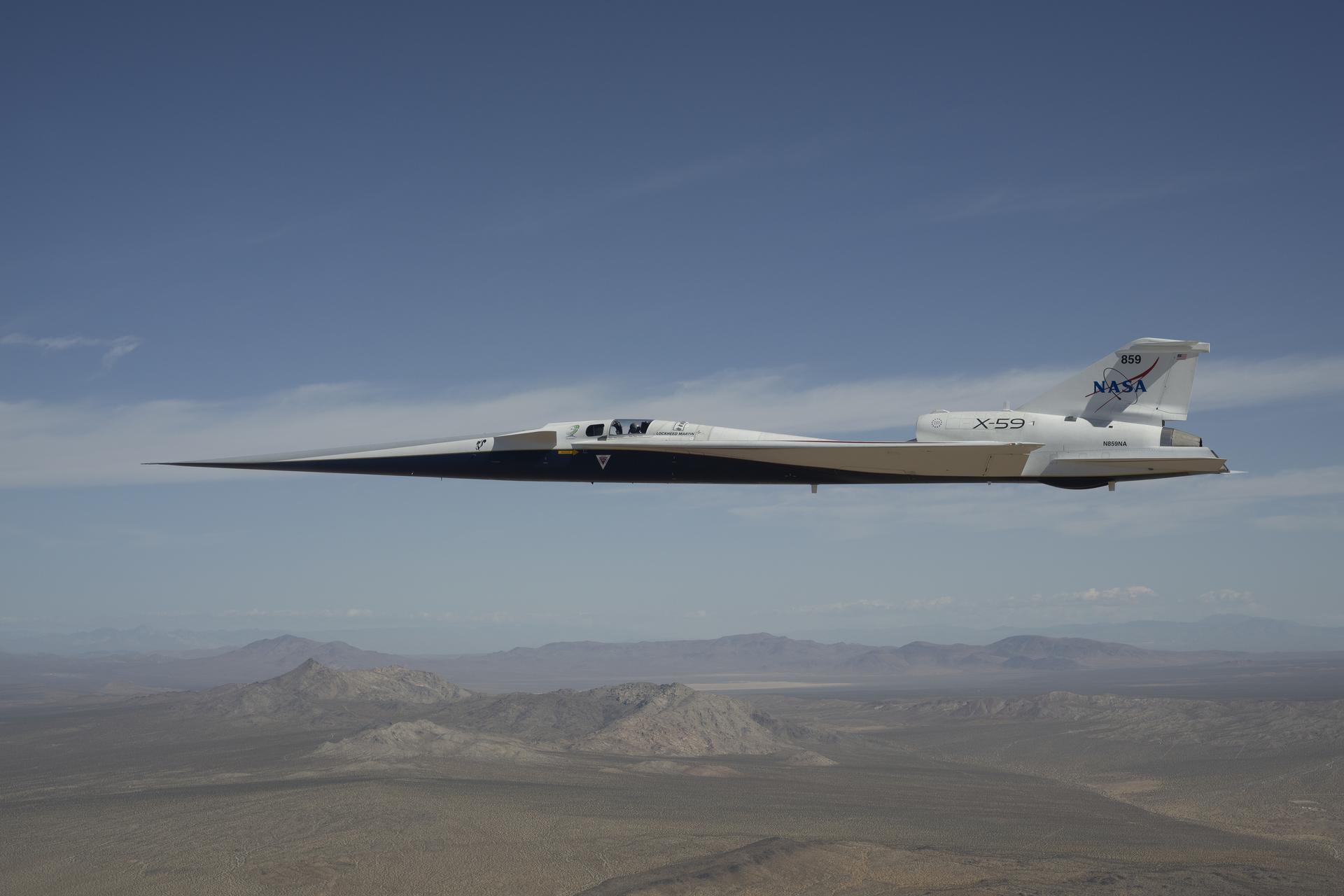
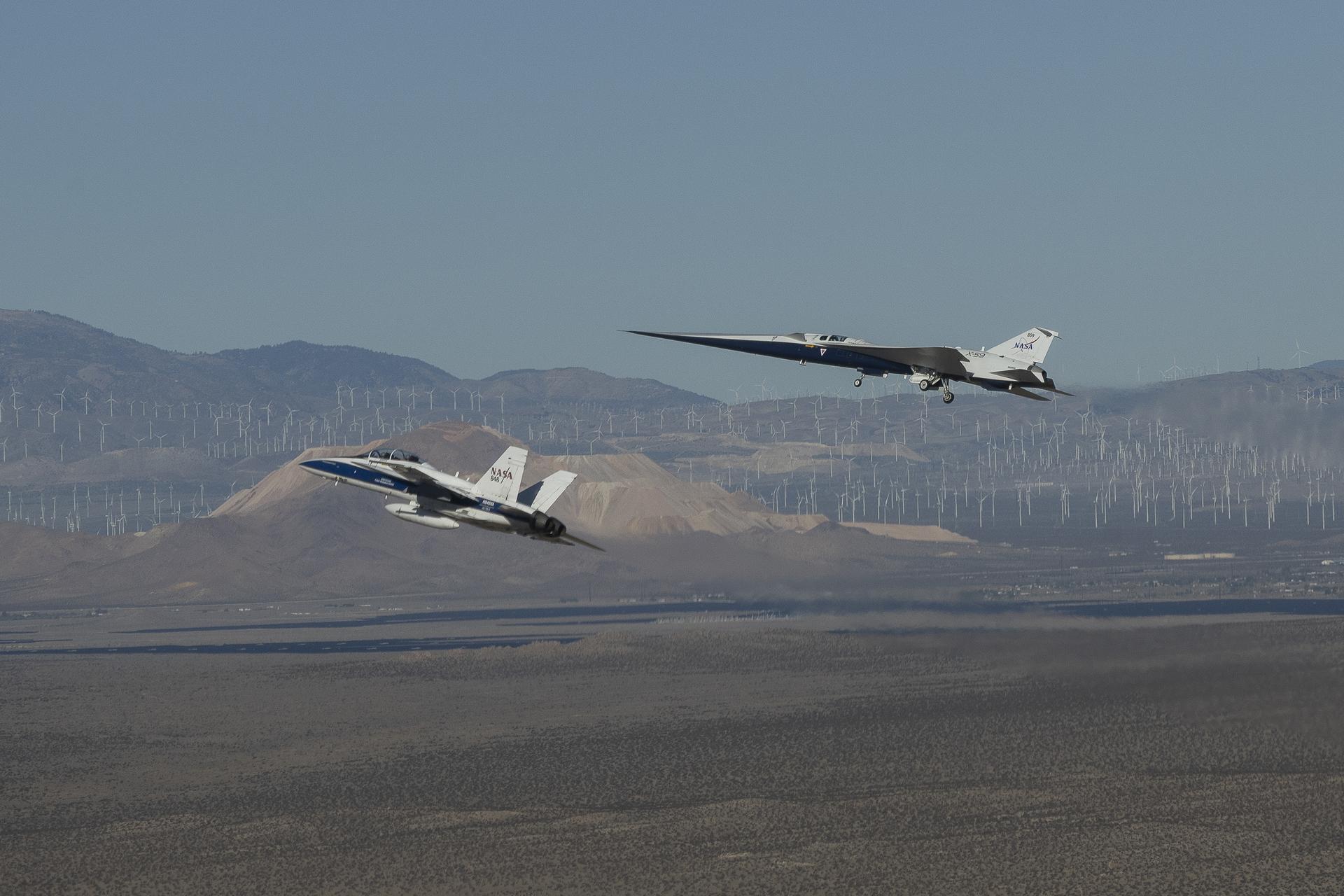
NASA’s X-59 quiet supersonic research aircraft flies above Palmdale and Edwards, California, on its first flight Tuesday, Oct. 28, 2025, accompanied by a NASA F-15 research aircraft. The F-15 monitored the X-59 during the flight as it traveled to NASA’s Armstrong Flight Research Center in Edwards, California, where it will begin flight testing for NASA’s Quesst mission, which aims to demonstrate quiet supersonic flight over land.
NASA’s X-59 in Flight with F-15 Research Aircraft Monitoring
A NASA TG-14 glider aircraft is prepared for flight at NASA’s Armstrong Flight Research Center in Edwards, California, in support of the agency’s Quesst mission. The aircraft is equipped with onboard microphones to capture sonic boom noise generated during rehearsal flights, helping researchers measure the acoustic signature of supersonic aircraft closer to the ground.
NASA Glider Aircraft Supports Quesst Rehearsal Flights
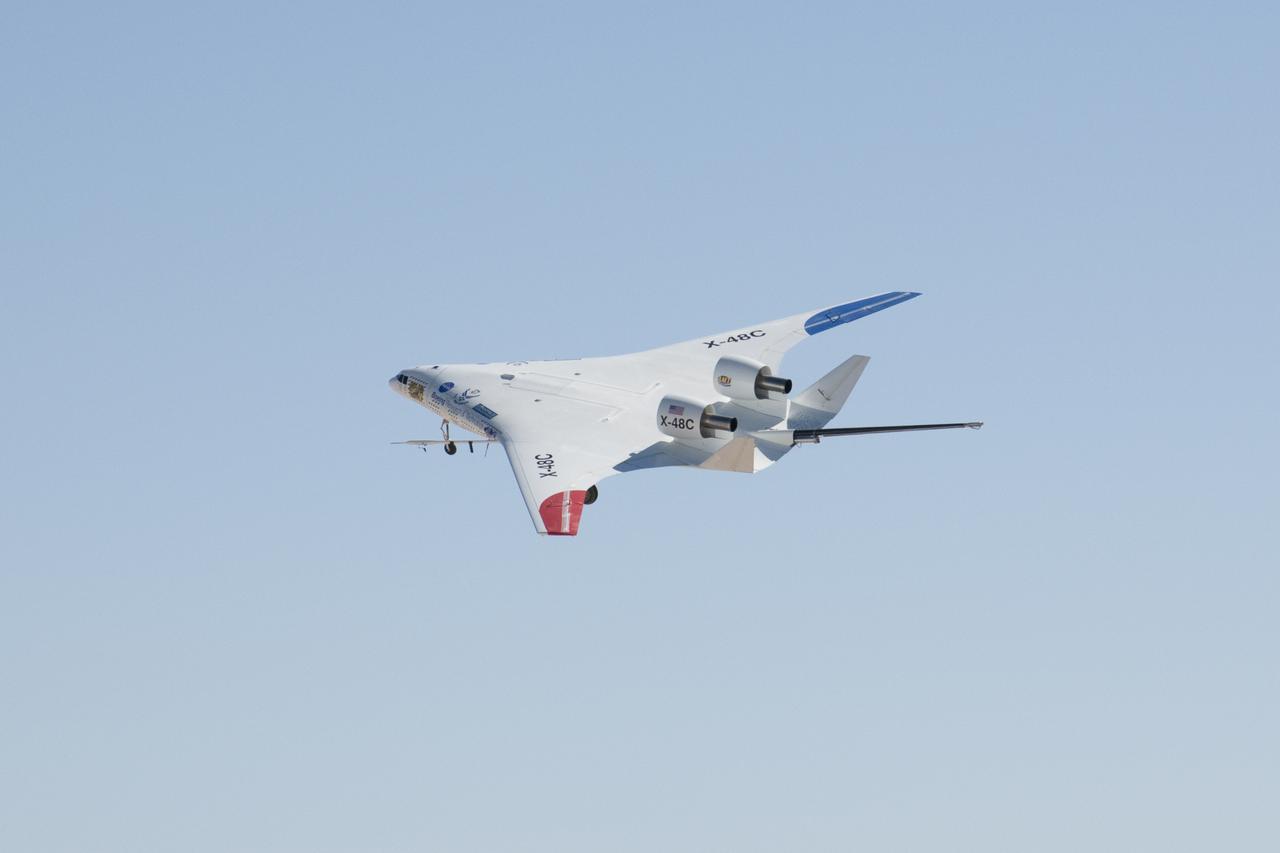
A deep blue sky was a backdrop for the NASA-Boeing X-48C Hybrid Wing Body aircraft as it flew over Edwards AFB on Feb. 28, 2013, during a test flight from NASA's Dryden Flight Research Center, Edwards, CA.
X-48C Flies Over Edwards Air Force Base
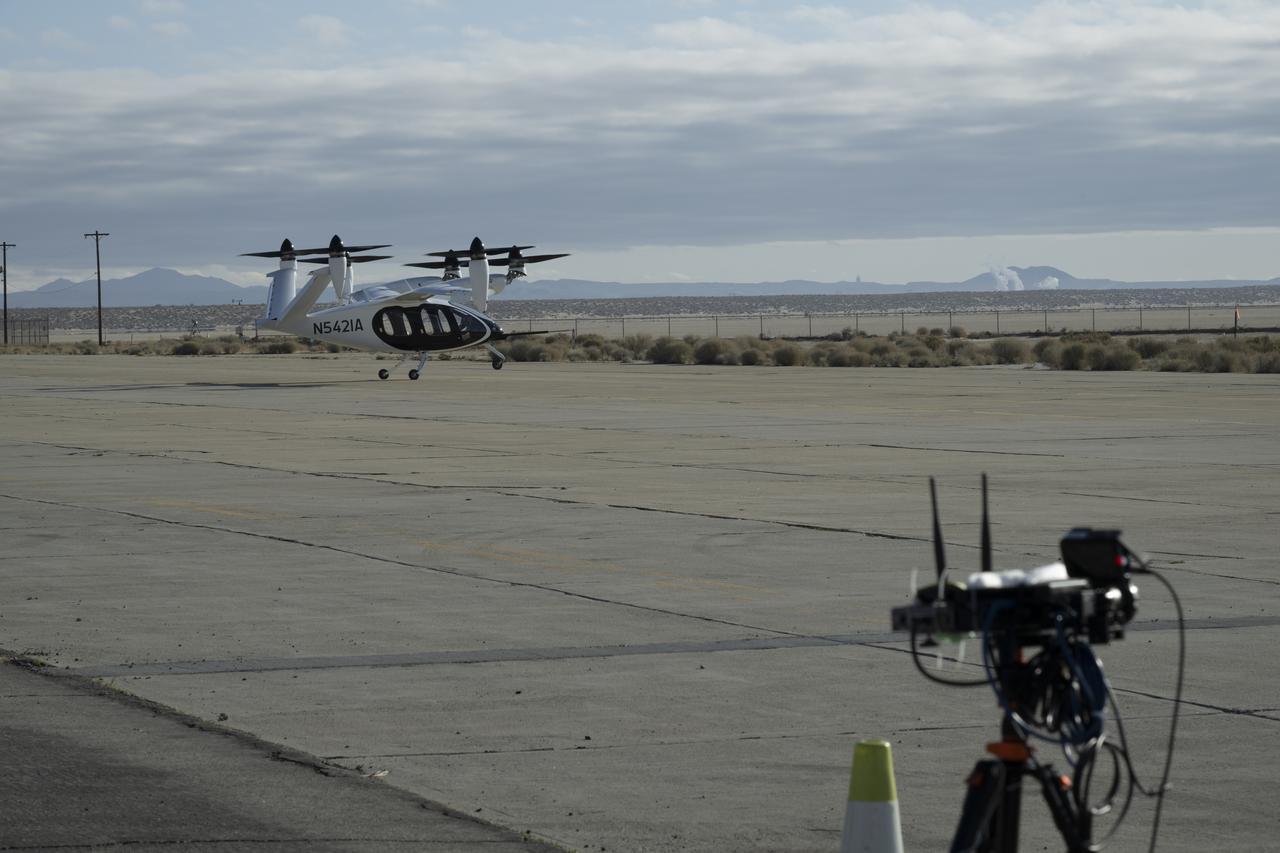
One of multiple NASA distributed sensing ground nodes is set up in the foreground while an experimental air taxi aircraft owned by Joby Aviation prepares to take off in the background near NASA’s Armstrong Flight Research Center in Edwards, California, on March 12, 2025. NASA is collecting information during this study to help advance future air taxi flights, especially those occurring in cities, to track aircraft moving through traffic corridors and around landing zones. 
NASA and Joby Research Near NASA’s Armstrong Flight Research Center
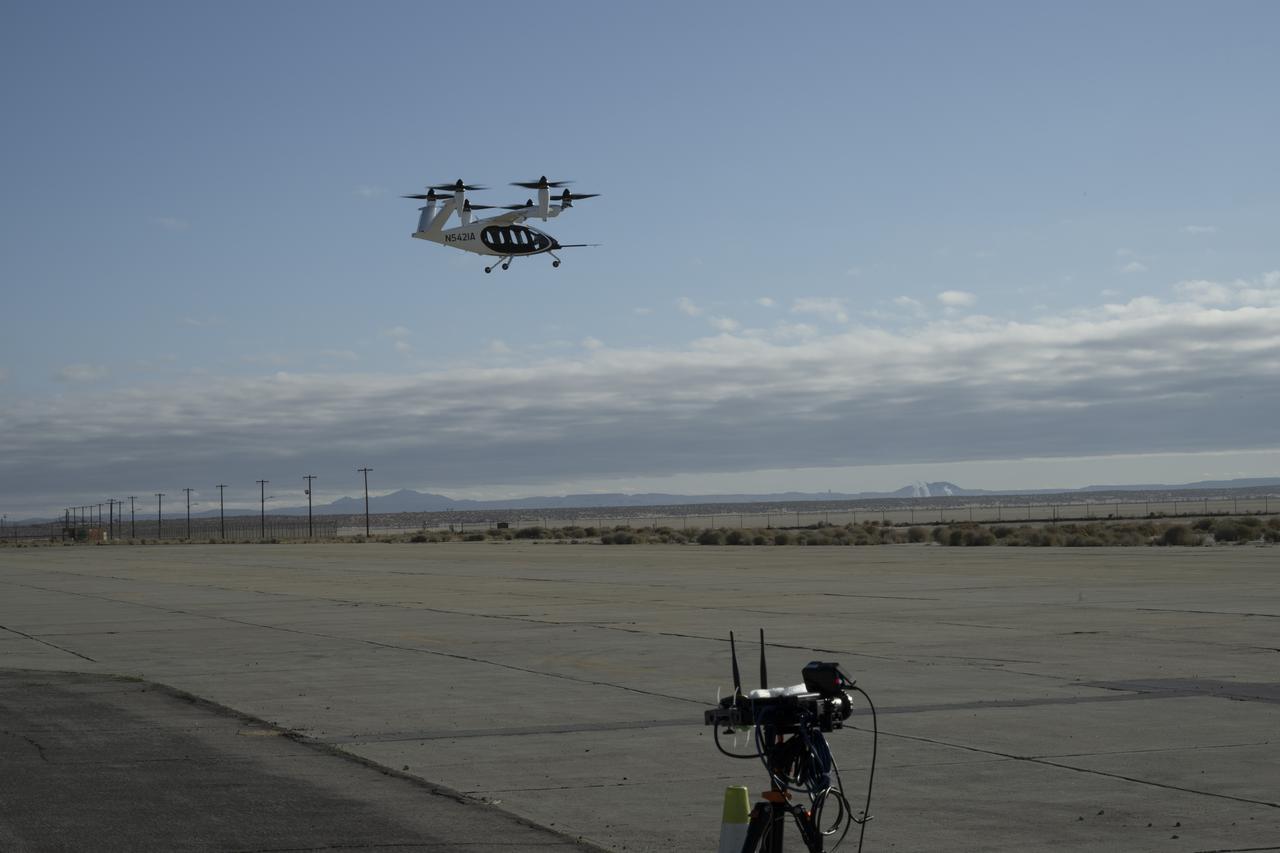
One of multiple NASA distributed sensing ground nodes is set up in the foreground while an experimental air taxi aircraft owned by Joby Aviation hovers in the background near NASA’s Armstrong Flight Research Center in Edwards, California, on March 12, 2025. NASA is collecting information during this study to help advance future air taxi flights, especially those occurring in cities, to track aircraft moving through traffic corridors and around landing zones.
NASA and Joby Research Near NASA’s Armstrong Flight Research Center
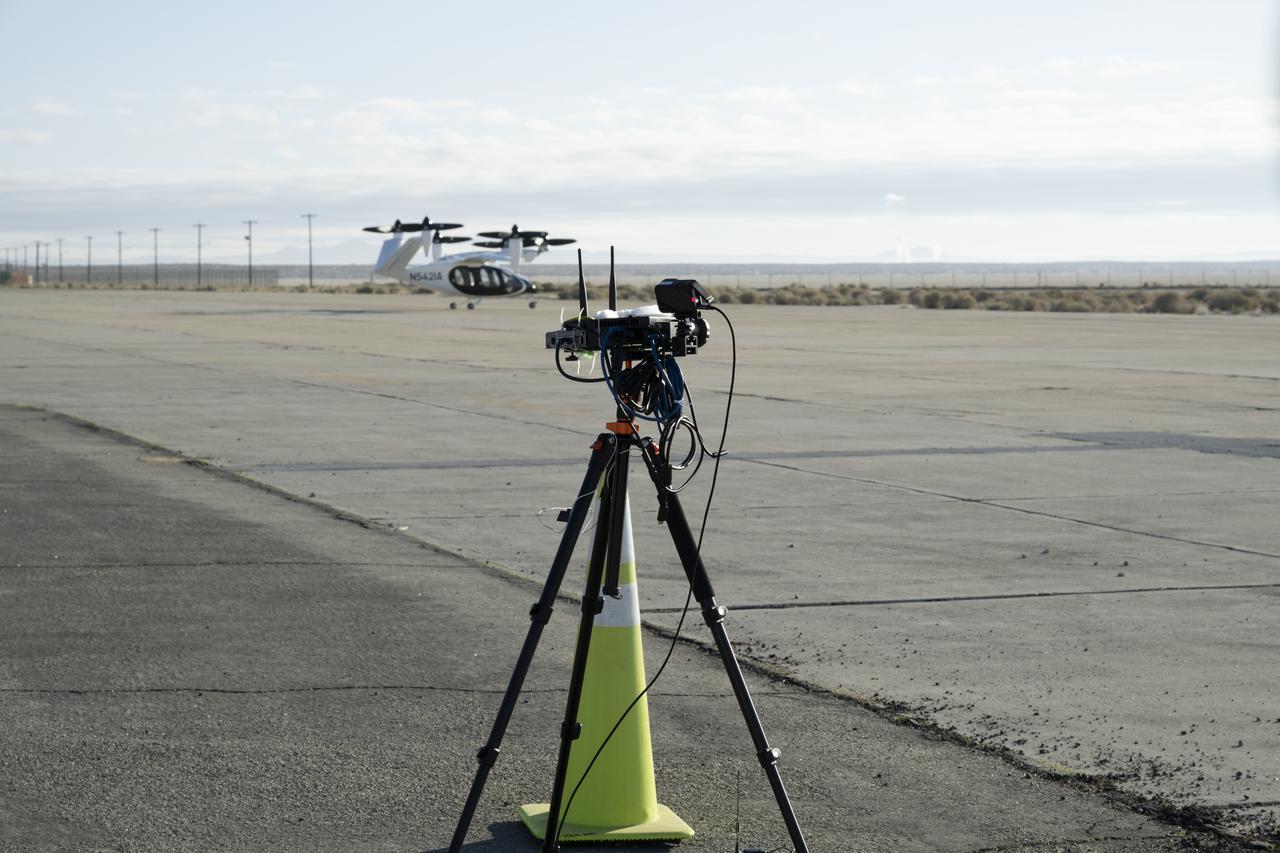
One of several NASA distributed sensing ground nodes is set up in the foreground while an experimental air taxi aircraft owned by Joby Aviation sits in the background near NASA’s Armstrong Flight Research Center in Edwards, California, on March 12, 2025. NASA is collecting information during this study to help advance future air taxi flights, especially those occurring in cities, to track aircraft moving through traffic corridors and around landing zones.
NASA and Joby Research Near NASA’s Armstrong Flight Research Center
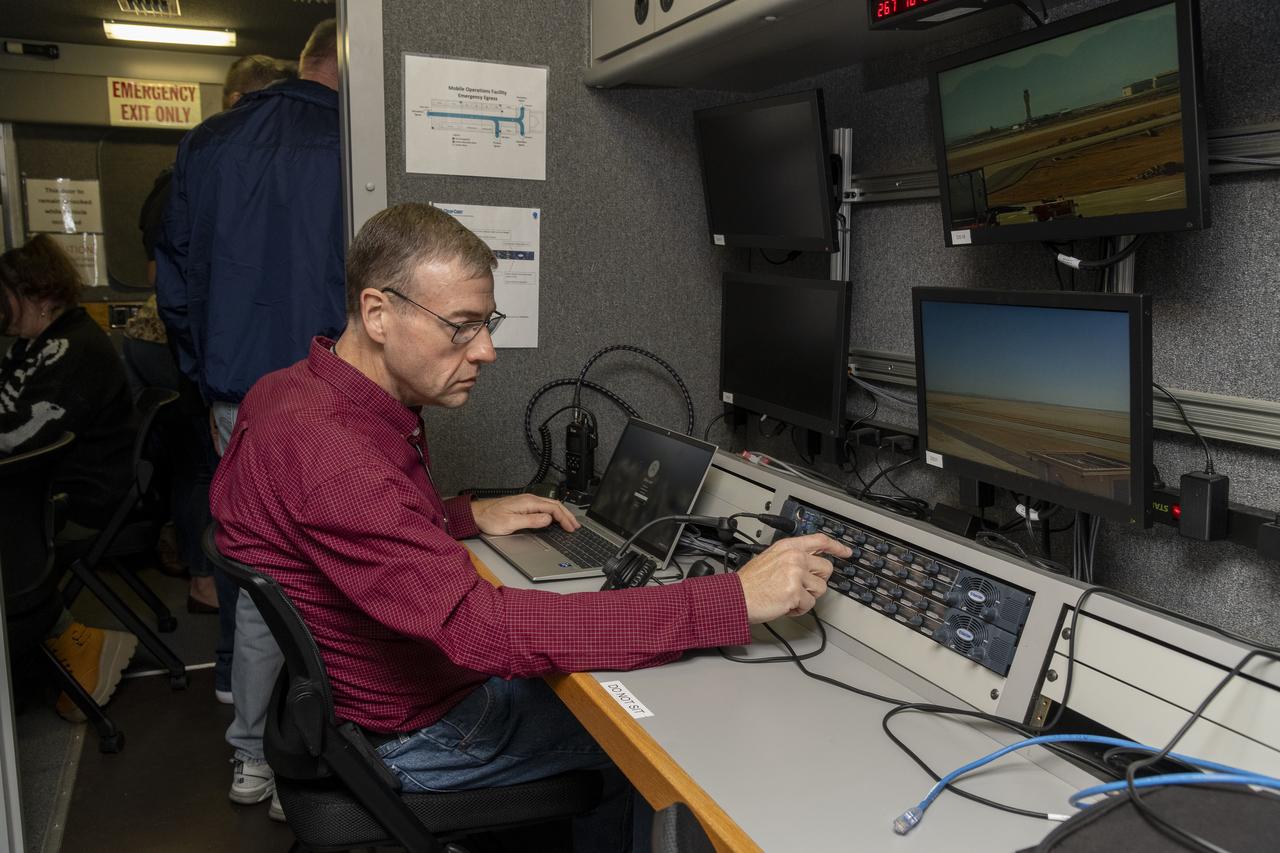
Working in the Mobile Operations Facility at NASA’s Armstrong Flight Research Center in Edwards, California, NASA Advanced Air Mobility researcher Dennis Iannicca adjusts a control board to capture Automatic Dependent Surveillance-Broadcast (ADS-B) data during test flights. The data will be used to understand ADS-B signal loss scenarios for air taxi flights in urban areas.
NASA researcher Dennis Iannicca adjusts a control board in the Mobile Operations Facility to gather Automatic Dependent Surveillance-Broadcast signal data at NASA’s Armstrong Flight Research Center in Edwards, California on Sept. 23, 2024.
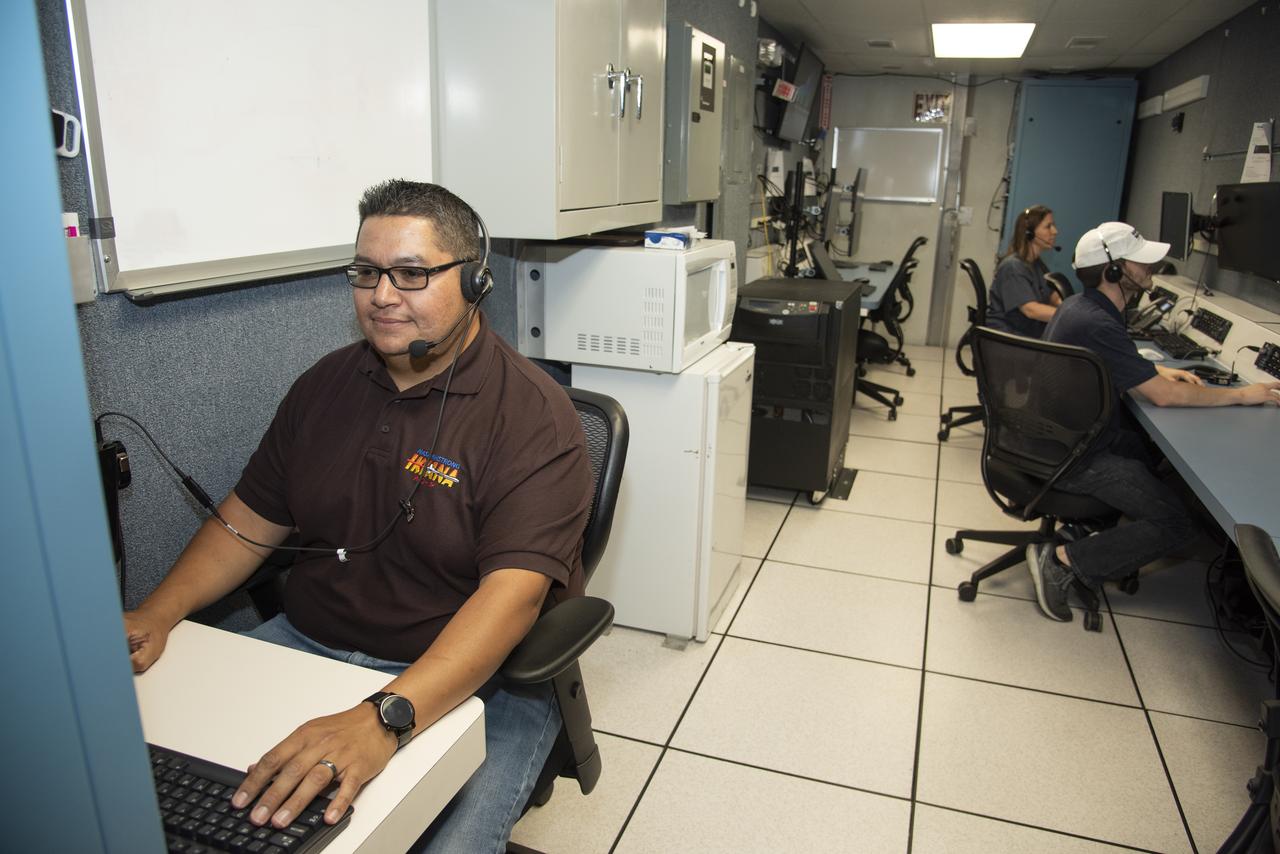
Jesus Vazquez, Zach Springer and Sonja Belcher, from left, are at stations in the Mobile Operations Facility 5 at NASA’s Armstrong Flight Research Center in California. The mobile station support included the Pad Abort-1 test of the Orion Launch Abort System at White Sands, New Mexico, the first Dream Chaser air launch and most recently supported the TigerShark remotely piloted aircraft for the Unmanned Aircraft Systems Integration in the National Airspace System flights.
DATR Supports Space Communication, Research Flights
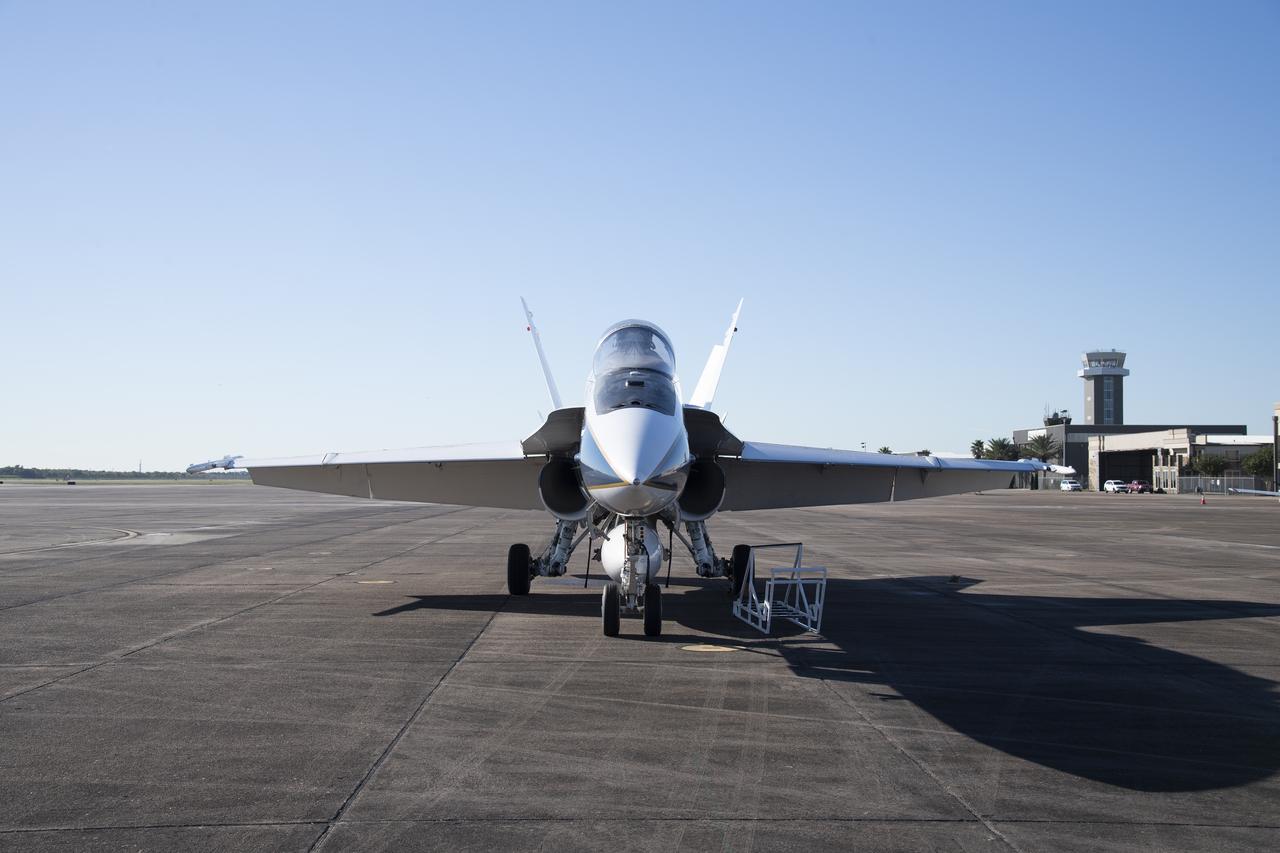
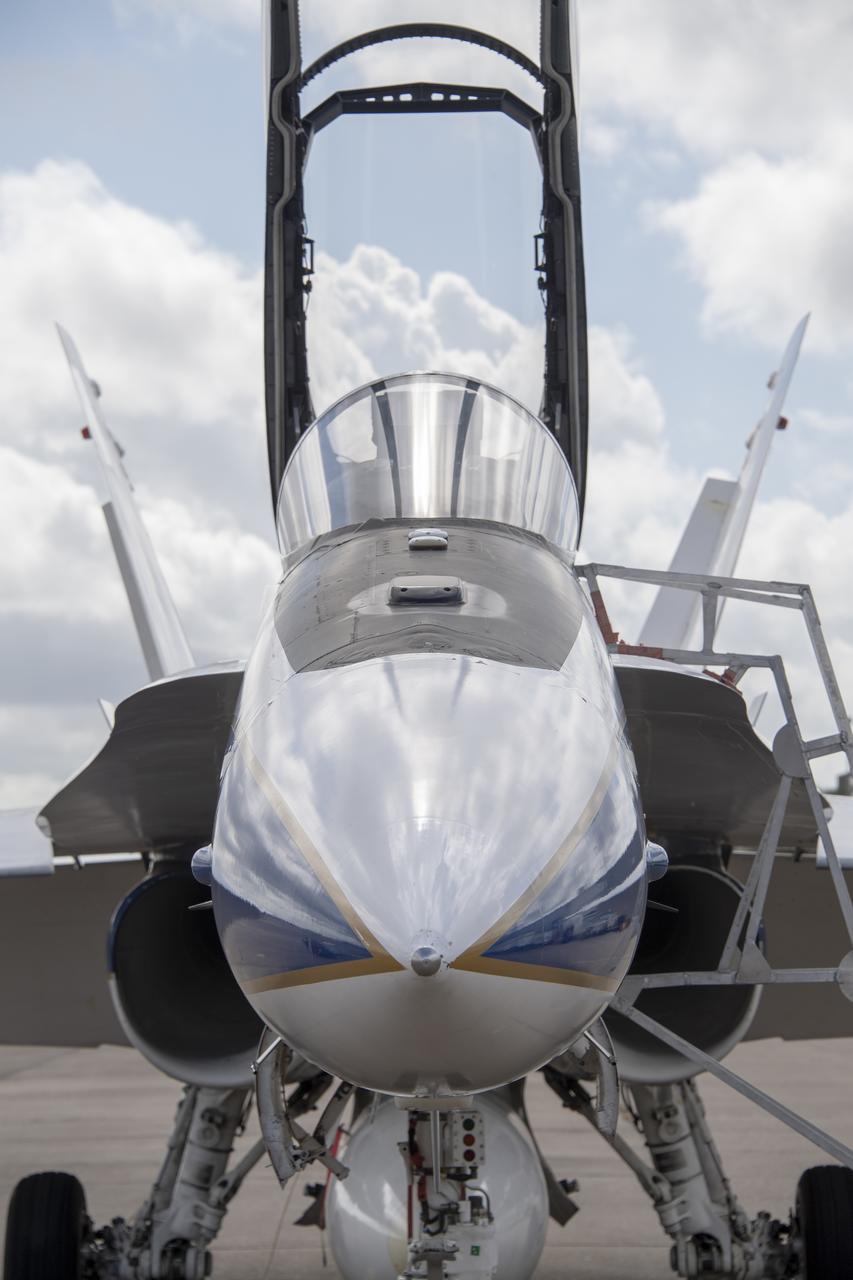
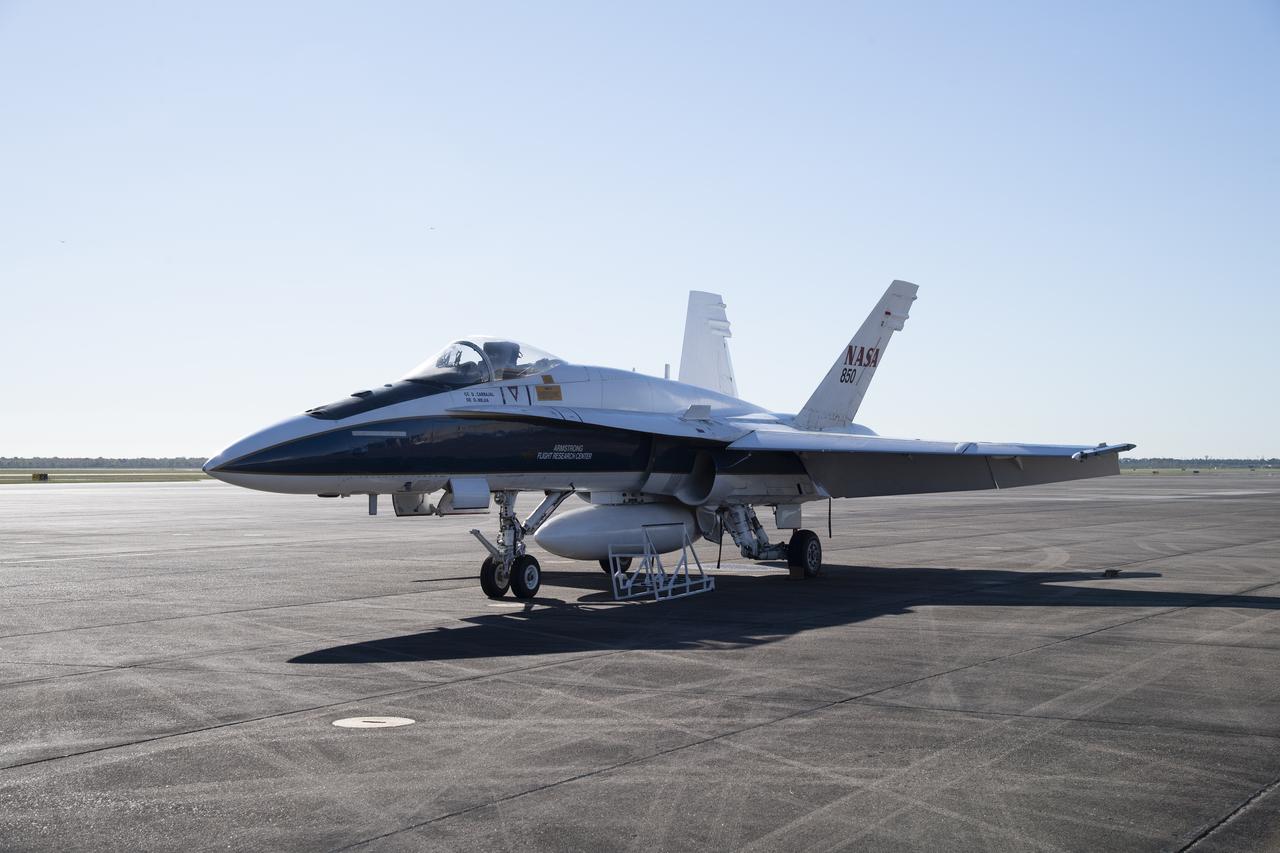
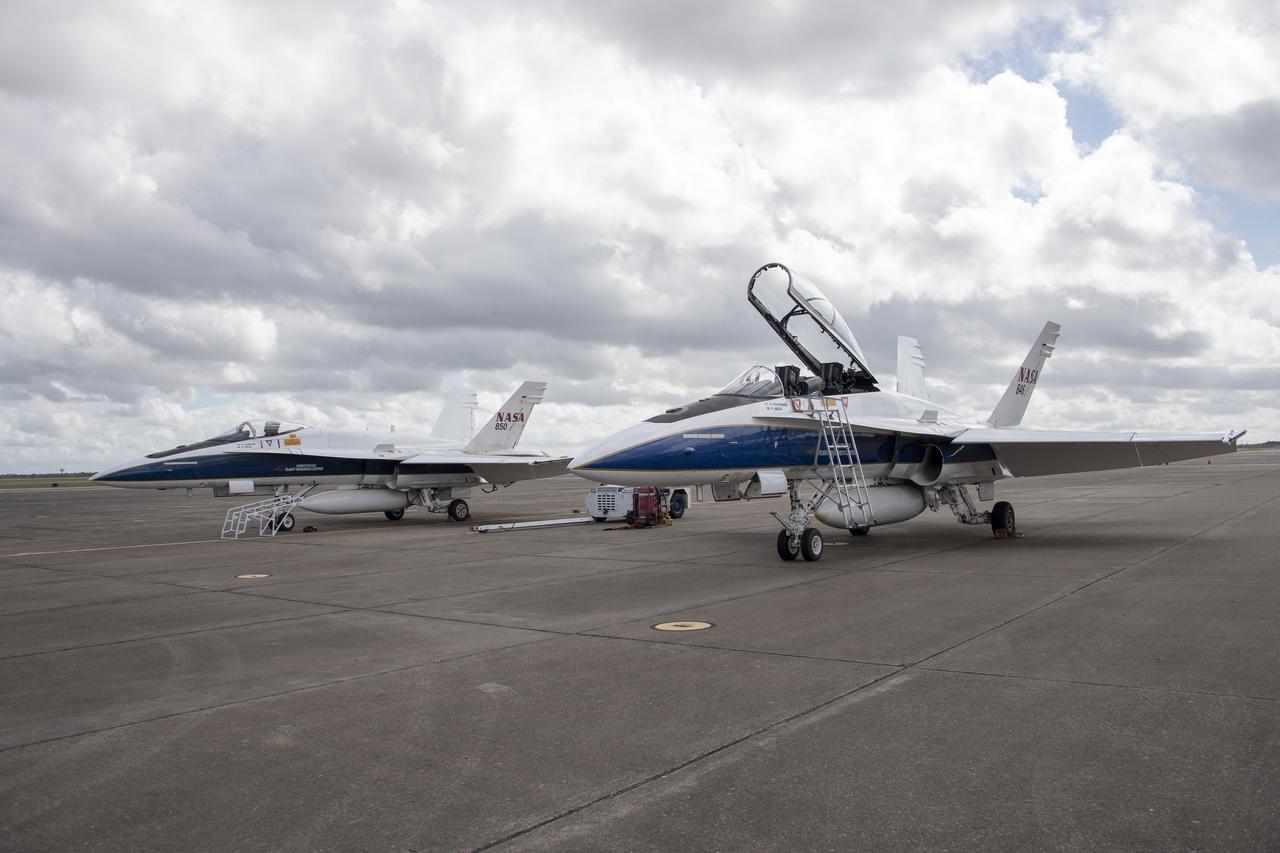
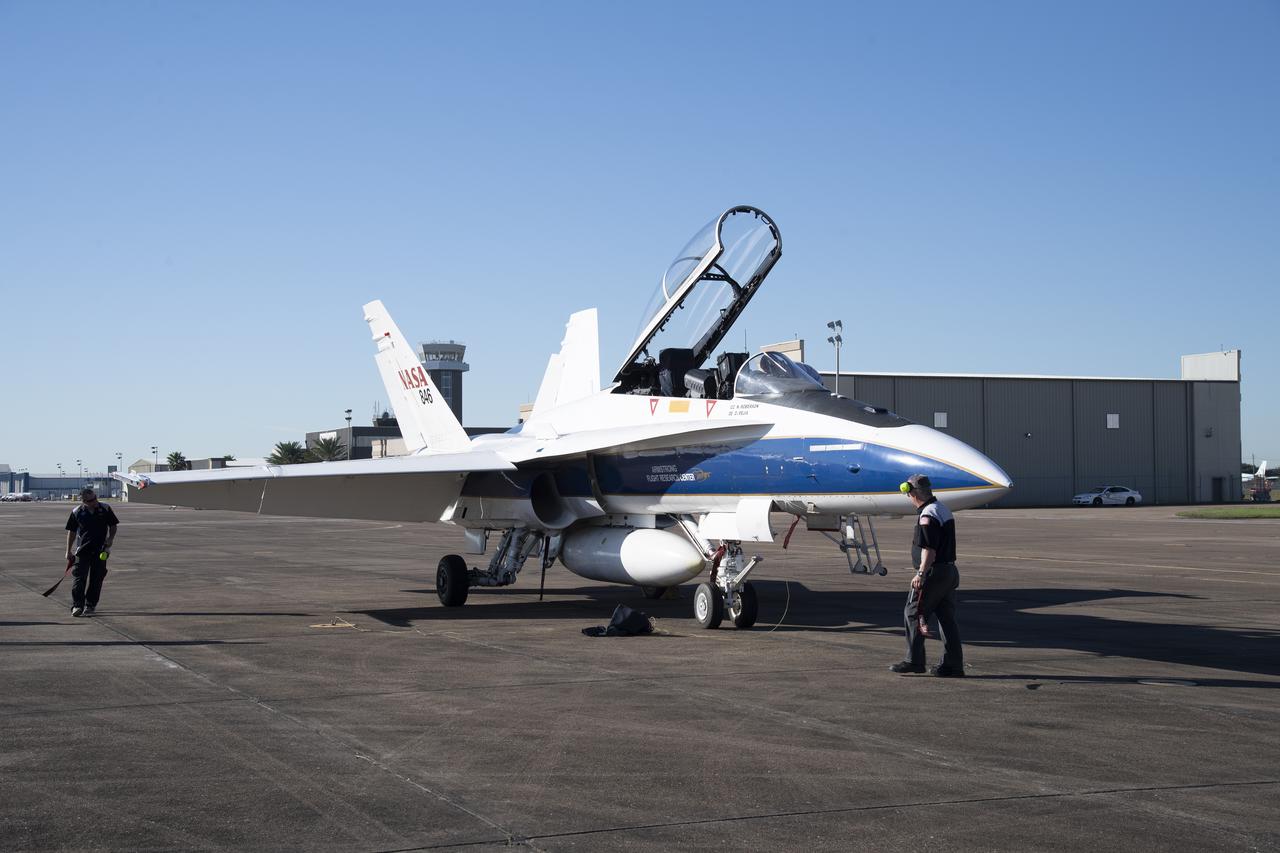
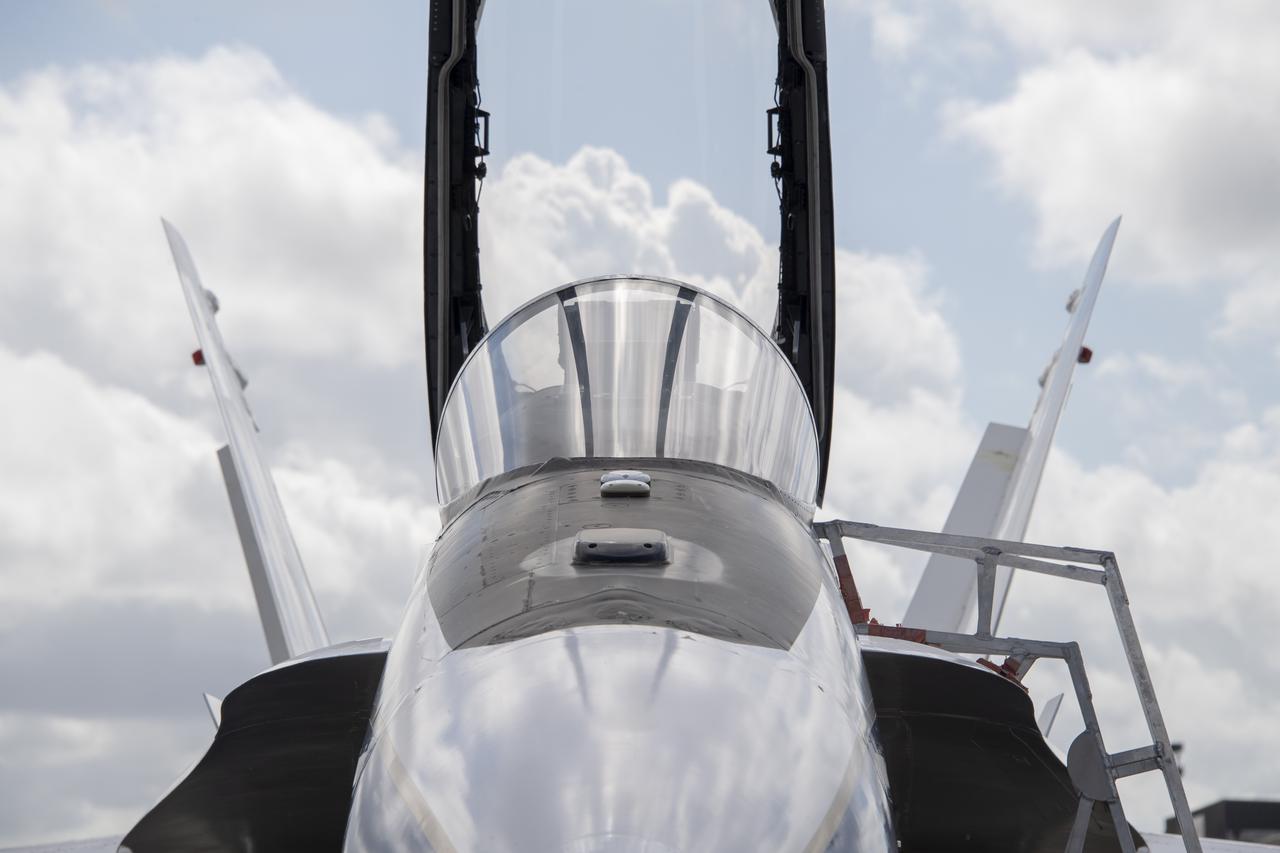
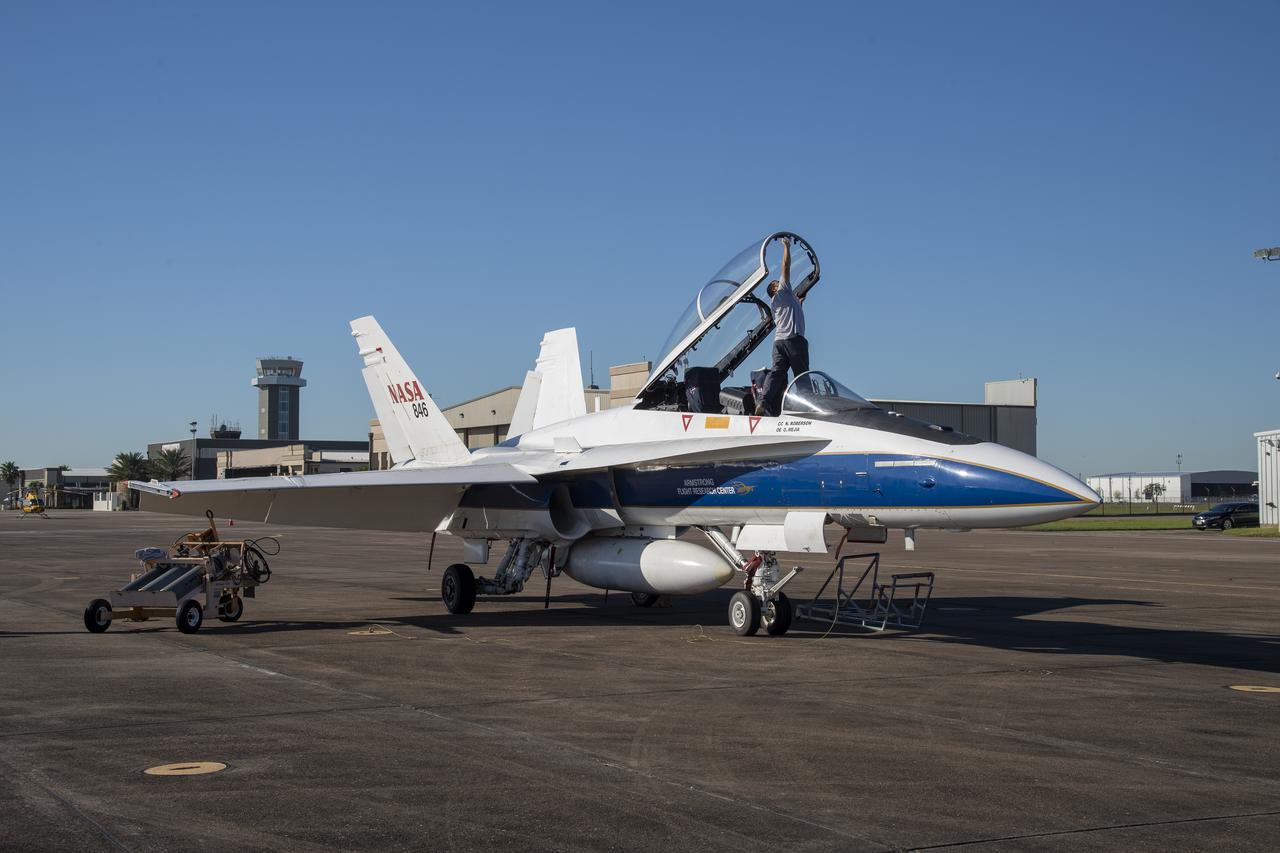
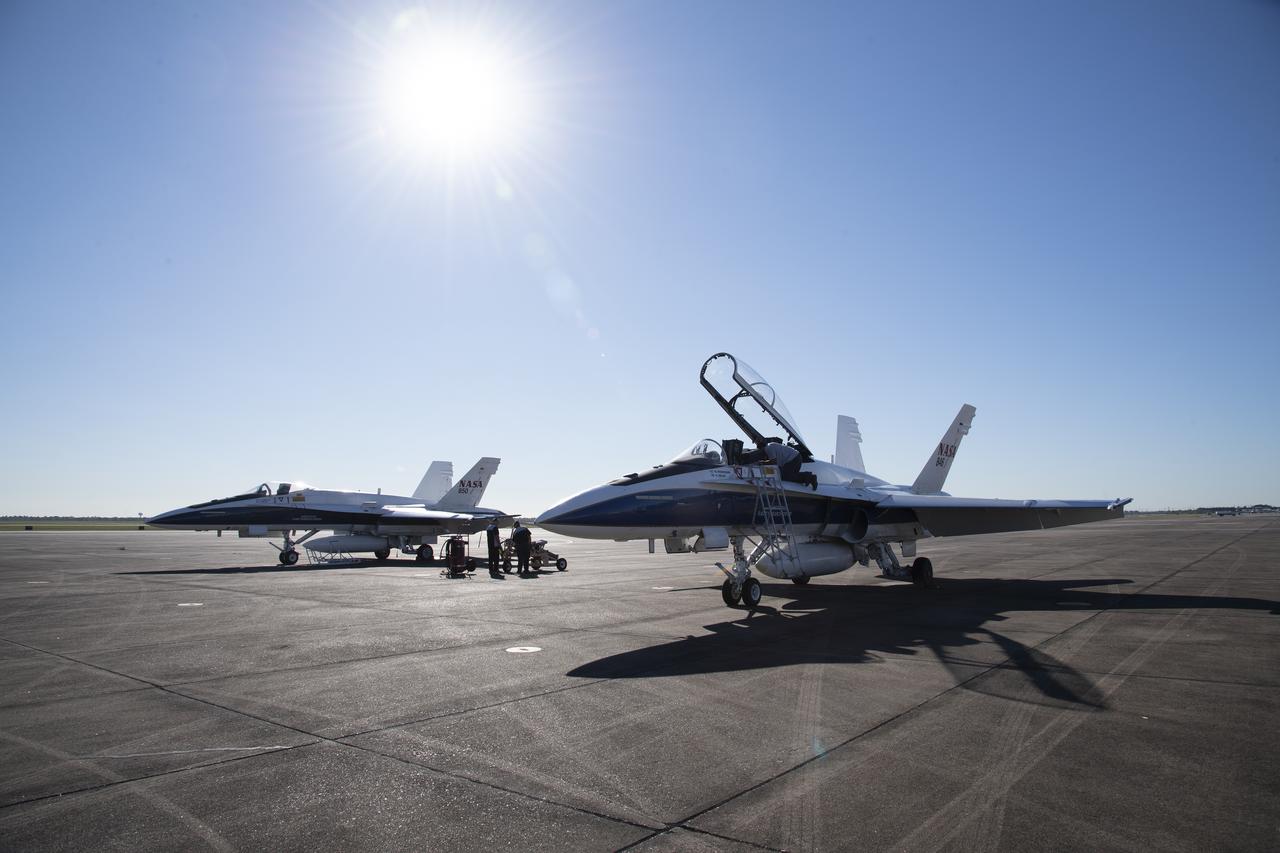
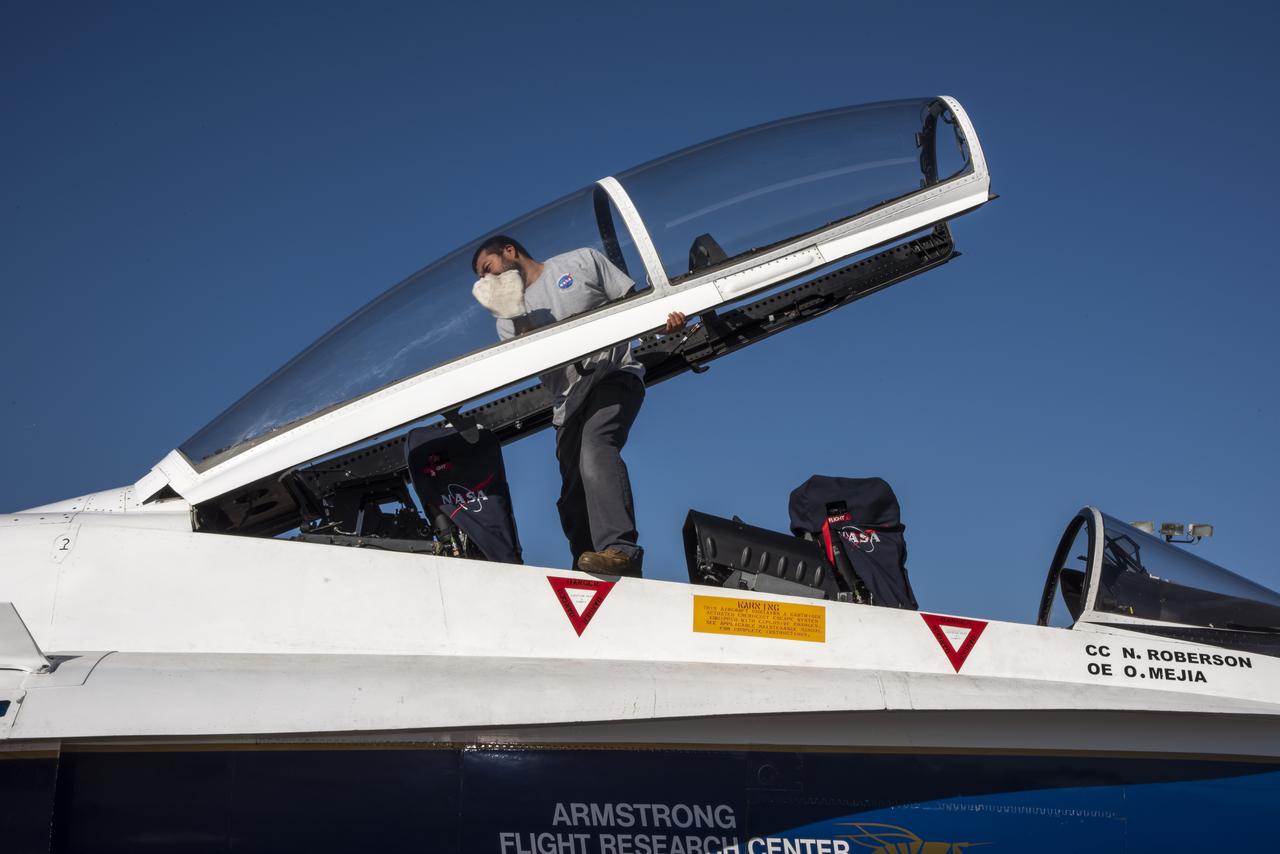
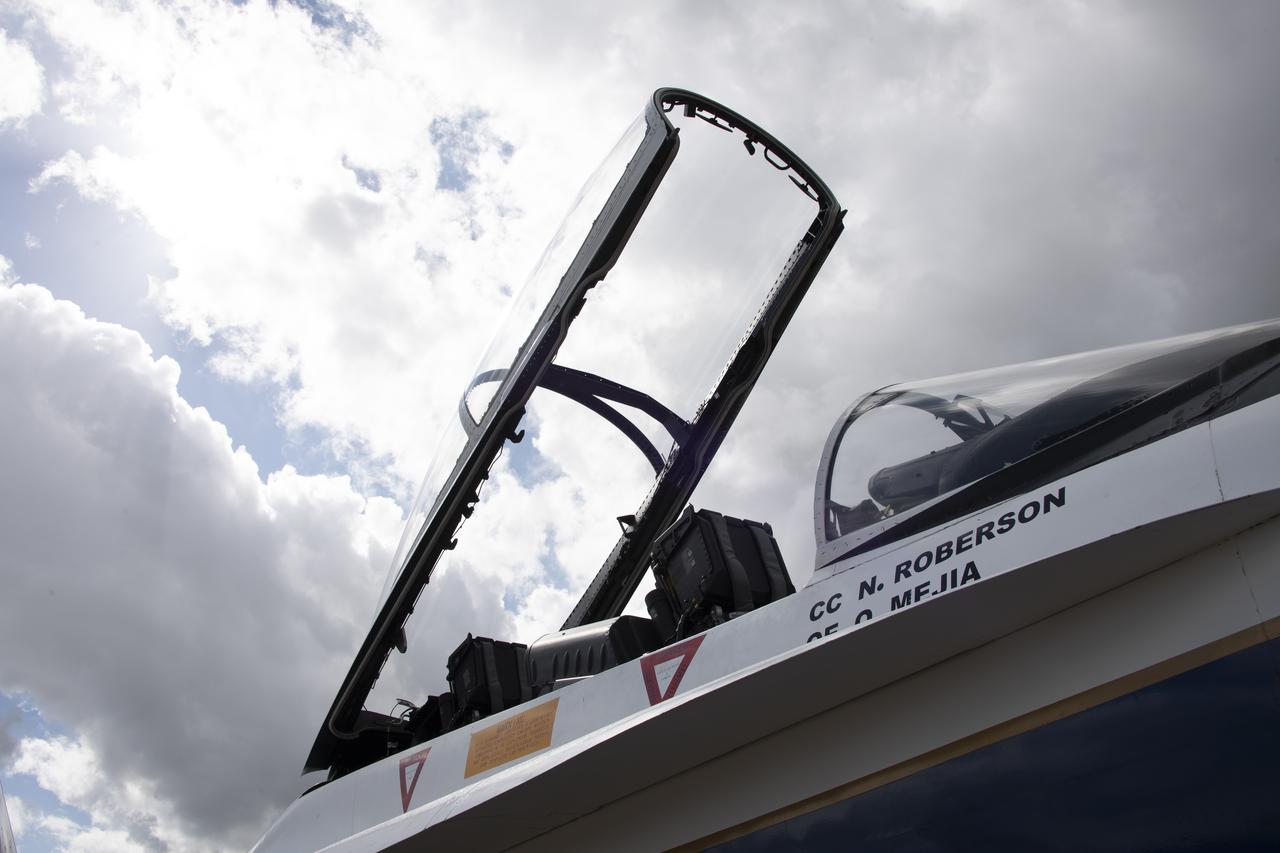
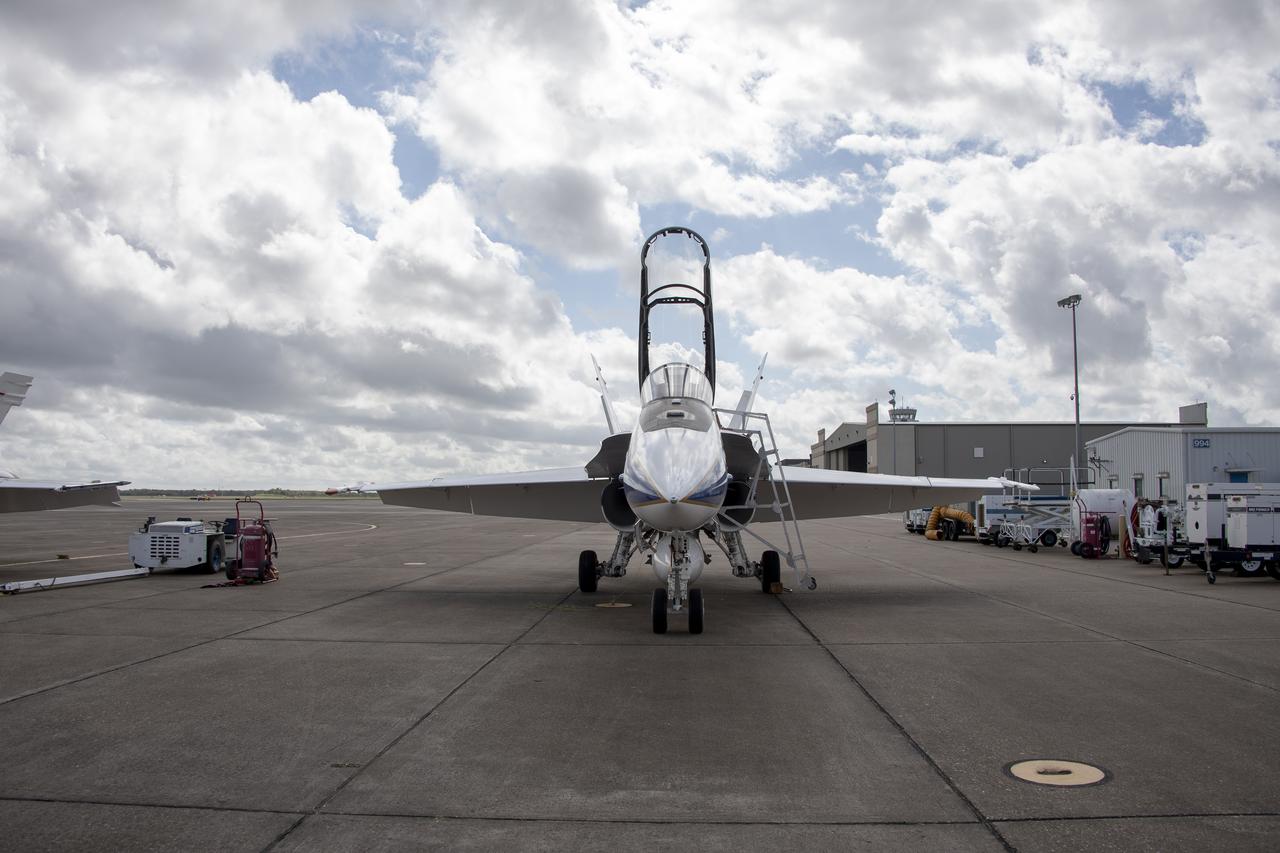
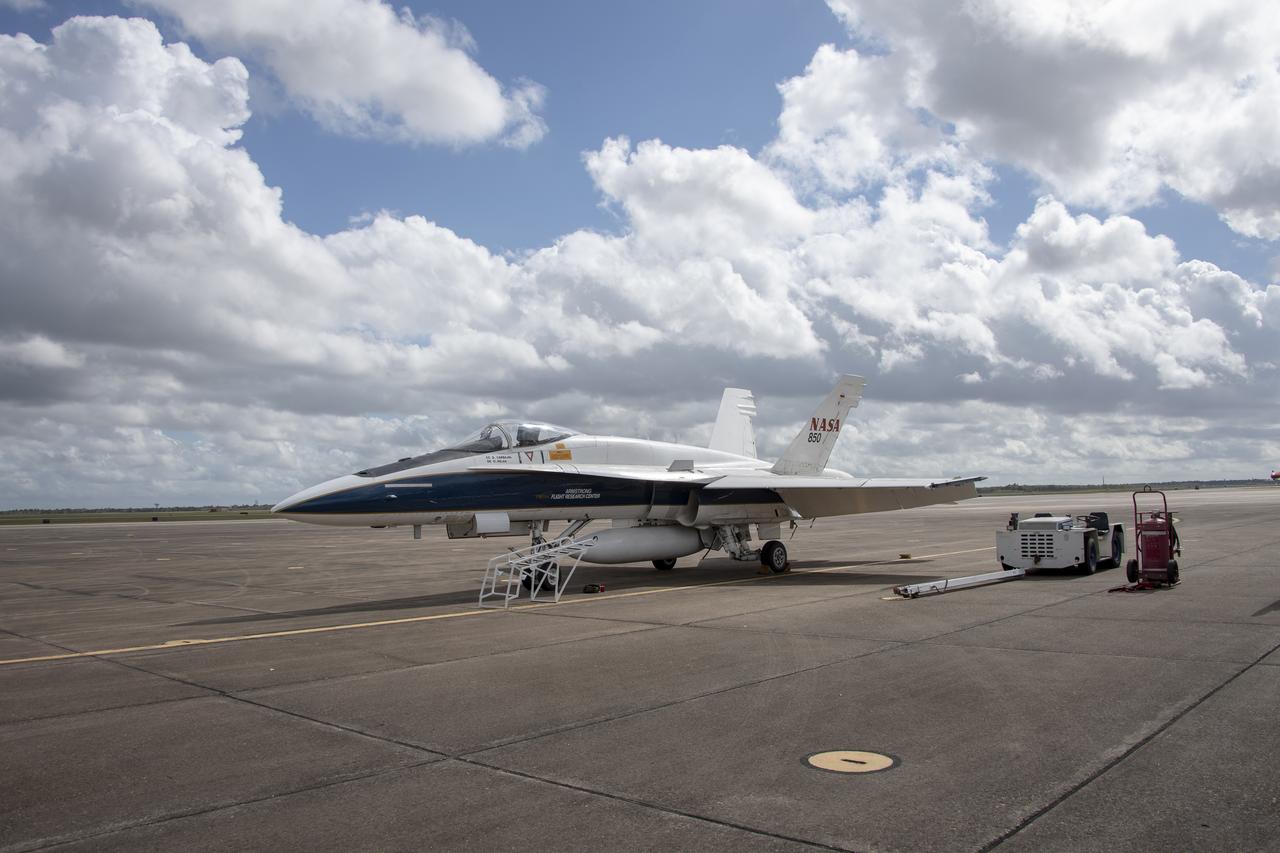
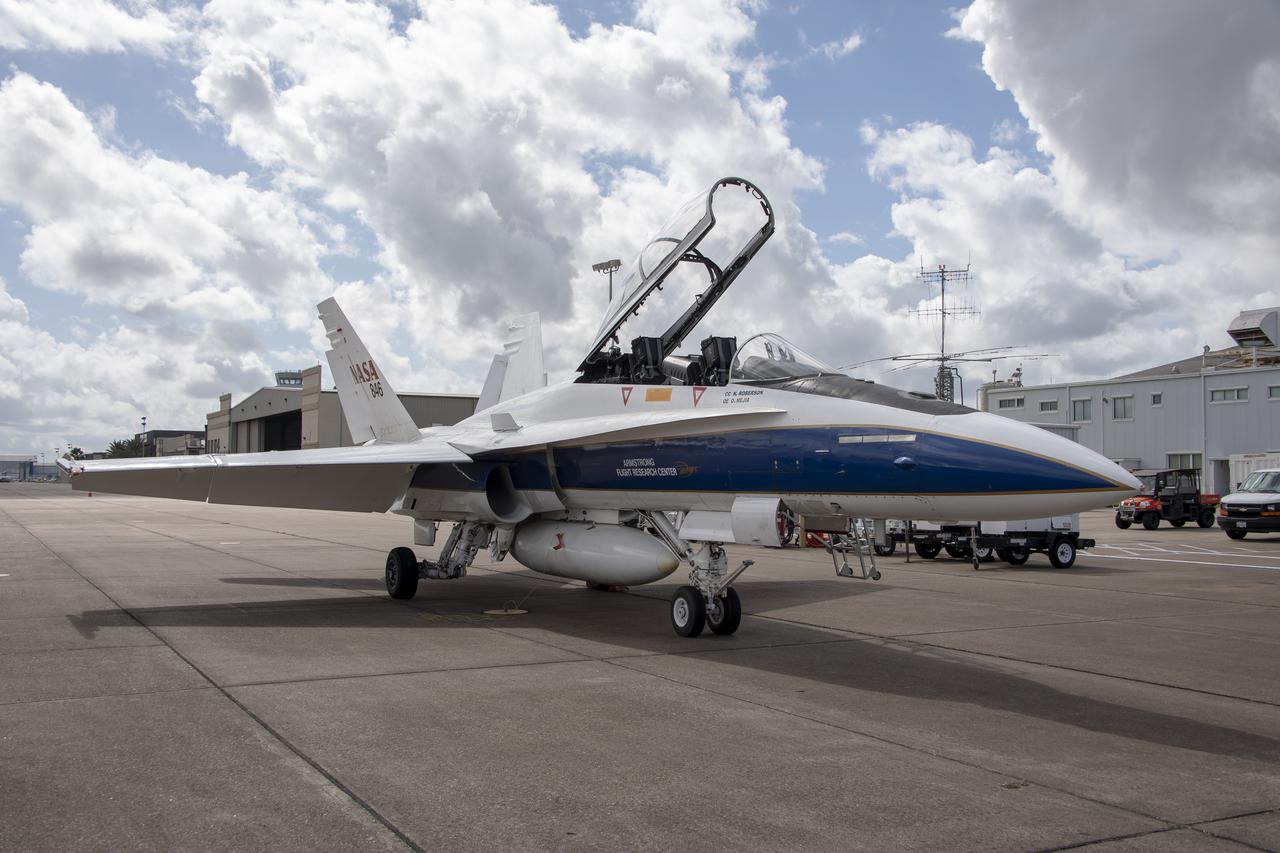
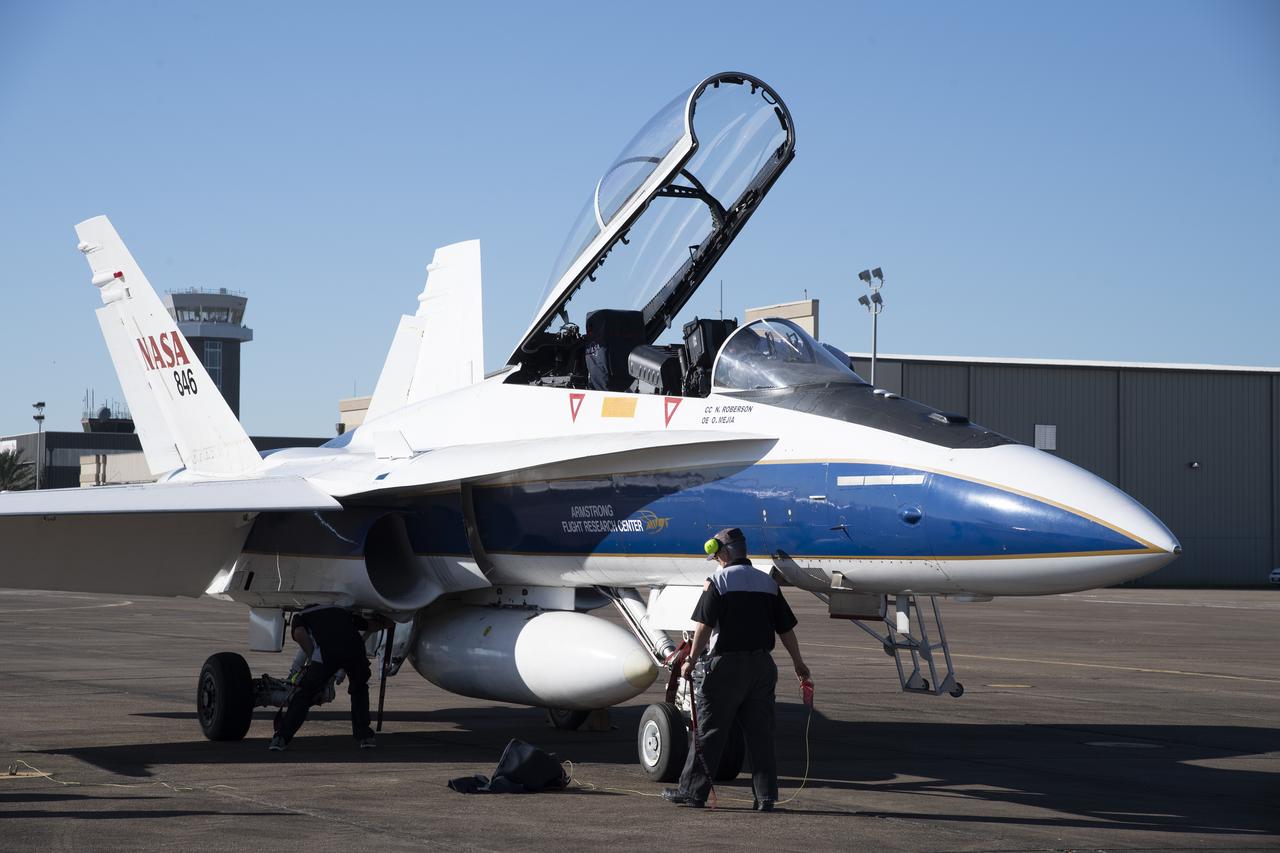
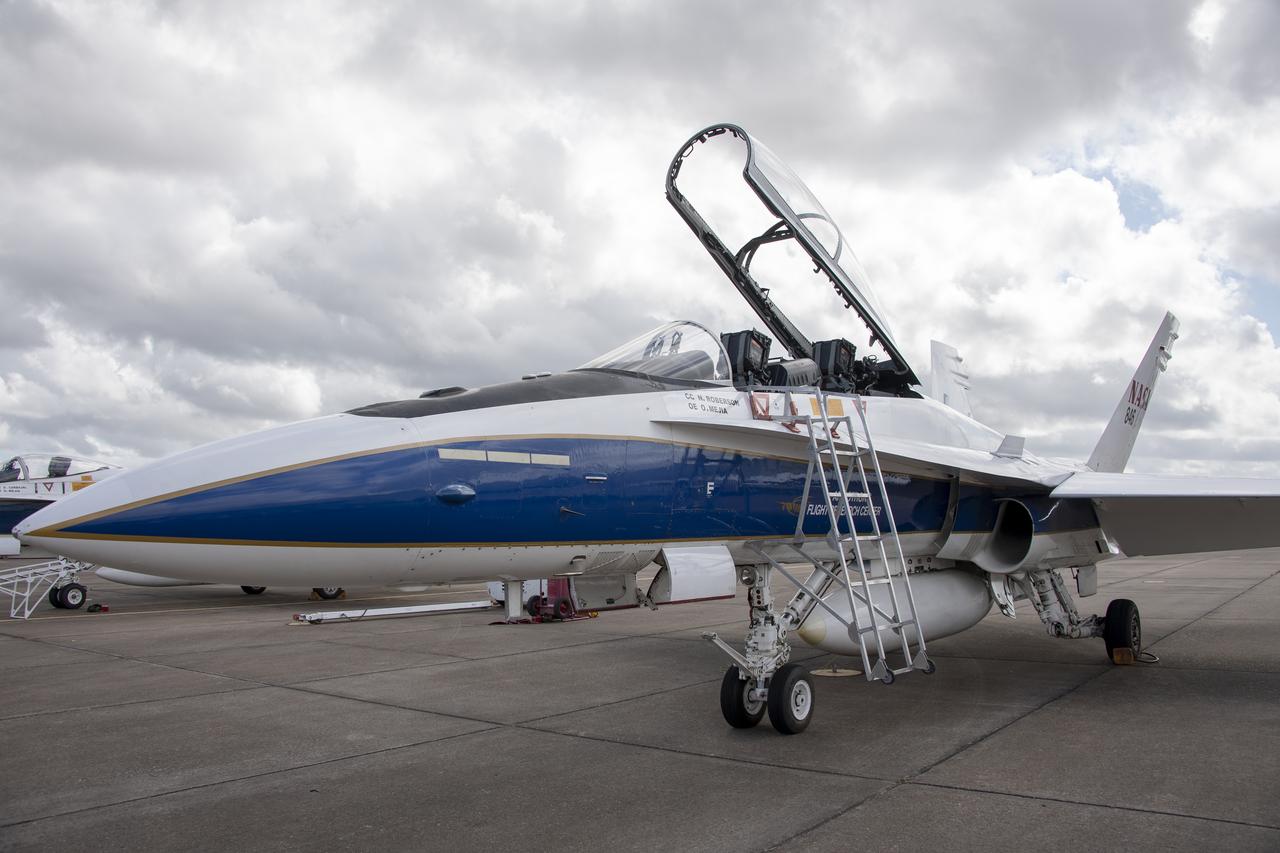
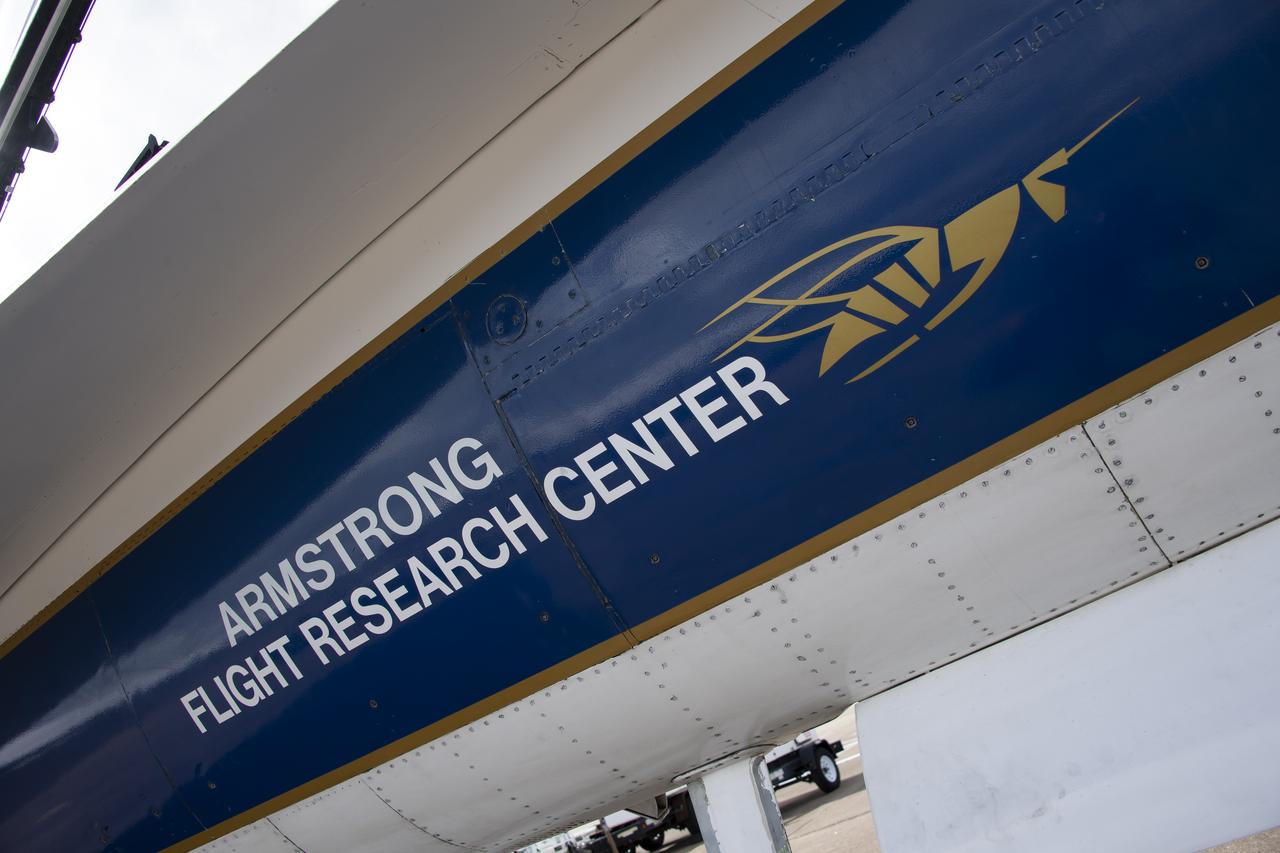
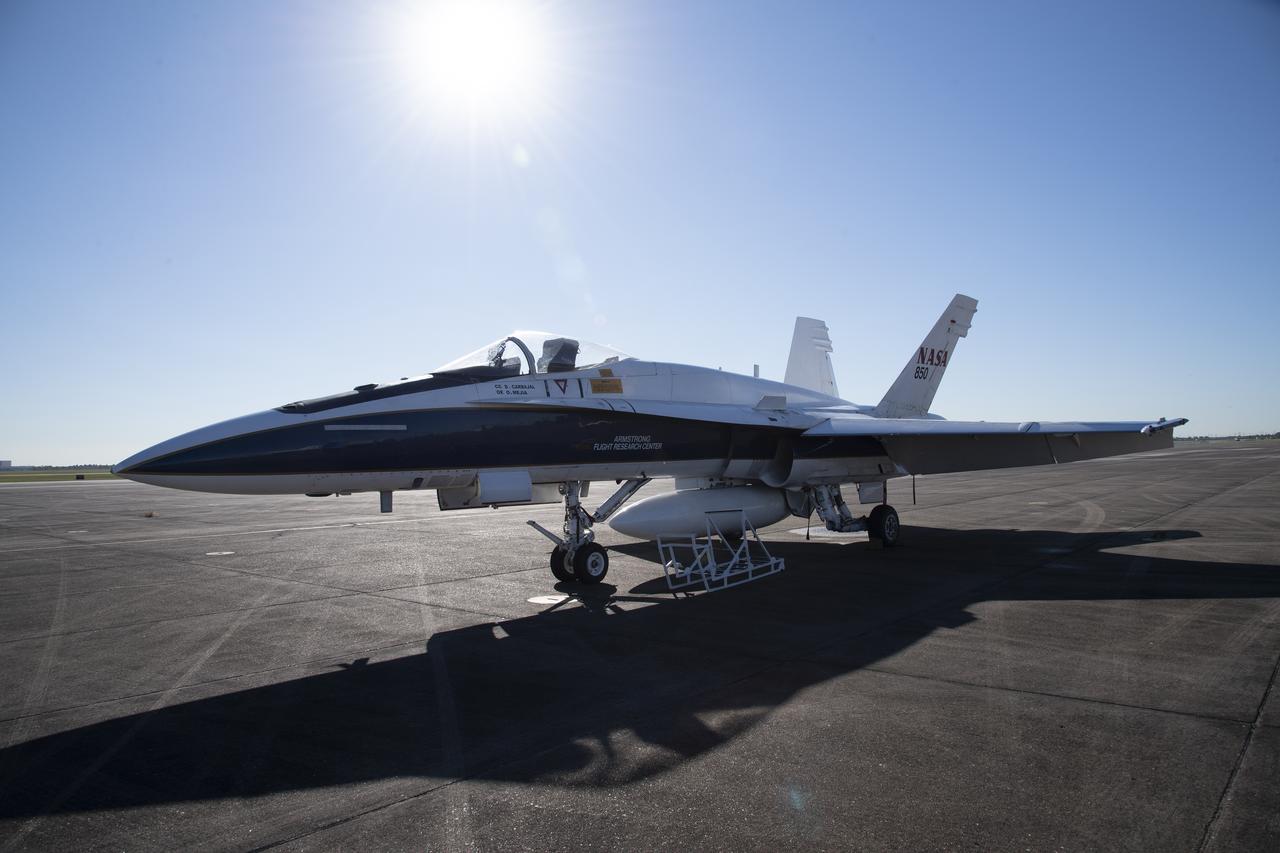
NASA's F/A-18 research aircraft stands ready prior to a QSF18 supersonic research flight off the coast of Galveston, Texas.
NASA F/A-18 Research Aircraft Prior to QSF18 Flight
NASA's F/A-18 research aircraft stands ready prior to a QSF18 supersonic research flight off the coast of Galveston, Texas.
NASA F/A-18 Research Aircraft Prior to QSF18 Flight
NASA's F/A-18 research aircraft stands ready prior to a QSF18 supersonic research flight off the coast of Galveston, Texas.
NASA F/A-18 Research Aircraft Prior to QSF18 Flight
NASA's F/A-18 research aircraft stands ready prior to a QSF18 supersonic research flight off the coast of Galveston, Texas.
NASA F/A-18 Research Aircraft Prior to QSF18 Flight
NASA’s F/A-18 research aircraft stands ready prior to a QSF18 supersonic research flight off the coast of Galveston, Texas.
NASA F/A-18 Research Aircraft Prior to QSF18 Flight
NASA’s F/A-18 research aircraft stands ready prior to a QSF18 supersonic research flight off the coast of Galveston, Texas.
NASA F/A-18 Research Aircraft Prior to QSF18 Flight
NASA's F/A-18 research aircraft stands ready prior to a QSF18 supersonic research flight off the coast of Galveston, Texas.
NASA F/A-18 Research Aircraft Prior to QSF18 Flight
NASA’s F/A-18 research aircraft stands ready prior to a QSF18 supersonic research flight off the coast of Galveston, Texas.
NASA F/A-18 Research Aircraft Prior to QSF18 Flight
NASA's F/A-18 research aircraft stands ready prior to a QSF18 supersonic research flight off the coast of Galveston, Texas.
NASA F/A-18 Research Aircraft Prior to QSF18 Flight
NASA's F/A-18 research aircraft stands ready prior to a QSF18 supersonic research flight off the coast of Galveston, Texas.
NASA F/A-18 Research Aircraft Prior to QSF18 Flight
NASA's F/A-18 research aircraft stands ready prior to a QSF18 supersonic research flight off the coast of Galveston, Texas.
NASA F/A-18 Research Aircraft Prior to QSF18 Flight
NASA’s F/A-18 research aircraft stands ready prior to a QSF18 supersonic research flight off the coast of Galveston, Texas.
NASA F/A-18 Research Aircraft Prior to QSF18 Flight
NASA’s F/A-18 research aircraft stands ready prior to a QSF18 supersonic research flight off the coast of Galveston, Texas.
NASA F/A-18 Research Aircraft Prior to QSF18 Flight
NASA's F/A-18 research aircraft stands ready prior to a QSF18 supersonic research flight off the coast of Galveston, Texas.
NASA F/A-18 Research Aircraft Prior to QSF18 Flight
NASA’s F/A-18 research aircraft stands ready prior to a QSF18 supersonic research flight off the coast of Galveston, Texas.
NASA F/A-18 Research Aircraft Prior to QSF18 Flight
NASA’s F/A-18 research aircraft stands ready prior to a QSF18 supersonic research flight off the coast of Galveston, Texas.
NASA F/A-18 Research Aircraft Prior to QSF18 Flight
NASA’s F/A-18 research aircraft stands ready prior to a QSF18 supersonic research flight off the coast of Galveston, Texas.
NASA F/A-18 Research Aircraft Prior to QSF18 Flight
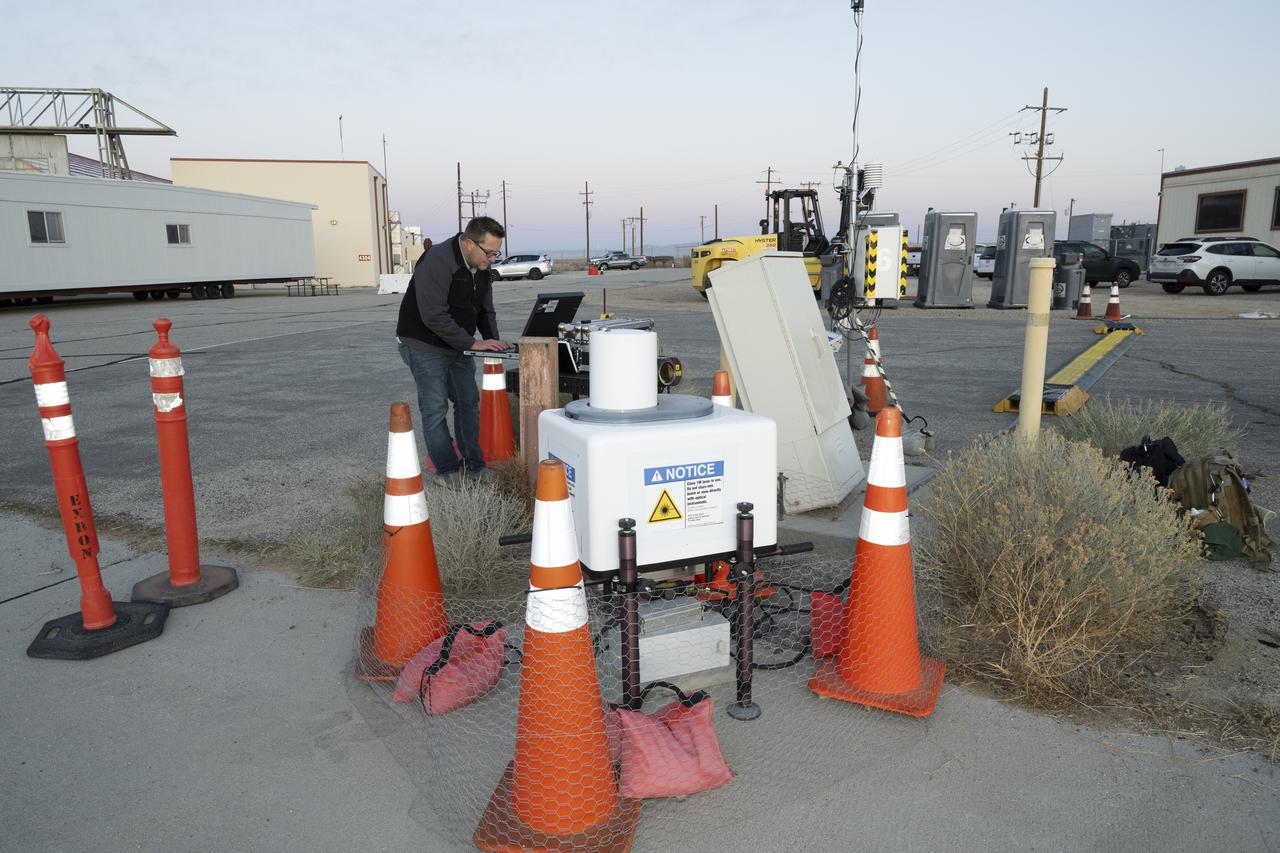
NASA aeronautical meteorologist Luke Bard adjusts one of several wind lidar (light detection and ranging) sensors near NASA’s Armstrong Flight Research Center in Edwards, California, on March 12, 2025, in preparation to collect data from Joby Aviation’s experimental air taxi aircraft. NASA is collecting information during this study to help advance weather-tolerant air taxi operations for the entire industry
NASA and Joby Research Near NASA’s Armstrong Flight Research Center
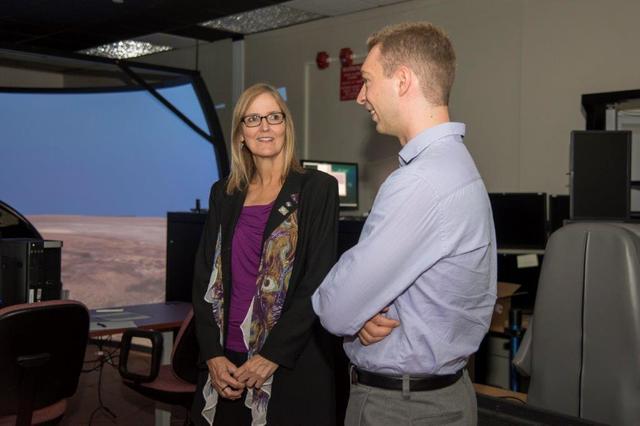
Jesse Brady, an early career NASA employee at NASA’s Armstrong Flight Research Center at Edwards, California, discusses a NASA aircraft simulation project with NASA Acting Deputy Chief Technologist Vicki Crisp. The simulation accesses aircraft controllability with limited pilot visibility, using only front view cameras and side windows.
NASA Acting Deputy Chief Technologist Vicki Crisp and Jesse Brady Discuss an Aircraft Simulation Project
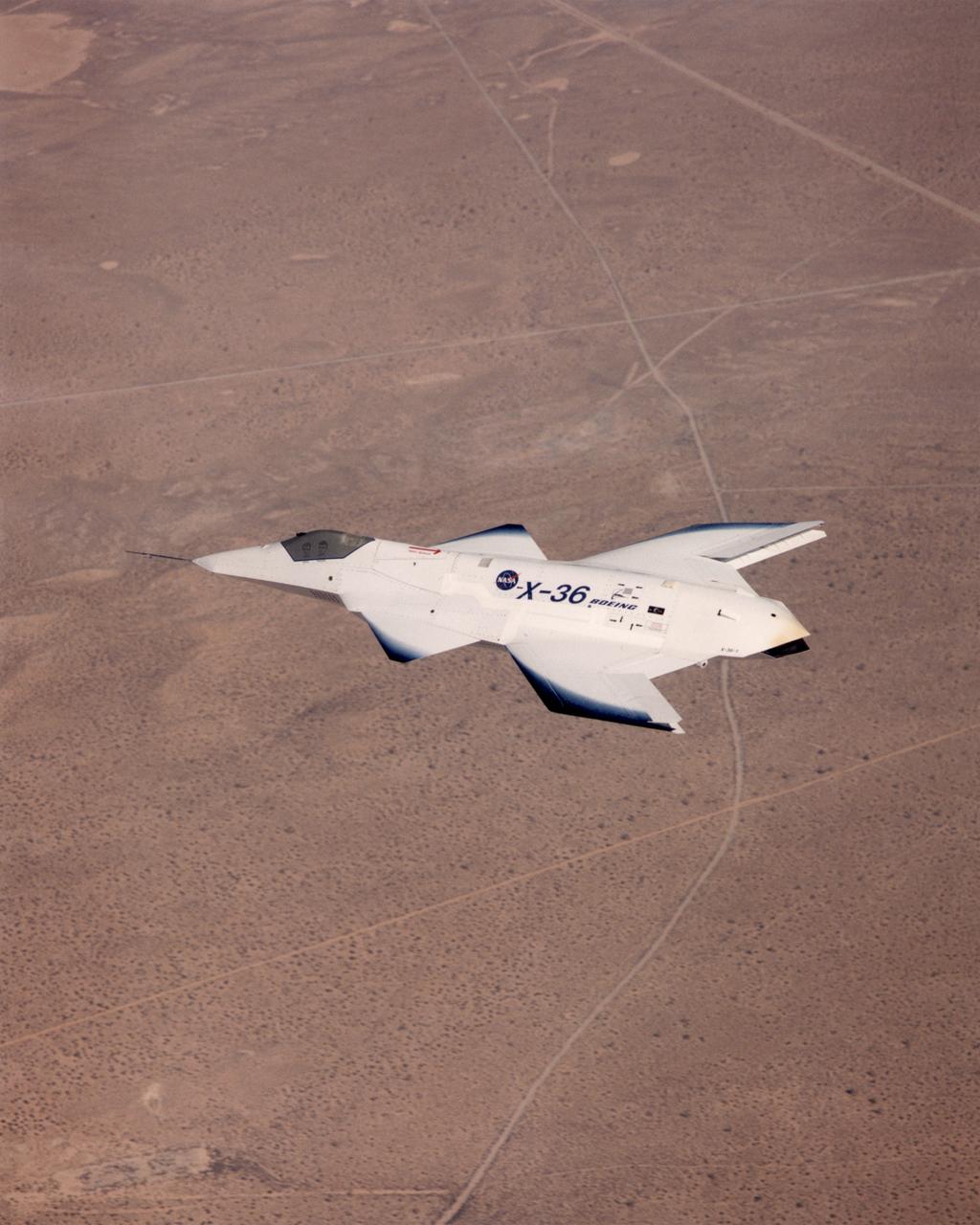
The tailless X-36 technology demonstrator research aircraft cruises over the California desert at low altitude during a 1997 research flight.
X-36 Tailless Fighter Agility Research Aircraft in flight
A joint NASA/Boeing team completed the first phase of flight tests on the unique X-48B Blended Wing Body aircraft at NASA's Dryden Flight Research Center at Edwards, CA. The team completed the 80th and last flight of the project's first phase on March 19, 2010.
First Phase of X-48B Flight Tests Completed
The Preliminary Research Aerodynamic Design to Land on Mars, or Prandtl-M, flies during a test flight. A new proposal based on the aircraft recently won an agencywide technology grant.
Subscale Glider Could Assist in Weather Studies, Prediction
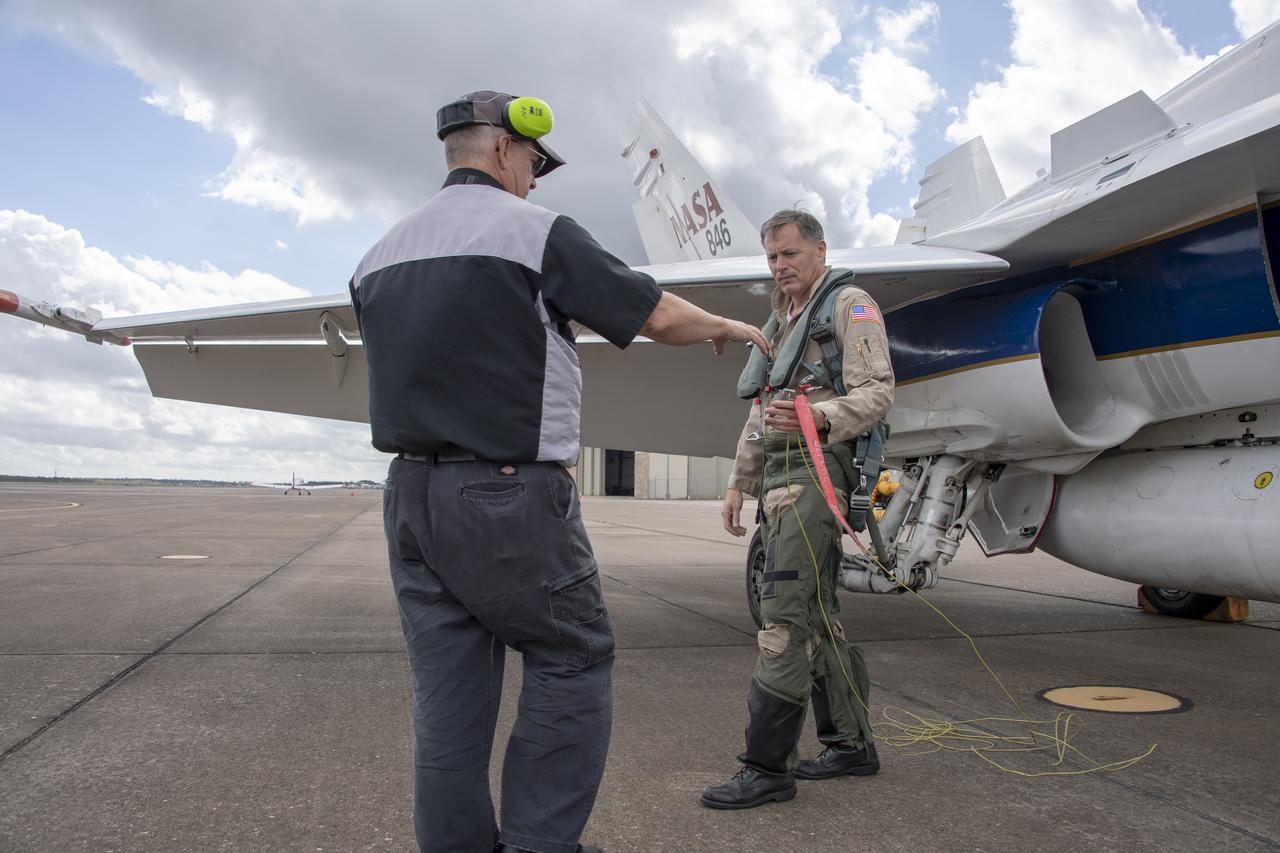
NASA test pilot Wayne “Ringo” Ringelberg and photographer Carla Thomas prepare to take off for a supersonic research flight in support of the QSF18 campaign off the coast of Texas. NASA photographers and videographers take part in operations to support mission documentation.
NASA F/A-18 Prepares for Supersonic Research Flight
NASA test pilot Wayne “Ringo” Ringelberg and photographer Carla Thomas prepare to take off for a supersonic research flight in support of the QSF18 campaign off the coast of Texas. NASA photographers and videographers take part in operations to support mission documentation.
NASA F/A-18 Prepares for Supersonic Research Flight
NASA test pilot Wayne “Ringo” Ringelberg and photographer Carla Thomas prepare to take off for a supersonic research flight in support of the QSF18 campaign off the coast of Texas. NASA photographers and videographers take part in operations to support mission documentation.
NASA F/A-18 Prepares for Supersonic Research Flight
NASA test pilot Wayne “Ringo” Ringelberg and photographer Carla Thomas prepare to take off for a supersonic research flight in support of the QSF18 campaign off the coast of Texas. NASA photographers and videographers take part in operations to support mission documentation.
NASA F/A-18 Prepares for Supersonic Research Flight
NASA test pilot Wayne “Ringo” Ringelberg and photographer Carla Thomas prepare to take off for a supersonic research flight in support of the QSF18 campaign off the coast of Texas. NASA photographers and videographers take part in operations to support mission documentation.
NASA F/A-18 Prepares for Supersonic Research Flight
NASA test pilot Wayne “Ringo” Ringelberg and photographer Carla Thomas prepare to take off for a supersonic research flight in support of the QSF18 campaign off the coast of Texas. NASA photographers and videographers take part in operations to support mission documentation.
NASA F/A-18 Prepares for Supersonic Research Flight
NASA test pilot Wayne “Ringo” Ringelberg and photographer Carla Thomas prepare to take off for a supersonic research flight in support of the QSF18 campaign off the coast of Texas. NASA photographers and videographers take part in operations to support mission documentation.
NASA F/A-18 Prepares for Supersonic Research Flight
NASA test pilot Wayne "Ringo" Ringelberg and photographer Carla Thomas prepare to take off for a supersonic research flight in support of the QSF18 campaign off the coast of Texas. NASA photographers and videographers take part in operations to support mission documentation.
NASA F/A-18 Prepares for Supersonic Research Flight
NASA test pilot Wayne “Ringo” Ringelberg and photographer Carla Thomas prepare to take off for a supersonic research flight in support of the QSF18 campaign off the coast of Texas. NASA photographers and videographers take part in operations to support mission documentation.
NASA F/A-18 Prepares for Supersonic Research Flight
NASA test pilot Wayne “Ringo” Ringelberg and photographer Carla Thomas prepare to take off for a supersonic research flight in support of the QSF18 campaign off the coast of Texas. NASA photographers and videographers take part in operations to support mission documentation.
NASA F/A-18 Prepares for Supersonic Research Flight
NASA test pilot Wayne “Ringo” Ringelberg and photographer Carla Thomas prepare to take off for a supersonic research flight in support of the QSF18 campaign off the coast of Texas. NASA photographers and videographers take part in operations to support mission documentation.
NASA F/A-18 Prepares for Supersonic Research Flight
NASA test pilot Wayne “Ringo” Ringelberg and photographer Carla Thomas prepare to take off for a supersonic research flight in support of the QSF18 campaign off the coast of Texas. NASA photographers and videographers take part in operations to support mission documentation.
NASA F/A-18 Prepares for Supersonic Research Flight
NASA test pilot Wayne “Ringo” Ringelberg and photographer Carla Thomas prepare to take off for a supersonic research flight in support of the QSF18 campaign off the coast of Texas. NASA photographers and videographers take part in operations to support mission documentation.
NASA F/A-18 Prepares for Supersonic Research Flight
NASA test pilot Wayne "Ringo" Ringelberg and photographer Carla Thomas prepare to take off for a supersonic research flight in support of the QSF18 campaign off the coast of Texas. NASA photographers and videographers take part in operations to support mission documentation.
NASA F/A-18 Prepares for Supersonic Research Flight
NASA test pilot Wayne “Ringo” Ringelberg and photographer Carla Thomas prepare to take off for a supersonic research flight in support of the QSF18 campaign off the coast of Texas. NASA photographers and videographers take part in operations to support mission documentation.
NASA F/A-18 Prepares for Supersonic Research Flight
NASA test pilot Wayne “Ringo” Ringelberg and photographer Carla Thomas prepare to take off for a supersonic research flight in support of the QSF18 campaign off the coast of Texas. NASA photographers and videographers take part in operations to support mission documentation.
NASA F/A-18 Prepares for Supersonic Research Flight
NASA test pilot Wayne “Ringo” Ringelberg and photographer Carla Thomas prepare to take off for a supersonic research flight in support of the QSF18 campaign off the coast of Texas. NASA photographers and videographers take part in operations to support mission documentation.
NASA F/A-18 Prepares for Supersonic Research Flight
NASA test pilot Wayne “Ringo” Ringelberg and photographer Carla Thomas prepare to take off for a supersonic research flight in support of the QSF18 campaign off the coast of Texas. NASA photographers and videographers take part in operations to support mission documentation.
NASA F/A-18 Prepares for Supersonic Research Flight
NASA test pilot Wayne “Ringo” Ringelberg and photographer Carla Thomas prepare to take off for a supersonic research flight in support of the QSF18 campaign off the coast of Texas. NASA photographers and videographers take part in operations to support mission documentation.
NASA F/A-18 Prepares for Supersonic Research Flight