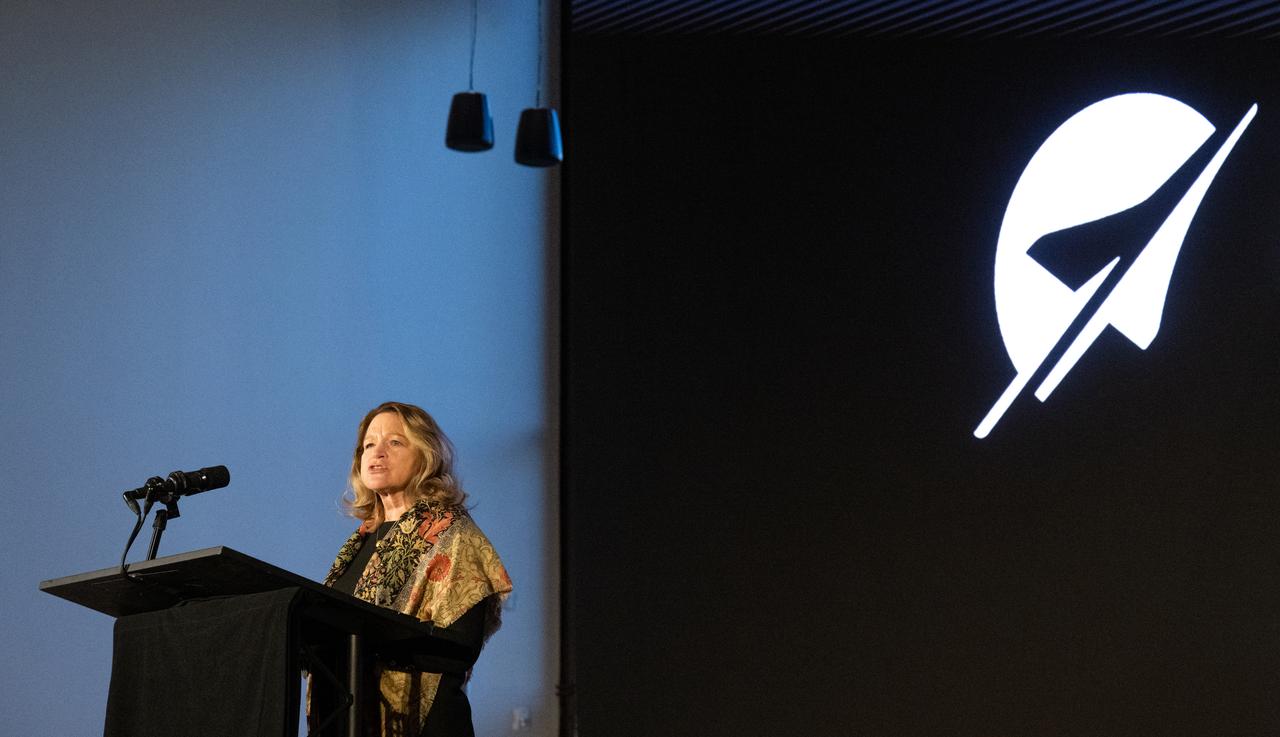
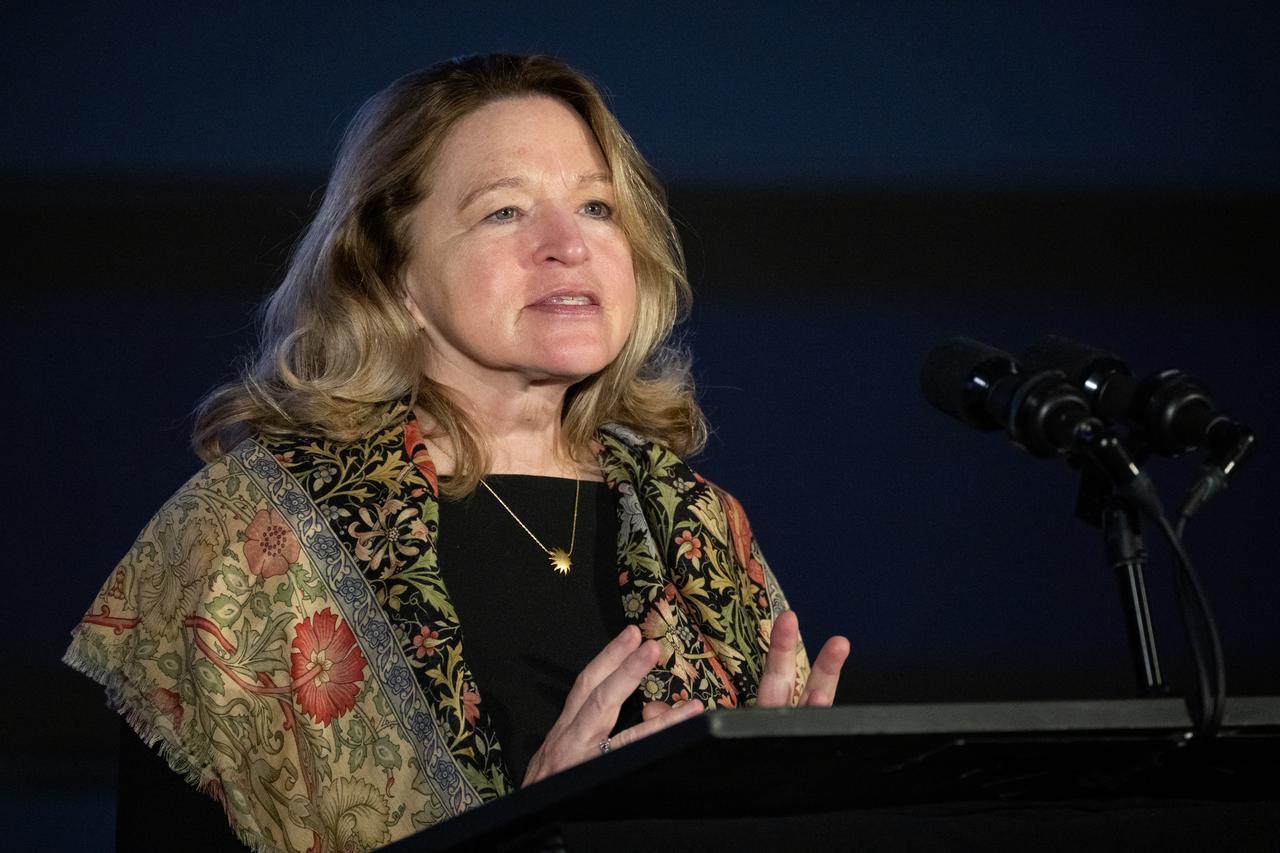
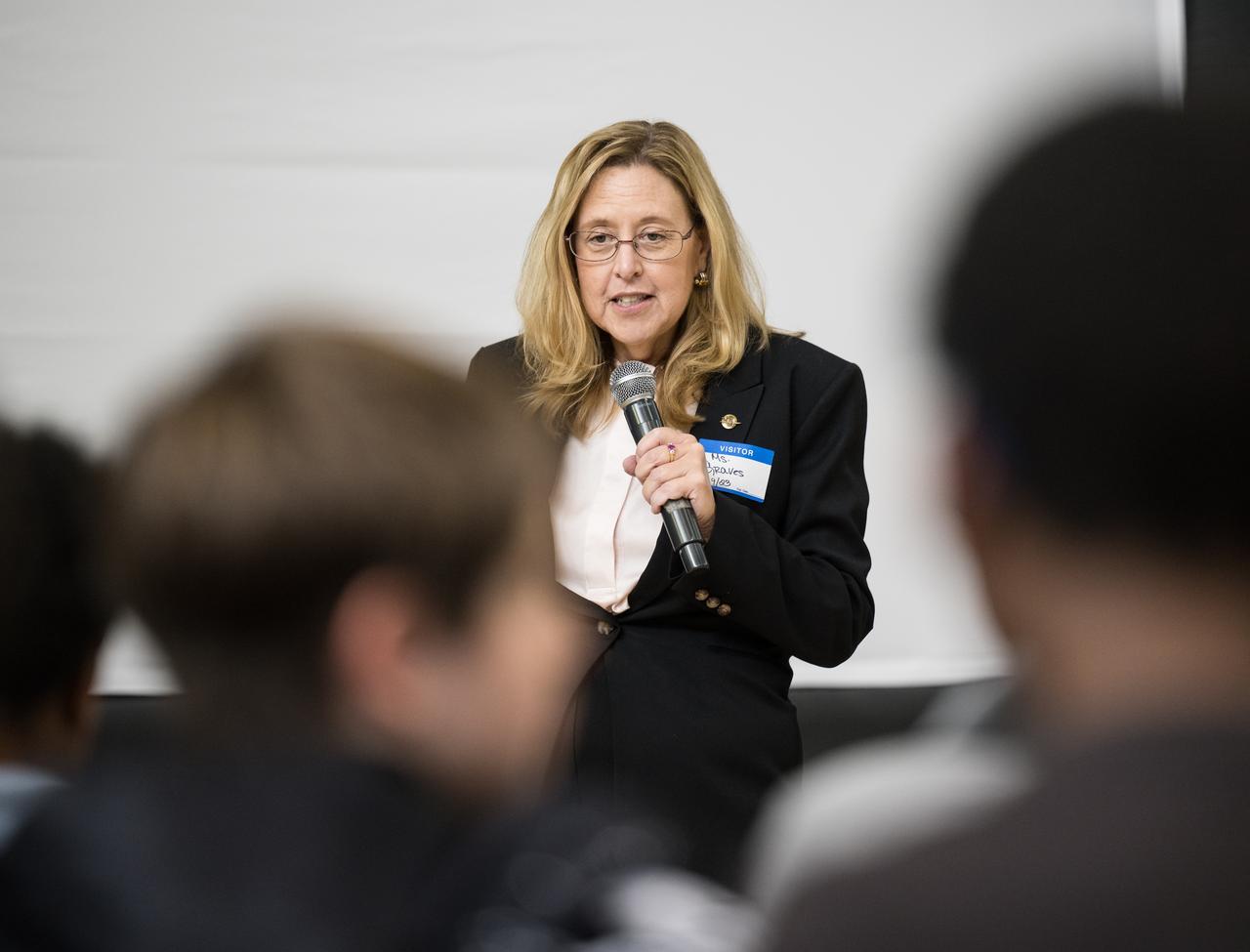
STEM Integration Manager at NASA’s Glenn Research Center (GRC) Office of STEM Engagement, Catherine Graves, provides welcome remarks at a kickoff event for the 21st Century Community Learning Centers NASA and Department of Education partnership, Monday, Sept. 23, 2024 at Wheatley Education Campus in Washington. Students engaged in NASA hands-on activities and an engineering design challenge. Photo Credit: (NASA/Aubrey Gemignani)
NASA and U.S. Department of Education Partnership Kickoff
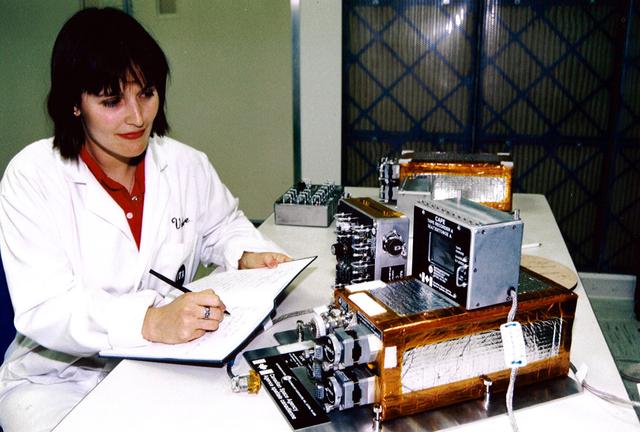
Experiments to seek solutions for a range of biomedical issues are at the heart of several investigations that will be hosted by the Commercial Instrumentation Technology Associates (ITA), Inc. Biomedical Experiments (CIBX-2) payload. CIBX-2 is unique, encompassing more than 20 separate experiments including cancer research, commercial experiments, and student hands-on experiments from 10 schools as part of ITA's ongoing University Among the Stars program. Valerie Cassanto of ITA checks the Canadian Protein Crystallization Experiment (CAPE) carried by STS-86 to Mir in 1997. The experiments are sponsored by NASA's Space Product Development Program (SPD).
Space Product Development (SPD)
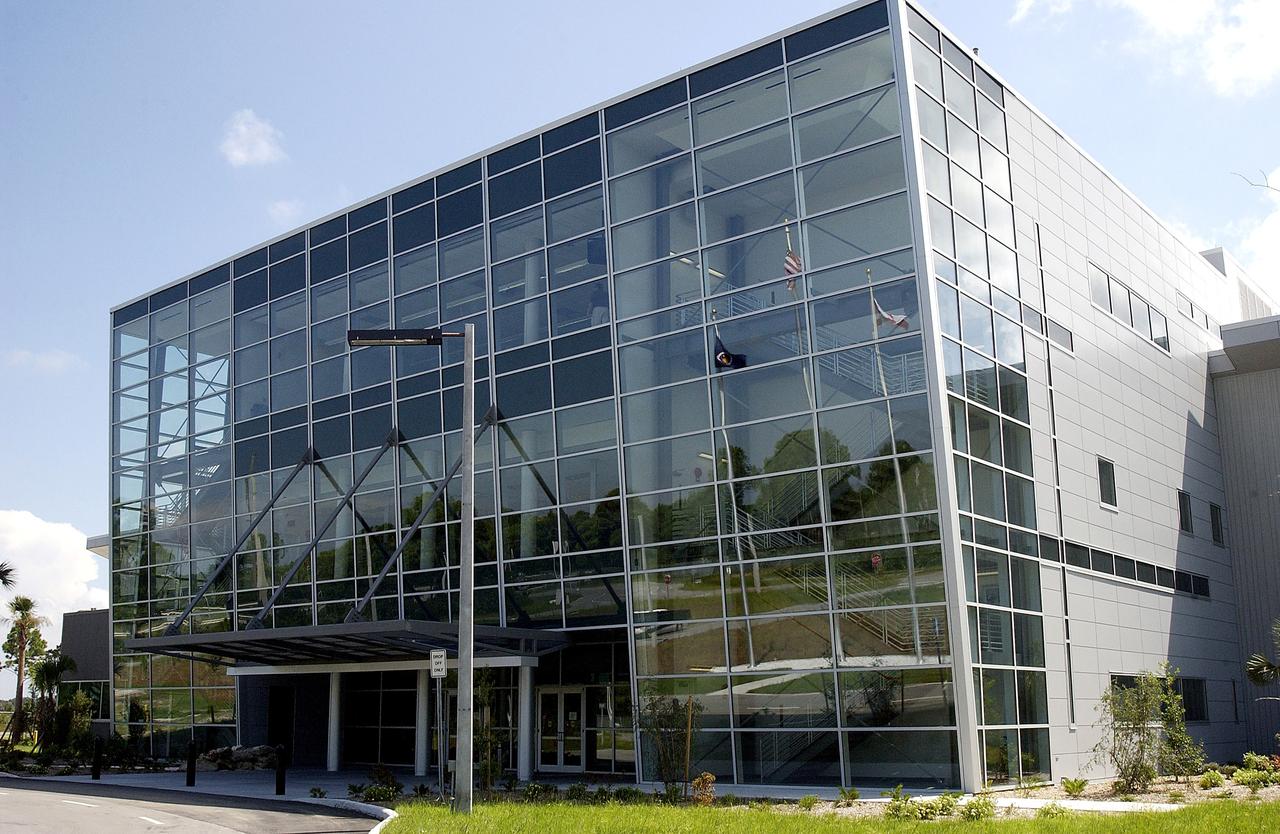
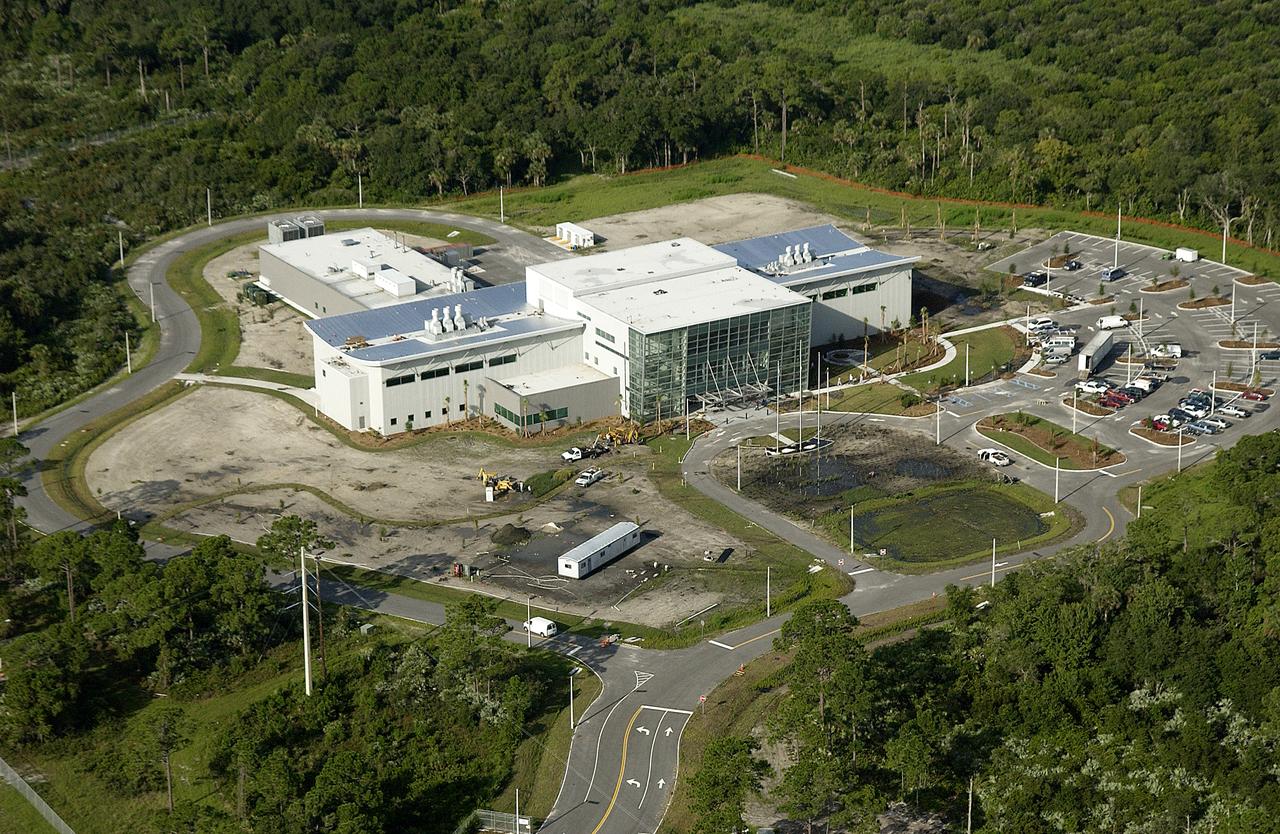
KENNEDY SPACE CENTER, FLA. -  The Space Life Sciences Lab (SLSL), formerly known as the Space Experiment Research and Processing Laboratory (SERPL), is nearing completion.  The new lab is a state-of-the-art facility being built for ISS biotechnology research. Developed as a partnership between NASA-KSC and the State of Florida, NASA’s life sciences contractor will be the primary tenant of the facility, leasing space to conduct flight experiment processing and NASA-sponsored research. About 20 percent of the facility will be available for use by Florida’s university researchers through the Florida Space Research Institute.
KENNEDY SPACE CENTER, FLA. - The Space Life Sciences Lab (SLSL), formerly known as the Space Experiment Research and Processing Laboratory (SERPL), is nearing completion. The new lab is a state-of-the-art facility being built for ISS biotechnology research. Developed as a partnership between NASA-KSC and the State of Florida, NASA’s life sciences contractor will be the primary tenant of the facility, leasing space to conduct flight experiment processing and NASA-sponsored research. About 20 percent of the facility will be available for use by Florida’s university researchers through the Florida Space Research Institute.
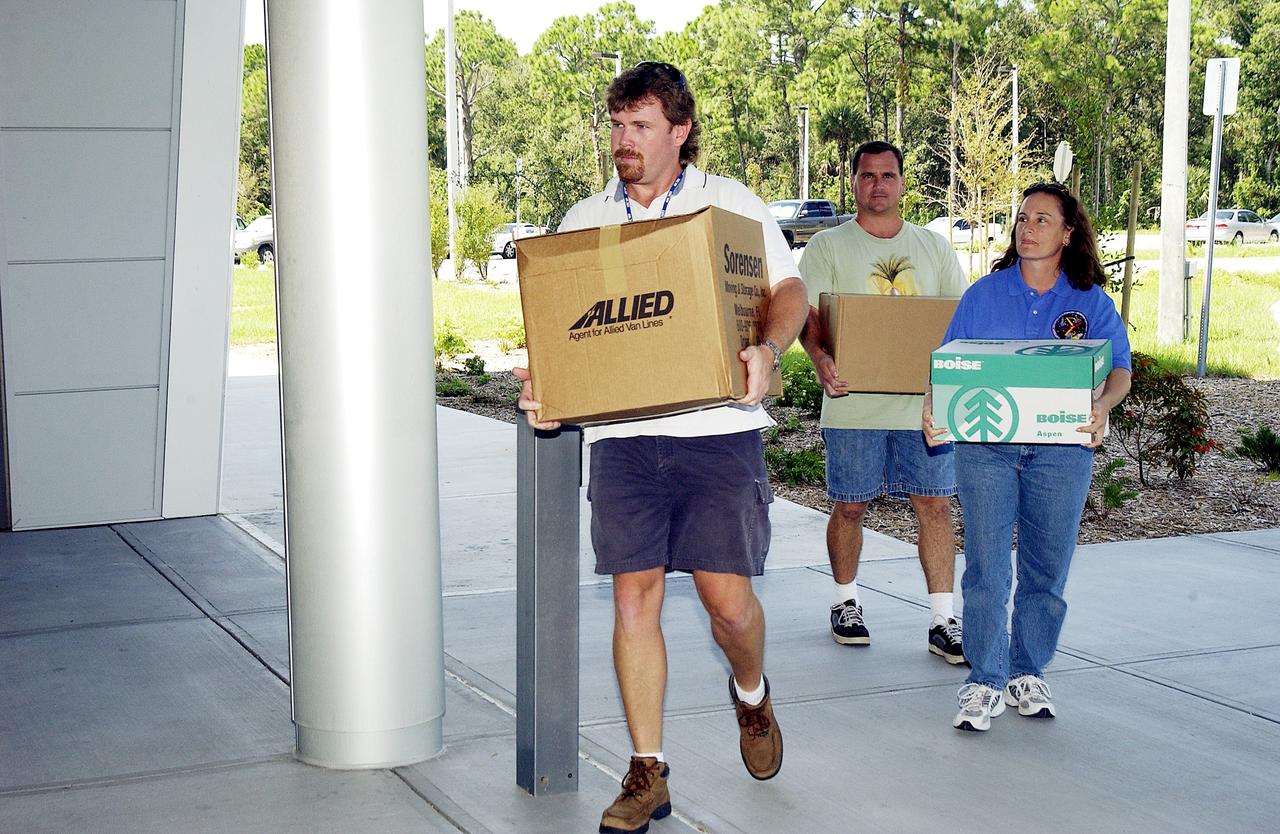
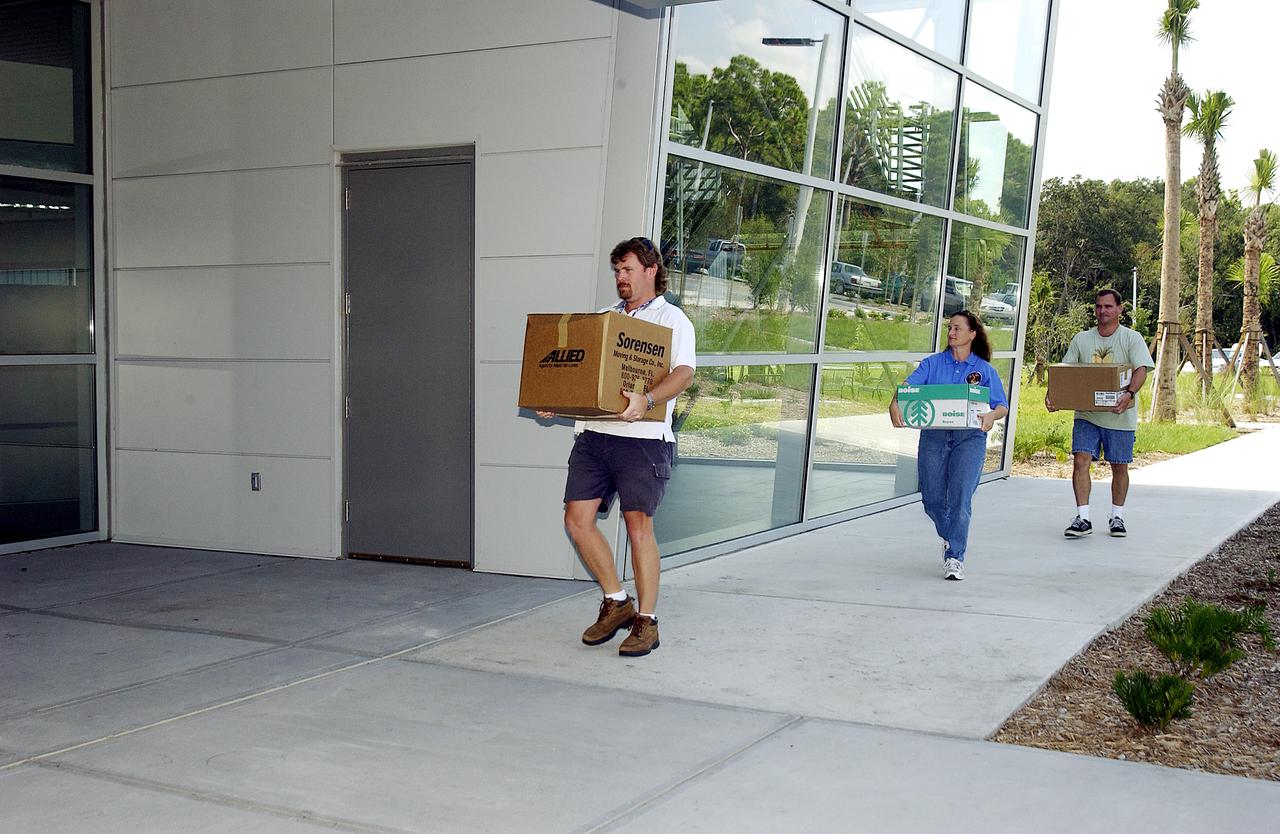
KENNEDY SPACE CENTER, FLA. -  Dynamac employees (from left) Larry Burns, Debbie Wells and Neil  Yorio carry boxes of hardware into the Space Life Sciences Lab (SLSL), formerly known as the Space Experiment Research and Processing Laboratory (SERPL).  They are transferring equipment from Hangar L. The new lab is a state-of-the-art facility being built for ISS biotechnology research. Developed as a partnership between NASA-KSC and the State of Florida, NASA’s life sciences contractor will be the primary tenant of the facility, leasing space to conduct flight experiment processing and NASA-sponsored research. About 20 percent of the facility will be available for use by Florida’s university researchers through the Florida Space Research Institute.
KENNEDY SPACE CENTER, FLA. - Dynamac employees (from left) Larry Burns, Debbie Wells and Neil Yorio carry boxes of hardware into the Space Life Sciences Lab (SLSL), formerly known as the Space Experiment Research and Processing Laboratory (SERPL). They are transferring equipment from Hangar L. The new lab is a state-of-the-art facility being built for ISS biotechnology research. Developed as a partnership between NASA-KSC and the State of Florida, NASA’s life sciences contractor will be the primary tenant of the facility, leasing space to conduct flight experiment processing and NASA-sponsored research. About 20 percent of the facility will be available for use by Florida’s university researchers through the Florida Space Research Institute.
KENNEDY SPACE CENTER, FLA. -  Ivan Rodriguez, with Bionetics, and Michelle Crouch and Larry Burns, with Dynamac, carry boxes of equipment into the Space Life Sciences Lab (SLSL), formerly known as the Space Experiment Research and Processing Laboratory (SERPL).    They are transferring equipment from Hangar L. The new lab is a state-of-the-art facility being built for ISS biotechnology research. Developed as a partnership between NASA-KSC and the State of Florida, NASA’s life sciences contractor will be the primary tenant of the facility, leasing space to conduct flight experiment processing and NASA-sponsored research. About 20 percent of the facility will be available for use by Florida’s university researchers through the Florida Space Research Institute.
KENNEDY SPACE CENTER, FLA. - Ivan Rodriguez, with Bionetics, and Michelle Crouch and Larry Burns, with Dynamac, carry boxes of equipment into the Space Life Sciences Lab (SLSL), formerly known as the Space Experiment Research and Processing Laboratory (SERPL). They are transferring equipment from Hangar L. The new lab is a state-of-the-art facility being built for ISS biotechnology research. Developed as a partnership between NASA-KSC and the State of Florida, NASA’s life sciences contractor will be the primary tenant of the facility, leasing space to conduct flight experiment processing and NASA-sponsored research. About 20 percent of the facility will be available for use by Florida’s university researchers through the Florida Space Research Institute.
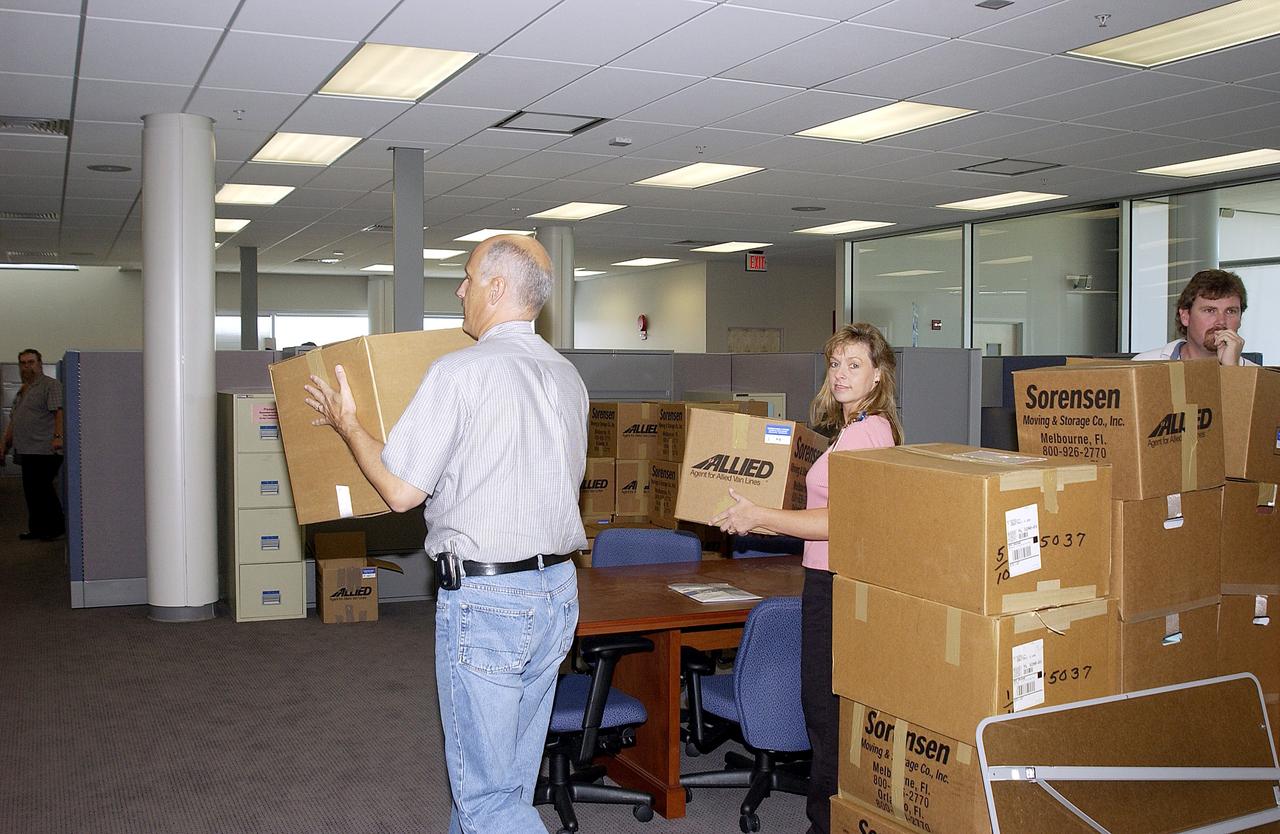
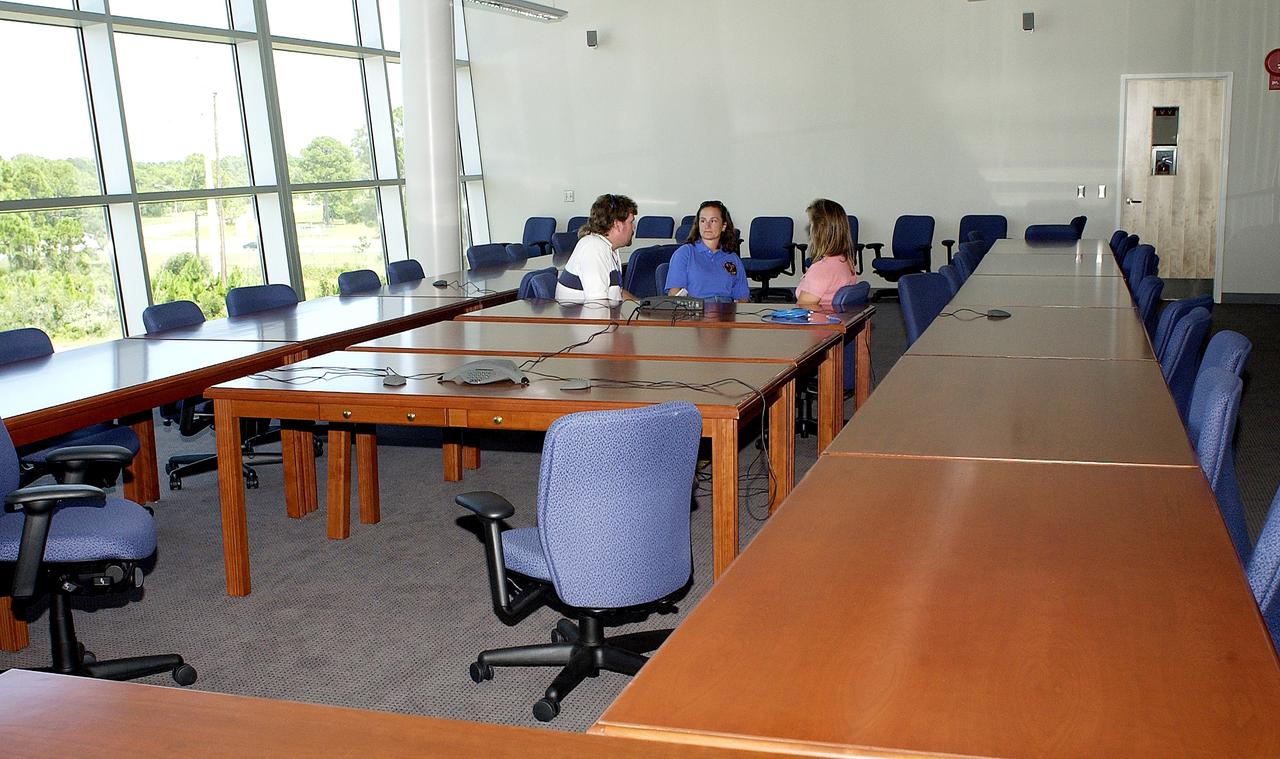
KENNEDY SPACE CENTER, FLA. - Dynamac employees (from left) Larry Burns, Debbie Wells and Michelle Crouch talk in a conference room of the Space Life Sciences Lab (SLSL), formerly known as the Space Experiment Research and Processing Laboratory (SERPL). They have been transferring equipment from Hangar L.  The new lab is a state-of-the-art facility being built for ISS biotechnology research. Developed as a partnership between NASA-KSC and the State of Florida, NASA’s life sciences contractor will be the primary tenant of the facility, leasing space to conduct flight experiment processing and NASA-sponsored research. About 20 percent of the facility will be available for use by Florida’s university researchers through the Florida Space Research Institute.
KENNEDY SPACE CENTER, FLA. - Dynamac employees (from left) Larry Burns, Debbie Wells and Michelle Crouch talk in a conference room of the Space Life Sciences Lab (SLSL), formerly known as the Space Experiment Research and Processing Laboratory (SERPL). They have been transferring equipment from Hangar L. The new lab is a state-of-the-art facility being built for ISS biotechnology research. Developed as a partnership between NASA-KSC and the State of Florida, NASA’s life sciences contractor will be the primary tenant of the facility, leasing space to conduct flight experiment processing and NASA-sponsored research. About 20 percent of the facility will be available for use by Florida’s university researchers through the Florida Space Research Institute.
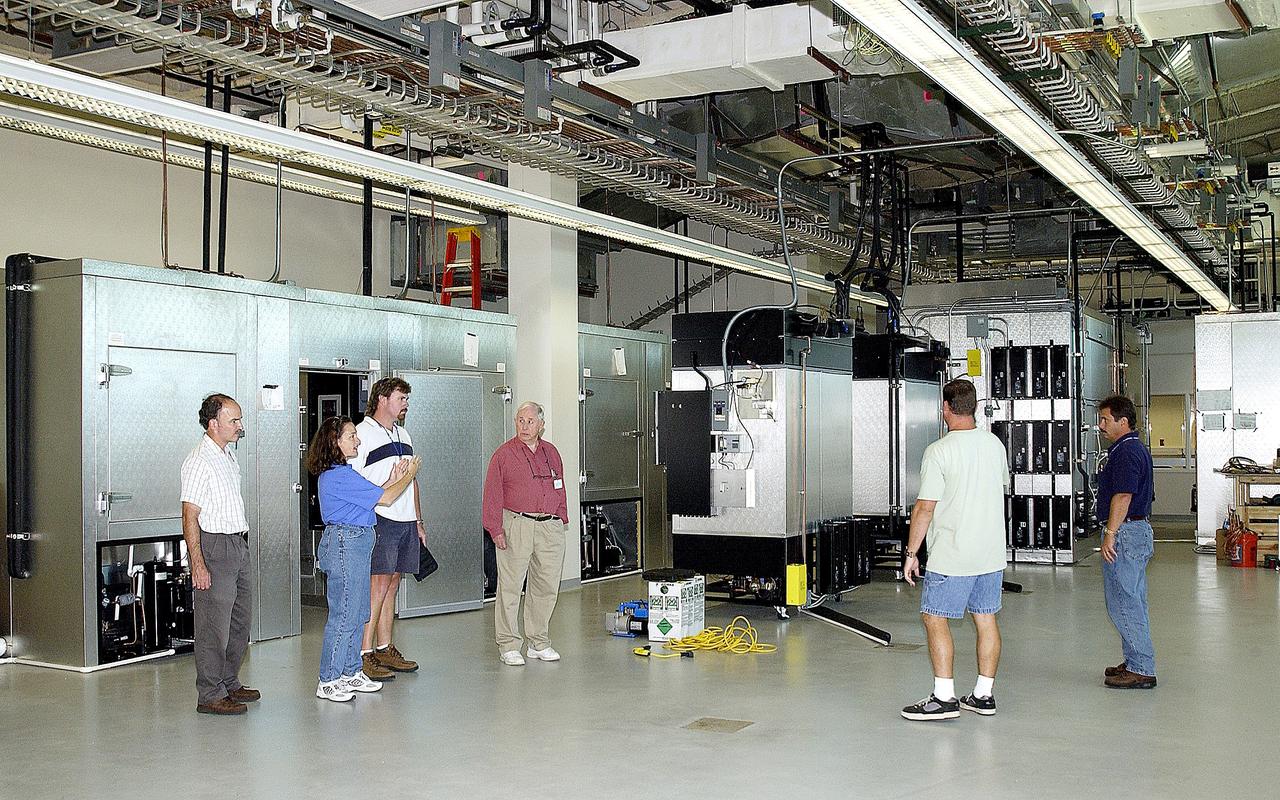
KENNEDY SPACE CENTER, FLA. -  Employees check out the new chamber facilities of the Space Life Sciences Lab (SLSL), formerly known as the Space Experiment Research and Processing Laboratory (SERPL).  From left are Ray Wheeler, with NASA; Debbie Wells and Larry Burns, with Dynamac; A.O. Rule, president of Environmental Growth Chambers, Inc. (ECG); Neil Yorio, with Dynamac; and John Wiezchowski, with ECG.  The SLSL is a state-of-the-art facility being built for ISS biotechnology research. Developed as a partnership between NASA-KSC and the State of Florida, NASA’s life sciences contractor will be the primary tenant of the facility, leasing space to conduct flight experiment processing and NASA-sponsored research. About 20 percent of the facility will be available for use by Florida’s university researchers through the Florida Space Research Institute.
KENNEDY SPACE CENTER, FLA. - Employees check out the new chamber facilities of the Space Life Sciences Lab (SLSL), formerly known as the Space Experiment Research and Processing Laboratory (SERPL). From left are Ray Wheeler, with NASA; Debbie Wells and Larry Burns, with Dynamac; A.O. Rule, president of Environmental Growth Chambers, Inc. (ECG); Neil Yorio, with Dynamac; and John Wiezchowski, with ECG. The SLSL is a state-of-the-art facility being built for ISS biotechnology research. Developed as a partnership between NASA-KSC and the State of Florida, NASA’s life sciences contractor will be the primary tenant of the facility, leasing space to conduct flight experiment processing and NASA-sponsored research. About 20 percent of the facility will be available for use by Florida’s university researchers through the Florida Space Research Institute.
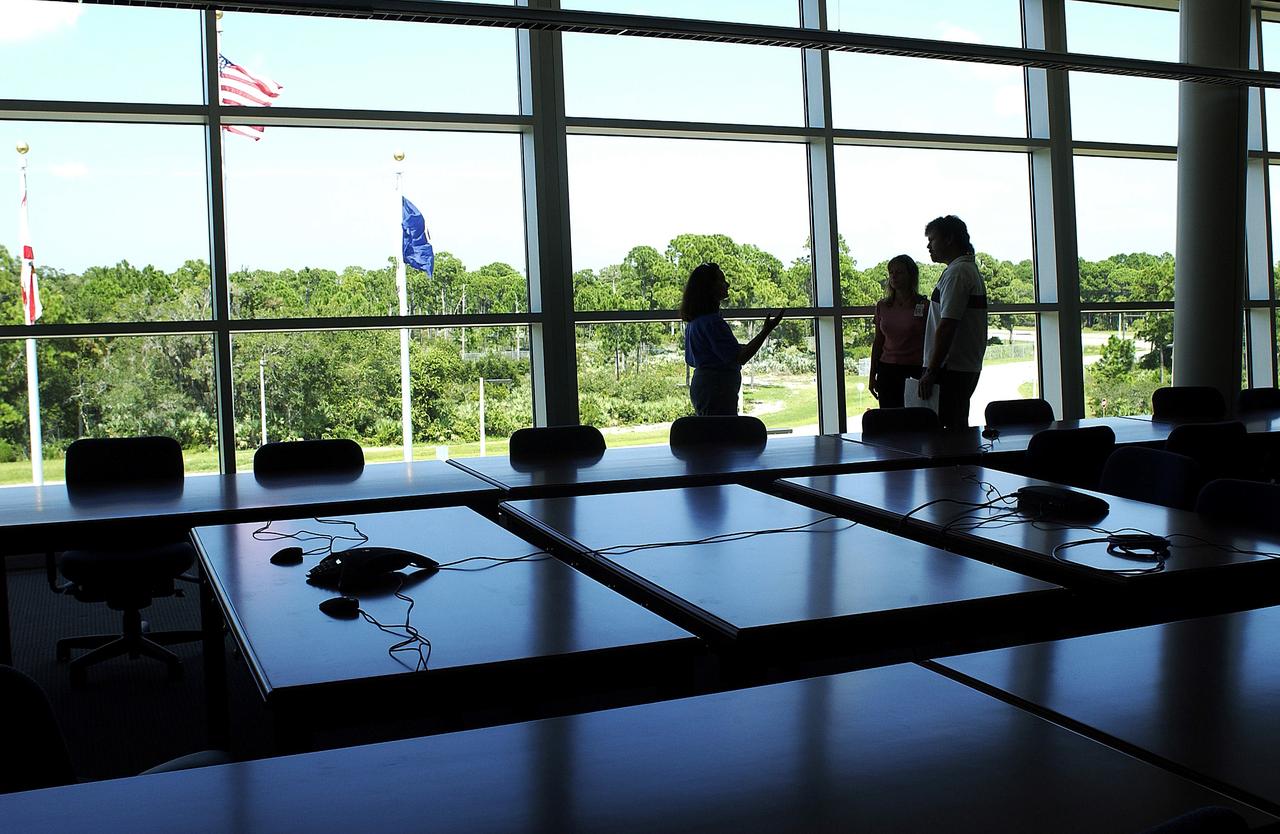
KENNEDY SPACE CENTER, FLA. - Dynamac employees Debbie Wells, Michelle Crouch and Larry Burns are silhouetted as they talk inside a conference room of the Space Life Sciences Lab (SLSL), formerly known as the Space Experiment Research and Processing Laboratory (SERPL).  They have been transferring equipment from Hangar L.  The new lab is a state-of-the-art facility being built for ISS biotechnology research. Developed as a partnership between NASA-KSC and the State of Florida, NASA’s life sciences contractor will be the primary tenant of the facility, leasing space to conduct flight experiment processing and NASA-sponsored research. About 20 percent of the facility will be available for use by Florida’s university researchers through the Florida Space Research Institute.
KENNEDY SPACE CENTER, FLA. - Dynamac employees Debbie Wells, Michelle Crouch and Larry Burns are silhouetted as they talk inside a conference room of the Space Life Sciences Lab (SLSL), formerly known as the Space Experiment Research and Processing Laboratory (SERPL). They have been transferring equipment from Hangar L. The new lab is a state-of-the-art facility being built for ISS biotechnology research. Developed as a partnership between NASA-KSC and the State of Florida, NASA’s life sciences contractor will be the primary tenant of the facility, leasing space to conduct flight experiment processing and NASA-sponsored research. About 20 percent of the facility will be available for use by Florida’s university researchers through the Florida Space Research Institute.
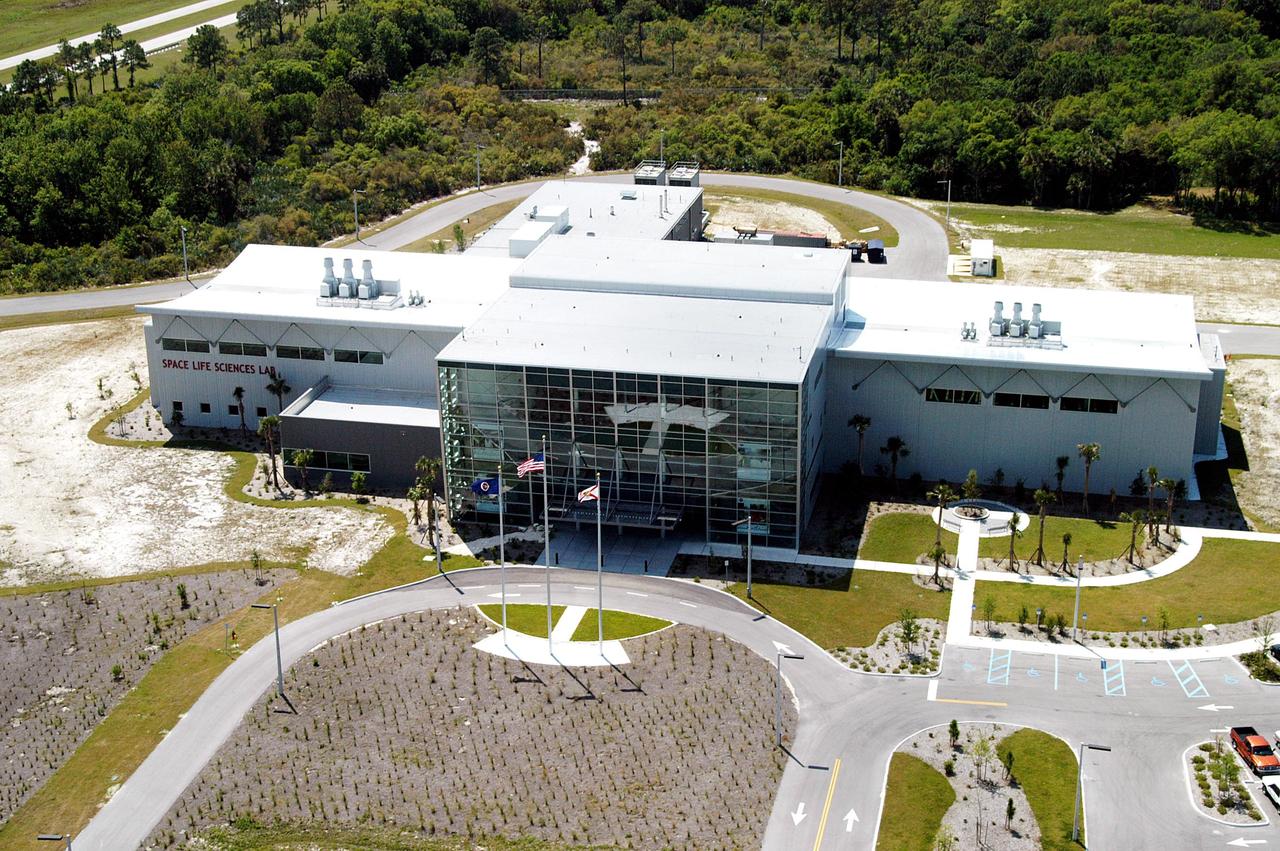
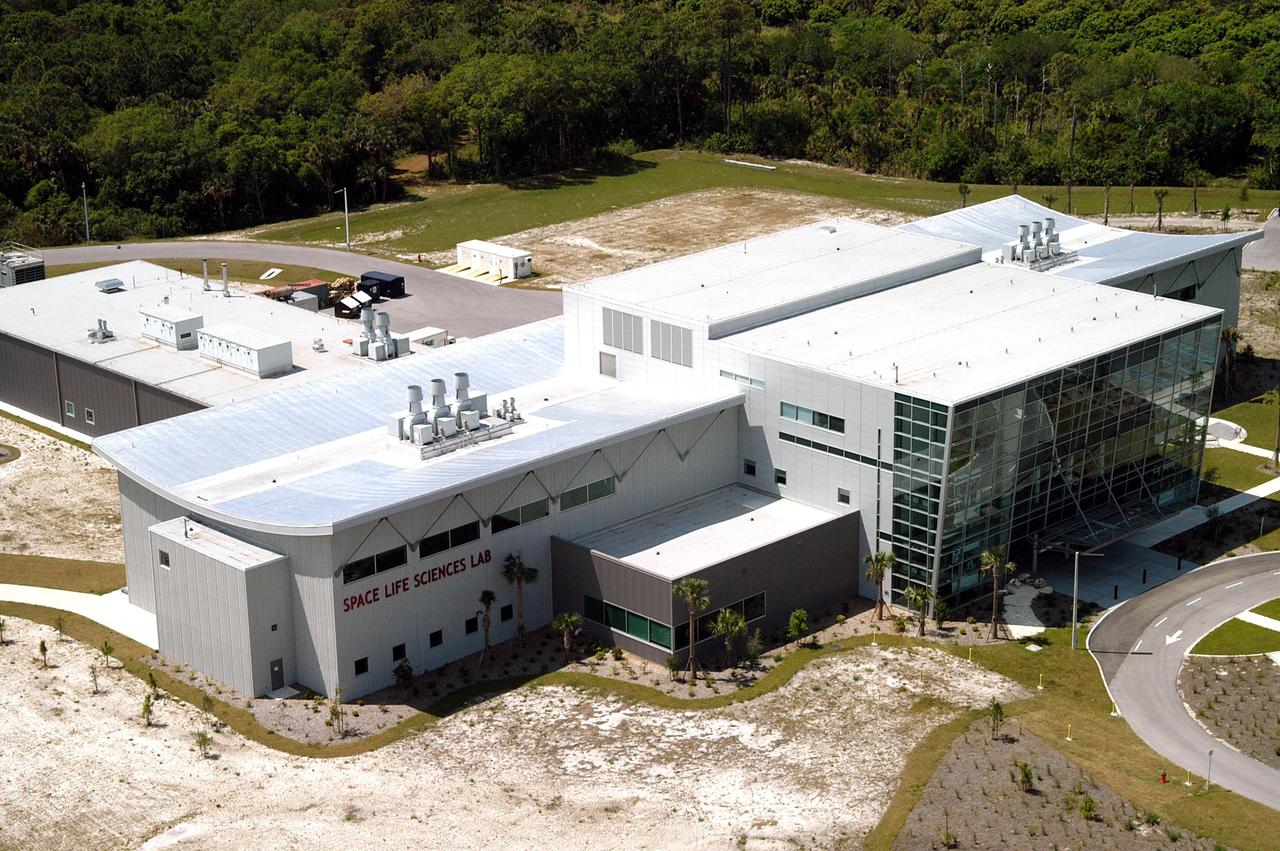
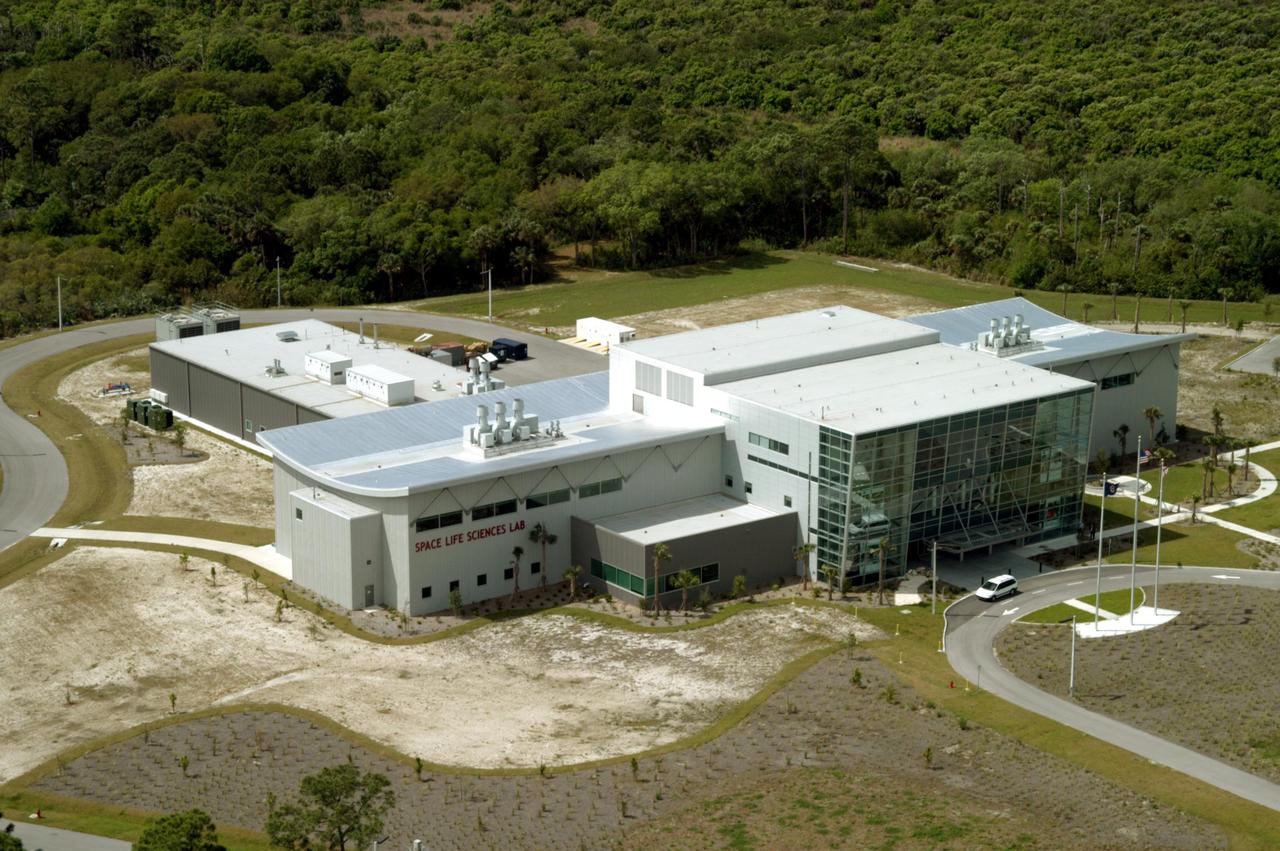
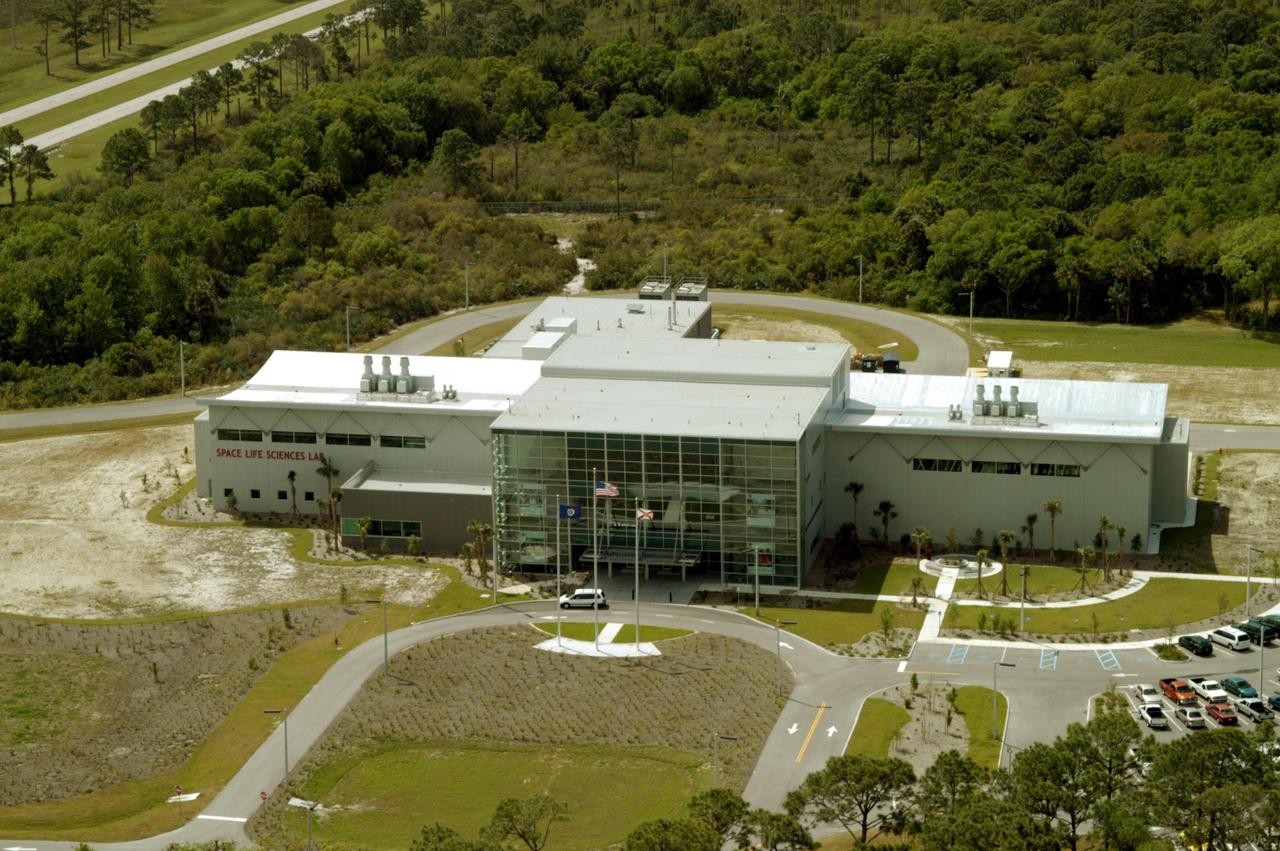
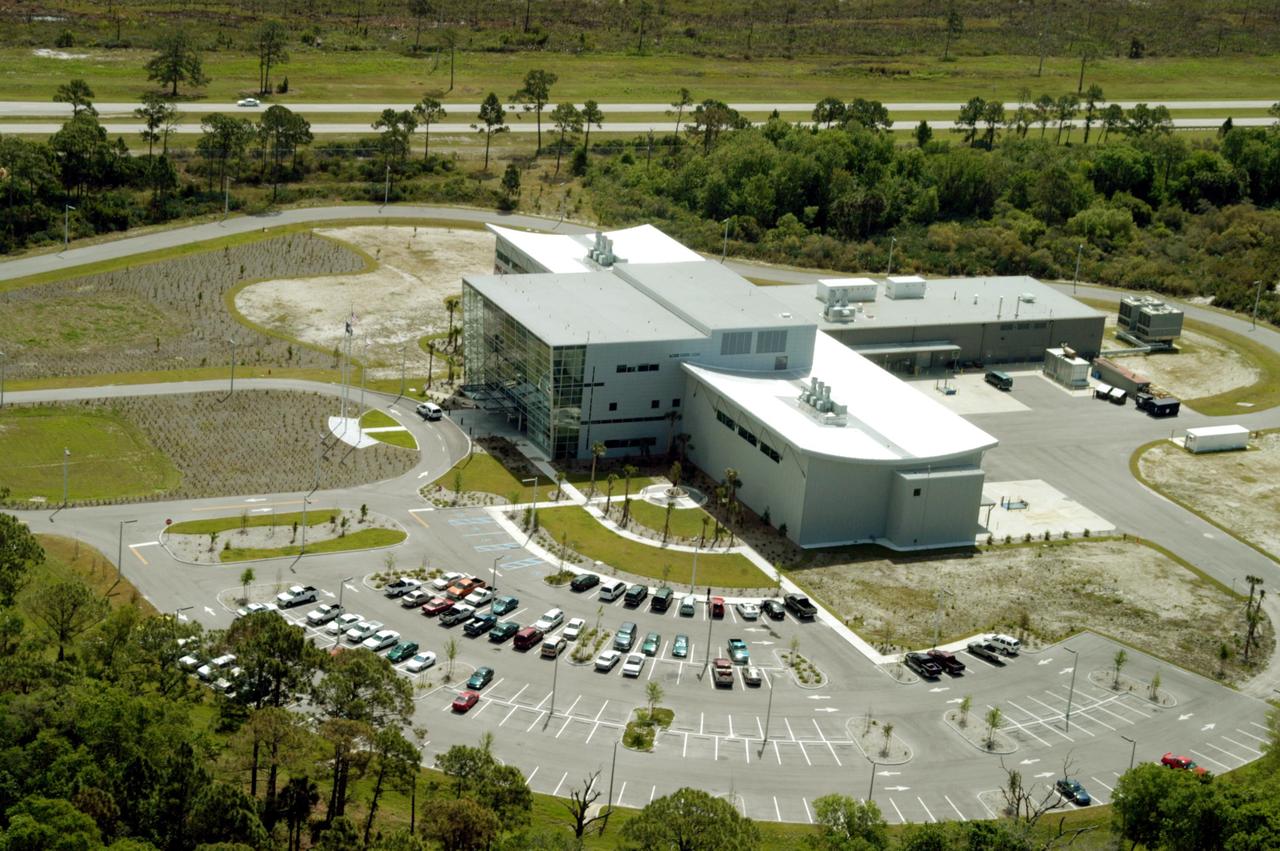
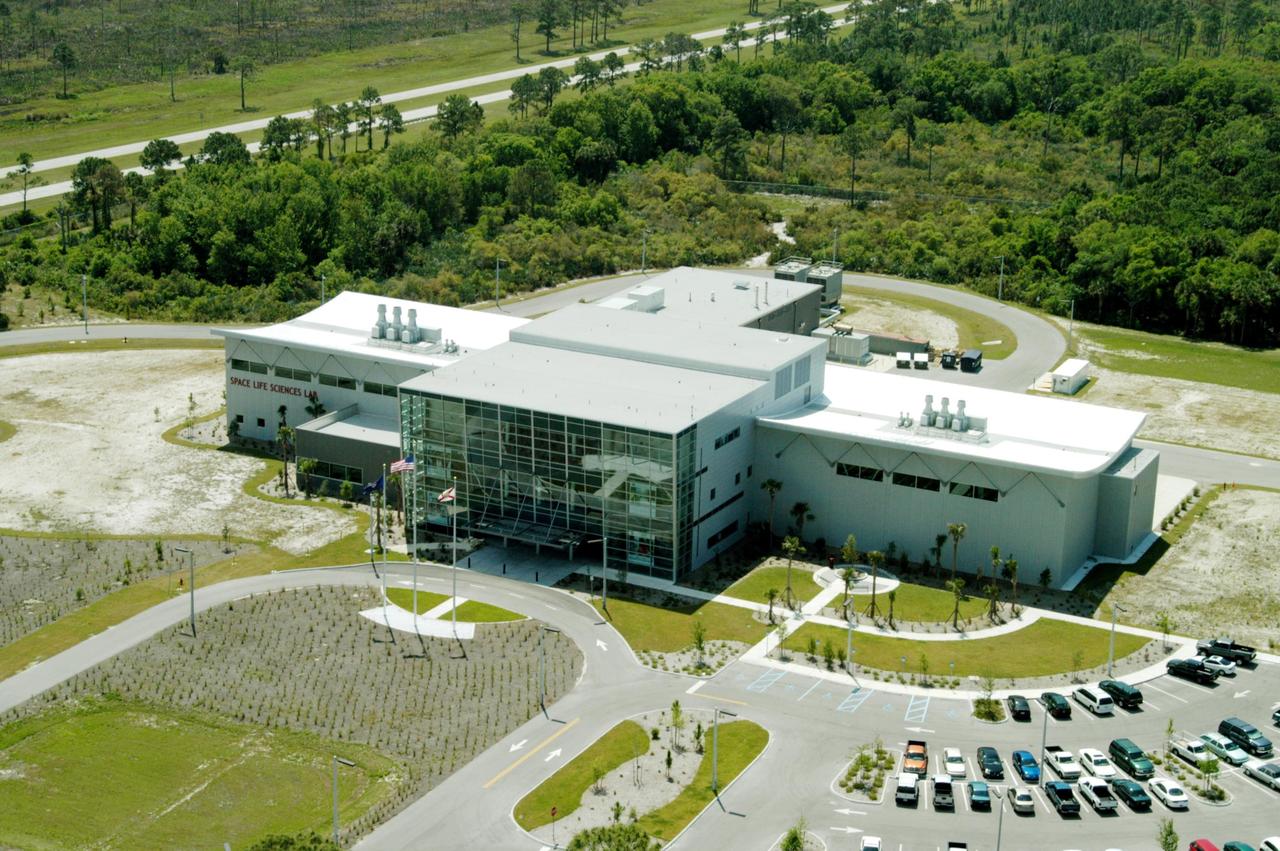
KENNEDY SPACE CENTER, FLA. - An aerial photo of the Space Life Sciences Lab at KSC.  The new lab is a state-of-the-art facility built for ISS biotechnology research. It was developed as a partnership between NASA KSC and the State of Florida.
KSC-04pd0930
KENNEDY SPACE CENTER, FLA. - An aerial photo of the Space Life Sciences Lab at KSC.  The new lab is a state-of-the-art facility built for ISS biotechnology research. It was developed as a partnership between NASA KSC and the State of Florida.
KSC-04pd0931
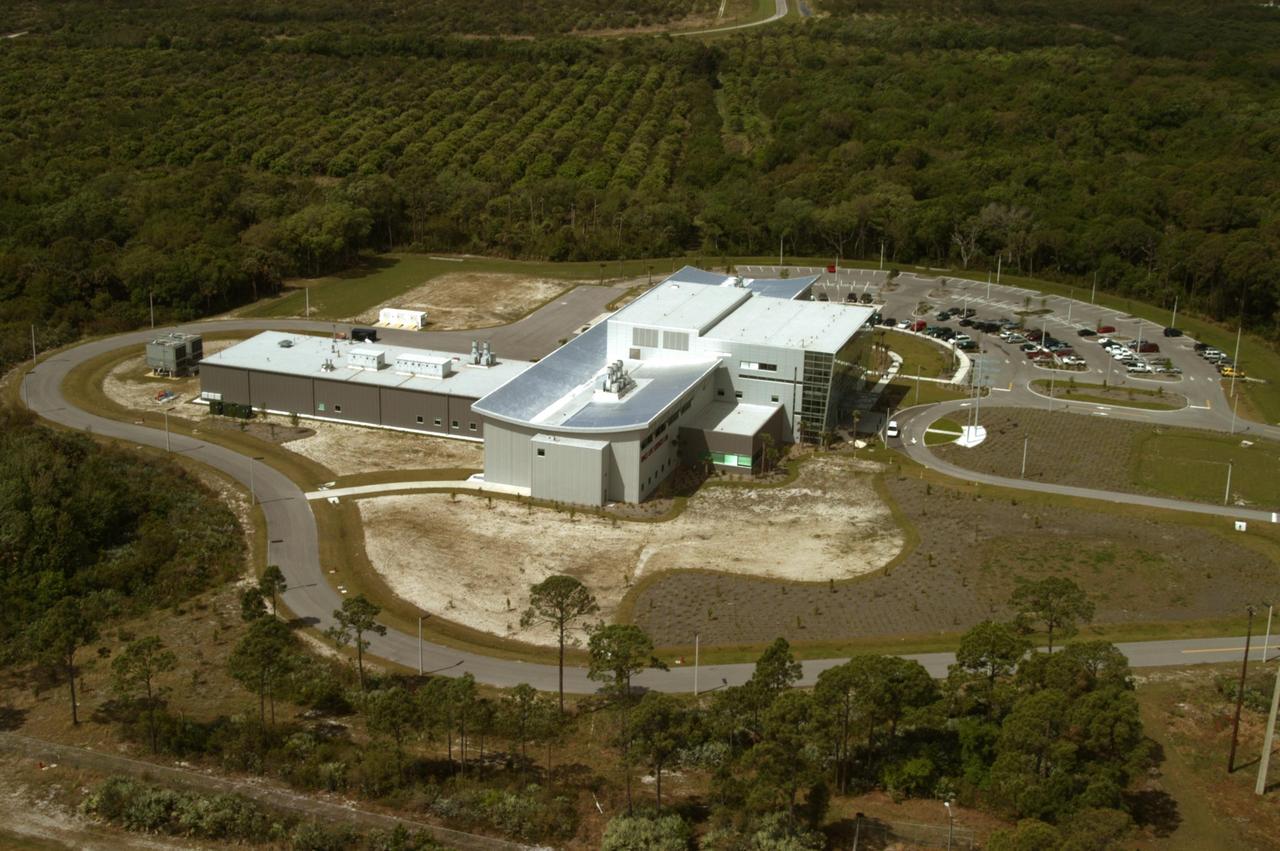
KENNEDY SPACE CENTER, FLA. - An aerial photo of the Space Life Sciences Lab at KSC.  The new lab is a state-of-the-art facility built for ISS biotechnology research. It was developed as a partnership between NASA KSC and the State of Florida.
KSC-04pd0932
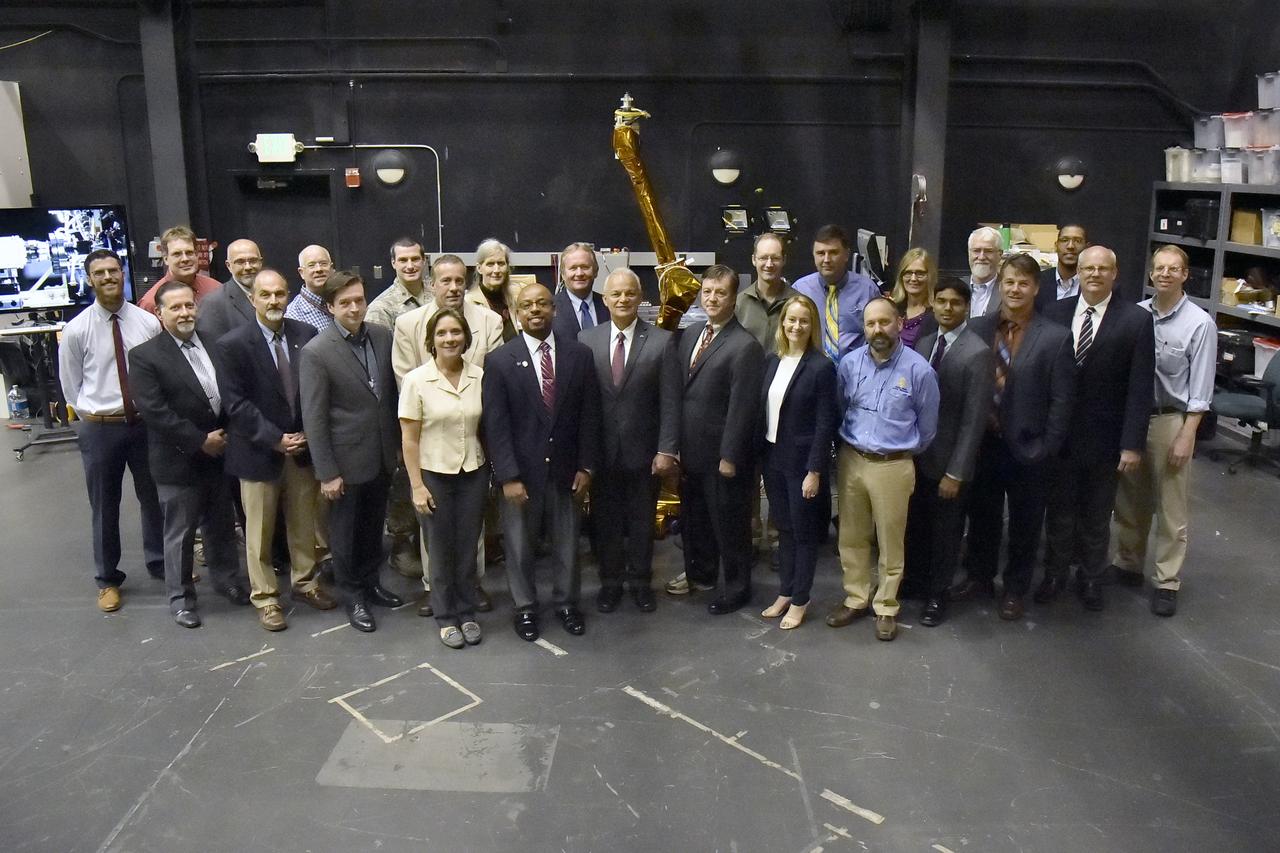
WASHINGTON, D.C.---S&T Partnership Forum In-Space Assembly Technical Interchange Meeting-On September 6th 2017, many of the United States government experts on In-Space Assembly met at the U.S. Naval Research Lab to discuss both technology development and in-space applications that would advance national capabilities in this area.  Expertise from NASA, USAF, NRO, DARPA and NRL met in this meeting which was coordinated by the NASA Headquarters, Office of the Chief Technologist.  This technical interchange meeting was the second meeting of the members of this Science and Technology Partnership Forum.
Members of the S&T Partnership Forum Meet for an In-Space Assembly Technical Interchange Meeting on September 6th, 2017
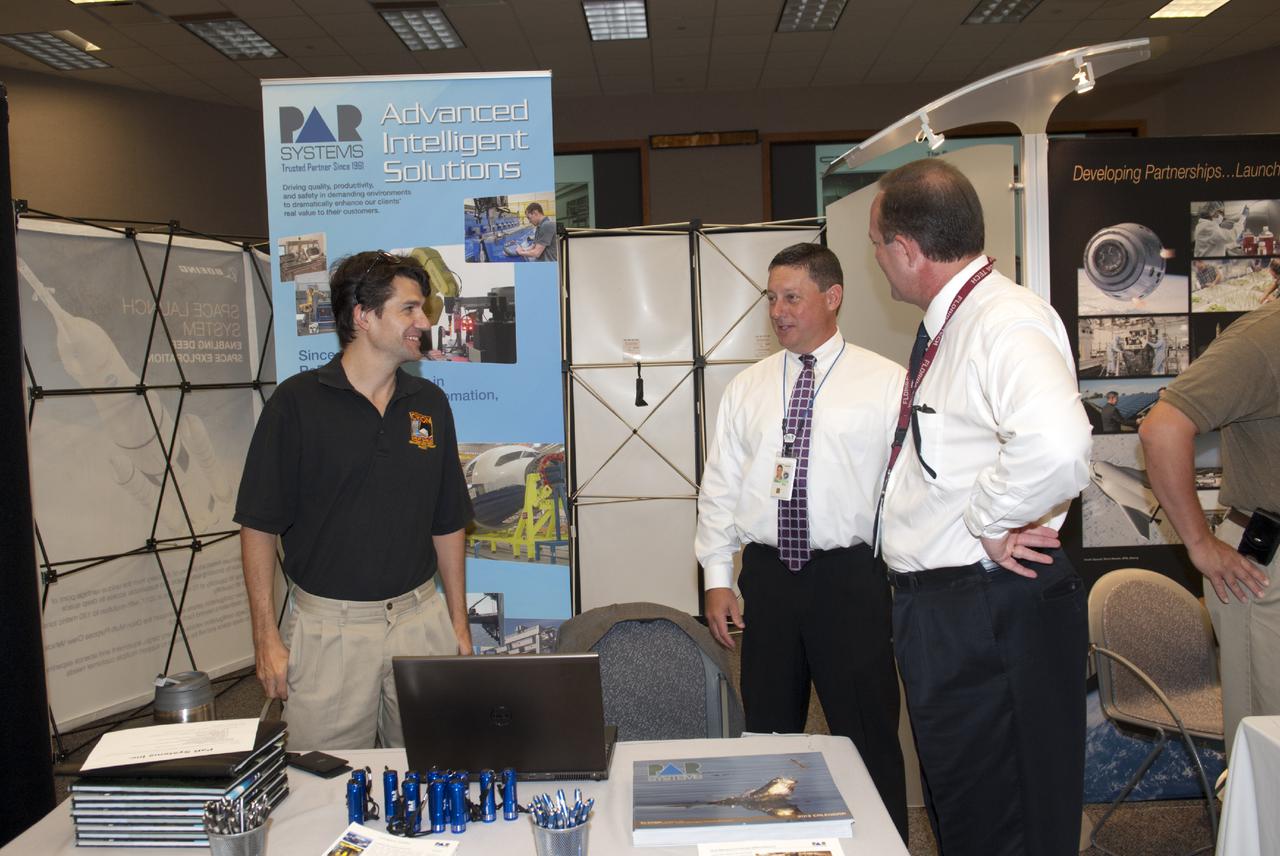
CAPE CANAVERAL, Fla. -- At the Kennedy Space Center in Florida, representatives of PaR Systems talk with guests at the Innovation Expo KSC Showcase. The event gave Kennedy employees an opportunity to meet 12 NASA partners and see how the Center Planning and Development Directorate is transforming Kennedy into a multi-user spaceport through partnerships and resource planning.   The 17-booth exhibit consists of 12 partner booths along with Spaceport Planning, Partnership Development and Research and Technology offices. Photo credit: NASA_Charisse Nahser
KSC-2013-3524
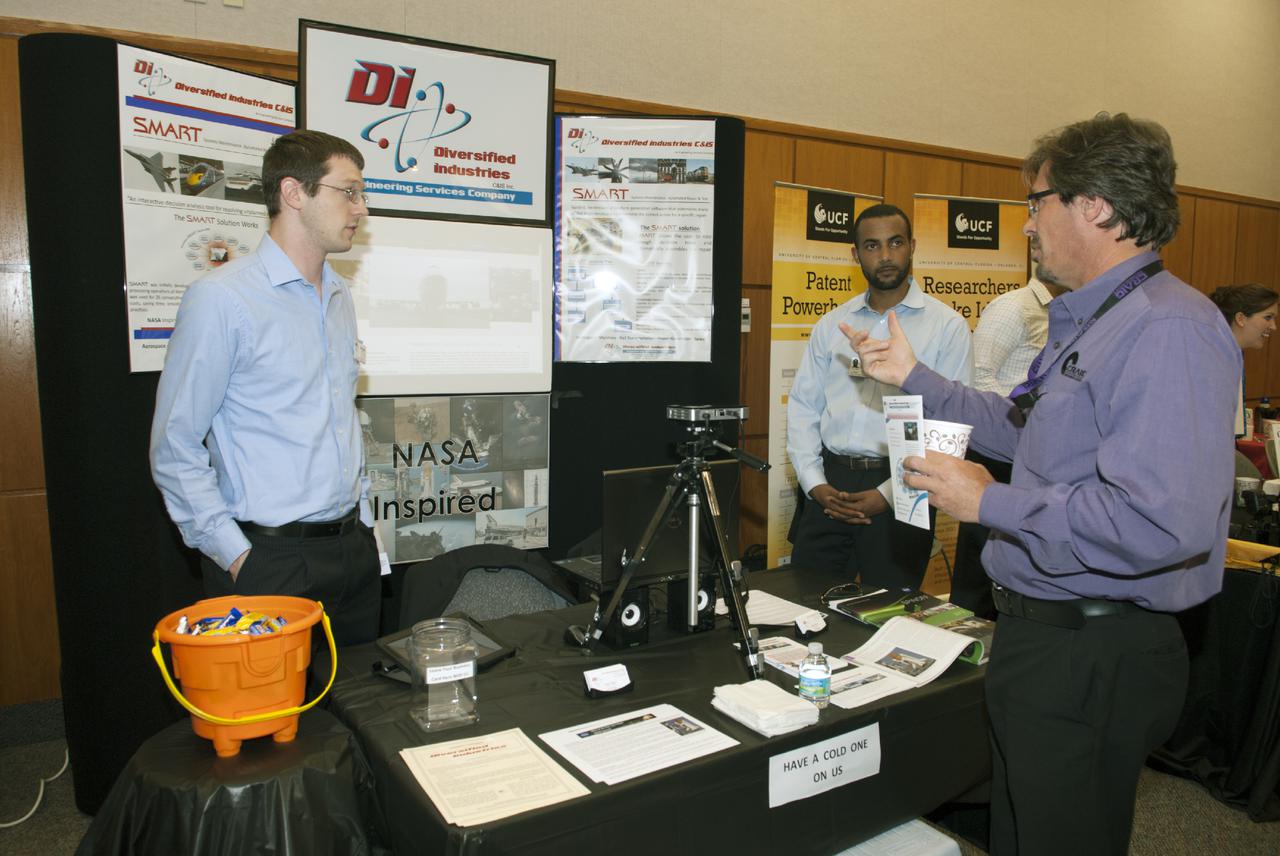
CAPE CANAVERAL, Fla. -- At the Kennedy Space Center in Florida, representatives of Diversified Industries talk with guests at the Innovation Expo KSC Showcase. The event gave Kennedy employees an opportunity to meet 12 NASA partners and see how the Center Planning and Development Directorate is transforming Kennedy into a multi-user spaceport through partnerships and resource planning.  The 17-booth exhibit consists of 12 partner booths along with Spaceport Planning, Partnership Development and Research and Technology offices. Photo credit: NASA_Charisse Nahser
KSC-2013-3527
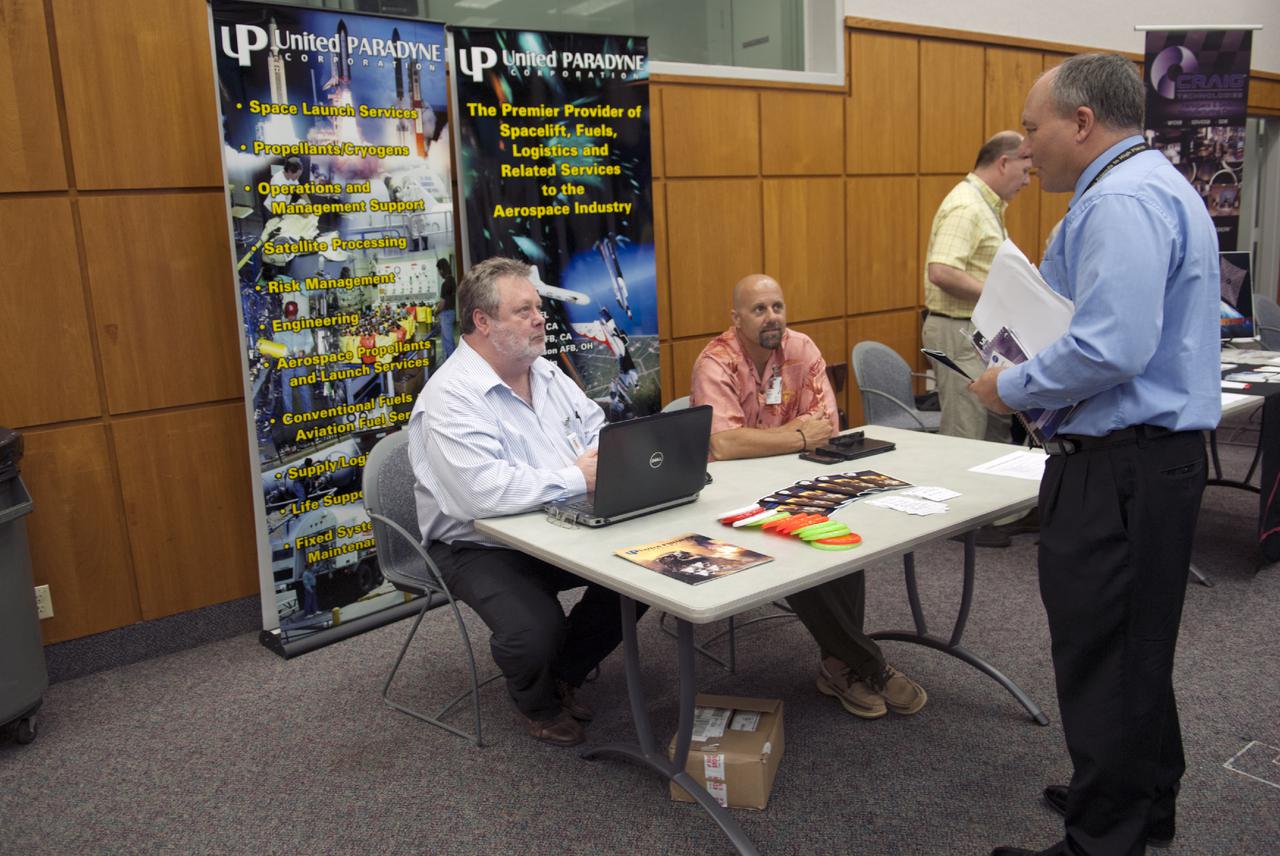
CAPE CANAVERAL, Fla. -- At the Kennedy Space Center in Florida, representatives of United Paradyne talk with guests at the Innovation Expo KSC Showcase. The event gave Kennedy employees an opportunity to meet 12 NASA partners and see how the Center Planning and Development Directorate is transforming Kennedy into a multi-user spaceport through partnerships and resource planning.  The 17-booth exhibit consists of 12 partner booths along with Spaceport Planning, Partnership Development and Research and Technology offices. Photo credit: NASA_Charisse Nahser
KSC-2013-3529
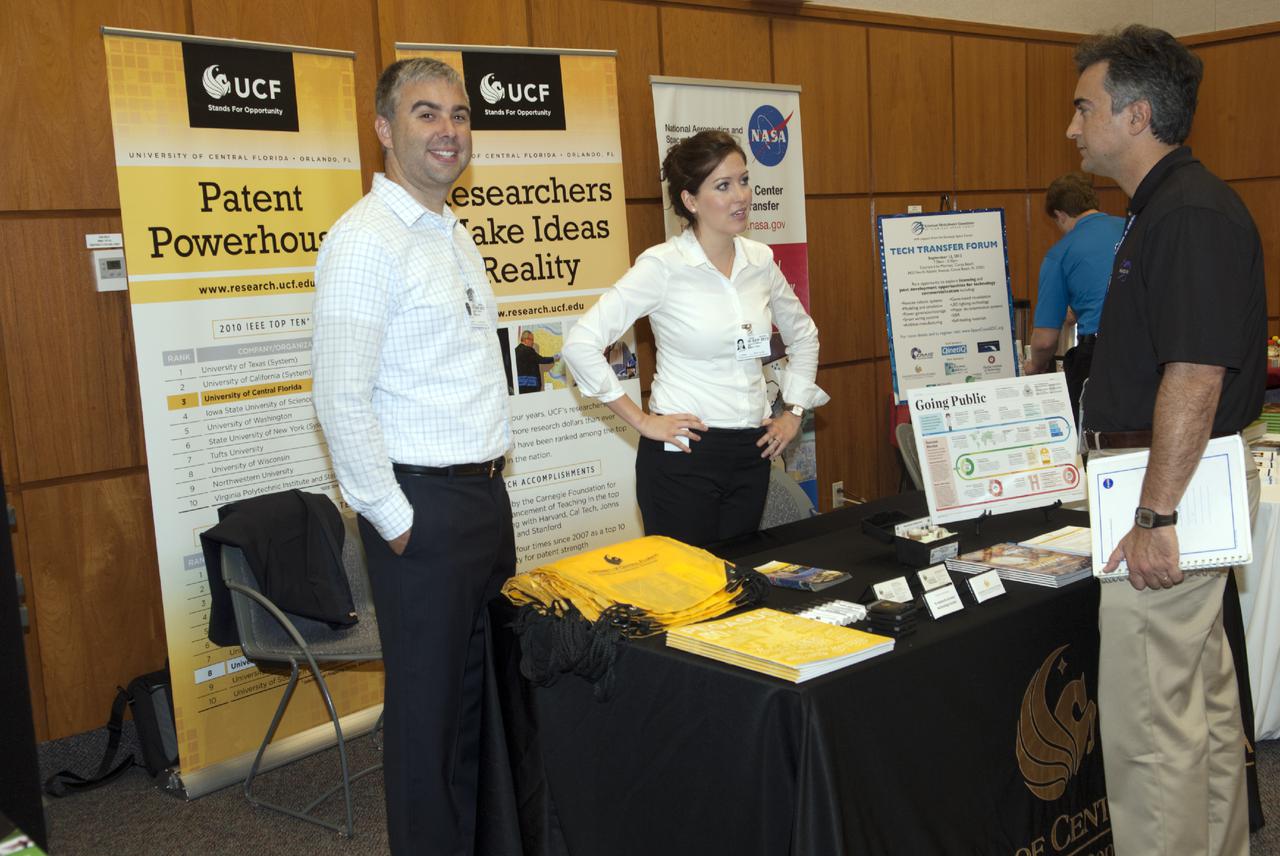
CAPE CANAVERAL, Fla. -- At the Kennedy Space Center in Florida, representatives of the University of Central Florida talk with guests at the Innovation Expo KSC Showcase. The event gave Kennedy employees an opportunity to meet 12 NASA partners and see how the Center Planning and Development Directorate is transforming Kennedy into a multi-user spaceport through partnerships and resource planning.   The 17-booth exhibit consists of 12 partner booths along with Spaceport Planning, Partnership Development and Research and Technology offices. Photo credit: NASA_Charisse Nahser
KSC-2013-3523
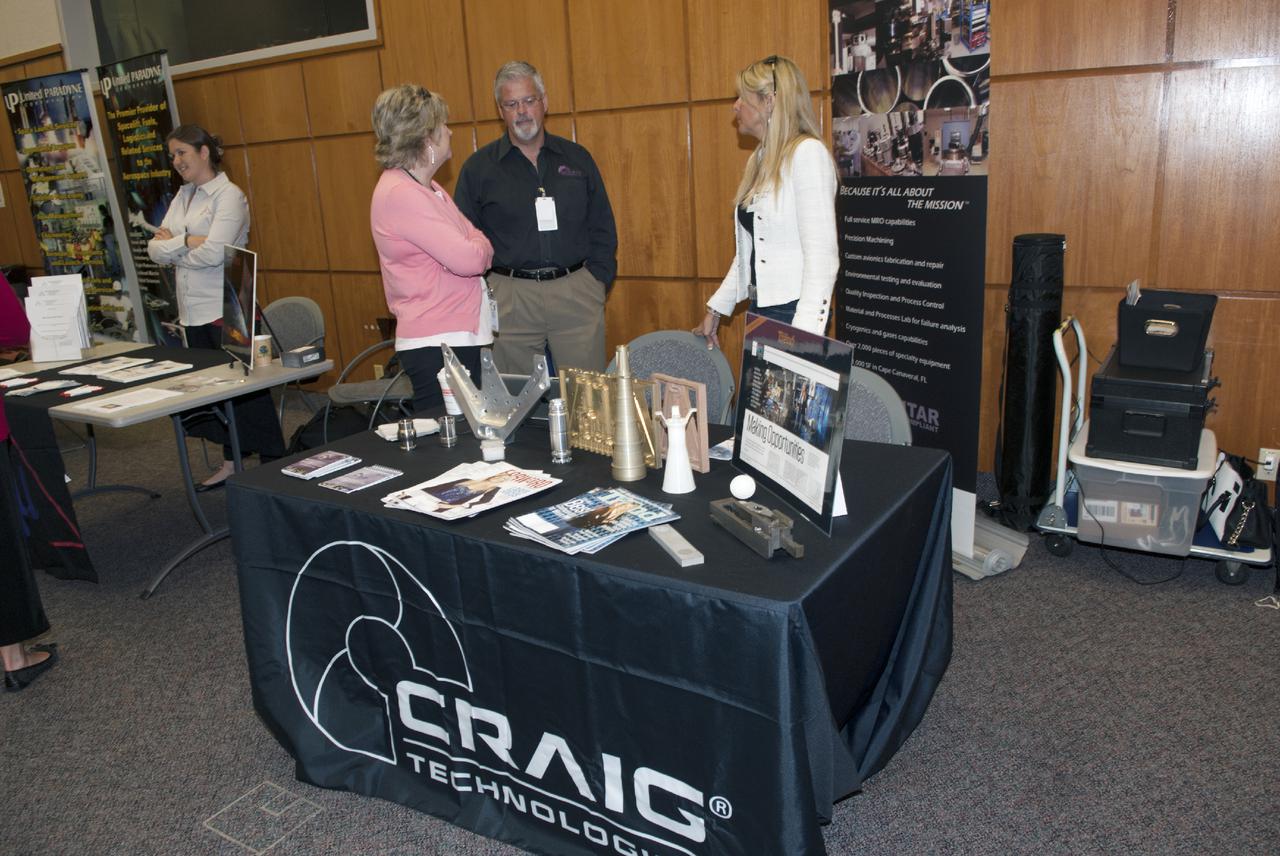
CAPE CANAVERAL, Fla. -- At the Kennedy Space Center in Florida, representatives of Craig Technologies talk with guests at the Innovation Expo KSC Showcase. The event gave Kennedy employees an opportunity to meet 12 NASA partners and see how the Center Planning and Development Directorate is transforming Kennedy into a multi-user spaceport through partnerships and resource planning.   The 17-booth exhibit consists of 12 partner booths along with Spaceport Planning, Partnership Development and Research and Technology offices. Photo credit: NASA_Charisse Nahser
KSC-2013-3528
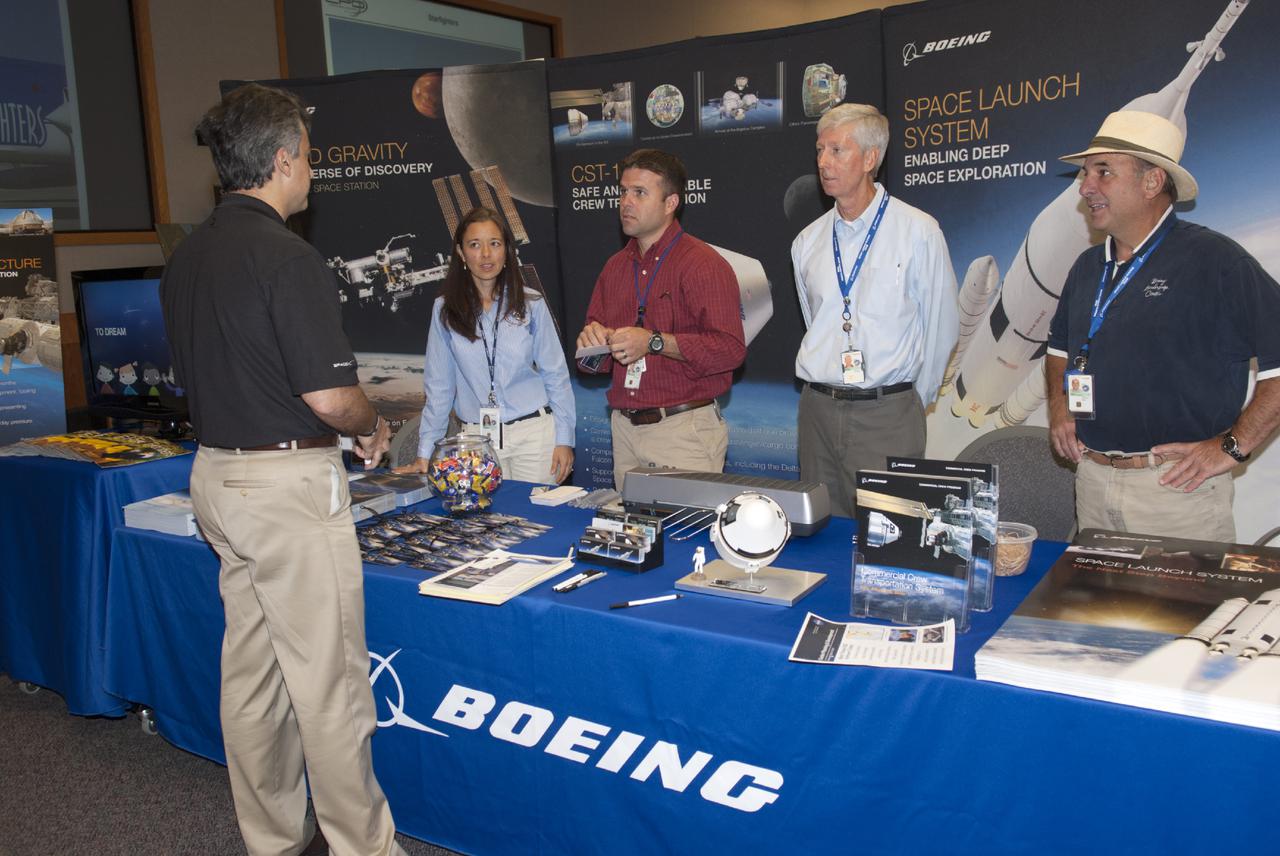
CAPE CANAVERAL, Fla. -- At the Kennedy Space Center in Florida, representatives of Boeing talk with guests at the Innovation Expo KSC Showcase. The event gave Kennedy employees an opportunity to meet 12 NASA partners and see how the Center Planning and Development Directorate is transforming Kennedy into a multi-user spaceport through partnerships and resource planning.   The 17-booth exhibit consists of 12 partner booths along with Spaceport Planning, Partnership Development and Research and Technology offices. Photo credit: NASA_Charisse Nahser
KSC-2013-3526
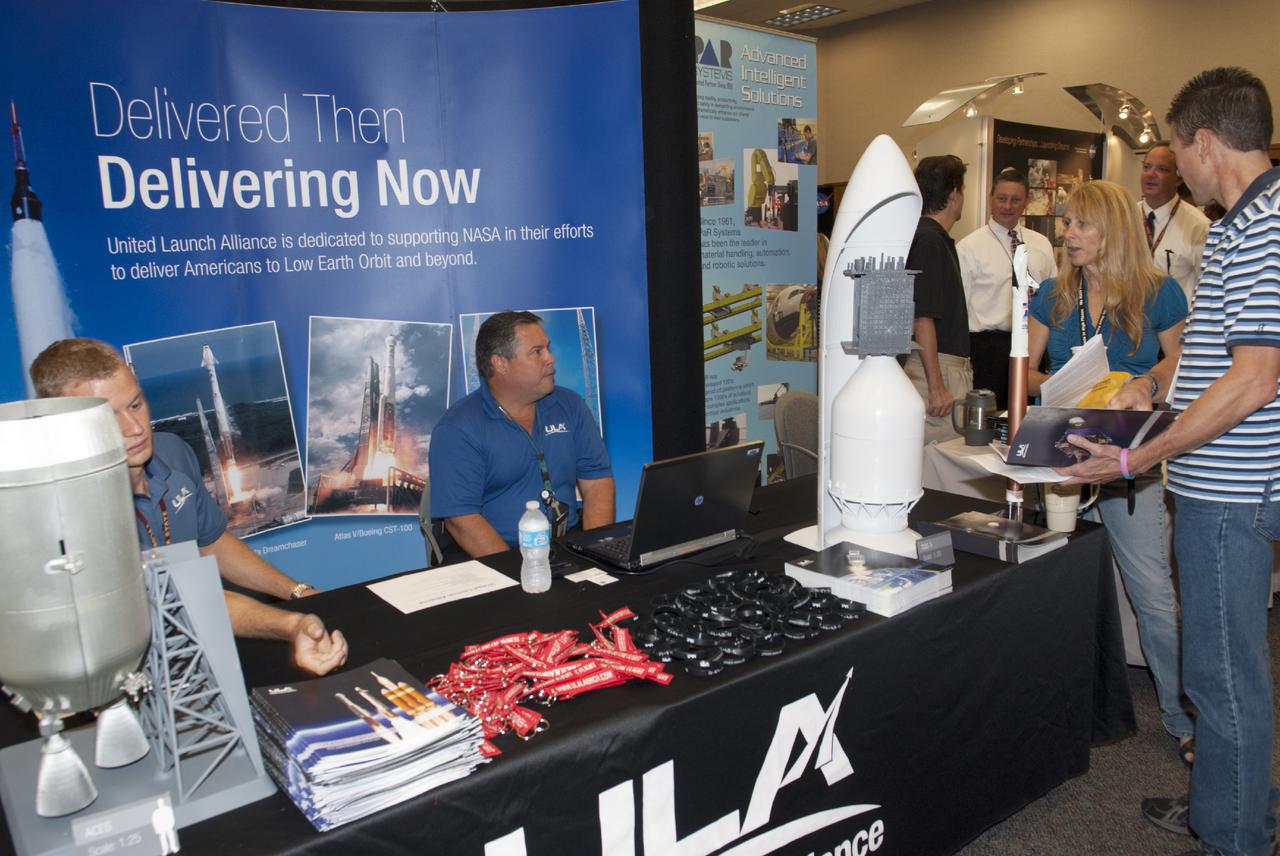
CAPE CANAVERAL, Fla. -- At the Kennedy Space Center in Florida, representatives of United Launch Alliance talk with guests at the Innovation Expo KSC Showcase. The event gave Kennedy employees an opportunity to meet 12 NASA partners and see how the Center Planning and Development Directorate is transforming Kennedy into a multi-user spaceport through partnerships and resource planning.   The 17-booth exhibit consists of 12 partner booths along with Spaceport Planning, Partnership Development and Research and Technology offices. Photo credit: NASA_Charisse Nahser
KSC-2013-3525
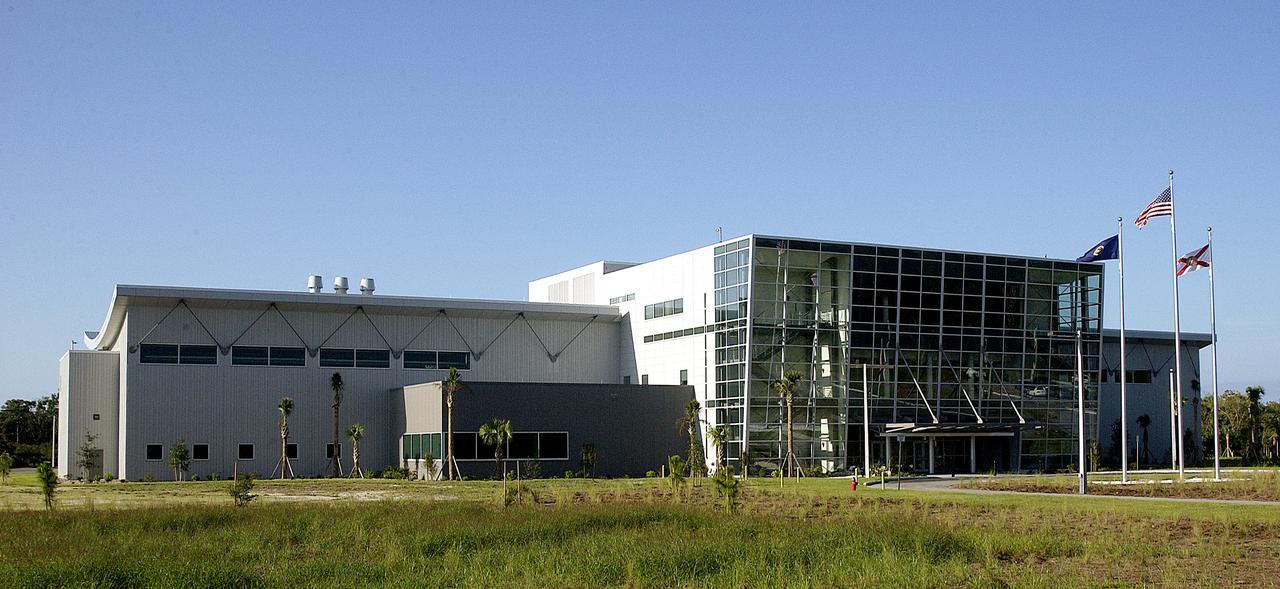
The Space Life Sciences Lab (SLSL), formerly known as the Space Experiment Research and Processing Laboratory (SERPL), is a state-of-the-art facility built for ISS biotechnology research. Developed as a partnership between NASA-KSC and the State of Florida, NASA’s life sciences contractor is the primary tenant of the facility, leasing space to conduct flight experiment processing and NASA-sponsored research. About 20 percent of the facility will be available for use by Florida’s university researchers through the Florida Space Research Institute.
Space Life Sciences Lab
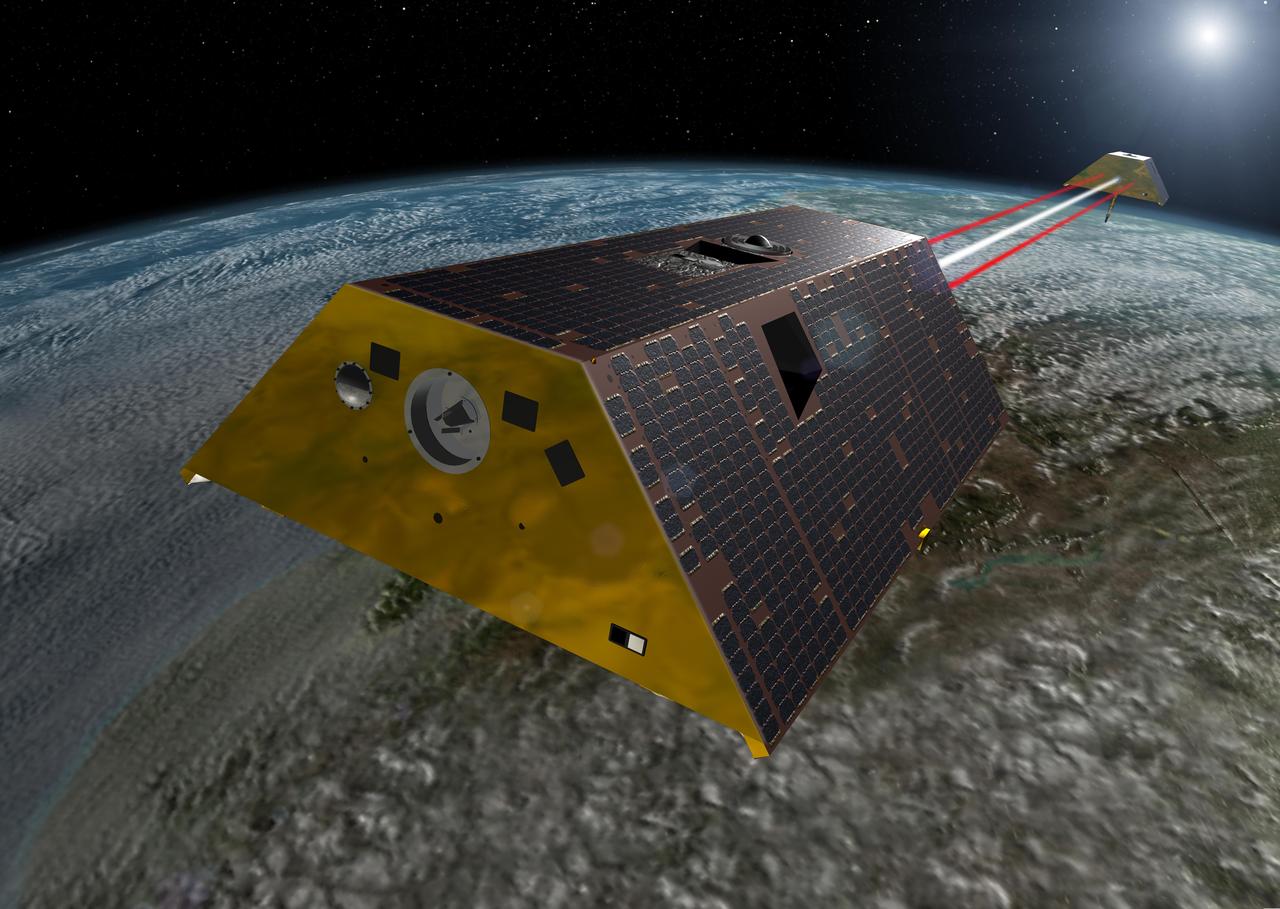
This artist's rendering shows the twin spacecraft of the Gravity Recovery and Climate Experiment Follow-On (GRACE-FO) mission, a partnership between NASA and the German Research Centre for Geosciences (GFZ). GRACE-FO is a successor to the original GRACE mission, which began orbiting Earth on March 17, 2002. GRACE-FO will carry on the extremely successful work of its predecessor while testing a new technology designed to dramatically improve the already remarkable precision of its measurement system.  The GRACE missions measure variations in gravity over Earth's surface, producing a new map of the gravity field every 30 days. Thus, GRACE shows how the planet's gravity differs not only from one location to another, but also from one period of time to another.  https://photojournal.jpl.nasa.gov/catalog/PIA21607
GRACE-FO Spacecraft Artist Rendering
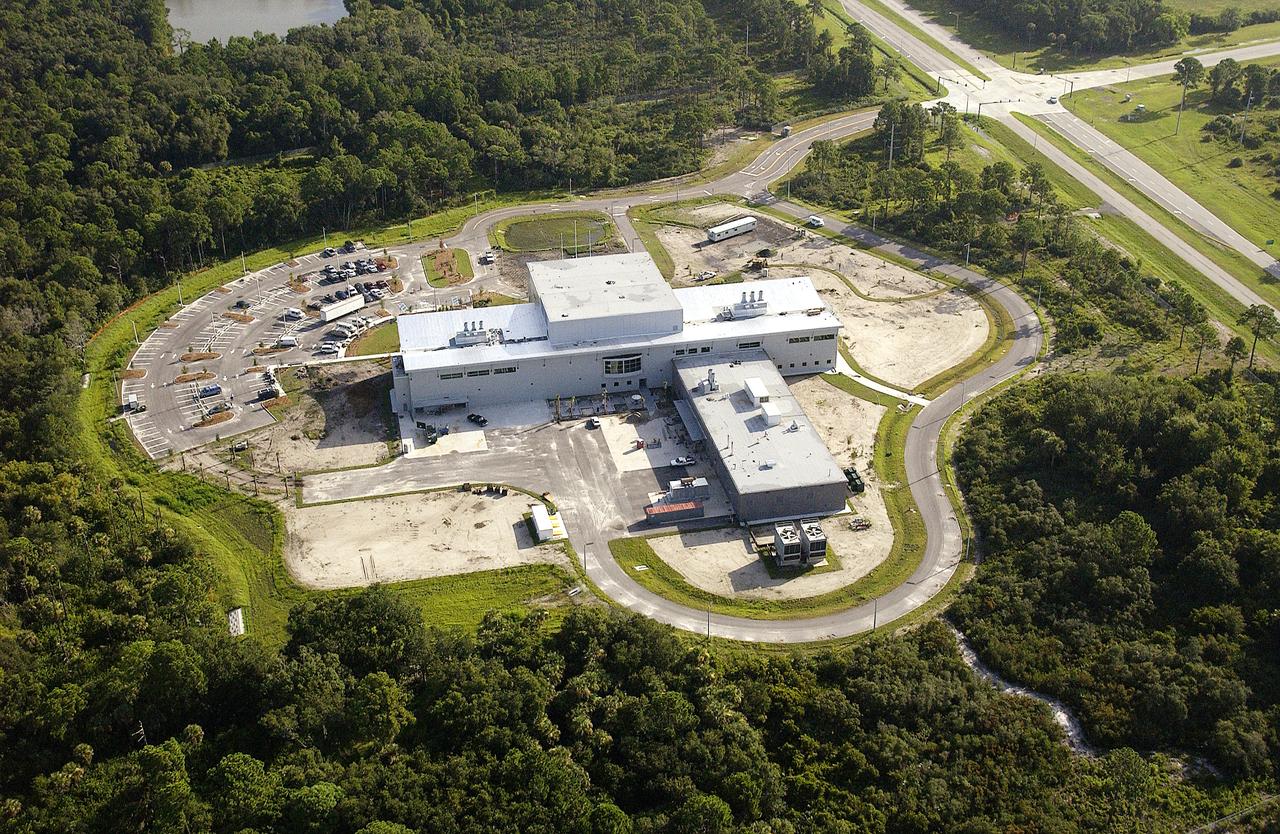
The Space Experiment Research and Processing Laboratory (SERPL) is a major new research facility under construction at the International Space Research Park located on KSC. At right is S.R. 3, which leads into the Center from Merritt Island. Being developed as a partnership between KSC and the State of Florida, SERPL will serve as the primary gateway to the International Space Station for science experiments and as a world-class home to ground-based investigations in fundamental and applied biological science. NASA’s life sciences contractor will be the primary tenant of the facility, leasing space to conduct flight experiment processing and NASA-sponsored research. About 20 percent of the facility will be available for use by Florida’s university researchers through the Florida Space Research Institute.
Aerial Views of KSC
The Space Experiment Research and Processing Laboratory (SERPL) is a major new research facility under construction at the International Space Research Park located on KSC. Being developed as a partnership between KSC and the State of Florida, it will serve as the primary gateway to the International Space Station for science experiments and as a world-class home to ground-based investigations in fundamental and applied biological science. NASA’s life sciences contractor will be the primary tenant of the facility, leasing space to conduct flight experiment processing and NASA-sponsored research. About 20 percent of the facility will be available for use by Florida’s university researchers through the Florida Space Research Institute.
Aerial Views of KSC
KENNEDY SPACE CENTER, FLA. -- An aerial photo of the recently completed Space Life Sciences Lab at KSC.  The new lab is a state-of-the-art facility built for ISS biotechnology research. It was developed as a partnership between NASA-KSC and the State of Florida.
KSC-04pd0647
KENNEDY SPACE CENTER, FLA. -- An aerial photo of the recently completed Space Life Sciences Lab at KSC.  The new lab is a state-of-the-art facility built for ISS biotechnology research. It was developed as a partnership between NASA-KSC and the State of Florida.
KSC-04pd0646
KENNEDY SPACE CENTER, FLA. -- An aerial photo of the recently completed Space Life Sciences Lab at KSC.  The new lab is a state-of-the-art facility built for ISS biotechnology research. It was developed as a partnership between NASA-KSC and the State of Florida.
KSC-04pd0645
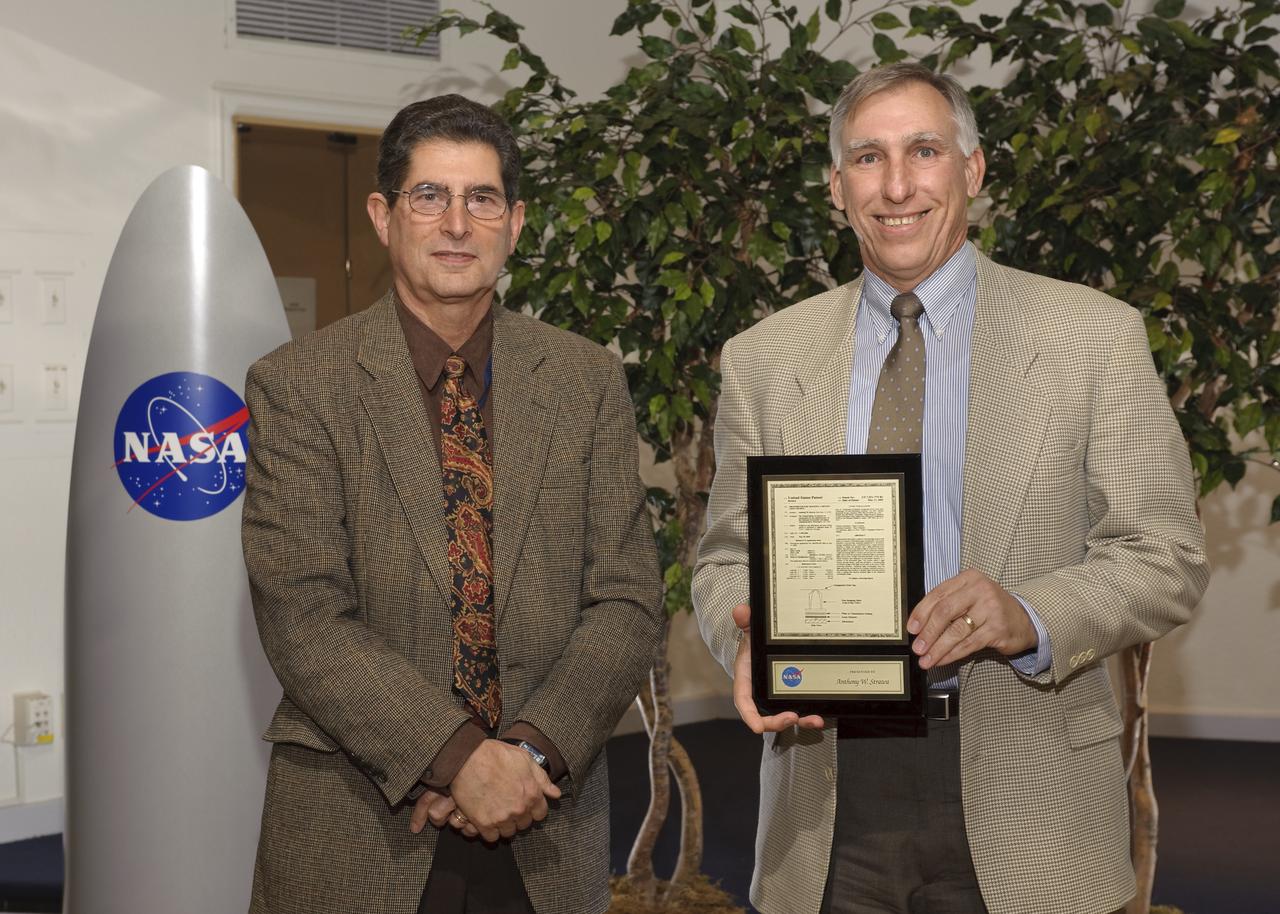
2009 Awards Ceremony; 2008 Government Invention of the Year Award, 2009 Software of the Year Award sponsored by Ames Innovative Partnerships Program Office. Patent Awards, Steve Zornetzer, Associate Director Ames Research Center presenting: Anthony Strawa for Photometer for Tracking a Moving Light Source.
ARC-2009-ACD09-0260-012
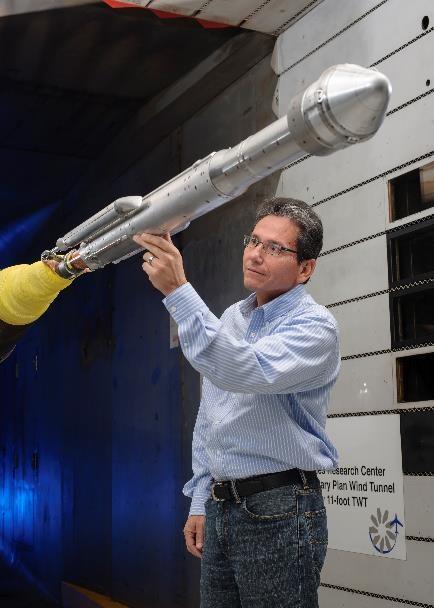
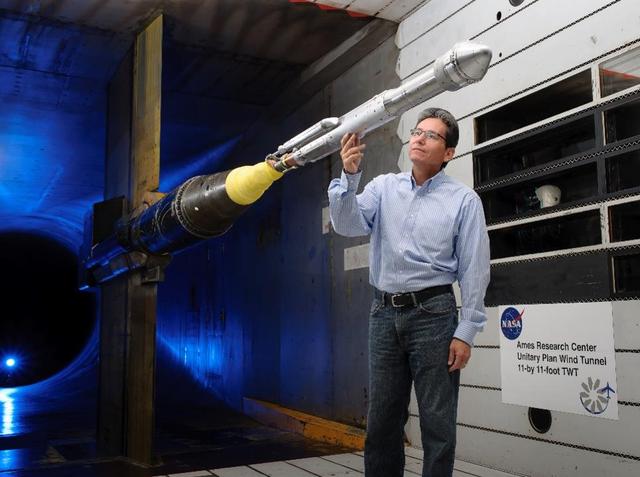
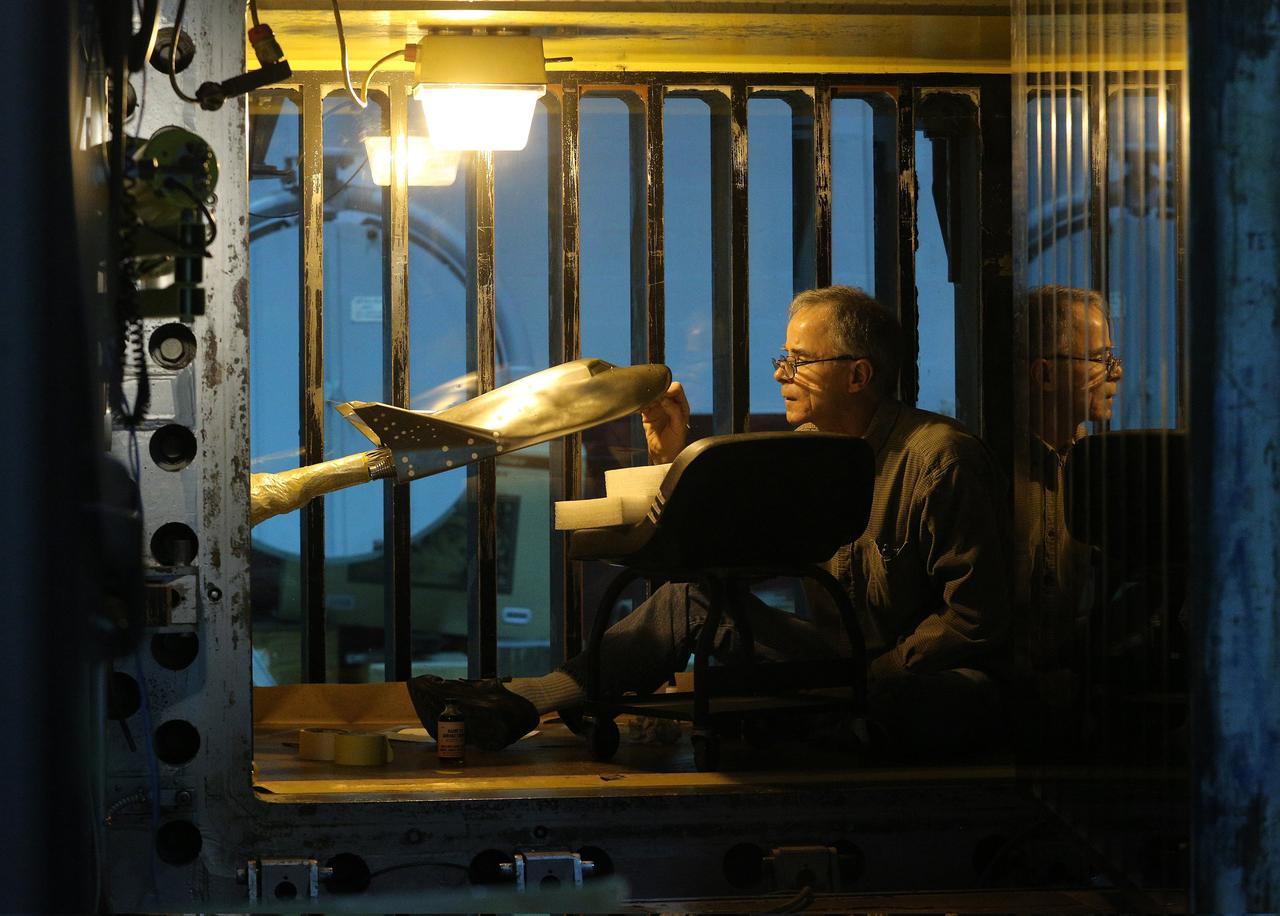
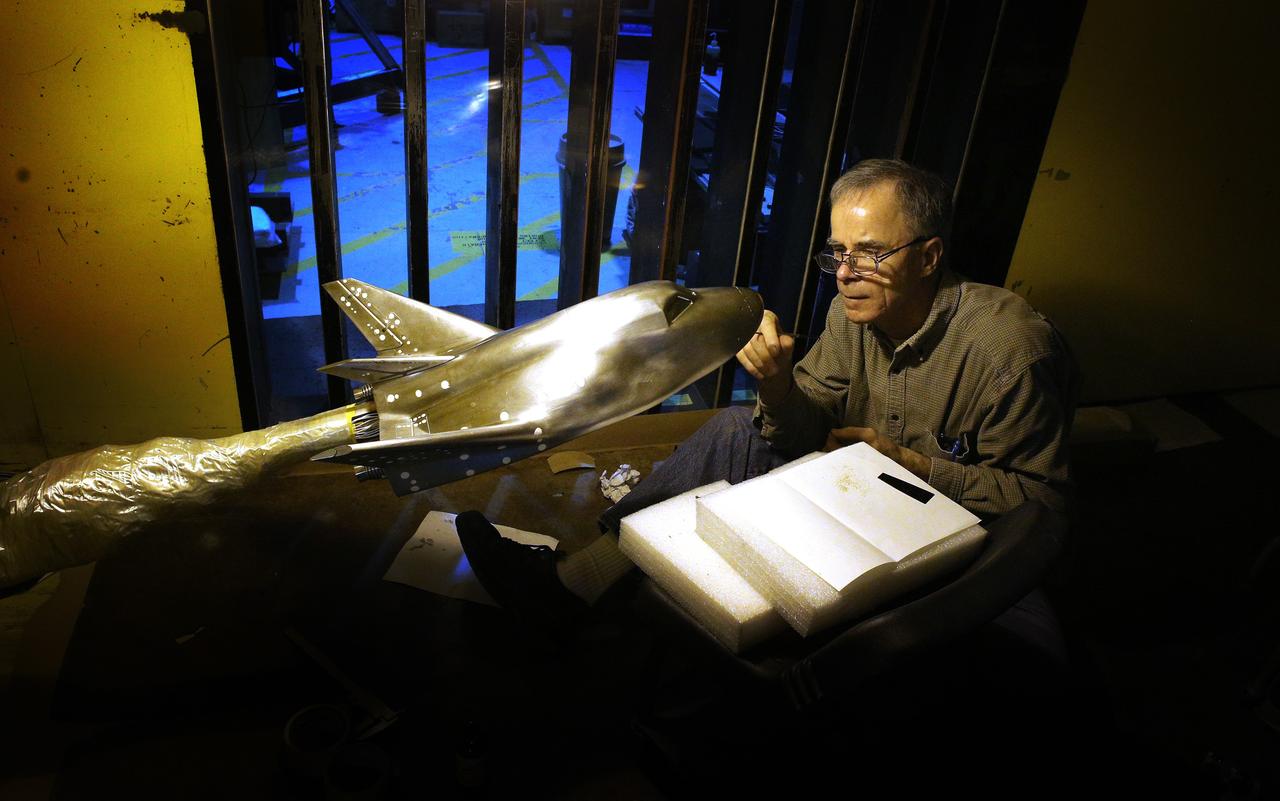
An engineer works with a model of a United Launch Alliance Atlas V rocket with a Boeing CST-100 Starliner capsule inside a wind tunnel at NASA's Ames Research Center in California. The Starliner/Atlas V system is under development by Boeing and ULA in partnership with NASA's Commercial Crew Program to launch astronauts to the International Space Station.
Boeing CST-100 Starliner/ULA Atlas V Wind Tunnel Demonstration
An engineer works with a model of a United Launch Alliance Atlas V rocket with a Boeing CST-100 Starliner capsule inside a wind tunnel at NASA's Ames Research Center in California. The Starliner/Atlas V system is under development by Boeing and ULA in partnership with NASA's Commercial Crew Program to launch astronauts to the International Space Station.
Boeing CST-100 Starliner/ULA Atlas V Wind Tunnel Demonstration
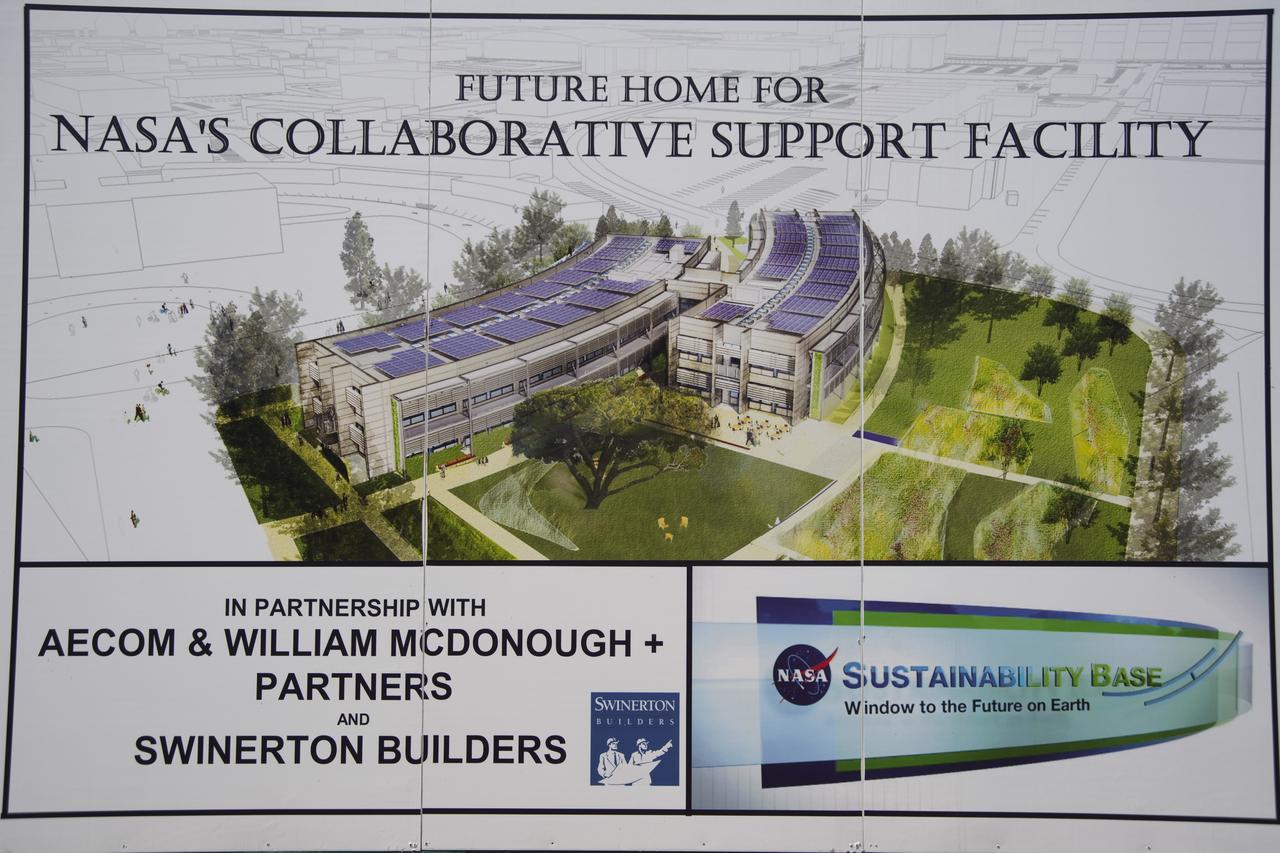
Construction of the new NASA Ames Green Building dubbed Sustainability Base located on the Ames Research Center campus at Moffett Field, CA.  Construction Sign. 'Future home of for NASA's Collaborative Support Facility' in partnership with AECOM & William McDonough + Partners and Swinerton Builders ....Sustainability Base ..window to the future on Earth.
ARC-2010-ACD10-0037-165
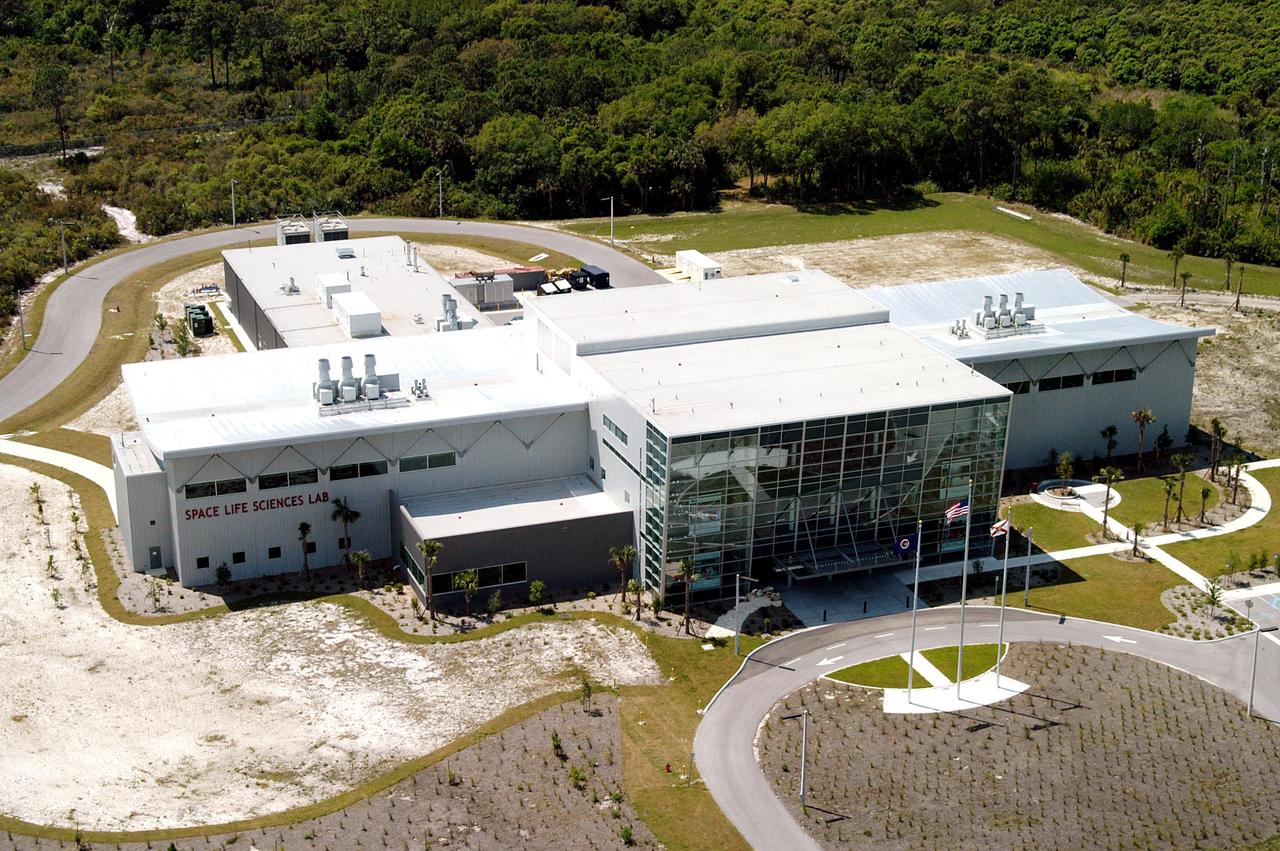
KENNEDY SPACE CENTER, FLA. -- An aerial photo of the recently completed Space Life Sciences Lab at KSC.  The new lab is a state-of-the-art facility built for ISS biotechnology research. It was developed as a partnership between NASA-KSC and the State of Florida.
KSC-04pd0644
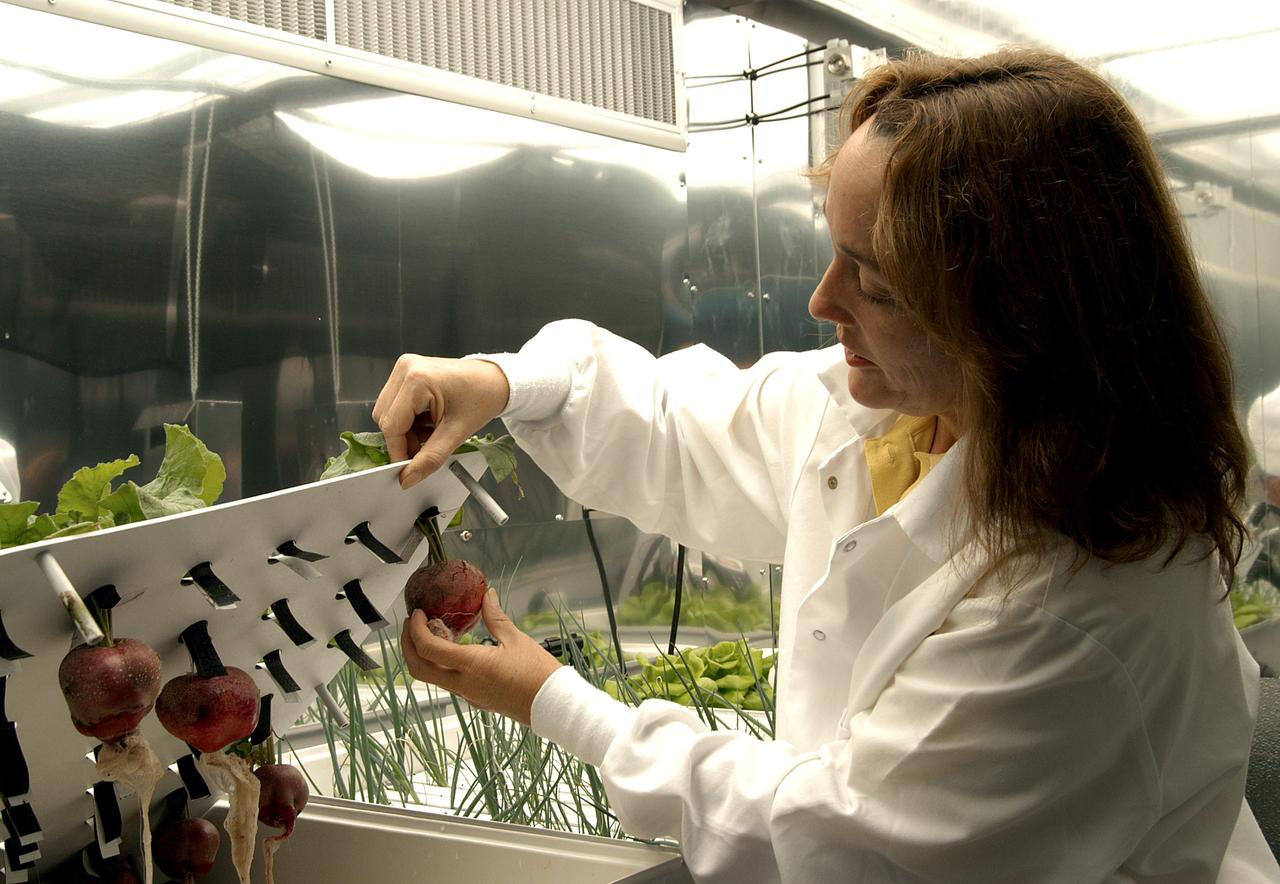
KENNEDY SPACE CENTER, FLA. -- Sharon Edney, with Dynamac Corp., checks the growth of radishes being grown hydroponically for study in the Space Life Sciences Lab.  The 100,000 square-foot facility houses labs for NASA’s ongoing research efforts, microbiology/microbial ecology studies and analytical chemistry labs. Also calling the new lab home are facilities for space flight-experiment and flight-hardware development, new plant growth chambers, and an Orbiter Environment Simulator that will be used to conduct ground control experiments in simulated flight conditions for space flight experiments.  The SLS Lab, formerly known as the Space Experiment Research and Processing Laboratory or SERPL, provides space for NASA’s Life Sciences Services contractor Dynamac Corporation, Bionetics Corporation, and researchers from the University of Florida. NASA’s Office of Biological and Physical Research will use the facility for processing life sciences experiments that will be conducted on the International Space Station. The SLS Lab is the magnet facility for the International Space Research Park at KSC being developed in partnership with Florida Space Authority.
KENNEDY SPACE CENTER, FLA. -- Sharon Edney, with Dynamac Corp., checks the growth of radishes being grown hydroponically for study in the Space Life Sciences Lab. The 100,000 square-foot facility houses labs for NASA’s ongoing research efforts, microbiology/microbial ecology studies and analytical chemistry labs. Also calling the new lab home are facilities for space flight-experiment and flight-hardware development, new plant growth chambers, and an Orbiter Environment Simulator that will be used to conduct ground control experiments in simulated flight conditions for space flight experiments. The SLS Lab, formerly known as the Space Experiment Research and Processing Laboratory or SERPL, provides space for NASA’s Life Sciences Services contractor Dynamac Corporation, Bionetics Corporation, and researchers from the University of Florida. NASA’s Office of Biological and Physical Research will use the facility for processing life sciences experiments that will be conducted on the International Space Station. The SLS Lab is the magnet facility for the International Space Research Park at KSC being developed in partnership with Florida Space Authority.
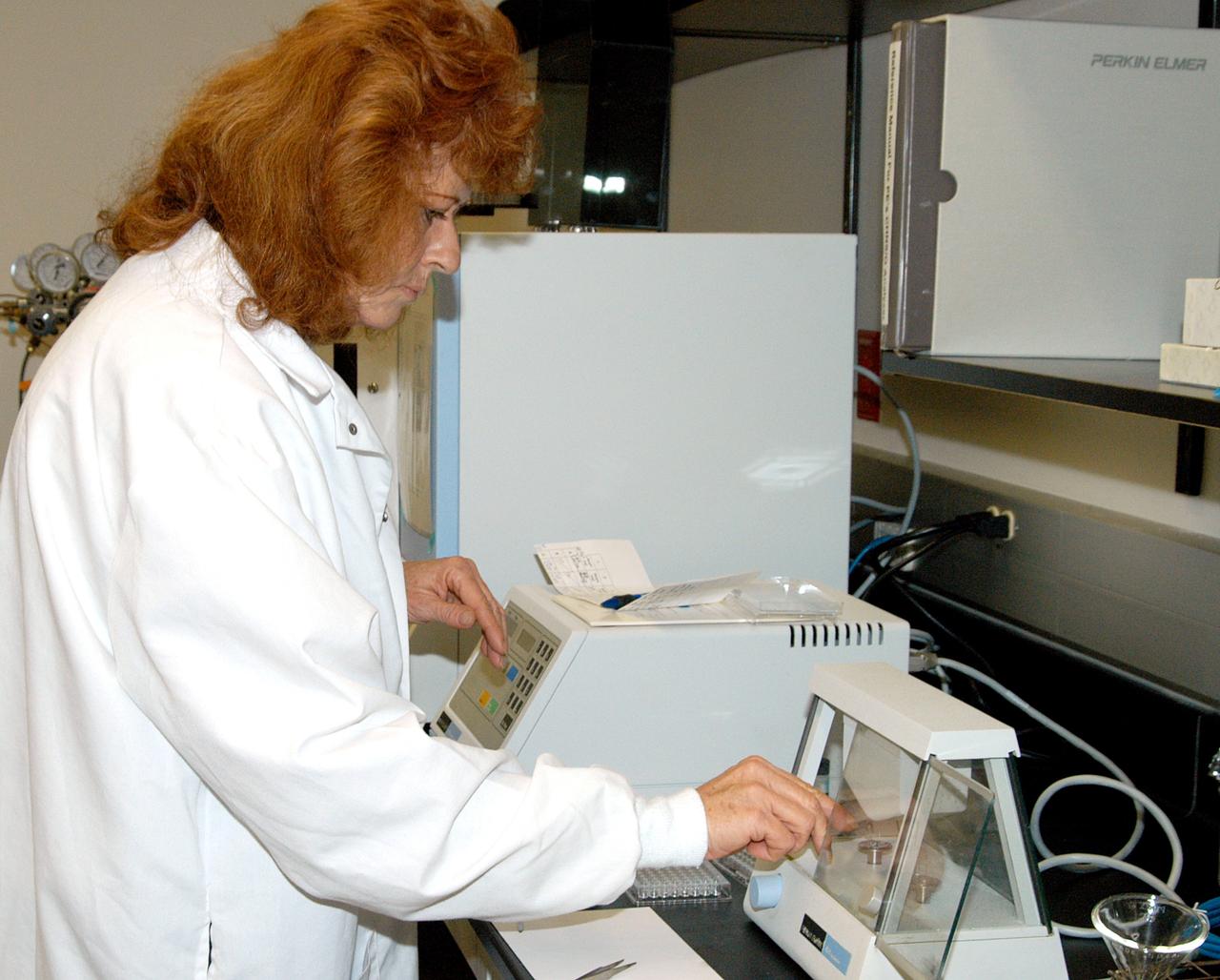
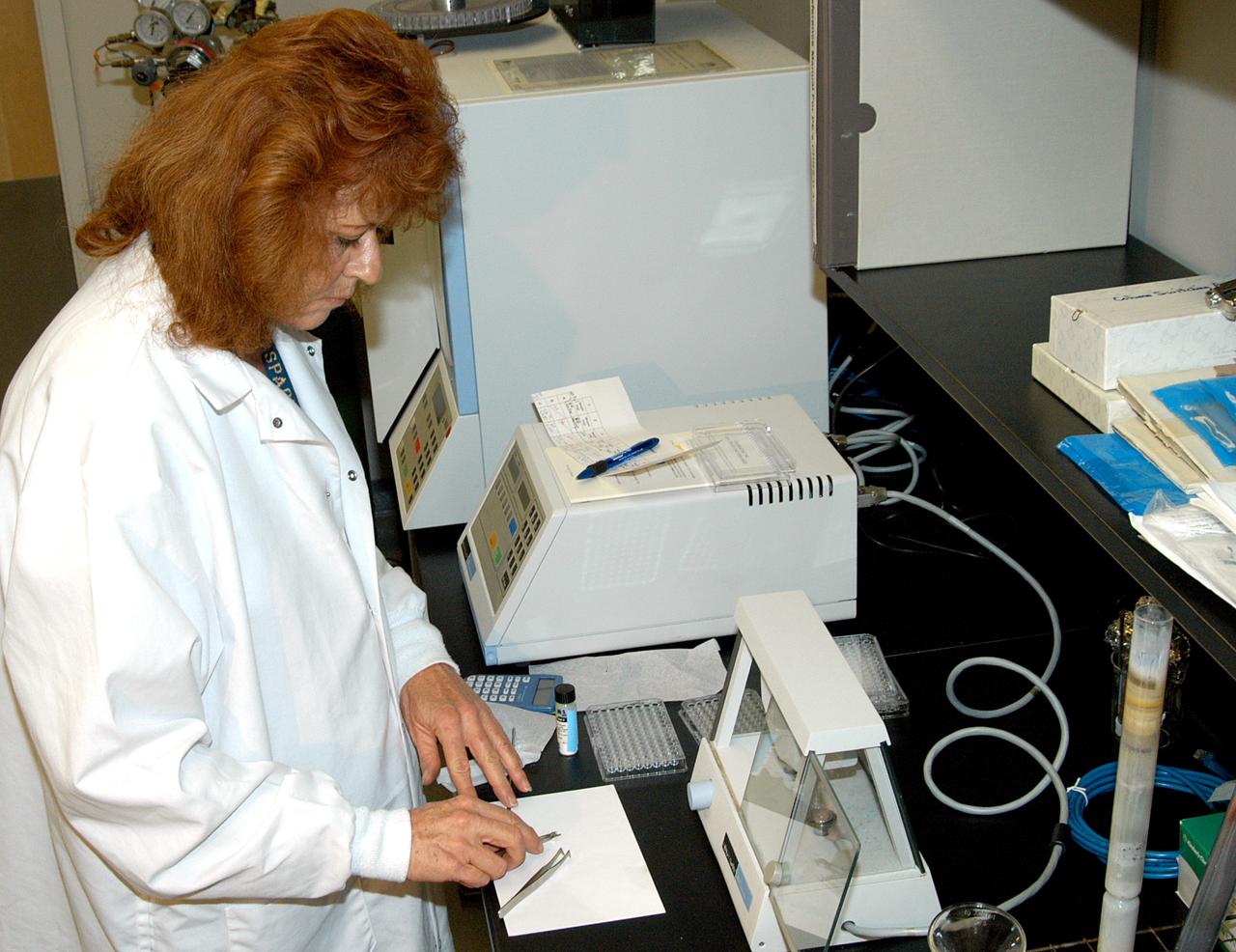
KENNEDY SPACE CENTER, FLA. -- In the Space Life Sciences (SLS) Lab, Jan Bauer, with Dynamac Corp., weighs samples of onion tissue for processing in the elemental analyzer behind it.  The equipment analyzes for carbon, hydrogen, nitrogen and sulfur. The 100,000 square-foot SLS houses labs for NASA’s ongoing research efforts, microbiology/microbial ecology studies and analytical chemistry labs. Also calling the new lab home are facilities for space flight-experiment and flight-hardware development, new plant growth chambers, and an Orbiter Environment Simulator that will be used to conduct ground control experiments in simulated flight conditions for space flight experiments.  The SLS Lab, formerly known as the Space Experiment Research and Processing Laboratory or SERPL, provides space for NASA’s Life Sciences Services contractor Dynamac Corporation, Bionetics Corporation, and researchers from the University of Florida. NASA’s Office of Biological and Physical Research will use the facility for processing life sciences experiments that will be conducted on the International Space Station. The SLS Lab is the magnet facility for the International Space Research Park at KSC being developed in partnership with Florida Space Authority.
KENNEDY SPACE CENTER, FLA. -- In the Space Life Sciences (SLS) Lab, Jan Bauer, with Dynamac Corp., weighs samples of onion tissue for processing in the elemental analyzer behind it. The equipment analyzes for carbon, hydrogen, nitrogen and sulfur. The 100,000 square-foot SLS houses labs for NASA’s ongoing research efforts, microbiology/microbial ecology studies and analytical chemistry labs. Also calling the new lab home are facilities for space flight-experiment and flight-hardware development, new plant growth chambers, and an Orbiter Environment Simulator that will be used to conduct ground control experiments in simulated flight conditions for space flight experiments. The SLS Lab, formerly known as the Space Experiment Research and Processing Laboratory or SERPL, provides space for NASA’s Life Sciences Services contractor Dynamac Corporation, Bionetics Corporation, and researchers from the University of Florida. NASA’s Office of Biological and Physical Research will use the facility for processing life sciences experiments that will be conducted on the International Space Station. The SLS Lab is the magnet facility for the International Space Research Park at KSC being developed in partnership with Florida Space Authority.
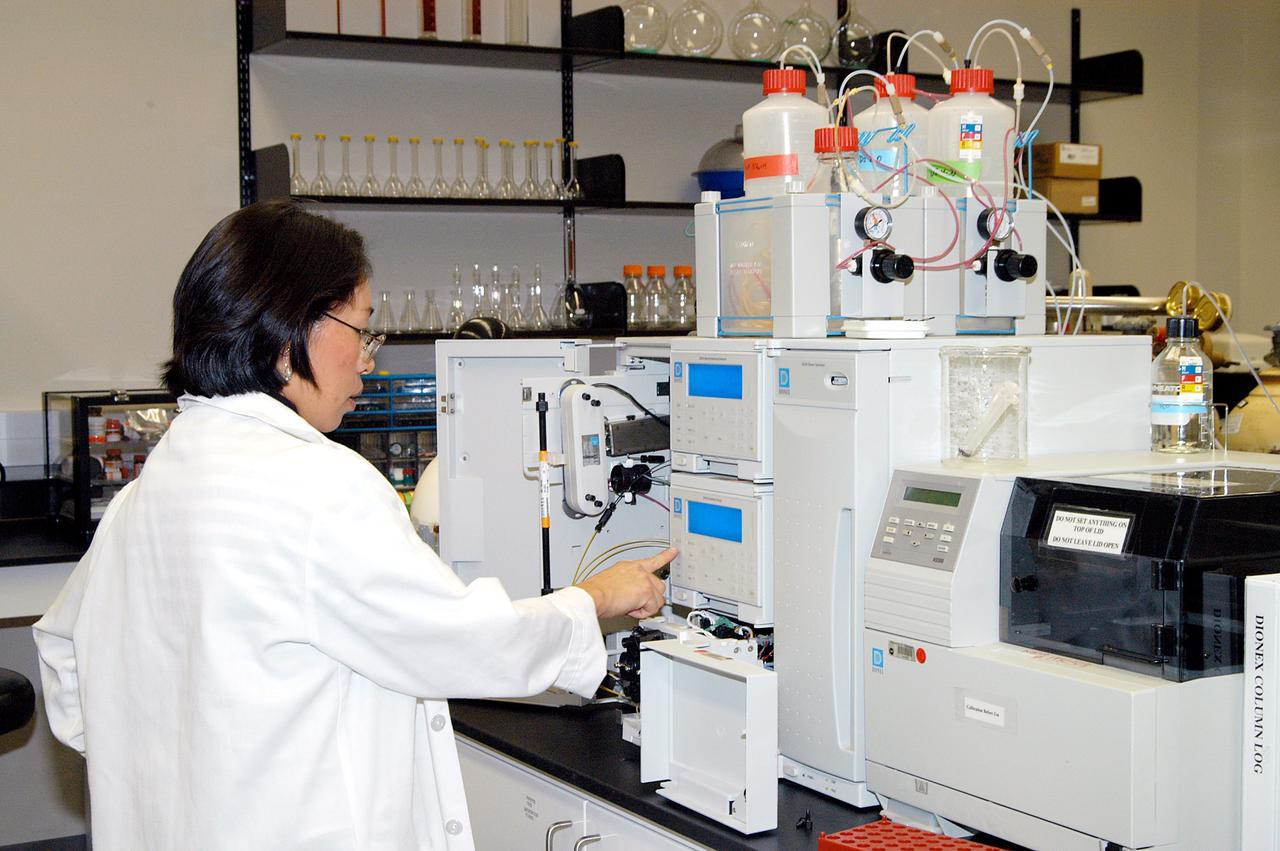
KENNEDY SPACE CENTER, FLA. -- Lanfang Levine, with Dynamac Corp., helps install a Dionex DX-500 IC/HPLC system  in the Space Life Sciences Lab.  The equipment will enable analysis of volatile compounds, such as from plants. The 100,000 square-foot facility houses labs for NASA’s ongoing research efforts, microbiology/microbial ecology studies and analytical chemistry labs. Also calling the new lab home are facilities for space flight-experiment and flight-hardware development, new plant growth chambers, and an Orbiter Environment Simulator that will be used to conduct ground control experiments in simulated flight conditions for space flight experiments.  The SLS Lab, formerly known as the Space Experiment Research and Processing Laboratory or SERPL, provides space for NASA’s Life Sciences Services contractor Dynamac Corporation, Bionetics Corporation, and researchers from the University of Florida. NASA’s Office of Biological and Physical Research will use the facility for processing life sciences experiments that will be conducted on the International Space Station. The SLS Lab is the magnet facility for the International Space Research Park at KSC being developed in partnership with Florida Space Authority.
KENNEDY SPACE CENTER, FLA. -- Lanfang Levine, with Dynamac Corp., helps install a Dionex DX-500 IC/HPLC system in the Space Life Sciences Lab. The equipment will enable analysis of volatile compounds, such as from plants. The 100,000 square-foot facility houses labs for NASA’s ongoing research efforts, microbiology/microbial ecology studies and analytical chemistry labs. Also calling the new lab home are facilities for space flight-experiment and flight-hardware development, new plant growth chambers, and an Orbiter Environment Simulator that will be used to conduct ground control experiments in simulated flight conditions for space flight experiments. The SLS Lab, formerly known as the Space Experiment Research and Processing Laboratory or SERPL, provides space for NASA’s Life Sciences Services contractor Dynamac Corporation, Bionetics Corporation, and researchers from the University of Florida. NASA’s Office of Biological and Physical Research will use the facility for processing life sciences experiments that will be conducted on the International Space Station. The SLS Lab is the magnet facility for the International Space Research Park at KSC being developed in partnership with Florida Space Authority.
KENNEDY SPACE CENTER, FLA. -- In the Space Life Sciences (SLS) Lab, Jan Bauer, with Dynamac Corp., places samples of onion tissue in the elemental analyzer, which analyzes for carbon, hydrogen, nitrogen and sulfur. The 100,000 square-foot SLS houses labs for NASA’s ongoing research efforts, microbiology/microbial ecology studies and analytical chemistry labs. Also calling the new lab home are facilities for space flight-experiment and flight-hardware development, new plant growth chambers, and an Orbiter Environment Simulator that will be used to conduct ground control experiments in simulated flight conditions for space flight experiments.  The SLS Lab, formerly known as the Space Experiment Research and Processing Laboratory or SERPL, provides space for NASA’s Life Sciences Services contractor Dynamac Corporation, Bionetics Corporation, and researchers from the University of Florida. NASA’s Office of Biological and Physical Research will use the facility for processing life sciences experiments that will be conducted on the International Space Station. The SLS Lab is the magnet facility for the International Space Research Park at KSC being developed in partnership with Florida Space Authority.
KENNEDY SPACE CENTER, FLA. -- In the Space Life Sciences (SLS) Lab, Jan Bauer, with Dynamac Corp., places samples of onion tissue in the elemental analyzer, which analyzes for carbon, hydrogen, nitrogen and sulfur. The 100,000 square-foot SLS houses labs for NASA’s ongoing research efforts, microbiology/microbial ecology studies and analytical chemistry labs. Also calling the new lab home are facilities for space flight-experiment and flight-hardware development, new plant growth chambers, and an Orbiter Environment Simulator that will be used to conduct ground control experiments in simulated flight conditions for space flight experiments. The SLS Lab, formerly known as the Space Experiment Research and Processing Laboratory or SERPL, provides space for NASA’s Life Sciences Services contractor Dynamac Corporation, Bionetics Corporation, and researchers from the University of Florida. NASA’s Office of Biological and Physical Research will use the facility for processing life sciences experiments that will be conducted on the International Space Station. The SLS Lab is the magnet facility for the International Space Research Park at KSC being developed in partnership with Florida Space Authority.
KENNEDY SPACE CENTER, FLA. -- Sharon Edney, with Dynamac Corp., measures photosynthesis on Bibb lettuce being grown hydroponically for study in the Space Life Sciences Lab.  The 100,000 square-foot facility houses labs for NASA’s ongoing research efforts, microbiology/microbial ecology studies and analytical chemistry labs. Also calling the new lab home are facilities for space flight-experiment and flight-hardware development, new plant growth chambers, and an Orbiter Environment Simulator that will be used to conduct ground control experiments in simulated flight conditions for space flight experiments.  The SLS Lab, formerly known as the Space Experiment Research and Processing Laboratory or SERPL, provides space for NASA’s Life Sciences Services contractor Dynamac Corporation, Bionetics Corporation, and researchers from the University of Florida. NASA’s Office of Biological and Physical Research will use the facility for processing life sciences experiments that will be conducted on the International Space Station. The SLS Lab is the magnet facility for the International Space Research Park at KSC being developed in partnership with Florida Space Authority.
KENNEDY SPACE CENTER, FLA. -- Sharon Edney, with Dynamac Corp., measures photosynthesis on Bibb lettuce being grown hydroponically for study in the Space Life Sciences Lab. The 100,000 square-foot facility houses labs for NASA’s ongoing research efforts, microbiology/microbial ecology studies and analytical chemistry labs. Also calling the new lab home are facilities for space flight-experiment and flight-hardware development, new plant growth chambers, and an Orbiter Environment Simulator that will be used to conduct ground control experiments in simulated flight conditions for space flight experiments. The SLS Lab, formerly known as the Space Experiment Research and Processing Laboratory or SERPL, provides space for NASA’s Life Sciences Services contractor Dynamac Corporation, Bionetics Corporation, and researchers from the University of Florida. NASA’s Office of Biological and Physical Research will use the facility for processing life sciences experiments that will be conducted on the International Space Station. The SLS Lab is the magnet facility for the International Space Research Park at KSC being developed in partnership with Florida Space Authority.
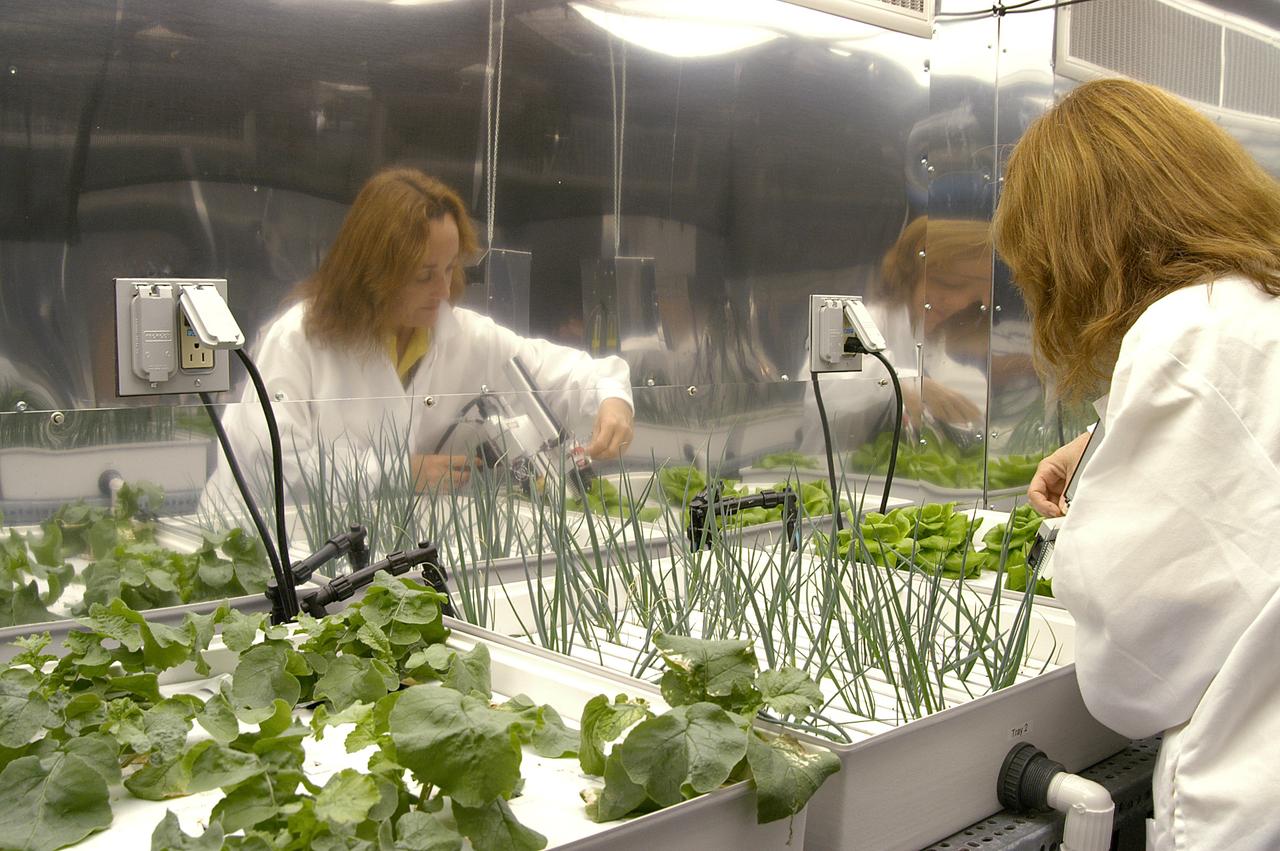
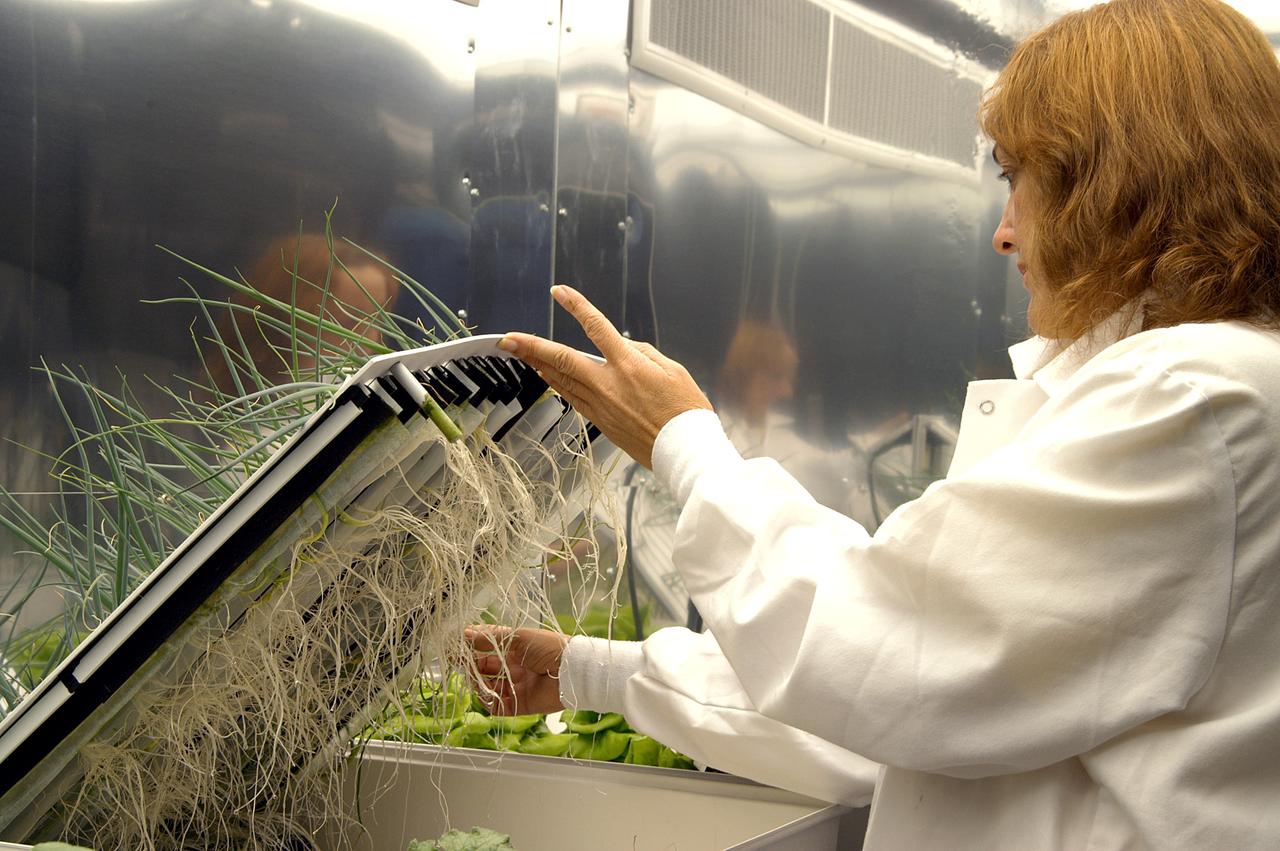
KENNEDY SPACE CENTER, FLA. -- Sharon Edney, with Dynamac Corp., checks the roots of green onions being grown hydroponically for study in the Space Life Sciences Lab.  The 100,000 square-foot facility houses labs for NASA’s ongoing research efforts, microbiology/microbial ecology studies and analytical chemistry labs. Also calling the new lab home are facilities for space flight-experiment and flight-hardware development, new plant growth chambers, and an Orbiter Environment Simulator that will be used to conduct ground control experiments in simulated flight conditions for space flight experiments.  The SLS Lab, formerly known as the Space Experiment Research and Processing Laboratory or SERPL, provides space for NASA’s Life Sciences Services contractor Dynamac Corporation, Bionetics Corporation, and researchers from the University of Florida. NASA’s Office of Biological and Physical Research will use the facility for processing life sciences experiments that will be conducted on the International Space Station. The SLS Lab is the magnet facility for the International Space Research Park at KSC being developed in partnership with Florida Space Authority.
KENNEDY SPACE CENTER, FLA. -- Sharon Edney, with Dynamac Corp., checks the roots of green onions being grown hydroponically for study in the Space Life Sciences Lab. The 100,000 square-foot facility houses labs for NASA’s ongoing research efforts, microbiology/microbial ecology studies and analytical chemistry labs. Also calling the new lab home are facilities for space flight-experiment and flight-hardware development, new plant growth chambers, and an Orbiter Environment Simulator that will be used to conduct ground control experiments in simulated flight conditions for space flight experiments. The SLS Lab, formerly known as the Space Experiment Research and Processing Laboratory or SERPL, provides space for NASA’s Life Sciences Services contractor Dynamac Corporation, Bionetics Corporation, and researchers from the University of Florida. NASA’s Office of Biological and Physical Research will use the facility for processing life sciences experiments that will be conducted on the International Space Station. The SLS Lab is the magnet facility for the International Space Research Park at KSC being developed in partnership with Florida Space Authority.
KENNEDY SPACE CENTER, FLA. -- In the Space Life Sciences Lab, Lanfang Levine, with Dynamac Corp., transfers material into a sample bottle for analysis.  She is standing in front of new equipment in the lab that will provide gas chromatography and mass spectrometry.  The equipment will enable analysis of volatile compounds, such as from plants.  The 100,000 square-foot facility houses labs for NASA’s ongoing research efforts, microbiology/microbial ecology studies and analytical chemistry labs. Also calling the new lab home are facilities for space flight-experiment and flight-hardware development, new plant growth chambers, and an Orbiter Environment Simulator that will be used to conduct ground control experiments in simulated flight conditions for space flight experiments.  The SLS Lab, formerly known as the Space Experiment Research and Processing Laboratory or SERPL, provides space for NASA’s Life Sciences Services contractor Dynamac Corporation, Bionetics Corporation, and researchers from the University of Florida. NASA’s Office of Biological and Physical Research will use the facility for processing life sciences experiments that will be conducted on the International Space Station. The SLS Lab is the magnet facility for the International Space Research Park at KSC being developed in partnership with Florida Space Authority.
KENNEDY SPACE CENTER, FLA. -- In the Space Life Sciences Lab, Lanfang Levine, with Dynamac Corp., transfers material into a sample bottle for analysis. She is standing in front of new equipment in the lab that will provide gas chromatography and mass spectrometry. The equipment will enable analysis of volatile compounds, such as from plants. The 100,000 square-foot facility houses labs for NASA’s ongoing research efforts, microbiology/microbial ecology studies and analytical chemistry labs. Also calling the new lab home are facilities for space flight-experiment and flight-hardware development, new plant growth chambers, and an Orbiter Environment Simulator that will be used to conduct ground control experiments in simulated flight conditions for space flight experiments. The SLS Lab, formerly known as the Space Experiment Research and Processing Laboratory or SERPL, provides space for NASA’s Life Sciences Services contractor Dynamac Corporation, Bionetics Corporation, and researchers from the University of Florida. NASA’s Office of Biological and Physical Research will use the facility for processing life sciences experiments that will be conducted on the International Space Station. The SLS Lab is the magnet facility for the International Space Research Park at KSC being developed in partnership with Florida Space Authority.
KENNEDY SPACE CENTER, FLA. -  Dynamac employees (from left) Larry Burns, Debbie Wells and Neil  Yorio carry boxes of hardware into the Space Life Sciences Lab (SLSL), formerly known as the Space Experiment Research and Processing Laboratory (SERPL).   They are transferring equipment from Hangar L. The new lab is a state-of-the-art facility being built for ISS biotechnology research. Developed as a partnership between NASA-KSC and the State of Florida, NASA’s life sciences contractor will be the primary tenant of the facility, leasing space to conduct flight experiment processing and NASA-sponsored research. About 20 percent of the facility will be available for use by Florida’s university researchers through the Florida Space Research Institute.
KSC-03pd-2642
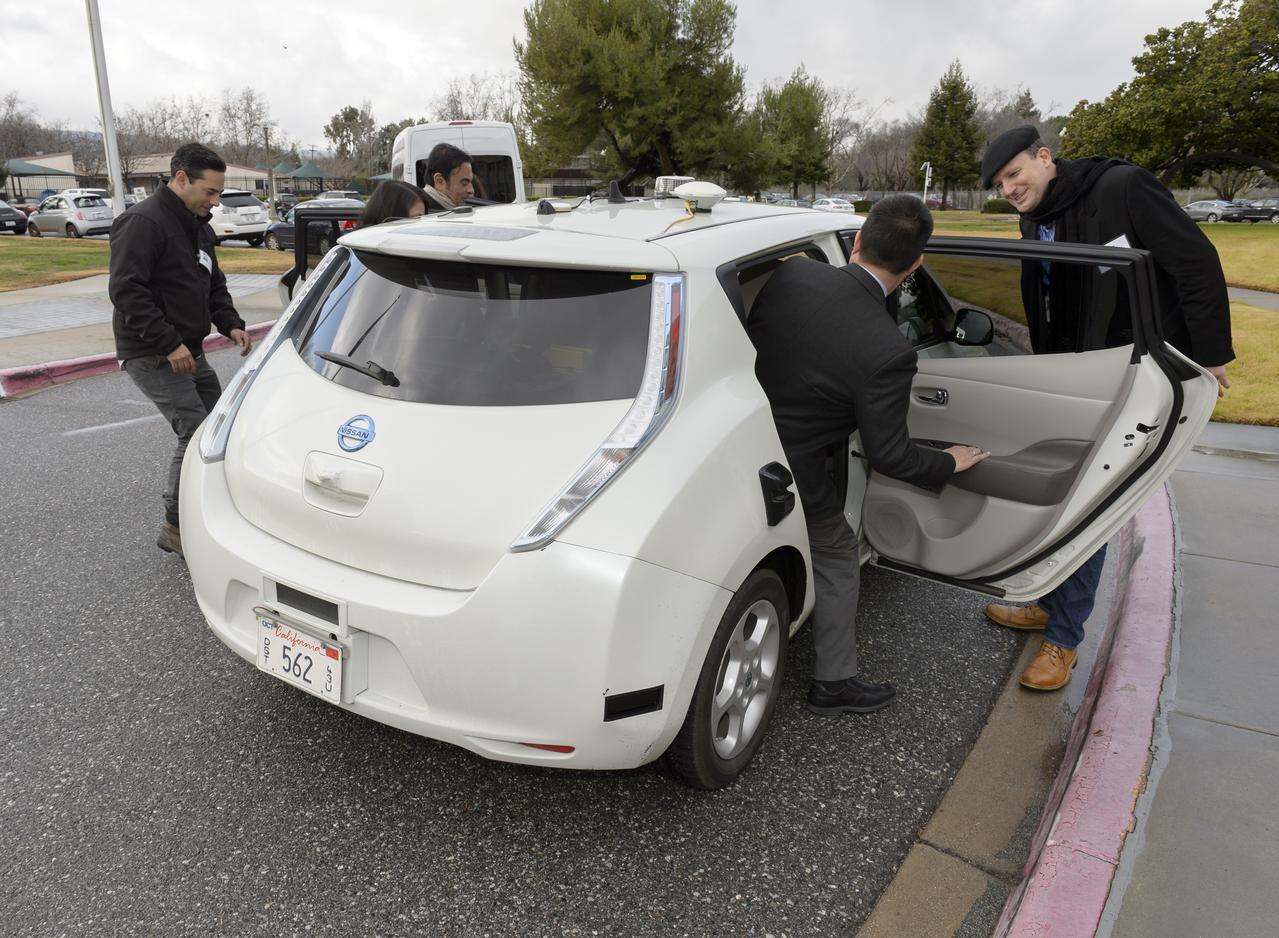
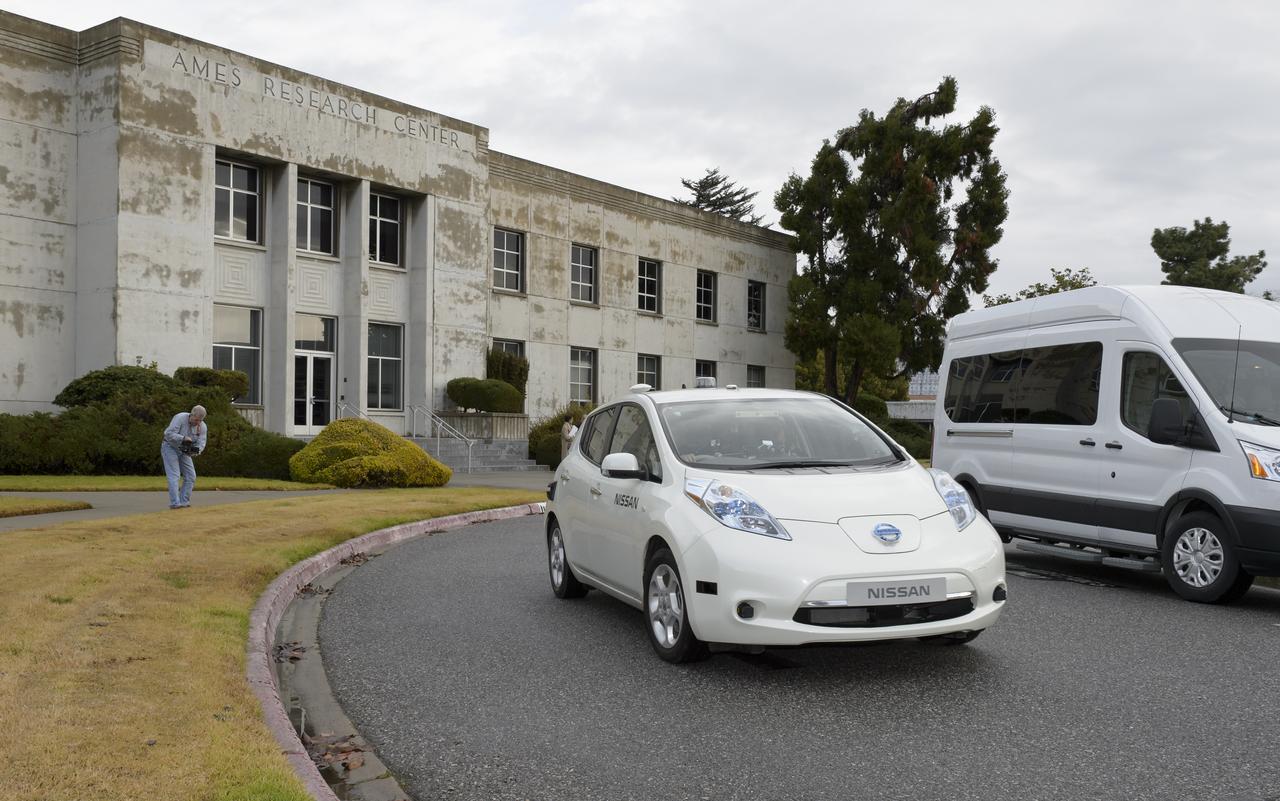
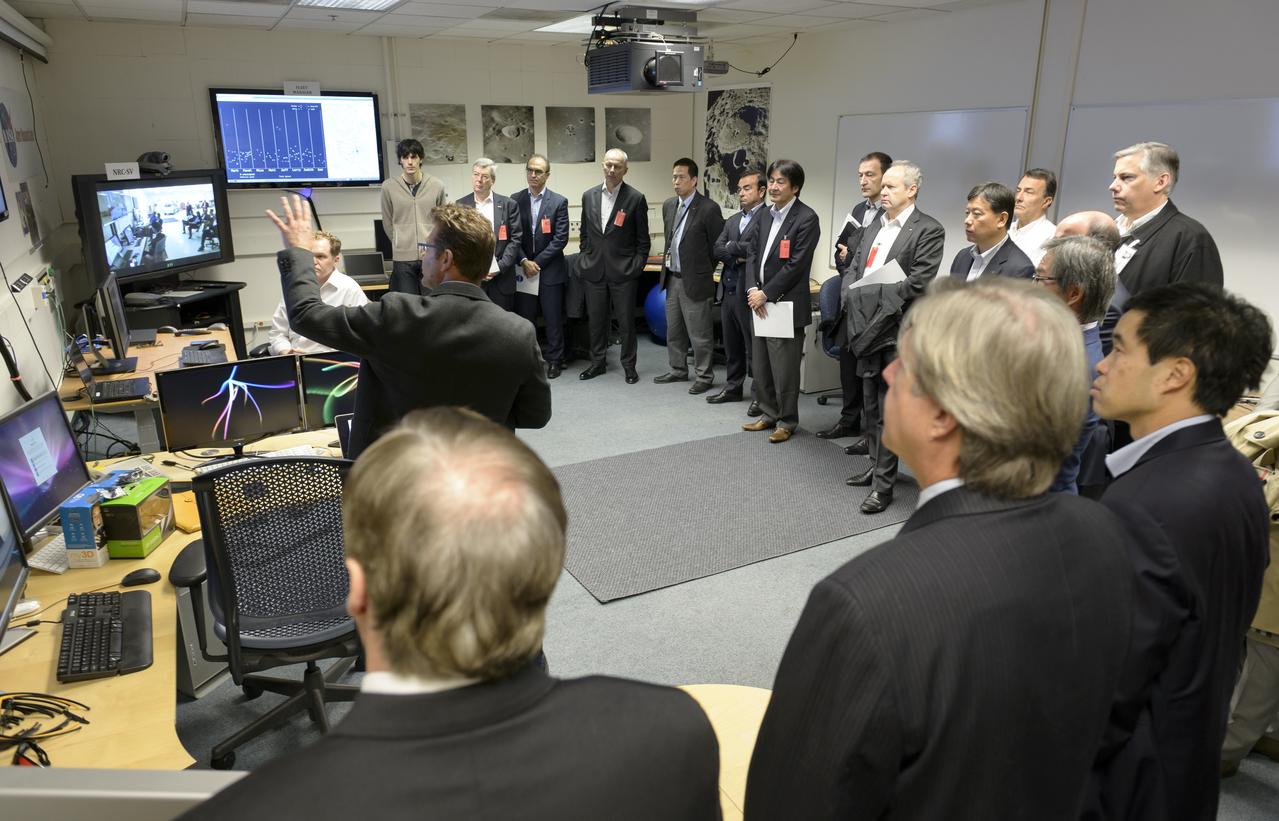
Senior executives from the Renault-Nissan Alliance, including Carlos Ghosn, chairman and CEO of Nissan, and Jose Munoz, chairman of Nissan North America, visited Ames for meetings and a showcase of the technical partnership between NASA and Nissan North America. The partnership allows researchers to develop and test autonomy algorithms, concepts, and integrated prototypes for a variety of vehicular transport applications – from rovers to self-driving cars.  After briefings, a company of including Eugene Tu, Ames Center Director andLiam Pedersen, Nissan on right  Carlos Ghosn, CE, Nissan on left climb into in the autonomous vehicle to  observed testing of Nissan’s all-electric LEAF as it performed safe autonomous drives across the center.
ACD16-0001-022
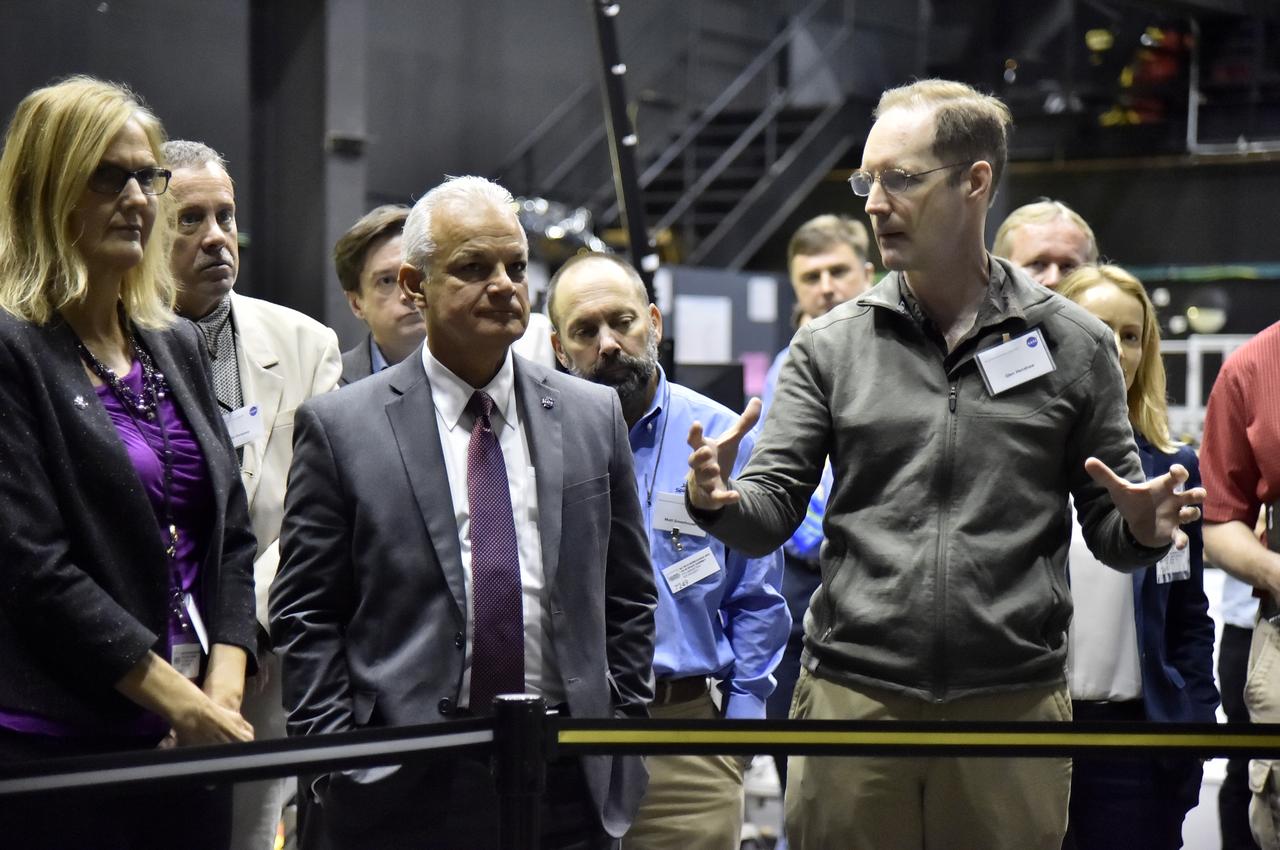
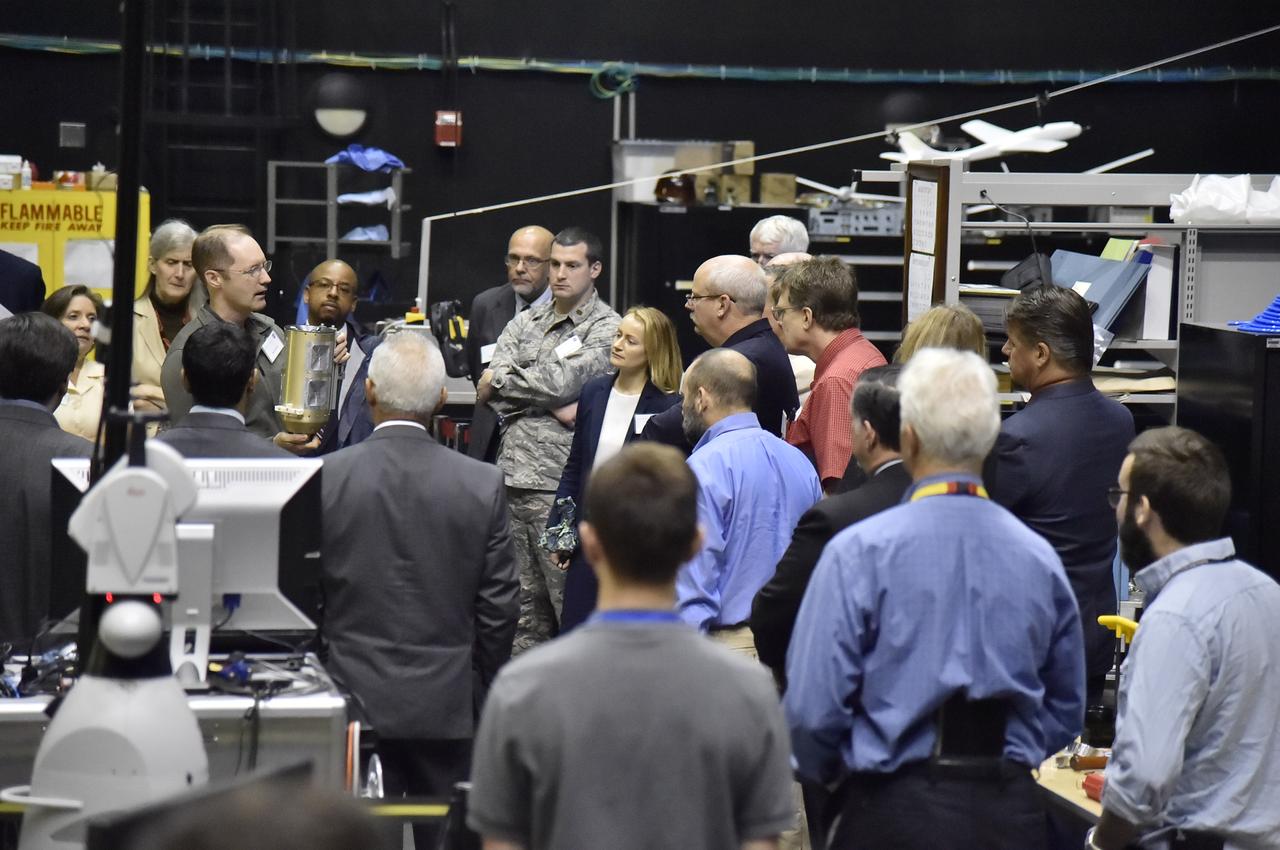
WASHINGTON, D.C.---S&T Partnership Forum In-Space Assembly Technical Interchange Meeting-On September 6th 2017, many of the United States government experts on In-Space Assembly met at the U.S. Naval Research Lab to discuss both technology development and in-space applications that would advance national capabilities in this area.  Expertise from NASA, USAF, NRO, DARPA and NRL met in this meeting which was coordinated by the NASA Headquarters, Office of the Chief Technologist.  This technical interchange meeting was the second meeting of the members of this Science and Technology Partnership Forum. Glen Henshaw of Code 8231 talks to the group in the Space Robotics Lab.
Glen Henshaw Briefs NASA Chief and Deputy Chief Technologists at the In-Space Assembly Technical Interchange Meeting on September 6, 2017
WASHINGTON, D.C.---S&T Partnership Forum In-Space Assembly Technical Interchange Meeting-On September 6th 2017, many of the United States government experts on In-Space Assembly met at the U.S. Naval Research Lab to discuss both technology development and in-space applications that would advance national capabilities in this area.  Expertise from NASA, USAF, NRO, DARPA and NRL met in this meeting which was coordinated by the NASA Headquarters, Office of the Chief Technologist.  This technical interchange meeting was the second meeting of the members of this Science and Technology Partnership Forum. Glen Henshaw of Code 8231 talks to the group in the Space Robotics Lab.
Members of the Science and Technology Partnership Forum Listen to a Presentation about In-Space Assembly and Satellite Servicing
Senior executives from the Renault-Nissan Alliance, including Carlos Ghosn, chairman and CEO of Nissan, and Jose Munoz, chairman of Nissan North America, visited Ames for meetings and a showcase of the technical partnership between NASA and Nissan North America. The partnership allows researchers to develop and test autonomy algorithms, concepts, and integrated prototypes for a variety of vehicular transport applications – from rovers to self-driving cars.  After briefings, a group take a ride in the autonomous vehicle to  observed testing of Nissan’s all-electric LEAF as it performed safe autonomous drives across the center.
ACD16-0001-023
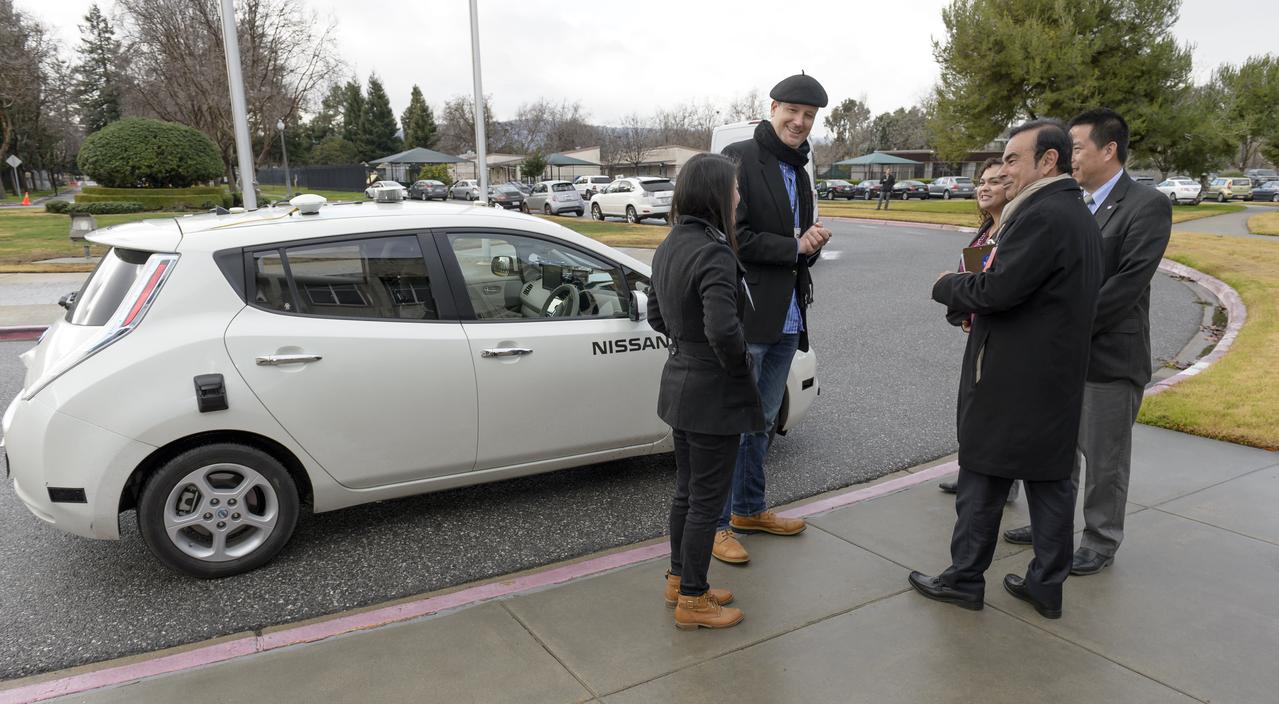
Senior executives from the Renault-Nissan Alliance, including Carlos Ghosn, chairman and CEO of Nissan, and Jose Munoz, chairman of Nissan North America, visited Ames for meetings and a showcase of the technical partnership between NASA and Nissan North America. The partnership allows researchers to develop and test autonomy algorithms, concepts, and integrated prototypes for a variety of vehicular transport applications – from rovers to self-driving cars.  After briefings, the group on left from left to right Kathy Sun and Liam Pedersen, Nissan and on right from front to back Carlos Ghosn, CE, Nissan chatted before taking a ride in the autonomous vehicle to  observed testing of Nissan’s all-electric LEAF as it performed safe autonomous drives across the center.
ACD16-0001-021
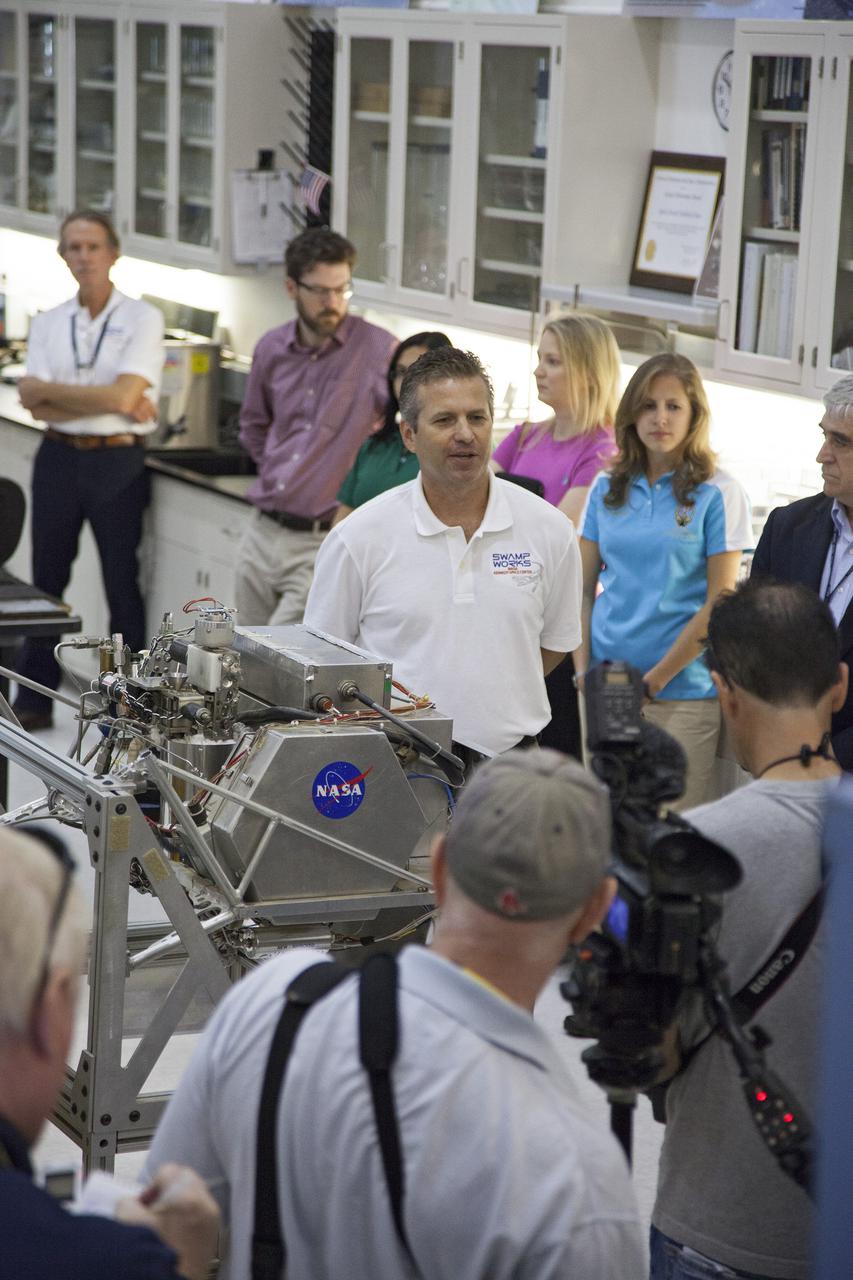
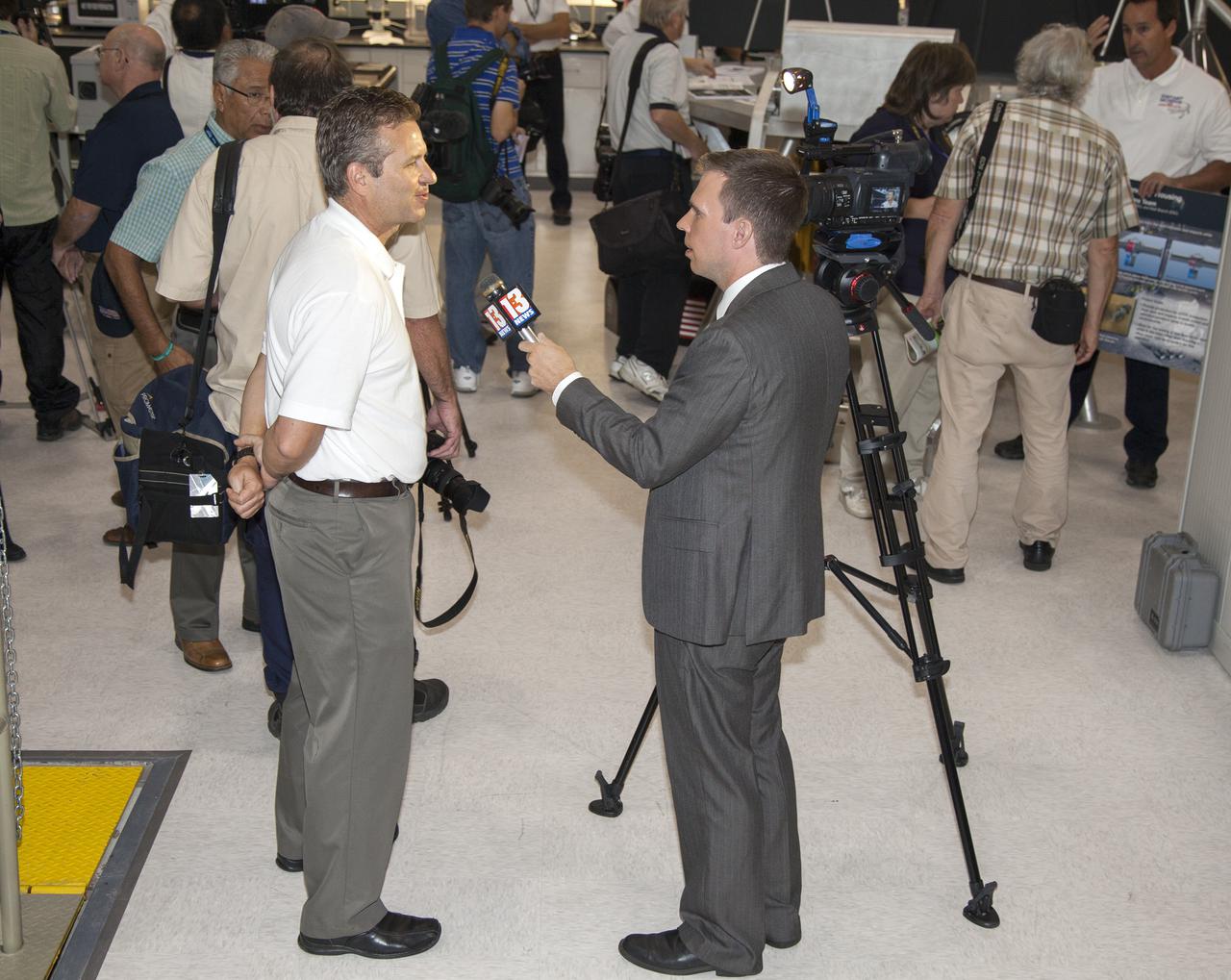
CAPE CANAVERAL, Fla. -- Robert Mueller, chief of the Surface Systems Office, is interviewed by a representative of the media during a tour of the Swamp Works at NASA's Kennedy Space Center in Florida.   Kennedy's Swamp Works provides rapid, innovative and cost-effective exploration mission solutions, leveraging partnerships across NASA, industry and academia. Kennedy's research and technology mission is to improve spaceports on Earth, as well as lay the groundwork for establishing spaceports at destinations in space. For more information, visit http:__www.nasa.gov_centers_kennedy_exploration_researchtech_index.html.  Photo credit: NASA_Frankie Martin
KSC-2013-1266
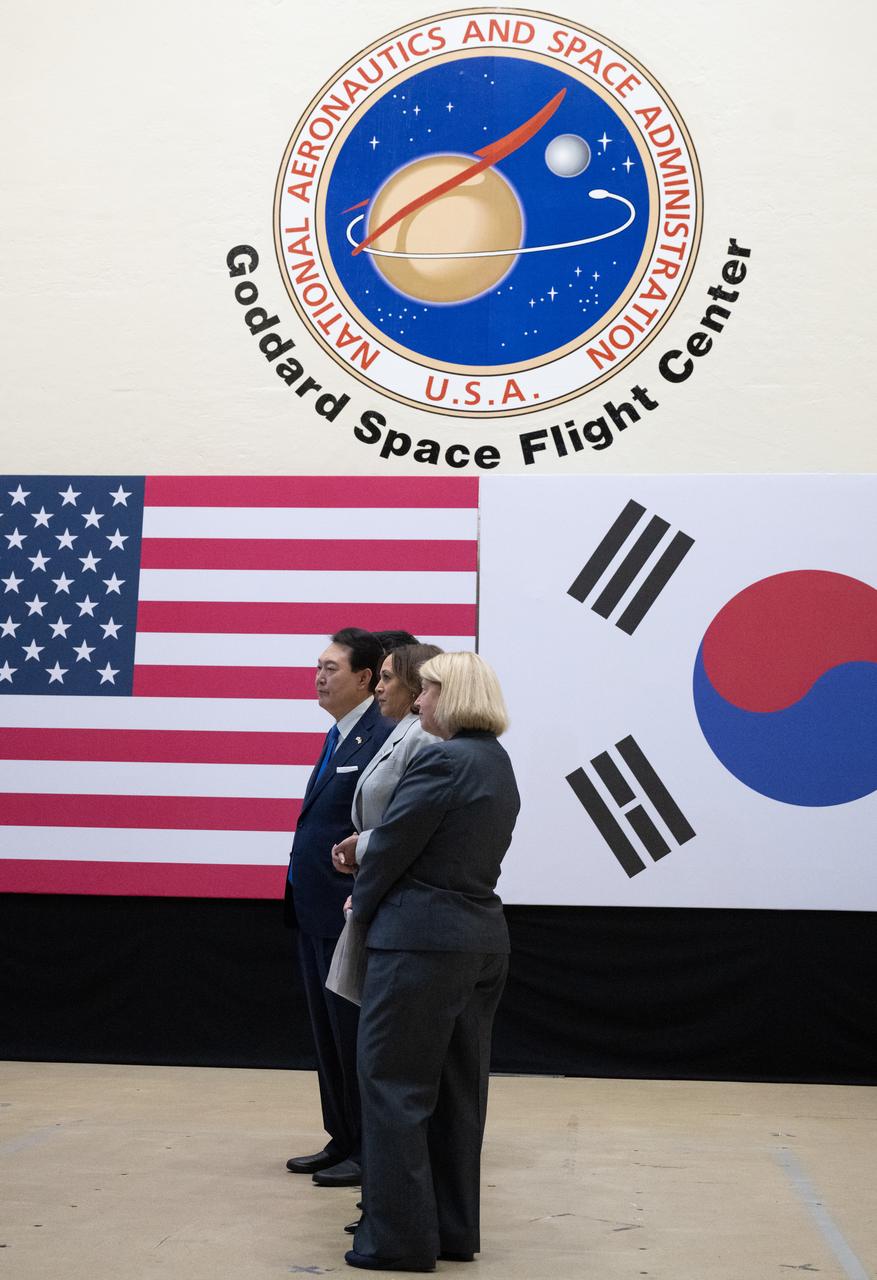
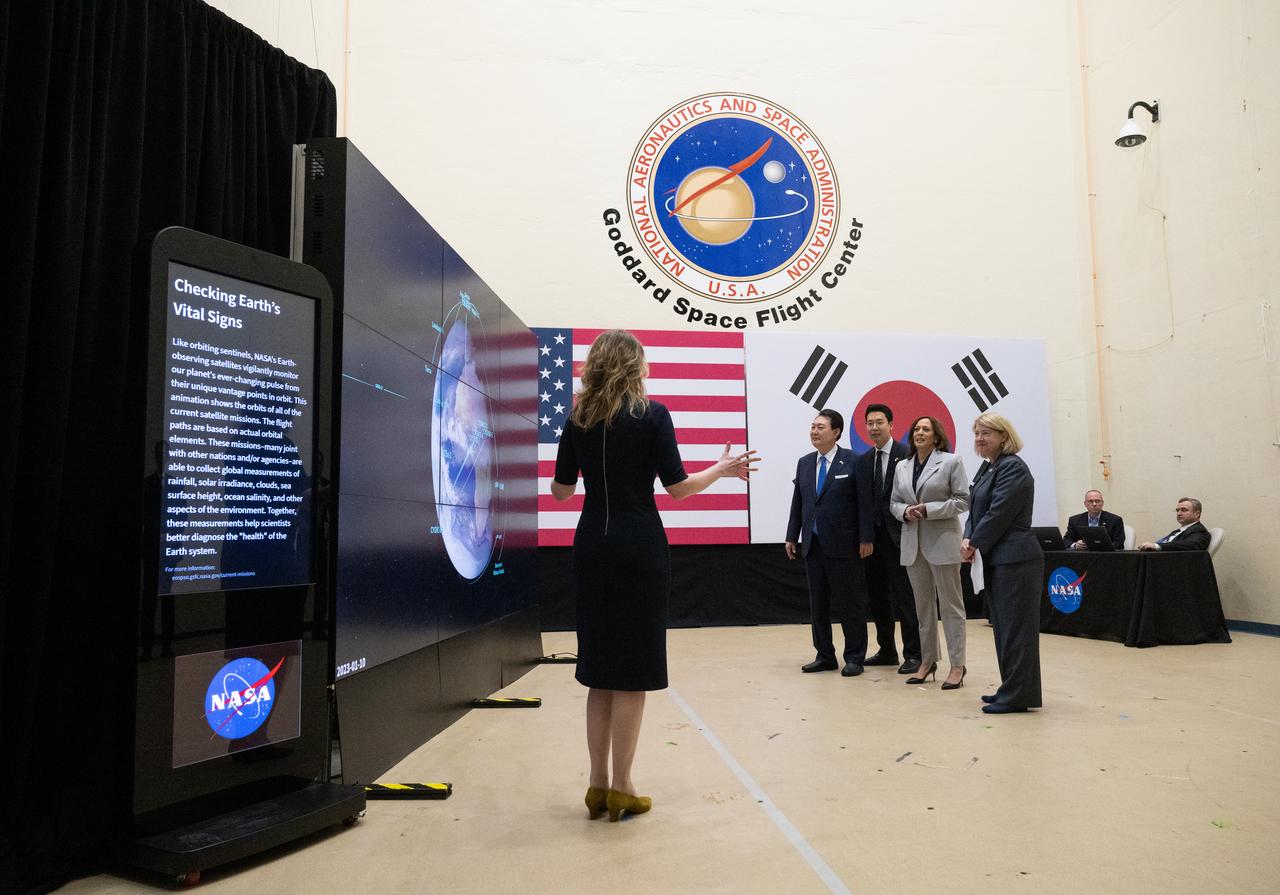
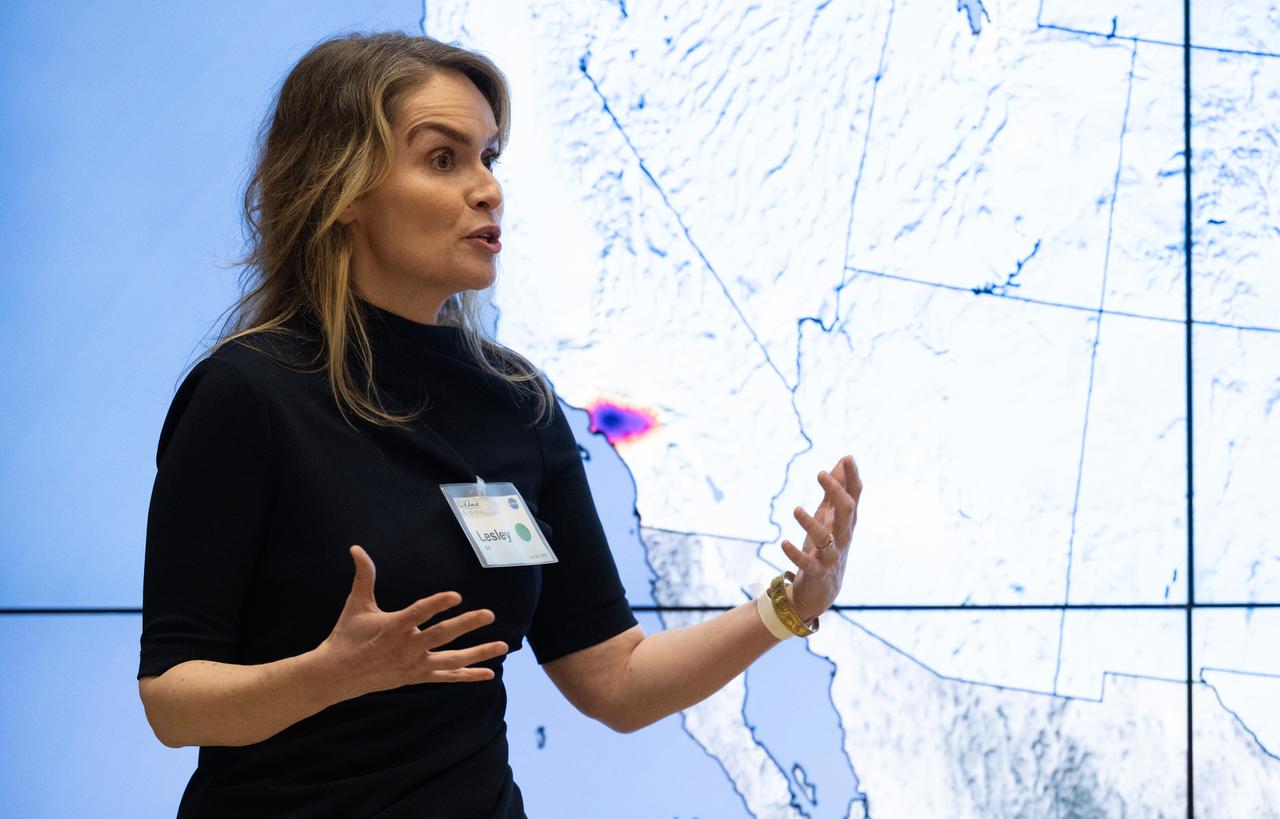
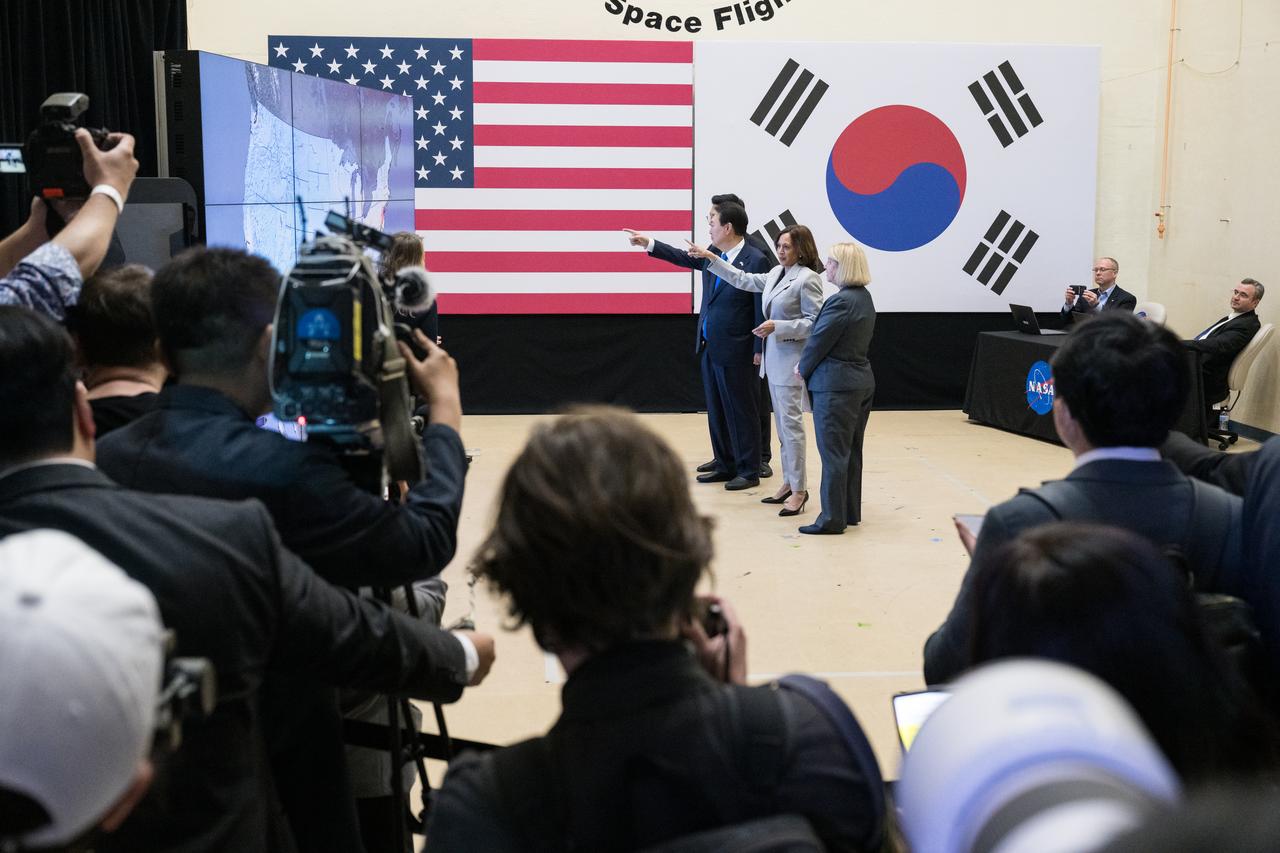
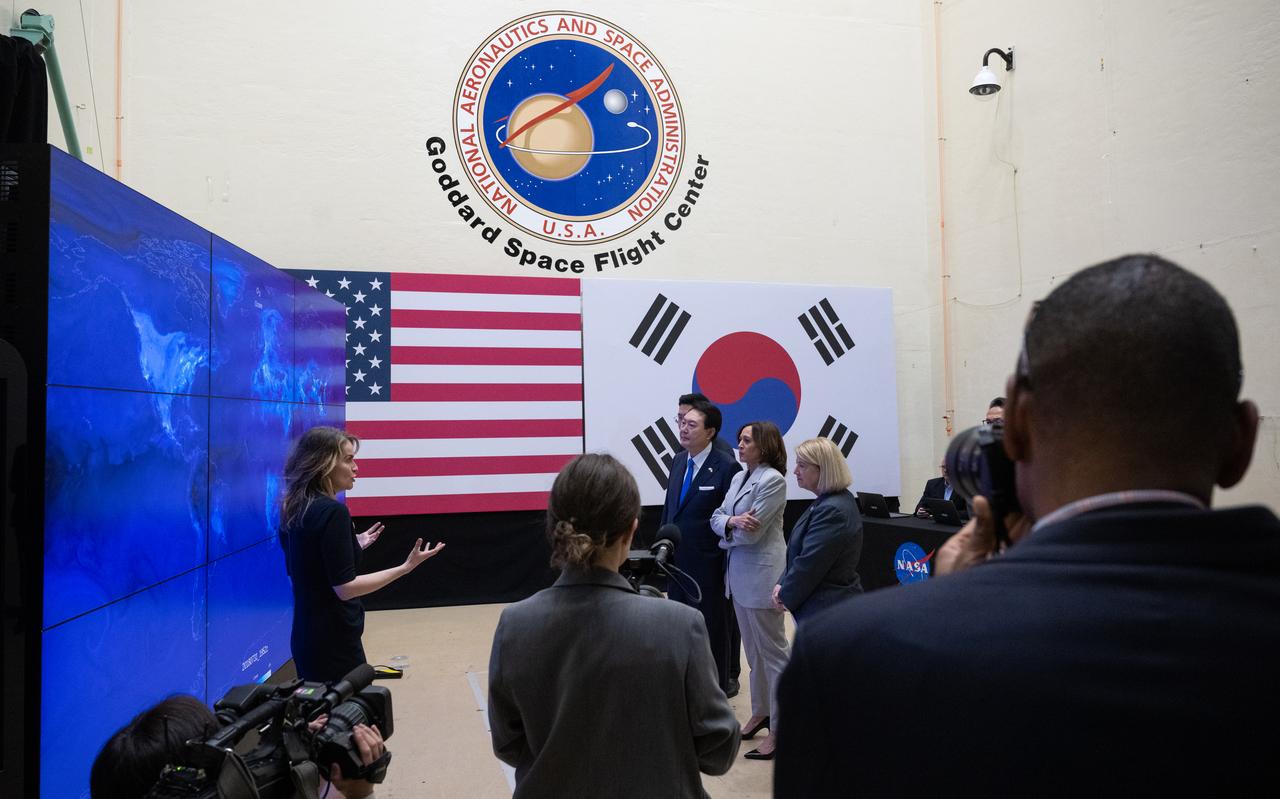
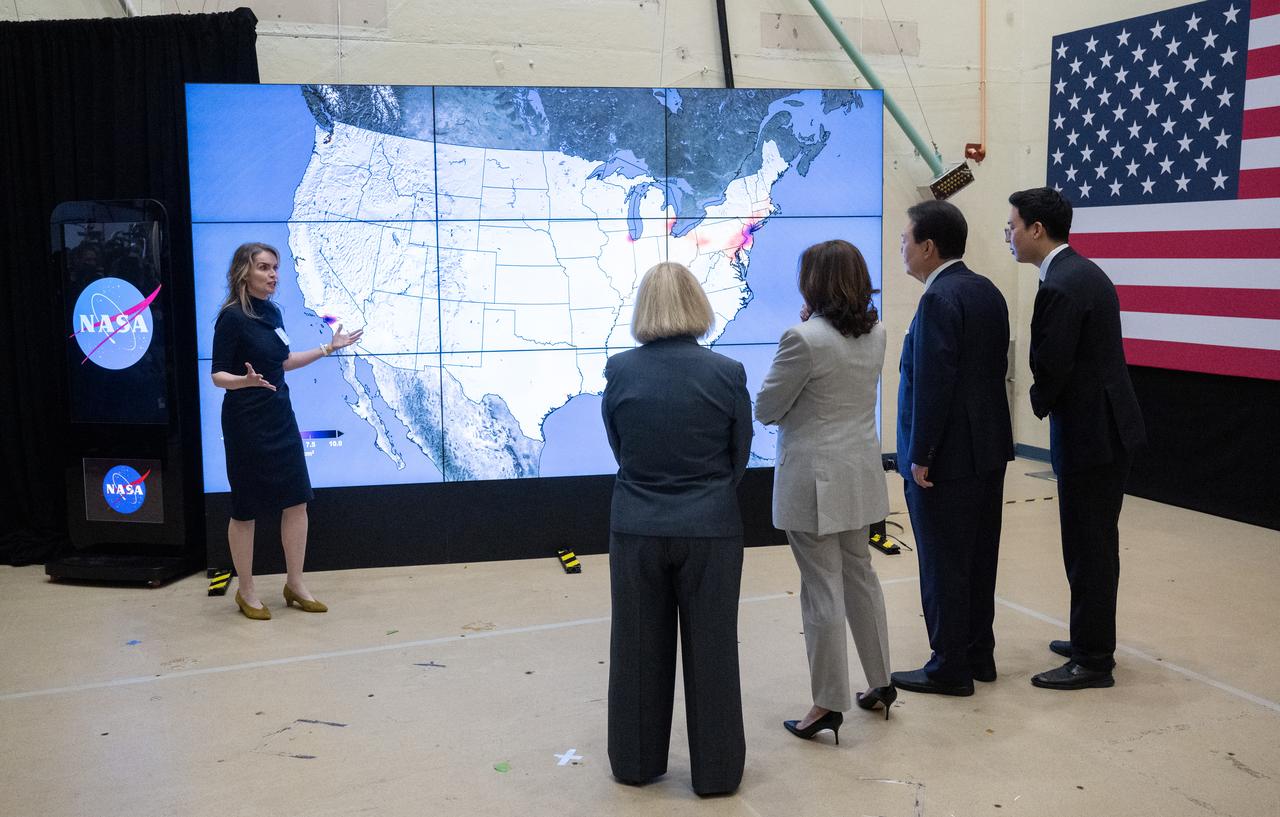
Dr. Lesley Ott, research meteorologist and climate scientist at NASA’s Goddard Space Flight Center briefs Vice President Kamala Harris, center, President Yoon Suk Yeol of the Republic of Korea, left, and NASA Deputy Administrator Pam Melroy on U.S. and Korean partnerships to improve the way scientists observe air quality and the use of space in addressing the climate crisis, Tuesday, April 25, 2023, during a tour of NASA’s Goddard Space Flight Center in Greenbelt, Md.  Photo Credit: (NASA/Joel Kowsky)
Vice President Harris and President Yoon at GSFC
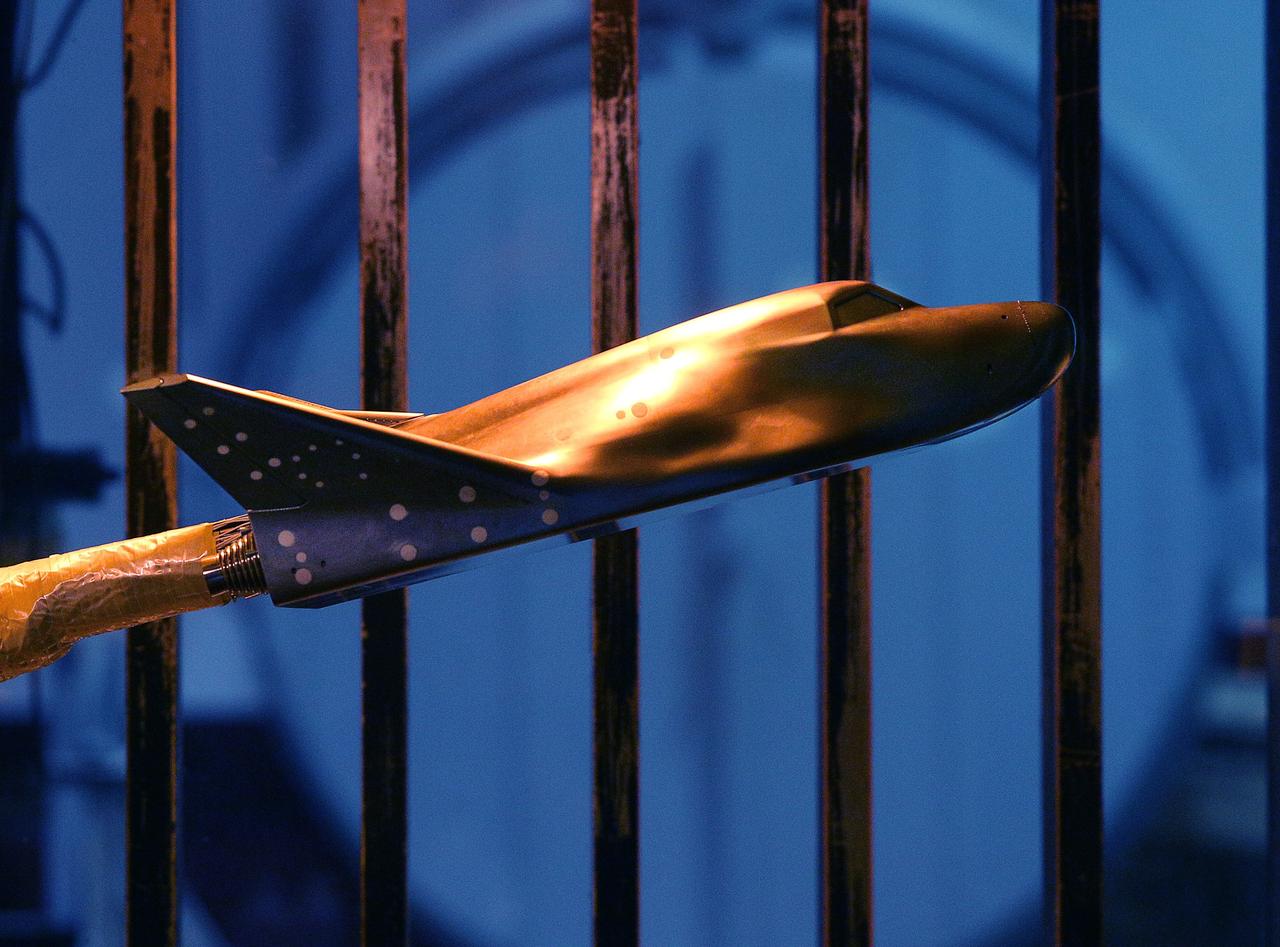
HAMPTON, Va. – A precise scale model of the Dream Chaser spacecraft begins an evaluation inside the Unitary Plan Wind Tunnel at NASA's Langley Research Center in Virginia. The Dream Chaser is in development by Sierra Nevada Corporation in partnership with NASA's Commercial Crew Program. The data gathered from the wind tunnel was used to further test the design through the company's Commercial Crew Integrated Capability agreement with NASA. Photo credit: NASA/ David C. Bowman
KSC-2014-2568
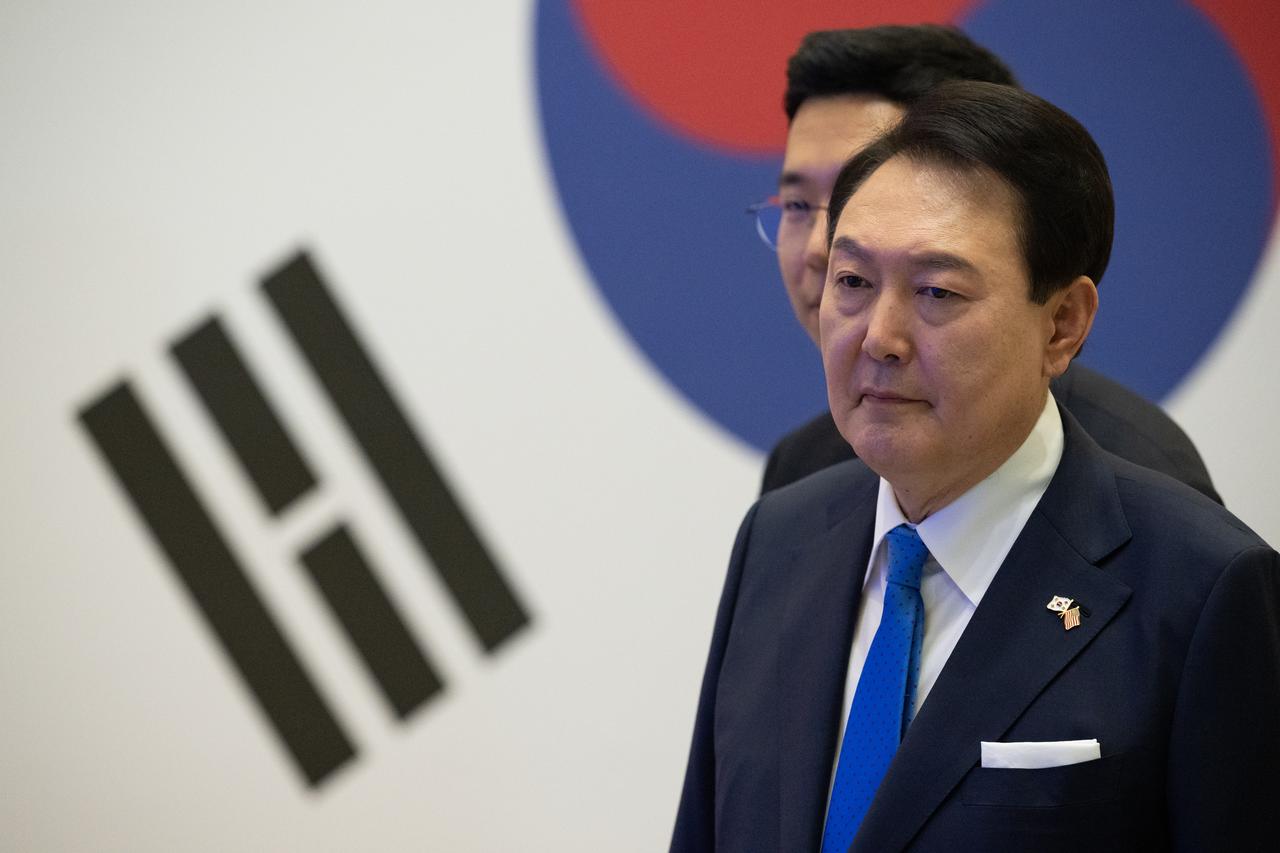
President Yoon Suk Yeol of the Republic of Korea is seen during a briefing by Dr. Lesley Ott, research meteorologist and climate scientist at NASA’s Goddard Space Flight Center, on U.S. and Korean partnerships to improve the way scientists observe air quality and the use of space in addressing the climate crisis, Tuesday, April 25, 2023, during a tour of NASA’s Goddard Space Flight Center in Greenbelt, Md.  Photo Credit: (NASA/Joel Kowsky)
Vice President Harris and President Yoon at GSFC
NASA Deputy Administrator Pam Melroy, front, Vice President Kamala Harris, and President Yoon Suk Yeol of the Republic of Korea, are seen during a briefing by Dr. Lesley Ott, research meteorologist and climate scientist at NASA’s Goddard Space Flight Center, on U.S. and Korean partnerships to improve the way scientists observe air quality and the use of space in addressing the climate crisis, Tuesday, April 25, 2023, during a tour of NASA’s Goddard Space Flight Center in Greenbelt, Md.  Photo Credit: (NASA/Joel Kowsky)
Vice President Harris and President Yoon at GSFC
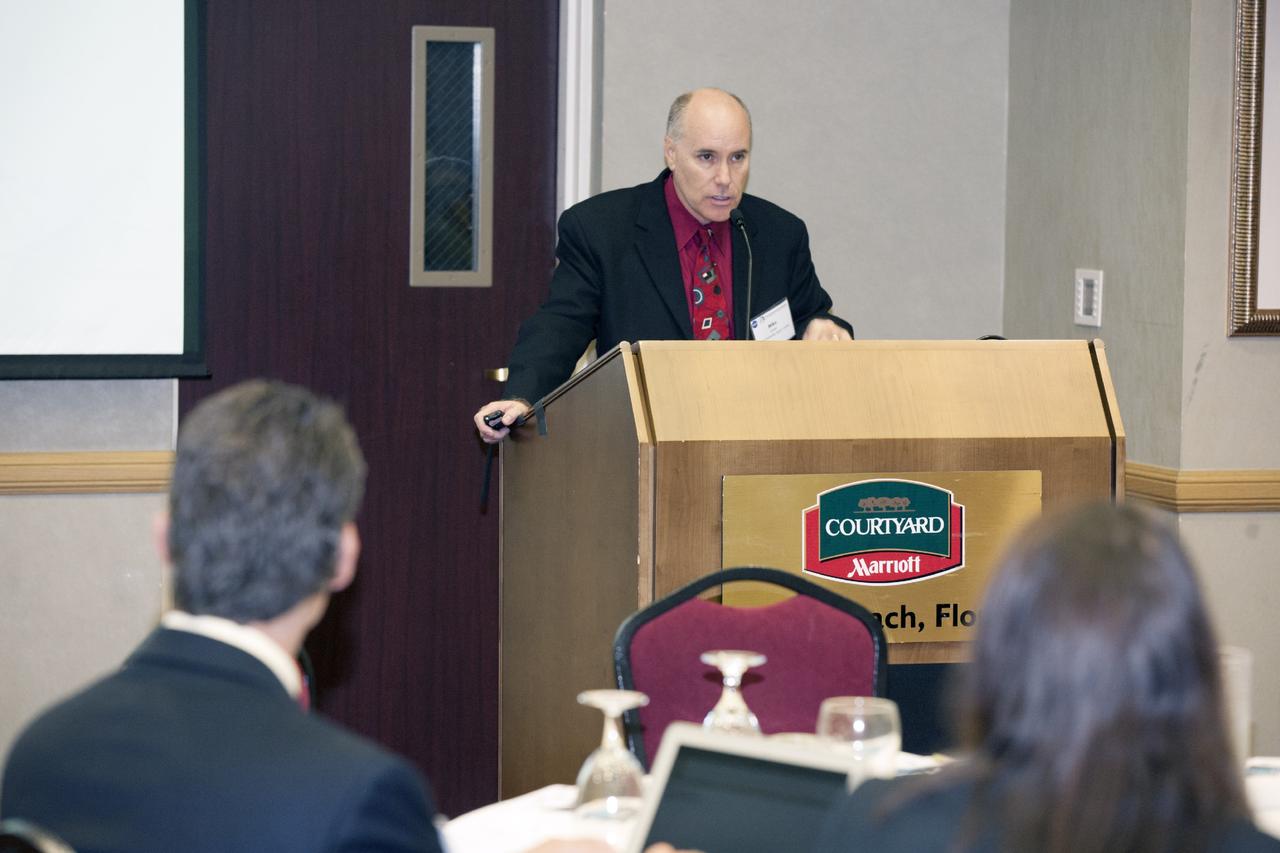
CAPE CANAVERAL, Fla. – Mike Lester, Research and Technology Partnership manager at NASA's Kennedy Space Center in Florida, discusses technology transfer with attendees at the Technology Transfer Forum of the Economic Development Commission of Florida's Space Coast. A goal of the session was to showcase ways commercial businesses can work with NASA to develop technology and apply existing technology to commercial uses. Photo credit: NASA/Glenn Benson
KSC-2013-3572
CAPE CANAVERAL, Fla. -- Robert Mueller, at center, chief of the Surface Systems Office, talks to media representatives touring the Swamp Works at NASA's Kennedy Space Center in Florida.  Kennedy's Swamp Works provides rapid, innovative and cost-effective exploration mission solutions, leveraging partnerships across NASA, industry and academia. Kennedy's research and technology mission is to improve spaceports on Earth, as well as lay the groundwork for establishing spaceports at destinations in space. For more information, visit http:__www.nasa.gov_centers_kennedy_exploration_researchtech_index.html.  Photo credit: NASA_Frankie Martin
KSC-2013-1261
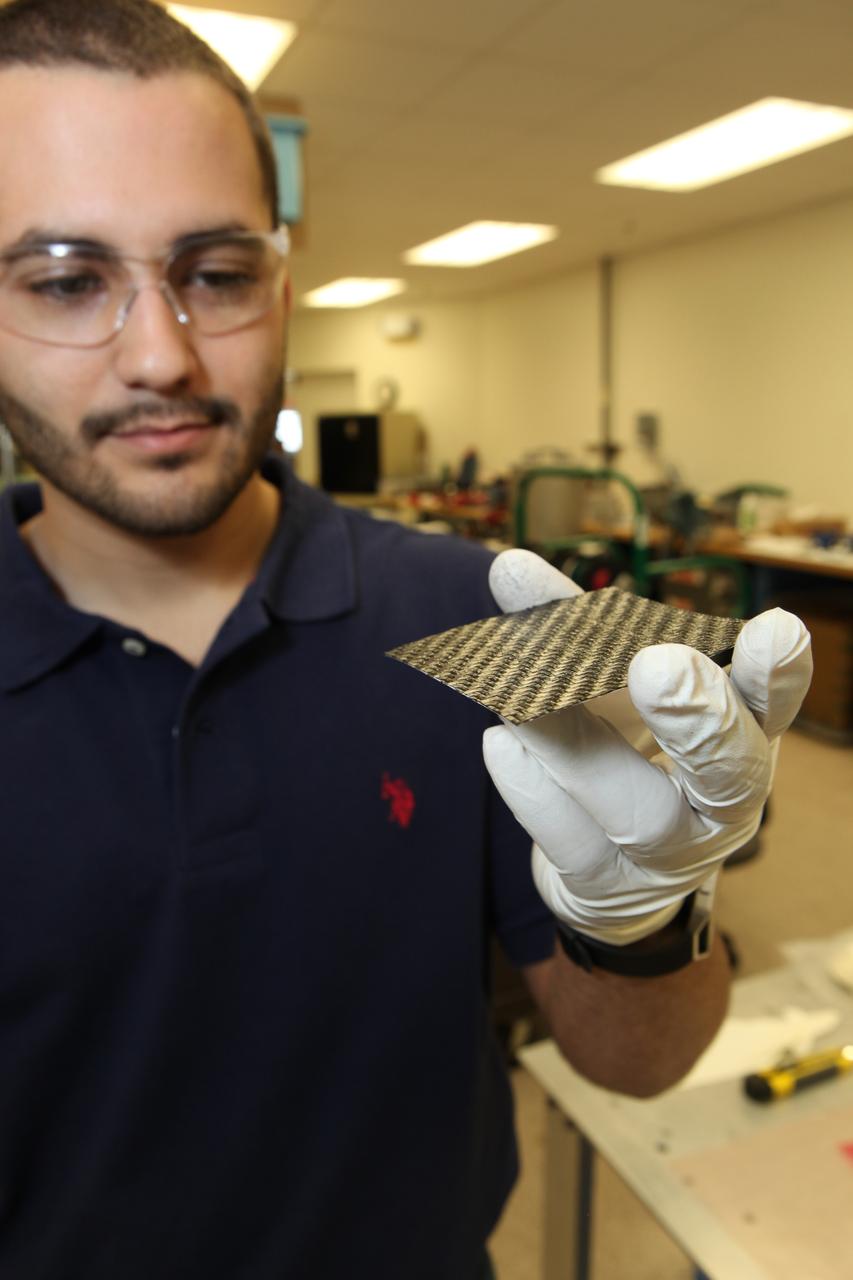
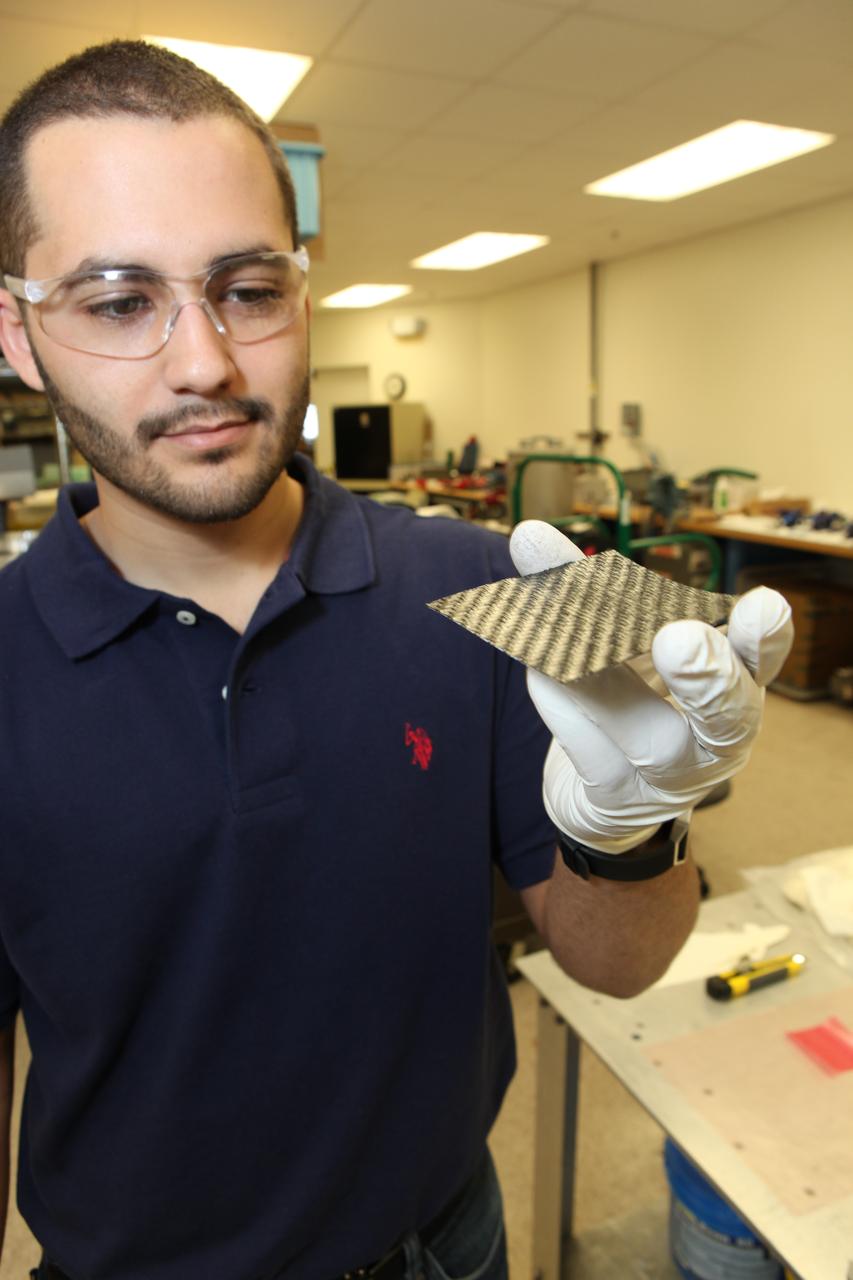
Daniel Perez, Ph.D., a graduate student from the University of Miami, displays a piece of the prototype structure for a new solid-state battery in the Prototype Laboratory at NASA's Kennedy Space Center in Florida. The size of the battery is so small that it could be a prime candidate for use in microsatellites, including CubeSats. Researchers at Kennedy are collaborating with experts at the University of Miami. The university partnership is funded through the Small Spacecraft Technology Program, in NASA's Space Technology Mission Directorate.
CubeSat Batteries
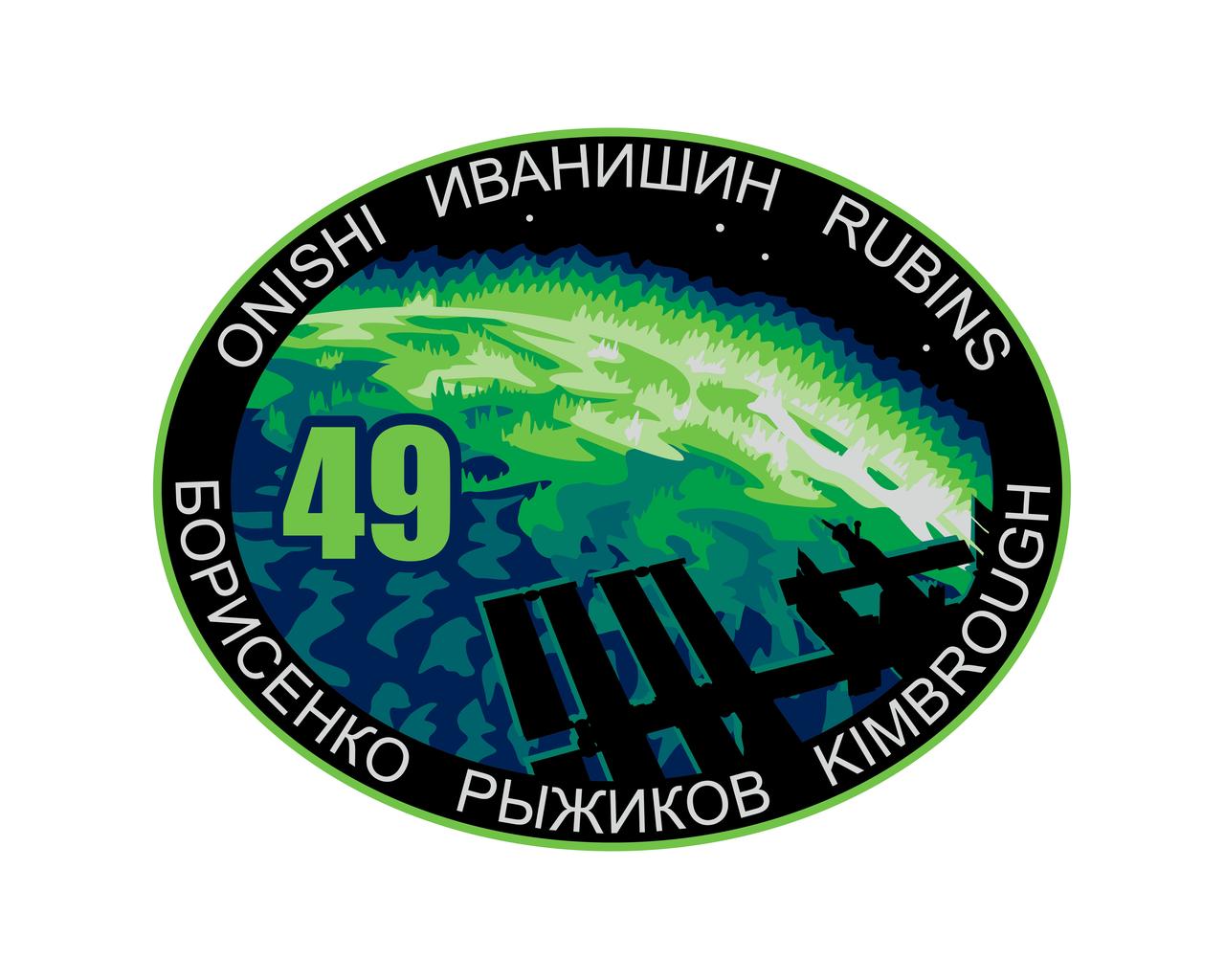
ISS049-S-001 --- The Expedition 49 patch shows the International Space Station (ISS) coming into view over an aurora extending past Earth’s horizon. This depiction emphasizes the benefits to Earth of research conducted on the ISS as well as the global nature of the international partnerships vital to this endeavor. The green hue in the aurora is symbolic of life on our home planet. The crew of Expedition 49 will be working “Off the Earth, for the Earth.”
Print
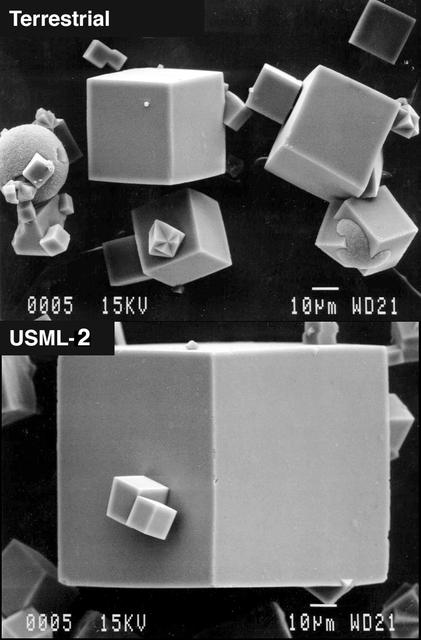
The Center for Advanced Microgravity Materials Processing (CAMMP), a NASA-sponsored Research Partnership Center, is working to improve zeolite materials for storing hydrogen fuel. CAMMP is also applying zeolites to detergents, optical cables, gas and vapor detection for environmental monitoring and control, and chemical production techniques that significantly reduce by-products that are hazardous to the environment. Shown here are zeolite crystals (top) grown in a ground control experiment and grown in microgravity on the USML-2 mission (bottom). Zeolite experiments have also been conducted aboard the International Space Station.
Material Science
Daniel Perez, Ph.D., a graduate student from the University of Miami, displays a piece of the prototype structure for a new solid-state battery in the Prototype Laboratory at NASA's Kennedy Space Center in Florida. The size of the battery is so small that it could be a prime candidate for use in microsatellites, including CubeSats. Researchers at Kennedy are collaborating with experts at the University of Miami. The university partnership is funded through the Small Spacecraft Technology Program, in NASA's Space Technology Mission Directorate.
CubeSat Batteries
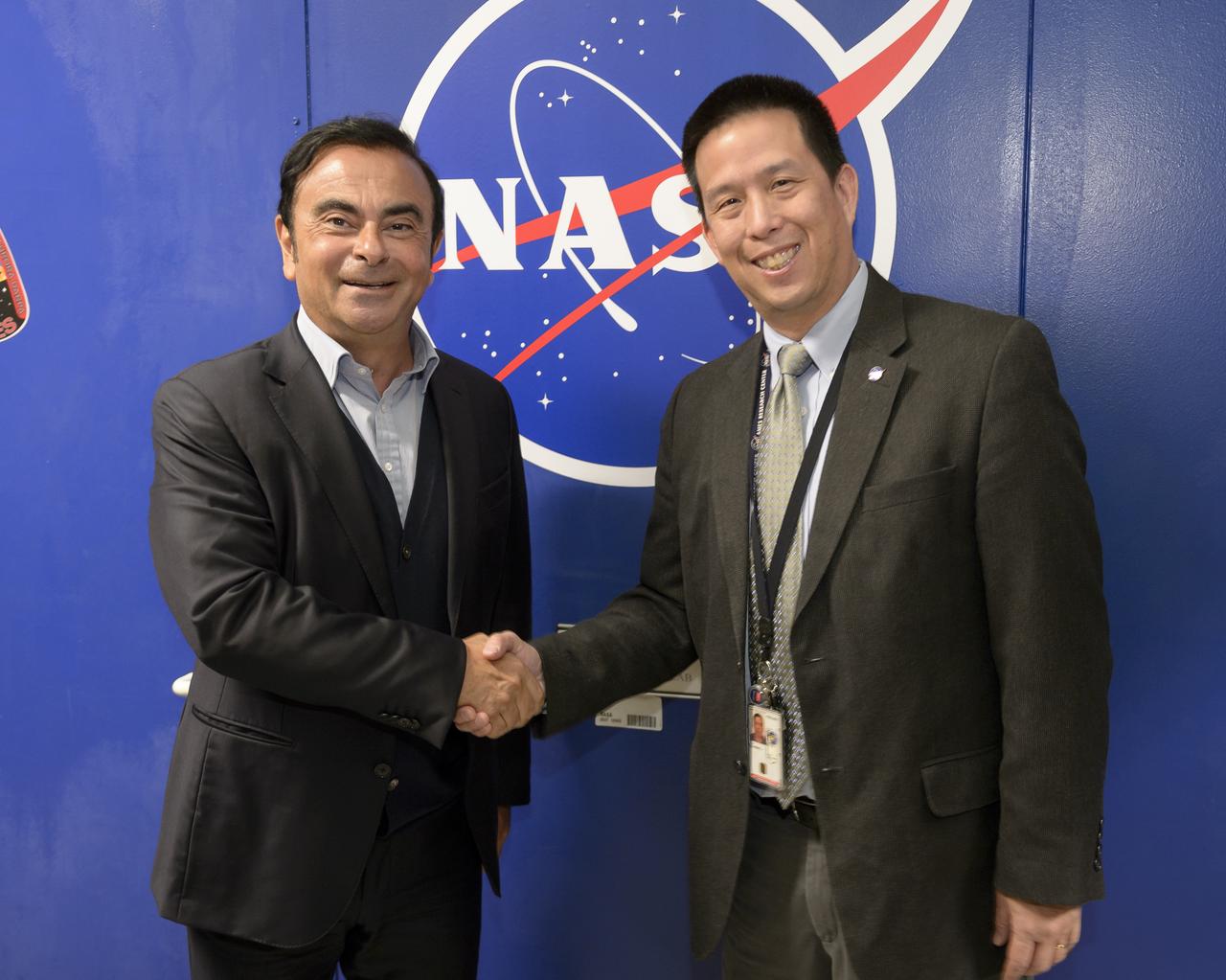
Senior executives from the Renault-Nissan Alliance, including Carlos Ghosn, chairman and CEO of Nissan, and Jose Munoz, chairman of Nissan North America, visited Ames for meetings and a showcase of the technical partnership between NASA and Nissan North America.  Shown here on left is Carlos Ghosn, CEO, Nissan on right Eugene Tu, Ames Center Director in front to the NASA sign at the VMS Facility at Ames Research Center ,CA.
ACD16-0001-043
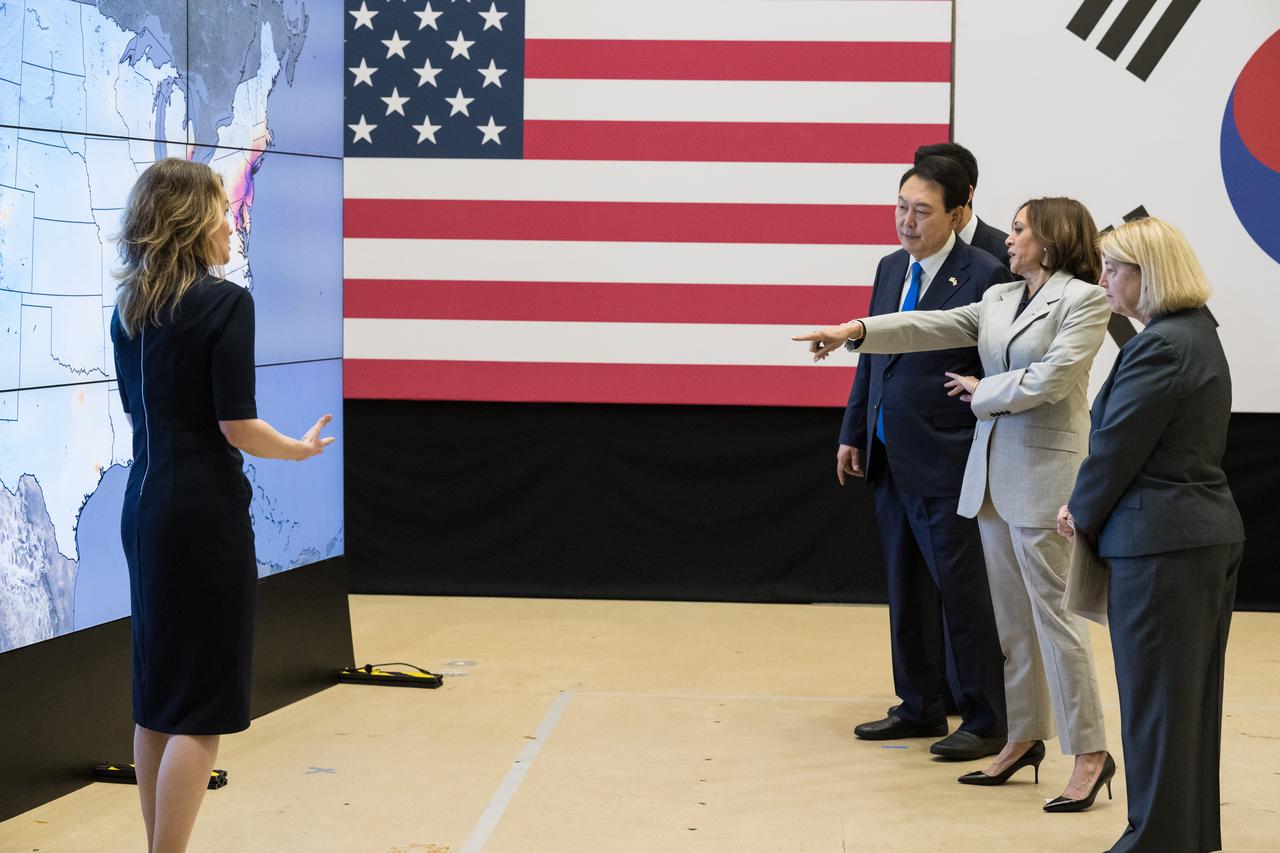
Dr. Lesley Ott, research meteorologist and climate scientist at NASA’s Goddard Space Flight Center briefs Vice President Kamala Harris, President Yoon Suk Yeol of the Republic of Korea, and NASA Deputy Administrator Pam Melroy on U.S. and Korean partnerships to improve the way scientists observe air quality and the use of space in addressing the climate crisis, Tuesday, April 25, 2023, during a tour of NASA’s Goddard Space Flight Center in Greenbelt, Md.  Photo Credit: (NASA/Joel Kowsky)
Vice President Harris and President Yoon at GSFC
Dr. Lesley Ott, research meteorologist and climate scientist at NASA’s Goddard Space Flight Center briefs from left to right, President Yoon Suk Yeol of the Republic of Korea, Vice President Kamala Harris, and NASA Deputy Administrator Pam Melroy on U.S. and Korean partnerships to improve the way scientists observe air quality and the use of space in addressing the climate crisis, Tuesday, April 25, 2023, during a tour of NASA’s Goddard Space Flight Center in Greenbelt, Md.  Photo Credit: (NASA/Aubrey Gemignani)
Vice President Harris and President Yoon at GSFC
Dr. Lesley Ott, research meteorologist and climate scientist at NASA’s Goddard Space Flight Center, left, briefs Vice President Kamala Harris, President Yoon Suk Yeol of the Republic of Korea, and NASA Deputy Administrator Pam Melroy, on U.S. and Korean partnerships to improve the way scientists observe air quality and the use of space in addressing the climate crisis, Tuesday, April 25, 2023, during a tour of NASA’s Goddard Space Flight Center in Greenbelt, Md.  Photo Credit: (NASA/Joel Kowsky)
Vice President Harris and President Yoon at GSFC
Senior executives from the Renault-Nissan Alliance, including Carlos Ghosn, chairman and CEO of Nissan, and Jose Munoz, chairman of Nissan North America, visited Ames for meetings and a showcase of the technical partnership between NASA and Nissan North America. After briefings, the group gathers in at the Autonomous Sciences Research Facility for a remote vehicle monitoring demo.
ACD16-0001-036
Dr. Lesley Ott, research meteorologist and climate scientist at NASA’s Goddard Space Flight Center briefs from left to right, President Yoon Suk Yeol of the Republic of Korea, Vice President Kamala Harris, and NASA Deputy Administrator Pam Melroy on U.S. and Korean partnerships to improve the way scientists observe air quality and the use of space in addressing the climate crisis, Tuesday, April 25, 2023, during a tour of NASA’s Goddard Space Flight Center in Greenbelt, Md.  Photo Credit: (NASA/Aubrey Gemignani)
Vice President Harris and President Yoon at GSFC
Daniel Perez, Ph.D., a graduate student from the University of Miami, prepares layers of the prototype structure for a new solid-state battery in the Prototype Laboratory at NASA's Kennedy Space Center in Florida. The size of the battery is so small that it could be a prime candidate for use in microsatellites, including CubeSats. Researchers at Kennedy are collaborating with experts at the University of Miami. The university partnership is funded through the Small Spacecraft Technology Program, in NASA's Space Technology Mission Directorate.
CubeSat Batteries
CAPE CANAVERAL, Fla. – At NASA’s Kennedy Space Center in Florida, Robert Lightfoot, NASA associate director, views some of the technologies in development at the center during a tour of the Swamp Works laboratories.     Kennedy’s Swamp Works provides rapid, innovative and cost-effective exploration mission solutions, leveraging partnerships across NASA, industry and academia. Kennedy’s research and technology mission is to improve spaceports on Earth, as well as lay the groundwork for establishing spaceports at destinations in space. For more information, visit http:__www.nasa.gov_centers_kennedy_exploration_researchtech_index.html. Photo credit: NASA_Jim Grossmann
KSC-2013-2571
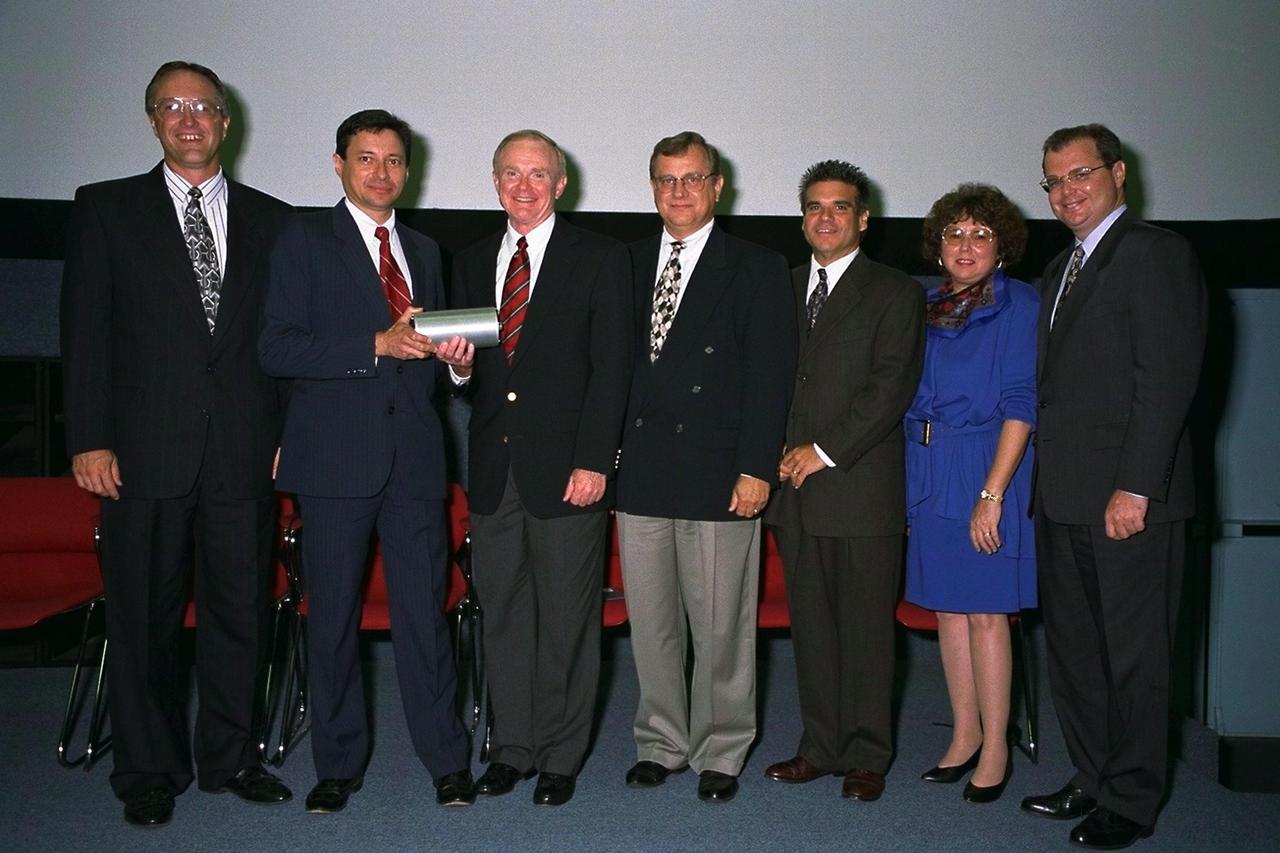
KENNEDY SPACE CENTER, FLA.  -- Following the presentation of the Universal Signal Conditioning Amplifier (USCA), a new piece of technology developed through a National Aeronautics and Space Administration (NASA) partnership with industry, to Kennedy Space Center (KSC) Director Roy Bridges, Jr., key participants in the partnership pose for a group portrait. They are (from left) Bill Larson, NASA; Dr. Pedro Medelius, INET; Roy Bridges, Jr., KSC Director; Ed Gladney and William Saputo, L-3 Communications; Pam Gillespi, representing Congressman Dave Weldon; and Frank Kinney, Technological Research and Development Authority. The USCA is a key component of the codeveloped Automated Data Acquisition System (ADAS) that measures temperature, pressure and vibration at KSC's launch pads. The breakthrough technology is expected to reduce sensor setup and configuration times from hours to seconds. KSC teamed up with Florida's Technological Research and Development Authority and manufacturer L-3 Communications to produce a system that would benefit the aerospace industry and other commercial markets
KSC-97PC1281
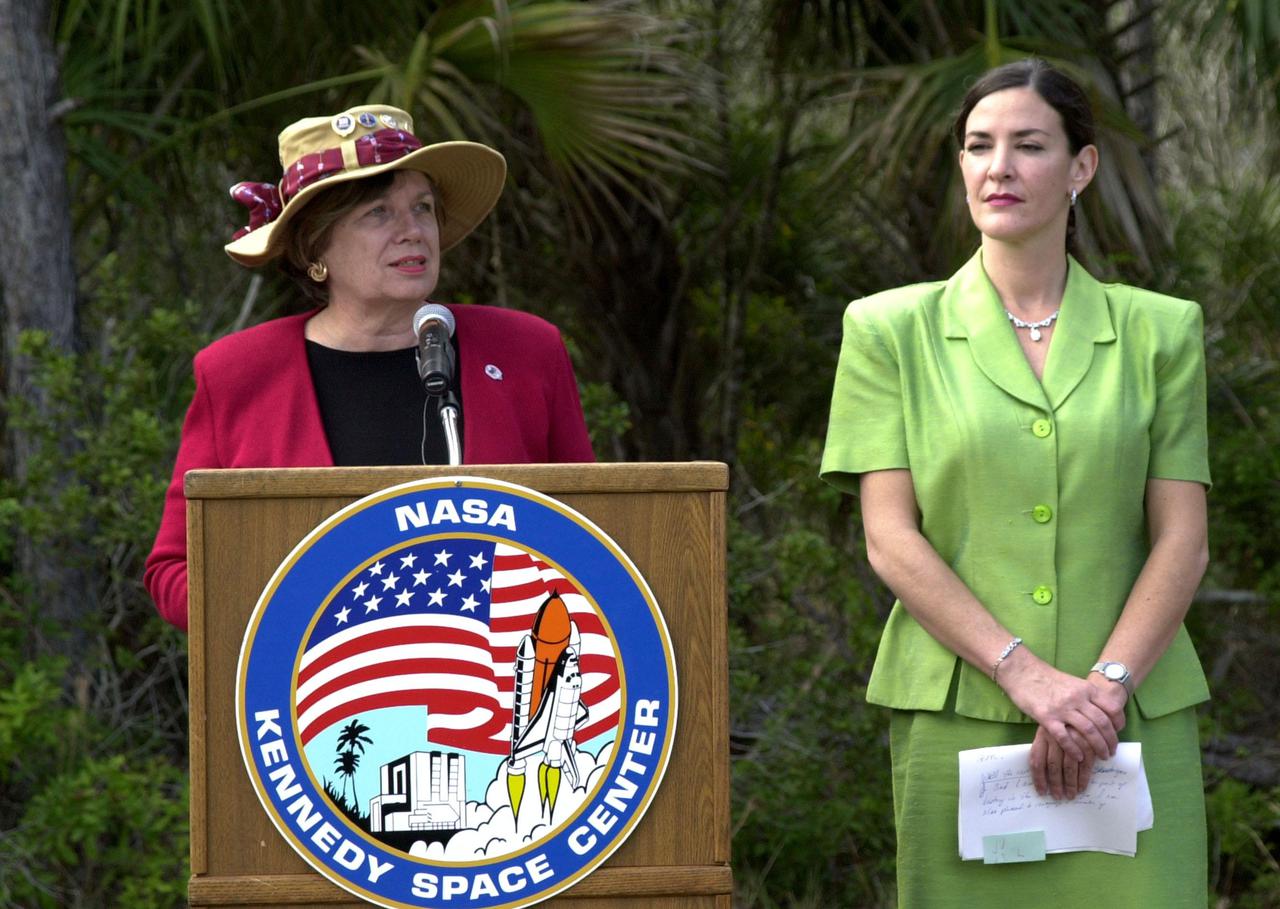
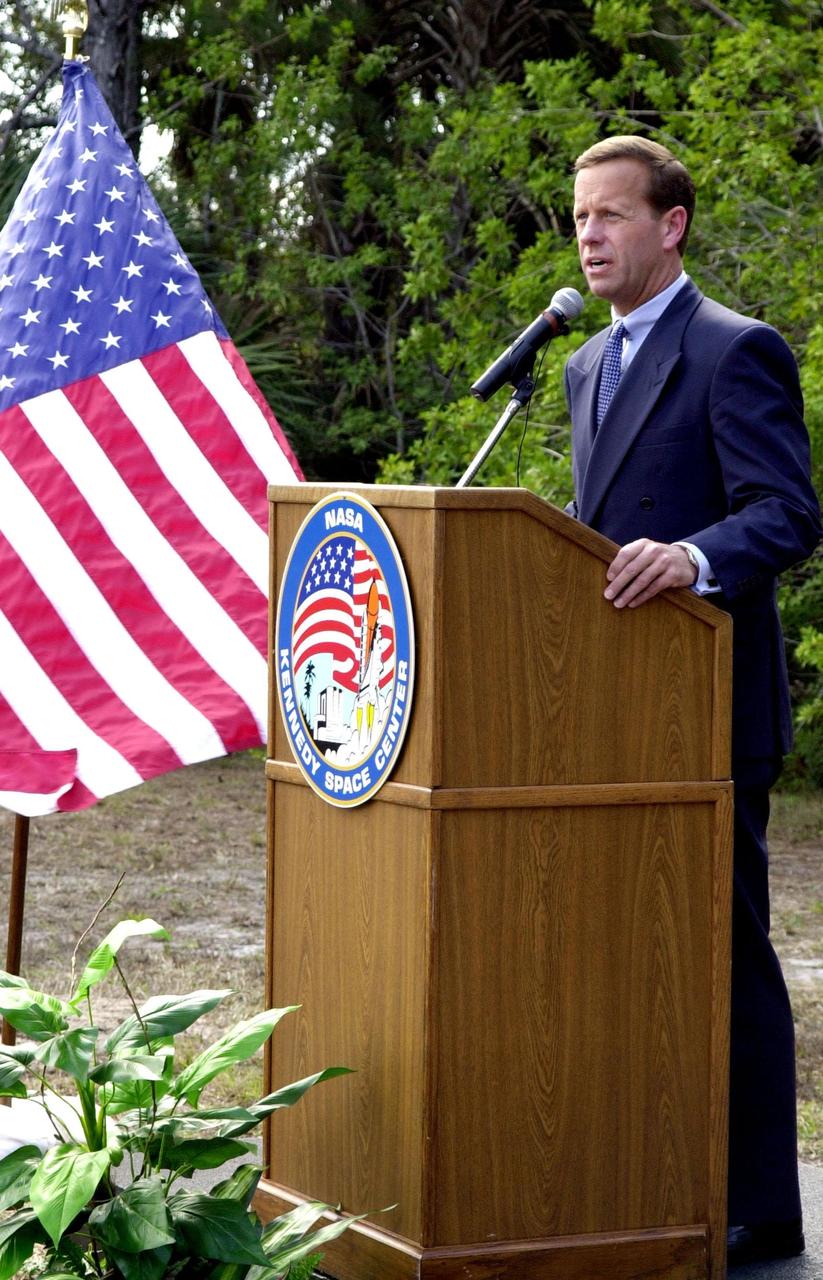
At a groundbreaking ceremony at KSC, Florida’s Lt. Gov. Frank Brogan expresses his support of the Center’s growth and important role of technology, especially through the International Space Station. The groundbreaking is for a roadway, to be known as Space Commerce Way, that will serve the public by providing a 24-hour access route through KSC from S.R. 3 to the NASA Causeway and KSC Visitor Complex. It is the start of a construction project that includes the Space Experiment Research and Processing Laboratory (SERPL). The project is enabled by a partnership and collaboration between NASA and the State of Florida to create a vital resource for international and commercial space customers. SERPL is considered a magnet facility, and will support the development and processing of life sciences experiments destined for the International Space Station and accommodate NASA, industry and academic researchers performing associated biological research
KSC-01PADIG-062
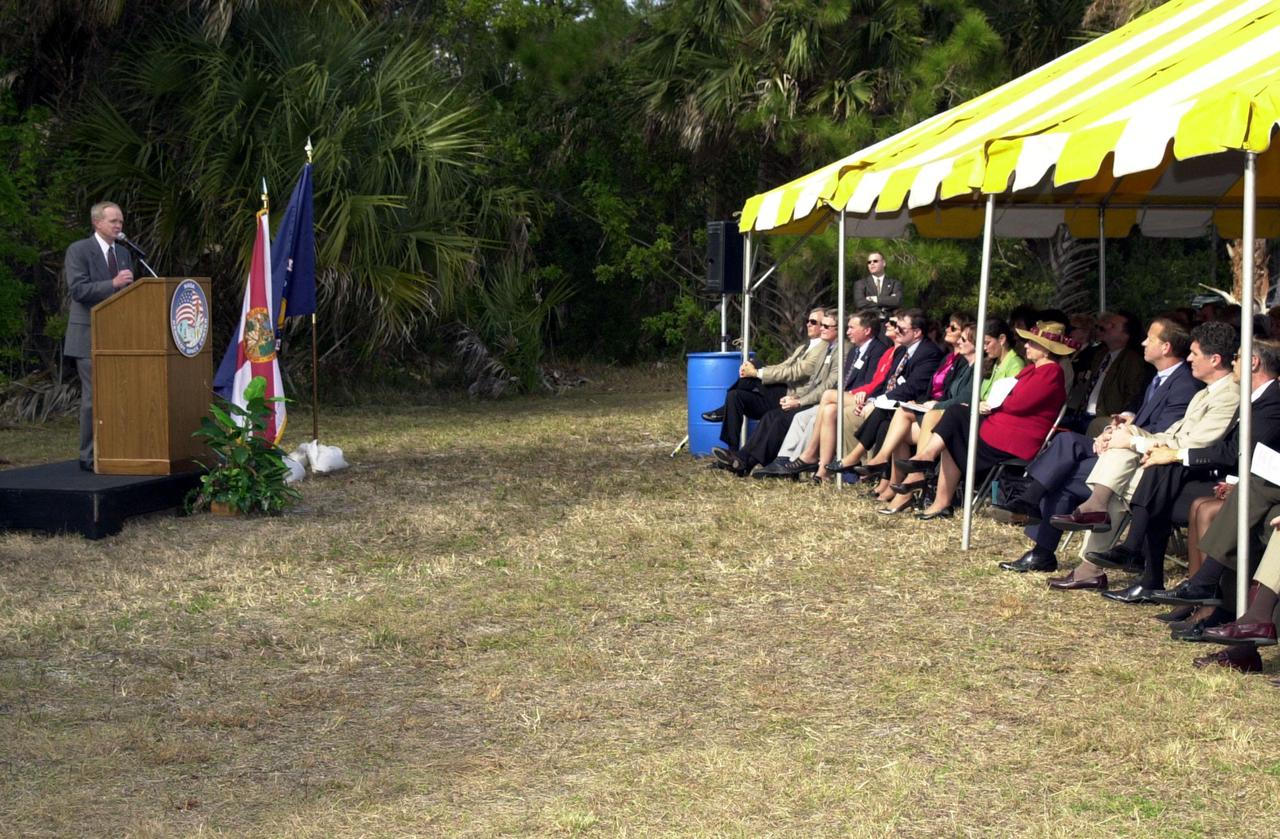
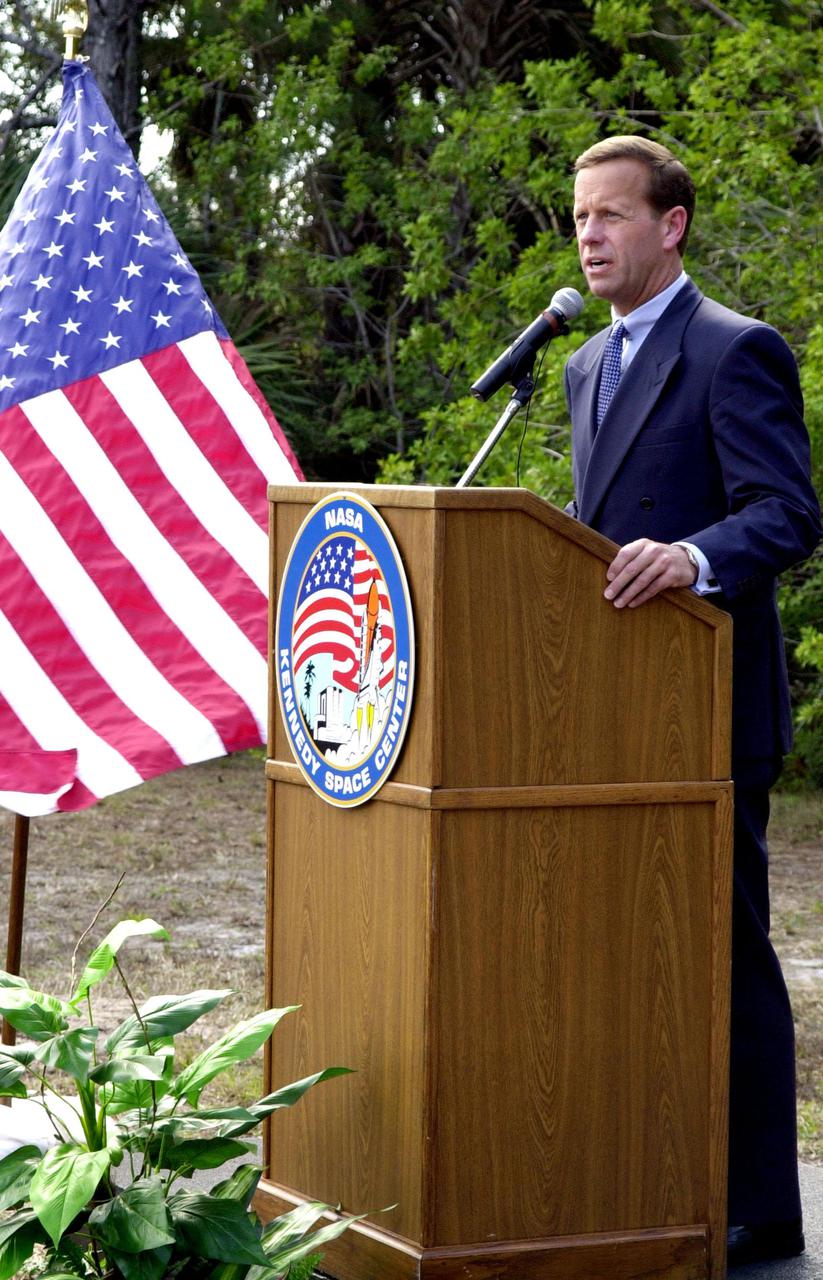
Center Director Roy Bridges Jr. addresses attendees at a groundbreaking ceremony held on S.R. 3. The groundbreaking is for a roadway, to be known as Space Commerce Way, that will serve the public by providing a 24-hour access route through KSC from S.R. 3 to the NASA Causeway and KSC Visitor Complex. It is the start of a construction project that includes the Space Experiment Research and Processing Laboratory (SERPL). The project is enabled by a partnership and collaboration between NASA and the State of Florida to create a vital resource for international and commercial space customers. Among the participants and guests seated under the tent are (in front row, at right) Florida’s Lt. Gov. Frank Brogan and Congressman Dave Weldon. SERPL is considered a magnet facility, and will support the development and processing of life sciences experiments destined for the International Space Station and accommodate NASA, industry and academic researchers performing associated biological research
KSC-01PADIG-063
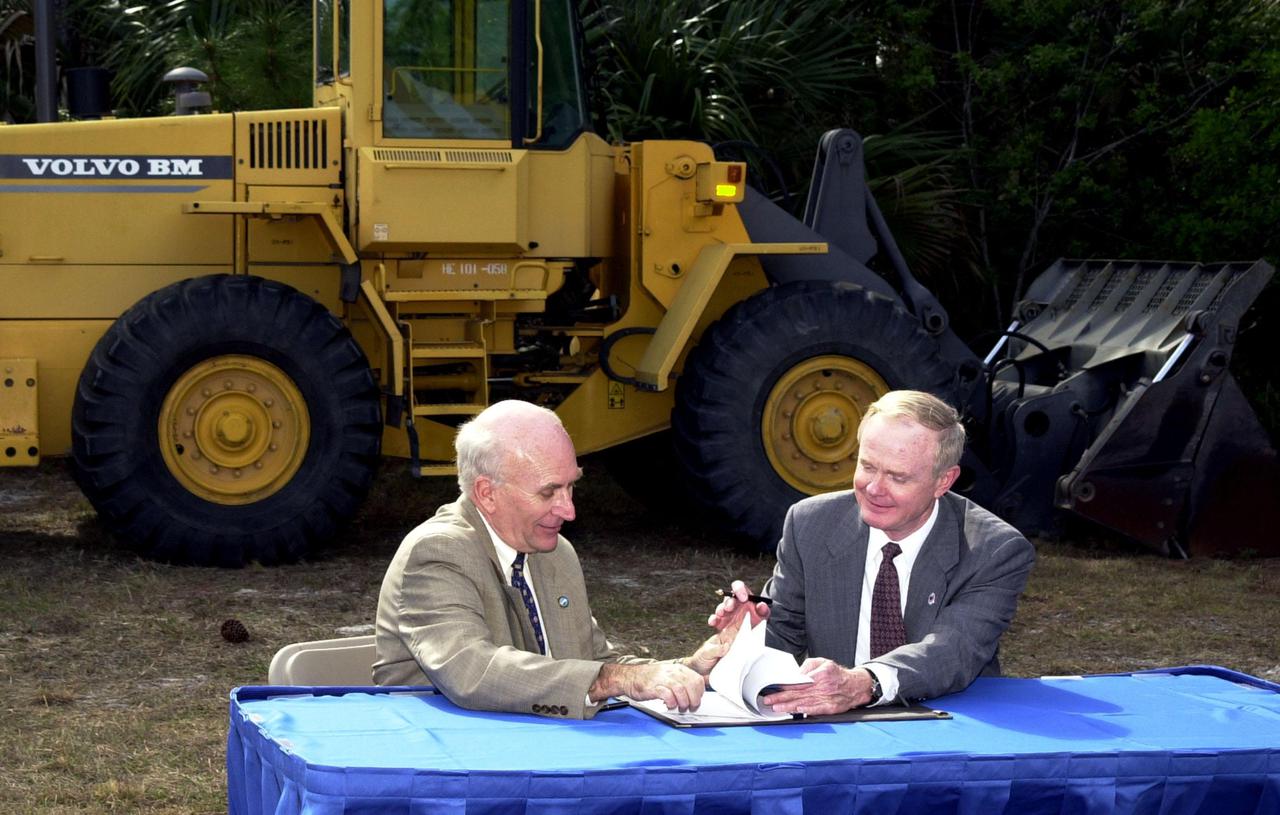
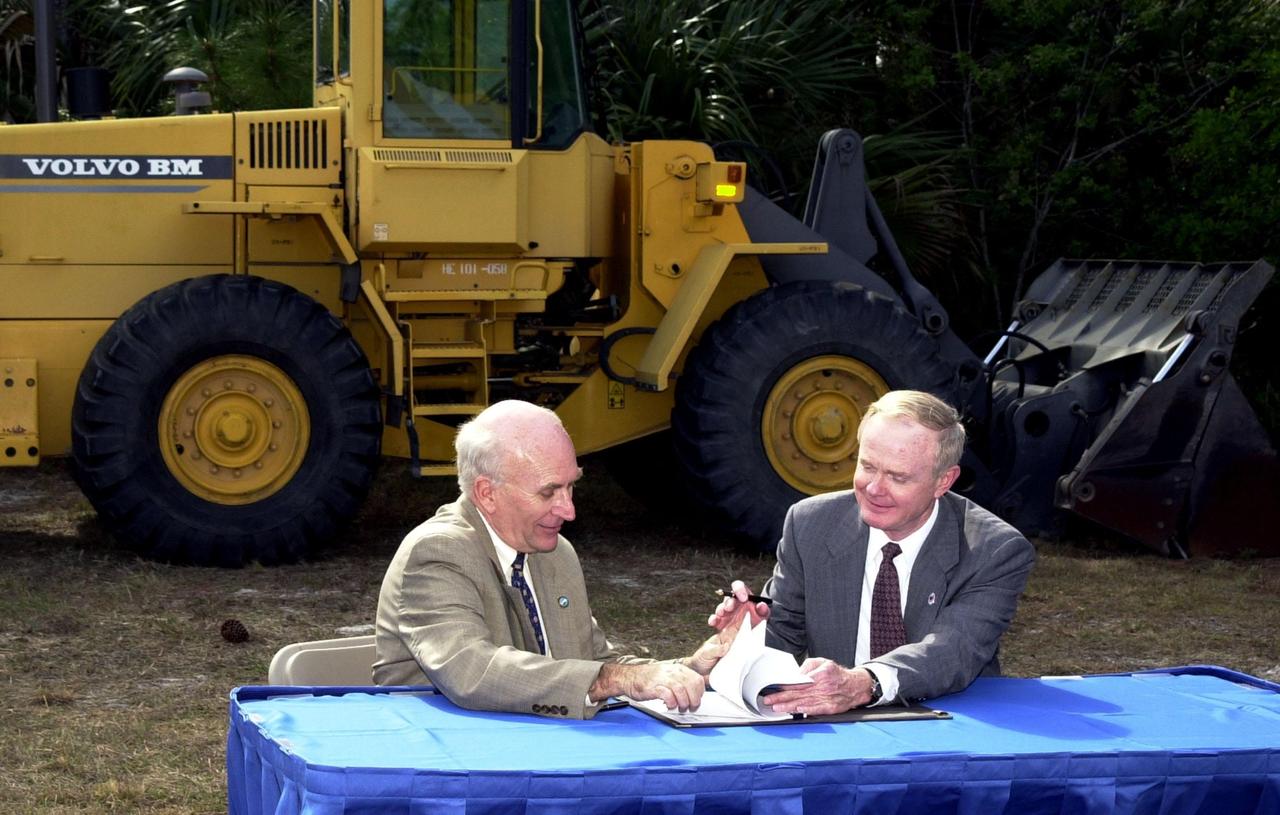
Ed Gormel (left), executive director of Spaceport Florida Authority, and Roy Bridges Jr., Center Director, get ready to sign a SERPL Real Property Use Permit Agreement between the two organizations to construct a three-mile roadway. It is the start of a construction project that includes the Space Experiment Research and Processing Laboratory (SERPL). The signing took place outdoors on S.R. 3 prior to a groundbreaking ceremony for the roadway. The road, to be known as Space Commerce Way, will serve the public by providing a 24-hour access route through KSC from S.R. 3 to the NASA Causeway and KSC Visitor Complex. The SERPL project is enabled by a partnership and collaboration between NASA and the State of Florida to create a vital resource for international and commercial space customers. SERPL is considered a magnet facility, and will support the development and processing of life sciences experiments destined for the International Space Station and accommodate NASA, industry and academic researchers performing associated biological research
KSC-01PADIG-059
Masters of Ceremony JoAnn H. Morgan, director of External Relations and Business Development at KSC, and Dr. Pamella J. Dana, director of the Office of Tourism, Trade and Economic Development in Florida, introduce guests at a groundbreaking held outdoors on S.R. 3. The groundbreaking is for a roadway, to be known as Space Commerce Way, that will serve the public by providing a 24-hour access route through KSC from S.R. 3 to the NASA Causeway and KSC Visitor Complex. It is the start of a construction project that includes the Space Experiment Research and Processing Laboratory (SERPL). The project is enabled by a partnership and collaboration between NASA and the State of Florida to create a vital resource for international and commercial space customers. SERPL is considered a magnet facility, and will support the development and processing of life sciences experiments destined for the International Space Station and accommodate NASA, industry and academic researchers performing associated biological research
KSC-01PADIG-061
At a groundbreaking ceremony at KSC, Florida’s Lt. Gov. Frank Brogan expresses his support of the Center’s growth and important role of technology, especially through the International Space Station. The groundbreaking is for a roadway, to be known as Space Commerce Way, that will serve the public by providing a 24-hour access route through KSC from S.R. 3 to the NASA Causeway and KSC Visitor Complex. It is the start of a construction project that includes the Space Experiment Research & Processing Laboratory (SERPL). The project is enabled by a partnership and collaboration between NASA and the State of Florida to create a vital resource for international and commercial space customers. SERPL is considered a magnet facility, and will support the development and processing of life sciences experiments destined for the International Space Station and accommodate NASA, industry and academic researchers performing associated biological research
KSC01padig062
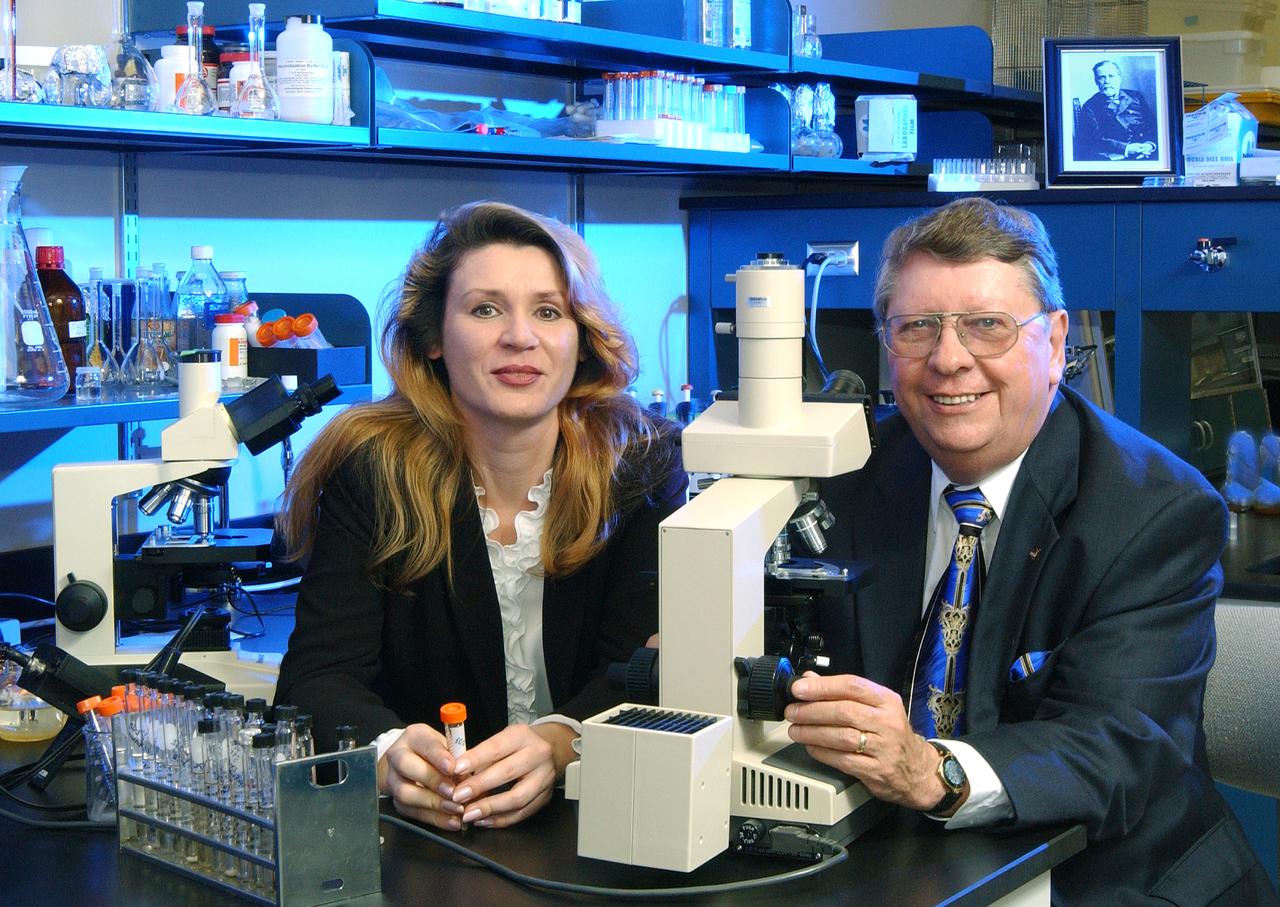
Microbiologist Dr. Elena V. Pikuta, and Astrobiologist Richard Hoover culture extremophiles, microorganisms that can live in extreme environments, in the astrobiology laboratory at the National Space Science and Technology Center (NSSTC) in Huntsville, Alabama. The scientists recently discovered a new species of extremophiles, Spirochaeta Americana. The species was found in Northern California's Mono Lake, an alkaline, briny oxygen-limited lake in a closed volcanic crater that Hoover believes may offer new clues to help identify sites to research for potential life on Mars. Hoover is an astrobiologist at NASA's Marshall Space Flight Center (MSFC), and Pikuta is a microbiologist with the Center for Space Plasma and Aeronomy Research Laboratory at the University of Alabama in Huntsville. The NSSTC is a partnership with MSFC, Alabama universities, industry, research institutes, and federal agencies.
Space Science
Center Director Roy Bridges Jr. addresses attendees at a groundbreaking ceremony held on S.R. 3. The groundbreaking is for a roadway, to be known as Space Commerce Way, that will serve the public by providing a 24-hour access route through KSC from S.R. 3 to the NASA Causeway and KSC Visitor Complex. It is the start of a construction project that includes the Space Experiment Research & Processing Laboratory (SERPL). The project is enabled by a partnership and collaboration between NASA and the State of Florida to create a vital resource for international and commercial space customers. Among the participants and guests seated under the tent are (in front row, at right) Florida’s Lt. Gov. Frank Brogan and Congressman Dave Weldon. SERPL is considered a magnet facility, and will support the development and processing of life sciences experiments destined for the International Space Station and accommodate NASA, industry and academic researchers performing associated biological research
KSC01padig063
Ed Gormel (left), executive director of Spaceport Florida Authority, and Roy Bridges Jr., Center Director, get ready to sign a SERPL Real Property Use Permit Agreement between the two organizations to construct a three-mile roadway. It is the start of a construction project that includes the Space Experiment Research & Processing Laboratory (SERPL). The signing took place outdoors on S.R. 3 prior to a groundbreaking ceremony for the roadway. The road, to be known as Space Commerce Way, will serve the public by providing a 24-hour access route through KSC from S.R. 3 to the NASA Causeway and KSC Visitor Complex. The SERPL project is enabled by a partnership and collaboration between NASA and the State of Florida to create a vital resource for international and commercial space customers. SERPL is considered a magnet facility, and will support the development and processing of life sciences experiments destined for the International Space Station and accommodate NASA, industry and academic researchers performing associated biological research
KSC01padig059
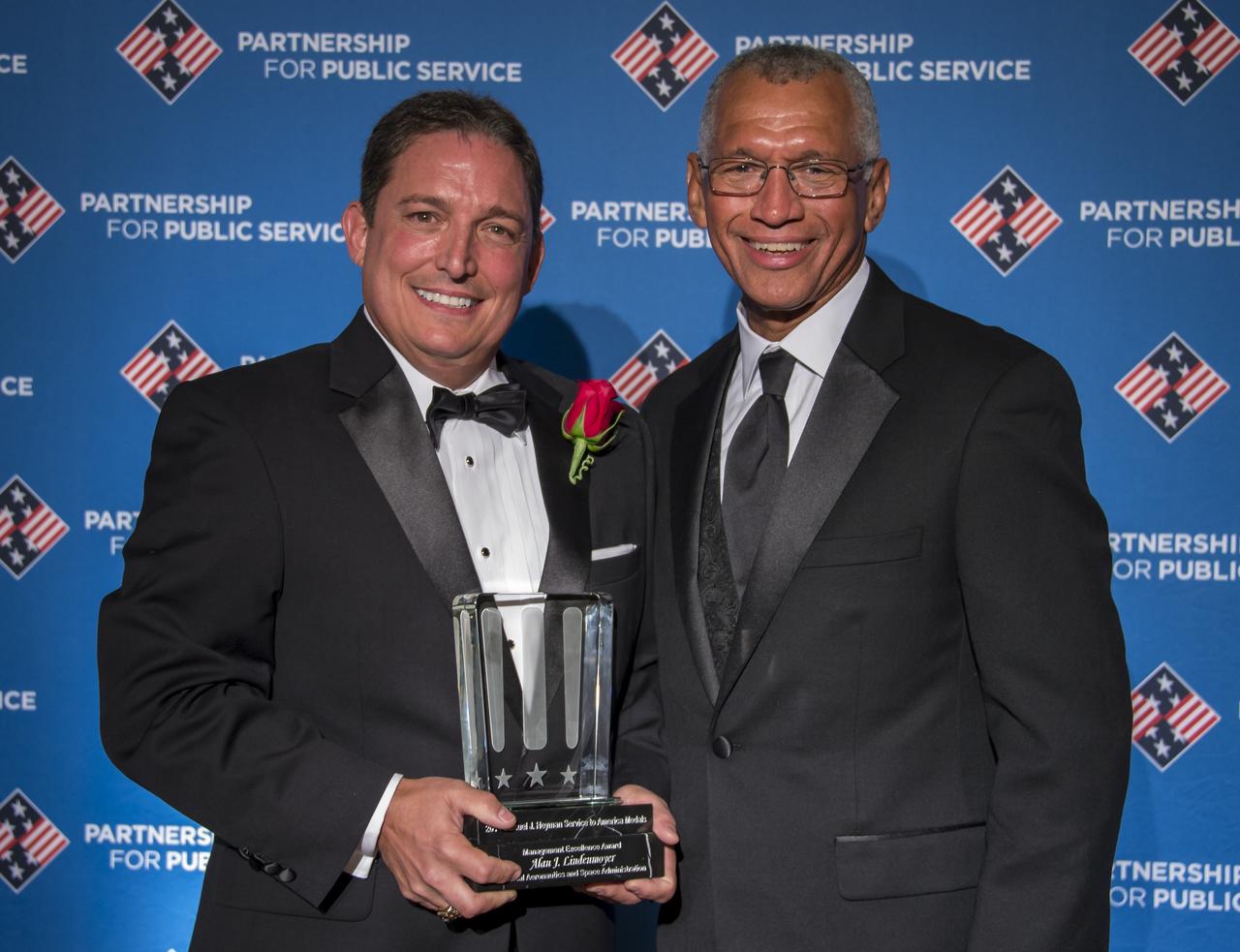
Alan J. Lindenmoyer, program manager, Commercial Crew and Cargo Program NASA, Johnson Space Center, Houston, Texas, left, poses for a photograph with Charles Bolden, NASA Administrator, shortly after Bolden presented Lindenmoyer the 2014 Samuel J. Heyman Service to America Medal by the Partnership for Public Service, Monday, Sept. 22, 2014 at the Andrew Mellon Auditorium in Washington.  Lindenmoyer was recognized for transforming NASA’s space travel programs, helping the U.S. continue important space research while reducing taxpayer costs and stimulating the commercial space industry. Photo Credit: (NASA/Bill Ingalls)
Service To America Medal
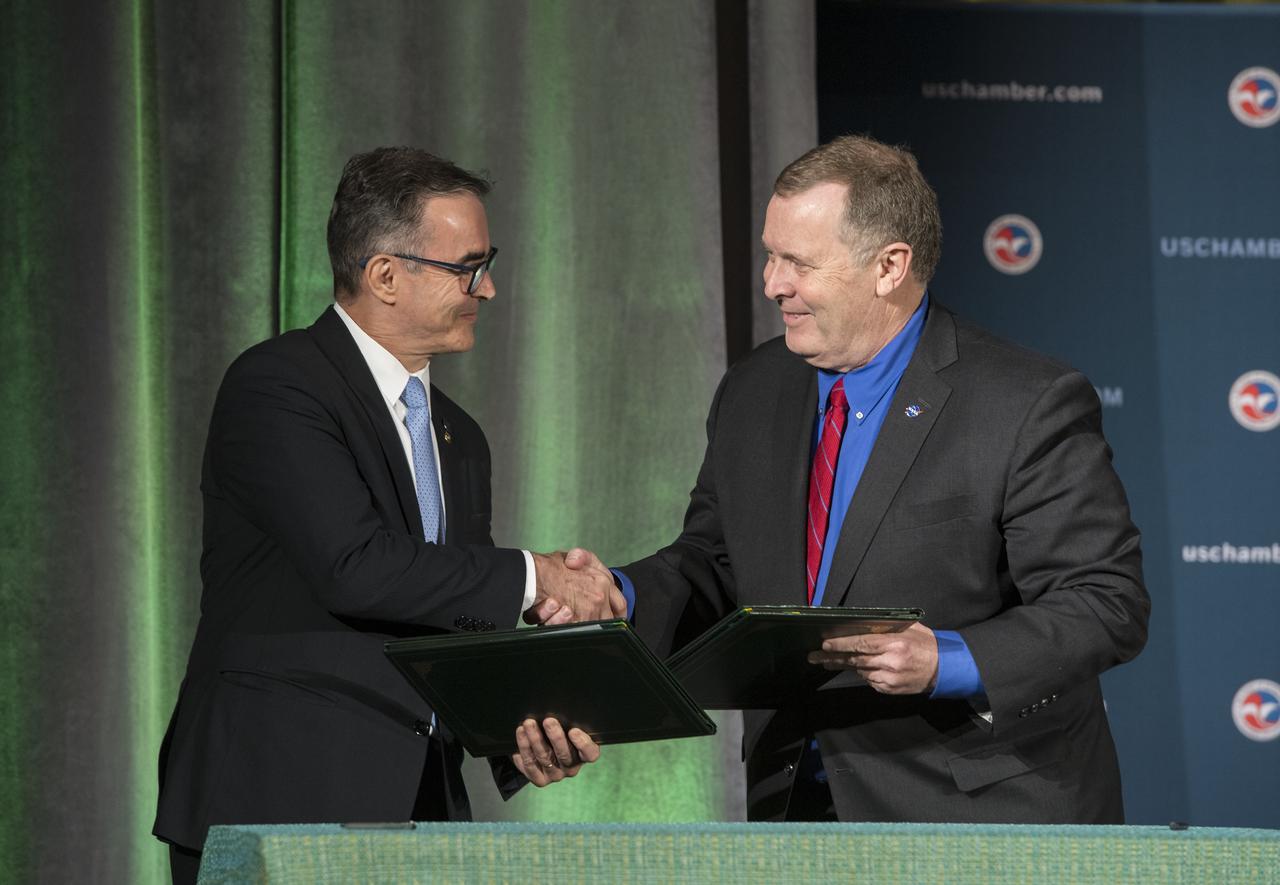
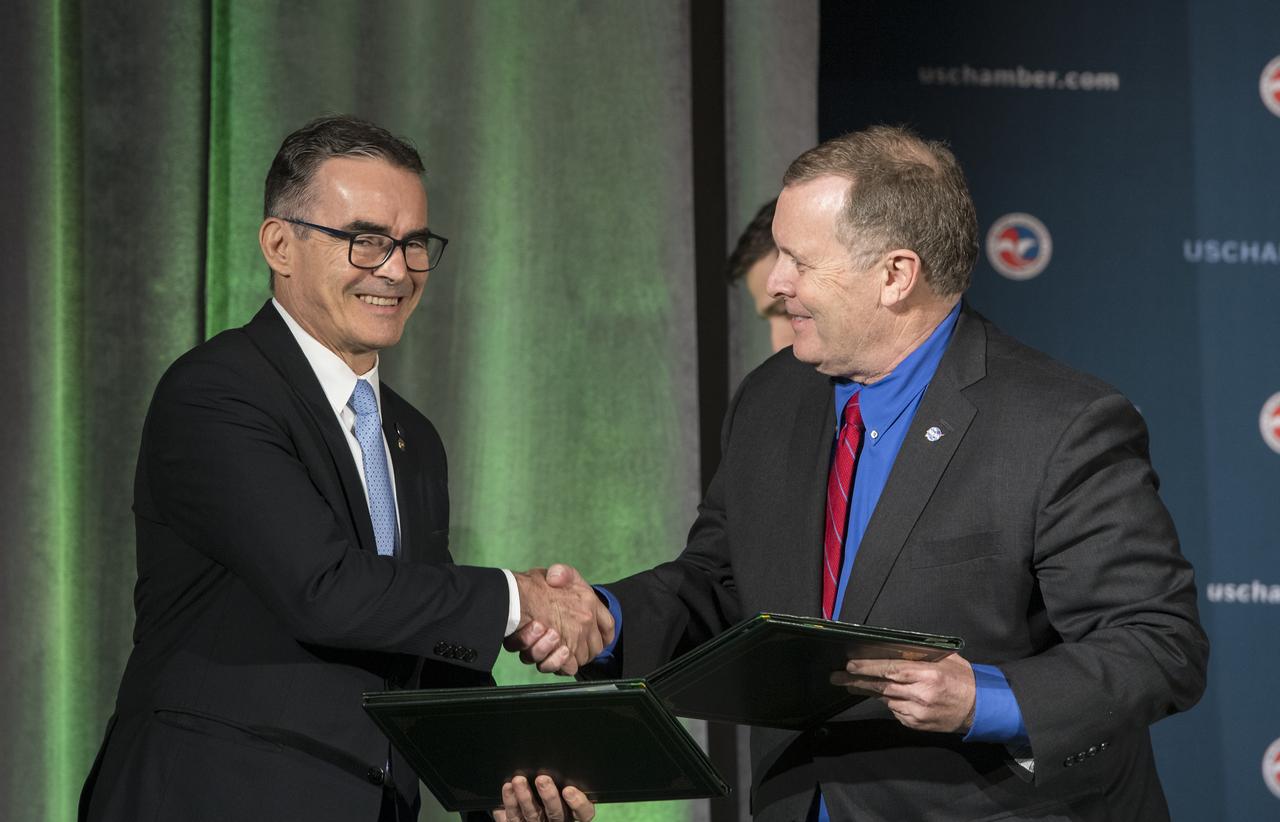
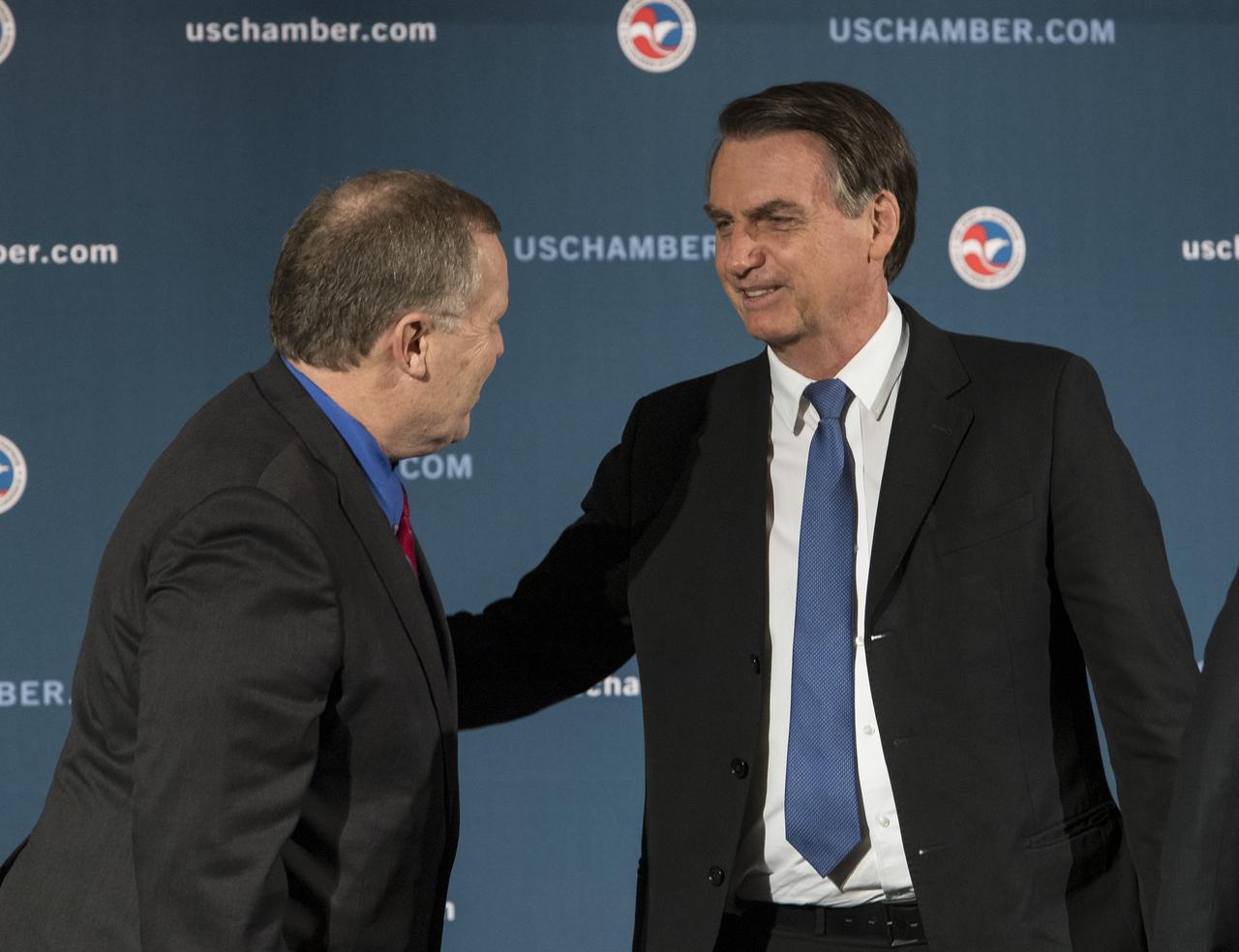
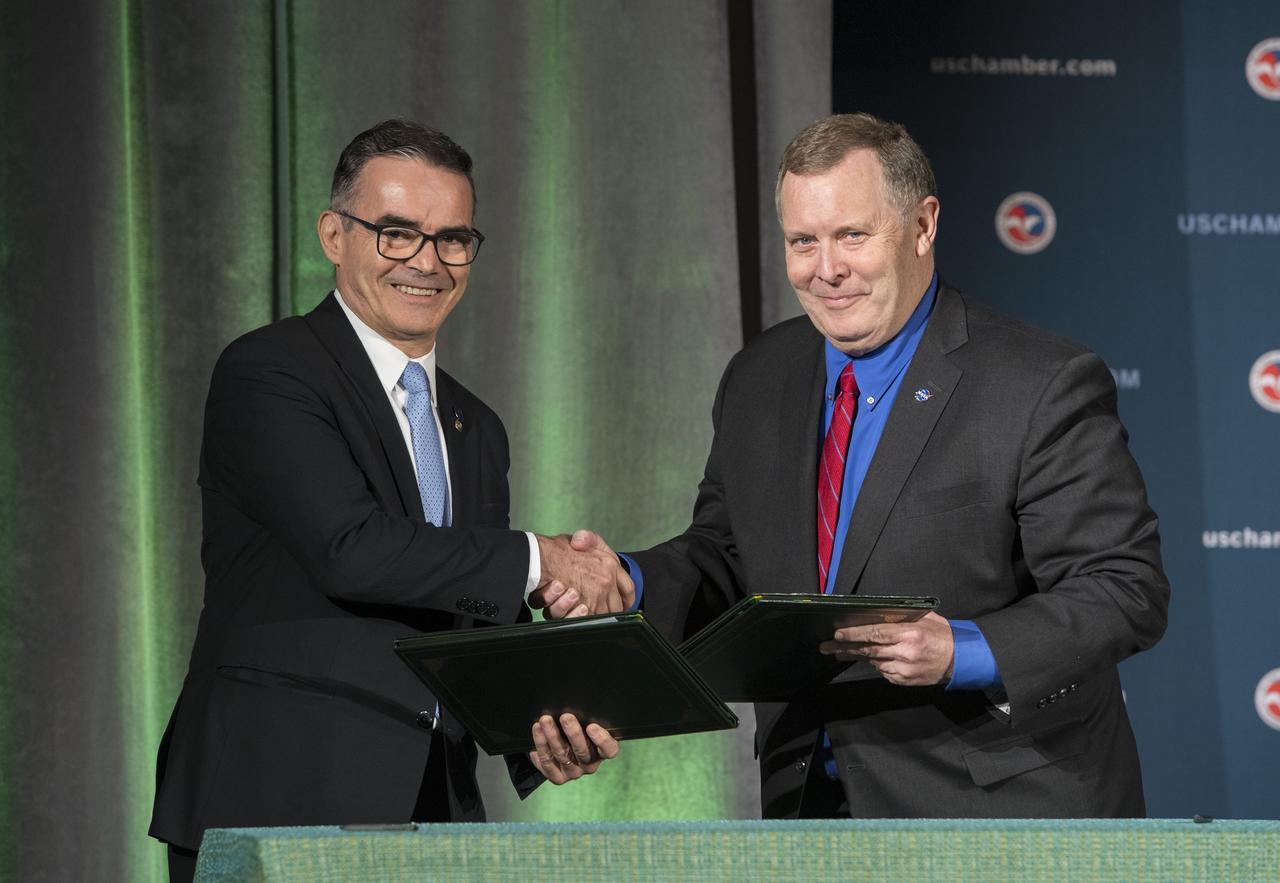
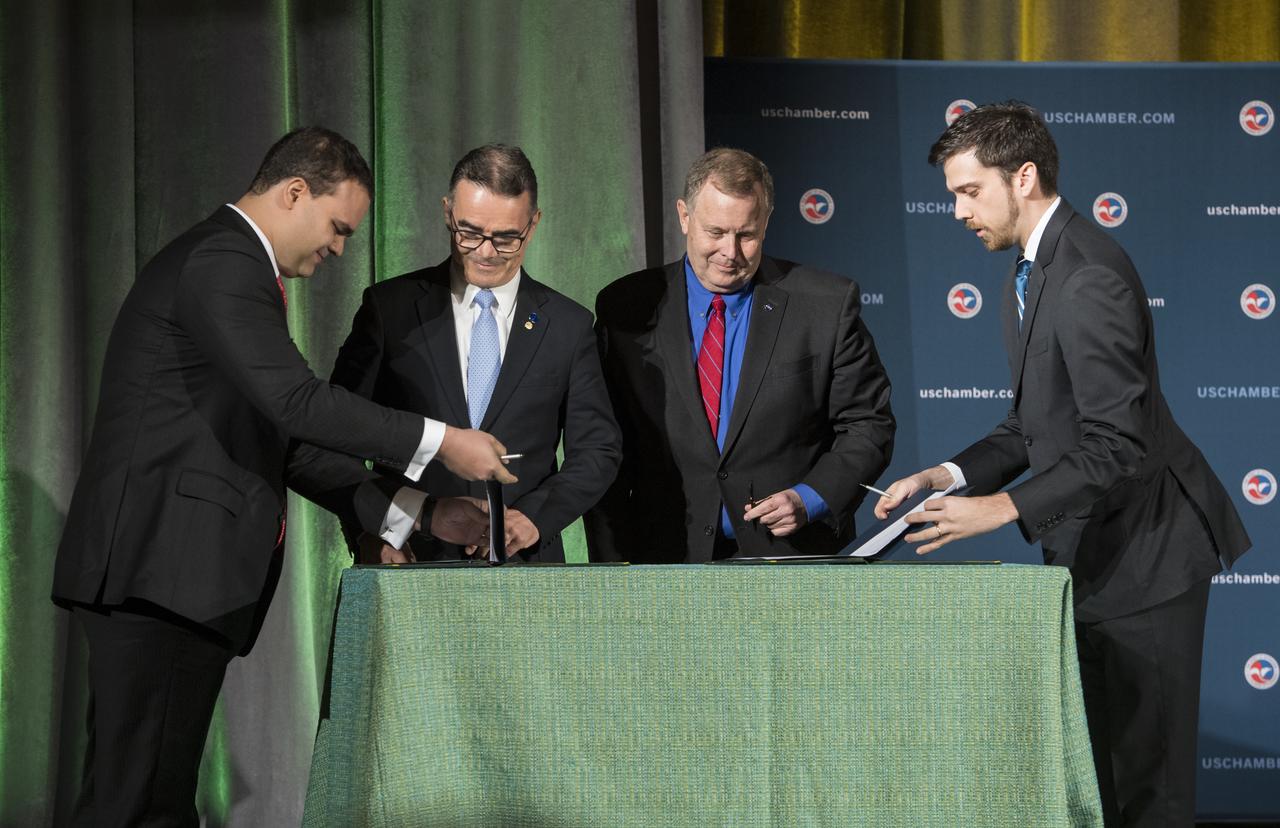
NASA Deputy Administrator James Morhard, right, shakes hands with President of the Brazilian Space Agency (AEB) Carlos Augusto Teixeira de Moura, left, after signing an agreement for cooperation on the Scintillation Prediction Observations Research Task (SPORT), an upcoming NASA-AEB heliophysics CubeSat partnership, Monday, March 18, 2019, at the U.S. Chamber of Commerce in Washington. The SPORT CubeSat will investigate two ionospheric phenomena, equatorial plasma bubbles and scintillation, that disrupt radio communication systems, satellite technologies, and Global Positioning System (GPS) signals.  SPORT is currently projected to launch in the 2020 timeframe. Photo Credit: (NASA/ Aubrey Gemignani)
NASA Deputy Administrator Signs Agreement with Brazil for SPORT
Ellen Stofan, under secretary for Science and Research at the Smithsonian Institution, speaks during a briefing on NASA’s TEMPO (Tropospheric Emissions: Monitoring of Pollution) instrument, Tuesday, March 14, 2023 at the Smithsonian’s National Air and Space Museum in Washington. NASA’s TEMPO instrument, the first Earth Venture Instrument mission, will measure air pollution across North America from Mexico City to the Canadian oil sands and from the Atlantic to the Pacific hourly and at a high spatial resolution. A partnership between NASA and the Center for Astrophysics | Harvard & Smithsonian, TEMPO will launch on a commercial satellite to geostationary orbit as early as April.  Photo Credit: (NASA/Joel Kowsky)
TEMPO Briefing
NASA Deputy Administrator James Morhard, left, speaks with H.E. President Jair Bolsonaro of Brazil, just before signing an agreement with President of the Brazilian Space Agency (AEB), Carlos Augusto Teixeira de Moura, for cooperation on the Scintillation Prediction Observations Research Task (SPORT), an upcoming NASA-AEB heliophysics CubeSat partnership, Monday, March 18, 2019, at the U.S. Chamber of Commerce in Washington. The SPORT CubeSat will investigate two ionospheric phenomena, equatorial plasma bubbles and scintillation, that disrupt radio communication systems, satellite technologies, and Global Positioning System (GPS) signals.  SPORT is currently projected to launch in the 2020 timeframe. Photo Credit: (NASA/ Aubrey Gemignani)
NASA Deputy Administrator Signs Agreement with Brazil for SPORT
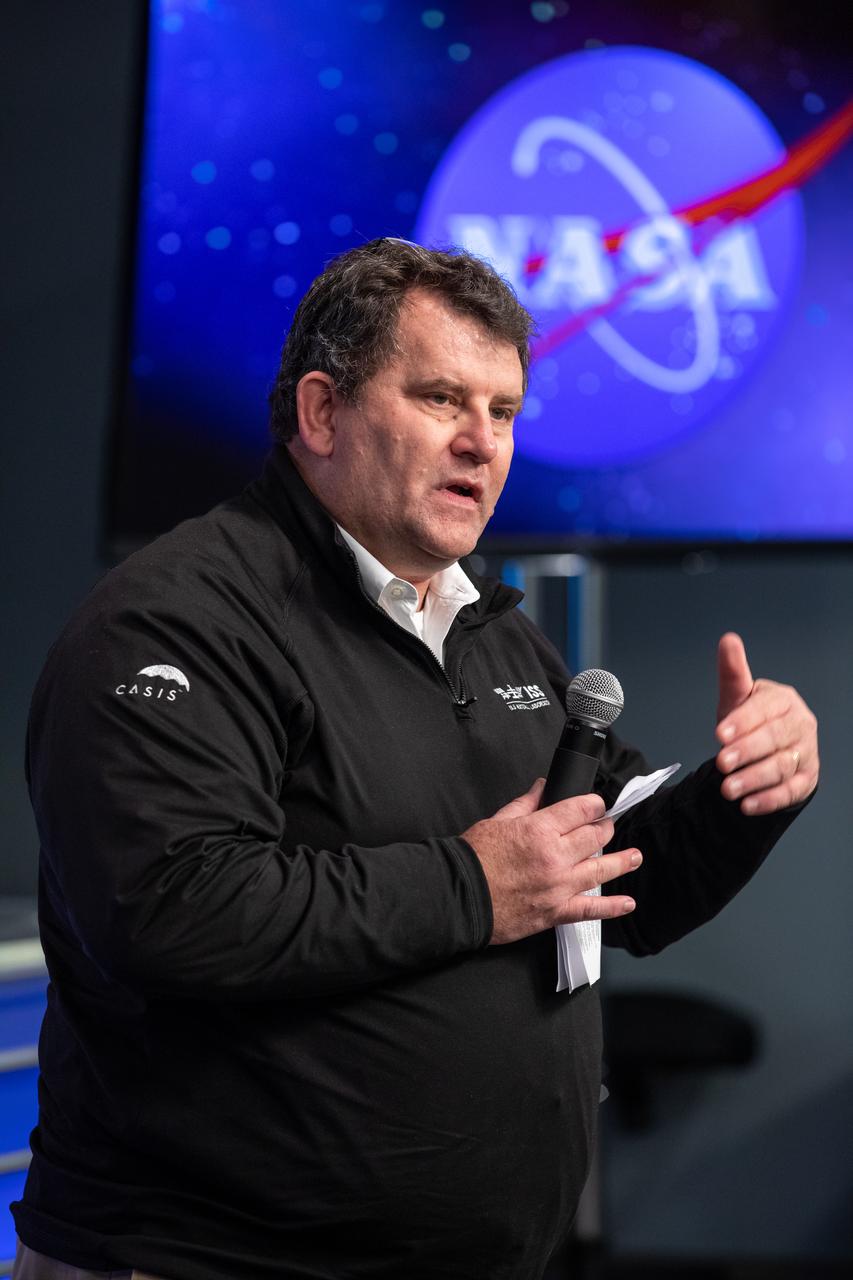
A What’s On Board Briefing for SpaceX’s 19th Commercial Resupply Services (CRS-19) mission for NASA to the International Space Station took place on Dec. 3, 2019, at the agency’s Kennedy Space Center in Florida. Michael Roberts, interim chief scientist for the International Space Station U.S. National Laboratory, discusses the lab’s work in advancing science in space, and in developing partnerships that drive industrialization through microgravity research. The SpaceX Falcon 9 rocket and Dragon cargo module are scheduled to launch on Dec. 4, 2019, from Space Launch Complex 40 on Cape Canaveral Air Force Station in Florida.
SpaceX CRS-19 What's On Board Science Briefing
CAPE CANAVERAL, Fla. – At NASA’s Kennedy Space Center in Florida, Robert Lightfoot, NASA associate director, second from left, learns about surface systems technologies for destinations beyond Earth during a tour of the Swamp Works laboratories.  At far left is Kennedy Director Bob Cabana.  Kennedy’s Swamp Works provides rapid, innovative and cost-effective exploration mission solutions, leveraging partnerships across NASA, industry and academia. Kennedy’s research and technology mission is to improve spaceports on Earth, as well as lay the groundwork for establishing spaceports at destinations in space. For more information, visit http:__www.nasa.gov_centers_kennedy_exploration_researchtech_index.html. Photo credit: NASA_Jim Grossmann
KSC-2013-2567
Ellen Stofan, under secretary for Science and Research at the Smithsonian Institution, speaks during a briefing on NASA’s TEMPO (Tropospheric Emissions: Monitoring of Pollution) instrument, Tuesday, March 14, 2023 at the Smithsonian’s National Air and Space Museum in Washington. NASA’s TEMPO instrument, the first Earth Venture Instrument mission, will measure air pollution across North America from Mexico City to the Canadian oil sands and from the Atlantic to the Pacific hourly and at a high spatial resolution. A partnership between NASA and the Center for Astrophysics | Harvard & Smithsonian, TEMPO will launch on a commercial satellite to geostationary orbit as early as April.  Photo Credit: (NASA/Joel Kowsky)
TEMPO Briefing
HAMPTON, Va. – NASA technician Ricky Hall works inside the Unitary Plan Wind Tunnel at NASA's Langley Research Center in Virginia to affix grains of sand to a precise scale model of the Dream Chaser spacecraft. Sierra Nevada Corporation is developing the Dream Chaser in partnership with NASA's Commercial Crew Program. The sand creates turbulence at key points to simulate the conditions the real spacecraft will encounter during its return to Earth. The data gathered from the wind tunnel was used to further test the design through the company's Commercial Crew Integrated Capability agreement with NASA. Photo credit: NASA/ David C. Bowman
KSC-2014-2567
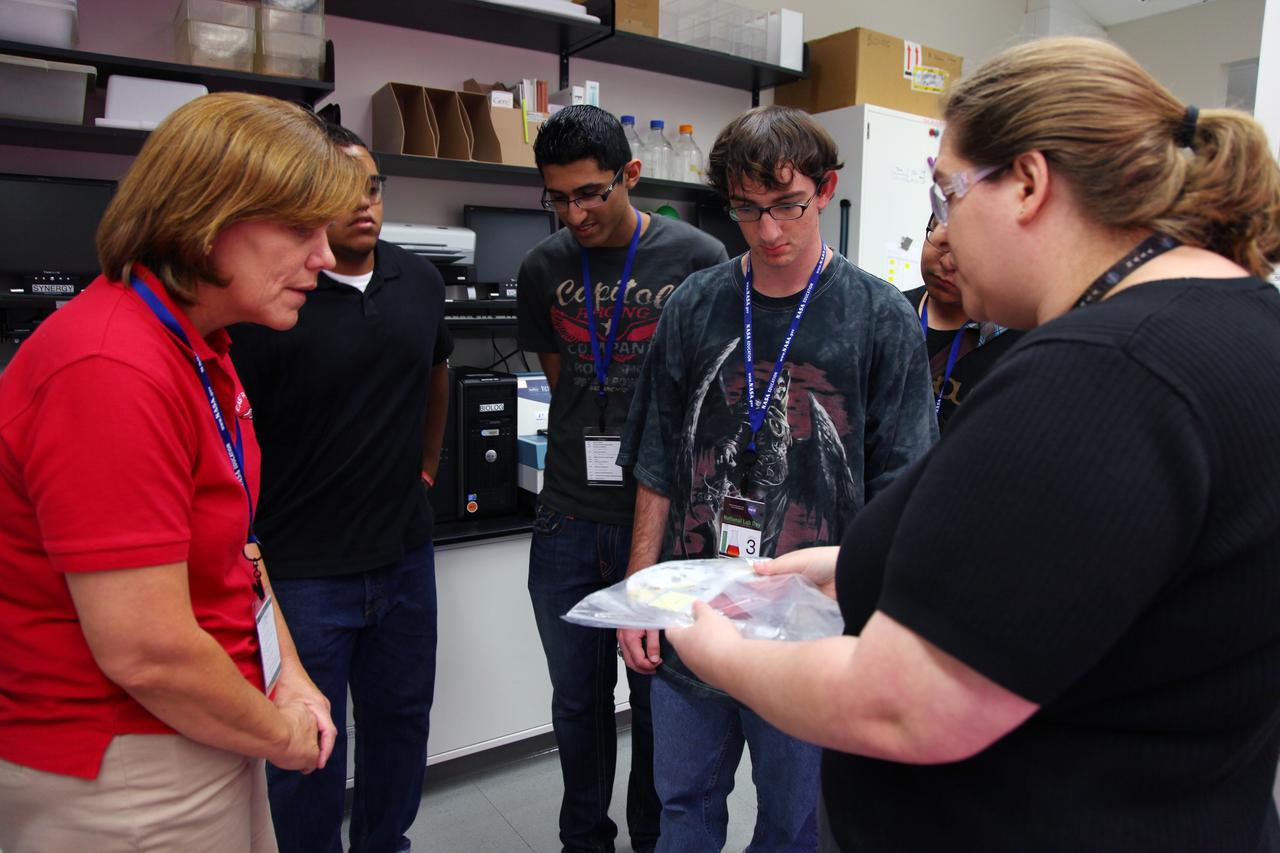
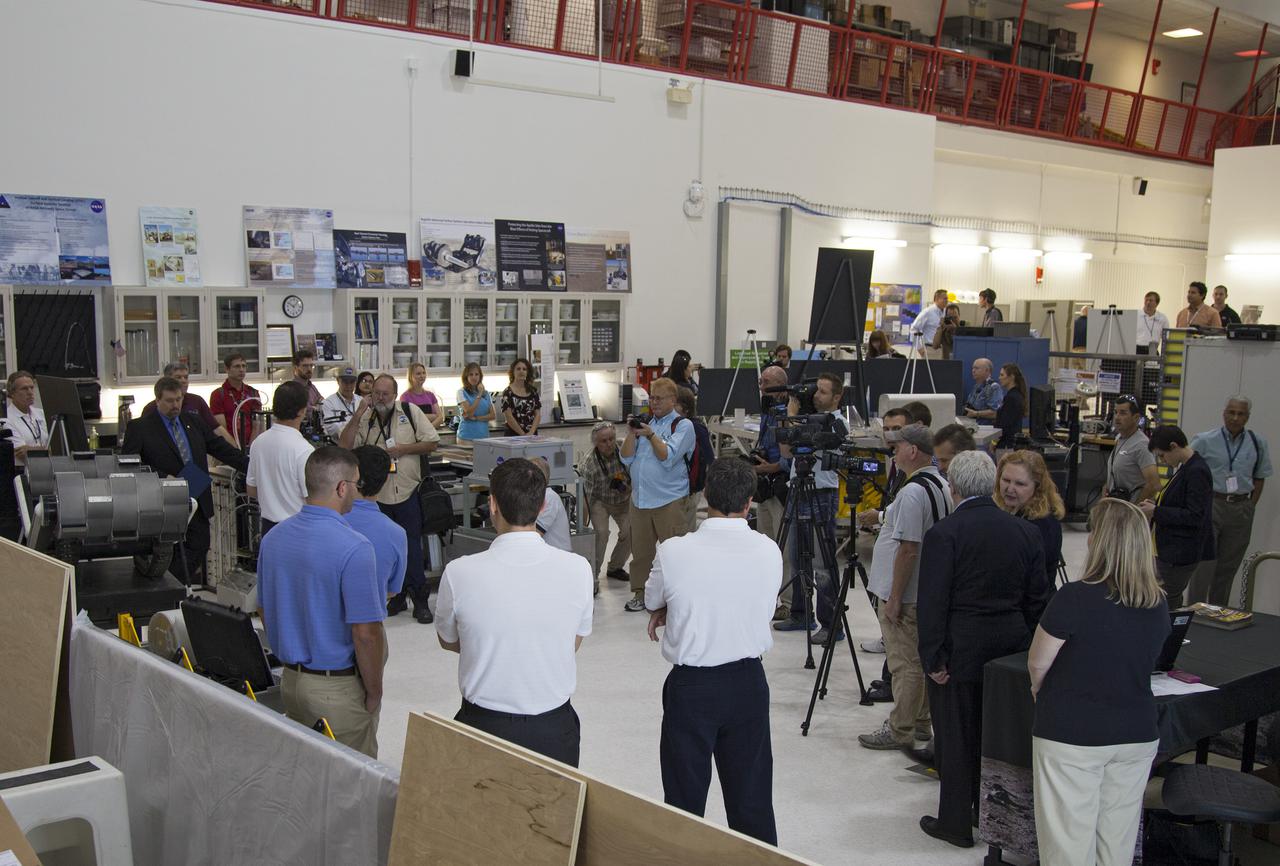
Cape Canaveral, Fla. -- Students listen intently as a laboratory technician describes a project that's being researched in Kennedy’s Space Life Sciences Laboratory (SLSL).        High-school students from two Orlando, Fla., schools travelled to NASA’s Kennedy Space Center in Florida to participate in National Lab Day activities. During the event, about 80 students, toured various facilities and engaged in educational hands-on activities. National Lab Day is a partnership between federal agencies, foundations, professional societies and organizations devoted to promoting science, technology, engineering and math, or STEM, hands-on discovery-based laboratory experiences for students. Photo Credit: NASA/Frankie Martin
KSC-2011-3471
NASA Deputy Administrator James Morhard, right, shakes hands with President of the Brazilian Space Agency (AEB) Carlos Augusto Teixeira de Moura, left, after signing an agreement for cooperation on the Scintillation Prediction Observations Research Task (SPORT), an upcoming NASA-AEB heliophysics CubeSat partnership, Monday, March 18, 2019, at the U.S. Chamber of Commerce in Washington. The SPORT CubeSat will investigate two ionospheric phenomena, equatorial plasma bubbles and scintillation, that disrupt radio communication systems, satellite technologies, and Global Positioning System (GPS) signals.  SPORT is currently projected to launch in the 2020 timeframe. Photo Credit: (NASA/ Aubrey Gemignani)
NASA Deputy Administrator Signs Agreement with Brazil for SPORT
KENNEDY SPACE CENTER, FLA. -- In the KSC Space Life Sciences Lab, NASA Administrator Sean O’Keefe (far right) learns about some of the experiments being conducted.  At far left is former astronaut Winston Scott; next to him is U.S. Mint Director Henrietta Holsman Fore.  The new lab is a state-of-the-art facility built for ISS biotechnology research. It was developed as a partnership between NASA-KSC and the State of Florida.  The tour followed the launching ceremony at the KSC Visitor Complex for the new Florida quarter issued by the U.S. Mint.  The ceremony was emceed by Center Director Jim Kennedy and included remarks by O’Keefe, Bush, Fore and Deputy Secretary of the Treasury Samuel W. Bodman.
KSC-04pd0796
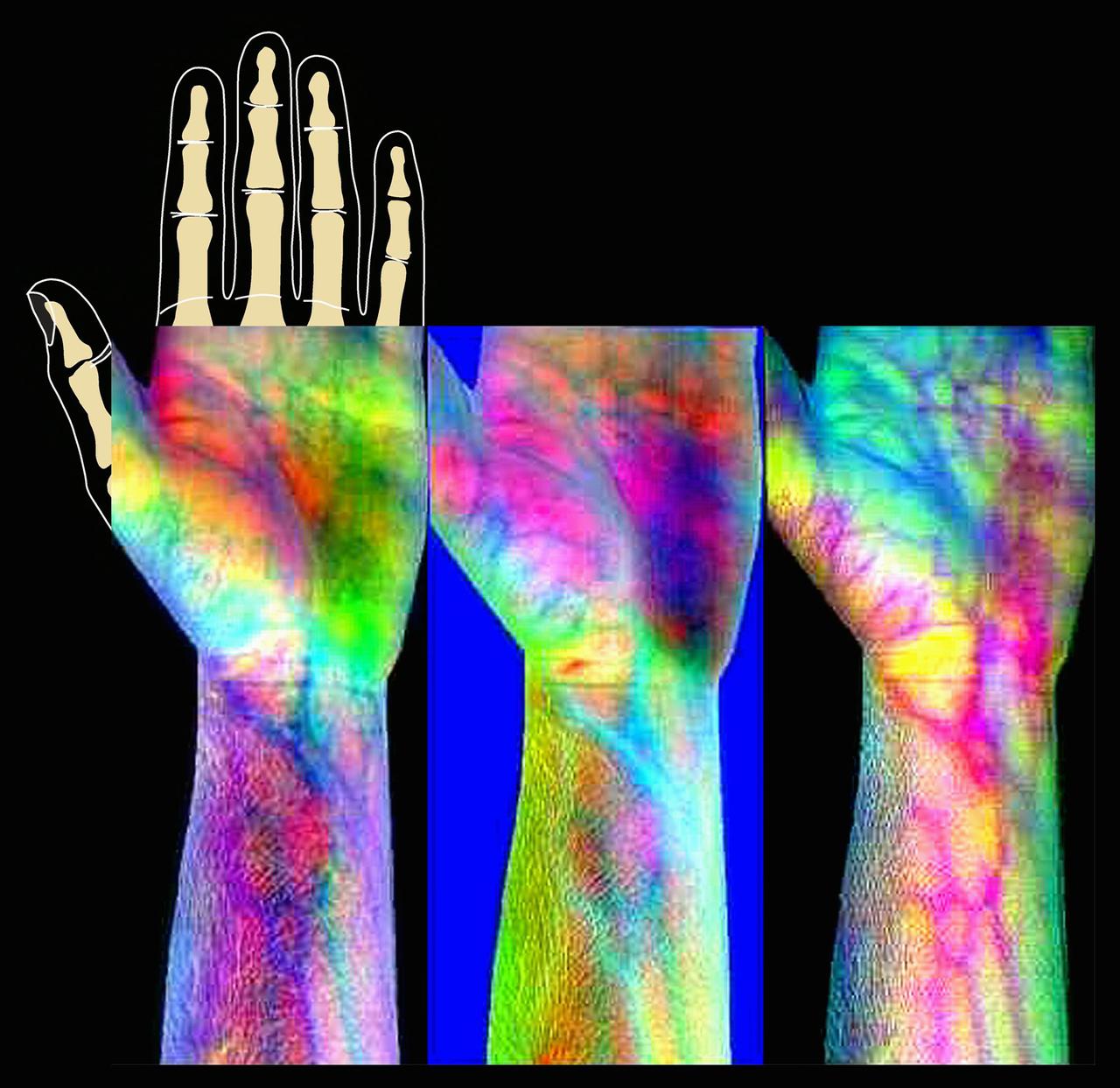
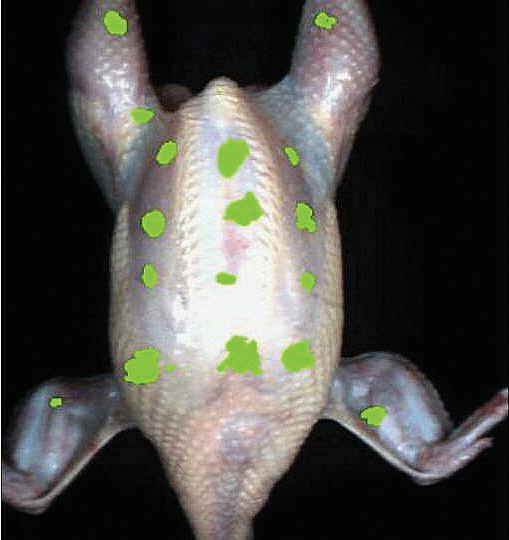
ProVision Technologies, a NASA research partnership center at Sternis Space Center in Mississippi, has developed a new hyperspectral imaging (HSI) system that is much smaller than the original large units used aboard remote sensing aircraft and satellites. The new apparatus is about the size of a breadbox. Health-related applications of HSI include non-invasive analysis of human skin to characterize wounds and wound healing rates (especially important for space travelers who heal more slowly), determining if burns are first-, second-, or third degree (rather than painful punch biopsies). The work is sponsored under NASA's Space Product Development (SPD) program.
Biotechnology
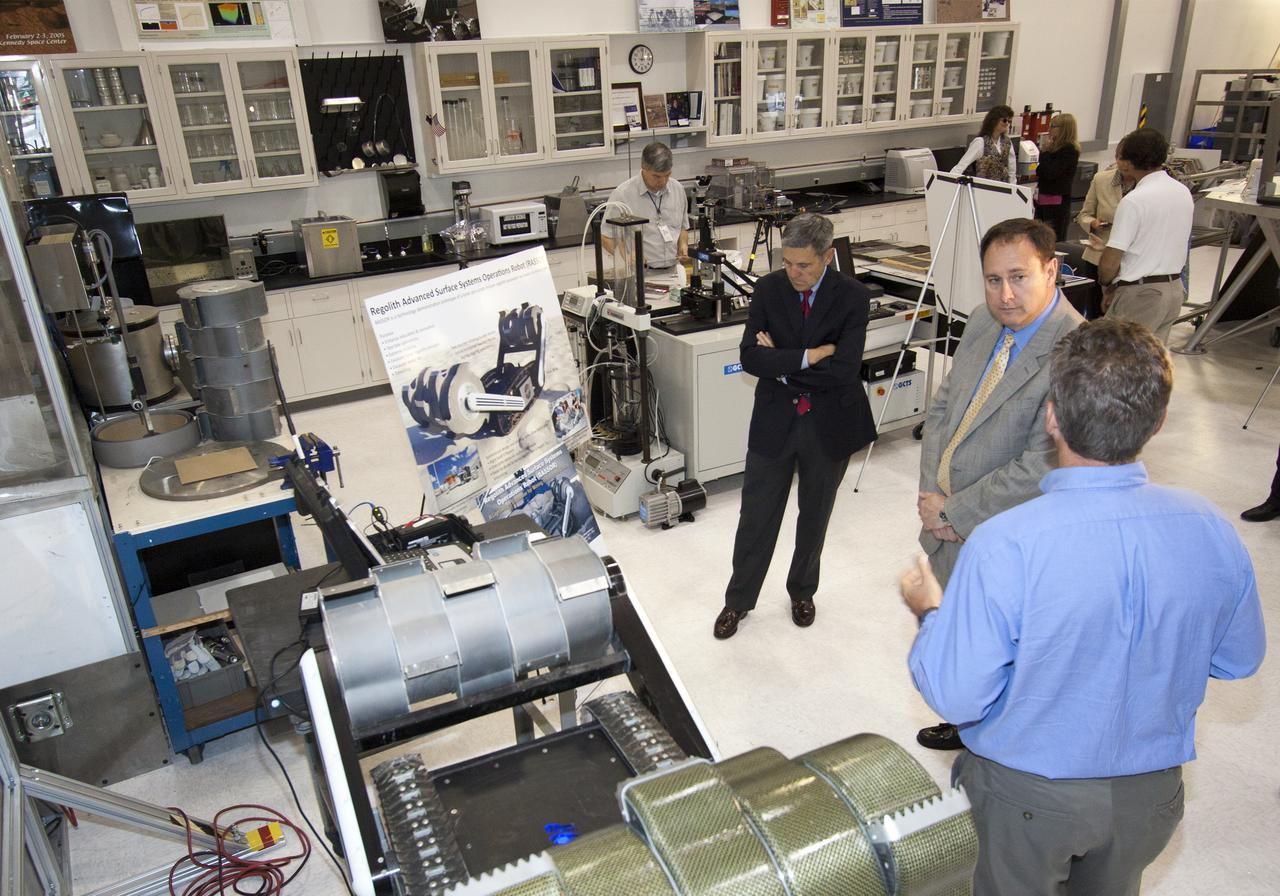
CAPE CANAVERAL, Fla. – At NASA’s Kennedy Space Center in Florida, Robert Lightfoot, NASA associate director, at left, learns about the Regolith and Environment Science and Oxygen and Lunar Volatile Extraction, or RESOLVE, rover during a tour of the Swamp Works laboratories. To the right of Lightfoot is Kennedy Director Bob Cabana.   Kennedy’s Swamp Works provides rapid, innovative and cost-effective exploration mission solutions, leveraging partnerships across NASA, industry and academia. Kennedy’s research and technology mission is to improve spaceports on Earth, as well as lay the groundwork for establishing spaceports at destinations in space. For more information, visit http:__www.nasa.gov_centers_kennedy_exploration_researchtech_index.html. Photo credit: NASA_Jim Grossmann
KSC-2013-2569
KENNEDY SPACE CENTER, FLA. --  An aerial photo of the recently completed Space Life Sciences Lab at KSC.  The new lab is a state-of-the-art facility built for ISS biotechnology research. It was developed as a partnership between NASA-KSC and the State of Florida.  The Lab was the site of a tour by Florida Gov. Jeb Bush, NASA Administrator Sean O’Keefe, Center Director Jim Kennedy, U.S. Mint Director Henrietta Holsman Fore and Deputy Secretary of the Treasury Samuel W. Bodman.  The tour followed the launching ceremony at the KSC Visitor Complex for the new Florida quarter issued by the U.S. Mint. The ceremony was emceed by Kennedy and included remarks by O’Keefe, Bush, Fore and Bodman.
KSC-04pd0799
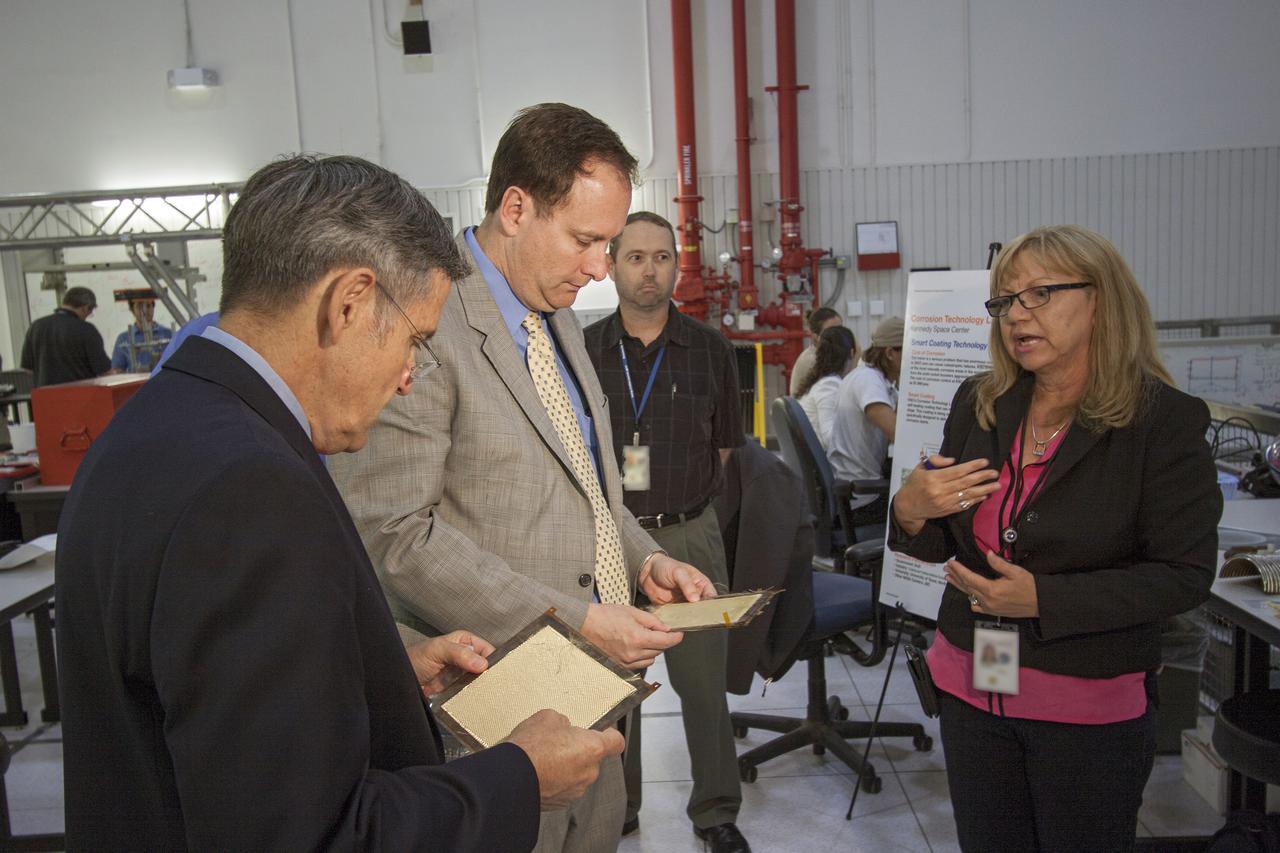
CAPE CANAVERAL, Fla. – At NASA’s Kennedy Space Center in Florida, Robert Lightfoot, NASA associate director, second from left, learns about smart coatings technology in the Corrosion Lab during a tour of the Swamp Works laboratories.   Kennedy’s Swamp Works provides rapid, innovative and cost-effective exploration mission solutions, leveraging partnerships across NASA, industry and academia. Kennedy’s research and technology mission is to improve spaceports on Earth, as well as lay the groundwork for establishing spaceports at destinations in space. For more information, visit http:__www.nasa.gov_centers_kennedy_exploration_researchtech_index.html. Photo credit: NASA_Jim Grossmann
KSC-2013-2568
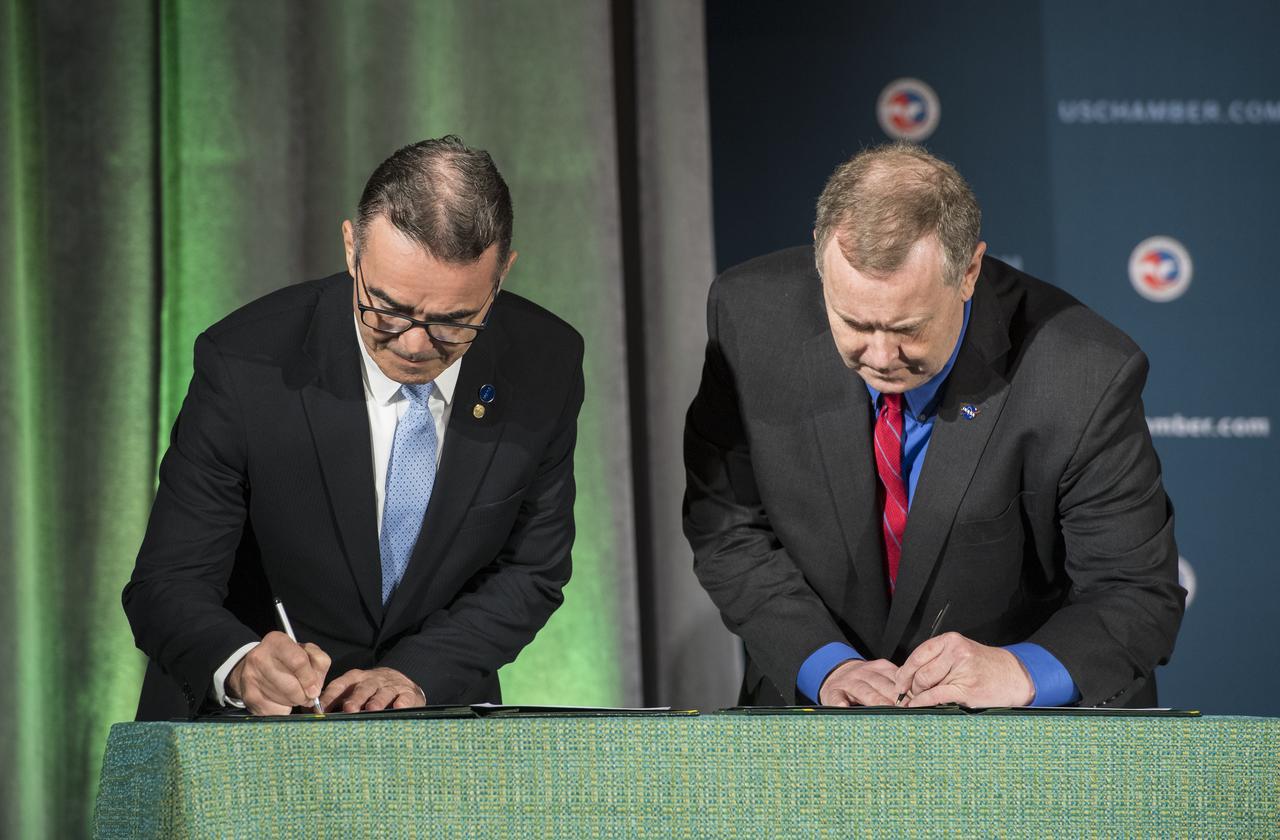
NASA Deputy Administrator James Morhard, right, and President of the Brazilian Space Agency (AEB) Carlos Augusto Teixeira de Moura, left, sign an agreement for cooperation on the Scintillation Prediction Observations Research Task (SPORT), an upcoming NASA-AEB heliophysics CubeSat partnership, Monday, March 18, 2019, at the U.S. Chamber of Commerce in Washington. The SPORT CubeSat will investigate two ionospheric phenomena, equatorial plasma bubbles and scintillation, that disrupt radio communication systems, satellite technologies, and Global Positioning System (GPS) signals.  SPORT is currently projected to launch in the 2020 timeframe. Photo Credit: (NASA/ Aubrey Gemignani)
NASA Deputy Administrator Signs Agreement with Brazil for SPORT
NASA Deputy Administrator James Morhard, right, shakes hands with President of the Brazilian Space Agency (AEB) Carlos Augusto Teixeira de Moura, left, after signing an agreement for cooperation on the Scintillation Prediction Observations Research Task (SPORT), an upcoming NASA-AEB heliophysics CubeSat partnership, Monday, March 18, 2019, at the U.S. Chamber of Commerce in Washington. The SPORT CubeSat will investigate two ionospheric phenomena, equatorial plasma bubbles and scintillation, that disrupt radio communication systems, satellite technologies, and Global Positioning System (GPS) signals.  SPORT is currently projected to launch in the 2020 timeframe. Photo Credit: (NASA/ Aubrey Gemignani)
NASA Deputy Administrator Signs Agreement with Brazil for SPORT
HAMPTON, Va. – NASA technician Ricky Hall works inside the Unitary Plan Wind Tunnel at NASA's Langley Research Center in Virginia to affix grains of sand to a precise scale model of the Dream Chaser spacecraft. Sierra Nevada Corporation is developing the Dream Chaser in partnership with NASA's Commercial Crew Program. The sand creates turbulence at key points to simulate the conditions the real spacecraft will encounter during its return to Earth. The data gathered from the wind tunnel was used to further test the design through the company's Commercial Crew Integrated Capability agreement with NASA. Photo credit: NASA/ David C. Bowman
KSC-2014-2566
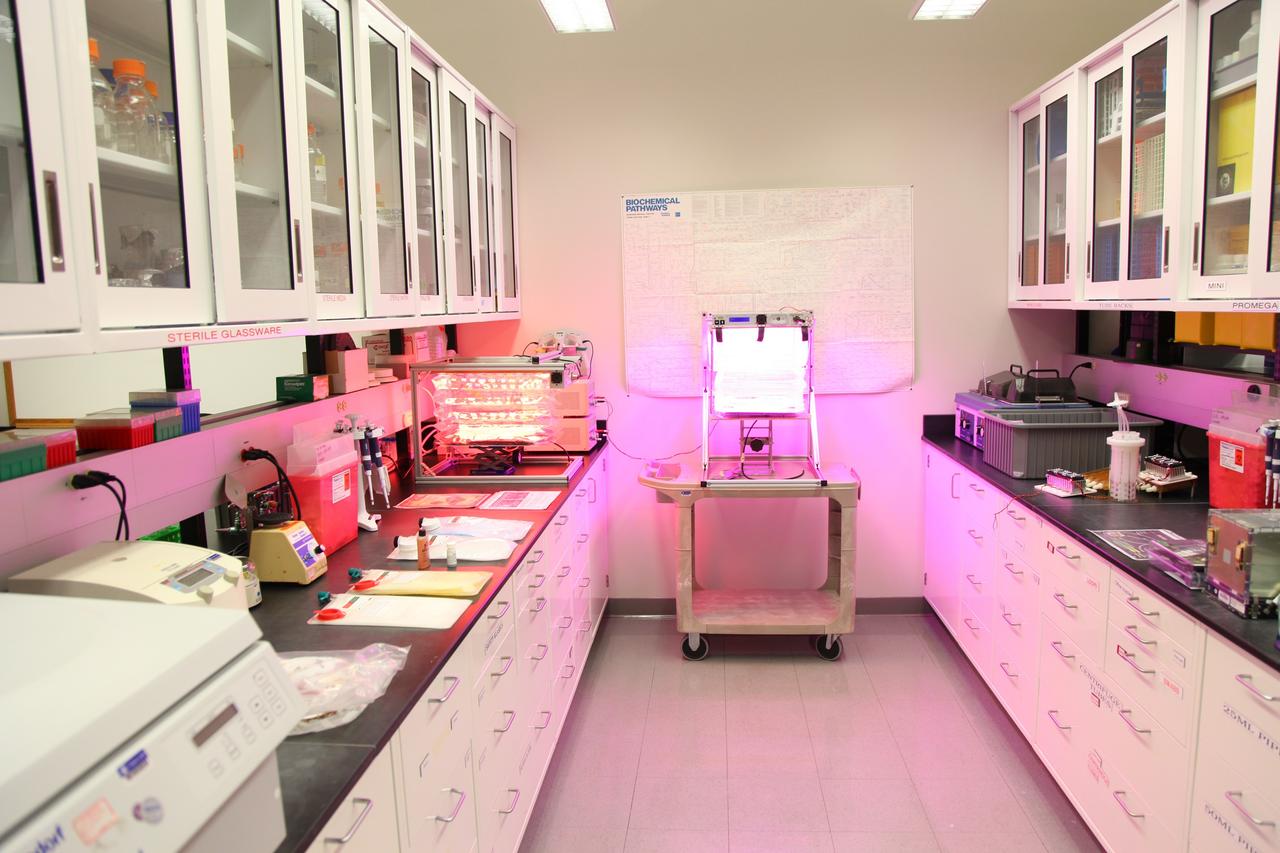
Cape Canaveral, Fla. -- A research laboratory is prepared for students to perform hands-on activities in Kennedy’s Space Life Sciences Laboratory (SLSL).      High-school students from two Orlando, Fla., schools travelled to NASA’s Kennedy Space Center in Florida to participate in National Lab Day activities. During the event, about 80 students, toured various facilities and engaged in educational hands-on activities. National Lab Day is a partnership between federal agencies, foundations, professional societies and organizations devoted to promoting science, technology, engineering and math, or STEM, hands-on discovery-based laboratory experiences for students. Photo Credit: NASA/Frankie Martin
KSC-2011-3470
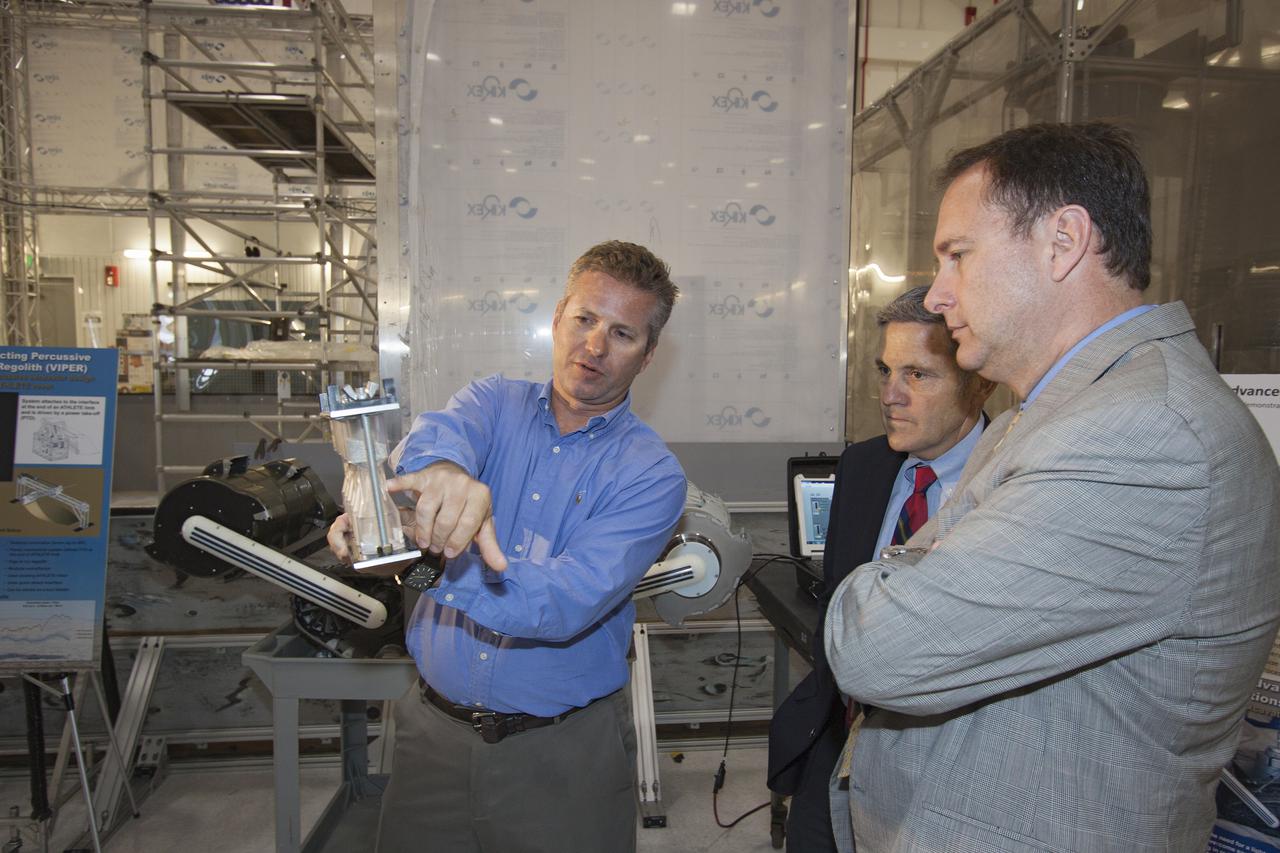
CAPE CANAVERAL, Fla. -- Dr. Mason Peck, second from left, NASA's chief technologist, and a team of NASA's innovative engineers discuss some of NASA's cutting-edge projects with media representatives touring the Swamp Works at NASA's Kennedy Space Center in Florida.   Kennedy's Swamp Works provides rapid, innovative and cost-effective exploration mission solutions, leveraging partnerships across NASA, industry and academia. Kennedy's research and technology mission is to improve spaceports on Earth, as well as lay the groundwork for establishing spaceports at destinations in space. For more information, visit http:__www.nasa.gov_centers_kennedy_exploration_researchtech_index.html.  Photo credit: NASA_Frankie Martin
KSC-2013-1263
Jenn Gustetic, NASA's Small Business Innovation Research Program executive, talks with Rob Mueller, senior technologist and co-founder of Kennedy Space Center's Swamp Works. Gustetic met team members and viewed many of the pioneering technologies and innovations in development at Kennedy. Swamp Works is a hands-on, lean development environment for innovation following the philosophies pioneered in Kelly Johnson's Skunk Works and Werner von Braun's development shops. The Swamp Works establishes rapid, innovative and cost-effective exploration mission solutions through a highly collaborative, "no walls" approach, leveraging partnerships across NASA, industry and academia.
Jen Gustetic visits Swamp Works
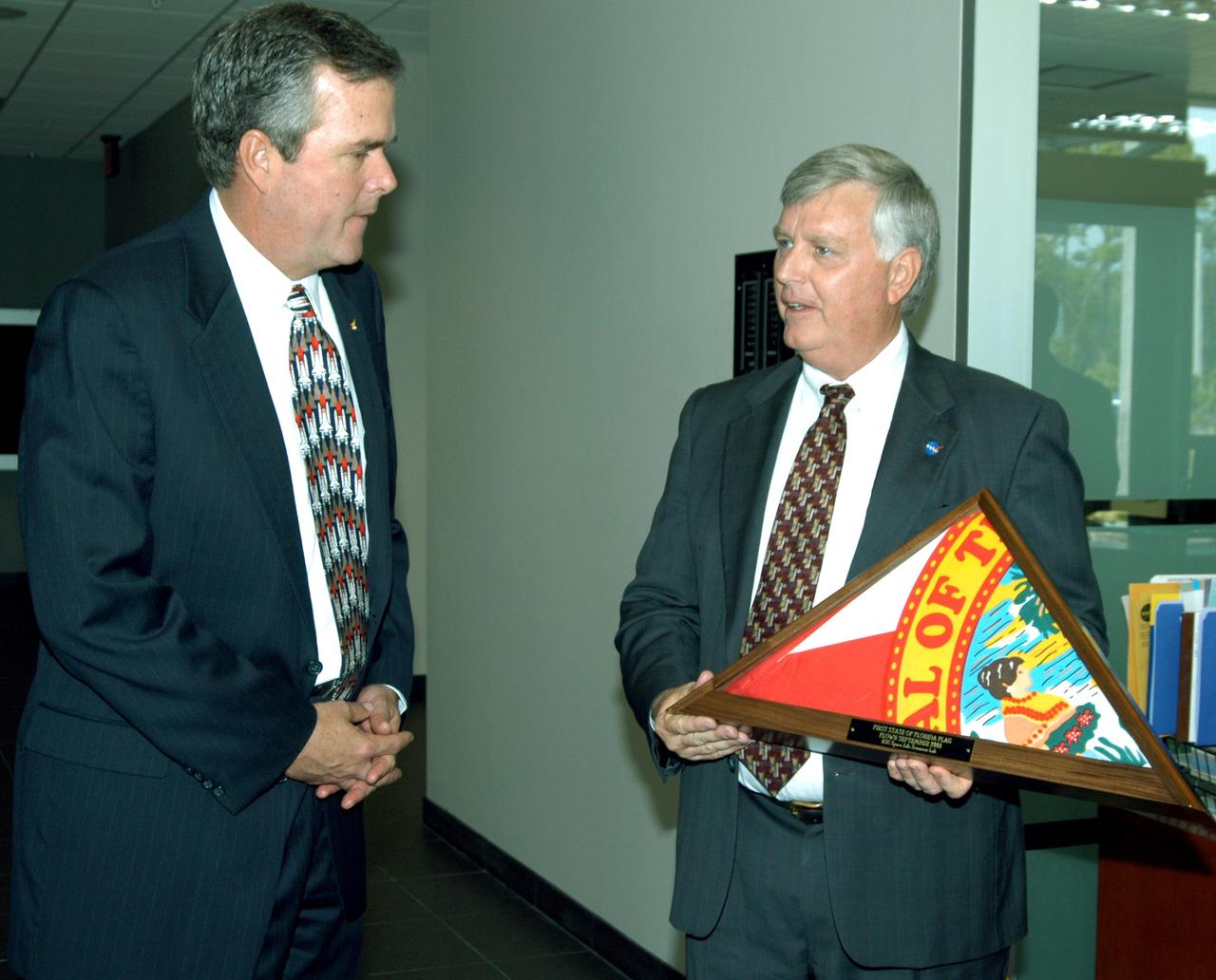
KENNEDY SPACE CENTER, FLA. -- Center Director Jim Kennedy presents a Florida flag to Florida Gov. Jeb Bush.  The flag was flown during construction of the Space Life Sciences Lab through dedication of the Lab. The presentation was during a tour of the Lab following the launching ceremony at the KSC Visitor Complex for the new Florida quarter issued by the U.S. Mint.  The ceremony was emceed by Center Director Jim Kennedy and included remarks by NASA Administrator Sean O’Keefe, Bush, U.S. Mint Director Henrietta Holsman Fore and Deputy Secretary of the Treasury Samuel W. Bodman. The new lab is a state-of-the-art facility built for ISS biotechnology research. It was developed as a partnership between NASA-KSC and the State of Florida.
KSC-04pd0800
Cape Canaveral, Fla. -- Students listen intently as a laboratory technician describes a project that's being researched in Kennedy’s Space Life Sciences Laboratory (SLSL).        High-school students from two Orlando, Fla., schools travelled to NASA’s Kennedy Space Center in Florida to participate in National Lab Day activities. During the event, about 80 students, toured various facilities and engaged in educational hands-on activities. National Lab Day is a partnership between federal agencies, foundations, professional societies and organizations devoted to promoting science, technology, engineering and math, or STEM, hands-on discovery-based laboratory experiences for students. Photo Credit: NASA/Frankie Martin
KSC-2011-3472
NASA Deputy Administrator James Morhard, center right, and President of the Brazilian Space Agency (AEB) Carlos Augusto Teixeira de Moura, center left, prepare to sign an agreement for cooperation on the Scintillation Prediction Observations Research Task (SPORT), an upcoming NASA-AEB heliophysics CubeSat partnership, Monday, March 18, 2019, at the U.S. Chamber of Commerce in Washington. The SPORT CubeSat will investigate two ionospheric phenomena, equatorial plasma bubbles and scintillation, that disrupt radio communication systems, satellite technologies, and Global Positioning System (GPS) signals.  SPORT is currently projected to launch in the 2020 timeframe. Photo Credit: (NASA/ Aubrey Gemignani)
NASA Deputy Administrator Signs Agreement with Brazil for SPORT
CAPE CANAVERAL, Fla. – At NASA’s Kennedy Space Center in Florida, Robert Lightfoot, NASA associate director, learns about the Regolith Advanced Surface Systems Operations Robot, or RASSOR, Excavator during a tour of the Swamp Works laboratories.    Kennedy’s Swamp Works provides rapid, innovative and cost-effective exploration mission solutions, leveraging partnerships across NASA, industry and academia. Kennedy’s research and technology mission is to improve spaceports on Earth, as well as lay the groundwork for establishing spaceports at destinations in space. For more information, visit http:__www.nasa.gov_centers_kennedy_exploration_researchtech_index.html. Photo credit: NASA_Jim Grossmann
KSC-2013-2570
Robert Wilson of the Solar/Solar terrestrial Studies team at the National Space Science and Technology Center, a joint research and collaborative think tank partnership of the University of Alabama in Huntsville (UAH) and the Marshall Space Flight Center, adjusts his telescope which is set up as a viewing opportunity for MSFC employees prior to the August 21, 2017 solar eclipse event. The Huntsville area experienced 97 percent occultation, nearly a complete blocking out of the sun by the orbit of Earth's moon. The next opportunity to view a solar eclipse in the eastern and central United States will occur in April 2024.
2017 Solar Eclipse Event
Dr. Lesley Ott, research meteorologist and climate scientist at NASA’s Goddard Space Flight Center, left, briefs Vice President Kamala Harris, center, President Yoon Suk Yeol of the Republic of Korea, second from right, and NASA Deputy Administrator Pam Melroy, second from left, on U.S. and Korean partnerships to improve the way scientists observe air quality and the use of space in addressing the climate crisis, Tuesday, April 25, 2023, during a tour of NASA’s Goddard Space Flight Center in Greenbelt, Md.  Photo Credit: (NASA/Joel Kowsky)
Vice President Harris and President Yoon at GSFC
ProVision Technologies, a NASA research partnership center at Sternis Space Center in Mississippi, has developed a new hyperspectral imaging (HSI) system that is much smaller than the original large units used aboard remote sensing aircraft and satellites. The new apparatus is about the size of a breadbox. Health-related applications of HSI include scanning chickens during processing to help prevent contaminated food from getting to the table. ProVision is working with Sanderson Farms of Mississippi and the U.S. Department of Agriculture. ProVision has a record in its spectral library of the unique spectral signature of fecal contamination, so chickens can be scanned and those with a positive reading can be separated. HSI sensors can also determine the quantity of surface contamination. Research in this application is quite advanced, and ProVision is working on a licensing agreement for the technology. The potential for future use of this equipment in food processing and food safety is enormous.
Biotechnology