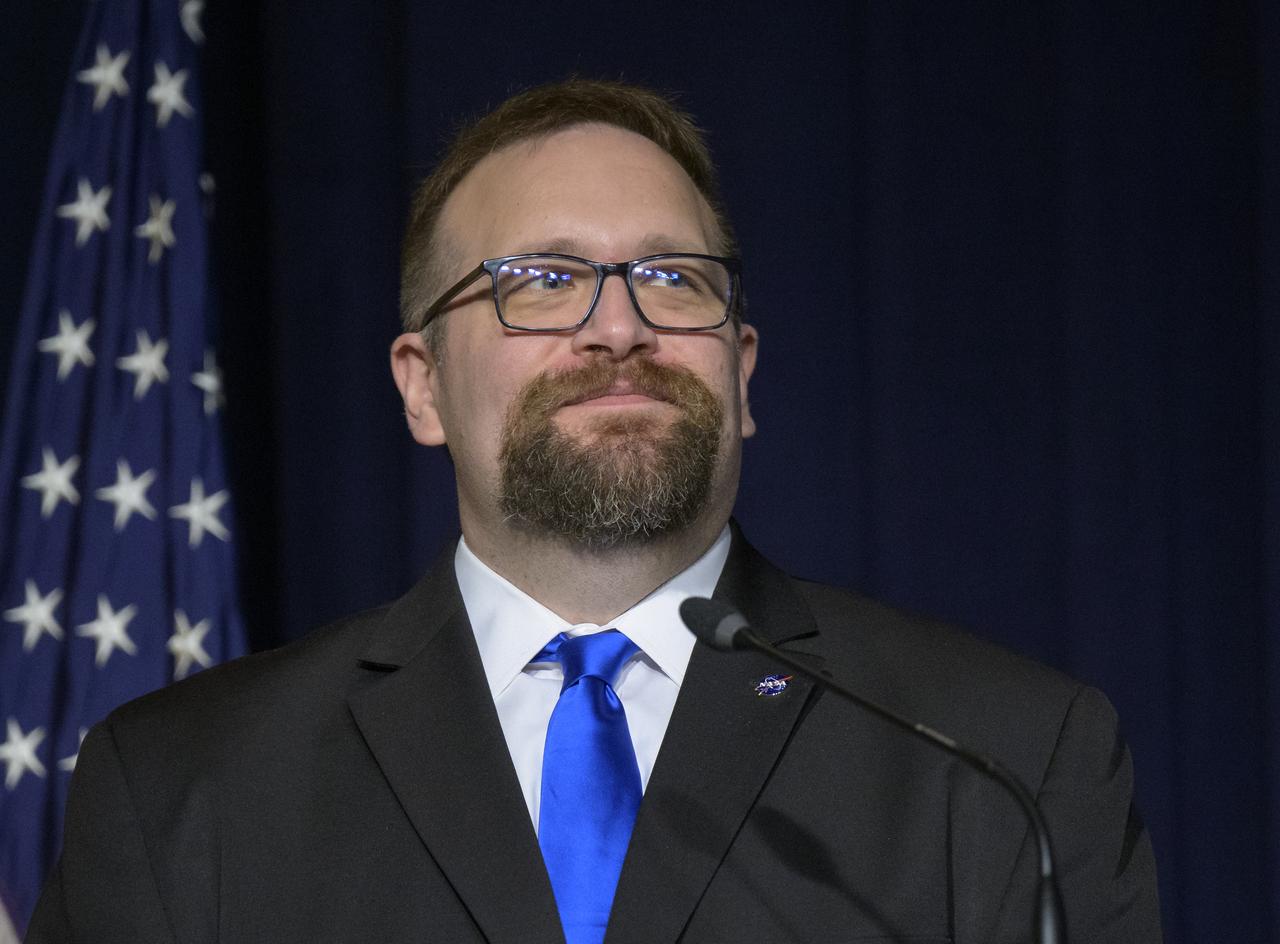
NASA Disaster Response Coordination System Manager Joshua Barnes delivers remarks during an event launching a new Disaster Response Coordination System that will provide communities and organizations around the world with access to science and data to aid disaster response, Thursday, June 13, 2024, at the NASA Headquarters Mary W. Jackson Building in Washington. Photo Credit: (NASA/Bill Ingalls)
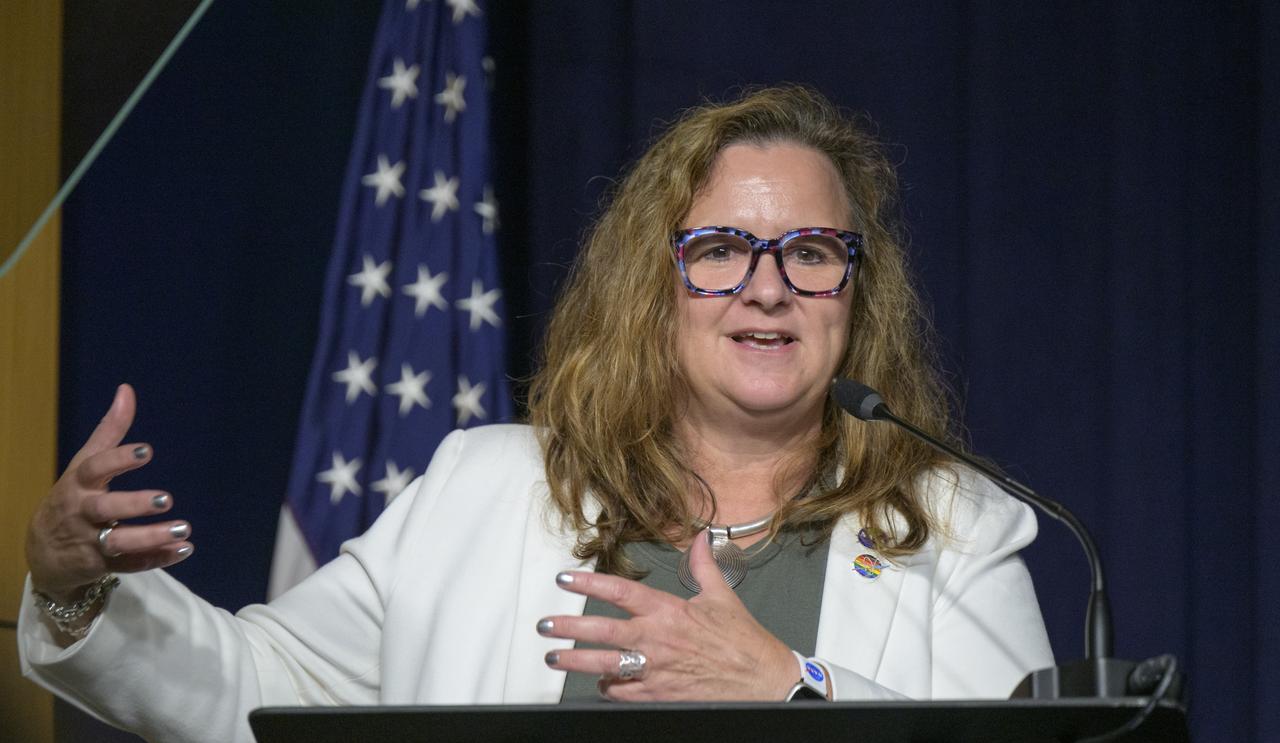
NASA Earth Science Director Karen St. Germain delivers remarks during an event launching a new Disaster Response Coordination System that will provide communities and organizations around the world with access to science and data to aid disaster response, Thursday, June 13, 2024, at the NASA Headquarters Mary W. Jackson Building in Washington. Photo Credit: (NASA/Bill Ingalls)
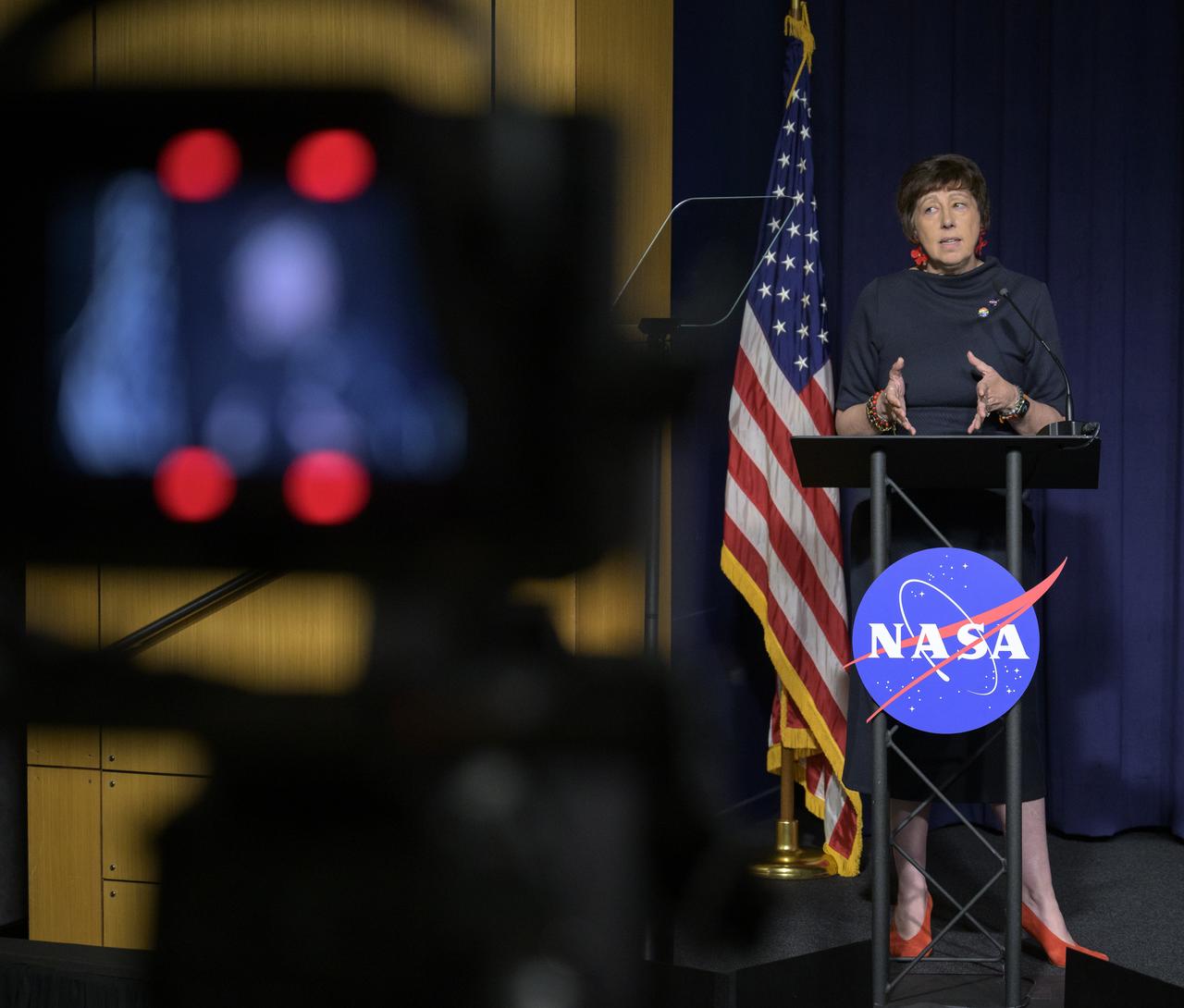
NASA Associate Administrator, Science Mission Directorate, Dr. Nicky Fox delivers remarks during an event launching a new Disaster Response Coordination System that will provide communities and organizations around the world with access to science and data to aid disaster response, Thursday, June 13, 2024, at the NASA Headquarters Mary W. Jackson Building in Washington. Photo Credit: (NASA/Bill Ingalls)
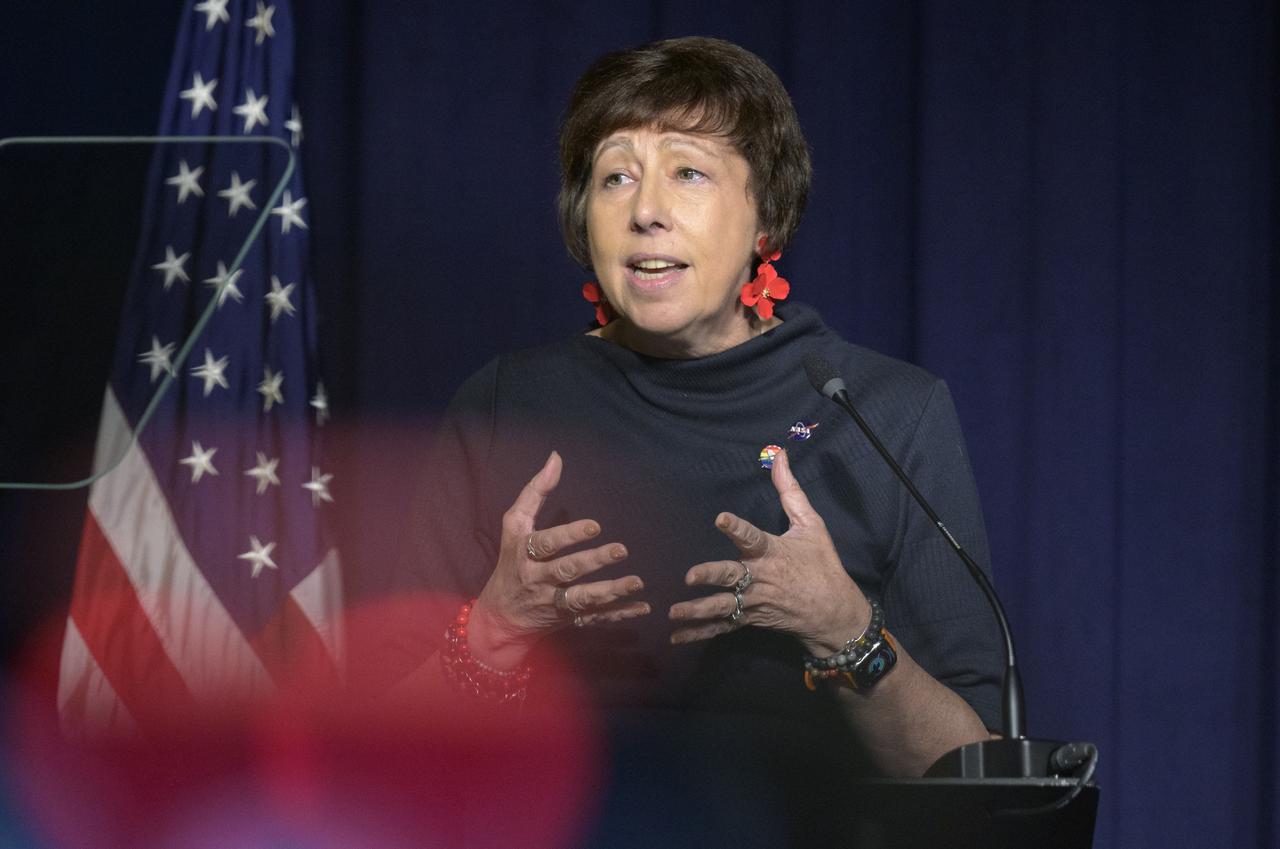
NASA Associate Administrator, Science Mission Directorate, Dr. Nicky Fox delivers remarks during an event launching a new Disaster Response Coordination System that will provide communities and organizations around the world with access to science and data to aid disaster response, Thursday, June 13, 2024, at the NASA Headquarters Mary W. Jackson Building in Washington. Photo Credit: (NASA/Bill Ingalls)
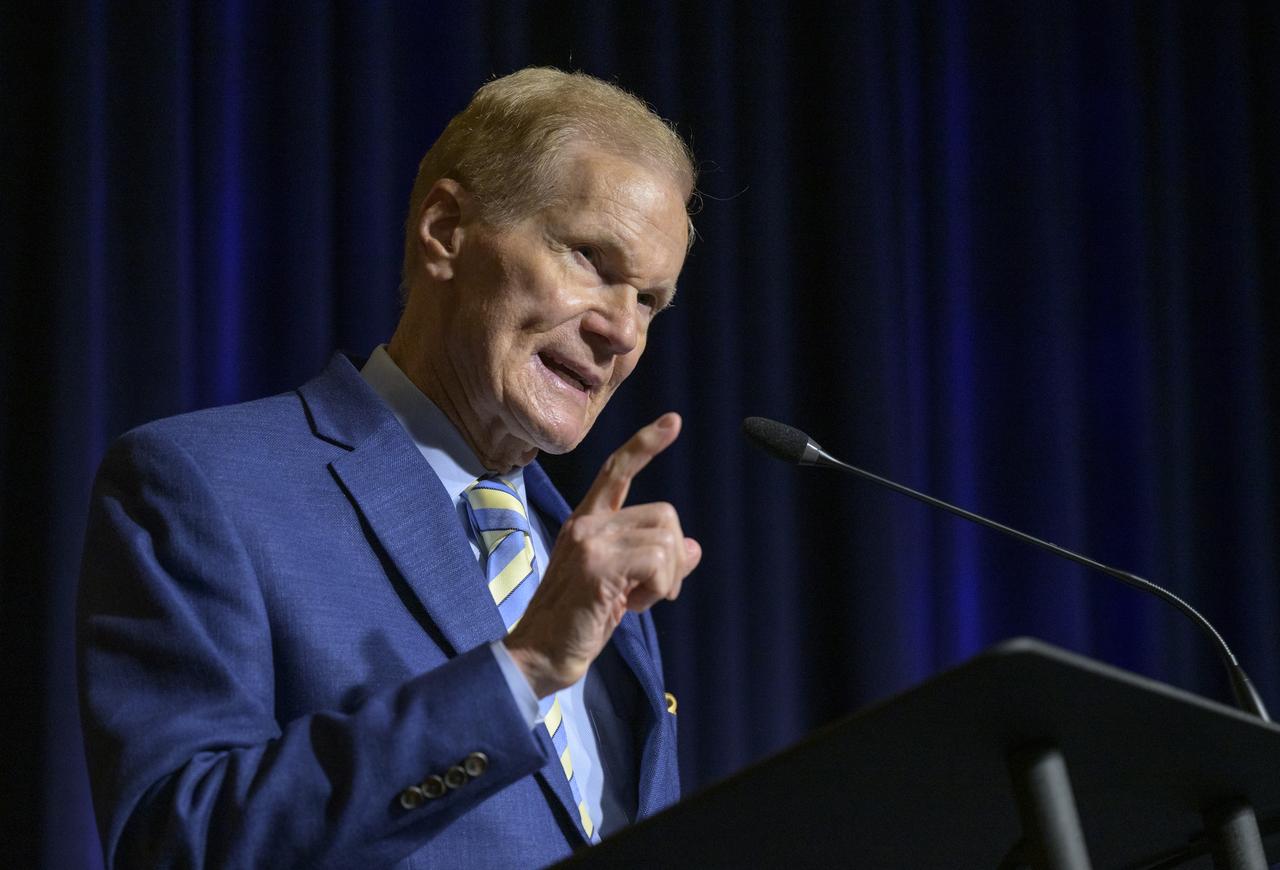
NASA Administrator Bill Nelson delivers remarks during an event launching a new Disaster Response Coordination System that will provide communities and organizations around the world with access to science and data to aid disaster response, Thursday, June 13, 2024, at the NASA Headquarters Mary W. Jackson Building in Washington. Photo Credit: (NASA/Bill Ingalls)

NASA Langley Research Center Director Clayton Turner delivers remarks during an event launching a new Disaster Response Coordination System that will provide communities and organizations around the world with access to science and data to aid disaster response, Thursday, June 13, 2024, at the NASA Headquarters Mary W. Jackson Building in Washington. Photo Credit: (NASA/Bill Ingalls)
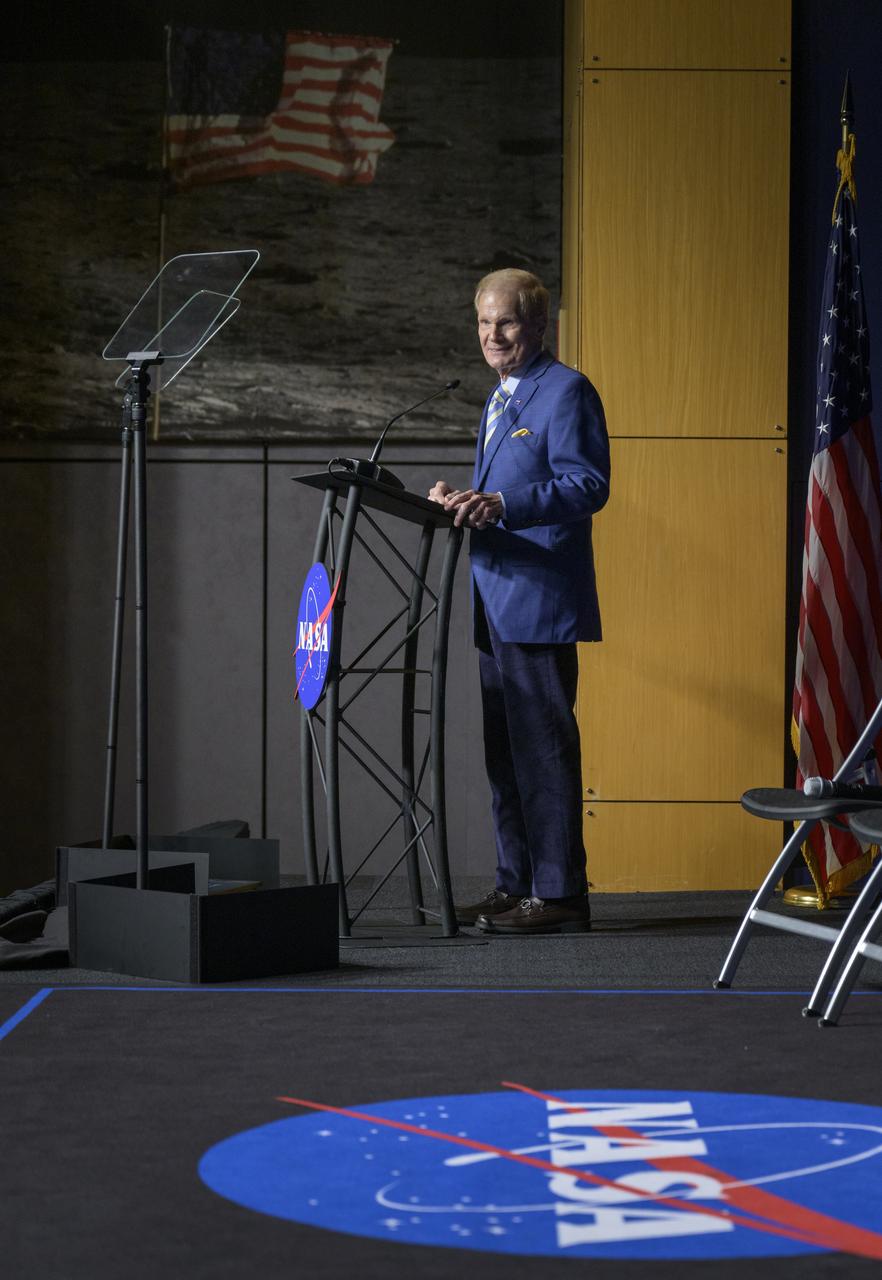
NASA Administrator Bill Nelson delivers remarks during an event launching a new Disaster Response Coordination System that will provide communities and organizations around the world with access to science and data to aid disaster response, Thursday, June 13, 2024, at the NASA Headquarters Mary W. Jackson Building in Washington. Photo Credit: (NASA/Bill Ingalls)
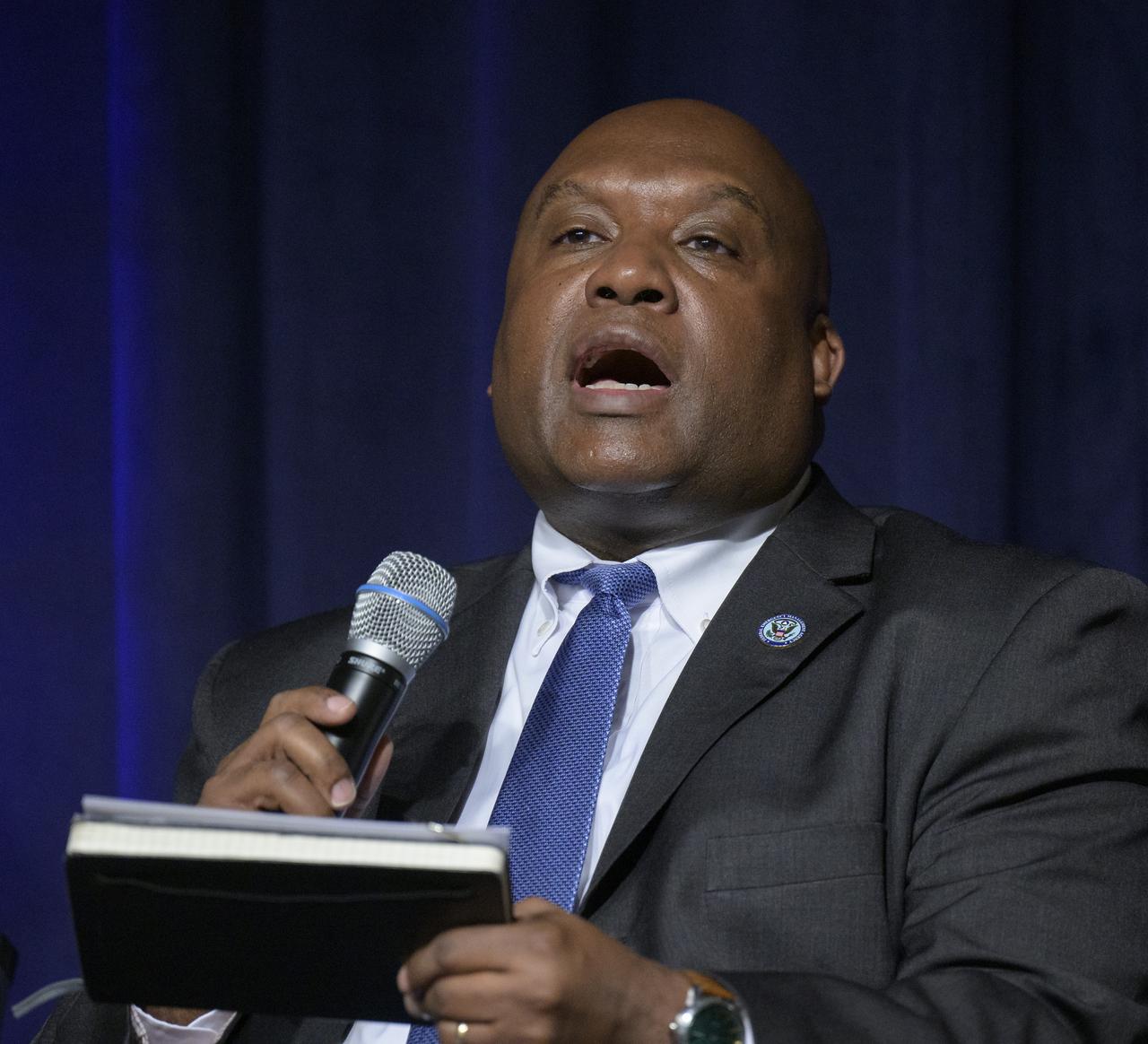
Federal Emergency Management Agency Deputy Administrator Erik Hooks delivers remarks during an event launching a new Disaster Response Coordination System that will provide communities and organizations around the world with access to science and data to aid disaster response, Thursday, June 13, 2024, at the NASA Headquarters Mary W. Jackson Building in Washington. Photo Credit: (NASA/Bill Ingalls)
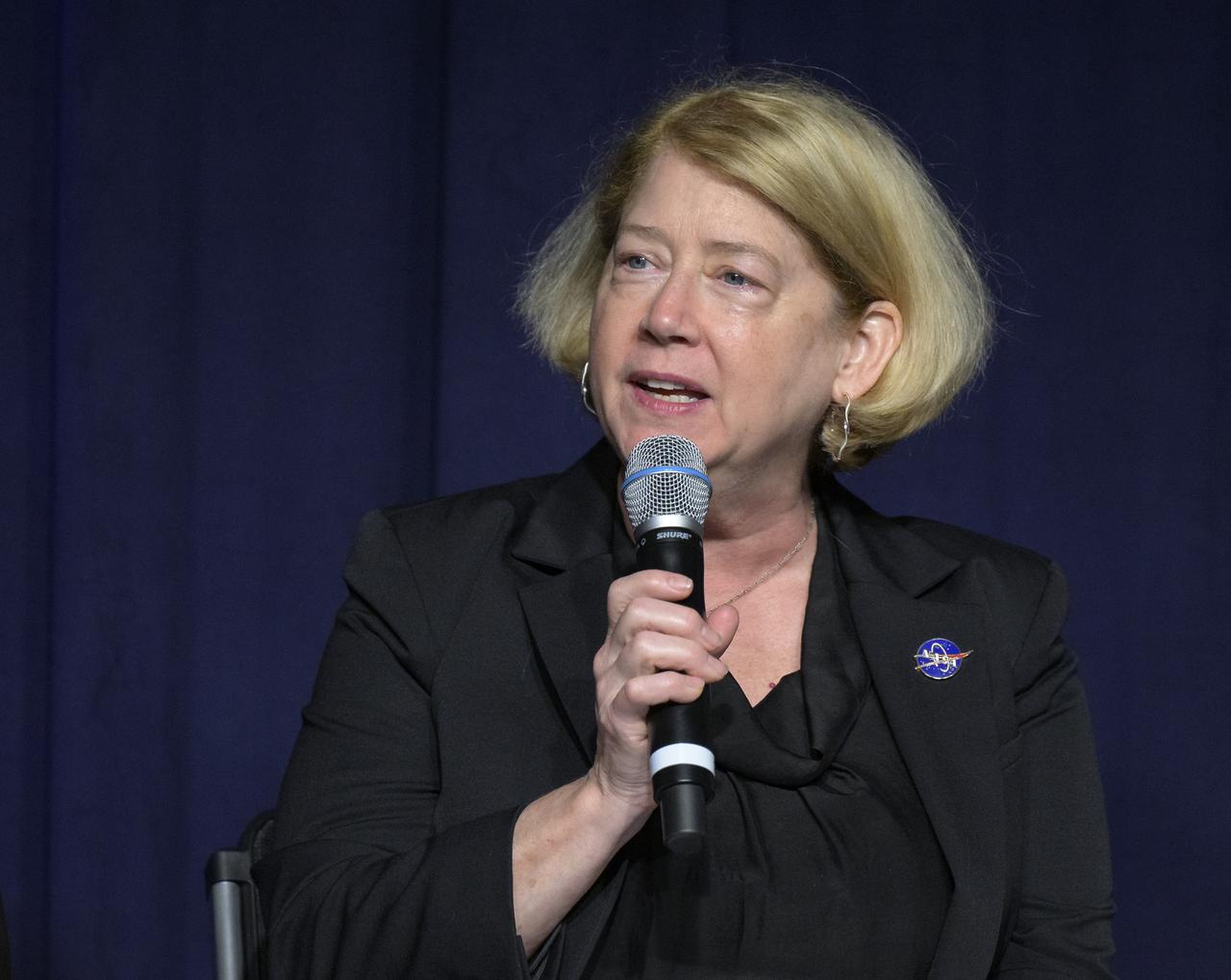
NASA Deputy Administrator Pam Melroy delivers remarks during an event launching a new Disaster Response Coordination System that will provide communities and organizations around the world with access to science and data to aid disaster response, Thursday, June 13, 2024, at the NASA Headquarters Mary W. Jackson Building in Washington. Photo Credit: (NASA/Bill Ingalls)

U.S. Geological Survey Associate Director of Natural Hazards Mission Area Michael Grimm delivers remarks during an event launching a new Disaster Response Coordination System that will provide communities and organizations around the world with access to science and data to aid disaster response, Thursday, June 13, 2024, at the NASA Headquarters Mary W. Jackson Building in Washington. Photo Credit: (NASA/Bill Ingalls)
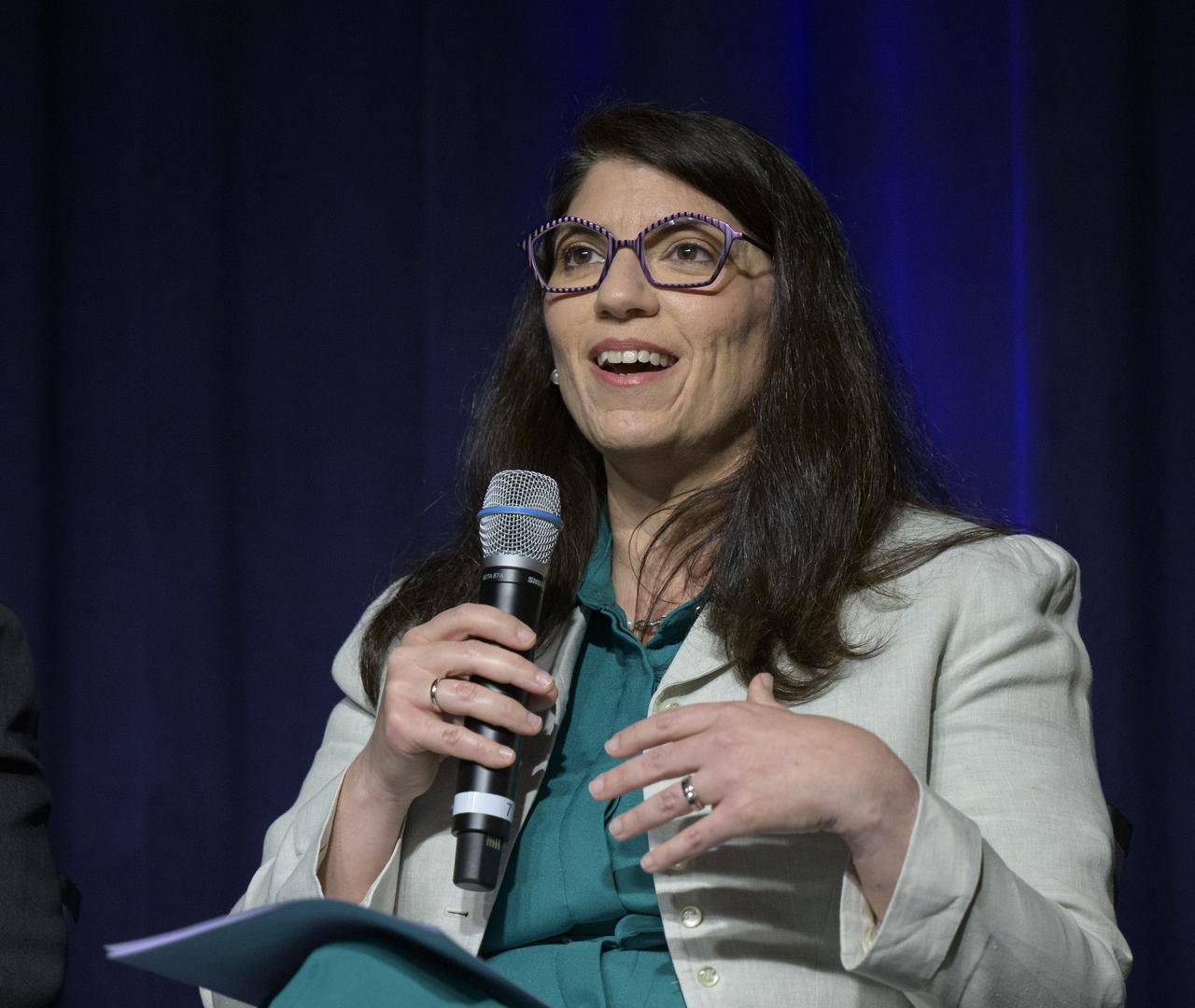
National Institute of Standards and Technology Senior Scientist Judith Mitrani-Reiser delivers remarks during an event launching a new Disaster Response Coordination System that will provide communities and organizations around the world with access to science and data to aid disaster response, Thursday, June 13, 2024, at the NASA Headquarters Mary W. Jackson Building in Washington. Photo Credit: (NASA/Bill Ingalls)
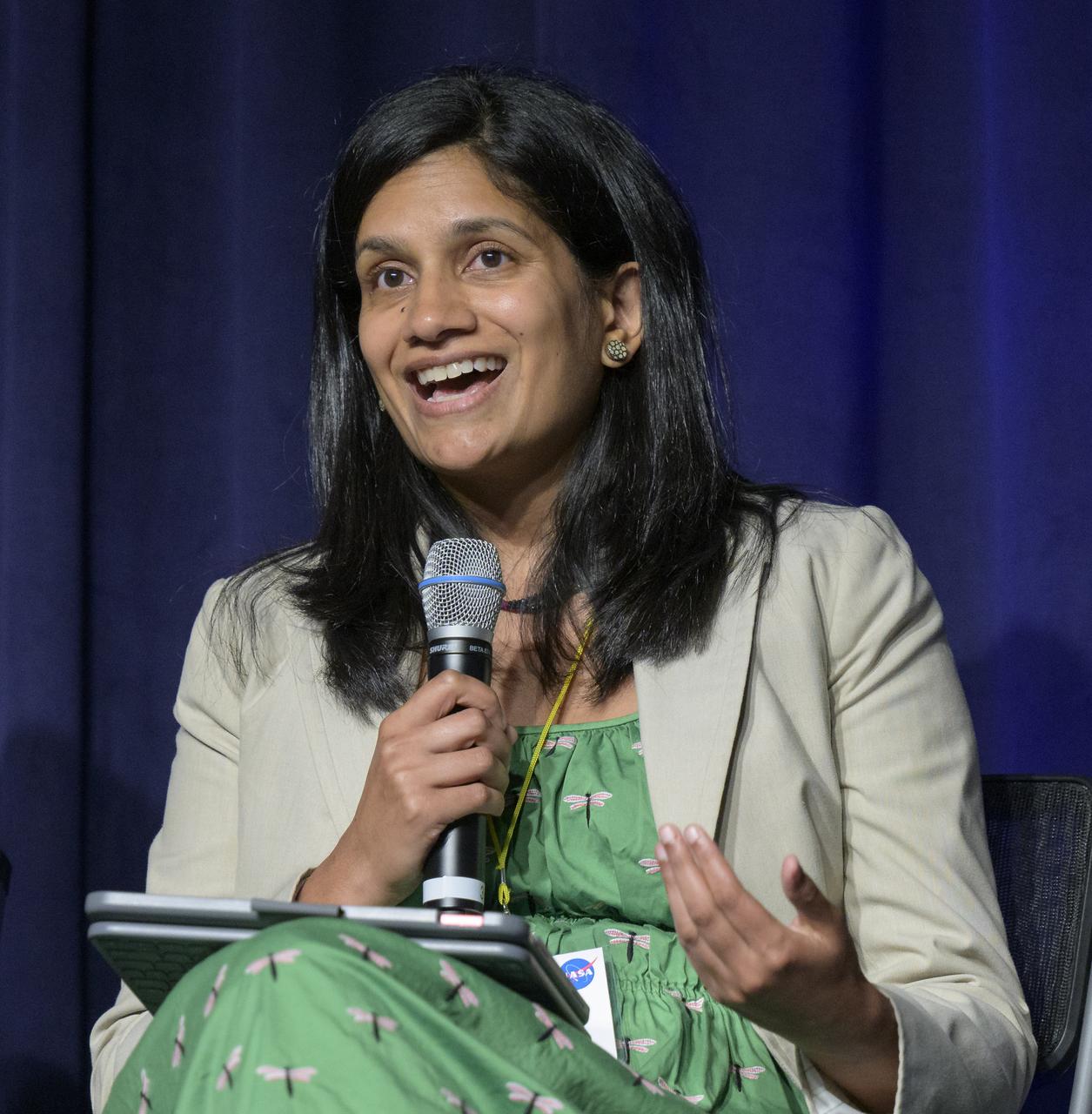
National Oceanic and Atmospheric Administration Deputy Administrator Jainey Bavishi delivers remarks during an event launching a new Disaster Response Coordination System that will provide communities and organizations around the world with access to science and data to aid disaster response, Thursday, June 13, 2024, at the NASA Headquarters Mary W. Jackson Building in Washington. Photo Credit: (NASA/Bill Ingalls)
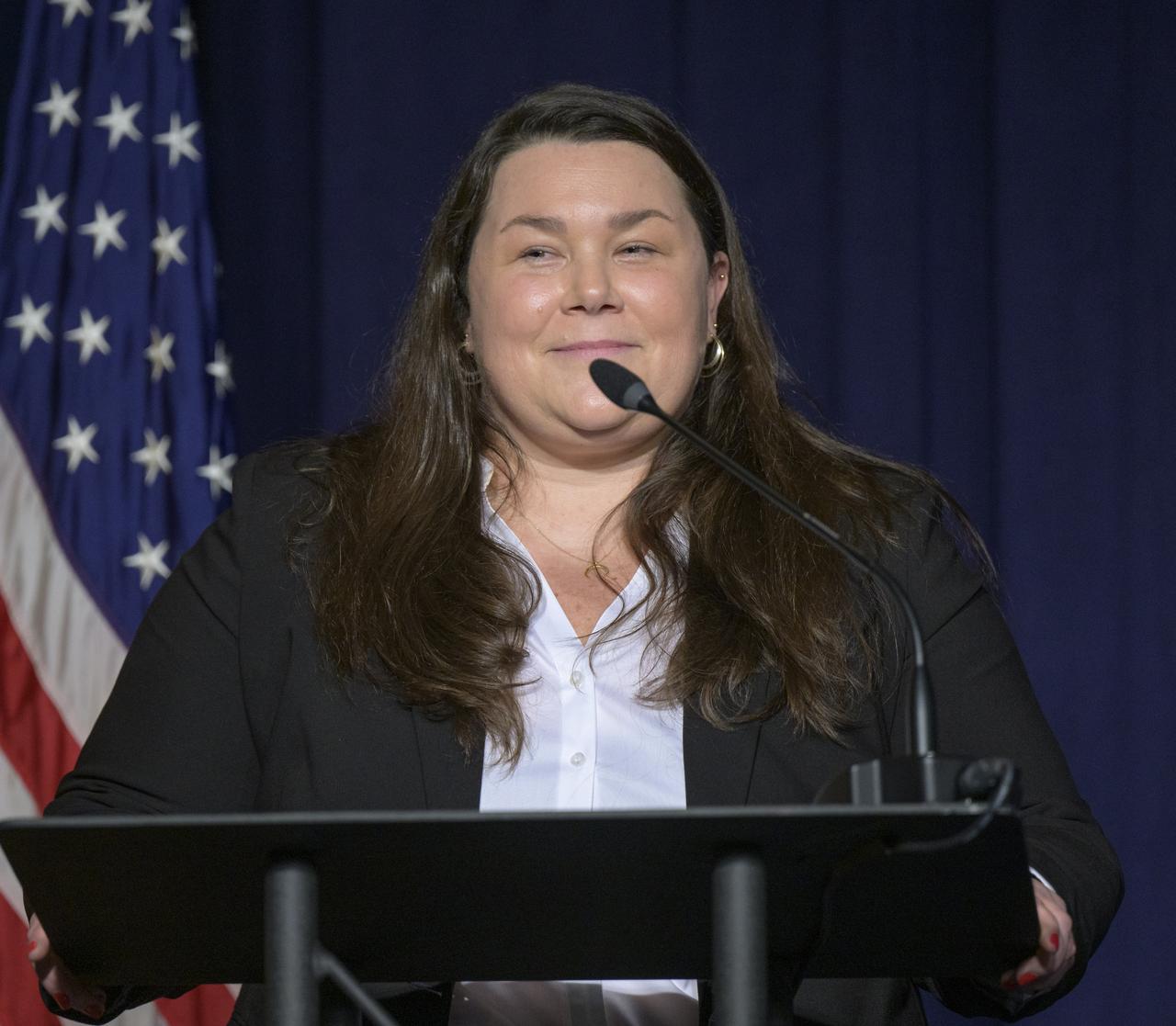
NASA Disasters Program Manager Shanna McClain delivers remarks during an event launching a new Disaster Response Coordination System that will provide communities and organizations around the world with access to science and data to aid disaster response, Thursday, June 13, 2024, at the NASA Headquarters Mary W. Jackson Building in Washington. Photo Credit: (NASA/Bill Ingalls)

USAID Deputy Assistant to the Administrator for Bureau for Humanitarian Assistance Dianna Darsney de Salcedo delivers remarks during an event launching a new Disaster Response Coordination System that will provide communities and organizations around the world with access to science and data to aid disaster response, Thursday, June 13, 2024, at the NASA Headquarters Mary W. Jackson Building in Washington. Photo Credit: (NASA/Bill Ingalls)
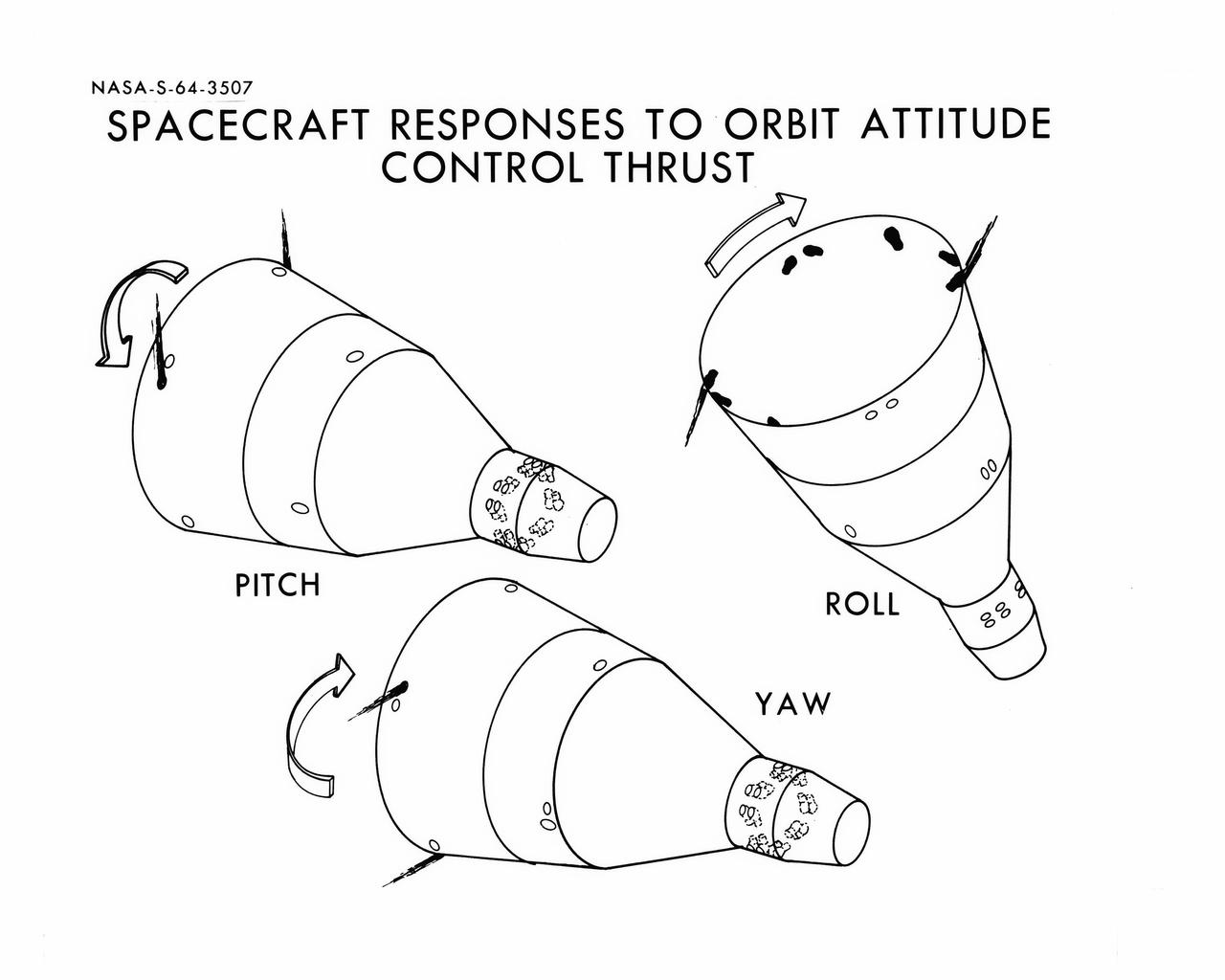
S64-03507 (1964) --- Diagrams shows Gemini spacecraft responses to orbital attitude systems's thrusters. Firing of appropriate combination of the thrusters cause pitch, roll and yaw.
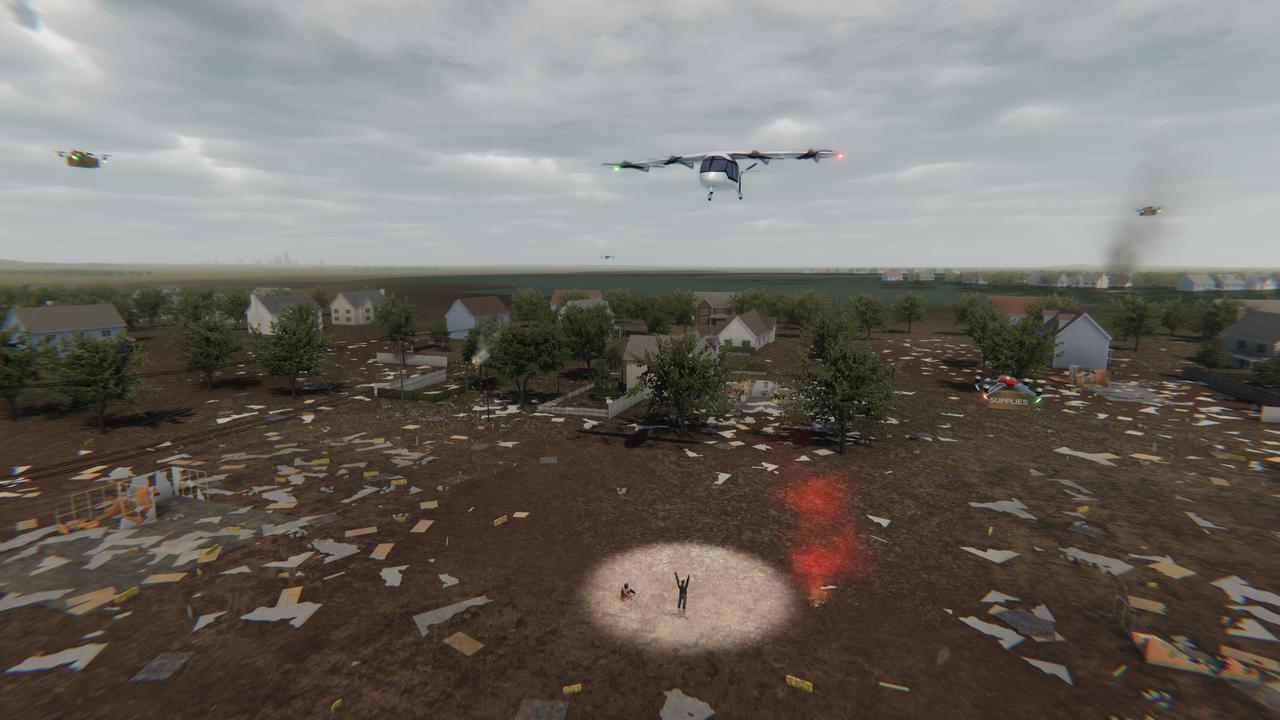
Several projects under NASA's Advanced Air Mobility or AAM mission are working on different elements to help make AAM a reality in emergency operations. This concept graphic shows how a future AAM vehicle could aid in disaster response.

NASA Disasters Program Manager Shanna McClain, left, NASA Deputy Administrator Pam Melroy, National Oceanic and Atmospheric Administration Deputy Administrator Jainey Bavishi, U.S. Geological Survey Associate Director of Natural Hazards Mission Area Michael Grimm, USAID Deputy Assistant to the Administrator for Bureau for Humanitarian Assistance Dianna Darsney de Salcedo, Federal Emergency Management Agency Deputy Administrator Erik Hooks, and National Institute of Standards and Technology Senior Scientist Judith Mitrani-Reiser, right, participate in event launching a new Disaster Response Coordination System that will provide communities and organizations around the world with access to science and data to aid disaster response, Thursday, June 13, 2024, at the NASA Headquarters Mary W. Jackson Building in Washington. Photo Credit: (NASA/Bill Ingalls)

NASA Disasters Program Manager Shanna McClain, left, NASA Deputy Administrator Pam Melroy, National Oceanic and Atmospheric Administration Deputy Administrator Jainey Bavishi, U.S. Geological Survey Associate Director of Natural Hazards Mission Area Michael Grimm, USAID Deputy Assistant to the Administrator for Bureau for Humanitarian Assistance Dianna Darsney de Salcedo, Federal Emergency Management Agency Deputy Administrator Erik Hooks, and National Institute of Standards and Technology Senior Scientist Judith Mitrani-Reiser, right, participate in event launching a new Disaster Response Coordination System that will provide communities and organizations around the world with access to science and data to aid disaster response, Thursday, June 13, 2024, at the NASA Headquarters Mary W. Jackson Building in Washington. Photo Credit: (NASA/Bill Ingalls)

NASA Disasters Program Manager Shanna McClain, left, NASA Deputy Administrator Pam Melroy, National Oceanic and Atmospheric Administration Deputy Administrator Jainey Bavishi, U.S. Geological Survey Associate Director of Natural Hazards Mission Area Michael Grimm, USAID Deputy Assistant to the Administrator for Bureau for Humanitarian Assistance Dianna Darsney de Salcedo, Federal Emergency Management Agency Deputy Administrator Erik Hooks, and National Institute of Standards and Technology Senior Scientist Judith Mitrani-Reiser, right, participate in event launching a new Disaster Response Coordination System that will provide communities and organizations around the world with access to science and data to aid disaster response, Thursday, June 13, 2024, at the NASA Headquarters Mary W. Jackson Building in Washington. Photo Credit: (NASA/Bill Ingalls)

NASA data and expertise are providing valuable information for the ongoing response to the April 25, 2015, magnitude 7.8 Gorkha earthquake in Nepal.
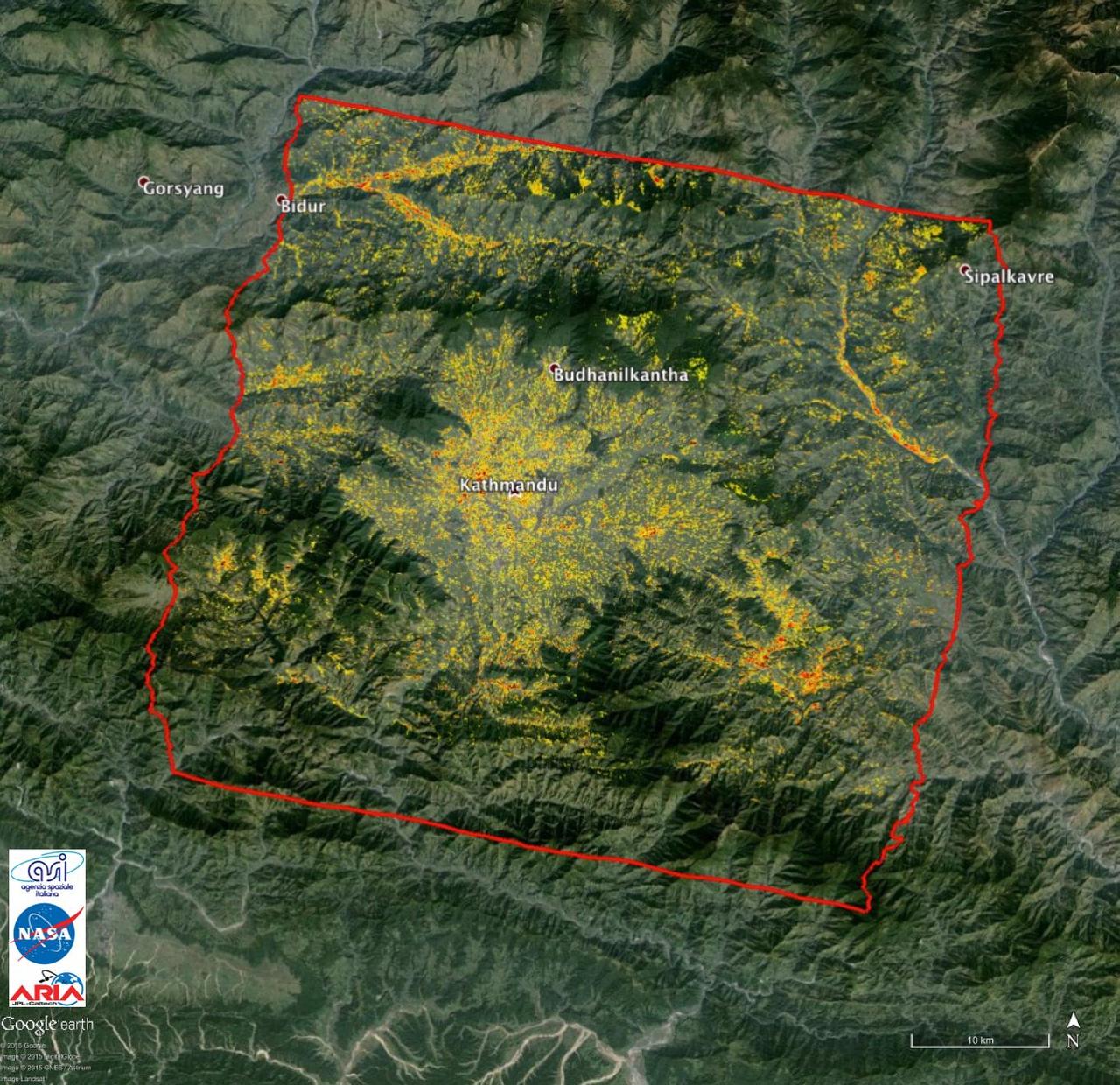
NASA data and expertise are providing valuable information for the ongoing response to the April 25, 2015, magnitude 7.8 Gorkha earthquake in Nepal.
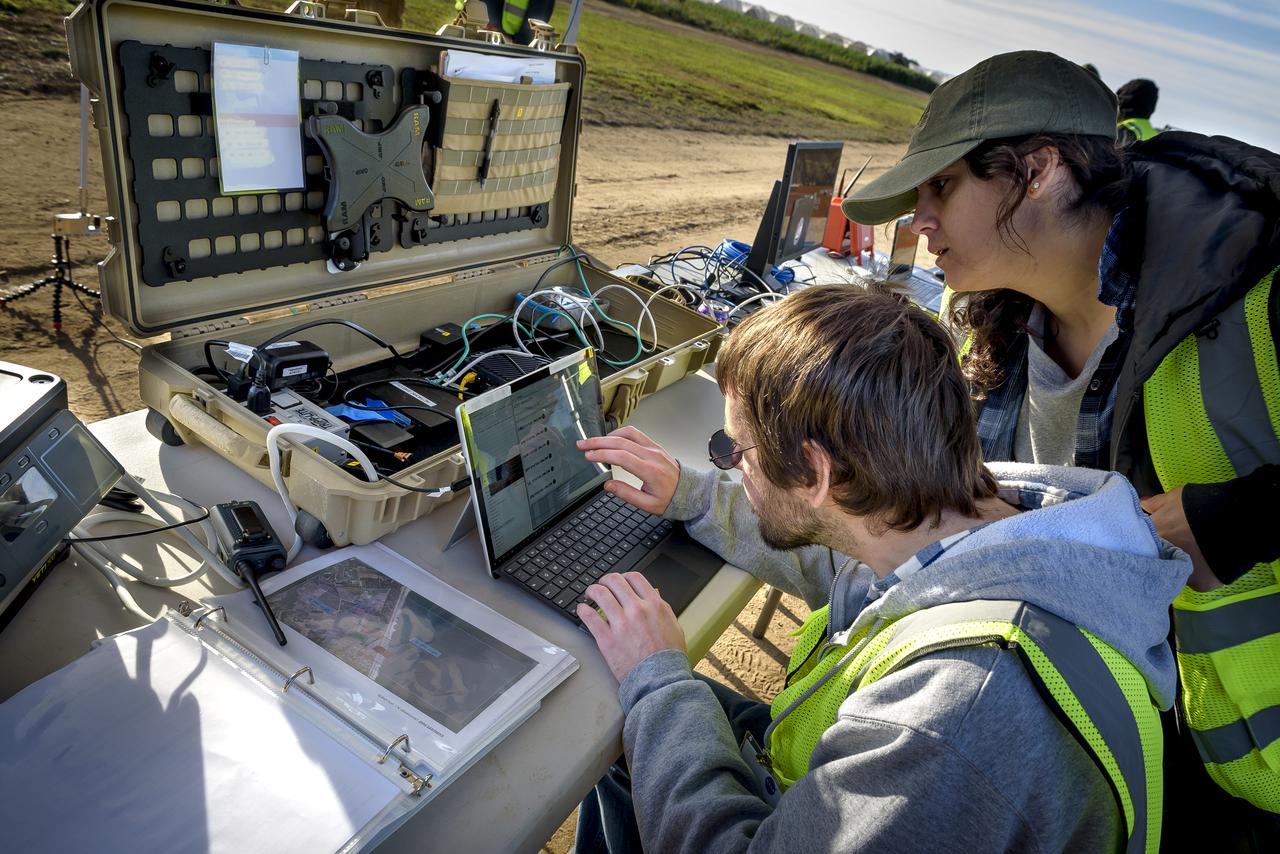
Joshua Kaurich, front, and Yasmin Arbab, works with the Advanced Capabilities for Emergency Response Operations (ACERO) Portable Airspace Management System (PAMS) case at the Monterey Bay Academy Airport near Watsonville, California.
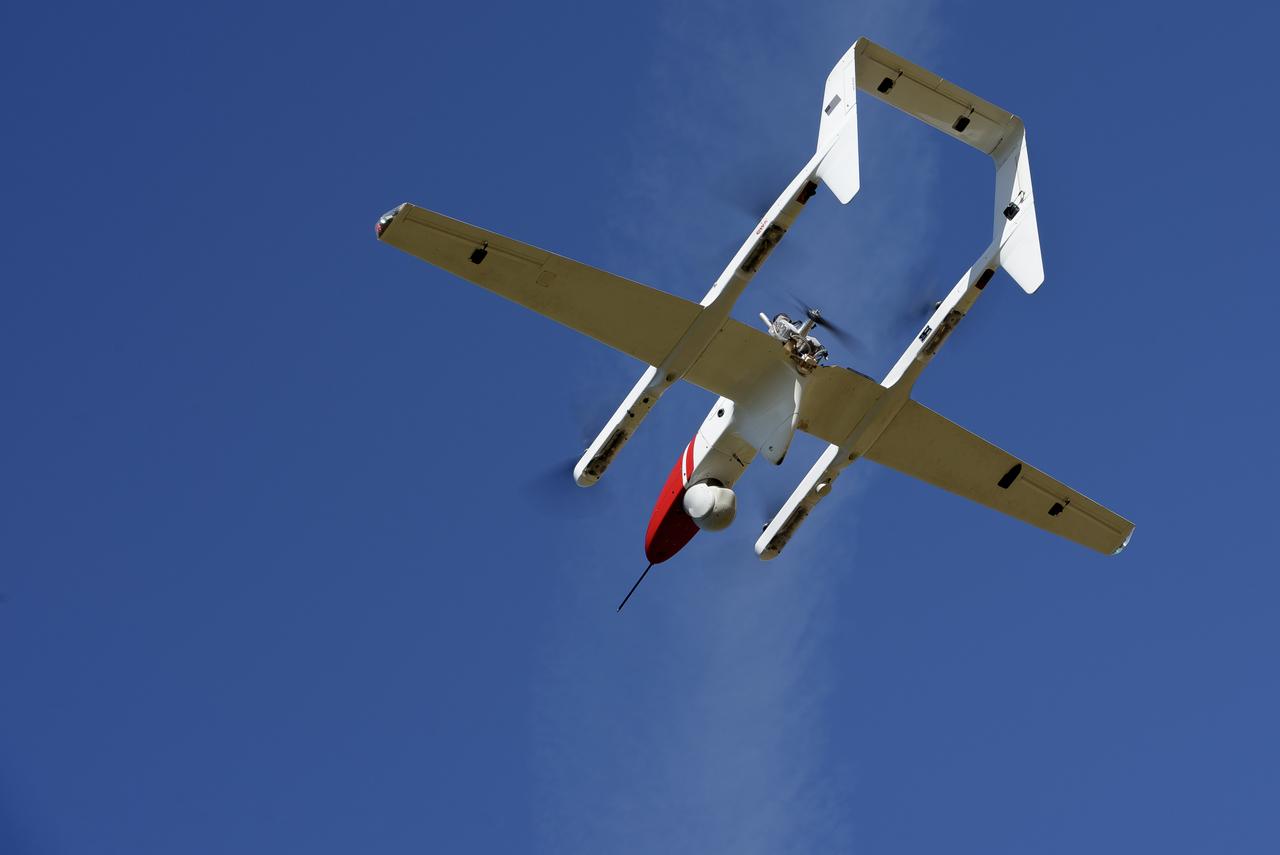
L3Harris FVR90 Unmanned Aerial Vehicle (UAV) lifts off from the Monterey Bay Academy Airport near Watsonville, California, during the Advanced Capabilities for Emergency Response Operations (ACERO) Shakedown Test.

The NASA Langley Alta-X Unmanned Aerial Vehicle (UAV) lifts off with a weather payload from the Monterey Bay Academy Airport near Watsonville, California, during the Advanced Capabilities for Emergency Response Operations (ACERO) Shakedown Test.
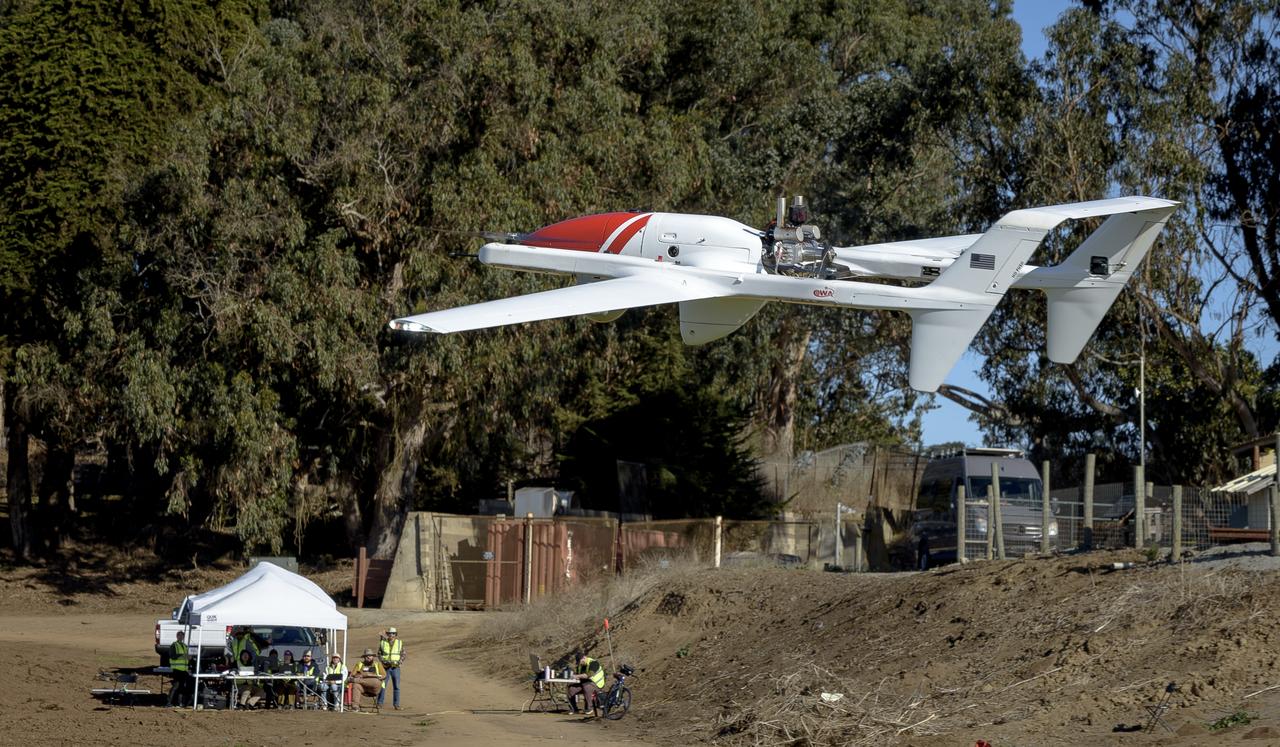
L3Harris FVR90 Unmanned Aerial Vehicle (UAV) lifts off from the Monterey Bay Academy Airport near Watsonville, California, during the Advanced Capabilities for Emergency Response Operations (ACERO) Shakedown Test as NASA researchers observe in the background.
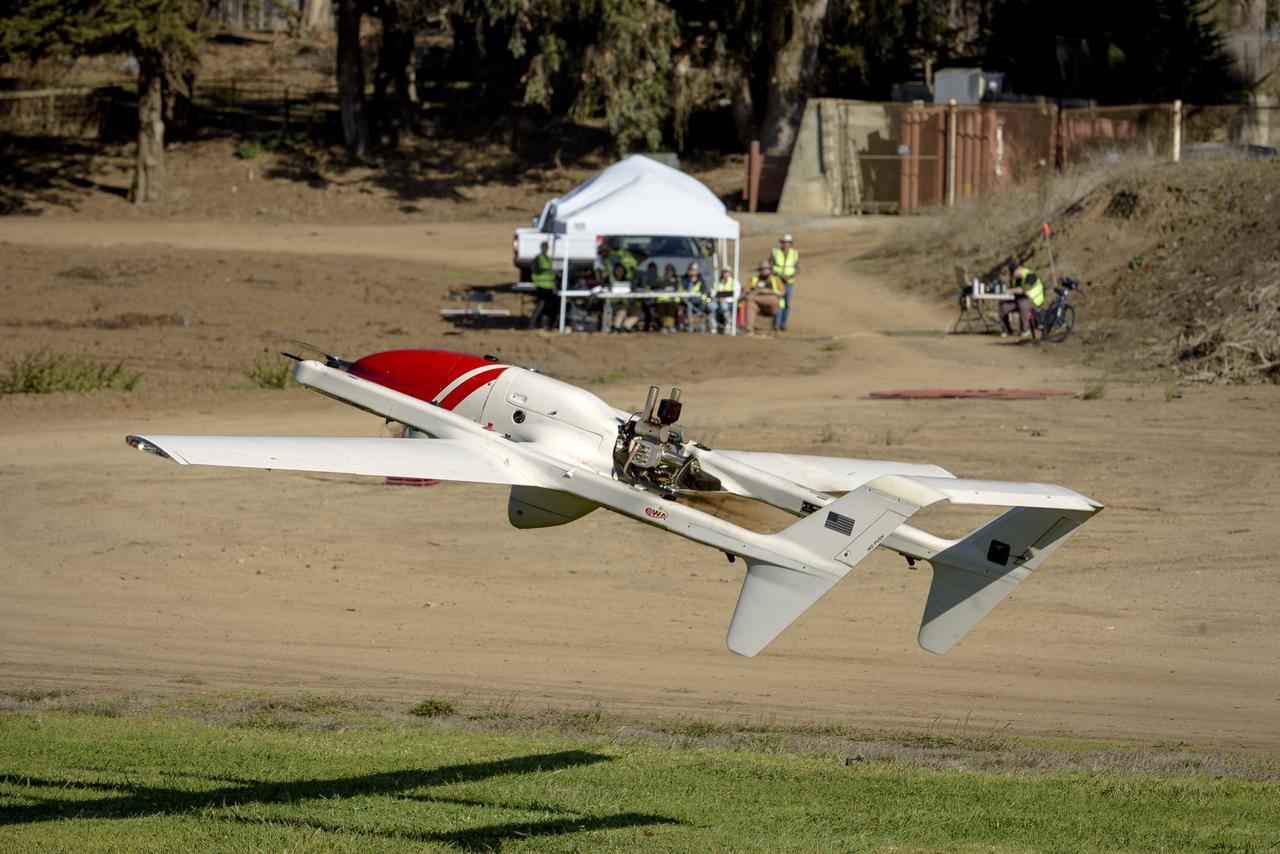
L3Harris FVR90 Unmanned Aerial Vehicle (UAV) lifts off from the Monterey Bay Academy Airport near Watsonville, California, during the Advanced Capabilities for Emergency Response Operations (ACERO) Shakedown Test as NASA researchers observe in the background.
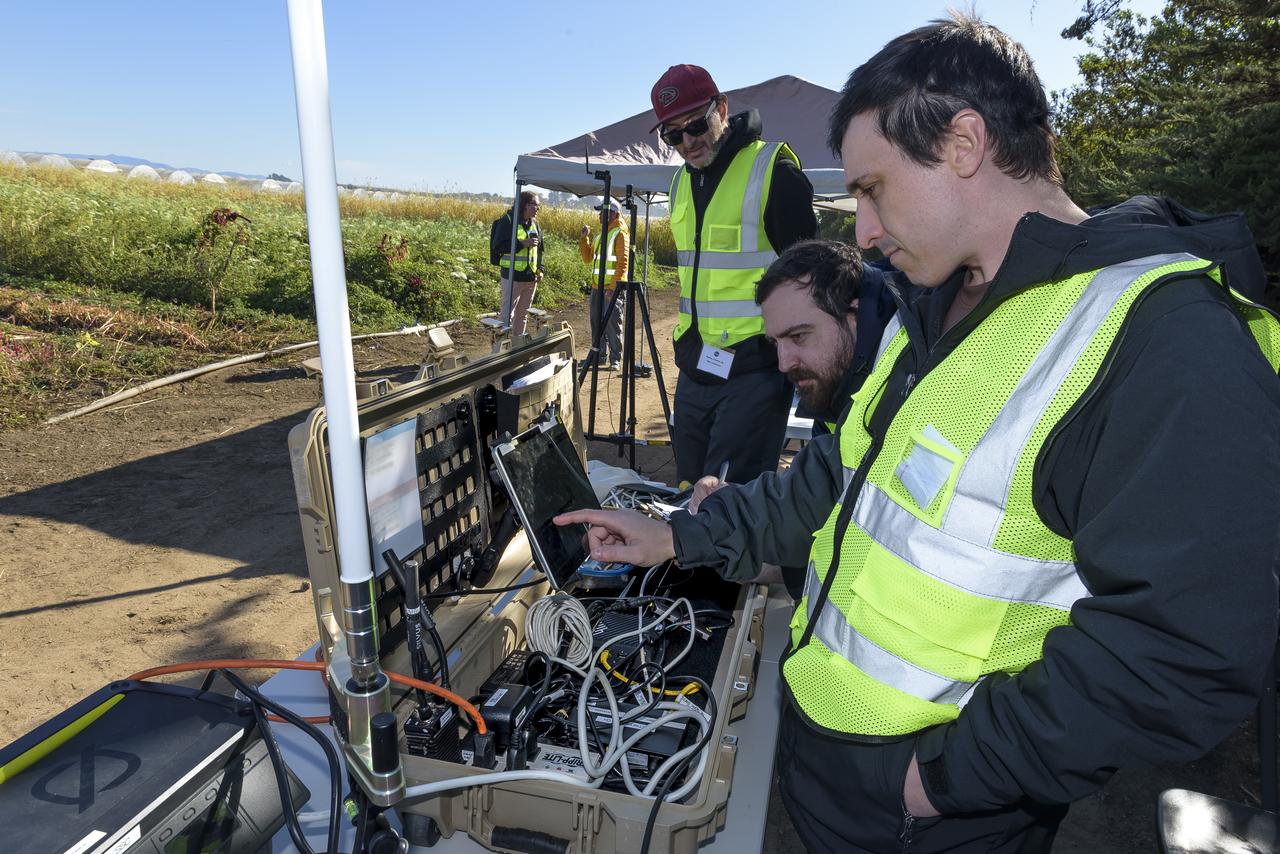
Greg Costedoat, front-right frame, Stefan Blandin, and Charles Walker, left, with the Advanced Capabilities for Emergency Response Operations (ACERO) Portable Airspace Management System (PAMS) case with the equipment stowed at the Monterey Bay Academy Airport near Watsonville, California.
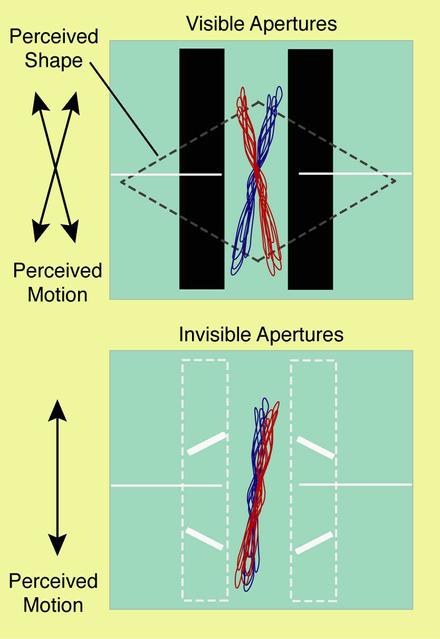
One concern about human adaptation to space is how returning from the microgravity of orbit to Earth can affect an astronaut's ability to fly safely. There are monitors and infrared video cameras to measure eye movements without having to affect the crew member. A computer screen provides moving images which the eye tracks while the brain determines what it is seeing. A video camera records movement of the subject's eyes. Researchers can then correlate perception and response. Test subjects perceive different images when a moving object is covered by a mask that is visible or invisible (above). Early results challenge the accepted theory that smooth pursuit -- the fluid eye movement that humans and primates have -- does not involve the higher brain. NASA results show that: Eye movement can predict human perceptual performance, smooth pursuit and saccadic (quick or ballistic) movement share some signal pathways, and common factors can make both smooth pursuit and visual perception produce errors in motor responses.
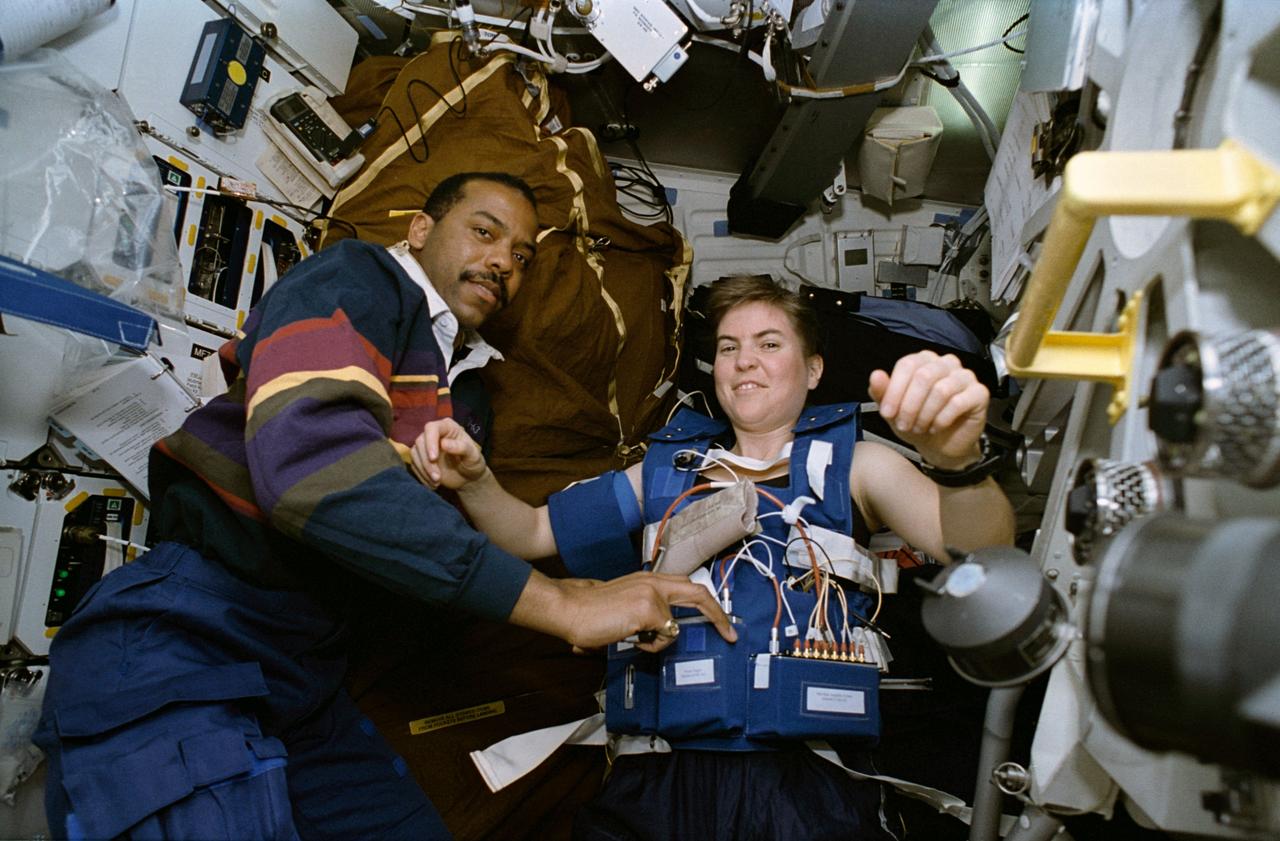
STS063-86-016 (3-11 Feb 1995) --- With astronaut Janice E. Voss, mission specialist, as his test subject, astronaut Bernard A. Harris, Jr., payload commander and a physician, uses a special biomedical harness experiment to check the response of muscles to microgravity. They are on the mid-deck, where many of the SpaceHab 3 experiments are located. The SpaceHab 3 Module is in the cargo bay. Others onboard the Space Shuttle Discovery were astronauts James D. Wetherbee, commander; Eileen M. Collins, pilot; mission specialists C. Michael Foale and Russian cosmonaut Vladimir G. Titov.
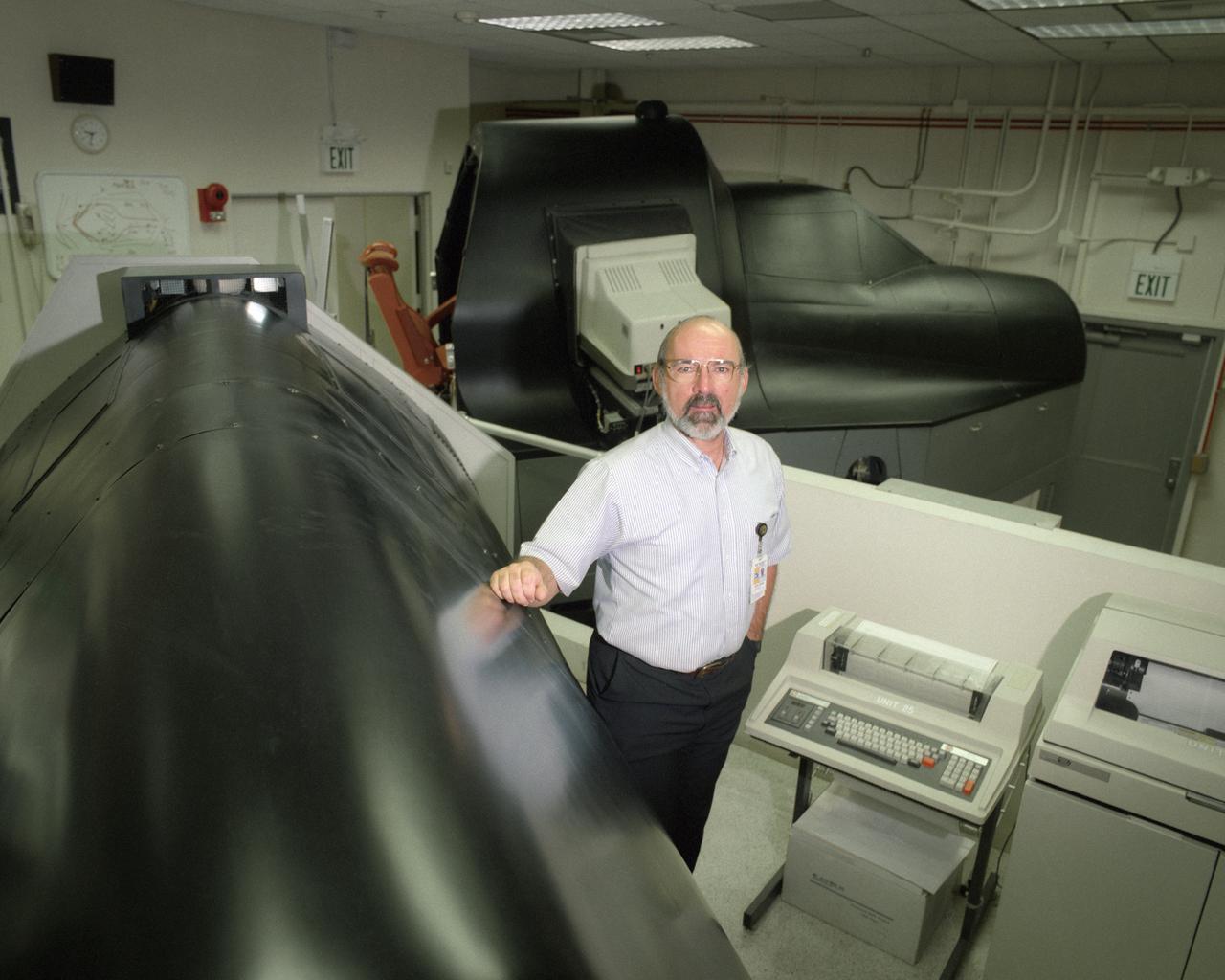
Electronics technician Joe Ciganek was responsible for operation and maintenance of the SR-71 simulator while it was at NASA's Dryden Flight Research Center.
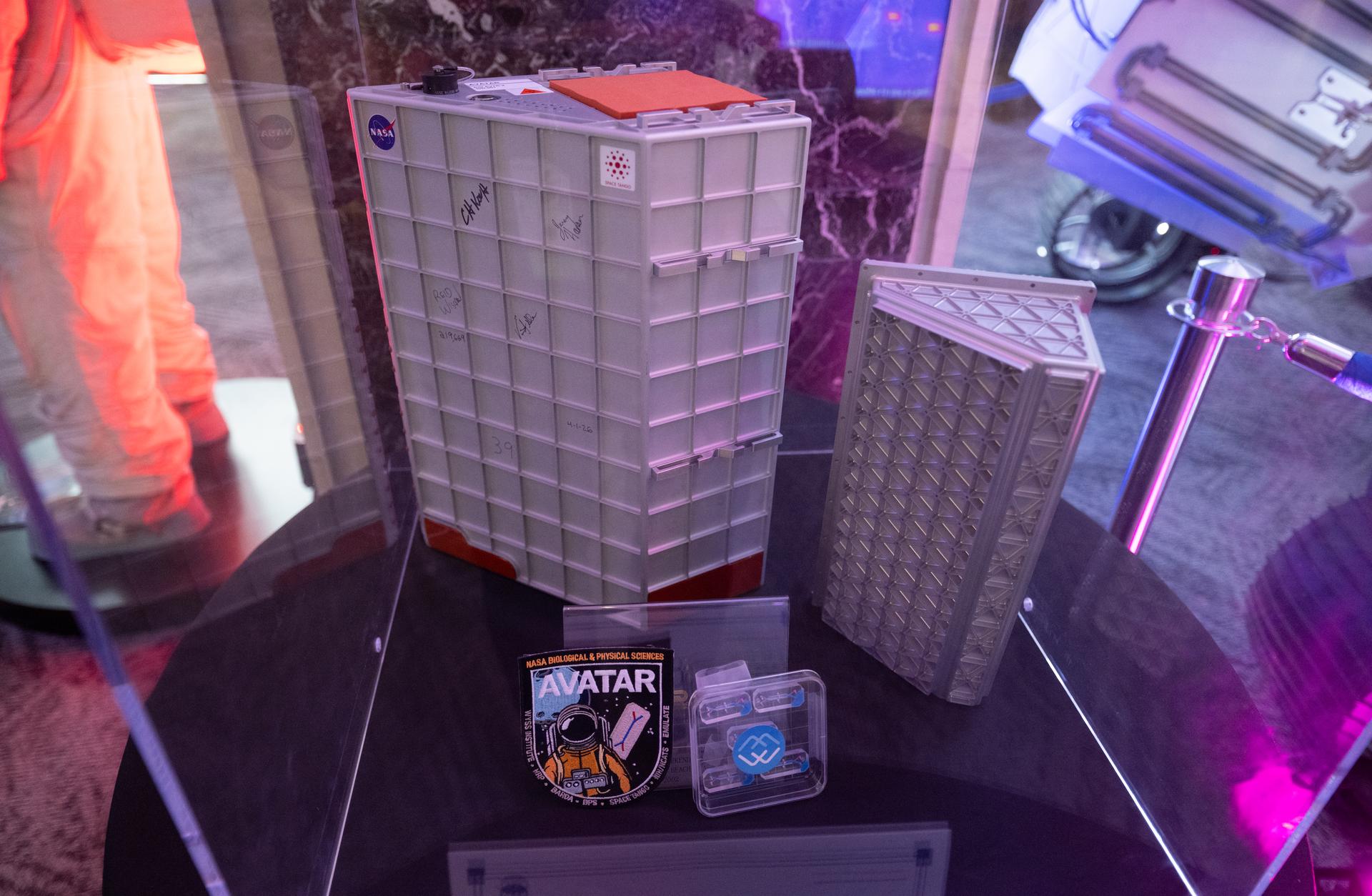
The AVATAR (A Virtual Astronaut Tissue Analog Response) payload the flew on the Artemis II mission is seen in the lobby of the Mary W. Jackson NASA Headquarters building in Washington, Wednesday, Sept. 16, 2026, following a Frontiers Forum talk titled “Revolutionizing Medicine – In Space.” Photo Credit: (NASA/Joel Kowsky)
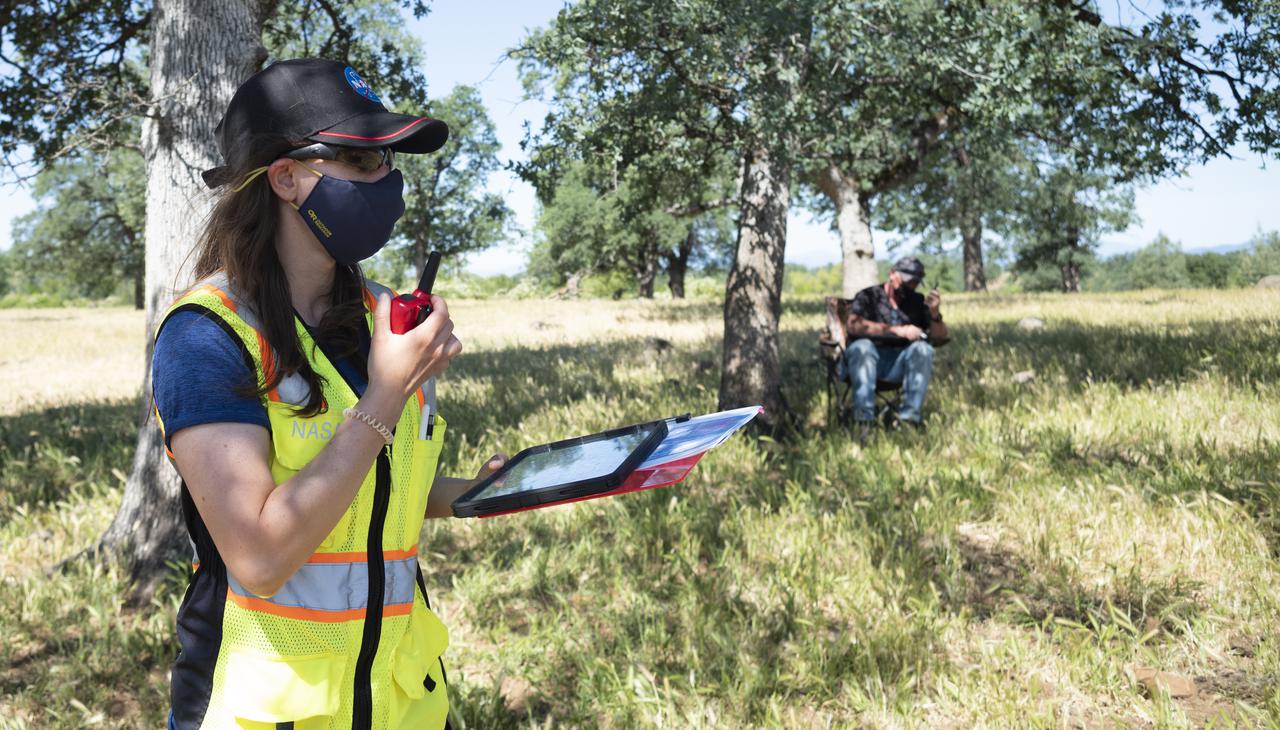
Lauren Claudatos, researcher for STEReO, the Scalable Traffic Management for Emergency Response Operations project, at NASA's Ames Research Center, is seen during simulated drone operations during STEReO field testing, Tuesday, May 4, 2021 as Cal Fire conducts aerial fire fighting training exercises near Redding, California. STEReO, the Scalable Traffic Management for Emergency Response Operations project, led by NASA’s Ames Research Center, builds on NASA’s expertise in air traffic management, human factors research, and autonomous technology development to apply the agency’s work in Unmanned Aircraft Systems Traffic Management, or UTM, to public safety uses. Photo Credit: (NASA/Joel Kowsky)
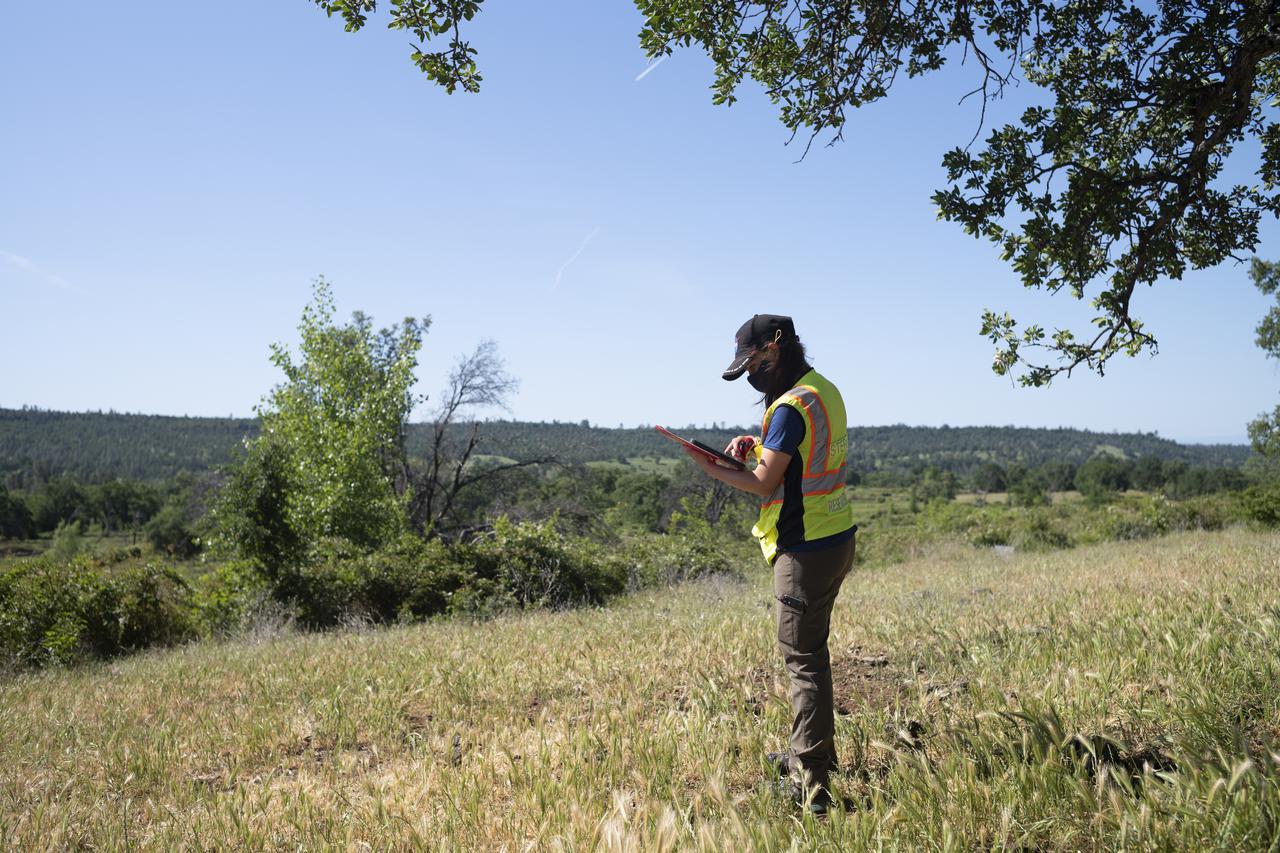
Lauren Claudatos, researcher for STEReO, the Scalable Traffic Management for Emergency Response Operations project, at NASA's Ames Research Center, is seen during simulated drone operations during STEReO field testing, Tuesday, May 4, 2021 as Cal Fire conducts aerial fire fighting training exercises near Redding, California. STEReO, the Scalable Traffic Management for Emergency Response Operations project, led by NASA’s Ames Research Center, builds on NASA’s expertise in air traffic management, human factors research, and autonomous technology development to apply the agency’s work in Unmanned Aircraft Systems Traffic Management, or UTM, to public safety uses. Photo Credit: (NASA/Joel Kowsky)
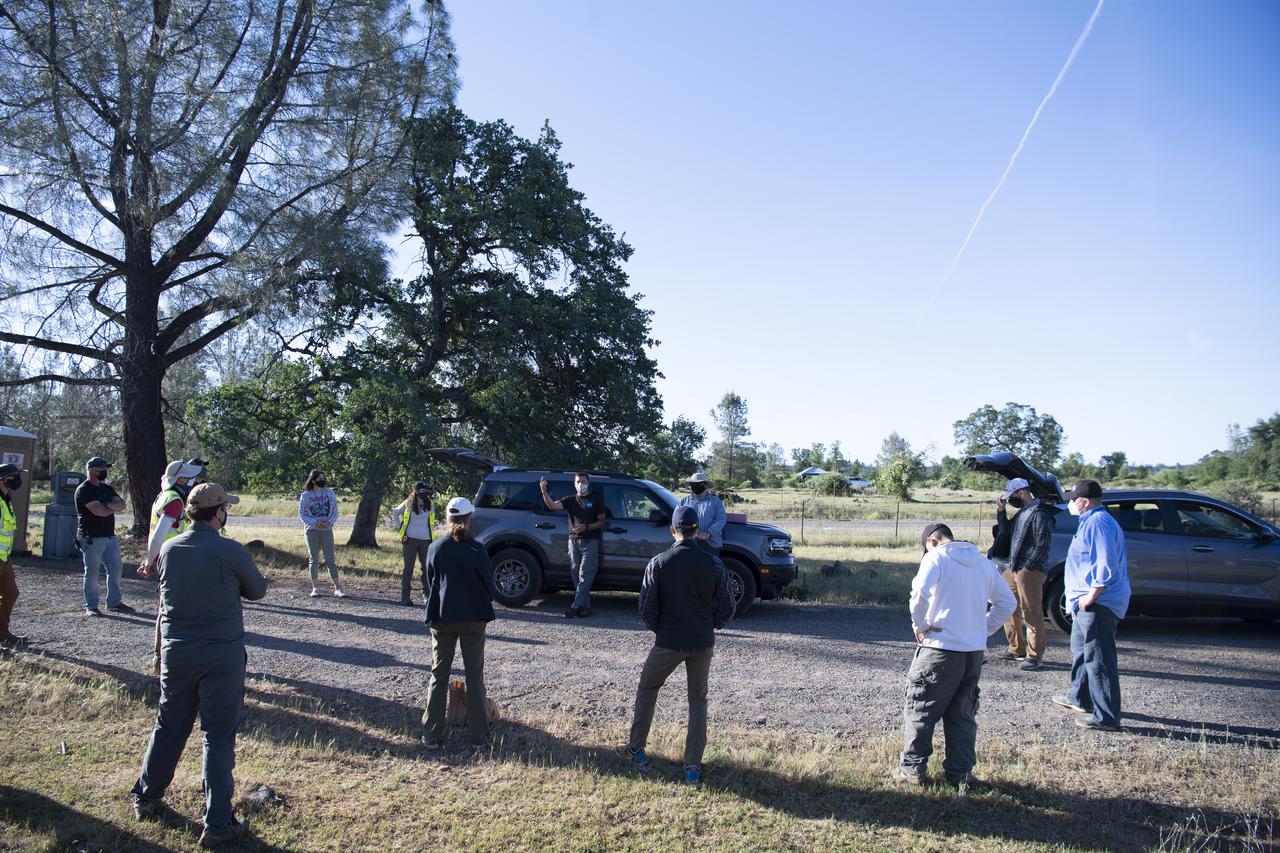
Members of the STEReO, the Scalable Traffic Management for Emergency Response Operations project, team are seen during a meeting before starting activities, Tuesday, May 4, 2021 as Cal Fire conducts aerial fire fighting training exercises near Redding, California. STEReO, the Scalable Traffic Management for Emergency Response Operations project, led by NASA’s Ames Research Center, builds on NASA’s expertise in air traffic management, human factors research, and autonomous technology development to apply the agency’s work in Unmanned Aircraft Systems Traffic Management, or UTM, to public safety uses. Photo Credit: (NASA/Joel Kowsky)
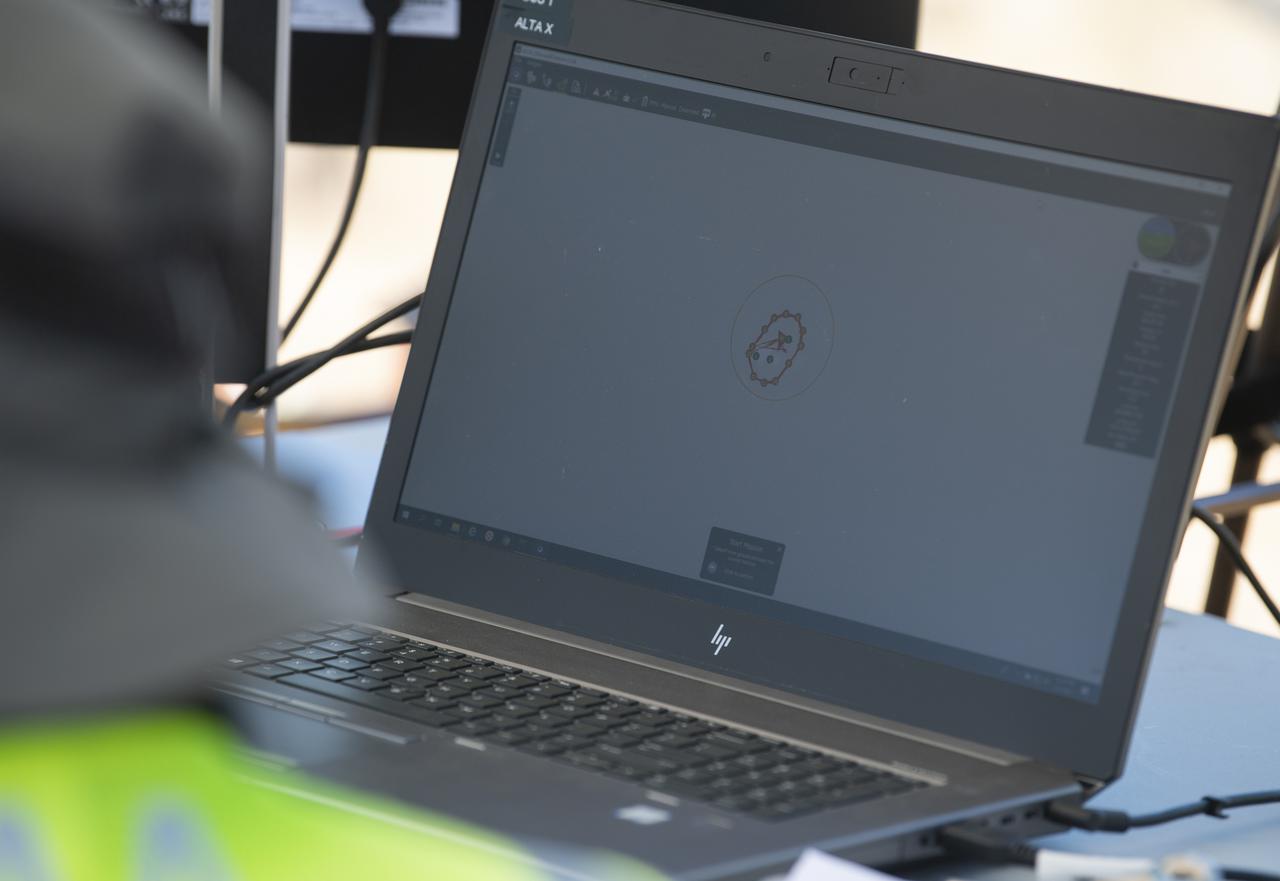
A computer displays the flight path of a FreeFly Systems Alta X drone during a flight as part of STEReO, the Scalable Traffic Management for Emergency Response Operations project, test activities, Tuesday, May 4, 2021 as Cal Fire conducts aerial fire fighting training exercises near Redding, California. STEReO, the Scalable Traffic Management for Emergency Response Operations project, led by NASA’s Ames Research Center, builds on NASA’s expertise in air traffic management, human factors research, and autonomous technology development to apply the agency’s work in Unmanned Aircraft Systems Traffic Management, or UTM, to public safety uses. Photo Credit: (NASA/Joel Kowsky)
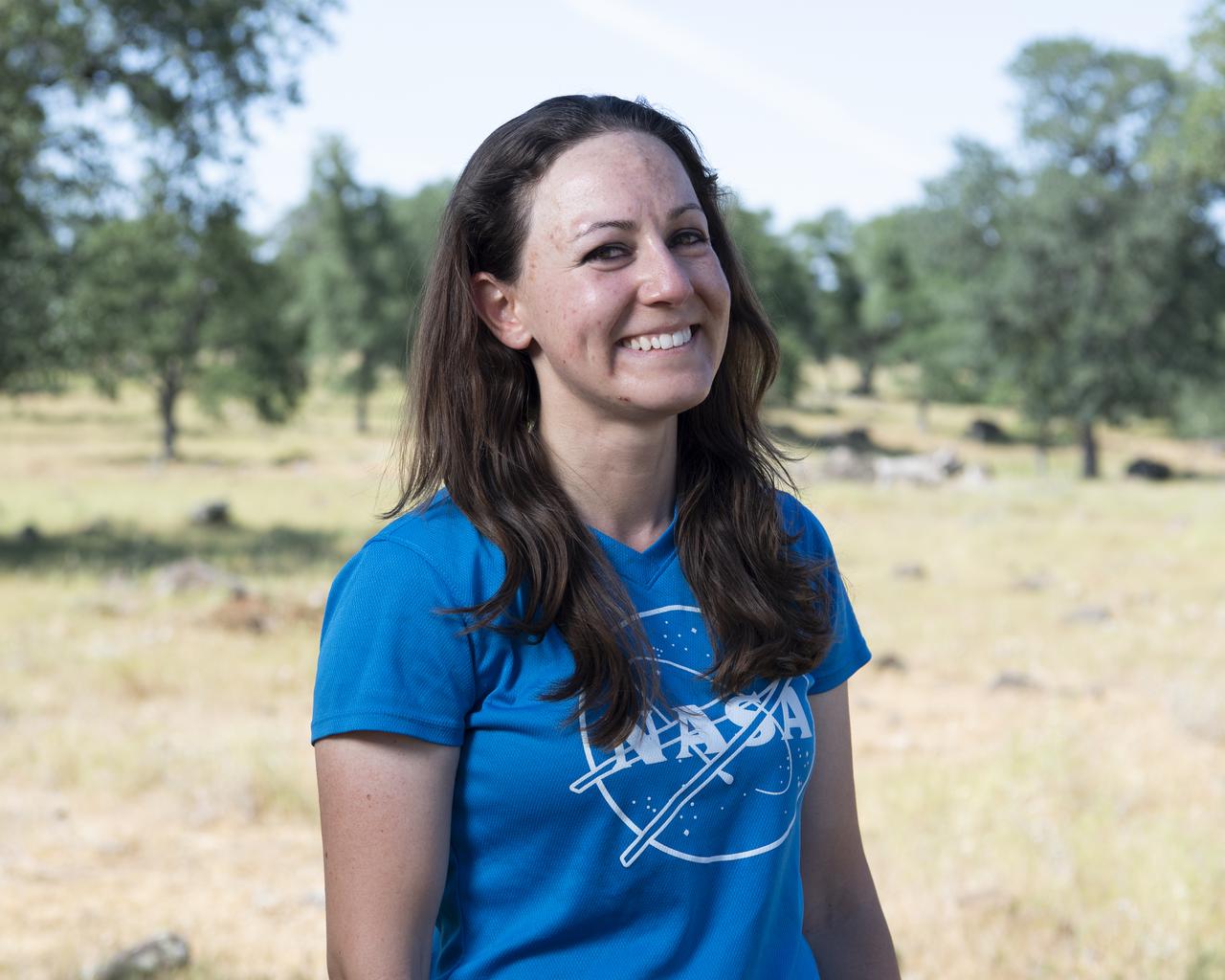
Lauren Claudatos, researcher for STEReO, the Scalable Traffic Management for Emergency Response Operations project, at NASA's Ames Research Center, poses for a portrait, Wednesday, May 5, 2021 as Cal Fire conducts aerial fire fighting training exercises near Redding, California. STEReO, the Scalable Traffic Management for Emergency Response Operations project, led by NASA’s Ames Research Center, builds on NASA’s expertise in air traffic management, human factors research, and autonomous technology development to apply the agency’s work in Unmanned Aircraft Systems Traffic Management, or UTM, to public safety uses. Photo Credit: (NASA/Joel Kowsky)
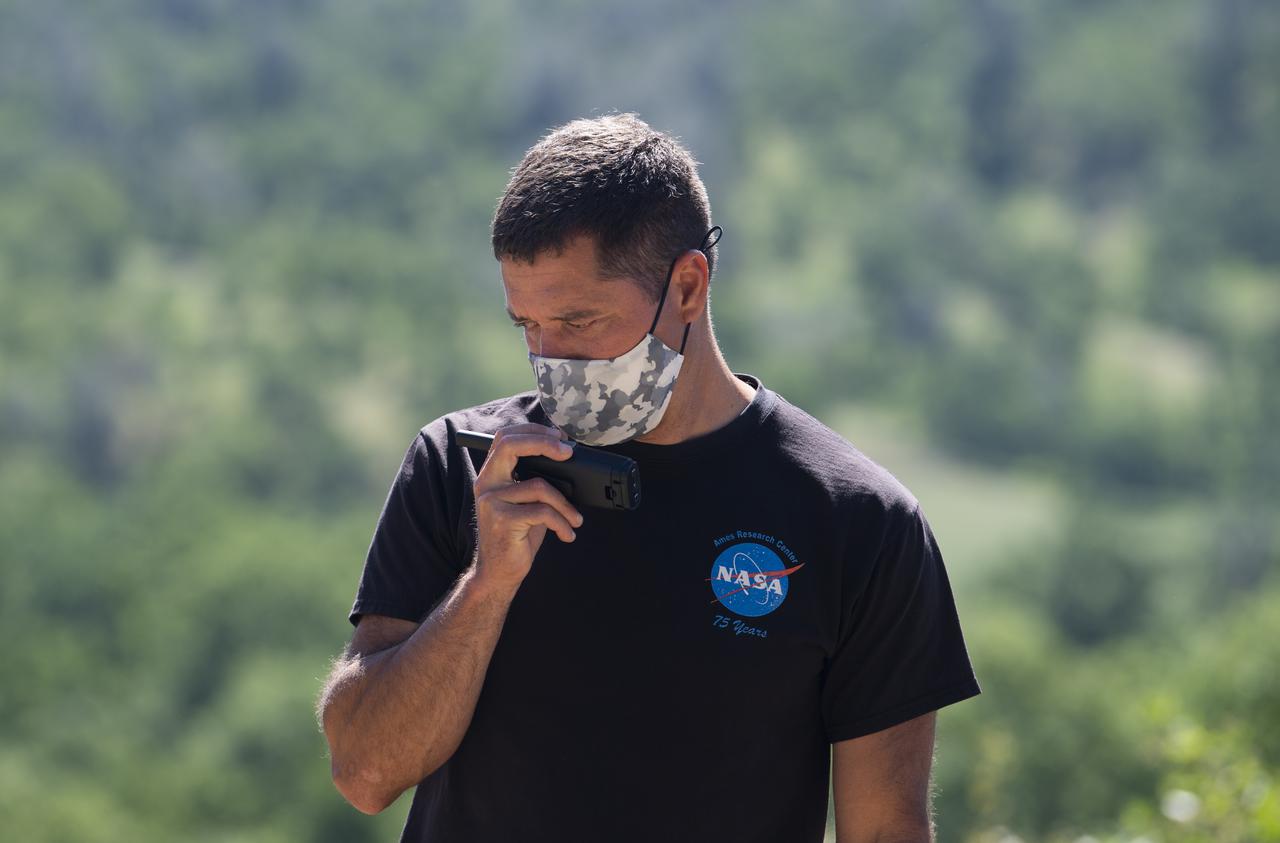
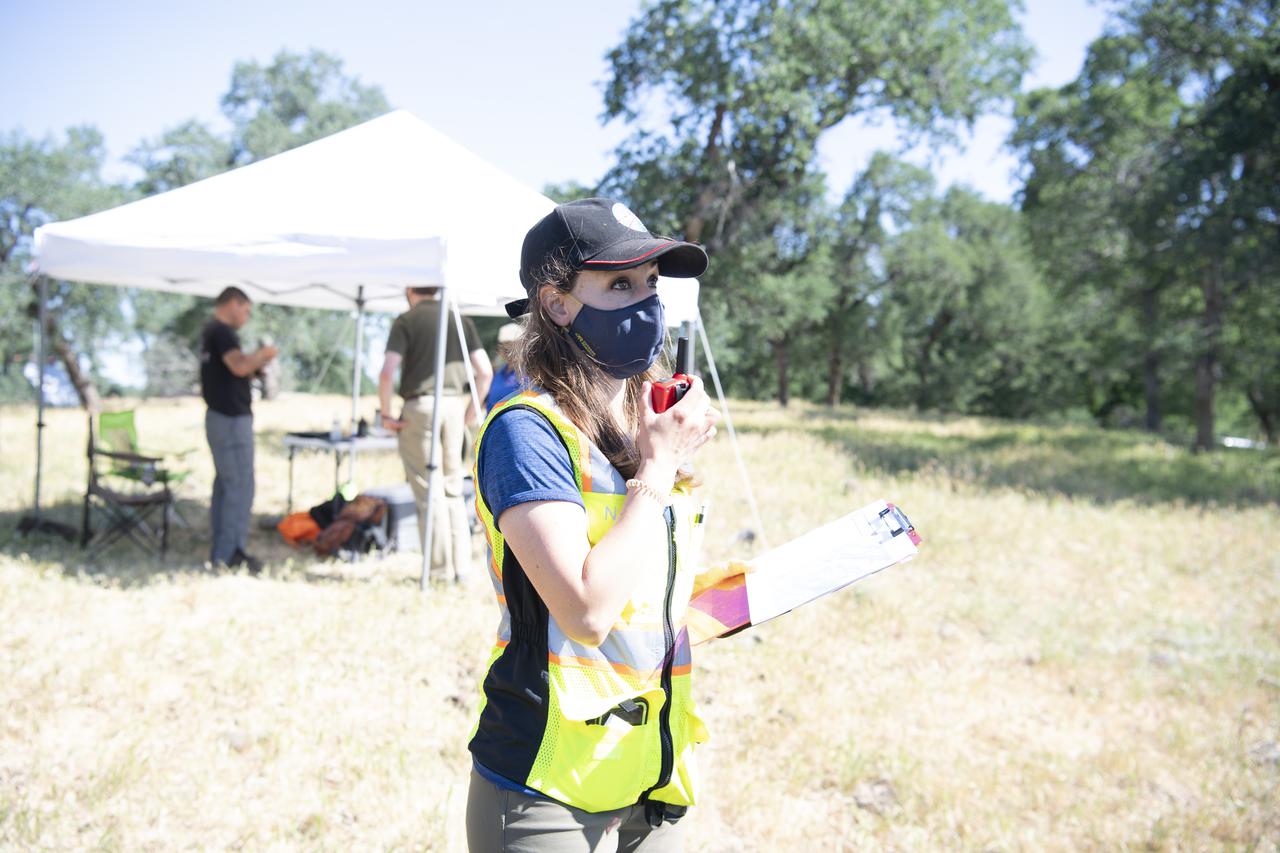
Joey Mercer, principle investigator for STEReO, the Scalable Traffic Management for Emergency Response Operations project, at NASA's Ames Research Center, is seen making a radio call during STEReO field testing, Tuesday, May 4, 2021 as Cal Fire conducts aerial fire fighting training exercises near Redding, California. STEReO, the Scalable Traffic Management for Emergency Response Operations project, led by NASA’s Ames Research Center, builds on NASA’s expertise in air traffic management, human factors research, and autonomous technology development to apply the agency’s work in Unmanned Aircraft Systems Traffic Management, or UTM, to public safety uses. Photo Credit: (NASA/Joel Kowsky)
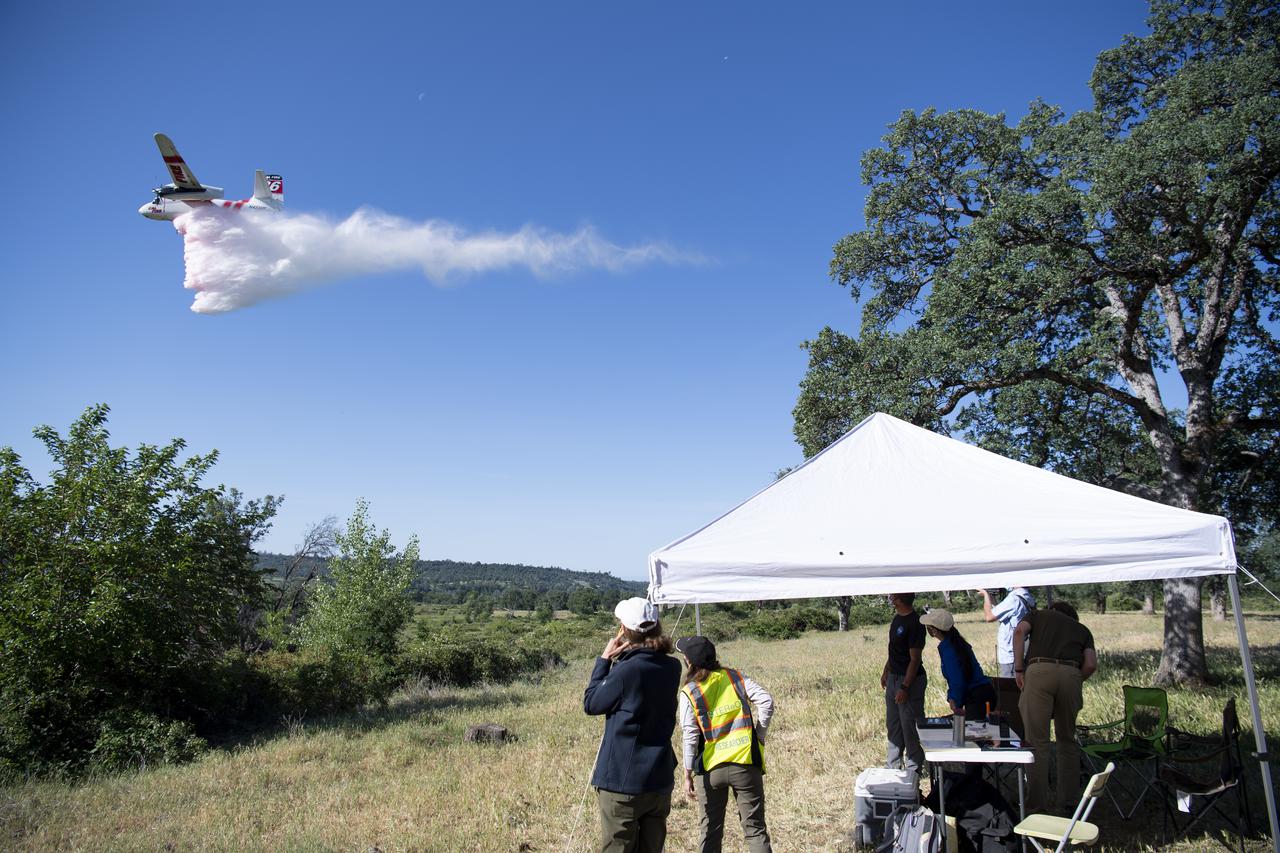
STEReO, the Scalable Traffic Management for Emergency Response Operations project, team members watch as a Cal Fire S2-T airtanker drops water on a simulated wildfire, Tuesday, May 4, 2021 as Cal Fire conducts aerial fire fighting training exercises near Redding, California. STEReO, the Scalable Traffic Management for Emergency Response Operations project, led by NASA’s Ames Research Center, builds on NASA’s expertise in air traffic management, human factors research, and autonomous technology development to apply the agency’s work in Unmanned Aircraft Systems Traffic Management, or UTM, to public safety uses. Photo Credit: (NASA/Joel Kowsky)
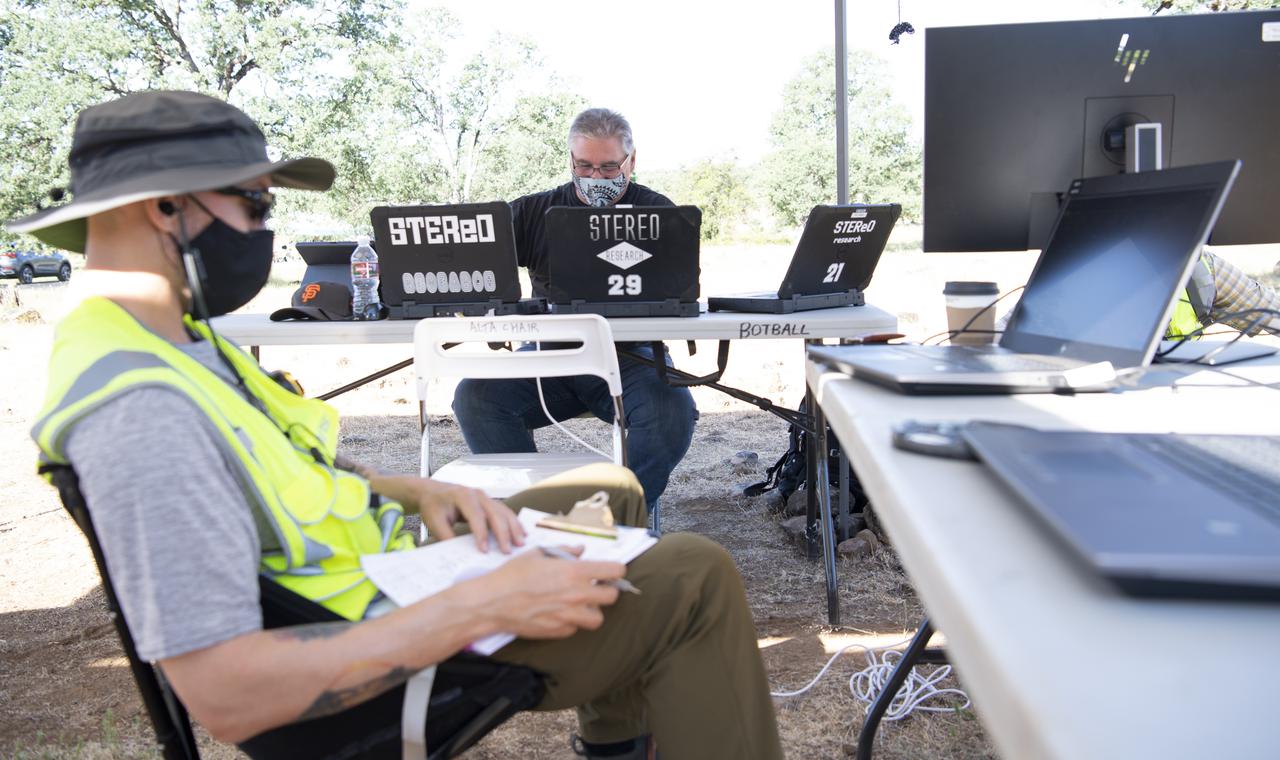
Bill McCarthy, software engineer and research laptop operator for STEReO, the Scalable Traffic Management for Emergency Response Operations project, at NASA's Ames Research Center, is seen as the STEReO teams works through scenarios, Wednesday, May 5, 2021 as Cal Fire conducts aerial fire fighting training exercises near Redding, California. STEReO, the Scalable Traffic Management for Emergency Response Operations project, led by NASA’s Ames Research Center, builds on NASA’s expertise in air traffic management, human factors research, and autonomous technology development to apply the agency’s work in Unmanned Aircraft Systems Traffic Management, or UTM, to public safety uses. Photo Credit: (NASA/Joel Kowsky)
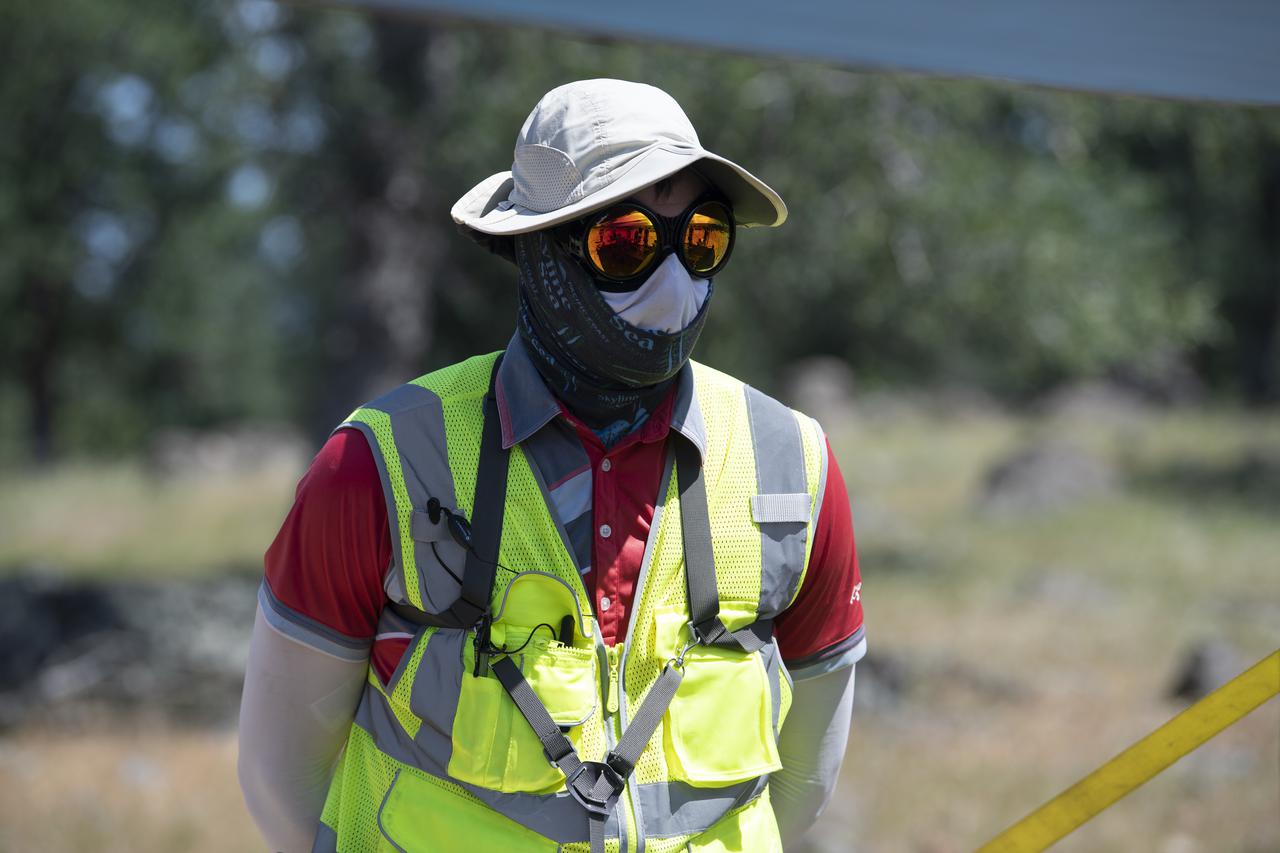
Jonas Jonsson, pilot in command for STEReO, the Scalable Traffic Management for Emergency Response Operations project, at NASA's Ames Research Center, is seen during STEReO test activities, Tuesday, May 4, 2021 as Cal Fire conducts aerial fire fighting training exercises near Redding, California. STEReO, the Scalable Traffic Management for Emergency Response Operations project, led by NASA’s Ames Research Center, builds on NASA’s expertise in air traffic management, human factors research, and autonomous technology development to apply the agency’s work in Unmanned Aircraft Systems Traffic Management, or UTM, to public safety uses. Photo Credit: (NASA/Joel Kowsky)
Lauren Claudatos, researcher for STEReO, the Scalable Traffic Management for Emergency Response Operations project, at NASA's Ames Research Center, is seen during simulated drone operations during STEReO field testing, Tuesday, May 4, 2021 as Cal Fire conducts aerial fire fighting training exercises near Redding, California. STEReO, the Scalable Traffic Management for Emergency Response Operations project, led by NASA’s Ames Research Center, builds on NASA’s expertise in air traffic management, human factors research, and autonomous technology development to apply the agency’s work in Unmanned Aircraft Systems Traffic Management, or UTM, to public safety uses. Photo Credit: (NASA/Joel Kowsky)
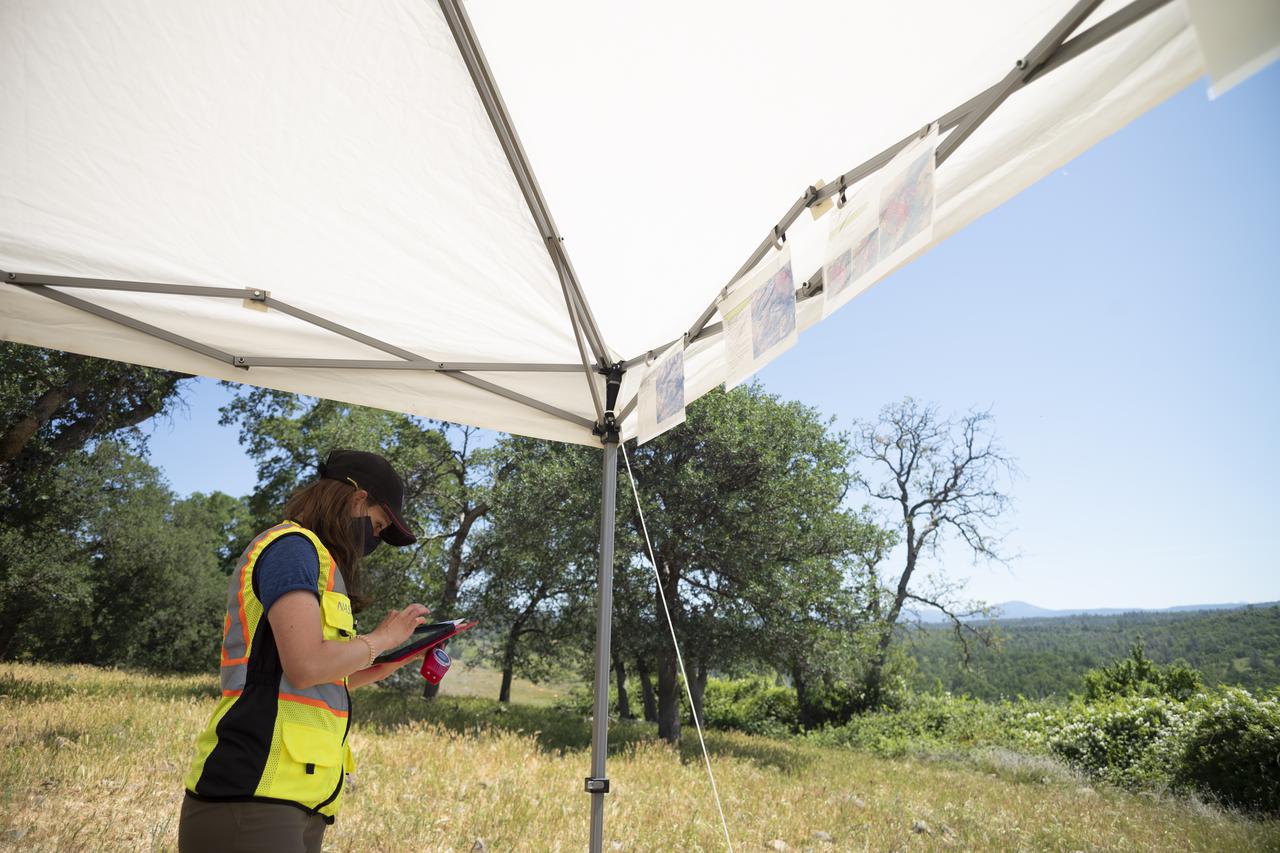
Lauren Claudatos, researcher for STEReO, the Scalable Traffic Management for Emergency Response Operations project, at NASA's Ames Research Center, is seen during simulated drone operations during STEReO field testing, Tuesday, May 4, 2021 as Cal Fire conducts aerial fire fighting training exercises near Redding, California. STEReO, the Scalable Traffic Management for Emergency Response Operations project, led by NASA’s Ames Research Center, builds on NASA’s expertise in air traffic management, human factors research, and autonomous technology development to apply the agency’s work in Unmanned Aircraft Systems Traffic Management, or UTM, to public safety uses. Photo Credit: (NASA/Joel Kowsky)
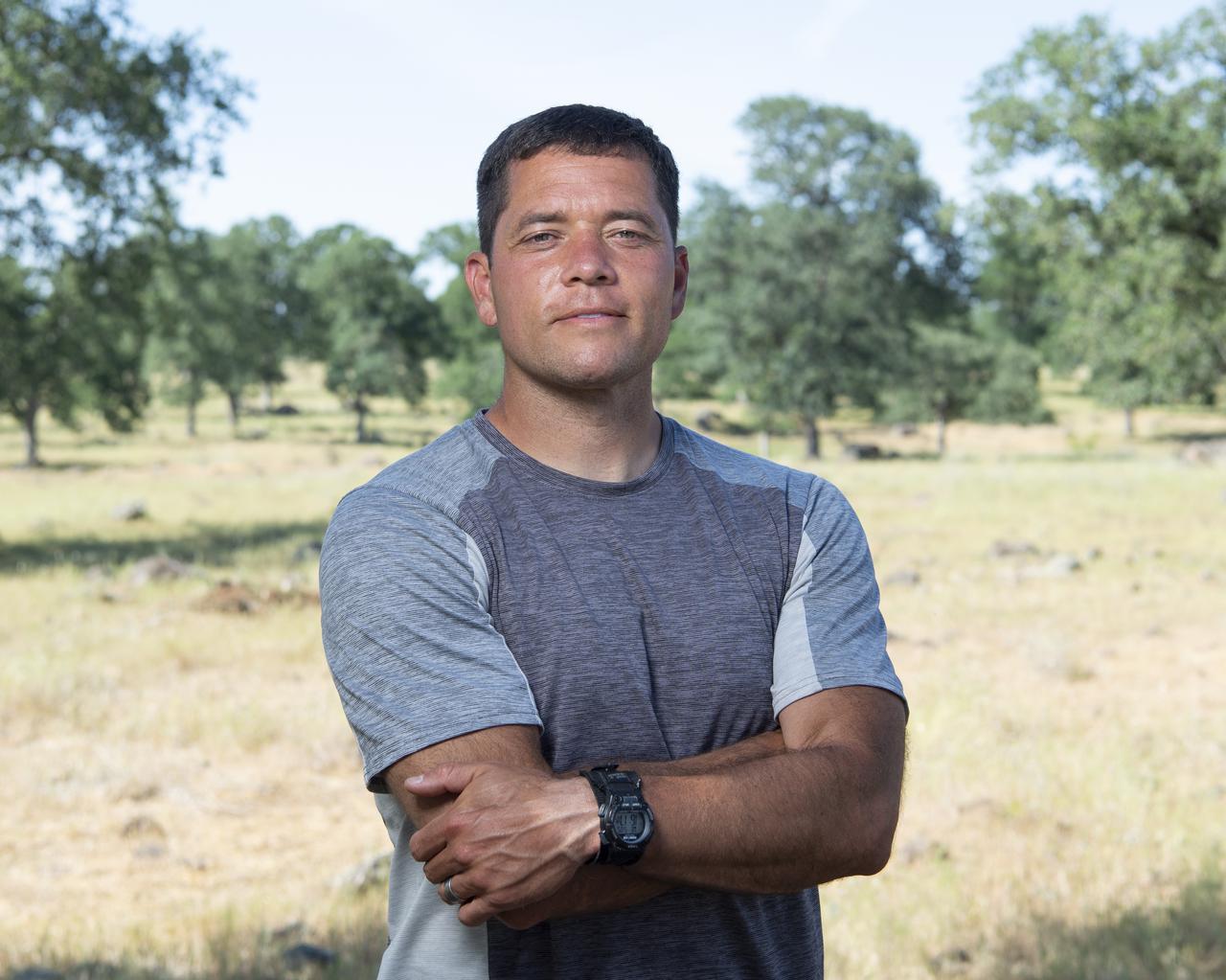
Joey Mercer, principle investigator for STEReO, the Scalable Traffic Management for Emergency Response Operations project, at NASA's Ames Research Center, poses for a portrait, Wednesday, May 5, 2021 as Cal Fire conducts aerial fire fighting training exercises near Redding, California. STEReO, the Scalable Traffic Management for Emergency Response Operations project, led by NASA’s Ames Research Center, builds on NASA’s expertise in air traffic management, human factors research, and autonomous technology development to apply the agency’s work in Unmanned Aircraft Systems Traffic Management, or UTM, to public safety uses. Photo Credit: (NASA/Joel Kowsky)
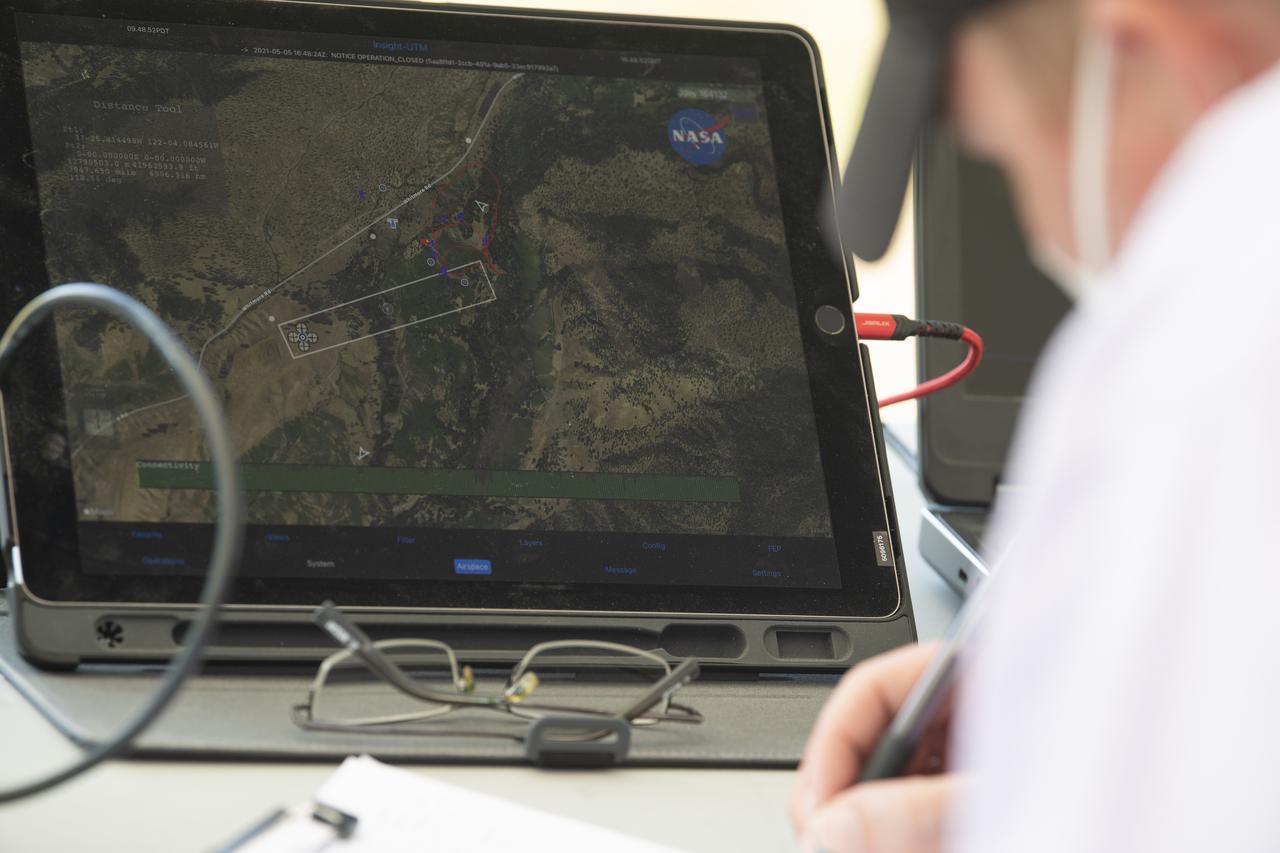
A tablet displaying a version of the Unmanned Aircraft Systems Traffic Management System (UTM) is seen during STEReO, the Scalable Traffic Management for Emergency Response Operations project, field testing, Wednesday, May 5, 2021 as Cal Fire conducts aerial fire fighting training exercises near Redding, California. STEReO, the Scalable Traffic Management for Emergency Response Operations project, led by NASA’s Ames Research Center, builds on NASA’s expertise in air traffic management, human factors research, and autonomous technology development to apply the agency’s work in Unmanned Aircraft Systems Traffic Management, or UTM, to public safety uses. Photo Credit: (NASA/Joel Kowsky)
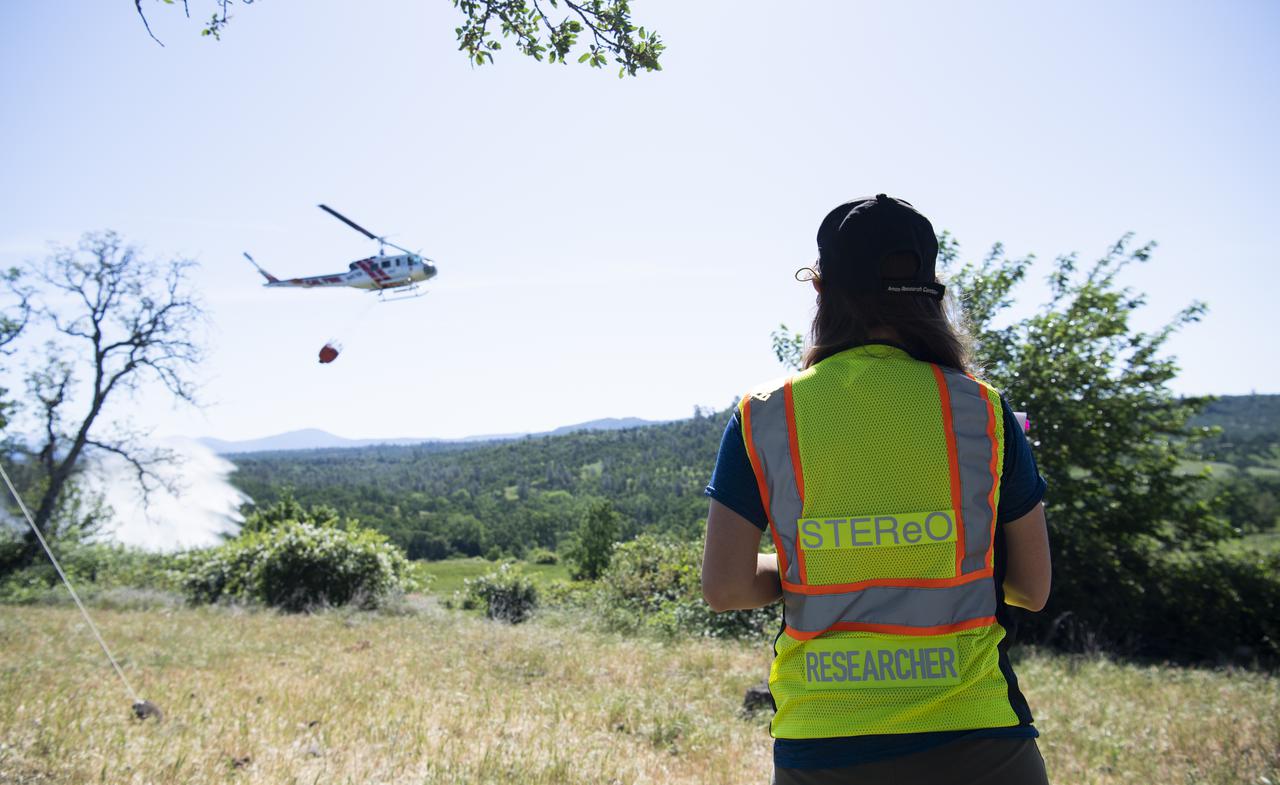
Lauren Claudatos, researcher for STEReO, the Scalable Traffic Management for Emergency Response Operations project, at NASA's Ames Research Center, is seen during simulated drone operations during STEReO field testing, Tuesday, May 4, 2021 as Cal Fire conducts aerial fire fighting training exercises near Redding, California. STEReO, the Scalable Traffic Management for Emergency Response Operations project, led by NASA’s Ames Research Center, builds on NASA’s expertise in air traffic management, human factors research, and autonomous technology development to apply the agency’s work in Unmanned Aircraft Systems Traffic Management, or UTM, to public safety uses. Photo Credit: (NASA/Joel Kowsky)
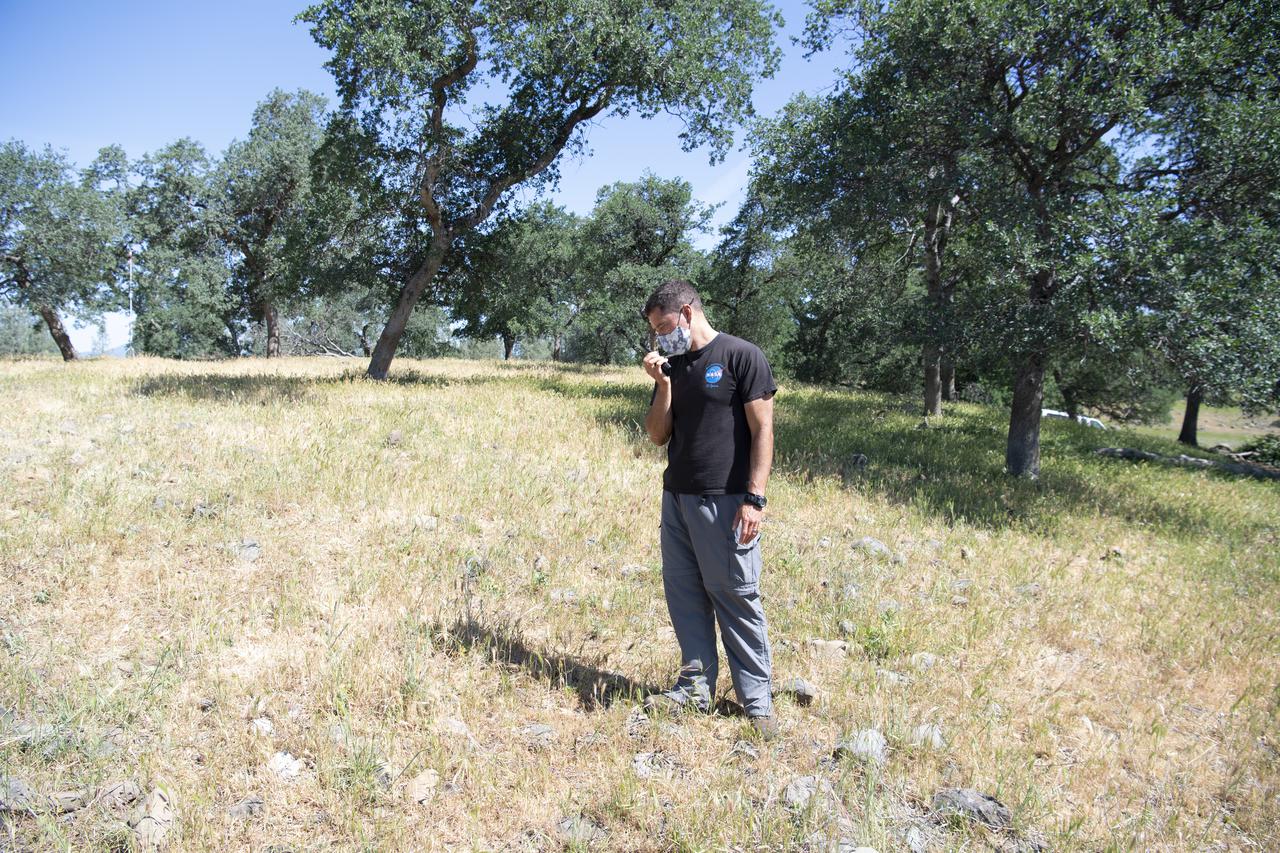
Joey Mercer, principle investigator for STEReO, the Scalable Traffic Management for Emergency Response Operations project, at NASA's Ames Research Center, is seen making a radio call during STEReO field testing, Tuesday, May 4, 2021 as Cal Fire conducts aerial fire fighting training exercises near Redding, California. STEReO, the Scalable Traffic Management for Emergency Response Operations project, led by NASA’s Ames Research Center, builds on NASA’s expertise in air traffic management, human factors research, and autonomous technology development to apply the agency’s work in Unmanned Aircraft Systems Traffic Management, or UTM, to public safety uses. Photo Credit: (NASA/Joel Kowsky)
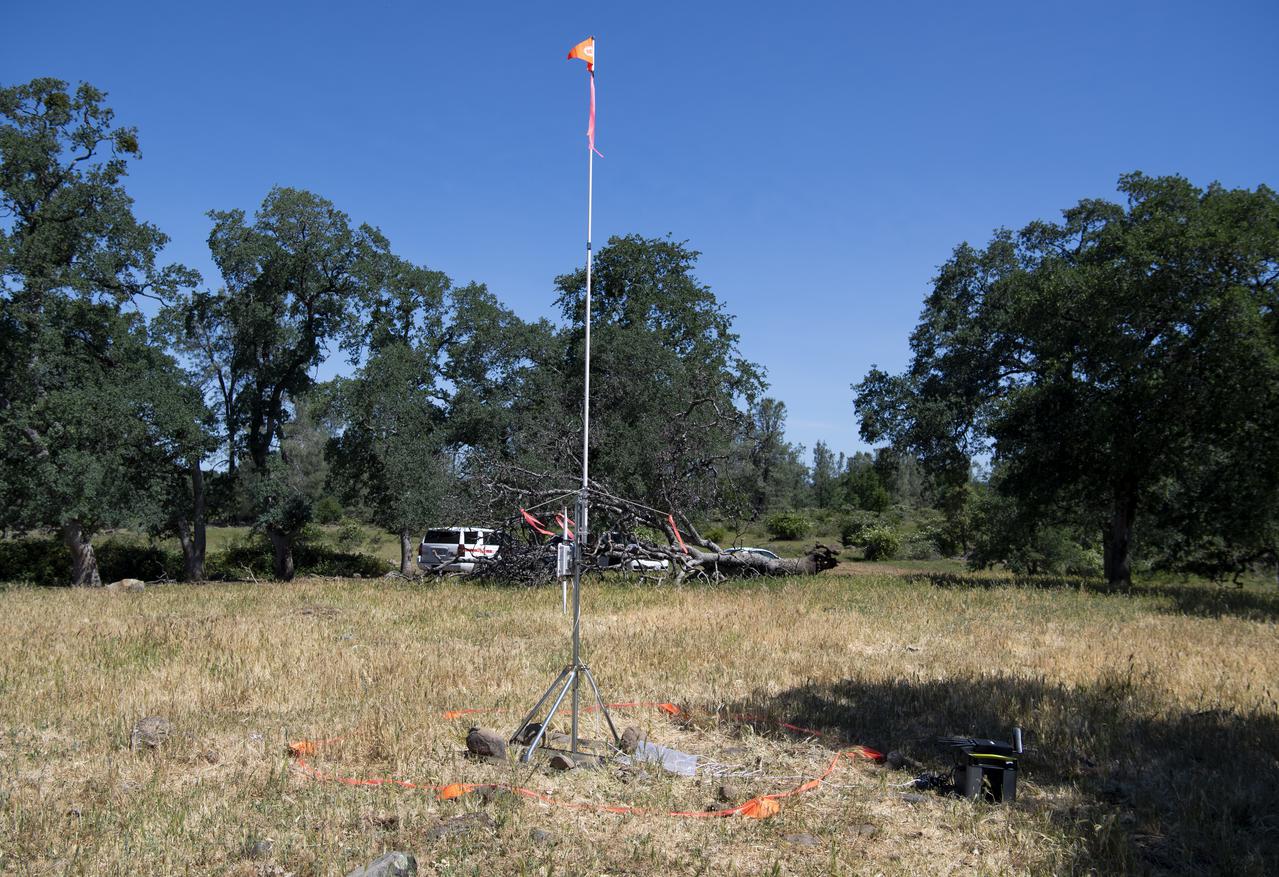
A communications antenna that is part of the STEReO, the Scalable Traffic Management for Emergency Response Operations project, ad-hoc network is seen during STEReO test activities, Tuesday, May 4, 2021, as Cal Fire conducts aerial fire fighting training exercises near Redding, California. STEReO, the Scalable Traffic Management for Emergency Response Operations project, led by NASA’s Ames Research Center, builds on NASA’s expertise in air traffic management, human factors research, and autonomous technology development to apply the agency’s work in Unmanned Aircraft Systems Traffic Management, or UTM, to public safety uses. Photo Credit: (NASA/Joel Kowsky)
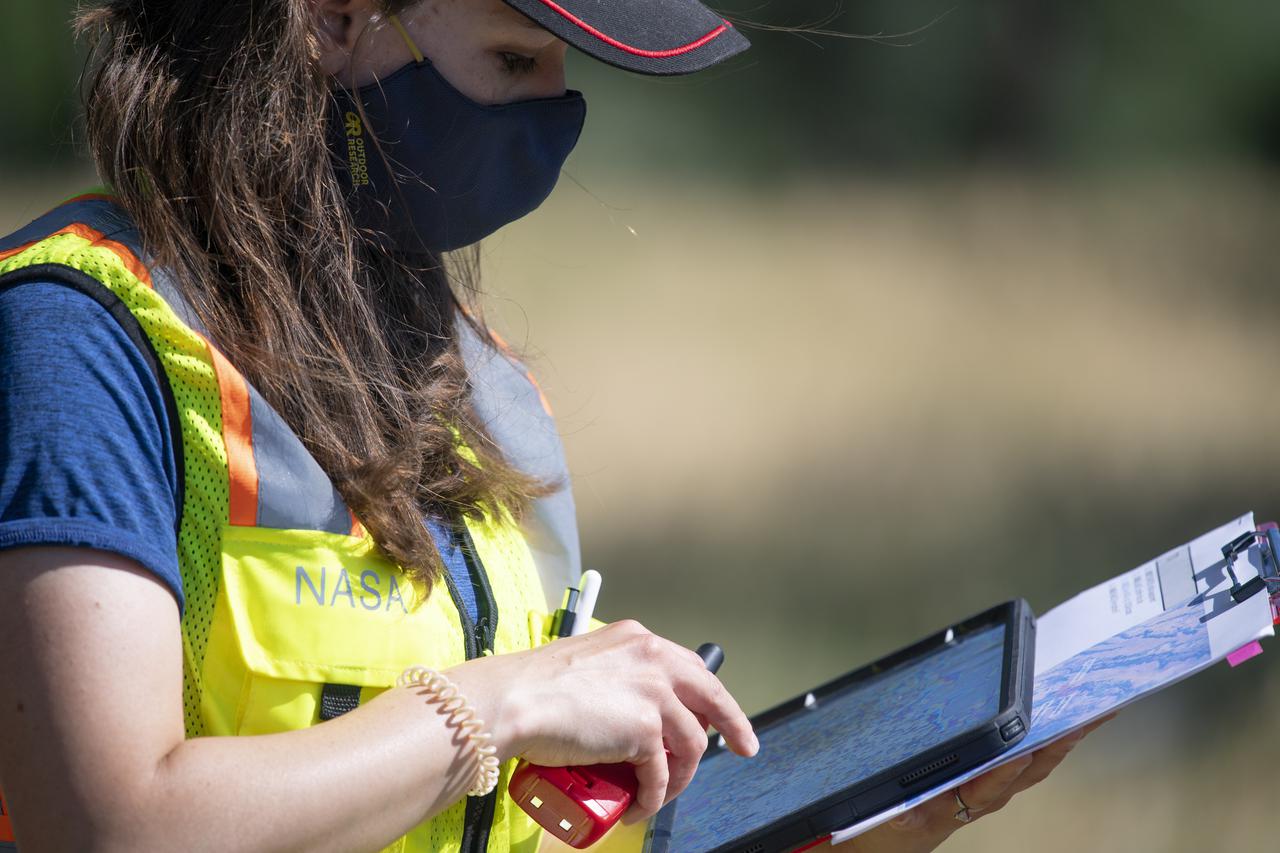
Lauren Claudatos, researcher for STEReO, the Scalable Traffic Management for Emergency Response Operations project, at NASA's Ames Research Center, is seen during simulated drone operations during STEReO field testing, Tuesday, May 4, 2021 as Cal Fire conducts aerial fire fighting training exercises near Redding, California. STEReO, the Scalable Traffic Management for Emergency Response Operations project, led by NASA’s Ames Research Center, builds on NASA’s expertise in air traffic management, human factors research, and autonomous technology development to apply the agency’s work in Unmanned Aircraft Systems Traffic Management, or UTM, to public safety uses. Photo Credit: (NASA/Joel Kowsky)
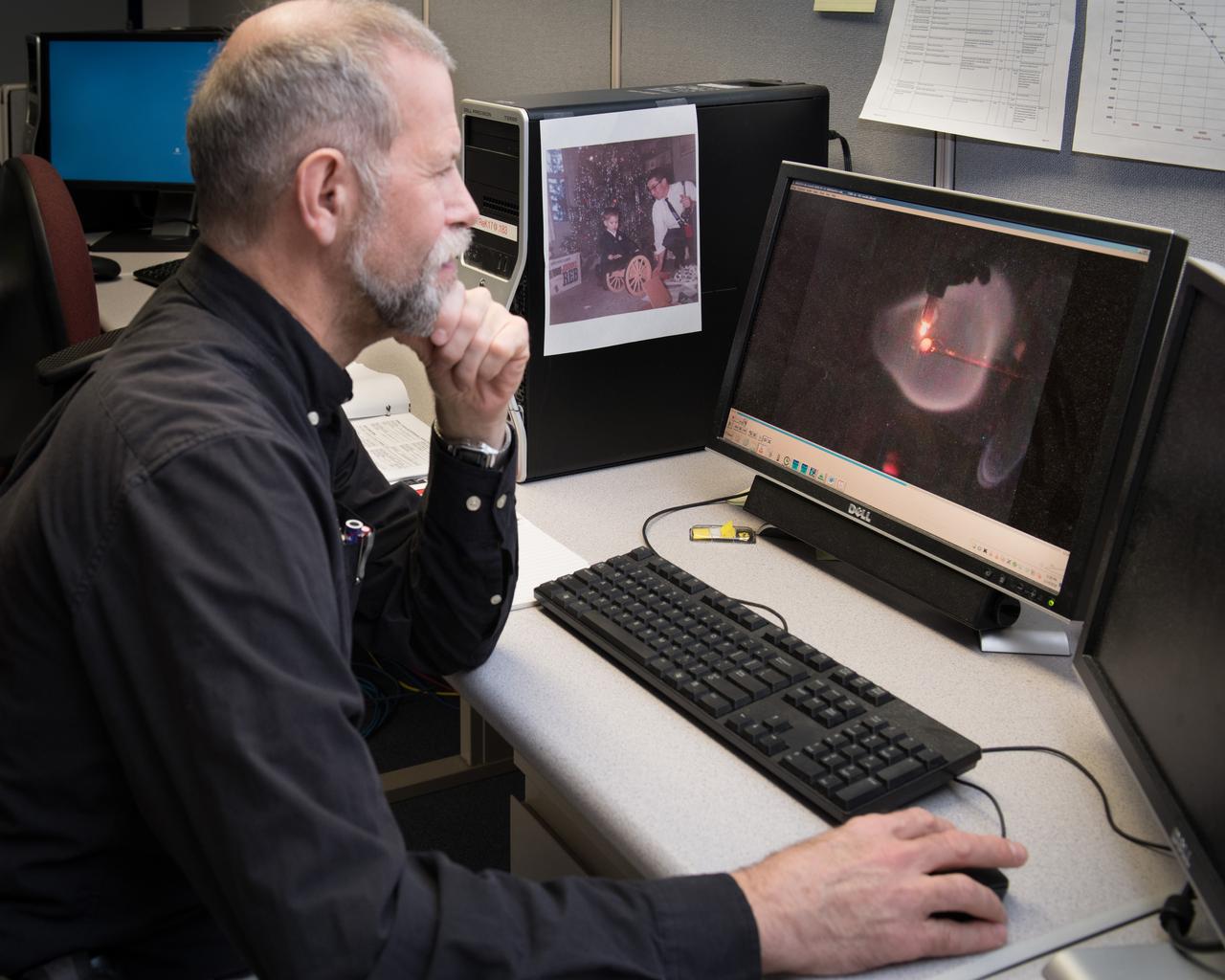
Review of ISS data from the Structure and Response of Spherical Diffusion Flames (s-Flame) experiment - of the Advanced Combustion via Microgravity Experiments. ACME project conducted in the Combustion Integrated Rack, CIR - by ACME Project Scientist Dennis Stocker in the Telescience Support Center,TSC, also known as the Glenn ISS Payload Operations Center, GIPOC
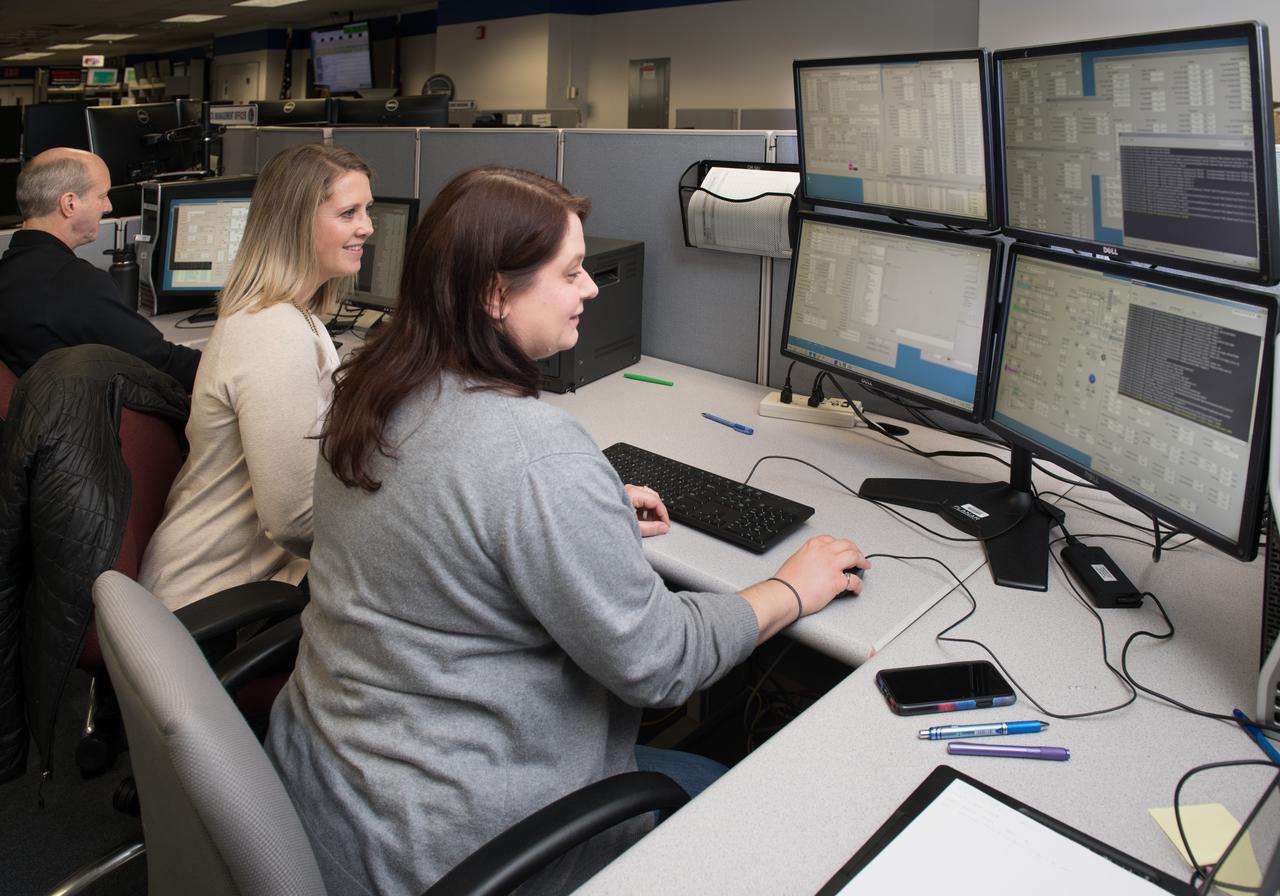
Testing of software with ground hardware for the Structue and Response of Spherical Diffusion Flames, s-Flame, experiment - of the Advanced Combustion via Microgravity Experiments, ACME, project conducted in the ISS Combustion Integrated Rack, CIR - by ACME Software Engineer Jeffrey Eggers, Operations Lead Angela Adams, and Planning Lead Melani Smajdek in the Telescience Support Center, TSC, also known as the Glenn ISS Payload Operations Center, GIPOC
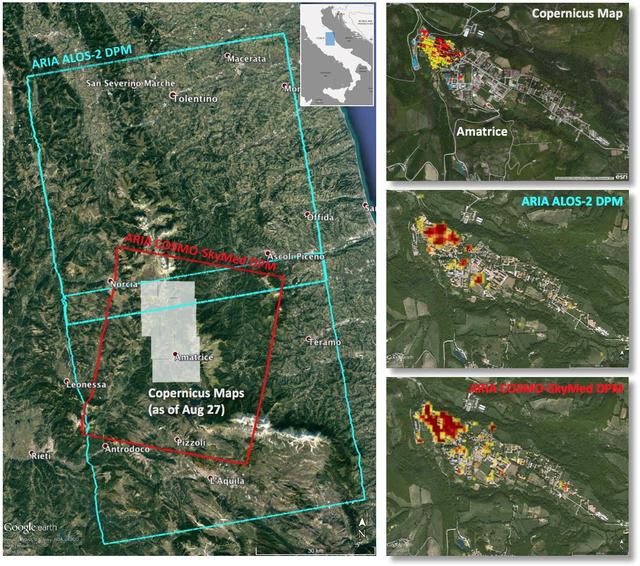
Italy earthquake. The quake has caused significant damage in the historic town of Amatrice. To assist in the disaster response efforts, scientists at NASA's Jet Propulsion Laboratory, Pasadena, California, and the California Institute of Technology in Pasadena, in collaboration with the Italian Space Agency (ASI), generated this image of the earthquake's hardest-hit region. The 40-by-75 mile (65-by-120 kilometer) Damage Proxy Map (DPM) was derived from two consecutive frames of the Japan Aerospace Exploration Agency's (JAXA's) L-band interferometric synthetic aperture radar (InSAR) data from the ALOS-2 satellite (cyan rectangles), and the 25-by-31 mile (40-by-50 kilometer) DPM was derived from InSAR data from the Agenzia Spaciale Italiana's (ASI's) X-band COSMO-SkyMed satellite (red rectangle). Both DPMs cover the historic town of Amatrice, revealing severe damage in the western side of the town (right panels). The time span of the data for the change is Jan. 27, 2016 to Aug. 24, 2016 for ALOS-2 and Aug. 20, 2016 to Aug. 28, 2016 for COSMO-SkyMed. Each pixel in the damage proxy map is about 100 feet (30 meters) across. The SAR data were processed by the Advanced Rapid Imaging and Analysis (ARIA) team at JPL and Caltech. The technique uses a prototype algorithm to rapidly detect surface changes caused by natural or human-produced damage. The assessment technique is most sensitive to destruction of the built environment. When the radar images areas with little to no destruction, its image pixels are transparent. Increased opacity of the radar image pixels reflects damage, with areas in red reflecting the heaviest damage to cities and towns. The color variations from yellow to red indicate increasingly more significant ground surface change. Preliminary validation was done by comparing the DPMs to a damage assessment map produced by the Copernicus Emergency Management Service, which is based on visual inspection of before and after high-resolution aerial imagery -- the extent indicated with gray boxes in the left panel. http://photojournal.jpl.nasa.gov/catalog/PIA20897

Gravity is the force that is responsible for the weight of an object and is determined by how the material that makes up the Earth is distributed throughout the Earth.
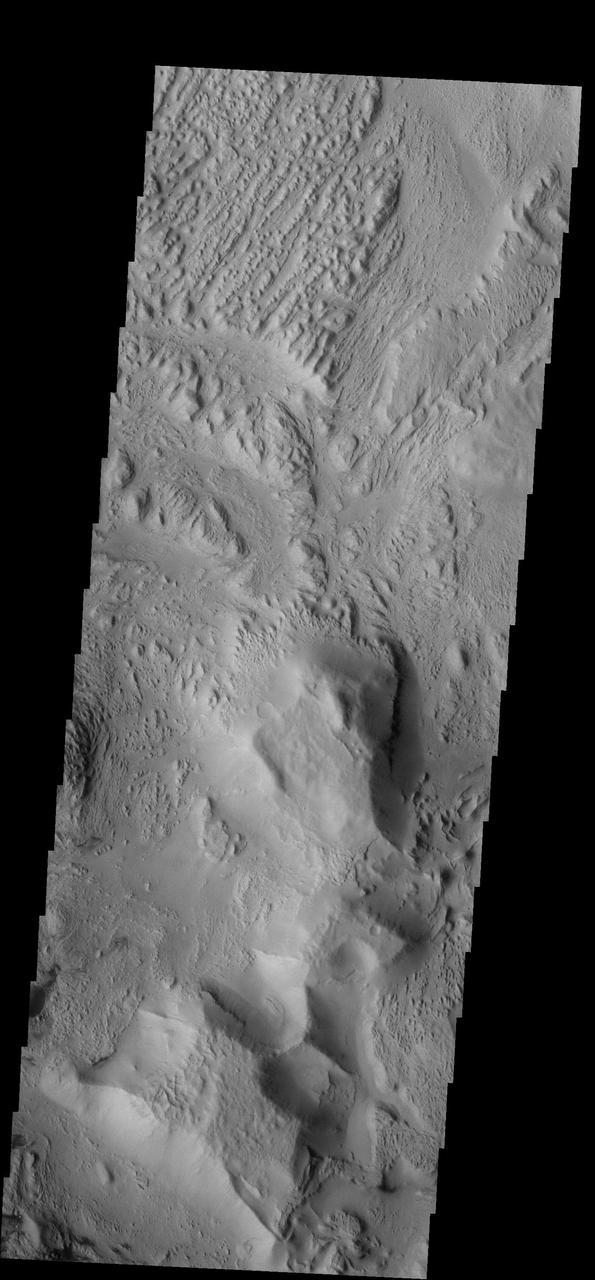
The wind is responsible for the erosion seen in this image captured by NASA 2001 Mars Odyssey spacecraft near Aeolis Planum.
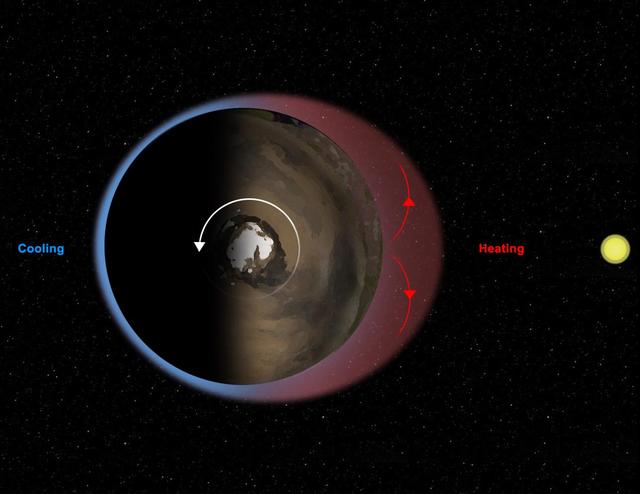
This diagram illustrates Mars thermal tides, a weather phenomenon responsible for large, daily variations in pressure at the Martian surface.
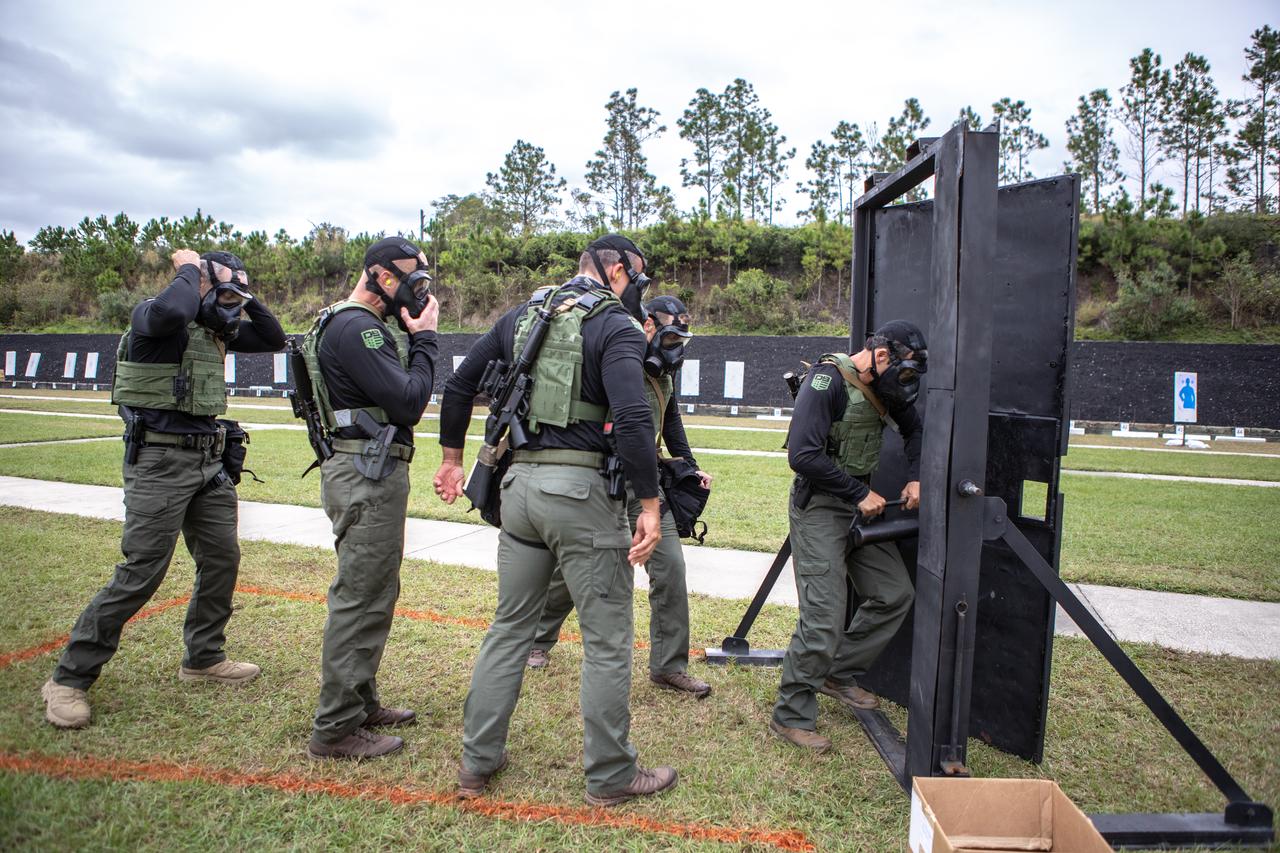
Members of NASA Kennedy Space Center's Emergency Response Team break through a barricade during one of the tactical challenges at the 37th Annual SWAT Round-Up International at the Lawson Lamar Firearms and Tactical Training Center in Orlando, Florida. The competition was held Nov. 10 to 15, 2019, and featured five different tactical challenges. Kennedy's ERT members exchanged best practices and competed with more than 50 teams from the U.S. and around the world.
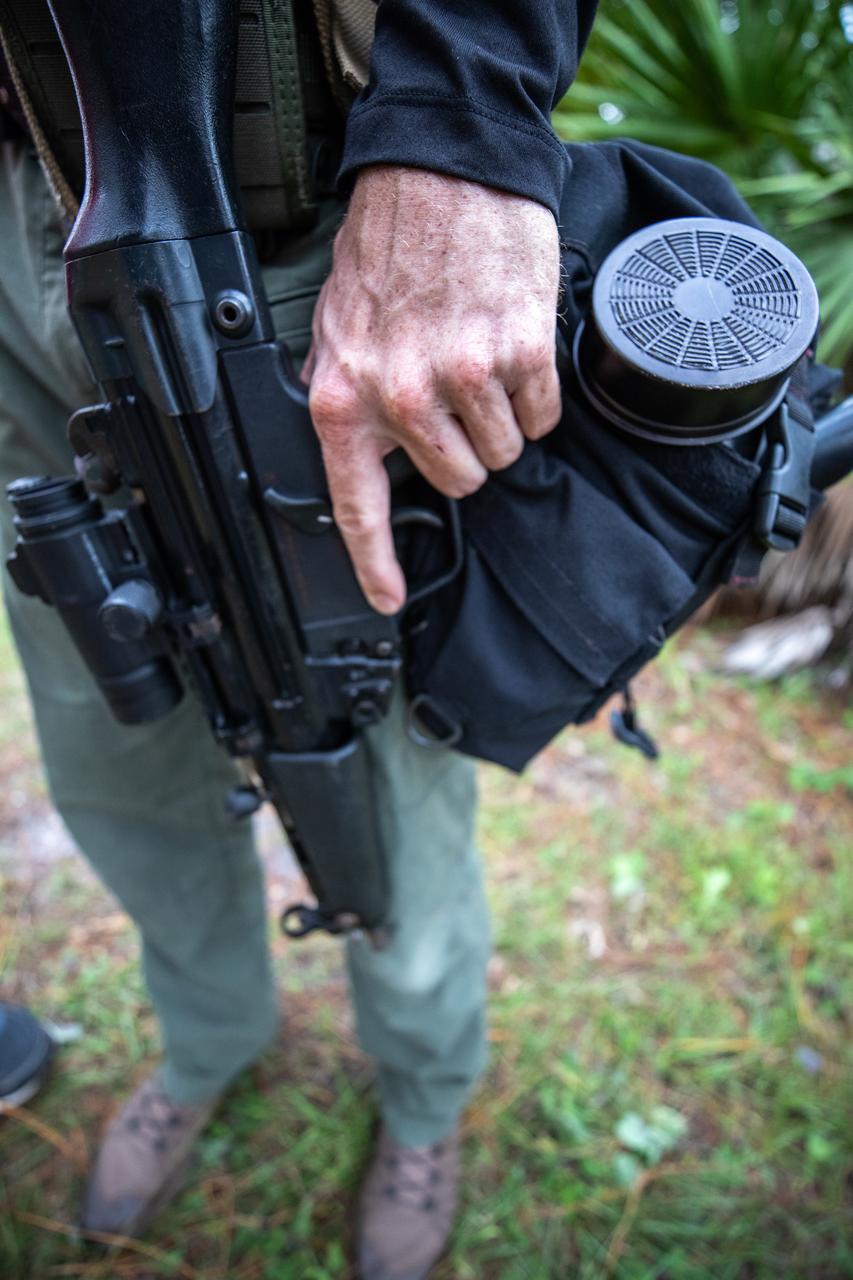
A member of NASA Kennedy Space Center's Emergency Response Team prepares to compete in the 37th Annual SWAT Round-Up International at the Lawson Lamar Firearms and Tactical Training Center in Orlando, Florida. The competition was held Nov. 10 to 15, 2019, and featured five different tactical challenges. Special pellets, rather than real bullets, are used during the competition. Kennedy's ERT members exchanged best practices and competed with more than 50 teams from the U.S. and around the world.
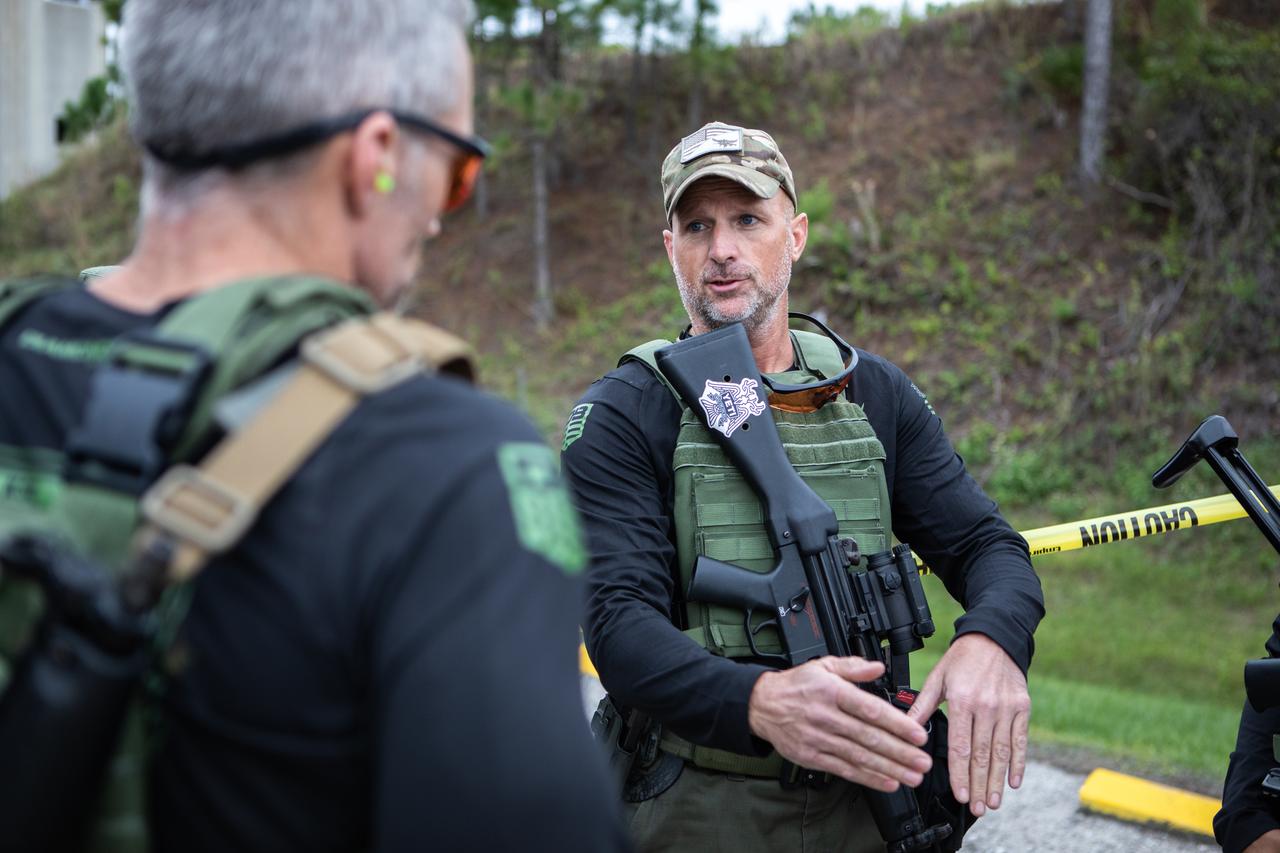
Members of NASA Kennedy Space Center's Emergency Response Team prepare for the next tactical challenge at the 37th Annual SWAT Round-Up International at the Lawson Lamar Firearms and Tactical Training Center in Orlando, Florida. The competition was held Nov. 10 to 15, 2019, and featured five different tactical challenges. Kennedy's ERT members exchanged best practices and competed with more than 50 teams from the U.S. and around the world.
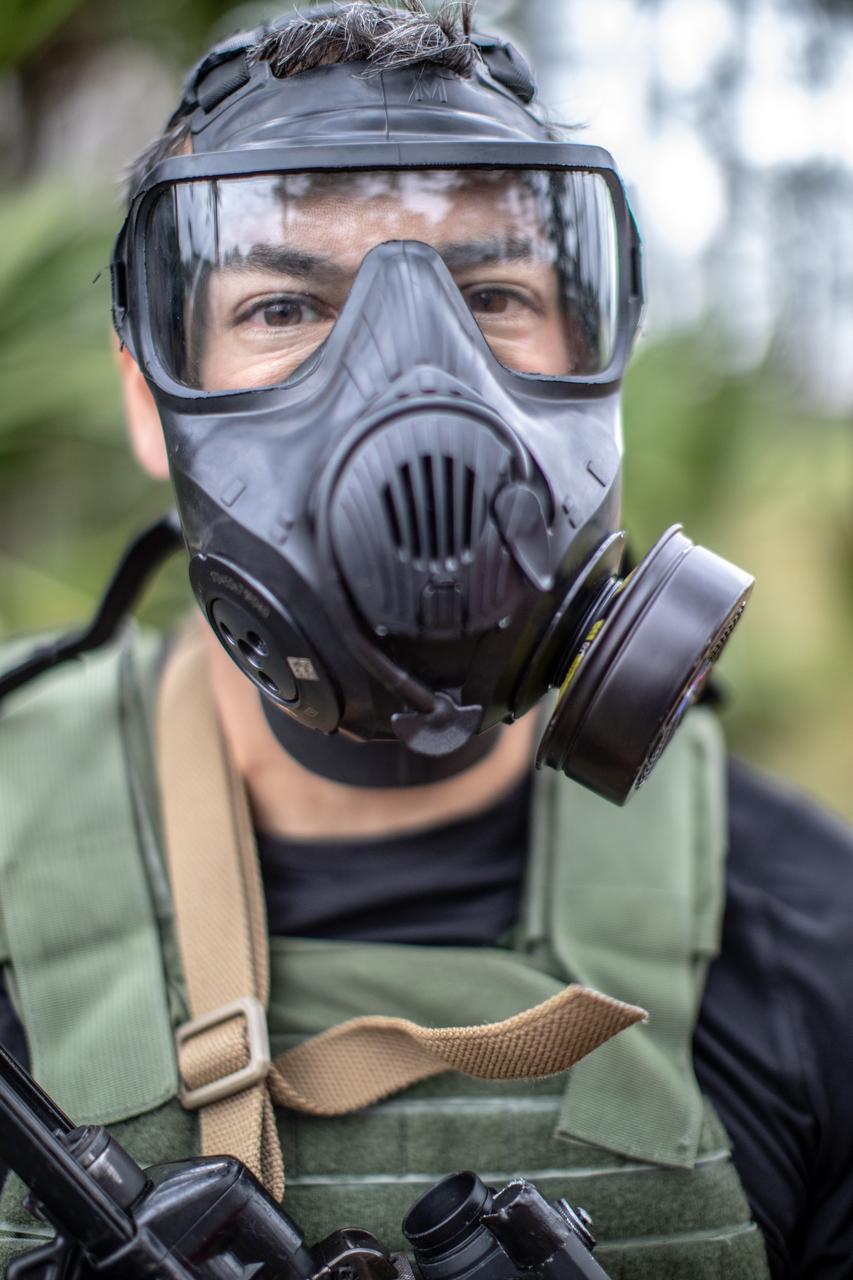
A member of NASA Kennedy Space Center's Emergency Response Team prepares to compete in the 37th Annual SWAT Round-Up International at the Lawson Lamar Firearms and Tactical Training Center in Orlando, Florida. The competition was held Nov. 10 to 15, 2019, and featured five different tactical challenges. Kennedy's ERT members exchanged best practices and competed with more than 50 teams from the U.S. and around the world.
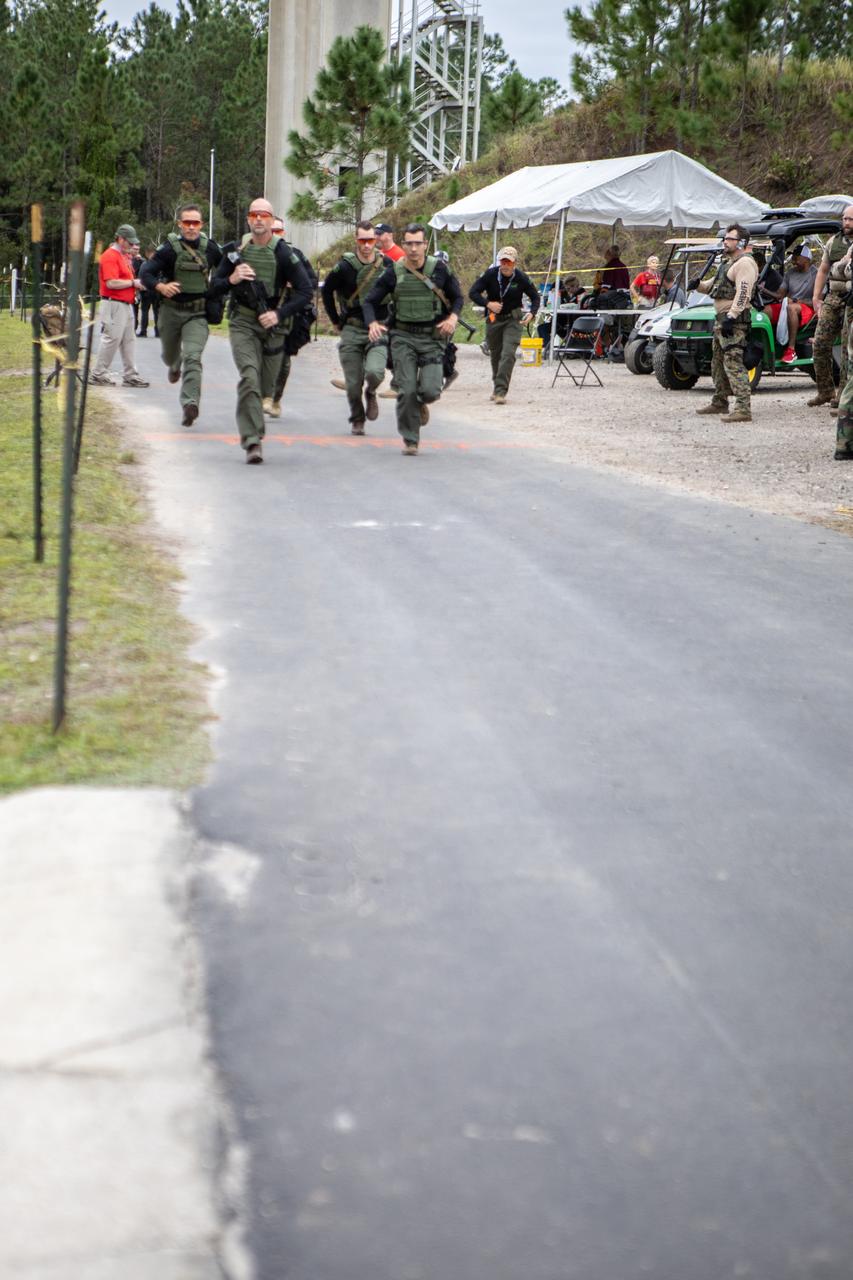
Members of NASA Kennedy Space Center's Emergency Response Team run during one of the tactical challenges at the 37th Annual SWAT Round-Up International at the Lawson Lamar Firearms and Tactical Training Center in Orlando, Florida. The competition was held Nov. 10 to 15, 2019, and featured five different tactical challenges. Kennedy's ERT members exchanged best practices and competed with more than 50 teams from the U.S. and around the world.
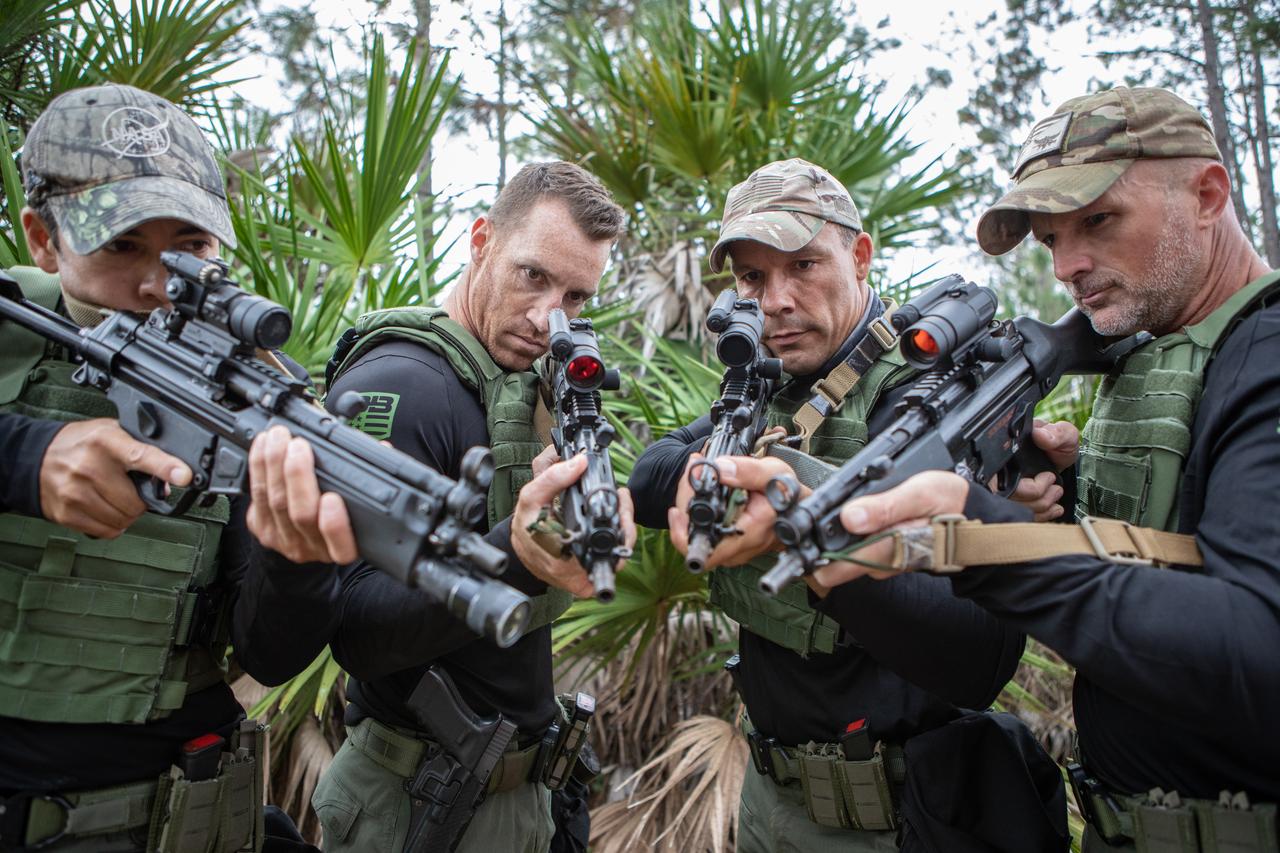
Members of NASA Kennedy Space Center's Emergency Response Team check their firearms before competing in the 37th Annual SWAT Round-Up International at the Lawson Lamar Firearms and Tactical Training Center in Orlando, Florida. The competition was held Nov. 10 to 15, 2019, and featured five different tactical challenges. Special pellets, rather than real bullets, are used during the competition. Kennedy's ERT members exchanged best practices and competed with more than 50 teams from the U.S. and around the world.
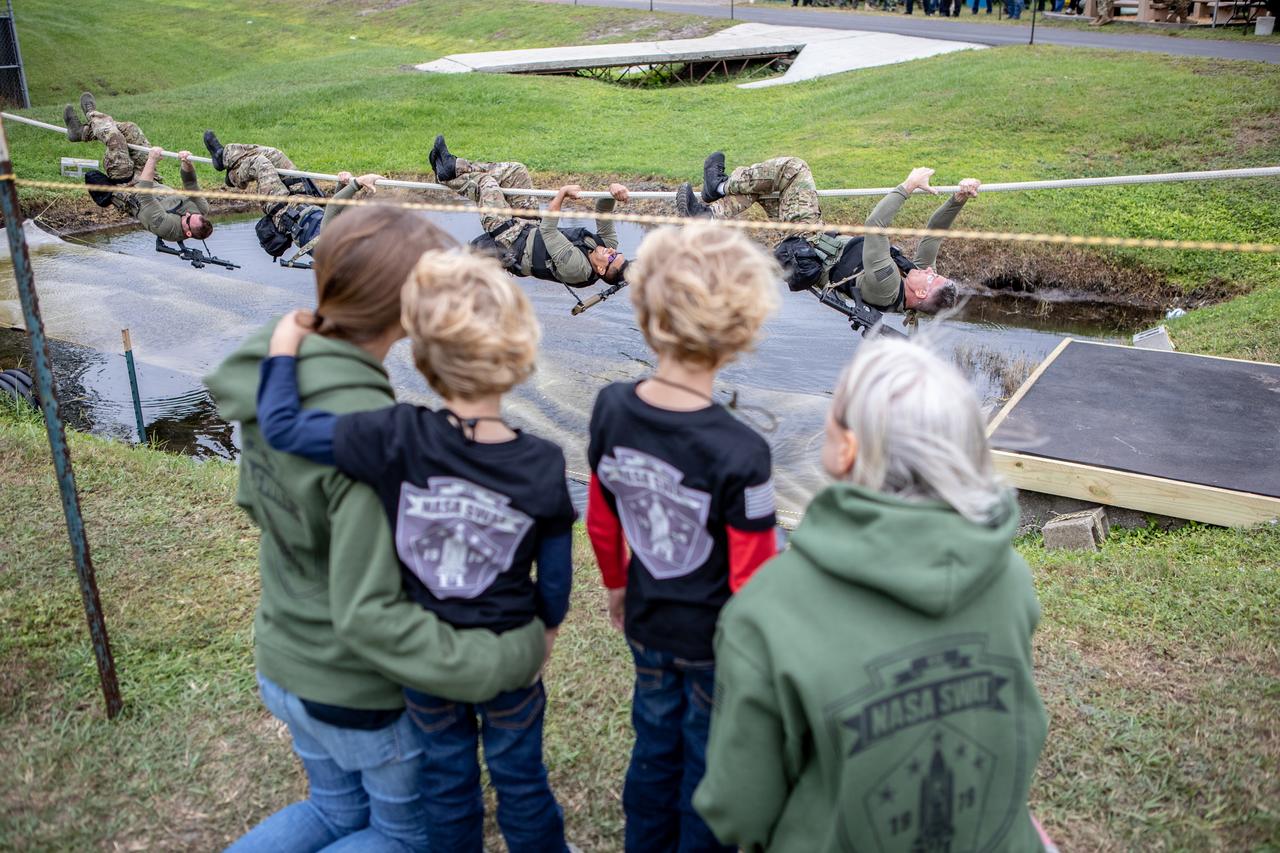
The family of one of NASA Kennedy Space Center's Emergency Response Team members watches the 37th Annual SWAT Round-Up International at the Lawson Lamar Firearms and Tactical Training Center in Orlando, Florida. Kennedy’s ERT members are working their way along a rope. The competition was held Nov. 10 to 15, and featured five different competition categories. Kennedy's ERT members exchanged best practices and competed with 60 teams from the U.S. and around the world.
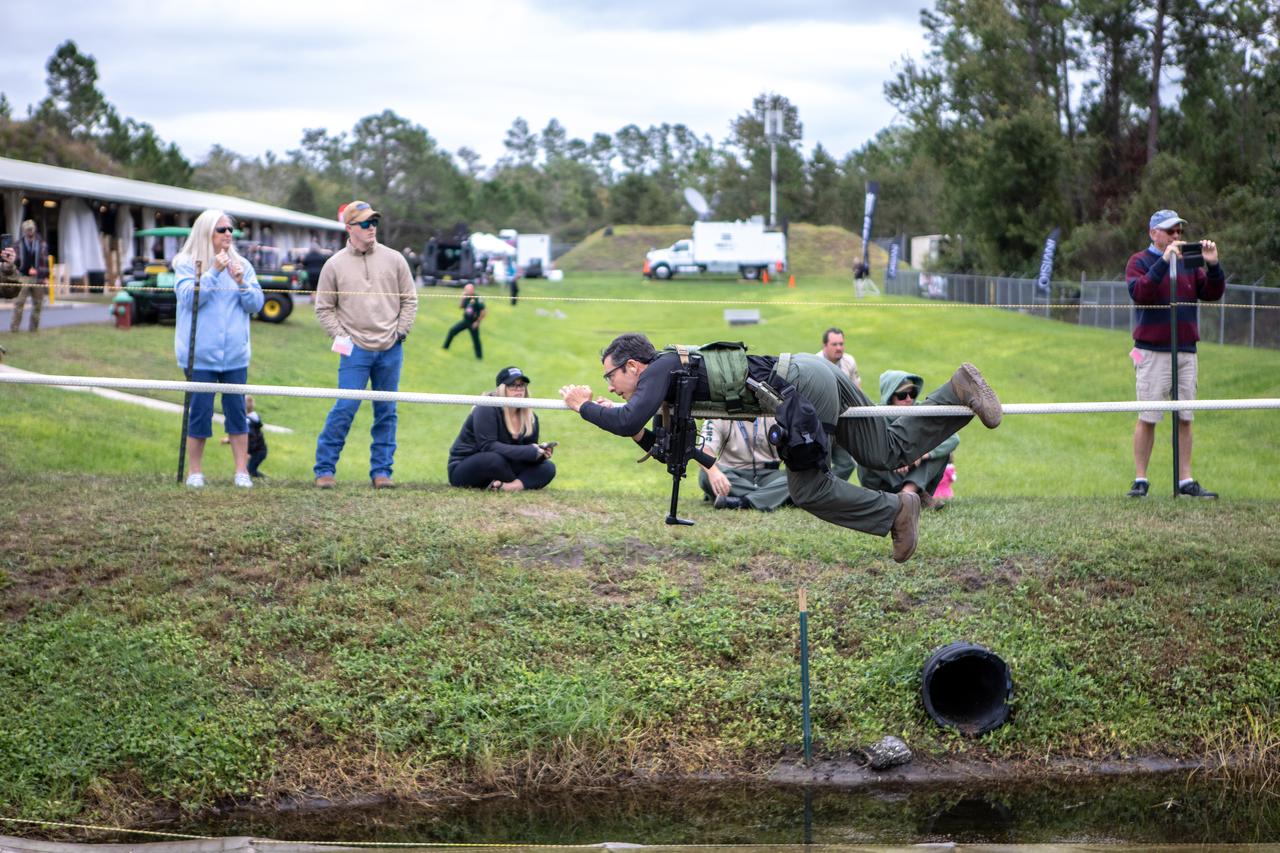
A member of NASA Kennedy Space Center's Emergency Response Team works his way along a rope above water during one of the tactical challenges at the 37th Annual SWAT Round-Up International at the Lawson Lamar Firearms and Tactical Training Center in Orlando, Florida. The competition was held Nov. 10 to 15, 2019, and featured five different tactical challenges. Kennedy's ERT members exchanged best practices and competed with more than 50 teams from the U.S. and around the world.
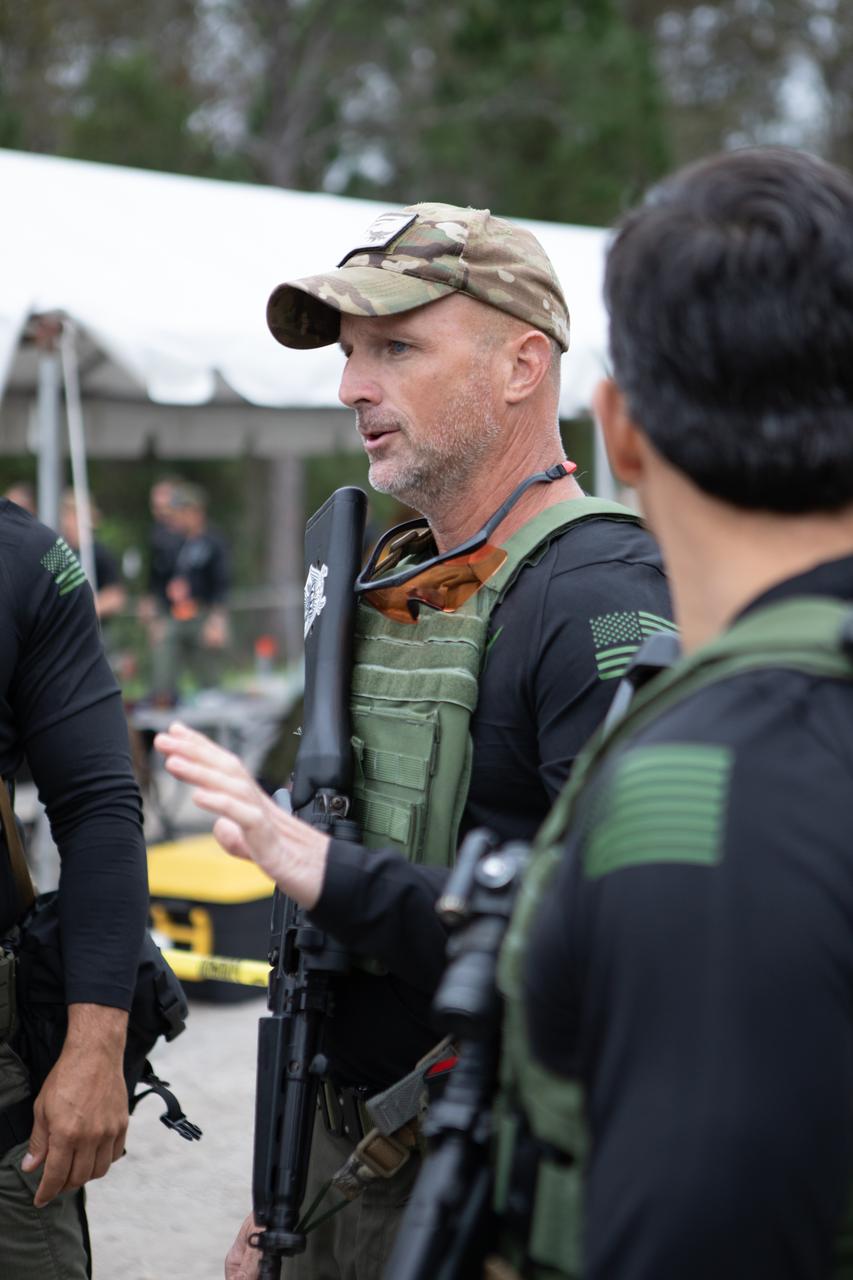
Members of NASA Kennedy Space Center's Emergency Response Team prepare for the next tactical challenge at the 37th Annual SWAT Round-Up International at the Lawson Lamar Firearms and Tactical Training Center in Orlando, Florida. The competition was held Nov. 10 to 15, 2019, and featured five different tactical challenges. Kennedy's ERT members exchanged best practices and competed with more than 50 teams from the U.S. and around the world.
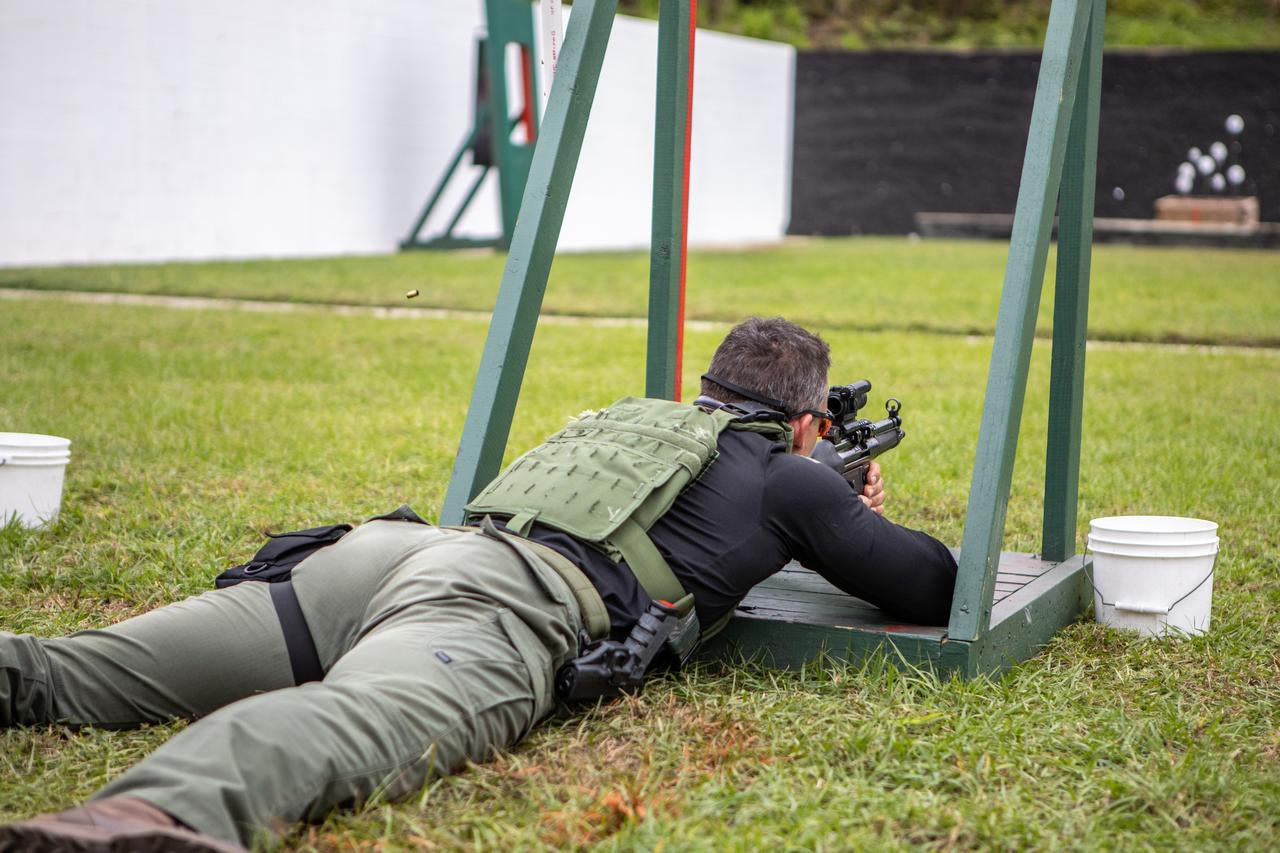
A member of NASA Kennedy Space Center's Emergency Response Team takes aim at a target during the sharpshooter tactical challenge at the 37th Annual SWAT Round-Up International at the Lawson Lamar Firearms and Tactical Training Center in Orlando, Florida. The competition was held Nov. 10 to 15, 2019, and featured five different tactical challenges. Kennedy's ERT members exchanged best practices and competed with more than 50 teams from the U.S. and around the world.
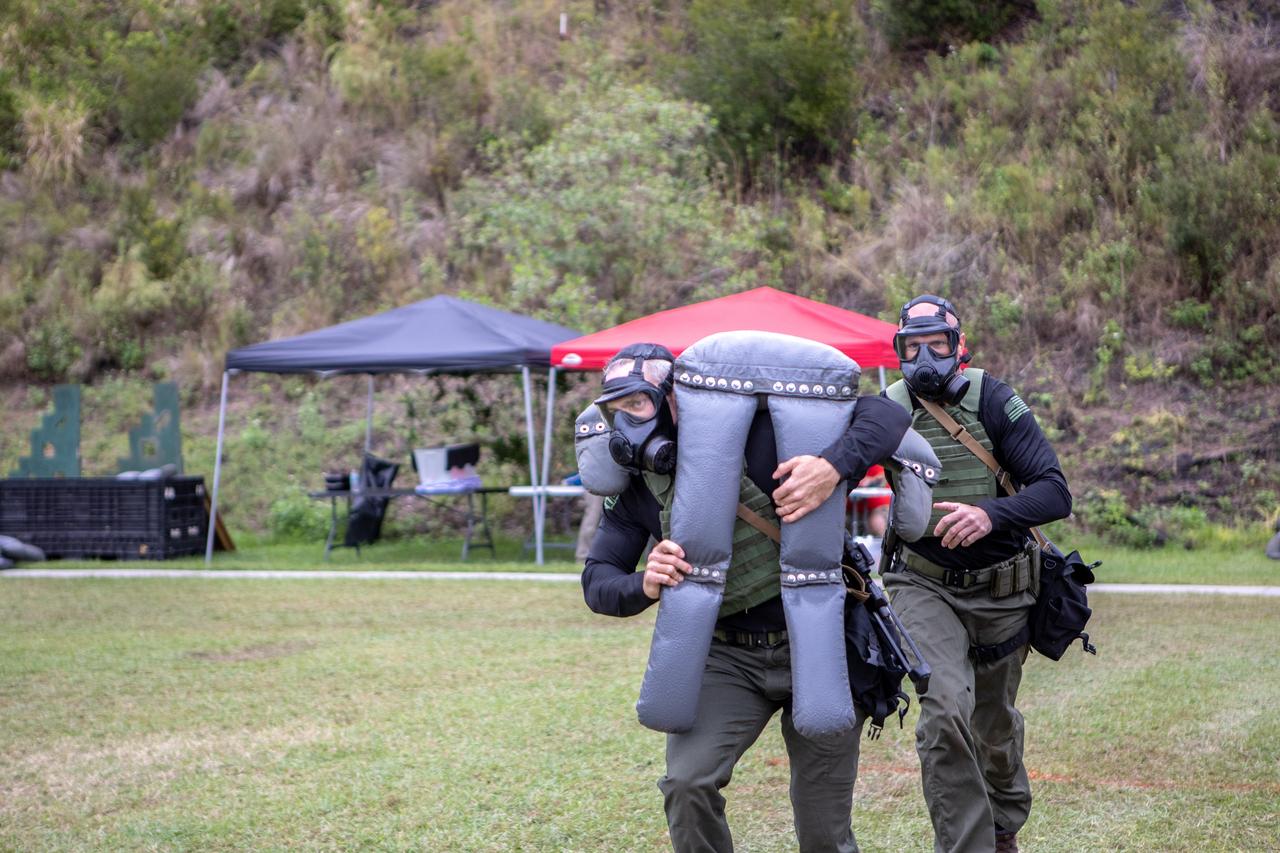
Members of NASA Kennedy Space Center's Emergency Response Team compete in the citizen rescue tactical challenge at the 37th Annual SWAT Round-Up International at the Lawson Lamar Firearms and Tactical Training Center in Orlando, Florida. The competition was held Nov. 10 to 15, 2019, and featured five different tactical challenges. Kennedy's ERT members exchanged best practices and competed with more than 50 teams from the U.S. and around the world.
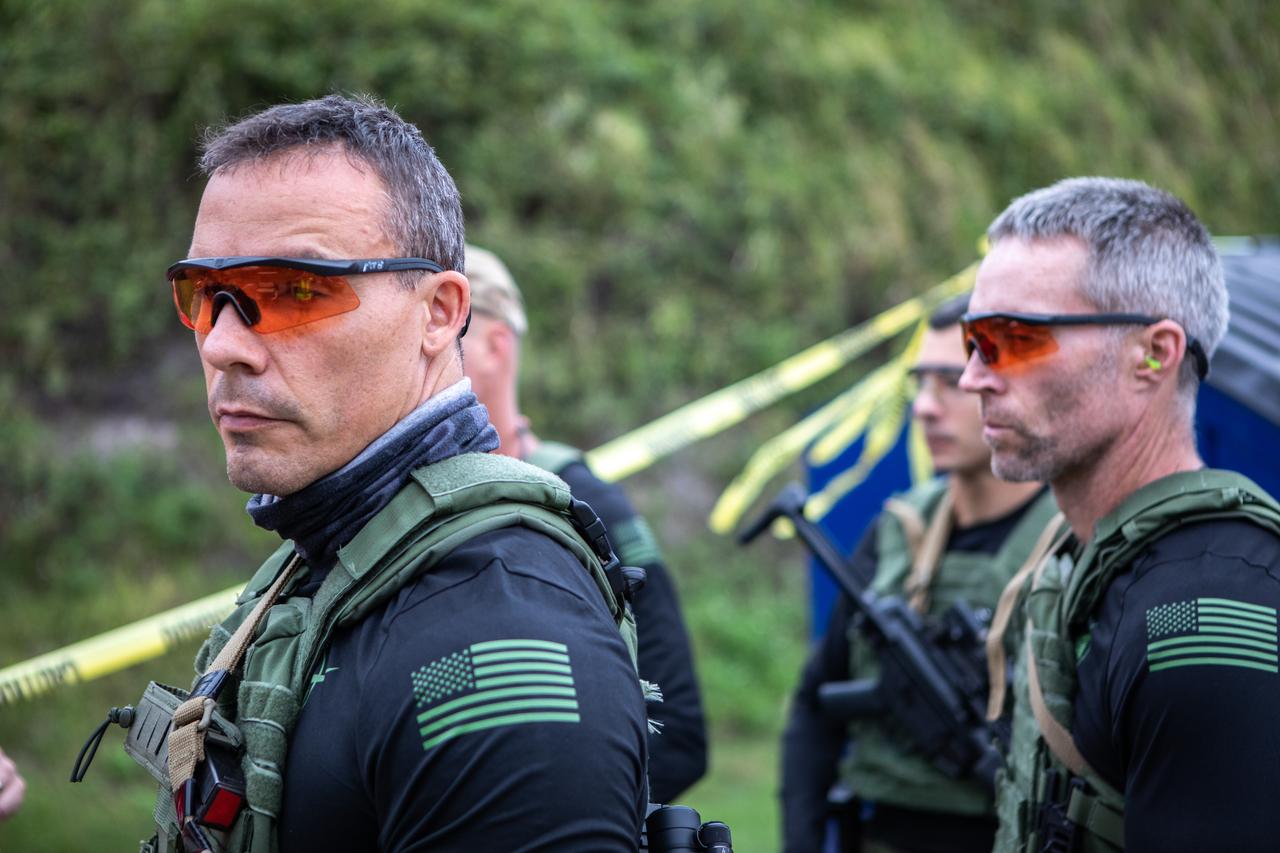
Members of NASA Kennedy Space Center's Emergency Response Team prepare for the next tactical challenge at the 37th Annual SWAT Round-Up International at the Lawson Lamar Firearms and Tactical Training Center in Orlando, Florida. The competition was held Nov. 10 to 15, 2019, and featured five different tactical challenges. Kennedy's ERT members exchanged best practices and competed with more than 50 teams from the U.S. and around the world.

A member of NASA Kennedy Space Center's Emergency Response Team is with his wife and children at the 37th Annual SWAT Round-Up International at the Lawson Lamar Firearms and Tactical Training Center in Orlando, Florida. The competition was held Nov. 10 to 15, and featured five different competition categories. Kennedy's ERT members exchanged best practices and competed with 60 teams from the U.S. and around the world.
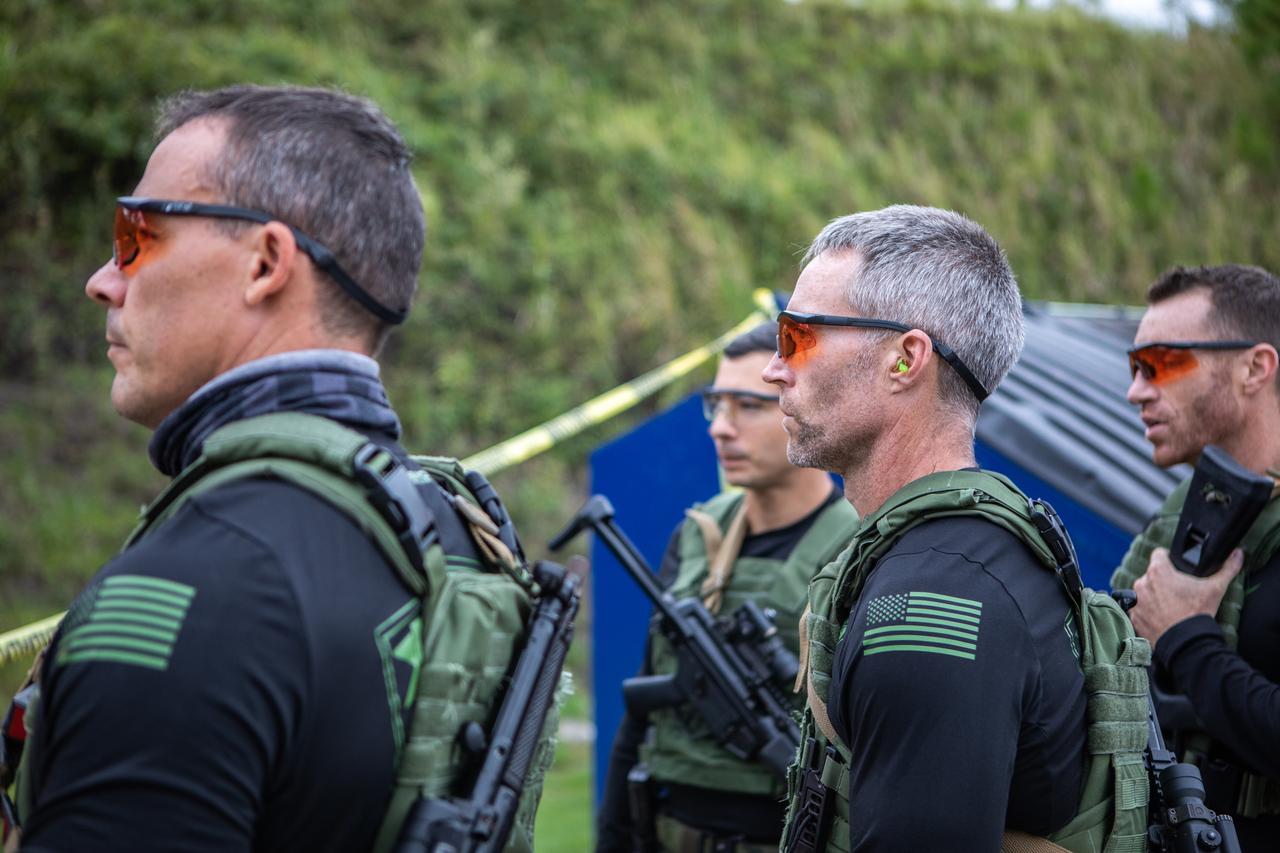
Members of NASA Kennedy Space Center's Emergency Response Team prepare for the next tactical challenge at the 37th Annual SWAT Round-Up International at the Lawson Lamar Firearms and Tactical Training Center in Orlando, Florida. The competition was held Nov. 10 to 15, 2019, and featured five different tactical challenges. Kennedy's ERT members exchanged best practices and competed with more than 50 teams from the U.S. and around the world.
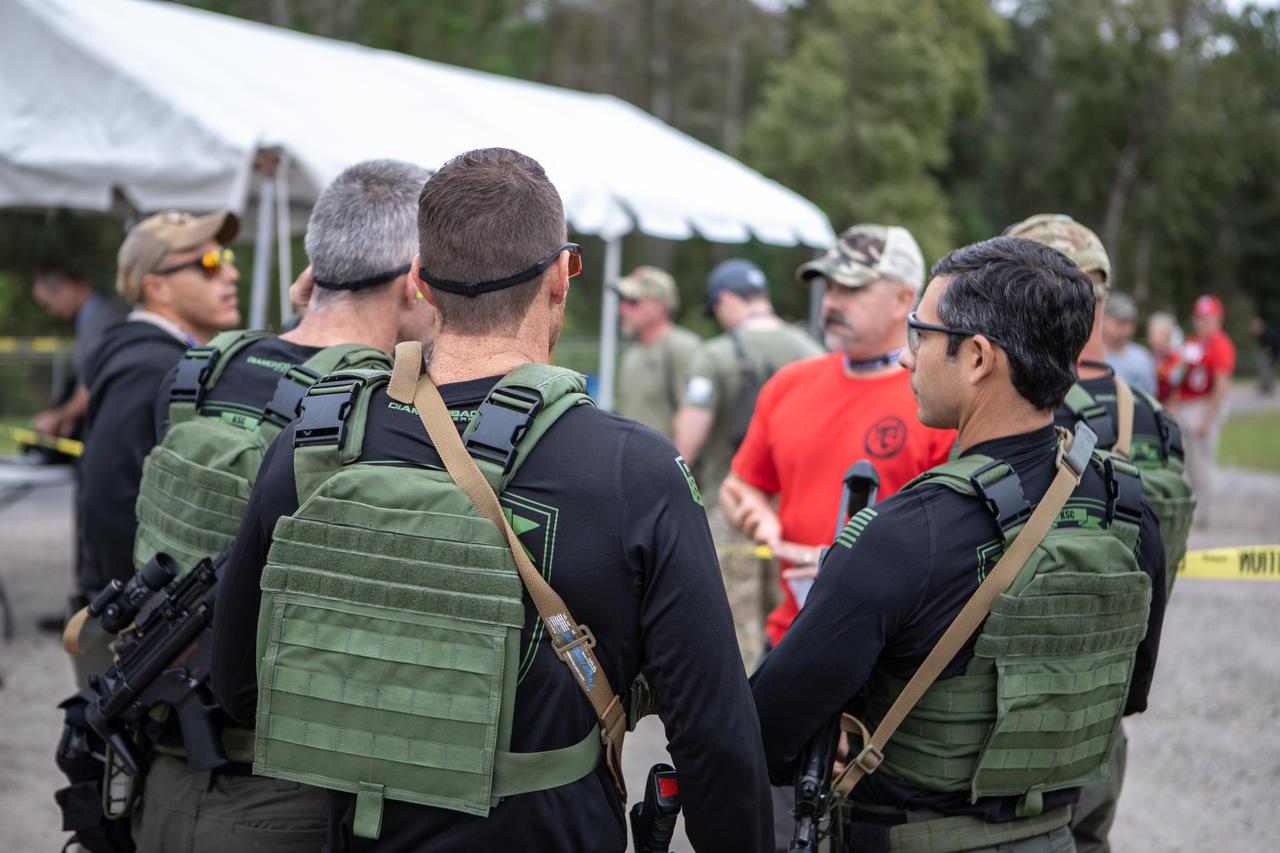
Members of NASA Kennedy Space Center's Emergency Response Team gather to prepare for the next tactical challenge at the 37th Annual SWAT Round-Up International at the Lawson Lamar Firearms and Tactical Training Center in Orlando, Florida. The competition was held Nov. 10 to 15, 2019, and featured five different tactical challenges. Kennedy's ERT members exchanged best practices and competed with more than 50 teams from the U.S. and around the world.
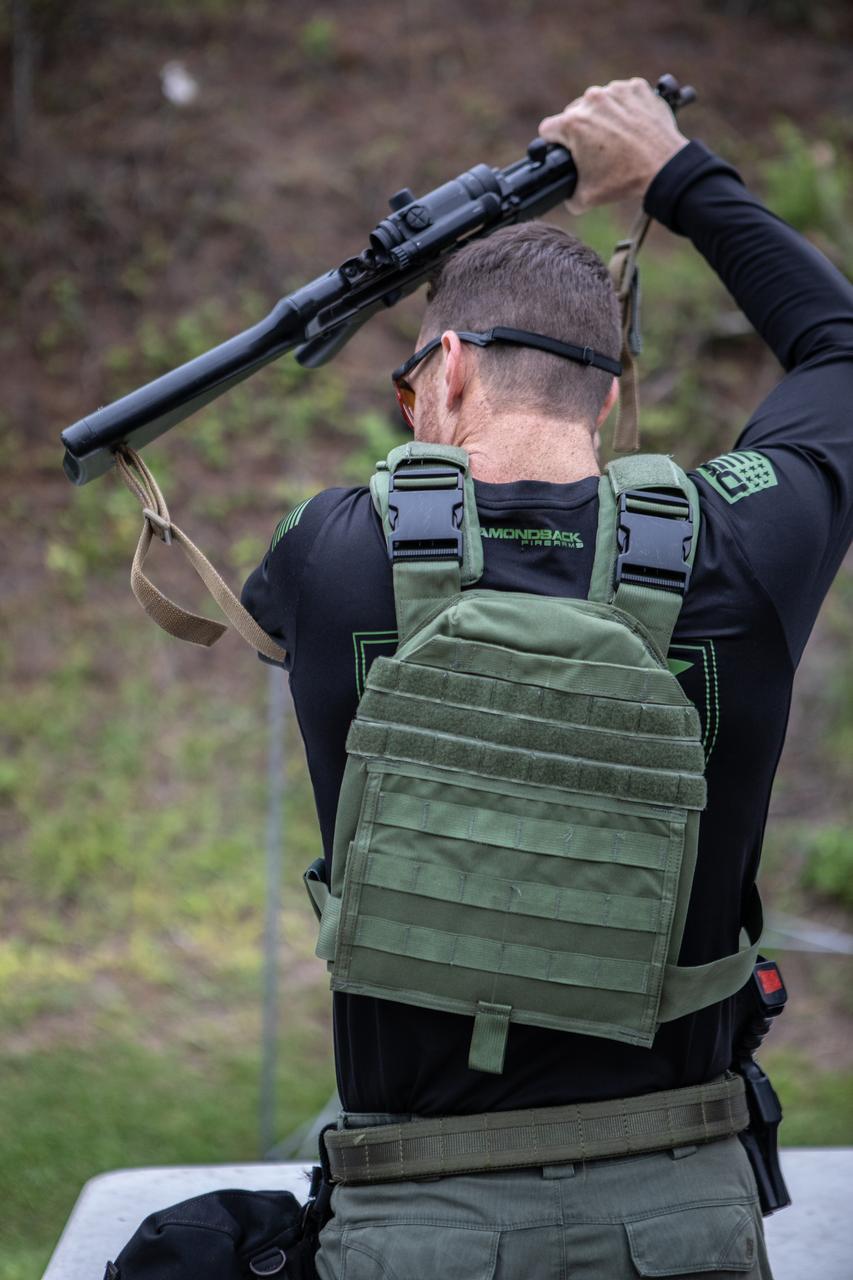
A member of NASA Kennedy Space Center's Emergency Response Team checks his firearm as the team prepares for the next tactical challenge at the 37th Annual SWAT Round-Up International at the Lawson Lamar Firearms and Tactical Training Center in Orlando, Florida. The competition was held Nov. 10 to 15, 2019, and featured five different tactical challenges. Kennedy's ERT members exchanged best practices and competed with more than 50 teams from the U.S. and around the world.
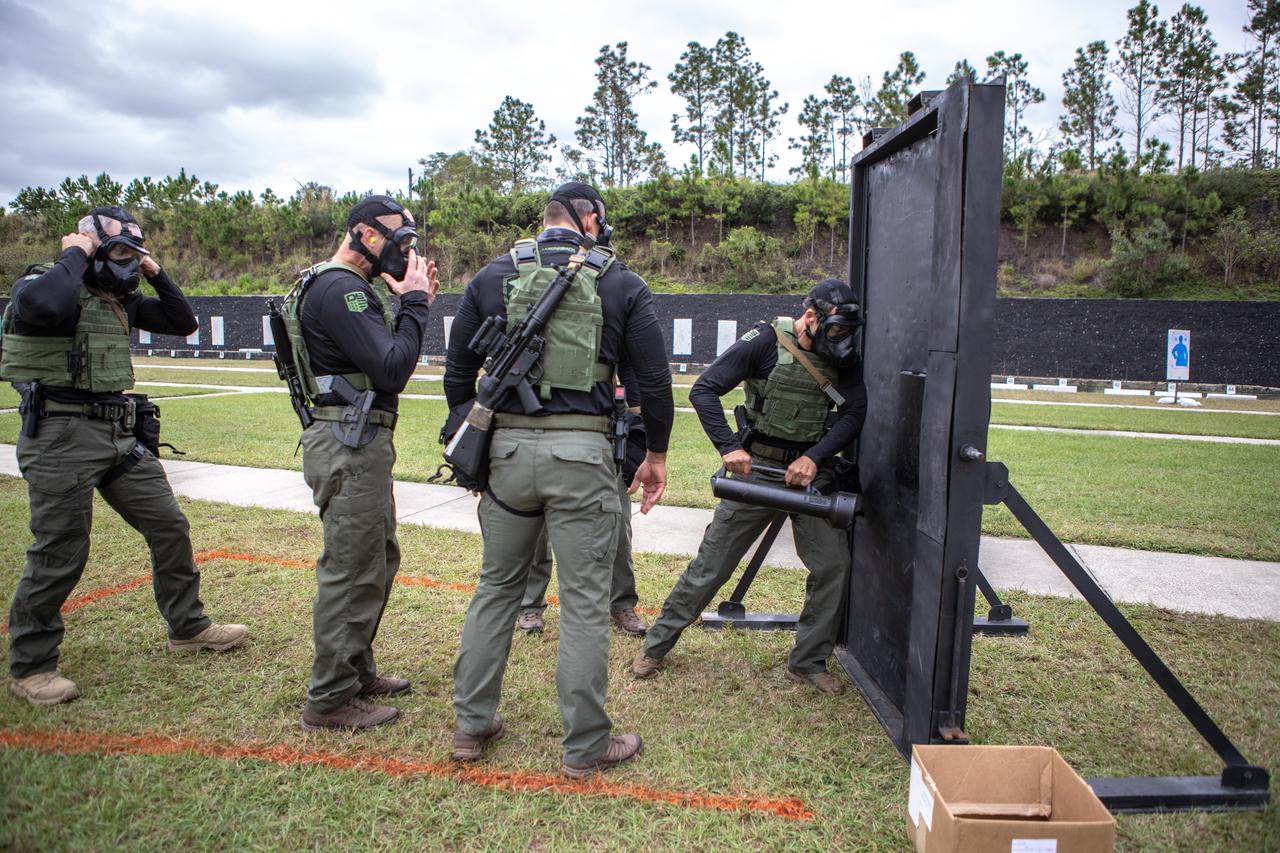
Members of NASA Kennedy Space Center's Emergency Response Team prepare to break through a barricade during one of the tactical challenges at the 37th Annual SWAT Round-Up International at the Lawson Lamar Firearms and Tactical Training Center in Orlando, Florida. The competition was held Nov. 10 to 15, 2019, and featured five different tactical challenges. Kennedy's ERT members exchanged best practices and competed with more than 50 teams from the U.S. and around the world.
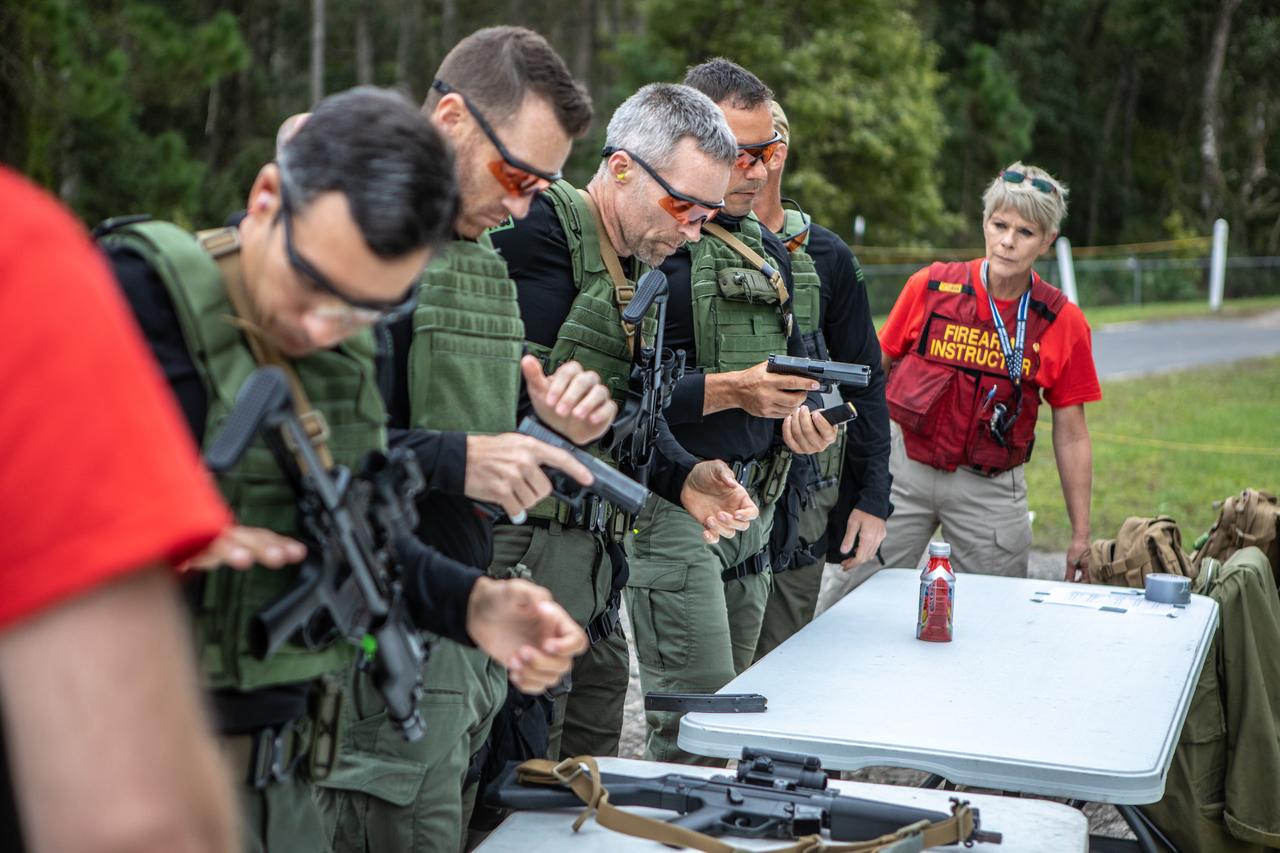
Members of NASA Kennedy Space Center's Emergency Response Team check their firearms as they prepare for the next tactical challenge at the 37th Annual SWAT Round-Up International at the Lawson Lamar Firearms and Tactical Training Center in Orlando, Florida. The competition was held Nov. 10 to 15, 2019, and featured five different tactical challenges. Kennedy's ERT members exchanged best practices and competed with more than 50 teams from the U.S. and around the world.
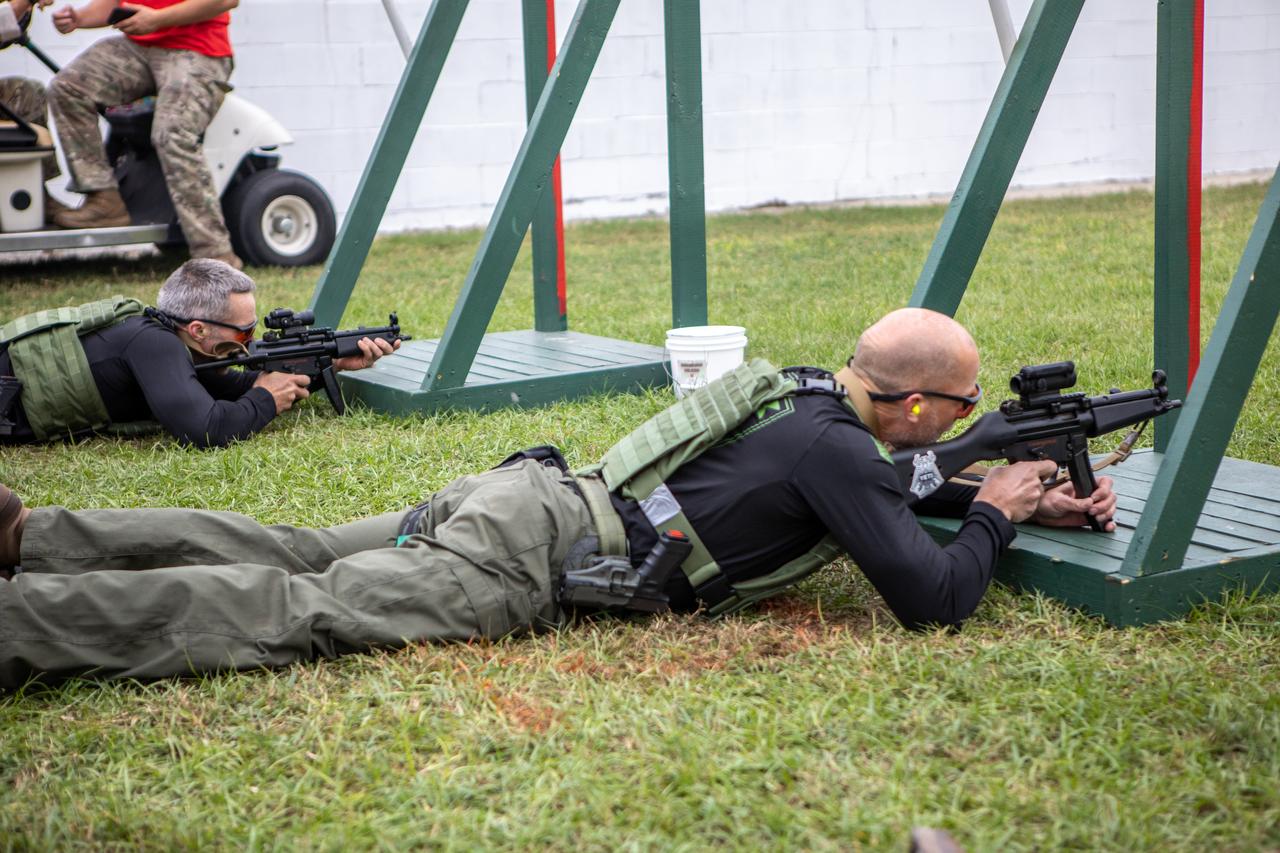
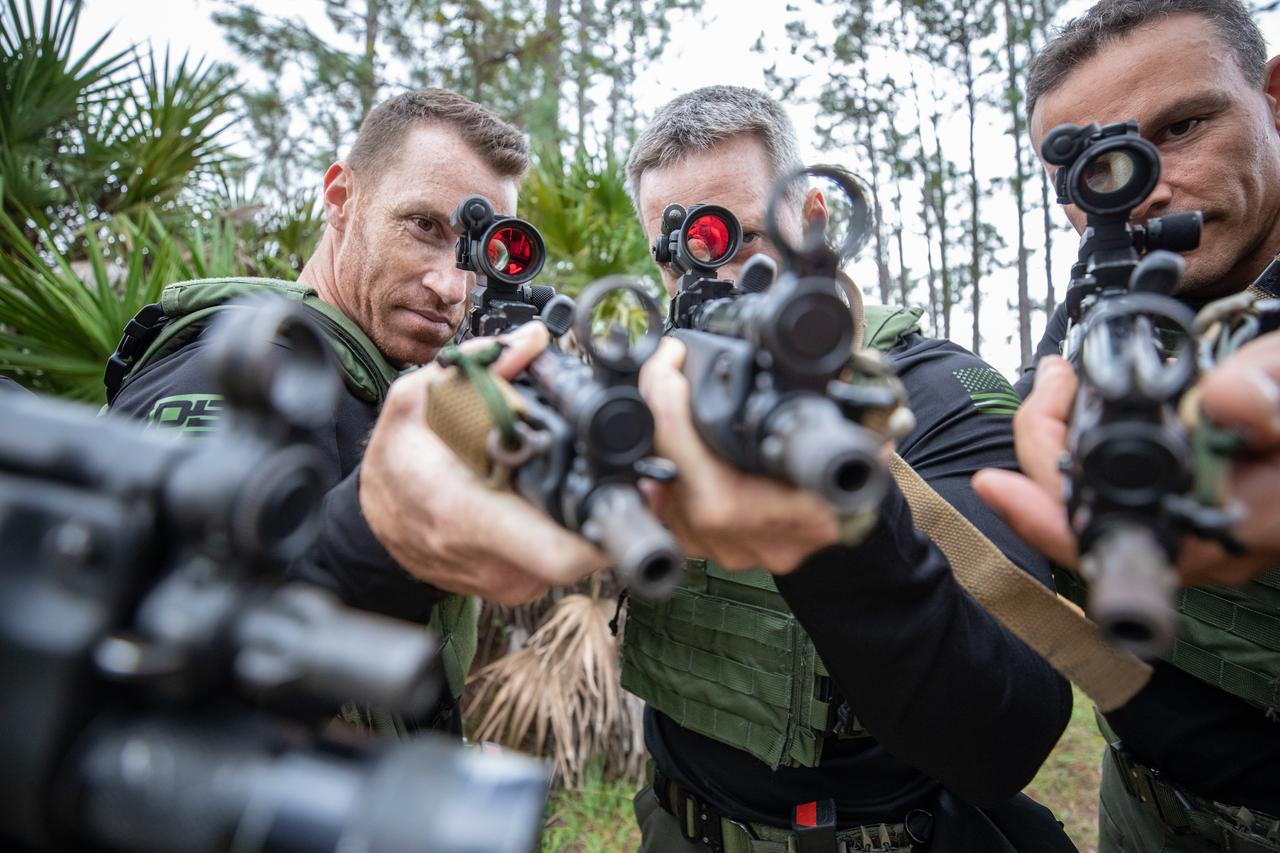
Members of NASA Kennedy Space Center's Emergency Response Team take aim at targets during the sharpshooter tactical challenge at the 37th Annual SWAT Round-Up International at the Lawson Lamar Firearms and Tactical Training Center in Orlando, Florida. The competition was held Nov. 10 to 15, 2019, and featured five different tactical challenges. Kennedy's ERT members exchanged best practices and competed with more than 50 teams from the U.S. and around the world.
Members of NASA Kennedy Space Center's Emergency Response Team check their firearms before competing in the 37th Annual SWAT Round-Up International at the Lawson Lamar Firearms and Tactical Training Center in Orlando, Florida. The competition was held Nov. 10 to 15, 2019, and featured five different tactical challenges. Special pellets, rather than real bullets, are used during the competition. Kennedy's ERT members exchanged best practices and competed with more than 50 teams from the U.S. and around the world.
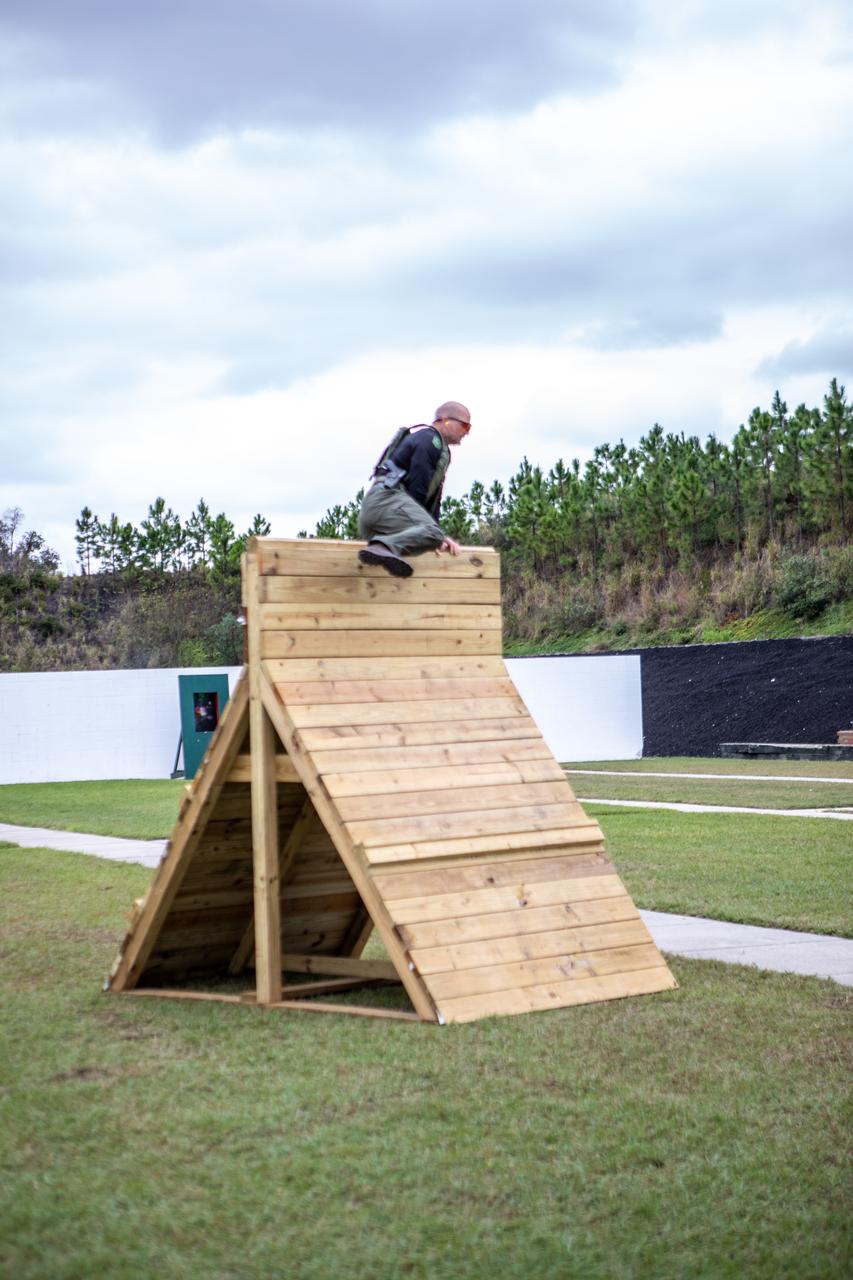
A member of NASA Kennedy Space Center's Emergency Response Team scales over a wall during one of the tactical challenges at the 37th Annual SWAT Round-Up International at the Lawson Lamar Firearms and Tactical Training Center in Orlando, Florida. The competition was held Nov. 10 to 15, 2019, and featured five different tactical challenges. Kennedy's ERT members exchanged best practices and competed with more than 50 teams from the U.S. and around the world.
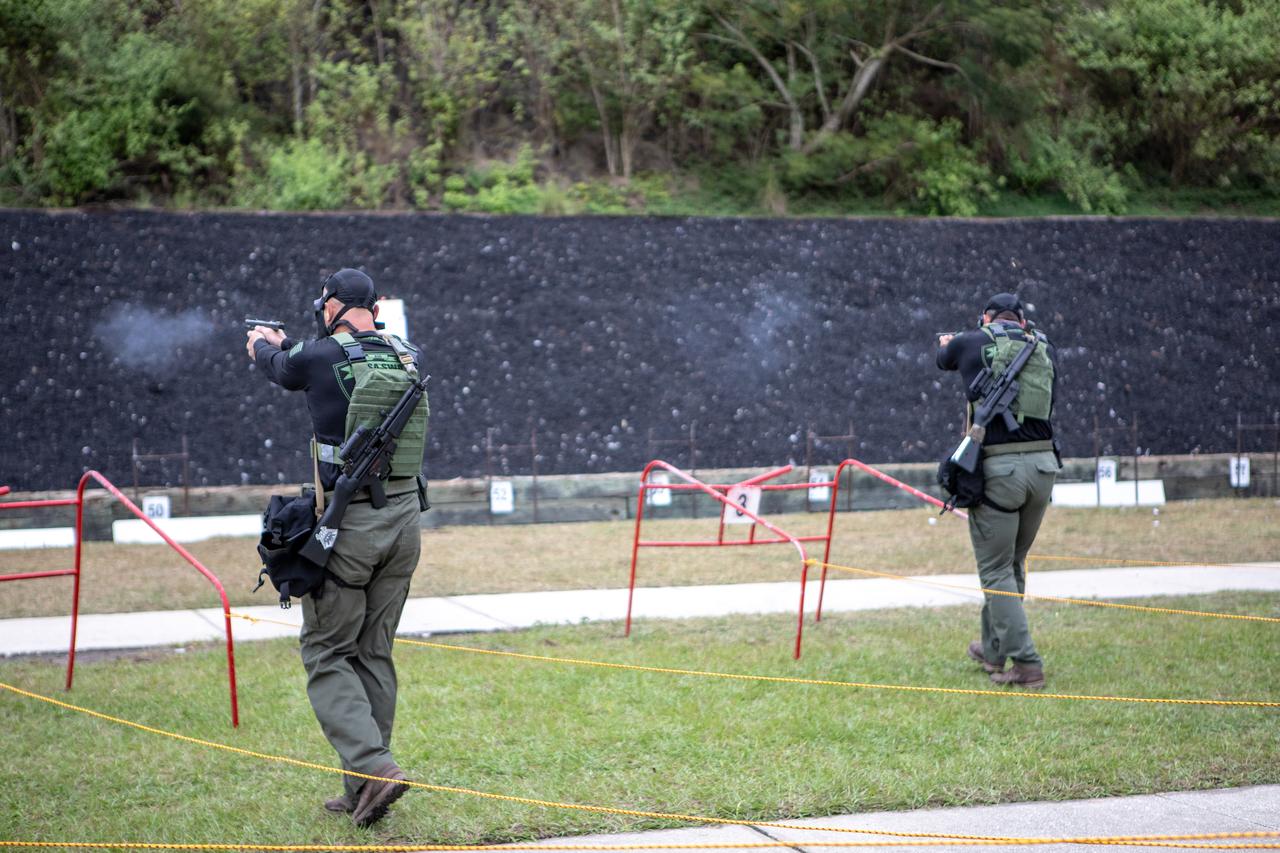
Members of NASA Kennedy Space Center's Emergency Response Team shoot at targets using handguns during one of the tactical challenges at the 37th Annual SWAT Round-Up International at the Lawson Lamar Firearms and Tactical Training Center in Orlando, Florida. The competition was held Nov. 10 to 15, 2019, and featured five different tactical challenges. Kennedy's ERT members exchanged best practices and competed with more than 50 teams from the U.S. and around the world.
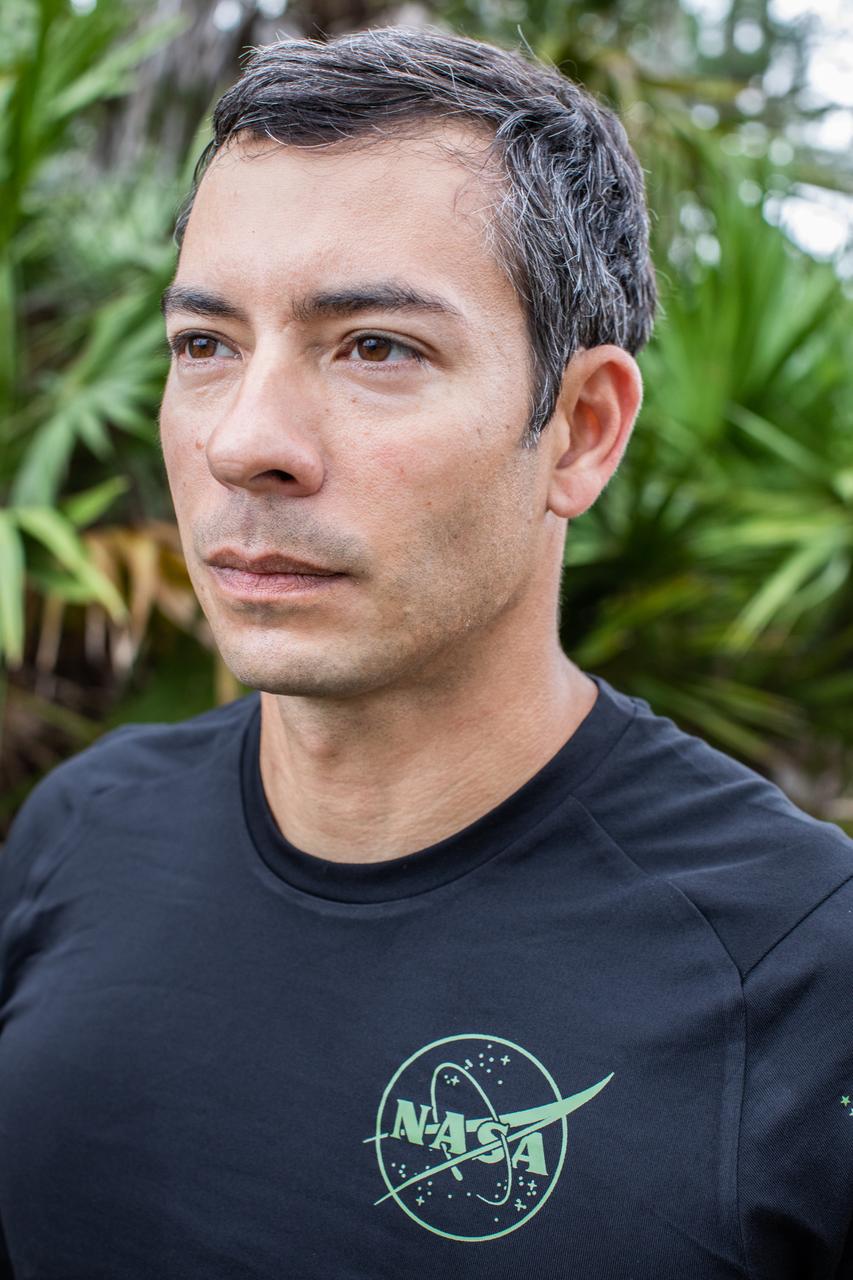
A member of NASA Kennedy Space Center's Emergency Response Team prepares to compete in the 37th Annual SWAT Round-Up International at the Lawson Lamar Firearms and Tactical Training Center in Orlando, Florida. The competition was held Nov. 10 to 15, 2019, and featured five different tactical challenges. Kennedy's ERT members exchanged best practices and competed with more than 50 teams from the U.S. and around the world.

Members of NASA Kennedy Space Center's Emergency Response Team take a break between tactical challenges during the 37th Annual SWAT Round-Up International at the Lawson Lamar Firearms and Tactical Training Center in Orlando, Florida. The competition was held Nov. 10 to 15, 2019, and featured five different tactical challenges. Kennedy's ERT members exchanged best practices and competed with more than 50 teams from the U.S. and around the world.
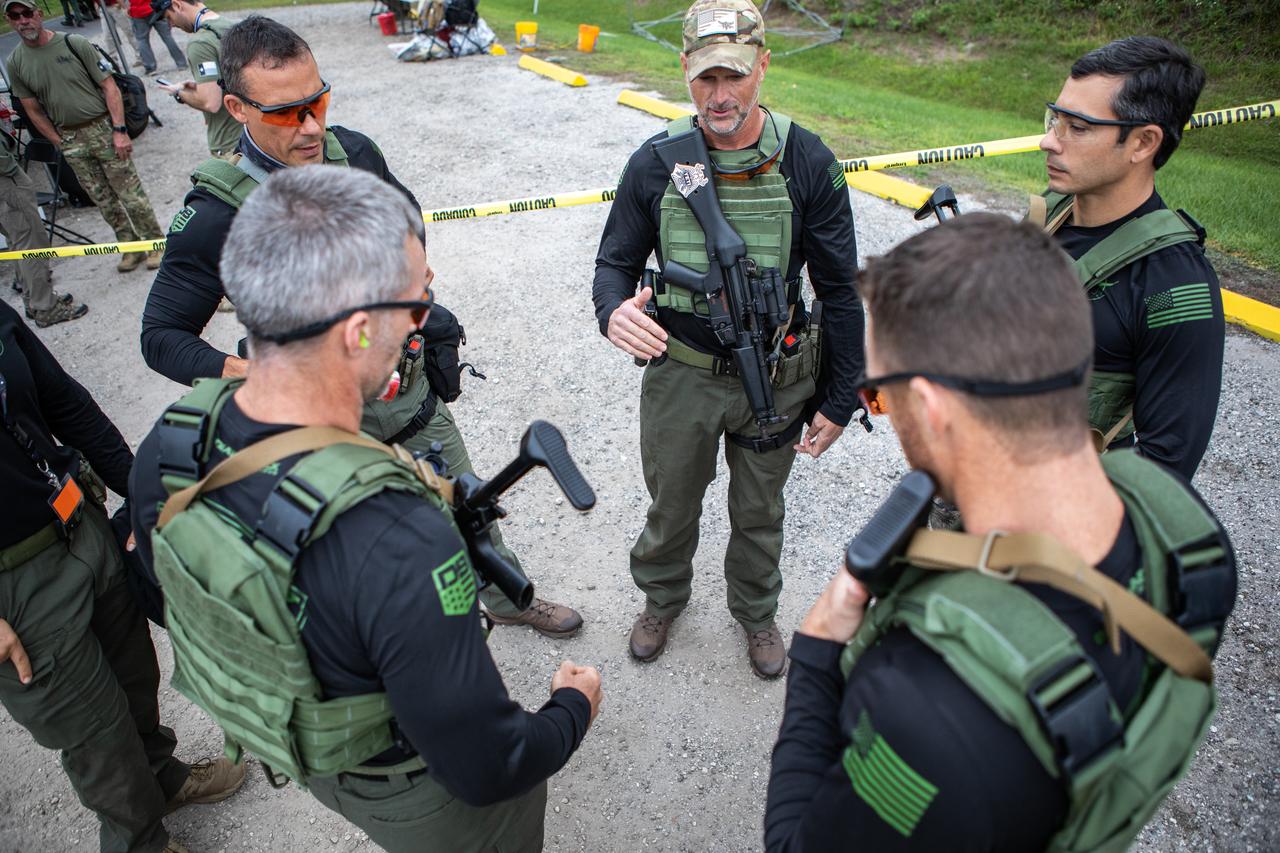
Members of NASA Kennedy Space Center's Emergency Response Team prepare for the next tactical challenge at the 37th Annual SWAT Round-Up International at the Lawson Lamar Firearms and Tactical Training Center in Orlando, Florida. The competition was held Nov. 10 to 15, 2019, and featured five different tactical challenges. Kennedy's ERT members exchanged best practices and competed with more than 50 teams from the U.S. and around the world.
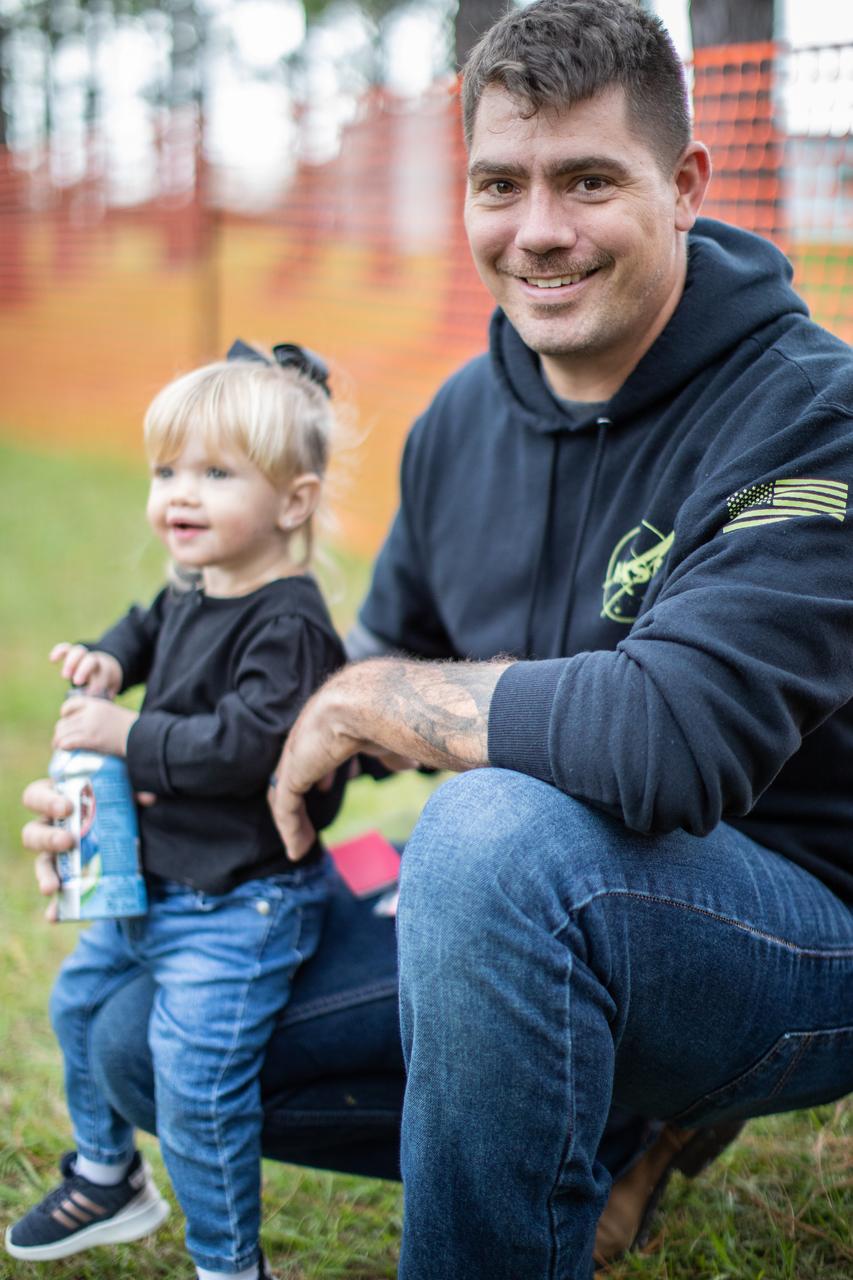
A member of NASA Kennedy Space Center's Emergency Response Team is with his daughter at the 37th Annual SWAT Round-Up International at the Lawson Lamar Firearms and Tactical Training Center in Orlando, Florida. The competition was held Nov. 10 to 15, 2019, and featured five different tactical challenges. Kennedy's ERT members exchanged best practices and competed with more than 50 teams from the U.S. and around the world.
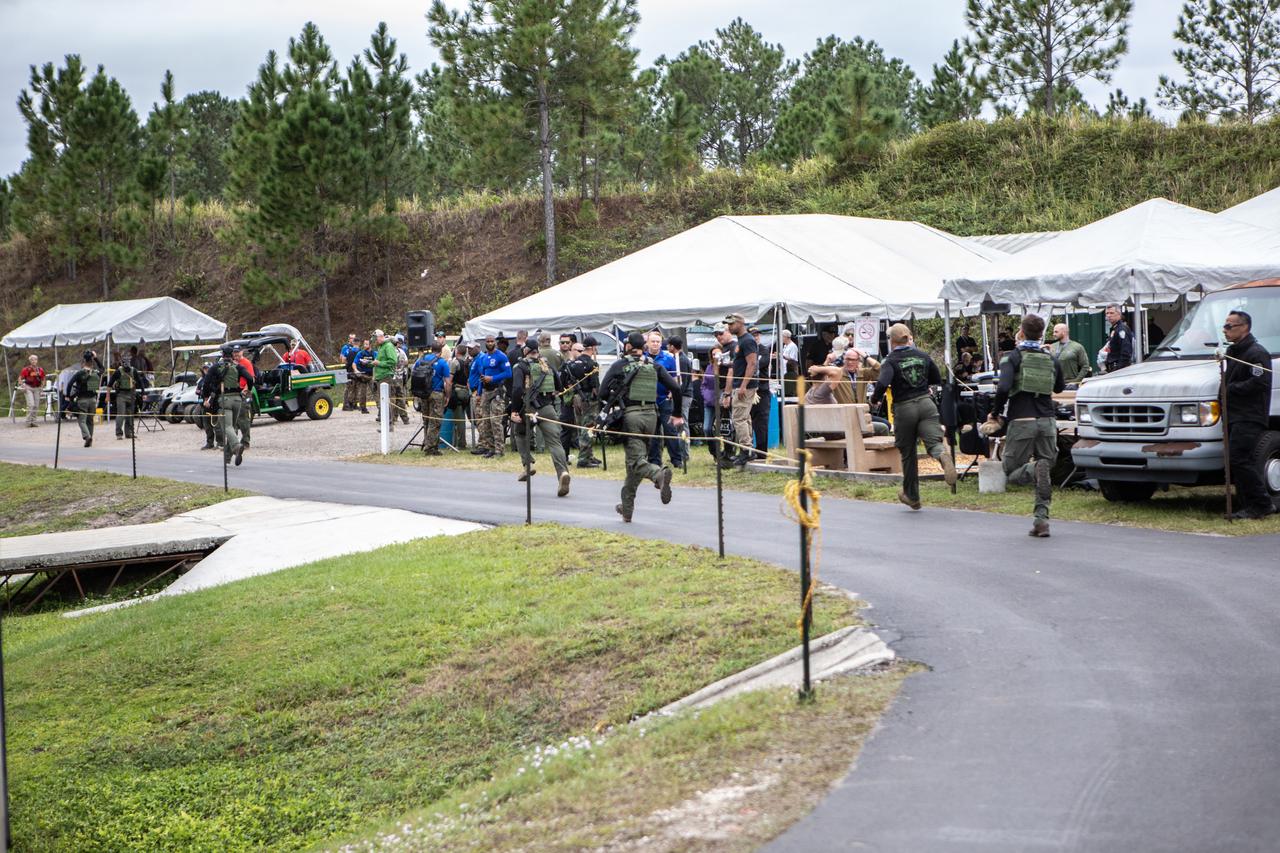
Members of NASA Kennedy Space Center's Emergency Response Team compete in the citizen rescue tactical challenge at the 37th Annual SWAT Round-Up International at the Lawson Lamar Firearms and Tactical Training Center in Orlando, Florida. The competition was held Nov. 10 to 15, 2019, and featured five different tactical challenges. Kennedy's ERT members exchanged best practices and competed with more than 50 teams from the U.S. and around the world.
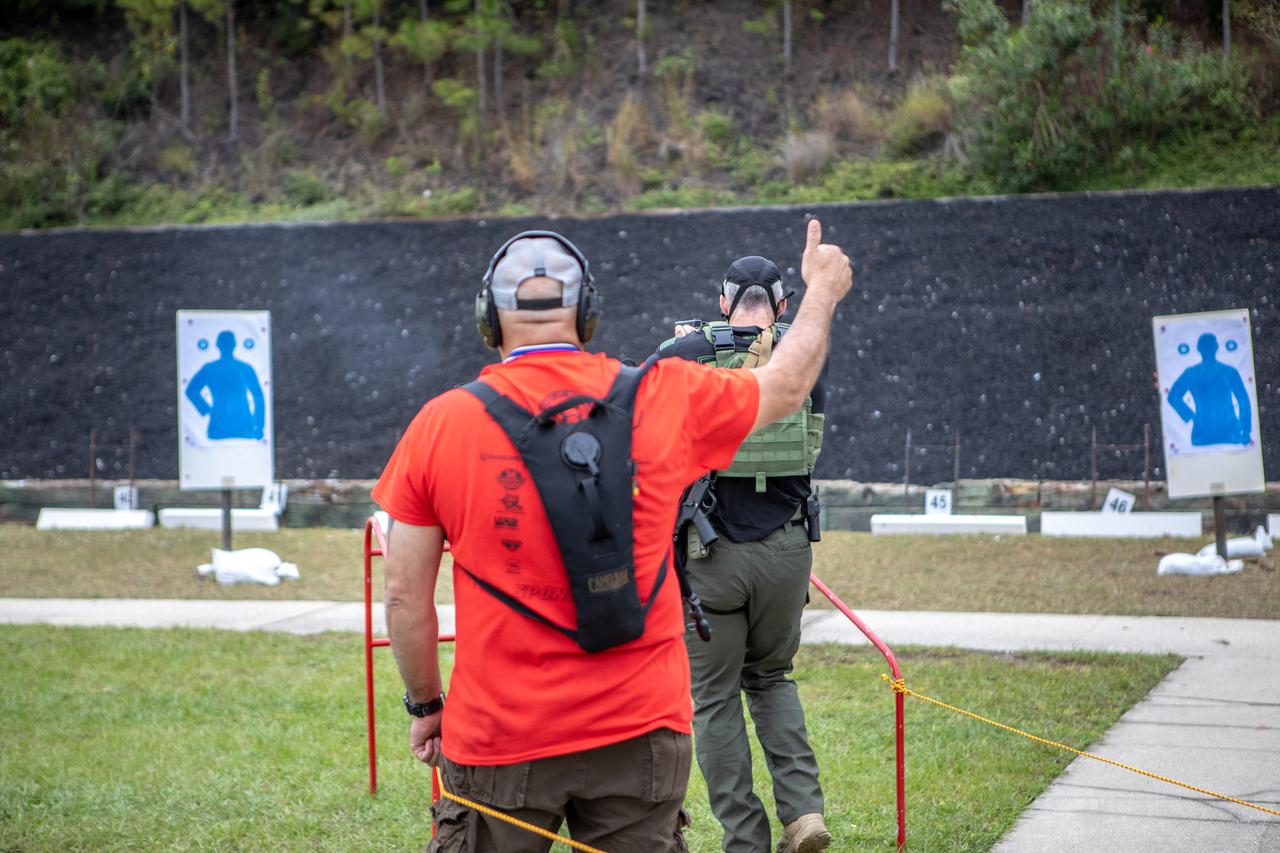
A member of NASA Kennedy Space Center's Emergency Response Team waits for the signal from the judge and then takes aim to shoot at a target with a handgun during one of the tactical challenges at the 35th Annual SWAT Round-up International at the Lawson Lamar Firearms and Tactical Training Center in Orlando, Florida. The competition was held Nov. 10 to 15, 2019, and featured five different tactical challenges. Kennedy's ERT members exchanged best practices and competed with more than 50 teams from the U.S. and around the world.
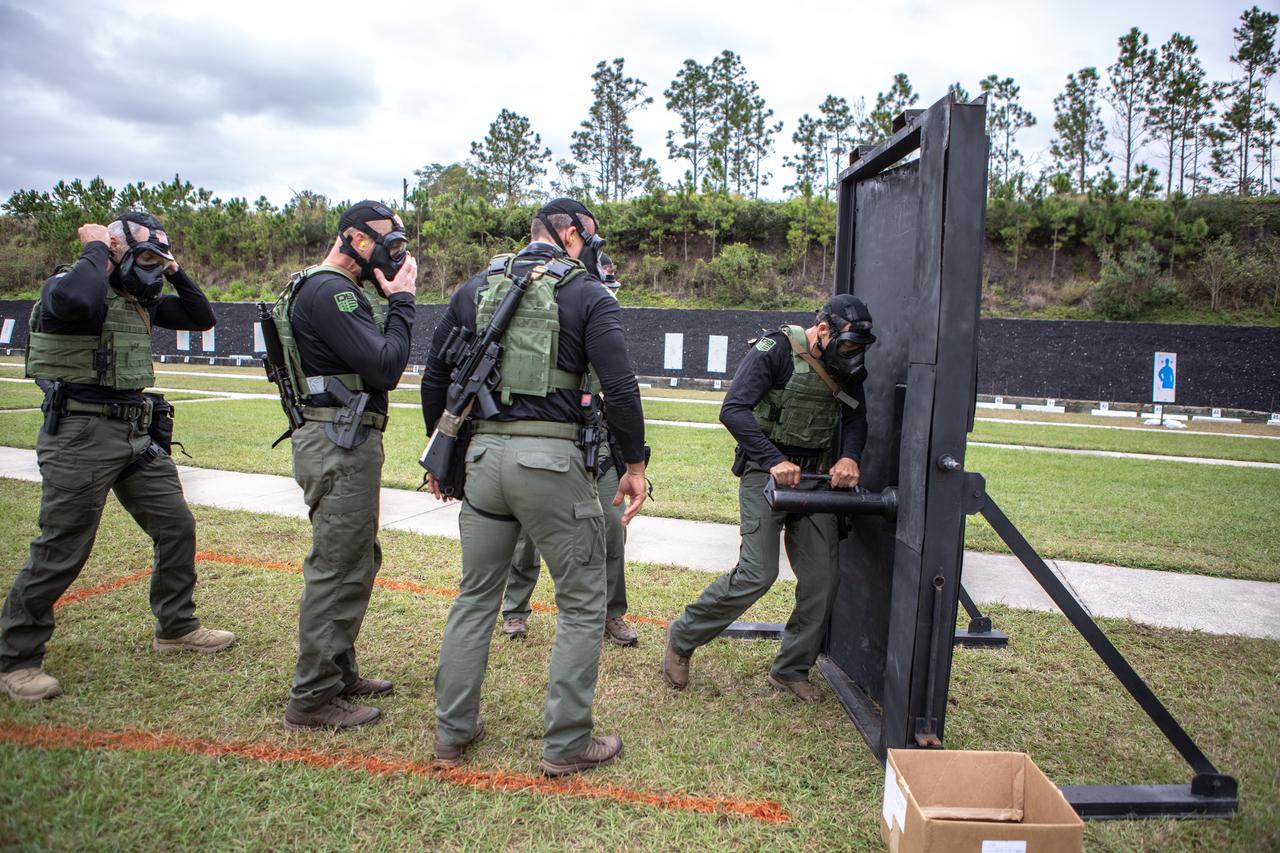
Members of NASA Kennedy Space Center's Emergency Response Team prepare to break through a barricade during one of the tactical challenges at the 37th Annual SWAT Round-Up International at the Lawson Lamar Firearms and Tactical Training Center in Orlando, Florida. The competition was held Nov. 10 to 15, 2019, and featured five different tactical challenges. Kennedy's ERT members exchanged best practices and competed with more than 50 teams from the U.S. and around the world.
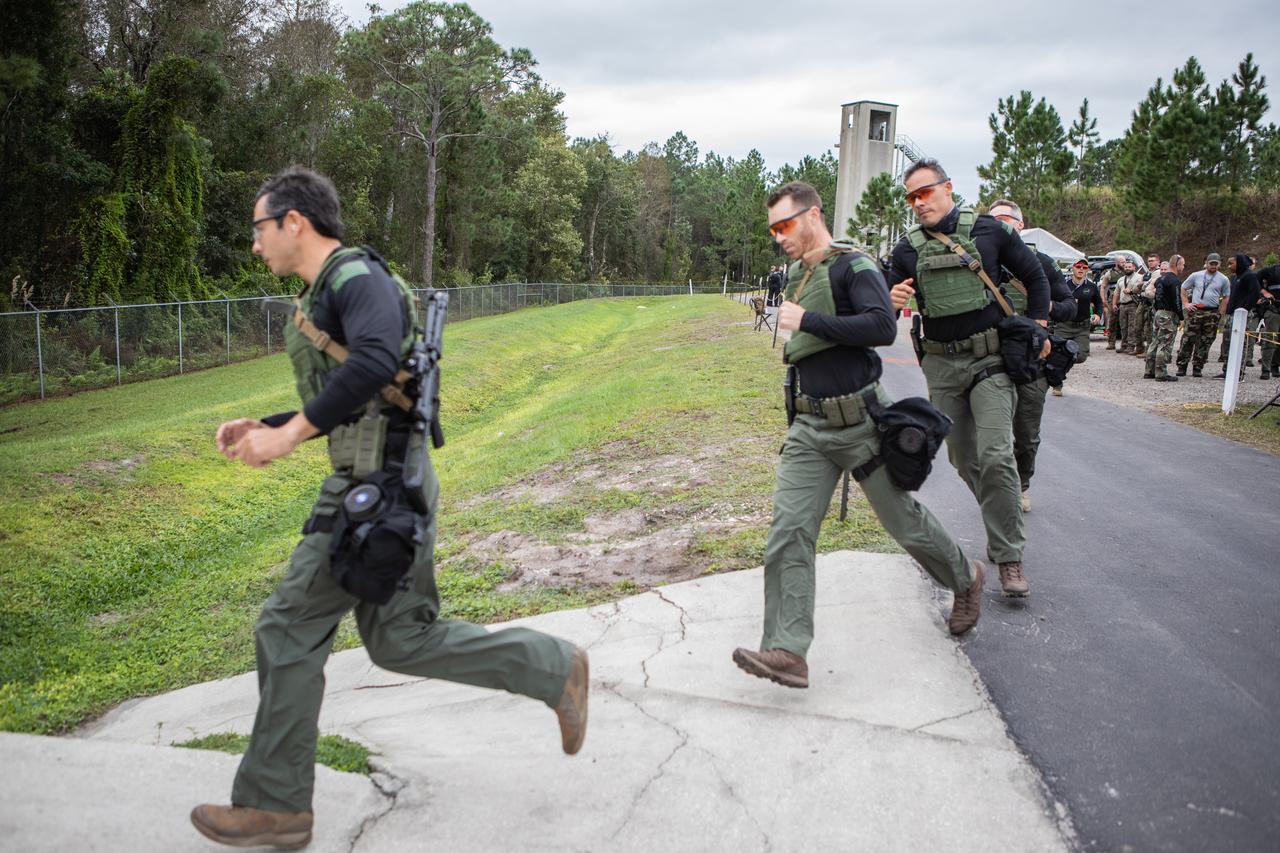
Members of NASA Kennedy Space Center's Emergency Response Team run during one of the tactical challenges at the 37th Annual SWAT Round-Up International at the Lawson Lamar Firearms and Tactical Training Center in Orlando, Florida. The competition was held Nov. 10 to 15, 2019, and featured five different tactical challenges. Kennedy's ERT members exchanged best practices and competed with more than 50 teams from the U.S. and around the world.
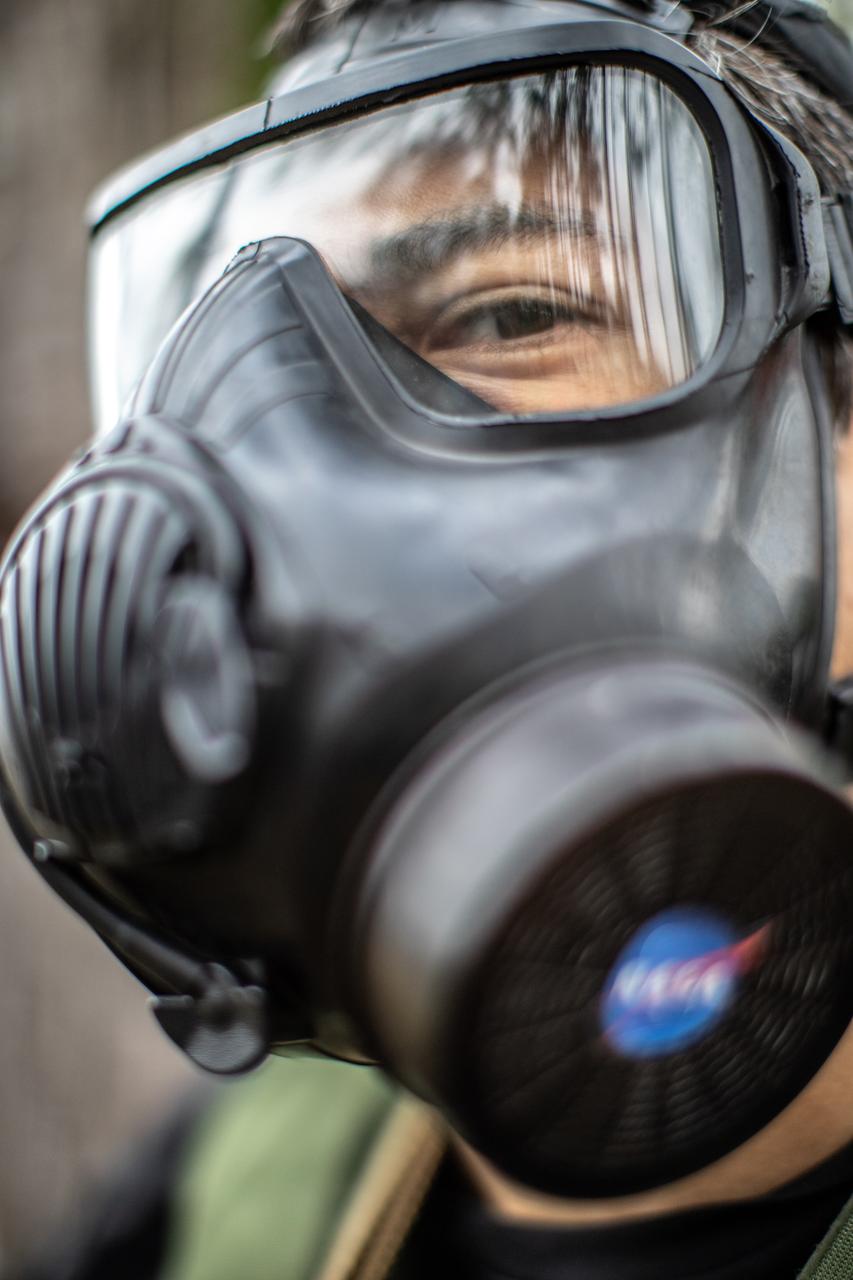
A member of NASA Kennedy Space Center's Emergency Response Team prepares to compete in the 37th Annual SWAT Round-Up International at the Lawson Lamar Firearms and Tactical Training Center in Orlando, Florida. The competition was held Nov. 10 to 15, 2019, and featured five different tactical challenges. Kennedy's ERT members exchanged best practices and competed with more than 50 teams from the U.S. and around the world.
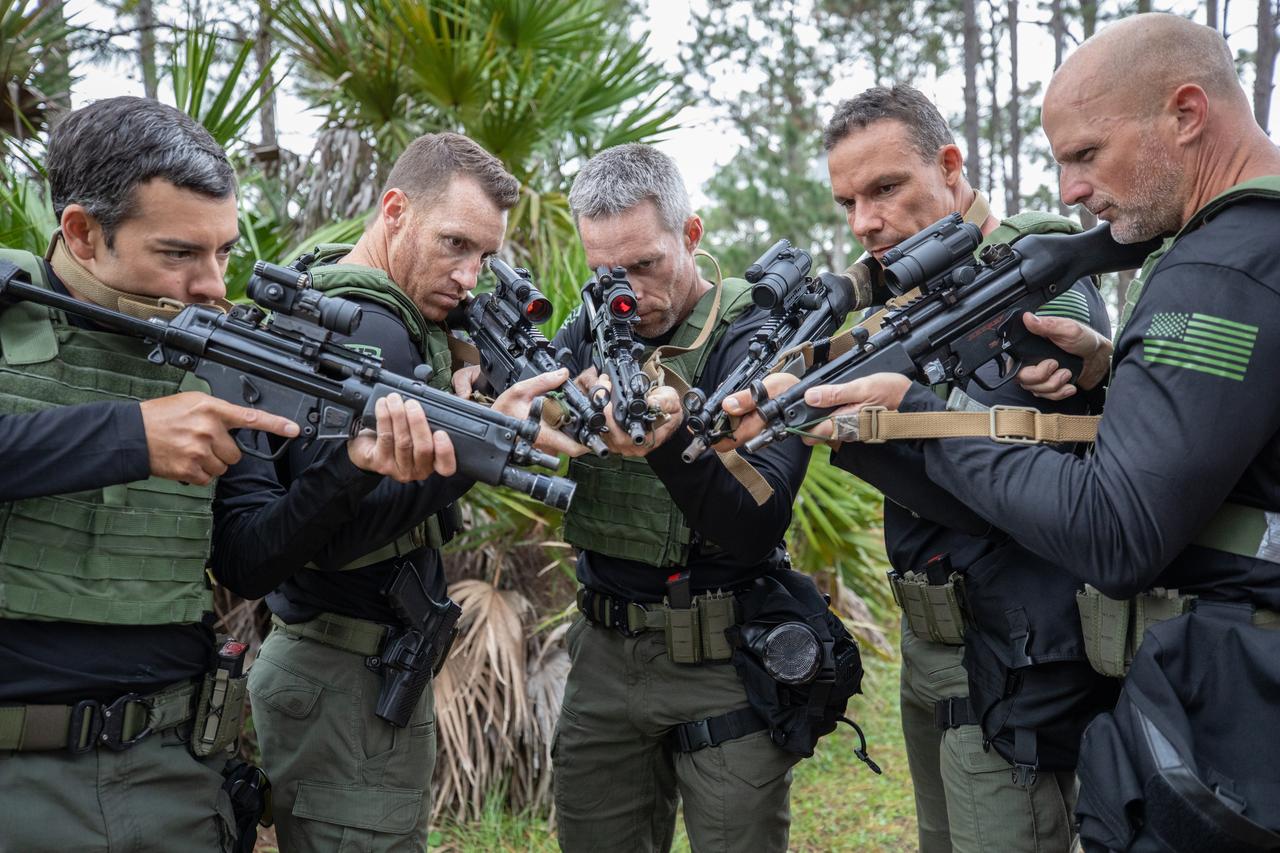
Members of NASA Kennedy Space Center's Emergency Response Team check their firearms before competing in the 37th Annual SWAT Round-Up International at the Lawson Lamar Firearms and Tactical Training Center in Orlando, Florida. The competition was held Nov. 10 to 15, 2019, and featured five different tactical challenges. Special pellets, rather than real bullets, are used during the competition. Kennedy's ERT members exchanged best practices and competed with more than 50 teams from the U.S. and around the world.
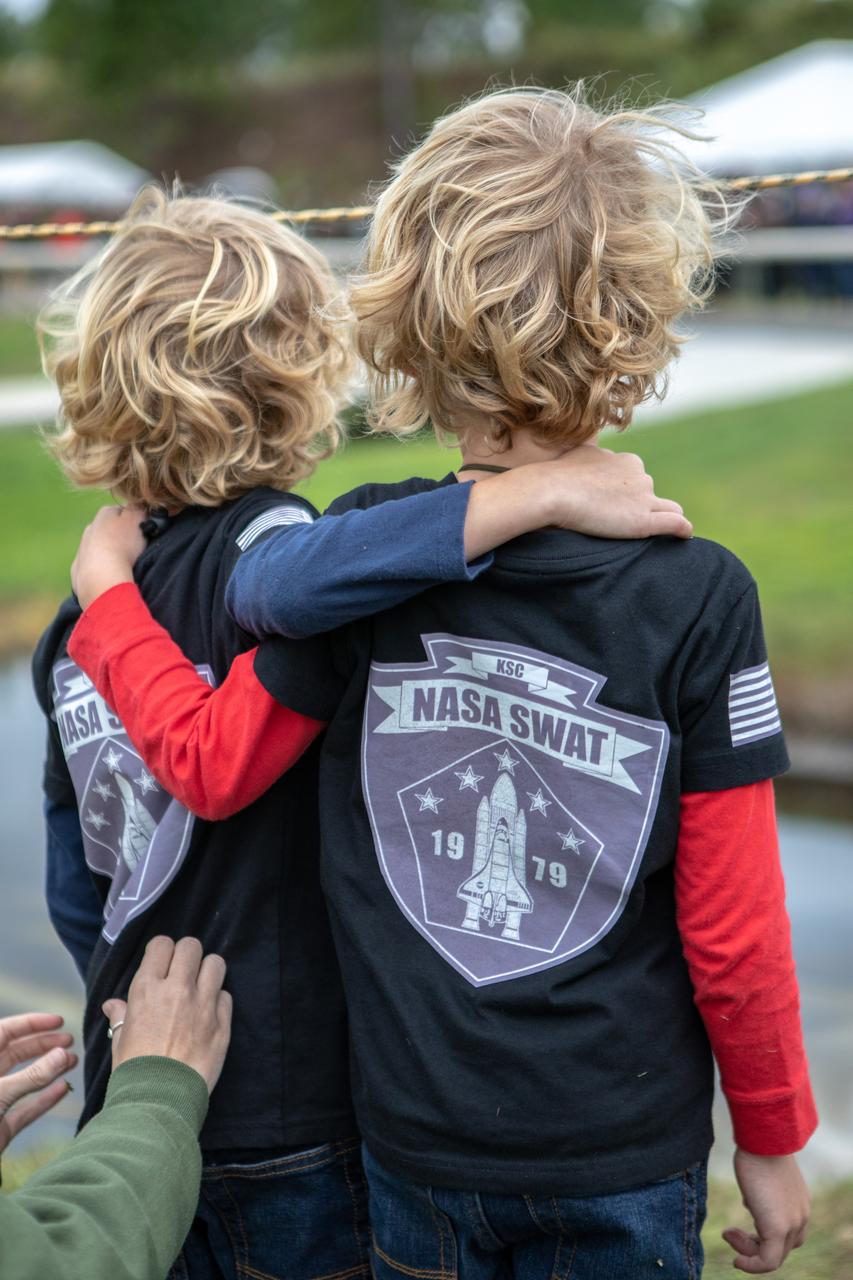
The young sons of one of NASA Kennedy Space Center's Emergency Response Team members prepare to watch their father compete in the 37th Annual SWAT Round-Up International at the Lawson Lamar Firearms and Tactical Training Center in Orlando, Florida. The competition was held Nov. 10 to 15, and featured five different competition categories. Kennedy's ERT members exchanged best practices and competed with 60 teams from the U.S. and around the world.
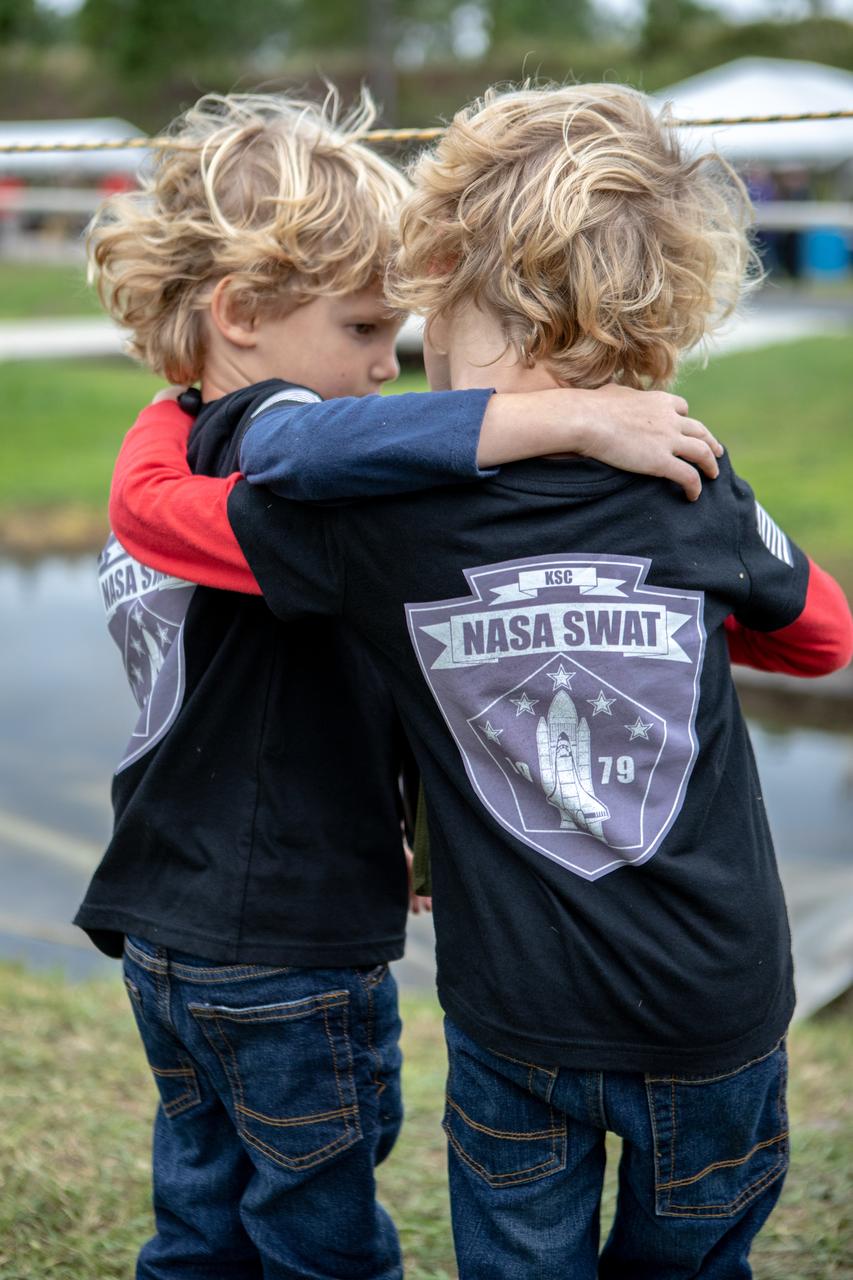
The young sons of one of NASA Kennedy Space Center's Emergency Response Team members prepare to watch their father compete in the 37th Annual SWAT Round-Up International at the Lawson Lamar Firearms and Tactical Training Center in Orlando, Florida. The competition was held Nov. 10 to 15, and featured five different competition categories. Kennedy's ERT members exchanged best practices and competed with 60 teams from the U.S. and around the world.
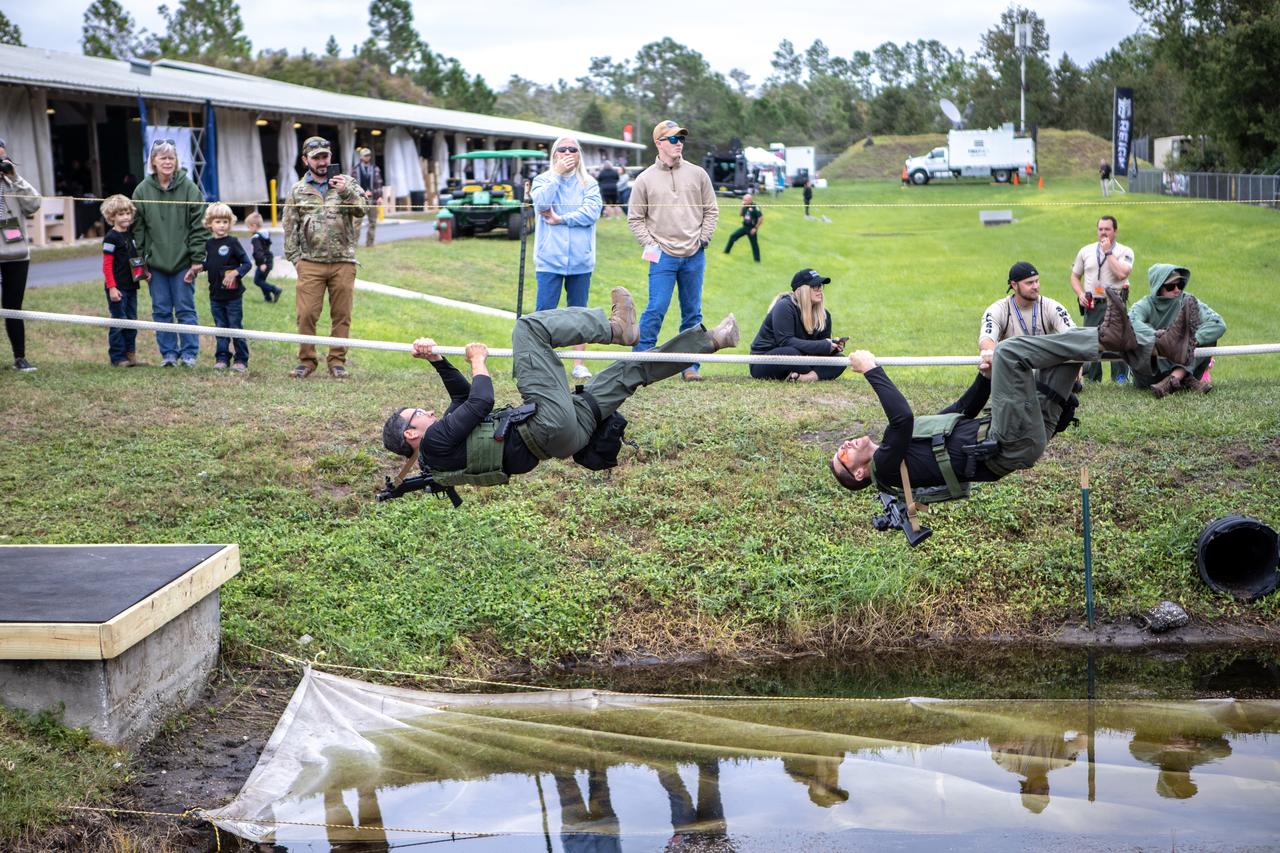
Members of NASA Kennedy Space Center's Emergency Response Team work their way along a rope above water during one of the tactical challenges at the 37th Annual SWAT Round-Up International at the Lawson Lamar Firearms and Tactical Training Center in Orlando, Florida. The competition was held Nov. 10 to 15, 2019, and featured five different tactical challenges. Kennedy's ERT members exchanged best practices and competed with more than 50 teams from the U.S. and around the world.
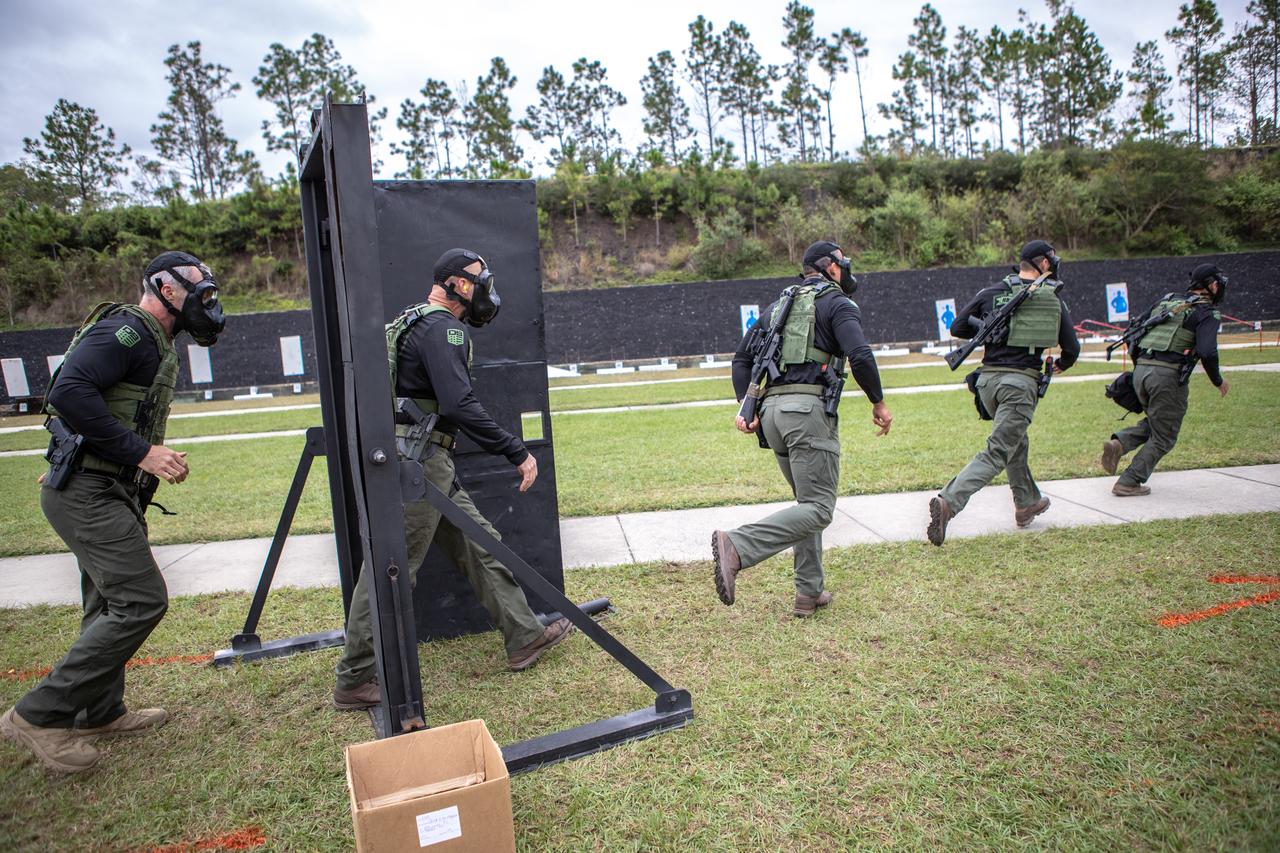
Members of NASA Kennedy Space Center's Emergency Response Team break through a barricade and run through to the other side during one of the tactical challenges at the 37th Annual SWAT Round-Up International at the Lawson Lamar Firearms and Tactical Training Center in Orlando, Florida. The competition was held Nov. 10 to 15, 2019, and featured five different tactical challenges. Kennedy's ERT members exchanged best practices and competed with more than 50 teams from the U.S. and around the world.
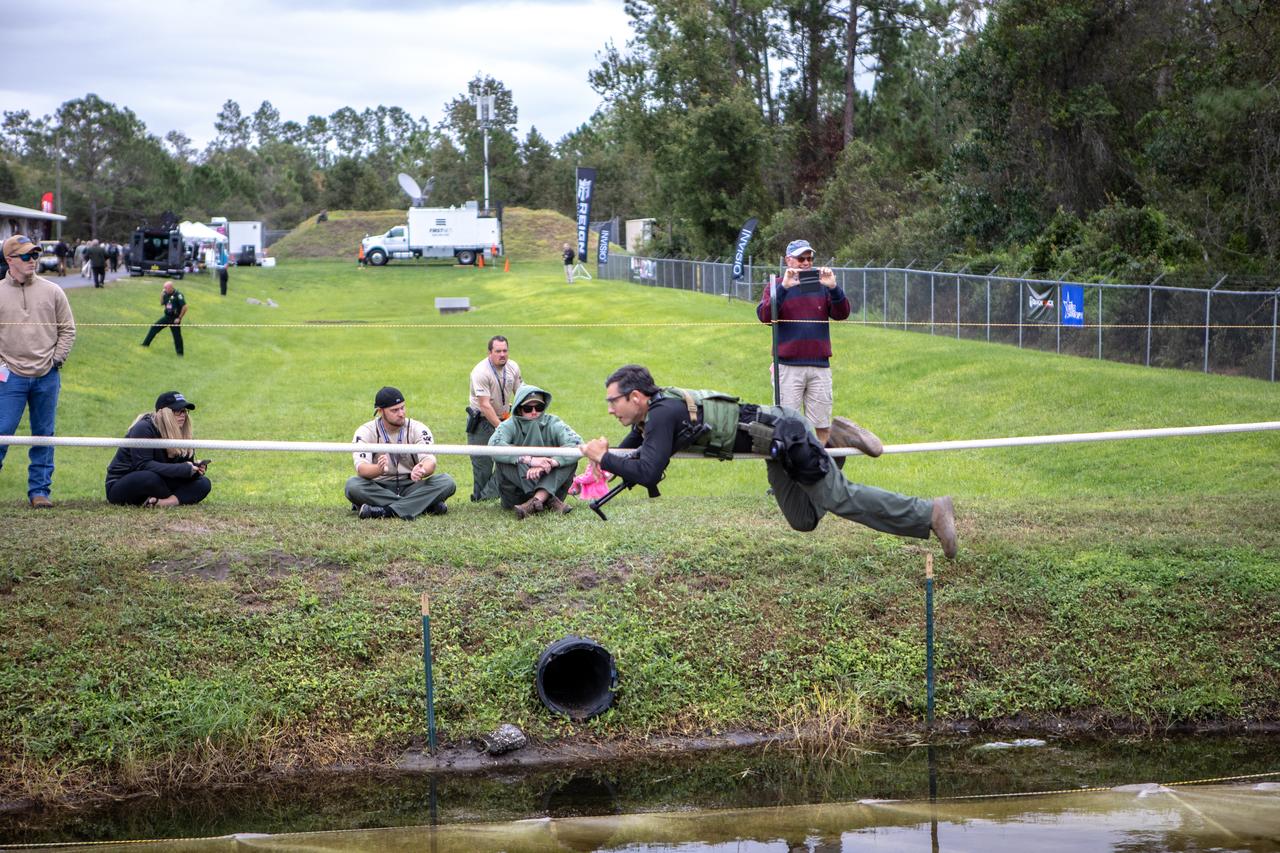
A member of NASA Kennedy Space Center's Emergency Response Team works his way along a rope above water during one of the tactical challenges at the 37th Annual SWAT Round-Up International at the Lawson Lamar Firearms and Tactical Training Center in Orlando, Florida. The competition was held Nov. 10 to 15, 2019, and featured five different tactical challenges. Kennedy's ERT members exchanged best practices and competed with more than 50 teams from the U.S. and around the world.
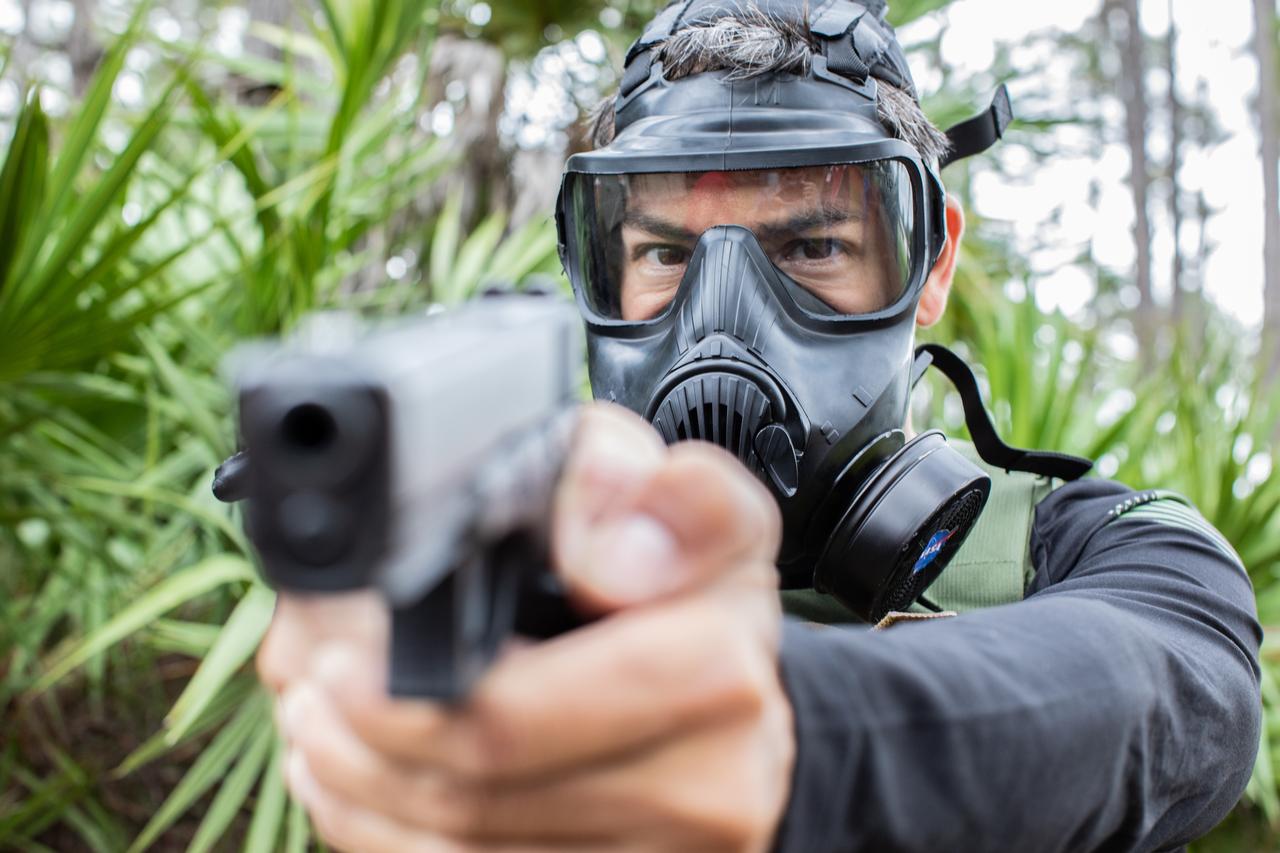
A member of NASA Kennedy Space Center's Emergency Response Team prepares to compete in the 37th Annual SWAT Round-Up International at the Lawson Lamar Firearms and Tactical Training Center in Orlando, Florida. The competition was held Nov. 10 to 15, 2019, and featured five different tactical challenges. Kennedy's ERT members exchanged best practices and competed with more than 50 teams from the U.S. and around the world.
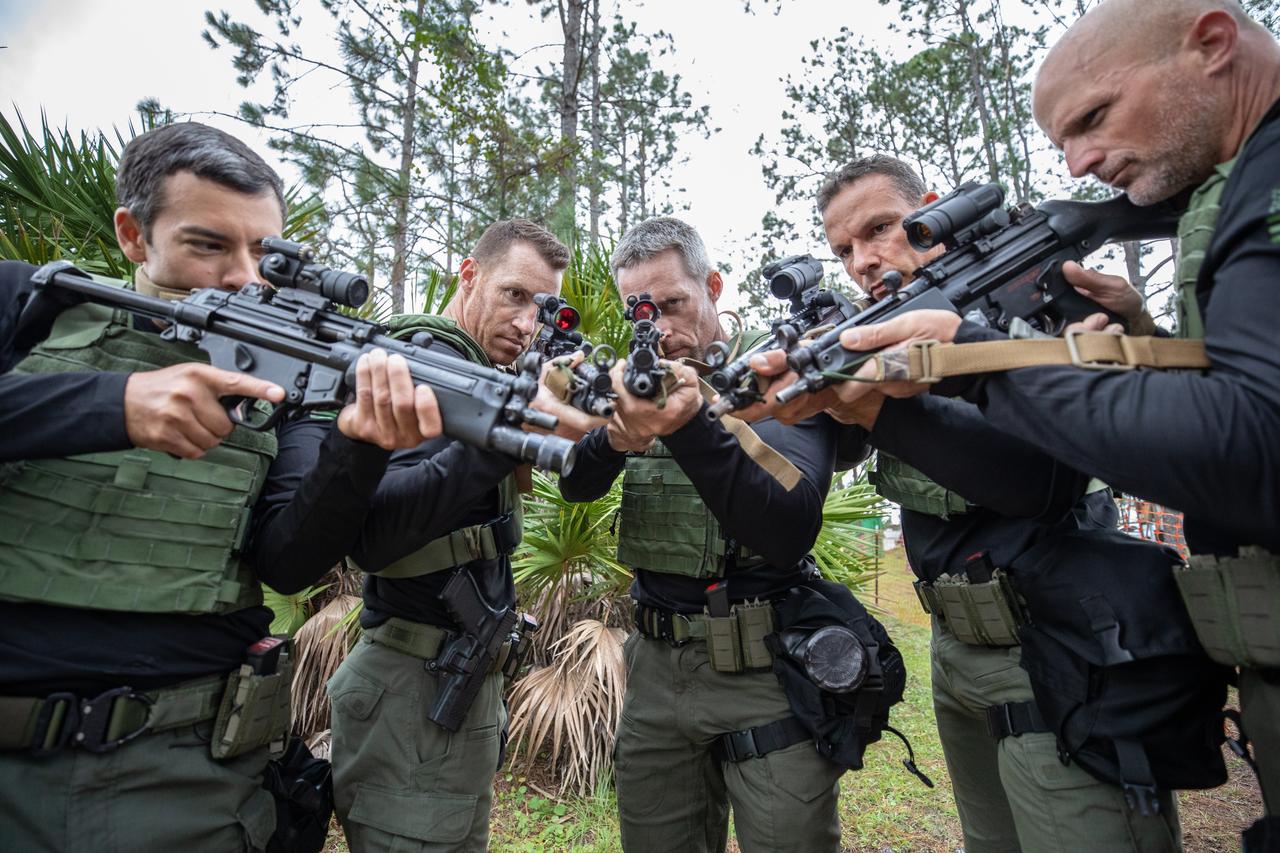
Members of NASA Kennedy Space Center's Emergency Response Team check their firearms before competing in the 37th Annual SWAT Round-Up International at the Lawson Lamar Firearms and Tactical Training Center in Orlando, Florida. The competition was held Nov. 10 to 15, 2019, and featured five different tactical challenges. Special pellets, rather than real bullets, are used during the competition. Kennedy's ERT members exchanged best practices and competed with more than 50 teams from the U.S. and around the world.
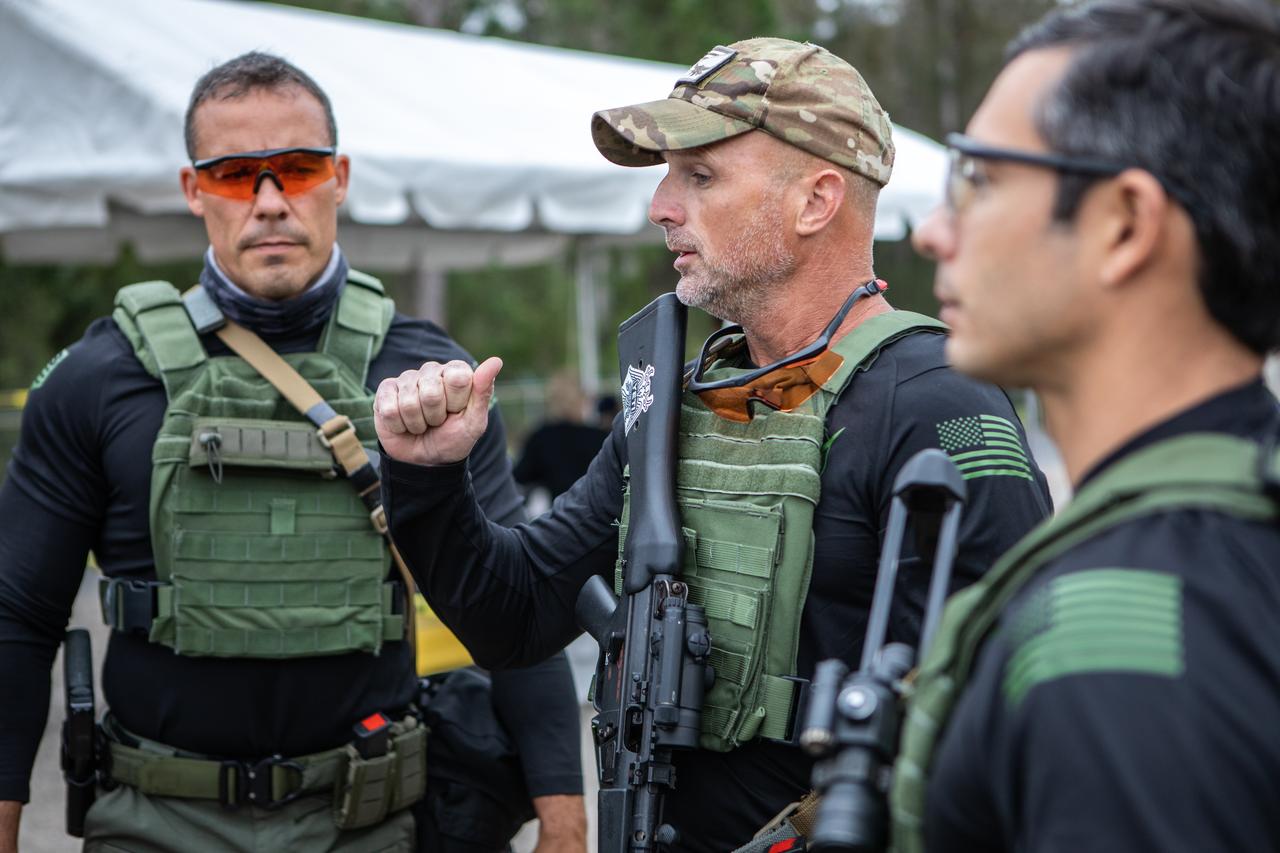
Members of NASA Kennedy Space Center's Emergency Response Team prepare for the next tactical challenge at the 37th Annual SWAT Round-Up International at the Lawson Lamar Firearms and Tactical Training Center in Orlando, Florida. The competition was held Nov. 10 to 15, 2019, and featured five different tactical challenges. Kennedy's ERT members exchanged best practices and competed with more than 50 teams from the U.S. and around the world.
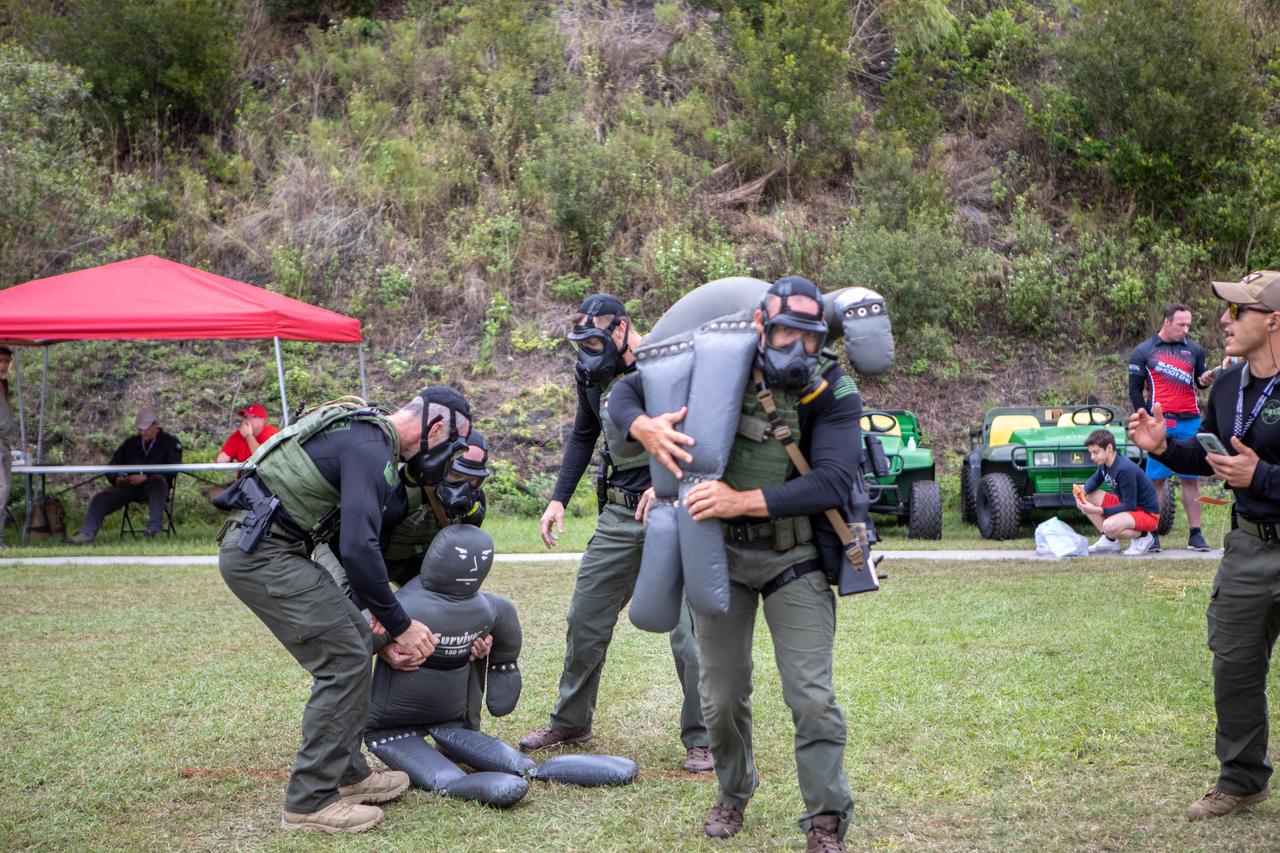
Members of NASA Kennedy Space Center's Emergency Response Team compete in the citizen rescue tactical challenge at the 37th Annual SWAT Round-Up International at the Lawson Lamar Firearms and Tactical Training Center in Orlando, Florida. The competition was held Nov. 10 to 15, 2019, and featured five different tactical challenges. Kennedy's ERT members exchanged best practices and competed with more than 50 teams from the U.S. and around the world.
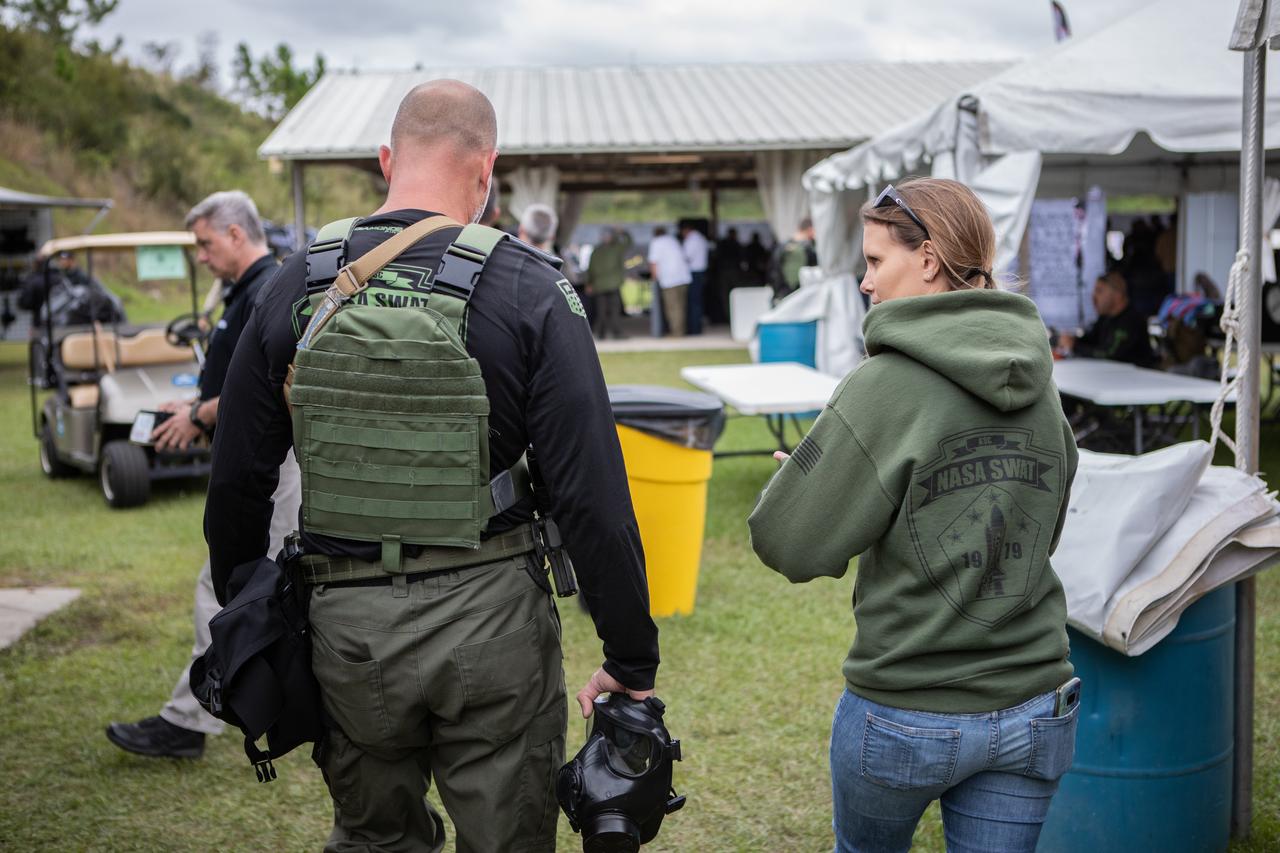
A member of NASA Kennedy Space Center's Emergency Response Team talks with his wife during a break between tactical challenges during the 37th Annual SWAT Round-Up International at the Lawson Lamar Firearms and Tactical Training Center in Orlando, Florida. The competition was held Nov. 10 to 15, 2019, and featured five different tactical challenges. Kennedy's ERT members exchanged best practices and competed with more than 50 teams from the U.S. and around the world.
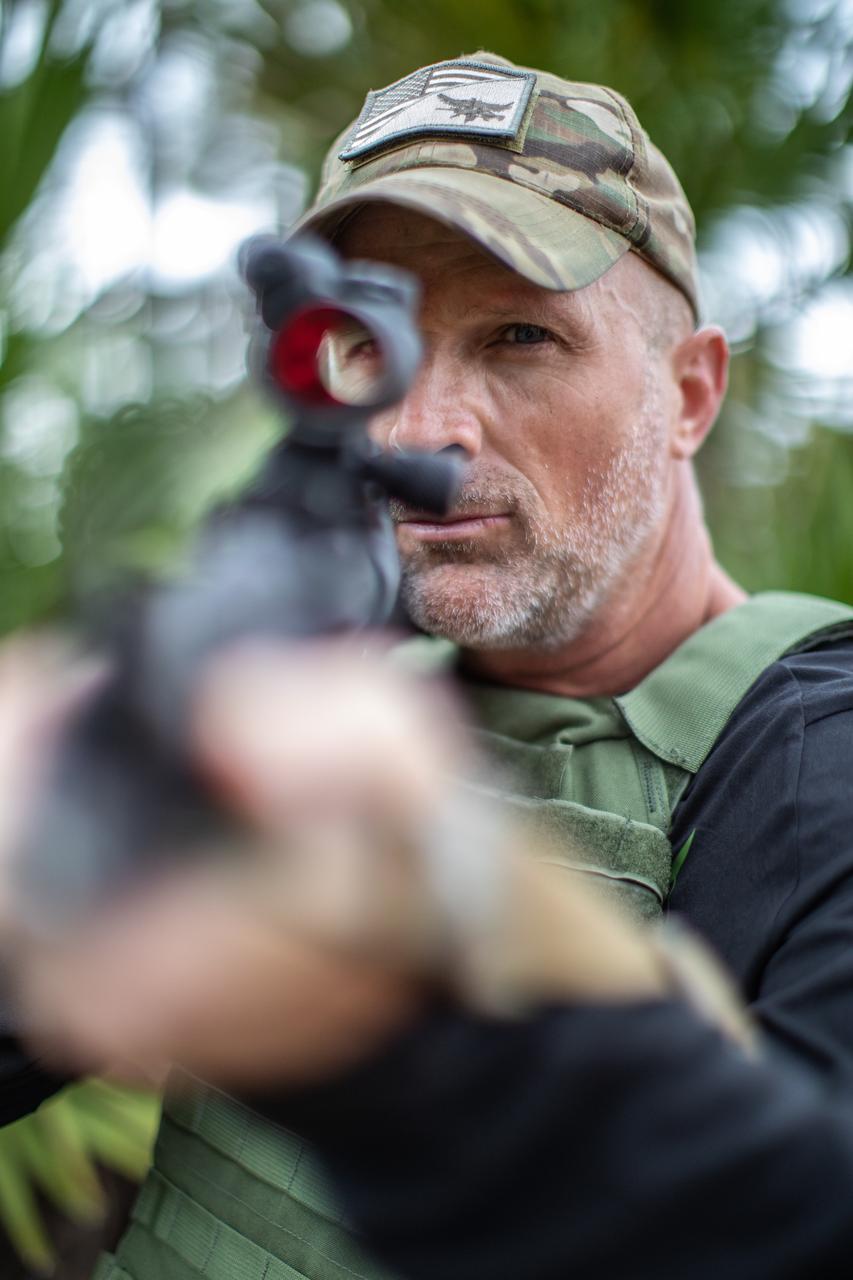
A member of NASA Kennedy Space Center's Emergency Response Team talks looks through the scope of his rifle as he prepares for the next tactical challenge during the 37th Annual SWAT Round-Up International at the Lawson Lamar Firearms and Tactical Training Center in Orlando, Florida. The competition was held Nov. 10 to 15, 2019, and featured five different tactical challenges. Kennedy's ERT members exchanged best practices and competed with more than 50 teams from the U.S. and around the world.
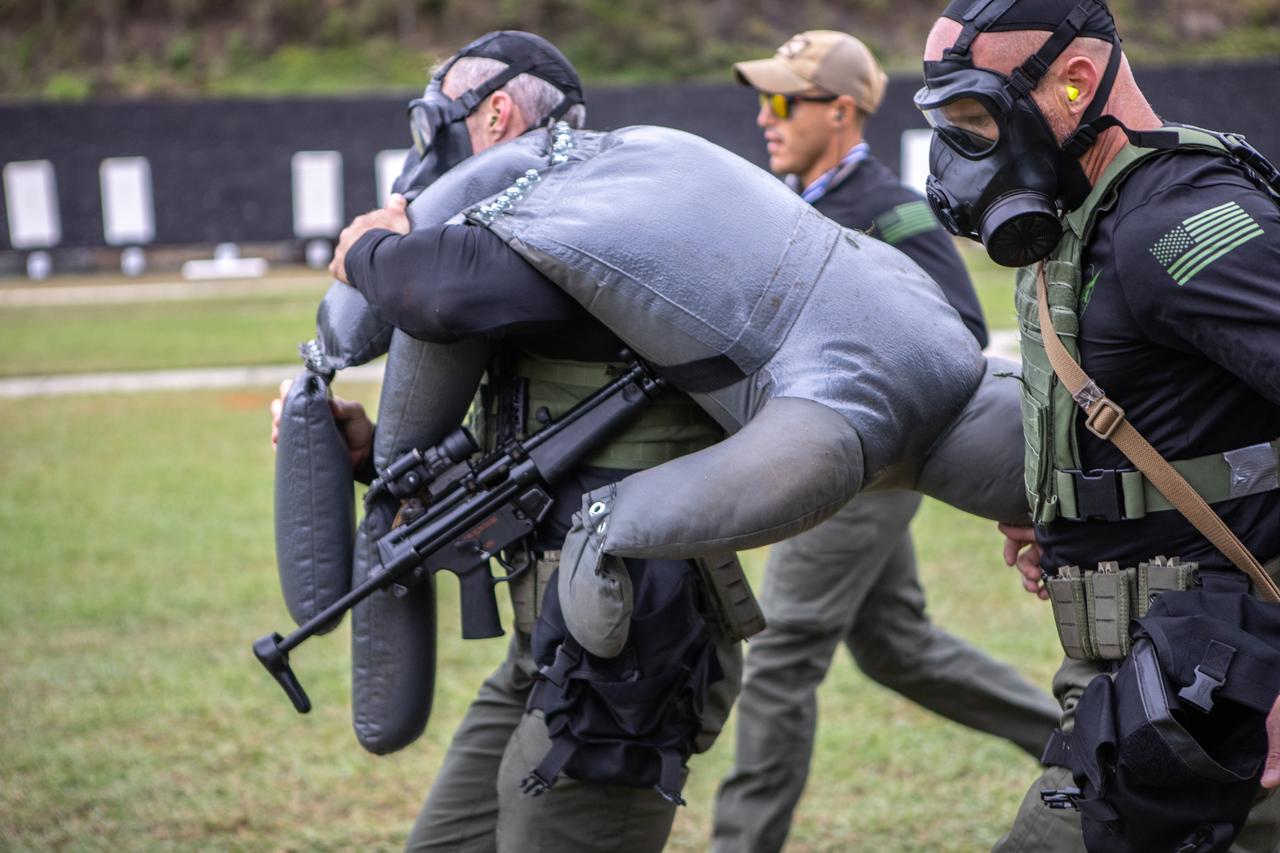
Members of NASA Kennedy Space Center's Emergency Response Team compete in the citizen rescue tactical challenge at the 37th Annual SWAT Round-Up International at the Lawson Lamar Firearms and Tactical Training Center in Orlando, Florida. The competition was held Nov. 10 to 15, 2019, and featured five different tactical challenges. Kennedy's ERT members exchanged best practices and competed with more than 50 teams from the U.S. and around the world.
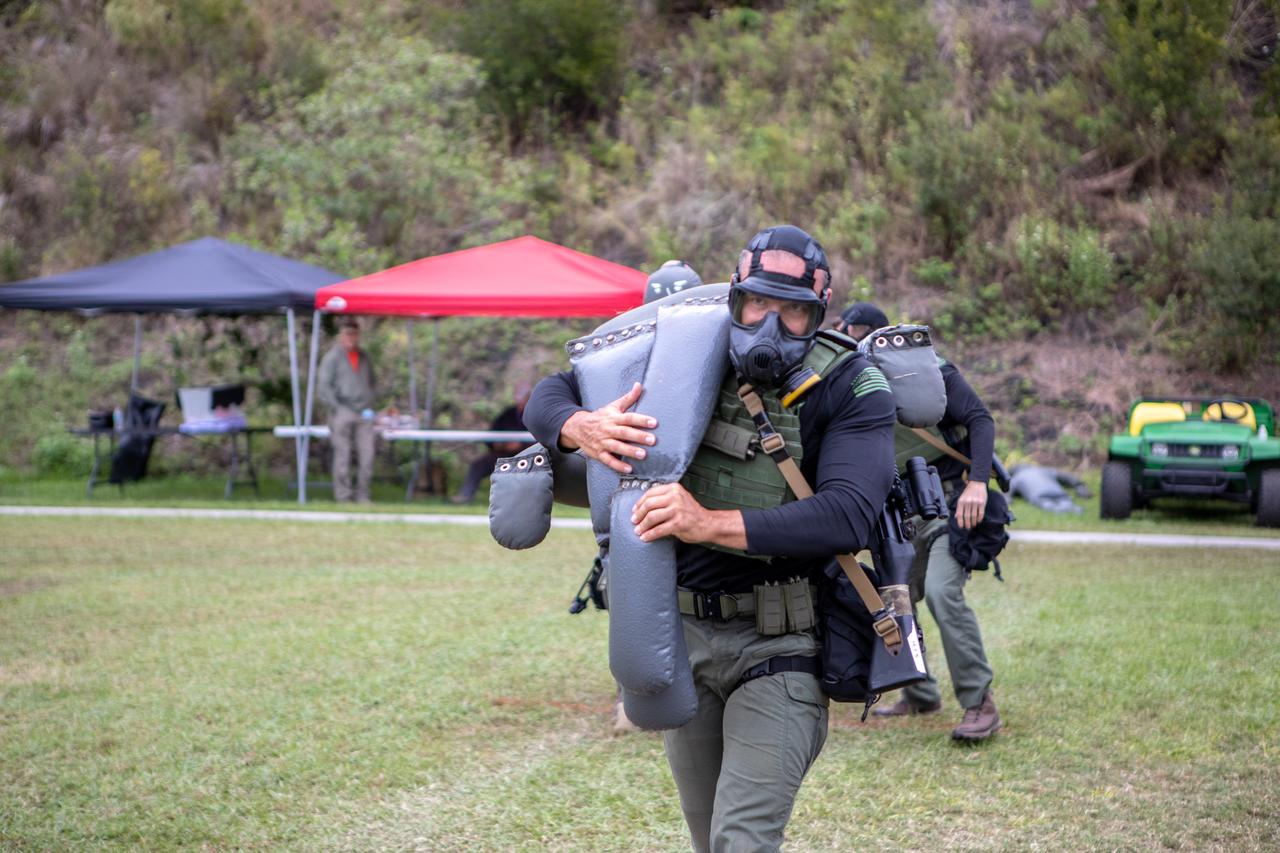
Members of NASA Kennedy Space Center's Emergency Response Team compete in the citizen rescue tactical challenge at the 37th Annual SWAT Round-Up International at the Lawson Lamar Firearms and Tactical Training Center in Orlando, Florida. The competition was held Nov. 10 to 15, 2019, and featured five different tactical challenges. Kennedy's ERT members exchanged best practices and competed with more than 50 teams from the U.S. and around the world.
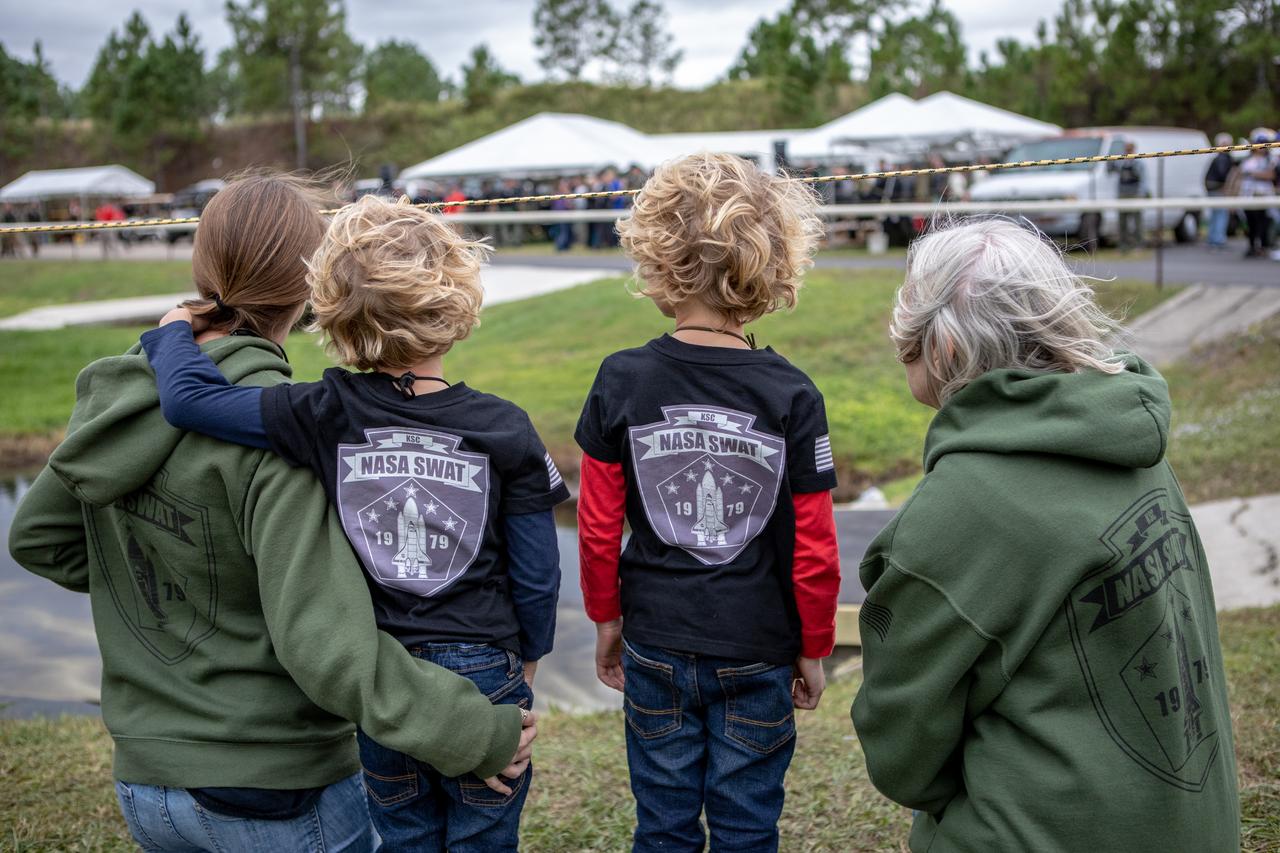
The family of one of NASA Kennedy Space Center's Emergency Response Team members prepare to watch the 37th Annual SWAT Round-Up International at the Lawson Lamar Firearms and Tactical Training Center in Orlando, Florida. The competition was held Nov. 10 to 15, and featured five different competition categories. Kennedy's ERT members exchanged best practices and competed with 60 teams from the U.S. and around the world.