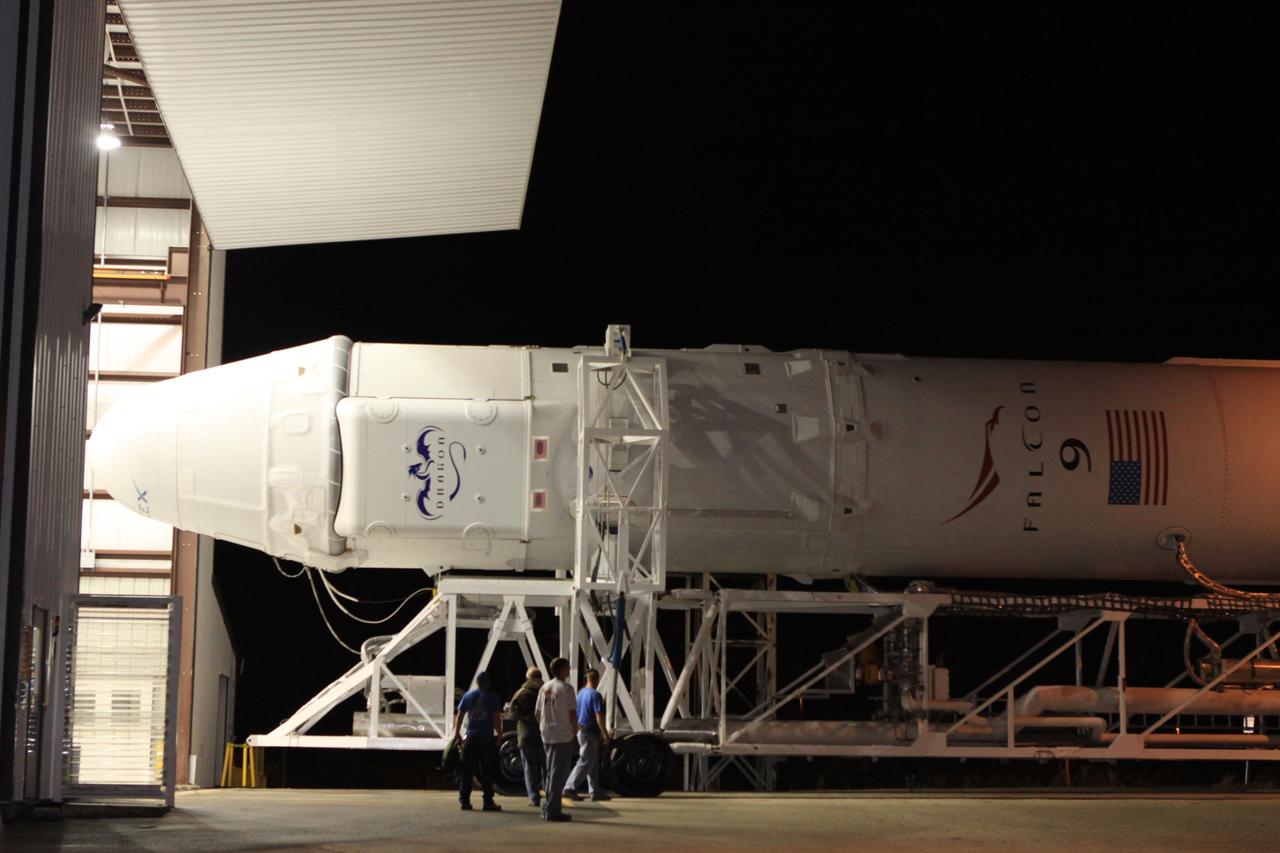
CAPE CANAVERAL, Fla. – The SpaceX Falcon 9 rocket begins its move from the processing facility to the pad at Space Launch Complex-40 on Cape Canaveral Air Force Station in Florida. Liftoff with the SpaceX Dragon capsule aboard is set for 4:55 a.m. EDT on May 19. The launch will be the company's second demonstration test flight for NASA's Commercial Orbital Transportation Services Program, or COTS. During the flight, the capsule will conduct a series of check-out procedures to test and prove its systems, including rendezvous and berthing with the International Space Station. If the capsule performs as planned, the cargo and experiments it is carrying will be transferred to the station. The cargo includes food, water and provisions for the station’s Expedition crews, such as clothing, batteries and computer equipment. Under COTS, NASA has partnered with two aerospace companies to deliver cargo to the station. For more information, visit http://www.nasa.gov/spacex. Photo credit: NASA/Jim Grossmann
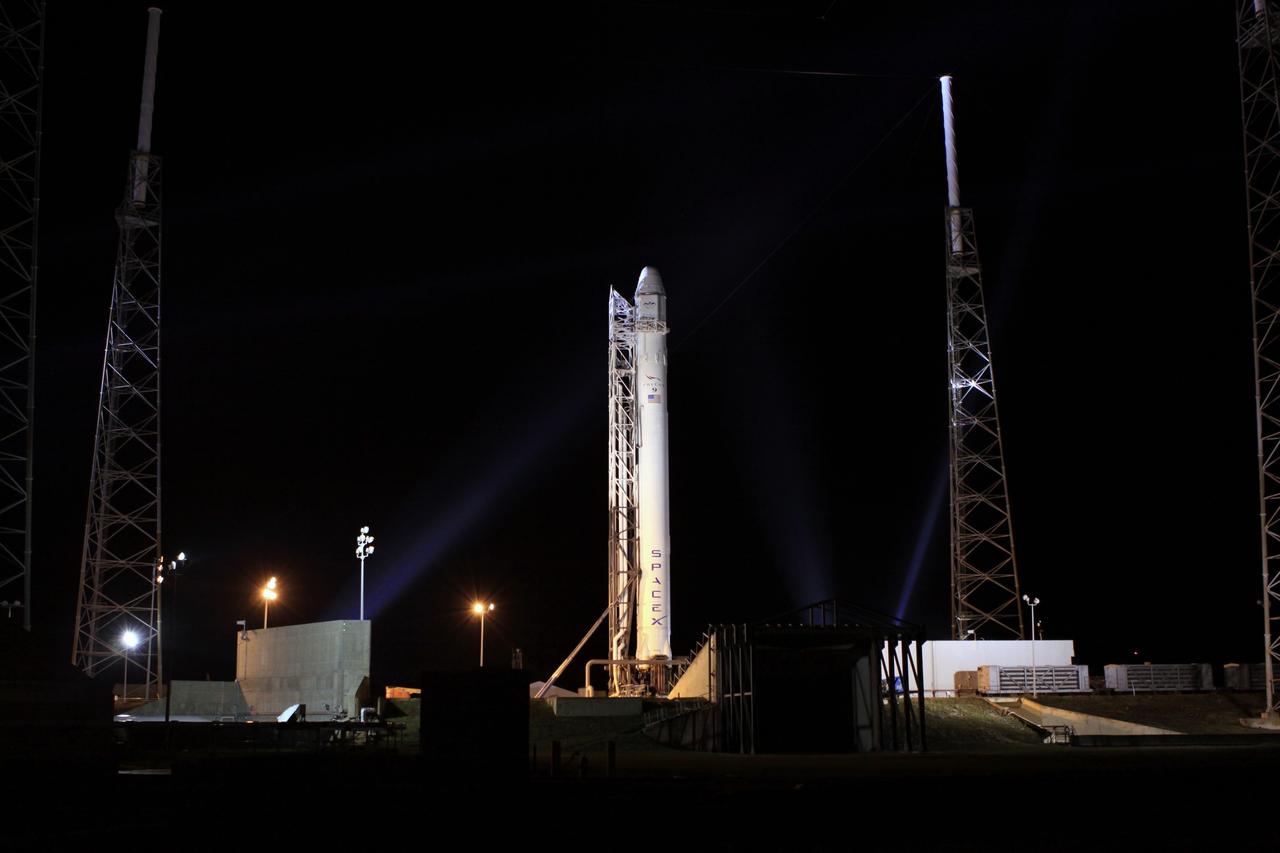
CAPE CANAVERAL, Fla. – The SpaceX Falcon 9 rocket is nestled between the lightning protection system towers surrounding the pad at Space Launch Complex-40 on Cape Canaveral Air Force Station in Florida. Liftoff with the SpaceX Dragon capsule aboard is set for 4:55 a.m. EDT on May 19. The launch will be the company's second demonstration test flight for NASA's Commercial Orbital Transportation Services Program, or COTS. During the flight, the capsule will conduct a series of check-out procedures to test and prove its systems, including rendezvous and berthing with the International Space Station. If the capsule performs as planned, the cargo and experiments it is carrying will be transferred to the station. The cargo includes food, water and provisions for the station’s Expedition crews, such as clothing, batteries and computer equipment. Under COTS, NASA has partnered with two aerospace companies to deliver cargo to the station. For more information, visit http://www.nasa.gov/spacex. Photo credit: NASA/Jim Grossmann
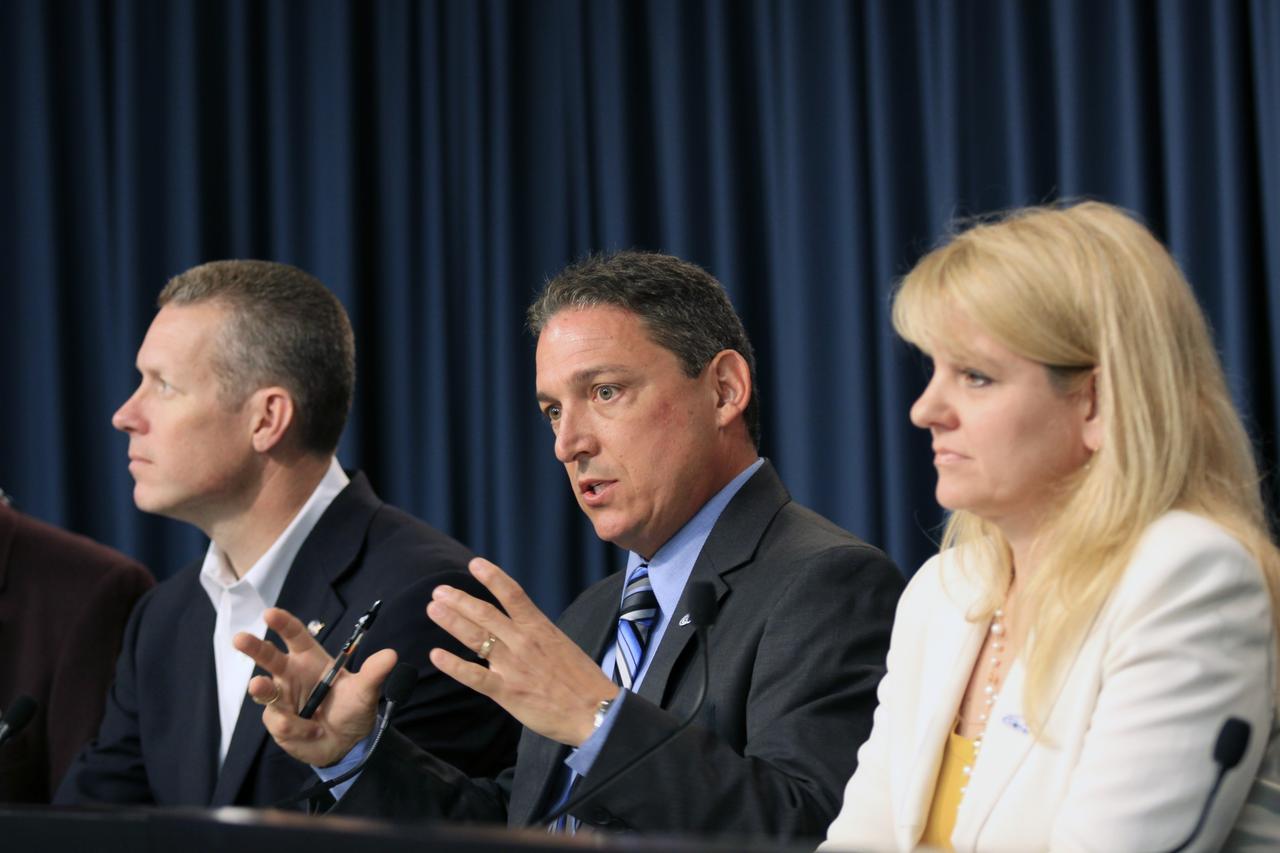
CAPE CANAVERAL, Fla. – Participating in a prelaunch news conference in the Press Site Auditorium at NASA’s Kennedy Space Center in Florida are, from left, Phil McAlister, director, NASA Commercial Spaceflight Development, Alan Lindenmoyer, manager, NASA Commercial Crew and Cargo Program, and Gwynne Shotwell, president, SpaceX. Liftoff of the SpaceX Falcon 9 rocket carrying a Dragon capsule to orbit is set for 4:55 a.m. EDT on May 19. The launch will be the company's second demonstration test flight for NASA's Commercial Orbital Transportation Services Program, or COTS. During the flight, the capsule will conduct a series of check-out procedures to test and prove its systems, including rendezvous and berthing with the International Space Station. If the capsule performs as planned, the cargo and experiments it is carrying will be transferred to the station. The cargo includes food, water and provisions for the station’s Expedition crews, such as clothing, batteries and computer equipment. Under COTS, NASA has partnered with two aerospace companies to deliver cargo to the station. For more information, visit http://www.nasa.gov/spacex. Photo credit: NASA/Jim Grossmann
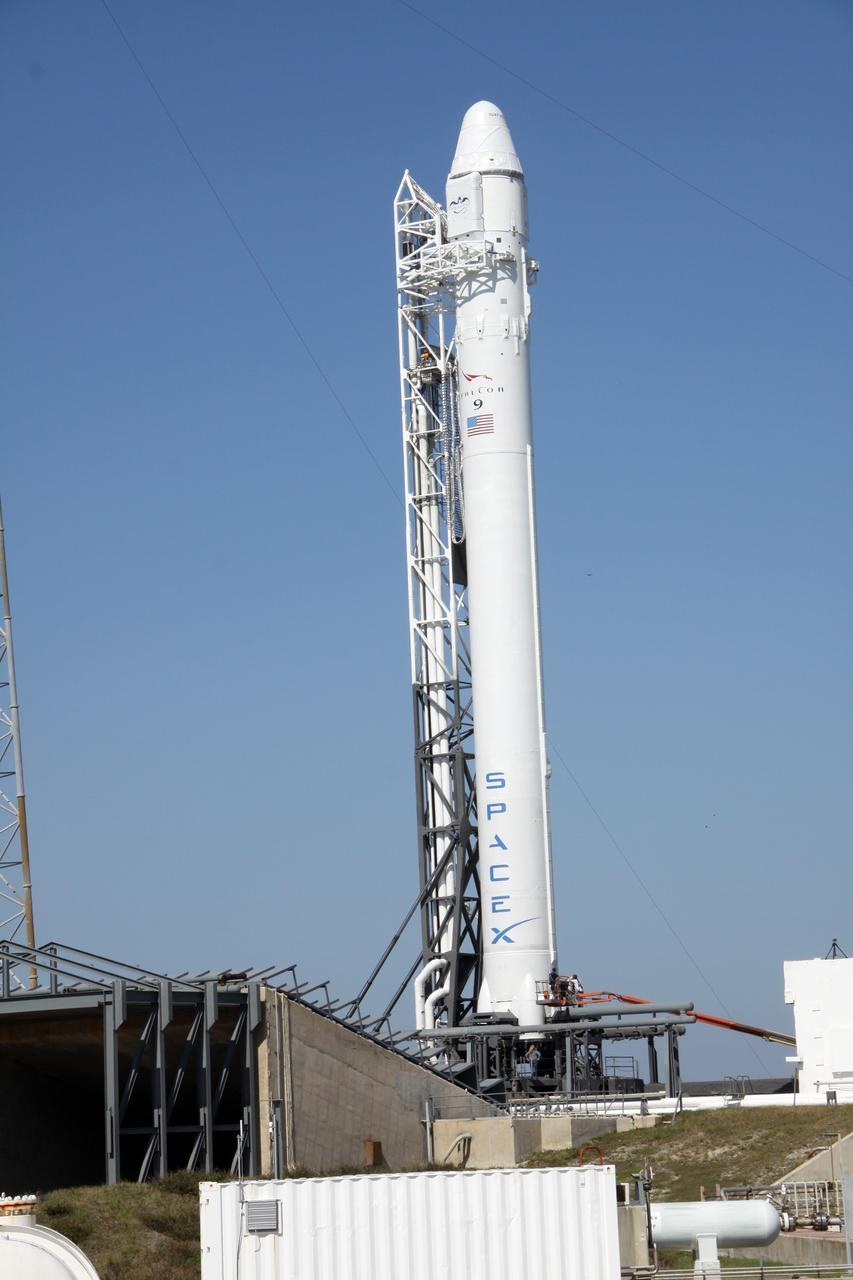
CAPE CANAVERAL, Fla. – A strongback provides connections to the SpaceX Falcon 9 rocket as final preparations for launch are completed at Space Launch Complex-40 on Cape Canaveral Air Force Station in Florida. Liftoff with the Dragon capsule on top is set for 4:55 a.m. EDT on May 19. The launch will be the company's second demonstration test flight for NASA's Commercial Orbital Transportation Services Program, or COTS. During the flight, the capsule will conduct a series of check-out procedures to test and prove its systems, including rendezvous and berthing with the International Space Station. If the capsule performs as planned, the cargo and experiments it is carrying will be transferred to the station. The cargo includes food, water and provisions for the station’s Expedition crews, such as clothing, batteries and computer equipment. Under COTS, NASA has partnered with two aerospace companies to deliver cargo to the station. For more information, visit http://www.nasa.gov/spacex. Photo credit: NASA/Ken Thornsley
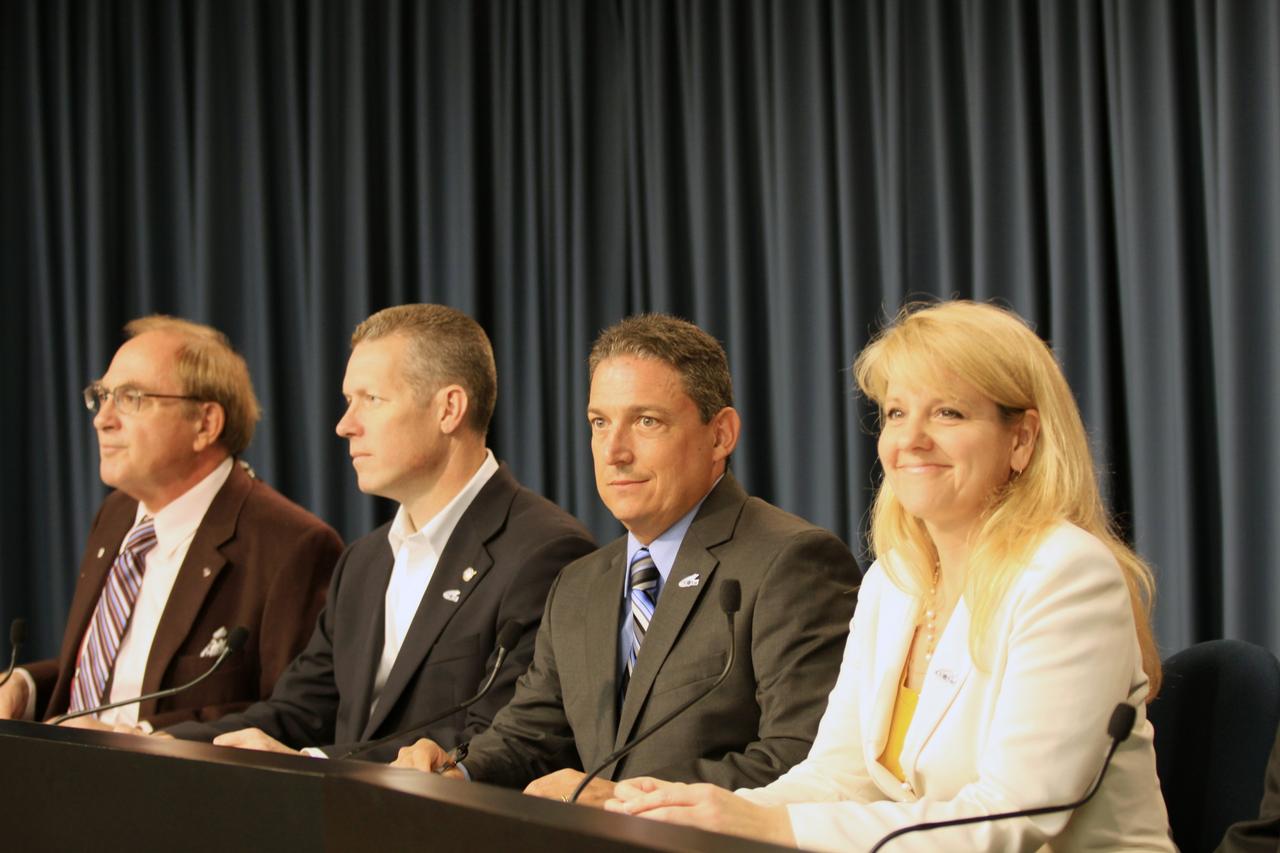
CAPE CANAVERAL, Fla. – Participating in a prelaunch news conference in the Press Site Auditorium at NASA’s Kennedy Space Center in Florida are, from left, George H. Diller, NASA Public Affairs, Phil McAlister, director, NASA Commercial Spaceflight Development, Alan Lindenmoyer, manager, NASA Commercial Crew and Cargo Program, and Gwynne Shotwell, president, SpaceX. Liftoff of the SpaceX Falcon 9 rocket carrying a Dragon capsule to orbit is set for 4:55 a.m. EDT on May 19. The launch will be the company's second demonstration test flight for NASA's Commercial Orbital Transportation Services Program, or COTS. During the flight, the capsule will conduct a series of check-out procedures to test and prove its systems, including rendezvous and berthing with the International Space Station. If the capsule performs as planned, the cargo and experiments it is carrying will be transferred to the station. The cargo includes food, water and provisions for the station’s Expedition crews, such as clothing, batteries and computer equipment. Under COTS, NASA has partnered with two aerospace companies to deliver cargo to the station. For more information, visit http://www.nasa.gov/spacex. Photo credit: NASA/Jim Grossmann
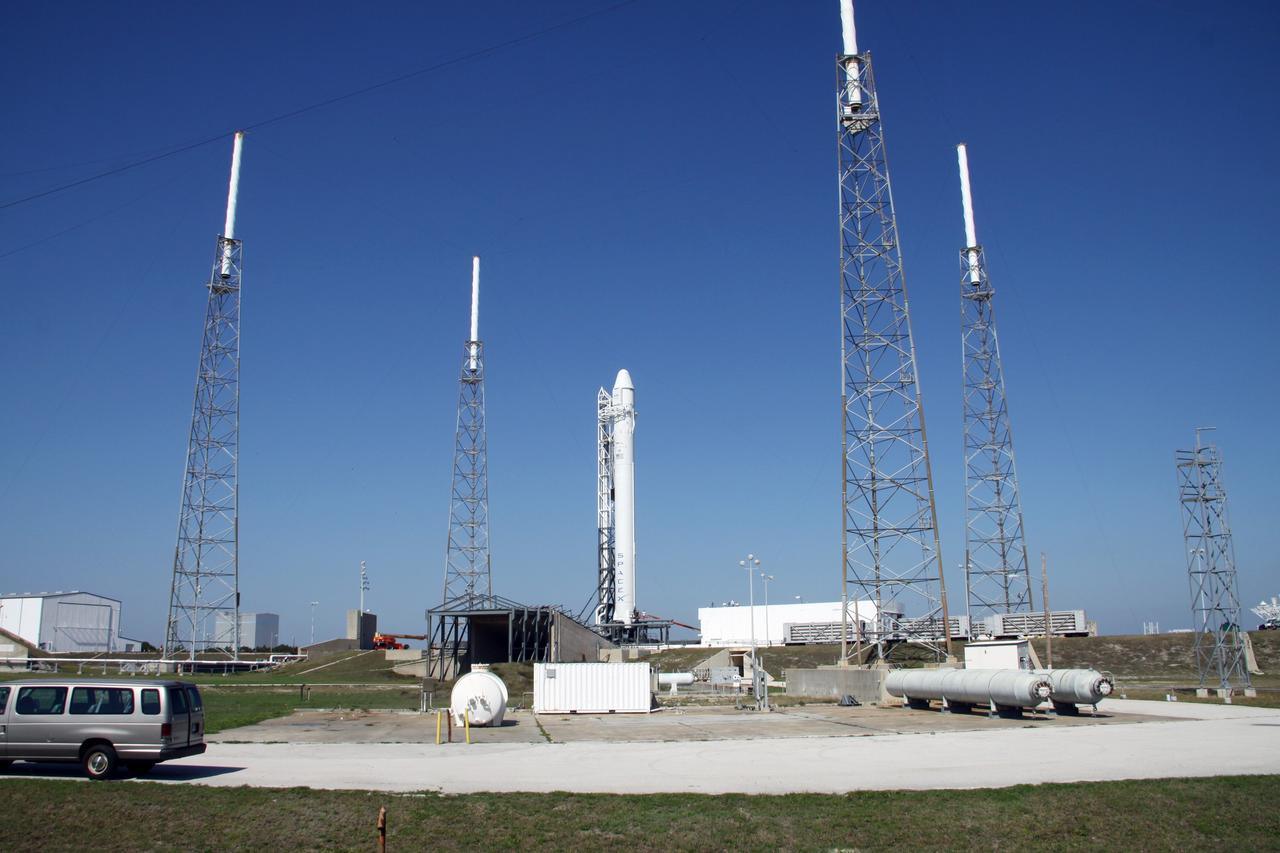
CAPE CANAVERAL, Fla. – The SpaceX Falcon 9 rocket is nestled between the lightning masts protecting the pad at Space Launch Complex-40 on Cape Canaveral Air Force Station in Florida. The vehicle rolled out to the pad on the evening of May 17. Liftoff with the Dragon capsule on top is set for 4:55 a.m. EDT on May 19. The launch will be the company's second demonstration test flight for NASA's Commercial Orbital Transportation Services Program, or COTS. During the flight, the capsule will conduct a series of check-out procedures to test and prove its systems, including rendezvous and berthing with the International Space Station. If the capsule performs as planned, the cargo and experiments it is carrying will be transferred to the station. The cargo includes food, water and provisions for the station’s Expedition crews, such as clothing, batteries and computer equipment. Under COTS, NASA has partnered with two aerospace companies to deliver cargo to the station. For more information, visit http://www.nasa.gov/spacex. Photo credit: NASA/Ken Thornsley
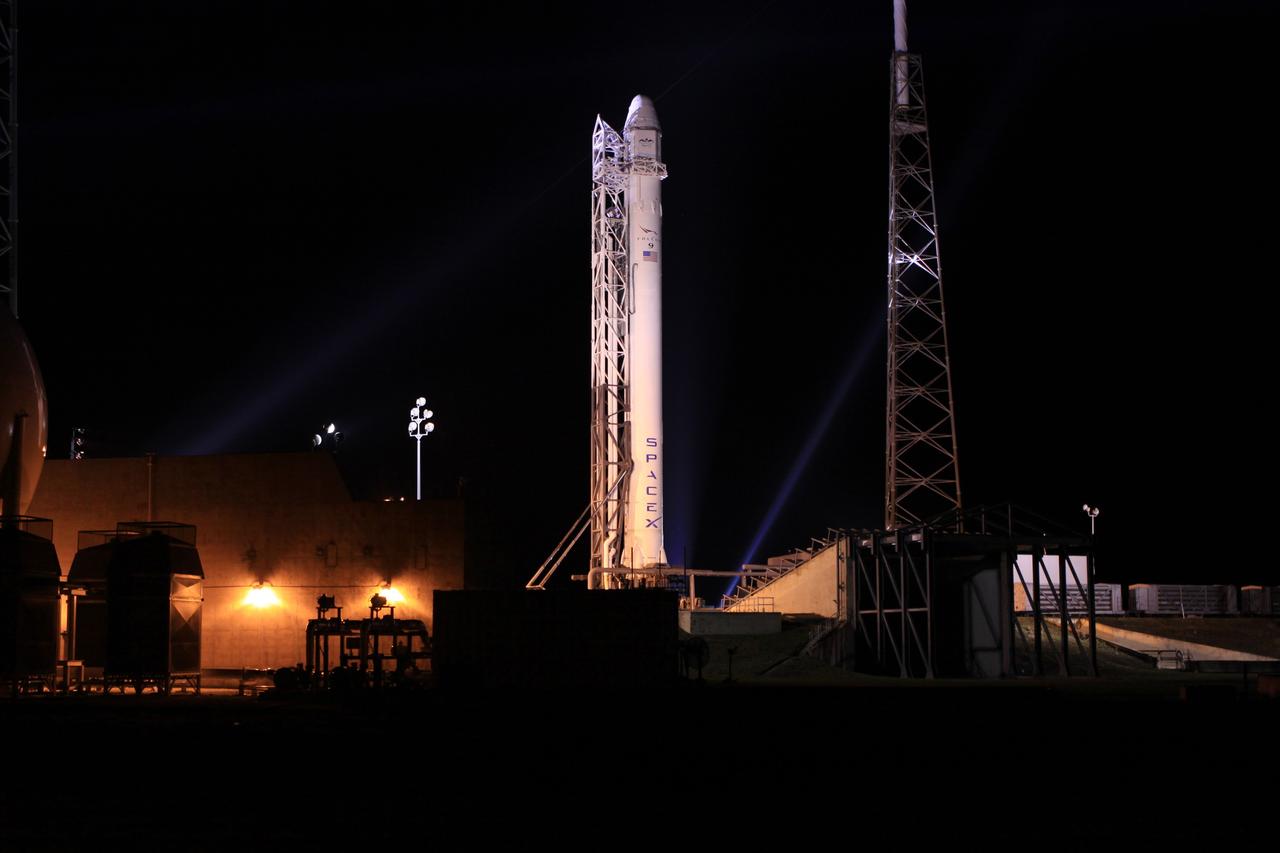
CAPE CANAVERAL, Fla. – A strongback lifts the SpaceX Falcon 9 rocket into a vertical position on the pad at Space Launch Complex-40 on Cape Canaveral Air Force Station in Florida. Liftoff with the SpaceX Dragon capsule aboard is set for 4:55 a.m. EDT on May 19. The launch will be the company's second demonstration test flight for NASA's Commercial Orbital Transportation Services Program, or COTS. During the flight, the capsule will conduct a series of check-out procedures to test and prove its systems, including rendezvous and berthing with the International Space Station. If the capsule performs as planned, the cargo and experiments it is carrying will be transferred to the station. The cargo includes food, water and provisions for the station’s Expedition crews, such as clothing, batteries and computer equipment. Under COTS, NASA has partnered with two aerospace companies to deliver cargo to the station. For more information, visit http://www.nasa.gov/spacex. Photo credit: NASA/Jim Grossmann
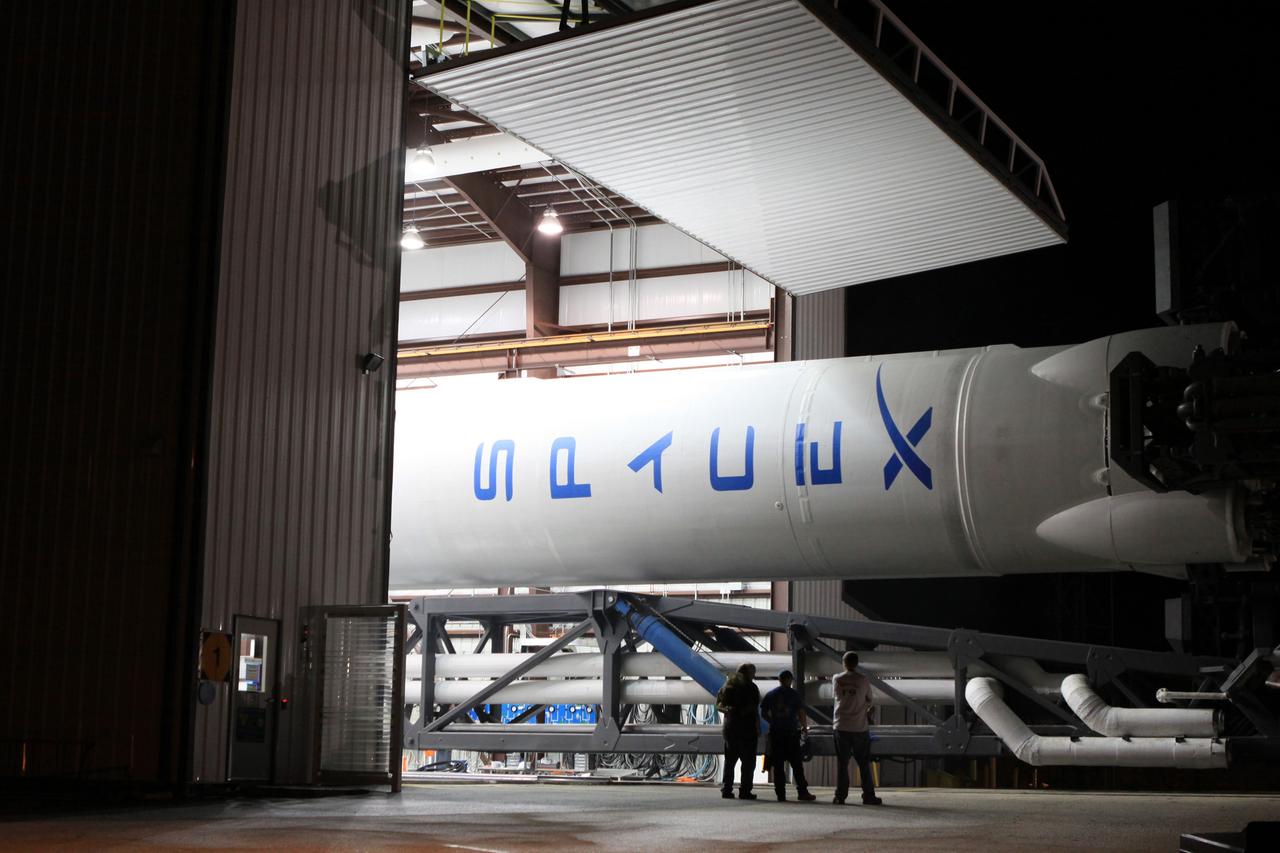
CAPE CANAVERAL, Fla. – Preparations are under way to roll the SpaceX Falcon 9 rocket out of the processing facility to the pad at Space Launch Complex-40 on Cape Canaveral Air Force Station in Florida. Liftoff with the SpaceX Dragon capsule aboard is set for 4:55 a.m. EDT on May 19. The launch will be the company's second demonstration test flight for NASA's Commercial Orbital Transportation Services Program, or COTS. During the flight, the capsule will conduct a series of check-out procedures to test and prove its systems, including rendezvous and berthing with the International Space Station. If the capsule performs as planned, the cargo and experiments it is carrying will be transferred to the station. The cargo includes food, water and provisions for the station’s Expedition crews, such as clothing, batteries and computer equipment. Under COTS, NASA has partnered with two aerospace companies to deliver cargo to the station. For more information, visit http://www.nasa.gov/spacex. Photo credit: NASA/Jim Grossmann
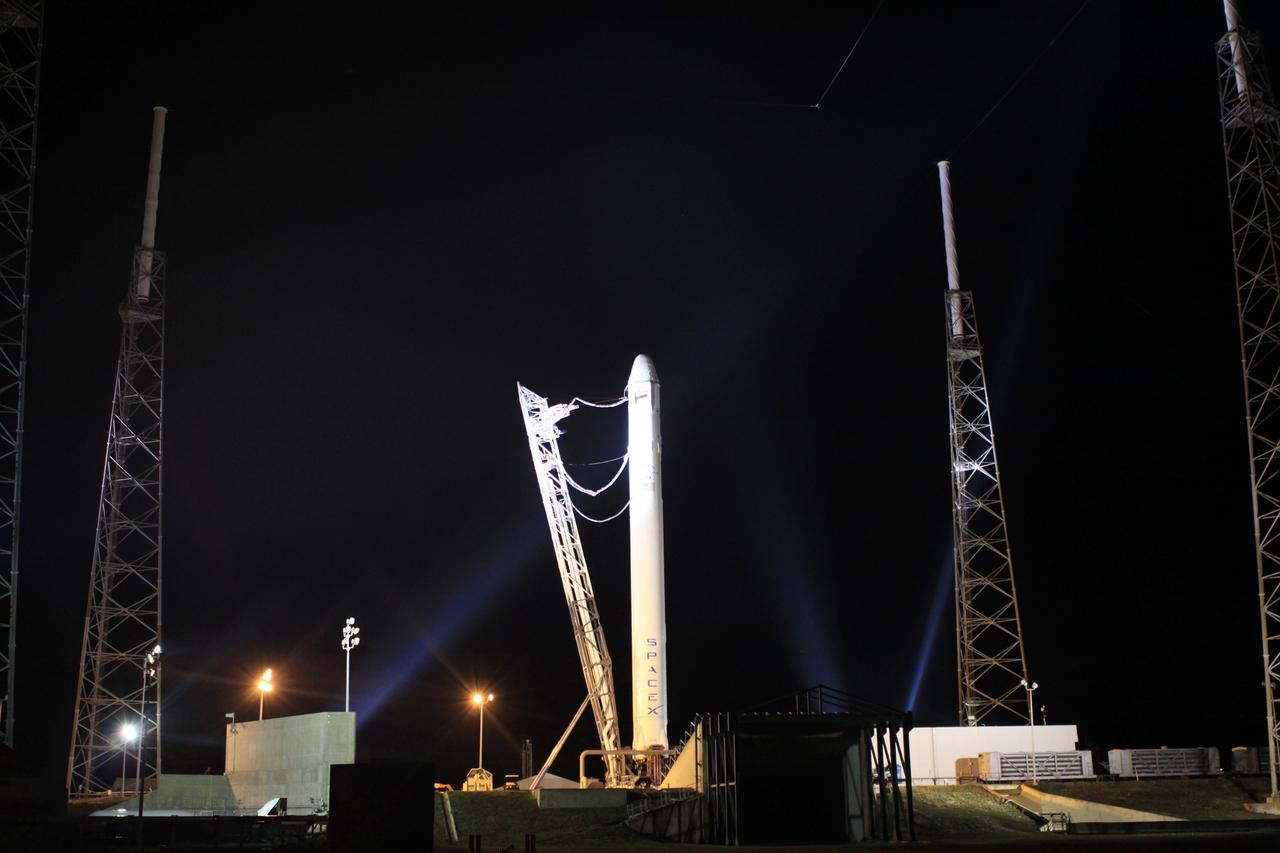
CAPE CANAVERAL, Fla. – Umbilical lines connect the strongback to the SpaceX Falcon 9 rocket which has just arrived on the pad at Space Launch Complex-40 on Cape Canaveral Air Force Station in Florida. Liftoff with the SpaceX Dragon capsule aboard is set for 4:55 a.m. EDT on May 19. The launch will be the company's second demonstration test flight for NASA's Commercial Orbital Transportation Services Program, or COTS. During the flight, the capsule will conduct a series of check-out procedures to test and prove its systems, including rendezvous and berthing with the International Space Station. If the capsule performs as planned, the cargo and experiments it is carrying will be transferred to the station. The cargo includes food, water and provisions for the station’s Expedition crews, such as clothing, batteries and computer equipment. Under COTS, NASA has partnered with two aerospace companies to deliver cargo to the station. For more information, visit http://www.nasa.gov/spacex. Photo credit: NASA/Jim Grossmann
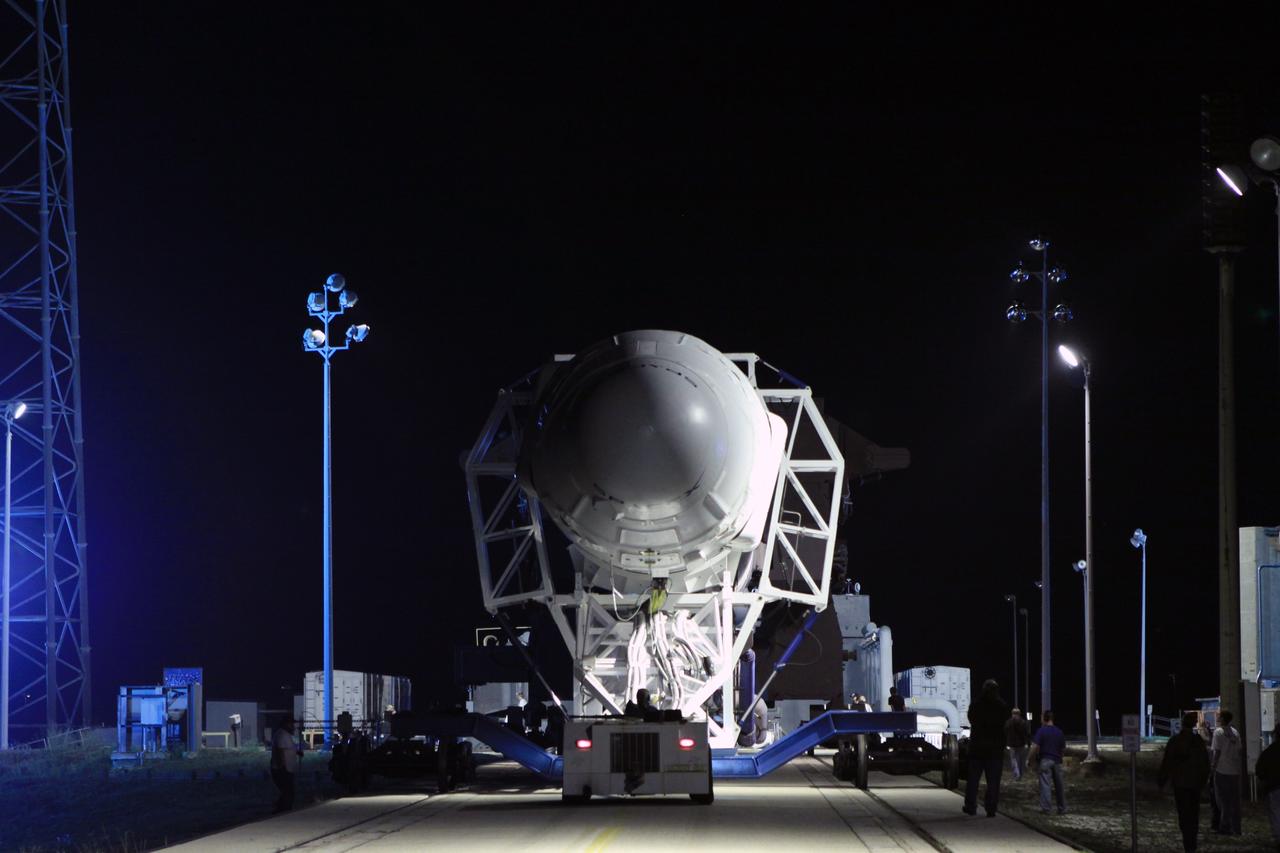
CAPE CANAVERAL, Fla. – The SpaceX Falcon 9 rocket makes its way to the pad at Space Launch Complex-40 on Cape Canaveral Air Force Station in Florida. Liftoff with the SpaceX Dragon capsule aboard is set for 4:55 a.m. EDT on May 19. The launch will be the company's second demonstration test flight for NASA's Commercial Orbital Transportation Services Program, or COTS. During the flight, the capsule will conduct a series of check-out procedures to test and prove its systems, including rendezvous and berthing with the International Space Station. If the capsule performs as planned, the cargo and experiments it is carrying will be transferred to the station. The cargo includes food, water and provisions for the station’s Expedition crews, such as clothing, batteries and computer equipment. Under COTS, NASA has partnered with two aerospace companies to deliver cargo to the station. For more information, visit http://www.nasa.gov/spacex. Photo credit: NASA/Jim Grossmann
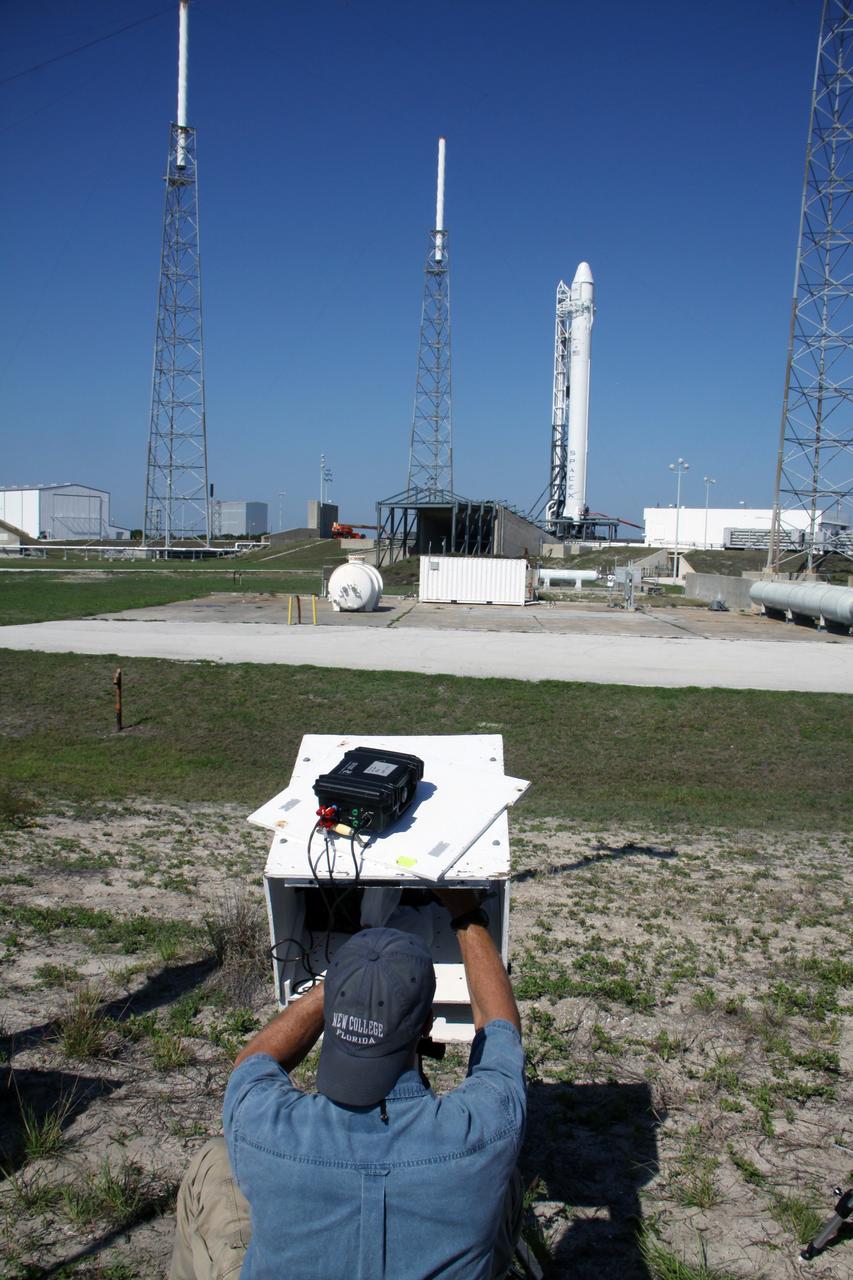
CAPE CANAVERAL, Fla. – A photographer sets up his remote camera at Space Launch Complex-40 on Cape Canaveral Air Force Station in Florida. In the background, final preparations are under way to launch the SpaceX Falcon 9 rocket. Liftoff with the Dragon capsule on top is set for 4:55 a.m. EDT on May 19. The launch will be the company's second demonstration test flight for NASA's Commercial Orbital Transportation Services Program, or COTS. During the flight, the capsule will conduct a series of check-out procedures to test and prove its systems, including rendezvous and berthing with the International Space Station. If the capsule performs as planned, the cargo and experiments it is carrying will be transferred to the station. The cargo includes food, water and provisions for the station’s Expedition crews, such as clothing, batteries and computer equipment. Under COTS, NASA has partnered with two aerospace companies to deliver cargo to the station. For more information, visit http://www.nasa.gov/spacex. Photo credit: NASA/Ken Thornsley
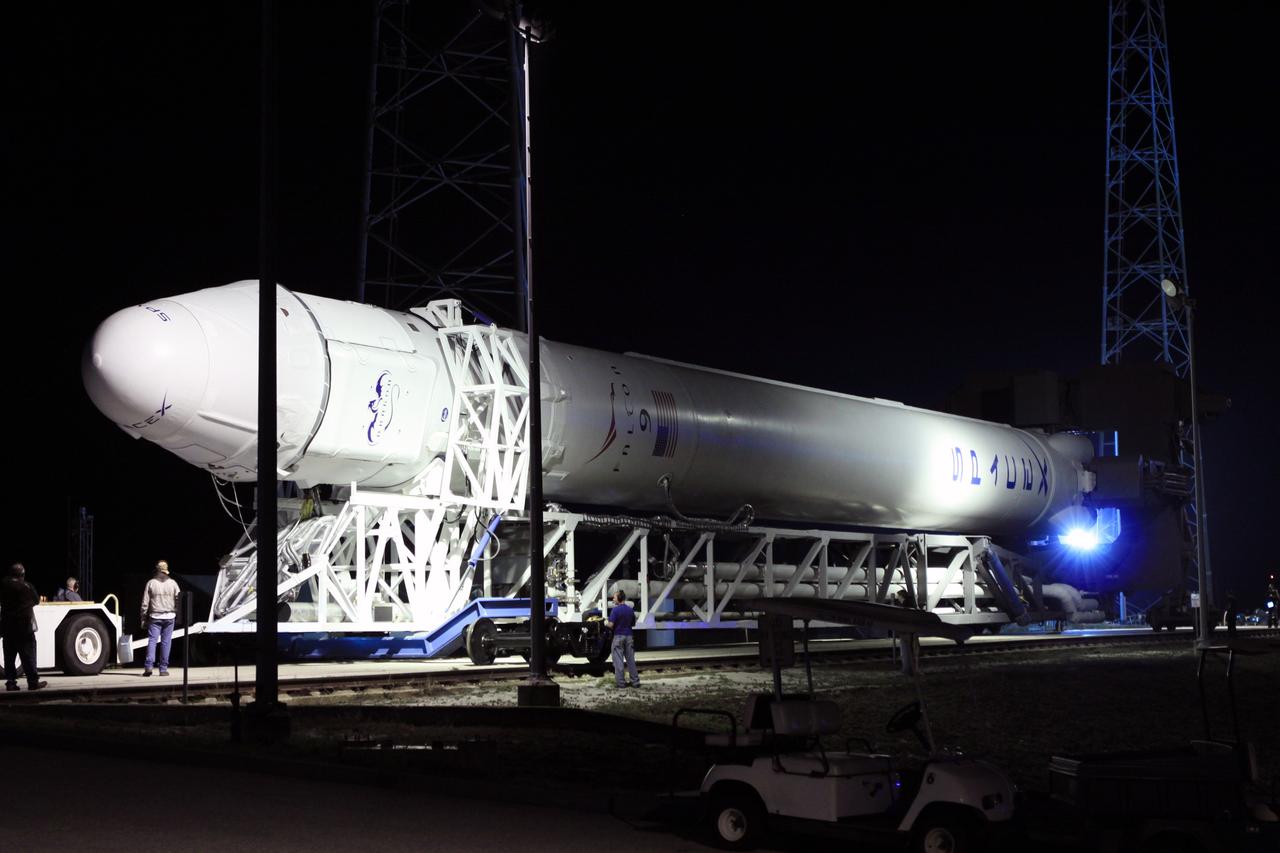
CAPE CANAVERAL, Fla. – The SpaceX Falcon 9 rocket rolls between the lightning protection system towers surrounding the pad at Space Launch Complex-40 on Cape Canaveral Air Force Station in Florida. Liftoff with the SpaceX Dragon capsule aboard is set for 4:55 a.m. EDT on May 19. The launch will be the company's second demonstration test flight for NASA's Commercial Orbital Transportation Services Program, or COTS. During the flight, the capsule will conduct a series of check-out procedures to test and prove its systems, including rendezvous and berthing with the International Space Station. If the capsule performs as planned, the cargo and experiments it is carrying will be transferred to the station. The cargo includes food, water and provisions for the station’s Expedition crews, such as clothing, batteries and computer equipment. Under COTS, NASA has partnered with two aerospace companies to deliver cargo to the station. For more information, visit http://www.nasa.gov/spacex. Photo credit: NASA/Jim Grossmann
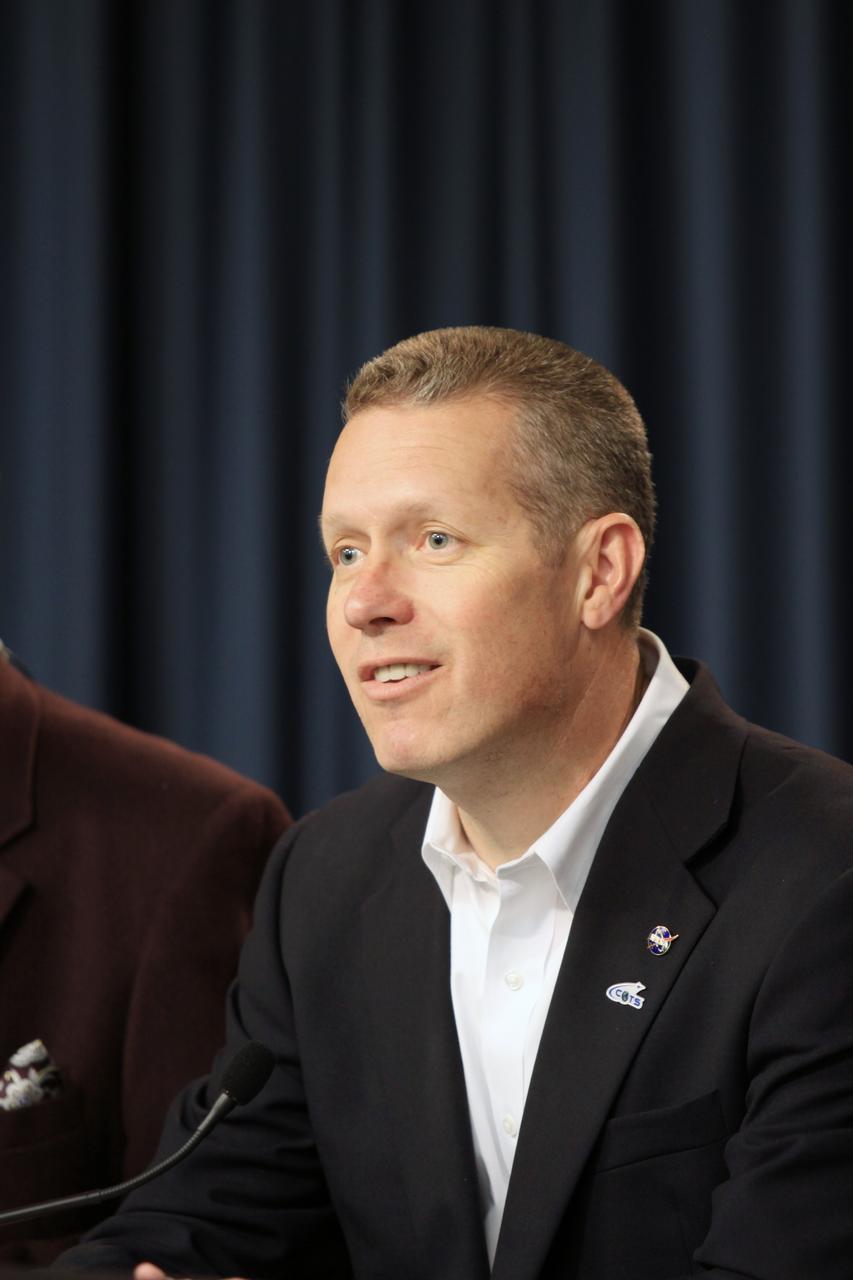
CAPE CANAVERAL, Fla. – Phil McAlister, director, NASA Commercial Spaceflight Development, participates in a prelaunch news conference in the Press Site Auditorium at NASA’s Kennedy Space Center in Florida. Liftoff of the SpaceX Falcon 9 rocket carrying a Dragon capsule to orbit is set for 4:55 a.m. EDT on May 19. The launch will be the company's second demonstration test flight for NASA's Commercial Orbital Transportation Services Program, or COTS. During the flight, the capsule will conduct a series of check-out procedures to test and prove its systems, including rendezvous and berthing with the International Space Station. If the capsule performs as planned, the cargo and experiments it is carrying will be transferred to the station. The cargo includes food, water and provisions for the station’s Expedition crews, such as clothing, batteries and computer equipment. Under COTS, NASA has partnered with two aerospace companies to deliver cargo to the station. For more information, visit http://www.nasa.gov/spacex. Photo credit: NASA/Jim Grossmann
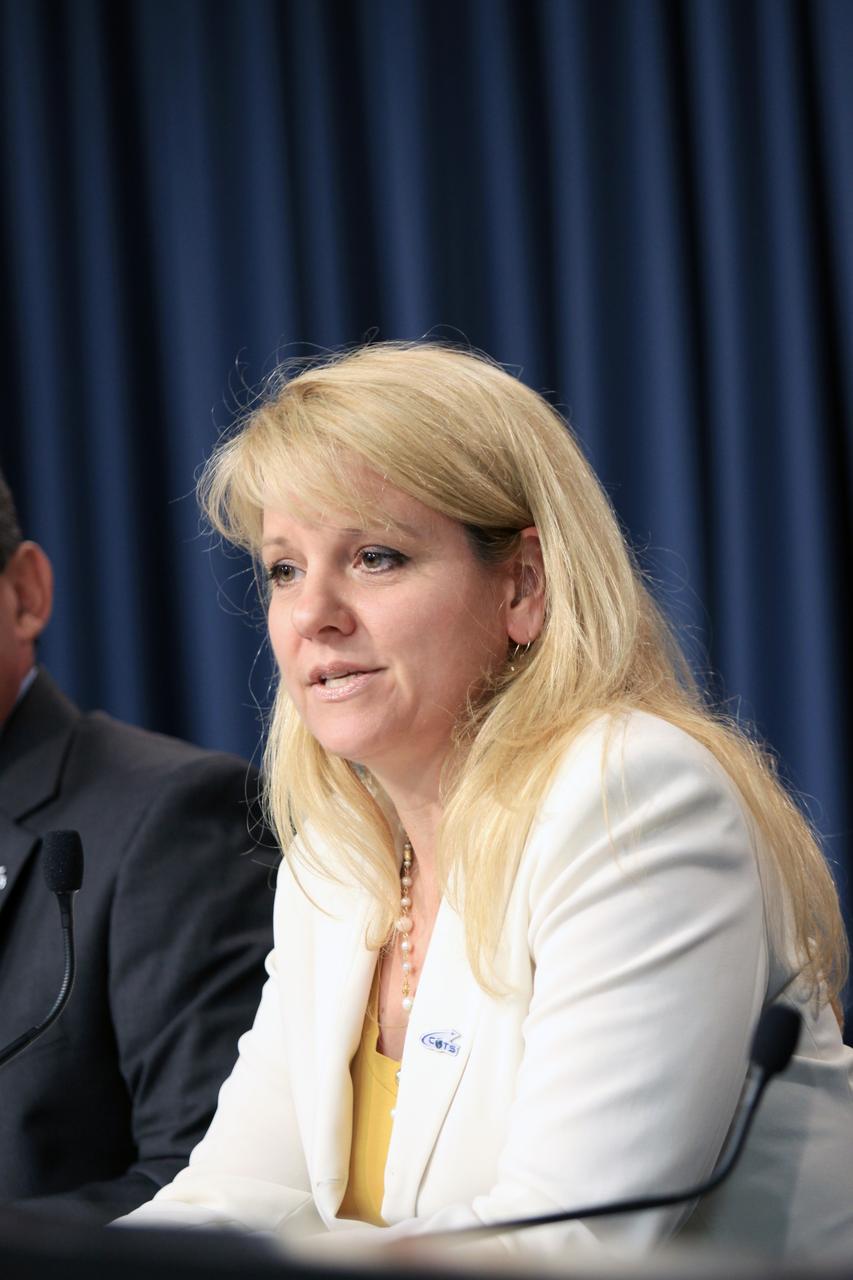
CAPE CANAVERAL, Fla. – Gwynne Shotwell, president of SpaceX, participates in a prelaunch news conference in the Press Site Auditorium at NASA’s Kennedy Space Center in Florida. Liftoff of the SpaceX Falcon 9 rocket carrying a Dragon capsule to orbit is set for 4:55 a.m. EDT on May 19. The launch will be the company's second demonstration test flight for NASA's Commercial Orbital Transportation Services Program, or COTS. During the flight, the capsule will conduct a series of check-out procedures to test and prove its systems, including rendezvous and berthing with the International Space Station. If the capsule performs as planned, the cargo and experiments it is carrying will be transferred to the station. The cargo includes food, water and provisions for the station’s Expedition crews, such as clothing, batteries and computer equipment. Under COTS, NASA has partnered with two aerospace companies to deliver cargo to the station. For more information, visit http://www.nasa.gov/spacex. Photo credit: NASA/Jim Grossmann
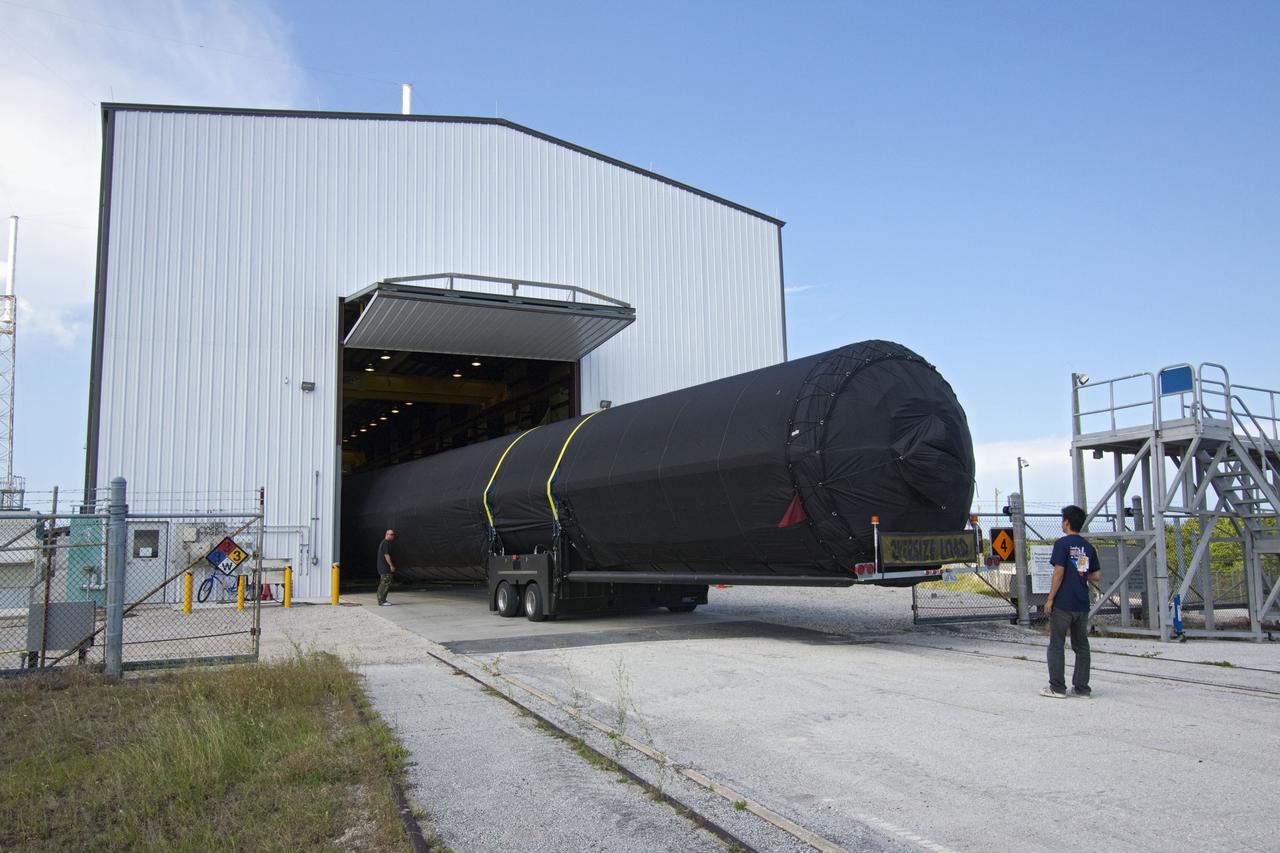
CAPE CANAVERAL, Fla. -- The first stage of the SpaceX COTS-2 Falcon 9 rocket is being moved into a SpaceX hangar at Pad 40 at Cape Canaveral Air Force Station in Florida. Once assembled, it will be a two-stage fully integrated launch vehicle, consisting of a first stage powered by nine SpaceX-developed Merlin 1C engines, a second stage, an interstage, an unpressurized trunk and the Dragon spacecraft qualification unit. SpaceX was awarded procurement for three demonstration flights under the Commercial Orbital Transportation Services, or COTS, program managed by NASA's Johnson Space Center in Houston. A subsequent contract for Commercial Resupply Services, or CRS, was awarded in late 2008 to resupply the International Space Station. The SpaceX CRS contract provides for 12 missions to resupply the station from 2011 through 2015. Photo credit: NASA/Jack Pfaller
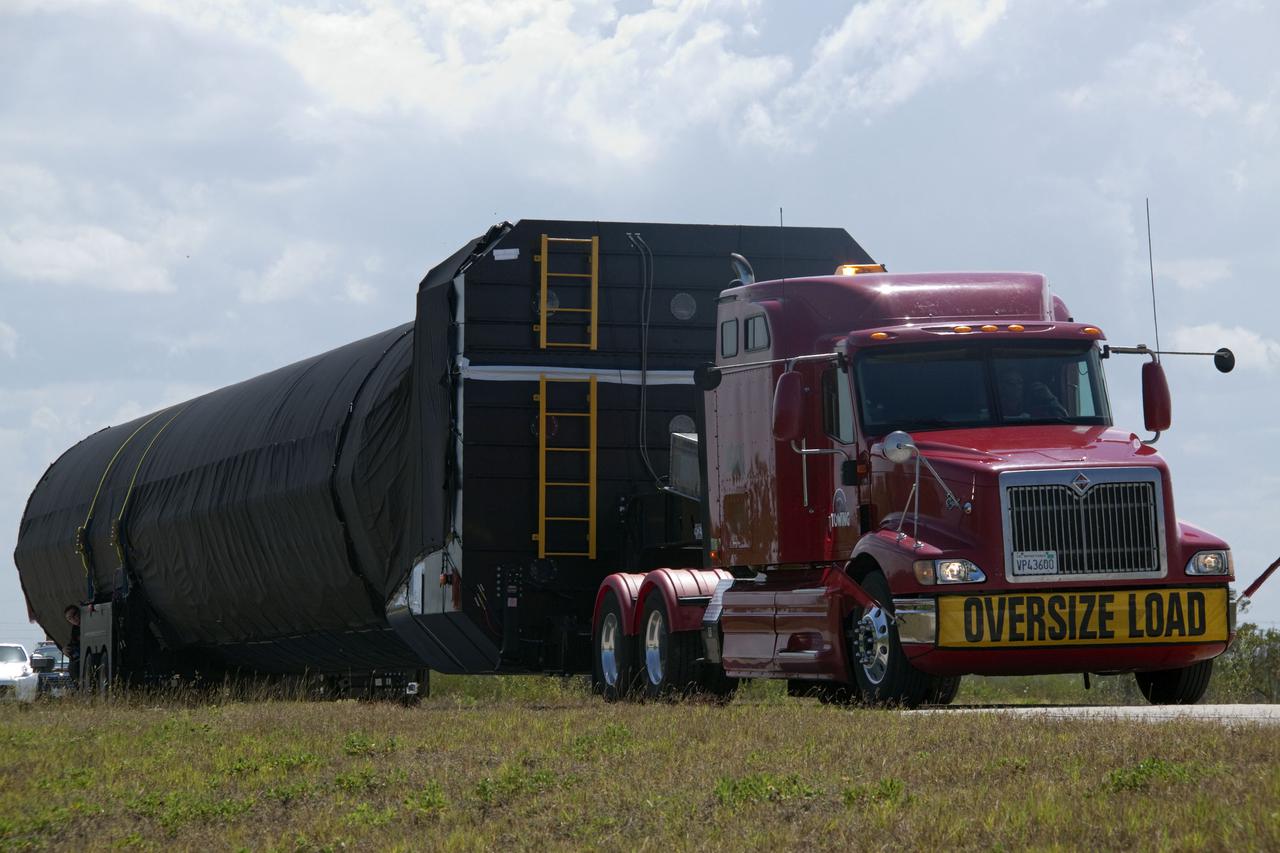
CAPE CANAVERAL, Fla. -- The first stage of the SpaceX COTS-2 Falcon 9 rocket is being transported to a SpaceX hangar at Pad 40 at Cape Canaveral Air Force Station in Florida. Once assembled, it will be a two-stage fully integrated launch vehicle, consisting of a first stage powered by nine SpaceX-developed Merlin 1C engines, a second stage, an interstage, an unpressurized trunk and the Dragon spacecraft qualification unit. SpaceX was awarded procurement for three demonstration flights under the Commercial Orbital Transportation Services, or COTS, program managed by NASA's Johnson Space Center in Houston. A subsequent contract for Commercial Resupply Services, or CRS, was awarded in late 2008 to resupply the International Space Station. The SpaceX CRS contract provides for 12 missions to resupply the station from 2011 through 2015. Photo credit: NASA_Jack Pfaller
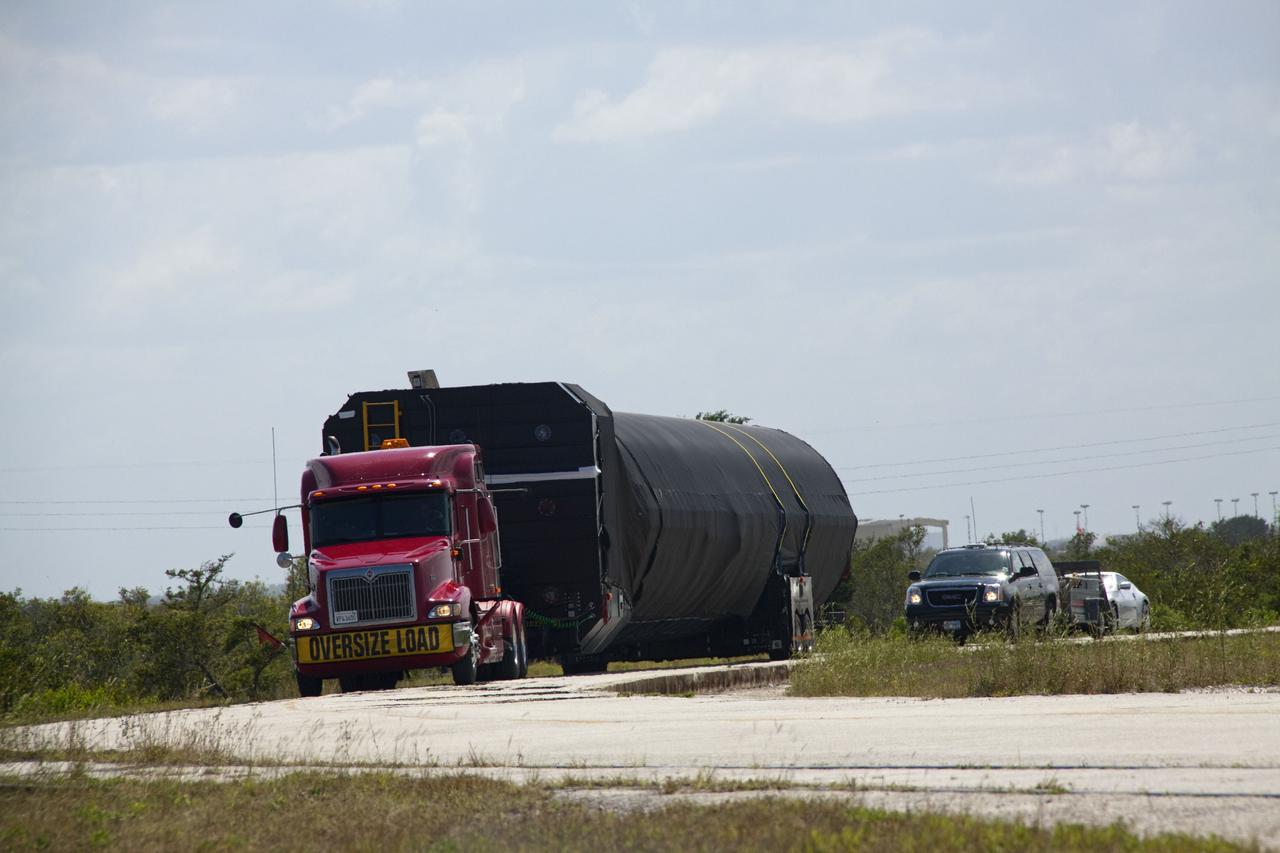
CAPE CANAVERAL, Fla. -- The first stage of the SpaceX COTS-2 Falcon 9 rocket is being transported to a SpaceX hangar at Pad 40 at Cape Canaveral Air Force Station in Florida. Once assembled, it will be a two-stage fully integrated launch vehicle, consisting of a first stage powered by nine SpaceX-developed Merlin 1C engines, a second stage, an interstage, an unpressurized trunk and the Dragon spacecraft qualification unit. SpaceX was awarded procurement for three demonstration flights under the Commercial Orbital Transportation Services, or COTS, program managed by NASA's Johnson Space Center in Houston. A subsequent contract for Commercial Resupply Services, or CRS, was awarded in late 2008 to resupply the International Space Station. The SpaceX CRS contract provides for 12 missions to resupply the station from 2011 through 2015. Photo credit: NASA_Jack Pfaller
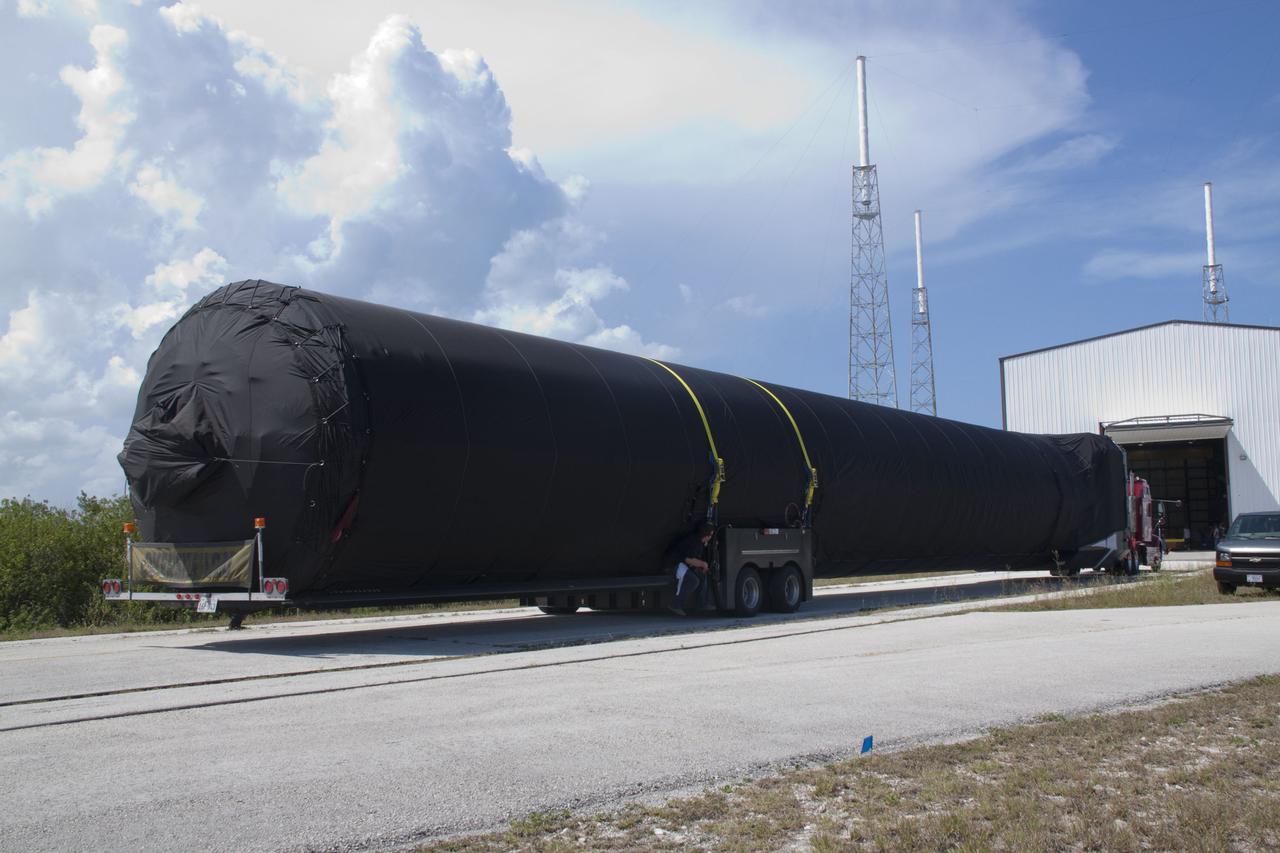
CAPE CANAVERAL, Fla. -- The first stage of the SpaceX COTS-2 Falcon 9 rocket is being transported to a SpaceX hangar at Pad 40 at Cape Canaveral Air Force Station in Florida. Once assembled, it will be a two-stage fully integrated launch vehicle, consisting of a first stage powered by nine SpaceX-developed Merlin 1C engines, a second stage, an interstage, an unpressurized trunk and the Dragon spacecraft qualification unit. SpaceX was awarded procurement for three demonstration flights under the Commercial Orbital Transportation Services, or COTS, program managed by NASA's Johnson Space Center in Houston. A subsequent contract for Commercial Resupply Services, or CRS, was awarded in late 2008 to resupply the International Space Station. The SpaceX CRS contract provides for 12 missions to resupply the station from 2011 through 2015. Photo credit: NASA_Jack Pfaller
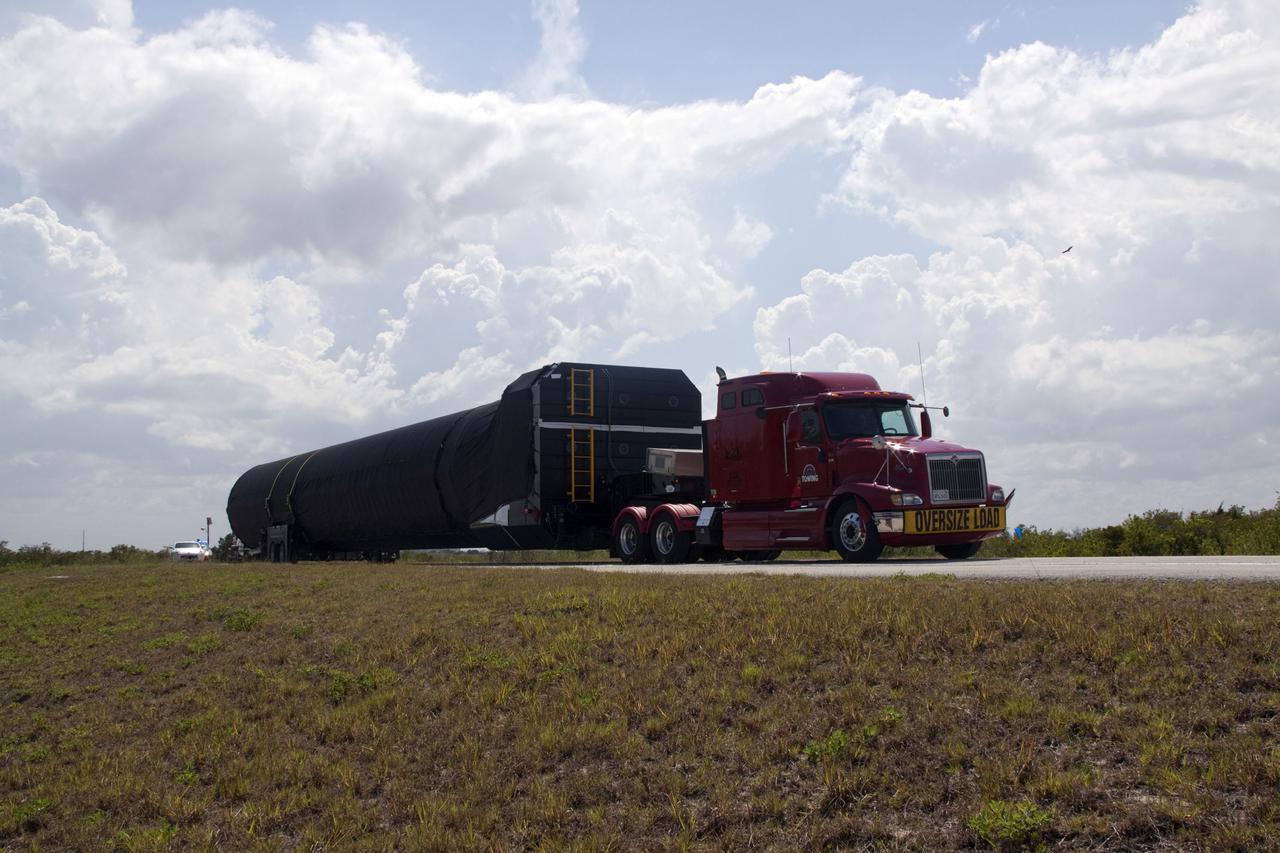
CAPE CANAVERAL, Fla. -- The first stage of the SpaceX COTS-2 Falcon 9 rocket is being transported to a SpaceX hangar at Pad 40 at Cape Canaveral Air Force Station in Florida. Once assembled, it will be a two-stage fully integrated launch vehicle, consisting of a first stage powered by nine SpaceX-developed Merlin 1C engines, a second stage, an interstage, an unpressurized trunk and the Dragon spacecraft qualification unit. SpaceX was awarded procurement for three demonstration flights under the Commercial Orbital Transportation Services, or COTS, program managed by NASA's Johnson Space Center in Houston. A subsequent contract for Commercial Resupply Services, or CRS, was awarded in late 2008 to resupply the International Space Station. The SpaceX CRS contract provides for 12 missions to resupply the station from 2011 through 2015. Photo credit: NASA_Jack Pfaller
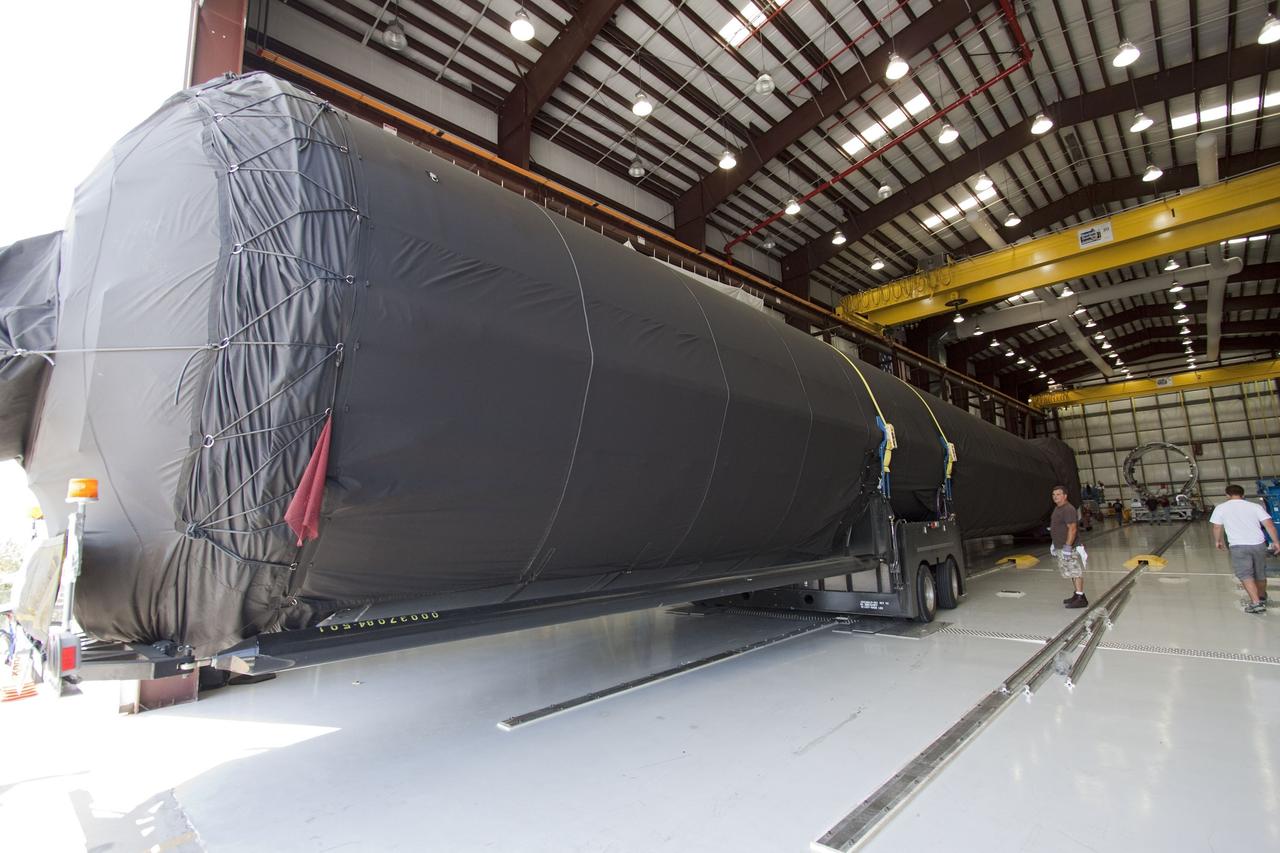
CAPE CANAVERAL, Fla. -- The first stage of the SpaceX COTS-2 Falcon 9 rocket has been moved to a SpaceX hangar at Pad 40 at Cape Canaveral Air Force Station in Florida. Once assembled, it will be a two-stage fully integrated launch vehicle, consisting of a first stage powered by nine SpaceX-developed Merlin 1C engines, a second stage, an interstage, an unpressurized trunk and the Dragon spacecraft qualification unit. SpaceX was awarded procurement for three demonstration flights under the Commercial Orbital Transportation Services, or COTS, program managed by NASA's Johnson Space Center in Houston. A subsequent contract for Commercial Resupply Services, or CRS, was awarded in late 2008 to resupply the International Space Station. The SpaceX CRS contract provides for 12 missions to resupply the station from 2011 through 2015. Photo credit: NASA/Jack Pfaller
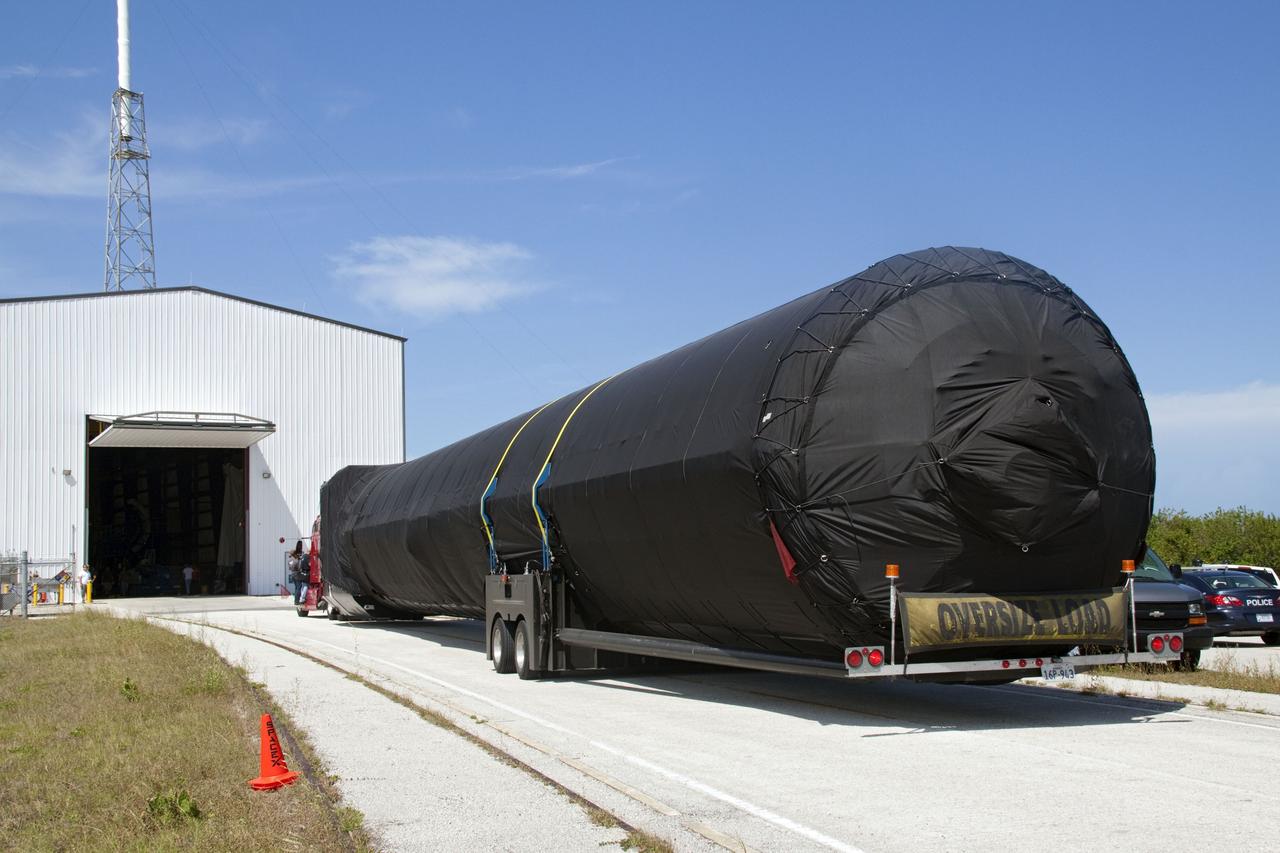
CAPE CANAVERAL, Fla. -- The first stage of the SpaceX COTS-2 Falcon 9 rocket is being moved into a SpaceX hangar at Pad 40 at Cape Canaveral Air Force Station in Florida. Once assembled, it will be a two-stage fully integrated launch vehicle, consisting of a first stage powered by nine SpaceX-developed Merlin 1C engines, a second stage, an interstage, an unpressurized trunk and the Dragon spacecraft qualification unit. SpaceX was awarded procurement for three demonstration flights under the Commercial Orbital Transportation Services, or COTS, program managed by NASA's Johnson Space Center in Houston. A subsequent contract for Commercial Resupply Services, or CRS, was awarded in late 2008 to resupply the International Space Station. The SpaceX CRS contract provides for 12 missions to resupply the station from 2011 through 2015. Photo credit: NASA/Jack Pfaller
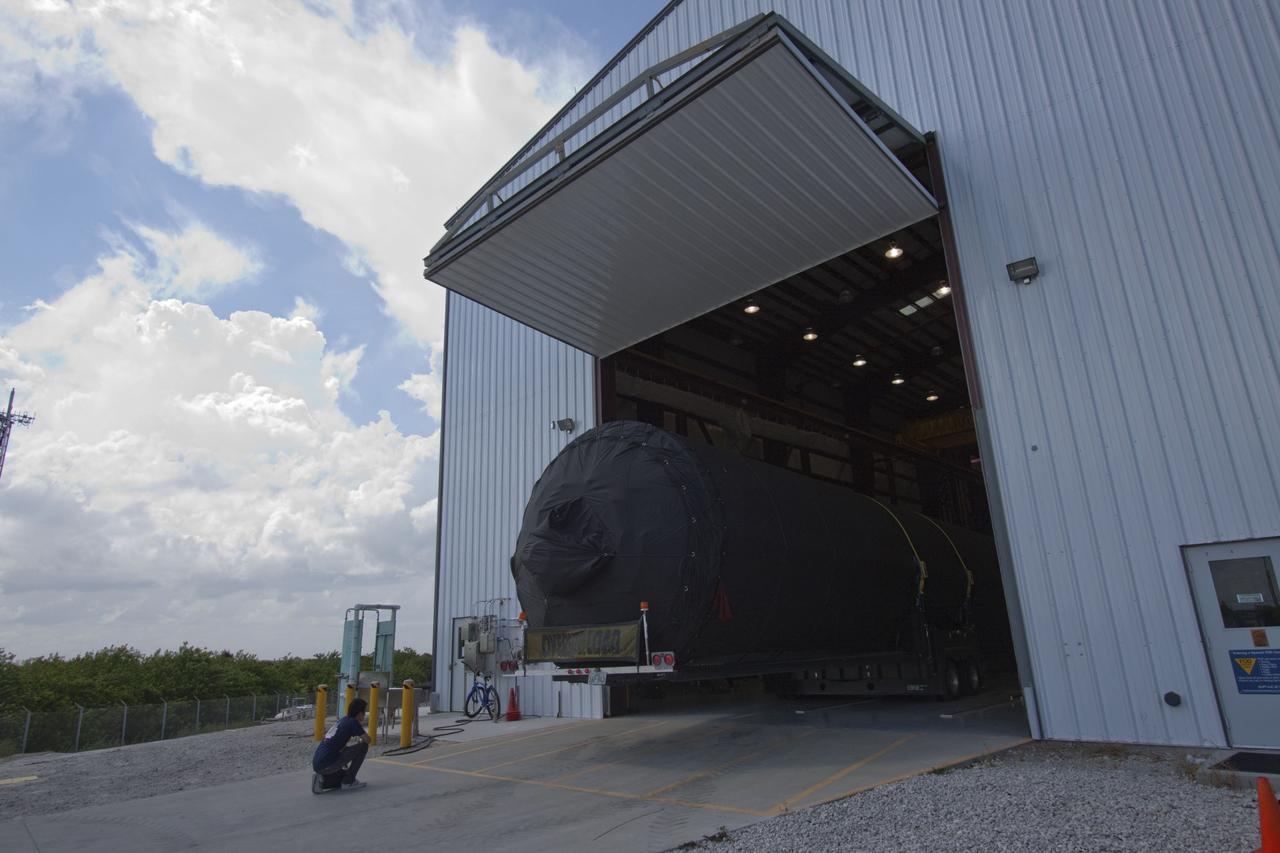
CAPE CANAVERAL, Fla. -- The first stage of the SpaceX COTS-2 Falcon 9 rocket is being moved into a SpaceX hangar at Pad 40 at Cape Canaveral Air Force Station in Florida. Once assembled, it will be a two-stage fully integrated launch vehicle, consisting of a first stage powered by nine SpaceX-developed Merlin 1C engines, a second stage, an interstage, an unpressurized trunk and the Dragon spacecraft qualification unit. SpaceX was awarded procurement for three demonstration flights under the Commercial Orbital Transportation Services, or COTS, program managed by NASA's Johnson Space Center in Houston. A subsequent contract for Commercial Resupply Services, or CRS, was awarded in late 2008 to resupply the International Space Station. The SpaceX CRS contract provides for 12 missions to resupply the station from 2011 through 2015. Photo credit: NASA/Jack Pfaller
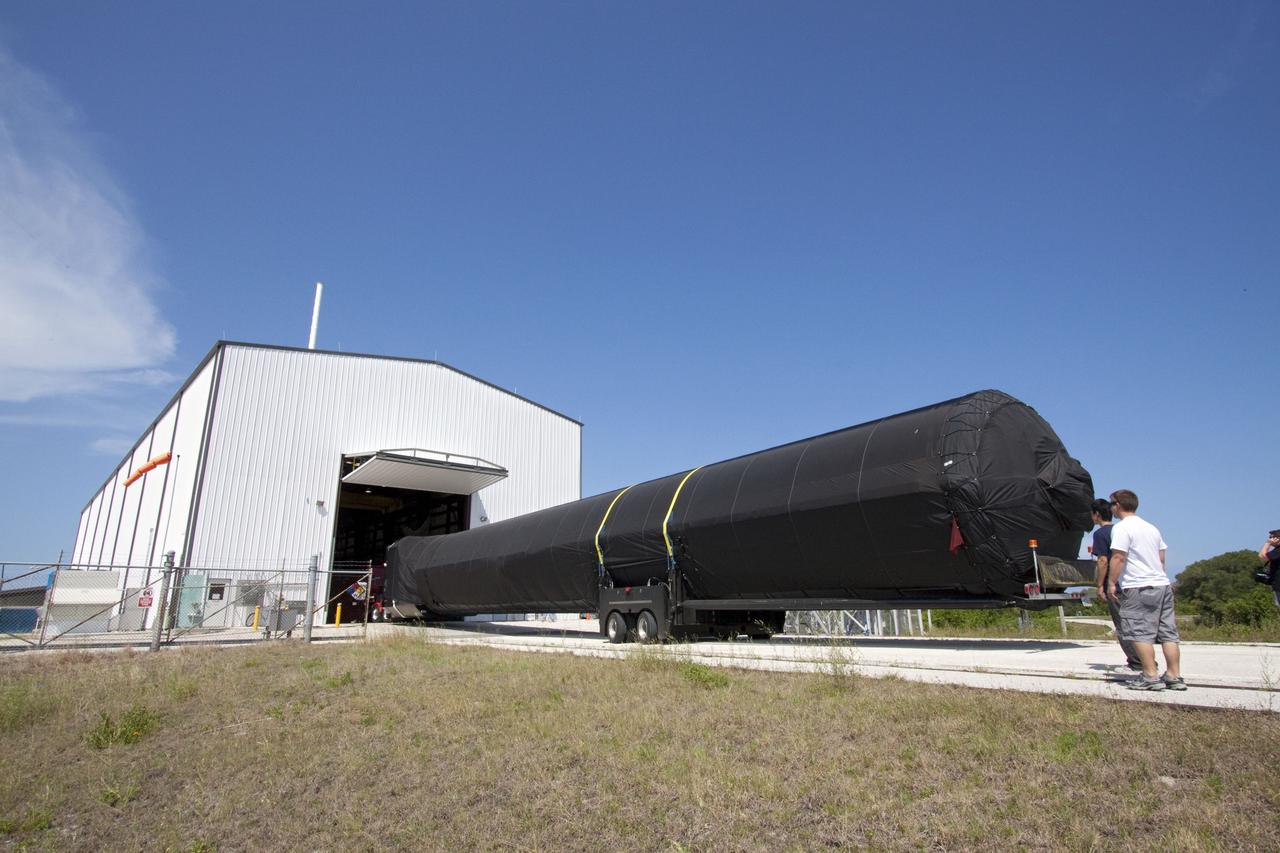
CAPE CANAVERAL, Fla. -- The first stage of the SpaceX COTS-2 Falcon 9 rocket is being moved into a SpaceX hangar at Pad 40 at Cape Canaveral Air Force Station in Florida. Once assembled, it will be a two-stage fully integrated launch vehicle, consisting of a first stage powered by nine SpaceX-developed Merlin 1C engines, a second stage, an interstage, an unpressurized trunk and the Dragon spacecraft qualification unit. SpaceX was awarded procurement for three demonstration flights under the Commercial Orbital Transportation Services, or COTS, program managed by NASA's Johnson Space Center in Houston. A subsequent contract for Commercial Resupply Services, or CRS, was awarded in late 2008 to resupply the International Space Station. The SpaceX CRS contract provides for 12 missions to resupply the station from 2011 through 2015. Photo credit: NASA/Jack Pfaller