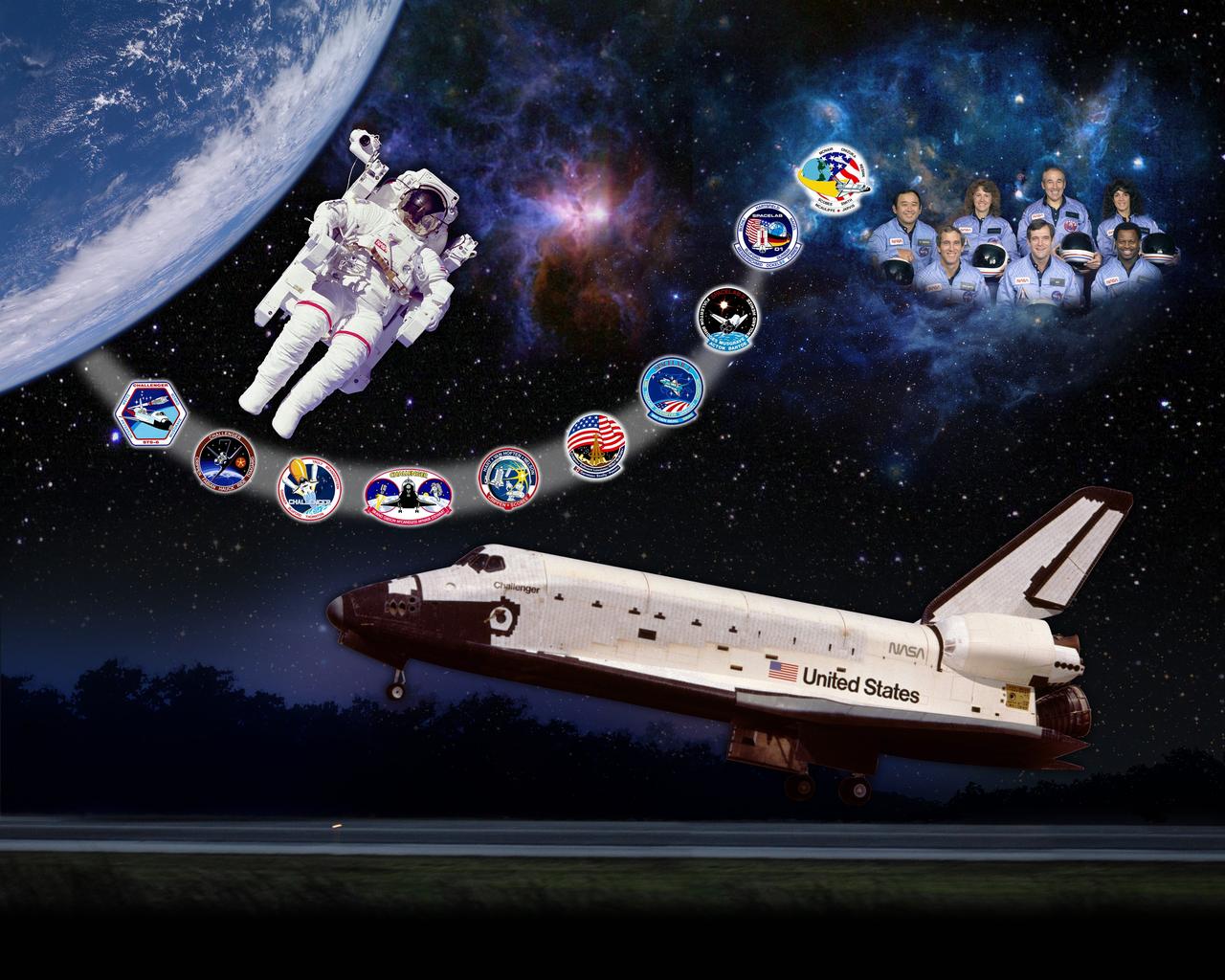
CAPE CANAVERAL, Fla. -- This orbiter tribute of space shuttle Challenger, or OV-099, hangs in Firing Room 4 of the Launch Control Center at NASA's Kennedy Space Center in Florida. Challenger's accomplishments include the first night launch and first African-American in space, Guion Bluford, on STS-8, the first in-flight capture, repair and redeployment of an orbiting satellite during STS-41C, the first American woman in space, Sally Ride, on STS-7, and the first American woman to walk in space, Kathryn Sullivan, during STS-41G. Challenger is credited with blazing a trail for NASA's other orbiters with the first night landing at Edwards Air Force Base in California on STS-8 and the first landing at Kennedy on STS-41B. The spacewalker in the tribute represents Challenger’s role in the first spacewalk during STS-6 and the first untethered spacewalk on STS-41B. Crew-designed patches for each of Challenger’s missions lead from Earth toward a remembrance of the STS-51L crew, which was lost 73 seconds after liftoff on Jan. 28, 1986. Five orbiter tributes are on display in the firing room, representing Atlantis, Challenger, Columbia, Endeavour and Discovery. Graphic design credit: NASA/Lynda Brammer
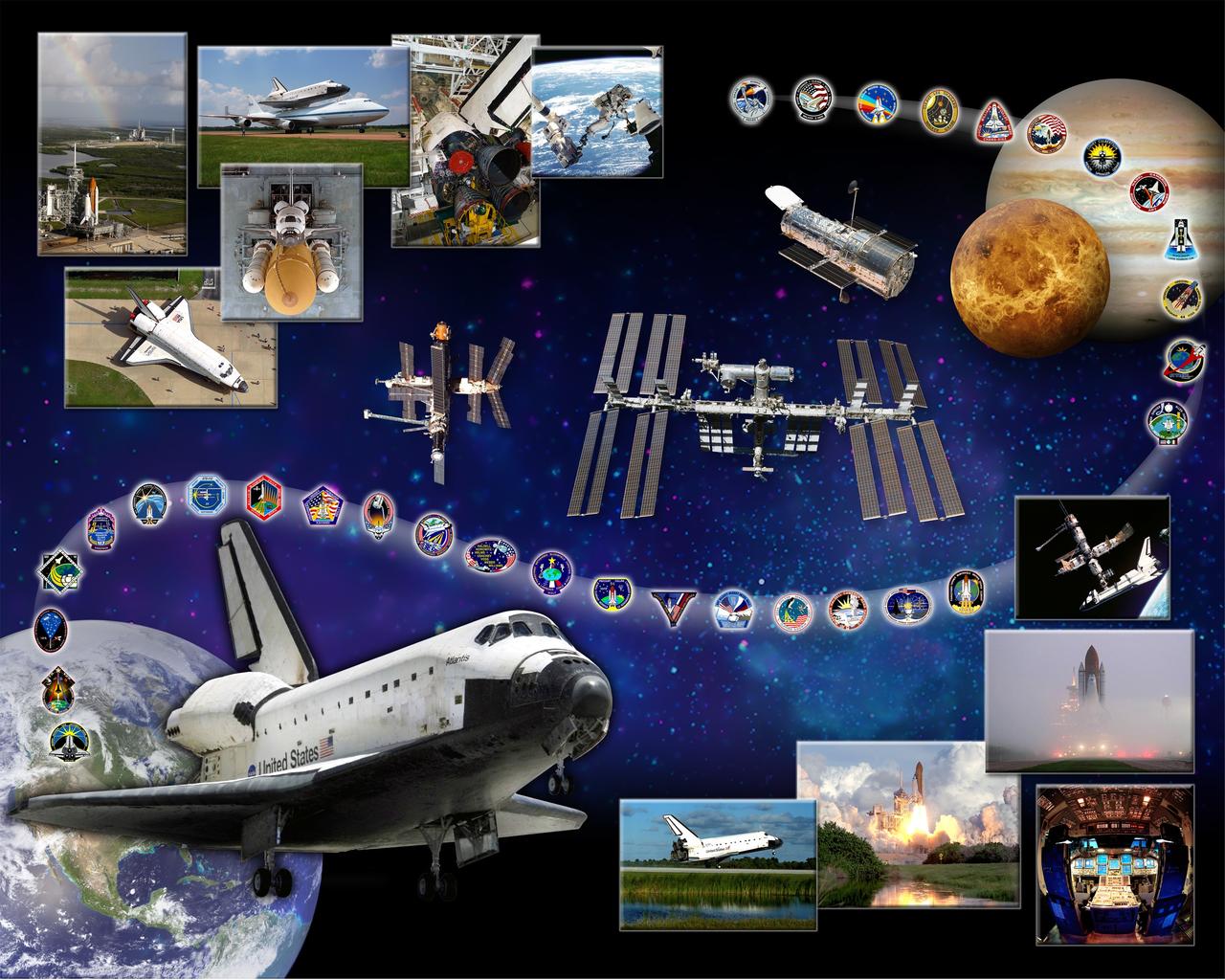
CAPE CANAVERAL, Fla. -- This orbiter tribute of space shuttle Atlantis, or OV-104, hangs in Firing Room 4 of the Launch Control Center at NASA's Kennedy Space Center in Florida. In the lower-left corner, it features Atlantis soaring above Earth and threaded through the design are the mission patches for each of Atlantis’ flights. Atlantis' accomplishments include seven missions to the Russian space station Mir and several assembly, construction and resupply missions to the International Space Station. Atlantis also flew the last Hubble Space Telescope servicing mission on STS-125. In the tribute, the planet Venus represents the Magellan probe being deployed during STS-30, and Jupiter represents the Galileo probe being deployed during STS-34. The inset photos illustrate various aspects of shuttle processing as well as significant achievements, such as the glass cockpit and the first shuttle docking with Mir during STS-71. The inset photo in the upper-left corner shows a rainbow over Atlantis on Launch Pad 39A and shuttle Endeavour on Launch Pad 39B at Kennedy. Endeavour was the assigned vehicle had Atlantis’ STS-125 mission needed rescue, and this was the last time both launch pads were occupied at the same time. The stars in the background represent the many people who have worked with Atlantis and their contributions to the vehicle’s success. Graphic design credit: NASA/Amy Lombardo
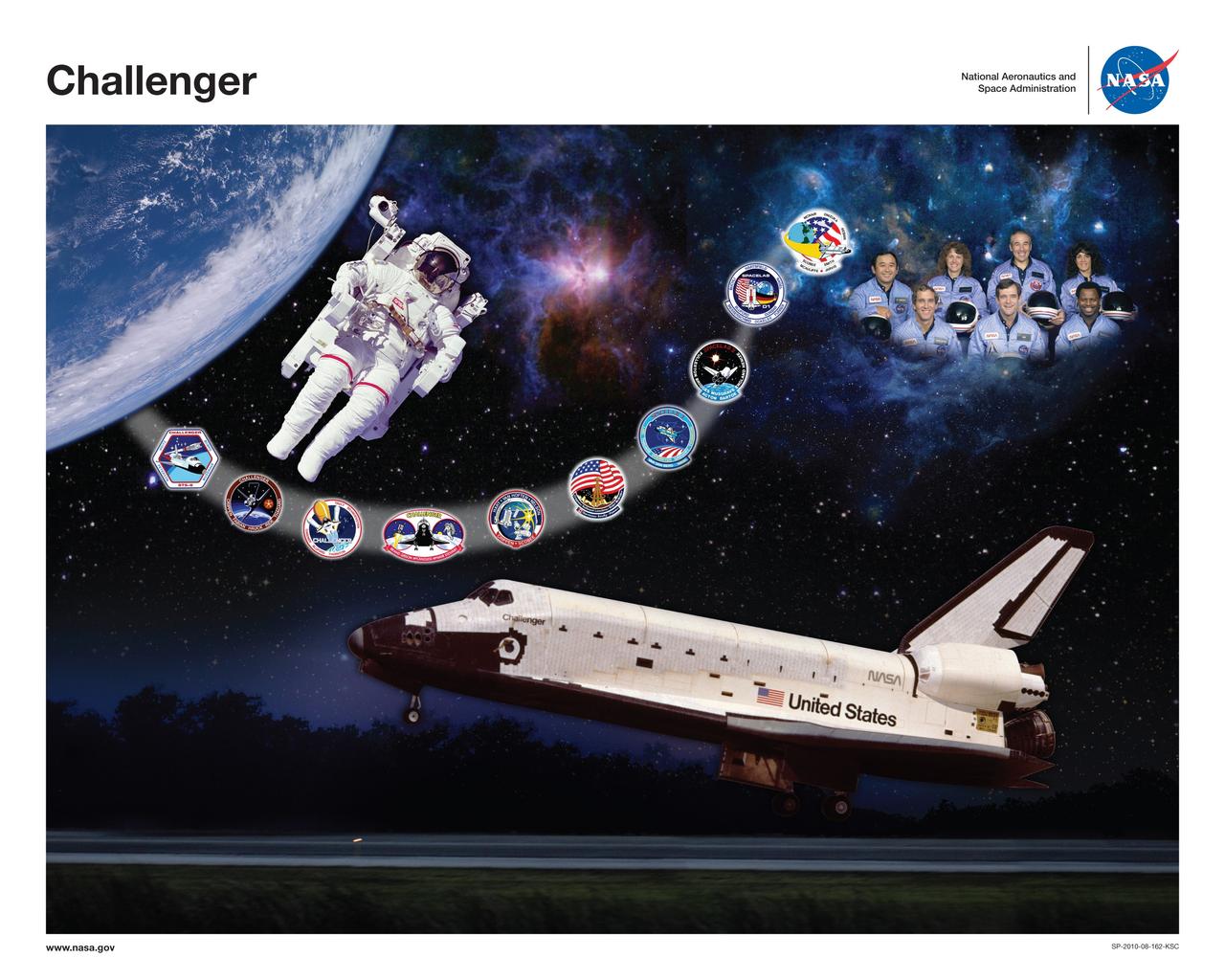
CAPE CANAVERAL, Fla. -- This is a version of space shuttle Challenger's orbiter tribute, or OV-099, which hangs in Firing Room 4 of the Launch Control Center at NASA's Kennedy Space Center in Florida. Challenger's accomplishments include the first night launch and first African-American in space, Guion Bluford, on STS-8, the first in-flight capture, repair and redeployment of an orbiting satellite during STS-41C, the first American woman in space, Sally Ride, on STS-7, and the first American woman to walk in space, Kathryn Sullivan, during STS-41G. Challenger is credited with blazing a trail for NASA's other orbiters with the first night landing at Edwards Air Force Base in California on STS-8 and the first landing at Kennedy on STS-41B. The spacewalker in the tribute represents Challenger’s role in the first spacewalk during STS-6 and the first untethered spacewalk on STS-41B. Crew-designed patches for each of Challenger’s missions lead from Earth toward a remembrance of the STS-51L crew, which was lost 73 seconds after liftoff on Jan. 28, 1986. Five orbiter tributes are on display in the firing room, representing Atlantis, Challenger, Columbia, Endeavour and Discovery. Graphic design credit: NASA/Lynda Brammer. NASA publication number: SP-2010-08-162-KSC
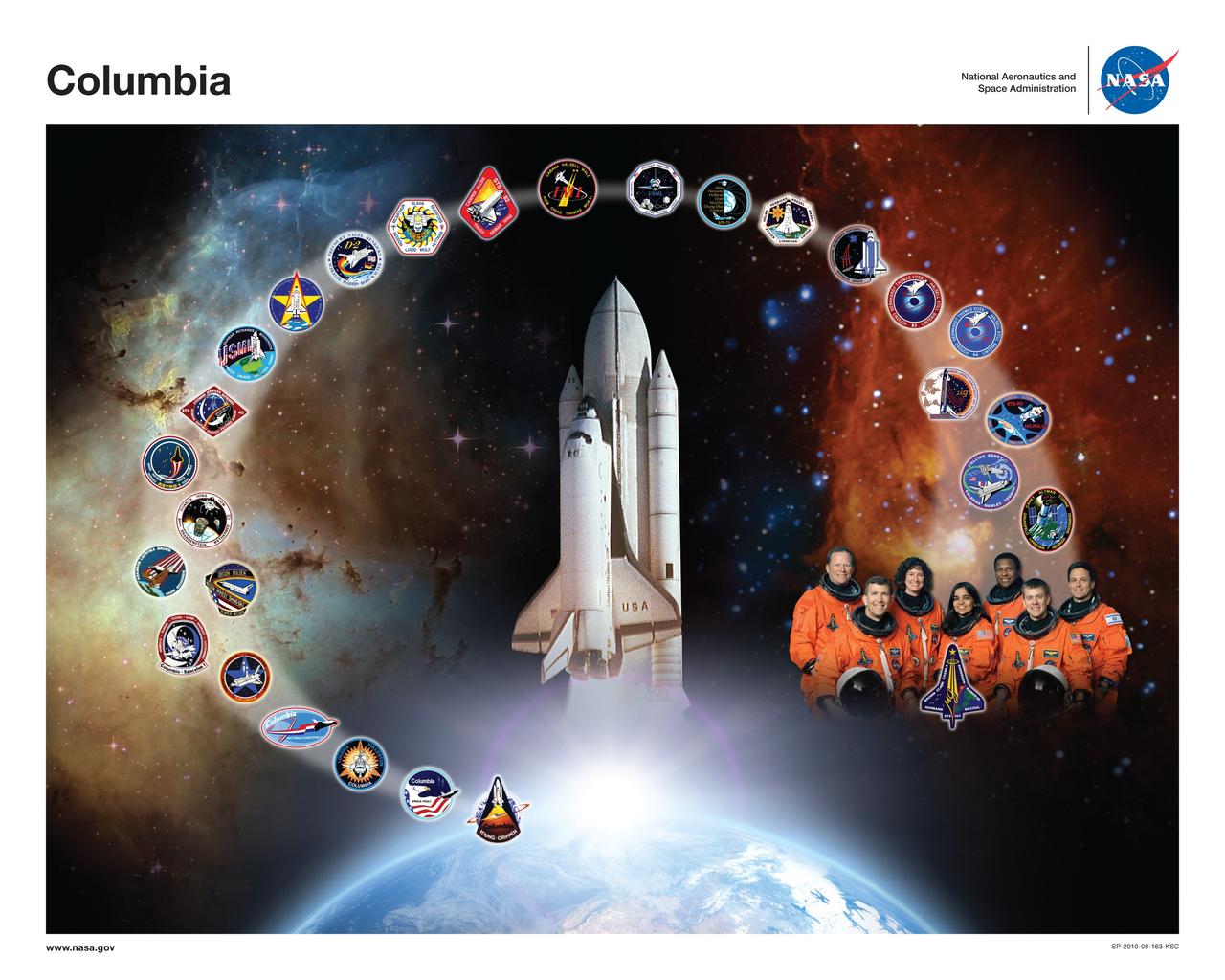
CAPE CANAVERAL, Fla. -- This is a version of space shuttle Columbia's orbiter tribute, or OV-102, which hangs in Firing Room 4 of the Launch Control Center at NASA's Kennedy Space Center in Florida. The tribute features Columbia, the “first of the fleet," rising above Earth at the dawn of the Space Shuttle Program. Columbia's accomplishments include the launch and deployment of NASA's Chandra X-ray Observatory on STS-93, the first shuttle landing at White Sands Space Harbor in New Mexico on STS-3, the first deployment of commercial satellites and the first four-member crew during STS-5, the first Spacelab mission and first six-member crew on STS-9, the first female commander, Eileen Collins, on STS-93, as well as several laboratory missions with international partners. Crew-designed patches for each of Columbia’s missions lead from Earth toward a remembrance of the STS-107 crew, which was lost during re-entry on Feb. 1, 2003. Five orbiter tributes are on display in the firing room, representing Atlantis, Challenger, Columbia, Endeavour and Discovery. Graphic design credit: NASA/Amy Lombardo. NASA publication number: SP-2010-08-163-KSC
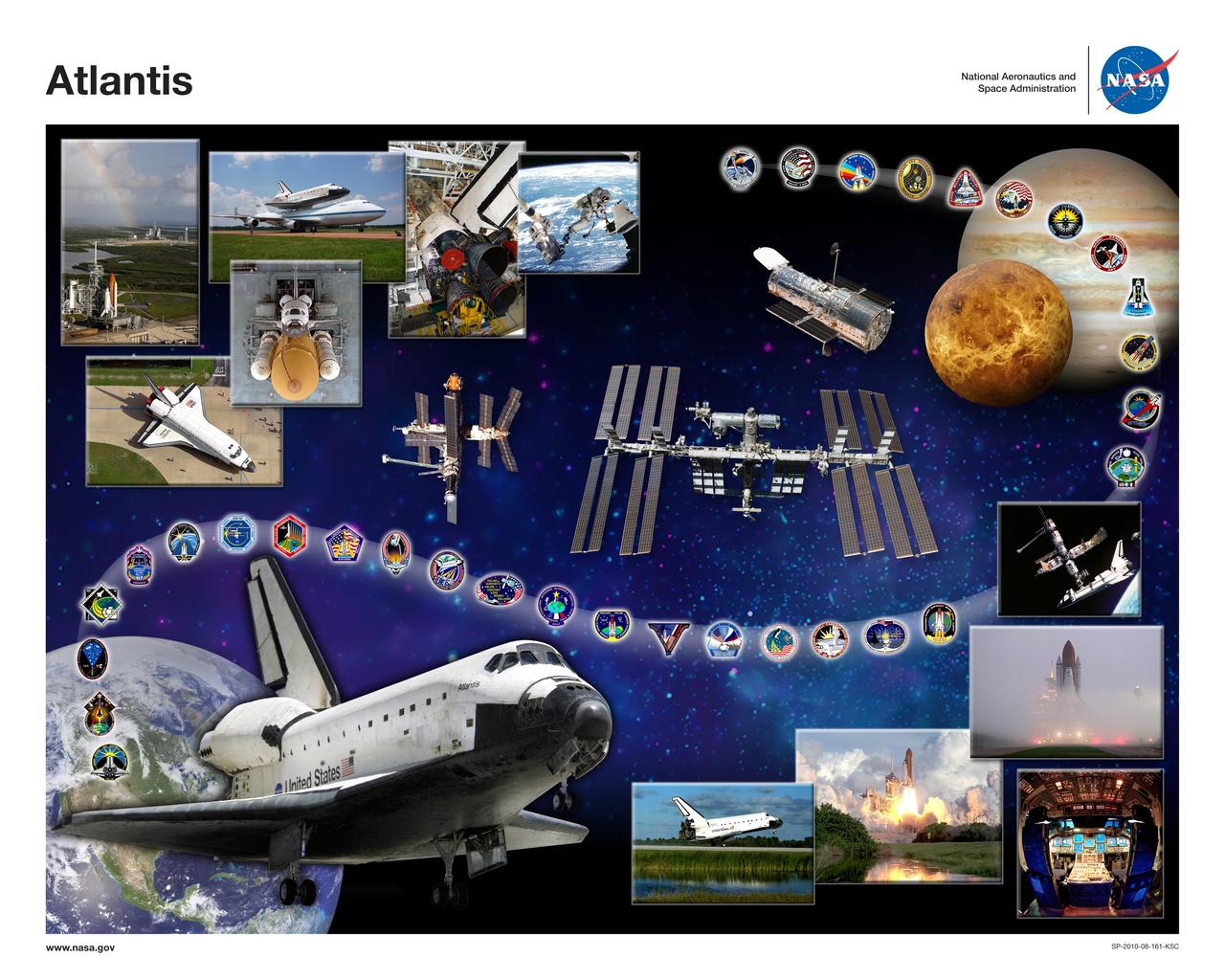
CAPE CANAVERAL, Fla. -- This is a version of space shuttle Atlantis' orbiter tribute, or OV-104, which hangs in Firing Room 4 of the Launch Control Center at NASA's Kennedy Space Center in Florida. In the lower-left corner, it features Atlantis soaring above Earth and threaded through the design are the mission patches for each of Atlantis’ flights. Atlantis' accomplishments include seven missions to the Russian space station Mir and several assembly, construction and resupply missions to the International Space Station. Atlantis also flew the last Hubble Space Telescope servicing mission on STS-125. In the tribute, the planet Venus represents the Magellan probe being deployed during STS-30, and Jupiter represents the Galileo probe being deployed during STS-34. The inset photos illustrate various aspects of shuttle processing as well as significant achievements, such as the glass cockpit and the first shuttle docking with Mir during STS-71. The inset photo in the upper-left corner shows a rainbow over Atlantis on Launch Pad 39A and shuttle Endeavour on Launch Pad 39B at Kennedy. Endeavour was the assigned vehicle had Atlantis’ STS-125 mission needed rescue, and this was the last time both launch pads were occupied at the same time. The stars in the background represent the many people who have worked with Atlantis and their contributions to the vehicle’s success. Graphic design credit: NASA/Amy Lombardo. NASA publication number: SP-2010-08-161-KSC
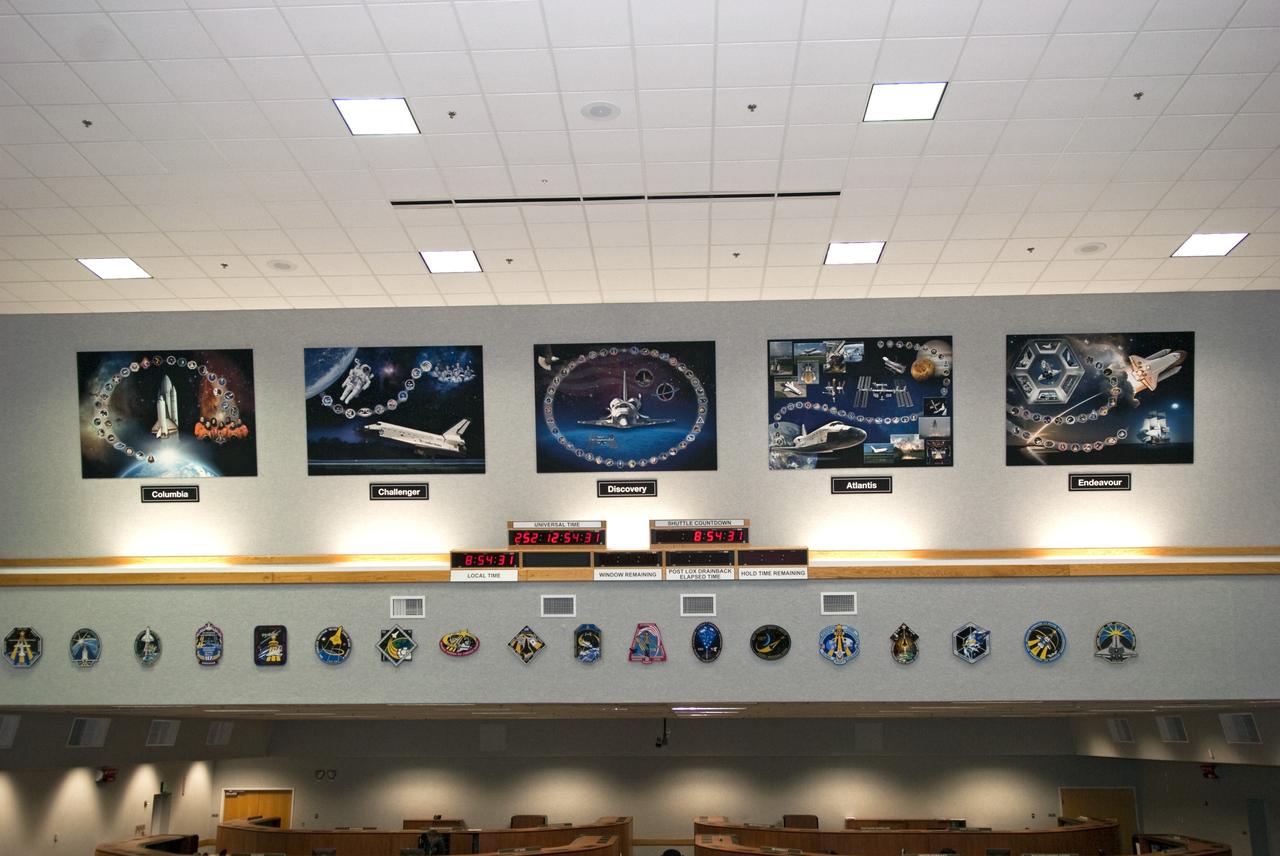
CAPE CANAVERAL, Fla. -- At NASA's Kennedy Space Center in Florida, five orbiter tributes are on display in Firing Room 4 of the Launch Control Center. Above the space shuttle countdown clock, from left and the order in which they have flown, are Columbia, Challenger, Discovery, Atlantis and Endeavour. The tributes feature major accomplishments and significant achievements made by each shuttle, as well as mission patches and processing milestones. Photo credit: NASA/Jim Grossmann
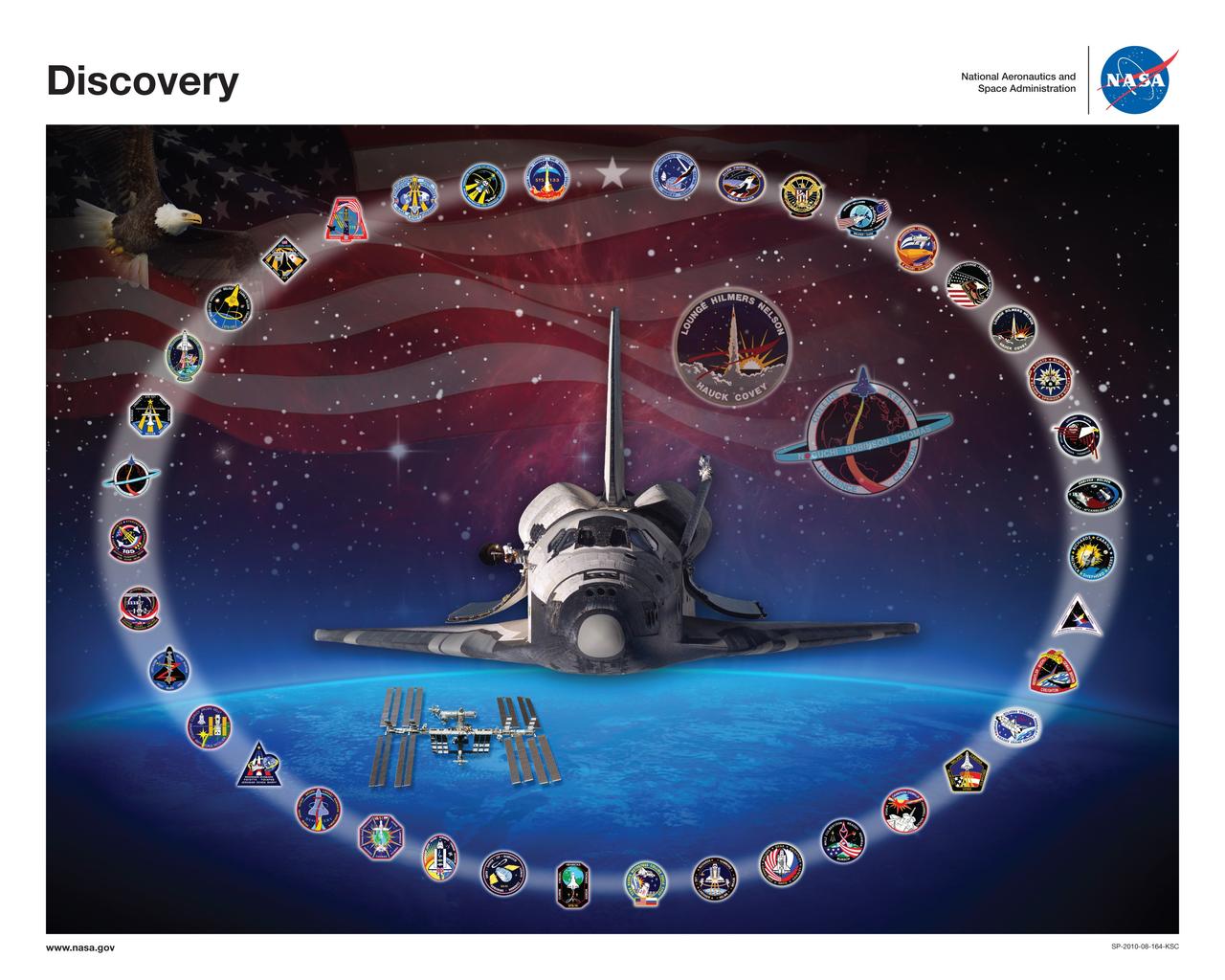
CAPE CANAVERAL, Fla. -- This is a version of space shuttle Discovery's orbiter tribute, or OV-103, which hangs in Firing Room 4 of the Launch Control Center at NASA's Kennedy Space Center in Florida. Discovery’s accomplishments include the first female shuttle pilot, Eileen Collins, on STS-63, John Glenn’s legendary return to space on STS-95, and the celebration of the 100th shuttle mission with STS-92. In addition, Discovery supported a number of Department of Defense programs, satellite deploy and repair missions and 13 International Space Station construction and operation flights. The tribute features Discovery demonstrating the rendezvous pitch maneuver on approach to the International Space Station during STS-114. Having accumulated the most space shuttle flights, Discovery’s 39 mission patches are shown circling the spacecraft. The background image was taken from the Hubble Space Telescope, which launched aboard Discovery on STS-31 and serviced by Discovery on STS-82 and STS-103. The American Flag and Bald Eagle represent Discovery’s two Return-to-Flight missions -- STS-26 and STS-114 -- and symbolize Discovery’s role in returning American astronauts to space. Five orbiter tributes are on display in the firing room, representing Atlantis, Challenger, Columbia, Endeavour and Discovery. Graphic design credit: NASA/Amy Lombardo. NASA publication number: SP-2010-08-164-KSC
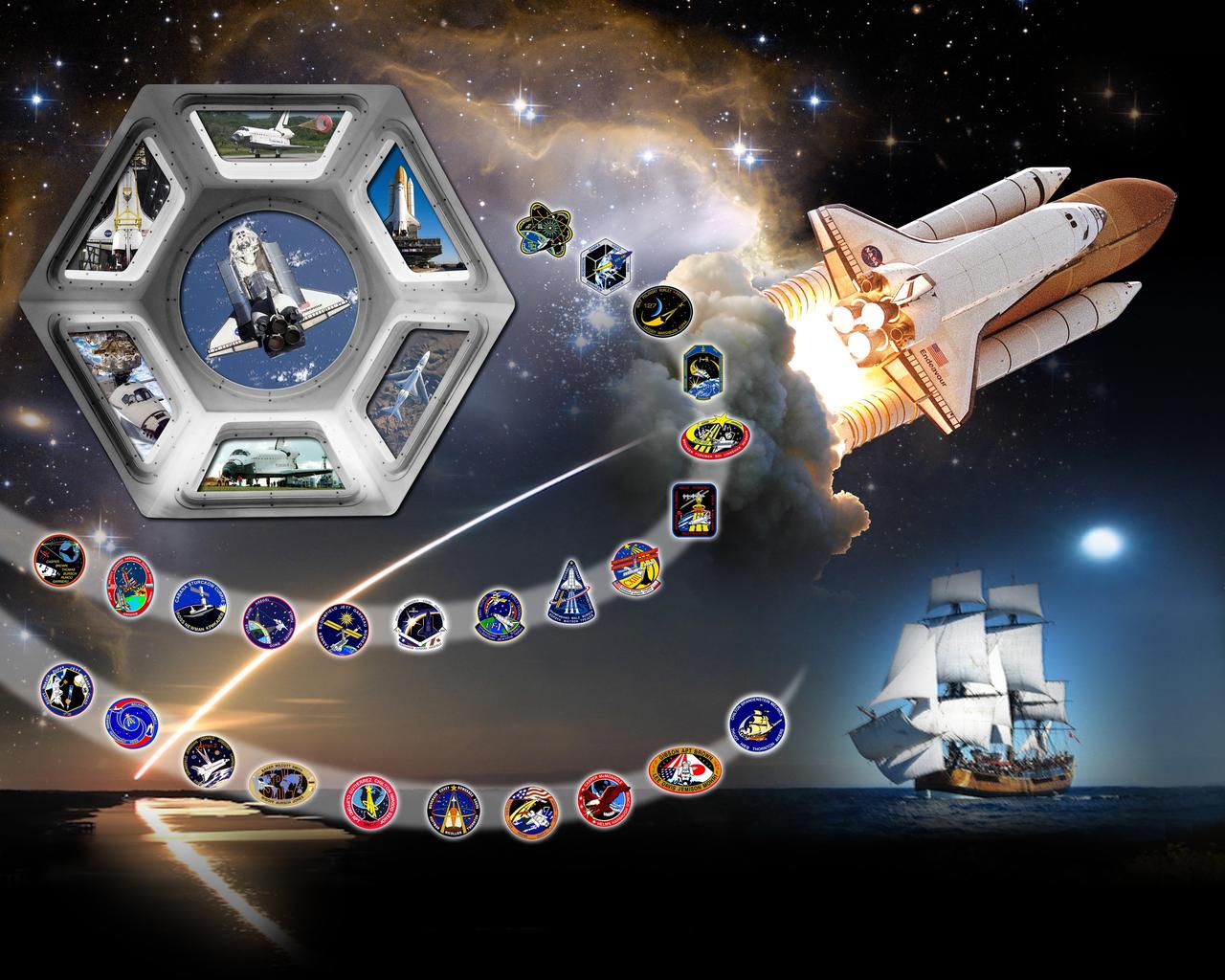
CAPE CANAVERAL, Fla. -- This orbiter tribute of space shuttle Endeavour, or OV-105, hangs in Firing Room 4 of the Launch Control Center at NASA's Kennedy Space Center in Florida. It features Endeavour soaring into orbit above the sailing vessel HMS Endeavour for which it was named. The Cupola, delivered to the International Space Station by Endeavour on STS-130, frames various images that represent the processing and execution of the Space Shuttle Program. Clockwise from top, are the first-ever use of a drag chute during the STS-49 landing, rollout to a launch pad, a ferry flight return to Kennedy, rolling into an orbiter processing facility, docking to the International Space Station, and lifting operations before being mated to an external fuel tank and solid rocket boosters in the Vehicle Assembly Building. The background image was captured by the Hubble Space Telescope and signifies the first shuttle servicing mission, which was performed by Endeavour's STS-61 crew. Crew-designed patches from Endeavour’s maiden voyage through its final mission are shown ascending toward the stars. Five orbiter tributes are on display in the firing room, representing Atlantis, Challenger, Columbia, Endeavour and Discovery. Graphic design credit: NASA/Amy Lombardo
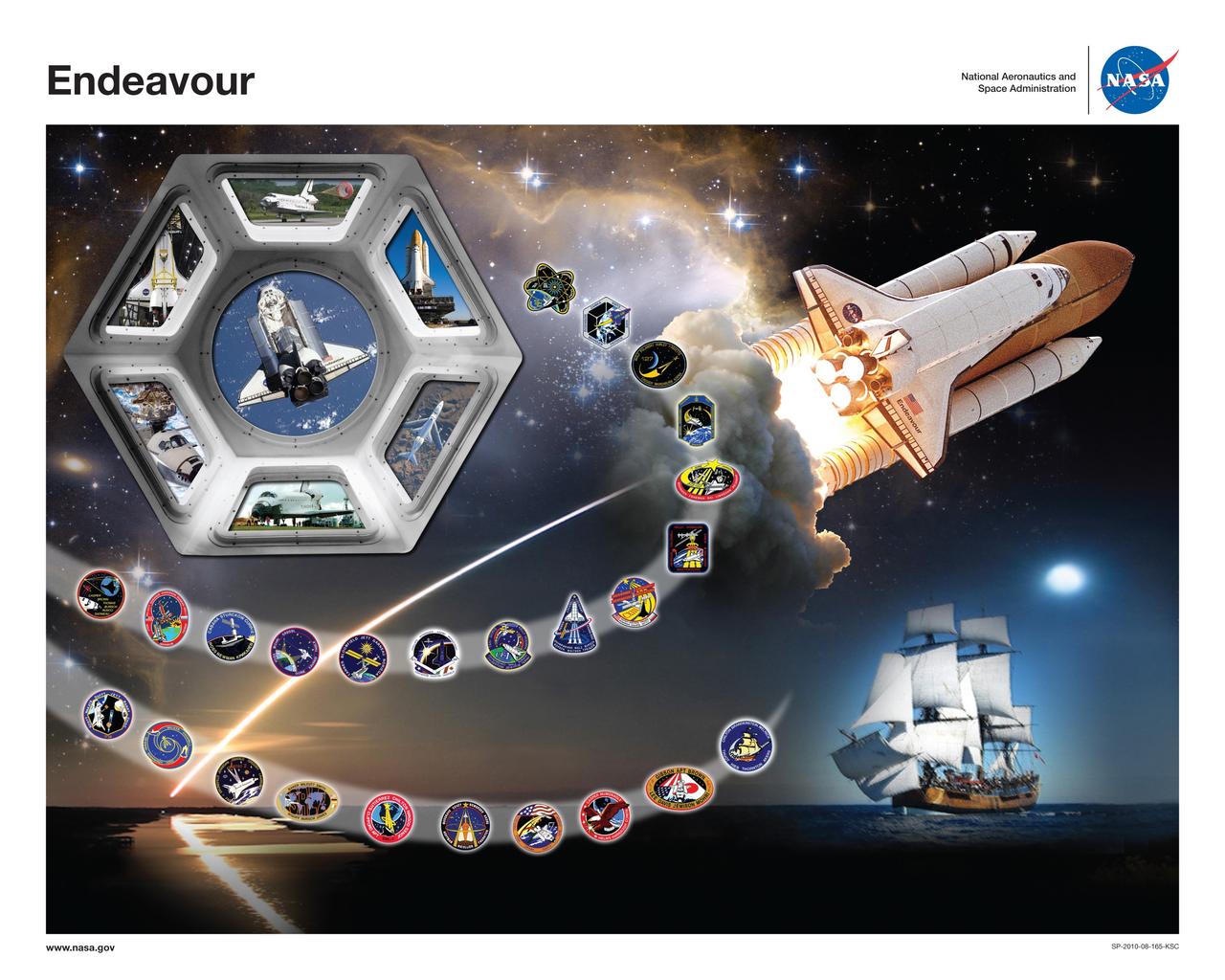
CAPE CANAVERAL, Fla. -- This is a version of space shuttle Endeavour's orbiter tribute, or OV-105, which hangs in Firing Room 4 of the Launch Control Center at NASA's Kennedy Space Center in Florida. It features Endeavour soaring into orbit above the sailing vessel HMS Endeavour for which it was named. The Cupola, delivered to the International Space Station by Endeavour on STS-130, frames various images that represent the processing and execution of the Space Shuttle Program. Clockwise from top, are the first-ever use of a drag chute during the STS-49 landing, rollout to a launch pad, a ferry flight return to Kennedy, rolling into an orbiter processing facility, docking to the International Space Station, and lifting operations before being mated to an external fuel tank and solid rocket boosters in the Vehicle Assembly Building. The background image was captured by the Hubble Space Telescope and signifies the first shuttle servicing mission, which was performed by Endeavour's STS-61 crew. Crew-designed patches from Endeavour’s maiden voyage through its final mission are shown ascending toward the stars. Five orbiter tributes are on display in the firing room, representing Atlantis, Challenger, Columbia, Endeavour and Discovery. Graphic design credit: NASA/Amy Lombardo. NASA publication number: SP-2010-08-165-KSC
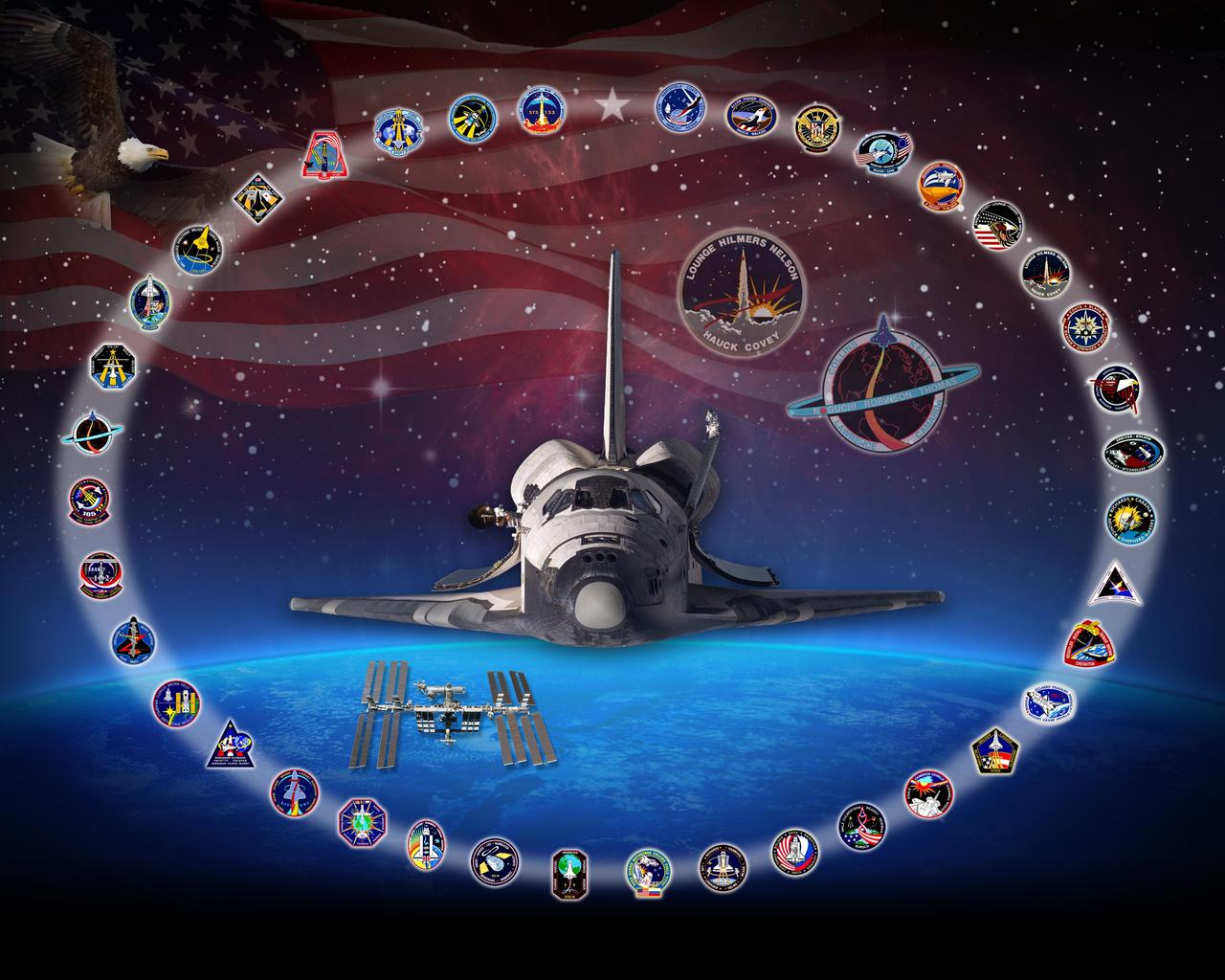
CAPE CANAVERAL, Fla. -- This orbiter tribute of space shuttle Discovery, or OV-103, hangs in Firing Room 4 of the Launch Control Center at NASA's Kennedy Space Center in Florida. Discovery’s accomplishments include the first female shuttle pilot, Eileen Collins, on STS-63, John Glenn’s legendary return to space on STS-95, and the celebration of the 100th shuttle mission with STS-92. In addition, Discovery supported a number of Department of Defense programs, satellite deploy and repair missions and 13 International Space Station construction and operation flights. The tribute features Discovery demonstrating the rendezvous pitch maneuver on approach to the International Space Station during STS-114. Having accumulated the most space shuttle flights, Discovery’s 39 mission patches are shown circling the spacecraft. The background image was taken from the Hubble Space Telescope, which launched aboard Discovery on STS-31 and serviced by Discovery on STS-82 and STS-103. The American Flag and Bald Eagle represent Discovery’s two Return-to-Flight missions -- STS-26 and STS-114 -- and symbolize Discovery’s role in returning American astronauts to space. Five orbiter tributes are on display in the firing room, representing Atlantis, Challenger, Columbia, Endeavour and Discovery. Graphic design credit: NASA/Amy Lombardo
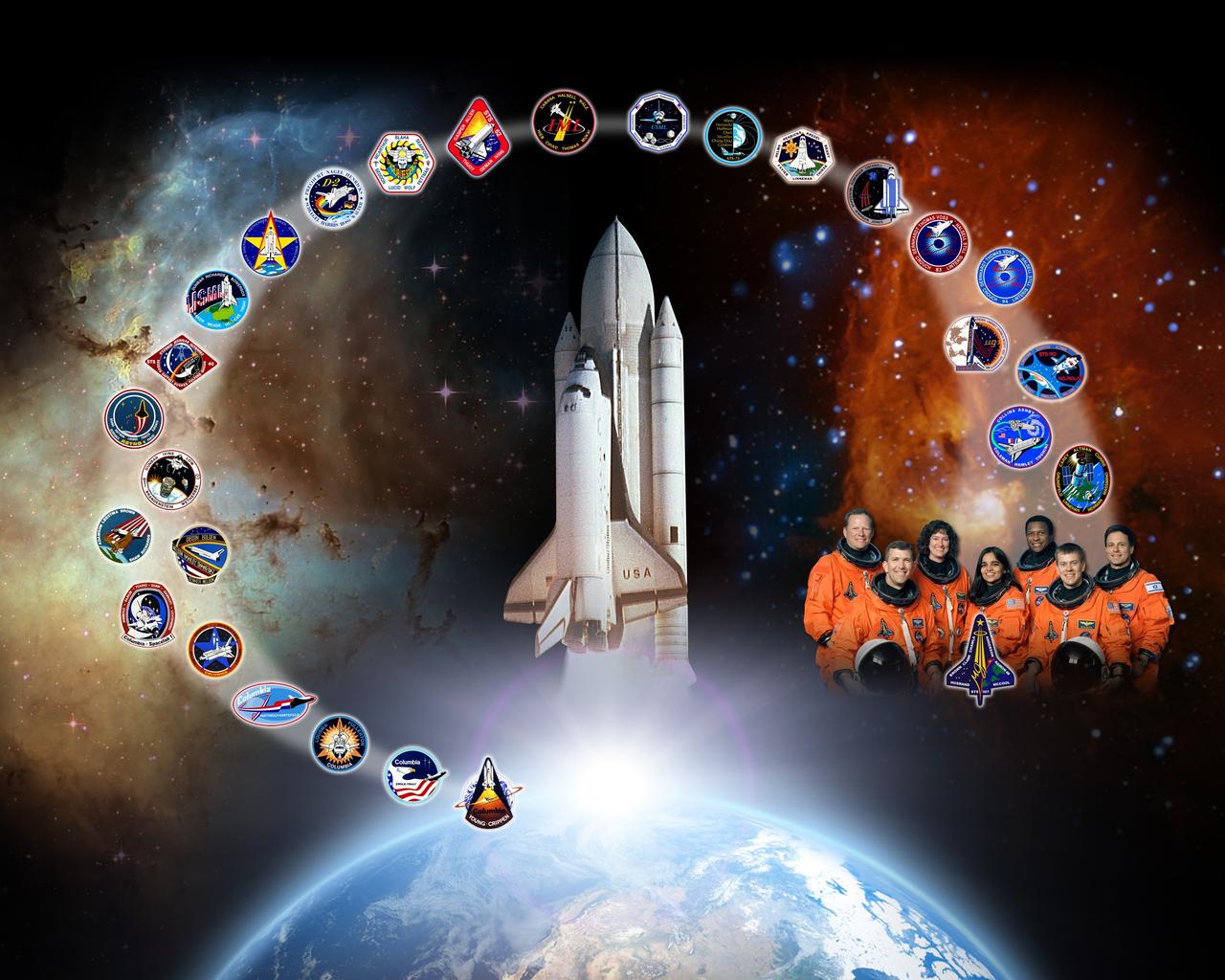
CAPE CANAVERAL, Fla. -- This orbiter tribute of space shuttle Columbia, or OV-102, hangs in Firing Room 4 of the Launch Control Center at NASA's Kennedy Space Center in Florida. The tribute features Columbia, the “first of the fleet," rising above Earth at the dawn of the Space Shuttle Program. Columbia's accomplishments include the launch and deployment of NASA's Chandra X-ray Observatory on STS-93, the first shuttle landing at White Sands Space Harbor in New Mexico on STS-3, the first deployment of commercial satellites and the first four-member crew during STS-5, the first Spacelab mission and first six-member crew on STS-9, the first female commander, Eileen Collins, on STS-93, as well as several laboratory missions with international partners. Crew-designed patches for each of Columbia’s missions lead from Earth toward a remembrance of the STS-107 crew, which was lost during re-entry on Feb. 1, 2003. Five orbiter tributes are on display in the firing room, representing Atlantis, Challenger, Columbia, Endeavour and Discovery. Graphic design credit: NASA/Amy Lombardo
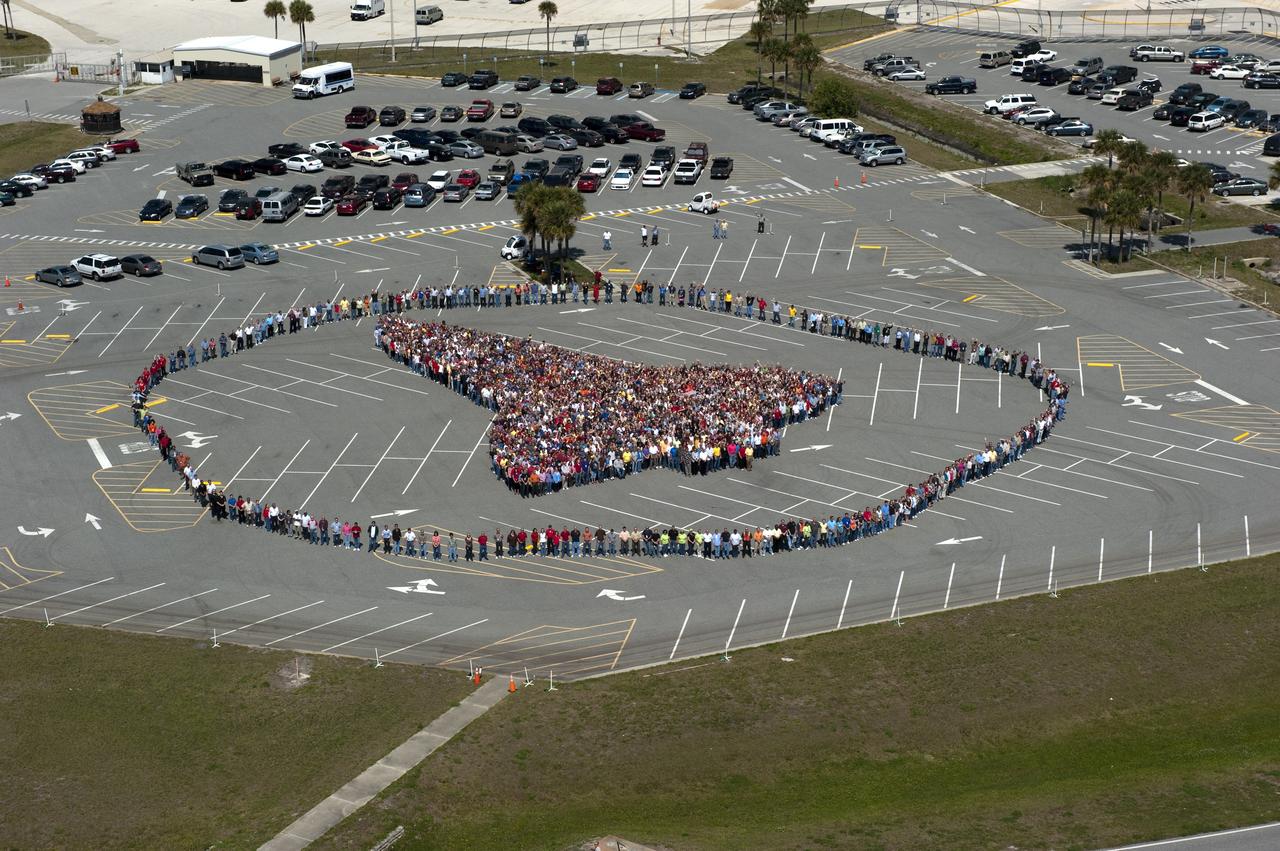
CAPE CANAVERAL, Fla. -- Thousands of NASA Kennedy Space Center employees stand side-by-side to form a full-scale outline of a space shuttle orbiter outside the Vehicle Assembly Building. The unique photo opportunity was designed to honor the Space Shuttle Program's 30-year legacy and the people who contribute to safely processing, launching and landing the vehicle. To learn more about the space shuttle era, including videos, photos and feature stories, go to www.nasa.gov/mission_pages/shuttle/flyout/index.html. Photo credit: NASA/Kim Shiflett
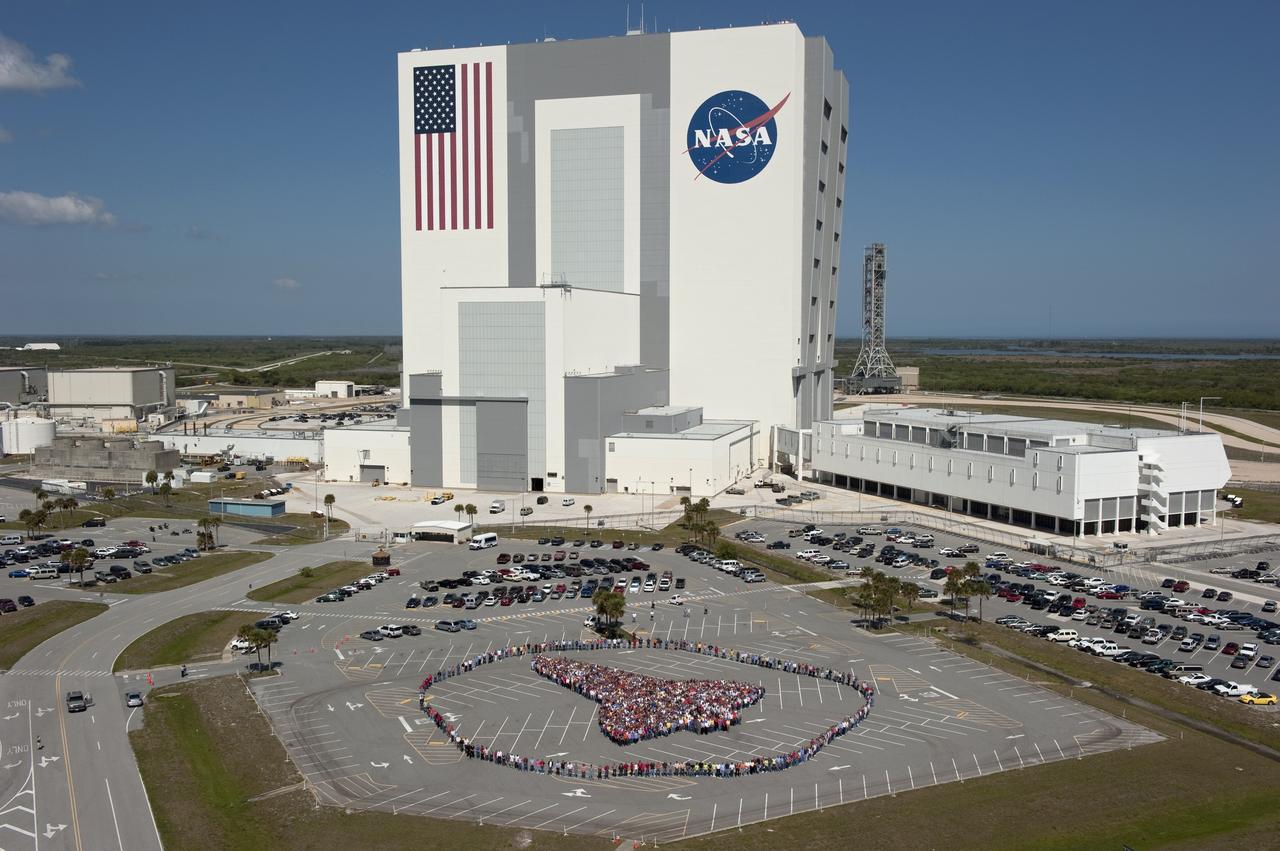
CAPE CANAVERAL, Fla. -- Thousands of NASA Kennedy Space Center employees stand side-by-side to form a full-scale outline of a space shuttle orbiter outside the Vehicle Assembly Building. The unique photo opportunity was designed to honor the Space Shuttle Program's 30-year legacy and the people who contribute to safely processing, launching and landing the vehicle. To learn more about the space shuttle era, including videos, photos and feature stories, go to www.nasa.gov/mission_pages/shuttle/flyout/index.html. Photo credit: NASA/Kim Shiflett
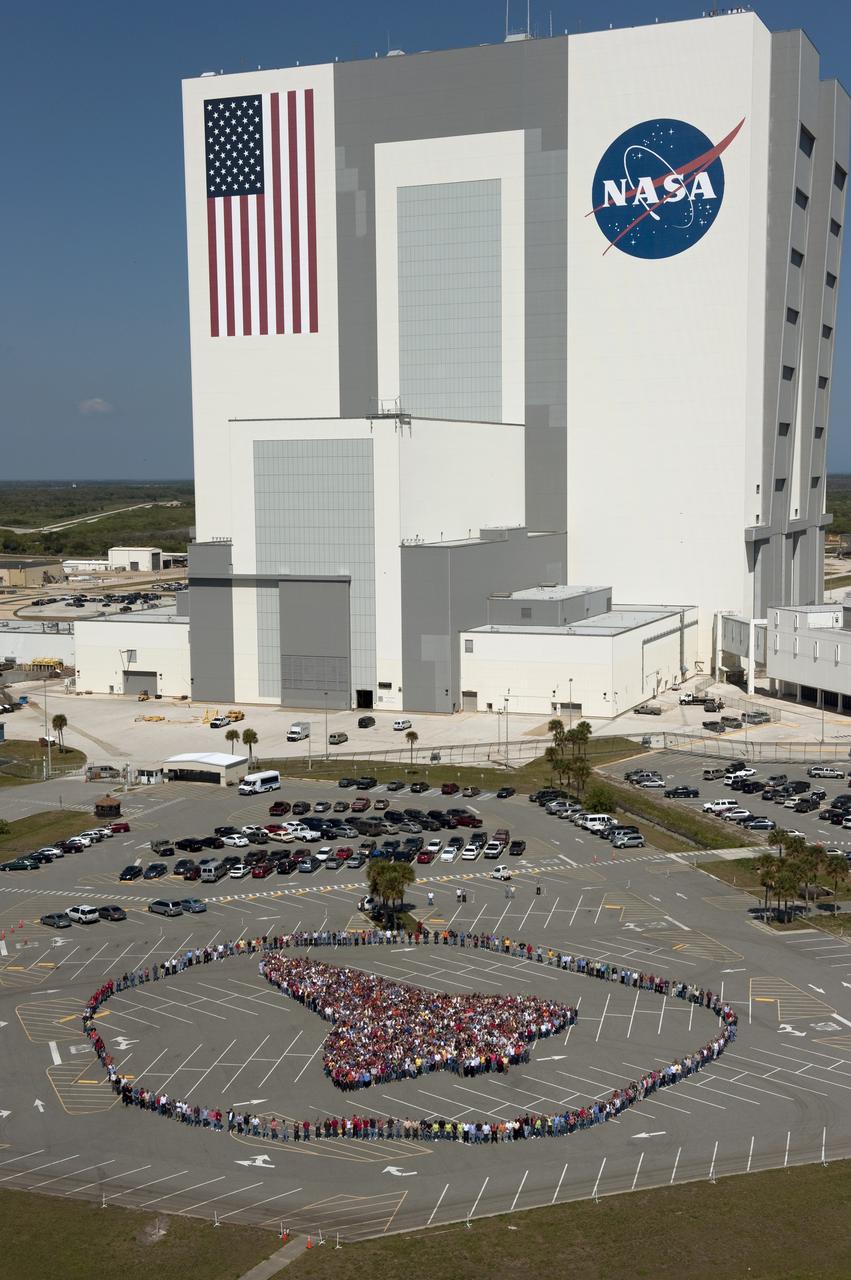
CAPE CANAVERAL, Fla. -- Thousands of NASA Kennedy Space Center employees stand side-by-side to form a full-scale outline of a space shuttle orbiter outside the Vehicle Assembly Building. The unique photo opportunity was designed to honor the Space Shuttle Program's 30-year legacy and the people who contribute to safely processing, launching and landing the vehicle. To learn more about the space shuttle era, including videos, photos and feature stories, go to www.nasa.gov/mission_pages/shuttle/flyout/index.html. Photo credit: NASA/Kim Shiflett
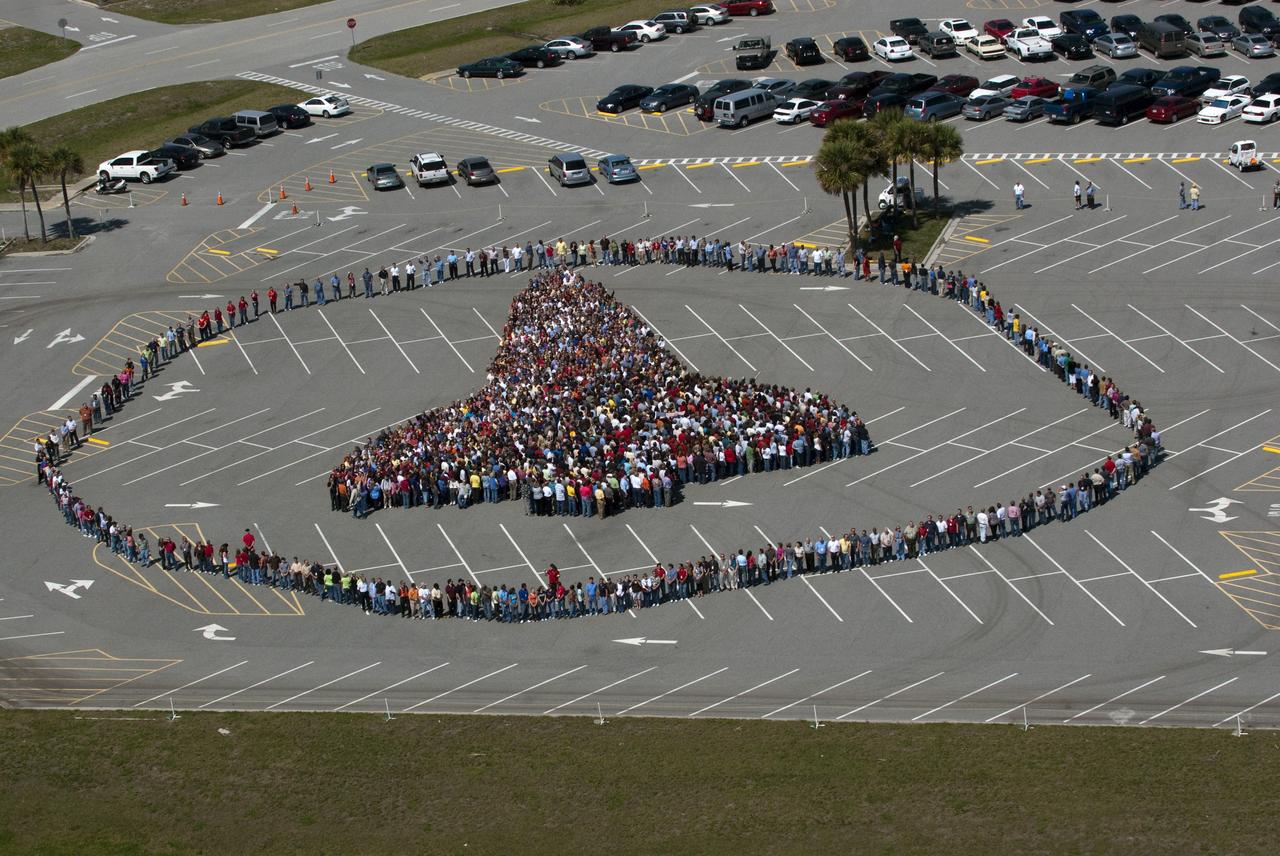
CAPE CANAVERAL, Fla. -- Thousands of NASA Kennedy Space Center employees stand side-by-side to form a full-scale outline of a space shuttle orbiter outside the Vehicle Assembly Building. The unique photo opportunity was designed to honor the Space Shuttle Program's 30-year legacy and the people who contribute to safely processing, launching and landing the vehicle. To learn more about the space shuttle era, including videos, photos and feature stories, go to www.nasa.gov/mission_pages/shuttle/flyout/index.html. Photo credit: NASA/Kim Shiflett
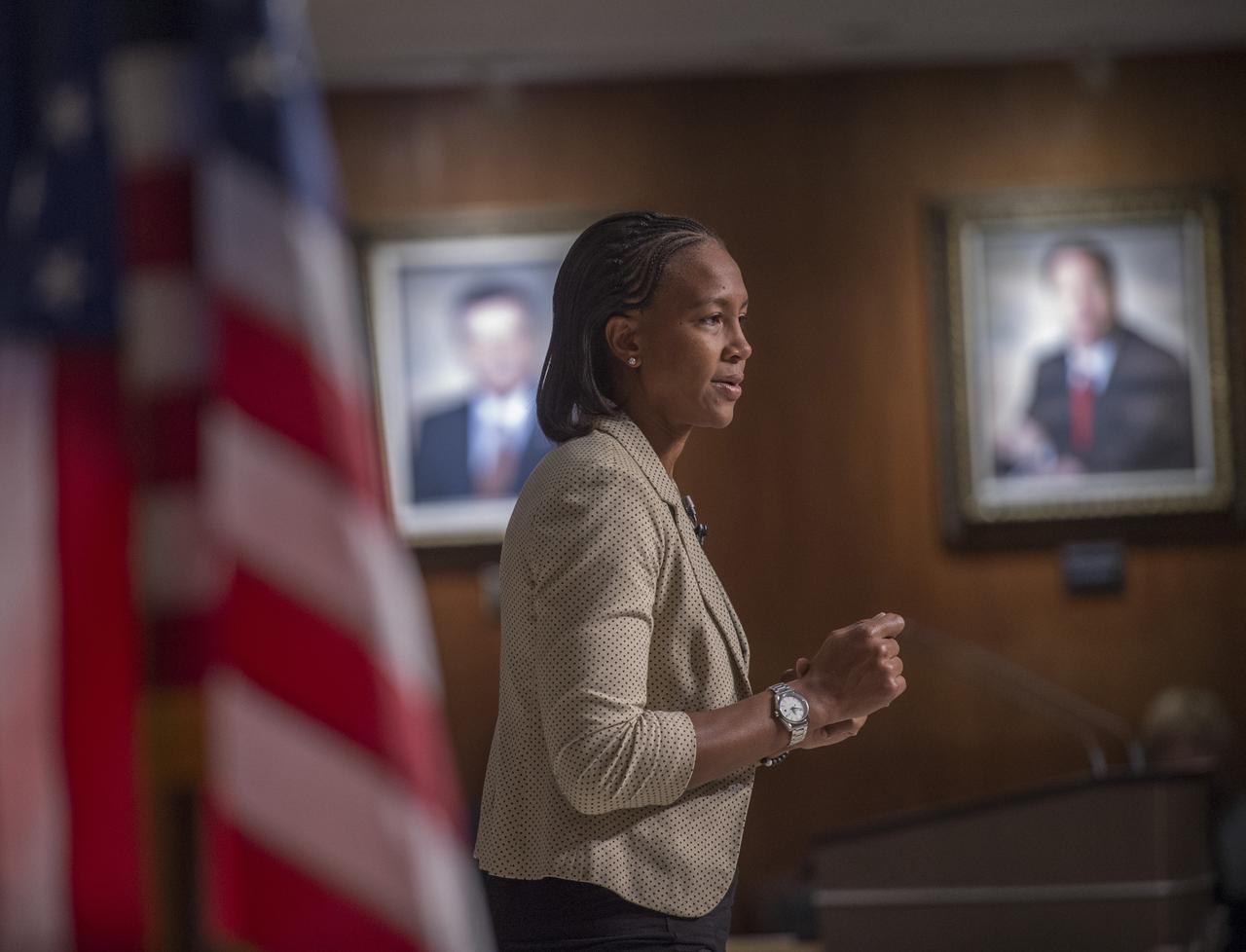
The 2017 Disabilities Awareness Month Program was presented at Marshall Space Flight Center's Morris Auditorium with guest speaker Tamika Catchings. Ms. Catchings is a retired WNBA player who spent her entire career with the Indiana Fever. She was the first recipient of ESPN’s Humanitarian Award in 2015. In 2016, Tamika became the first female recipient of the National Civil Rights Museum Sports Legacy Award. In 2016, Tamika released her autobiography, "Catch A Star," which became a New York Times best seller. She is also a world-renowned motivational and keynote speaker.
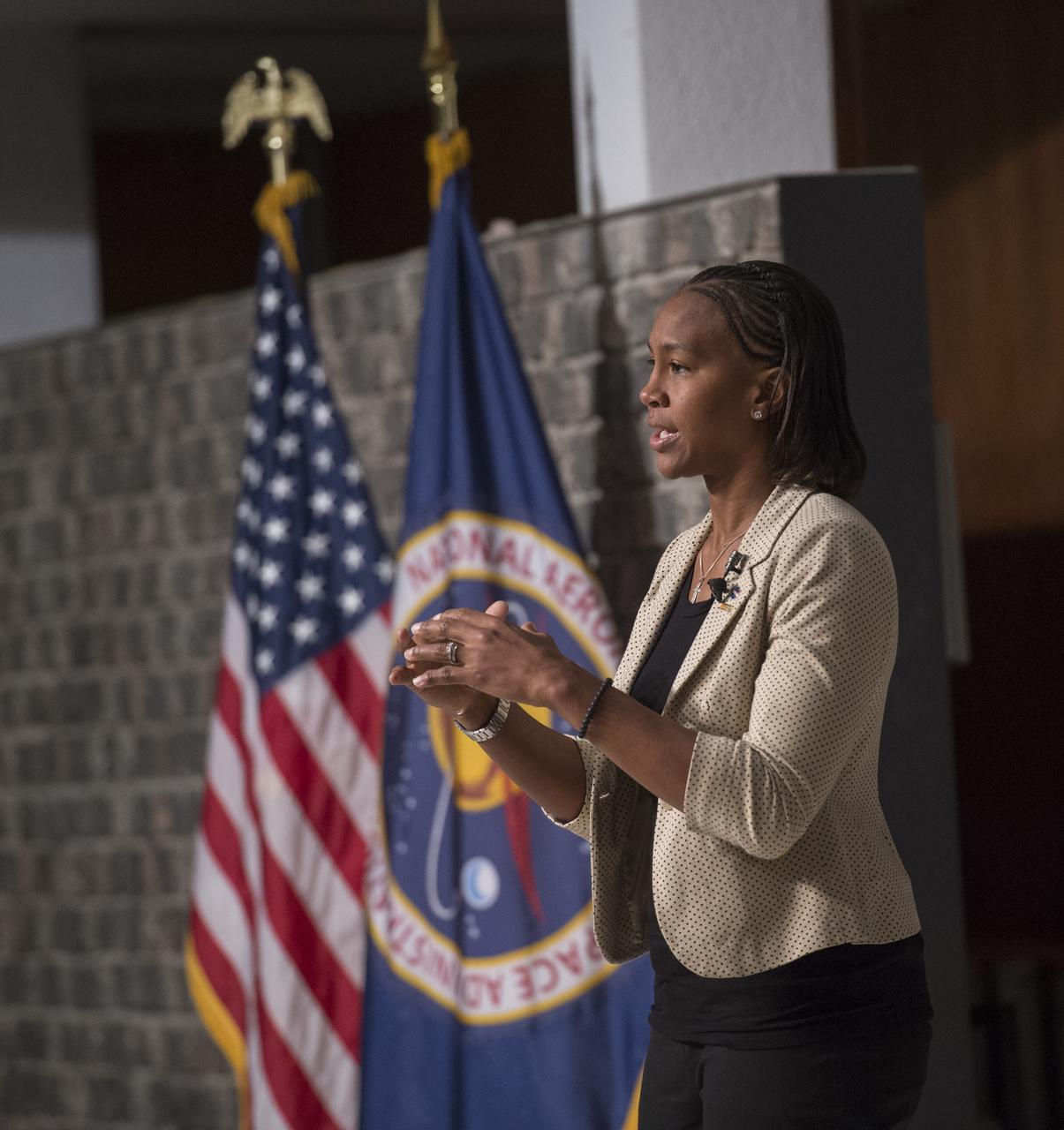
The 2017 Disabilities Awareness Month Program was presented at Marshall Space Flight Center's Morris Auditorium with guest speaker Tamika Catchings. Ms. Catchings is a retired WNBA player who spent her entire career with the Indiana Fever. She was the first recipient of ESPN’s Humanitarian Award in 2015. In 2016, Tamika became the first female recipient of the National Civil Rights Museum Sports Legacy Award. In 2016, Tamika released her autobiography, "Catch A Star," which became a New York Times best seller. She is also a world-renowned motivational and keynote speaker.
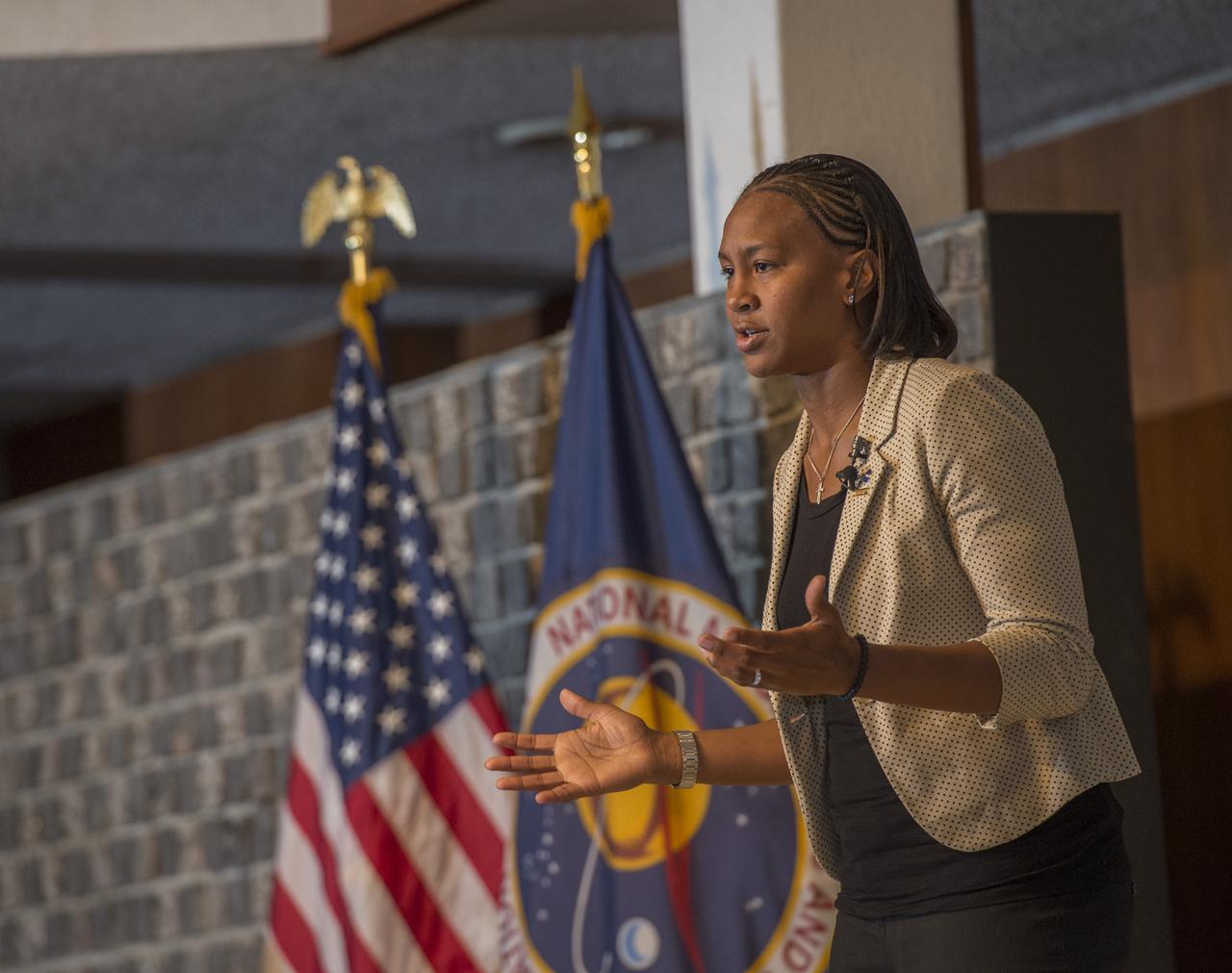
The 2017 Disabilities Awareness Month Program was presented at Marshall Space Flight Center's Morris Auditorium with guest speaker Tamika Catchings. Ms. Catchings is a retired WNBA player who spent her entire career with the Indiana Fever. She was the first recipient of ESPN’s Humanitarian Award in 2015. In 2016, Tamika became the first female recipient of the National Civil Rights Museum Sports Legacy Award. In 2016, Tamika released her autobiography, "Catch A Star," which became a New York Times best seller. She is also a world-renowned motivational and keynote speaker.
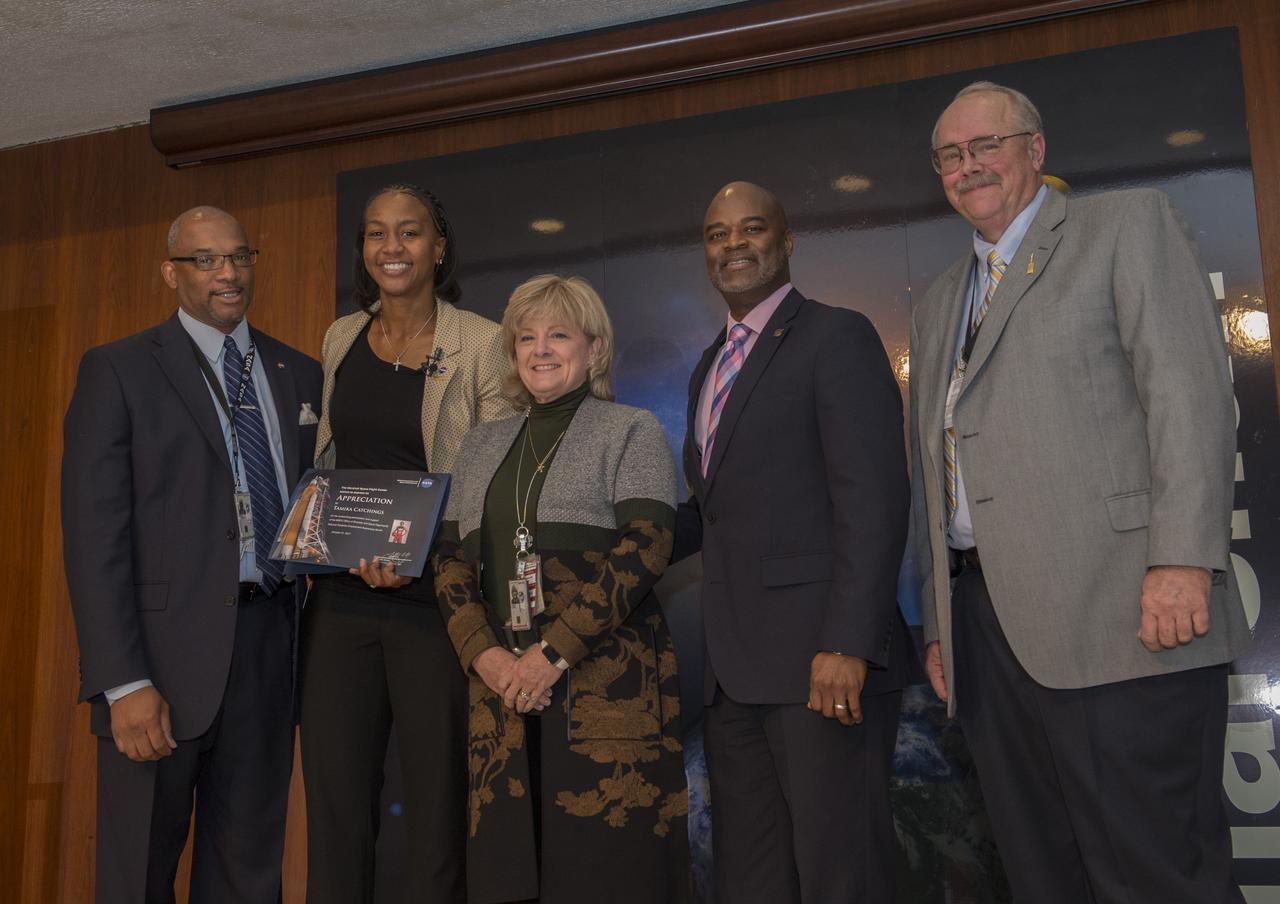
The 2017 Disabilities Awareness Month Program was presented at Marshall Space Flight Center's Morris Auditorium with guest speaker Tamika Catchings. Ms. Catchings is a retired WNBA player who spent her entire career with the Indiana Fever. She was the first recipient of ESPN’s Humanitarian Award in 2015. In 2016, Tamika became the first female recipient of the National Civil Rights Museum Sports Legacy Award. In 2016, Tamika released her autobiography, "Catch A Star," which became a New York Times best seller. She is also a world-renowned motivational and keynote speaker.
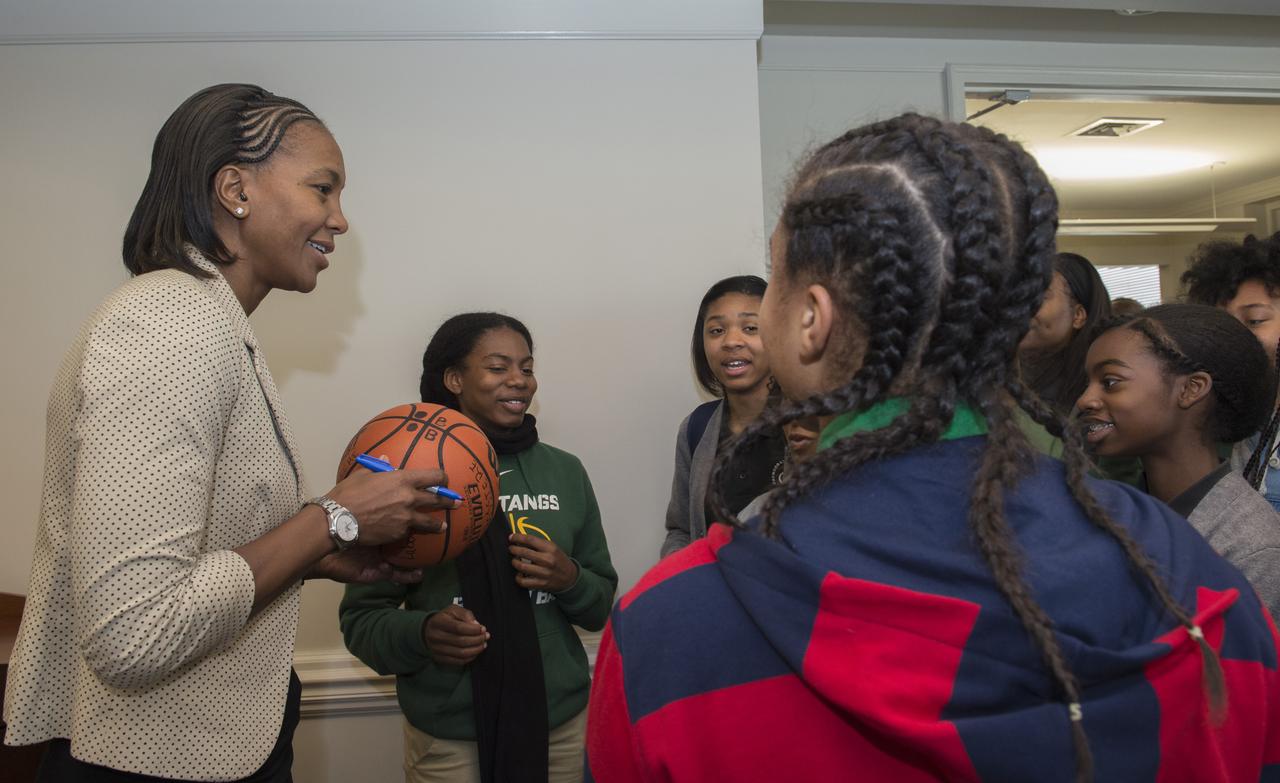
The 2017 Disabilities Awareness Month Program was presented at Marshall Space Flight Center's Morris Auditorium with guest speaker Tamika Catchings. Ms. Catchings is a retired WNBA player who spent her entire career with the Indiana Fever. She was the first recipient of ESPN’s Humanitarian Award in 2015. In 2016, Tamika became the first female recipient of the National Civil Rights Museum Sports Legacy Award. In 2016, Tamika released her autobiography, "Catch A Star," which became a New York Times best seller. She is also a world-renowned motivational and keynote speaker.

This colorful image shows a nebula – a cloud of gas and dust in space – captured by NASA's now-retired Spitzer Space Telescope located is in the constellation Sagittarius, along the plane of the Milky Way, which was as part of Spitzer's GLIMPSE Survey (short for Galactic Legacy Infrared Mid-Plane Survey Extraordinaire). With a little imagination, you might be able to see the outlines of Godzilla. Stars in the upper right (where this cosmic Godzilla's eyes and snout would be) are an unknown distance from Earth but within our galaxy. Located about 7,800 light-years from Earth, the bright region in the lower left (Godzilla's right hand) is known as W33. When viewed in visible light, this region is almost entirely obscured by dust clouds. But infrared light (wavelengths longer than what our eyes can perceive) can penetrate the clouds, revealing hidden regions like this one. Blue, cyan, green, and red are used to represent different wavelengths of infrared light; yellow and white are combinations of those wavelengths. Blue and cyan represent wavelengths primarily emitted by stars; dust and organic molecules called hydrocarbons appear green; and warm dust that's been heated by stars or supernovae (exploding stars) appears red. When massive stars die and explode into supernovae, they reshape the regions around them, carving them into different shapes; they also push material together and initiate the birth of new stars that continue the cycle. https://photojournal.jpl.nasa.gov/catalog/PIA24579