
CAPE CANAVERAL, Fla. -- At NASA's Kennedy Space Center in Florida, technicians prepare a working model of the dexterous humanoid astronaut helper, Robonaut 2, for the media to check out before space shuttle Discovery's final flight on the STS-133 mission. Discovery and its six-member crew will deliver the Permanent Multipurpose Module, packed with supplies and critical spare parts, as well as Robonaut 2 to the International Space Station. For more information on the STS-133 mission, visit www.nasa.gov/mission_pages/shuttle/shuttlemissions/sts133/. Photo Credit: NASA/Troy Cryder
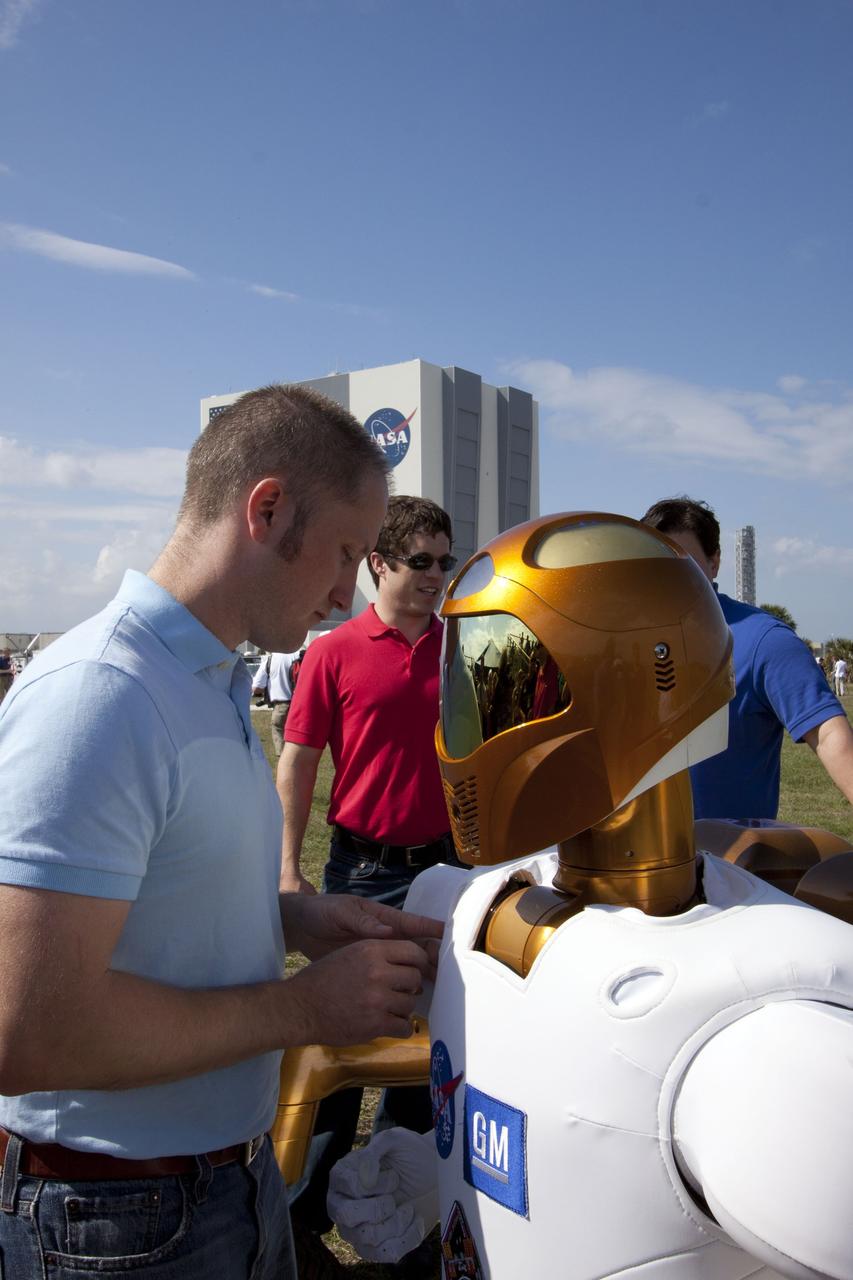
CAPE CANAVERAL, Fla. -- At NASA's Kennedy Space Center in Florida, technicians prepare a working model of the dexterous humanoid astronaut helper, Robonaut 2, for the media to check out before space shuttle Discovery's final flight on the STS-133 mission. Discovery and its six-member crew will deliver the Permanent Multipurpose Module, packed with supplies and critical spare parts, as well as Robonaut 2 to the International Space Station. For more information on the STS-133 mission, visit www.nasa.gov/mission_pages/shuttle/shuttlemissions/sts133/. Photo Credit: NASA/Troy Cryder
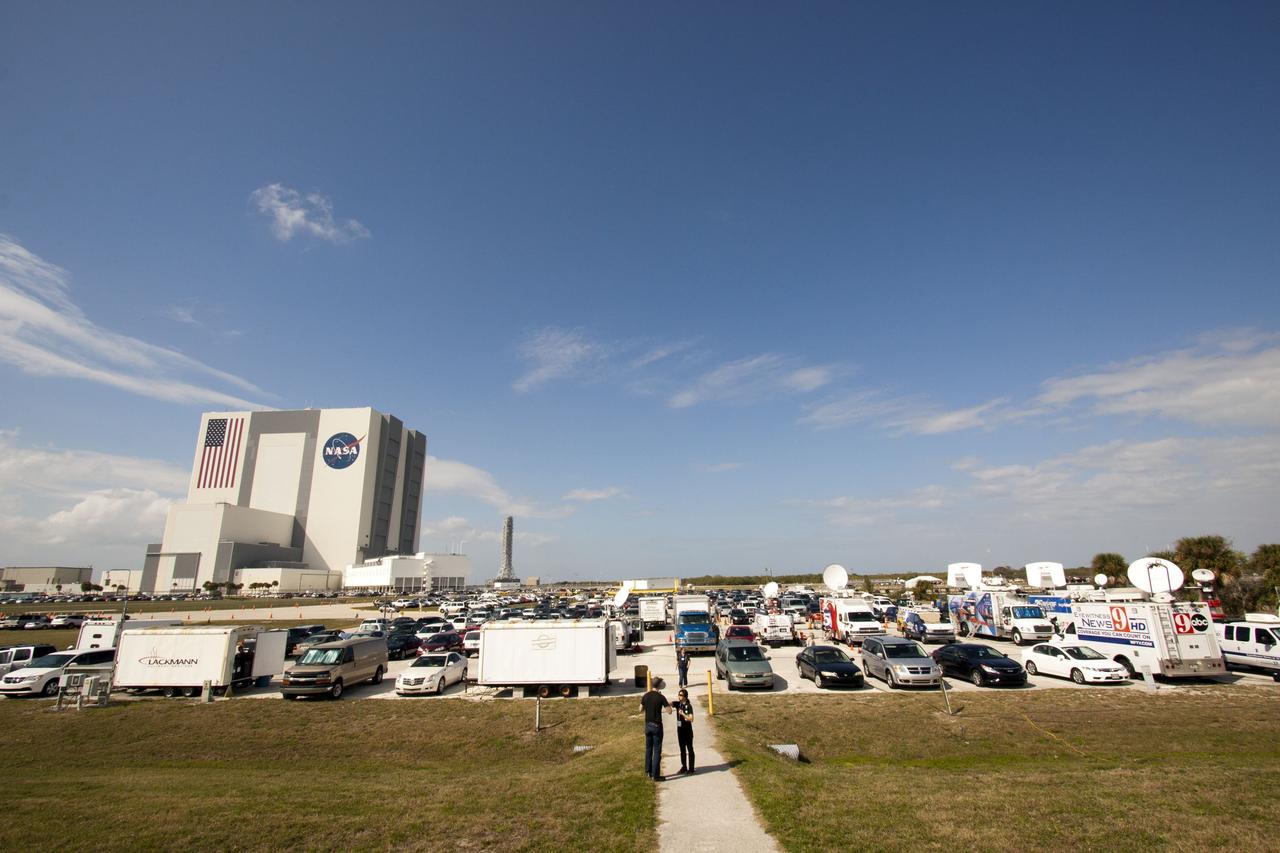
CAPE CANAVERAL, Fla. -- The enormous Vehicle Assembly Building is seen prominently in the background at NASA's Kennedy Space Center in Florida, overlooking the parking spaces below the Press Site filled with news satellite trucks and media vehicles, there to cover the final launch of space shuttle Discovery on the STS-133 mission. Discovery and its six-member crew will deliver the Permanent Multipurpose Module, packed with supplies and critical spare parts, as well as Robonaut 2 to the International Space Station. For more information on the STS-133 mission, visit www.nasa.gov/mission_pages/shuttle/shuttlemissions/sts133/. Photo Credit: NASA/Troy Cryder
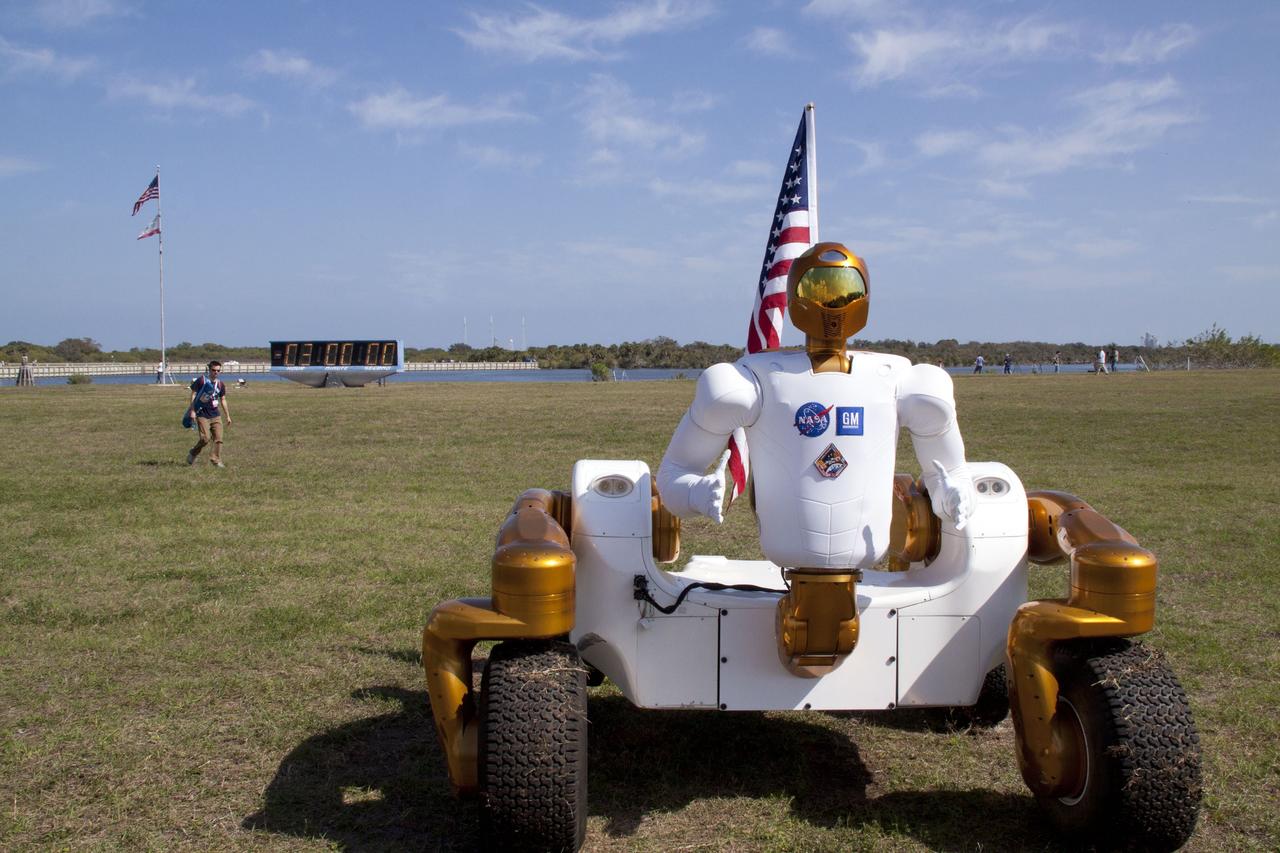
CAPE CANAVERAL, Fla. -- At NASA's Kennedy Space Center in Florida, a working model of the dexterous humanoid astronaut helper, Robonaut 2, is available for media to check out before space shuttle Discovery's final flight on the STS-133 mission. Discovery and its six-member STS-133 crew will deliver the Permanent Multipurpose Module, packed with supplies and critical spare parts, as well as Robonaut 2 to the International Space Station. For more information on the STS-133 mission, visit www.nasa.gov/mission_pages/shuttle/shuttlemissions/sts133/. Photo Credit: NASA/Jack Pfaller
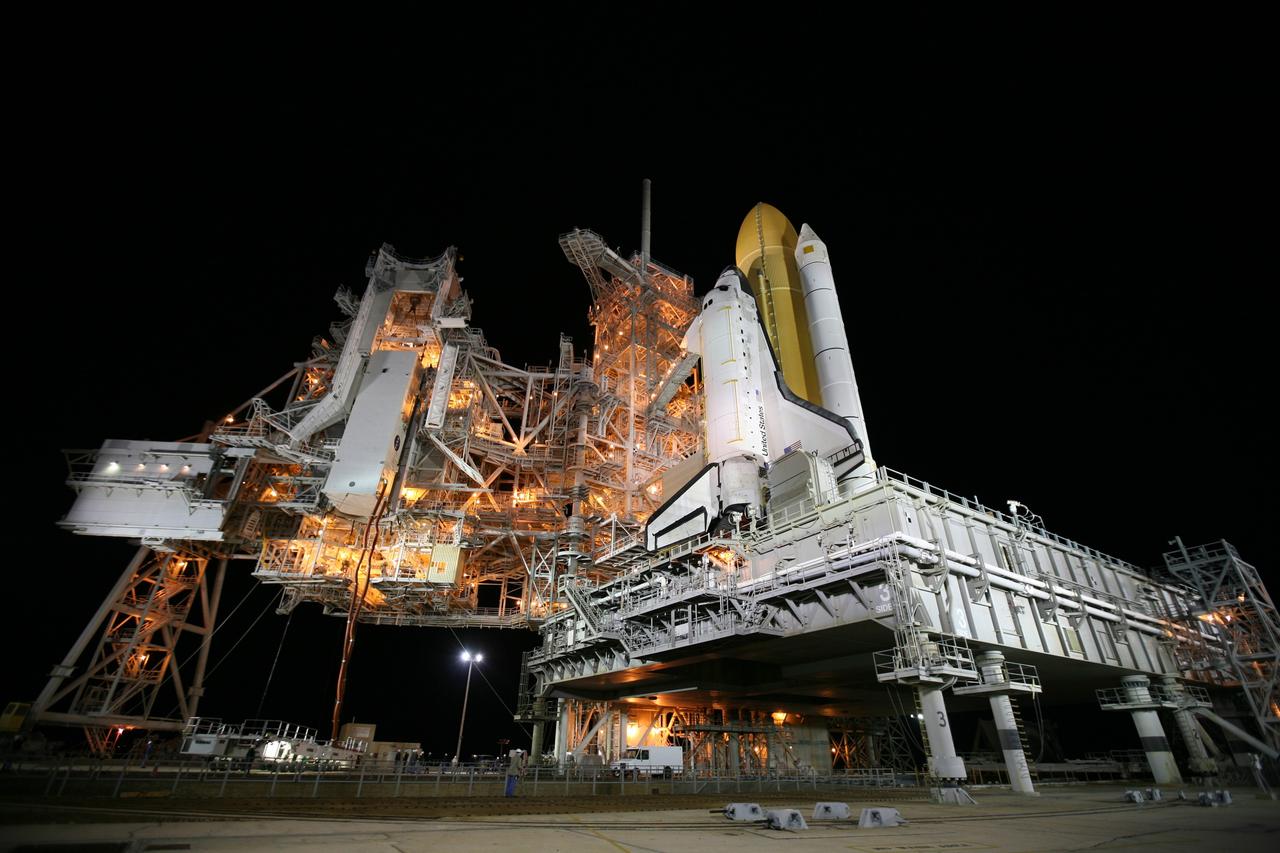
CAPE CANAVERAL, Fla. -- At NASA's Kennedy Space Center in Florida, the STS-133 payload canister is lifted into the rotating service structure on Launch Pad 39A. The payload then will be moved into space shuttle Discovery's payload bay. Discovery and its STS-133 crew will deliver the Permanent Multipurpose Module, packed with supplies and critical spare parts, as well as Robonaut 2, the dexterous humanoid astronaut helper, to the International Space Station. Launch is targeted for 4:40 p.m. EDT, Nov. 1. Photo credit: NASA/Amanda Diller

CAPE CANAVERAL, Fla. -- Space shuttle Discovery's external fuel tank is visible on Launch Pad 39A at NASA's Kennedy Space Center in Florida. Discovery's next mission is STS-133, which will deliver the Permanent Multipurpose Module (PMM), packed with supplies and critical spare parts, as well as Robonaut 2 (R2), to the International Space Station. For more information on STS-133, visit www.nasa.gov/mission_pages/shuttle/shuttlemissions/sts133/. Photo credit: NASA/Frank Michaux
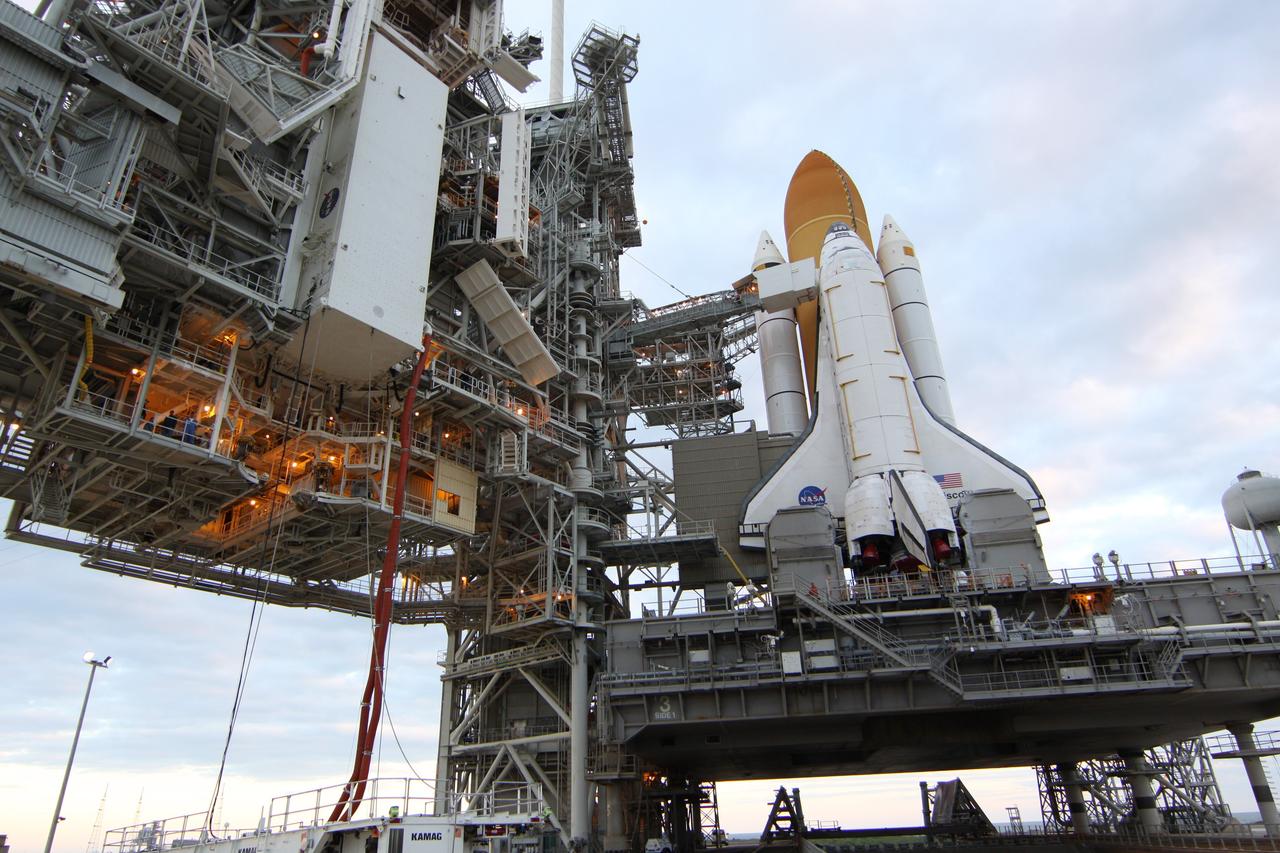
CAPE CANAVERAL, Fla. -- At NASA's Kennedy Space Center in Florida, the STS-133 payload canister now is in the rotating service structure on Launch Pad 39A. The payload then will be moved into space shuttle Discovery's payload bay. Discovery and its STS-133 crew will deliver the Permanent Multipurpose Module, packed with supplies and critical spare parts, as well as Robonaut 2, the dexterous humanoid astronaut helper, to the International Space Station. Launch is targeted for 4:40 p.m. EDT, Nov. 1. Photo credit: NASA/Troy Cryder
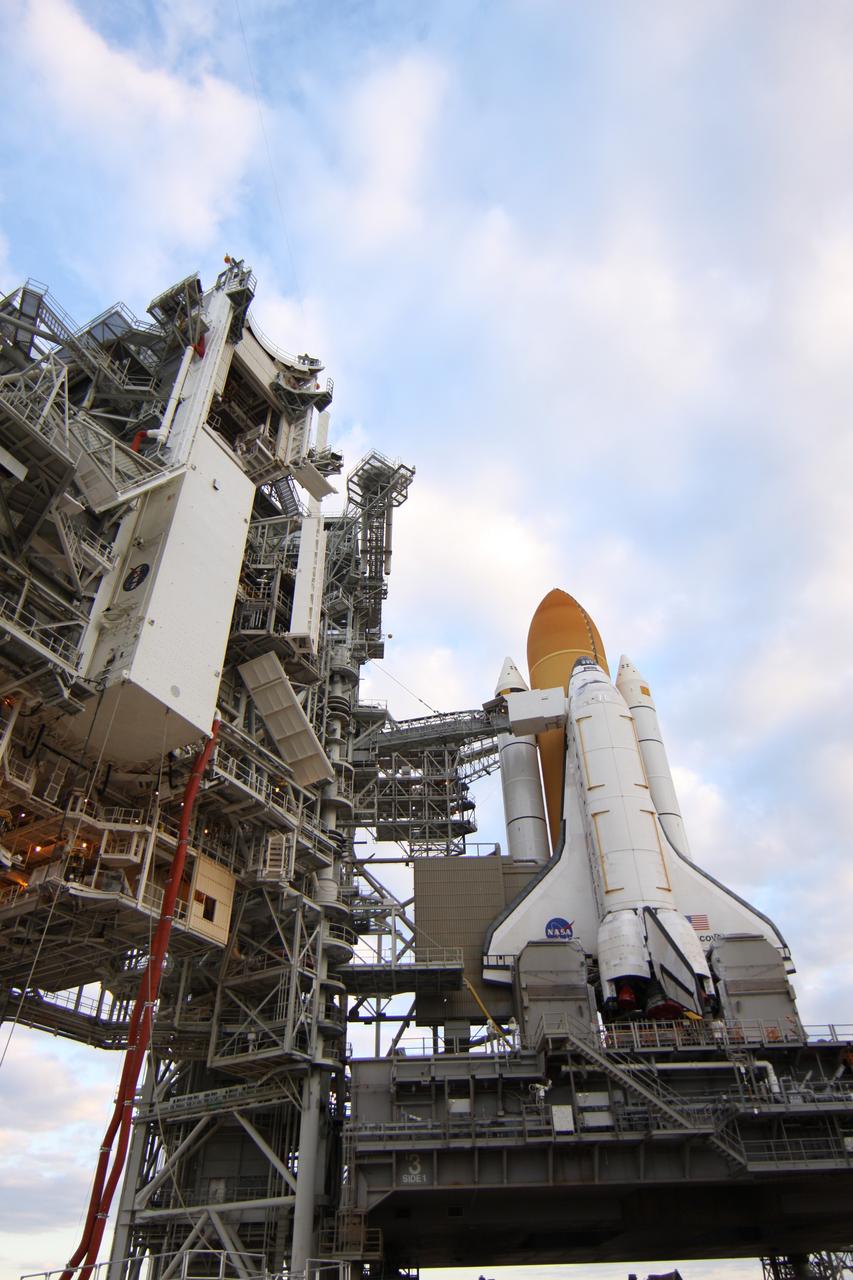
CAPE CANAVERAL, Fla. -- At NASA's Kennedy Space Center in Florida, the STS-133 payload canister now is in the rotating service structure on Launch Pad 39A. The payload then will be moved into space shuttle Discovery's payload bay. Discovery and its STS-133 crew will deliver the Permanent Multipurpose Module, packed with supplies and critical spare parts, as well as Robonaut 2, the dexterous humanoid astronaut helper, to the International Space Station. Launch is targeted for 4:40 p.m. EDT, Nov. 1. Photo credit: NASA/Troy Cryder
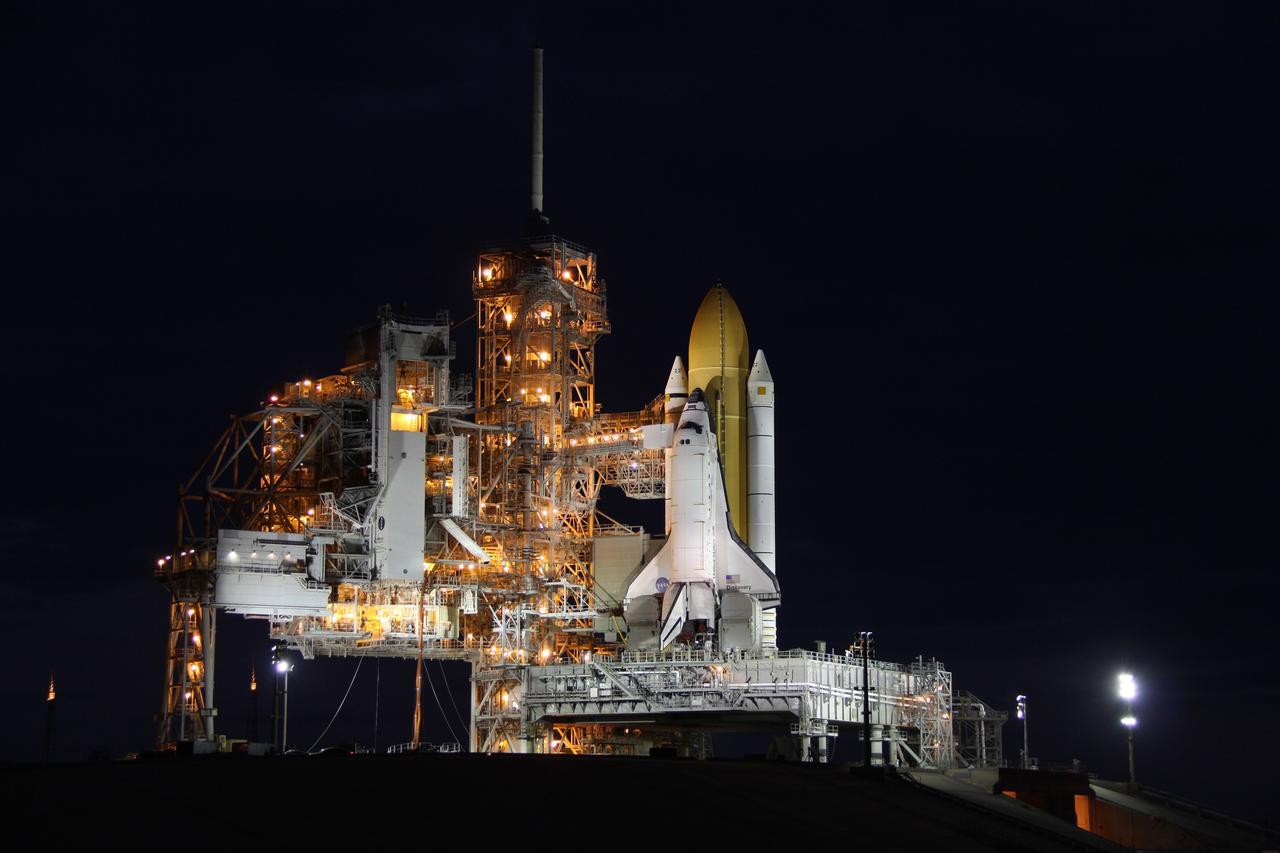
CAPE CANAVERAL, Fla. -- At NASA's Kennedy Space Center in Florida, the STS-133 payload canister is lifted into the rotating service structure on Launch Pad 39A. The payload then will be moved into space shuttle Discovery's payload bay. Discovery and its STS-133 crew will deliver the Permanent Multipurpose Module, packed with supplies and critical spare parts, as well as Robonaut 2, the dexterous humanoid astronaut helper, to the International Space Station. Launch is targeted for 4:40 p.m. EDT, Nov. 1. Photo credit: NASA/Troy Cryder
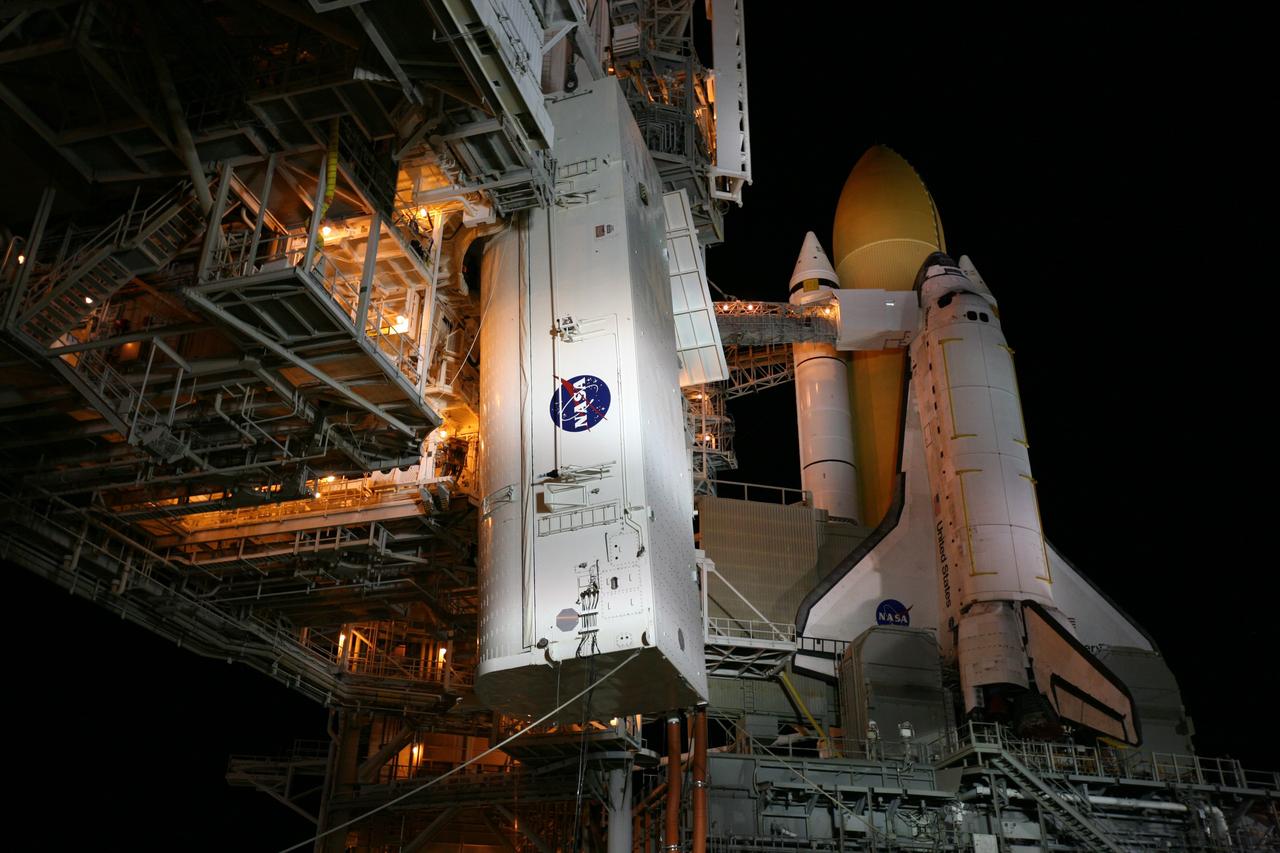
CAPE CANAVERAL, Fla. -- At NASA's Kennedy Space Center in Florida, the STS-133 payload canister is lifted into the rotating service structure on Launch Pad 39A. The payload then will be moved into space shuttle Discovery's payload bay. Discovery and its STS-133 crew will deliver the Permanent Multipurpose Module, packed with supplies and critical spare parts, as well as Robonaut 2, the dexterous humanoid astronaut helper, to the International Space Station. Launch is targeted for 4:40 p.m. EDT, Nov. 1. Photo credit: NASA/Amanda Diller
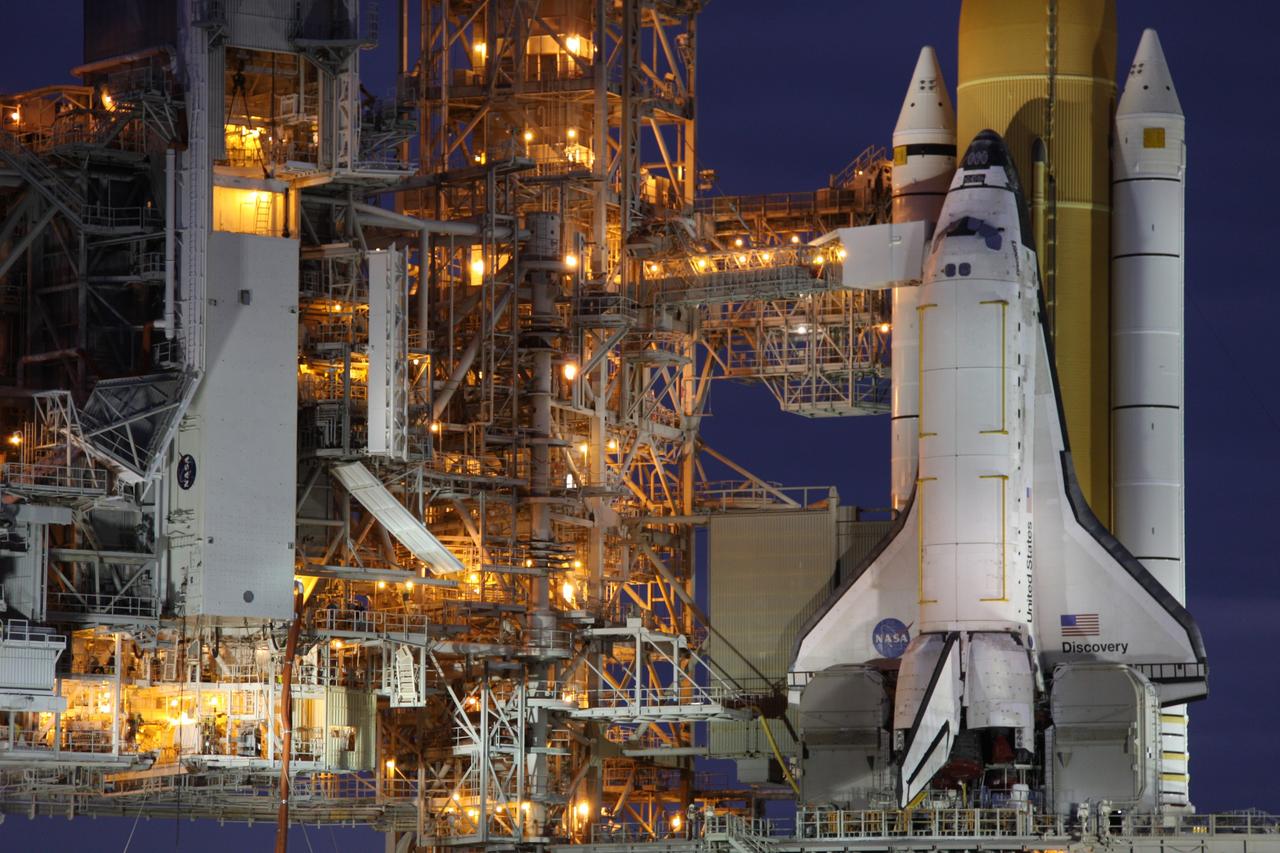
CAPE CANAVERAL, Fla. -- At NASA's Kennedy Space Center in Florida, the STS-133 payload canister is lifted into the rotating service structure on Launch Pad 39A. The payload then will be moved into space shuttle Discovery's payload bay. Discovery and its STS-133 crew will deliver the Permanent Multipurpose Module, packed with supplies and critical spare parts, as well as Robonaut 2, the dexterous humanoid astronaut helper, to the International Space Station. Launch is targeted for 4:40 p.m. EDT, Nov. 1. Photo credit: NASA/Troy Cryder
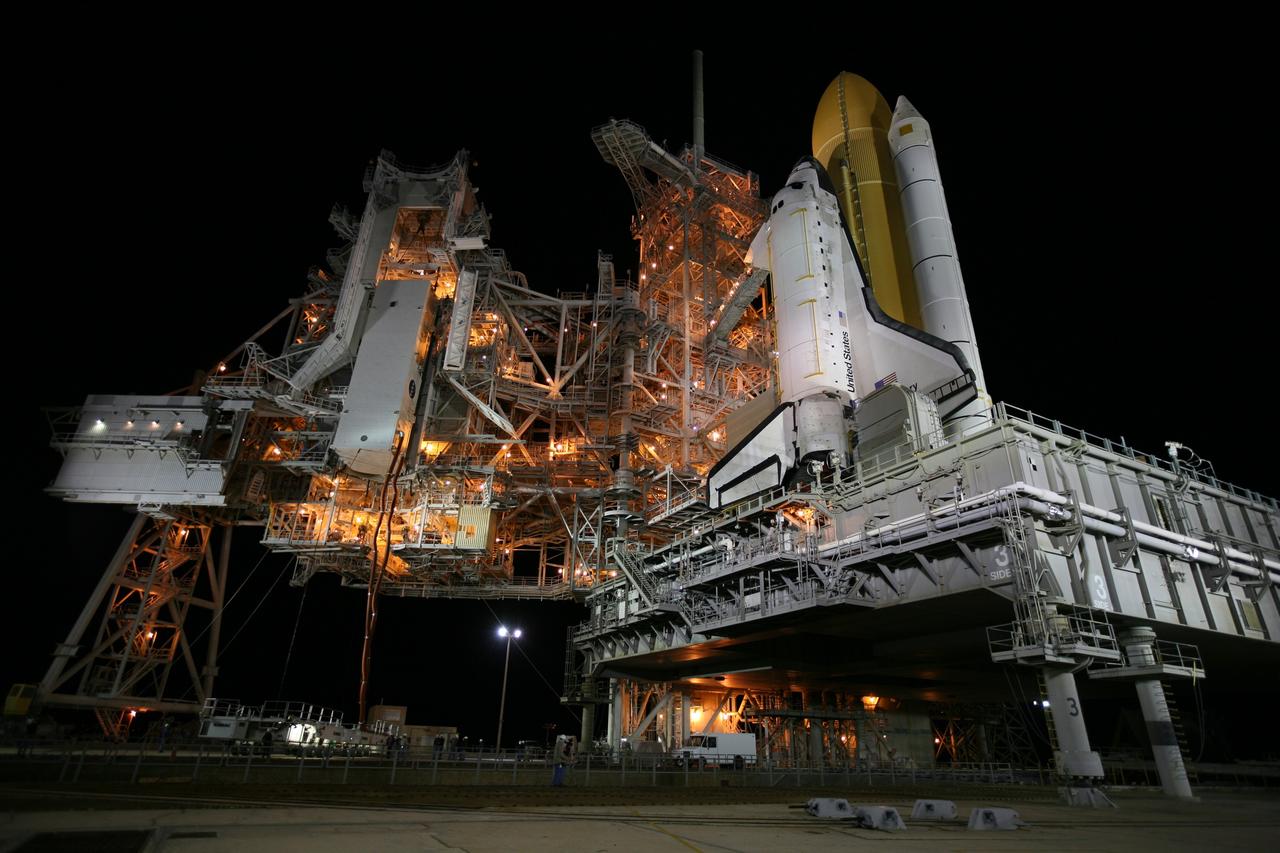
CAPE CANAVERAL, Fla. -- At NASA's Kennedy Space Center in Florida, the STS-133 payload canister is lifted into the rotating service structure on Launch Pad 39A. The payload then will be moved into space shuttle Discovery's payload bay. Discovery and its STS-133 crew will deliver the Permanent Multipurpose Module, packed with supplies and critical spare parts, as well as Robonaut 2, the dexterous humanoid astronaut helper, to the International Space Station. Launch is targeted for 4:40 p.m. EDT, Nov. 1. Photo credit: NASA/Amanda Diller
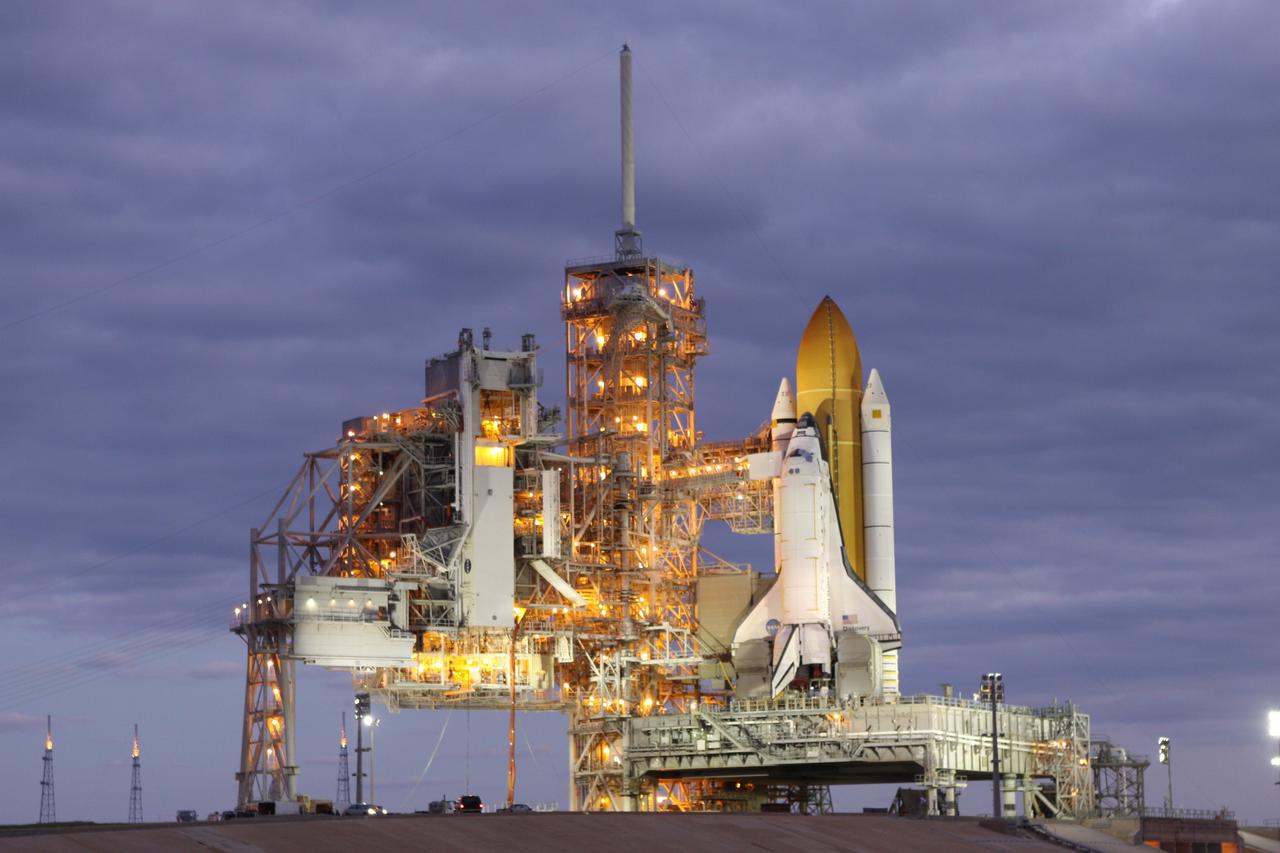
CAPE CANAVERAL, Fla. -- At NASA's Kennedy Space Center in Florida, the STS-133 payload canister is lifted into the rotating service structure on Launch Pad 39A. The payload then will be moved into space shuttle Discovery's payload bay. Discovery and its STS-133 crew will deliver the Permanent Multipurpose Module, packed with supplies and critical spare parts, as well as Robonaut 2, the dexterous humanoid astronaut helper, to the International Space Station. Launch is targeted for 4:40 p.m. EDT, Nov. 1. Photo credit: NASA/Troy Cryder
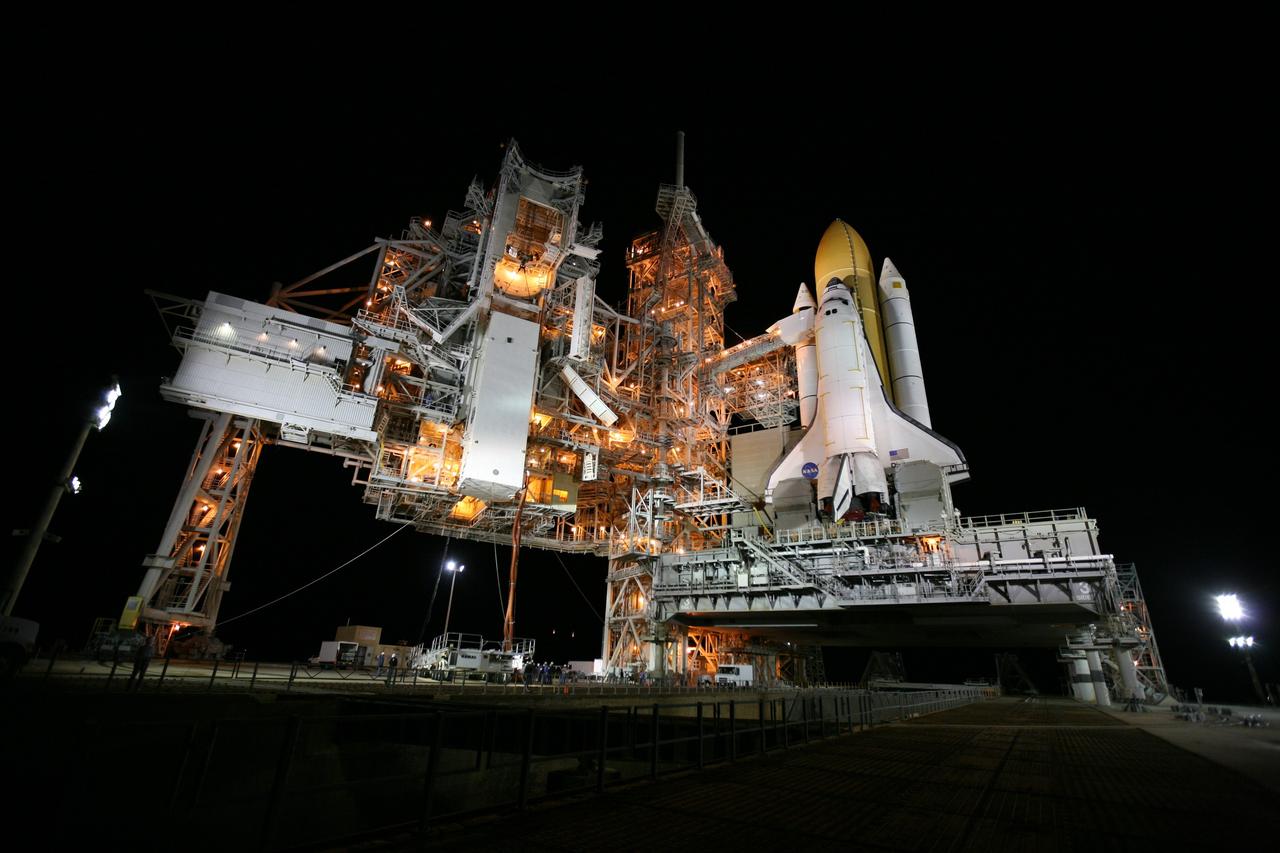
CAPE CANAVERAL, Fla. -- At NASA's Kennedy Space Center in Florida, the STS-133 payload canister is lifted into the rotating service structure on Launch Pad 39A. The payload then will be moved into space shuttle Discovery's payload bay. Discovery and its STS-133 crew will deliver the Permanent Multipurpose Module, packed with supplies and critical spare parts, as well as Robonaut 2, the dexterous humanoid astronaut helper, to the International Space Station. Launch is targeted for 4:40 p.m. EDT, Nov. 1. Photo credit: NASA/Amanda Diller
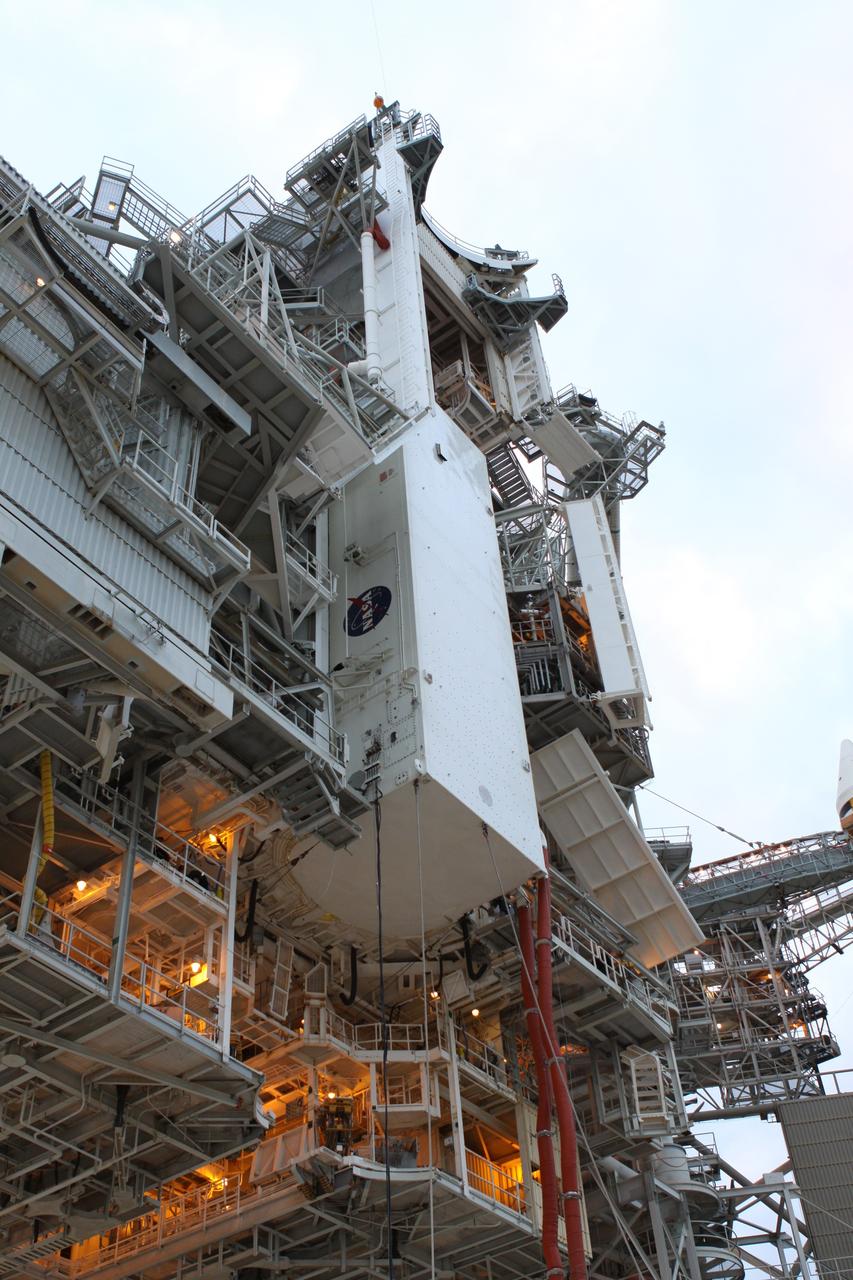
CAPE CANAVERAL, Fla. -- At NASA's Kennedy Space Center in Florida, the STS-133 payload canister now is in the rotating service structure on Launch Pad 39A. The payload then will be moved into space shuttle Discovery's payload bay. Discovery and its STS-133 crew will deliver the Permanent Multipurpose Module, packed with supplies and critical spare parts, as well as Robonaut 2, the dexterous humanoid astronaut helper, to the International Space Station. Launch is targeted for 4:40 p.m. EDT, Nov. 1. Photo credit: NASA/Troy Cryder
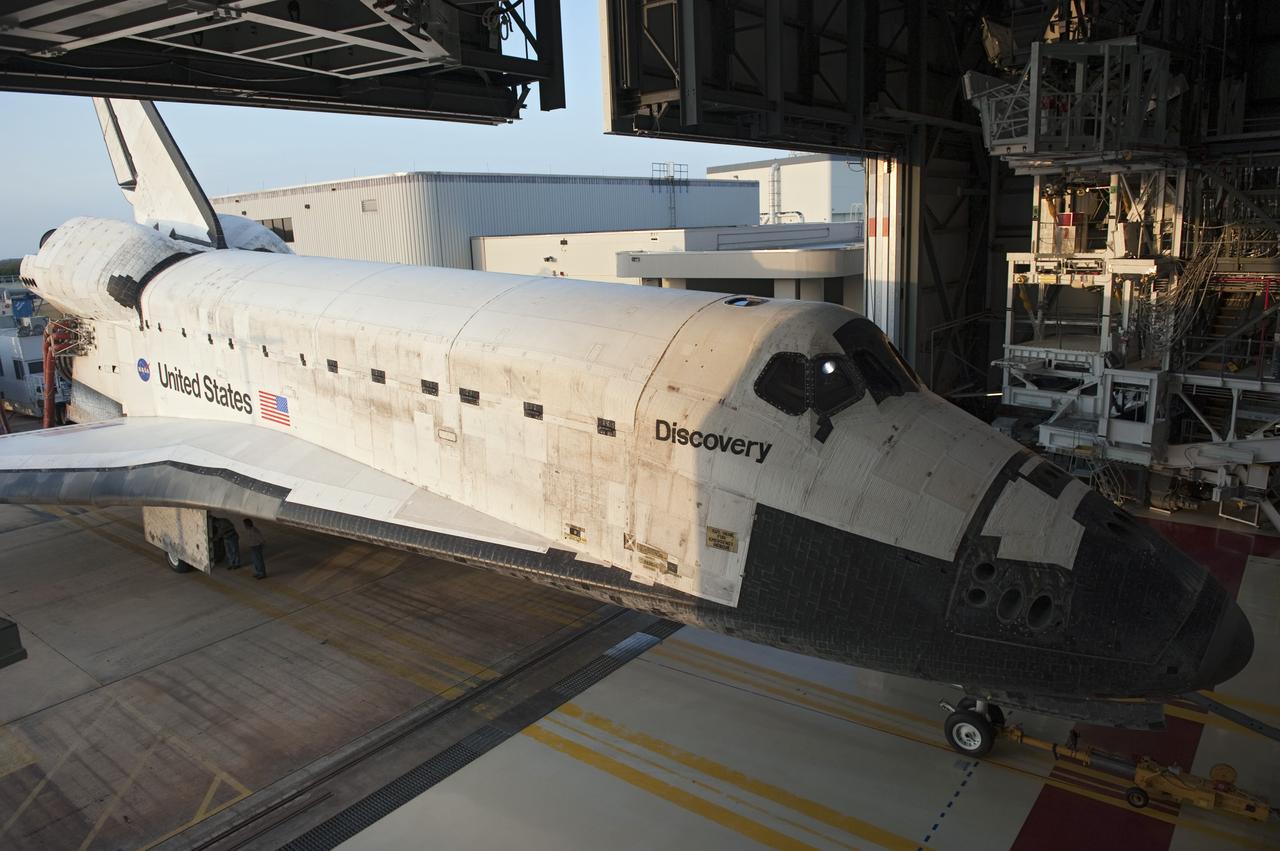
CAPE CANAVERAL, Fla. - Space shuttle Discovery slides through the open hangar door into Orbiter Processing Facility-2 at NASA's Kennedy Space Center in Florida. Discovery touched down on the Shuttle Landing Facility's Runway 15 at 11:57 a.m., bringing an end to its 39th and final spaceflight mission, STS-133. Discovery and its six-member STS-133 crew delivered the Permanent Multipurpose Module, packed with supplies and critical spare parts, as well as Robonaut 2, the dexterous humanoid astronaut helper, to the International Space Station. Inside the processing facility, Discovery will be prepared for future public display. Photo credit: NASA/Kim Shiflett
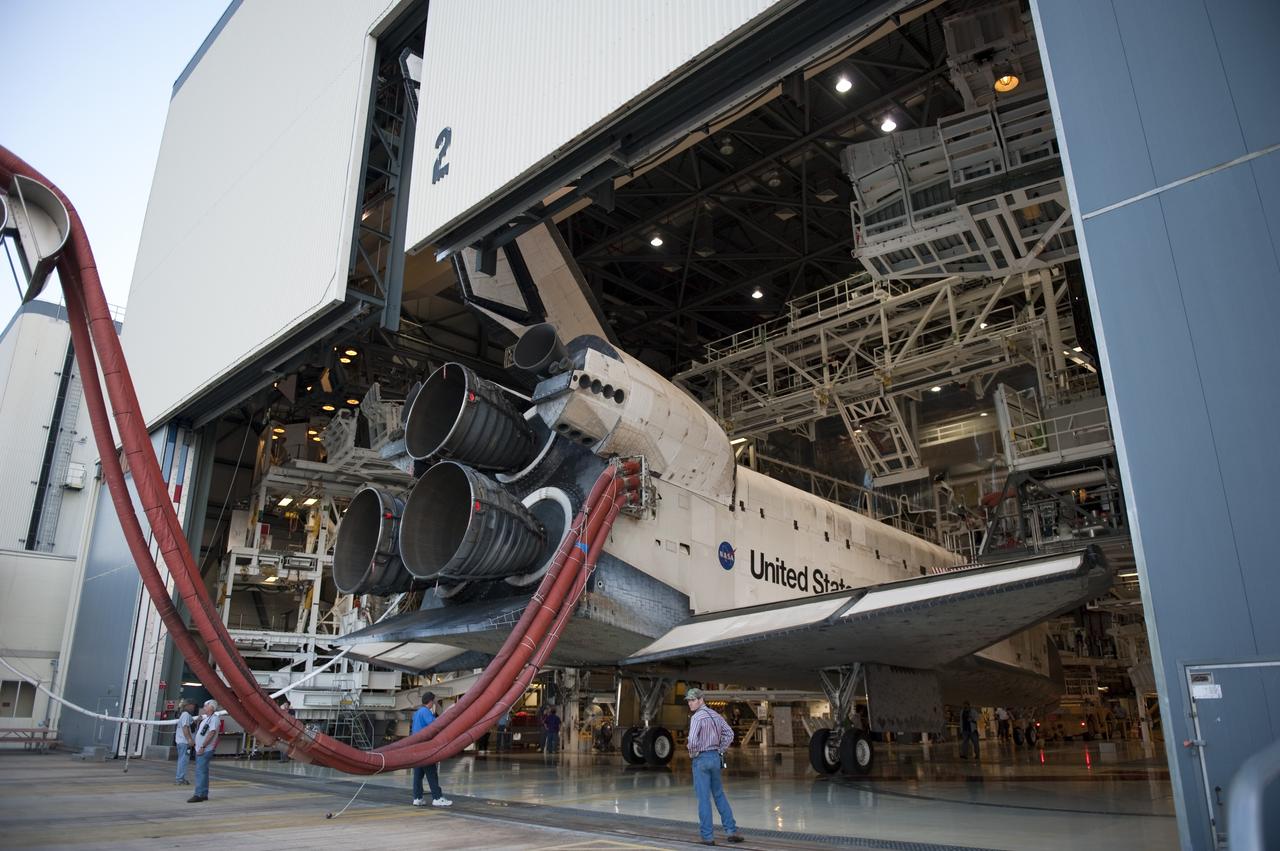
CAPE CANAVERAL, Fla. - Space shuttle Discovery's tail fin clears the hangar door of Orbiter Processing Facility-2 at NASA's Kennedy Space Center in Florida. Discovery touched down on the Shuttle Landing Facility's Runway 15 at 11:57 a.m., bringing an end to its 39th and final spaceflight mission, STS-133. Discovery and its six-member STS-133 crew delivered the Permanent Multipurpose Module, packed with supplies and critical spare parts, as well as Robonaut 2, the dexterous humanoid astronaut helper, to the International Space Station. Inside the processing facility, Discovery will be prepared for future public display. Photo credit: NASA/Kim Shiflett
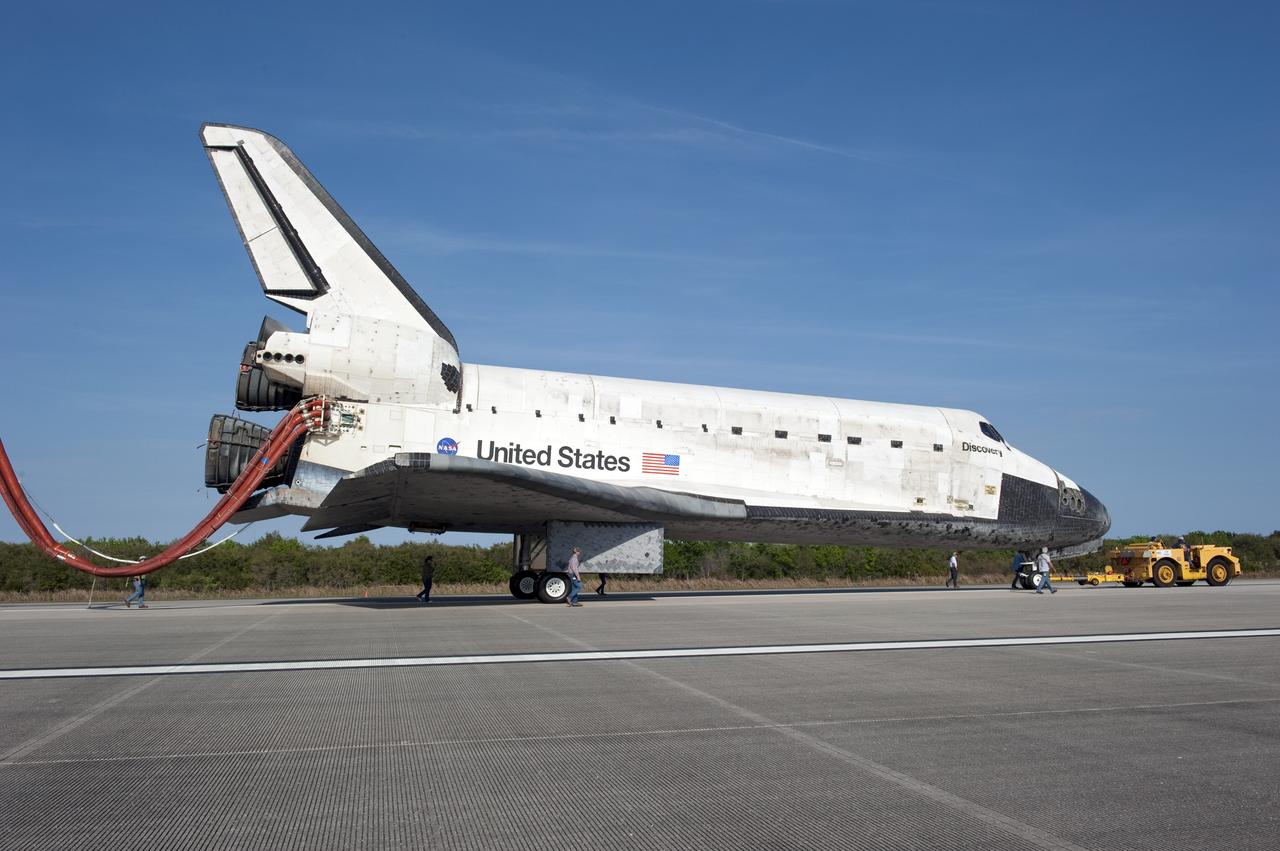
CAPE CANAVERAL, Fla. - The "towback" vehicle slowly pulls Space shuttle Discovery from the Shuttle Landing Facility to Orbiter Processing Facility-2 at NASA's Kennedy Space Center in Florida. Discovery touched down on Runway 15 at 11:57 a.m., bringing an end to its 39th and final spaceflight mission, STS-133. Discovery and its six-member STS-133 crew delivered the Permanent Multipurpose Module, packed with supplies and critical spare parts, as well as Robonaut 2, the dexterous humanoid astronaut helper, to the International Space Station. Inside the processing facility, Discovery will be prepared for future public display. Photo credit: NASA/Kim Shiflett
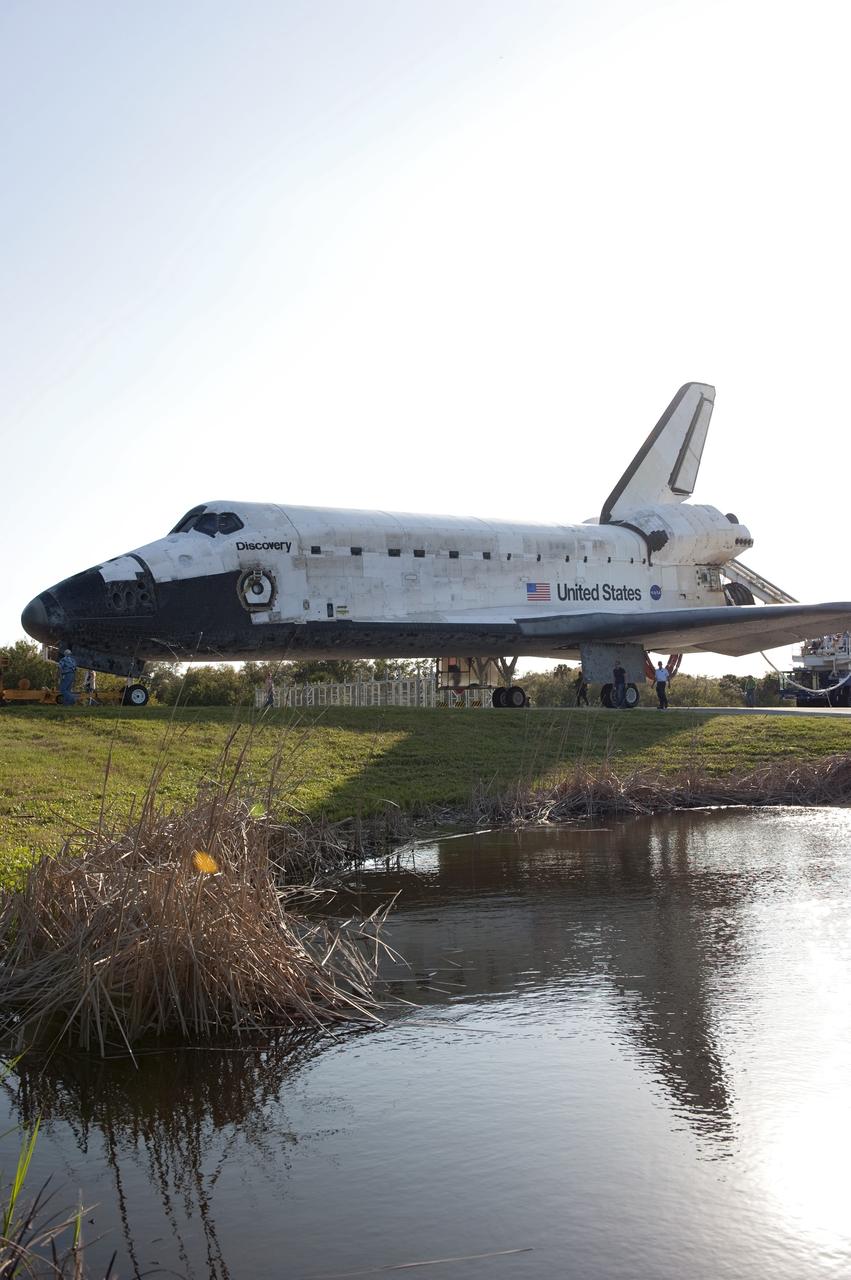
CAPE CANAVERAL, Fla. - Space shuttle Discovery casts a shadow in the water beside the towway on its slow trip from the Shuttle Landing Facility to Orbiter Processing Facility-2 at NASA's Kennedy Space Center in Florida. Discovery touched down on Runway 15 at 11:57 a.m., bringing an end to its 39th and final spaceflight mission, STS-133. Discovery and its six-member STS-133 crew delivered the Permanent Multipurpose Module, packed with supplies and critical spare parts, as well as Robonaut 2, the dexterous humanoid astronaut helper, to the International Space Station. Inside the processing facility, Discovery will be prepared for future public display. Photo credit: NASA/Kim Shiflett
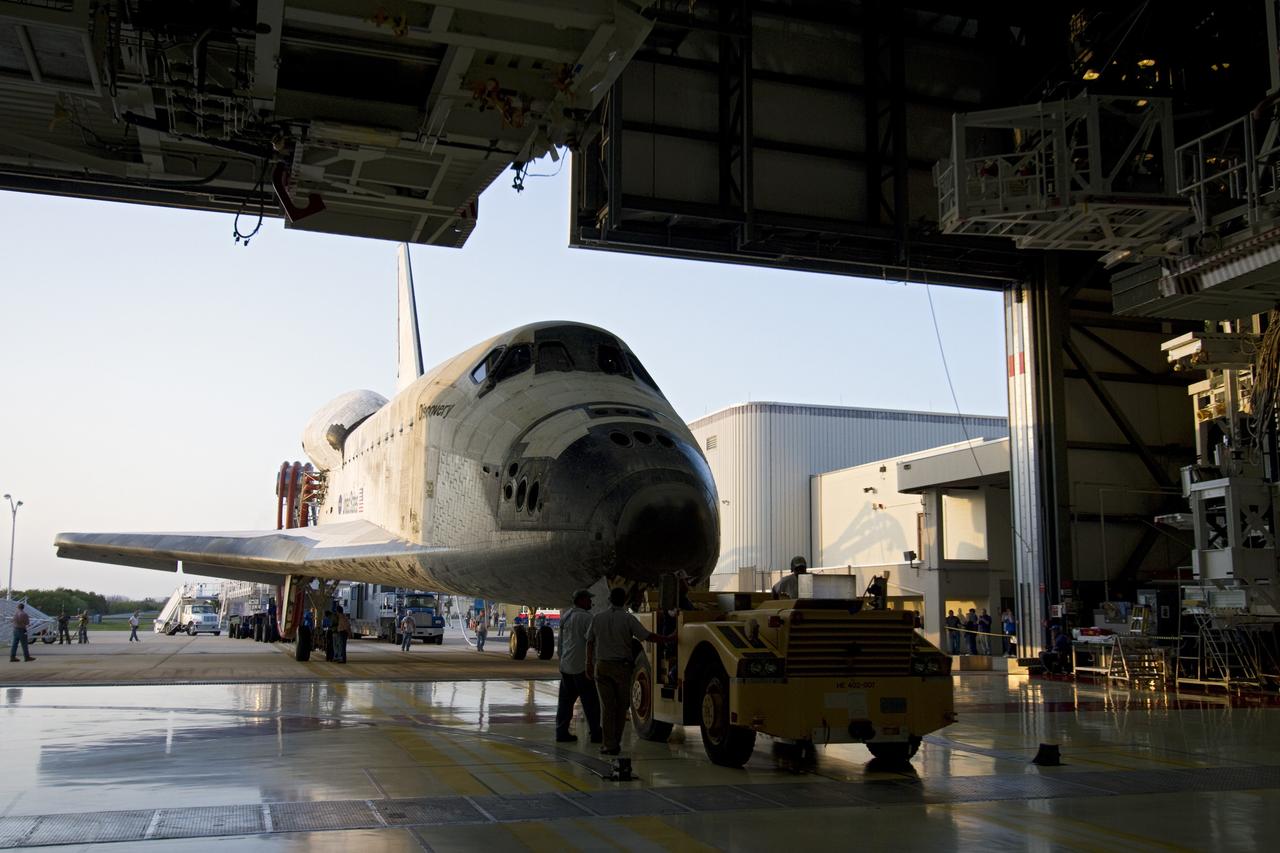
CAPE CANAVERAL, Fla. - Space shuttle Discovery's "towback" vehicle slowly pulls the spacecraft into Orbiter Processing Facility-2 at NASA's Kennedy Space Center in Florida. Discovery touched down on the Shuttle Landing Facility's Runway 15 at 11:57 a.m., bringing an end to its 39th and final spaceflight mission, STS-133. Discovery and its six-member STS-133 crew delivered the Permanent Multipurpose Module, packed with supplies and critical spare parts, as well as Robonaut 2, the dexterous humanoid astronaut helper, to the International Space Station. Inside the processing facility, Discovery will be prepared for future public display. Photo credit: NASA/Jack Pfaller
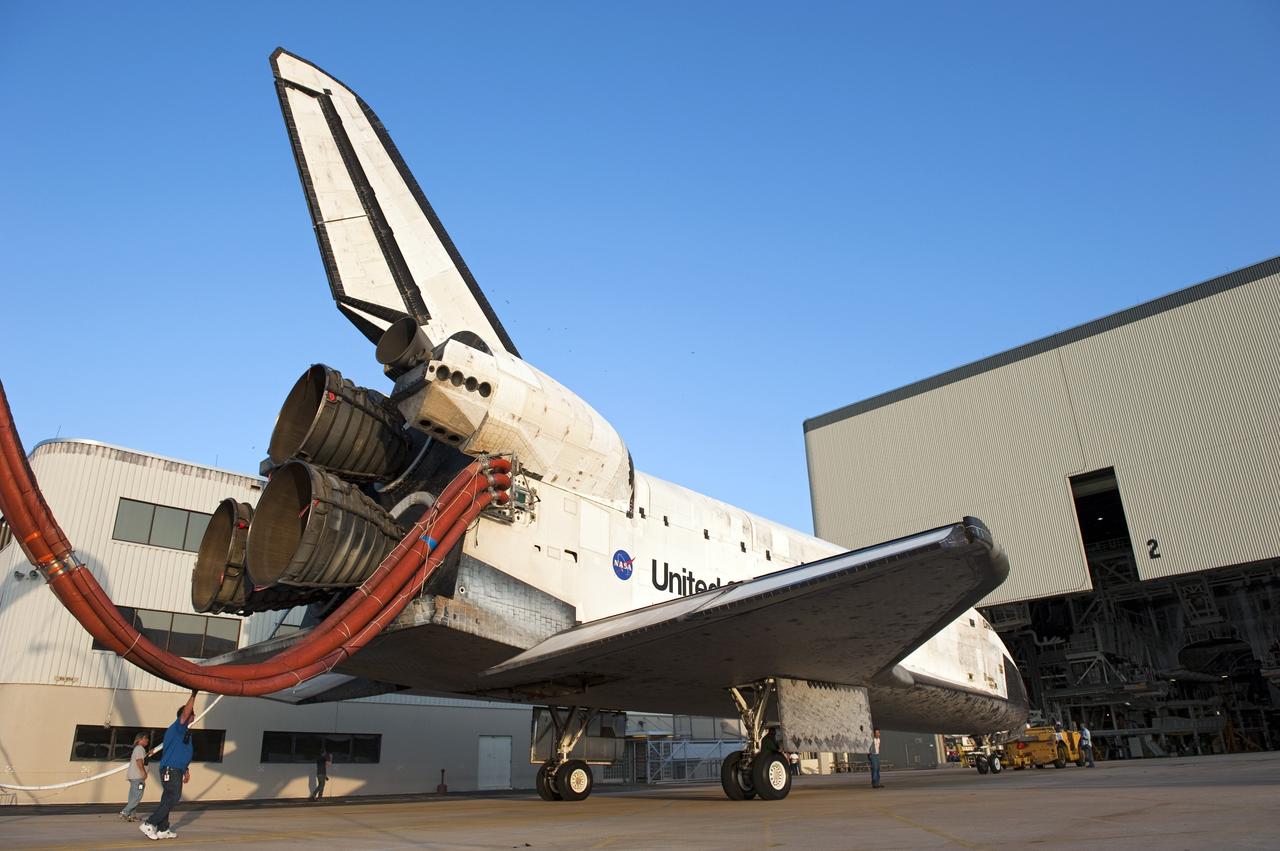
CAPE CANAVERAL, Fla. - Space shuttle Discovery noses its way toward the open hangar door of Orbiter Processing Facility-2 at NASA's Kennedy Space Center in Florida. Discovery touched down on the Shuttle Landing Facility's Runway 15 at 11:57 a.m., bringing an end to its 39th and final spaceflight mission, STS-133. Discovery and its six-member STS-133 crew delivered the Permanent Multipurpose Module, packed with supplies and critical spare parts, as well as Robonaut 2, the dexterous humanoid astronaut helper, to the International Space Station. Inside the processing facility, Discovery will be prepared for future public display. Photo credit: NASA/Kim Shiflett
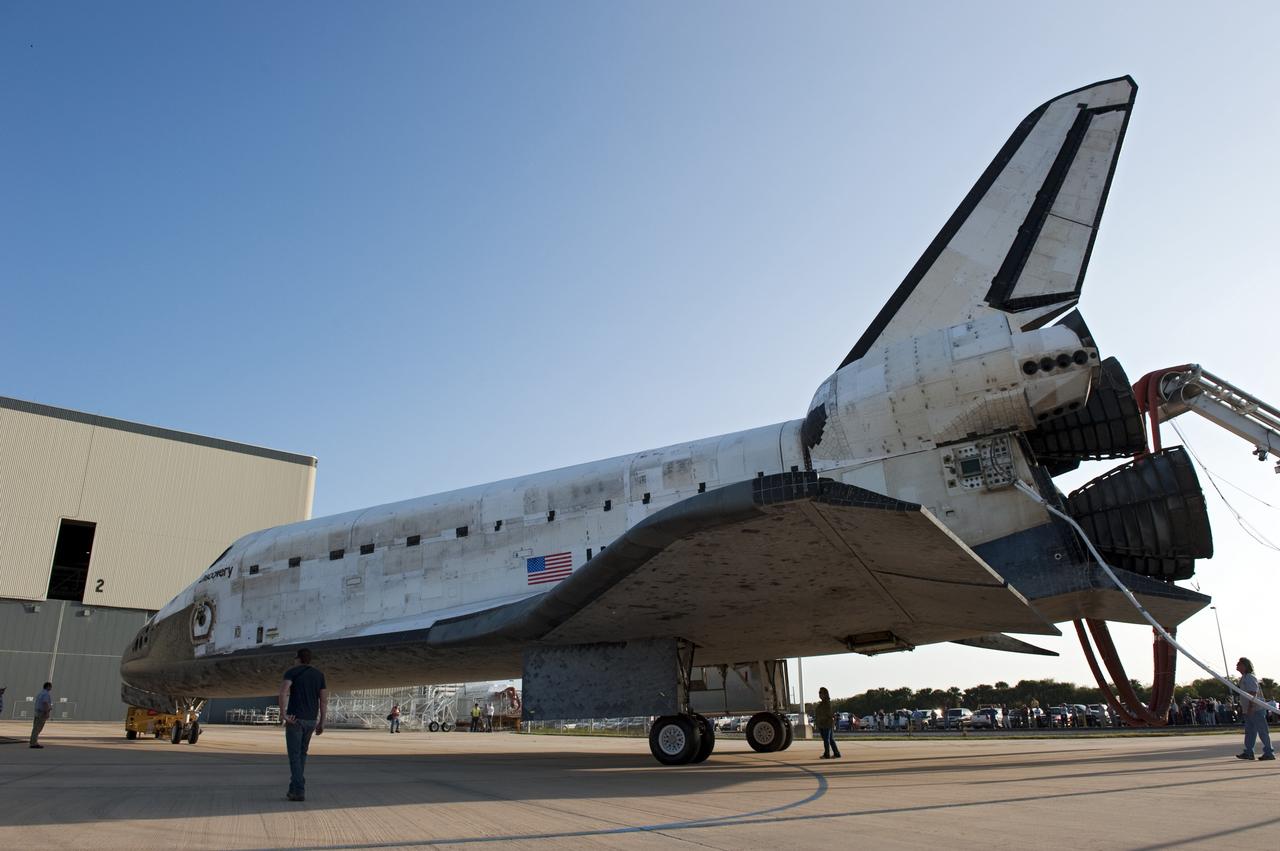
CAPE CANAVERAL, Fla. - Space shuttle Discovery's "towback" vehicle slowly pulls the spacecraft toward Orbiter Processing Facility-2 at NASA's Kennedy Space Center in Florida. Discovery touched down on the Shuttle Landing Facility's Runway 15 at 11:57 a.m., bringing an end to its 39th and final spaceflight mission, STS-133. Discovery and its six-member STS-133 crew delivered the Permanent Multipurpose Module, packed with supplies and critical spare parts, as well as Robonaut 2, the dexterous humanoid astronaut helper, to the International Space Station. Inside the processing facility, Discovery will be prepared for future public display. Photo credit: NASA/Kim Shiflett
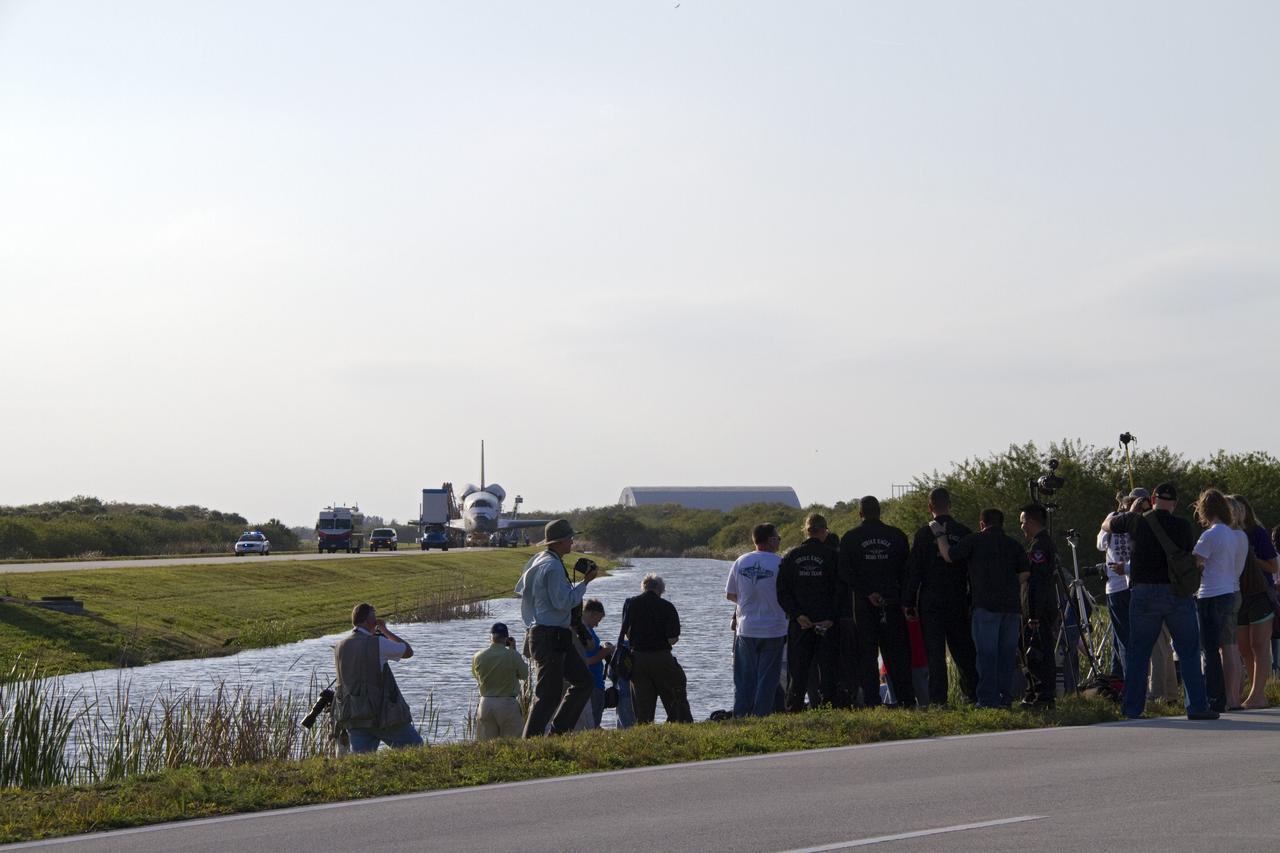
CAPE CANAVERAL, Fla. - Photographers are in position near the towway to capture space shuttle Discovery as it is towed from the Shuttle Landing Facility to Orbiter Processing Facility-2 at NASA's Kennedy Space Center in Florida. Discovery touched down on Runway 15 at 11:57 a.m., bringing an end to its 39th and final spaceflight mission, STS-133. Discovery and its six-member STS-133 crew delivered the Permanent Multipurpose Module, packed with supplies and critical spare parts, as well as Robonaut 2, the dexterous humanoid astronaut helper, to the International Space Station. Inside the processing facility, Discovery will be prepared for future public display. Photo credit: NASA/Jack Pfaller
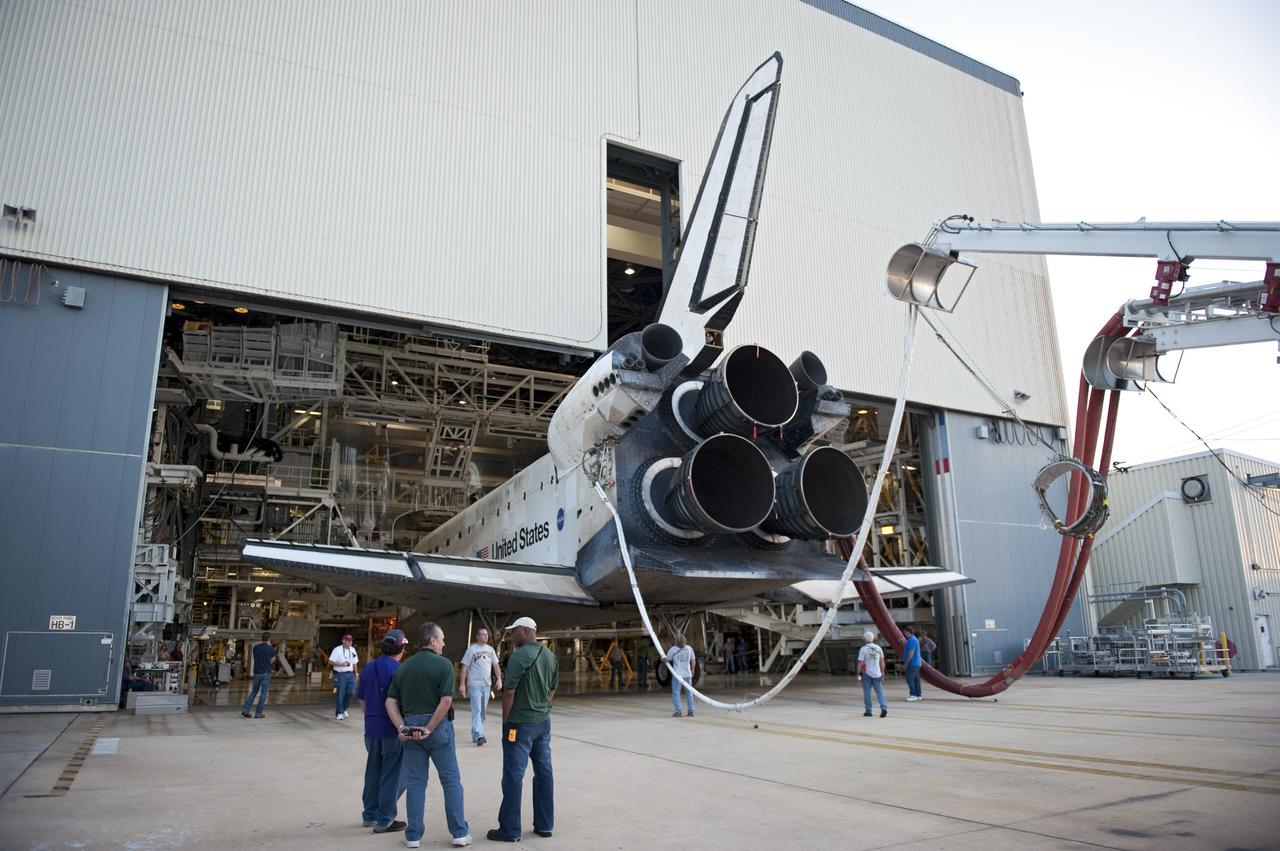
CAPE CANAVERAL, Fla. - Space shuttle Discovery is half in, half out of Orbiter Processing Facility-2 at NASA's Kennedy Space Center in Florida. Discovery touched down on the Shuttle Landing Facility's Runway 15 at 11:57 a.m., bringing an end to its 39th and final spaceflight mission, STS-133. Discovery and its six-member STS-133 crew delivered the Permanent Multipurpose Module, packed with supplies and critical spare parts, as well as Robonaut 2, the dexterous humanoid astronaut helper, to the International Space Station. Inside the processing facility, Discovery will be prepared for future public display. Photo credit: NASA/Kim Shiflett
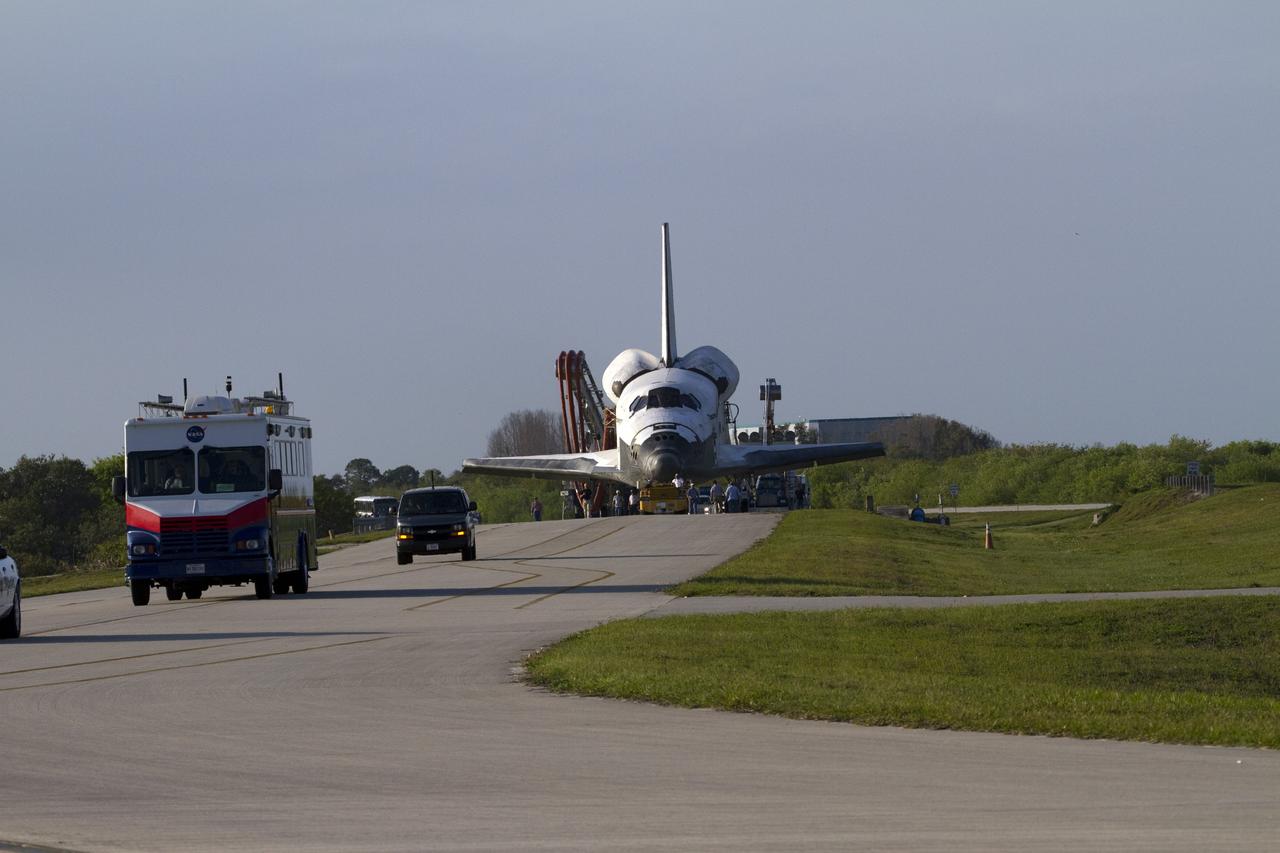
CAPE CANAVERAL, Fla. - The Convoy Command Vehicle leads space shuttle Discovery and the landing convoy along the towway from the Shuttle Landing Facility to Orbiter Processing Facility-2 at NASA's Kennedy Space Center in Florida. Discovery touched down on Runway 15 at 11:57 a.m., bringing an end to its 39th and final spaceflight mission, STS-133. Discovery and its six-member STS-133 crew delivered the Permanent Multipurpose Module, packed with supplies and critical spare parts, as well as Robonaut 2, the dexterous humanoid astronaut helper, to the International Space Station. Inside the processing facility, Discovery will be prepared for future public display. Photo credit: NASA/Jack Pfaller
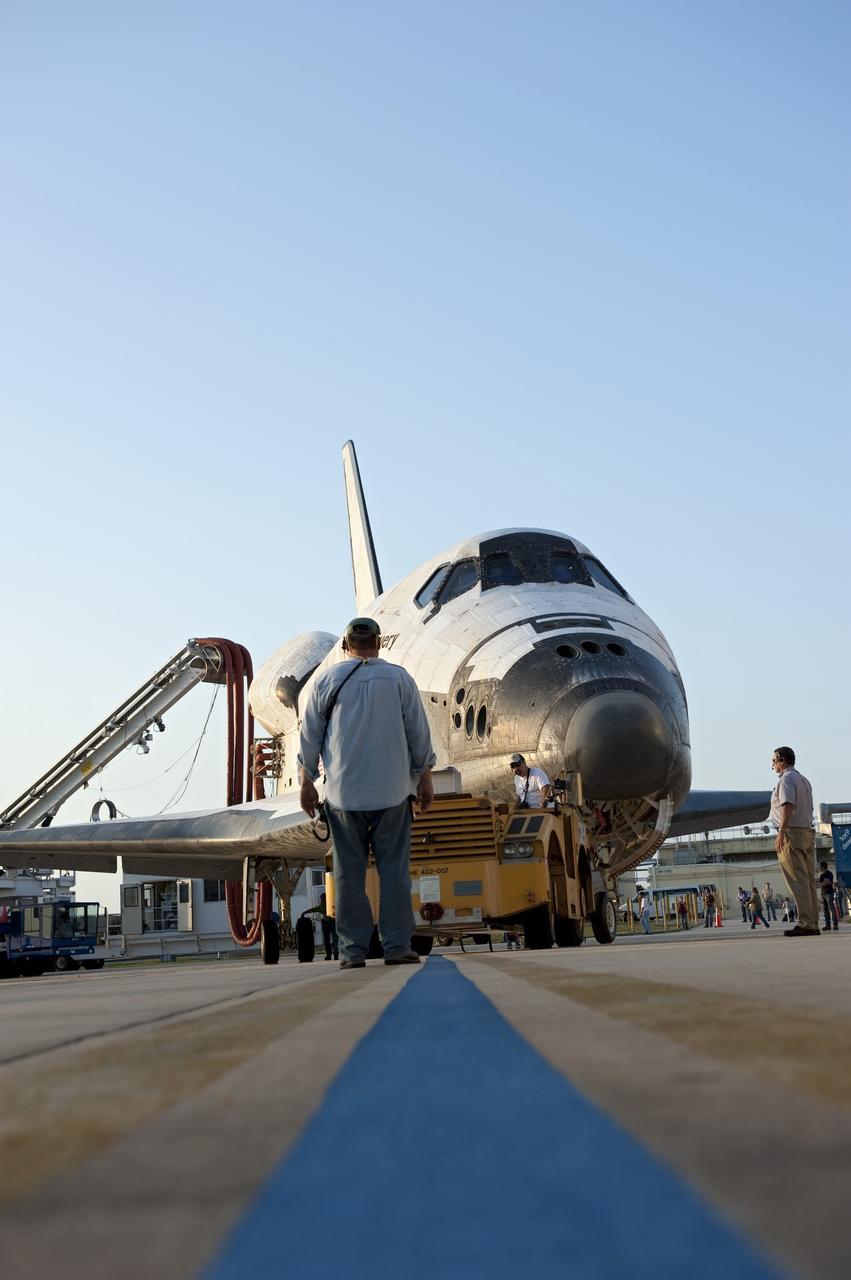
CAPE CANAVERAL, Fla. - The "towback" vehicle lines up space shuttle Discovery for entry into Orbiter Processing Facility-2 at NASA's Kennedy Space Center in Florida. Discovery touched down on the Shuttle Landing Facility's Runway 15 at 11:57 a.m., bringing an end to its 39th and final spaceflight mission, STS-133. Discovery and its six-member STS-133 crew delivered the Permanent Multipurpose Module, packed with supplies and critical spare parts, as well as Robonaut 2, the dexterous humanoid astronaut helper, to the International Space Station. Inside the processing facility, Discovery will be prepared for future public display. Photo credit: NASA/Kim Shiflett
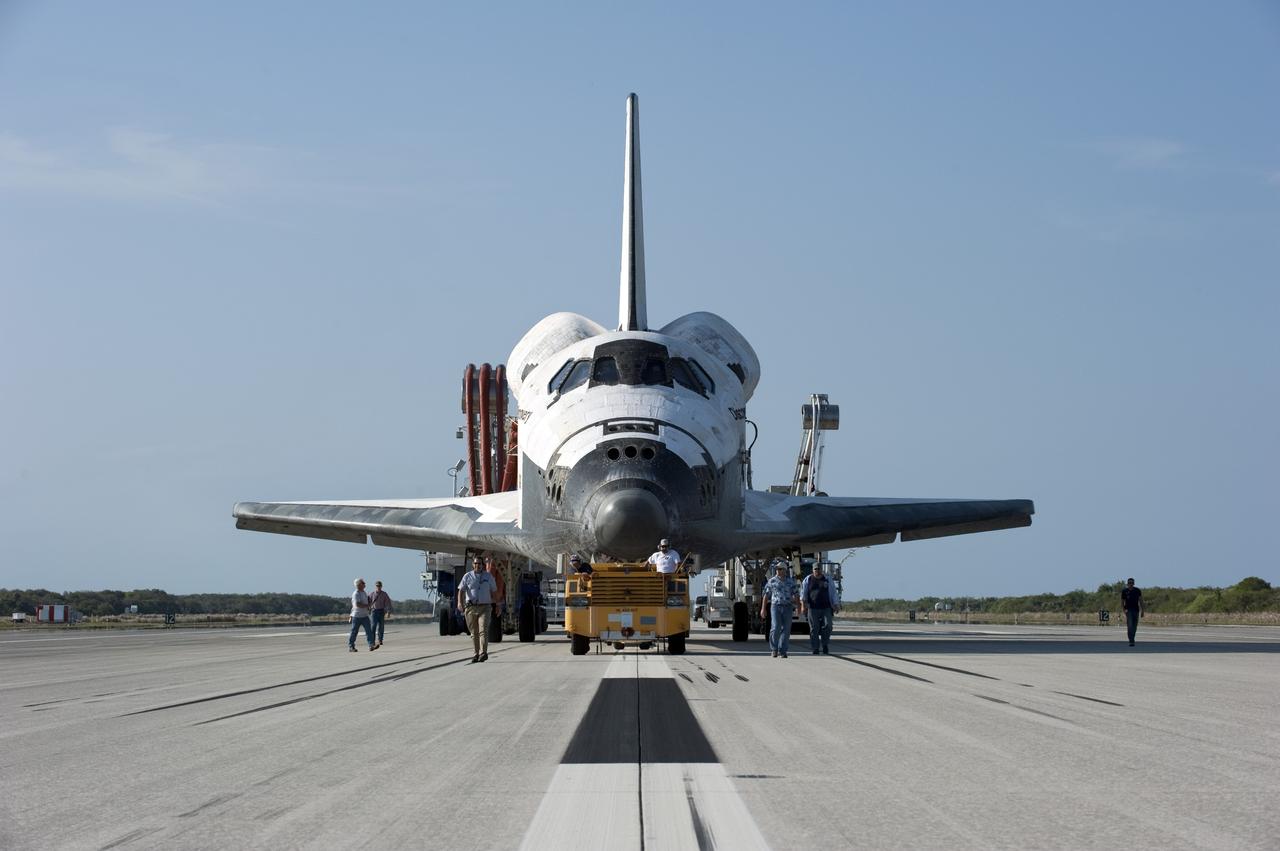
CAPE CANAVERAL, Fla. - Employees accompany space shuttle Discovery as it is pulled by a "towback" vehicle from the Shuttle Landing Facility to Orbiter Processing Facility-2 at NASA's Kennedy Space Center in Florida. Discovery touched down on Runway 15 at 11:57 a.m., bringing an end to its 39th and final spaceflight mission, STS-133. Discovery and its six-member STS-133 crew delivered the Permanent Multipurpose Module, packed with supplies and critical spare parts, as well as Robonaut 2, the dexterous humanoid astronaut helper, to the International Space Station. Inside the processing facility, Discovery will be prepared for future public display. Photo credit: NASA/Kim Shiflett
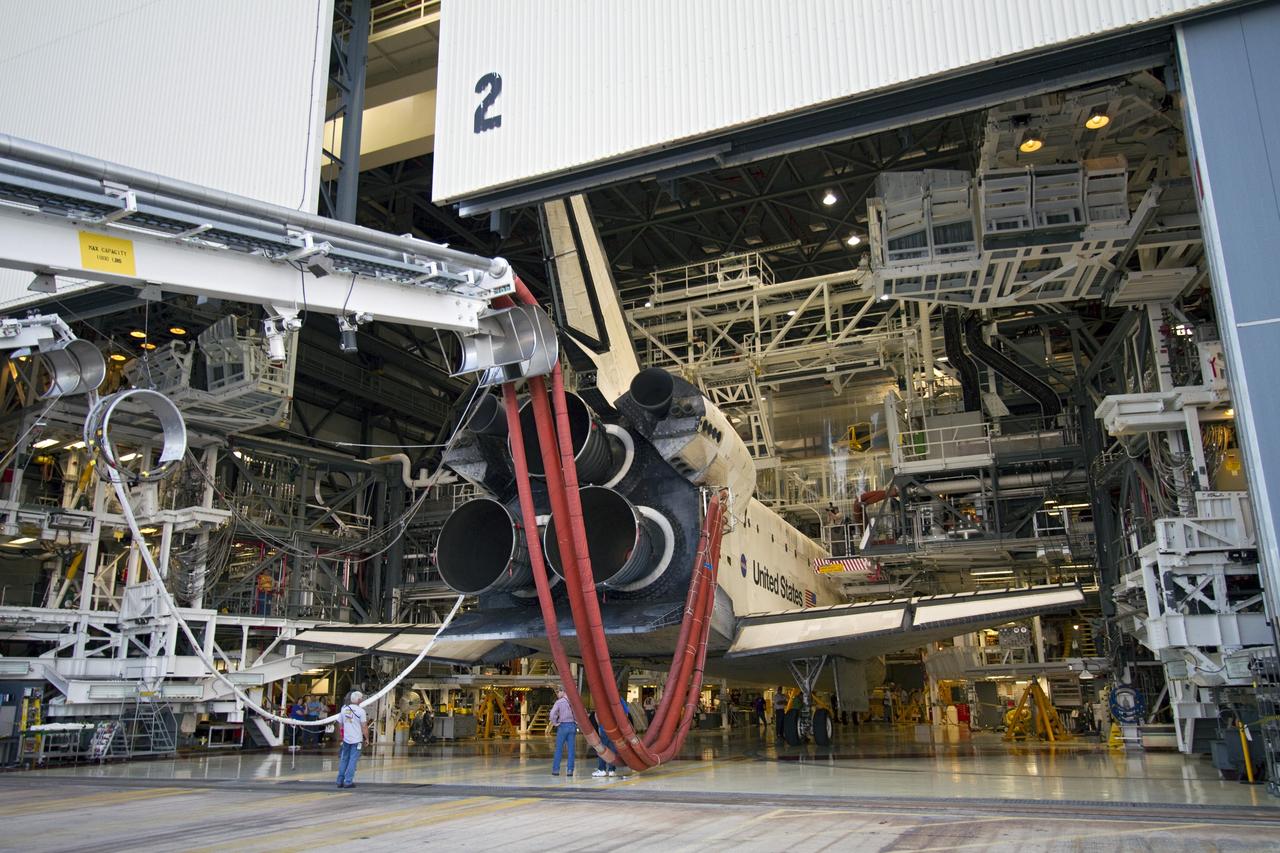
CAPE CANAVERAL, Fla. - Space shuttle Discovery enters Orbiter Processing Facility-2 at NASA's Kennedy Space Center in Florida during a move called "towback." Discovery touched down on the Shuttle Landing Facility's Runway 15 at 11:57 a.m., bringing an end to its 39th and final spaceflight mission, STS-133. Discovery and its six-member STS-133 crew delivered the Permanent Multipurpose Module, packed with supplies and critical spare parts, as well as Robonaut 2, the dexterous humanoid astronaut helper, to the International Space Station. Inside the processing facility, Discovery will be prepared for future public display. Photo credit: NASA/Jack Pfaller
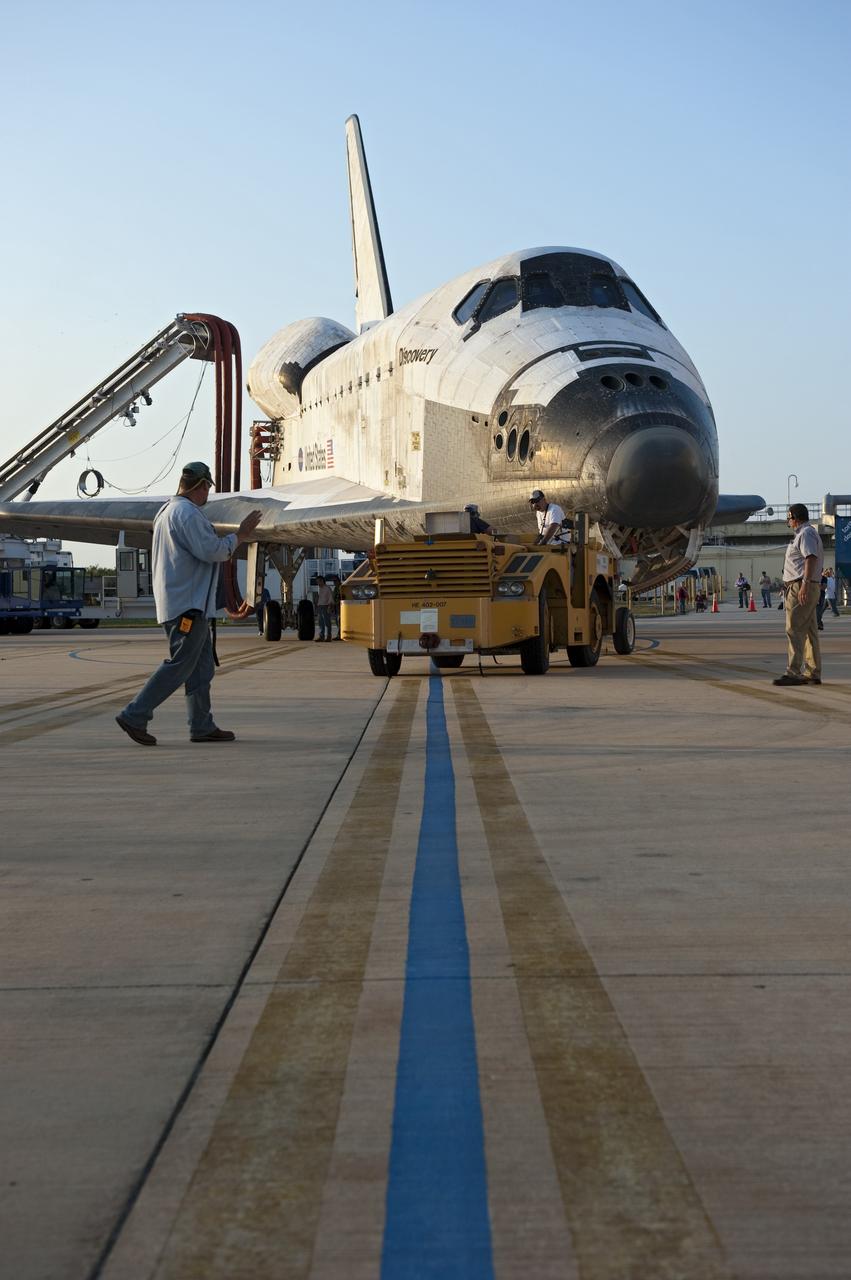
CAPE CANAVERAL, Fla. - Employees guide space shuttle Discovery into position for entry into Orbiter Processing Facility-2 at NASA's Kennedy Space Center in Florida. Discovery touched down on the Shuttle Landing Facility's Runway 15 at 11:57 a.m., bringing an end to its 39th and final spaceflight mission, STS-133. Discovery and its six-member STS-133 crew delivered the Permanent Multipurpose Module, packed with supplies and critical spare parts, as well as Robonaut 2, the dexterous humanoid astronaut helper, to the International Space Station. Inside the processing facility, Discovery will be prepared for future public display. Photo credit: NASA/Kim Shiflett
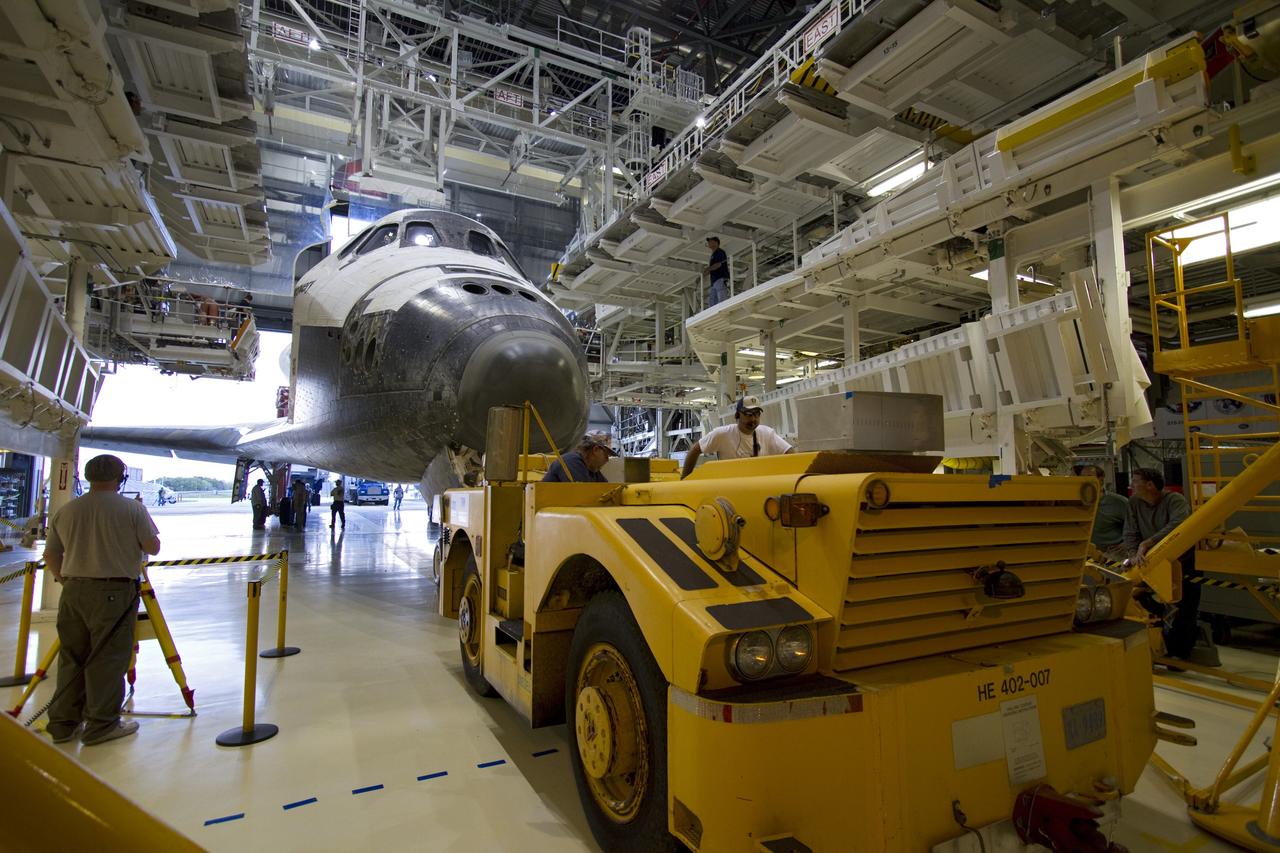
CAPE CANAVERAL, Fla. - A "towback" vehicle slowly pulls space shuttle Discovery through the open door of Orbiter Processing Facility-2 at NASA's Kennedy Space Center in Florida. Discovery touched down on the Shuttle Landing Facility's Runway 15 at 11:57 a.m., bringing an end to its 39th and final spaceflight mission, STS-133. Discovery and its six-member STS-133 crew delivered the Permanent Multipurpose Module, packed with supplies and critical spare parts, as well as Robonaut 2, the dexterous humanoid astronaut helper, to the International Space Station. Inside the processing facility, Discovery will be prepared for future public display. Photo credit: NASA/Jack Pfaller
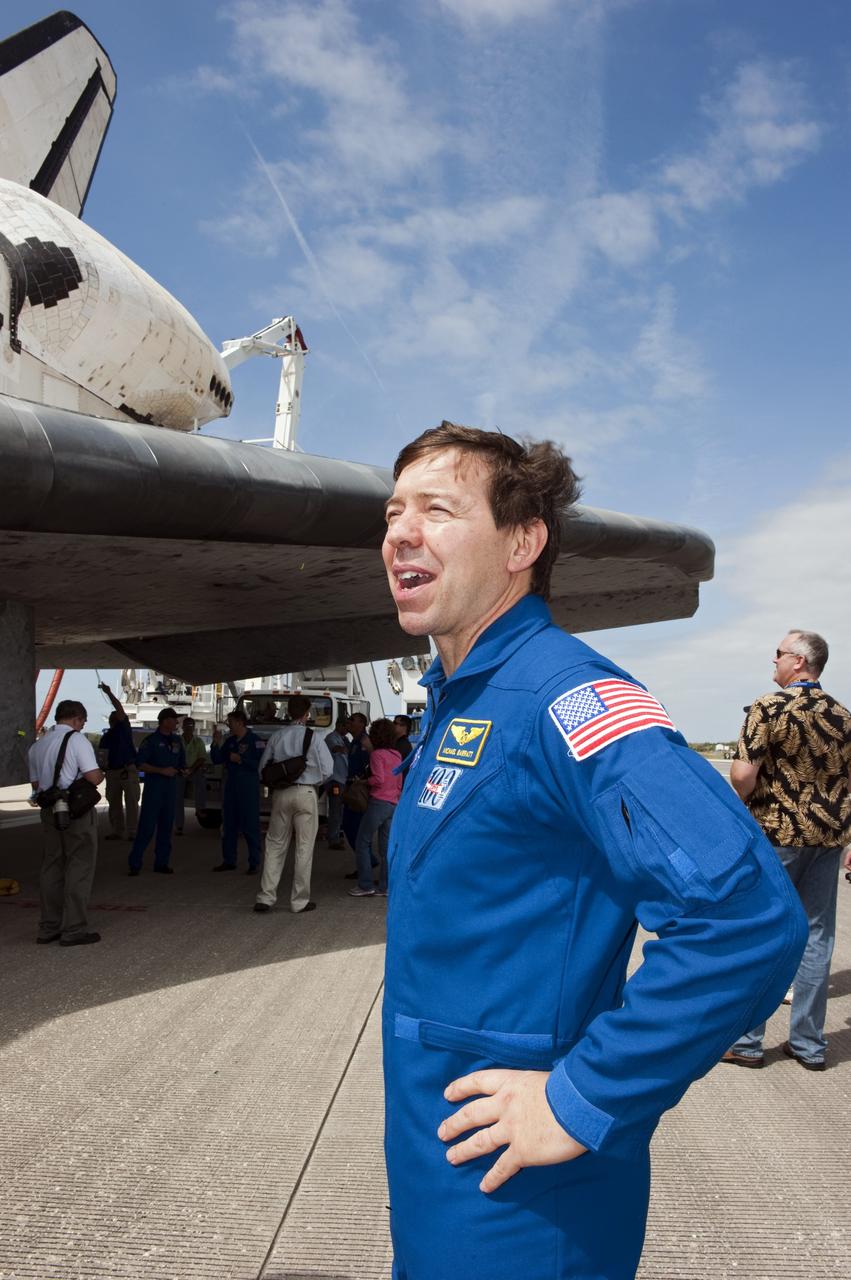
CAPE CANAVERAL, Fla. -- STS-133 Mission Specialist Michael Barratt admires space shuttle Discovery on the Shuttle Landing Facility's Runway 15 at NASA's Kennedy Space Center in Florida. Barratt and his crewmates returned from a 13-day, 5.3-million-mile mission to the International Space Station at 11:57 a.m. EST. STS-133 delivered the Permanent Multipurpose Module, packed with supplies and critical spare parts, as well as Robonaut 2, the dexterous humanoid astronaut helper, to the orbiting outpost. STS-133 was Discovery's 39th and final mission. This was the 133rd Space Shuttle Program mission and the 35th shuttle voyage to the space station. Photo credit: NASA/Kim Shiflett
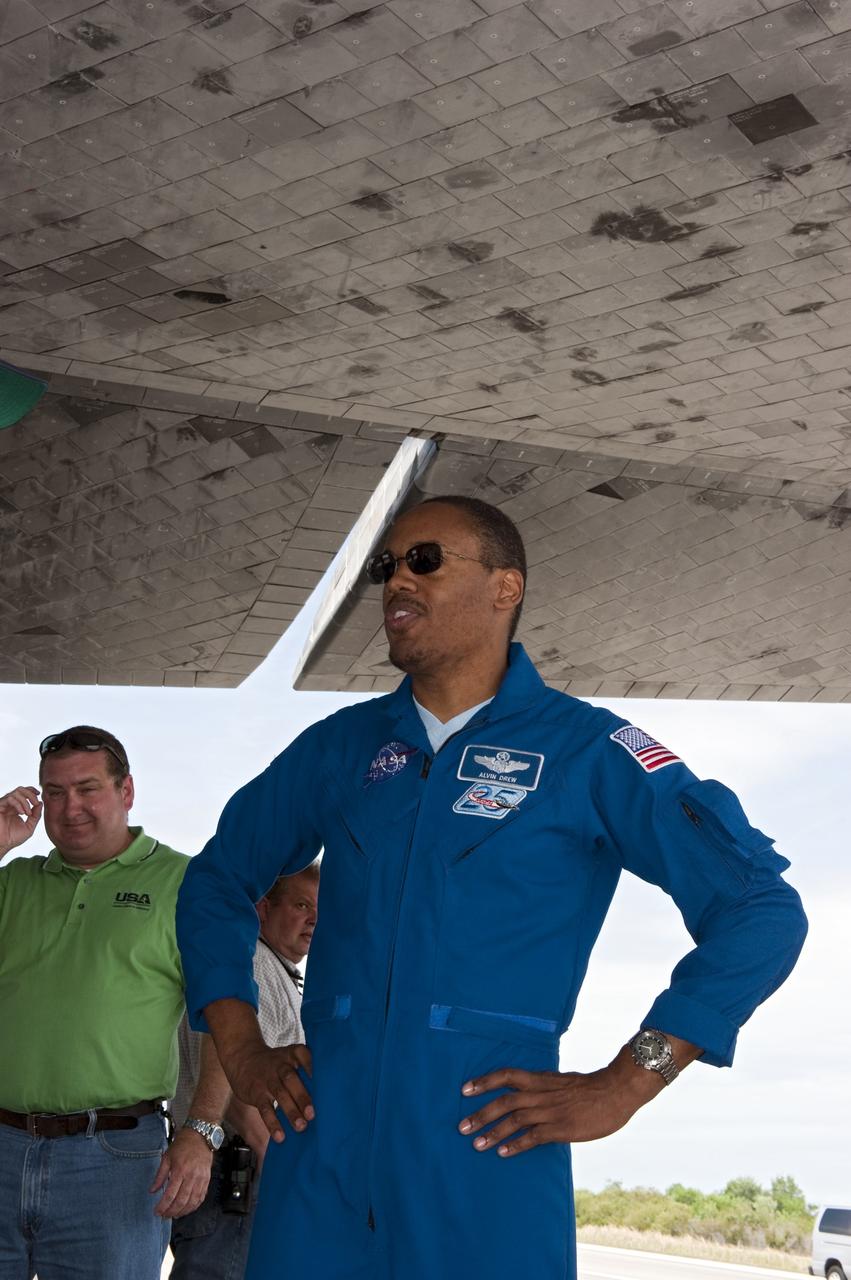
CAPE CANAVERAL, Fla. -- STS-133 Mission Specialist Alvin Drew admires space shuttle Discovery on the Shuttle Landing Facility's Runway 15 at NASA's Kennedy Space Center in Florida. Drew and his crewmates returned from a 13-day, 5.3-million-mile mission to the International Space Station at 11:57 a.m. EST. STS-133 delivered the Permanent Multipurpose Module, packed with supplies and critical spare parts, as well as Robonaut 2, the dexterous humanoid astronaut helper, to the orbiting outpost. STS-133 was Discovery's 39th and final mission. This was the 133rd Space Shuttle Program mission and the 35th shuttle voyage to the space station. Photo credit: NASA/Kim Shiflett
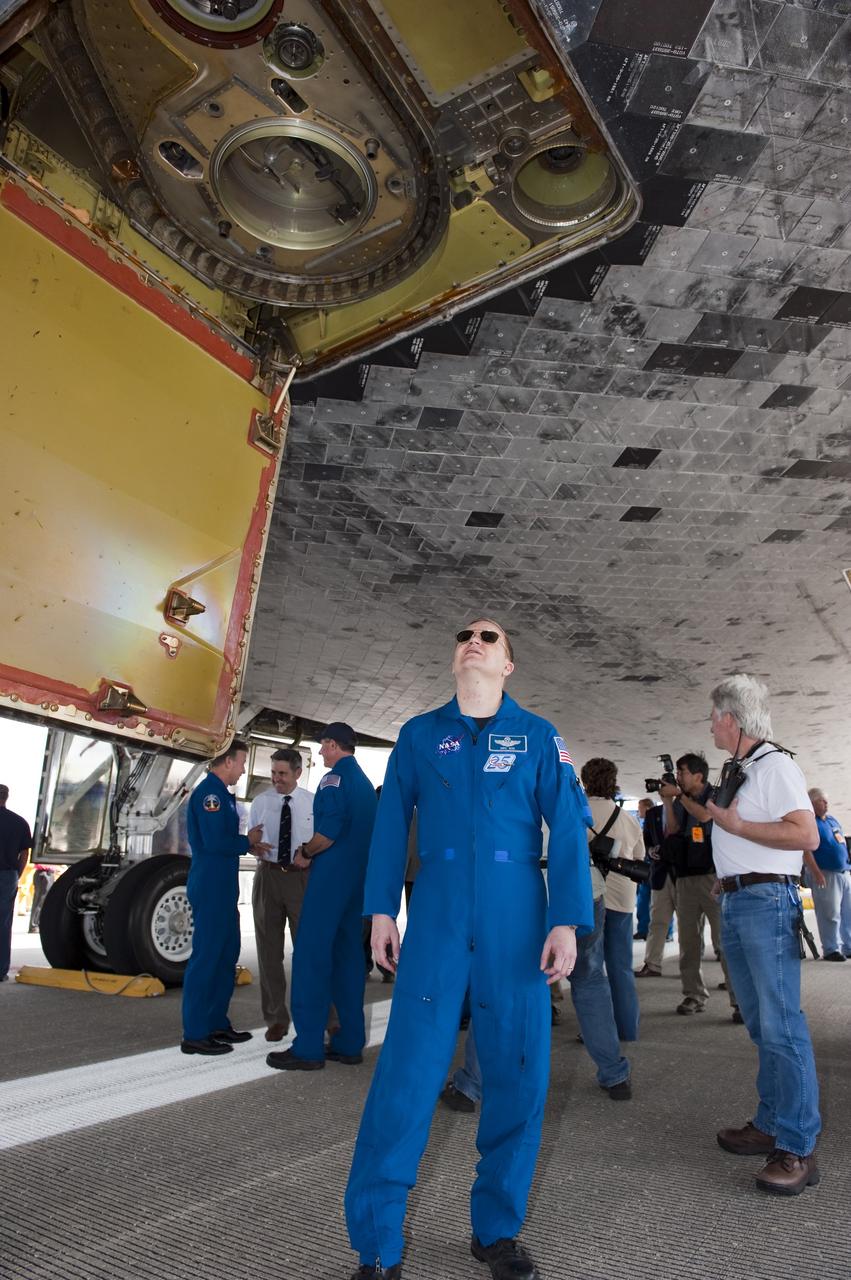
CAPE CANAVERAL, Fla. -- STS-133 Pilot Eric Boe admires space shuttle Discovery on the Shuttle Landing Facility's Runway 15 at NASA's Kennedy Space Center in Florida. Boe and his crewmates returned from a 13-day, 5.3-million-mile mission to the International Space Station at 11:57 a.m. EST. STS-133 delivered the Permanent Multipurpose Module, packed with supplies and critical spare parts, as well as Robonaut 2, the dexterous humanoid astronaut helper, to the orbiting outpost. STS-133 was Discovery's 39th and final mission. This was the 133rd Space Shuttle Program mission and the 35th shuttle voyage to the space station. Photo credit: NASA/Kim Shiflett
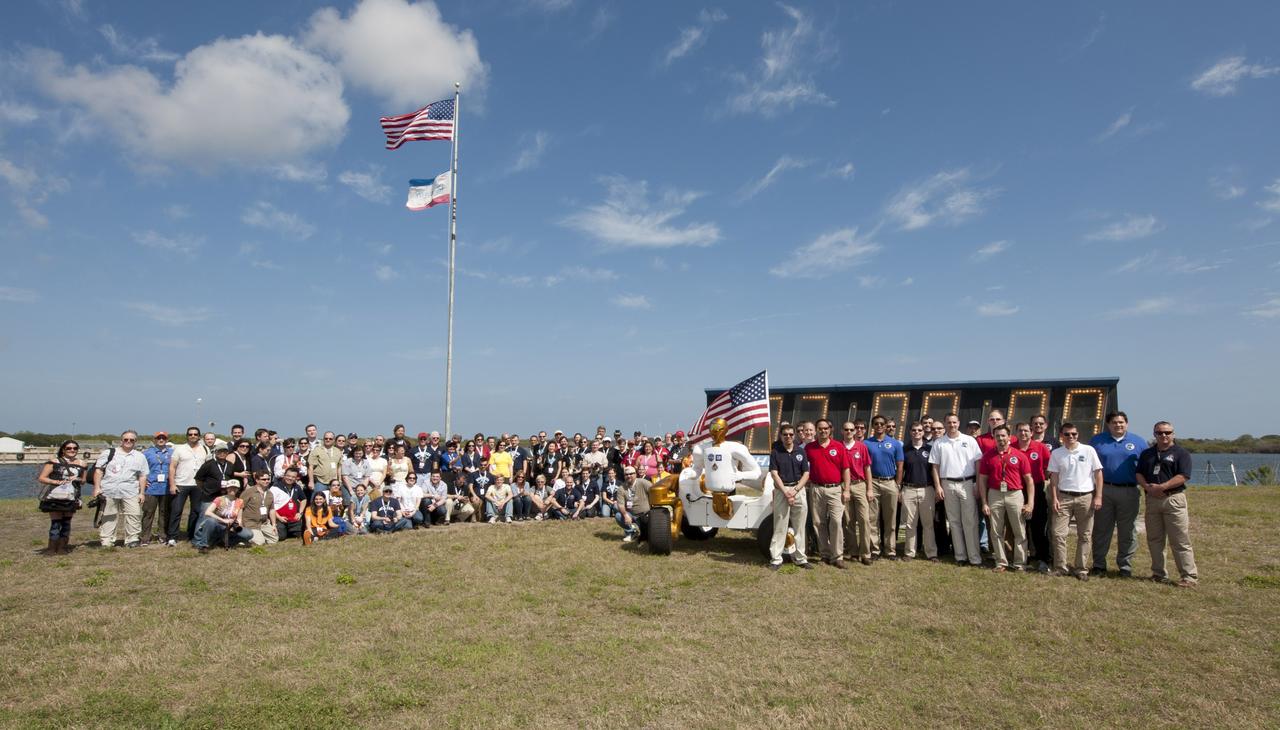
NASA Tweetup participants along with NASA engineers and Robonaut 2 stand at the launch clock, Thursday, Feb. 24, 2011, prior to the launch of the space shuttle Discovery (STS-133) at Kennedy Space Center in Cape Canaveral, Fla. During the 11-day mission, Discovery will deliver the Italian-built Permanent Multipurpose Module (PMM) and Express Logistics Carrier 4 (ELC4) along with another Robonaut 2, which will become the first humanoid robot in space. Discovery, on its 39th and final flight, is NASA's most flown shuttle. Photo Credit: (NASA/Paul E. Alers)
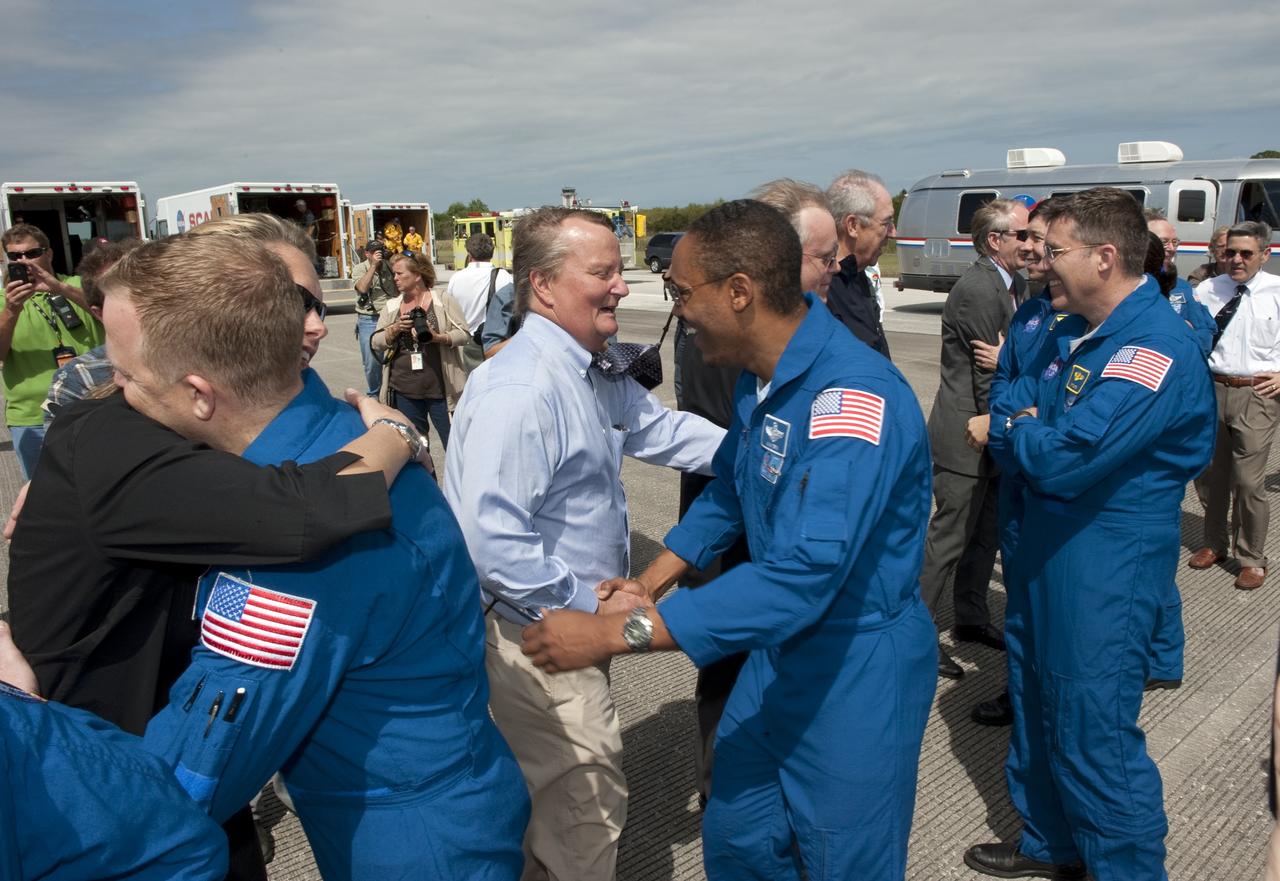
CAPE CANAVERAL, Fla. -- NASA managers welcome space shuttle Discovery's STS-133 crew members home to Kennedy Space Center in Florida. In the foreground, Discovery Flow Director Stephanie Stilson hugs STS-133 Pilot Eric Boe. Beside them, Shuttle Launch Director Mike Leinbach congratulates Mission Specialist Alvin Drew on a successful mission. Discovery and its six-member crew landed on the Shuttle Landing Facility's Runway 15 at 11:57 a.m. EST, bringing an end to the 13-day, 5.3-million-mile mission to the International Space Station. STS-133 delivered the Permanent Multipurpose Module, packed with supplies and critical spare parts, as well as Robonaut 2, the dexterous humanoid astronaut helper, to the orbiting outpost. STS-133 was Discovery's 39th and final mission. This was the 133rd Space Shuttle Program mission and the 35th shuttle voyage to the space station. Photo credit: NASA/Kim Shiflett

CAPE CANAVERAL, Fla. -- At NASA's Kennedy Space Center in Florida, a dexterous humanoid astronaut helper, known as Robonaut, demonstrates its talents to media. Robonaut 2 (R2) will be delivered to the International Space Station on space shuttle Discovery's STS-133 mission. Although R2 will initially only participate in operational tests, upgrades could eventually allow the robot to realize its true purpose -- helping spacewalking astronauts with tasks outside the orbiting laboratory. For more information on the upcoming STS-133 mission, visit www.nasa.gov/mission_pages/shuttle/shuttlemissions/sts133/. Photo credit: NASA/Jack Pfaller

CAPE CANAVERAL, Fla. -- At NASA's Kennedy Space Center in Florida, a dexterous humanoid astronaut helper, known as Robonaut, demonstrates its talents to media with Ron Diftler, NASA's Robonaut 2 (R2) project manager. R2 will be delivered to the International Space Station on space shuttle Discovery's STS-133 mission. Although R2 will initially only participate in operational tests, upgrades could eventually allow the robot to realize its true purpose -- helping spacewalking astronauts with tasks outside the orbiting laboratory. For more information on the upcoming STS-133 mission, visit www.nasa.gov/mission_pages/shuttle/shuttlemissions/sts133/. Photo credit: NASA/Jack Pfaller
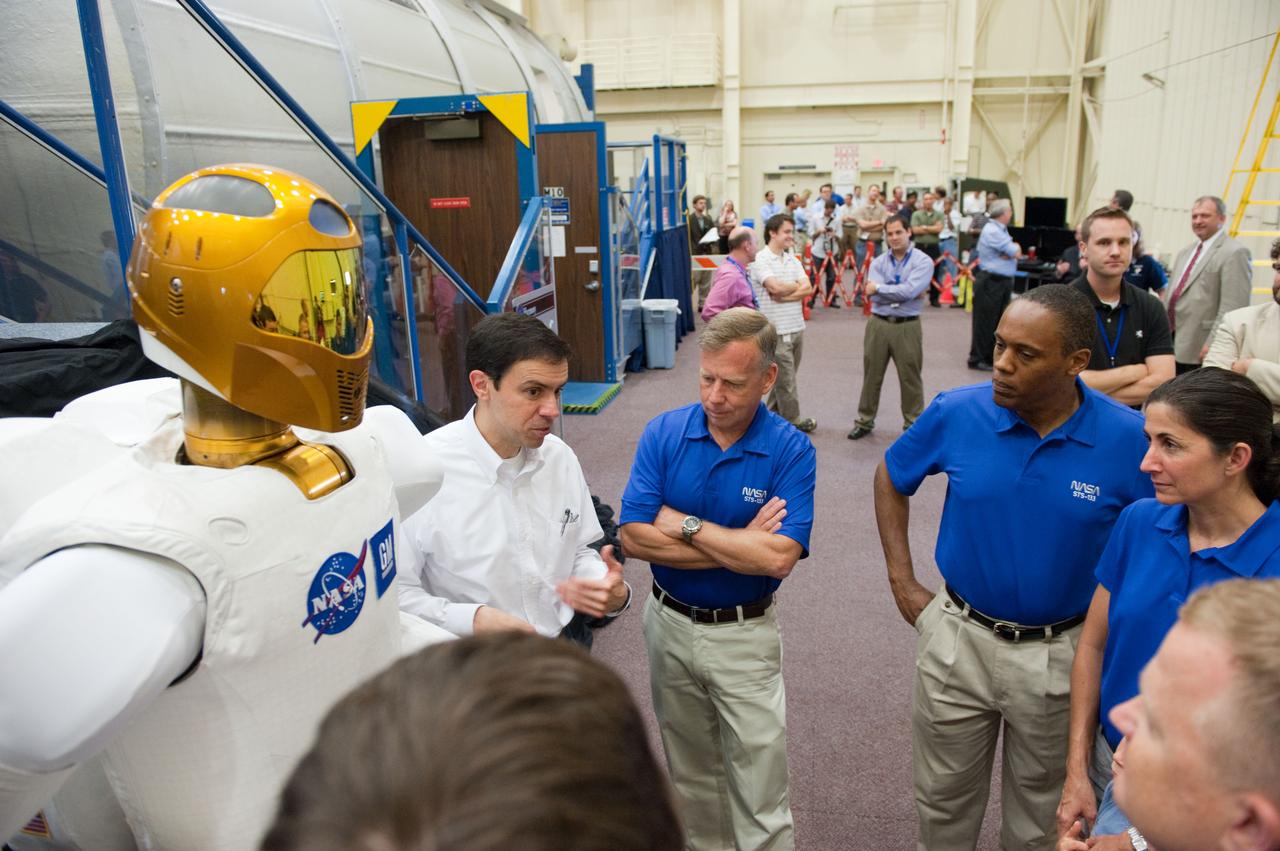
JSC2010-E-106311 (28 June 2010) --- NASA Robonaut Project Manager Ron Diftler (left) explains some of Robonaut 2?s features to members of the STS-133 crew ? continuing left, Steve Lindsey, commander; along with Alvin Drew and Nicole Stott, both mission specialists; and (bottom right corner) Eric Boe, pilot. The STS-133 crew will deliver R2, as the robot is called, to the International Space Station on space shuttle Discovery?s final flight. Photo credit: NASA or National Aeronautics and Space Administration
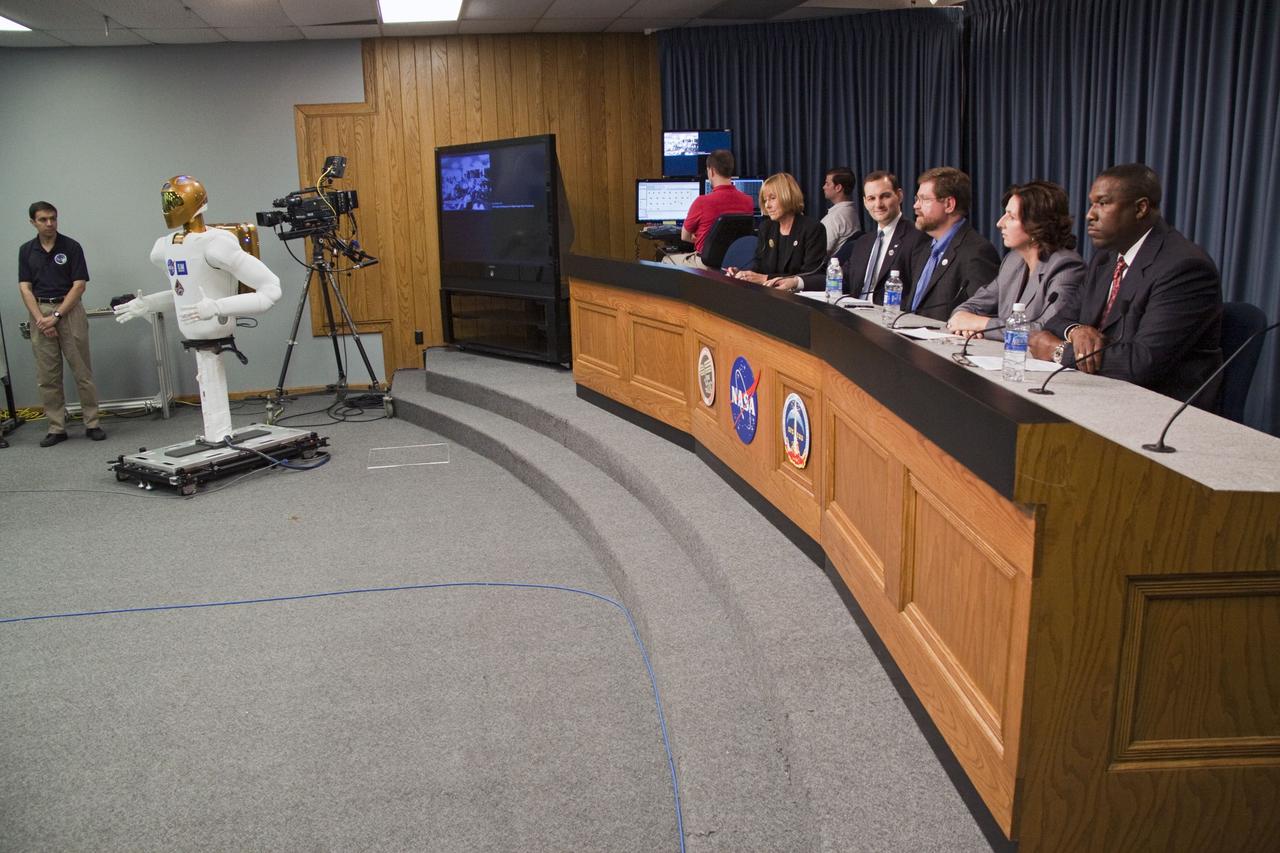
CAPE CANAVERAL, Fla. -- At NASA's Kennedy Space Center in Florida, managers from NASA and General Motors answer media questions on the dexterous humanoid astronaut helper, known as Robonaut. Robonaut 2 (R2) will be delivered to the International Space Station on space shuttle Discovery's STS-133 mission. Although R2 will initially only participate in operational tests, upgrades could eventually allow the robot to realize its true purpose -- helping spacewalking astronauts with tasks outside the orbiting laboratory. For more information on the upcoming STS-133 mission, visit www.nasa.gov/mission_pages/shuttle/shuttlemissions/sts133/. Photo credit: NASA/Jack Pfaller
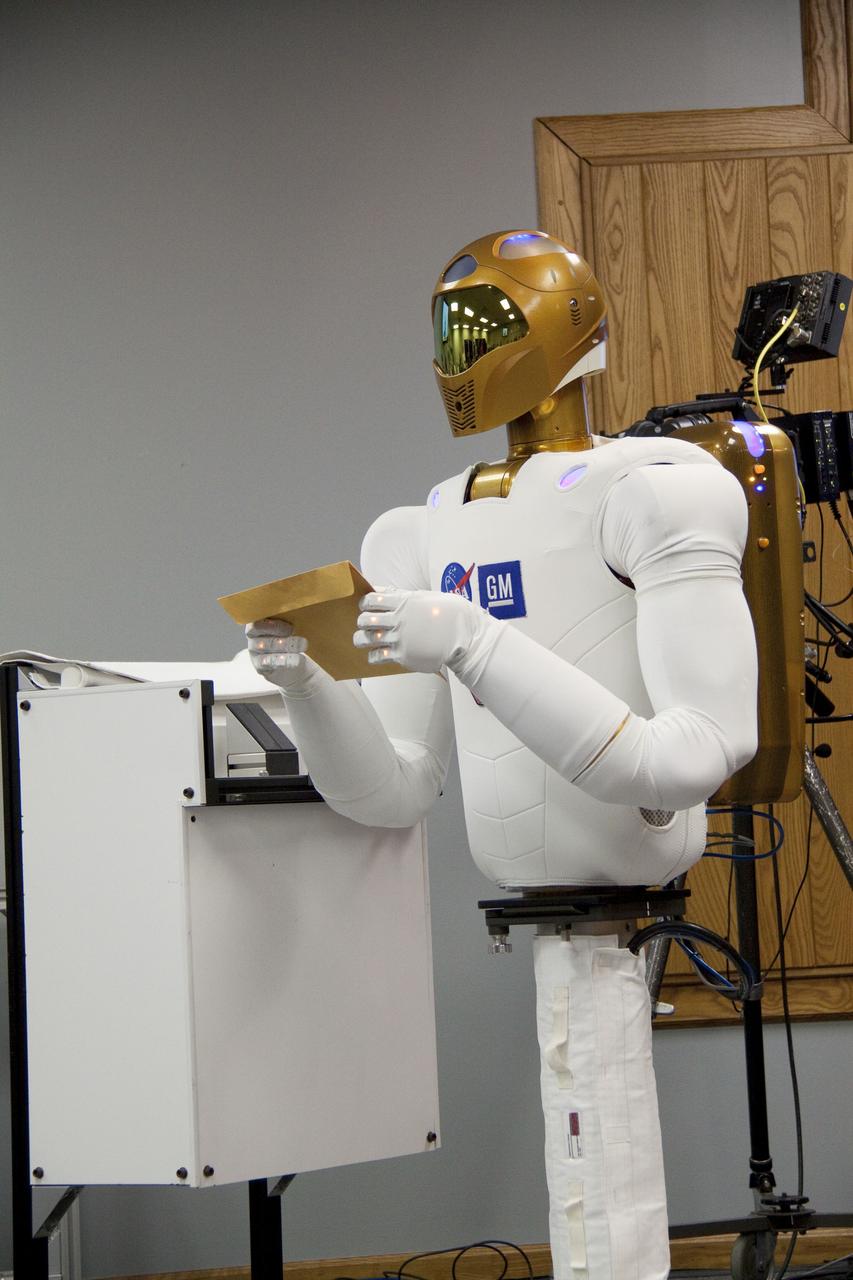
CAPE CANAVERAL, Fla. -- At NASA's Kennedy Space Center in Florida, a dexterous humanoid astronaut helper, known as Robonaut, demonstrates its talents to media. Robonaut 2 (R2) will be delivered to the International Space Station on space shuttle Discovery's STS-133 mission. Although R2 will initially only participate in operational tests, upgrades could eventually allow the robot to realize its true purpose -- helping spacewalking astronauts with tasks outside the orbiting laboratory. For more information on the upcoming STS-133 mission, visit www.nasa.gov/mission_pages/shuttle/shuttlemissions/sts133/. Photo credit: NASA/Jack Pfaller
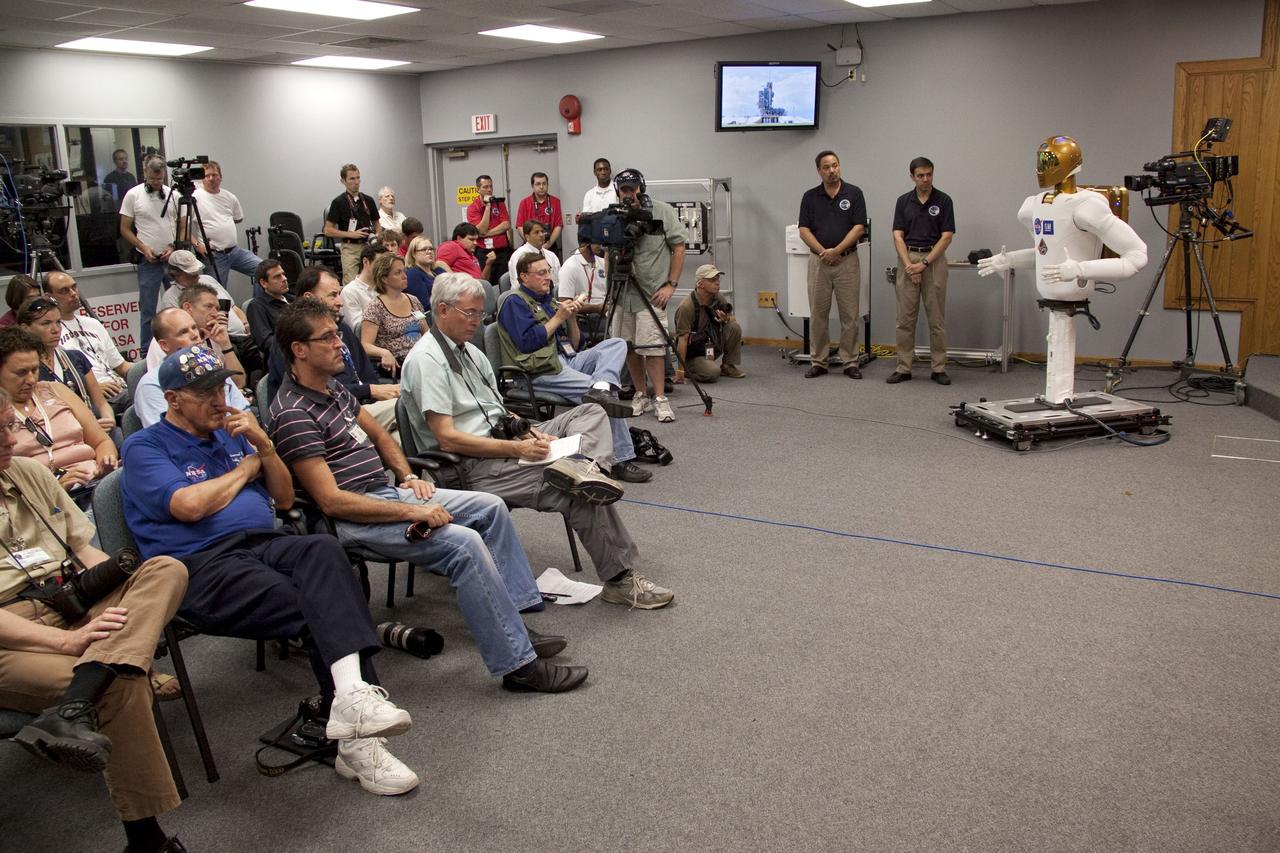
CAPE CANAVERAL, Fla. -- At NASA's Kennedy Space Center in Florida, a dexterous humanoid astronaut helper, known as Robonaut, is on display for media. Robonaut 2 (R2) will be delivered to the International Space Station on space shuttle Discovery's STS-133 mission. Although R2 will initially only participate in operational tests, upgrades could eventually allow the robot to realize its true purpose -- helping spacewalking astronauts with tasks outside the orbiting laboratory. For more information on the upcoming STS-133 mission, visit www.nasa.gov/mission_pages/shuttle/shuttlemissions/sts133/. Photo credit: NASA/Jack Pfaller
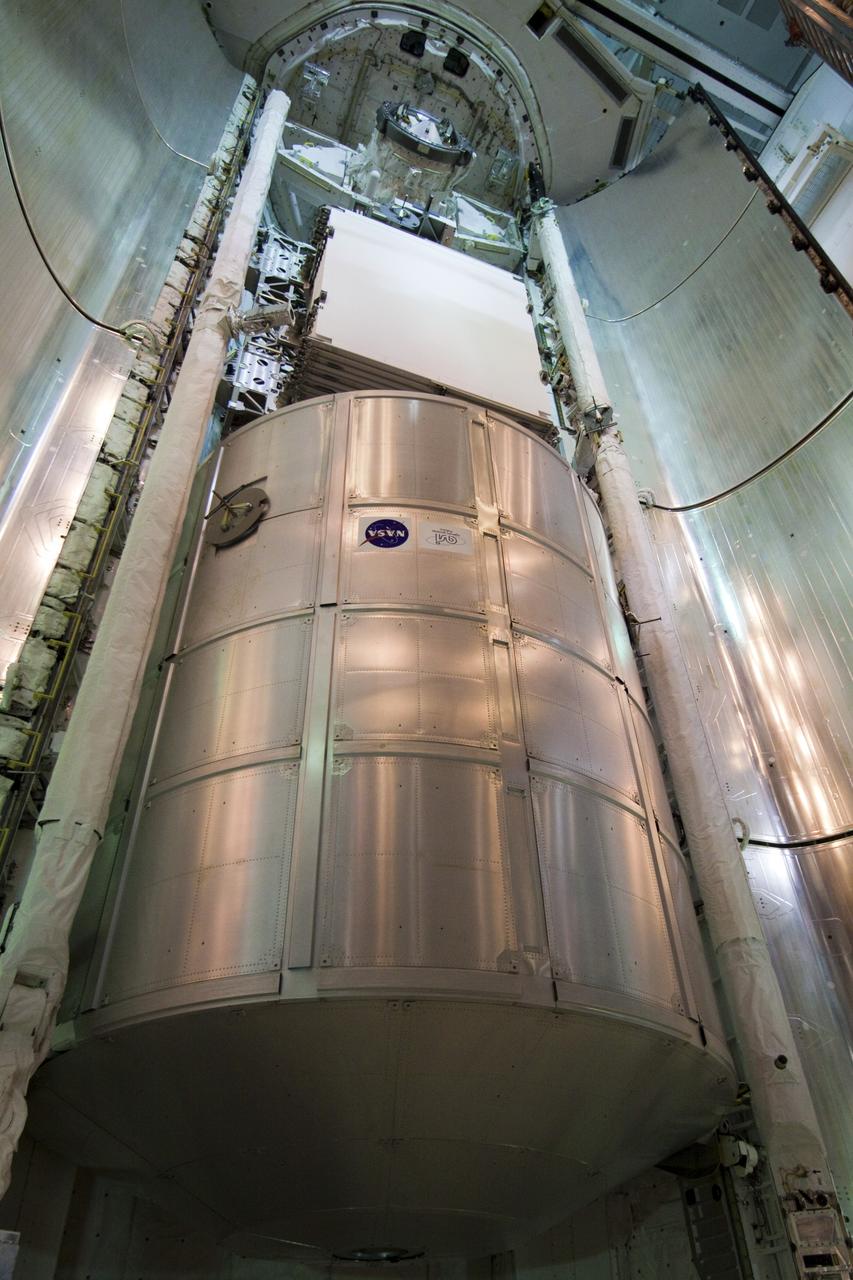
CAPE CANAVERAL, Fla. -- On Launch Pad 39A at NASA's Kennedy Space Center in Florida, the clamshell doors of space shuttle Discovery's payload bay are ready to be closed in preparation for the STS-133 launch to the International Space Station. Targeted to launch Nov. 1, STS-133 will carry the Permanent Multipurpose Module (PMM) packed with supplies and critical spare parts, as well as Robonaut 2 (R2) to the station. Photo credit: NASA/Jack Pfaller
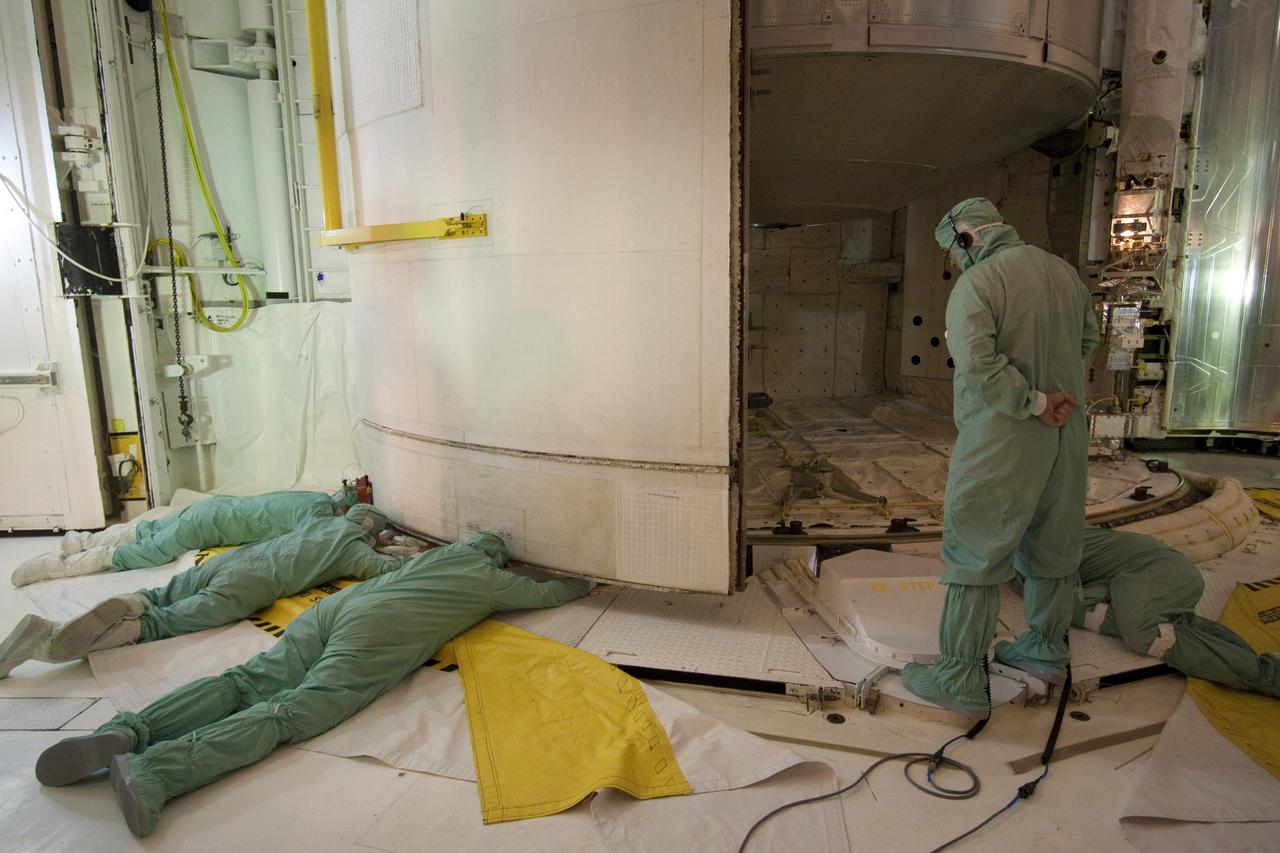
CAPE CANAVERAL, Fla. -- On Launch Pad 39A at NASA's Kennedy Space Center in Florida, technicians close the clamshell doors of space shuttle Discovery's payload bay in preparation for the STS-133 launch to the International Space Station. Targeted to launch Nov. 1, STS-133 will carry the Permanent Multipurpose Module (PMM) packed with supplies and critical spare parts, as well as Robonaut 2 (R2) to the station. Photo credit: NASA/Jack Pfaller
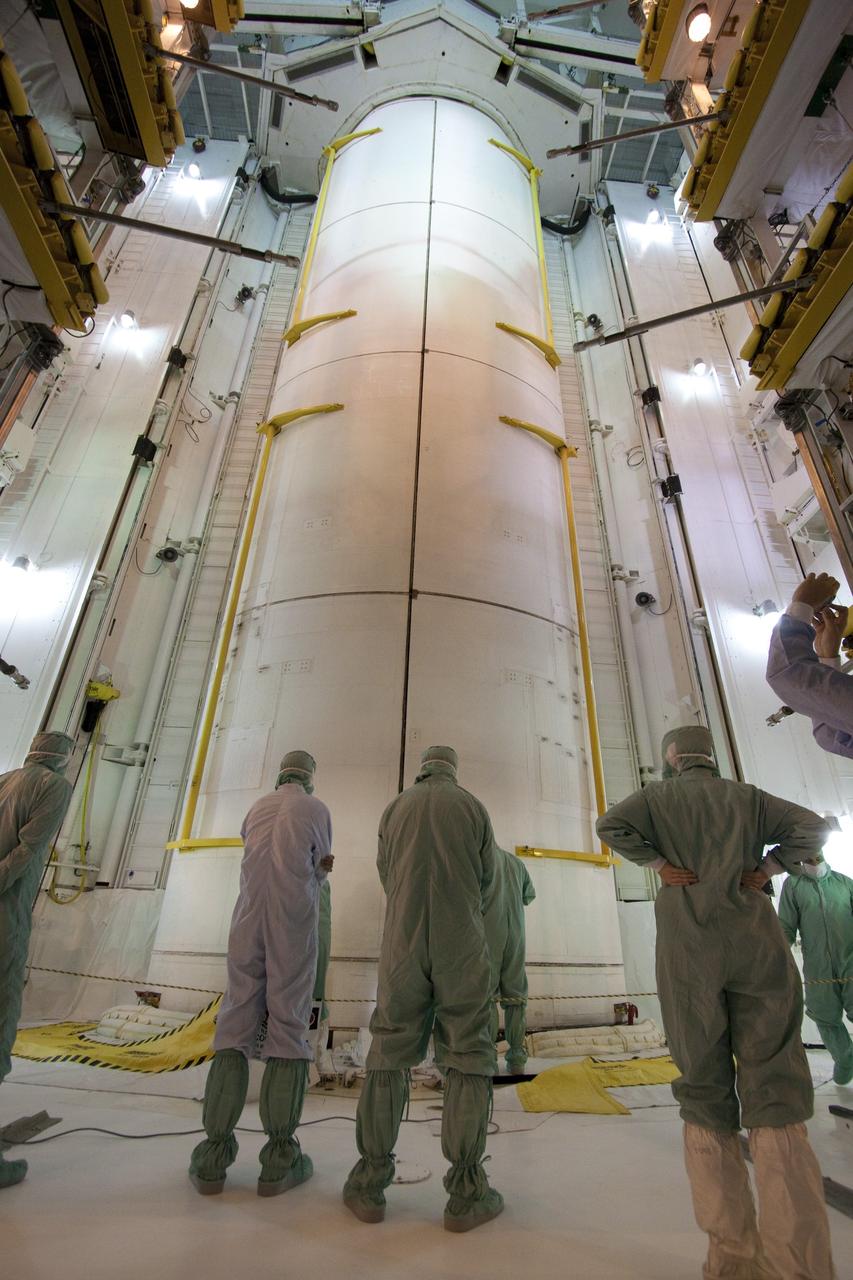
CAPE CANAVERAL, Fla. -- On Launch Pad 39A at NASA's Kennedy Space Center in Florida, the clamshell doors of space shuttle Discovery's payload bay are closed in preparation for the STS-133 launch to the International Space Station. Targeted to launch Nov. 1, STS-133 will carry the Permanent Multipurpose Module (PMM) packed with supplies and critical spare parts, as well as Robonaut 2 (R2) to the station. Photo credit: NASA/Jack Pfaller
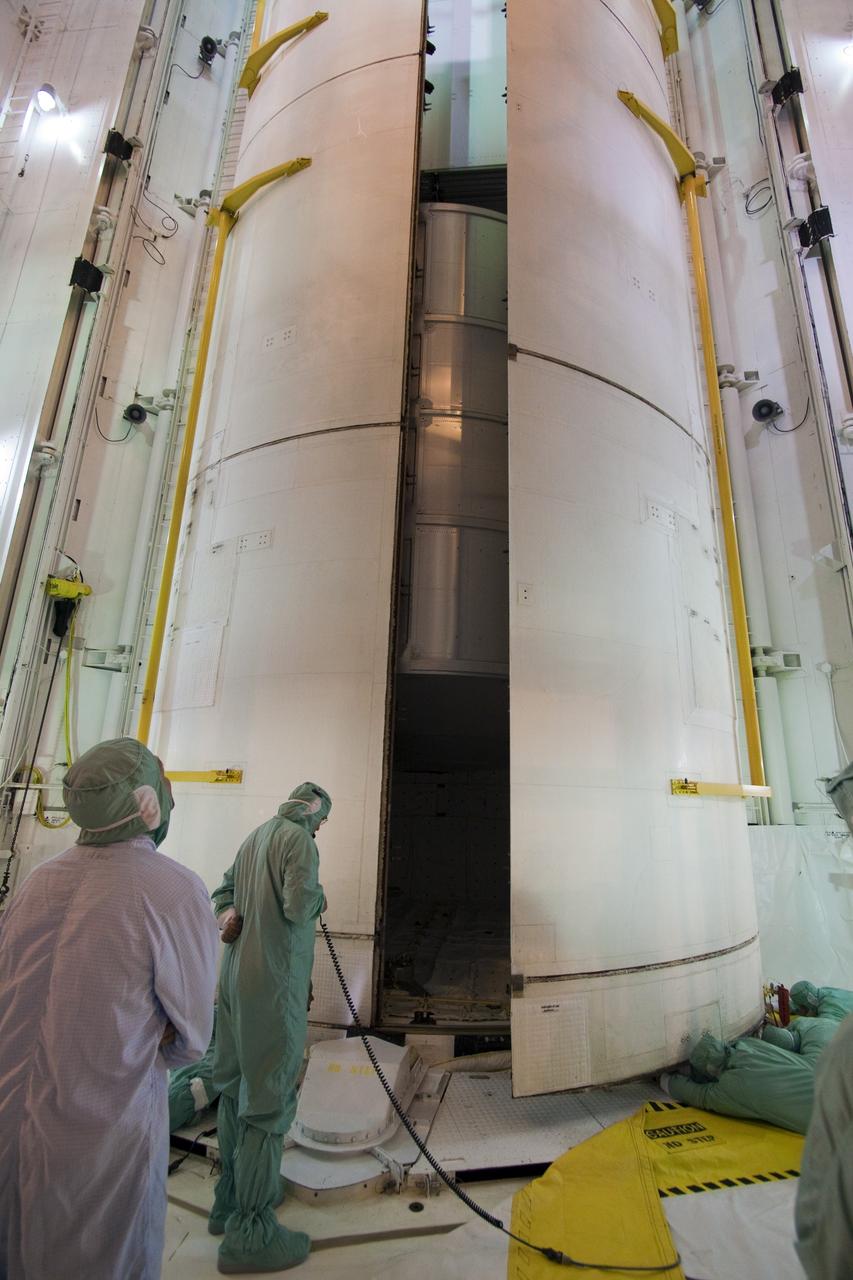
CAPE CANAVERAL, Fla. -- On Launch Pad 39A at NASA's Kennedy Space Center in Florida, technicians close the clamshell doors of space shuttle Discovery's payload bay in preparation for the STS-133 launch to the International Space Station. Targeted to launch Nov. 1, STS-133 will carry the Permanent Multipurpose Module (PMM) packed with supplies and critical spare parts, as well as Robonaut 2 (R2) to the station. Photo credit: NASA/Jack Pfaller
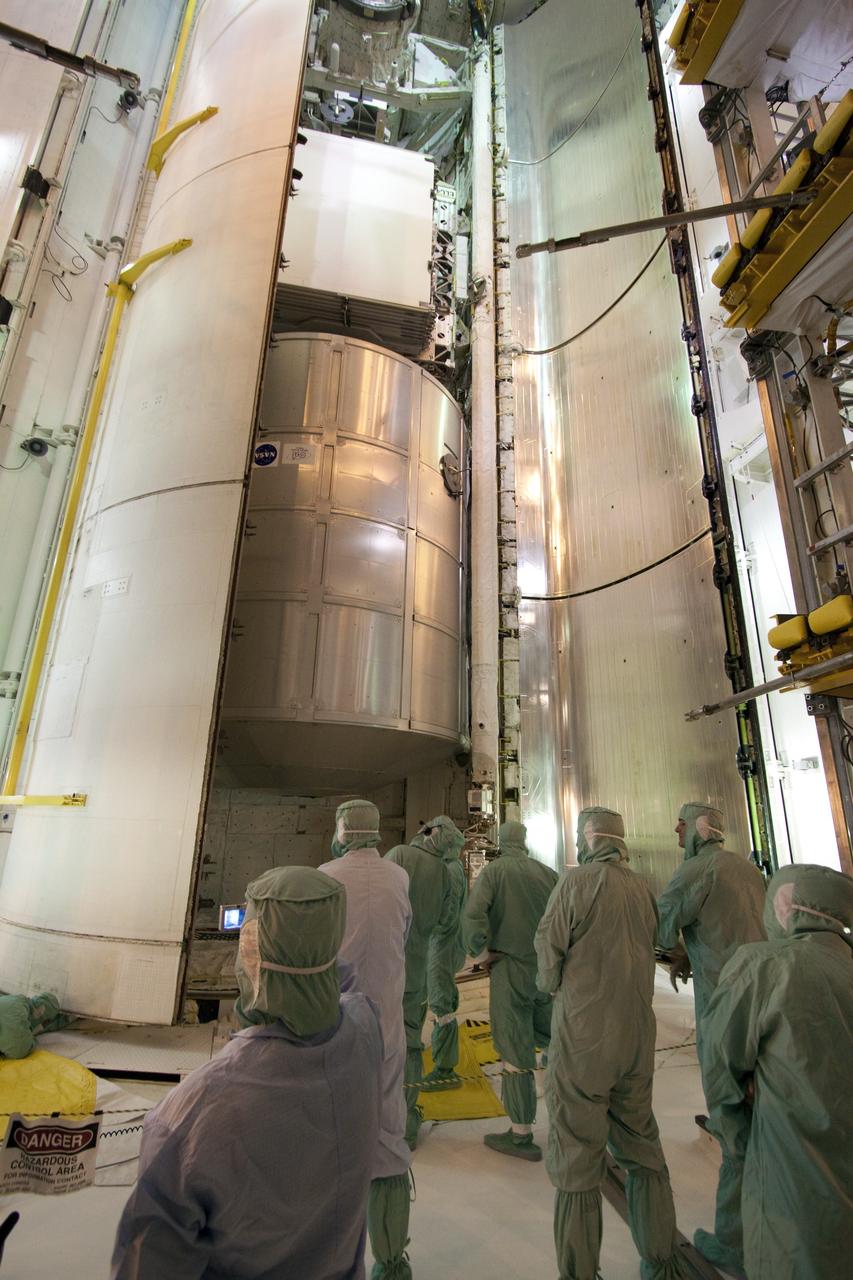
CAPE CANAVERAL, Fla. -- On Launch Pad 39A at NASA's Kennedy Space Center in Florida, technicians close the clamshell doors of space shuttle Discovery's payload bay in preparation for the STS-133 launch to the International Space Station. Targeted to launch Nov. 1, STS-133 will carry the Permanent Multipurpose Module (PMM) packed with supplies and critical spare parts, as well as Robonaut 2 (R2) to the station. Photo credit: NASA/Jack Pfaller
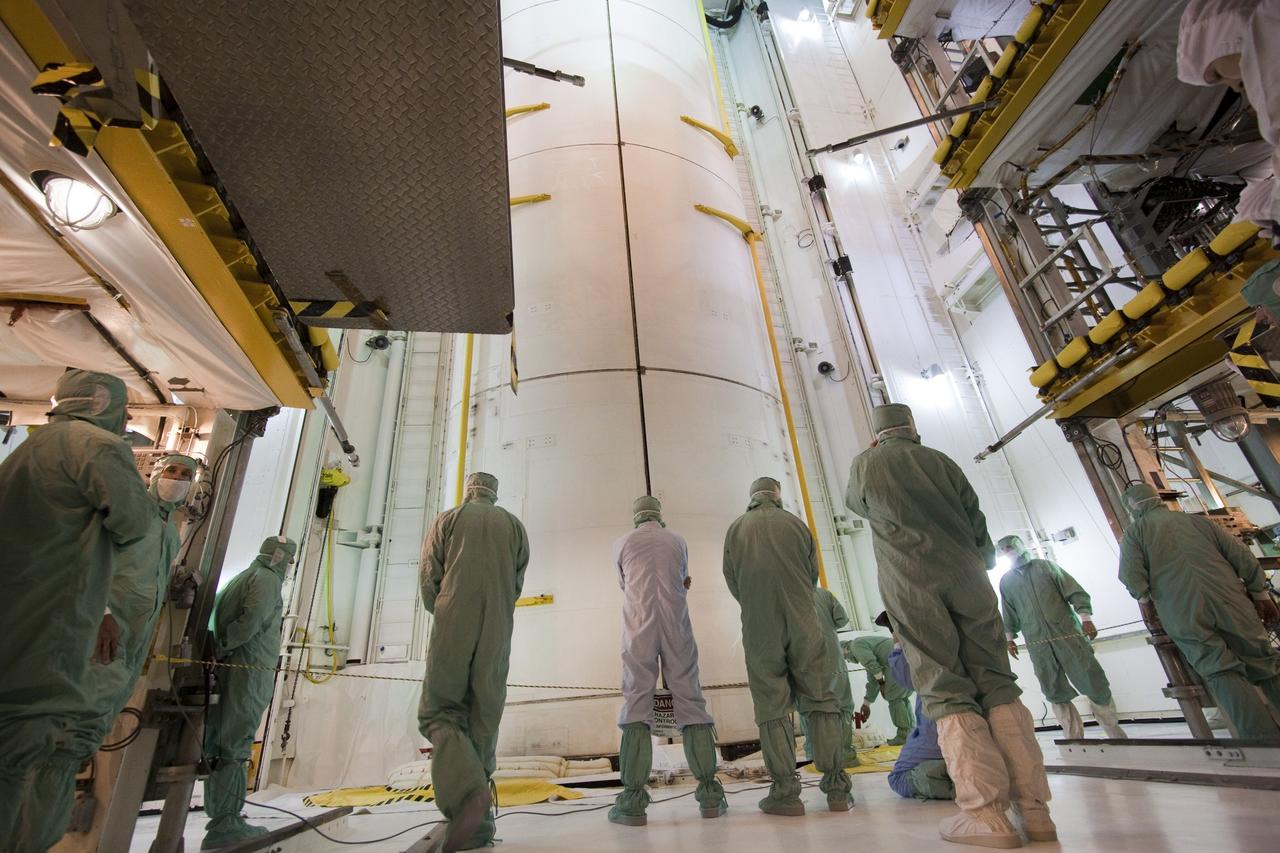
CAPE CANAVERAL, Fla. -- On Launch Pad 39A at NASA's Kennedy Space Center in Florida, the clamshell doors of space shuttle Discovery's payload bay are closed in preparation for the STS-133 launch to the International Space Station. Targeted to launch Nov. 1, STS-133 will carry the Permanent Multipurpose Module (PMM) packed with supplies and critical spare parts, as well as Robonaut 2 (R2) to the station. Photo credit: NASA/Jack Pfaller
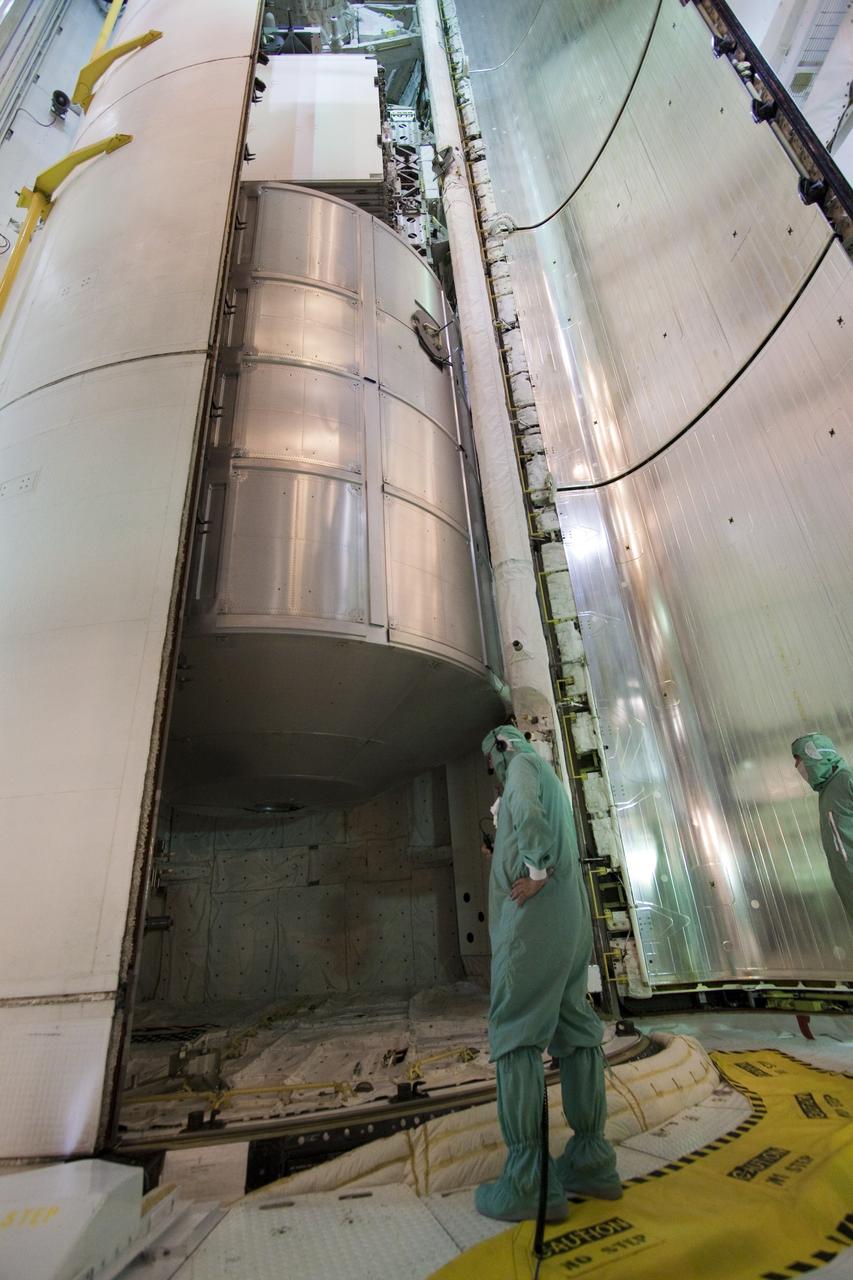
CAPE CANAVERAL, Fla. -- On Launch Pad 39A at NASA's Kennedy Space Center in Florida, technicians close the clamshell doors of space shuttle Discovery's payload bay in preparation for the STS-133 launch to the International Space Station. Targeted to launch Nov. 1, STS-133 will carry the Permanent Multipurpose Module (PMM) packed with supplies and critical spare parts, as well as Robonaut 2 (R2) to the station. Photo credit: NASA/Jack Pfaller
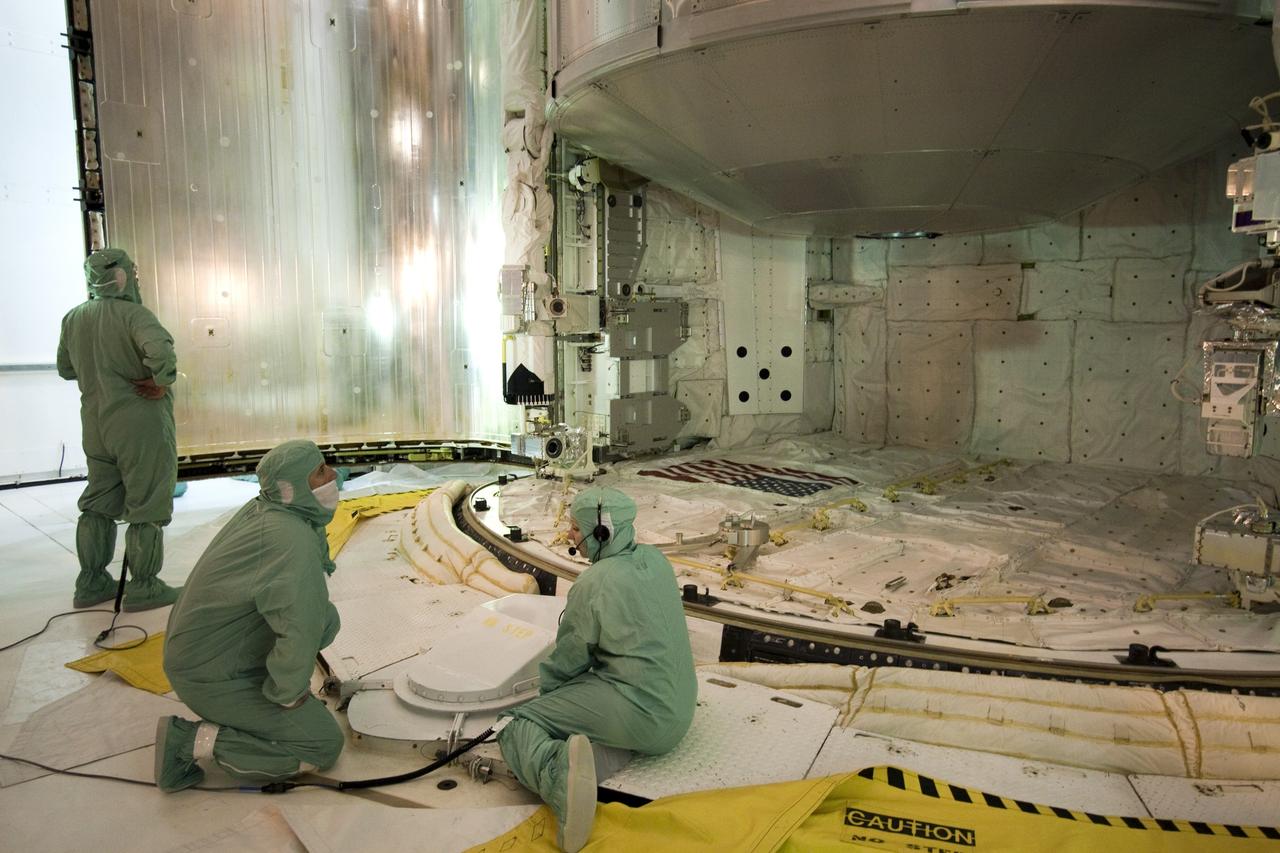
CAPE CANAVERAL, Fla. -- On Launch Pad 39A at NASA's Kennedy Space Center in Florida, technicians prepare to close the clamshell doors of space shuttle Discovery's payload bay in preparation for the STS-133 launch to the International Space Station. Targeted to launch Nov. 1, STS-133 will carry the Permanent Multipurpose Module (PMM) packed with supplies and critical spare parts, as well as Robonaut 2 (R2) to the station. Photo credit: NASA/Jack Pfaller
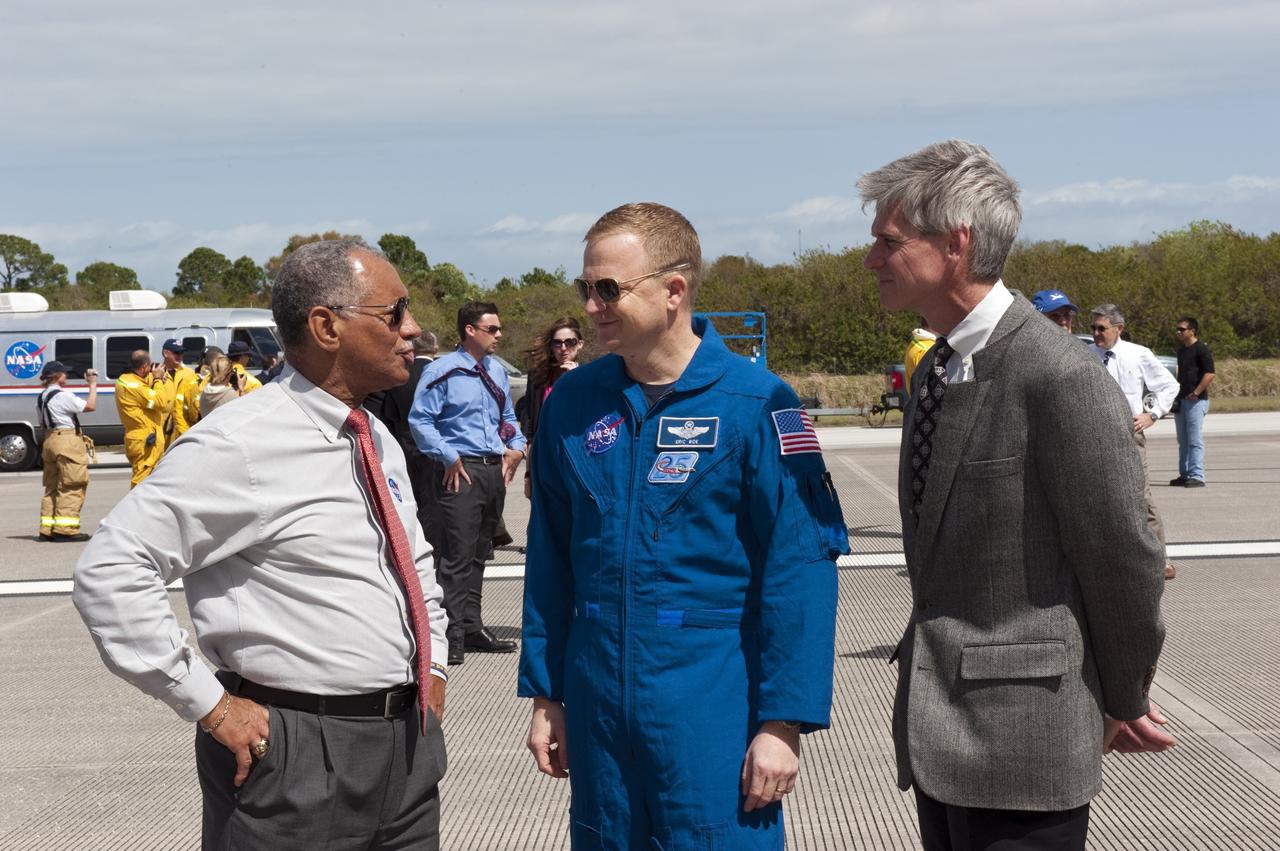
CAPE CANAVERAL, Fla. -- NASA Administrator Charlie Bolden, left, STS-133 Pilot Eric Boe and STS-133 Flight Director Bryan Lunney talk about the recent 13-day, 5.3-million-mile mission to the International Space Station aboard space shuttle Discovery. The STS-133 crew returned to Earth at 11:57 a.m. on the Shuttle Landing Facility's Runway 15 at NASA's Kennedy Space Center in Florida. STS-133 delivered the Permanent Multipurpose Module, packed with supplies and critical spare parts, as well as Robonaut 2, the dexterous humanoid astronaut helper, to the orbiting outpost. STS-133 was Discovery's 39th and final mission. This was the 133rd Space Shuttle Program mission and the 35th shuttle voyage to the space station. Photo credit: NASA/Kim Shiflett
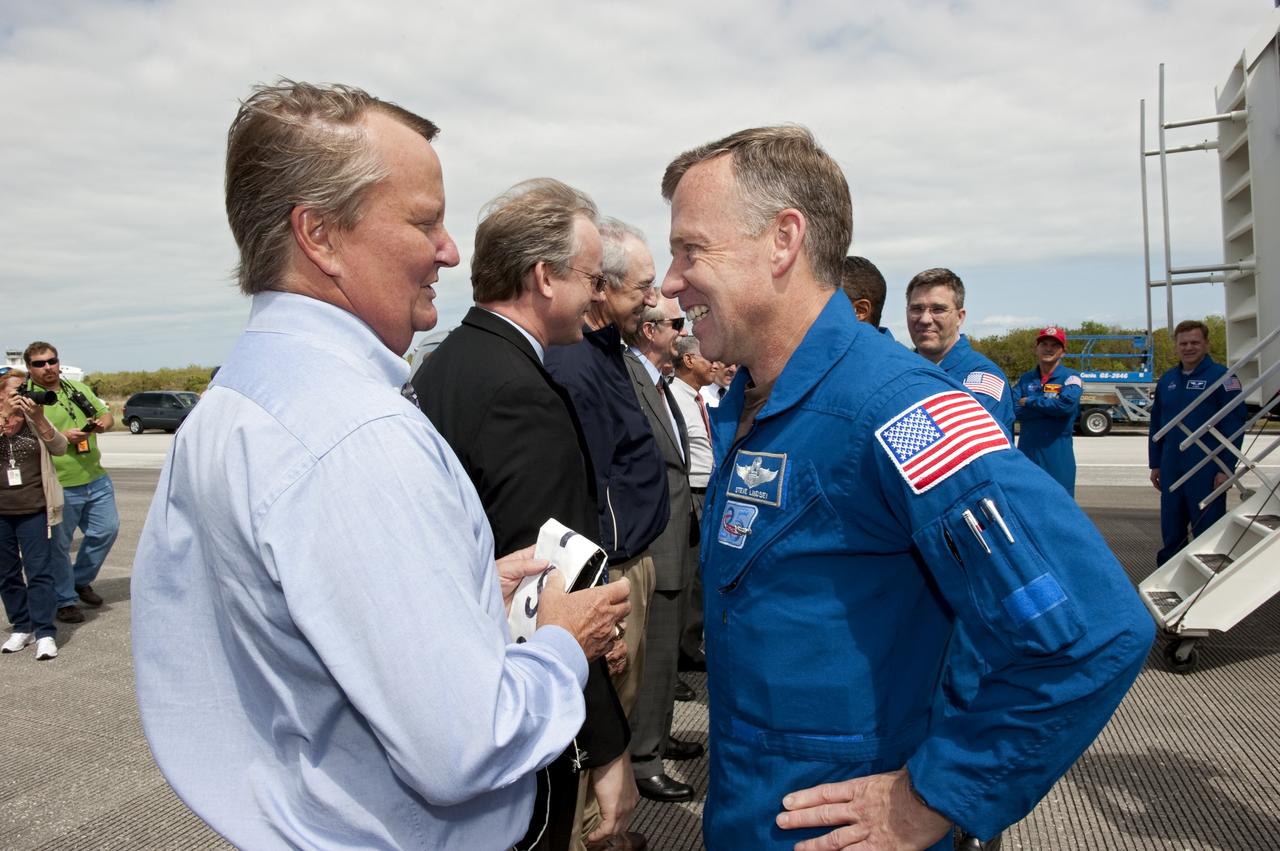
CAPE CANAVERAL, Fla. -- NASA managers welcome space shuttle Discovery's STS-133 crew members home to Kennedy Space Center in Florida. In the foreground, Shuttle Launch Director Mike Leinbach congratulates STS-133 Commander Steve Lindsey on a successful mission. Discovery and its six-member crew landed on the Shuttle Landing Facility's Runway 15 at 11:57 a.m. EST, bringing an end to the 13-day, 5.3-million-mile mission to the International Space Station. STS-133 delivered the Permanent Multipurpose Module, packed with supplies and critical spare parts, as well as Robonaut 2, the dexterous humanoid astronaut helper, to the orbiting outpost. STS-133 was Discovery's 39th and final mission. This was the 133rd Space Shuttle Program mission and the 35th shuttle voyage to the space station. Photo credit: NASA/Kim Shiflett
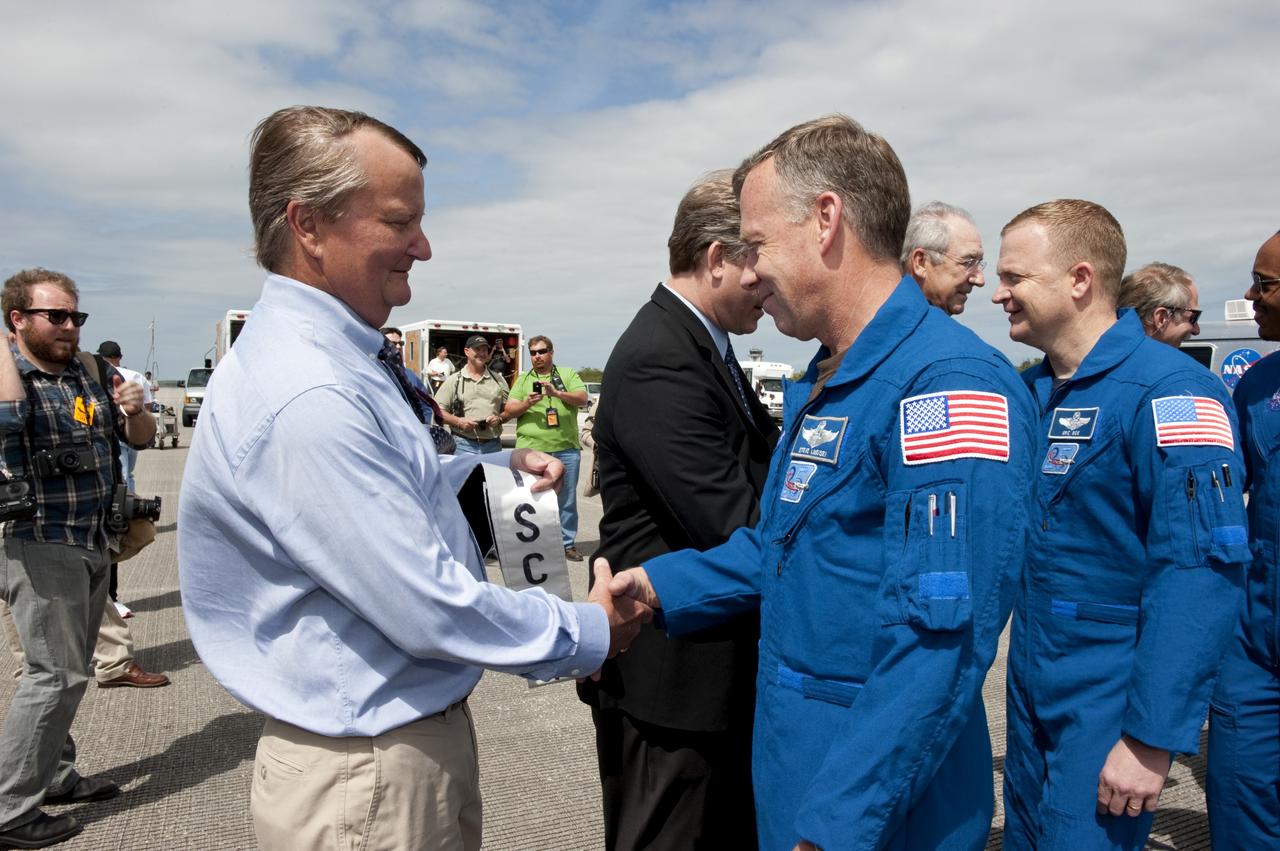
CAPE CANAVERAL, Fla. -- NASA managers welcome space shuttle Discovery's STS-133 crew members home to Kennedy Space Center in Florida. In the foreground, Shuttle Launch Director Mike Leinbach congratulates STS-133 Commander Steve Lindsey on a successful mission. Discovery and its six-member crew landed on the Shuttle Landing Facility's Runway 15 at 11:57 a.m. EST, bringing an end to the 13-day, 5.3-million-mile mission to the International Space Station. STS-133 delivered the Permanent Multipurpose Module, packed with supplies and critical spare parts, as well as Robonaut 2, the dexterous humanoid astronaut helper, to the orbiting outpost. STS-133 was Discovery's 39th and final mission. This was the 133rd Space Shuttle Program mission and the 35th shuttle voyage to the space station. Photo credit: NASA/Kim Shiflett
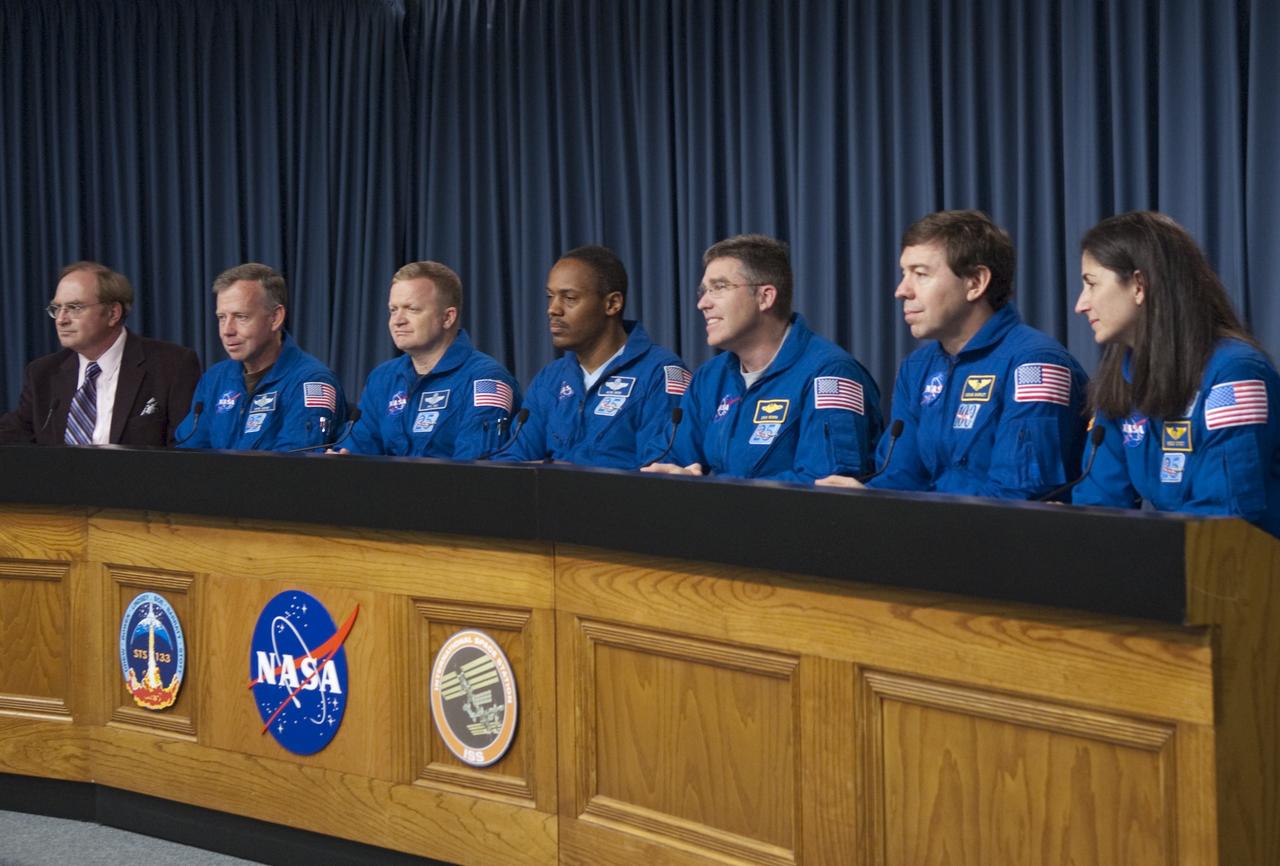
CAPE CANAVERAL, Fla. -- Space shuttle Discovery's STS-133 crew participates in a post-landing news conference in the Press Site TV Auditorium at NASA's Kennedy Space Center in Florida. From left, are NASA Public Affairs Officer George Diller, STS-133 Commander Steve Lindsey, Pilot Eric Boe, and Mission Specialists Alvin Drew, Steve Bowen, Michael Barratt and Nicole Stott. Discovery and crew landed on the Shuttle Landing Facility's Runway 15 at 11:57 a.m., completing a 13-day, 5.3-million-mile mission to the International Space Station. STS-133 delivered the Permanent Multipurpose Module, packed with supplies and critical spare parts, as well as Robonaut 2, the dexterous humanoid astronaut helper, to the orbiting outpost. STS-133 was Discovery's 39th and final mission. This was the 133rd Space Shuttle Program mission and the 35th shuttle voyage to the space station. Photo credit: NASA/Kim Shiflett
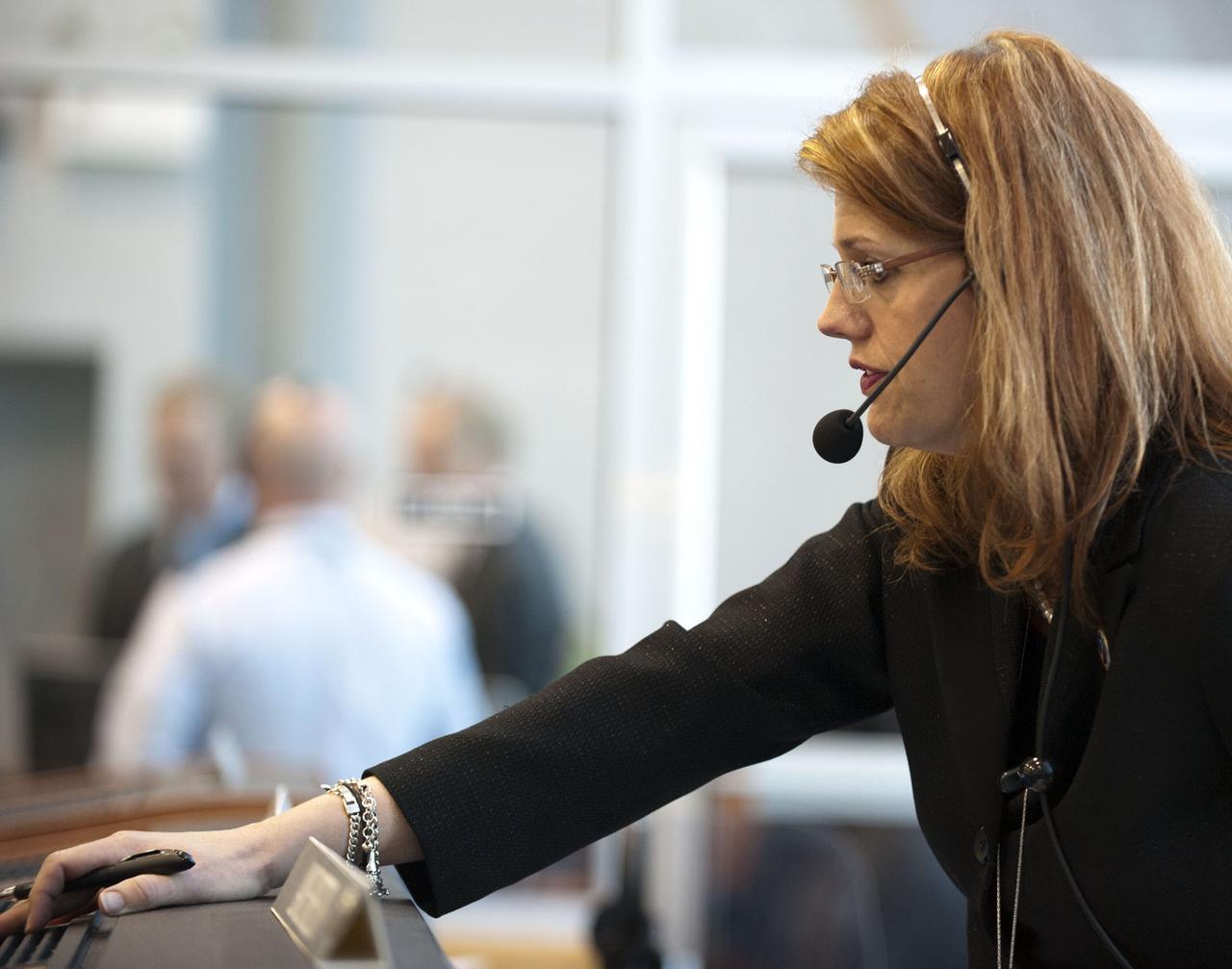
CAPE CANAVERAL, Fla. -- In Firing Room 4 of the Launch Control Center at NASA's Kennedy Space Center in Florida, STS-133 Assistant Shuttle Launch Director and Lead NASA Test Director Charlie Blackwell-Thompson monitors the countdown to launch of space shuttle Discovery on its STS-133 mission to the International Space Station. Discovery and its six-member crew are on a mission to deliver the Permanent Multipurpose Module, packed with supplies and critical spare parts, as well as Robonaut 2, the dexterous humanoid astronaut helper, to the orbiting outpost. Discovery is making its 39th mission and is scheduled to be retired following STS-133. This is the 133rd Space Shuttle Program mission and the 35th shuttle voyage to the space station. For more information on the STS-133 mission, visit www.nasa.gov/mission_pages/shuttle/shuttlemissions/sts133/. Photo credit: NASA/Kim Shiflett
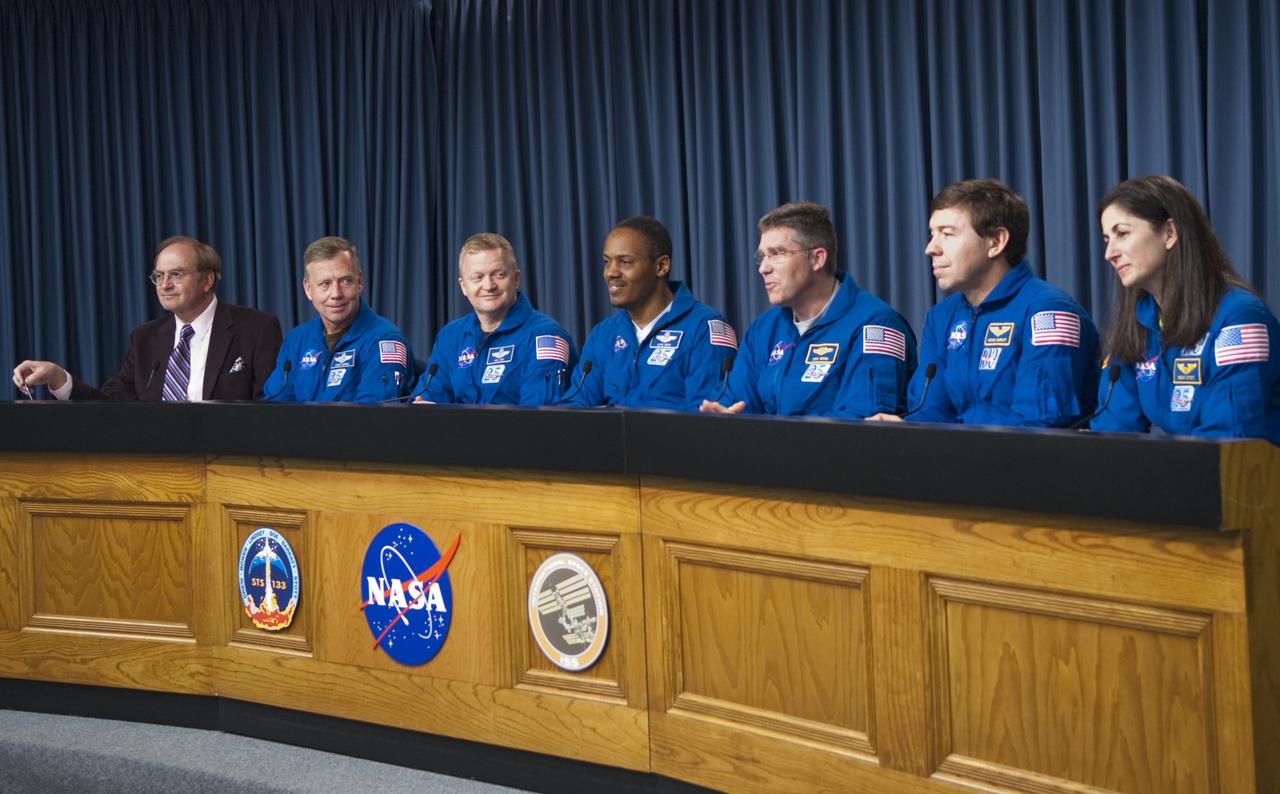
CAPE CANAVERAL, Fla. -- Space shuttle Discovery's STS-133 crew participates in a post-landing news conference in the Press Site TV Auditorium at NASA's Kennedy Space Center in Florida. From left, are NASA Public Affairs Officer George Diller, STS-133 Commander Steve Lindsey, Pilot Eric Boe, and Mission Specialists Alvin Drew, Steve Bowen, Michael Barratt and Nicole Stott. Discovery and crew landed on the Shuttle Landing Facility's Runway 15 at 11:57 a.m., completing a 13-day, 5.3-million-mile mission to the International Space Station. STS-133 delivered the Permanent Multipurpose Module, packed with supplies and critical spare parts, as well as Robonaut 2, the dexterous humanoid astronaut helper, to the orbiting outpost. STS-133 was Discovery's 39th and final mission. This was the 133rd Space Shuttle Program mission and the 35th shuttle voyage to the space station. Photo credit: NASA/Kim Shiflett
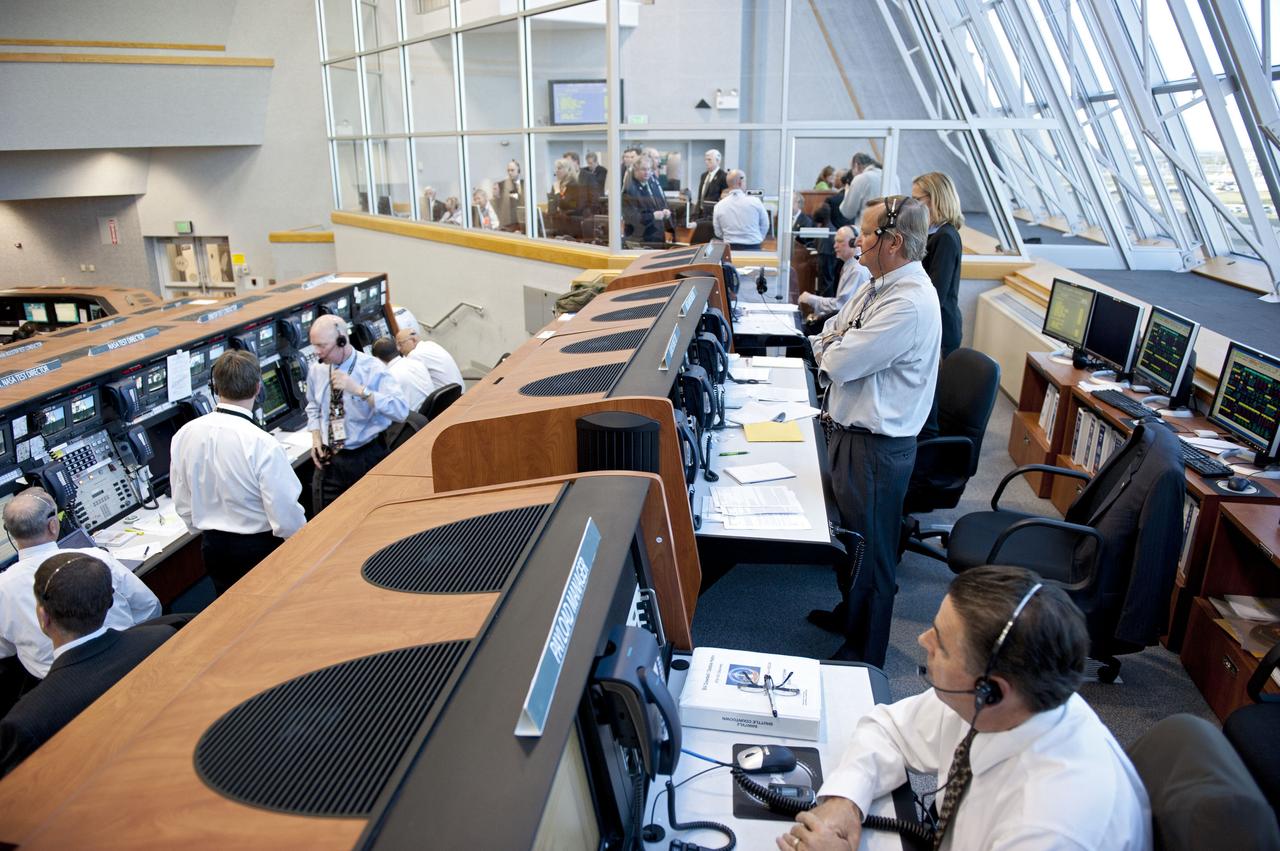
STS133-S-063 (24 Feb. 2011) --- In Firing Room 4 of the Launch Control Center at NASA's Kennedy Space Center in Florida, the launch team monitors the countdown to launch of space shuttle Discovery on its STS-133 mission to the International Space Station. Discovery and its six-member crew are on a mission to deliver the Permanent Multipurpose Module, packed with supplies and critical spare parts, as well as Robonaut 2, the dexterous humanoid astronaut helper, to the orbiting outpost. Discovery is making its 39th mission and is scheduled to be retired following STS-133. This is the 133rd Space Shuttle Program mission and the 35th shuttle voyage to the space station. Photo credit: NASA or National Aeronautics and Space Administration
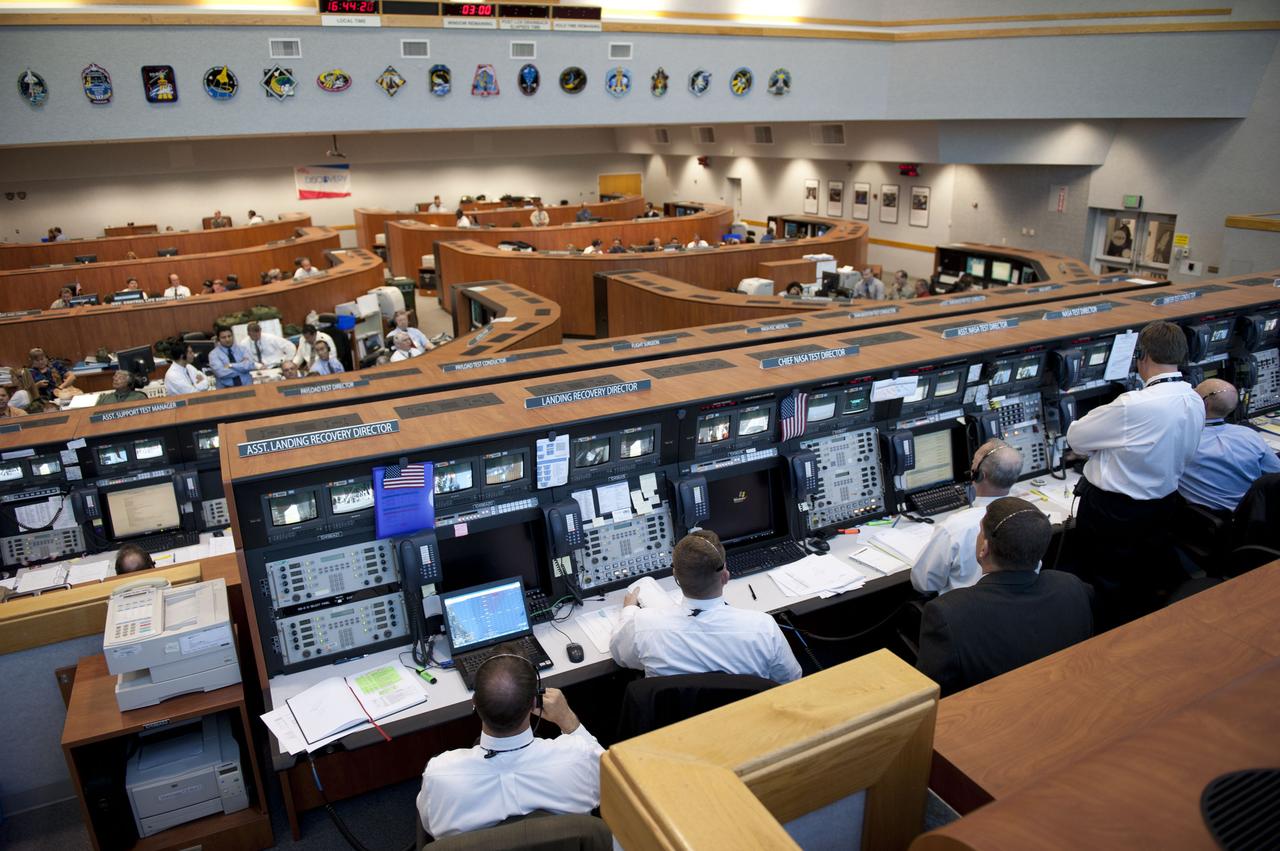
STS133-S-064 (24 Feb. 2011) --- In Firing Room 4 of the Launch Control Center at NASA's Kennedy Space Center in Florida, launch controllers monitor the countdown to launch of space shuttle Discovery on its STS-133 mission to the International Space Station. Discovery and its six-member crew are on a mission to deliver the Permanent Multipurpose Module, packed with supplies and critical spare parts, as well as Robonaut 2, the dexterous humanoid astronaut helper, to the orbiting outpost. Discovery is making its 39th mission and is scheduled to be retired following STS-133. This is the 133rd Space Shuttle Program mission and the 35th shuttle voyage to the space station. Photo credit: NASA or National Aeronautics and Space Administration
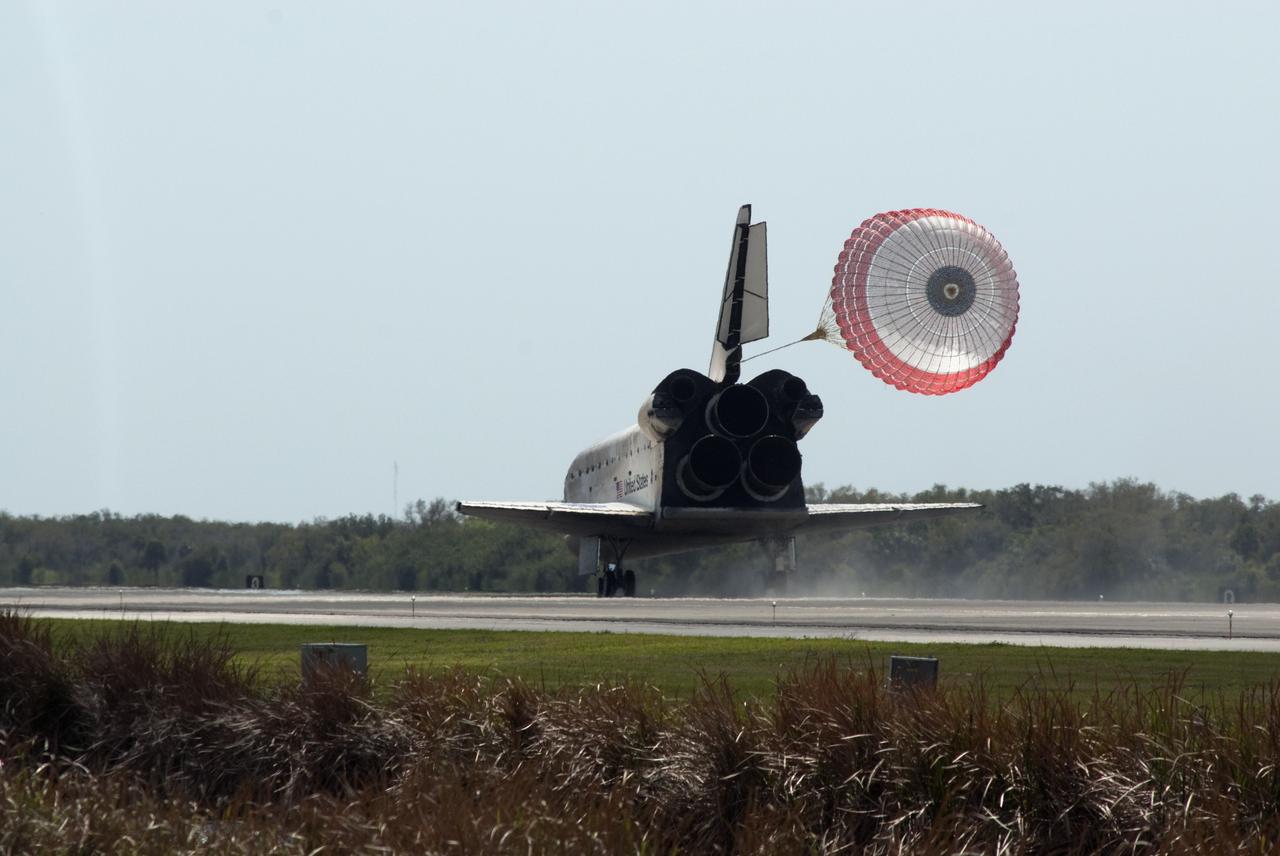
CAPE CANAVERAL, Fla. - With its drag chute unfurled, space shuttle Discovery rolls down Runway 15 at the Shuttle Landing Facility at NASA's Kennedy Space Center in Florida. Landing was at 11:57 a.m. EST, completing a 13-day STS-133 mission to the International Space Station. Discovery and its six-member crew delivered the Permanent Multipurpose Module, packed with supplies and critical spare parts, as well as Robonaut 2, the dexterous humanoid astronaut helper, to the orbiting outpost. STS-133 was Discovery's 39th and final mission. This was the 133rd Space Shuttle Program mission and the 35th shuttle voyage to the space station. Photo credit: NASA/Kim Shiflett
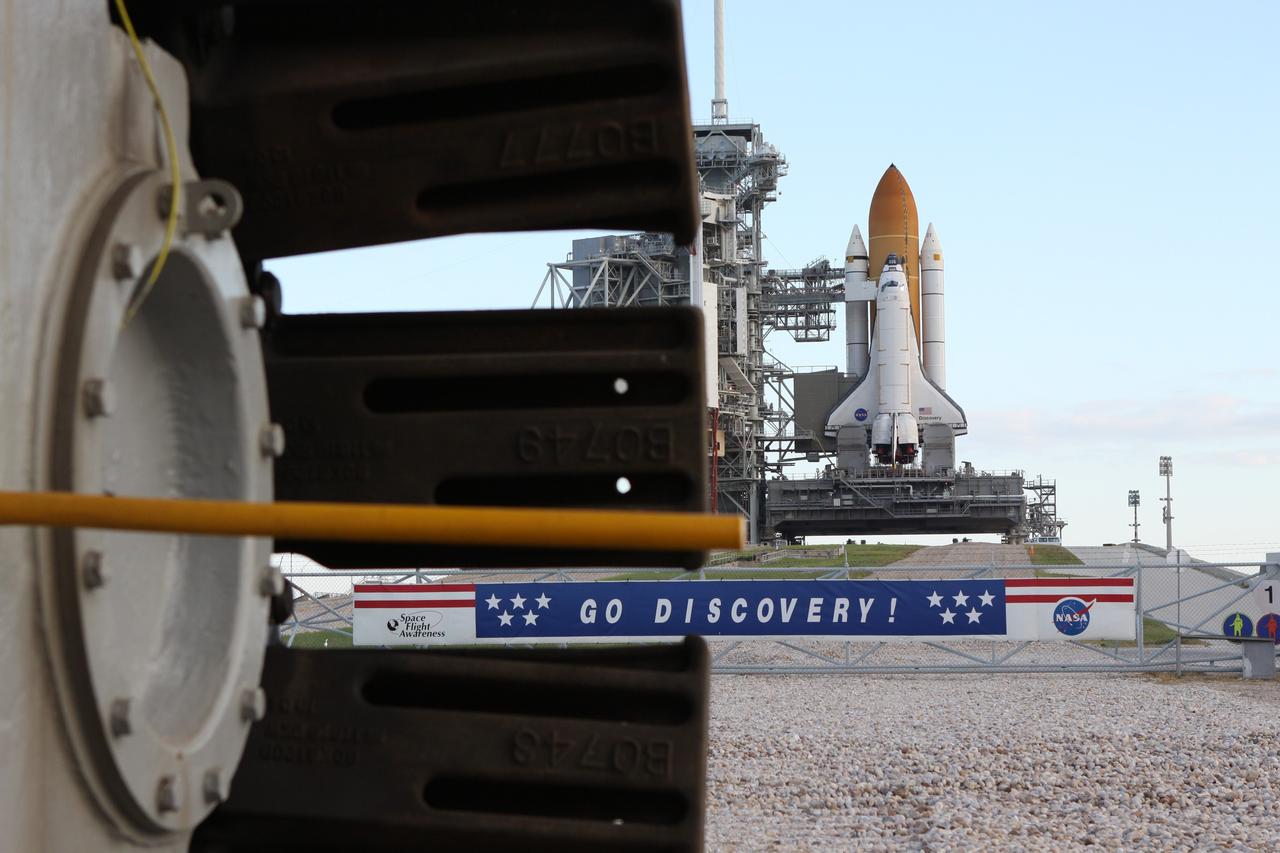
CAPE CANAVERAL, Fla. -- At NASA's Kennedy Space Center in Florida, the STS-133 payload canister now is in the rotating service structure on Launch Pad 39A. A sign hanging on the fence in front of the pad entrance supporting space shuttle Discovery is seen through the tred from a crawler-transporter. The payload then will be moved into space shuttle Discovery's payload bay. Discovery and its STS-133 crew will deliver the Permanent Multipurpose Module, packed with supplies and critical spare parts, as well as Robonaut 2, the dexterous humanoid astronaut helper, to the International Space Station. Launch is targeted for 4:40 p.m. EDT, Nov. 1. Photo credit: NASA/Troy Cryder
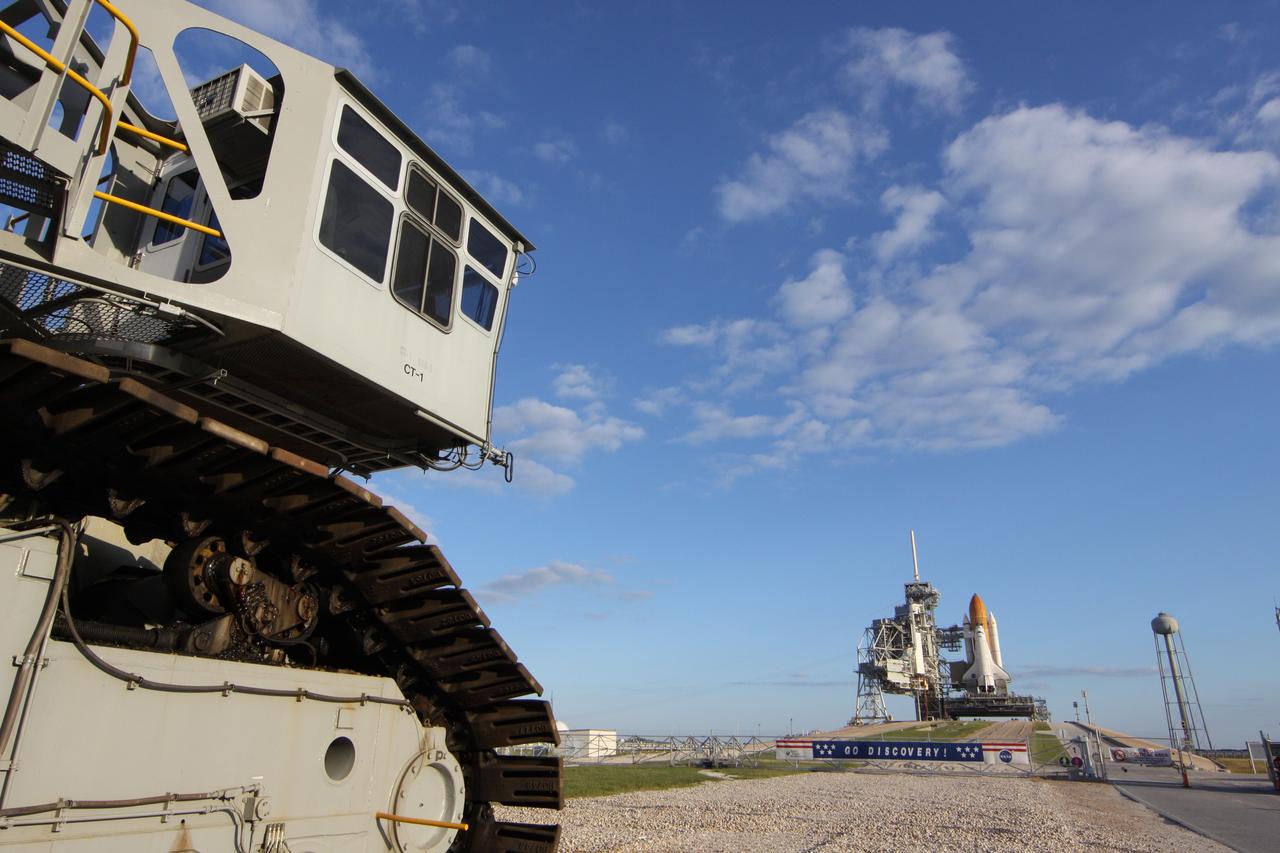
CAPE CANAVERAL, Fla. -- At NASA's Kennedy Space Center in Florida, the STS-133 payload canister now is in the rotating service structure on Launch Pad 39A. A crawler-transporter sits to the left of a sign hanging on the fence in front of the pad entrance supporting space shuttle Discovery. The payload then will be moved into space shuttle Discovery's payload bay. Discovery and its STS-133 crew will deliver the Permanent Multipurpose Module, packed with supplies and critical spare parts, as well as Robonaut 2, the dexterous humanoid astronaut helper, to the International Space Station. Launch is targeted for 4:40 p.m. EDT, Nov. 1. Photo credit: NASA/Troy Cryder
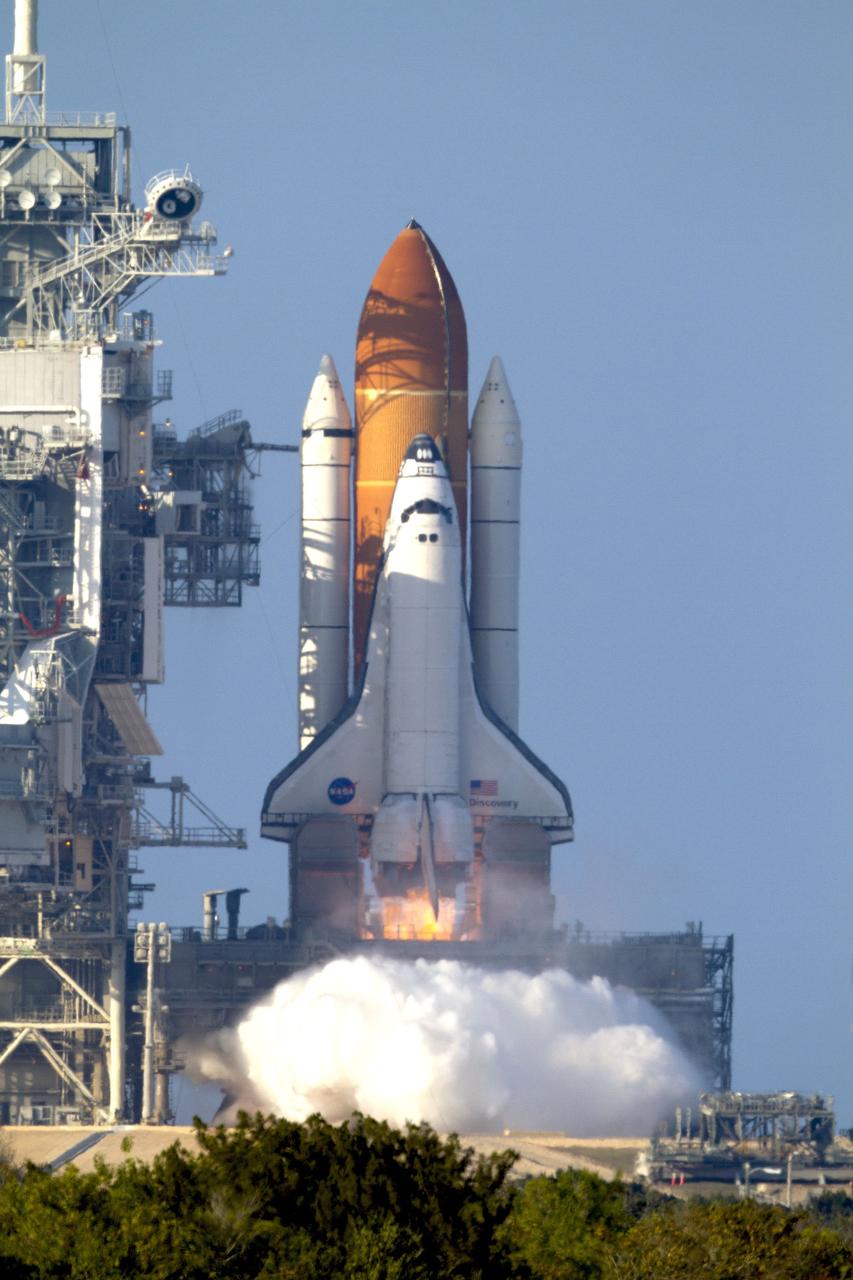
CAPE CANAVERAL, Fla. -- Space shuttle Discovery's boosters ignite and main engines start beginning its final scheduled mission, STS-133, to the International Space Station. Liftoff from launch Pad 39A at NASA's Kennedy Space Center in Florida occurred at 4:53 p.m. EST on Feb. 24. Discovery and its six-member crew are on a mission to deliver the Permanent Multipurpose Module, packed with supplies and critical spare parts, as well as Robonaut 2, the dexterous humanoid astronaut helper, to the International Space Station. Discovery is making its 39th mission and is scheduled to be retired following STS-133. This is the 133rd Space Shuttle Program mission, the 35th shuttle voyage to the space station and Discovery's final mission. For more information on the STS-133 mission, visit www.nasa.gov/mission_pages/shuttle/shuttlemissions/sts133/. Photo credit: NASA/Kenny Allen
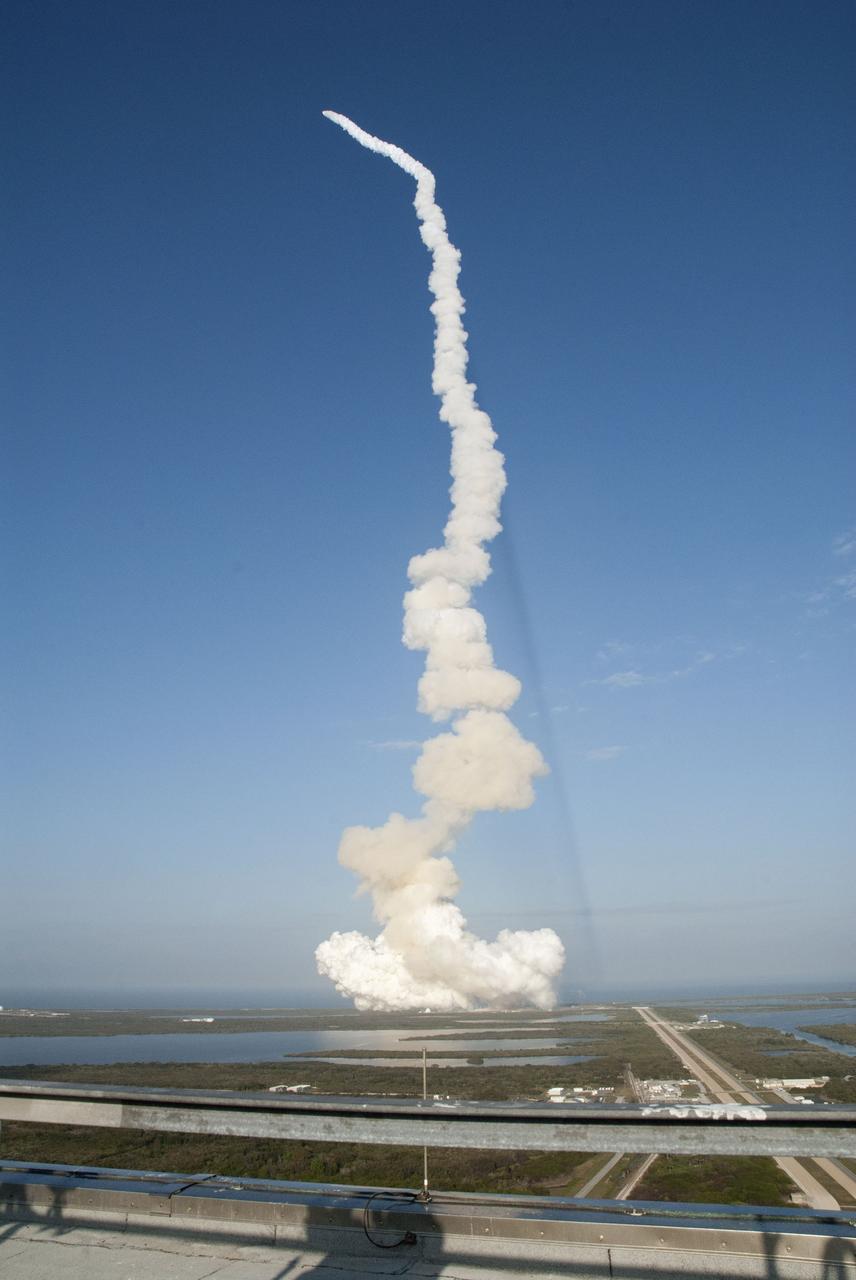
CAPE CANAVERAL, Fla. -- Taken from the roof of the Vehicle Assembly Building at NASA's Kennedy Space Center in Florida, space shuttle Discovery lifts off Launch Pad 39A atop twin columns of fire, creating rolling clouds of smoke and steam in its track. Launch of the STS-133 mission was at 4:53 p.m. EST on Feb. 24. Discovery and its six-member crew are on a mission to deliver the Permanent Multipurpose Module, packed with supplies and critical spare parts, as well as Robonaut 2, the dexterous humanoid astronaut helper, to the International Space Station. Discovery is making its 39th mission and is scheduled to be retired following STS-133. This is the 133rd Space Shuttle Program mission, the 35th shuttle voyage to the space station and Discovery's final mission. For more information on the STS-133 mission, visit www.nasa.gov/mission_pages/shuttle/shuttlemissions/sts133/. Photo credit: NASA/Jeff Marino
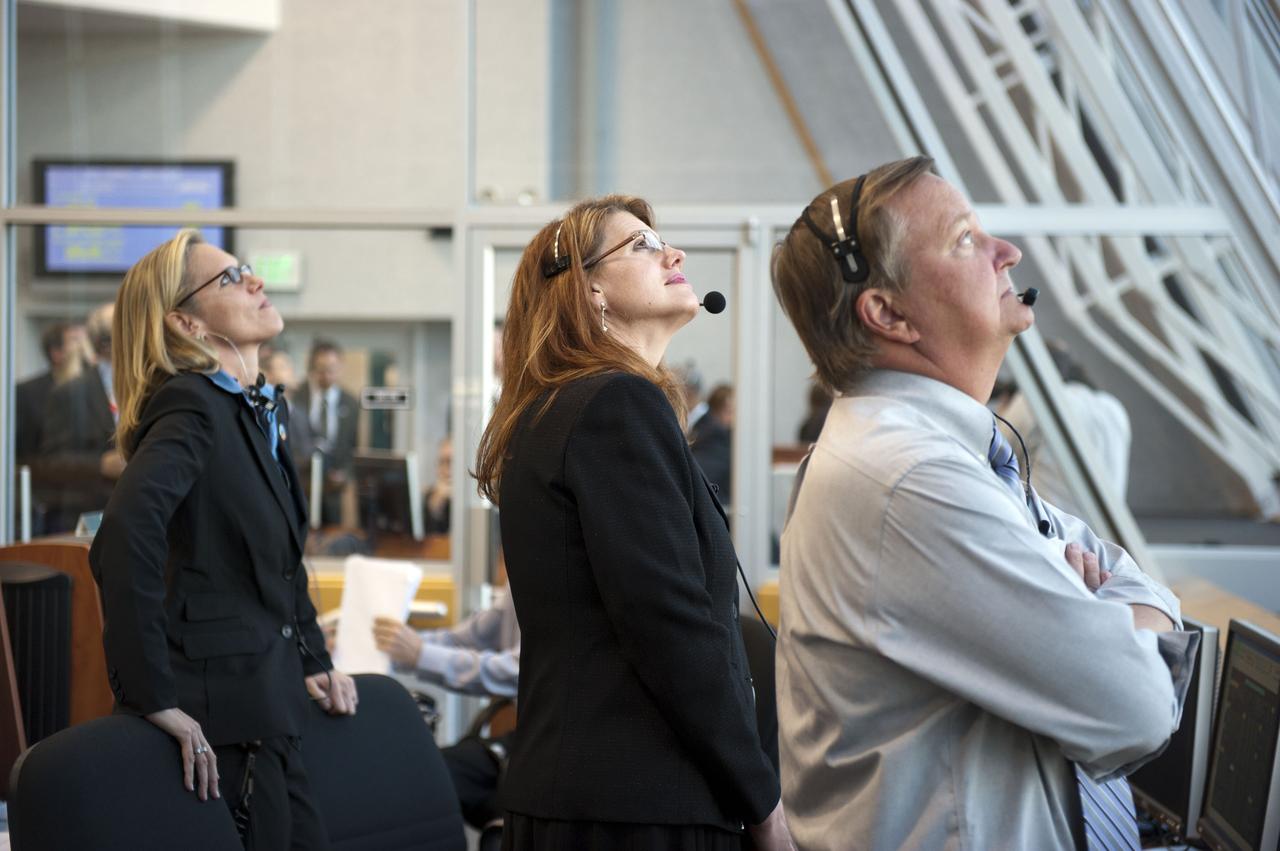
STS133-S-067 (24 Feb. 2011) --- In Firing Room 4 of the Launch Control Center at NASA's Kennedy Space Center in Florida, NASA's Discovery Flow Director Stephanie Stilson, left, STS-133 Assistant Shuttle Launch Director and lead NASA Test Director Charlie Blackwell-Thompson and Shuttle Launch Director Mike Leinbach watch space shuttle Discovery head toward Earth orbit on the STS-133 mission to the International Space Station. Discovery and its six-member crew are on a mission to deliver the Permanent Multipurpose Module, packed with supplies and critical spare parts, as well as Robonaut 2, the dexterous humanoid astronaut helper, to the orbiting outpost. Discovery is making its 39th mission and is scheduled to be retired following STS-133. This is the 133rd Space Shuttle Program mission and the 35th shuttle voyage to the space station. Photo credit: NASA or National Aeronautics and Space Administration
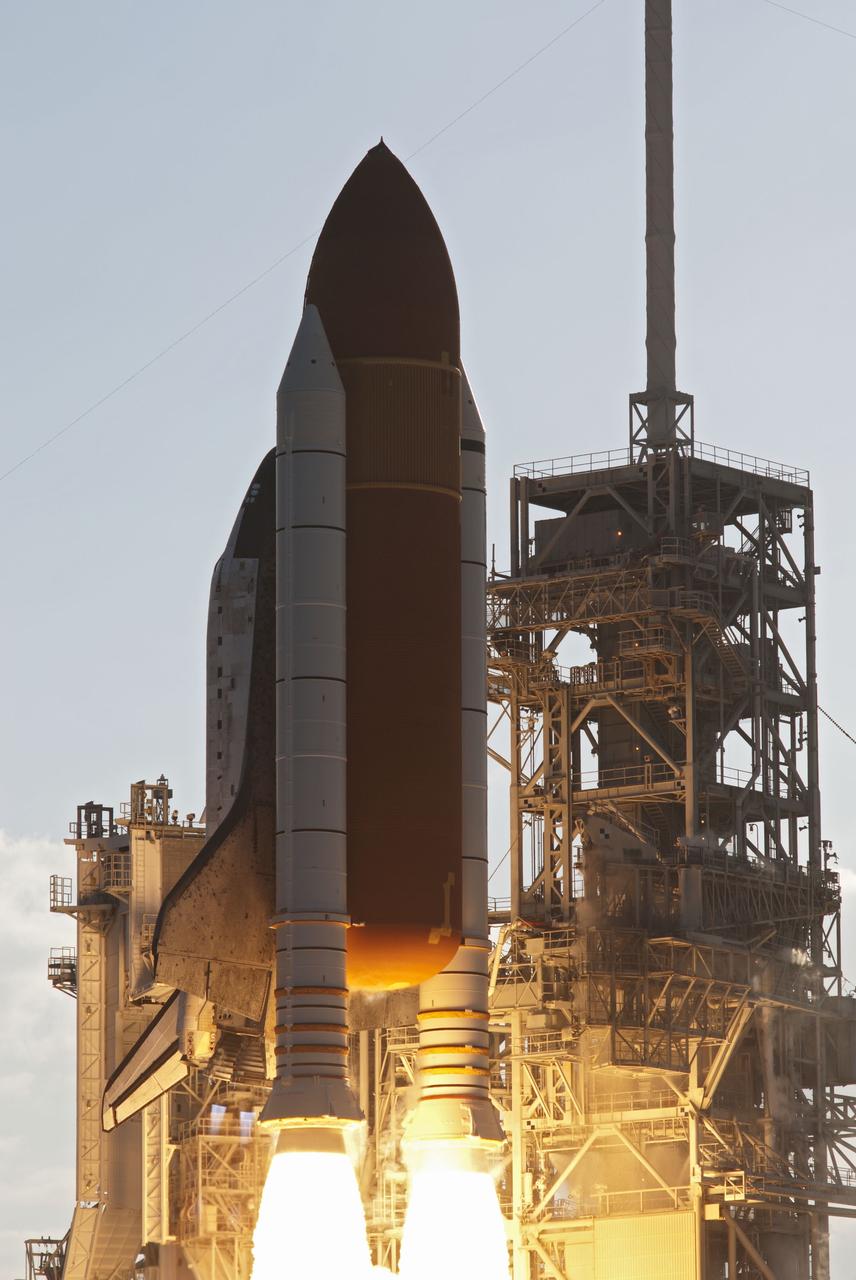
CAPE CANAVERAL, Fla. -- On twin columns of fire, space shuttle Discovery's solid rocket boosters ignite for liftoff on Launch Pad 39A at NASA's Kennedy Space Center in Florida. Discovery's final launch, the STS-133 mission, to the International Space was at 4:53 p.m. EST. Discovery and its six-member crew will deliver the Permanent Multipurpose Module, packed with supplies and critical spare parts, as well as Robonaut 2, the dexterous humanoid astronaut helper, to the orbiting outpost. Discovery is flying on its 39th mission and is scheduled to be retired following STS-133. This is the 133rd Space Shuttle Program mission and the 35th shuttle voyage to the space station. For more information on the STS-133 mission, visit www.nasa.gov/mission_pages/shuttle/shuttlemissions/sts133/. Photo credit: NASA/Rusty Backer and Michael Gayle
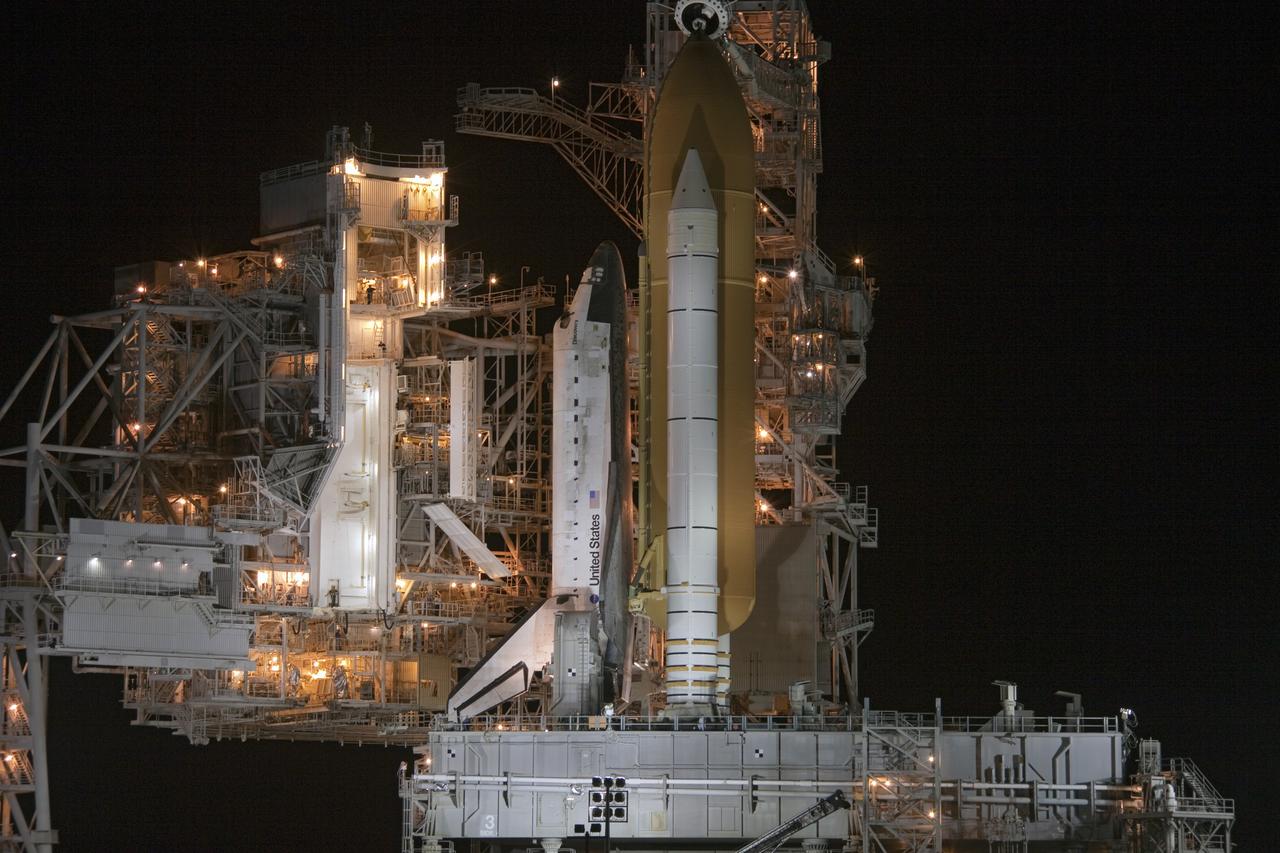
CAPE CANAVERAL, Fla. -- At NASA's Kennedy Space Center in Florida, the rotating service structure on Launch Pad 39A moves away from space shuttle Discovery. The structure provides weather protection and access to the shuttle while it awaits lift off on the pad. Launch of Discovery on the STS-133 mission to the International Space Station is set for 3:29 p.m. on Nov. 4. During the 11-day mission, Discovery and its six crew members will deliver the Permanent Multipurpose Module, packed with supplies and critical spare parts, as well as Robonaut 2, to the orbiting laboratory. Discovery, which will fly its 39th mission, is scheduled to be retired following STS-133. This will be the 133rd Space Shuttle Program mission and the 35th shuttle voyage to the space station. For more information on STS-133, visit www.nasa.gov/mission_pages/shuttle/shuttlemissions/sts133/. Photo credit: NASA/Troy Cryder
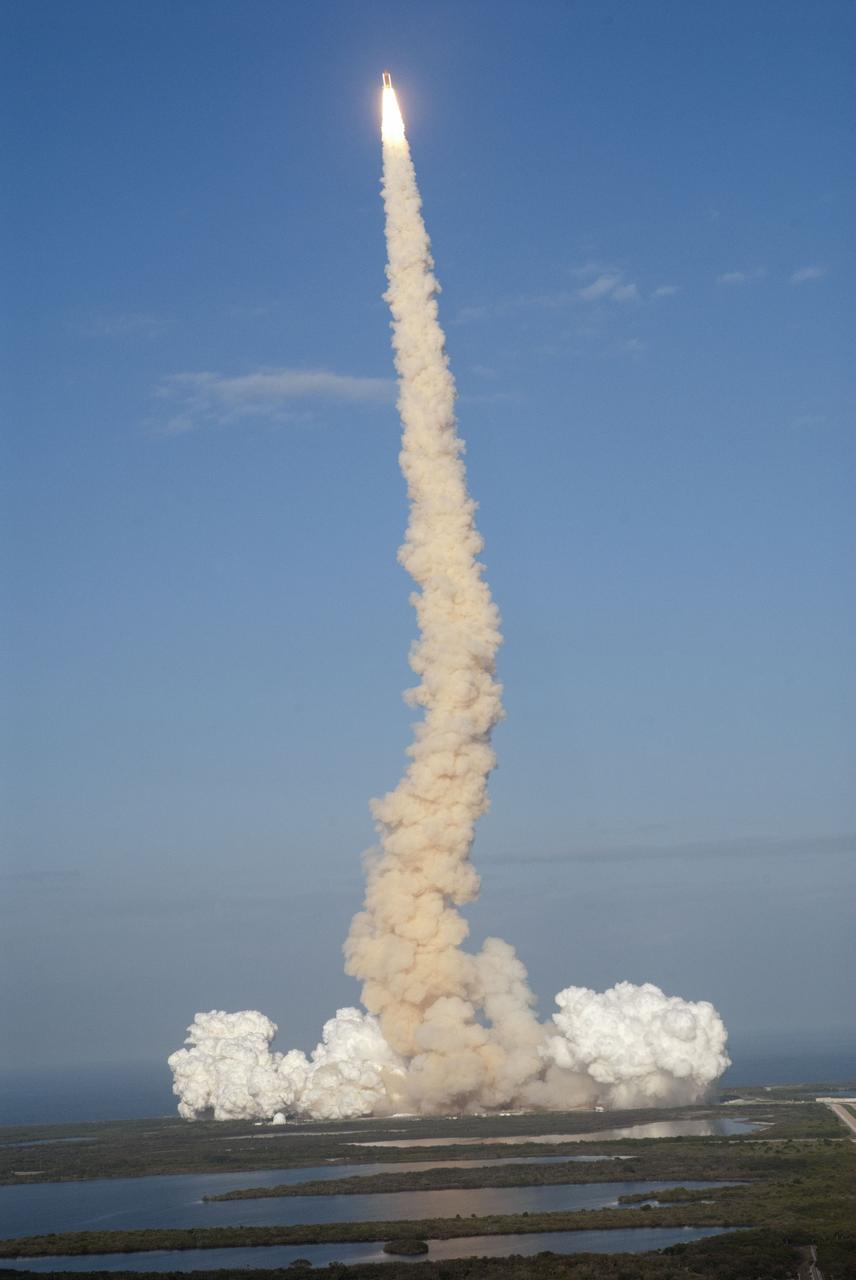
CAPE CANAVERAL, Fla. -- Taken from the roof of the Vehicle Assembly Building at NASA's Kennedy Space Center in Florida, space shuttle Discovery lifts off Launch Pad 39A atop twin columns of fire, creating rolling clouds of smoke and steam in its track. Launch of the STS-133 mission was at 4:53 p.m. EST on Feb. 24. Discovery and its six-member crew are on a mission to deliver the Permanent Multipurpose Module, packed with supplies and critical spare parts, as well as Robonaut 2, the dexterous humanoid astronaut helper, to the International Space Station. Discovery is making its 39th mission and is scheduled to be retired following STS-133. This is the 133rd Space Shuttle Program mission, the 35th shuttle voyage to the space station and Discovery's final mission. For more information on the STS-133 mission, visit www.nasa.gov/mission_pages/shuttle/shuttlemissions/sts133/. Photo credit: NASA/Jeff Marino
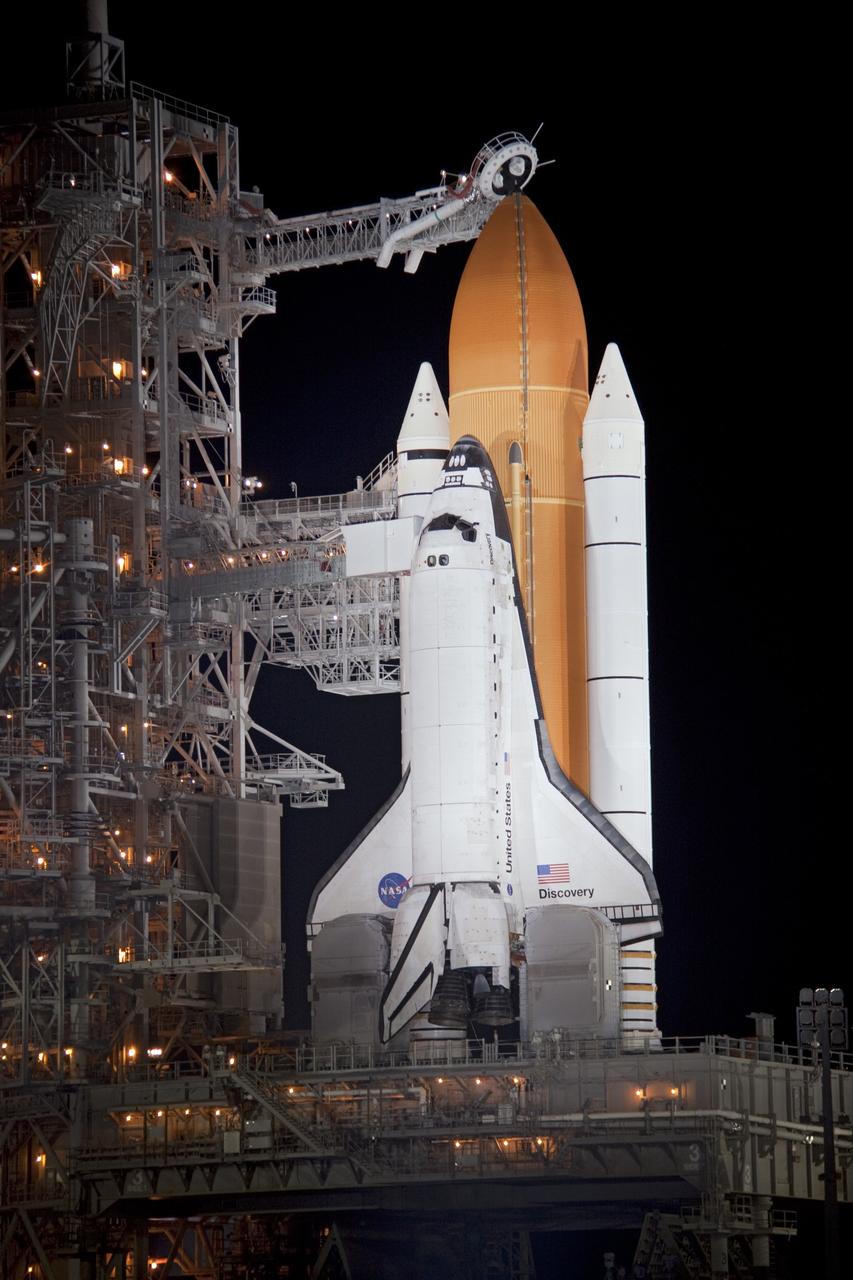
CAPE CANAVERAL, Fla. -- At NASA's Kennedy Space Center in Florida, xenon lights illuminate space shuttle Discovery on Launch Pad 39A following the retraction of the rotating service structure. The structure provides weather protection and access to the shuttle while it awaits lift off on the pad. Launch of Discovery on the STS-133 mission to the International Space Station is set for 3:29 p.m. on Nov. 4. During the 11-day mission, Discovery and its six crew members will deliver the Permanent Multipurpose Module, packed with supplies and critical spare parts, as well as Robonaut 2, to the orbiting laboratory. Discovery, which will fly its 39th mission, is scheduled to be retired following STS-133. This will be the 133rd Space Shuttle Program mission and the 35th shuttle voyage to the space station. For more information on STS-133, visit www.nasa.gov/mission_pages/shuttle/shuttlemissions/sts133/. Photo credit: NASA/Troy Cryder
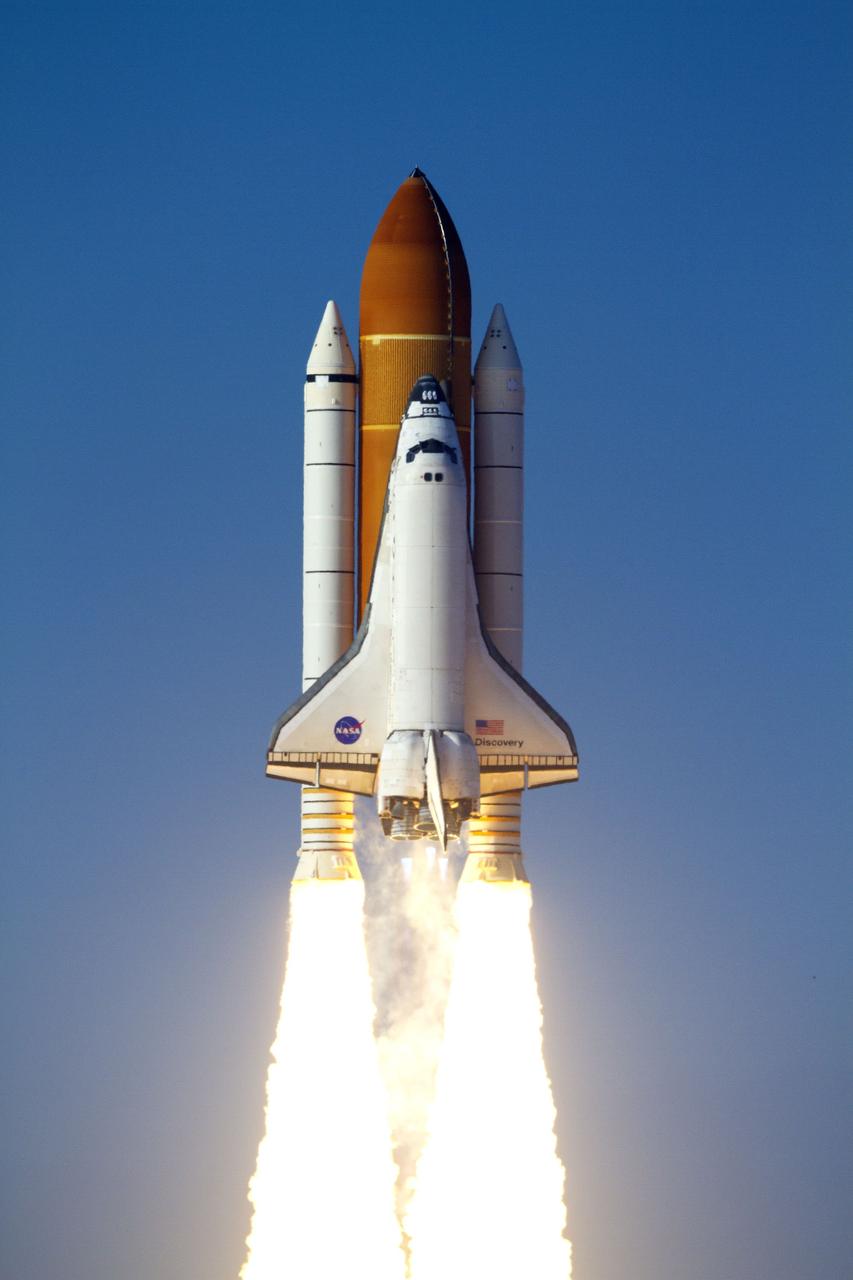
CAPE CANAVERAL, Fla. -- Space shuttle Discovery soars into orbit at 17,500 miles per hour atop twin columns of fire, embarking on its final scheduled mission, STS-133, to the International Space Station. Liftoff from launch Pad 39A at NASA's Kennedy Space Center in Florida occurred at 4:53 p.m. EST on Feb. 24. Discovery and its six-member crew are on a mission to deliver the Permanent Multipurpose Module, packed with supplies and critical spare parts, as well as Robonaut 2, the dexterous humanoid astronaut helper, to the International Space Station. Discovery is making its 39th mission and is scheduled to be retired following STS-133. This is the 133rd Space Shuttle Program mission, the 35th shuttle voyage to the space station and Discovery's final mission. For more information on the STS-133 mission, visit www.nasa.gov/mission_pages/shuttle/shuttlemissions/sts133/. Photo credit: NASA/Kenny Allen
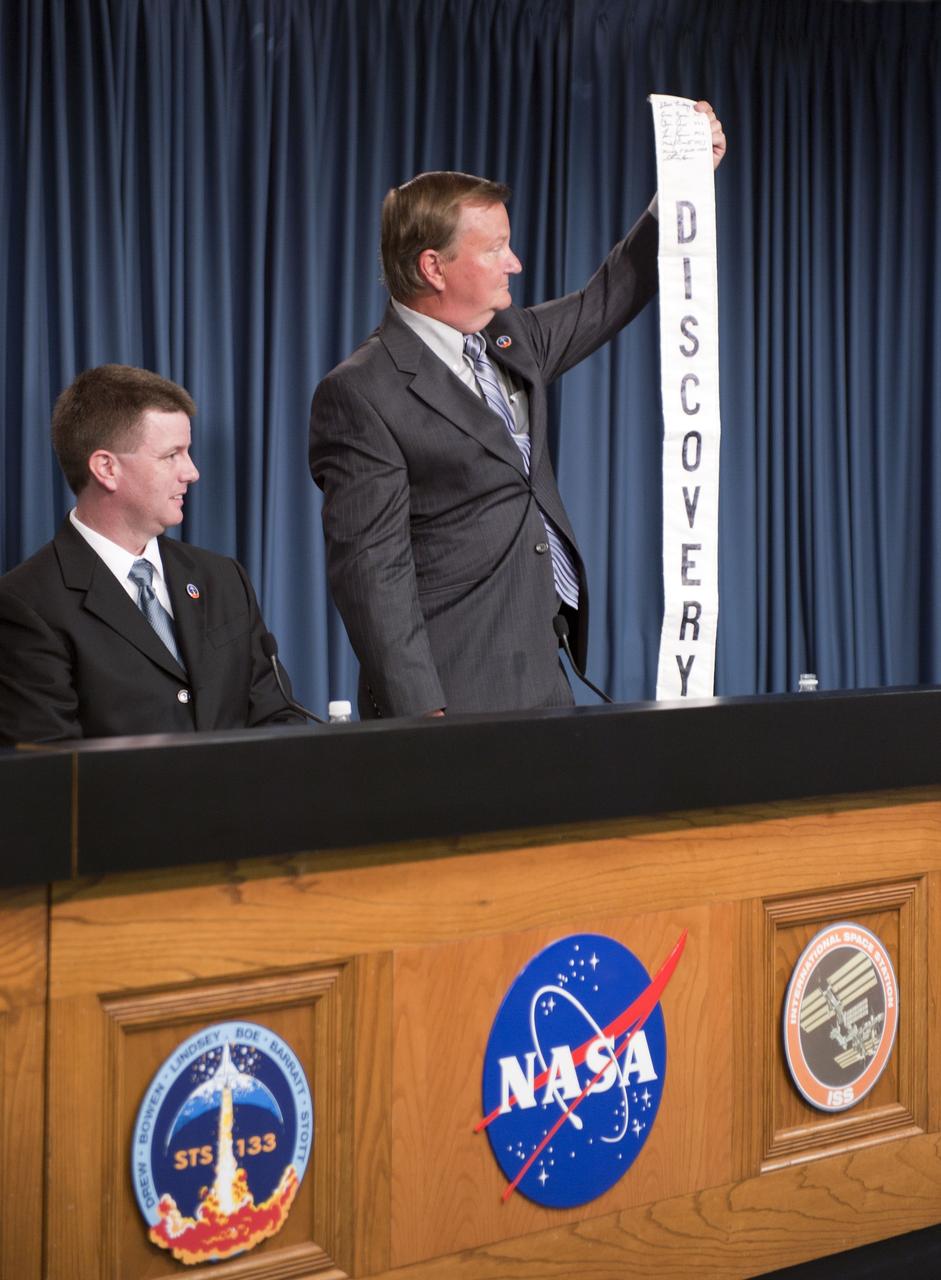
CAPE CANAVERAL, Fla. -- Space Shuttle Program Launch Integration Manager Mike Moses looks on proudly as Shuttle Launch Director Mike Leinbach holds up a Discovery banner signed by the STS-133 astronauts, at a news conference held in the Press Site auditorium at NASA's Kennedy Space Center in Florida following today's successful launch of space shuttle Discovery. Shuttle Discovery lifted off at 4:53 p.m. EST. The six-member crew will deliver the Permanent Multipurpose Module, packed with supplies and critical spare parts, as well as Robonaut 2, the dexterous humanoid astronaut helper, to the orbiting outpost. Discovery is flying on its 39th and final mission and is scheduled to be retired following STS-133. This is the 133rd Space Shuttle Program mission and the 35th shuttle voyage to the space station. For more information on the STS-133 mission, visit www.nasa.gov/mission_pages/shuttle/shuttlemissions/sts133/. Photo credit: NASA/Kim Shiflett
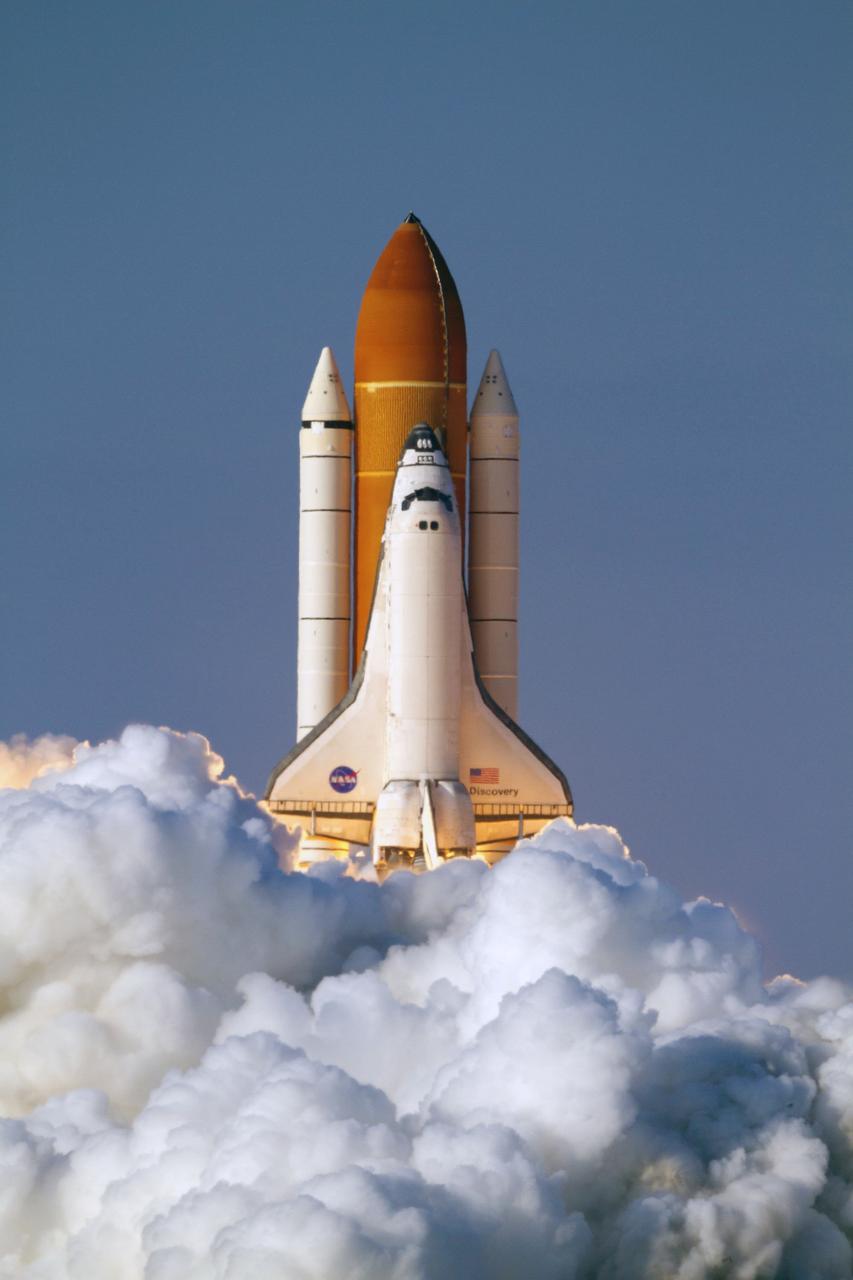
CAPE CANAVERAL, Fla. -- As if soaring through the heavens, space shuttle Discovery launches through rolling clouds of smoke and steam, embarking on its final scheduled mission, STS-133, to the International Space Station. Liftoff from launch Pad 39A at NASA's Kennedy Space Center in Florida occurred at 4:53 p.m. EST on Feb. 24. Discovery and its six-member crew are on a mission to deliver the Permanent Multipurpose Module, packed with supplies and critical spare parts, as well as Robonaut 2, the dexterous humanoid astronaut helper, to the International Space Station. Discovery is making its 39th mission and is scheduled to be retired following STS-133. This is the 133rd Space Shuttle Program mission, the 35th shuttle voyage to the space station and Discovery's final mission. For more information on the STS-133 mission, visit www.nasa.gov/mission_pages/shuttle/shuttlemissions/sts133/. Photo credit: NASA/Kenny Allen
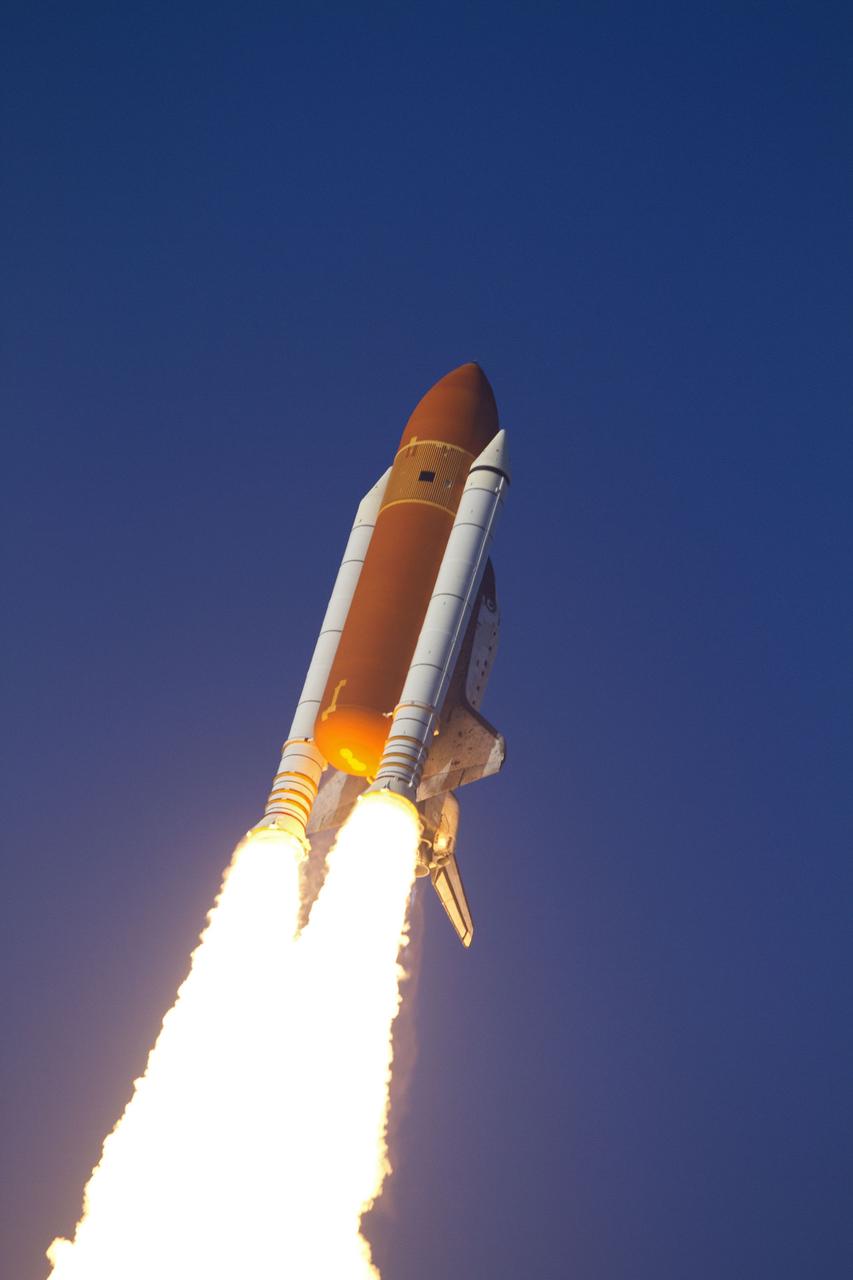
CAPE CANAVERAL, Fla. -- Space shuttle Discovery soars into orbit at 17,500 miles per hour atop twin columns of fire, embarking on its final scheduled mission, STS-133, to the International Space Station. Liftoff from launch Pad 39A at NASA's Kennedy Space Center in Florida occurred at 4:53 p.m. EST on Feb. 24. Discovery and its six-member crew are on a mission to deliver the Permanent Multipurpose Module, packed with supplies and critical spare parts, as well as Robonaut 2, the dexterous humanoid astronaut helper, to the International Space Station. Discovery is making its 39th mission and is scheduled to be retired following STS-133. This is the 133rd Space Shuttle Program mission, the 35th shuttle voyage to the space station and Discovery's final mission. For more information on the STS-133 mission, visit www.nasa.gov/mission_pages/shuttle/shuttlemissions/sts133/. Photo credit: NASA/Kenny Allen
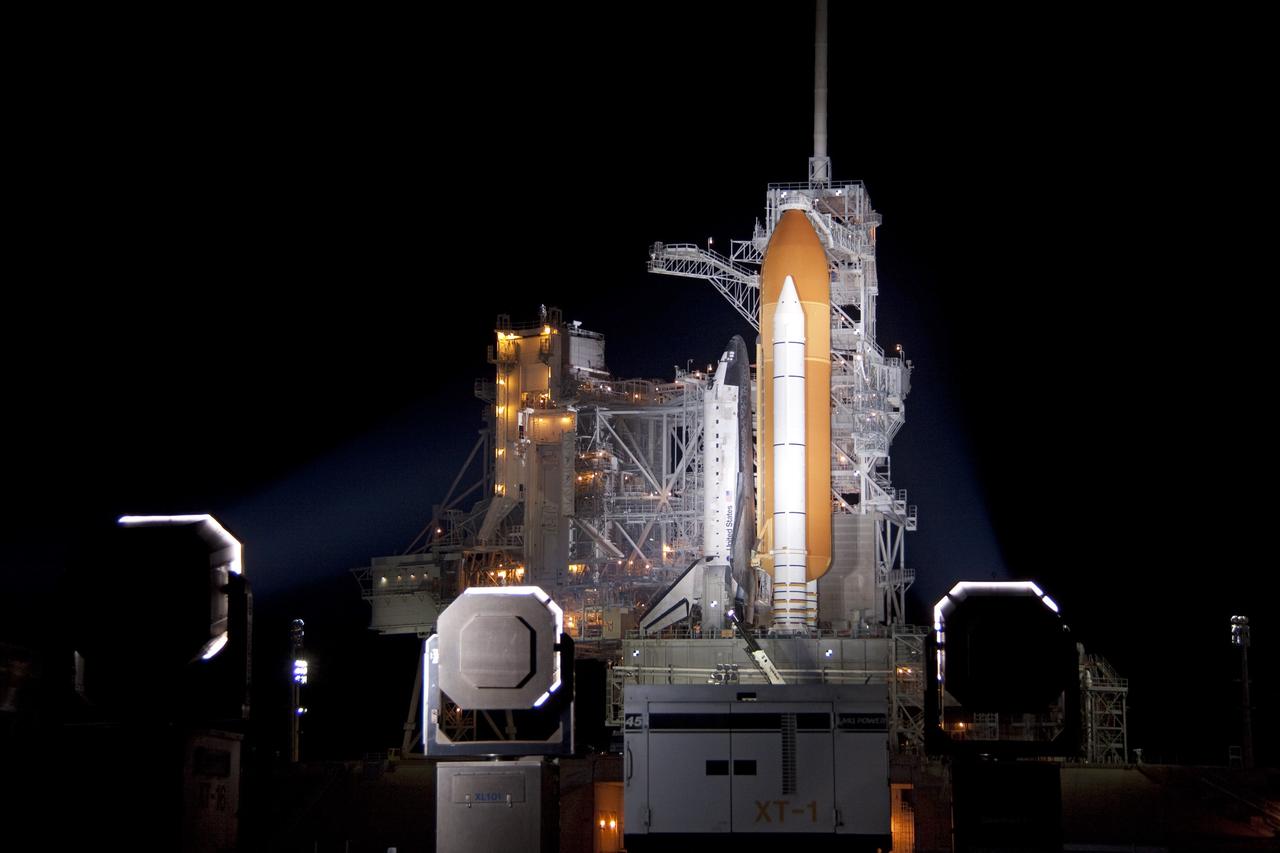
CAPE CANAVERAL, Fla. -- At NASA's Kennedy Space Center in Florida, xenon lights illuminate space shuttle Discovery on Launch Pad 39A following the retraction of the rotating service structure. The structure provides weather protection and access to the shuttle while it awaits lift off on the pad. Launch of Discovery on the STS-133 mission to the International Space Station is set for 3:29 p.m. on Nov. 4. During the 11-day mission, Discovery and its six crew members will deliver the Permanent Multipurpose Module, packed with supplies and critical spare parts, as well as Robonaut 2, to the orbiting laboratory. Discovery, which will fly its 39th mission, is scheduled to be retired following STS-133. This will be the 133rd Space Shuttle Program mission and the 35th shuttle voyage to the space station. For more information on STS-133, visit www.nasa.gov/mission_pages/shuttle/shuttlemissions/sts133/. Photo credit: NASA/Troy Cryder
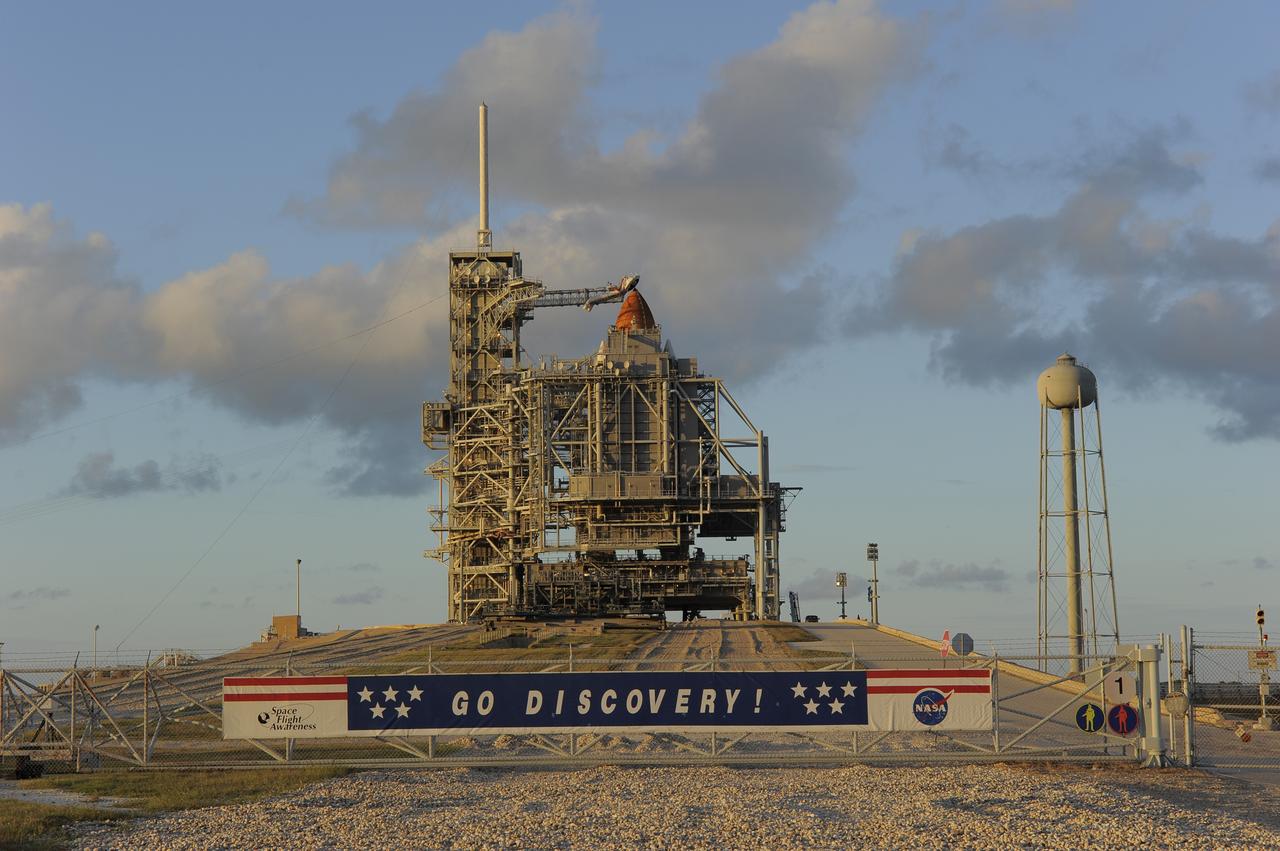
CAPE CANAVERAL, Fla. -- Before the sun sets on Launch Pad 39A at NASA's Kennedy Space Center in Florida, space shuttle Discovery is concealed by the pad's rotating service structure. The structure provides weather protection and access to the shuttle. RSS "rollback," as it's called, is a significant milestone in the launch countdown. Launch of Discovery on the STS-133 mission to the International Space Station is set for 3:29 p.m. on Nov. 4. During the 11-day mission, Discovery and its six crew members will deliver the Permanent Multipurpose Module, packed with supplies and critical spare parts, as well as Robonaut 2, to the orbiting laboratory. Discovery, which will fly its 39th mission, is scheduled to be retired following STS-133. This will be the 133rd Space Shuttle Program mission and the 35th shuttle voyage to the space station. For more information on STS-133, visit www.nasa.gov/mission_pages/shuttle/shuttlemissions/sts133/. Photo credit: NASA/Kim Shiflett
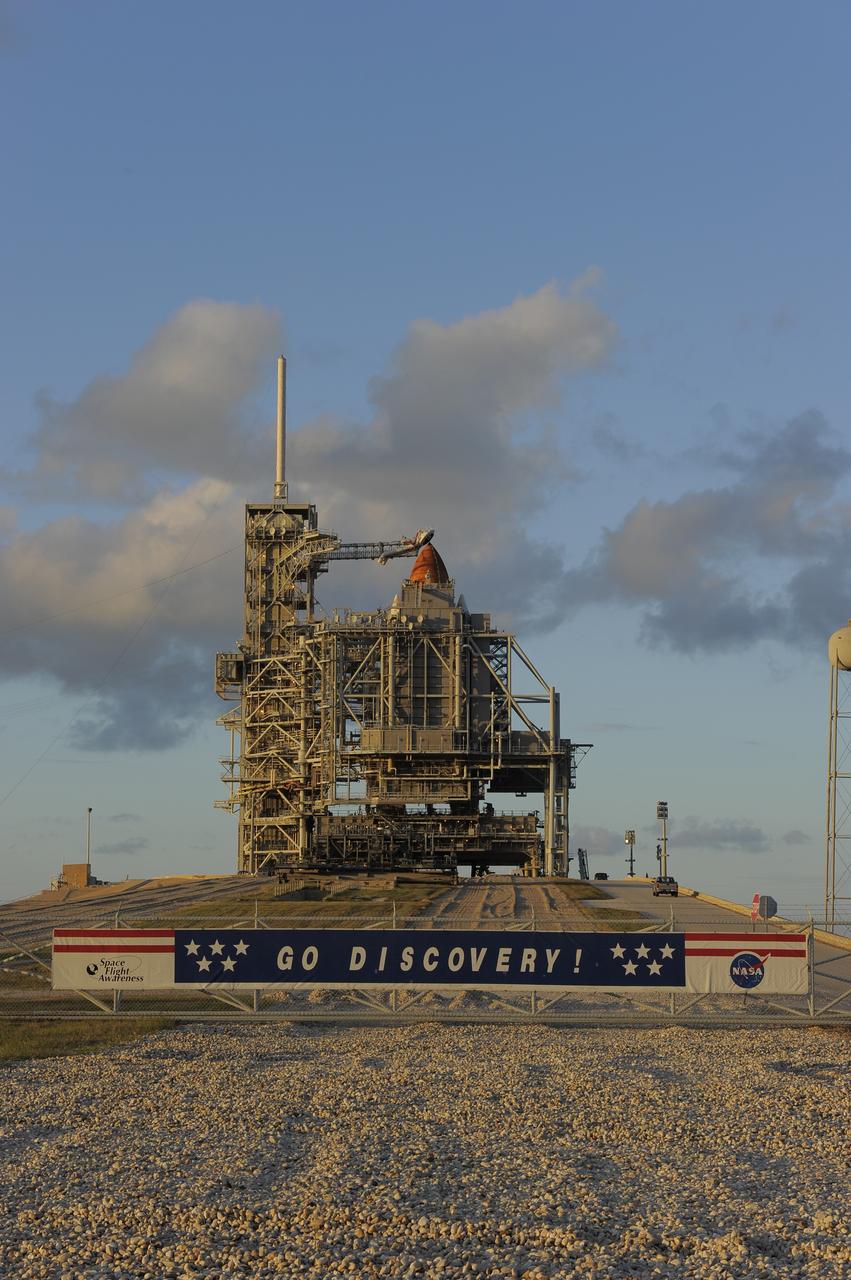
CAPE CANAVERAL, Fla. -- Before the sun sets on Launch Pad 39A at NASA's Kennedy Space Center in Florida, space shuttle Discovery is concealed by the pad's rotating service structure. The structure provides weather protection and access to the shuttle. RSS "rollback," as it's called, is a significant milestone in the launch countdown. Launch of Discovery on the STS-133 mission to the International Space Station is set for 3:29 p.m. on Nov. 4. During the 11-day mission, Discovery and its six crew members will deliver the Permanent Multipurpose Module, packed with supplies and critical spare parts, as well as Robonaut 2, to the orbiting laboratory. Discovery, which will fly its 39th mission, is scheduled to be retired following STS-133. This will be the 133rd Space Shuttle Program mission and the 35th shuttle voyage to the space station. For more information on STS-133, visit www.nasa.gov/mission_pages/shuttle/shuttlemissions/sts133/. Photo credit: NASA/Kim Shiflett
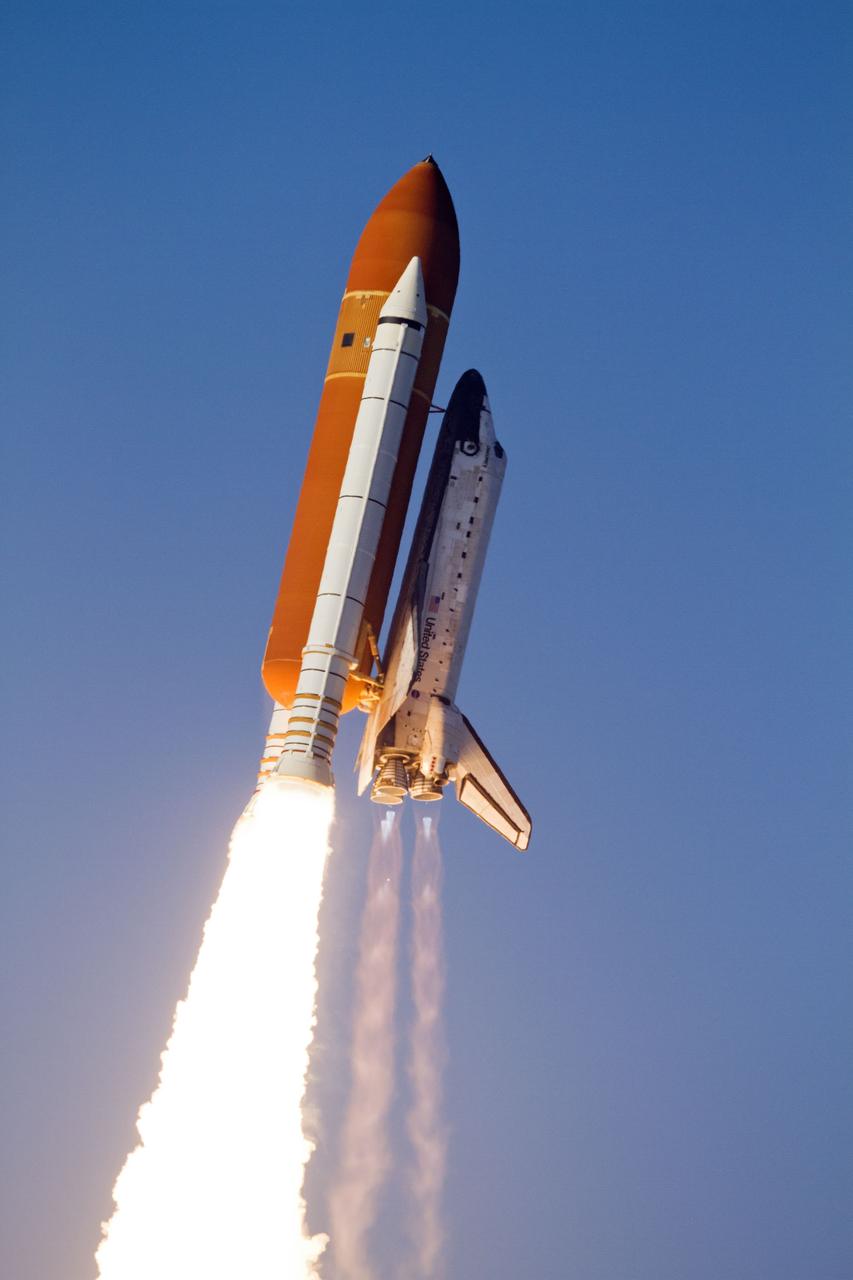
CAPE CANAVERAL, Fla. -- Space shuttle Discovery soars into orbit at 17,500 miles per hour atop twin columns of fire, embarking on its final scheduled mission, STS-133, to the International Space Station. Liftoff from launch Pad 39A at NASA's Kennedy Space Center in Florida occurred at 4:53 p.m. EST on Feb. 24. Discovery and its six-member crew are on a mission to deliver the Permanent Multipurpose Module, packed with supplies and critical spare parts, as well as Robonaut 2, the dexterous humanoid astronaut helper, to the International Space Station. Discovery is making its 39th mission and is scheduled to be retired following STS-133. This is the 133rd Space Shuttle Program mission, the 35th shuttle voyage to the space station and Discovery's final mission. For more information on the STS-133 mission, visit www.nasa.gov/mission_pages/shuttle/shuttlemissions/sts133/. Photo credit: NASA/Kenny Allen
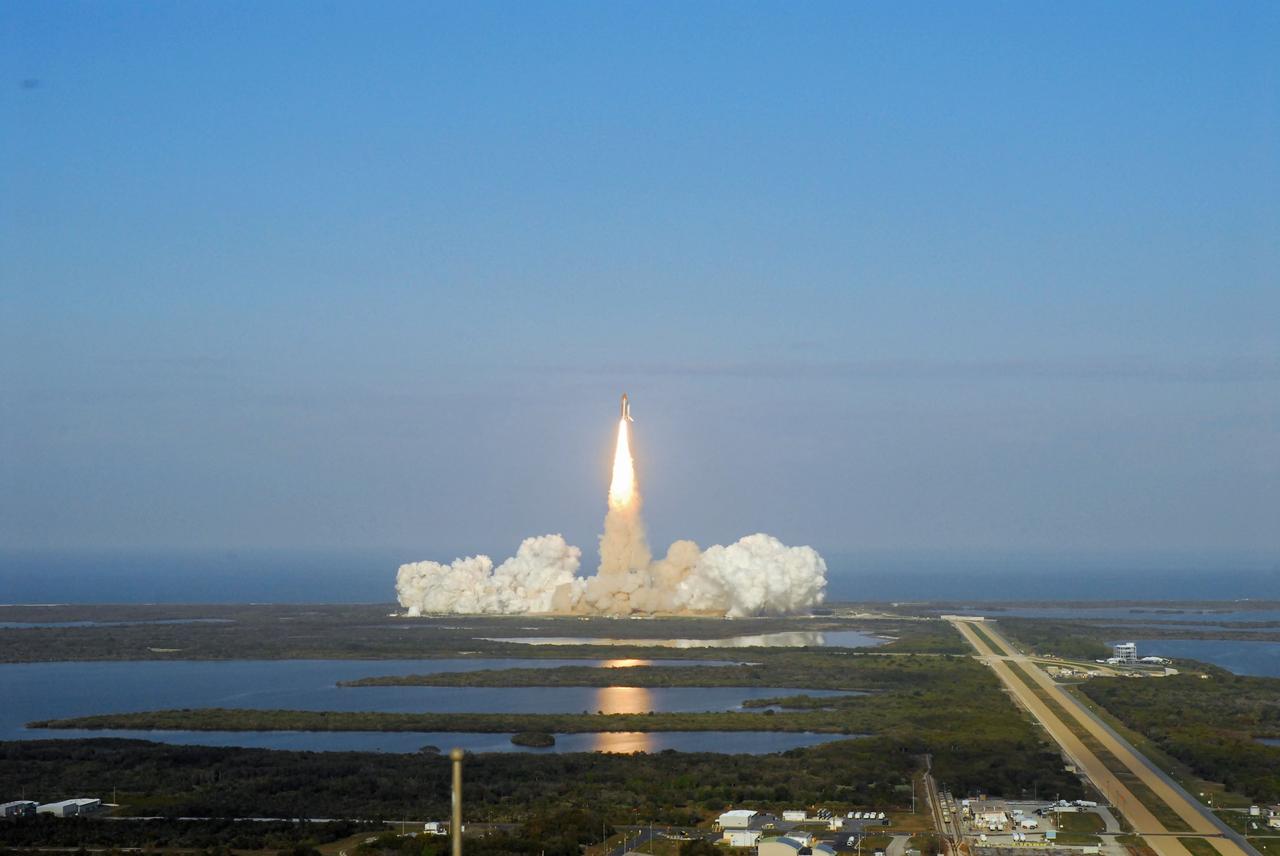
CAPE CANAVERAL, Fla. -- Taken from the roof of the Vehicle Assembly Building at NASA's Kennedy Space Center in Florida, space shuttle Discovery lifts off Launch Pad 39A atop twin columns of fire, creating rolling clouds of smoke and steam in its track. Launch of the STS-133 mission was at 4:53 p.m. EST on Feb. 24. Discovery and its six-member crew are on a mission to deliver the Permanent Multipurpose Module, packed with supplies and critical spare parts, as well as Robonaut 2, the dexterous humanoid astronaut helper, to the International Space Station. Discovery is making its 39th mission and is scheduled to be retired following STS-133. This is the 133rd Space Shuttle Program mission, the 35th shuttle voyage to the space station and Discovery's final mission. For more information on the STS-133 mission, visit www.nasa.gov/mission_pages/shuttle/shuttlemissions/sts133/. Photo credit: NASA/Jeff Marino
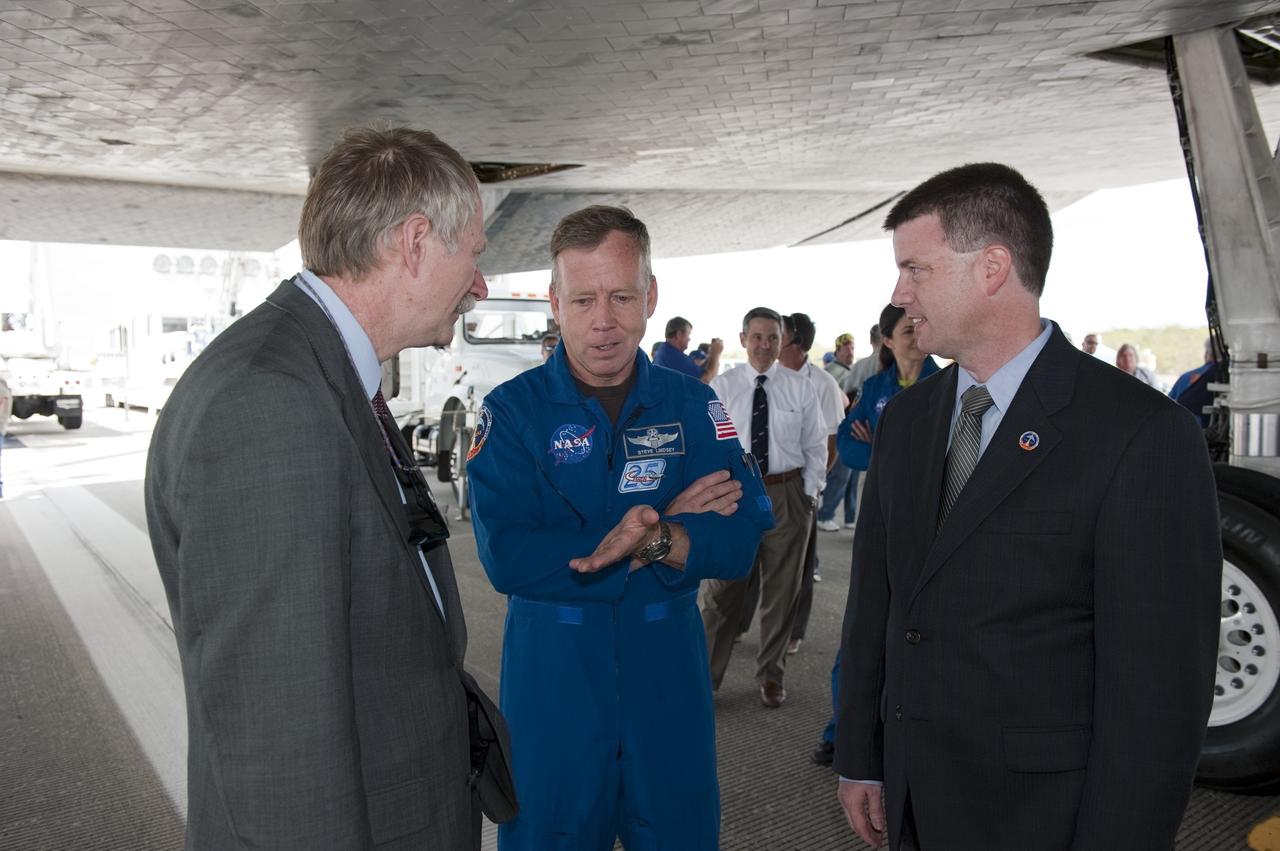
CAPE CANAVERAL, Fla. -- Associate Administrator for Space Operations Bill Gerstenmaier, left, STS-133 Commander Steve Lindsey and Space Shuttle Launch Integration Manager Mike Moses talk about Lindsey's recent 13-day, 5.3-million-mile mission to the International Space Station aboard space shuttle Discovery. The STS-133 crew returned to Earth at 11:57 a.m. on the Shuttle Landing Facility's Runway 15 at NASA's Kennedy Space Center in Florida. STS-133 delivered the Permanent Multipurpose Module, packed with supplies and critical spare parts, as well as Robonaut 2, the dexterous humanoid astronaut helper, to the orbiting outpost. STS-133 was Discovery's 39th and final mission. This was the 133rd Space Shuttle Program mission and the 35th shuttle voyage to the space station. Photo credit: NASA/Kim Shiflett

CAPE CANAVERAL, Fla. -- On the Shuttle Landing Facility at NASA's Kennedy Space Center in Florida, STS-133 Commander Steve Lindsey talks to media representatives about space shuttle Discovery's final spaceflight mission. Mission Specialist Steve Bowen, left, and NASA Administrator Charlie Bolden are behind Lindsey. The STS-133 crew returned to Earth at 11:57 a.m. on Runway 15, completing a 13-day, 5.3-million-mile mission to the International Space Station. STS-133 delivered the Permanent Multipurpose Module, packed with supplies and critical spare parts, as well as Robonaut 2, the dexterous humanoid astronaut helper, to the orbiting outpost. STS-133 was Discovery's 39th and final mission. This was the 133rd Space Shuttle Program mission and the 35th shuttle voyage to the space station. Photo credit: NASA/Kim Shiflett
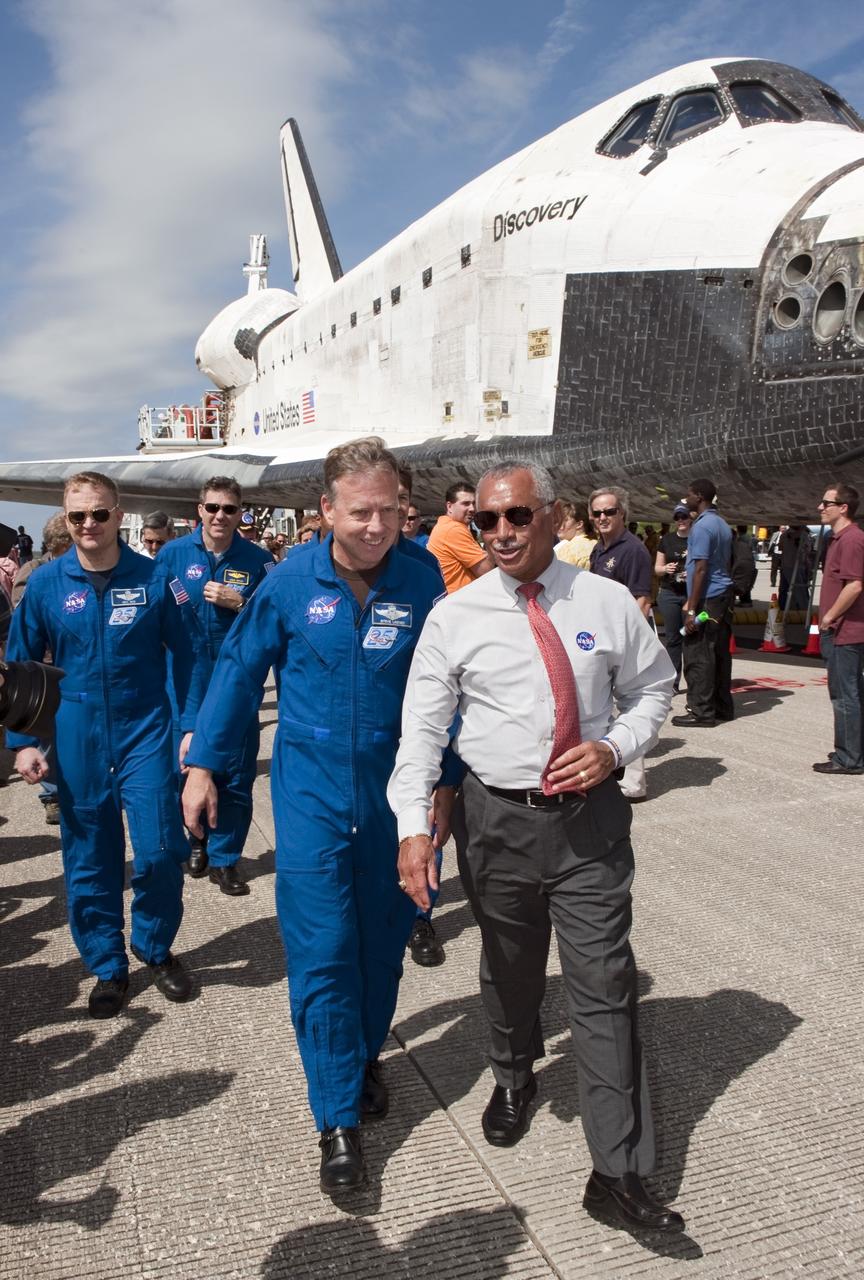
CAPE CANAVERAL, Fla. -- NASA Administrator Charlie Bolden leads the STS-133 crew to media representatives waiting on the Shuttle Landing Facility at Kennedy Space Center in Florida to hear statements about space shuttle Discovery's final spaceflight mission. The STS-133 crew returned to Earth at 11:57 a.m. on Runway 15, completing a 13-day, 5.3-million-mile mission to the International Space Station. STS-133 delivered the Permanent Multipurpose Module, packed with supplies and critical spare parts, as well as Robonaut 2, the dexterous humanoid astronaut helper, to the orbiting outpost. STS-133 was Discovery's 39th and final mission. This was the 133rd Space Shuttle Program mission and the 35th shuttle voyage to the space station. Photo credit: NASA/Kim Shiflett
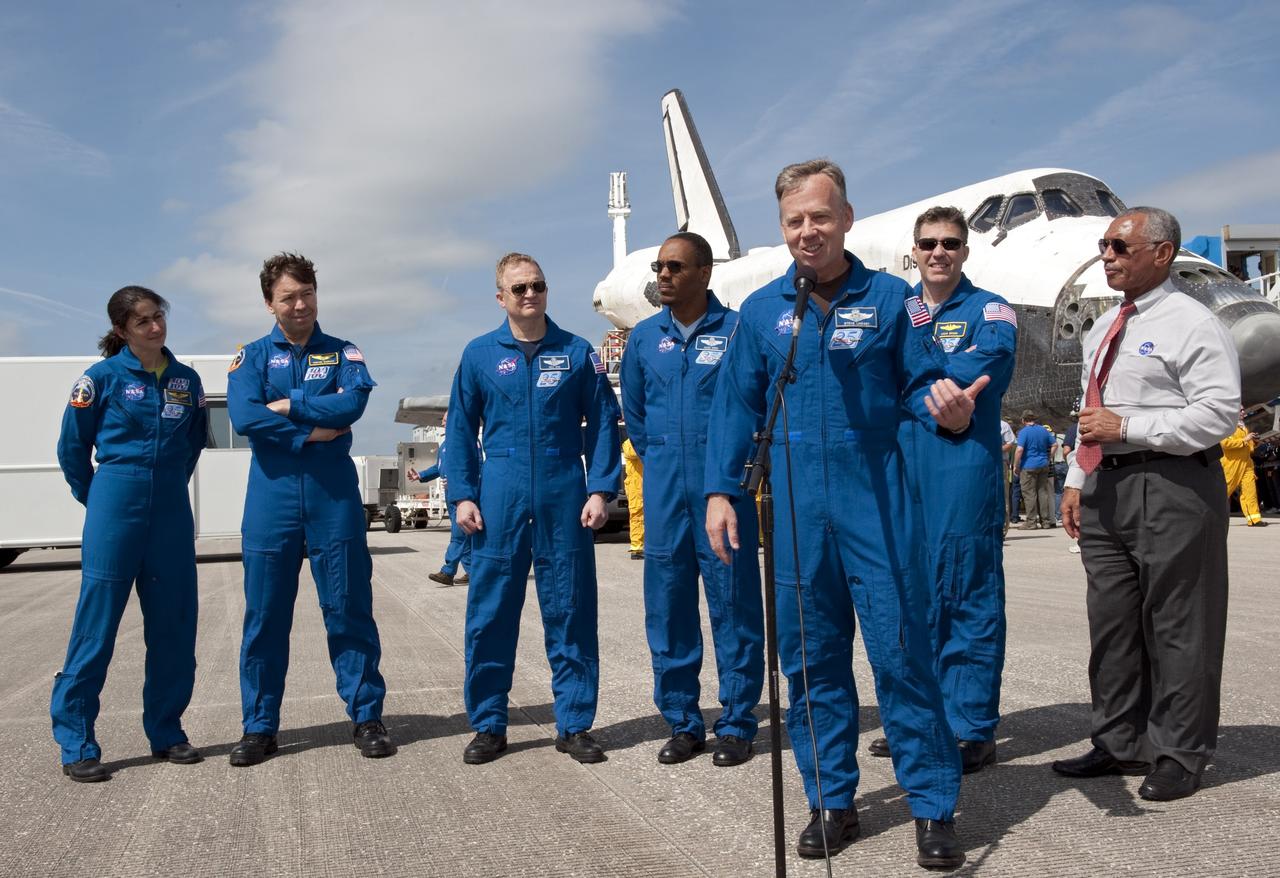
CAPE CANAVERAL, Fla. -- On the Shuttle Landing Facility at NASA's Kennedy Space Center in Florida, STS-133 Commander Steve Lindsey talks to media representatives about space shuttle Discovery's final spaceflight mission. Behind Lindsey, from left, are Mission Specialists Nicole Stott and Michael Barratt, Pilot Eric Boe, Mission Specialists Alvin Drew and Steve Bowen, and NASA Administrator Charlie Bolden. The STS-133 crew returned to Earth at 11:57 a.m. on Runway 15, completing a 13-day, 5.3-million-mile mission to the International Space Station. STS-133 delivered the Permanent Multipurpose Module, packed with supplies and critical spare parts, as well as Robonaut 2, the dexterous humanoid astronaut helper, to the orbiting outpost. STS-133 was Discovery's 39th and final mission. This was the 133rd Space Shuttle Program mission and the 35th shuttle voyage to the space station. Photo credit: NASA/Kim Shiflett
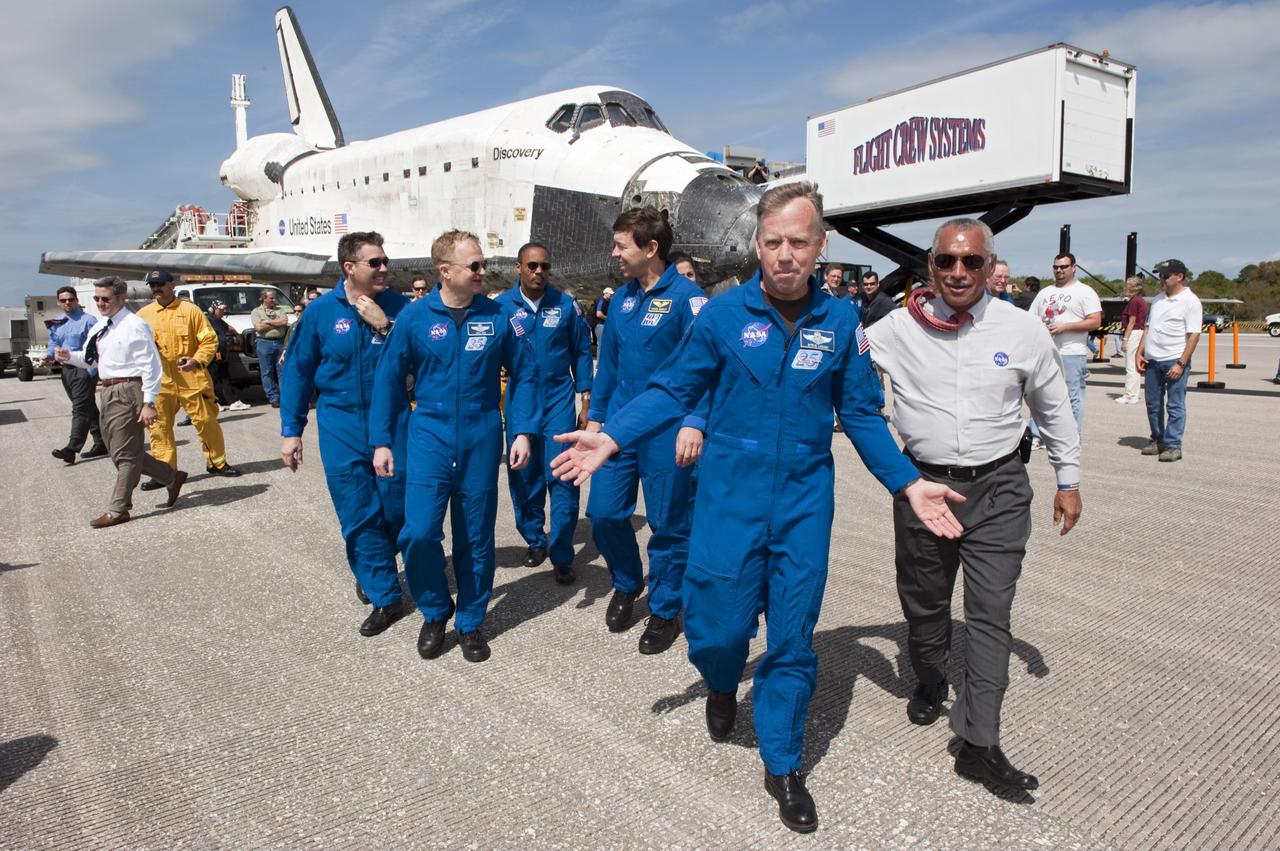
CAPE CANAVERAL, Fla. -- NASA Administrator Charlie Bolden escorts the STS-133 crew to media representatives waiting on the Shuttle Landing Facility at Kennedy Space Center in Florida to hear statements about space shuttle Discovery's final spaceflight mission. The STS-133 crew returned to Earth at 11:57 a.m. on Runway 15, completing a 13-day, 5.3-million-mile mission to the International Space Station. STS-133 delivered the Permanent Multipurpose Module, packed with supplies and critical spare parts, as well as Robonaut 2, the dexterous humanoid astronaut helper, to the orbiting outpost. STS-133 was Discovery's 39th and final mission. This was the 133rd Space Shuttle Program mission and the 35th shuttle voyage to the space station. Photo credit: NASA/Kim Shiflett
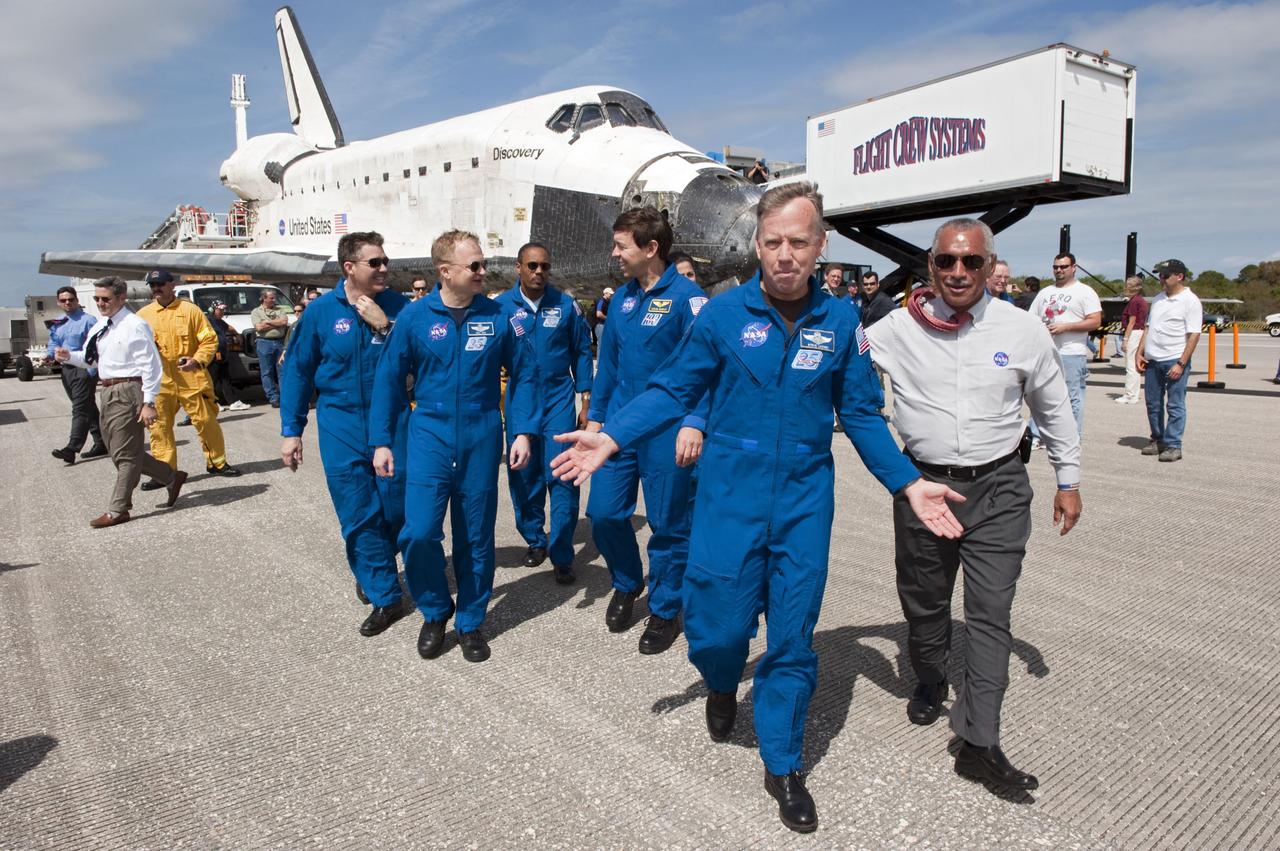
STS133-S-152 (9 March 2011) --- NASA Administrator Charlie Bolden escorts the STS-133 crew to media representatives waiting on the Shuttle Landing Facility at Kennedy Space Center in Florida to hear statements about space shuttle Discovery's final spaceflight mission. The STS-133 crew returned to Earth at 11:57 a.m. (EST) on March 9, 2011, on Runway 15, completing a 13-day, 5.3-million-mile mission to the International Space Station. STS-133 delivered the Permanent Multipurpose Module, packed with supplies and critical spare parts, as well as Robonaut 2, the dexterous humanoid astronaut helper, to the orbiting outpost. STS-133 was Discovery's 39th and final mission. This was the 133rd Space Shuttle Program mission and the 35th shuttle voyage to the space station. Photo credit: NASA or National Aeronautics and Space Administration
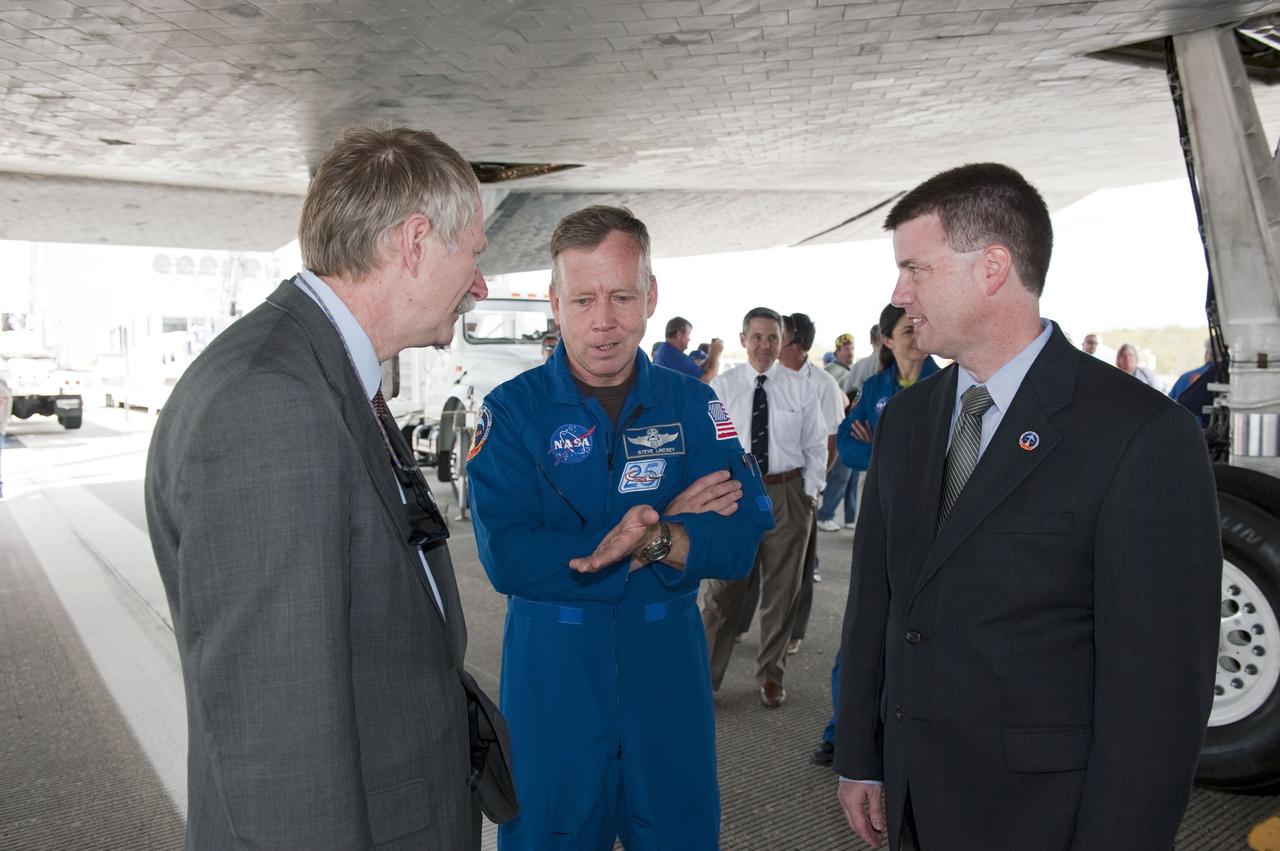
STS133-S-150 (9 March 2011) --- Associate Administrator for Space Operations Bill Gerstenmaier, left, astronaut Steve Lindsey, STS-133 commander, and Space Shuttle Launch Integration Manager Mike Moses talk about Lindsey's recent 13-day, 5.3-million-mile mission to the International Space Station aboard space shuttle Discovery. The STS-133 crew landed at 11:57 a.m. (EST) on March 9, 2011, on the Shuttle Landing Facility's Runway 15 at NASA's Kennedy Space Center in Florida. STS-133 delivered the Permanent Multipurpose Module, packed with supplies and critical spare parts, as well as Robonaut 2, the dexterous humanoid astronaut helper, to the orbiting outpost. STS-133 was Discovery's 39th and final mission. This was the 133rd Space Shuttle Program mission and the 35th shuttle voyage to the space station. Photo credit: NASA or National Aeronautics and Space Administration
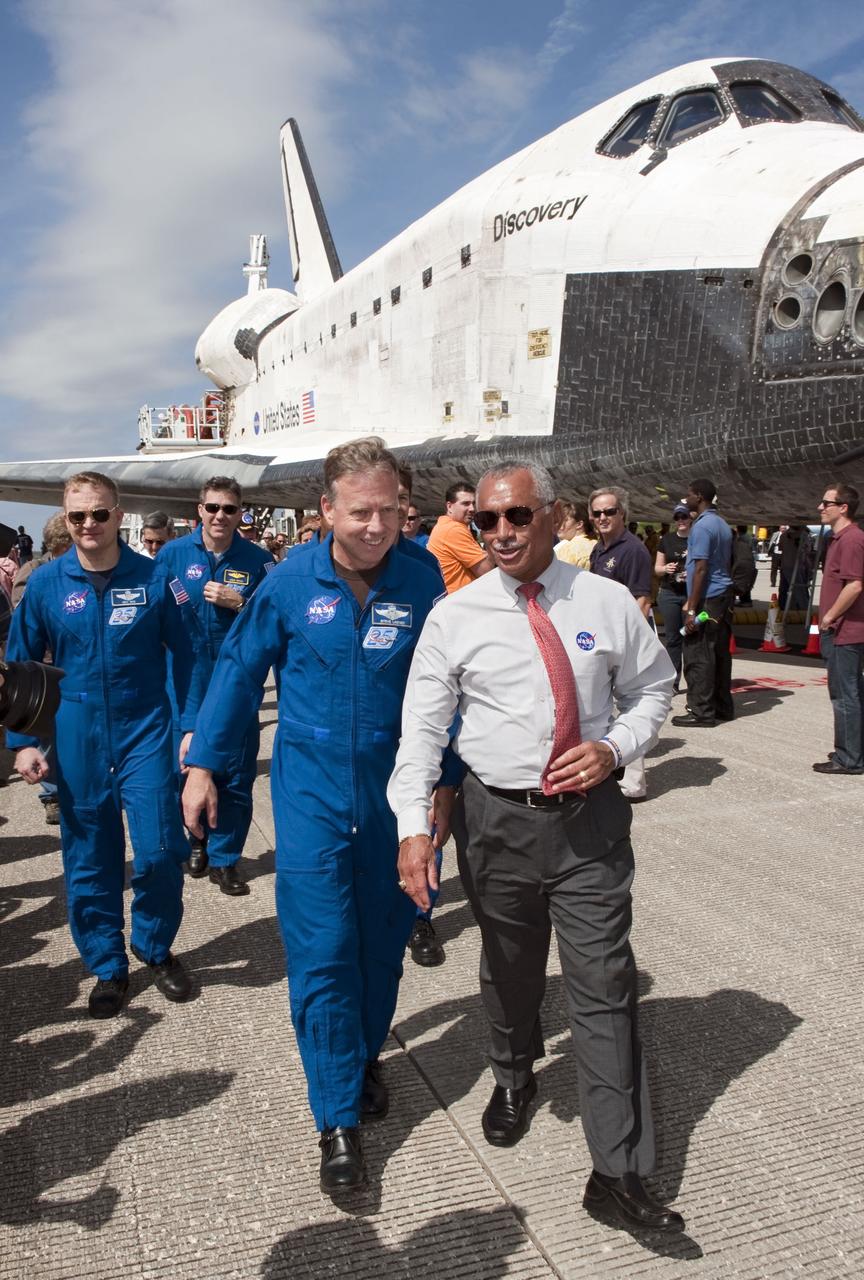
STS133-S-151 (9 March 2011) --- NASA Administrator Charlie Bolden leads the STS-133 crew to media representatives waiting on the Shuttle Landing Facility at Kennedy Space Center in Florida to hear statements about space shuttle Discovery's final spaceflight mission. The STS-133 crew returned to Earth at 11:57 a.m. (EST) on March 9, 2011, on Runway 15, completing a 13-day, 5.3-million-mile mission to the International Space Station. STS-133 delivered the Permanent Multipurpose Module, packed with supplies and critical spare parts, as well as Robonaut 2, the dexterous humanoid astronaut helper, to the orbiting outpost. STS-133 was Discovery's 39th and final mission. This was the 133rd Space Shuttle Program mission and the 35th shuttle voyage to the space station. Photo credit: NASA or National Aeronautics and Space Administration
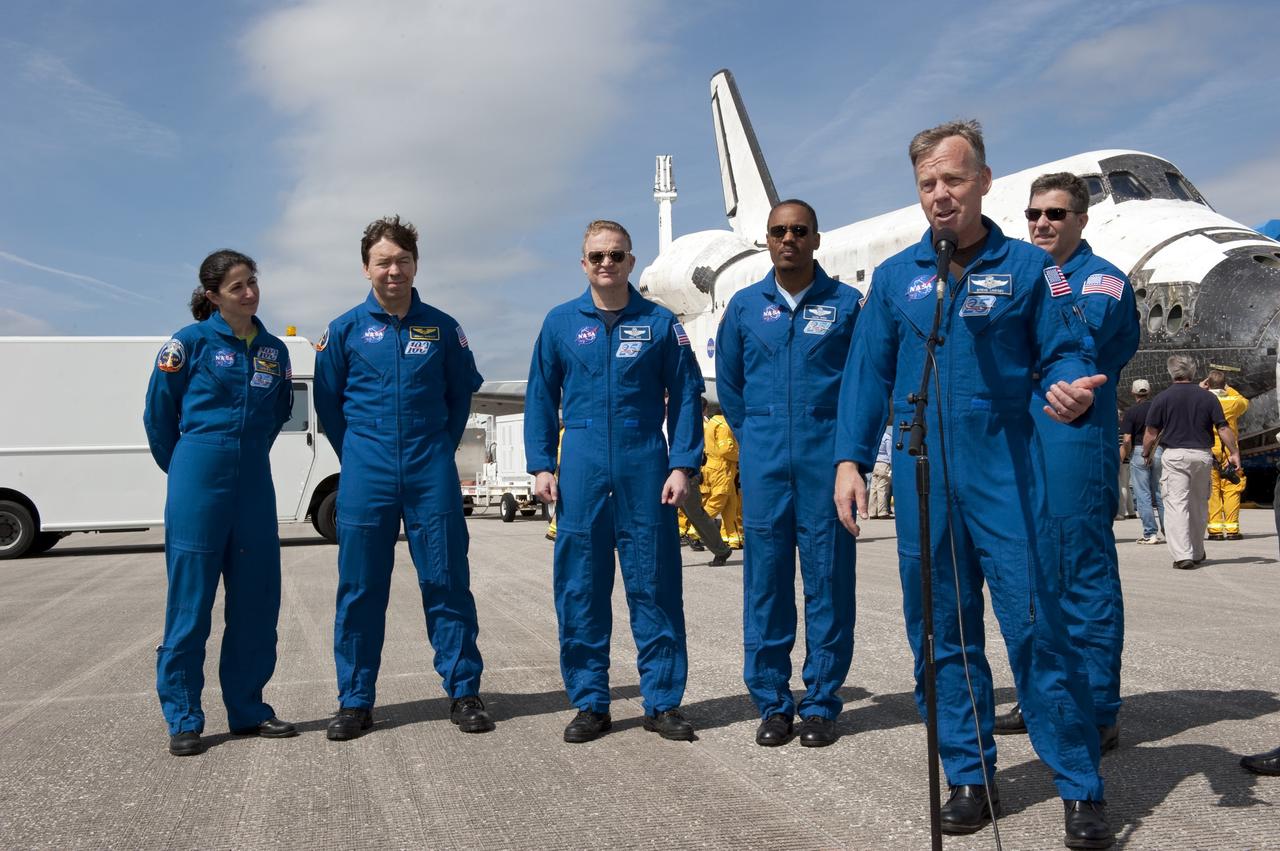
CAPE CANAVERAL, Fla. -- On the Shuttle Landing Facility at NASA's Kennedy Space Center in Florida, STS-133 Commander Steve Lindsey talks to media representatives about space shuttle Discovery's final spaceflight mission. Behind Lindsey, from left, are Mission Specialists Nicole Stott and Michael Barratt, Pilot Eric Boe, and Mission Specialists Alvin Drew and Steve Bowen. The STS-133 crew returned to Earth at 11:57 a.m. on Runway 15, completing a 13-day, 5.3-million-mile mission to the International Space Station. STS-133 delivered the Permanent Multipurpose Module, packed with supplies and critical spare parts, as well as Robonaut 2, the dexterous humanoid astronaut helper, to the orbiting outpost. STS-133 was Discovery's 39th and final mission. This was the 133rd Space Shuttle Program mission and the 35th shuttle voyage to the space station. Photo credit: NASA/Kim Shiflett
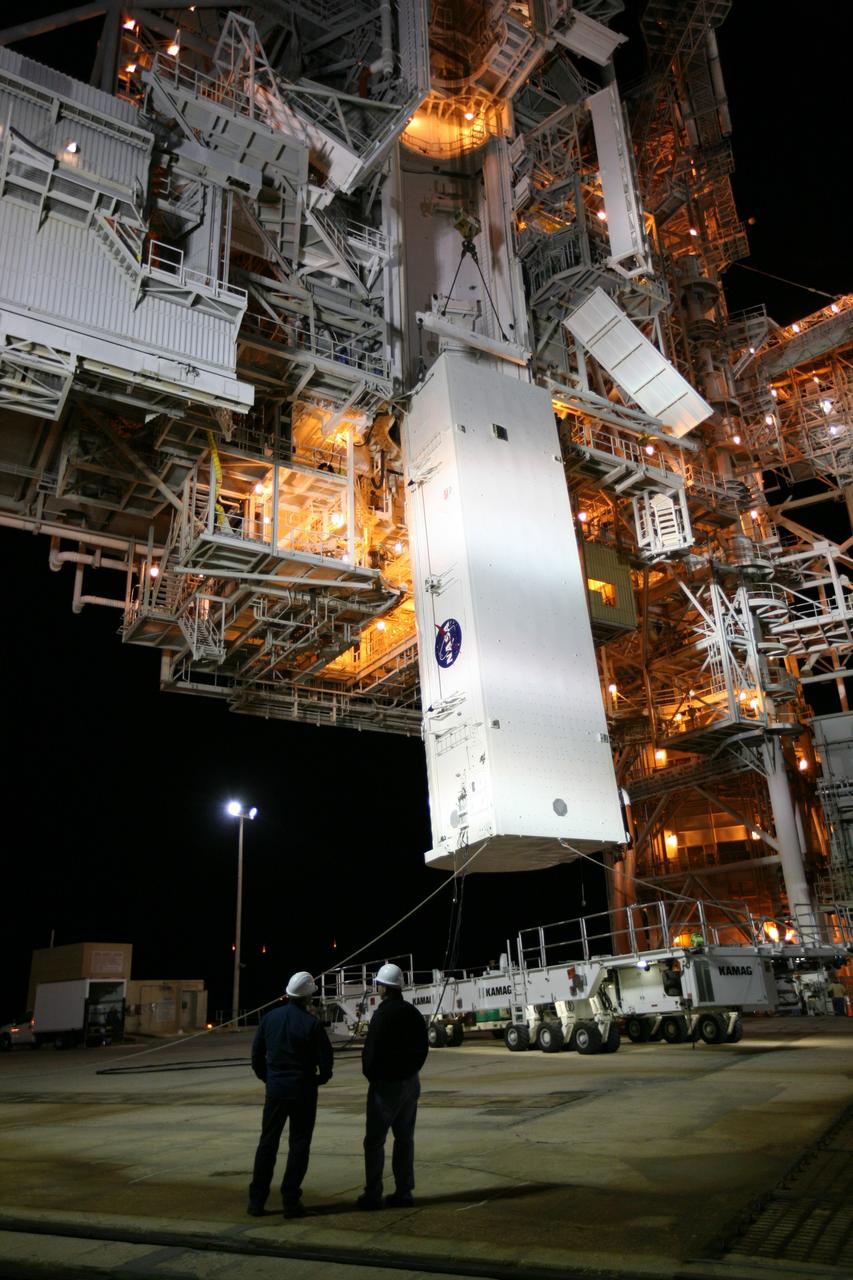
CAPE CANAVERAL, Fla. -- At NASA's Kennedy Space Center in Florida, workers begin the process of lifting the STS-133 payload canister off its transport vehicle toward the rotating service structure on Launch Pad 39A. The payload then will be moved into space shuttle Discovery's payload bay. Discovery and its STS-133 crew will deliver the Permanent Multipurpose Module, packed with supplies and critical spare parts, as well as Robonaut 2, the dexterous humanoid astronaut helper, to the International Space Station. Launch is targeted for 4:40 p.m. EDT, Nov. 1. Photo credit: NASA/Amanda Diller

CAPE CANAVERAL, Fla. -- At NASA's Kennedy Space Center in Florida, STS-133 Payload Manager Scott Higginbotham talks to media about the supplies and experiments flying aboard space shuttle Discovery's upcoming mission to the International Space Station during a Countdown Status Briefing. Scheduled to lift off Nov. 3 at 3:52 p.m. EDT, Discovery and crew will deliver the Permanent Multipurpose Module, packed with supplies and critical spare parts, as well as Robonaut 2, the dexterous humanoid astronaut helper, to the orbiting outpost. For more information on the STS-133 mission, visit www.nasa.gov/mission_pages/shuttle/shuttlemissions/sts133/. Photo credit: NASA/Jack Pfaller
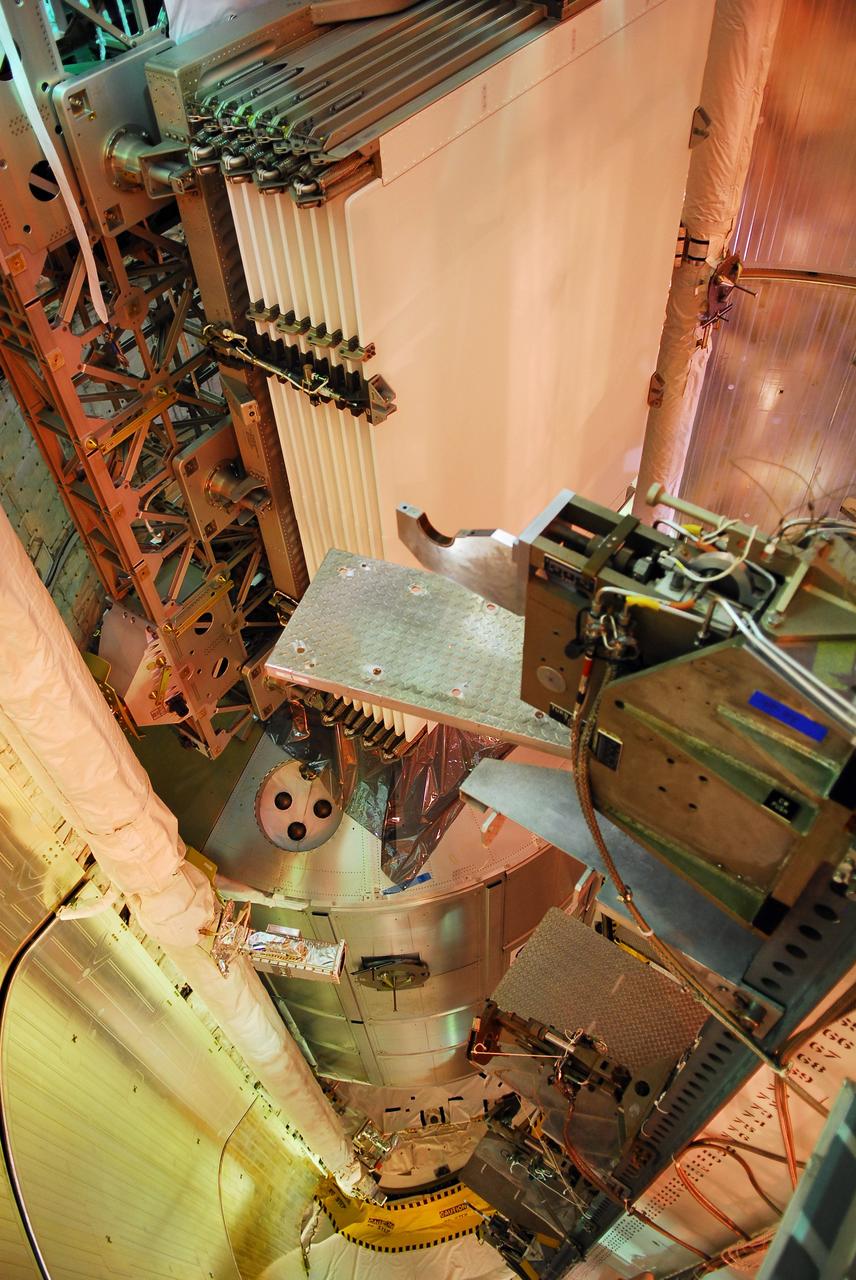
CAPE CANAVERAL, Fla. -- At NASA's Kennedy Space Center in Florida, space shuttle Discovery's payload bay is open for the STS-133 crew members to take a look at their payload while at Launch Pad 39A for the Terminal Countdown Demonstration Test (TCDT). Discovery and its STS-133 crew will deliver the Permanent Multipurpose Module, packed with supplies and critical spare parts, as well as Robonaut 2, the dexterous humanoid astronaut helper, to the International Space Station. Launch is targeted for 4:40 p.m. EDT, Nov. 1. Photo credit: NASA/Jim Grossmann
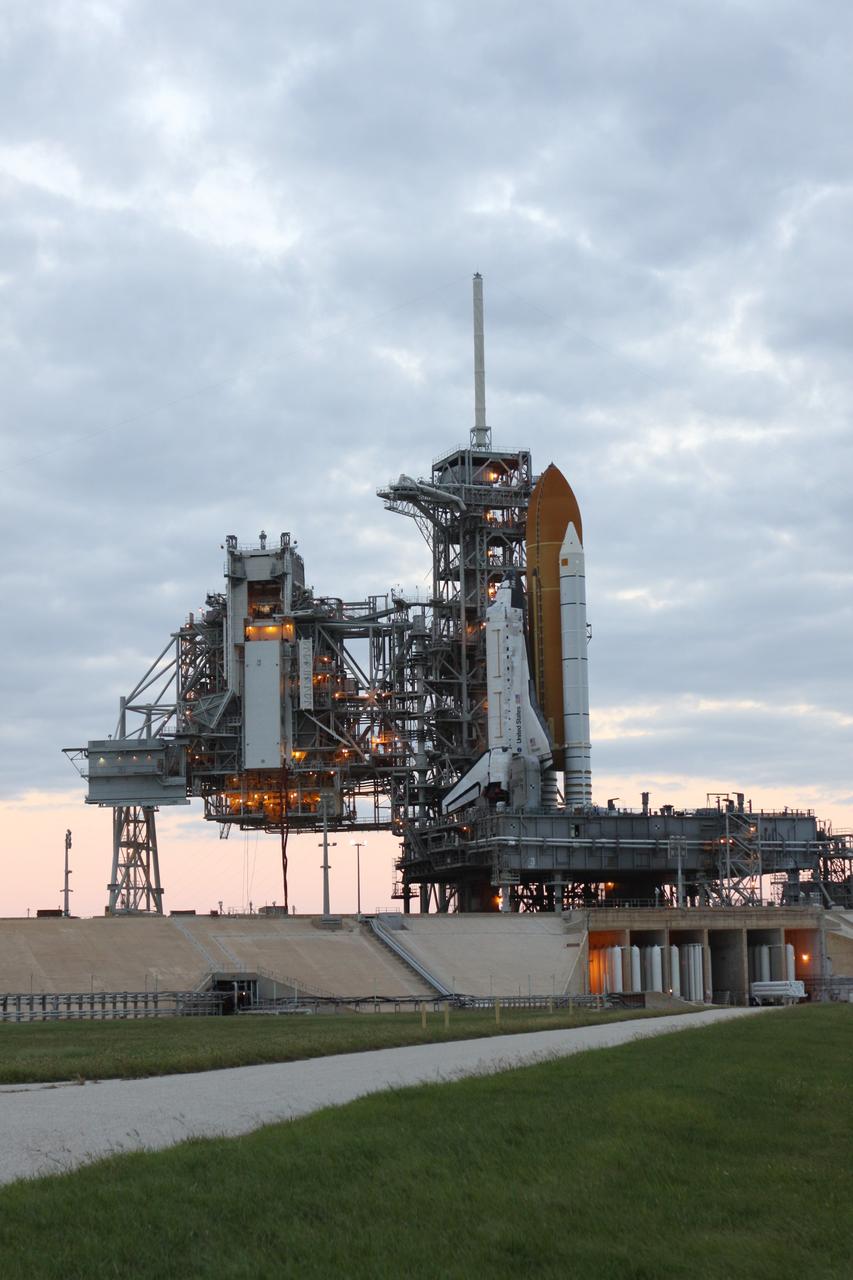
CAPE CANAVERAL, Fla. -- As dawn approaches at NASA's Kennedy Space Center in Florida, the STS-133 payload canister now is in the rotating service structure on Launch Pad 39A. The payload then will be moved into space shuttle Discovery's payload bay. Discovery and its STS-133 crew will deliver the Permanent Multipurpose Module, packed with supplies and critical spare parts, as well as Robonaut 2, the dexterous humanoid astronaut helper, to the International Space Station. Launch is targeted for 4:40 p.m. EDT, Nov. 1. Photo credit: NASA/Troy Cryder
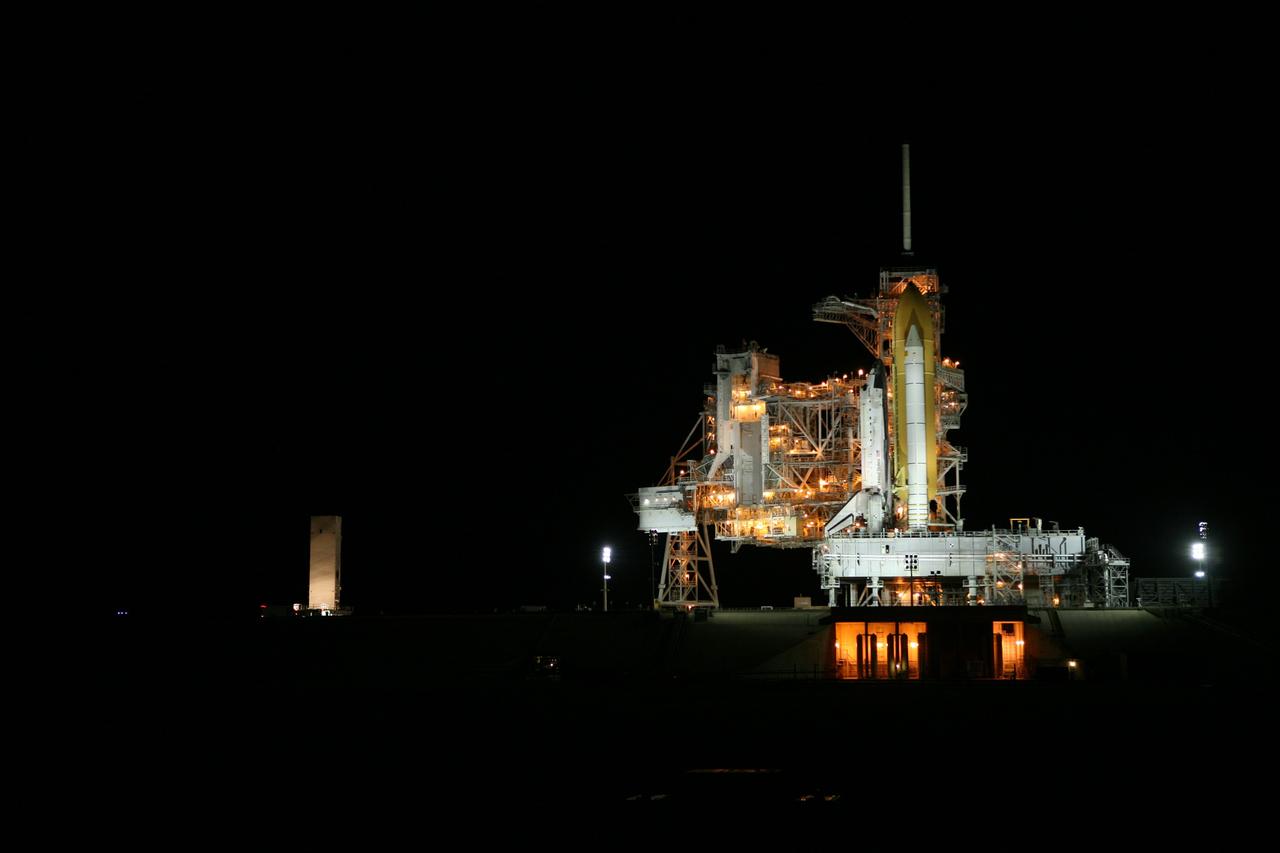
CAPE CANAVERAL, Fla. -- At NASA's Kennedy Space Center in Florida, the STS-133 payload canister approaches Launch Pad 39A where it will be lifted into the rotating service structure. The payload then will be moved into space shuttle Discovery's payload bay. Discovery and its STS-133 crew will deliver the Permanent Multipurpose Module, packed with supplies and critical spare parts, as well as Robonaut 2, the dexterous humanoid astronaut helper, to the International Space Station. Launch is targeted for 4:40 p.m. EDT, Nov. 1. Photo credit: NASA/Amanda Diller
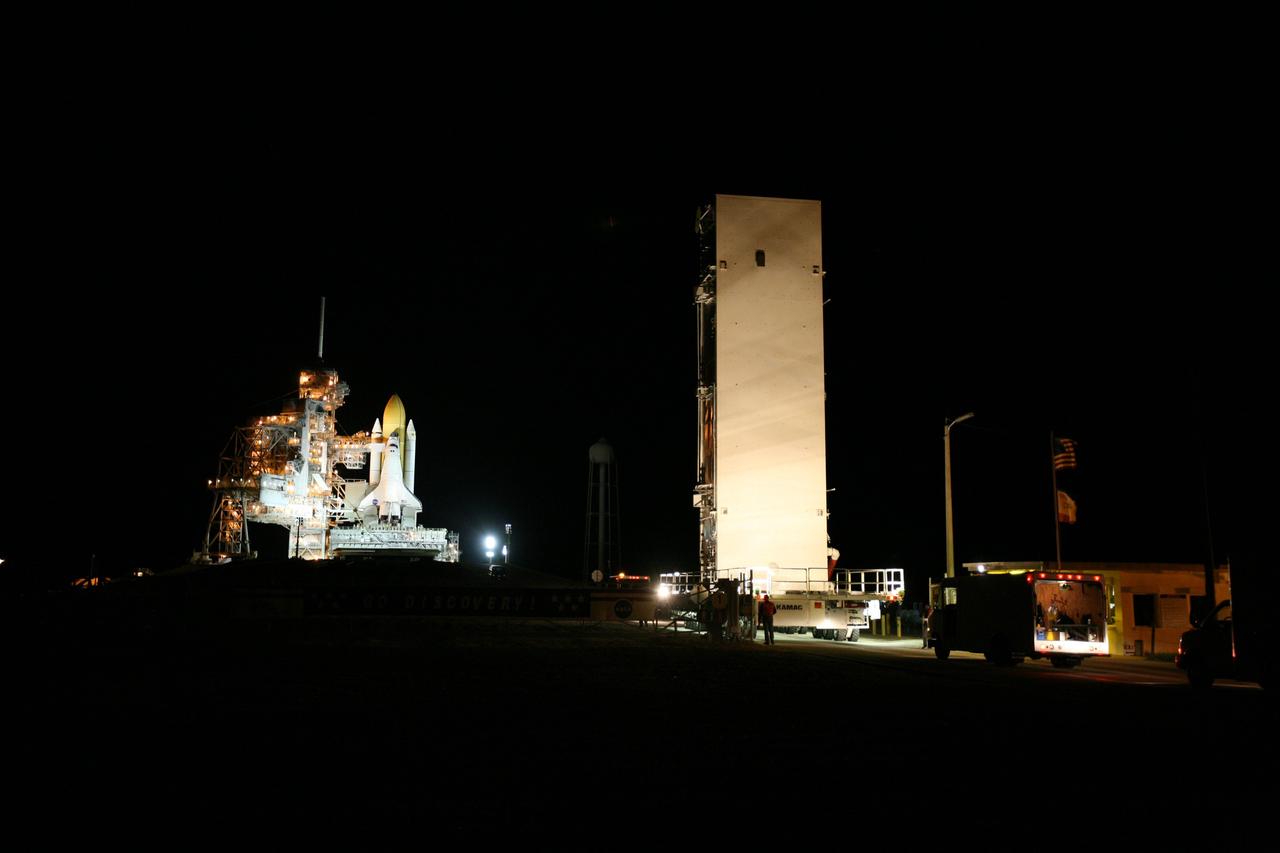
CAPE CANAVERAL, Fla. -- At NASA's Kennedy Space Center in Florida, the STS-133 payload canister approaches Launch Pad 39A where it will be lifted into the rotating service structure. The payload then will be moved into space shuttle Discovery's payload bay. Discovery and its STS-133 crew will deliver the Permanent Multipurpose Module, packed with supplies and critical spare parts, as well as Robonaut 2, the dexterous humanoid astronaut helper, to the International Space Station. Launch is targeted for 4:40 p.m. EDT, Nov. 1. Photo credit: NASA/Amanda Diller
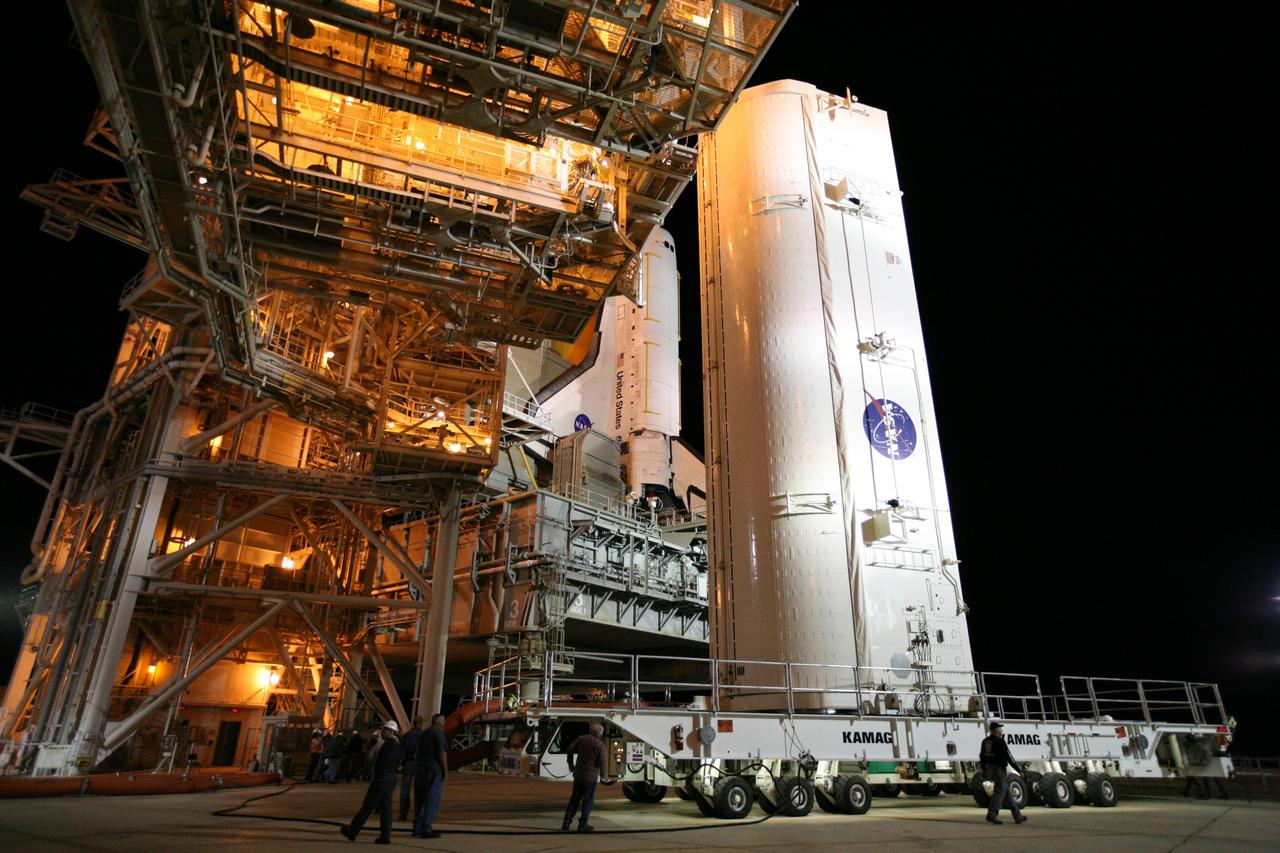
CAPE CANAVERAL, Fla. -- At NASA's Kennedy Space Center in Florida, workers monitor the arrival of the STS-133 payload canister to Launch Pad 39A where it will be lifted into the rotating service structure. The payload then will be moved into space shuttle Discovery's payload bay. Discovery and its STS-133 crew will deliver the Permanent Multipurpose Module, packed with supplies and critical spare parts, as well as Robonaut 2, the dexterous humanoid astronaut helper, to the International Space Station. Launch is targeted for 4:40 p.m. EDT, Nov. 1. Photo credit: NASA/Amanda Diller

CAPE CANAVERAL, Fla. -- News media representatives gather near the Press Site at NASA's Kennedy Space Center in Florida to capture and share with the world the final launch of space shuttle Discovery from Launch Pad 39A. Discovery and its six-member STS-133 crew will deliver the Permanent Multipurpose Module, packed with supplies and critical spare parts, as well as Robonaut 2 to the International Space Station. For more information on the STS-133 mission, visit www.nasa.gov/mission_pages/shuttle/shuttlemissions/sts133/. Photo Credit: NASA/Jack Pfaller
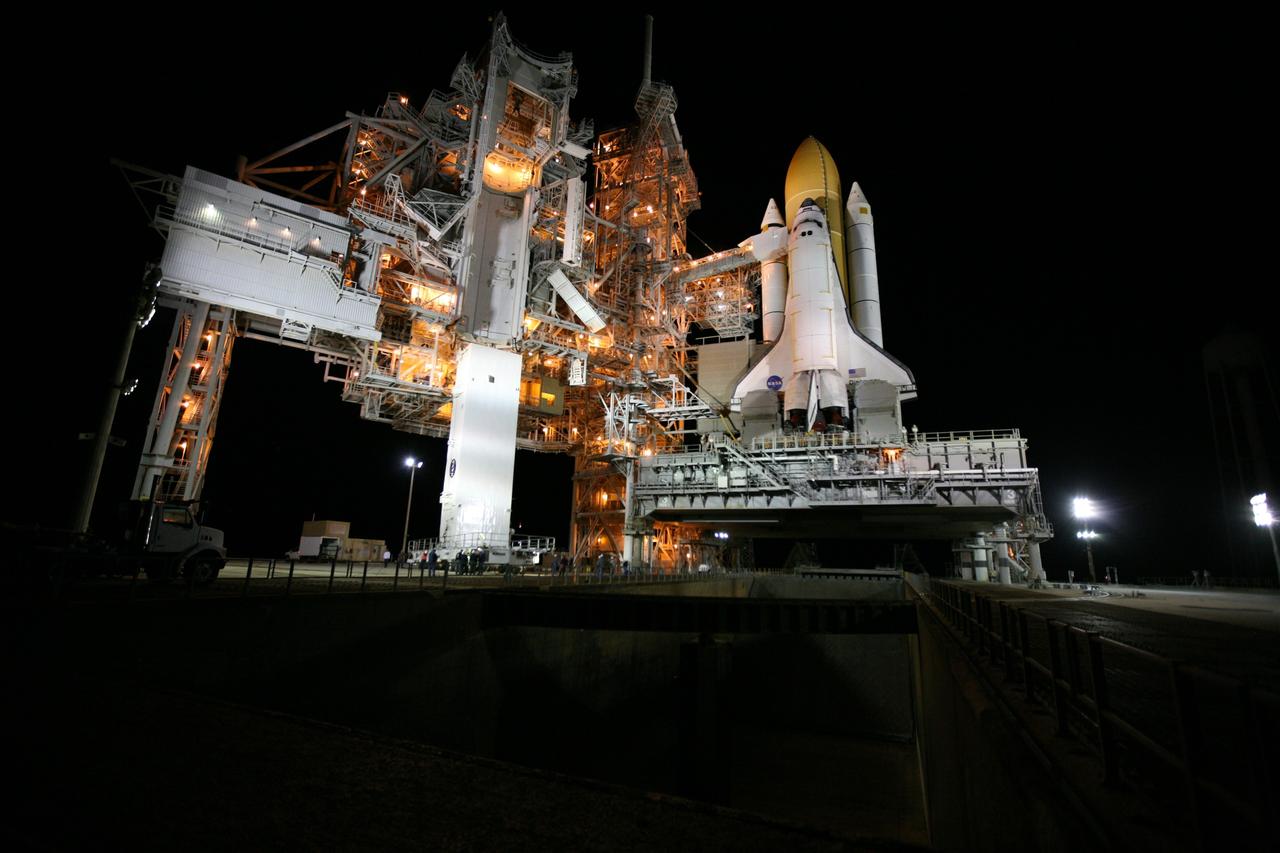
CAPE CANAVERAL, Fla. -- At NASA's Kennedy Space Center in Florida, workers monitor the arrival of the STS-133 payload canister to Launch Pad 39A where it will be lifted into the rotating service structure. The payload then will be moved into space shuttle Discovery's payload bay. Discovery and its STS-133 crew will deliver the Permanent Multipurpose Module, packed with supplies and critical spare parts, as well as Robonaut 2, the dexterous humanoid astronaut helper, to the International Space Station. Launch is targeted for 4:40 p.m. EDT, Nov. 1. Photo credit: NASA/Amanda Diller
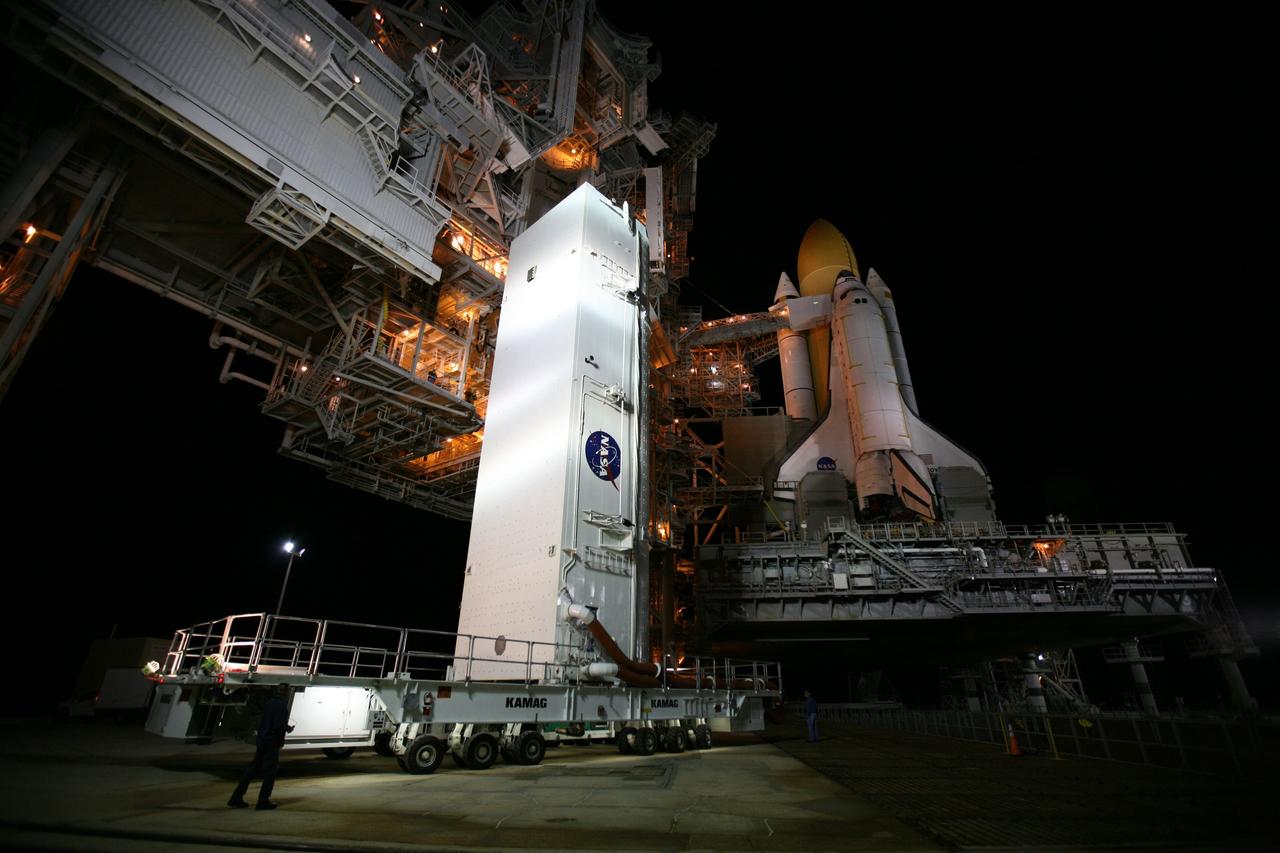
CAPE CANAVERAL, Fla. -- At NASA's Kennedy Space Center in Florida, the STS-133 payload canister approaches Launch Pad 39A where it will be lifted into the rotating service structure. The payload then will be moved into space shuttle Discovery's payload bay. Discovery and its STS-133 crew will deliver the Permanent Multipurpose Module, packed with supplies and critical spare parts, as well as Robonaut 2, the dexterous humanoid astronaut helper, to the International Space Station. Launch is targeted for 4:40 p.m. EDT, Nov. 1. Photo credit: NASA/Amanda Diller
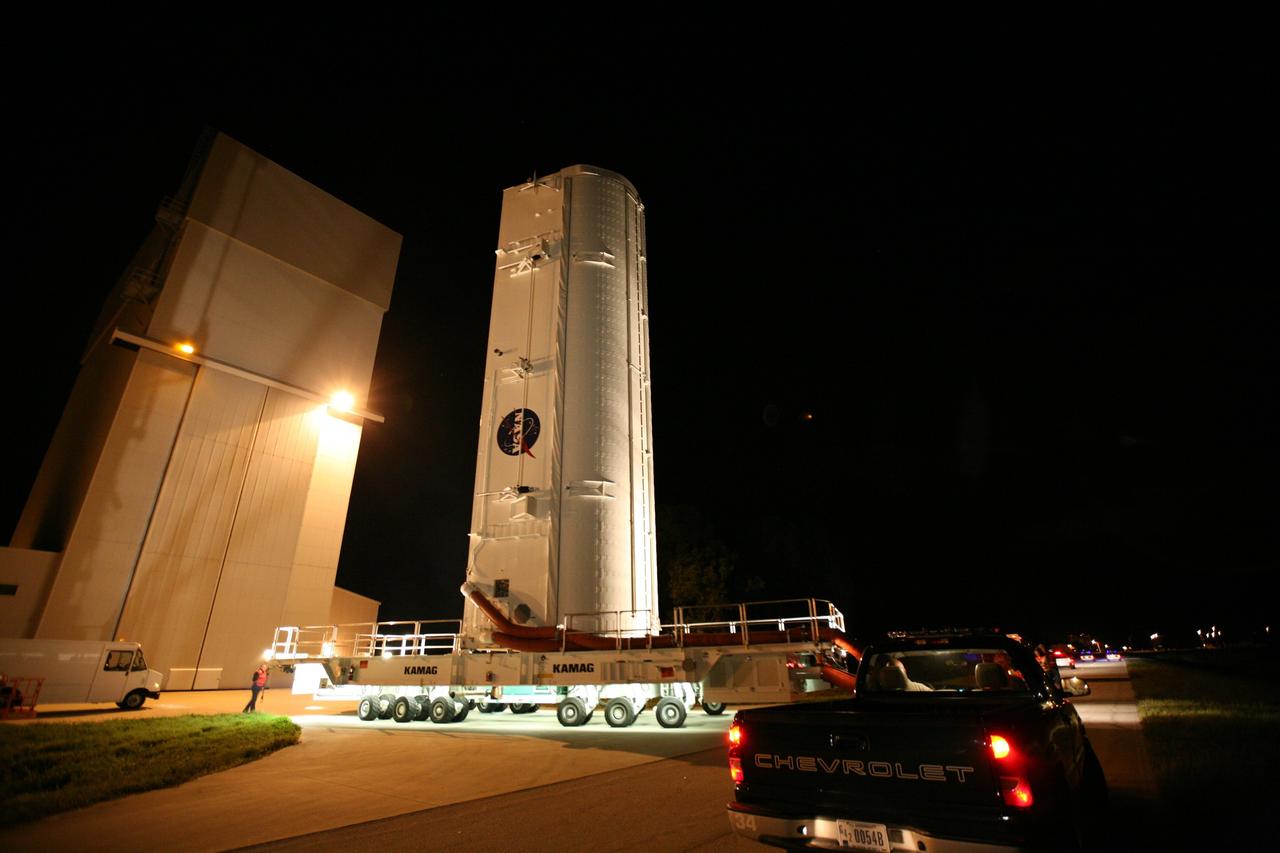
CAPE CANAVERAL, Fla. -- At NASA's Kennedy Space Center in Florida, the STS-133 payload canister leaves the Canister Rotation Facility on a transport vehicle headed for Launch Pad 39A where it will be lifted into the rotating service structure. The payload then will be moved into space shuttle Discovery's payload bay. Discovery and its STS-133 crew will deliver the Permanent Multipurpose Module, packed with supplies and critical spare parts, as well as Robonaut 2, the dexterous humanoid astronaut helper, to the International Space Station. Launch is targeted for 4:40 p.m. EDT, Nov. 1. Photo credit: NASA/Amanda Diller
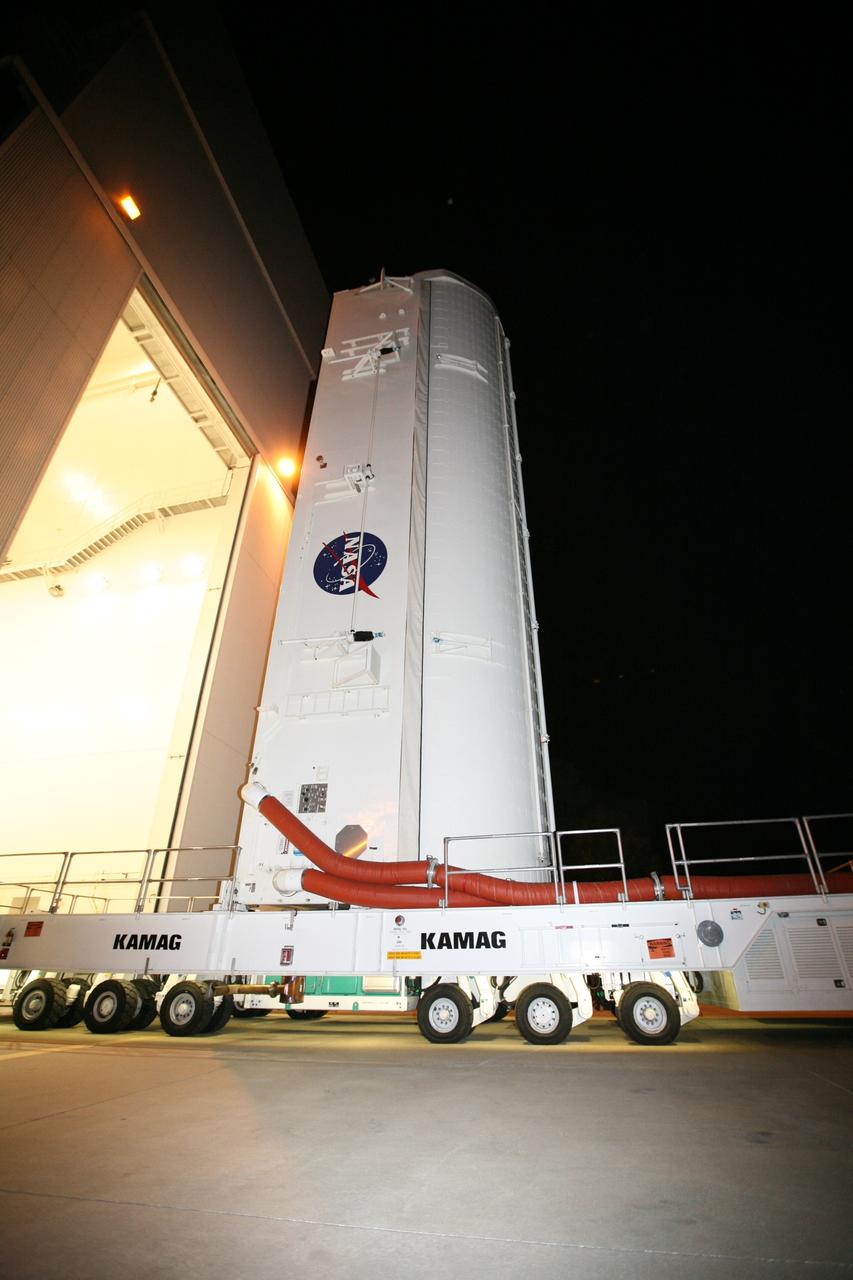
CAPE CANAVERAL, Fla. -- At NASA's Kennedy Space Center in Florida, the STS-133 payload canister leaves the Canister Rotation Facility on a transport vehicle headed for Launch Pad 39A where it will be lifted into the rotating service structure. The payload then will be moved into space shuttle Discovery's payload bay. Discovery and its STS-133 crew will deliver the Permanent Multipurpose Module, packed with supplies and critical spare parts, as well as Robonaut 2, the dexterous humanoid astronaut helper, to the International Space Station. Launch is targeted for 4:40 p.m. EDT, Nov. 1. Photo credit: NASA/Amanda Diller
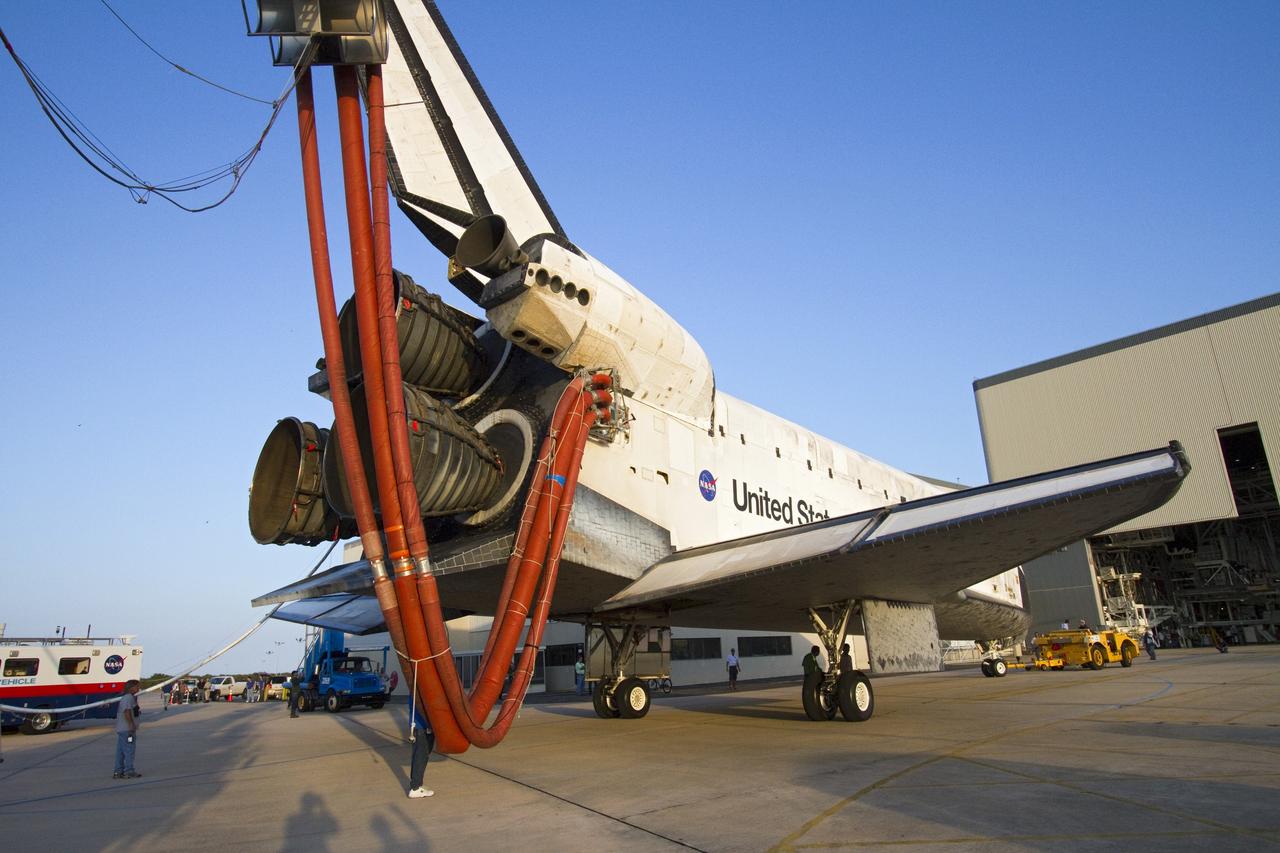
CAPE CANAVERAL, Fla. - Space shuttle Discovery is towed into position for entry through the door of Orbiter Processing Facility-2 at NASA's Kennedy Space Center in Florida. Discovery is attached to a purge unit that pumps conditioned air into the shuttle while it is towed. Discovery touched down on the Shuttle Landing Facility's Runway 15 at 11:57 a.m., bringing an end to its 39th and final spaceflight mission, STS-133. Discovery and its six-member STS-133 crew delivered the Permanent Multipurpose Module, packed with supplies and critical spare parts, as well as Robonaut 2, the dexterous humanoid astronaut helper, to the International Space Station. Inside the processing facility, Discovery will be prepared for future public display. Photo credit: NASA/Jack Pfaller
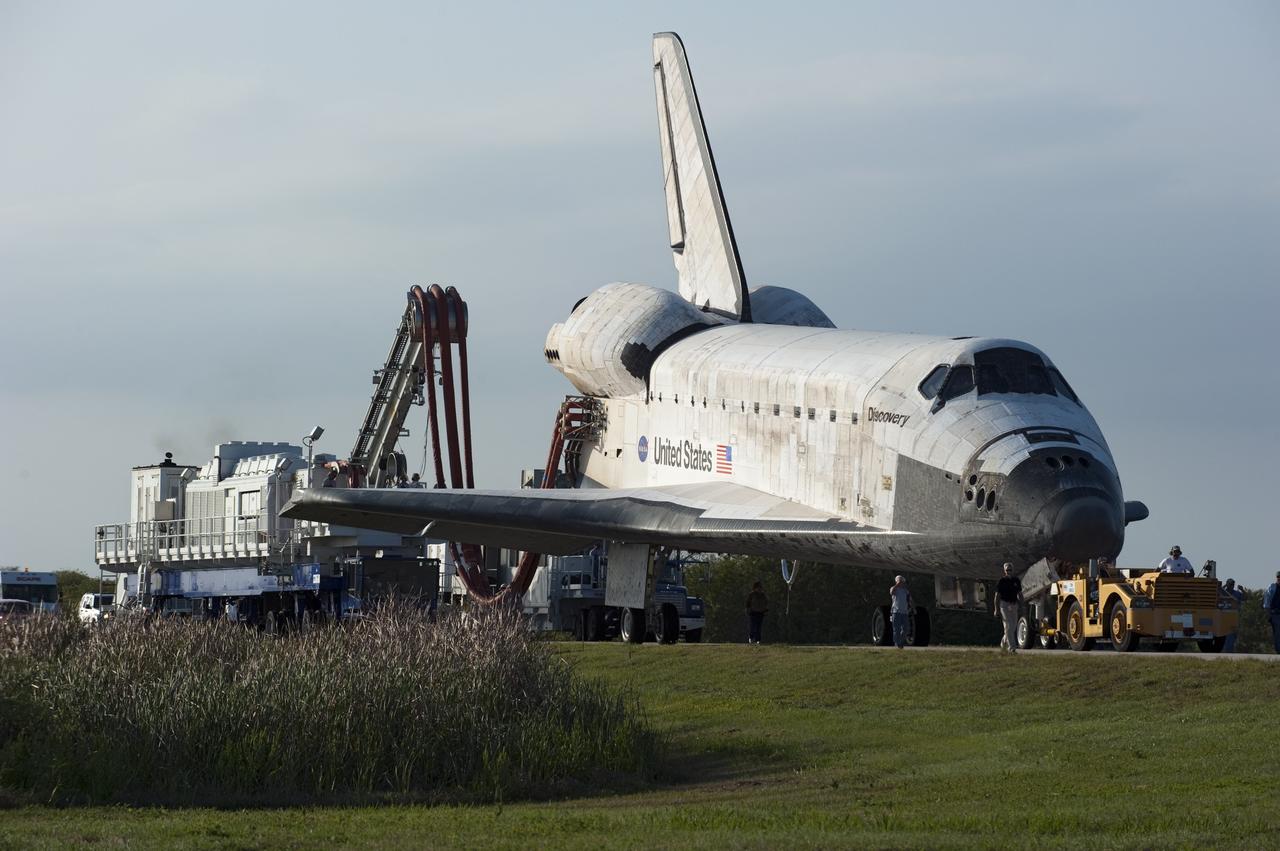
CAPE CANAVERAL, Fla. - Space shuttle Discovery's "towback" vehicle slowly pulls the spacecraft from the Shuttle Landing Facility to Orbiter Processing Facility-2 at NASA's Kennedy Space Center in Florida. A purge unit that pumps conditioned air into a shuttle after landing is connected to Discovery's aft end. Discovery touched down on Runway 15 at 11:57 a.m., bringing an end to its 39th and final spaceflight mission, STS-133. Discovery and its six-member STS-133 crew delivered the Permanent Multipurpose Module, packed with supplies and critical spare parts, as well as Robonaut 2, the dexterous humanoid astronaut helper, to the International Space Station. Inside the processing facility, Discovery will be prepared for future public display. Photo credit: NASA/Kim Shiflett
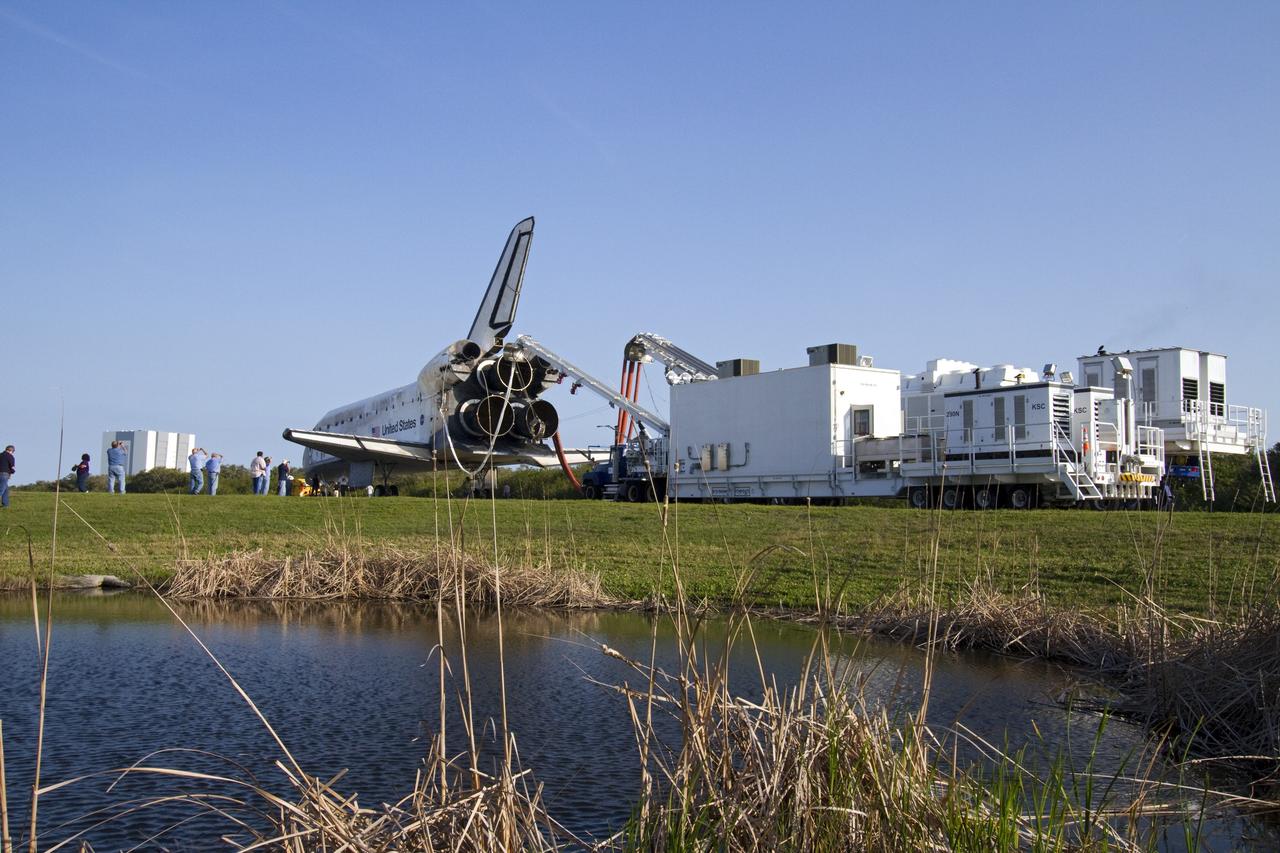
CAPE CANAVERAL, Fla. - Photographers are in position beside the towway to capture space shuttle Discovery and the landing convoy on its slow trip from the Shuttle Landing Facility to Orbiter Processing Facility-2 at NASA's Kennedy Space Center in Florida. A purge unit that pumps conditioned air into a shuttle after landing is connected to Discovery's aft end. In the background at left is the 525-foot-tall Vehicle Assembly Building. Discovery touched down on Runway 15 at 11:57 a.m., bringing an end to its 39th and final spaceflight mission, STS-133. Discovery and its six-member STS-133 crew delivered the Permanent Multipurpose Module, packed with supplies and critical spare parts, as well as Robonaut 2, the dexterous humanoid astronaut helper, to the International Space Station. Inside the processing facility, Discovery will be prepared for future public display. Photo credit: NASA/Jack Pfaller