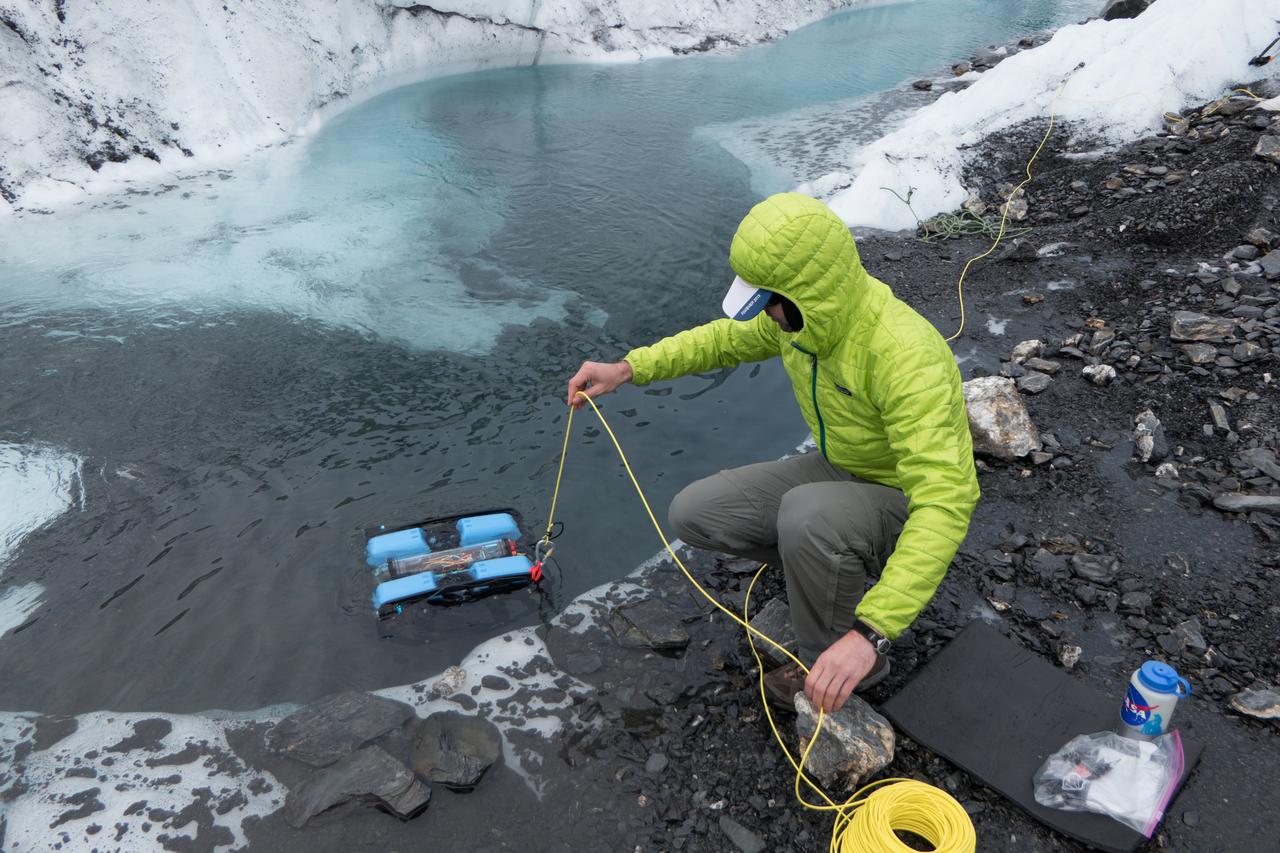
JPL engineer Andy Klesh lowers a robotic submersible into a moulin. Klesh and JPL's John Leichty used robots and probes to explore the Matanuska Glacier in Alaska this past July. Image Credit: NASA/JPL-Caltech
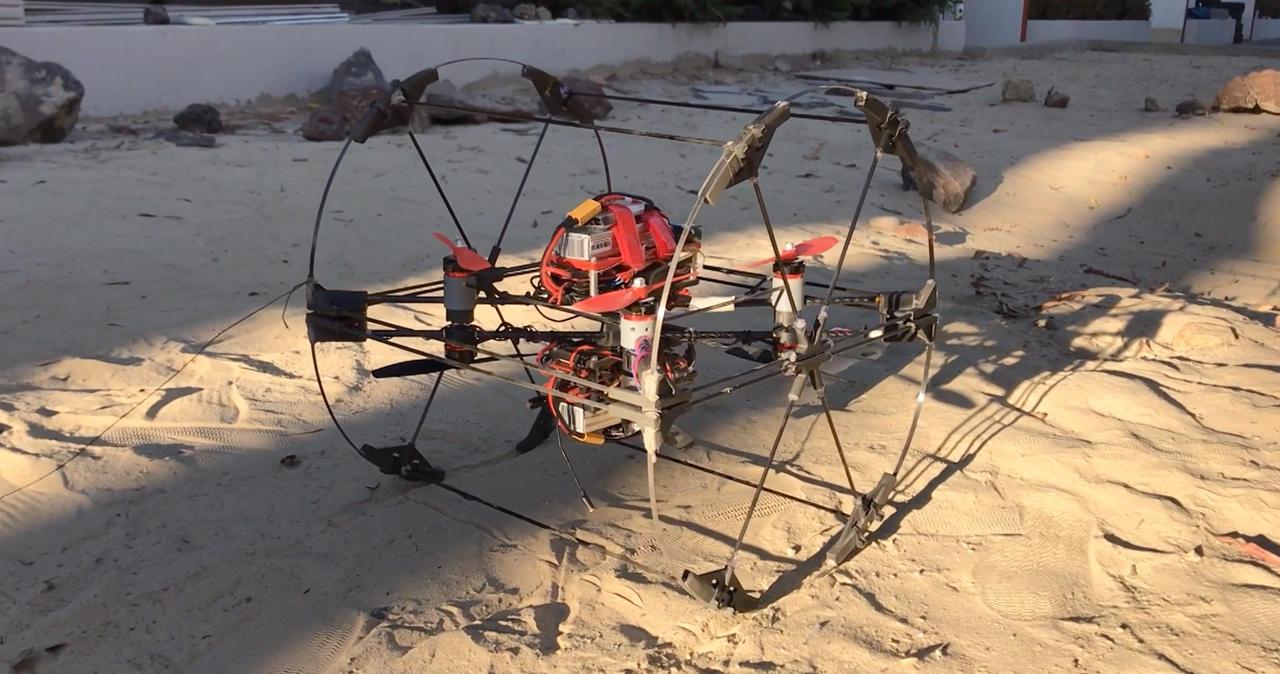
A prototype of the transforming robot Shapeshifter is tested in the robotics yard at NASA's Jet Propulsion Laboratory. Shapeshifter is made of smaller robots that can morph into rolling spheres, flying drones, swimming submersibles and more. Shapeshifter is a developing concept for a transformational vehicle to explore treacherous, distant worlds. The flying amphibious robot is part of the early-stage research program NASA Innovative Advanced Concepts (NIAC), which offers several phases of funding to visionary concepts, helping turn ideas that sound like science fiction into science fact. JPL Principle Investigator Ali Agha envisions Shapeshifter as a mission to Saturn's moon Titan, the only other world in the solar system known to have liquid in the form of methane lakes, rivers and seas on its surface. https://photojournal.jpl.nasa.gov/catalog/PIA23433
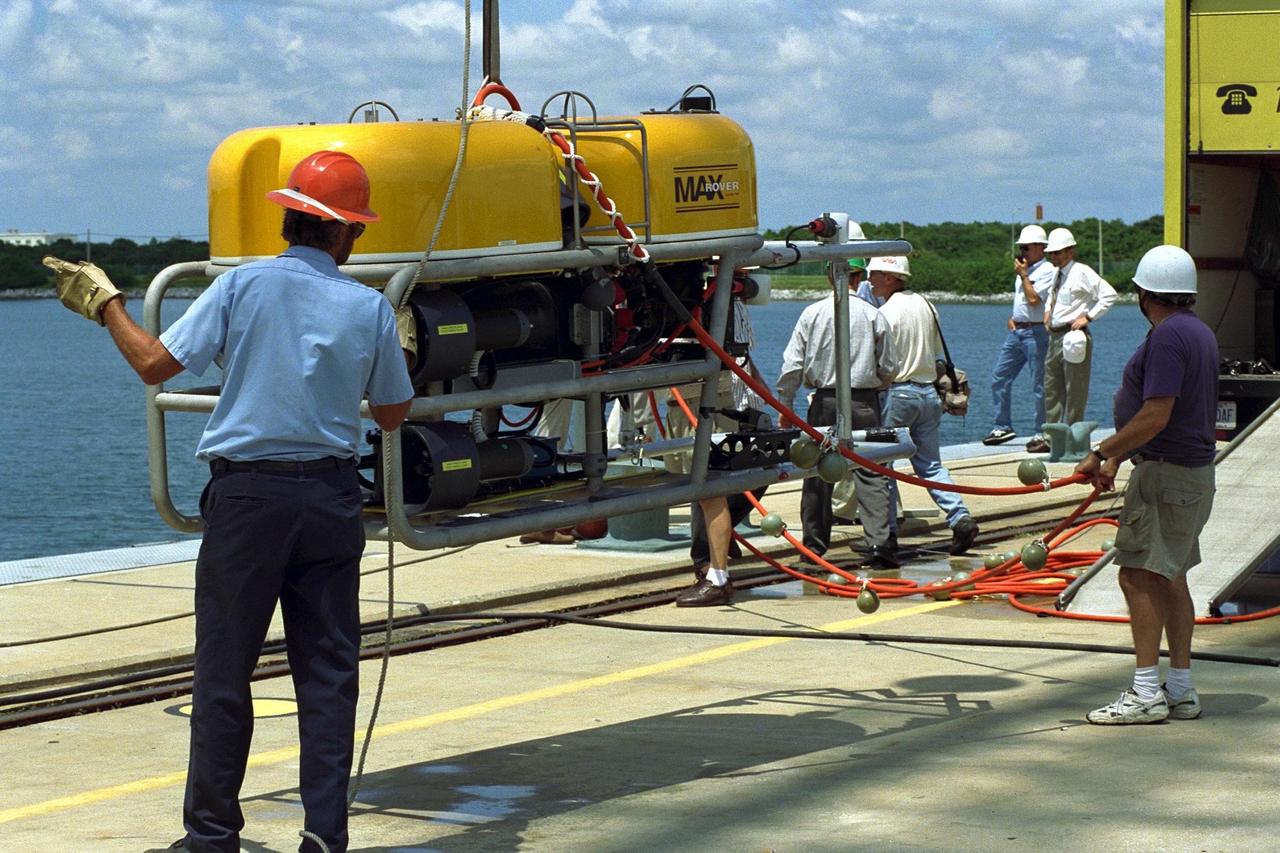
KENNEDY SPACE CENTER, FLA. -- Kennedy Space Center's Advanced Systems Development organization conducts a test of an unmanned robotic submersible to evaluate its ability to assist divers in the task of recovering spent solid rocket boosters (SRBs) in the Atlantic Ocean. NASA and contractor Deep Sea Systems of Falmouth, Mass., demonstrated the Max Rover submersible at Port Canaveral's Trident pier. The fact-finding tests are part of NASA's effort to make SRB recovery operations safer and less strenuous

KENNEDY SPACE CENTER, FLA. -- Kennedy Space Center's Advanced Systems Development organization conducts a test of an unmanned robotic submersible to evaluate its ability to assist divers in the task of recovering spent solid rocket boosters (SRBs) in the Atlantic Ocean. NASA and contractor Deep Sea Systems of Falmouth, Mass., demonstrated the Max Rover submersible at Port Canaveral's Trident pier. The fact-finding tests are part of NASA's effort to make SRB recovery operations safer and less strenuous
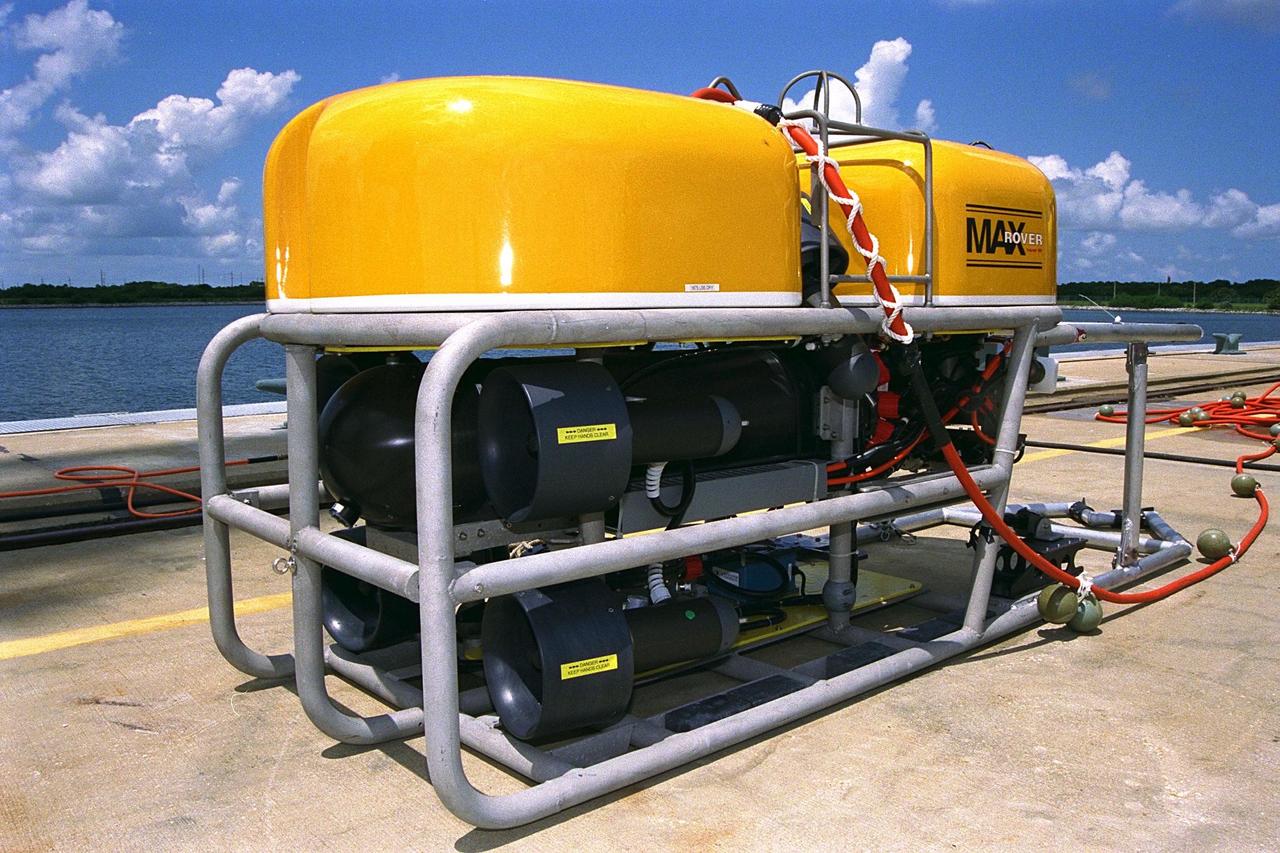
KENNEDY SPACE CENTER, FLA. -- Kennedy Space Center's Advanced Systems Development organization conducts a test of an unmanned robotic submersible to evaluate its ability to assist divers in the task of recovering spent solid rocket boosters (SRBs) in the Atlantic Ocean. NASA and contractor Deep Sea Systems of Falmouth, Mass., demonstrated the Max Rover submersible at Port Canaveral's Trident pier. The fact-finding tests are part of NASA's effort to make SRB recovery operations safer and less strenuous
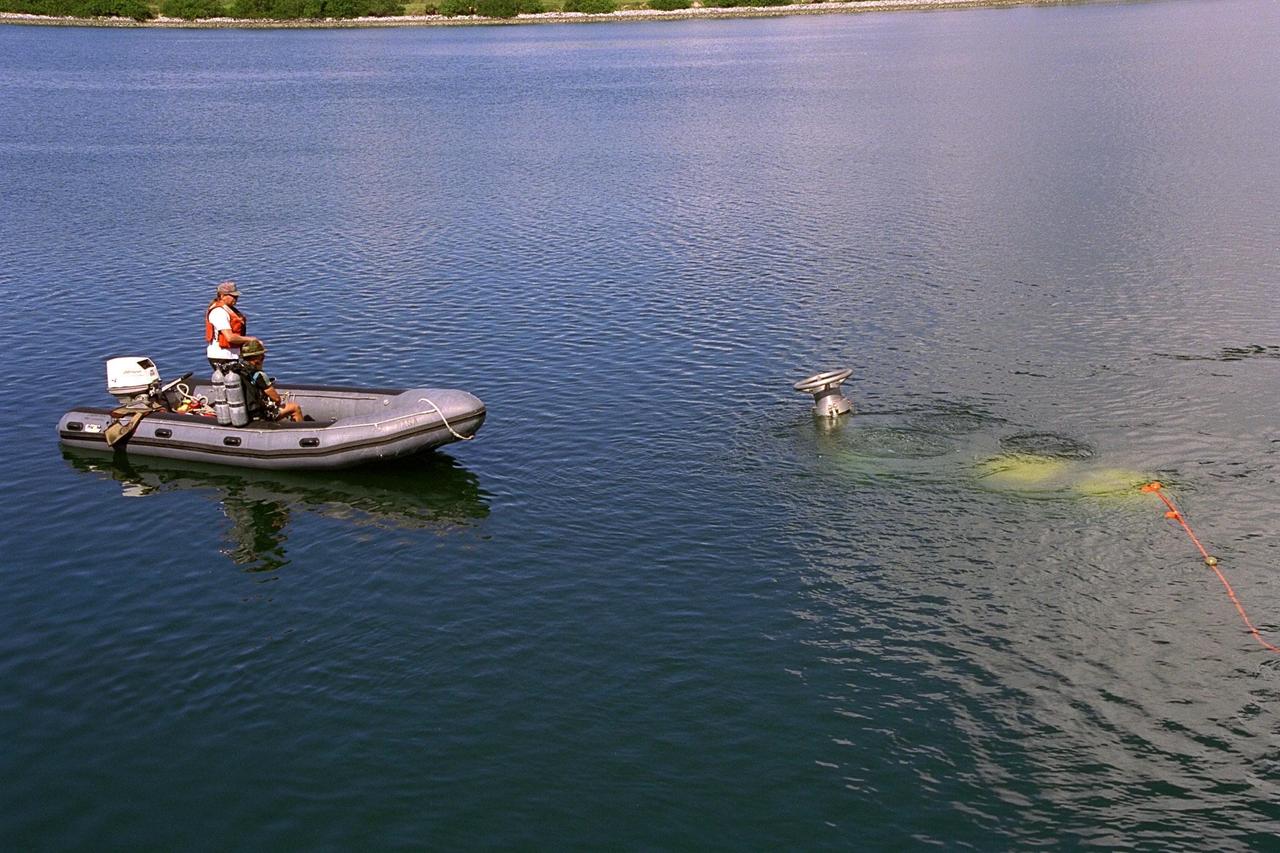
KENNEDY SPACE CENTER, FLA. -- A scuba diver stands by as the unmanned Max Rover submersible goes down to insert a Diver Operated Plug (DOP) into an aft nozzle like the ones used on the Space Shuttle's solid rocket boosters (SRBs). NASA and contractor Deep Sea Systems demonstrated the submersible at Port Canaveral's Trident pier. Kennedy Space Center's SRB retrieval team and Advanced Systems Development laboratory staff hope that the new robotic technology will make the process of inserting the plug into spent SRBs safer and less strenuous. Currently, scuba divers manually insert the DOP into the aft nozzle of a jettisoned SRB 60 to 70 feet below the surface of the Atlantic Ocean. After the plug is installed, water is pumped out of the booster allowing it to float horizontally. It is then towed back to Hangar AF at Cape Canaveral Air Station for refurbishment. Deep Sea Systems of Falmouth, Mass., built the submersible for NASA
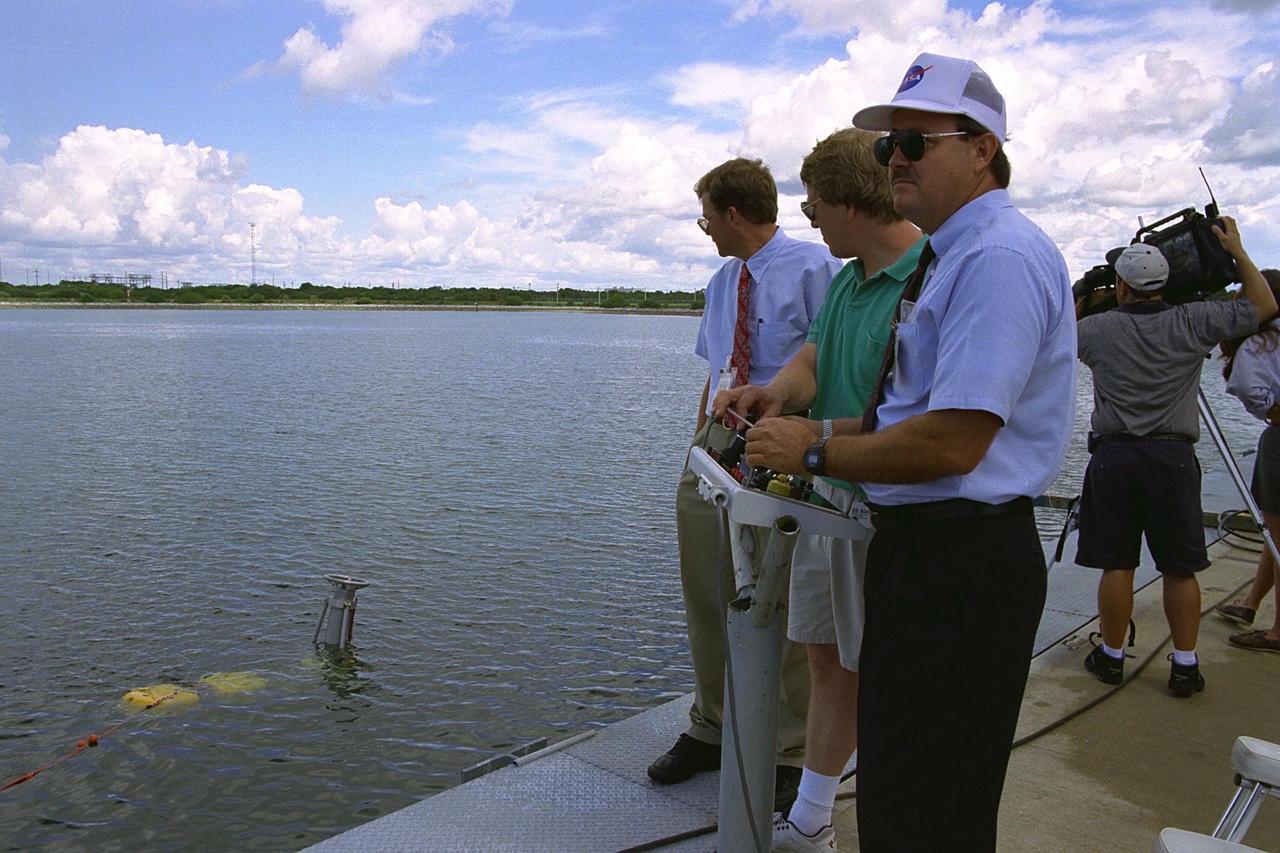
KENNEDY SPACE CENTER, FLA. -- Thomas Lippitt of NASA's Advanced Systems Development (ASD) laboratory observes robotic operations as Chris Nicholson, owner of Deep Sea Systems, and Bill Jones of NASA's ASD laboratory operate the unmanned robotic submersible recovery system, known as Max Rover, during a test of the system at the Trident Pier at Port Canaveral. The submersible is seen in the water with the Diver Operated Plug (DOP). Kennedy Space Center's solid rocket booster (SRB) retrieval team and ASD laboratory staff hope that the new robotic technology will make the process of inserting the plug safer and less strenuous. Currently, scuba divers manually insert the DOP into the aft nozzle of a jettisoned SRB 60 to 70 feet below the surface of the Atlantic Ocean. After the plug is installed, water is pumped out of the booster allowing it to float horizontally. It is then towed back to Hangar AF at Cape Canaveral Air Station for refurbishment. Deep Sea Systems of Falmouth, Mass., built the submersible for NASA
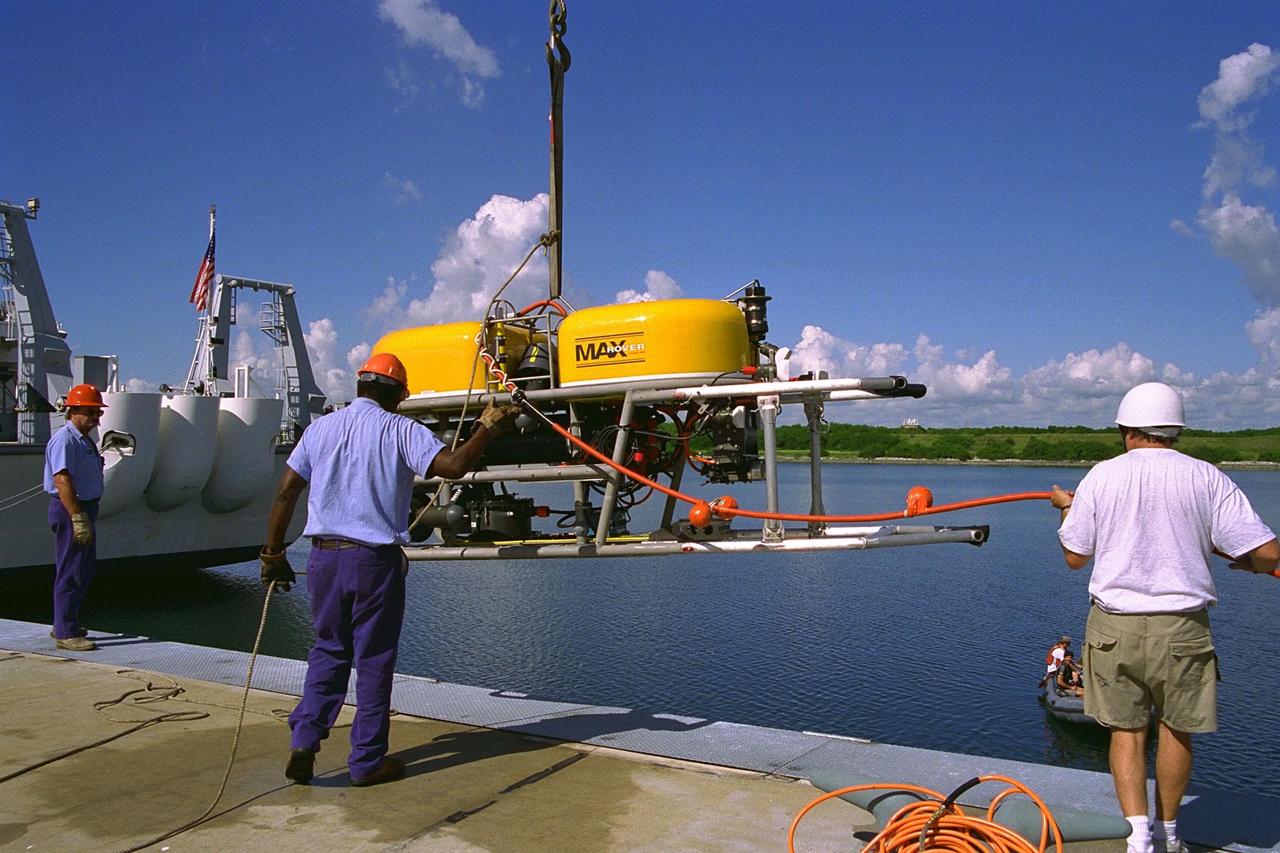
KENNEDY SPACE CENTER, FLA. -- Technicians lower the unmanned robotic submersible recovery system, known as Max Rover, into the water at the Trident Pier at Port Canaveral during a test of the system. Kennedy Space Center's solid rocket booster (SRB) retrieval team and Advanced Systems Development laboratory staff hope that the new robotic technology will make the process of inserting the Diver Operated Plug (DOP) into the aft nozzle of a spent SRB safer and less strenuous. Currently, scuba divers manually insert the DOP into the aft nozzle of a jettisoned SRB 60 to 70 feet below the surface of the Atlantic Ocean. After the plug is installed, water is pumped out of the booster allowing it to float horizontally. It is then towed back to Hangar AF at Cape Canaveral Air Station. Deep Sea Systems of Falmouth, Mass., built the submersible for NASA
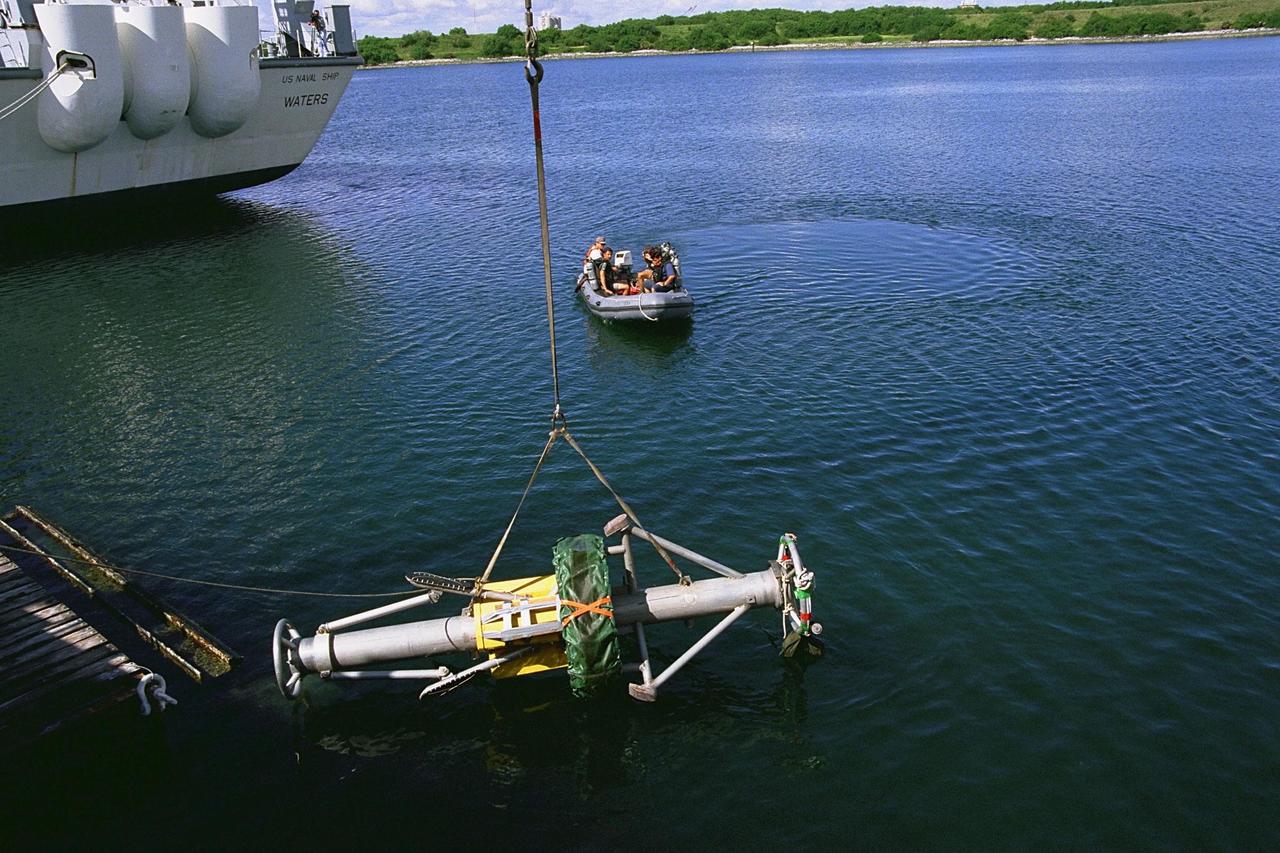
KENNEDY SPACE CENTER, FLA. -- As scuba divers stand by, a Diver Operated Plug (DOP) is lowered into the water at the Trident Pier at Port Canaveral during a test of the unmanned robotic submersible recovery system, known as Max Rover. Kennedy Space Center's solid rocket booster (SRB) retrieval team and Advanced Systems Development laboratory staff hope that the new robotic technology will make the process of inserting the plug into spent SRBs safer and less strenuous. Currently, scuba divers manually insert the DOP into the aft nozzle of a jettisoned SRB 60 to 70 feet below the surface of the Atlantic Ocean. After the plug is installed, water is pumped out of the booster allowing it to float horizontally. It is then towed back to Hangar AF at Cape Canaveral Air Station for refurbishment. Deep Sea Systems of Falmouth, Mass., built the submersible for NASA