At Vandenberg Air Force Base in California, the third stage of the Orbital Sciences Pegasus XL rocket is being mated to the AIM spacecraft, at right. AIM, which stands for Aeronomy of Ice in the Mesosphere, is being prepared for integrated testing and a flight simulation. The AIM spacecraft will fly three instruments designed to study polar mesospheric clouds located at the edge of space, 50 miles above the Earth's surface in the coldest part of the planet's atmosphere. The mission's primary goal is to explain why these clouds form and what has caused them to become brighter and more numerous and appear at lower latitudes in recent years. AIM's results will provide the basis for the study of long-term variability in the mesospheric climate and its relationship to global climate change. Launch from the Pegasus XL rocket is scheduled for April 25.

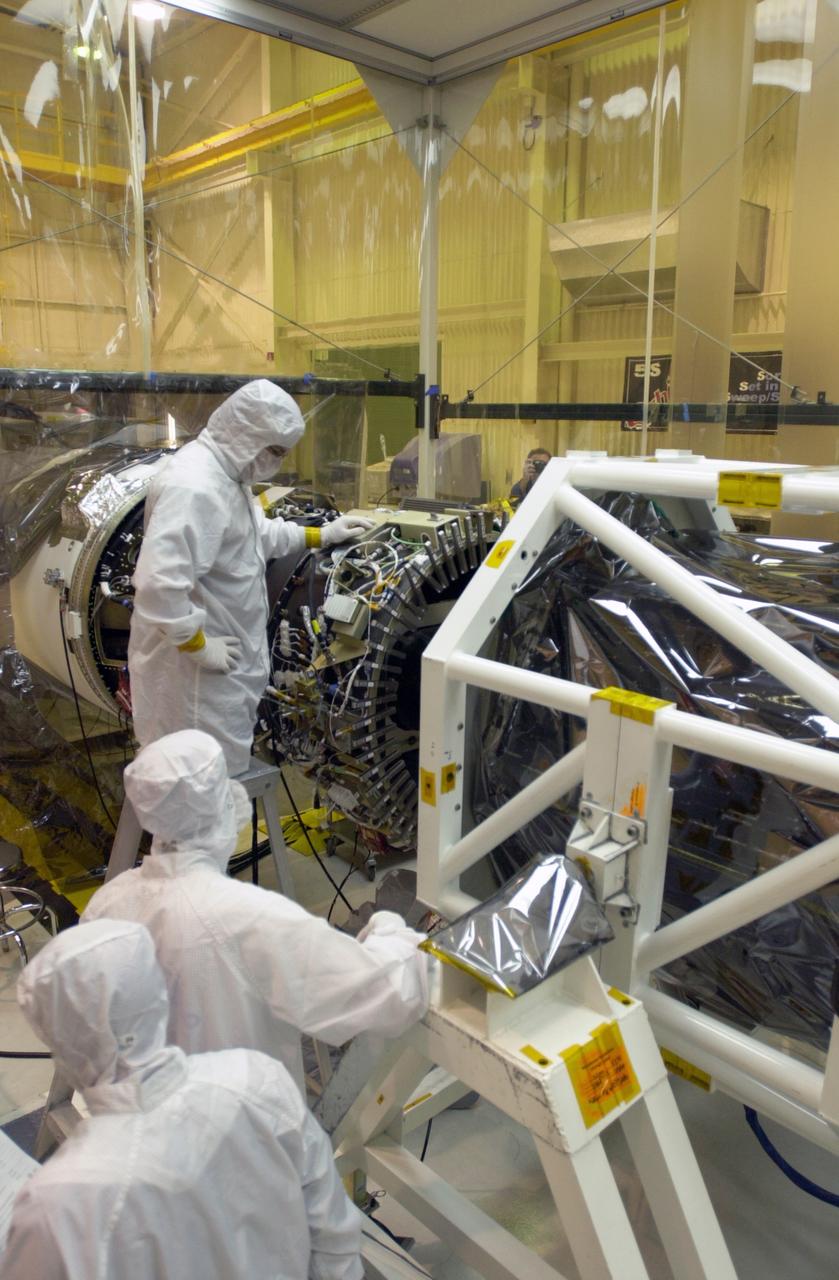
At Vandenberg Air Force Base in California, technicians prepare to mate the AIM spacecraft (at left) to the SoftRide isolation system on the Orbital Sciences Pegasus XL rocket. The Cosmic Dust Experiment surfaces can be clearly seen as 12 rectangular areas on the aft portion of the spacecraft. AIM, which stands for Aeronomy of Ice in the Mesosphere, is being prepared for integrated testing and a flight simulation. The AIM spacecraft will fly three instruments designed to study polar mesospheric clouds located at the edge of space, 50 miles above the Earth's surface in the coldest part of the planet's atmosphere. The mission's primary goal is to explain why these clouds form and what has caused them to become brighter and more numerous and appear at lower latitudes in recent years. AIM's results will provide the basis for the study of long-term variability in the mesospheric climate and its relationship to global climate change. Launch from the Pegasus XL rocket is scheduled for April 25.
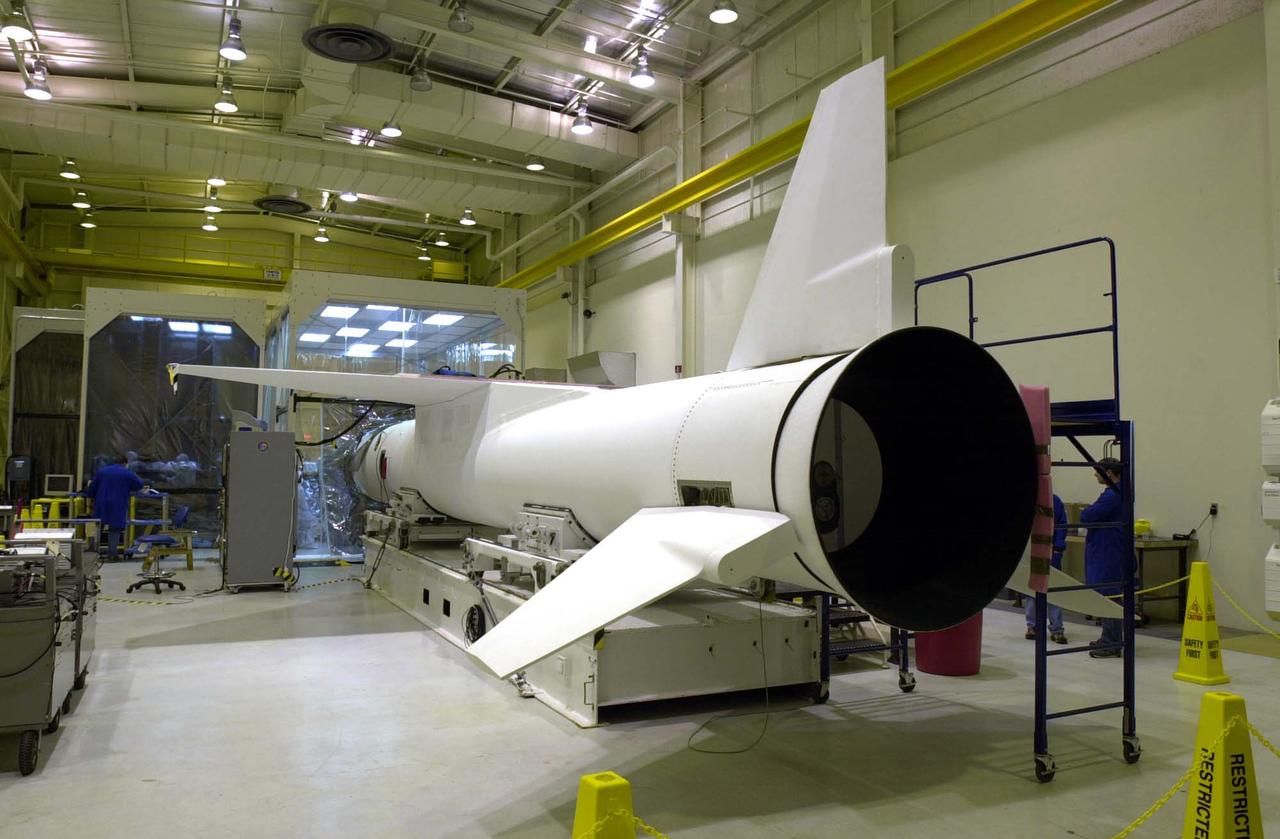
At Vandenberg Air Force Base in California, the Orbital Sciences Pegasus XL rocket is ready for mating to the AIM spacecraft. AIM, which stands for Aeronomy of Ice in the Mesosphere, is being prepared for integrated testing and a flight simulation. The AIM spacecraft will fly three instruments designed to study polar mesospheric clouds located at the edge of space, 50 miles above the Earth's surface in the coldest part of the planet's atmosphere. The mission's primary goal is to explain why these clouds form and what has caused them to become brighter and more numerous and appear at lower latitudes in recent years. AIM's results will provide the basis for the study of long-term variability in the mesospheric climate and its relationship to global climate change. Launch from the Pegasus XL rocket is scheduled for April 25.
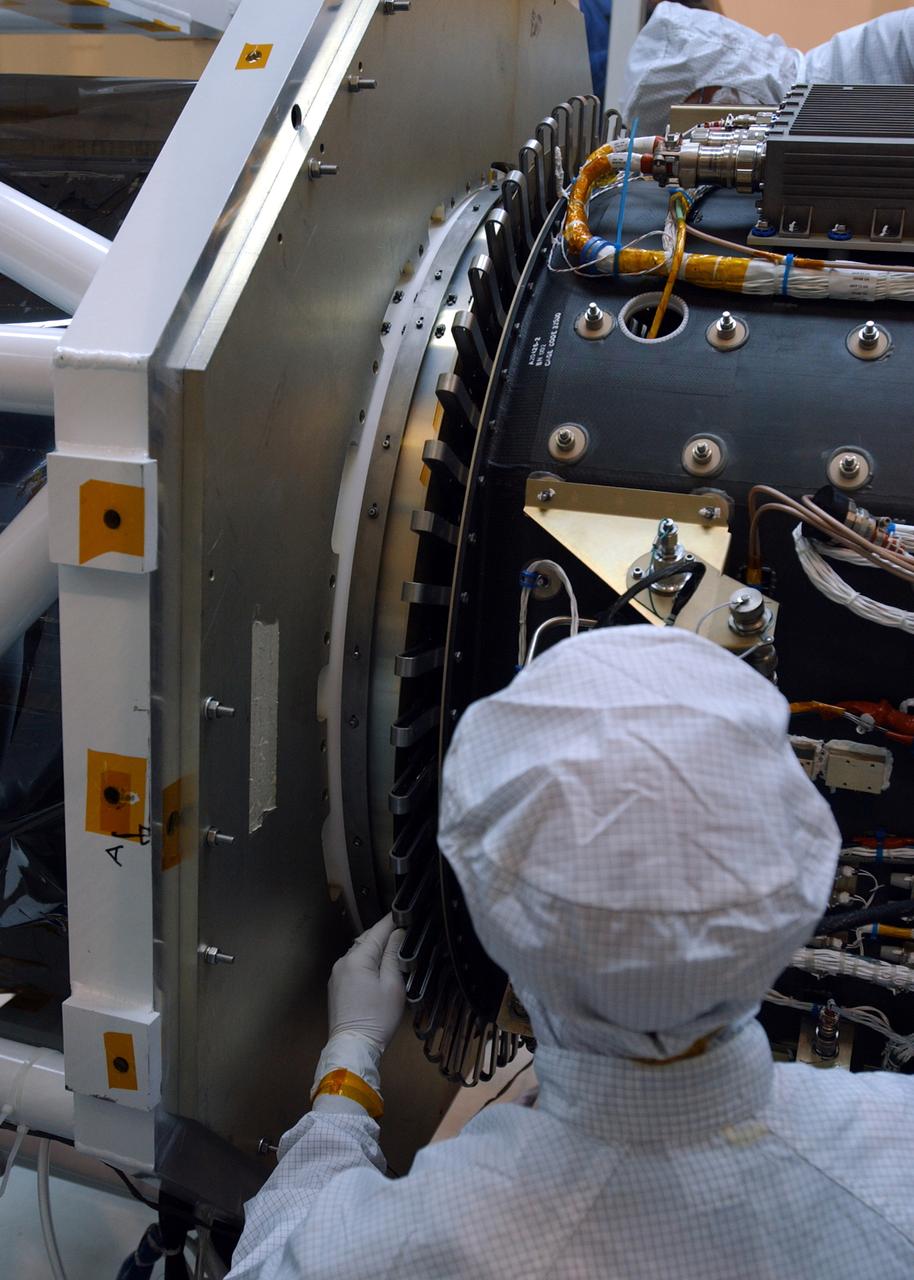
At Vandenberg Air Force Base in California, a technician mates the AIM spacecraft, at left, to the Orbital Sciences Pegasus XL rocket, at right. AIM, which stands for Aeronomy of Ice in the Mesosphere, is being prepared for integrated testing and a flight simulation. The AIM spacecraft will fly three instruments designed to study polar mesospheric clouds located at the edge of space, 50 miles above the Earth's surface in the coldest part of the planet's atmosphere. The mission's primary goal is to explain why these clouds form and what has caused them to become brighter and more numerous and appear at lower latitudes in recent years. AIM's results will provide the basis for the study of long-term variability in the mesospheric climate and its relationship to global climate change. Launch from the Pegasus XL rocket is scheduled for April 25.
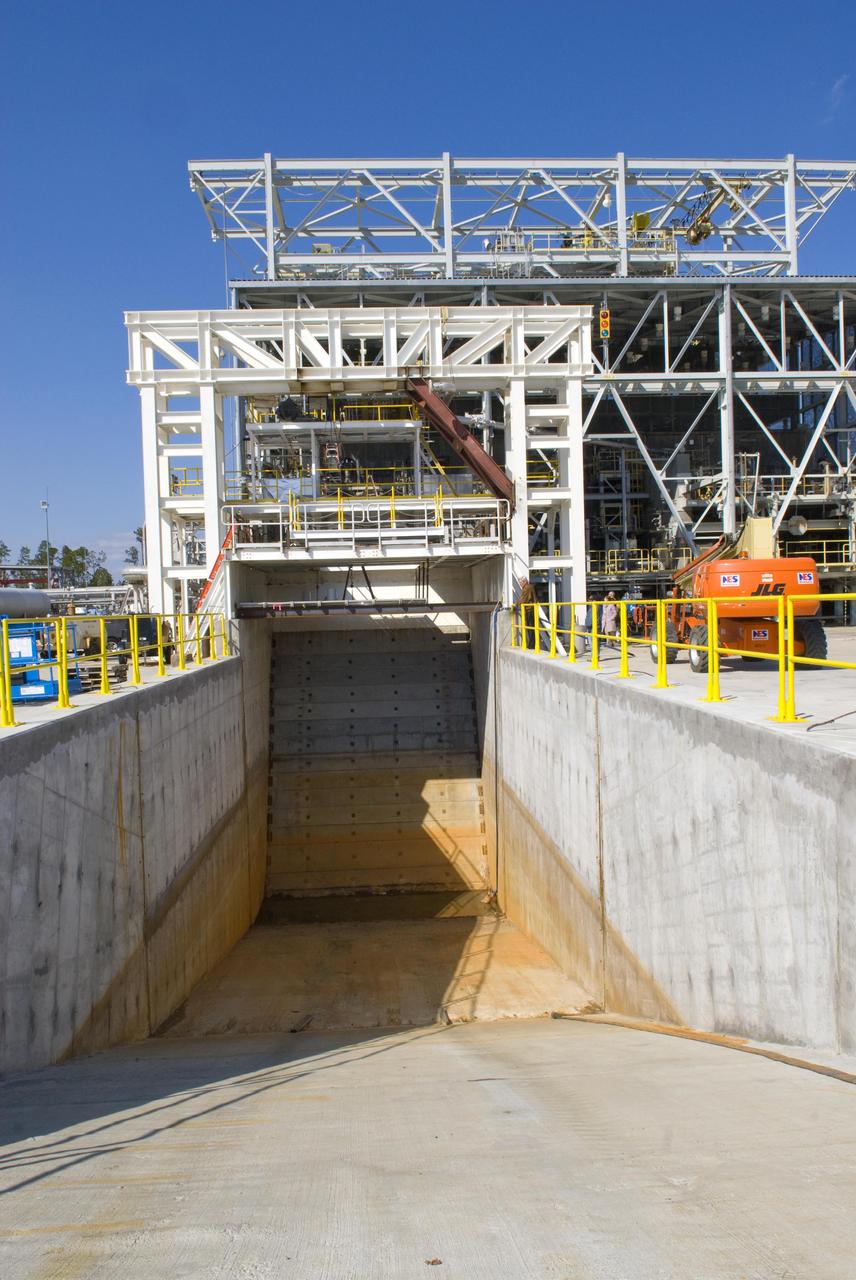
Operators at NASA's John C. Stennis Space Center are completing modifications to the E-1 Test Stand to begin testing Aerojet AJ26 rocket engines in early summer of 2010. Modifications include construction of a 27-foot-deep flame deflector trench. The AJ26 rocket engines will be used to power Orbital Sciences Corp.'s Taurus II space vehicles to provide commercial cargo transportation missions to the International Space Station for NASA. Stennis has partnered with Orbital to test all engines for the transport missions.
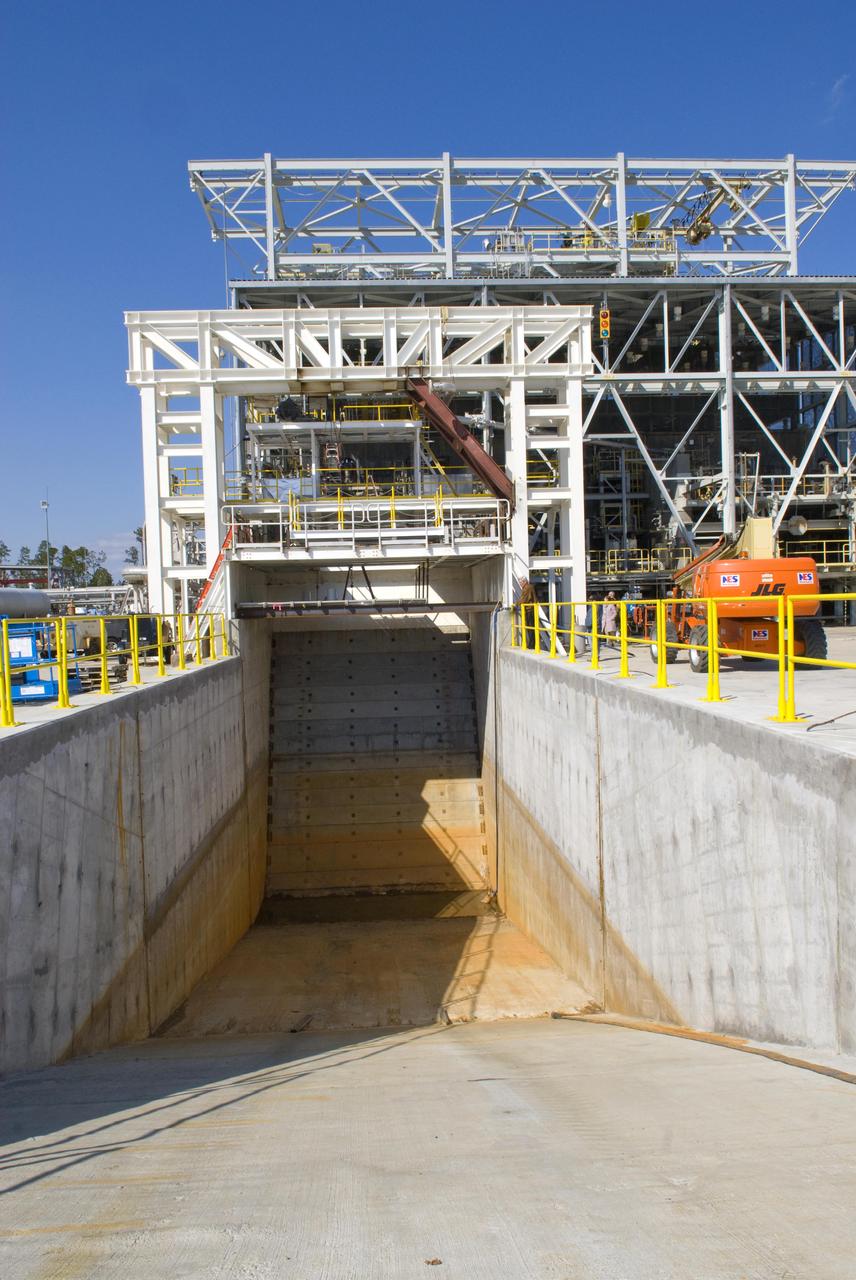
Operators at NASA's John C. Stennis Space Center are completing modifications to the E-1 Test Stand to begin testing Aerojet AJ26 rocket engines in early summer of 2010. Modifications include construction of a 27-foot-deep flame deflector trench. The AJ26 rocket engines will be used to power Orbital Sciences Corp.'s Taurus II space vehicles to provide commercial cargo transportation missions to the International Space Station for NASA. Stennis has partnered with Orbital to test all engines for the transport missions.
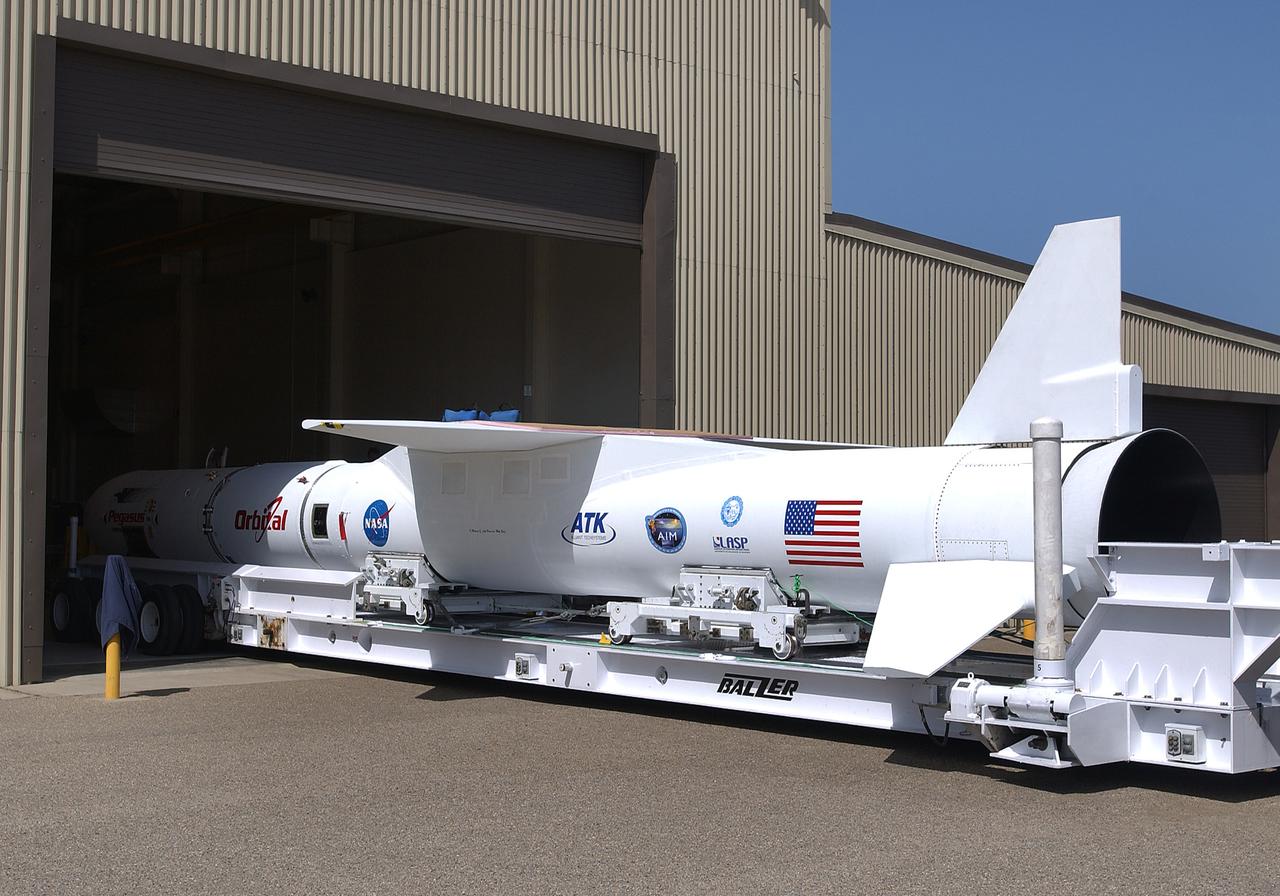
The mated Pegasus XL rocket - AIM spacecraft leaves Building 1655 at Vandenberg Air Force Base in California. The rocket will be transferred to a waiting Orbital Sciences Stargazer L-1011 aircraft for launch. AIM, which stands for Aeronomy of Ice in the Mesosphere, is being prepared for integrated testing and a flight simulation. The AIM spacecraft will fly three instruments designed to study polar mesospheric clouds located at the edge of space, 50 miles above the Earth's surface in the coldest part of the planet's atmosphere. The mission's primary goal is to explain why these clouds form and what has caused them to become brighter and more numerous and appear at lower latitudes in recent years. AIM's results will provide the basis for the study of long-term variability in the mesospheric climate and its relationship to global climate change. Launch is scheduled for April 25.
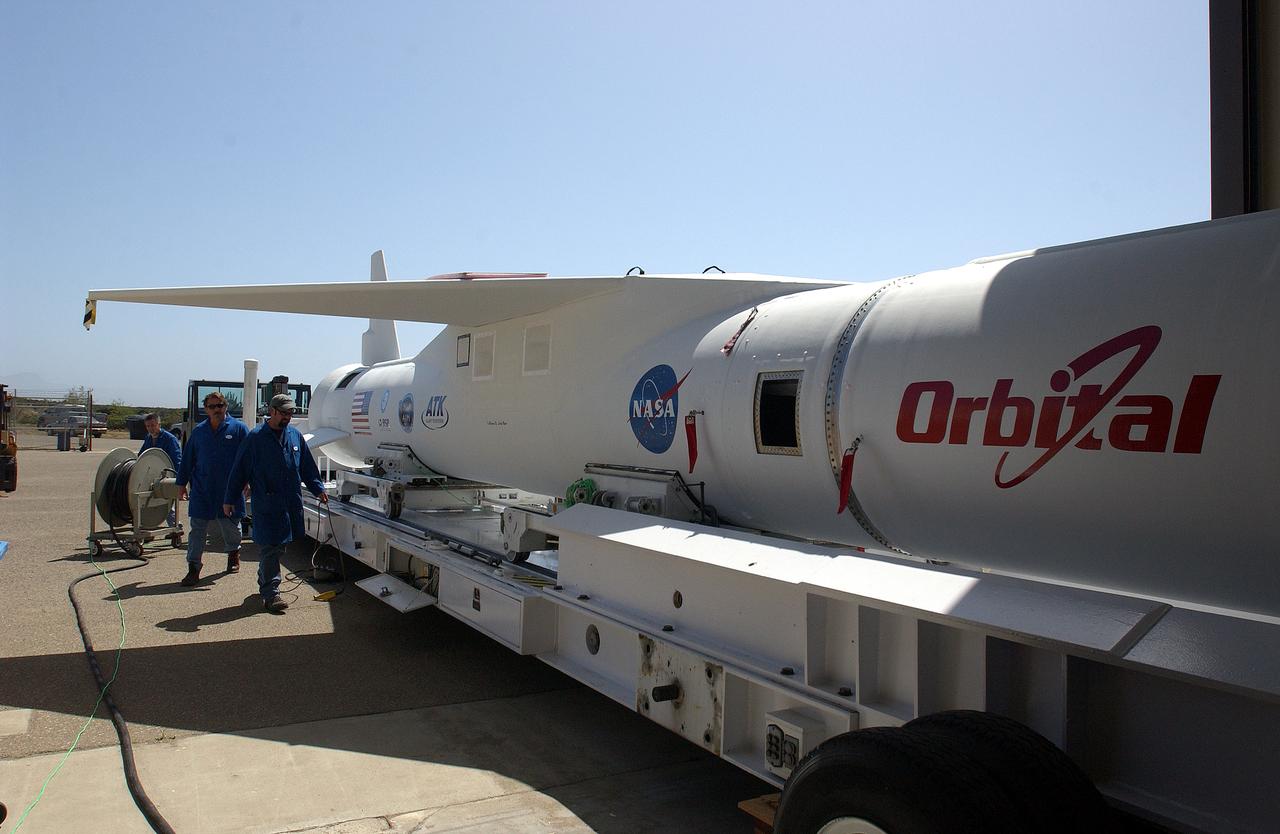
The mated Pegasus XL rocket - AIM spacecraft is secured onto a transporter at Vandenberg Air Force Base in California. The rocket will be transferred to a waiting Orbital Sciences Stargazer L-1011 aircraft for launch. AIM, which stands for Aeronomy of Ice in the Mesosphere, is being prepared for integrated testing and a flight simulation. The AIM spacecraft will fly three instruments designed to study polar mesospheric clouds located at the edge of space, 50 miles above the Earth's surface in the coldest part of the planet's atmosphere. The mission's primary goal is to explain why these clouds form and what has caused them to become brighter and more numerous and appear at lower latitudes in recent years. AIM's results will provide the basis for the study of long-term variability in the mesospheric climate and its relationship to global climate change. Launch is scheduled for April 25.

A supermoon rises over Huntsville, Alabama, home to NASA’s Marshall Space Flight Center, Aug. 19. Visible through Wednesday, Aug. 21, the full Moon is both a supermoon and a Blue Moon. Supermoons are the biggest and brightest full Moons of the year because the Moon is within 90% of its closest point to Earth. While not blue in color, the third full Moon in a season with four full Moons is called a “Blue Moon.” Huntsville is known as the “Rocket City” because of its proximity to NASA Marshall, which manages vital propulsion systems and hardware, launch vehicles, engineering technologies, and cutting-edge science for the agency.

A supermoon rises over Huntsville, Alabama, home to NASA’s Marshall Space Flight Center, Aug. 19. Visible through Wednesday, Aug. 21, the full Moon is both a supermoon and a Blue Moon. Supermoons are the biggest and brightest full Moons of the year because the Moon is within 90% of its closest point to Earth. While not blue in color, the third full Moon in a season with four full Moons is called a “Blue Moon.” Huntsville is known as the “Rocket City” because of its proximity to NASA Marshall, which manages vital propulsion systems and hardware, launch vehicles, engineering technologies, and cutting-edge science for the agency.

A supermoon rises over Huntsville, Alabama, home to NASA’s Marshall Space Flight Center, Aug. 19. Visible through Wednesday, Aug. 21, the full Moon is both a supermoon and a Blue Moon. Supermoons are the biggest and brightest full Moons of the year because the Moon is within 90% of its closest point to Earth. While not blue in color, the third full Moon in a season with four full Moons is called a “Blue Moon.” Huntsville is known as the “Rocket City” because of its proximity to NASA Marshall, which manages vital propulsion systems and hardware, launch vehicles, engineering technologies, and cutting-edge science for the agency.
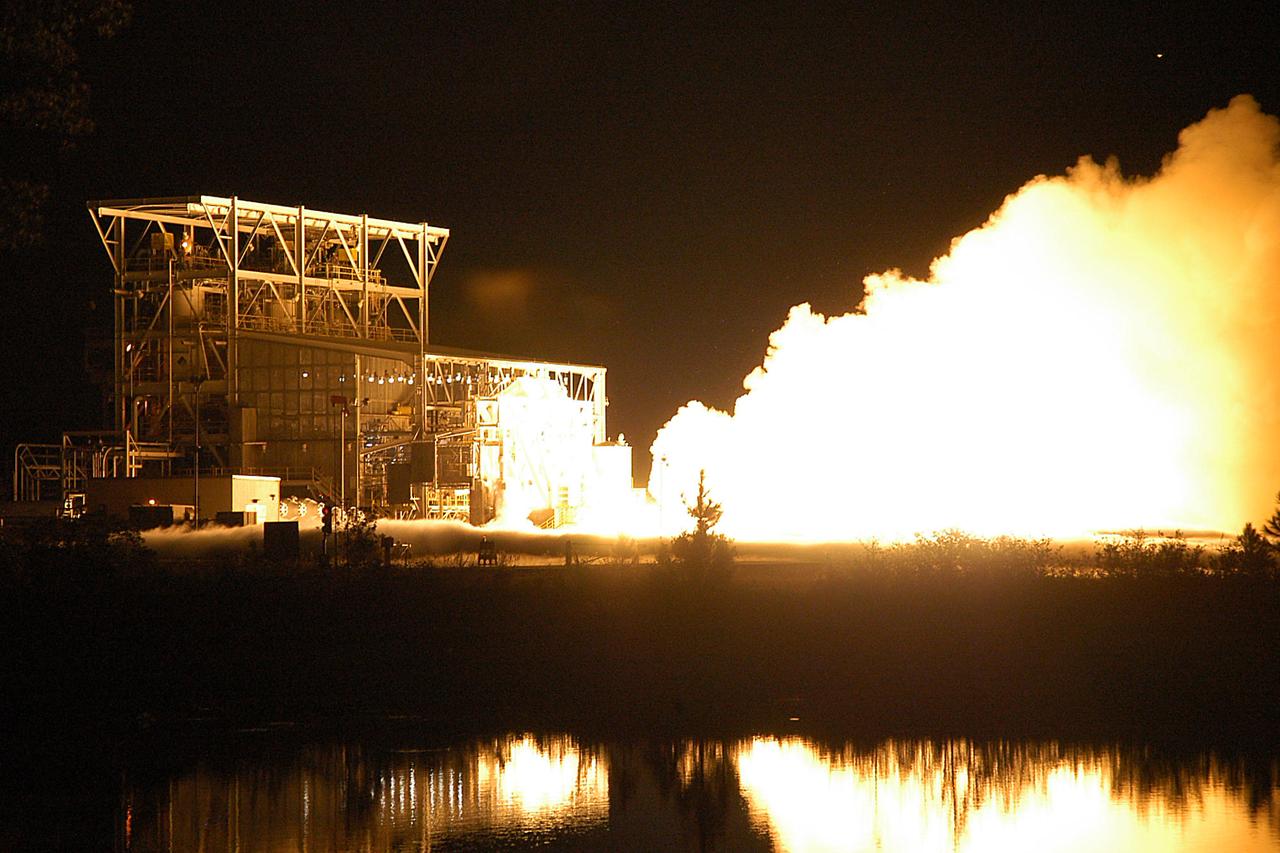
A team of engineers at Stennis Space Center conducted a test firing of an Aerojet AJ26 flight engine Nov. 17, providing continued support to Orbital Sciences Corporation as it prepares to launch commercial cargo missions to the International Space Station. AJ26 engines will power Orbital's Taurus II rocket on the missions.

The mated Pegasus XL rocket - AIM spacecraft is moved onto a transporter in Building 1655 at Vandenberg Air Force Base in California. The launch vehicle will be transferred to a waiting Orbital Sciences Stargazer L-1011 aircraft for launch. AIM, which stands for Aeronomy of Ice in the Mesosphere, is being prepared for integrated testing and a flight simulation. The AIM spacecraft will fly three instruments designed to study polar mesospheric clouds located at the edge of space, 50 miles above the Earth's surface in the coldest part of the planet's atmosphere. The mission's primary goal is to explain why these clouds form and what has caused them to become brighter and more numerous and appear at lower latitudes in recent years. AIM's results will provide the basis for the study of long-term variability in the mesospheric climate and its relationship to global climate change. Launch is scheduled for April 25.

NASA Administrator Charles Bolden poses with an all-girl engineering team that participated in the White House Science Fair. "Team Rocket Power" was one of 100 teams that qualified for last year’s Team America Rocketry Challenge (TARC). Nia'mani Robinson, 15, Jasmyn Logan, 15, and Rebecca Chapin-Ridgely, 17, gave up their weekends and free time after school to build and test their bright purple rocket, which is designed to launch to an altitude of about 750 ft, and then return a “payload” (an egg) to the ground safely. The fourth White House Science Fair was held at the White House on May 27, 2014 and included 100 students from more than 30 different states who competed in science, technology, engineering, and math (STEM) competitions. (Photo Credit: NASA/Aubrey Gemignani)
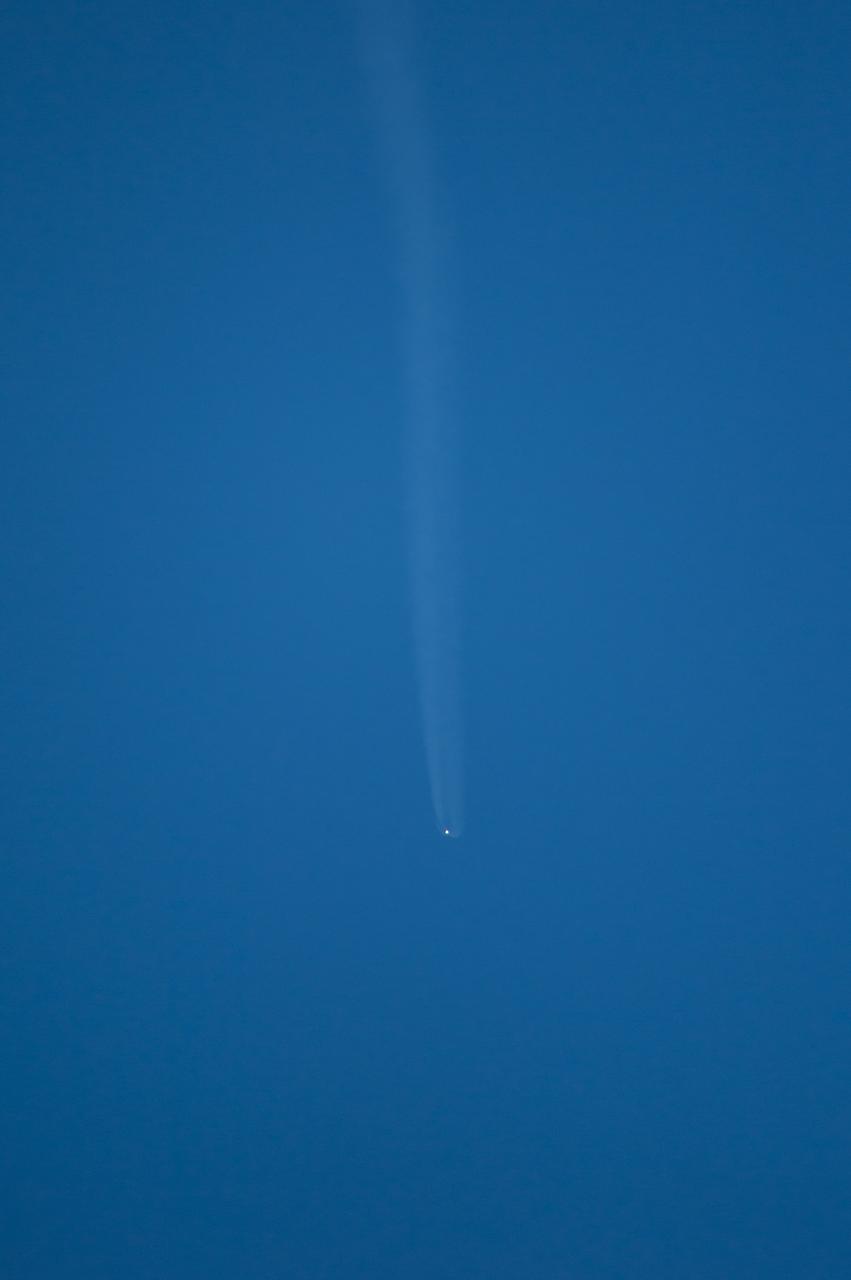
The Orbital Sciences Corporation Antares rocket is seen as it launches from Pad-0A of the Mid-Atlantic Regional Spaceport (MARS) at the NASA Wallops Flight Facility in Virginia, Sunday, April 21, 2013. The test launch marked the first flight of Antares and the first rocket launch from Pad-0A. The Antares rocket delivered the equivalent mass of a spacecraft, a so-called mass simulated payload, into Earth's orbit. Photo Credit: (NASA/Bill Ingalls)
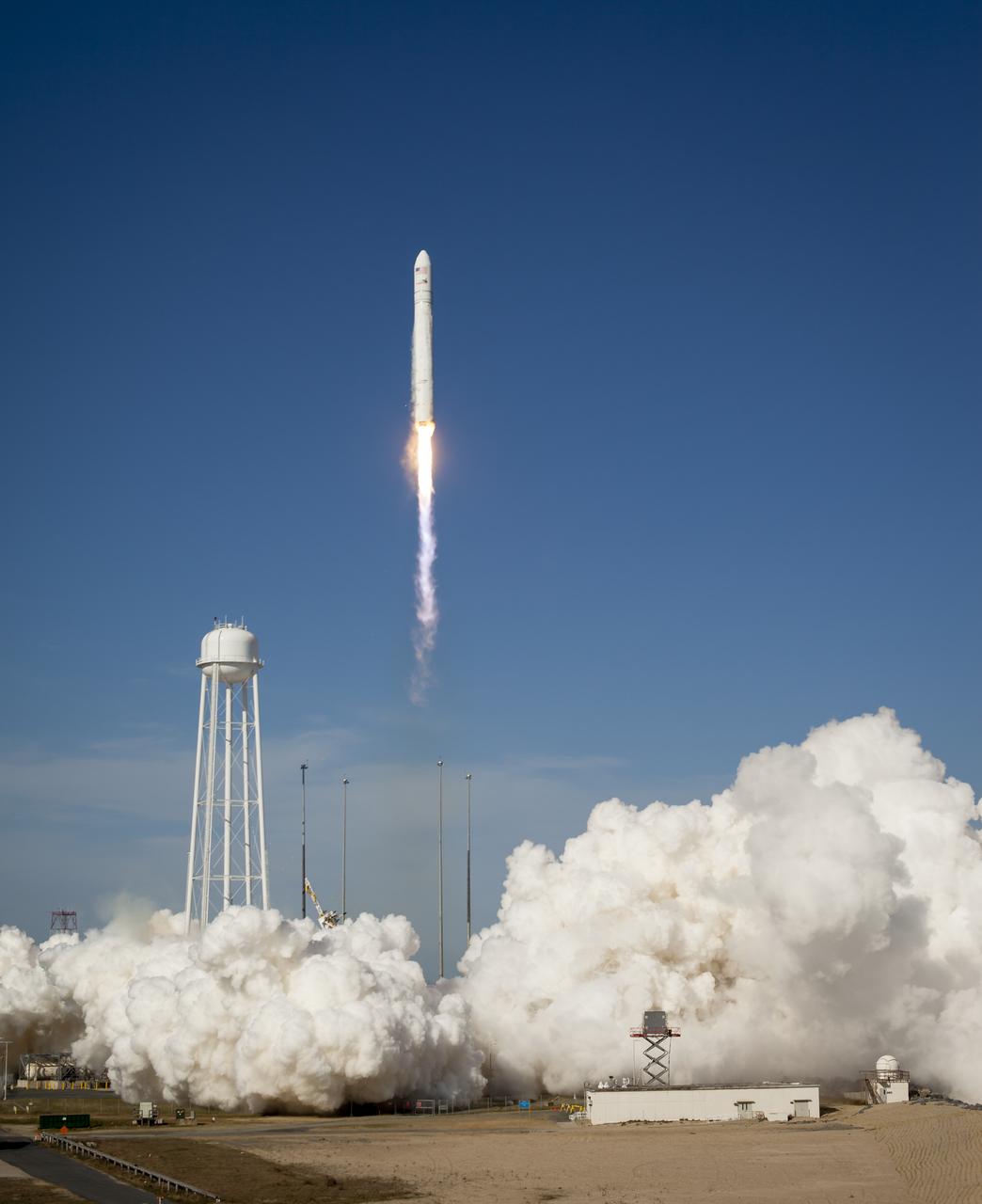
The Orbital Sciences Corporation Antares rocket is seen as it launches from Pad-0A of the Mid-Atlantic Regional Spaceport (MARS) at the NASA Wallops Flight Facility in Virginia, Sunday, April 21, 2013. The test launch marked the first flight of Antares and the first rocket launch from Pad-0A. The Antares rocket delivered the equivalent mass of a spacecraft, a so-called mass simulated payload, into Earth's orbit. Photo Credit: (NASA/Bill Ingalls)
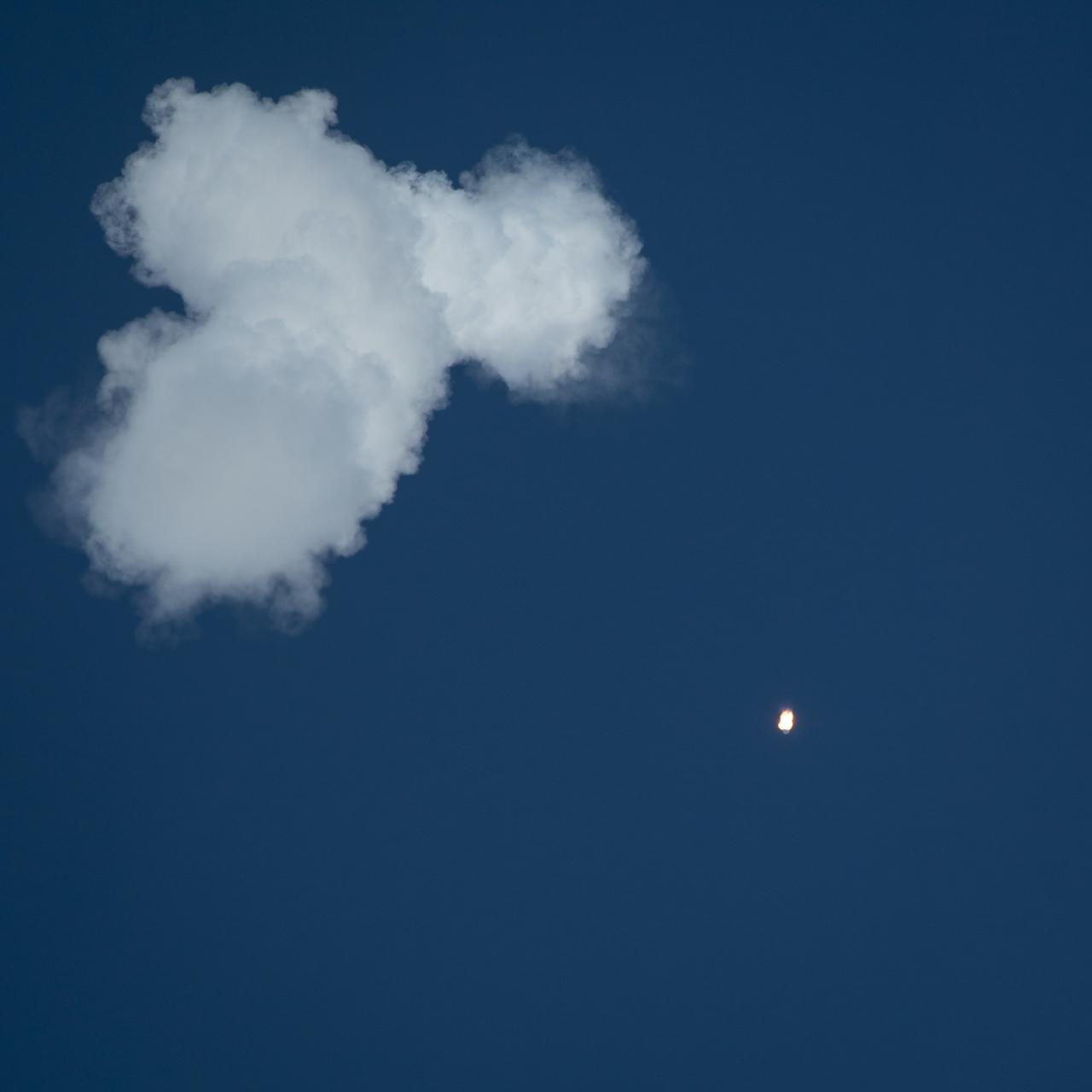
The Orbital Sciences Corporation Antares rocket is seen as it launches from Pad-0A of the Mid-Atlantic Regional Spaceport (MARS) at the NASA Wallops Flight Facility in Virginia, Sunday, April 21, 2013. The test launch marked the first flight of Antares and the first rocket launch from Pad-0A. The Antares rocket delivered the equivalent mass of a spacecraft, a so-called mass simulated payload, into Earth's orbit. Photo Credit: (NASA/Bill Ingalls)

The Orbital Sciences Corporation Antares rocket is seen as it launches from Pad-0A of the Mid-Atlantic Regional Spaceport (MARS) at the NASA Wallops Flight Facility in Virginia, Sunday, April 21, 2013. The test launch marked the first flight of Antares and the first rocket launch from Pad-0A. The Antares rocket delivered the equivalent mass of a spacecraft, a so-called mass simulated payload, into Earth's orbit. Photo Credit: (NASA/Bill Ingalls)
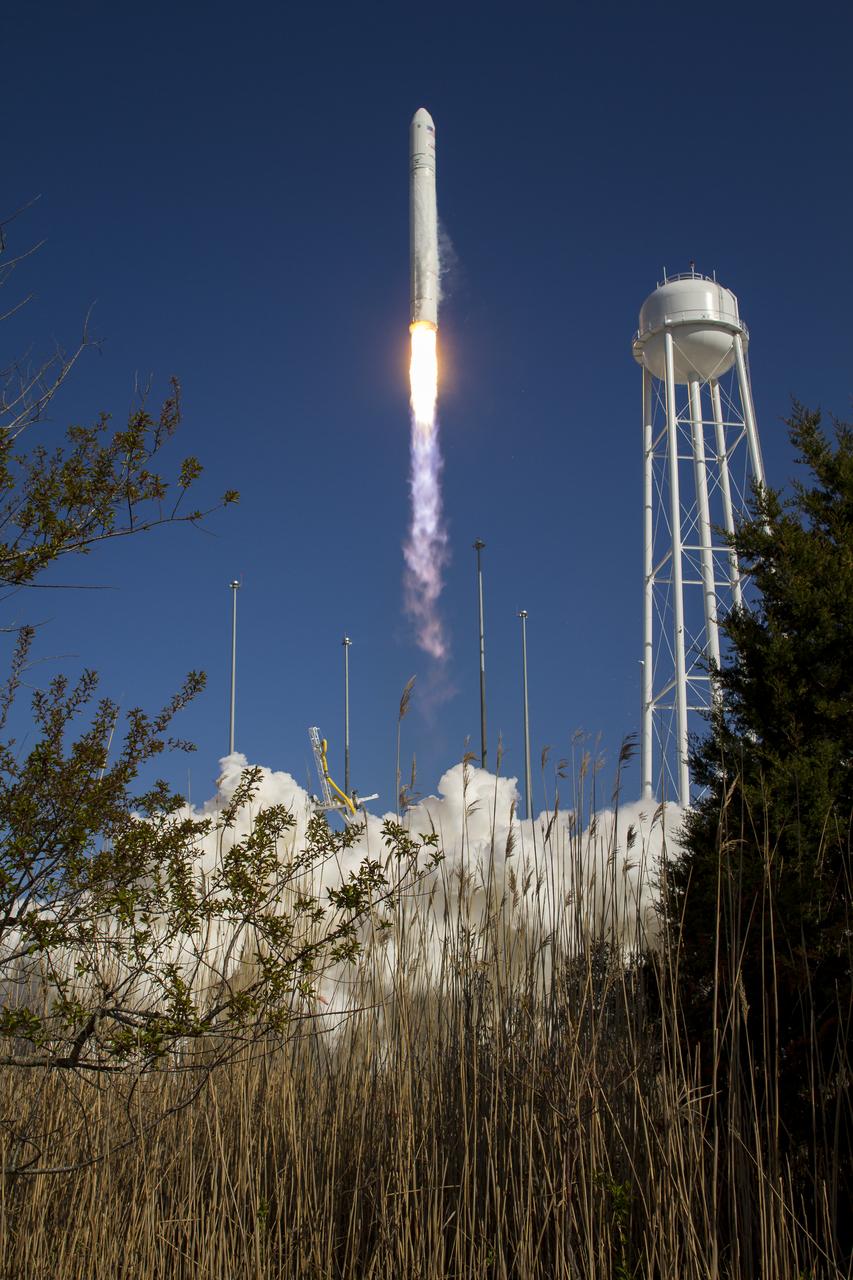
The Orbital Sciences Corporation Antares rocket is seen as it launches from Pad-0A of the Mid-Atlantic Regional Spaceport (MARS) at the NASA Wallops Flight Facility in Virginia, Sunday, April 21, 2013. The test launch marked the first flight of Antares and the first rocket launch from Pad-0A. The Antares rocket delivered the equivalent mass of a spacecraft, a so-called mass simulated payload, into Earth's orbit. Photo Credit: (NASA/Bill Ingalls)
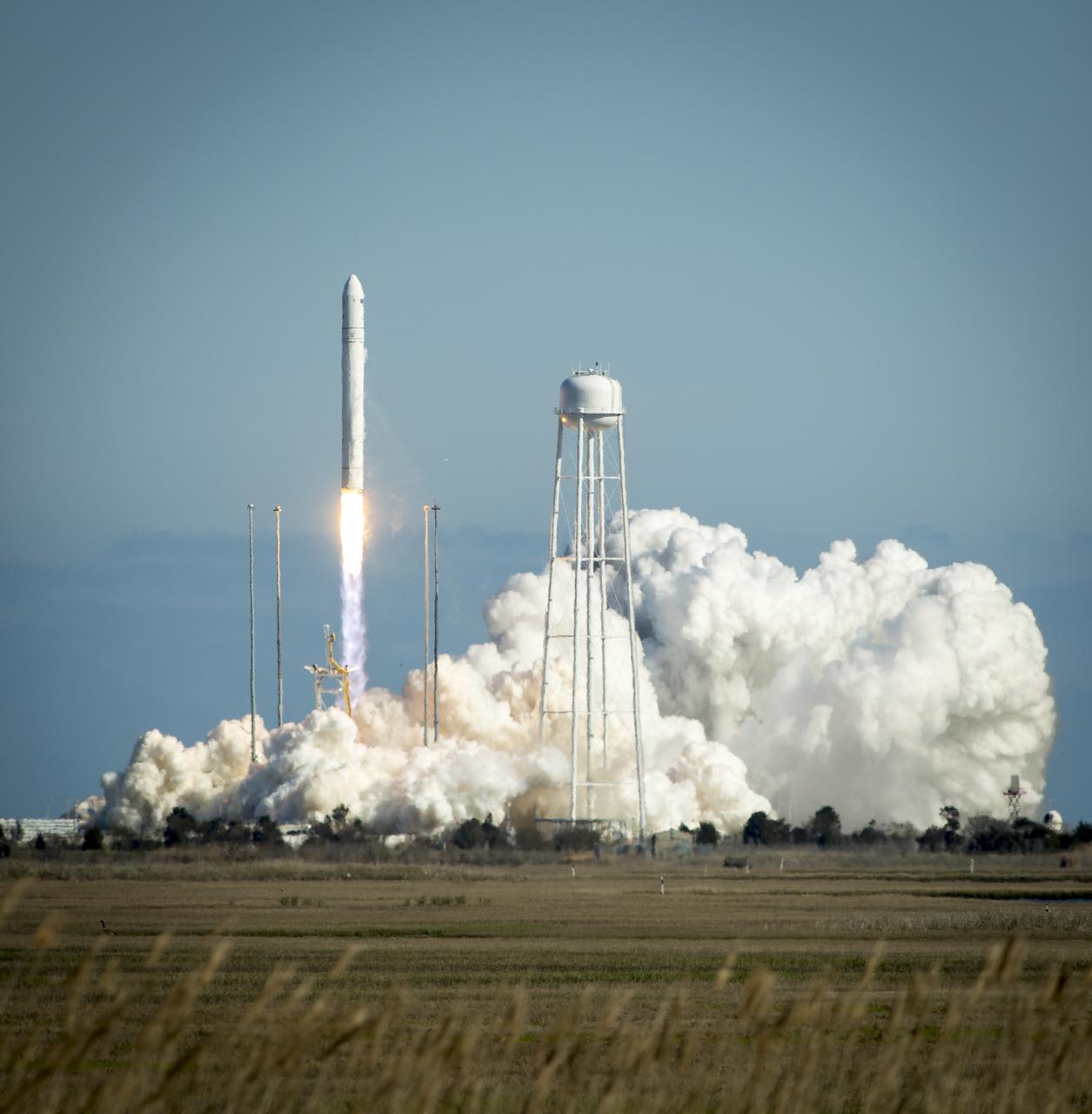
The Orbital Sciences Corporation Antares rocket is seen as it launches from Pad-0A of the Mid-Atlantic Regional Spaceport (MARS) at the NASA Wallops Flight Facility in Virginia, Sunday, April 21, 2013. The test launch marked the first flight of Antares and the first rocket launch from Pad-0A. The Antares rocket delivered the equivalent mass of a spacecraft, a so-called mass simulated payload, into Earth's orbit. Photo Credit: (NASA/Bill Ingalls)
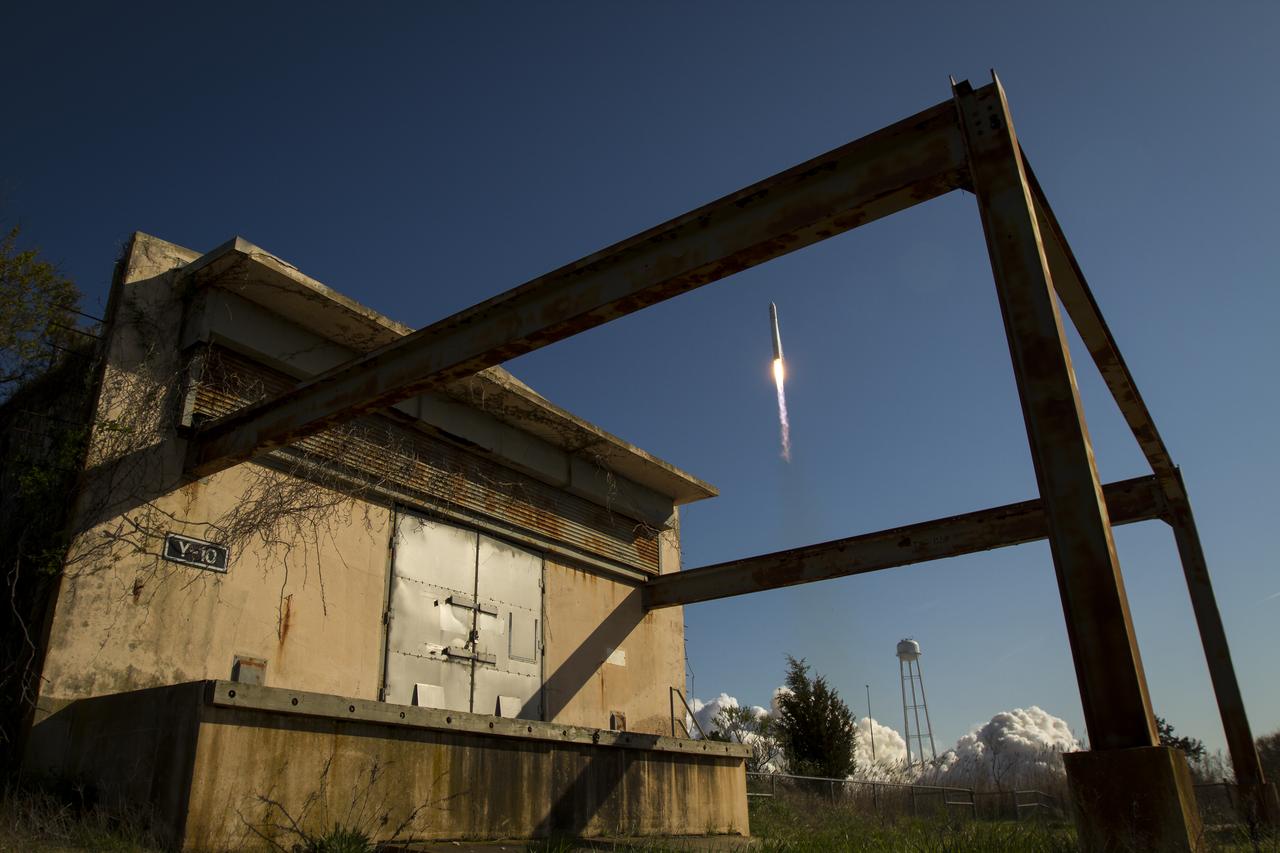
The Orbital Sciences Corporation Antares rocket is seen as it launches from Pad-0A of the Mid-Atlantic Regional Spaceport (MARS) at the NASA Wallops Flight Facility in Virginia, Sunday, April 21, 2013. The test launch marked the first flight of Antares and the first rocket launch from Pad-0A. The Antares rocket delivered the equivalent mass of a spacecraft, a so-called mass simulated payload, into Earth's orbit. Photo Credit: (NASA/Bill Ingalls)
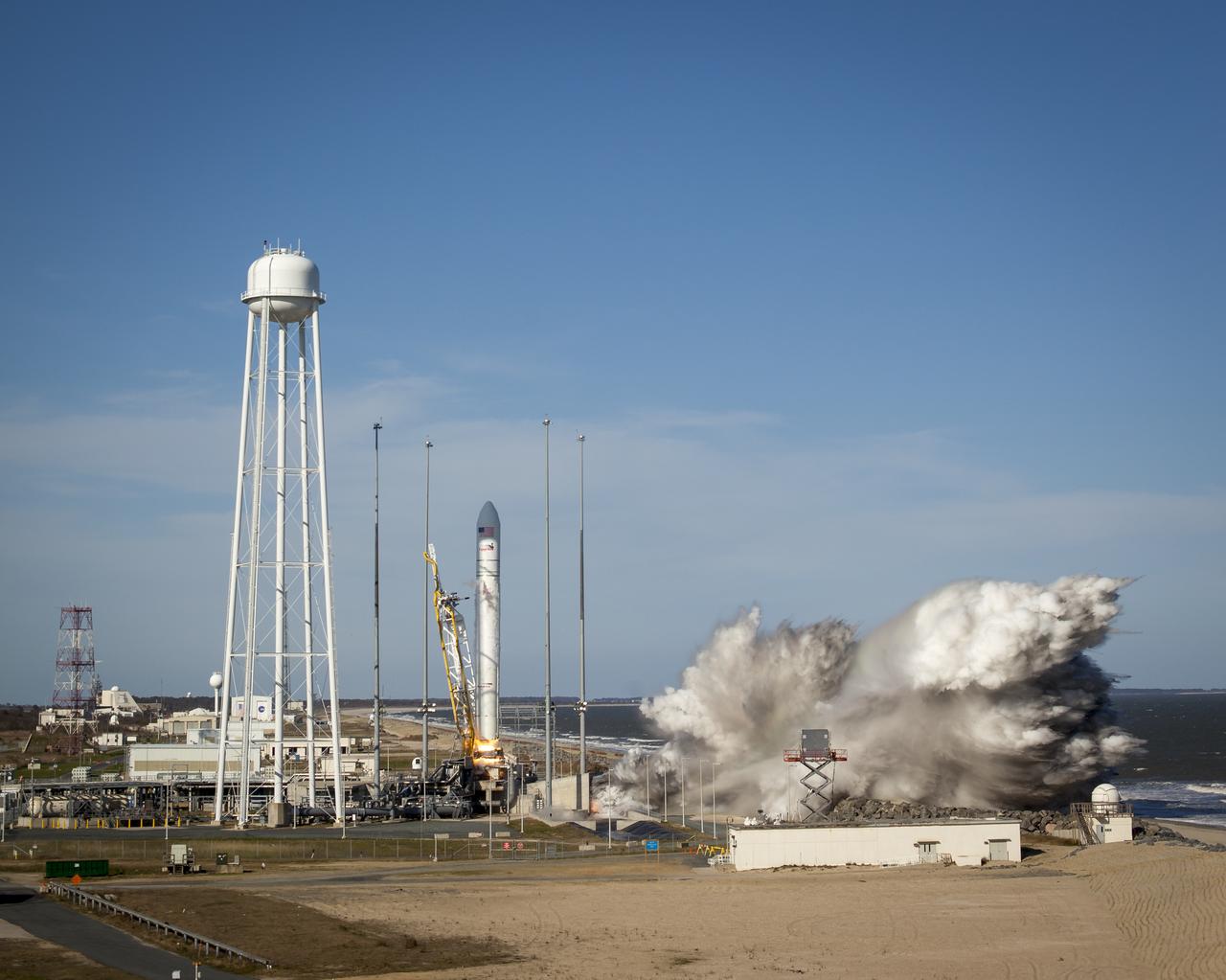
The Orbital Sciences Corporation Antares rocket is seen as it launches from Pad-0A of the Mid-Atlantic Regional Spaceport (MARS) at the NASA Wallops Flight Facility in Virginia, Sunday, April 21, 2013. The test launch marked the first flight of Antares and the first rocket launch from Pad-0A. The Antares rocket delivered the equivalent mass of a spacecraft, a so-called mass simulated payload, into Earth's orbit. Photo Credit: (NASA/Bill Ingalls)
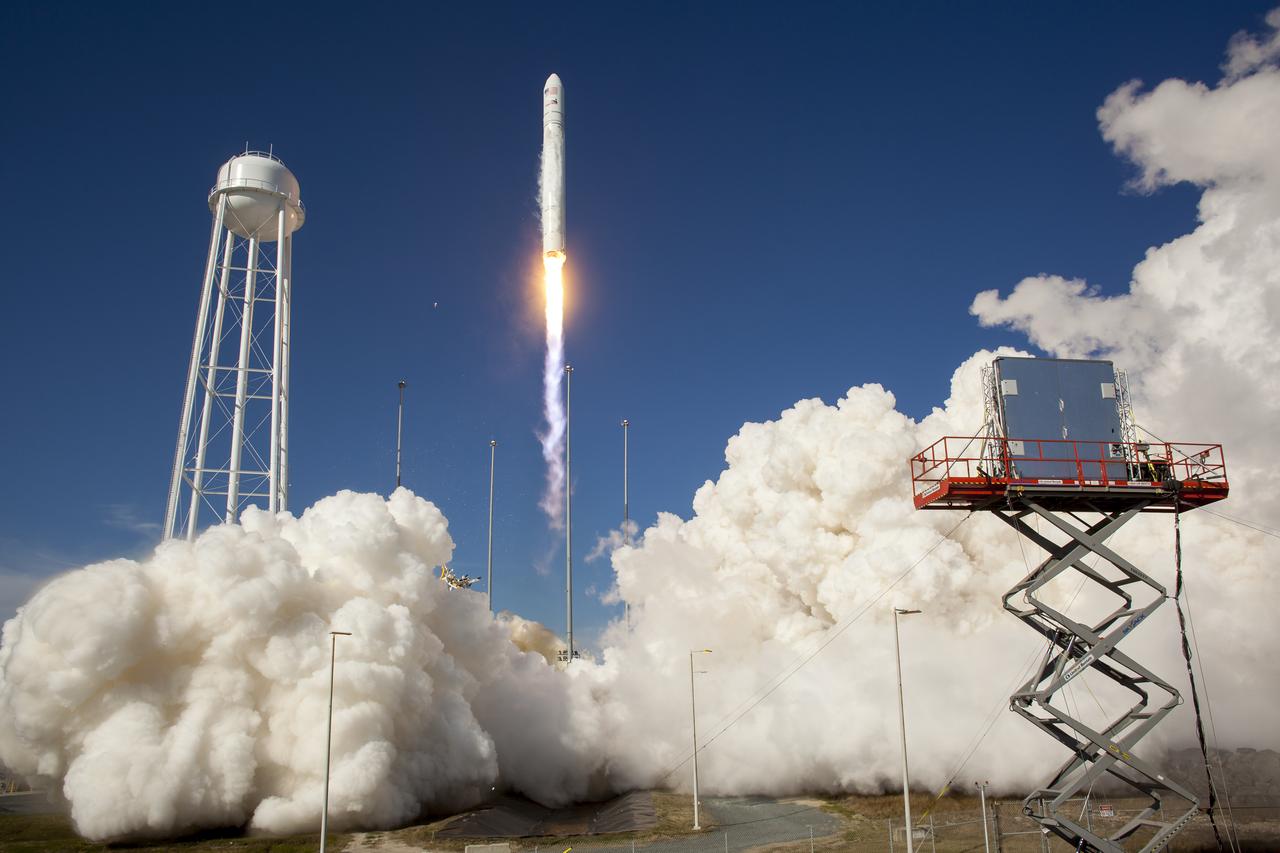
The Orbital Sciences Corporation Antares rocket is seen as it launches from Pad-0A of the Mid-Atlantic Regional Spaceport (MARS) at the NASA Wallops Flight Facility in Virginia, Sunday, April 21, 2013. The test launch marked the first flight of Antares and the first rocket launch from Pad-0A. The Antares rocket delivered the equivalent mass of a spacecraft, a so-called mass simulated payload, into Earth's orbit. Photo Credit: (NASA/Bill Ingalls)
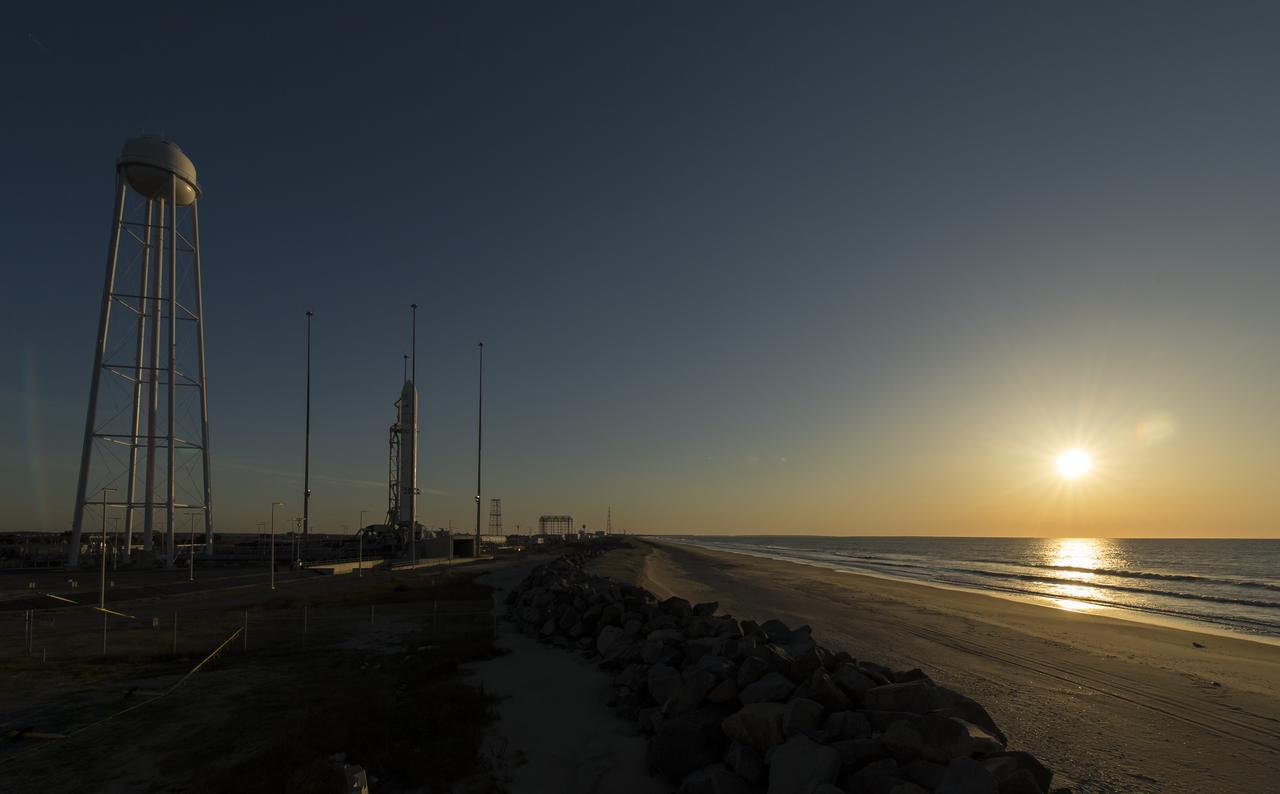
The Orbital Sciences Corporation Antares rocket is seen during sunrise on the Mid-Atlantic Regional Spaceport (MARS) Pad-0A at the NASA Wallops Flight Facility in Virginia, Sunday, April 21, 2013. NASA's commercial space partner, Orbital Sciences Corporation, is scheduled to test launch its first Antares later in the day. Photo Credit: (NASA/Bill Ingalls)
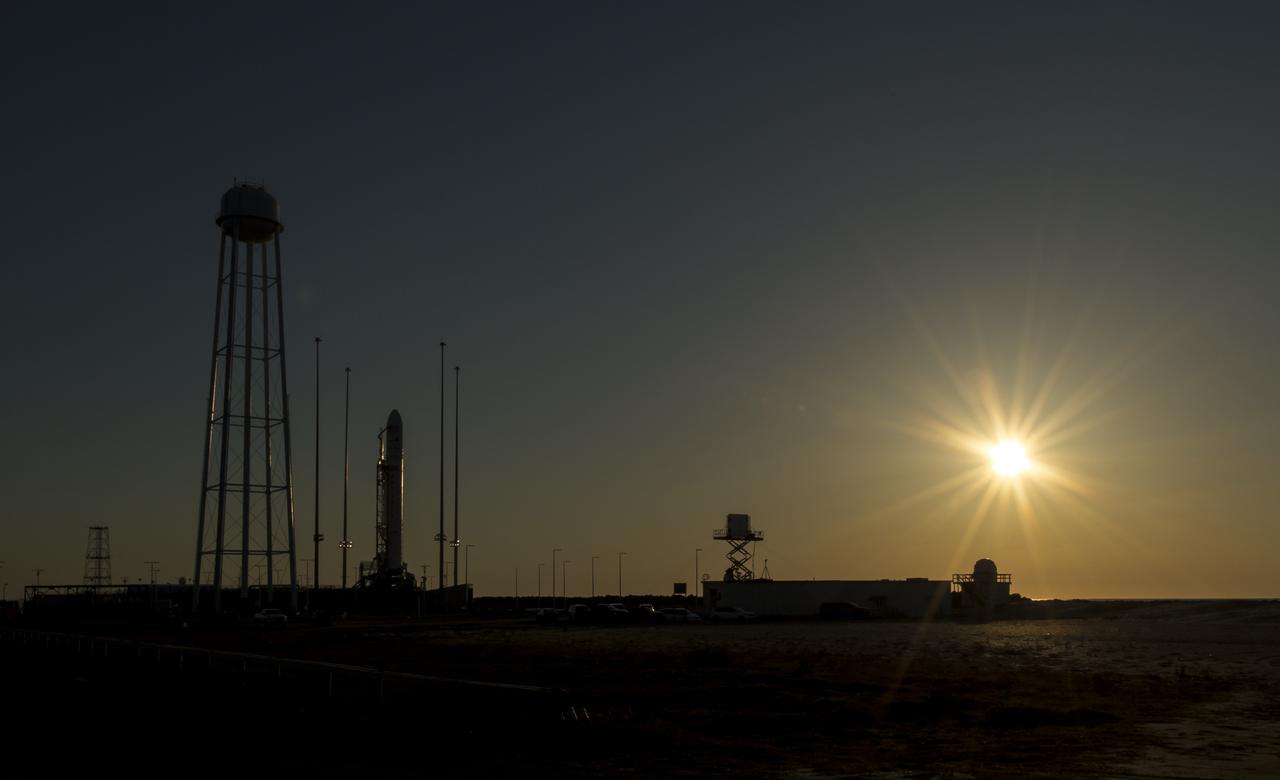
The Orbital Sciences Corporation Antares rocket is seen during sunrise on the Mid-Atlantic Regional Spaceport (MARS) Pad-0A at the NASA Wallops Flight Facility in Virginia, Sunday, April 21, 2013. NASA's commercial space partner, Orbital Sciences Corporation, is scheduled to test launch its first Antares later in the day. Photo Credit: (NASA/Bill Ingalls)

The Orbital Sciences Corporation Antares rocket is seen on the Mid-Atlantic Regional Spaceport (MARS) Pad-0A at the NASA Wallops Flight Facility in Virginia, Saturday, April 20, 2013. NASA's commercial space partner, Orbital Sciences Corporation, is scheduled to test launch its first Antares later in the day. Photo Credit: (NASA/Bill Ingalls)

The Orbital Sciences Corporation Antares rocket is seen on the Mid-Atlantic Regional Spaceport (MARS) Pad-0A at the NASA Wallops Flight Facility in Virginia, Saturday, April 20, 2013. NASA's commercial space partner, Orbital Sciences Corporation, is scheduled to test launch its first Antares later in the day. Photo Credit: (NASA/Bill Ingalls)
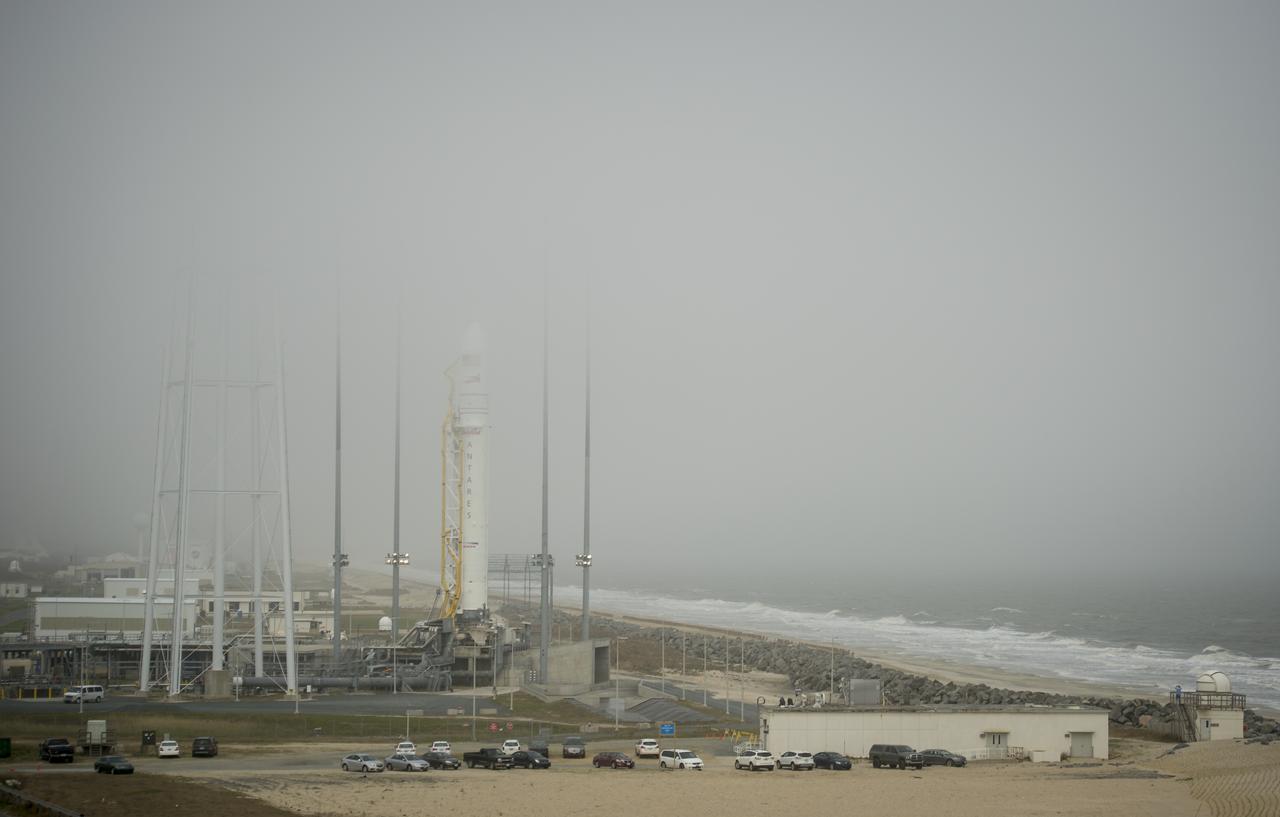
Fog rolls in as the Orbital Sciences Corporation Antares rocket is seen on the Mid-Atlantic Regional Spaceport (MARS) Pad-0A at the NASA Wallops Flight Facility, Friday, April 19, 2013 in Virginia. NASA's commercial space partner, Orbital Sciences Corporation, is scheduled to test launch its first Antares on Saturday, April 20, 2013. Photo Credit: (NASA/Bill Ingalls)
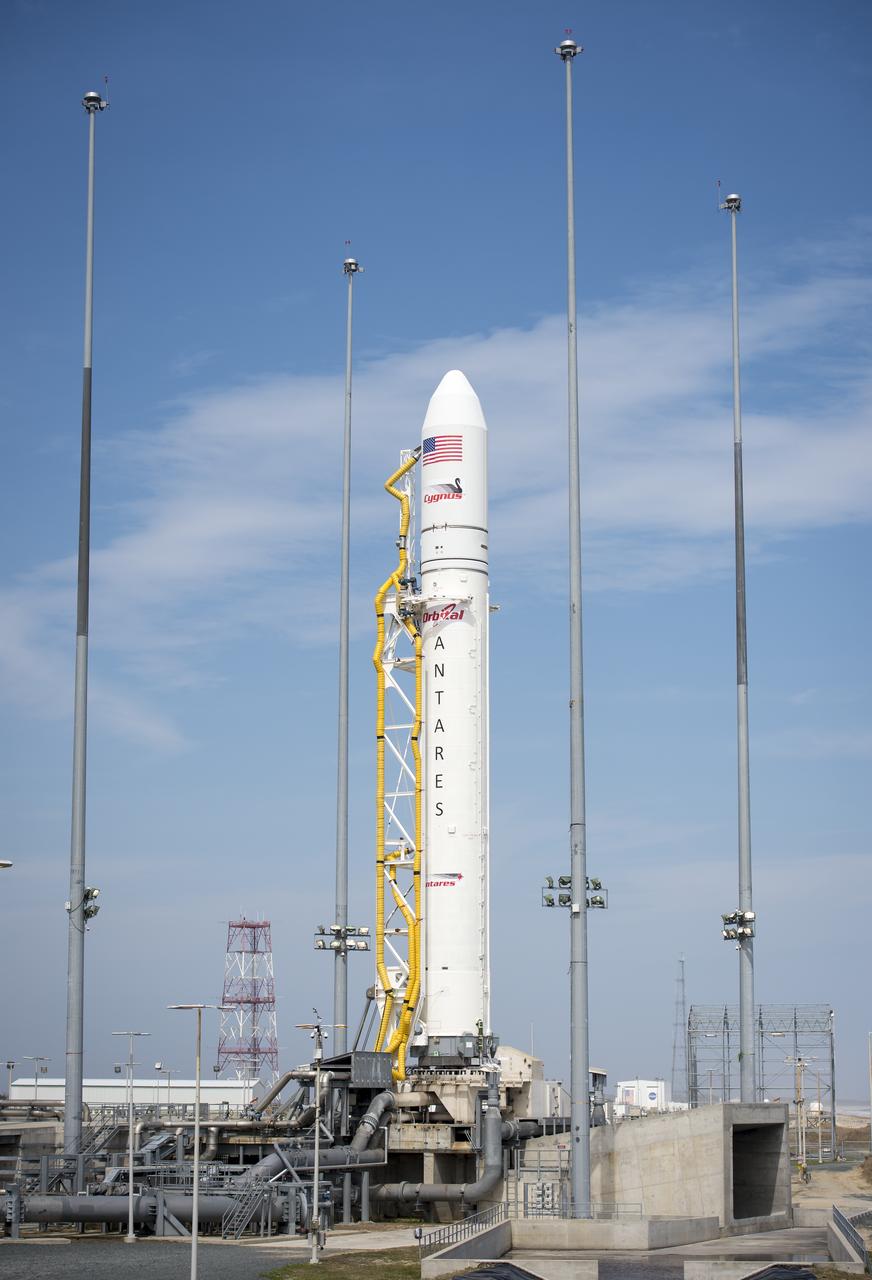
The Orbital Sciences Corporation Antares rocket is seen on the Mid-Atlantic Regional Spaceport (MARS) Pad-0A at the NASA Wallops Flight Facility, Friday, April 19, 2013 in Virginia. NASA's commercial space partner, Orbital Sciences Corporation, is scheduled to test launch its first Antares on Saturday, April 20, 2013. Photo Credit: (NASA/Bill Ingalls)
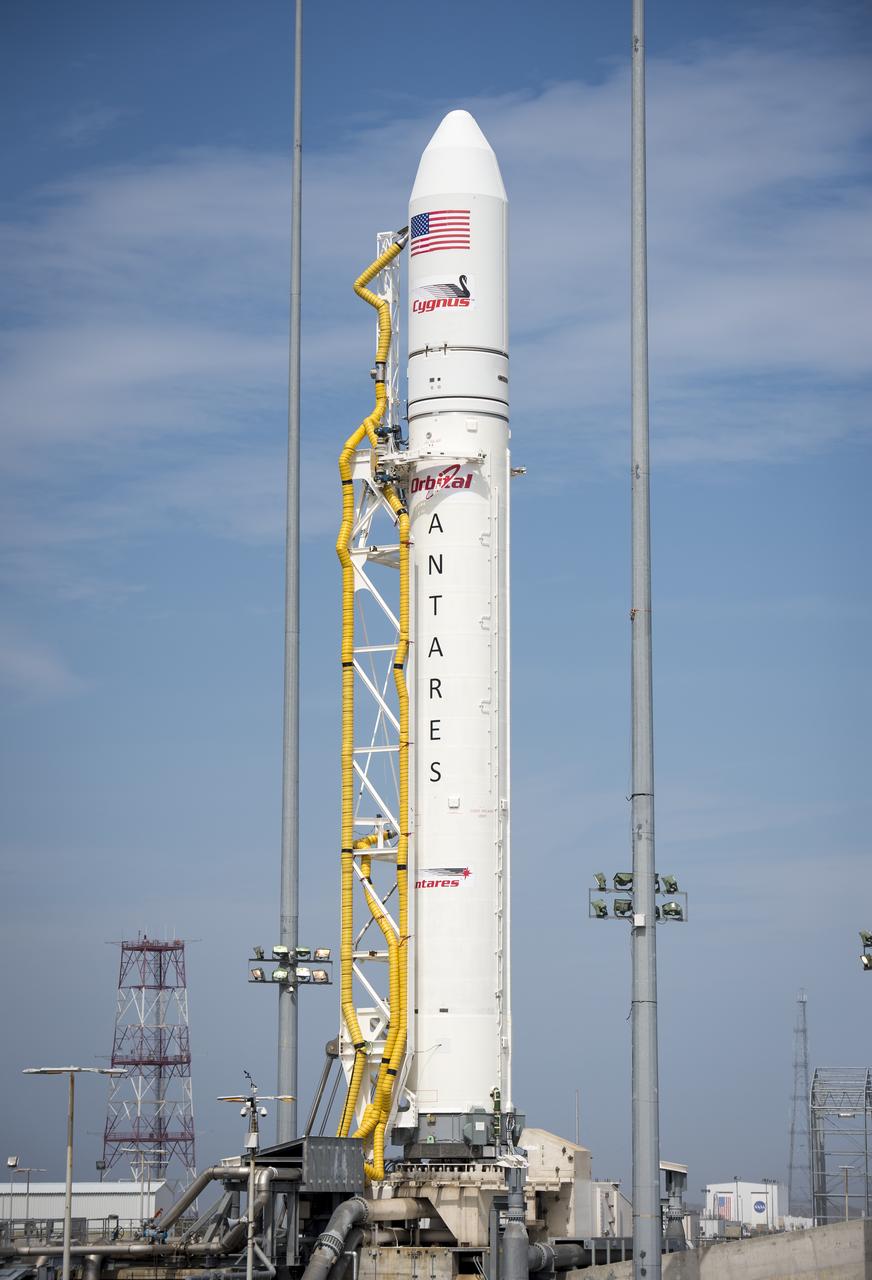
The Orbital Sciences Corporation Antares rocket is seen on the Mid-Atlantic Regional Spaceport (MARS) Pad-0A at the NASA Wallops Flight Facility, Friday, April 19, 2013 in Virginia. NASA's commercial space partner, Orbital Sciences Corporation, is scheduled to test launch its first Antares on Saturday, April 20, 2013. Photo Credit: (NASA/Bill Ingalls)

The Orbital Sciences Corporation Antares rocket is seen during sunrise on the Mid-Atlantic Regional Spaceport (MARS) Pad-0A at the NASA Wallops Flight Facility in Virginia, Sunday, April 21, 2013. NASA's commercial space partner, Orbital Sciences Corporation, is scheduled to test launch its first Antares later in the day. Photo Credit: (NASA/Bill Ingalls)
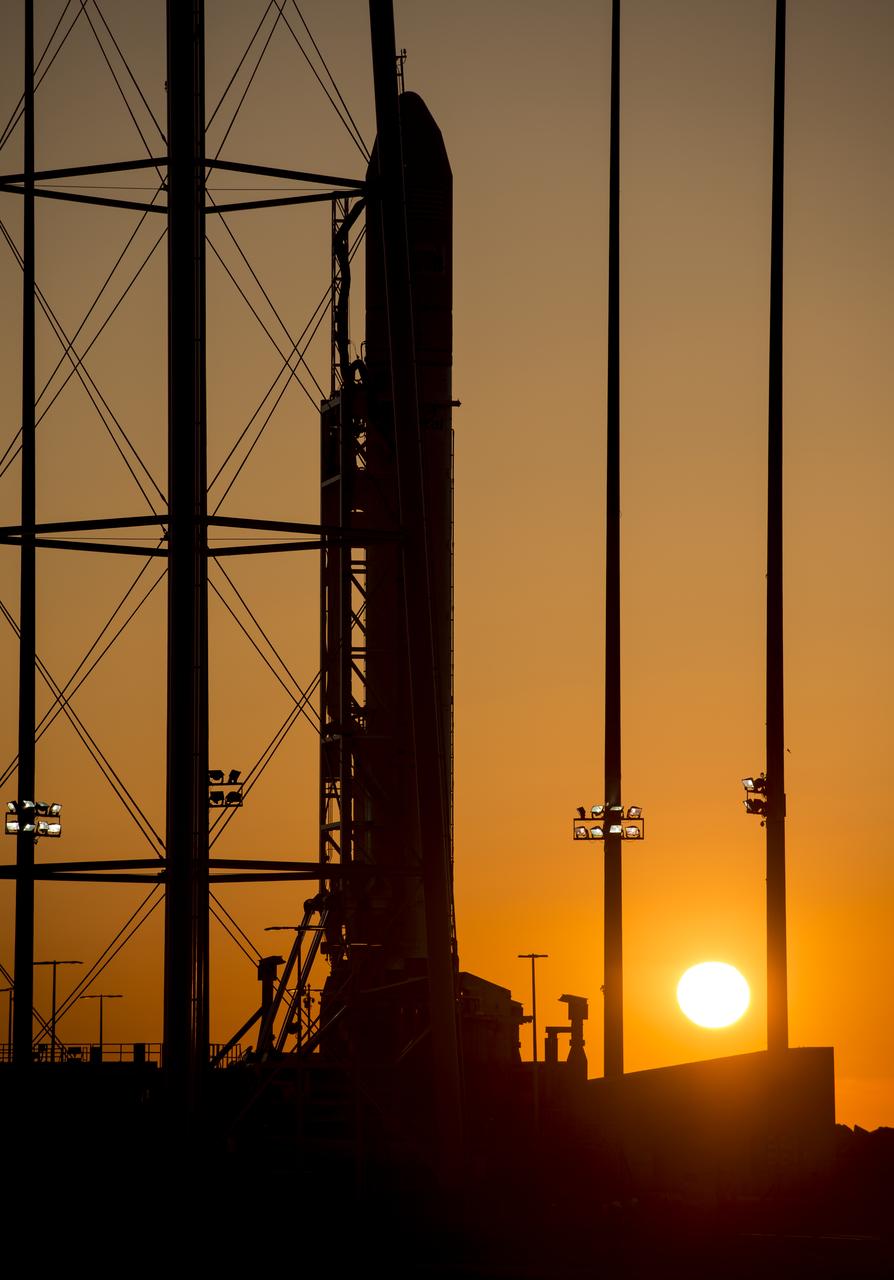
The Orbital Sciences Corporation Antares rocket is seen during sunrise on the Mid-Atlantic Regional Spaceport (MARS) Pad-0A at the NASA Wallops Flight Facility in Virginia, Sunday, April 21, 2013. NASA's commercial space partner, Orbital Sciences Corporation, is scheduled to test launch its first Antares later in the day. Photo Credit: (NASA/Bill Ingalls)
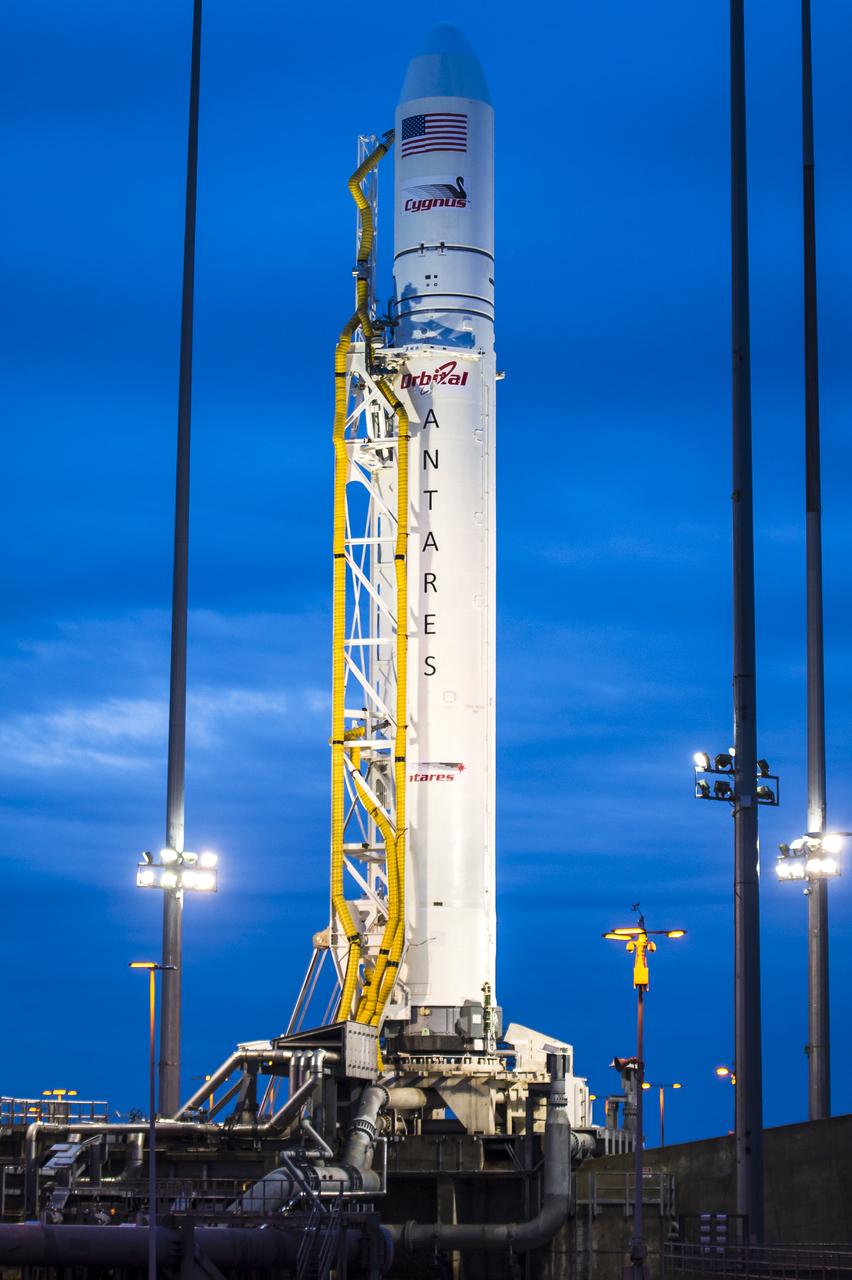
The Orbital Sciences Corporation Antares rocket is seen on the Mid-Atlantic Regional Spaceport (MARS) Pad-0A at the NASA Wallops Flight Facility in Virginia, Saturday, April 20, 2013. NASA's commercial space partner, Orbital Sciences Corporation, is scheduled to test launch its first Antares later in the day. Photo Credit: (NASA/Bill Ingalls)
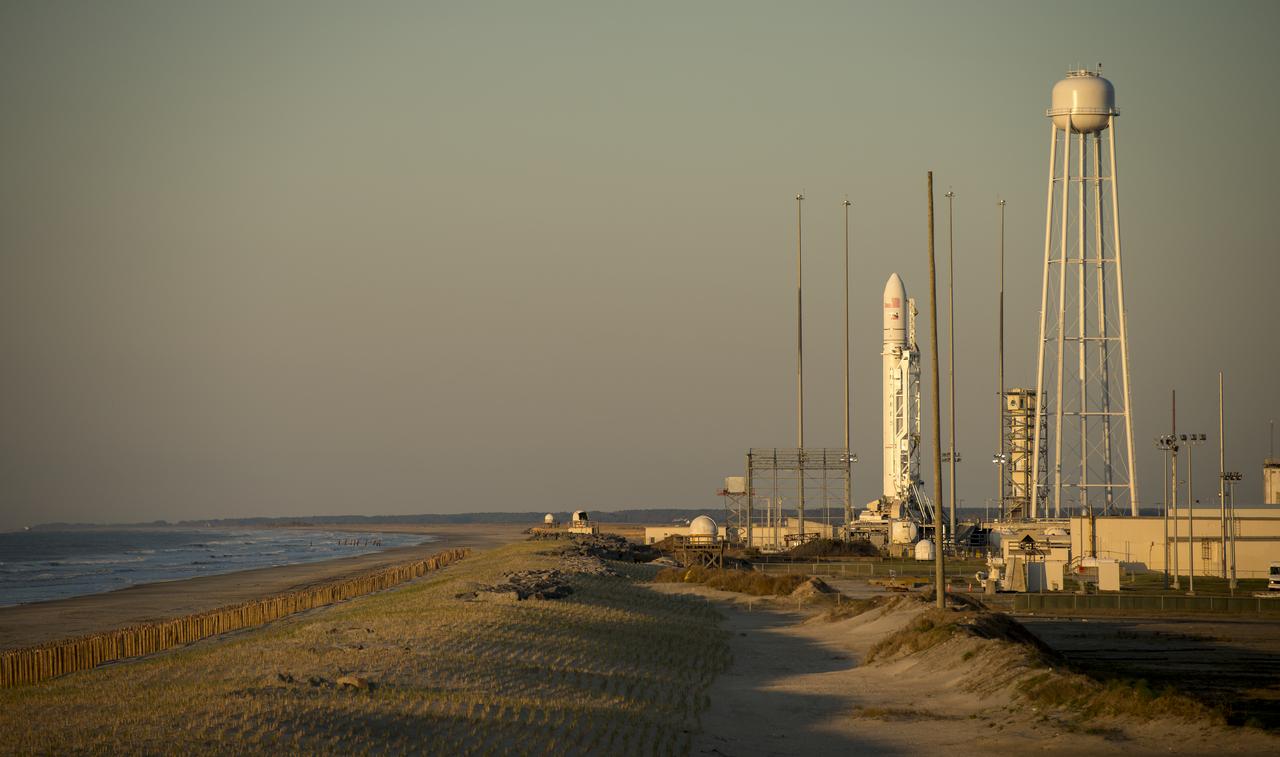
The Orbital Sciences Corporation Antares rocket is seen during sunrise on the Mid-Atlantic Regional Spaceport (MARS) Pad-0A at the NASA Wallops Flight Facility in Virginia, Sunday, April 21, 2013. NASA's commercial space partner, Orbital Sciences Corporation, is scheduled to test launch its first Antares later in the day. Photo Credit: (NASA/Bill Ingalls)
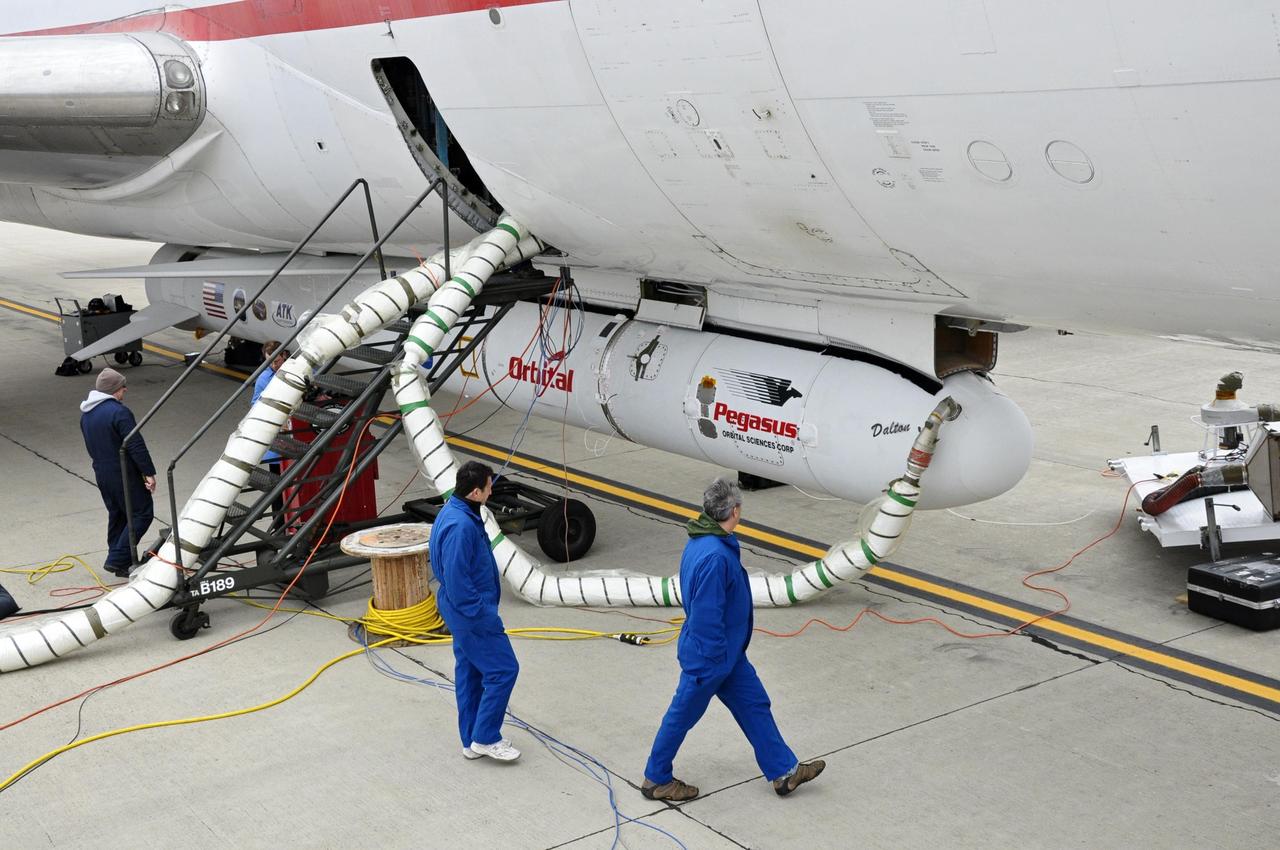
This photo shows the Orbital Sciences Corporation Pegasus XL rocket with NASA NuSTAR spacecraft after attachment to the L-1011 carrier aircraft known as Stargazer.
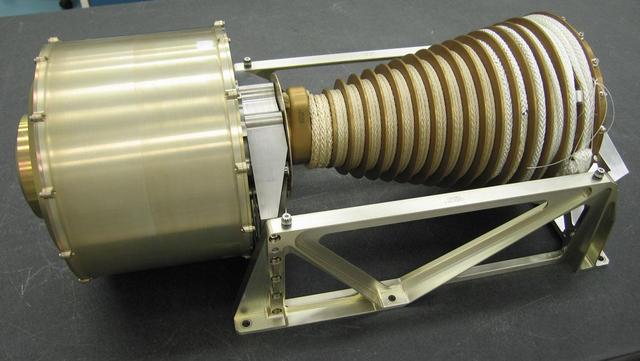
This is hardware for controlling the final lowering of NASA Mars Science Laboratory rover to the surface of Mars from the spacecraft hovering, rocket-powered descent stage.

An inflatable scale model of the SLS rocket is seen on Pier 86 during the Intrepid Space & Science Festival, Saturday, Aug. 5, 2017 held at the Intrepid Sea, Air & Space Museum in New York City. The week-long festival featured talks, films and cutting-edge displays showcasing NASA technology. Photo Credit: (NASA/Bill Ingalls)
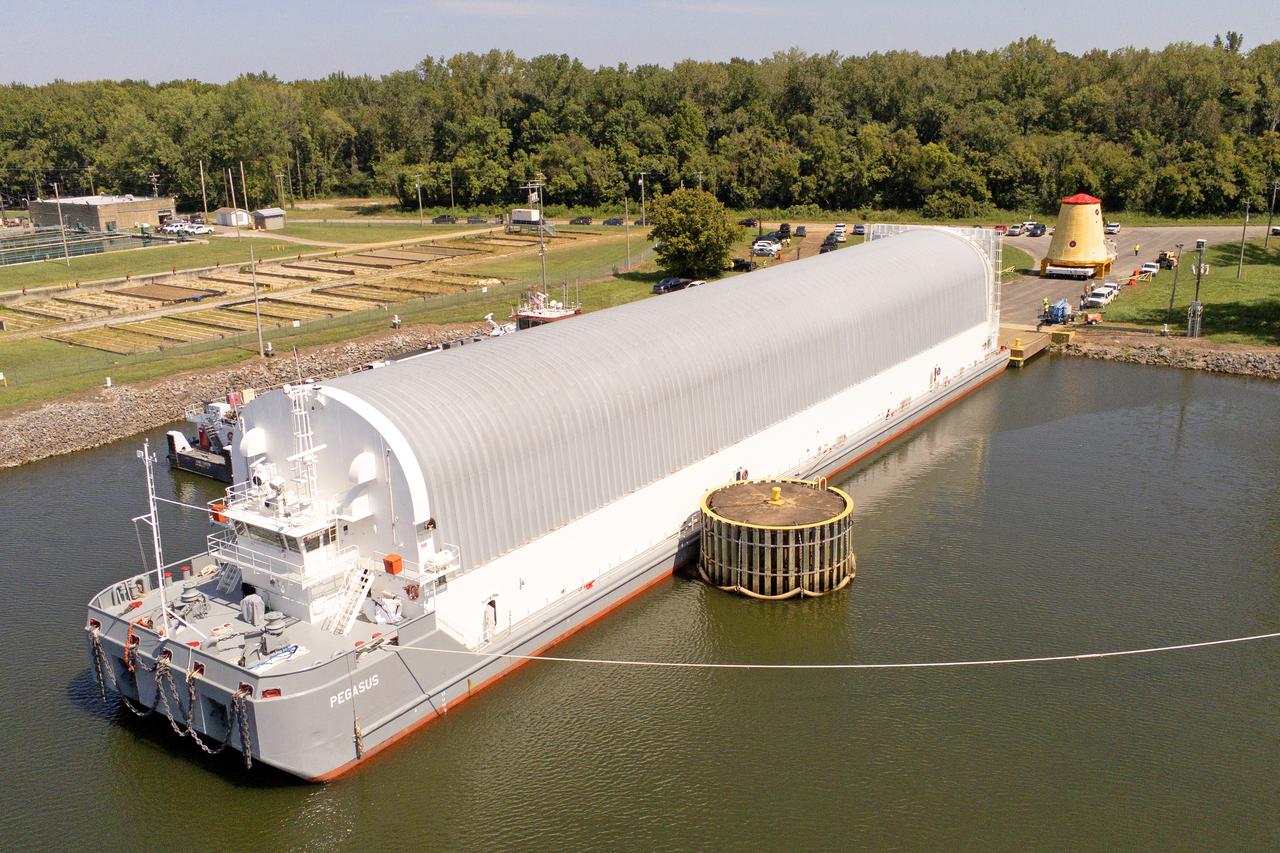
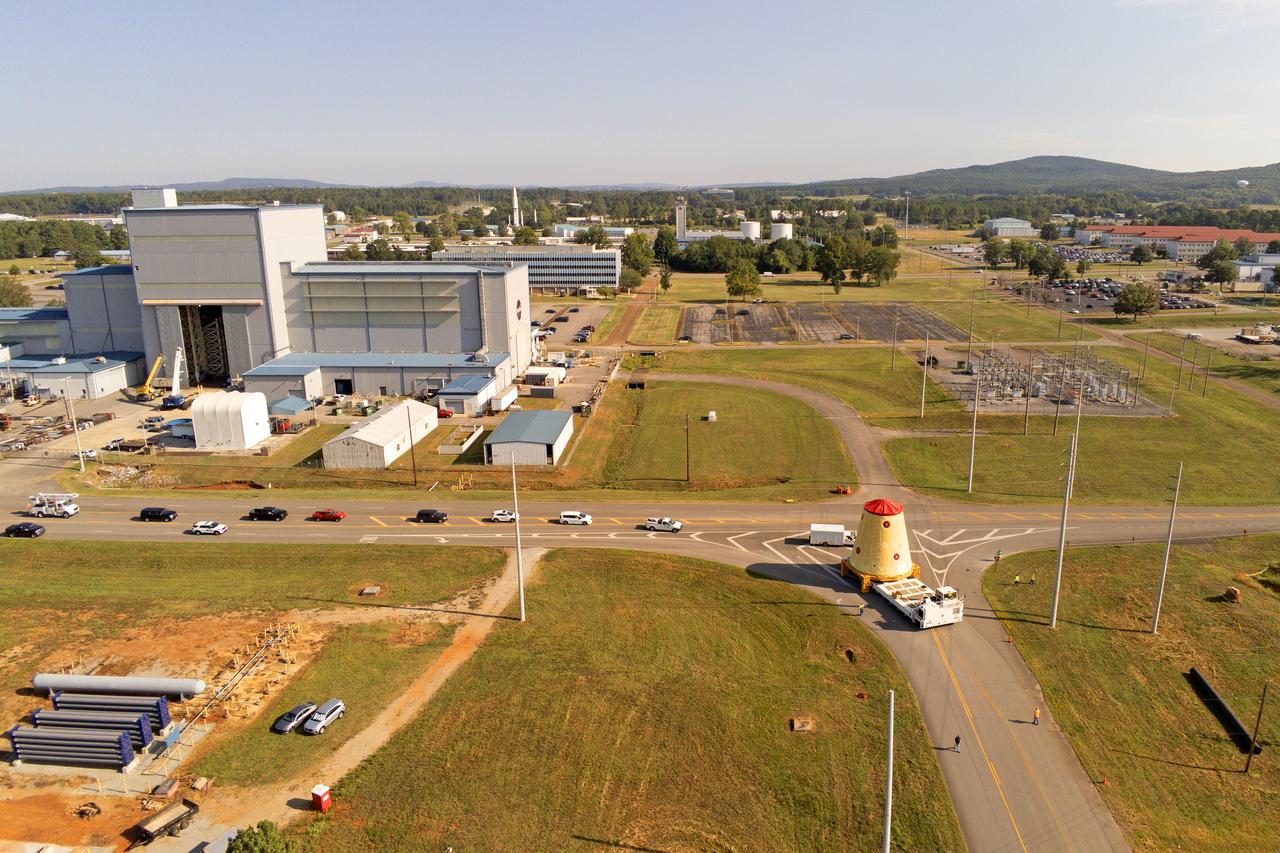
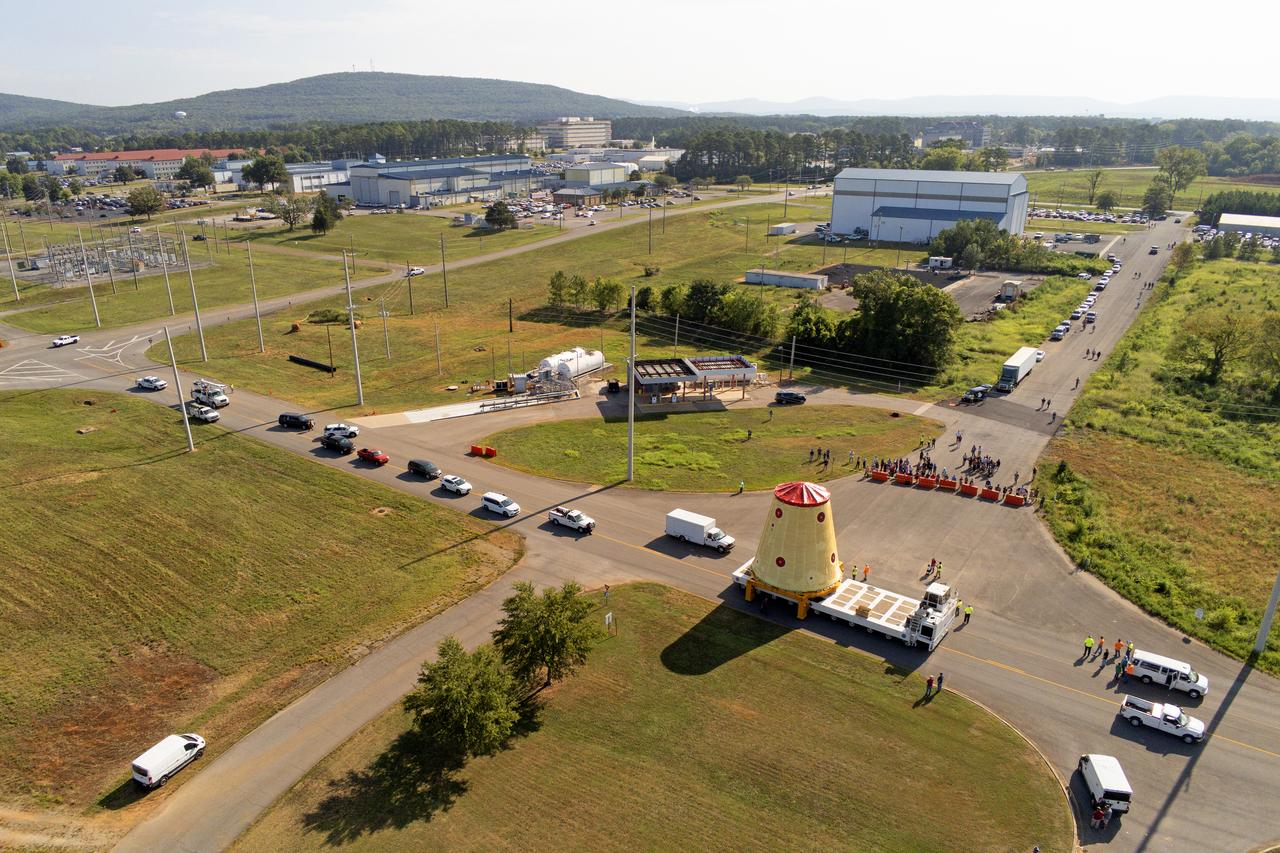
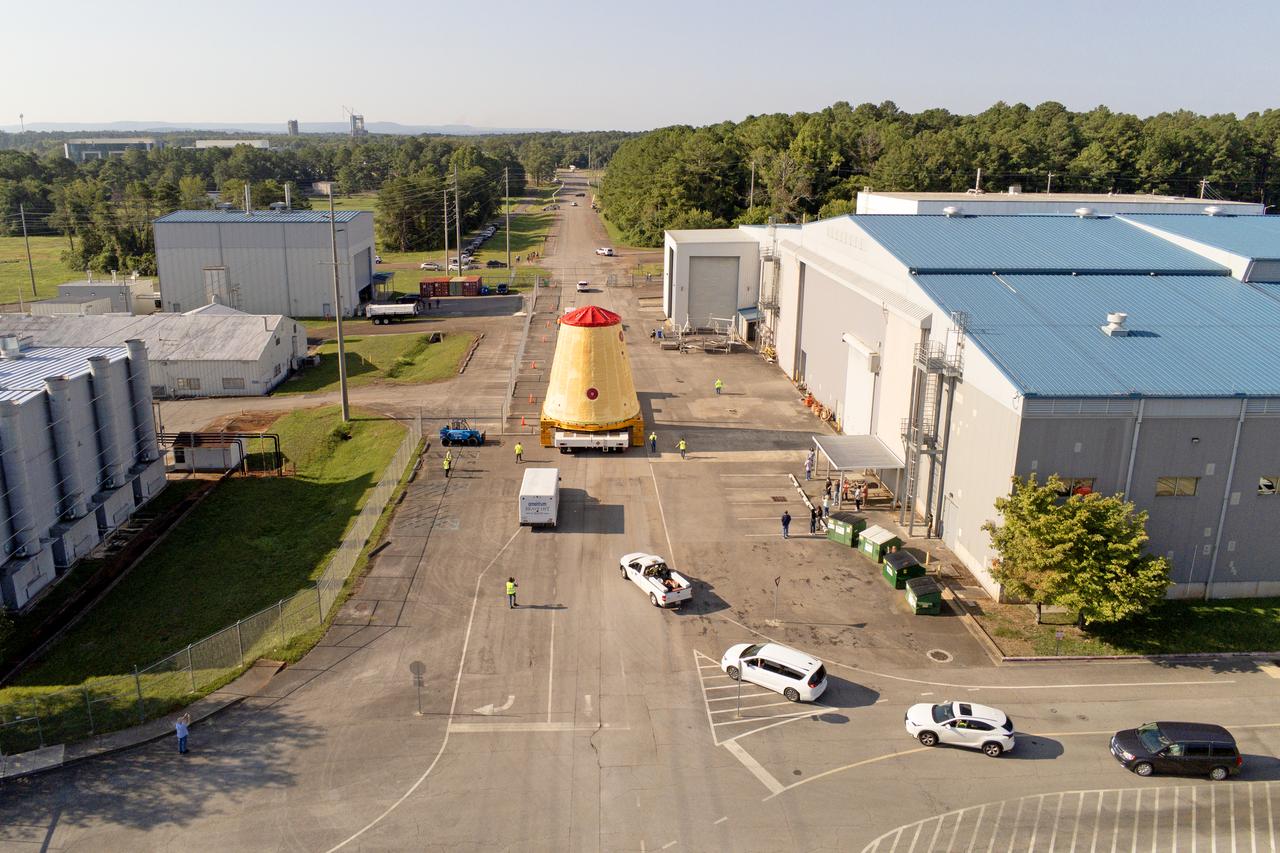
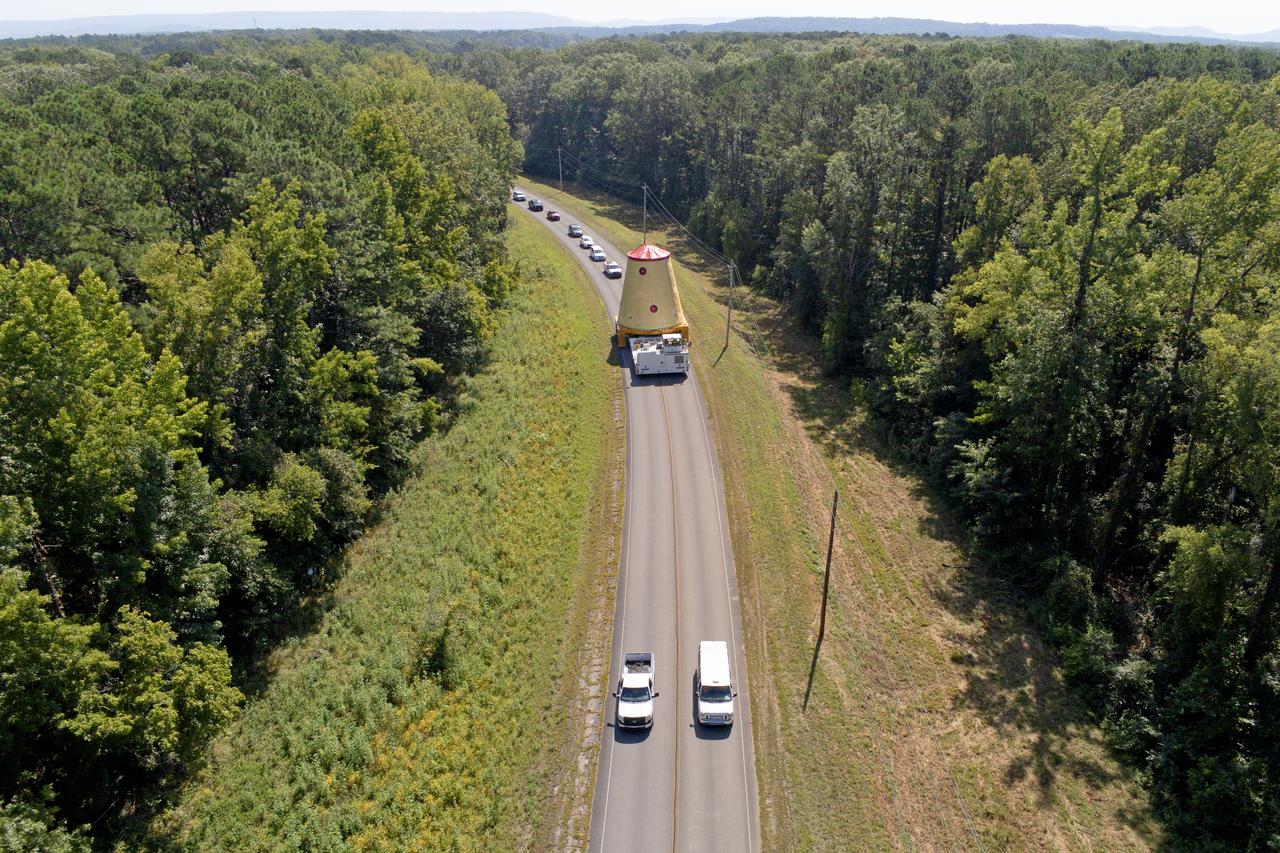
NASA rolled out a key piece of space flight hardware for the SLS (Space Launch System) rocket for the first crewed mission of NASA’s Artemis campaign from Marshall Space Flight Center in Huntsville, Alabama, on Wednesday, Aug. 21 for shipment to the agency’s spaceport in Florida. The cone-shaped launch vehicle stage adapter connects the rocket’s core stage to the upper stage and helps protect the upper stage’s engine that will help propel the Artemis II test flight around the Moon, slated for 2025. Manufactured by prime contractor Teledyne Brown Engineering and the Jacobs Space Exploration Group’s ESSCA (Engineering Services and Science Capability Augmentation) contract using NASA Marshall’s self-reacting friction-stir robotic and vertical weld tools. Crews moved the adapter out of NASA Marshall’s Building 4708 to the agency’s Pegasus barge Aug. 21. The barge will ferry the adapter first to NASA’s Michoud Assembly Facility in New Orleans, where crews will pick up additional SLS hardware for future Artemis missions, before traveling to NASA Kennedy. Once in Florida, the adapter will join the recently delivered core stage. There, teams with NASA’s Exploration Ground Systems will prepare the adapter for stacking and launch.
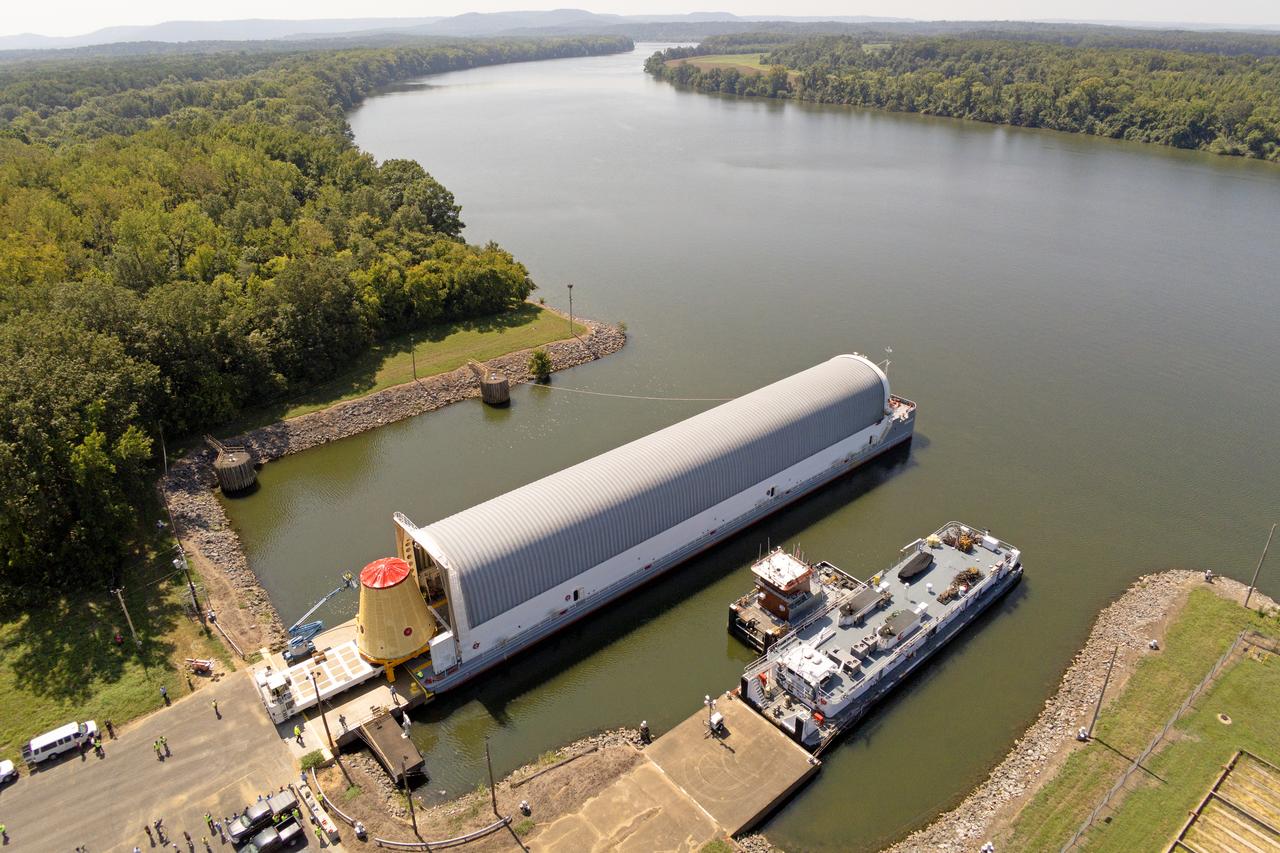
NASA rolled out a key piece of space flight hardware for the SLS (Space Launch System) rocket for the first crewed mission of NASA’s Artemis campaign from Marshall Space Flight Center in Huntsville, Alabama, on Wednesday, Aug. 21 for shipment to the agency’s spaceport in Florida. The cone-shaped launch vehicle stage adapter connects the rocket’s core stage to the upper stage and helps protect the upper stage’s engine that will help propel the Artemis II test flight around the Moon, slated for 2025. Manufactured by prime contractor Teledyne Brown Engineering and the Jacobs Space Exploration Group’s ESSCA (Engineering Services and Science Capability Augmentation) contract using NASA Marshall’s self-reacting friction-stir robotic and vertical weld tools. Crews moved the adapter out of NASA Marshall’s Building 4708 to the agency’s Pegasus barge Aug. 21. The barge will ferry the adapter first to NASA’s Michoud Assembly Facility in New Orleans, where crews will pick up additional SLS hardware for future Artemis missions, before traveling to NASA Kennedy. Once in Florida, the adapter will join the recently delivered core stage. There, teams with NASA’s Exploration Ground Systems will prepare the adapter for stacking and launch.
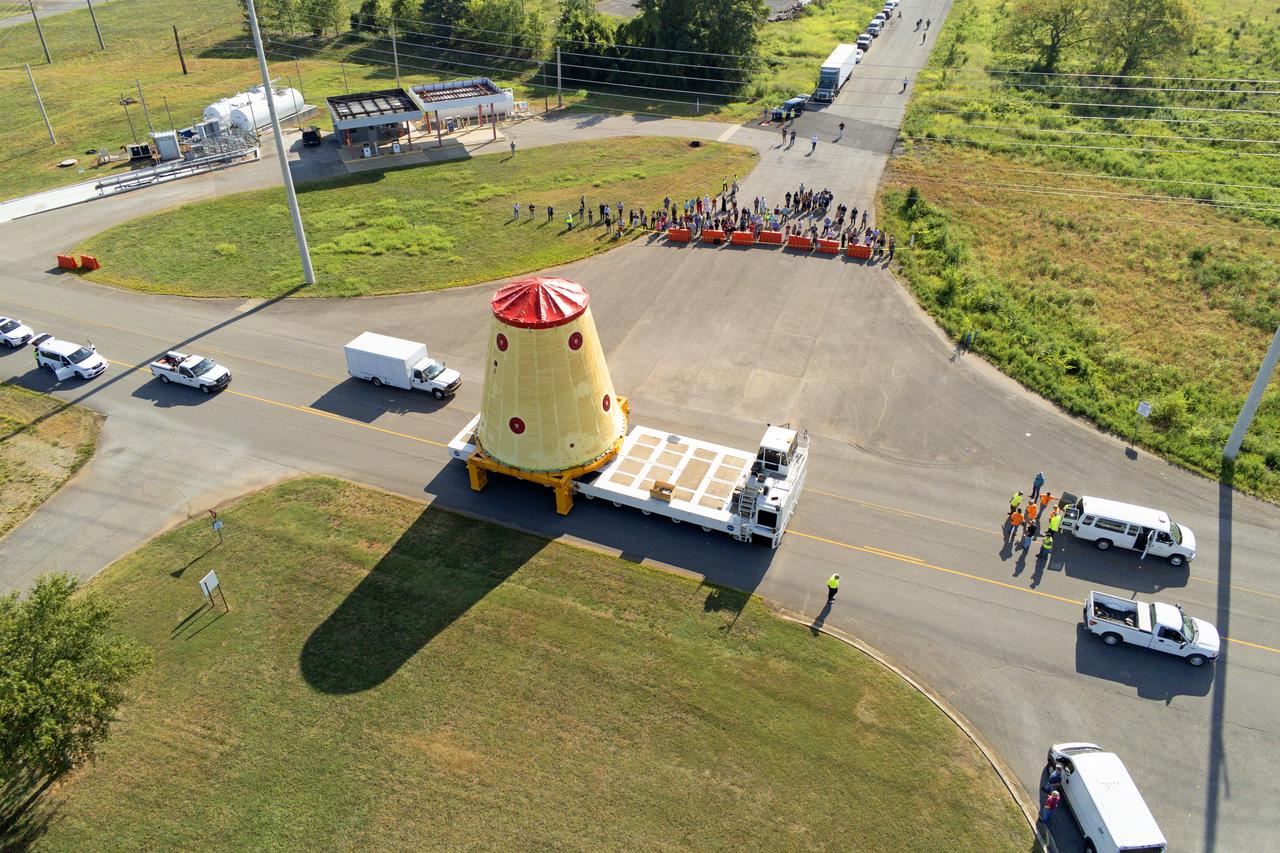
NASA rolled out a key piece of space flight hardware for the SLS (Space Launch System) rocket for the first crewed mission of NASA’s Artemis campaign from Marshall Space Flight Center in Huntsville, Alabama, on Wednesday, Aug. 21 for shipment to the agency’s spaceport in Florida. The cone-shaped launch vehicle stage adapter connects the rocket’s core stage to the upper stage and helps protect the upper stage’s engine that will help propel the Artemis II test flight around the Moon, slated for 2025. Manufactured by prime contractor Teledyne Brown Engineering and the Jacobs Space Exploration Group’s ESSCA (Engineering Services and Science Capability Augmentation) contract using NASA Marshall’s self-reacting friction-stir robotic and vertical weld tools. Crews moved the adapter out of NASA Marshall’s Building 4708 to the agency’s Pegasus barge Aug. 21. The barge will ferry the adapter first to NASA’s Michoud Assembly Facility in New Orleans, where crews will pick up additional SLS hardware for future Artemis missions, before traveling to NASA Kennedy. Once in Florida, the adapter will join the recently delivered core stage. There, teams with NASA’s Exploration Ground Systems will prepare the adapter for stacking and launch.
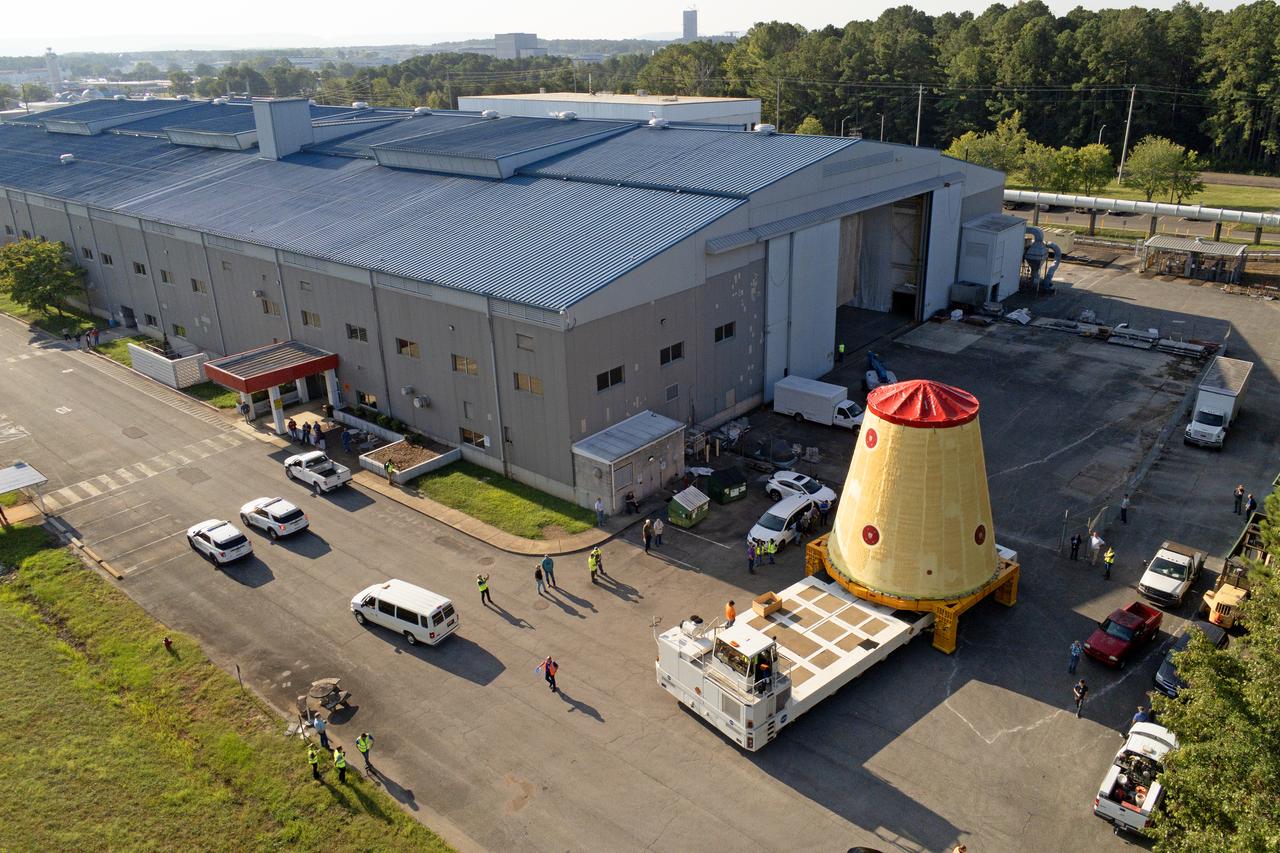
NASA rolled out a key piece of space flight hardware for the SLS (Space Launch System) rocket for the first crewed mission of NASA’s Artemis campaign from Marshall Space Flight Center in Huntsville, Alabama, on Wednesday, Aug. 21 for shipment to the agency’s spaceport in Florida. The cone-shaped launch vehicle stage adapter connects the rocket’s core stage to the upper stage and helps protect the upper stage’s engine that will help propel the Artemis II test flight around the Moon, slated for 2025. Manufactured by prime contractor Teledyne Brown Engineering and the Jacobs Space Exploration Group’s ESSCA (Engineering Services and Science Capability Augmentation) contract using NASA Marshall’s self-reacting friction-stir robotic and vertical weld tools. Crews moved the adapter out of NASA Marshall’s Building 4708 to the agency’s Pegasus barge Aug. 21. The barge will ferry the adapter first to NASA’s Michoud Assembly Facility in New Orleans, where crews will pick up additional SLS hardware for future Artemis missions, before traveling to NASA Kennedy. Once in Florida, the adapter will join the recently delivered core stage. There, teams with NASA’s Exploration Ground Systems will prepare the adapter for stacking and launch.
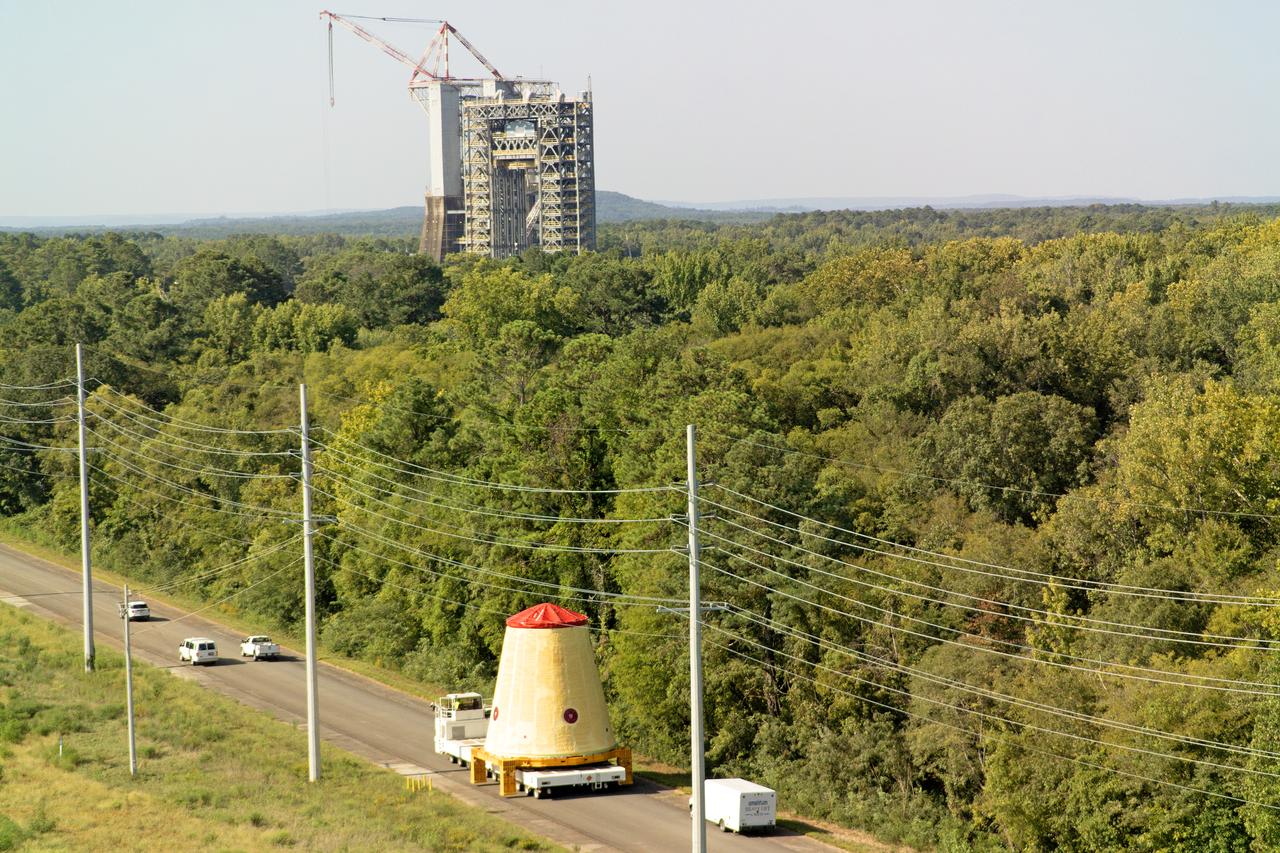
NASA rolled out a key piece of space flight hardware for the SLS (Space Launch System) rocket for the first crewed mission of NASA’s Artemis campaign from Marshall Space Flight Center in Huntsville, Alabama, on Wednesday, Aug. 21 for shipment to the agency’s spaceport in Florida. The cone-shaped launch vehicle stage adapter connects the rocket’s core stage to the upper stage and helps protect the upper stage’s engine that will help propel the Artemis II test flight around the Moon, slated for 2025. Manufactured by prime contractor Teledyne Brown Engineering and the Jacobs Space Exploration Group’s ESSCA (Engineering Services and Science Capability Augmentation) contract using NASA Marshall’s self-reacting friction-stir robotic and vertical weld tools. Crews moved the adapter out of NASA Marshall’s Building 4708 to the agency’s Pegasus barge Aug. 21. The barge will ferry the adapter first to NASA’s Michoud Assembly Facility in New Orleans, where crews will pick up additional SLS hardware for future Artemis missions, before traveling to NASA Kennedy. Once in Florida, the adapter will join the recently delivered core stage. There, teams with NASA’s Exploration Ground Systems will prepare the adapter for stacking and launch.
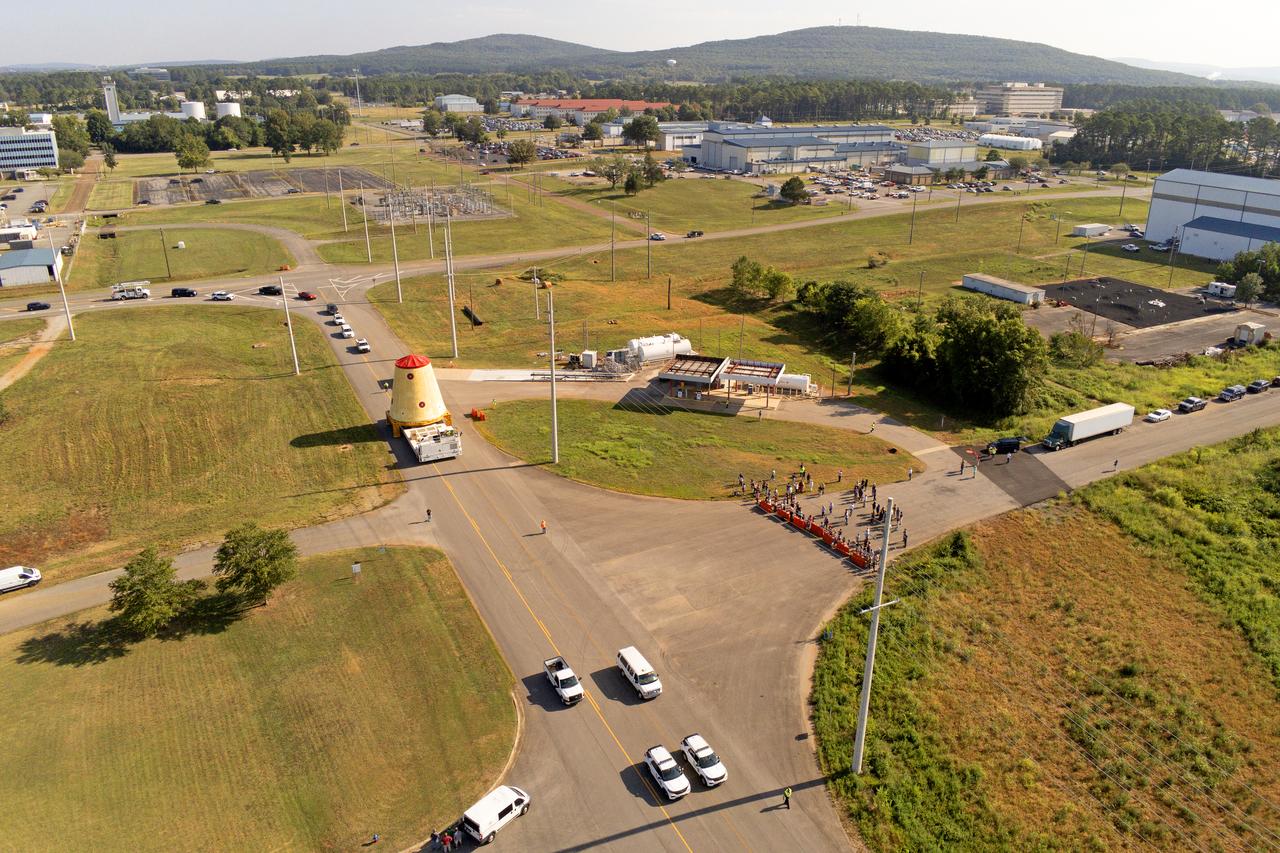
NASA rolled out a key piece of space flight hardware for the SLS (Space Launch System) rocket for the first crewed mission of NASA’s Artemis campaign from Marshall Space Flight Center in Huntsville, Alabama, on Wednesday, Aug. 21 for shipment to the agency’s spaceport in Florida. The cone-shaped launch vehicle stage adapter connects the rocket’s core stage to the upper stage and helps protect the upper stage’s engine that will help propel the Artemis II test flight around the Moon, slated for 2025. Manufactured by prime contractor Teledyne Brown Engineering and the Jacobs Space Exploration Group’s ESSCA (Engineering Services and Science Capability Augmentation) contract using NASA Marshall’s self-reacting friction-stir robotic and vertical weld tools. Crews moved the adapter out of NASA Marshall’s Building 4708 to the agency’s Pegasus barge Aug. 21. The barge will ferry the adapter first to NASA’s Michoud Assembly Facility in New Orleans, where crews will pick up additional SLS hardware for future Artemis missions, before traveling to NASA Kennedy. Once in Florida, the adapter will join the recently delivered core stage. There, teams with NASA’s Exploration Ground Systems will prepare the adapter for stacking and launch.
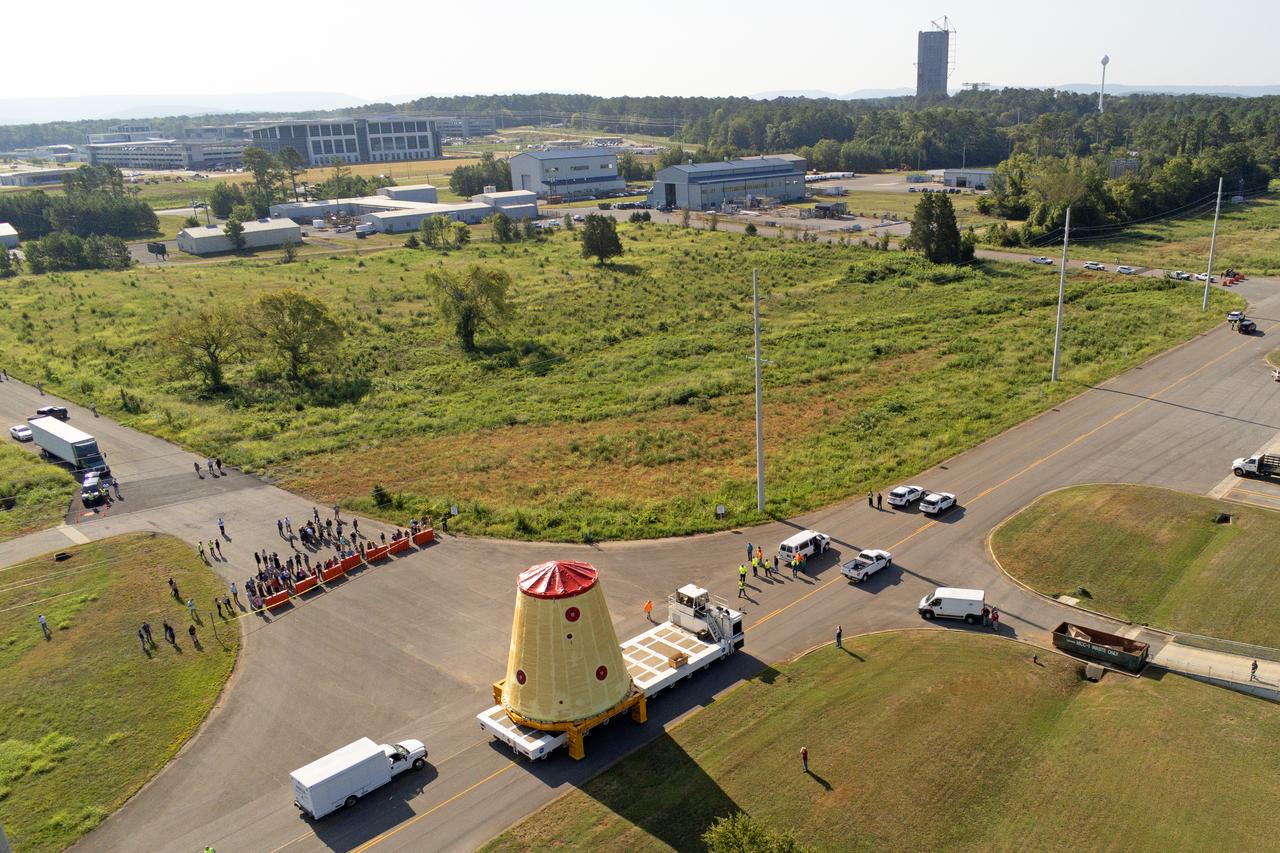
NASA rolled out a key piece of space flight hardware for the SLS (Space Launch System) rocket for the first crewed mission of NASA’s Artemis campaign from Marshall Space Flight Center in Huntsville, Alabama, on Wednesday, Aug. 21 for shipment to the agency’s spaceport in Florida. The cone-shaped launch vehicle stage adapter connects the rocket’s core stage to the upper stage and helps protect the upper stage’s engine that will help propel the Artemis II test flight around the Moon, slated for 2025. Manufactured by prime contractor Teledyne Brown Engineering and the Jacobs Space Exploration Group’s ESSCA (Engineering Services and Science Capability Augmentation) contract using NASA Marshall’s self-reacting friction-stir robotic and vertical weld tools. Crews moved the adapter out of NASA Marshall’s Building 4708 to the agency’s Pegasus barge Aug. 21. The barge will ferry the adapter first to NASA’s Michoud Assembly Facility in New Orleans, where crews will pick up additional SLS hardware for future Artemis missions, before traveling to NASA Kennedy. Once in Florida, the adapter will join the recently delivered core stage. There, teams with NASA’s Exploration Ground Systems will prepare the adapter for stacking and launch.
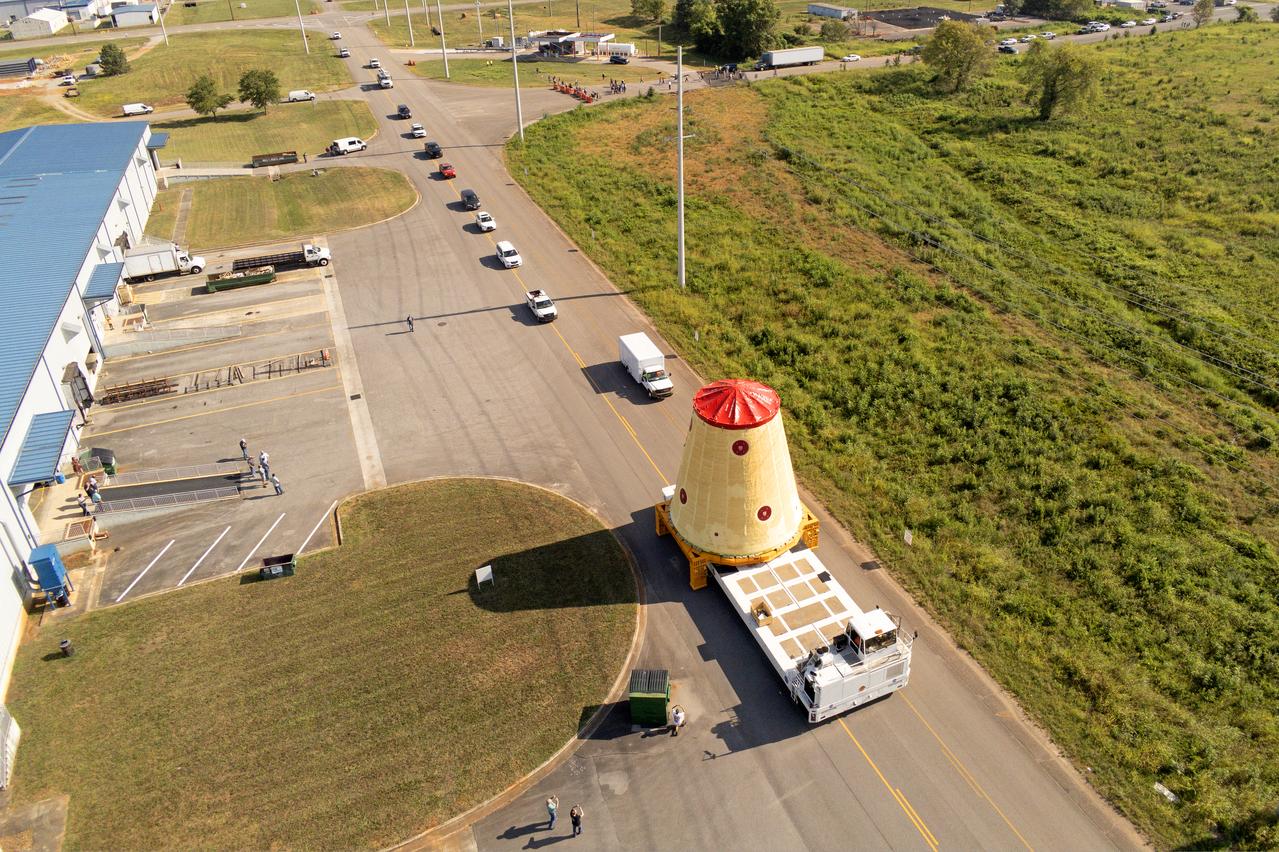
NASA rolled out a key piece of space flight hardware for the SLS (Space Launch System) rocket for the first crewed mission of NASA’s Artemis campaign from Marshall Space Flight Center in Huntsville, Alabama, on Wednesday, Aug. 21 for shipment to the agency’s spaceport in Florida. The cone-shaped launch vehicle stage adapter connects the rocket’s core stage to the upper stage and helps protect the upper stage’s engine that will help propel the Artemis II test flight around the Moon, slated for 2025. Manufactured by prime contractor Teledyne Brown Engineering and the Jacobs Space Exploration Group’s ESSCA (Engineering Services and Science Capability Augmentation) contract using NASA Marshall’s self-reacting friction-stir robotic and vertical weld tools. Crews moved the adapter out of NASA Marshall’s Building 4708 to the agency’s Pegasus barge Aug. 21. The barge will ferry the adapter first to NASA’s Michoud Assembly Facility in New Orleans, where crews will pick up additional SLS hardware for future Artemis missions, before traveling to NASA Kennedy. Once in Florida, the adapter will join the recently delivered core stage. There, teams with NASA’s Exploration Ground Systems will prepare the adapter for stacking and launch.
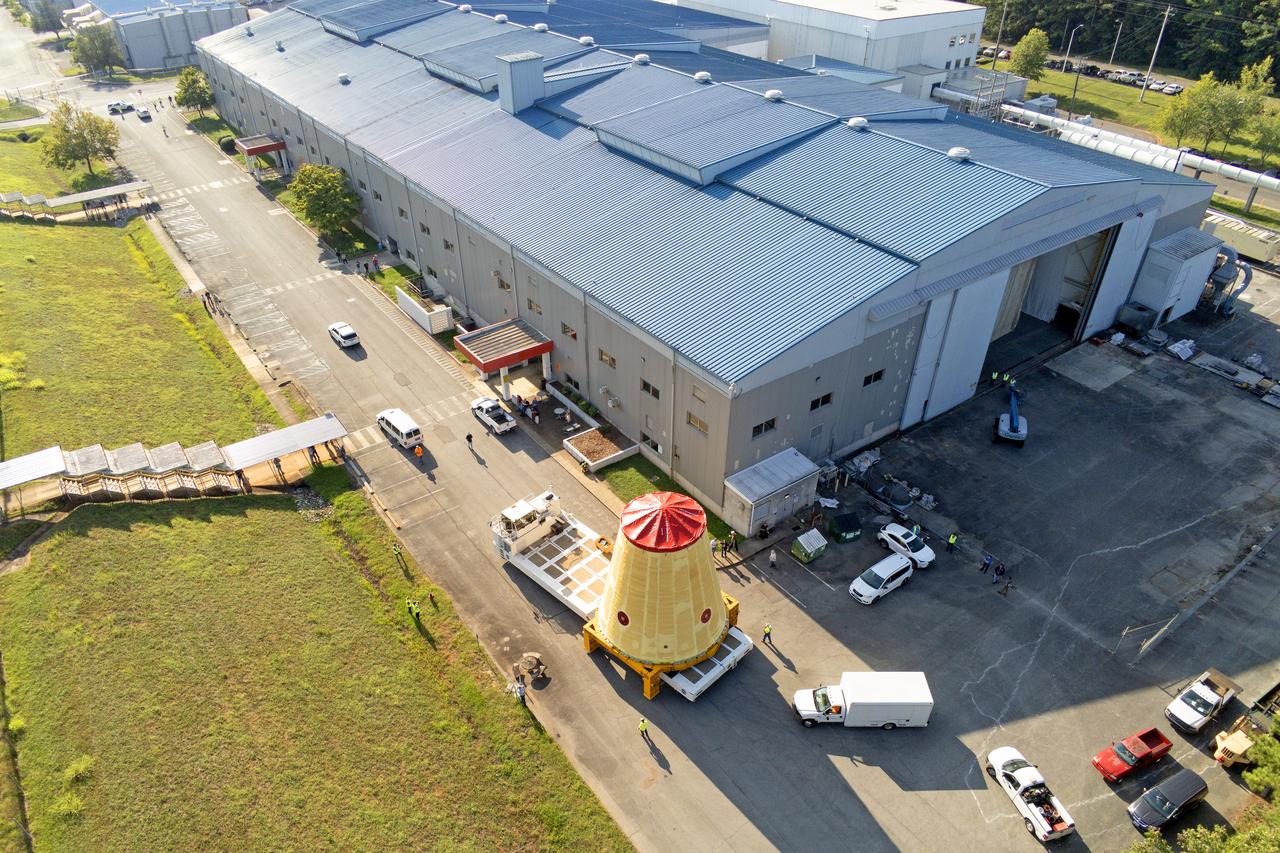
NASA rolled out a key piece of space flight hardware for the SLS (Space Launch System) rocket for the first crewed mission of NASA’s Artemis campaign from Marshall Space Flight Center in Huntsville, Alabama, on Wednesday, Aug. 21 for shipment to the agency’s spaceport in Florida. The cone-shaped launch vehicle stage adapter connects the rocket’s core stage to the upper stage and helps protect the upper stage’s engine that will help propel the Artemis II test flight around the Moon, slated for 2025. Manufactured by prime contractor Teledyne Brown Engineering and the Jacobs Space Exploration Group’s ESSCA (Engineering Services and Science Capability Augmentation) contract using NASA Marshall’s self-reacting friction-stir robotic and vertical weld tools. Crews moved the adapter out of NASA Marshall’s Building 4708 to the agency’s Pegasus barge Aug. 21. The barge will ferry the adapter first to NASA’s Michoud Assembly Facility in New Orleans, where crews will pick up additional SLS hardware for future Artemis missions, before traveling to NASA Kennedy. Once in Florida, the adapter will join the recently delivered core stage. There, teams with NASA’s Exploration Ground Systems will prepare the adapter for stacking and launch.
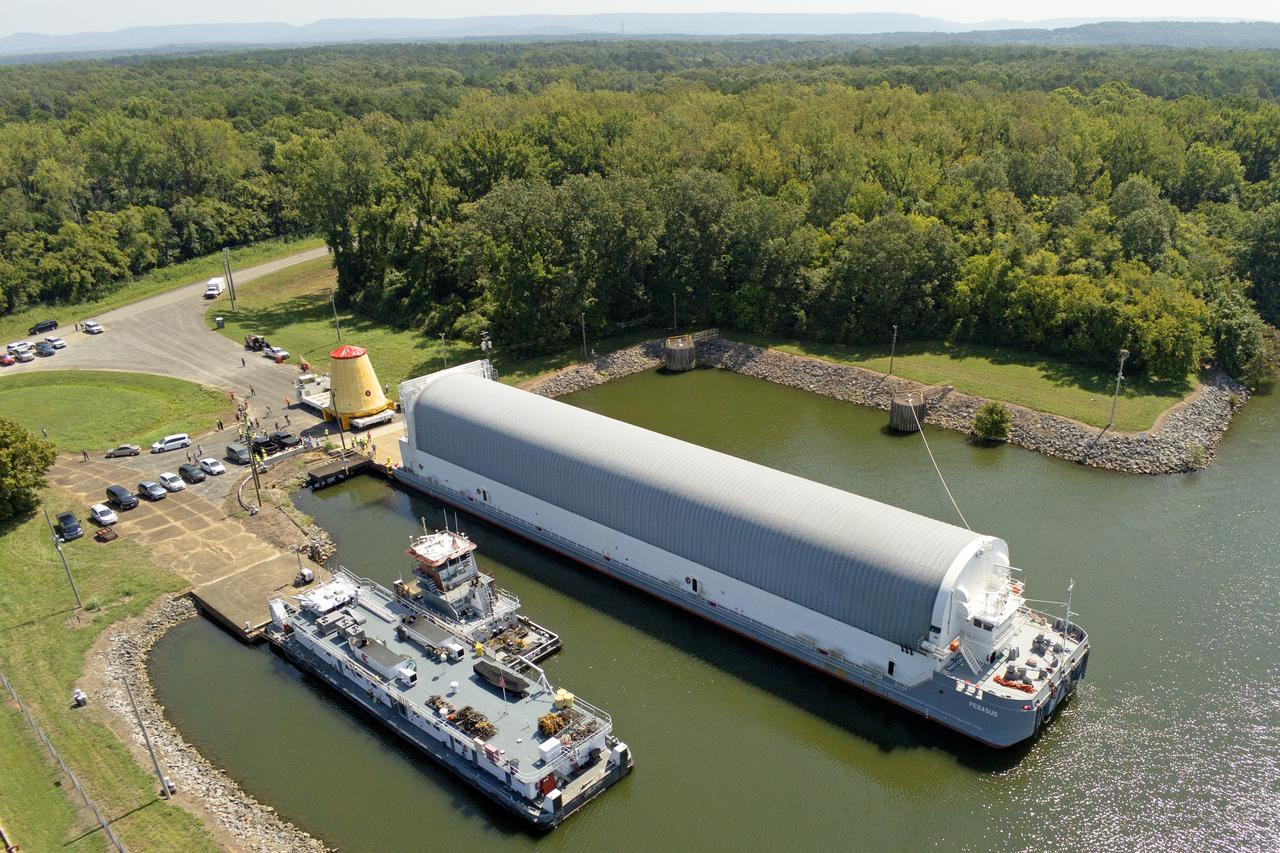
NASA rolled out a key piece of space flight hardware for the SLS (Space Launch System) rocket for the first crewed mission of NASA’s Artemis campaign from Marshall Space Flight Center in Huntsville, Alabama, on Wednesday, Aug. 21 for shipment to the agency’s spaceport in Florida. The cone-shaped launch vehicle stage adapter connects the rocket’s core stage to the upper stage and helps protect the upper stage’s engine that will help propel the Artemis II test flight around the Moon, slated for 2025. Manufactured by prime contractor Teledyne Brown Engineering and the Jacobs Space Exploration Group’s ESSCA (Engineering Services and Science Capability Augmentation) contract using NASA Marshall’s self-reacting friction-stir robotic and vertical weld tools. Crews moved the adapter out of NASA Marshall’s Building 4708 to the agency’s Pegasus barge Aug. 21. The barge will ferry the adapter first to NASA’s Michoud Assembly Facility in New Orleans, where crews will pick up additional SLS hardware for future Artemis missions, before traveling to NASA Kennedy. Once in Florida, the adapter will join the recently delivered core stage. There, teams with NASA’s Exploration Ground Systems will prepare the adapter for stacking and launch.
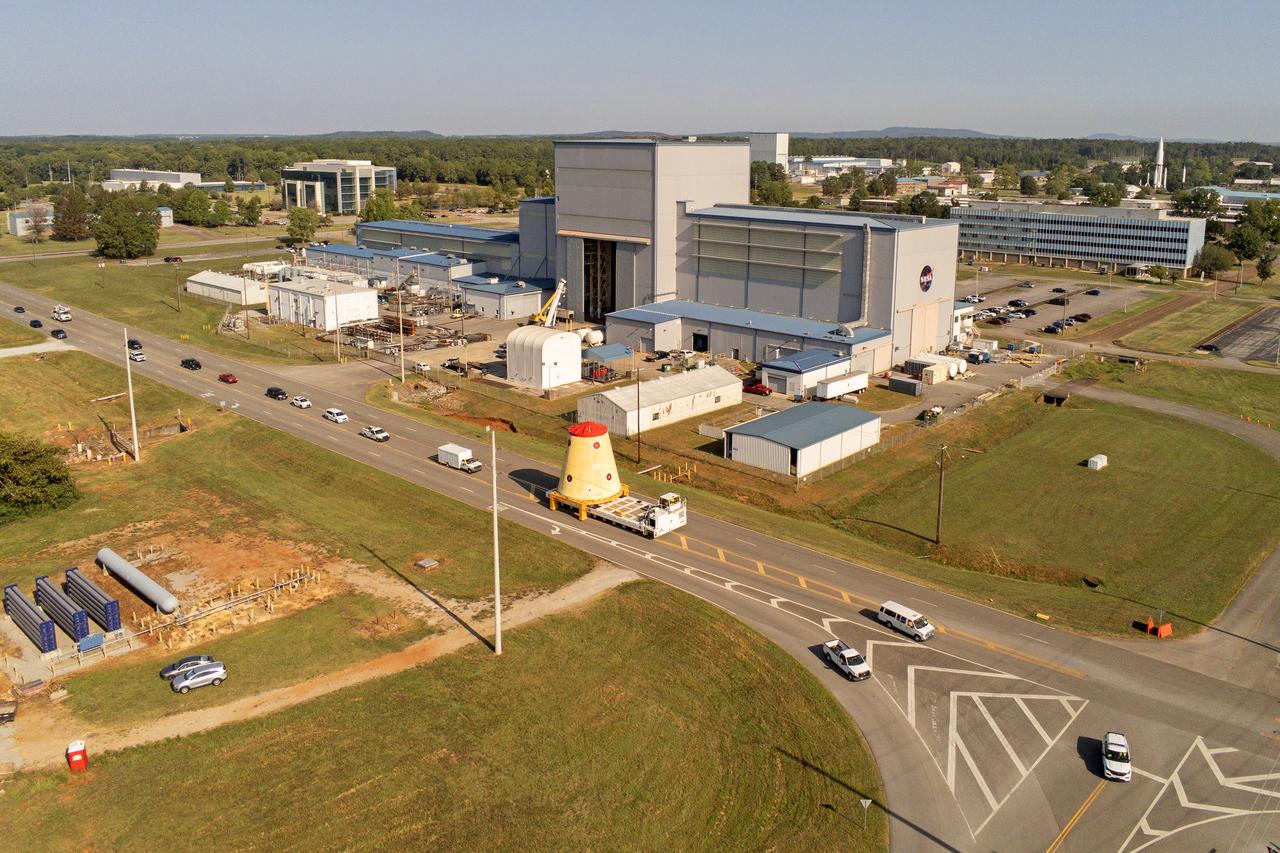
NASA rolled out a key piece of space flight hardware for the SLS (Space Launch System) rocket for the first crewed mission of NASA’s Artemis campaign from Marshall Space Flight Center in Huntsville, Alabama, on Wednesday, Aug. 21 for shipment to the agency’s spaceport in Florida. The cone-shaped launch vehicle stage adapter connects the rocket’s core stage to the upper stage and helps protect the upper stage’s engine that will help propel the Artemis II test flight around the Moon, slated for 2025. Manufactured by prime contractor Teledyne Brown Engineering and the Jacobs Space Exploration Group’s ESSCA (Engineering Services and Science Capability Augmentation) contract using NASA Marshall’s self-reacting friction-stir robotic and vertical weld tools. Crews moved the adapter out of NASA Marshall’s Building 4708 to the agency’s Pegasus barge Aug. 21. The barge will ferry the adapter first to NASA’s Michoud Assembly Facility in New Orleans, where crews will pick up additional SLS hardware for future Artemis missions, before traveling to NASA Kennedy. Once in Florida, the adapter will join the recently delivered core stage. There, teams with NASA’s Exploration Ground Systems will prepare the adapter for stacking and launch.
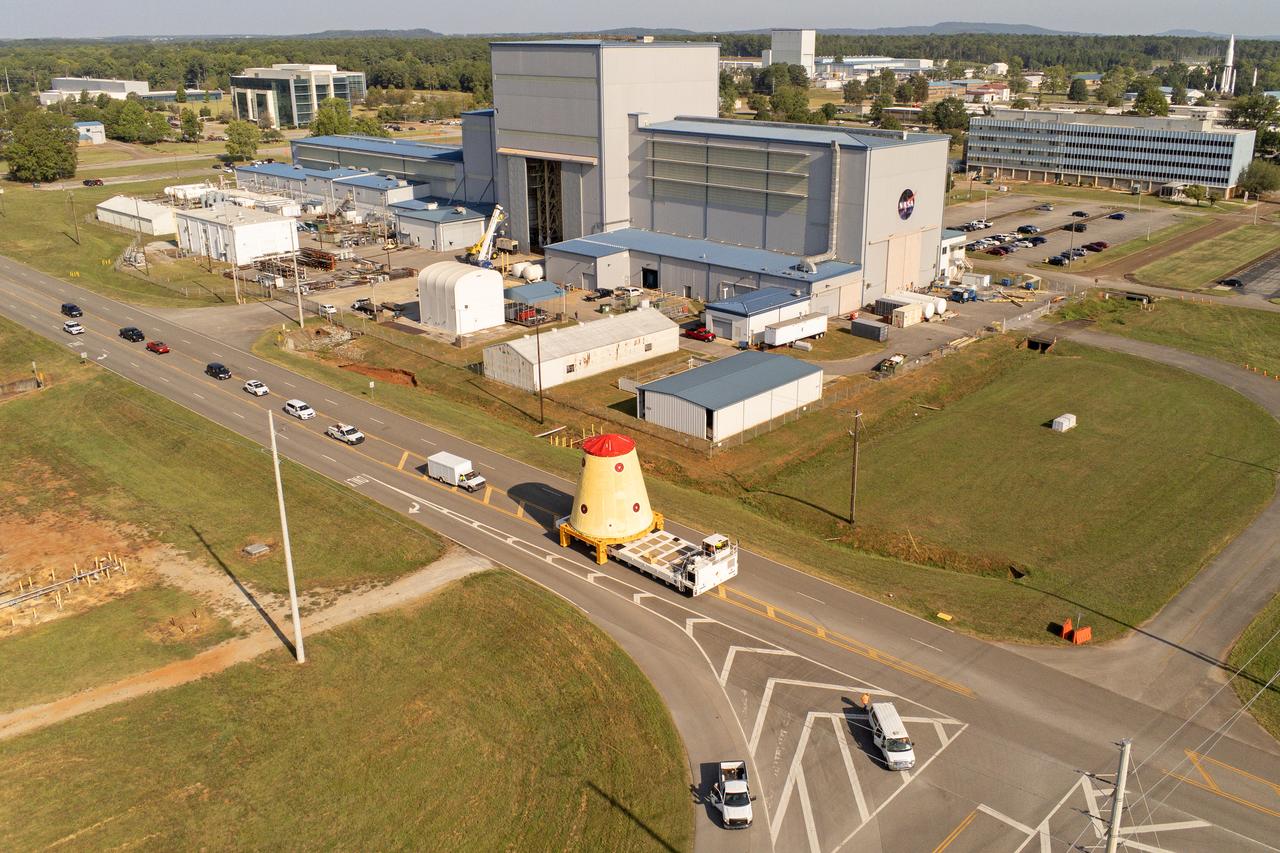
NASA rolled out a key piece of space flight hardware for the SLS (Space Launch System) rocket for the first crewed mission of NASA’s Artemis campaign from Marshall Space Flight Center in Huntsville, Alabama, on Wednesday, Aug. 21 for shipment to the agency’s spaceport in Florida. The cone-shaped launch vehicle stage adapter connects the rocket’s core stage to the upper stage and helps protect the upper stage’s engine that will help propel the Artemis II test flight around the Moon, slated for 2025. Manufactured by prime contractor Teledyne Brown Engineering and the Jacobs Space Exploration Group’s ESSCA (Engineering Services and Science Capability Augmentation) contract using NASA Marshall’s self-reacting friction-stir robotic and vertical weld tools. Crews moved the adapter out of NASA Marshall’s Building 4708 to the agency’s Pegasus barge Aug. 21. The barge will ferry the adapter first to NASA’s Michoud Assembly Facility in New Orleans, where crews will pick up additional SLS hardware for future Artemis missions, before traveling to NASA Kennedy. Once in Florida, the adapter will join the recently delivered core stage. There, teams with NASA’s Exploration Ground Systems will prepare the adapter for stacking and launch.
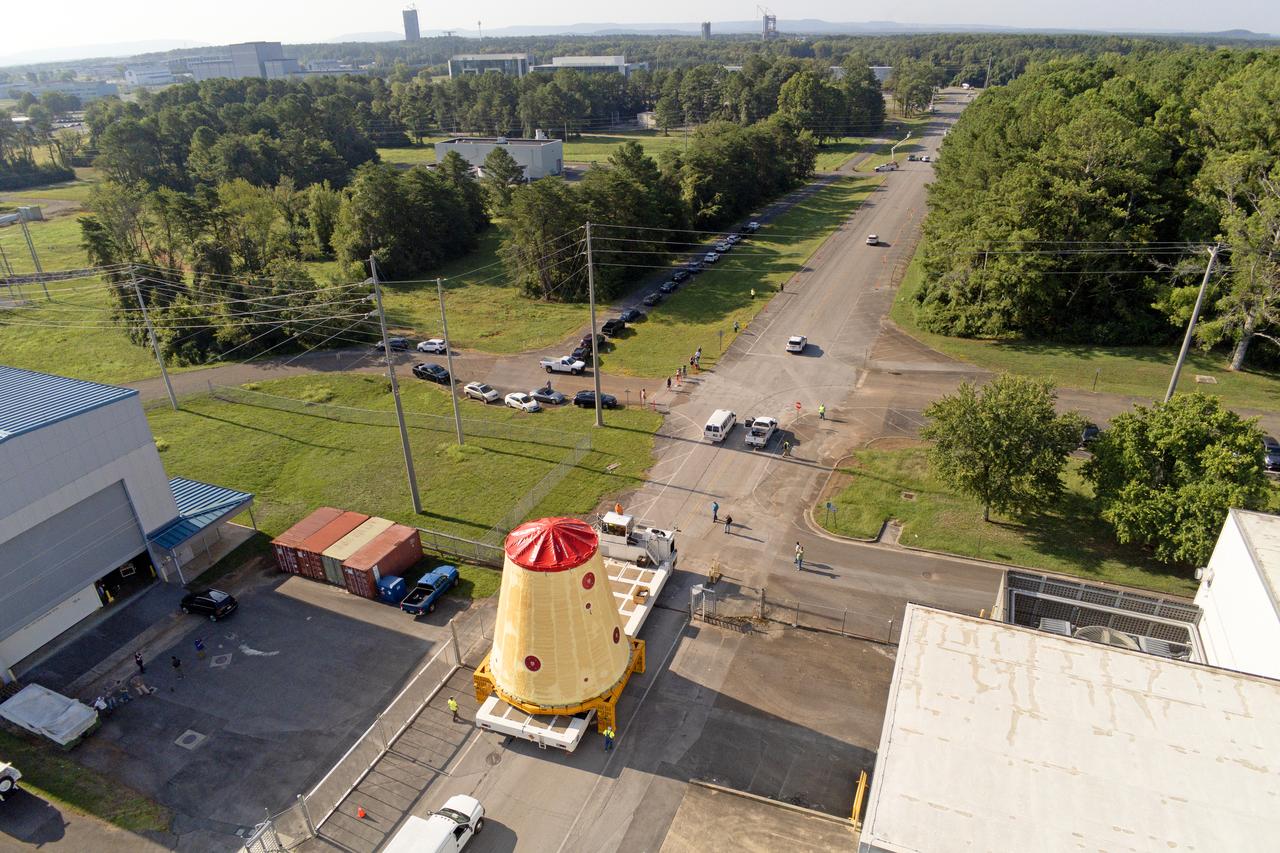
NASA rolled out a key piece of space flight hardware for the SLS (Space Launch System) rocket for the first crewed mission of NASA’s Artemis campaign from Marshall Space Flight Center in Huntsville, Alabama, on Wednesday, Aug. 21 for shipment to the agency’s spaceport in Florida. The cone-shaped launch vehicle stage adapter connects the rocket’s core stage to the upper stage and helps protect the upper stage’s engine that will help propel the Artemis II test flight around the Moon, slated for 2025. Manufactured by prime contractor Teledyne Brown Engineering and the Jacobs Space Exploration Group’s ESSCA (Engineering Services and Science Capability Augmentation) contract using NASA Marshall’s self-reacting friction-stir robotic and vertical weld tools. Crews moved the adapter out of NASA Marshall’s Building 4708 to the agency’s Pegasus barge Aug. 21. The barge will ferry the adapter first to NASA’s Michoud Assembly Facility in New Orleans, where crews will pick up additional SLS hardware for future Artemis missions, before traveling to NASA Kennedy. Once in Florida, the adapter will join the recently delivered core stage. There, teams with NASA’s Exploration Ground Systems will prepare the adapter for stacking and launch.
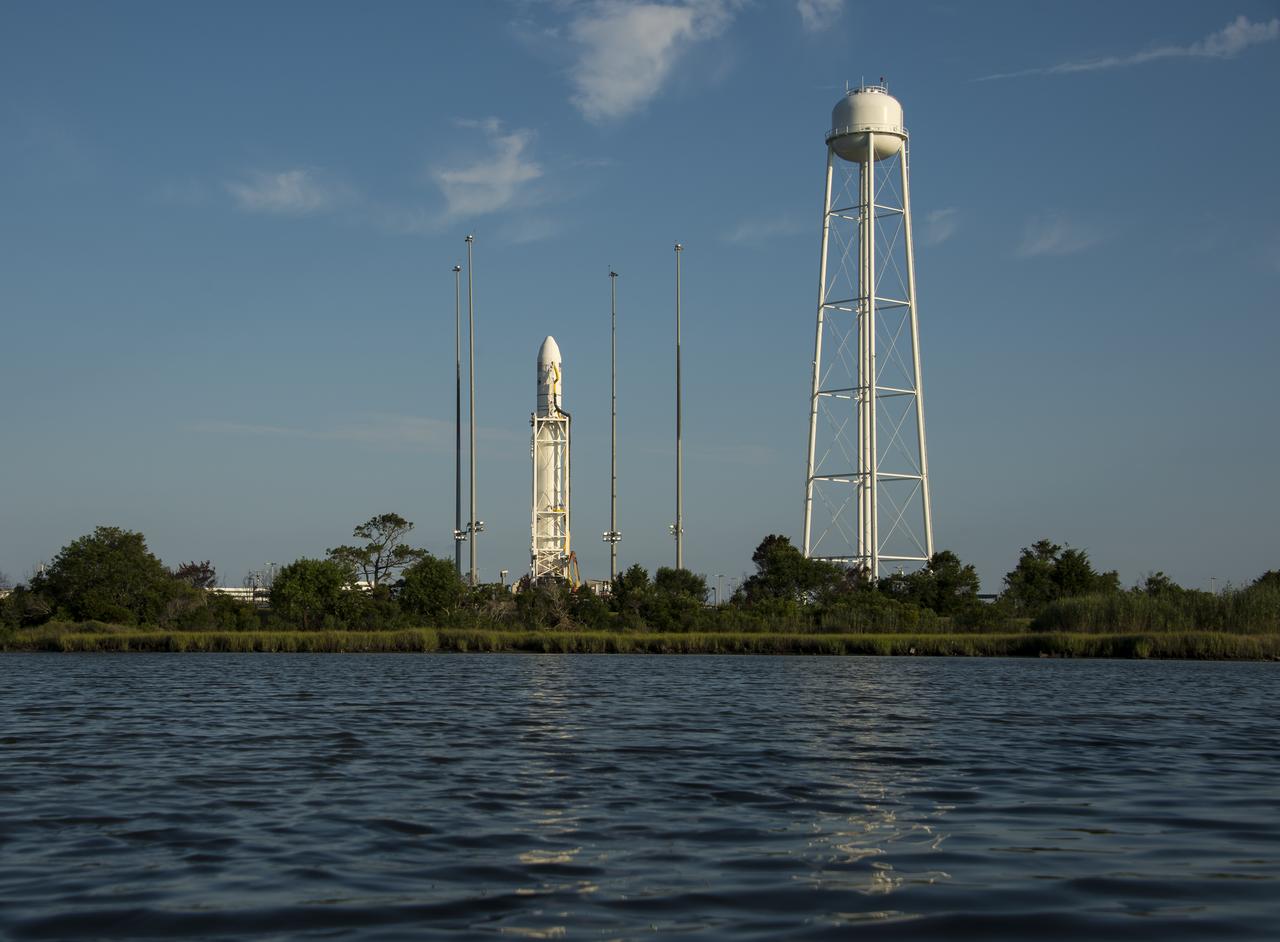
The Orbital Sciences Corporation Antares rocket, with the Cygnus spacecraft onboard, is seen, Saturday, July 12, 2014, at launch Pad-0A of NASA's Wallops Flight Facility in Virginia. The Antares will launch with the Cygnus spacecraft filled with over 3,000 pounds of supplies for the International Space Station, including science experiments, experiment hardware, spare parts, and crew provisions. The Orbital-2 mission is Orbital Sciences' second contracted cargo delivery flight to the space station for NASA. Photo Credit: (NASA/Bill Ingalls)
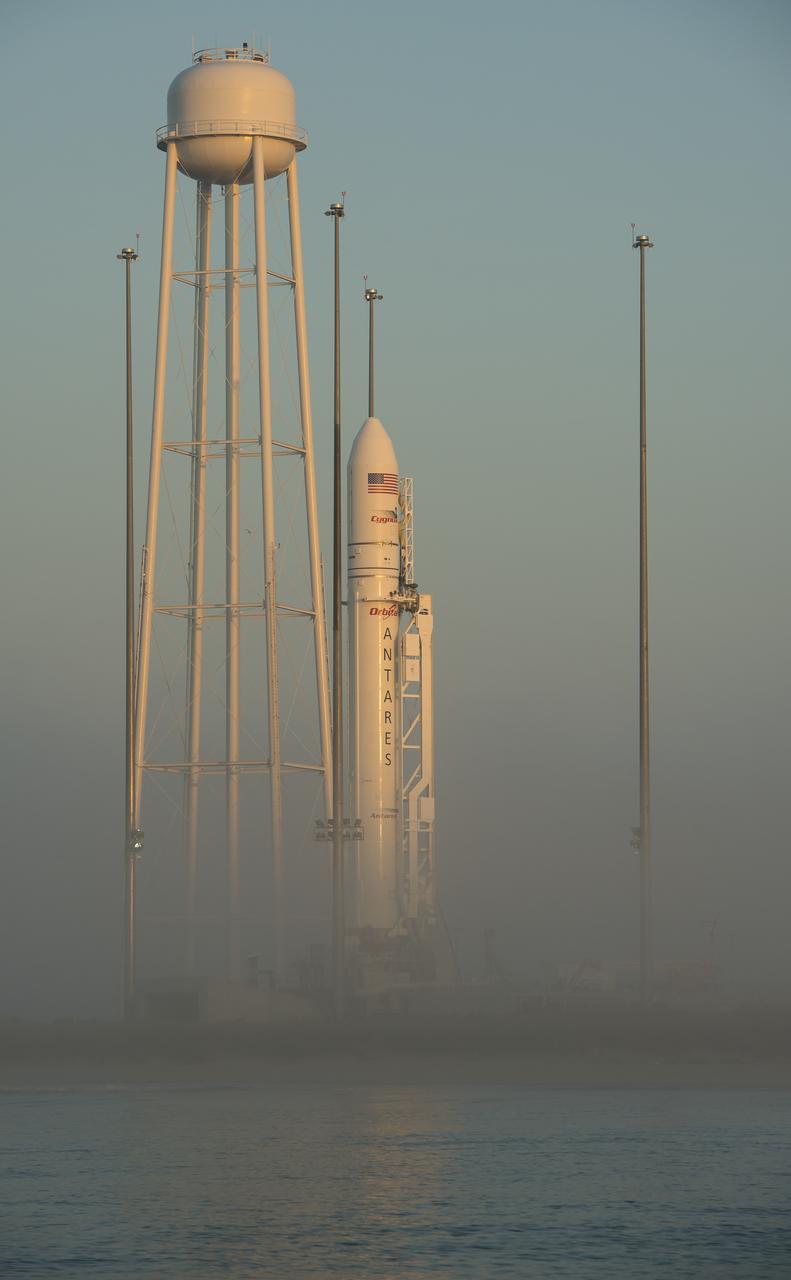
The Orbital Sciences Corporation Antares rocket, with the Cygnus spacecraft onboard, is seen during sunrise, Saturday, July 12, 2014, at launch Pad-0A of NASA's Wallops Flight Facility in Virginia. The Antares will launch with the Cygnus spacecraft filled with over 3,000 pounds of supplies for the International Space Station, including science experiments, experiment hardware, spare parts, and crew provisions. The Orbital-2 mission is Orbital Sciences' second contracted cargo delivery flight to the space station for NASA. Photo Credit: (NASA/Bill Ingalls)

The Orbital Sciences Corporation Antares rocket, with the Cygnus spacecraft onboard, is seen, Saturday, July 12, 2014, at launch Pad-0A of NASA's Wallops Flight Facility in Virginia. The Antares will launch with the Cygnus spacecraft filled with over 3,000 pounds of supplies for the International Space Station, including science experiments, experiment hardware, spare parts, and crew provisions. The Orbital-2 mission is Orbital Sciences' second contracted cargo delivery flight to the space station for NASA. Photo Credit: (NASA/Bill Ingalls)
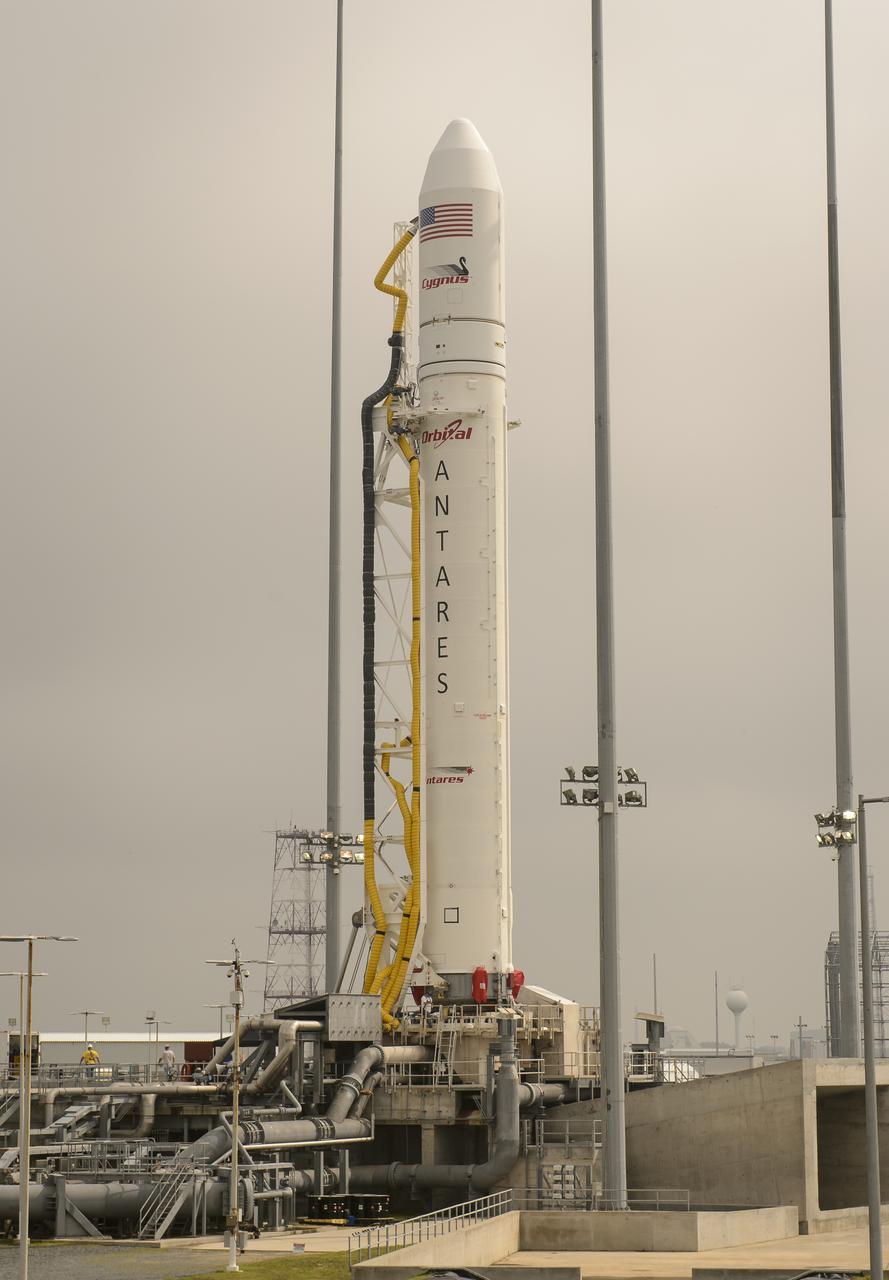
The Orbital Sciences Corporation Antares rocket, with the Cygnus spacecraft onboard, is seen on launch Pad-0A, Friday, July 11, 2014, at NASA's Wallops Flight Facility in Virginia. The Antares will launch with the Cygnus spacecraft filled with over 3,000 pounds of supplies for the International Space Station, including science experiments, experiment hardware, spare parts, and crew provisions. The Orbital-2 mission is Orbital Sciences' second contracted cargo delivery flight to the space station for NASA. Photo Credit: (NASA/Bill Ingalls)
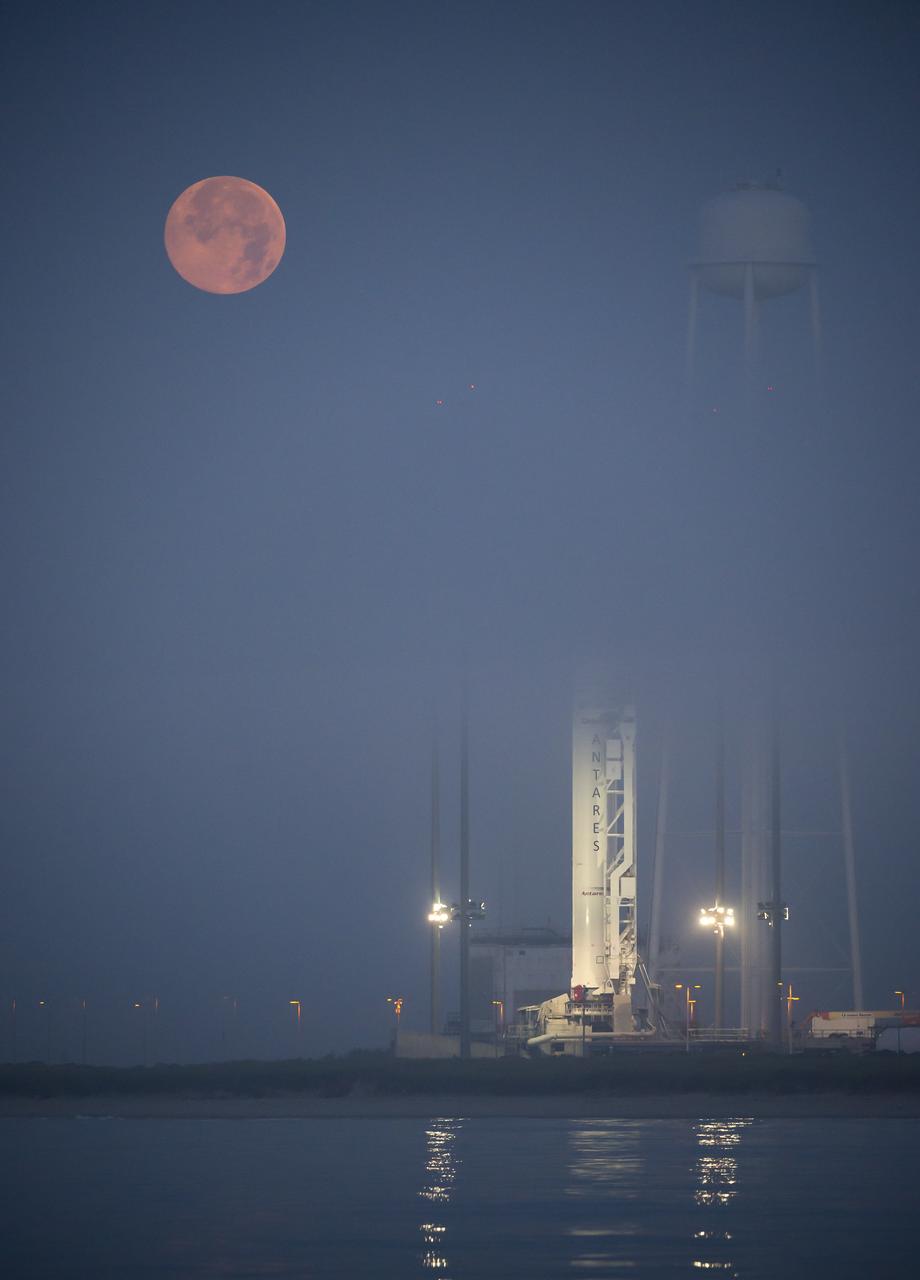
The full Moon sets in the fog behind the Orbital Sciences Corporation Antares rocket, with the Cygnus spacecraft onboard, Saturday, July 12, 2014, launch Pad-0A, NASA's Wallops Flight Facility in Virginia. The Antares will launch with the Cygnus spacecraft filled with over 3,000 pounds of supplies for the International Space Station, including science experiments, experiment hardware, spare parts, and crew provisions. The Orbital-2 mission is Orbital Sciences' second contracted cargo delivery flight to the space station for NASA. Photo Credit: (NASA/Bill Ingalls)
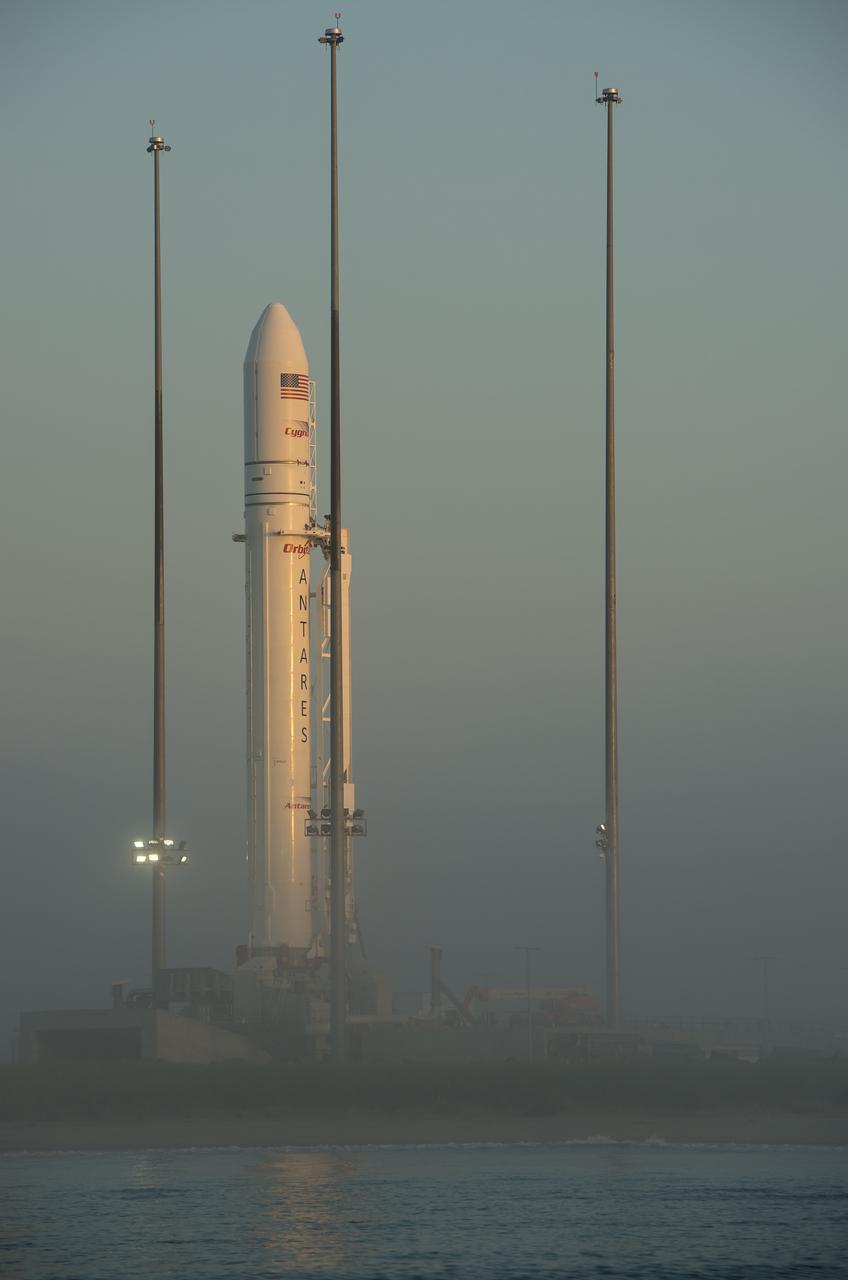
The Orbital Sciences Corporation Antares rocket, with the Cygnus spacecraft onboard, is seen during sunrise, Saturday, July 12, 2014, at launch Pad-0A of NASA's Wallops Flight Facility in Virginia. The Antares will launch with the Cygnus spacecraft filled with over 3,000 pounds of supplies for the International Space Station, including science experiments, experiment hardware, spare parts, and crew provisions. The Orbital-2 mission is Orbital Sciences' second contracted cargo delivery flight to the space station for NASA. Photo Credit: (NASA/Bill Ingalls)
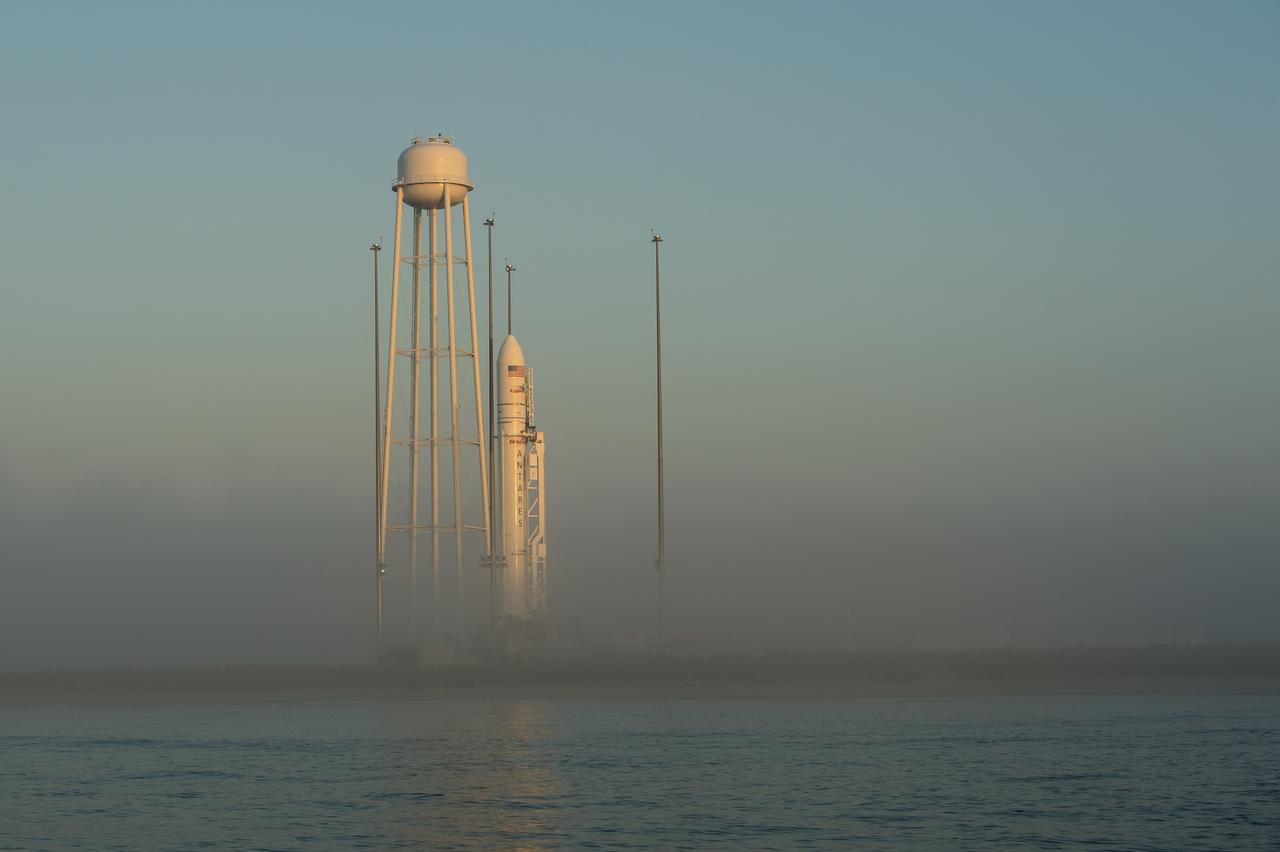
The Orbital Sciences Corporation Antares rocket, with the Cygnus spacecraft onboard, is seen during sunrise, Saturday, July 12, 2014, at launch Pad-0A of NASA's Wallops Flight Facility in Virginia. The Antares will launch with the Cygnus spacecraft filled with over 3,000 pounds of supplies for the International Space Station, including science experiments, experiment hardware, spare parts, and crew provisions. The Orbital-2 mission is Orbital Sciences' second contracted cargo delivery flight to the space station for NASA. Photo Credit: (NASA/Bill Ingalls)
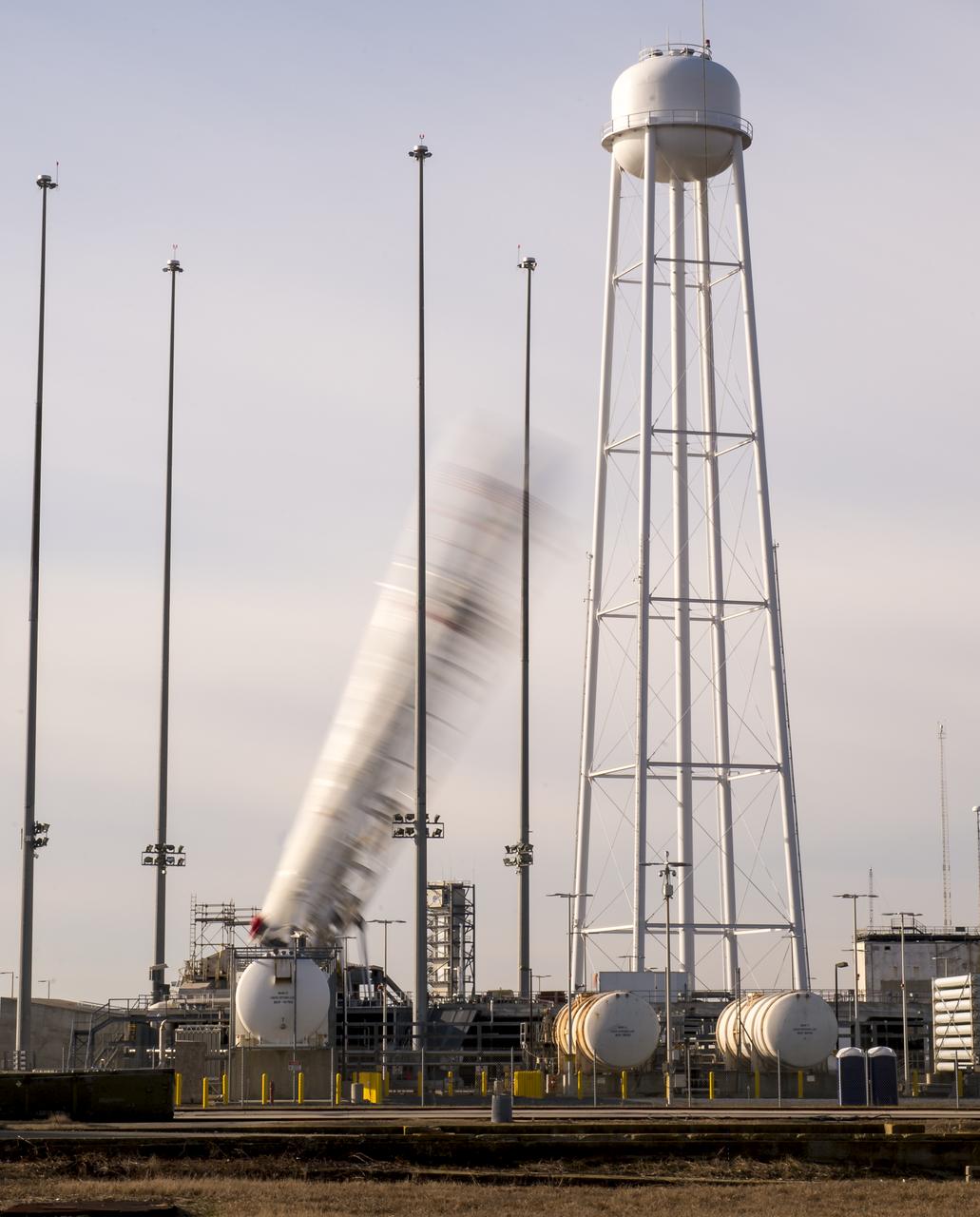
The Orbital Science Corporation Antares rocket is seen in this four minute exposure as it is raised into position at launch Pad-0A, Tuesday, December 17, 2013, at NASA's Wallops Flight Facility, Wallops Island, VA. The Antares will launch a Cygnus spacecraft on a cargo resupply mission to the International Space Station. The Orbital-1 mission is Orbital Sciences' first contracted cargo delivery flight to the space station for NASA. Among the cargo aboard Cygnus set to launch to the space station are science experiments, crew provisions, spare parts and other hardware. Launch is scheduled for 9:19 p.m. EST on Thursday, Dec. 19. Weather permitting, it may be widely visible along the east coast of the United States. Photo Credit: (NASA/Bill Ingalls)
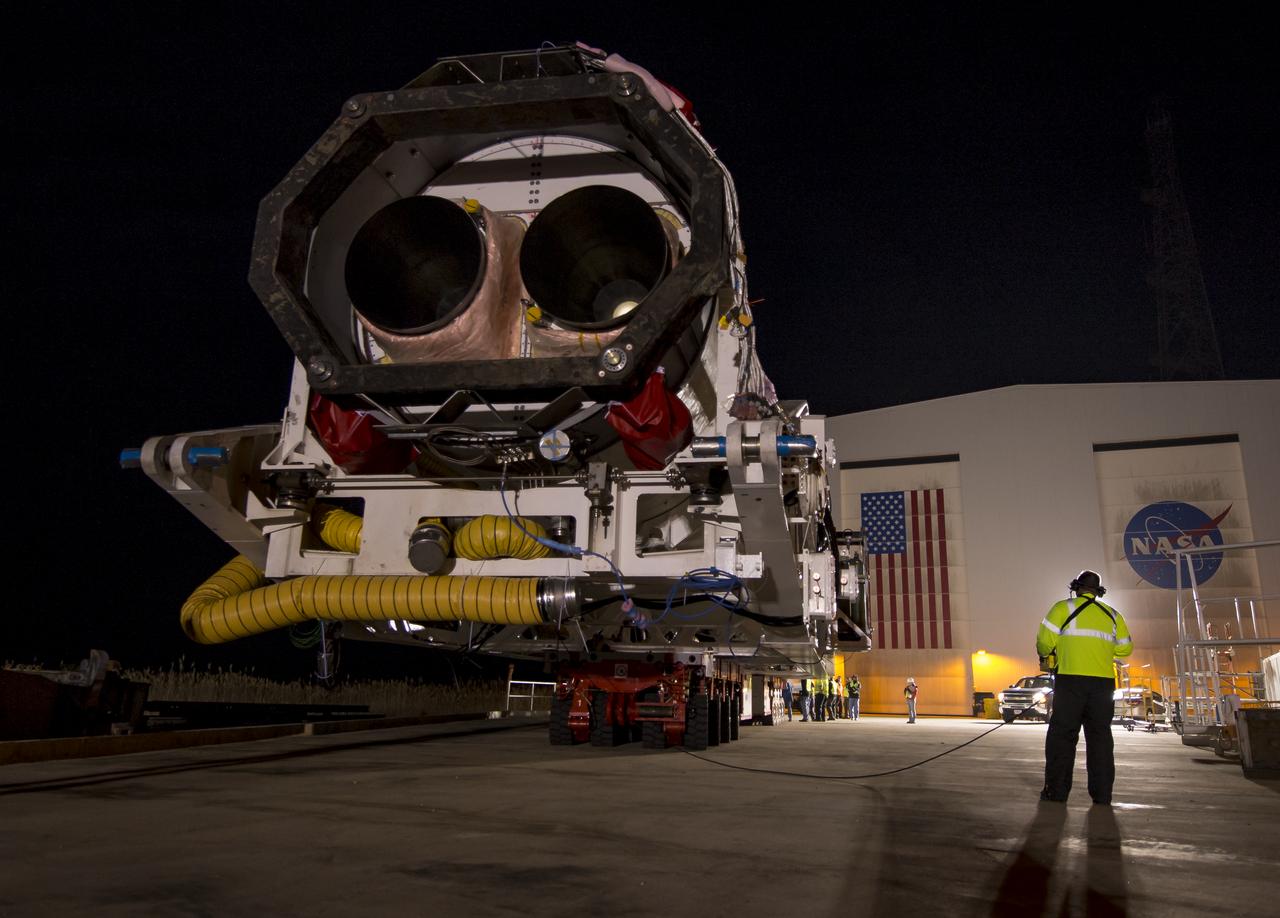
An Orbital Science Corporation Antares rocket is seen as it is rolled out to launch Pad-0A at NASA's Wallops Flight Facility Tuesday, December 17, 2013 in advance of a Thursday launch, Wallops Island, VA. The Antares will launch a Cygnus spacecraft on a cargo resupply mission to the International Space Station. The Orbital-1 mission is Orbital Sciences' first contracted cargo delivery flight to the space station for NASA. Among the cargo aboard Cygnus set to launch to the space station are science experiments, crew provisions, spare parts and other hardware. Launch is scheduled for 9:19 p.m. EST on Thursday, Dec. 19. Weather permitting, it may be widely visible along the east coast of the United States. Photo Credit: (NASA/Bill Ingalls)
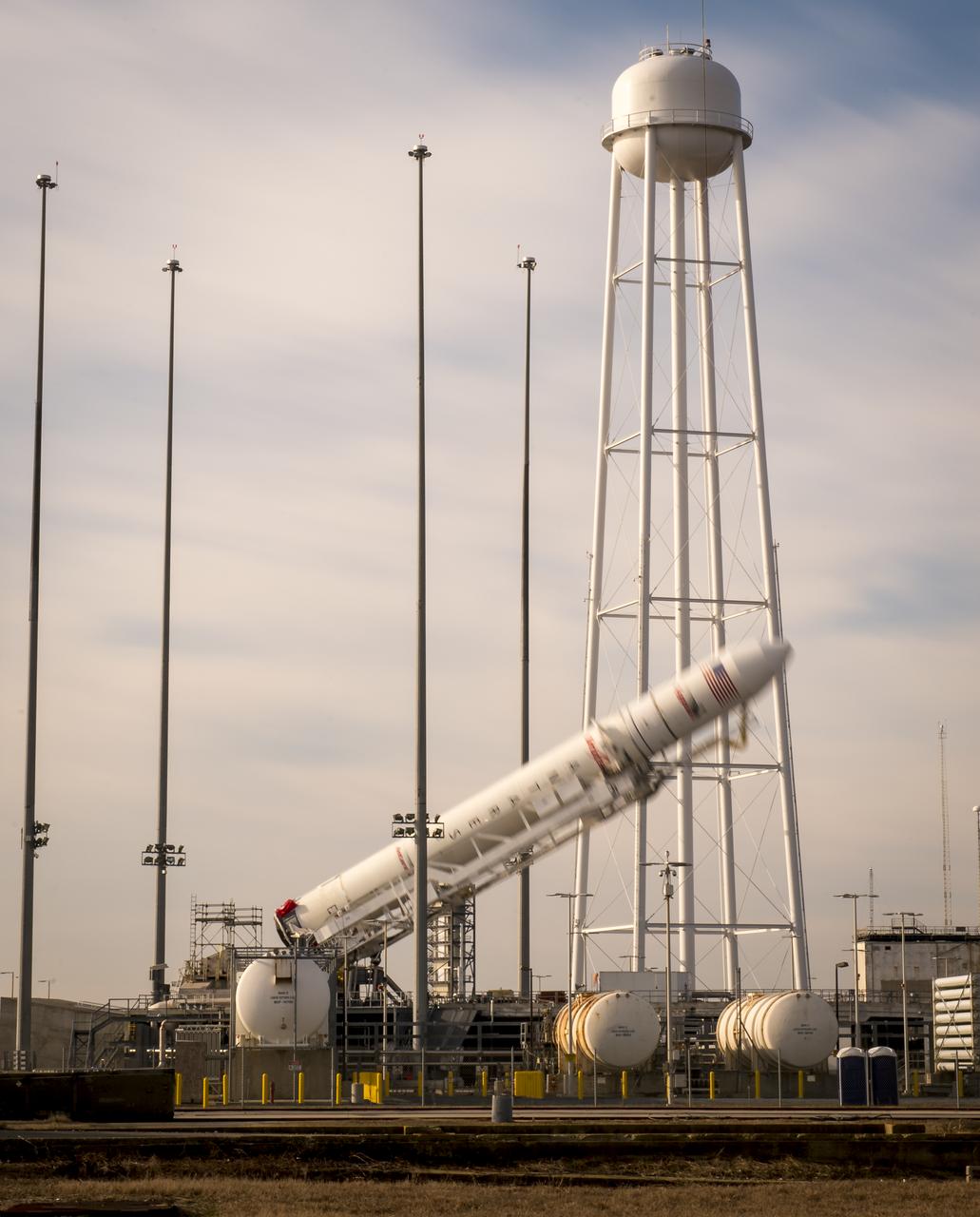
The Orbital Science Corporation Antares rocket is seen in this 30 second exposure as it is raised into position at launch Pad-0A, Tuesday, December 17, 2013, at NASA's Wallops Flight Facility, Wallops Island, VA. The Antares will launch a Cygnus spacecraft on a cargo resupply mission to the International Space Station. The Orbital-1 mission is Orbital Sciences' first contracted cargo delivery flight to the space station for NASA. Among the cargo aboard Cygnus set to launch to the space station are science experiments, crew provisions, spare parts and other hardware. Launch is scheduled for 9:19 p.m. EST on Thursday, Dec. 19. Weather permitting, it may be widely visible along the east coast of the United States. Photo Credit: (NASA/Bill Ingalls)
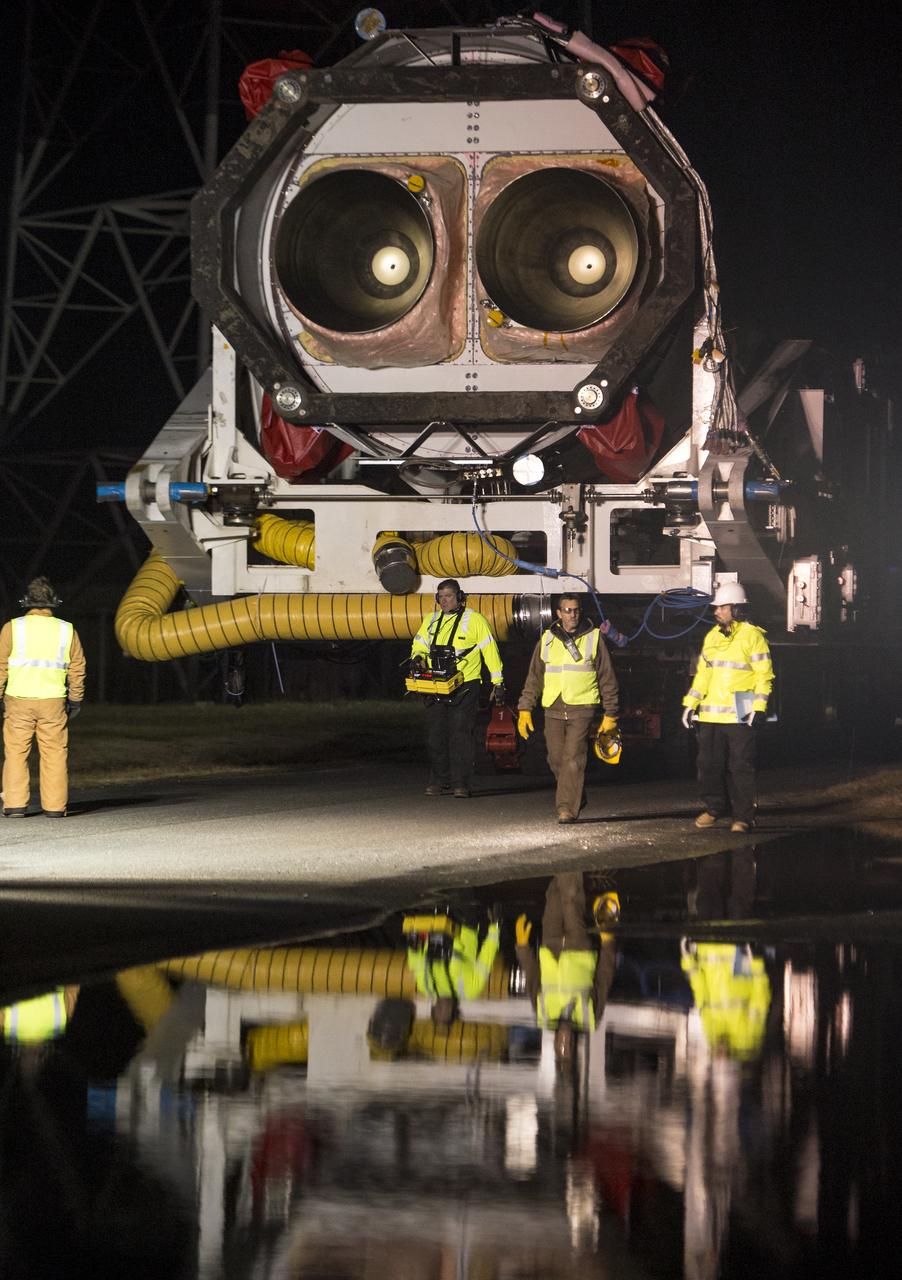
An Orbital Science Corporation Antares rocket is seen as it is rolled out to launch Pad-0A at NASA's Wallops Flight Facility Tuesday, December 17, 2013 in advance of a Thursday launch, Wallops Island, VA. The Antares will launch a Cygnus spacecraft on a cargo resupply mission to the International Space Station. The Orbital-1 mission is Orbital Sciences' first contracted cargo delivery flight to the space station for NASA. Among the cargo aboard Cygnus set to launch to the space station are science experiments, crew provisions, spare parts and other hardware. Launch is scheduled for 9:19 p.m. EST on Thursday, Dec. 19. Weather permitting, it may be widely visible along the east coast of the United States. Photo Credit: (NASA/Bill Ingalls)
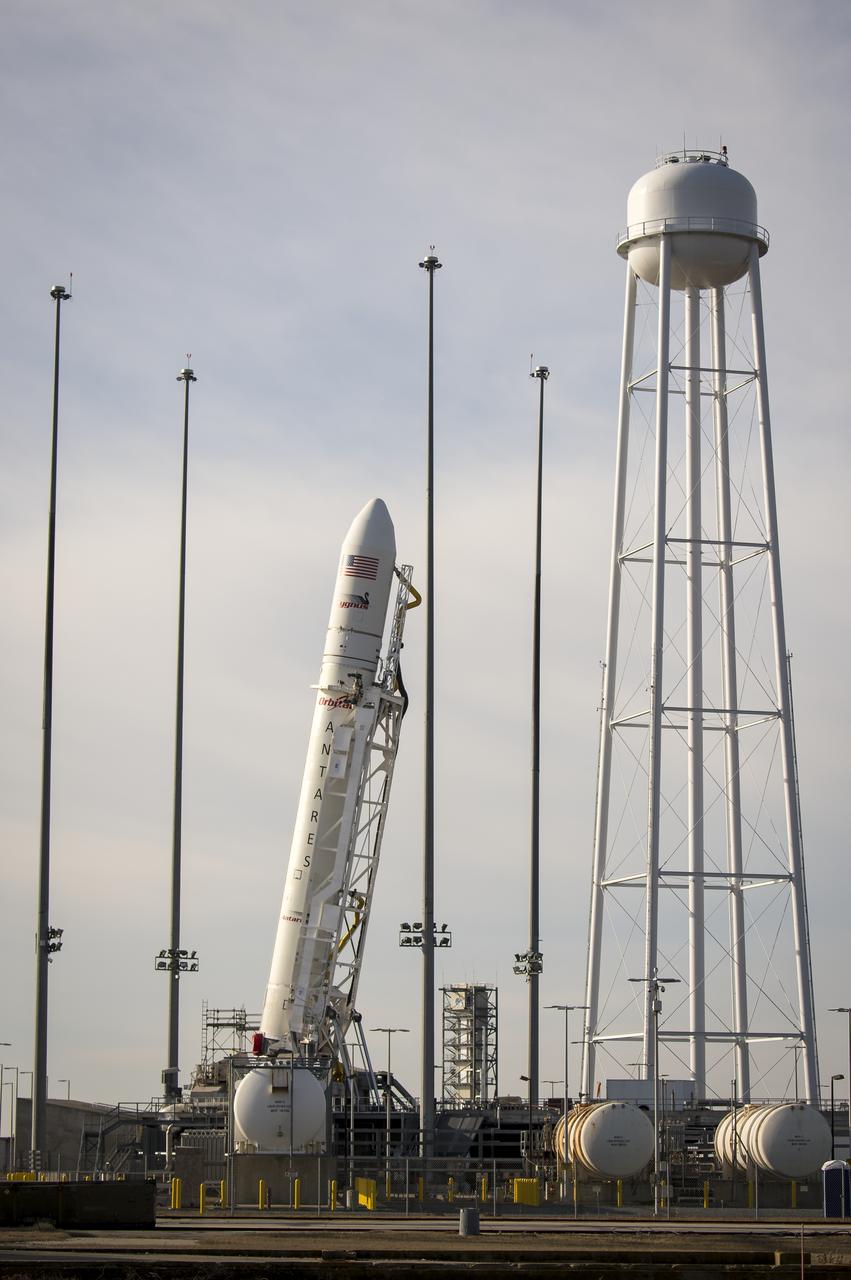
The Orbital Science Corporation Antares rocket is seen as it is raised into position at launch Pad-0A, Tuesday, December 17, 2013, at NASA's Wallops Flight Facility, Wallops Island, VA. The Antares will launch a Cygnus spacecraft on a cargo resupply mission to the International Space Station. The Orbital-1 mission is Orbital Sciences' first contracted cargo delivery flight to the space station for NASA. Among the cargo aboard Cygnus set to launch to the space station are science experiments, crew provisions, spare parts and other hardware. Launch is scheduled for 9:19 p.m. EST on Thursday, Dec. 19. Weather permitting, it may be widely visible along the east coast of the United States. Photo Credit: (NASA/Bill Ingalls)
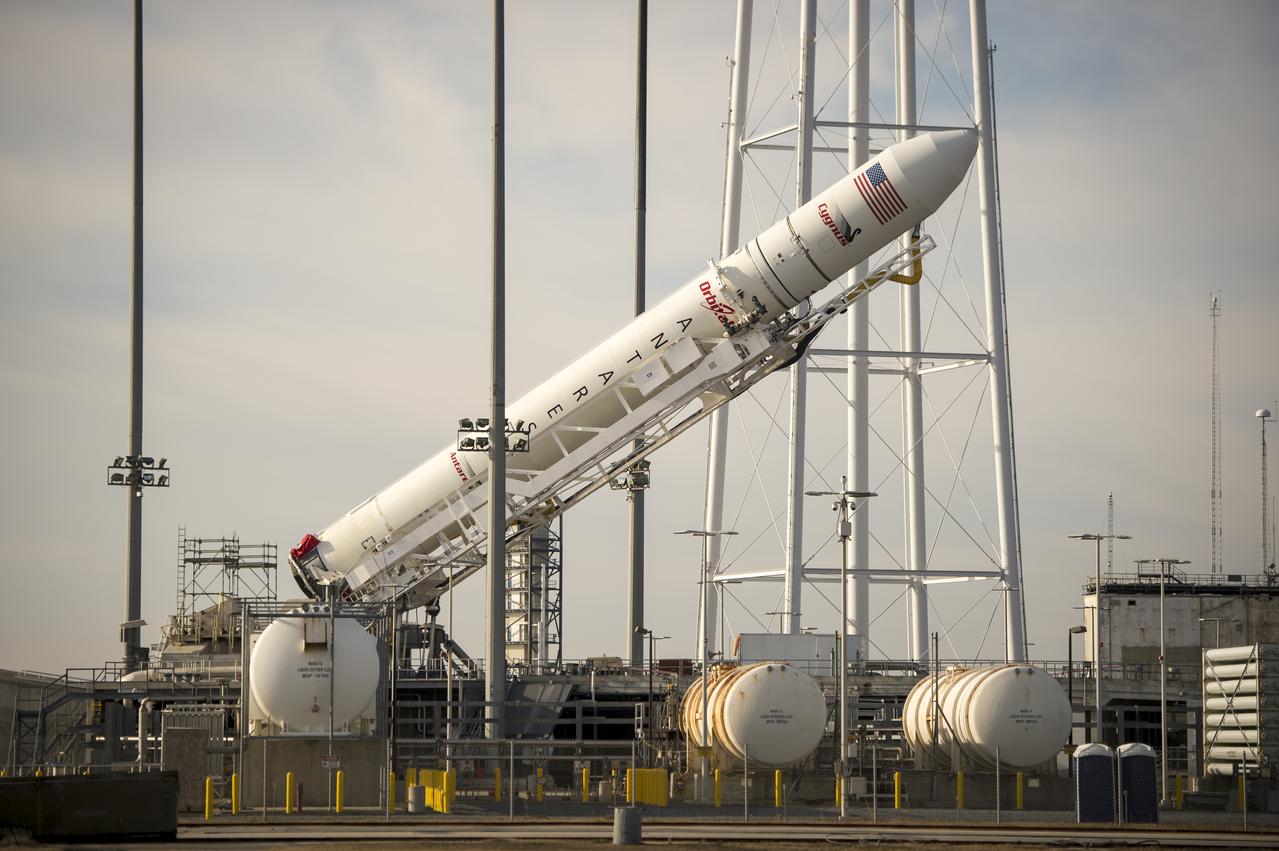
The Orbital Science Corporation Antares rocket is seen as it is raised into position at launch Pad-0A, Tuesday, December 17, 2013, at NASA's Wallops Flight Facility, Wallops Island, VA. The Antares will launch a Cygnus spacecraft on a cargo resupply mission to the International Space Station. The Orbital-1 mission is Orbital Sciences' first contracted cargo delivery flight to the space station for NASA. Among the cargo aboard Cygnus set to launch to the space station are science experiments, crew provisions, spare parts and other hardware. Launch is scheduled for 9:19 p.m. EST on Thursday, Dec. 19. Weather permitting, it may be widely visible along the east coast of the United States. Photo Credit: (NASA/Bill Ingalls)
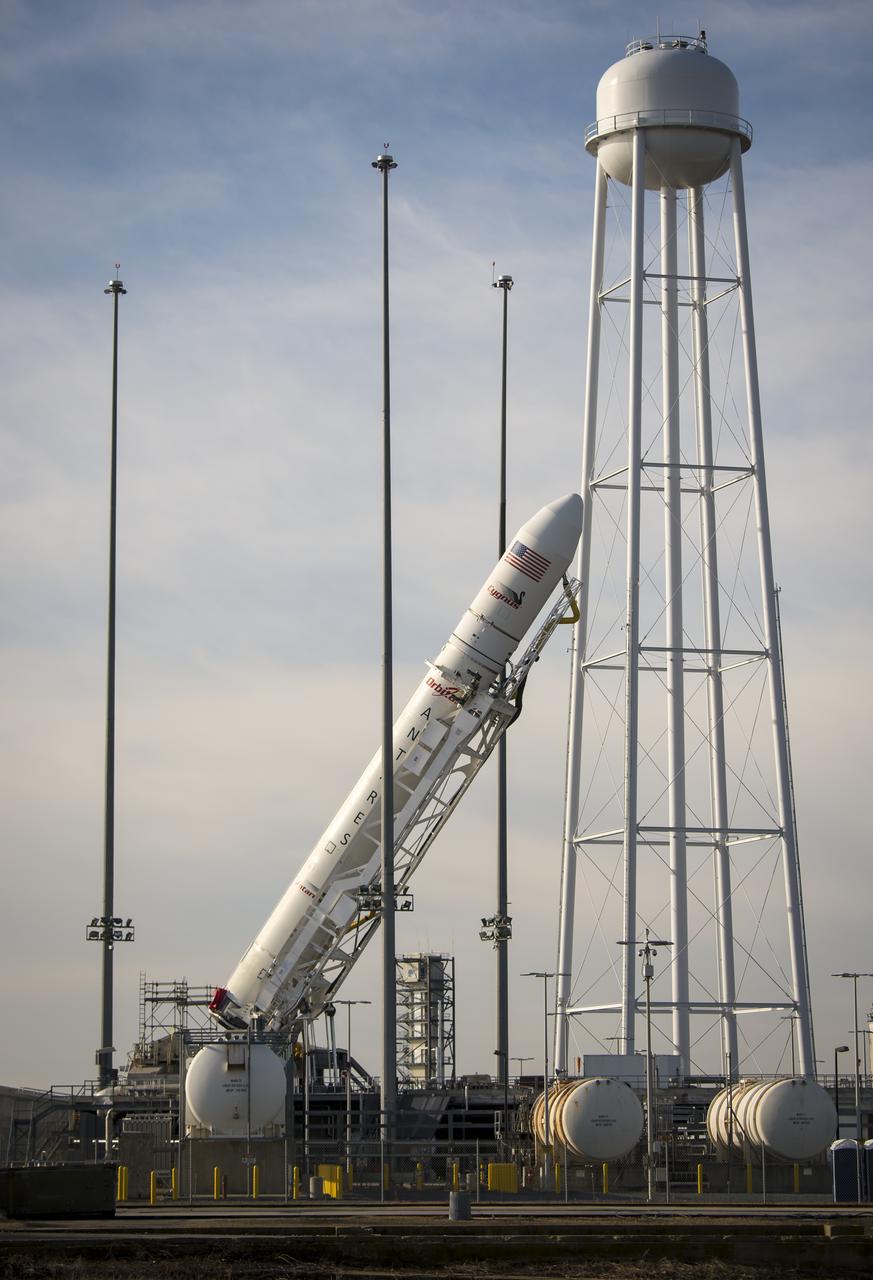
The Orbital Science Corporation Antares rocket is seen as it is raised into position at launch Pad-0A, Tuesday, December 17, 2013, at NASA's Wallops Flight Facility, Wallops Island, VA. The Antares will launch a Cygnus spacecraft on a cargo resupply mission to the International Space Station. The Orbital-1 mission is Orbital Sciences' first contracted cargo delivery flight to the space station for NASA. Among the cargo aboard Cygnus set to launch to the space station are science experiments, crew provisions, spare parts and other hardware. Launch is scheduled for 9:19 p.m. EST on Thursday, Dec. 19. Weather permitting, it may be widely visible along the east coast of the United States. Photo Credit: (NASA/Bill Ingalls)
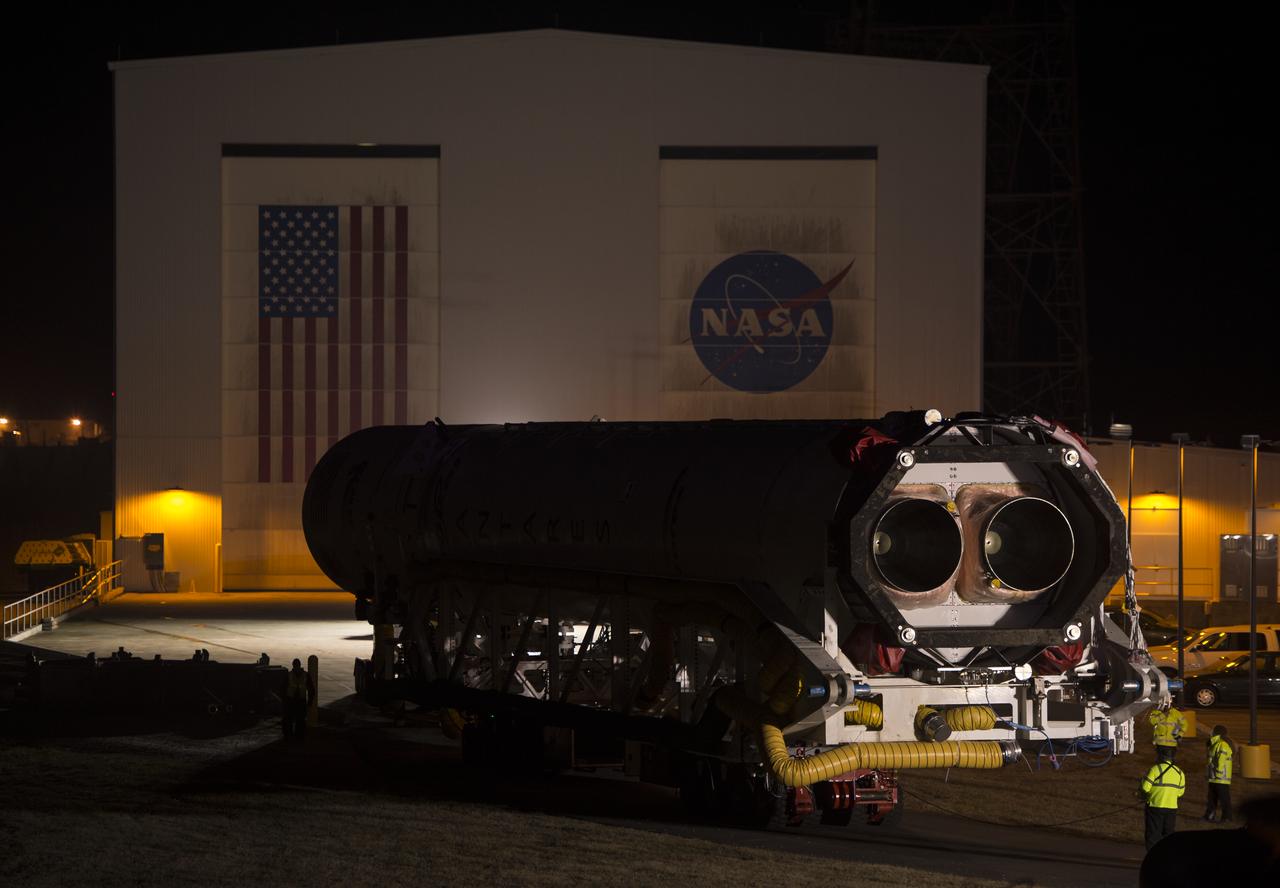
An Orbital Science Corporation Antares rocket is seen as it is rolled out to launch Pad-0A at NASA's Wallops Flight Facility Tuesday, December 17, 2013 in advance of a Thursday launch, Wallops Island, VA. The Antares will launch a Cygnus spacecraft on a cargo resupply mission to the International Space Station. The Orbital-1 mission is Orbital Sciences' first contracted cargo delivery flight to the space station for NASA. Among the cargo aboard Cygnus set to launch to the space station are science experiments, crew provisions, spare parts and other hardware. Launch is scheduled for 9:19 p.m. EST on Thursday, Dec. 19. Weather permitting, it may be widely visible along the east coast of the United States. Photo Credit: (NASA/Bill Ingalls)
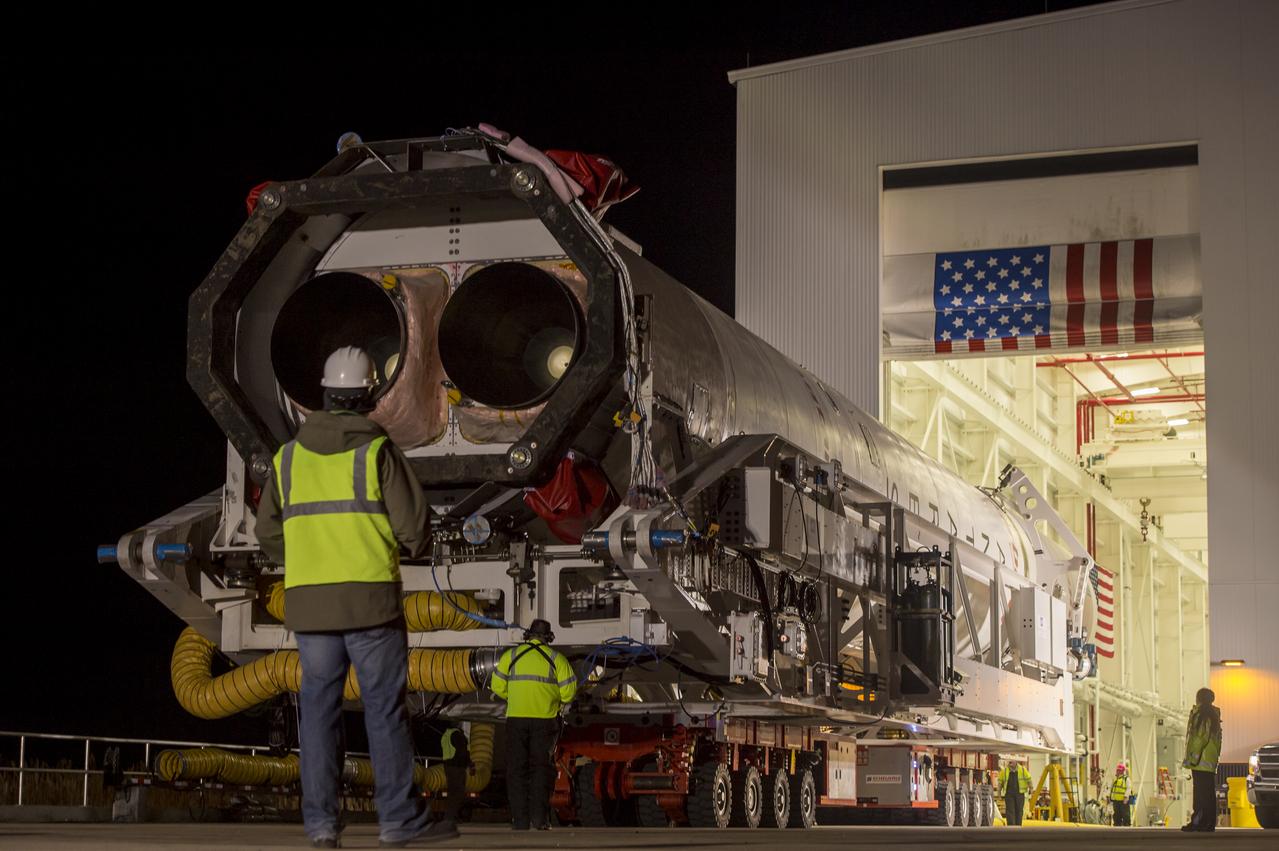
An Orbital Science Corporation Antares rocket is seen as it is rolled out to launch Pad-0A at NASA's Wallops Flight Facility Tuesday, December 17, 2013 in advance of a Thursday launch, Wallops Island, VA. The Antares will launch a Cygnus spacecraft on a cargo resupply mission to the International Space Station. The Orbital-1 mission is Orbital Sciences' first contracted cargo delivery flight to the space station for NASA. Among the cargo aboard Cygnus set to launch to the space station are science experiments, crew provisions, spare parts and other hardware. Launch is scheduled for 9:19 p.m. EST on Thursday, Dec. 19. Weather permitting, it may be widely visible along the east coast of the United States. Photo Credit: (NASA/Bill Ingalls)
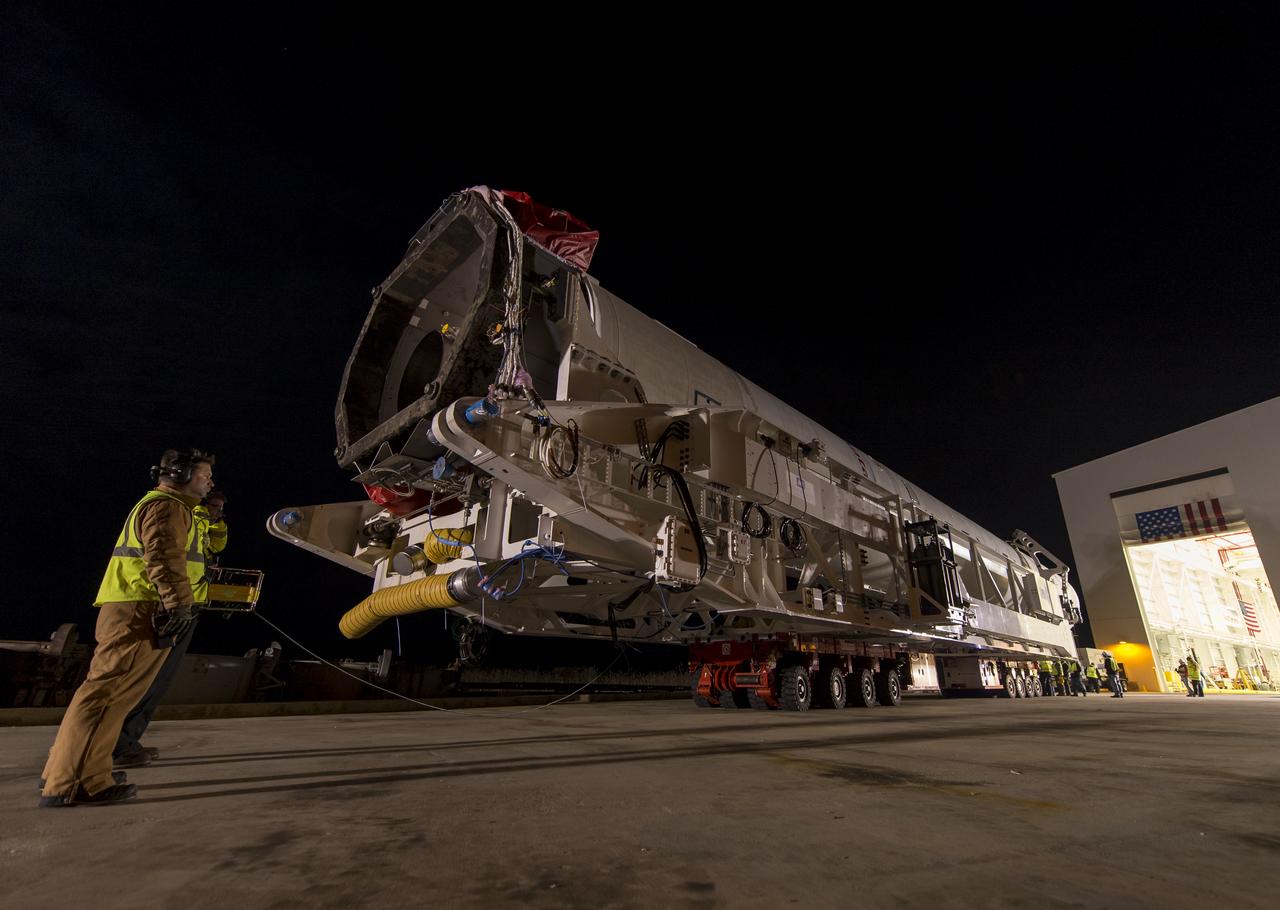
An Orbital Science Corporation Antares rocket is seen as it is rolled out to launch Pad-0A at NASA's Wallops Flight Facility Tuesday, December 17, 2013 in advance of a Thursday launch, Wallops Island, VA. The Antares will launch a Cygnus spacecraft on a cargo resupply mission to the International Space Station. The Orbital-1 mission is Orbital Sciences' first contracted cargo delivery flight to the space station for NASA. Among the cargo aboard Cygnus set to launch to the space station are science experiments, crew provisions, spare parts and other hardware. Launch is scheduled for 9:19 p.m. EST on Thursday, Dec. 19. Weather permitting, it may be widely visible along the east coast of the United States. Photo Credit: (NASA/Bill Ingalls)
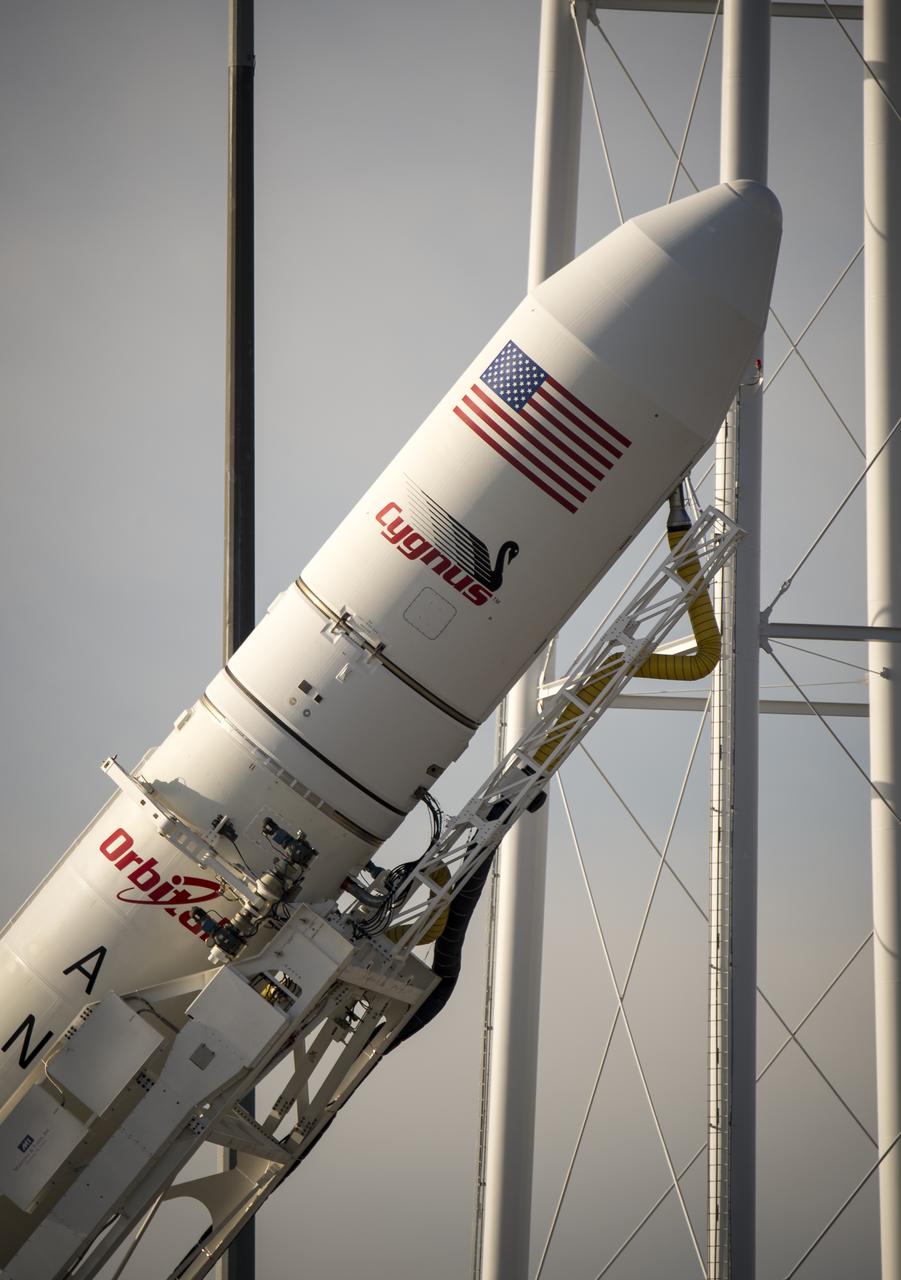
The Orbital Science Corporation Antares rocket is seen as it is raised into position at launch Pad-0A, Tuesday, December 17, 2013, at NASA's Wallops Flight Facility, Wallops Island, VA. The Antares will launch a Cygnus spacecraft on a cargo resupply mission to the International Space Station. The Orbital-1 mission is Orbital Sciences' first contracted cargo delivery flight to the space station for NASA. Among the cargo aboard Cygnus set to launch to the space station are science experiments, crew provisions, spare parts and other hardware. Launch is scheduled for 9:19 p.m. EST on Thursday, Dec. 19. Weather permitting, it may be widely visible along the east coast of the United States. Photo Credit: (NASA/Bill Ingalls)
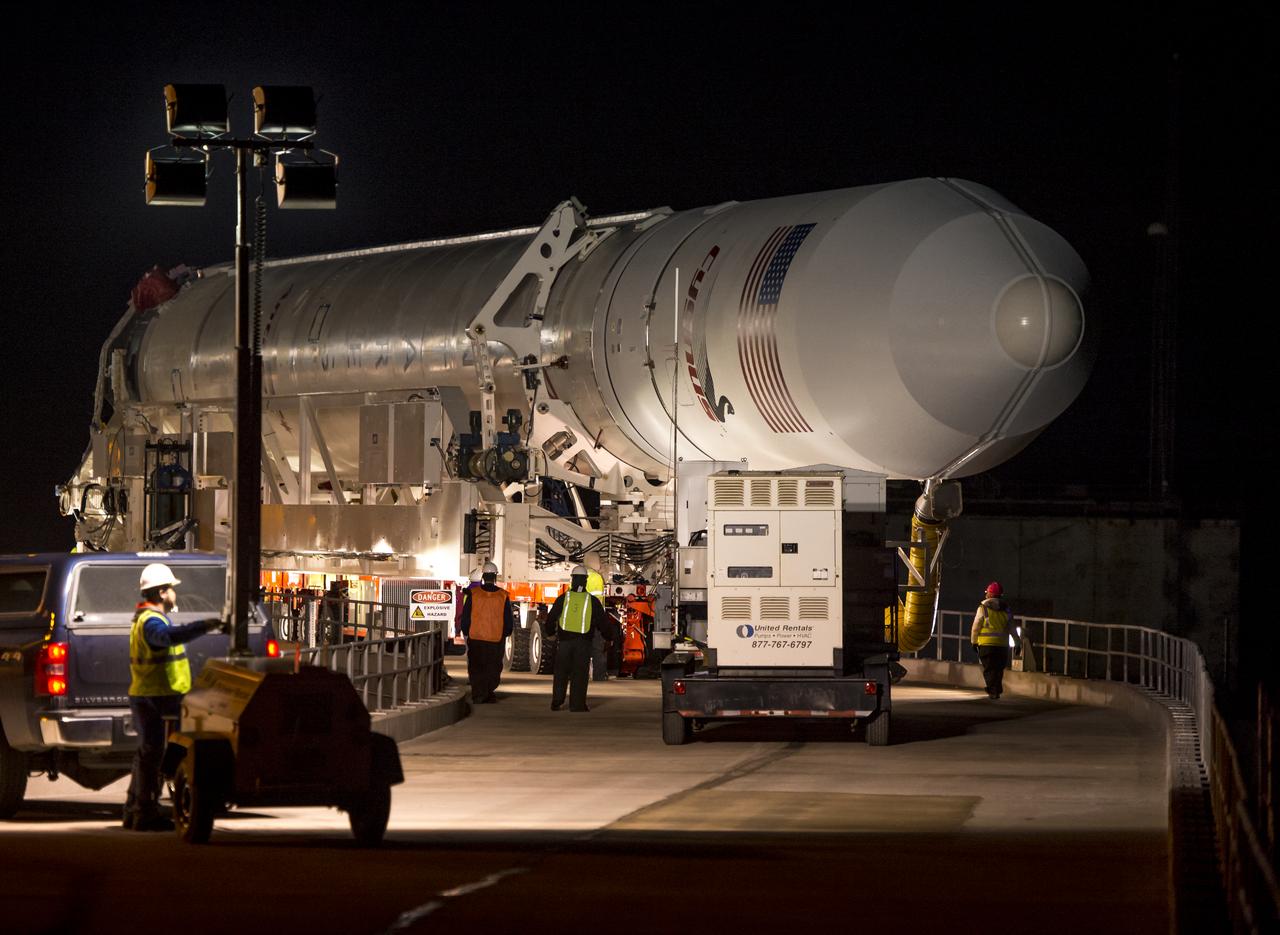
An Orbital Science Corporation Antares rocket is seen as it is rolled out to launch Pad-0A at NASA's Wallops Flight Facility Tuesday, December 17, 2013 in advance of a Thursday launch, Wallops Island, VA. The Antares will launch a Cygnus spacecraft on a cargo resupply mission to the International Space Station. The Orbital-1 mission is Orbital Sciences' first contracted cargo delivery flight to the space station for NASA. Among the cargo aboard Cygnus set to launch to the space station are science experiments, crew provisions, spare parts and other hardware. Launch is scheduled for 9:19 p.m. EST on Thursday, Dec. 19. Weather permitting, it may be widely visible along the east coast of the United States. Photo Credit: (NASA/Bill Ingalls)
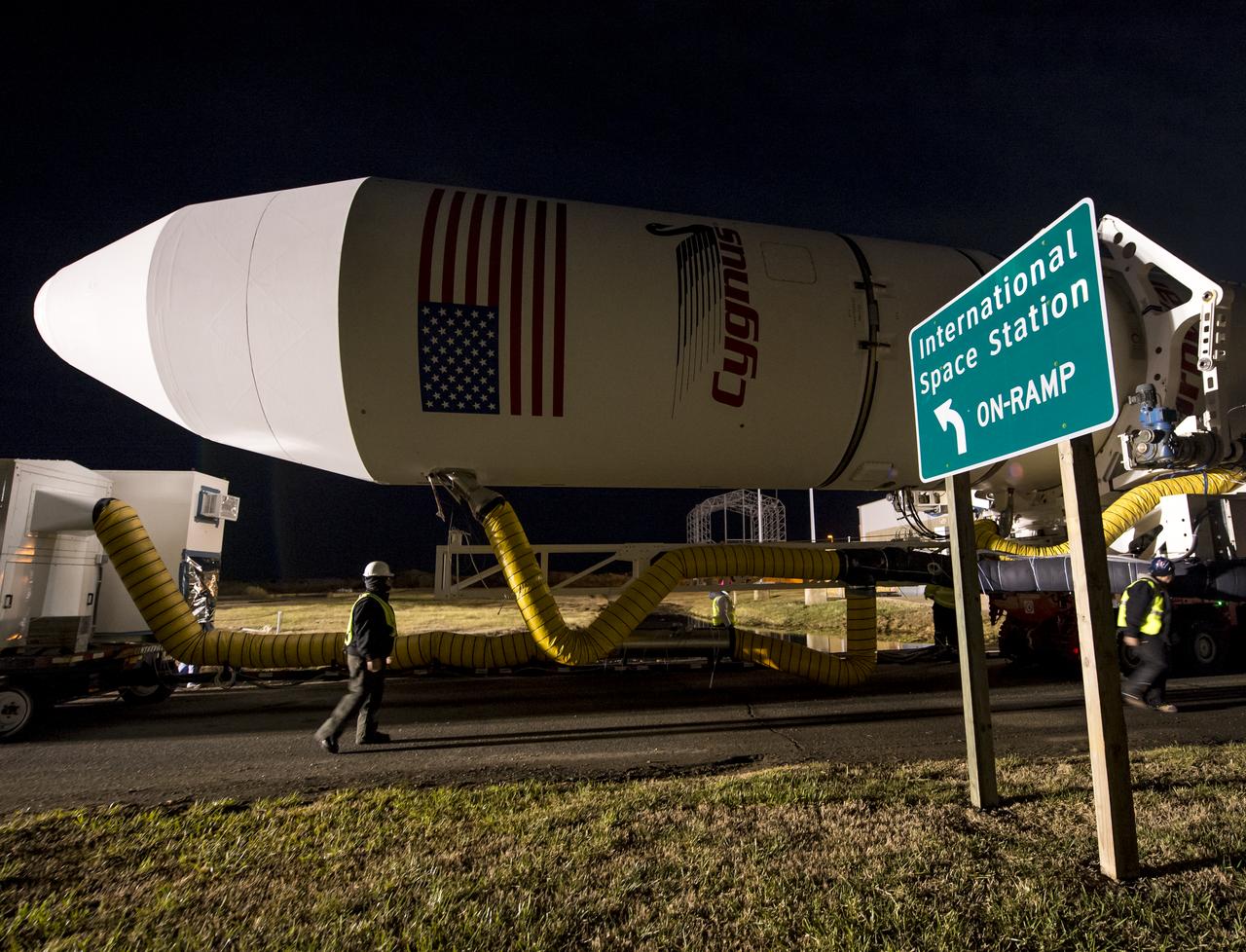
An Orbital Science Corporation Antares rocket is seen as it is rolled out to launch Pad-0A at NASA's Wallops Flight Facility Tuesday, December 17, 2013 in advance of a Thursday launch, Wallops Island, VA. The Antares will launch a Cygnus spacecraft on a cargo resupply mission to the International Space Station. The Orbital-1 mission is Orbital Sciences' first contracted cargo delivery flight to the space station for NASA. Among the cargo aboard Cygnus set to launch to the space station are science experiments, crew provisions, spare parts and other hardware. Launch is scheduled for 9:19 p.m. EST on Thursday, Dec. 19. Weather permitting, it may be widely visible along the east coast of the United States. Photo Credit: (NASA/Bill Ingalls)
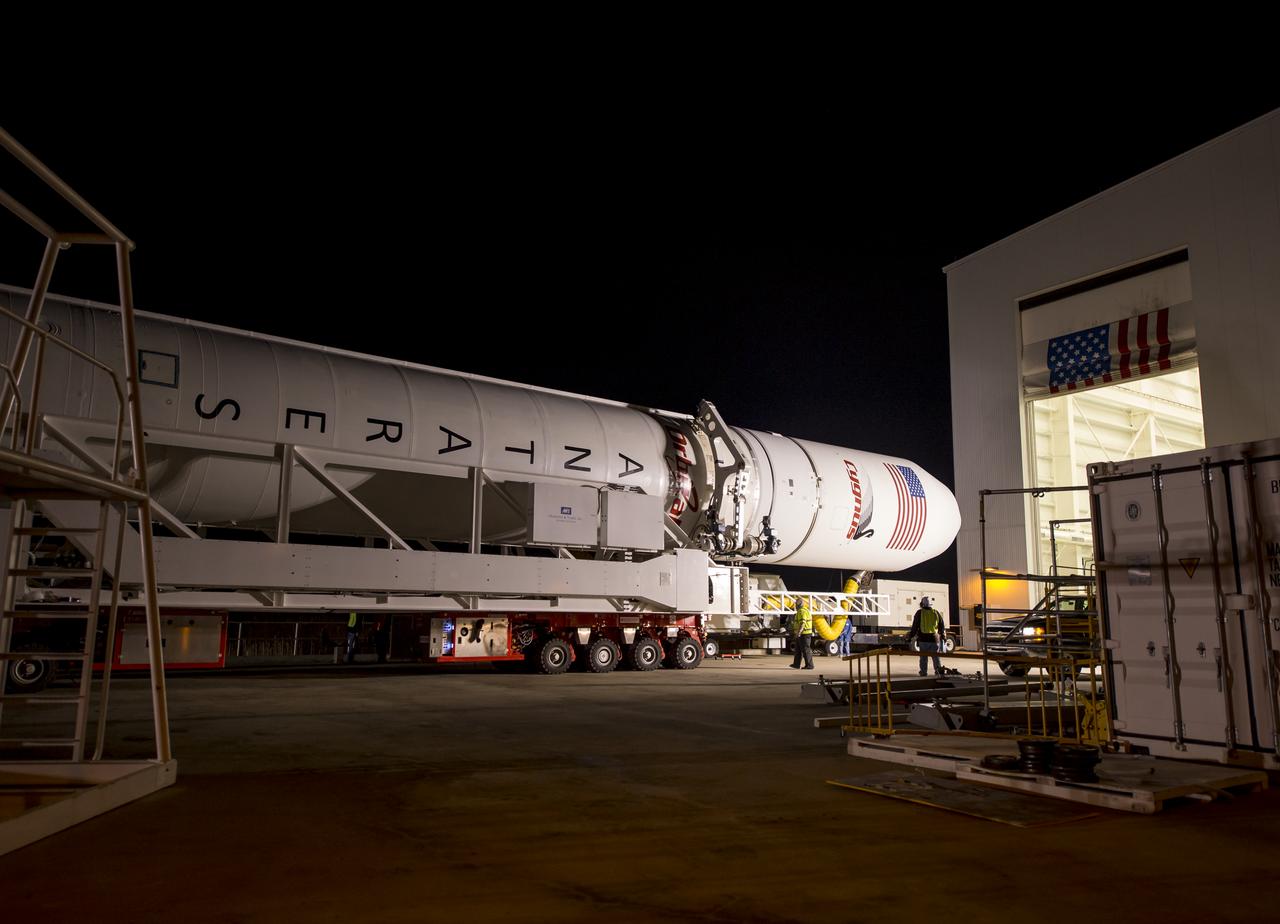
An Orbital Science Corporation Antares rocket is seen as it is rolled out to launch Pad-0A at NASA's Wallops Flight Facility Tuesday, December 17, 2013 in advance of a Thursday launch, Wallops Island, VA. The Antares will launch a Cygnus spacecraft on a cargo resupply mission to the International Space Station. The Orbital-1 mission is Orbital Sciences' first contracted cargo delivery flight to the space station for NASA. Among the cargo aboard Cygnus set to launch to the space station are science experiments, crew provisions, spare parts and other hardware. Launch is scheduled for 9:19 p.m. EST on Thursday, Dec. 19. Weather permitting, it may be widely visible along the east coast of the United States. Photo Credit: (NASA/Bill Ingalls)
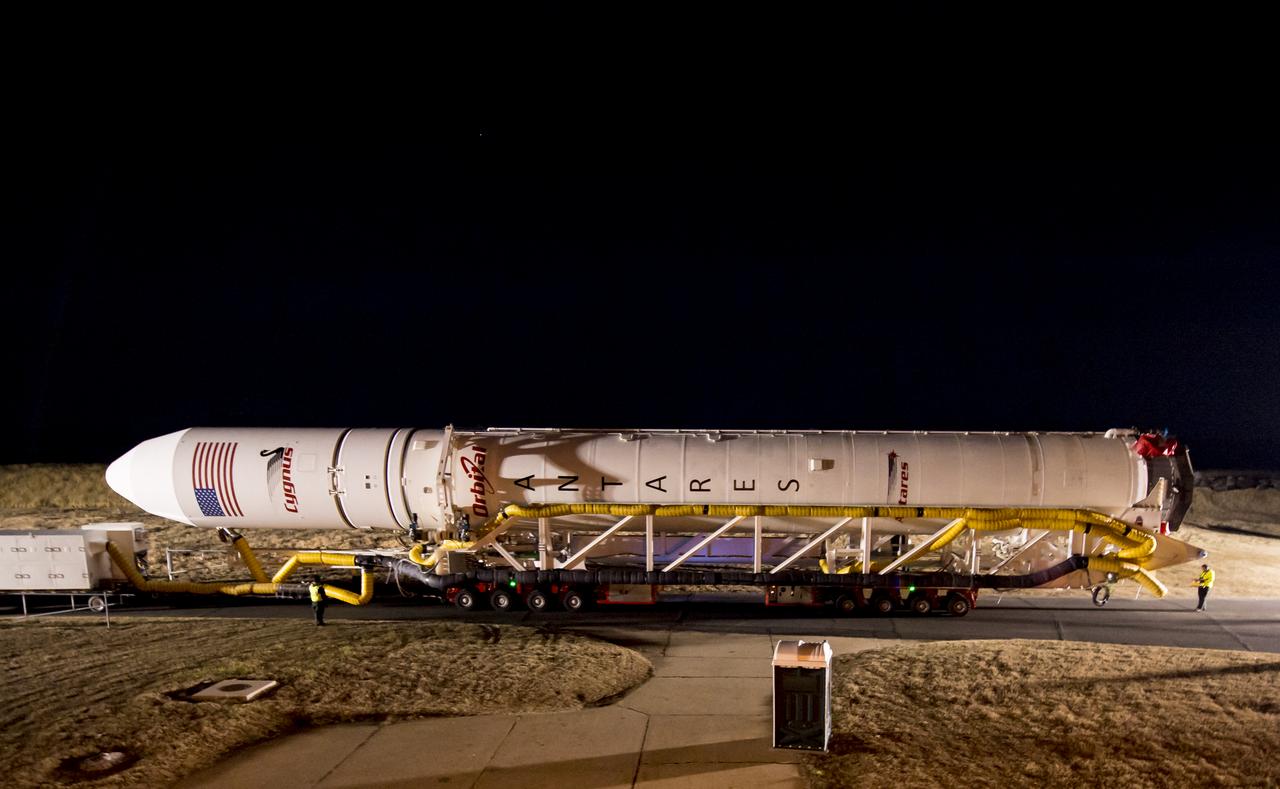
An Orbital Science Corporation Antares rocket is seen as it is rolled out to launch Pad-0A at NASA's Wallops Flight Facility Tuesday, December 17, 2013 in advance of a Thursday launch, Wallops Island, VA. The Antares will launch a Cygnus spacecraft on a cargo resupply mission to the International Space Station. The Orbital-1 mission is Orbital Sciences' first contracted cargo delivery flight to the space station for NASA. Among the cargo aboard Cygnus set to launch to the space station are science experiments, crew provisions, spare parts and other hardware. Launch is scheduled for 9:19 p.m. EST on Thursday, Dec. 19. Weather permitting, it may be widely visible along the east coast of the United States. Photo Credit: (NASA/Bill Ingalls)
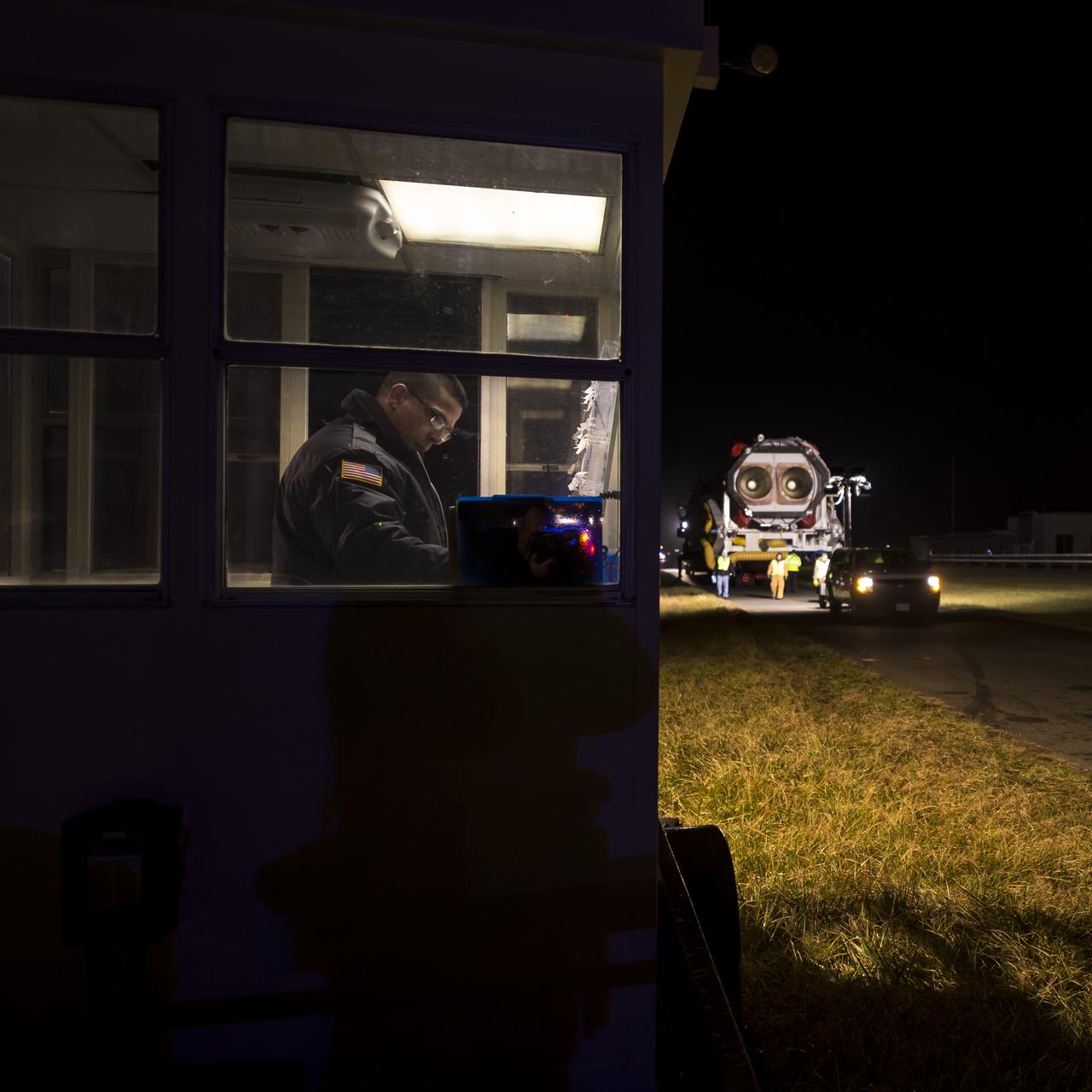
An Orbital Science Corporation Antares rocket is seen as it is rolled out to launch Pad-0A at NASA's Wallops Flight Facility Tuesday, December 17, 2013 in advance of a Thursday launch, Wallops Island, VA. The Antares will launch a Cygnus spacecraft on a cargo resupply mission to the International Space Station. The Orbital-1 mission is Orbital Sciences' first contracted cargo delivery flight to the space station for NASA. Among the cargo aboard Cygnus set to launch to the space station are science experiments, crew provisions, spare parts and other hardware. Launch is scheduled for 9:19 p.m. EST on Thursday, Dec. 19. Weather permitting, it may be widely visible along the east coast of the United States. Photo Credit: (NASA/Bill Ingalls)
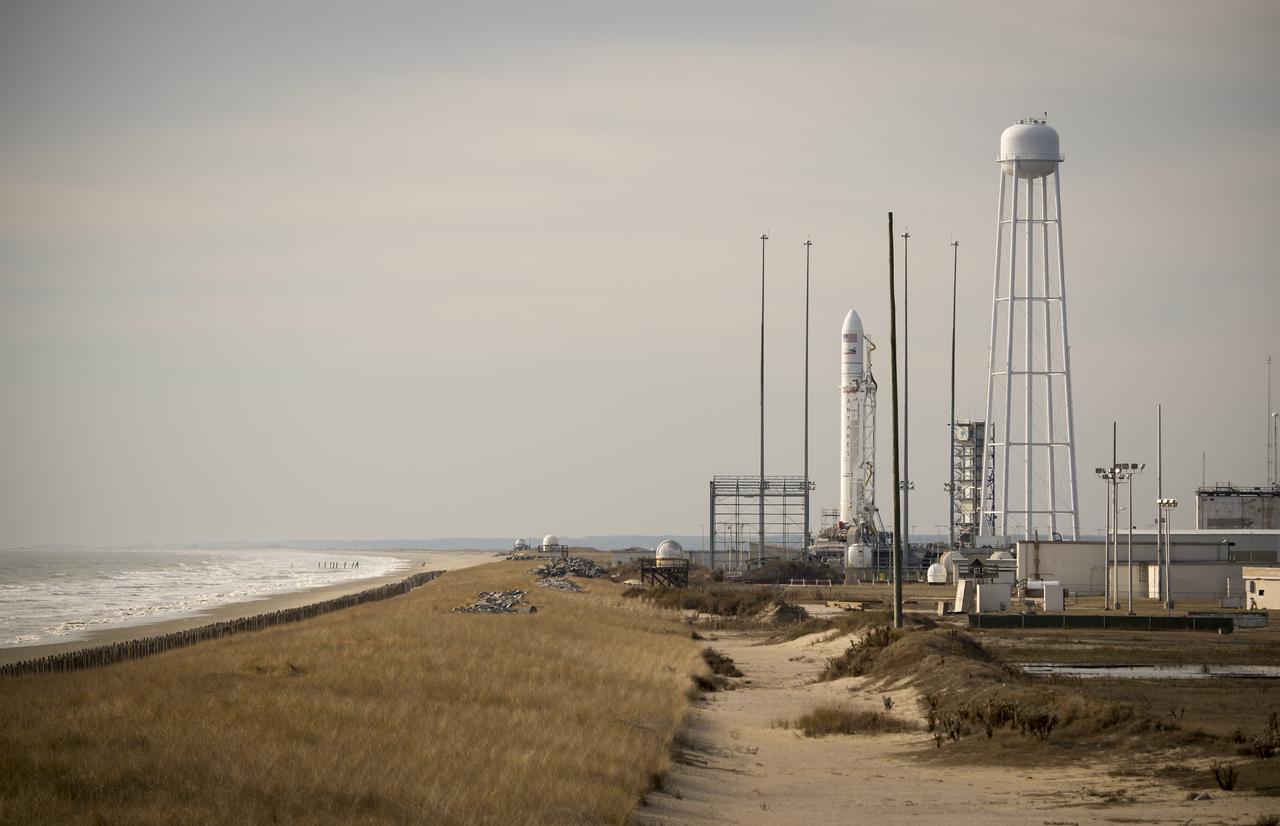
The Orbital Science Corporation Antares rocket is seen shortly after it was raised into position at launch Pad-0A, Tuesday, December 17, 2013, at NASA's Wallops Flight Facility, Wallops Island, VA. The Antares will launch a Cygnus spacecraft on a cargo resupply mission to the International Space Station. The Orbital-1 mission is Orbital Sciences' first contracted cargo delivery flight to the space station for NASA. Among the cargo aboard Cygnus set to launch to the space station are science experiments, crew provisions, spare parts and other hardware. Launch is scheduled for 9:19 p.m. EST on Thursday, Dec. 19. Weather permitting, it may be widely visible along the east coast of the United States. Photo Credit: (NASA/Bill Ingalls)
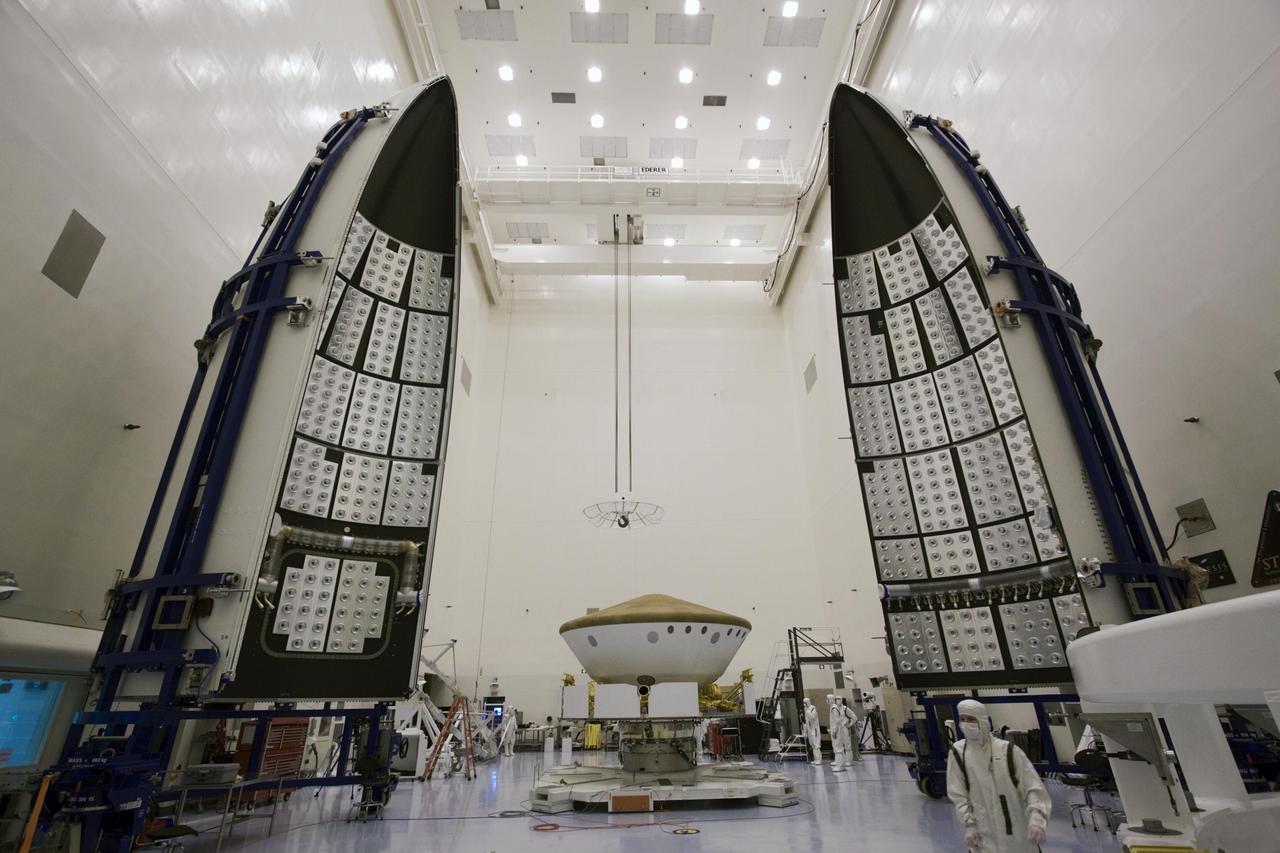
Preparations are under way to enclose NASA Mars Science Laboratory in an Atlas V rocket payload fairing. The fairing protects the spacecraft from the impact of aerodynamic pressure and heating during ascent.
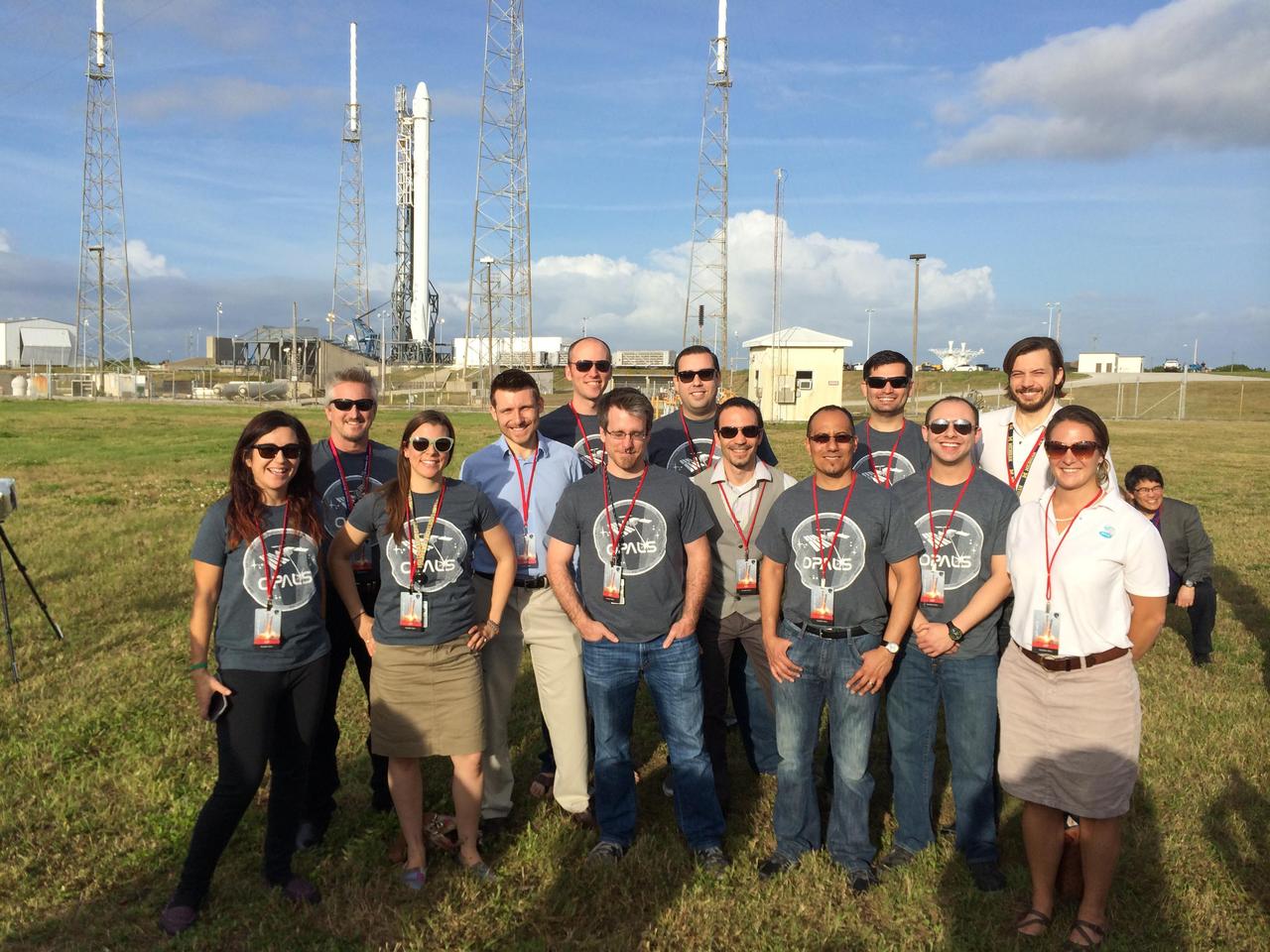
NASA Optical PAyload for Lasercomm Science OPALS operations team at Kennedy Space Center Space Launch Complex-40 on April 14, 2014, with the SpaceX Falcon 9 rocket carrying OPALS in the background.
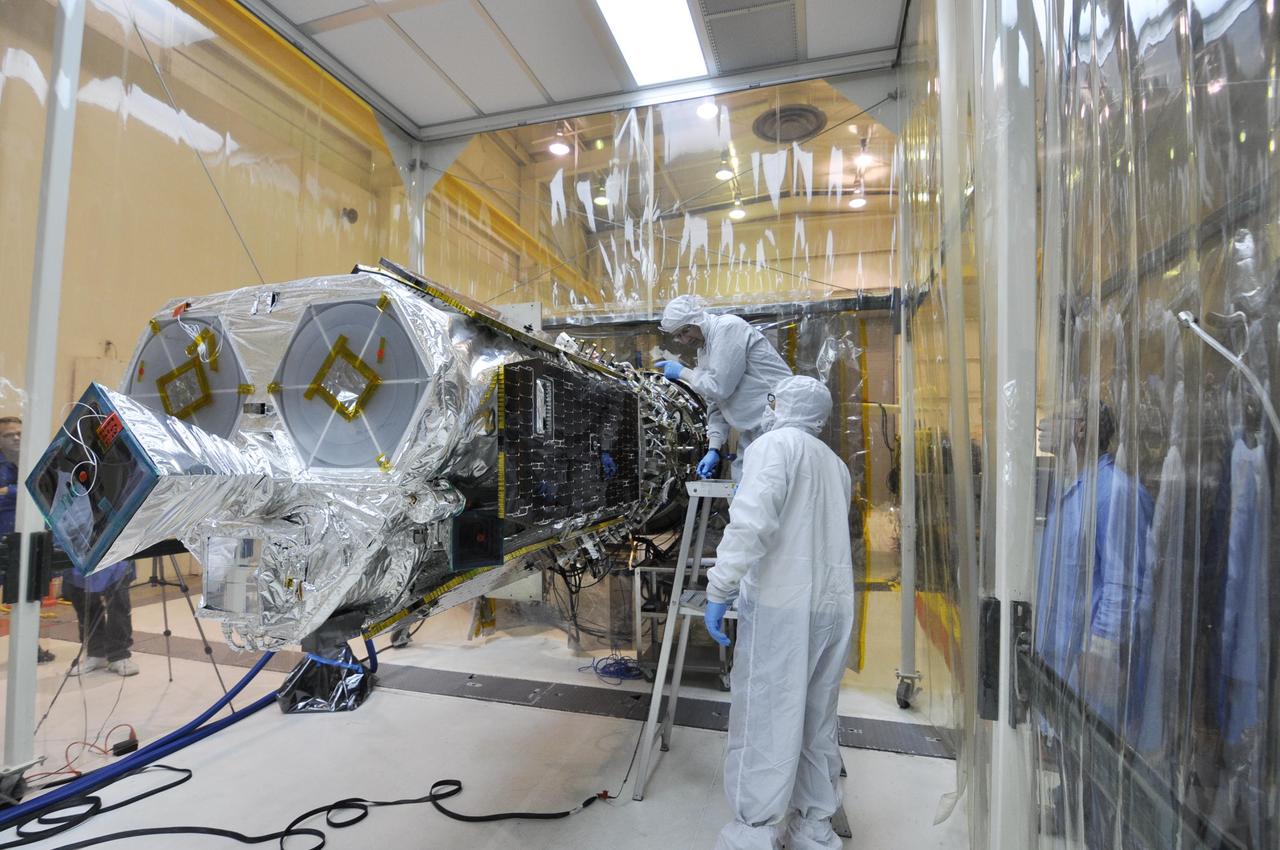
Inside an environmental enclosure at Vandenberg Air Force Base processing facility in California, technicians complete the final steps in mating NASA Nuclear Spectroscopic Telescope Array NuSTAR and its Orbital Sciences Pegasus XL rocket.
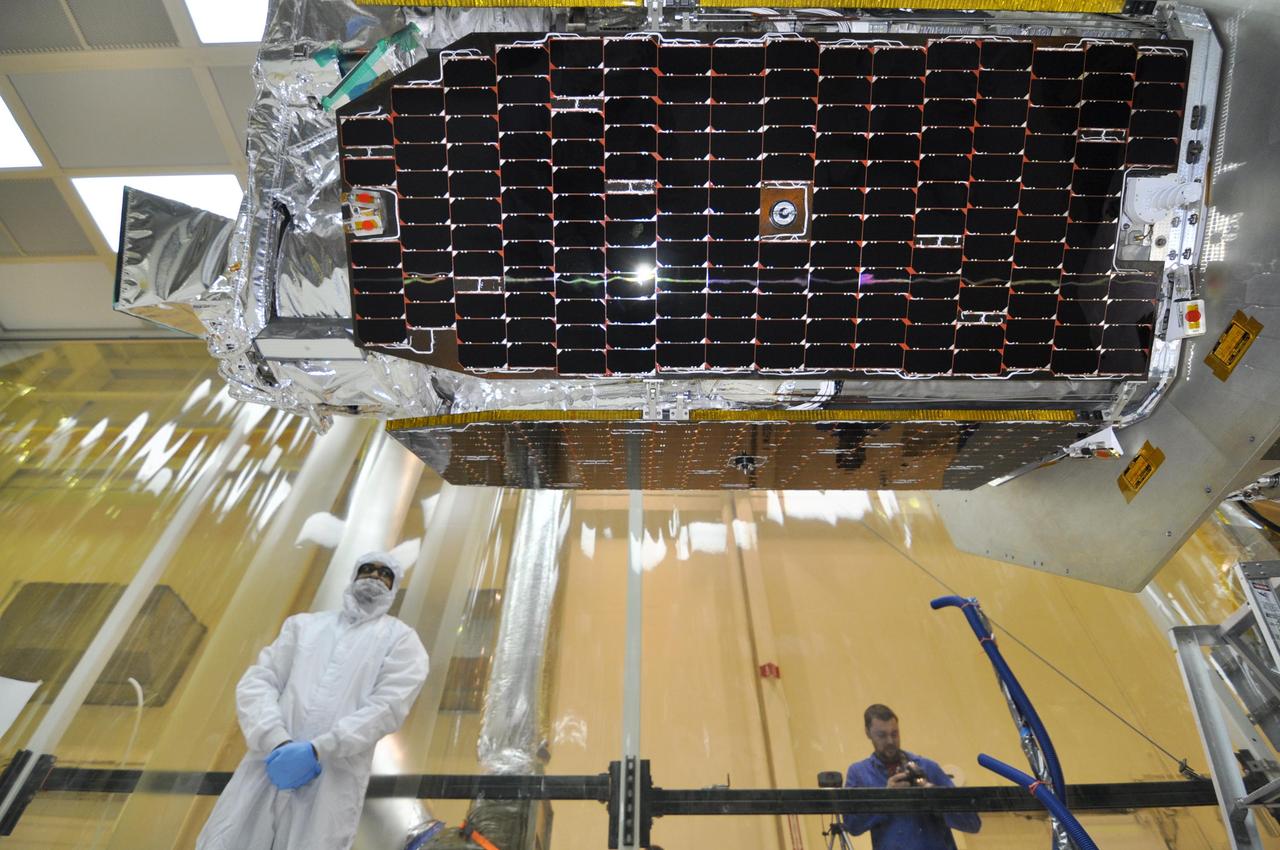
Inside an environmental enclosure at Vandenberg Air Force Base processing facility in California, solar panels line the sides of NASA Nuclear Spectroscopic Telescope Array NuSTAR, which was just joined to the Orbital Sciences Pegasus XL rocket.
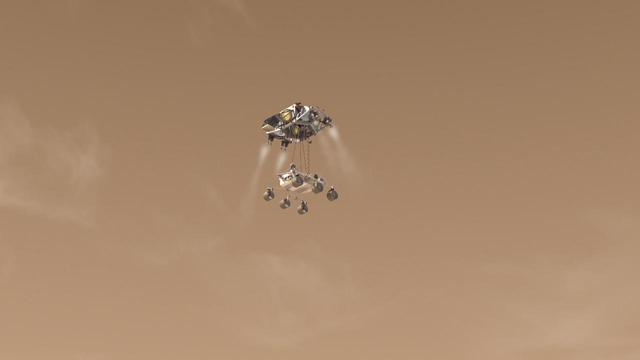
This artist concept depicts Curiosity, the rover to be launched in 2011 by NASA Mars Science Laboratory, as it is being lowered by the mission rocket-powered descent stage during a critical moment of the ky crane landing in 2012.
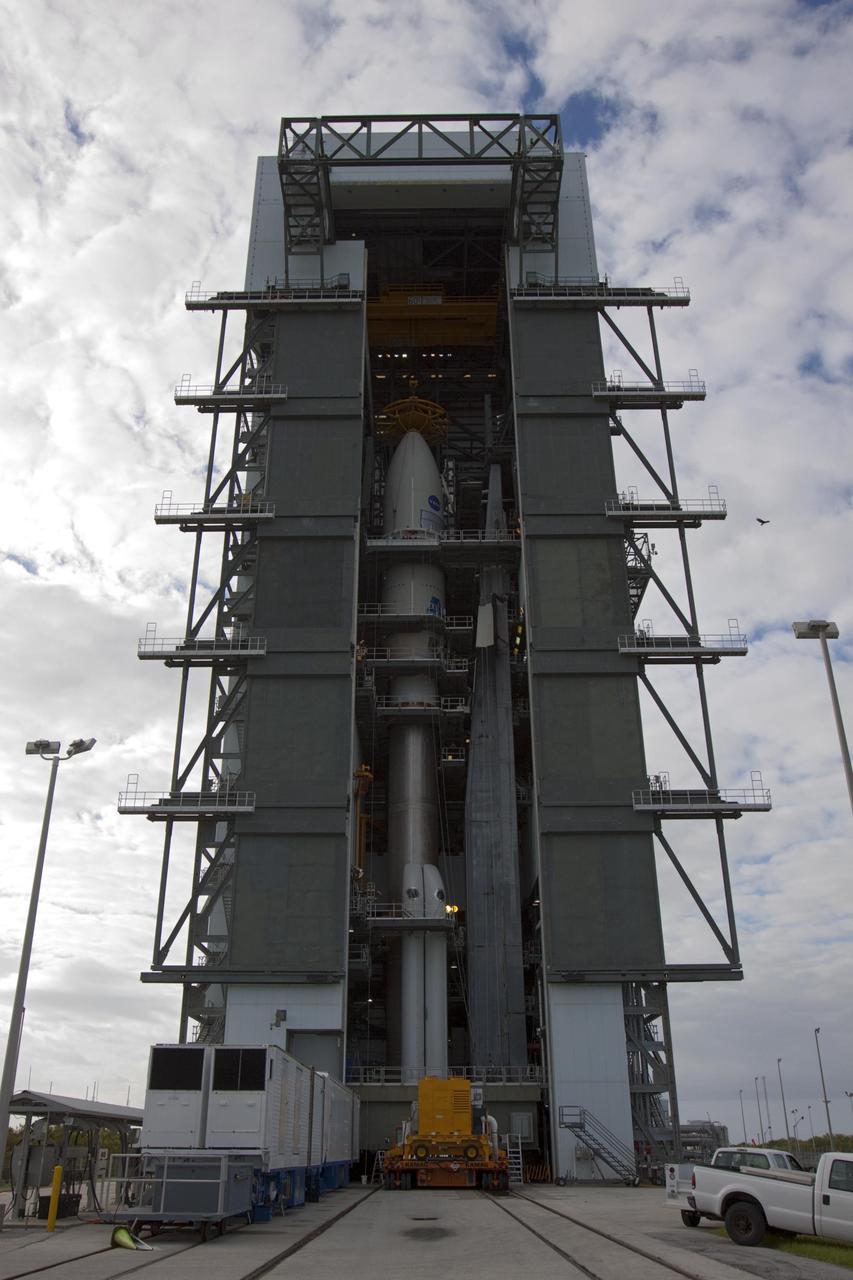
In the Vertical Integration Facility at Space Launch Complex 41, the payload fairing containing NASA Mars Science Laboratory spacecraft was attached to its Atlas V rocket on Nov. 3, 2011.
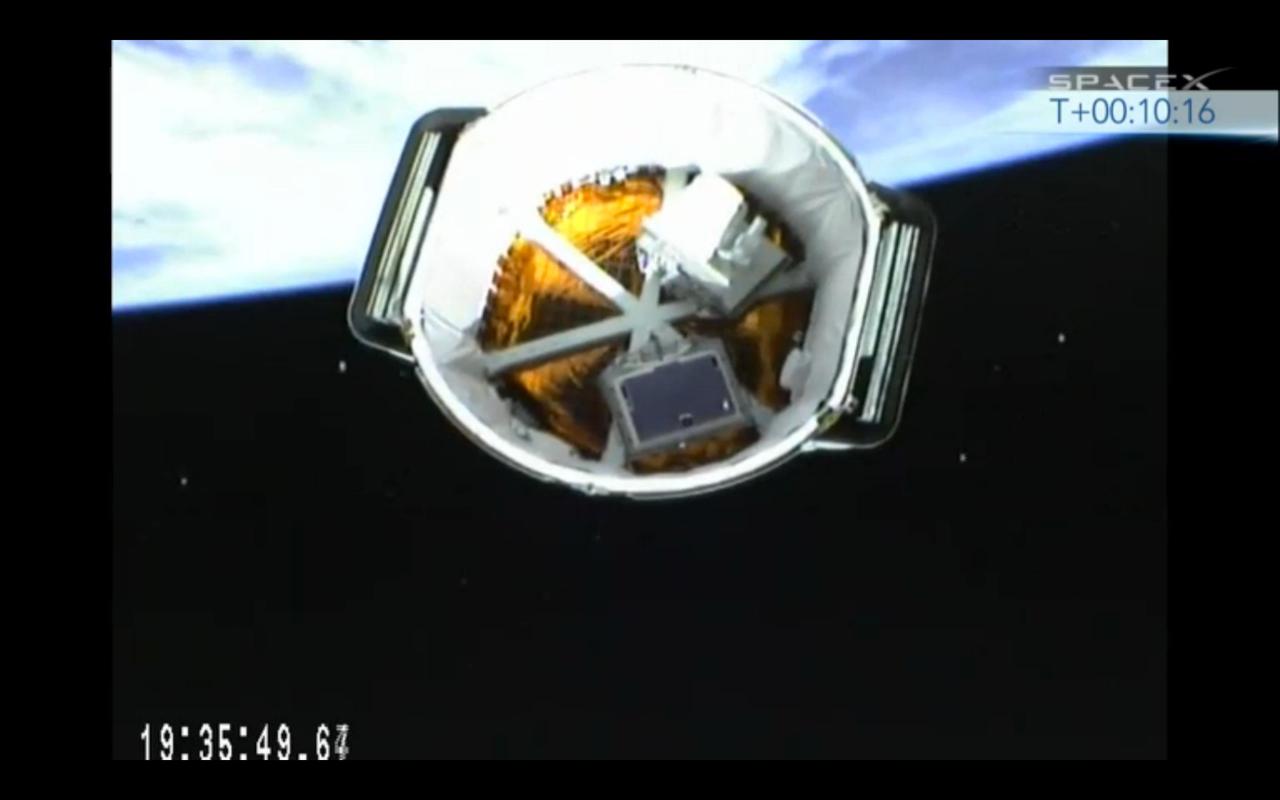
NASA Optical PAyload for Lasercomm Science OPALS is seen in the SpaceX Dragon trunk following second stage separation of the SpaceX Falcon 9 rocket on April 18, 2014.
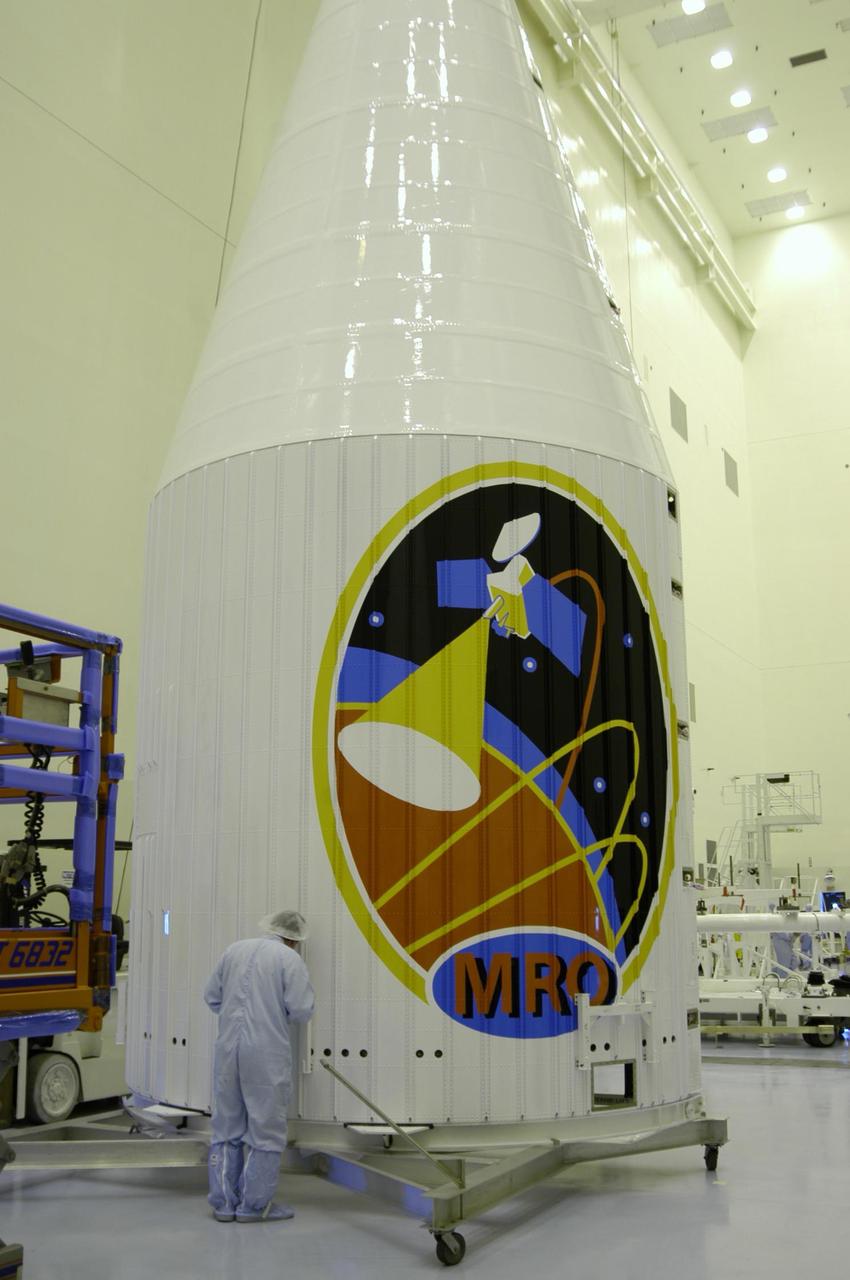
This image features the protective fairing that encapsulated NASA Mars Reconnaissance Orbiter atop an Atlas V rocket. The lively logo celebrates the intense science mission ahead of the orbiter.
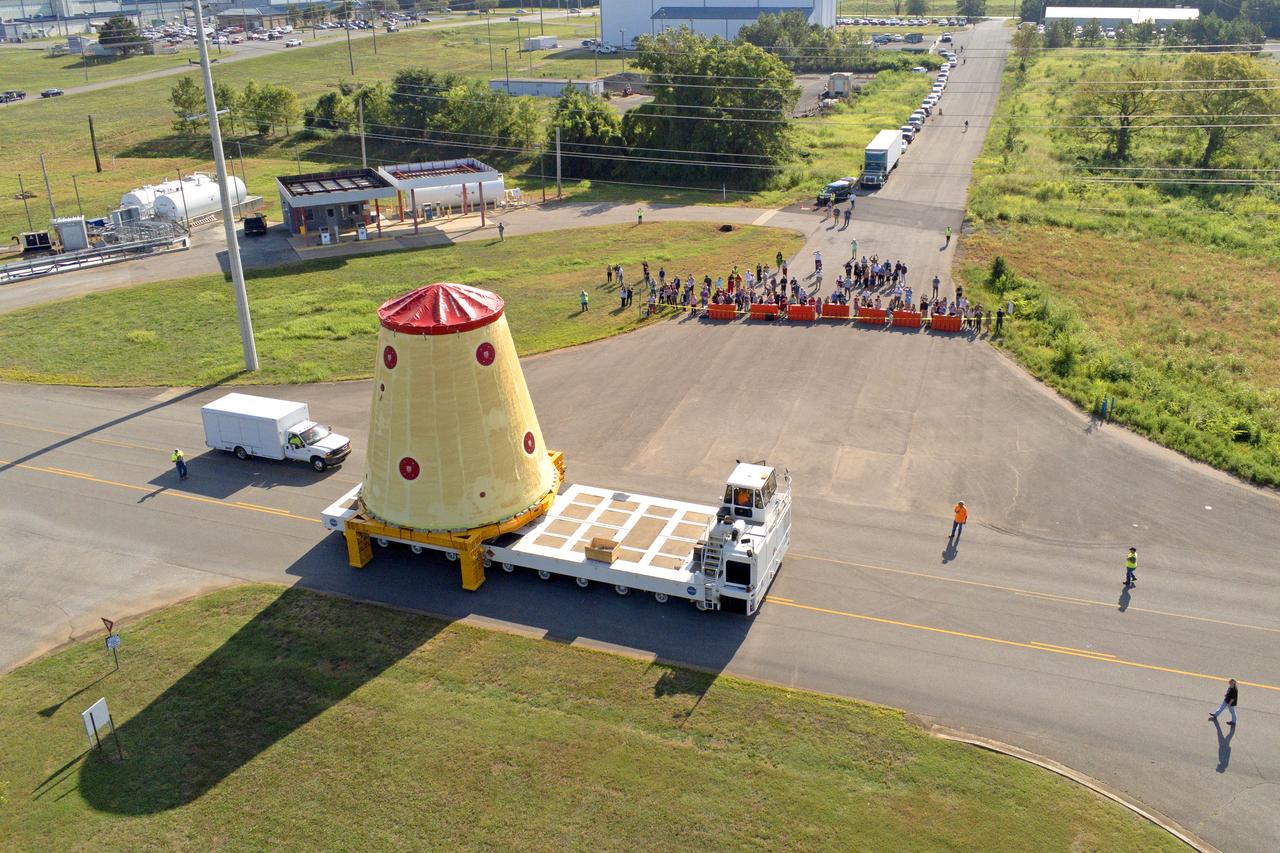
NASA rolled out a key piece of space flight hardware for the SLS (Space Launch System) rocket for the first crewed mission of NASA’s Artemis campaign from Marshall Space Flight Center in Huntsville, Alabama, on Wednesday, Aug. 21 for shipment to the agency’s spaceport in Florida. The cone-shaped launch vehicle stage adapter connects the rocket’s core stage to the upper stage and helps protect the upper stage’s engine that will help propel the Artemis II test flight around the Moon, slated for 2025. Manufactured by prime contractor Teledyne Brown Engineering and the Jacobs Space Exploration Group’s ESSCA (Engineering Services and Science Capability Augmentation) contract using NASA Marshall’s self-reacting friction-stir robotic and vertical weld tools. Crews moved the adapter out of NASA Marshall’s Building 4708 to the agency’s Pegasus barge Aug. 21. The barge will ferry the adapter first to NASA’s Michoud Assembly Facility in New Orleans, where crews will pick up additional SLS hardware for future Artemis missions, before traveling to NASA Kennedy. Once in Florida, the adapter will join the recently delivered core stage. There, teams with NASA’s Exploration Ground Systems will prepare the adapter for stacking and launch.
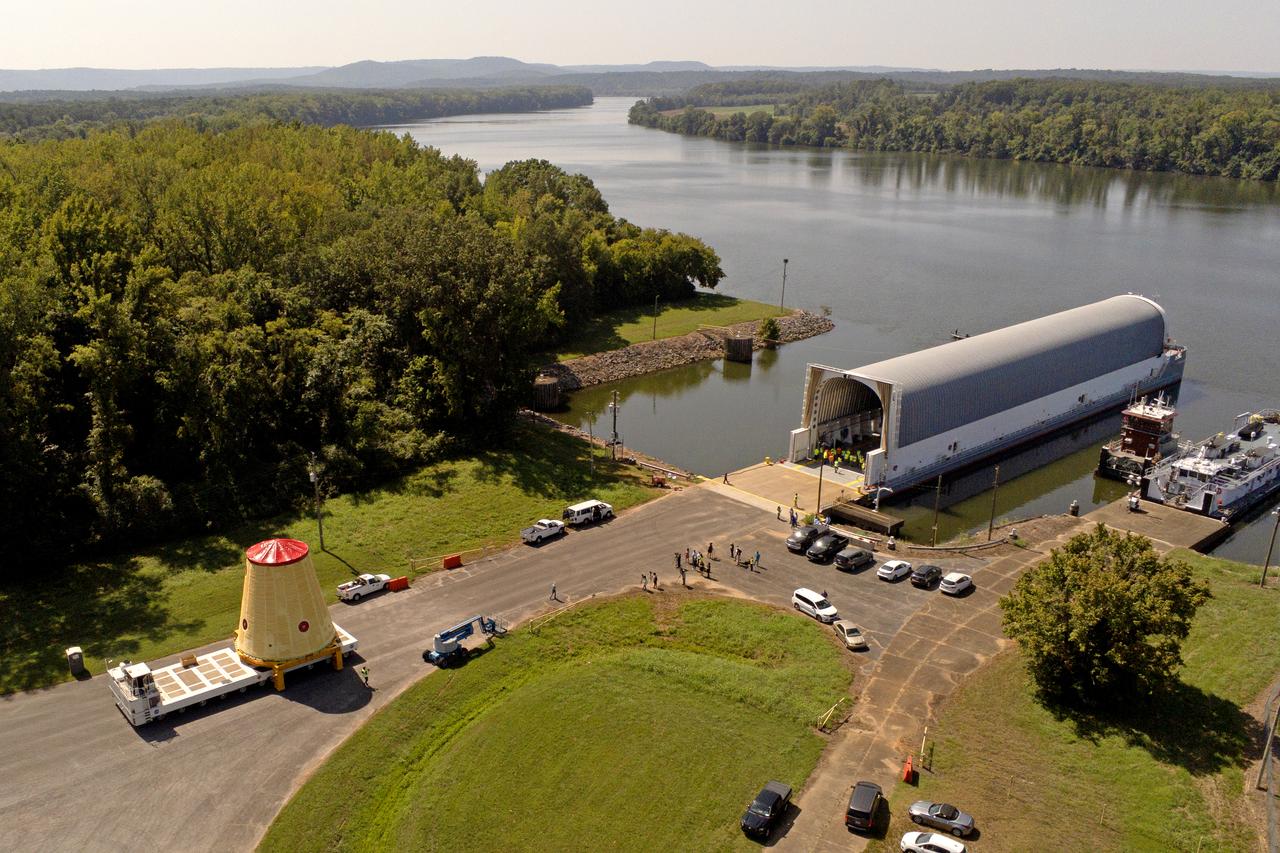
NASA rolled out a key piece of space flight hardware for the SLS (Space Launch System) rocket for the first crewed mission of NASA’s Artemis campaign from Marshall Space Flight Center in Huntsville, Alabama, on Wednesday, Aug. 21 for shipment to the agency’s spaceport in Florida. The cone-shaped launch vehicle stage adapter connects the rocket’s core stage to the upper stage and helps protect the upper stage’s engine that will help propel the Artemis II test flight around the Moon, slated for 2025. Manufactured by prime contractor Teledyne Brown Engineering and the Jacobs Space Exploration Group’s ESSCA (Engineering Services and Science Capability Augmentation) contract using NASA Marshall’s self-reacting friction-stir robotic and vertical weld tools. Crews moved the adapter out of NASA Marshall’s Building 4708 to the agency’s Pegasus barge Aug. 21. The barge will ferry the adapter first to NASA’s Michoud Assembly Facility in New Orleans, where crews will pick up additional SLS hardware for future Artemis missions, before traveling to NASA Kennedy. Once in Florida, the adapter will join the recently delivered core stage. There, teams with NASA’s Exploration Ground Systems will prepare the adapter for stacking and launch.
NASA rolled out a key piece of space flight hardware for the SLS (Space Launch System) rocket for the first crewed mission of NASA’s Artemis campaign from Marshall Space Flight Center in Huntsville, Alabama, on Wednesday, Aug. 21 for shipment to the agency’s spaceport in Florida. The cone-shaped launch vehicle stage adapter connects the rocket’s core stage to the upper stage and helps protect the upper stage’s engine that will help propel the Artemis II test flight around the Moon, slated for 2025. Manufactured by prime contractor Teledyne Brown Engineering and the Jacobs Space Exploration Group’s ESSCA (Engineering Services and Science Capability Augmentation) contract using NASA Marshall’s self-reacting friction-stir robotic and vertical weld tools. Crews moved the adapter out of NASA Marshall’s Building 4708 to the agency’s Pegasus barge Aug. 21. The barge will ferry the adapter first to NASA’s Michoud Assembly Facility in New Orleans, where crews will pick up additional SLS hardware for future Artemis missions, before traveling to NASA Kennedy. Once in Florida, the adapter will join the recently delivered core stage. There, teams with NASA’s Exploration Ground Systems will prepare the adapter for stacking and launch.
NASA rolled out a key piece of space flight hardware for the SLS (Space Launch System) rocket for the first crewed mission of NASA’s Artemis campaign from Marshall Space Flight Center in Huntsville, Alabama, on Wednesday, Aug. 21 for shipment to the agency’s spaceport in Florida. The cone-shaped launch vehicle stage adapter connects the rocket’s core stage to the upper stage and helps protect the upper stage’s engine that will help propel the Artemis II test flight around the Moon, slated for 2025. Manufactured by prime contractor Teledyne Brown Engineering and the Jacobs Space Exploration Group’s ESSCA (Engineering Services and Science Capability Augmentation) contract using NASA Marshall’s self-reacting friction-stir robotic and vertical weld tools. Crews moved the adapter out of NASA Marshall’s Building 4708 to the agency’s Pegasus barge Aug. 21. The barge will ferry the adapter first to NASA’s Michoud Assembly Facility in New Orleans, where crews will pick up additional SLS hardware for future Artemis missions, before traveling to NASA Kennedy. Once in Florida, the adapter will join the recently delivered core stage. There, teams with NASA’s Exploration Ground Systems will prepare the adapter for stacking and launch.
NASA rolled out a key piece of space flight hardware for the SLS (Space Launch System) rocket for the first crewed mission of NASA’s Artemis campaign from Marshall Space Flight Center in Huntsville, Alabama, on Wednesday, Aug. 21 for shipment to the agency’s spaceport in Florida. The cone-shaped launch vehicle stage adapter connects the rocket’s core stage to the upper stage and helps protect the upper stage’s engine that will help propel the Artemis II test flight around the Moon, slated for 2025. Manufactured by prime contractor Teledyne Brown Engineering and the Jacobs Space Exploration Group’s ESSCA (Engineering Services and Science Capability Augmentation) contract using NASA Marshall’s self-reacting friction-stir robotic and vertical weld tools. Crews moved the adapter out of NASA Marshall’s Building 4708 to the agency’s Pegasus barge Aug. 21. The barge will ferry the adapter first to NASA’s Michoud Assembly Facility in New Orleans, where crews will pick up additional SLS hardware for future Artemis missions, before traveling to NASA Kennedy. Once in Florida, the adapter will join the recently delivered core stage. There, teams with NASA’s Exploration Ground Systems will prepare the adapter for stacking and launch.
NASA rolled out a key piece of space flight hardware for the SLS (Space Launch System) rocket for the first crewed mission of NASA’s Artemis campaign from Marshall Space Flight Center in Huntsville, Alabama, on Wednesday, Aug. 21 for shipment to the agency’s spaceport in Florida. The cone-shaped launch vehicle stage adapter connects the rocket’s core stage to the upper stage and helps protect the upper stage’s engine that will help propel the Artemis II test flight around the Moon, slated for 2025. Manufactured by prime contractor Teledyne Brown Engineering and the Jacobs Space Exploration Group’s ESSCA (Engineering Services and Science Capability Augmentation) contract using NASA Marshall’s self-reacting friction-stir robotic and vertical weld tools. Crews moved the adapter out of NASA Marshall’s Building 4708 to the agency’s Pegasus barge Aug. 21. The barge will ferry the adapter first to NASA’s Michoud Assembly Facility in New Orleans, where crews will pick up additional SLS hardware for future Artemis missions, before traveling to NASA Kennedy. Once in Florida, the adapter will join the recently delivered core stage. There, teams with NASA’s Exploration Ground Systems will prepare the adapter for stacking and launch.
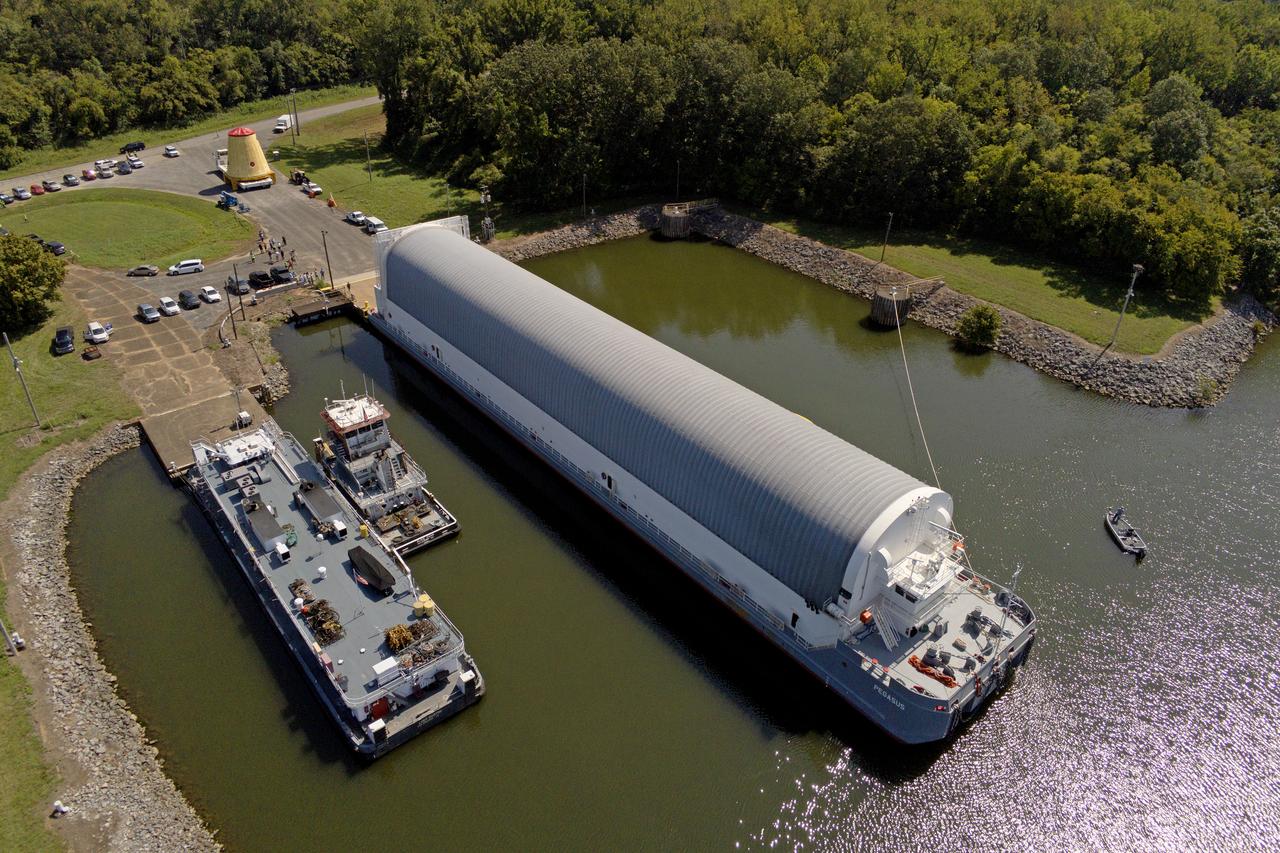
NASA rolled out a key piece of space flight hardware for the SLS (Space Launch System) rocket for the first crewed mission of NASA’s Artemis campaign from Marshall Space Flight Center in Huntsville, Alabama, on Wednesday, Aug. 21 for shipment to the agency’s spaceport in Florida. The cone-shaped launch vehicle stage adapter connects the rocket’s core stage to the upper stage and helps protect the upper stage’s engine that will help propel the Artemis II test flight around the Moon, slated for 2025. Manufactured by prime contractor Teledyne Brown Engineering and the Jacobs Space Exploration Group’s ESSCA (Engineering Services and Science Capability Augmentation) contract using NASA Marshall’s self-reacting friction-stir robotic and vertical weld tools. Crews moved the adapter out of NASA Marshall’s Building 4708 to the agency’s Pegasus barge Aug. 21. The barge will ferry the adapter first to NASA’s Michoud Assembly Facility in New Orleans, where crews will pick up additional SLS hardware for future Artemis missions, before traveling to NASA Kennedy. Once in Florida, the adapter will join the recently delivered core stage. There, teams with NASA’s Exploration Ground Systems will prepare the adapter for stacking and launch.

NASA rolled out a key piece of space flight hardware for the SLS (Space Launch System) rocket for the first crewed mission of NASA’s Artemis campaign from Marshall Space Flight Center in Huntsville, Alabama, on Wednesday, Aug. 21 for shipment to the agency’s spaceport in Florida. The cone-shaped launch vehicle stage adapter connects the rocket’s core stage to the upper stage and helps protect the upper stage’s engine that will help propel the Artemis II test flight around the Moon, slated for 2025. Manufactured by prime contractor Teledyne Brown Engineering and the Jacobs Space Exploration Group’s ESSCA (Engineering Services and Science Capability Augmentation) contract using NASA Marshall’s self-reacting friction-stir robotic and vertical weld tools. Crews moved the adapter out of NASA Marshall’s Building 4708 to the agency’s Pegasus barge Aug. 21. The barge will ferry the adapter first to NASA’s Michoud Assembly Facility in New Orleans, where crews will pick up additional SLS hardware for future Artemis missions, before traveling to NASA Kennedy. Once in Florida, the adapter will join the recently delivered core stage. There, teams with NASA’s Exploration Ground Systems will prepare the adapter for stacking and launch.
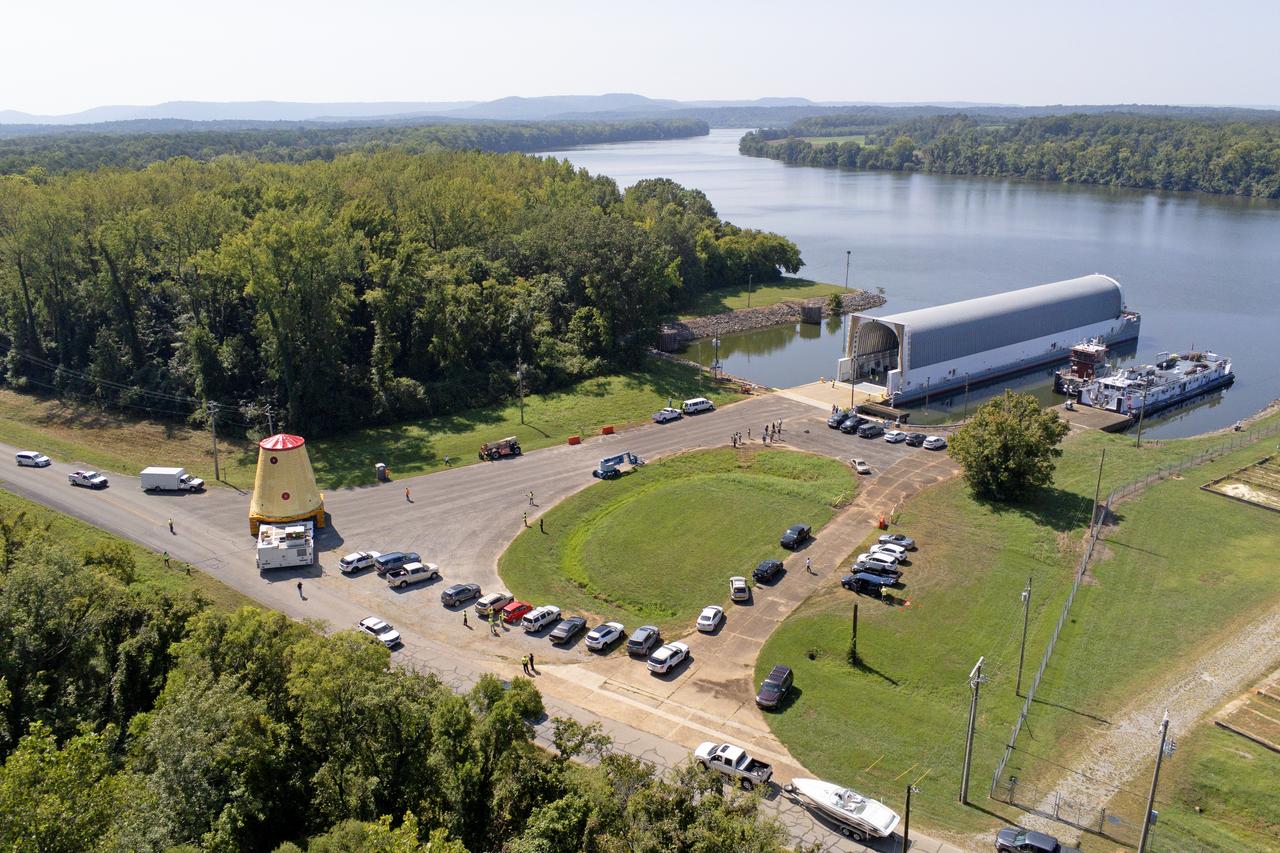
NASA rolled out a key piece of space flight hardware for the SLS (Space Launch System) rocket for the first crewed mission of NASA’s Artemis campaign from Marshall Space Flight Center in Huntsville, Alabama, on Wednesday, Aug. 21 for shipment to the agency’s spaceport in Florida. The cone-shaped launch vehicle stage adapter connects the rocket’s core stage to the upper stage and helps protect the upper stage’s engine that will help propel the Artemis II test flight around the Moon, slated for 2025. Manufactured by prime contractor Teledyne Brown Engineering and the Jacobs Space Exploration Group’s ESSCA (Engineering Services and Science Capability Augmentation) contract using NASA Marshall’s self-reacting friction-stir robotic and vertical weld tools. Crews moved the adapter out of NASA Marshall’s Building 4708 to the agency’s Pegasus barge Aug. 21. The barge will ferry the adapter first to NASA’s Michoud Assembly Facility in New Orleans, where crews will pick up additional SLS hardware for future Artemis missions, before traveling to NASA Kennedy. Once in Florida, the adapter will join the recently delivered core stage. There, teams with NASA’s Exploration Ground Systems will prepare the adapter for stacking and launch.
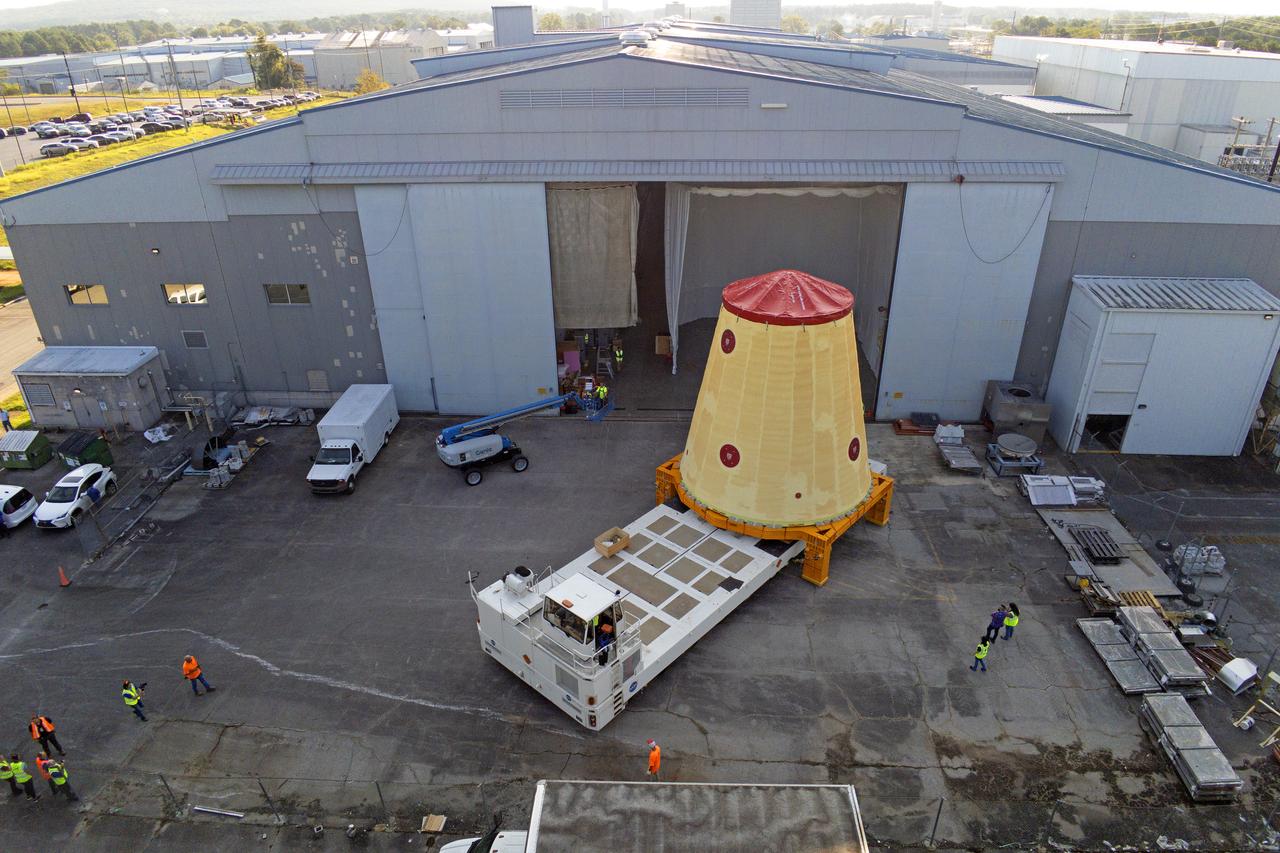
NASA rolled out a key piece of space flight hardware for the SLS (Space Launch System) rocket for the first crewed mission of NASA’s Artemis campaign from Marshall Space Flight Center in Huntsville, Alabama, on Wednesday, Aug. 21 for shipment to the agency’s spaceport in Florida. The cone-shaped launch vehicle stage adapter connects the rocket’s core stage to the upper stage and helps protect the upper stage’s engine that will help propel the Artemis II test flight around the Moon, slated for 2025. Manufactured by prime contractor Teledyne Brown Engineering and the Jacobs Space Exploration Group’s ESSCA (Engineering Services and Science Capability Augmentation) contract using NASA Marshall’s self-reacting friction-stir robotic and vertical weld tools. Crews moved the adapter out of NASA Marshall’s Building 4708 to the agency’s Pegasus barge Aug. 21. The barge will ferry the adapter first to NASA’s Michoud Assembly Facility in New Orleans, where crews will pick up additional SLS hardware for future Artemis missions, before traveling to NASA Kennedy. Once in Florida, the adapter will join the recently delivered core stage. There, teams with NASA’s Exploration Ground Systems will prepare the adapter for stacking and launch.
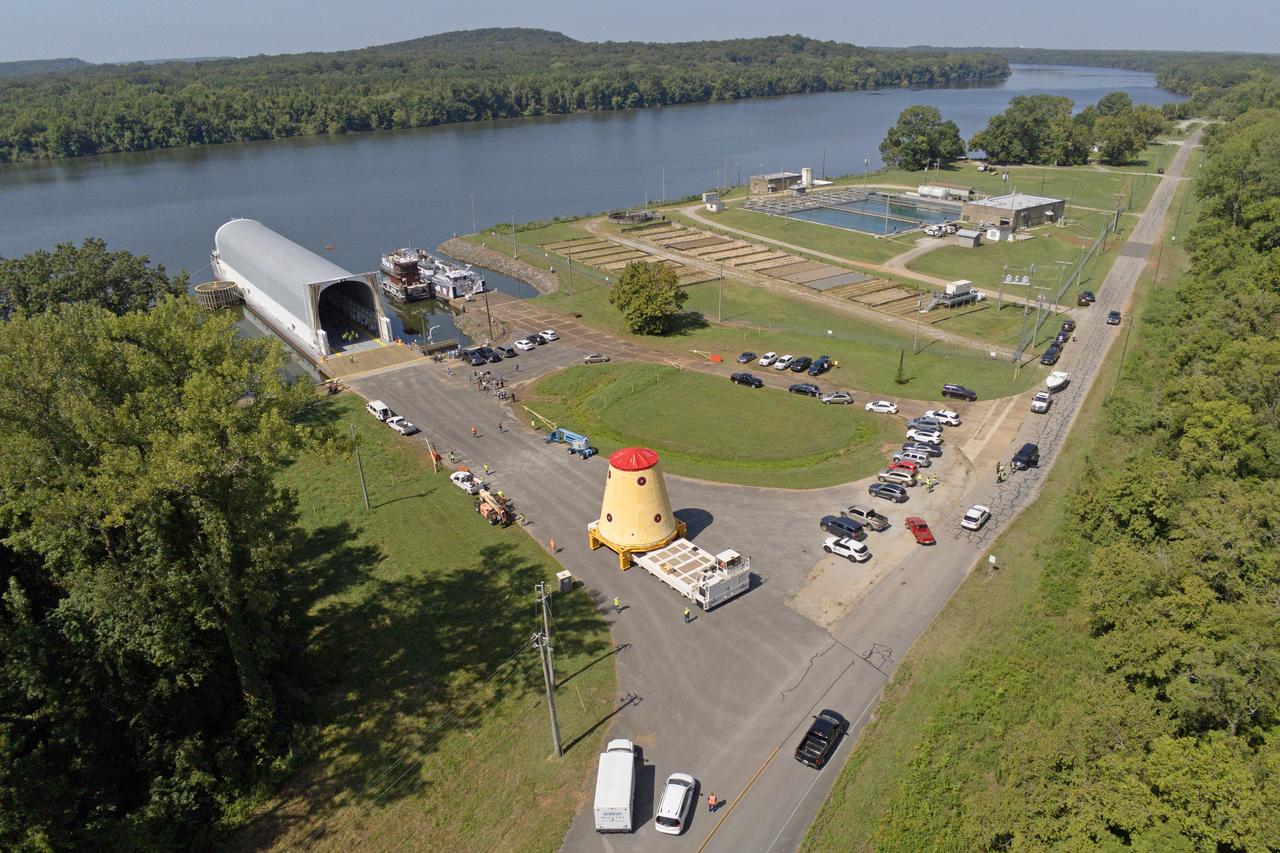
NASA rolled out a key piece of space flight hardware for the SLS (Space Launch System) rocket for the first crewed mission of NASA’s Artemis campaign from Marshall Space Flight Center in Huntsville, Alabama, on Wednesday, Aug. 21 for shipment to the agency’s spaceport in Florida. The cone-shaped launch vehicle stage adapter connects the rocket’s core stage to the upper stage and helps protect the upper stage’s engine that will help propel the Artemis II test flight around the Moon, slated for 2025. Manufactured by prime contractor Teledyne Brown Engineering and the Jacobs Space Exploration Group’s ESSCA (Engineering Services and Science Capability Augmentation) contract using NASA Marshall’s self-reacting friction-stir robotic and vertical weld tools. Crews moved the adapter out of NASA Marshall’s Building 4708 to the agency’s Pegasus barge Aug. 21. The barge will ferry the adapter first to NASA’s Michoud Assembly Facility in New Orleans, where crews will pick up additional SLS hardware for future Artemis missions, before traveling to NASA Kennedy. Once in Florida, the adapter will join the recently delivered core stage. There, teams with NASA’s Exploration Ground Systems will prepare the adapter for stacking and launch.
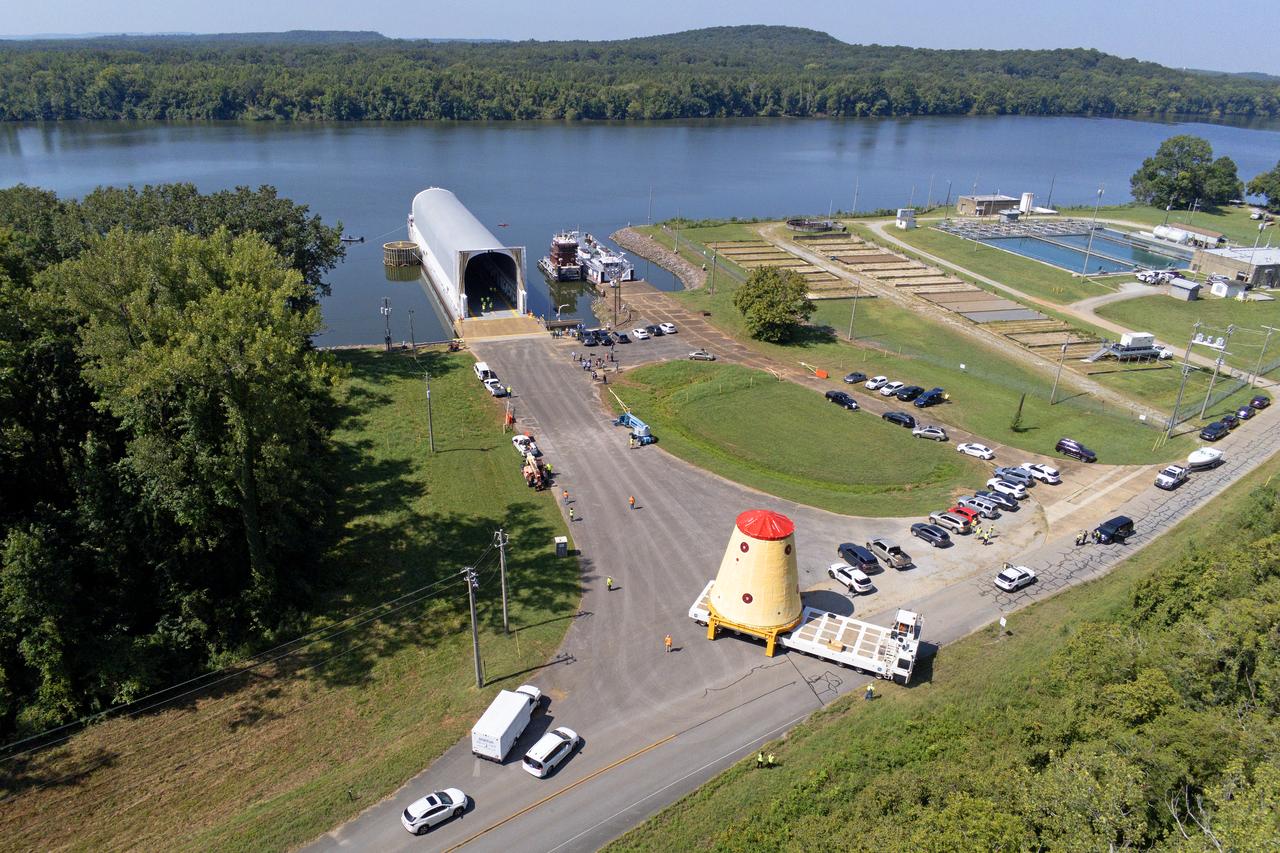
NASA rolled out a key piece of space flight hardware for the SLS (Space Launch System) rocket for the first crewed mission of NASA’s Artemis campaign from Marshall Space Flight Center in Huntsville, Alabama, on Wednesday, Aug. 21 for shipment to the agency’s spaceport in Florida. The cone-shaped launch vehicle stage adapter connects the rocket’s core stage to the upper stage and helps protect the upper stage’s engine that will help propel the Artemis II test flight around the Moon, slated for 2025. Manufactured by prime contractor Teledyne Brown Engineering and the Jacobs Space Exploration Group’s ESSCA (Engineering Services and Science Capability Augmentation) contract using NASA Marshall’s self-reacting friction-stir robotic and vertical weld tools. Crews moved the adapter out of NASA Marshall’s Building 4708 to the agency’s Pegasus barge Aug. 21. The barge will ferry the adapter first to NASA’s Michoud Assembly Facility in New Orleans, where crews will pick up additional SLS hardware for future Artemis missions, before traveling to NASA Kennedy. Once in Florida, the adapter will join the recently delivered core stage. There, teams with NASA’s Exploration Ground Systems will prepare the adapter for stacking and launch.
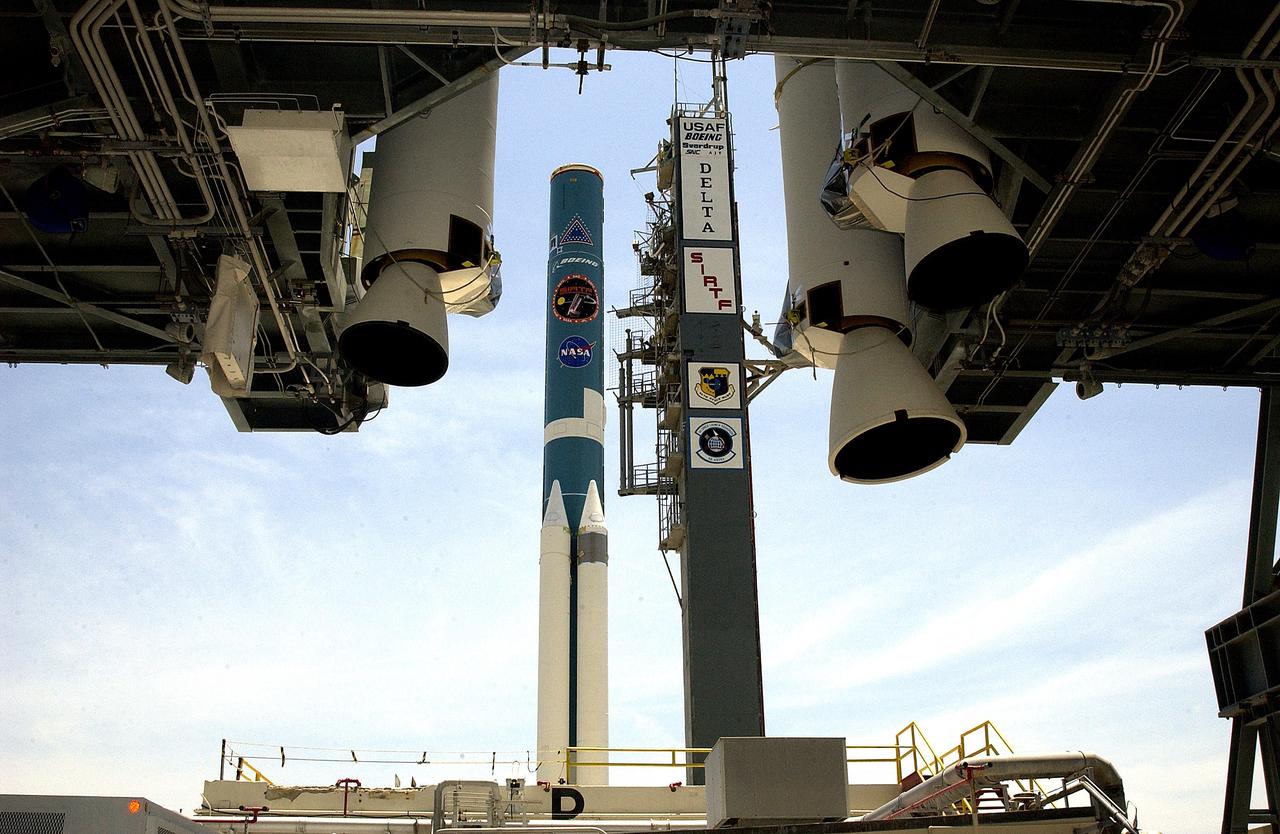
KENNEDY SPACE CENTER, FLA. - On Launch Complex 17-B, Cape Canaveral Air Force Station, the Delta II Heavy rocket (background) is framed by the solid rocket boosters (foreground) suspended in the mobile service tower. The SRBs will be added to those already attached to the rocket. The Delta II Heavy will launch the Space Infrared Telescope Facility (SIRTF). Consisting of three cryogenically cooled science instruments and an 0.85-meter telescope, SIRTF is one of NASA's largest infrared telescopes to be launched. SIRTF will obtain images and spectra by detecting the infrared energy, or heat, radiated by objects in space. Most of this infrared radiation is blocked by the Earth's atmosphere and cannot be observed from the ground.
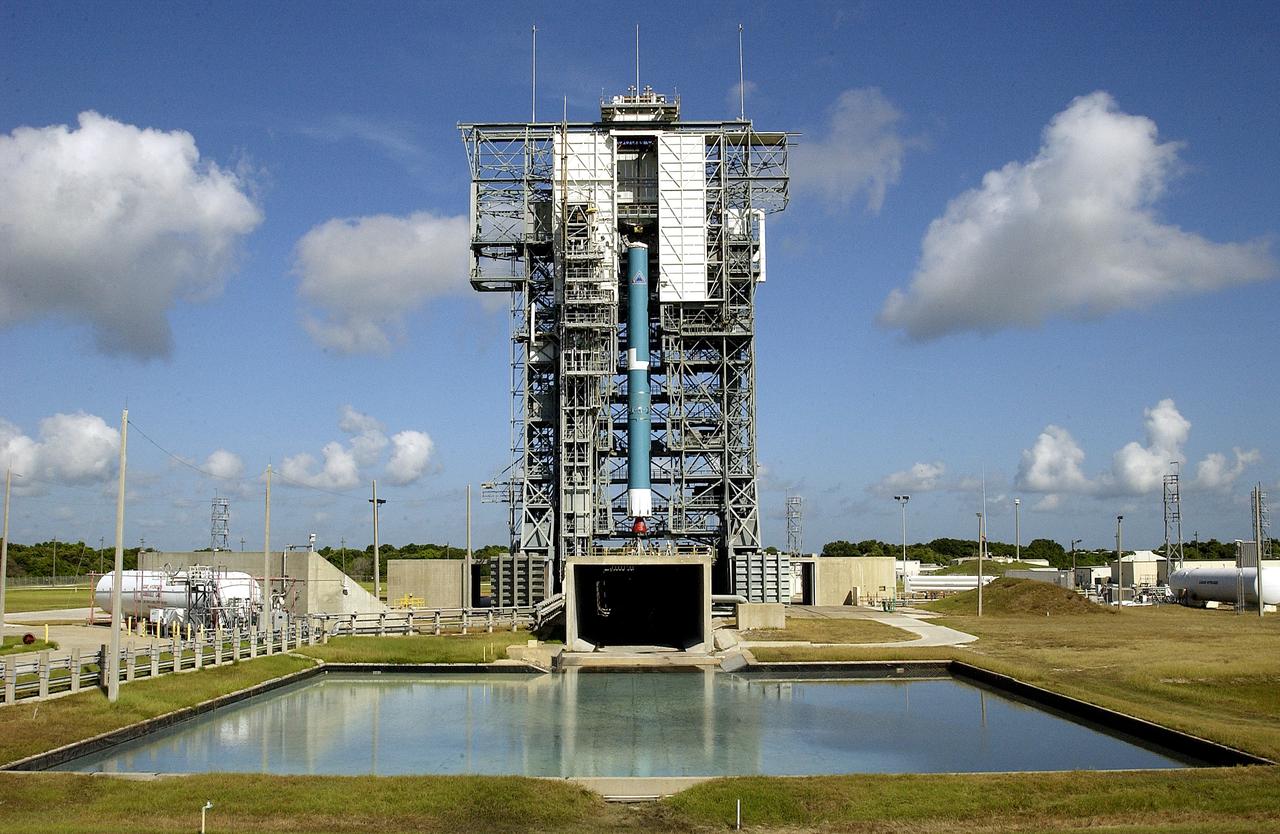
KENNEDY SPACE CENTER, FLA. - On Launch Complex 17-B, Cape Canaveral Air Force Station, the first stage of a Delta II rocket is lifted up the mobile service tower. Below the rocket is the flame trench, and in the foreground is the overflow pool. The rocket is being erected to launch the Space InfraRed Telescope Facility (SIRTF). Consisting of an 0.85-meter telescope and three cryogenically cooled science instruments, SIRTF is one of NASA's largest infrared telescopes to be launched. SIRTF will obtain images and spectra by detecting the infrared energy, or heat, radiated by objects in space. Most of this infrared radiation is blocked by the Earth's atmosphere and cannot be observed from the ground.
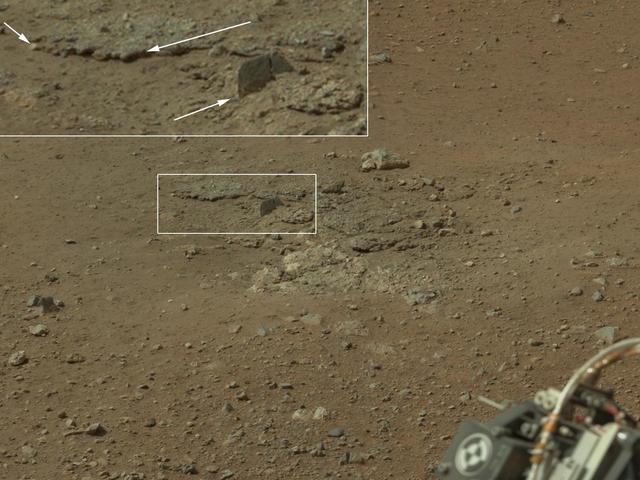
This color image from NASA Curiosity rover shows an area excavated by the blast of the Mars Science Laboratory descent stage rocket engines. This is part of a larger, high-resolution color mosaic made from images obtained by Curiosity Mast Camera.
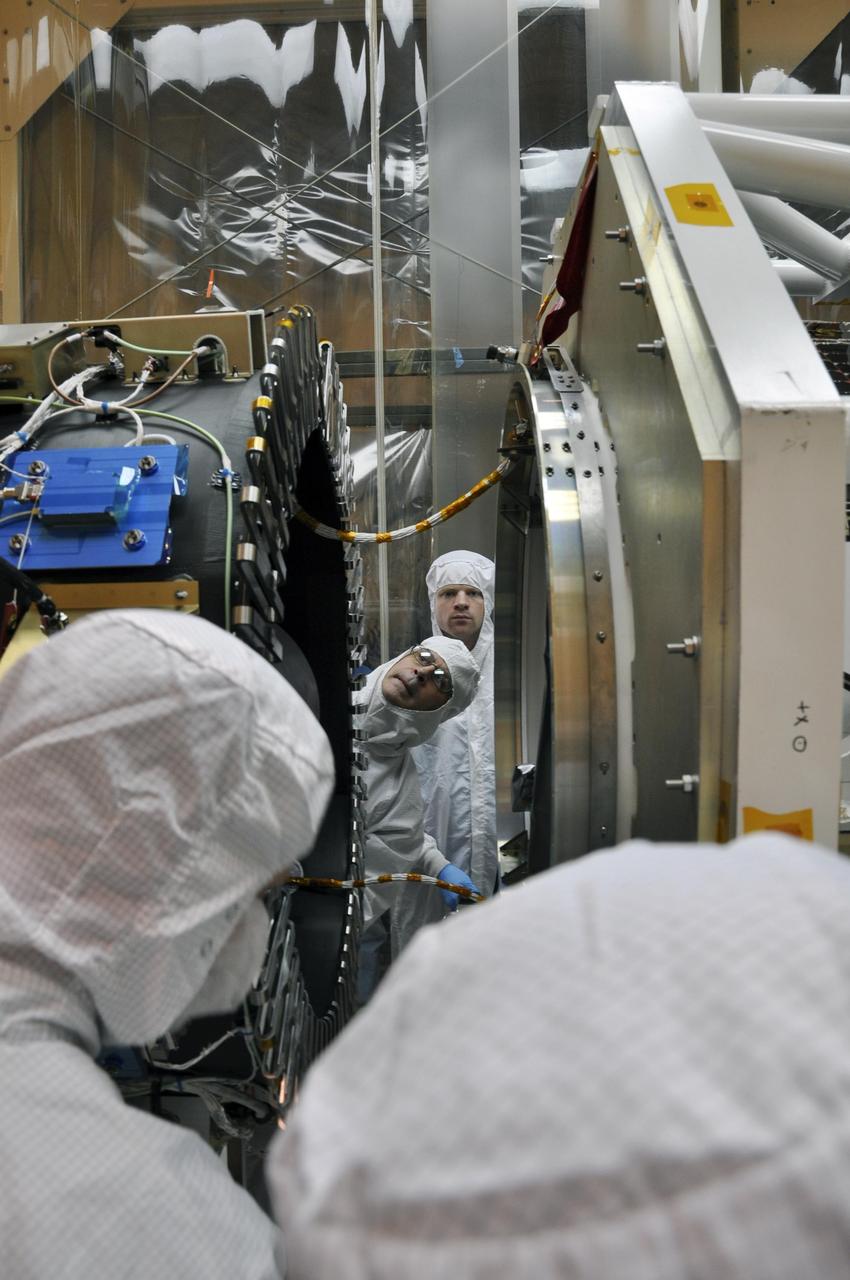
At Vandenberg Air Force Base processing facility in California, the separation ring on the aft end of NASA Nuclear Spectroscopic Telescope Array NuSTAR, at right, inches its way toward the third stage of an Orbital Sciences Pegasus XL rocket.
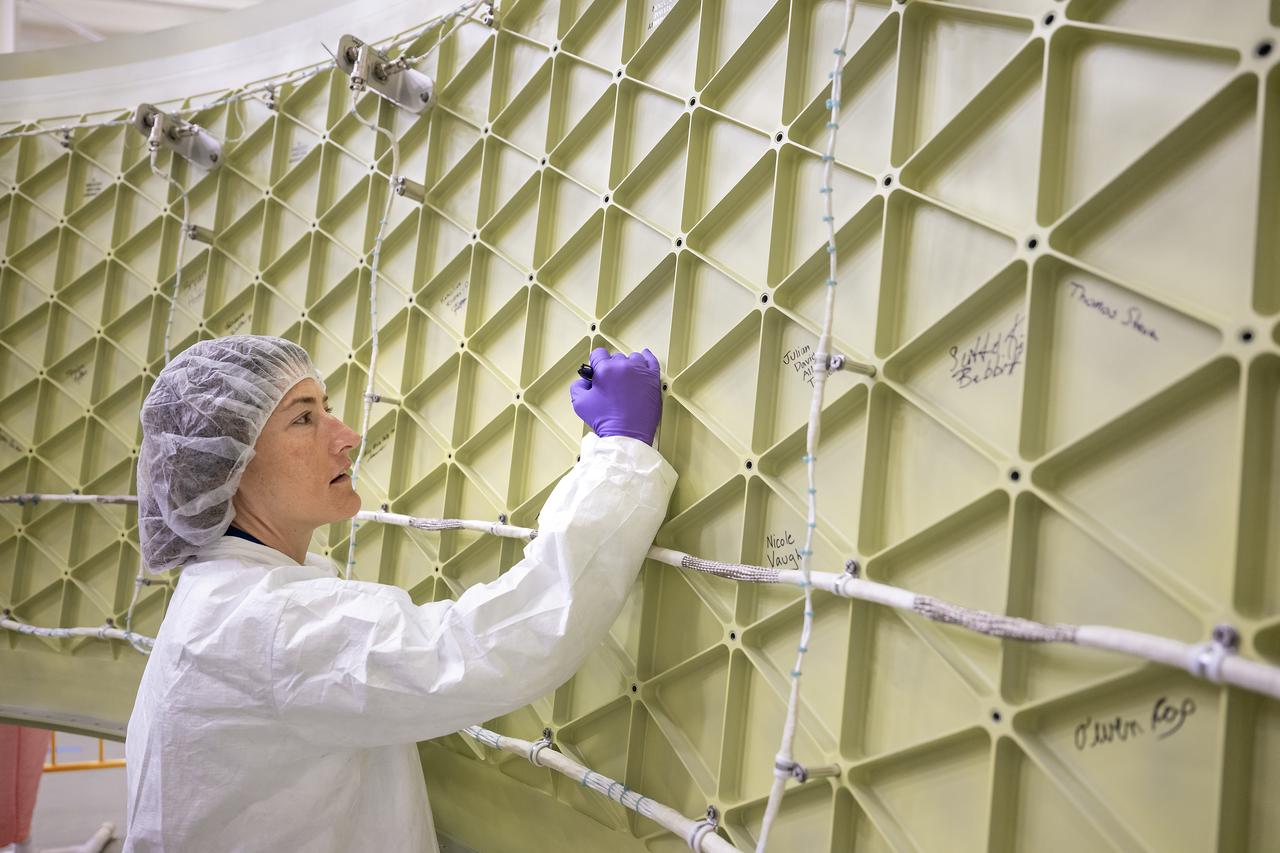
These photos show highlights from Artemis II NASA astronauts Victor Glover, Reid Wiseman, and Christina Koch of NASA and CSA (Canadian Space Agency) astronaut Jeremy Hansen visit to NASA’s Marshall Space Flight Center in Huntsville, Alabama, Nov. 27. The crew met and spoke to employees and viewed facilities for SLS (Space Launch System) rocket. All four astronauts signed the Orion stage adapter (OSA), a small ring structure that connects SLS to NASA’s Orion spacecraft, that will be used for Artemis II. Koch and Wiseman also visited the Systems Integration Lab, where SLS flight software testing is conducted. The four astronauts will launch atop SLS inside Orion to venture around the Moon on Artemis II, the first crewed flight for Artemis.
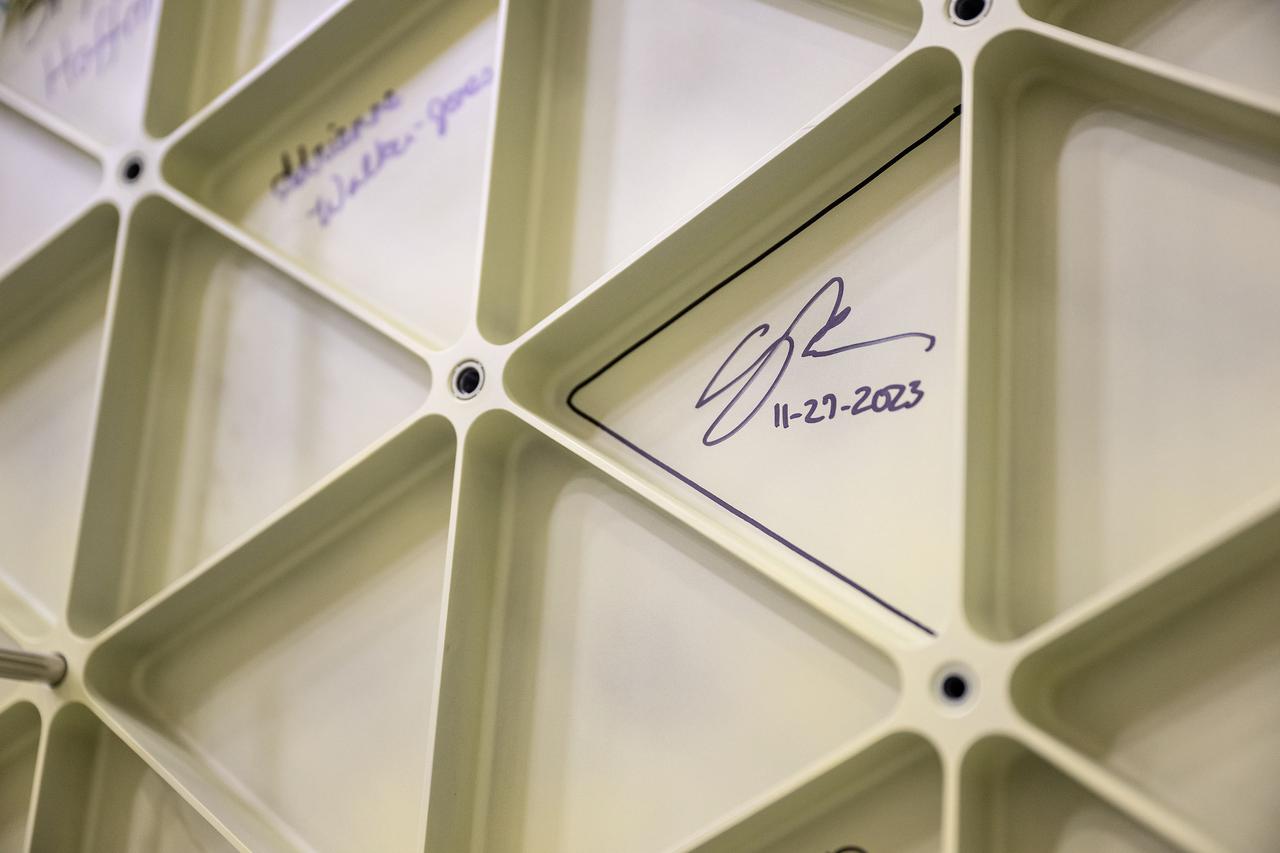
These photos show highlights from Artemis II NASA astronauts Victor Glover, Reid Wiseman, and Christina Koch of NASA and CSA (Canadian Space Agency) astronaut Jeremy Hansen visit to NASA’s Marshall Space Flight Center in Huntsville, Alabama, Nov. 27. The crew met and spoke to employees and viewed facilities for SLS (Space Launch System) rocket. All four astronauts signed the Orion stage adapter (OSA), a small ring structure that connects SLS to NASA’s Orion spacecraft, that will be used for Artemis II. Koch and Wiseman also visited the Systems Integration Lab, where SLS flight software testing is conducted. The four astronauts will launch atop SLS inside Orion to venture around the Moon on Artemis II, the first crewed flight for Artemis.