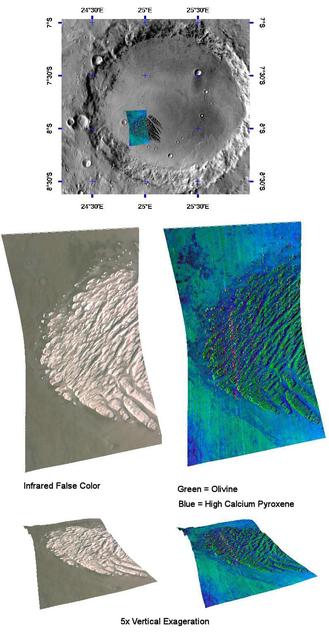
One Rock, Two Rocks, Red Rocks, Blue Rock
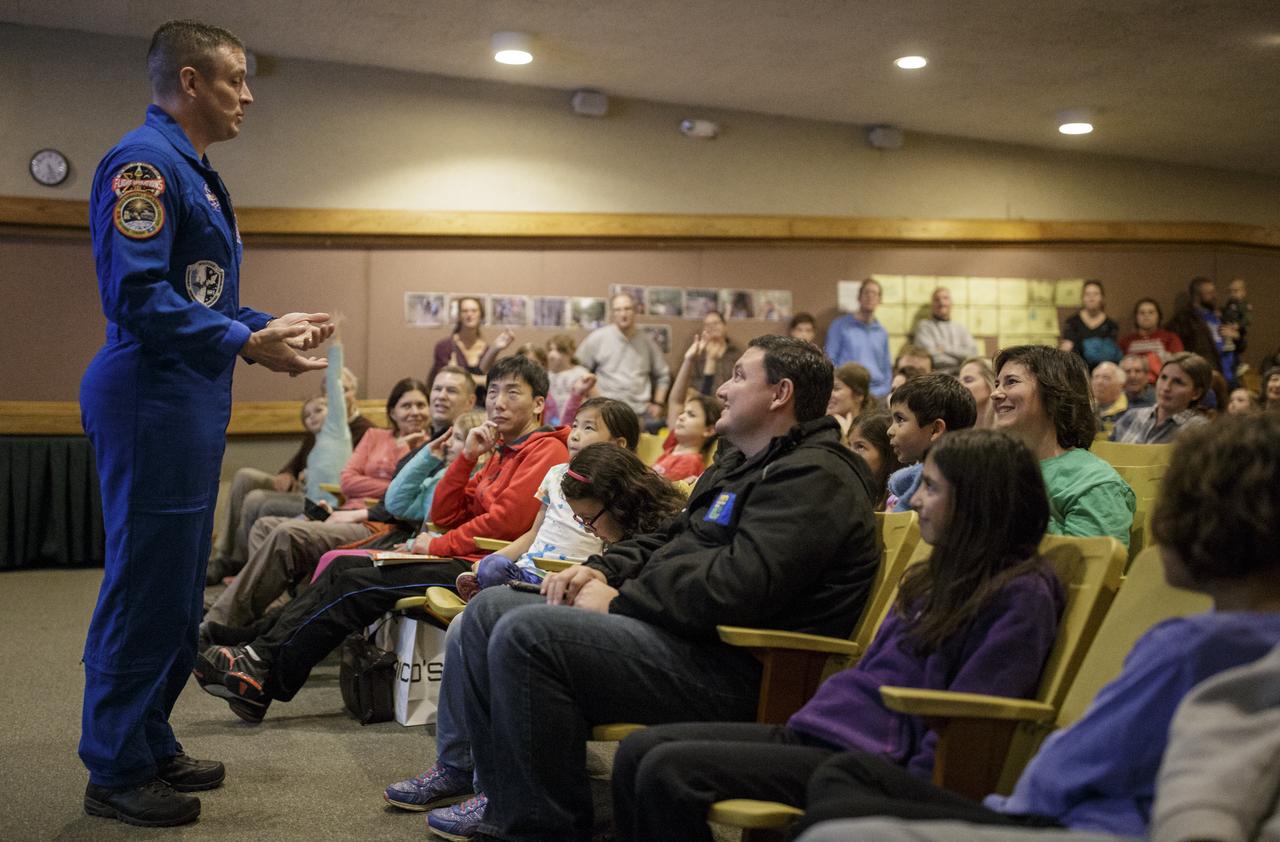
NASA astronaut Jack Fischer answers a question from the audience, Saturday, Nov. 4, 2017 at the Rock Creek Park Nature Center and Planetarium in Washington, DC. During his 136 day mission aboard the ISS, Fischer conducted two spacewalks and hundreds of scientific experiments.  Photo Credit: (NASA/Joel Kowsky)
Astronaut Jack Fischer at Rock Creek Park
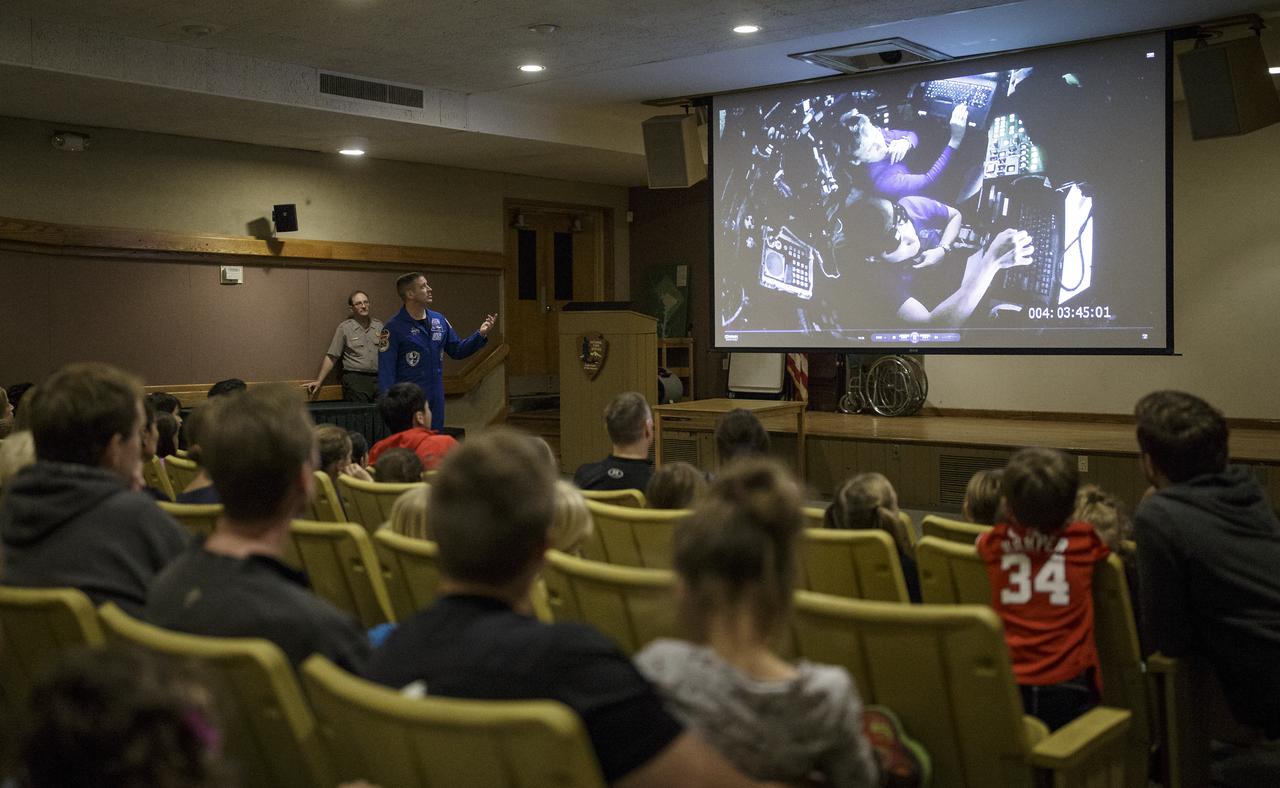
NASA astronaut Jack Fischer speaks about his time aboard the International Space Station as part of Expeditions 51 and 52, Saturday, Nov. 4, 2017 at the Rock Creek Park Nature Center and Planetarium in Washington, DC. During his 136 day mission aboard the ISS, Fischer conducted two spacewalks and hundreds of scientific experiments.  Photo Credit: (NASA/Joel Kowsky)
Astronaut Jack Fischer at Rock Creek Park
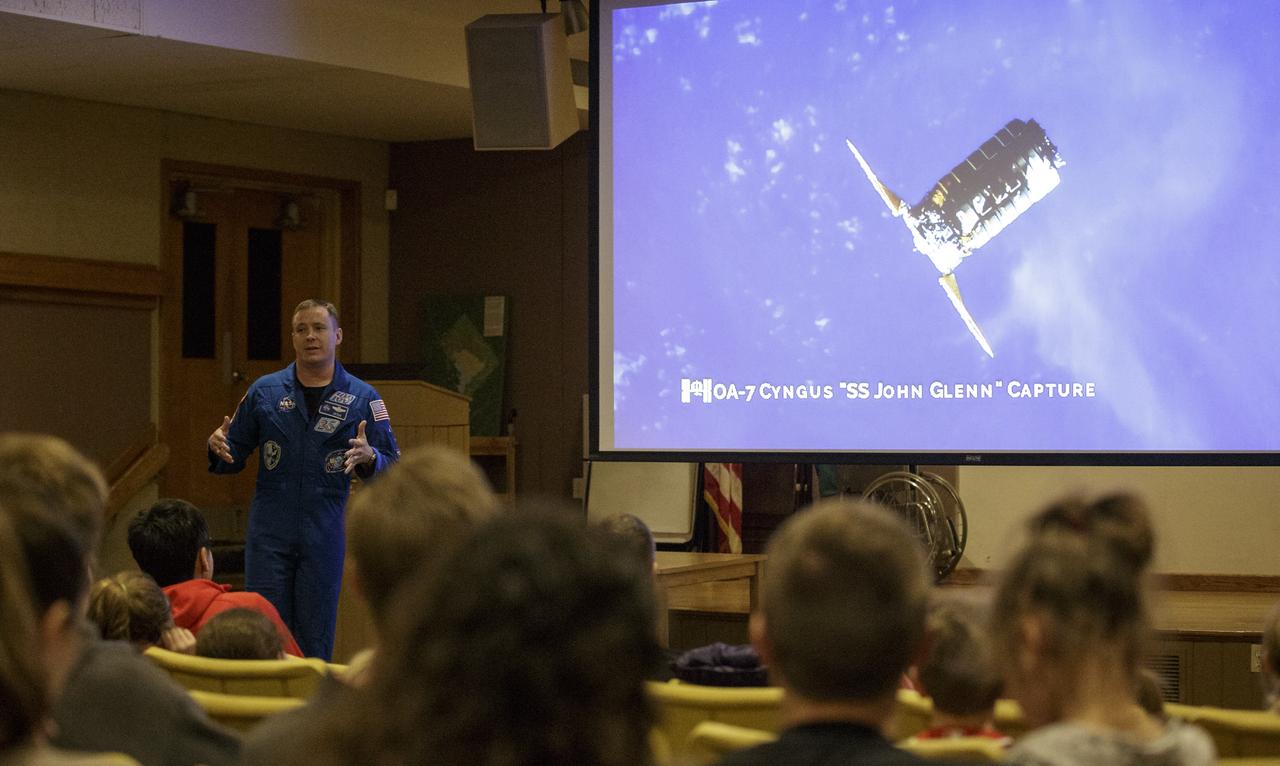
NASA astronaut Jack Fischer speaks about his time aboard the International Space Station as part of Expeditions 51 and 52, Saturday, Nov. 4, 2017 at the Rock Creek Park Nature Center and Planetarium in Washington, DC. During his 136 day mission aboard the ISS, Fischer conducted two spacewalks and hundreds of scientific experiments.  Photo Credit: (NASA/Joel Kowsky)
Astronaut Jack Fischer at Rock Creek Park
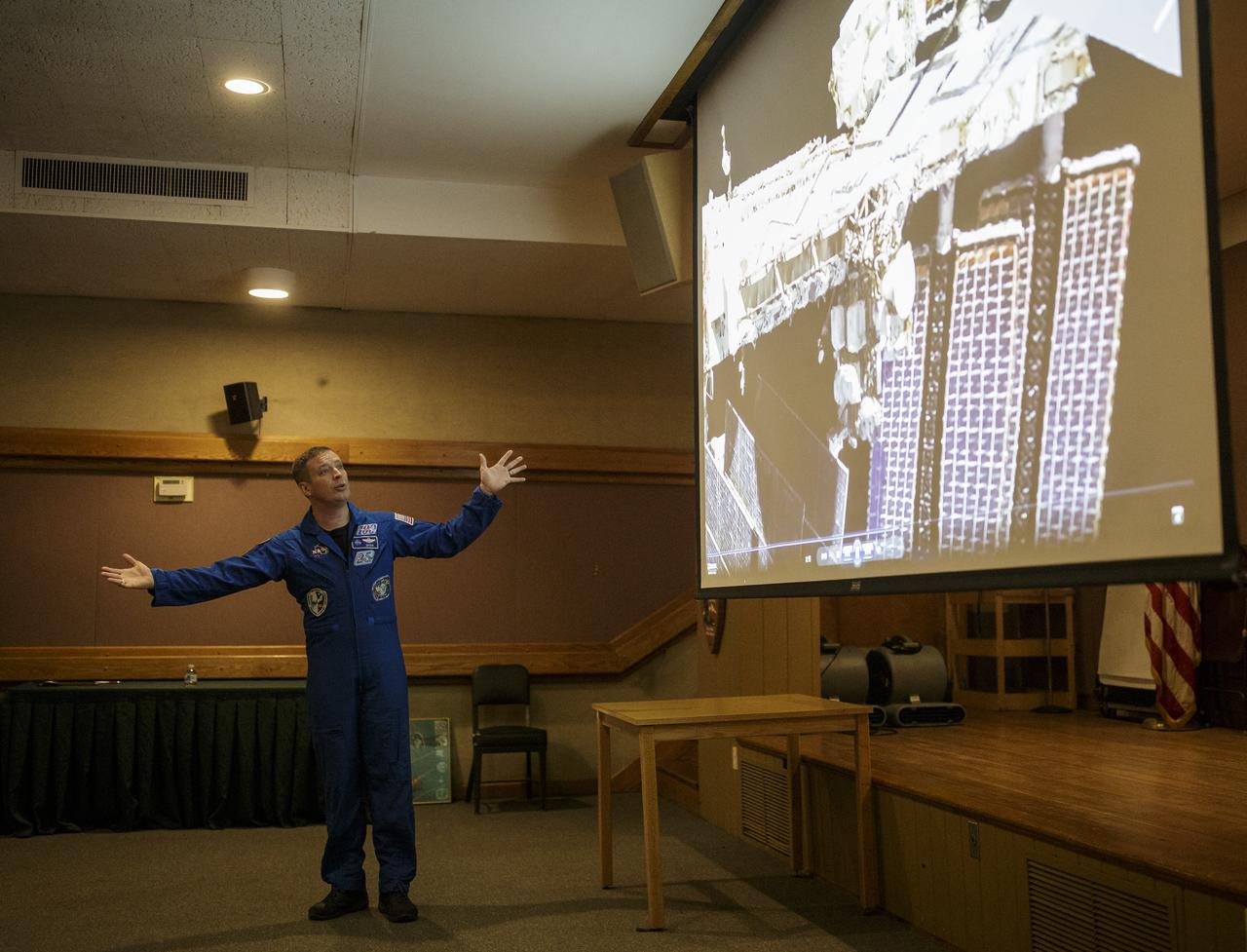
NASA astronaut Jack Fischer speaks about his time aboard the International Space Station as part of Expeditions 51 and 52, Saturday, Nov. 4, 2017 at the Rock Creek Park Nature Center and Planetarium in Washington, DC. During his 136 day mission aboard the ISS, Fischer conducted two spacewalks and hundreds of scientific experiments.  Photo Credit: (NASA/Joel Kowsky)
Astronaut Jack Fischer at Rock Creek Park
NASA astronaut Jack Fischer speaks about his time aboard the International Space Station as part of Expeditions 51 and 52, Saturday, Nov. 4, 2017 at the Rock Creek Park Nature Center and Planetarium in Washington, DC. During his 136 day mission aboard the ISS, Fischer conducted two spacewalks and hundreds of scientific experiments.  Photo Credit: (NASA/Joel Kowsky)
Astronaut Jack Fischer at Rock Creek Park
NASA astronaut Jack Fischer speaks about his time aboard the International Space Station as part of Expeditions 51 and 52, Saturday, Nov. 4, 2017 at the Rock Creek Park Nature Center and Planetarium in Washington, DC. During his 136 day mission aboard the ISS, Fischer conducted two spacewalks and hundreds of scientific experiments.  Photo Credit: (NASA/Joel Kowsky)
Astronaut Jack Fischer at Rock Creek Park
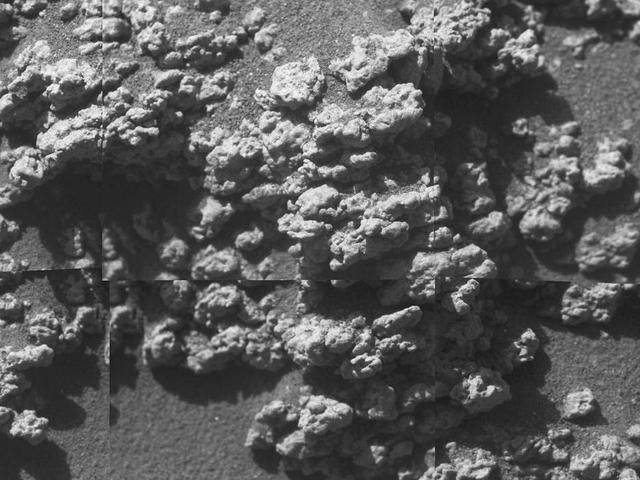
This image shows stone stripes on the side of a volcanic cone on Mauna Kea, Hawaii. The stripes are made of small rock fragments and they are aligned downhill as freeze-thaw cycles have lifted them up and out of the finer-grained regolith, and moved them to the sides, forming stone stripes.  This site is at about 13,450-foot (4,100-meter) altitude on the mountain. For scale, the rock cluster toward the bottom right of the image is approximately 1 foot (30 centimeters) wide. The image was taken in 1999 by R. E. Arvidson.  Such ground texture has been seen in recent images from NASA's Mars Exploration Rover Opportunity.  https://photojournal.jpl.nasa.gov/catalog/PIA22219
Rock Stripe Pattern on Hawaii's Mauna Kea
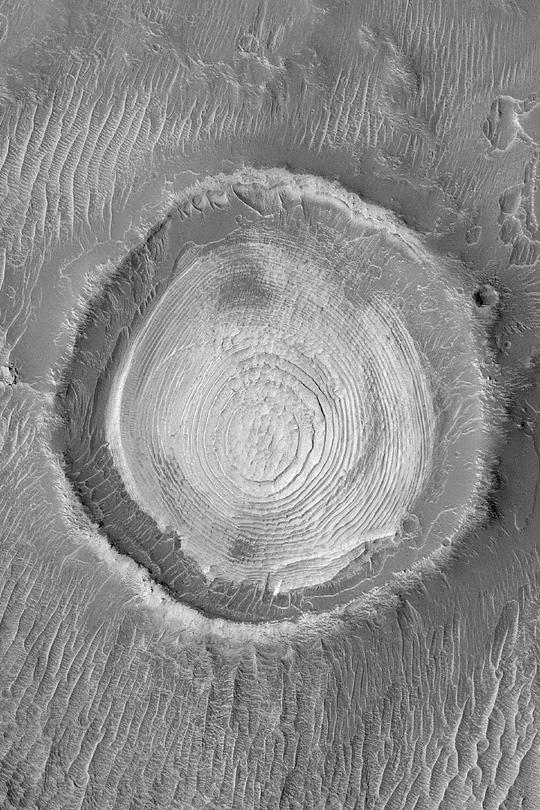
Escher Rock
Escher Rock
Hungry for Rocks
Hungry for Rocks
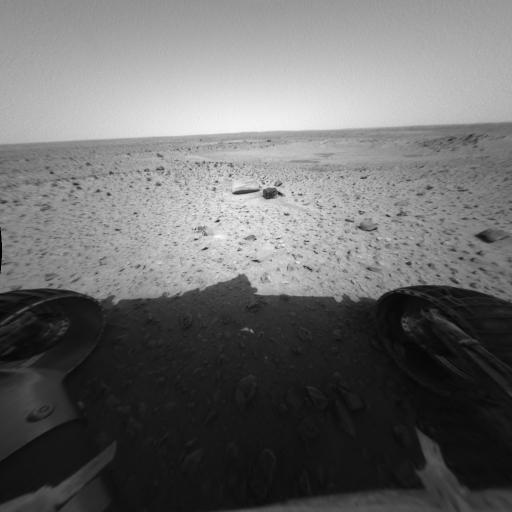
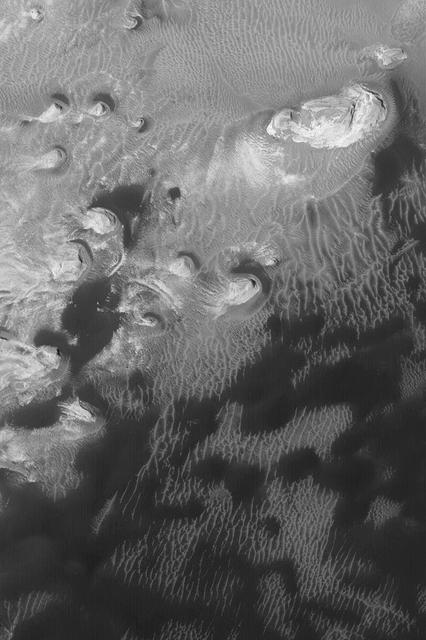
A Lone Rock
A Lone Rock
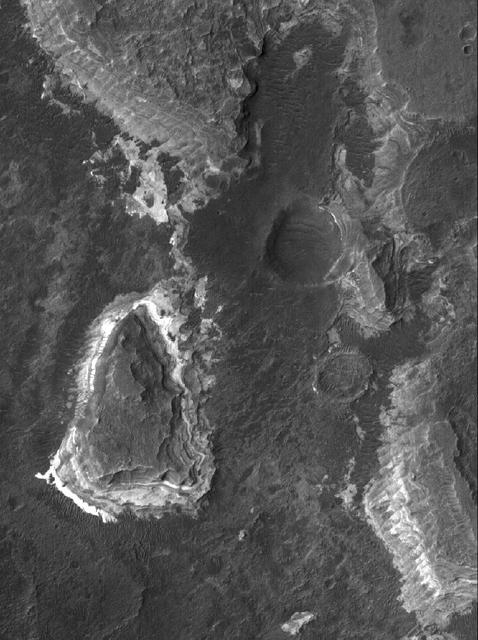
White Rock
White Rock
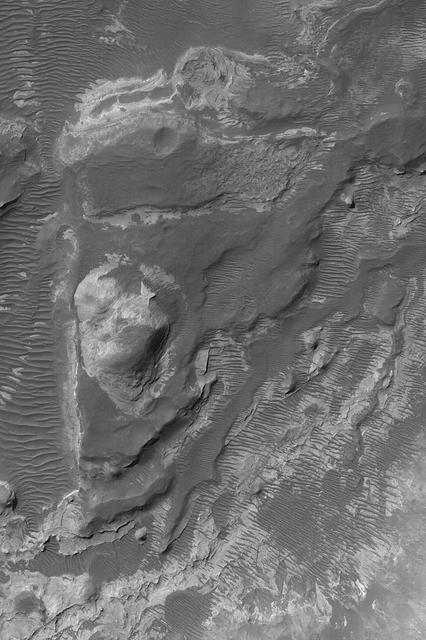
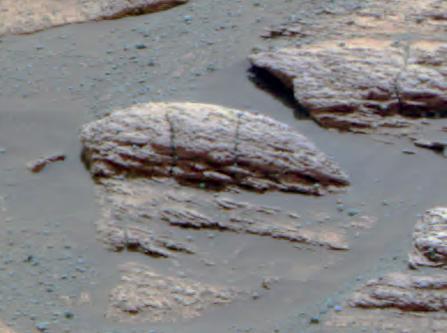
Meridiani Rocks
Meridiani Rocks
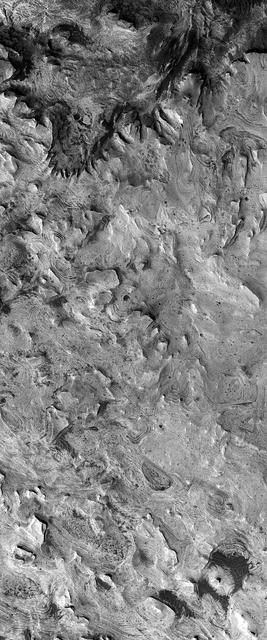
Rock Bands
Rock Bands
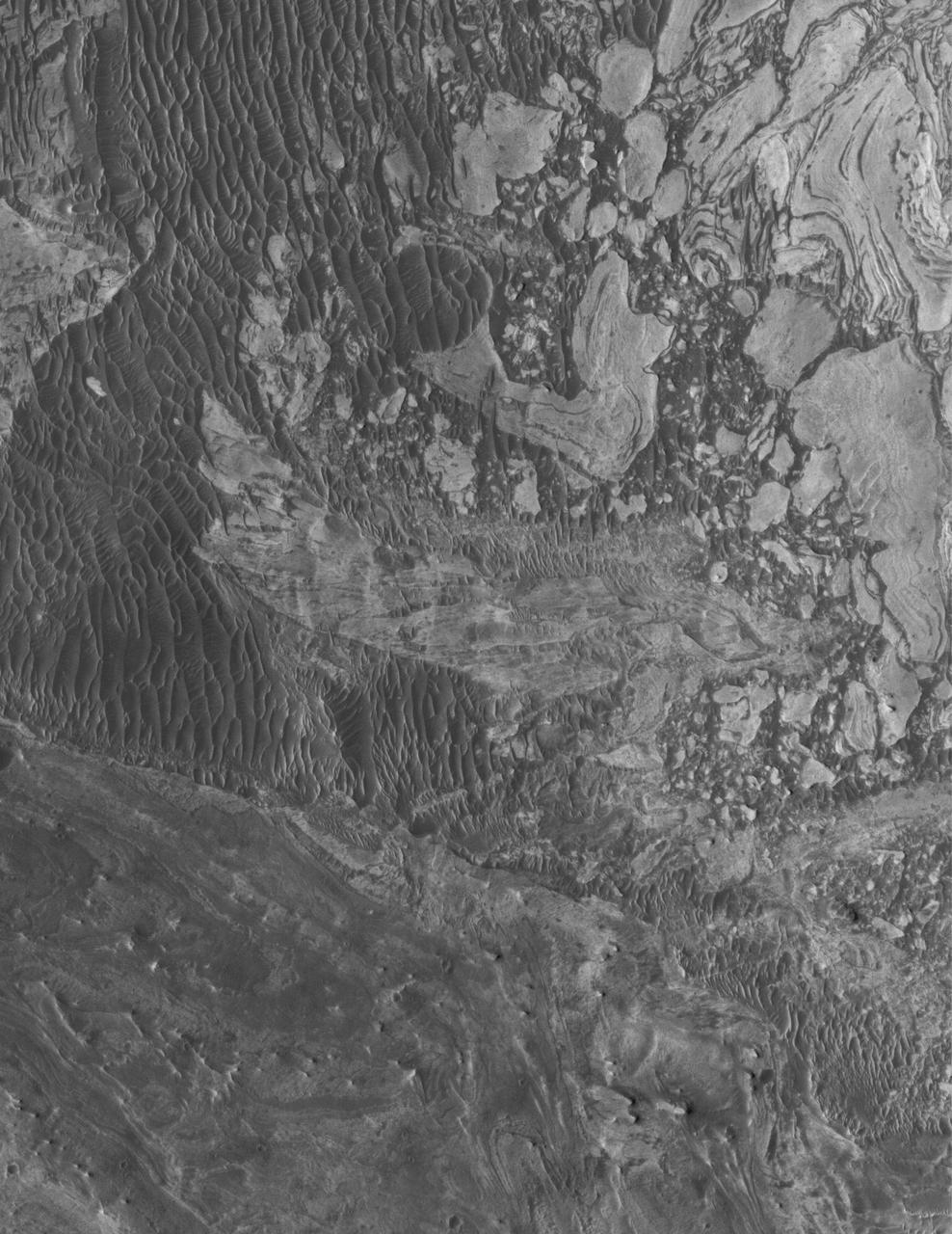
Ring Rocks
Ring Rocks
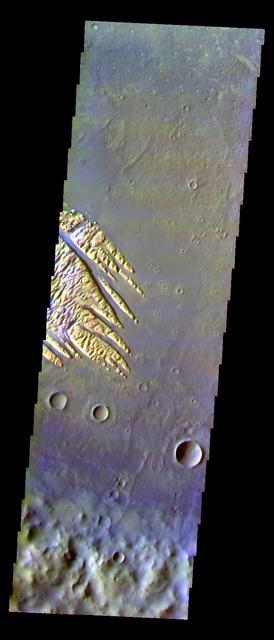
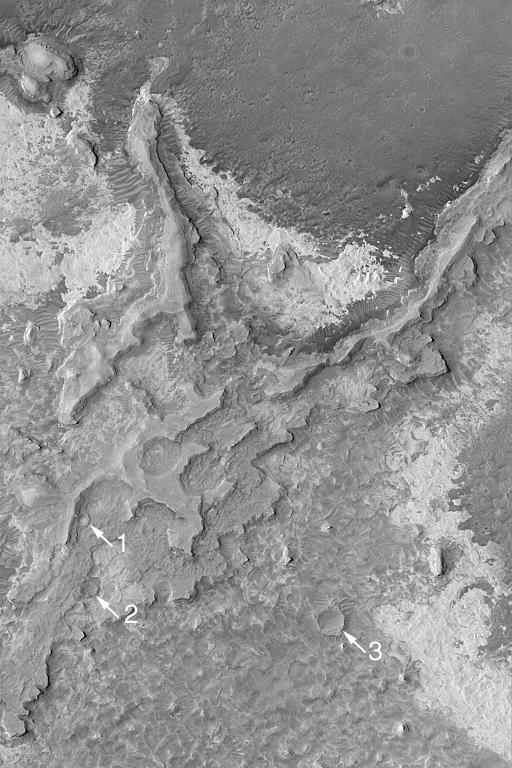
Terby Rocks
Terby Rocks
Meridiani Rocks
Meridiani Rocks
Opportunity Rocks!
Opportunity Rocks!
Opportunity Rocks!
Opportunity Rocks!
Lutefisk Rock
Lutefisk Rock
Earhart Rock
Earhart Rock
A Flood of Rock
A Flood of Rock
Rock on the Range
Rock on the Range
Sedimentary Rocks
Sedimentary Rocks
Uchben Rock
Uchben Rock
Tetl Rock
Tetl Rock
Racing Rocks
Racing Rocks
Ripples and Rocks
Ripples and Rocks
Rock Lobster
Rock Lobster
Wopmay Rock
Wopmay Rock
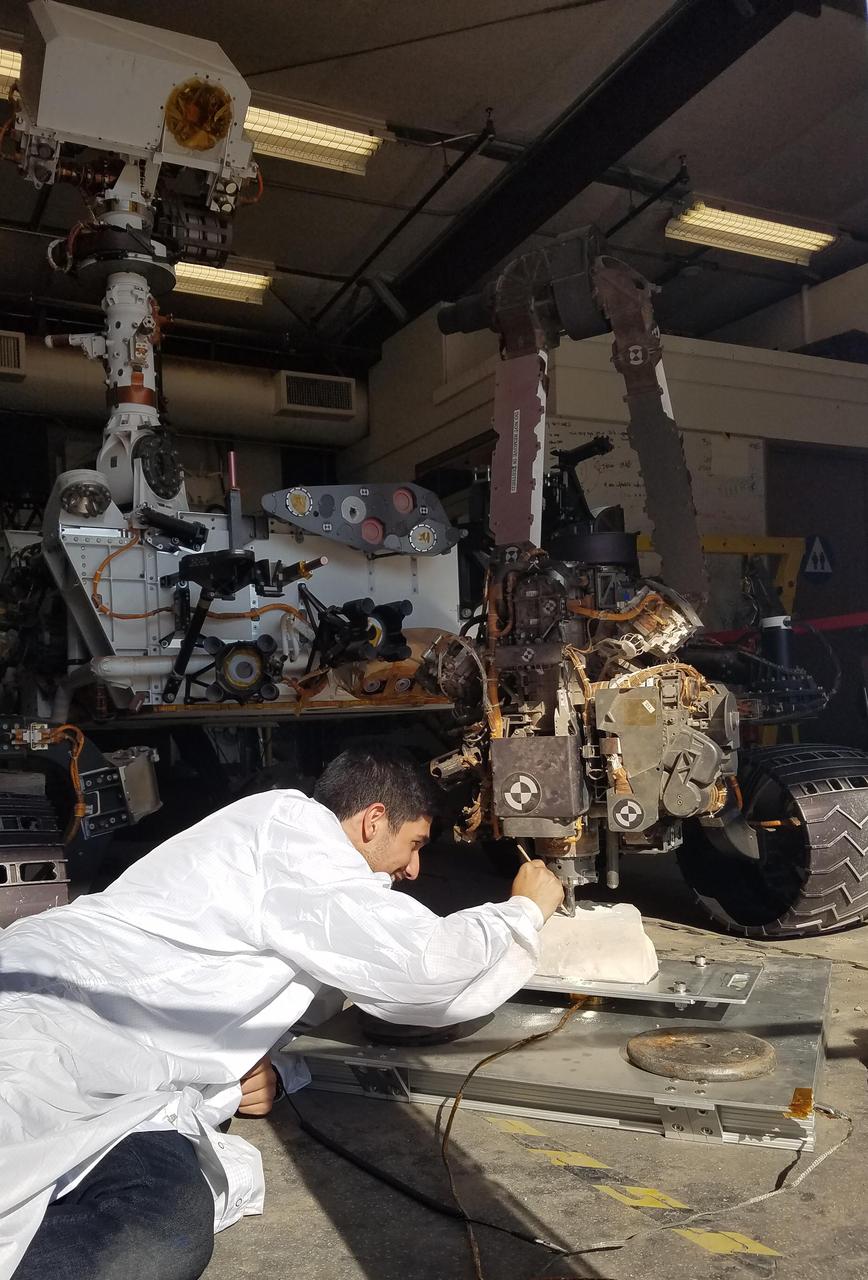
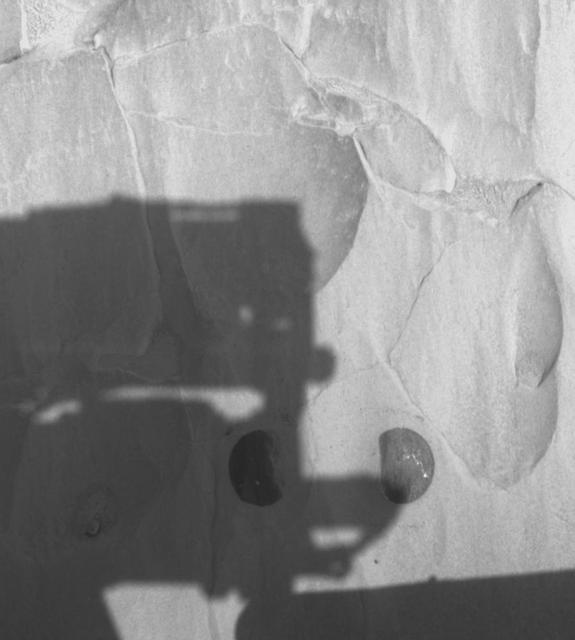
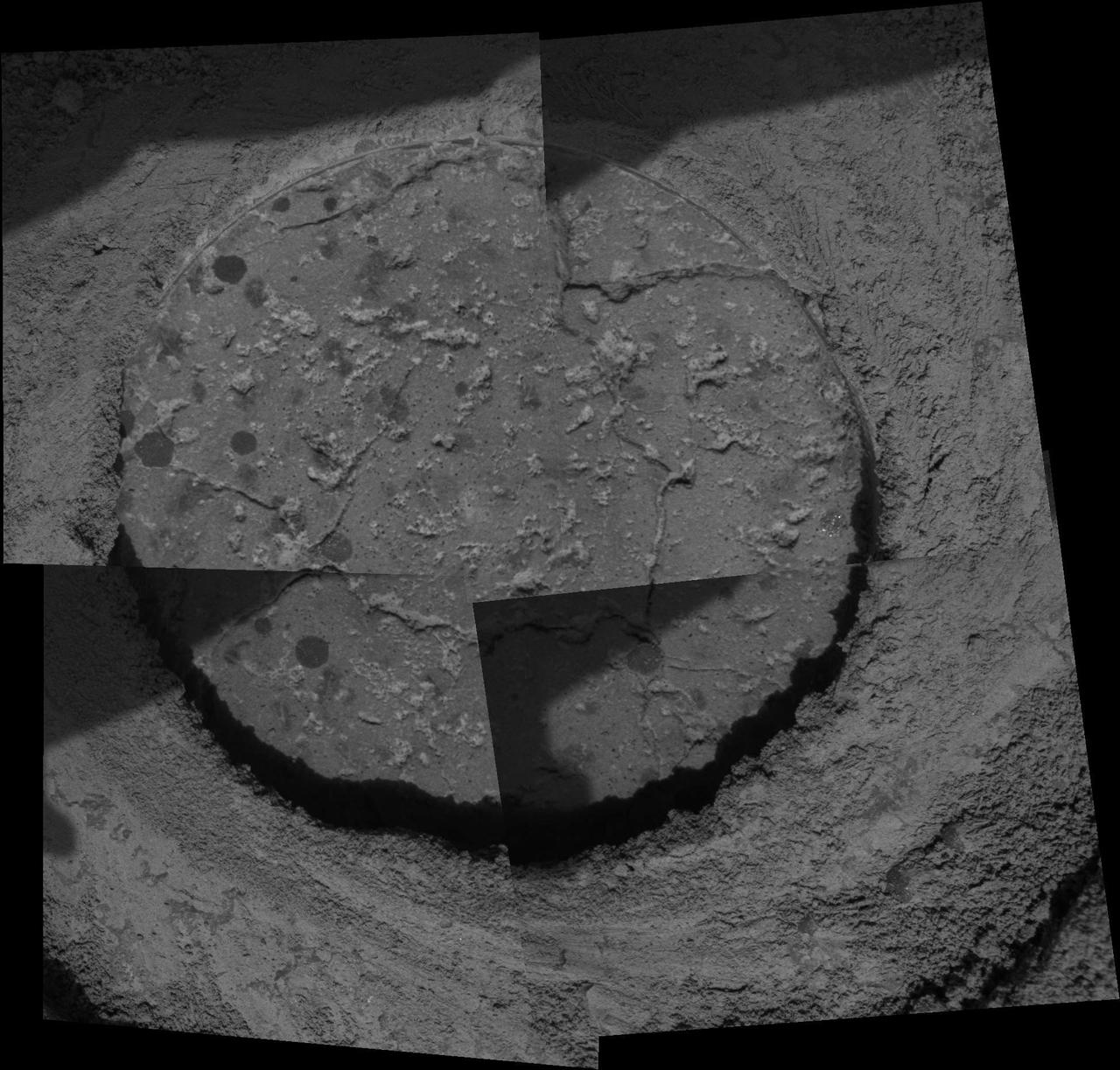
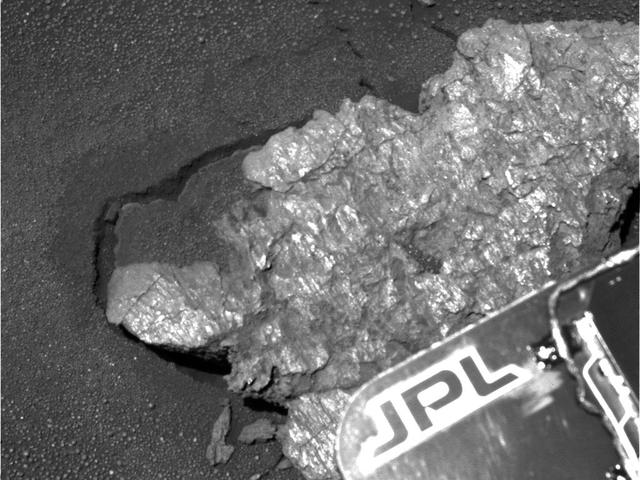
In the summer and fall of 2017, the team operating NASA's Curiosity Mars rover conducted tests in the "Mars Yard" at NASA's Jet Propulsion Laboratory, Pasadena, California, to develop techniques that Curiosity might be able to use to resume drilling into rocks on Mars.  JPL robotics engineer Vladimir Arutyunov, in this June 29, 2017, photo, checks the test rover's drill bit at its contact point with a rock. Note that the stabilizer post visible to the right of the bit is not in contact with the rock, unlike the positioning used and photographed by Curiosity when drilling into rocks on Mars in 2013 to 2016.  In late 2016, after Curiosity's drill had collected sample material from 15 Martian rocks, the drill's feed mechanism ceased working reliably. That motorized mechanism moved the bit forward or back with relation to the stabilizer posts on either side of the bit. In normal drilling by Curiosity, the stabilizers were positioned on the target rock first, and then the feed mechanism extended the rotation-percussion bit into the rock.  In the alternative technique seen here, called "feed-extended drilling," the test rover's stabilizers are not used to touch the rock. The bit is advanced into the rock by motion of the robotic arm rather than the drill's feed mechanism.   https://photojournal.jpl.nasa.gov/catalog/PIA22061
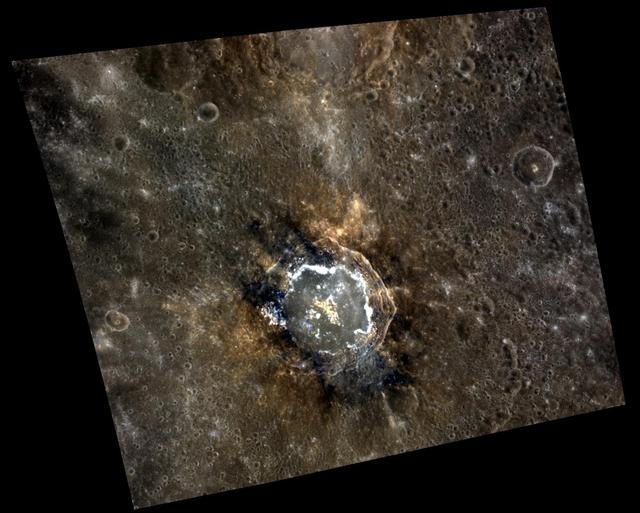
Testing New Techniques for Mars Rover Rock-Drilling
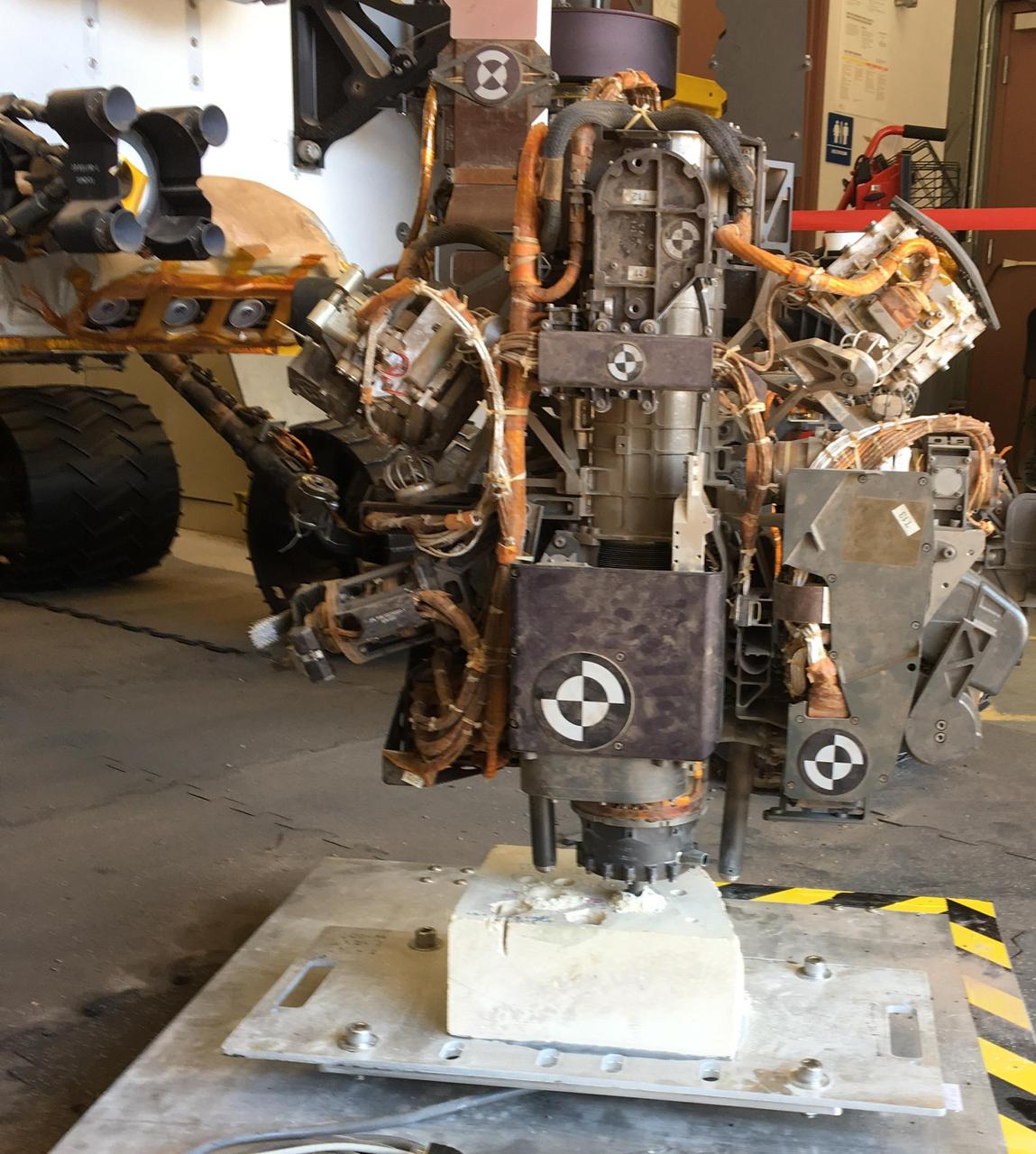
This photo taken in the "Mars Yard" at NASA's Jet Propulsion Laboratory, Pasadena, California, on Aug. 1, 2017, shows a step in development of possible alternative techniques that NASA's Curiosity Mars rover might be able to use to resume drilling into rocks on Mars.  In late 2016, after Curiosity's drill had collected sample material from 15 Martian rocks in four years, the drill's feed mechanism ceased working reliably. That motorized mechanism moved the bit forward or back with relation to stabilizer posts on either side of the bit. In normal drilling by Curiosity, the stabilizers were positioned on the target rock first, and then the feed mechanism extended the rotation-percussion bit into the rock.  In the alternative technique seen here, called "feed-extended drilling," the test rover's stabilizers are not used to touch the rock. The bit is advanced into the rock by motion of the robotic arm rather than the drill's feed mechanism.  https://photojournal.jpl.nasa.gov/catalog/PIA22062
New Rock-Drilling Method in 'Mars Yard' Test
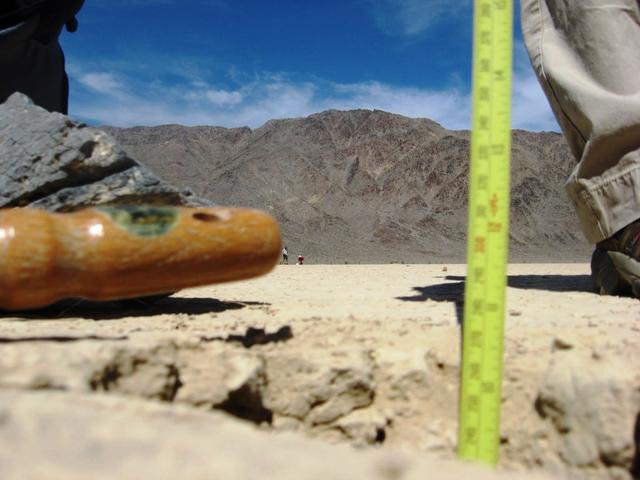
To investigate the rocks and trails, the interns collect many kinds of data, such as trail length, width, and depth; rock size; magnetic and radiation measurements; and GPS coordinates. The students also photograph the rocks, the trails and the cracks in the mud within and outside the trails.  Photo credit: NASA/GSFC/Maggie McAdam  To read a feature story on the Racetrack Playa go to: <a href="http://www.nasa.gov/topics/earth/features/roving-rocks.html" rel="nofollow">www.nasa.gov/topics/earth/features/roving-rocks.html</a>  <b><a href="http://www.nasa.gov/centers/goddard/home/index.html" rel="nofollow">NASA Goddard Space Flight Center</a></b>  is home to the nation's largest organization of combined scientists, engineers and technologists that build spacecraft, instruments and new technology to study the Earth, the sun, our solar system, and the universe.  <b>Follow us on <a href="http://twitter.com/NASA_GoddardPix" rel="nofollow">Twitter</a></b>  <b>Join us on <a href="http://www.facebook.com/pages/Greenbelt-MD/NASA-Goddard/395013845897?ref=tsd" rel="nofollow">Facebook</a><b></b></b>
Mysterious Roving Rocks of Racetrack Playa
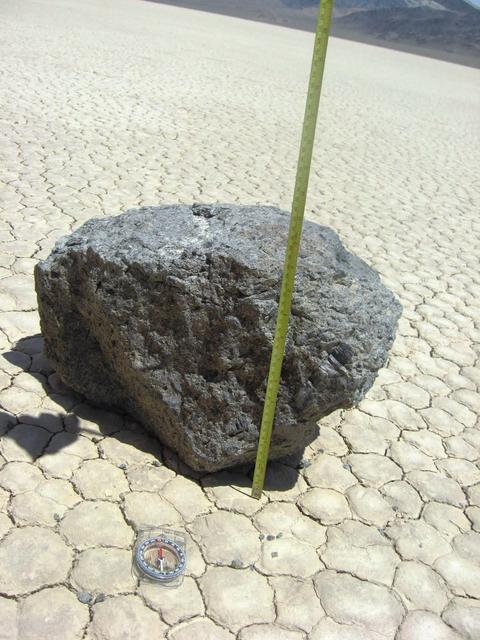
Some of the moving rocks are large. This one is about 10 inches tall. Researchers in the late 1960s and early 1970s documented the movements of one very large rock that they named Karen. (The two men named all the rocks after women.) They estimated that Karen weighed 700 pounds.  Credit: NASA/GSFC/Maggie McAdam  To read a feature story on the Racetrack Playa go to: <a href="http://www.nasa.gov/topics/earth/features/roving-rocks.html" rel="nofollow">www.nasa.gov/topics/earth/features/roving-rocks.html</a>  <b><a href="http://www.nasa.gov/centers/goddard/home/index.html" rel="nofollow">NASA Goddard Space Flight Center</a></b>  is home to the nation's largest organization of combined scientists, engineers and technologists that build spacecraft, instruments and new technology to study the Earth, the sun, our solar system, and the universe.  <b>Follow us on <a href="http://twitter.com/NASA_GoddardPix" rel="nofollow">Twitter</a></b>  <b>Join us on <a href="http://www.facebook.com/pages/Greenbelt-MD/NASA-Goddard/395013845897?ref=tsd" rel="nofollow">Facebook</a><b></b></b>
Mysterious Roving Rocks of Racetrack Playa
Wind-polished rocks
Wind-polished rocks
Sedimentary Rocks in Ladon Vallis
Terby Sedimentary Rocks
Windows to Fresh Rock
Polygon/Cracked Sedimentary Rock
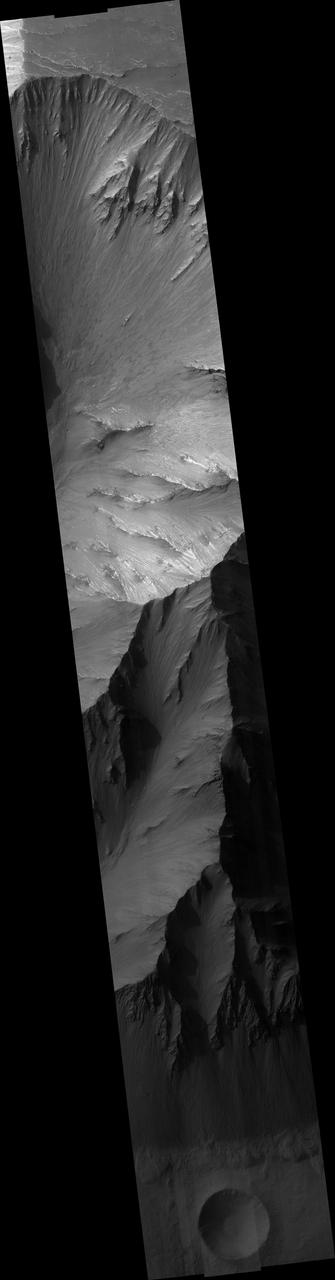
Valles Marineris Wall Rock
Sedimentary Rocks of Aram Chaos
Layered Rock Ahead
Layered Rock Ahead
Salty Martian Rock
Salty Martian Rock
Light-toned Rocks
Light-toned Rocks
Evidence of Ancient Blisters in Rocks
Where the Rocks Reside
First Grinding of a Rock on Mars
West Candor Rocks
West Candor Rocks
The Call of the Dark Rocks
Preparation for Moving a Rock on Mars
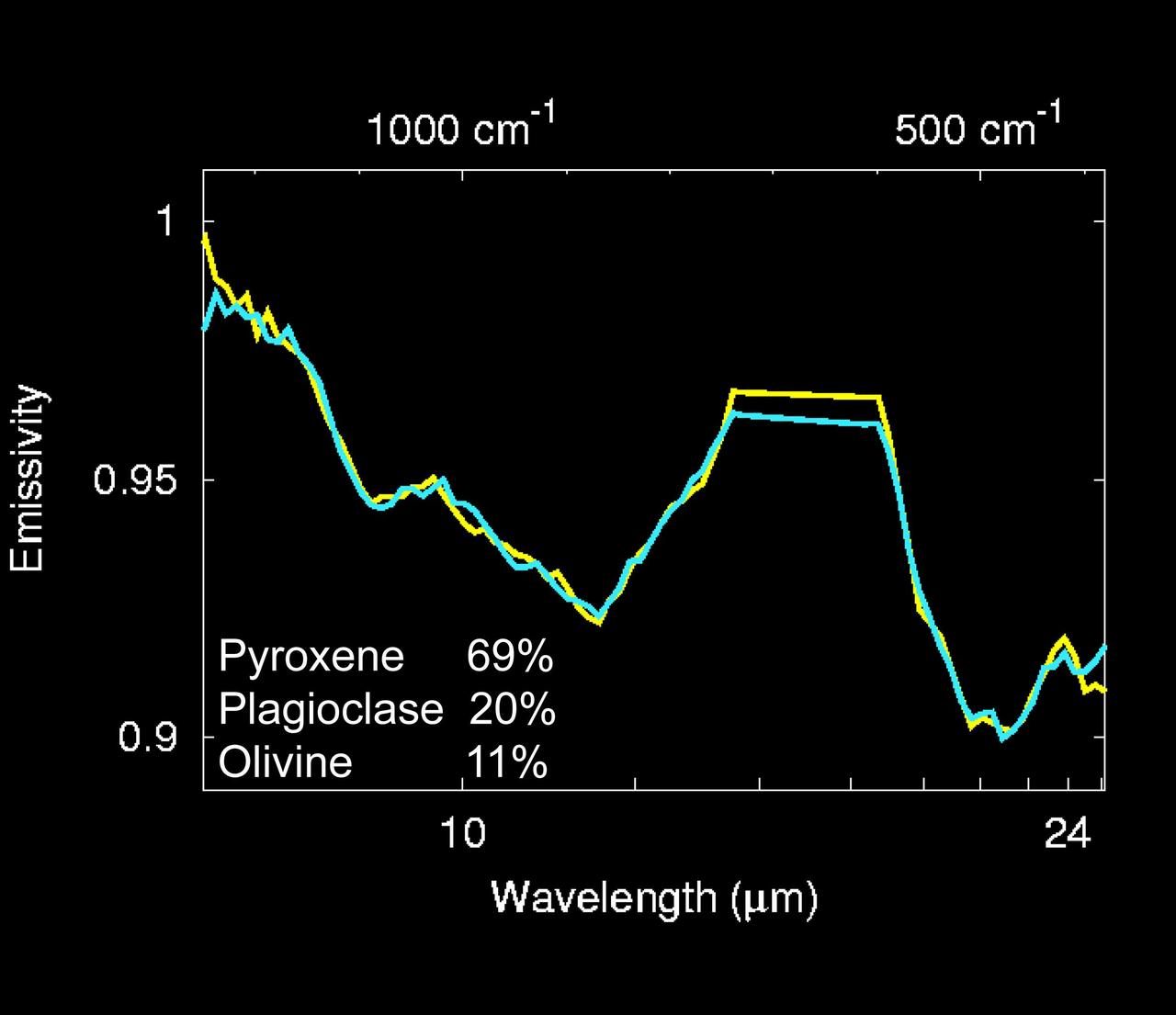
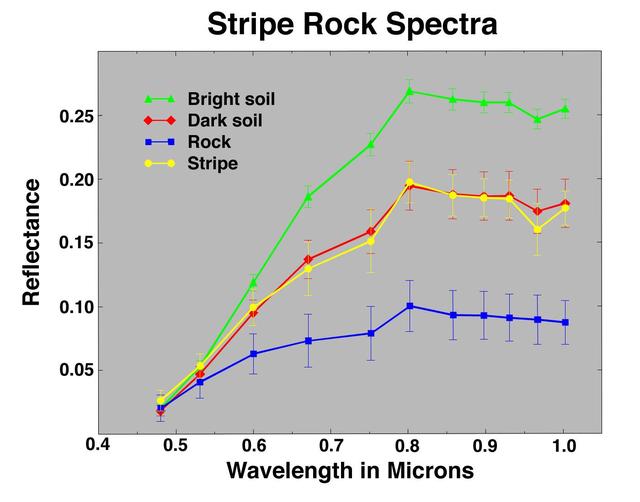
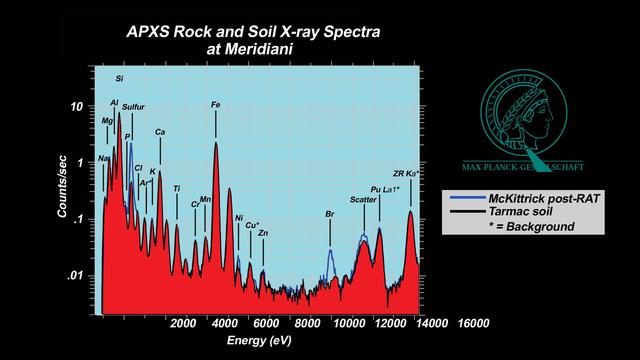
Stripe Rock Spectra
Stripe Rock Spectra
White Rock of Pollack Crater
Ripples in Rocks Point to Water
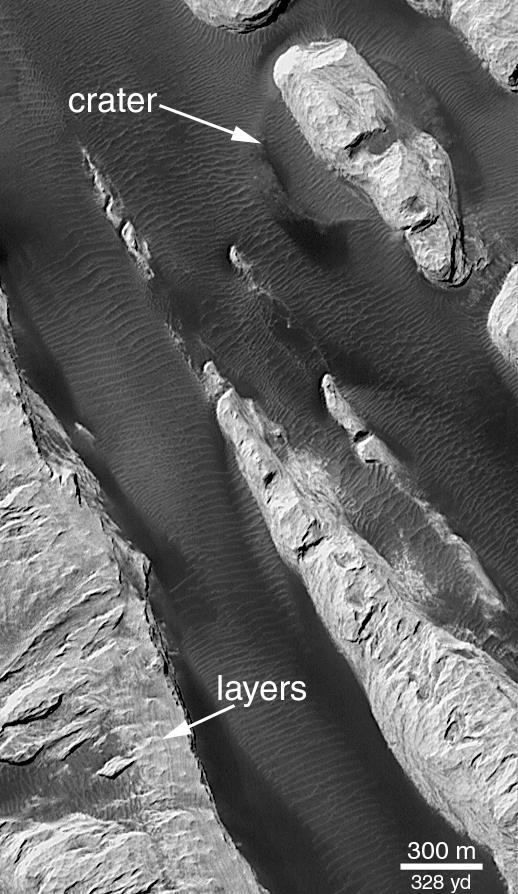
Layered Rocks In Melas
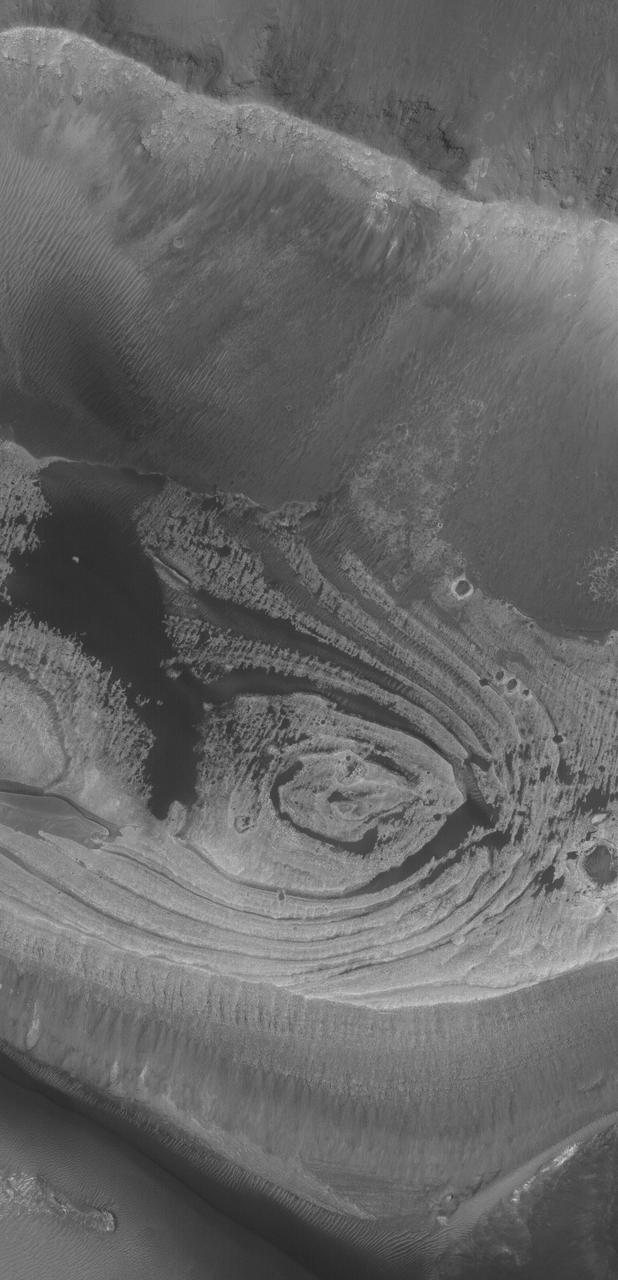
Sedimentary Rock Layers
Sedimentary Rocks in Melas
Melas Sedimentary Rocks
White Rock in False Color
Eroded Sedimentary Rock
Gale Sedimentary Rocks
East Candor Rocks
East Candor Rocks
Aram Chaos Rocks
Aram Chaos Rocks
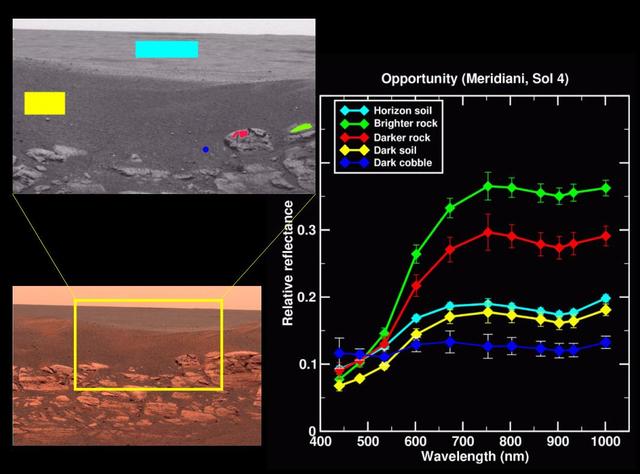
Rock Outcrop Spectra
Remnant Layered Rocks
Ganges Sedimentary Rocks
Ladon Sedimentary Rocks
Sedimentary Rock Remnants
Pollack Crater White Rock
Dirty Rotten Rocks
Dirty Rotten Rocks
Sedimentary Rocks of Aram Chaos
Broken Sedimentary Rocks
Light-toned Rock
Light-toned Rock
Meridiani Sedimentary Rocks
Sedimentary Rocks in Ganges
Texture of Rock at Jibsheet
Terby Layered Rocks
Terby Layered Rocks
Mars Rocks Continue to Fascinate
Spirit Guidepost, Plymouth Rock
Schiaparelli Sedimentary Rocks
Recipe for Bounce Rock
Band of Bright Rock
Band of Bright Rock
Dipping Rock Layers
Dipping Rock Layers
Step 3: Grind the Rock
Peace Rock Viewed by Spirit
White Rock of Pollack Crater
Layered Rocks in Crater
Broken, Tilted Rocks
Three Classes of Martian rocks
Layered Rocks in Columbia Hills
Layered Rocks of Melas
Layered Rock in West Candor
Rock Avalanche in Robinson Crater
The Call of the Dark Rocks
Layered Rock in Candor Chasma
Rocks: Windows to History of Mars
Sedimentary Rock in Candor
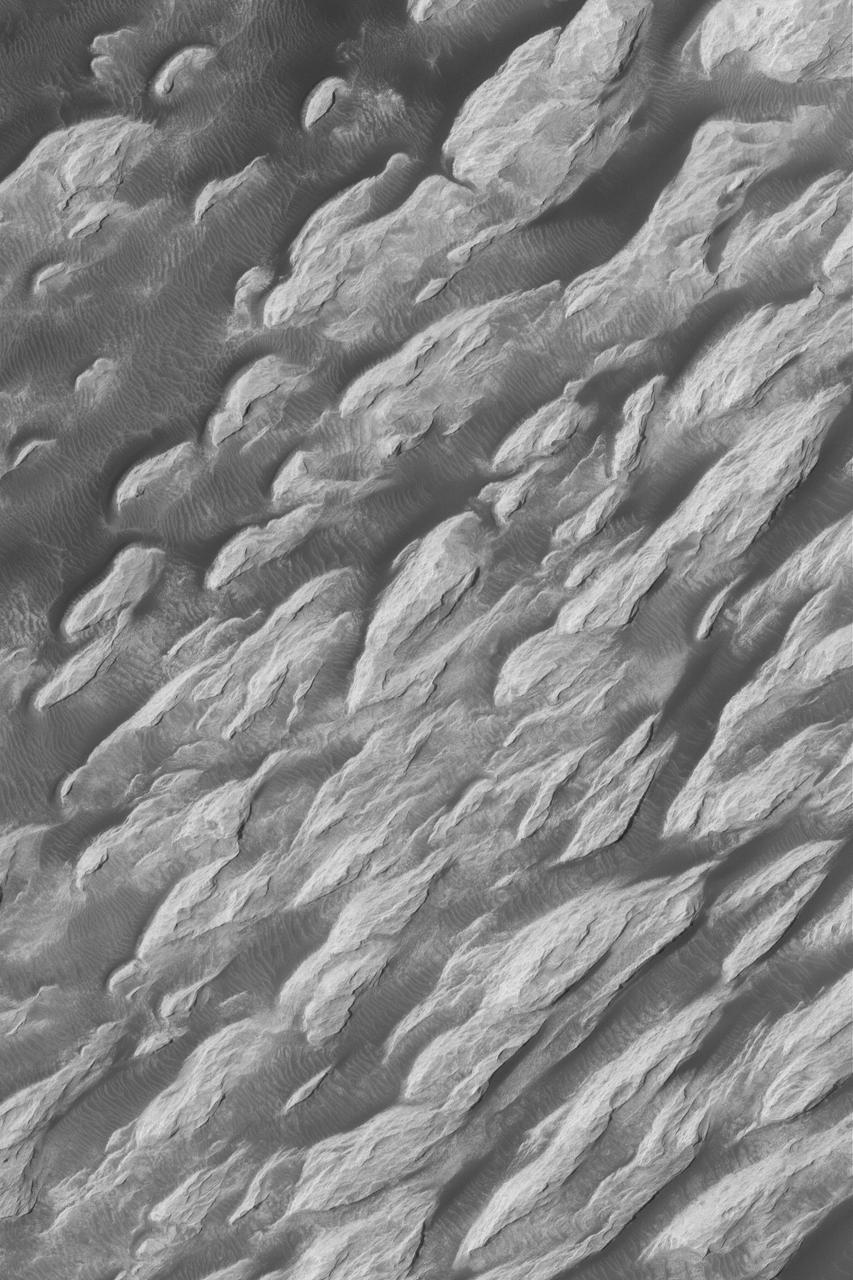
Wind-sculpted Rocks
Wind-sculpted Rocks
Bounce Rock Dimple
Bounce Rock Dimple
Bounce Rock Close-Up
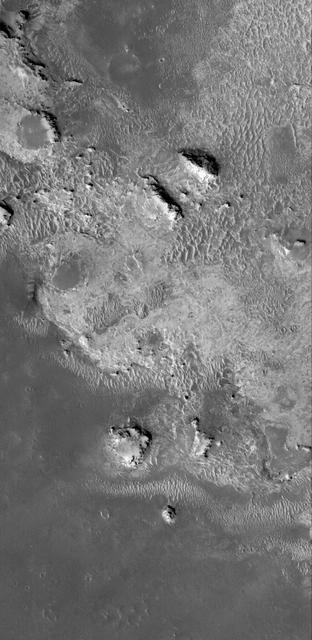
Rock Outcrops near Hellas