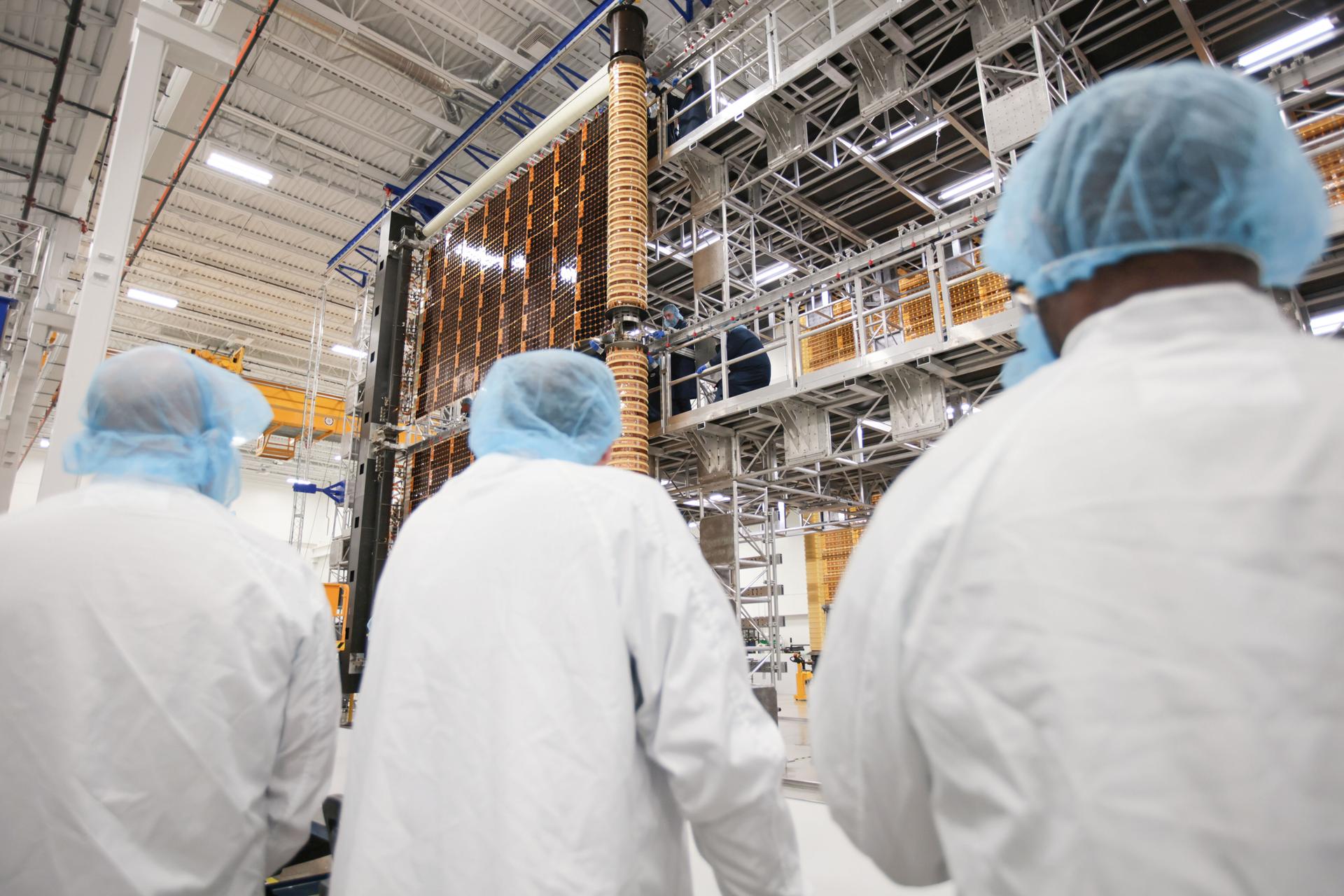
NASA and industry team members observe a Roll-Out Solar Array (ROSA) wing for Gateway as it deploys inside Redwire’s high-bay facility in Goleta, California, during a test on June 30, 2025. The image shows the solar array partially extended as technicians monitor the process from the facility floor and elevated work platforms. Credit: Lanteris Space Systems
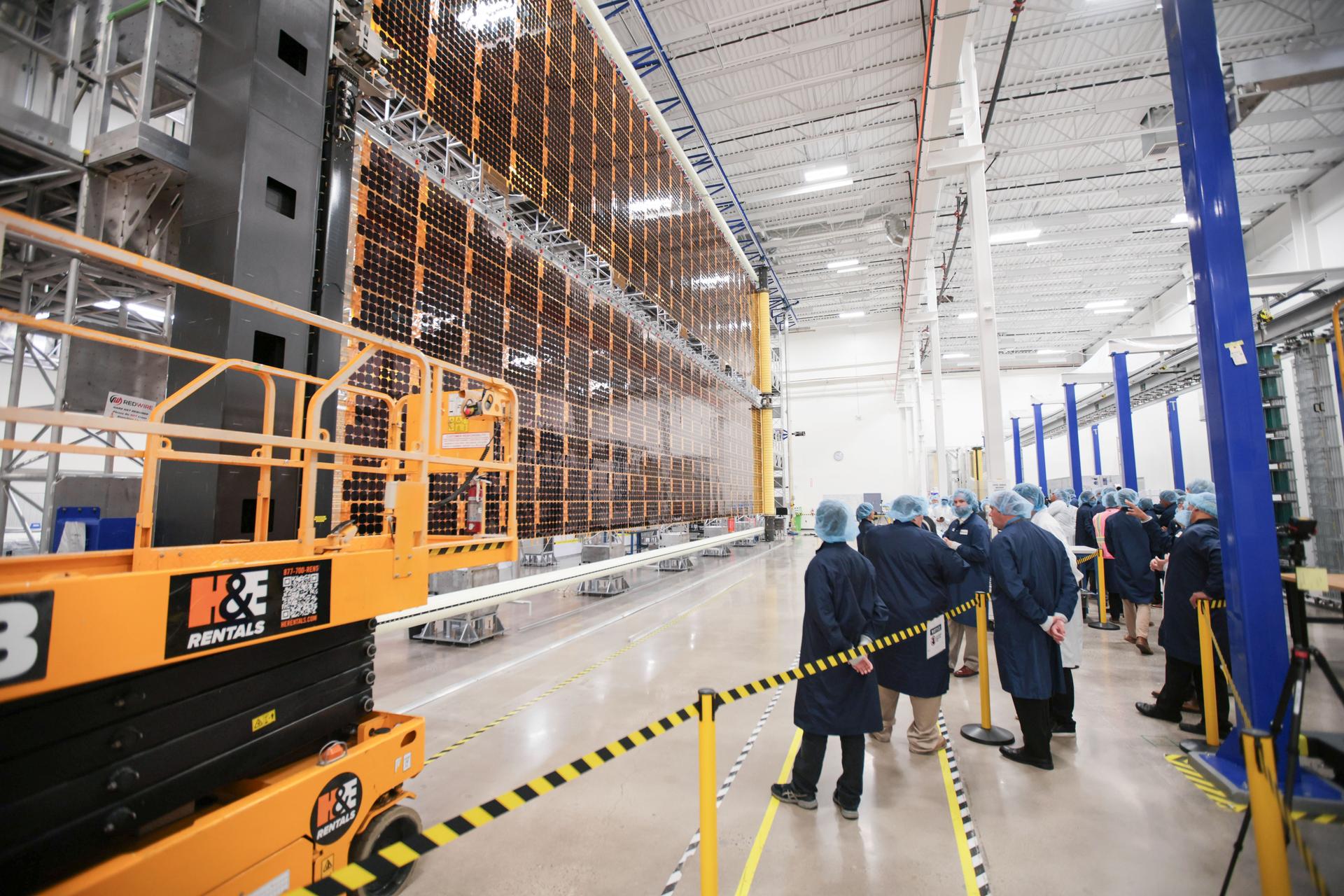
A Roll-Out Solar Array (ROSA) wing for Gateway stands fully deployed inside Redwire’s high-bay facility in Goleta, California, following a successful deployment test on June 30, 2025. The image shows the extended solar array structure as NASA’s Gateway Program leadership and representatives from industry and international partners observe the test from the facility floor. Credit: NASA
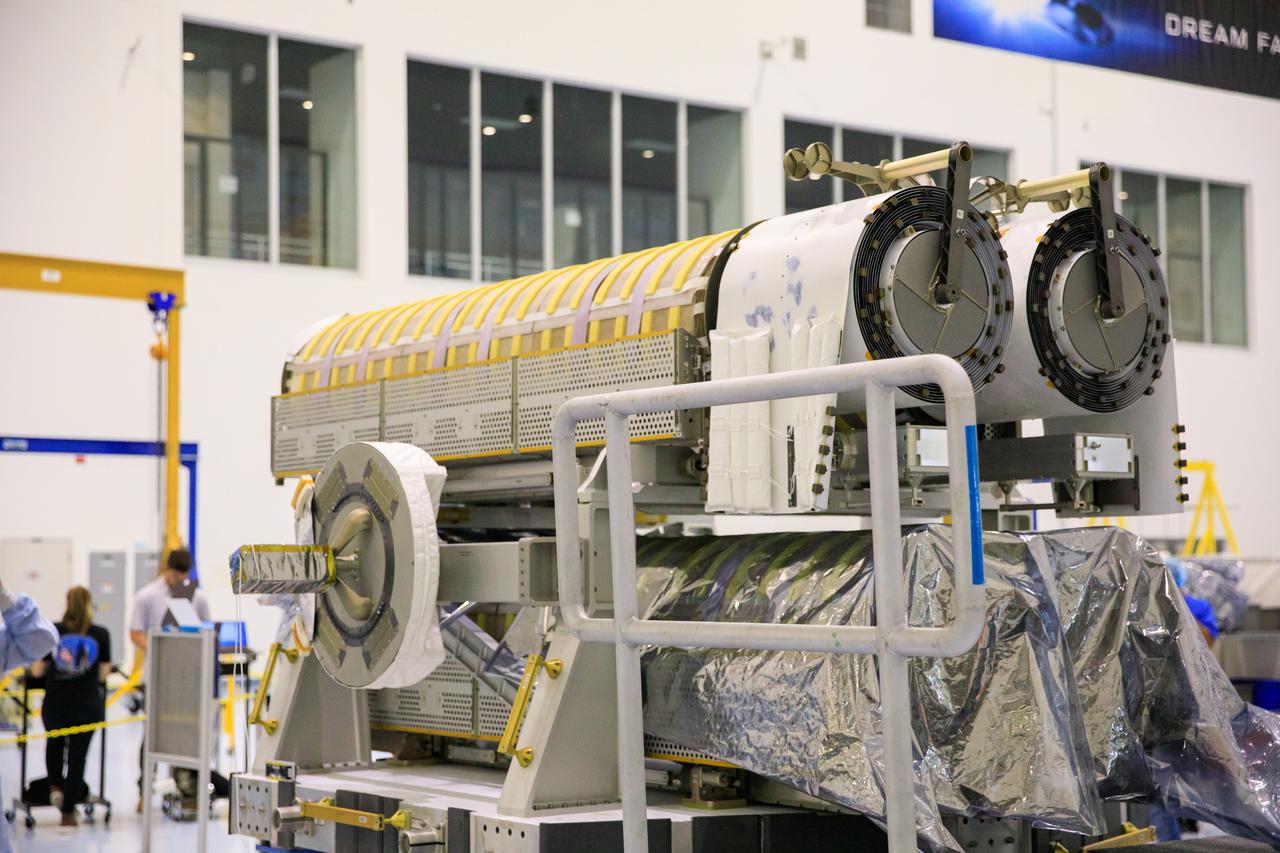
Inside the Space Station Processing Facility high bay at NASA's Kennedy Space Center in Florida, a set of International Space Station Roll Out Solar Arrays (iROSA) have been secured onto a platform on March 23, 2023. They are being prepared for delivery to the space station aboard SpaceX’s Dragon cargo carrier on the company’s 28th commercial resupply services (CRS-28) mission to the space station. iROSA is a new type of solar panel that rolls open in space and is more compact than current rigid panel designs.
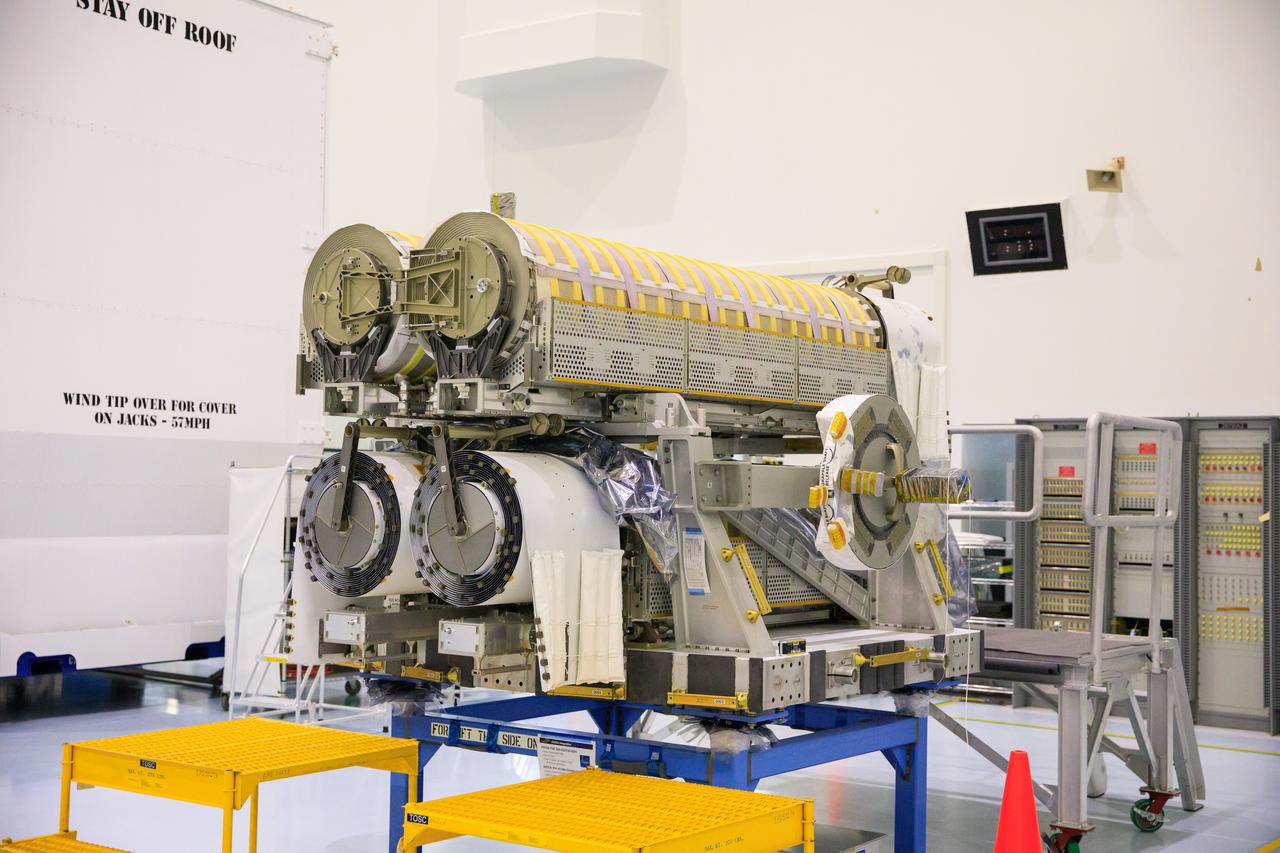
Inside the Space Station Processing Facility high bay at NASA's Kennedy Space Center in Florida, a set of International Space Station Roll Out Solar Arrays (iROSA) have been secured onto a platform on March 23, 2023. They are being prepared for delivery to the space station aboard SpaceX’s Dragon cargo carrier on the company’s 28th commercial resupply services (CRS-28) mission to the space station. iROSA is a new type of solar panel that rolls open in space and is more compact than current rigid panel designs.
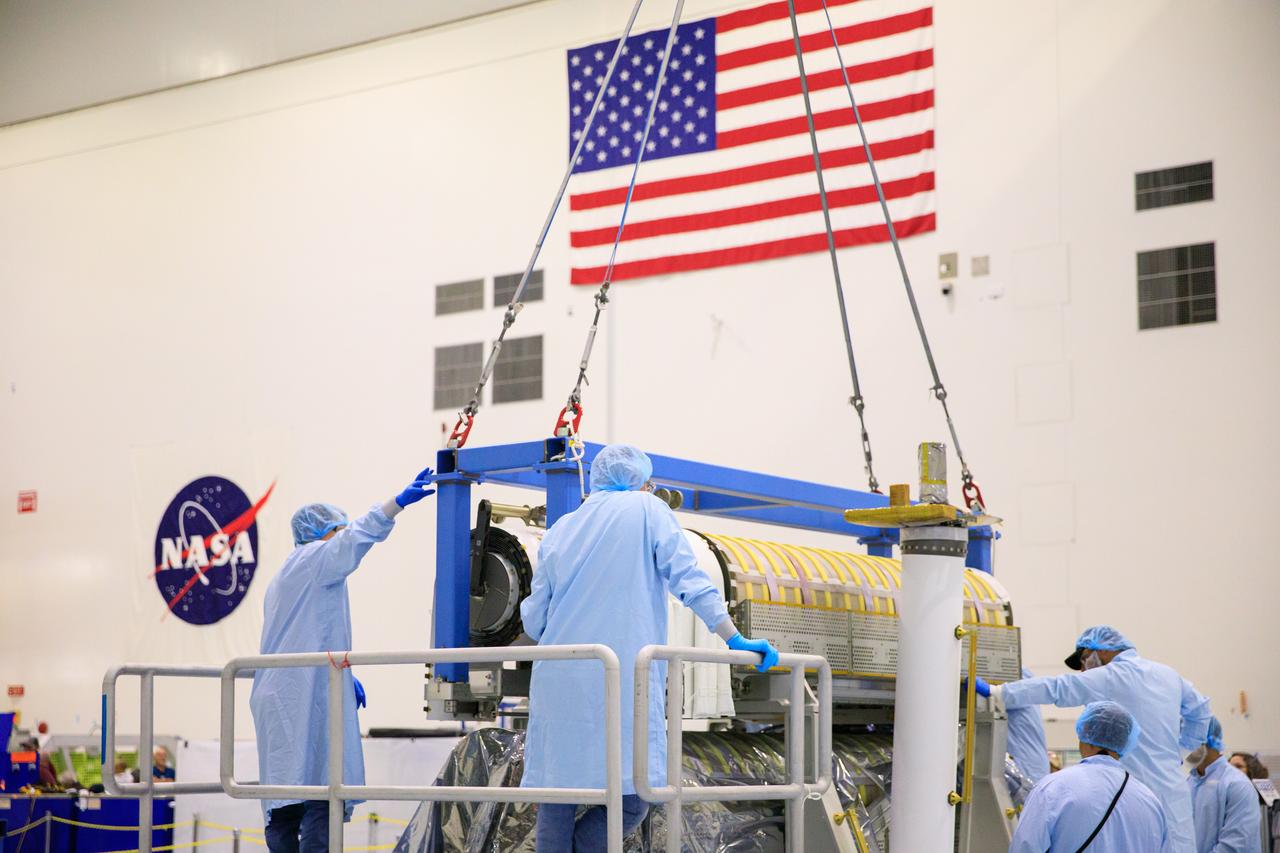
Inside the Space Station Processing Facility high bay at NASA's Kennedy Space Center in Florida, technicians assist as a crane is used to lower a set of International Space Station Roll Out Solar Arrays (iROSA) onto a platform on March 23, 2023. They are being prepared for delivery to the space station aboard SpaceX’s Dragon cargo carrier on the company’s 28th commercial resupply services (CRS-28) mission to the space station. iROSA is a new type of solar panel that rolls open in space and is more compact than current rigid panel designs.

Inside the Space Station Processing Facility high bay at NASA's Kennedy Space Center in Florida, technicians assist as a crane is used to lift and stack the third set of two International Space Station Roll Out Solar Arrays (iROSA) onto a platform on March 23, 2023. They are being prepared for delivery to the space station aboard SpaceX’s Dragon cargo carrier on the company’s 28th commercial resupply services (CRS-28) mission to the space station. iROSA is a new type of solar panel that rolls open in space and is more compact than current rigid panel designs.
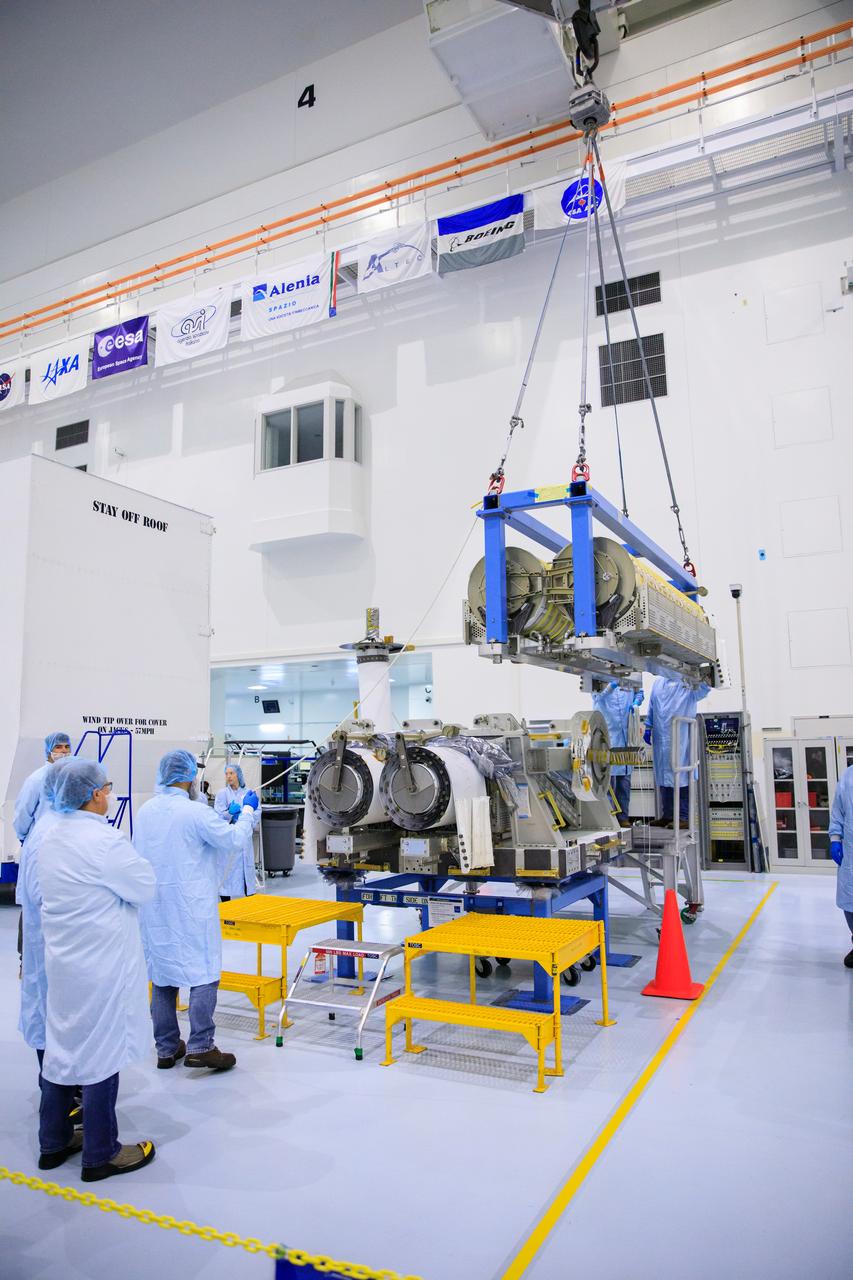
Inside the Space Station Processing Facility high bay at NASA's Kennedy Space Center in Florida, technicians monitor the progress as a crane is used to lift and stack the third set of two International Space Station Roll Out Solar Arrays (iROSA) onto a platform on March 23, 2023. They are being prepared for delivery to the space station aboard SpaceX’s Dragon cargo carrier on the company’s 28th commercial resupply services (CRS-28) mission to the space station. iROSA is a new type of solar panel that rolls open in space and is more compact than current rigid panel designs.
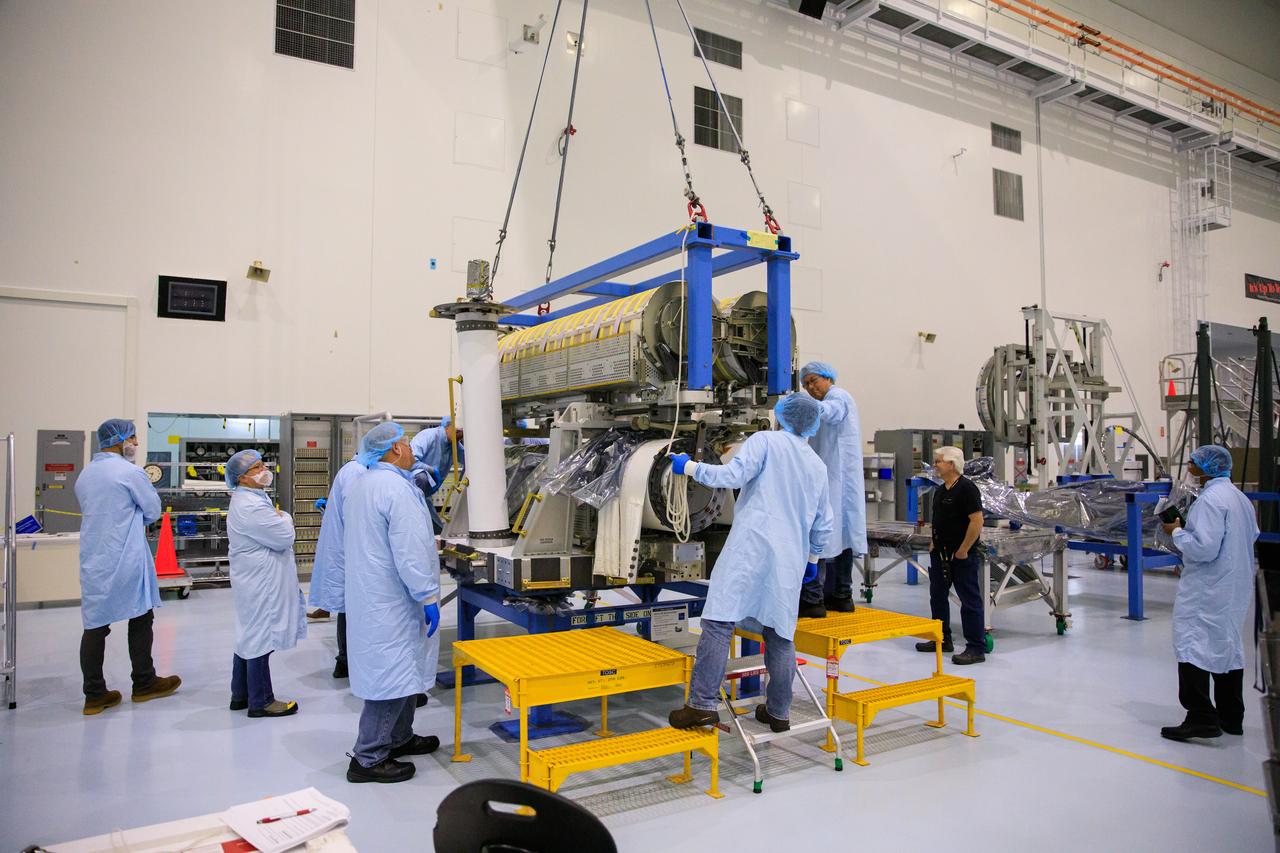
Inside the Space Station Processing Facility high bay at NASA's Kennedy Space Center in Florida, technicians assist as a crane is used to lower a set of International Space Station Roll Out Solar Arrays (iROSA) onto a platform on March 23, 2023. They are being prepared for delivery to the space station aboard SpaceX’s Dragon cargo carrier on the company’s 28th commercial resupply services (CRS-28) mission to the space station. iROSA is a new type of solar panel that rolls open in space and is more compact than current rigid panel designs.
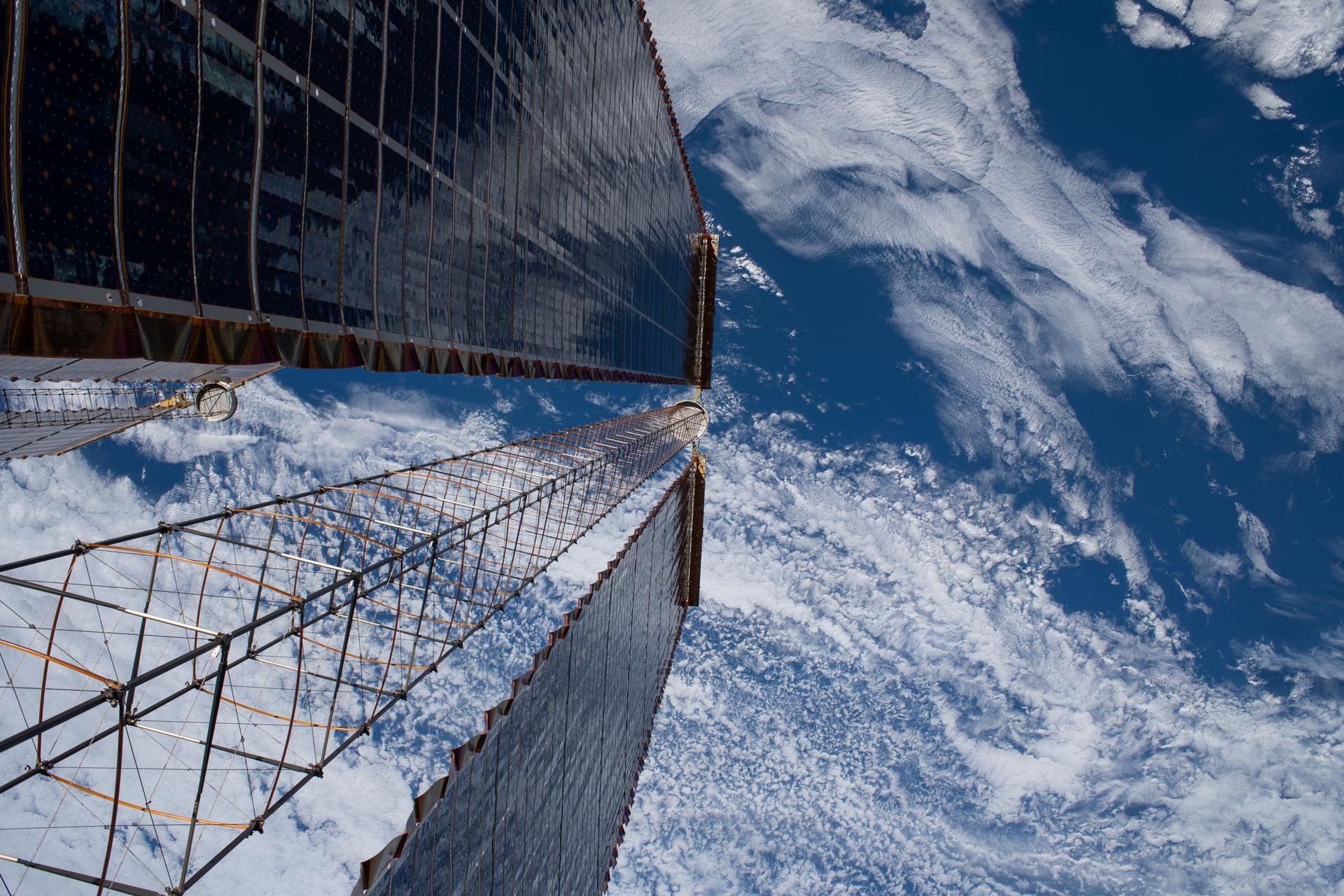
iss074e0403068 (March 18, 2026) -- A view peering down a pair of the International Space Station's roll-out solar arrays, photographed during a spacewalk conducted on March 18, 2026 to build and install a modification kit ahead of future solar array installation on the 2A power channel of the space station. Credit: NASA/Jessica Meir
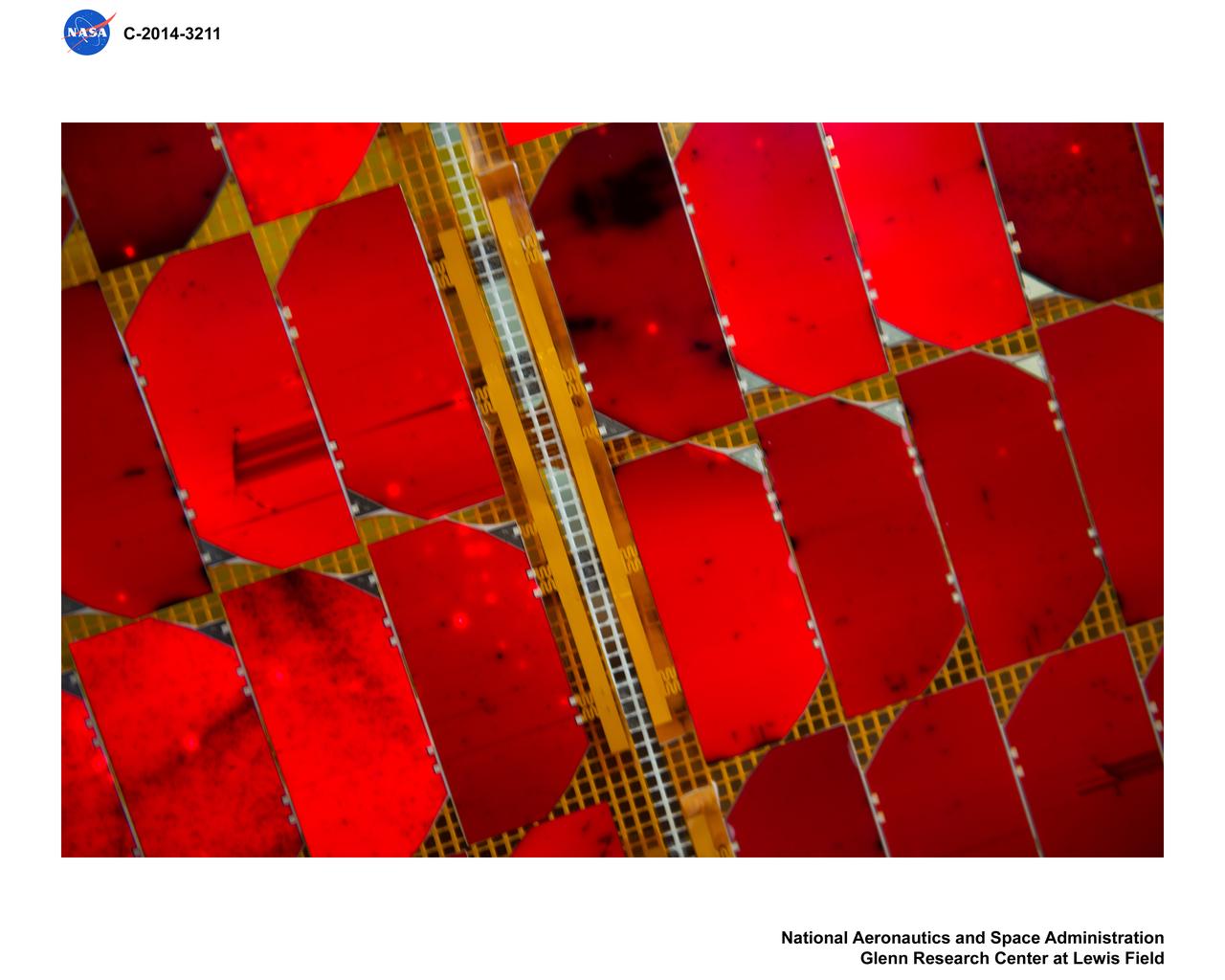
Roll out Solar Array
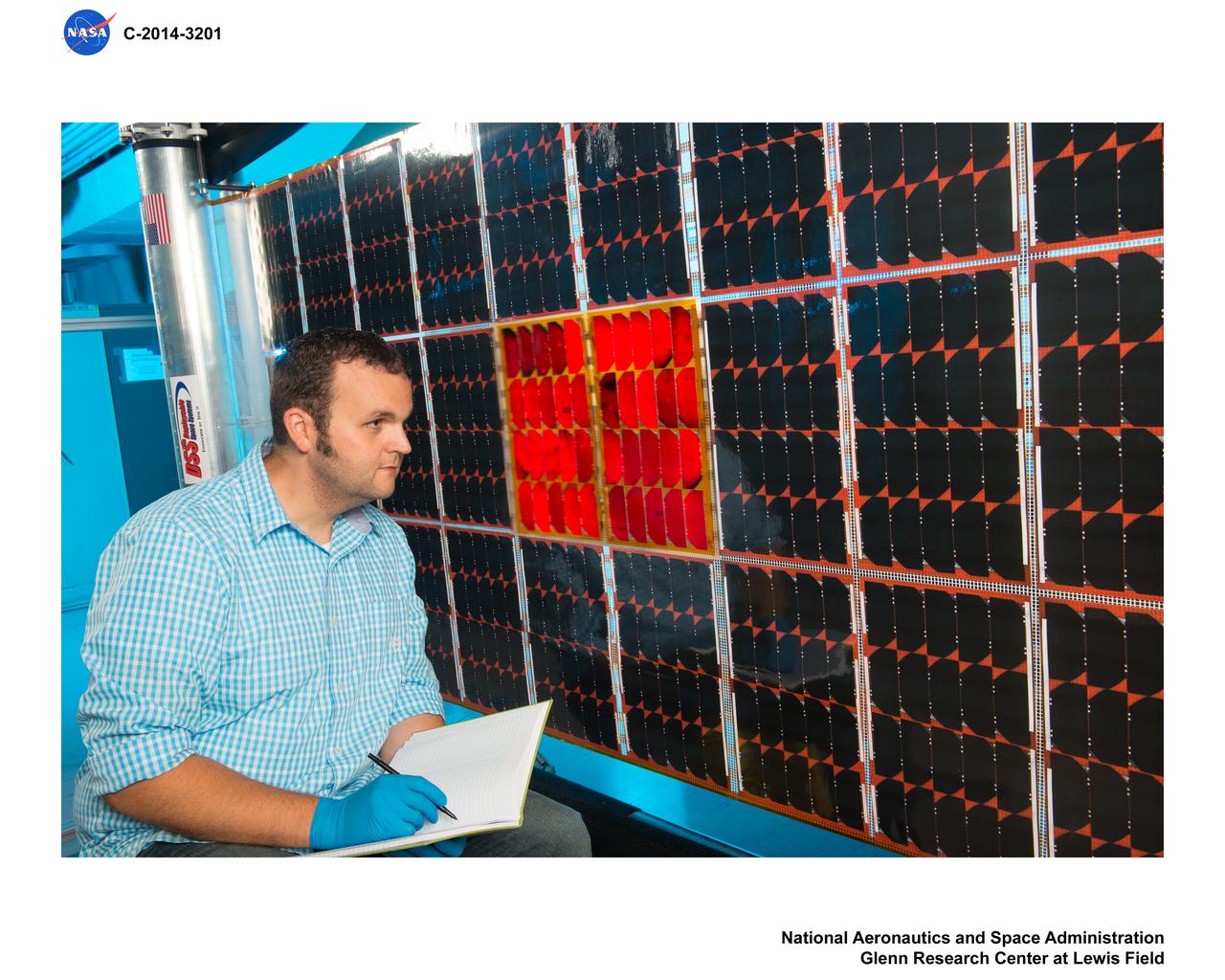
Roll out Solar Array
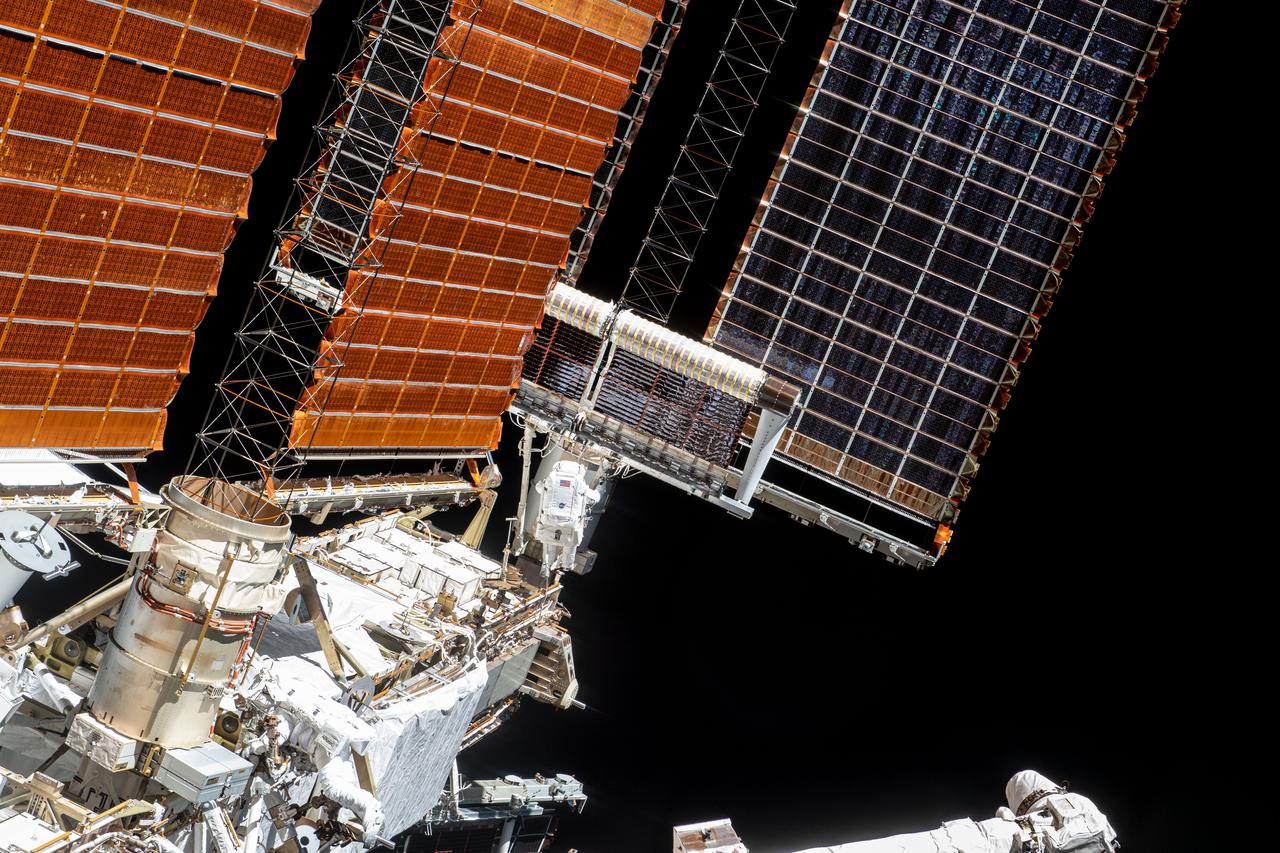
iss065e145092 (June 25, 2021) --- Spacewalker Thomas Pesquet of ESA (European Space Agency) is pictured at the base of the second roll out solar array as it began to roll out on the International Space Station's Port-6 truss structure
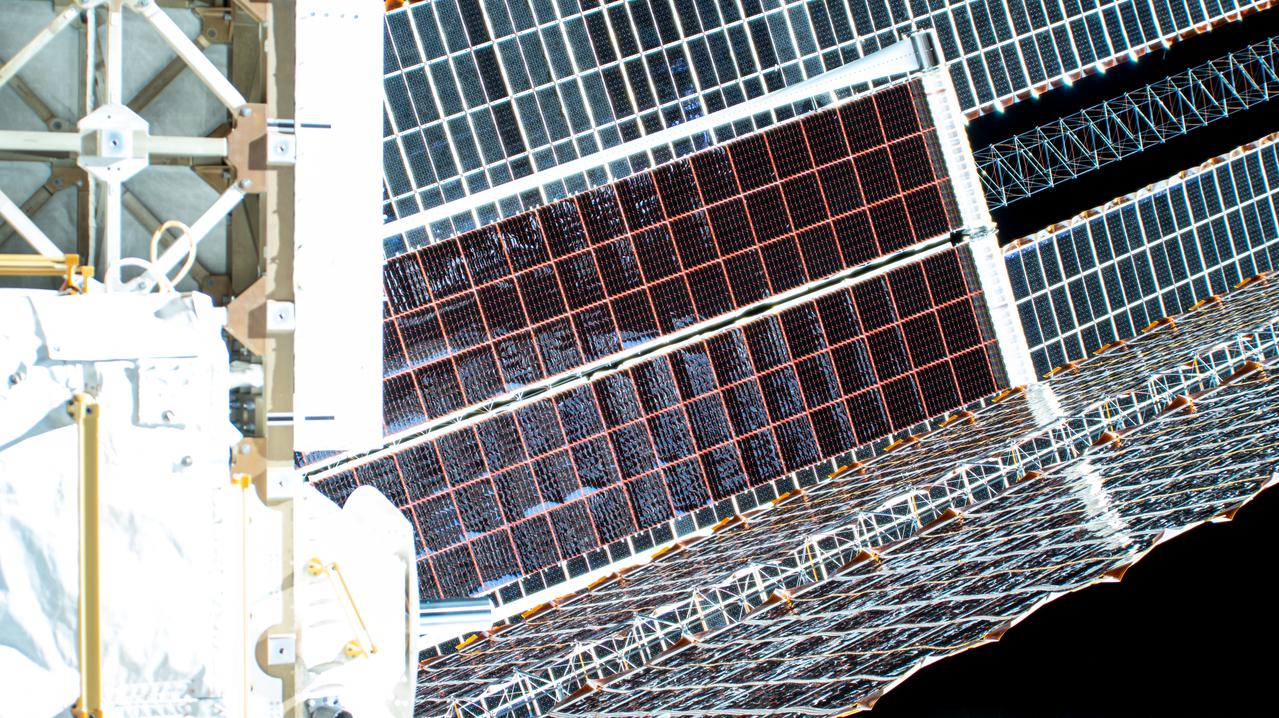
iss065e144542 (June 25, 2021) --- The second ISS Roll-Out Solar Array (iROSA) is pictured after completing its roll out on the International Space Station's Port-6 truss structure.
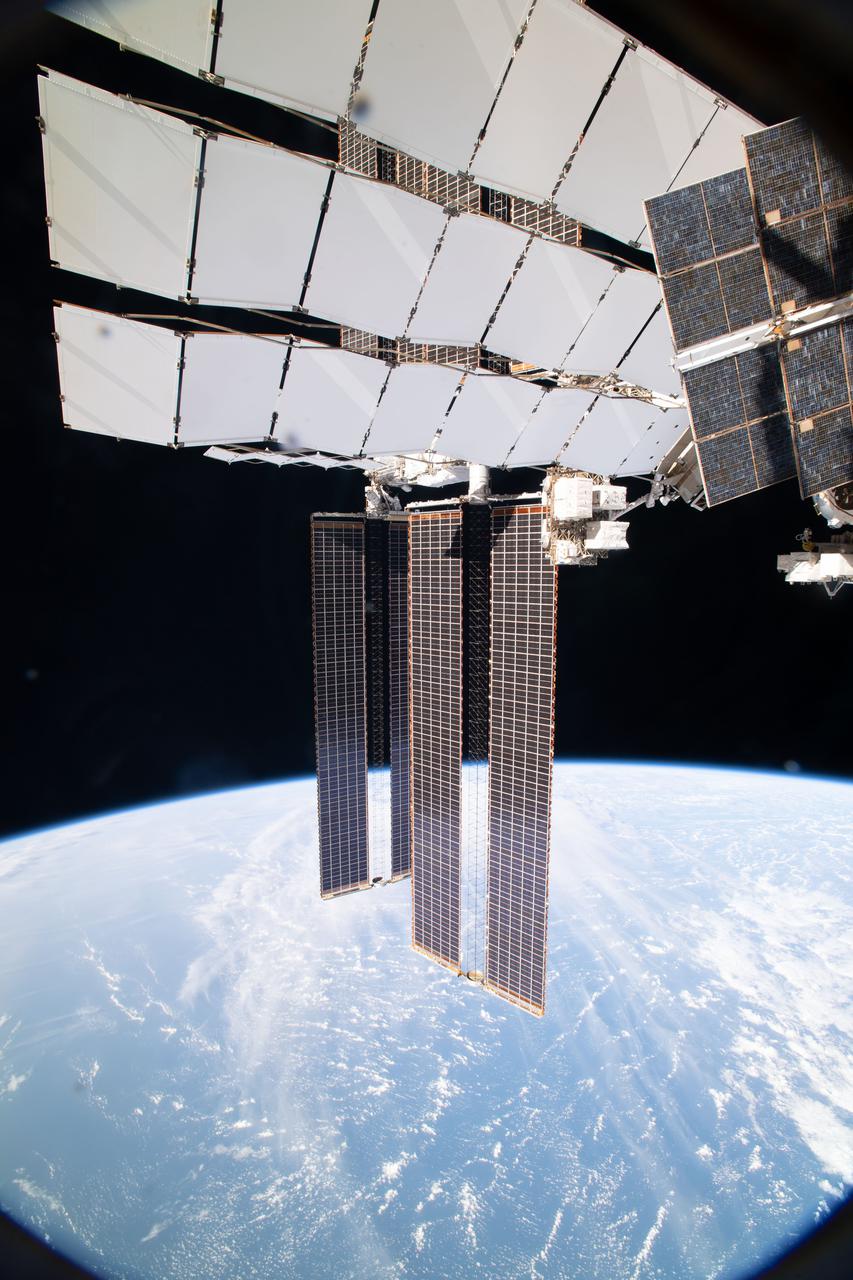
iss065e124482 (June 20, 2021) --- Dwarfed by the International Space Station's main solar arrays, spacewalkers Shane Kimbrough and Thomas Pesquet work to complete the installation of a roll out solar array on the P-6 truss structure.
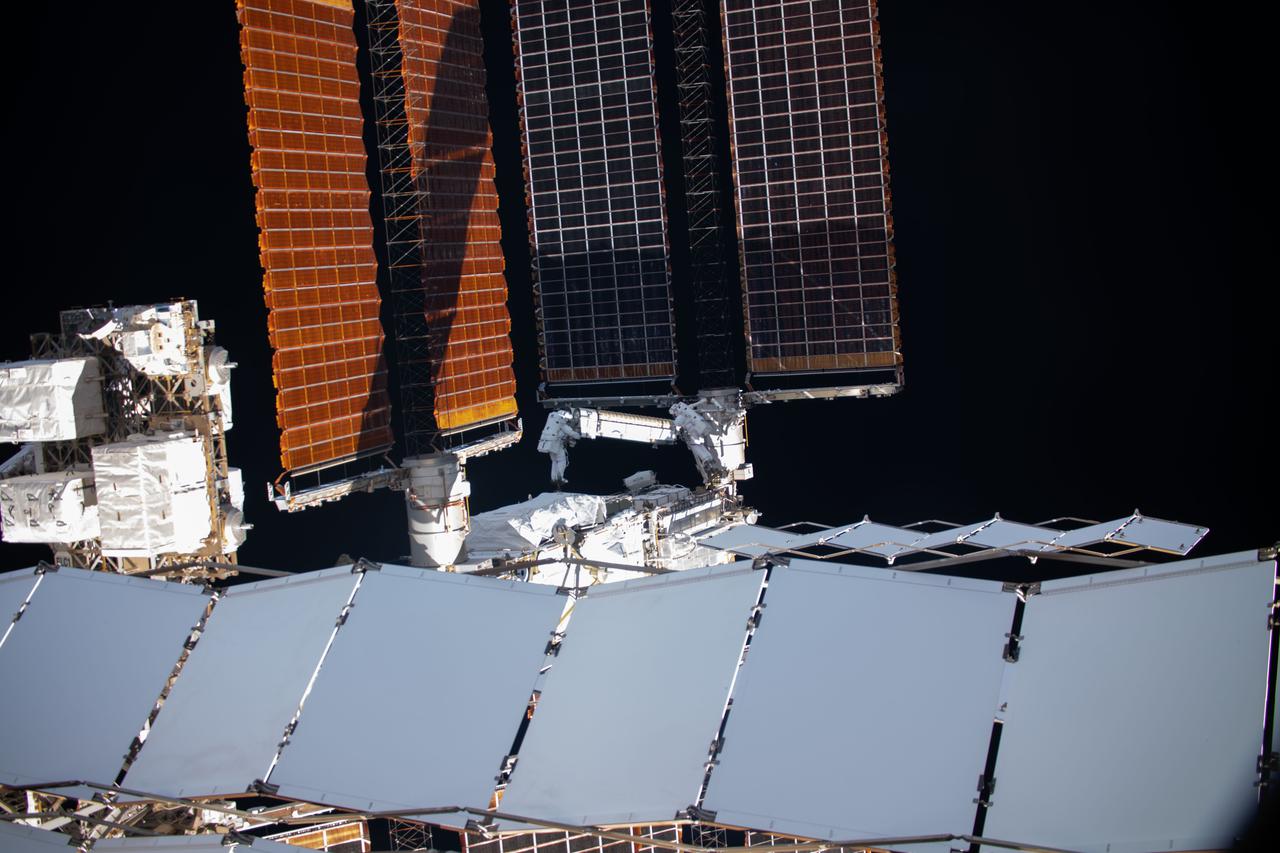
iss065e121336 (June 16, 2021) --- Dwarfed by the International Space Station's main solar arrays, spacewalkers Shane Kimbrough and Thomas Pesquet begin work to install a roll out solar array on the P-6 truss structure.
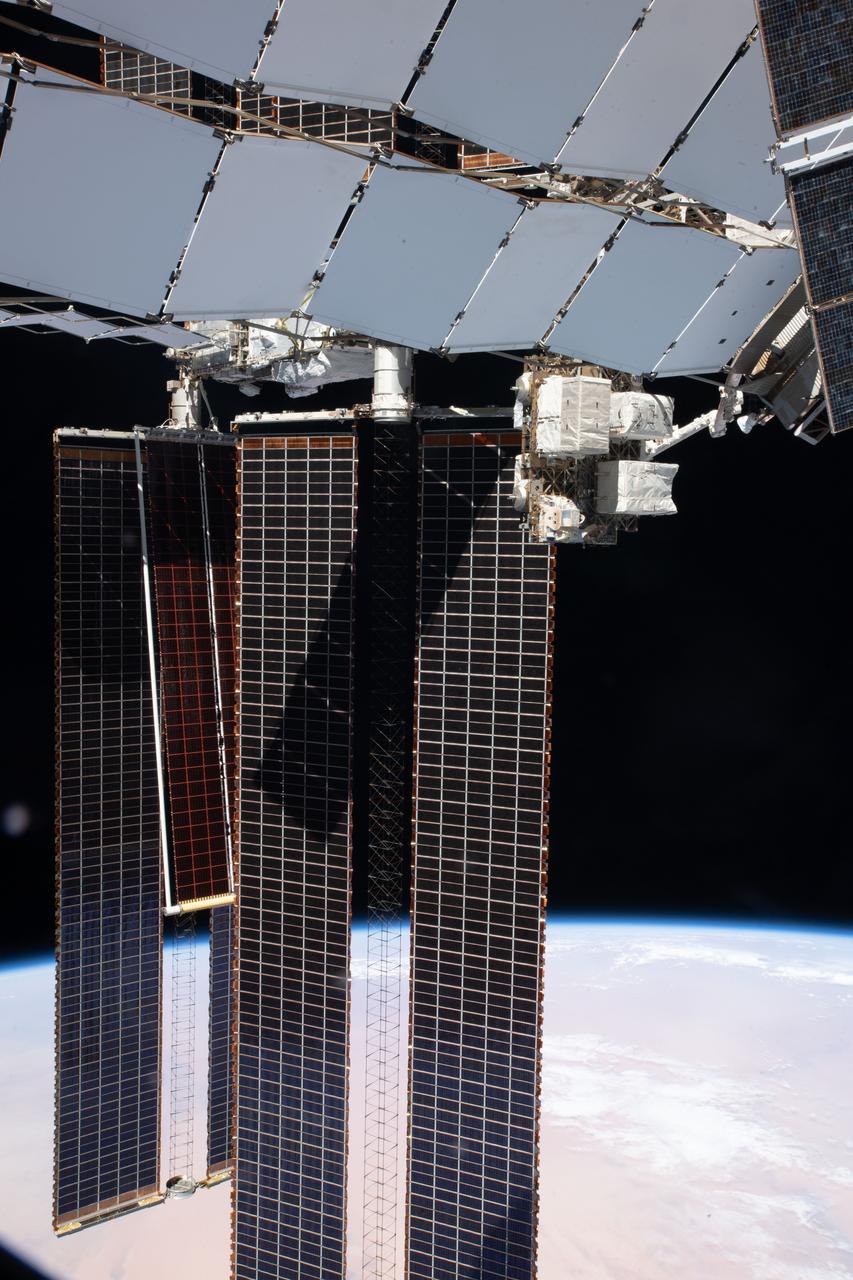
iss065e125924 (June 20, 2021) --- The new ISS Roll-Out Solar Array (iROSA) is deployed covering a portion of the main solar array on the International Space Station's P-6 truss structure. The iROSA and the main solar array are both connected to the truss segment's 2B power channel.
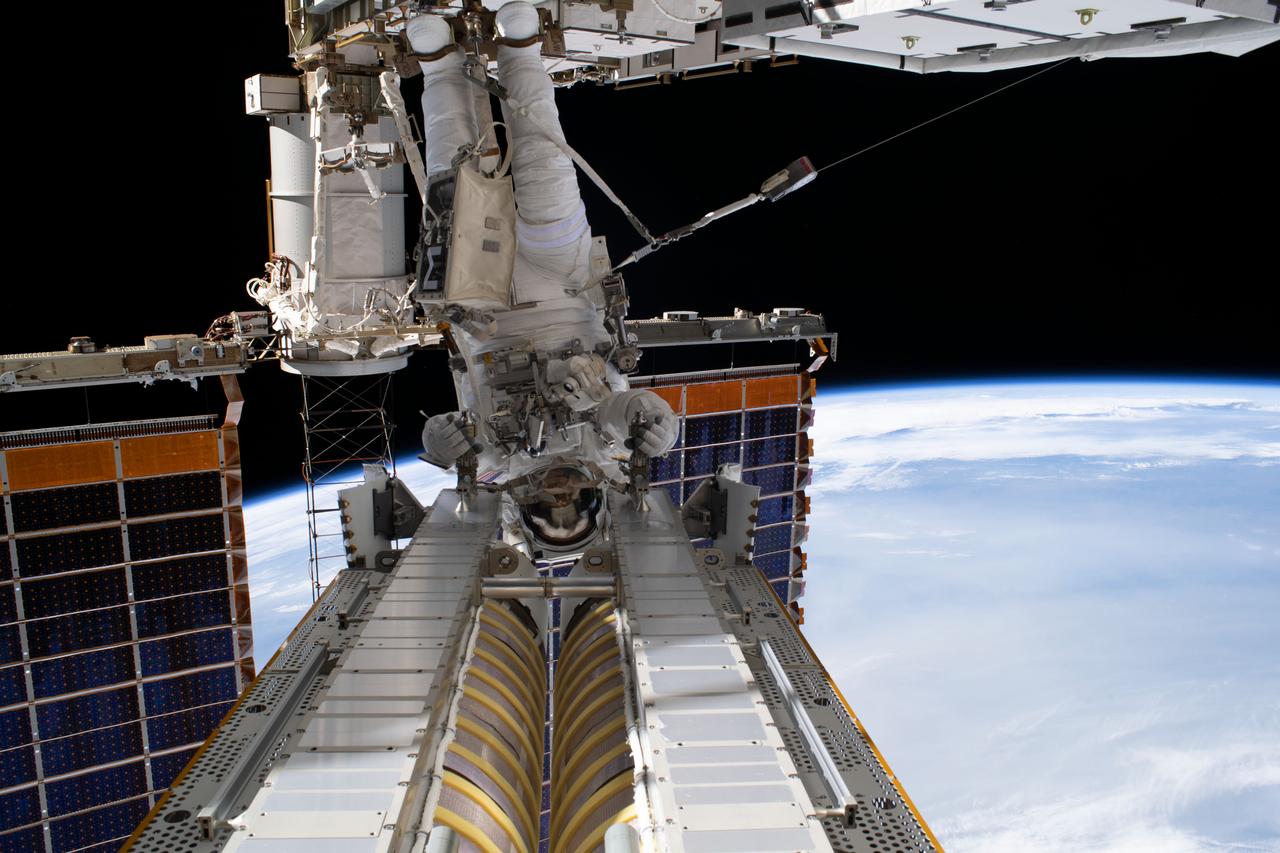
iss069e020618 (June 15, 2023) --- NASA astronaut Stephen Bowen is pictured during a spacewalk to install and deploy a roll-out solar array on the International Space Station. Bowen is attached to the Canadarm2 robotic arm during the removal of the roll-out solar array from a pallet before maneuvering it to the installation point on the Starboard-6 truss structure.
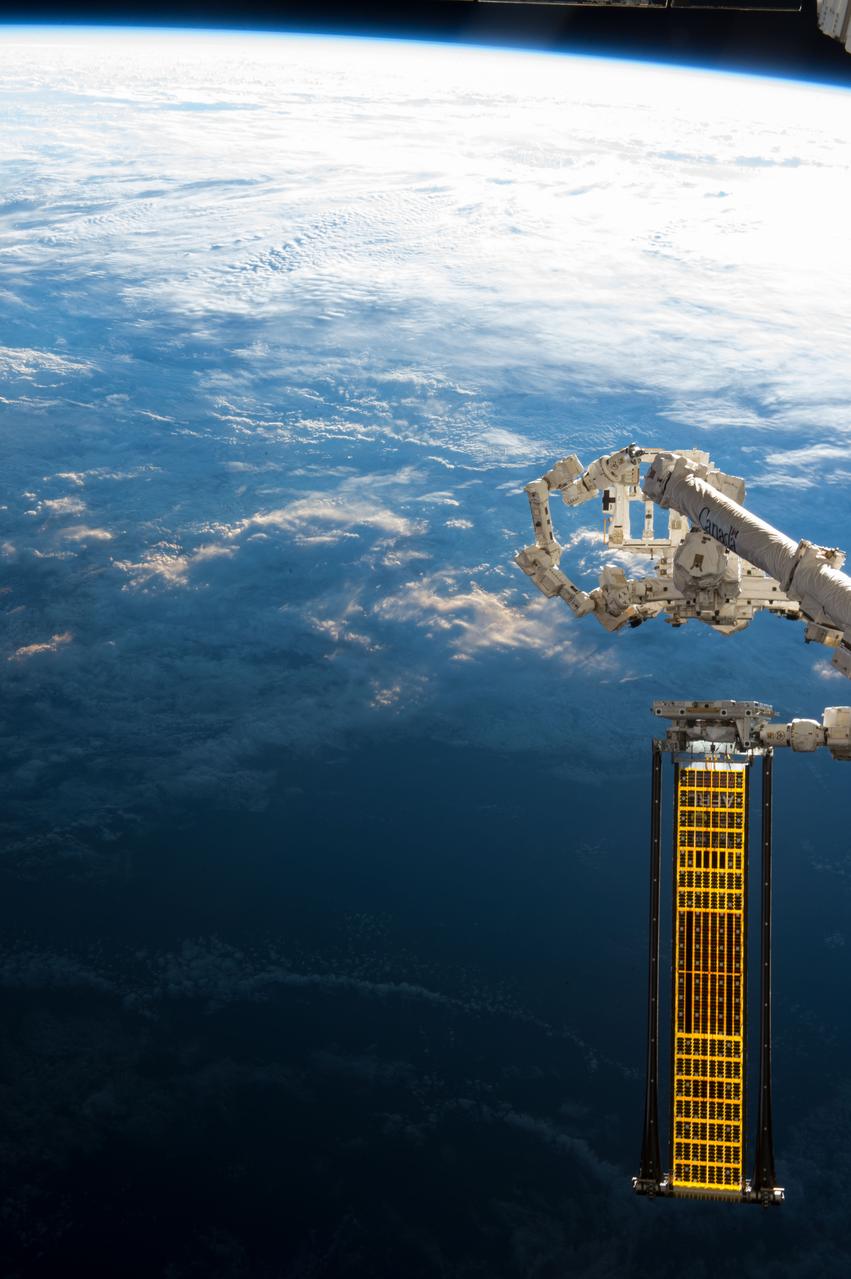
iss052e004379 (6/18/2017) --- The Roll-Out Solar Array (ROSA) is a new type of solar panel that rolls open in space like a party favor and is more compact than current rigid panel designs. The ROSA investigation tests deployment and retraction, shape changes when the Earth blocks the sun, and other physical challenges to determine the array’s strength and durability. ROSA has the potential to replace solar arrays on future satellites, making them more compact and lighter weight. Satellite radio and television, weather forecasting, GPS and other services used on Earth would all benefit from high-performance solar arrays.
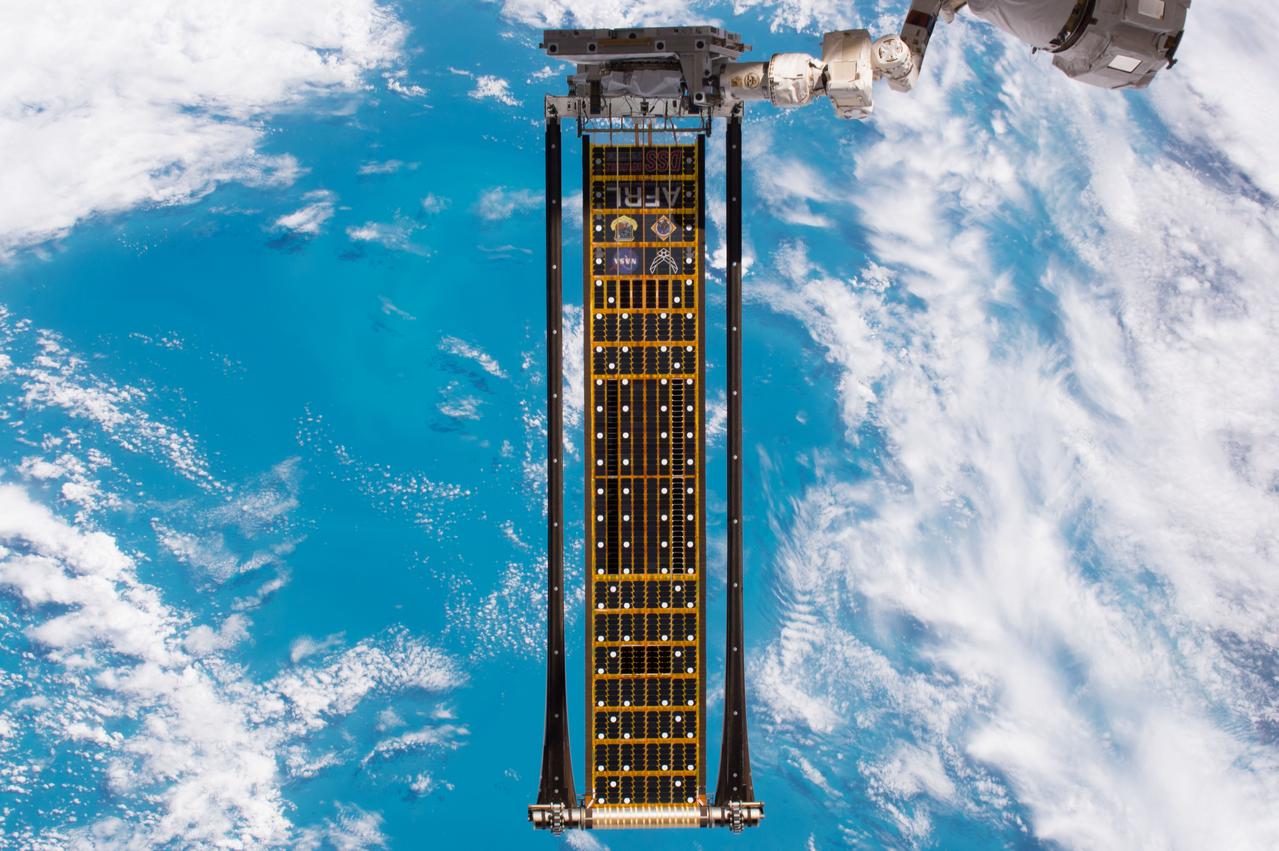
iss052e002871 (6/18/2017) --- The Roll-Out Solar Array (ROSA) is a new type of solar panel that rolls open in space like a party favor and is more compact than current rigid panel designs. The ROSA investigation tests deployment and retraction, shape changes when the Earth blocks the sun, and other physical challenges to determine the array’s strength and durability. ROSA has the potential to replace solar arrays on future satellites, making them more compact and lighter weight. Satellite radio and television, weather forecasting, GPS and other services used on Earth would all benefit from high-performance solar arrays.
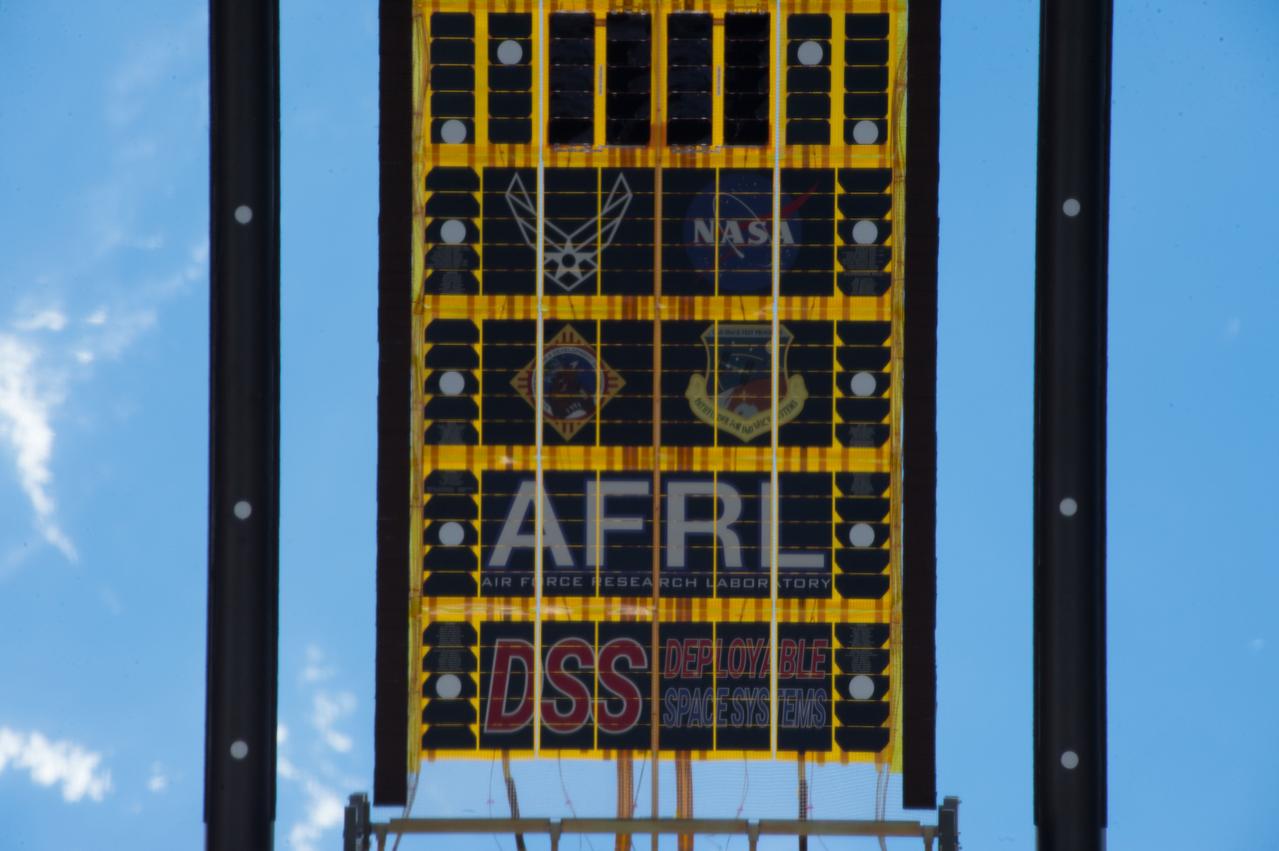
iss052e002857 (6/18/2017) --- The Roll-Out Solar Array (ROSA) is a new type of solar panel that rolls open in space like a party favor and is more compact than current rigid panel designs. The ROSA investigation tests deployment and retraction, shape changes when the Earth blocks the sun, and other physical challenges to determine the array’s strength and durability. ROSA has the potential to replace solar arrays on future satellites, making them more compact and lighter weight. Satellite radio and television, weather forecasting, GPS and other services used on Earth would all benefit from high-performance solar arrays.
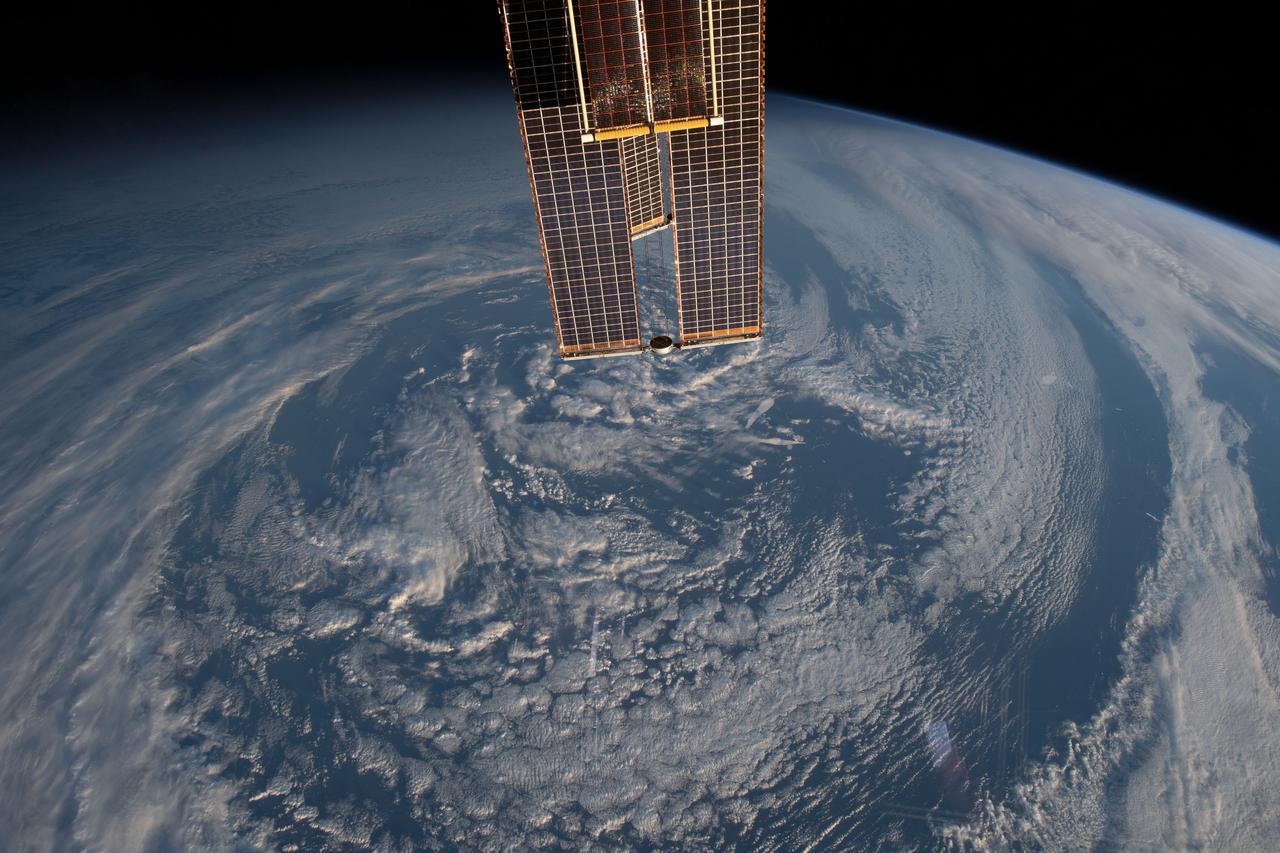
iss069e027347 (July 2, 2023) --- The International Space Station was orbiting 270 miles above the south Atlantic Ocean about 350 miles north of South Georgia Island when this photograph was taken. In the top foreground, portions of the station's main solar array and roll-out solar array are also pictured.
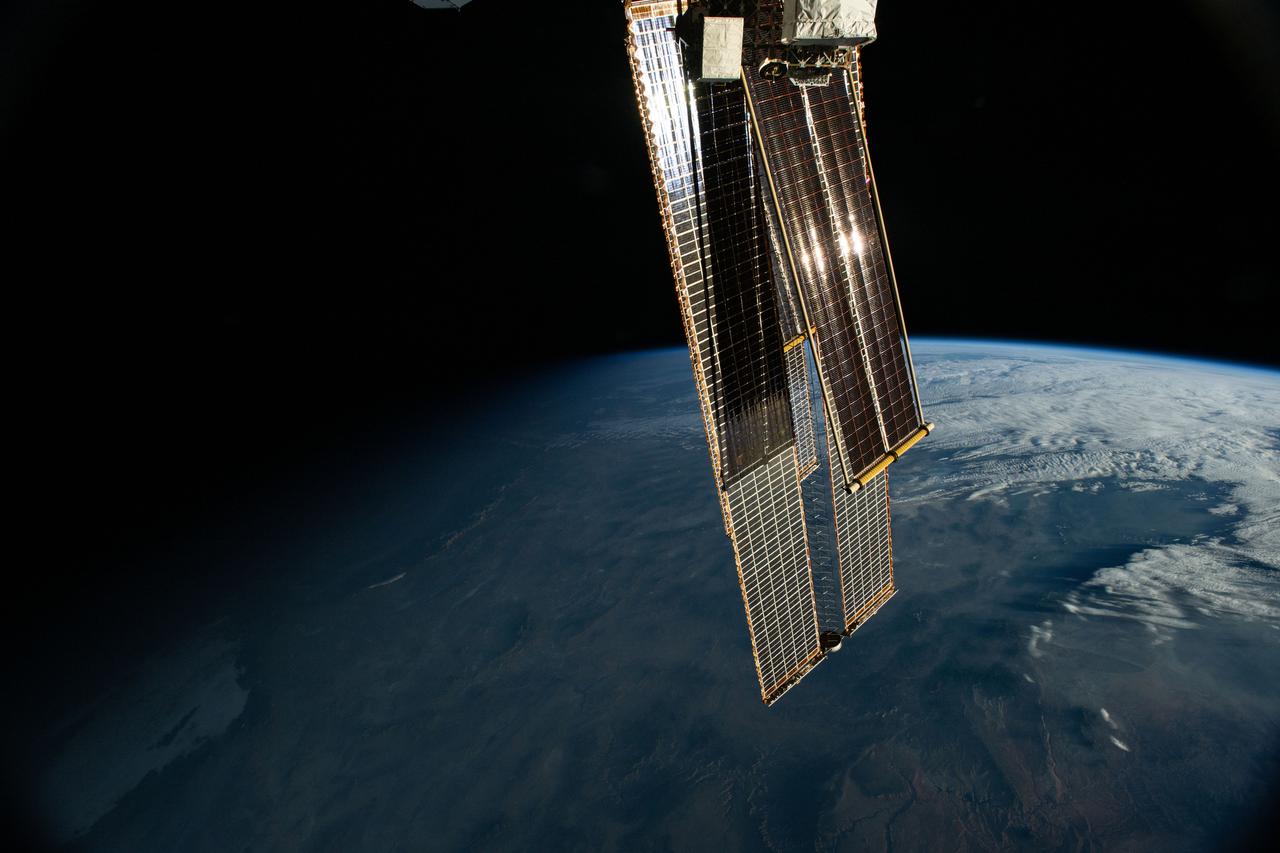
iss071e196615 (June 17, 2024) --- The first rays of an orbital sunrise reflect off the International Space Station's roll-out solar arrays that overshadow and augment the orbital outpost's main solar arrays. The space station was soaring 260 miles above Arizona northeast of Phoenix at the time of this photograph.
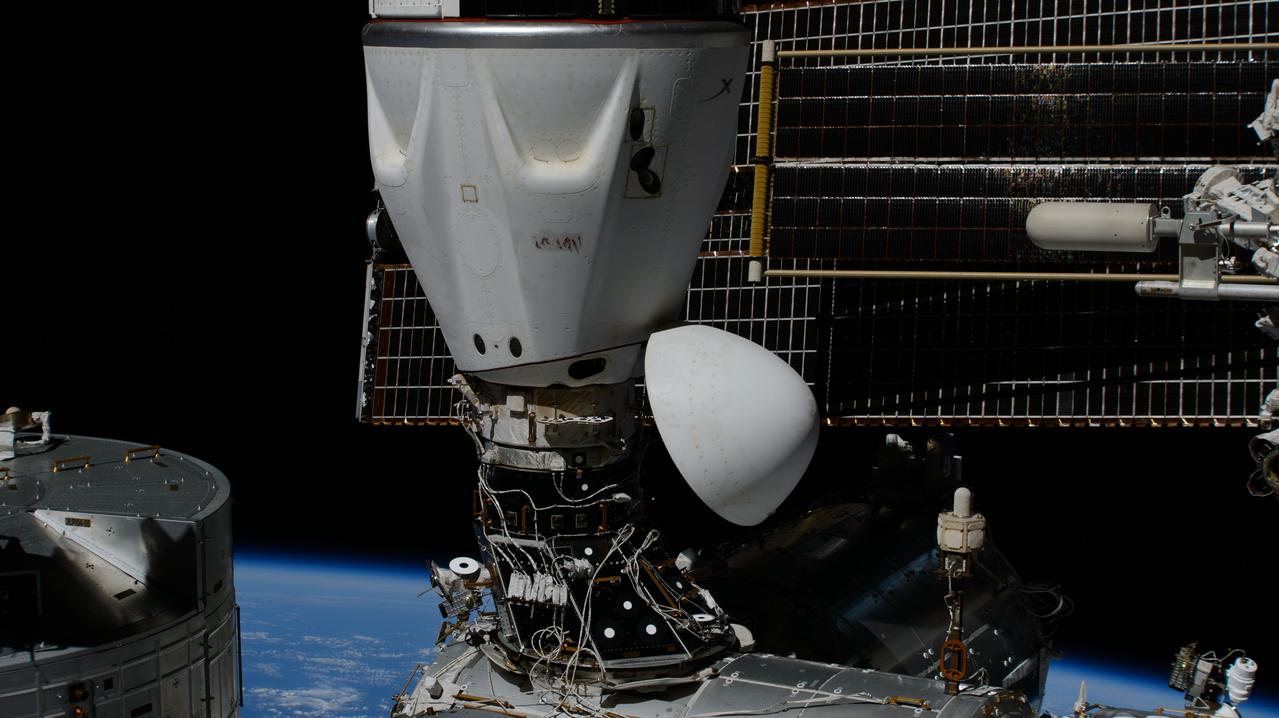
iss071e581990 (Aug. 31, 2024) --- The SpaceX Dragon Endeavour spacecraft is pictured docked to the International Space Station's space-facing port on the Harmony module. Behind Dragon is a pair of main solar arrays fronted by a smaller roll-out solar array augmenting the orbital outpost's power generation system.
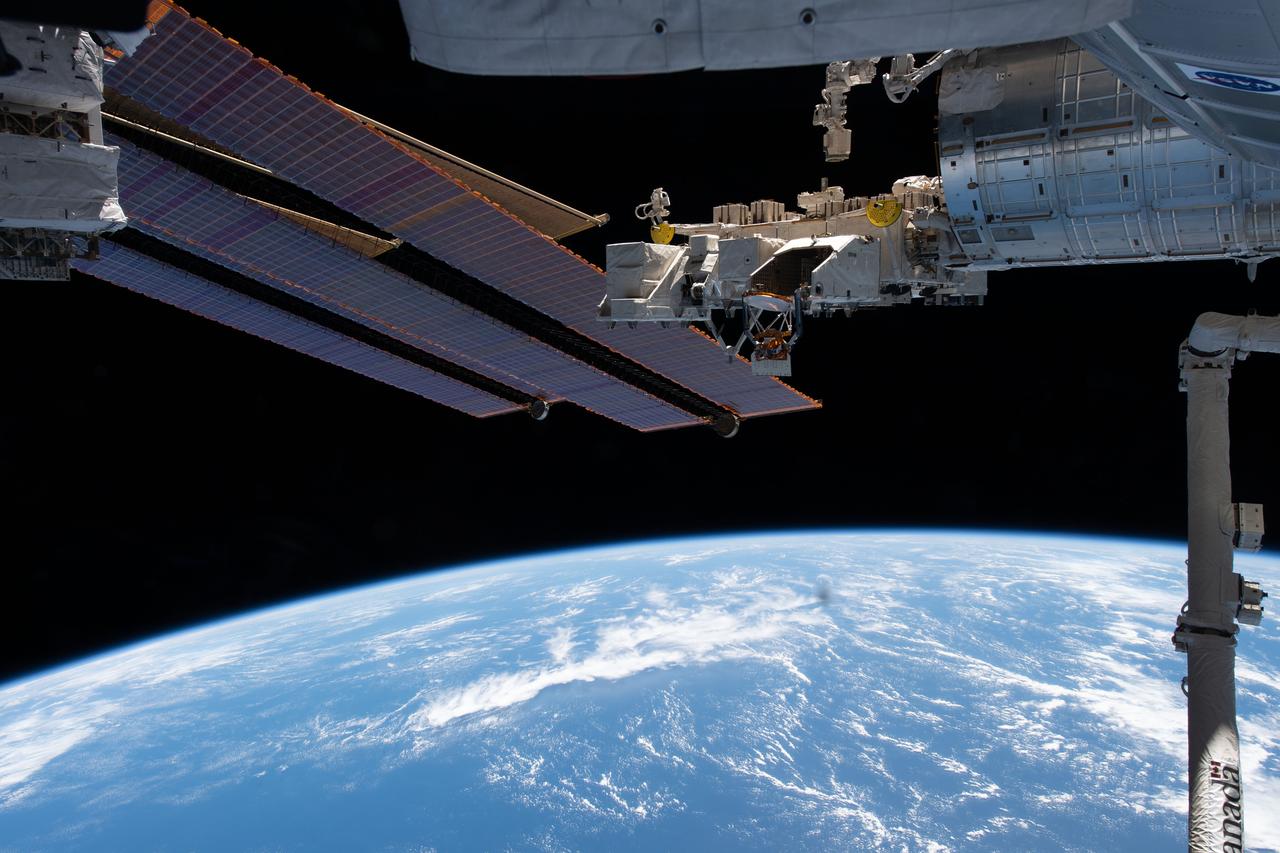
iss070e049644 (Dec. 30, 2023) --- A set of the International Space Station's main solar arrays, slightly obscuring the smaller roll-out solar arrays, and the Kibo laboratory module with its exposed facility, an external research platform that hosts external experiments, are pictured 261 miles above the Pacific Ocean.
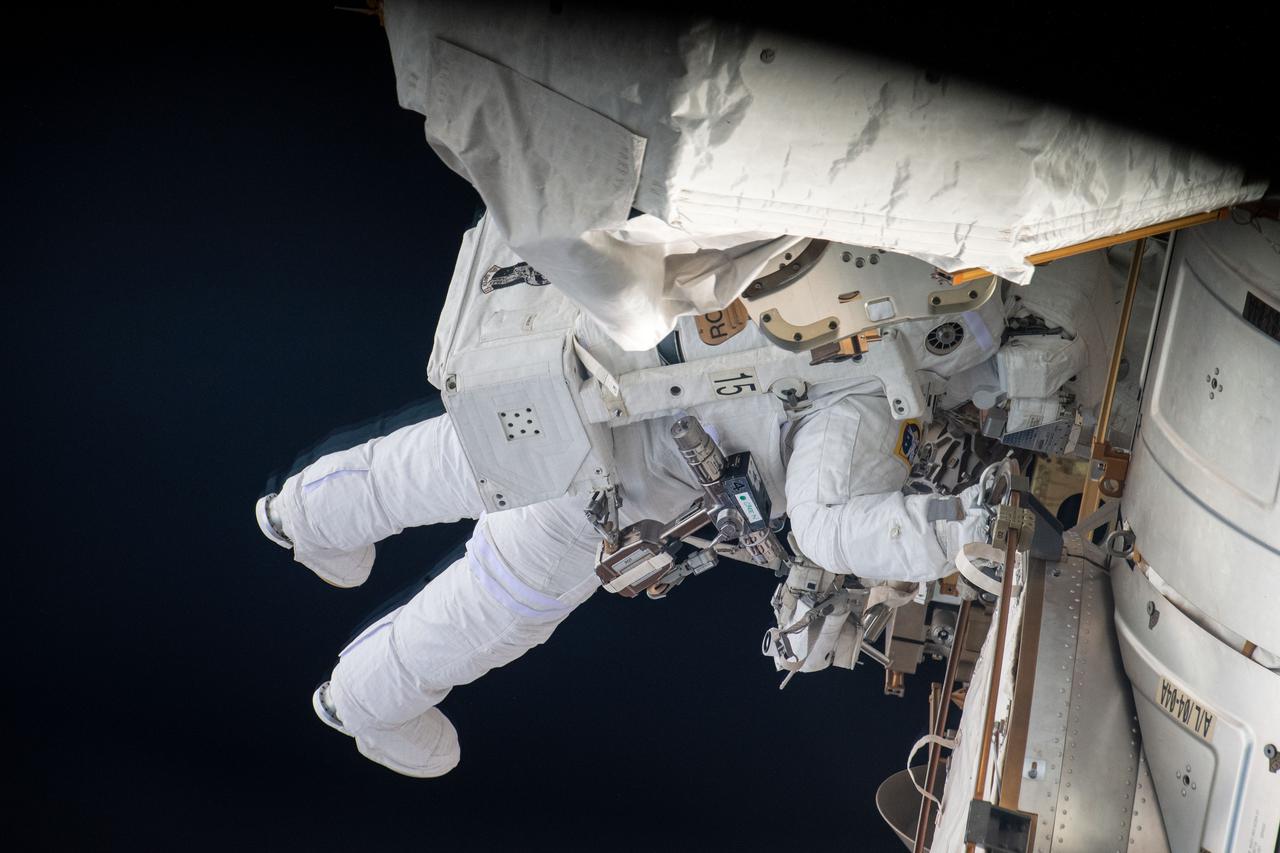
iss065e137140 (June 16, 2021) --- NASA spacewalker Shane Kimbrough is pictured during a spacewalk to install new roll out solar arrays on the International Space Station's Port-6 truss structure.
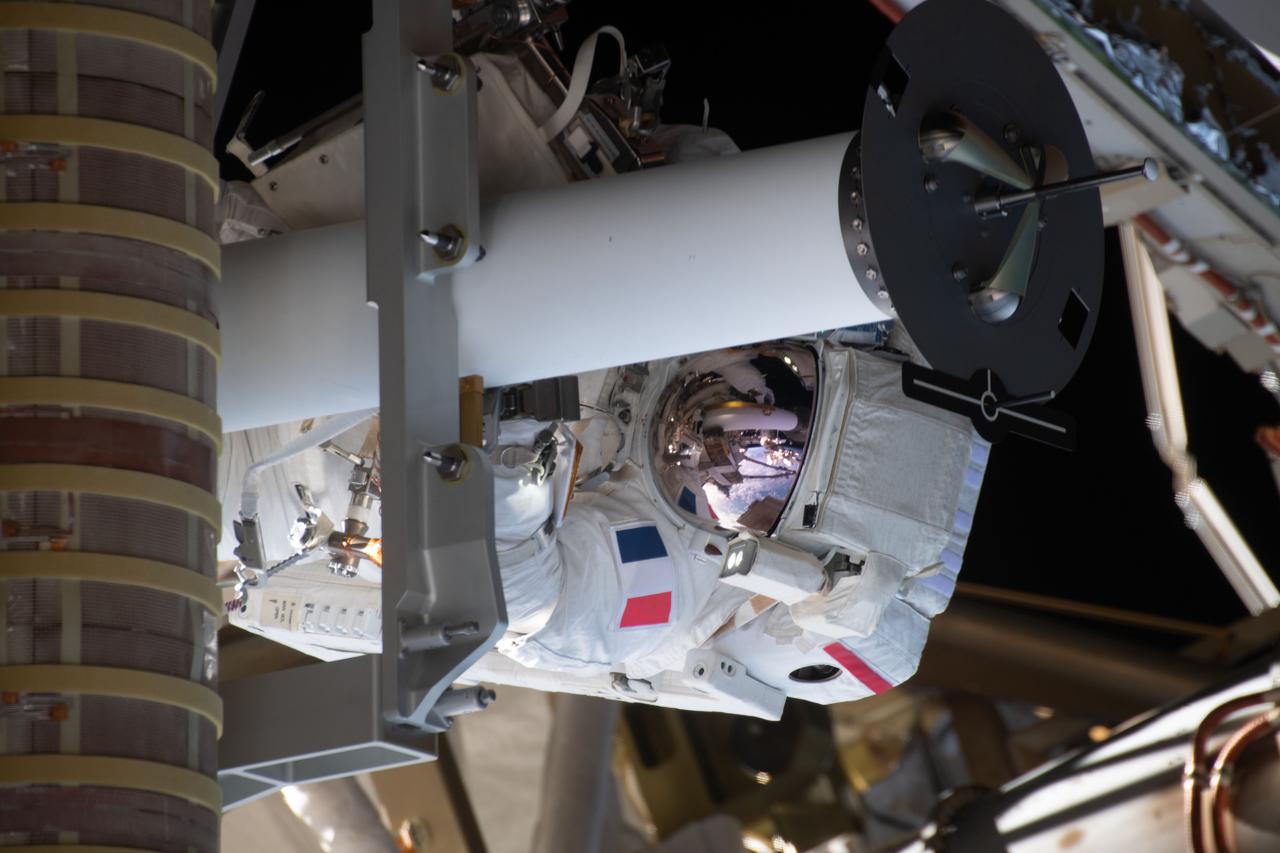
iss065e146883 (June 25, 2021) --- Spacewalker Thomas Pesquet of ESA (European Space Agency) works to complete the installation of the second roll out solar array on the International Space Station's Port-6 truss structure.

iss069e031362 (July 13, 2023) -- As the International Space Station orbited 259 miles above North Africa, clouds covered the sky. To the bottom right of the image, one of the station's roll-out solar arrays peeks through.
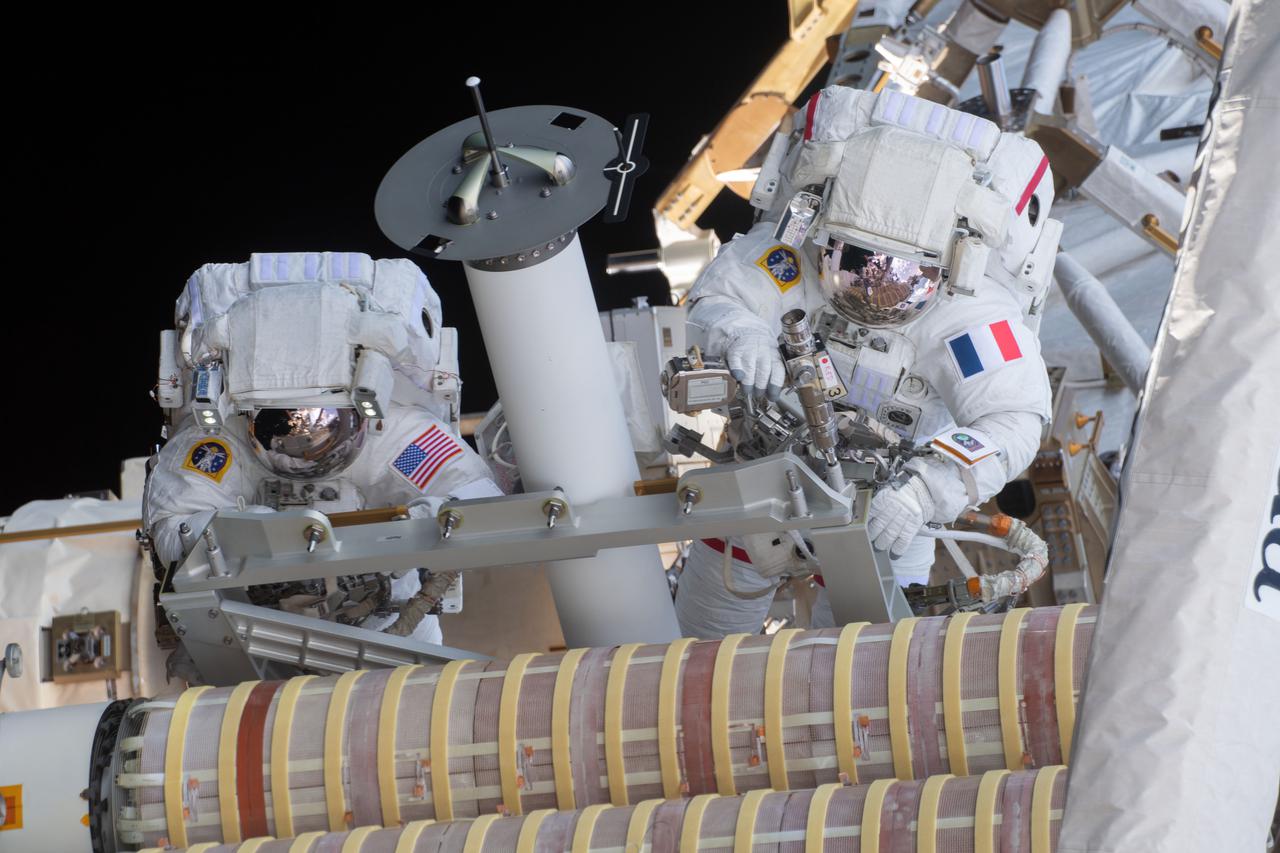
iss065e131232 (June 16, 2021) --- Spacewalkers (from left) Shane Kimbrough and Thomas Pesquet work to install new roll out solar arrays on the International Space Station's P-6 truss structure.
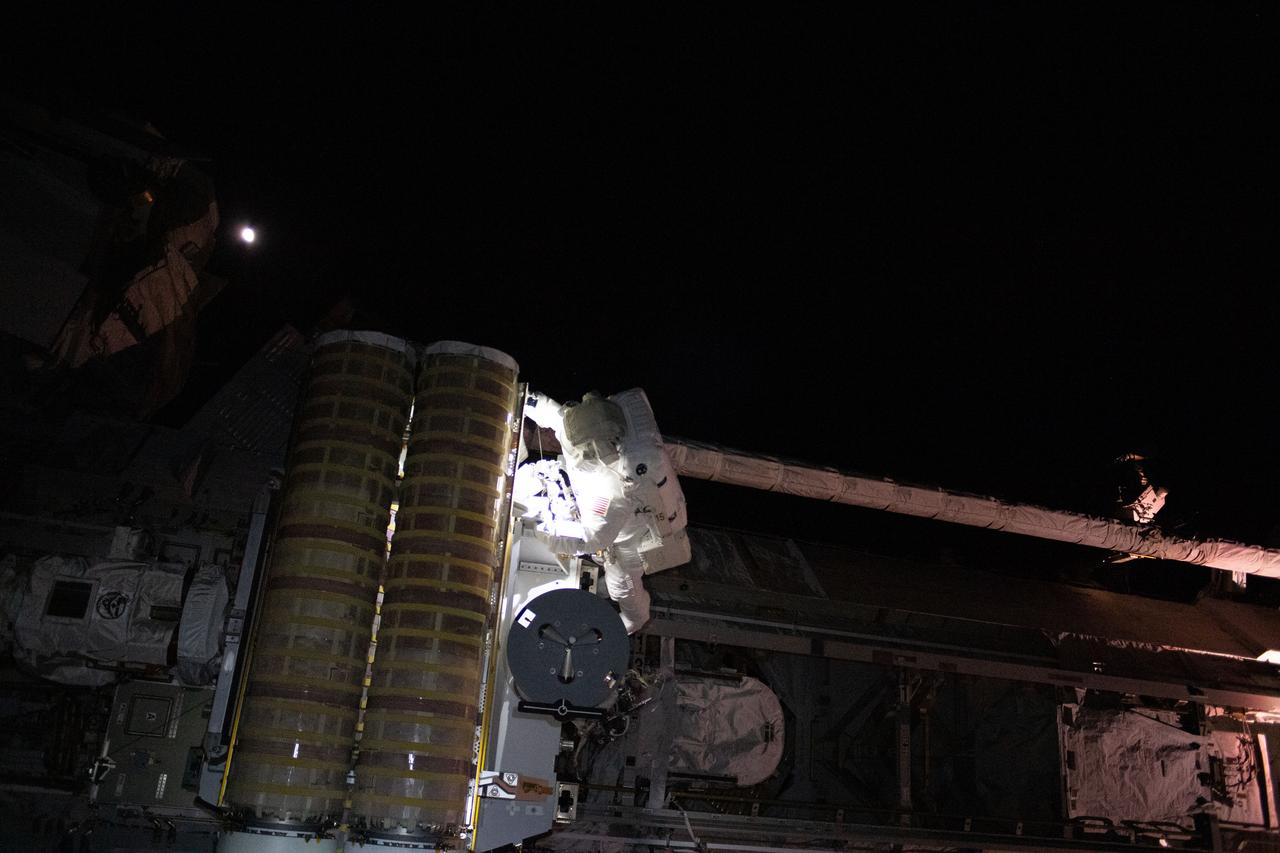
iss068e026356 (Dec. 3, 2022) --- NASA astronaut and Expedition 68 Flight Engineer Frank Rubio is pictured during a spacewalk to install a roll-out solar array on the International Space Station's Starboard-4 truss segment.
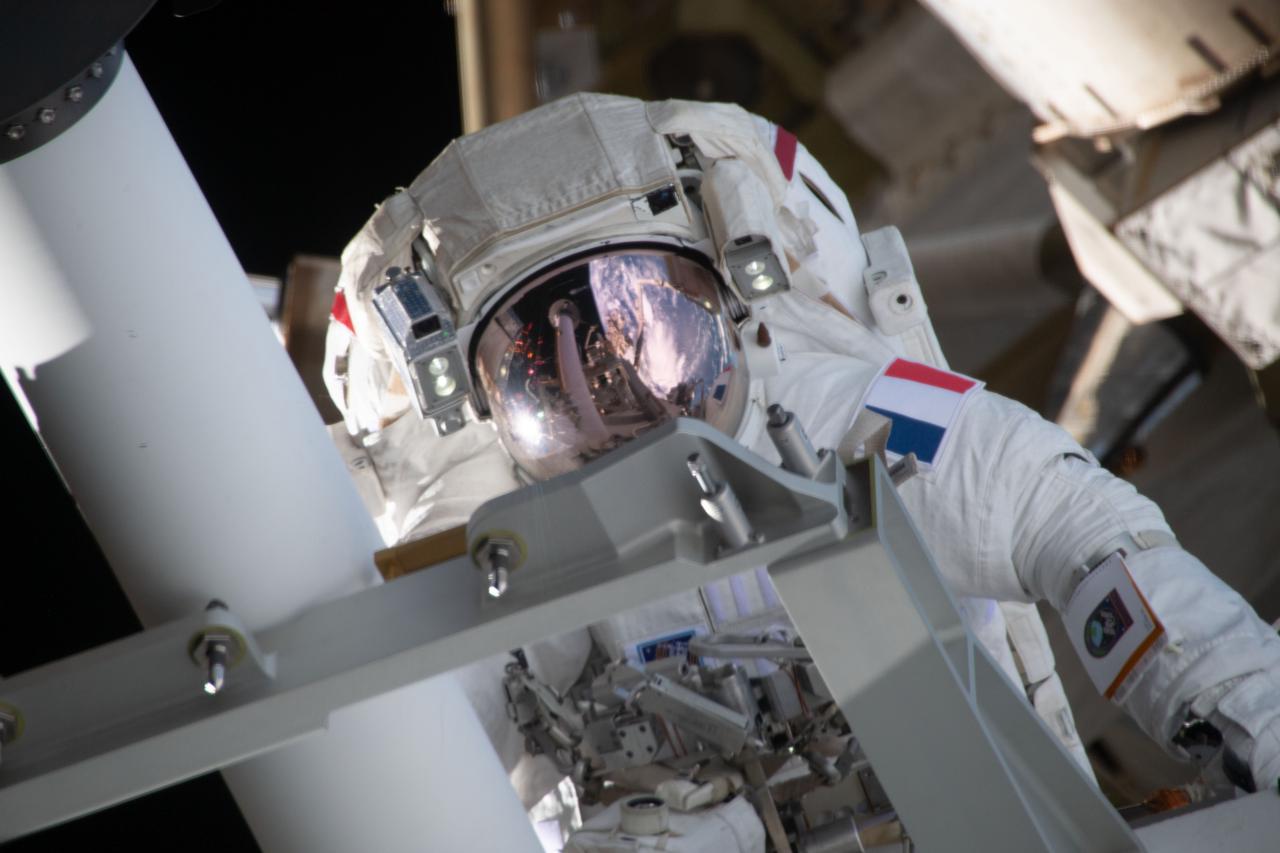
iss065e147424 (June 25, 2021) --- Spacewalker Thomas Pesquet of ESA (European Space Agency) works to complete the installation of the second roll out solar array on the International Space Station's Port-6 truss structure.
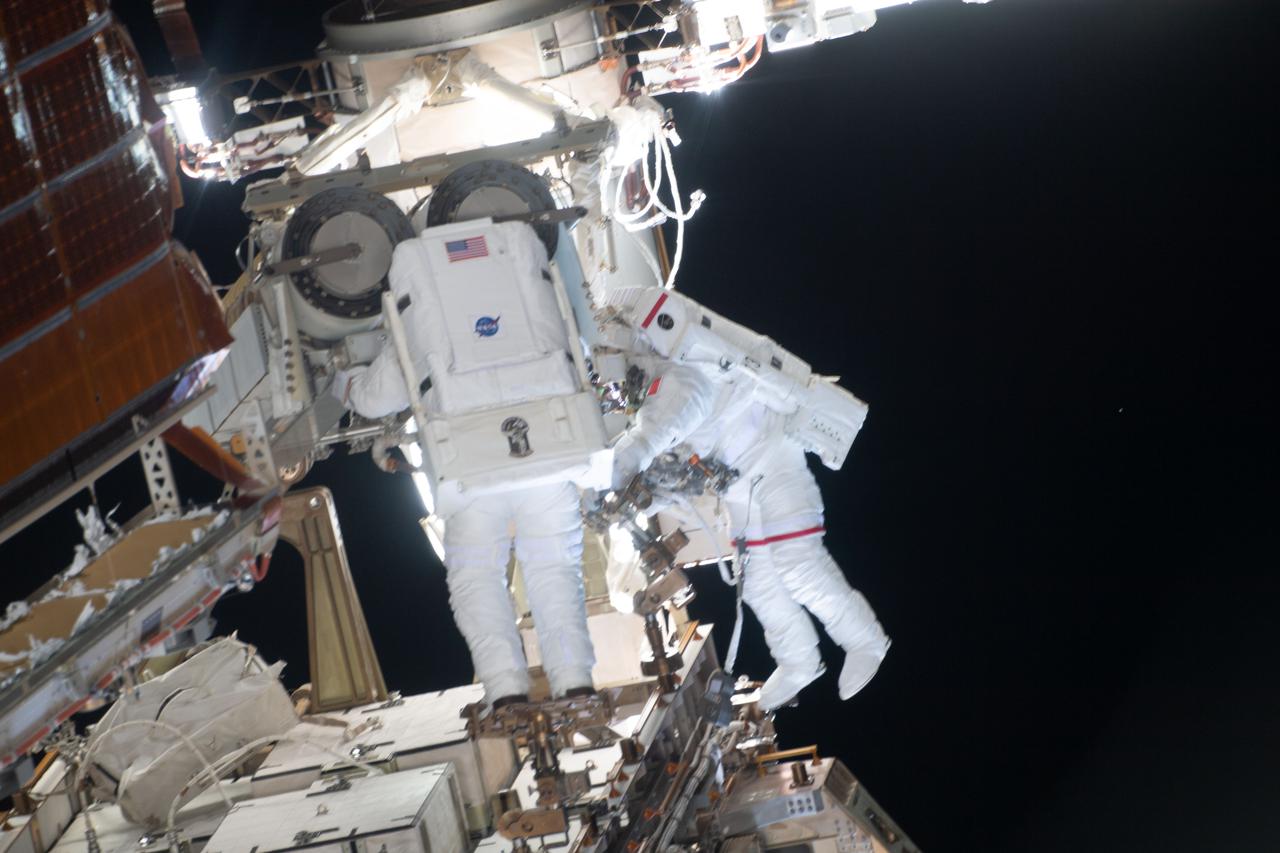
iss065e147262 (June 25, 2021) --- Spacewalkers (from left) Shane Kimbrough and Thomas Pesquet work to complete the installation of the second roll out solar array on the International Space Station's Port-6 truss structure.
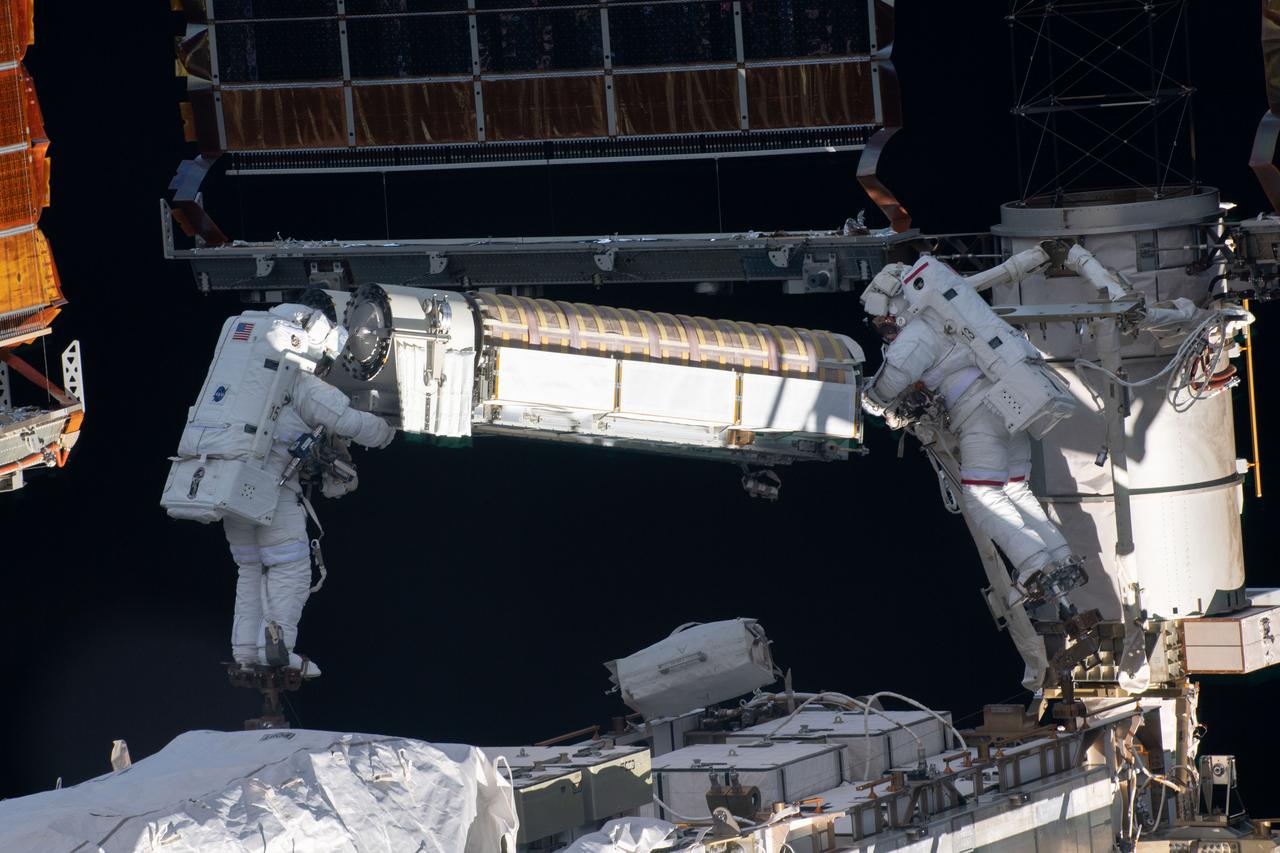
iss065e121354 (June 16, 2021) --- Spacewalkers (from left) Shane Kimbrough and Thomas Pesquet work to install new roll out solar arrays on the International Space Station's P-6 truss structure.
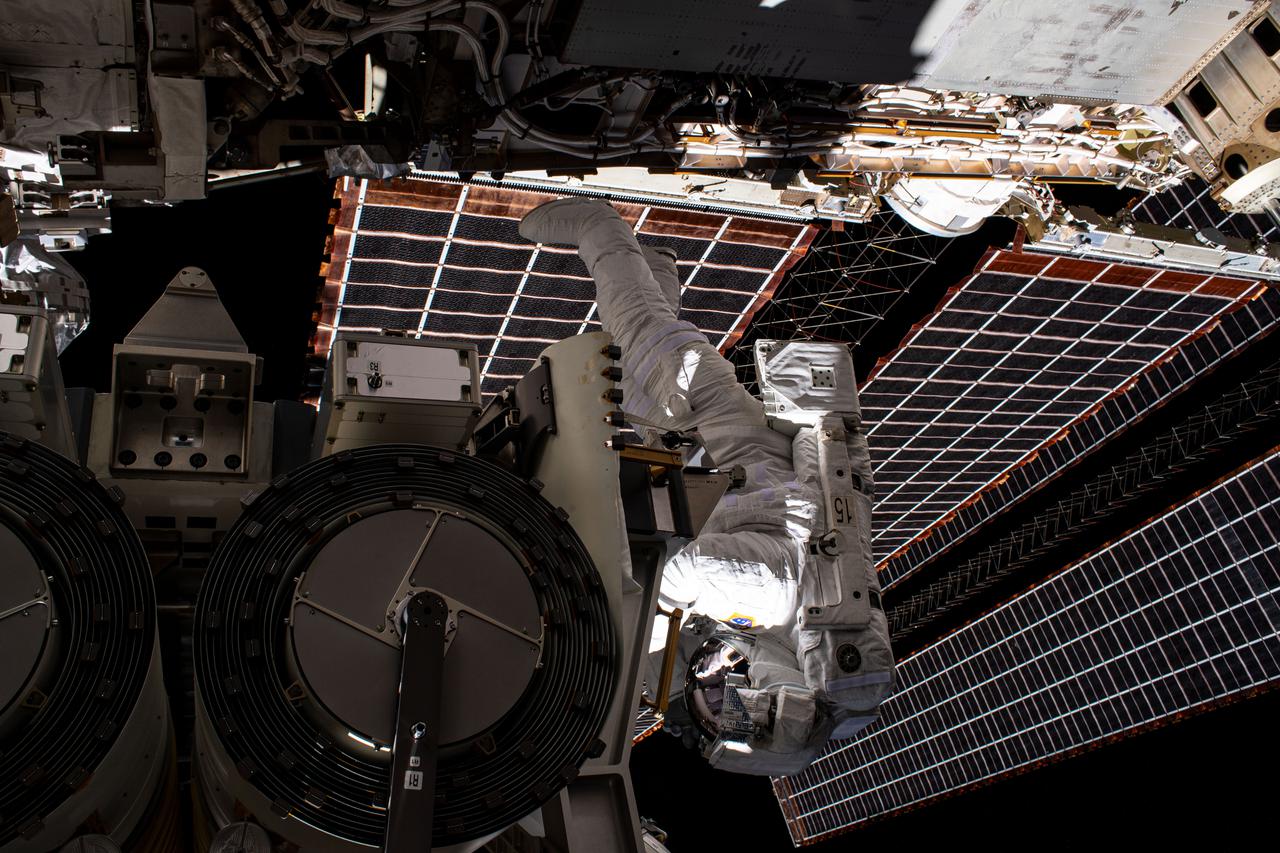
iss065e120861 (June 16, 2021) --- Expedition 65 Flight Engineer Shane Kimbrough is pictured during a spacewalk to install new roll out solar arrays on the International Space Station's P-6 truss structure.
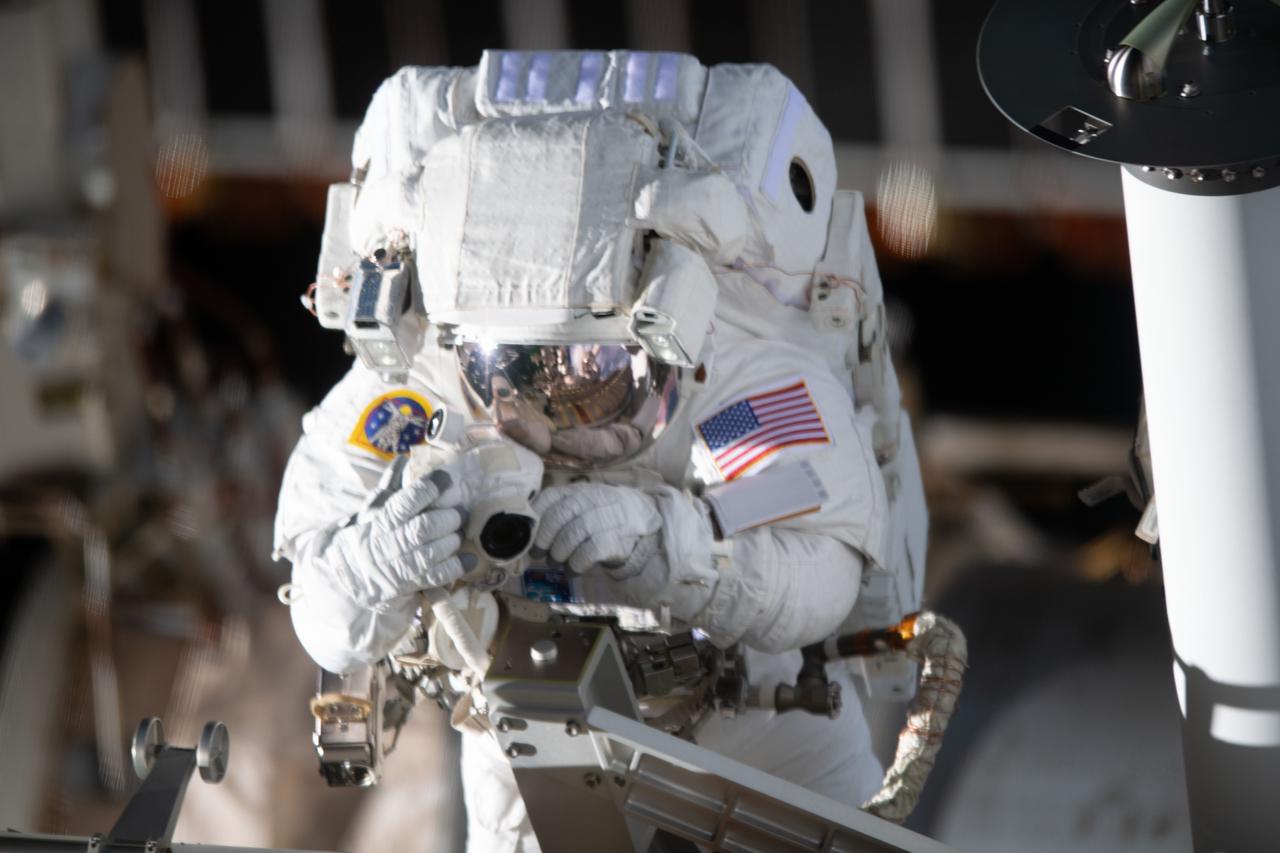
iss065e126006 (June 20, 2021) --- Spacewalker Shane Kimbrough of NASA works to complete the installation of a roll out solar array on the International Space Station's P-6 truss structure.
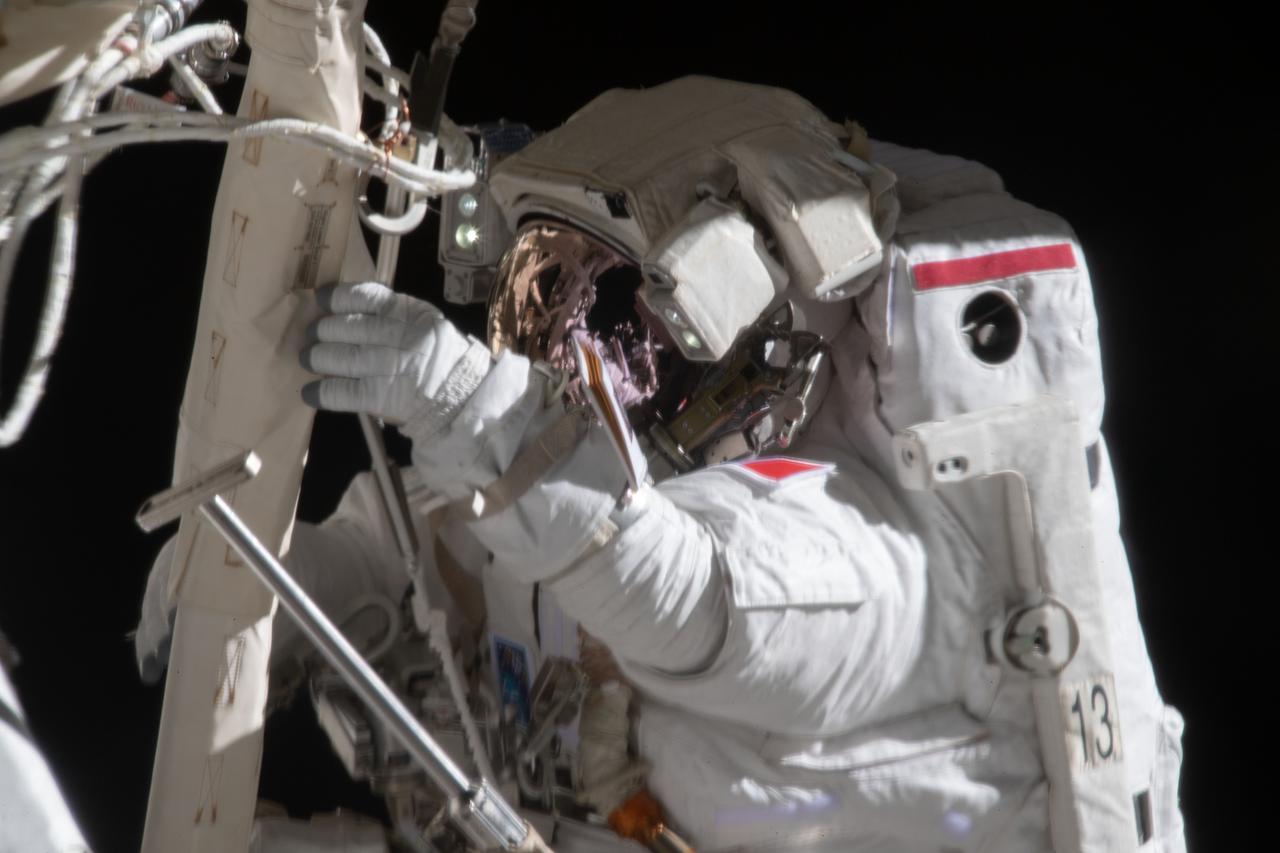
iss065e124498 (June 20, 2021) --- Spacewalker Thomas Pesquet of ESA (European Space Agency) works to complete the installation of a roll out solar array on the International Space Station's P-6 truss structure.
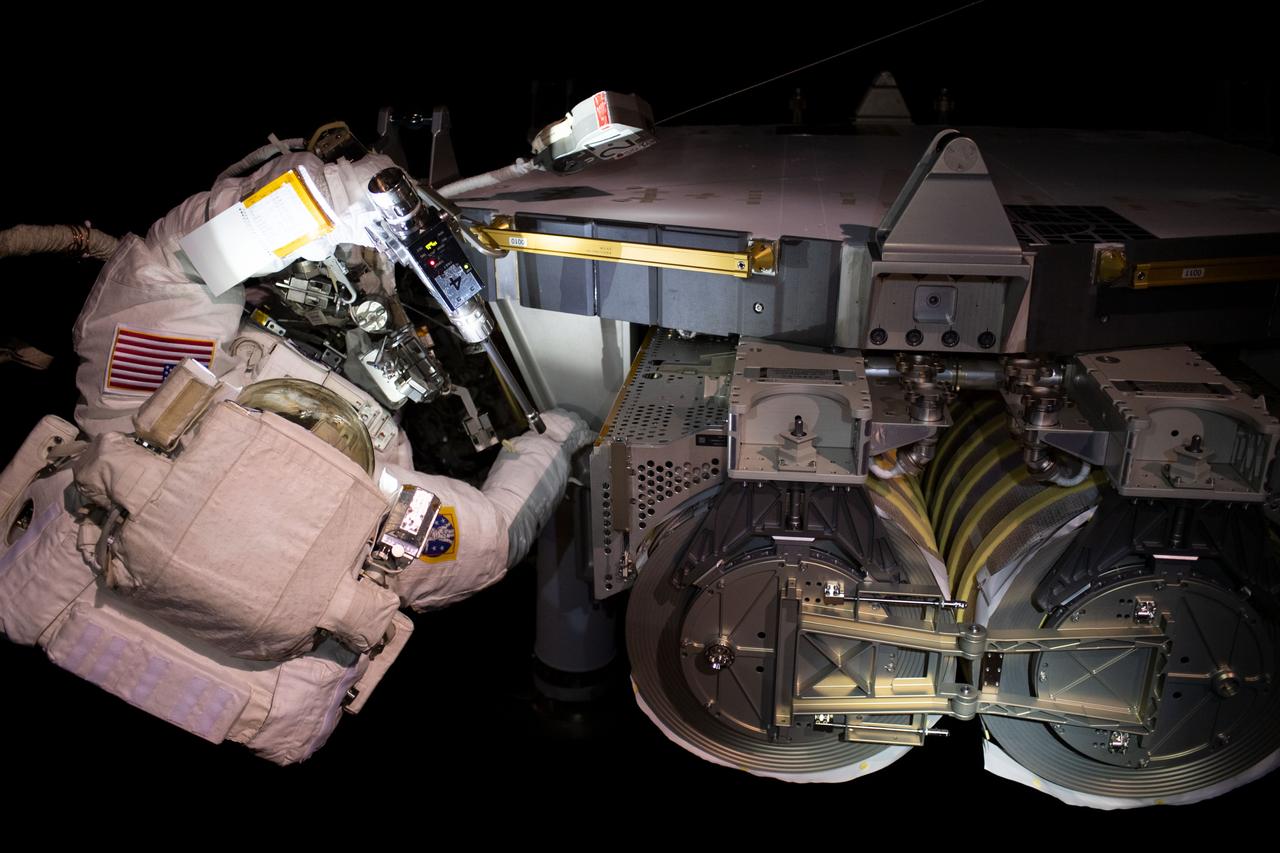
iss069e020612 (June 15, 2023) --- NASA astronaut Stephen Bowen is pictured readying a roll-out solar array before installating it on the International Space Station's Starboard-6 truss structure.
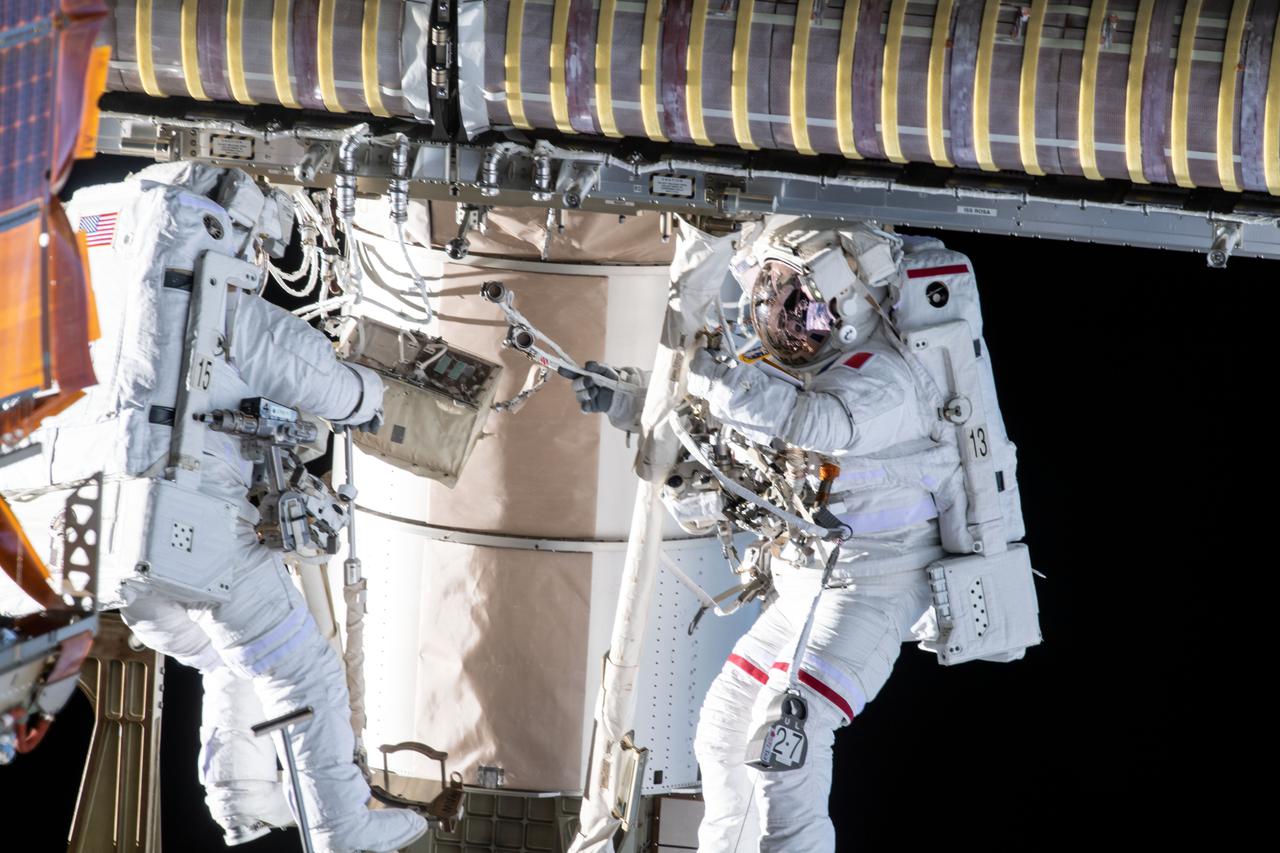
iss065e144867 (June 25, 2021) --- Spacewalkers (from left) Shane Kimbrough and Thomas Pesquet work to complete the installation of the second roll out solar array on the International Space Station's Port-6 truss structure.
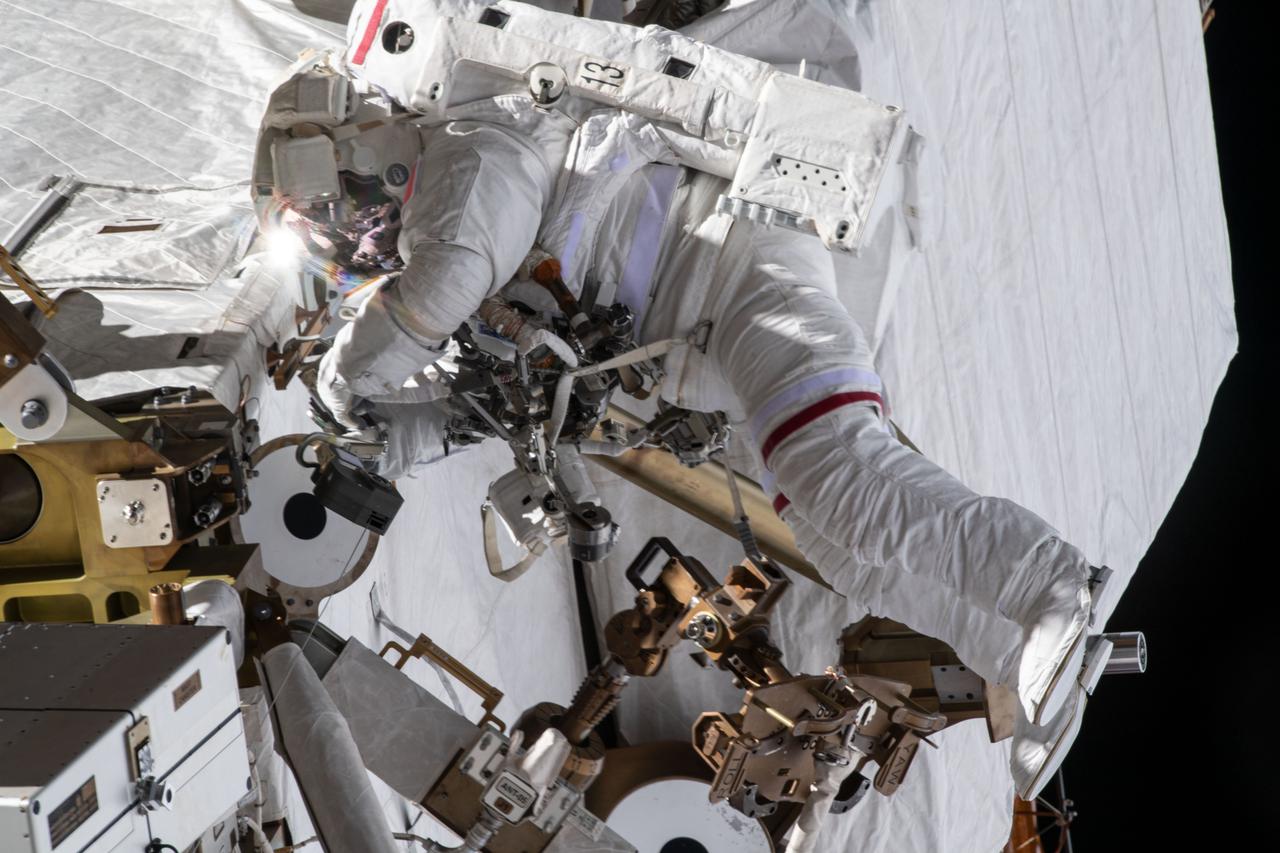
iss065e144990 (June 25, 2021) --- Spacewalker Thomas Pesquet of ESA (European Space Agency) works to complete the installation of the second roll out solar array on the International Space Station's Port-6 truss structure.
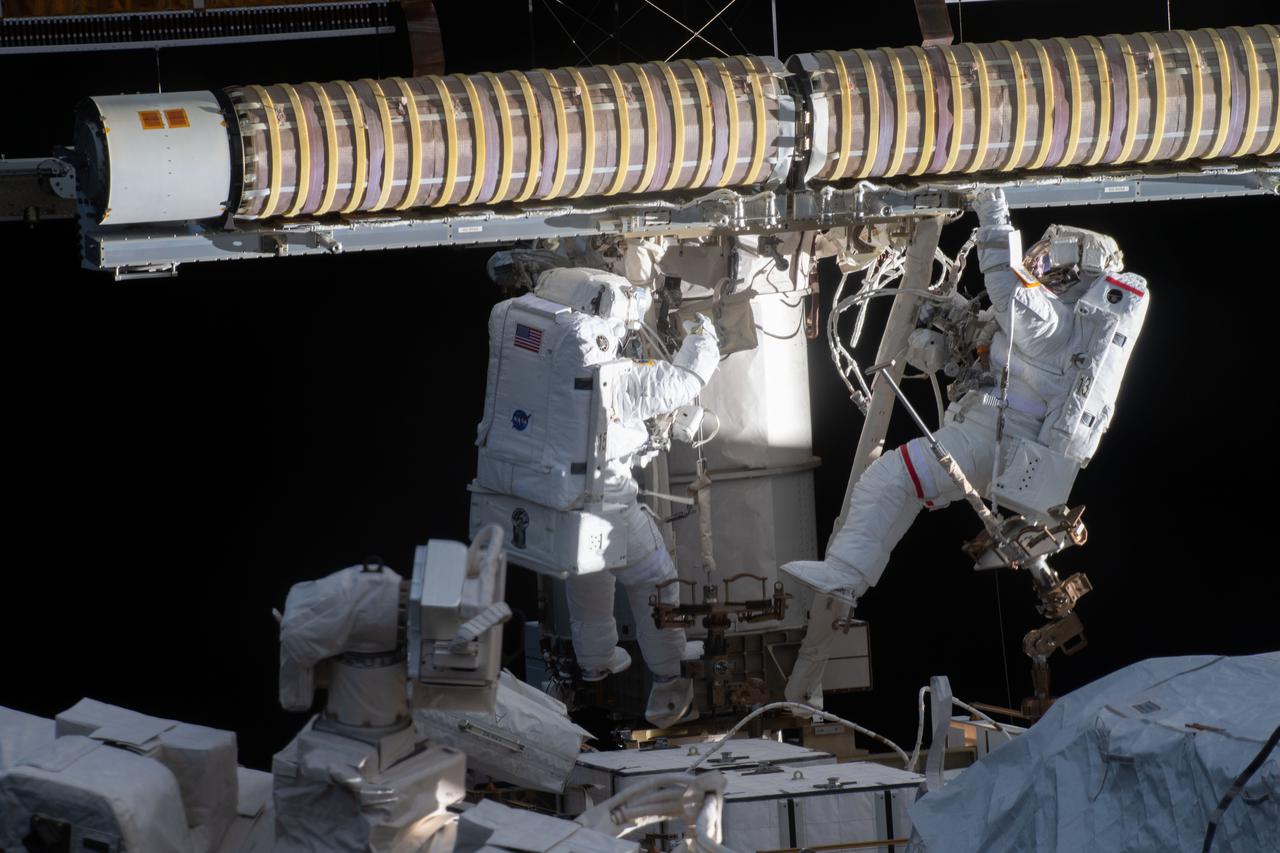
iss065e130510 (June 16, 2021) --- Spacewalkers (from left) Shane Kimbrough and Thomas Pesquet work to install new roll out solar arrays on the International Space Station's P-6 truss structure.
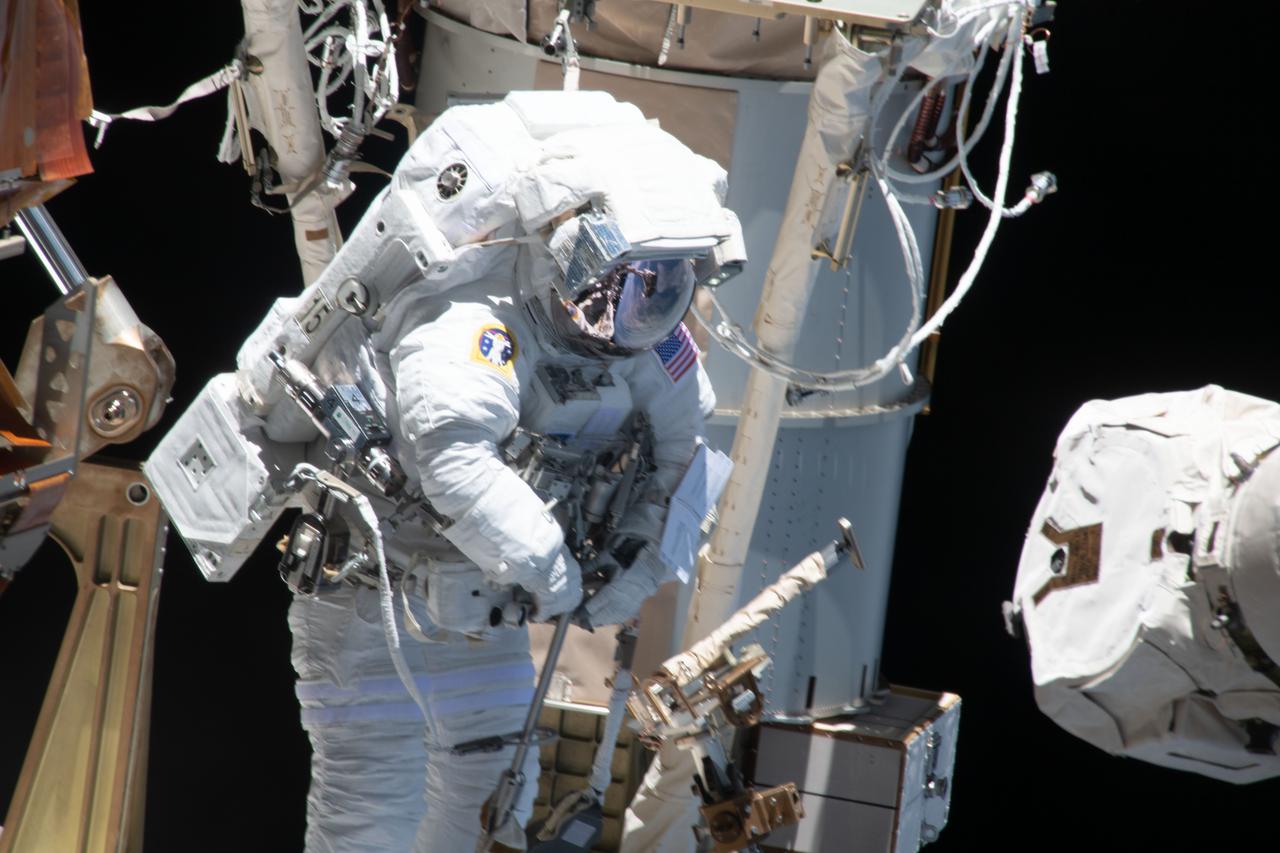
iss065e147132 (June 25, 2021) --- NASA spacewalker Shane Kimbrough works to complete the installation of the second roll out solar array on the International Space Station's Port-6 truss structure.
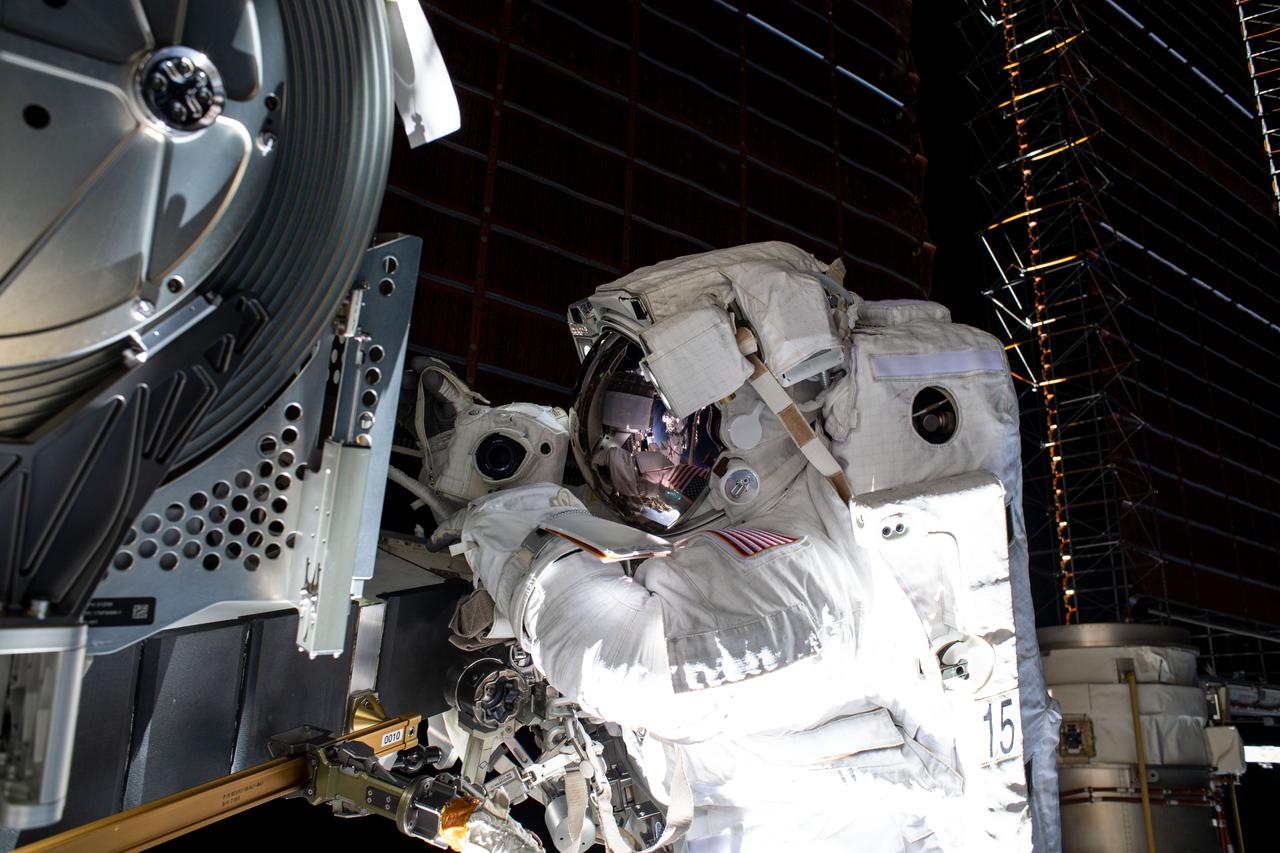
iss065e145249 (June 25, 2021) --- NASA spacewalker Shane Kimbrough works to complete the installation of the second roll out solar array on the International Space Station's Port-6 truss structure.
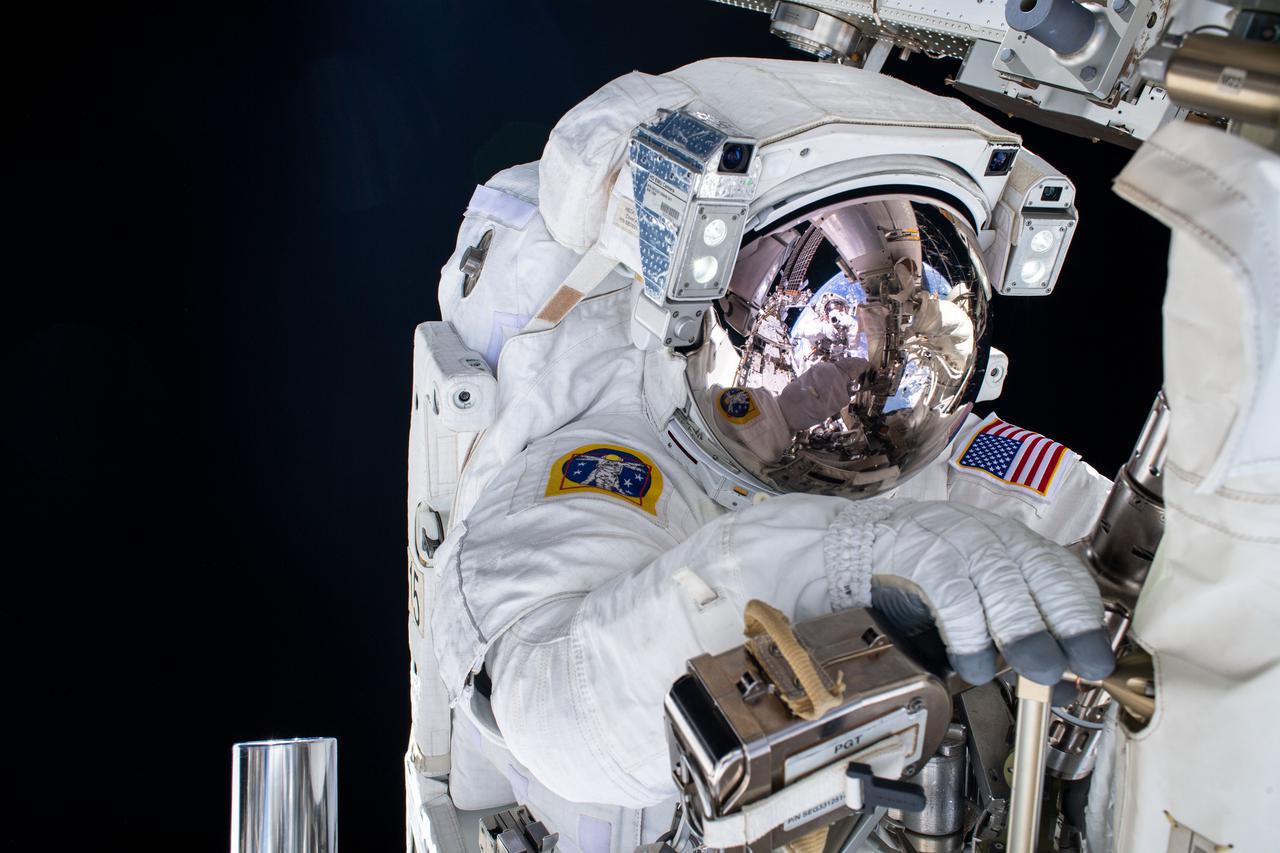
iss065e145380 (June 25, 2021) --- NASA spacewalker Shane Kimbrough works to complete the installation of the second roll out solar array on the International Space Station's Port-6 truss structure.
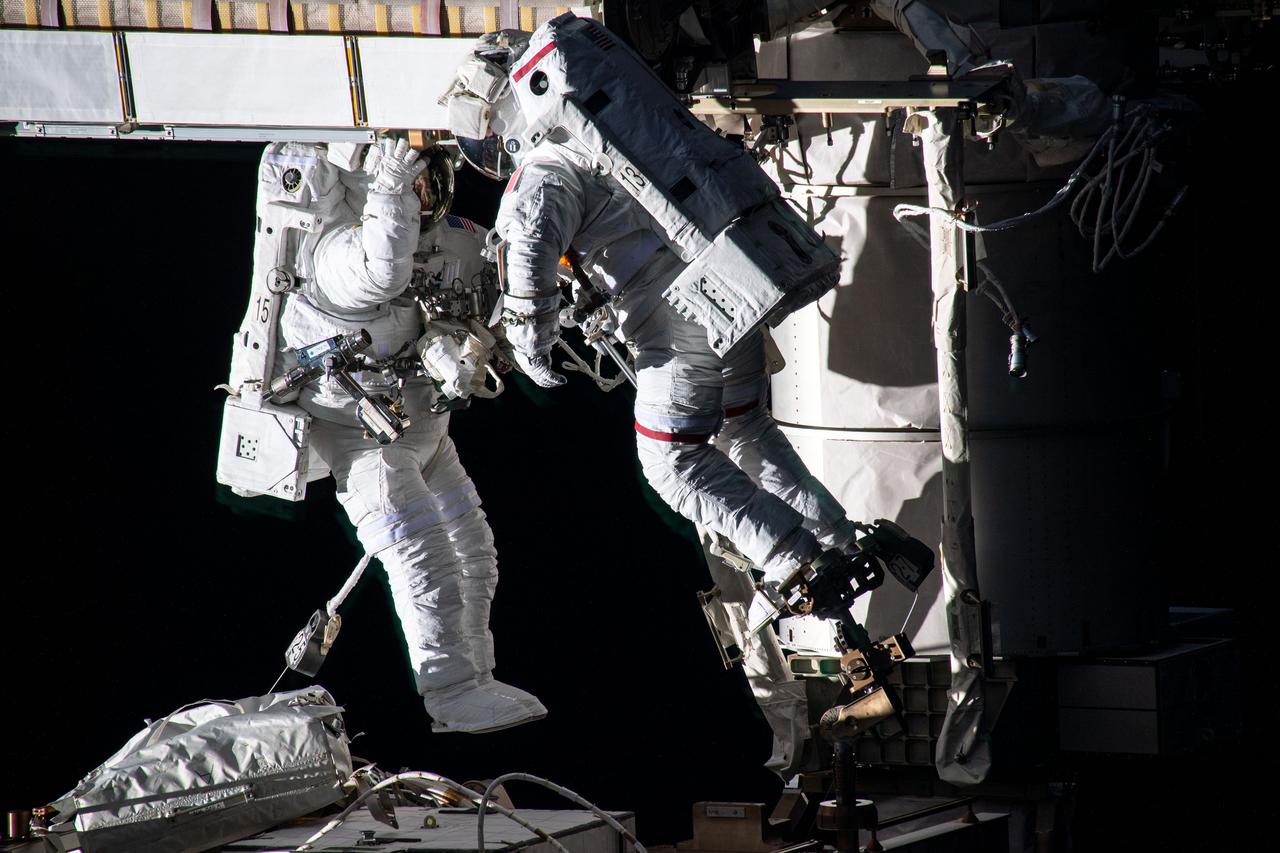
iss065e137248 (June 16, 2021) --- Spacewalkers (from left) Shane Kimbrough and Thomas Pesquet work to install new roll out solar arrays on the International Space Station's P-6 truss structure.
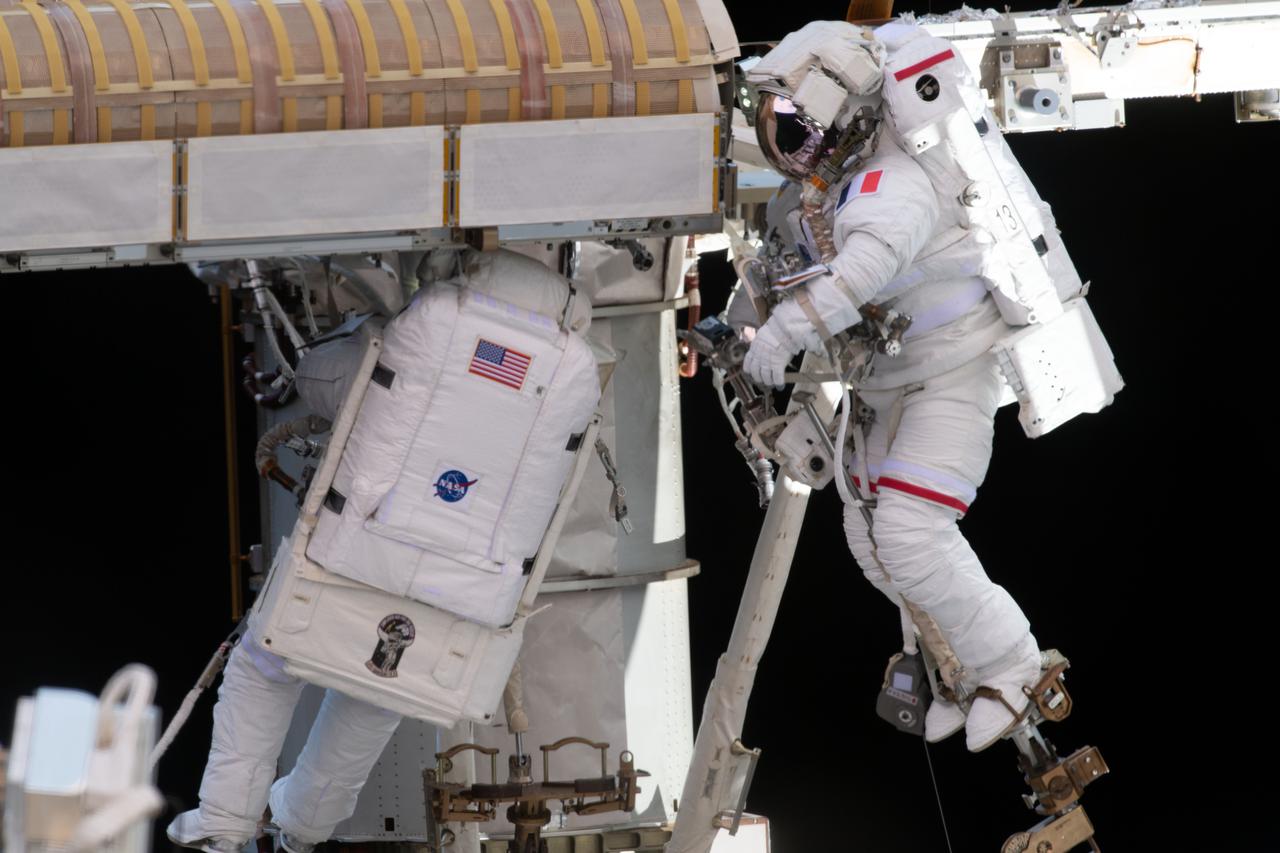
iss065e124372 (June 20, 2021) --- Spacewalkers (from left) Shane Kimbrough and Thomas Pesquet work to complete the installation of a roll out solar arrays on the International Space Station's P-6 truss structure.
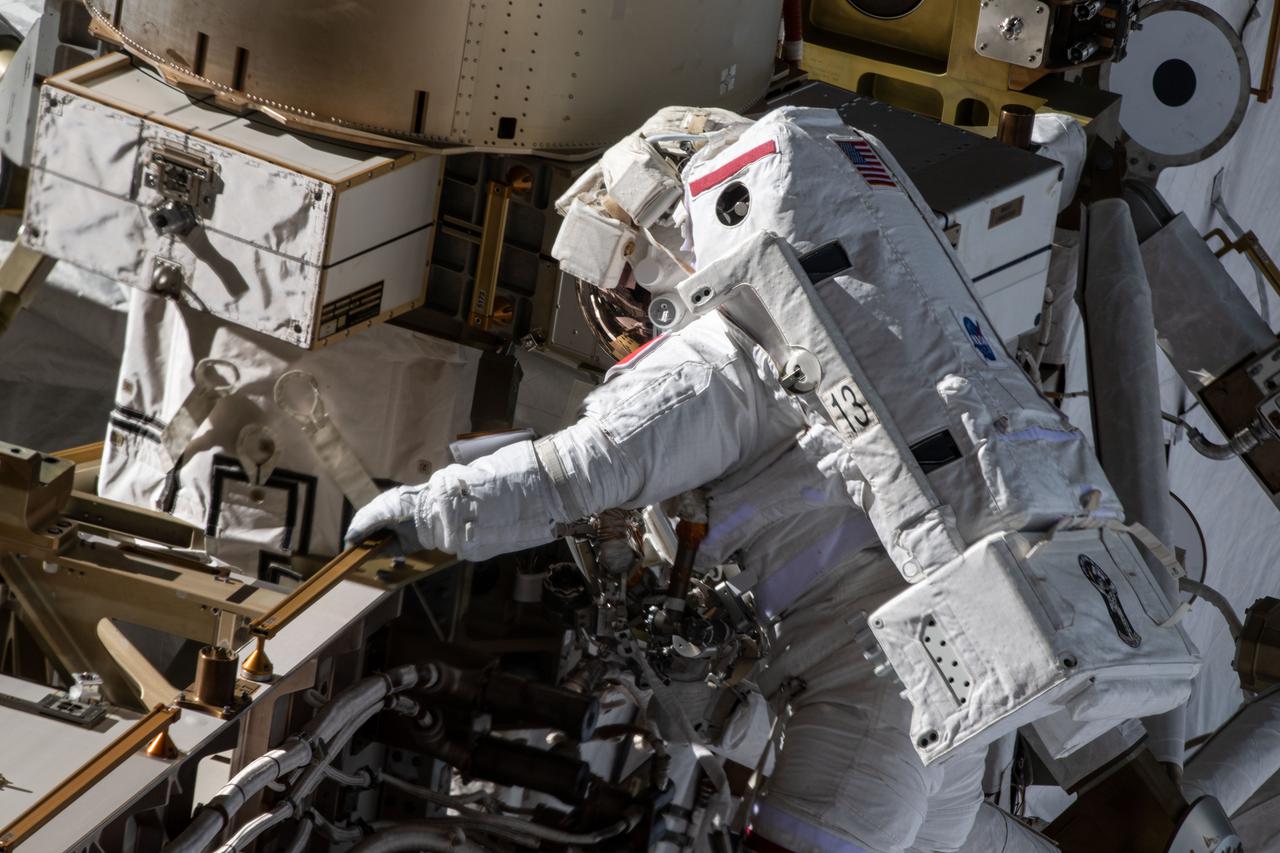
iss065e145037 (June 25, 2021) --- Spacewalker Thomas Pesquet of ESA (European Space Agency) works to complete the installation of the second roll out solar array on the International Space Station's Port-6 truss structure.
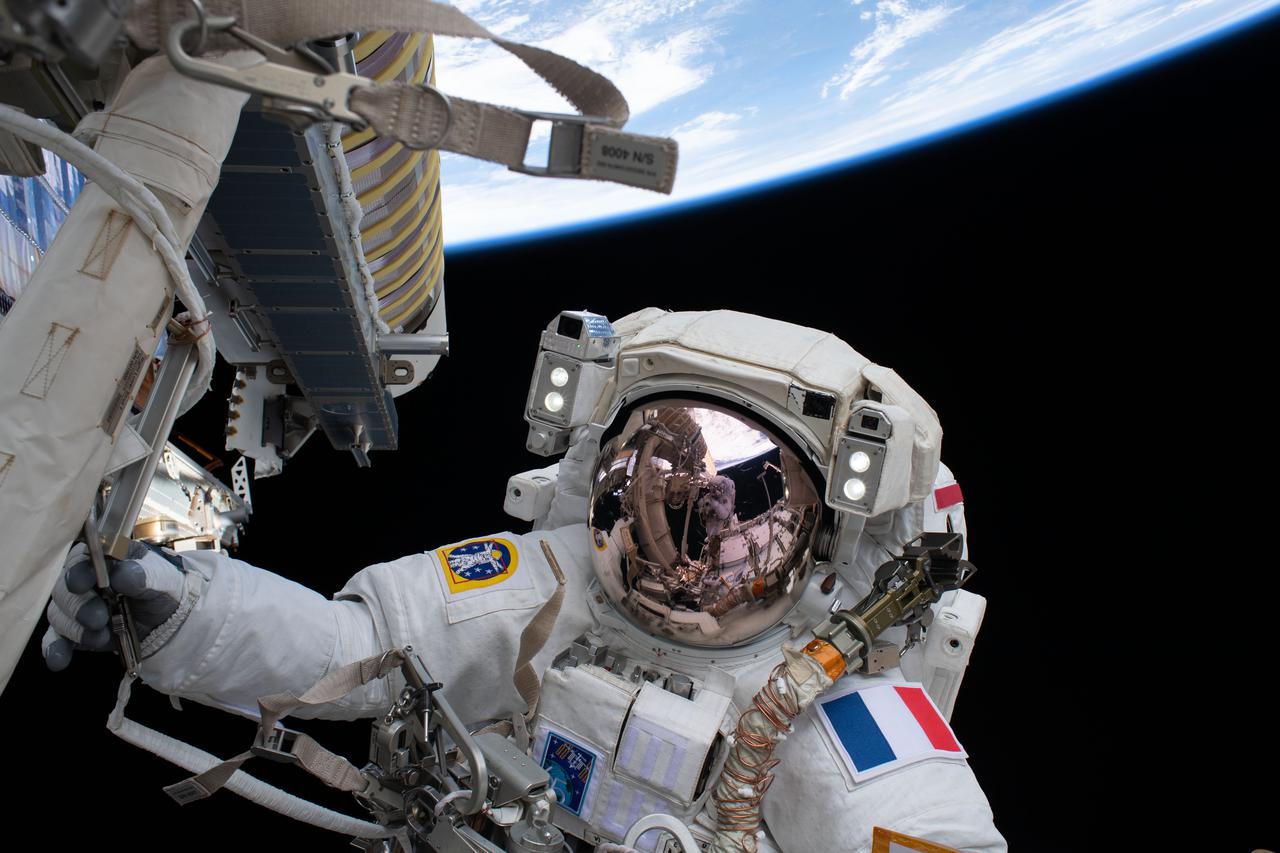
iss065e126255 (June 20, 2021) --- Spacewalker Thomas Pesquet of ESA (European Space Agency) works to complete the installation of a roll out solar array on the International Space Station's P-6 truss structure.
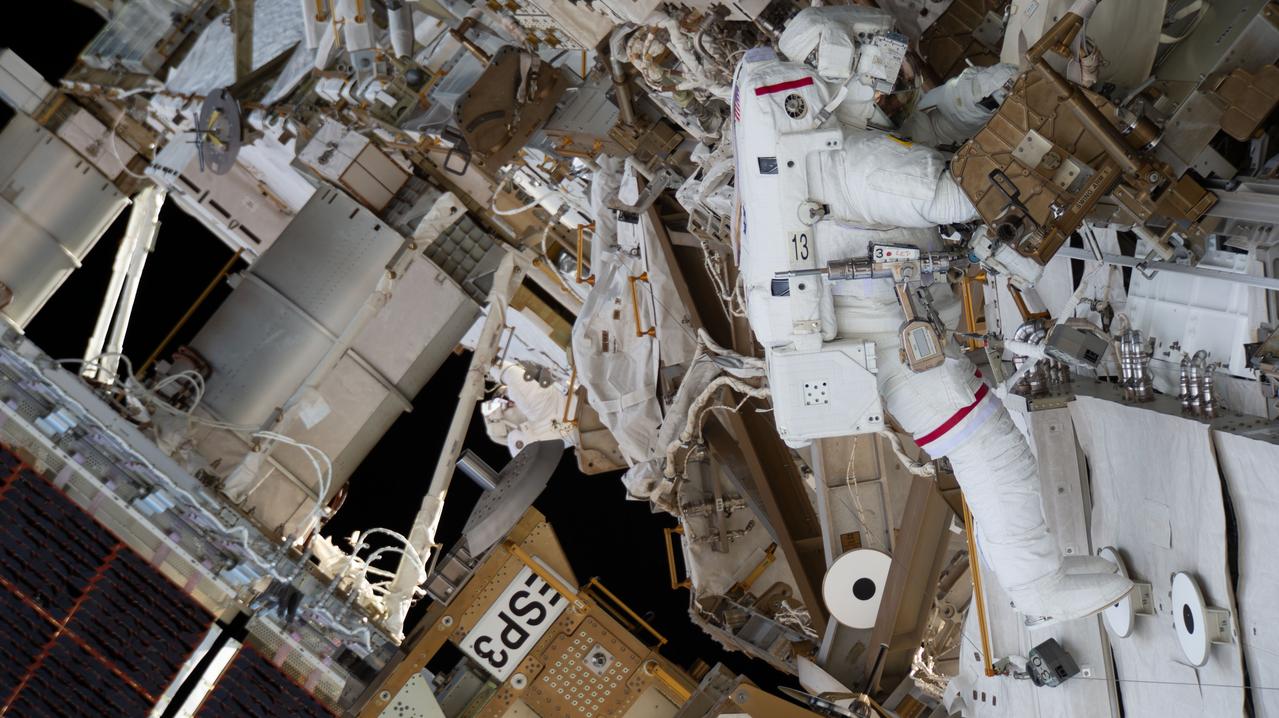
iss068e026407 (Dec. 3, 2022) --- NASA astronaut and Expedition 68 Flight Engineer Josh Cassada is pictured tethered to the International Space Station during a spacewalk to install a roll-out solar array on the Starboard-4 truss segment.
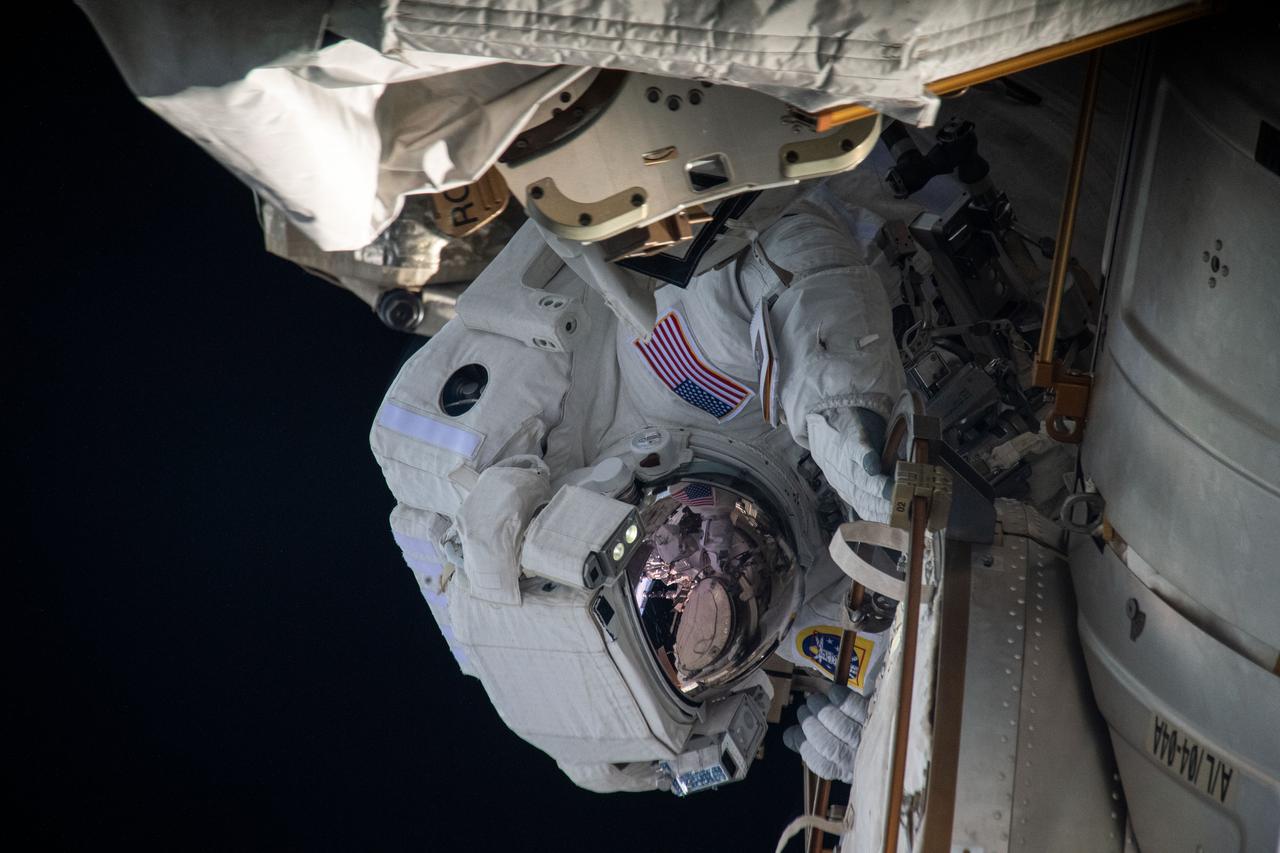
iss065e137118 (June 16, 2021) --- NASA spacewalker Shane Kimbrough is pictured during a spacewalk to install new roll out solar arrays on the International Space Station's Port-6 truss structure.
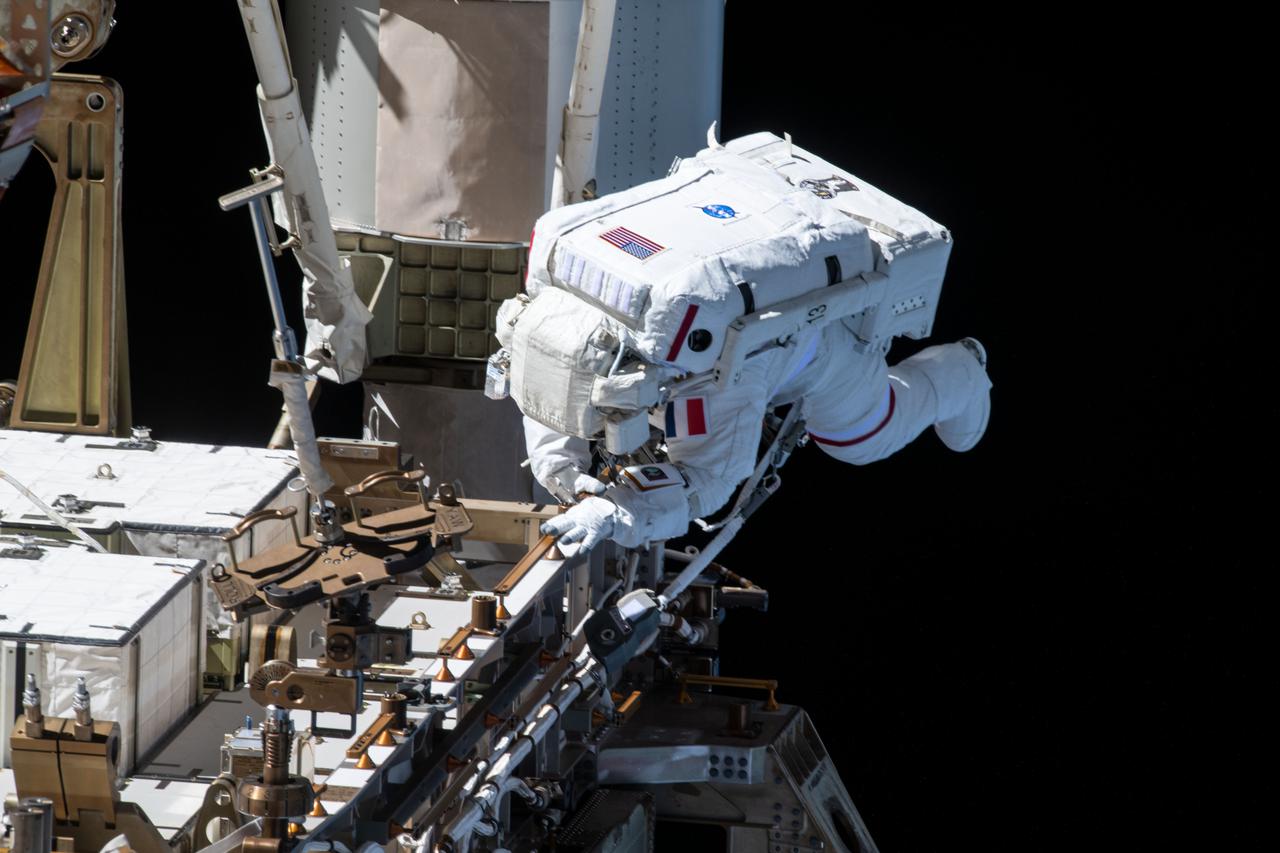
iss065e144936 (June 25, 2021) --- Spacewalker Thomas Pesquet of ESA (European Space Agency) works to complete the installation of the second roll out solar array on the International Space Station's Port-6 truss structure.
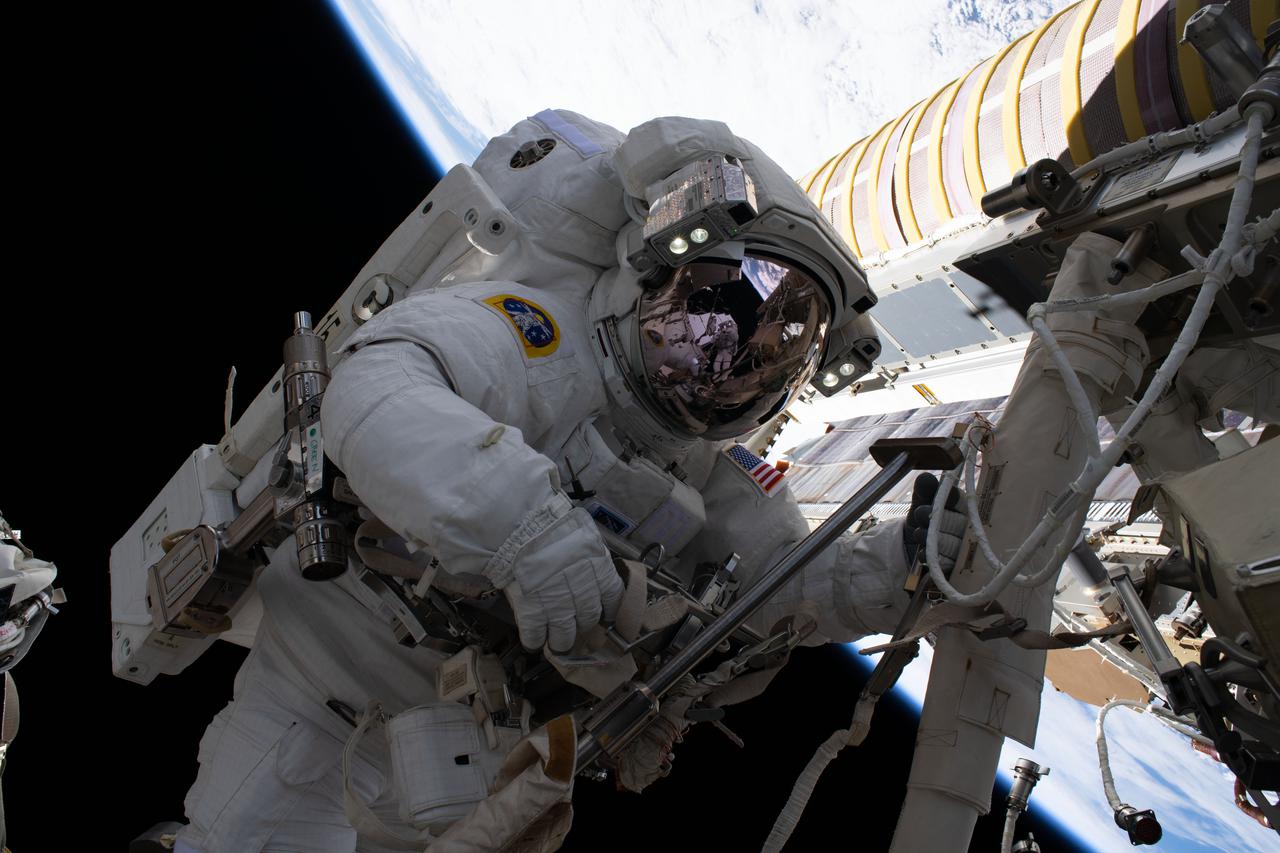
iss065e129879 (June 16, 2021) --- NASA spacewalker Shane Kimbrough is pictured during a spacewalk to install new roll out solar arrays on the International Space Station's Port-6 truss structure.
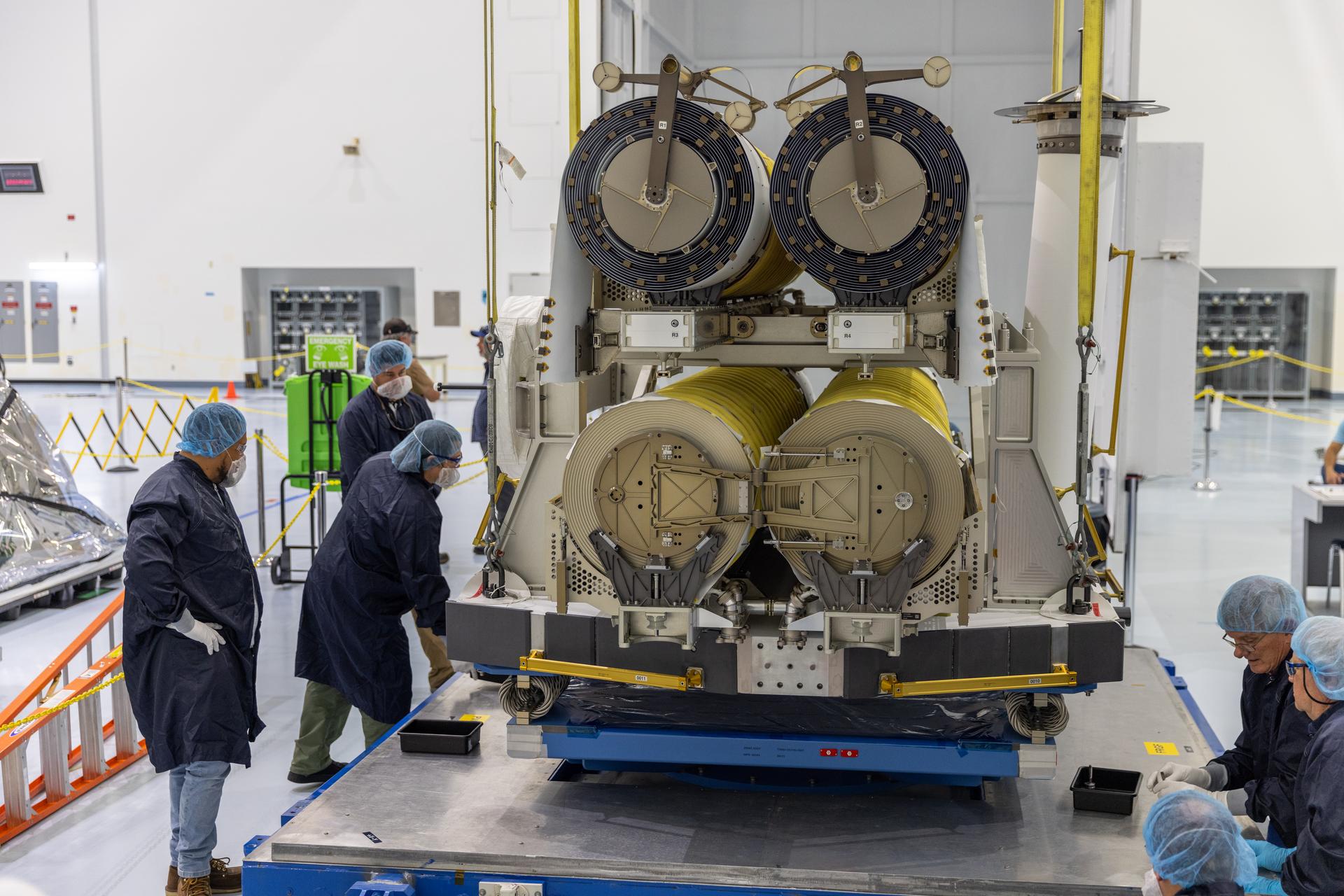
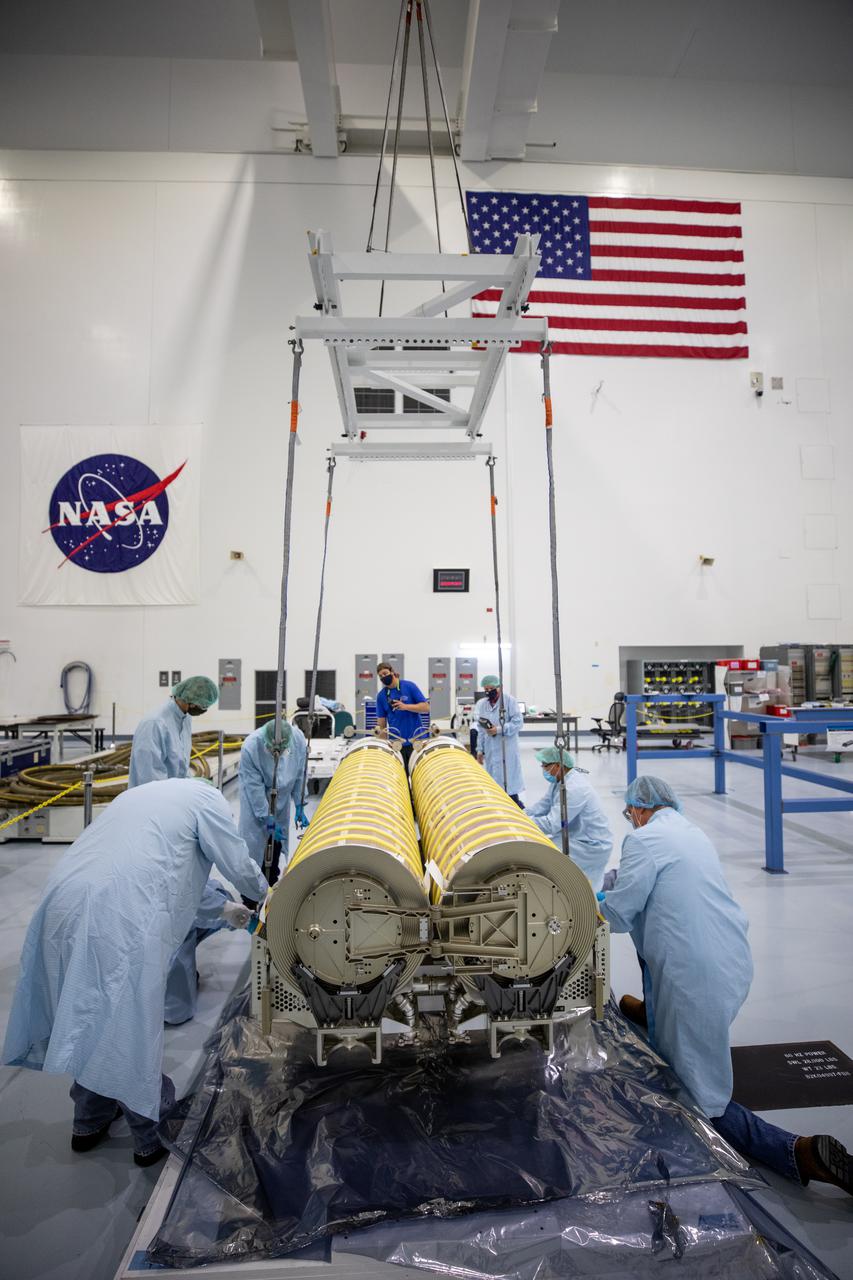
Technicians assist a crane to lower a pair of International Space Station Roll Out Solar Arrays (iROSA) onto a platform on Tuesday, Aug. 11, 2026, inside the Space Systems Processing Facility at NASA’s Kennedy Space Center in Florida. The iROSA are being prepared for delivery to the space station aboard SpaceX’s Dragon cargo carrier on the company’s 35th commercial resupply services (CRS-35) mission to the space station. iROSA is a new generation of solar arrays that roll open in space and is more compact than previous arrays while providing the same amount of power. With six similar arrays already in place on the station, the final pair will complete the power system upgrade for the orbiting laboratory.
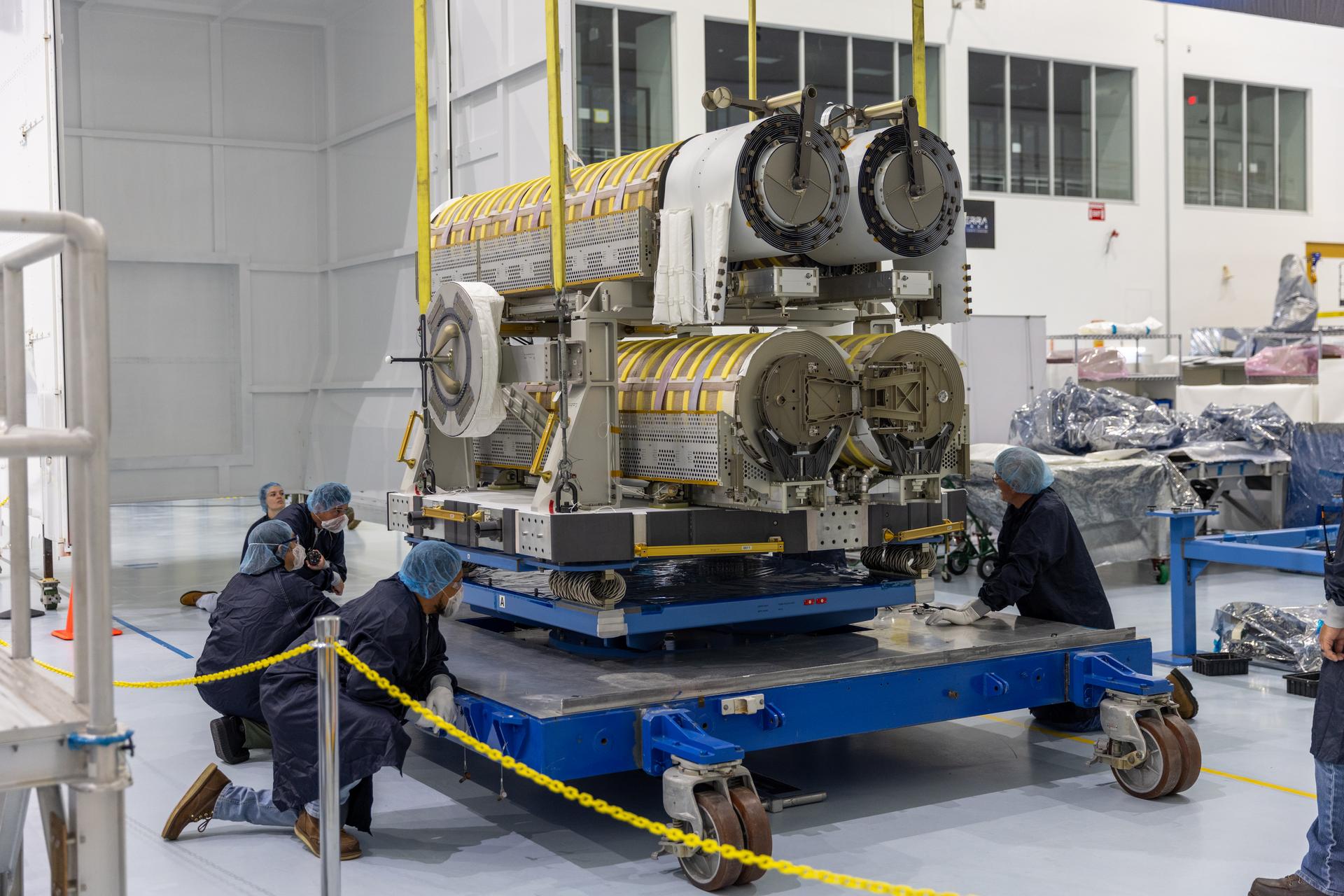
Technicians assist a crane to lower a pair of International Space Station Roll Out Solar Arrays (iROSA) onto a platform on Tuesday, Aug. 11, 2026, inside the Space Systems Processing Facility at NASA’s Kennedy Space Center in Florida. The iROSA are being prepared for delivery to the space station aboard SpaceX’s Dragon cargo carrier on the company’s 35th commercial resupply services (CRS-35) mission to the space station. iROSA is a new generation of solar arrays that roll open in space and is more compact than previous arrays while providing the same amount of power. With six similar arrays already in place on the station, the final pair will complete the power system upgrade for the orbiting laboratory.
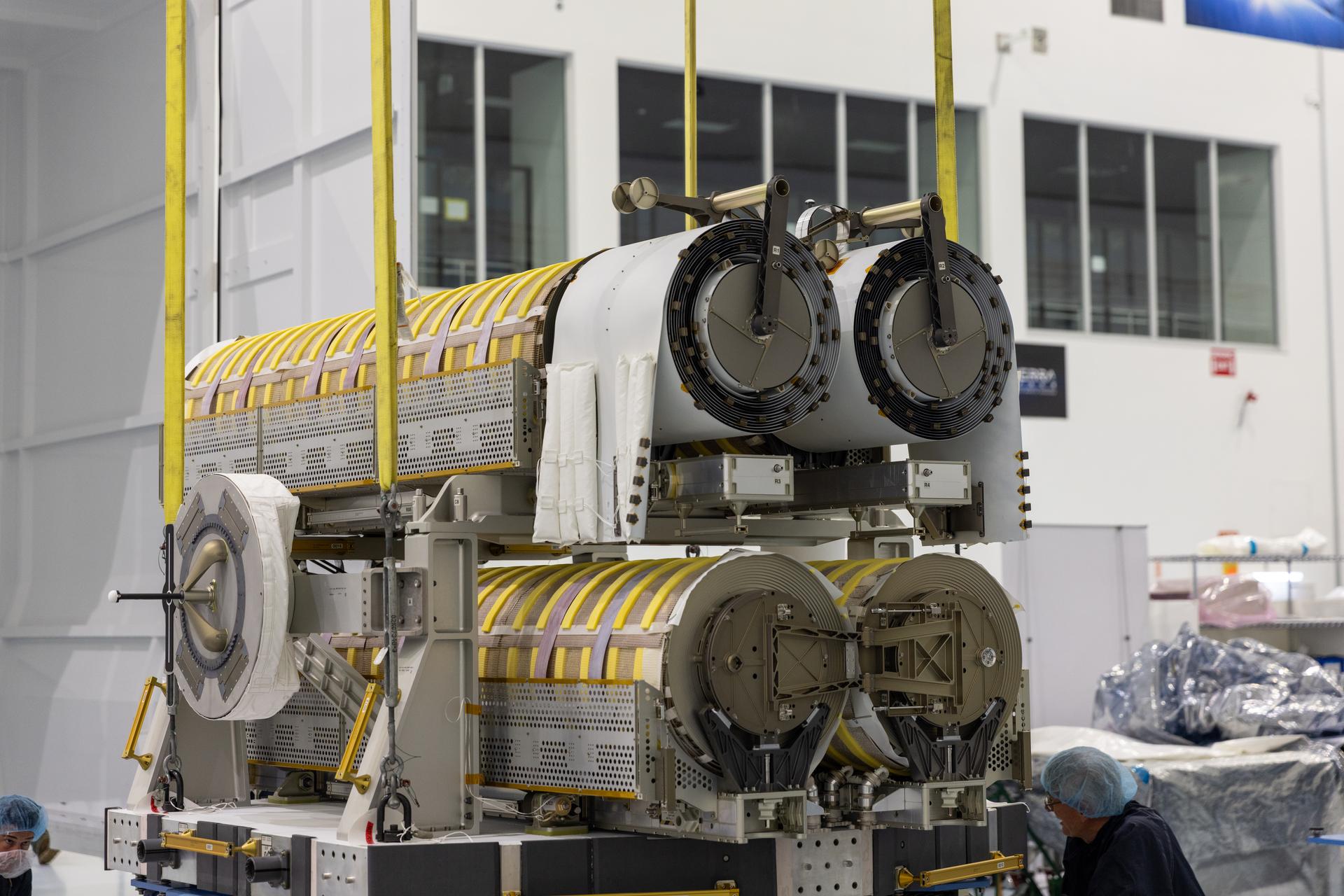
Technicians assist a crane to lower a pair of International Space Station Roll Out Solar Arrays (iROSA) onto a platform on Tuesday, Aug. 11, 2026, inside the Space Systems Processing Facility at NASA’s Kennedy Space Center in Florida. The iROSA are being prepared for delivery to the space station aboard SpaceX’s Dragon cargo carrier on the company’s 35th commercial resupply services (CRS-35) mission to the space station. iROSA is a new generation of solar arrays that roll open in space and is more compact than previous arrays while providing the same amount of power. With six similar arrays already in place on the station, the final pair will complete the power system upgrade for the orbiting laboratory.
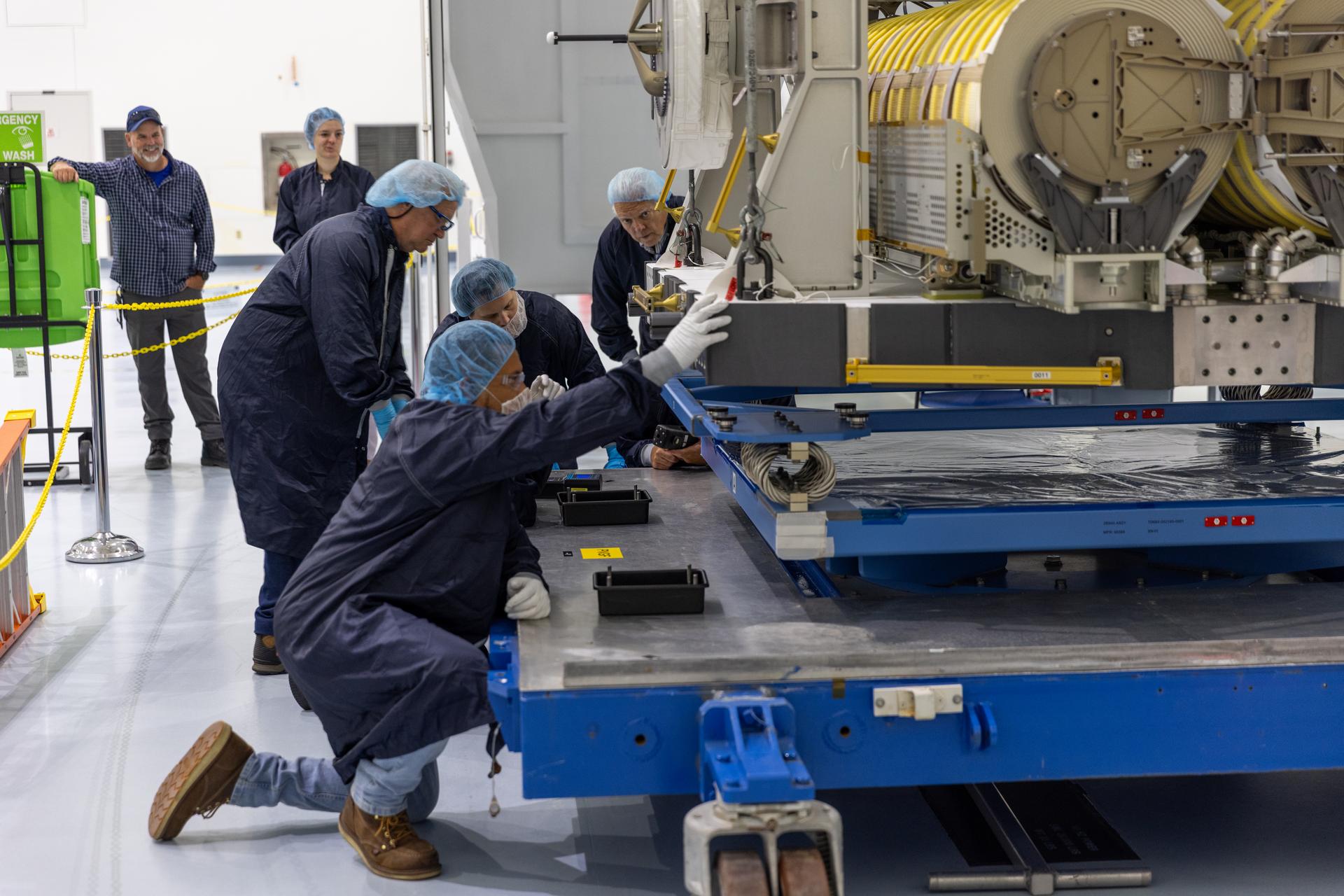
Technicians assist a crane to lower a pair of International Space Station Roll Out Solar Arrays (iROSA) onto a platform on Tuesday, Aug. 11, 2026, inside the Space Systems Processing Facility at NASA’s Kennedy Space Center in Florida. The iROSA are being prepared for delivery to the space station aboard SpaceX’s Dragon cargo carrier on the company’s 35th commercial resupply services (CRS-35) mission to the space station. iROSA is a new generation of solar arrays that roll open in space and is more compact than previous arrays while providing the same amount of power. With six similar arrays already in place on the station, the final pair will complete the power system upgrade for the orbiting laboratory.
NASA and Boeing workers move solar arrays for the International Space Station to flight support equipment in the high bay of the Space Station Processing Facility at NASA’s Kennedy Space Center in Florida on April 2, 2021. The 63- by- 20-foot solar arrays will launch to the International Space Station later this year. They are the first two of six new solar arrays that in total will produce more than 120 kilowatts of electricity from the Sun’s energy, enough to power more than 40 average U.S. homes. Combined with the eight original, larger arrays, this advanced hardware will provide 215 kilowatts of energy, a 20 to 30 percent increase in power, helping maximize the space station’s capabilities for years to come. The arrays will produce electricity to sustain the station’s systems and equipment, plus augment the electricity available to continue a wide variety of public and private experiments and research in the microgravity environment of low-Earth orbit.
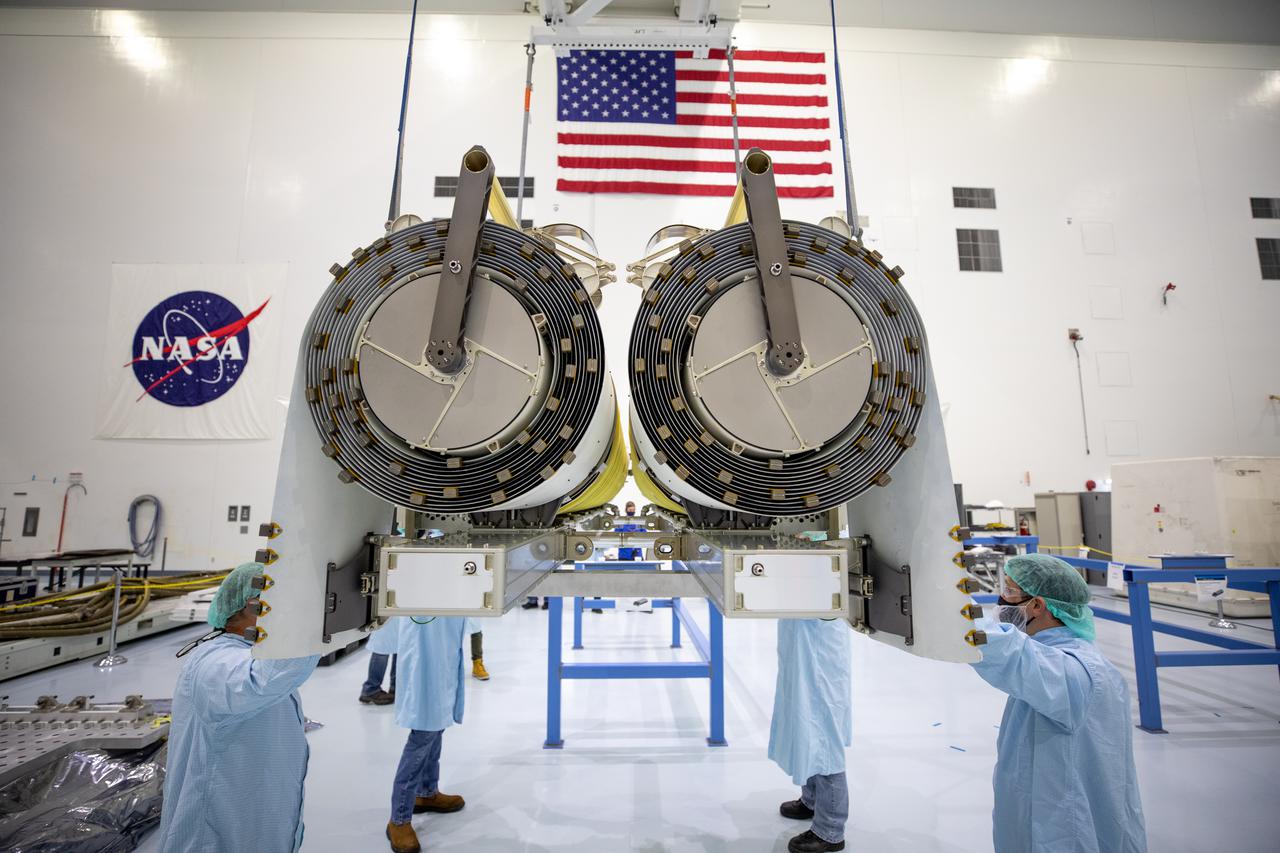
NASA and Boeing workers help position the solar arrays onto flight support equipment inside the high bay of the Space Station Processing Facility at NASA’s Kennedy Space Center in Florida on April 2, 2021. The 63- by- 20-foot solar arrays will launch to the International Space Station later this year. They are the first two of six new solar arrays that in total will produce more than 120 kilowatts of electricity from the Sun’s energy, enough to power more than 40 average U.S. homes. Combined with the eight original, larger arrays, this advanced hardware will provide 215 kilowatts of energy, a 20 to 30 percent increase in power, helping maximize the space station’s capabilities for years to come. The arrays will produce electricity to sustain the station’s systems and equipment, plus augment the electricity available to continue a wide variety of public and private experiments and research in the microgravity environment of low-Earth orbit.
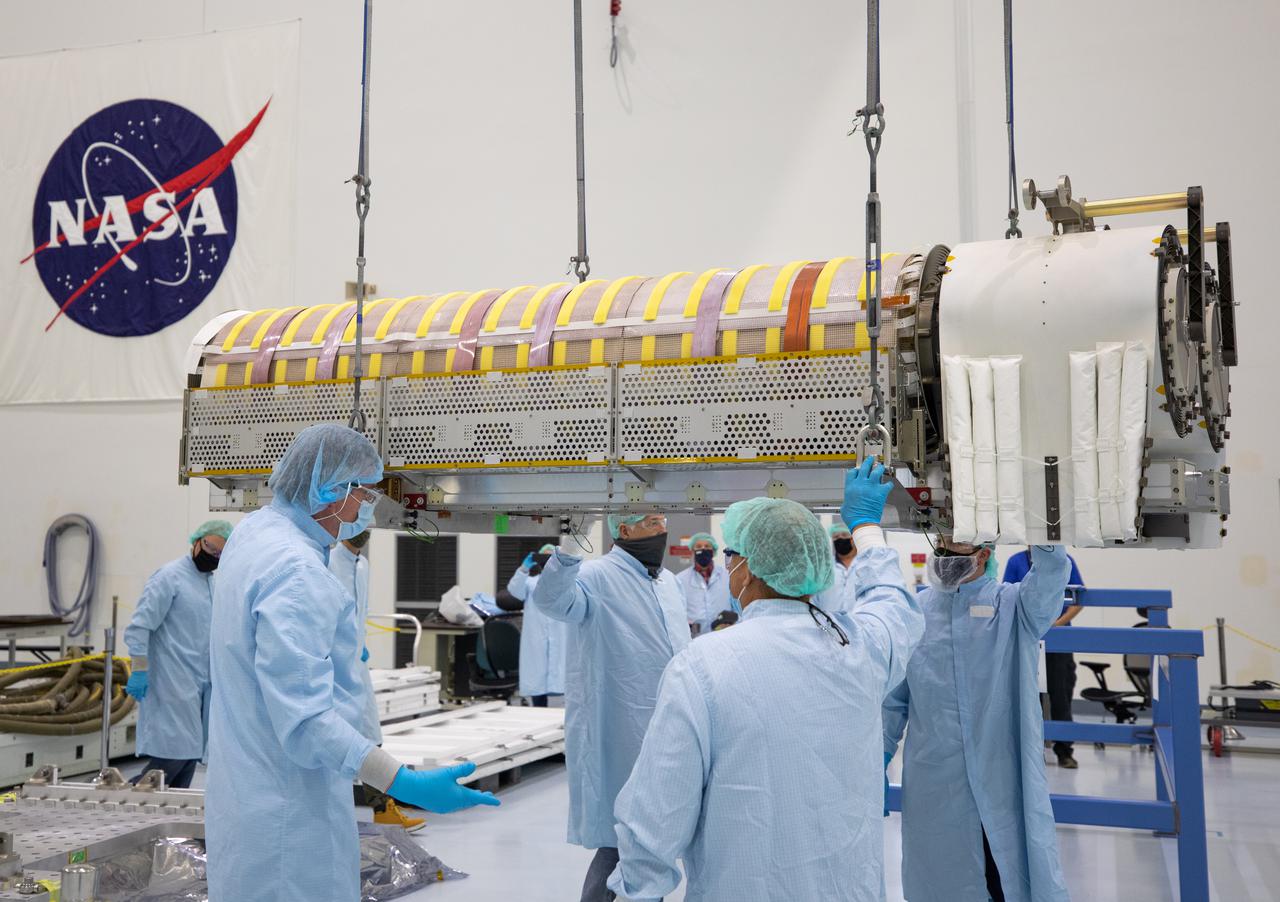
NASA and Boeing workers lift solar arrays into flight support equipment on April 2, 2021, in the Space Station Processing Facility at NASA’s Kennedy Space Center in Florida. The 63- by- 20-foot solar arrays will launch to the International Space Station later this year. They are the first two of six new solar arrays that in total will produce more than 120 kilowatts of electricity from the Sun’s energy, enough to power more than 40 average U.S. homes. Combined with the eight original, larger arrays, this advanced hardware will provide 215 kilowatts of energy, a 20 to 30 percent increase in power, helping maximize the space station’s capabilities for years to come. The arrays will produce electricity to sustain the station’s systems and equipment, plus augment the electricity available to continue a wide variety of public and private experiments and research in the microgravity environment of low-Earth orbit. Most of the station systems, including its batteries, scientific equipment racks, and communications equipment have been upgraded since humans began a continuous presence on the orbiting laboratory in November 2000. For more than two decades, astronauts have lived and worked on this unique orbiting lab, supporting scientific research that has led to numerous discoveries that benefit people on Earth and prepare for future Artemis missions to the Moon and beyond.
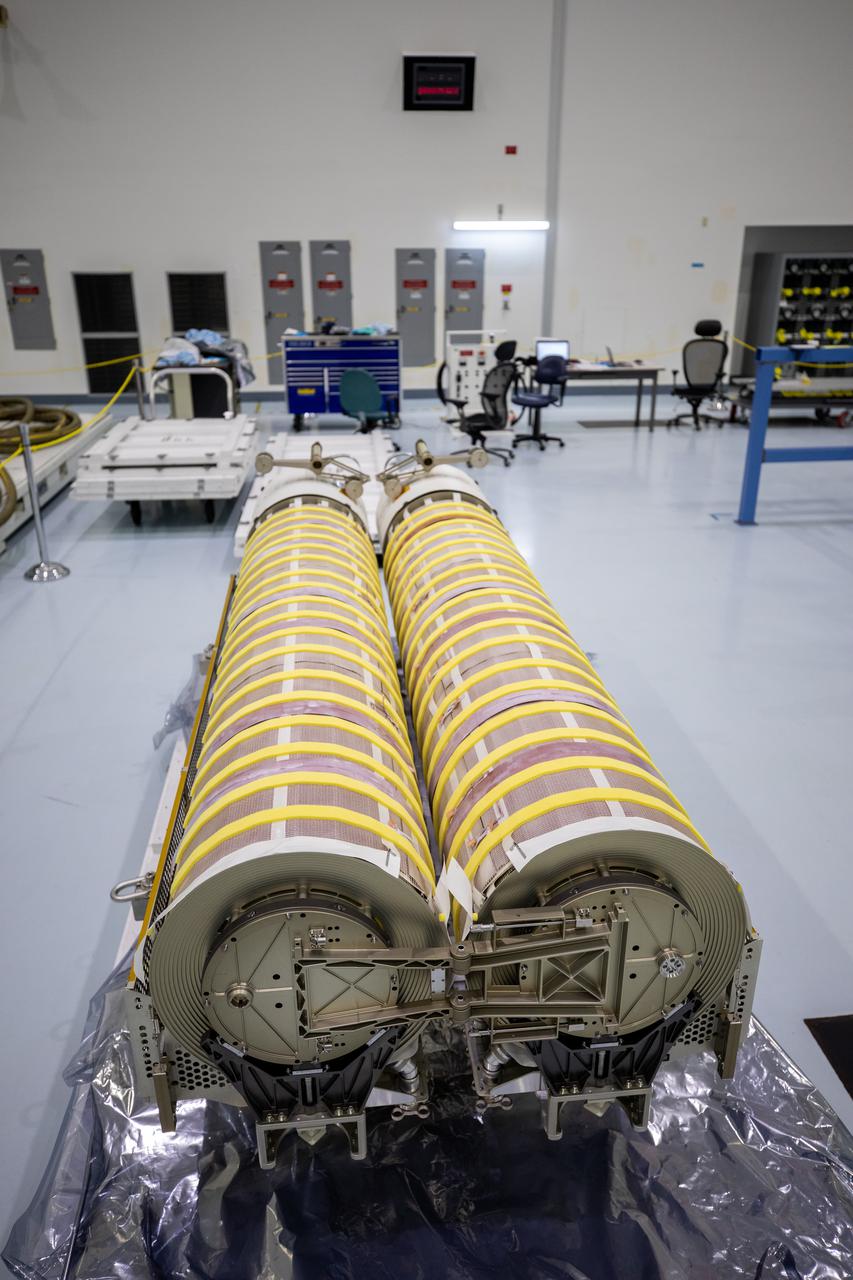
In view are the first two of six solar arrays shortly before NASA and Boeing workers began lifting them into flight support equipment the Space Station Processing Facility at NASA’s Kennedy Space Center in Florida on April 2, 2021. The 63- by- 20-foot solar arrays will launch to the International Space Station later this year. The six new solar arrays in total will produce more than 120 kilowatts of electricity from the Sun’s energy, enough to power more than 40 average U.S. homes. Combined with the eight original, larger arrays, this advanced hardware will provide 215 kilowatts of energy, a 20 to 30 percent increase in power, helping maximize the space station’s capabilities for years to come. The arrays will produce electricity to sustain the station’s systems and equipment, plus augment the electricity available to continue a wide variety of public and private experiments and research in the microgravity environment of low-Earth orbit.
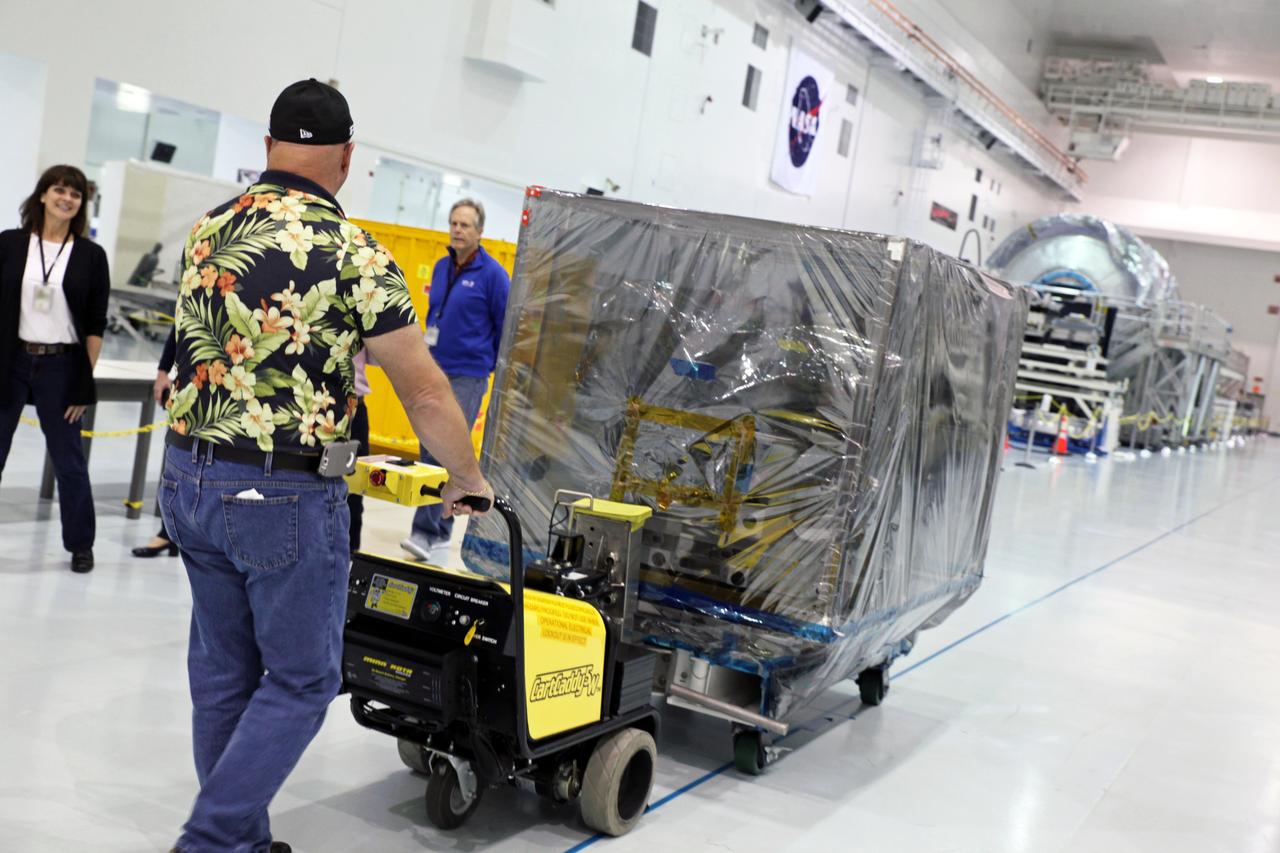
Inside the Space Station Processing Facility high bay at NASA's Kennedy Space Center in Florida, the Roll-Out Solar Array, or ROSA, is being prepared for transfer out of the high bay. ROSA will be delivered to the International Space Station aboard the SpaceX Dragon cargo carrier on the company’s 11th commercial resupply services mission to the space station. ROSA is a new type of solar panel that rolls open in space and is more compact than current rigid panel designs. The ROSA investigation will test deployment and retraction, shape changes when the Earth blocks the sun, and other physical challenges to determine the array's strength and durability.
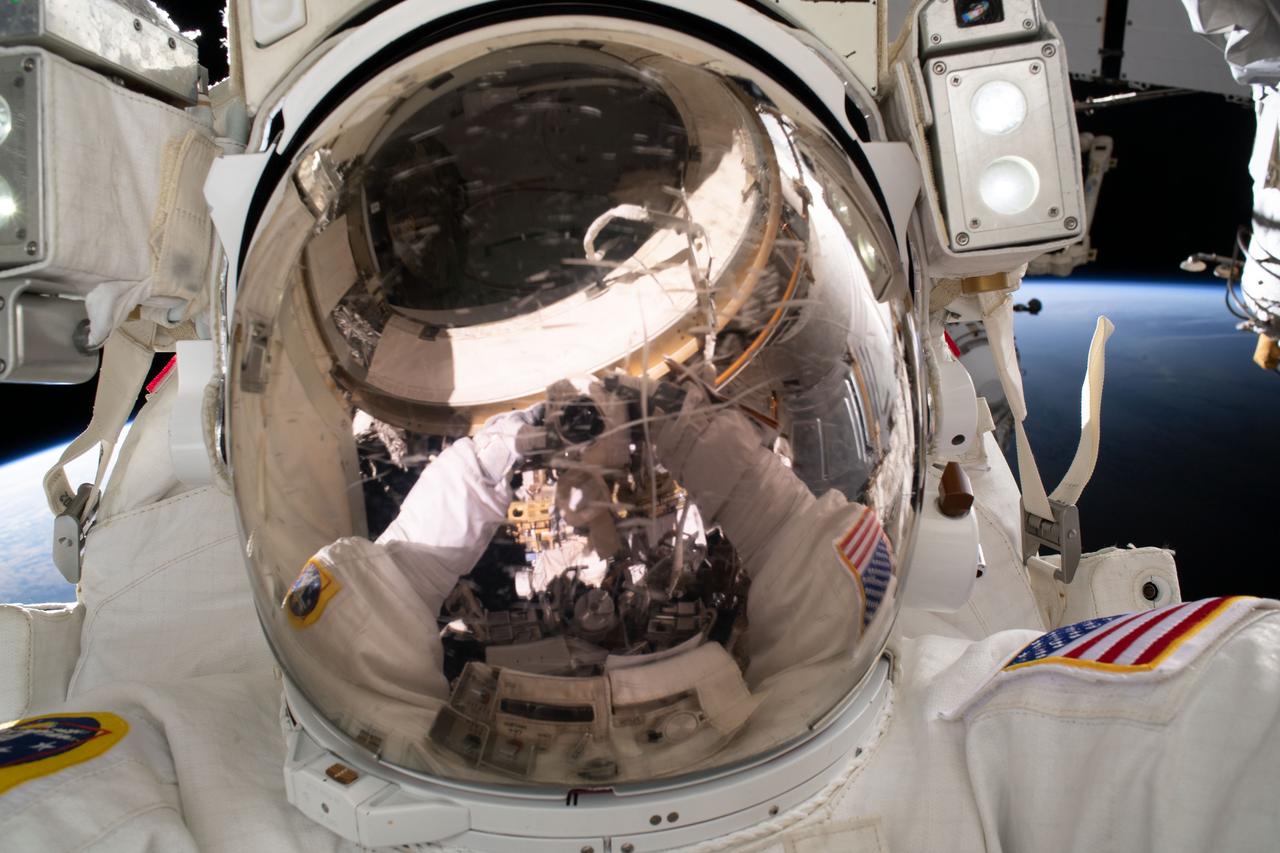
iss069e020708 (June 15, 2023) --- NASA astronaut and Expedition 68 Flight Engineer Woody Hoburg points the camera toward himself and takes an out-of-this-world "space-selfie" during a five-hour and 35-minute spacewalk to install a roll-out solar array on the International Space Station's truss structure.
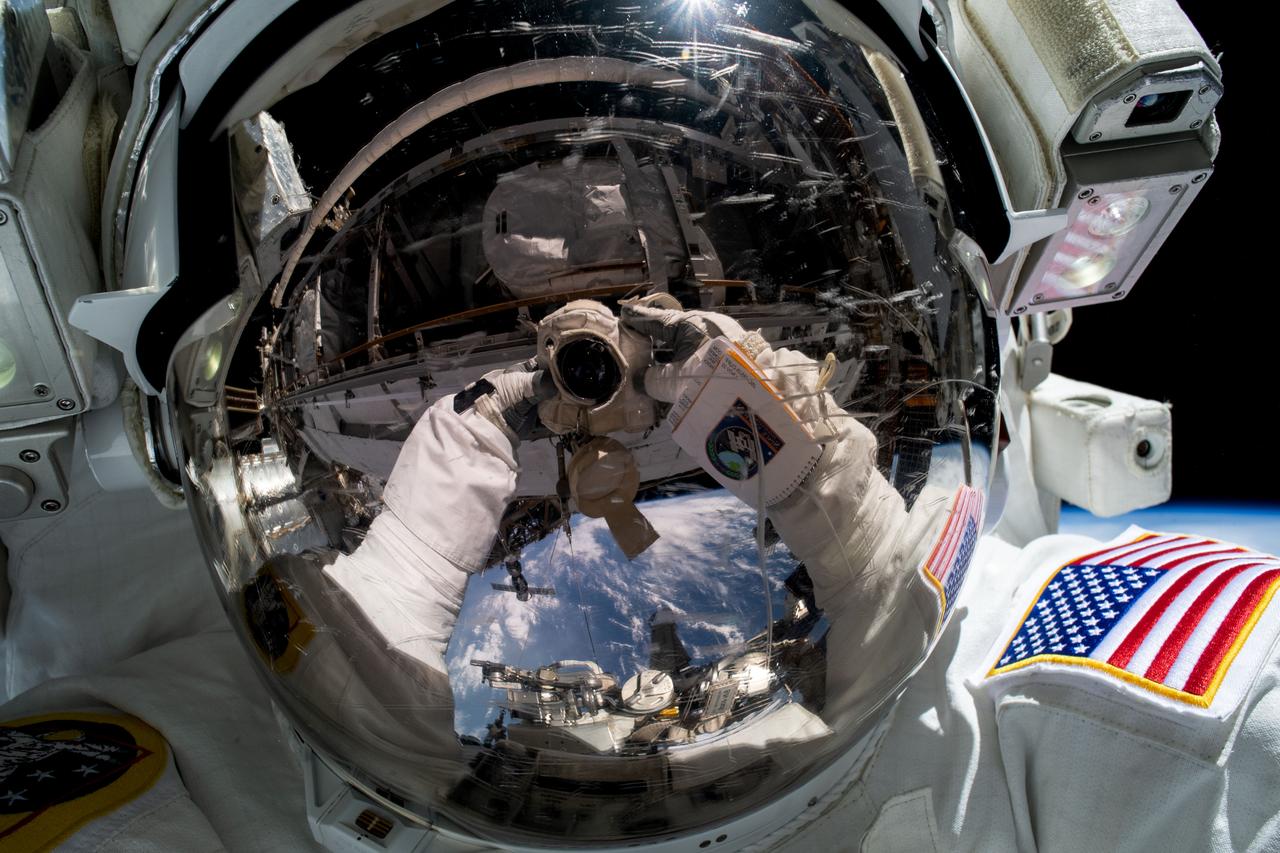
iss069e018575 (June 9, 2023) --- NASA astronaut and Expedition 68 Flight Engineer Woody Hoburg points the camera toward himself and takes an out-of-this-world "space-selfie" during a six-hour and three-minute spacewalk to install a roll-out solar array on the International Space Station's truss structure.
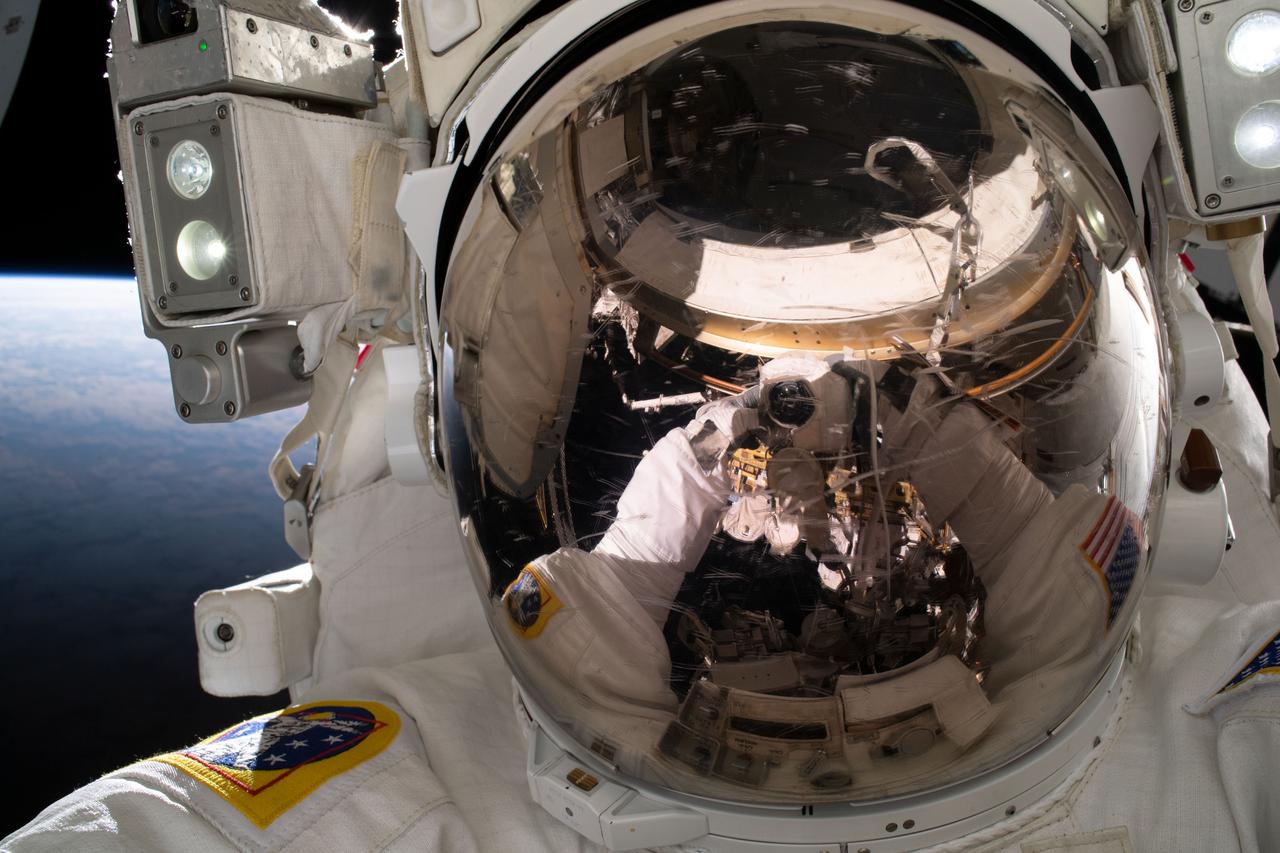
iss069e020706 (June 15, 2023) --- NASA astronaut and Expedition 68 Flight Engineer Woody Hoburg points the camera toward himself and takes an out-of-this-world "space-selfie" during a five-hour and 35-minute spacewalk to install a roll-out solar array on the International Space Station's truss structure.
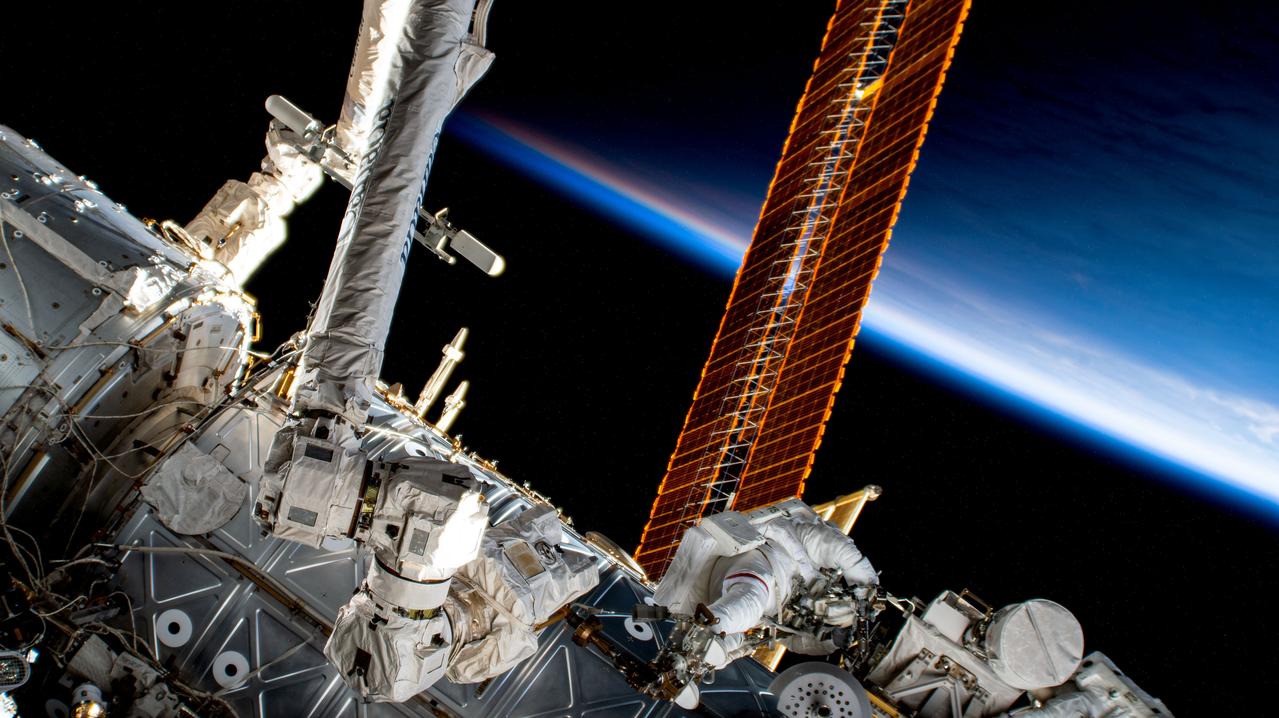
iss069e005732 (April 28, 2023) --- NASA astronaut and Expedition 69 Flight Engineer Stephen Bowen is pictured in his Extravehicular Mobility Unit, or spacesuit, outside the International Space Station during his eighth career spacewalk. He and UAE (United Arab Emirates) astronaut Sultan Alneyadi (out of frame) would spend seven hours and one minute in the vacuum of space routing cables and installing insulation readying the orbital outpost for its next set of roll-out solar arrays due to be installed after their delivery on the next SpaceX Dragon cargo mission.
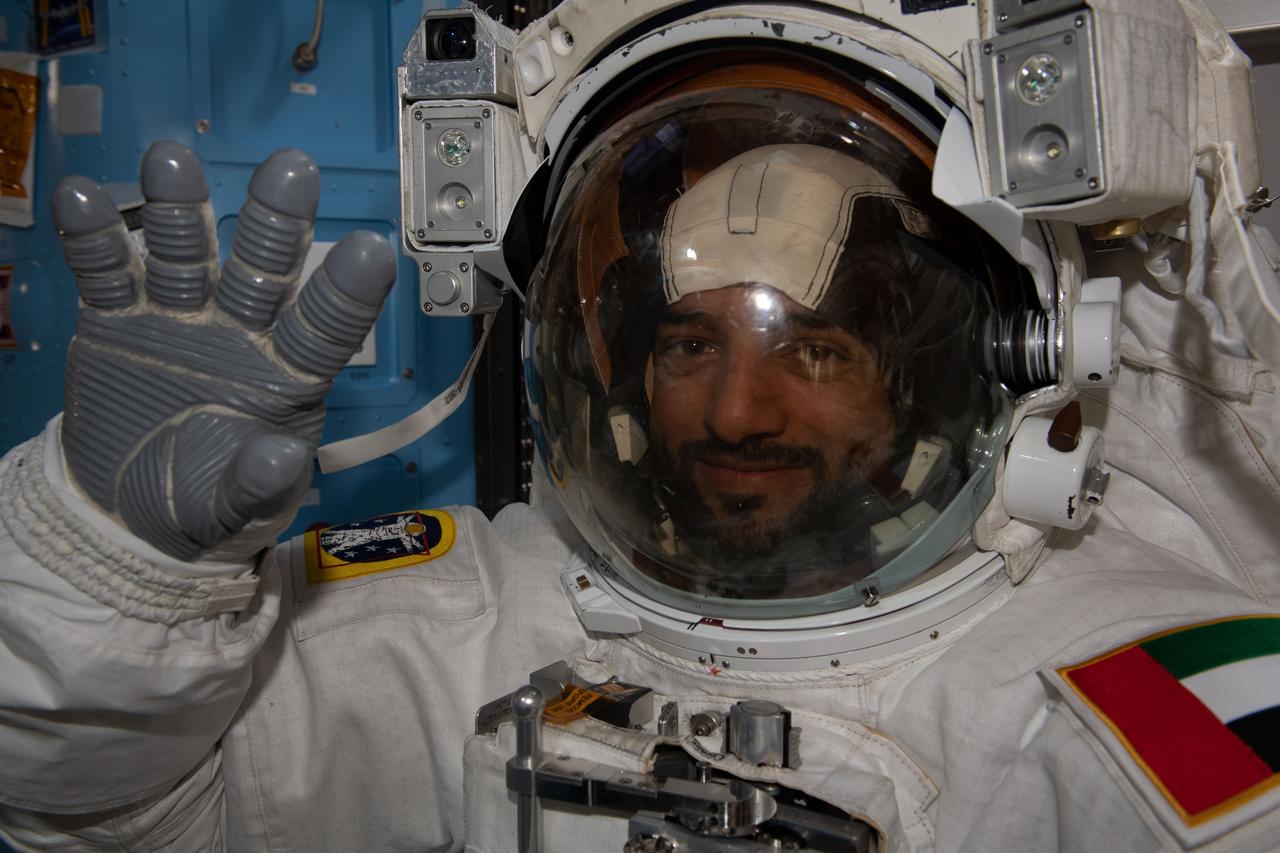
iss069e005102 (April 24, 2023) --- UAE (United Arab Emirates) astronaut and Expedition 69 Flight Engineer Sultan Alneyadi is pictured trying on his Extravehicular Mobility Unit, or spacesuit, and testing it ahead of a spacewalk planned for Friday, April 28. Alneyadi, along with NASA astronaut Stephen Bowen, will spend about six-and-a-half hours in the vacuum of space continuing to upgrade the International Space Station’s power generation system readying the orbiting lab for its next set of roll-out solar arrays.
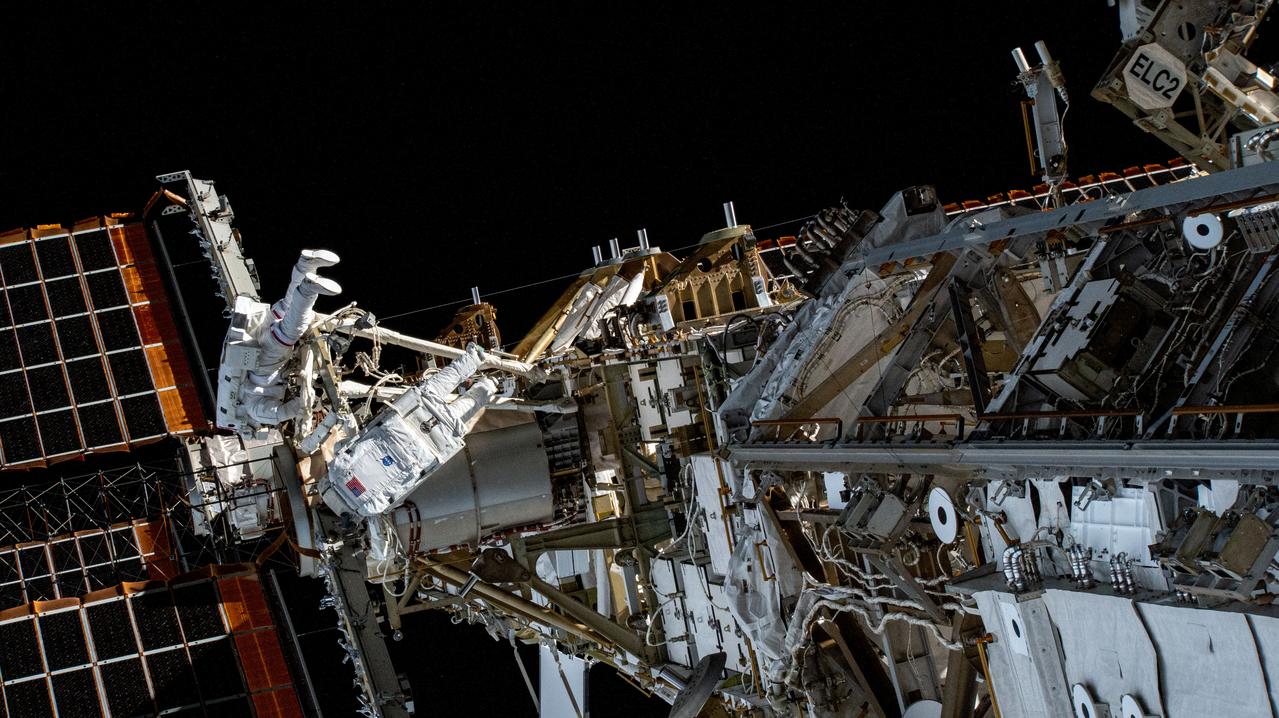
iss069e005734 (April 28, 2023) --- NASA astronaut Stephen Bowen and UAE (United Arab Emirates) astronaut Sultan Alneyadi are pictured in their Extravehicular Mobility Units, or spacesuits, on the International Space Station's starboard truss structure during a spacewalk. The duo would spend seven hours and one minute in the vacuum of space routing cables and installing insulation readying the orbital outpost for its next set of roll-out solar arrays due to be installed after their delivery on the next SpaceX Dragon cargo mission.
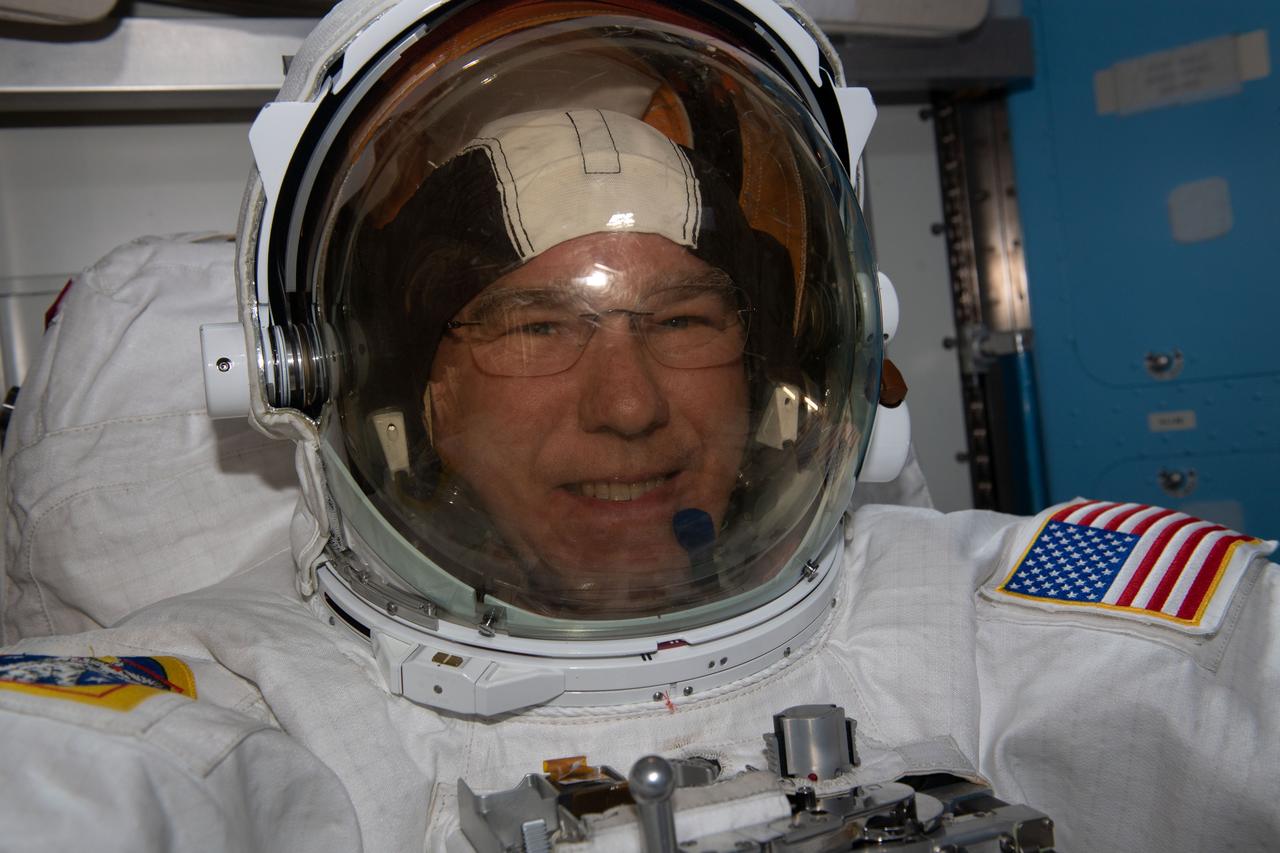
iss069e005093 (April 24, 2023) --- NASA astronaut and Expedition 69 Flight Engineer Stephen Bowen is pictured trying on his Extravehicular Mobility Unit, or spacesuit, and testing it ahead of a spacewalk planned for Friday, April 28. Bowen, along with UAE (United Arab Emirates) astronaut Sultan Alneyadi, will spend about six-and-a-half hours in the vacuum of space continuing to upgrade the International Space Station’s power generation system readying the orbiting lab for its next set of roll-out solar arrays.
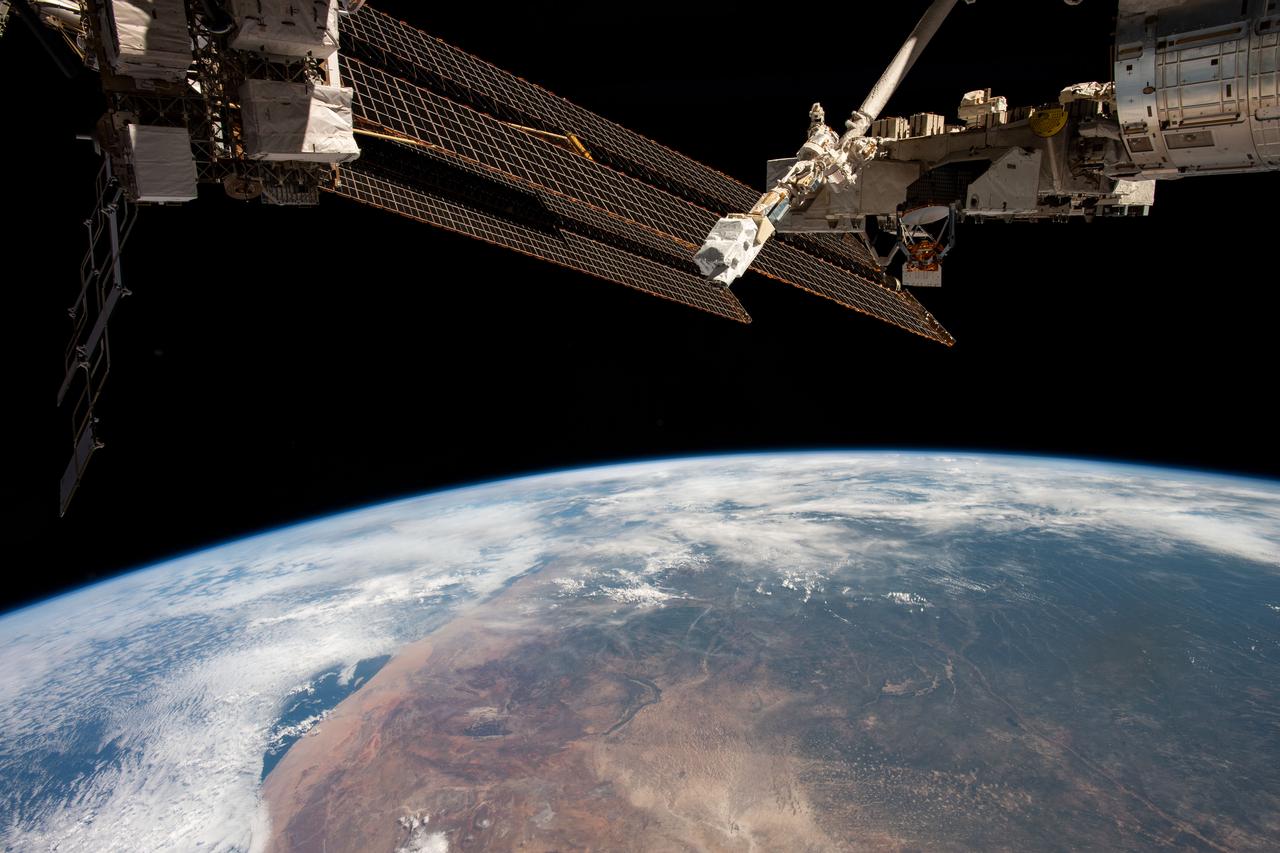
iss068e026073 (Dec. 2, 2022) --- A pair of the International Space Station's solar arrays, a roll-out solar array, and a small satellite orbital deployer attached to the Japanese robotic arm seemingly criss-cross each other in this photograph as the orbiting lab soared 265 miles above the African nation of Namibia. At far right, is a portion of the Kibo laboratory module with its exposed facility that houses space station hardware and external research experiments.
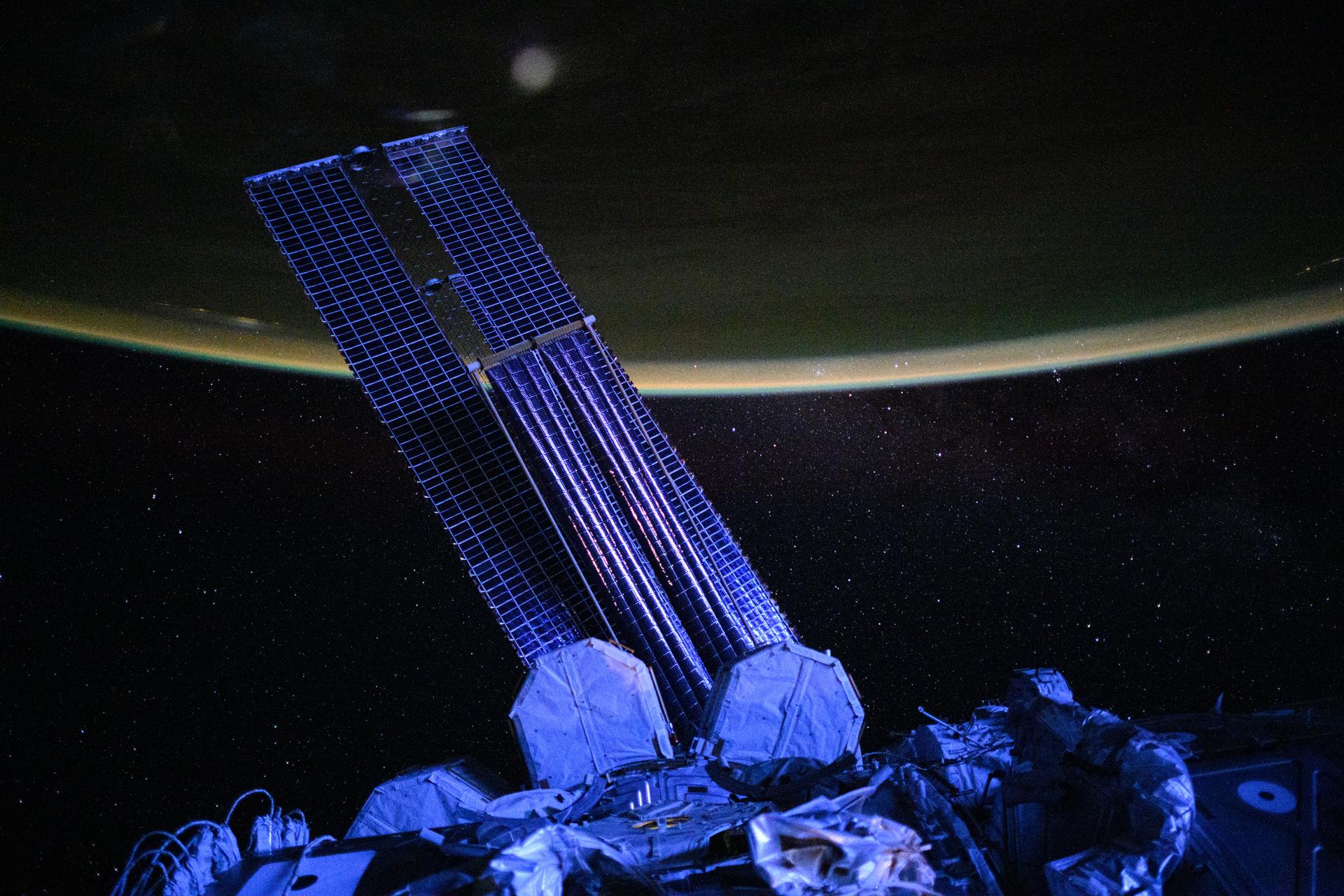
iss073e0850593 (Sept. 17, 2025) --- This moonlit, violet-hued view of the International Space Station’s main solar arrays, partially overlapped by a smaller set of roll-out solar arrays, was captured at approximately 5:16 a.m. local time. The orbital outpost was soaring 265 miles above the Pacific Ocean, just north of New Zealand, when this photograph was taken.
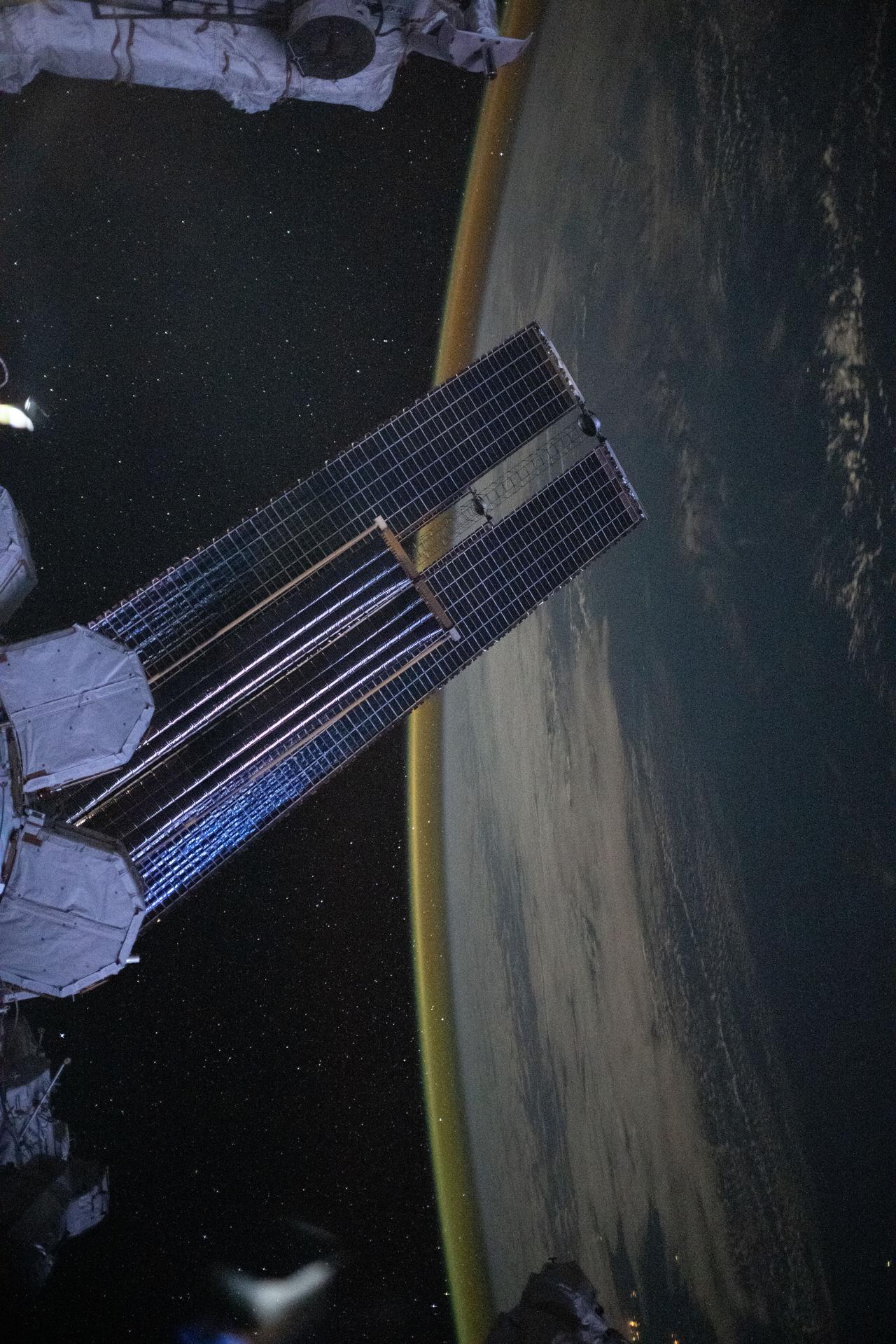
iss073e0828980 (Sept. 14, 2025) --- A dim, yellow-green airglow crowns Earth’s horizon between northwestern Australia and Indonesia’s Lesser Sunda Islands. In the foreground, a set of the orbital outpost’s main solar arrays, partially overlapped by a smaller set of roll-out solar arrays, stretches across the frame. The International Space Station was soaring 262 miles above the tranquil Indian Ocean at approximately 4:07 a.m. local time when this photograph was taken.
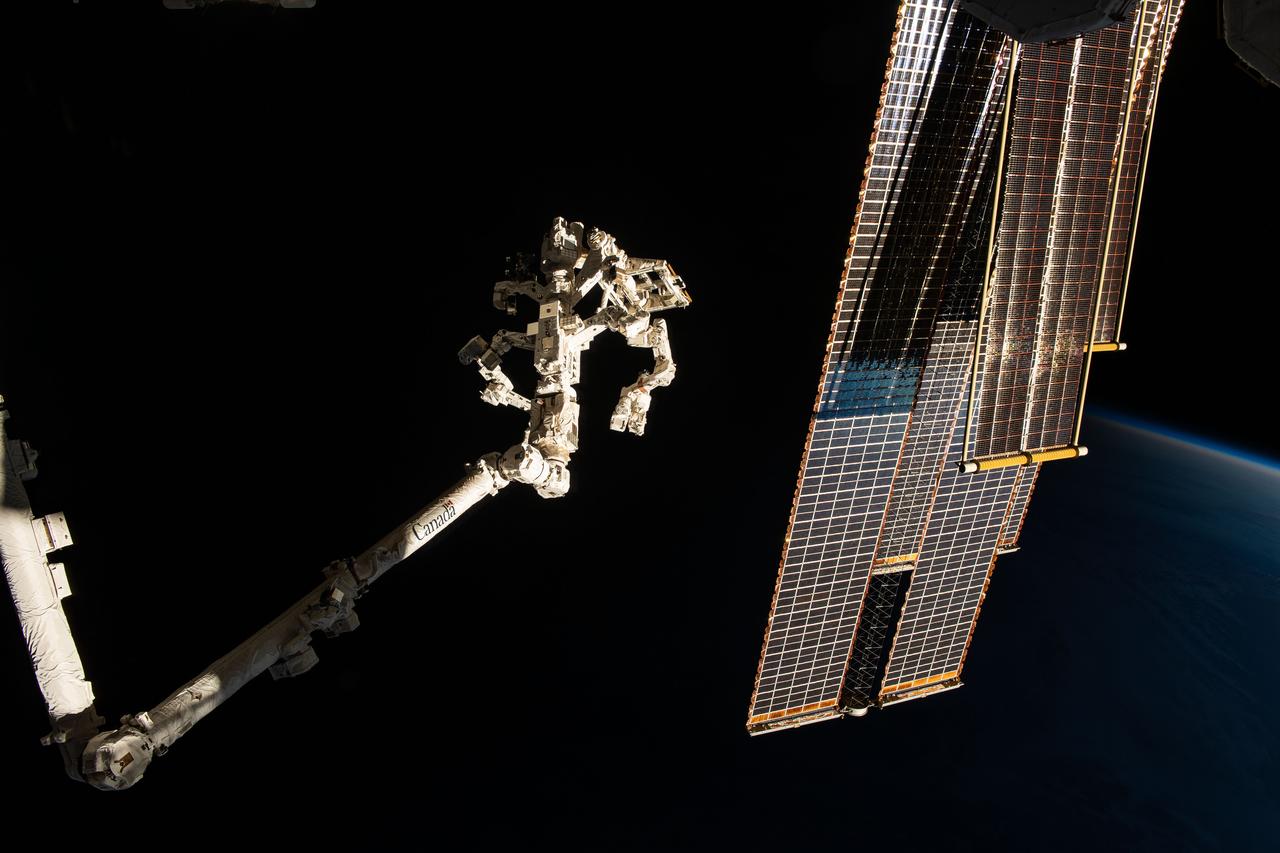
iss070e076757 (Jan. 22, 2024) --- The Earth's horizon is barely visible as the International Space Station soars into an orbital sunset 261 miles above northeastern China. In the foreground, are the Canadarm2 robotic arm (left) with the Dextre fine-tuned robotic hand attached and the orbital outpost's main solar arrays (right) and shorter roll-out solar arrays.
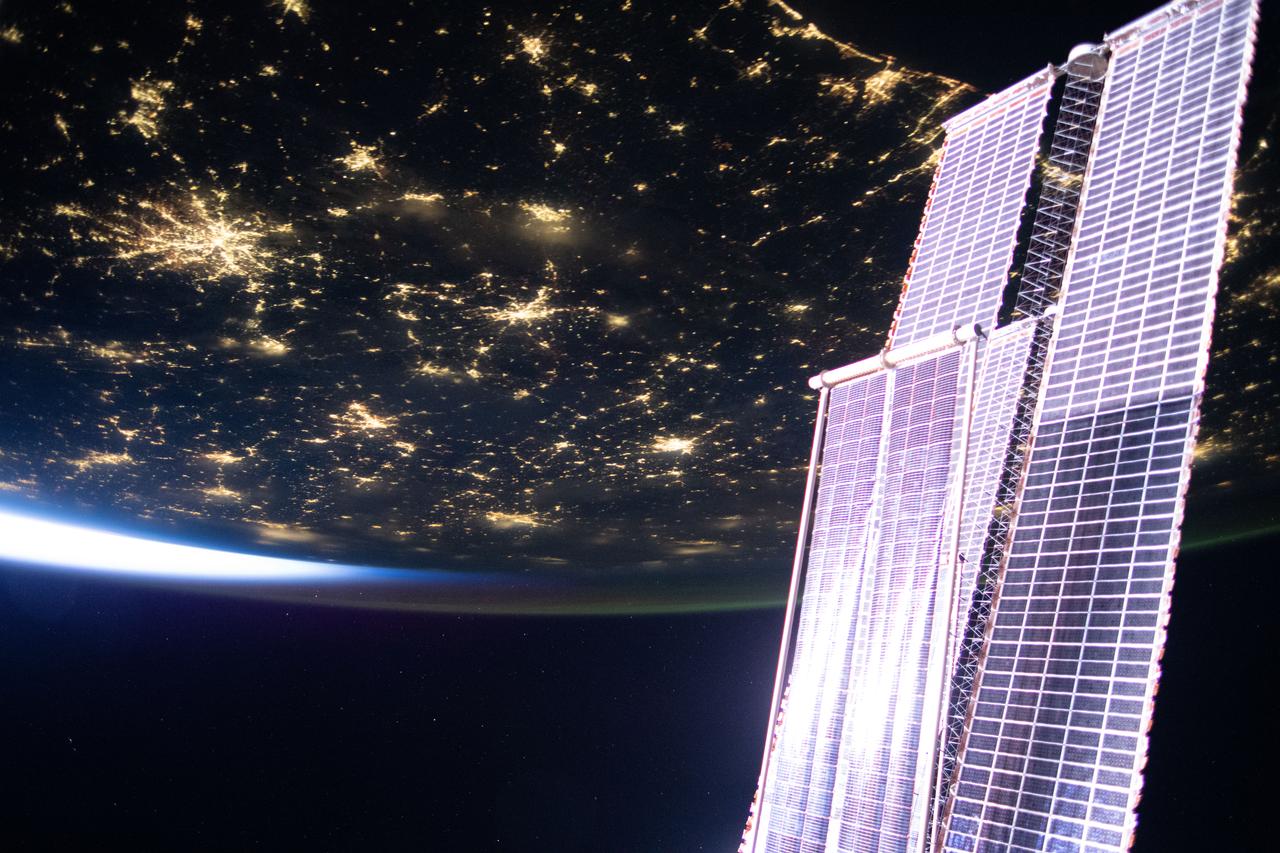
iss073e0273067 (June 20, 2025) --- City lights sparkle across the southern United States in this photograph taken at approximately 4:44 a.m. local time from the International Space Station is it orbited into a sunrise 260 miles above Florida. In the right foreground, is a set of the orbital outpost's main solar arrays augmented by a smaller set of roll out solar arrays.
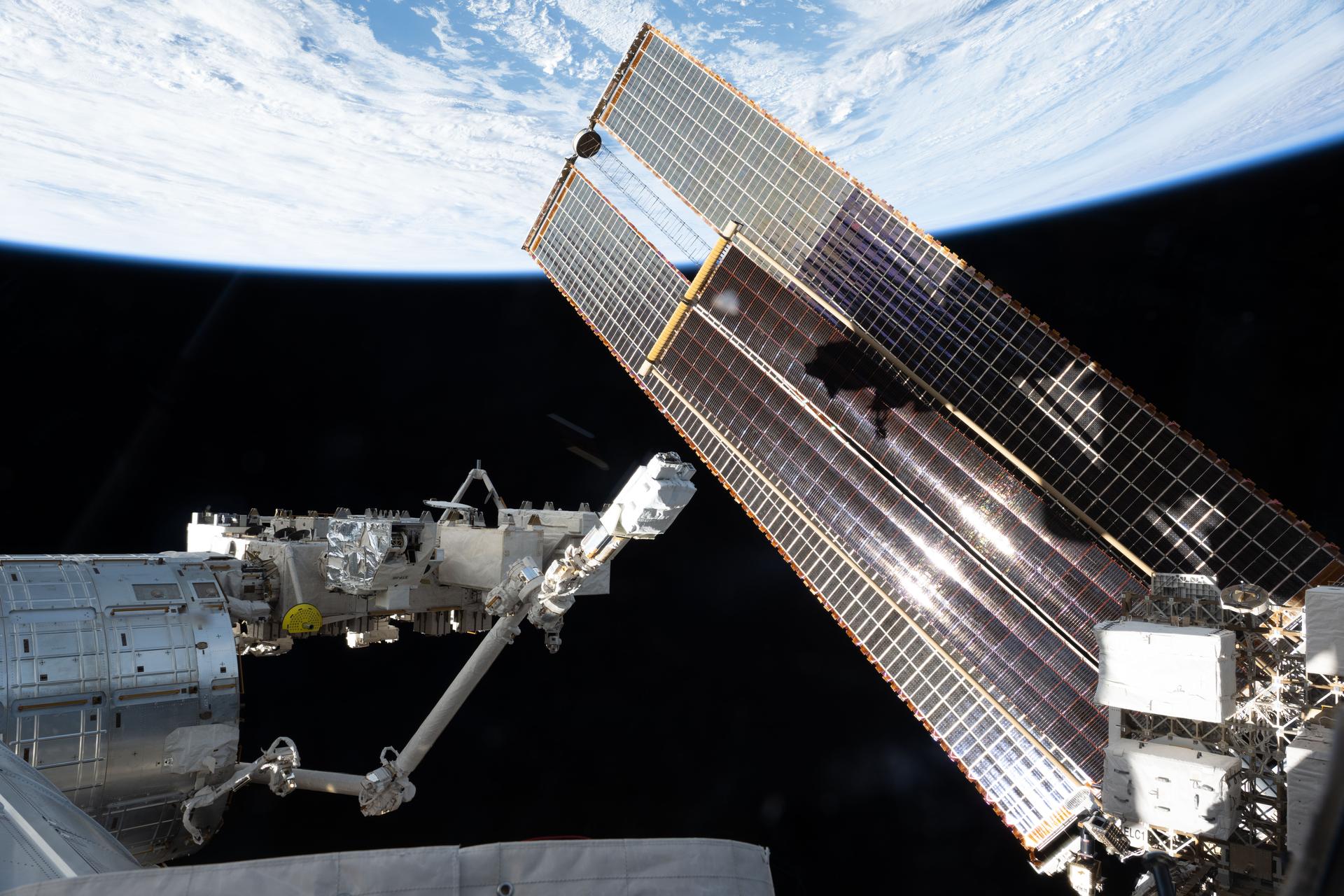
iss073e0869068 (Oct. 10, 2025) --- A set of the International Space Station's main solar arrays, partially overlapped by a smaller set of roll-out solar arrays, stretches across the photograph as the International Space Station orbited 262 miles above the Atlantic Ocean off the coast of Portugal. At left, the Japanese robotic arm with the small satellite orbital deployer attached, extends from the Kibo laboratory module.
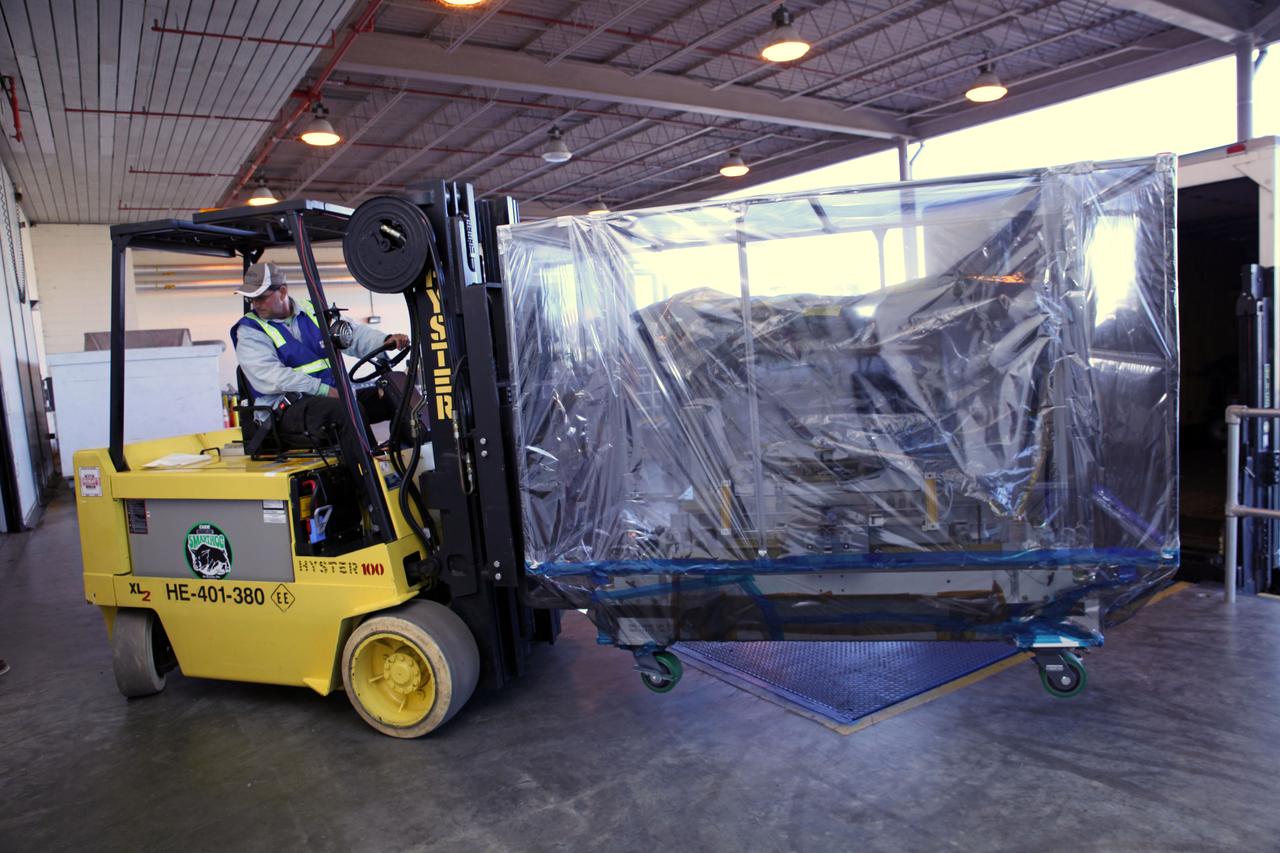
Outside the Space Station Processing Facility high bay at NASA's Kennedy Space Center in Florida, a technician uses a Hyster forklift to carry the Roll-Out Solar Array, or ROSA, to the loading dock. ROSA will be delivered to the International Space Station aboard the SpaceX Dragon cargo carrier on the company’s 11th commercial resupply services mission to the space station. ROSA is a new type of solar panel that rolls open in space and is more compact than current rigid panel designs. The ROSA investigation will test deployment and retraction, shape changes when the Earth blocks the sun, and other physical challenges to determine the array's strength and durability.
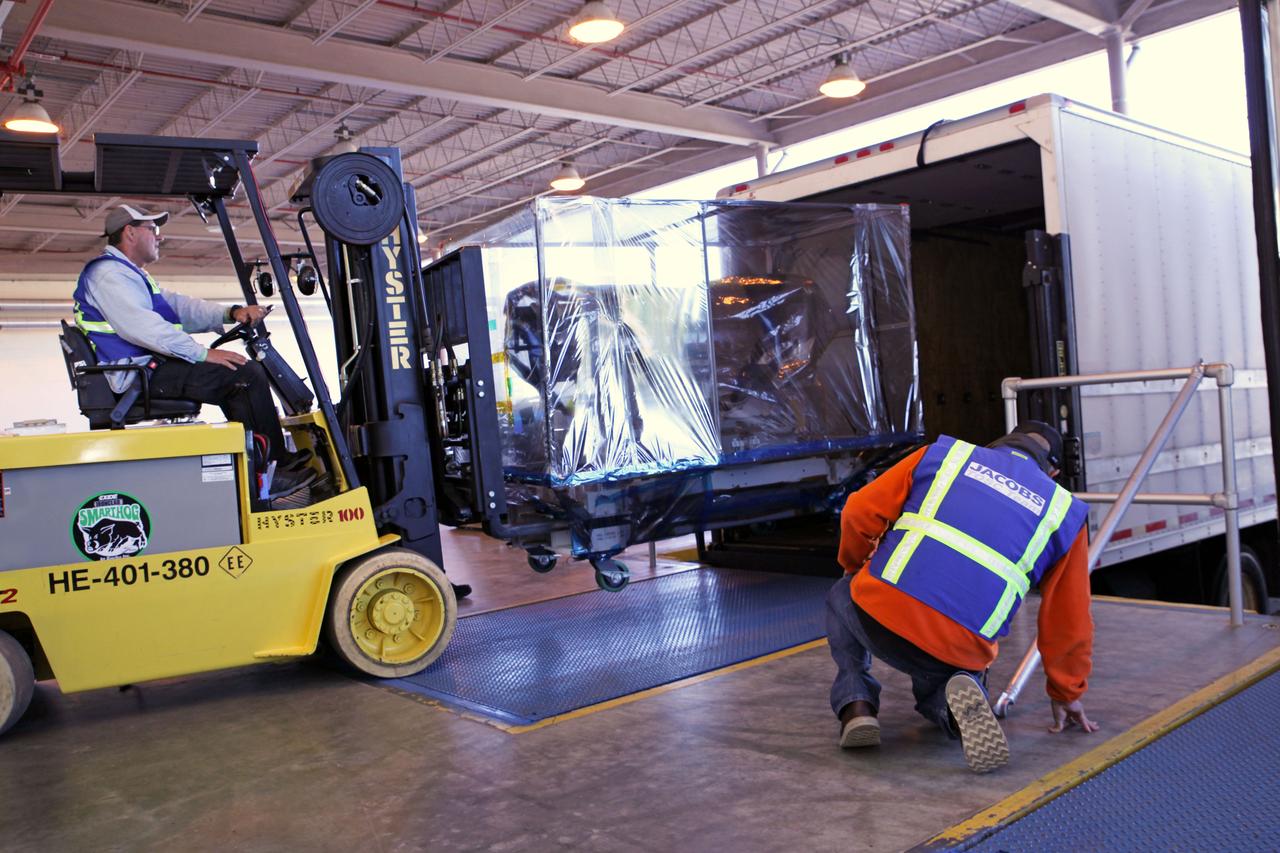
At the loading dock outside the Space Station Processing Facility high bay at NASA's Kennedy Space Center in Florida, a technician uses a Hyster forklift to load the Roll-Out Solar Array, or ROSA, into a truck. ROSA will be delivered to the International Space Station aboard the SpaceX Dragon cargo carrier on the company’s 11th commercial resupply services mission to the space station. ROSA is a new type of solar panel that rolls open in space and is more compact than current rigid panel designs. The ROSA investigation will test deployment and retraction, shape changes when the Earth blocks the sun, and other physical challenges to determine the array's strength and durability.
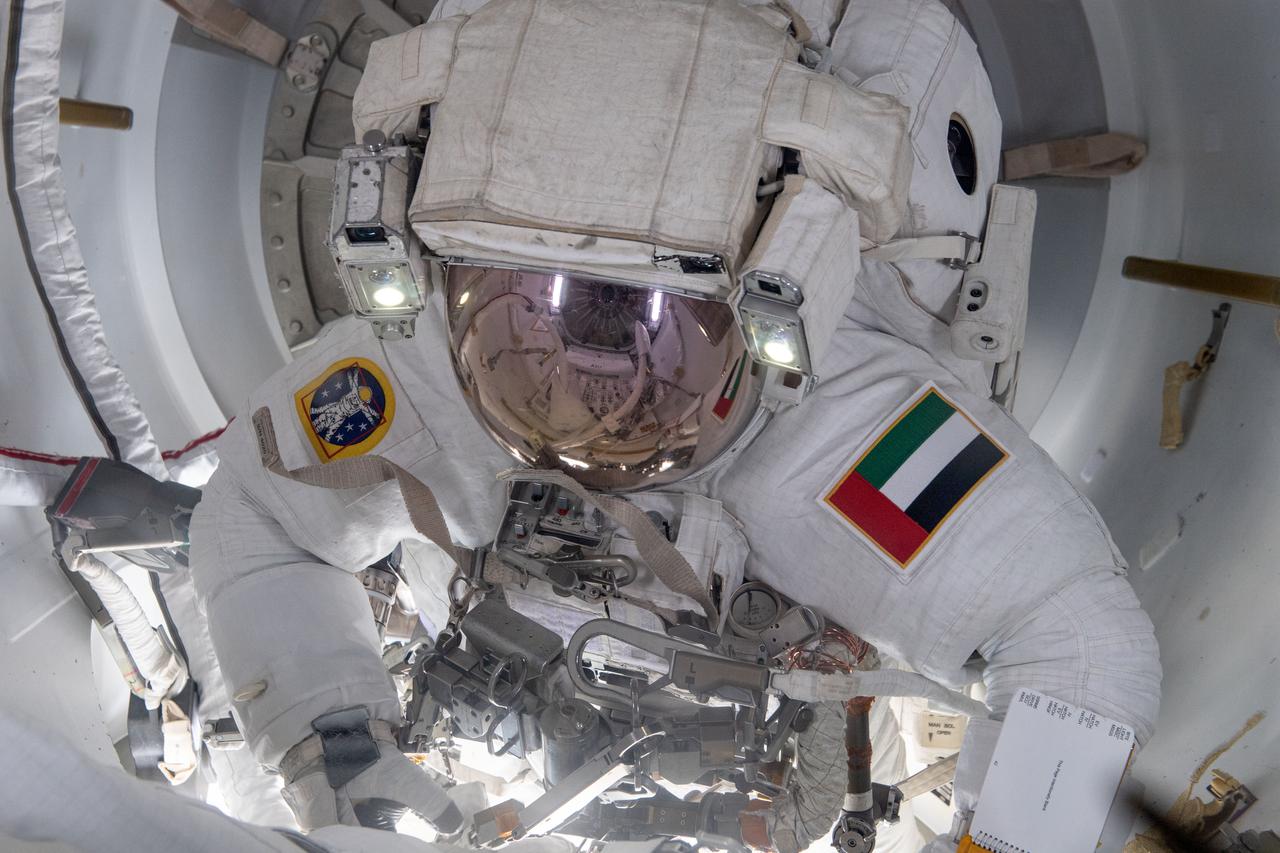
iss069e005717 (April 28, 2023) --- UAE (United Arab Emirates) astronaut and Expedition 69 Flight Engineer Sultan Alneyadi is pictured in his Extravehicular Mobility Unit, or spacesuit, preparing to exit the International Space Station's Quest airlock and begin his first spacewalk. He and NASA astronaut Stephen Bowen (out of frame) would spend seven hours and one minute in the vacuum of space routing cables and installing insulation readying the orbital outpost for its next set of roll-out solar arrays due to be installed after their delivery on the next SpaceX Dragon cargo mission.
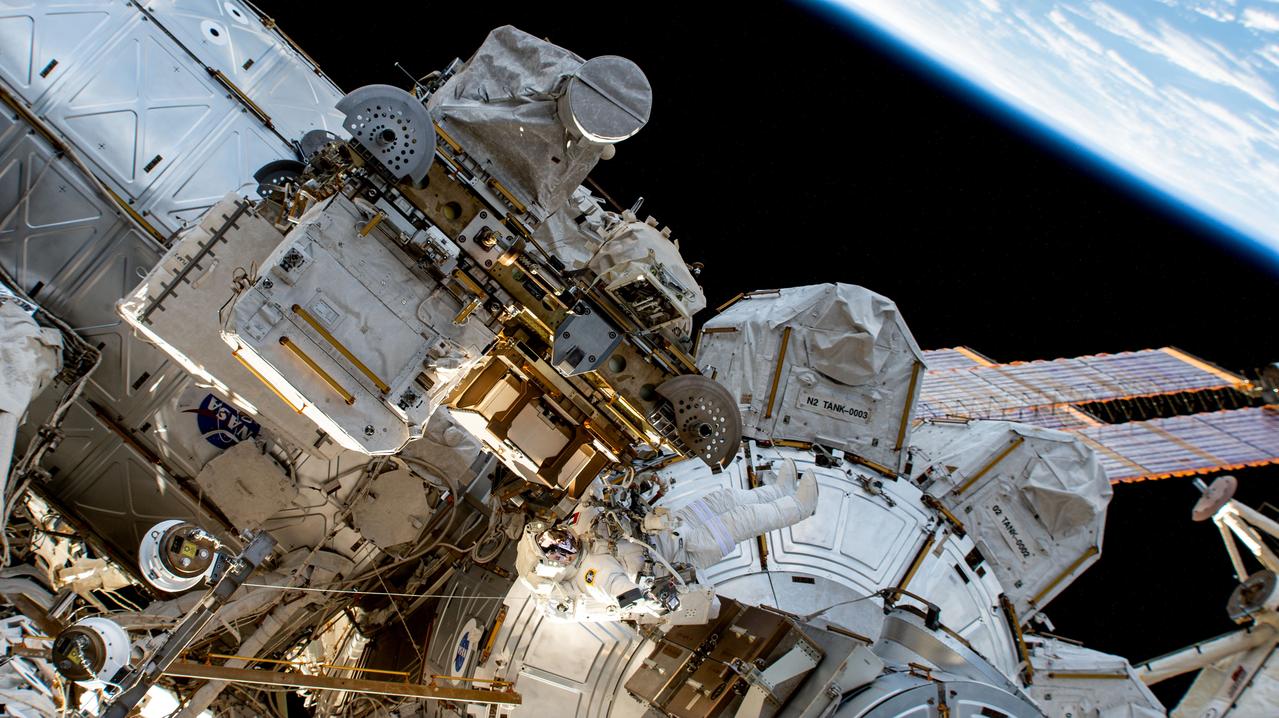
iss069e005729 (April 28, 2023) --- UAE (United Arab Emirates) astronaut and Expedition 69 Flight Engineer Sultan Alneyadi is pictured in his Extravehicular Mobility Unit, or spacesuit, outside the International Space Station's Quest airlock during his first spacewalk. He and NASA astronaut Stephen Bowen (out of frame) would spend seven hours and one minute in the vacuum of space routing cables and installing insulation readying the orbital outpost for its next set of roll-out solar arrays due to be installed after their delivery on the next SpaceX Dragon cargo mission.
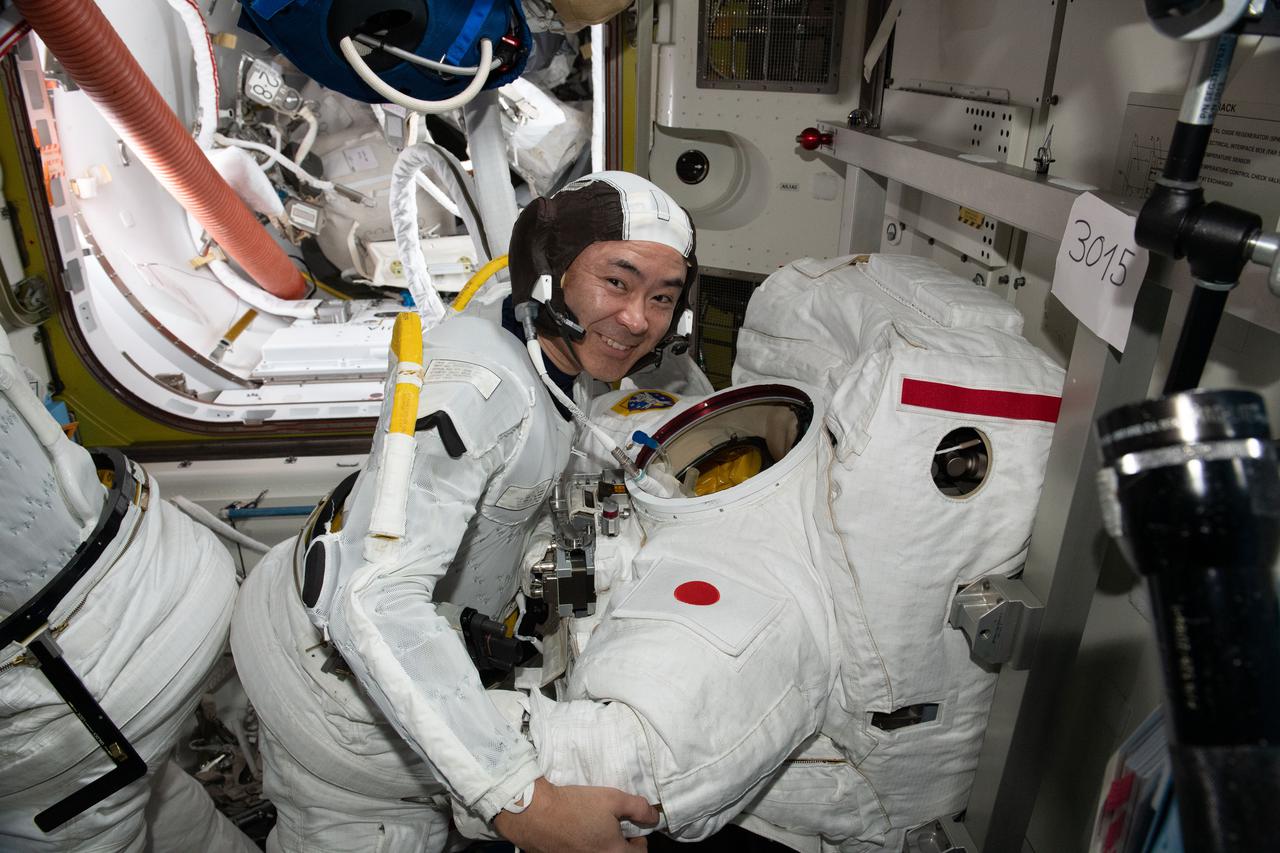
iss065e257472 (Aug. 17, 2021) --- Expedition 65 Commander Akihiko Hoshide of the Japan Aerospace Exploration Agency (JAXA) participates in a U.S. spacesuit fit check to get ready for a spacewalk preparing the International Space Station for the future installation of a third Roll-Out Solar Array.
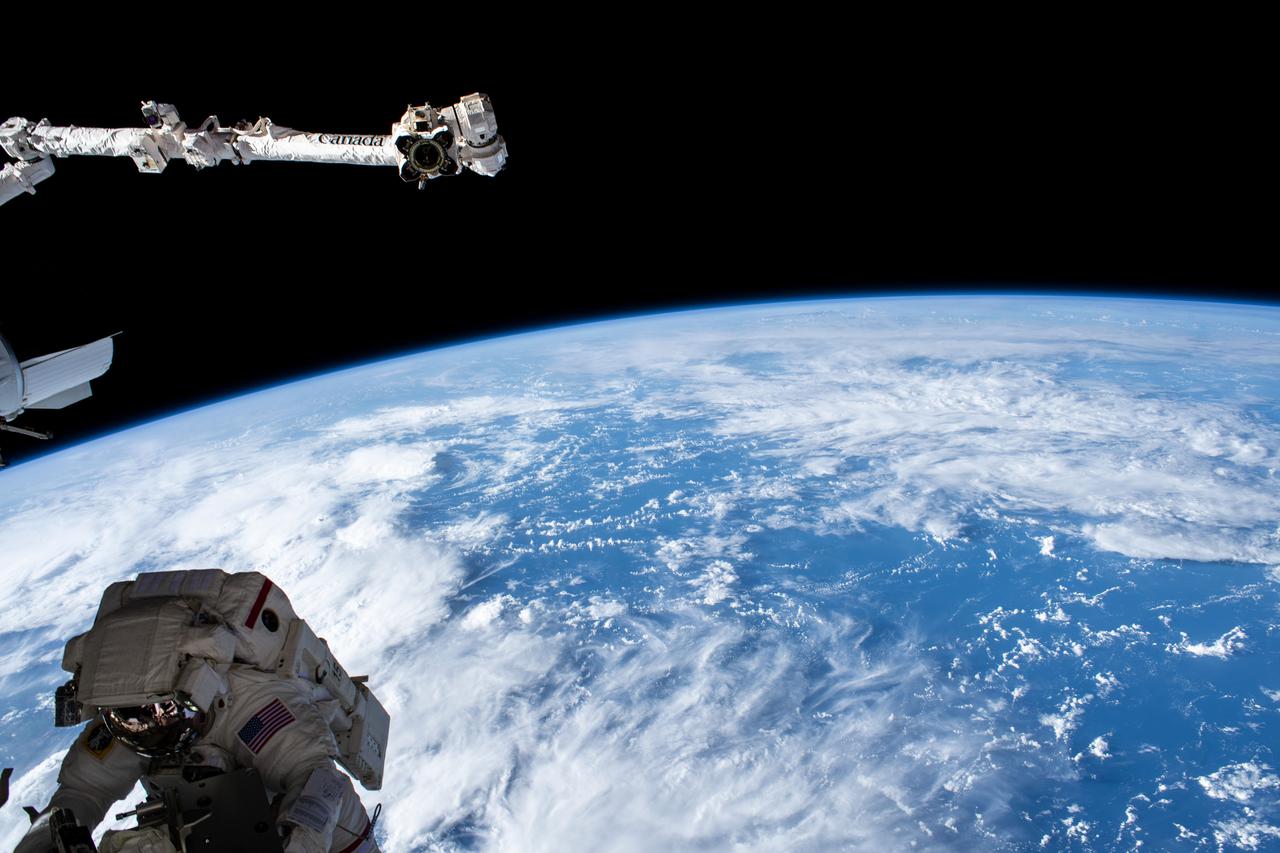
iss066e166153 (March 15, 2022) --- NASA astronaut Kayla Barron is pictured tethered to the International Space Station during a six-hour and 54-minute spacewalk to set up the orbital lab for its next roll-out solar array. Behind her is the Canadarm2 robotic arm with the Indian Ocean 263 miles below.
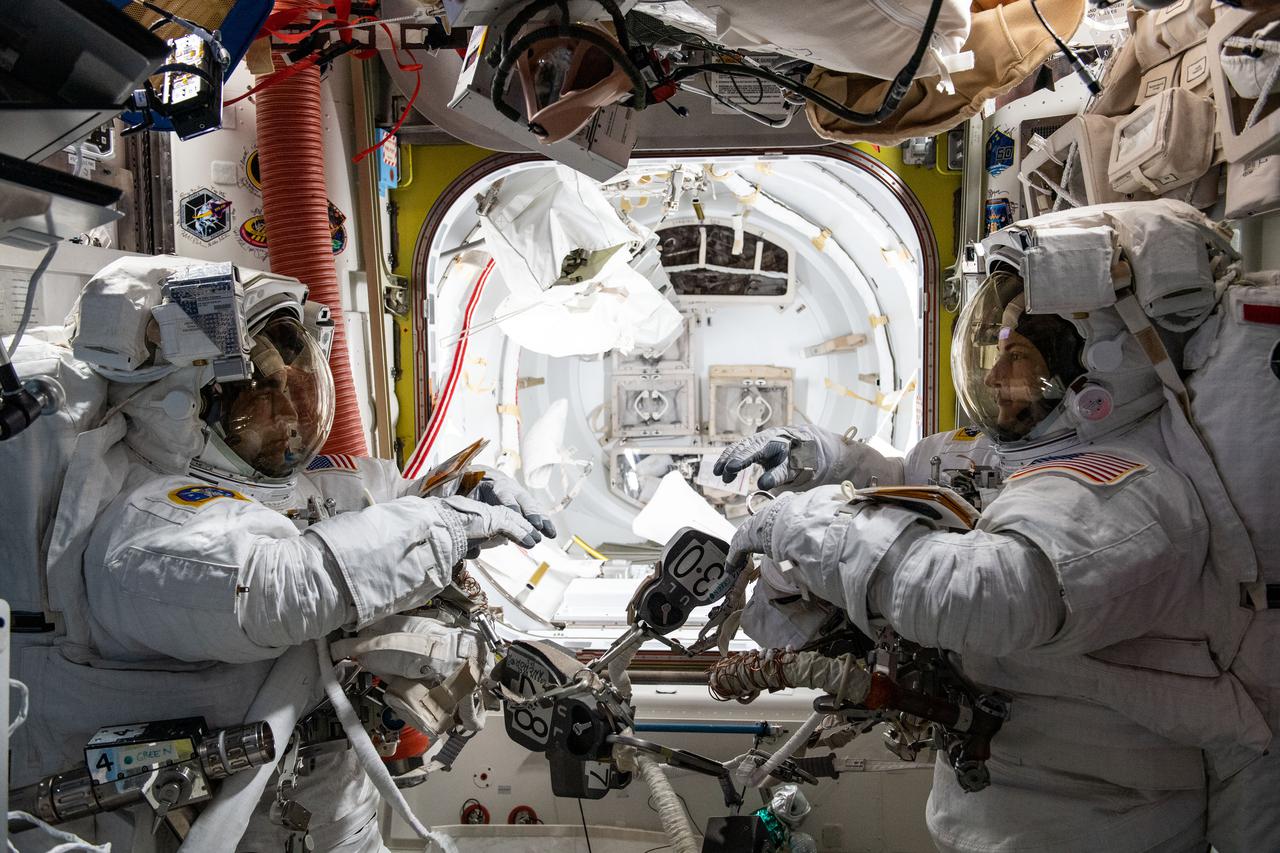
iss066e163039 (March 15, 2022) --- NASA astronauts (from left) Raja Chari and Kayla Barron are pictured inside the U.S. Quest airlock suited up and preparing for a six-hour and 54-minute spacewalk to set up the International Space Station for its next roll-out solar array.
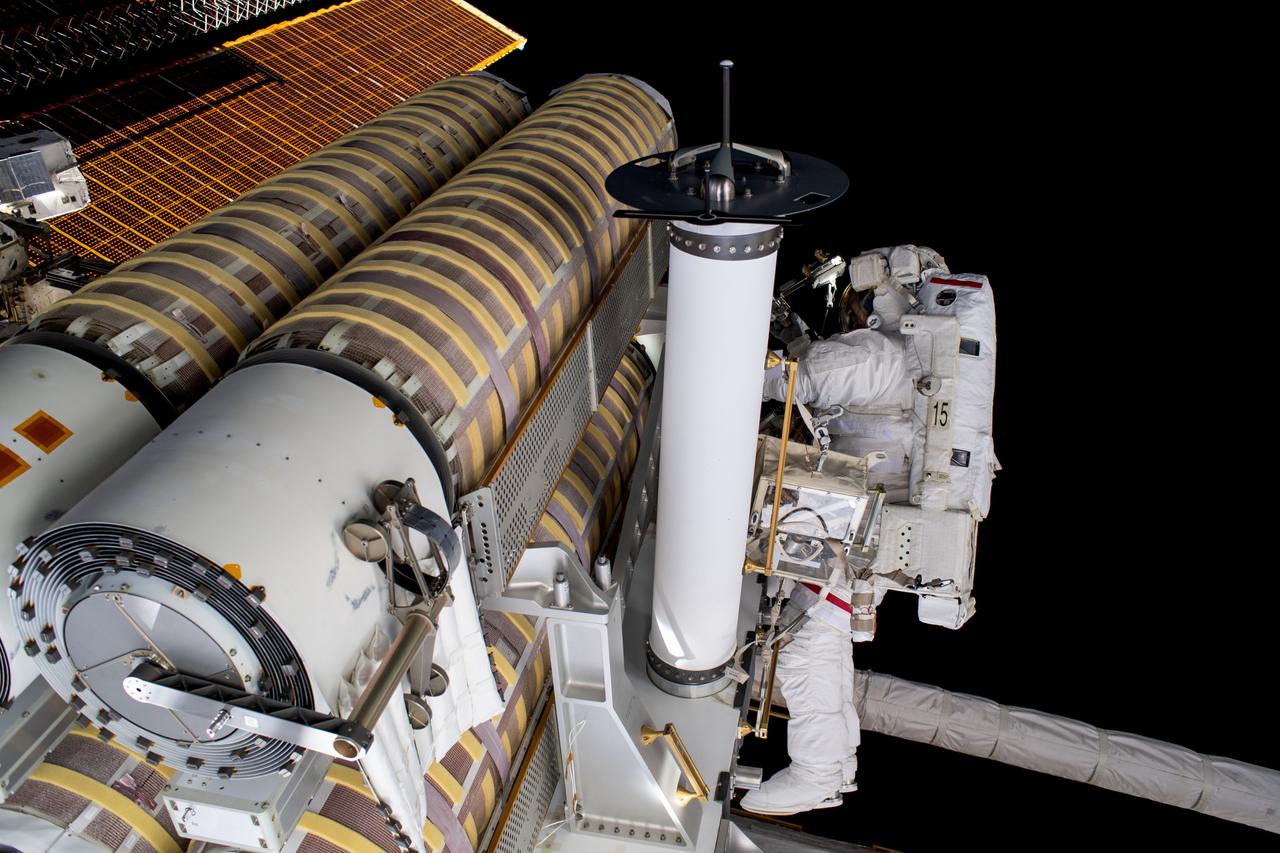
iss069e018597 (June 9, 2023) --- NASA astronaut and Expedition 69 Flight Engineer Stephen Bowen is pictured working to release a stowed roll-out solar array attached to the International Space Station's starboard truss structure during a six-hour and three-minute spacewalk.

iss069e031369 (July 13, 2023) -- White and pink clouds cover Earth as the International Space Station orbited 259 miles above the coast of the Red Sea, the northernmost tropical sea in the world. A roll-out solar array is displayed in the bottom right corner of the image.
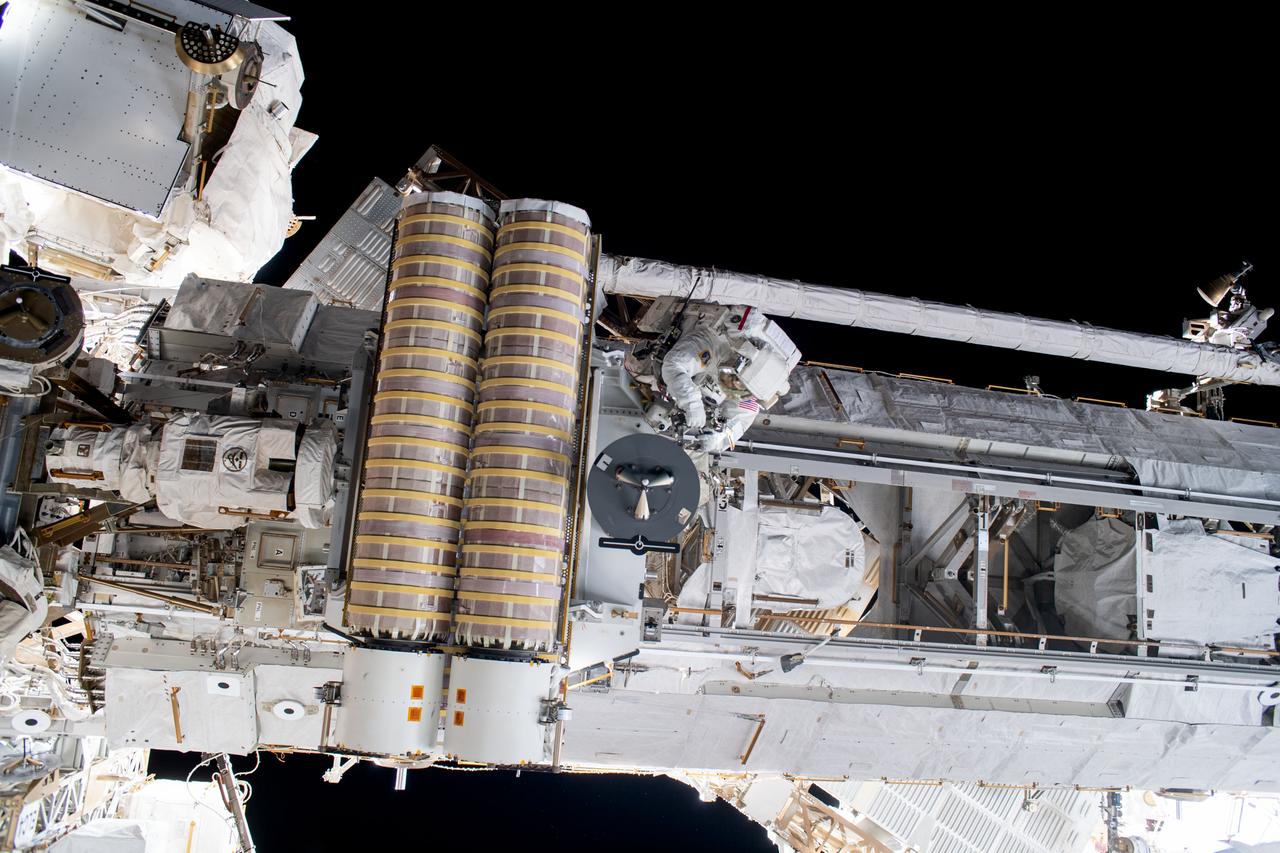
iss069e018600 (June 9, 2023) --- NASA astronaut and Expedition 69 Flight Engineer Stephen Bowen (center) is pictured working to release a stowed roll-out solar array attached to the International Space Station's starboard truss structure during a six-hour and three-minute spacewalk.
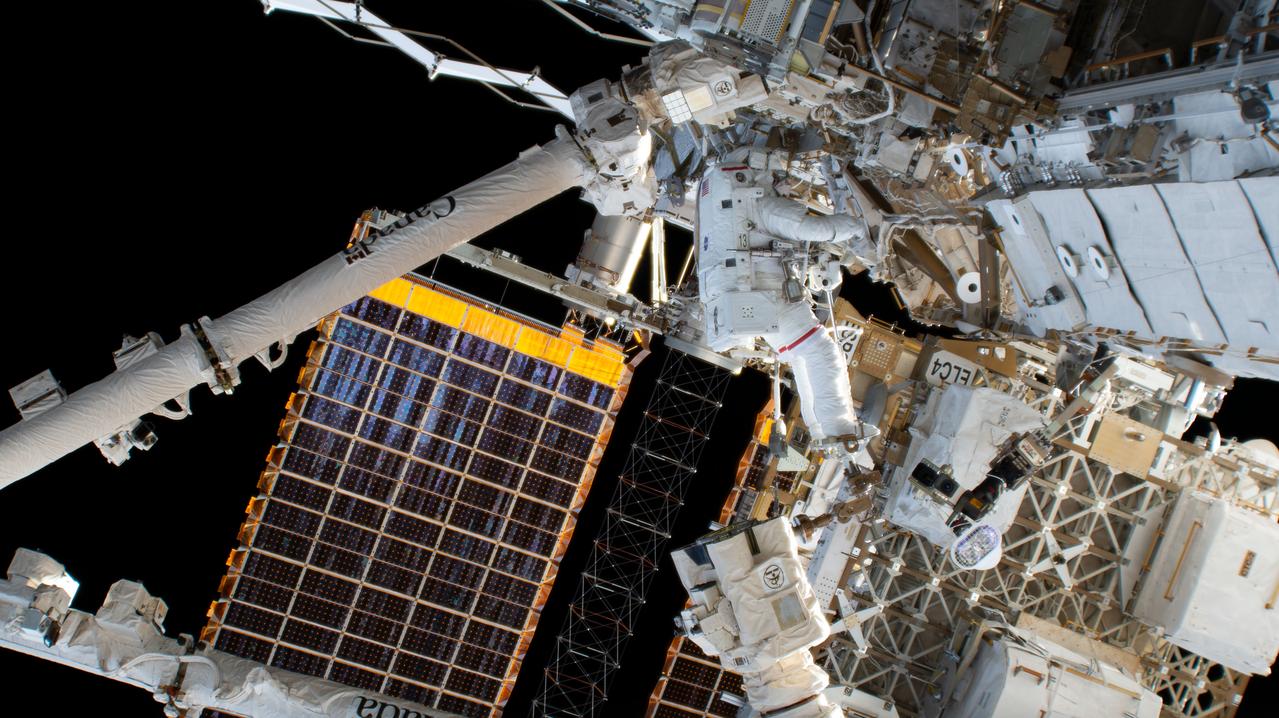
iss068e026399 (Dec. 3, 2022) --- NASA astronaut and Expedition 68 Flight Engineer Josh Cassada is attached to the Canadarm2 robotic arm during a spacewalk to install a roll-out solar array on the International Space Station's Starboard-4 truss segment.
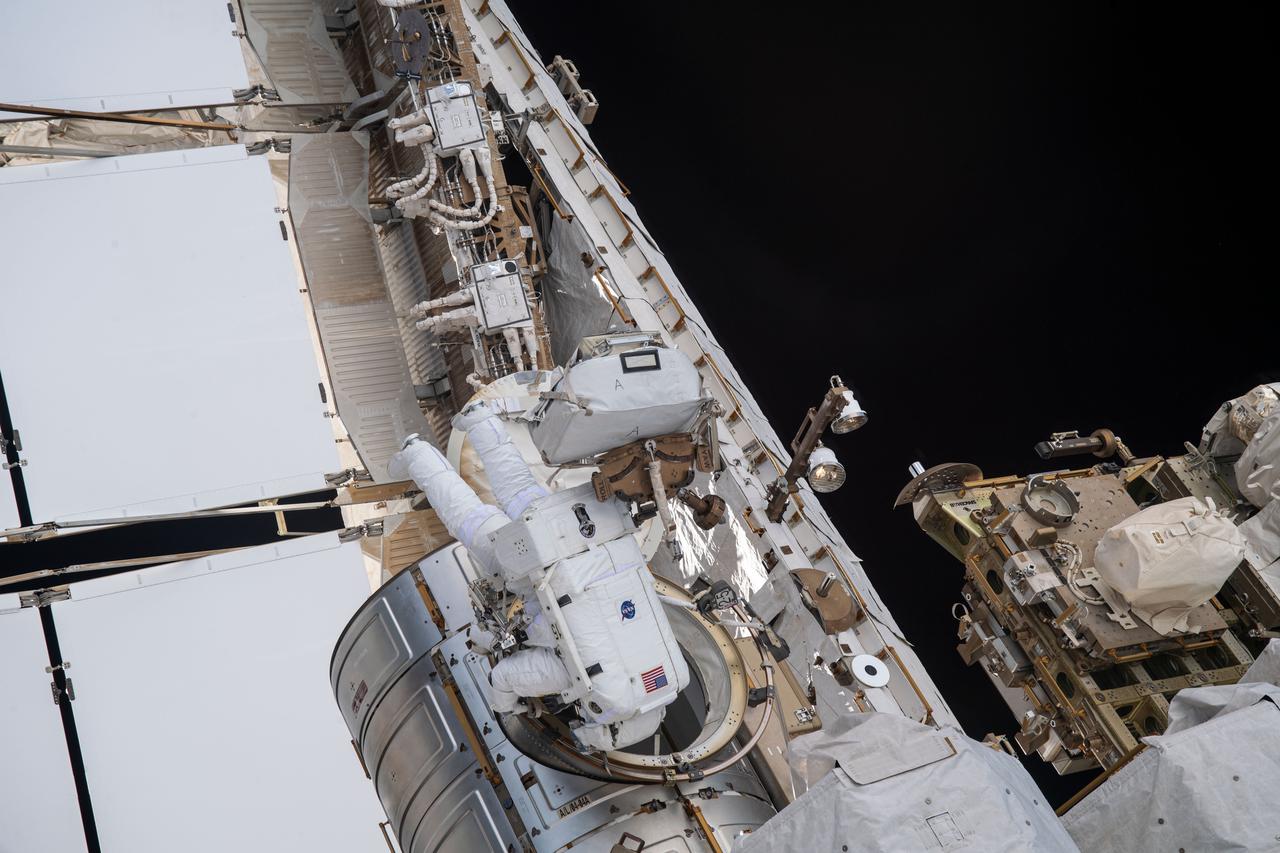
iss065e136998 (June 16, 2021) --- Spacewalkers (from left) Shane Kimbrough and Thomas Pesquet exit the U.S. Quest airlock to begin installing new roll out solar arrays on the International Space Station's Port-6 truss structure.

iss065e120769 (June 16, 2021) --- Expedition 65 Flight Engineer Shane Kimbrough is pictured in his U.S. spacesuit preparing for a spacewalk to install new roll out solar arrays on the International Space Station's P-6 truss structure.
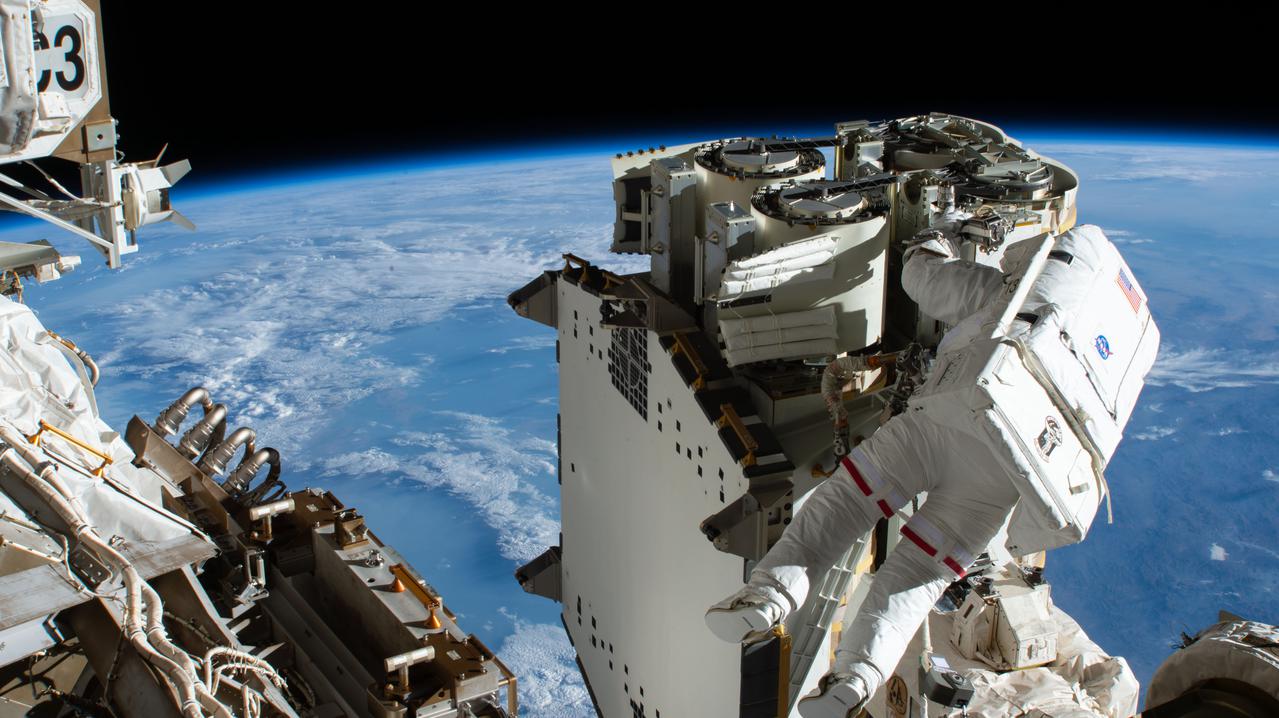
iss065e120562 (June 16, 2021) --- Expedition 65 Flight Engineer Thomas Pesquet of ESA (European Space Agency) works to remove new roll out solar arrays from flight support equipment to begin installation work on the International Space Station's P-6 truss structure.
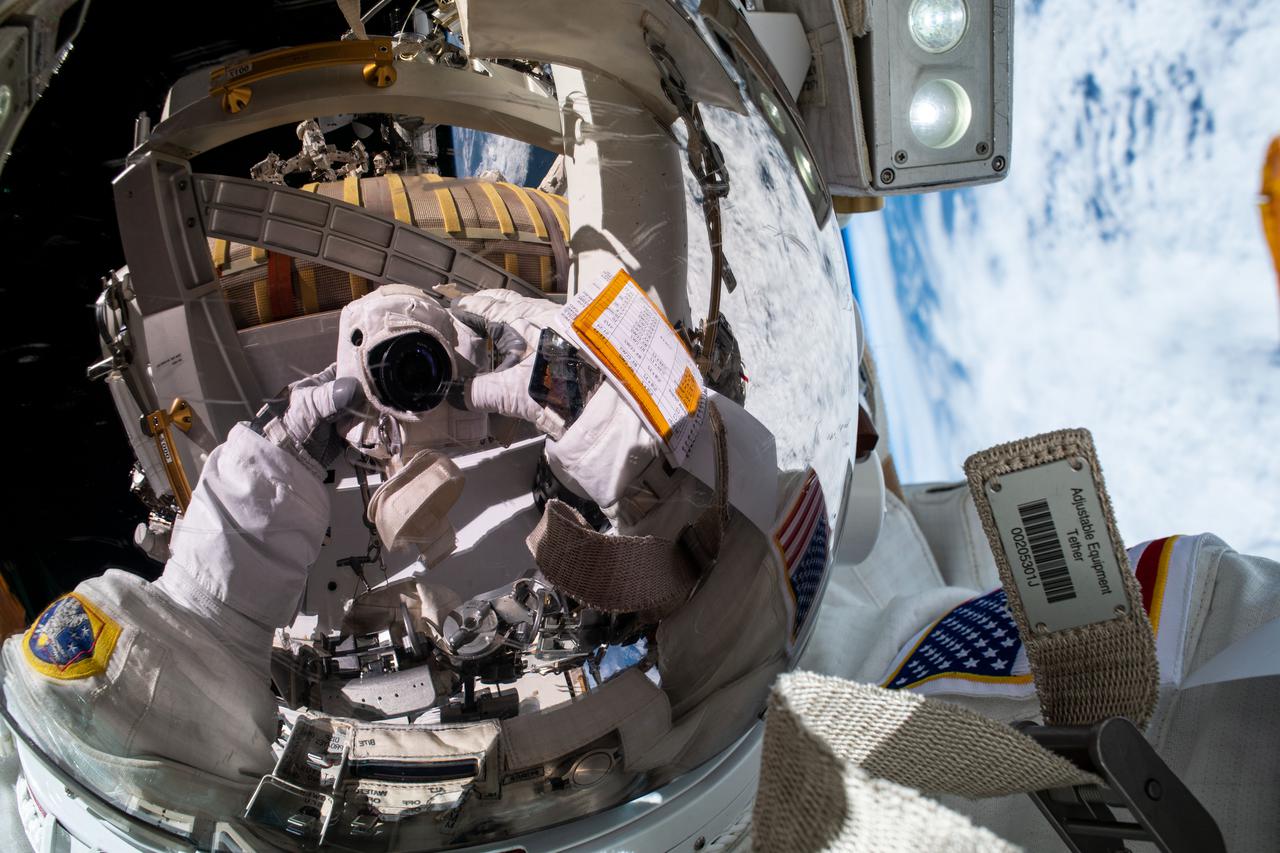
iss065e145170 (June 25, 2021) --- NASA spacewalker Shane Kimbrough took this "space-selfie" with the Earth behind him as he and fellow spacewalker Thomas Pesquet of ESA (European Space Agency) worked to complete the installation of the second roll out solar array on the International Space Station's Port-6 truss structure.
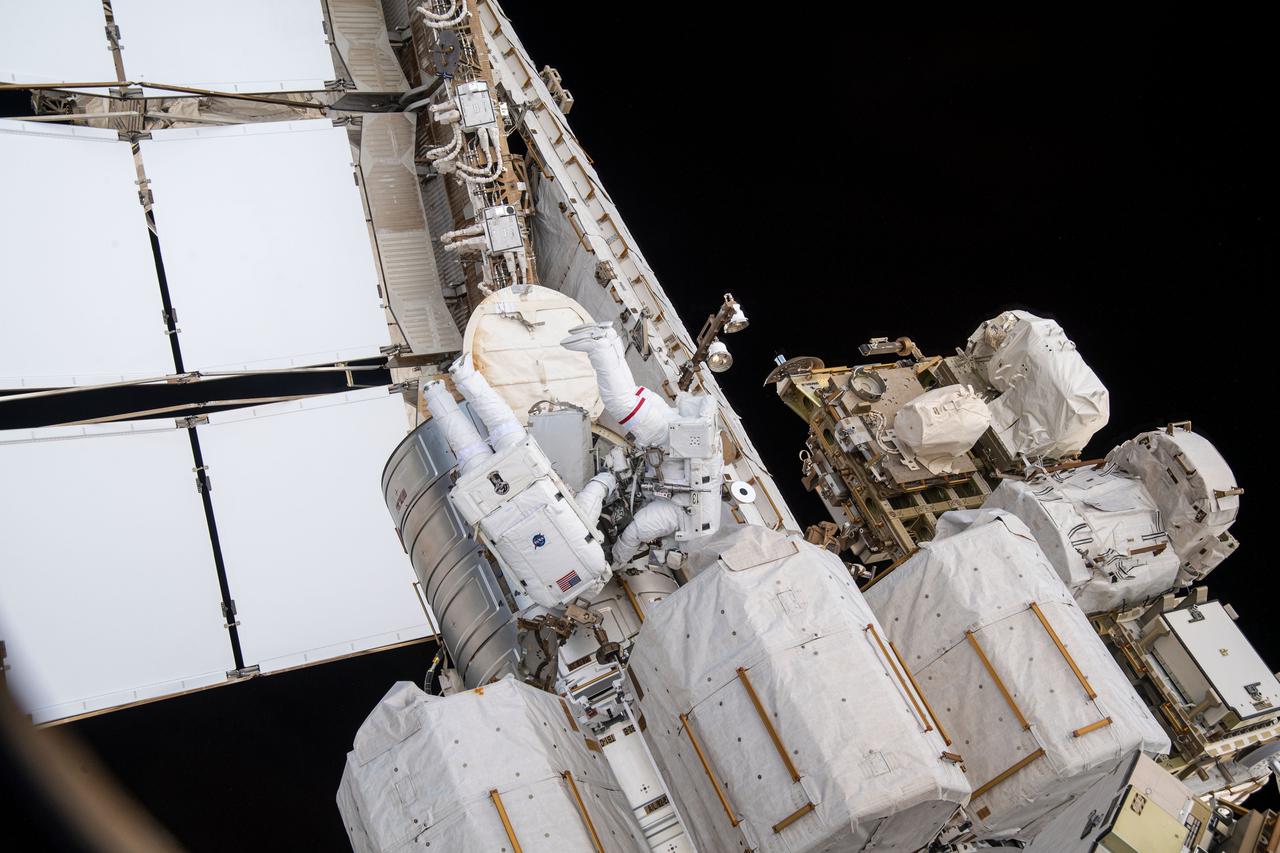
iss065e136980 (June 16, 2021) --- Spacewalkers (from left) Shane Kimbrough and Thomas Pesquet exit the U.S. Quest airlock to begin installing new roll out solar arrays on the International Space Station's Port-6 truss structure.
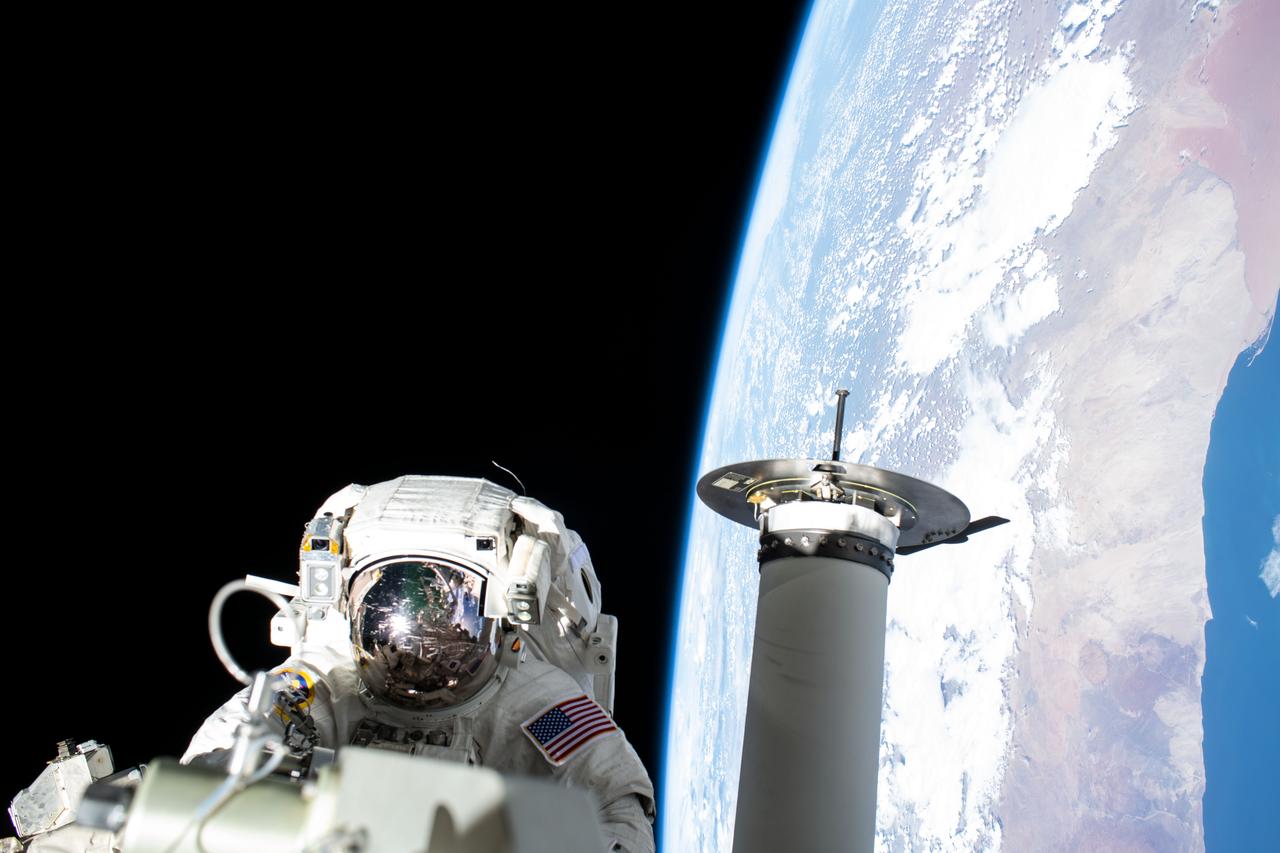
iss068e032186 (Dec. 22, 2022) --- Expedition 68 Flight Engineer and NASA spacewalker Josh Cassada prepares a roll-out solar array for its deployment on the International Space Station's Port-4 truss segment as the orbiting lab flew 262 miles above the Atlantic Ocean off the coast of Namibia.
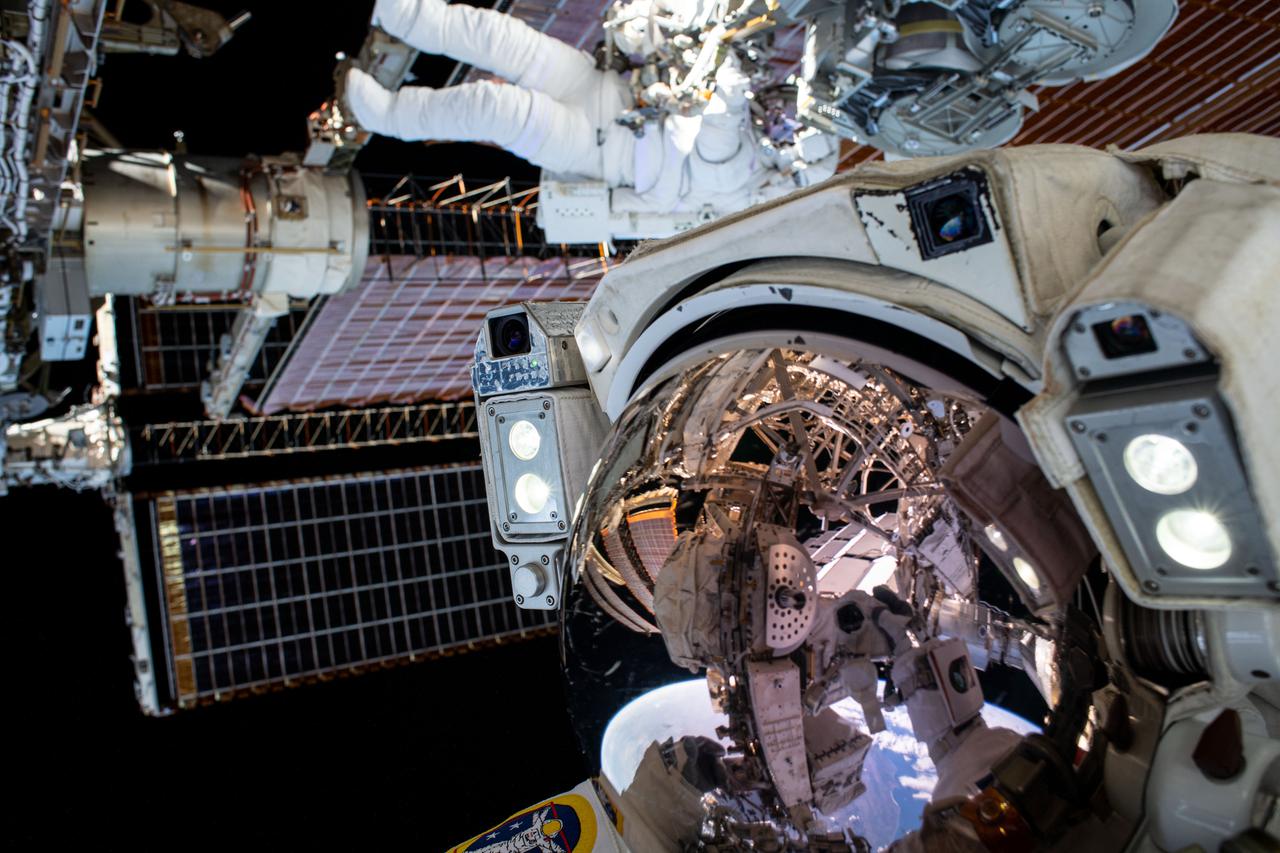
iss065e145237 (June 25, 2021) --- This unique "space-selfie" from spacewalker Thomas Pesquet of ESA (European Space Agency) captures he and NASA spacewalker Shane Kimbrough as they work to complete the installation of the second roll out solar array on the International Space Station's Port-6 truss structure.
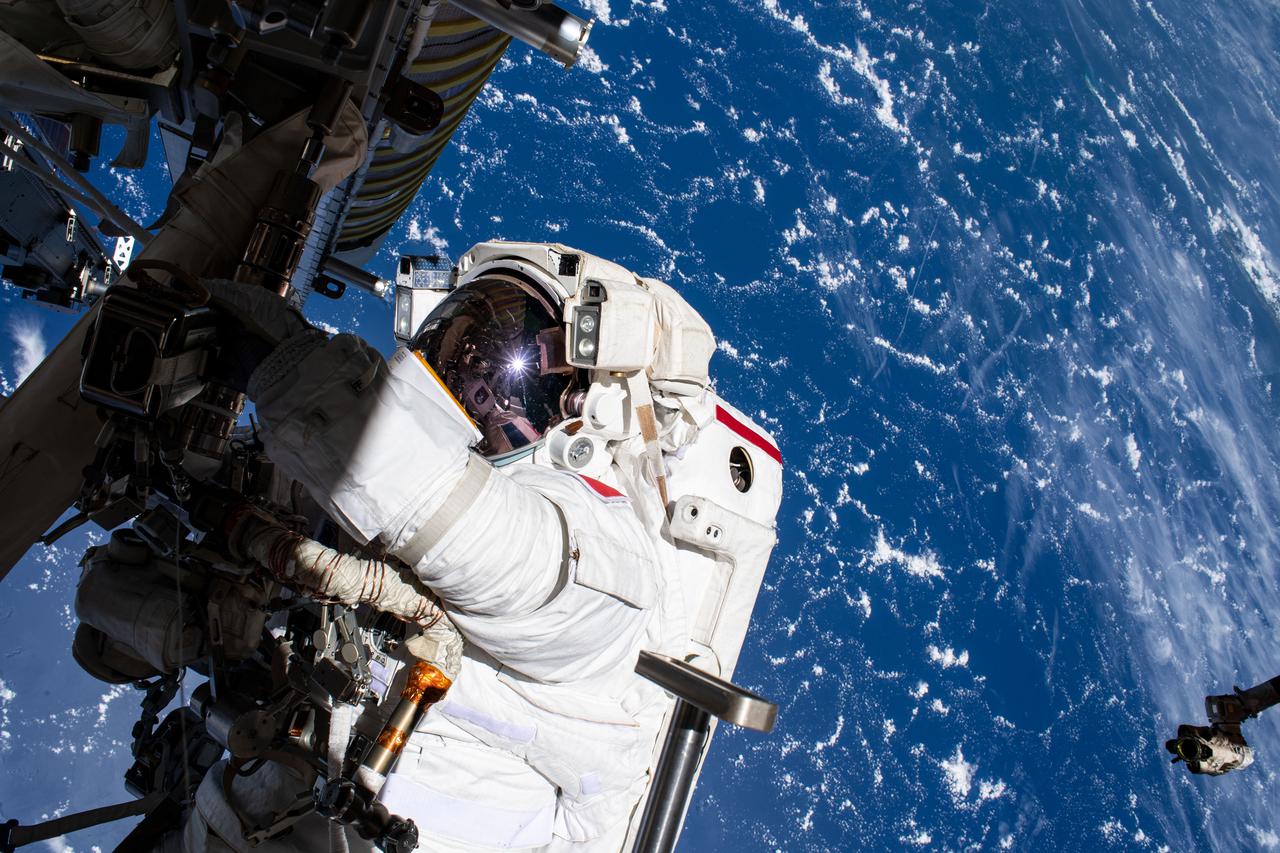
iss065e145222 (June 25, 2021) --- Spacewalker Thomas Pesquet of ESA (European Space Agency) works 262 miles above the Atlantic Ocean to complete the installation of the second roll out solar array on the International Space Station's Port-6 truss structure.
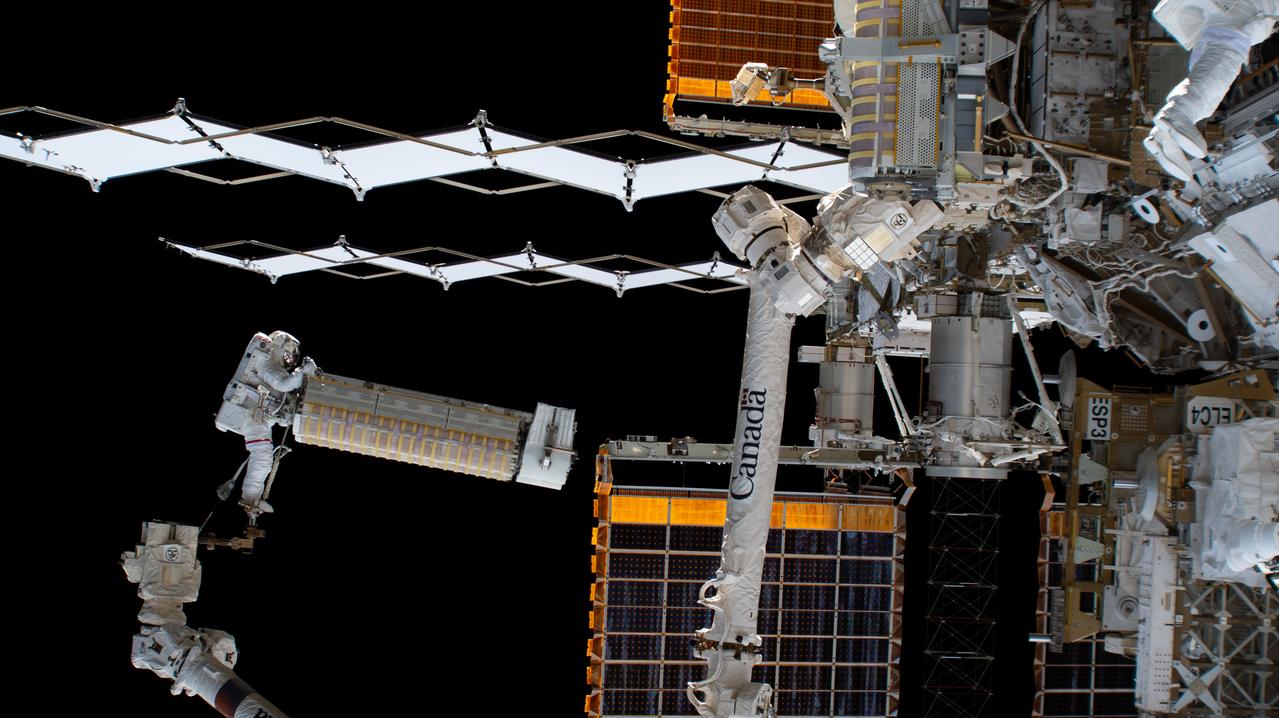
iss068e026403 (Dec. 3, 2022) --- NASA astronaut and Expedition 68 Flight Engineer Josh Cassada holds a roll-out solar array as he rides the Canadarm2 robotic arm toward the Starboard-4 truss segment installation site.
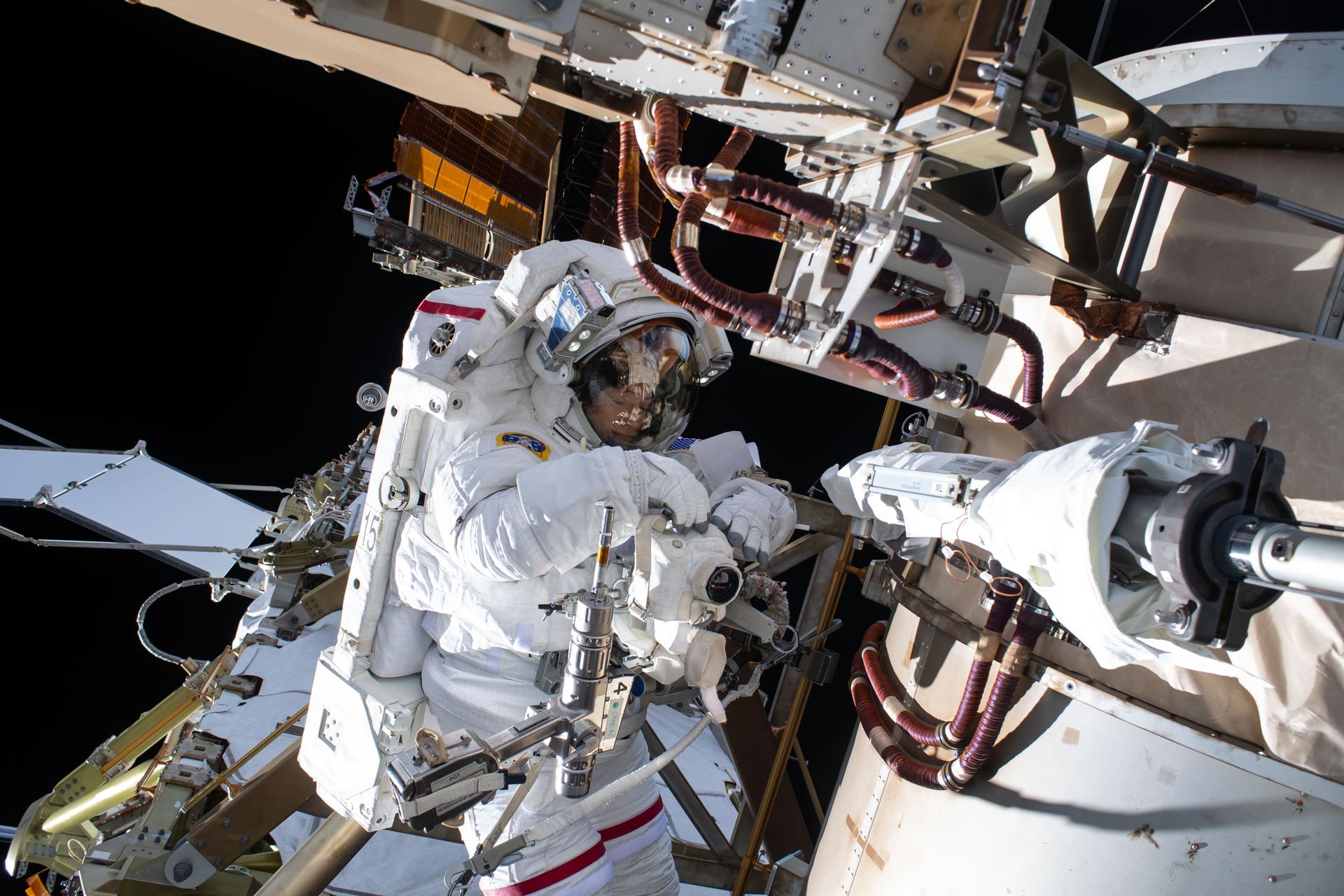
iss074e0403089 (March 18, 2026) -- NASA astronaut Jessica Meir installs a roll-out solar array modification kit to the exterior of the International Space Station during the 278th spacewalk in support of space station maintenance, assembly, and upgrades on March 18, 2026. Credit: NASA/Chris Williams
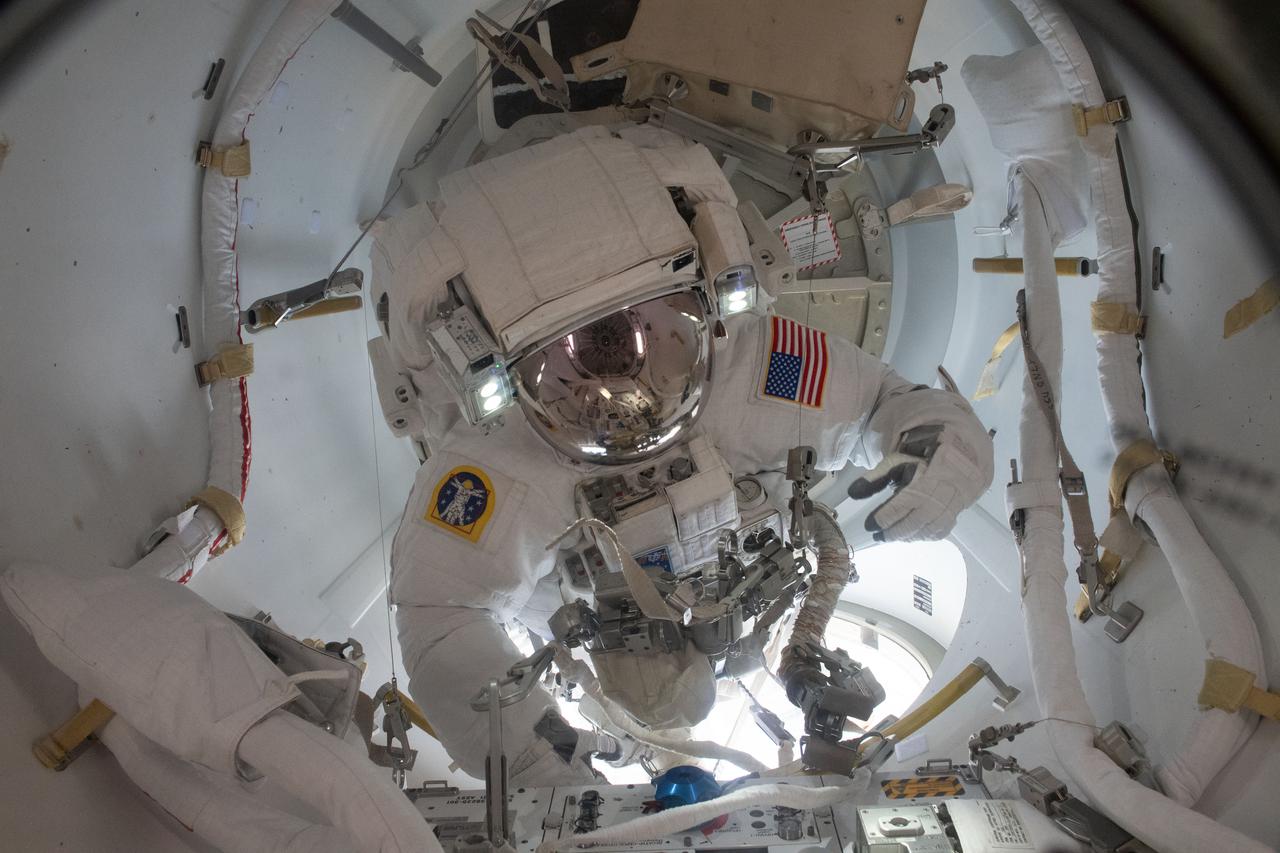
iss065e121035 (June 16, 2021) --- NASA spacewalker Shane Kimbrough is pictured in the crew lock portion of the U.S. Quest airlock during repressurization activities following the completion of a spacewalk to install new roll out solar arrays on the International Space Station's P-6 truss structure.
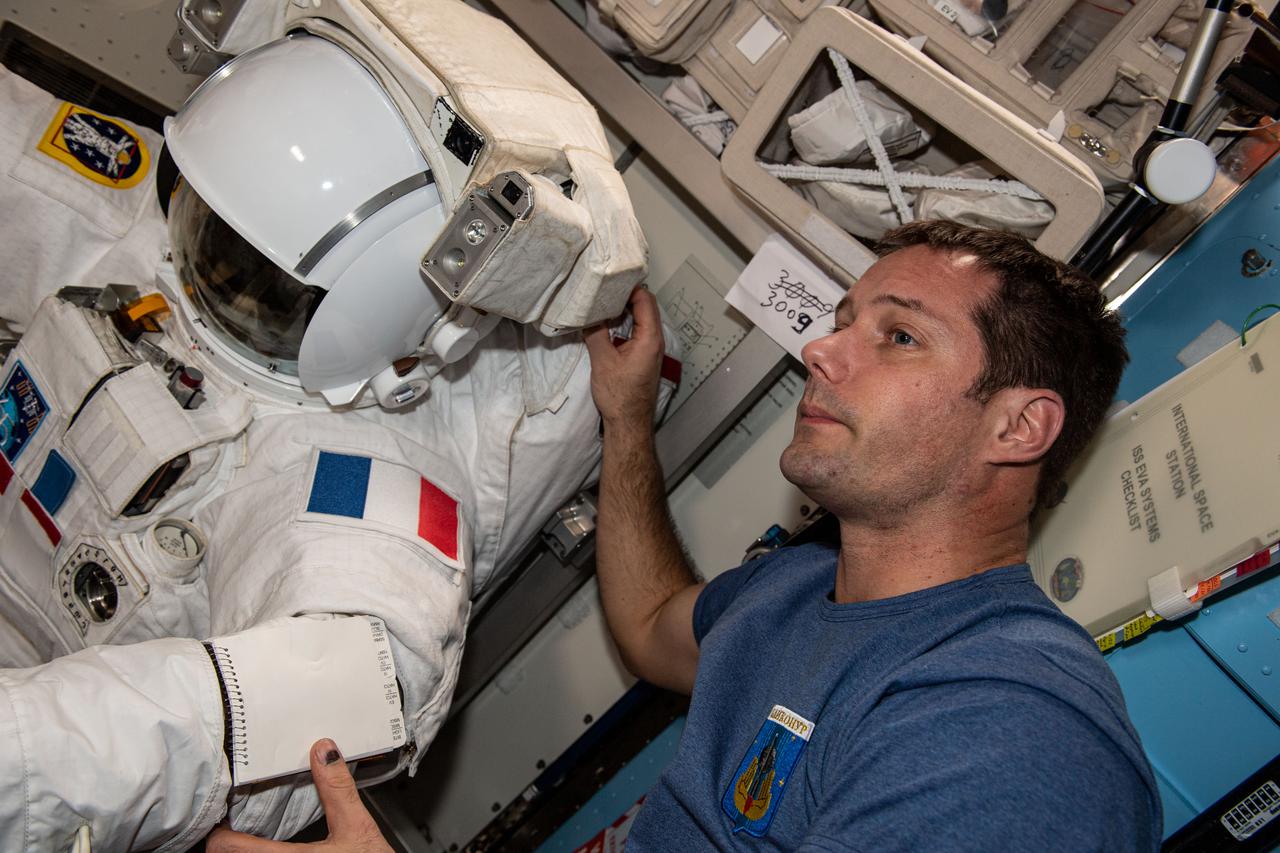
iss065e144290 (June 14, 2021) --- Expedition 65 Flight Engineer Thomas Pesquet of ESA (European Space Agency) checks his U.S. spacesuit ahead of a spacewalk to begin installing roll out solar arrays on the International Space Station's Port-6 truss structure.
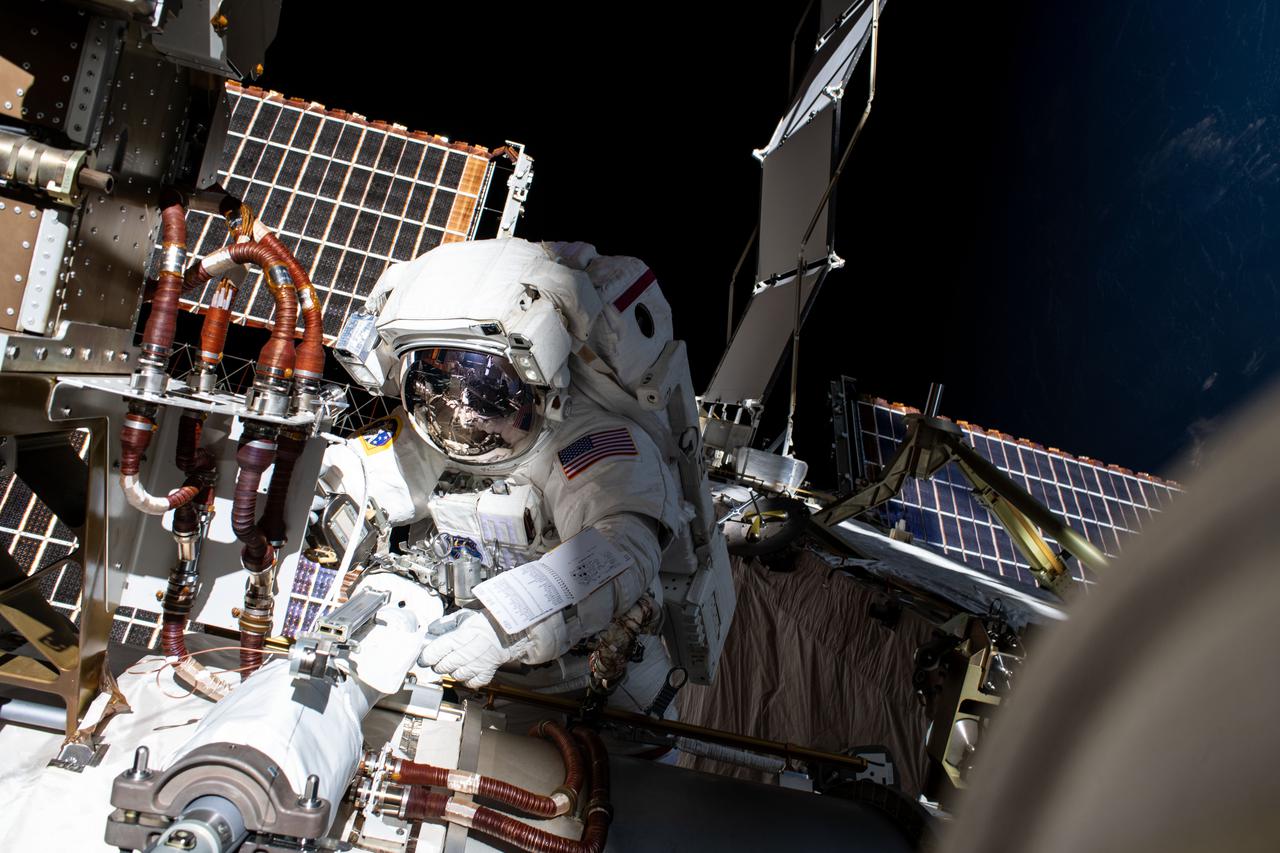
iss066e166221 (March 15, 2022) --- NASA astronaut Kayla Barron is pictured installing a modification kit on the International Space Station's Port-4 truss segment during a six-hour and 54-minute spacewalk setting it up for its next roll-out solar array.

iss065e120644 (June 16, 2021) --- Expedition 65 Flight Engineer Thomas Pesquet of ESA (European Space Agency) is attached to an articulating portable foot restraint on the end of the Canadarm2 robotic arm carrying new roll out solar arrays towards the International Space Station's P-6 truss structure.
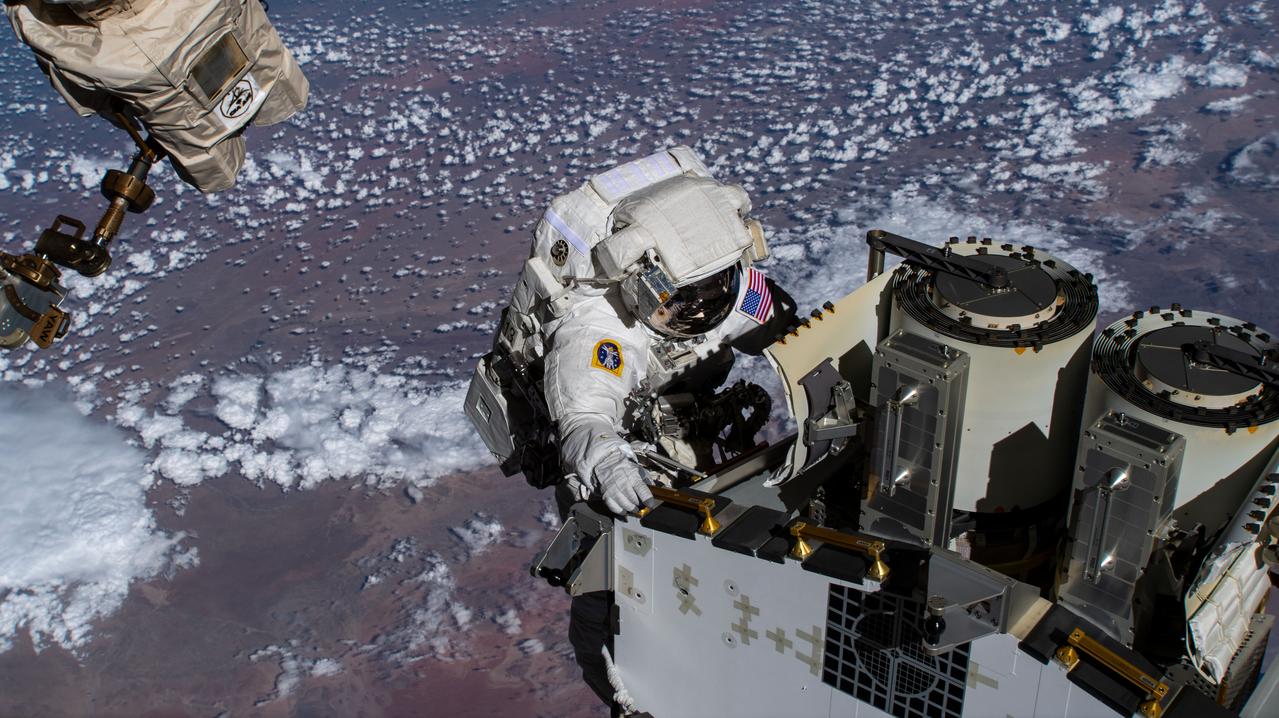
iss068e031766 (Dec. 22, 2022) --- Expedition 68 Flight Engineer and NASA spacewalker Josh Cassada prepares a roll-out solar array for its deployment on the International Space Station's Port-4 truss segment as the orbiting lab flew 262 miles above the Atlantic Ocean off the coast of Namibia.
iss074e0403089 (March 18, 2026) -- NASA astronaut Jessica Meir installs a roll-out solar array modification kit to the exterior of the International Space Station during the 278th spacewalk in support of space station maintenance, assembly, and upgrades on March 18, 2026. Credit: NASA/Chris Williams
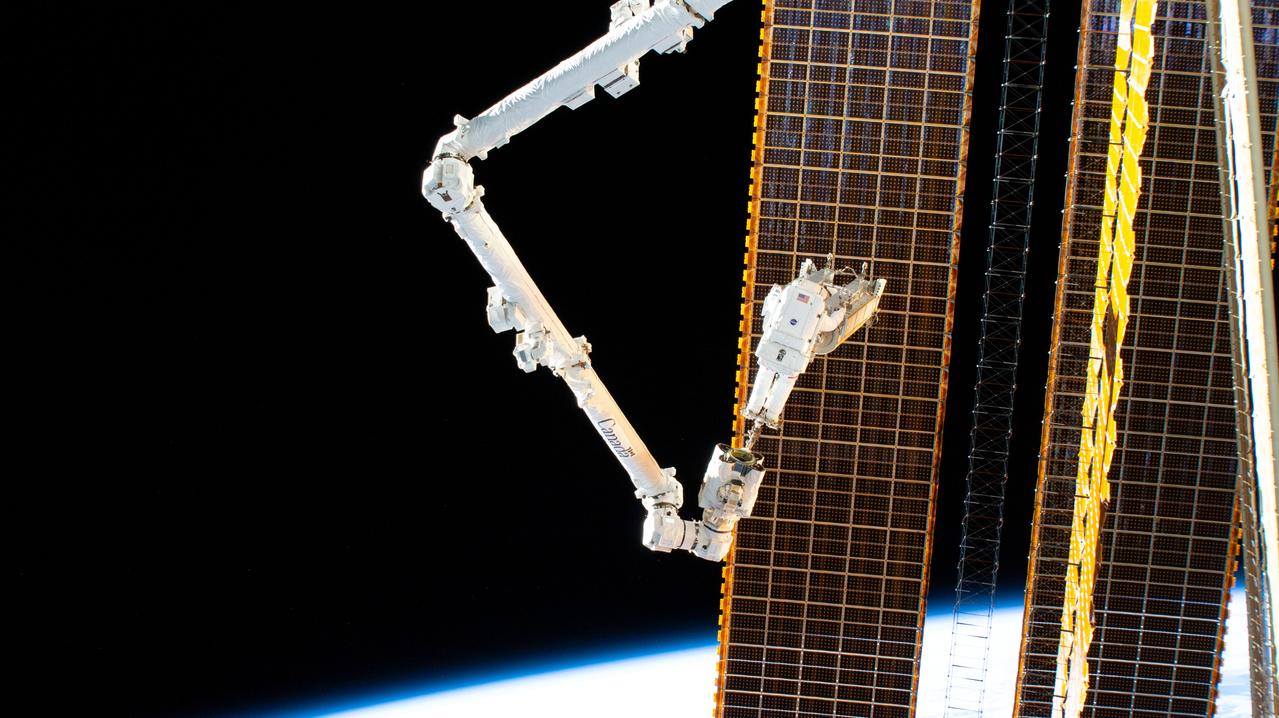
iss069e020587 (June 15, 2023) --- NASA astronaut Woody Hoburg is pictured during a spacewalk riding the Canadarm2 robotic arm and carrying a roll-out solar array to its installation point on the International Space Station's Starboard-6 truss structure.