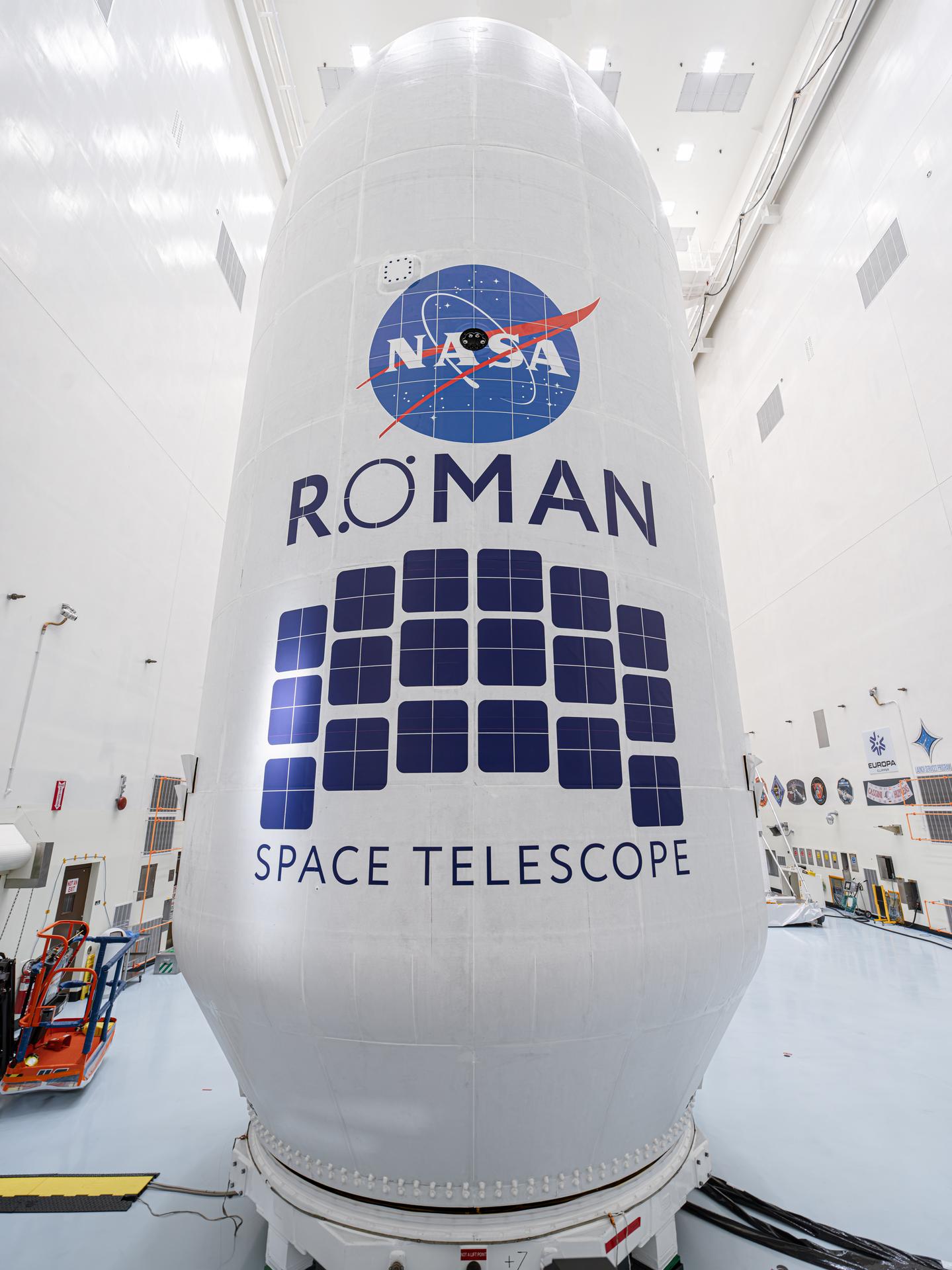
NASA’s Nancy Grace Roman Space Telescope is photographed after encapsulation inside its payload fairing in the Payload Hazardous Servicing Facility at NASA’s Kennedy Space Center in Florida on Monday, Aug. 24, 2026, ahead of mating to a SpaceX Falcon Heavy rocket. Encapsulation shields the spacecraft during rollout, ascent, and the early phases of flight. Roman will investigate dark energy and dark matter, conduct a statistical census of planetary systems, and enable a broad range of additional astrophysics research. Liftoff from Launch Complex 39A at Kennedy is targeted for no earlier than Sunday, Aug. 30, 2026.
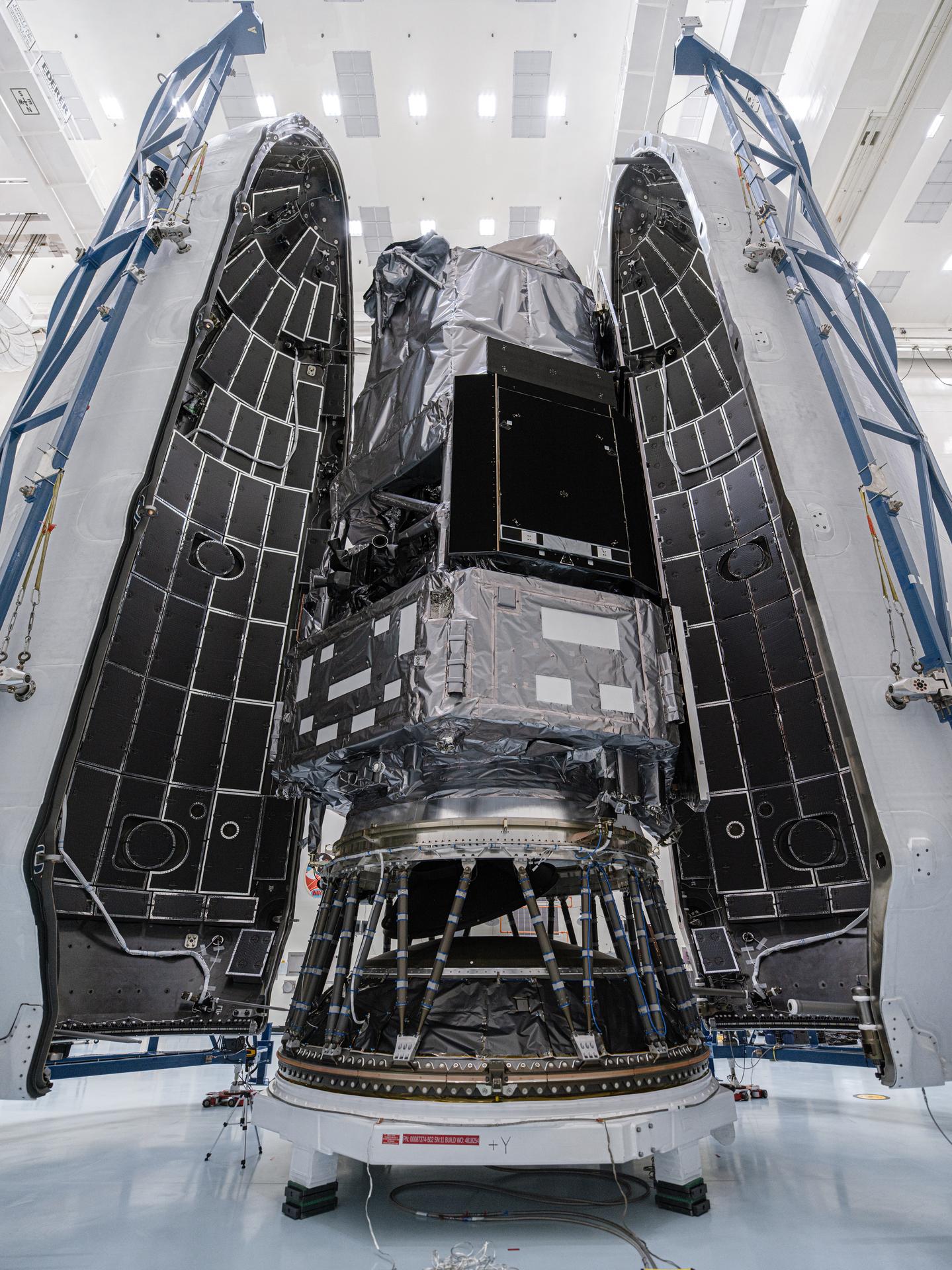
Teams inside the Payload Hazardous Servicing Facility at NASA’s Kennedy Space Center in Florida encapsulate the agency’s Nancy Grace Roman Space Telescope within the payload fairing on Friday, Aug. 21, 2026, ahead of mating to a SpaceX Falcon Heavy rocket. Encapsulation shields the spacecraft during rollout, ascent, and the early phases of flight. Roman will investigate dark energy and dark matter, conduct a statistical census of planetary systems, and enable a broad range of additional astrophysics research. Liftoff from Launch Complex 39A at Kennedy is targeted for no earlier than Sunday, Aug. 30, 2026.
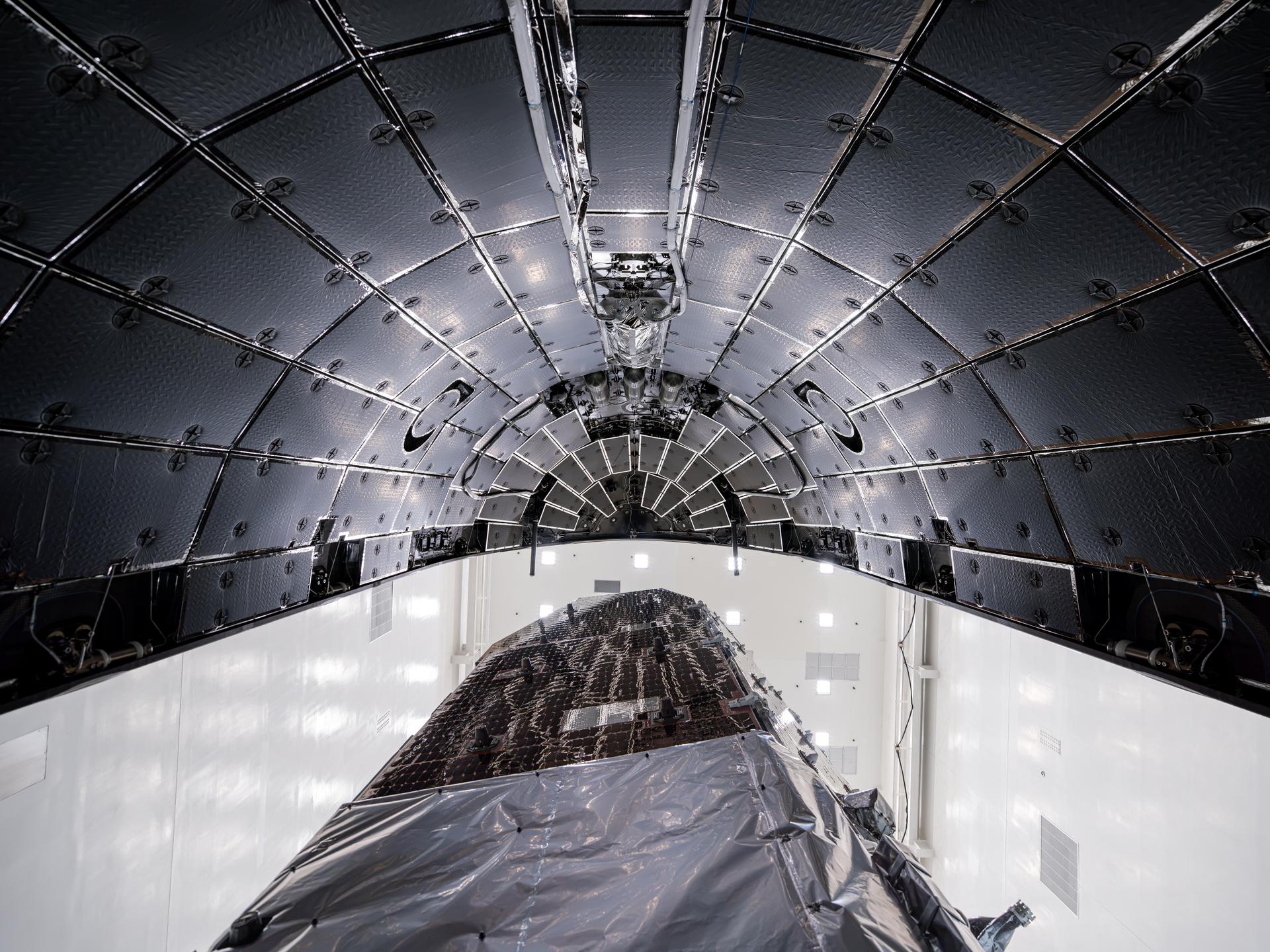
Teams inside the Payload Hazardous Servicing Facility at NASA’s Kennedy Space Center in Florida encapsulate the agency’s Nancy Grace Roman Space Telescope within the payload fairing on Friday, Aug. 21, 2026, ahead of mating to a SpaceX Falcon Heavy rocket. Encapsulation shields the spacecraft during rollout, ascent, and the early phases of flight. Roman will investigate dark energy and dark matter, conduct a statistical census of planetary systems, and enable a broad range of additional astrophysics research. Liftoff from Launch Complex 39A at Kennedy is targeted for no earlier than Sunday, Aug. 30, 2026.
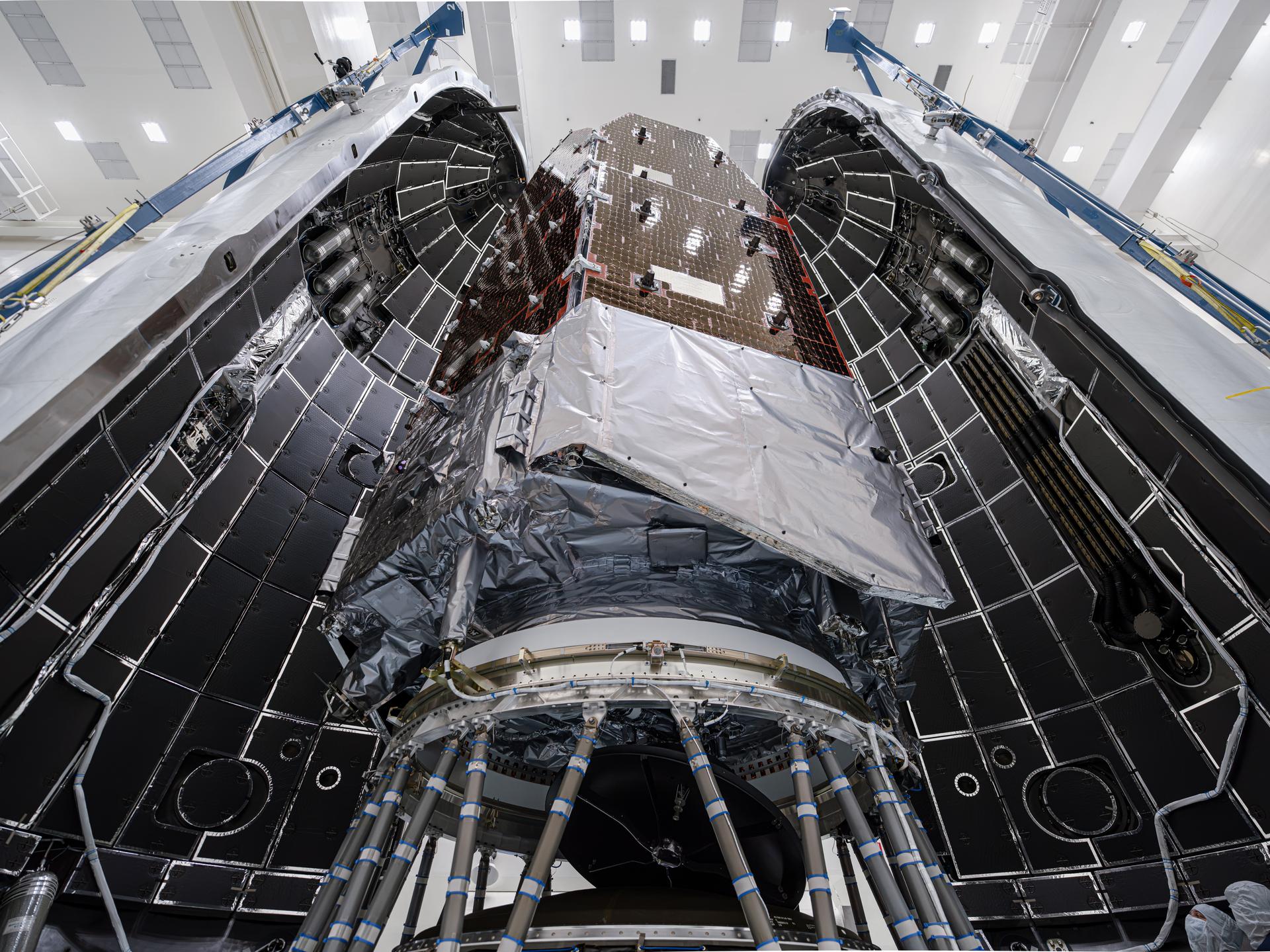
Teams inside the Payload Hazardous Servicing Facility at NASA’s Kennedy Space Center in Florida encapsulate the agency’s Nancy Grace Roman Space Telescope within the payload fairing on Friday, Aug. 21, 2026, ahead of mating to a SpaceX Falcon Heavy rocket. Encapsulation shields the spacecraft during rollout, ascent, and the early phases of flight. Roman will investigate dark energy and dark matter, conduct a statistical census of planetary systems, and enable a broad range of additional astrophysics research. Liftoff from Launch Complex 39A at Kennedy is targeted for no earlier than Sunday, Aug. 30, 2026.
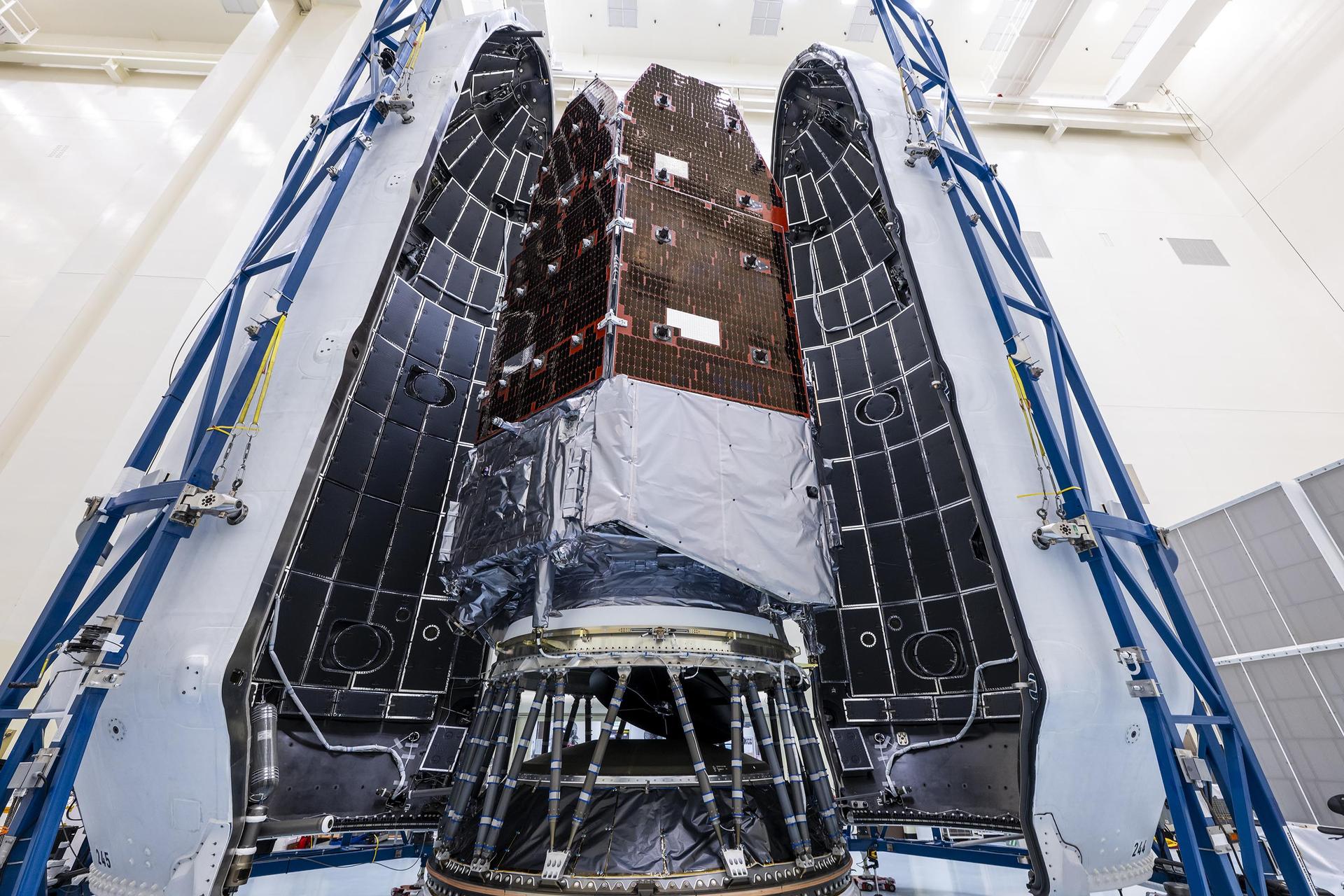
Teams inside the Payload Hazardous Servicing Facility at NASA’s Kennedy Space Center in Florida encapsulate the agency’s Nancy Grace Roman Space Telescope within the payload fairing on Friday, Aug. 21, 2026, ahead of mating to a SpaceX Falcon Heavy rocket. Encapsulation shields the spacecraft during rollout, ascent, and the early phases of flight. Roman will investigate dark energy and dark matter, conduct a statistical census of planetary systems, and enable a broad range of additional astrophysics research. Liftoff from Launch Complex 39A at Kennedy is targeted for no earlier than Sunday, Aug. 30, 2026.
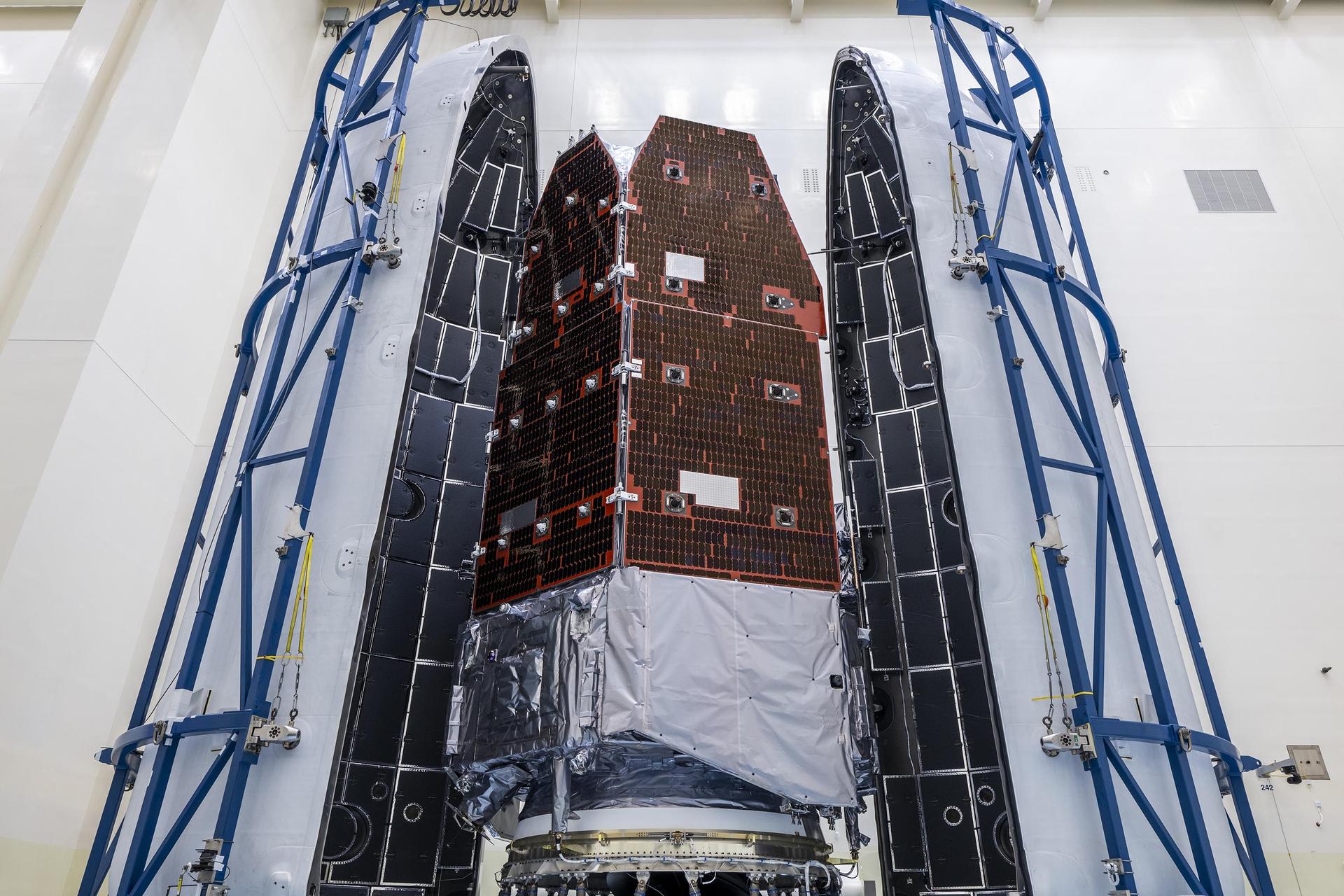
Teams inside the Payload Hazardous Servicing Facility at NASA’s Kennedy Space Center in Florida encapsulate the agency’s Nancy Grace Roman Space Telescope within the payload fairing on Friday, Aug. 21, 2026, ahead of mating to a SpaceX Falcon Heavy rocket. Encapsulation shields the spacecraft during rollout, ascent, and the early phases of flight. Roman will investigate dark energy and dark matter, conduct a statistical census of planetary systems, and enable a broad range of additional astrophysics research. Liftoff from Launch Complex 39A at Kennedy is targeted for no earlier than Sunday, Aug. 30, 2026.
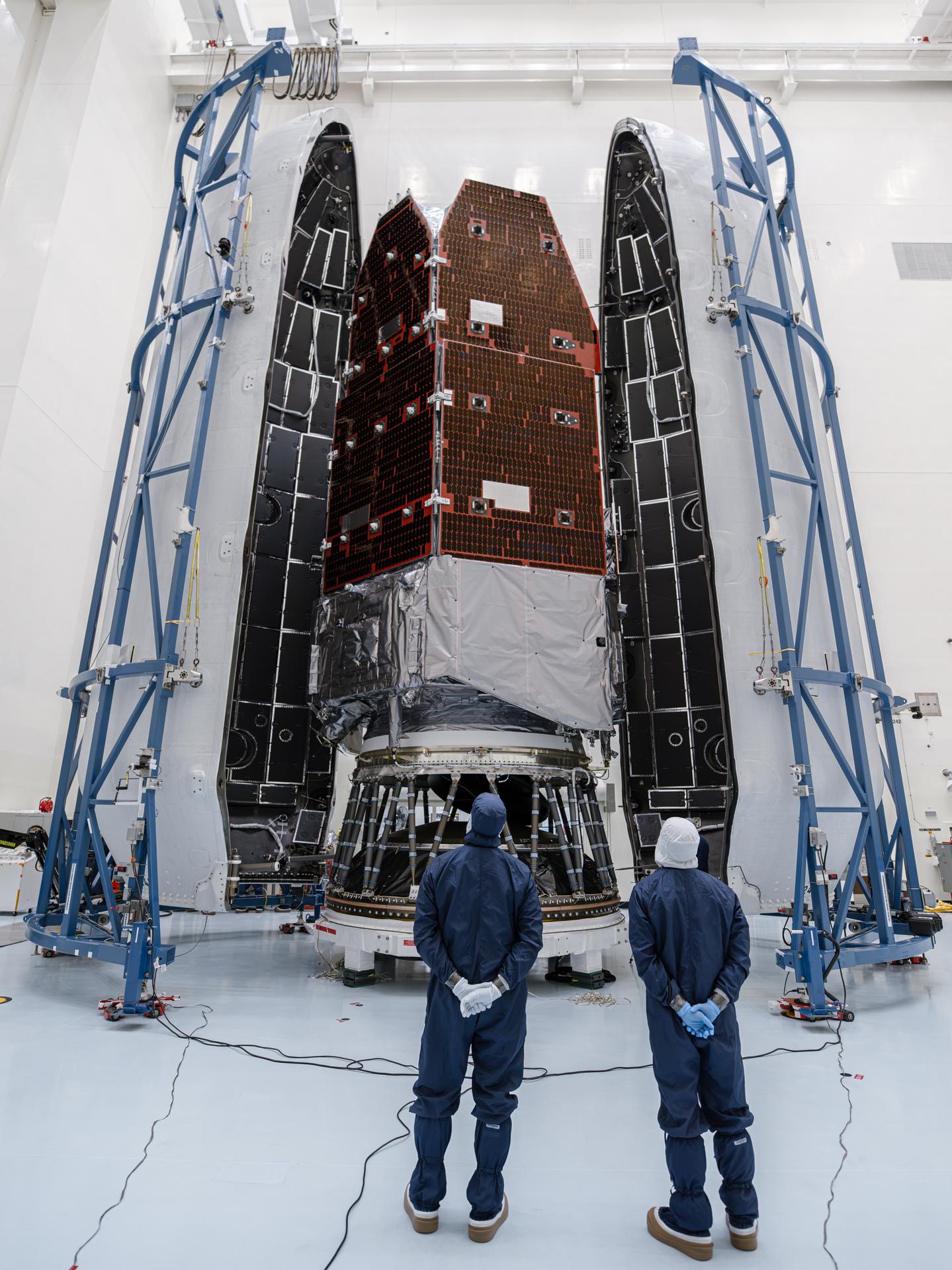
Teams inside the Payload Hazardous Servicing Facility at NASA’s Kennedy Space Center in Florida encapsulate the agency’s Nancy Grace Roman Space Telescope within the payload fairing on Friday, Aug. 21, 2026, ahead of mating to a SpaceX Falcon Heavy rocket. Encapsulation shields the spacecraft during rollout, ascent, and the early phases of flight. Roman will investigate dark energy and dark matter, conduct a statistical census of planetary systems, and enable a broad range of additional astrophysics research. Liftoff from Launch Complex 39A at Kennedy is targeted for no earlier than Sunday, Aug. 30, 2026.
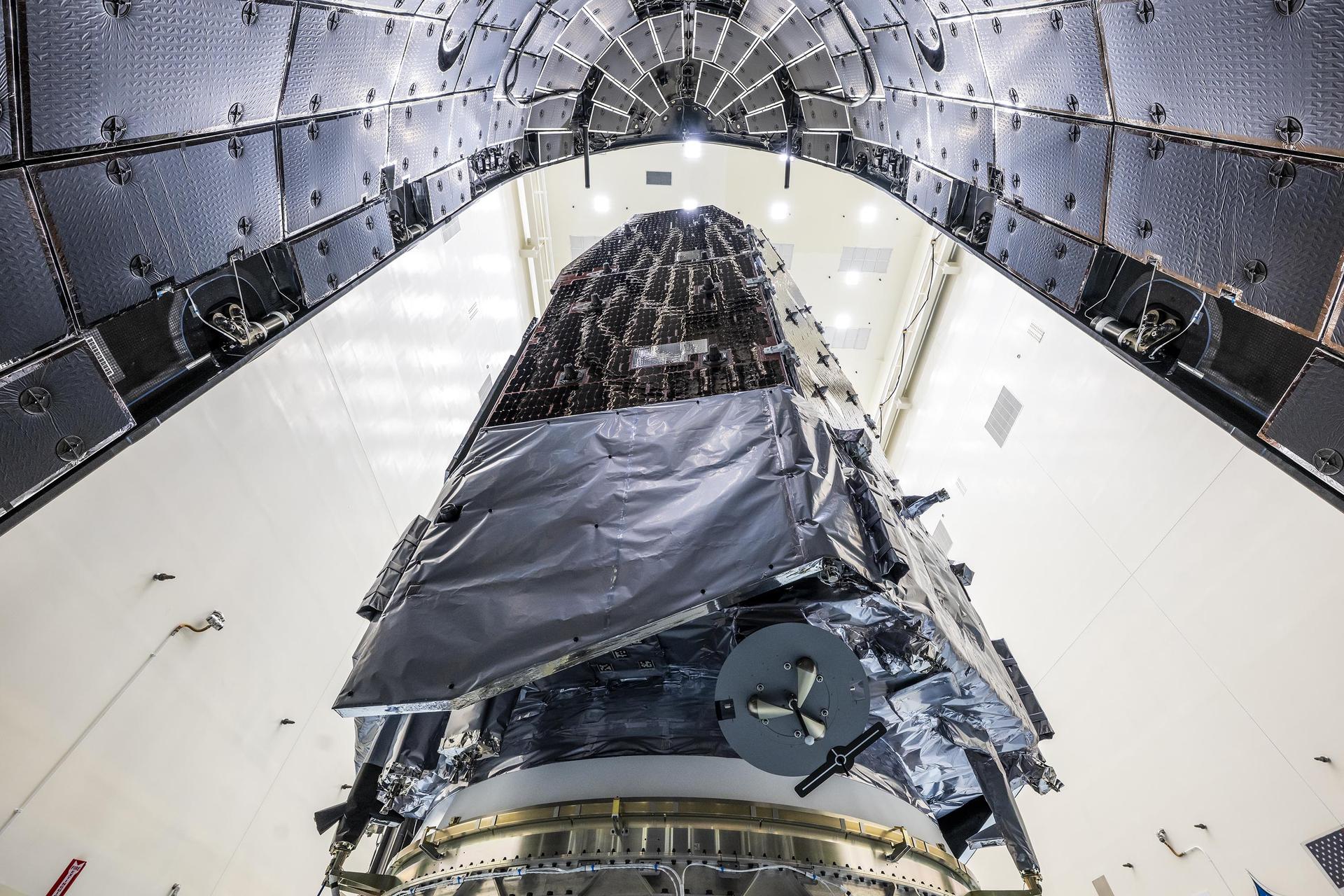
Teams inside the Payload Hazardous Servicing Facility at NASA’s Kennedy Space Center in Florida encapsulate the agency’s Nancy Grace Roman Space Telescope within the payload fairing on Friday, Aug. 21, 2026, ahead of mating to a SpaceX Falcon Heavy rocket. Encapsulation shields the spacecraft during rollout, ascent, and the early phases of flight. Roman will investigate dark energy and dark matter, conduct a statistical census of planetary systems, and enable a broad range of additional astrophysics research. Liftoff from Launch Complex 39A at Kennedy is targeted for no earlier than Sunday, Aug. 30, 2026.
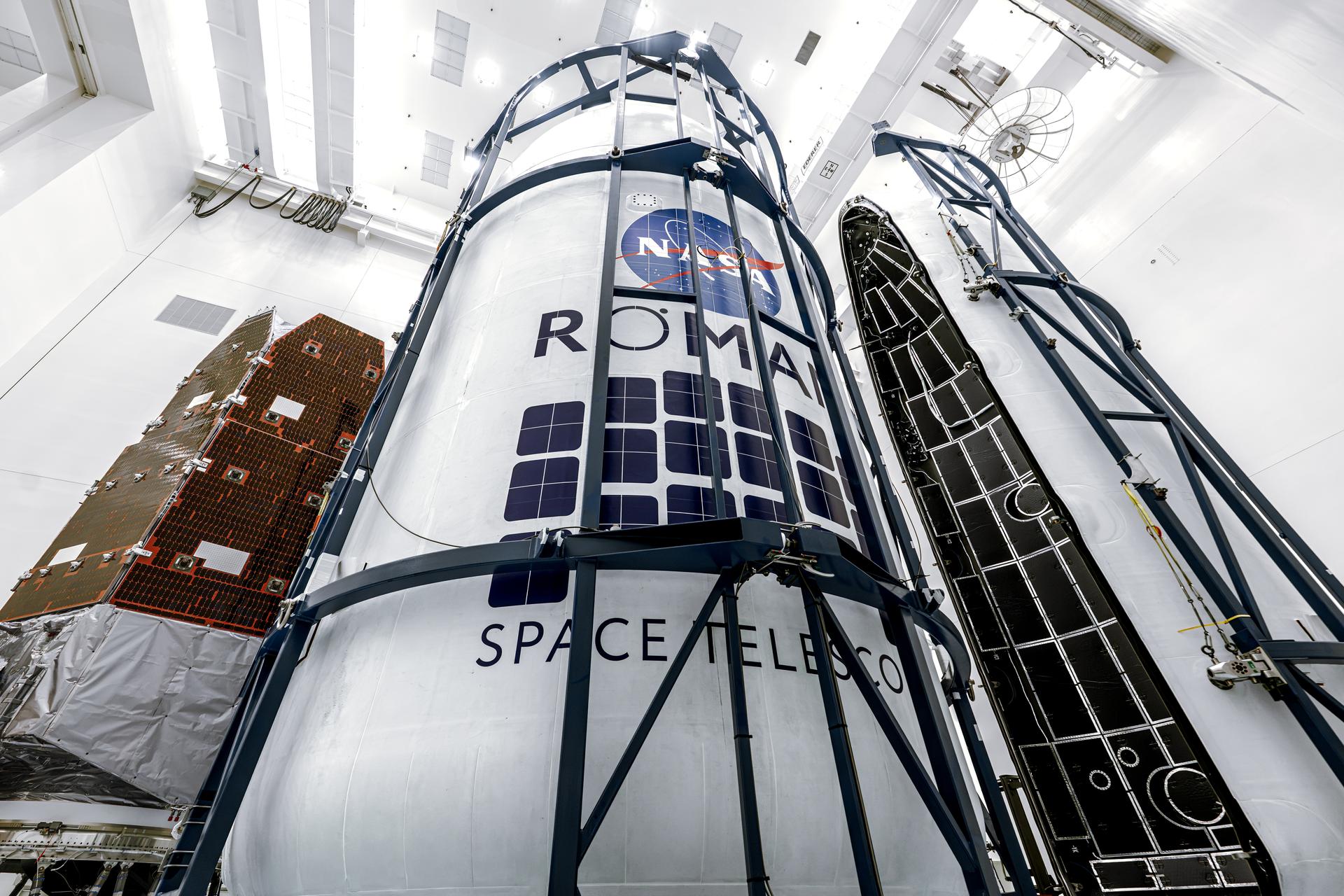
Teams inside the Payload Hazardous Servicing Facility at NASA’s Kennedy Space Center in Florida prepare the agency’s Nancy Grace Roman Space Telescope for encapsulation within its payload fairing on Wednesday, Aug. 19, 2026, ahead of mating to a SpaceX Falcon Heavy rocket. Encapsulation shields the spacecraft during rollout, ascent, and the early phases of flight. Roman will investigate dark energy and dark matter, conduct a statistical census of planetary systems, and enable a broad range of additional astrophysics research. Liftoff from Launch Complex 39A at Kennedy is targeted for no earlier than Sunday, Aug. 30, 2026.
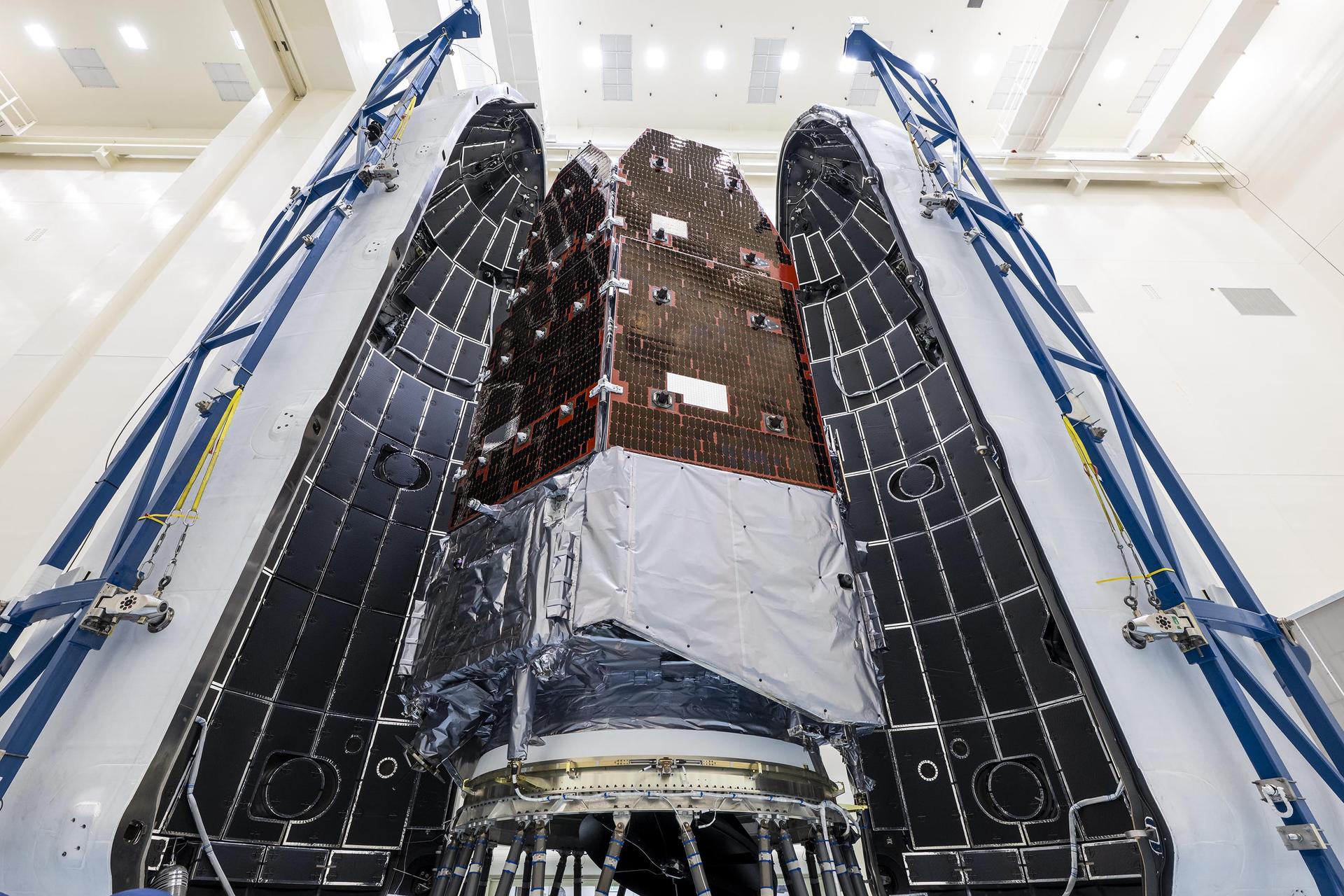
Teams inside the Payload Hazardous Servicing Facility at NASA’s Kennedy Space Center in Florida encapsulate the agency’s Nancy Grace Roman Space Telescope within the payload fairing on Friday, Aug. 21, 2026, ahead of mating to a SpaceX Falcon Heavy rocket. Encapsulation shields the spacecraft during rollout, ascent, and the early phases of flight. Roman will investigate dark energy and dark matter, conduct a statistical census of planetary systems, and enable a broad range of additional astrophysics research. Liftoff from Launch Complex 39A at Kennedy is targeted for no earlier than Sunday, Aug. 30, 2026.
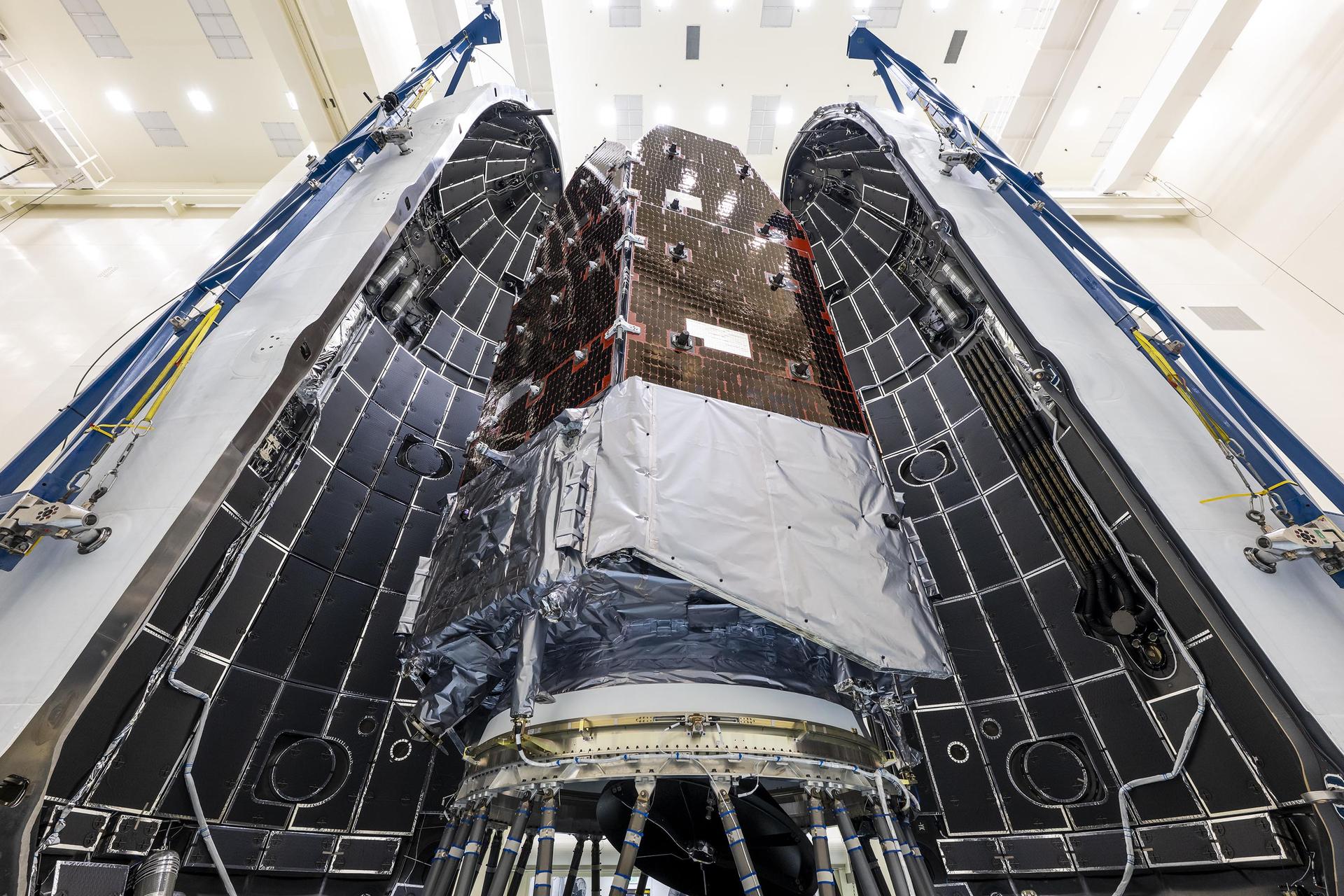
Teams inside the Payload Hazardous Servicing Facility at NASA’s Kennedy Space Center in Florida encapsulate the agency’s Nancy Grace Roman Space Telescope within the payload fairing on Friday, Aug. 21, 2026, ahead of mating to a SpaceX Falcon Heavy rocket. Encapsulation shields the spacecraft during rollout, ascent, and the early phases of flight. Roman will investigate dark energy and dark matter, conduct a statistical census of planetary systems, and enable a broad range of additional astrophysics research. Liftoff from Launch Complex 39A at Kennedy is targeted for no earlier than Sunday, Aug. 30, 2026.
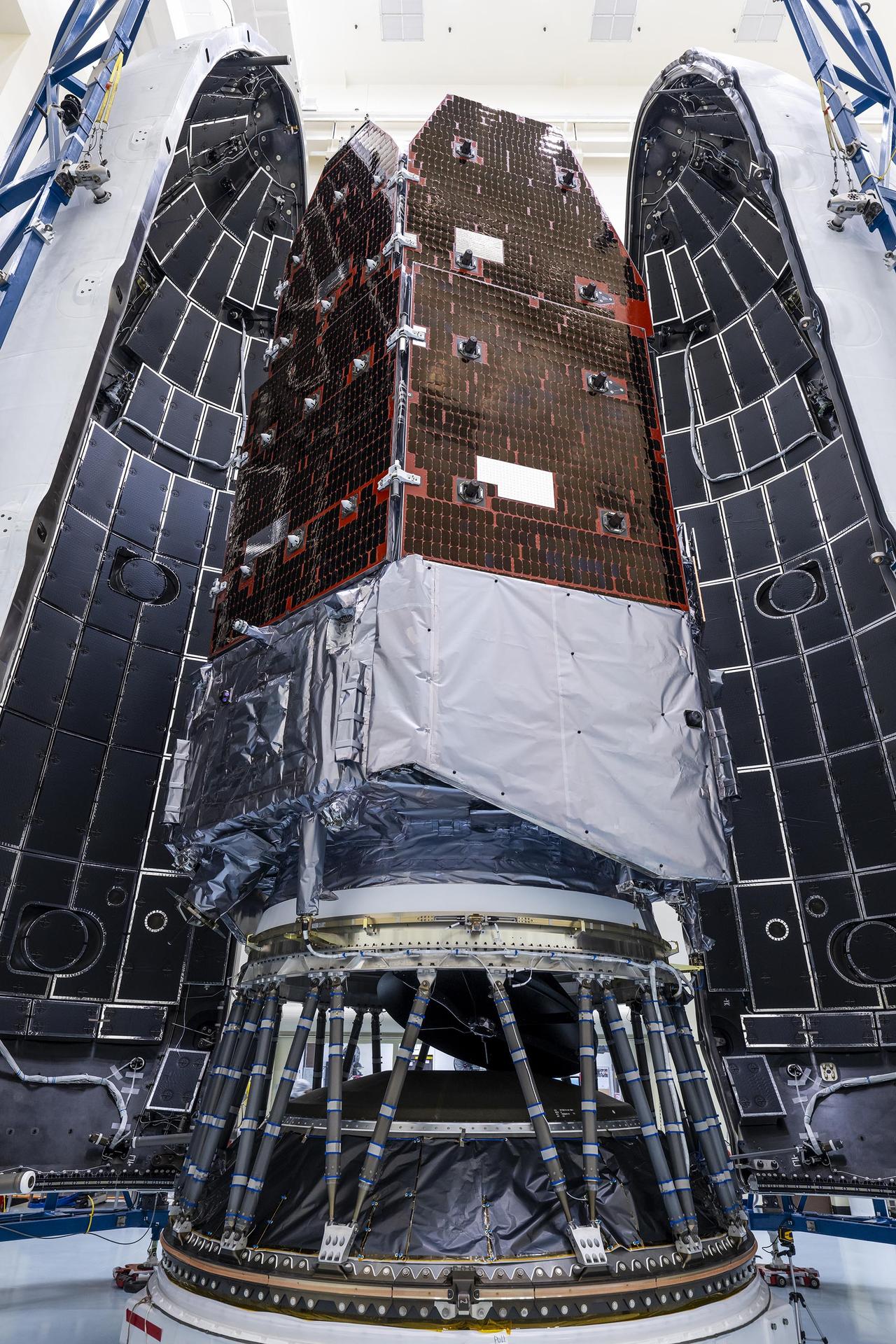
Teams inside the Payload Hazardous Servicing Facility at NASA’s Kennedy Space Center in Florida encapsulate the agency’s Nancy Grace Roman Space Telescope within the payload fairing on Friday, Aug. 21, 2026, ahead of mating to a SpaceX Falcon Heavy rocket. Encapsulation shields the spacecraft during rollout, ascent, and the early phases of flight. Roman will investigate dark energy and dark matter, conduct a statistical census of planetary systems, and enable a broad range of additional astrophysics research. Liftoff from Launch Complex 39A at Kennedy is targeted for no earlier than Sunday, Aug. 30, 2026.
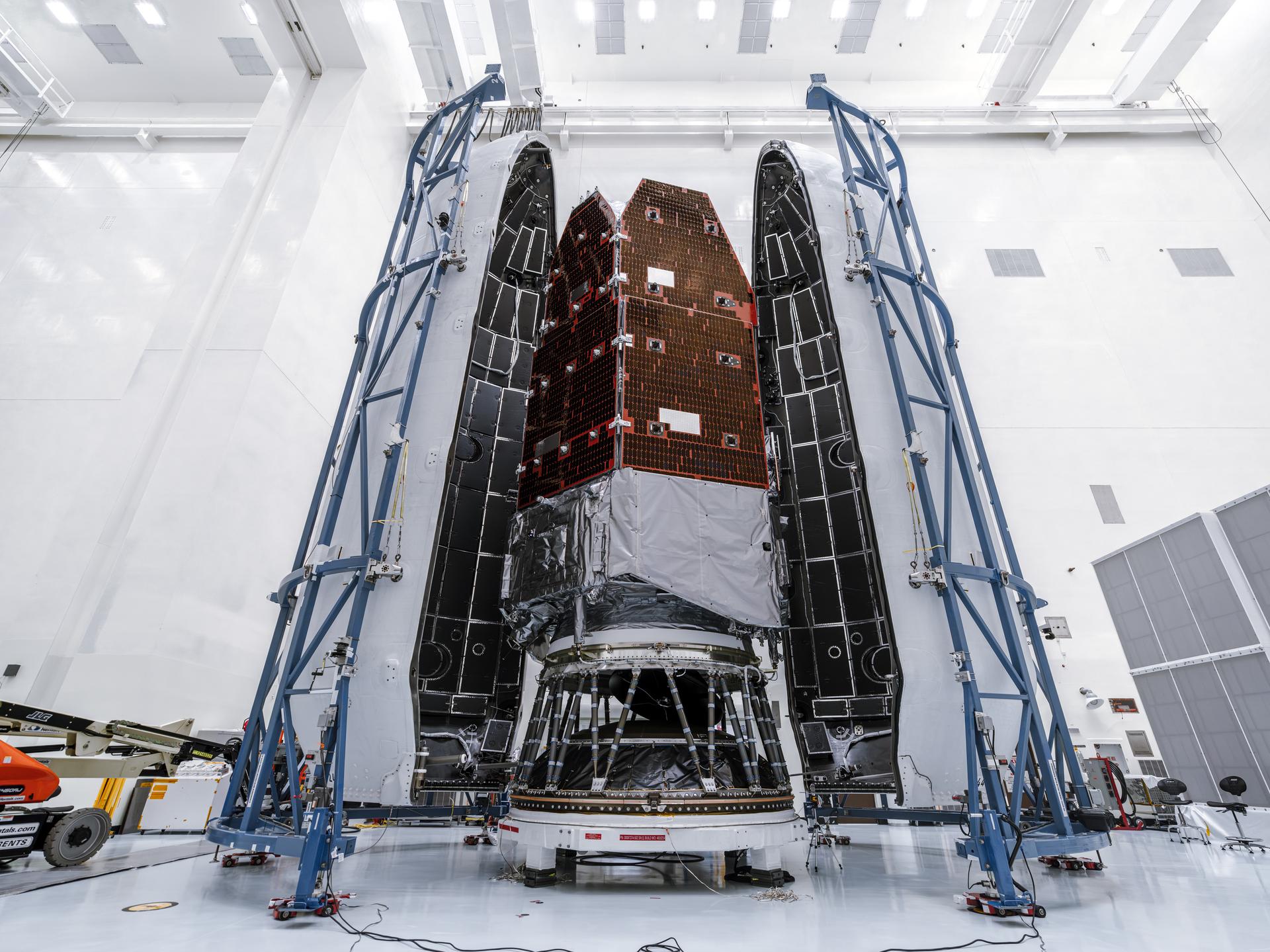
Teams inside the Payload Hazardous Servicing Facility at NASA’s Kennedy Space Center in Florida encapsulate the agency’s Nancy Grace Roman Space Telescope within the payload fairing on Friday, Aug. 21, 2026, ahead of mating to a SpaceX Falcon Heavy rocket. Encapsulation shields the spacecraft during rollout, ascent, and the early phases of flight. Roman will investigate dark energy and dark matter, conduct a statistical census of planetary systems, and enable a broad range of additional astrophysics research. Liftoff from Launch Complex 39A at Kennedy is targeted for no earlier than Sunday, Aug. 30, 2026.
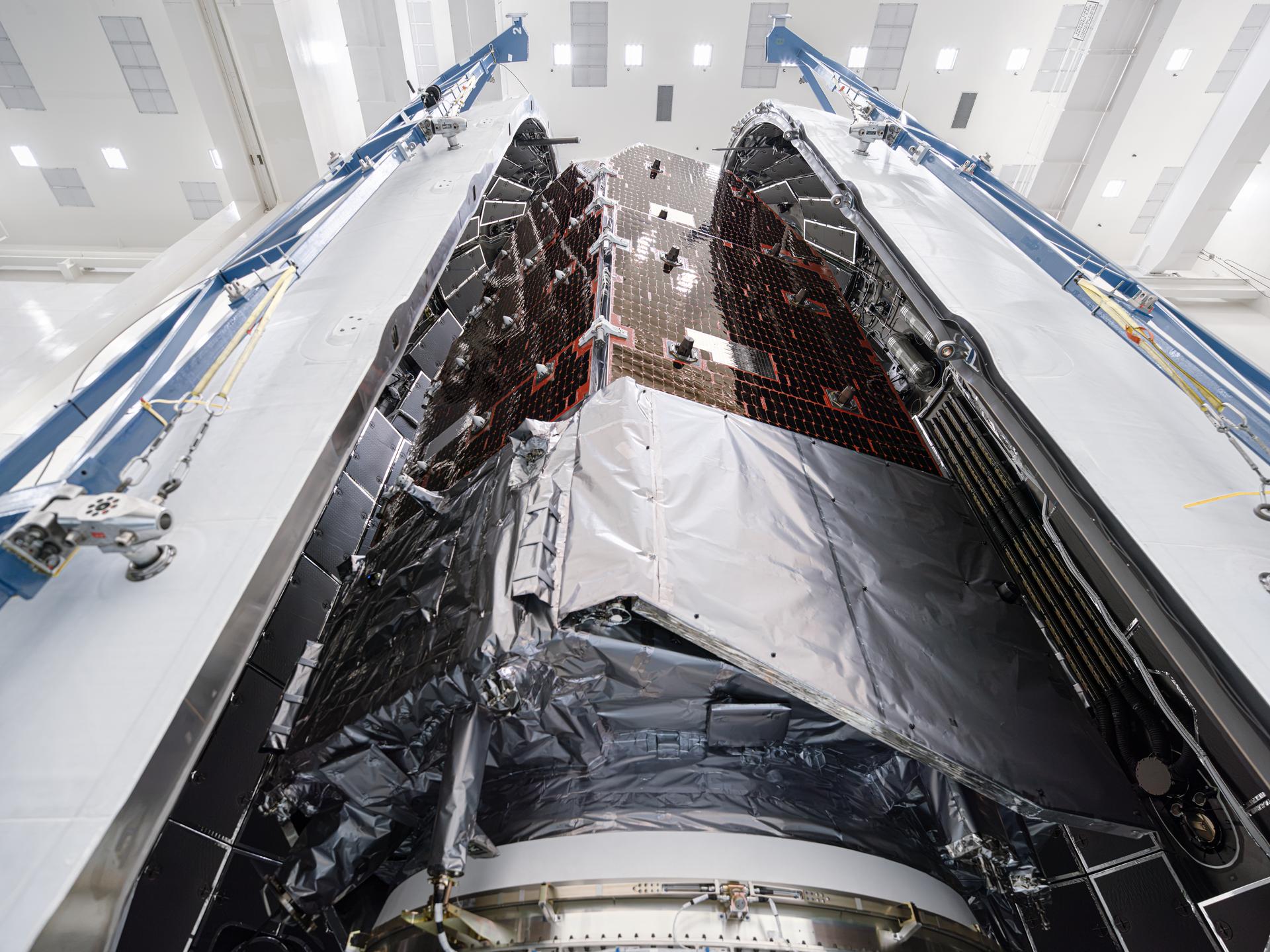
Teams inside the Payload Hazardous Servicing Facility at NASA’s Kennedy Space Center in Florida encapsulate the agency’s Nancy Grace Roman Space Telescope within the payload fairing on Friday, Aug. 21, 2026, ahead of mating to a SpaceX Falcon Heavy rocket. Encapsulation shields the spacecraft during rollout, ascent, and the early phases of flight. Roman will investigate dark energy and dark matter, conduct a statistical census of planetary systems, and enable a broad range of additional astrophysics research. Liftoff from Launch Complex 39A at Kennedy is targeted for no earlier than Sunday, Aug. 30, 2026.
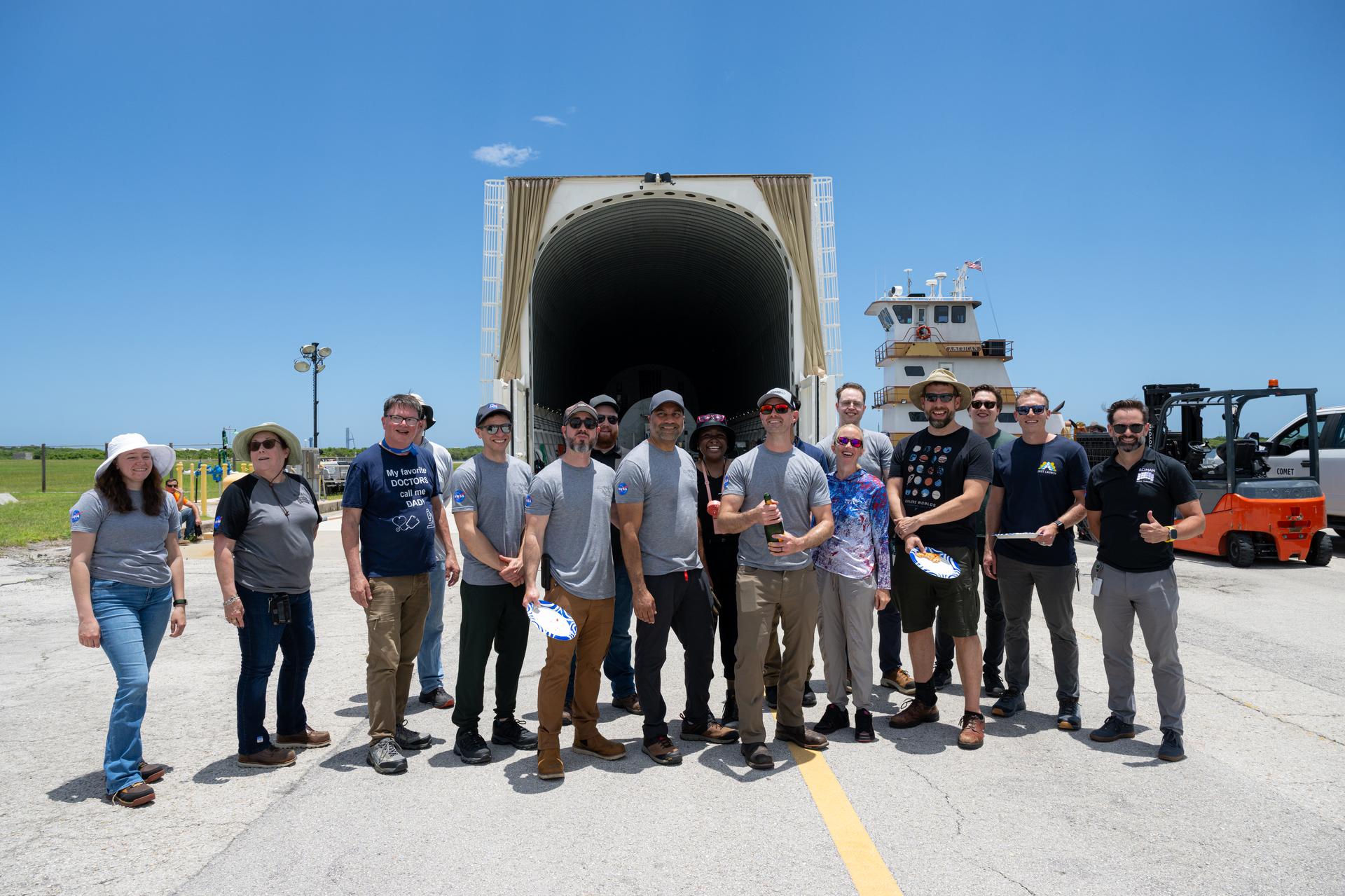
Members of the Nancy Grace Roman Space Telescope transport team pose for a photograph with NASA’s Pegasus barge, Sunday, June 21, at NASA’s Kennedy Space Center in Florida. The Pegasus barge delivered NASA’s Nancy Grace Roman Space Telescope and a weather cover for the Artemis III SLS (Space Launch System) rocket core stage to Kennedy. Photo Credit: (NASA/John Kraus)
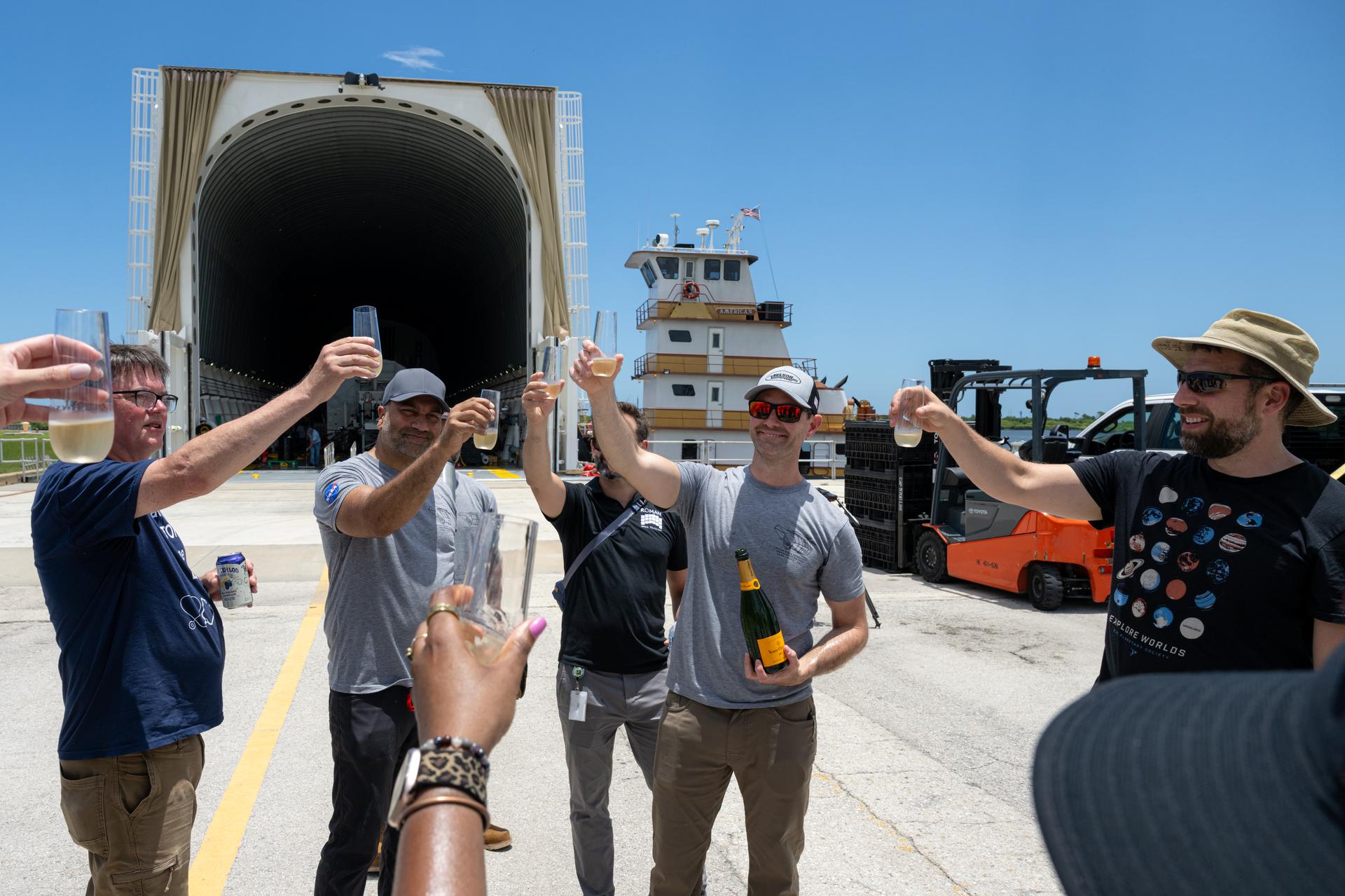
Members of the Nancy Grace Roman Space Telescope transport team celebrate with a toast following the arrival of NASA’s Pegasus barge, Sunday, June 21, at NASA’s Kennedy Space Center in Florida. The Pegasus barge delivered NASA’s Nancy Grace Roman Space Telescope and a weather cover for the Artemis III SLS (Space Launch System) rocket core stage to Kennedy. Photo Credit: (NASA/John Kraus)
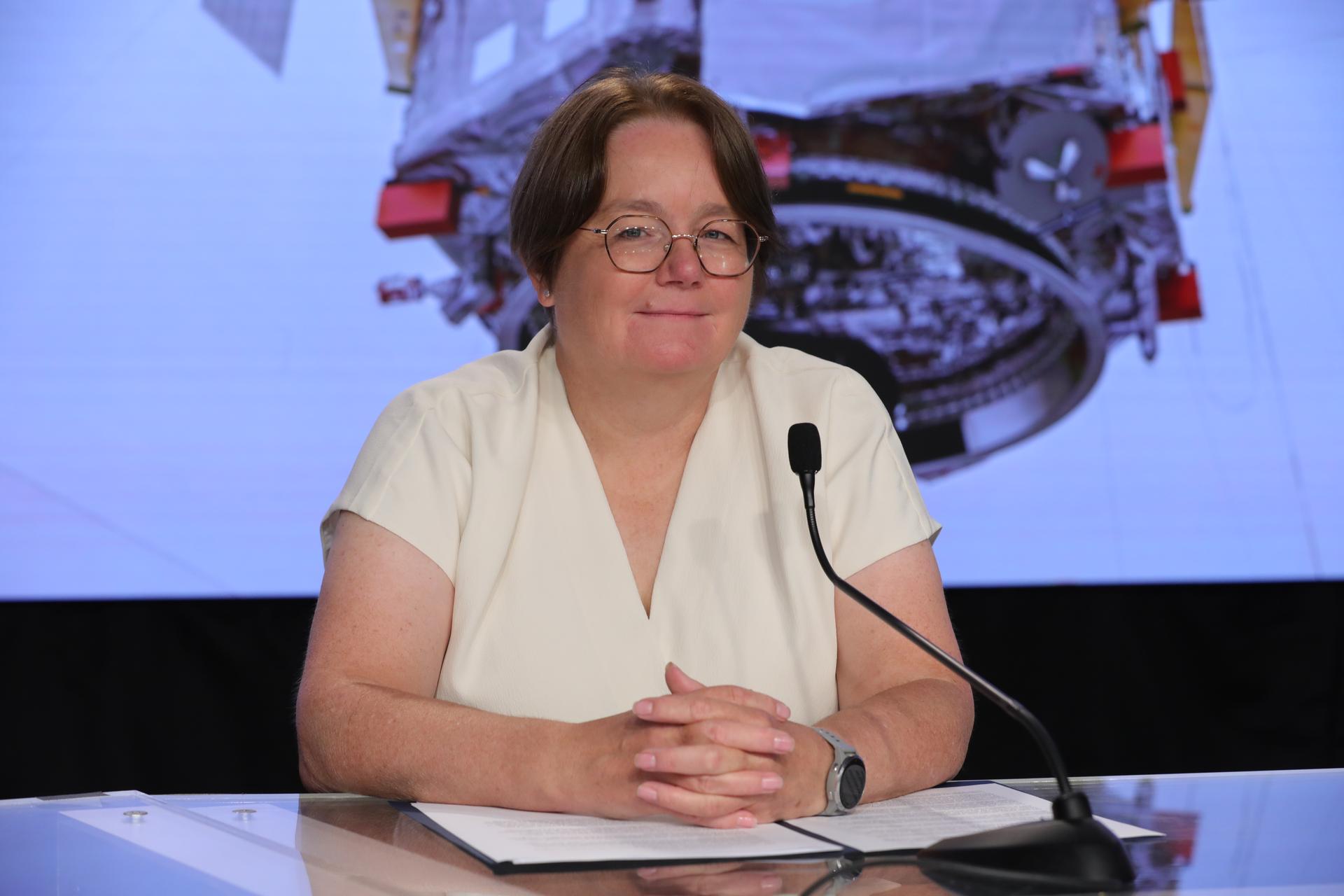
Julie McEnery, Roman telescope senior project scientist, NASA’s Goddard Space Flight Center in Greenbelt, Maryland, participates in a science briefing for NASA’s Nancy Grace Roman Space Telescope inside the NASA News Center’s John Holliman Auditorium at Kennedy Space Center in Florida, on Saturday, Aug. 29, 2026. Roman will investigate dark energy and dark matter, conduct a statistical census of planetary systems, and enable a broad range of additional astrophysics research. Liftoff from Launch Complex 39A at Kennedy is targeted for no earlier than Sunday, Aug. 30, 2026.

Kristen McQuinn, Roman Science Operations Center lead, Space Telescope Science Institute, participates in a science briefing for NASA’s Nancy Grace Roman Space Telescope inside the NASA News Center’s John Holliman Auditorium at Kennedy Space Center in Florida, on Saturday, Aug. 29, 2026. Roman will investigate dark energy and dark matter, conduct a statistical census of planetary systems, and enable a broad range of additional astrophysics research. Liftoff from Launch Complex 39A at Kennedy is targeted for no earlier than Sunday, Aug. 30, 2026.
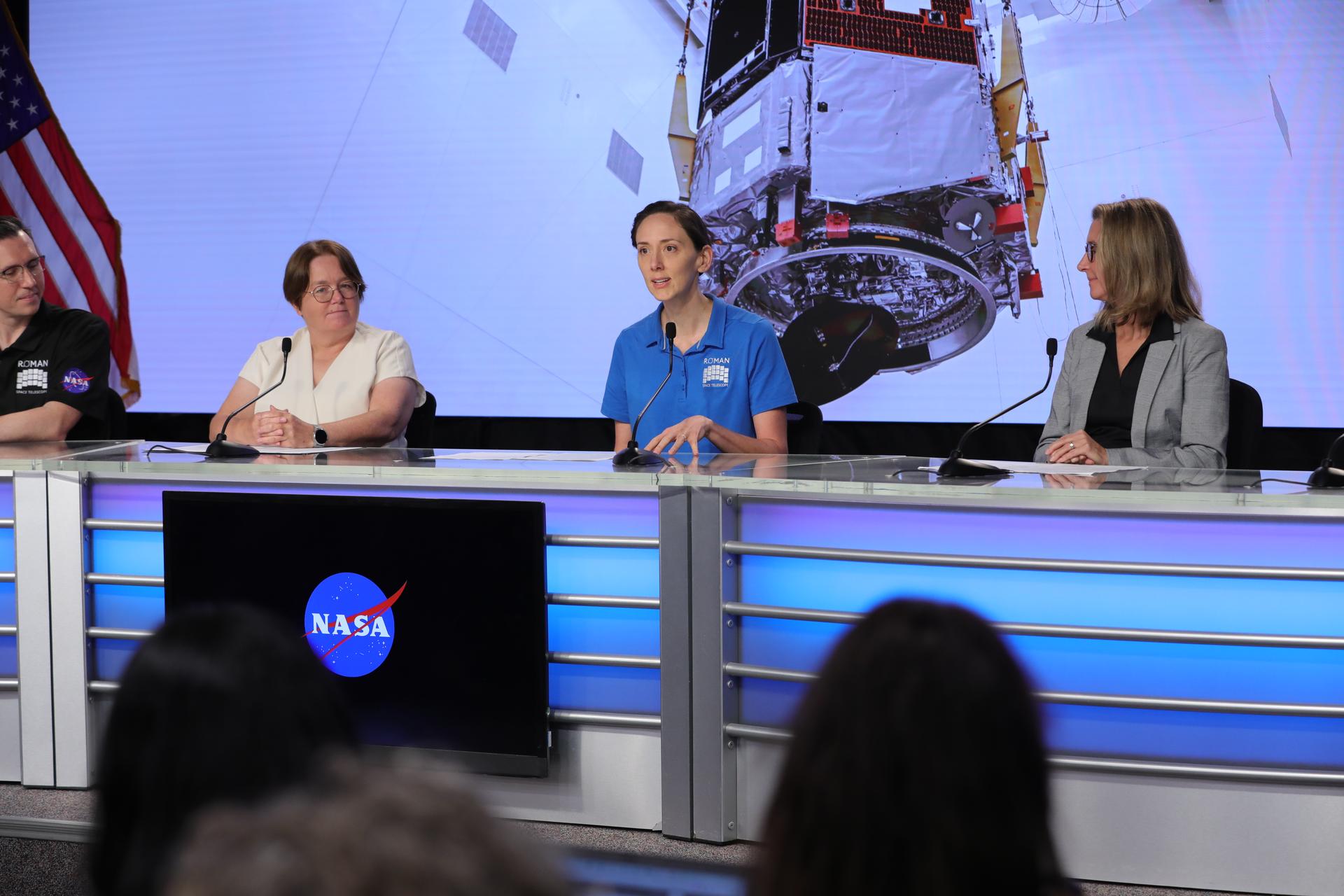
From left, Shawn Domagal-Goldman, director, Astrophysics Division, NASA Headquarters in Washington; Julie McEnery, Roman telescope senior project scientist, NASA’s Goddard Space Flight Center in Greenbelt, Maryland; Vanessa Bailey, Roman Coronagraph Instrument scientist, NASA’s Jet Propulsion Laboratory in Southern California; and Kristen McQuinn, Roman Science Operations Center lead, Space Telescope Science Institute, participate in a science briefing for NASA’s Nancy Grace Roman Space Telescope inside the NASA News Center’s John Holliman Auditorium at Kennedy Space Center in Florida, on Saturday, Aug. 29, 2026. Roman will investigate dark energy and dark matter, conduct a statistical census of planetary systems, and enable a broad range of additional astrophysics research. Liftoff from Launch Complex 39A at Kennedy is targeted for no earlier than Sunday, Aug. 30, 2026.

Lee Armus, Roman Science Support Center lead, Caltech/IPAC, participates in a science briefing for NASA’s Nancy Grace Roman Space Telescope inside the NASA News Center’s John Holliman Auditorium at Kennedy Space Center in Florida, on Saturday, Aug. 29, 2026. Roman will investigate dark energy and dark matter, conduct a statistical census of planetary systems, and enable a broad range of additional astrophysics research. Liftoff from Launch Complex 39A at Kennedy is targeted for no earlier than Sunday, Aug. 30, 2026.
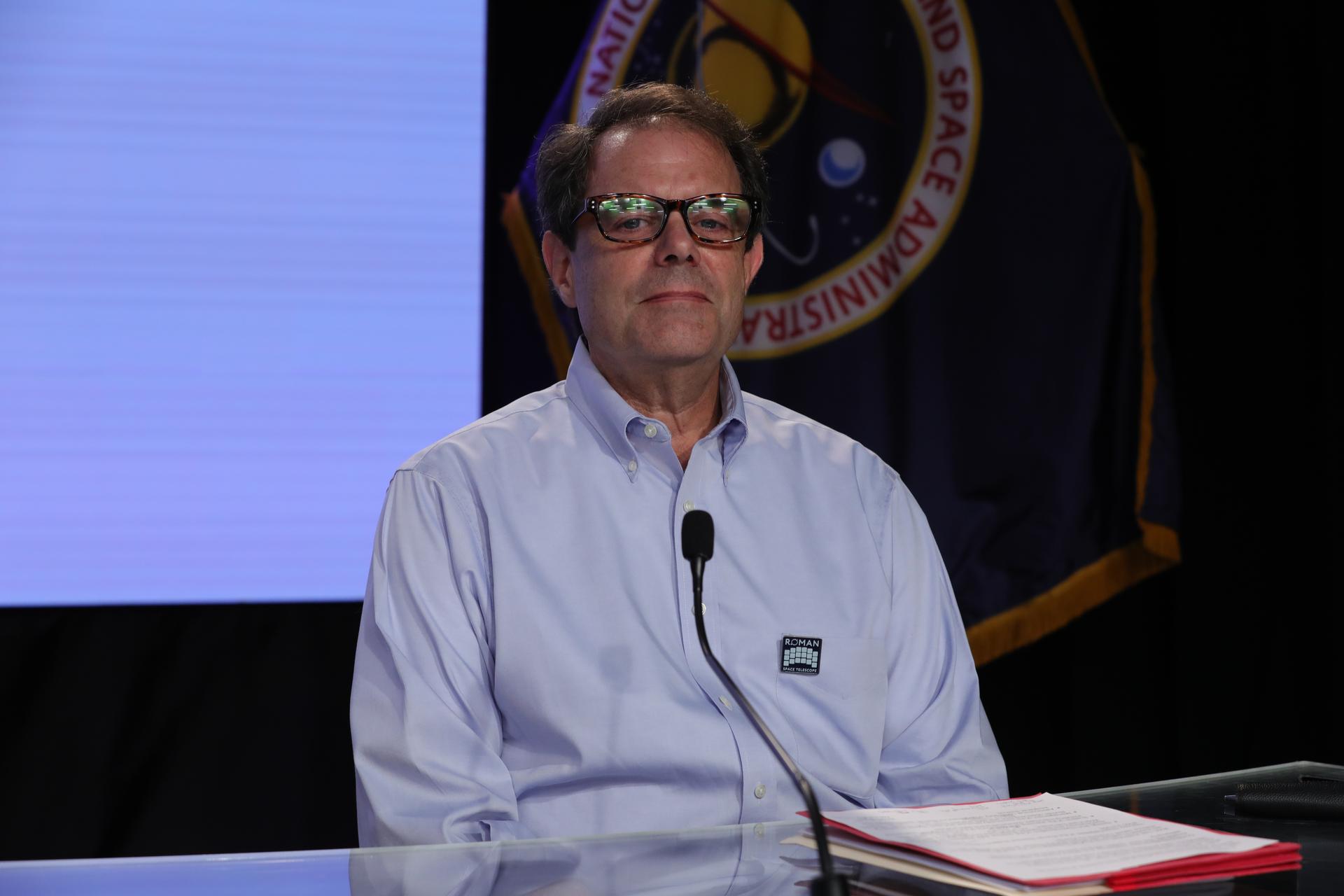
Lee Armus, Roman Science Support Center lead, Caltech/IPAC, participates in a science briefing for NASA’s Nancy Grace Roman Space Telescope inside the NASA News Center’s John Holliman Auditorium at Kennedy Space Center in Florida, on Saturday, Aug. 29, 2026. Roman will investigate dark energy and dark matter, conduct a statistical census of planetary systems, and enable a broad range of additional astrophysics research. Liftoff from Launch Complex 39A at Kennedy is targeted for no earlier than Sunday, Aug. 30, 2026.

Lucas Paganini, Roman telescope program executive, NASA Headquarters in Washington, participates in a prelaunch news conference for the agency’s Nancy Grace Roman Space Telescope inside the NASA News Center’s John Holliman Auditorium at Kennedy Space Center in Florida, on Saturday, Aug. 29, 2026. Roman will investigate dark energy and dark matter, conduct a statistical census of planetary systems, and enable a broad range of additional astrophysics research. Liftoff from Launch Complex 39A at Kennedy is targeted for no earlier than Sunday, Aug. 30, 2026.
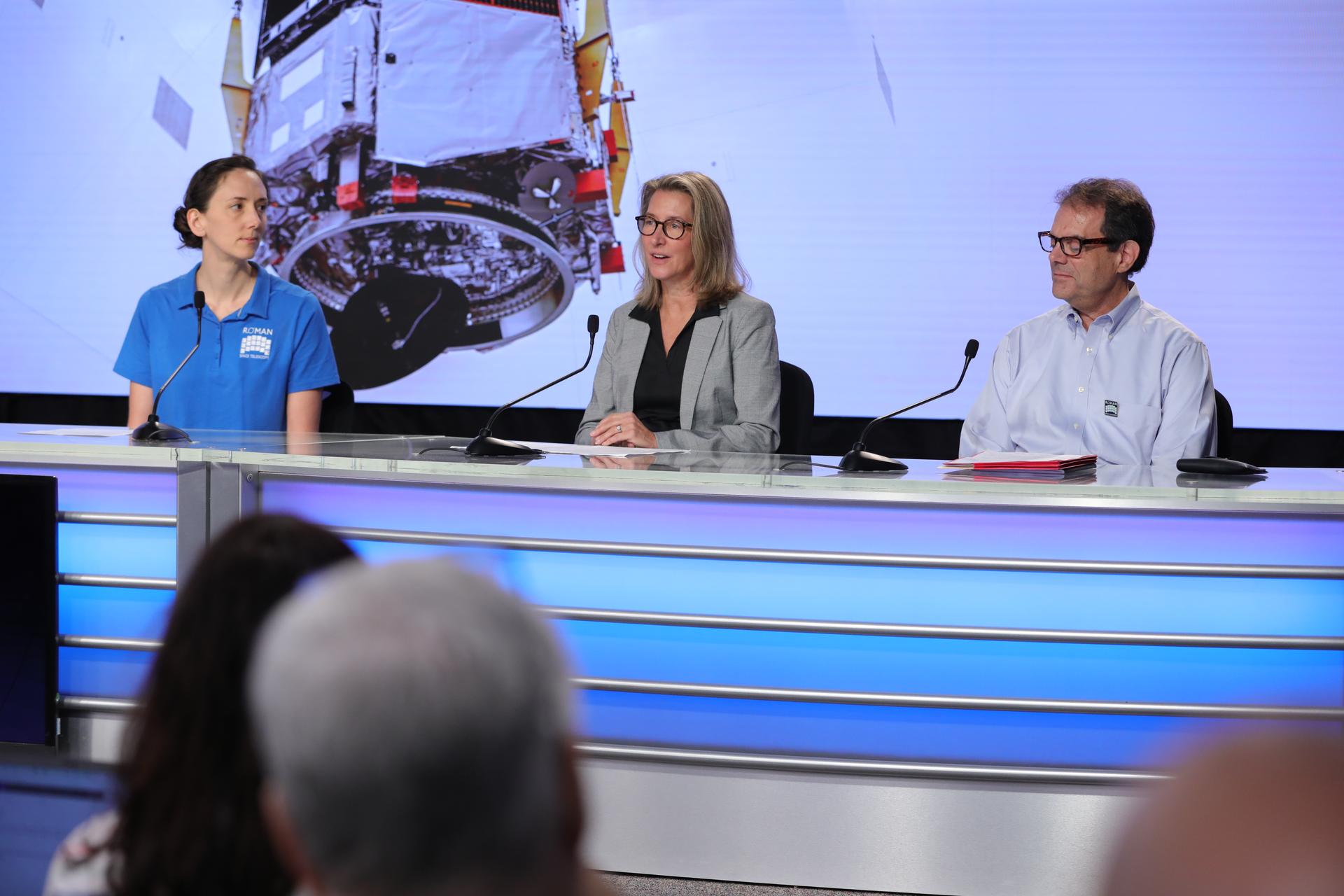
From left, Vanessa Bailey, Roman Coronagraph Instrument scientist, NASA’s Jet Propulsion Laboratory in Southern California; Kristen McQuinn, Roman Science Operations Center lead, Space Telescope Science Institute; and Lee Armus, Roman Science Support Center lead, Caltech/IPAC, participate in a science briefing for NASA’s Nancy Grace Roman Space Telescope inside the NASA News Center’s John Holliman Auditorium at Kennedy Space Center in Florida, on Saturday, Aug. 29, 2026. Roman will investigate dark energy and dark matter, conduct a statistical census of planetary systems, and enable a broad range of additional astrophysics research. Liftoff from Launch Complex 39A at Kennedy is targeted for no earlier than Sunday, Aug. 30, 2026.
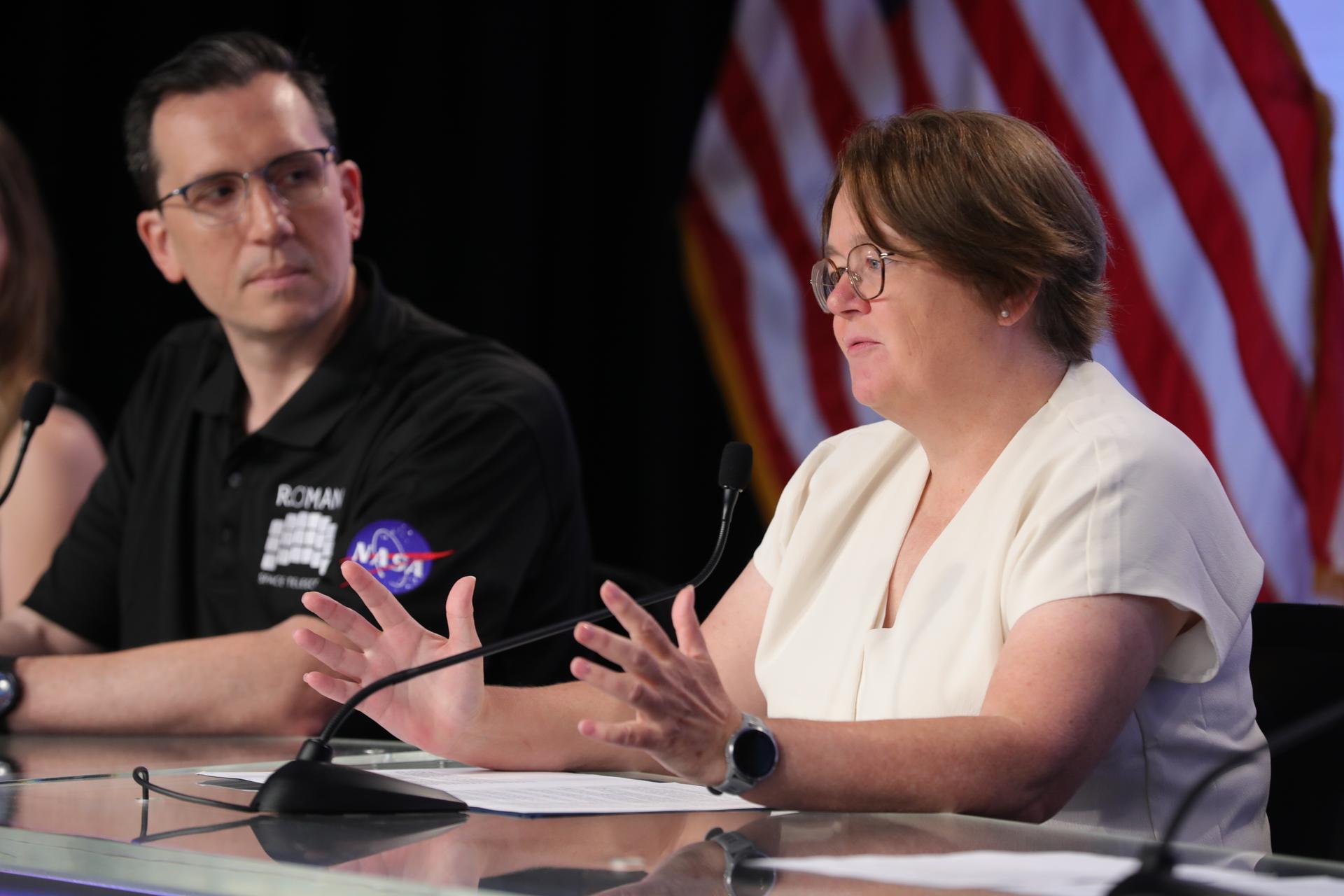
From left, Shawn Domagal-Goldman, director, Astrophysics Division, NASA Headquarters in Washington, and Julie McEnery, Roman telescope senior project scientist, NASA’s Goddard Space Flight Center in Greenbelt, Maryland, participate in a science briefing for NASA’s Nancy Grace Roman Space Telescope inside the NASA News Center’s John Holliman Auditorium at Kennedy Space Center in Florida, on Saturday, Aug. 29, 2026. Roman will investigate dark energy and dark matter, conduct a statistical census of planetary systems, and enable a broad range of additional astrophysics research. Liftoff from Launch Complex 39A at Kennedy is targeted for no earlier than Sunday, Aug. 30, 2026.
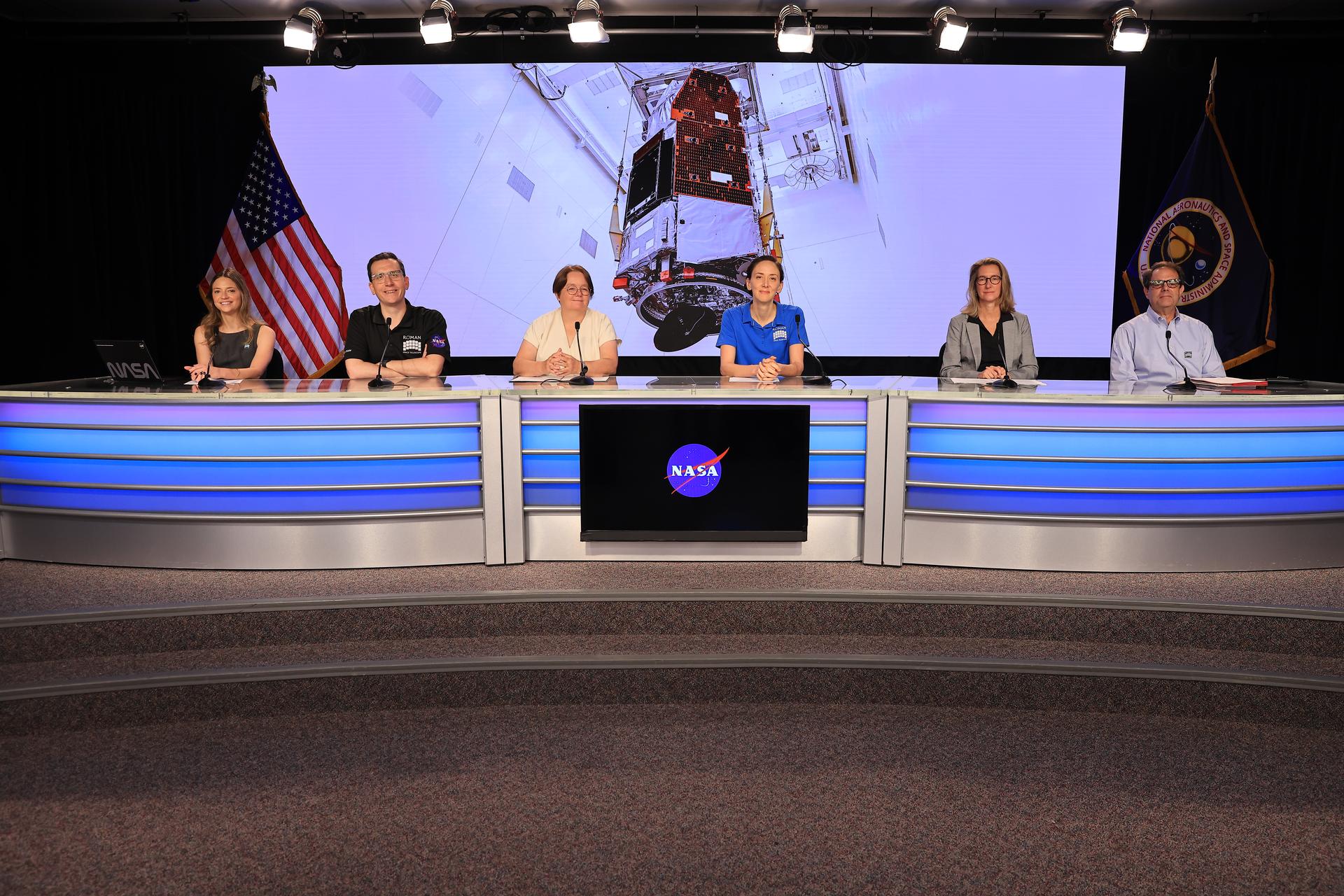
From left, Claire Andreoli, NASA Communications; Shawn Domagal-Goldman, director, Astrophysics Division, NASA Headquarters in Washington; Julie McEnery, Roman telescope senior project scientist, NASA’s Goddard Space Flight Center in Greenbelt, Maryland; Vanessa Bailey, Roman Coronagraph Instrument scientist, NASA’s Jet Propulsion Laboratory in Southern California; Kristen McQuinn, Roman Science Operations Center lead, Space Telescope Science Institute; and Lee Armus, Roman Science Support Center lead, Caltech/IPAC, participate in a science briefing for NASA’s Nancy Grace Roman Space Telescope inside the NASA News Center’s John Holliman Auditorium at Kennedy Space Center in Florida, on Saturday, Aug. 29, 2026. Roman will investigate dark energy and dark matter, conduct a statistical census of planetary systems, and enable a broad range of additional astrophysics research. Liftoff from Launch Complex 39A at Kennedy is targeted for no earlier than Sunday, Aug. 30, 2026.
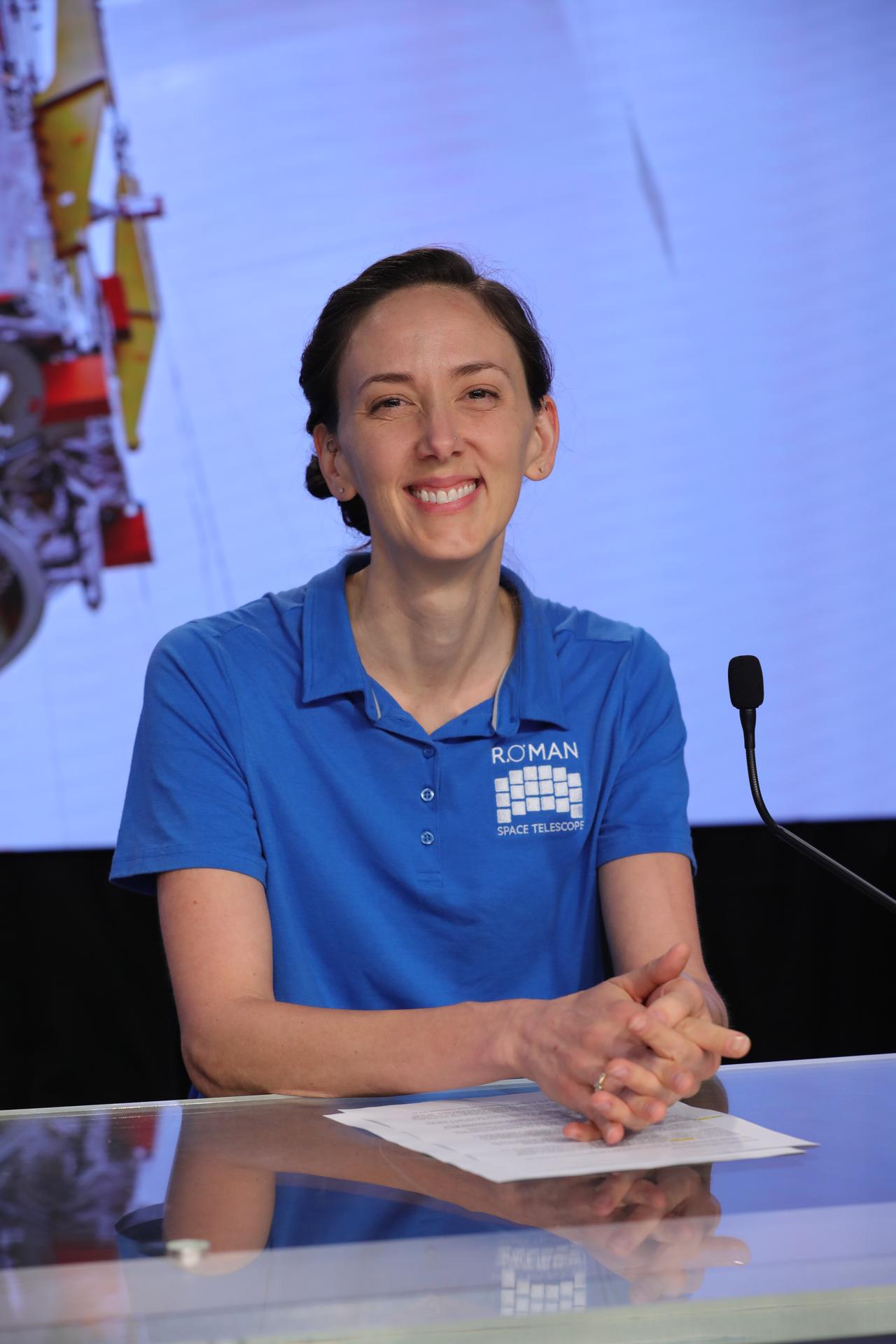
Vanessa Bailey, Roman Coronagraph Instrument scientist, NASA’s Jet Propulsion Laboratory in Southern California, participates in a science briefing for NASA’s Nancy Grace Roman Space Telescope inside the NASA News Center’s John Holliman Auditorium at Kennedy Space Center in Florida, on Saturday, Aug. 29, 2026. Roman will investigate dark energy and dark matter, conduct a statistical census of planetary systems, and enable a broad range of additional astrophysics research. Liftoff from Launch Complex 39A at Kennedy is targeted for no earlier than Sunday, Aug. 30, 2026.
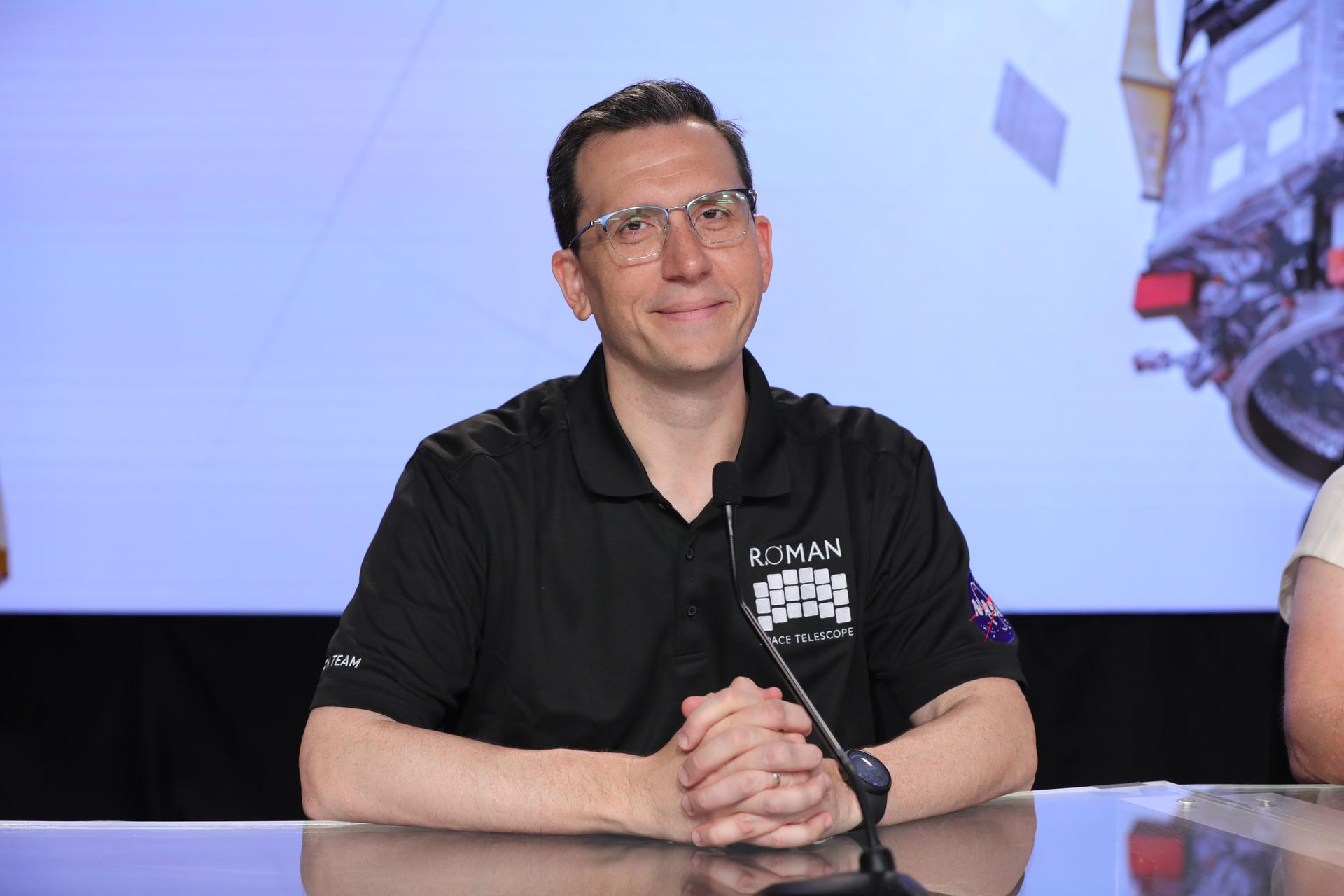
Shawn Domagal-Goldman, director, Astrophysics Division, NASA Headquarters in Washington, participates in a science briefing for NASA’s Nancy Grace Roman Space Telescope inside the NASA News Center’s John Holliman Auditorium at Kennedy Space Center in Florida, on Saturday, Aug. 29, 2026. Roman will investigate dark energy and dark matter, conduct a statistical census of planetary systems, and enable a broad range of additional astrophysics research. Liftoff from Launch Complex 39A at Kennedy is targeted for no earlier than Sunday, Aug. 30, 2026.
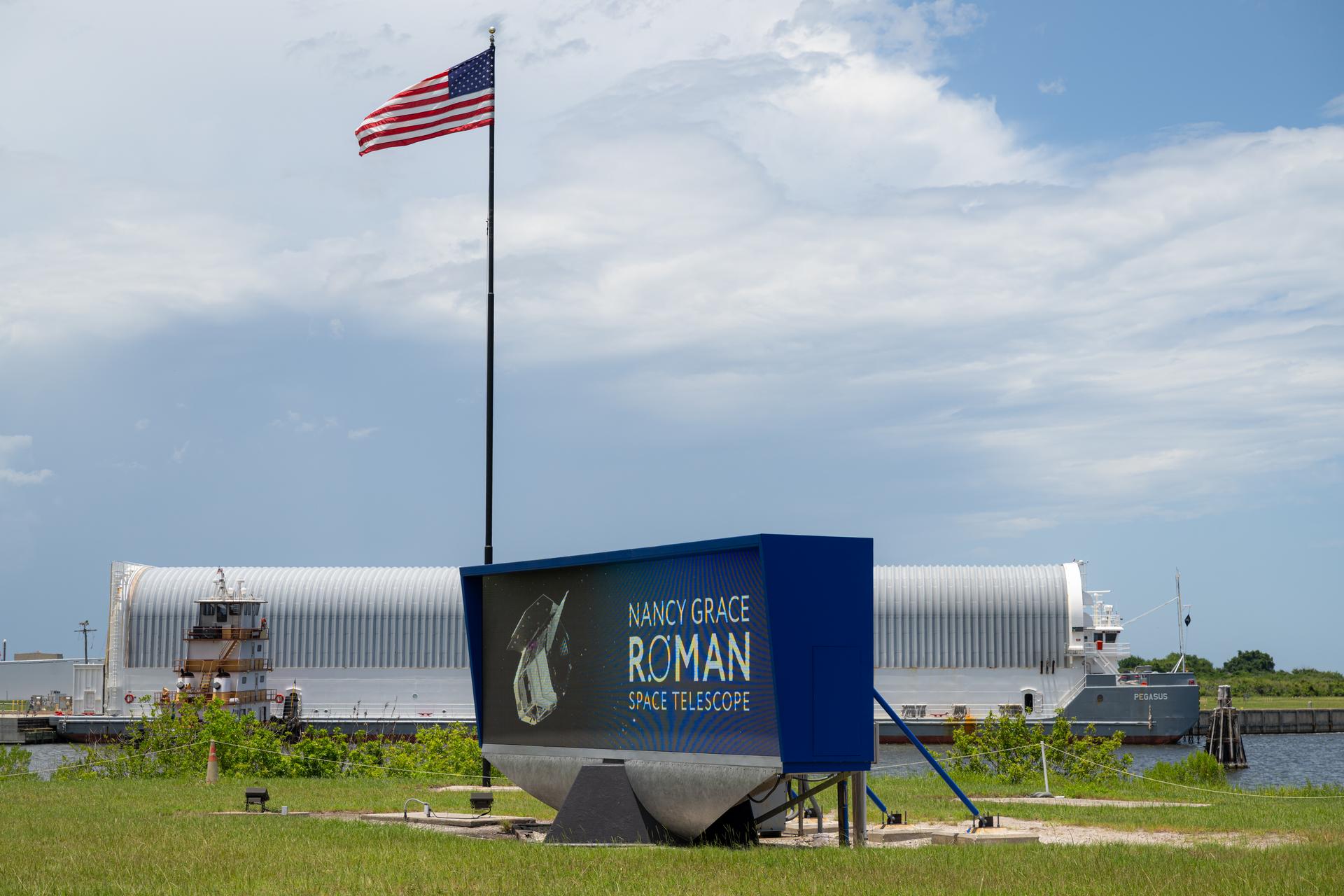
NASA’s Pegasus barge is seen, Sunday, June 21, at NASA’s Kennedy Space Center in Florida. The Pegasus barge delivered NASA’s Nancy Grace Roman Space Telescope and a weather cover for the Artemis III SLS (Space Launch System) rocket core stage to Kennedy. Photo Credit: (NASA/John Kraus)
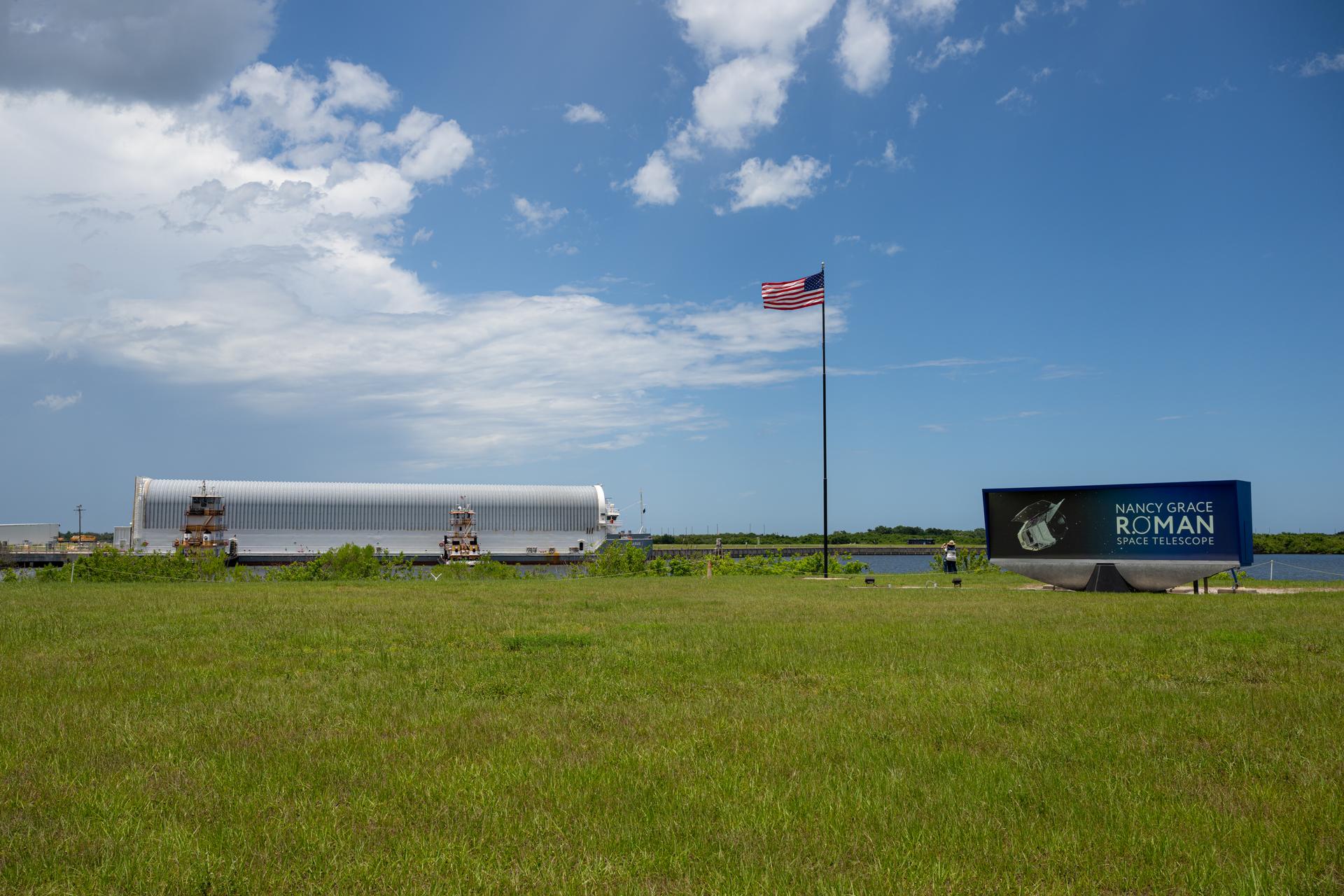
NASA’s Pegasus barge is seen, Sunday, June 21, at NASA’s Kennedy Space Center in Florida. The Pegasus barge delivered NASA’s Nancy Grace Roman Space Telescope and a weather cover for the Artemis III SLS (Space Launch System) rocket core stage to Kennedy. Photo Credit: (NASA/John Kraus)
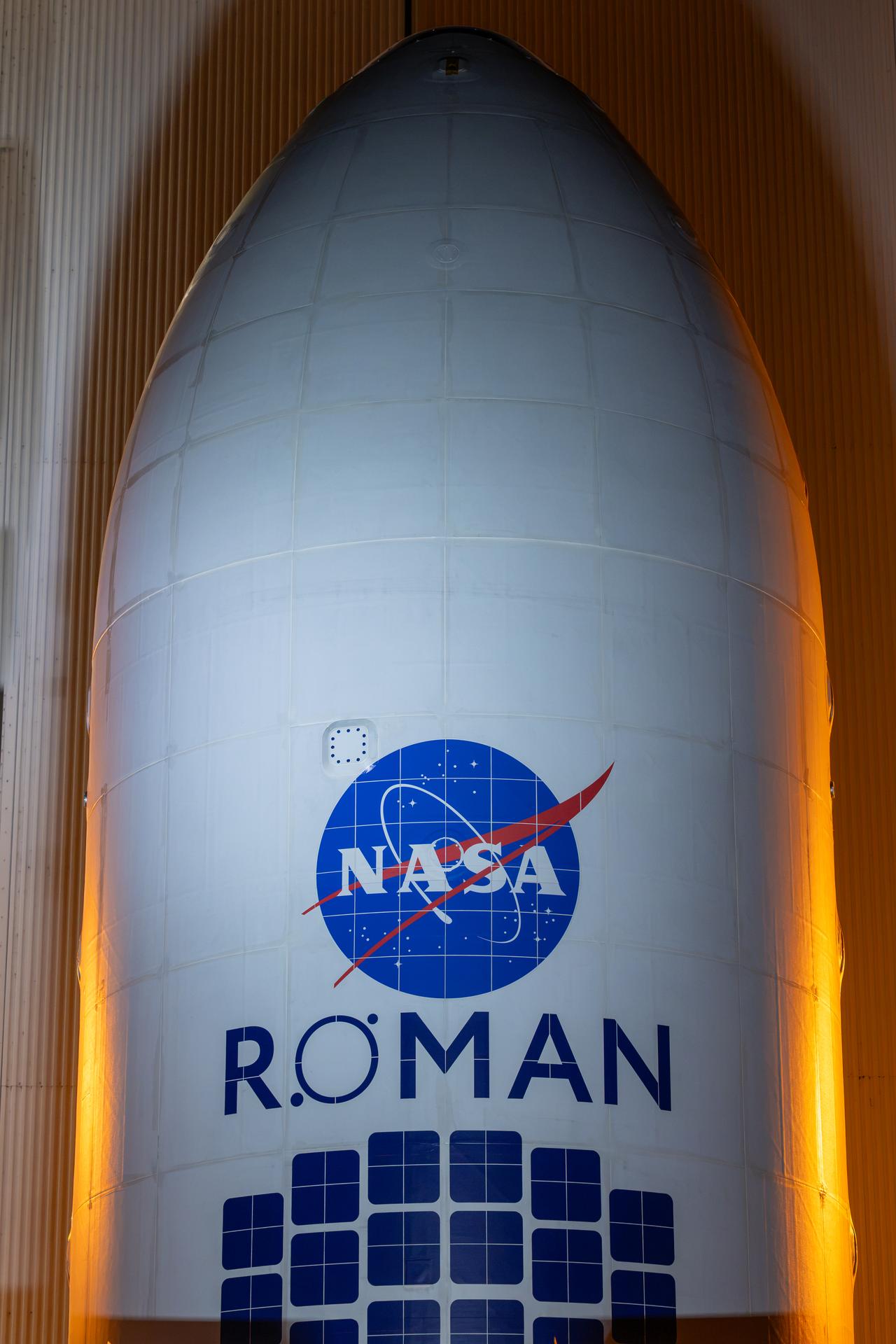
Teams inside the Payload Hazardous Servicing Facility at NASA’s Kennedy Space Center in Florida encapsulate the agency’s Nancy Grace Roman Space Telescope within the payload fairing on Friday, Aug. 21, 2026, ahead of mating to a SpaceX Falcon Heavy rocket. Encapsulation shields the spacecraft during rollout, ascent, and the early phases of flight. Roman will investigate dark energy and dark matter, conduct a statistical census of planetary systems, and enable a broad range of additional astrophysics research. Liftoff from Launch Complex 39A at Kennedy is targeted for no earlier than Sunday, Aug. 30, 2026.
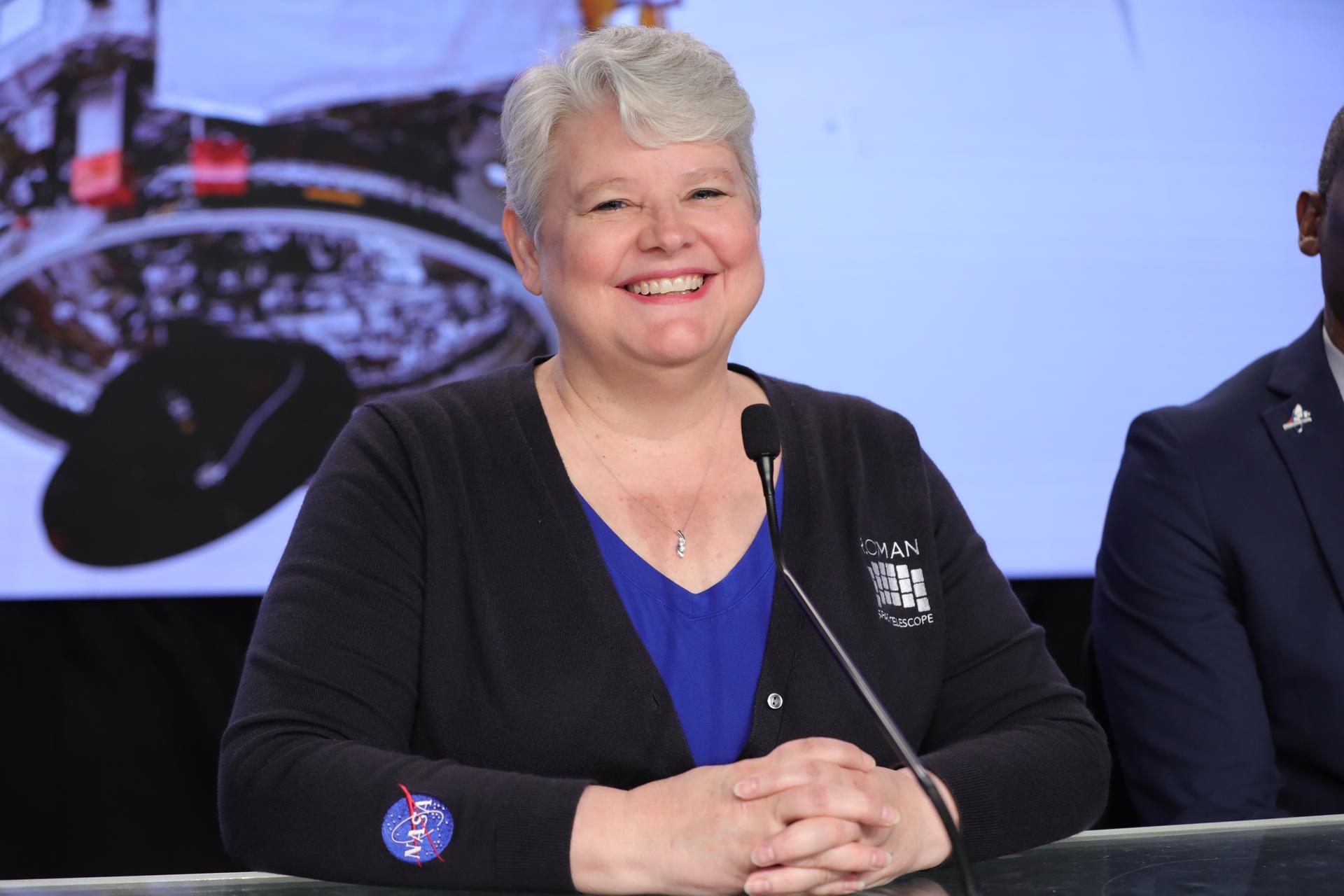
Jackie Townsend, Roman telescope project manager, NASA’s Goddard Space Flight Center in Greenbelt, Maryland, participates in a prelaunch news conference for the agency’s Nancy Grace Roman Space Telescope inside the NASA News Center’s John Holliman Auditorium at Kennedy Space Center in Florida, on Saturday, Aug. 29, 2026. Roman will investigate dark energy and dark matter, conduct a statistical census of planetary systems, and enable a broad range of additional astrophysics research. Liftoff from Launch Complex 39A at Kennedy is targeted for no earlier than Sunday, Aug. 30, 2026.
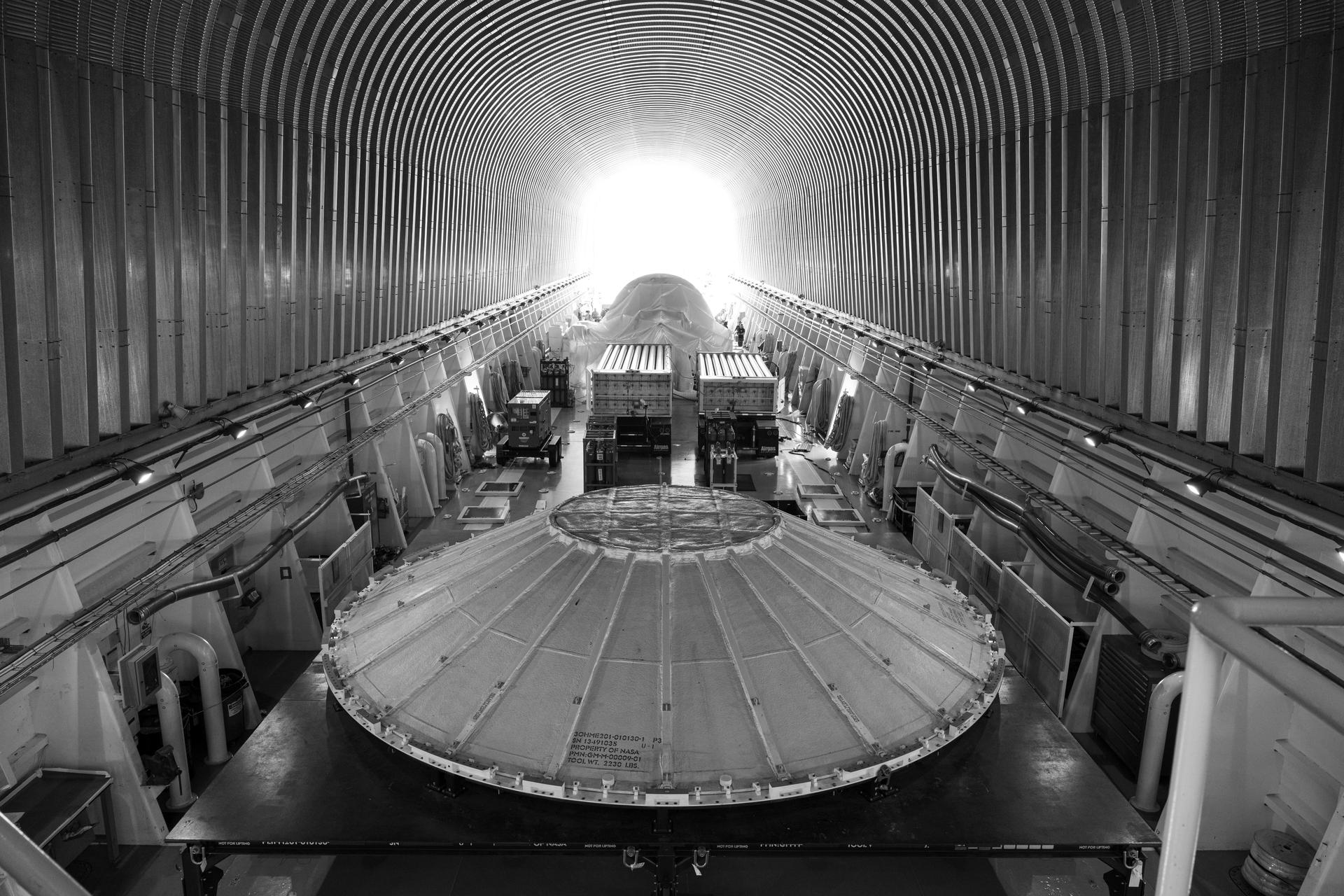
An interior view of NASA’s Pegasus barge, carrying a weather cover for Artemis III SLS (Space Launch System) rocket core stage and NASA’s Nancy Grace Roman Telescope, is seen, Sunday, June 21, at NASA’s Kennedy Space Center in Florida. Photo Credit: (NASA/John Kraus)
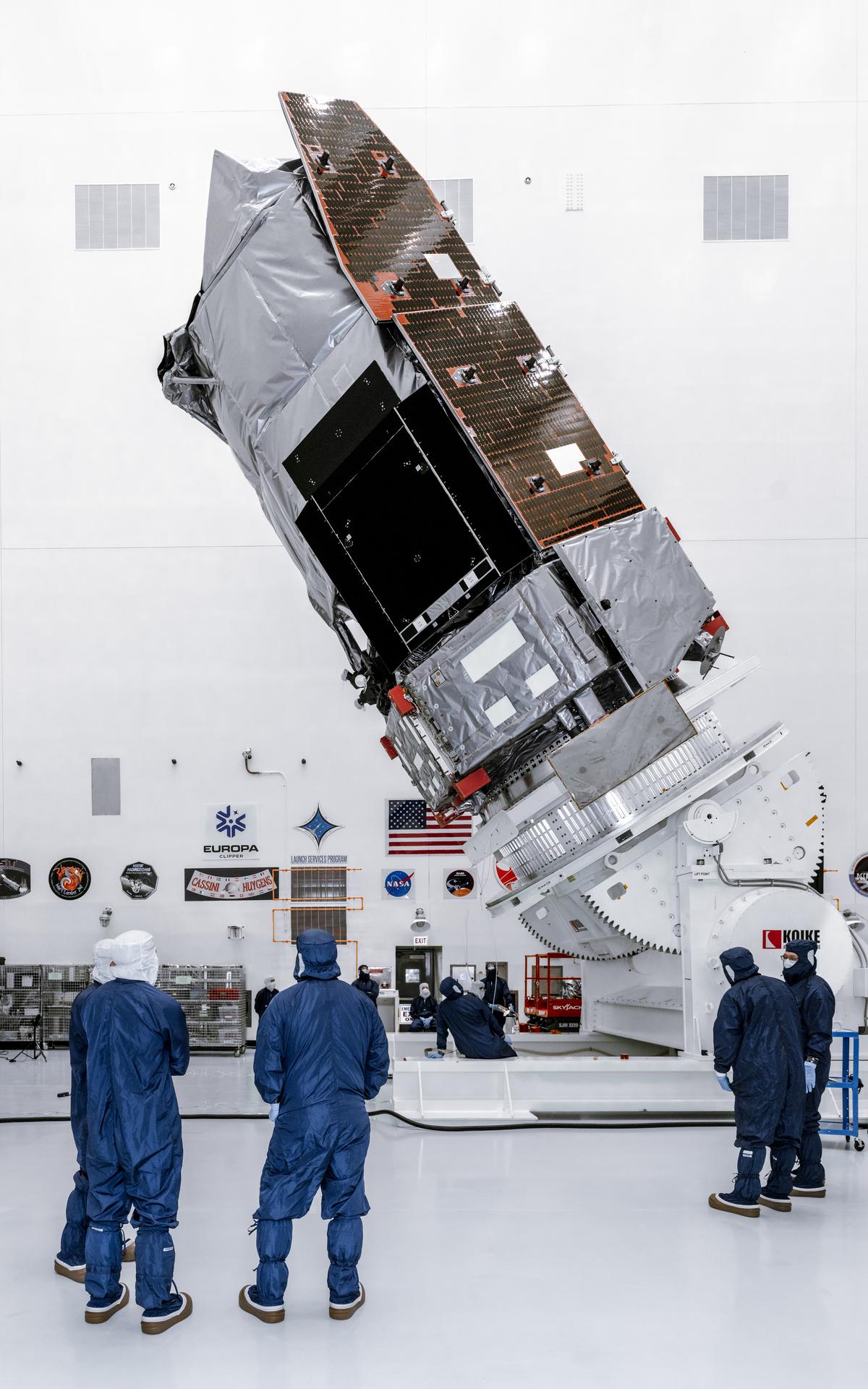
Technicians and engineers inside the Payload Hazardous Servicing Facility at NASA’s Kennedy Space Center in Florida rotate the agency’s Nancy Grace Roman Space Telescope to vertical Thursday, June 25, 2026, using precision handling hardware. Named for NASA’s first chief astronomer and “mother of the Hubble Space Telescope,” the Roman Space Telescope will offer a field of view at least 100 times larger than Hubble’s, resulting in deep, sweeping explorations of the cosmos.

Julianna Scheiman, director, NASA Science and Dragon Programs, SpaceX, participates in a prelaunch news conference for the agency’s Nancy Grace Roman Space Telescope inside the NASA News Center’s John Holliman Auditorium at Kennedy Space Center in Florida, on Saturday, Aug. 29, 2026. Roman will investigate dark energy and dark matter, conduct a statistical census of planetary systems, and enable a broad range of additional astrophysics research. Liftoff from Launch Complex 39A at Kennedy is targeted for no earlier than Sunday, Aug. 30, 2026.

Leah Martin, NASA Communications, participates in a prelaunch news conference for the agency’s Nancy Grace Roman Space Telescope inside the NASA News Center’s John Holliman Auditorium at Kennedy Space Center in Florida, on Saturday, Aug. 29, 2026. Roman will investigate dark energy and dark matter, conduct a statistical census of planetary systems, and enable a broad range of additional astrophysics research. Liftoff from Launch Complex 39A at Kennedy is targeted for no earlier than Sunday, Aug. 30, 2026.
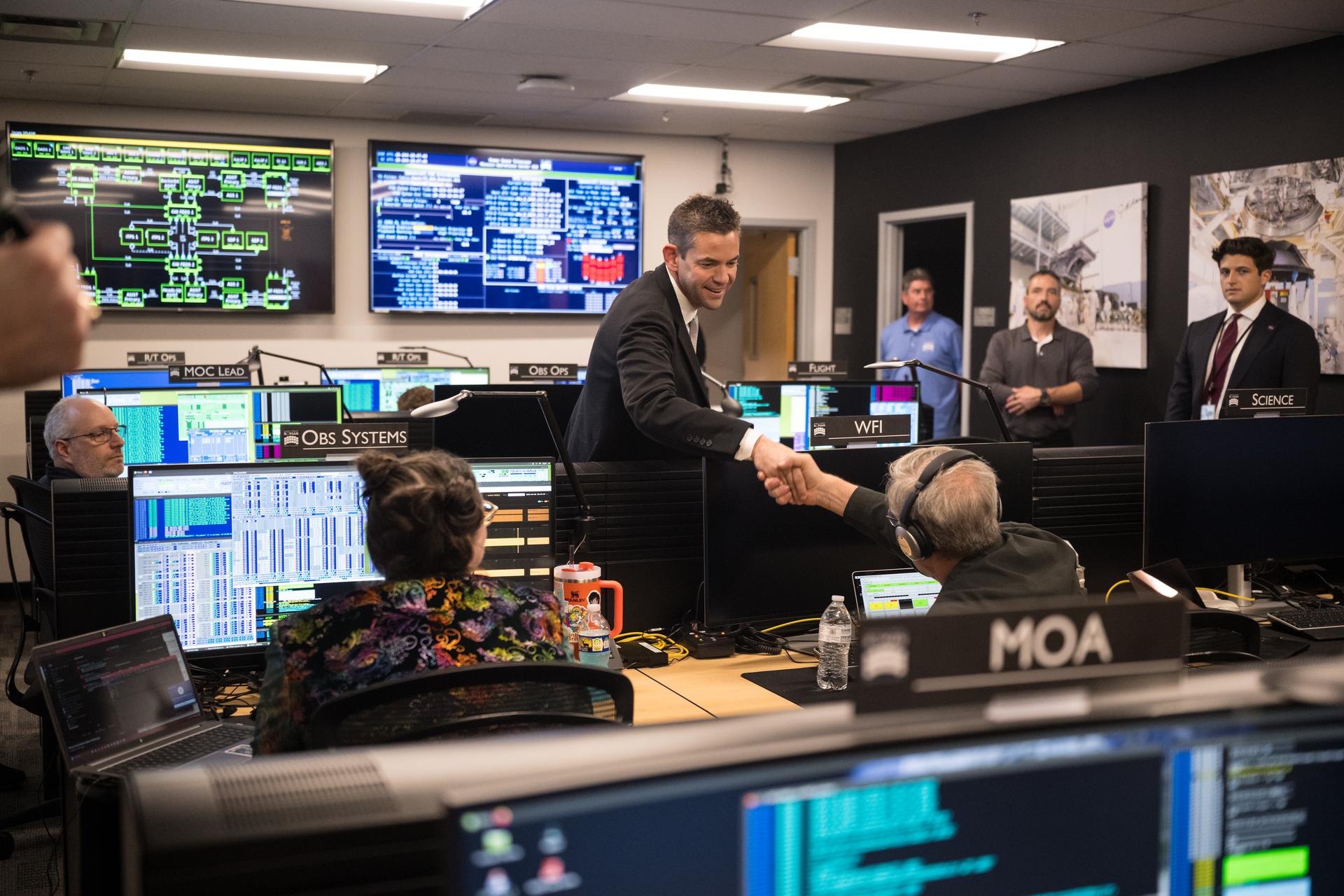
NASA Administrator Jared Isaacman greets employees in the Roman Space Telescope Mission Operations Center during an event held to celebrate the launch of the Nancy Grace Roman Space Telescope, Tuesday, Sept. 1, 2026, at NASA’s Goddard Space Flight Center in Greenbelt, Maryland. Photo Credit: (NASA/Aubrey Gemignani)

Dr. Nancy Grace Roman visits James Webb Space Telescope (JWST) and the Hubble Project Team.
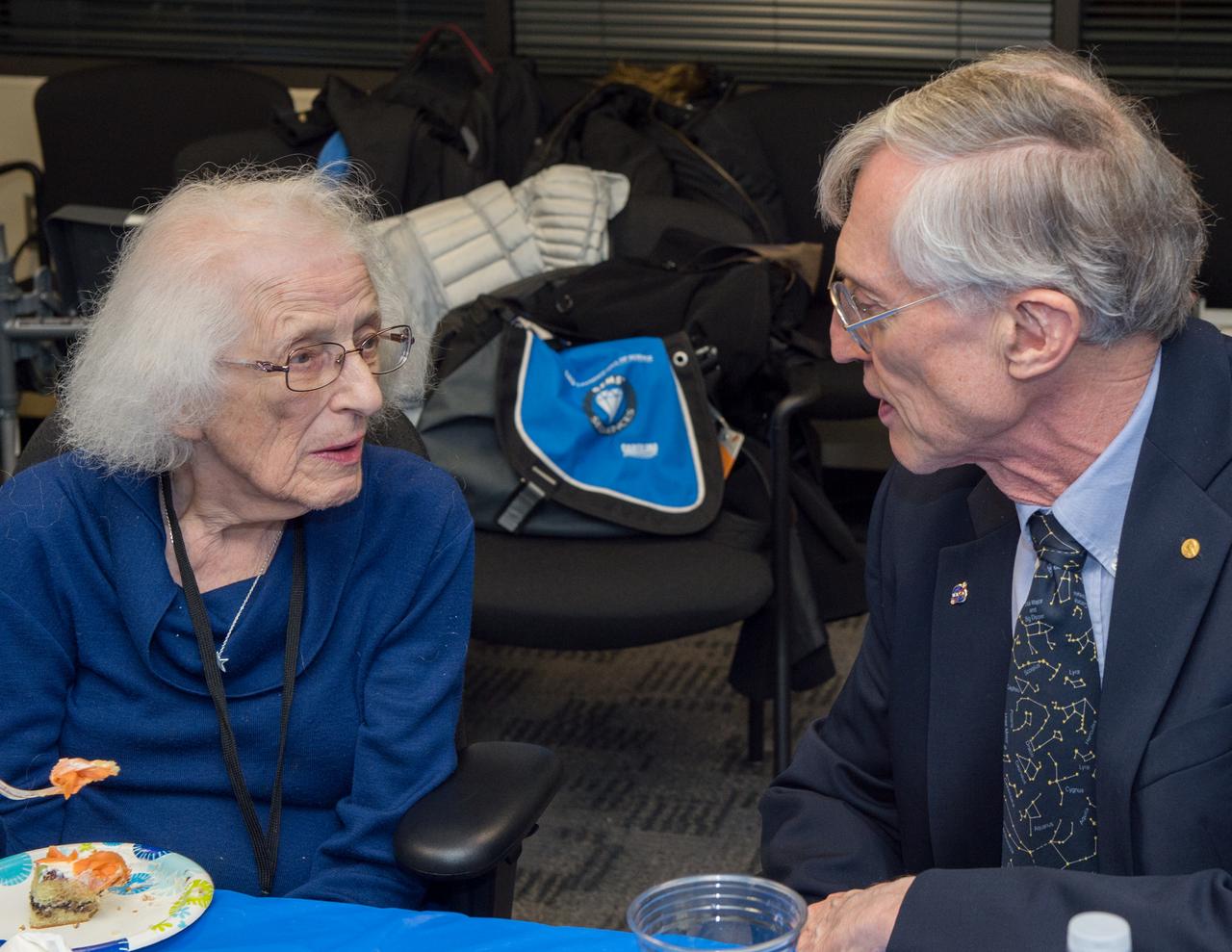
Dr. Nancy Grace Roman visits James Webb Space Telescope (JWST) and the Hubble Project Team. Dr. John Mather.

Dr. Nancy Grace Roman visits James Webb Space Telescope (JWST) and the Hubble Project Team.
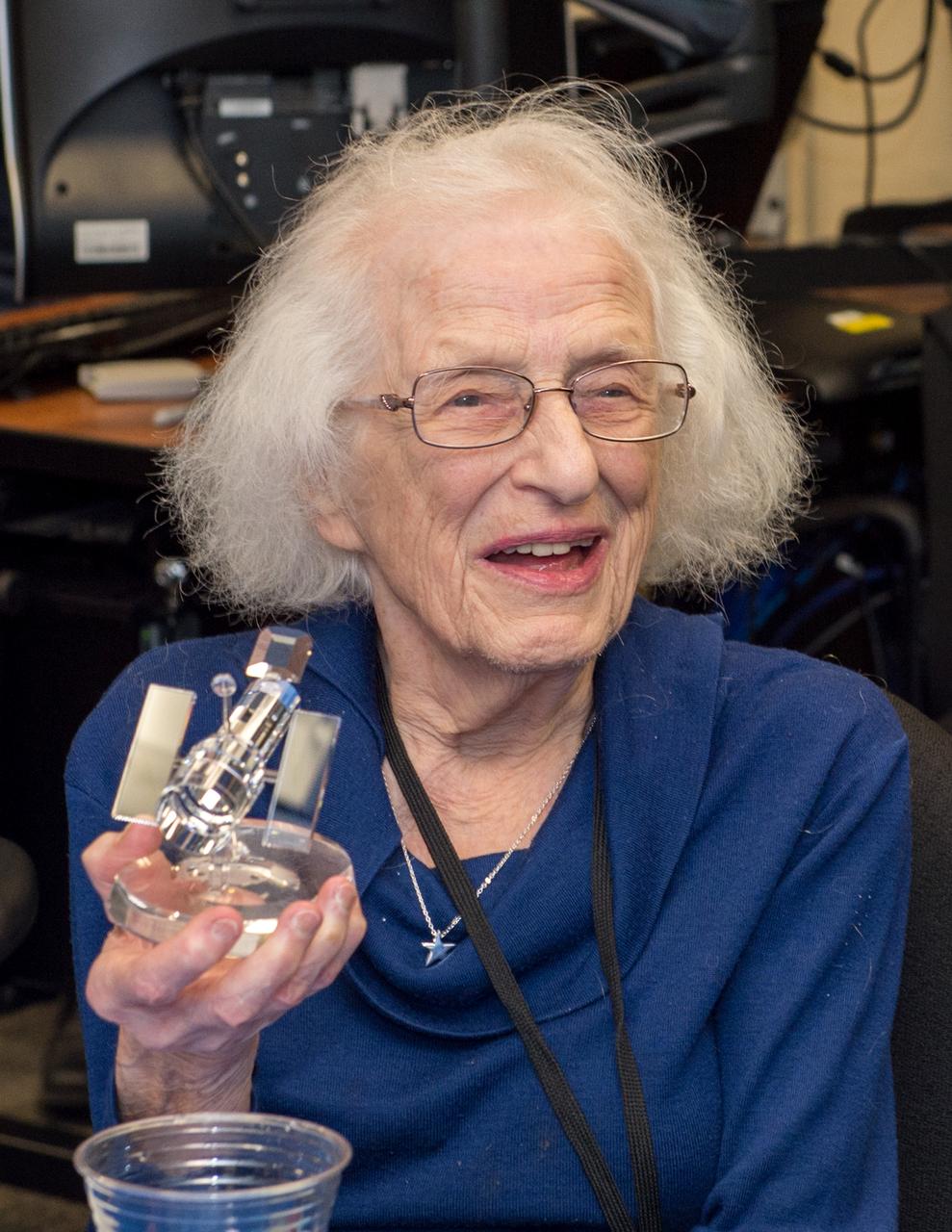
Dr. Nancy Grace Roman visits James Webb Space Telescope (JWST) and the Hubble Project Team.
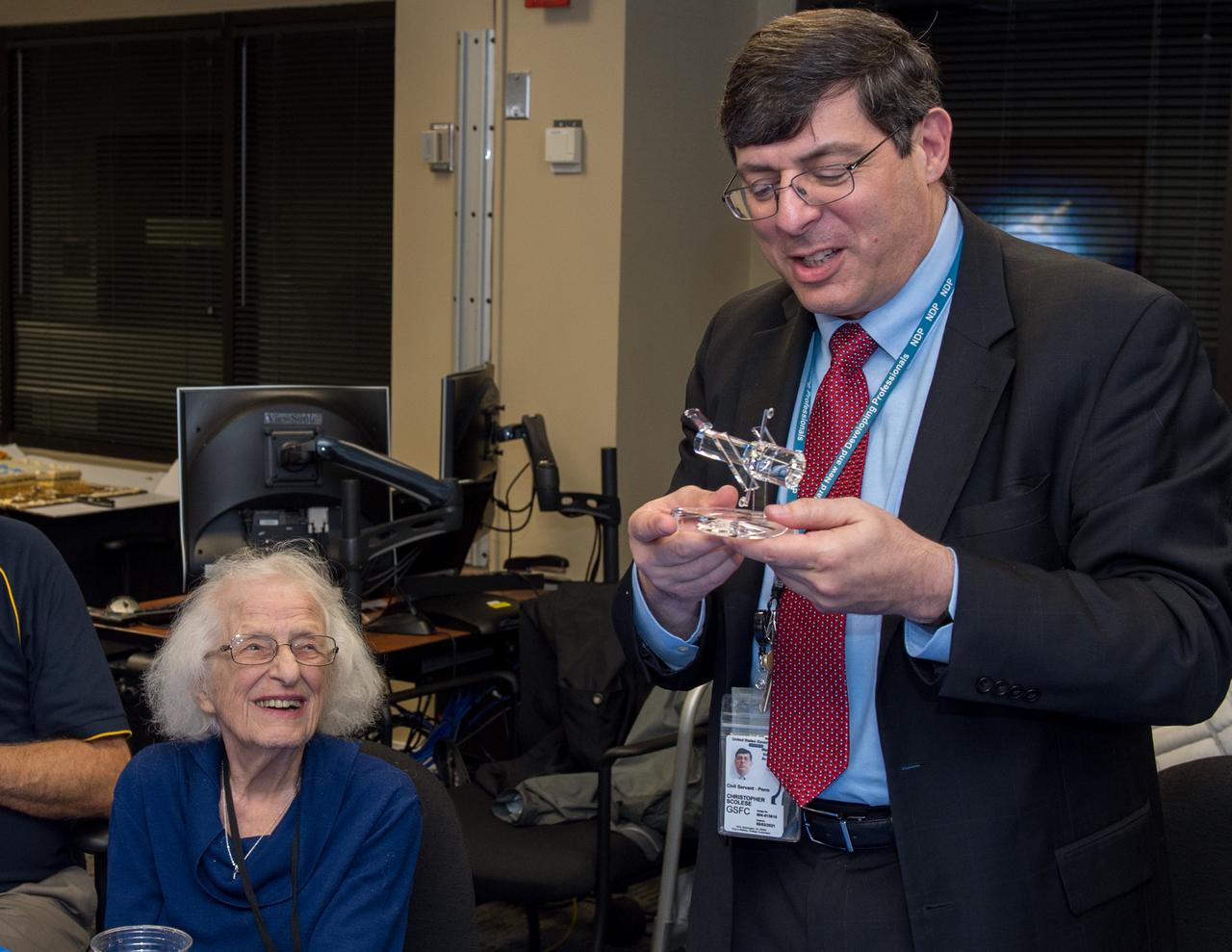
Dr. Nancy Grace Roman visits James Webb Space Telescope (JWST) and the Hubble Project Team. Center Director Chris Scolese
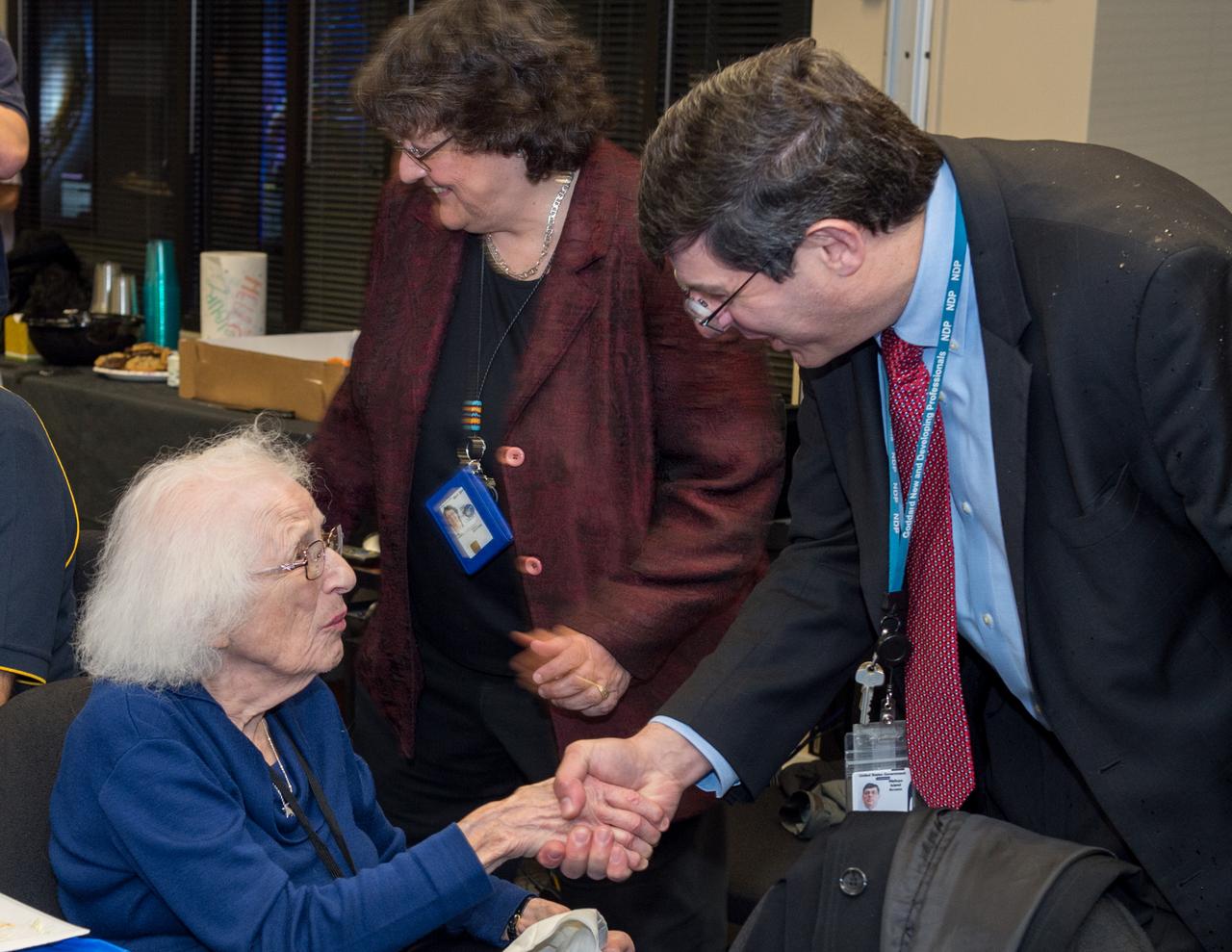
Dr. Nancy Grace Roman visits James Webb Space Telescope (JWST) and the Hubble Project Team. Center Director Chris Scolese

Denton Gibson, launch director, NASA’s Launch Services Program, Kennedy Space Center in Florida, participates in a prelaunch news conference for the agency’s Nancy Grace Roman Space Telescope inside the NASA News Center’s John Holliman Auditorium at Kennedy Space Center in Florida, on Saturday, Aug. 29, 2026. Roman will investigate dark energy and dark matter, conduct a statistical census of planetary systems, and enable a broad range of additional astrophysics research. Liftoff from Launch Complex 39A at Kennedy is targeted for no earlier than Sunday, Aug. 30, 2026.
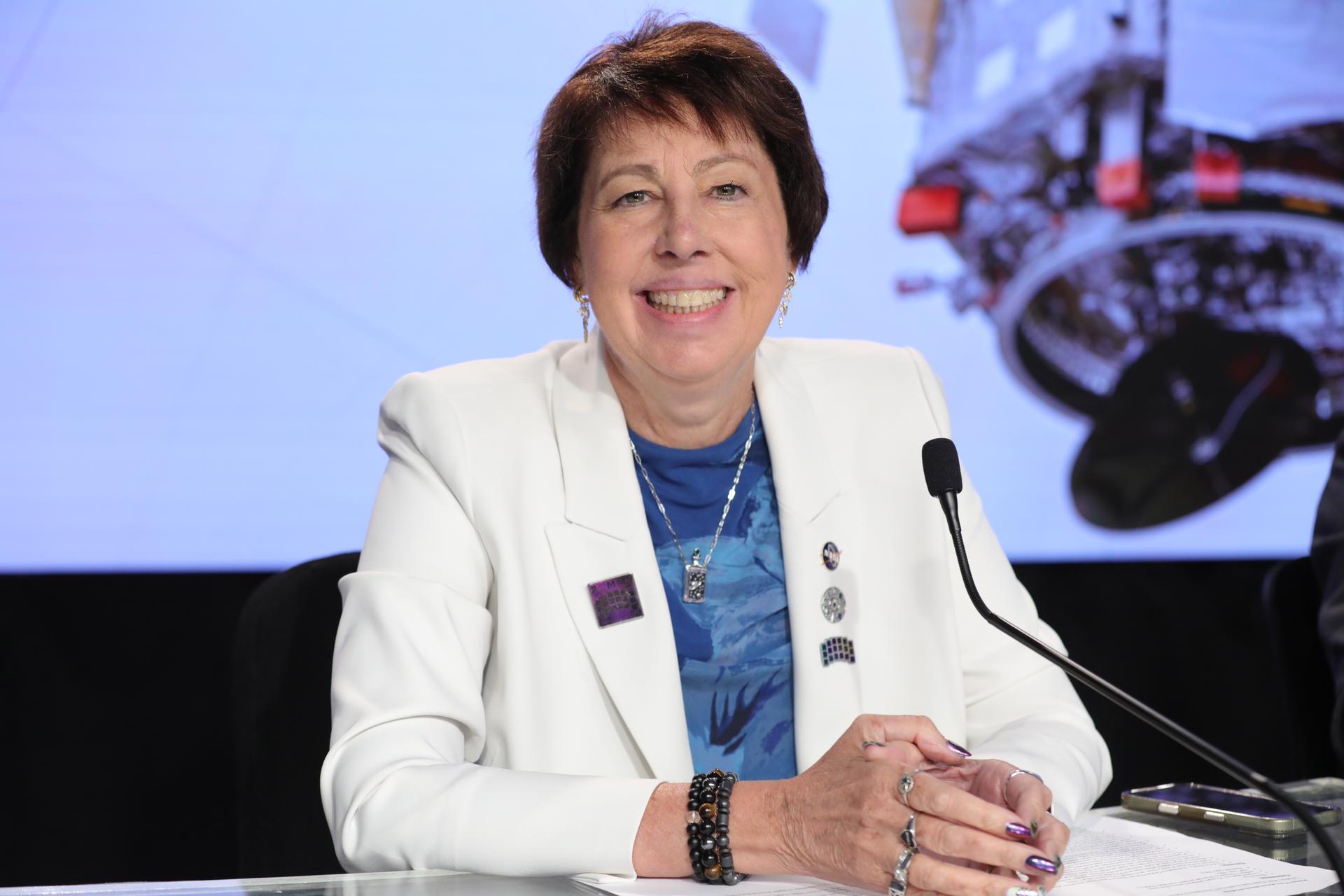
Nicky Fox, associate administrator, Science Mission Directorate, NASA Headquarters in Washington, participates in a prelaunch news conference for the agency’s Nancy Grace Roman Space Telescope inside the NASA News Center’s John Holliman Auditorium at Kennedy Space Center in Florida, on Saturday, Aug. 29, 2026. Roman will investigate dark energy and dark matter, conduct a statistical census of planetary systems, and enable a broad range of additional astrophysics research. Liftoff from Launch Complex 39A at Kennedy is targeted for no earlier than Sunday, Aug. 30, 2026.
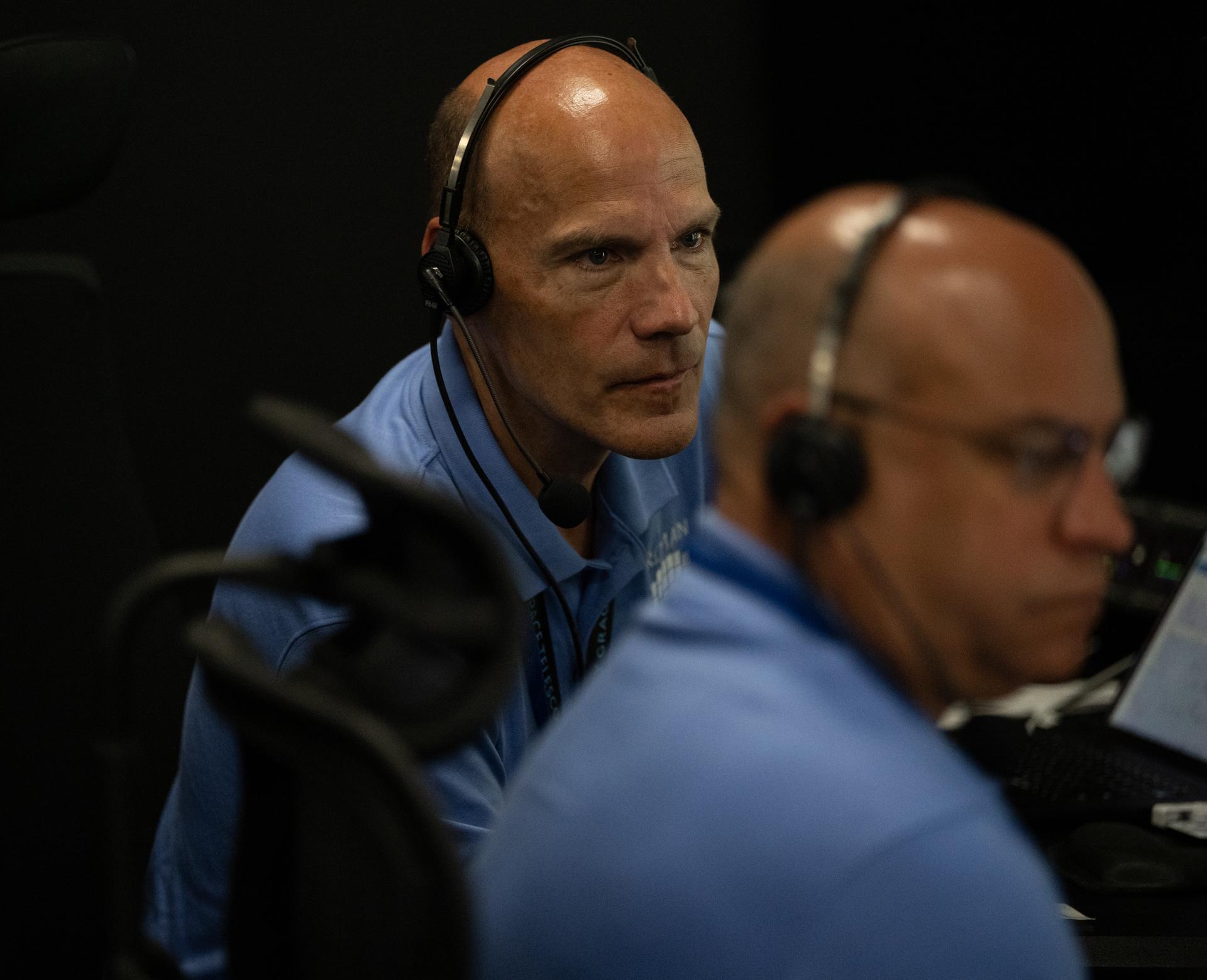
Mark Melton, a system engineer for NASA’s Nancy Grace Roman Space Telescope, monitors the countdown inside SpaceX’s Hangar X for the launch of a SpaceX Falcon Heavy rocket with NASA’S Nancy Grace Roman Space Telescope from Launch Complex 39A at NASA’s Kennedy Space Center, Sunday, Aug. 30, 2026, in Florida. Roman will investigate dark energy and dark matter, conduct a statistical census of planetary systems, and enable a broad range of additional astrophysics research. Launch occurred at 7:26 a.m. EDT. Photo Credit (NASA/Joel Kowsky)
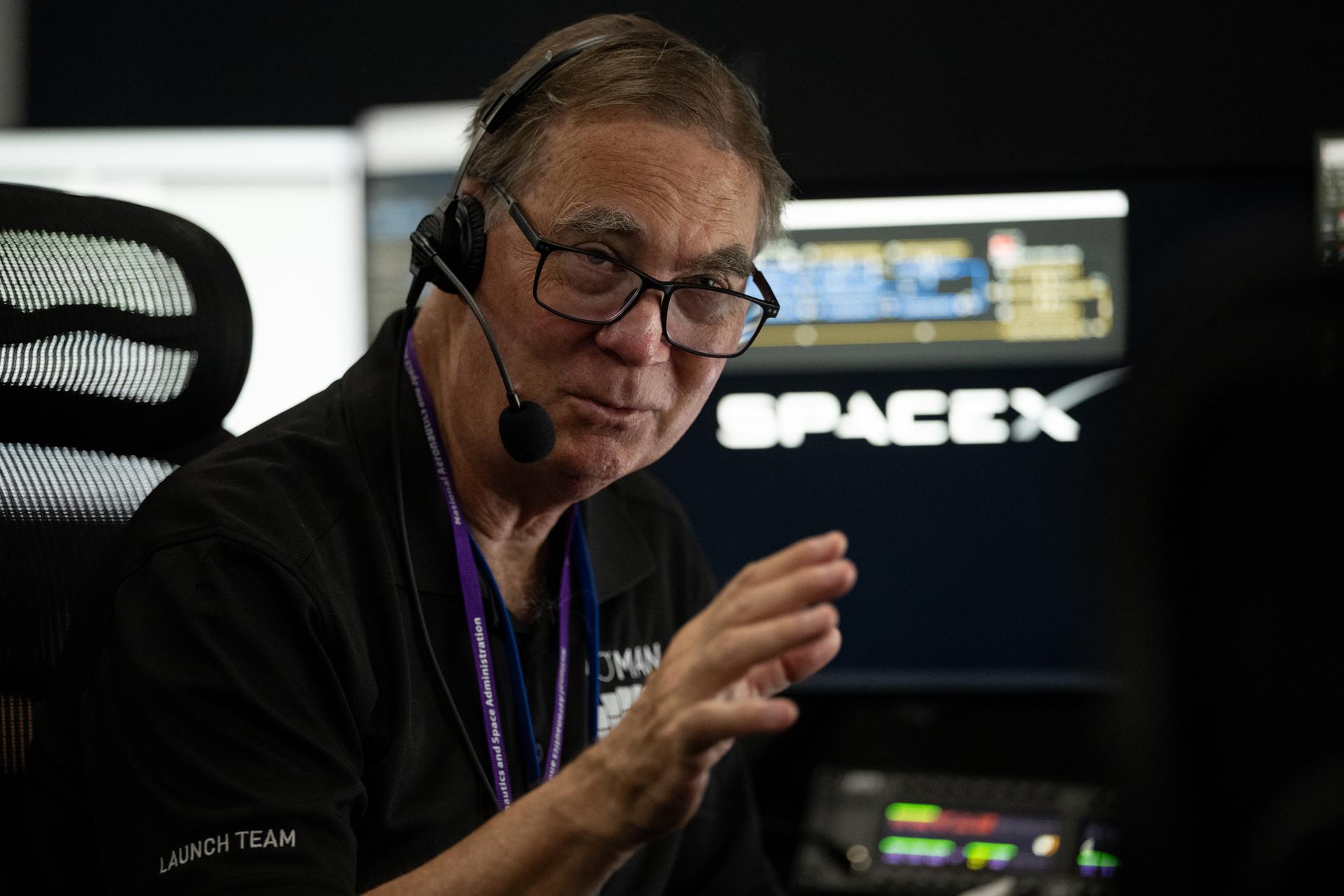
David Content, deputy project manager, technical, for NASA’s Nancy Grace Roman Space Telescope, monitors the countdown inside SpaceX’s Hangar X for the launch of a SpaceX Falcon Heavy rocket with NASA’S Nancy Grace Roman Space Telescope from Launch Complex 39A at NASA’s Kennedy Space Center, Sunday, Aug. 30, 2026, in Florida. Roman will investigate dark energy and dark matter, conduct a statistical census of planetary systems, and enable a broad range of additional astrophysics research. Launch occurred at 7:26 a.m. EDT. Photo Credit (NASA/Joel Kowsky)

NASA’s Pegasus barge arrives at the Launch Complex 39 turn basin at the agency’s Kennedy Space Center in Florida carrying NASA’s Nancy Grace Roman Space Telescope on Sunday, June 21, 2026. Teams will offload and transport the observatory to the spaceport’s Payload Hazardous Servicing Facility where it will undergo processing ahead of launch, targeted no earlier than Sunday, Aug. 30, 2026. Named for NASA’s first chief astronomer and “mother of the Hubble Space Telescope,” Roman will offer a field of view over 100 times larger than Hubble’s to study up to a billion galaxies, directly image exoplanets and planet‑forming disks, and address fundamental questions about dark energy, exoplanets, and infrared astrophysics.
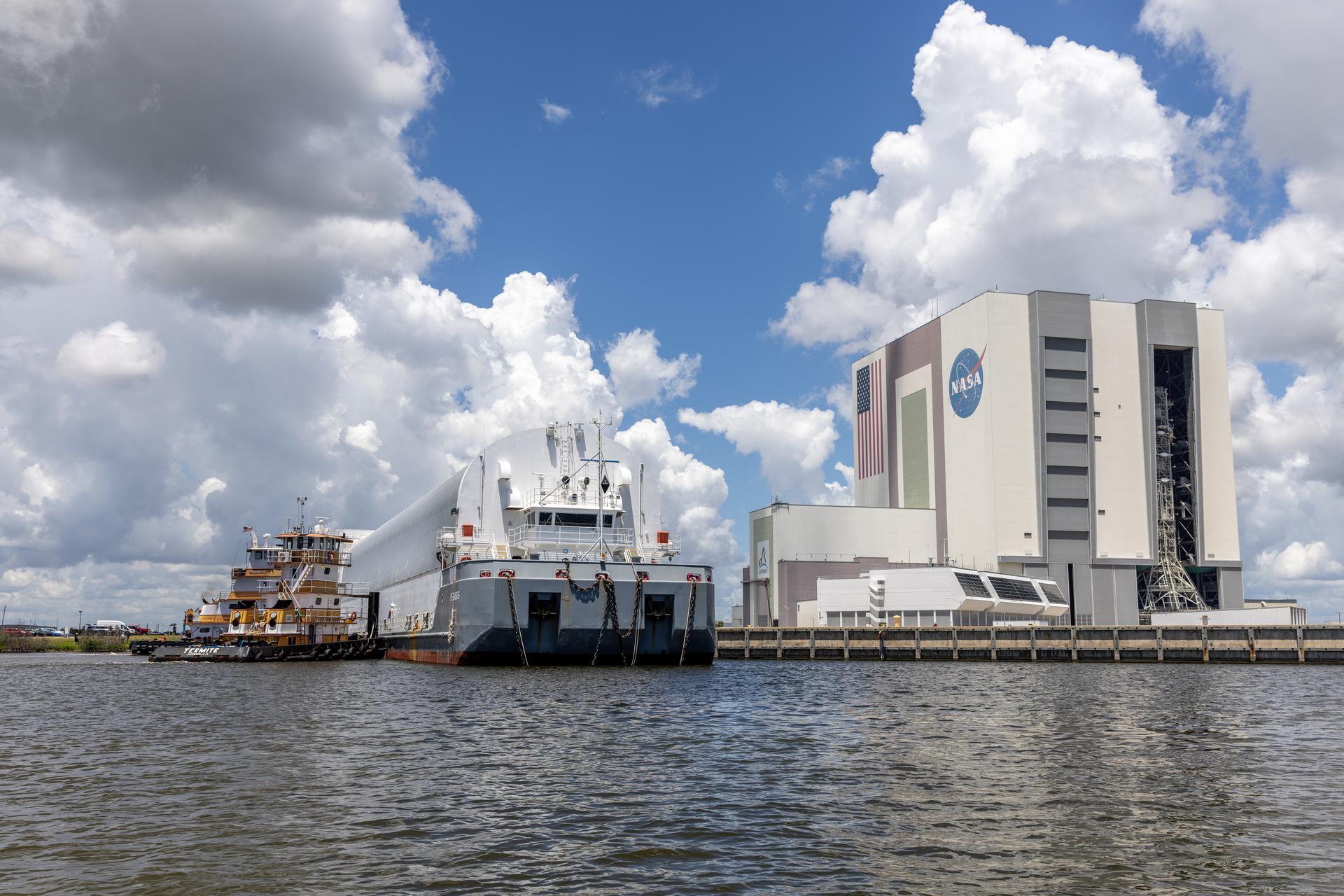
NASA’s Pegasus barge arrives at the Launch Complex 39 turn basin at the agency’s Kennedy Space Center in Florida carrying NASA’s Nancy Grace Roman Space Telescope on Sunday, June 21, 2026. Teams will offload and transport the observatory to the spaceport’s Payload Hazardous Servicing Facility where it will undergo processing ahead of launch, targeted no earlier than Sunday, Aug. 30, 2026. Named for NASA’s first chief astronomer and “mother of the Hubble Space Telescope,” Roman will offer a field of view over 100 times larger than Hubble’s to study up to a billion galaxies, directly image exoplanets and planet forming disks, and address fundamental questions about dark energy, exoplanets, and infrared astrophysics.

NASA’s Pegasus barge arrives at the Launch Complex 39 turn basin at the agency’s Kennedy Space Center in Florida carrying NASA’s Nancy Grace Roman Space Telescope on Sunday, June 21, 2026. Teams will offload and transport the observatory to the spaceport’s Payload Hazardous Servicing Facility where it will undergo processing ahead of launch, targeted no earlier than Sunday, Aug. 30, 2026. Named for NASA’s first chief astronomer and “mother of the Hubble Space Telescope,” Roman will offer a field of view over 100 times larger than Hubble’s to study up to a billion galaxies, directly image exoplanets and planet‑forming disks, and address fundamental questions about dark energy, exoplanets, and infrared astrophysics.

NASA’s Pegasus barge arrives at the Launch Complex 39 turn basin at the agency’s Kennedy Space Center in Florida carrying NASA’s Nancy Grace Roman Space Telescope on Sunday, June 21, 2026. Teams will offload and transport the observatory to the spaceport’s Payload Hazardous Servicing Facility where it will undergo processing ahead of launch, targeted no earlier than Sunday, Aug. 30, 2026. Named for NASA’s first chief astronomer and “mother of the Hubble Space Telescope,” Roman will offer a field of view over 100 times larger than Hubble’s to study up to a billion galaxies, directly image exoplanets and planet‑forming disks, and address fundamental questions about dark energy, exoplanets, and infrared astrophysics.
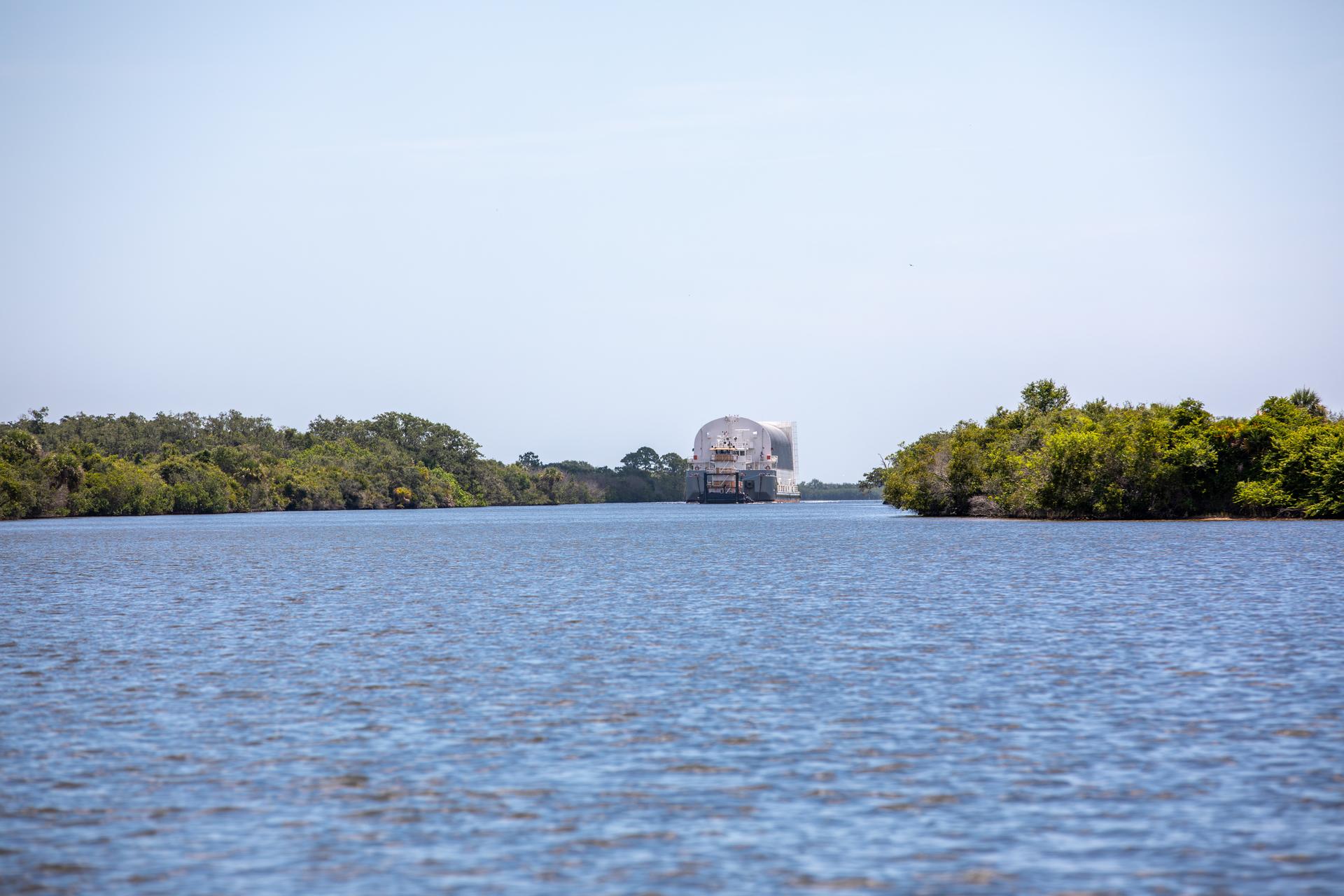
NASA’s Pegasus barge arrives at the Launch Complex 39 turn basin at the agency’s Kennedy Space Center in Florida carrying NASA’s Nancy Grace Roman Space Telescope on Sunday, June 21, 2026. Teams will offload and transport the observatory to the spaceport’s Payload Hazardous Servicing Facility where it will undergo processing ahead of launch, targeted no earlier than Sunday, Aug. 30, 2026. Named for NASA’s first chief astronomer and “mother of the Hubble Space Telescope,” Roman will offer a field of view over 100 times larger than Hubble’s to study up to a billion galaxies, directly image exoplanets and planet forming disks, and address fundamental questions about dark energy, exoplanets, and infrared astrophysics.

NASA’s Pegasus barge arrives at the Launch Complex 39 turn basin at the agency’s Kennedy Space Center in Florida carrying NASA’s Nancy Grace Roman Space Telescope on Sunday, June 21, 2026. Teams will offload and transport the observatory to the spaceport’s Payload Hazardous Servicing Facility where it will undergo processing ahead of launch, targeted no earlier than Sunday, Aug. 30, 2026. Named for NASA’s first chief astronomer and “mother of the Hubble Space Telescope,” Roman will offer a field of view over 100 times larger than Hubble’s to study up to a billion galaxies, directly image exoplanets and planet‑forming disks, and address fundamental questions about dark energy, exoplanets, and infrared astrophysics.
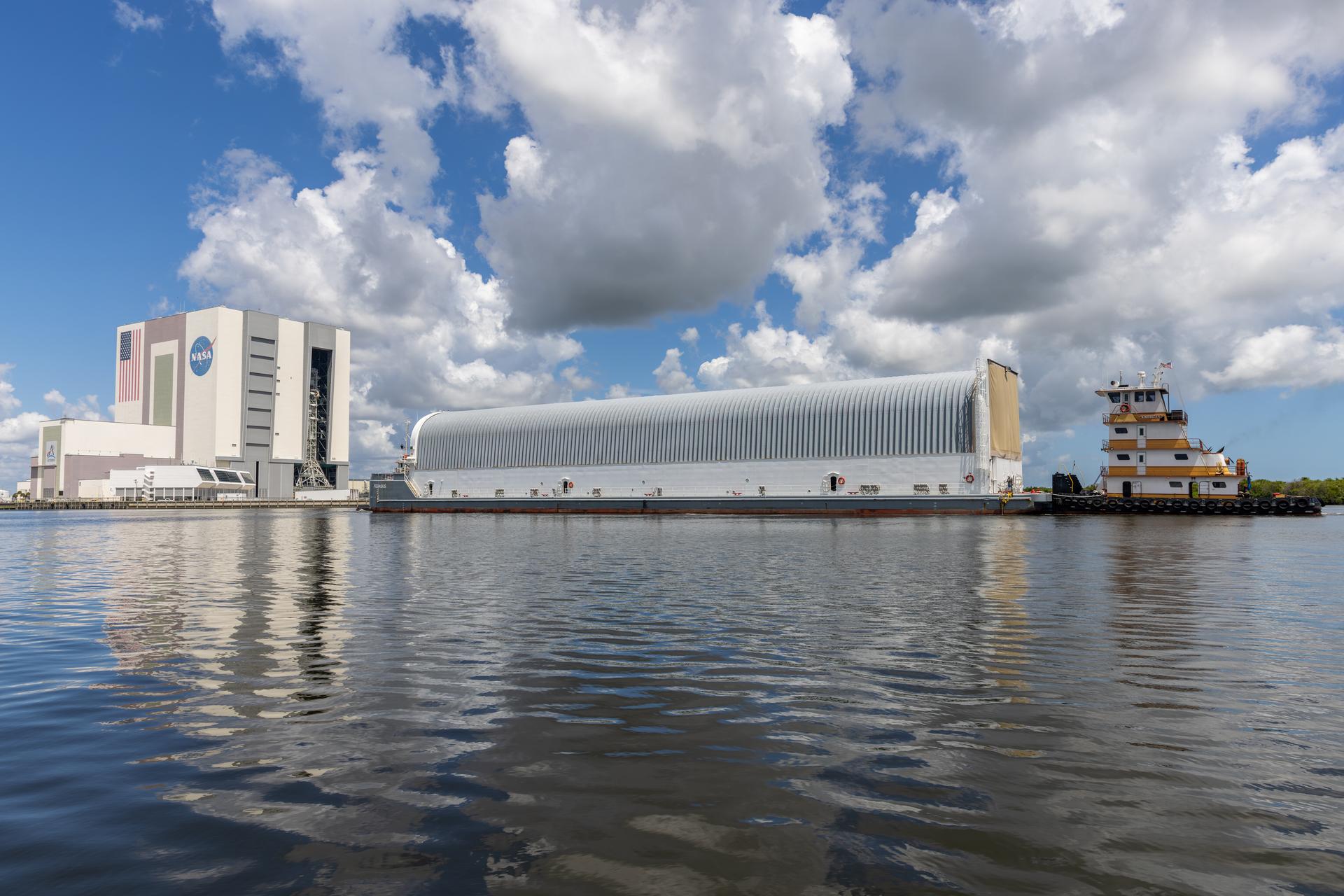
NASA’s Pegasus barge arrives at the Launch Complex 39 turn basin at the agency’s Kennedy Space Center in Florida carrying NASA’s Nancy Grace Roman Space Telescope on Sunday, June 21, 2026. Teams will offload and transport the observatory to the spaceport’s Payload Hazardous Servicing Facility where it will undergo processing ahead of launch, targeted no earlier than Sunday, Aug. 30, 2026. Named for NASA’s first chief astronomer and “mother of the Hubble Space Telescope,” Roman will offer a field of view over 100 times larger than Hubble’s to study up to a billion galaxies, directly image exoplanets and planet forming disks, and address fundamental questions about dark energy, exoplanets, and infrared astrophysics.
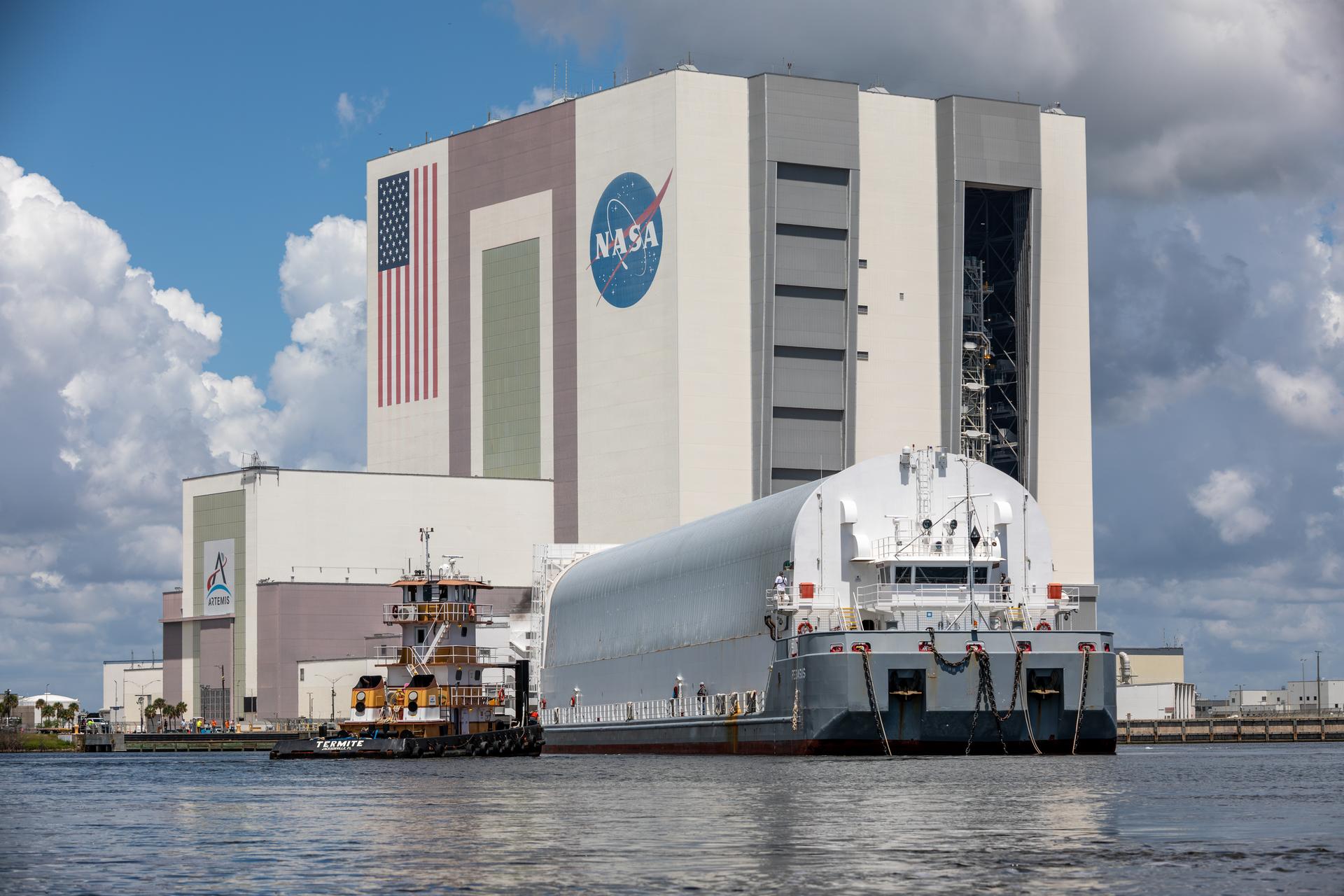
NASA’s Pegasus barge arrives at the Launch Complex 39 turn basin at the agency’s Kennedy Space Center in Florida carrying NASA’s Nancy Grace Roman Space Telescope on Sunday, June 21, 2026. Teams will offload and transport the observatory to the spaceport’s Payload Hazardous Servicing Facility where it will undergo processing ahead of launch, targeted no earlier than Sunday, Aug. 30, 2026. Named for NASA’s first chief astronomer and “mother of the Hubble Space Telescope,” Roman will offer a field of view over 100 times larger than Hubble’s to study up to a billion galaxies, directly image exoplanets and planet forming disks, and address fundamental questions about dark energy, exoplanets, and infrared astrophysics.
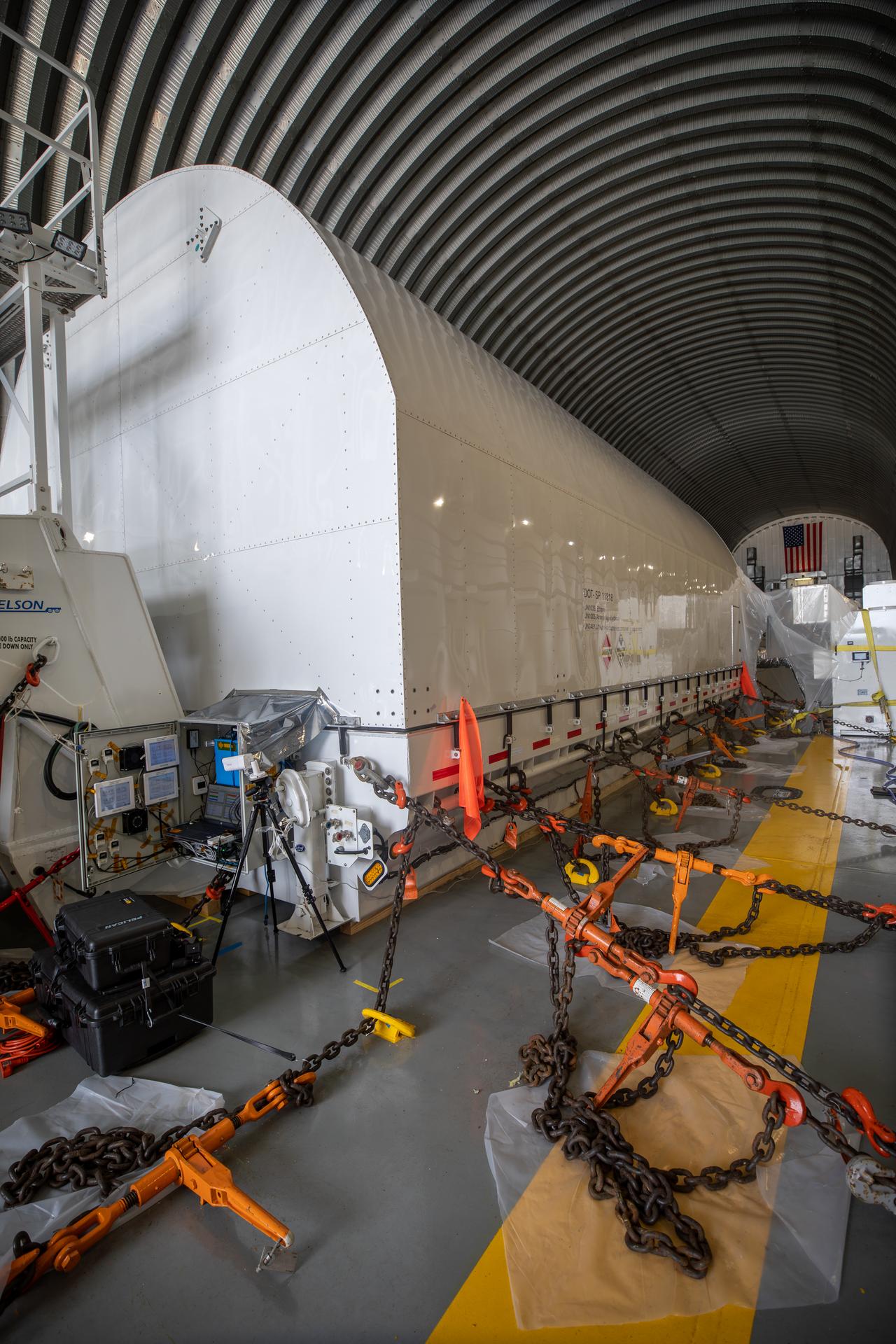
Housed inside a protective and environmentally controlled transportation container, NASA’s Nancy Grace Roman Space Telescope is secured in the usable cargo deck of the agency’s Pegasus barge as it arrives at the Launch Complex 39 turn basin at NASA’s Kennedy Space Center in Florida on Sunday, June 21, 2026. Teams will offload and transport the observatory to the spaceport’s Payload Hazardous Servicing Facility where it will undergo processing ahead of launch, targeted no earlier than Sunday, Aug. 30, 2026. Named for NASA’s first chief astronomer and “mother of the Hubble Space Telescope,” Roman will offer a field of view over 100 times larger than Hubble’s to study up to a billion galaxies, directly image exoplanets and planet forming disks, and address fundamental questions about dark energy, exoplanets, and infrared astrophysics.

NASA’s Pegasus barge arrives at the Launch Complex 39 turn basin at the agency’s Kennedy Space Center in Florida carrying NASA’s Nancy Grace Roman Space Telescope on Sunday, June 21, 2026. Teams will offload and transport the observatory to the spaceport’s Payload Hazardous Servicing Facility where it will undergo processing ahead of launch, targeted no earlier than Sunday, Aug. 30, 2026. Named for NASA’s first chief astronomer and “mother of the Hubble Space Telescope,” Roman will offer a field of view over 100 times larger than Hubble’s to study up to a billion galaxies, directly image exoplanets and planet‑forming disks, and address fundamental questions about dark energy, exoplanets, and infrared astrophysics.
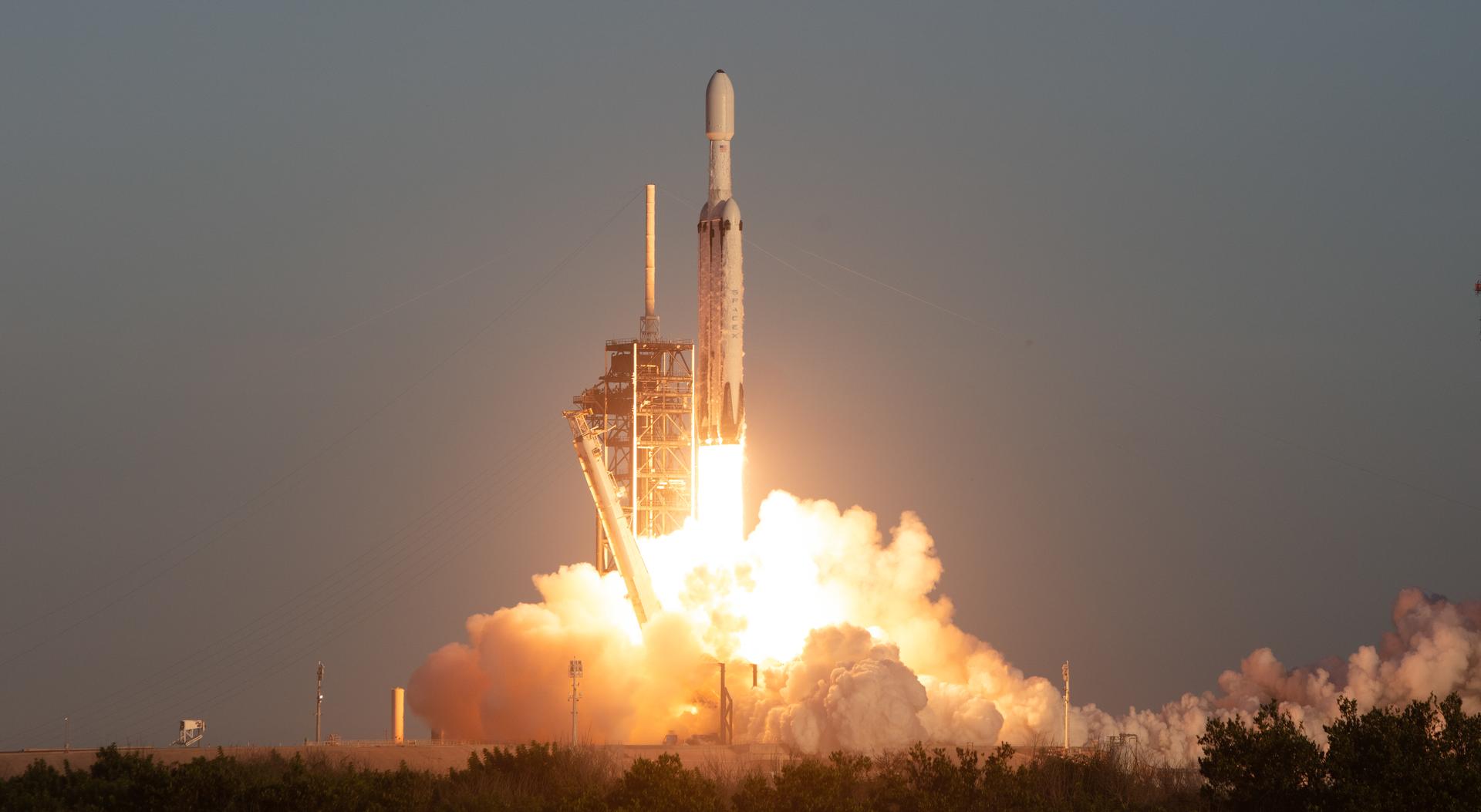
A SpaceX Falcon Heavy rocket launches with NASA’S Nancy Grace Roman Space Telescope onboard from Launch Complex 39A, Sunday, Aug. 30, 2026, at NASA’s Kennedy Space Center in Florida. Roman will investigate dark energy and dark matter, conduct a statistical census of planetary systems, and enable a broad range of additional astrophysics research. Launch occurred at 7:26 a.m. EDT. Photo Credit (NASA/Joel Kowsky)
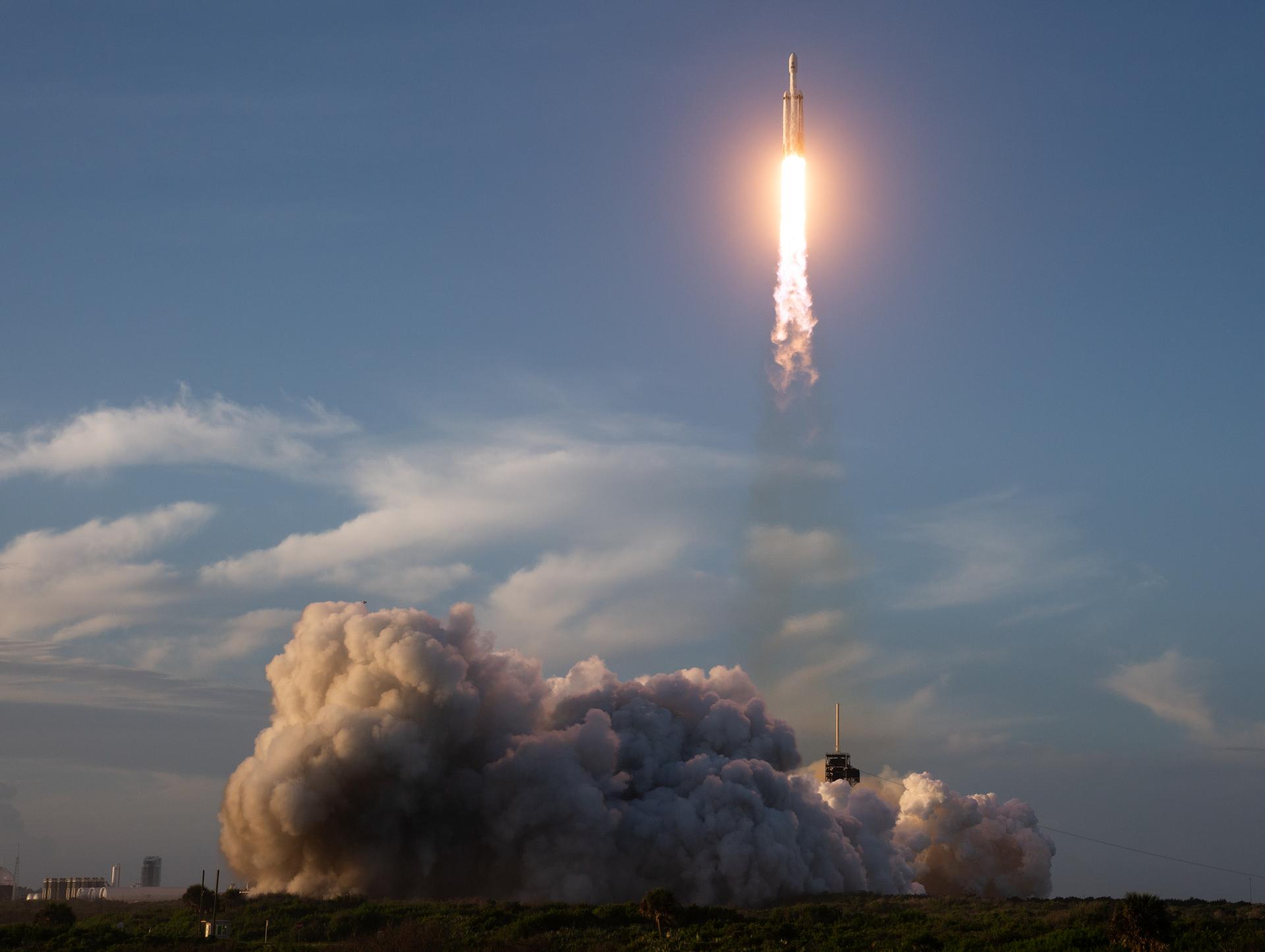
A SpaceX Falcon Heavy rocket launches with NASA’S Nancy Grace Roman Space Telescope onboard from Launch Complex 39A, Sunday, Aug. 30, 2026, at NASA’s Kennedy Space Center in Florida. Roman will investigate dark energy and dark matter, conduct a statistical census of planetary systems, and enable a broad range of additional astrophysics research. Launch occurred at 7:26 a.m. EDT. Photo Credit (NASA/Joel Kowsky)
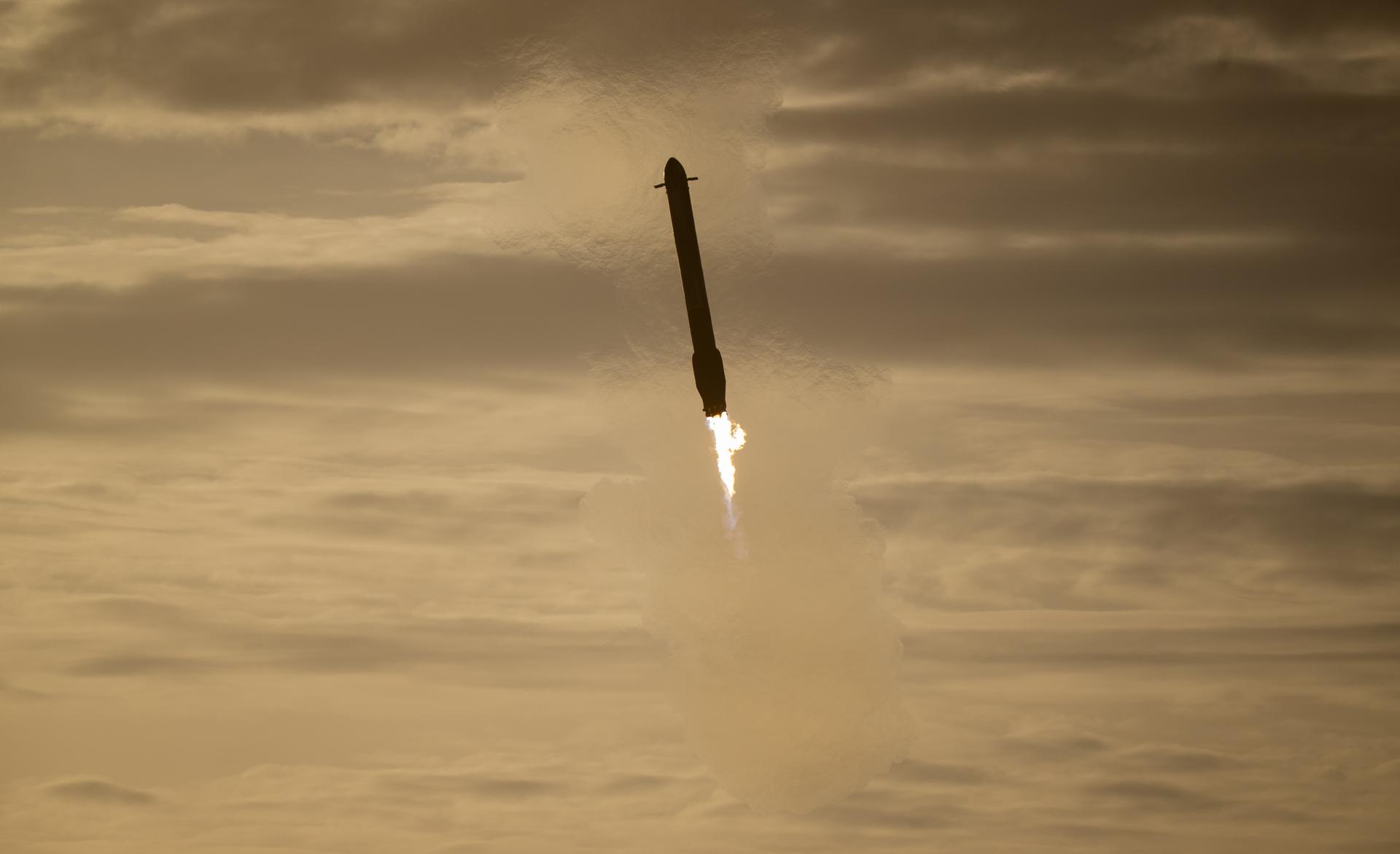
A SpaceX Falcon Heavy side booster is seen as it approaches LZ-2 following the launch of NASA’S Nancy Grace Roman Space Telescope from Launch Complex 39A, Sunday, Aug. 30, 2026, at NASA’s Kennedy Space Center in Florida. Roman will investigate dark energy and dark matter, conduct a statistical census of planetary systems, and enable a broad range of additional astrophysics research. Launch occurred at 7:26 a.m. EDT. Photo Credit (NASA/Joel Kowsky)
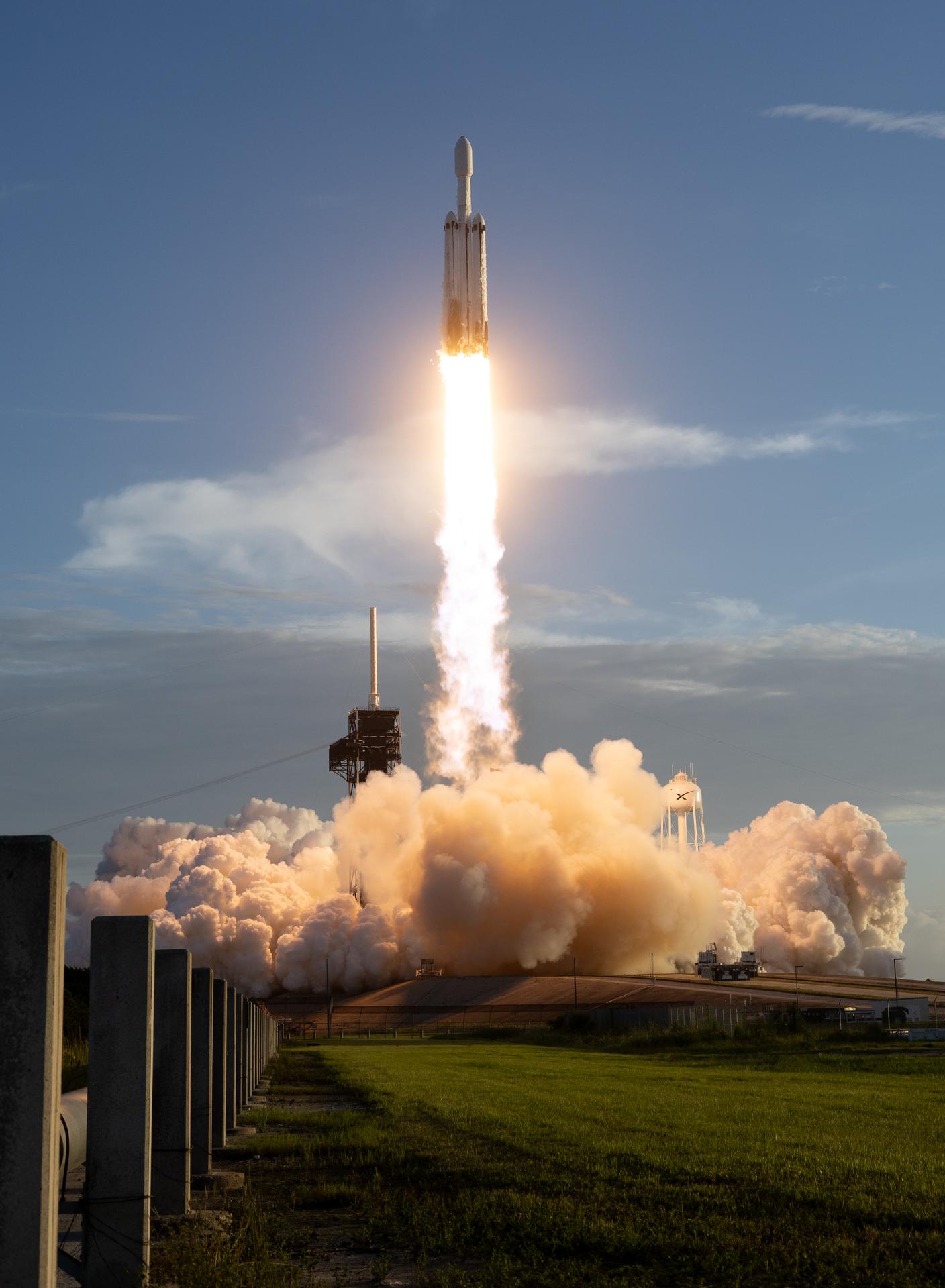
A SpaceX Falcon Heavy rocket launches with NASA’S Nancy Grace Roman Space Telescope onboard from Launch Complex 39A, Sunday, Aug. 30, 2026, at NASA’s Kennedy Space Center in Florida. Roman will investigate dark energy and dark matter, conduct a statistical census of planetary systems, and enable a broad range of additional astrophysics research. Launch occurred at 7:26 a.m. EDT. Photo Credit (NASA/Joel Kowsky)
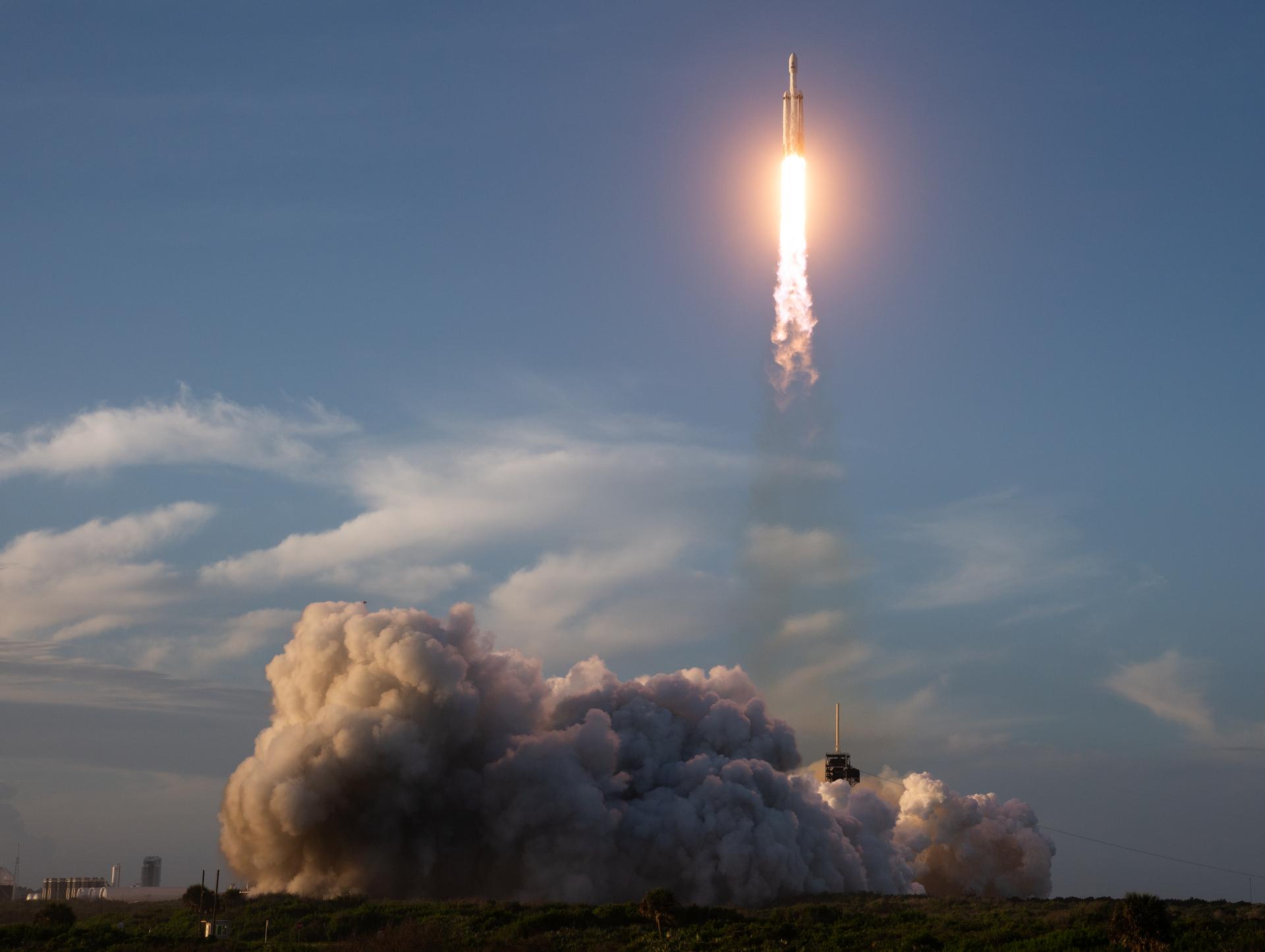
A SpaceX Falcon Heavy rocket launches with NASA’S Nancy Grace Roman Space Telescope onboard from Launch Complex 39A, Sunday, Aug. 30, 2026, at NASA’s Kennedy Space Center in Florida. Roman will investigate dark energy and dark matter, conduct a statistical census of planetary systems, and enable a broad range of additional astrophysics research. Launch occurred at 7:26 a.m. EDT. Photo Credit (NASA/Joel Kowsky)
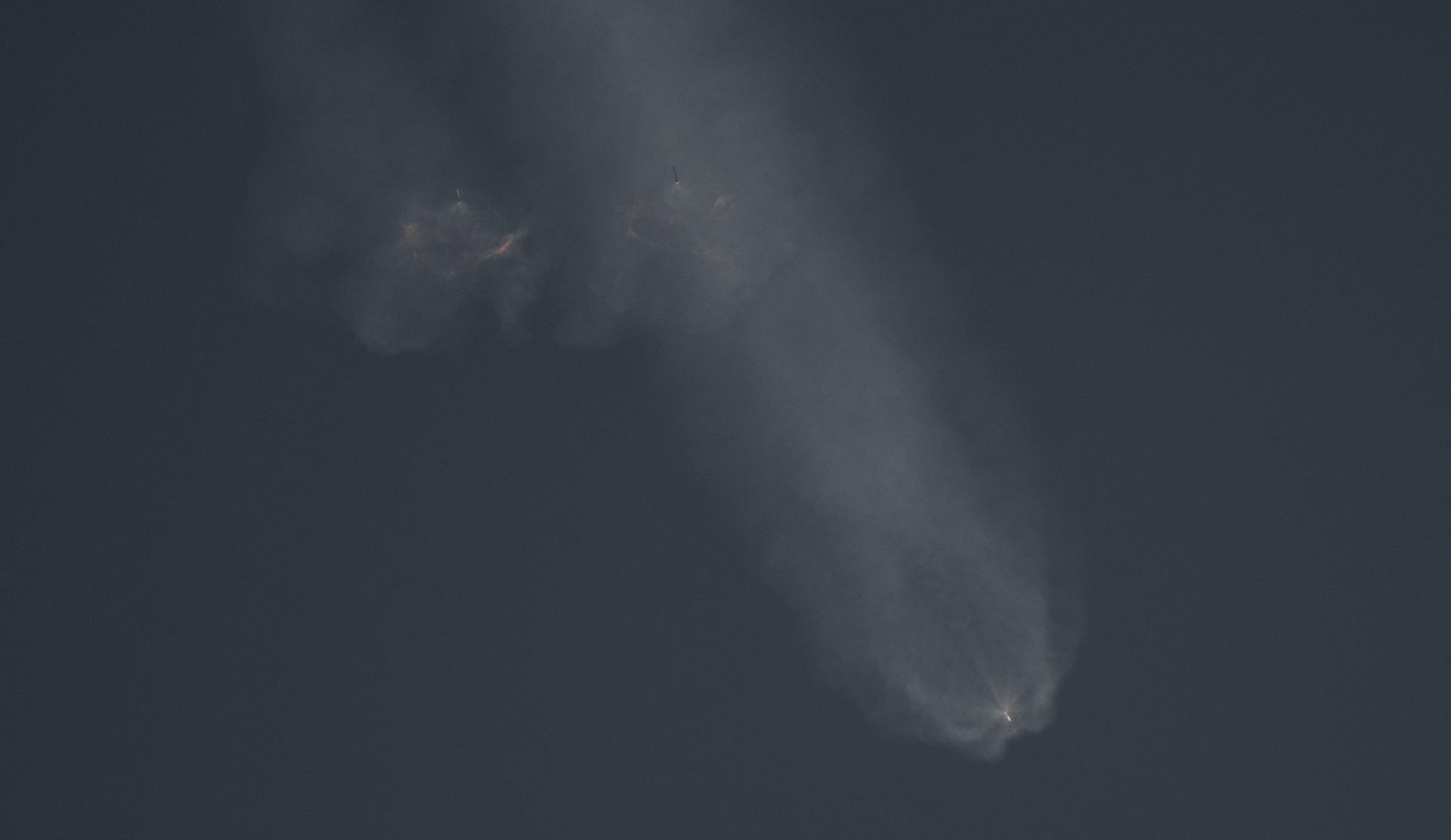
A pair of SpaceX Falcon Heavy side boosters perform their boost back burns following separation from the center core during the launch of NASA’S Nancy Grace Roman Space Telescope from Launch Complex 39A, Sunday, Aug. 30, 2026, at NASA’s Kennedy Space Center in Florida. Roman will investigate dark energy and dark matter, conduct a statistical census of planetary systems, and enable a broad range of additional astrophysics research. Launch occurred at 7:26 a.m. EDT. Photo Credit (NASA/Joel Kowsky)
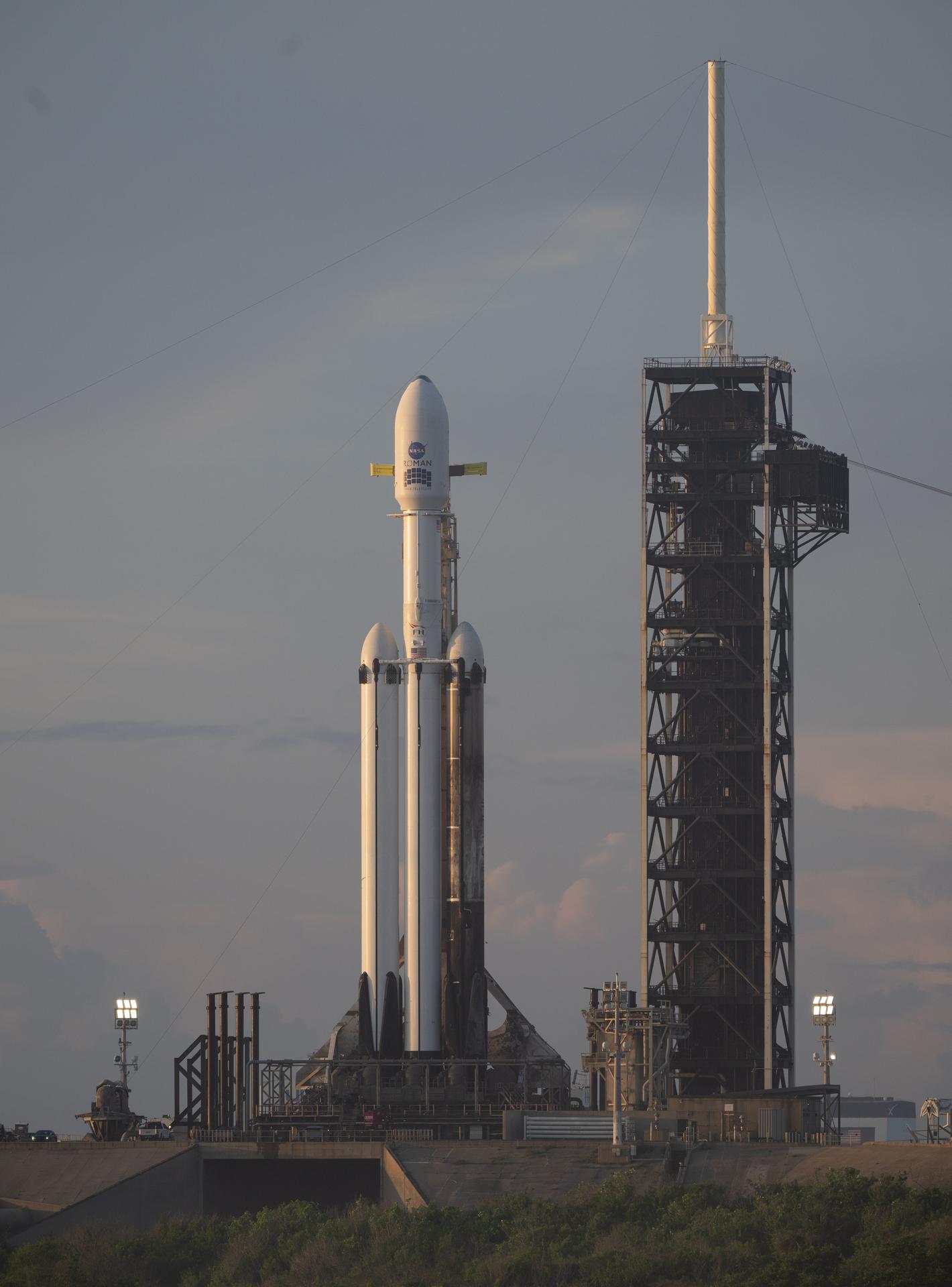
NASA’s Nancy Grace Roman Space Telescope, encapsulated in a protective payload fairing atop a SpaceX Falcon Heavy rocket, is seen at sunrise, Saturday, Aug. 29, 2026, at Launch Complex 39A at NASA’s Kennedy Space Center in Florida. Roman will investigate dark energy and dark matter, conduct a statistical census of planetary systems, and enable a broad range of additional astrophysics research. Liftoff from NASA Kennedy is targeted for Sunday, Aug. 30, 2026. Photo Credit (NASA/Joel Kowsky)
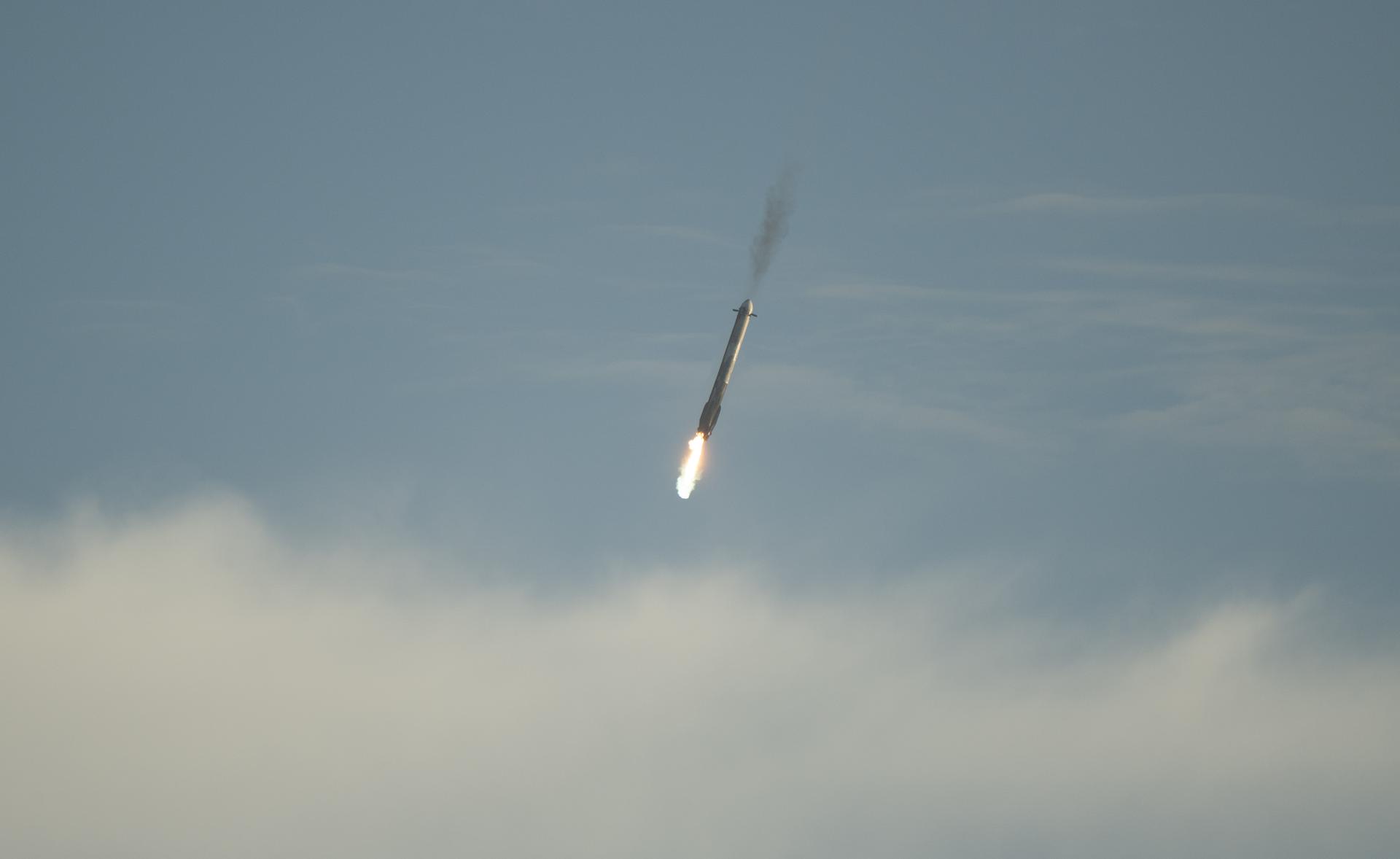
A SpaceX Falcon Heavy side booster is seen as it approaches LZ-40 following the launch of NASA’S Nancy Grace Roman Space Telescope from Launch Complex 39A, Sunday, Aug. 30, 2026, at NASA’s Kennedy Space Center in Florida. Roman will investigate dark energy and dark matter, conduct a statistical census of planetary systems, and enable a broad range of additional astrophysics research. Launch occurred at 7:26 a.m. EDT. Photo Credit (NASA/Joel Kowsky)
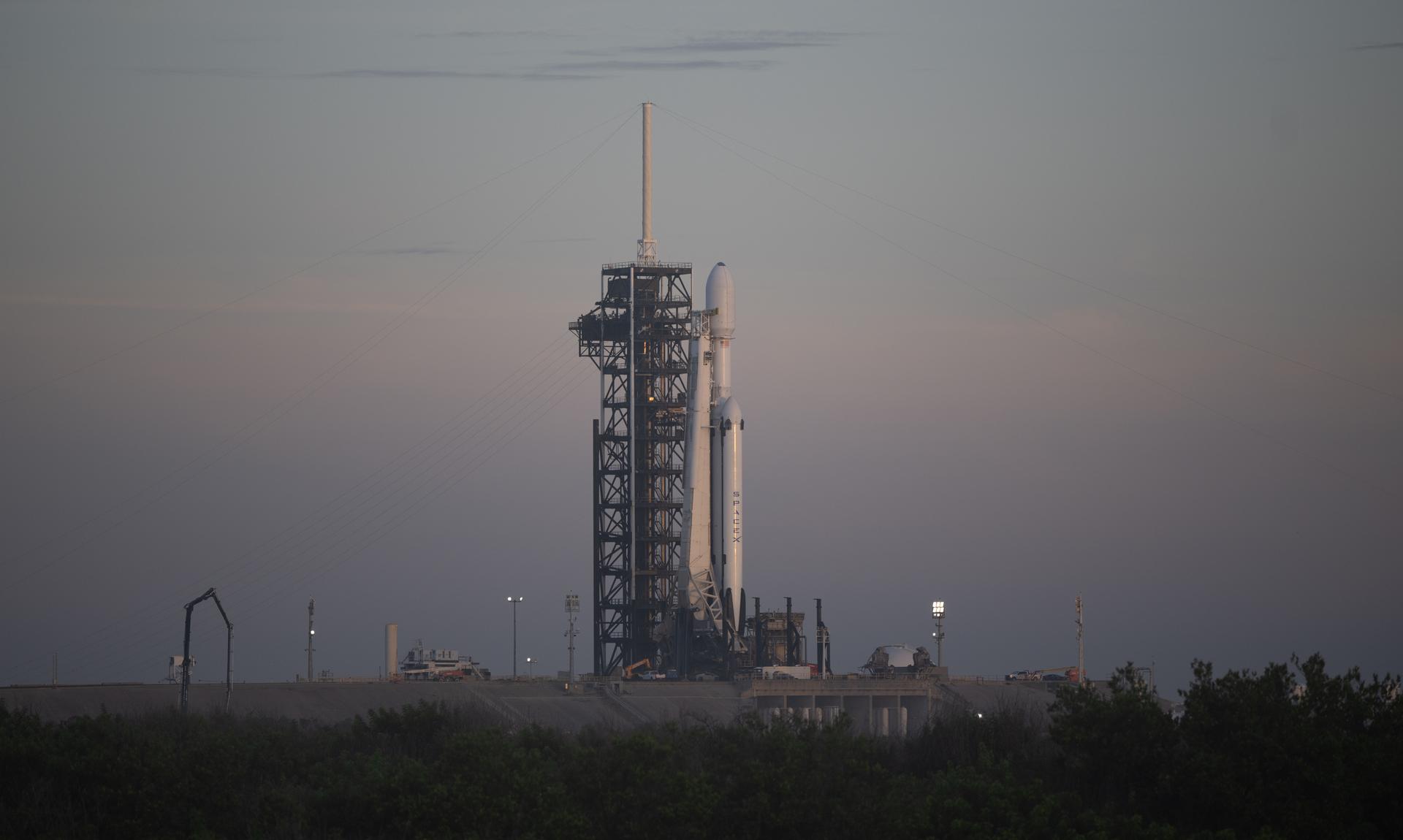
NASA’s Nancy Grace Roman Space Telescope, encapsulated in a protective payload fairing atop a SpaceX Falcon Heavy rocket, is seen at sunrise, Saturday, Aug. 29, 2026, at Launch Complex 39A at NASA’s Kennedy Space Center in Florida. Roman will investigate dark energy and dark matter, conduct a statistical census of planetary systems, and enable a broad range of additional astrophysics research. Liftoff from NASA Kennedy is targeted for Sunday, Aug. 30, 2026. Photo Credit (NASA/Joel Kowsky)
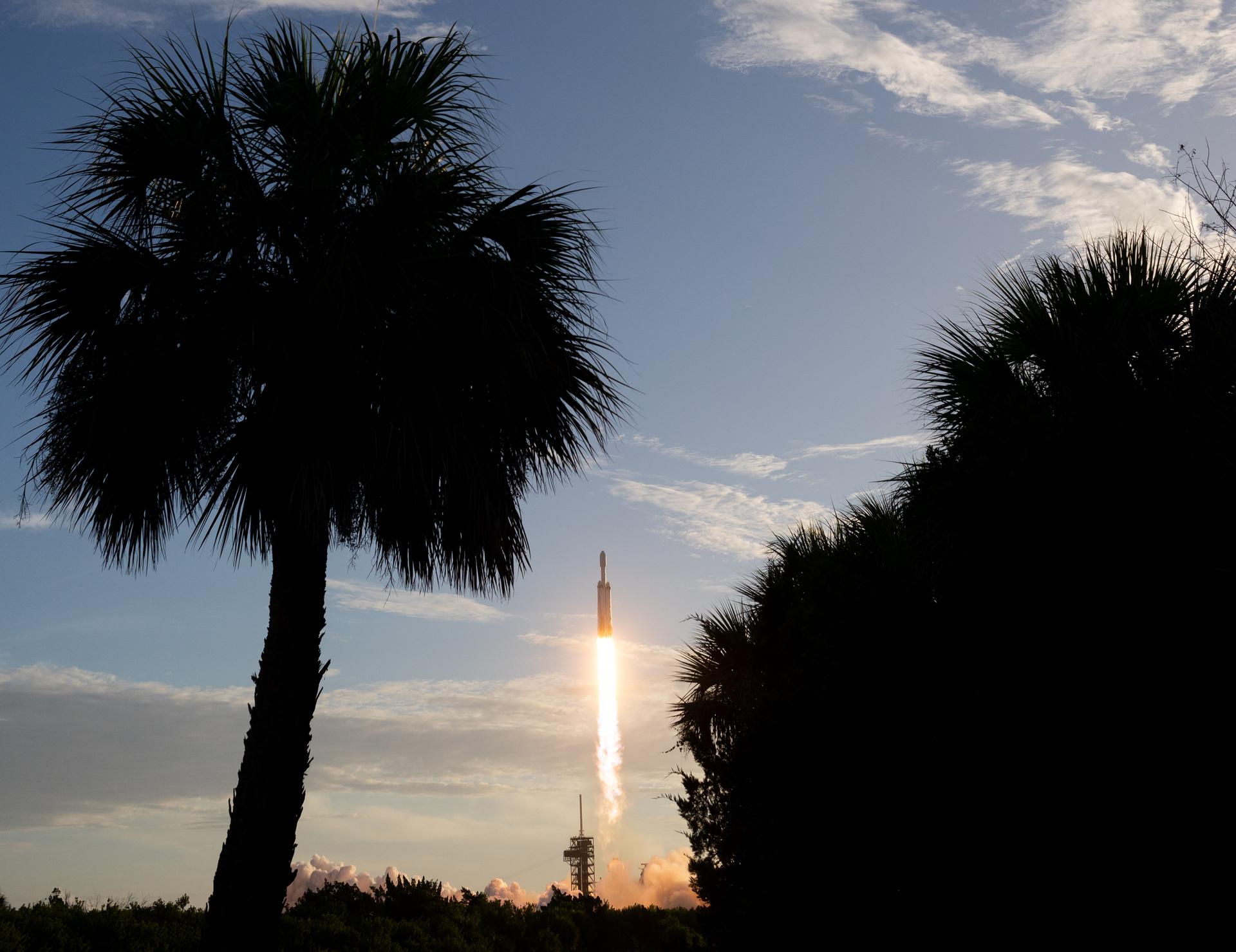
A SpaceX Falcon Heavy rocket launches with NASA’S Nancy Grace Roman Space Telescope onboard from Launch Complex 39A, Sunday, Aug. 30, 2026, at NASA’s Kennedy Space Center in Florida. Roman will investigate dark energy and dark matter, conduct a statistical census of planetary systems, and enable a broad range of additional astrophysics research. Launch occurred at 7:26 a.m. EDT. Photo Credit (NASA/Joel Kowsky)
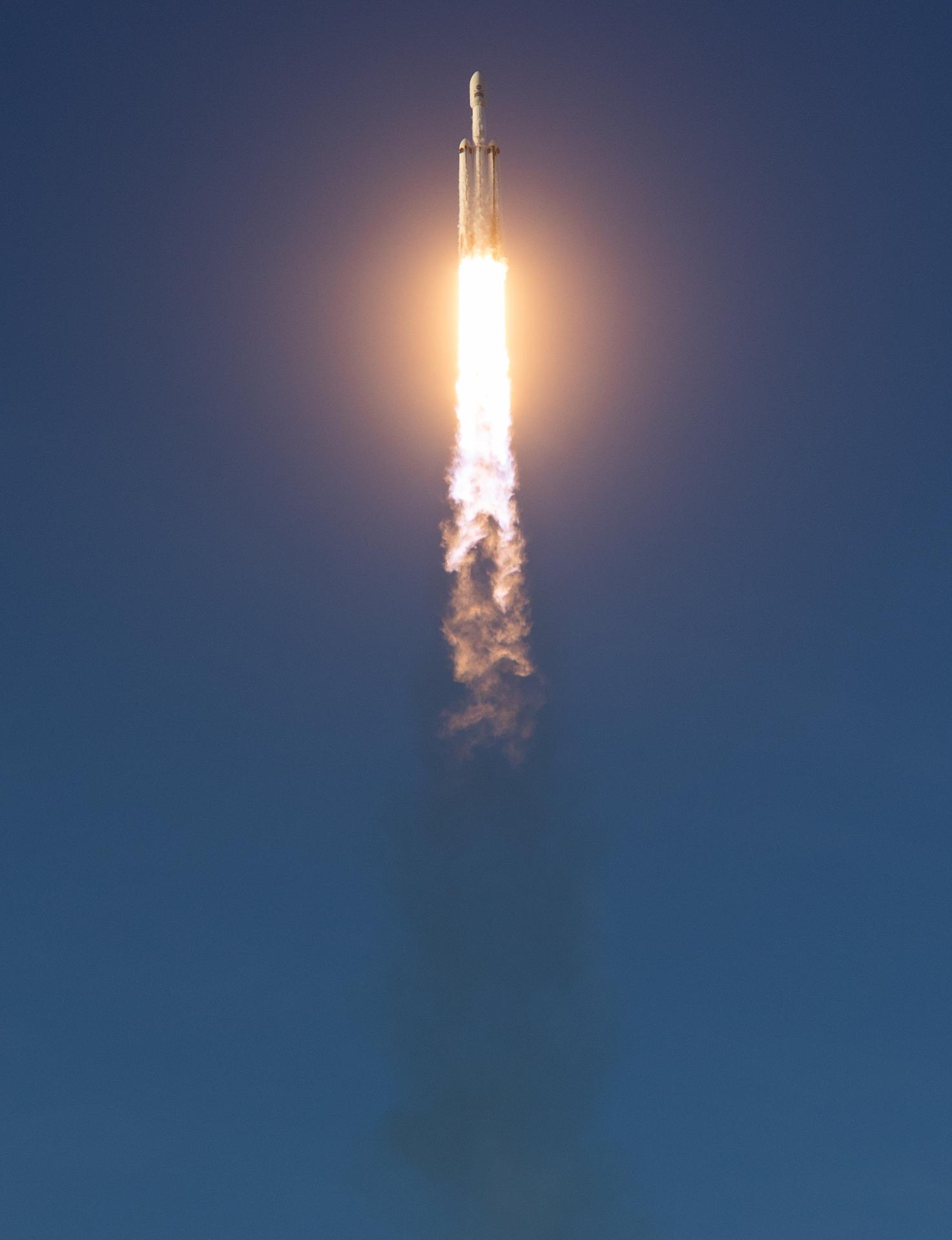
A SpaceX Falcon Heavy rocket launches with NASA’S Nancy Grace Roman Space Telescope onboard from Launch Complex 39A, Sunday, Aug. 30, 2026, at NASA’s Kennedy Space Center in Florida. Roman will investigate dark energy and dark matter, conduct a statistical census of planetary systems, and enable a broad range of additional astrophysics research. Launch occurred at 7:26 a.m. EDT. Photo Credit (NASA/Joel Kowsky)
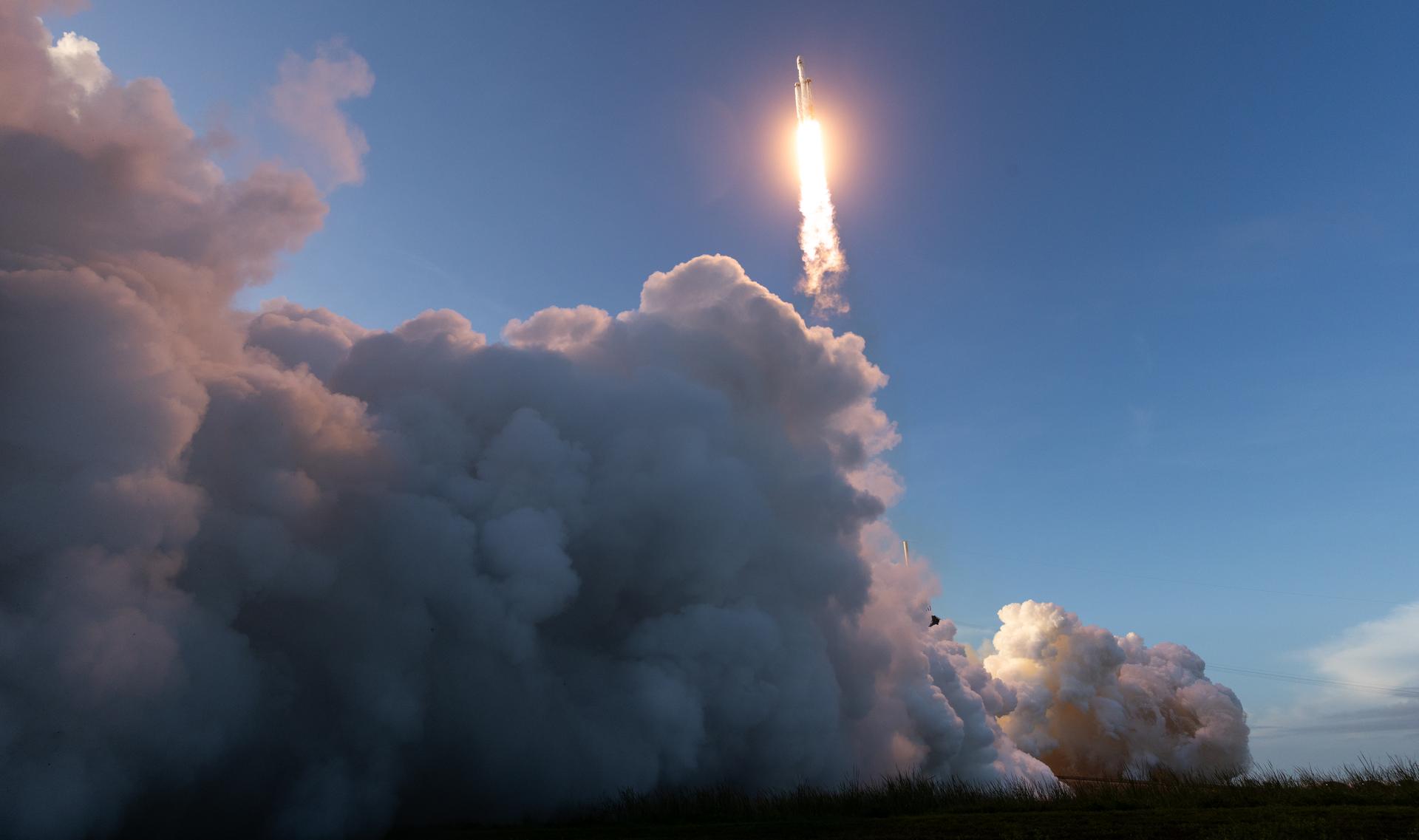
A SpaceX Falcon Heavy rocket launches with NASA’S Nancy Grace Roman Space Telescope onboard from Launch Complex 39A, Sunday, Aug. 30, 2026, at NASA’s Kennedy Space Center in Florida. Roman will investigate dark energy and dark matter, conduct a statistical census of planetary systems, and enable a broad range of additional astrophysics research. Launch occurred at 7:26 a.m. EDT. Photo Credit (NASA/Joel Kowsky)
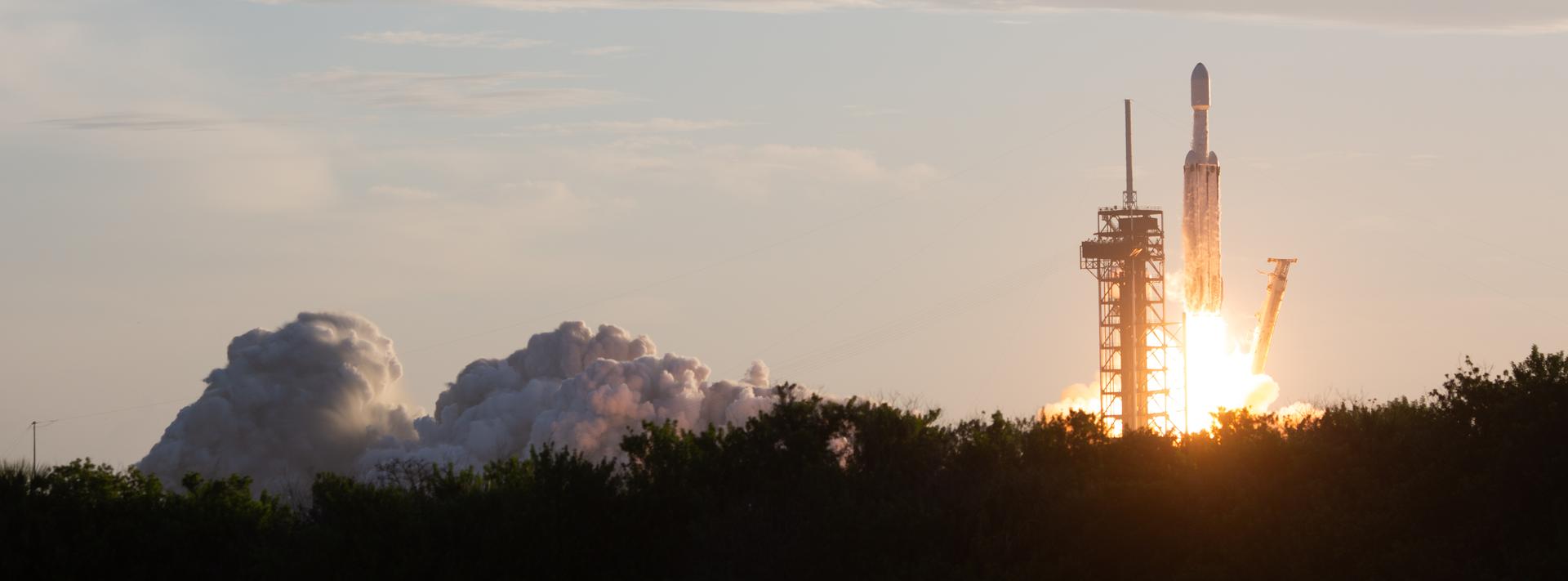
A SpaceX Falcon Heavy rocket launches with NASA’S Nancy Grace Roman Space Telescope onboard from Launch Complex 39A, Sunday, Aug. 30, 2026, at NASA’s Kennedy Space Center in Florida. Roman will investigate dark energy and dark matter, conduct a statistical census of planetary systems, and enable a broad range of additional astrophysics research. Launch occurred at 7:26 a.m. EDT. Photo Credit (NASA/Joel Kowsky)
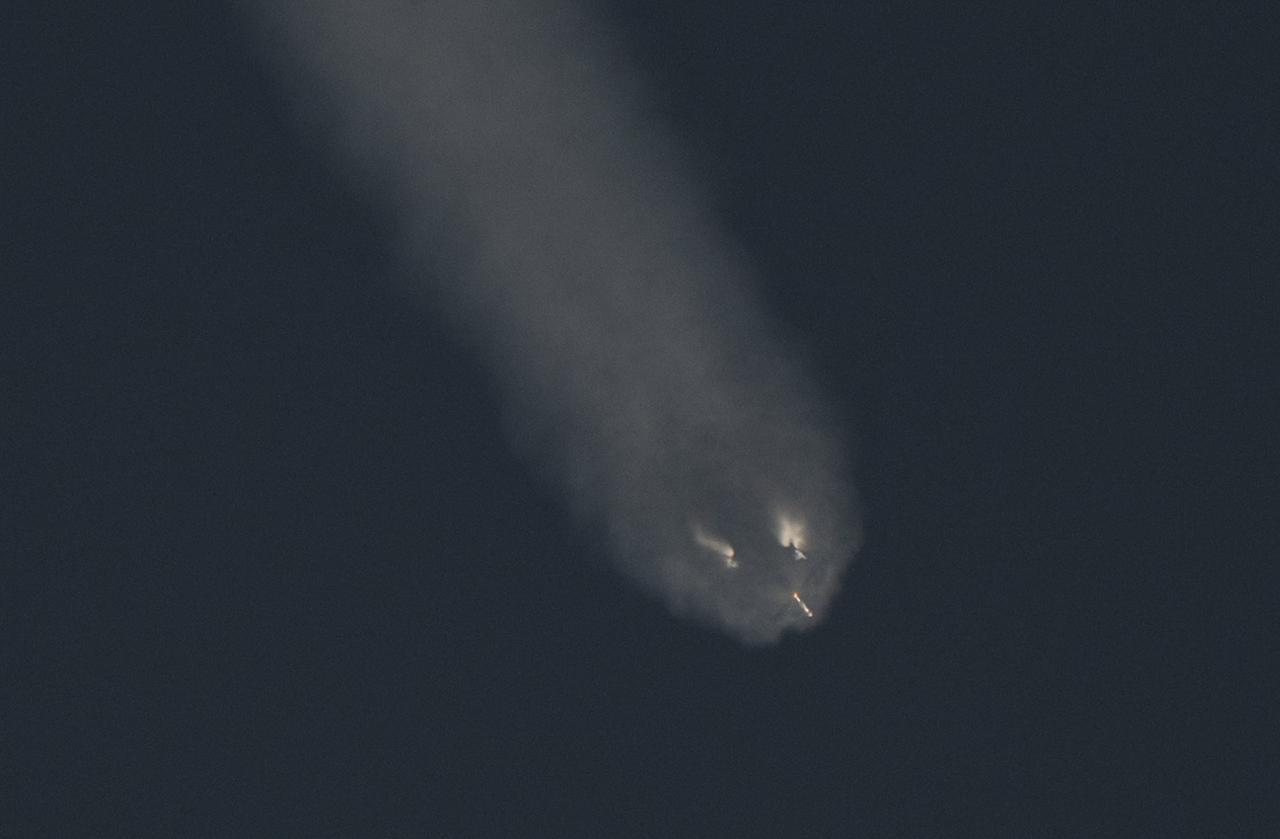
The side boosters of a SpaceX Falcon Heavy rocket are seen as the separate from the center core during the launch of NASA’S Nancy Grace Roman Space Telescope from Launch Complex 39A, Sunday, Aug. 30, 2026, at NASA’s Kennedy Space Center in Florida. Roman will investigate dark energy and dark matter, conduct a statistical census of planetary systems, and enable a broad range of additional astrophysics research. Launch occurred at 7:26 a.m. EDT. Photo Credit (NASA/Joel Kowsky)
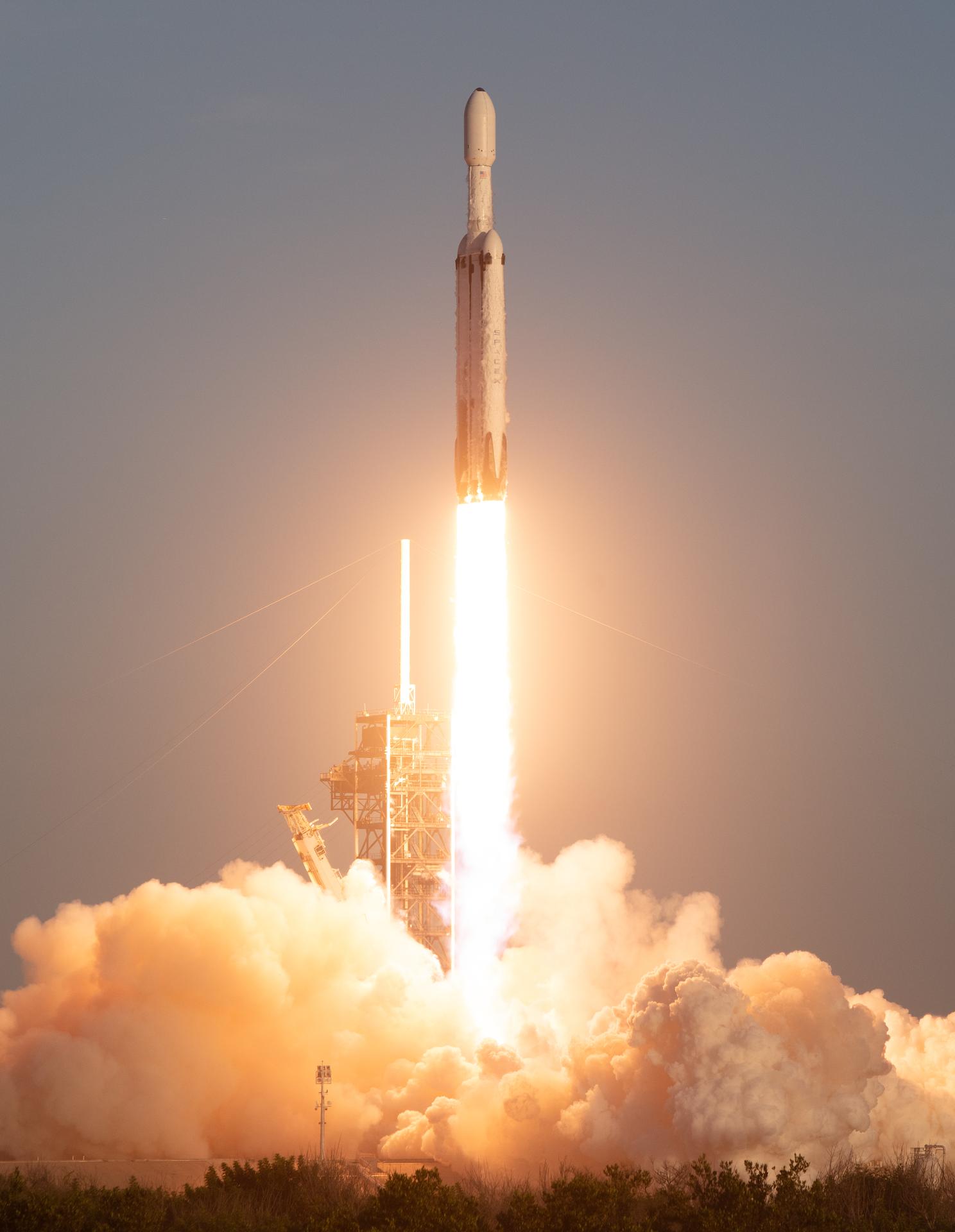
A SpaceX Falcon Heavy rocket launches with NASA’S Nancy Grace Roman Space Telescope onboard from Launch Complex 39A, Sunday, Aug. 30, 2026, at NASA’s Kennedy Space Center in Florida. Roman will investigate dark energy and dark matter, conduct a statistical census of planetary systems, and enable a broad range of additional astrophysics research. Launch occurred at 7:26 a.m. EDT. Photo Credit (NASA/Joel Kowsky)
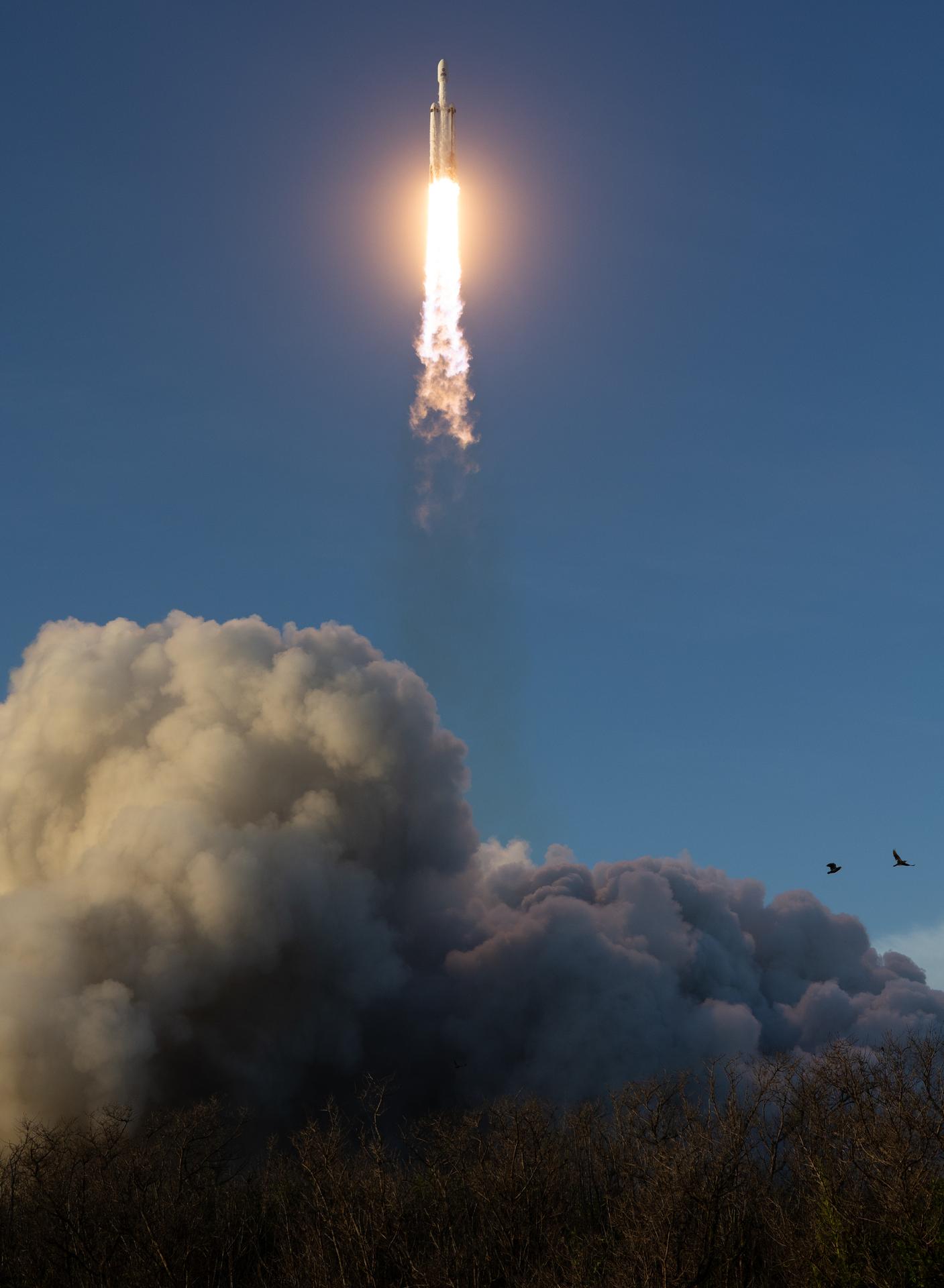
A SpaceX Falcon Heavy rocket launches with NASA’S Nancy Grace Roman Space Telescope onboard from Launch Complex 39A, Sunday, Aug. 30, 2026, at NASA’s Kennedy Space Center in Florida. Roman will investigate dark energy and dark matter, conduct a statistical census of planetary systems, and enable a broad range of additional astrophysics research. Launch occurred at 7:26 a.m. EDT. Photo Credit (NASA/Joel Kowsky)
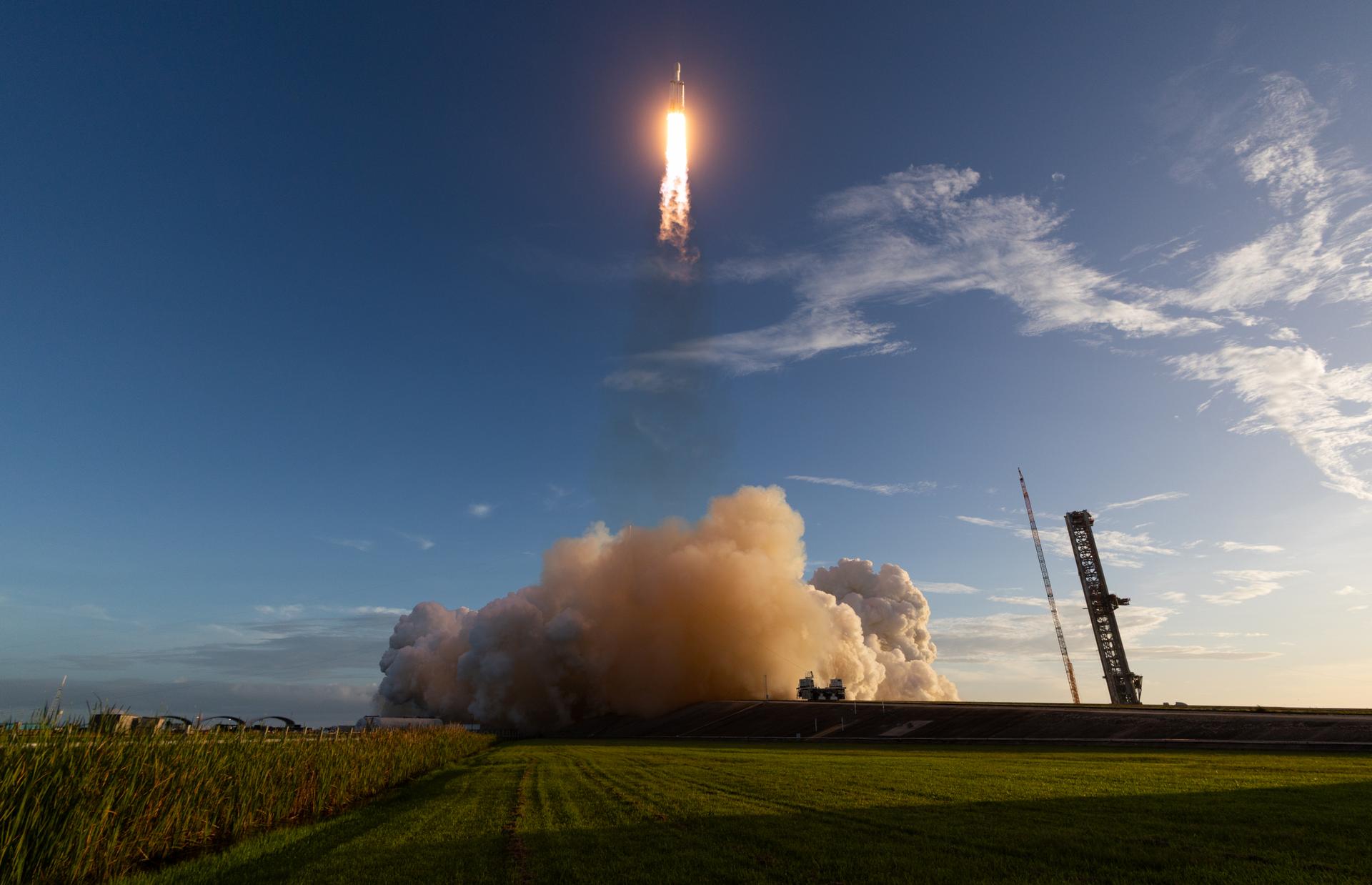
A SpaceX Falcon Heavy rocket launches with NASA’S Nancy Grace Roman Space Telescope onboard from Launch Complex 39A, Sunday, Aug. 30, 2026, at NASA’s Kennedy Space Center in Florida. Roman will investigate dark energy and dark matter, conduct a statistical census of planetary systems, and enable a broad range of additional astrophysics research. Launch occurred at 7:26 a.m. EDT. Photo Credit (NASA/Joel Kowsky)
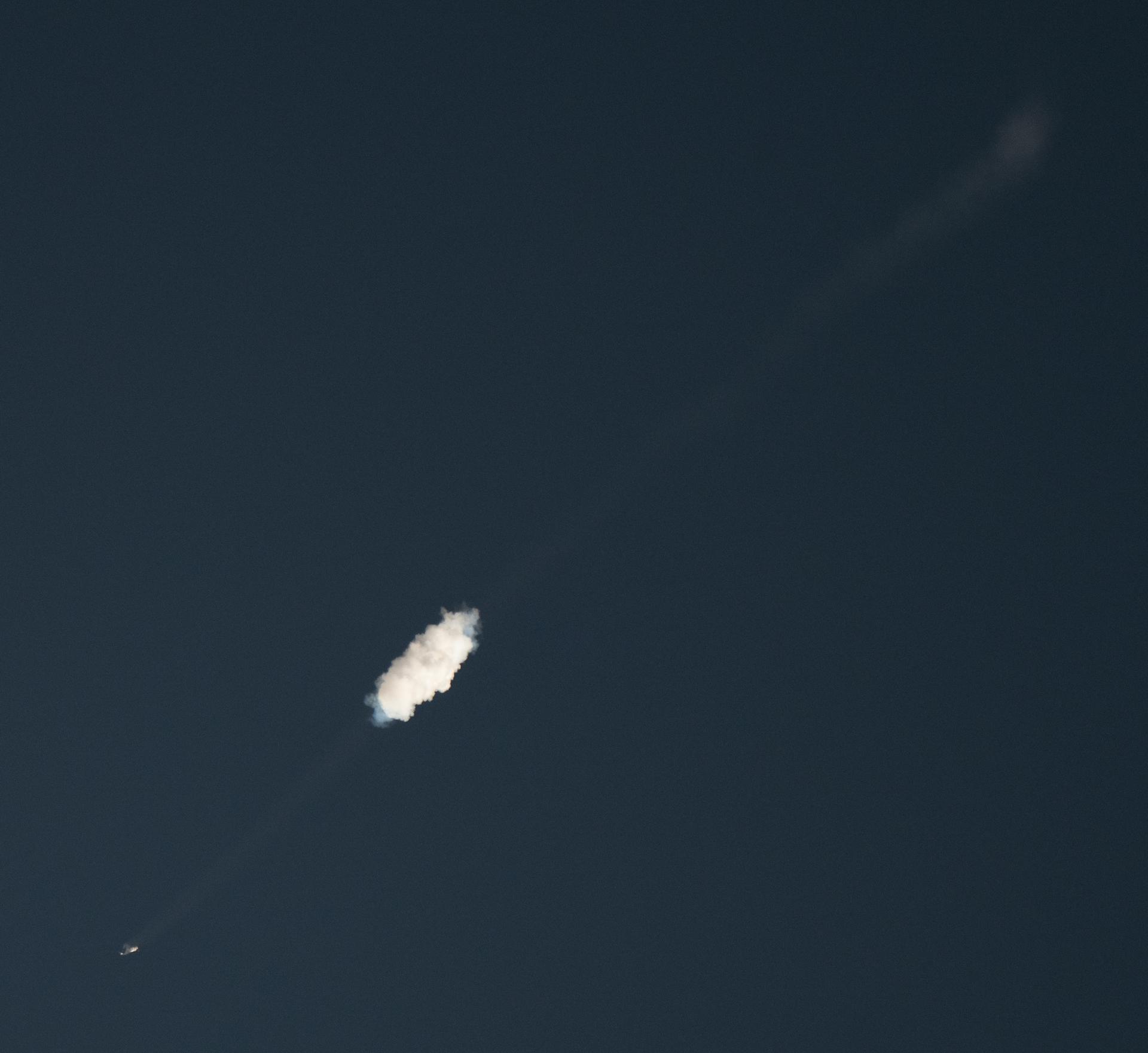
A SpaceX Falcon Heavy side booster is seen as it approaches LZ-40 following the launch of NASA’S Nancy Grace Roman Space Telescope from Launch Complex 39A, Sunday, Aug. 30, 2026, at NASA’s Kennedy Space Center in Florida. Roman will investigate dark energy and dark matter, conduct a statistical census of planetary systems, and enable a broad range of additional astrophysics research. Launch occurred at 7:26 a.m. EDT. Photo Credit (NASA/Joel Kowsky)
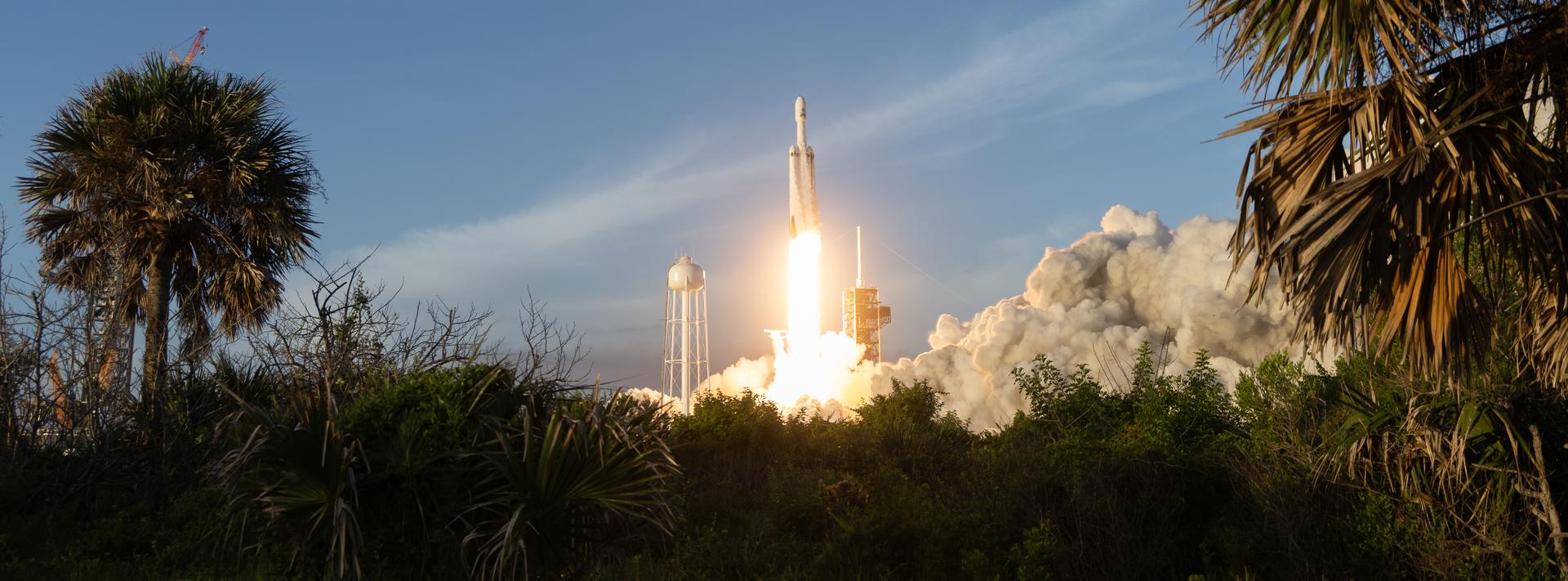
A SpaceX Falcon Heavy rocket launches with NASA’S Nancy Grace Roman Space Telescope onboard from Launch Complex 39A, Sunday, Aug. 30, 2026, at NASA’s Kennedy Space Center in Florida. Roman will investigate dark energy and dark matter, conduct a statistical census of planetary systems, and enable a broad range of additional astrophysics research. Launch occurred at 7:26 a.m. EDT. Photo Credit (NASA/Joel Kowsky)
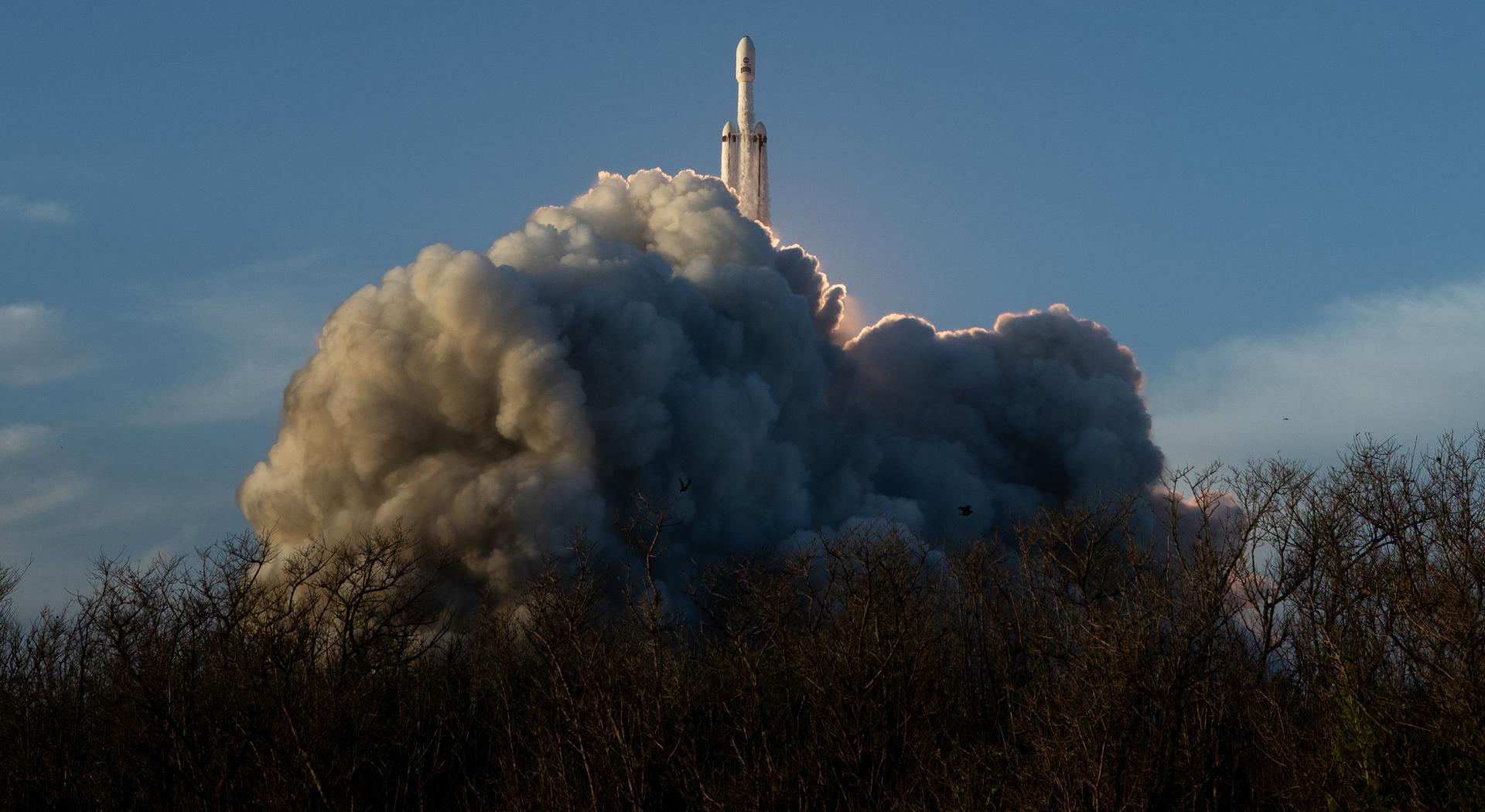
A SpaceX Falcon Heavy rocket launches with NASA’S Nancy Grace Roman Space Telescope onboard from Launch Complex 39A, Sunday, Aug. 30, 2026, at NASA’s Kennedy Space Center in Florida. Roman will investigate dark energy and dark matter, conduct a statistical census of planetary systems, and enable a broad range of additional astrophysics research. Launch occurred at 7:26 a.m. EDT. Photo Credit (NASA/Joel Kowsky)
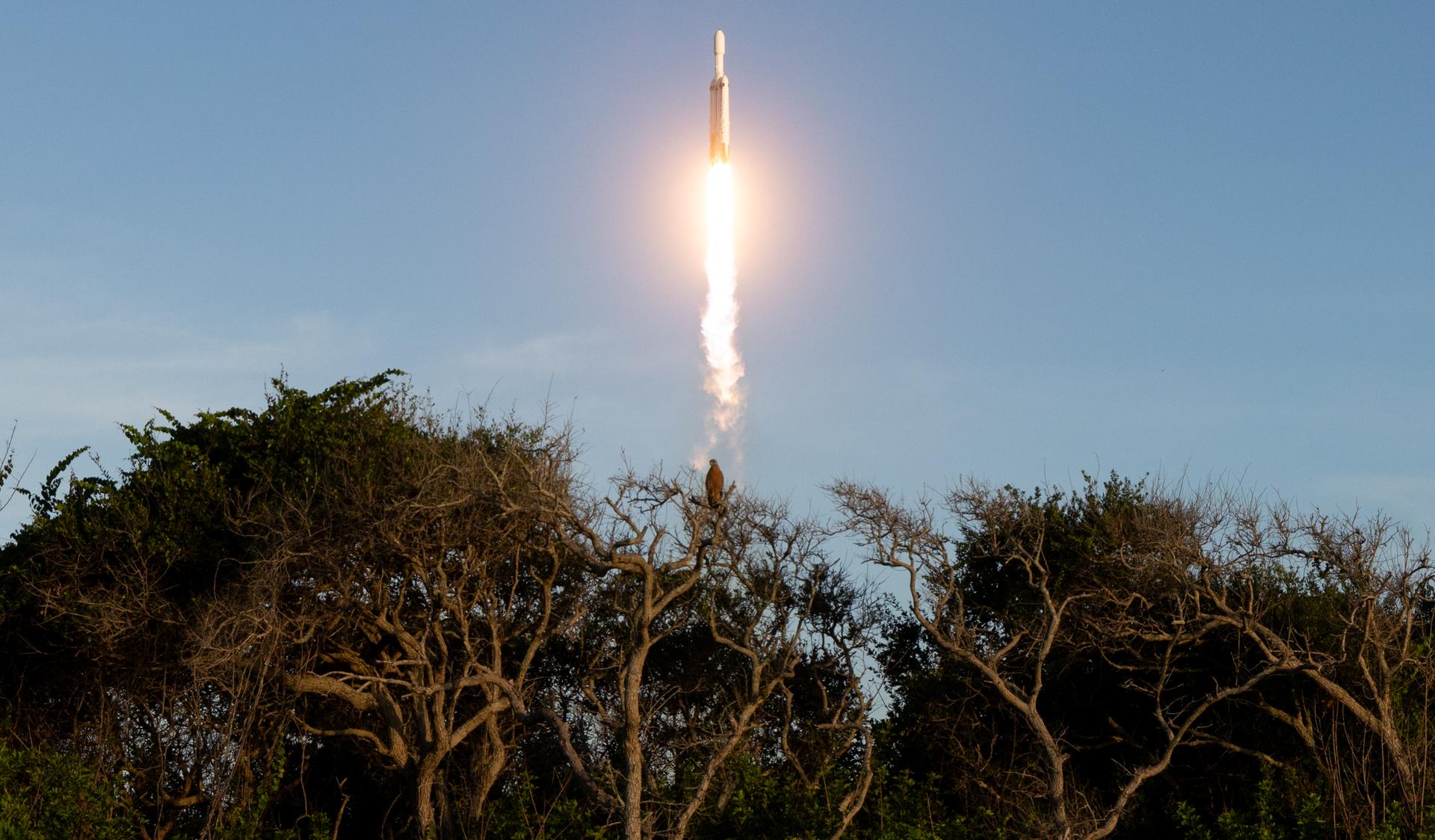
A SpaceX Falcon Heavy rocket launches with NASA’S Nancy Grace Roman Space Telescope onboard from Launch Complex 39A, Sunday, Aug. 30, 2026, at NASA’s Kennedy Space Center in Florida. Roman will investigate dark energy and dark matter, conduct a statistical census of planetary systems, and enable a broad range of additional astrophysics research. Launch occurred at 7:26 a.m. EDT. Photo Credit (NASA/Joel Kowsky)
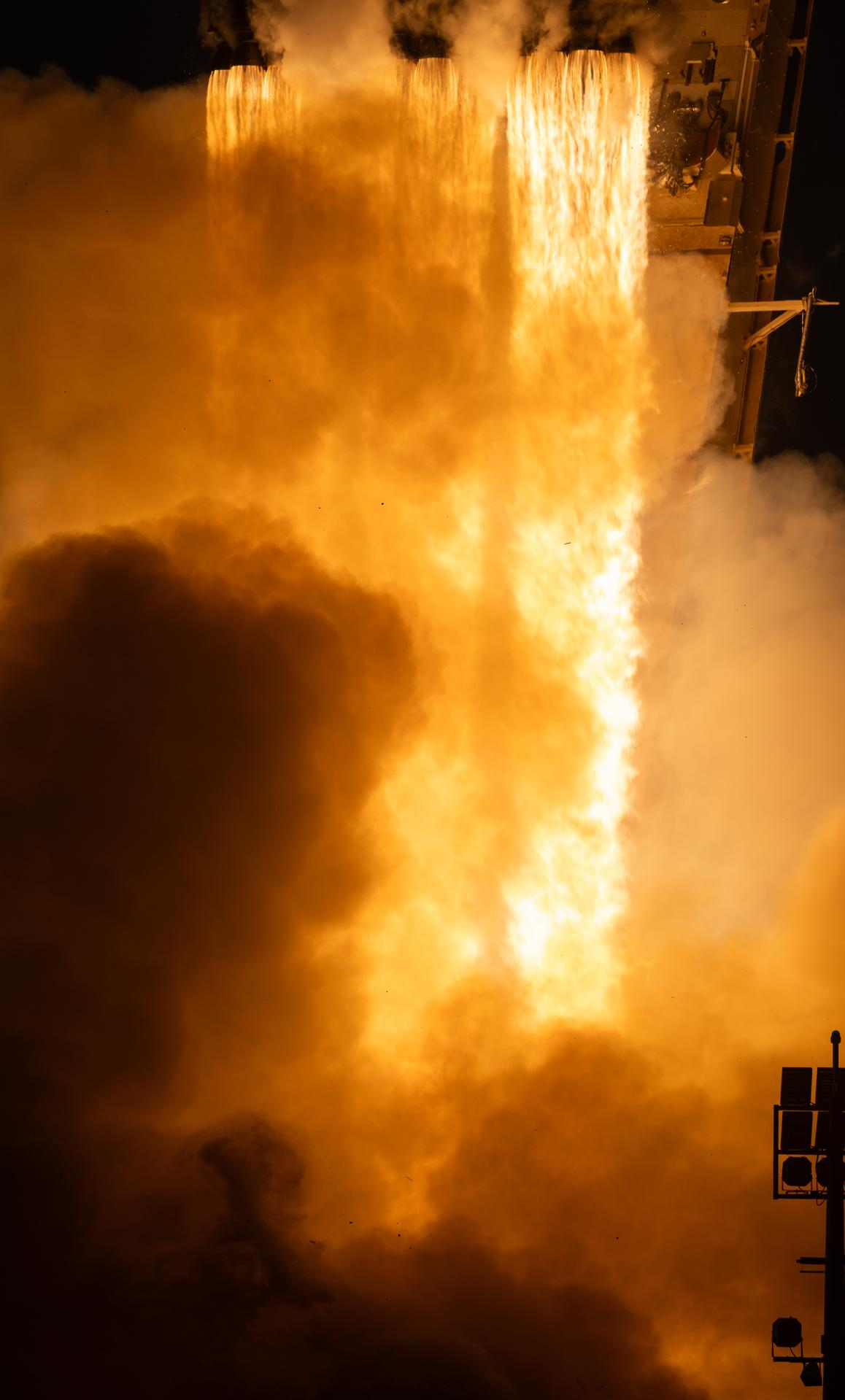
A SpaceX Falcon Heavy rocket launches with NASA’S Nancy Grace Roman Space Telescope onboard from Launch Complex 39A, Sunday, Aug. 30, 2026, at NASA’s Kennedy Space Center in Florida. Roman will investigate dark energy and dark matter, conduct a statistical census of planetary systems, and enable a broad range of additional astrophysics research. Launch occurred at 7:26 a.m. EDT. Photo Credit (NASA/Joel Kowsky)
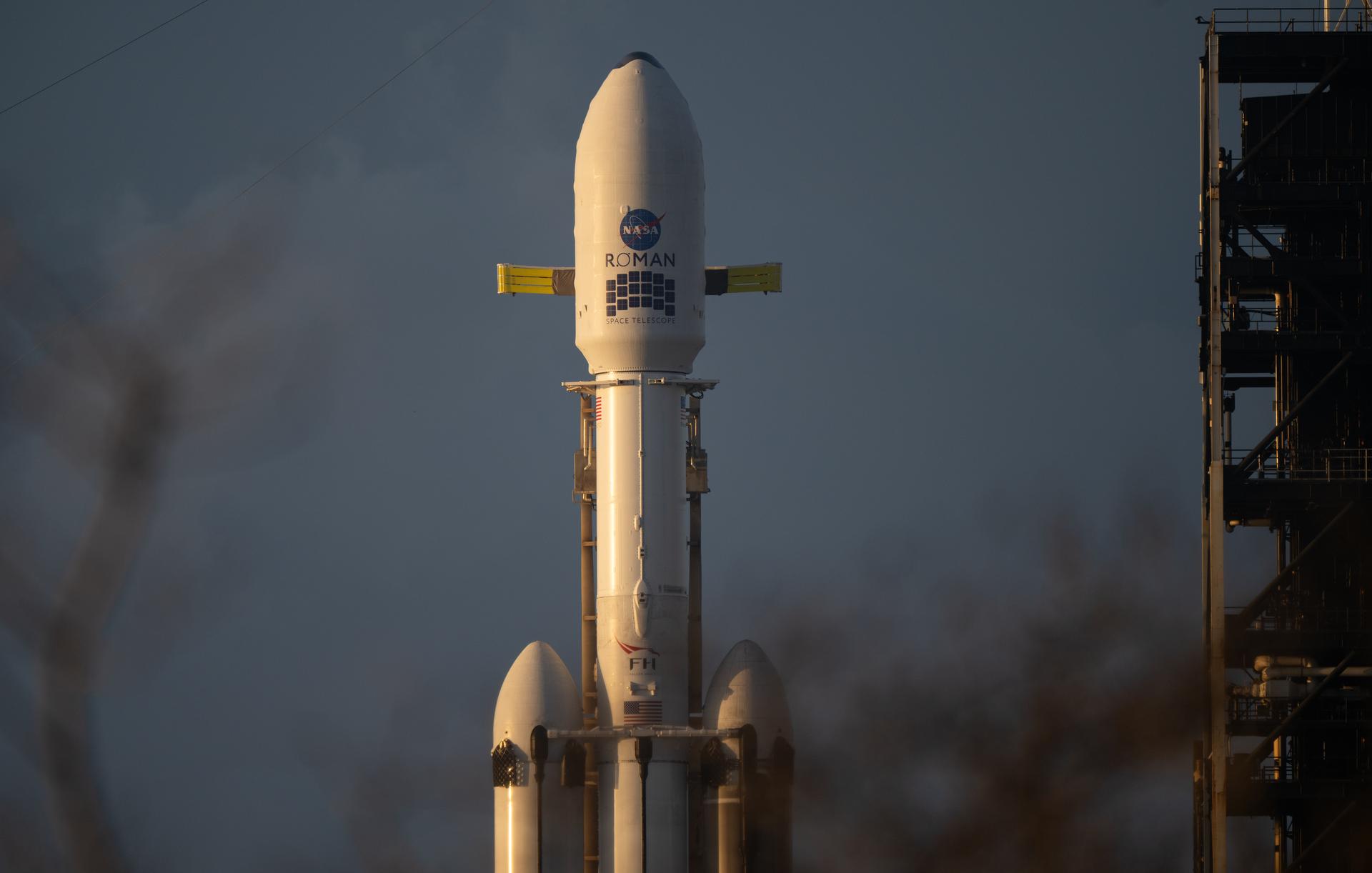
NASA’s Nancy Grace Roman Space Telescope, encapsulated in a protective payload fairing atop a SpaceX Falcon Heavy rocket, is seen at sunrise, Saturday, Aug. 29, 2026, at Launch Complex 39A at NASA’s Kennedy Space Center in Florida. Roman will investigate dark energy and dark matter, conduct a statistical census of planetary systems, and enable a broad range of additional astrophysics research. Liftoff from NASA Kennedy is targeted for Sunday, Aug. 30, 2026. Photo Credit (NASA/Joel Kowsky)
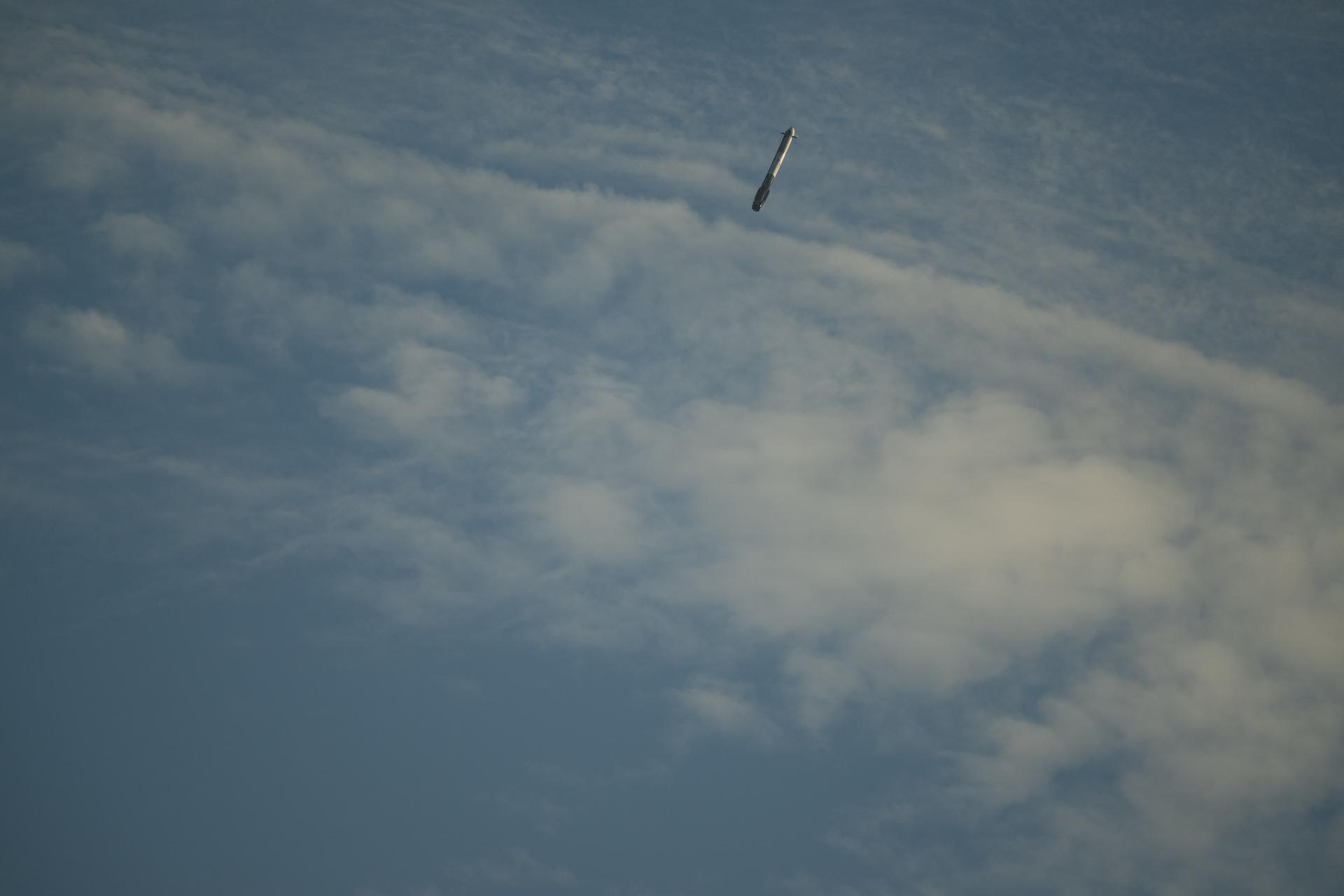
A SpaceX Falcon Heavy side booster is seen as it approaches LZ-40 following the launch of NASA’S Nancy Grace Roman Space Telescope from Launch Complex 39A, Sunday, Aug. 30, 2026, at NASA’s Kennedy Space Center in Florida. Roman will investigate dark energy and dark matter, conduct a statistical census of planetary systems, and enable a broad range of additional astrophysics research. Launch occurred at 7:26 a.m. EDT. Photo Credit (NASA/Joel Kowsky)
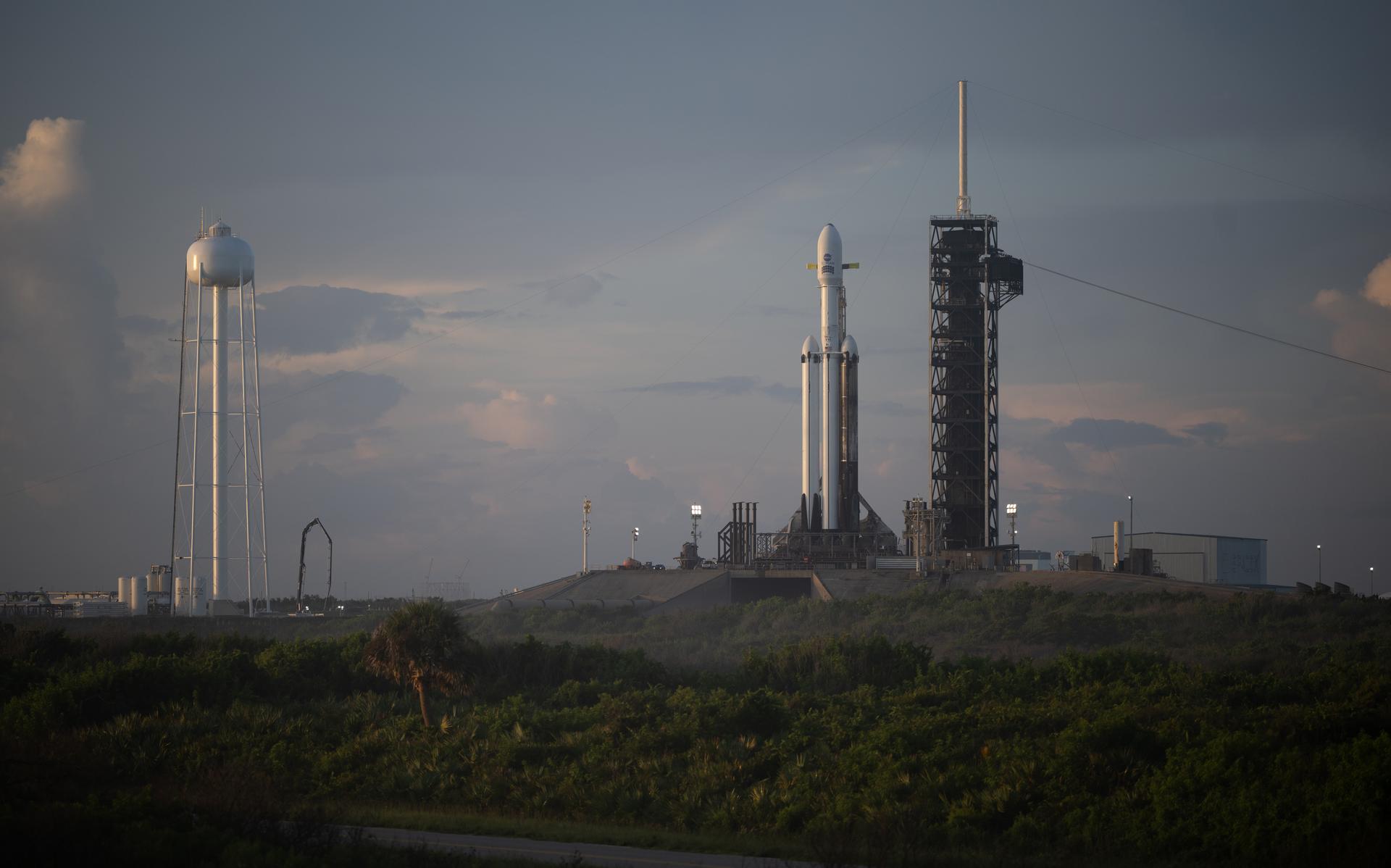
NASA’s Nancy Grace Roman Space Telescope, encapsulated in a protective payload fairing atop a SpaceX Falcon Heavy rocket, is seen at sunrise, Saturday, Aug. 29, 2026, at Launch Complex 39A at NASA’s Kennedy Space Center in Florida. Roman will investigate dark energy and dark matter, conduct a statistical census of planetary systems, and enable a broad range of additional astrophysics research. Liftoff from NASA Kennedy is targeted for Sunday, Aug. 30, 2026. Photo Credit (NASA/Joel Kowsky)
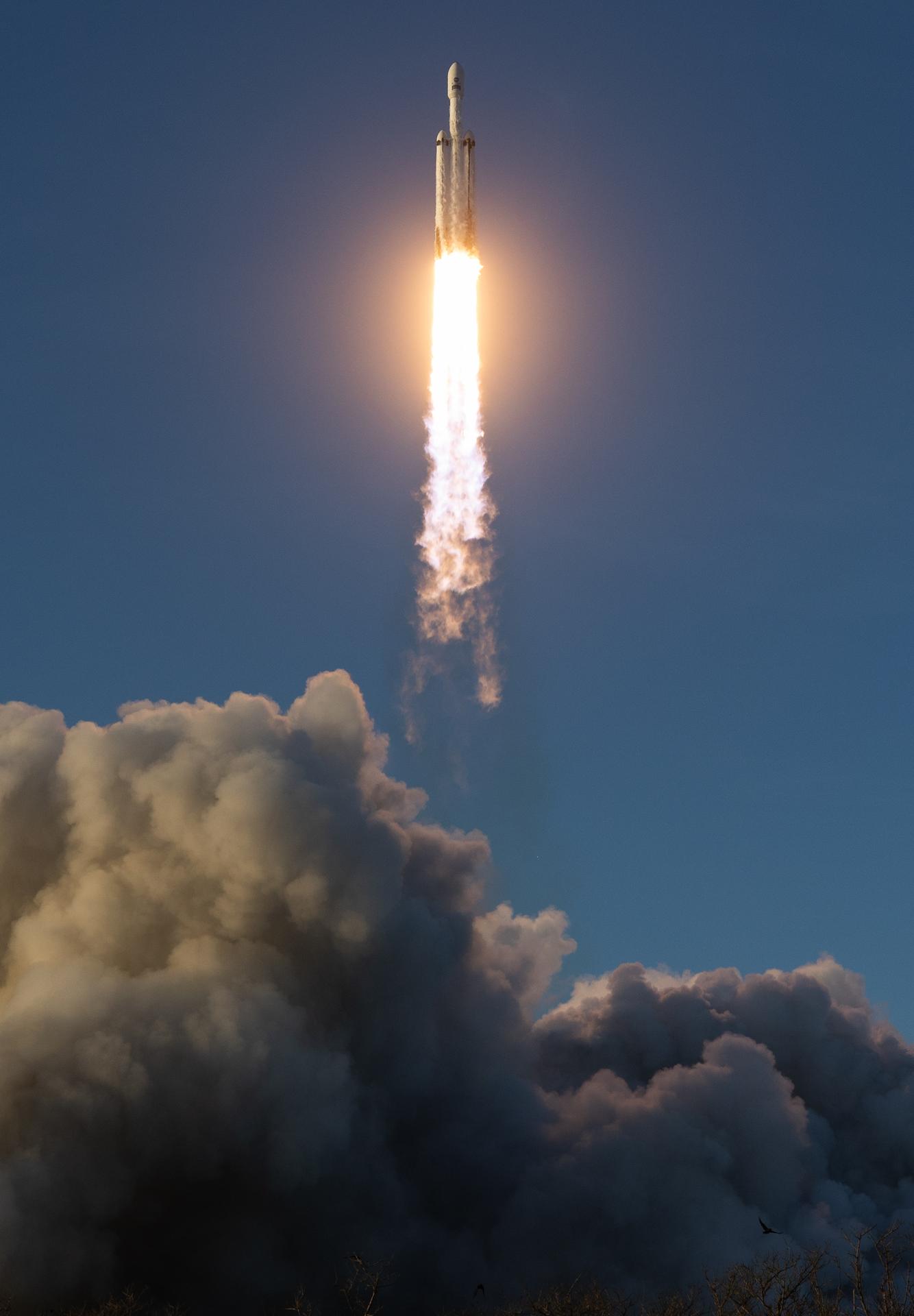
A SpaceX Falcon Heavy rocket launches with NASA’S Nancy Grace Roman Space Telescope onboard from Launch Complex 39A, Sunday, Aug. 30, 2026, at NASA’s Kennedy Space Center in Florida. Roman will investigate dark energy and dark matter, conduct a statistical census of planetary systems, and enable a broad range of additional astrophysics research. Launch occurred at 7:26 a.m. EDT. Photo Credit (NASA/Joel Kowsky)
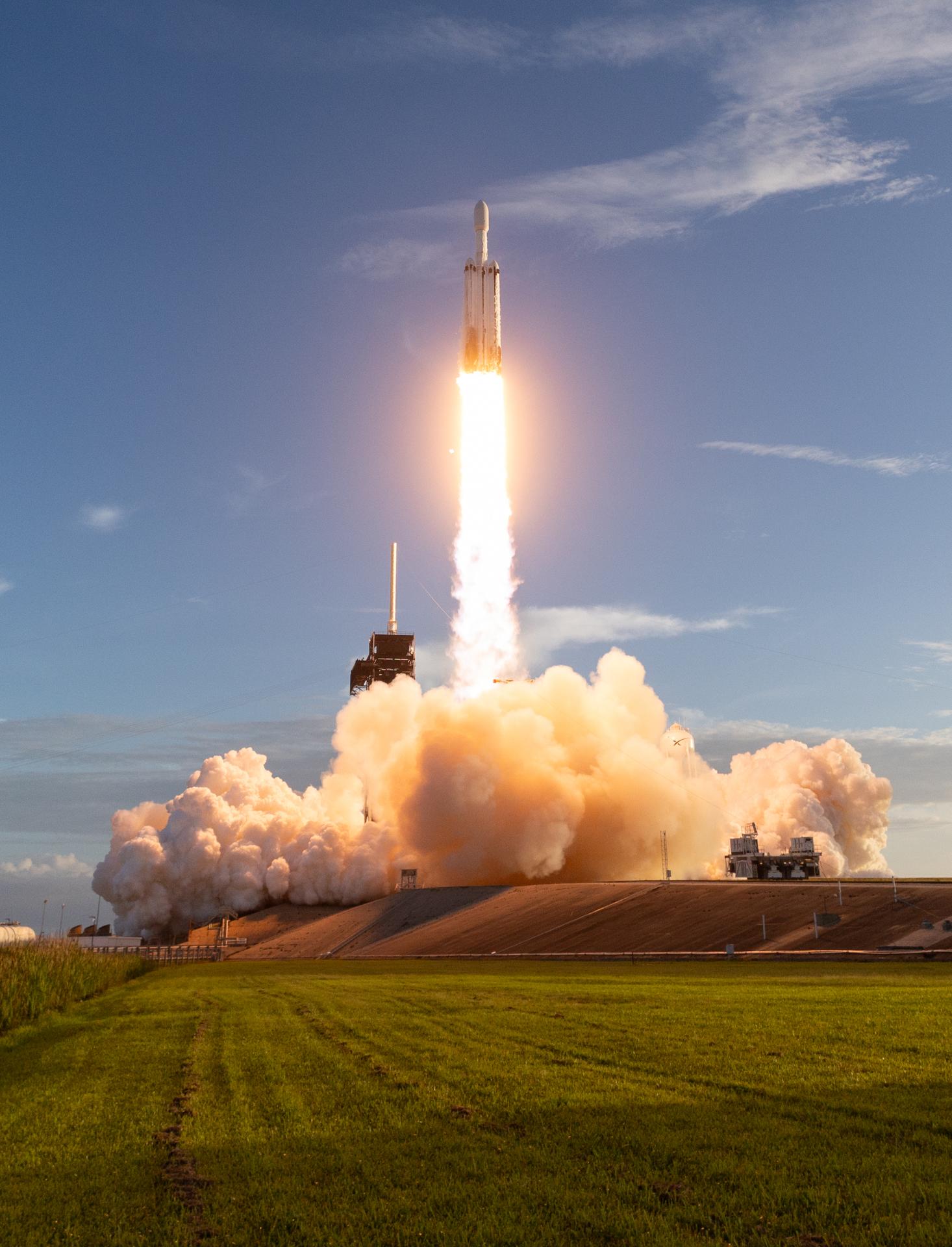
A SpaceX Falcon Heavy rocket launches with NASA’S Nancy Grace Roman Space Telescope onboard from Launch Complex 39A, Sunday, Aug. 30, 2026, at NASA’s Kennedy Space Center in Florida. Roman will investigate dark energy and dark matter, conduct a statistical census of planetary systems, and enable a broad range of additional astrophysics research. Launch occurred at 7:26 a.m. EDT. Photo Credit (NASA/Joel Kowsky)
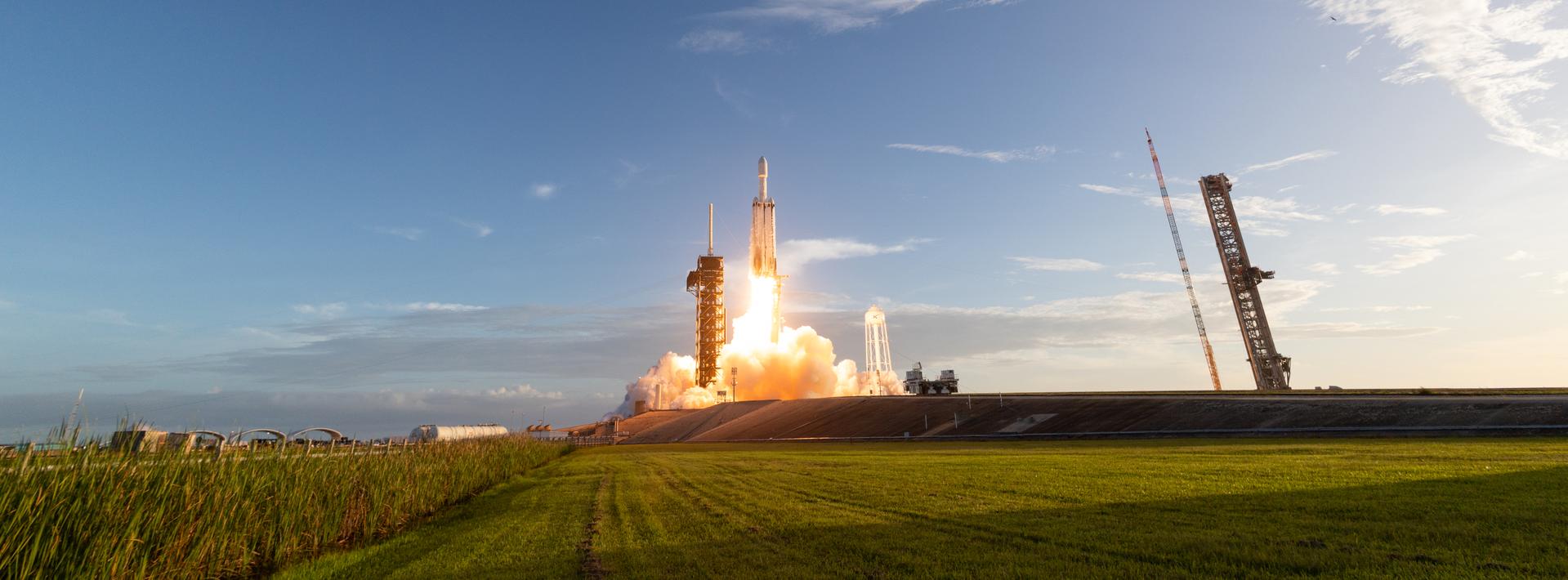
A SpaceX Falcon Heavy rocket launches with NASA’S Nancy Grace Roman Space Telescope onboard from Launch Complex 39A, Sunday, Aug. 30, 2026, at NASA’s Kennedy Space Center in Florida. Roman will investigate dark energy and dark matter, conduct a statistical census of planetary systems, and enable a broad range of additional astrophysics research. Launch occurred at 7:26 a.m. EDT. Photo Credit (NASA/Joel Kowsky)
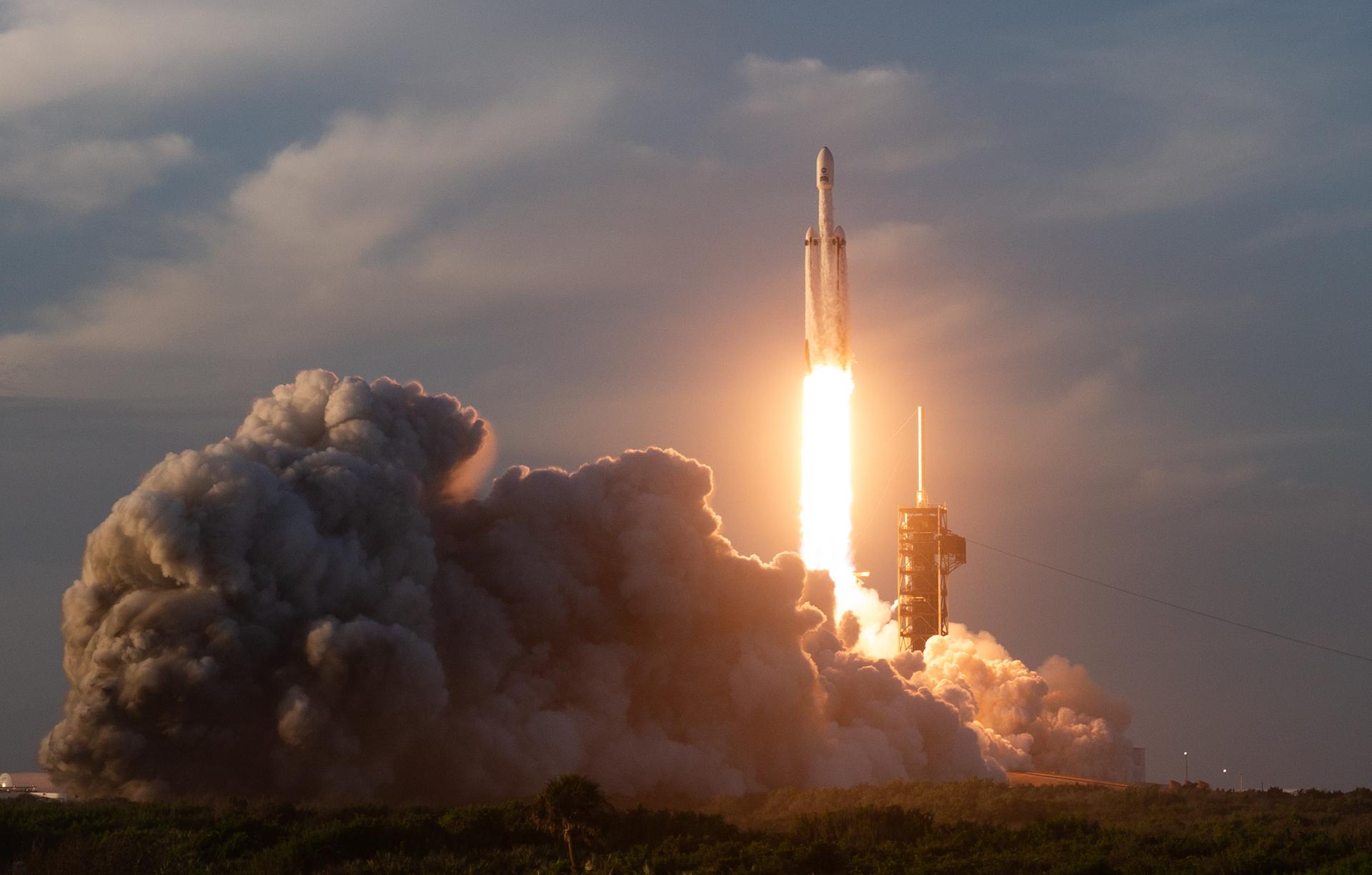
A SpaceX Falcon Heavy rocket launches with NASA’S Nancy Grace Roman Space Telescope onboard from Launch Complex 39A, Sunday, Aug. 30, 2026, at NASA’s Kennedy Space Center in Florida. Roman will investigate dark energy and dark matter, conduct a statistical census of planetary systems, and enable a broad range of additional astrophysics research. Launch occurred at 7:26 a.m. EDT. Photo Credit (NASA/Joel Kowsky)
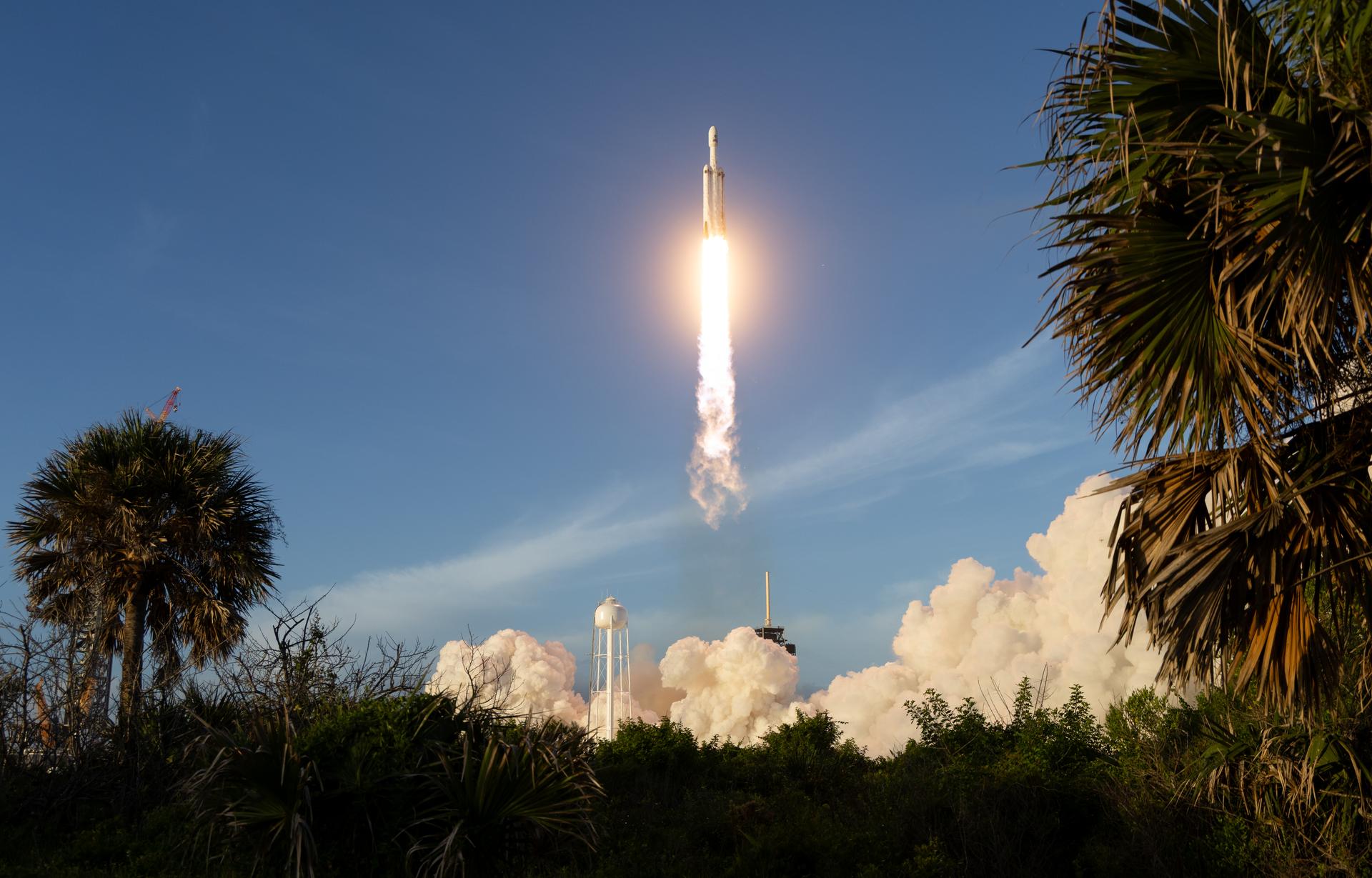
A SpaceX Falcon Heavy rocket launches with NASA’S Nancy Grace Roman Space Telescope onboard from Launch Complex 39A, Sunday, Aug. 30, 2026, at NASA’s Kennedy Space Center in Florida. Roman will investigate dark energy and dark matter, conduct a statistical census of planetary systems, and enable a broad range of additional astrophysics research. Launch occurred at 7:26 a.m. EDT. Photo Credit (NASA/Joel Kowsky)
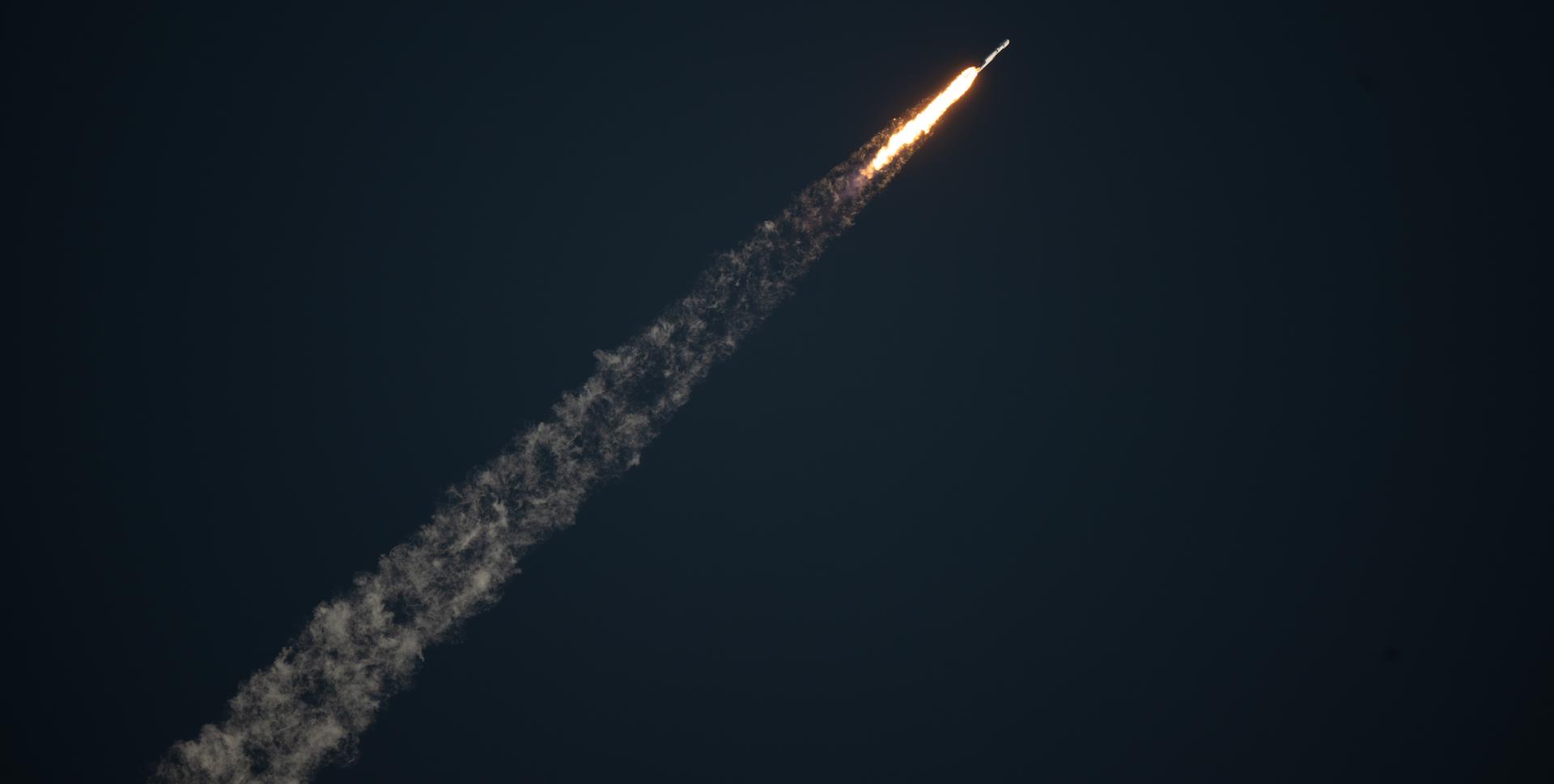
A SpaceX Falcon Heavy rocket launches with NASA’S Nancy Grace Roman Space Telescope onboard from Launch Complex 39A, Sunday, Aug. 30, 2026, at NASA’s Kennedy Space Center in Florida. Roman will investigate dark energy and dark matter, conduct a statistical census of planetary systems, and enable a broad range of additional astrophysics research. Launch occurred at 7:26 a.m. EDT. Photo Credit (NASA/Joel Kowsky)
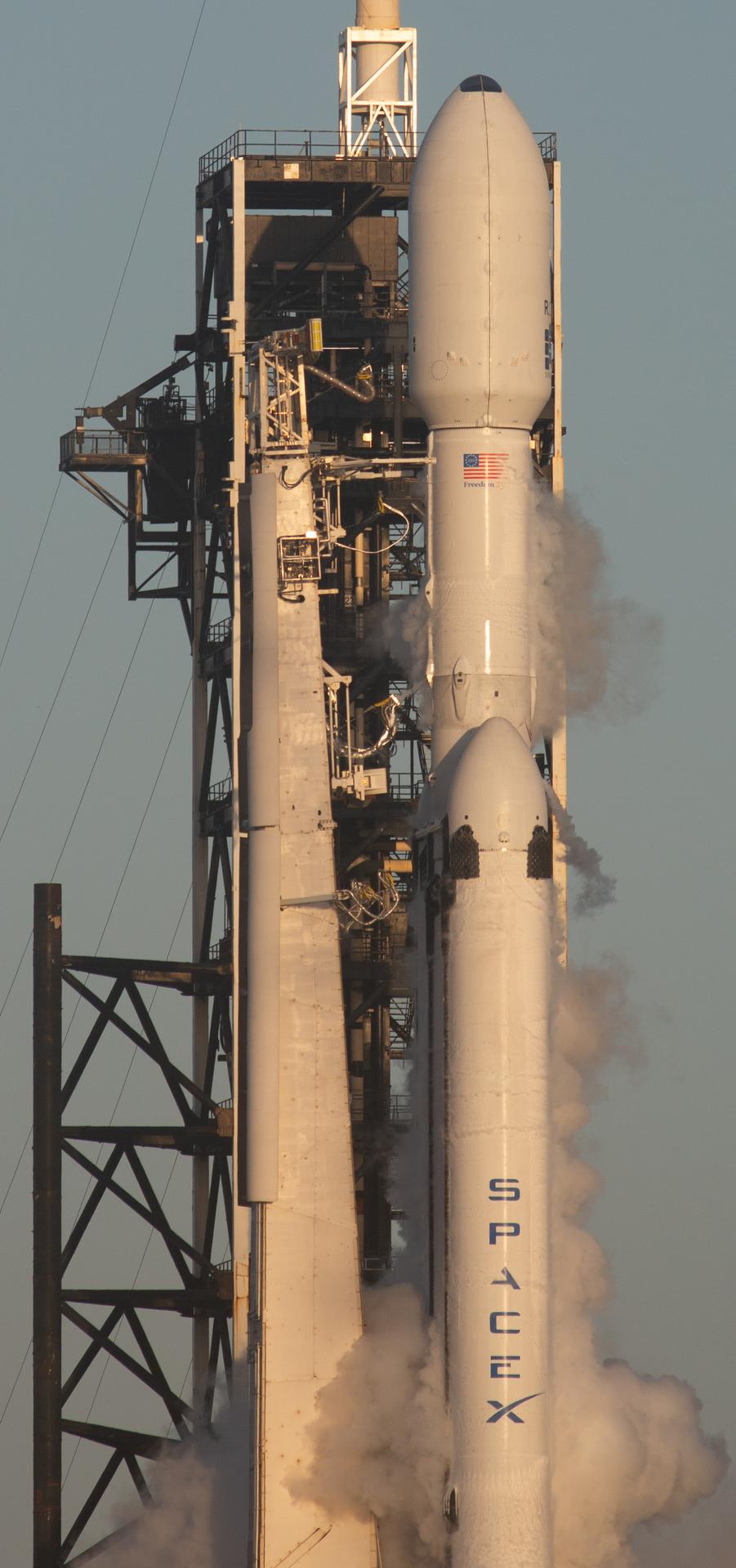
A SpaceX Falcon Heavy rocket launches with NASA’S Nancy Grace Roman Space Telescope onboard from Launch Complex 39A, Sunday, Aug. 30, 2026, at NASA’s Kennedy Space Center in Florida. Roman will investigate dark energy and dark matter, conduct a statistical census of planetary systems, and enable a broad range of additional astrophysics research. Launch occurred at 7:26 a.m. EDT. Photo Credit (NASA/Joel Kowsky)
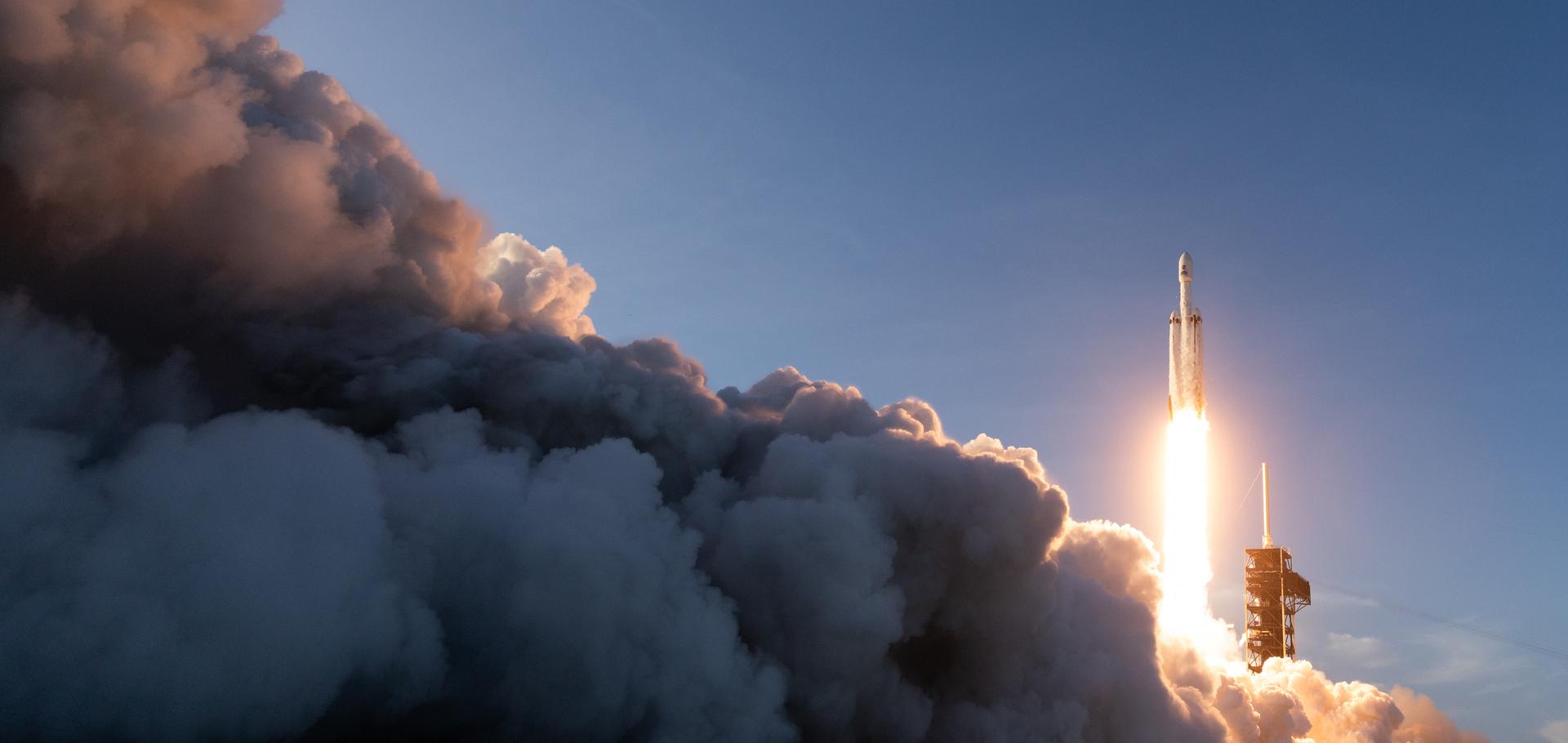
A SpaceX Falcon Heavy rocket launches with NASA’S Nancy Grace Roman Space Telescope onboard from Launch Complex 39A, Sunday, Aug. 30, 2026, at NASA’s Kennedy Space Center in Florida. Roman will investigate dark energy and dark matter, conduct a statistical census of planetary systems, and enable a broad range of additional astrophysics research. Launch occurred at 7:26 a.m. EDT. Photo Credit (NASA/Joel Kowsky)
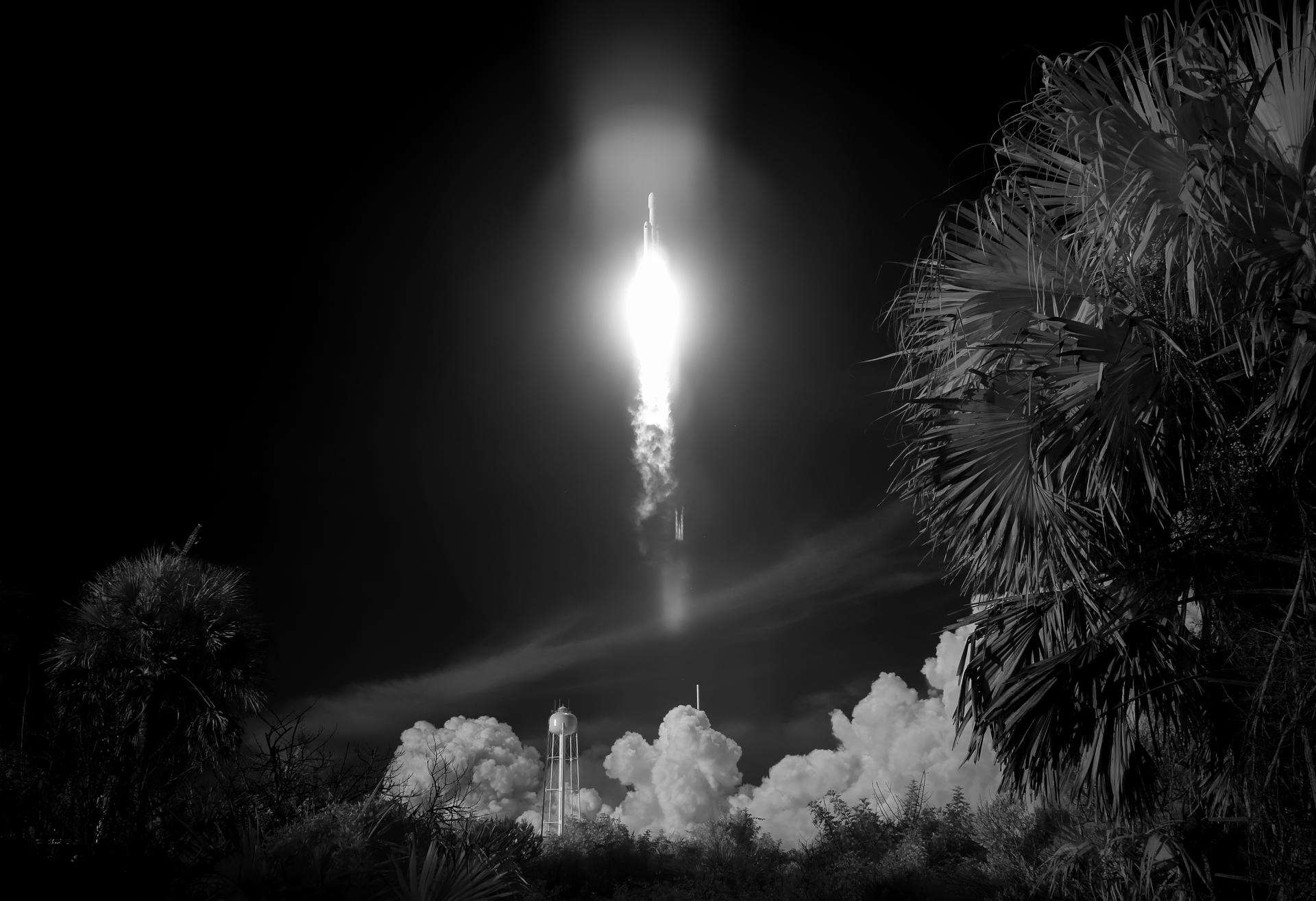
In this black and white infrared image, a SpaceX Falcon Heavy rocket launches with NASA’S Nancy Grace Roman Space Telescope onboard from Launch Complex 39A, Sunday, Aug. 30, 2026, at NASA’s Kennedy Space Center in Florida. Roman will investigate dark energy and dark matter, conduct a statistical census of planetary systems, and enable a broad range of additional astrophysics research. Launch occurred at 7:26 a.m. EDT. Photo Credit (NASA/Joel Kowsky)
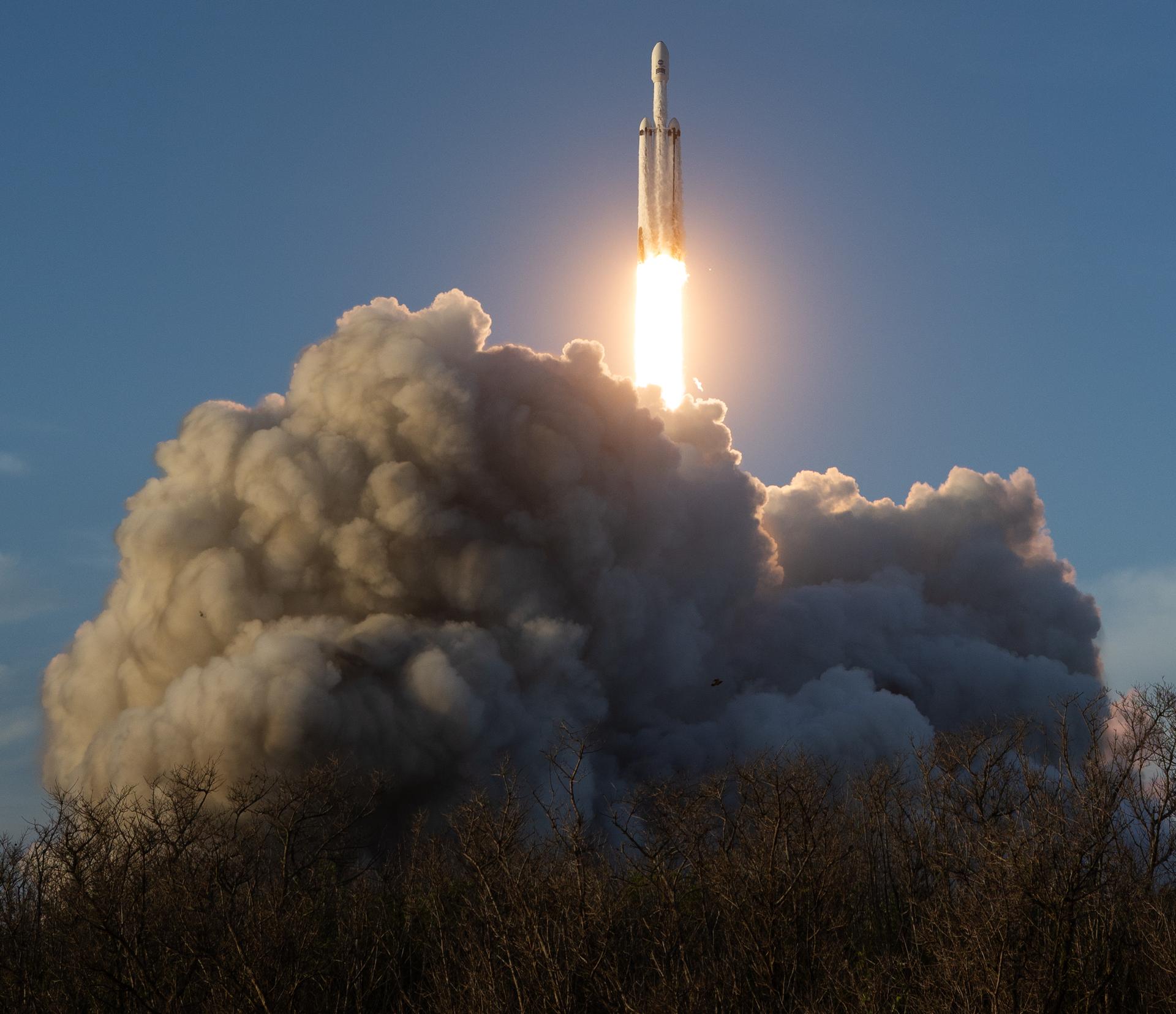
A SpaceX Falcon Heavy rocket launches with NASA’S Nancy Grace Roman Space Telescope onboard from Launch Complex 39A, Sunday, Aug. 30, 2026, at NASA’s Kennedy Space Center in Florida. Roman will investigate dark energy and dark matter, conduct a statistical census of planetary systems, and enable a broad range of additional astrophysics research. Launch occurred at 7:26 a.m. EDT. Photo Credit (NASA/Joel Kowsky)
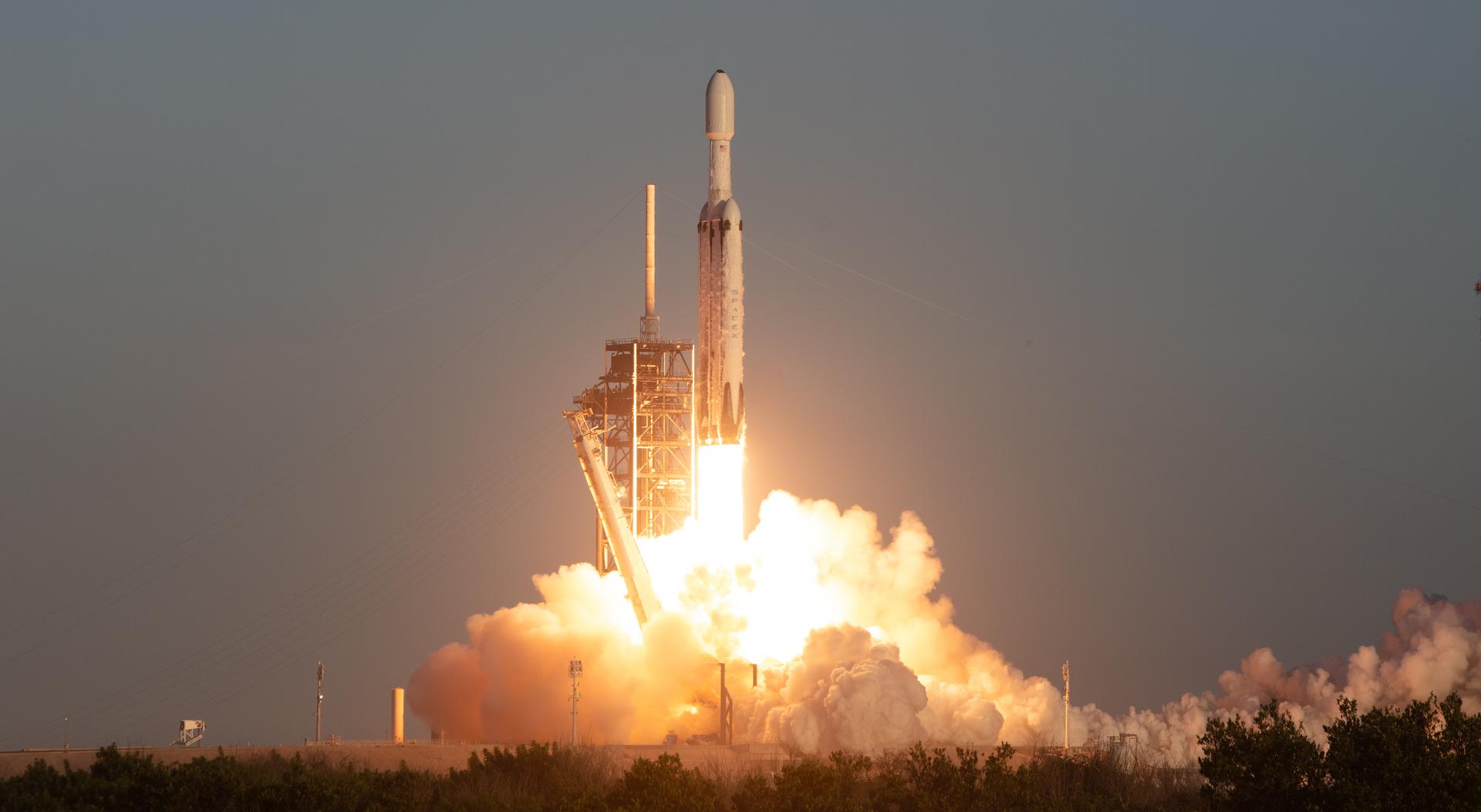
A SpaceX Falcon Heavy rocket launches with NASA’S Nancy Grace Roman Space Telescope onboard from Launch Complex 39A, Sunday, Aug. 30, 2026, at NASA’s Kennedy Space Center in Florida. Roman will investigate dark energy and dark matter, conduct a statistical census of planetary systems, and enable a broad range of additional astrophysics research. Launch occurred at 7:26 a.m. EDT. Photo Credit (NASA/Joel Kowsky)
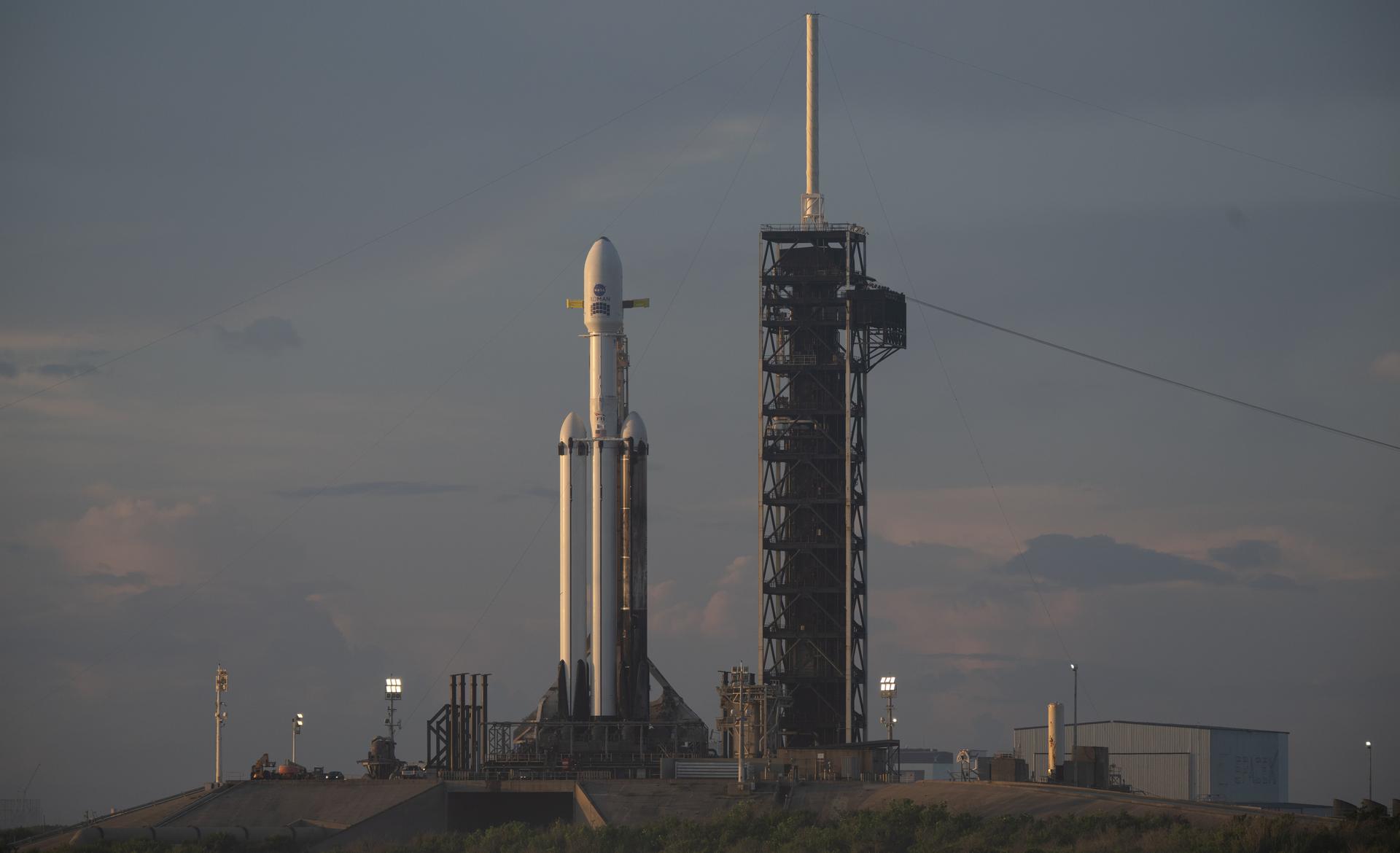
NASA’s Nancy Grace Roman Space Telescope, encapsulated in a protective payload fairing atop a SpaceX Falcon Heavy rocket, is seen at sunrise, Saturday, Aug. 29, 2026, at Launch Complex 39A at NASA’s Kennedy Space Center in Florida. Roman will investigate dark energy and dark matter, conduct a statistical census of planetary systems, and enable a broad range of additional astrophysics research. Liftoff from NASA Kennedy is targeted for Sunday, Aug. 30, 2026. Photo Credit (NASA/Joel Kowsky)
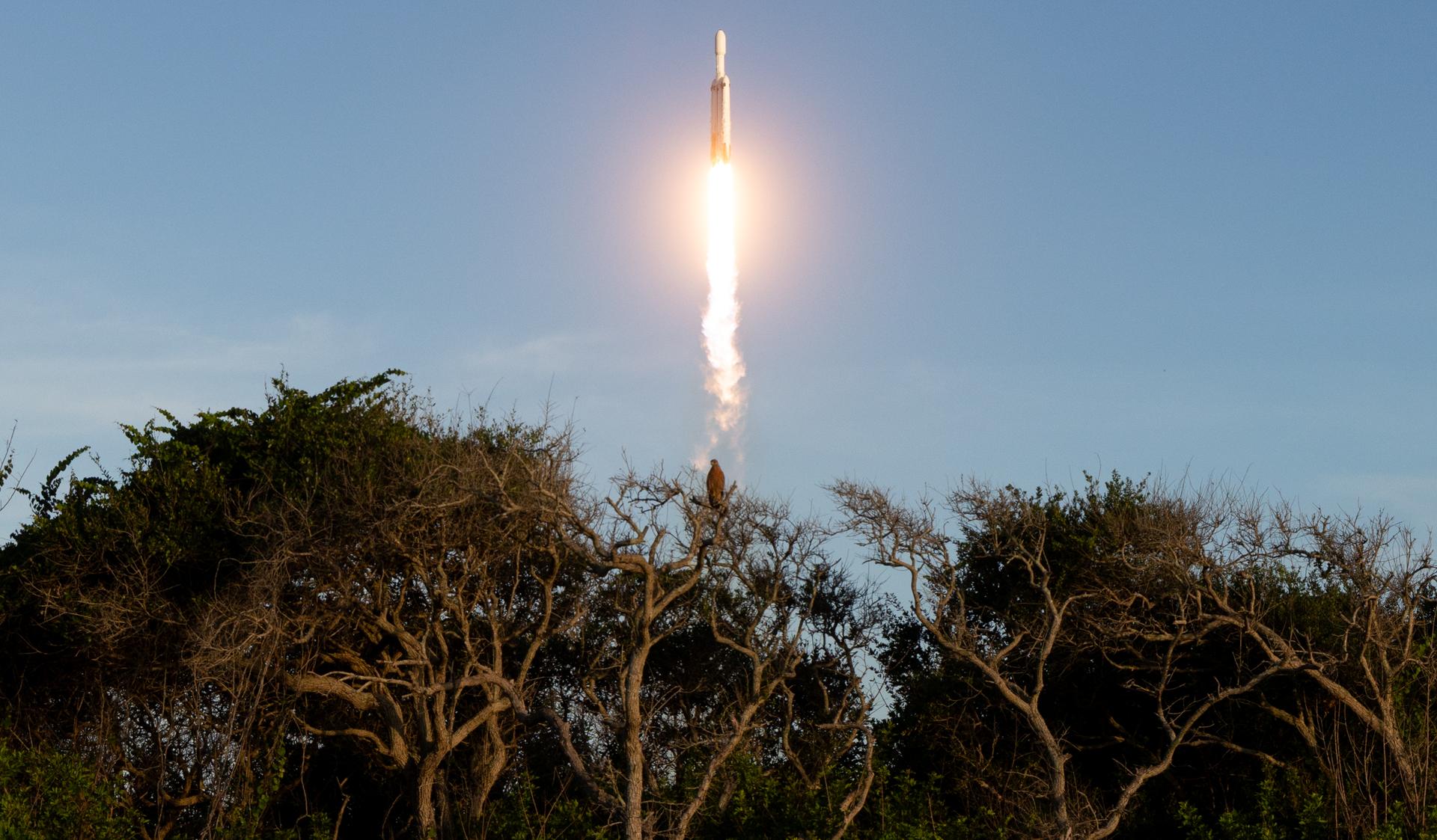
A SpaceX Falcon Heavy rocket launches with NASA’S Nancy Grace Roman Space Telescope onboard from Launch Complex 39A, Sunday, Aug. 30, 2026, at NASA’s Kennedy Space Center in Florida. Roman will investigate dark energy and dark matter, conduct a statistical census of planetary systems, and enable a broad range of additional astrophysics research. Launch occurred at 7:26 a.m. EDT. Photo Credit (NASA/Joel Kowsky)
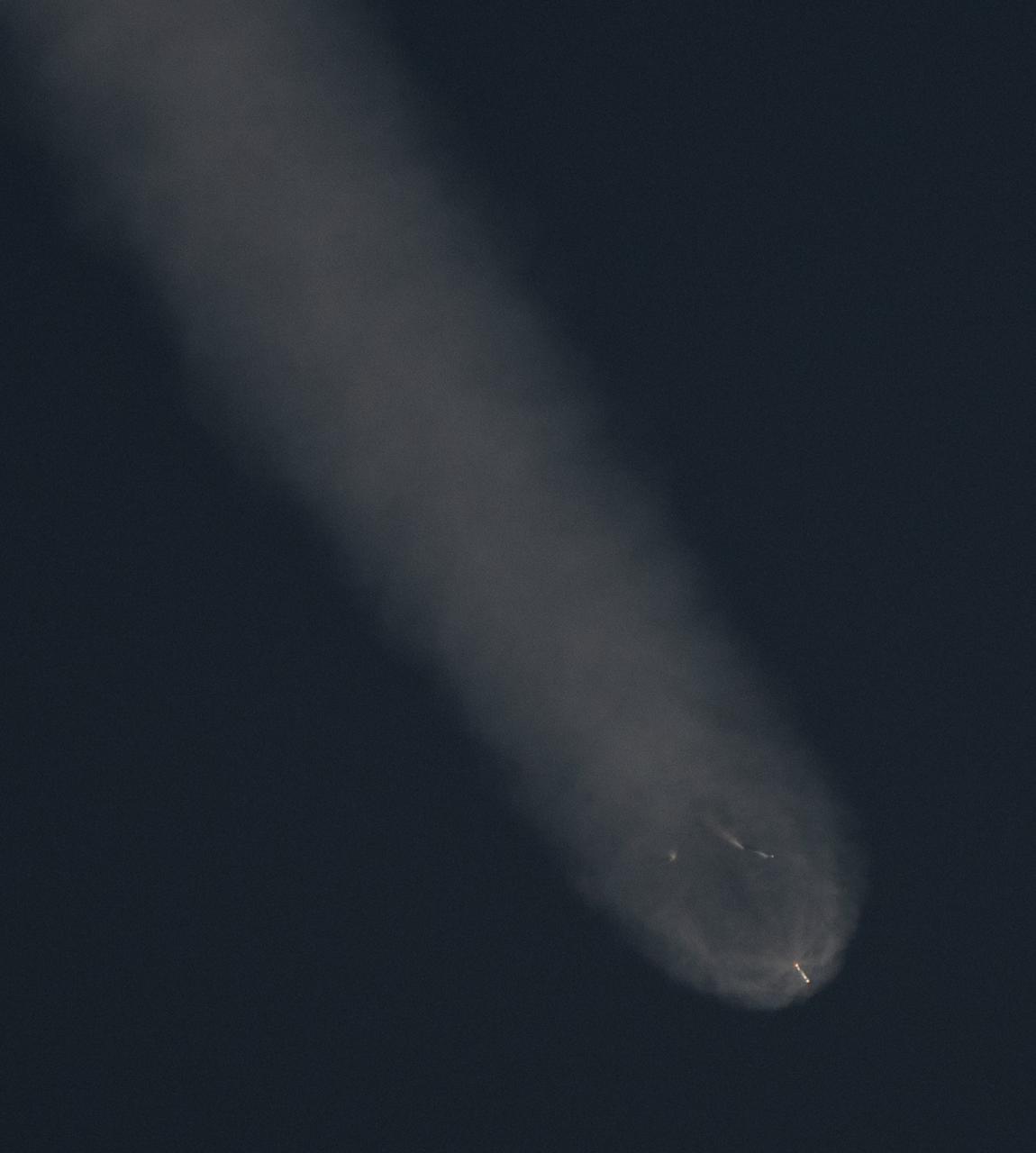
The side boosters of a SpaceX Falcon Heavy rocket are seen as the separate from the center core during the launch of NASA’S Nancy Grace Roman Space Telescope from Launch Complex 39A, Sunday, Aug. 30, 2026, at NASA’s Kennedy Space Center in Florida. Roman will investigate dark energy and dark matter, conduct a statistical census of planetary systems, and enable a broad range of additional astrophysics research. Launch occurred at 7:26 a.m. EDT. Photo Credit (NASA/Joel Kowsky)
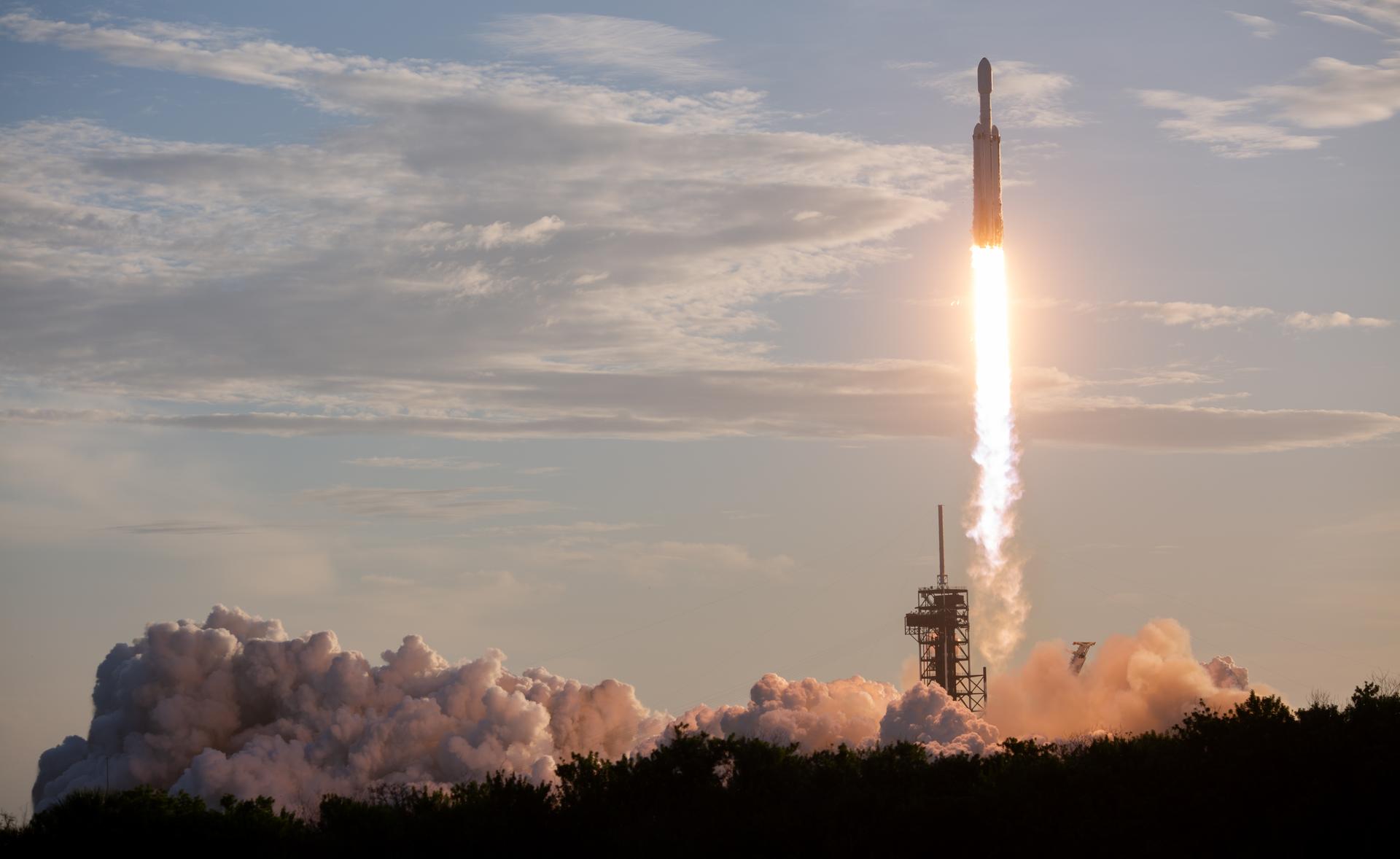
A SpaceX Falcon Heavy rocket launches with NASA’S Nancy Grace Roman Space Telescope onboard from Launch Complex 39A, Sunday, Aug. 30, 2026, at NASA’s Kennedy Space Center in Florida. Roman will investigate dark energy and dark matter, conduct a statistical census of planetary systems, and enable a broad range of additional astrophysics research. Launch occurred at 7:26 a.m. EDT. Photo Credit (NASA/Joel Kowsky)
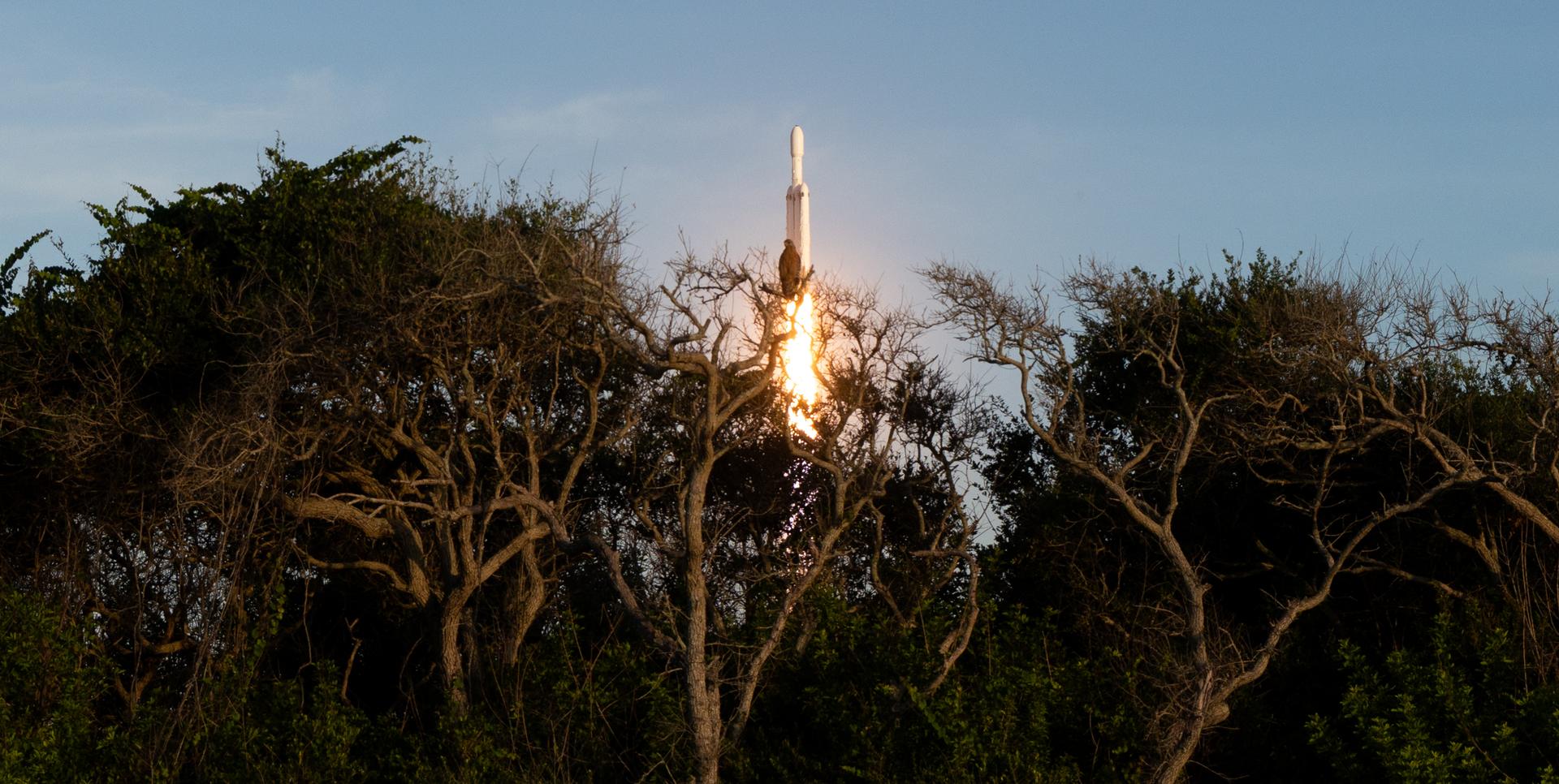
A SpaceX Falcon Heavy rocket launches with NASA’S Nancy Grace Roman Space Telescope onboard from Launch Complex 39A, Sunday, Aug. 30, 2026, at NASA’s Kennedy Space Center in Florida. Roman will investigate dark energy and dark matter, conduct a statistical census of planetary systems, and enable a broad range of additional astrophysics research. Launch occurred at 7:26 a.m. EDT. Photo Credit (NASA/Joel Kowsky)
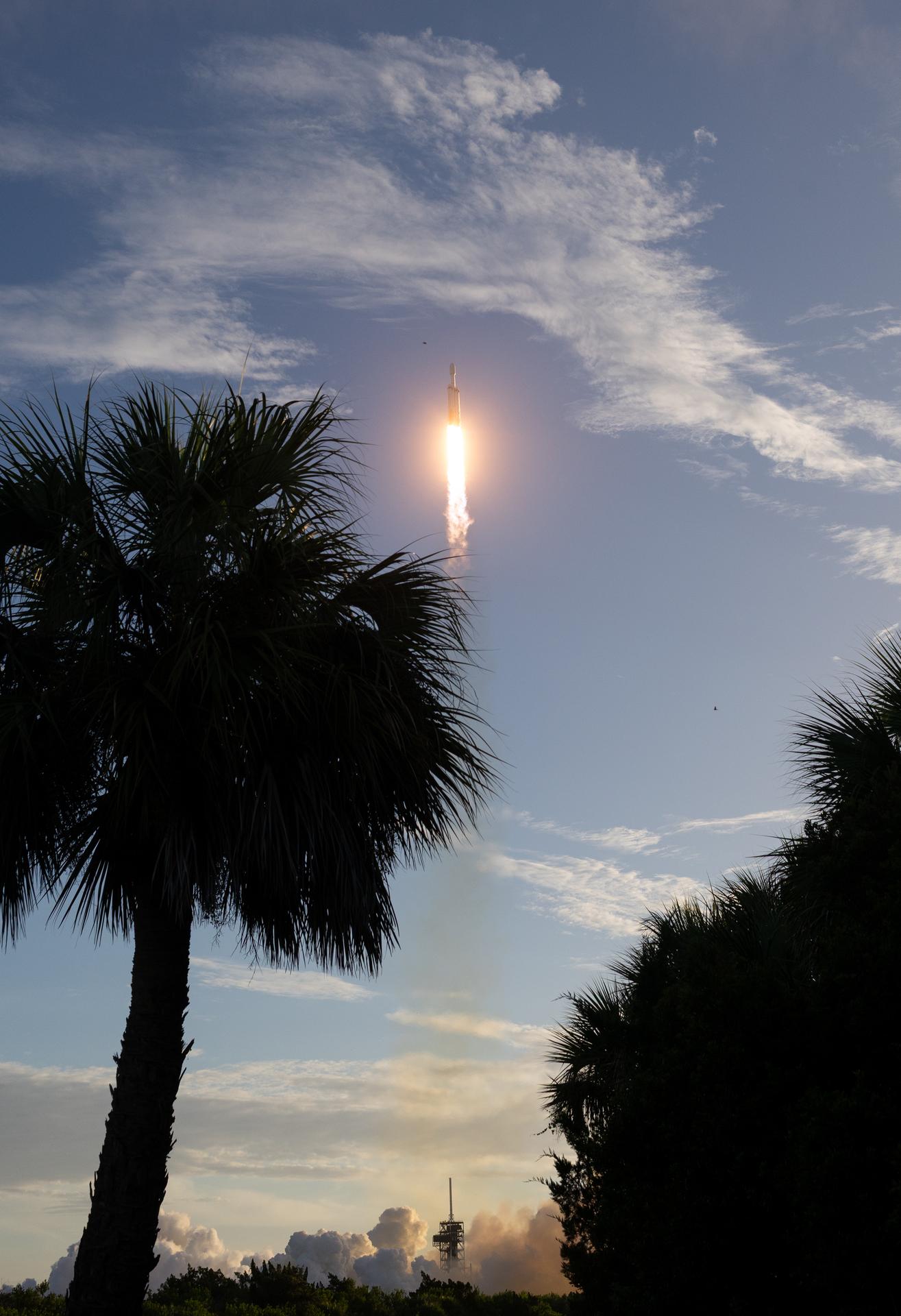
A SpaceX Falcon Heavy rocket launches with NASA’S Nancy Grace Roman Space Telescope onboard from Launch Complex 39A, Sunday, Aug. 30, 2026, at NASA’s Kennedy Space Center in Florida. Roman will investigate dark energy and dark matter, conduct a statistical census of planetary systems, and enable a broad range of additional astrophysics research. Launch occurred at 7:26 a.m. EDT. Photo Credit (NASA/Joel Kowsky)
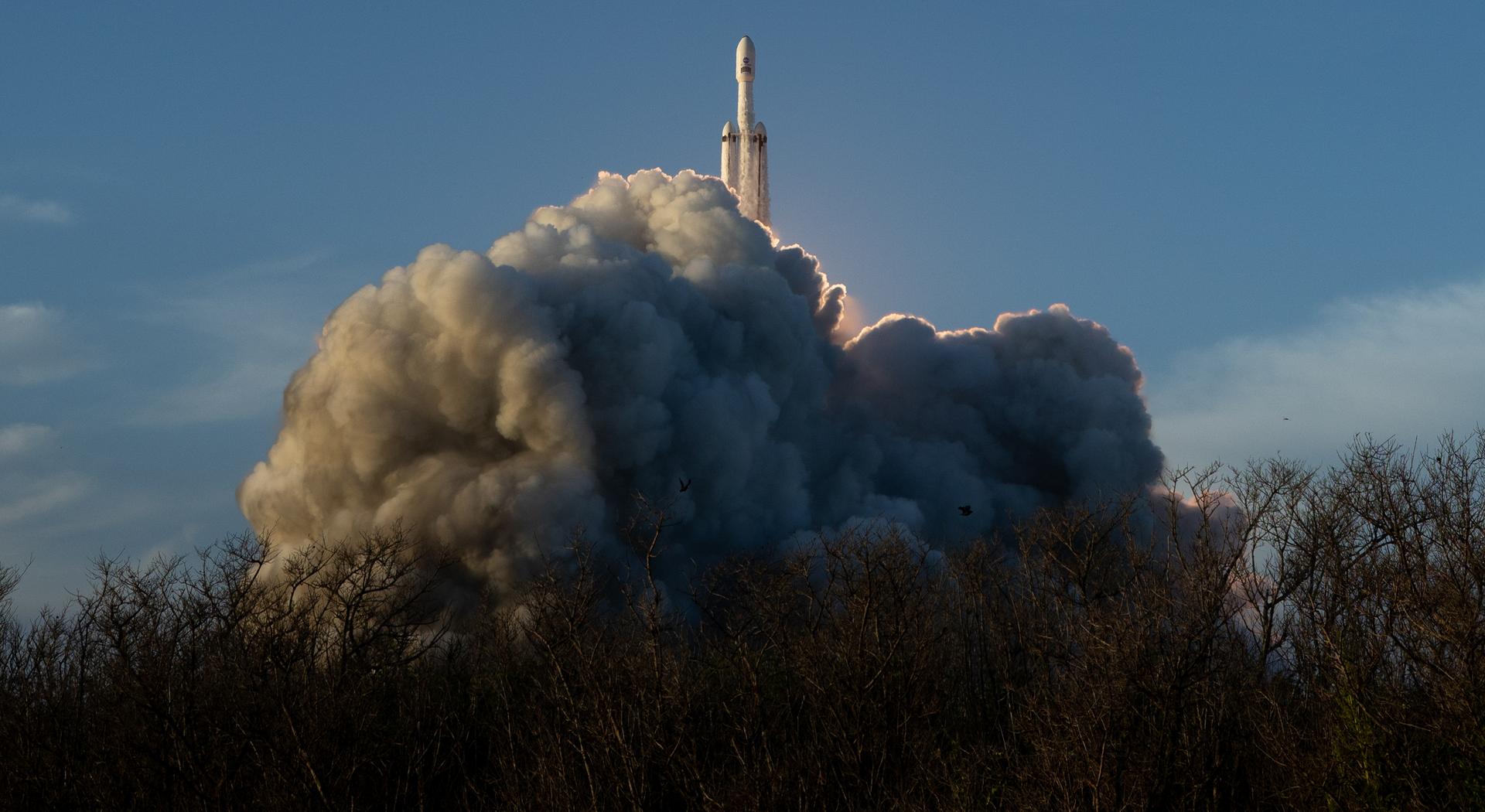
A SpaceX Falcon Heavy rocket launches with NASA’S Nancy Grace Roman Space Telescope onboard from Launch Complex 39A, Sunday, Aug. 30, 2026, at NASA’s Kennedy Space Center in Florida. Roman will investigate dark energy and dark matter, conduct a statistical census of planetary systems, and enable a broad range of additional astrophysics research. Launch occurred at 7:26 a.m. EDT. Photo Credit (NASA/Joel Kowsky)
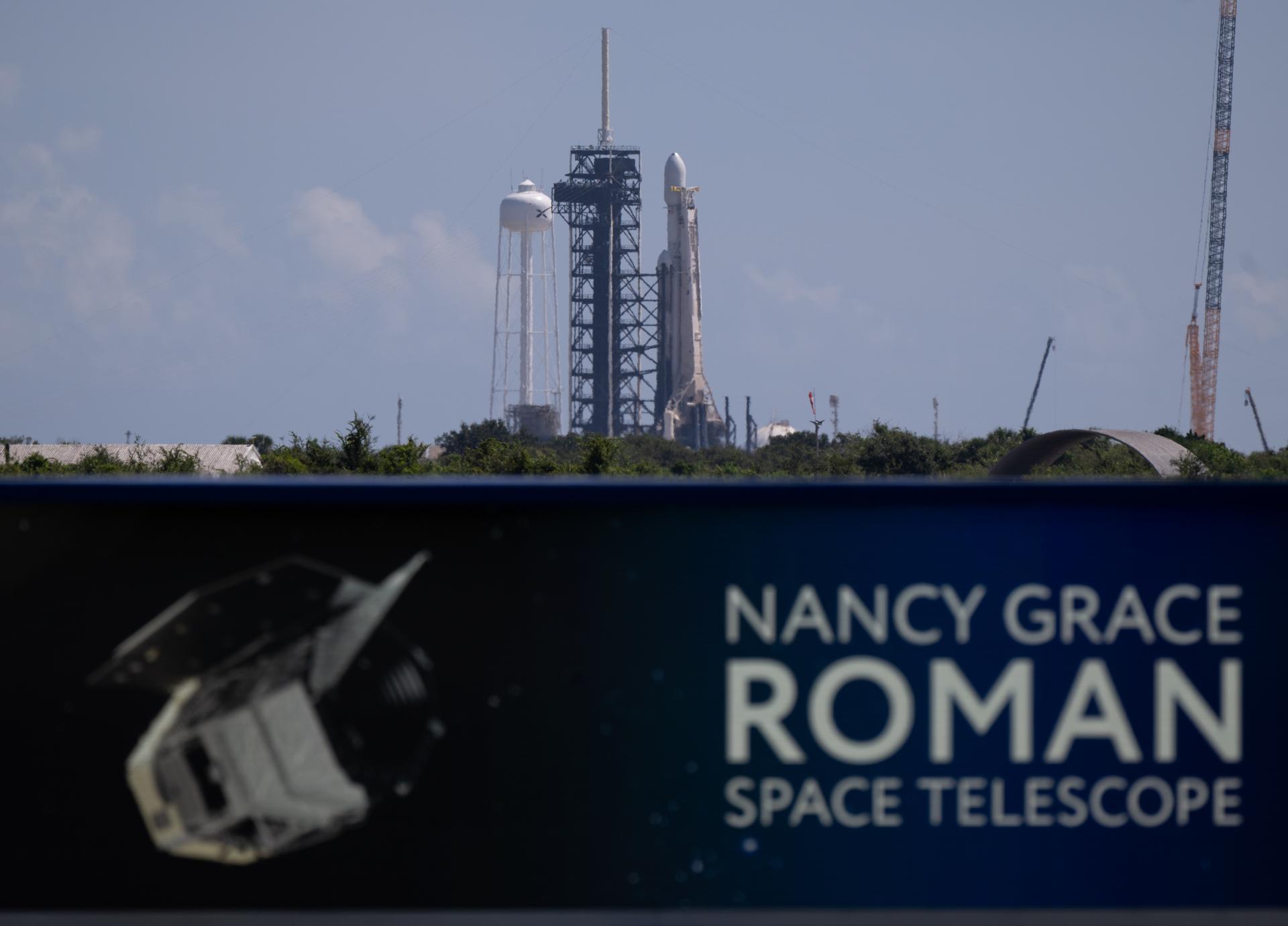
A SpaceX Falcon Heavy rocket with NASA’s Nancy Grace Roman Space Telescope, encapsulated in a protective payload fairing, is seen on the pad at Launch Complex 39A as preparations continue for launch Saturday, Aug. 29, 2026, at NASA Kennedy Space Center in Florida. Roman will investigate dark energy and dark matter, conduct a statistical census of planetary systems, and enable a broad range of additional astrophysics research. Liftoff from NASA Kennedy is targeted for Sunday, Aug. 30, 2026. Photo Credit: (NASA/Joel Kowsky)