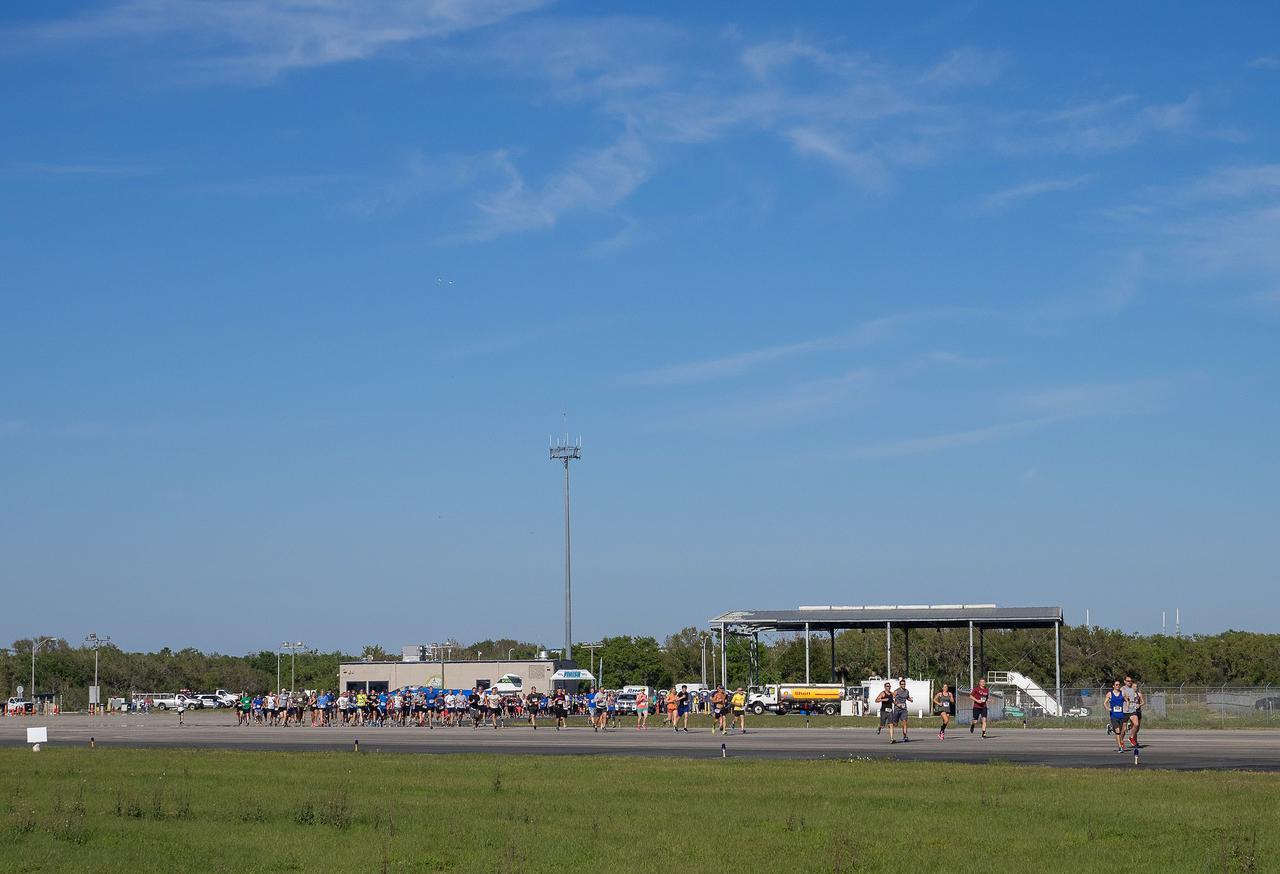
Kennedy Space Center employees and guests are off to a running start at the KSC Walk Run on the Shuttle Landing Facility runway. The annual event, part of Kennedy’s Safety and Health Days, offers 10K, 5K and 2-mile options in the spirit of friendly competition.
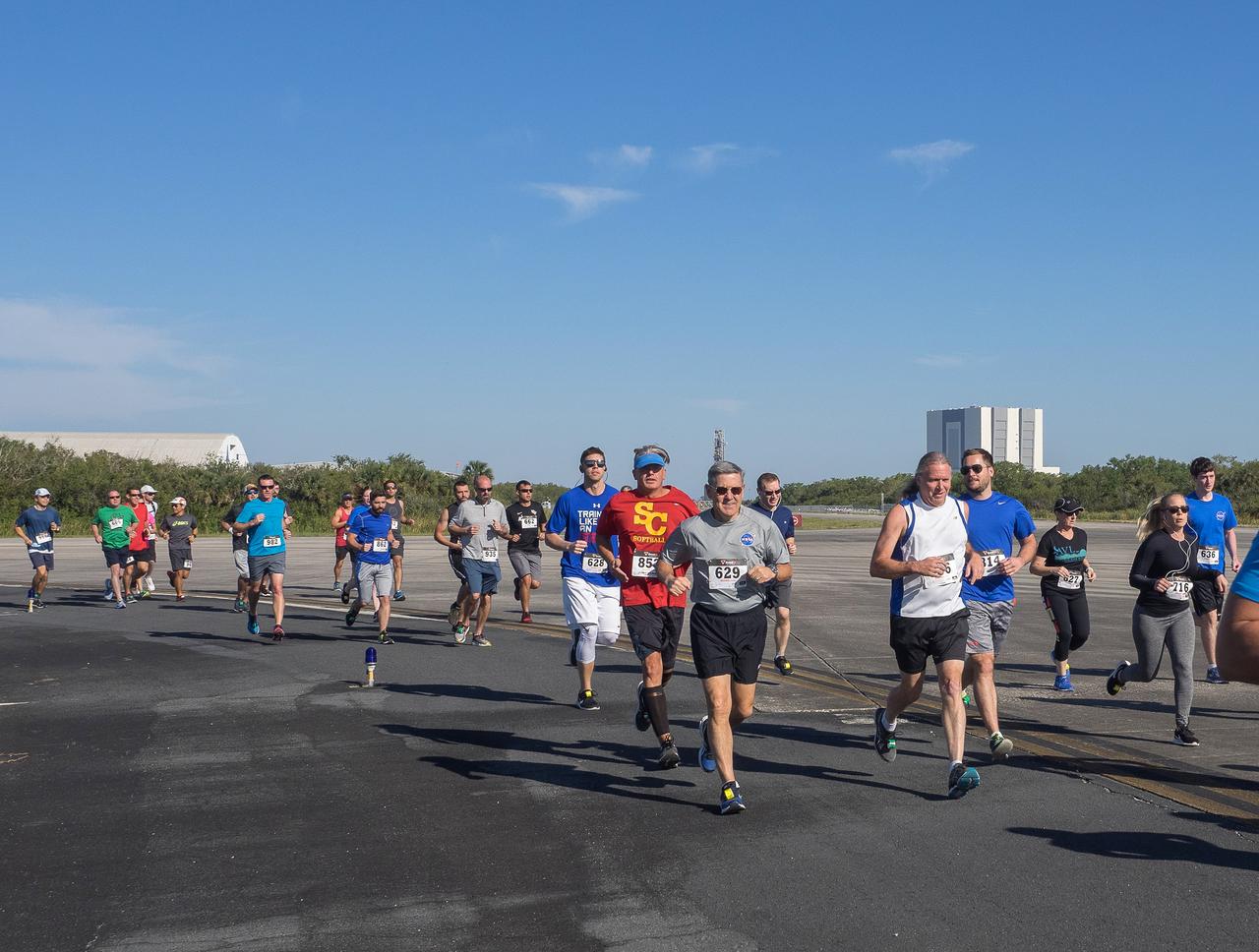
Kennedy Space Center Director Bob Cabana, center, is joined by a large group of center employees and guests as they participate in the KSC Walk Run on the Shuttle Landing Facility runway. The annual event, part of Kennedy’s Safety and Health Days, offers 10K, 5K and 2-mile options in the spirit of friendly competition.
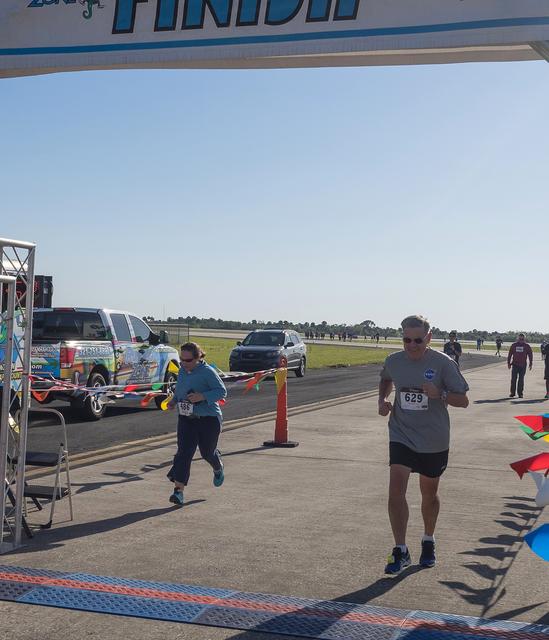
Kennedy Space Center Director Bob Cabana approaches the finish line at the KSC Walk Run on the Shuttle Landing Facility runway. The annual event, part of Kennedy’s Safety and Health Days, offers 10K, 5K and 2-mile options in the spirit of friendly competition.
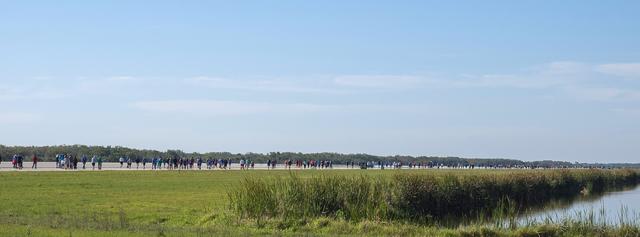
A line of Kennedy Space Center employees and guests stretches down the Shuttle Landing Facility Runway during the KSC Walk Run. The annual event, part of Kennedy’s Safety and Health Days, offers 10K, 5K and 2-mile options in the spirit of friendly competition.
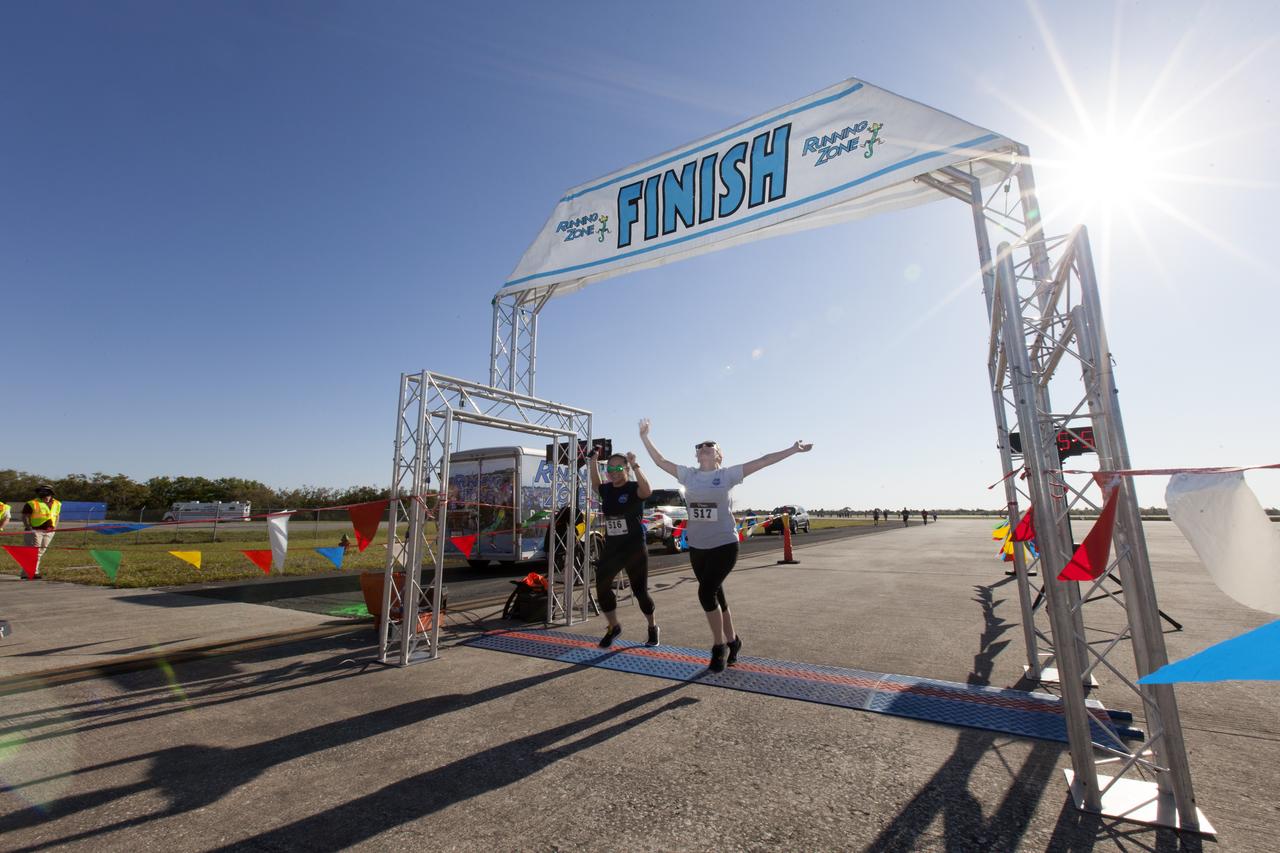
Kennedy Space Center employees and guests cross the finish line during the KSC Walk Run on the Shuttle Landing Facility runway. The annual event, part of Kennedy’s Safety and Health Days, offers 10K, 5K and 2-mile options in the spirit of friendly competition.
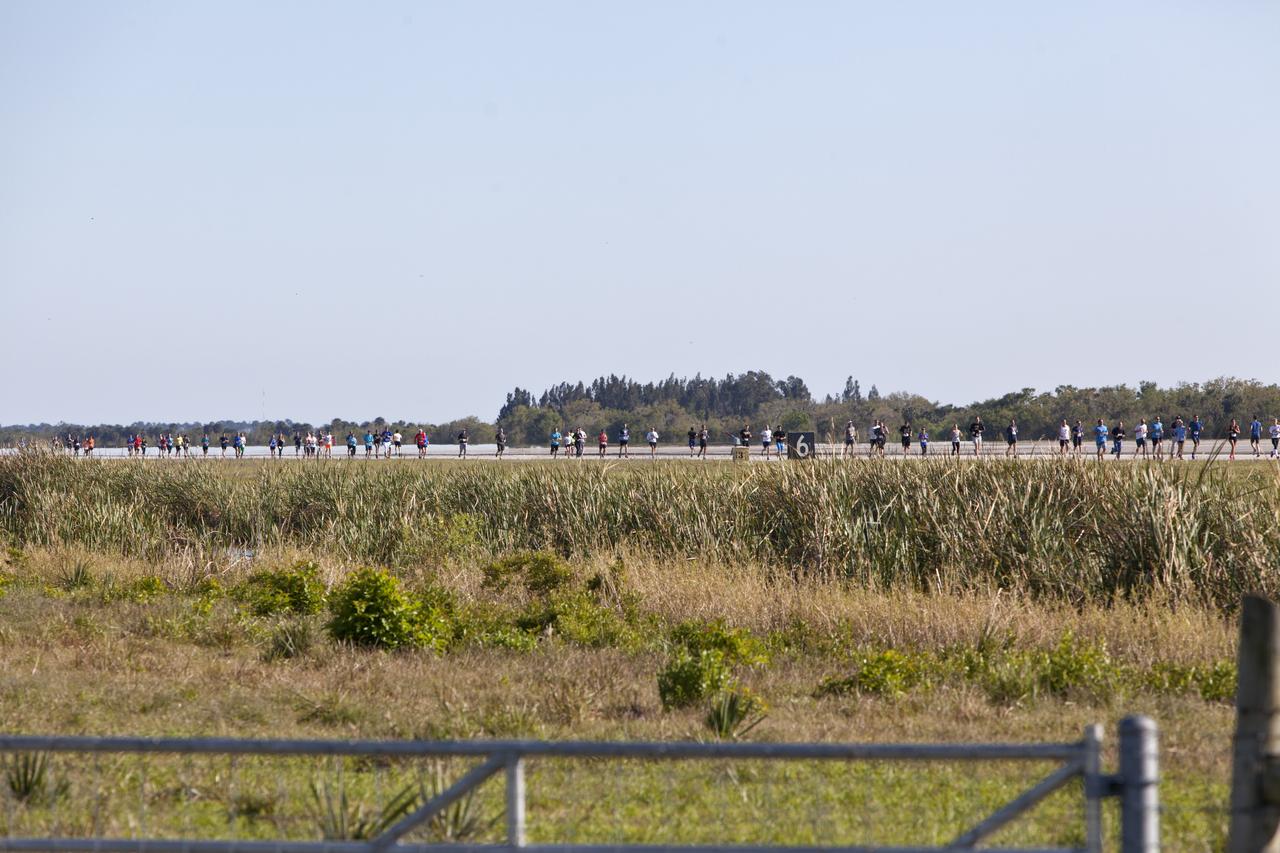
A line of Kennedy Space Center employees and guests stretches down the Shuttle Landing Facility Runway during the KSC Walk Run. The annual event, part of Kennedy’s Safety and Health Days, offers 10K, 5K and 2-mile options in the spirit of friendly competition.
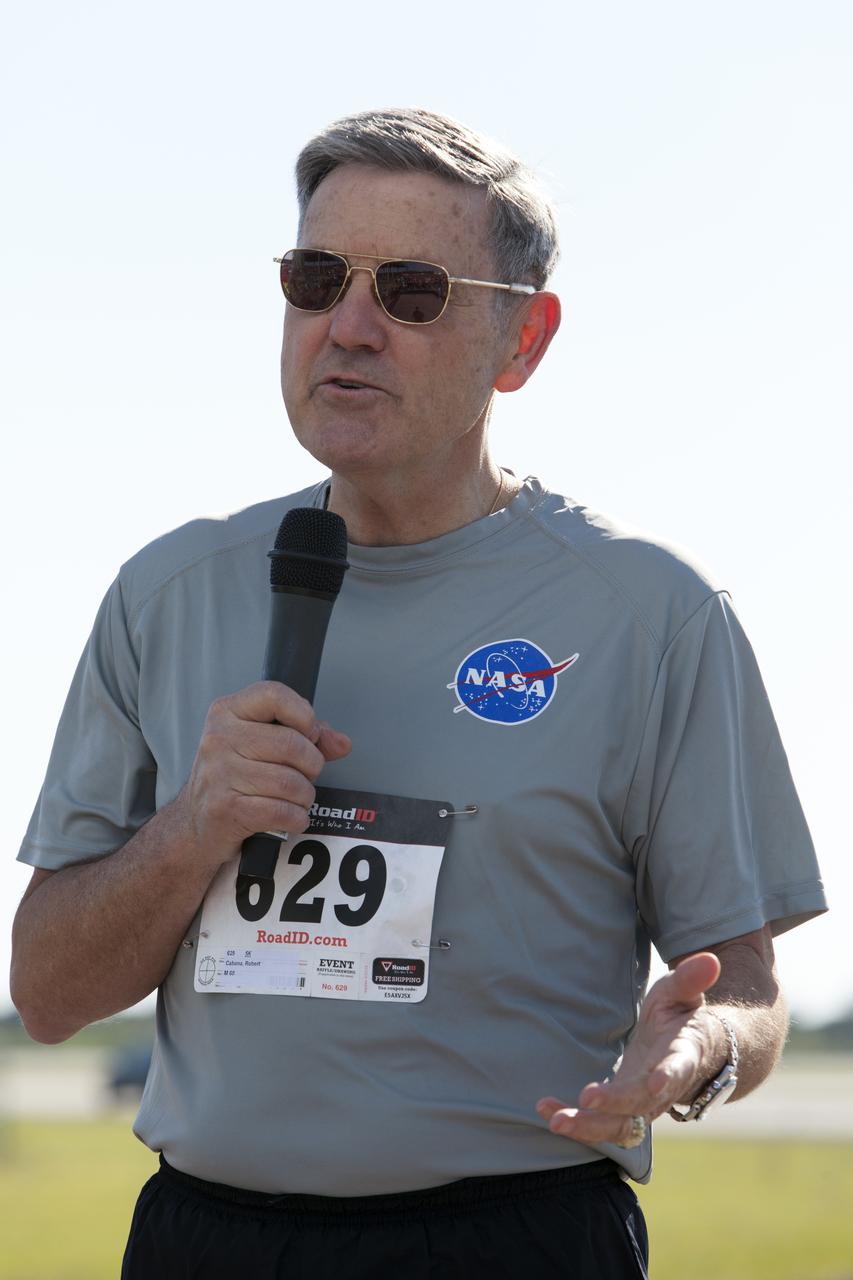
Kennedy Space Center Director Bob Cabana speaks to center employees and guests before the KSC Walk Run on the Shuttle Landing Facility runway. The annual event, part of Kennedy’s Safety and Health Days, offers 10K, 5K and 2-mile options in the spirit of friendly competition.
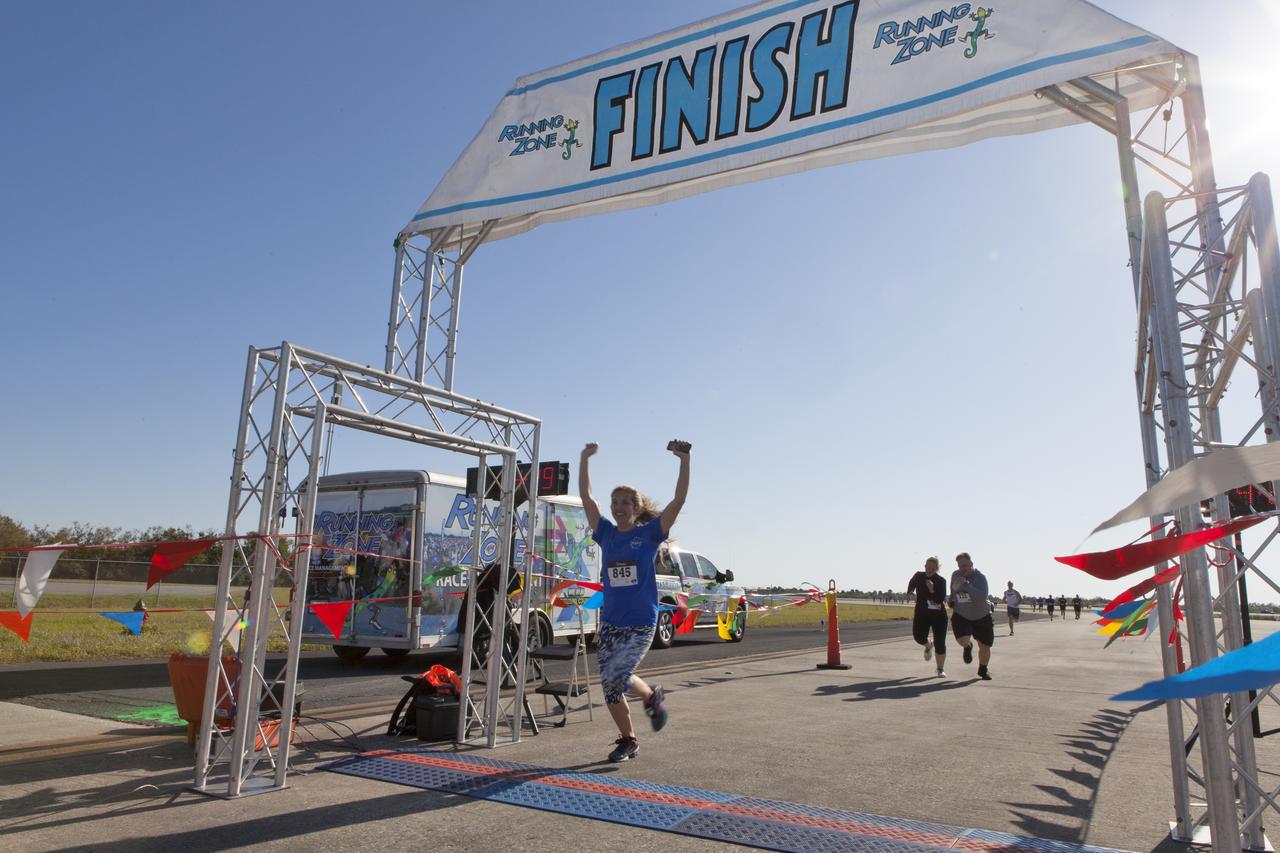
Kennedy Space Center employees and guests approach the finish line during the KSC Walk Run on the Shuttle Landing Facility runway. The annual event, part of Kennedy’s Safety and Health Days, offers 10K, 5K and 2-mile options in the spirit of friendly competition.
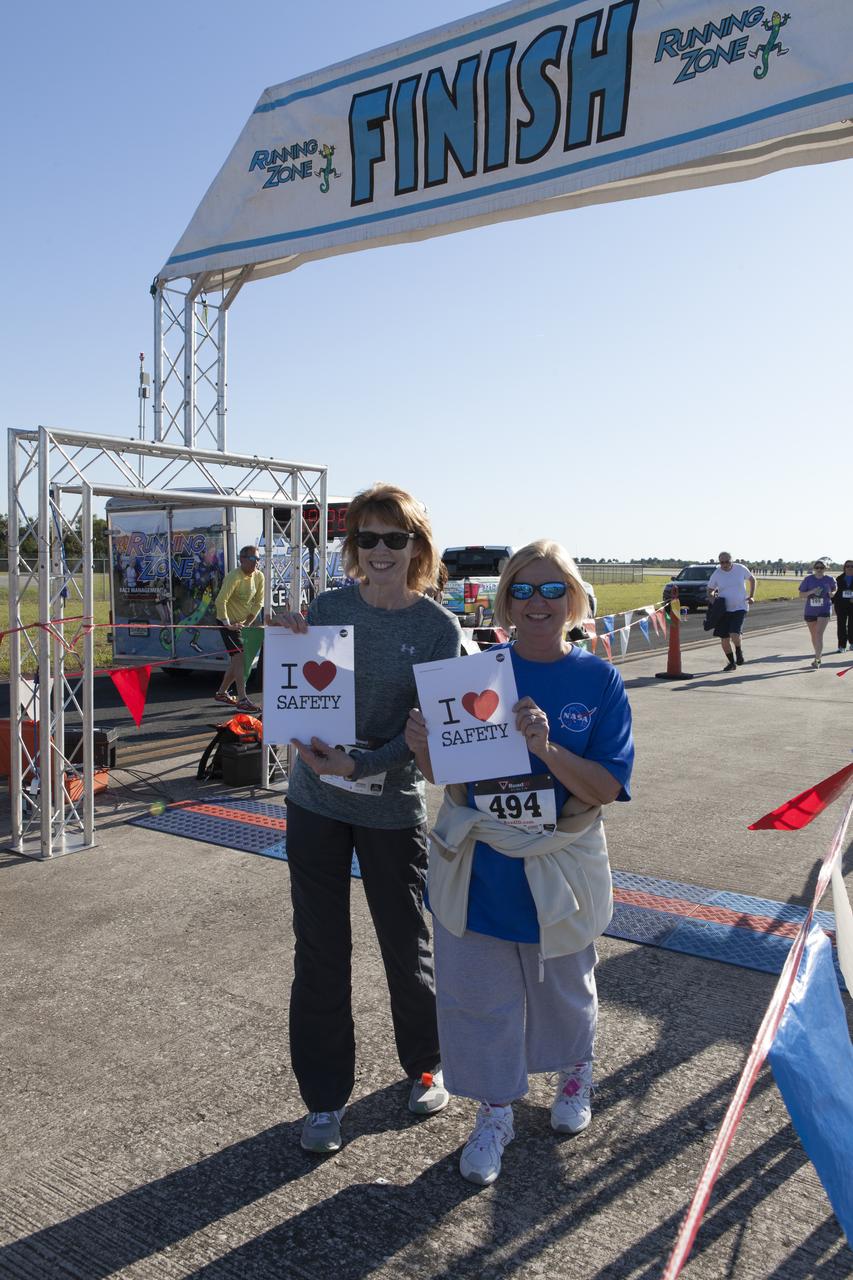
Kennedy Space Center employees hold up signs showing their commitment to safety after crossing the finish line at the KSC Walk Run. The annual event, part of Kennedy’s Safety and Health Days, offers 10K, 5K and 2-mile options on the Shuttle Landing Facility runway in the spirit of friendly competition.
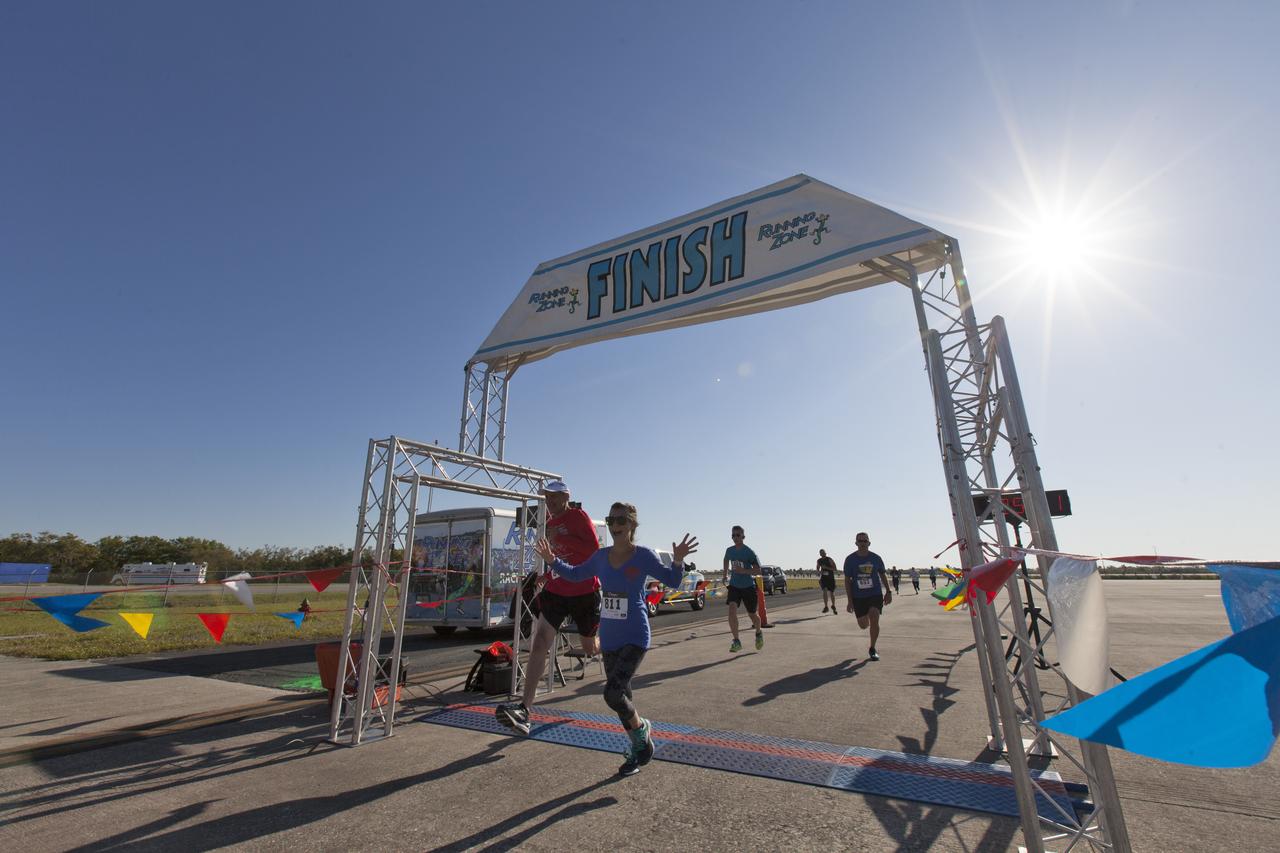
Kennedy Space Center employees and guests cross the finish line during the KSC Walk Run on the Shuttle Landing Facility runway. The annual event, part of Kennedy’s Safety and Health Days, offers 10K, 5K and 2-mile options in the spirit of friendly competition.
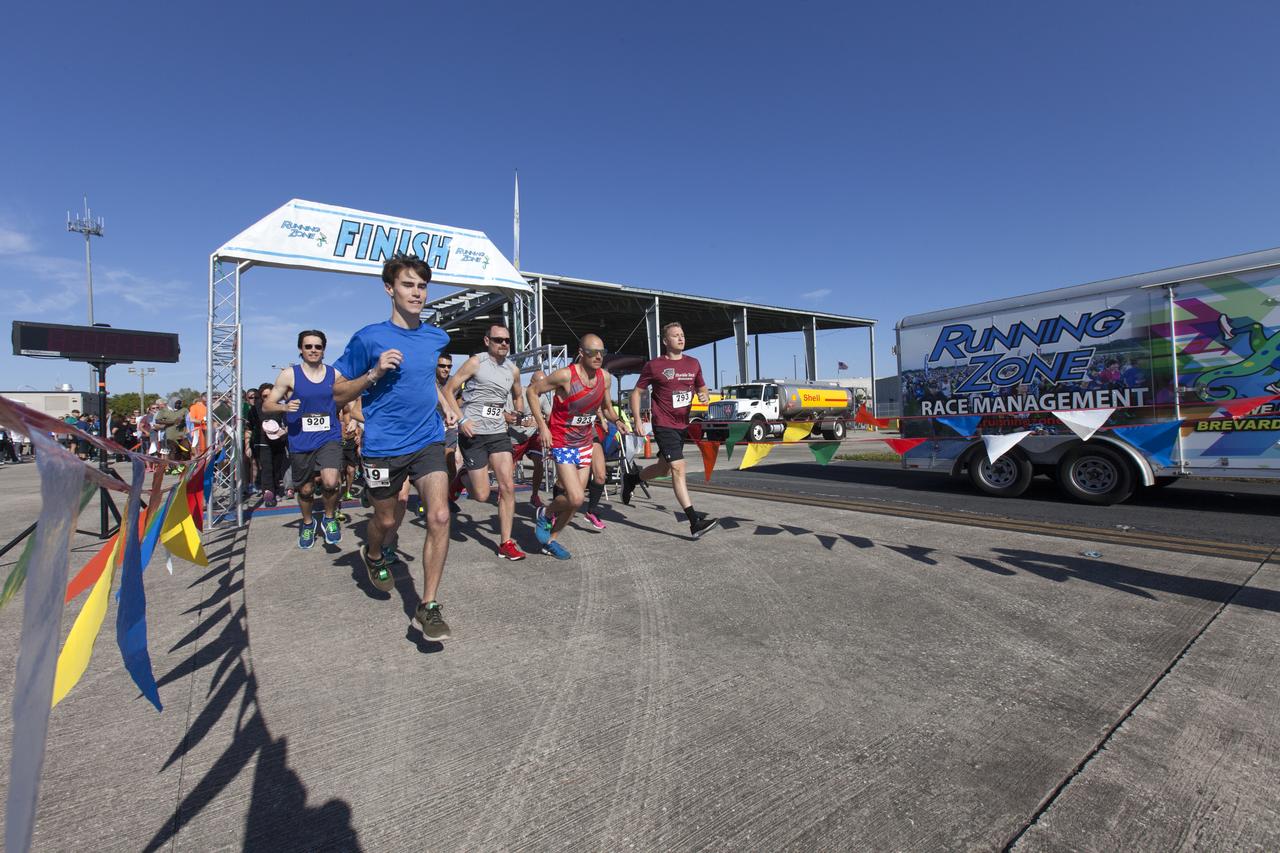
Kennedy Space Center employees and guests cross the finish line during the KSC Walk Run on the Shuttle Landing Facility runway. The annual event, part of Kennedy’s Safety and Health Days, offers 10K, 5K and 2-mile options in the spirit of friendly competition.
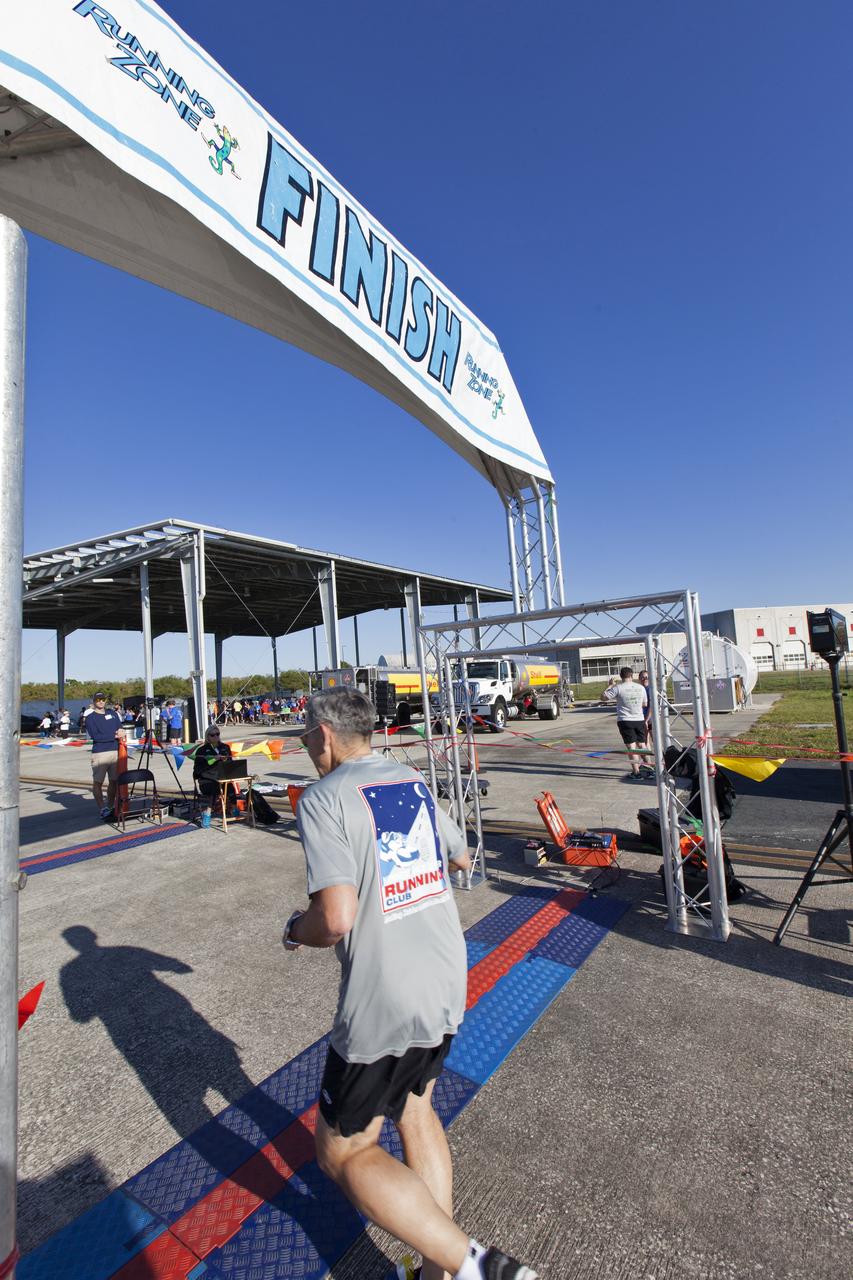
Kennedy Space Center Director Bob Cabana approaches the finish line at the KSC Walk Run on the Shuttle Landing Facility runway. The annual event, part of Kennedy’s Safety and Health Days, offers 10K, 5K and 2-mile options in the spirit of friendly competition.
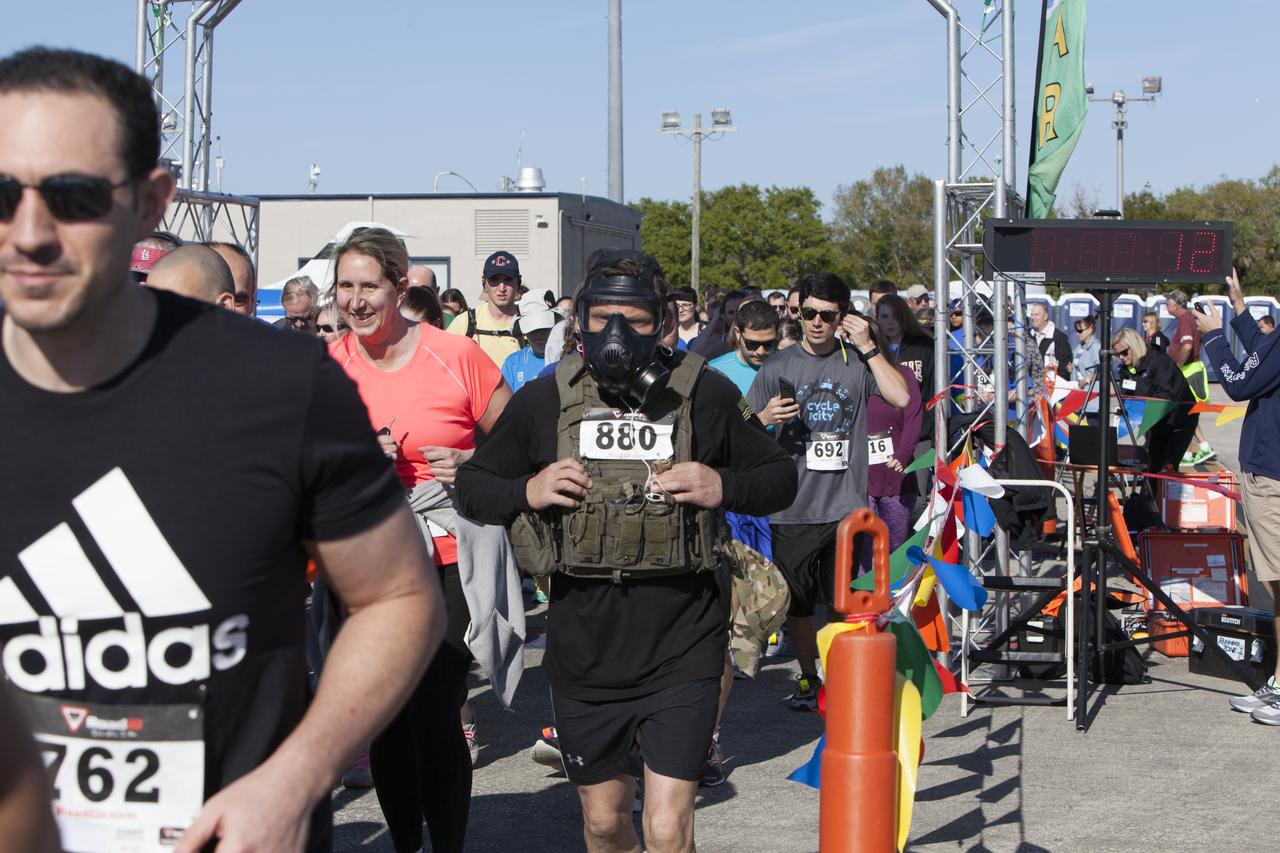
Kennedy Space Center employees and guests head toward the start line for the KSC Walk Run on the Shuttle Landing Facility runway. The annual event, part of Kennedy’s Safety and Health Days, offers 10K, 5K and 2-mile options in the spirit of friendly competition.
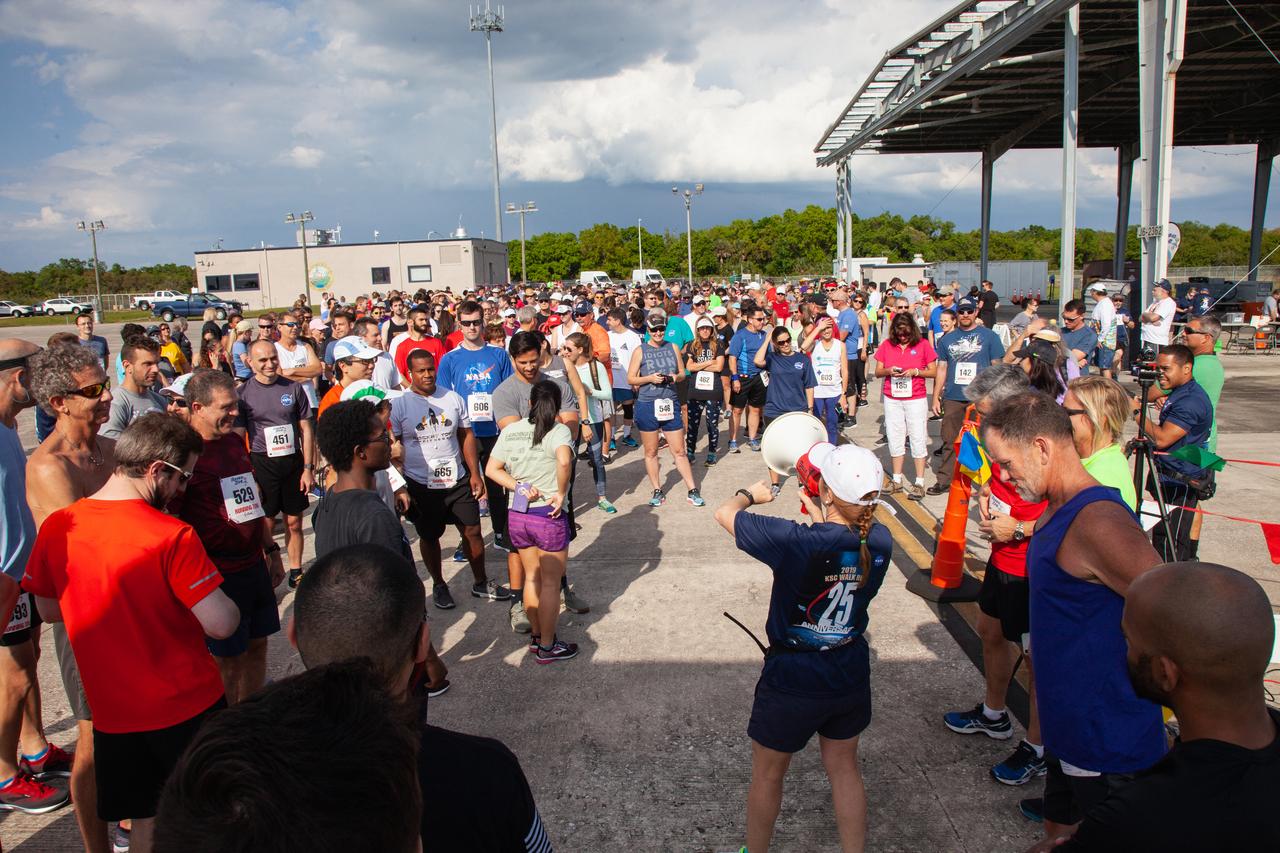
A speaker addresses Kennedy Space Center employees and guests prior to the start of the Florida spaceport’s annual KSC Walk Run on March 26, 2019. Part of Kennedy’s Safety and Health Days, the event takes place at the Shuttle Landing Facility runway and offers participants the chance to partake in a two-mile walk or run, a 5K or a 10K.
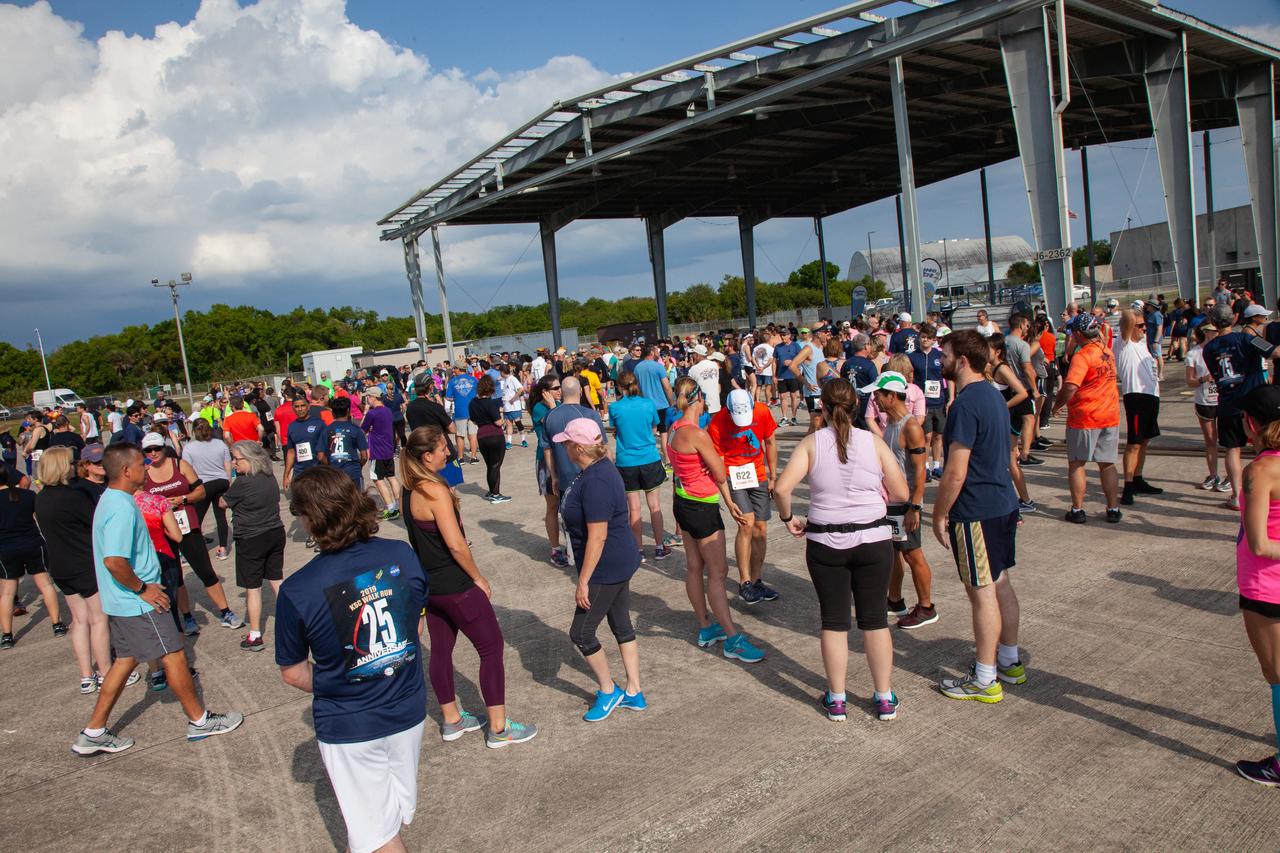
Kennedy Space Center employees and guests converse prior to the start of the Florida spaceport’s annual KSC Walk Run on March 26, 2019. Part of Kennedy’s Safety and Health Days, the event takes place at the Shuttle Landing Facility runway and offers participants the chance to partake in a two-mile walk or run, a 5K or a 10K.
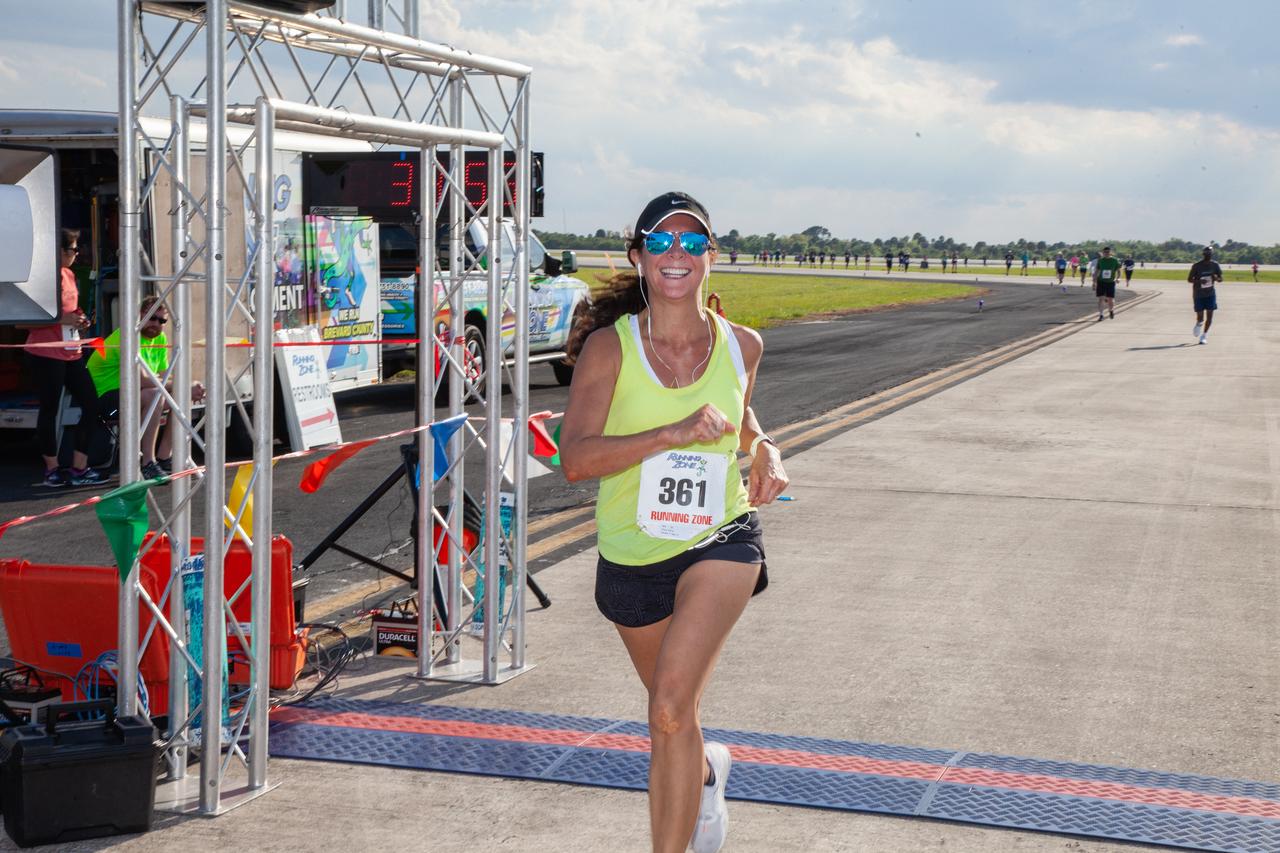
A participant crosses the finish line of Kennedy Space Center’s Walk Run on March 26, 2019. Part of Kennedy’s Safety and Health Days, the annual event takes place at the Florida spaceport’s Shuttle Landing Facility runway and offers employees and guests the chance to partake in a two-mile walk or run, a 5K or a 10K.
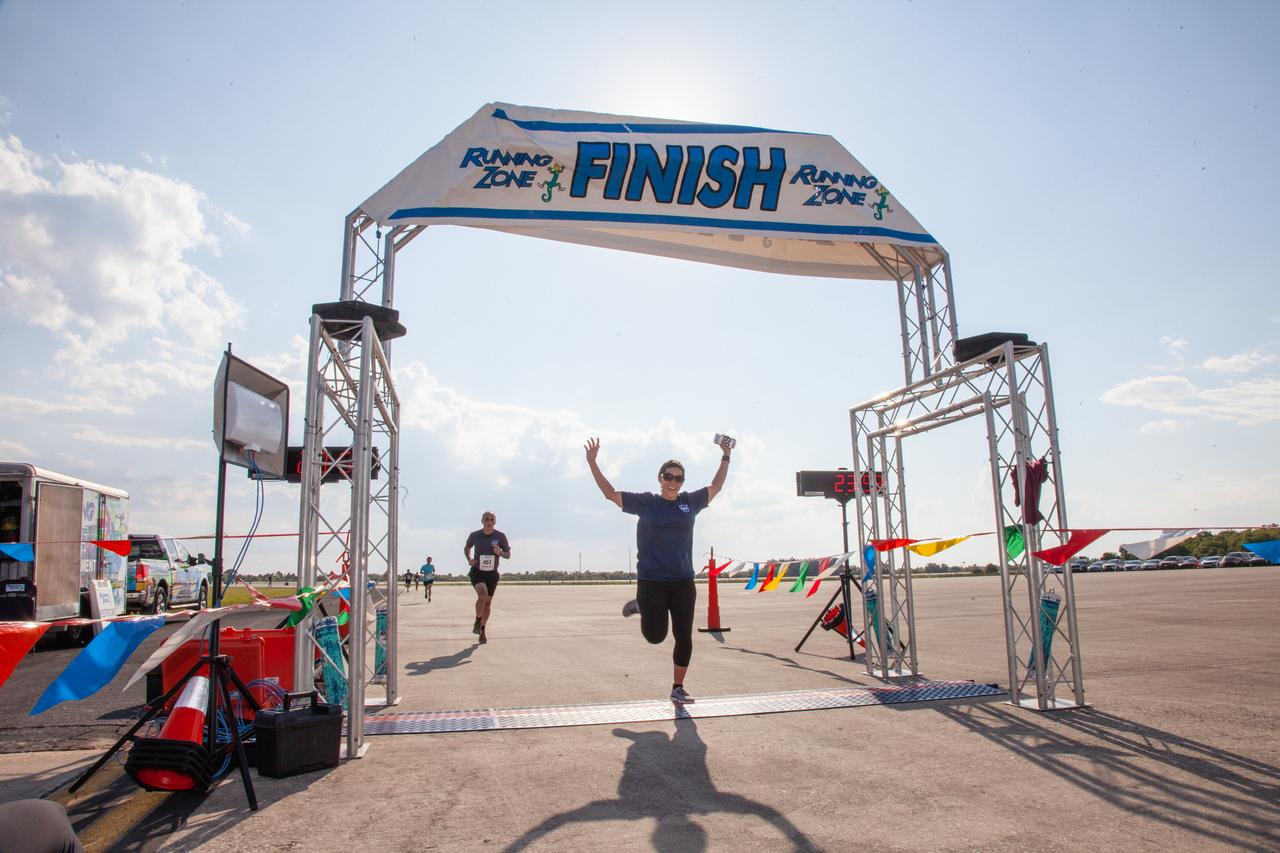
Kennedy Space Center employees and guests cross the finish line during the Florida spaceport’s annual KSC Walk Run on March 26, 2019. Part of Kennedy’s Safety and Health Days, the event takes place at the Shuttle Landing Facility runway and offers participants the chance to partake in a two-mile walk or run, a 5K or a 10K.
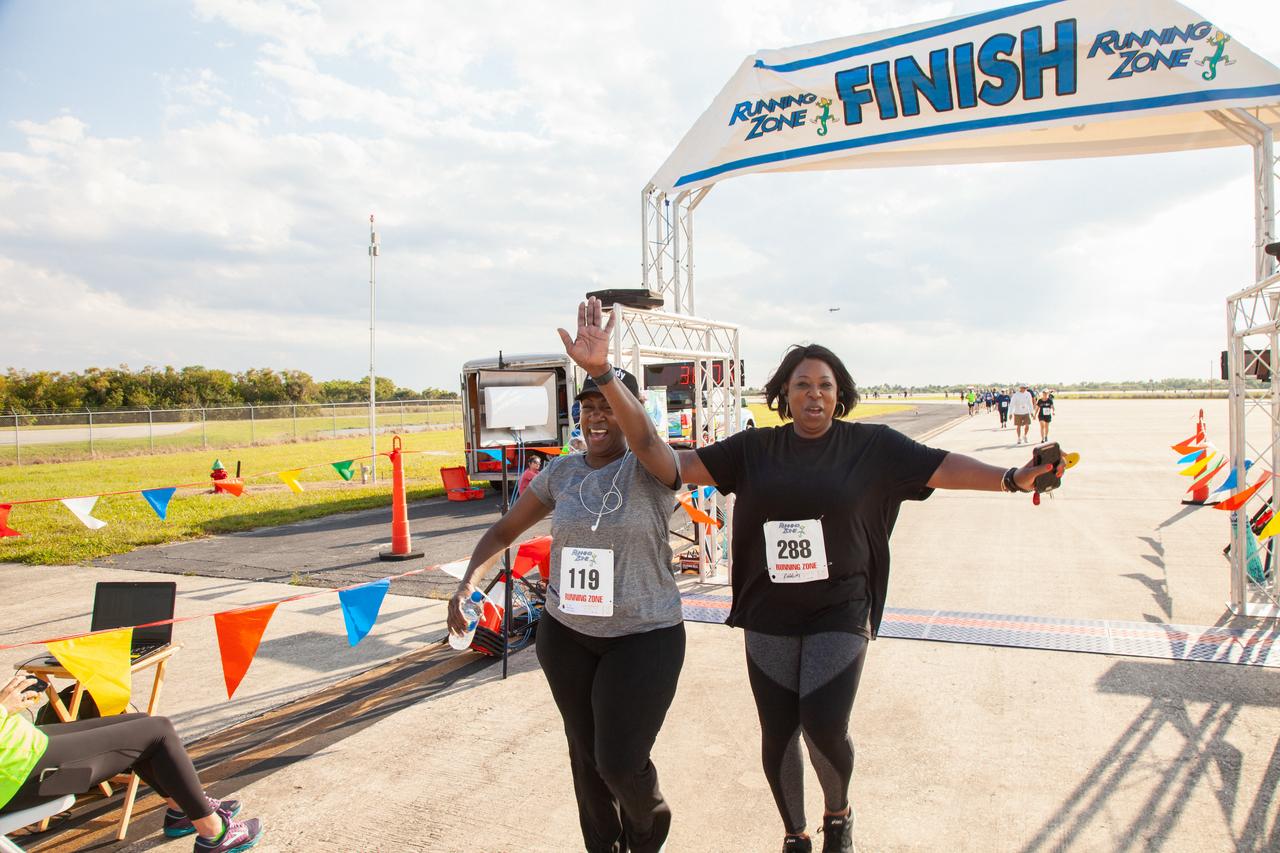
Participants cross the finish line of Kennedy Space Center’s Walk Run on March 26, 2019. Part of Kennedy’s Safety and Health Days, the annual event takes place at the Florida spaceport’s Shuttle Landing Facility runway and offers employees and guests the chance to partake in a two-mile walk or run, a 5K or a 10K.
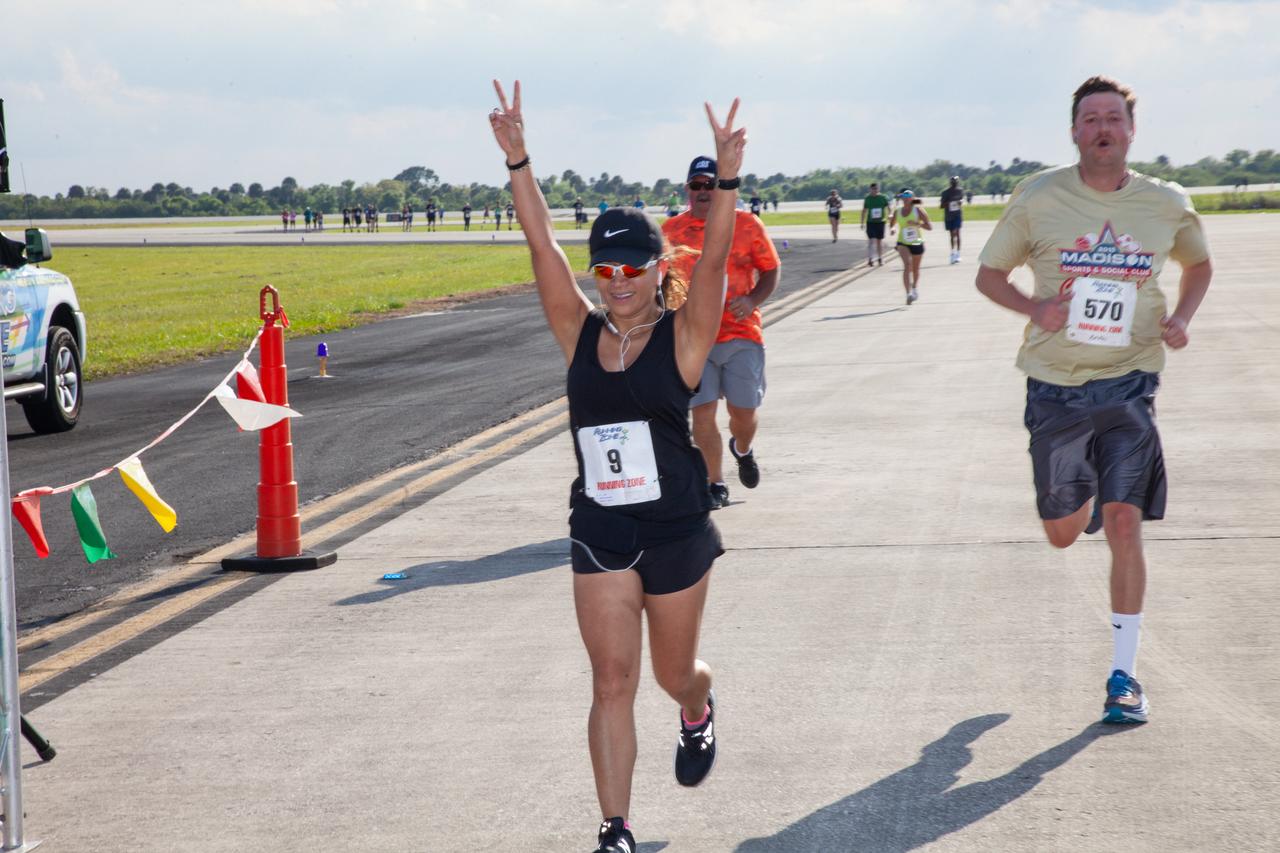
Kennedy Space Center employees and guests cross the finish line during the Florida spaceport’s annual KSC Walk Run on March 26, 2019. Part of Kennedy’s Safety and Health Days, the event takes place at the Shuttle Landing Facility runway and offers participants the chance to partake in a two-mile walk or run, a 5K or a 10K.
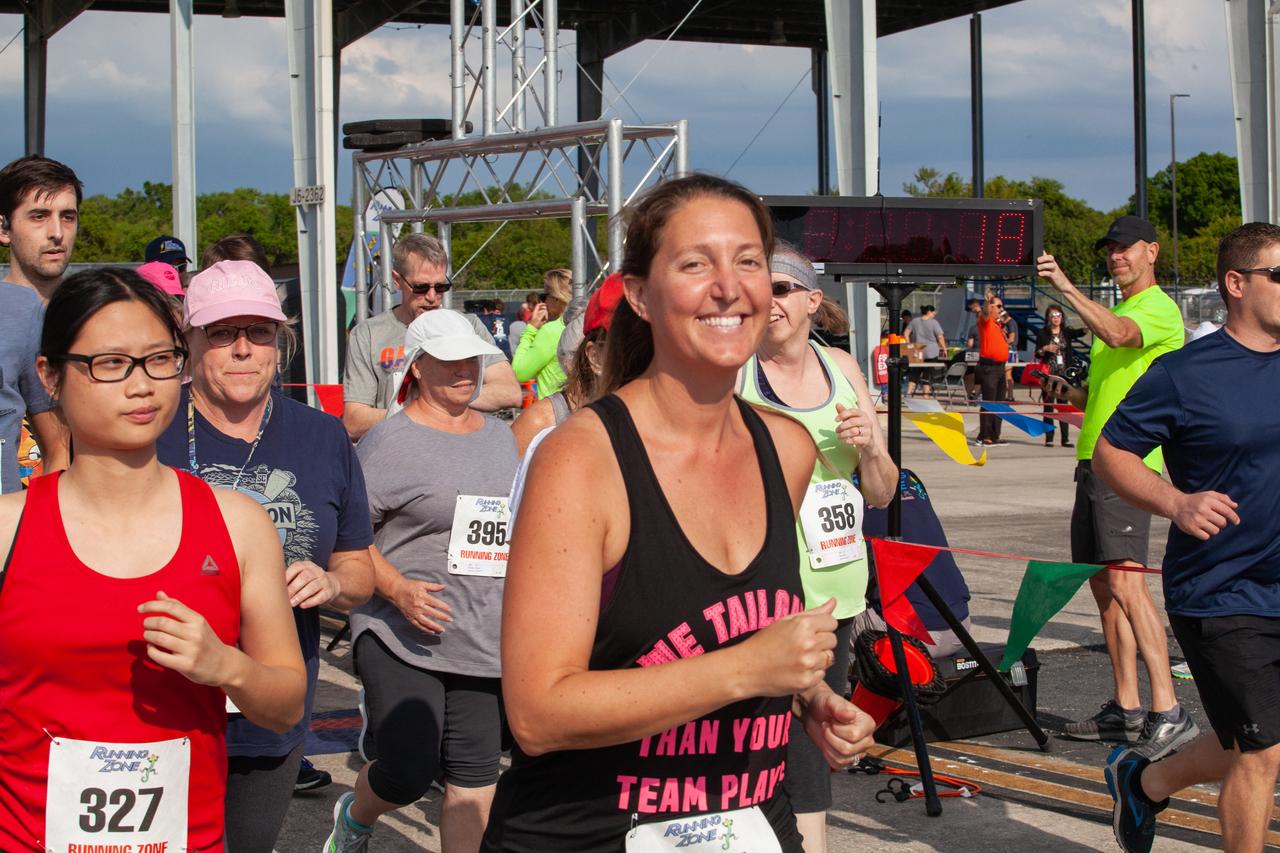
Kennedy Space Center employees and guests participate in the Florida spaceport’s annual KSC Walk Run on March 26, 2019. Part of Kennedy’s Safety and Health Days, the event takes place at the Shuttle Landing Facility runway and offers participants the chance to partake in a two-mile walk or run, a 5K or a 10K.
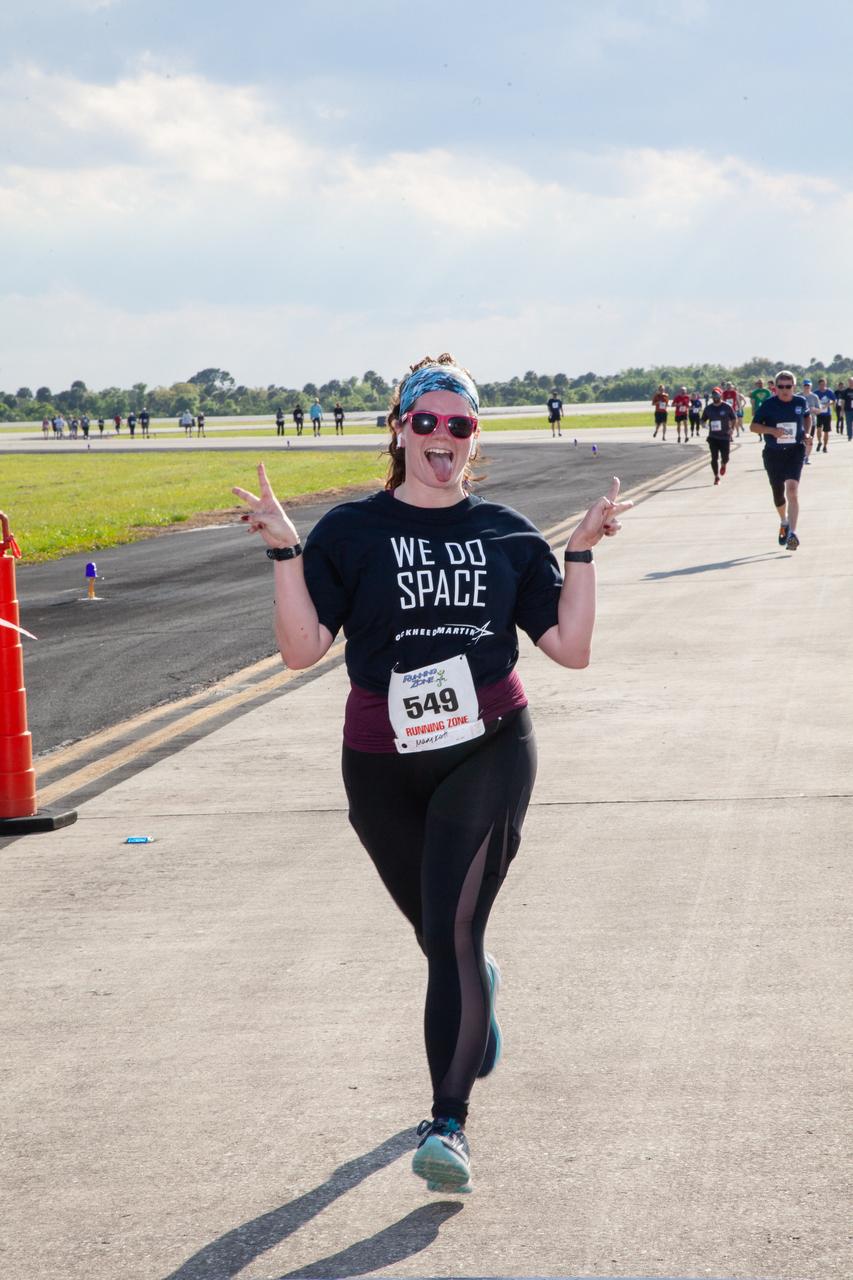
A participant poses as she crosses the finish line of Kennedy Space Center’s Walk Run on March 26, 2019. Part of Kennedy’s Safety and Health Days, the annual event takes place at the Florida spaceport’s Shuttle Landing Facility runway and offers employees and guests the chance to partake in a two-mile walk or run, a 5K or a 10K.
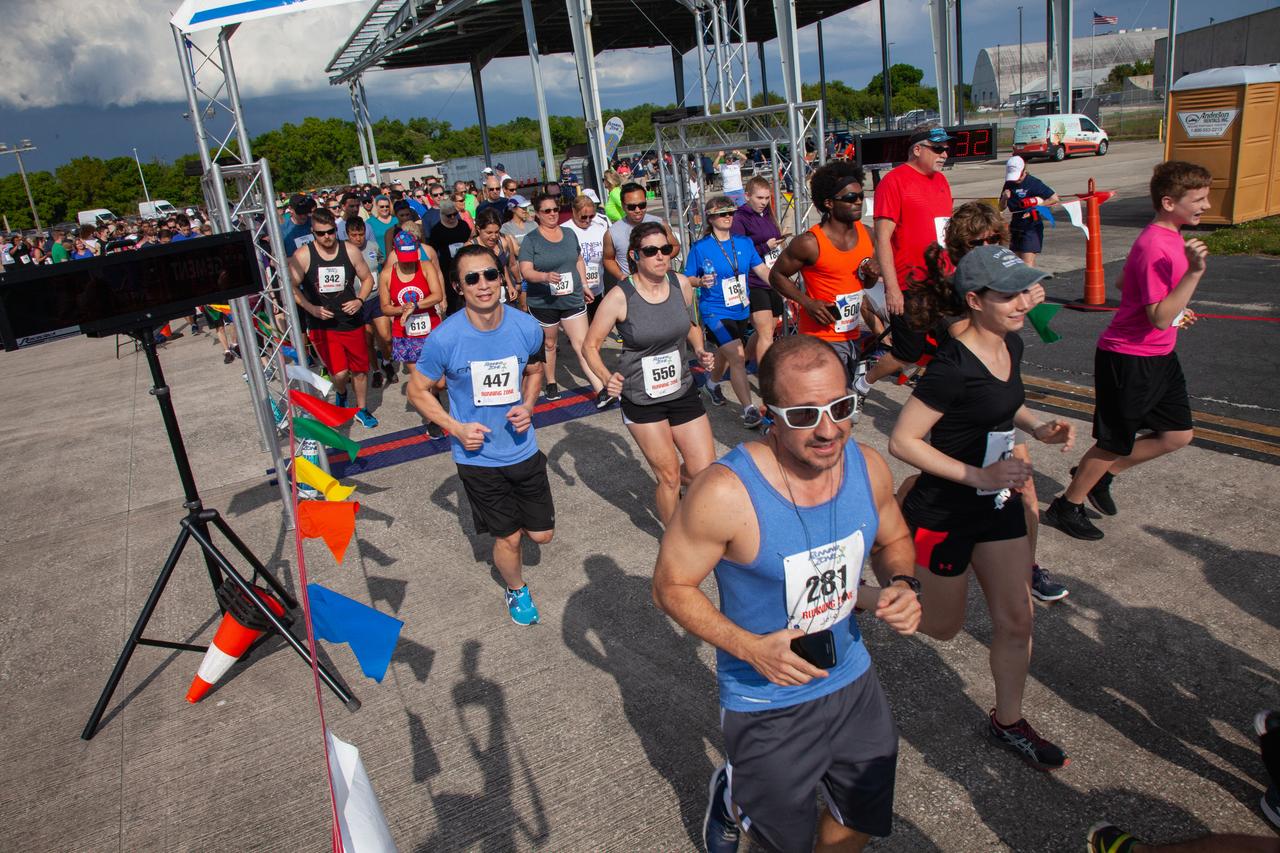
Kennedy Space Center employees and guests take off at the start of the Florida spaceport’s annual KSC Walk Run on March 26, 2019. Part of Kennedy’s Safety and Health Days, the event takes place at the Shuttle Landing Facility runway and offers participants the chance to partake in a two-mile walk or run, a 5K or a 10K.
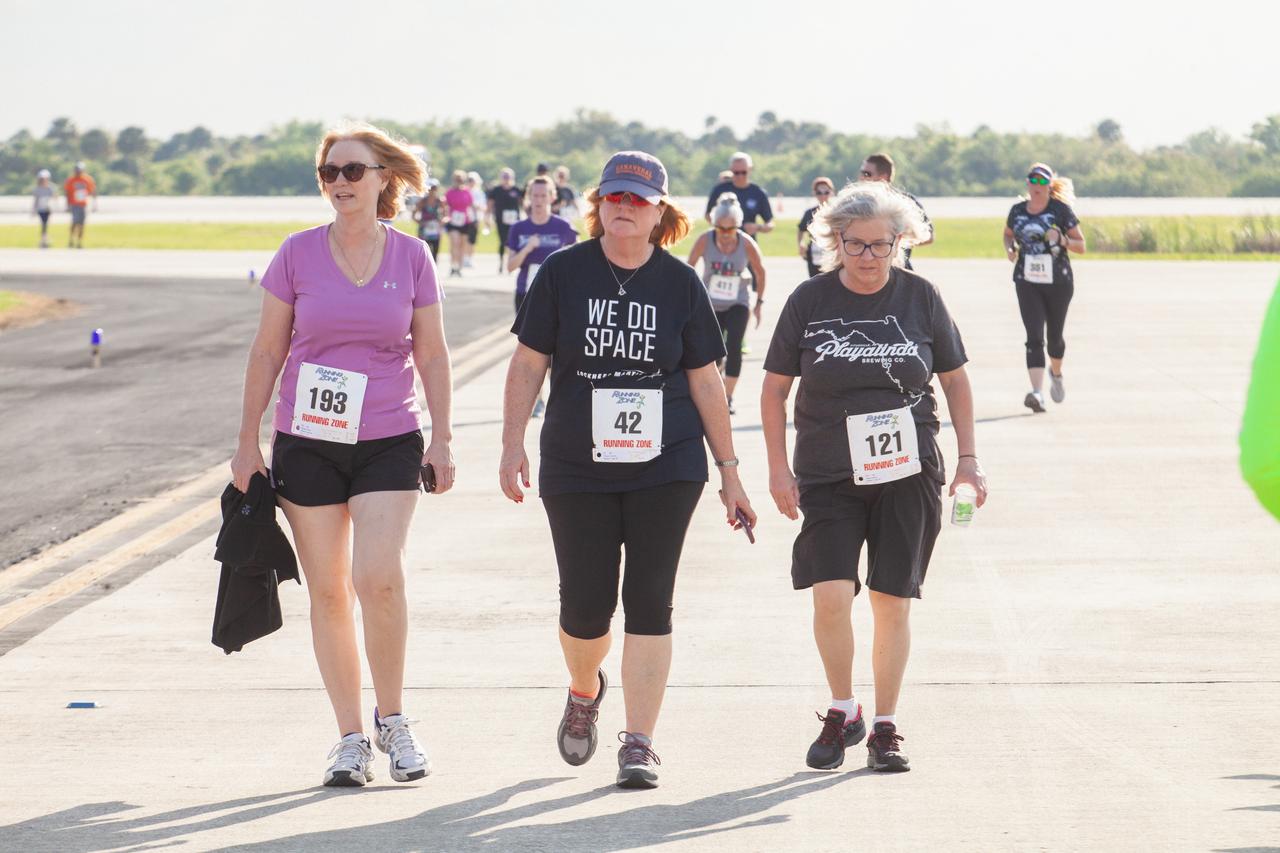
Kennedy Space Center employees and guests participate in the Florida spaceport’s annual KSC Walk Run on March 26, 2019. Part of Kennedy’s Safety and Health Days, the event takes place at the Shuttle Landing Facility runway and offers participants the chance to partake in a two-mile walk or run, a 5K or a 10K.
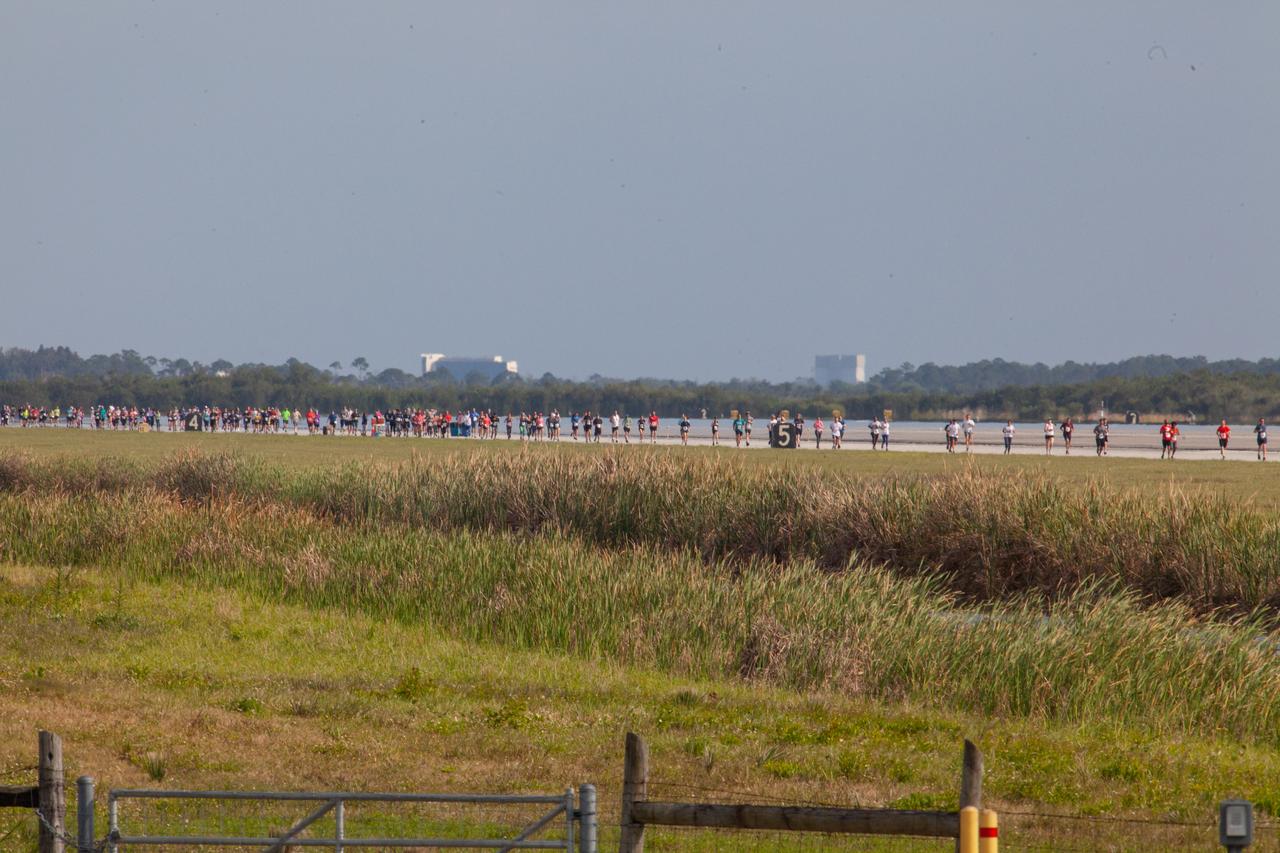
Kennedy Space Center employees and guests participate in the Florida spaceport’s annual KSC Walk Run on March 26, 2019. Part of Kennedy’s Safety and Health Days, the event takes place at the Shuttle Landing Facility runway and offers participants the chance to partake in a two-mile walk or run, a 5K or a 10K.
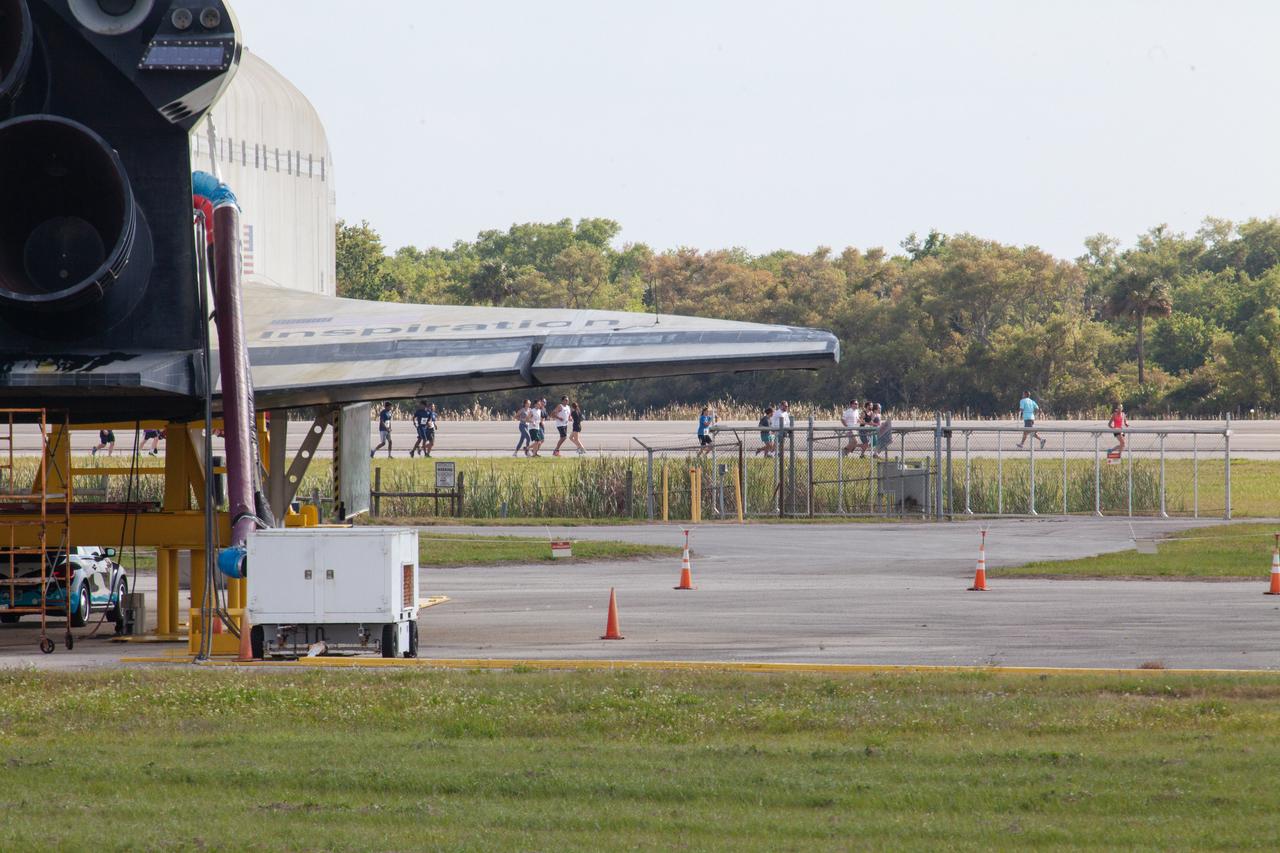
Kennedy Space Center employees and guests participate in the Florida spaceport’s annual KSC Walk Run on March 26, 2019. Part of Kennedy’s Safety and Health Days, the event takes place at the Shuttle Landing Facility runway and offers participants the chance to partake in a two-mile walk or run, a 5K or a 10K.
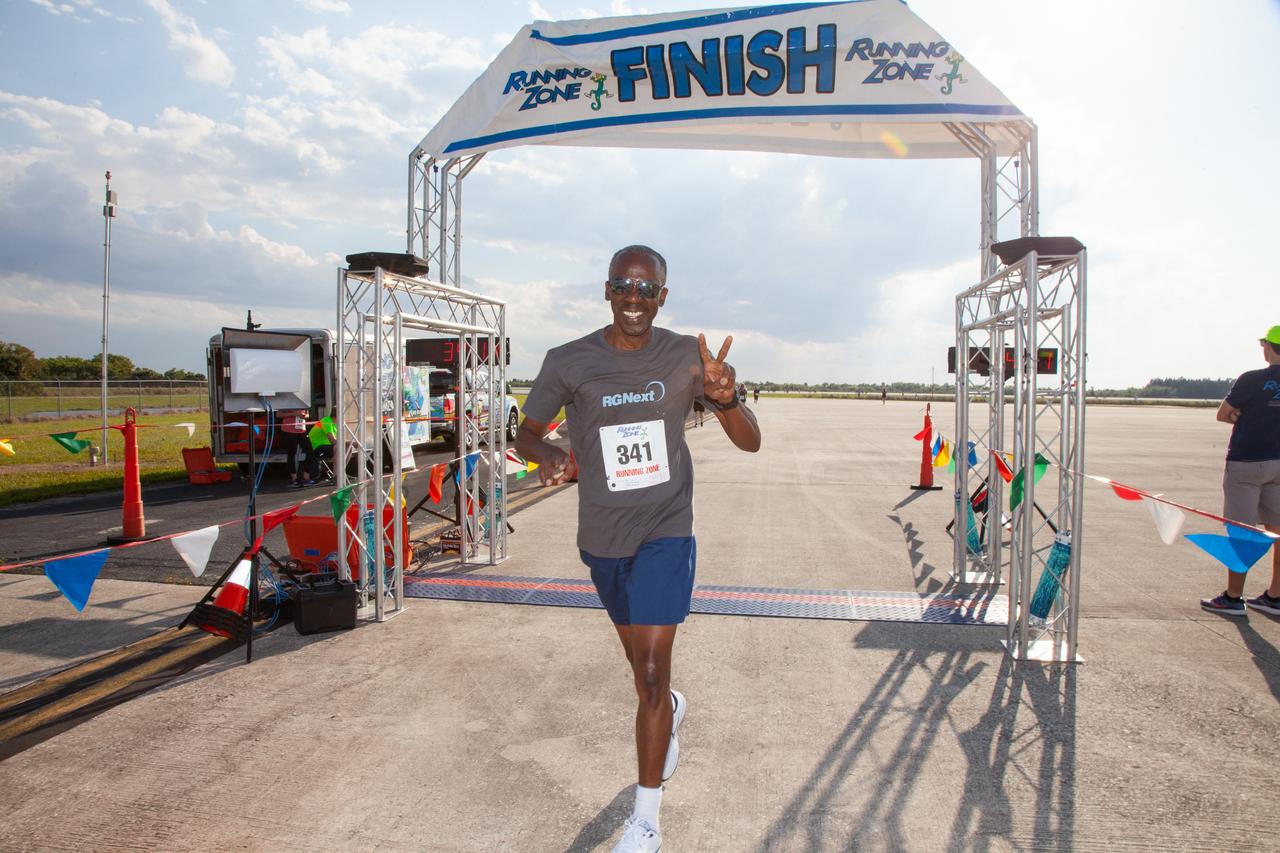
A participant crosses the finish line of Kennedy Space Center’s Walk Run on March 26, 2019. Part of Kennedy’s Safety and Health Days, the annual event takes place at the Florida spaceport’s Shuttle Landing Facility runway and offers employees and guests the chance to partake in a two-mile walk or run, a 5K or a 10K.
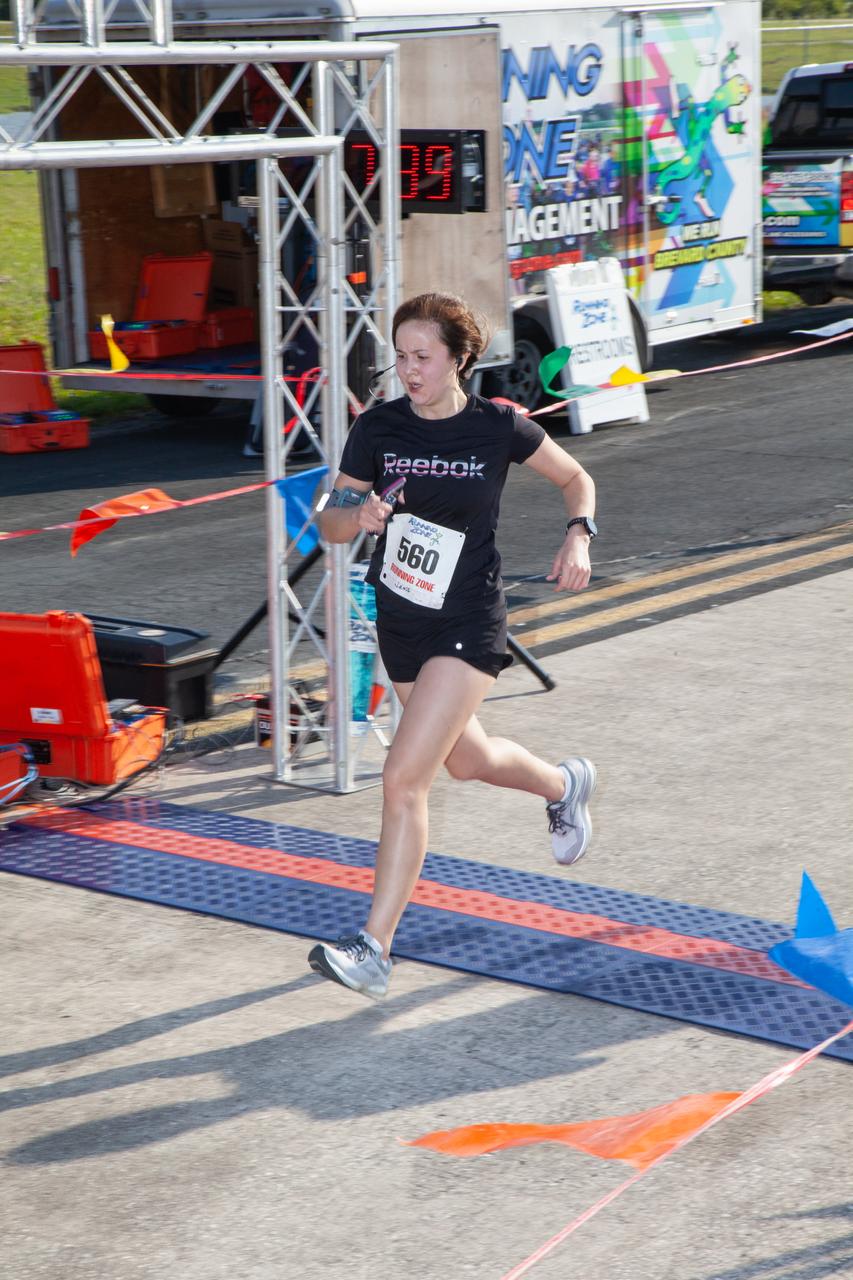
A participant crosses the finish line of Kennedy Space Center’s Walk Run on March 26, 2019. Part of Kennedy’s Safety and Health Days, the annual event takes place at the Florida spaceport’s Shuttle Landing Facility runway and offers employees and guests the chance to partake in a two-mile walk or run, a 5K or a 10K.
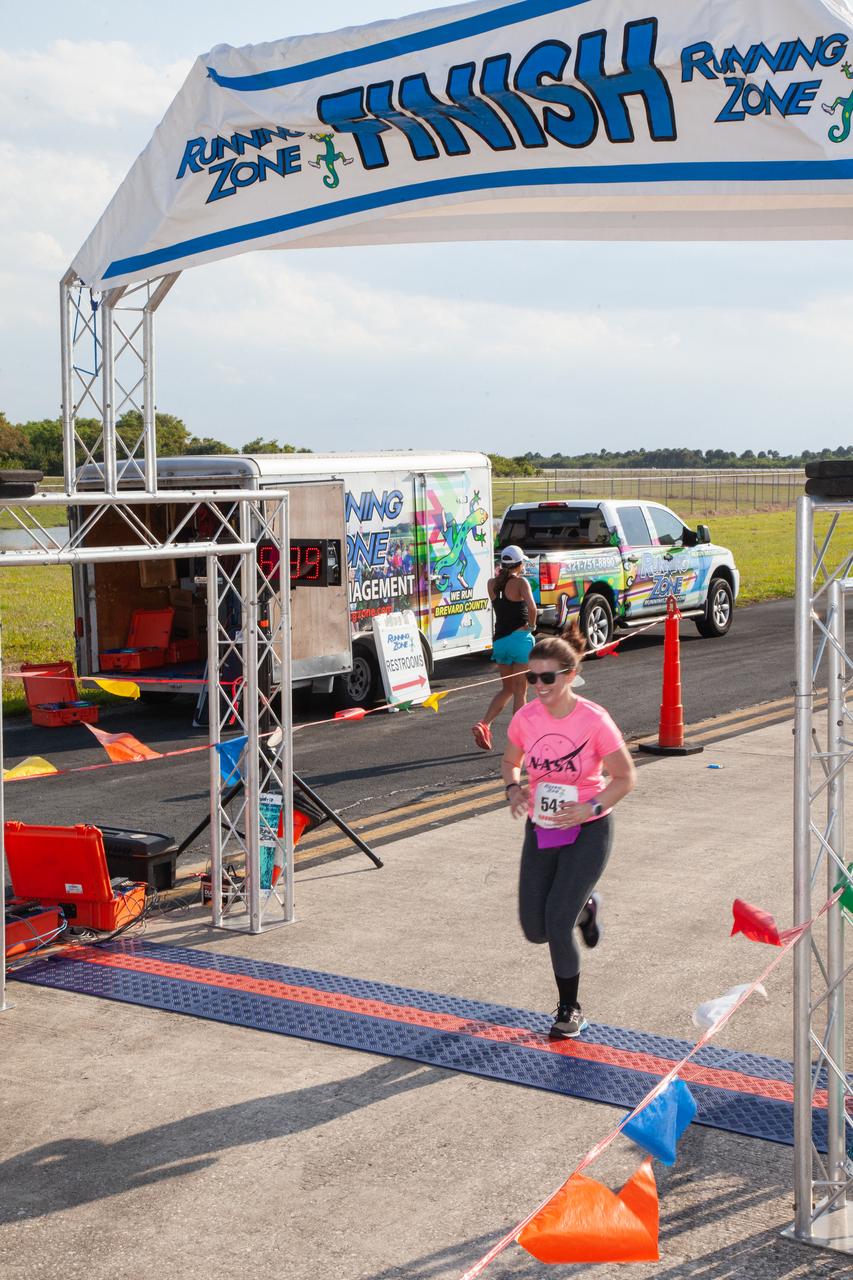
A participant crosses the finish line of Kennedy Space Center’s Walk Run on March 26, 2019. Part of Kennedy’s Safety and Health Days, the annual event takes place at the Florida spaceport’s Shuttle Landing Facility runway and offers employees and guests the chance to partake in a two-mile walk or run, a 5K or a 10K.
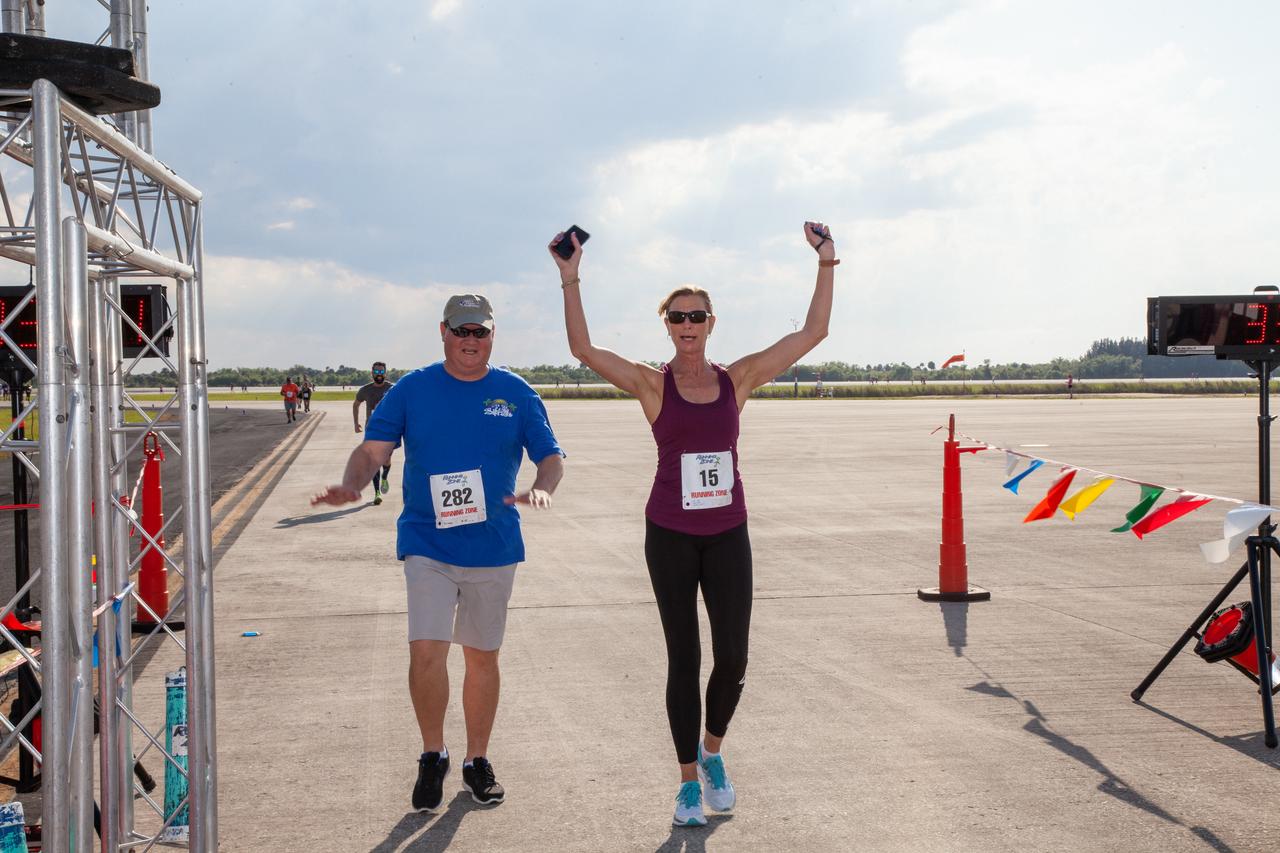
Kennedy Space Center employees and guests cross the finish line during the Florida spaceport’s annual KSC Walk Run on March 26, 2019. Part of Kennedy’s Safety and Health Days, the event takes place at the Shuttle Landing Facility runway and offers participants the chance to partake in a two-mile walk or run, a 5K or a 10K.
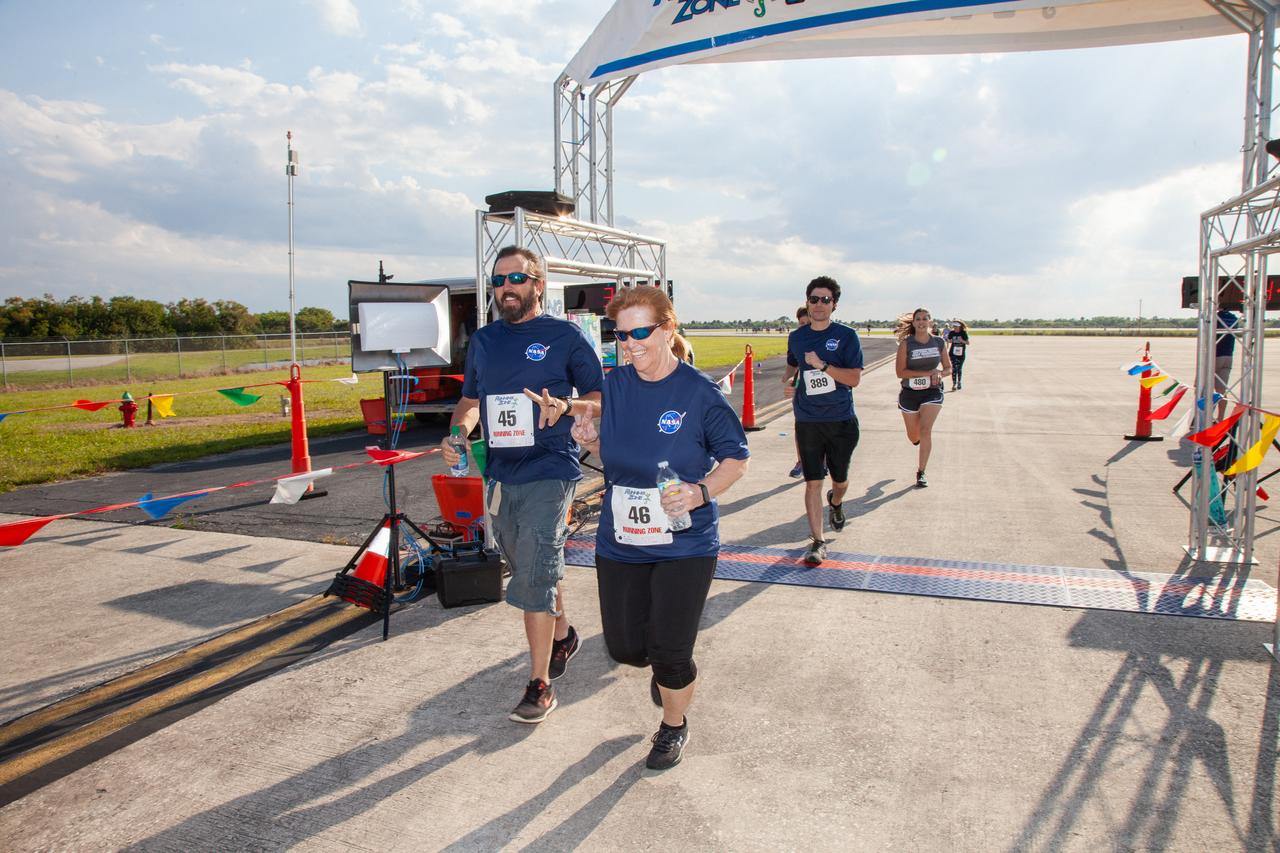
Kennedy Space Center employees and guests cross the finish line during the Florida spaceport’s annual KSC Walk Run on March 26, 2019. Part of Kennedy’s Safety and Health Days, the event takes place at the Shuttle Landing Facility runway and offers participants the chance to partake in a two-mile walk or run, a 5K or a 10K.
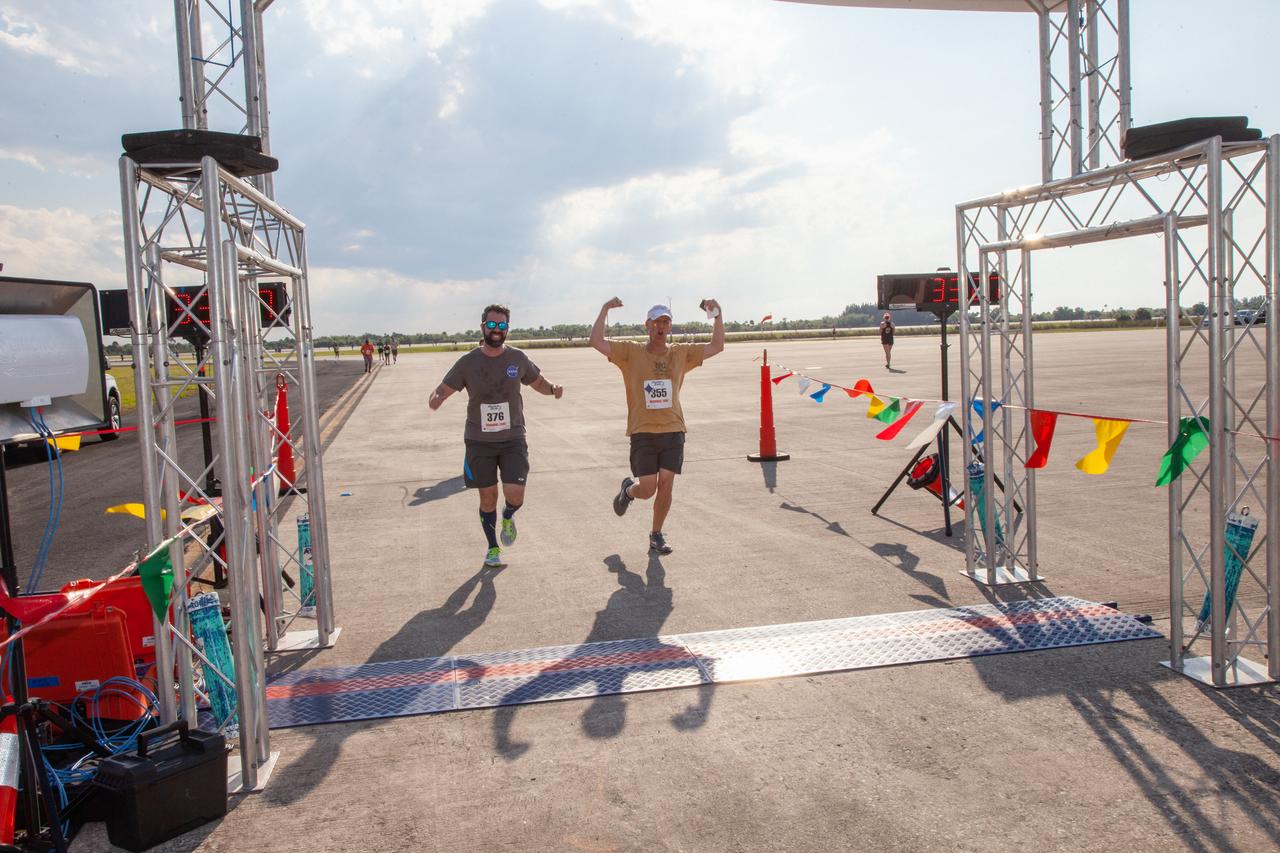
Kennedy Space Center employees and guests cross the finish line during the Florida spaceport’s annual KSC Walk Run on March 26, 2019. Part of Kennedy’s Safety and Health Days, the event takes place at the Shuttle Landing Facility runway and offers participants the chance to partake in a two-mile walk or run, a 5K or a 10K.
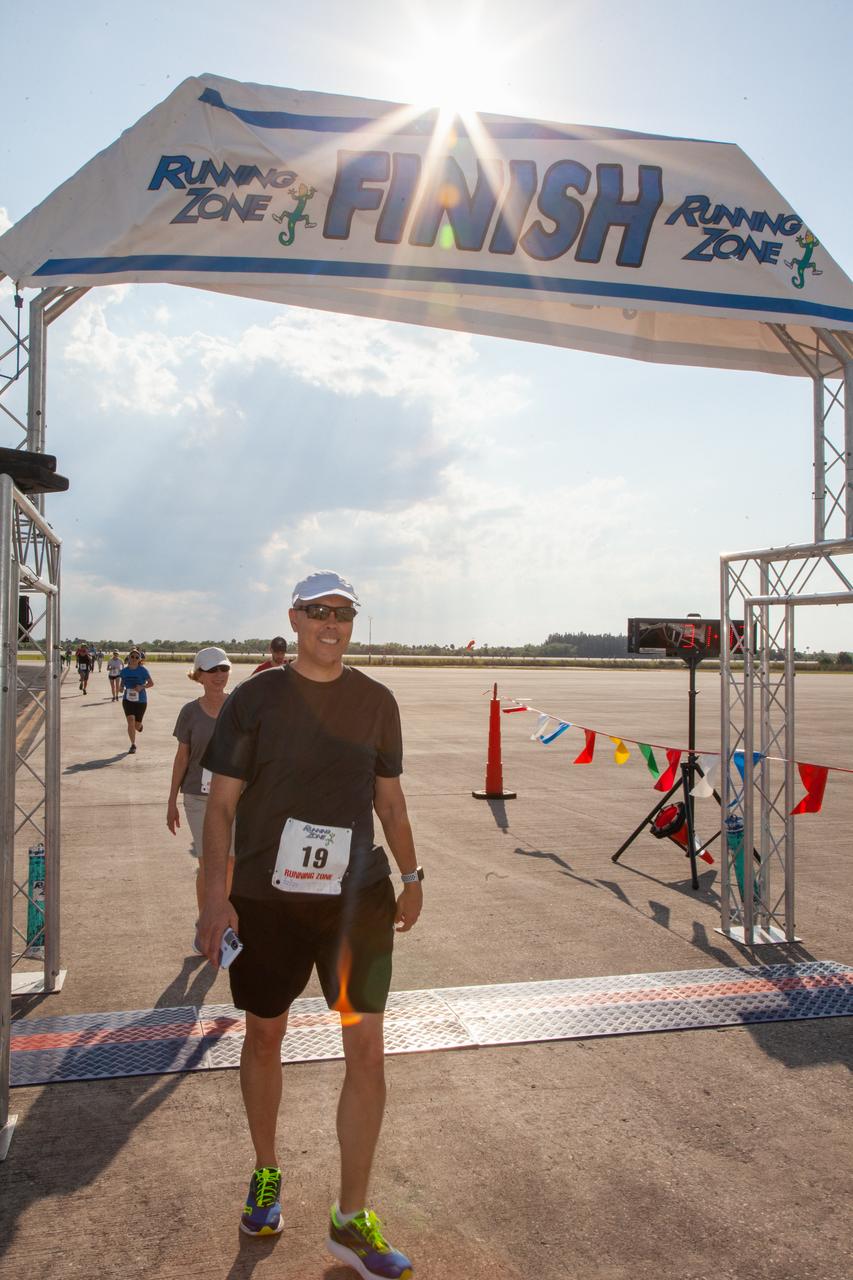
Kennedy Space Center employees and guests cross the finish line during the Florida spaceport’s annual KSC Walk Run on March 26, 2019. Part of Kennedy’s Safety and Health Days, the event takes place at the Shuttle Landing Facility runway and offers participants the chance to partake in a two-mile walk or run, a 5K or a 10K.
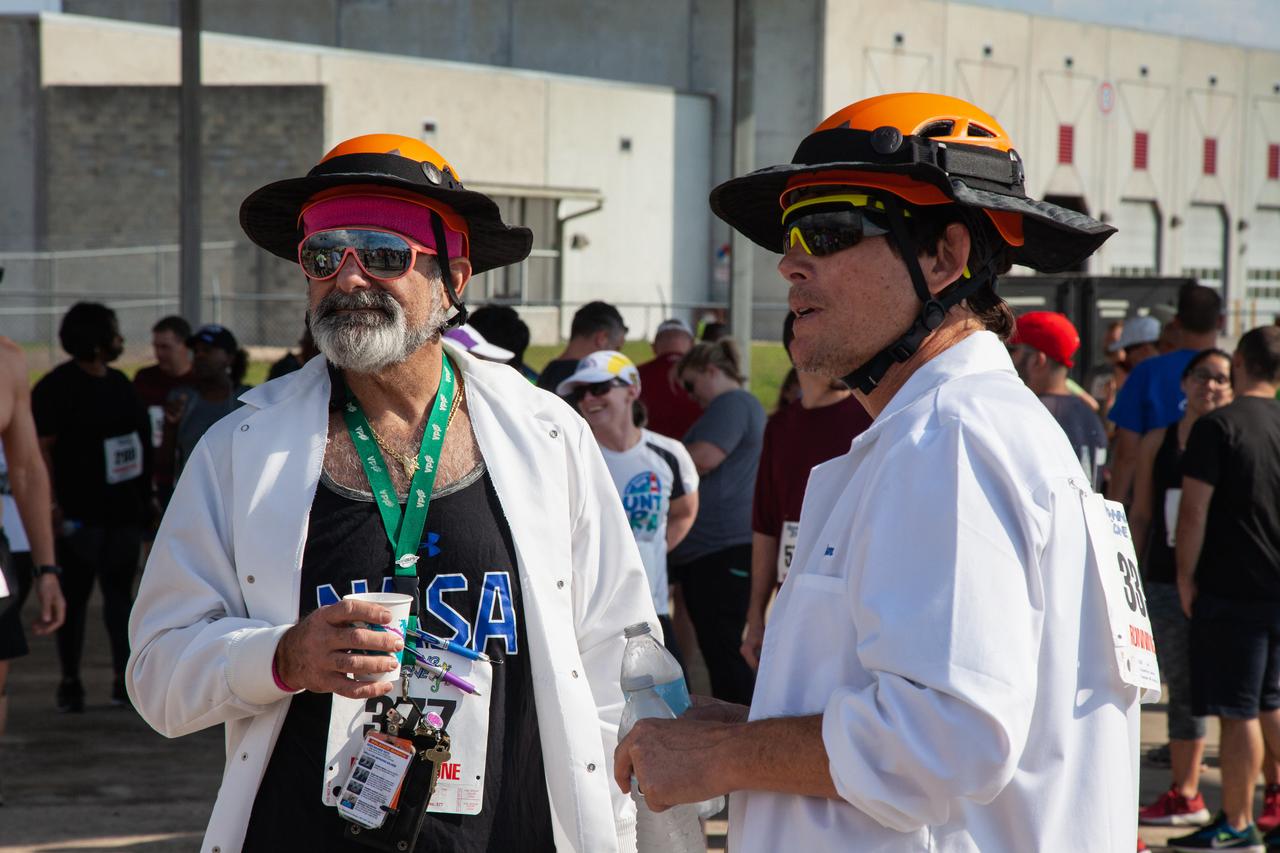
Kennedy Space Center employees and guests converse prior to the start of the Florida spaceport’s annual KSC Walk Run on March 26, 2019. Part of Kennedy’s Safety and Health Days, the event takes place at the Shuttle Landing Facility runway and offers participants the chance to partake in a two-mile walk or run, a 5K or a 10K.
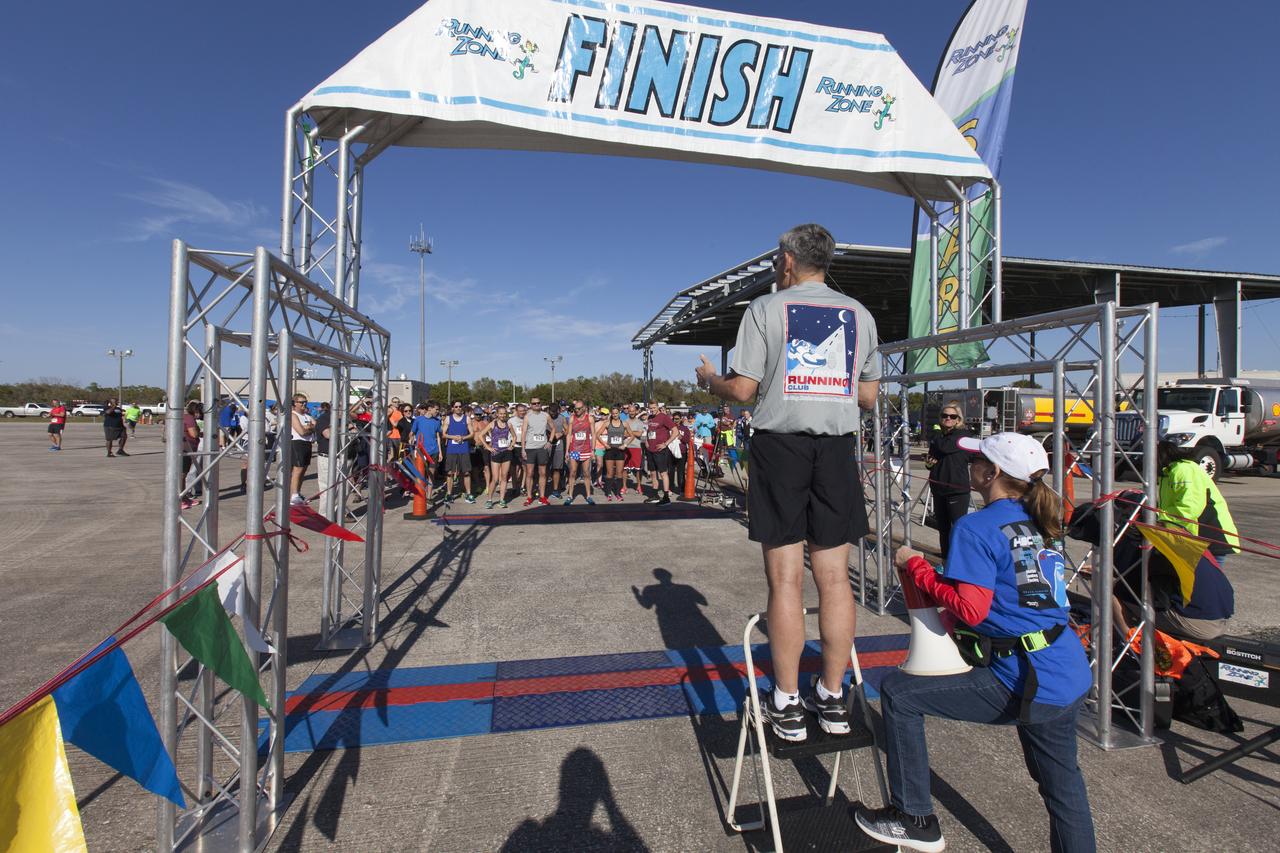
From his vantage point atop a stepladder near the finish line, Kennedy Space Center Director Bob Cabana speaks to center employees and guests before the KSC Walk Run on the Shuttle Landing Facility runway. The annual event, part of Kennedy’s Safety and Health Days, offers 10K, 5K and 2-mile options in the spirit of friendly competition.
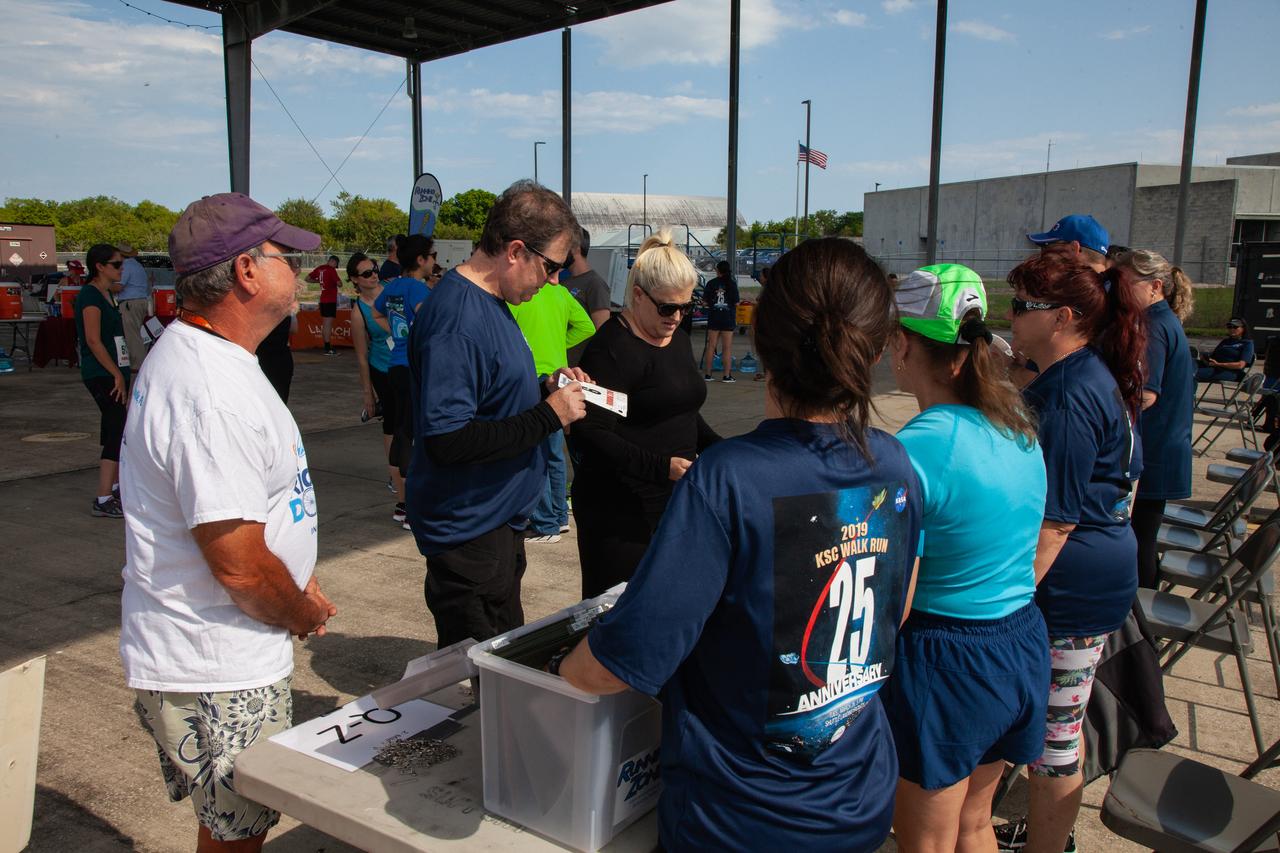
Kennedy Space Center employees and guests receive their race numbers prior to the start of the Florida spaceport’s annual KSC Walk Run on March 26, 2019. Part of Kennedy’s Safety and Health Days, the event takes place at the Shuttle Landing Facility runway and offers participants the chance to partake in a two-mile walk or run, a 5K or a 10K.
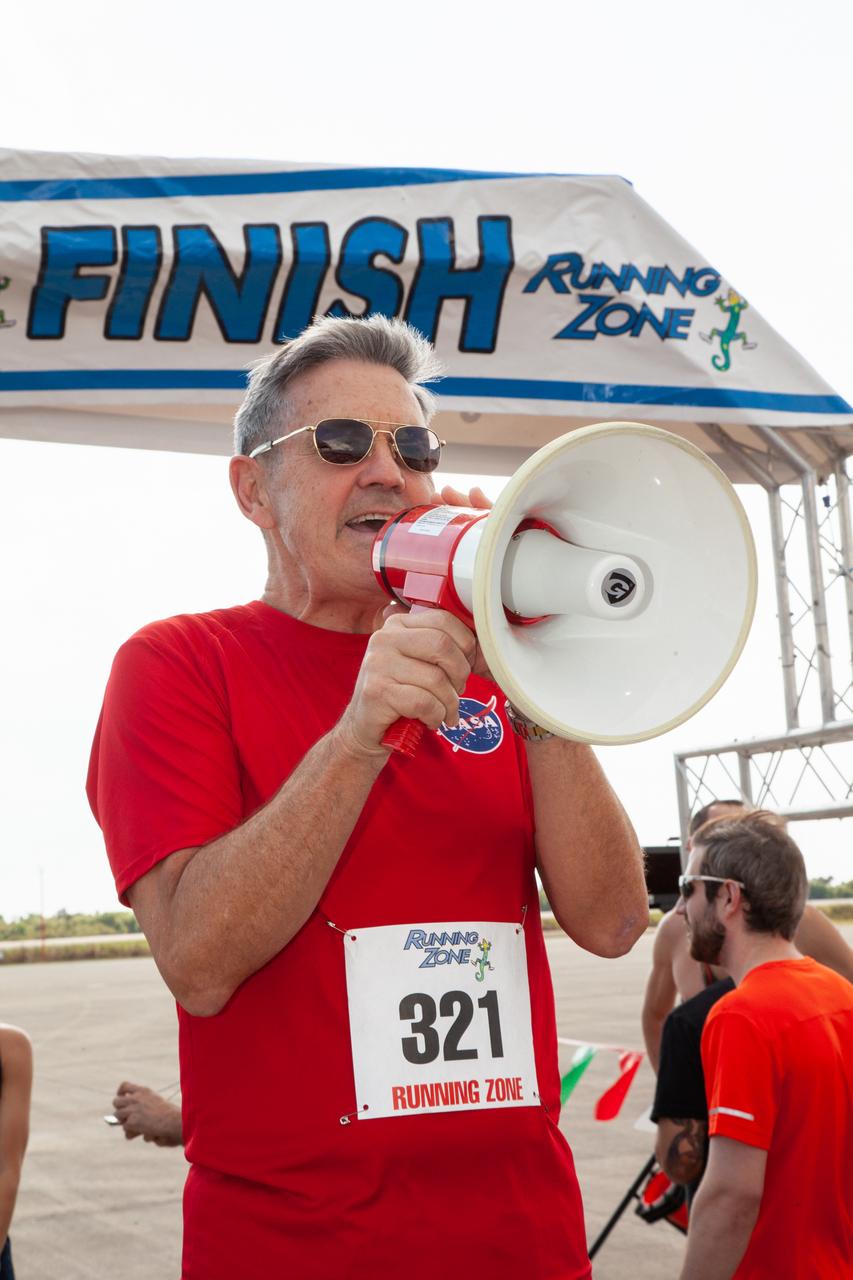
Kennedy Space Center Director Bob Cabana speaks to employees and guests before the start of the Florida spaceport’s annual KSC Walk Run on March 26, 2019. Part of Kennedy’s Safety and Health Days, the event takes place at the Shuttle Landing Facility runway and offers participants the chance to partake in a two-mile walk or run, a 5K or a 10K.
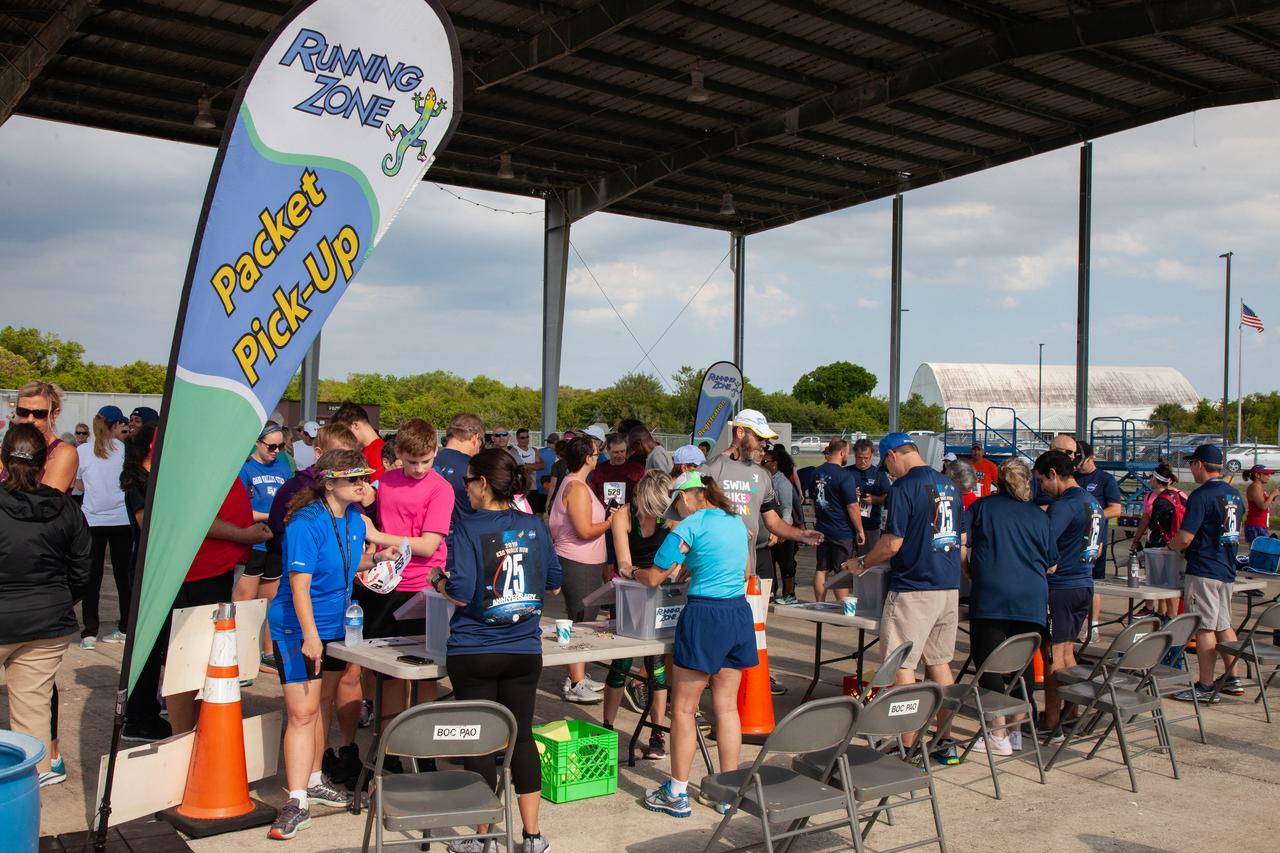
Kennedy Space Center employees and guests receive their race numbers prior to the start of the Florida spaceport’s annual KSC Walk Run on March 26, 2019. Part of Kennedy’s Safety and Health Days, the event takes place at the Shuttle Landing Facility runway and offers participants the chance to partake in a two-mile walk or run, a 5K or a 10K.
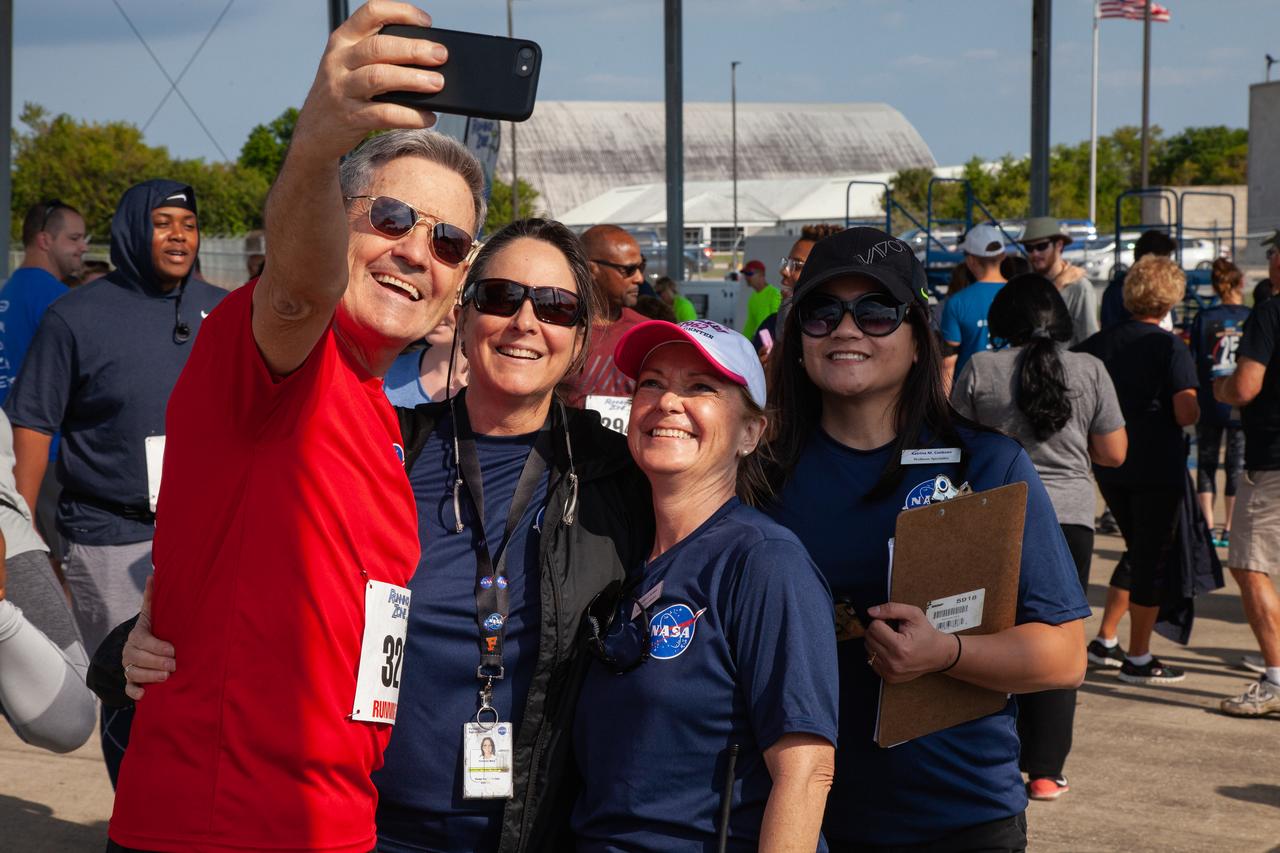
Kennedy Space Center employees and guests pose for a selfie with Center Director Bob Cabana prior to the start of the Florida spaceport’s annual KSC Walk Run on March 26, 2019. Part of Kennedy’s Safety and Health Days, the event takes place at the Shuttle Landing Facility runway and offers participants the chance to partake in a two-mile walk or run, a 5K or a 10K.

Kennedy Space Center Director Bob Cabana poses after crossing the finish line of the KSC Walk Run on March 26, 2019. Part of Kennedy’s Safety and Health Days, the annual event takes place at the Florida spaceport’s Shuttle Landing Facility runway and offers employees and guests the chance to partake in a two-mile walk or run, a 5K or a 10K.
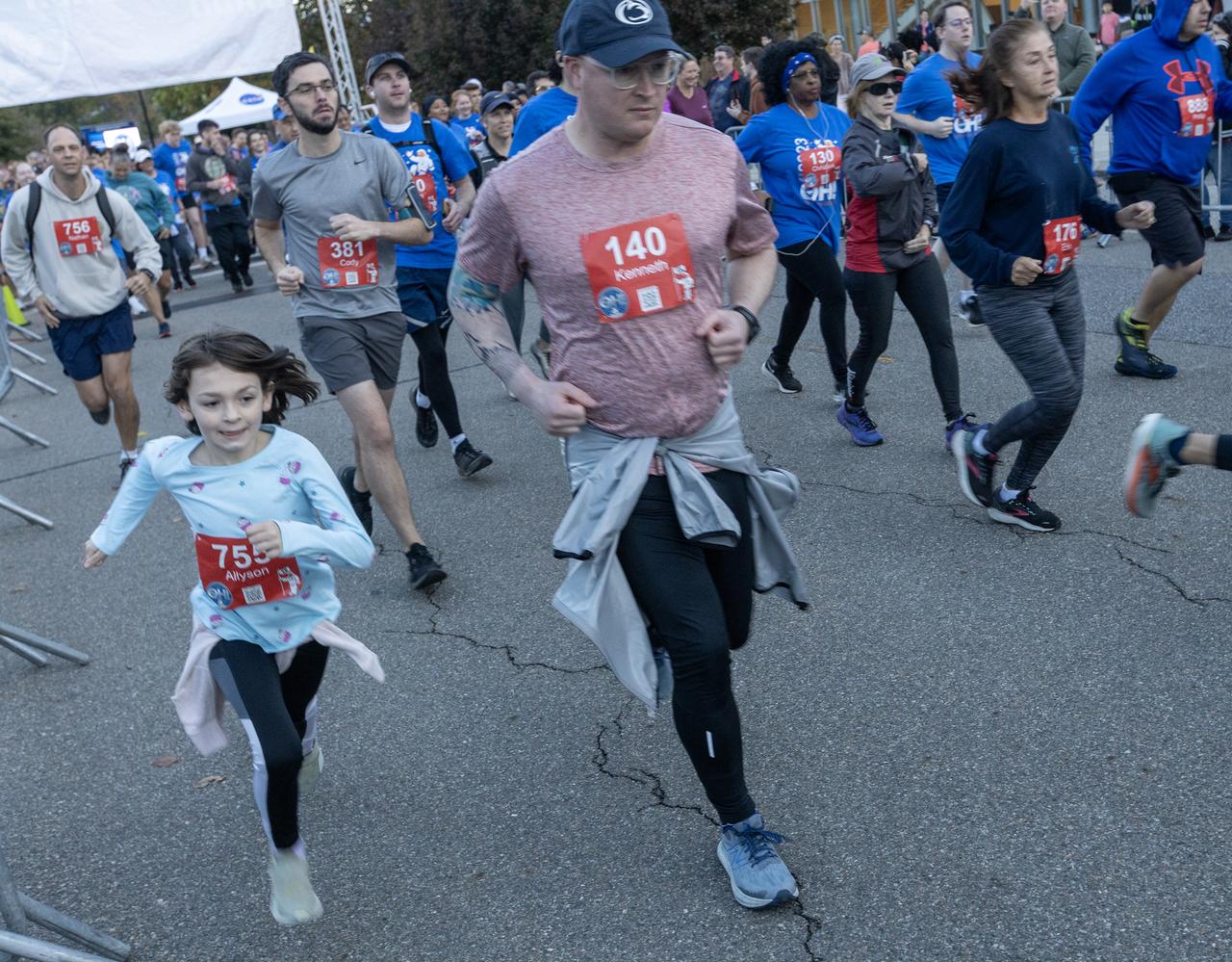
More than 37,000 people registered to attend the NASA Langley open house. Starting with the Annual 5K Moon Walk Run and the talented Nils Larson, X59 pilot and Astronaut Victor Glover reunited at Langley’s hangar and hosted by Center Director Clayton Turner.
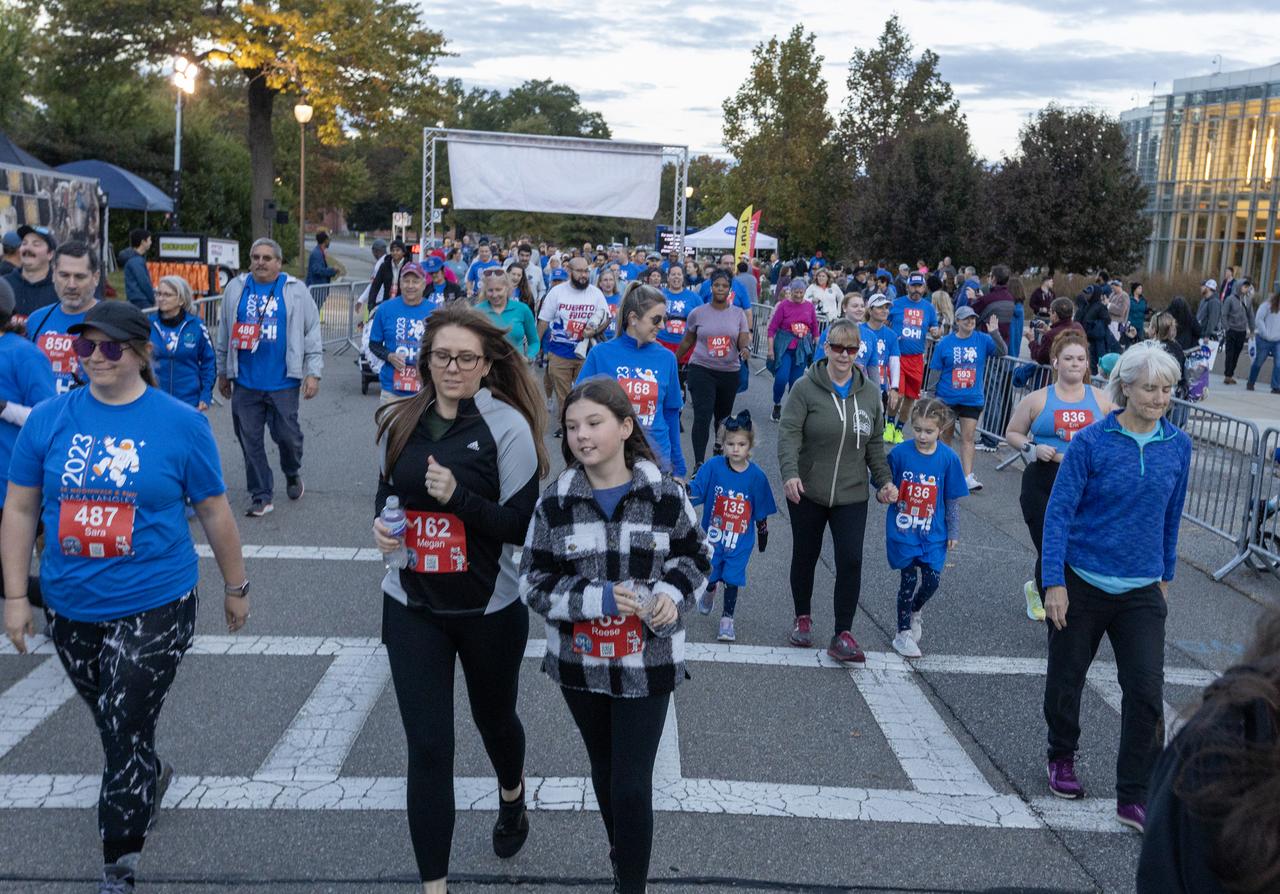
More than 37,000 people registered to attend the NASA Langley open house. Starting with the Annual 5K Moon Walk Run and the talented Nils Larson, X59 pilot and Astronaut Victor Glover reunited at Langley’s hangar and hosted by Center Director Clayton Turner.
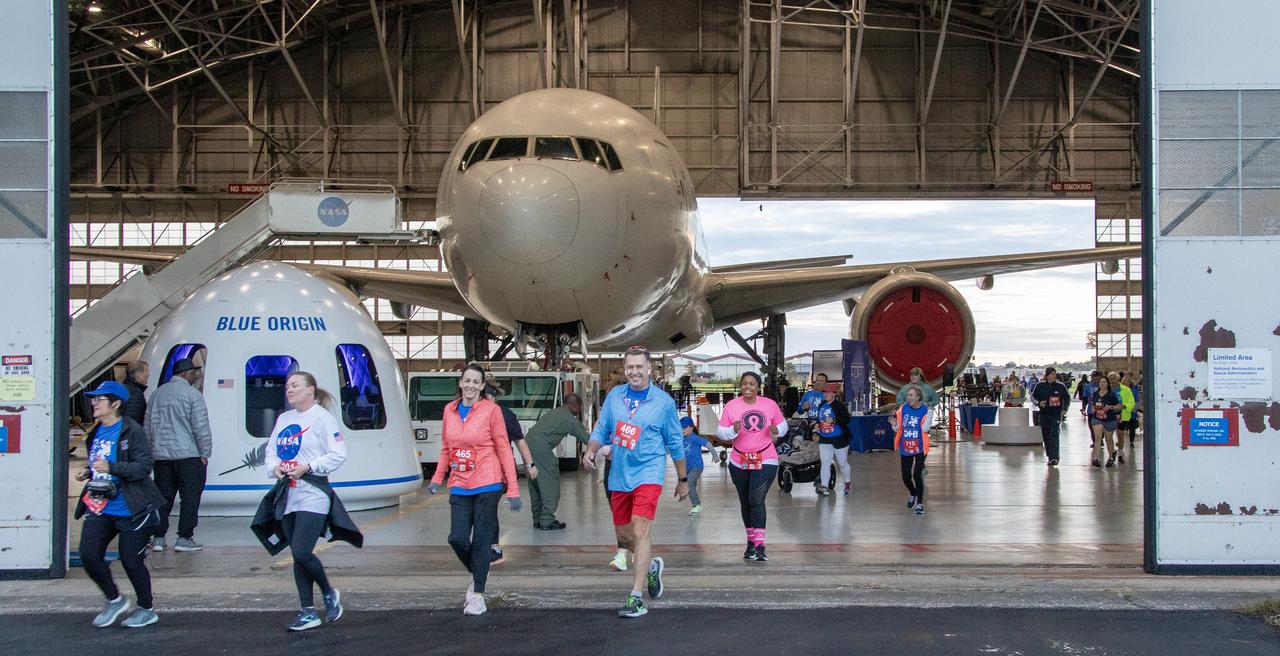
More than 37,000 people registered to attend the NASA Langley open house. Starting with the Annual 5K Moon Walk Run and the talented Nils Larson, X59 pilot and Astronaut Victor Glover reunited at Langley’s hangar and hosted by Center Director Clayton Turner.
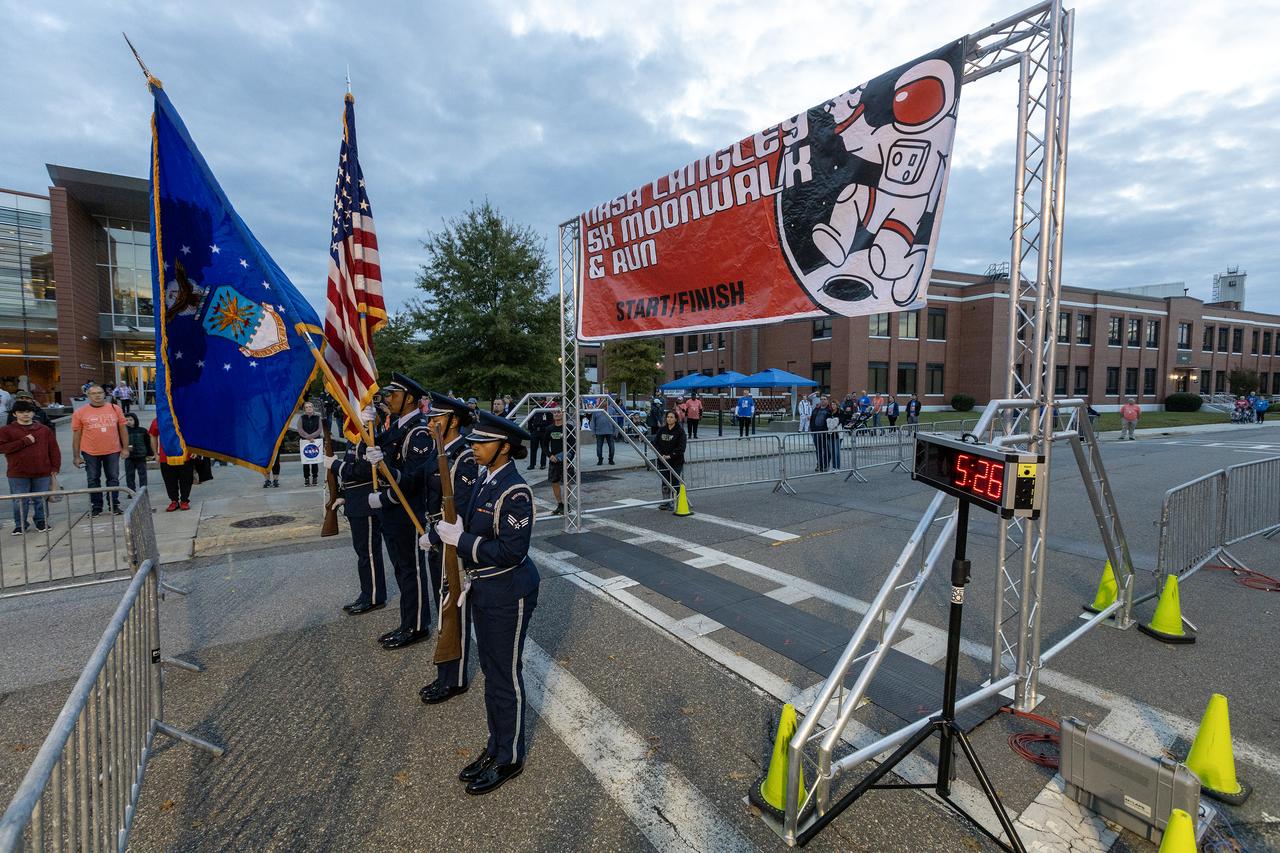
More than 37,000 people registered to attend the NASA Langley open house. Starting with the Annual 5K Moon Walk Run and the talented Nils Larson, X59 pilot and Astronaut Victor Glover reunited at Langley’s hangar and hosted by Center Director Clayton Turner.
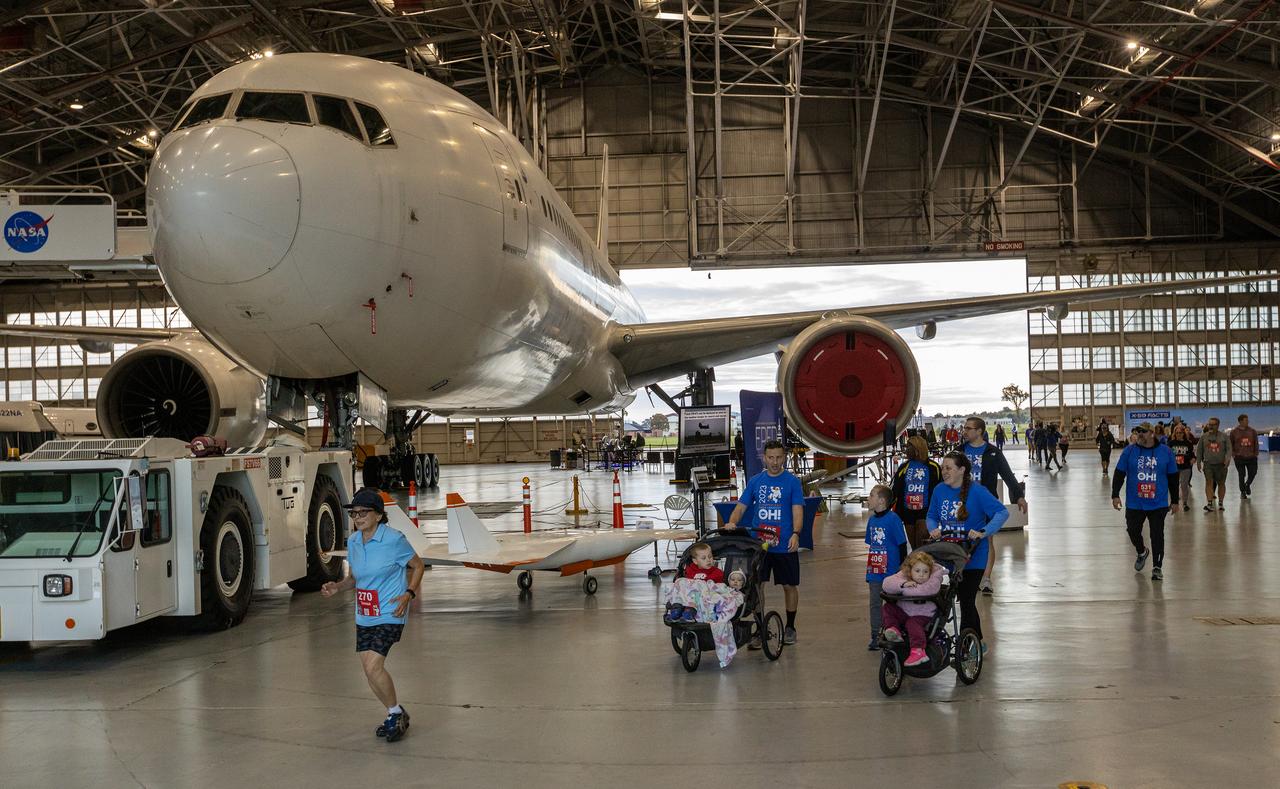
More than 37,000 people registered to attend the NASA Langley open house. Starting with the Annual 5K Moon Walk Run and the talented Nils Larson, X59 pilot and Astronaut Victor Glover reunited at Langley’s hangar and hosted by Center Director Clayton Turner.
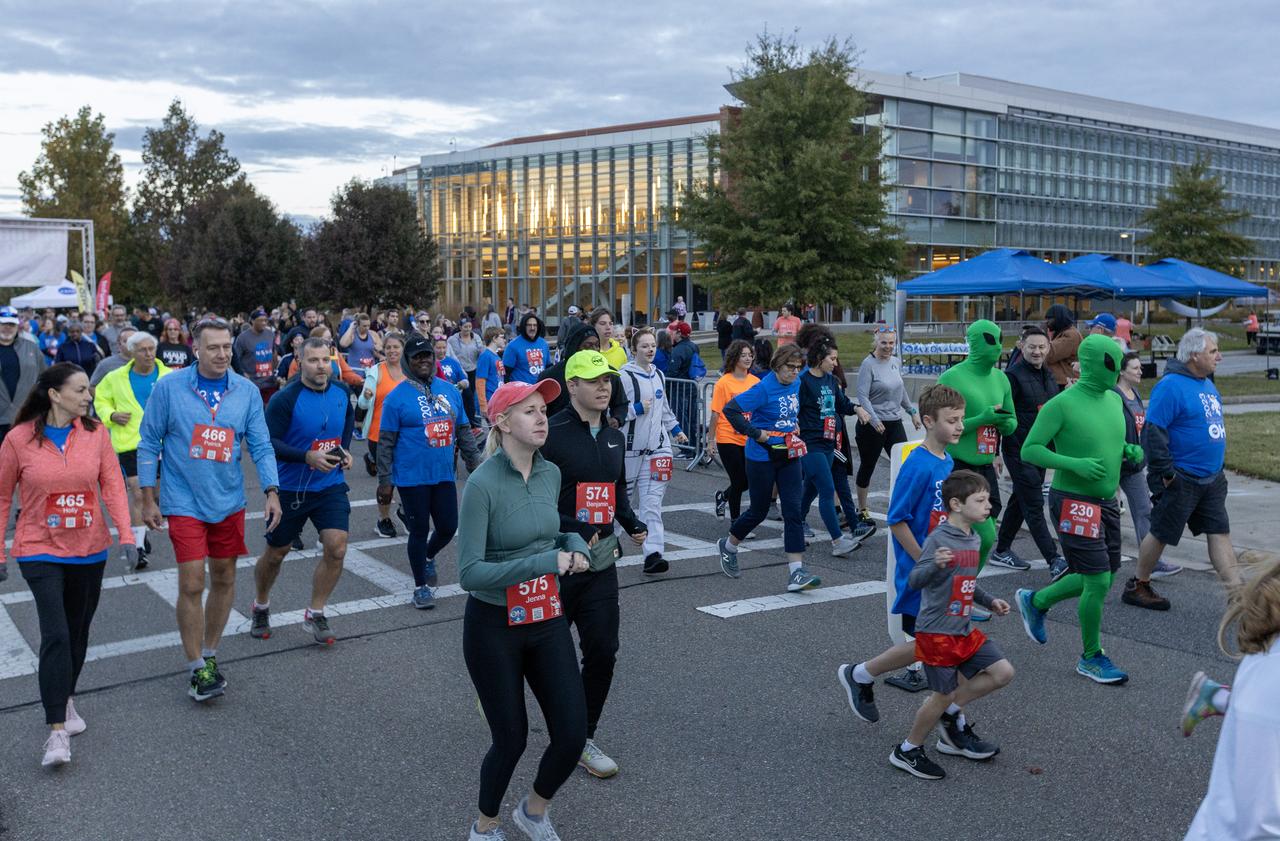
More than 37,000 people registered to attend the NASA Langley open house. Starting with the Annual 5K Moon Walk Run and the talented Nils Larson, X59 pilot and Astronaut Victor Glover reunited at Langley’s hangar and hosted by Center Director Clayton Turner.
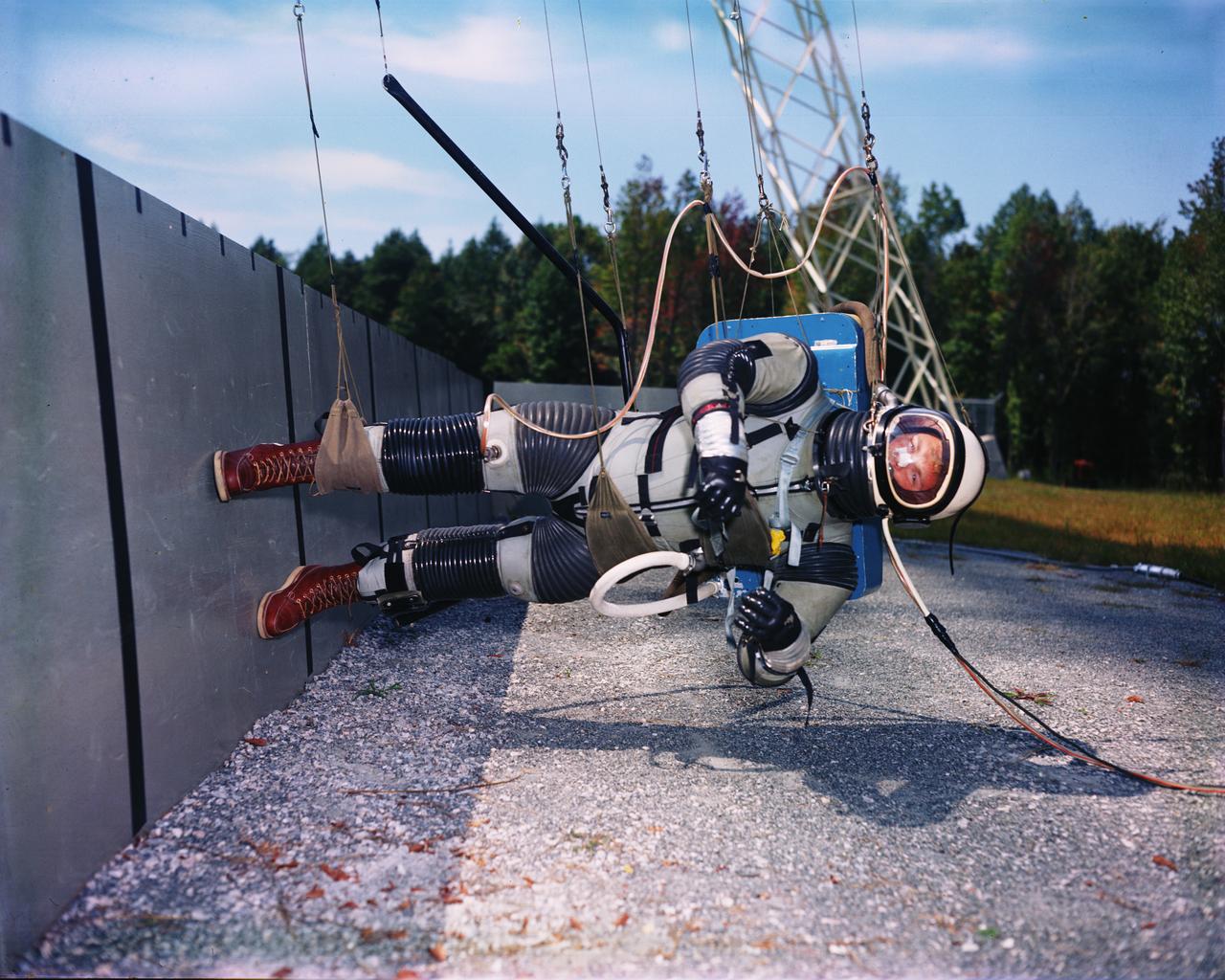
Lunar Landing Walking Simulator: Researchers at Langley study the ability of astronauts to walk, run and perform other tasks required during lunar exploration. The Reduced Gravity Simulator gave researchers the opportunity to look at the effects of one-sixth normal gravity on self-locomotion. Several Apollo astronauts practiced lunar waling at the facility.
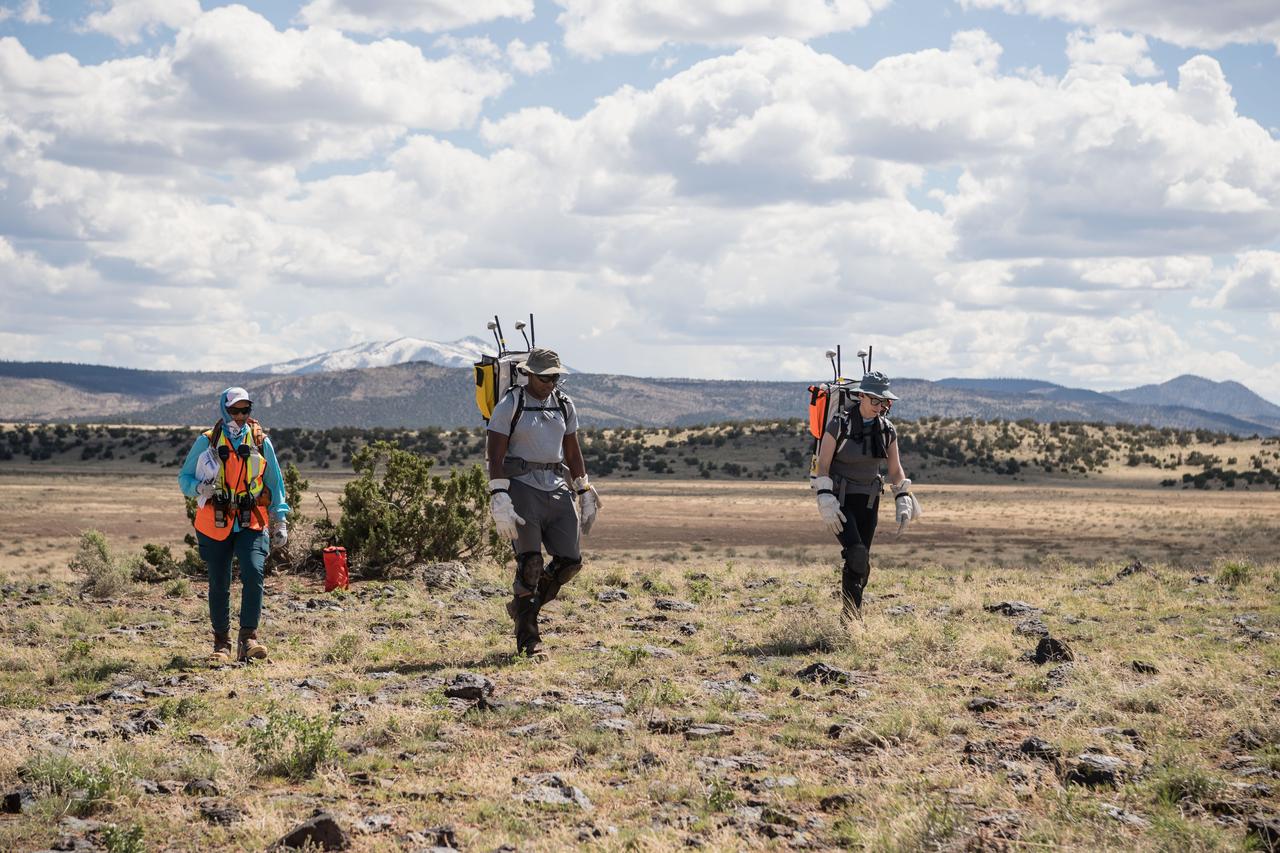
NASA astronauts Andre Douglas (middle) and Kate Rubins (right) walk through the desert during an engineering dry run before the start of a week-long field test consisting of four simulated moonwalks and six advanced technology runs in the San Francisco Volcanic Field in Northern Arizona on May 12, 2024. Image: NASA/Josh Valcarcel

iss070e075298 (Jan. 19, 2024) --- Expedition 70 Flight Engineer and JAXA (Japan Aerospace Exploration Agency) astronaut Satoshi Furukawa jogs on the Combined Operational Load Bearing External Resistance Treadmill (COLBERT) inside the International Space Station's Tranquility module. COLBERT is designed to allow walking and running in a microgravity environment for maintaining crew cardiovascular fitness, muscular strength, and to exercise neurophysiological pathways and reflexes that are required to walk once returned to Earth.
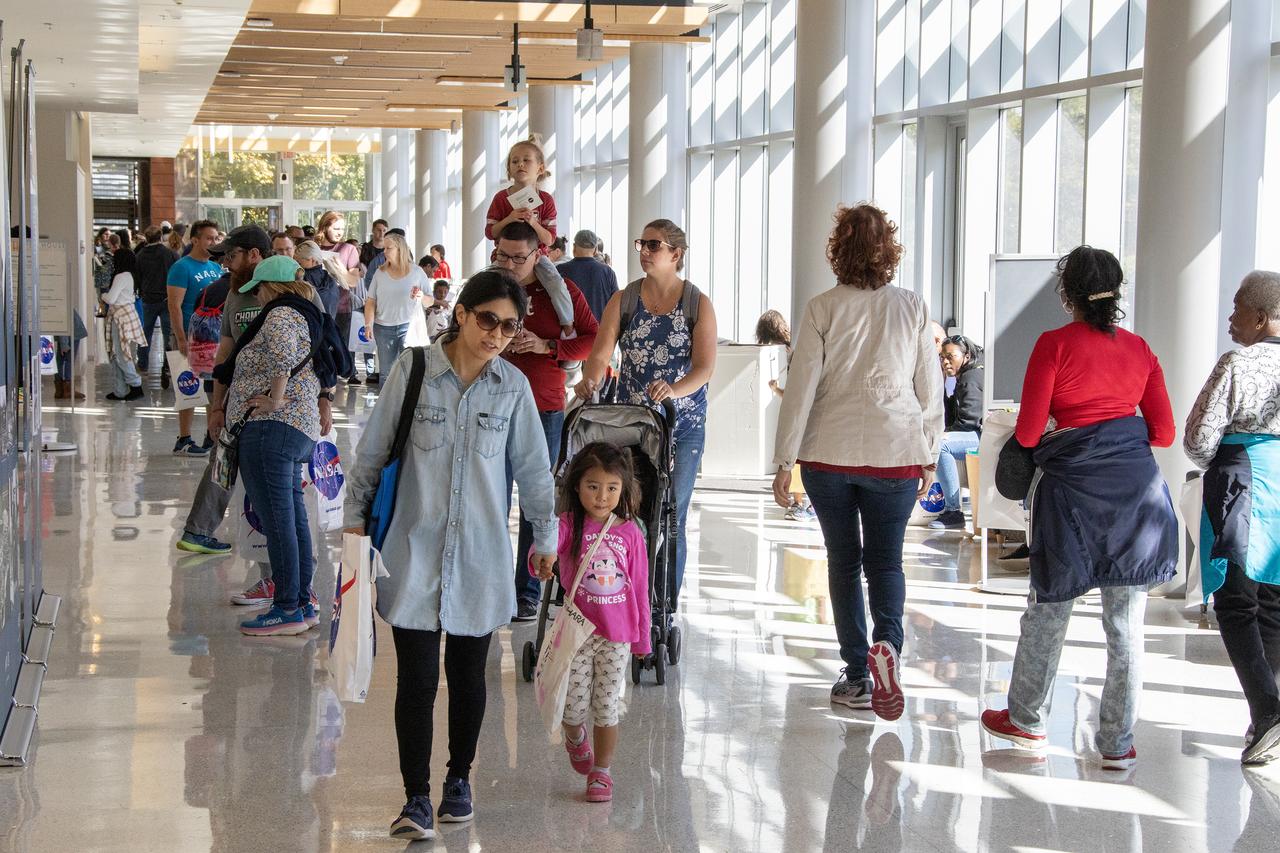
More than 37,000 people registered to attend the NASA Langley open house. Starting with the Annual 5K Moon Walk Run and the talented Nils Larson, X59 pilot and Astronaut Victor Glover reunited at Langley’s hangar and hosted by Center Director Clayton Turner.

More than 37,000 people registered to attend the NASA Langley open house. Starting with the Annual 5K Moon Walk Run and the talented Nils Larson, X59 pilot and Astronaut Victor Glover reunited at Langley’s hangar and hosted by Center Director Clayton Turner.
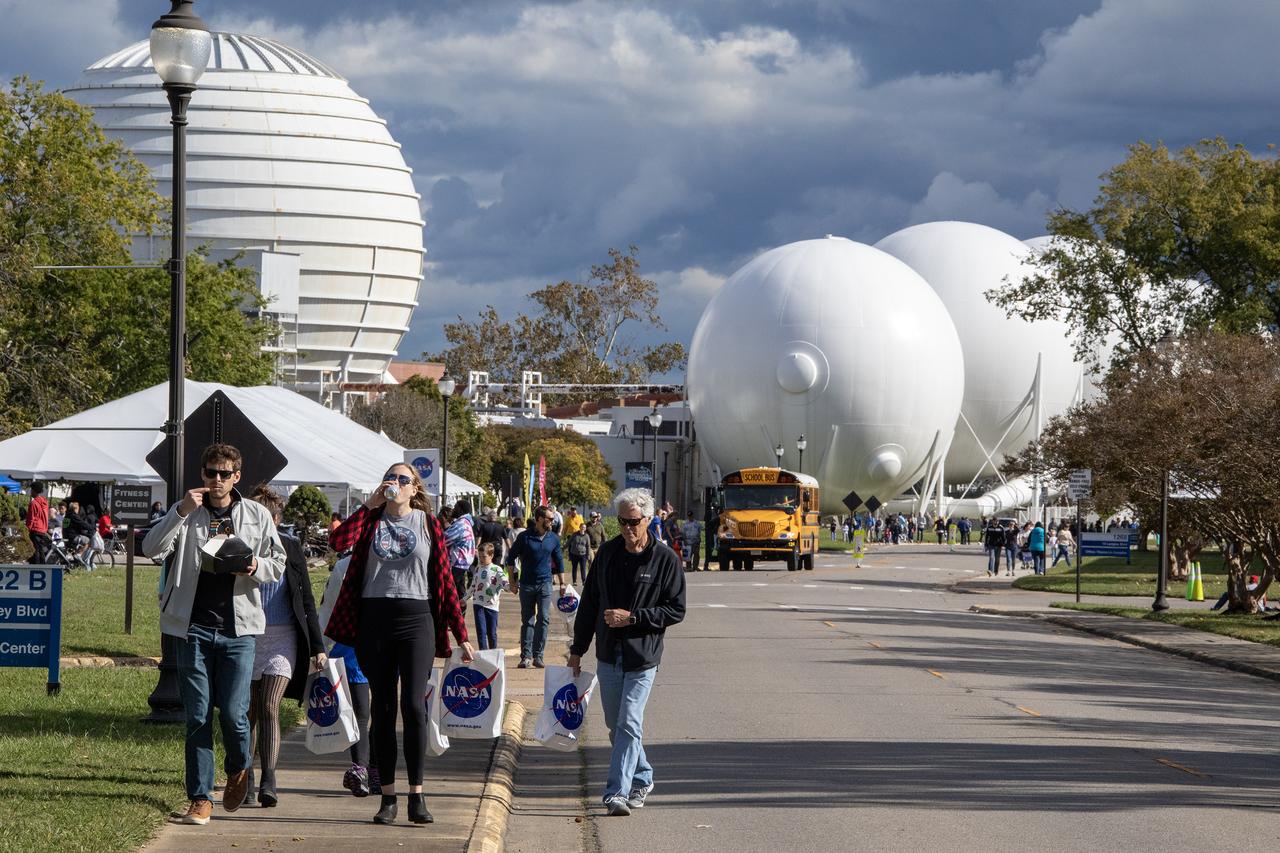
More than 37,000 people registered to attend the NASA Langley open house. Starting with the Annual 5K Moon Walk Run and the talented Nils Larson, X59 pilot and Astronaut Victor Glover reunited at Langley’s hangar and hosted by Center Director Clayton Turner.
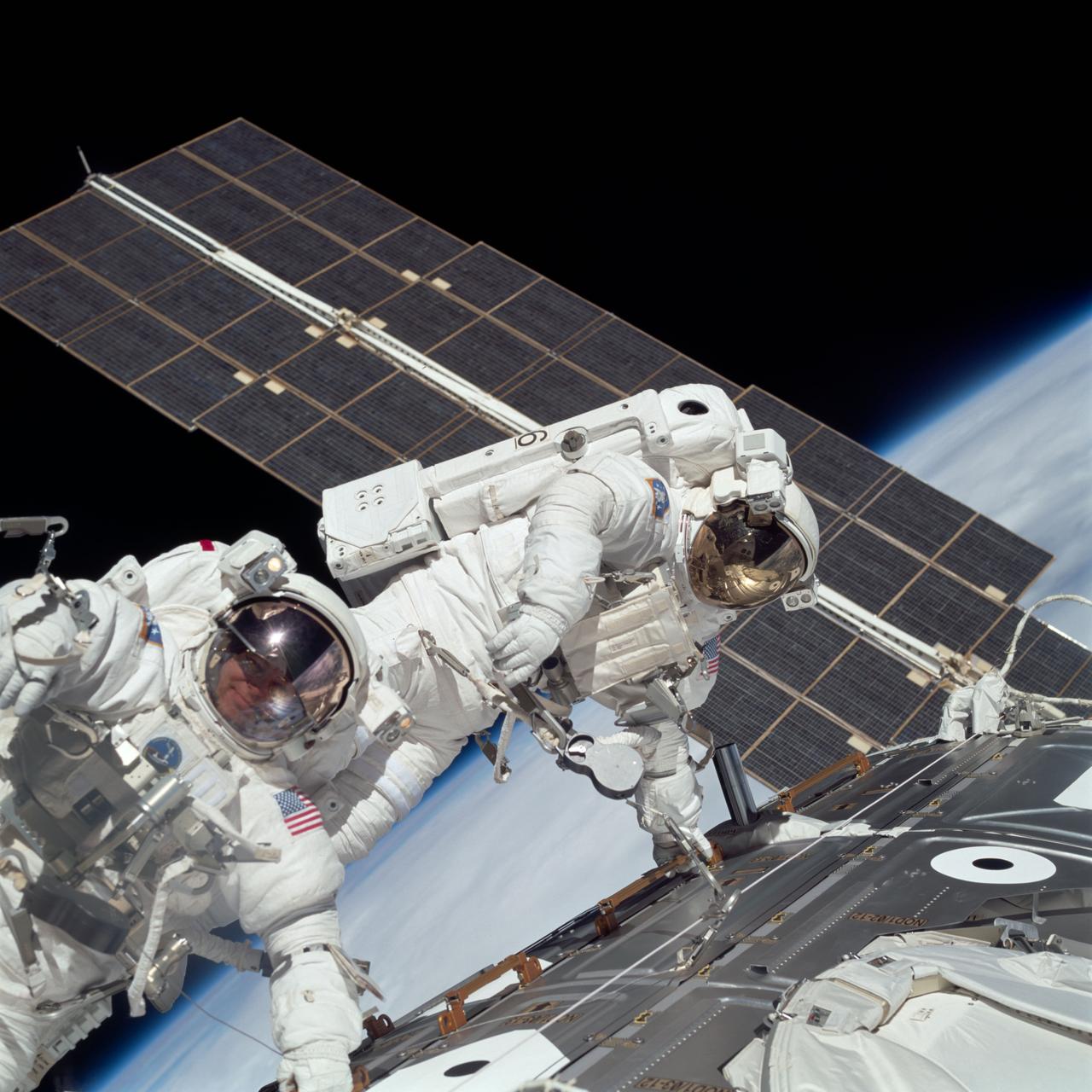
STS088-702-024 (4-15 Dec. 1998) --- Astronauts Jerry L. Ross (left) and James H. Newman, both mission specialists, work together on the final of three space walks of the STS-88 mission. One of the solar panels of the Russian-built Zarya module runs through the frame.
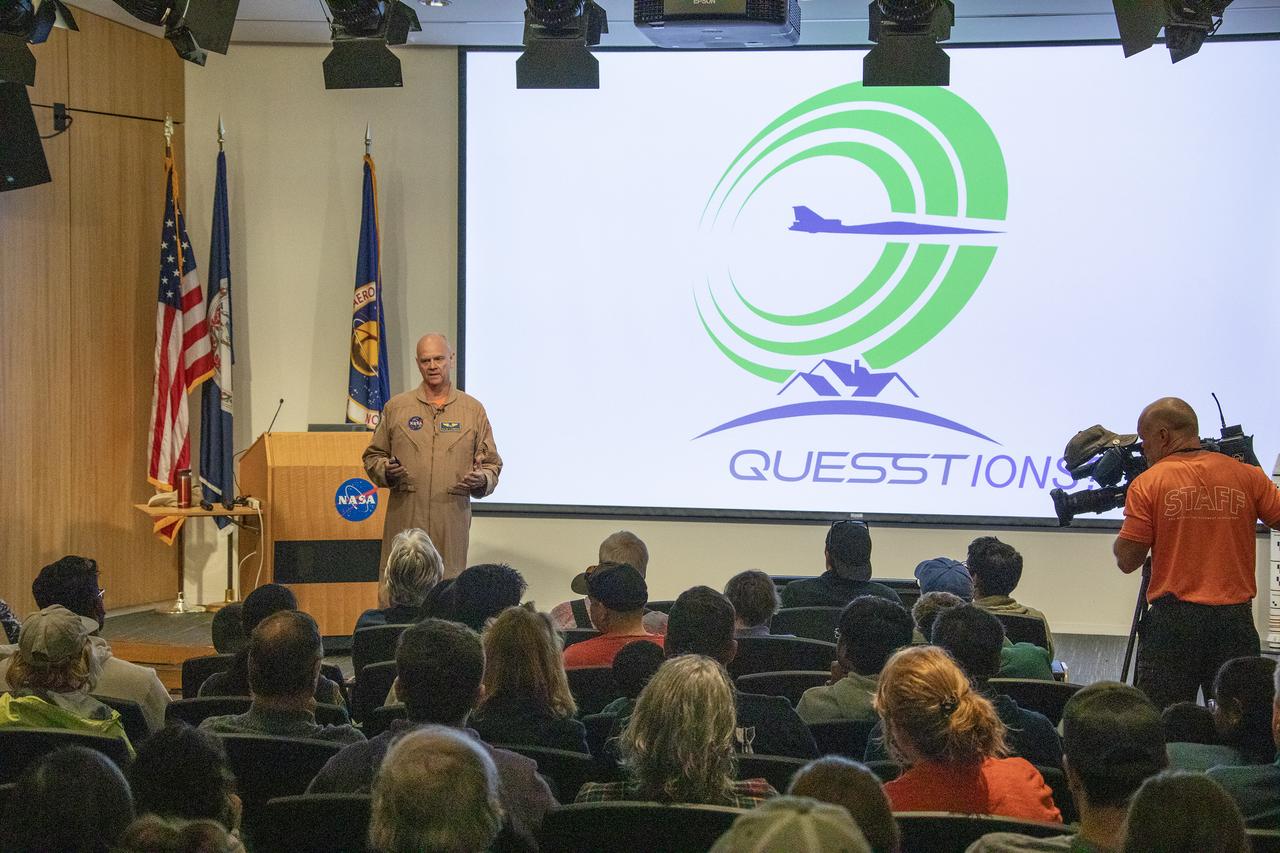
Speaker David Nils Larson on the X59. More than 37,000 people registered to attend the NASA Langley open house. Starting with the Annual 5K Moon Walk Run and the talented Nils Larson, X59 pilot and Astronaut Victor Glover reunited at Langley’s hangar and hosted by Center Director Clayton Turner.
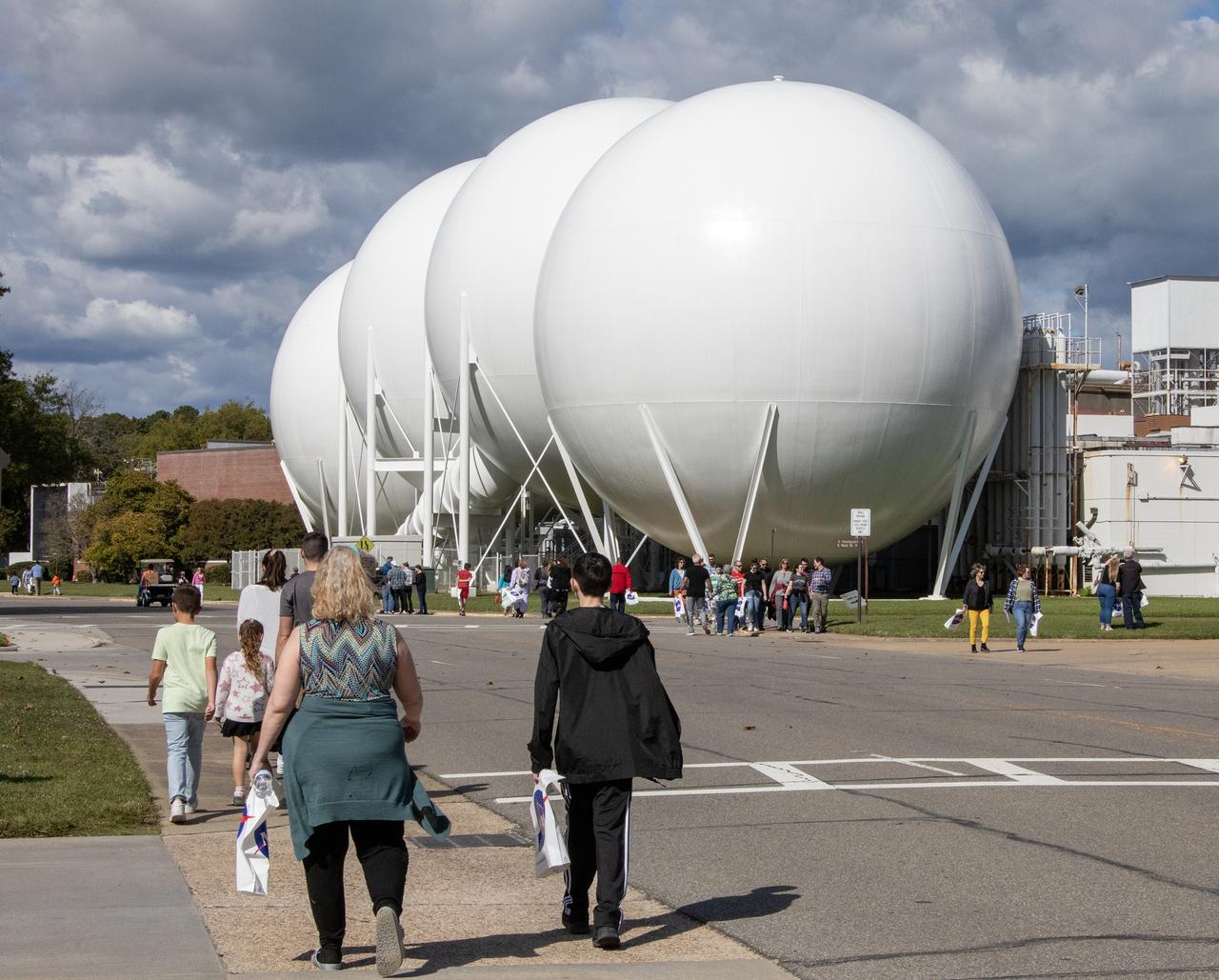
More than 37,000 people registered to attend the NASA Langley open house. Starting with the Annual 5K Moon Walk Run and the talented Nils Larson, X59 pilot and Astronaut Victor Glover reunited at Langley’s hangar and hosted by Center Director Clayton Turner.
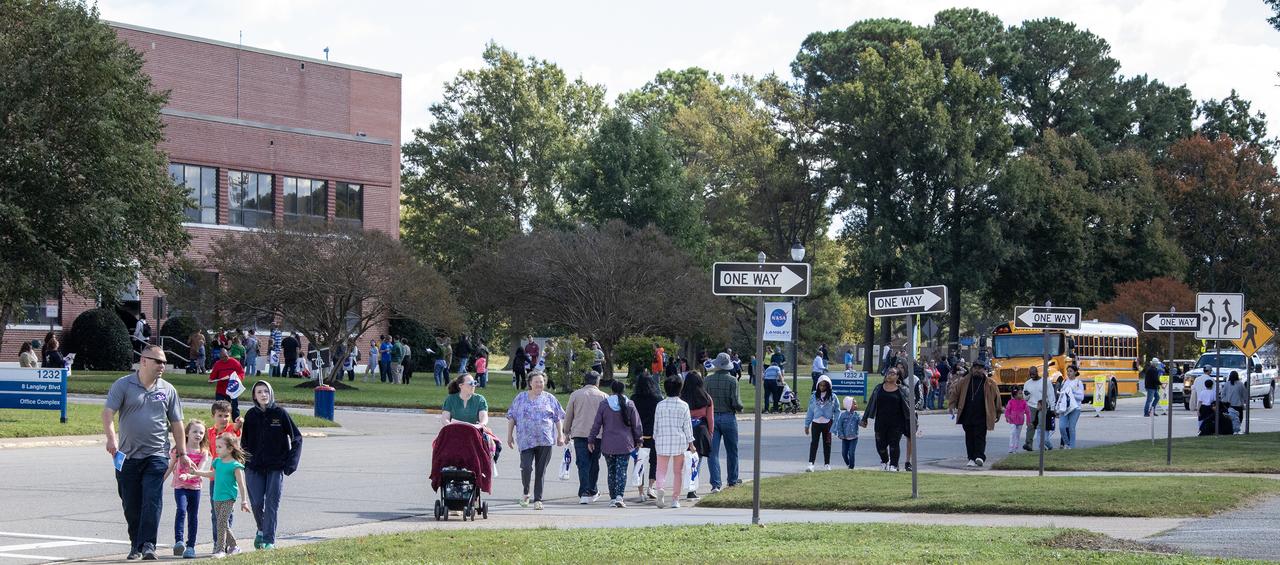
More than 37,000 people registered to attend the NASA Langley open house. Starting with the Annual 5K Moon Walk Run and the talented Nils Larson, X59 pilot and Astronaut Victor Glover reunited at Langley’s hangar and hosted by Center Director Clayton Turner.
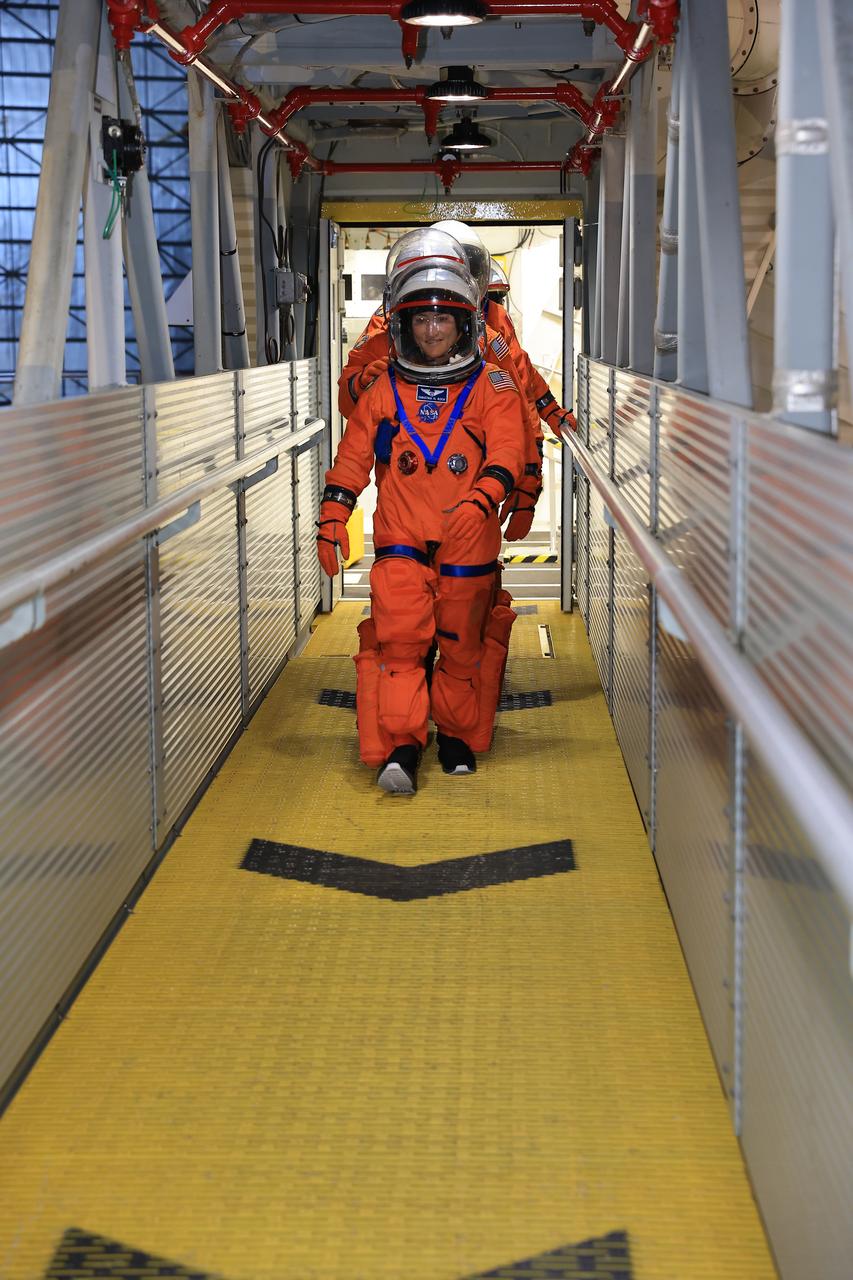
NASA astronaut Christina Koch, Artemis II mission specialist, and the remaining Artemis II crew members walk on the crew access arm of the mobile launcher in the Vehicle Assembly Building at NASA’s Kennedy Space Center in Florida on Tuesday, Aug. 12, 2025. During a two-day operation, the Artemis II team practiced night-run demonstrations of different launch day scenarios like suit-up operations, walk-out, and arriving at the launch pad for the Artemis II test flight. Through the Artemis campaign, NASA will send astronauts to explore the Moon for scientific discovery, economic benefits, and to build the foundation for the first crewed missions to Mars – for the benefit of all.
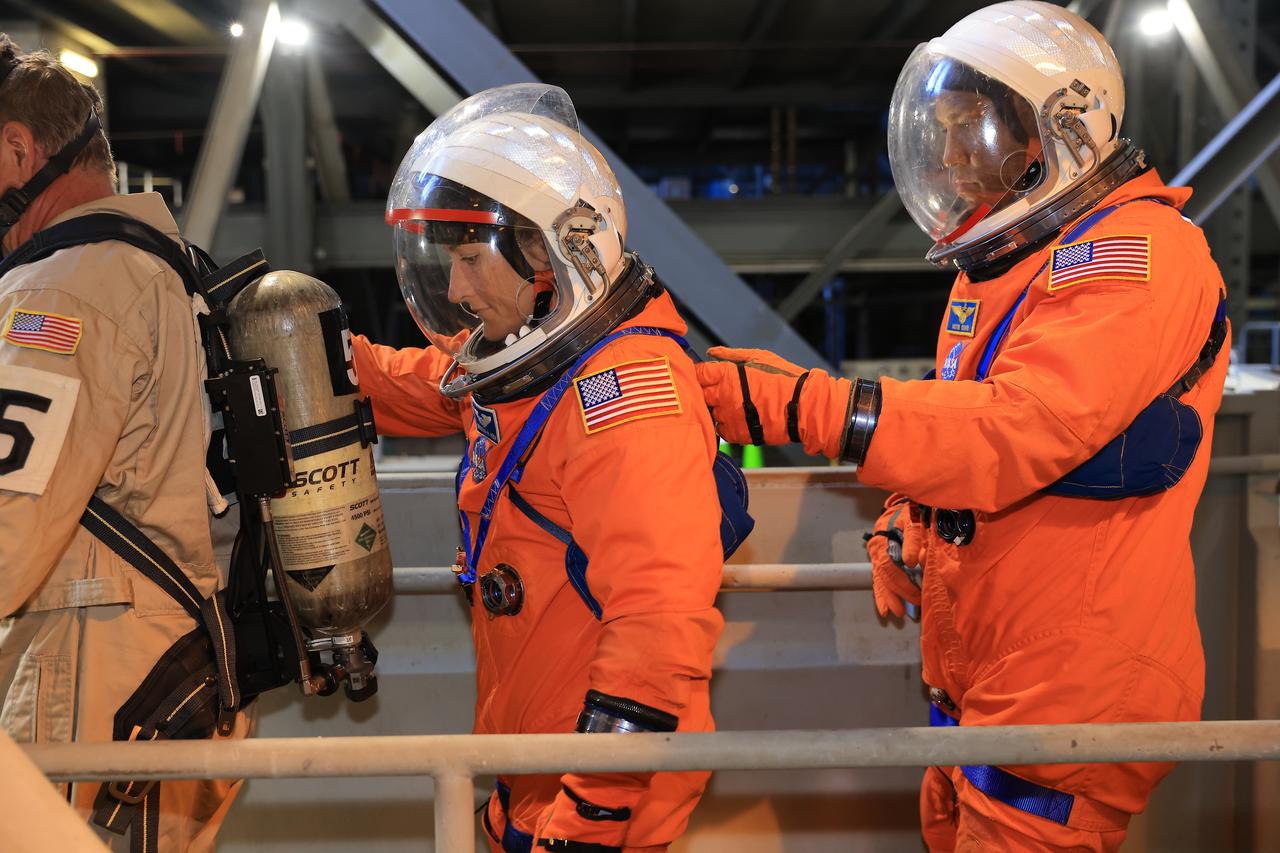
NASA astronauts Christina Koch, Artemis II mission specialist, and Victor Glover, Artemis II pilot, walk on the crew access arm of the mobile launcher in the Vehicle Assembly Building at NASA’s Kennedy Space Center in Florida on Tuesday, Aug. 12, 2025. During a two-day operation, the Artemis II team practiced night-run demonstrations of different launch day scenarios like suit-up operations, walk-out, and arriving at the launch pad for the Artemis II test flight. Through the Artemis campaign, NASA will send astronauts to explore the Moon for scientific discovery, economic benefits, and to build the foundation for the first crewed missions to Mars – for the benefit of all.
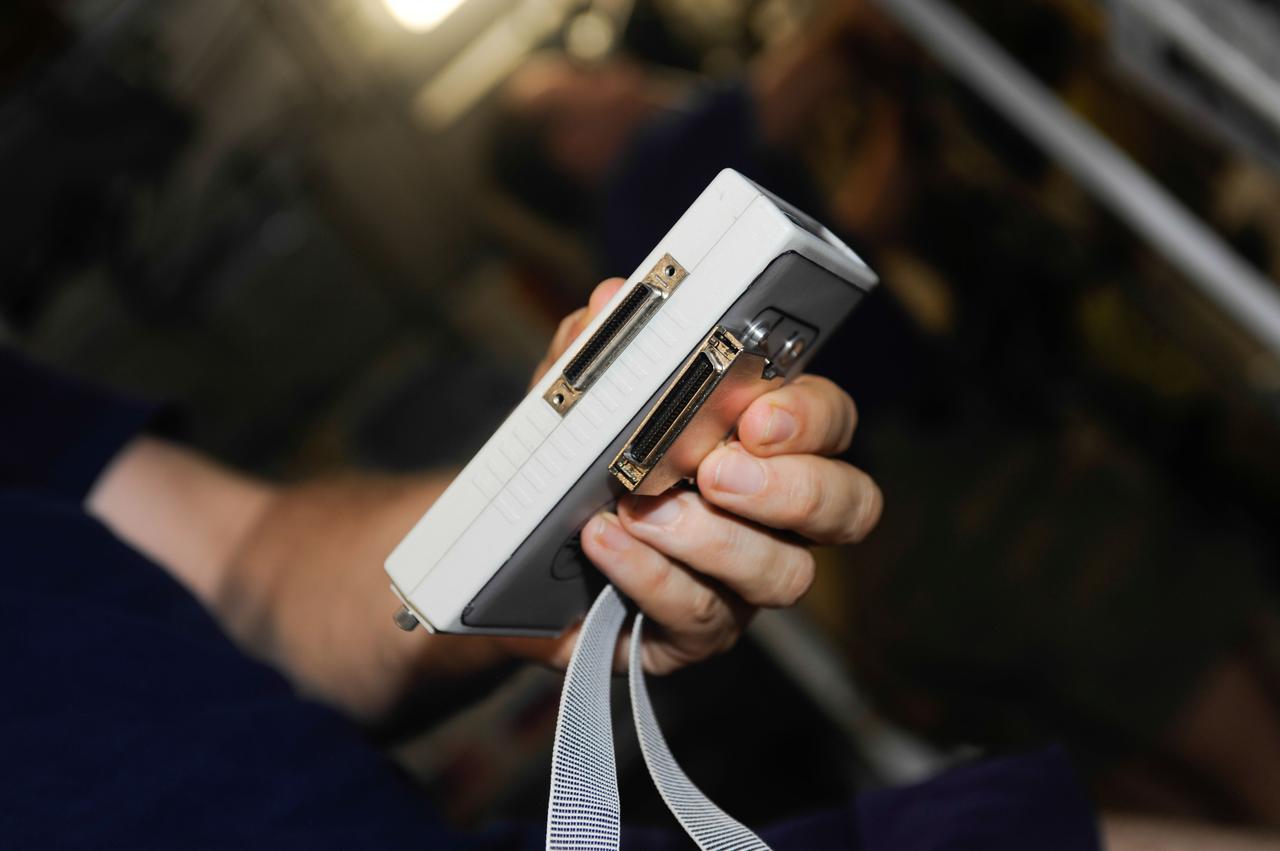
iss038e003689 (11/19/2013) --- A close-up view of the Motocard hardware. The Mechanisms of Sensory-Motor Coordination in Weightlessness (Motocard) investigation is carried out on the treadmill and involves locomotion in various modes of running and walking during various modes of operation of the treadmill. During the test, electromyography of the thigh and calf muscles, support structure response, heart rate, and treadmill load parameters (actual speed, time elapsed, distance, integrated indicators for support structure response) are recorded.

Artemis II astronaut Victor J. Glover participates in NASA Langley’s Open House on Saturday, Oct. 21. More than 37,000 people registered to attend the NASA Langley open house. Starting with the Annual 5K Moon Walk Run and the talented Nils Larson, X59 pilot and Astronaut Victor Glover reunited at Langley’s hangar and hosted by Center Director Clayton Turner.
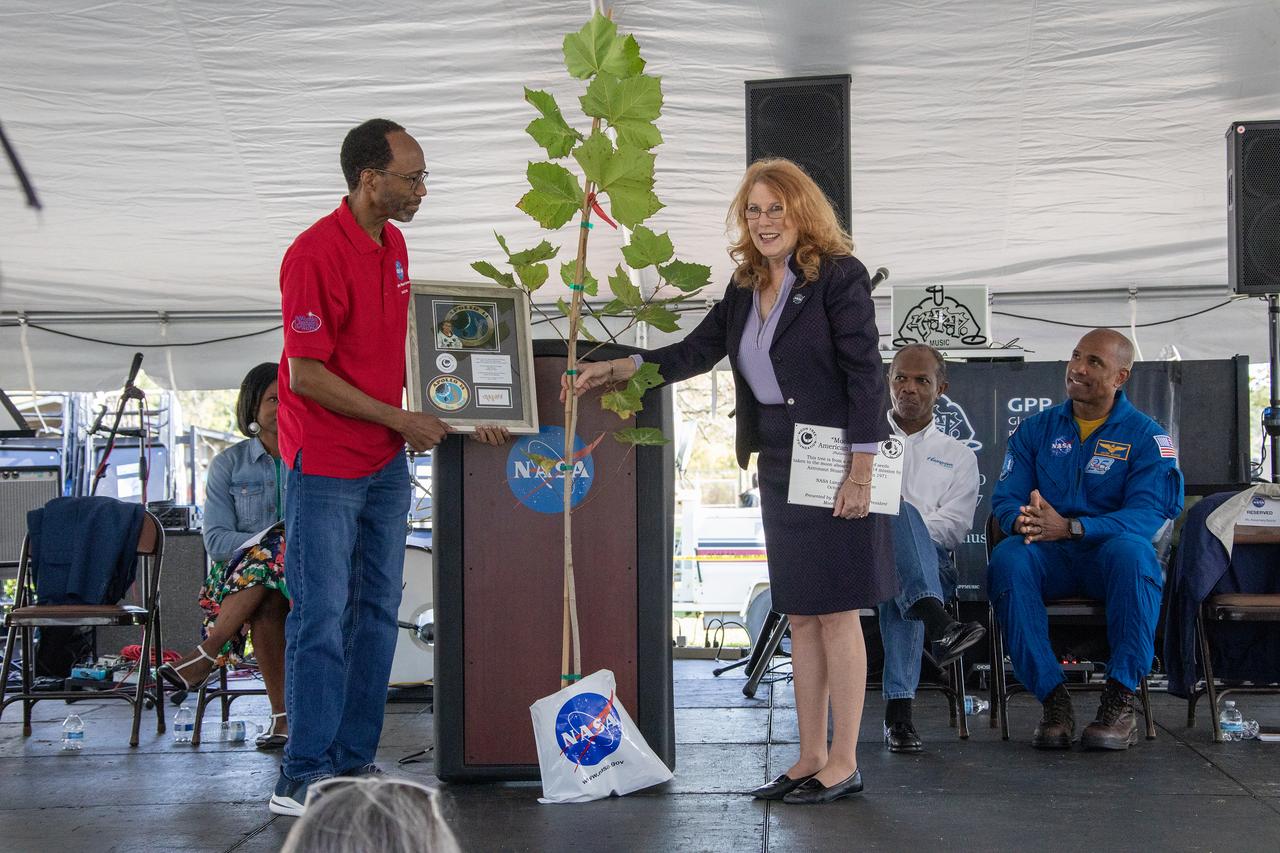
"Moon Tree" American Sycamore tree presented to Langley Center Director Clayton Moore by Rosemary Roosa, President of Moon Tree Foundation. More than 37,000 people registered to attend the NASA Langley open house. Starting with the Annual 5K Moon Walk Run and the talented Nils Larson, X59 pilot and Astronaut Victor Glover reunited at Langley’s hangar and hosted by Center Director Clayton Turner.

Artemis II astronaut Victor J. Glover participates in NASA Langley’s Open House on Saturday, Oct. 21. More than 37,000 people registered to attend the NASA Langley open house. Starting with the Annual 5K Moon Walk Run and the talented Nils Larson, X59 pilot and Astronaut Victor Glover reunited at Langley’s hangar and hosted by Center Director Clayton Turner.

Artemis II astronaut Victor J. Glover participates in NASA Langley’s Open House on Saturday, Oct. 21. More than 37,000 people registered to attend the NASA Langley open house. Starting with the Annual 5K Moon Walk Run and the talented Nils Larson, X59 pilot and Astronaut Victor Glover reunited at Langley’s hangar and hosted by Center Director Clayton Turner.
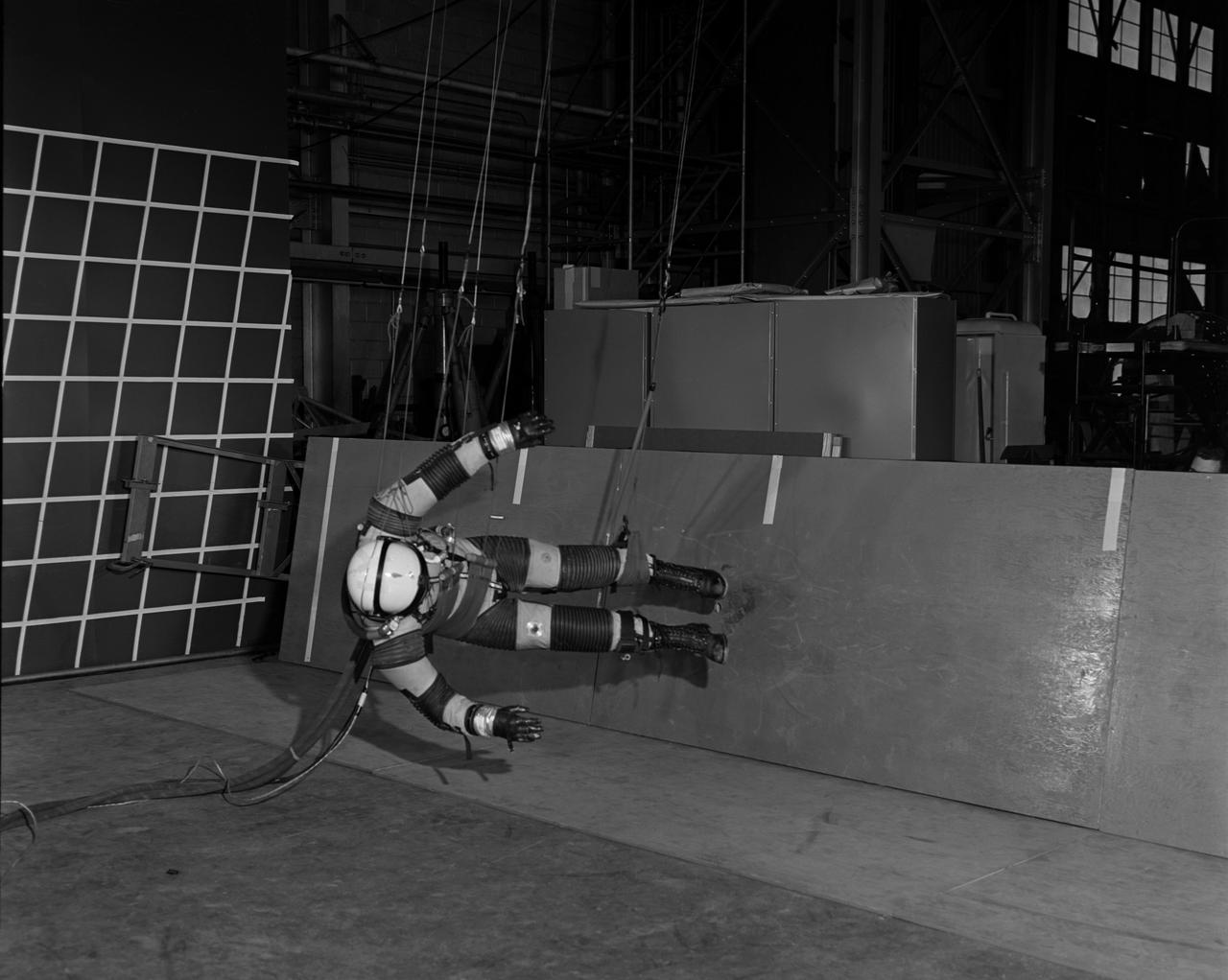
A "suited" test subject on the Reduced Gravity Walking Simulator located in the hangar at Langley Research Center. The initial version of this simulator was located inside the hangar. Later a larger version would be located at the Lunar Landing Facility. The purpose of this simulator was to study the subject while walking, jumping or running. Researchers conducted studies of various factors such as fatigue limit, energy expenditure, and speed of locomotion. Francis B. Smith wrote in "Simulators For Manned Space Research:" "The cables which support the astronaut are supported by an overhead trolley about 150 feet above the center line of the walkway and the support is arranged so that the subject is free to walk, run, jump, and perform other self-locomotive tasks in a more-or-less normal manner, even though he is constrained to move in one place." "The studies thus far show that an astronaut should have no particular difficulty in walking in a pressurized space suit on a hard lunar surface. Rather, the pace was faster and the suit was found to be more comfortable and less fatiguing under lunar "g" than under earth "g." When the test subject wished to travel hurriedly any appreciable distance, a long loping gait at about 10 feet per second was found to be most comfortable." -- Published in James R. Hansen, Spaceflight Revolution: NASA Langley Research Center From Sputnik to Apollo, (Washington: NASA, 1995), p. 377; Francis B. Smith, "Simulators For Manned Space Research," Paper for 1966 IEEE International Convention, New York, NY, March 21-25, 1966.
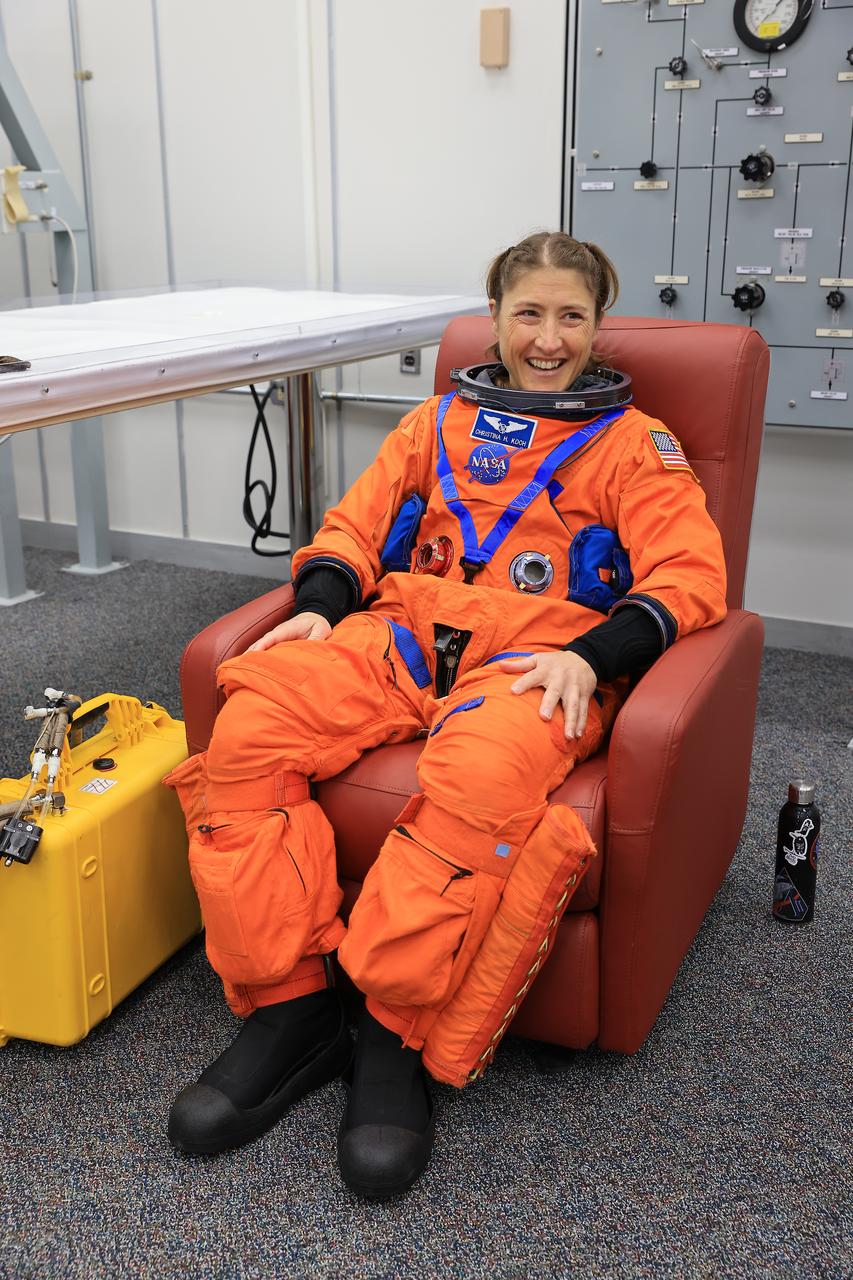
NASA astronaut Christina Koch, Artemis II mission specialist, smiles during suit-up operations inside the Neil A. Armstrong Operations and Checkout Building at NASA’s Kennedy Space Center in Florida on Monday, Aug. 11, 2025. During a two-day operation, the Artemis II team practiced night-run demonstrations of different launch day scenarios like suit-up operations, walk-out, and arriving at the launch pad for the Artemis II test flight. Through the Artemis campaign, NASA will send astronauts to explore the Moon for scientific discovery, economic benefits, and to build the foundation for the first crewed missions to Mars – for the benefit of all.
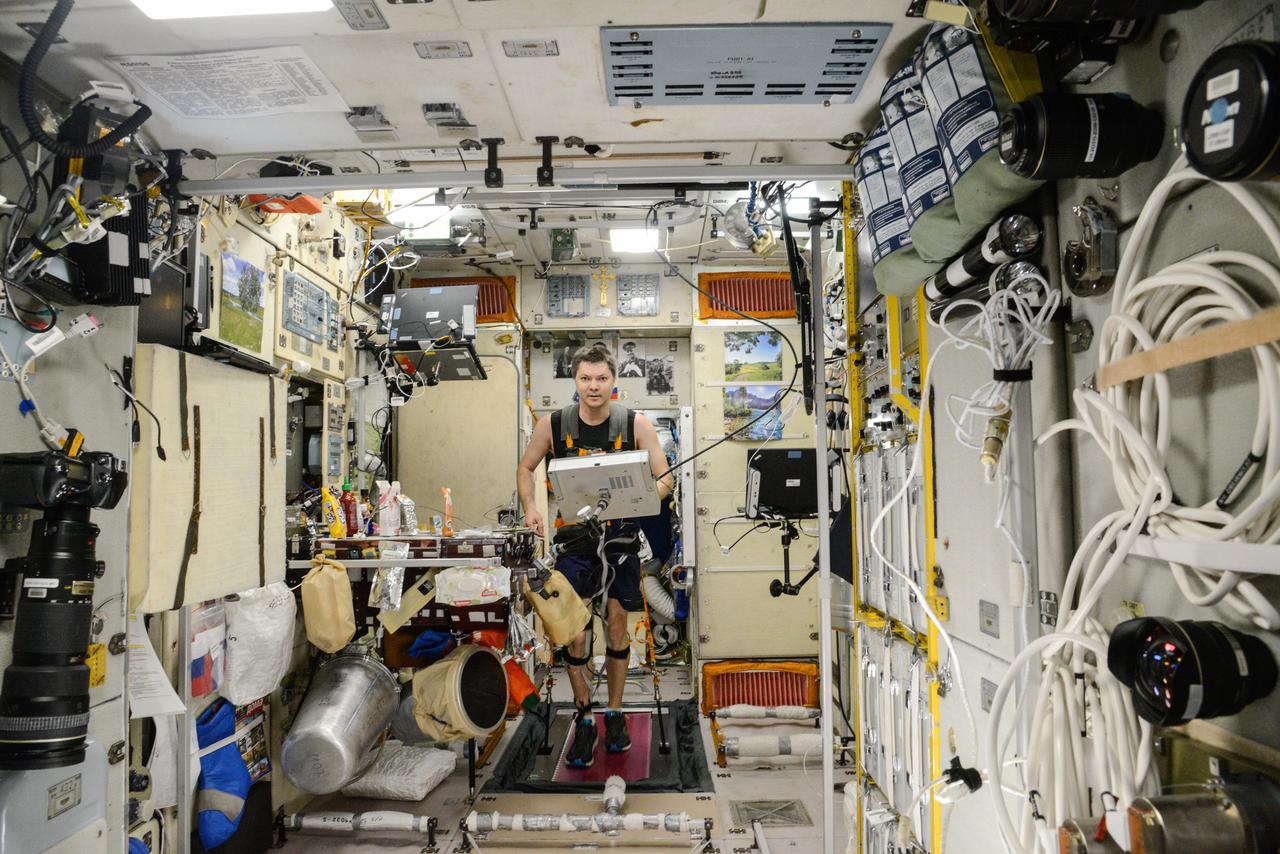
iss045e082560 (10/28/2015) --- Roscosmos cosmonaut Oleg Kononenko, wearing a harness and electrodes, is photographed during Motocard experiment operations in the Zvezda Service Module (SM) aboard the International Space Station (ISS). The Mechanisms of Sensory-Motor Coordination in Weightlessness (Motocard) investigation is carried out on the treadmill and involves locomotion in various modes of running and walking during various modes of operation of the treadmill. During the test, electromyography of the thigh and calf muscles, support structure response, heart rate, and treadmill load parameters (actual speed, time elapsed, distance, integrated indicators for support structure response) are recorded.
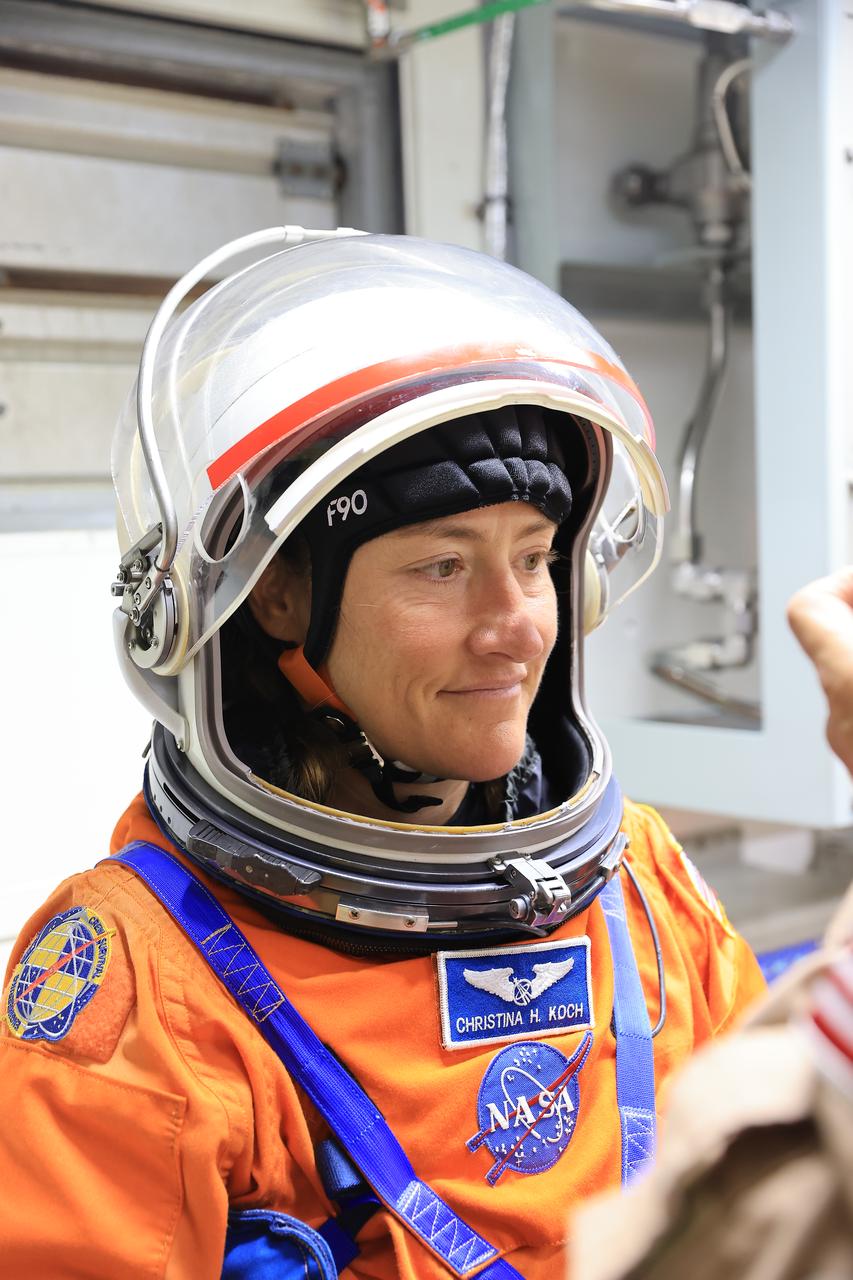
NASA astronaut Christina Koch, Artemis II mission specialist, stands in the White Room on the crew access arm of the mobile launcher in the Vehicle Assembly Building at NASA’s Kennedy Space Center in Florida on Tuesday, Aug. 12, 2025. During a two-day operation, the Artemis II team practiced night-run demonstrations of different launch day scenarios like suit-up operations, walk-out, and arriving at the launch pad for the Artemis II test flight. Through the Artemis campaign, NASA will send astronauts to explore the Moon for scientific discovery, economic benefits, and to build the foundation for the first crewed missions to Mars – for the benefit of all.
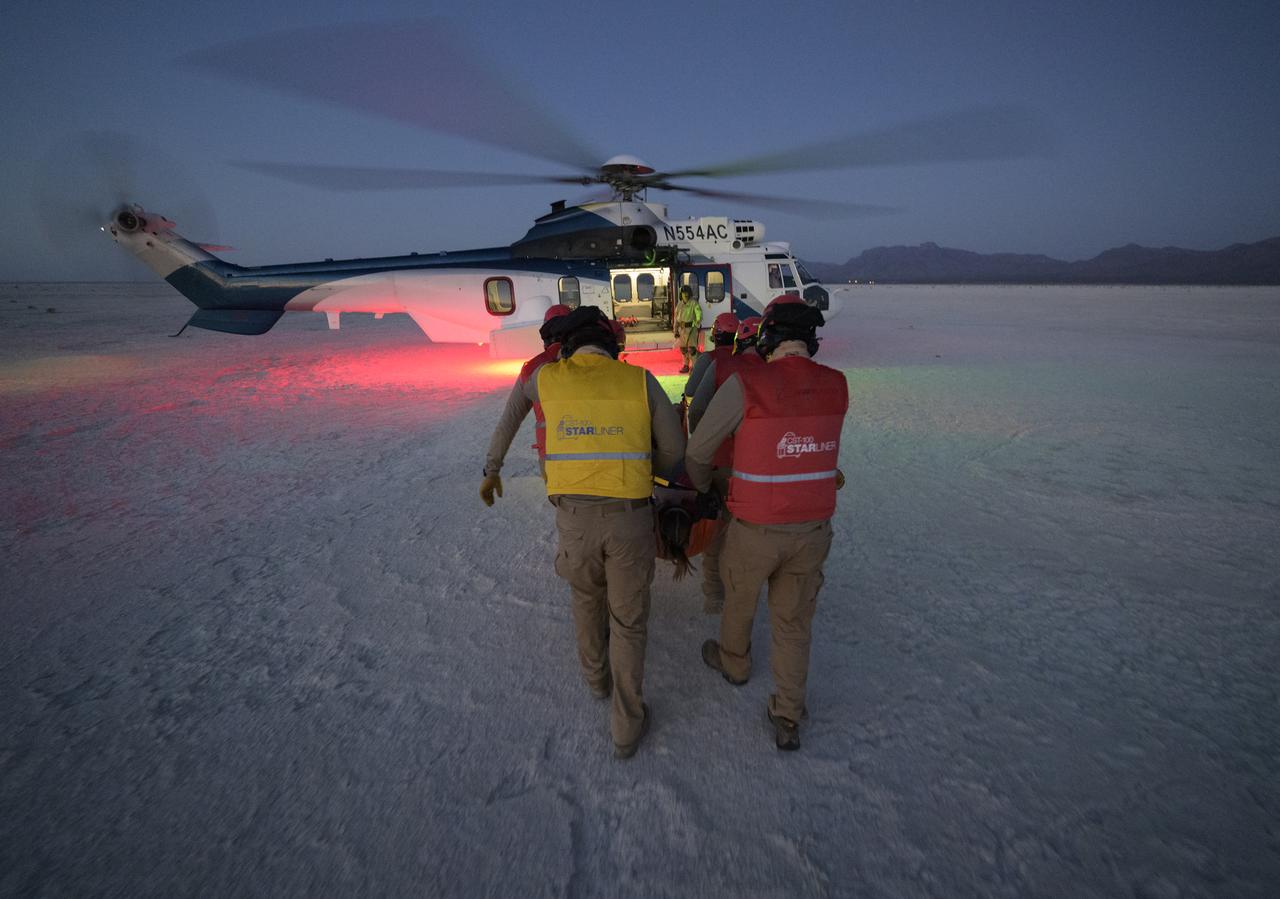
Boeing and NASA teams participate in a mission dress rehearsal to prepare for the landing of the Boeing CST-100 Starliner spacecraft in White Sands, New Mexico, Sunday, June 16, 2024. During the dry-run, teams practice assisting astronauts that might need time to be re-acclimated to Earth’s gravity before walking. NASA astronauts Butch Wilmore and Suni Williams are Starliner’s first human crew and travelled to the International Space Station as part of NASA's Boeing Crew Flight Test. The mission serves as an end-to-end demonstration of Boeing’s crew transportation system as a provider for NASA’s Commercial Crew Program. Photo Credit: (NASA/Bill Ingalls)
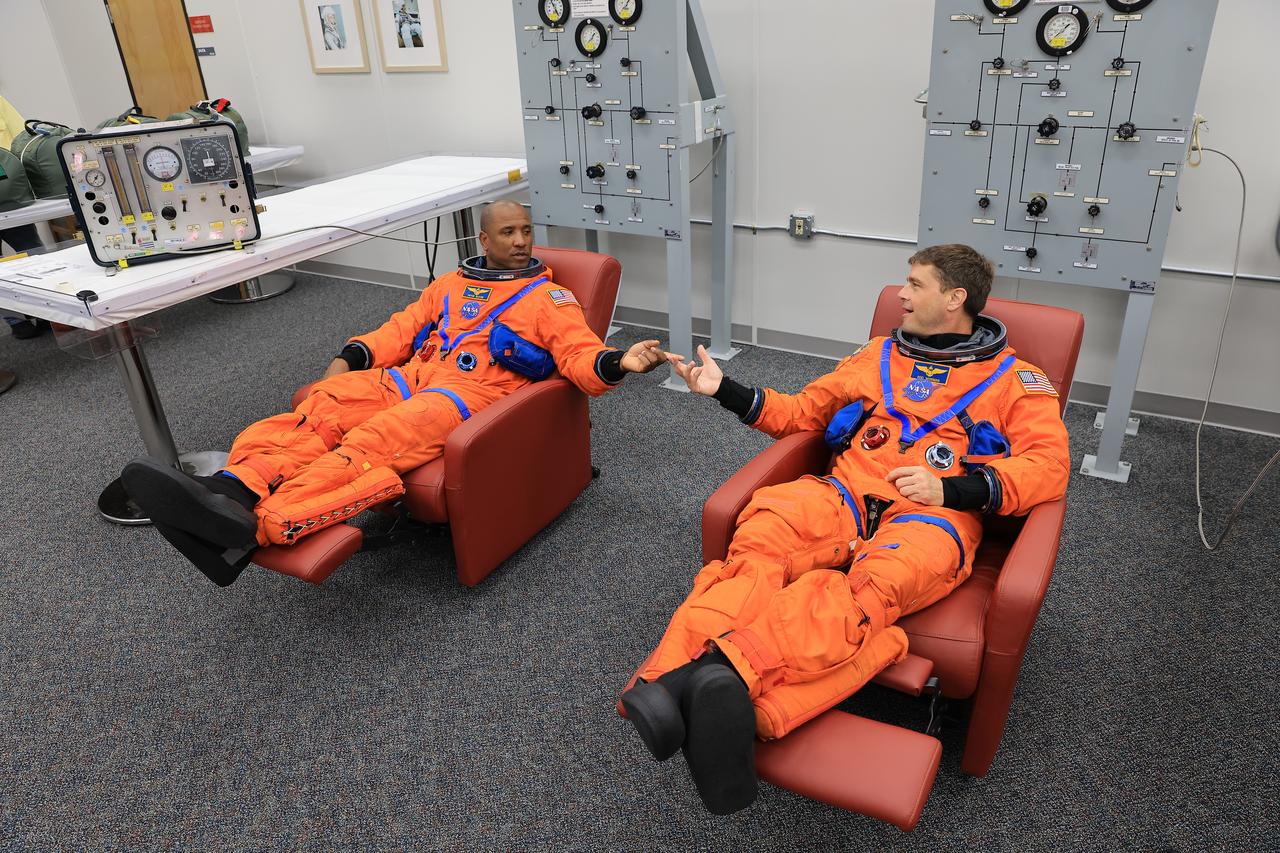
From left to right, NASA astronauts Victor Glover, Artemis II pilot and Reid Wiseman, Artemis II commander, conduct suit-up operations inside the Neil A. Armstrong Operations and Checkout Building at NASA’s Kennedy Space Center in Florida on Monday, Aug. 11, 2025. During a two-day operation, the Artemis II team practiced night-run demonstrations of different launch day scenarios like suit-up operations, walk-out, and arriving at the launch pad for the Artemis II test flight. Through the Artemis campaign, NASA will send astronauts to explore the Moon for scientific discovery, economic benefits, and to build the foundation for the first crewed missions to Mars – for the benefit of all.
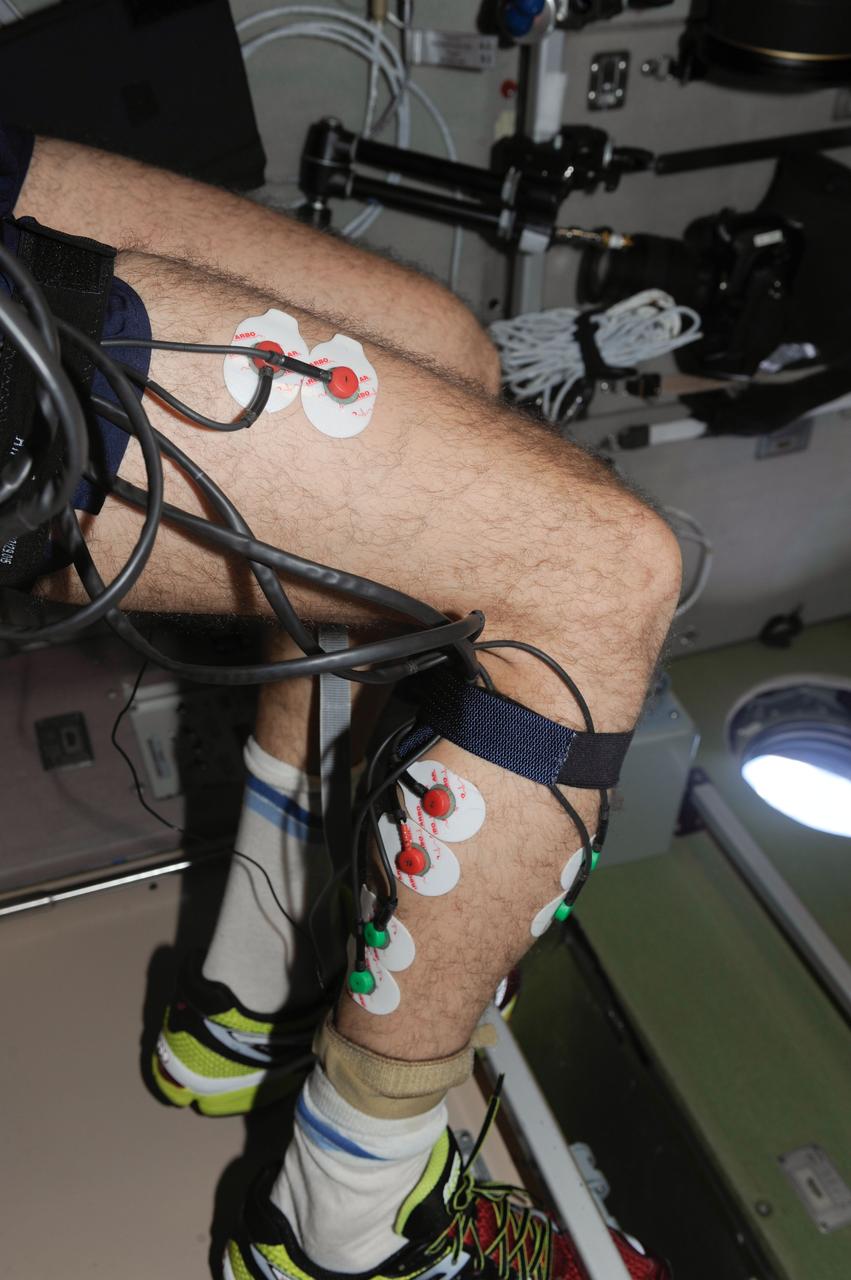
iss038e003641 (11/18/2014) --- A View of Cosmonaut Sergey Ryaznskiy (lower body only), setting up the Motocard experiment in the Service Module (SM) aboard the International Space Station (ISS). The Mechanisms of Sensory-Motor Coordination in Weightlessness (Motocard) investigation is carried out on the treadmill and involves locomotion in various modes of running and walking during various modes of operation of the treadmill. During the test, electromyography of the thigh and calf muscles, support structure response, heart rate, and treadmill load parameters (actual speed, time elapsed, distance, integrated indicators for support structure response) are recorded.

NASA astronaut Christina Koch, Artemis II mission specialist, dons her glove inside the White Room on the crew access arm of the mobile launcher in the Vehicle Assembly Building at NASA’s Kennedy Space Center in Florida on Tuesday, Aug. 12, 2025. During a two-day operation, the Artemis II team practiced night-run demonstrations of different launch day scenarios like suit-up operations, walk-out, and arriving at the launch pad for the Artemis II test flight. Through the Artemis campaign, NASA will send astronauts to explore the Moon for scientific discovery, economic benefits, and to build the foundation for the first crewed missions to Mars – for the benefit of all.
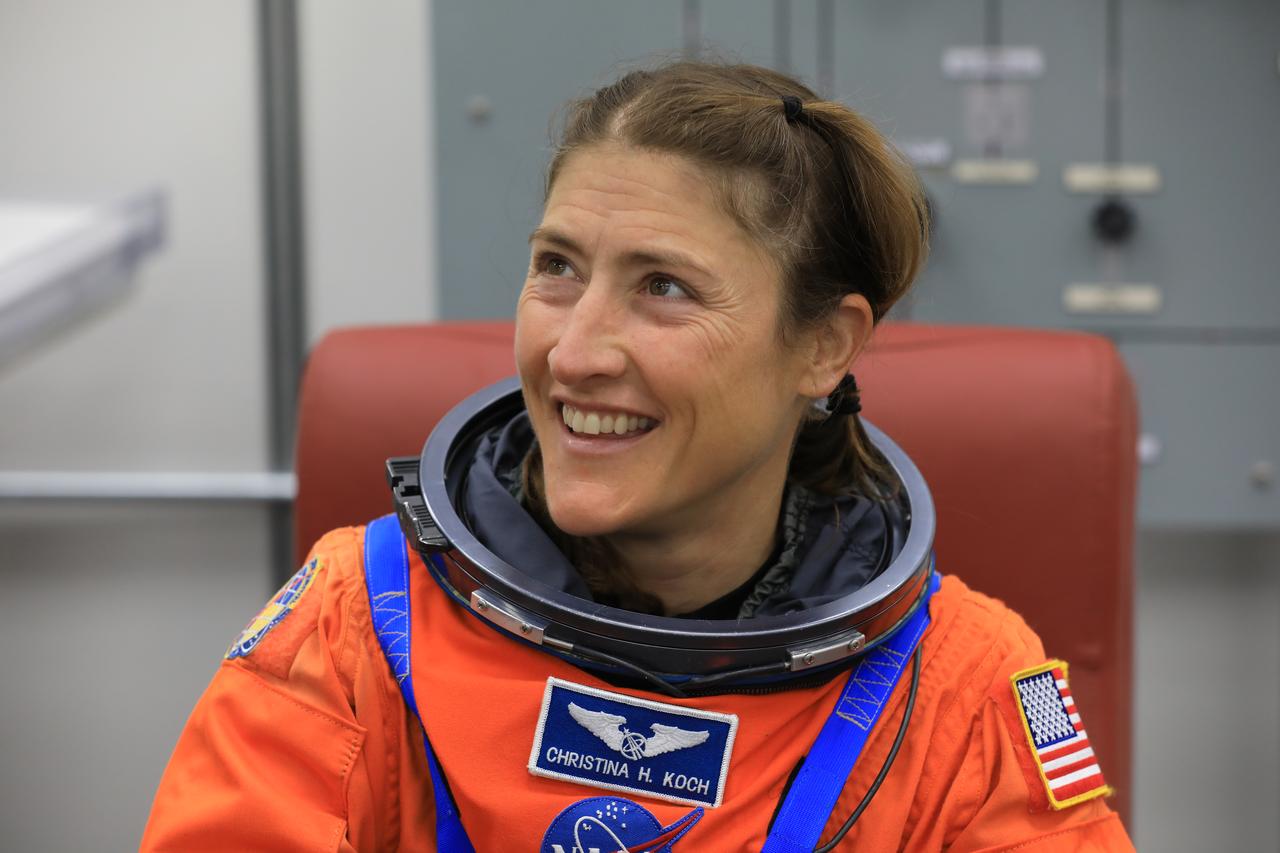
NASA astronaut Christina Koch, Artemis II mission specialist, smiles during suit-up operations inside the Neil A. Armstrong Operations and Checkout Building at NASA’s Kennedy Space Center in Florida on Monday, Aug. 11, 2025. During a two-day operation, the Artemis II team practiced night-run demonstrations of different launch day scenarios like suit-up operations, walk-out, and arriving at the launch pad for the Artemis II test flight. Through the Artemis campaign, NASA will send astronauts to explore the Moon for scientific discovery, economic benefits, and to build the foundation for the first crewed missions to Mars – for the benefit of all.

NASA astronauts Christina Koch, Artemis II mission specialist and Victor Glover, Artemis II pilot, practice walking out of an emergency egress basket at Launch Complex 39B at NASA’s Kennedy Space Center in Florida on Tuesday, Aug. 12, 2025. The baskets, similar to gondolas on ski lifts, are used in the case of an unlikely emergency during launch countdown to enable astronauts and other pad personnel to quickly escape from the mobile launcher to the base of the pad where waiting emergency transport vehicles will drive them away. During a two-day operation, the Artemis II team practiced night-run demonstrations of different launch day scenarios for the Artemis II test flight.
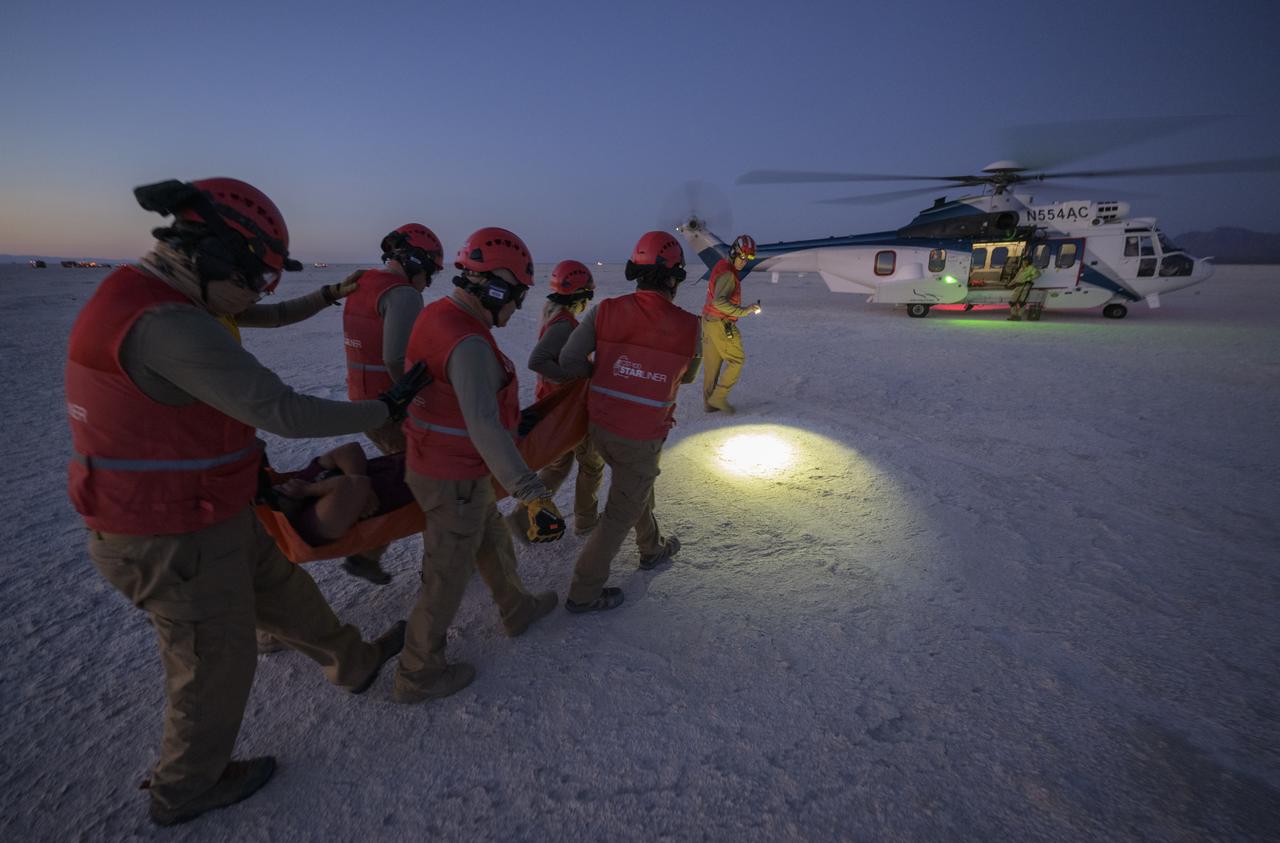
Boeing and NASA teams participate in a mission dress rehearsal to prepare for the landing of the Boeing CST-100 Starliner spacecraft in White Sands, New Mexico, Sunday, June 16, 2024. During the dry-run, teams practice assisting astronauts that might need time to be re-acclimated to Earth’s gravity before walking. NASA astronauts Butch Wilmore and Suni Williams are Starliner’s first human crew and travelled to the International Space Station as part of NASA's Boeing Crew Flight Test. The mission serves as an end-to-end demonstration of Boeing’s crew transportation system as a provider for NASA’s Commercial Crew Program. Photo Credit: (NASA/Bill Ingalls)
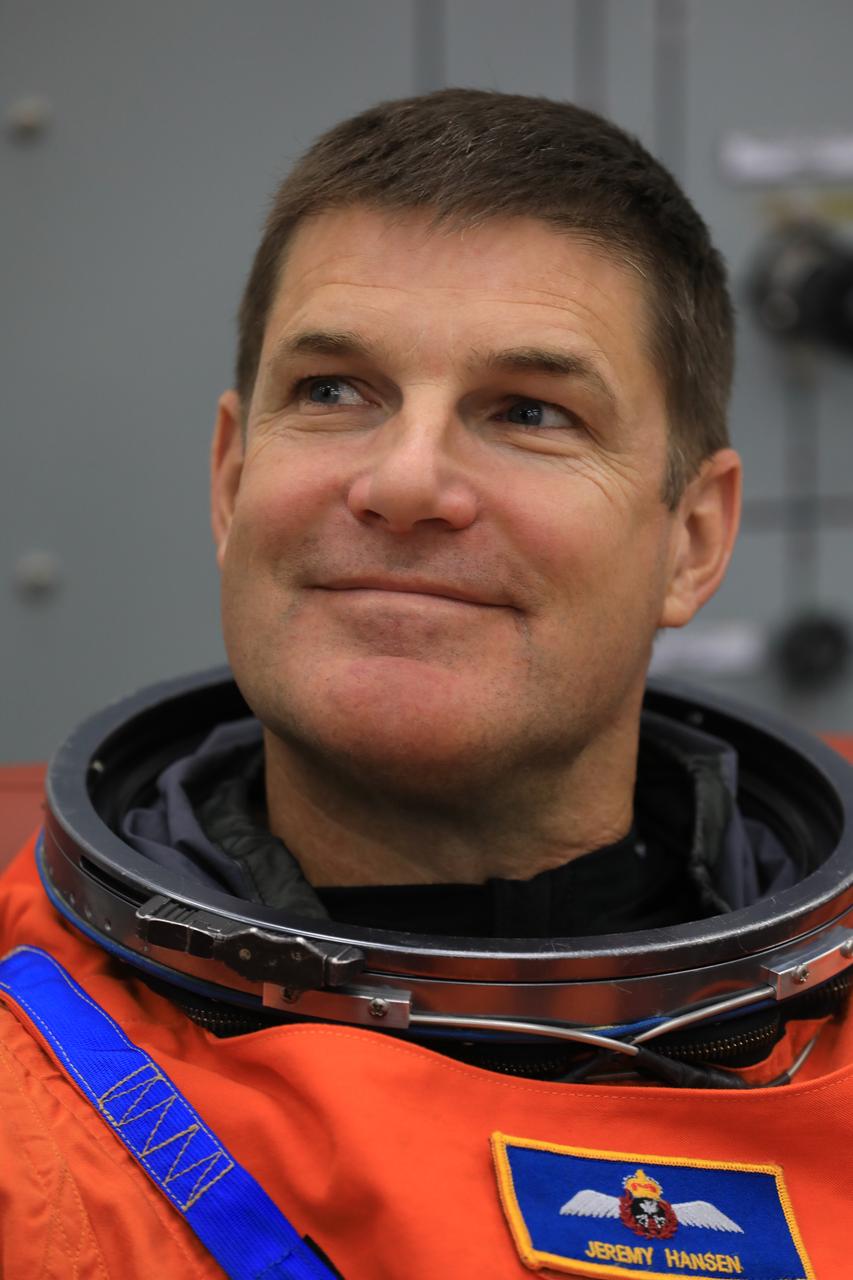
CSA (Canadian Space Agency) astronaut Jeremy Hansen, Artemis II mission specialist, smiles during suit-up operations inside the Neil A. Armstrong Operations and Checkout Building at NASA’s Kennedy Space Center in Florida on Monday, Aug. 11, 2025. During a two-day operation, the Artemis II team practiced night-run demonstrations of different launch day scenarios like suit-up operations, walk-out, and arriving at the launch pad for the Artemis II test flight. Through the Artemis campaign, NASA will send astronauts to explore the Moon for scientific discovery, economic benefits, and to build the foundation for the first crewed missions to Mars – for the benefit of all.
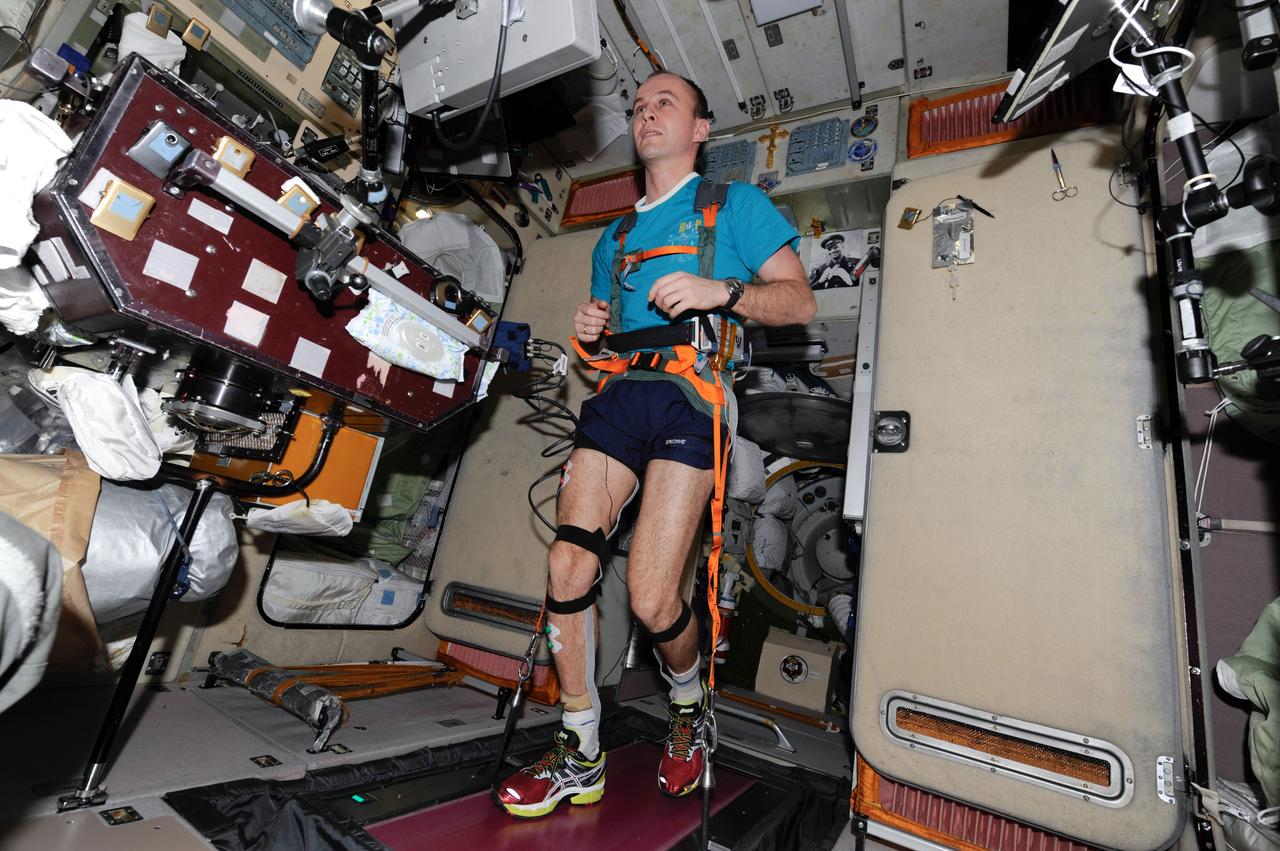
ISS038-E-003646 (18 Nov. 2013) --- Russian cosmonaut Sergey Ryazanskiy, wearing a harness and electrodes, is photographed during Motocard experiment operations in the Zvezda Service Module (SM) aboard the International Space Station (ISS). The Mechanisms of Sensory-Motor Coordination in Weightlessness (Motocard) investigation is carried out on the treadmill and involves locomotion in various modes of running and walking during various modes of operation of the treadmill. During the test, electromyography of the thigh and calf muscles, support structure response, heart rate, and treadmill load parameters (actual speed, time elapsed, distance, integrated indicators for support structure response) are recorded.
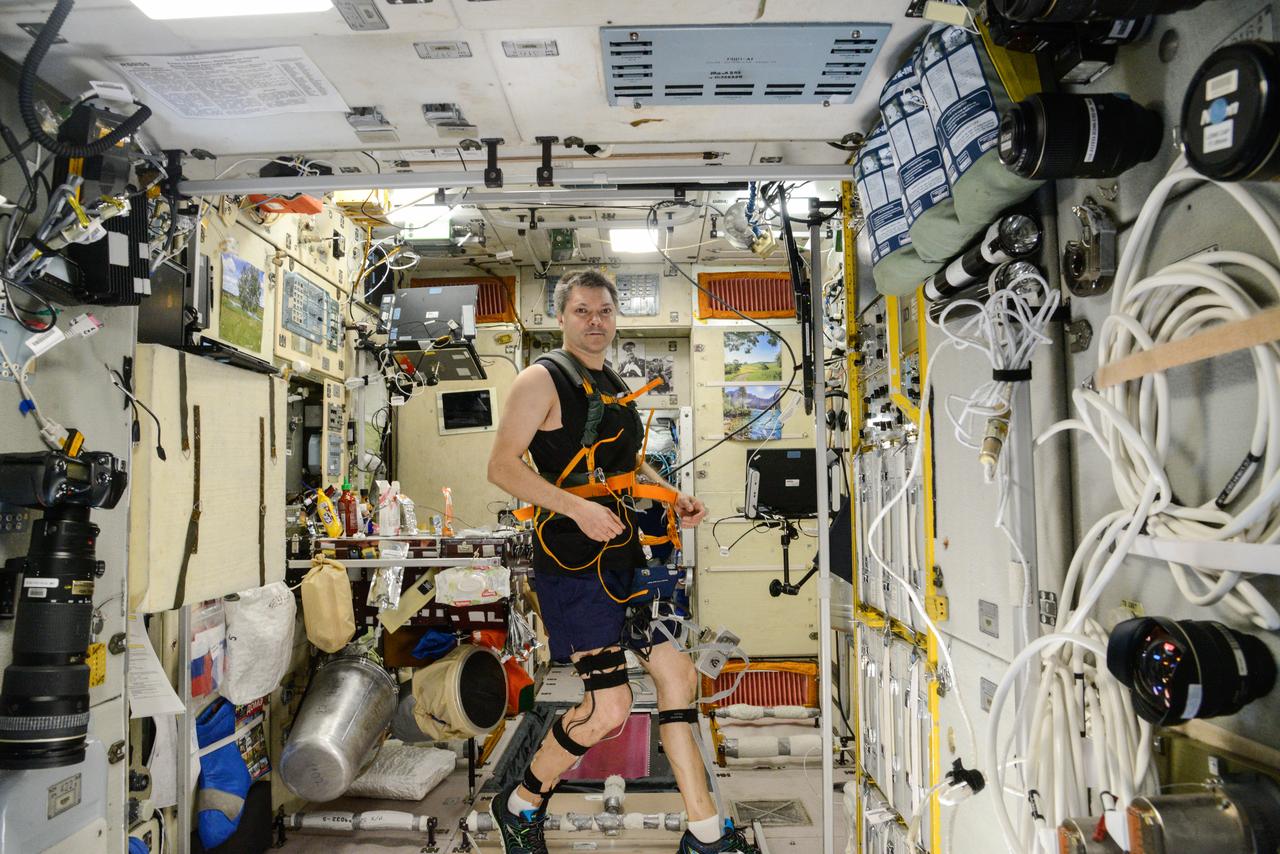
iss045e082558 (10/28/2015) --- Roscosmos cosmonaut Oleg Kononenko, wearing a harness and electrodes, is photographed during Motocard experiment operations in the Zvezda Service Module (SM) aboard the International Space Station (ISS). The Mechanisms of Sensory-Motor Coordination in Weightlessness (Motocard) investigation is carried out on the treadmill and involves locomotion in various modes of running and walking during various modes of operation of the treadmill. During the test, electromyography of the thigh and calf muscles, support structure response, heart rate, and treadmill load parameters (actual speed, time elapsed, distance, integrated indicators for support structure response) are recorded.
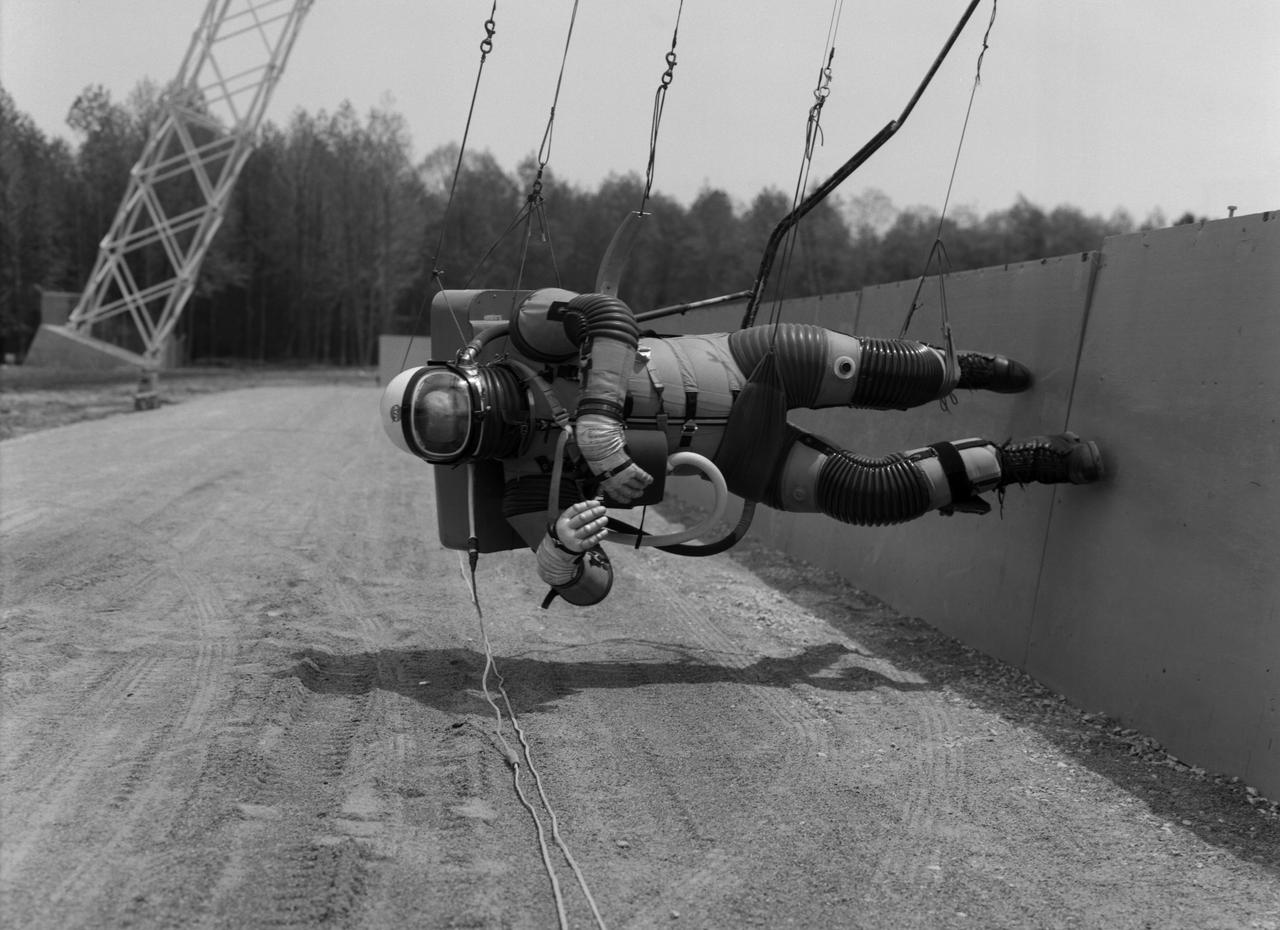
Test subject wearing the pressurized "space" suit for the Reduced Gravity Walking Simulator located at the Lunar Landing Facility. The purpose of this simulator was to study the subject while walking, jumping or running. Researchers conducted studies of various factors such as fatigue limit, energy expenditure, and speed of locomotion. A.W. Vigil described the purpose of the simulator in his paper "Discussion of Existing and Planned Simulators for Space Research," "When the astronauts land on the moon they will be in an unfamiliar environment involving, particularly, a gravitational field only one-sixth as strong as on earth. A novel method of simulating lunar gravity has been developed and is supported by a puppet-type suspension system at the end of a long pendulum. A floor is provided at the proper angle so that one-sixth of the subject's weight is supported by the floor with the remainder being supported by the suspension system. This simulator allows almost complete freedom in vertical translation and pitch and is considered to be a very realistic simulation of the lunar walking problem. For this problem this simulator suffers only slightly from the restrictions in lateral movement it puts on the test subject. This is not considered a strong disadvantage for ordinary walking problems since most of the motions do, in fact, occur in the vertical plane. However, this simulation technique would be severely restrictive if applied to the study of the extra-vehicular locomotion problem, for example, because in this situation complete six degrees of freedom are rather necessary. This technique, in effect, automatically introduces a two-axis attitude stabilization system into the problem. The technique could, however, be used in preliminary studies of extra-vehicular locomotion where, for example, it might be assumed that one axis of the attitude control system on the astronaut maneuvering unit may have failed." -- Published in James R. Hansen, Spaceflight Revolution: NASA Langley Research Center From Sputnik to Apollo, (Washington: NASA, 1995), p. 377; A.W. Vigil, "Discussion of Existing and Planned Simulators for Space Research," Paper presented at Conference on the Role of Simulation in Space Technology," Blacksburg, VA, August 17-21, 1964.

Astronaut Roger Chaffee on the Reduced Gravity Walking Simulator located at the Lunar Landing Facility. The purpose of this simulator was to study the subject while walking, jumping or running. Researchers conducted studies of various factors such as fatigue limit, energy expenditure, and speed of locomotion. A.W. Vigil, described the simulator as follows: "When the astronauts land on the moon they will be in an unfamiliar environment involving, particularly, a gravitational field only one-sixth as strong as on earth. A novel method of simulating lunar gravity has been developed and is supported by a puppet-type suspension system at the end of a long pendulum. A floor is provided at the proper angle so that one-sixth of the subject's weight is supported by the floor with the remainder being supported by the suspension system. This simulator allows almost complete freedom in vertical translation and pitch and is considered to be a very realistic simulation of the lunar walking problem. For this problem this simulator suffers only slightly from the restrictions in lateral movement it puts on the test subject. This is not considered a strong disadvantage for ordinary walking problems since most of the motions do, in fact, occur in the vertical plane. However, this simulation technique would be severely restrictive if applied to the study of the extra-vehicular locomotion problem, for example, because in this situation complete six degrees of freedom are rather necessary. This technique, in effect, automatically introduces a two-axis attitude stabilization system into the problem. The technique could, however, be used in preliminary studies of extra-vehicular locomotion where, for example, it might be assumed that one axis of the attitude control system on the astronaut maneuvering unit may have failed." -- Published in James R. Hansen, Spaceflight Revolution: NASA Langley Research Center From Sputnik to Apollo, NASA SP-4308, p. 377; A.W. Vigil, "Discussion of Existing and Planned Simulators for Space Research," Paper presented at Conference on the Role of Simulation in Space Technology," Blacksburg, VA, August 17-21, 1964.
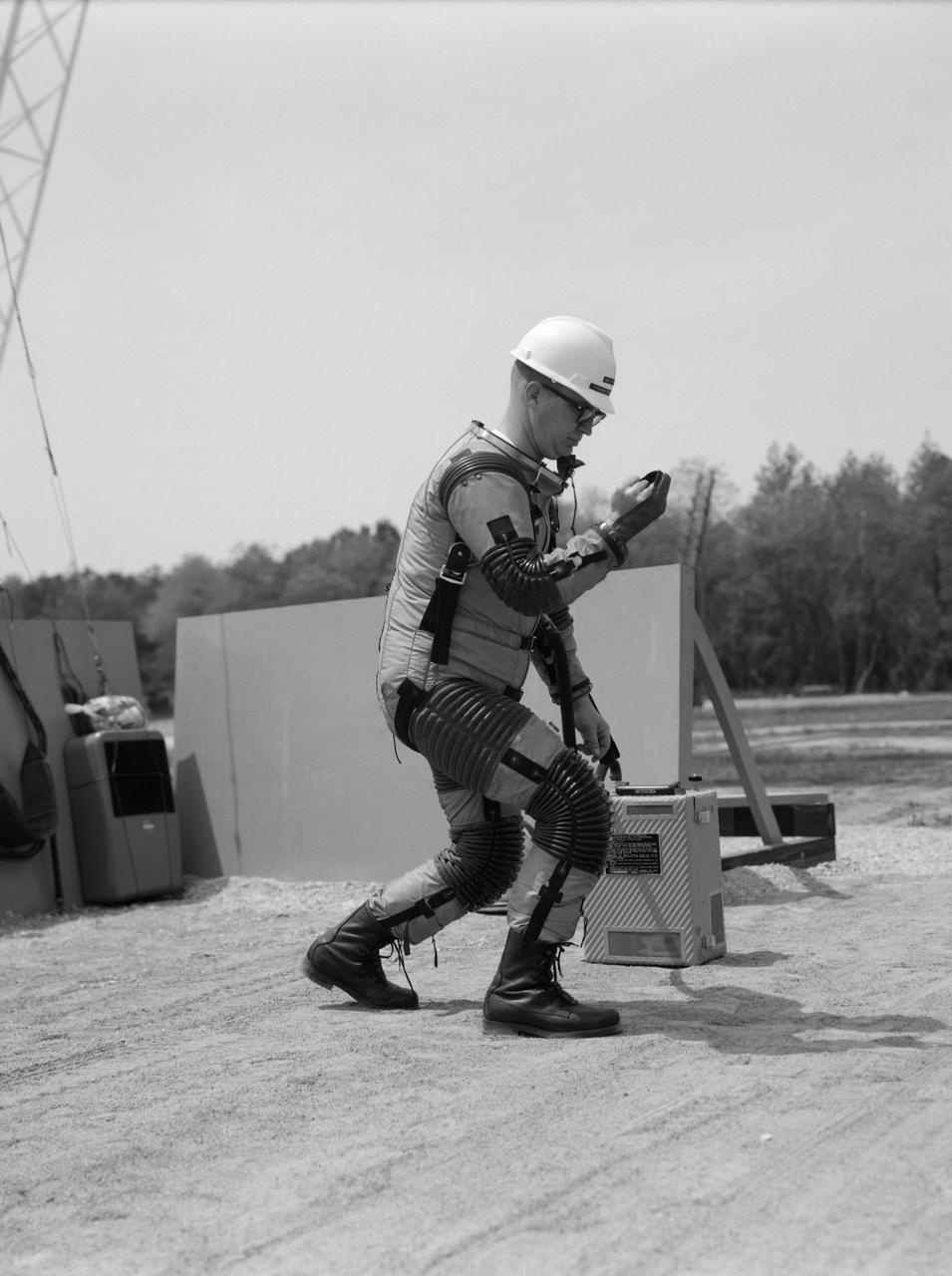
Special "space" suit for the Reduced Gravity Walking Simulator located at the Lunar Landing Facility. The purpose of this simulator was to study the subject while walking, jumping or running. Researchers conducted studies of various factors such as fatigue limit, energy expenditure, and speed of locomotion. A.W. Vigil described the purpose of the simulator in his paper "Discussion of Existing and Planned Simulators for Space Research," "When the astronauts land on the moon they will be in an unfamiliar environment involving, particularly, a gravitational field only one-sixth as strong as on earth. A novel method of simulating lunar gravity has been developed and is supported by a puppet-type suspension system at the end of a long pendulum. A floor is provided at the proper angle so that one-sixth of the subject's weight is supported by the floor with the remainder being supported by the suspension system. This simulator allows almost complete freedom in vertical translation and pitch and is considered to be a very realistic simulation of the lunar walking problem. For this problem this simulator suffers only slightly from the restrictions in lateral movement it puts on the test subject. This is not considered a strong disadvantage for ordinary walking problems since most of the motions do, in fact, occur in the vertical plane. However, this simulation technique would be severely restrictive if applied to the study of the extra-vehicular locomotion problem, for example, because in this situation complete six degrees of freedom are rather necessary. This technique, in effect, automatically introduces a two-axis attitude stabilization system into the problem. The technique could, however, be used in preliminary studies of extra-vehicular locomotion where, for example, it might be assumed that one axis of the attitude control system on the astronaut maneuvering unit may have failed." -- Published in James R. Hansen, Spaceflight Revolution: NASA Langley Research Center From Sputnik to Apollo, (Washington: NASA, 1995), p. 377; A.W. Vigil, "Discussion of Existing and Planned Simulators for Space Research," Paper presented at Conference on the Role of Simulation in Space Technology," Blacksburg, VA, August 17-21, 1964.
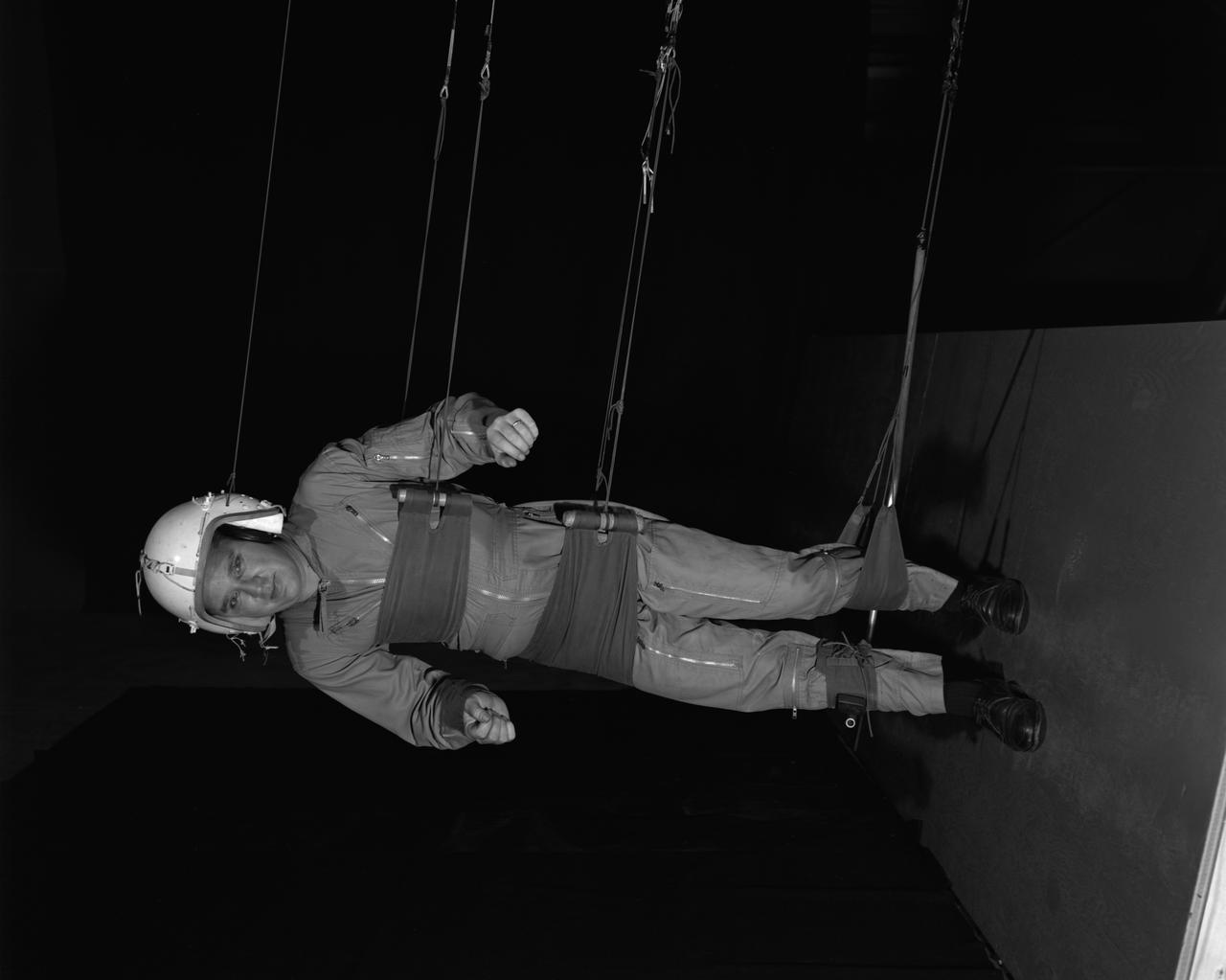
Reduced Gravity Walking Simulator located in the hangar at Langley Research Center. The initial version of this simulator was located inside the hangar. Later a larger version would be located at the Lunar Landing Facility. The purpose of this simulator was to study the subject while walking, jumping or running. Researchers conducted studies of various factors such as fatigue limit, energy expenditure, and speed of locomotion. A.W. Vigil wrote in his paper Discussion of Existing and Planned Simulators for Space Research, When the astronauts land on the moon they will be in an unfamiliar environment involving, particularly, a gravitational field only one-sixth as strong as on earth. A novel method of simulating lunar gravity has been developed and is supported by a puppet-type suspension system at the end of a long pendulum. A floor is provided at the proper angle so that one-sixth of the subject' s weight is supported by the floor with the remainder being supported by the suspension system. This simulator allows almost complete freedom in vertical translation and pitch and is considered to be a very realistic simulation of the lunar walking problem. For this problem this simulator suffers only slightly from the restrictions in lateral movement it puts on the test subject. This is not considered a strong disadvantage for ordinary walking problems since most of the motions do, in fact, occur in the vertical plane. However, this simulation technique would be severely restrictive if applied to the study of the extra-vehicular locomotion problem, for example, because in this situation complete six degrees of freedom are rather necessary. This technique, in effect, automatically introduces a two-axis attitude stabilization system into the problem. The technique could, however, be used in preliminary studies of extra-vehicular locomotion where, for example, it might be assumed that one axis of the attitude control system on the astronaut maneuvering unit may have failed. -- Published in James R. Hansen, Spaceflight Revolution: NASA Langley Research Center From Sputnik to Apollo, NASA SP-4308, p. 377 A.W. Vigil, Discussion of Existing and Planned Simulators for Space Research, Paper presented at Conference on the Role of Simulation in Space Technology, Blacksburg, VA, August 17-21, 1964.
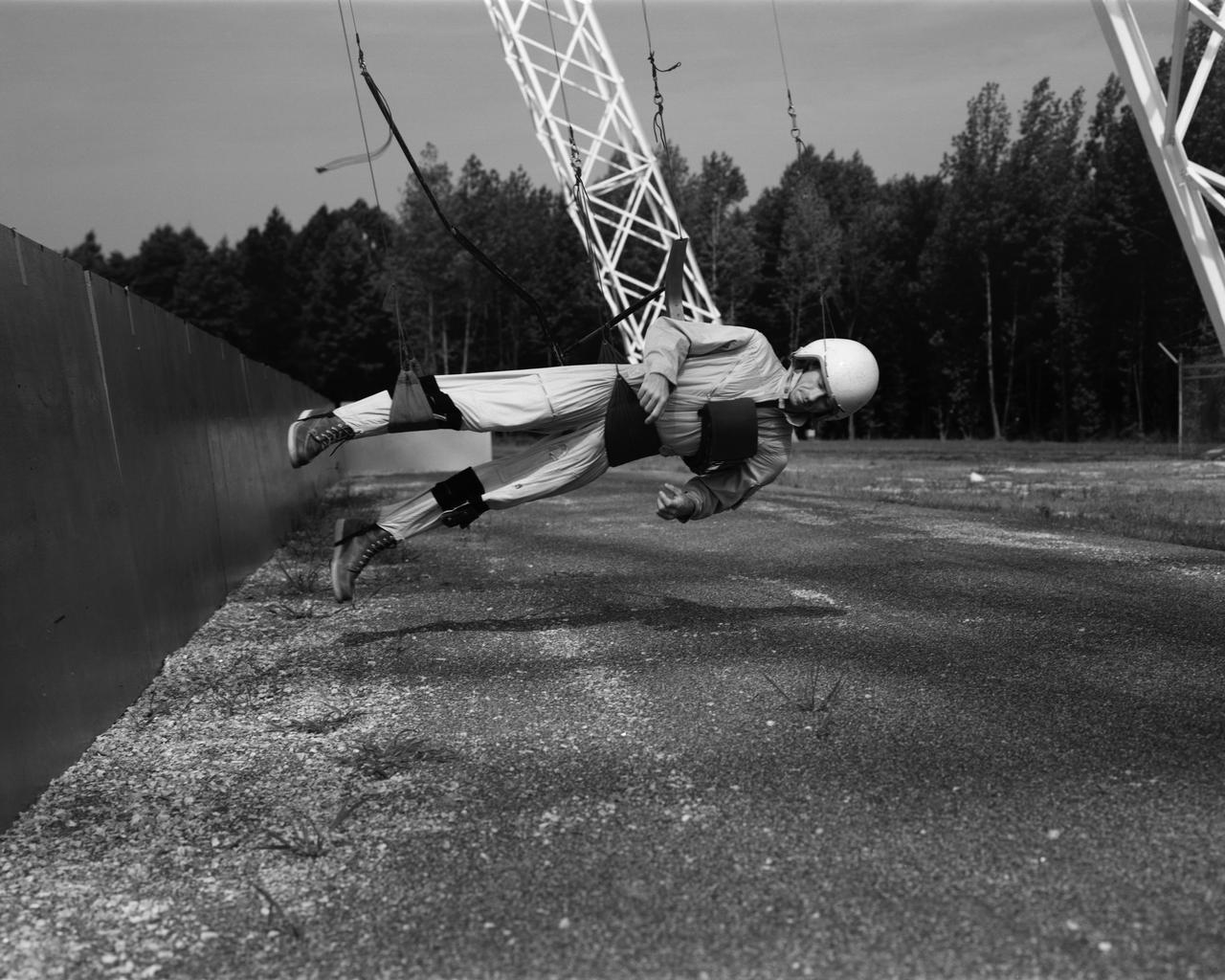
Astronaut Walt Cunningham on the Reduced Gravity Walking Simulator located at the Lunar Landing Facility. The purpose of this simulator was to study the subject while walking, jumping or running. Researchers conducted studies of various factors such as fatigue limit, energy expenditure, and speed of locomotion. A.W. Vigil described the purpose of the simulator in his paper "Discussion of Existing and Planned Simulators for Space Research," "When the astronauts land on the moon they will be in an unfamiliar environment involving, particularly, a gravitational field only one-sixth as strong as on earth. A novel method of simulating lunar gravity has been developed and is supported by a puppet-type suspension system at the end of a long pendulum. A floor is provided at the proper angle so that one-sixth of the subject's weight is supported by the floor with the remainder being supported by the suspension system. This simulator allows almost complete freedom in vertical translation and pitch and is considered to be a very realistic simulation of the lunar walking problem. For this problem this simulator suffers only slightly from the restrictions in lateral movement it puts on the test subject. This is not considered a strong disadvantage for ordinary walking problems since most of the motions do, in fact, occur in the vertical plane. However, this simulation technique would be severely restrictive if applied to the study of the extra-vehicular locomotion problem, for example, because in this situation complete six degrees of freedom are rather necessary. This technique, in effect, automatically introduces a two-axis attitude stabilization system into the problem. The technique could, however, be used in preliminary studies of extra-vehicular locomotion where, for example, it might be assumed that one axis of the attitude control system on the astronaut maneuvering unit may have failed." -- Published in James R. Hansen, Spaceflight Revolution: NASA Langley Research Center From Sputnik to Apollo, (Washington: NASA, 1995), p. 377; A.W. Vigil, "Discussion of Existing and Planned Simulators for Space Research," Paper presented at Conference on the Role of Simulation in Space Technology," Blacksburg, VA, August 17-21, 1964.
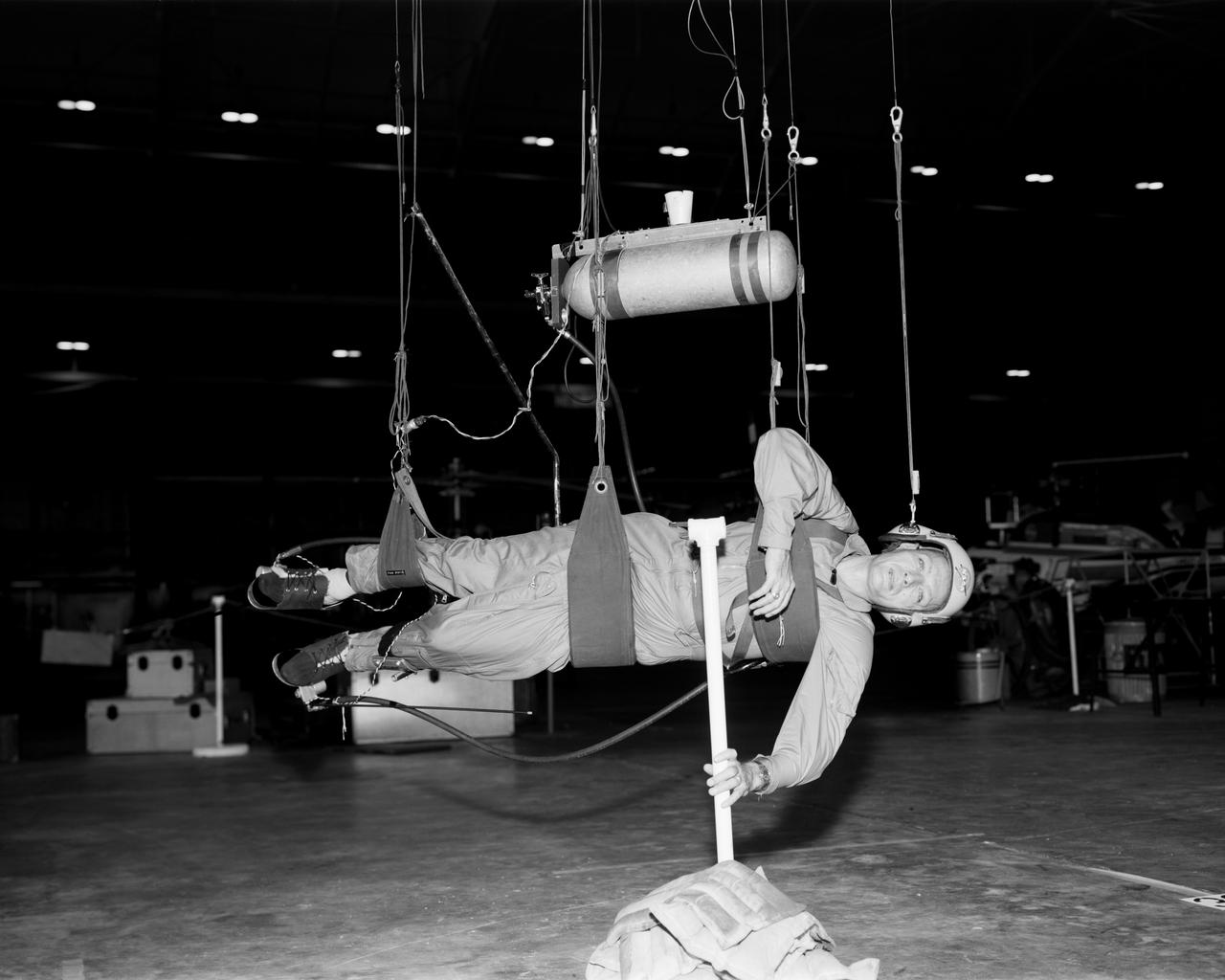
Cable system which supports the test subject on the Reduced Gravity Walking Simulator. The purpose of this simulator was to study the subject while walking, jumping or running. Researchers conducted studies of various factors such as fatigue limit, energy expenditure, and speed of locomotion. A.W. Vigil described the purpose of the simulator as follows: "When the astronauts land on the moon they will be in an unfamiliar environment involving, particularly, a gravitational field only one-sixth as strong as on earth. A novel method of simulating lunar gravity has been developed and is supported by a puppet-type suspension system at the end of a long pendulum. A floor is provided at the proper angle so that one-sixth of the subject's weight is supported by the floor with the remainder being supported by the suspension system. This simulator allows almost complete freedom in vertical translation and pitch and is considered to be a very realistic simulation of the lunar walking problem. For this problem this simulator suffers only slightly from the restrictions in lateral movement it puts on the test subject. This is not considered a strong disadvantage for ordinary walking problems since most of the motions do, in fact, occur in the vertical plane. However, this simulation technique would be severely restrictive if applied to the study of the extra-vehicular locomotion problem, for example, because in this situation complete six degrees of freedom are rather necessary. This technique, in effect, automatically introduces a two-axis attitude stabilization system into the problem. The technique could, however, be used in preliminary studies of extra-vehicular locomotion where, for example, it might be assumed that one axis of the attitude control system on the astronaut maneuvering unit may have failed." -- Published in James R. Hansen, Spaceflight Revolution: NASA Langley Research Center From Sputnik to Apollo, (Washington: NASA, 1995); A.W. Vigil, "Discussion of Existing and Planned Simulators for Space Research," Paper presented at Conference on the Role of Simulation in Space Technology," Blacksburg, VA, August 17-21, 1964.
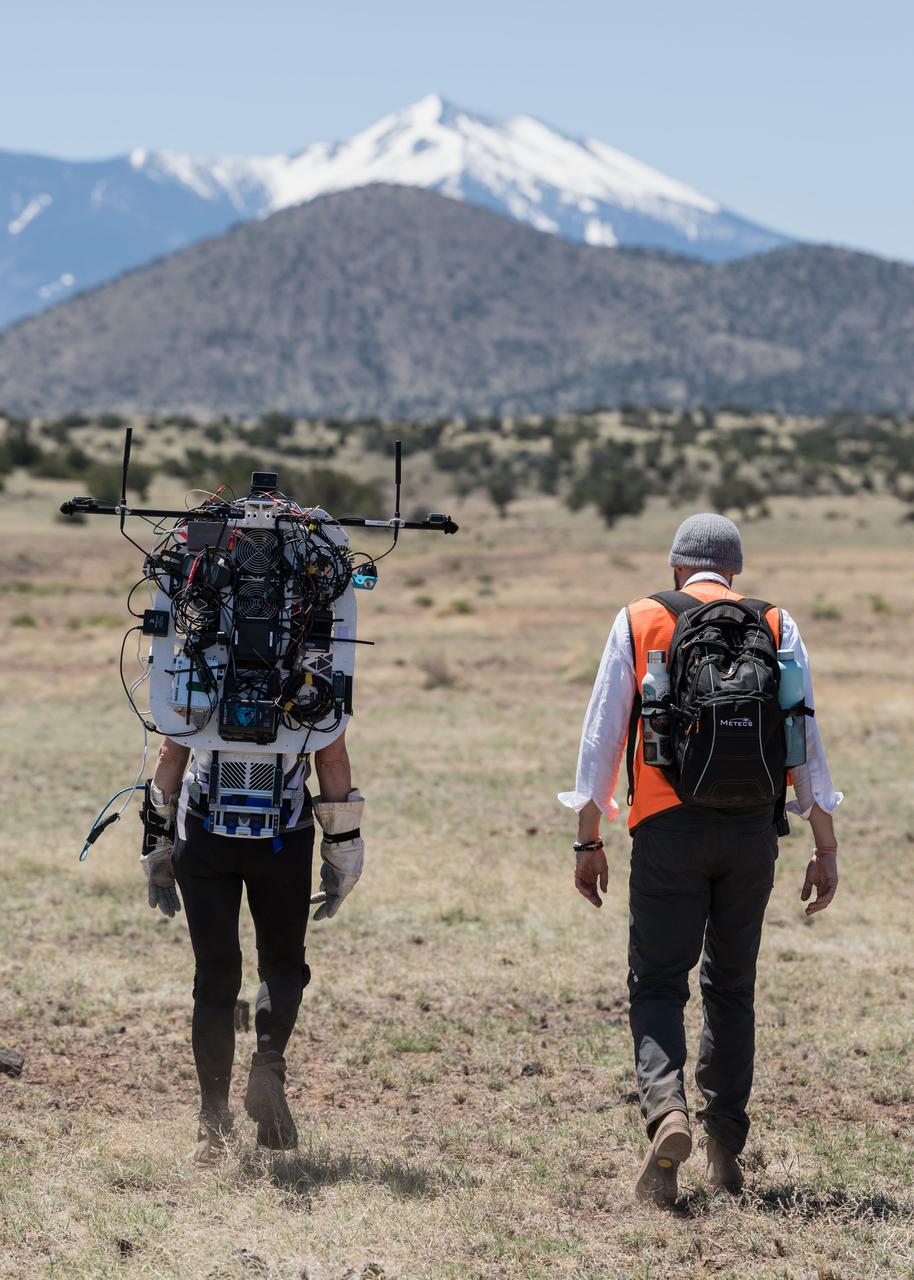
NASA astronaut Kate Rubins walks through the lunar-like landscape wearing the Joint AR (Joint Augmented Reality Visual Informatics System) display during an advanced technology run in the San Francisco Volcanic Field in Northern Arizona on May 19, 2024. The suit display features include navigation, photo capture, graphical format of consumables, procedure viewing, mission control updates, and other augmented reality cues and graphics. The team successfully tested navigation displays using data from four different data streams: GPS (Global Positioning System)/IMU (Inertial Measurement Unit), camera/IMU, LiDAR (Light Detection and Ranging), and static maps. Technology like this may be used for future Artemis missions to augment mission control communication and help guide crew back to the lunar lander. Credit: NASA/Josh Valcarcel
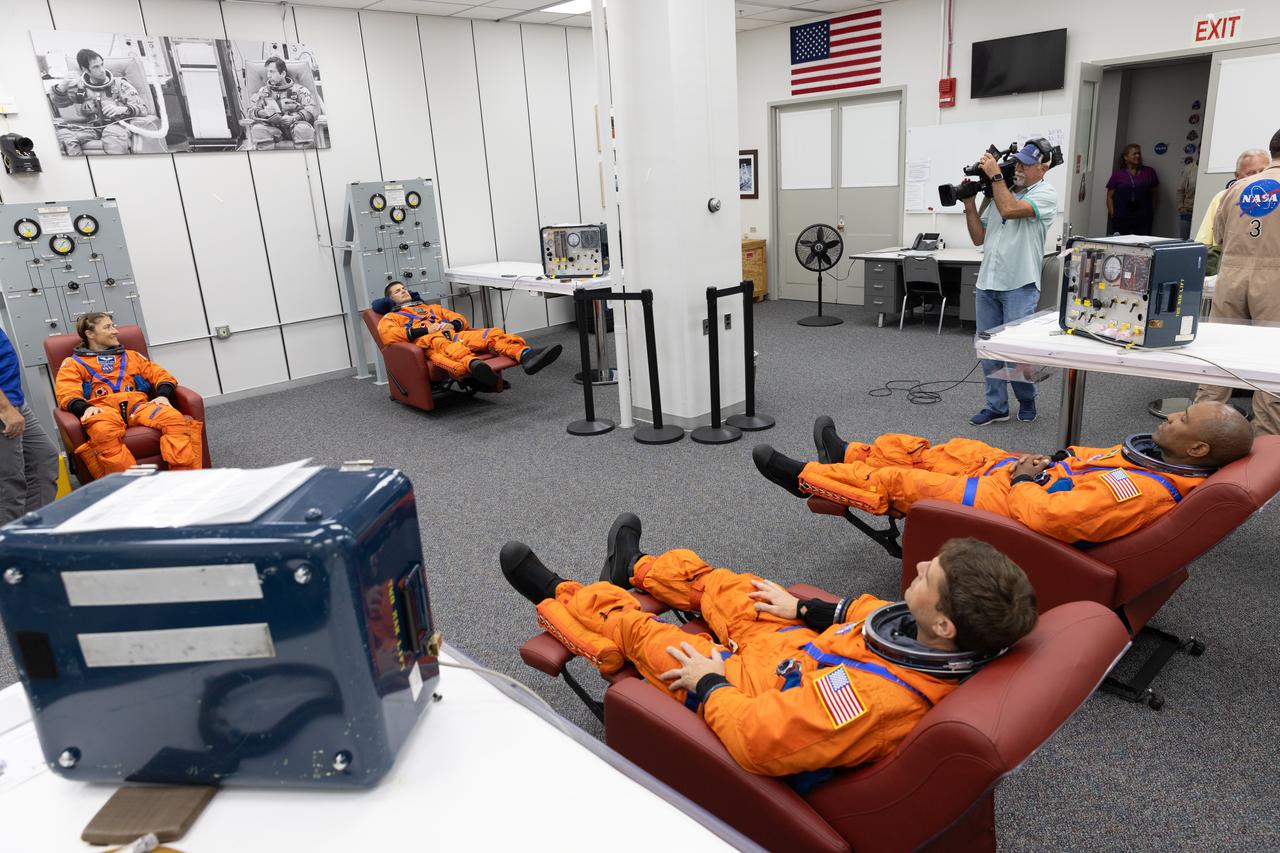
From left to right, NASA astronauts Christina Koch, Artemis II mission specialist; Reid Wiseman, Artemis II commander; Victor Glover, Artemis II pilot; and Artemis II mission specialist and CSA (Canadian Space Agency) astronaut Jeremy Hansen conduct suit-up operations inside the Neil A. Armstrong Operations and Checkout Building at NASA’s Kennedy Space Center in Florida on Monday, Aug. 11, 2025. During a two-day operation, the Artemis II team practiced night-run demonstrations of different launch day scenarios like suit-up operations, walk-out, and arriving at the launch pad for the Artemis II test flight. Through the Artemis campaign, NASA will send astronauts to explore the Moon for scientific discovery, economic benefits, and to build the foundation for the first crewed missions to Mars – for the benefit of all.
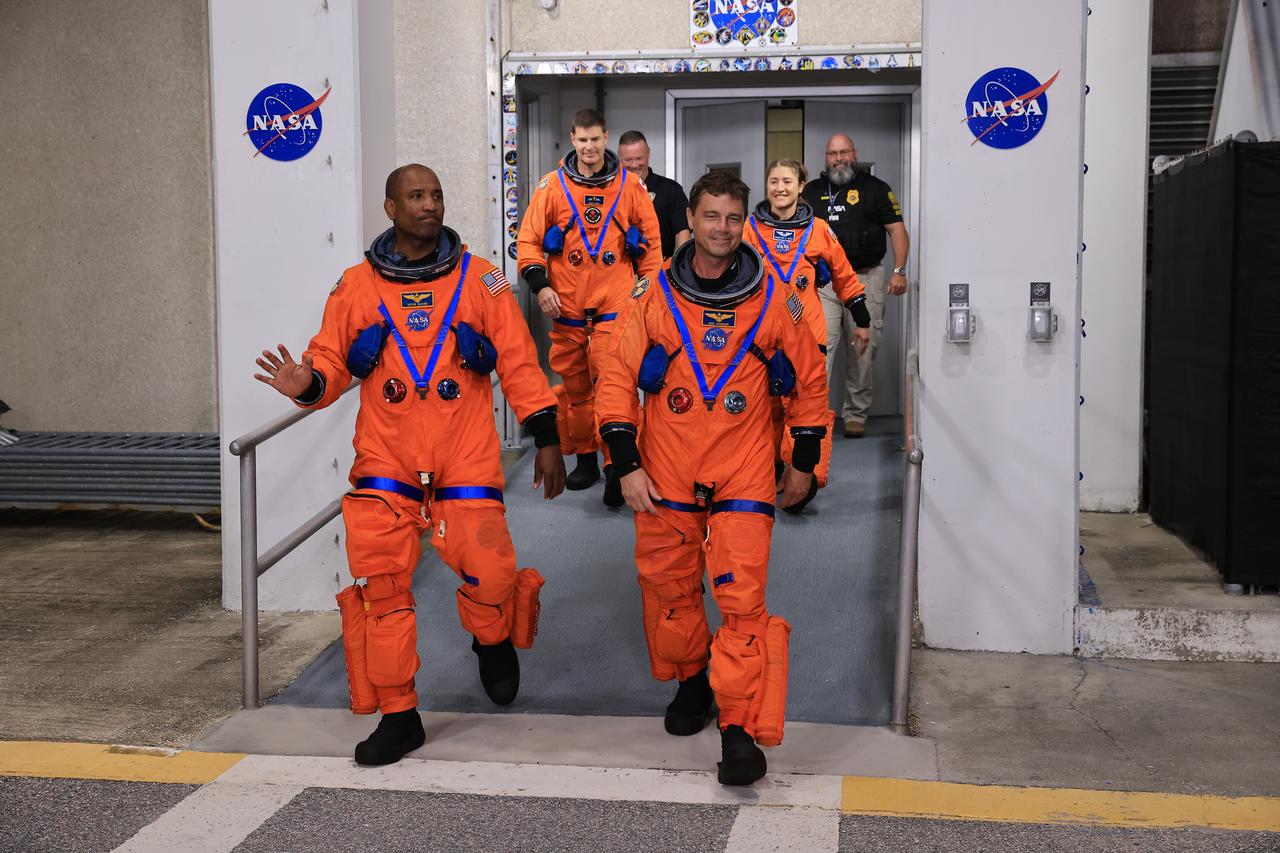
From top left to right, NASA astronauts Victor Glover, Artemis II pilot; Reid Wiseman, Artemis II commander; CSA (Canadian Space Agency) astronaut Jeremy Hansen, Artemis II mission specialist, and NASA astronaut Christina Koch, Artemis II mission specialist, suit up and walk out of the Neil A. Armstrong Operations and Checkout Building at NASA’s Kennedy Space Center in Florida on Monday, Aug. 11, 2025. During a two-day operation, the Artemis II team practiced night-run demonstrations of different launch day scenarios for the Artemis II test flight. Through the Artemis campaign, NASA will send astronauts to explore the Moon for scientific discovery, economic benefits, and to build the foundation for the first crewed missions to Mars – for the benefit of all.
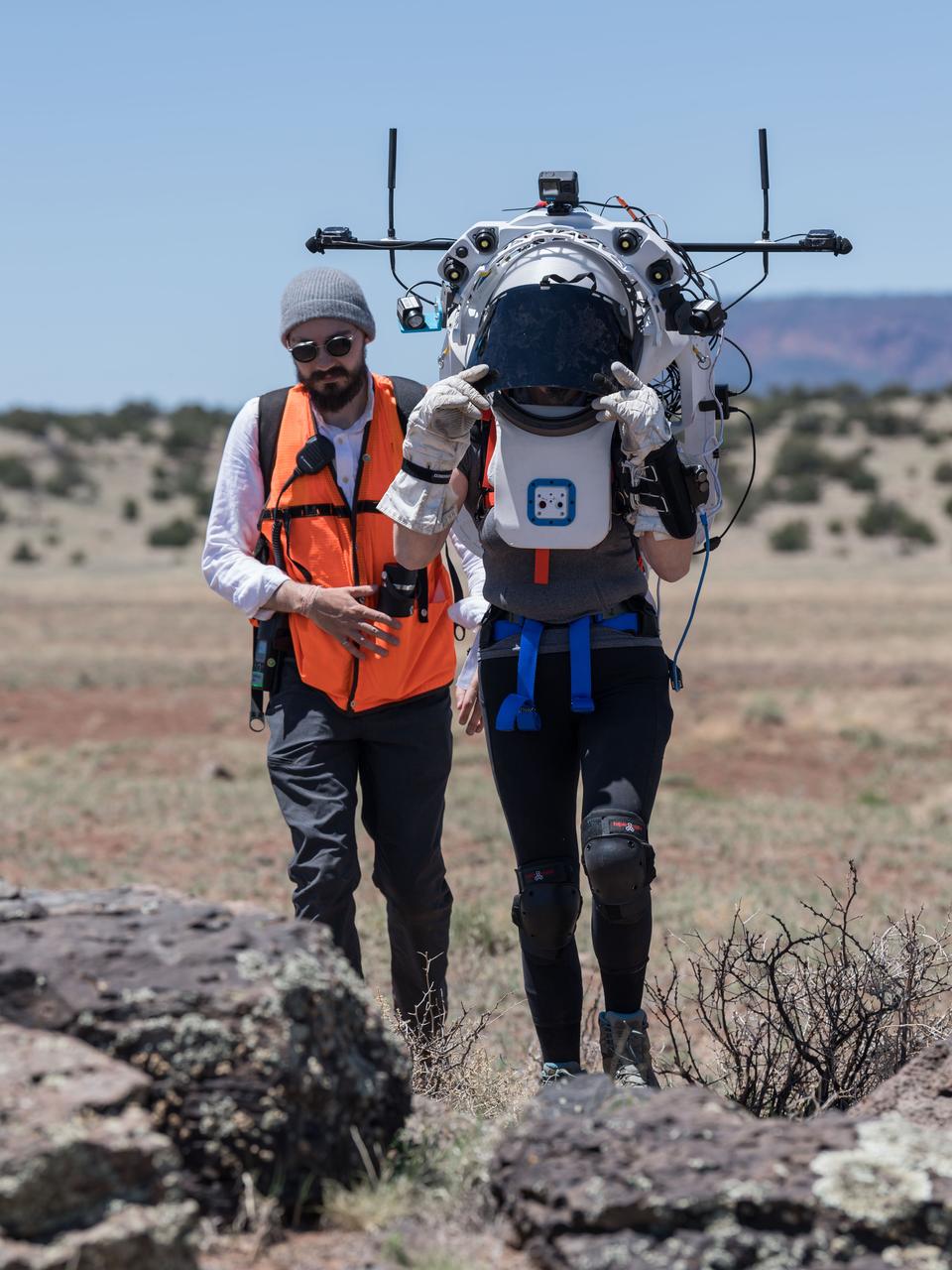
NASA astronaut Kate Rubins walks through the lunar-like landscape wearing the Joint AR (Joint Augmented Reality Visual Informatics System) display during an advanced technology run in the San Francisco Volcanic Field in Northern Arizona on May 19, 2024. The suit display features include navigation, photo capture, graphical format of consumables, procedure viewing, mission control updates, and other augmented reality cues and graphics. The team successfully tested navigation displays using data from four different data streams: GPS (Global Positioning System)/IMU (Inertial Measurement Unit), camera/IMU, LiDAR (Light Detection and Ranging), and static maps. Technology like this may be used for future Artemis missions to augment mission control communication and help guide crew back to the lunar lander. Credit: NASA/Josh Valcarcel
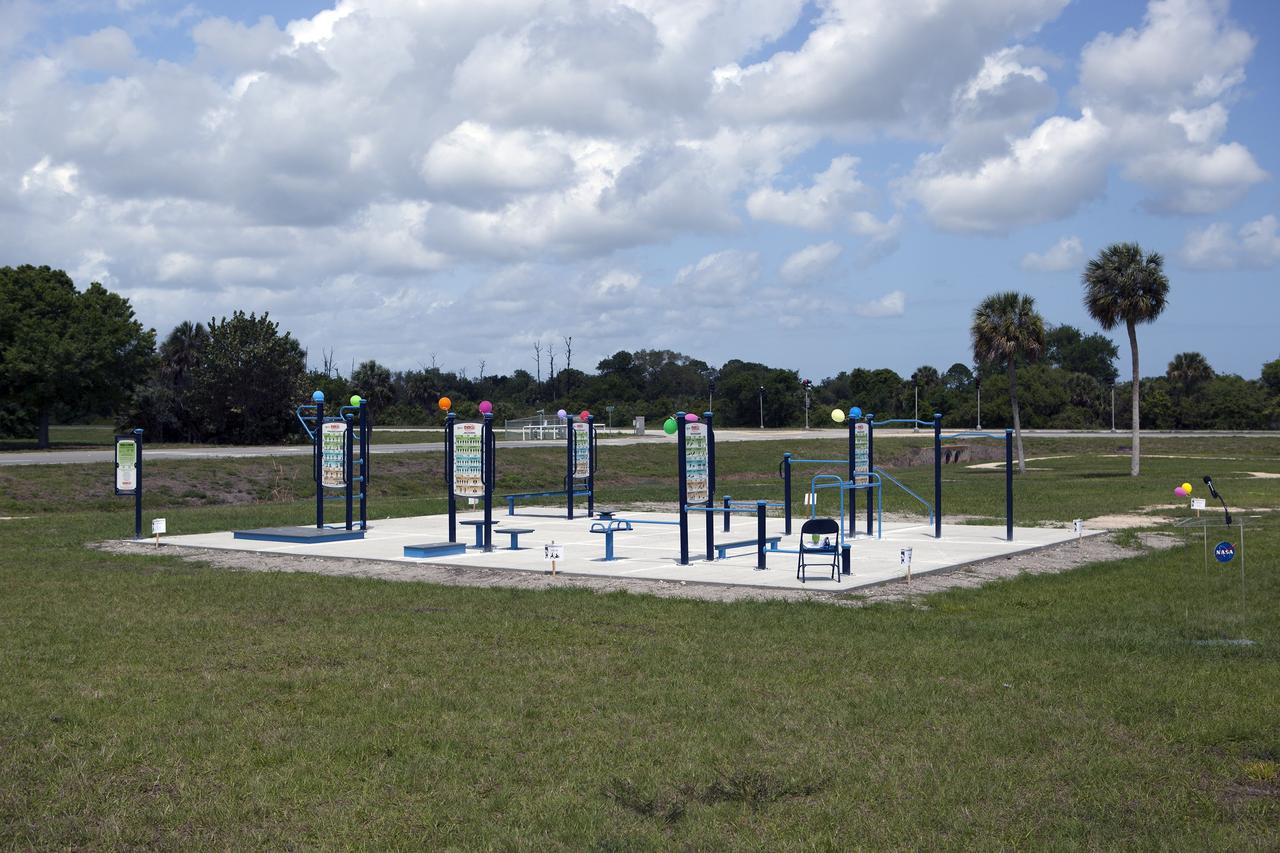
CAPE CANAVERAL, Fla. - Construction of an exercise pad is underway beside the new fitness trail next to the Space Station Processing Facility at NASA's Kennedy Space Center in Florida. The one-mile-long track will provide employees with a safe place off Kennedy's roadways to walk or run. The more than 6 tons of green waste removed to create the trail's footprint will be mulched and used for cover at Kennedy's landfill. Approximately 1,594 tons of crawler fines -- ground-up crawler rock removed from the crawlerway in the Launch Complex 39 area -- was used for the foundation of the trail. Fitness equipment has been ordered and will be installed on a concrete slab at the trail's west end. After the equipment has been installed, the slab will be coated to provide a rubberized exercise pad. At Kennedy Space Center, the health and safety of every employee is paramount. To learn more about Kennedy, visit http://www.nasa.gov/kennedy. Photo credit: NASA/Frankie Martin

NASA astronaut Christina Koch, Artemis II mission specialist, smiles as she closes the door to the mine-resistant ambush protected vehicle, or MRAP, at Launch Complex 39B where the Artemis II flight crew practiced emergency egress scenarios at NASA’s Kennedy Space Center in Florida on Tuesday, Aug. 12, 2025. During a two-day operation, the Artemis II team practiced night-run demonstrations of different launch day scenarios like suit-up operations, walk-out, and arriving at the launch pad for the Artemis II test flight. Through the Artemis campaign, NASA will send astronauts to explore the Moon for scientific discovery, economic benefits, and to build the foundation for the first crewed missions to Mars – for the benefit of all.
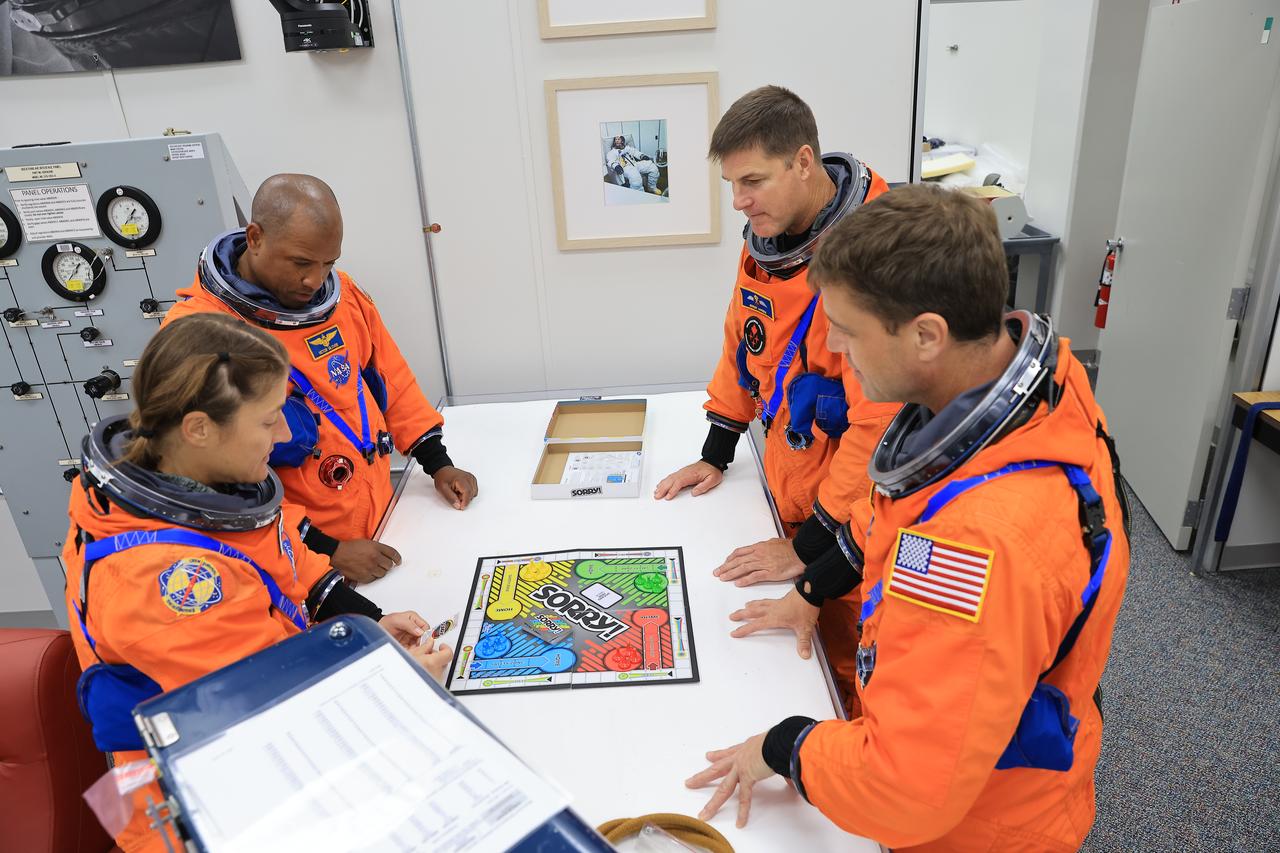
From left to right, NASA astronauts Christina Koch, Artemis II mission specialist; Reid Wiseman, Artemis II commander; Victor Glover, Artemis II pilot; and Artemis II mission specialist and CSA (Canadian Space Agency) astronaut Jeremy Hansen play the board game “Sorry” inside the Neil A. Armstrong Operations and Checkout Building at NASA’s Kennedy Space Center in Florida on Monday, Aug. 11, 2025. During launch day, NASA flight crews have a tradition of playing a board or card game before leaving the crew quarters ahead of launch until the commander loses so that the commander burns off all his or her bad luck before the flight. During a two-day operation, the Artemis II team practiced night-run demonstrations of different launch day scenarios like suit-up operations, walk-out, and arriving at the launch pad for the Artemis II test flight.

CAPE CANAVERAL, Fla. - Employees turn out during their lunchtime for a ribbon-cutting ceremony opening the new fitness trail next to the Space Station Processing Facility at NASA's Kennedy Space Center in Florida. Director of Center Operations Nancy Bray, at left, encourages the employees to join her in putting the trail to good use. The one-mile-long track will provide employees with a safe place off Kennedy's roadways to walk or run. The more than 6 tons of green waste removed to create the trail's footprint will be mulched and used for cover at Kennedy's landfill. Approximately 1,594 tons of crawler fines -- ground-up crawler rock removed from the crawlerway in the Launch Complex 39 area -- was used for the foundation of the trail. Fitness equipment has been ordered and will be installed on a concrete slab at the trail's west end. After the equipment has been installed, the slab will be coated to provide a rubberized exercise pad. At Kennedy Space Center, the health and safety of every employee is paramount. To learn more about Kennedy, visit http://www.nasa.gov/kennedy. Photo credit: NASA/Frankie Martin
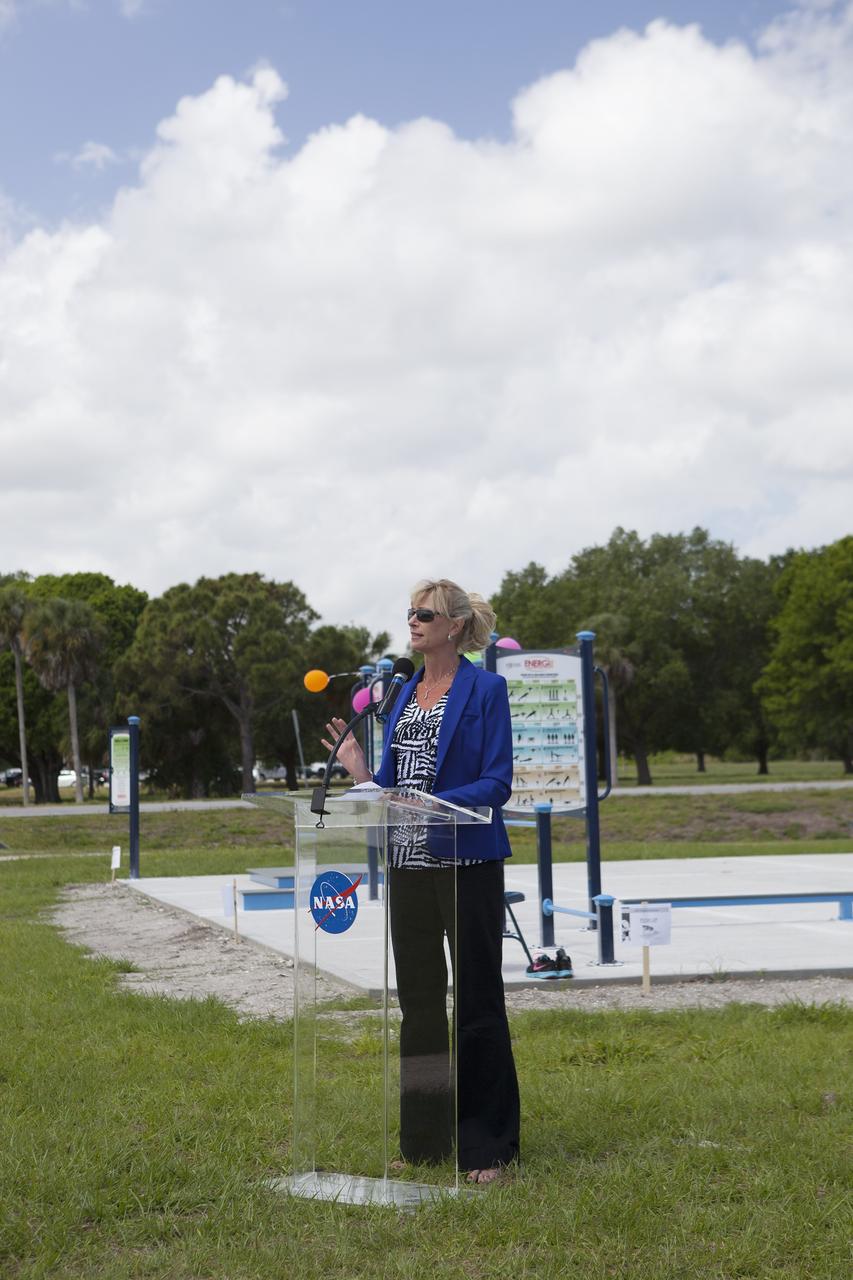
CAPE CANAVERAL, Fla. - Director of Center Operations Nancy Bray welcomes the employees who turned out during their lunchtime for a ribbon-cutting ceremony opening the new fitness trail next to the Space Station Processing Facility at NASA's Kennedy Space Center in Florida. The one-mile-long track will provide employees with a safe place off Kennedy's roadways to walk or run. The more than 6 tons of green waste removed to create the trail's footprint will be mulched and used for cover at Kennedy's landfill. Approximately 1,594 tons of crawler fines -- ground-up crawler rock removed from the crawlerway in the Launch Complex 39 area -- was used for the foundation of the trail. Fitness equipment has been ordered and will be installed on a concrete slab at the trail's west end. After the equipment has been installed, the slab will be coated to provide a rubberized exercise pad. At Kennedy Space Center, the health and safety of every employee is paramount. To learn more about Kennedy, visit http://www.nasa.gov/kennedy. Photo credit: NASA/Frankie Martin
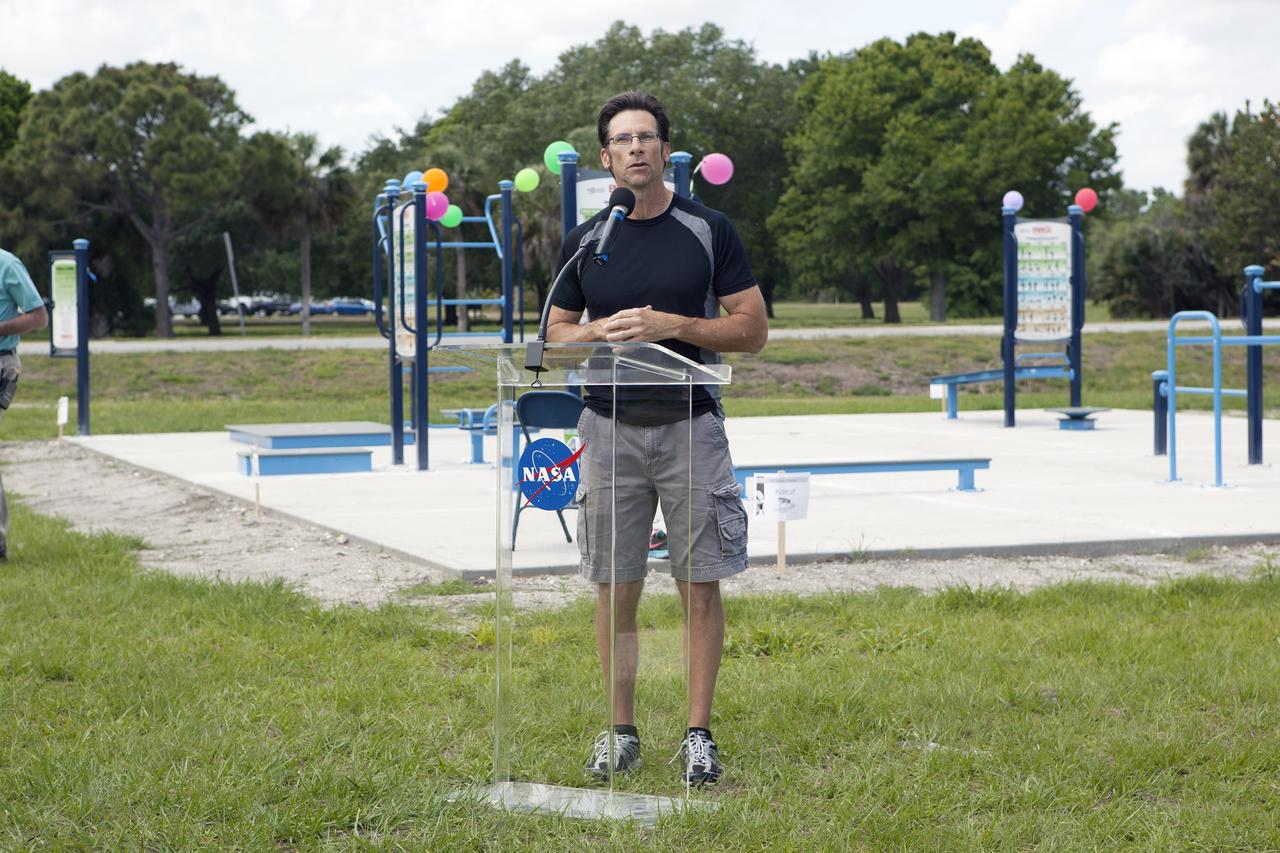
CAPE CANAVERAL, Fla. - Dressed for a little exercise, Deputy Program Manager of Launch Services Chuck Dovale addresses the employees who have turned out during their lunchtime for a ribbon-cutting ceremony opening the new fitness trail next to the Space Station Processing Facility at NASA's Kennedy Space Center in Florida. The one-mile-long track will provide employees with a safe place off Kennedy's roadways to walk or run. The more than 6 tons of green waste removed to create the trail's footprint will be mulched and used for cover at Kennedy's landfill. Approximately 1,594 tons of crawler fines -- ground-up crawler rock removed from the crawlerway in the Launch Complex 39 area -- was used for the foundation of the trail. Fitness equipment has been ordered and will be installed on a concrete slab at the trail's west end. After the equipment has been installed, the slab will be coated to provide a rubberized exercise pad. At Kennedy Space Center, the health and safety of every employee is paramount. To learn more about Kennedy, visit http://www.nasa.gov/kennedy. Photo credit: NASA/Frankie Martin
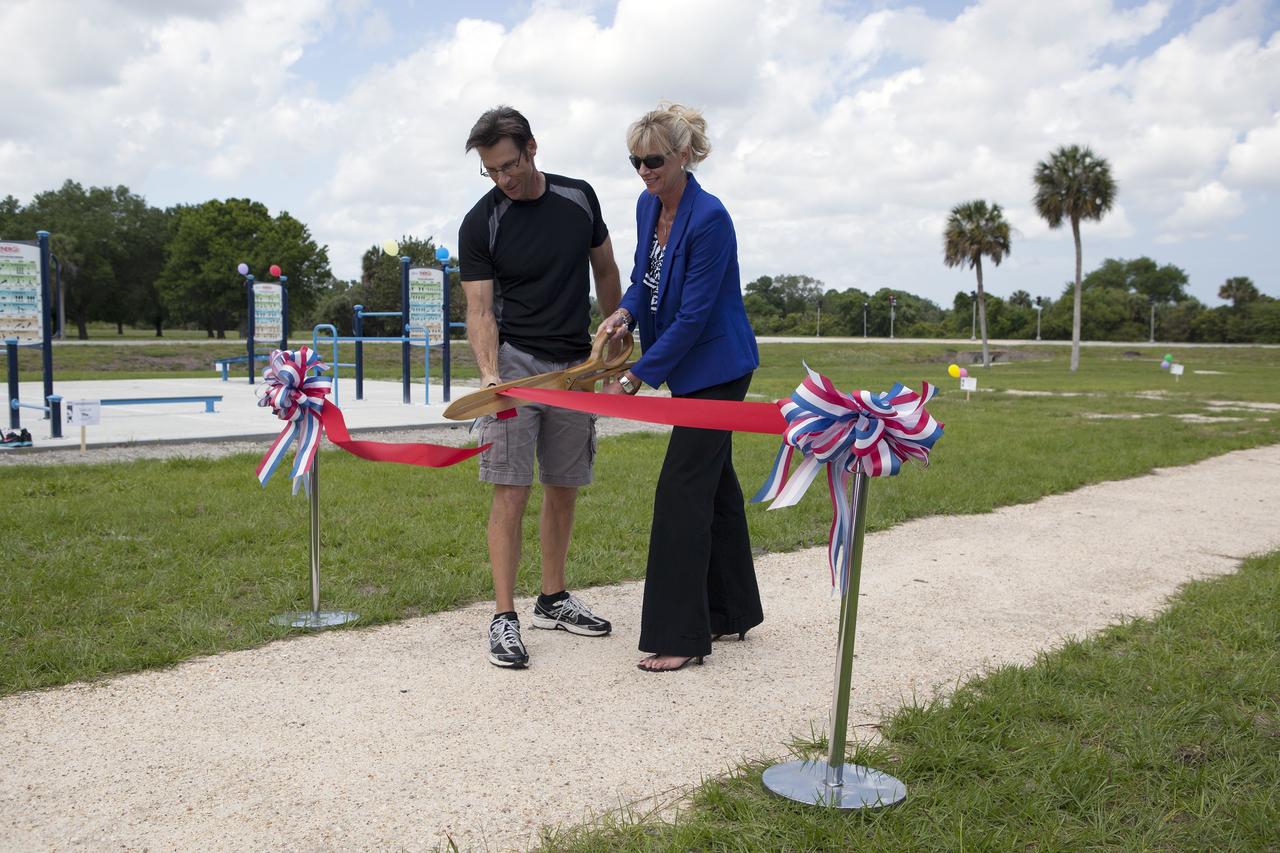
CAPE CANAVERAL, Fla. - Chuck Dovale, at left, deputy program manager of Launch Services, and Nancy Bray, director of Center Operations, cut a ribbon officially opening the new fitness trail next to the Space Station Processing Facility at NASA's Kennedy Space Center in Florida. The one-mile-long track will provide employees with a safe place off Kennedy's roadways to walk or run. The more than 6 tons of green waste removed to create the trail's footprint will be mulched and used for cover at Kennedy's landfill. Approximately 1,594 tons of crawler fines -- ground-up crawler rock removed from the crawlerway in the Launch Complex 39 area -- was used for the foundation of the trail. Fitness equipment has been ordered and will be installed on a concrete slab at the trail's west end. After the equipment has been installed, the slab will be coated to provide a rubberized exercise pad. At Kennedy Space Center, the health and safety of every employee is paramount. To learn more about Kennedy, visit http://www.nasa.gov/kennedy. Photo credit: NASA/Frankie Martin
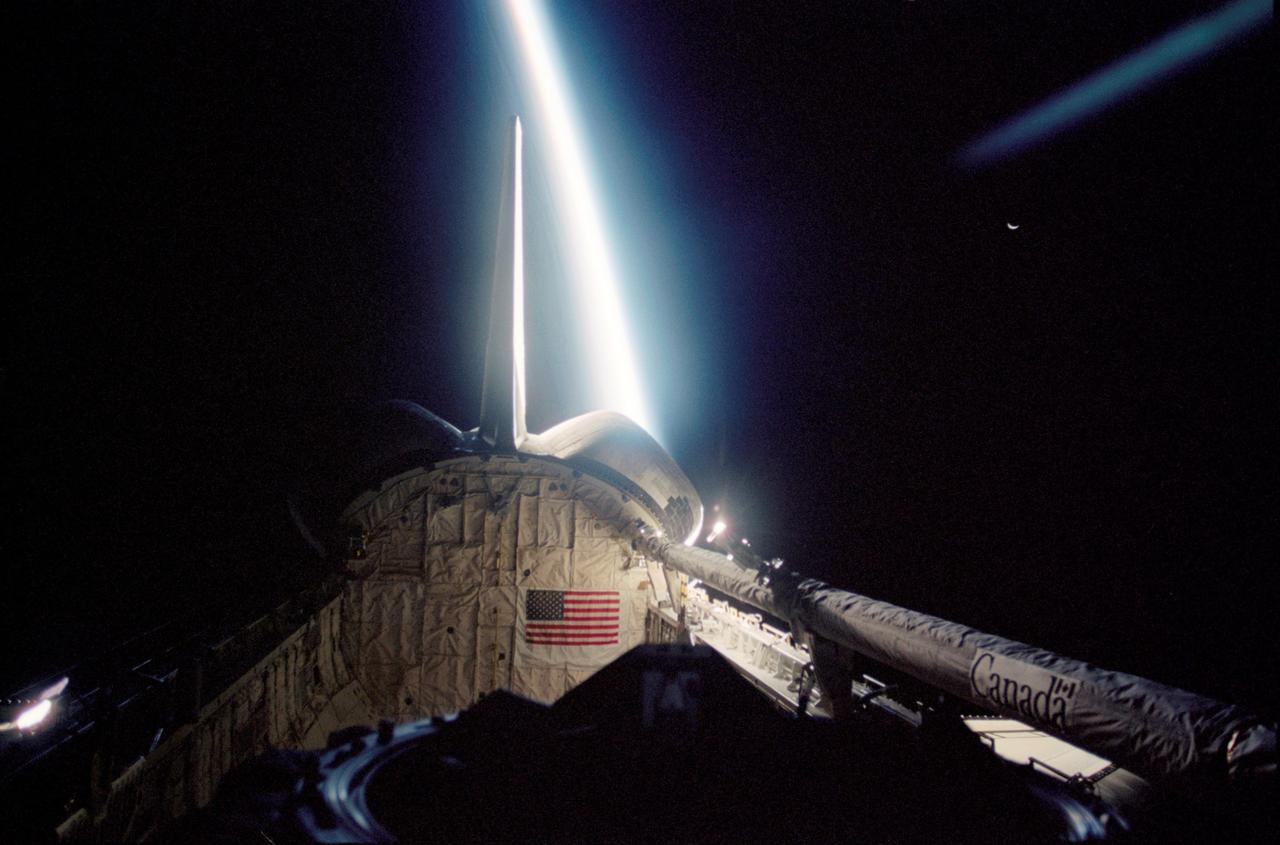
This STS-113 photograph shows an incredible view of the Space Shuttle Endeavour's payload bay. The blackness of space, Earth's moon (upper right frame), and a thin slice of Earth's horizon which runs vertically across the photograph, form the back drop for this photograph. The remote manipulator system (RMS) robotic arm is visible in lower right frame. The 16th American assembly flight and 112th overall American flight to the International Space Station (ISS) launched on November 23, 2002 from Kennedy's launch pad 39A aboard the Space Shuttle Orbiter Endeavour STS-113. Mission objectives included the installation and activation of the Port 1 Integrated Truss Assembly (P1). The first major component installed on the left side of the Station, the P1 truss provides three additional External Thermal Control System radiators. Weighing in at 27,506 pounds, the P1 truss is 45 feet (13.7 meters) long, 15 feet (4.6 meters) wide, and 13 feet (4 meters) high. Three space walks, aided by the use of the Robotic Manipulator Systems of both the Shuttle and the Station, were performed in the installation of P1.
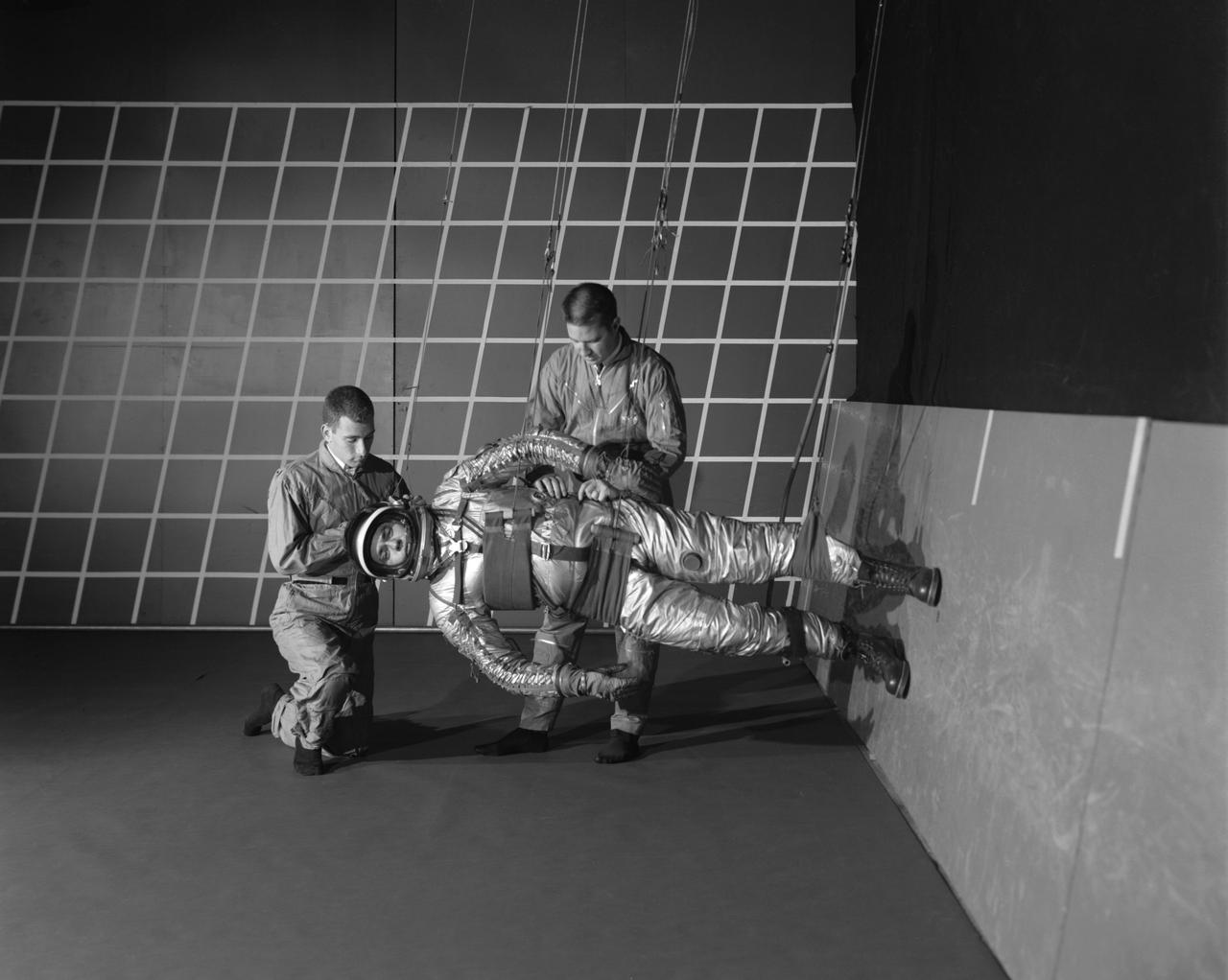
A test subject being suited up for studies on the Reduced Gravity Walking Simulator located in the hangar at Langley Research Center. The initial version of this simulator was located inside the hangar. Later a larger version would be located at the Lunar Landing Facility. The purpose of this simulator was to study the subject while walking, jumping or running. Researchers conducted studies of various factors such as fatigue limit, energy expenditure, and speed of locomotion. Francis B. Smith wrote in his paper "Simulators For Manned Space Research," "I would like to conclude this talk with a discussion of a device for simulating lunar gravity which is very effective and yet which is so simple that its cost is in the order of a few thousand dollars at most, rather than hundreds of thousands. With a little ingenuity, one could almost build this type simulator in his backyard for children to play on. The principle is ...if a test subject is suspended in a sling so that his body axis makes an angle of 9 1/2 degrees with the horizontal and if he then "stands" on a platform perpendicular to his body axis, the component of the earth's gravity forcing him toward the platform is one times the sine of 9 1/2 degrees or approximately 1/6 of the earth's normal gravity field. That is, a 180 pound astronaut "standing" on the platform would exert a force of only 30 pounds - the same as if he were standing upright on the lunar surface." -- Published in James R. Hansen, Spaceflight Revolution: NASA Langley Research Center From Sputnik to Apollo, NASA SP-4308; Francis B. Smith, "Simulators For Manned Space Research," Paper for 1966 IEEE International Convention, New York, NY, March 21-25, 1966