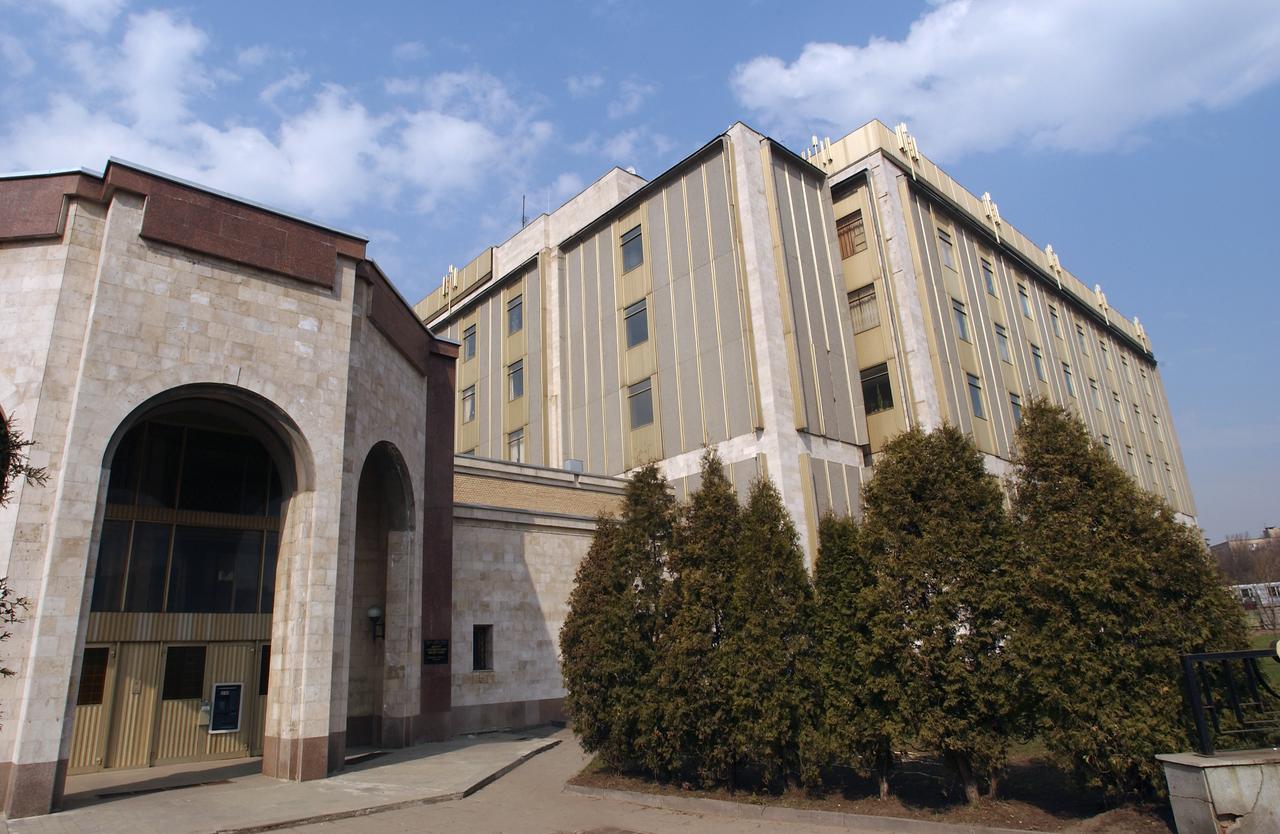
A view of the outside of the Russian Mission Control Center in Korolev, Russia, located on the outskirts of Moscow, Wednesday, April 21, 2004. Photo Credit: (NASA/Bill Ingalls)
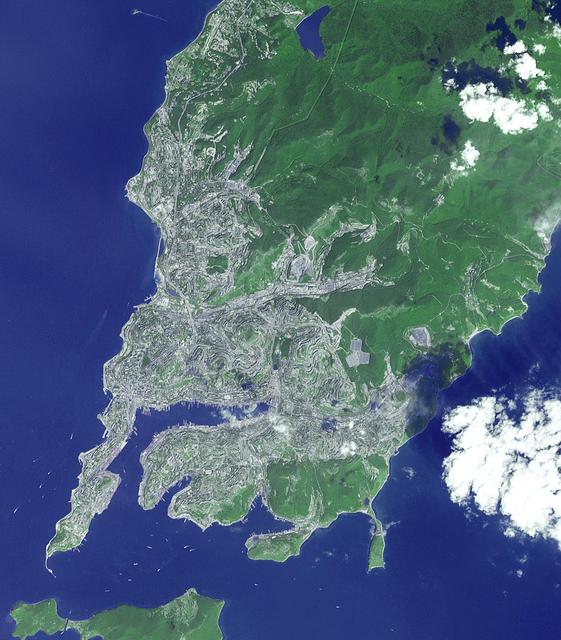
This image, acquired by NASA Terra spacecraft, is of Vladivostok, the administrative center of Primorsky Krai, Russia, and home port of the Russian Pacific Fleet, situated at the head of the Golden Horn Bay, Vladivostok.
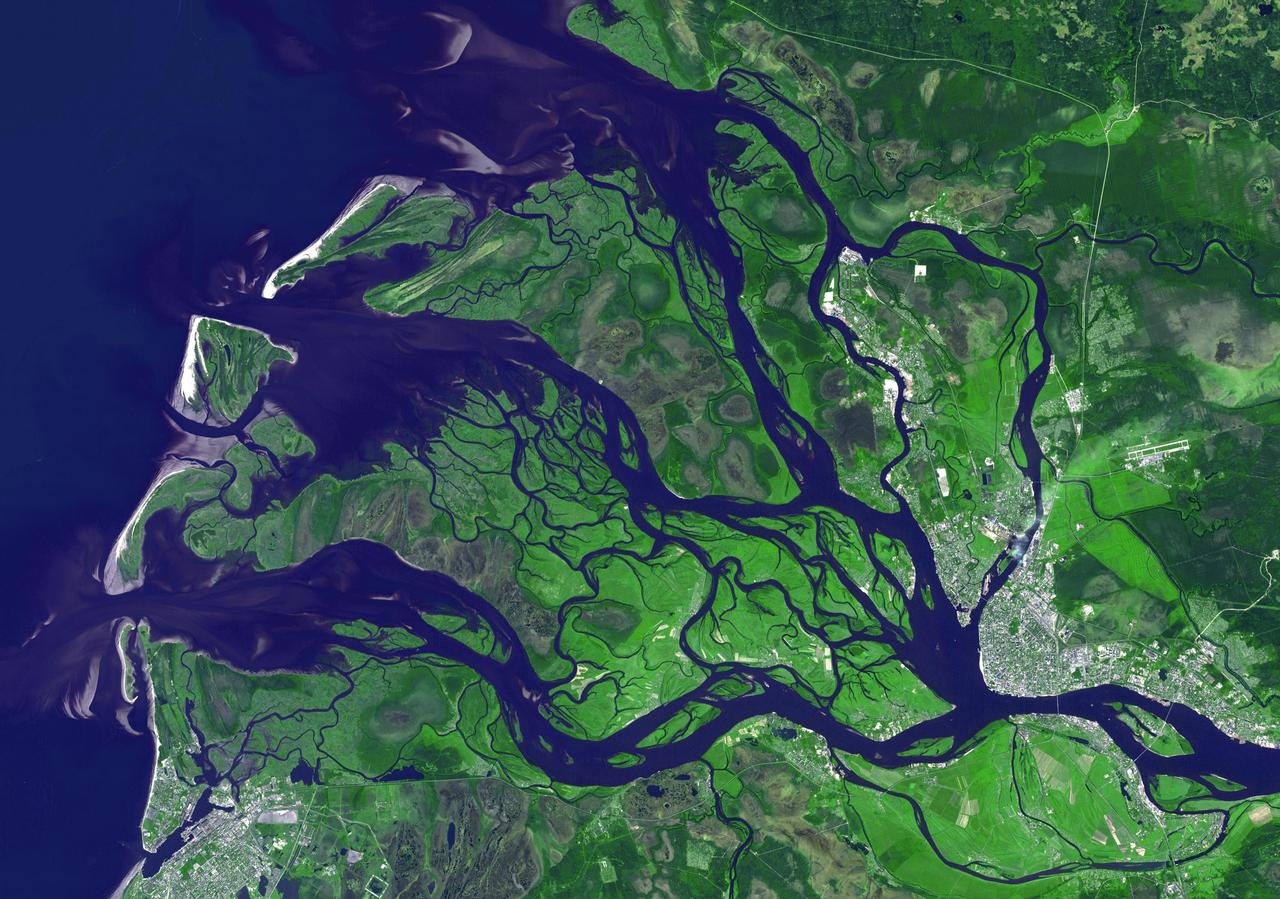
NASA Terra spacecraft captured this image of the city of Arkhangelsk or Archangel in English and administrative capital of Archangelsk Oblast, Russia. It is situated on both banks of the Dvina River near where it flows into the White Sea.
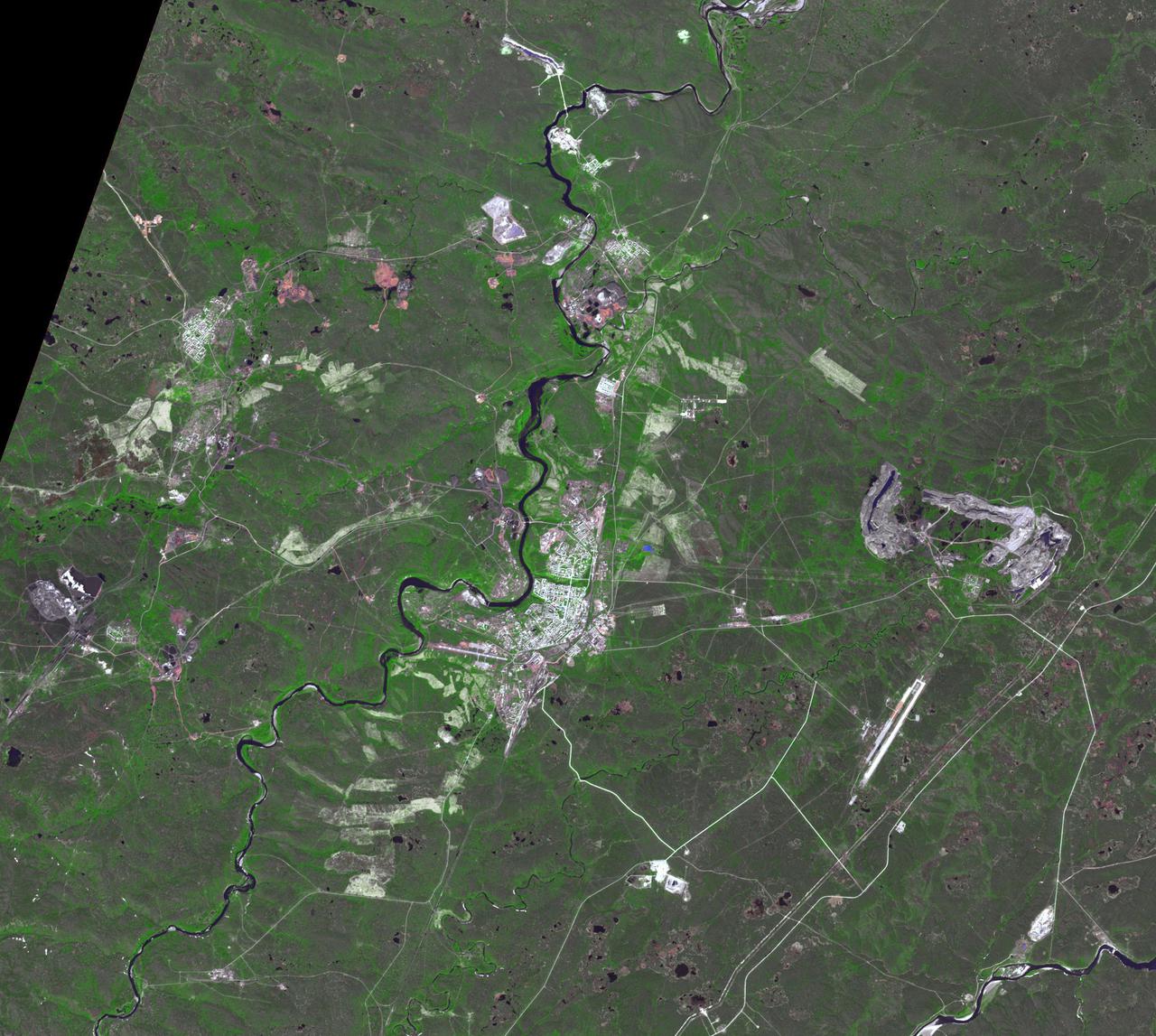
Vorkuta is a coal-mining town in the Komi Republic, Russia. With the fall of the Soviet Union, coal mines were privatized, many were abandoned, and many people began moving to warmer cities. Vorkuta went from a population of over 250,000, to its current level of about 50,000. Adding to its decline, it is the coldest city in all of Europe. The image was acquired July 8, 2017, covers an area of 30.3 by 36.9 km, and is located at 67.5 degrees north, 64 degrees east. https://photojournal.jpl.nasa.gov/catalog/PIA24731

Michelle Barratt, 3rd from left, claps as she watches her husband, NASA Astronaut Mike Barratt, enter the International Space Station live on TV from the Russia Mission Control Center in Korolev, Russia, Saturday, March 28, 2009. The Soyuz TMA-14 docked to the International Space Station carrying Expedition 19 Commander Gennady I. Padalka, Flight Engineer Michael R. Barratt and Spaceflight Participant Charles Simonyi. Photo Credit: (NASA/Bill Ingalls)
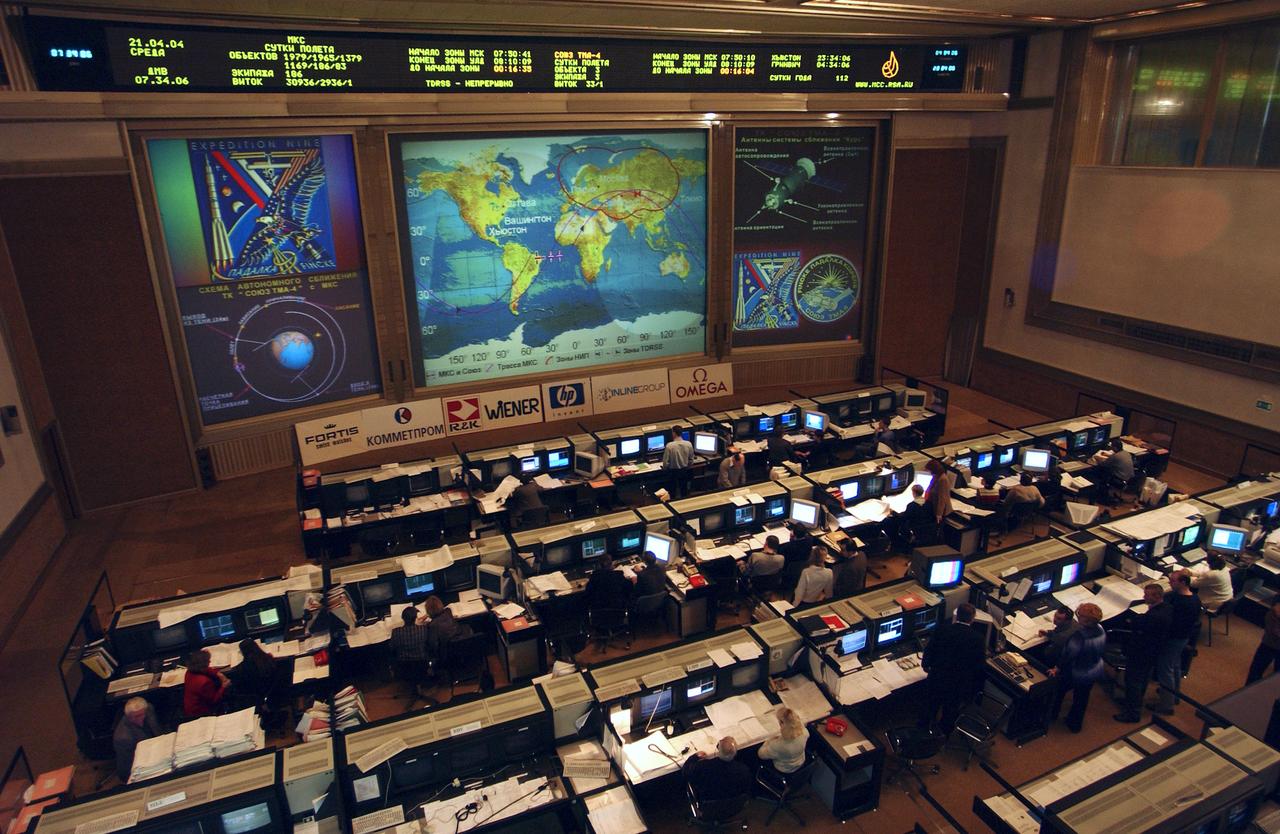
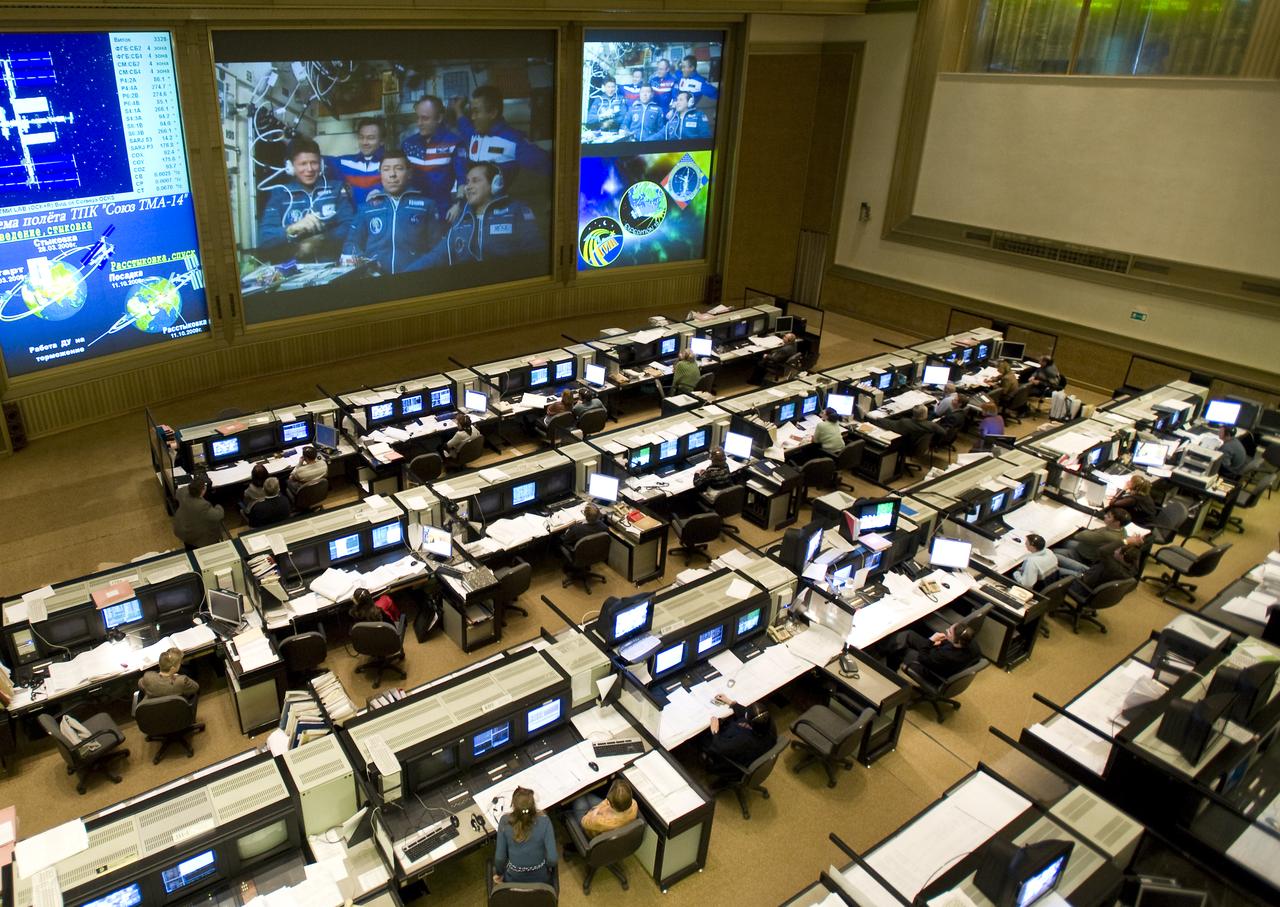
View of the Flight Control Room at the Russian Mission Control Center in Korolev, Russia, located on the outskirts of Moscow, Wednesday, April 21, 2004. Photo Credit: (NASA/Bill Ingalls)
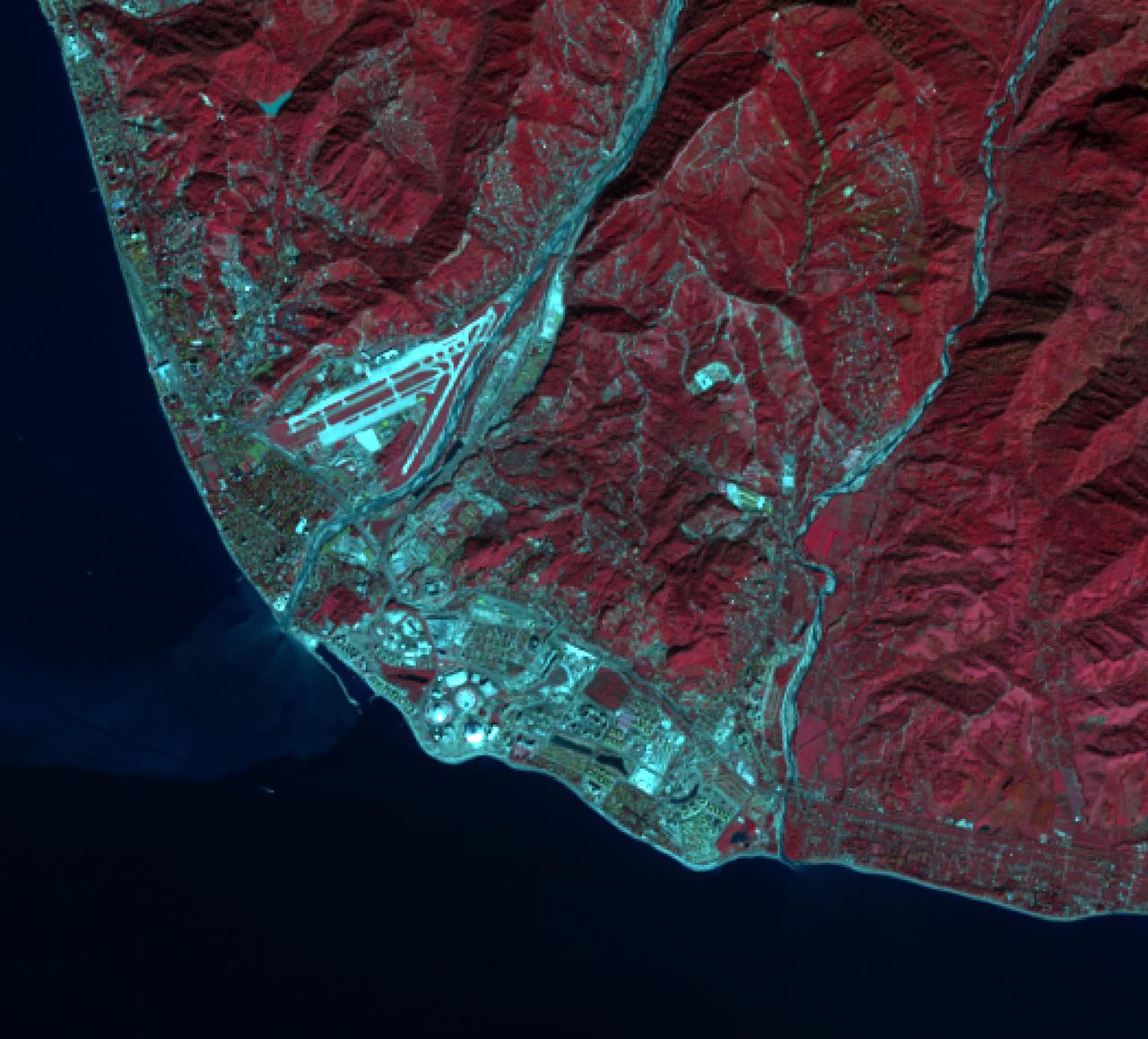
2013 image of Adler and the newly created Olympic Coastal Cluster. This false color satellite image reveals a largely agricultural area that was transformed into the Coastal Olympic Cluster with the nearby Olympic Village and Rail Station with transport to the Mountain Cluster. A spanking new breakwater structure was installed to create a harbor for cruise ships. The airport also received an expansion to handle the increased traffic. Caption and image provided by Tim Assal, US Geological Survey – Fort Collins Science Center Credit: NASA/Landsat <b><a href="http://www.nasa.gov/audience/formedia/features/MP_Photo_Guidelines.html" rel="nofollow">NASA image use policy.</a></b> <b><a href="http://www.nasa.gov/centers/goddard/home/index.html" rel="nofollow">NASA Goddard Space Flight Center</a></b> enables NASA’s mission through four scientific endeavors: Earth Science, Heliophysics, Solar System Exploration, and Astrophysics. Goddard plays a leading role in NASA’s accomplishments by contributing compelling scientific knowledge to advance the Agency’s mission. <b>Follow us on <a href="http://twitter.com/NASAGoddardPix" rel="nofollow">Twitter</a></b> <b>Like us on <a href="http://www.facebook.com/pages/Greenbelt-MD/NASA-Goddard/395013845897?ref=tsd" rel="nofollow">Facebook</a></b> <b>Find us on <a href="http://instagram.com/nasagoddard?vm=grid" rel="nofollow">Instagram</a></b>
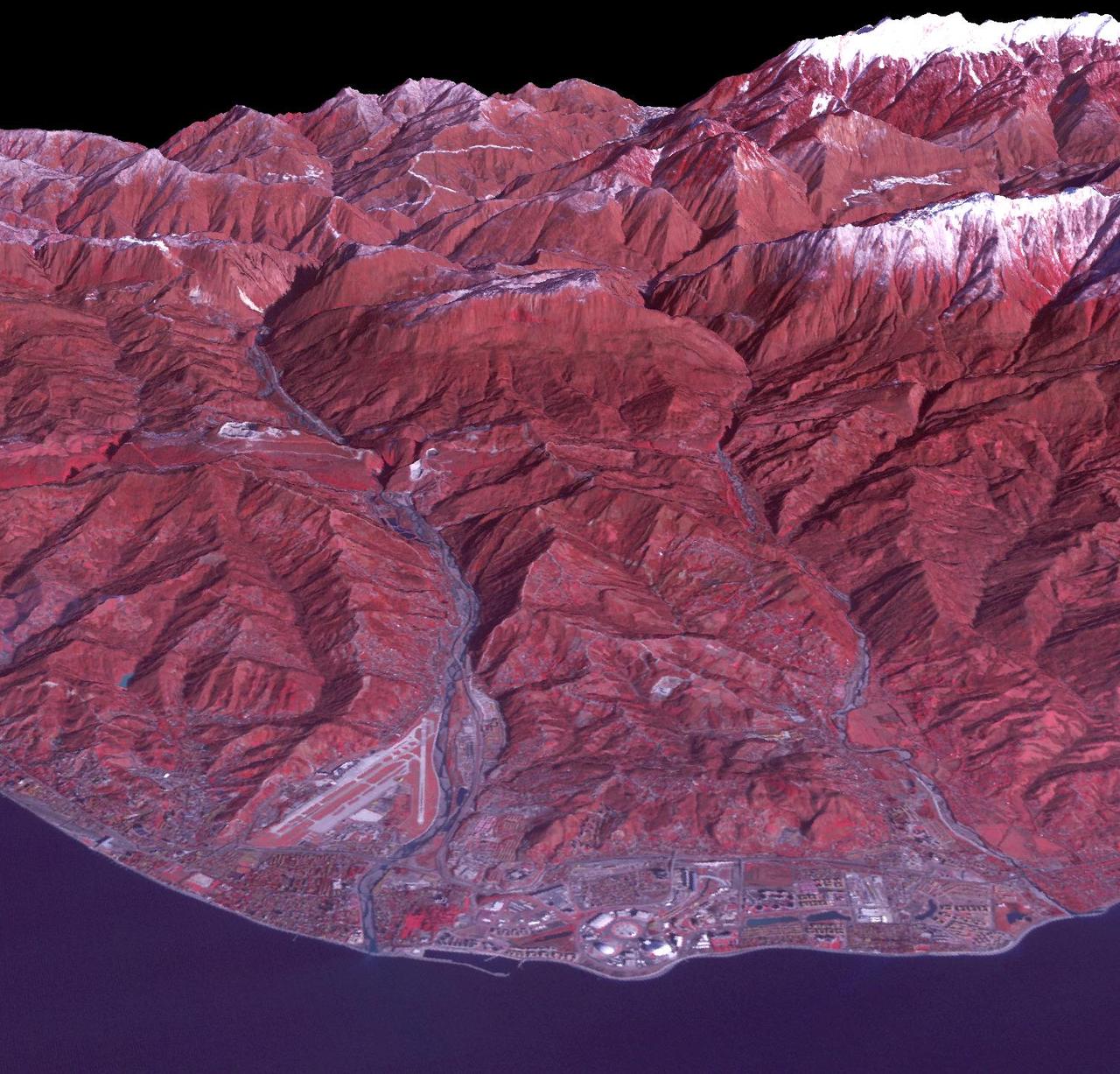
Sochi, Russia Winter Olympic Sites (Coastal Cluster) The Black Sea resort of Sochi, Russia, is the warmest city ever to host the Winter Olympic Games, which open on Feb. 7, 2014, and run through Feb. 23. This north-looking image, acquired on Jan. 4, 2014, by the Advanced Spaceborne Thermal Emission and Reflection Radiometer (ASTER) instrument on NASA's Terra spacecraft, shows the Sochi Olympic Park Coastal Cluster -- the circular area on the shoreline in the bottom center of the image -- which was built for Olympic indoor sports. Even curling has its own arena alongside multiple arenas for hockey and skating. The Olympic alpine events will take place at the Mountain Cluster, located in a snow-capped valley at the top right of the image. Sochi itself, a city of about 400,000, is not visible in the picture. It's farther west (left) along the coast, past the airport at bottom left. In the image, red indicates vegetation, white is snow, buildings are gray and the ocean is dark blue. The area imaged is about 15 miles (24 kilometers) from west to east (left to right) at the coastline and 25 miles (41 kilometers) from front to back. Height is exaggerated 1.5 times. The image was created from the ASTER visible and near-infrared bands, draped over ASTER-derived digital elevation data. With its 14 spectral bands from the visible to the thermal infrared wavelength region and its high spatial resolution of 15 to 90 meters (about 50 to 300 feet), ASTER images Earth to map and monitor the changing surface of our planet. ASTER is one of five Earth-observing instruments launched Dec. 18, 1999, on Terra. The instrument was built by Japan's Ministry of Economy, Trade and Industry. A joint U.S./Japan science team is responsible for validation and calibration of the instrument and data products. The broad spectral coverage and high spectral resolution of ASTER provides scientists in numerous disciplines with critical information for surface mapping and monitoring of dynamic conditions and temporal change. Example applications are: monitoring glacial advances and retreats; monitoring potentially active volcanoes; identifying crop stress; determining cloud morphology and physical properties; wetlands evaluation; thermal pollution monitoring; coral reef degradation; surface temperature mapping of soils and geology; and measuring surface heat balance. The U.S. science team is located at NASA's Jet Propulsion Laboratory, Pasadena, Calif. The Terra mission is part of NASA's Science Mission Directorate, Washington, D.C. More information about ASTER is available at <a href="http://asterweb.jpl.nasa.gov/" rel="nofollow">asterweb.jpl.nasa.gov/</a>. Image credit: NASA/GSFC/METI/ERSDAC/JAROS, and U.S./Japan ASTER Science Team <b><a href="http://www.nasa.gov/audience/formedia/features/MP_Photo_Guidelines.html" rel="nofollow">NASA image use policy.</a></b> <b><a href="http://www.nasa.gov/centers/goddard/home/index.html" rel="nofollow">NASA Goddard Space Flight Center</a></b> enables NASA’s mission through four scientific endeavors: Earth Science, Heliophysics, Solar System Exploration, and Astrophysics. Goddard plays a leading role in NASA’s accomplishments by contributing compelling scientific knowledge to advance the Agency’s mission. <b>Follow us on <a href="http://twitter.com/NASAGoddardPix" rel="nofollow">Twitter</a></b> <b>Like us on <a href="http://www.facebook.com/pages/Greenbelt-MD/NASA-Goddard/395013845897?ref=tsd" rel="nofollow">Facebook</a></b> <b>Find us on <a href="http://instagram.com/nasagoddard?vm=grid" rel="nofollow">Instagram</a></b>
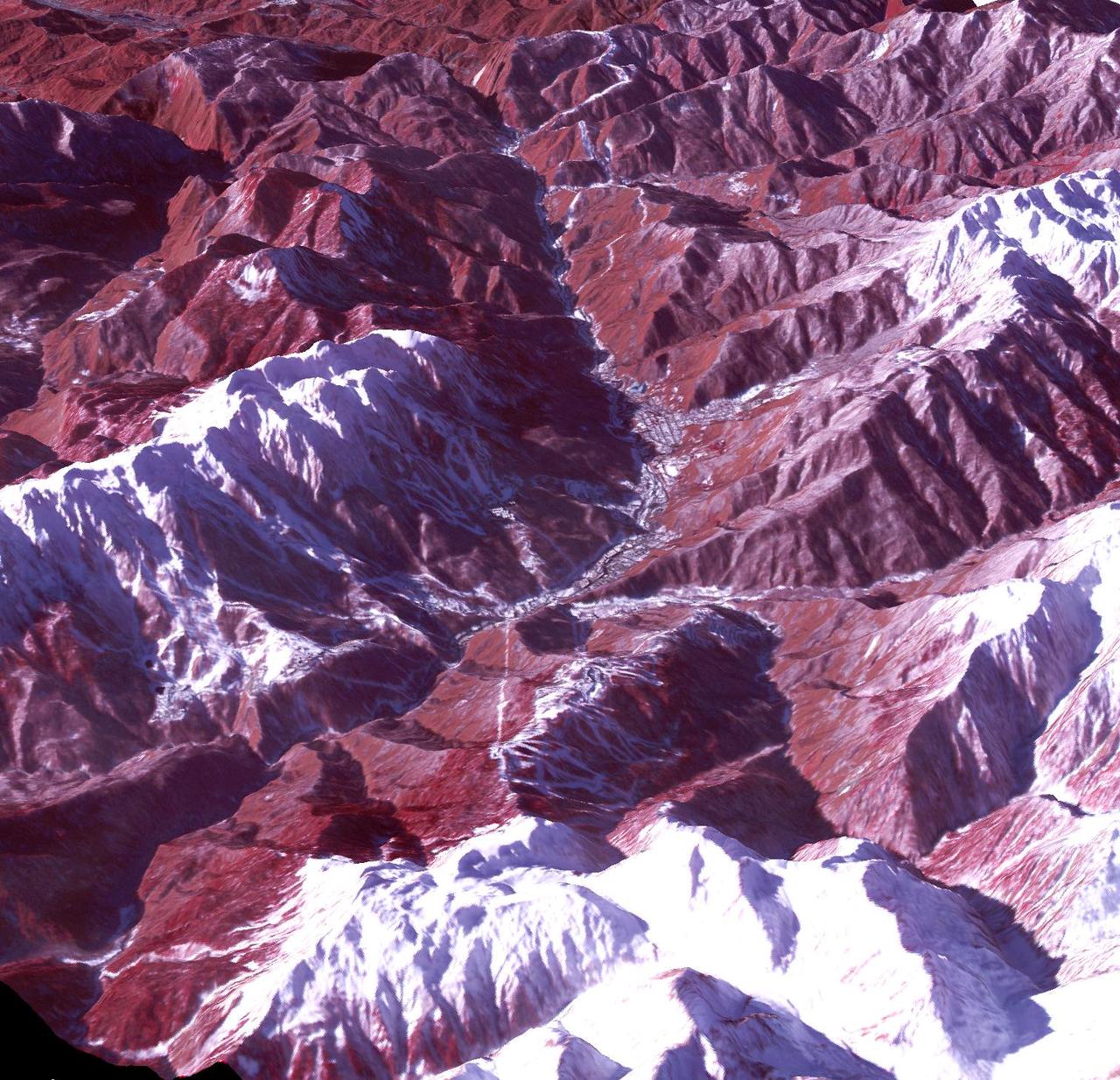
Sochi, Russia Winter Olympic Sites (Mountain Cluster) The 2014 Winter Olympic ski runs may be rated double black diamond, but they're not quite as steep as they appear in this image of the skiing and snowboarding sites for the Sochi Winter Olympic Games, acquired on Jan. 4, 2014, by the Advanced Spaceborne Thermal Emission and Reflection Radiometer (ASTER) instrument on NASA's Terra spacecraft. Rosa Khutar ski resort near Sochi, Russia, is in the valley at center, and the runs are visible on the shadowed slopes on the left-hand side of the valley. Height has been exaggerated 1.5 times to bring out topographic details. The games, which begin on Feb. 7 and continue for 17 days, feature six new skiing and boarding events plus the return of the legendary Jamaican bobsled team to the winter games for the first time since 2002. In this southwest-looking image, red indicates vegetation, white is snow, and the resort site appears in gray. The area imaged is about 11 miles (18 kilometers) across in the foreground and 20 miles (32 kilometers) from front to back. The image was created from the ASTER visible and near-infrared bands, draped over ASTER-derived digital elevation data. With its 14 spectral bands from the visible to the thermal infrared wavelength region and its high spatial resolution of 15 to 90 meters (about 50 to 300 feet), ASTER images Earth to map and monitor the changing surface of our planet. ASTER is one of five Earth-observing instruments launched Dec. 18, 1999, on Terra. The instrument was built by Japan's Ministry of Economy, Trade and Industry. A joint U.S./Japan science team is responsible for validation and calibration of the instrument and data products. The broad spectral coverage and high spectral resolution of ASTER provides scientists in numerous disciplines with critical information for surface mapping and monitoring of dynamic conditions and temporal change. Example applications are: monitoring glacial advances and retreats; monitoring potentially active volcanoes; identifying crop stress; determining cloud morphology and physical properties; wetlands evaluation; thermal pollution monitoring; coral reef degradation; surface temperature mapping of soils and geology; and measuring surface heat balance. The U.S. science team is located at NASA's Jet Propulsion Laboratory, Pasadena, Calif. The Terra mission is part of NASA's Science Mission Directorate, Washington, D.C. More information about ASTER is available at <a href="http://asterweb.jpl.nasa.gov/" rel="nofollow">asterweb.jpl.nasa.gov/</a>. credit:NASA/GSFC/METI/ERSDAC/JAROS, and U.S./Japan ASTER Science Team <b><a href="http://www.nasa.gov/audience/formedia/features/MP_Photo_Guidelines.html" rel="nofollow">NASA image use policy.</a></b> <b><a href="http://www.nasa.gov/centers/goddard/home/index.html" rel="nofollow">NASA Goddard Space Flight Center</a></b> enables NASA’s mission through four scientific endeavors: Earth Science, Heliophysics, Solar System Exploration, and Astrophysics. Goddard plays a leading role in NASA’s accomplishments by contributing compelling scientific knowledge to advance the Agency’s mission. <b>Follow us on <a href="http://twitter.com/NASAGoddardPix" rel="nofollow">Twitter</a></b> <b>Like us on <a href="http://www.facebook.com/pages/Greenbelt-MD/NASA-Goddard/395013845897?ref=tsd" rel="nofollow">Facebook</a></b> <b>Find us on <a href="http://instagram.com/nasagoddard?vm=grid" rel="nofollow">Instagram</a></b>
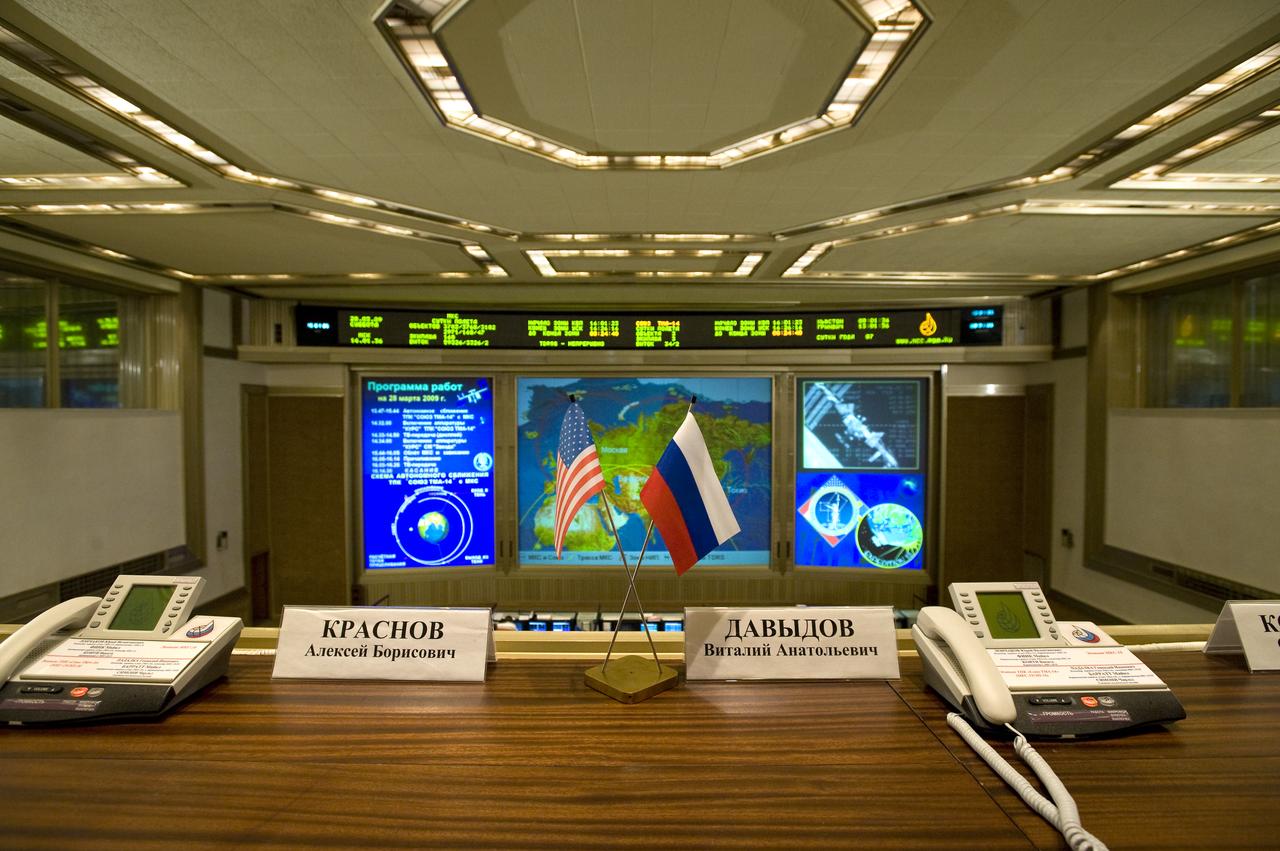
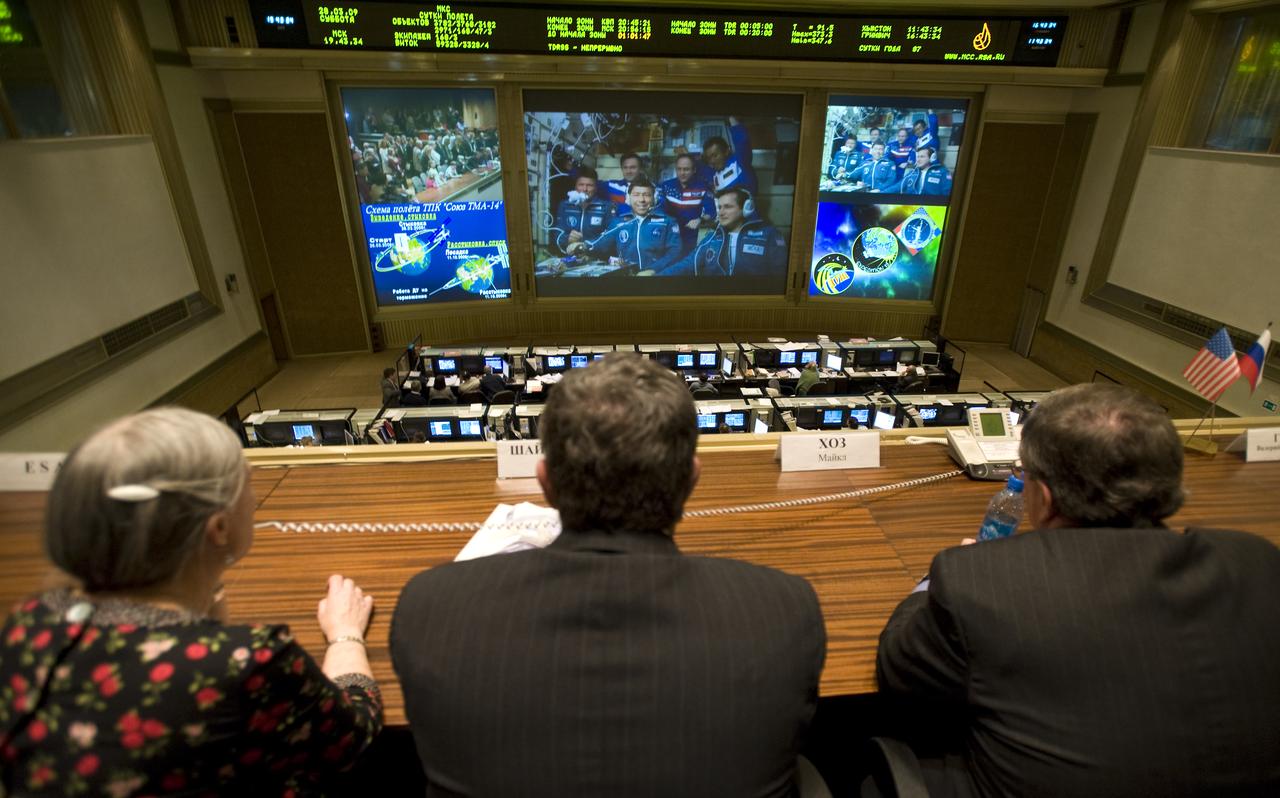
View from the balcony of the Russian Mission Control Center in Korolev, Russia moments before the Soyuz TMA-14 docks to the International Space Station on Saturday, March 28, 2009. A view of the International Space Station from Soyuz onboard cameras is visible in the upper right display. Photo Credit: (NASA/Bill Ingalls)
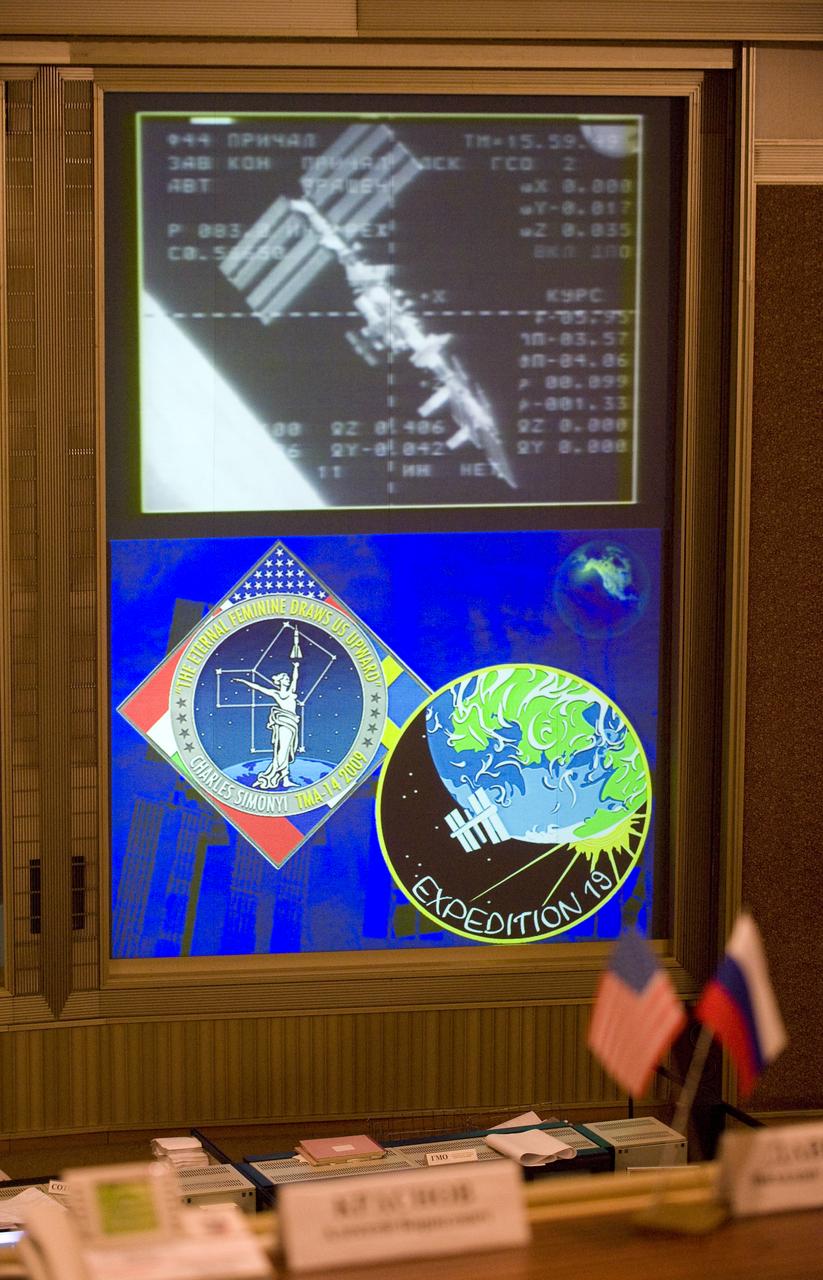
View from the balcony of the Russian Mission Control Center in Korolev, Russia moments before the Soyuz TMA-14 docks to the International Space Station on Saturday, March 28, 2009. A view of the International Space Station from Soyuz onboard cameras is visible in the upper display. Photo Credit: (NASA/Bill Ingalls)
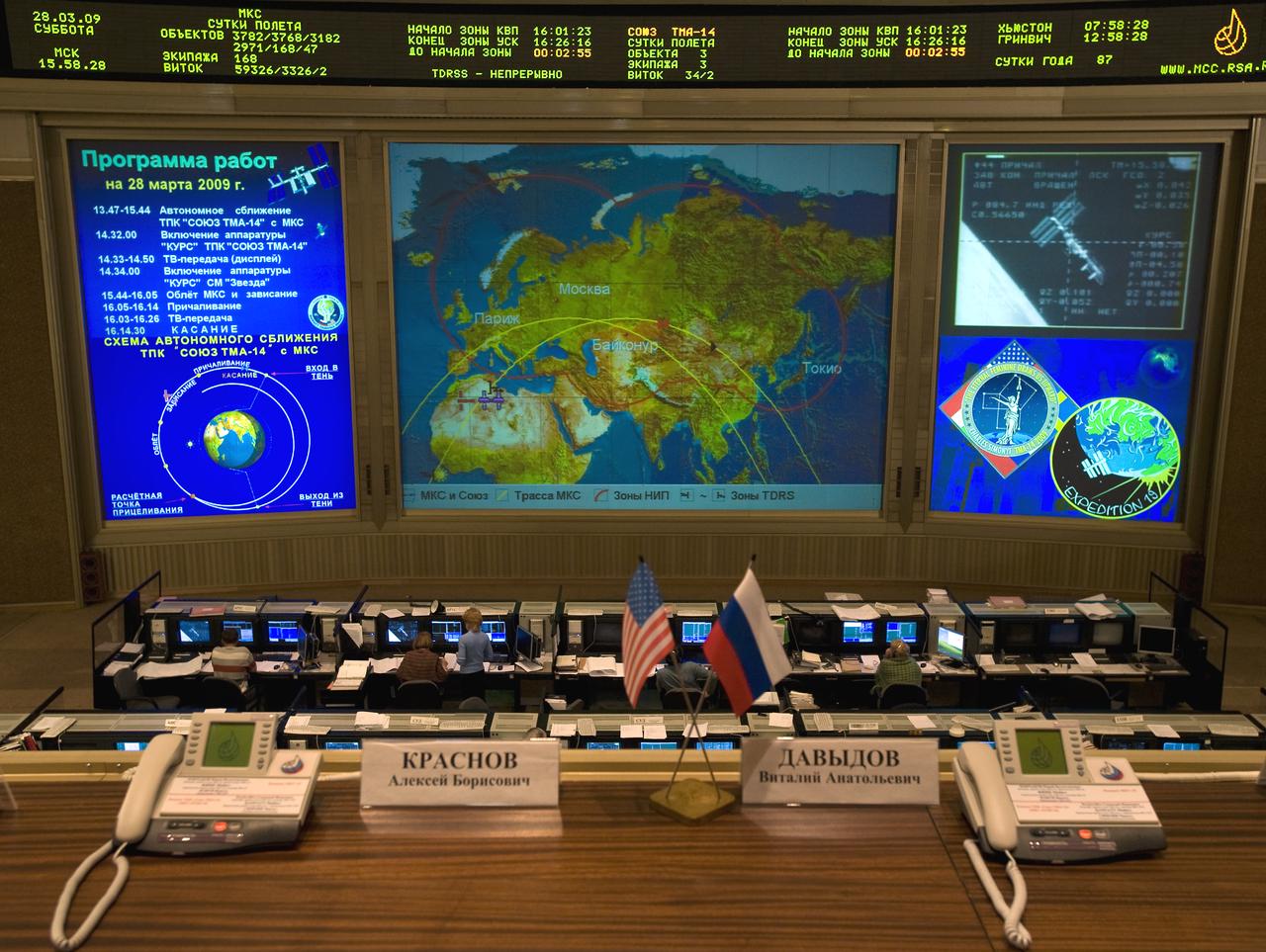
View from the balcony of the Russian Mission Control Center in Korolev, Russia moments before the Soyuz TMA-14 docks to the International Space Station on Saturday, March 28, 2009. A view of the International Space Station from Soyuz onboard cameras is visible in the upper right display. Photo Credit: (NASA/Bill Ingalls)

Managers from NASA, Roscosmos, RSC-Energia and other related agencies answer reporters questions during a Soyuz post-docking press conference at the Russian mission Control Center in Korolev, Russia on Saturday March 28, 2009. The Soyuz TMA-14 docked to the International Space Station carrying Expedition 19 Commander Gennady I. Padalka, Flight Engineer Michael R. Barratt and Spaceflight Participant Charles Simonyi. Photo Credit: (NASA/Bill Ingalls)

Managers from NASA, Roscosmos, RSC-Energia, TsNIIMash and other related agencies answer reporters questions during a Soyuz post-docking press conference at the Russian mission Control Center in Korolev, Russia on Saturday March 28, 2009. The Soyuz TMA-14 docked to the International Space Station carrying Expedition 19 Commander Gennady I. Padalka, Flight Engineer Michael R. Barratt and Spaceflight Participant Charles Simonyi. Photo Credit: (NASA/Bill Ingalls)

jsc2024e016951 (Feb. 28, 2024) --- Soyuz MS-25 crew member Tracy Dyson from NASA is pictured during crew qualification exams at the Gagarin Cosmonaut Training Center in Star City, Russia. Credit: GCTC/Roscosmos
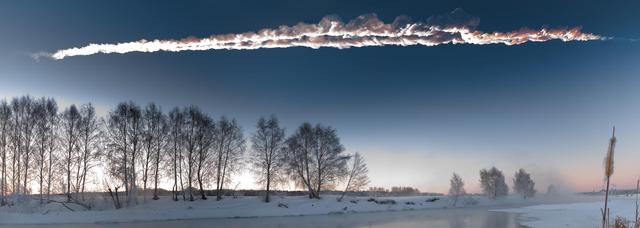
This photograph of the meteor streaking through the sky above Chelyabinsk, Russia, on Feb. 15, 2013, was taken by a local, M. Ahmetvaleev. The small asteroid was about 56 to 66 feet 17 to 20 meters wide.
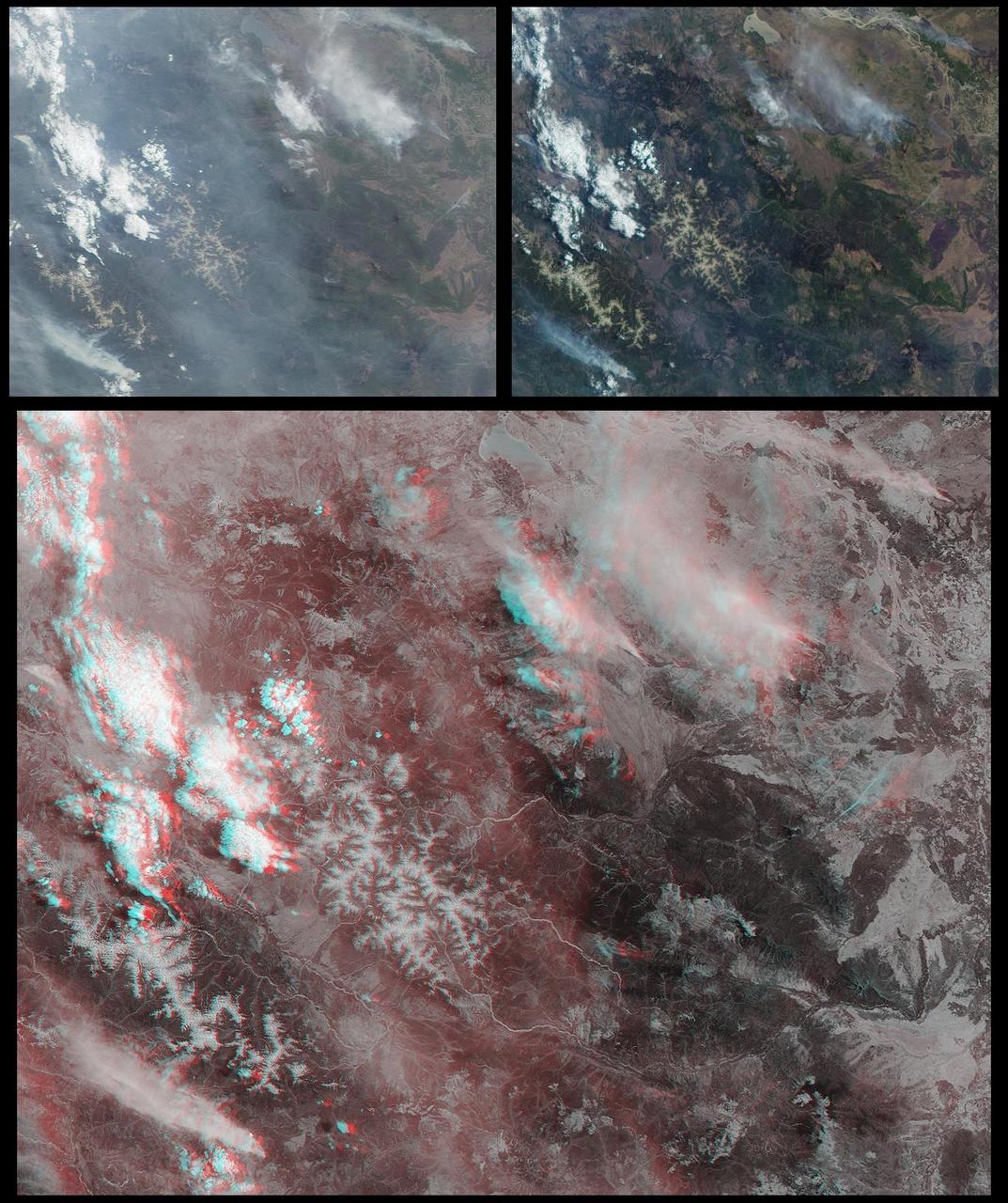
Several mountain ranges and a portion of the Amur River are visible in this set of stereo images of Russia far east Khabarovsk region taken by the MISR instrument aboard NASA Terra spacecraft. 3D glasses are necessary to view this image.
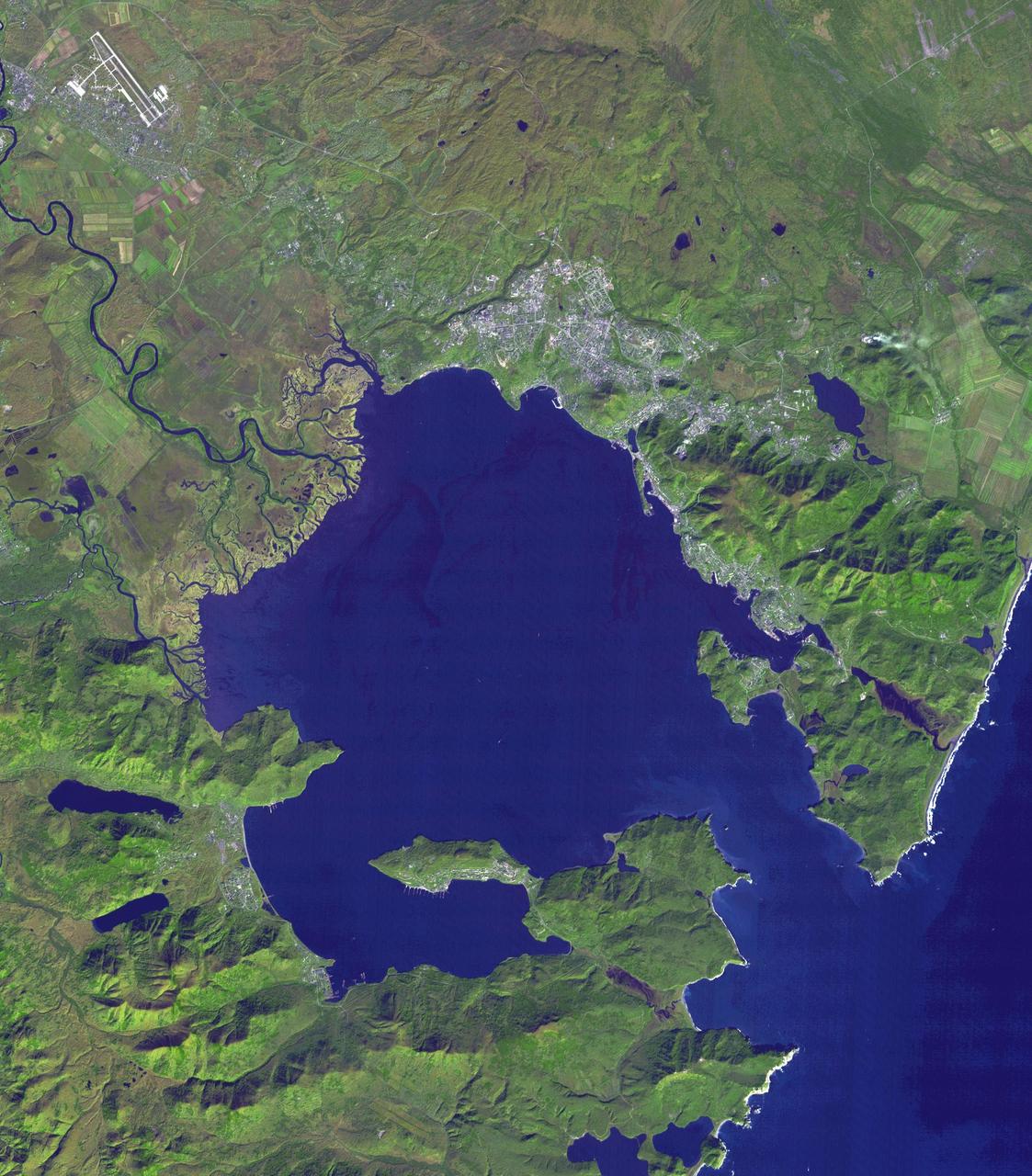
This image from NASA Terra spacecraft shows Petropavlovsk-Kamchatsky P-K, which is the administrative, cultural, scientific and economic center of Kamchatka Krai, Russia on the Kamchatka Peninsula.
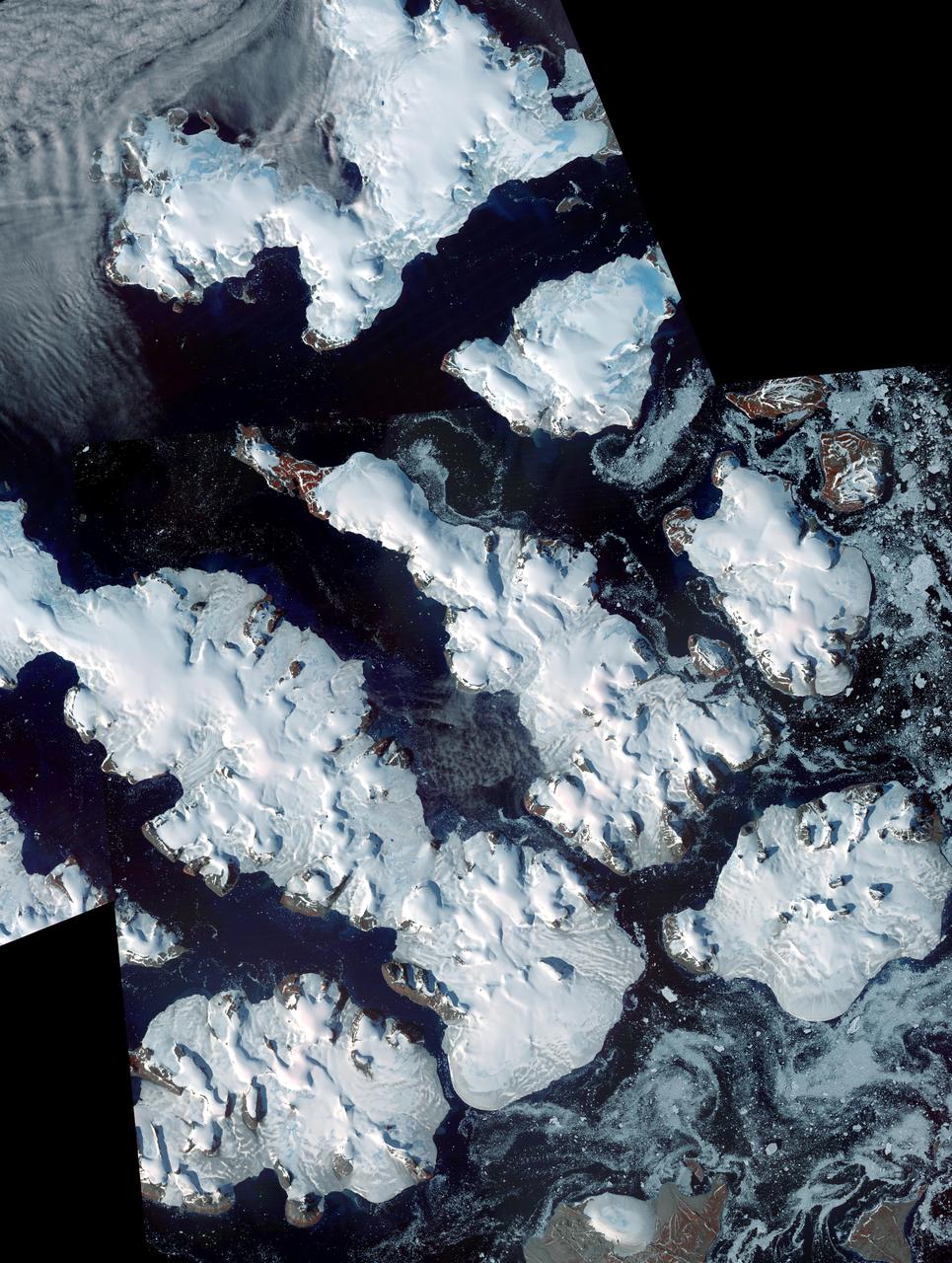
This image from NASA Terra spacecraft is of Franz Josef Land, an archipelago in the far north of Russia. It consists of 191 islands covering an area of about 200 by 325 km, and has no native inhabitants.
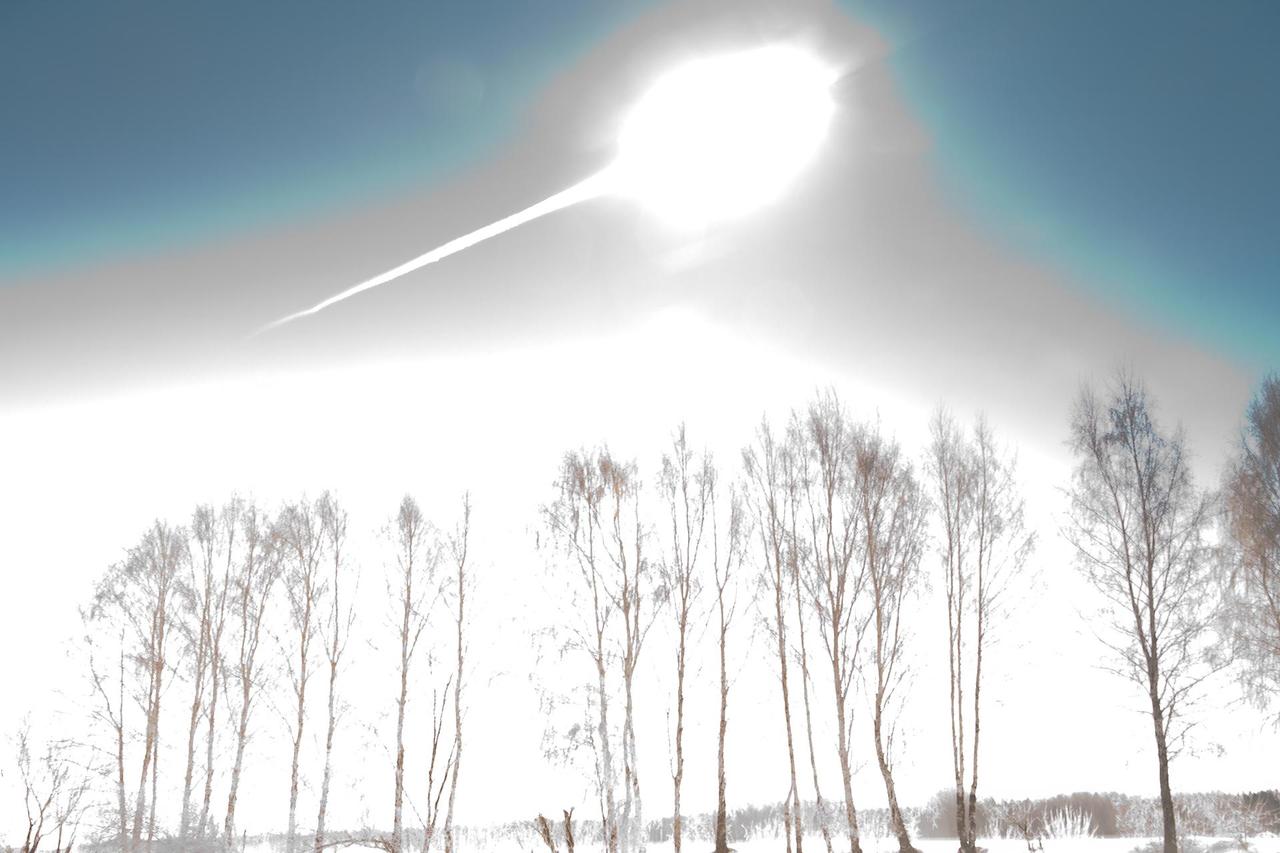
This image shows the flash above Chelyabinsk, Russia, from the fireball streaking through the sky on Feb. 15, 2013. The small asteroid was approximately 56 to 66 feet in diameter. The picture was taken by a local, M. Ahmetvaleev.
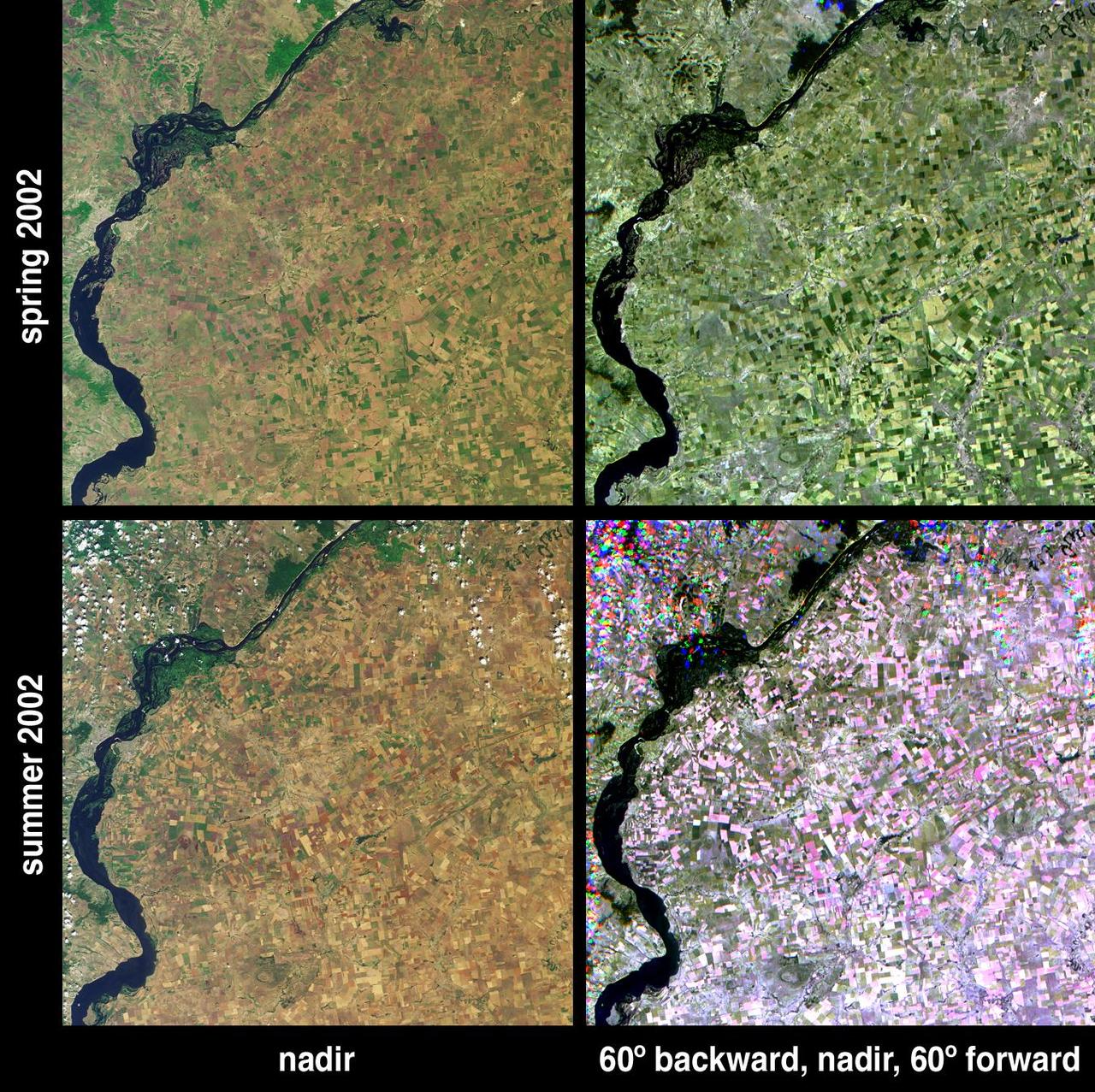
These images from NASA Terra satellite were captured on May 31 and July 18, 2002 and show Russia Saratov Oblast province, located in the southeastern portion of the East-European plain, in the Lower Volga River Valley.
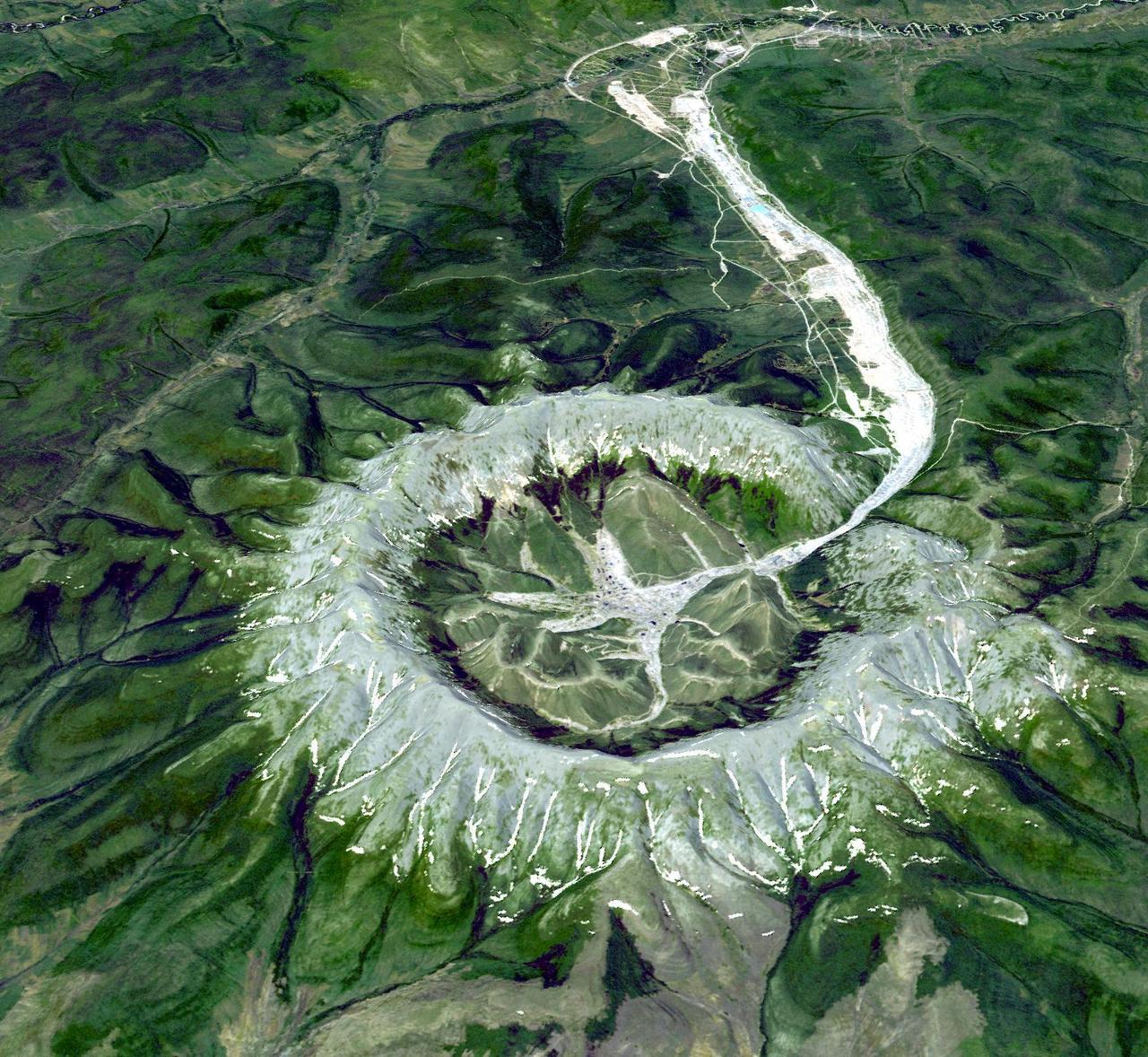
The Kondyor Massif is located in Eastern Siberia, Russia, north of the city of Khabarovsk. It is a rare form of igneous intrusion called alkaline-ultrabasic massif and it is full of rare minerals. This image is from NASA Terra satellite.
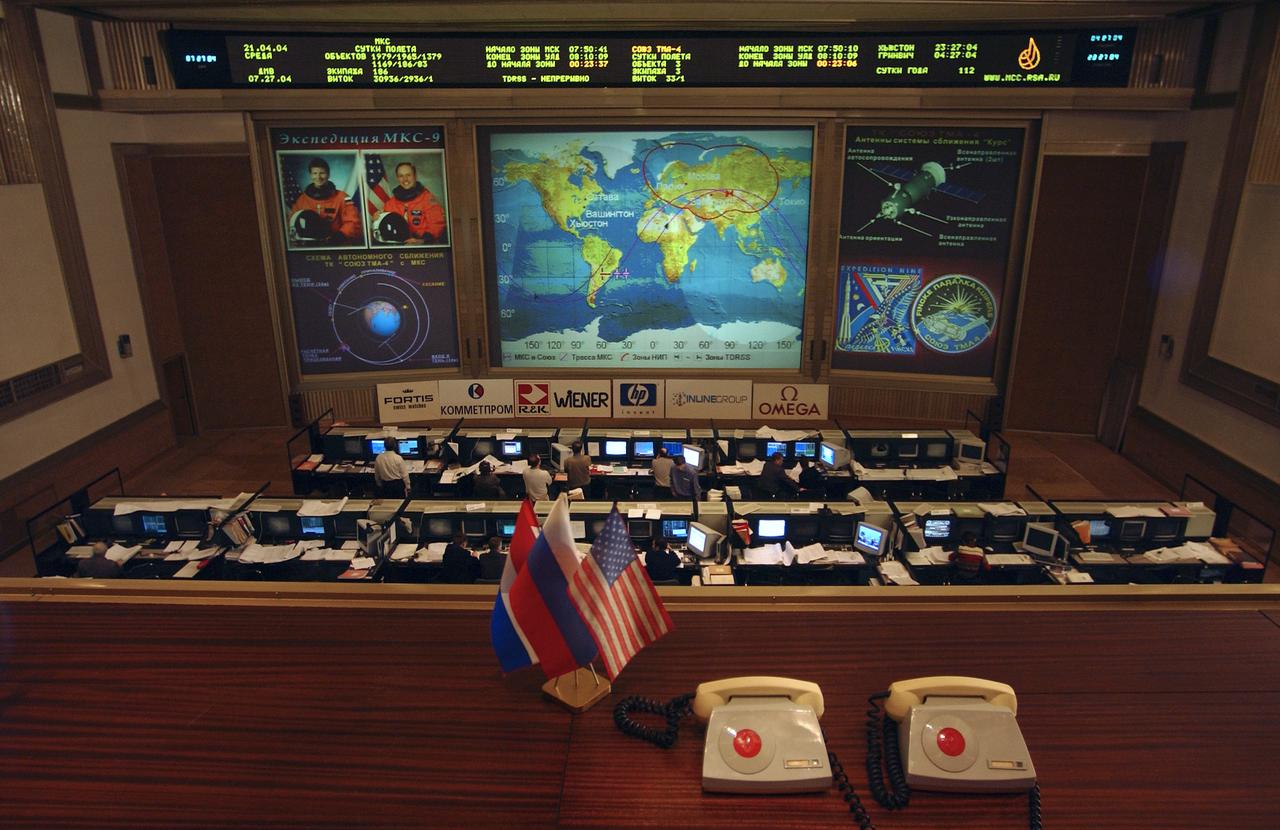
View of the Flight Control Room at the Russian Mission Control Center in Korolev, Russia, located on the outskirts of Moscow, Wednesday, April 21, 2004. Photo Credit: (NASA/Bill Ingalls)
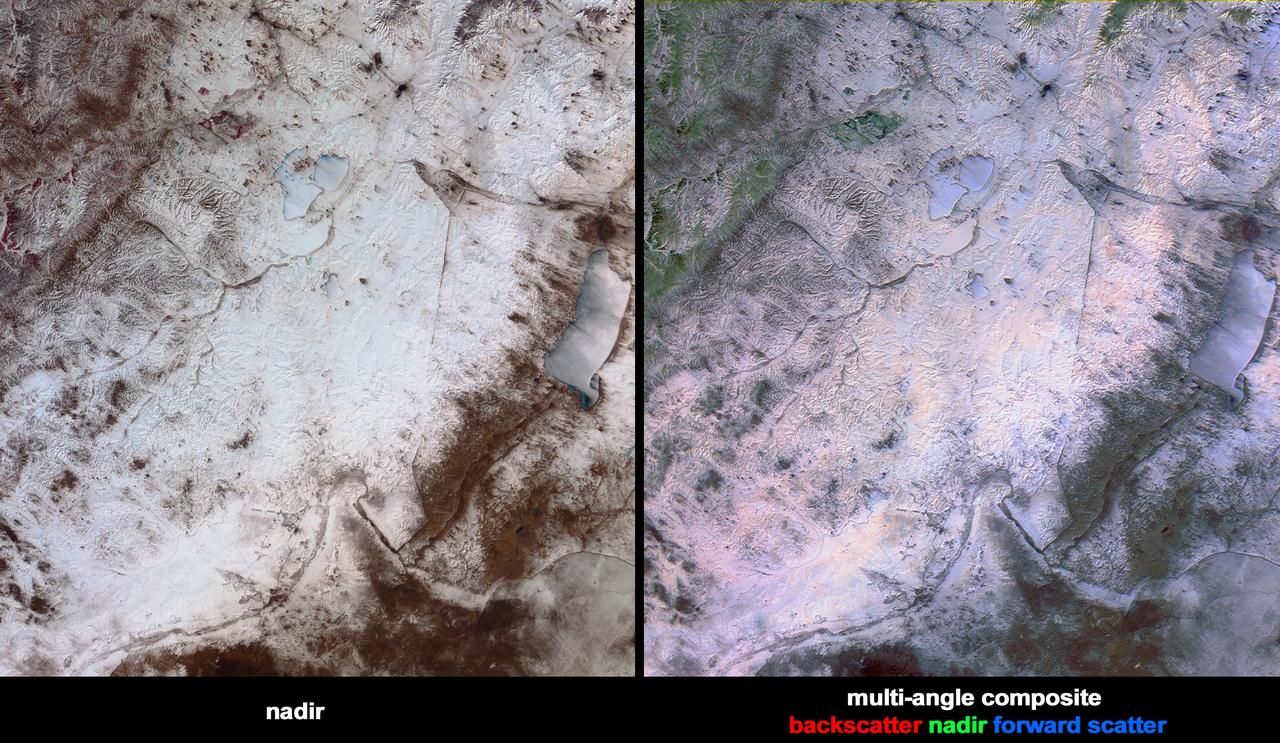
Heavy snowfall on March 12, 2004, across north China Inner Mongolia Autonomous Region, Mongolia and Russia, caused train and highway traffic to stop for several days along the Russia-China border shown here by NASA Terra spacecraft.
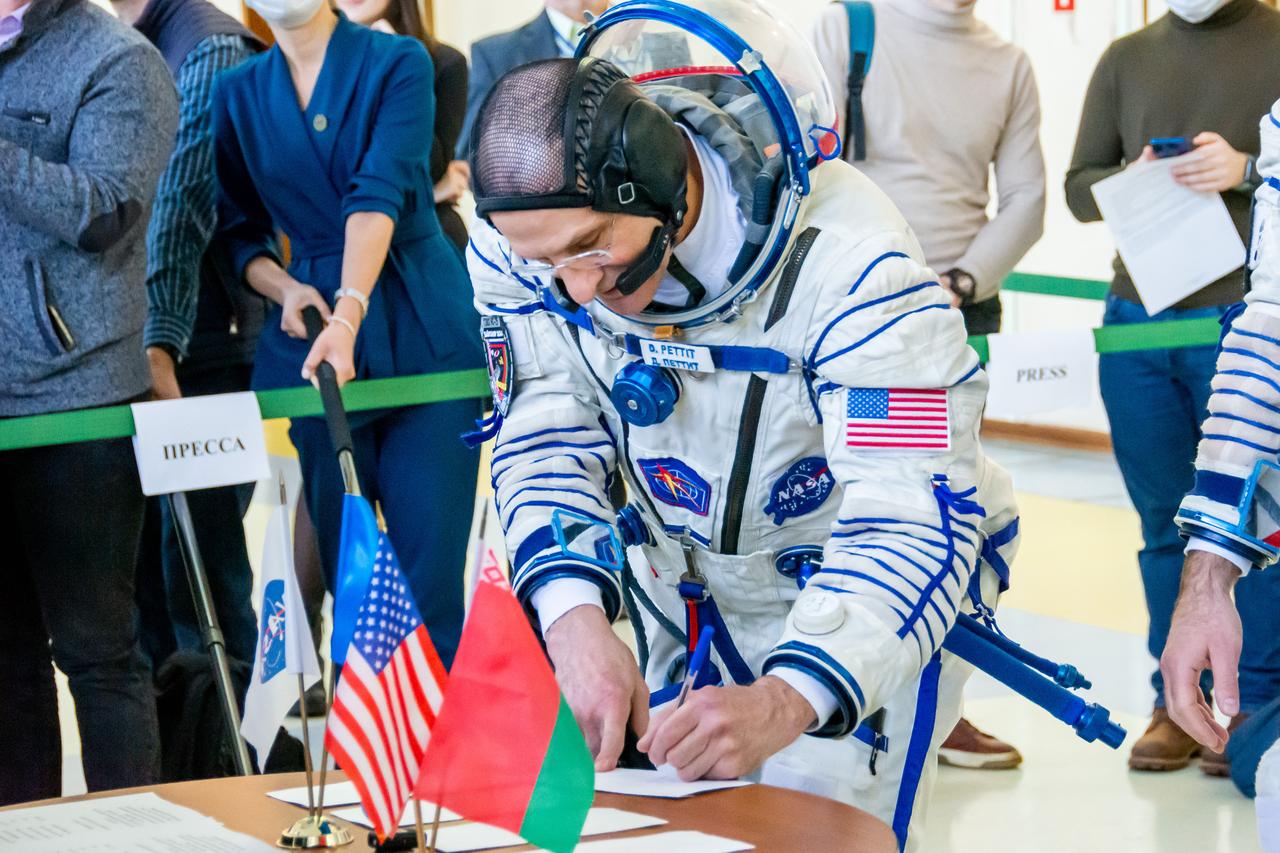
jsc2024e016941 (Feb. 28, 2024) --- Soyuz MS-25 backup crew member Don Pettit from NASA is pictured in his Sokol launch and entry suit signing in for qualification exams at the Gagarin Cosmonaut Training Center in Star City, Russia. Credit: GCTC/Roscosmos
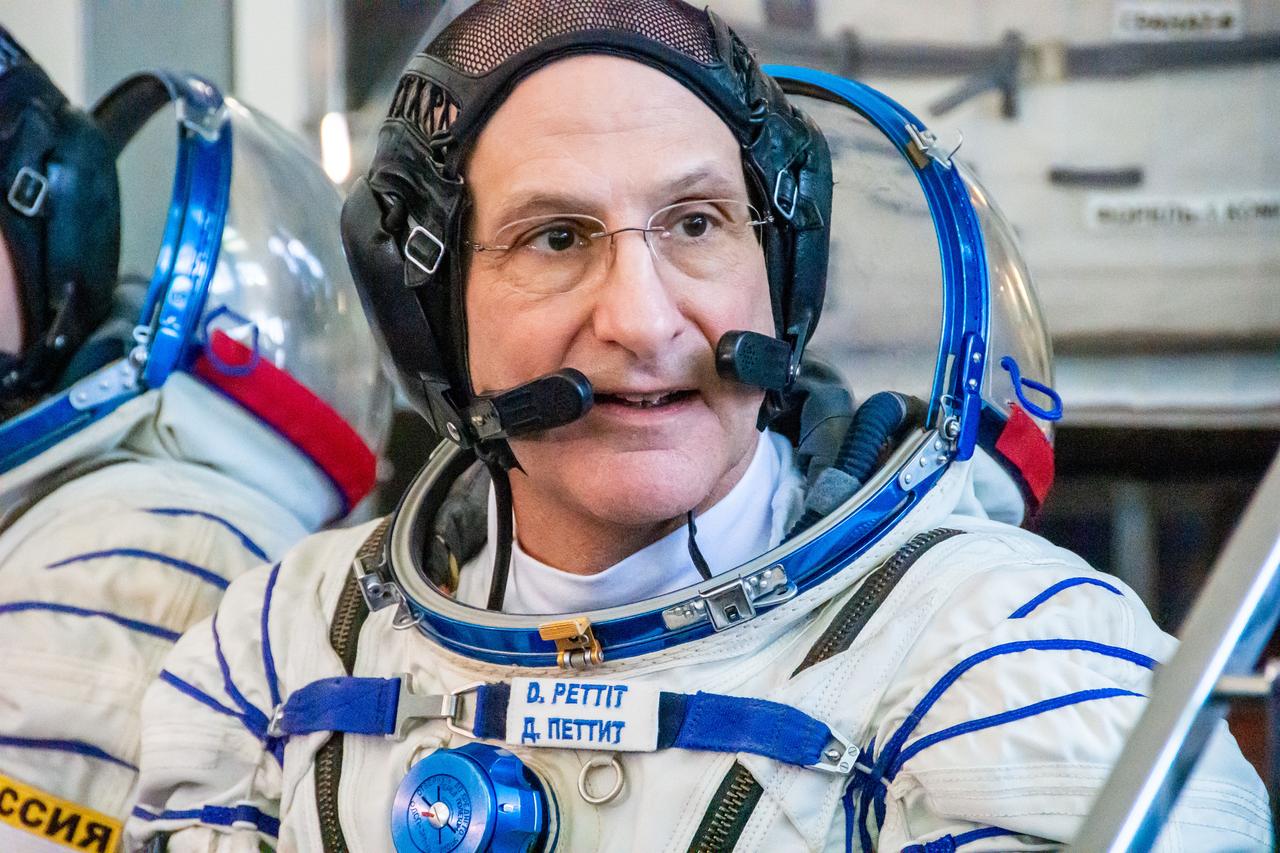
jsc2024e016943 (Feb. 28, 2024) --- Soyuz MS-25 backup crew member Don Pettit from NASA is pictured in his Sokol launch and entry suit during crew qualification exams at the Gagarin Cosmonaut Training Center in Star City, Russia. Credit: GCTC/Roscosmos
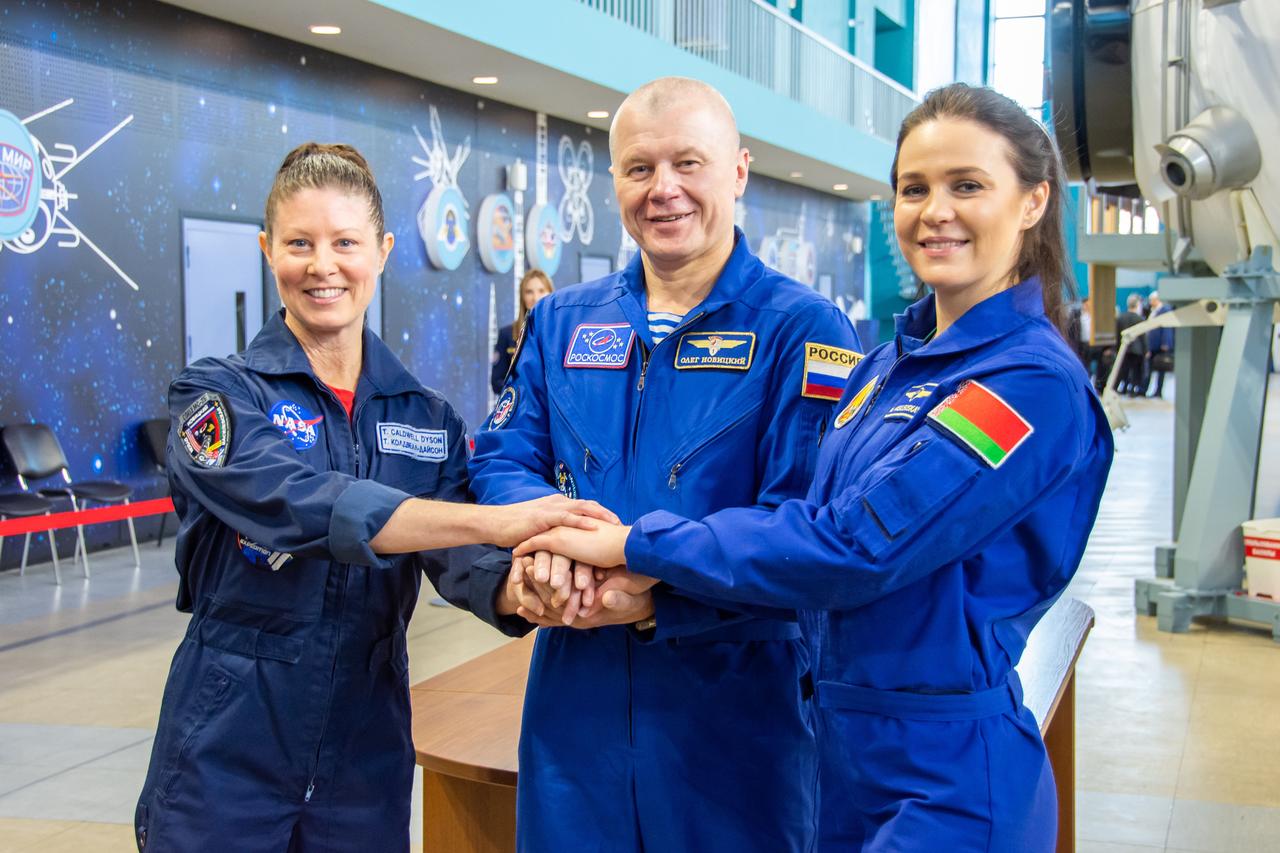
jsc2024e016952 (Feb. 28, 2024) --- Soyuz MS-25 crew members (from left) Tracy Dyson from NASA, Oleg Novitskiy from Roscosmos, and Belarus spaceflight participant Marina Vasilevskaya join hands during their crew qualification exams at the Gagarin Cosmonaut Training Center in Star City, Russia. Credit: GCTC/Roscosmos
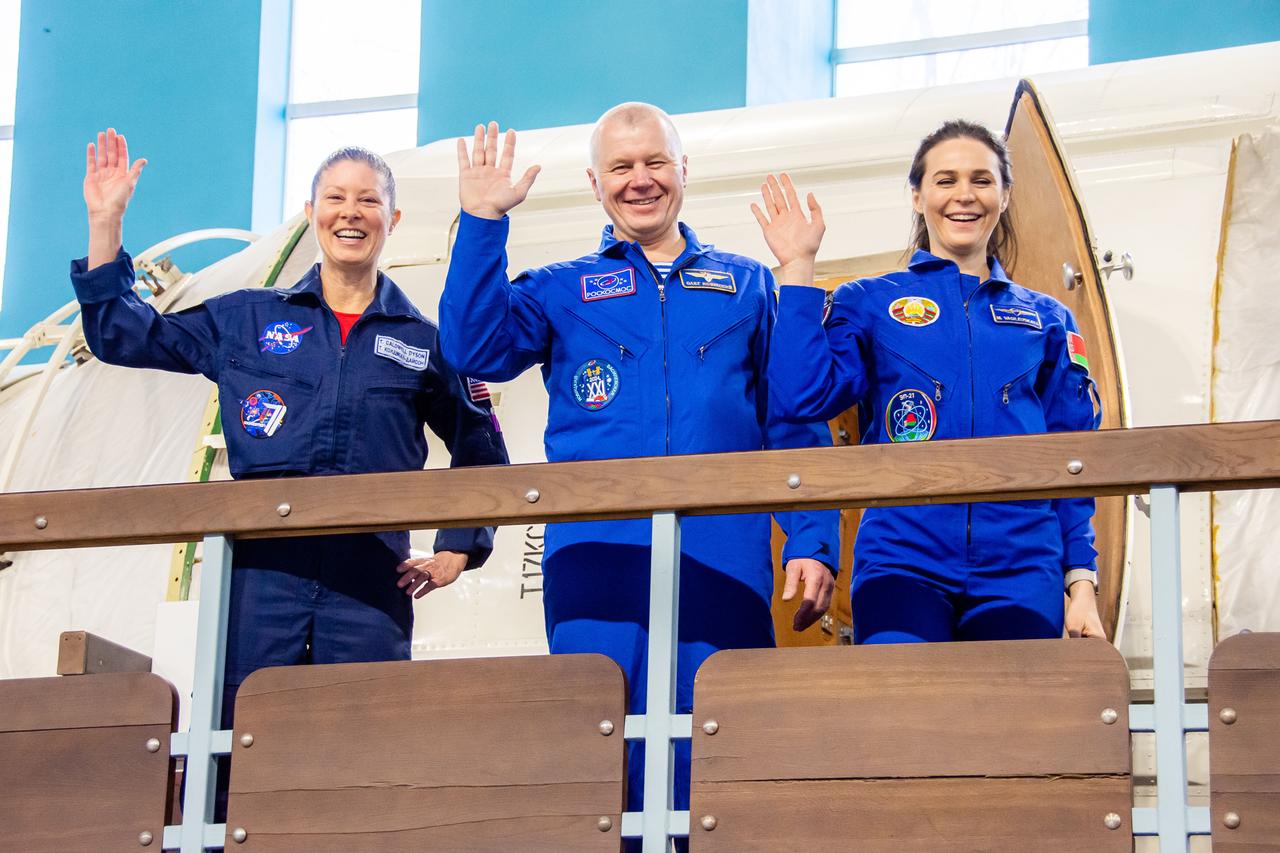
jsc2024e016953 (Feb. 28, 2024) --- Soyuz MS-25 crew members (from left) Tracy Dyson from NASA, Oleg Novitskiy from Roscosmos, and Belarus spaceflight participant Marina Vasilevskaya wave to photographers during their crew qualification exams at the Gagarin Cosmonaut Training Center in Star City, Russia. Credit: GCTC/Roscosmos

Valery Grin, Deputy Head of State Commission, talks on the phone to the six crew members onboard the International Space Station from the Russian Mission Control Center, Korolev, Russia, Saturday, March 28, 2009. The Soyuz TMA-14 spacecraft docked to the International Space Station and delivered Expedition 19 Commander Gennady I. Padalka, Flight Engineer Michael R. Barratt and Spaceflight Participant Charles Simonyi. Photo Credit: (NASA/Bill Ingalls)

Mike Hawes, NASA's Acting Associate Administrator, talks on the phone to the six crew members onboard the International Space Station from the Russian Mission Control Center, Korolev, Russia, Saturday, March 28, 2009. The Soyuz TMA-14 spacecraft docked to the International Space Station and delivered Expedition 19 Commander Gennady I. Padalka, Flight Engineer Michael R. Barratt and Spaceflight Participant Charles Simonyi. Photo Credit: (NASA/Bill Ingalls)
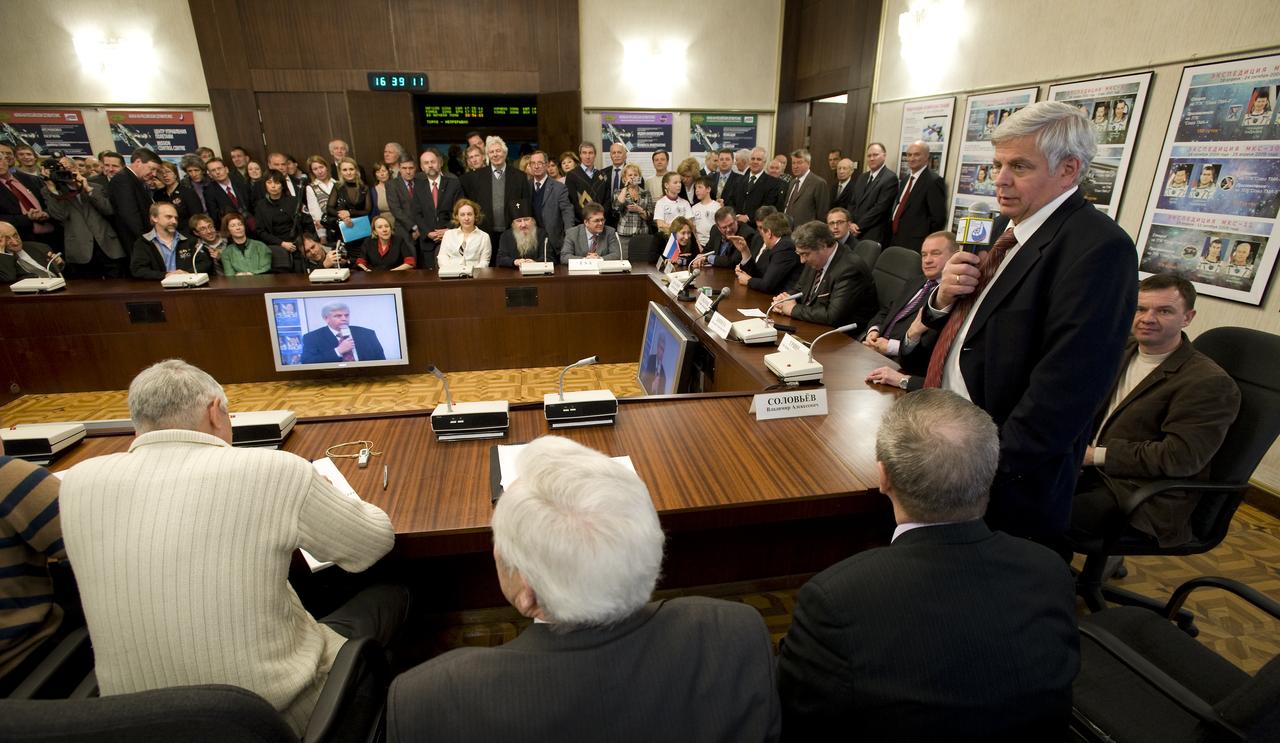
Vladimir Solovyov, Chief Flight Director, MCC-M, answers reporters questions during a Soyuz post-docking press conference at the Russian mission Control Center in Korolev, Russia on Saturday March 28, 2009. The Soyuz TMA-14 docked to the International Space Station carrying Expedition 19 Commander Gennady I. Padalka, Flight Engineer Michael R. Barratt and Spaceflight Participant Charles Simonyi. Photo Credit: (NASA/Bill Ingalls)

Vitaly Lopota, President, General Designer, RSC-Energia, answers reporters questions during a Soyuz post-docking press conference at the Russian mission Control Center in Korolev, Russia on Saturday March 28, 2009. The Soyuz TMA-14 docked to the International Space Station carrying Expedition 19 Commander Gennady I. Padalka, Flight Engineer Michael R. Barratt and Spaceflight Participant Charles Simonyi. Photo Credit: (NASA/Bill Ingalls)

Vladimir Solovyov, Chief Flight Director, MCC-M, answers reporters questions during a Soyuz post-docking press conference at the Russian mission Control Center in Korolev, Russia on Saturday March 28, 2009. The Soyuz TMA-14 docked to the International Space Station carrying Expedition 19 Commander Gennady I. Padalka, Flight Engineer Michael R. Barratt and Spaceflight Participant Charles Simonyi. Photo Credit: (NASA/Bill Ingalls)

Michelle Barratt, right, prepares to talk on the phone to her husband onboard the International Space Station from the Russian Mission Control Center, Korolev, Russia, Saturday, March 28, 2009. The Soyuz TMA-14 spacecraft docked to the International Space Station and delivered Expedition 19 Commander Gennady I. Padalka, Flight Engineer Michael R. Barratt and Spaceflight Participant Charles Simonyi. Photo Credit: (NASA/Bill Ingalls)
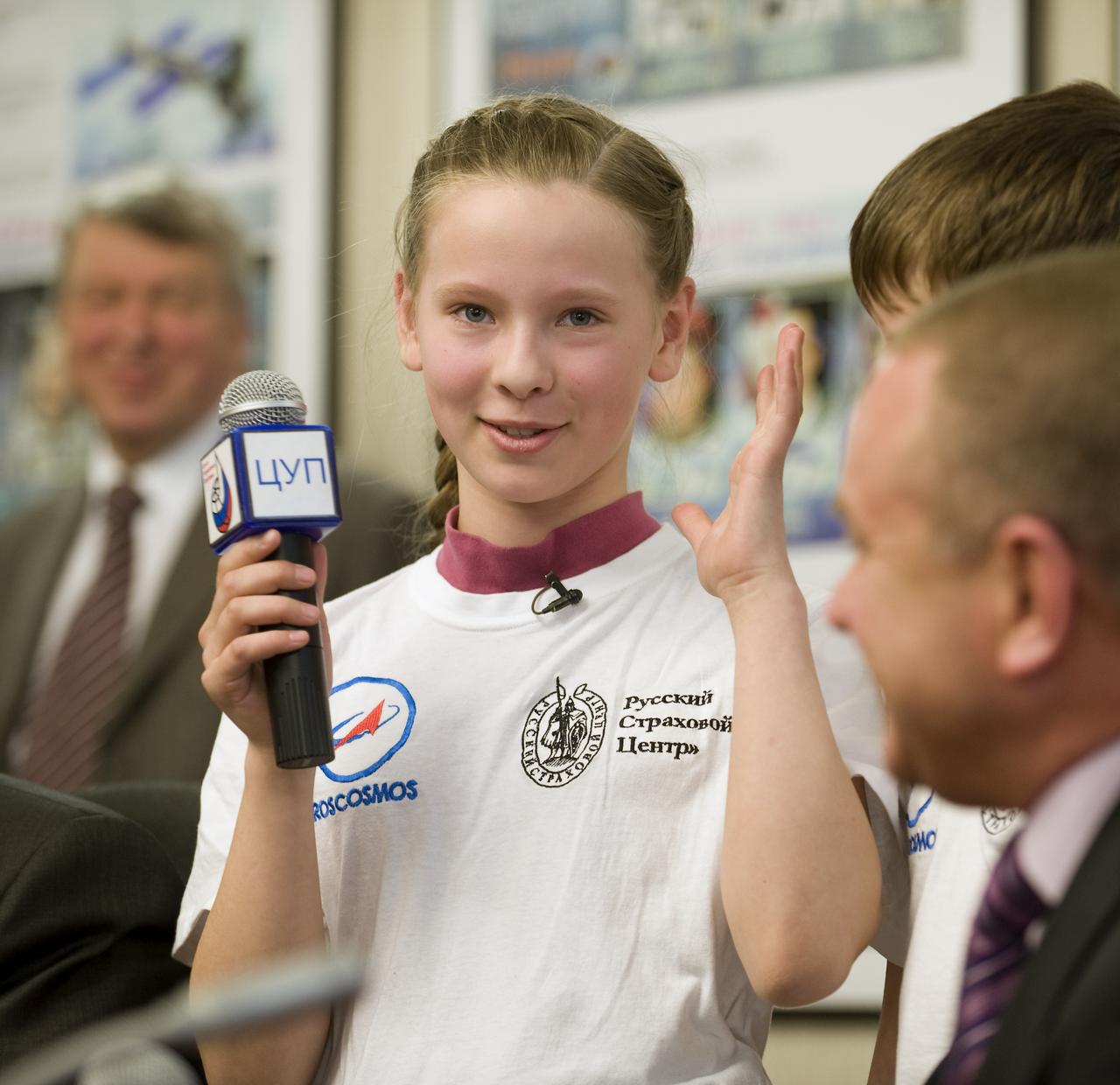
12-year-old Anna Chibiskova of Moscow speaks during the Soyuz post-docking press conference at the Russian mission Control Center in Korolev, Russia on Saturday March 28, 2009. Chibiskova was the winner of an International logo design contest for the Expedition 19 mission. Stas Pyatkin, (not pictured) from the Uglegorsk Amur region, won third place and 12-year-old Keytlin Riley (not pictured) from New York won second place. Photo Credit: (NASA/Bill Ingalls)

Mike Hawes, NASA's Acting Associate Administrator, left, looks on as Kirk Shireman, NASA's deputy ISS program manager, answers reporters questions during a Soyuz post-docking press conference at the Russian Mission Control Center in Korolev, Russia on Saturday March 28, 2009. The Soyuz TMA-14 docked to the International Space Station carrying Expedition 19 Commander Gennady I. Padalka, Flight Engineer Michael R. Barratt and Spaceflight Participant Charles Simonyi. Photo Credit: (NASA/Bill Ingalls)

Alexei Krasnov, Director of Manned Space Programs Department, Roscosmos, answers reporters questions during a Soyuz post-docking press conference at the Russian mission Control Center in Korolev, Russia on Saturday March 28, 2009. The Soyuz TMA-14 docked to the International Space Station carrying Expedition 19 Commander Gennady I. Padalka, Flight Engineer Michael R. Barratt and Spaceflight Participant Charles Simonyi. Photo Credit: (NASA/Bill Ingalls)

Russian Orthodox Priest, Vladyka Feofan speaks during a Soyuz post-docking press conference at the Russian mission Control Center in Korolev, Russia on Saturday March 28, 2009. The Soyuz TMA-14 docked to the International Space Station carrying Expedition 19 Commander Gennady I. Padalka, Flight Engineer Michael R. Barratt and Spaceflight Participant Charles Simonyi. Photo Credit: (NASA/Bill Ingalls)
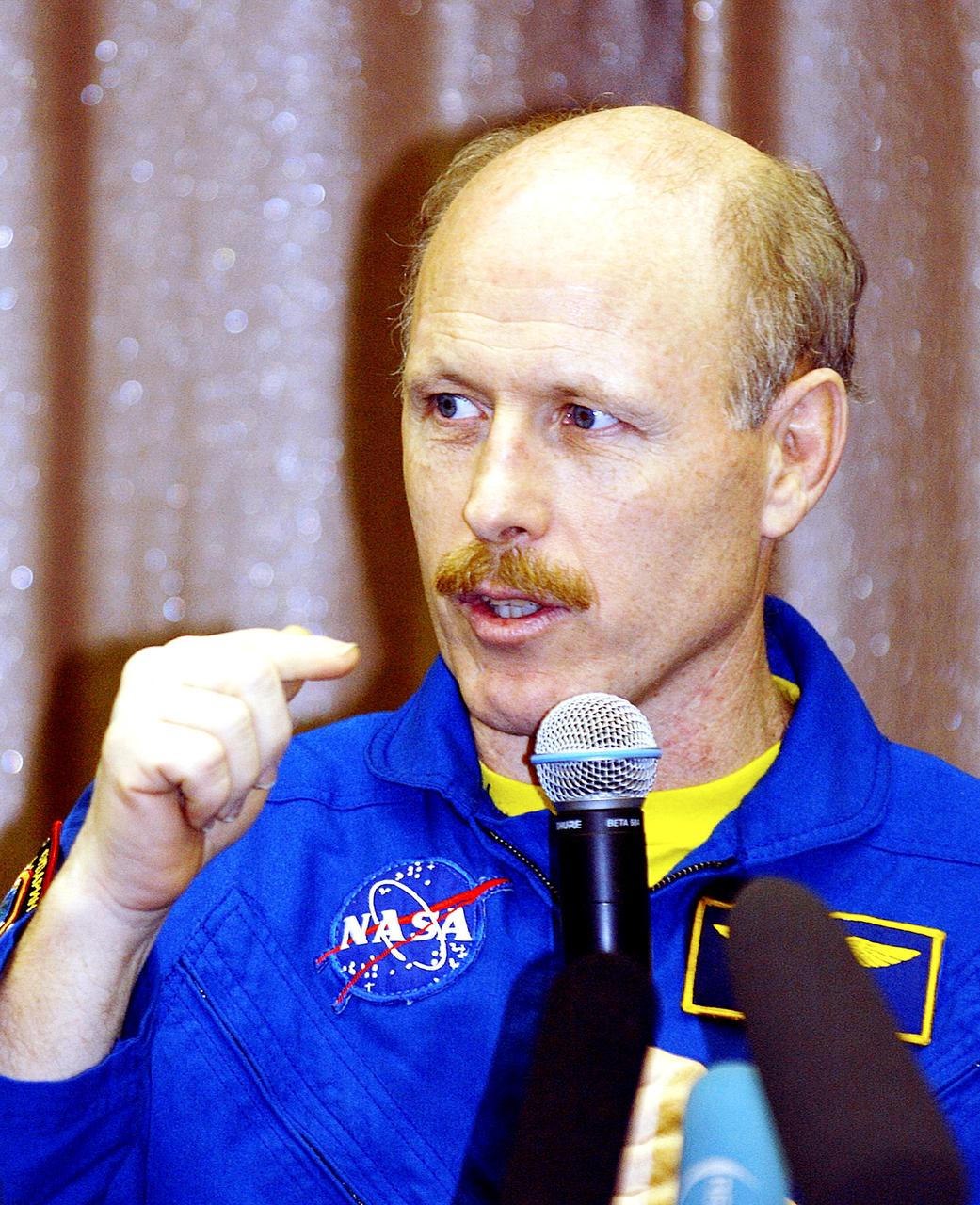
STAR CITY, RUSSIA - Expedition Six Commander Ken Bowersox speaks at a Press Conference at the Gagarin Cosmonaut Training Center in Star City, Russia. The Expedition Six crew spent 161 days in space, 159 manning the International Space Station. Photo Credit: NASA/Bill Ingalls
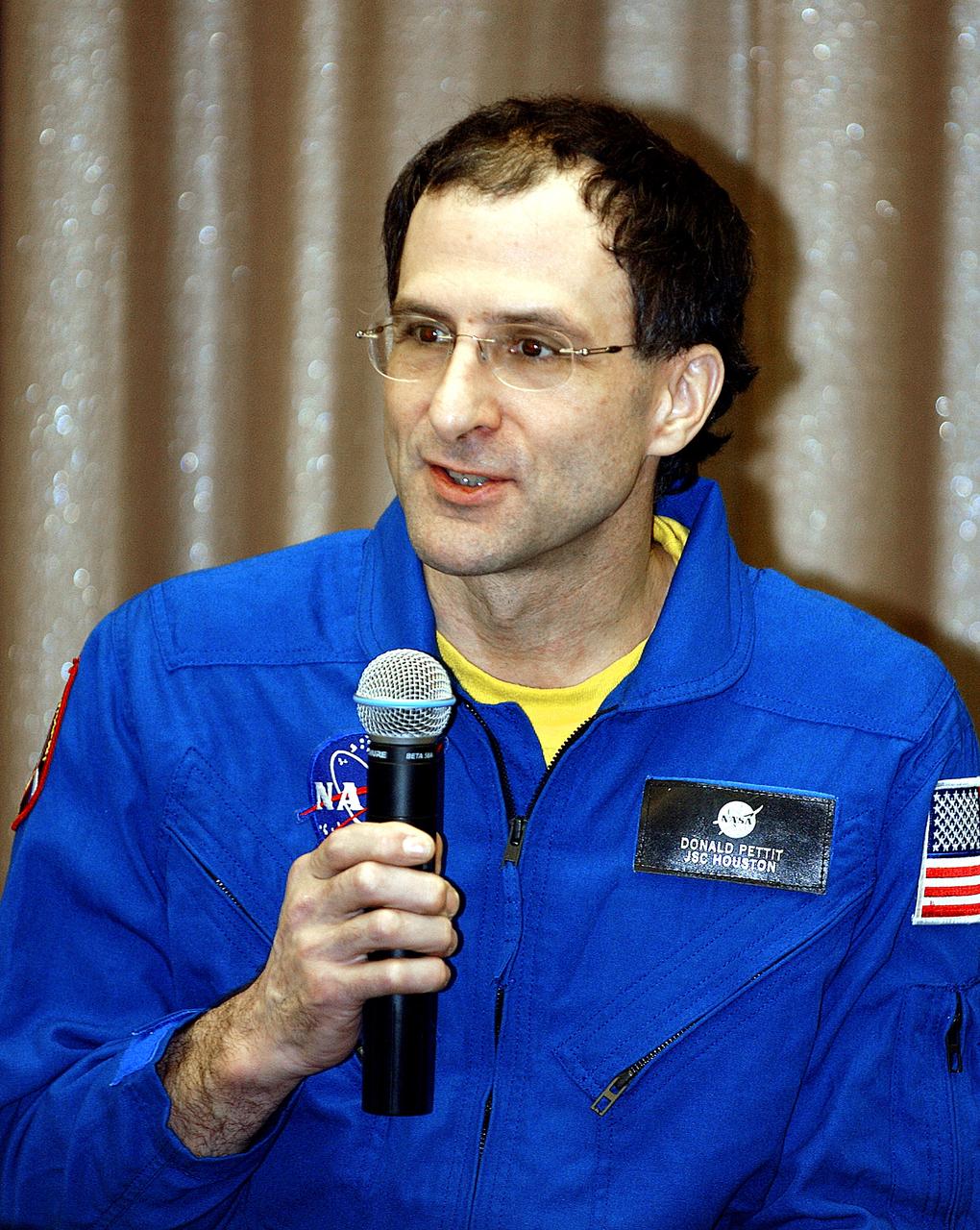
STAR CITY, RUSSIA - Expedition Six NASA ISS Science Officer Don Pettit speaks during a Press Conference at the Gagarin Cosmonaut Training Center in Star City, Russia. The Expedition Six crew spent 161 days in space, 159 manning the International Space Station. Photo Credit: NASA/Bill Ingalls
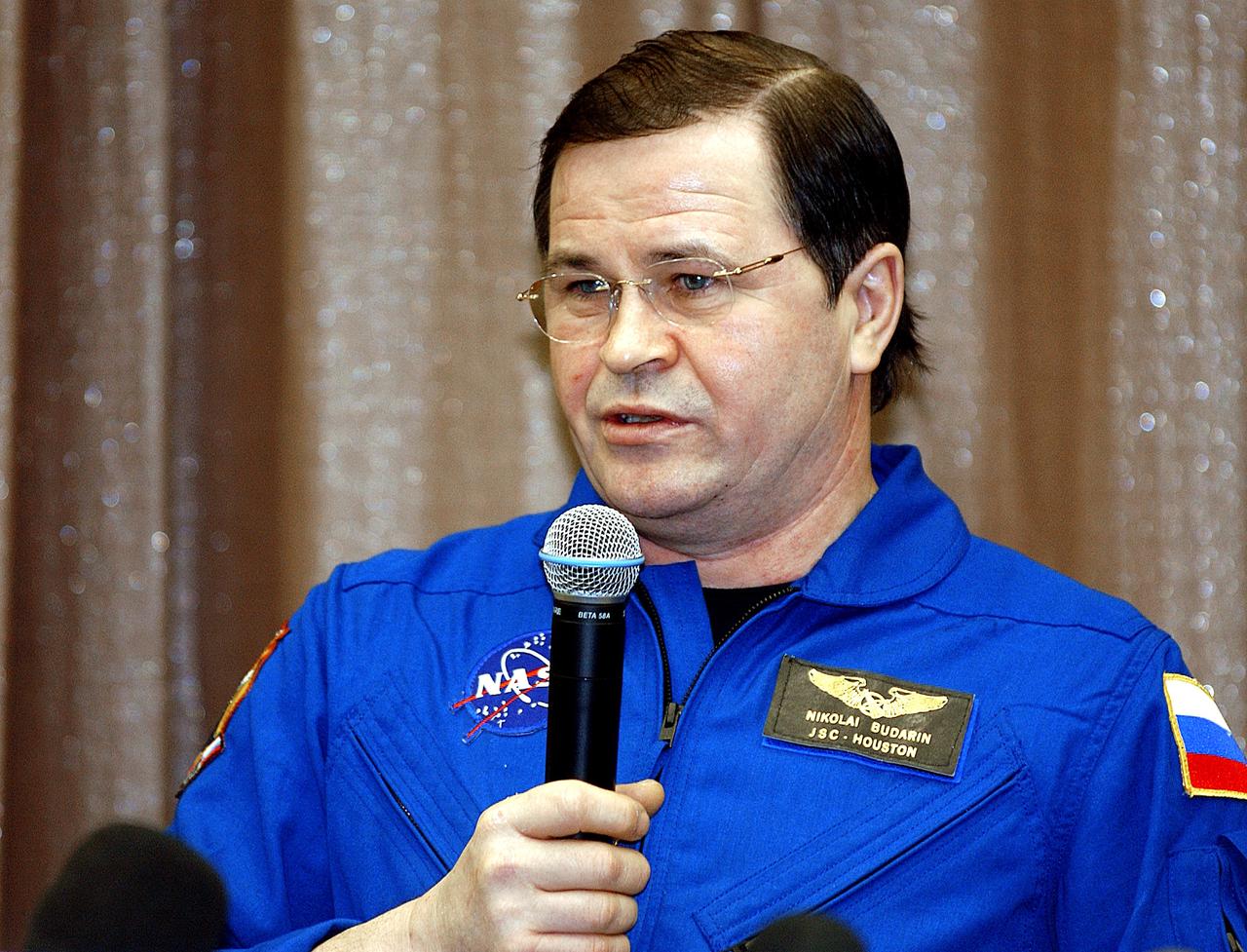
STAR CITY, RUSSIA - Expedition Six Flight Engineer Nikolai Budarin speaks during a Press Conference at the Gagarin Cosmonaut Training Center in Star City, Russia. The Expedition Six crew spent 161 days in space, 159 manning the International Space Station. Photo Credit: NASA/Bill Ingalls
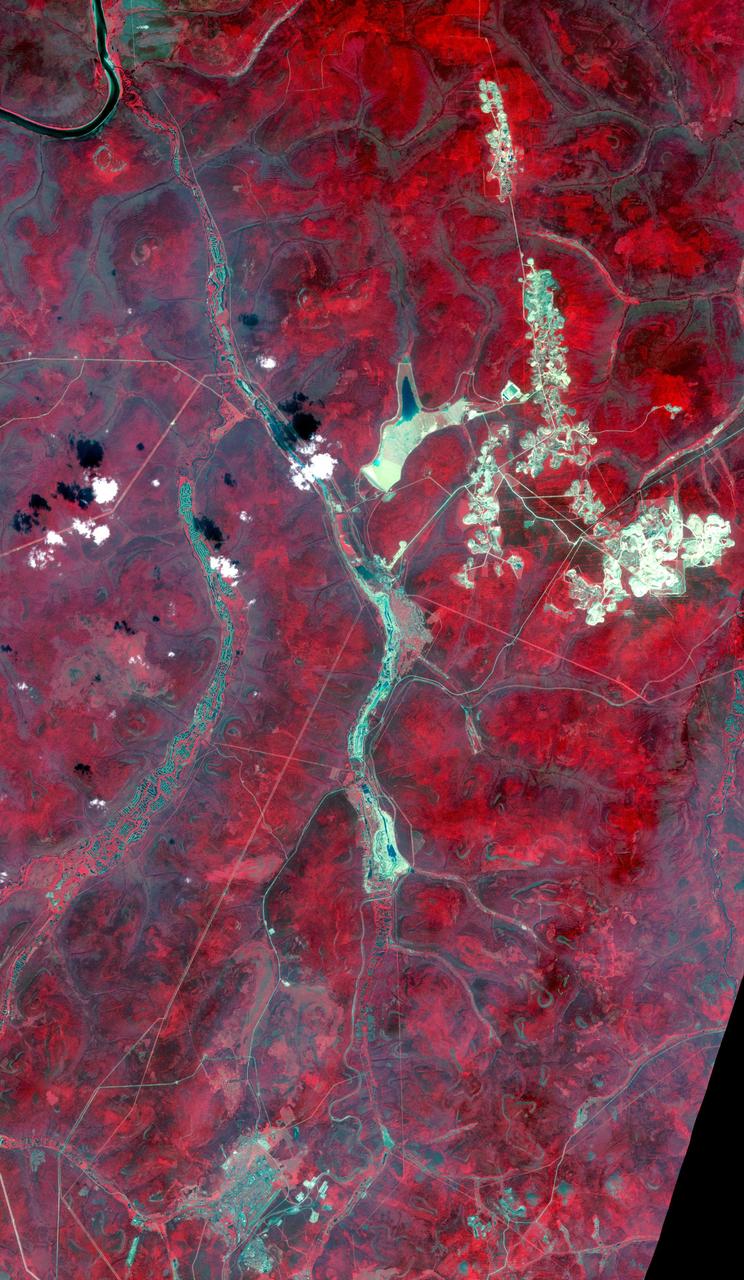
Aldan is the administrative center of the Aldansky District in Siberia, Russia. It was founded in 1923 after discovery of rich gold and uranium deposits. The city can be seen at the bottom of the image. To the north, squiggly tracks in the rivers are the spoilage piles from dredging operations. In the upper right are numerous tailings piles from conventional strip and underground mining operations. The image was acquired July 31, 2019, covers an area of 30.8 by 53 km, and is located near 58.6 degrees north, 125.4 degrees east. https://photojournal.jpl.nasa.gov/catalog/PIA24126
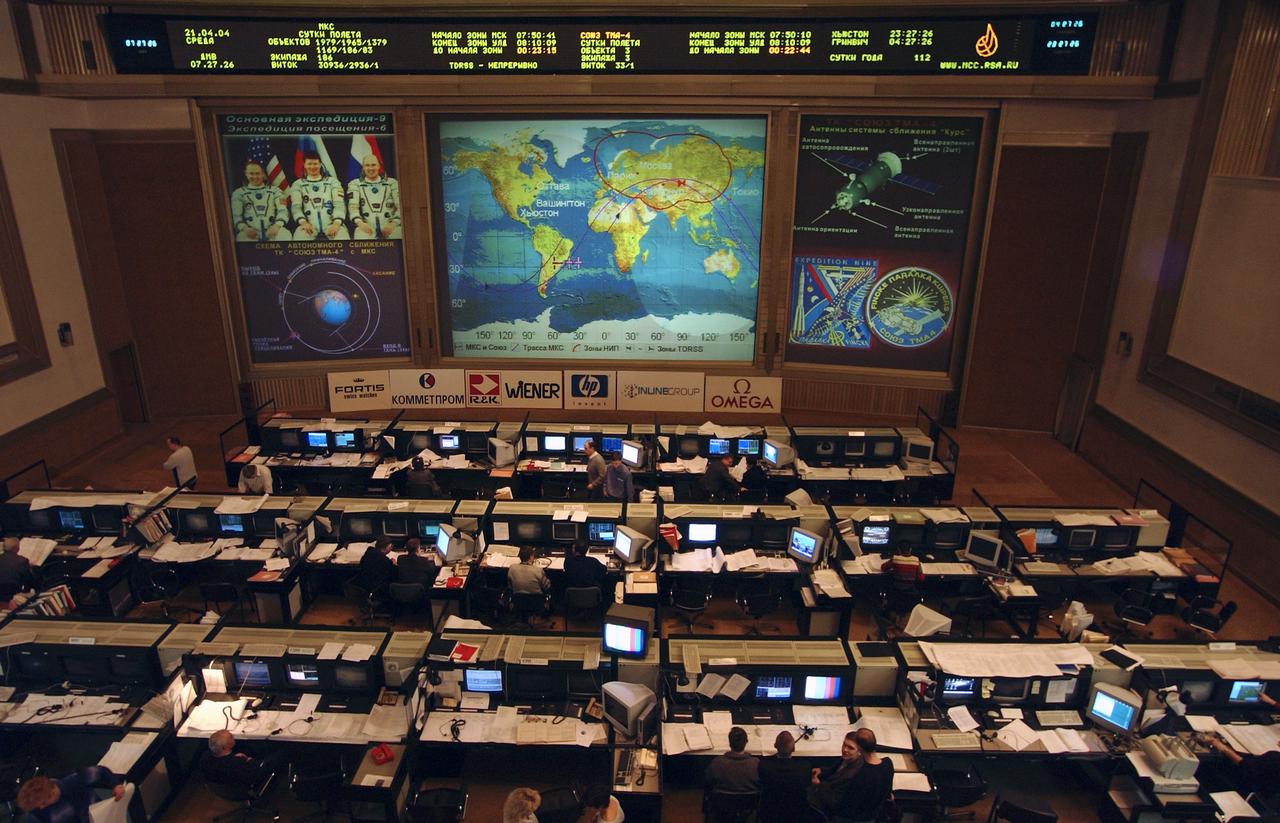
View of the Flight Control Room at the Russian Mission Control Center in Korolev, Russia, located on the outskirts of Moscow, Wednesday, April 21, 2004. Photo Credit: (NASA/Bill Ingalls)
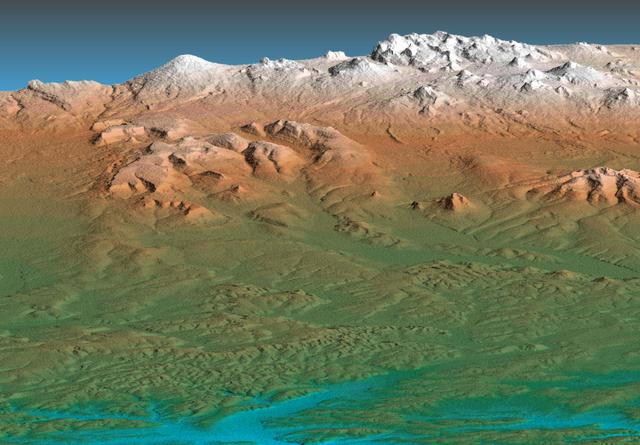
This perspective view acquired by NASA Shuttle Radar Topography Mission SRTM from data collected on February 12, 2000 shows the western side of the volcanically active Kamchatka Peninsula, Russia.
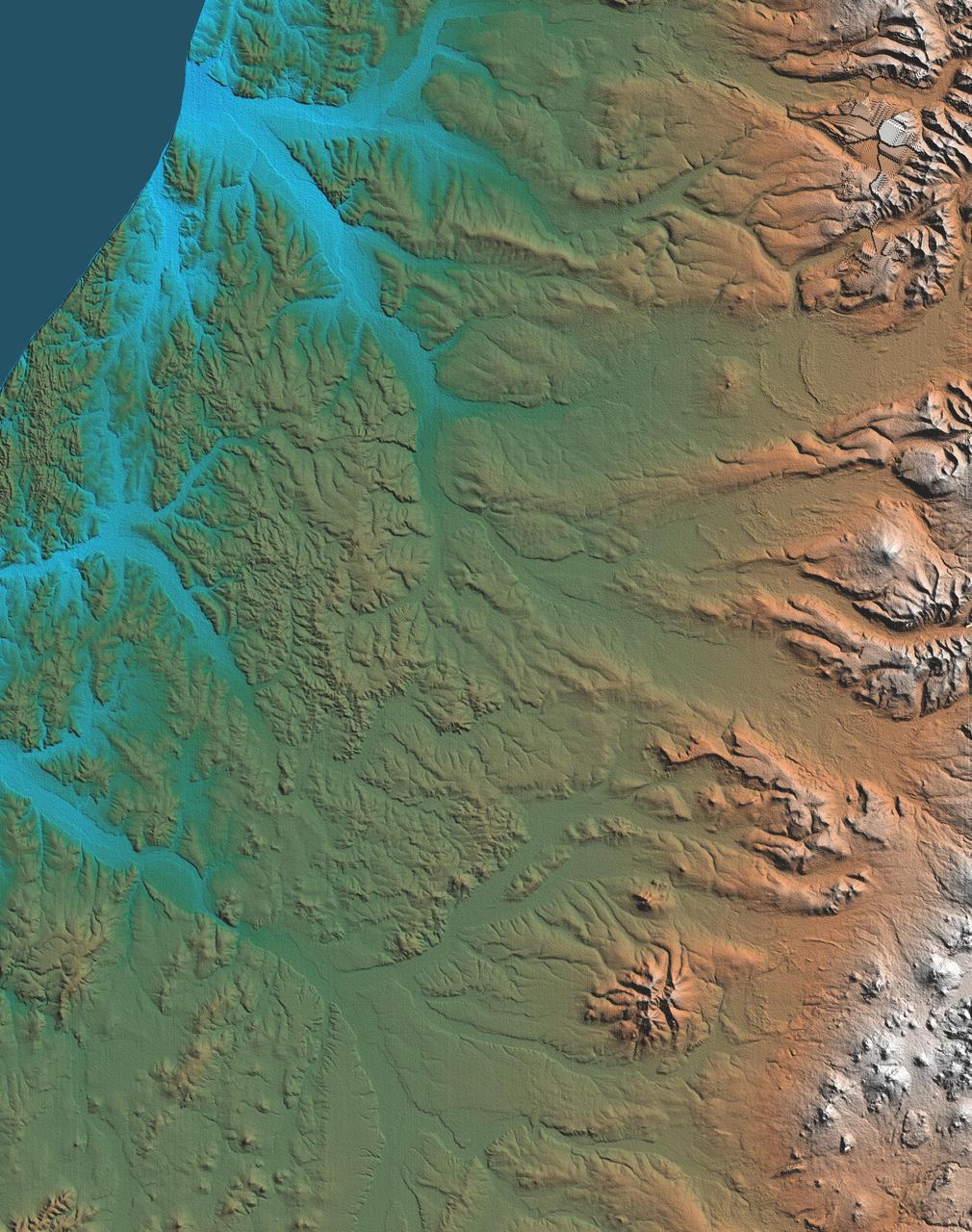
This topographic map acquired by NASA Shuttle Radar Topography Mission SRTM from data collected on February 12, 2000 shows the western side of the volcanically active Kamchatka Peninsula, Russia.
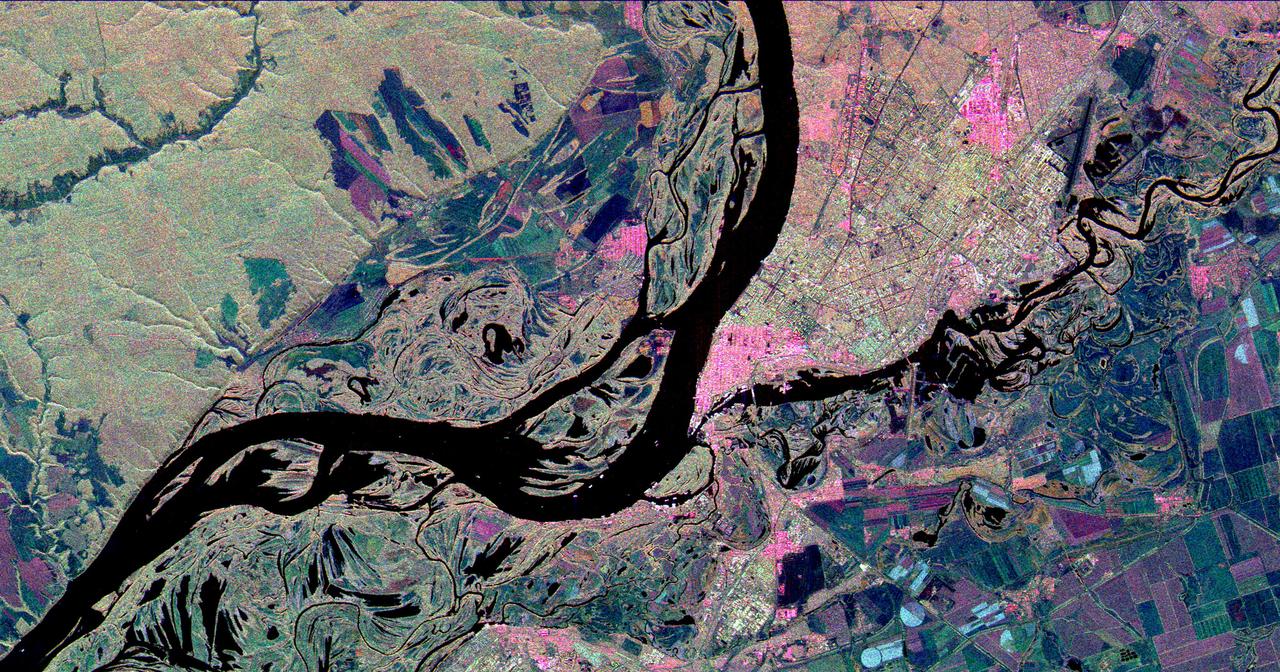
This three-frequency space radar image shows the city of Samara, Russia in pink and light green right of center. Samara is at the junction of the Volga and Samara Rivers approximately 800 kilometers 500 miles southeast of Moscow.
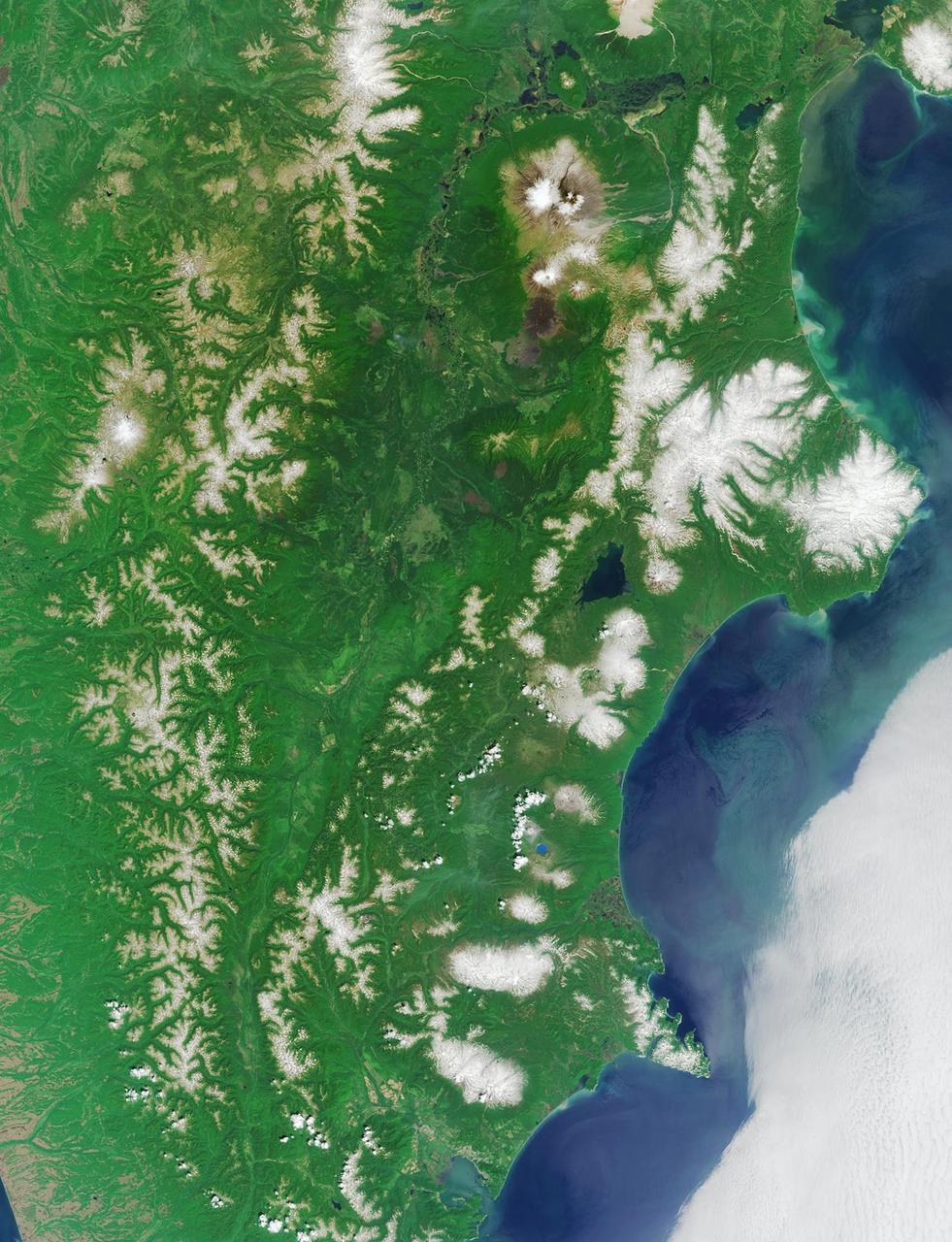
Kamchatka Peninsula, Russia is shown in this MISR Mystery Quiz #15 captured by NASA Terra spacecraft.
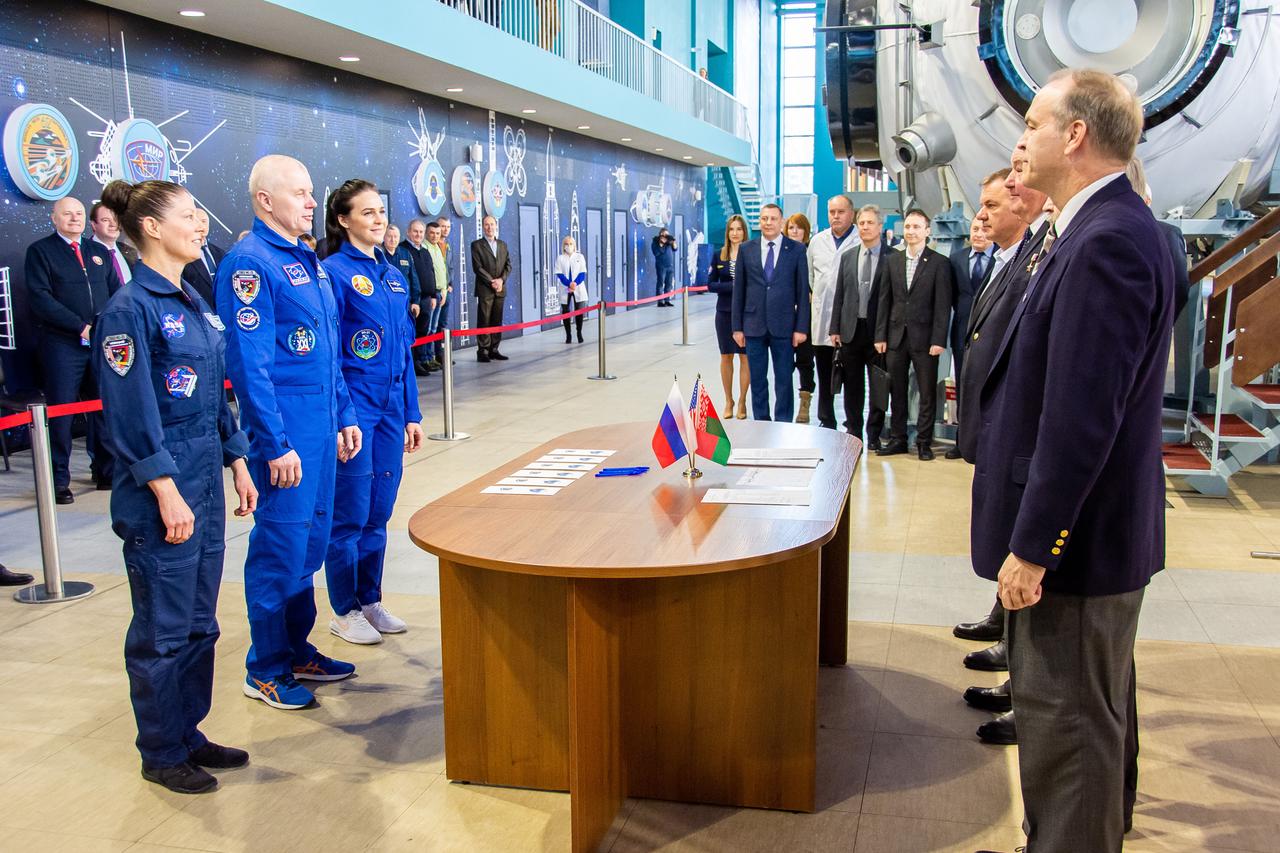
jsc2024e016944 (Feb. 28, 2024) --- Soyuz MS-25 crew members (from left) Tracy Dyson from NASA, Oleg Novitskiy from Roscosmos, and Belarus spaceflight participant Marina Vasilevskaya meet with mission managers before beginning crew qualification exams at the Gagarin Cosmonaut Training Center in Star City, Russia. Credit: GCTC/Roscosmos
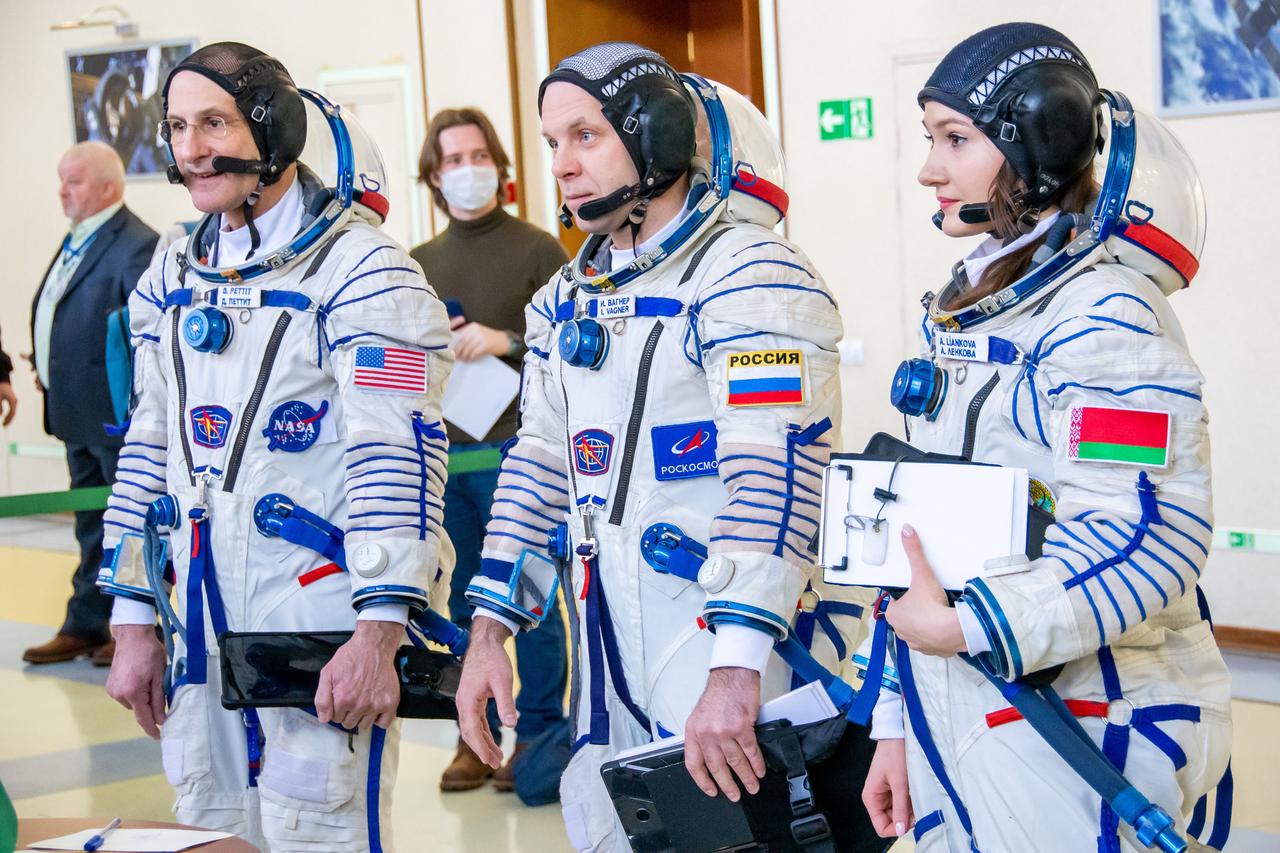
jsc2024e016942 (Feb. 28, 2024) --- Soyuz MS-25 backup crew members (from left) Don Pettit from NASA, Ivan Vagner from Roscosmos, and Belarus spaceflight participant Anastasia Lenkova are pictured in their Sokol Launch and entry suits arriving for crew qualification exams at the Gagarin Cosmonaut Training Center in Star City, Russia. Credit: GCTC/Roscosmos
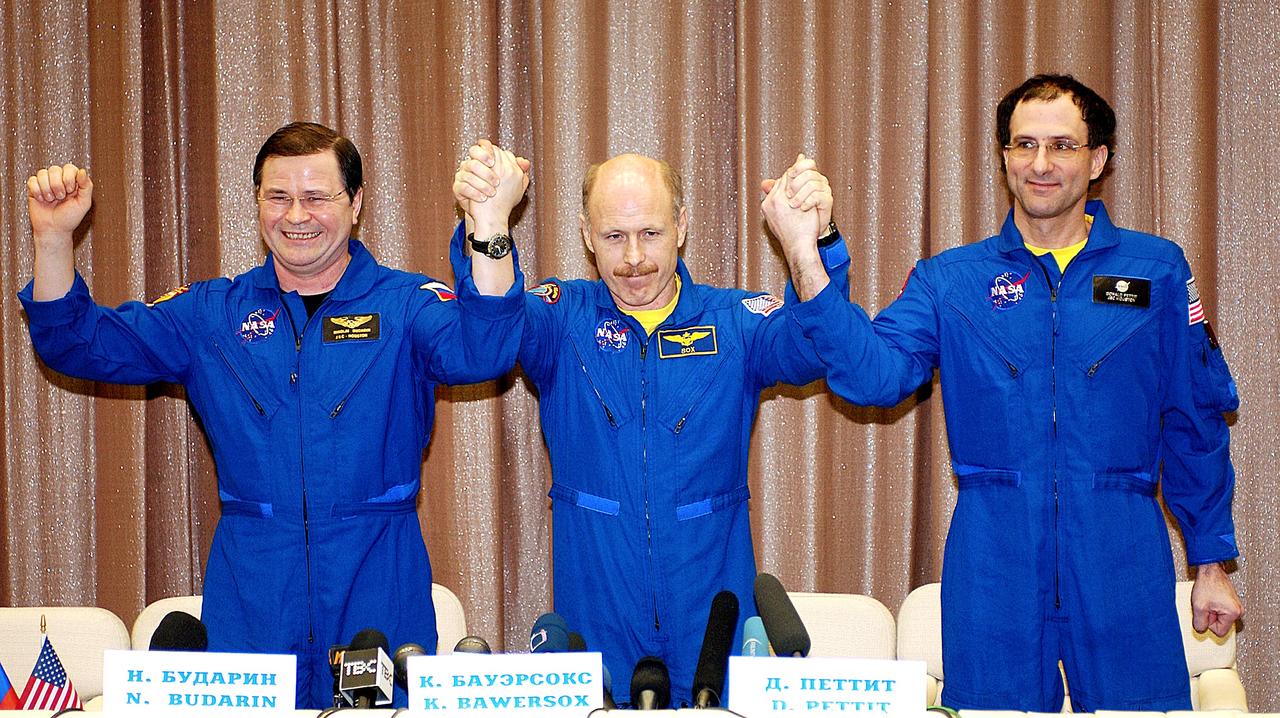
STAR CITY, RUSSIA - Expedition Six Flight Engineer Nikolai Budarin (large), Commander Ken Bowersox (center), and NASA ISS Science Officer Don Pettit (right) pose for photos at a Press Conference at the Gagarin Cosmonaut Training Center in Star City, Russia. The Expedition Six crew spent 161 days in space, 159 manning the International Space Station. Photo Credit: NASA/Bill Ingalls
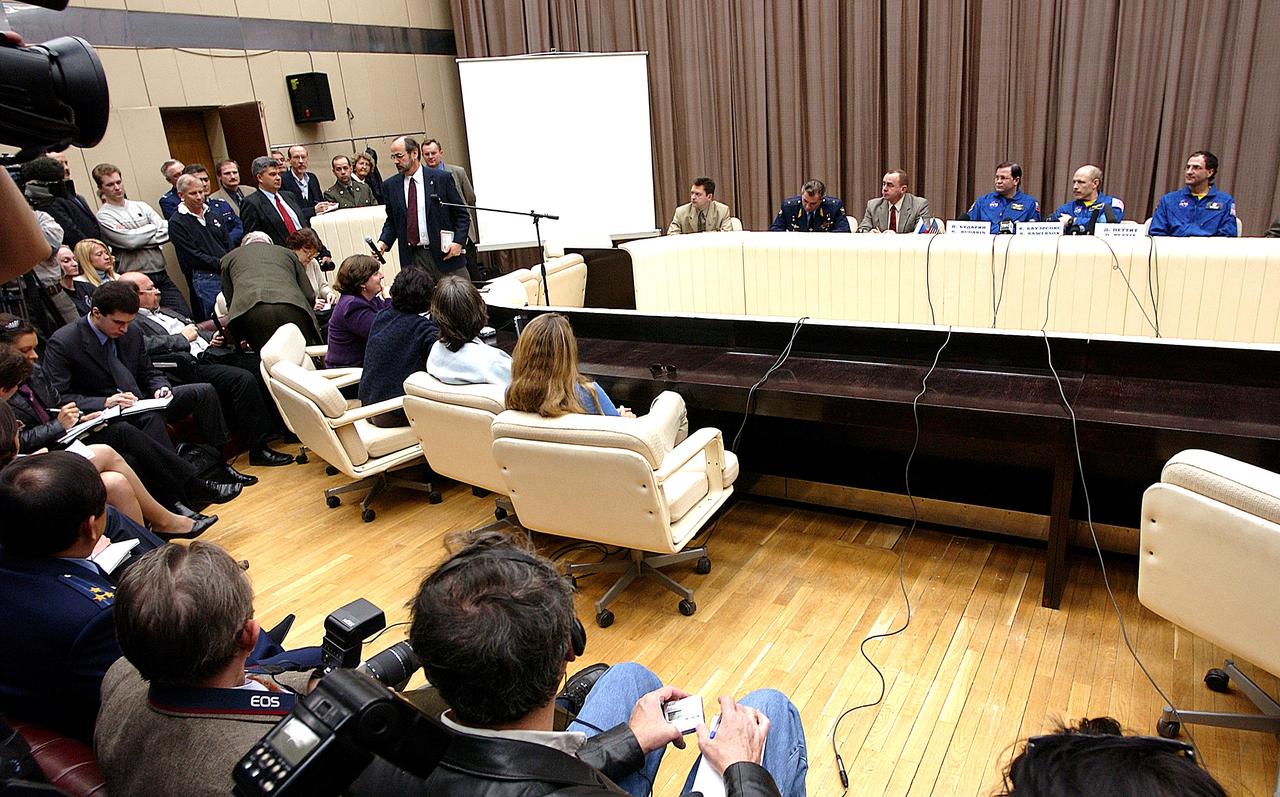
STAR CITY, RUSSIA - Expedition Six Flight Engineer Nikolai Budarin (left), Commander Ken Bowersox (center), and NASA ISS Science Officer Don Pettit (right) answer questions during a Press Conference at the Gagarin Cosmonaut Training Center in Star City, Russia. The Expedition Six crew spent 161 days in space, 159 manning the International Space Station. Photo Credit: NASA/Bill Ingalls
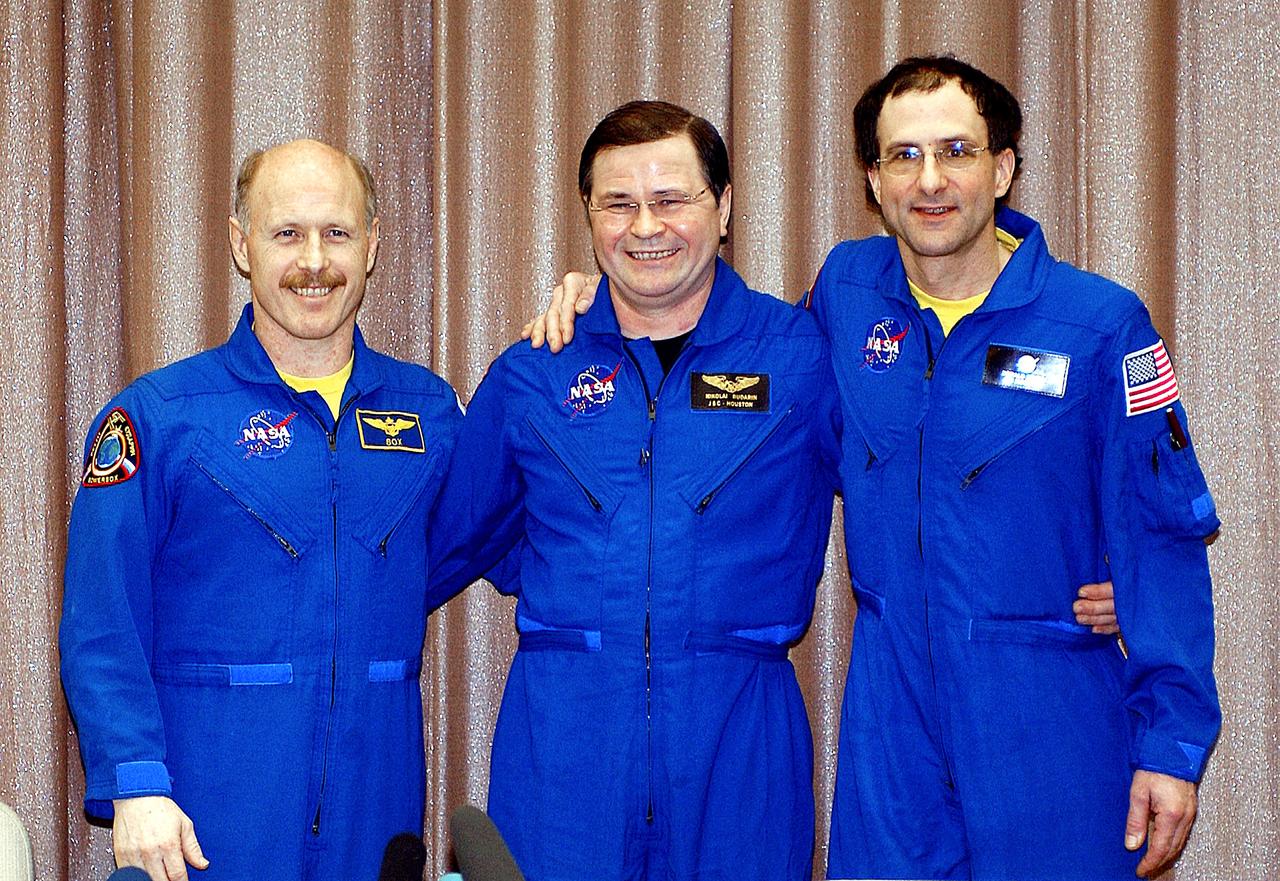
STAR CITY, RUSSIA - Expedition Six Flight Engineer Nikolai Budarin (left), Commander Ken Bowersox (center), and NASA ISS Science Officer Don Pettit (right) pose for photos at a Press Conference at the Gagarin Cosmonaut Training Center in Star City, Russia. The Expedition Six crew spent 161 days in space, 159 manning the International Space Station. Photo Credit: NASA/Bill Ingalls
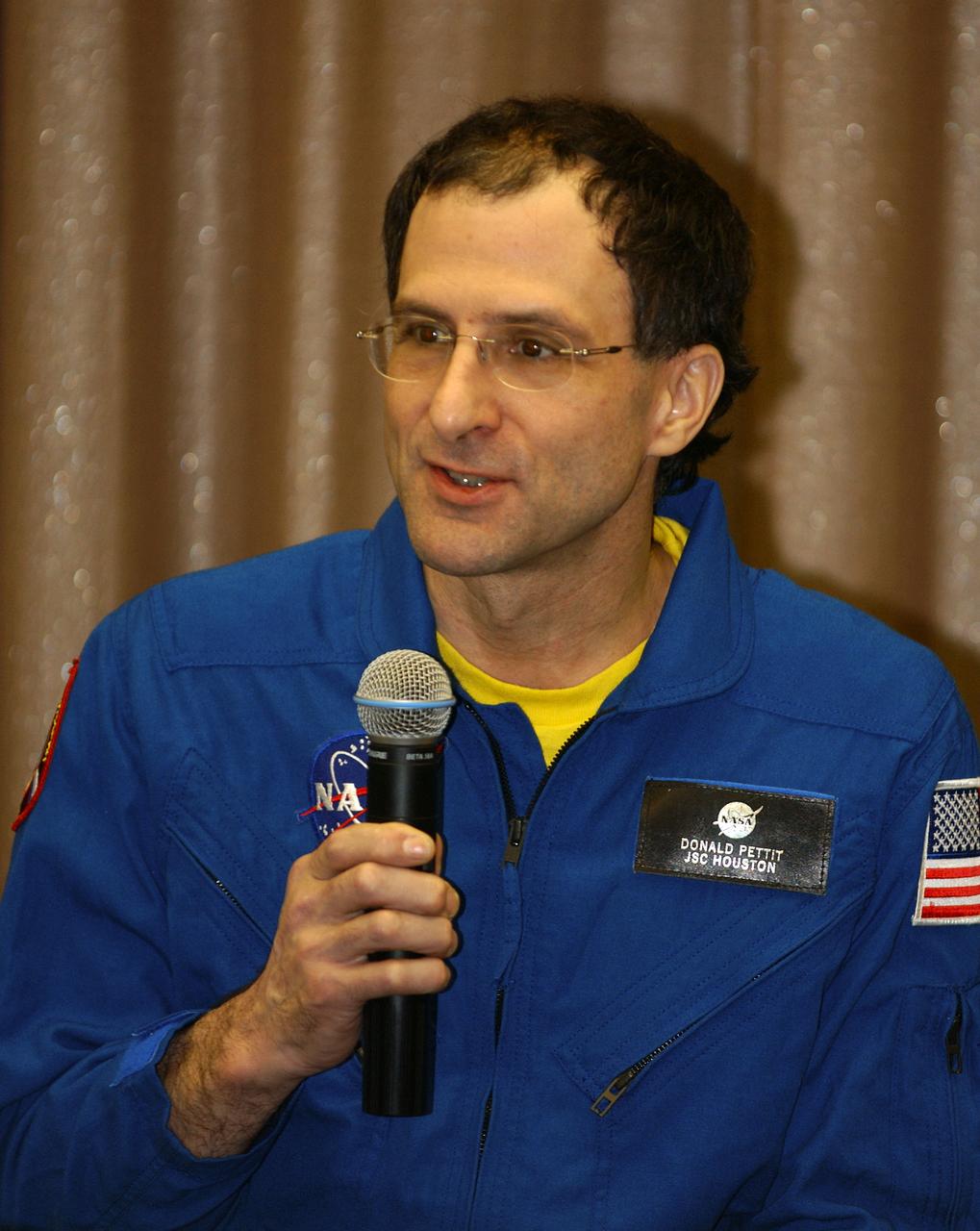
Expedition 6 International Space Station Science Officer Don Pettit speaks during a press conference at the Gagarin Cosmonaut Training Center in Star City, Russia, Thursday, May 6, 2003. Photo Credit: (NASA/Bill Ingalls)
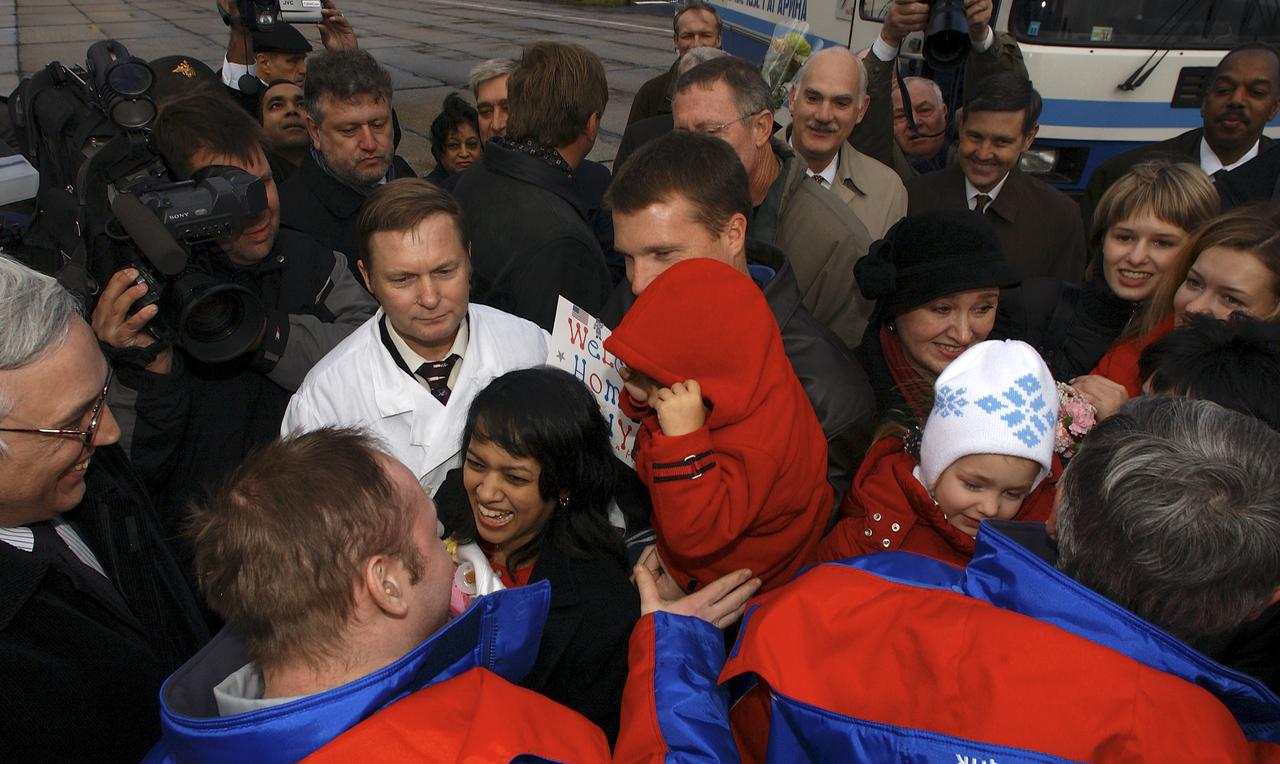
Expedition 9 Flight Engineer Michael Fincke, lower left, greets his wife and children for the first time in six months after exiting the Gargarin Cosmonaut Training Center's airplane in Star City, Russia, Sunday October 24, 2004. Photo Credit: (NASA/Bill Ingalls)
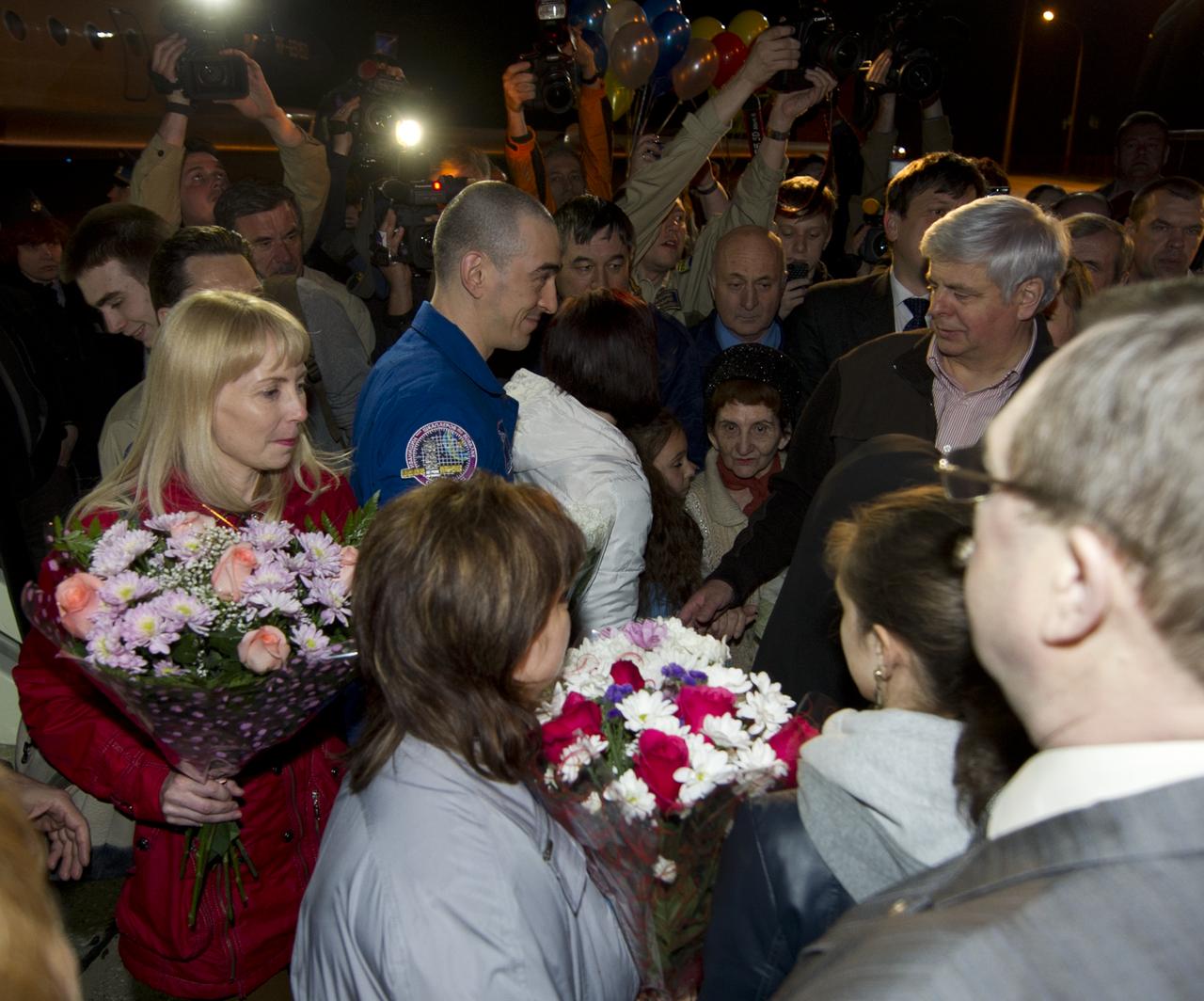
Expedition 30 Flight Engineer Anatoly Ivanishin is welcomed home by colleagues and family in Star City, Russia on Saturday, April 28, 2012. Russian Cosmonaut Ivanishin, Expedition 30 Commander Daniel Burbank, and Russian Cosmonaut Anton Shkaplerov landed outside of Arkalyk, Kazakhstan earlier in the day from over five months onboard the International Space Station where they served as members of the Expedtion 29 and 30 crews. Photo Credit: (NASA/Carla Cioffi)

The crew return bus pulls away from the Gargarin Cosmonaut Training Center's airplane in Star City, Russia. The Soyuz capsule carrying Expedition 9 Flight Engineer Michael Fincke, Expedition 9 Commander Gennady Padalka and Russian Space Forces cosmonaut Yuri Shargin landed approximately 85 kilometers northeast of Arkalyk in northern Kazakhstan, Sunday, October 24, 2004. Photo Credit: (NASA/Bill Ingalls)
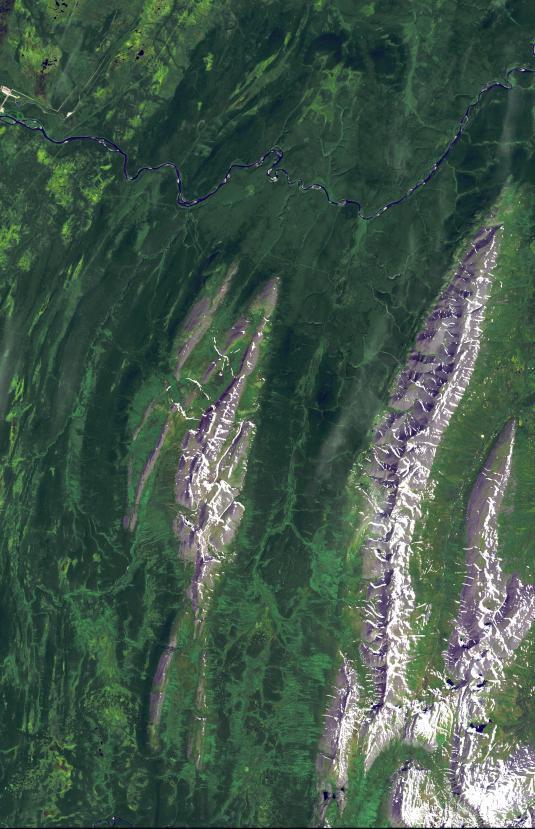
This image from NASA Terra spacecraft shows the Ural Mountains, which run 2500 km north-south through western Russia, and form the boundary between Europe and Asia. Since the 17th century, the mountains were exploited for their deposits of iron, copper, gold, coal, oil, mica and gemstones. The Urals are among the world's oldest existing mountain ranges, having been formed about 275 million years ago due to the collision of the Laurussia supercontinent with the continent of Kazakhstania. The image was acquired July 13, 2011, covers an area of 39 by 62 km, and is located near 65.5 degrees north, 59.9 degrees east. http://photojournal.jpl.nasa.gov/catalog/PIA19795
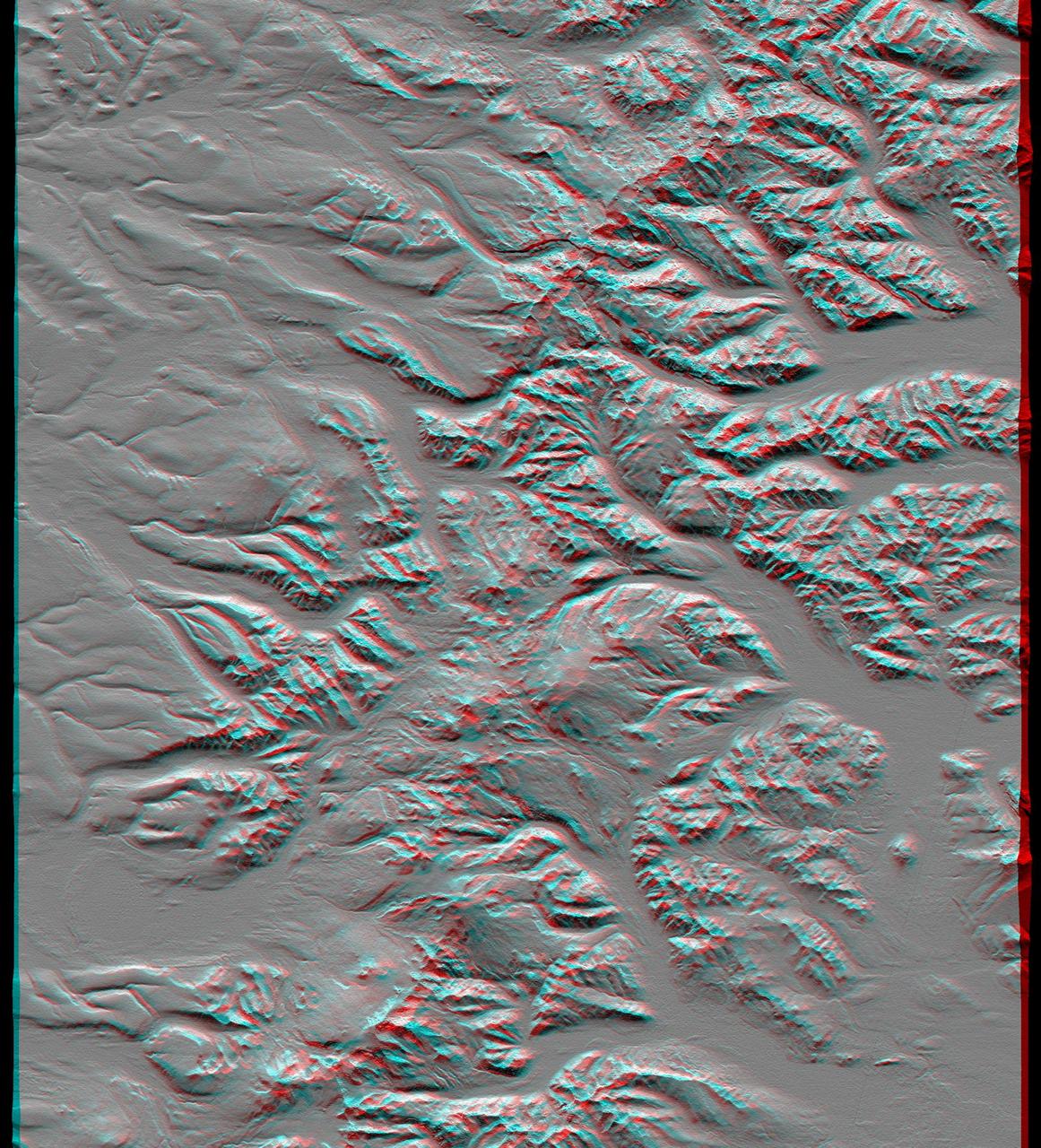
This anaglyph, from NASA Shuttle Radar Topography Mission, shows the Kamchatka Peninsula in eastern Russia. Sredinnyy Khrebet, the mountain range that makes up the spine of the peninsula. 3D glasses are necessary to view this image.
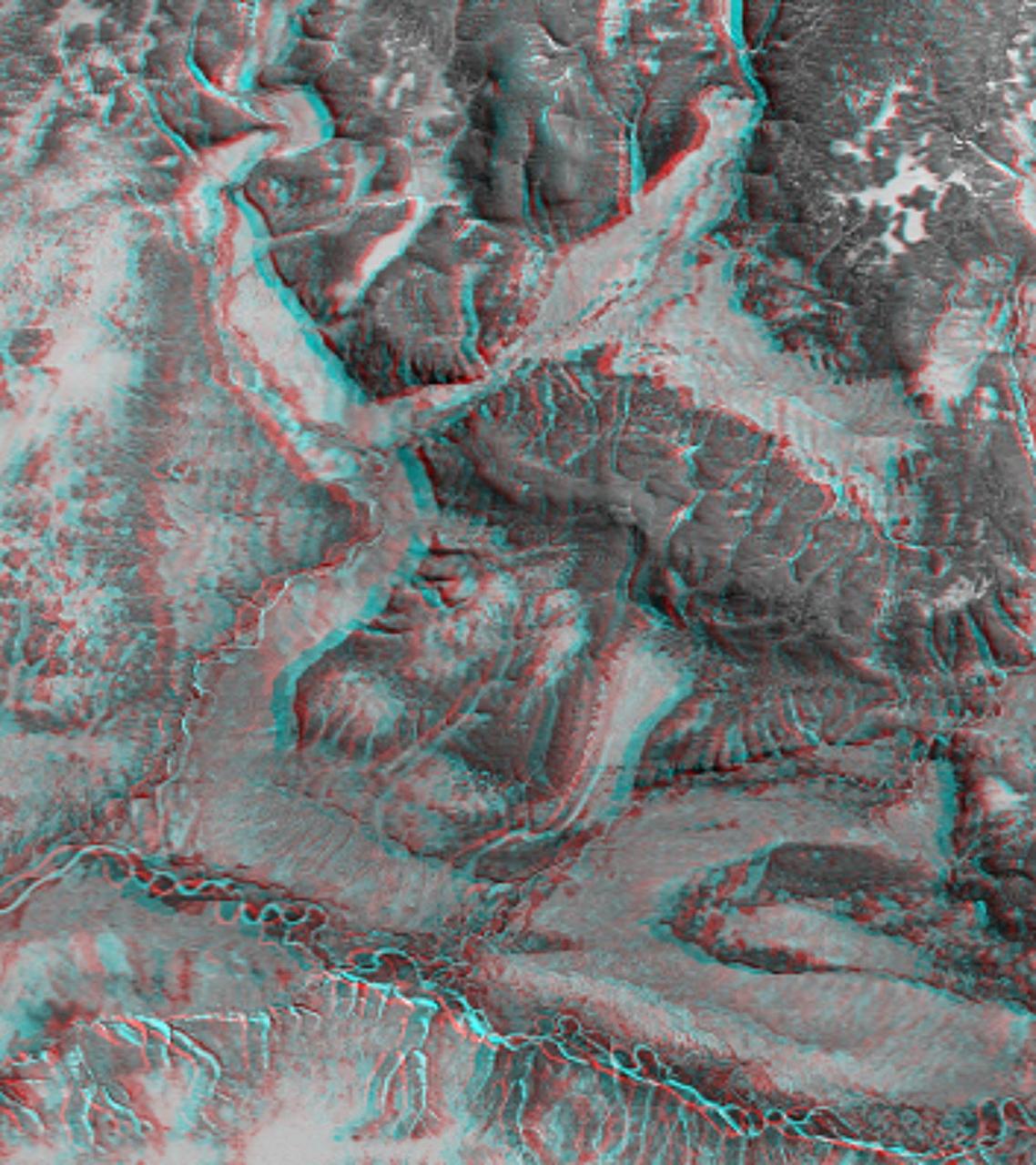
This 3-D anaglyph shows an area on the western side of the volcanically active Kamchatka Peninsula, Russia as seen by the instrument onboard NASA Shuttle Radar Topography Mission. 3D glasses are necessary to view this image.
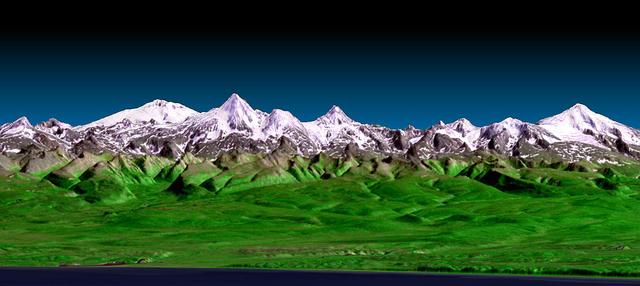
This perspective view shows the western side of the volcanically active Kamchatka Peninsula in eastern Russia. The image was generated using the first data collected during NASA Shuttle Radar Topography Mission SRTM.
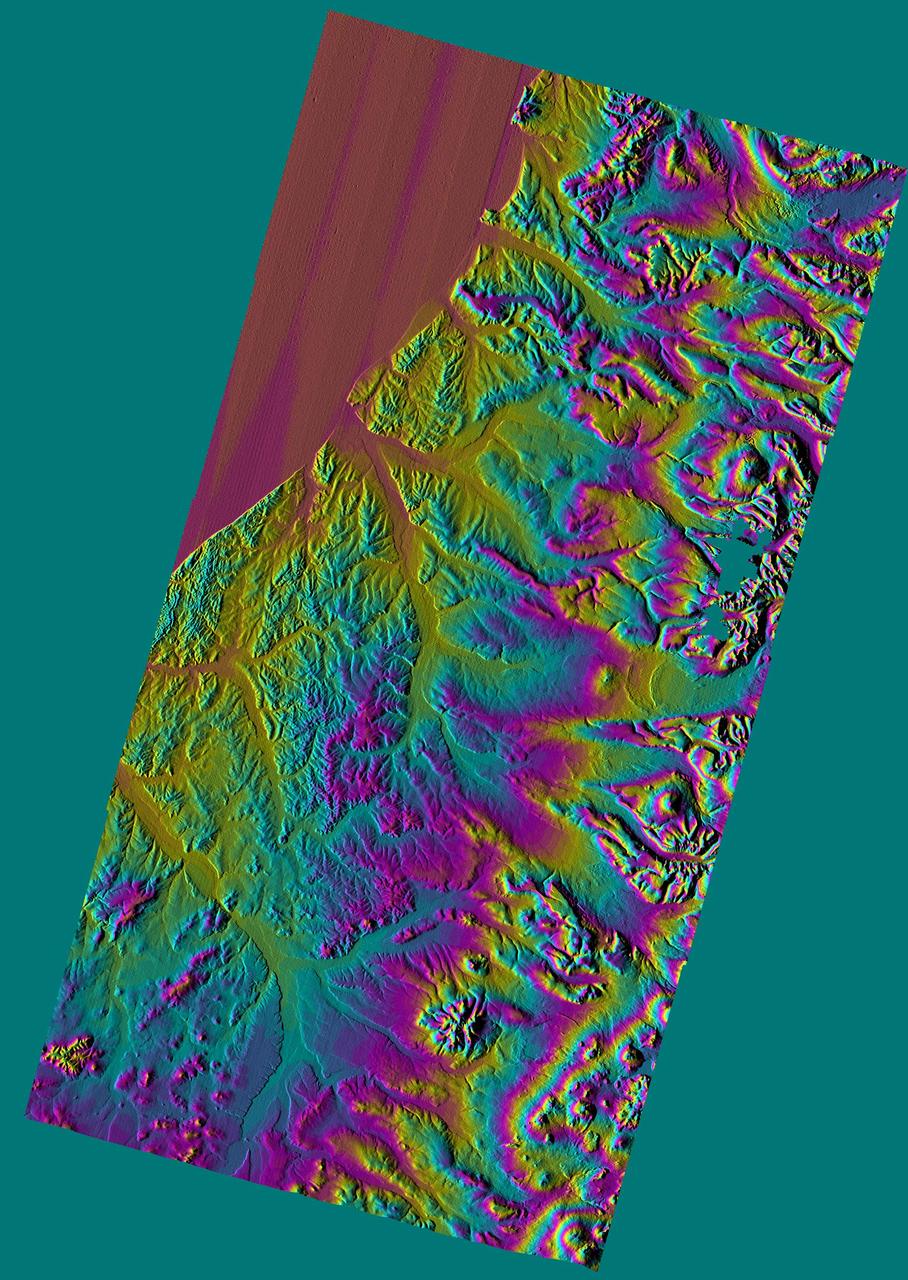
This shaded relief topographic acquired by NASA Shuttle Radar Topography Mission SRTM image from data collected on February 12, 2000 shows the western side of the volcanically active Kamchatka Peninsula, Russia.
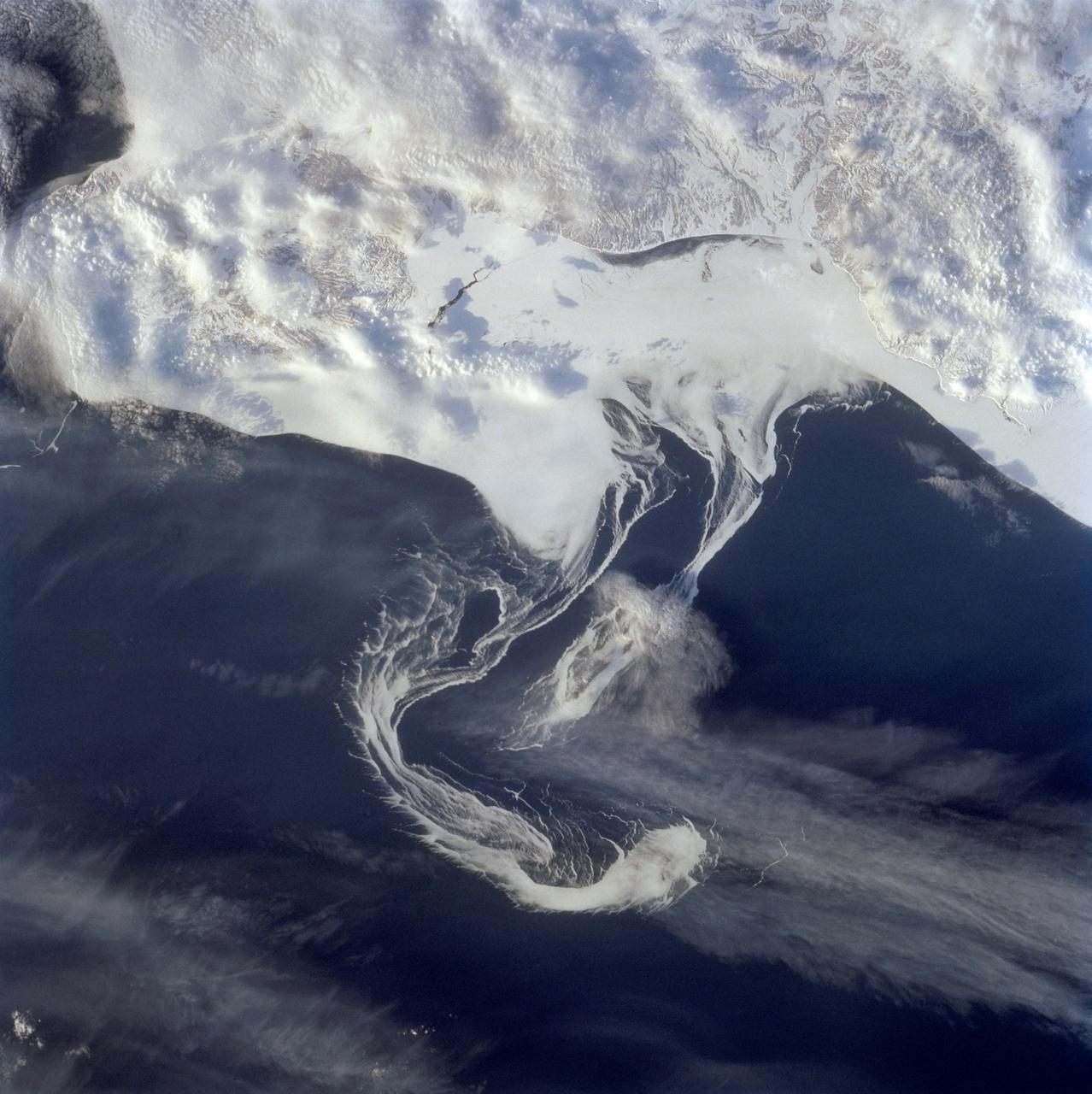
STS060-73-038 (3-11 Feb 1994) --- Pack ice is documented in this photograph along the coast of the Kamchatka Peninsula of Russia in Zaliv Ozernoj. Newly formed ice continually breaks away from the land and takes the form imposed by coastal currents. Detailed photographs of the ice provide information to scientists in both Russia and the united States about the location and fluctuation of ice edges, and how this new sea ice interacts with ocean and littoral currents. This information results in better ice warnings to shipping traffic and provides data points for long-range climate change research for both the Mission-To-Planet Earth and the Russian Priroda ("Nature") monitoring and assessment programs that are respectively coordinated by NASA and the Russian Academy of Sciences. This photography of ice development in the North Pacific, North Atlantic, the Southern Ocean, the Baltic and North Seas, and the Great Lakes is of great interest to the international scientific community. NASA scientists feel high-resolution analog and digital photography from the Space Shuttle and future craft can be a particularly important component in satisfying their data needs on both an operational and a long-term research basis.
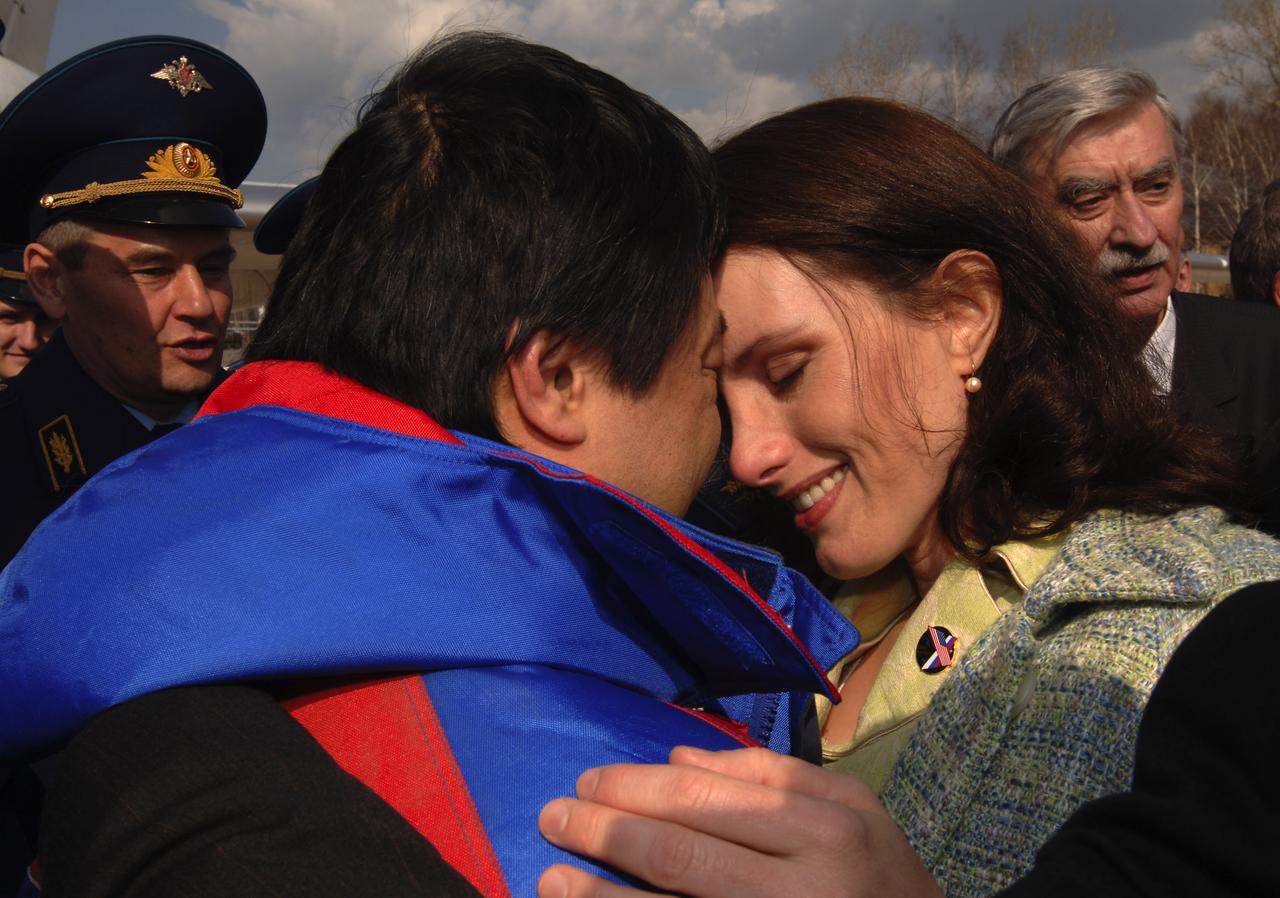
Expedition 10 Commander Leroy Chiao, left, is greeted by his wife after arriving in Star City, Russia from Kazakhstan, Monday, April 25, 2005. The Expedition 10 crew brought their Soyuz TMA-5 capsule to a pre-dawn landing April 25 northeast of the town of Arkalyk to wrap up a six-month mission aboard the International Space Station for Chiao and Sharipov, and a ten-day mission for Vittori, who flew under a commercial contract between ESA and the Russian Federal Space Agency. Photo Credit: (NASA/Bill Ingalls)
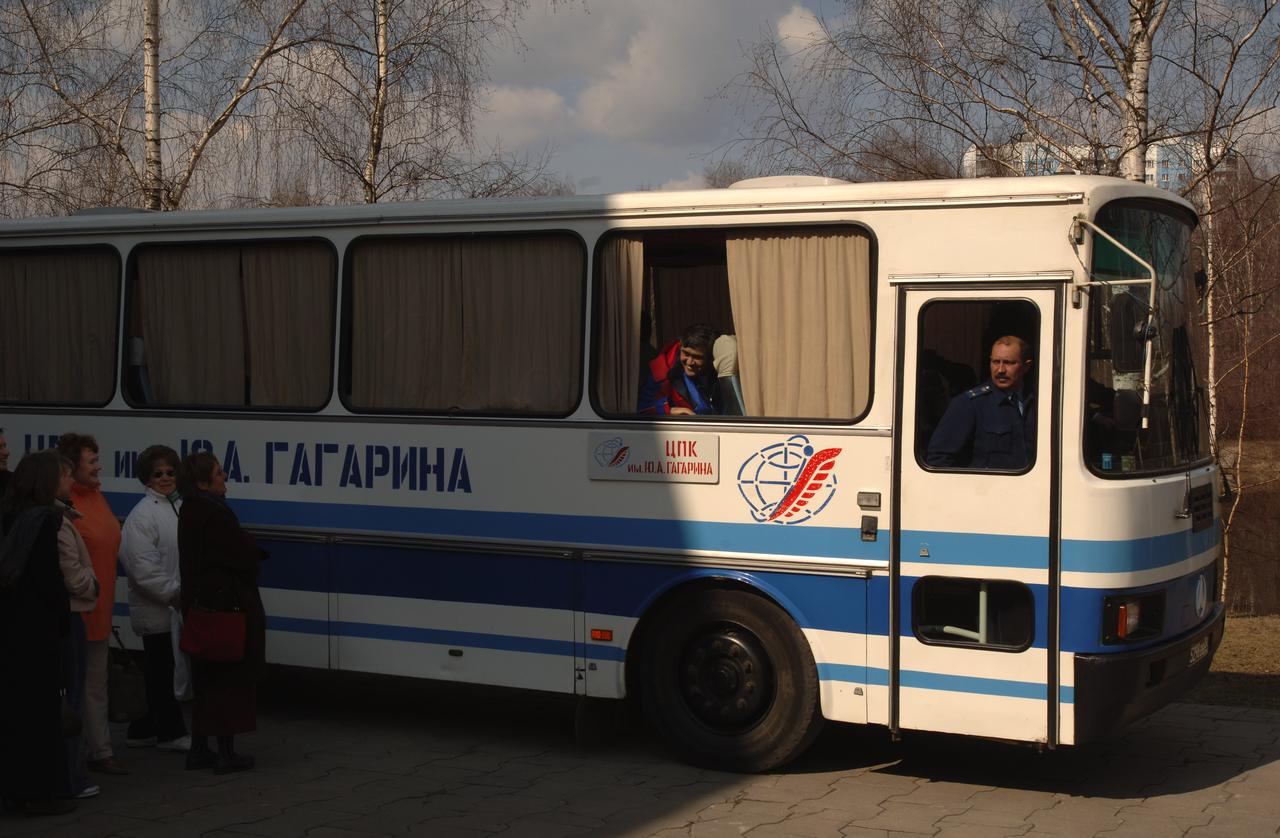
Expedition 10 Flight Engineer Salizhan Sharipov, on bus, looks out at well wishers after arriving back at Star City, Russia from Kazakhstan, Monday, April 25, 2005. Expedition 10 Commander Leroy Chiao, Flight Engineer Salizhan Sharipov and European Space Agency astronaut Roberto Vittori brought their Soyuz TMA-5 capsule to a pre-dawn landing April 25 northeast of the town of Arkalyk to wrap up a six-month mission aboard the International Space Station for Chiao and Sharipov, and a ten-day mission for Vittori, who flew under a commercial contract between ESA and the Russian Federal Space Agency. Photo Credit: (NASA/Bill Ingalls)
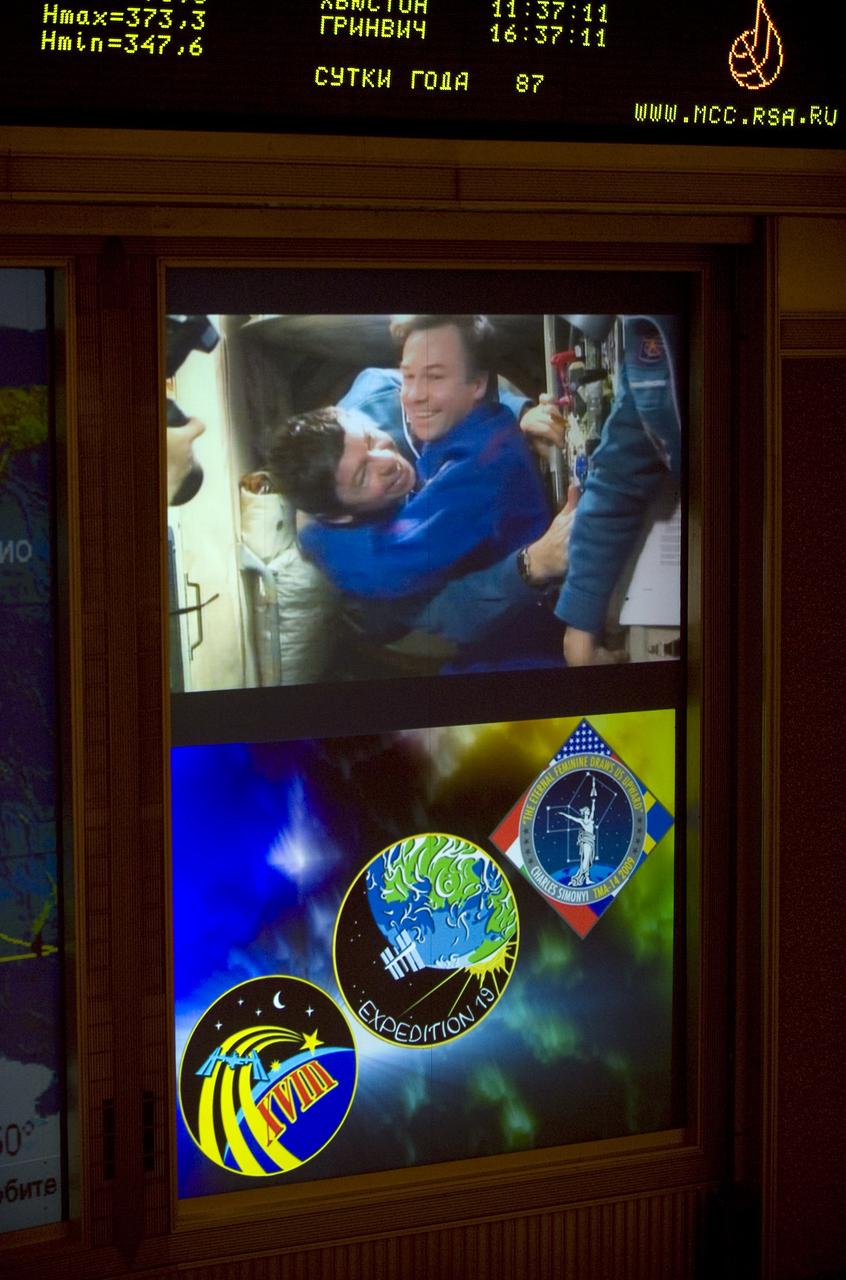
A large TV screen in Russian Mission Control Center in Korolev, Russia shows Cosmonaut Yury Lonchakov, right, welcoming Expedition 19 Flight Engineer Michael R. Barratt onboard the International Space Station after he fellow crew members Expedition 19 Commander Gennady I. Padalka and Spaceflight Participant Charles Simonyi docked their Soyuz TMA-14 spacecraft on Saturday, March 28, 2009. Photo Credit: (NASA/Bill Ingalls)
The crews of Expedition 18 and 19 are seen on a large TV screen in the Russian Mission Control Center in Korolev, Russia, Saturday, March 28, 2009 shortly after the Soyuz TMA-14 spacecraft docked to the International Space Station and delivered Expedition 19 Commander Gennady I. Padalka, Flight Engineer Michael R. Barratt and Spaceflight Participant Charles Simonyi. Photo Credit: (NASA/Bill Ingalls)
Michelle Barratt wishes her husband, NASA Astronaut Michael Barratt, a happy wedding anniversary via phone to the International Space Station from the Russian Mission Control Center, Korolev, Russia, Saturday, March 28, 2009. The Soyuz TMA-14 spacecraft docked to the International Space Station and delivered Expedition 19 Commander Gennady I. Padalka, Flight Engineer Michael R. Barratt and Spaceflight Participant Charles Simonyi. Photo Credit: (NASA/Bill Ingalls)
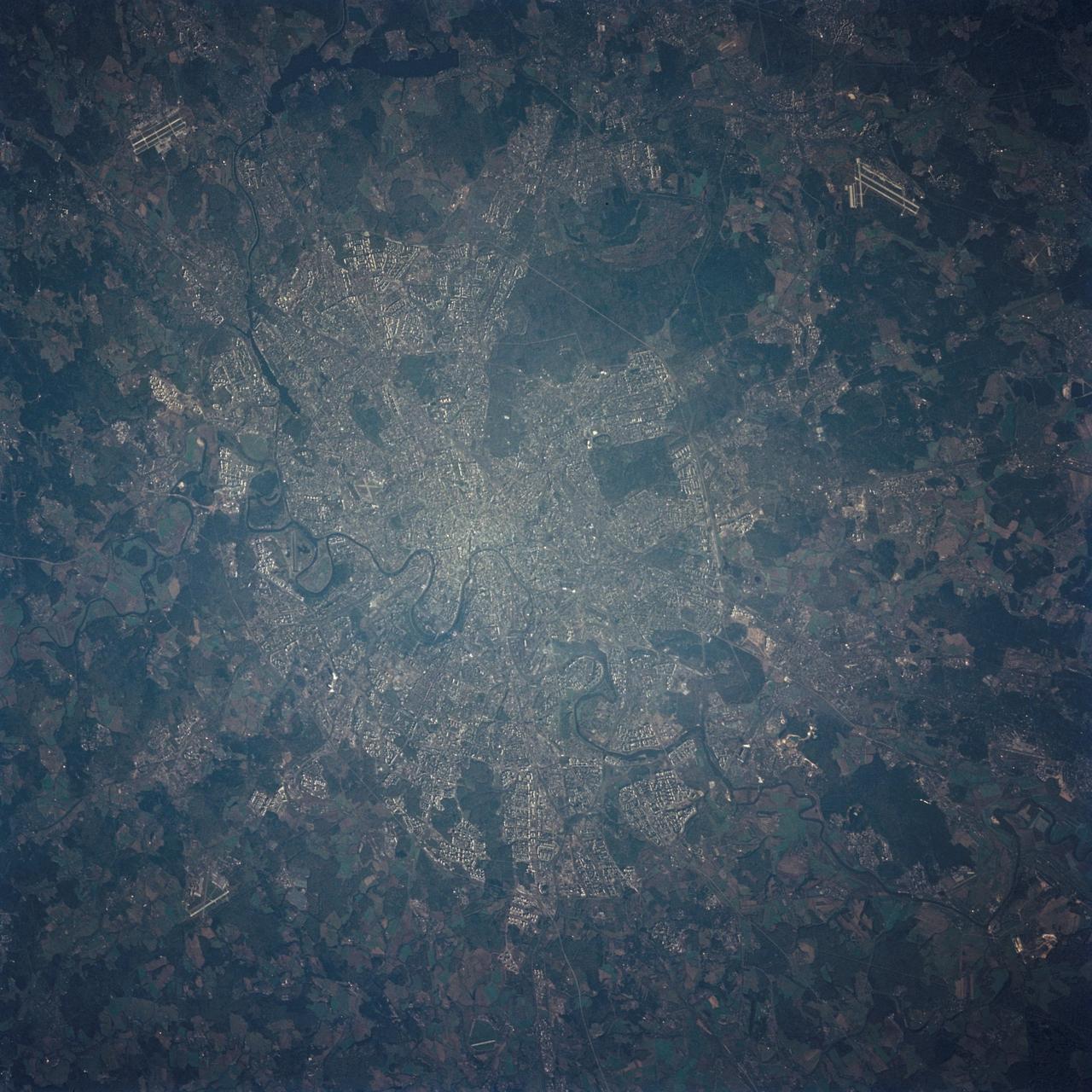
STS068-236-027 (30 September-11 October 1994) --- The STS-68 crewmembers used a 70mm camera to photograph this early morning nadir view of wheel-shaped Moscow. Star City, Russia facility, north of the city, is among the detail seen in the view, photographed from 115 nautical miles above Earth. Six NASA astronauts spent a week and a half aboard the Space Shuttle Endeavour in support of the Space Radar Laboratory 2 (SRL-2) mission.
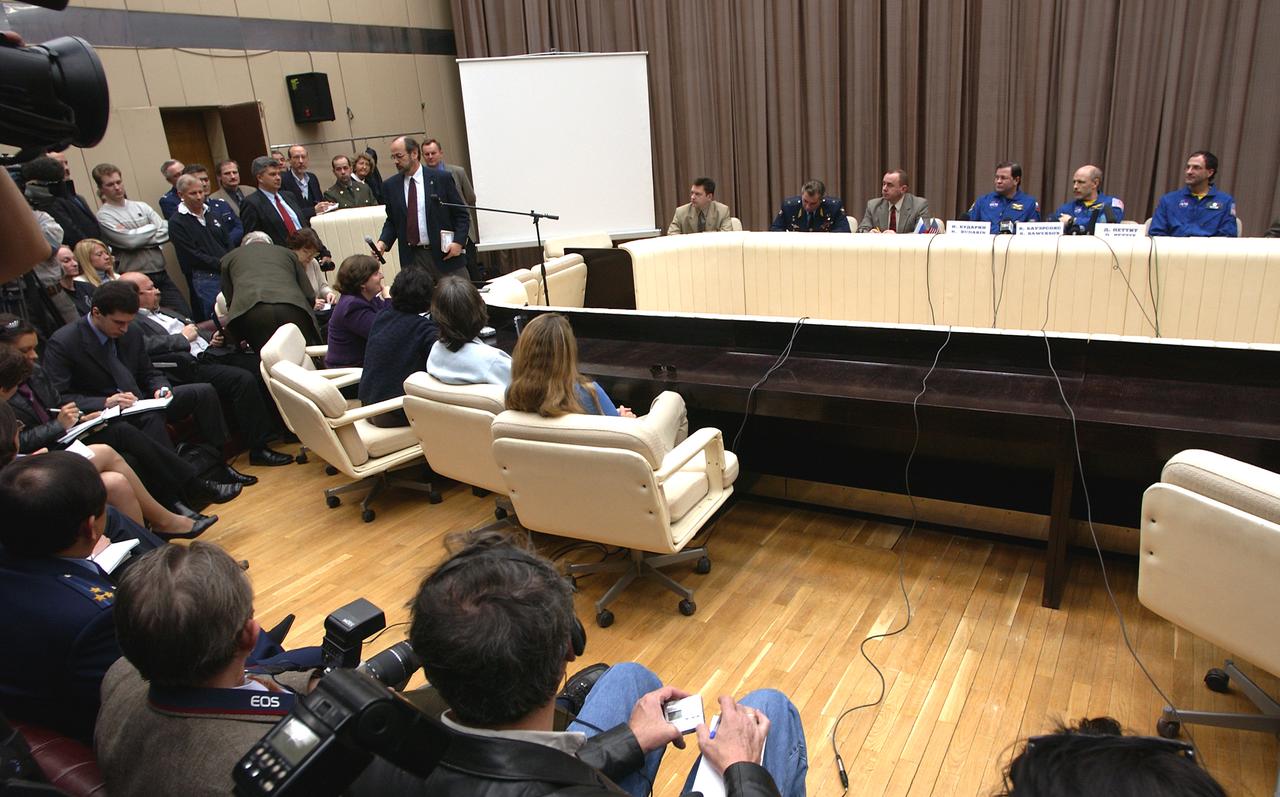
Expedition 6 Flight Engineer Nikolai Budarin, left, Commander Ken Bowersox and NASA International Space Station Science Officer Don Pettit, right, answer questions during a press conference at the Gagarin Cosmonaut Training Center in Star City, Russia, Thursday, May 6, 2003. Photo Credit: (NASA/Bill Ingalls)
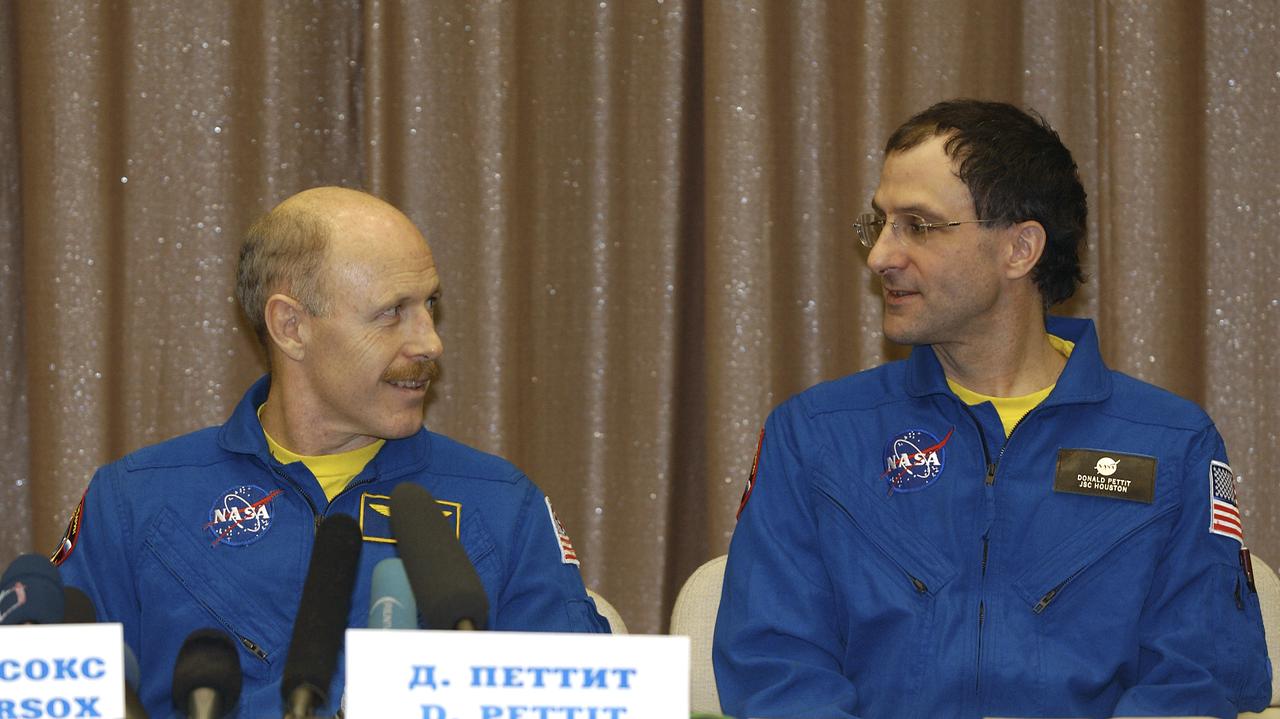
Expedition 6 Commander Ken Bowersox, left and NASA International Space Station Science Officer Don Pettit speak during a press conference at the Gagarin Cosmonaut Training Center in Star City, Russia, Thursday, May 6, 2003. Photo Credit: (NASA/Bill Ingalls)
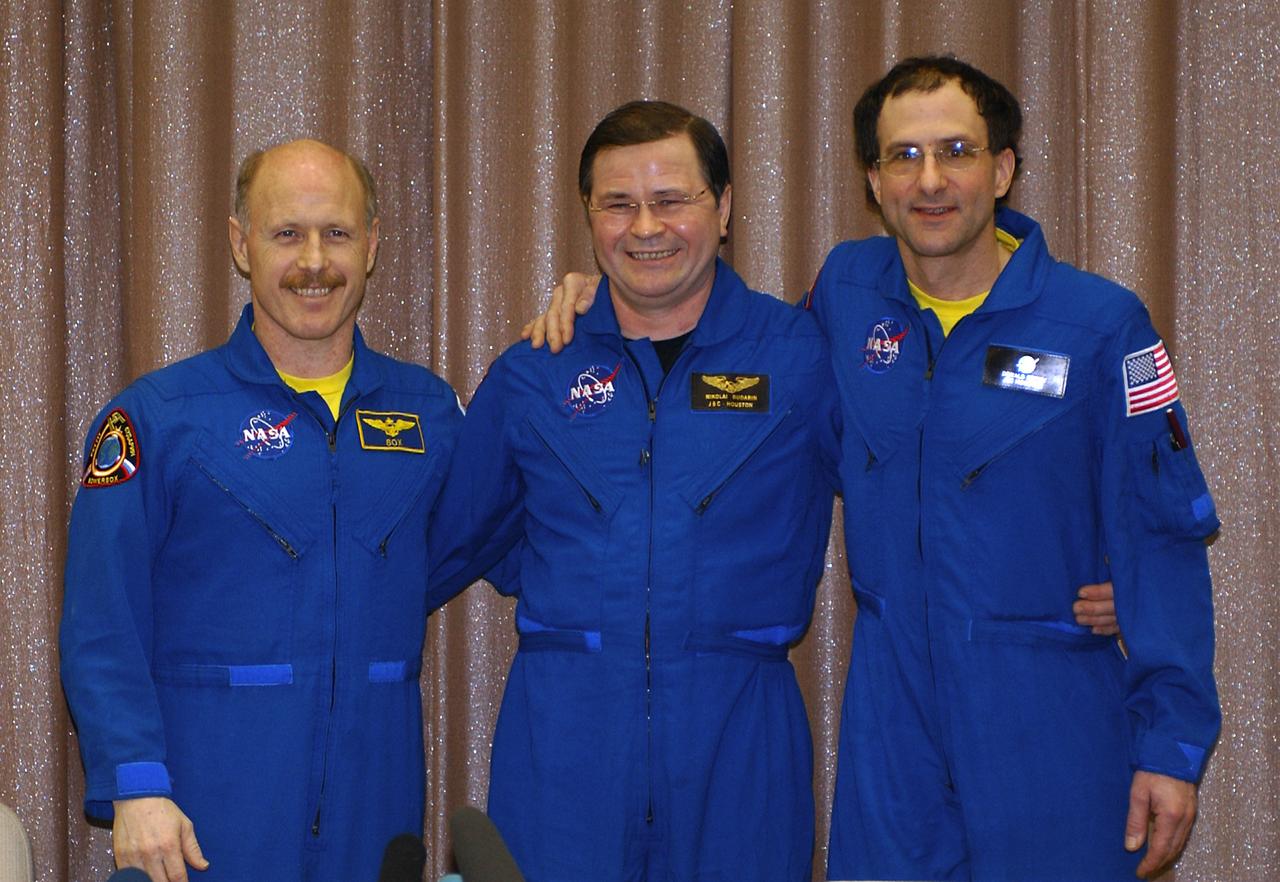
Expedition 6 Flight Engineer Nikolai Budarin, left, Commander Ken Bowersox and International Space Station Science Officer Don Pettit, right, pose for photos at a press conference at the Gagarin Cosmonaut Training Center in Star City, Russia, Thursday, May 6, 2003. Photo Credit: (NASA/Bill Ingalls)

Renita Fincke follows the arrival of her husband, NASA astronaut Michael Fincke, to the Gagarin Cosmonaut Training Center while holding their 4 month-old baby Tarali Fincke, Sunday, October 24, 2004, in Star City, Russia. Photo Credit: (NASA/Bill Ingalls)
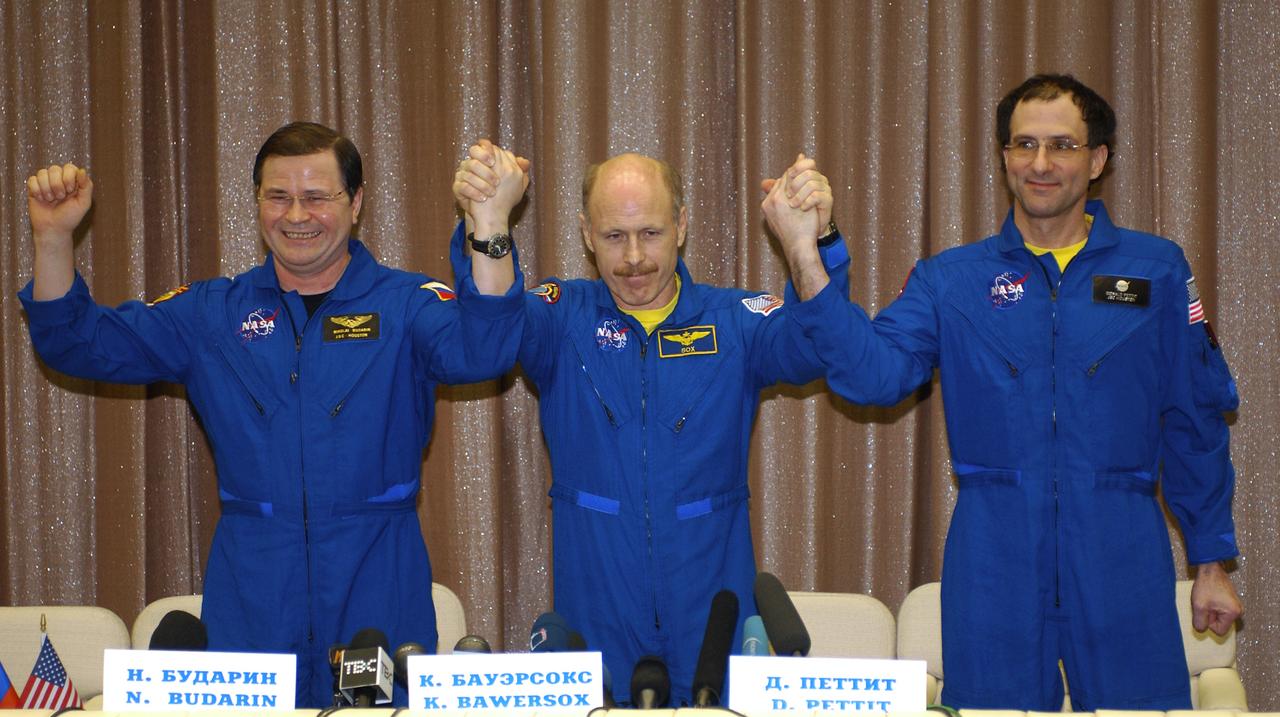
Expedition 6 Flight Engineer Nikolai Budarin, left, Commander Ken Bowersox and International Space Station Science Officer Don Pettit, right, pose for photos at a press conference at the Gagarin Cosmonaut Training Center in Star City, Russia, Thursday, May 6, 2003. Photo Credit: (NASA/Bill Ingalls)

Located off the east coast of Russia, the Sea of Okhotsk stretches down to 45 degrees North latitude, and sea ice forms regularly in the basin. In fact, it is the lowest latitude for seasonal sea ice formation in the world. On January 4, 2015, the Moderate Resolution Imaging Spectroradiometer (MODIS) on NASA’s Terra satellite captured this true-color image of the ice-covered Sea of Okhotsk. Every winter, winds from East Siberia, frigid air temperatures, and a large amount of freshwater flowing out from rivers promote the formation of sea ice in the region. Much of the freshwater comes from the Amur River, one of the ten longest rivers in the world. From year to year, variations in temperature and wind speed can cause large fluctuations in sea ice extent. The sea spans more than 1,500,000 square kilometers (600,000 square miles), and ice cover can spread across 50 to 90 percent of it at its annual peak. On average, that ice persists for 180 days. According to research published in 2014, the region's sea ice has been decreasing over a 34-year period. Annual ice production in the Sea of Okhotsk dropped by more than 11 percent from 1974 to 2008. The researchers suggest that this decline has, at least in part, "led to weakening of the overturning in the North Pacific." Water with less sea ice is fresher, less dense, and unable to sink and circulate as well as salty, dense water. A weakened circulation in the North Pacific has implications for the supply of nutrients, such as iron, that affect biological productivity. Credit: NASA/GSFC/Jeff Schmaltz/MODIS Land Rapid Response Team <b><a href="http://www.nasa.gov/audience/formedia/features/MP_Photo_Guidelines.html" rel="nofollow">NASA image use policy.</a></b> <b><a href="http://www.nasa.gov/centers/goddard/home/index.html" rel="nofollow">NASA Goddard Space Flight Center</a></b> enables NASA’s mission through four scientific endeavors: Earth Science, Heliophysics, Solar System Exploration, and Astrophysics. Goddard plays a leading role in NASA’s accomplishments by contributing compelling scientific knowledge to advance the Agency’s mission. <b>Follow us on <a href="http://twitter.com/NASAGoddardPix" rel="nofollow">Twitter</a></b> <b>Like us on <a href="http://www.facebook.com/pages/Greenbelt-MD/NASA-Goddard/395013845897?ref=tsd" rel="nofollow">Facebook</a></b> <b>Find us on <a href="http://instagram.com/nasagoddard?vm=grid" rel="nofollow">Instagram</a></b>
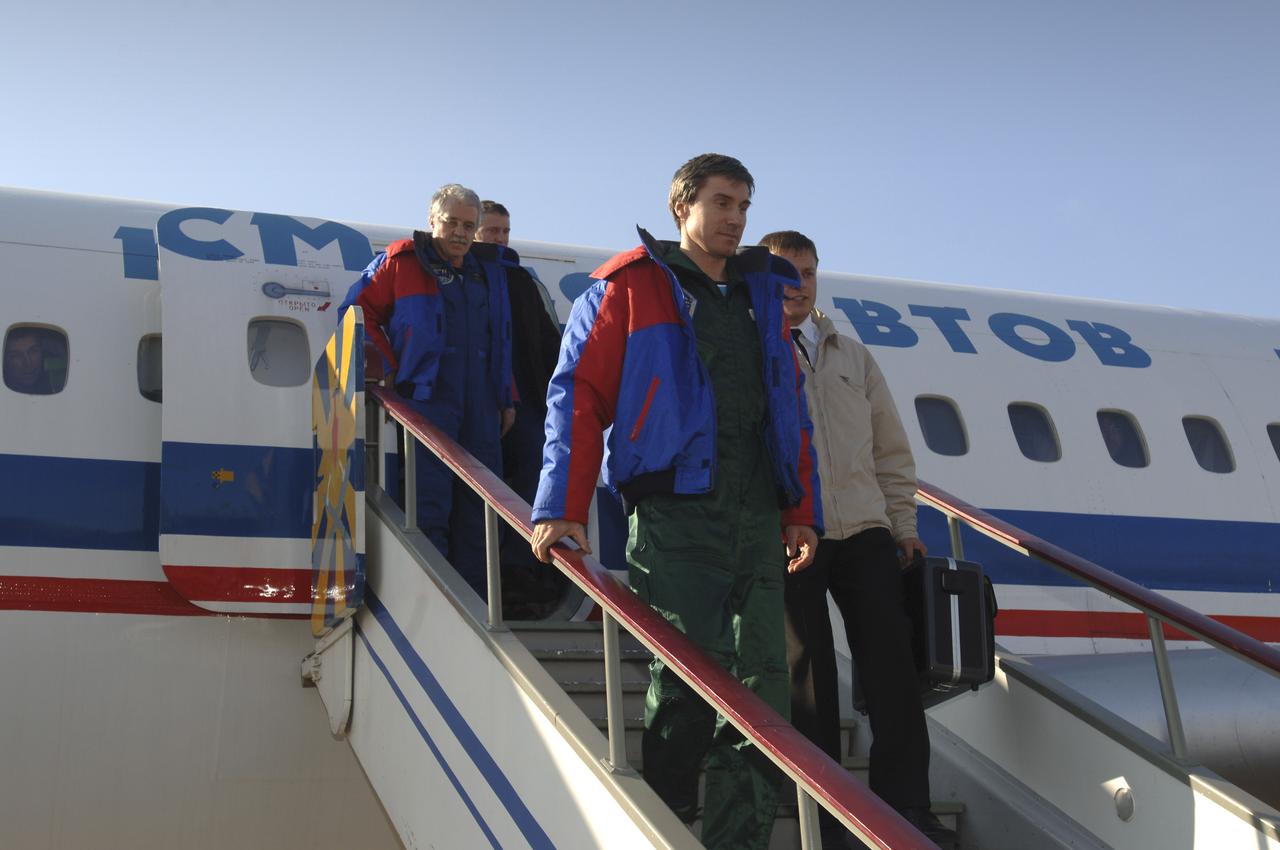
Members of the 11th expedition to the International Space Station, astronaut John Phillips, top left, and cosmonaut Sergei Krikalev, front, arrive at Star City, Russia, Tuesday, Oct. 11, 2005. The crew landed near Arlalyk, Kazakhstan after a six-month mission in orbit. Along with American businessman Greg Olsen, who visited the station for more than a week, Phillips and Krikalev returned to Earth aboard a Russian Soyuz spacecraft. Photo Credit: (NASA/Bill Ingalls)
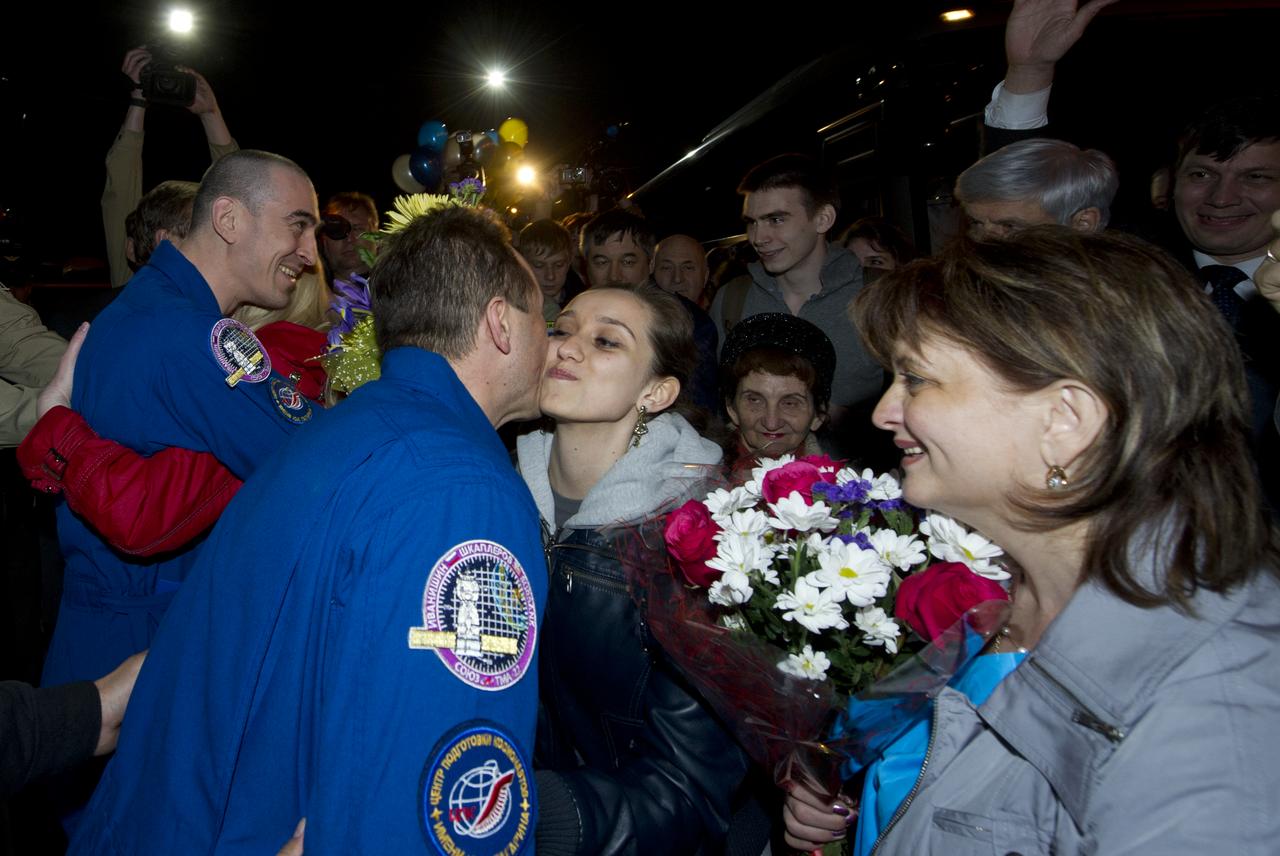
Expedition 30 Flight Engineers Anatoly Ivanishin, far left, and Anton Shkaplerov are welcomed home by colleagues and family in Star City, Russia on Saturday, April 28, 2012. Russian Cosmonauts Ivanishin, Shkaplerov and Expedition 30 Commander Daniel Burbank landed outside of Arkalyk, Kazakhstan earlier in the day from over five months onboard the International Space Station where they served as members of the Expedtion 29 and 30 crews. Photo Credit: (NASA/Carla Cioffi)
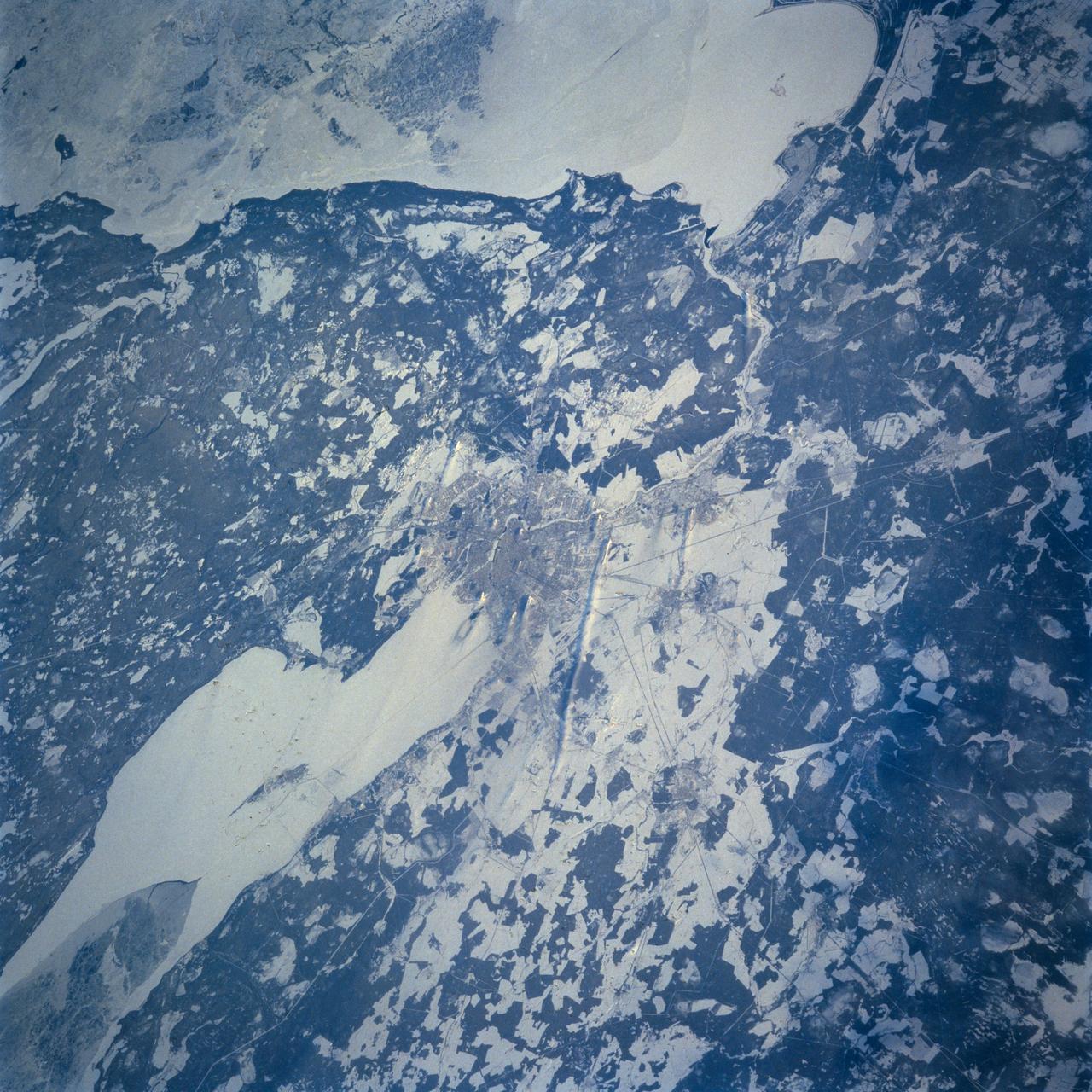
STS060-103-055 (3-11 Feb 1994) --- This wintertime photograph shows the large city of St. Petersburg Russia at the head of the Gulf of Finland. The city, built by Peter the Great, is situated in the former swampy delta of the Neva River which connects the large Lake Ladoga (the frozen white surface on the edge of the photograph) to the Gulf of Finland. An interesting feature of St. Petersburg which can be discerned in this photograph is the new storm surge barrier built from both sides of the Gulf of Finland out to the island of Kronstadt in the middle. This barrier, similar to that which was built on the Thames River south of London to protect it from storm surges out of the North Sea, was constructed to protect St. Petersburg from storm surges coming out of the Baltic Sea and being magnified by the topography and hydrography of the Gulf of Finland. Also visible as a thin line between Kronstadt and St. Petersburg is the ice-free shipping channel kept open much of the winter. Power plant plumes are also visible on the frame. St. Petersburg is the home of the Russian cosmonaut, Sergei Krikalev, who flew aboard the Space Shuttle Discovery during STS-60.

The border between Russia and Finland is shown in this MISR Mystery Quiz #12 captured by NASA Terra spacecraft.
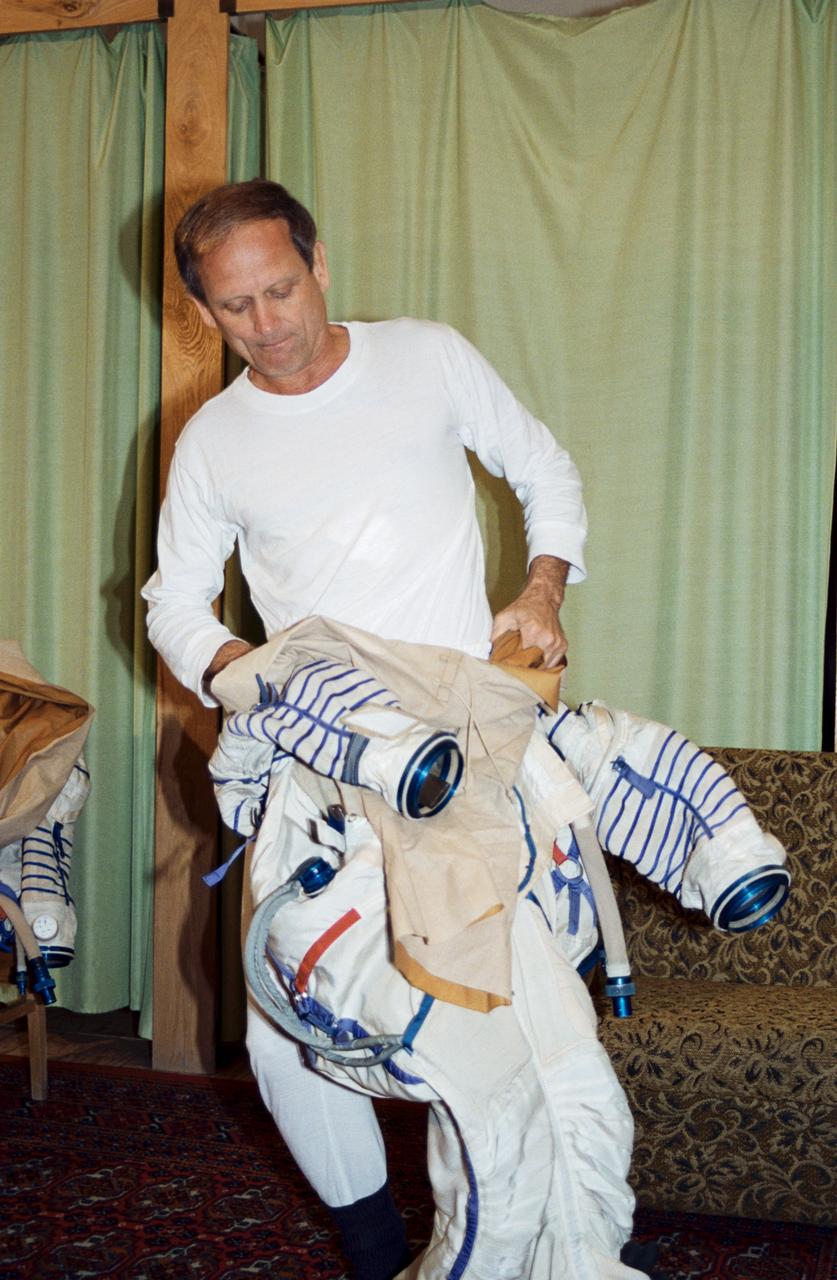
Astronaut Norman E. Thagard getting into a cosmonaut space suit in the Training Simulator Facility at the Gagarin Cosmonaut Training Center (Star City), near Moscow, Russia.
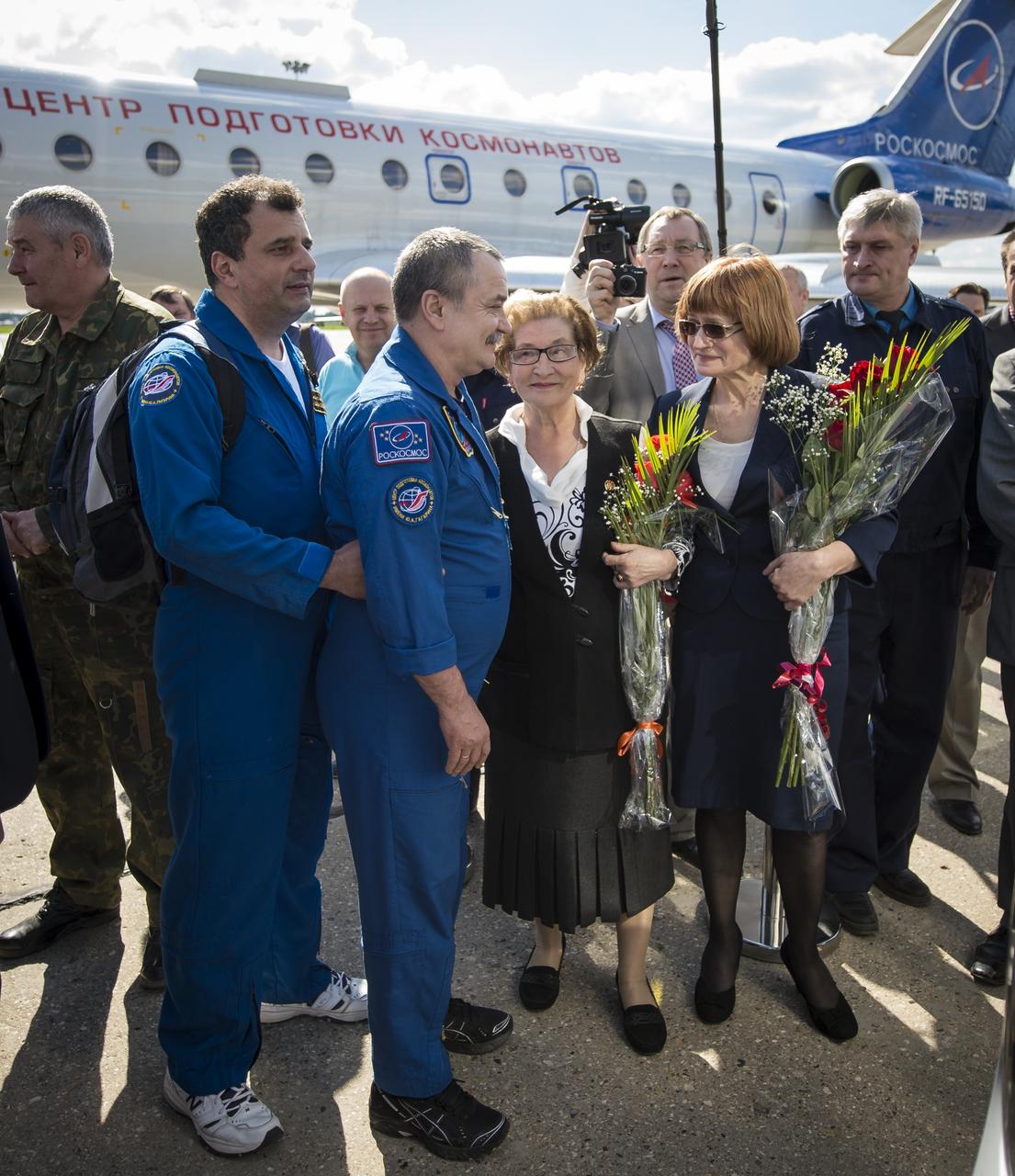
Expedition 39 Soyuz Commander Mikhail Tyurin of Roscosmos, second from left, is welcomed home by family, friends, and government officials at the Chkalovsky airport outside Star City, Russia, Wednesday, May 14, 2014. Tyurin, Expedition 39 Commander Koichi Wakata of the Japan Aerospace Exploration Agency (JAXA), and Flight Engineer Rick Mastracchio of NASA landed in their Soyuz TMA-11M spacecraft earlier in the day near the town of Zhezkazgan, Kazakhstan. Wakata, Tyurin and Mastracchio returned to Earth after more than six months onboard the International Space Station where they served as members of the Expedition 38 and 39 crews. Photo Credit: (NASA/Bill Ingalls)
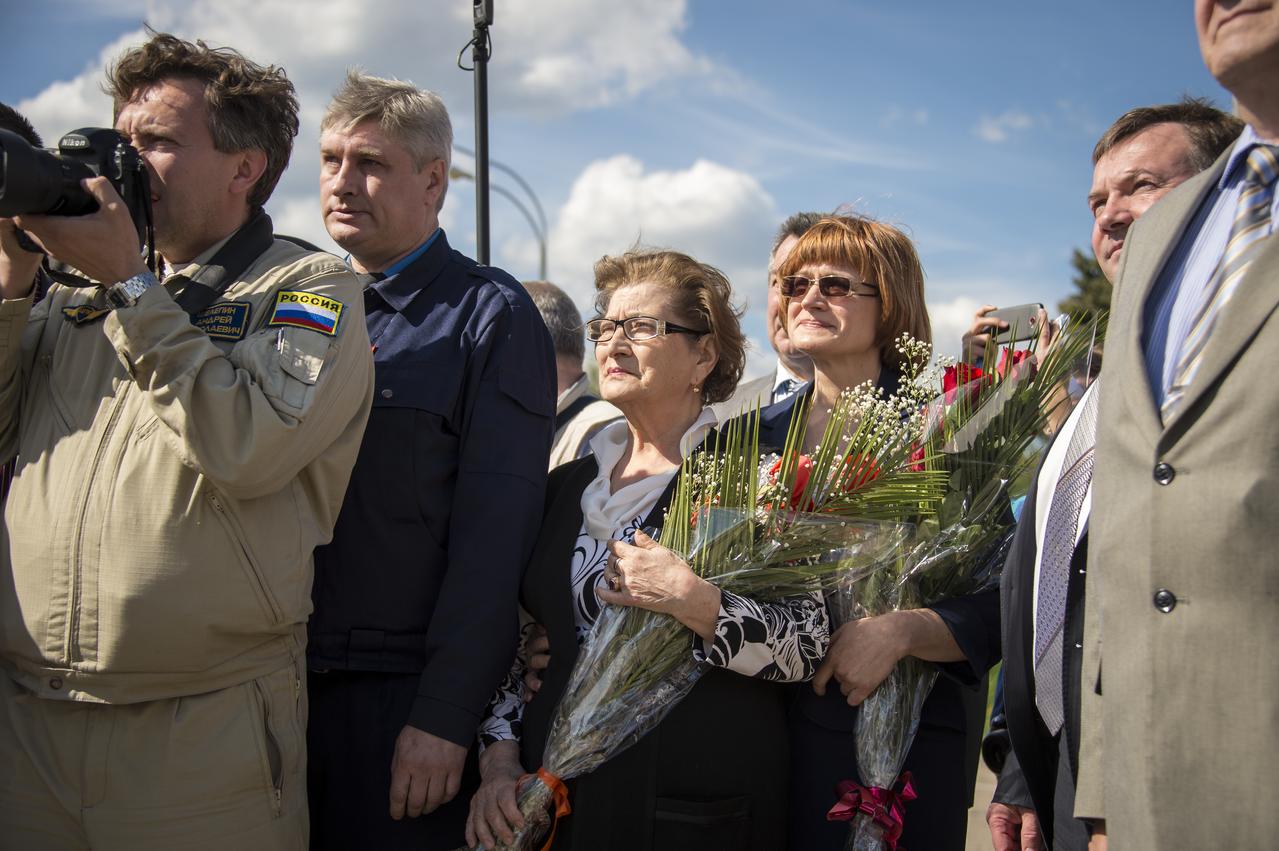
Family, friends, and government officials wait to welcome home Expedition 39 Soyuz Commander Mikhail Tyurin of Roscosmos at the Chkalovsky airport outside Star City, Russia, Wednesday, May 14, 2014. Tyurin, Expedition 39 Commander Koichi Wakata of the Japan Aerospace Exploration Agency (JAXA), and Flight Engineer Rick Mastracchio of NASA landed in their Soyuz TMA-11M spacecraft earlier in the day near the town of Zhezkazgan, Kazakhstan. Wakata, Tyurin and Mastracchio returned to Earth after more than six months onboard the International Space Station where they served as members of the Expedition 38 and 39 crews. Photo Credit: (NASA/Bill Ingalls)
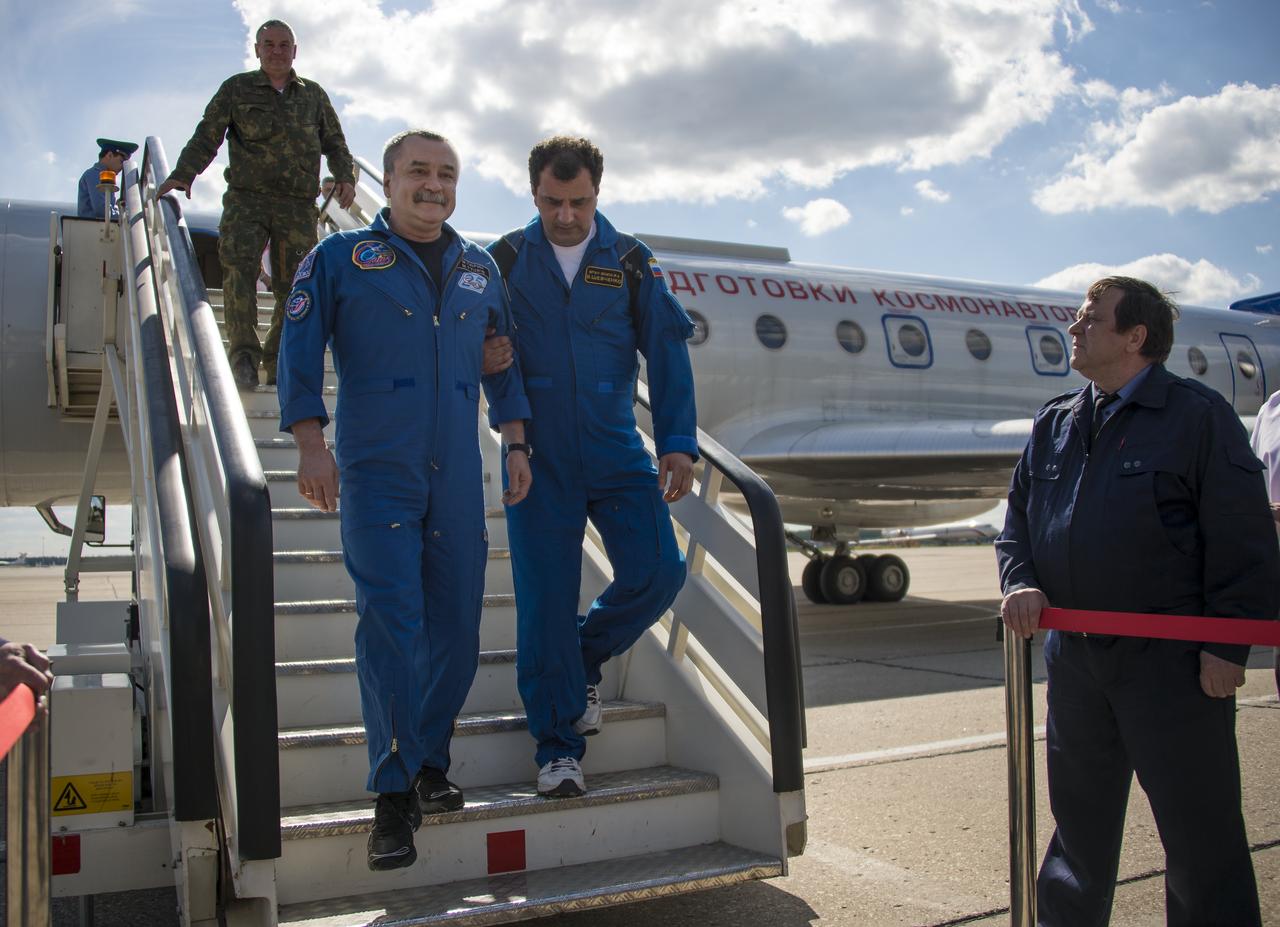
Expedition 39 Soyuz Commander Mikhail Tyurin of Roscosmos, left, departs a plane to a crowd of family, friends, and government officials at the Chkalovsky airport outside Star City, Russia, Wednesday, May 14, 2014. Tyurin, Expedition 39 Commander Koichi Wakata of the Japan Aerospace Exploration Agency (JAXA), and Flight Engineer Rick Mastracchio of NASA landed in their Soyuz TMA-11M spacecraft earlier in the day near the town of Zhezkazgan, Kazakhstan. Wakata, Tyurin and Mastracchio returned to Earth after more than six months onboard the International Space Station where they served as members of the Expedition 38 and 39 crews. Photo Credit: (NASA/Bill Ingalls)
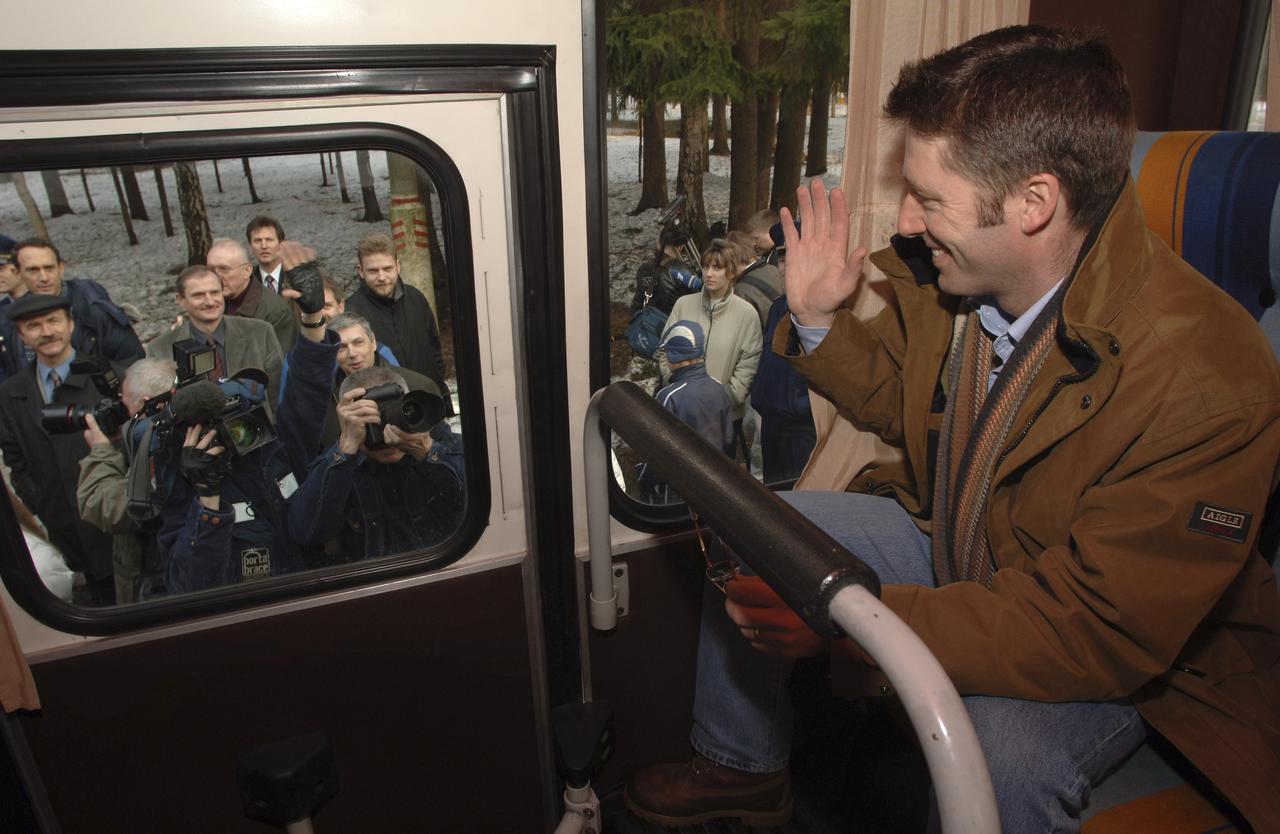
European Space Agency astronaut Roberto Vittori, of Italy, waves to well-wishers upon departure from the Gagarin Cosmonaut Training Center training base, Saturday, April 9, 2005, in Star City, Russia. Vittori will spend eight days on the Station under a commercial contract between ESA and the Russian Federal Space Agency. Photo Credit: (NASA/Bill Ingalls)
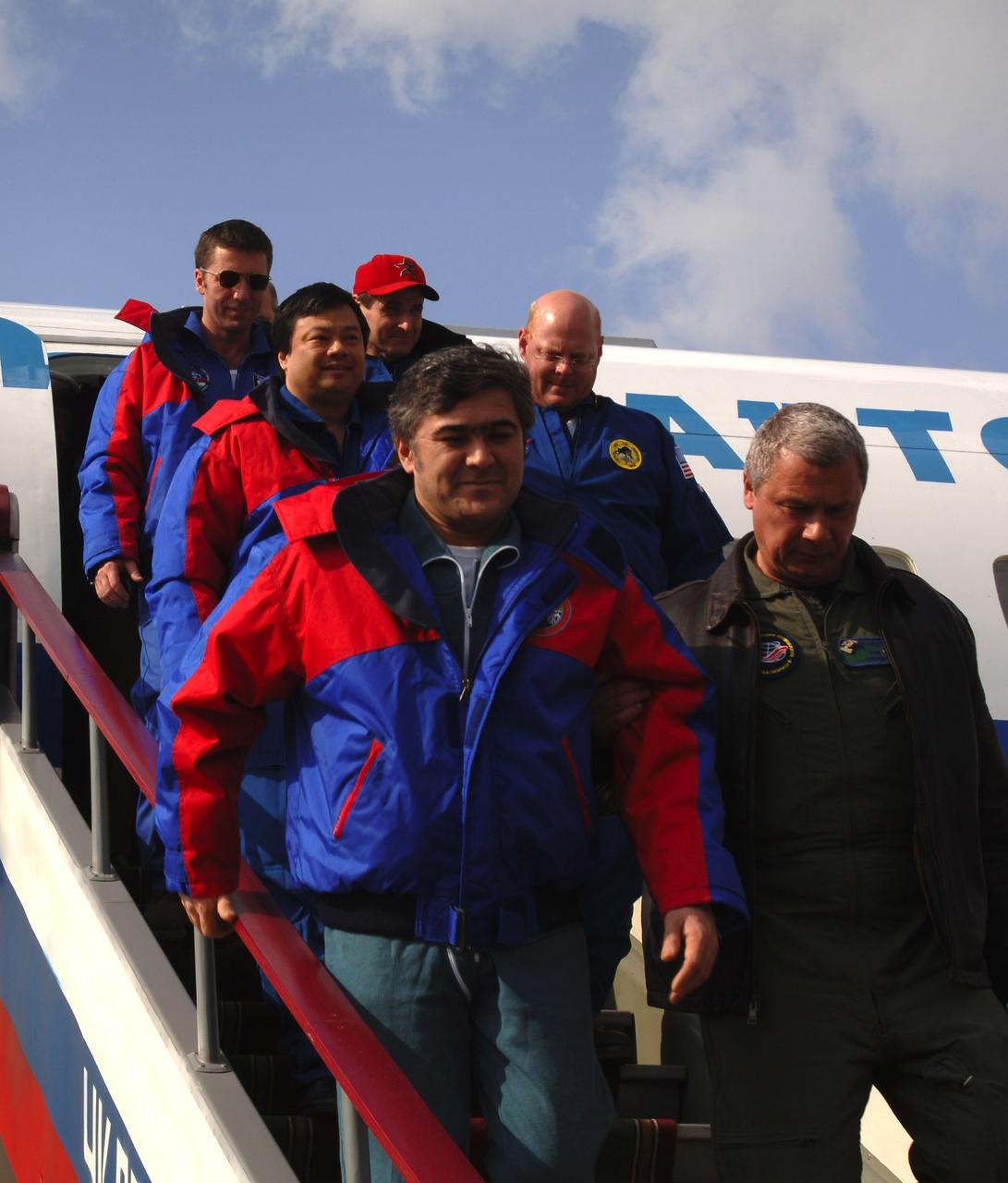
Flight Engineer Salizhan Sharipov, bottom left, Expedition 10 Commander Leroy Chiao and European Space Agency astronaut Roberto Vittori, top left, arrive in Star City, Russia, Monday, April 25, 2005, after thet brought their Soyuz TMA-5 capsule to a pre-dawn landing northeast of Arkalyk, Kazakhstan. Photo Credit: (NASA/Bill Ingalls)

Renita Fincke, left, watches her husband, NASA astronaut Michael Fincke and Expedition 9 Flight Engineer depart from the crew bus while holding her 4 month-old baby Tarali Fincke, Sunday, October 24, 2004 in Star City, Russia. Astronaut Terry Virts helps by holding Chandra Fincke. Photo Credit: (NASA/Bill Ingalls)

Renita Fincke, right, awaits the arrival of her husband NASA astronaut Michael Fincke, while holding their 4 month-old baby Tarali, Sunday, October 24, 2004, in Star City, Russia. Astronaut Terry Virts, Center helps by holding 2 year-old Chandra Fincke. Photo Credit: (NASA/Bill Ingalls)
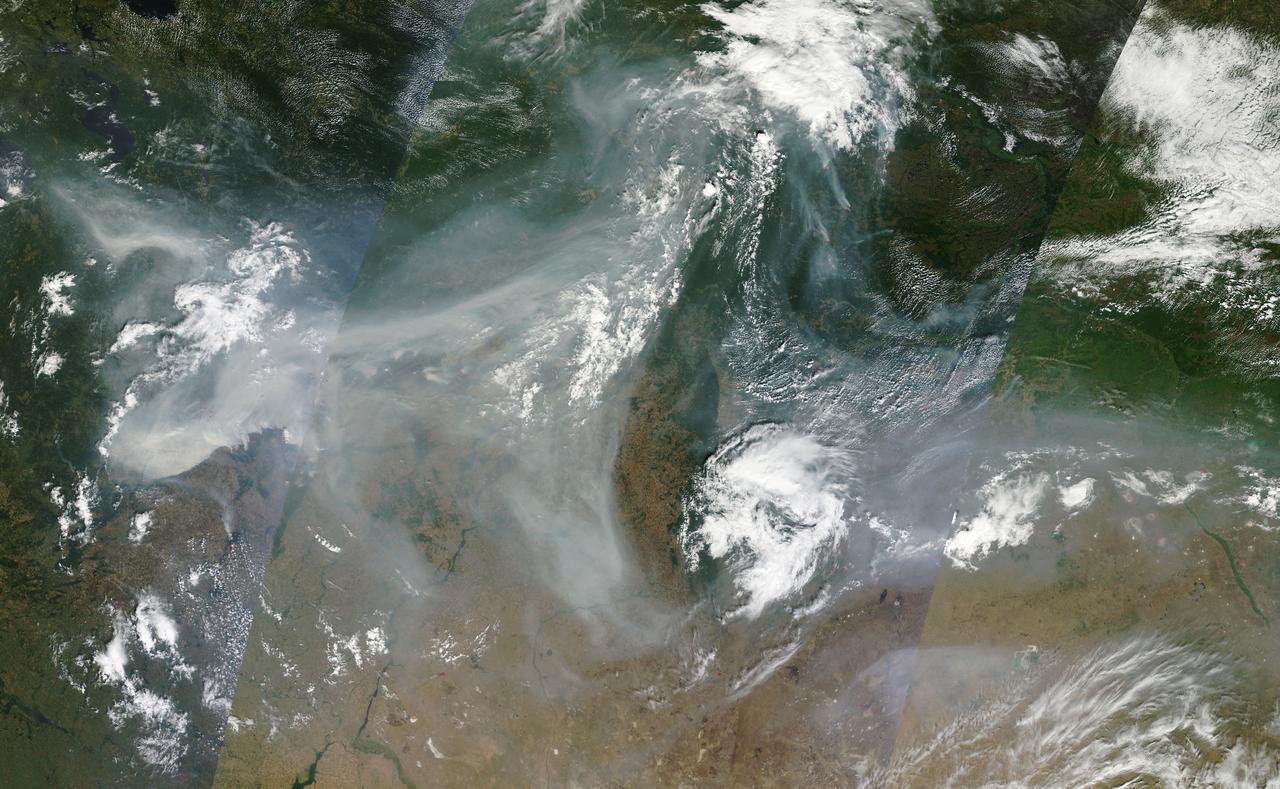
NASA image acquired August 4, 2010 Intense fires continued to rage in western Russia on August 4, 2010. Burning in dry peat bogs and forests, the fires produced a dense plume of smoke that reached across hundreds of kilometers. The Moderate Resolution Imaging Spectroradiometer (MODIS) captured this view of the fires and smoke in three consecutive overpasses on NASA’s Terra satellite. The smooth gray-brown smoke hangs over the Russian landscape, completely obscuring the ground in places. The top image provides a close view of the fires immediately southeast of Moscow, while the lower image shows the full extent of the smoke plume. To read more about this image go to: <a href="http://earthobservatory.nasa.gov/IOTD/view.php?id=45046" rel="nofollow">earthobservatory.nasa.gov/IOTD/view.php?id=45046</a> NASA image courtesy Jeff Schmaltz, MODIS Rapid Response Team at NASA GSFC. <b><a href="http://www.nasa.gov/centers/goddard/home/index.html" rel="nofollow">NASA Goddard Space Flight Center</a></b> is home to the nation's largest organization of combined scientists, engineers and technologists that build spacecraft, instruments and new technology to study the Earth, the sun, our solar system, and the universe. <b>Follow us on <a href="http://twitter.com/NASA_GoddardPix" rel="nofollow">Twitter</a></b> <b>Join us on <a href="http://www.facebook.com/pages/Greenbelt-MD/NASA-Goddard/395013845897?ref=tsd" rel="nofollow">Facebook</a><b></b></b>
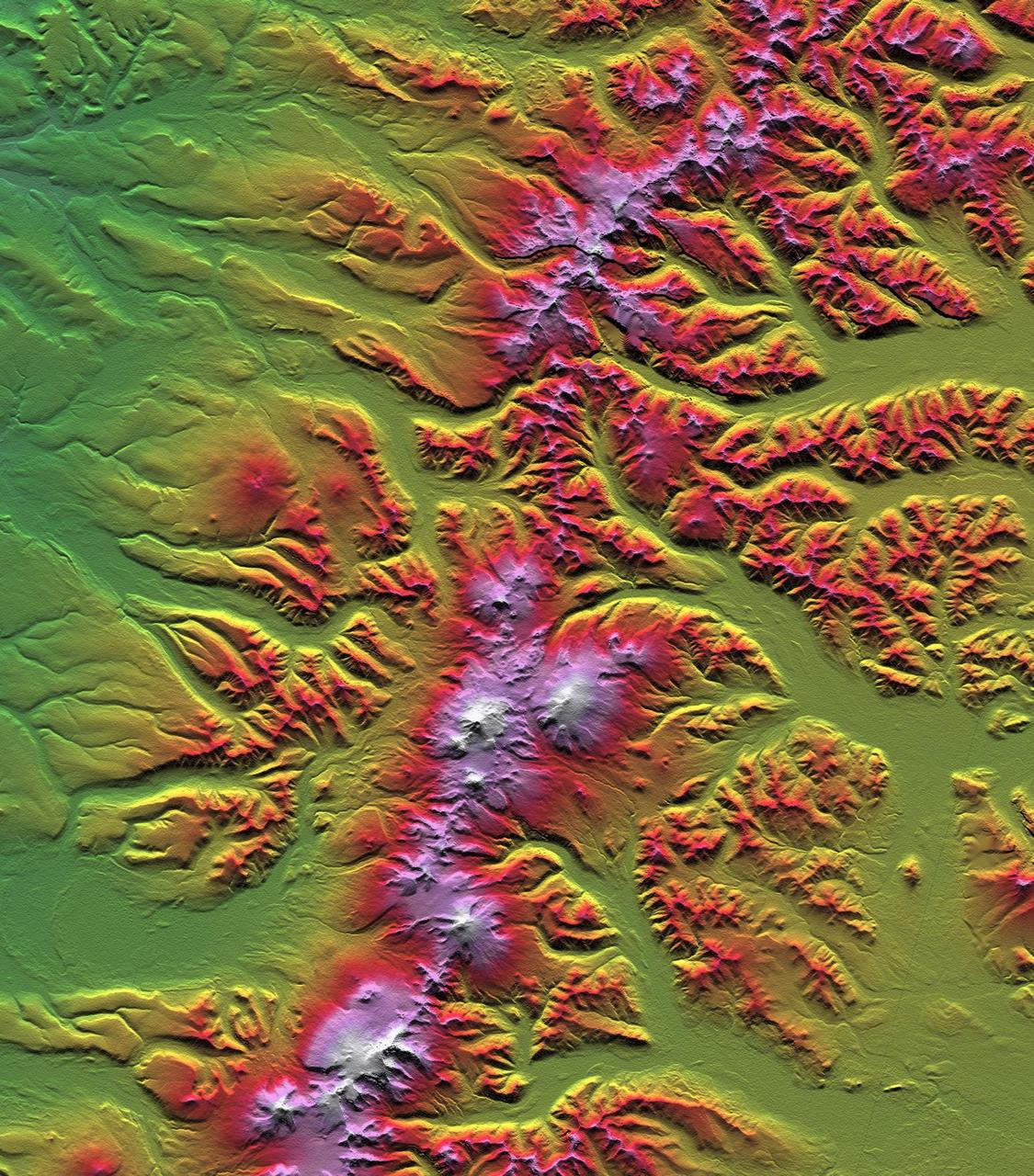
The Kamchatka Peninsula in eastern Russia is shown in this scene created from a preliminary elevation model derived from the first data collected during NASA Shuttle Radar Topography Mission SRTM on February 12, 2000.
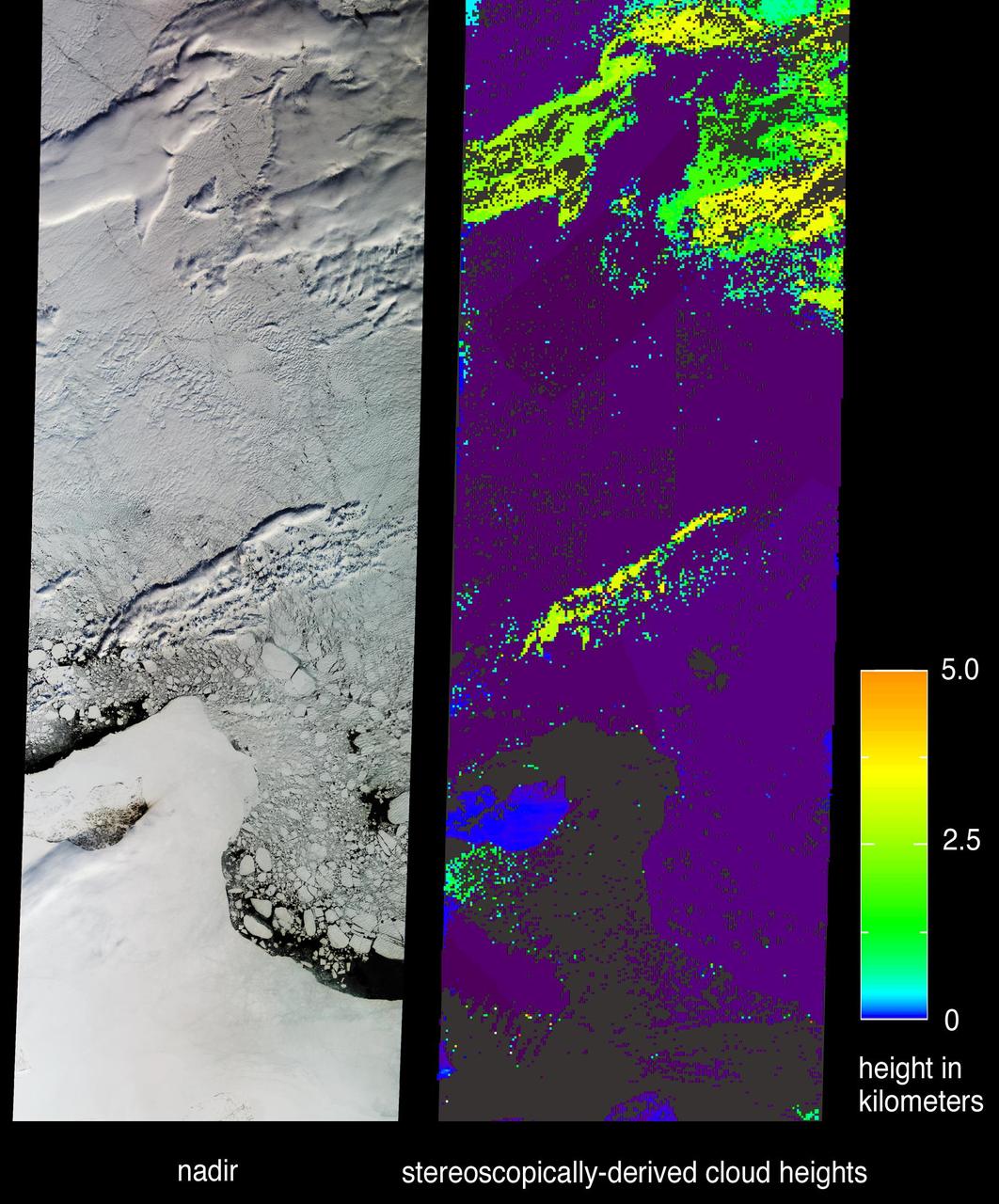
The central portion of Russia East Siberian Sea, including one of the New Siberian Islands, Novaya Sibir, are portrayed in these views from data acquired on May 28, 2002 by NASA Terra satellite.
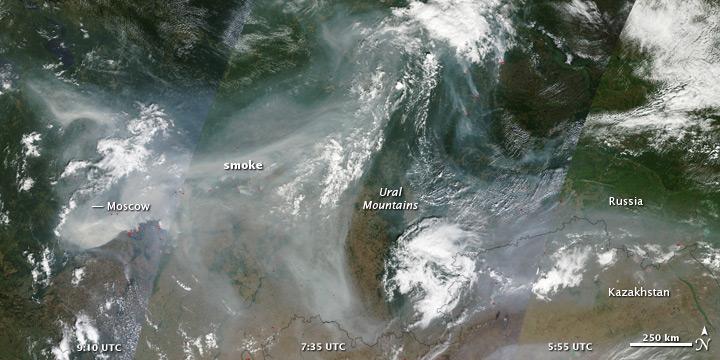
NASA image acquired August 4, 2010 Intense fires continued to rage in western Russia on August 4, 2010. Burning in dry peat bogs and forests, the fires produced a dense plume of smoke that reached across hundreds of kilometers. The Moderate Resolution Imaging Spectroradiometer (MODIS) captured this view of the fires and smoke in three consecutive overpasses on NASA’s Terra satellite. The smooth gray-brown smoke hangs over the Russian landscape, completely obscuring the ground in places. The top image provides a close view of the fires immediately southeast of Moscow, while the lower image shows the full extent of the smoke plume. To read more about this image go to: <a href="http://earthobservatory.nasa.gov/IOTD/view.php?id=45046" rel="nofollow">earthobservatory.nasa.gov/IOTD/view.php?id=45046</a> To view the high res go here: NASA image courtesy Jeff Schmaltz, MODIS Rapid Response Team at NASA GSFC. <b><a href="http://www.nasa.gov/centers/goddard/home/index.html" rel="nofollow">NASA Goddard Space Flight Center</a></b> is home to the nation's largest organization of combined scientists, engineers and technologists that build spacecraft, instruments and new technology to study the Earth, the sun, our solar system, and the universe. <b>Follow us on <a href="http://twitter.com/NASA_GoddardPix" rel="nofollow">Twitter</a></b> <b>Join us on <a href="http://www.facebook.com/pages/Greenbelt-MD/NASA-Goddard/395013845897?ref=tsd" rel="nofollow">Facebook</a><b></b></b>
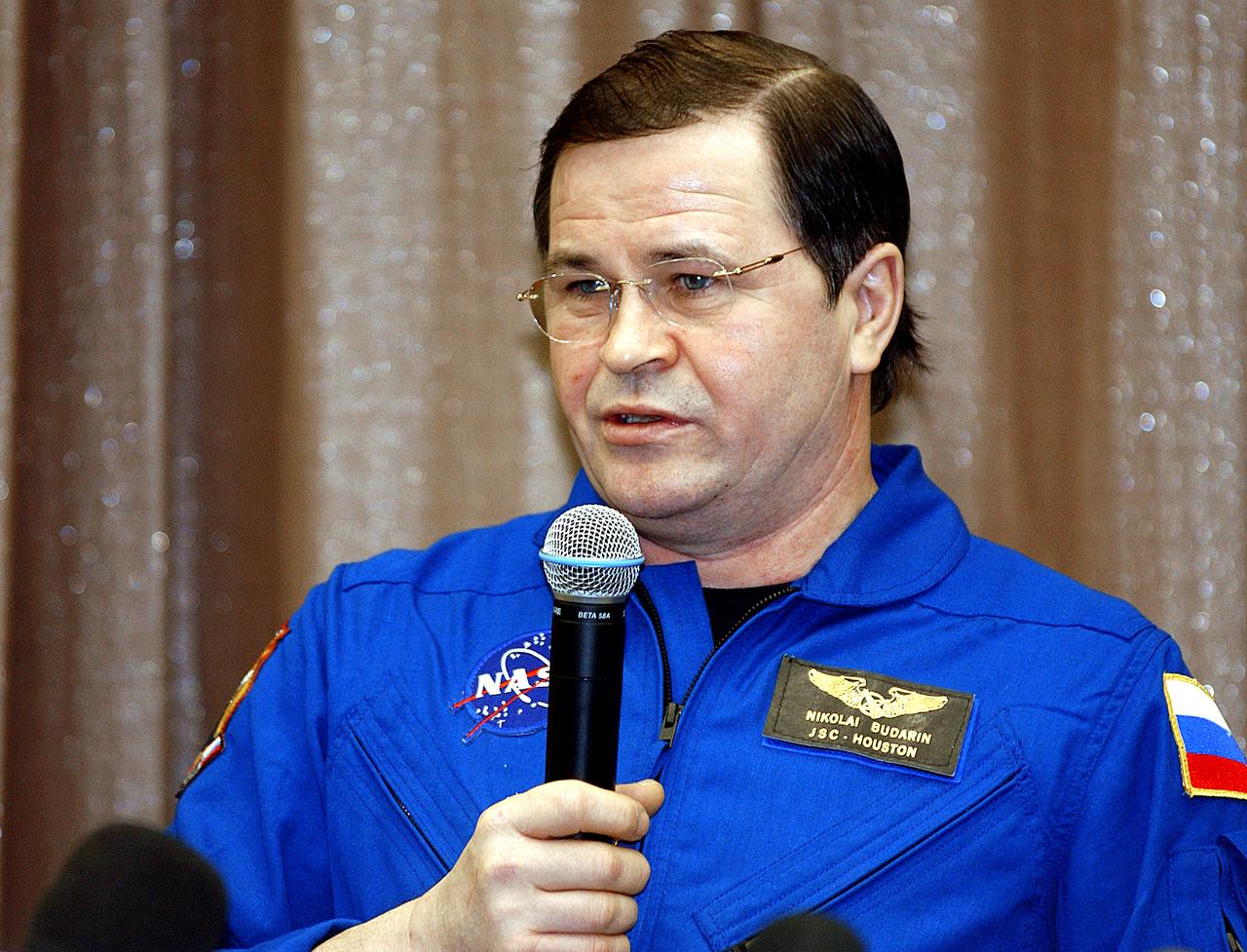
May 6, 2003. Star City, Russia. Expedition Six Flight Engineer Nikolai Budarin speaks during a Press Conference at the Gagarin Cosmonaut Training Center in Star City, Russia. Photo Credit: "NASA/Bill Ingalls"
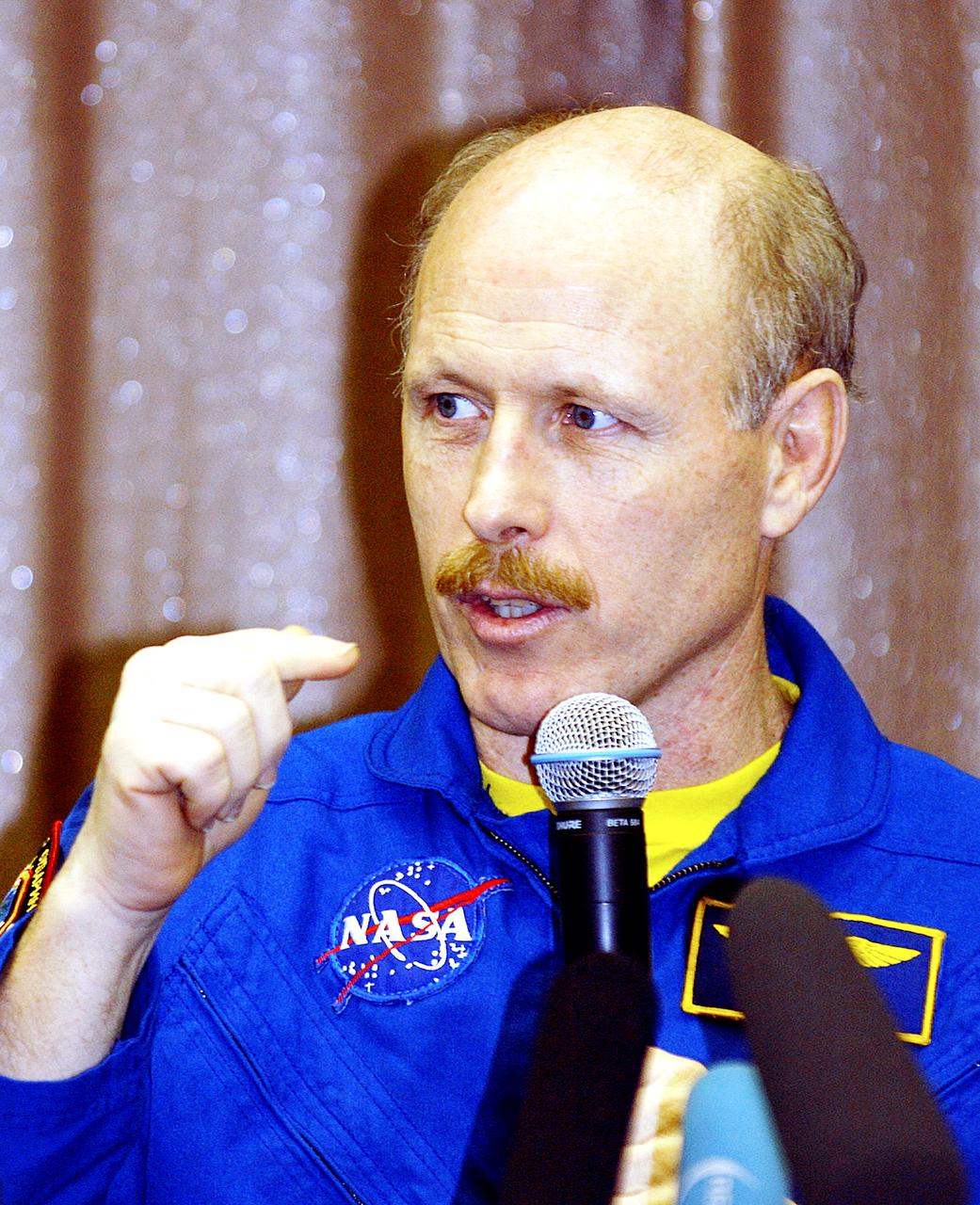
May 6, 2003. Star City, Russia. Expedition Six Commander Ken Bowersox speaks at a Press Conference at the Gagarin Cosmonaut Training Center in Star City, Russia. Photo Credit: "NASA/Bill Ingalls"
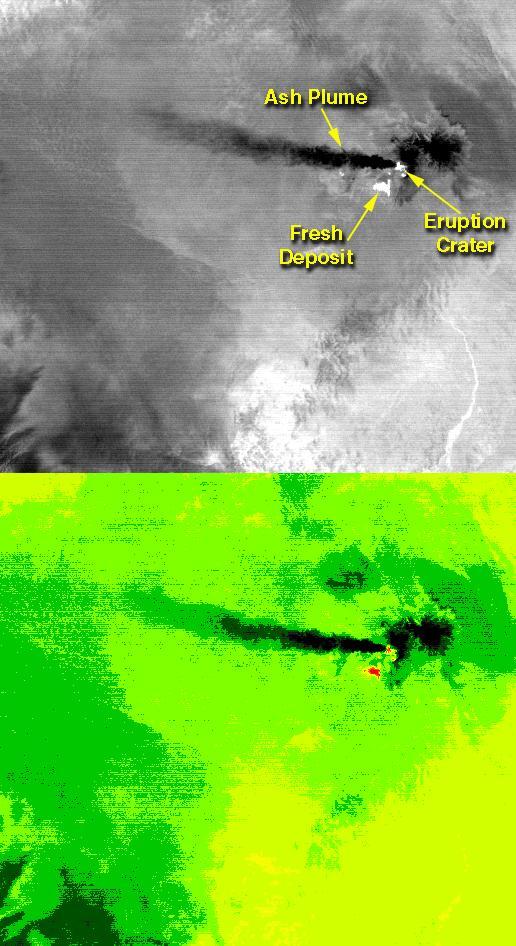
On the night of June 4, 2001, the Advanced Spaceborne Thermal Emission and Reflection Radiometer (ASTER) captured this thermal image of the erupting Shiveluch volcano. Located on Russia's Kamchatka Peninsula, Shiveluch rises to an altitude of 2,447 meters (8,028 feet). The active lava dome complex is seen as a bright (hot) area on the summit of the volcano. To the southwest, a second hot area is either a debris avalanche or hot ash deposit. Trailing to the west is a 25-kilometer (15-mile) ash plume, seen as a cold "cloud" streaming from the summit. At least 60 large eruptions have occurred here during the last 10,000 years; the largest historical eruptions were in 1854 and 1964. Because Kamchatka is located along the major aircraft routes between North America/Europe and Asia, this area is constantly monitored for potential ash hazards to aircraft. The area is part of the "Ring of Fire," a string of volcanoes that encircles the Pacific Ocean. The lower image is the same as the upper, except it has been color-coded: red is hot, light greens to dark green are progressively colder, and gray/black are the coldest areas. The image is located at 56.7 degrees north latitude, 161.3 degrees east longitude. http://photojournal.jpl.nasa.gov/catalog/PIA03514
On the night of June 4, 2001 ASTER captured this thermal image of the erupting Shiveluch volcano. Located on Russia's Kamchatka Peninsula, Shiveluch rises to an altitude of 8028'. The active lava dome complex is seen as a bright (hot) area on the summit of the volcano. To the southwest, a second hot area is either a debris avalanche or hot ash deposit. Trailing to the west is a 25 km ash plume, seen as a cold "cloud" streaming from the summit. At least 60 large eruptions have occurred during the last 10,000 years; the largest historical eruptions were in 1854 and 1964. Because Kamchatka is located along the major aircraft routes between North America/Europe and the Far East, this area is constantly monitored for potential ash hazards to aircraft. The lower image is the same as the upper, except it has been color coded: red is hot, light greens to dark green are progressively colder, and gray/black are the coldest areas. The image is located at 56.7 degrees north latitude, 161.3 degrees east longitude. http://photojournal.jpl.nasa.gov/catalog/PIA02674
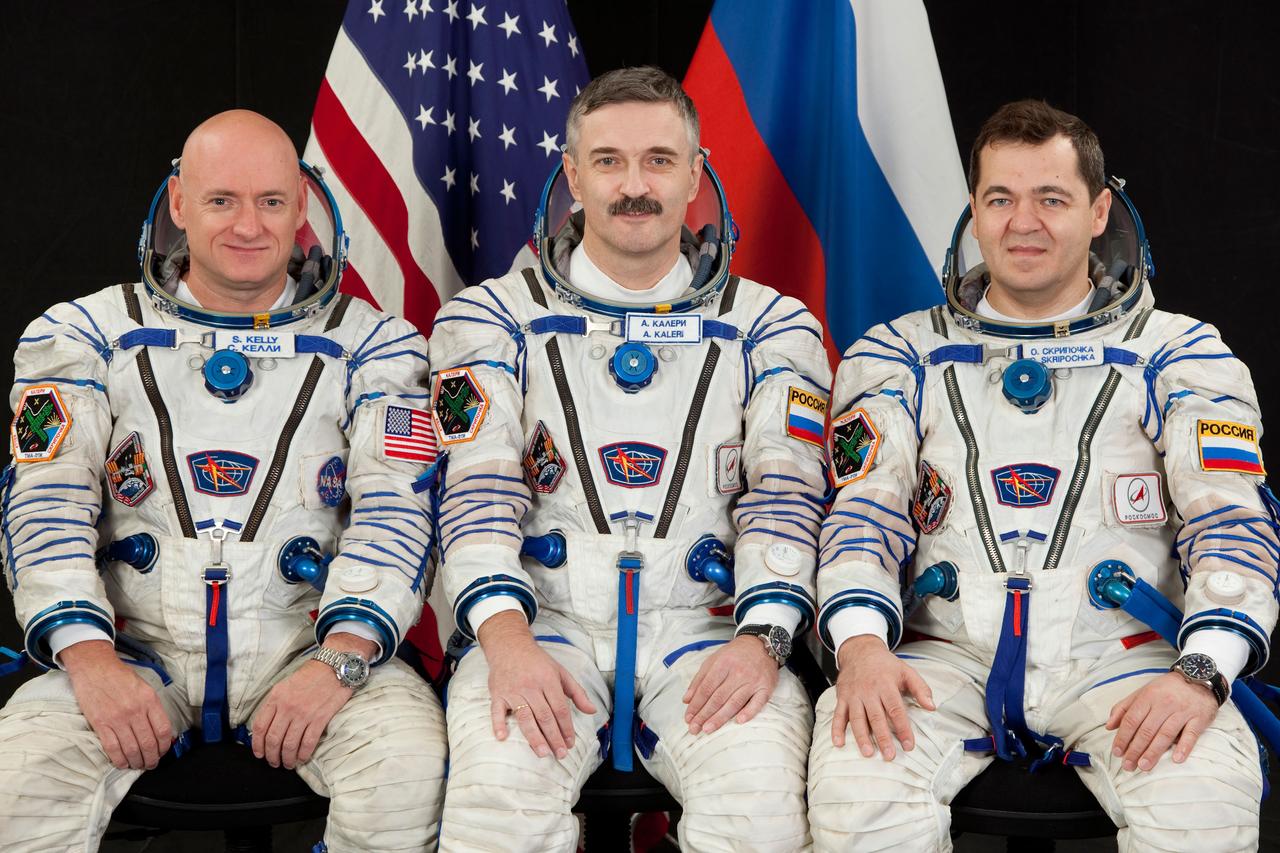
JSC2010-E-124006 (August 2010) --- Attired in Russian Sokol launch and entry suits, NASA astronaut Scott Kelly (left), Expedition 25 flight engineer and Expedition 26 commander; along with Russian cosmonauts Alexander Kaleri (center) and Oleg Skripochka, both Expedition 25/26 flight engineers, take a break from training in Star City, Russia to pose for a portrait. Photo credit: Gagarin Cosmonaut Training Center
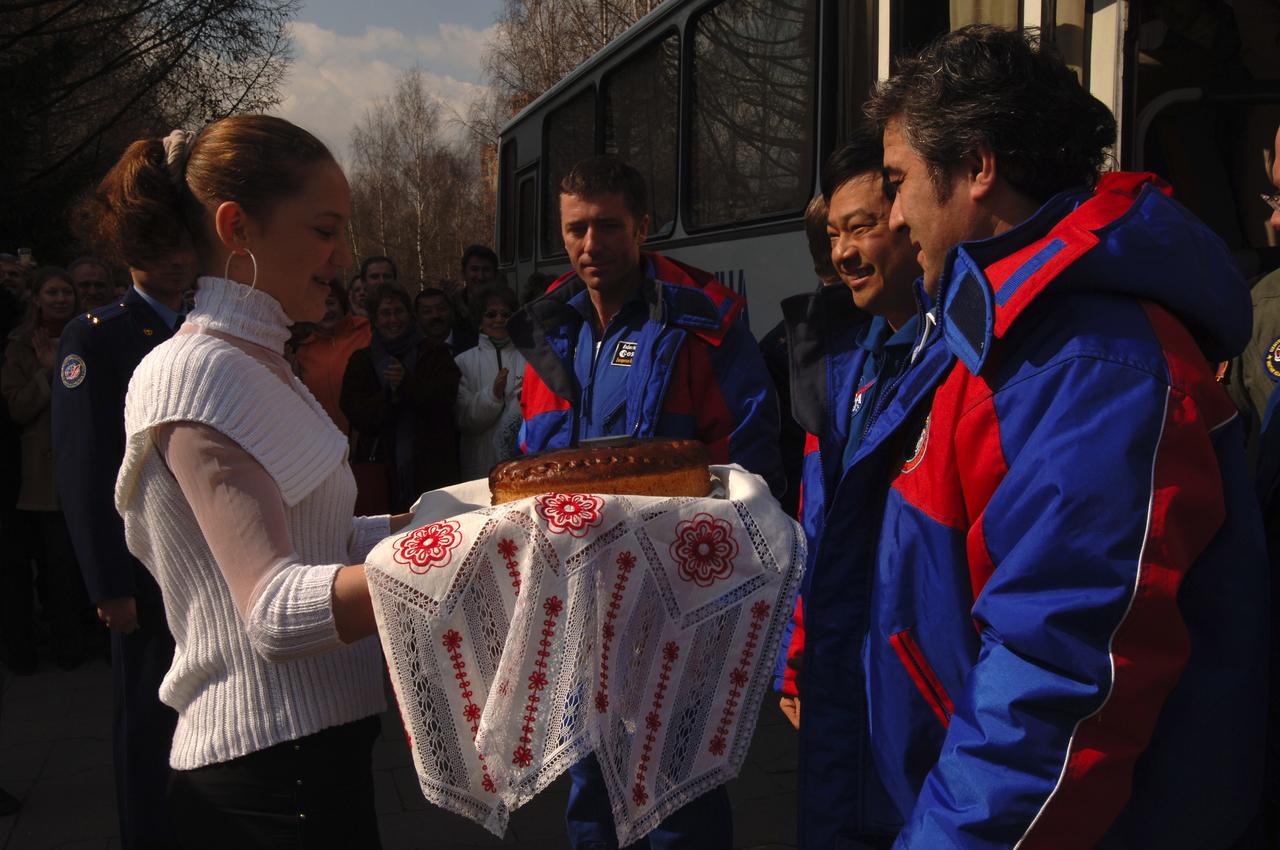
Expedition 10 Flight Engineer Salizhan Sharipov, far right, Expedition 10 Commander Leroy Chiao and European Space Agency astronaut Roberto Vittori, third from right, are treated to a traditional salt and bread welcoming at Star City, Russia, Monday, April 25, 2005. The crew brought their Soyuz TMA-5 capsule to a pre-dawn landing April 25 northeast of the town of Arkalyk in Kazakhstan to wrap up a six-month mission aboard the International Space Station for Chiao and Sharipov, and a ten-day mission for Vittori, who flew under a commercial contract between ESA and the Russian Federal Space Agency. Photo Credit: (NASA/Bill Ingalls)
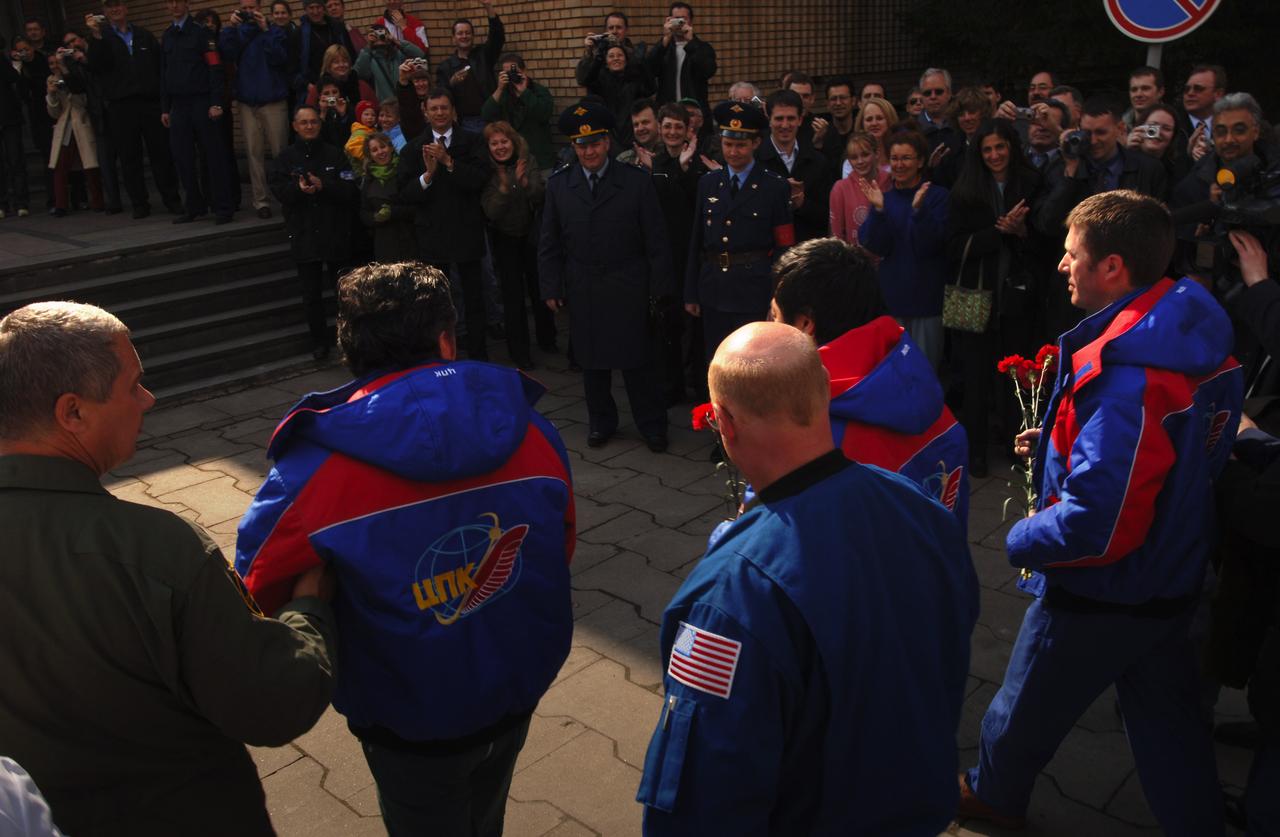
European Space Agency astronaut Roberto Vittori, right, Expedition 10 Commander Leroy Chiao and Expedition 10 Flight Engineer Salizhan Sharipov, second from left, are welcomed home by well wishers at Star City, Russia, Monday, April 25, 2005. The crew brought their Soyuz TMA-5 capsule to a pre-dawn landing April 25 northeast of the town of Arkalyk in Kazakhstan to wrap up a six-month mission aboard the International Space Station for Chiao and Sharipov, and a ten-day mission for Vittori, who flew under a commercial contract between ESA and the Russian Federal Space Agency. Photo Credit: (NASA/Bill Ingalls)
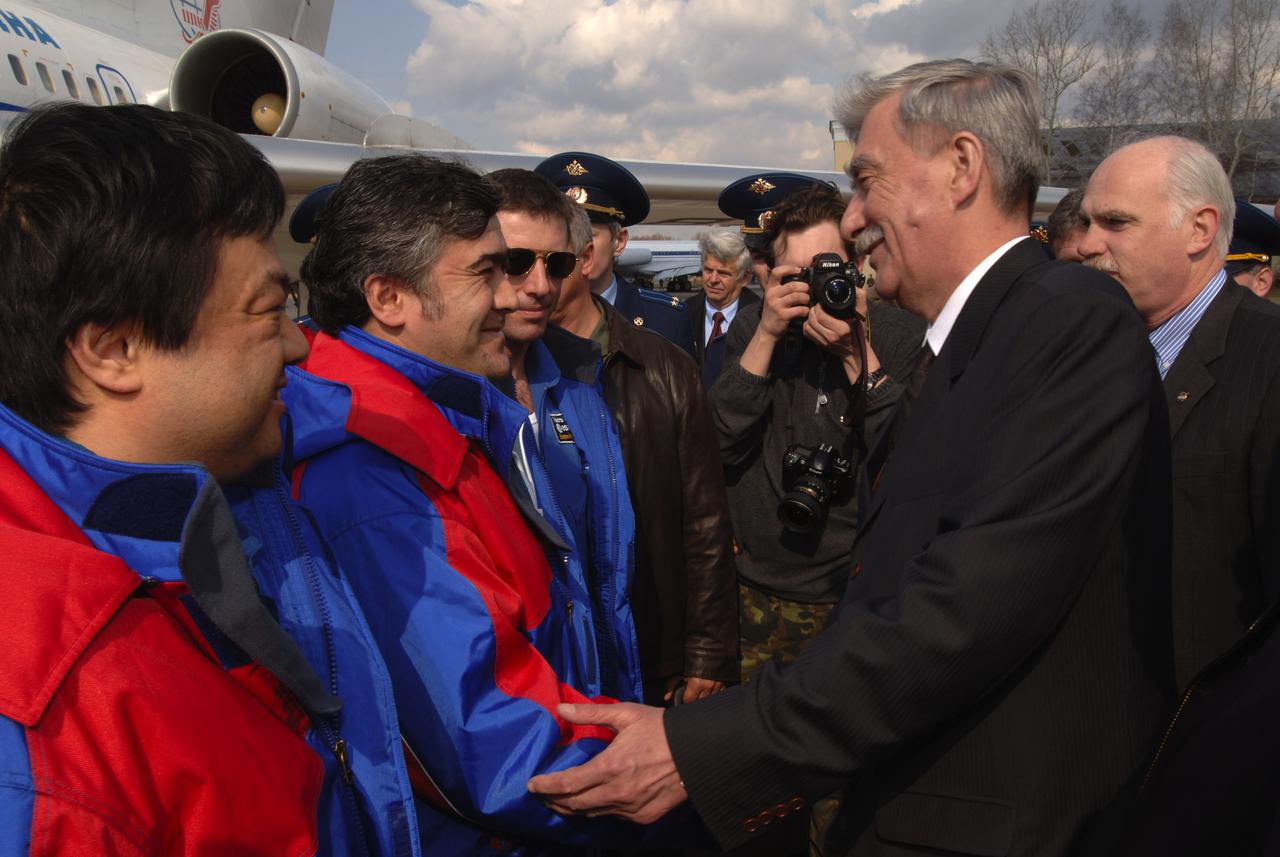
Expedition 10 Commander Leroy Chiao, far left, Flight Engineer Salizhan Sharipov and European Space Agency astronaut Roberto Vittori, third from left, are welcomed home by officials at Star City, Russia, Monday, April 25, 2005. The crew brought their Soyuz TMA-5 capsule to a pre-dawn landing April 25 northeast of the town of Arkalyk to wrap up a six-month mission aboard the International Space Station for Chiao and Sharipov, and a ten-day mission for Vittori, who flew under a commercial contract between ESA and the Russian Federal Space Agency. Photo Credit: (NASA/Bill Ingalls)
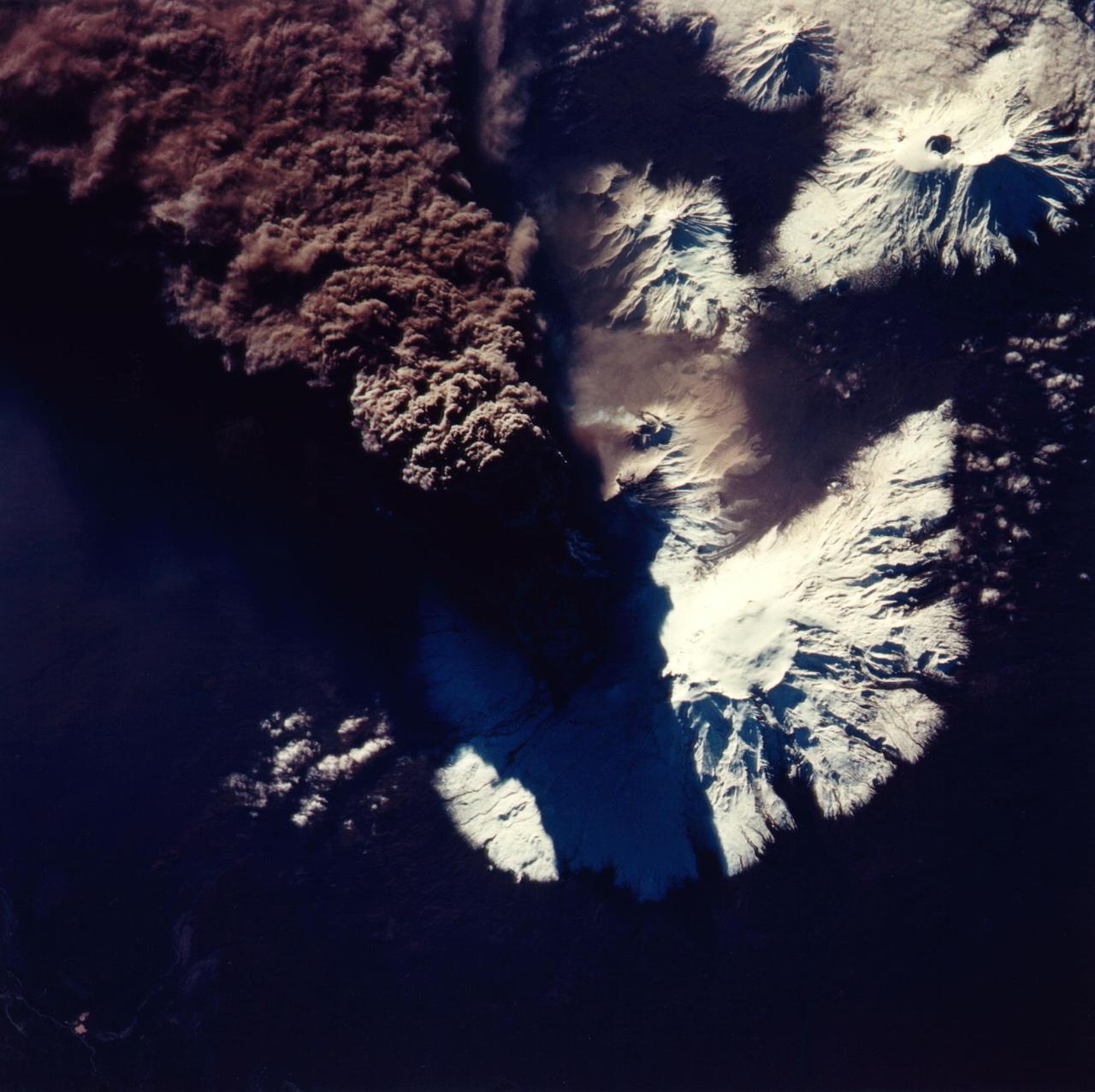
This photograph of the eruption of Kliuchevskoi volcano, Kamchatka, Russia was taken by space shuttle Endeavour astronauts during the early hours of the eruption on September 30, 1994. The ash plume, which reached heights of more than 18 kilometers (50,000 feet), is emerging from a vent on the north flank of Kliuchevskoi, partially hidden by the plume and its shadow in this view. The photograph is oriented with north toward the bottom, for comparison with the Spaceborne Imaging Radar C/X-Band Synthetic Aperture Radar (SIR-C/X-SAR) image (P-44823) that was acquired a few days later. Near the center of the photo, a small whitish steam plume may be seen emanating from the growing lava dome of a companion volcano, Bezymianny. http://photojournal.jpl.nasa.gov/catalog/PIA01766
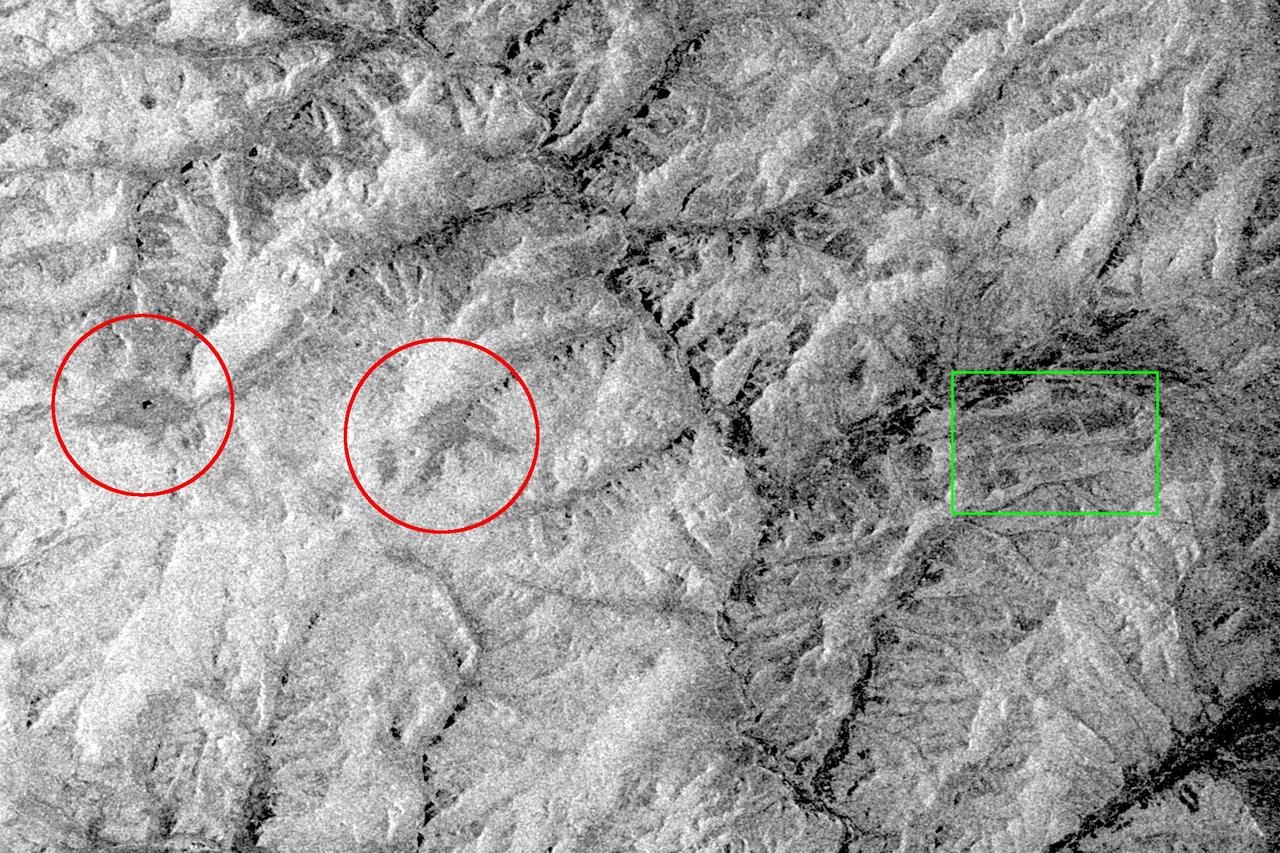
This is an X-band black-and-white image of the forests east of the Baikal Forest in the Jablonowy Mountains of Russia. The image is centered at 52.5 degrees north latitude and 116 degrees east longitude near the mining town of Bukatschatscha. This image was acquired by the Spaceborne Imaging Radar-C/X-band Synthetic Aperture Radar aboard the space shuttle Endeavour on October 4, 1994, during the second flight of the spaceborne radar. This area is part of an international research project known as the Taiga Aerospace Investigation using Geographic Information System Applications. http://photojournal.jpl.nasa.gov/catalog/PIA01754