STS-134 S-Band Support Assembly (SASA) Lift to ELC-3
STS-134 S-Band Support Assembly (SASA) Lift to ELC-3
STS-134 S-Band Support Assembly (SASA) Lift to ELC-3
STS-134 S-Band Support Assembly (SASA) Lift to ELC-3
STS-134 S-Band Support Assembly (SASA) Lift to ELC-3
STS-134 S-Band Support Assembly (SASA) Lift to ELC-3
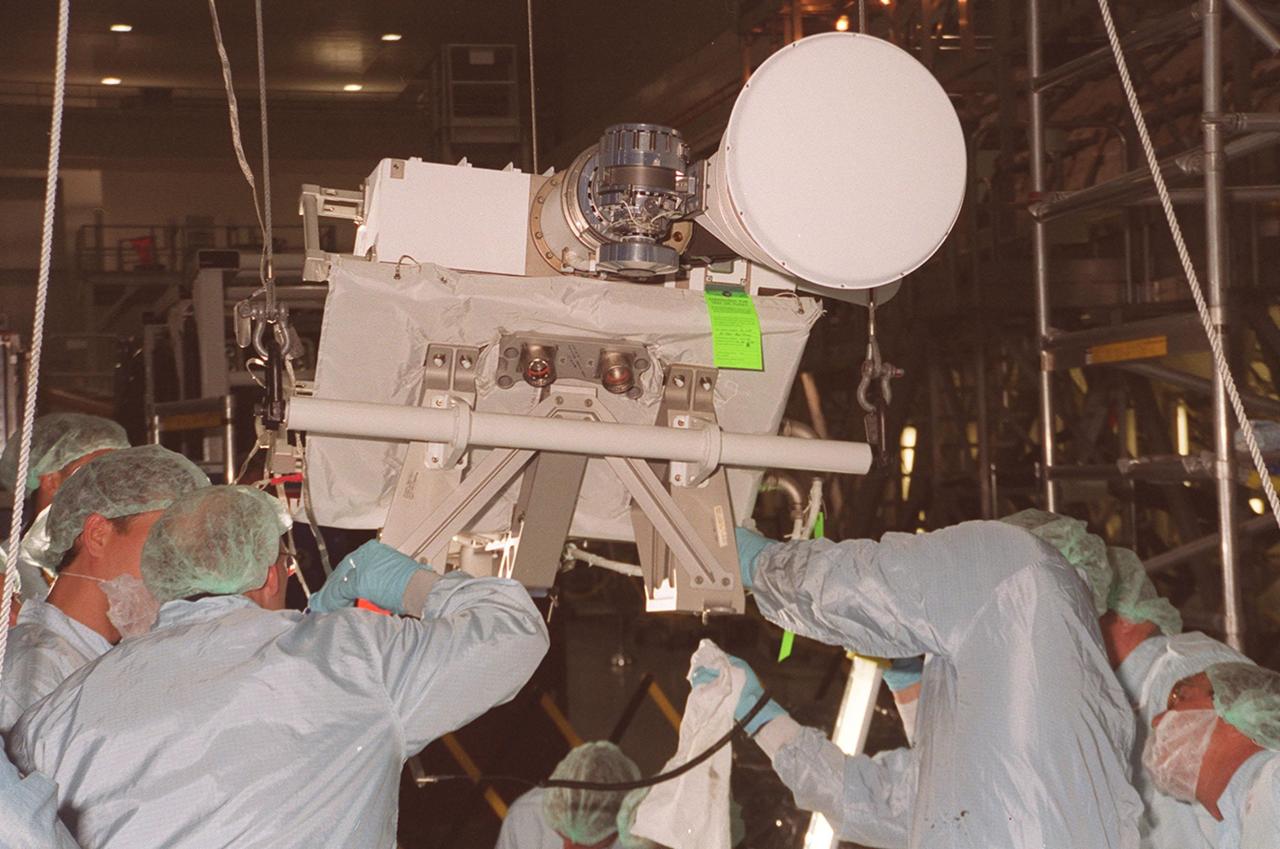
In the Space Station Processing Facility, workers prepare an S-band Antenna Support Assembly (SASA) to be lifted and moved to the Integrated Truss Structure (ITS) Z1, an element of the International Space Station. The antenna will be attached to the truss. The SASA antenna is primarily for local communications between the orbiter and Space Station. The Z1 is an early exterior framework to allow the first U.S. solar arrays, on mission STS-97, flight 4A, to be temporarily installed on Unity for early power. The Z1 is scheduled on mission STS-92, the fifth flight to the Space Station, in the fall
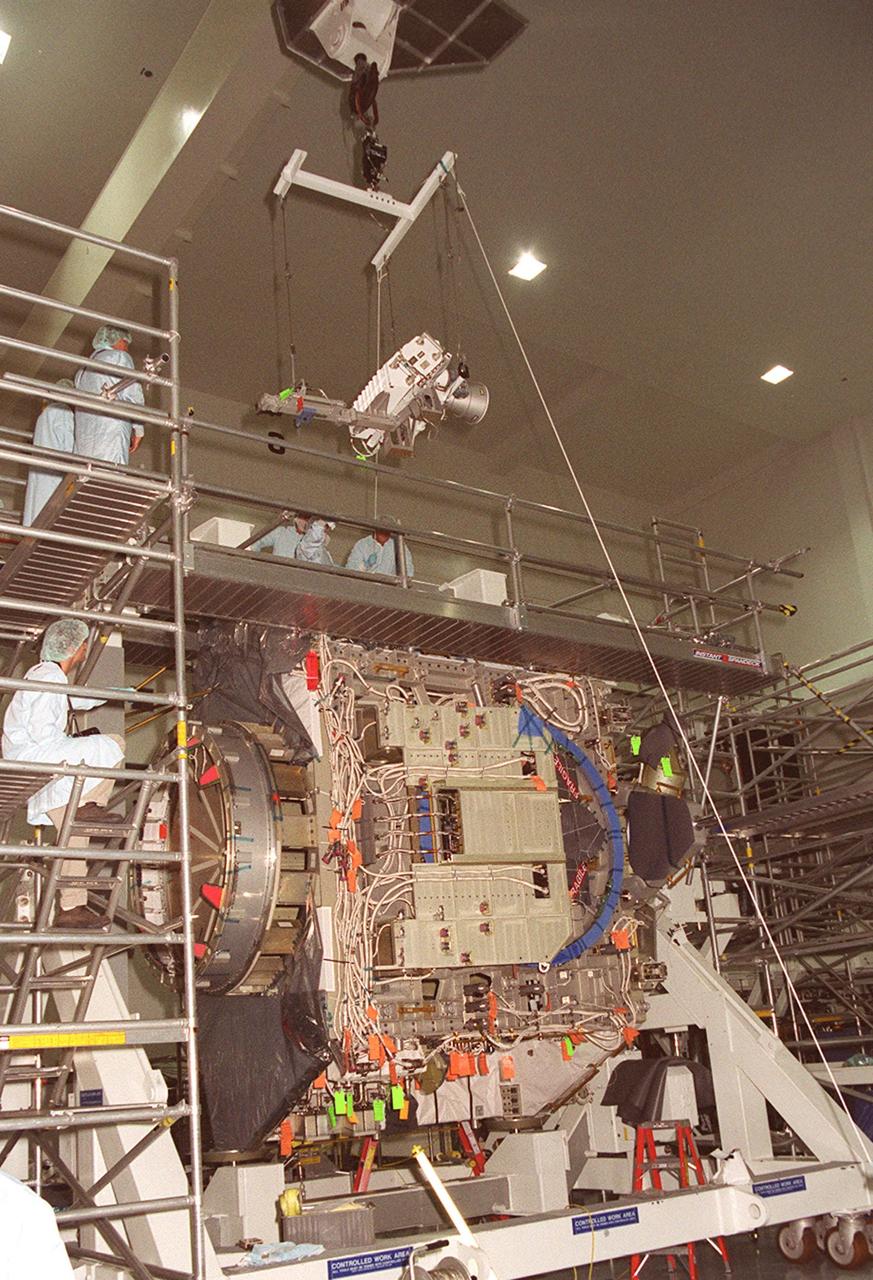
An S-band Antenna Support Assembly (SASA) is suspended from an overhead crane in the Space Station Processing Facility. It will be attached to the Integrated Truss Structure (ITS) Z1, an element of the International Space Station, sitting below. The SASA is primarily for local communications between the orbiter and Space Station. The Z1 is an early exterior framework to allow the first U.S. solar arrays, on mission STS-97, flight 4A, to be temporarily installed on Unity for early power. The Z1 is scheduled on mission STS-92, the fifth flight to the Space Station, in the fall
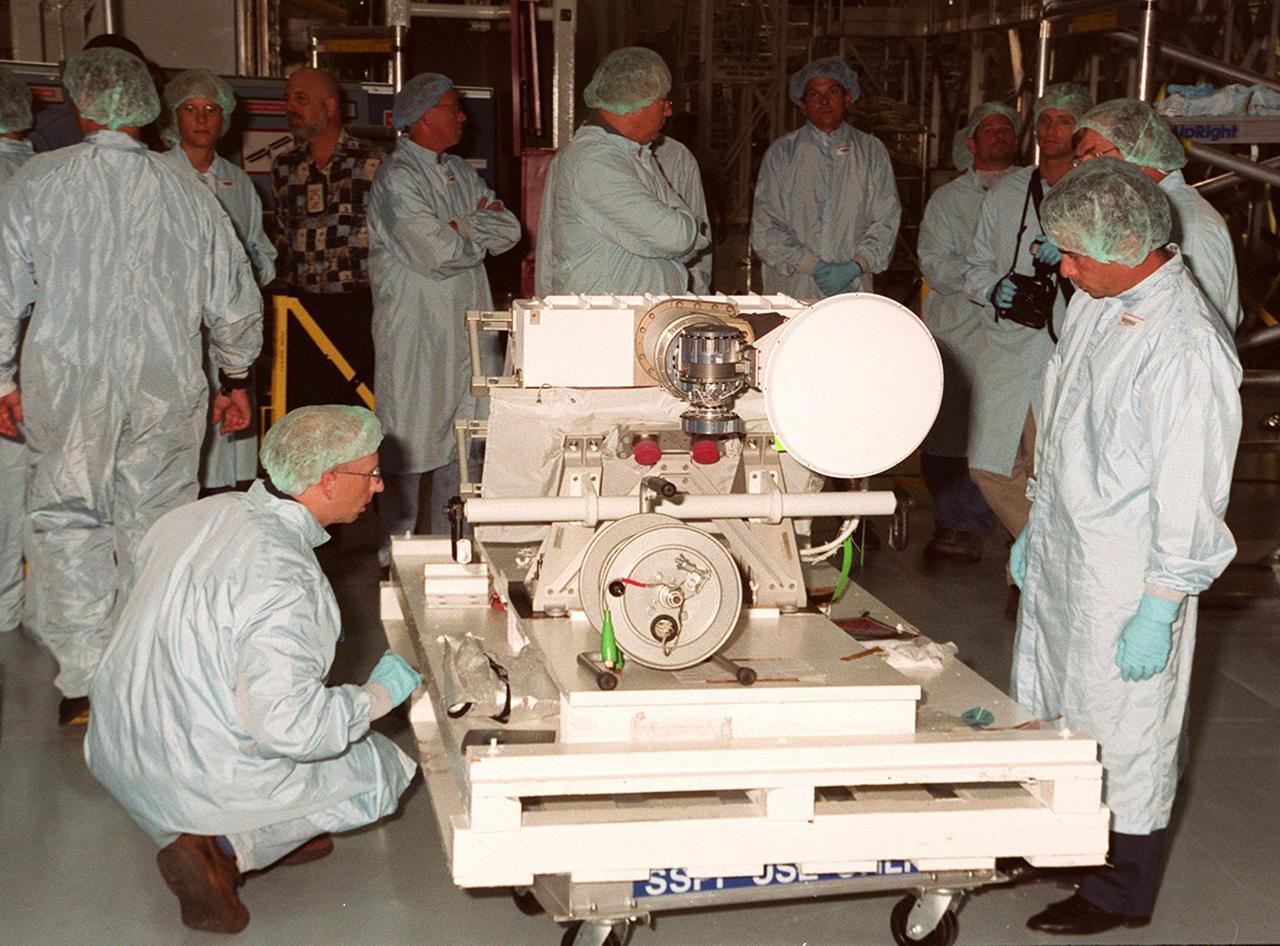
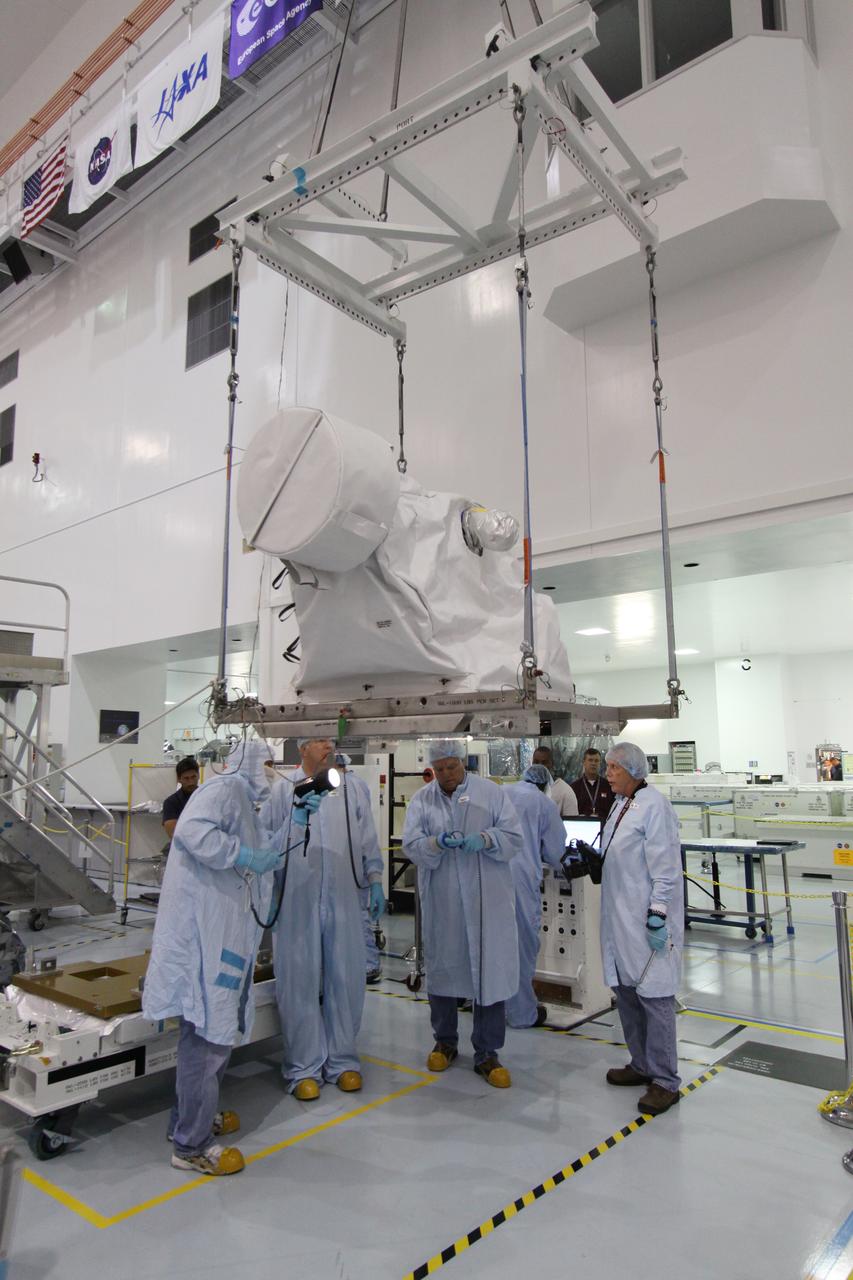
Workers in the Space Station Processing Facility look over an S-band Antenna Support Assembly (SASA) that will be attached to the Integrated Truss Structure (ITS) Z1 on the International Space Station. The SASA antenna is primarily for local communications between the orbiter and Space Station. The Z1 is an early exterior framework to allow the first U.S. solar arrays, on mission STS-97, flight 4A, to be temporarily installed on Unity for early power. The Z1 is scheduled on mission STS-92, the fifth flight to the Space Station, in the fall
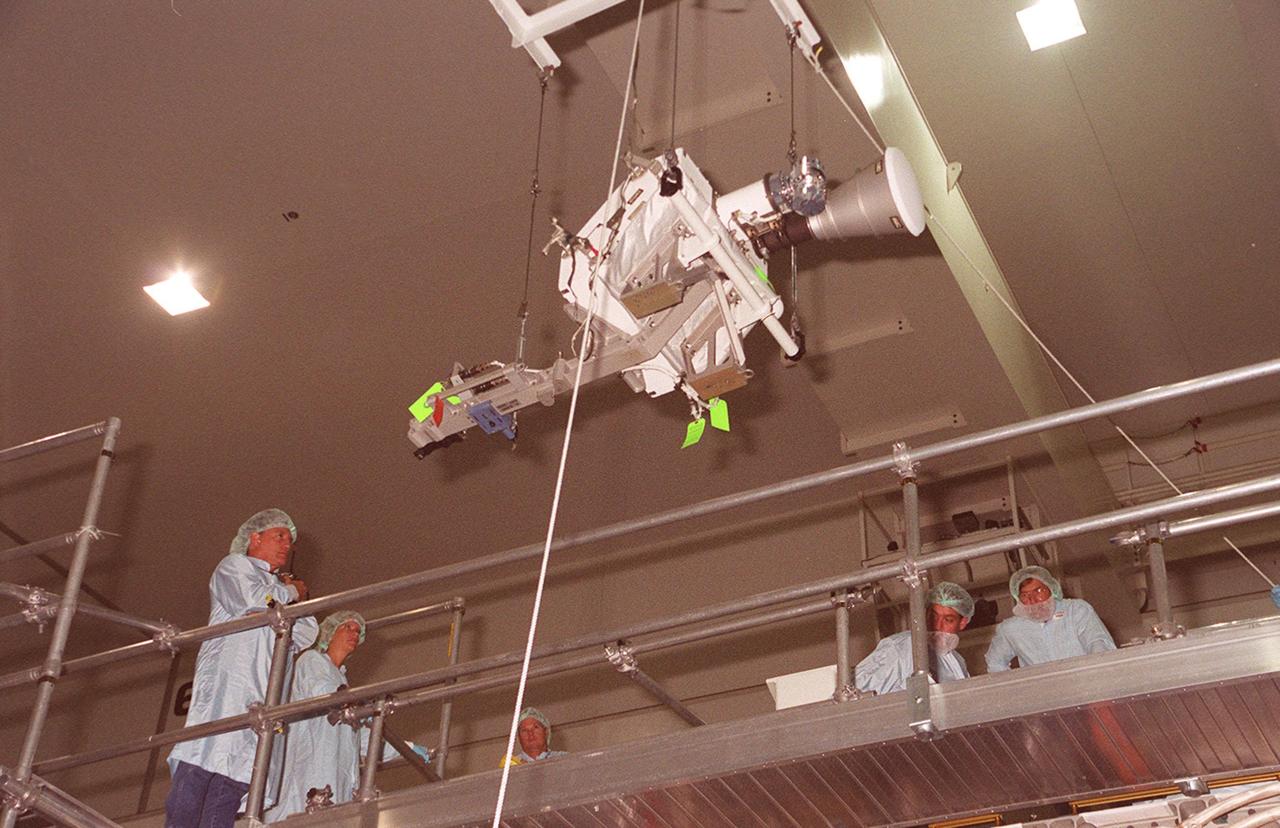
An overhead crane in the Space Station Processing Facility moves an S-band Antenna Support Assembly (SASA) to the Integrated Truss Structure (ITS) Z1, an element of the International Space Station. . The antenna will be attached to the truss. The SASA antenna is primarily for local communications between the orbiter and Space Station. The Z1 is an early exterior framework to allow the first U.S. solar arrays, on mission STS-97, flight 4A, to be temporarily installed on Unity for early power. The Z1 is scheduled on mission STS-92, the fifth flight to the Space Station, in the fall

On a workstand in the Space Station Processing Facility, workers release the S-band Antenna Support Assembly (SASA) from an overhead crane. The SASA will be attached to the Integrated Truss Structure (ITS) Z1, an element of the International Space Station, sitting below. The antenna is primarily for local communications between the orbiter and Space Station. The Z1 is an early exterior framework to allow the first U.S. solar arrays, on mission STS-97, flight 4A, to be temporarily installed on Unity for early power. The Z1 is scheduled on mission STS-92, the fifth flight to the Space Station, in the fall
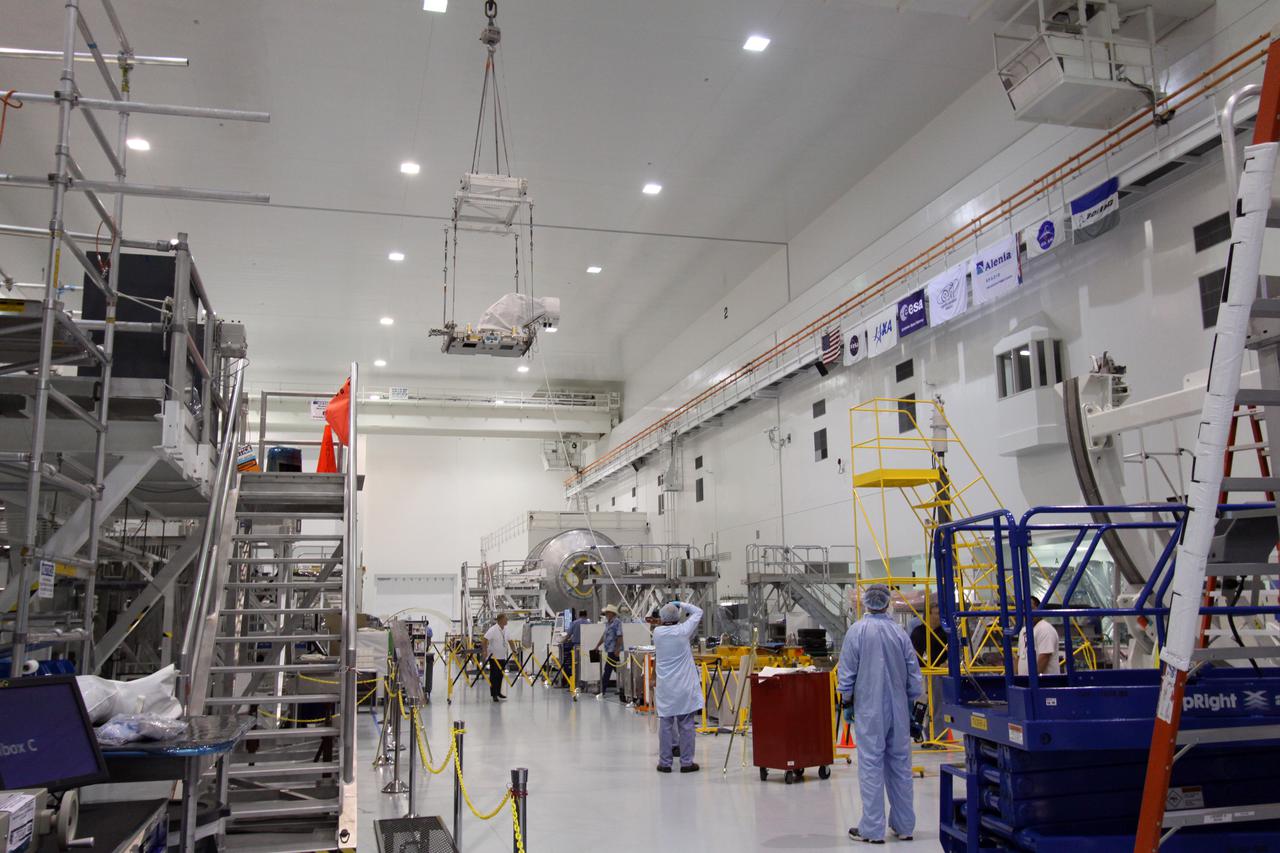
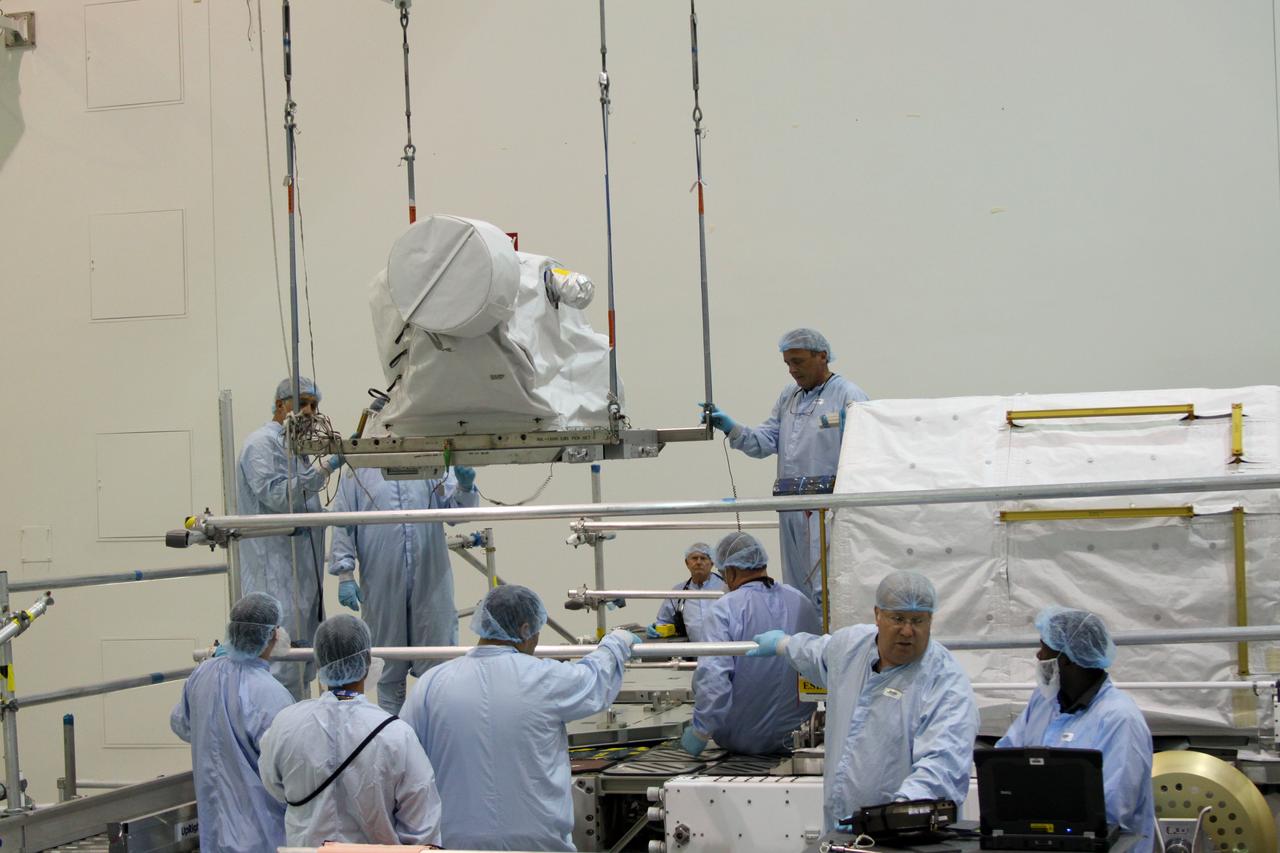
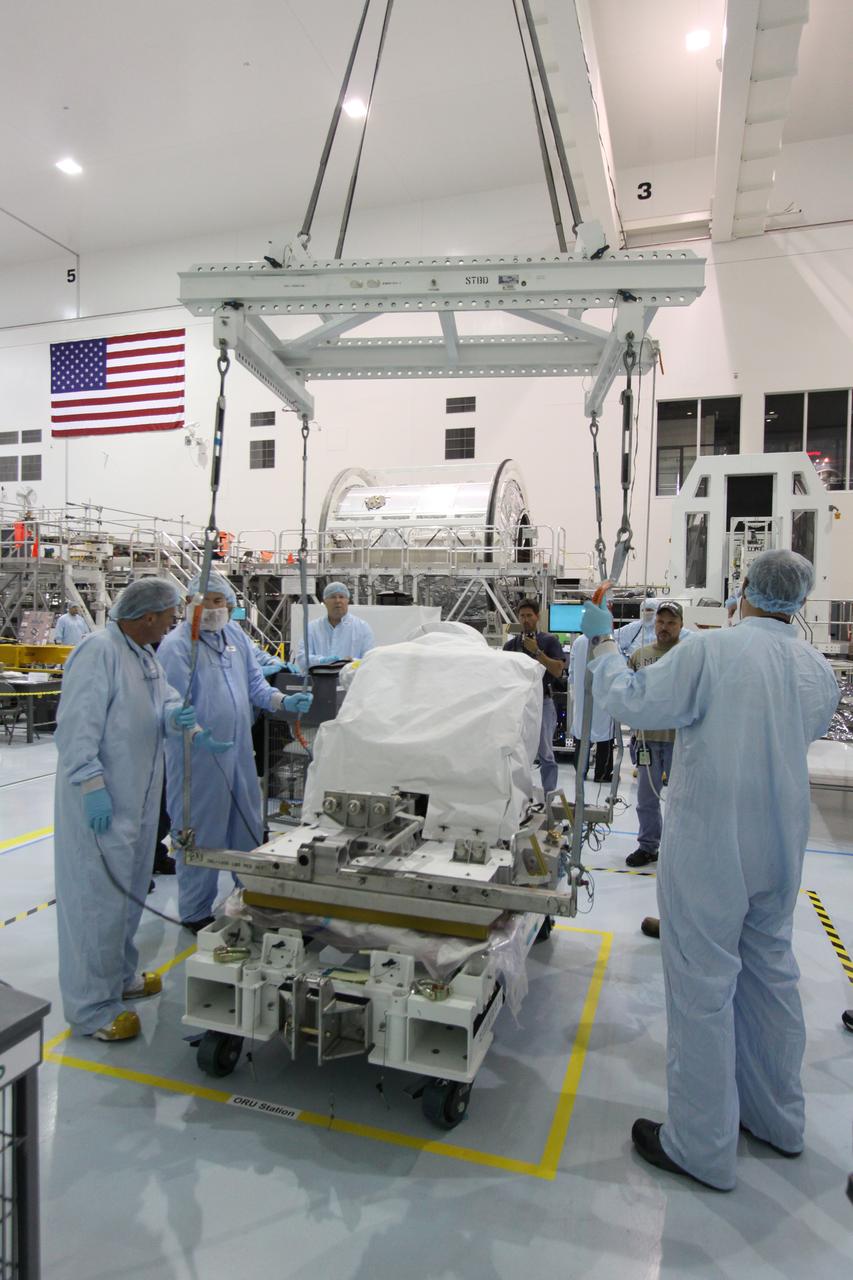
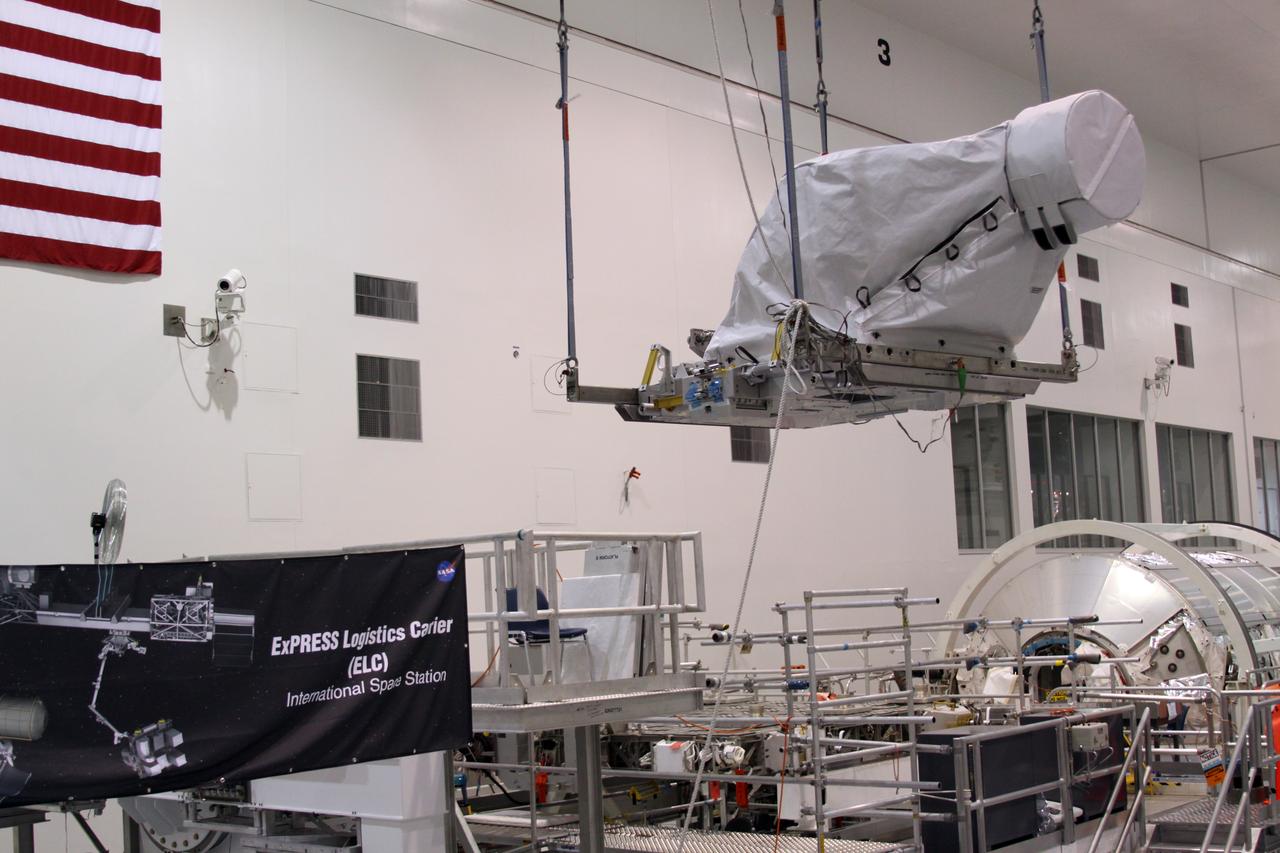
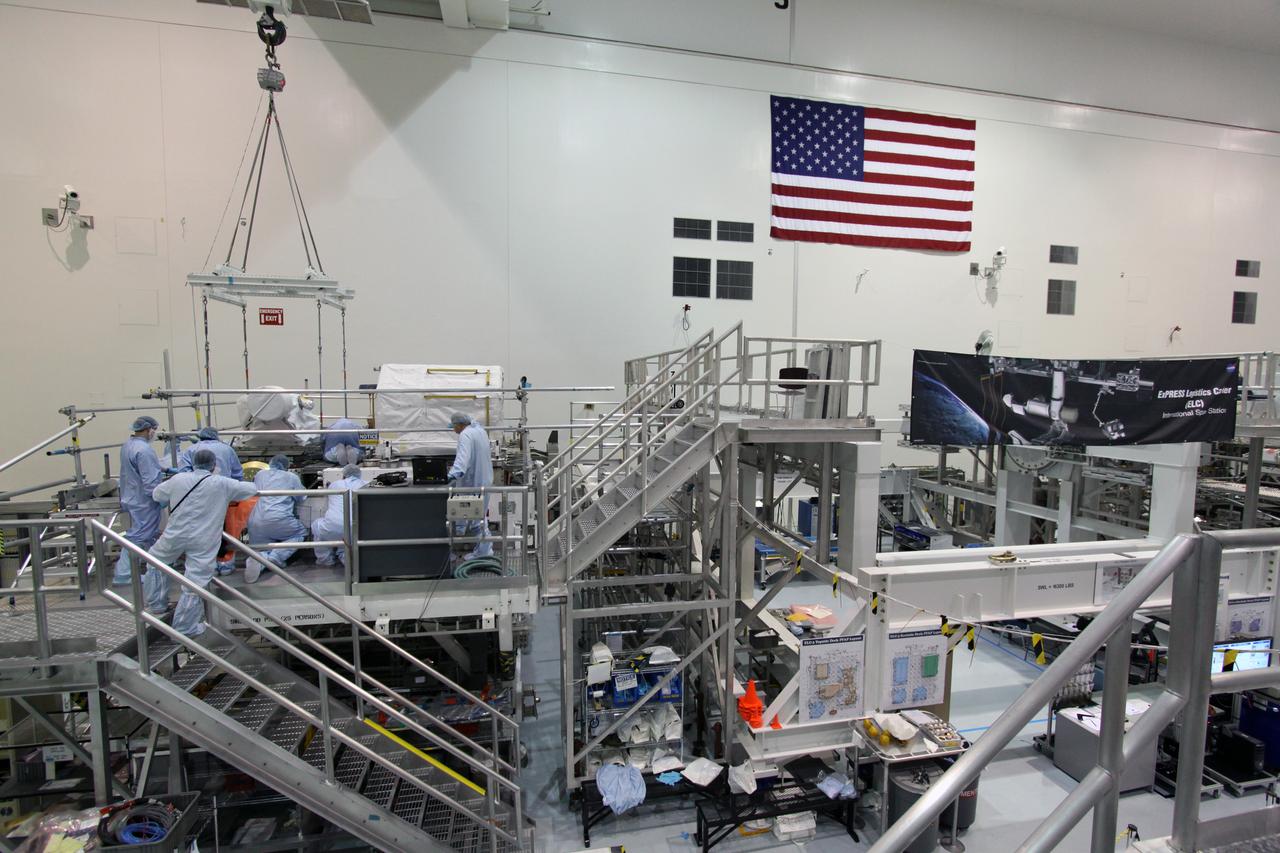
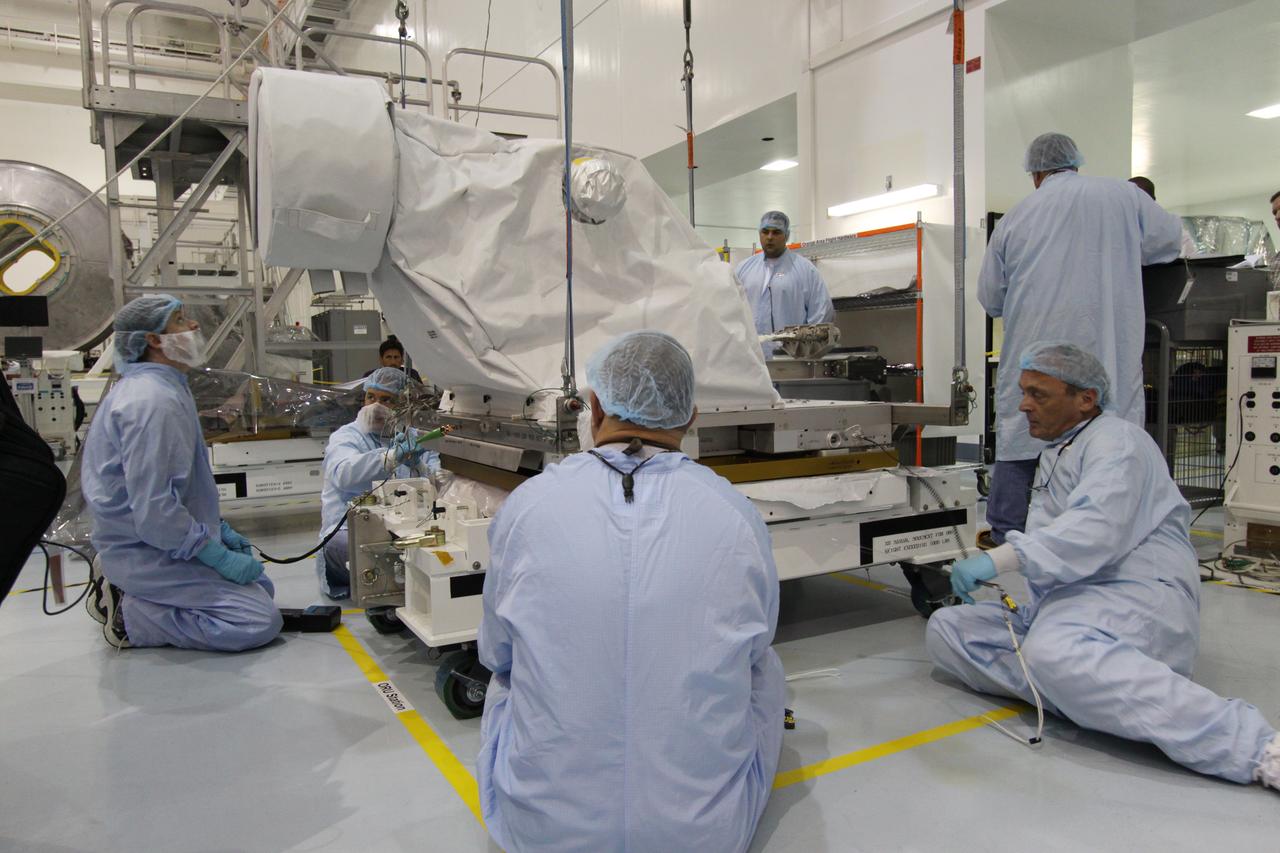
CAPE CANAVERAL, Fla. -- At NASA's Kennedy Space Center in Florida, technicians begin to lift the new S-band antenna support assembly for installation on ExPRESS Logistics Carrier-3 in the Space Station Processing Facility. The assembly will be used aboard the International Space Station to transmit and receive audio communications, and is being installed for the STS-134 mission. Space shuttle Endeavour will take up other spare parts, including a high-pressure gas tank, micrometeoroid debris shields and replacement parts for Dextre, the robotic arm on the station. STS-134, the last planned shuttle mission, is targeted to launch in the fall of 2010. For information on the upcoming mission and crew, visit www.nasa.gov_mission_pages_shuttle_shuttlemissions_sts134_index.html. NASA_Jack Pfaller