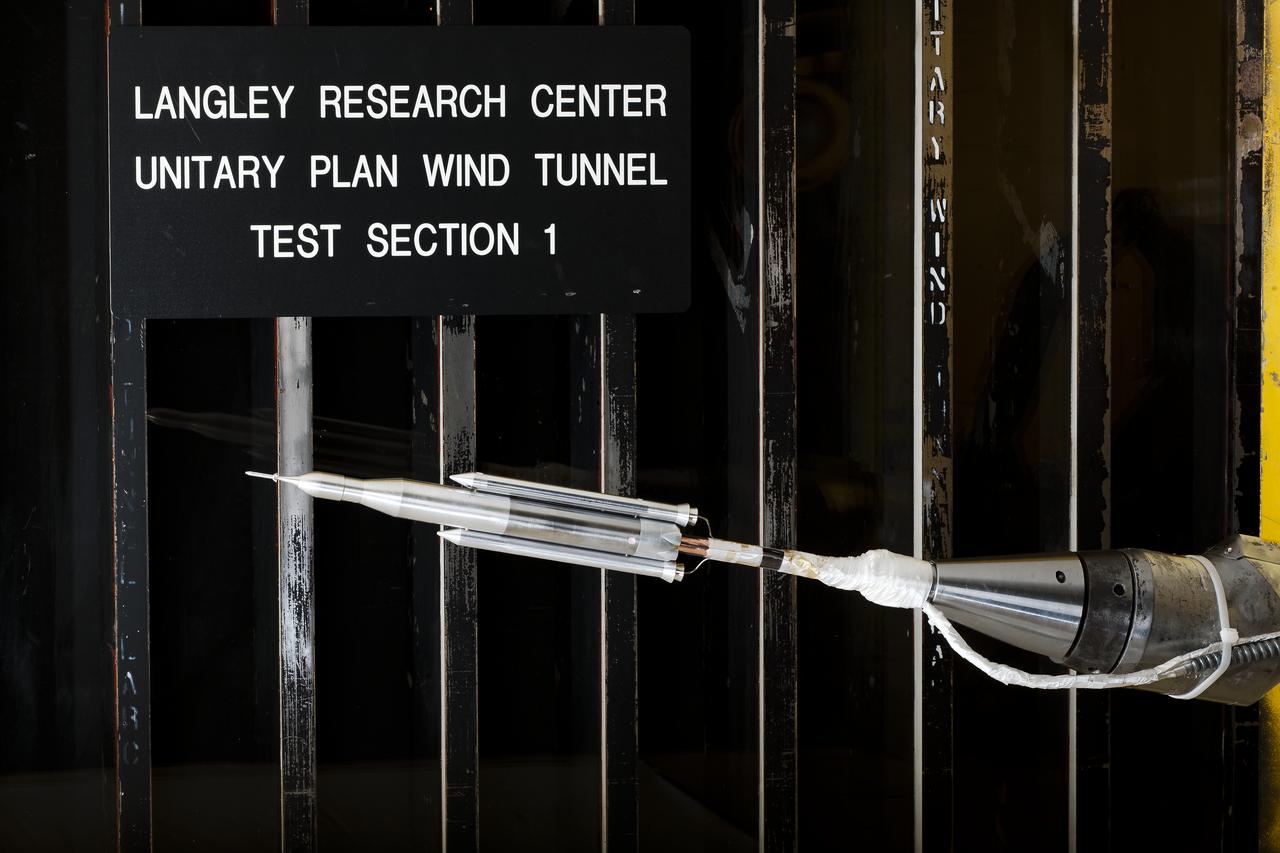
0.4 Percent Scale Space Launch System Wind Tunnel Test 0.4 Percent Scale SLS model installed in the NASA Langley Research Center Unitary Plan Wind Tunnel Test Section 1 for aerodynamic force and movement testing.
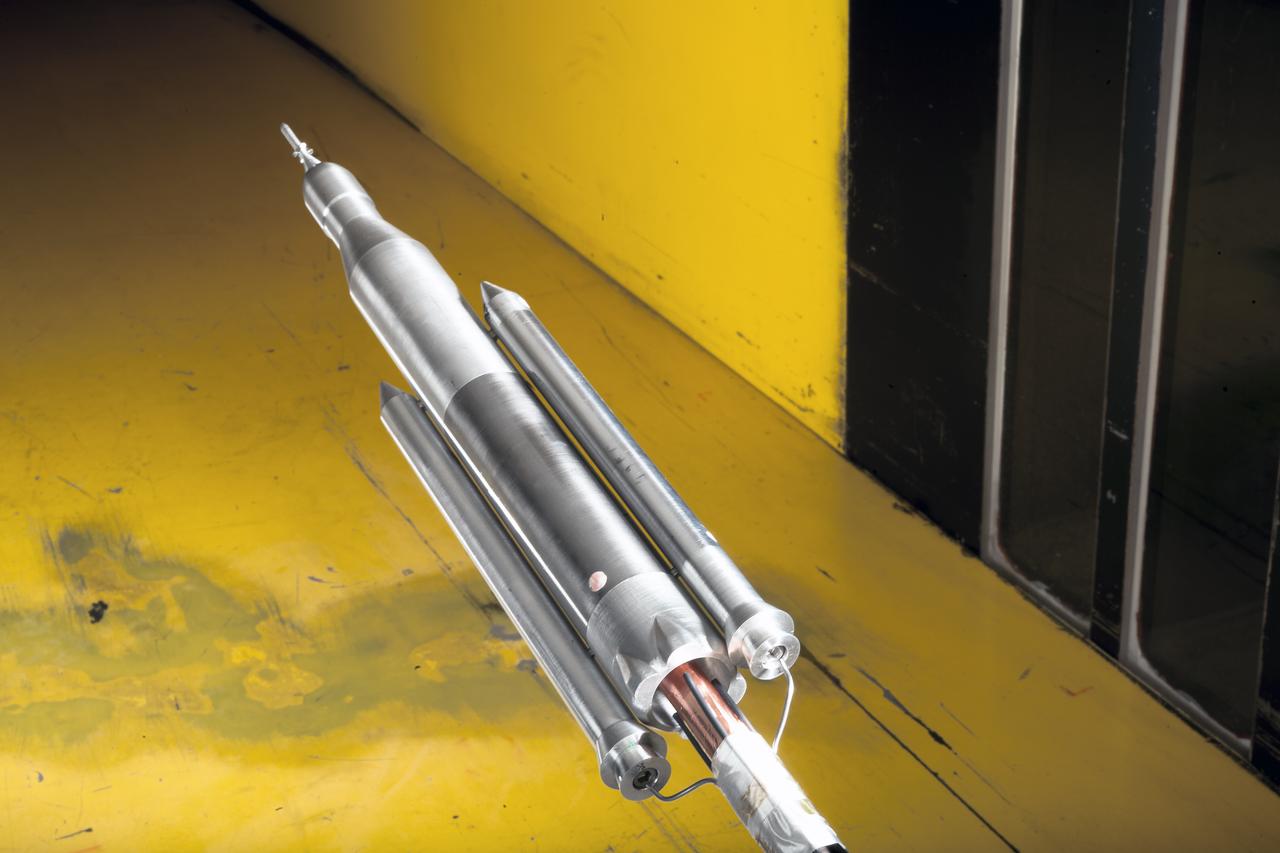
0.4 Percent Scale Space Launch System Wind Tunnel Test 0.4 Percent Scale SLS model installed in the NASA Langley Research Center Unitary Plan Wind Tunnel Test Section 1 for aerodynamic force and movement testing.
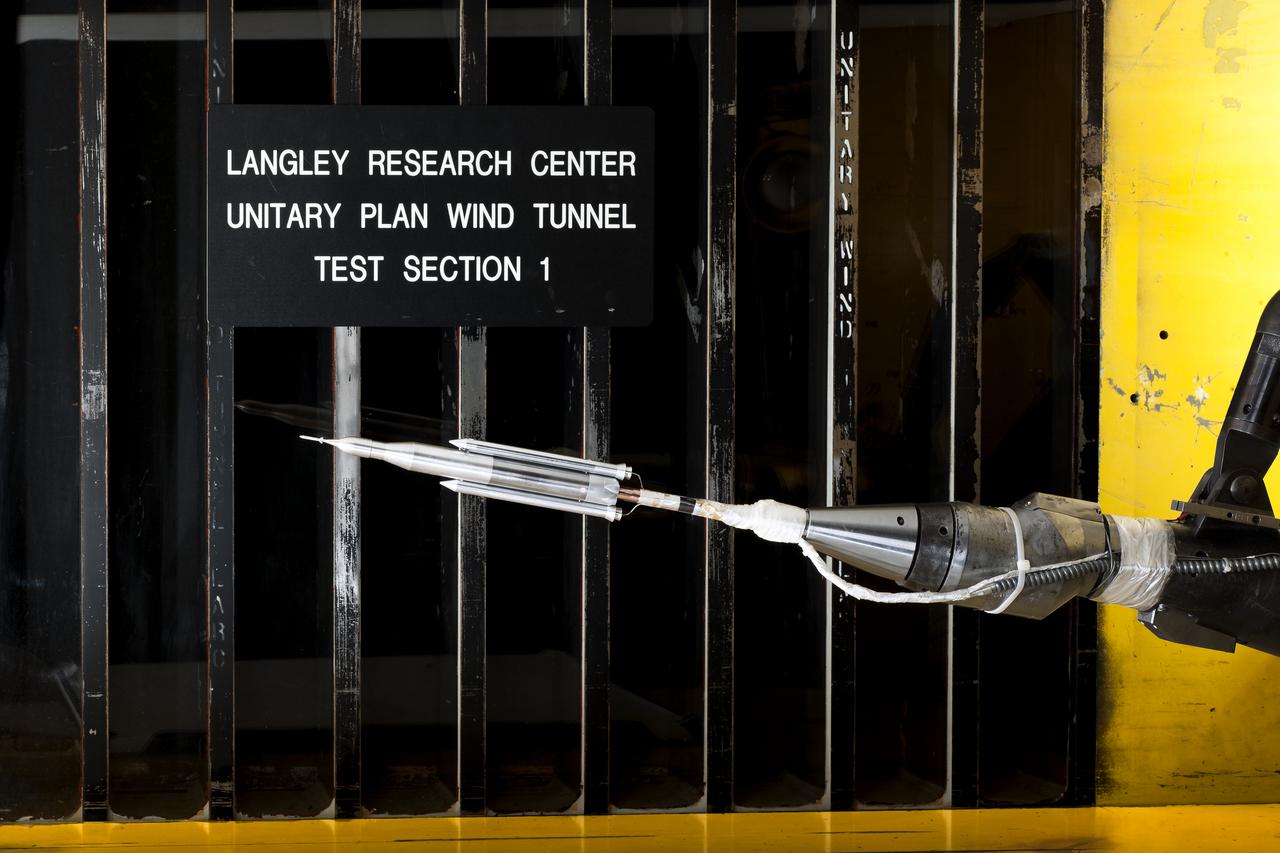
0.4 Percent Scale Space Launch System Wind Tunnel Test 0.4 Percent Scale SLS model installed in the NASA Langley Research Center Unitary Plan Wind Tunnel Test Section 1 for aerodynamic force and movement testing.
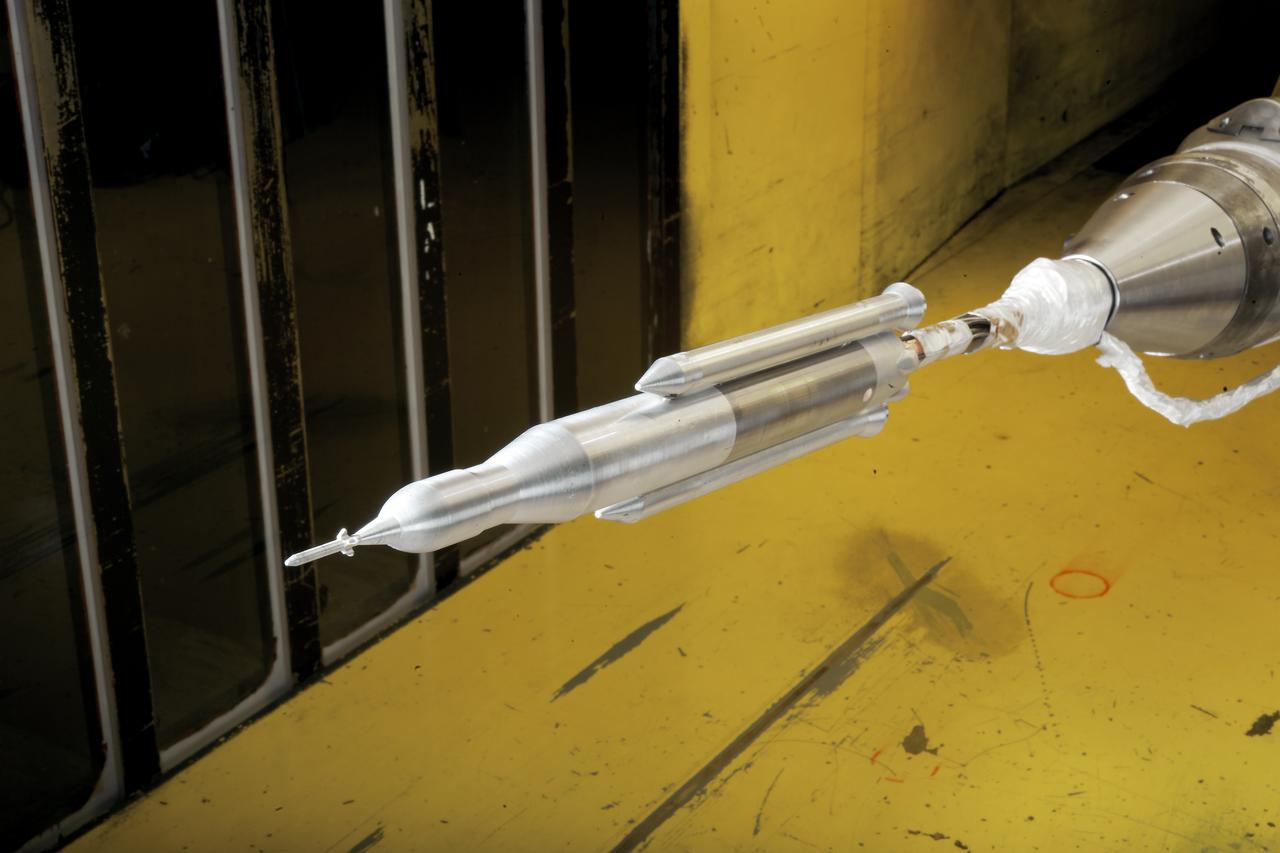
0.4 Percent Scale Space Launch System Wind Tunnel Test 0.4 Percent Scale SLS model installed in the NASA Langley Research Center Unitary Plan Wind Tunnel Test Section 1 for aerodynamic force and movement testing.
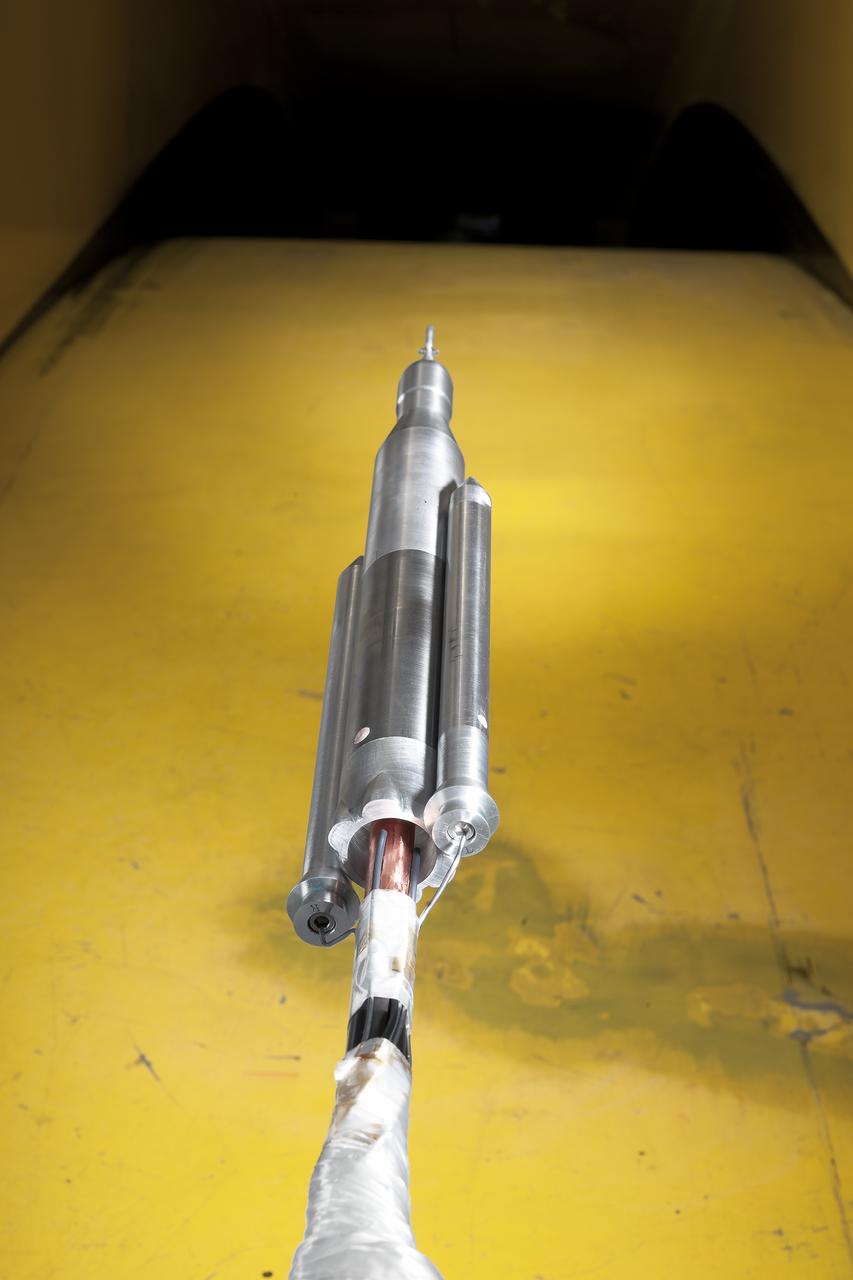
0.4 Percent Scale Space Launch System Wind Tunnel Test 0.4 Percent Scale SLS model installed in the NASA Langley Research Center Unitary Plan Wind Tunnel Test Section 1 for aerodynamic force and movement testing.
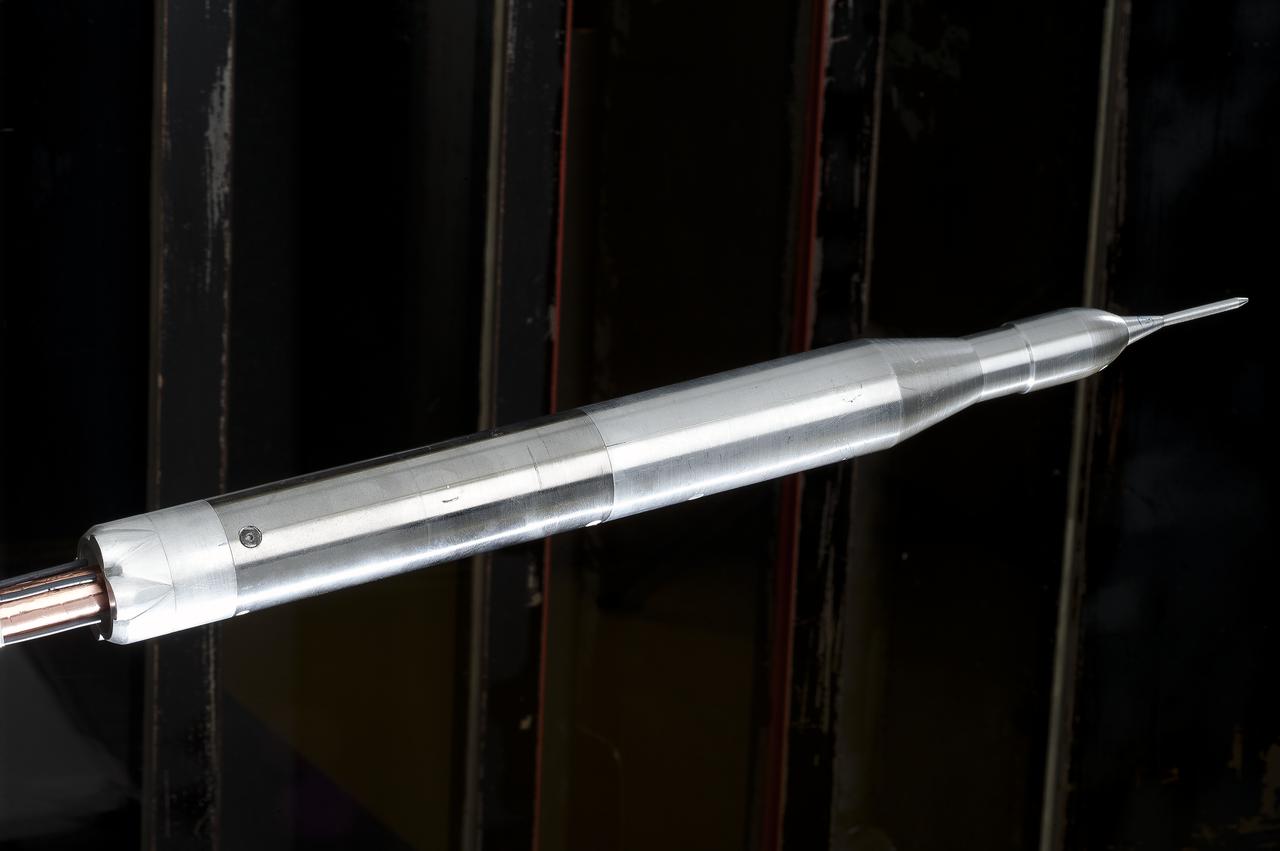
0.4% Scale (SLS) Space Launch System Model Test In NASA LaRC Unitary Plan Wind Tunnel
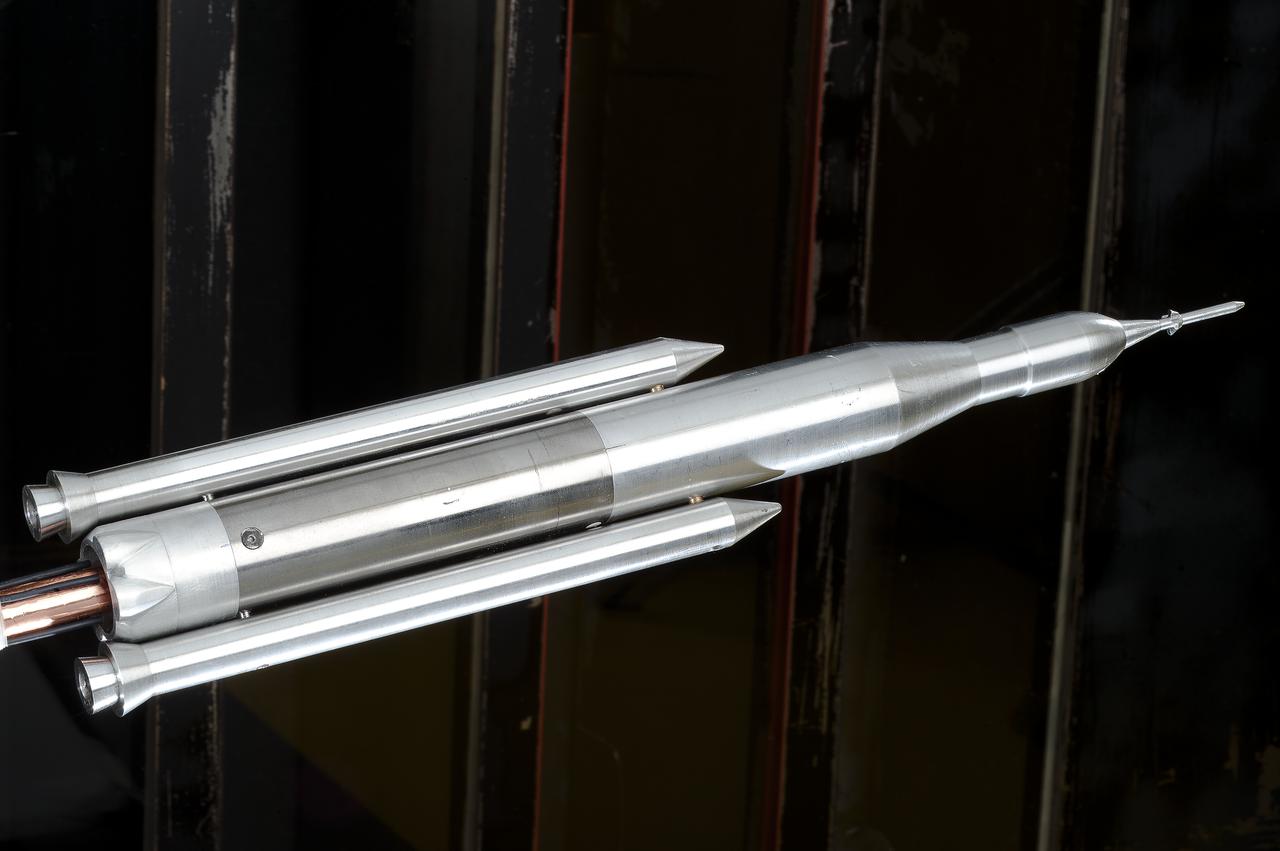
0.4% Scale (SLS) Space Launch System Model Test In NASA LaRC Unitary Plan Wind Tunnel
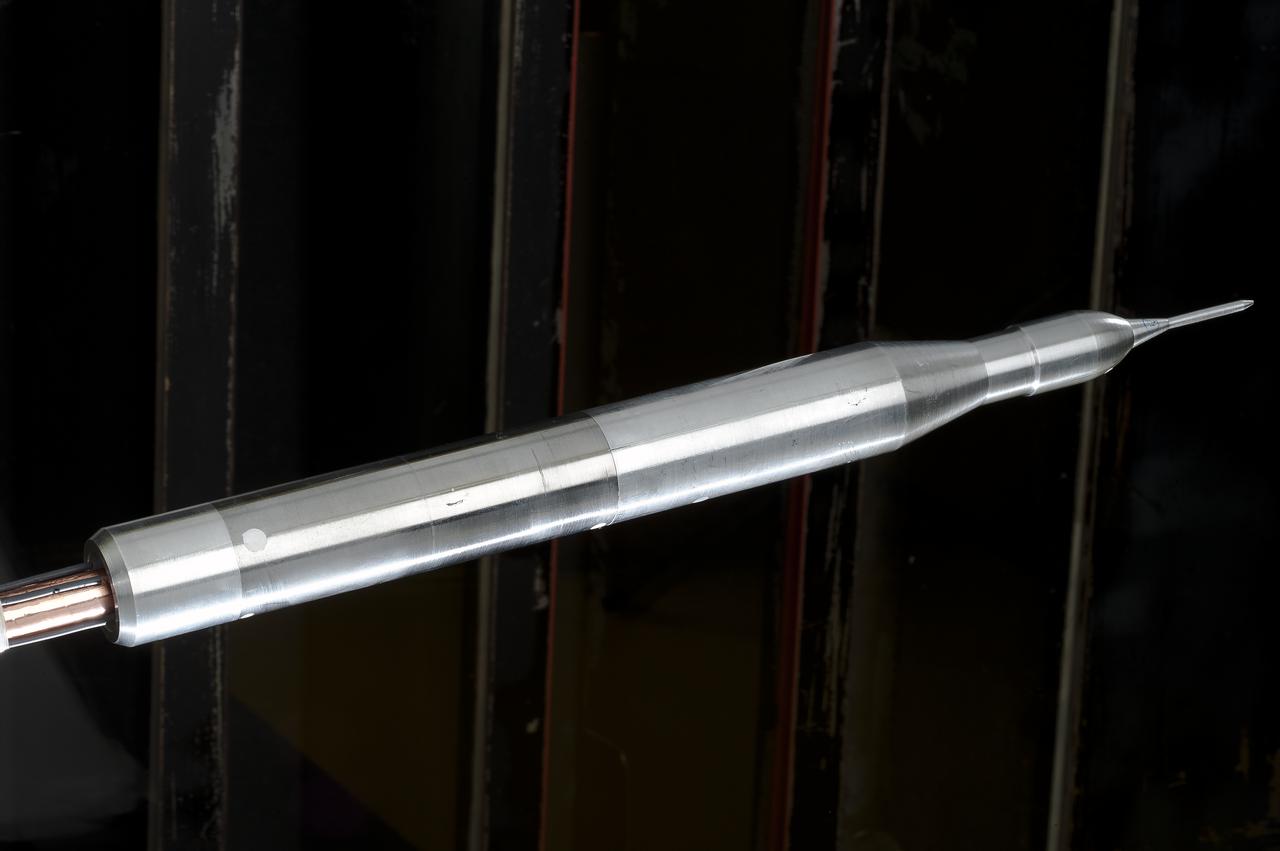
0.4% Scale (SLS) Space Launch System Model Test In NASA LaRC Unitary Plan Wind Tunnel
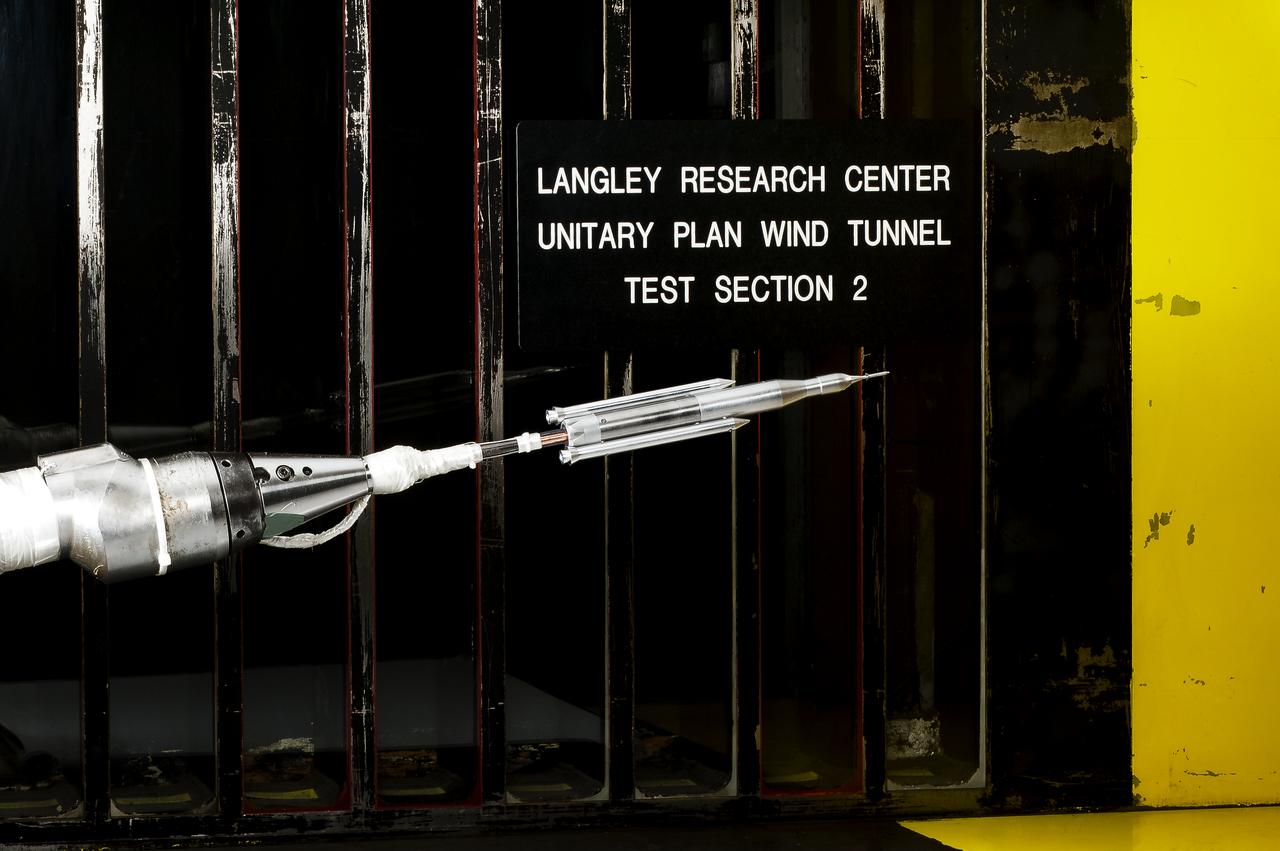
0.4% Scale (SLS) Space Launch System Model Test In NASA LaRC Unitary Plan Wind Tunnel
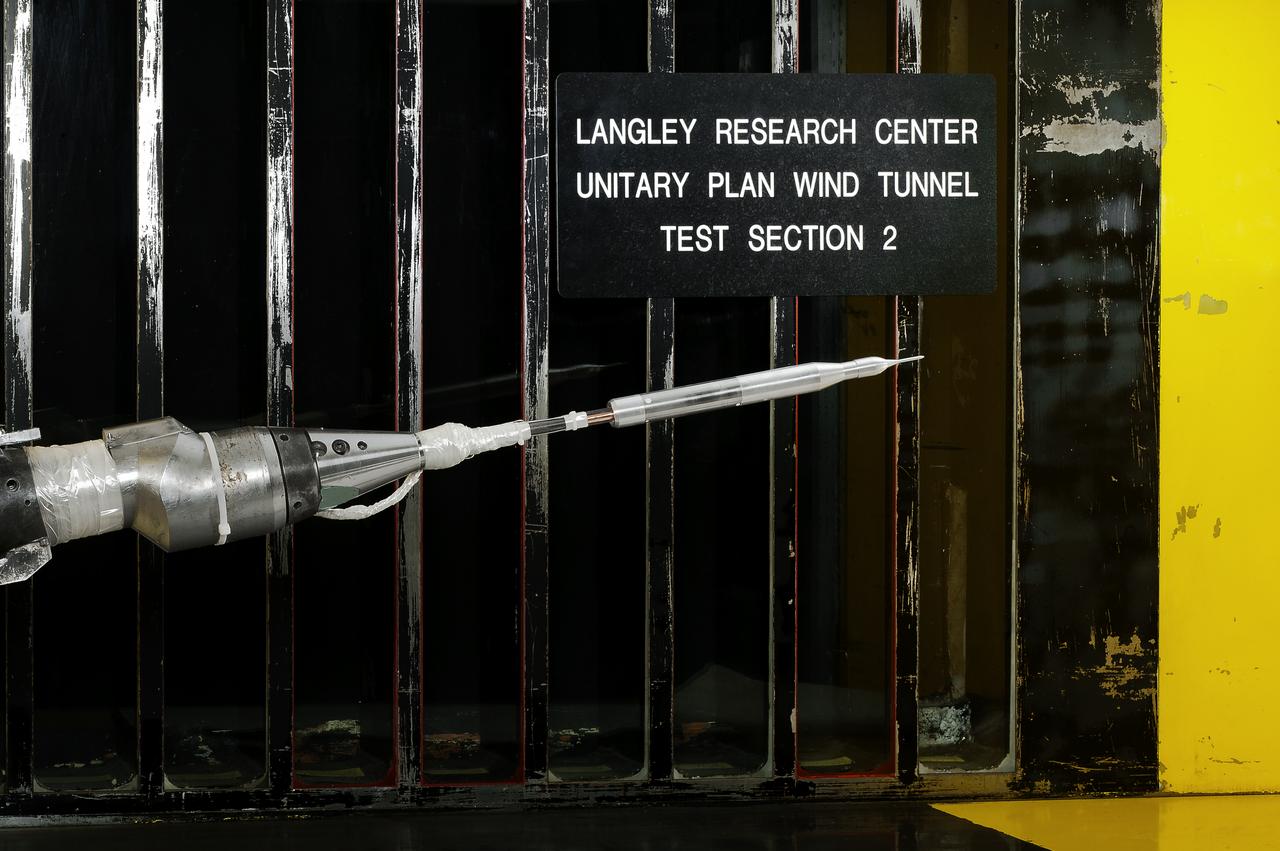
0.4% Scale (SLS) Space Launch System Model Test In NASA LaRC Unitary Plan Wind Tunnel
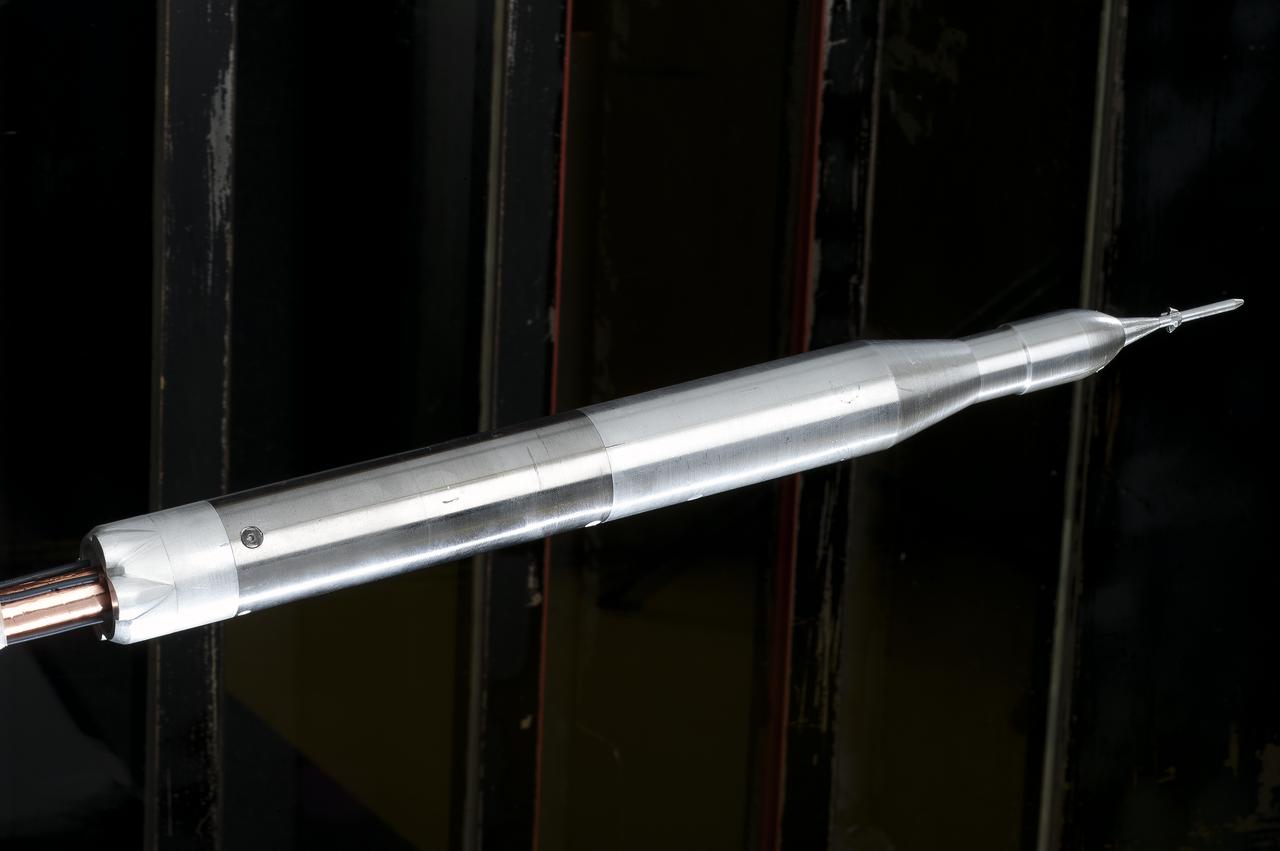
0.4% Scale (SLS) Space Launch System Model Test In NASA LaRC Unitary Plan Wind Tunnel
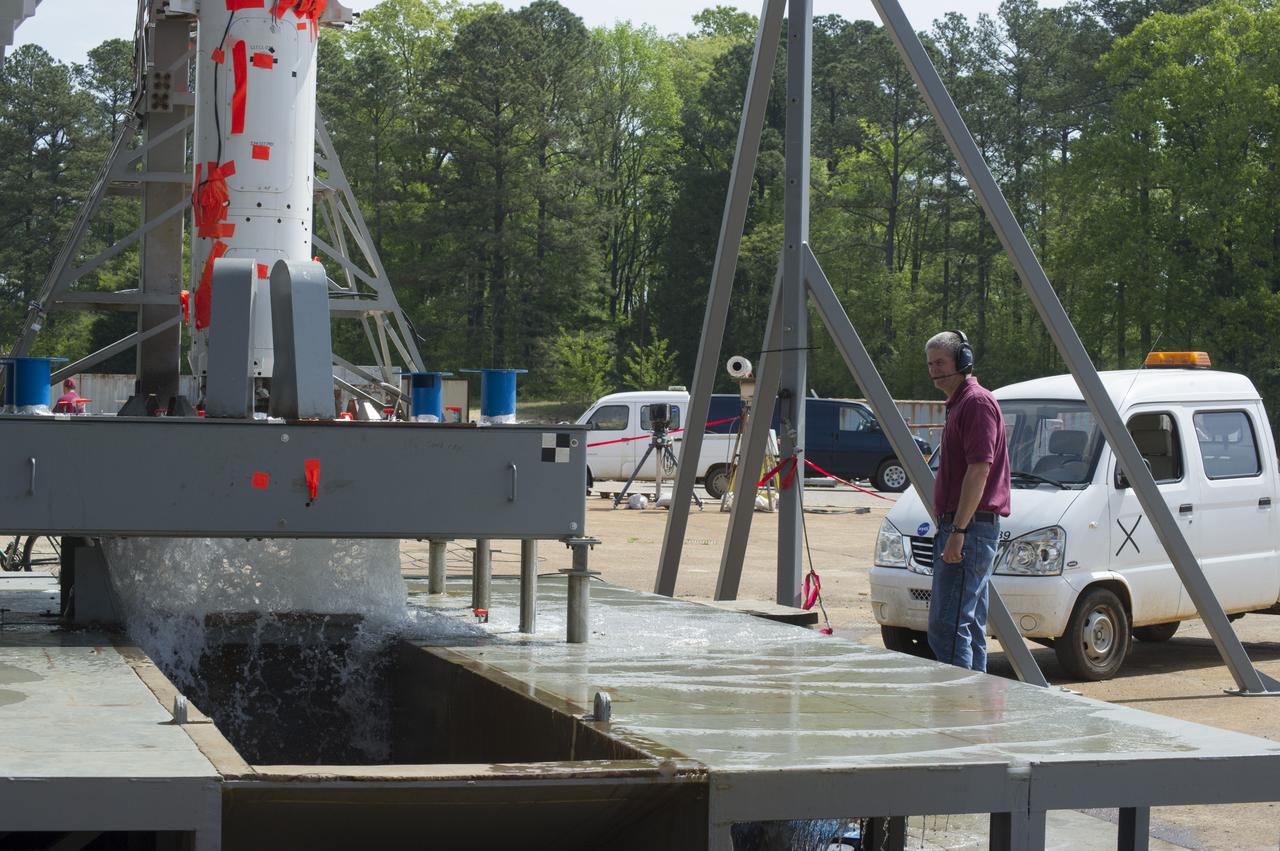
TEST ENGINEER DENNIS STRICKLAND CONDUCTS WATER FLOW TESTS AT TEST STAND 116 FOR SPACE LAUNCH SYSTEM SCALE MODEL ACOUSTIC TEST SERIES (WITH SOLID ROCKET BOOSTERS)
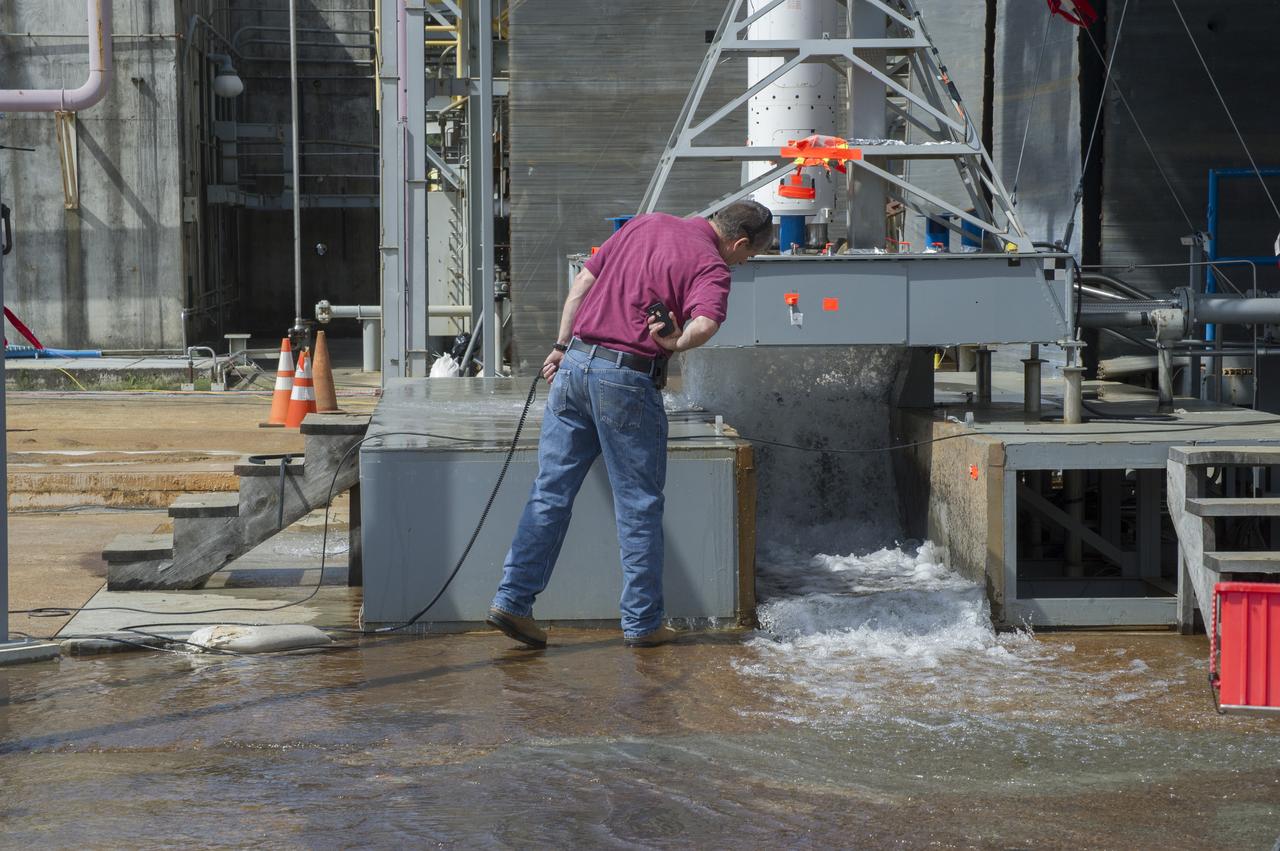
TEST ENGINEER DENNIS STRICKLAND CONDUCTS WATER FLOW TESTS AT TEST STAND 116 FOR SPACE LAUNCH SYSTEM SCALE MODEL ACOUSTIC TEST SERIES (WITH SOLID ROCKET BOOSTERS)
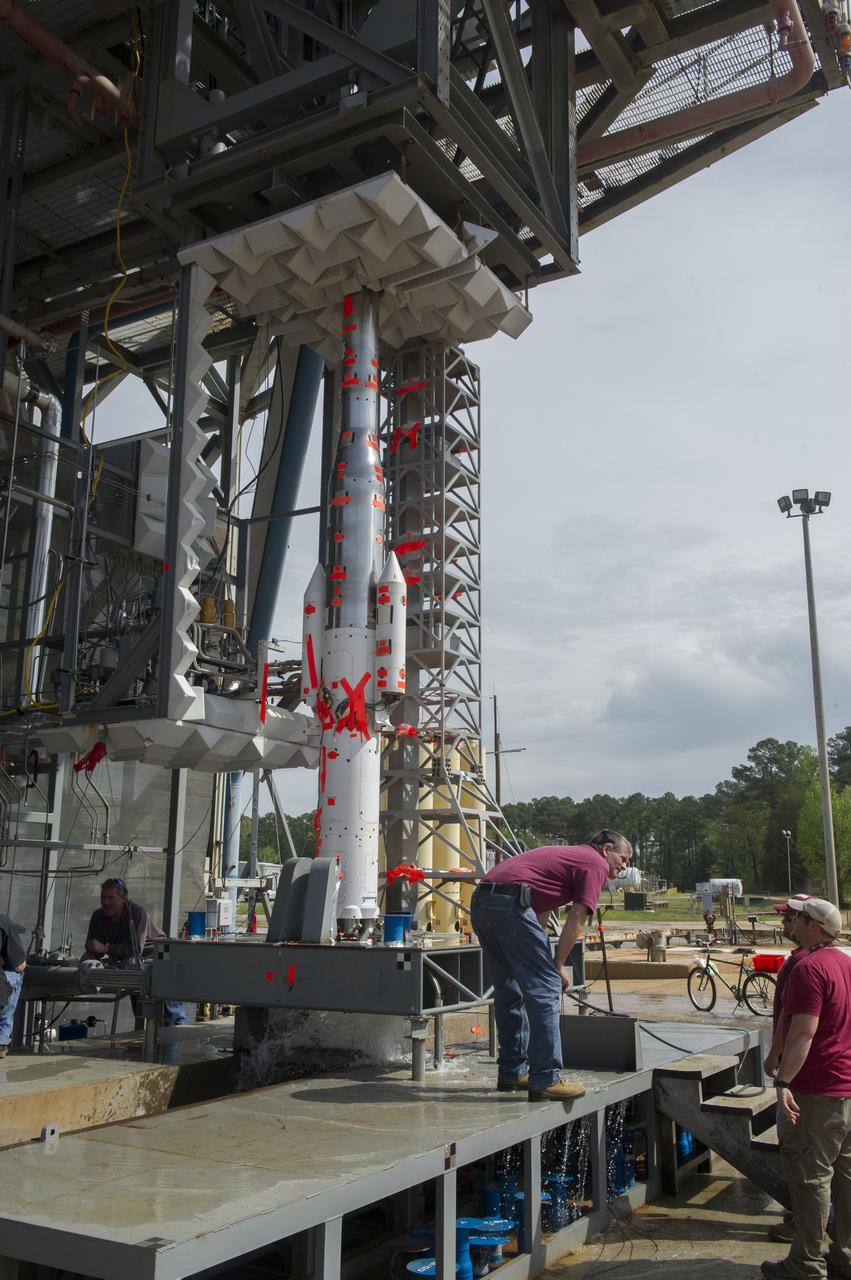
TEST ENGINEER DENNIS STRICKLAND CONDUCTS WATER FLOW TESTS AT TEST STAND 116 FOR SPACE LAUNCH SYSTEM SCALE MODEL ACOUSTIC TEST SERIES (WITH SOLID ROCKET BOOSTERS)
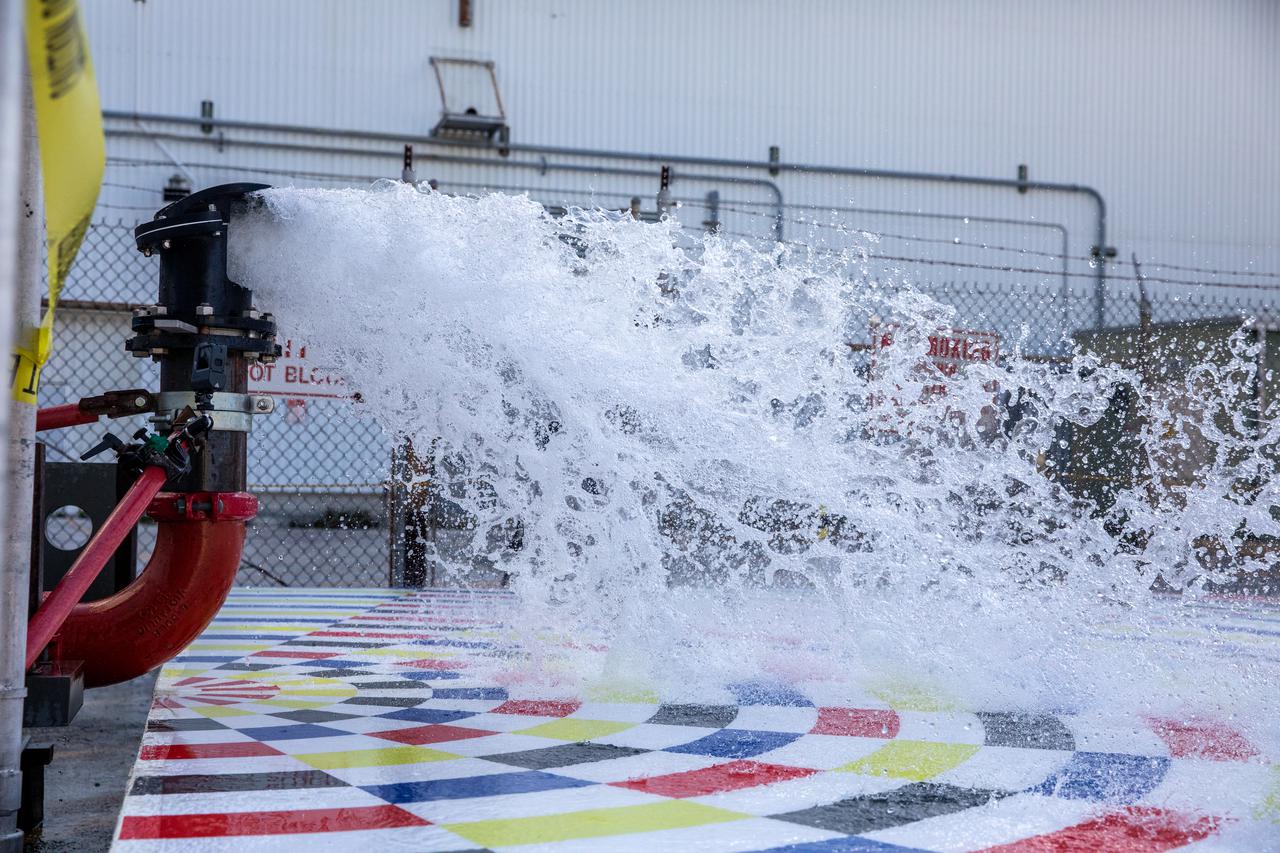
Water flows through a small-scale, 3D-printed nozzle during prototype testing of a new rainbird system on March 24, 2021, at NASA’s Kennedy Space Center in Florida. Rainbirds are large water nozzles located on the mobile launcher (ML) that release a high volume of water when the Space Launch System (SLS) rocket lifts off, protecting the vehicle, launch pad, and ML by absorbing some of the heat and energy generated during launch. The test involved running various water pressures through smaller nozzles to capture data that can be used to develop full-scale replacement nozzles for future missions under the Artemis program.
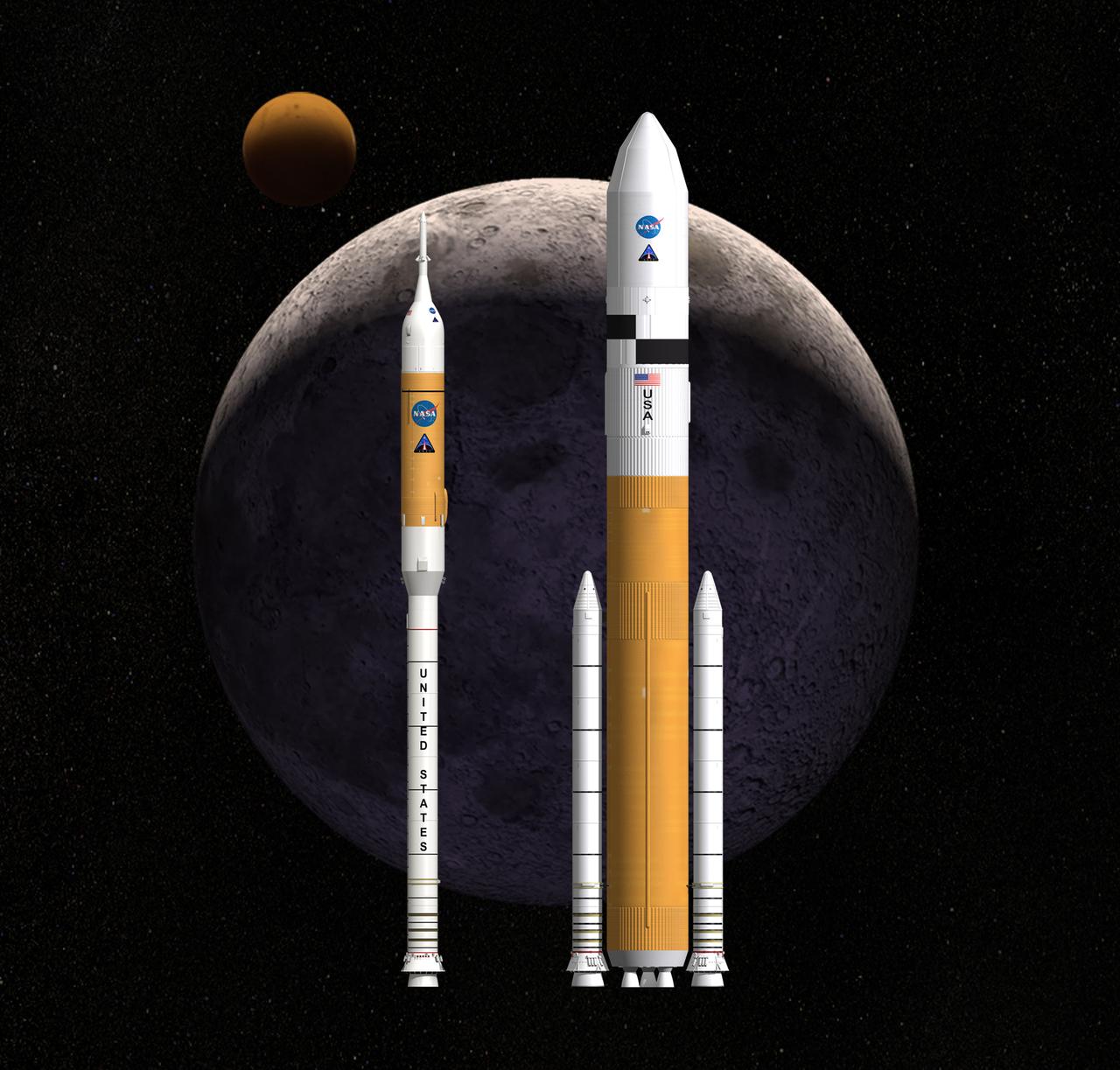
THIS CONCEPT IMAGE SHOWS NASA'S NEXT GENERATION LAUNCH VEHICLE SYSTEMS STANDING SIDE BY SIDE. ARES I, LEFT, IS THE CREW LAUNCH VEHICLE THAT WILL CARRY THE ORION CREW EXPLORATION VEHICLE TO SPACE. ARES V IS THE CARGO LAUNCH VEHICLE THAT WILL DELIVER LARGE SCALE HARDWARE, INCLUDING THE LUNAR LANDER, TO SPACE.
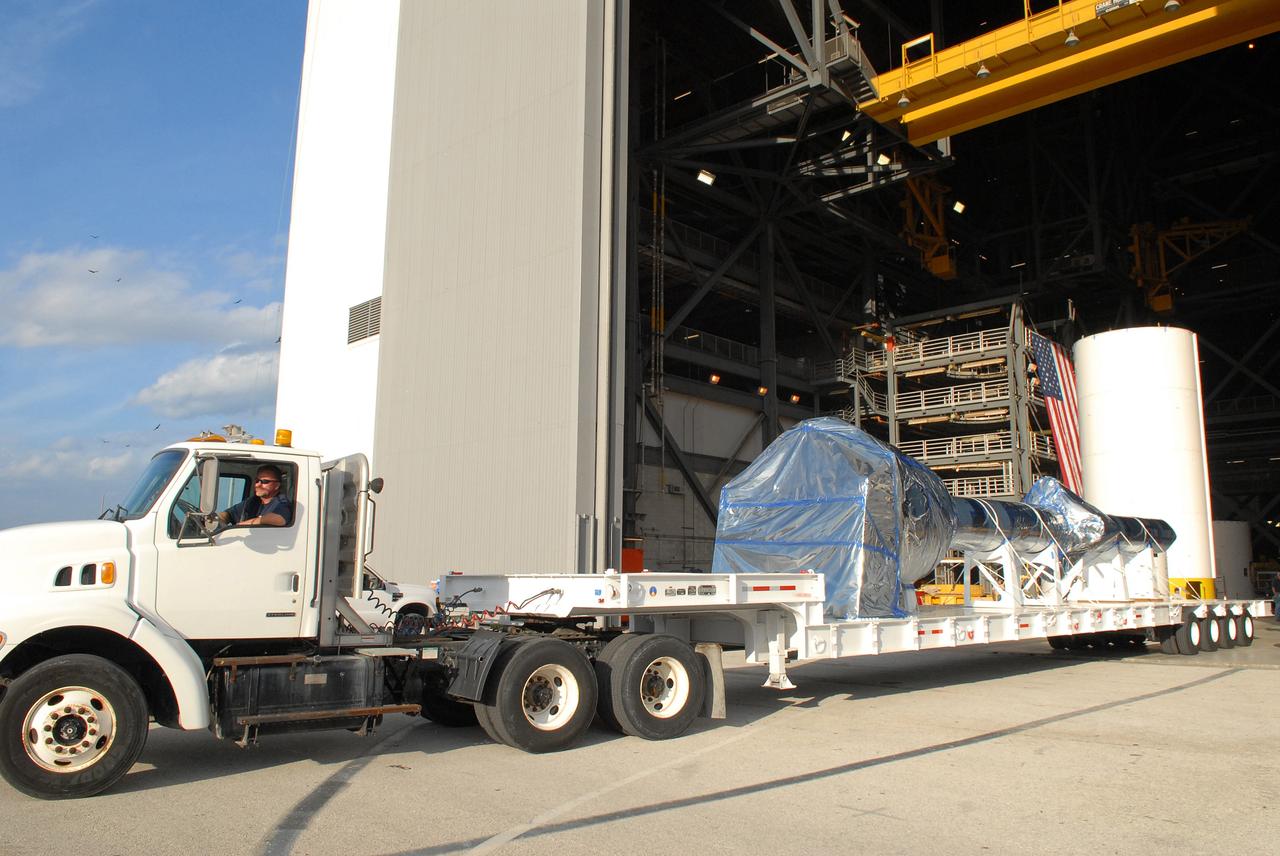
CAPE CANAVERAL, Fla. – The launch abort system for the Ares I-X rocket arrives in the Vehicle Assembly Building's high bay 4 at NASA's Kennedy Space Center in Florida. The launch abort system joins the precisely machined, full-scale simulator crew module, which, together, will form the tip of the Ares I-X. Ares I-X is the test flight for the Ares I. The I-X flight will provide NASA an early opportunity to test and prove hardware, facilities and ground operations associated with Ares I. The launch of the 321-foot-tall, full-scale Ares I-X, targeted for July 2009, will be the first in a series of unpiloted rocket launches from Kennedy. When fully developed, the 16-foot diameter crew module will furnish living space and reentry protection for the astronauts, while their launch abort system will provide safe evacuation if a launch vehicle failure occurs. Photo credit: NASA/Jack Pfaller
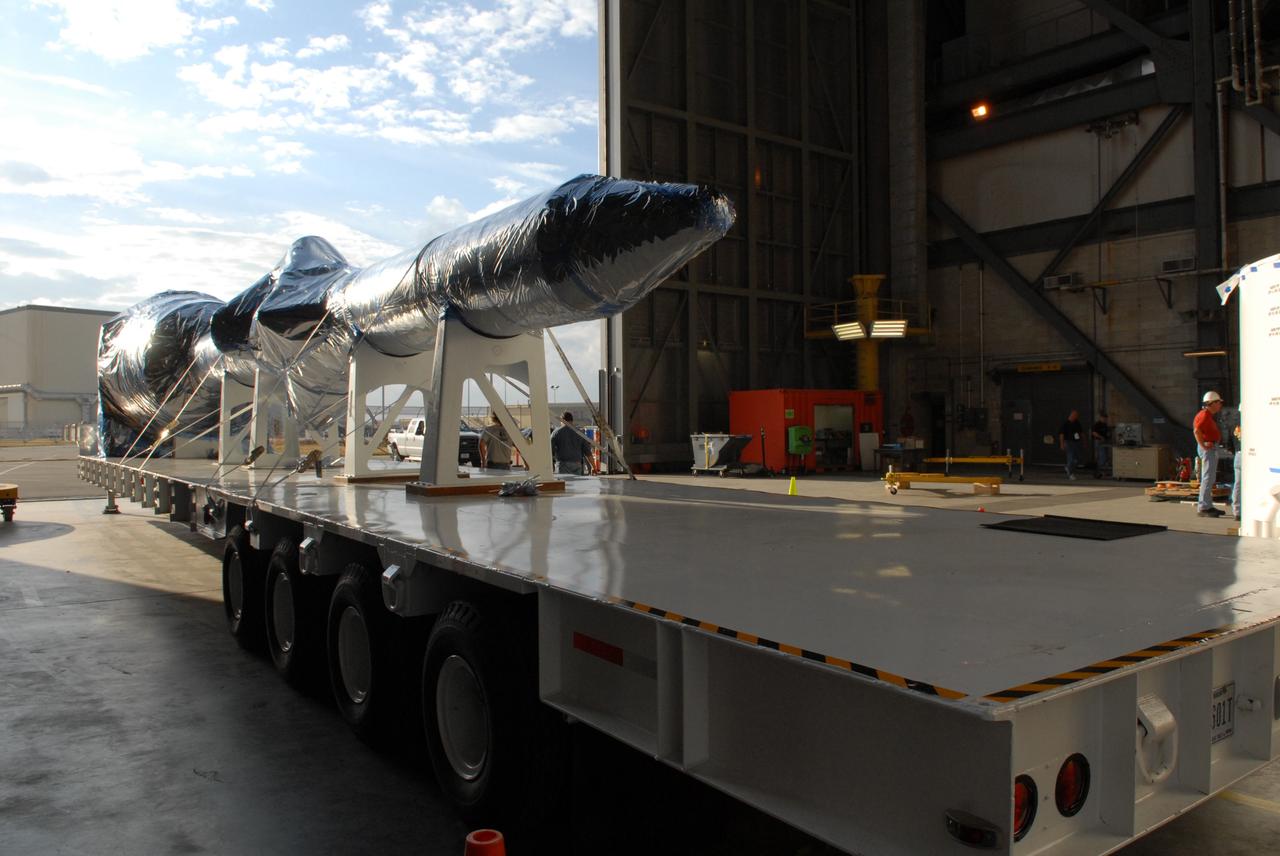
CAPE CANAVERAL, Fla. – The launch abort system for the Ares I-X rocket is moved inside the Vehicle Assembly Building's high bay 4 at NASA's Kennedy Space Center in Florida. The launch abort system joins the precisely machined, full-scale simulator crew module, which, together, will form the tip of the Ares I-X. Ares I-X is the test flight for the Ares I. The I-X flight will provide NASA an early opportunity to test and prove hardware, facilities and ground operations associated with Ares I. The launch of the 321-foot-tall, full-scale Ares I-X, targeted for July 2009, will be the first in a series of unpiloted rocket launches from Kennedy. When fully developed, the 16-foot diameter crew module will furnish living space and reentry protection for the astronauts, while their launch abort system will provide safe evacuation if a launch vehicle failure occurs. Photo credit: NASA/Jack Pfaller

Alongside the iconic Vehicle Assembly Building at NASA’s Kennedy Space Center in Florida, teams with the agency’s Exploration Ground Systems and supporting contractors conduct prototype testing of a new rainbird system on March 24, 2021. Rainbirds are large water nozzles located on the mobile launcher (ML) that release a high volume of water when the Space Launch System (SLS) rocket lifts off, protecting the vehicle, launch pad, and ML by absorbing some of the heat and energy generated during launch. The test involved running various water pressures through small-scale, 3D-printed nozzles to capture data that can be used to develop full-scale replacement nozzles for future missions under the Artemis program.
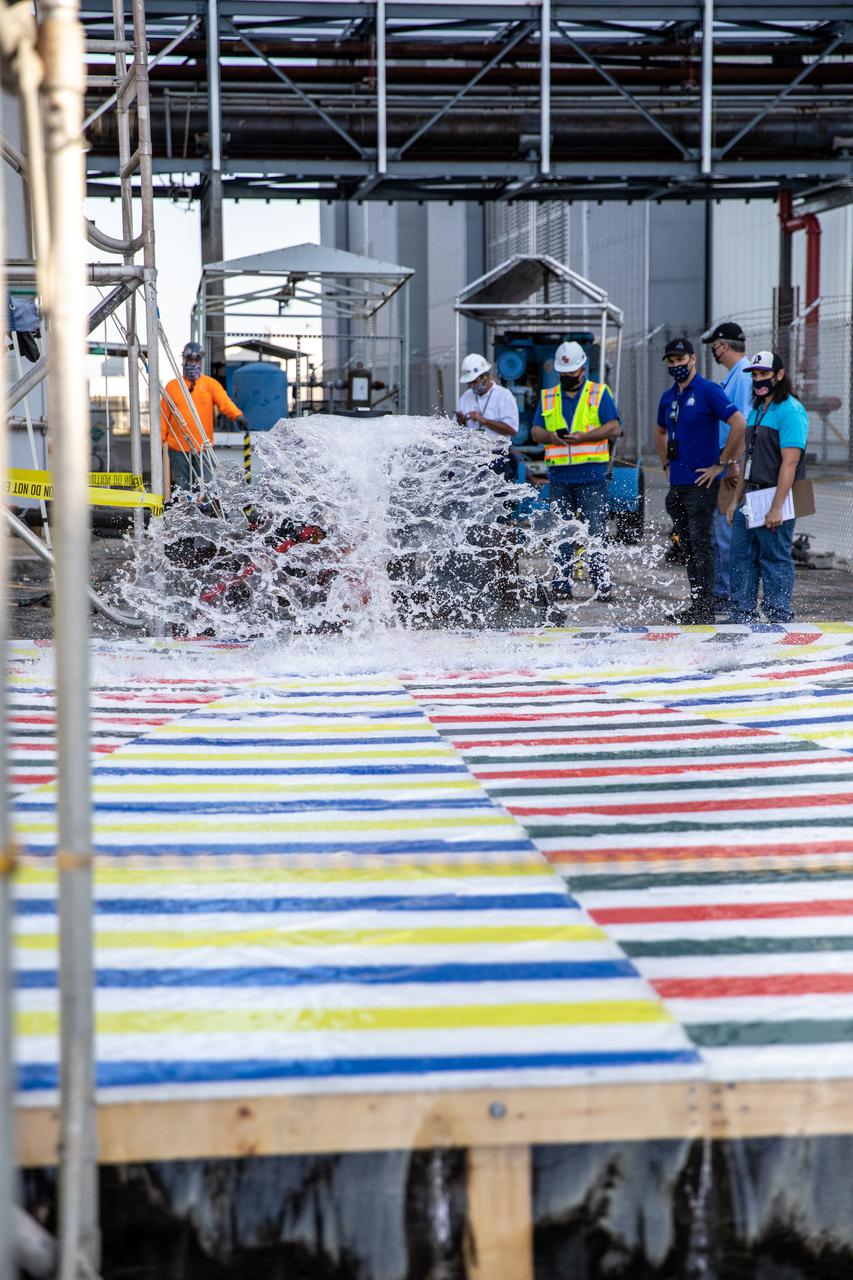
Teams with NASA’s Exploration Ground Systems and supporting contractors conduct prototype testing of a new rainbird system at the agency’s Kennedy Space Center in Florida on March 24, 2021, that can be used for the crewed Artemis II mission to the Moon. Rainbirds are large water nozzles located on the mobile launcher (ML) that release a high volume of water when the Space Launch System (SLS) rocket lifts off, protecting the vehicle, launch pad, and ML by absorbing some of the heat and energy generated during launch. The test involved running various water pressures through small-scale, 3D-printed nozzles to capture data that can be used to develop full-scale replacement nozzles for future missions under the Artemis program.

CAPE CANAVERAL, Fla. – A C-5 aircraft arrives at the Shuttle Landing Facility at NASA's Kennedy Space Center in Florida carrying hardware that will be used in the launch of the Ares I-X rocket. The hardware consists of a precisely machined, full-scale simulator crew module and launch abort system to form the tip of NASA's Ares I-X rocket. The launch of the 321-foot-tall, full-scale Ares I-X, targeted for July 2009, will be the first in a series of unpiloted rocket launches from Kennedy. When fully developed, the 16-foot diameter crew module will furnish living space and reentry protection for the astronauts, while their launch abort system will provide safe evacuation if a launch vehicle failure occurs. Photo credit: NASA/Jack Pfaller
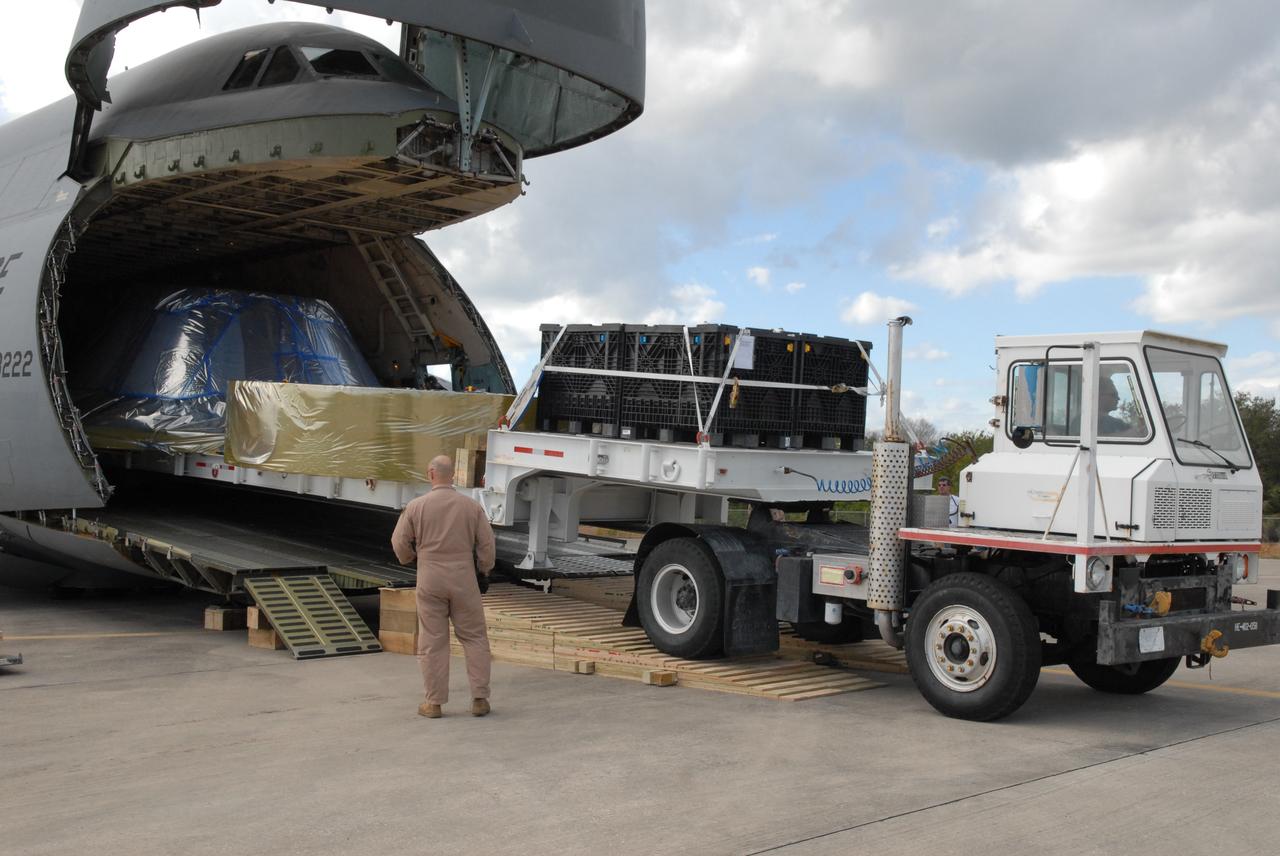
CAPE CANAVERAL, Fla. – At the Shuttle Landing Facility at NASA's Kennedy Space Center in Florida, hardware that will be used in the launch of the Ares I-X rocket is being offloaded from the C-5 aircraft. The hardware consists of a precisely machined, full-scale simulator crew module and launch abort system to form the tip of NASA's Ares I-X rocket. The launch of the 321-foot-tall, full-scale Ares I-X, targeted for July 2009, will be the first in a series of unpiloted rocket launches from Kennedy. When fully developed, the 16-foot diameter crew module will furnish living space and reentry protection for the astronauts, while their launch abort system will provide safe evacuation if a launch vehicle failure occurs. Photo credit: NASA/Jack Pfaller
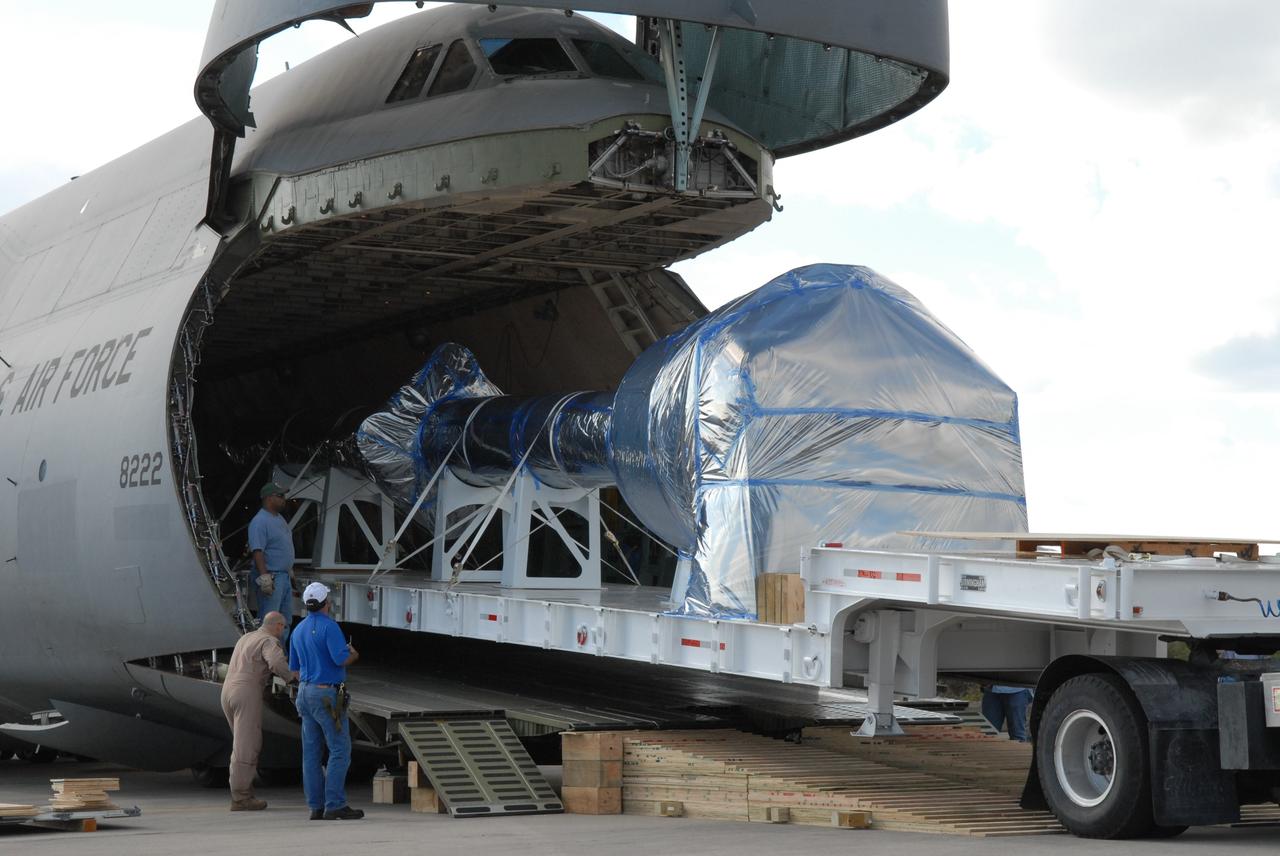
CAPE CANAVERAL, Fla. – At the Shuttle Landing Facility at NASA's Kennedy Space Center in Florida, hardware that will be used in the launch of the Ares I-X rocket is being offloaded from the C-5 aircraft. The hardware consists of a precisely machined, full-scale simulator crew module and launch abort system to form the tip of NASA's Ares I-X rocket. The launch of the 321-foot-tall, full-scale Ares I-X, targeted for July 2009, will be the first in a series of unpiloted rocket launches from Kennedy. When fully developed, the 16-foot diameter crew module will furnish living space and reentry protection for the astronauts, while their launch abort system will provide safe evacuation if a launch vehicle failure occurs. Photo credit: NASA/Jack Pfaller
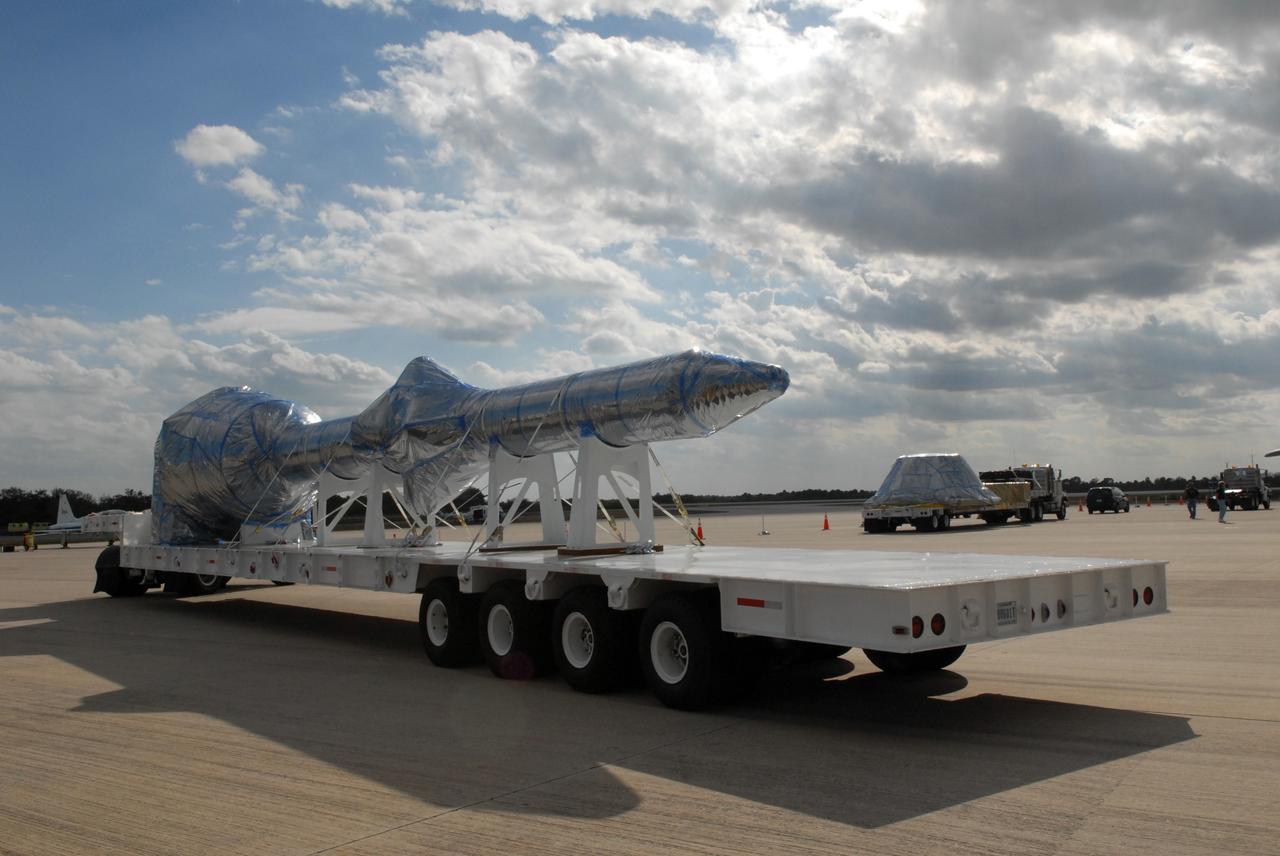
CAPE CANAVERAL, Fla. – At the Shuttle Landing Facility at NASA's Kennedy Space Center in Florida, hardware that will be used in the launch of the Ares I-X rocket is being offloaded from the C-5 aircraft. The hardware consists of a precisely machined, full-scale simulator crew module and launch abort system to form the tip of NASA's Ares I-X rocket. The launch of the 321-foot-tall, full-scale Ares I-X, targeted for July 2009, will be the first in a series of unpiloted rocket launches from Kennedy. When fully developed, the 16-foot diameter crew module will furnish living space and reentry protection for the astronauts, while their launch abort system will provide safe evacuation if a launch vehicle failure occurs. Photo credit: NASA/Jack Pfaller
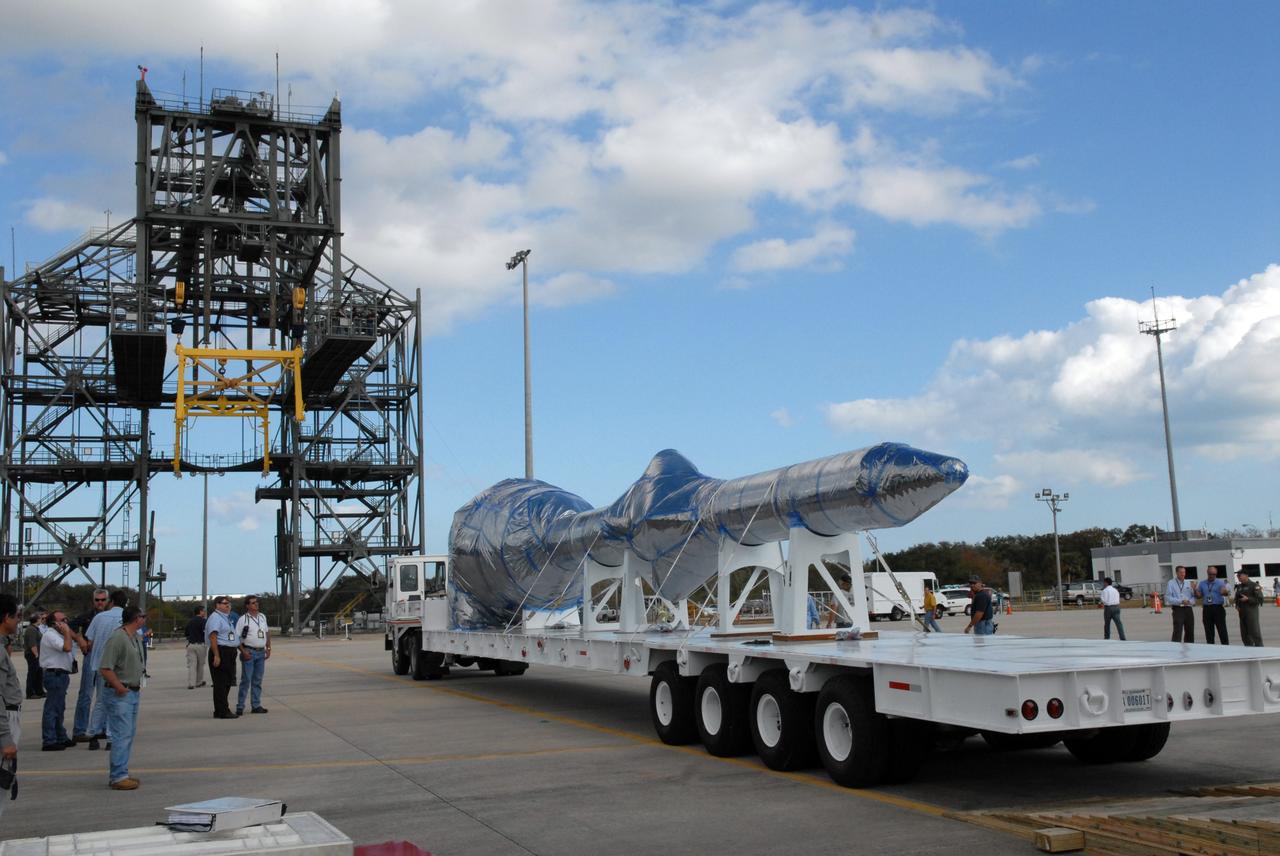
CAPE CANAVERAL, Fla. – At the Shuttle Landing Facility at NASA's Kennedy Space Center in Florida, hardware that will be used in the launch of the Ares I-X rocket is being offloaded from the C-5 aircraft. The hardware consists of a precisely machined, full-scale simulator crew module and launch abort system to form the tip of NASA's Ares I-X rocket. The launch of the 321-foot-tall, full-scale Ares I-X, targeted for July 2009, will be the first in a series of unpiloted rocket launches from Kennedy. When fully developed, the 16-foot diameter crew module will furnish living space and reentry protection for the astronauts, while their launch abort system will provide safe evacuation if a launch vehicle failure occurs. Photo credit: NASA/Jack Pfaller
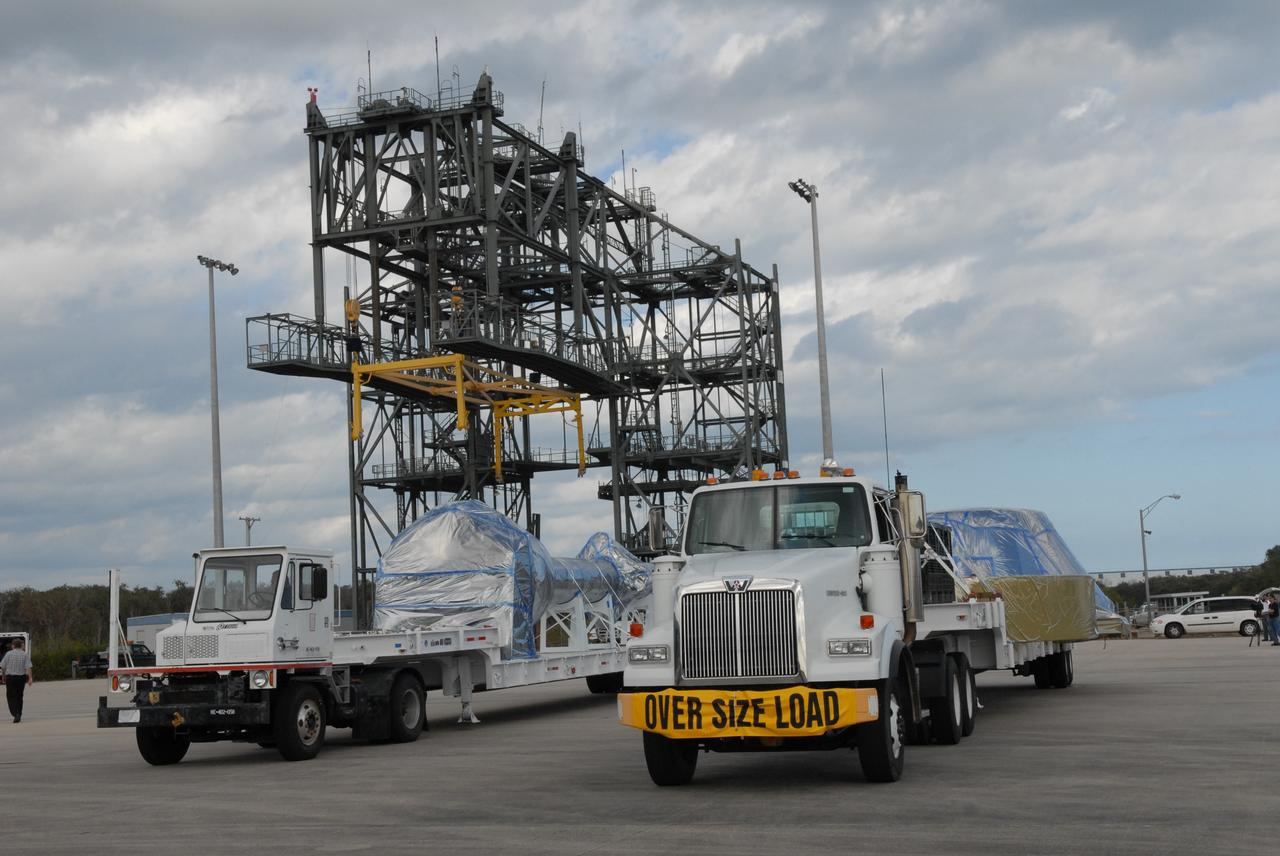
CAPE CANAVERAL, Fla. – At the Shuttle Landing Facility at NASA's Kennedy Space Center in Florida, trucks are ready to transport their cargo to the Vehicle Assembly Building's high bay 4. The cargo consists of a precisely machined, full-scale simulator crew module and launch abort system that will be used in the launch of NASA's Ares I-X rocket. The launch of the 321-foot-tall, full-scale Ares I-X, targeted for July 2009, will be the first in a series of unpiloted rocket launches from Kennedy. When fully developed, the 16-foot diameter crew module will furnish living space and reentry protection for the astronauts, while their launch abort system will provide safe evacuation if a launch vehicle failure occurs. Photo credit: NASA/Jack Pfaller

CAPE CANAVERAL, Fla. – At the Shuttle Landing Facility at NASA's Kennedy Space Center in Florida, hardware that will be used in the launch of the Ares I-X rocket is being offloaded from the C-5 aircraft. The hardware consists of a precisely machined, full-scale simulator crew module and launch abort system to form the tip of NASA's Ares I-X rocket. The launch of the 321-foot-tall, full-scale Ares I-X, targeted for July 2009, will be the first in a series of unpiloted rocket launches from Kennedy. When fully developed, the 16-foot diameter crew module will furnish living space and reentry protection for the astronauts, while their launch abort system will provide safe evacuation if a launch vehicle failure occurs. Photo credit: NASA/Jack Pfaller
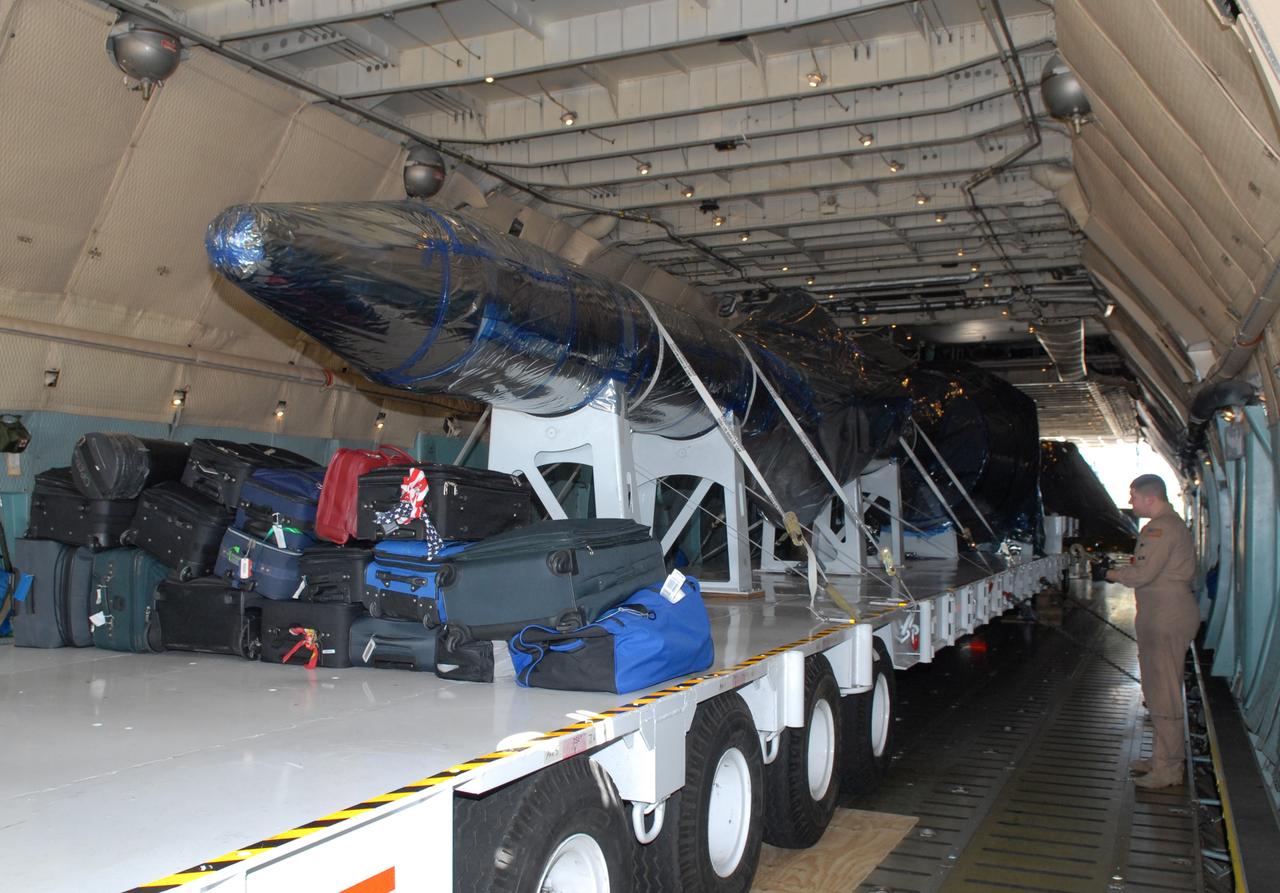
CAPE CANAVERAL, Fla. – Inside a C-5 aircraft, hardware that will be used in the launch of the Ares I-X rocket is being offloaded at the Shuttle Landing Facility at NASA's Kennedy Space Center in Florida. The hardware consists of a precisely machined, full-scale simulator crew module and launch abort system to form the tip of NASA's Ares I-X rocket. The launch of the 321-foot-tall, full-scale Ares I-X, targeted for July 2009, will be the first in a series of unpiloted rocket launches from Kennedy. When fully developed, the 16-foot diameter crew module will furnish living space and reentry protection for the astronauts, while their launch abort system will provide safe evacuation if a launch vehicle failure occurs. Photo credit: NASA/Jack Pfaller
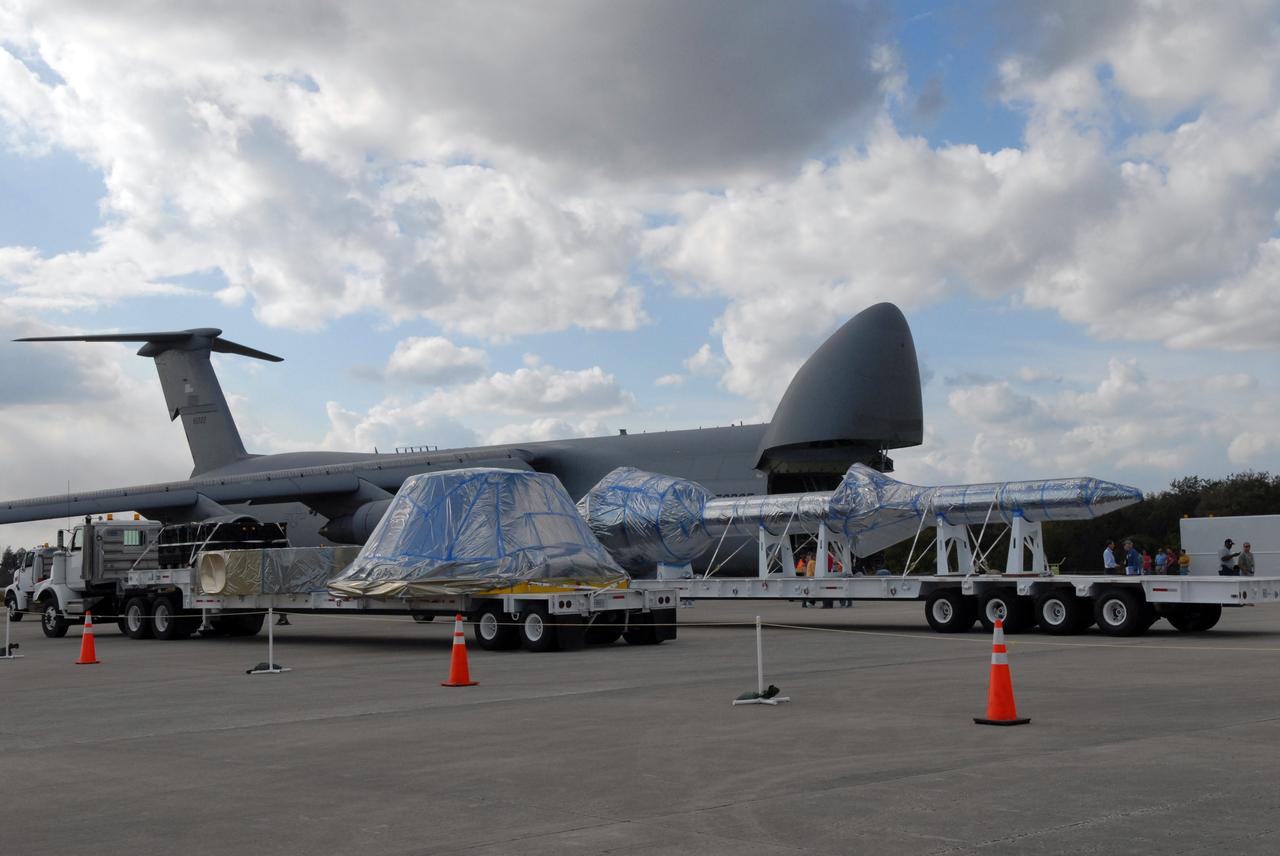
CAPE CANAVERAL, Fla. – At the Shuttle Landing Facility at NASA's Kennedy Space Center in Florida, hardware that will be used in the launch of the Ares I-X rocket is being offloaded from the C-5 aircraft. The hardware consists of a precisely machined, full-scale simulator crew module and launch abort system to form the tip of NASA's Ares I-X rocket. The launch of the 321-foot-tall, full-scale Ares I-X, targeted for July 2009, will be the first in a series of unpiloted rocket launches from Kennedy. When fully developed, the 16-foot diameter crew module will furnish living space and reentry protection for the astronauts, while their launch abort system will provide safe evacuation if a launch vehicle failure occurs. Photo credit: NASA/Jack Pfaller

CAPE CANAVERAL, Fla. – At the Shuttle Landing Facility at NASA's Kennedy Space Center in Florida, hardware that will be used in the launch of the Ares I-X rocket is being offloaded from the C-5 aircraft. The hardware consists of a precisely machined, full-scale simulator crew module and launch abort system to form the tip of NASA's Ares I-X rocket. The launch of the 321-foot-tall, full-scale Ares I-X, targeted for July 2009, will be the first in a series of unpiloted rocket launches from Kennedy. When fully developed, the 16-foot diameter crew module will furnish living space and reentry protection for the astronauts, while their launch abort system will provide safe evacuation if a launch vehicle failure occurs. Photo credit: NASA/Jack Pfaller
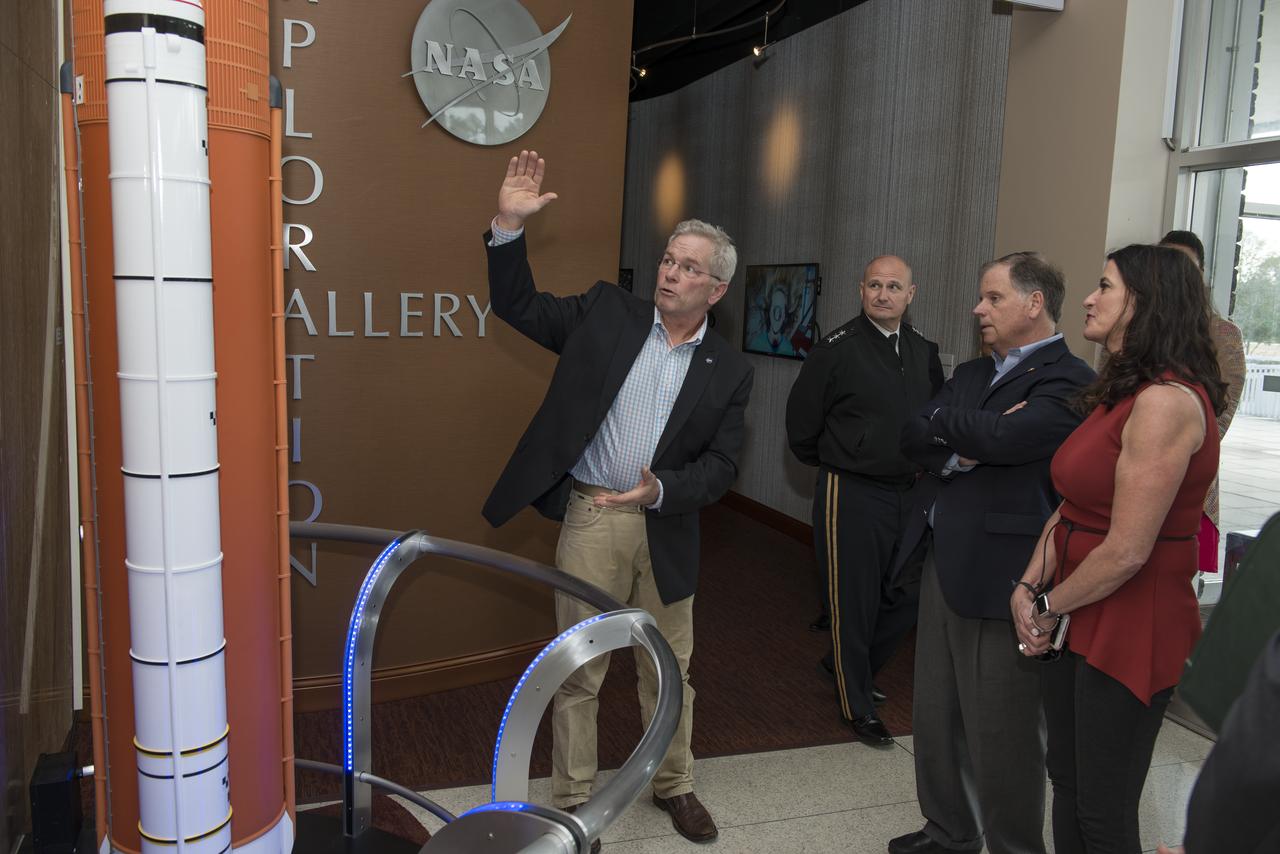
Senator Doug Jones (D-AL.) and wife, Louise, tour Marshall Space Flight facilities. Steve Doering, manager, Stages Element, Space Launch System (SLS) program at MSFC, explains the stages of the SLS rocket with the scale model rocket located in the lobby of building 4200.
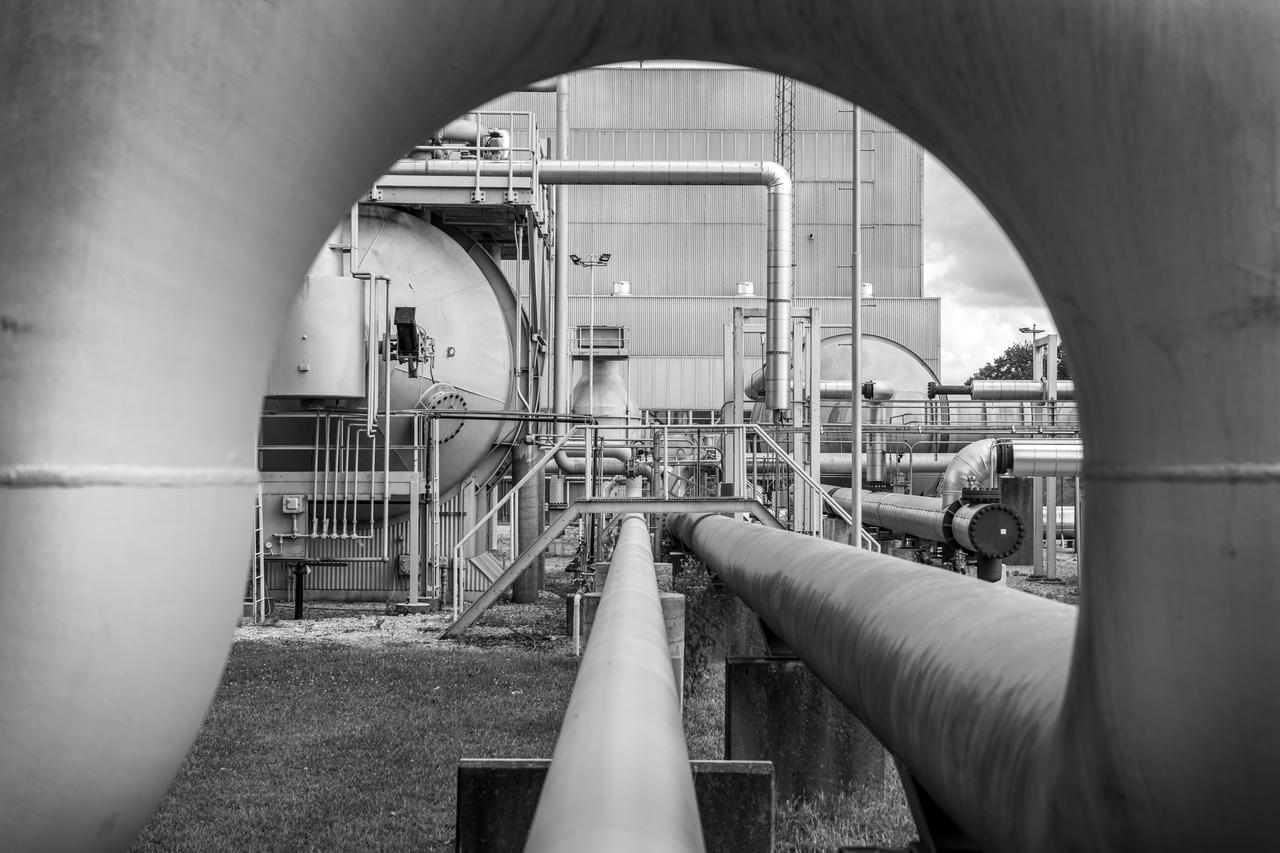
The In-Space Propulsion Facility (ISP) is shown at NASA’s Neil Armstrong Test Facility in Sandusky, Ohio. ISP is the world’s only facility capable of full-scale rocket engine and launch vehicle system level tests. Photo Credit: (NASA/Jordan Salkin)
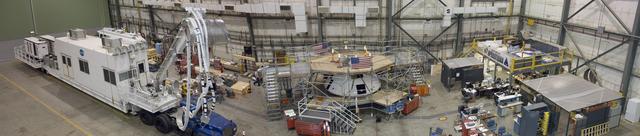
Surrounded by work platforms, NASA's first full-scale Orion abort flight test (AFT) crew module (center) is undergoing preparations at the NASA Dryden Flight Research Center in California for the first flight test of Orion's launch abort system. To the left is a space shuttle orbiter purge vehicle sharing the hangar.
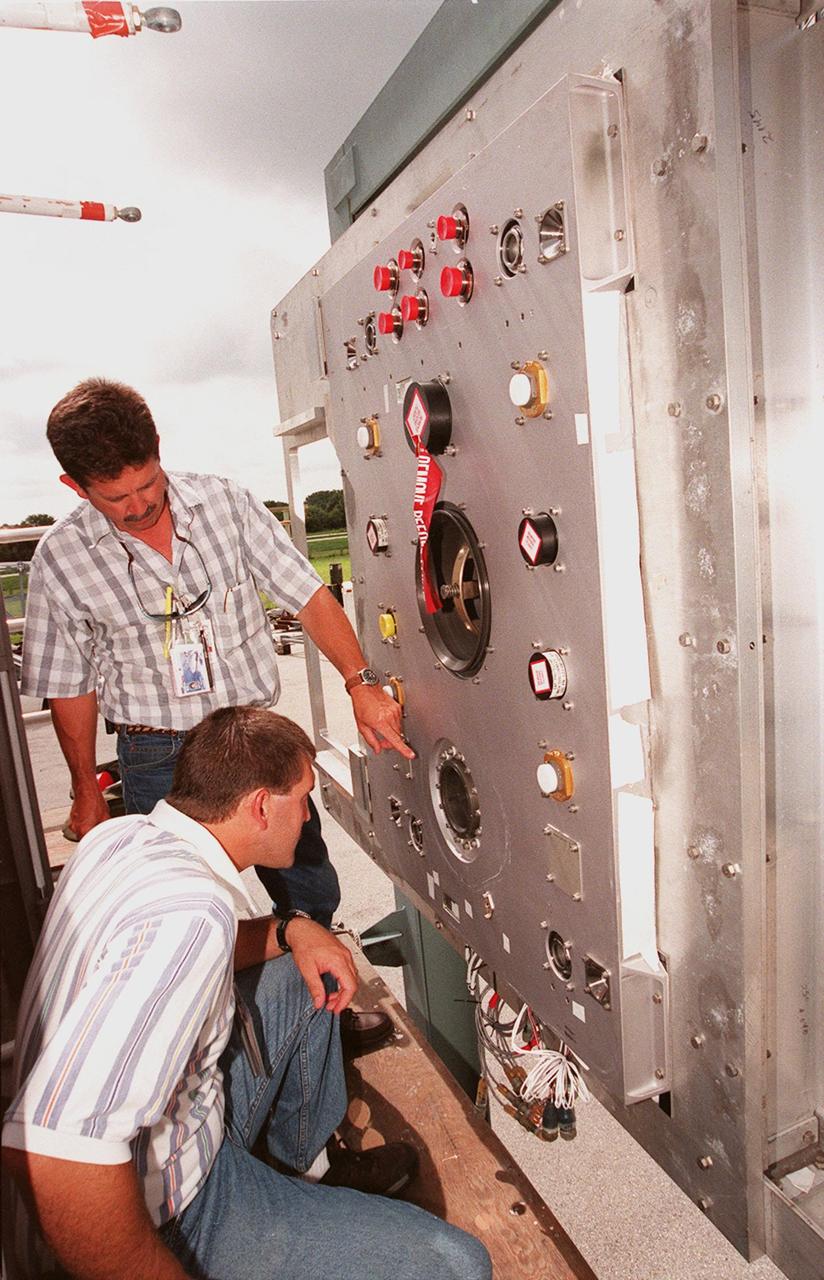
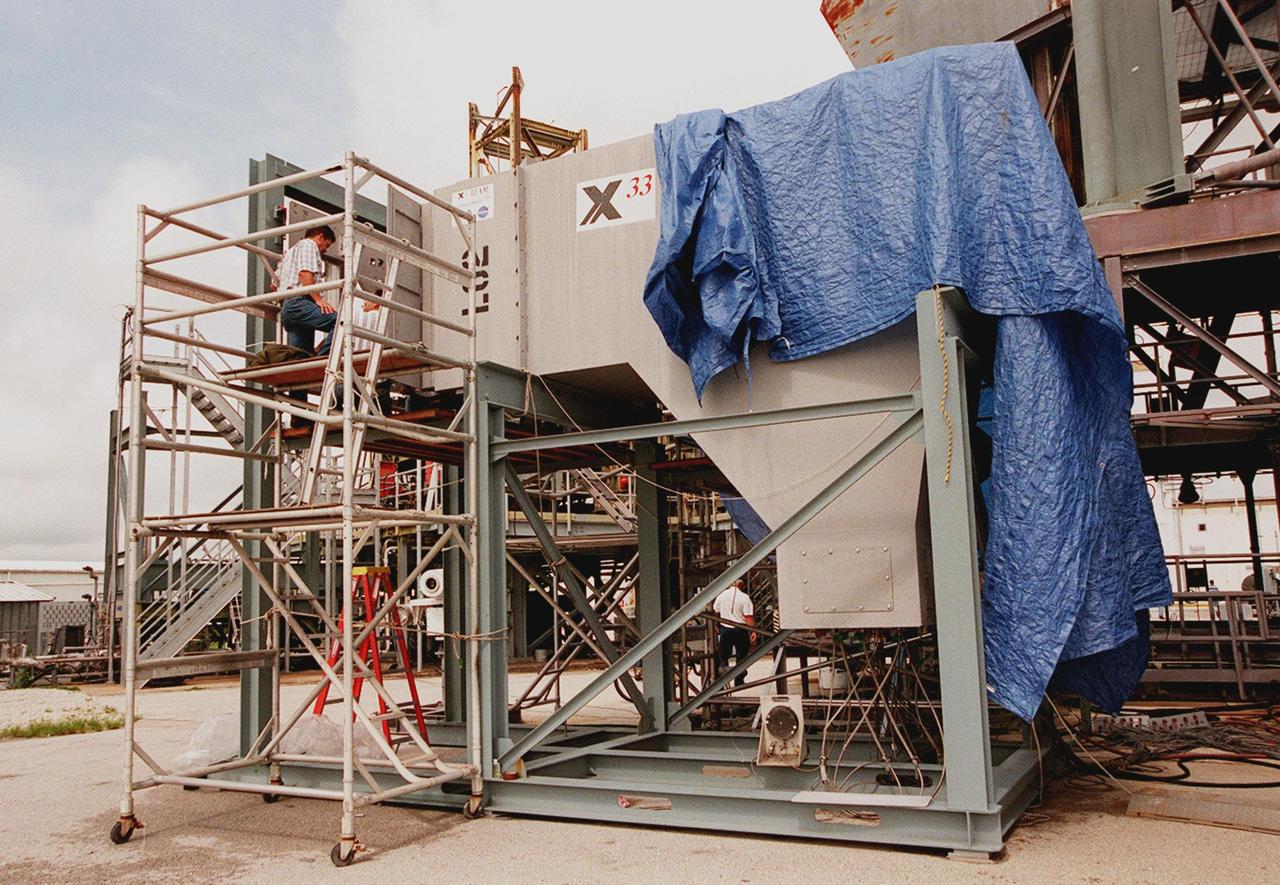
At the Launch Equipment Test Facility, , Will Reaves and Mike Solomon (kneeling), both with Lockheed Martin Technical Operations, observe parts of the X-33 umbilical system during testing. A team of Kennedy Space Center experts developed the umbilical system, comprising panels, valves and hoses that provide the means to load the X-33 with super-cold propellant. The X-33, under construction at Lockheed Martin Skunk Works in Palmdale, Calif., is a half-scale prototype of the planned operational reusable launch vehicle dubbed VentureStar
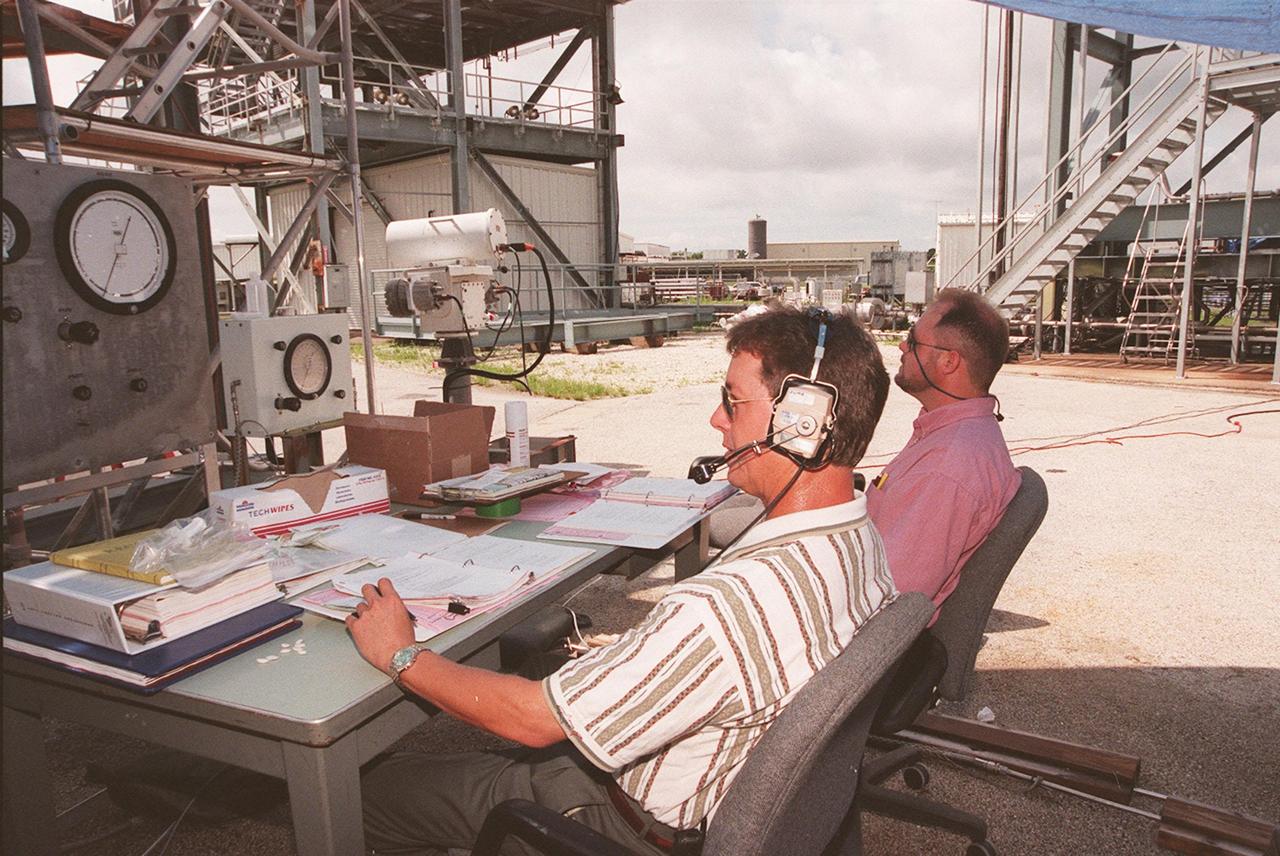
At the Launch Equipment Test Facility, Mike Ynclan, with Dynacs, and Greg Melton, a NASA engineer, look at measurements during testing of the X-33 umbilical system. A team of Kennedy Space Center experts developed the umbilical system, comprising panels, valves and hoses that provide the means to load the X-33 with super-cold propellant. The X-33, under construction at Lockheed Martin Skunk Works in Palmdale, Calif., is a half-scale prototype of the planned operational reusable launch vehicle dubbed VentureStar
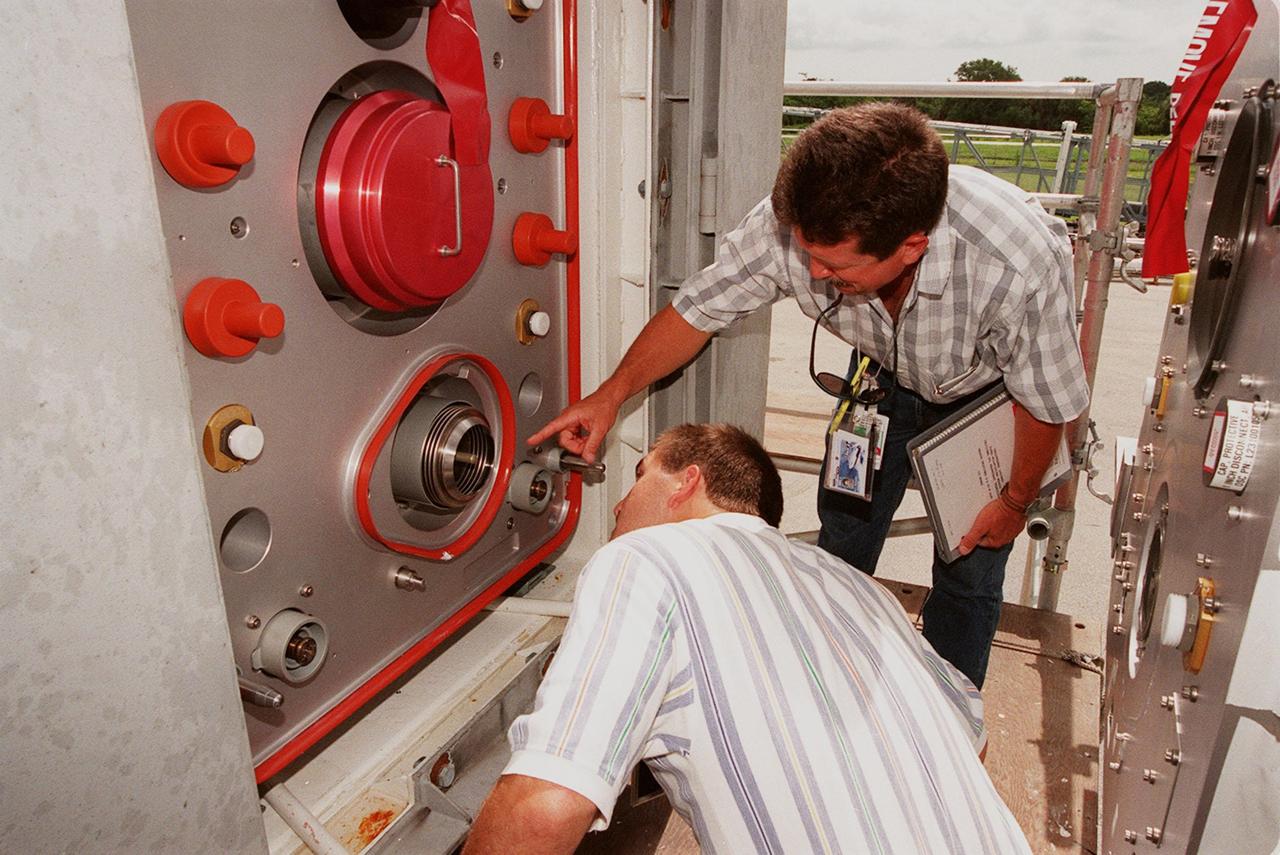
At the Launch Equipment Test Facility, Mike Solomon (left) and Will Reaves (right), both with Lockheed Martin Technical Operations, move in for a close look at part of the X-33 umbilical system. A team of Kennedy Space Center experts developed the umbilical system, comprising panels, valves and hoses that provide the means to load the X-33 with super-cold propellant. The X-33, under construction at Lockheed Martin Skunk Works in Palmdale, Calif., is a half-scale prototype of the planned operational reusable launch vehicle dubbed VentureStar
At the Launch Equipment Test Facility, Will Reaves (top of stand), with Lockheed Martin Technical Operations, looks over components of the X-33 umbilical system undergoing testing. A team of Kennedy Space Center experts developed the umbilical system, comprising panels, valves and hoses that provide the means to load the X-33 with super-cold propellant. The X-33, under construction at Lockheed Martin Skunk Works in Palmdale, Calif., is a half-scale prototype of the planned operational reusable launch vehicle dubbed VentureStar
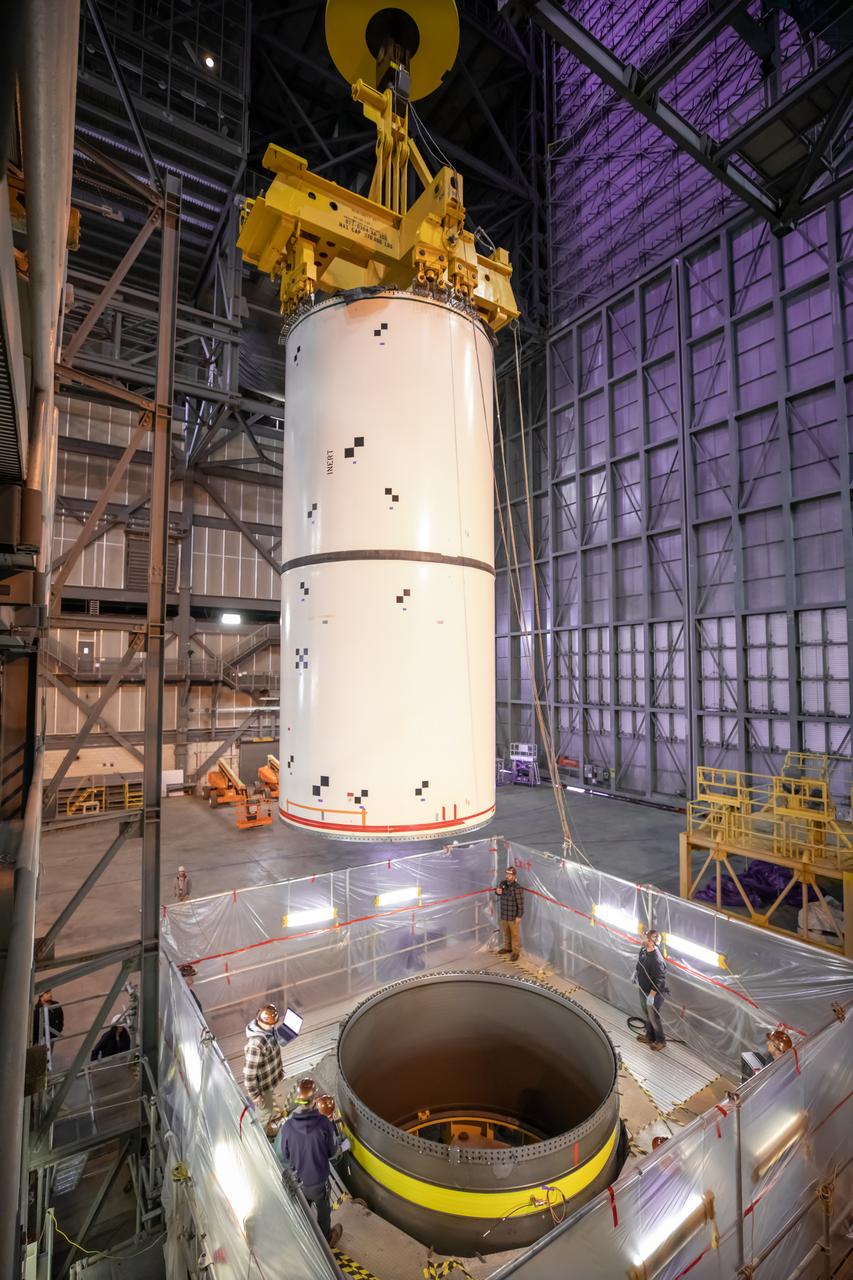
In High Bay 4 of the Vehicle Assembly Building at NASA’s Kennedy Space Center in Florida, pathfinders, or full-scale replicas of Space Launch System (SLS) solid rocket booster segments, are being stacked during a training exercise on Jan. 8, 2020. A team of engineers with Exploration Ground Systems and crane operators and technicians with contractor Jacobs are practicing lifting, moving and stacking maneuvers, using important ground support equipment to train employees and certify all the equipment works properly. The booster pathfinders are inert, full-scale replicas of the actual booster hardware that will be attached to the SLS rocket for Artemis missions. The five-segment, 17-story-tall twin boosters will provide 3.6 million pounds of thrust each at liftoff to help launch Orion on Artemis I, its first uncrewed mission beyond the Moon.
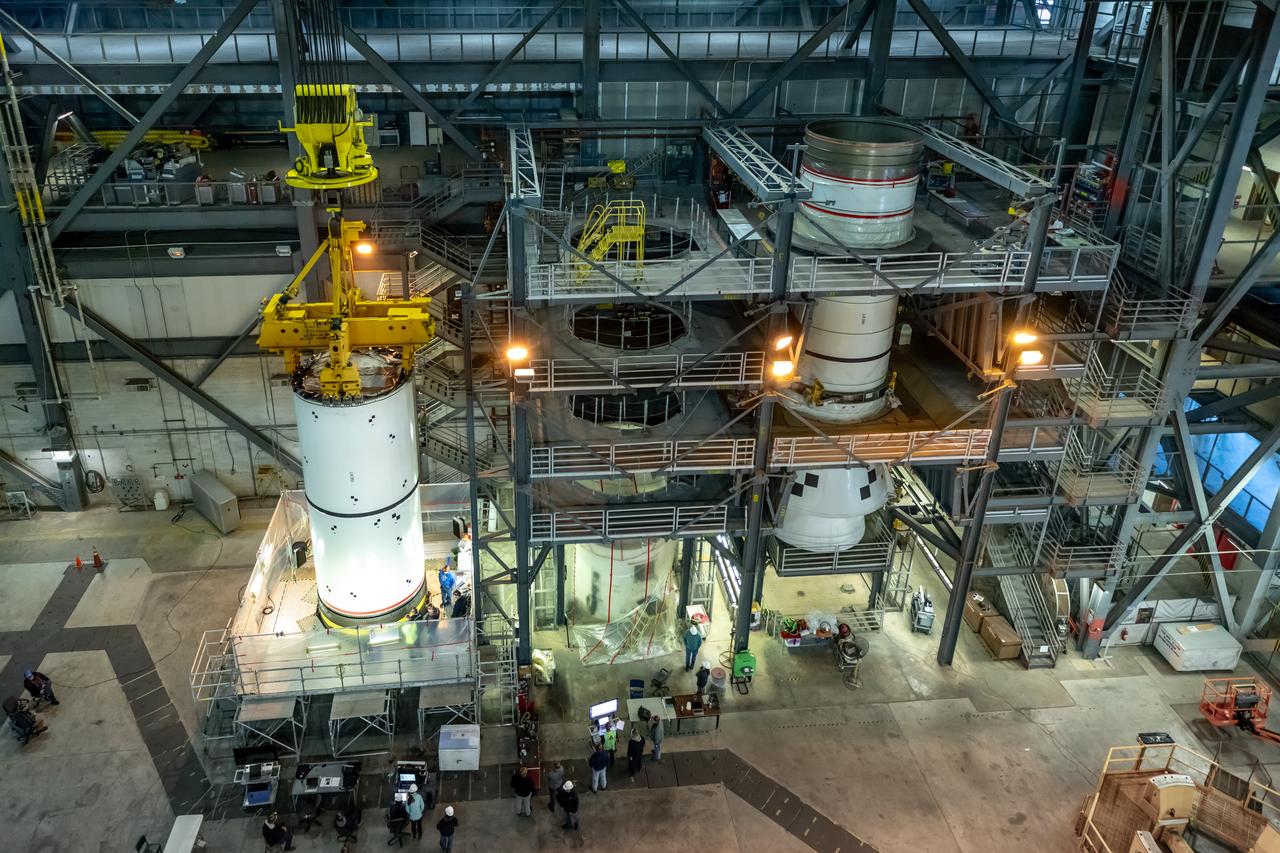
In High Bay 4 of the Vehicle Assembly Building at NASA’s Kennedy Space Center in Florida, pathfinders, or full-scale replicas of Space Launch System (SLS) solid rocket booster segments, are being stacked during a training exercise on Jan. 8, 2020. A team of engineers with Exploration Ground Systems and crane operators and technicians with contractor Jacobs are practicing lifting, moving and stacking maneuvers, using important ground support equipment to train employees and certify all the equipment works properly. The booster pathfinders are inert, full-scale replicas of the actual booster hardware that will be attached to the SLS rocket for Artemis missions. The five-segment, 17-story-tall twin boosters will provide 3.6 million pounds of thrust each at liftoff to help launch Orion on Artemis I, its first uncrewed mission beyond the Moon.
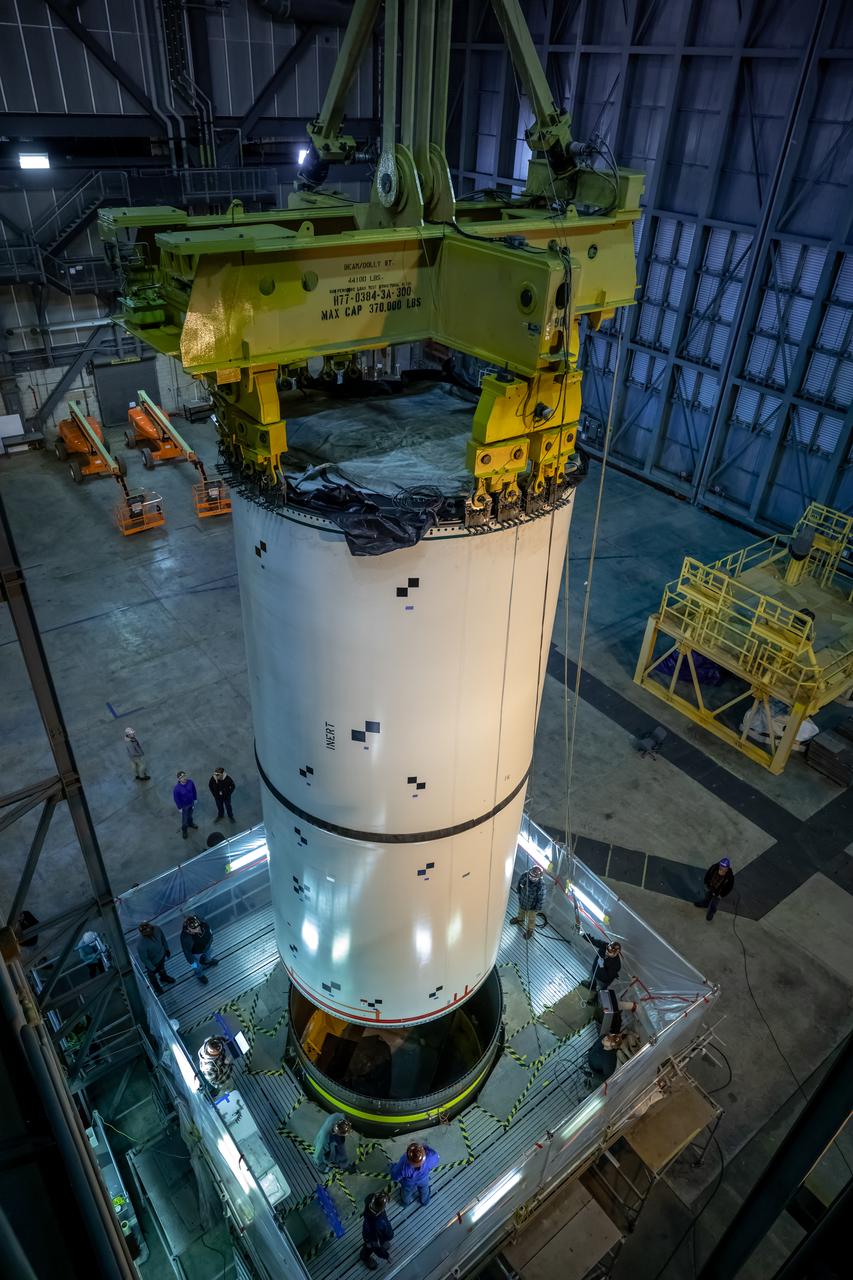
In High Bay 4 of the Vehicle Assembly Building at NASA’s Kennedy Space Center in Florida, pathfinders, or full-scale replicas of Space Launch System (SLS) solid rocket booster segments, are being stacked during a training exercise on Jan. 8, 2020. A team of engineers with Exploration Ground Systems and crane operators and technicians with contractor Jacobs are practicing lifting, moving and stacking maneuvers, using important ground support equipment to train employees and certify all the equipment works properly. The booster pathfinders are inert, full-scale replicas of the actual booster hardware that will be attached to the SLS rocket for Artemis missions. The five-segment, 17-story-tall twin boosters will provide 3.6 million pounds of thrust each at liftoff to help launch Orion on Artemis I, its first uncrewed mission beyond the Moon.
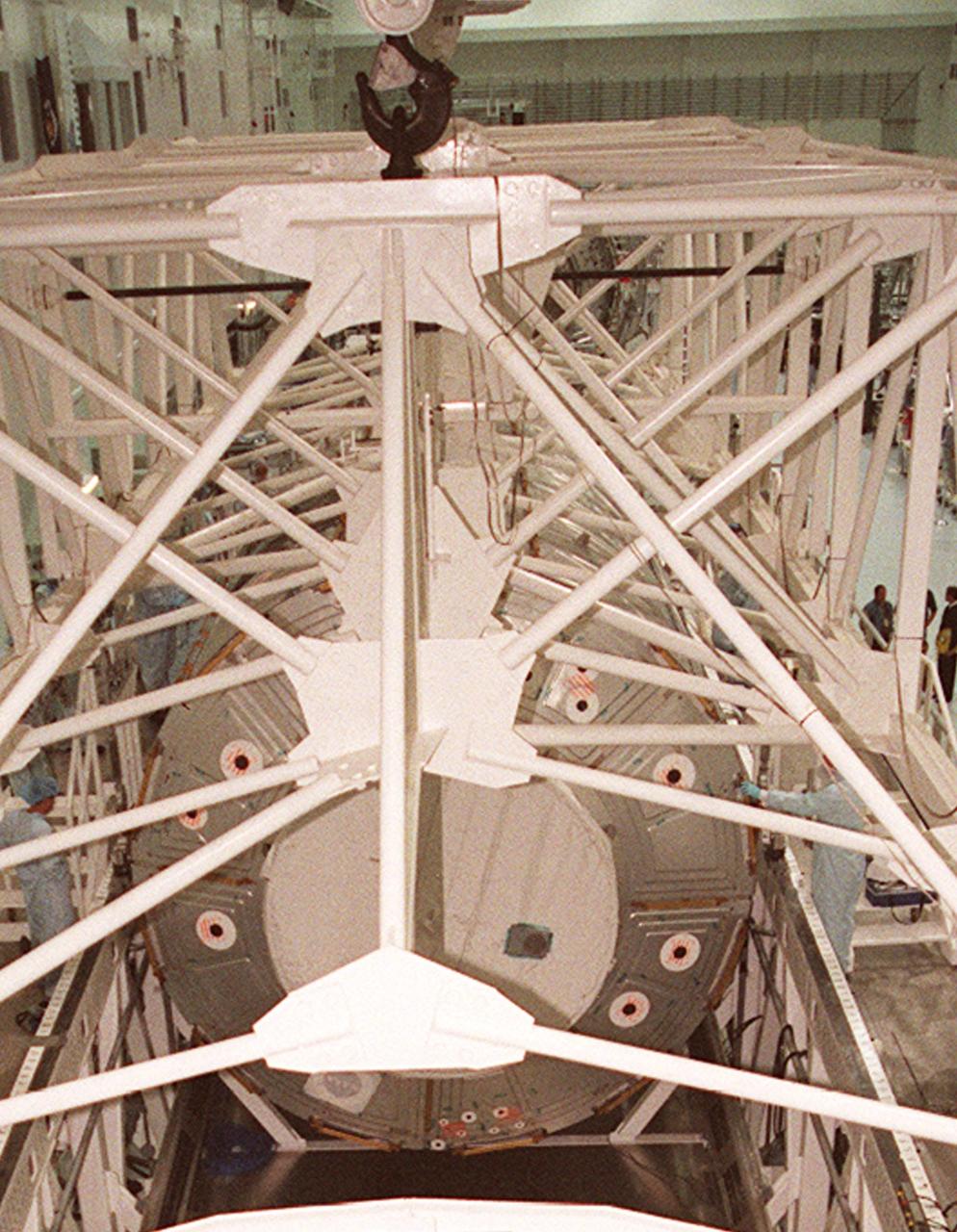
KENNEDY SPACE CENTER, FLA. -- In the Space Station Processing Facility, the overhead crane above the U.S. Lab Destiny is ready to be removed. Destiny rests in the Launch Package Integration Stand (LPIS) for a weight and center of gravity determination. In the foreground is the scale. Destiny is the payload aboard Space Shuttle Atlantis on mission STS-98 to the Space Station. The lab is fitted with five system racks and will already have experiments installed inside for the flight. The launch is scheduled for January 2001
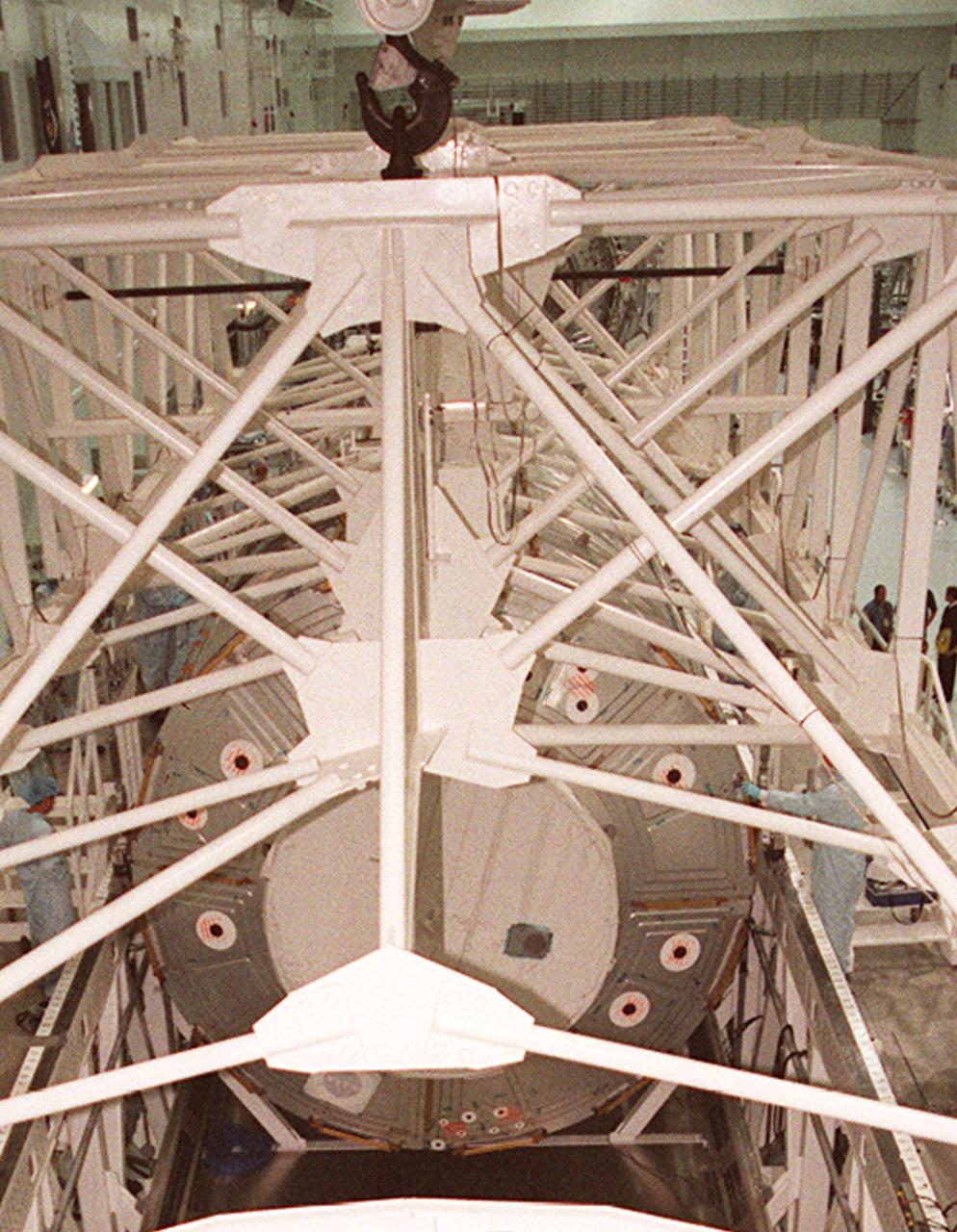
KENNEDY SPACE CENTER, FLA. -- In the Space Station Processing Facility, the overhead crane above the U.S. Lab Destiny is ready to be removed. Destiny rests in the Launch Package Integration Stand (LPIS) for a weight and center of gravity determination. In the foreground is the scale. Destiny is the payload aboard Space Shuttle Atlantis on mission STS-98 to the Space Station. The lab is fitted with five system racks and will already have experiments installed inside for the flight. The launch is scheduled for January 2001
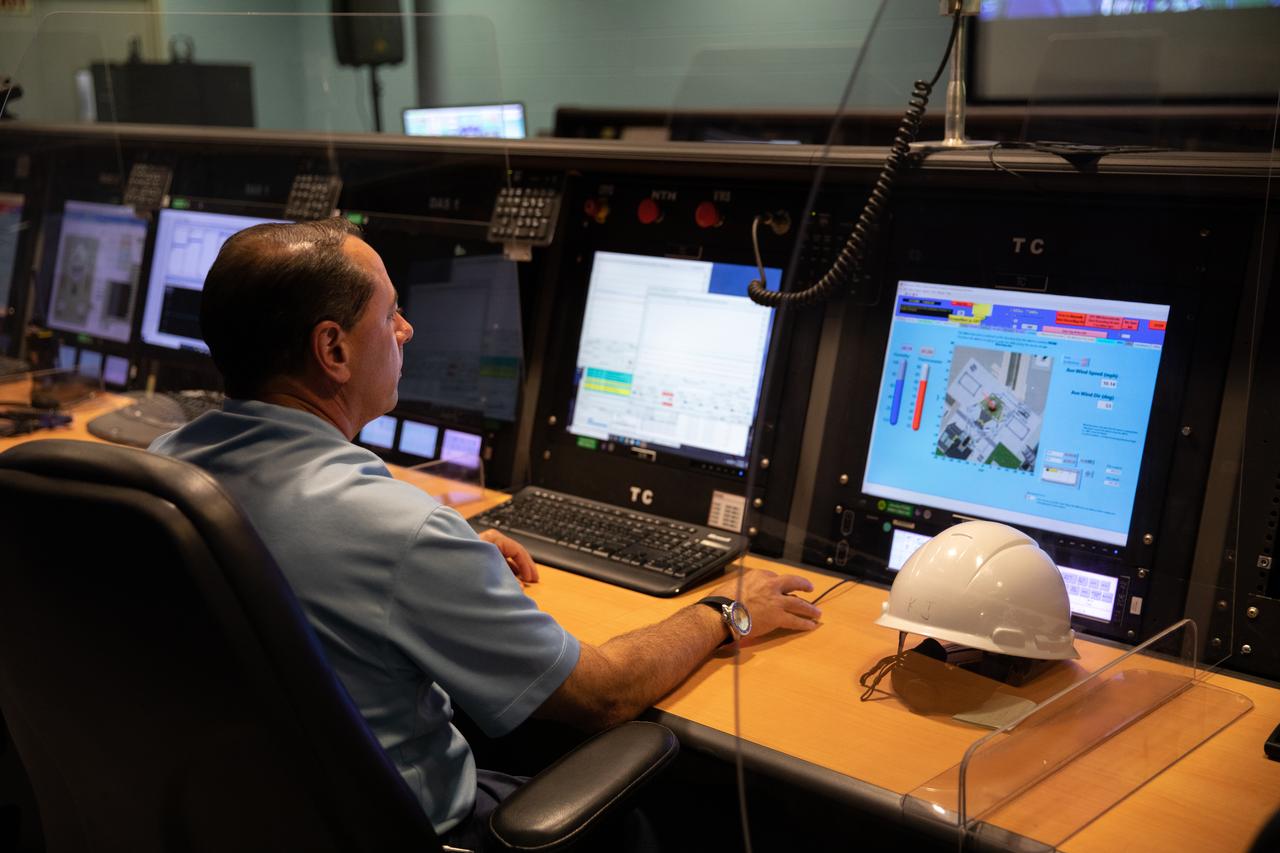
An engineer reviews test data inside a control room at the Launch Equipment Test Facility (LETF) on Oct. 19, 2020, at NASA’s Kennedy Space Center in Florida. The LETF is a unique set of structures, equipment and tools built to test full-scale umbilicals and release mechanisms for the space shuttle. The facility also was used to test the umbilicals and other mechanisms for the mobile launcher. The mobile launcher will carry the Space Launch System and Orion spacecraft to Launch Pad 39B for Artemis I, a mission that will test the rocket and spacecraft as an integrated system ahead of crewed flights to the Moon. NASA will land the first woman and the next man on the Moon in 2024.
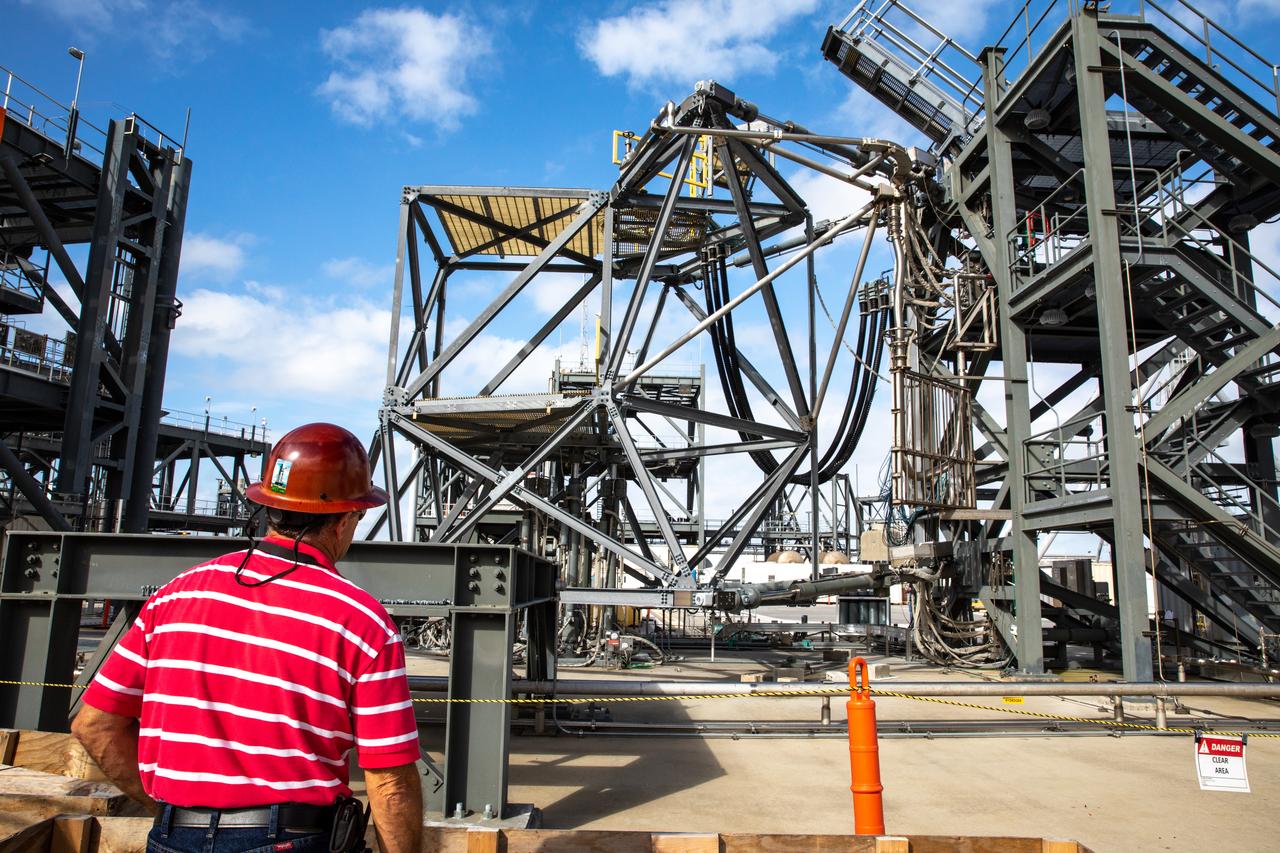
A view of one of the large test structures located at the Launch Equipment Test Facility (LETF) on Oct. 19, 2020, at NASA’s Kennedy Space Center in Florida. The LETF is a unique set of structures, equipment and tools built to test full-scale umbilicals and release mechanisms for the space shuttle. The facility also was used to test the umbilicals and other mechanisms for the mobile launcher. The mobile launcher will carry the Space Launch System and Orion spacecraft to Launch Pad 39B for Artemis I, a mission that will test the rocket and spacecraft as an integrated system ahead of crewed flights to the Moon. NASA will land the first woman and the next man on the Moon in 2024.
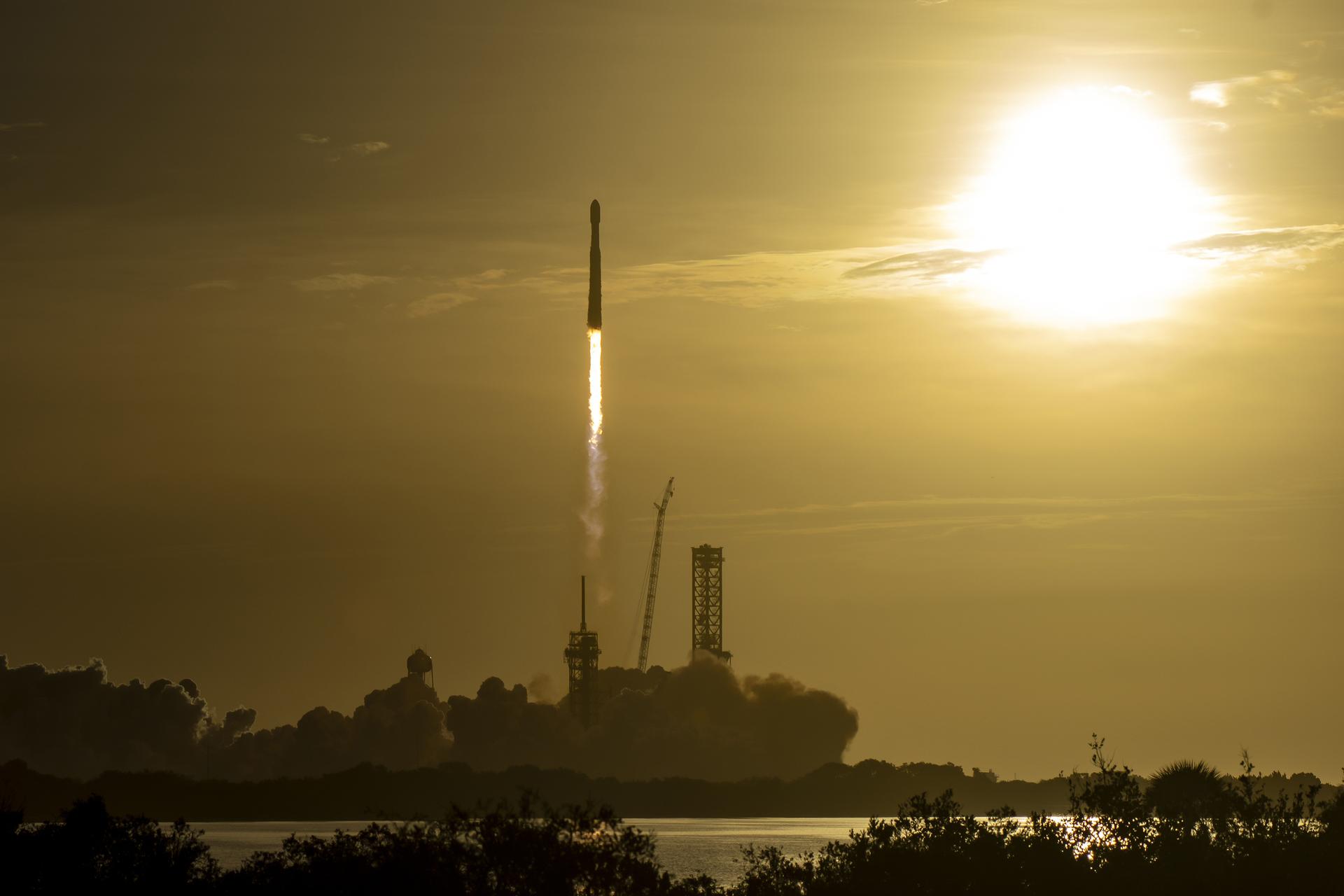
NASA’s Nancy Grace Roman Space Telescope rises to space atop a SpaceX Falcon Heavy rocket from Launch Complex 39A at the agency’s Kennedy Space Center in Florida on Sunday, Aug. 30, 2026. The milestone begins the observatory’s journey to explore the large‑scale structure of the universe. Roman will investigate dark energy and dark matter, conduct a statistical census of planetary systems, and enable a broad range of additional astrophysics research. Liftoff occurred at 7:26 a.m. EDT, from Kennedy’s Launch Complex 39A.
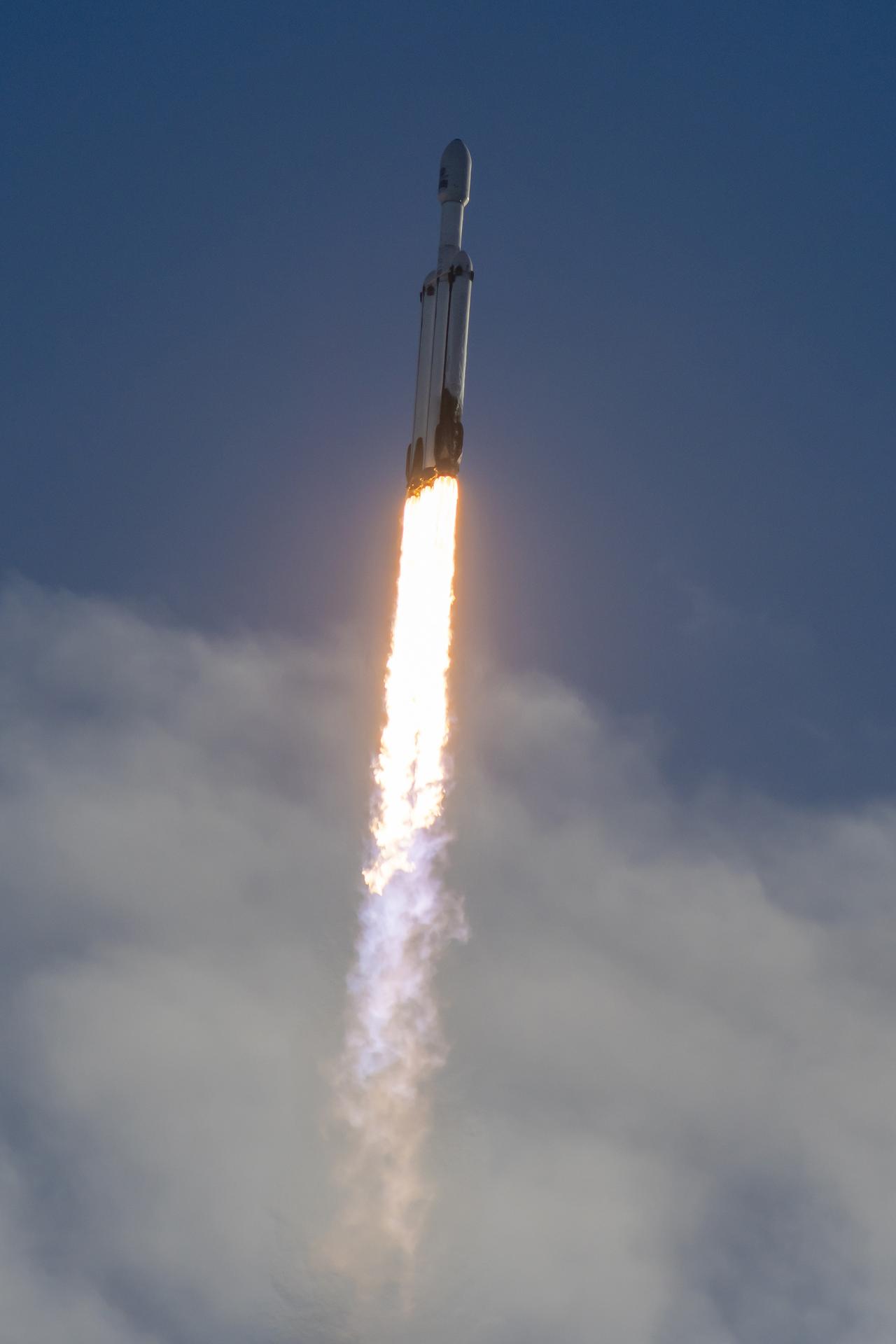
NASA’s Nancy Grace Roman Space Telescope rises to space atop a SpaceX Falcon Heavy rocket from Launch Complex 39A at the agency’s Kennedy Space Center in Florida on Sunday, Aug. 30, 2026. The milestone begins the observatory’s journey to explore the large‑scale structure of the universe. Roman will investigate dark energy and dark matter, conduct a statistical census of planetary systems, and enable a broad range of additional astrophysics research. Liftoff occurred at 7:26 a.m. EDT, from Kennedy’s Launch Complex 39A.
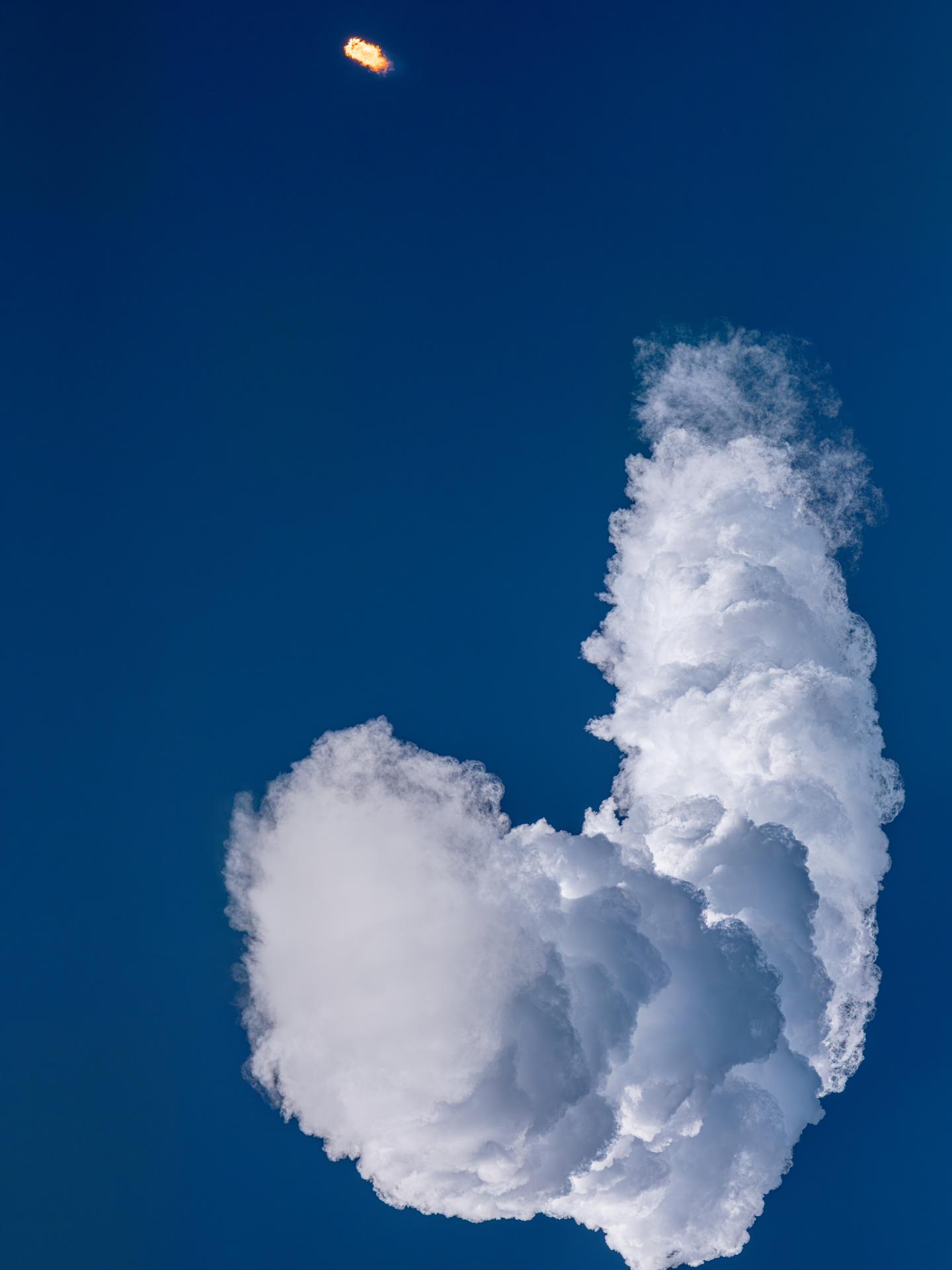
NASA’s Nancy Grace Roman Space Telescope rises to space atop a SpaceX Falcon Heavy rocket from Launch Complex 39A at the agency’s Kennedy Space Center in Florida on Sunday, Aug. 30, 2026. The milestone begins the observatory’s journey to explore the large‑scale structure of the universe. Roman will investigate dark energy and dark matter, conduct a statistical census of planetary systems, and enable a broad range of additional astrophysics research. Liftoff occurred at 7:26 a.m. EDT, from Kennedy’s Launch Complex 39A.
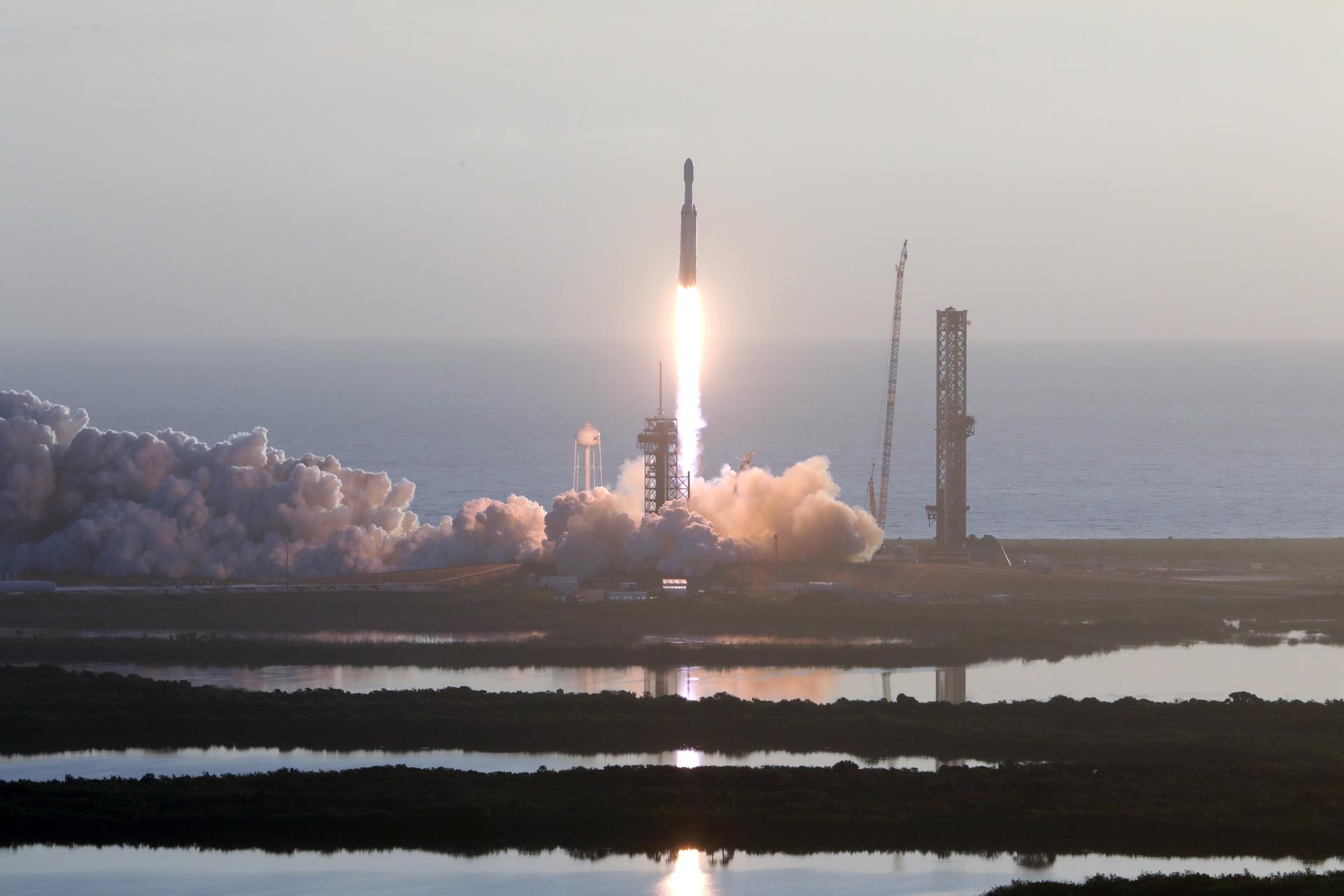
NASA’s Nancy Grace Roman Space Telescope rises to space atop a SpaceX Falcon Heavy rocket from Launch Complex 39A at the agency’s Kennedy Space Center in Florida on Sunday, Aug. 30, 2026. The milestone begins the observatory’s journey to explore the large‑scale structure of the universe. Roman will investigate dark energy and dark matter, conduct a statistical census of planetary systems, and enable a broad range of additional astrophysics research. Liftoff occurred at 7:26 a.m. EDT, from Kennedy’s Launch Complex 39A.
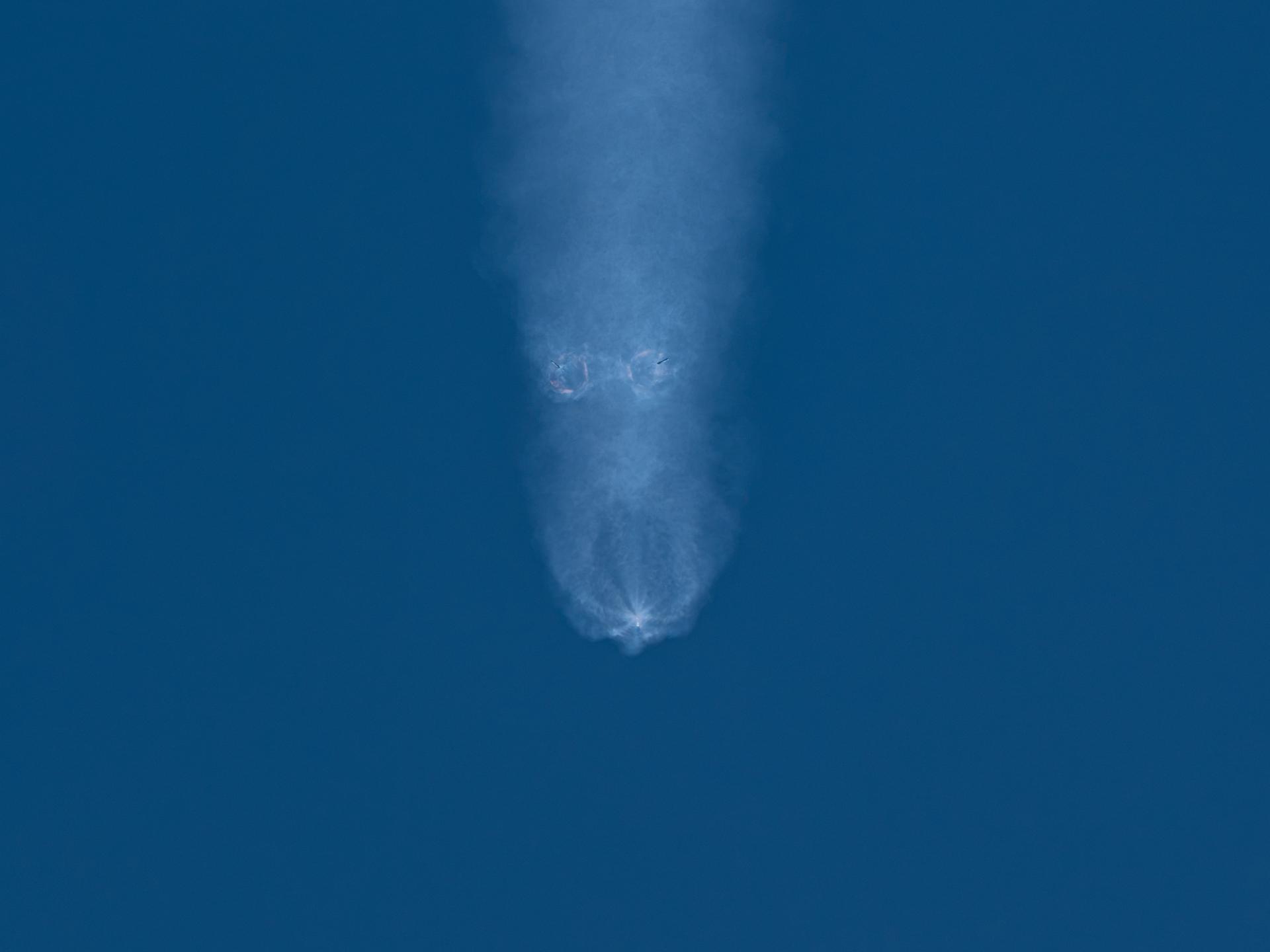
NASA’s Nancy Grace Roman Space Telescope rises to space atop a SpaceX Falcon Heavy rocket from Launch Complex 39A at the agency’s Kennedy Space Center in Florida on Sunday, Aug. 30, 2026. The milestone begins the observatory’s journey to explore the large‑scale structure of the universe. Roman will investigate dark energy and dark matter, conduct a statistical census of planetary systems, and enable a broad range of additional astrophysics research. Liftoff occurred at 7:26 a.m. EDT, from Kennedy’s Launch Complex 39A.
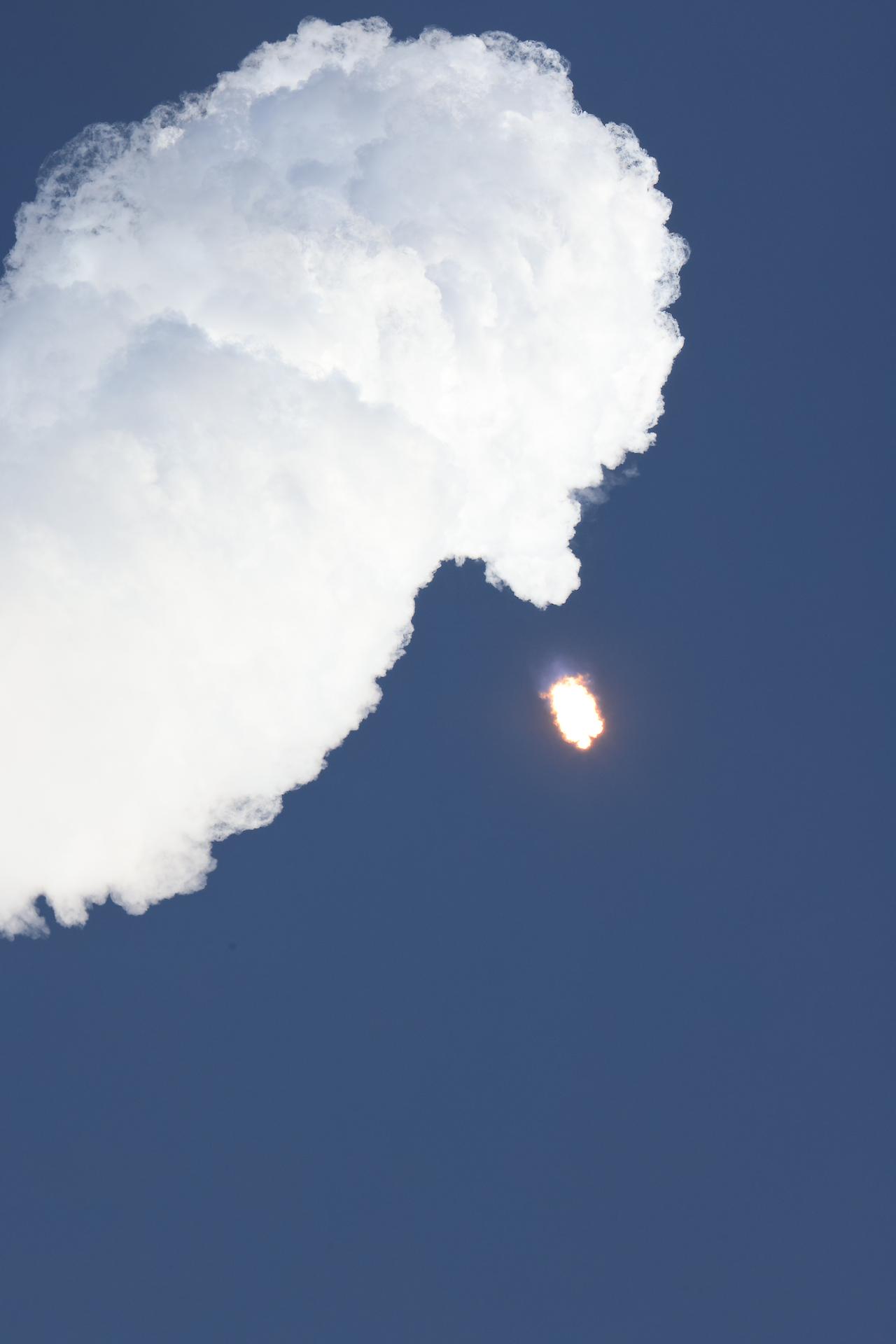
NASA’s Nancy Grace Roman Space Telescope rises to space atop a SpaceX Falcon Heavy rocket from Launch Complex 39A at the agency’s Kennedy Space Center in Florida on Sunday, Aug. 30, 2026. The milestone begins the observatory’s journey to explore the large‑scale structure of the universe. Roman will investigate dark energy and dark matter, conduct a statistical census of planetary systems, and enable a broad range of additional astrophysics research. Liftoff occurred at 7:26 a.m. EDT, from Kennedy’s Launch Complex 39A.
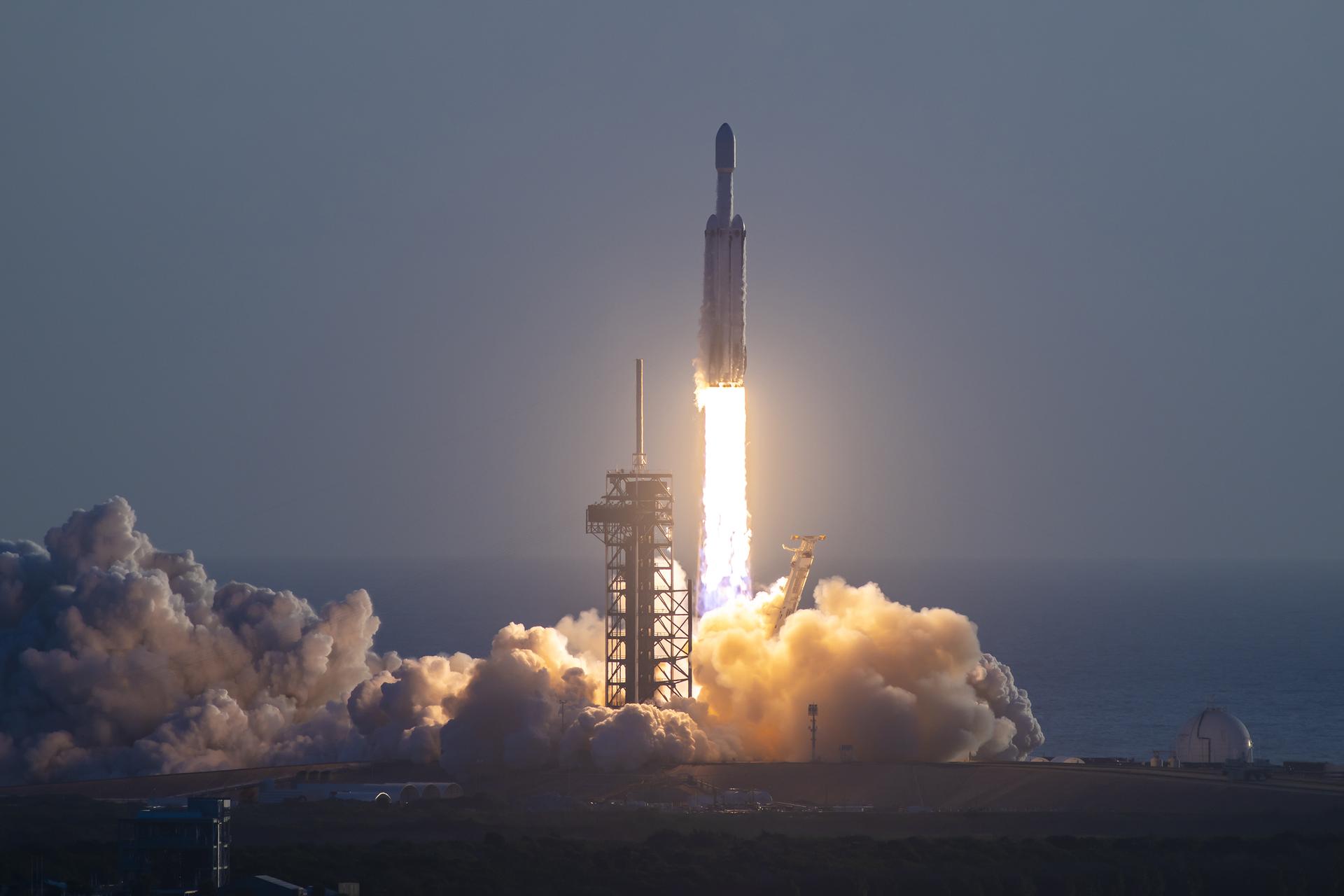
NASA’s Nancy Grace Roman Space Telescope rises to space atop a SpaceX Falcon Heavy rocket from Launch Complex 39A at the agency’s Kennedy Space Center in Florida on Sunday, Aug. 30, 2026. The milestone begins the observatory’s journey to explore the large‑scale structure of the universe. Roman will investigate dark energy and dark matter, conduct a statistical census of planetary systems, and enable a broad range of additional astrophysics research. Liftoff occurred at 7:26 a.m. EDT, from Kennedy’s Launch Complex 39A.
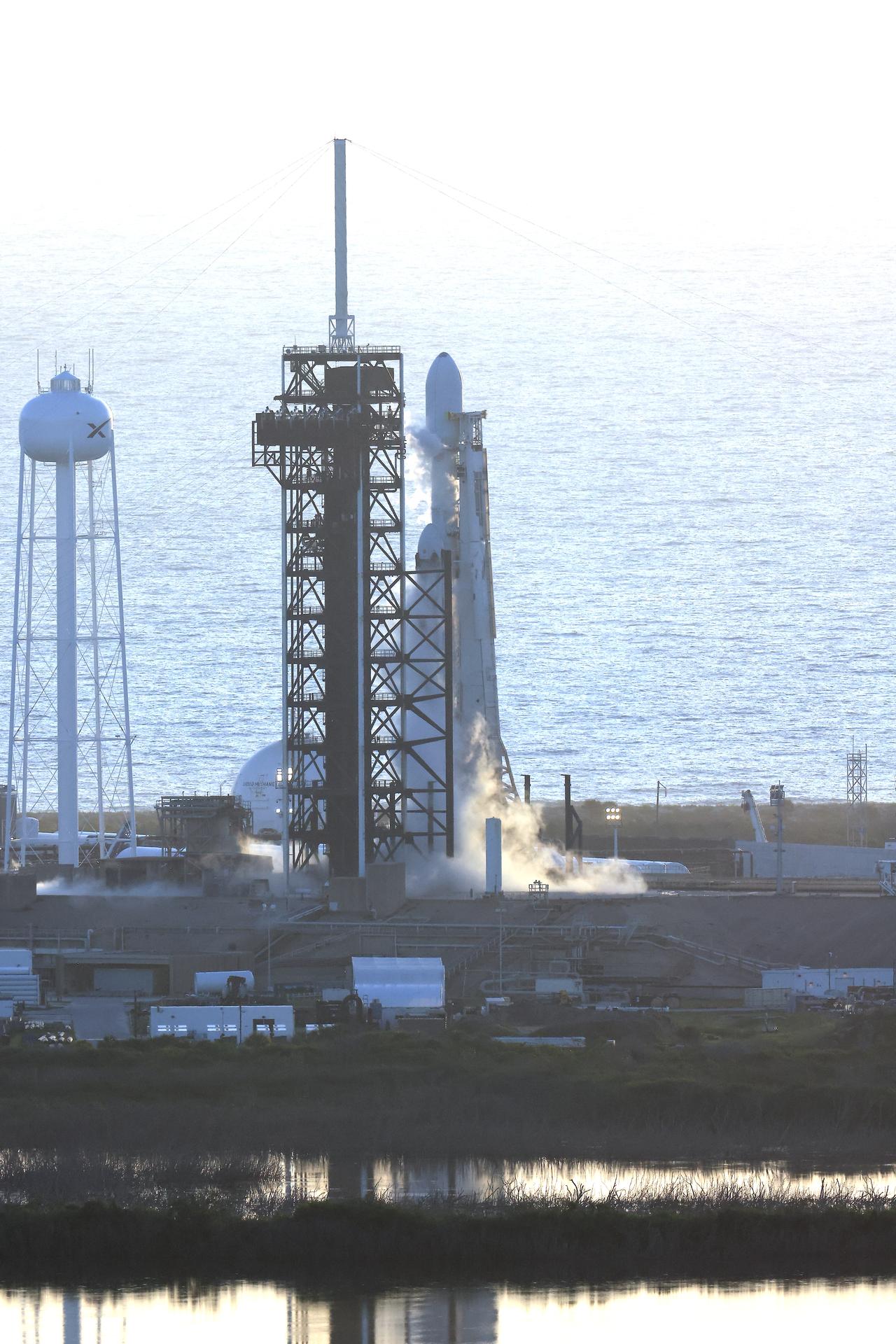
NASA’s Nancy Grace Roman Space Telescope rises to space atop a SpaceX Falcon Heavy rocket from Launch Complex 39A at the agency’s Kennedy Space Center in Florida on Sunday, Aug. 30, 2026. The milestone begins the observatory’s journey to explore the large‑scale structure of the universe. Roman will investigate dark energy and dark matter, conduct a statistical census of planetary systems, and enable a broad range of additional astrophysics research. Liftoff occurred at 7:26 a.m. EDT, from Kennedy’s Launch Complex 39A.
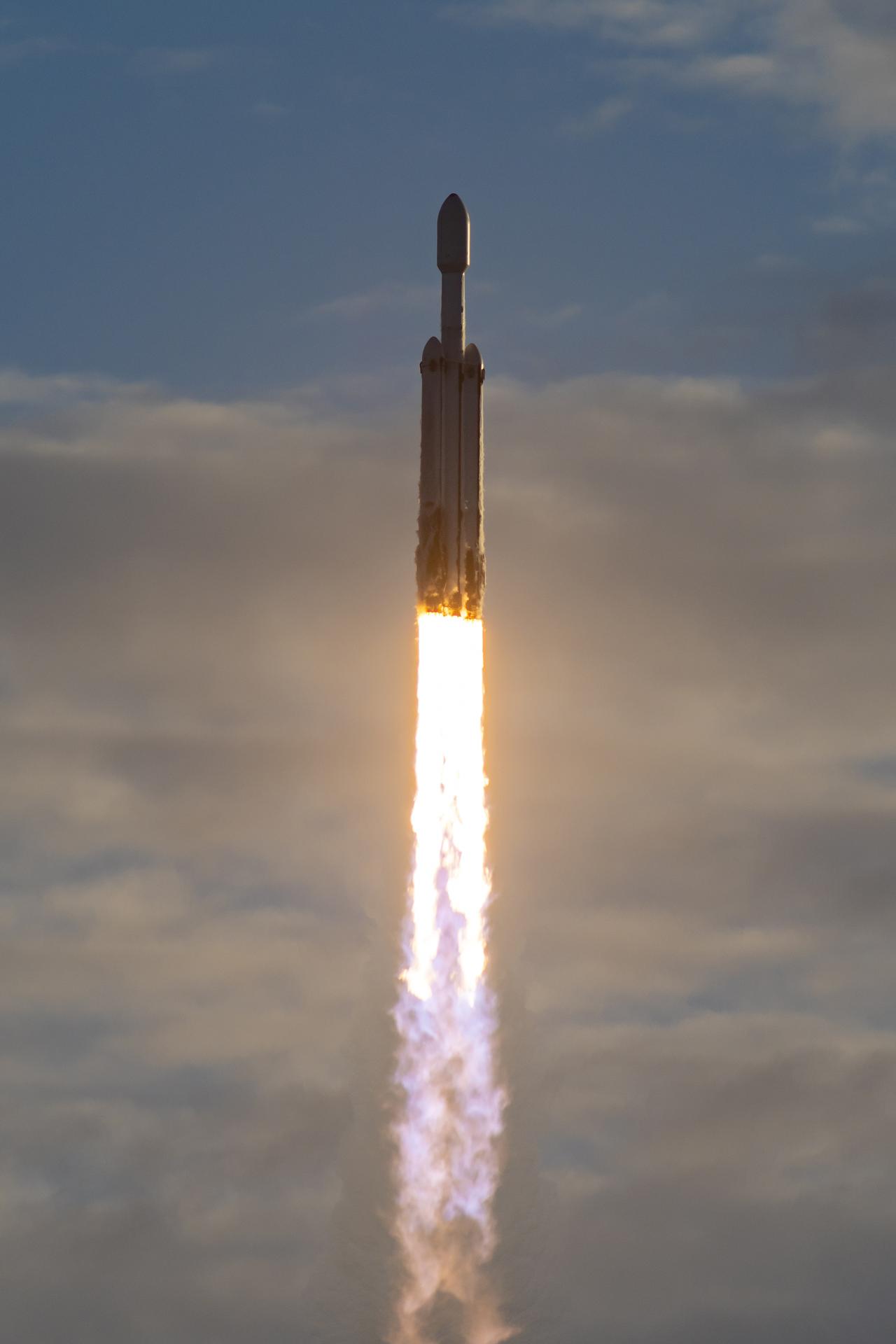
NASA’s Nancy Grace Roman Space Telescope rises to space atop a SpaceX Falcon Heavy rocket from Launch Complex 39A at the agency’s Kennedy Space Center in Florida on Sunday, Aug. 30, 2026. The milestone begins the observatory’s journey to explore the large‑scale structure of the universe. Roman will investigate dark energy and dark matter, conduct a statistical census of planetary systems, and enable a broad range of additional astrophysics research. Liftoff occurred at 7:26 a.m. EDT, from Kennedy’s Launch Complex 39A.
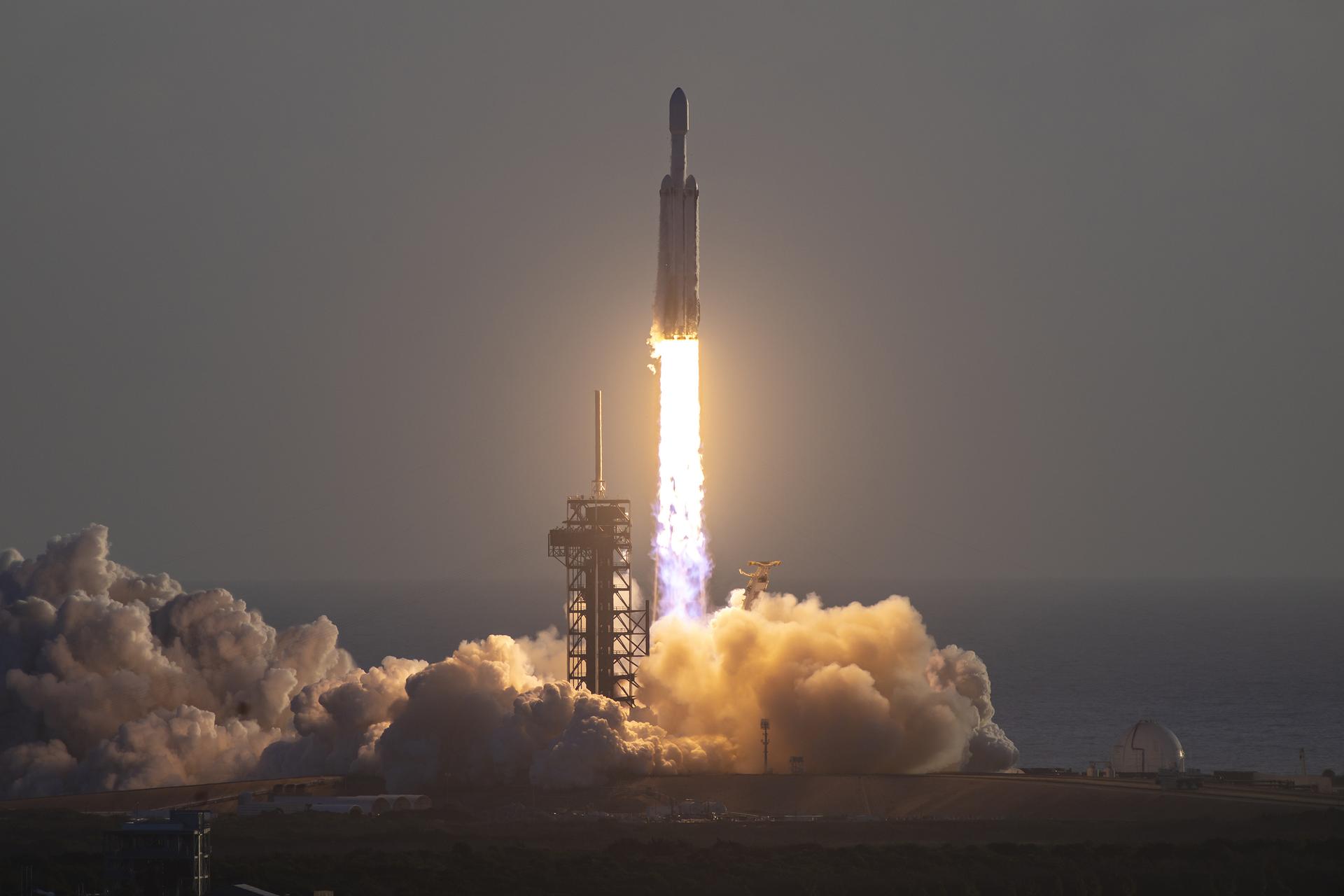
NASA’s Nancy Grace Roman Space Telescope rises to space atop a SpaceX Falcon Heavy rocket from Launch Complex 39A at the agency’s Kennedy Space Center in Florida on Sunday, Aug. 30, 2026. The milestone begins the observatory’s journey to explore the large‑scale structure of the universe. Roman will investigate dark energy and dark matter, conduct a statistical census of planetary systems, and enable a broad range of additional astrophysics research. Liftoff occurred at 7:26 a.m. EDT, from Kennedy’s Launch Complex 39A.
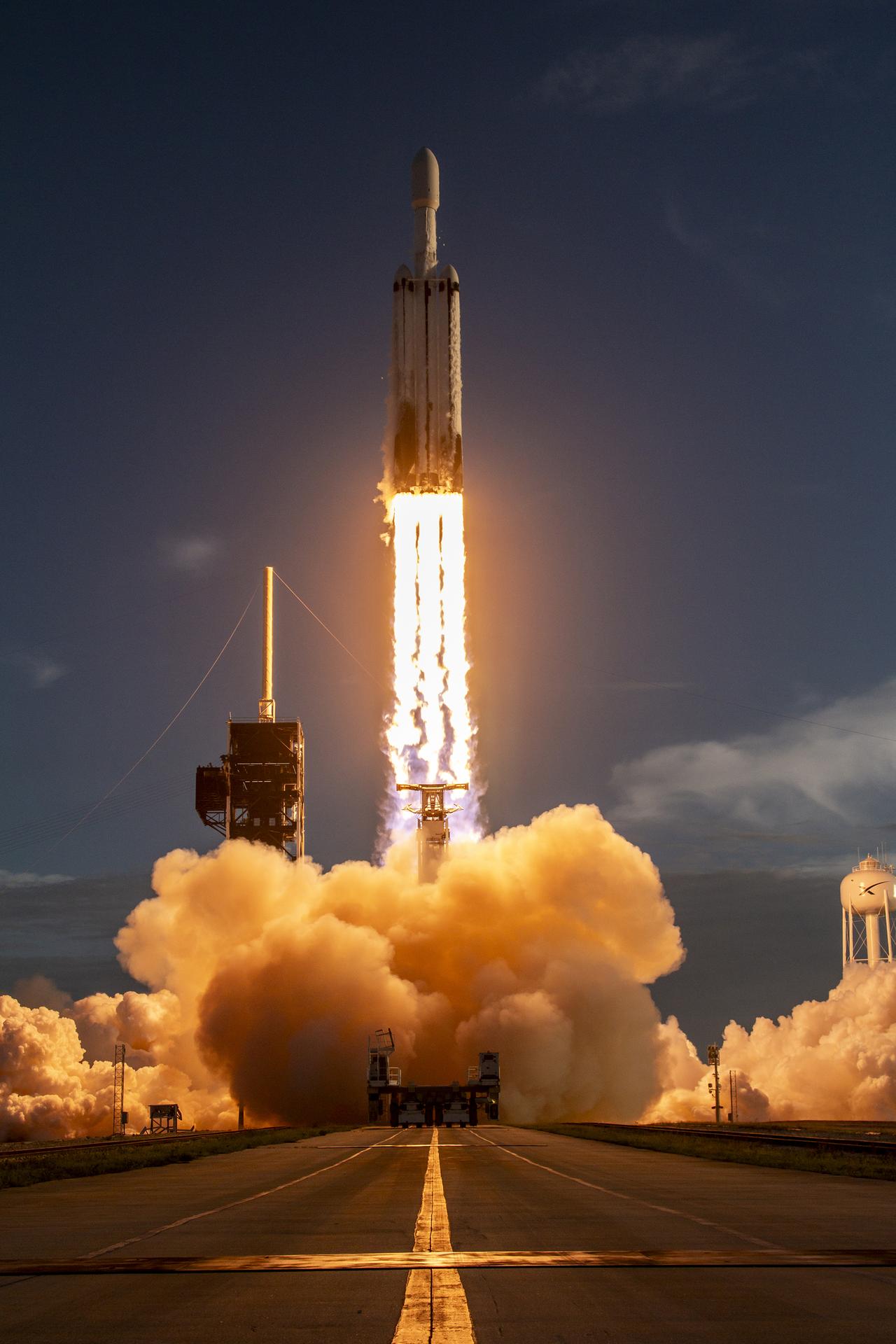
NASA’s Nancy Grace Roman Space Telescope rises to space atop a SpaceX Falcon Heavy rocket from Launch Complex 39A at the agency’s Kennedy Space Center in Florida on Sunday, Aug. 30, 2026. The milestone begins the observatory’s journey to explore the large‑scale structure of the universe. Roman will investigate dark energy and dark matter, conduct a statistical census of planetary systems, and enable a broad range of additional astrophysics research. Liftoff occurred at 7:26 a.m. EDT, from Kennedy’s Launch Complex 39A.
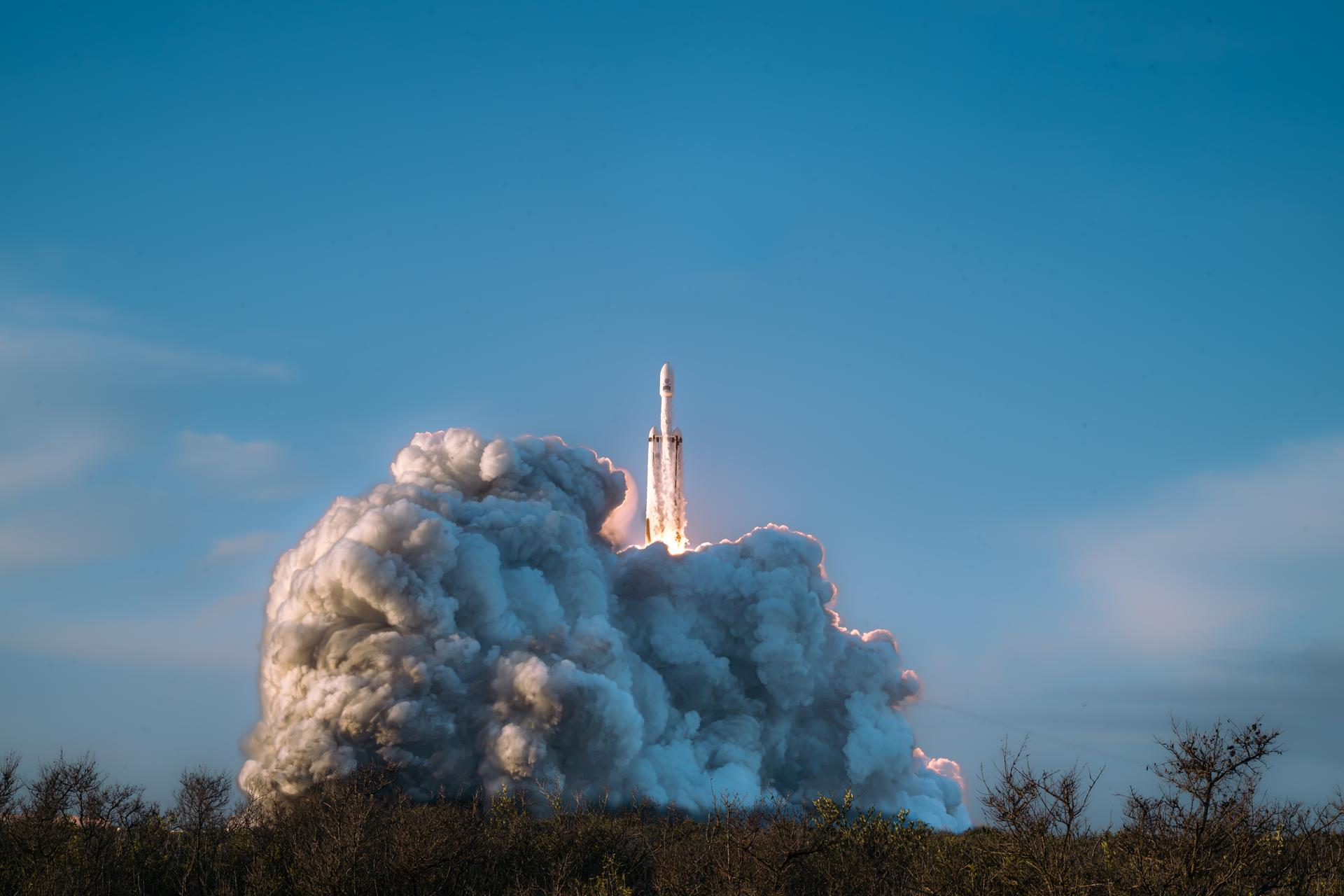
NASA’s Nancy Grace Roman Space Telescope rises to space atop a SpaceX Falcon Heavy rocket from Launch Complex 39A at the agency’s Kennedy Space Center in Florida on Sunday, Aug. 30, 2026. The milestone begins the observatory’s journey to explore the large‑scale structure of the universe. Roman will investigate dark energy and dark matter, conduct a statistical census of planetary systems, and enable a broad range of additional astrophysics research. Liftoff occurred at 7:26 a.m. EDT, from Kennedy’s Launch Complex 39A.
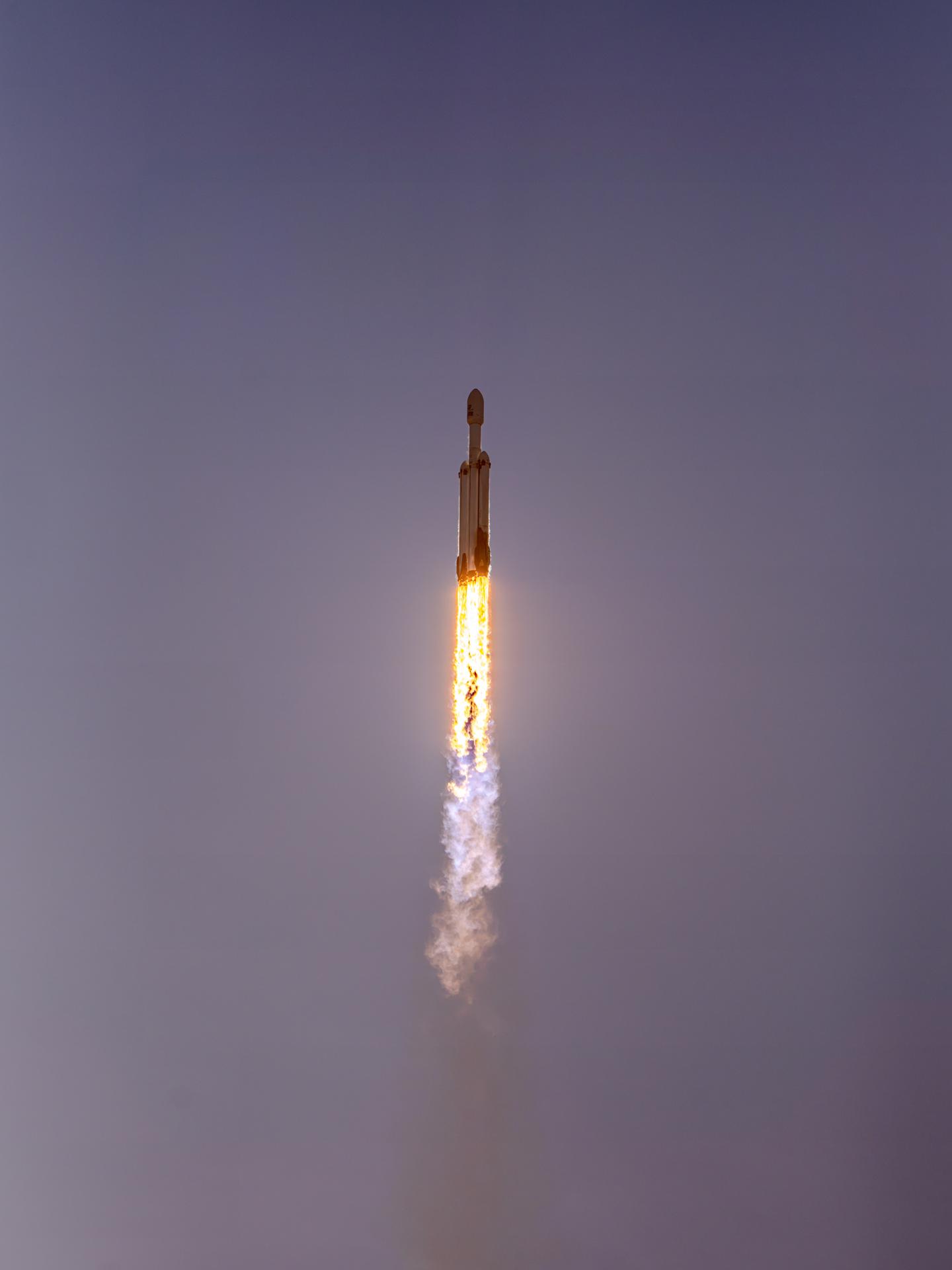
NASA’s Nancy Grace Roman Space Telescope rises to space atop a SpaceX Falcon Heavy rocket from Launch Complex 39A at the agency’s Kennedy Space Center in Florida on Sunday, Aug. 30, 2026. The milestone begins the observatory’s journey to explore the large‑scale structure of the universe. Roman will investigate dark energy and dark matter, conduct a statistical census of planetary systems, and enable a broad range of additional astrophysics research. Liftoff occurred at 7:26 a.m. EDT, from Kennedy’s Launch Complex 39A.
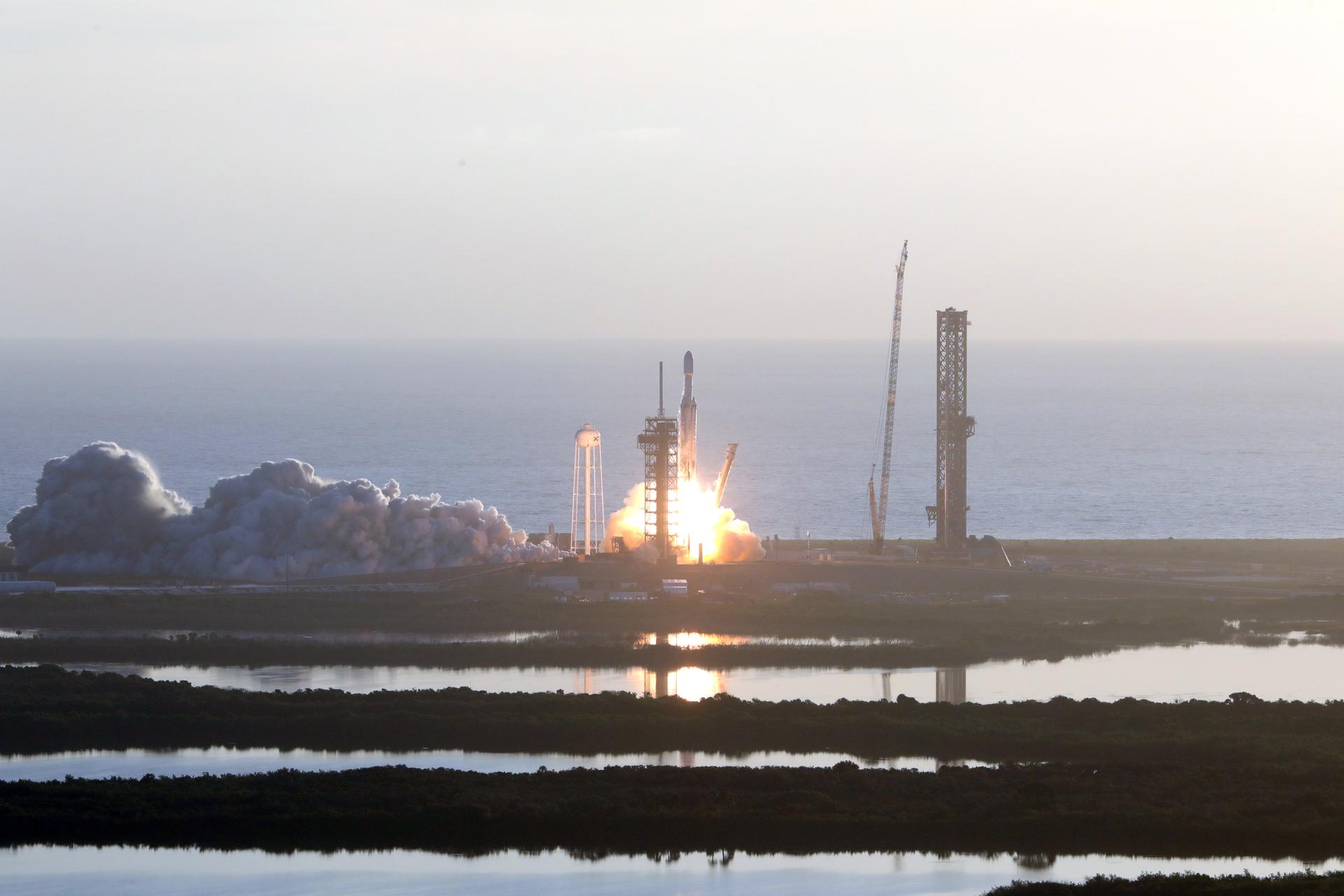
NASA’s Nancy Grace Roman Space Telescope rises to space atop a SpaceX Falcon Heavy rocket from Launch Complex 39A at the agency’s Kennedy Space Center in Florida on Sunday, Aug. 30, 2026. The milestone begins the observatory’s journey to explore the large‑scale structure of the universe. Roman will investigate dark energy and dark matter, conduct a statistical census of planetary systems, and enable a broad range of additional astrophysics research. Liftoff occurred at 7:26 a.m. EDT, from Kennedy’s Launch Complex 39A.
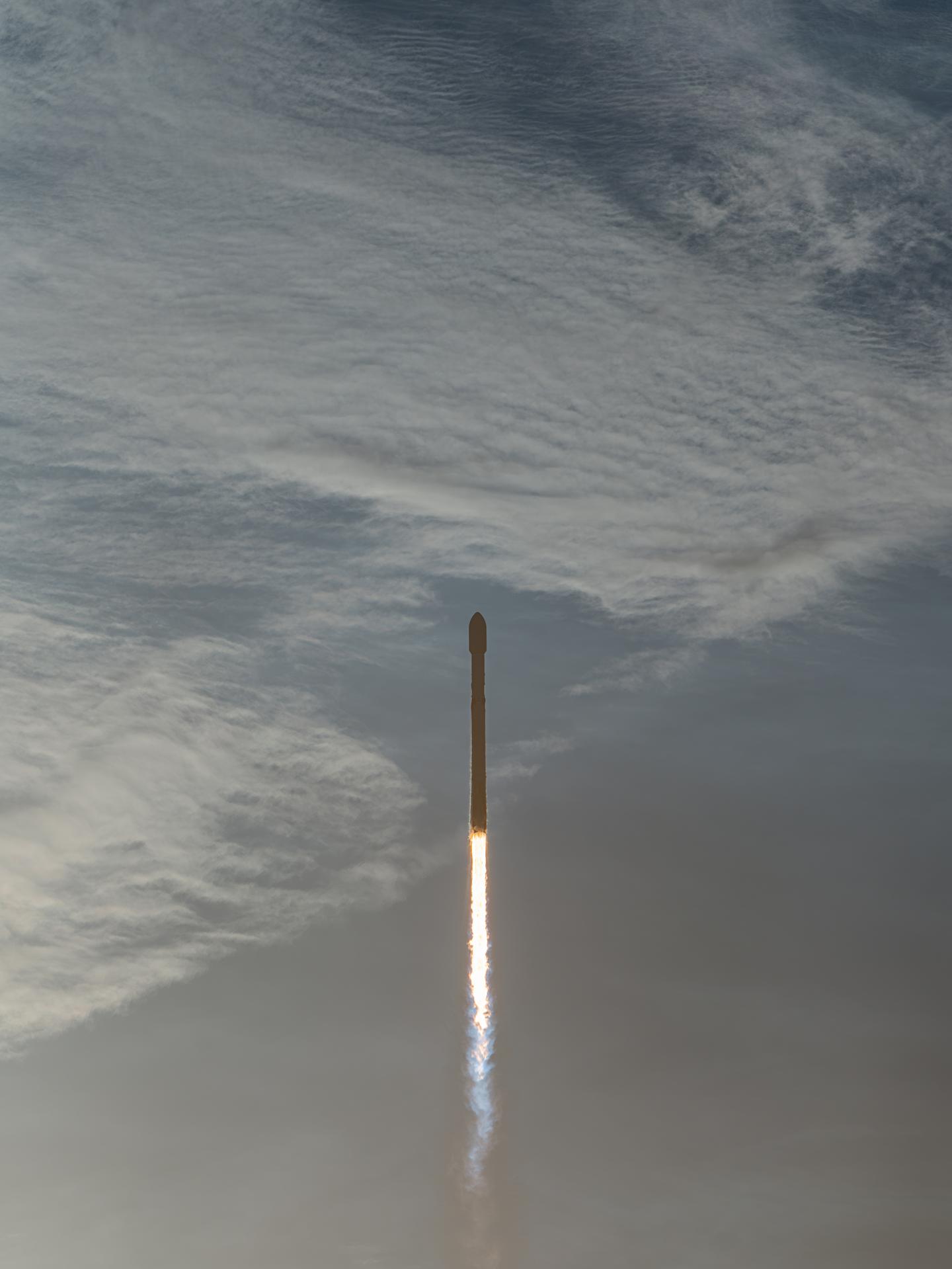
NASA’s Nancy Grace Roman Space Telescope rises to space atop a SpaceX Falcon Heavy rocket from Launch Complex 39A at the agency’s Kennedy Space Center in Florida on Sunday, Aug. 30, 2026. The milestone begins the observatory’s journey to explore the large‑scale structure of the universe. Roman will investigate dark energy and dark matter, conduct a statistical census of planetary systems, and enable a broad range of additional astrophysics research. Liftoff occurred at 7:26 a.m. EDT, from Kennedy’s Launch Complex 39A.
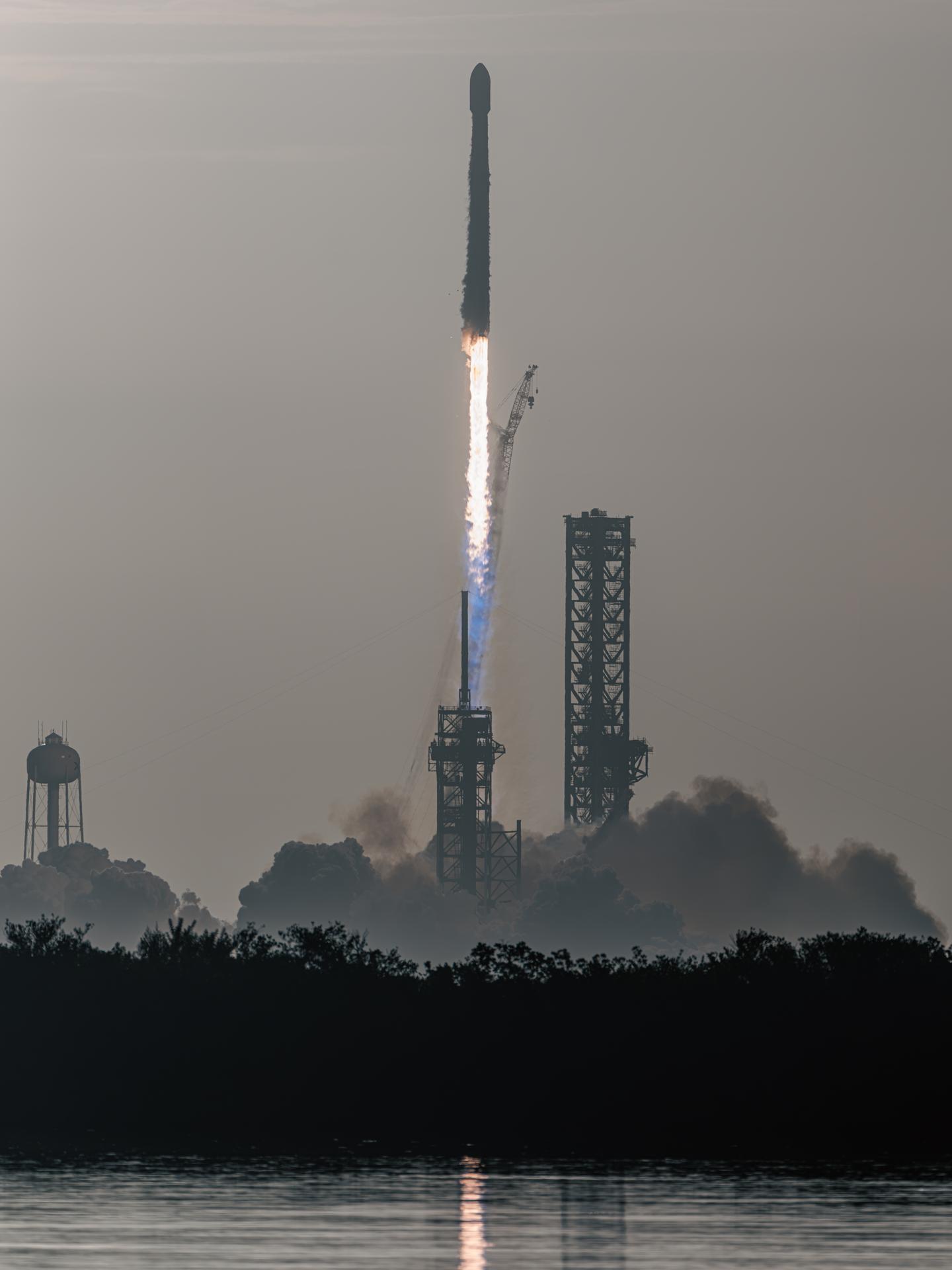
NASA’s Nancy Grace Roman Space Telescope rises to space atop a SpaceX Falcon Heavy rocket from Launch Complex 39A at the agency’s Kennedy Space Center in Florida on Sunday, Aug. 30, 2026. The milestone begins the observatory’s journey to explore the large‑scale structure of the universe. Roman will investigate dark energy and dark matter, conduct a statistical census of planetary systems, and enable a broad range of additional astrophysics research. Liftoff occurred at 7:26 a.m. EDT, from Kennedy’s Launch Complex 39A.
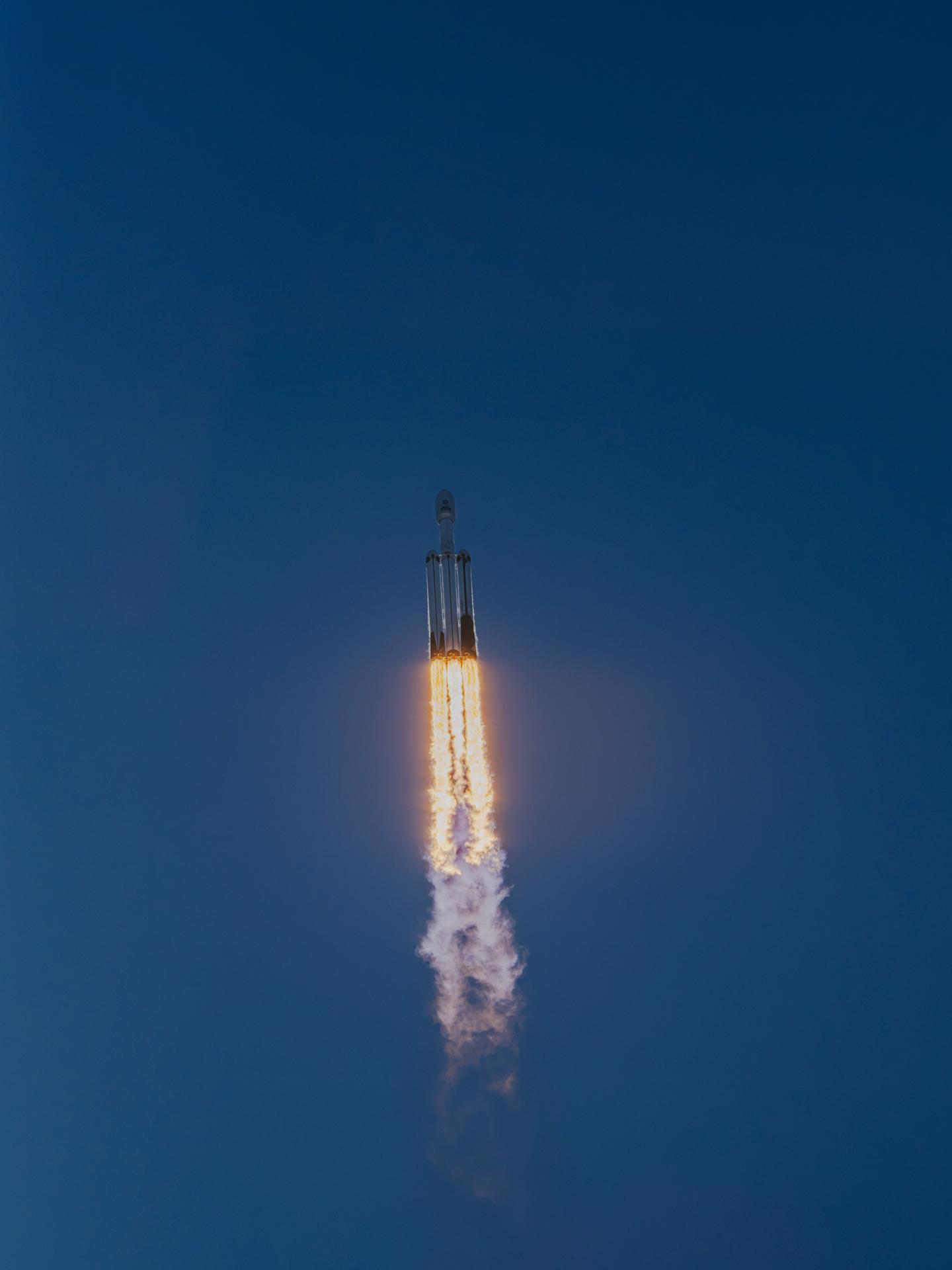
NASA’s Nancy Grace Roman Space Telescope rises to space atop a SpaceX Falcon Heavy rocket from Launch Complex 39A at the agency’s Kennedy Space Center in Florida on Sunday, Aug. 30, 2026. The milestone begins the observatory’s journey to explore the large‑scale structure of the universe. Roman will investigate dark energy and dark matter, conduct a statistical census of planetary systems, and enable a broad range of additional astrophysics research. Liftoff occurred at 7:26 a.m. EDT, from Kennedy’s Launch Complex 39A.
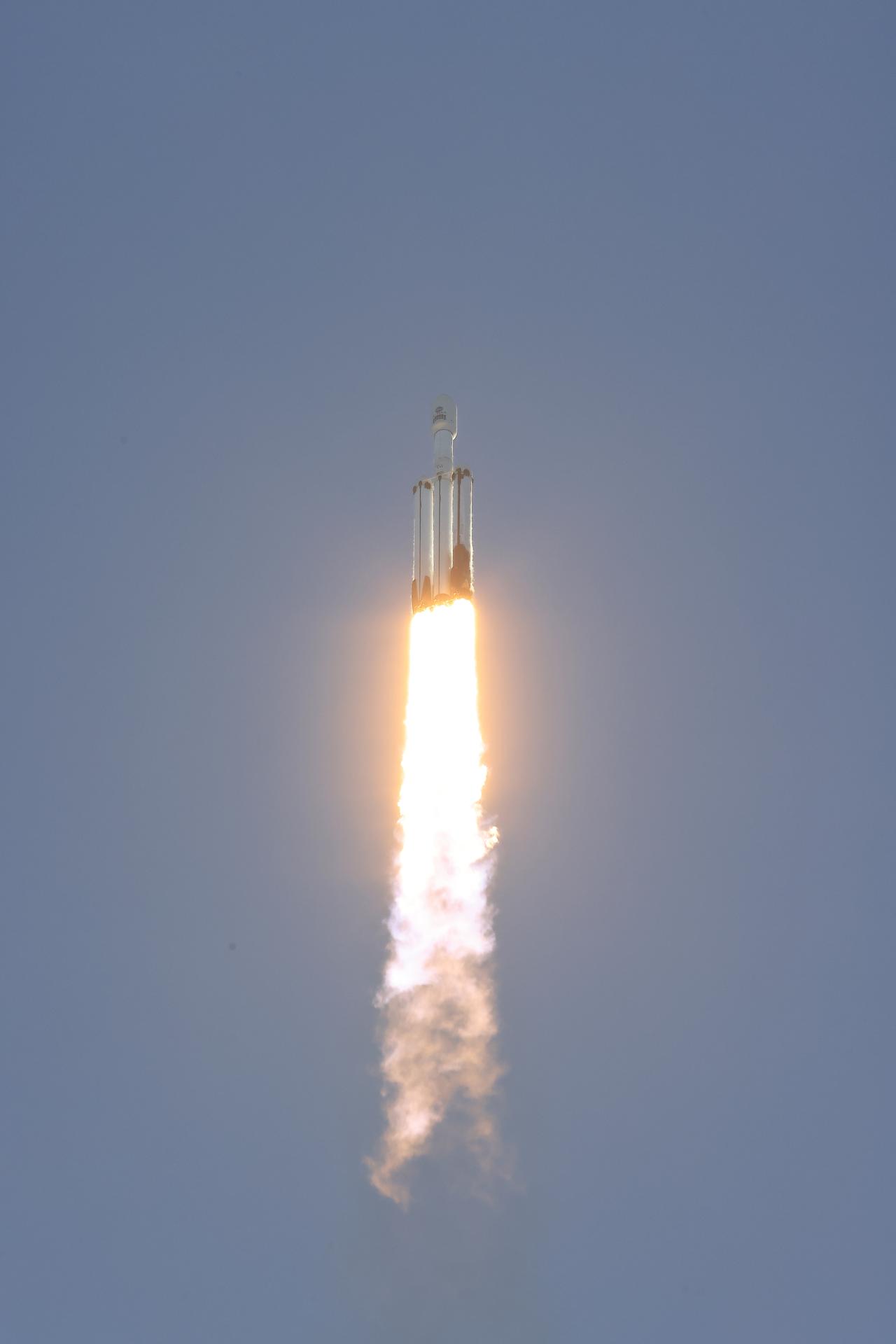
NASA’s Nancy Grace Roman Space Telescope rises to space atop a SpaceX Falcon Heavy rocket from Launch Complex 39A at the agency’s Kennedy Space Center in Florida on Sunday, Aug. 30, 2026. The milestone begins the observatory’s journey to explore the large‑scale structure of the universe. Roman will investigate dark energy and dark matter, conduct a statistical census of planetary systems, and enable a broad range of additional astrophysics research. Liftoff occurred at 7:26 a.m. EDT, from Kennedy’s Launch Complex 39A.
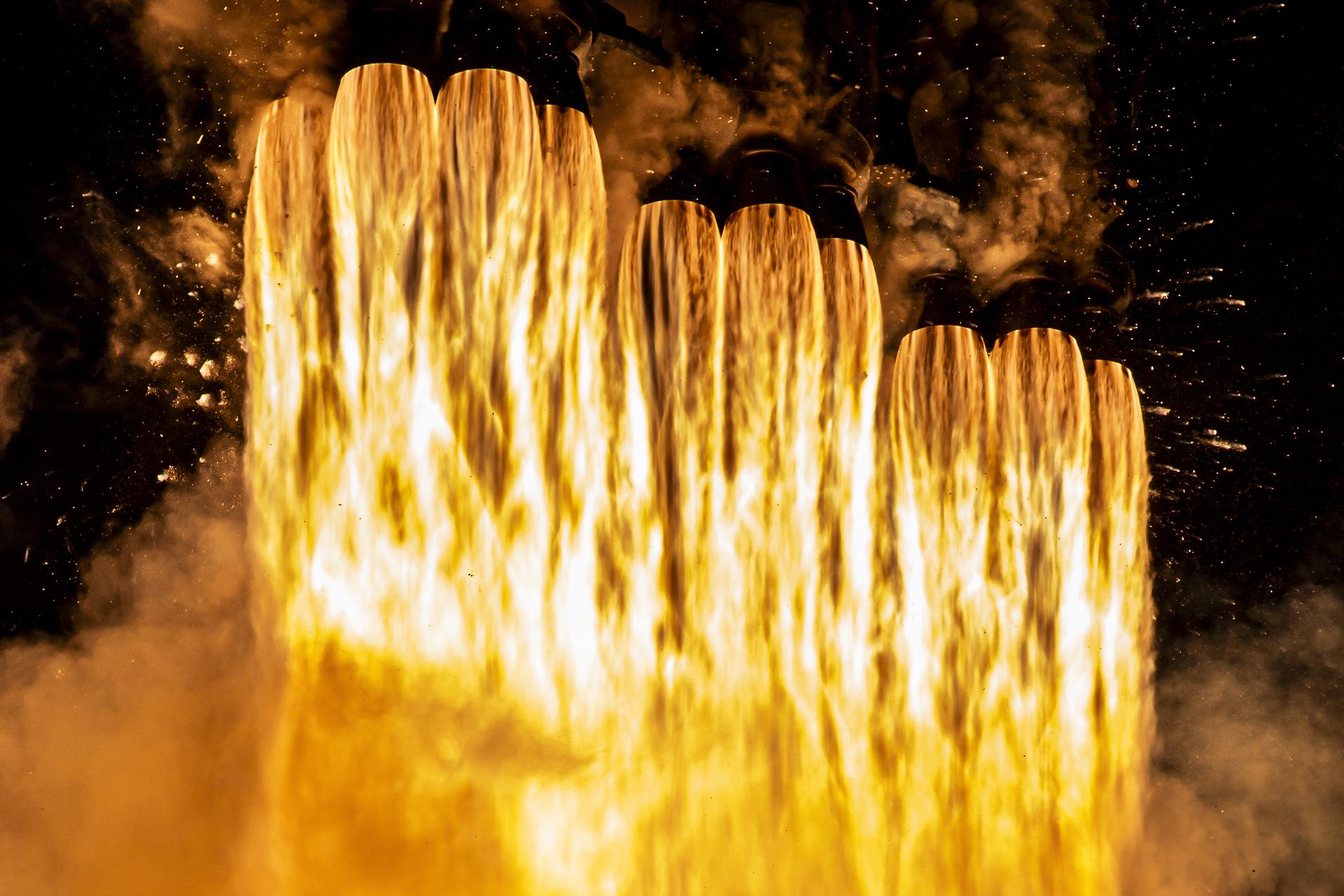
A close view shows the 27 Merlin engines of the SpaceX Falcon Heavy rocket that launched NASA’s Nancy Grace Roman Space Telescope from Launch Complex 39A at the agency’s Kennedy Space Center in Florida on Sunday, Aug. 30, 2026. The milestone begins the observatory’s journey to explore the large‑scale structure of the universe. Roman will investigate dark energy and dark matter, conduct a statistical census of planetary systems, and enable a broad range of additional astrophysics research.
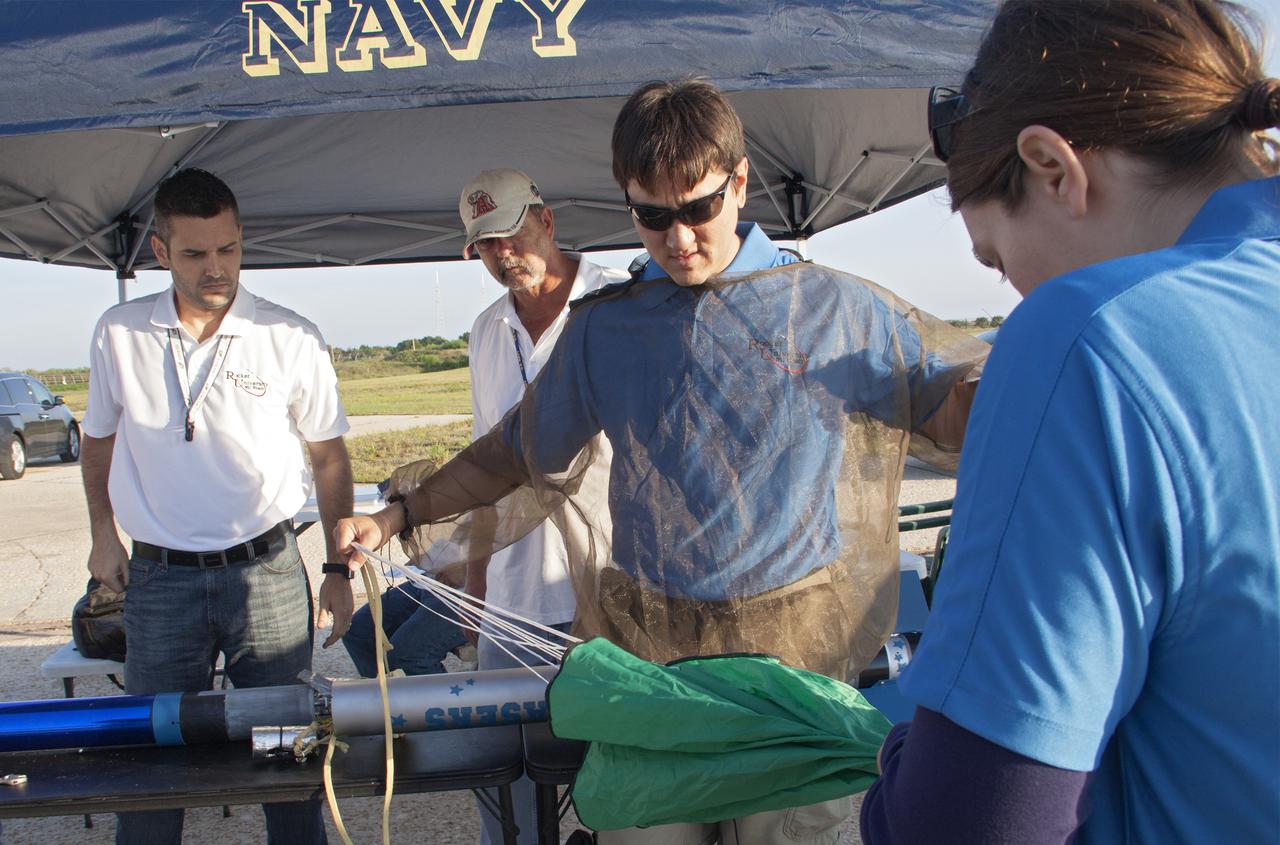
CAPE CANAVERAL, Fla. -- At NASA's Kennedy Space Center in Florida, from the left, Leandro James of Systems Hardware Engineering, George Mizell of Quality Assurance, Morgan Simpson of Flight Hardware Processing and Kim Simpson of Fluids, Mechanical and Structural Systems prepare a parachute for a small rocket prior to launch as part of Rocket University. The goal was to test its systems and to verify that it performed as designed. As part of Rocket University, the engineers are given an opportunity to work a fast-track project to develop skills in developing spacecraft systems of the future. As NASA plans for future spaceflight programs to low-Earth orbit and beyond, teams of engineers at Kennedy are gaining experience in designing and flying launch vehicle systems on a small scale. Four teams of five to eight members from Kennedy are designing rockets complete with avionics and recovery systems. Launch operations require coordination with federal agencies, just as they would with rockets launched in support of a NASA mission. Photo credit: NASA_Jim Grossmann
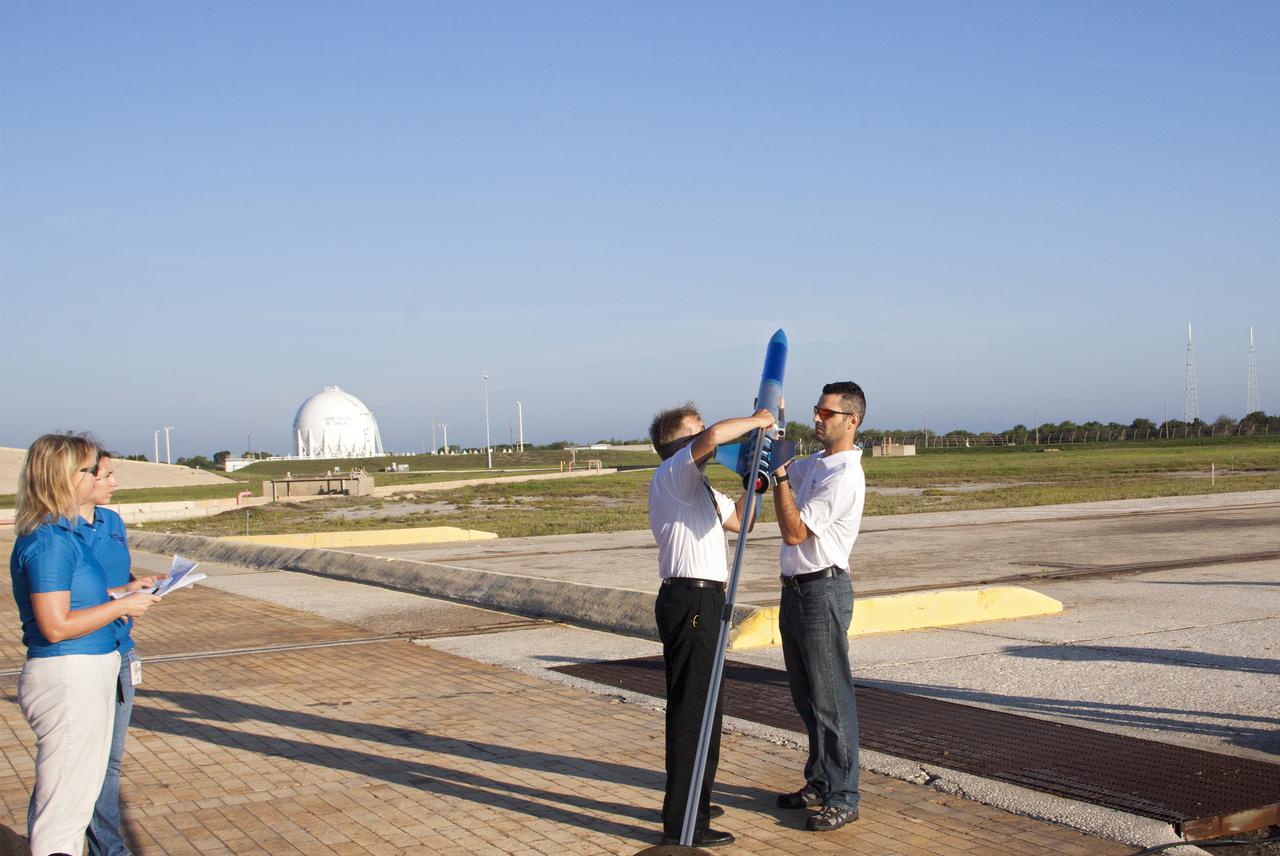
CAPE CANAVERAL, Fla. -- At NASA's Kennedy Space Center in Florida, as Susan Danley of Flight Structures and Kim Simpson of Fluids, Mechanical and Structural Systems look on, Gary Dahlke of Engineering and Technology, left, and Leandro James of Systems Hardware Engineering attach a small rocket prior to its launch stand as part of Rocket University. The goal was to test its systems and to verify that it performed as designed. As part of Rocket University, the engineers are given an opportunity to work a fast-track project to develop skills in developing spacecraft systems of the future. As NASA plans for future spaceflight programs to low-Earth orbit and beyond, teams of engineers at Kennedy are gaining experience in designing and flying launch vehicle systems on a small scale. Four teams of five to eight members from Kennedy are designing rockets complete with avionics and recovery systems. Launch operations require coordination with federal agencies, just as they would with rockets launched in support of a NASA mission. Photo credit: NASA_Jim Grossmann
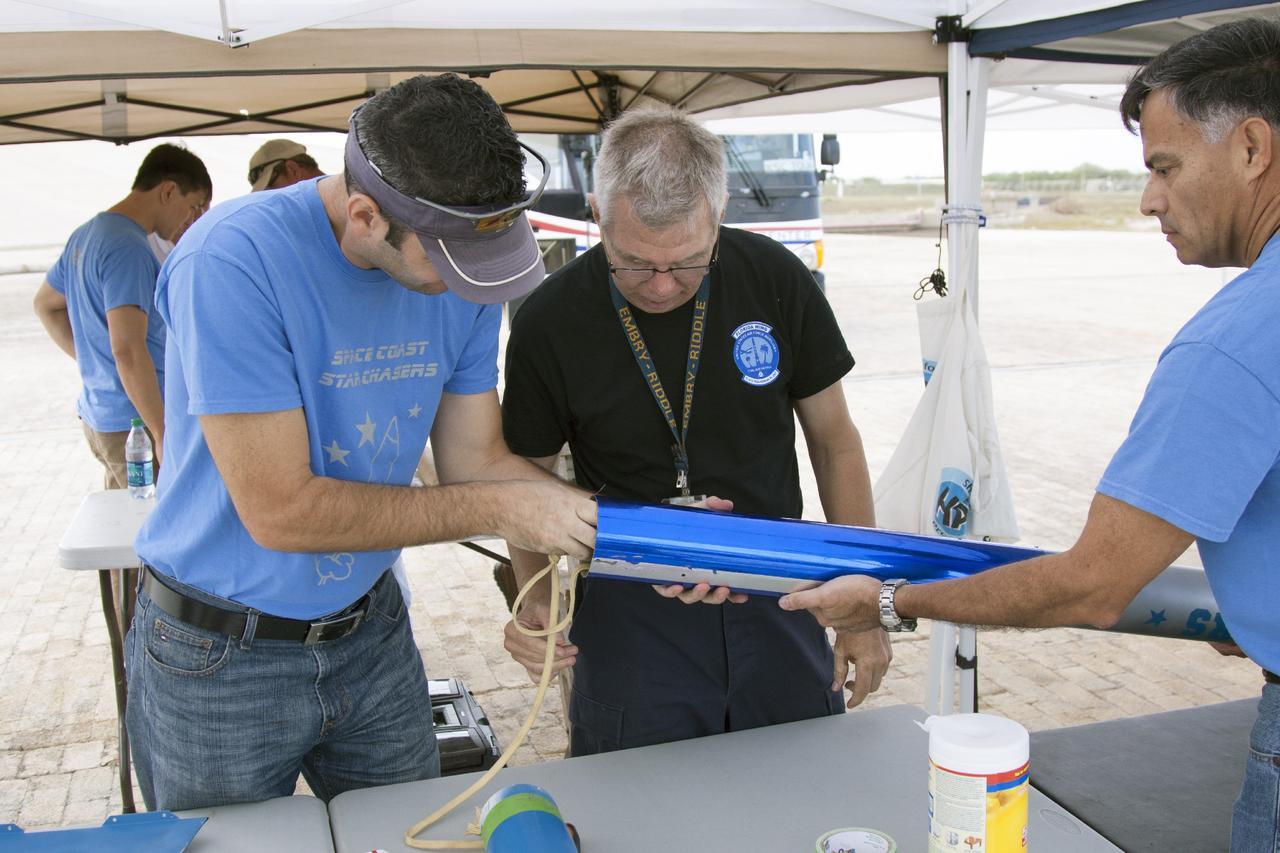
CAPE CANAVERAL, Fla. -- At NASA's Kennedy Space Center in Florida, from the left, Leandro James, rocket avionics lead, Gary Dahlke, high powered rocket subject matter expert, and Julio Najarro of Mechanical Systems make final adjustments to a small rocket prior to launch as part of Rocket University. The launch will test systems designed by the student engineers. As part of Rocket University, the engineers are given an opportunity to work a fast-track project to develop skills in developing spacecraft systems of the future. As NASA plans for future spaceflight programs to low-Earth orbit and beyond, teams of engineers at Kennedy are gaining experience in designing and flying launch vehicle systems on a small scale. Four teams of five to eight members from Kennedy are designing rockets complete with avionics and recovery systems. Launch operations require coordination with federal agencies, just as they would with rockets launched in support of a NASA mission. Photo credit: NASA/Jim Grossmann
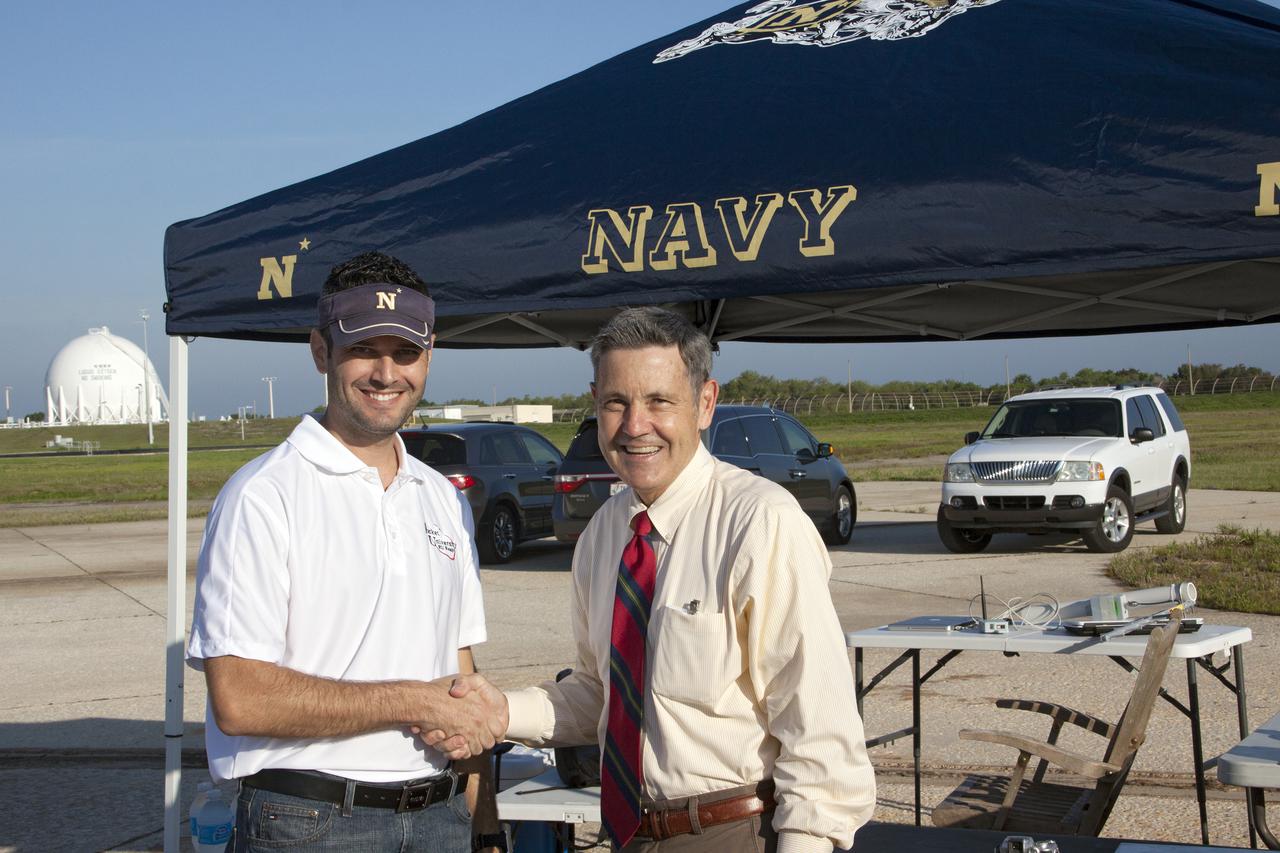
CAPE CANAVERAL, Fla. -- At NASA's Kennedy Space Center in Florida, center director Bob Cabana congratulates Leandro James of Systems Hardware Engineering after the successful launch of a small rocket at Launch Pad 39A as part of Rocket University. The goal was to test its systems and to verify that it performed as designed. As part of Rocket University, the engineers are given an opportunity to work a fast-track project to develop skills in developing spacecraft systems of the future. As NASA plans for future spaceflight programs to low-Earth orbit and beyond, teams of engineers at Kennedy are gaining experience in designing and flying launch vehicle systems on a small scale. Four teams of five to eight members from Kennedy are designing rockets complete with avionics and recovery systems. Launch operations require coordination with federal agencies, just as they would with rockets launched in support of a NASA mission. Photo credit: NASA_Jim Grossmann
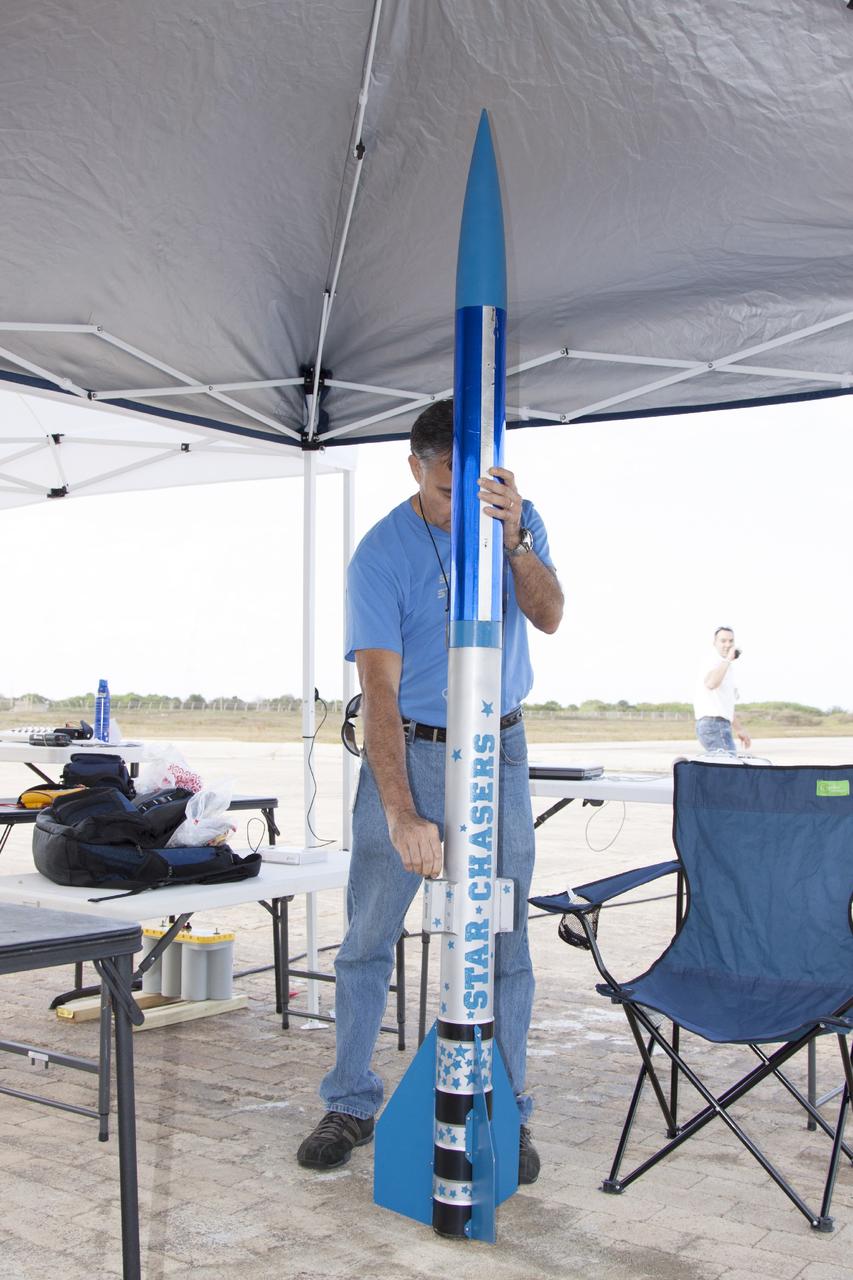
CAPE CANAVERAL, Fla. -- At NASA's Kennedy Space Center in Florida, Julio Najarro of Mechanical Systems checks out the fully assembled rocket to be launched as part of a NASA's Rocket University program. The launch will test systems designed by the student engineers. As part of Rocket University, the engineers are given an opportunity to work a fast-track project to develop skills in developing spacecraft systems of the future. As NASA plans for future spaceflight programs to low-Earth orbit and beyond, teams of engineers at Kennedy are gaining experience in designing and flying launch vehicle systems on a small scale. Four teams of five to eight members from Kennedy are designing rockets complete with avionics and recovery systems. Launch operations require coordination with federal agencies, just as they would with rockets launched in support of a NASA mission. Photo credit: NASA/Jim Grossmann
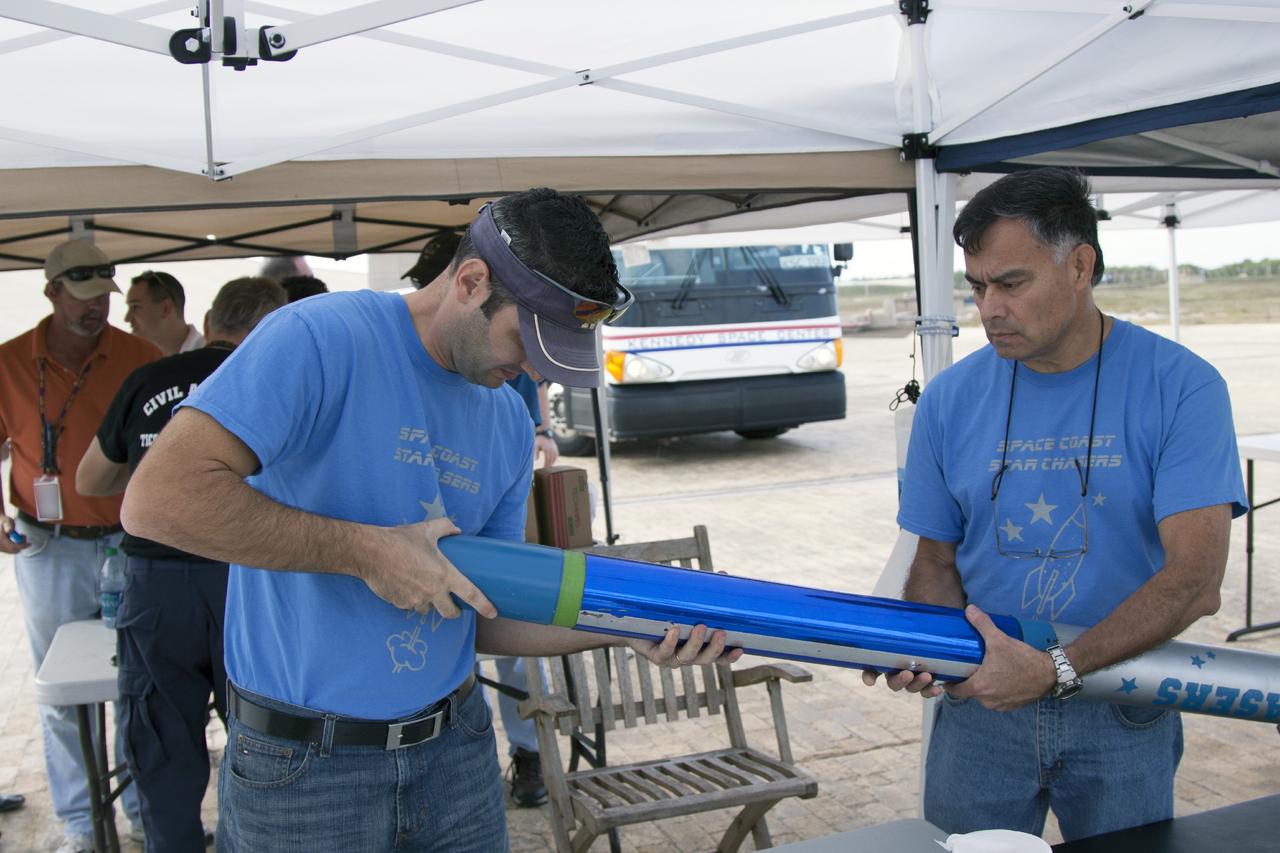
CAPE CANAVERAL, Fla. -- At NASA's Kennedy Space Center in Florida, from the left, Leandro James, rocket avionics lead, and Julio Najarro of Mechanical Systems make final adjustments to a small rocket prior to launch as part of Rocket University. The launch will test systems designed by the student engineers. As part of Rocket University, the engineers are given an opportunity to work a fast-track project to develop skills in developing spacecraft systems of the future. As NASA plans for future spaceflight programs to low-Earth orbit and beyond, teams of engineers at Kennedy are gaining experience in designing and flying launch vehicle systems on a small scale. Four teams of five to eight members from Kennedy are designing rockets complete with avionics and recovery systems. Launch operations require coordination with federal agencies, just as they would with rockets launched in support of a NASA mission. Photo credit: NASA/Jim Grossmann
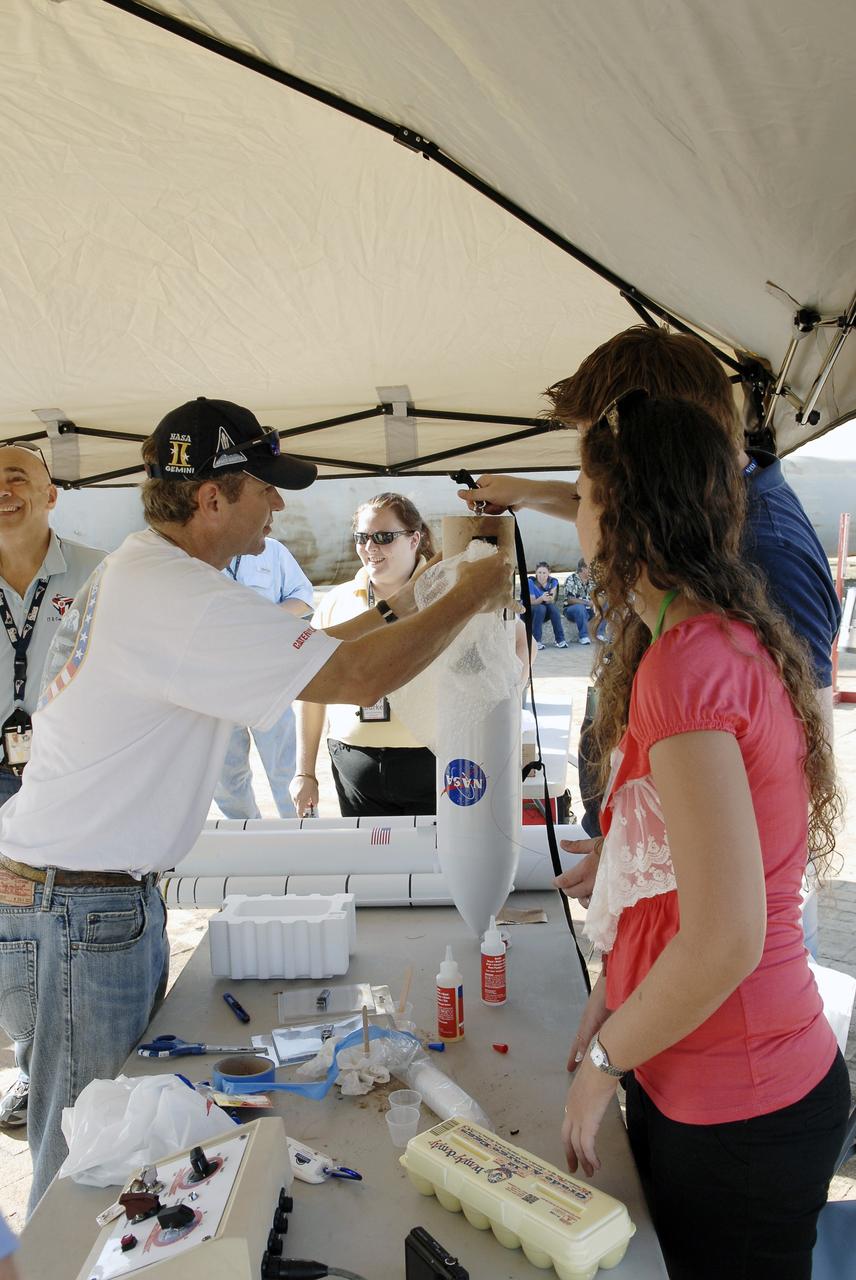
CAPE CANAVERAL, Fla. – Faculty of the International Space University assemble their 1/60th scale model of the Space Launch System rocket during the rocket launch competition of the ISU's summer session. The competition was conducted at Launch Complex 39A at NASA's Kennedy Space Center in Florida, which co-hosted this year's ISU. Six teams designed and built large model rockets, each between three and five feet tall, and launched them from Launch Pad 39A, the starting point for Apollo missions to the moon and dozens of space shuttle flights. Each launch carried a raw egg, dubbed "eggstronauts" and had to recover it intact to be declared successful. Photo credit: NASA/Charisse Nahsser

CAPE CANAVERAL, Fla. – Faculty of the International Space University stand with their 1/60th scale model of the Space Launch System rocket during the rocket launch competition of the ISU's summer session. The competition was conducted at Launch Complex 39A at NASA's Kennedy Space Center in Florida, which co-hosted this year's ISU. Six teams designed and built large model rockets, each between three and five feet tall, and launched them from Launch Pad 39A, the starting point for Apollo missions to the moon and dozens of space shuttle flights. Each launch carried a raw egg, dubbed "eggstronauts" and had to recover it intact to be declared successful. Photo credit: NASA/Charisse Nahsser
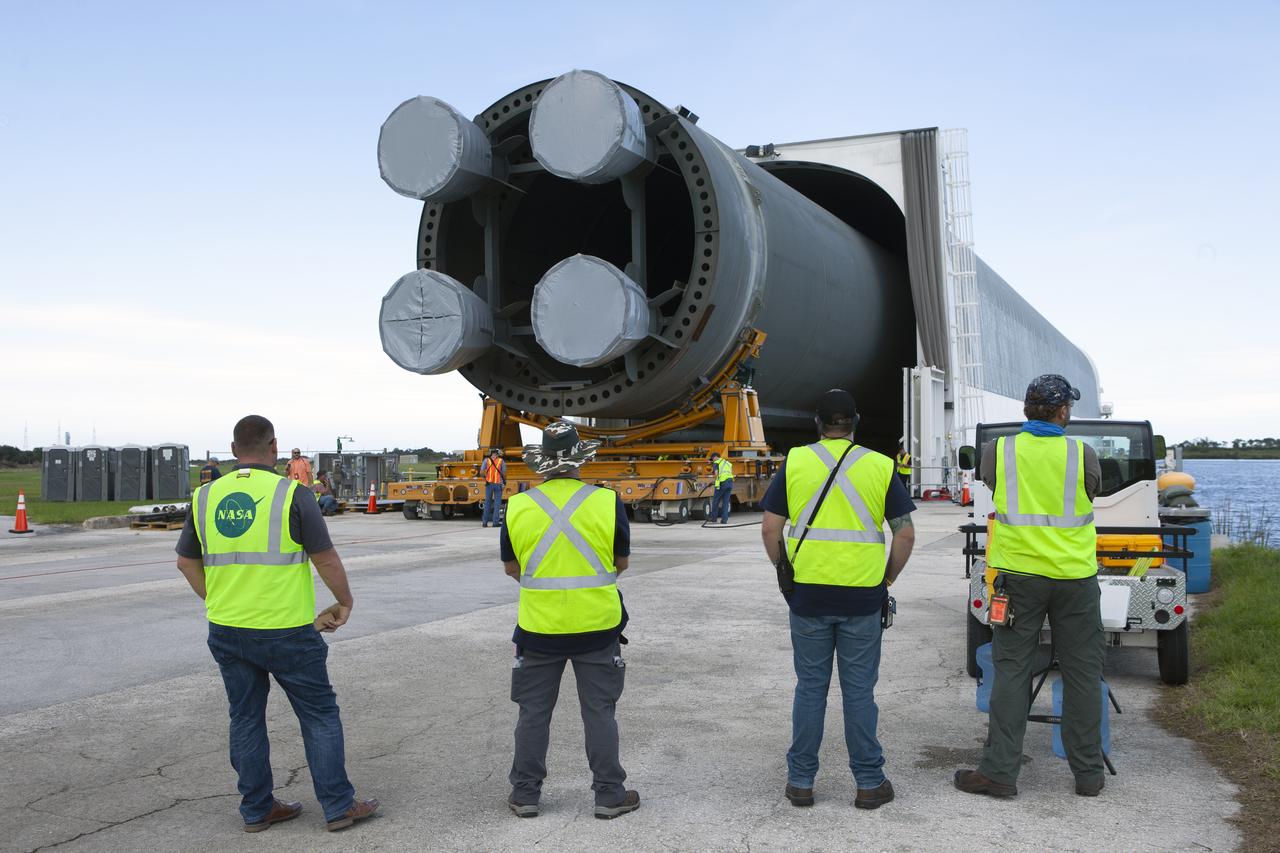
NASA and Jacobs workers watch as the 212-foot-long Space Launch System (SLS) rocket core stage pathfinder is moved inside the Pegasus barge at the Launch Complex 39 turn basin wharf at NASA’s Kennedy Space Center in Florida on Oct. 28, 2019. The core stage pathfinder is a full-scale mock-up of the rocket's core stage. It was used by the Exploration Ground Systems Program and their contractor, Jacobs, to practice offloading, moving and stacking maneuvers inside the Vehicle Assembly Building, using important ground support equipment to train employees and certify all the equipment works properly. The pathfinder was at Kennedy for about a month. It will make the trek back to NASA's Michoud Assembly Facility in Louisiana.
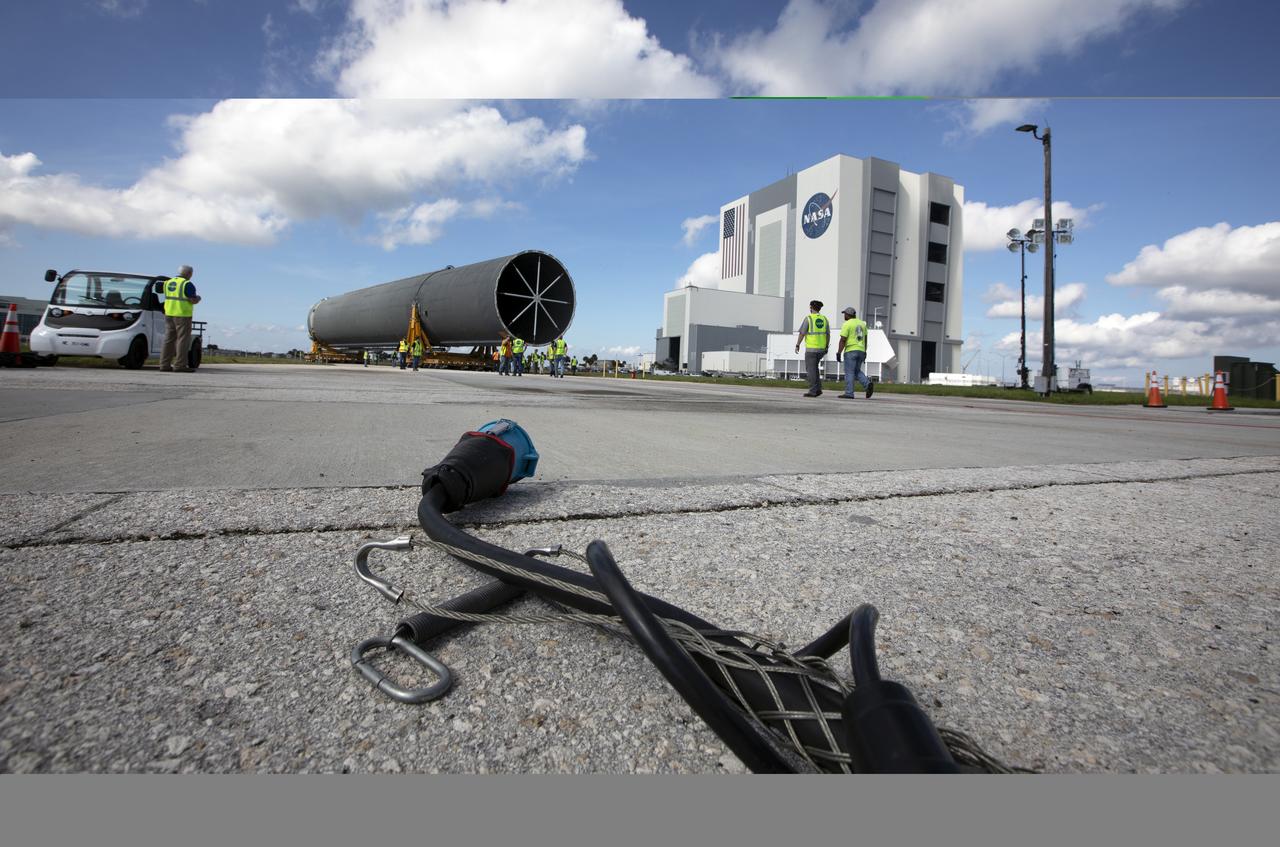
The 212-foot-long Space Launch System (SLS) rocket core stage pathfinder nears the entrance ramp to the Pegasus barge at the Launch Complex 39 turn basin wharf at NASA’s Kennedy Space Center in Florida on Oct. 28, 2019. The core stage pathfinder is a full-scale mock-up of the rocket's core stage. It was used by the Exploration Ground Systems Program and their contractor, Jacobs, to practice offloading, moving and stacking maneuvers inside the Vehicle Assembly Building, using important ground support equipment to train employees and certify all the equipment works properly. The pathfinder was at Kennedy for about a month. It will make the trek back to NASA's Michoud Assembly Facility in Louisiana.
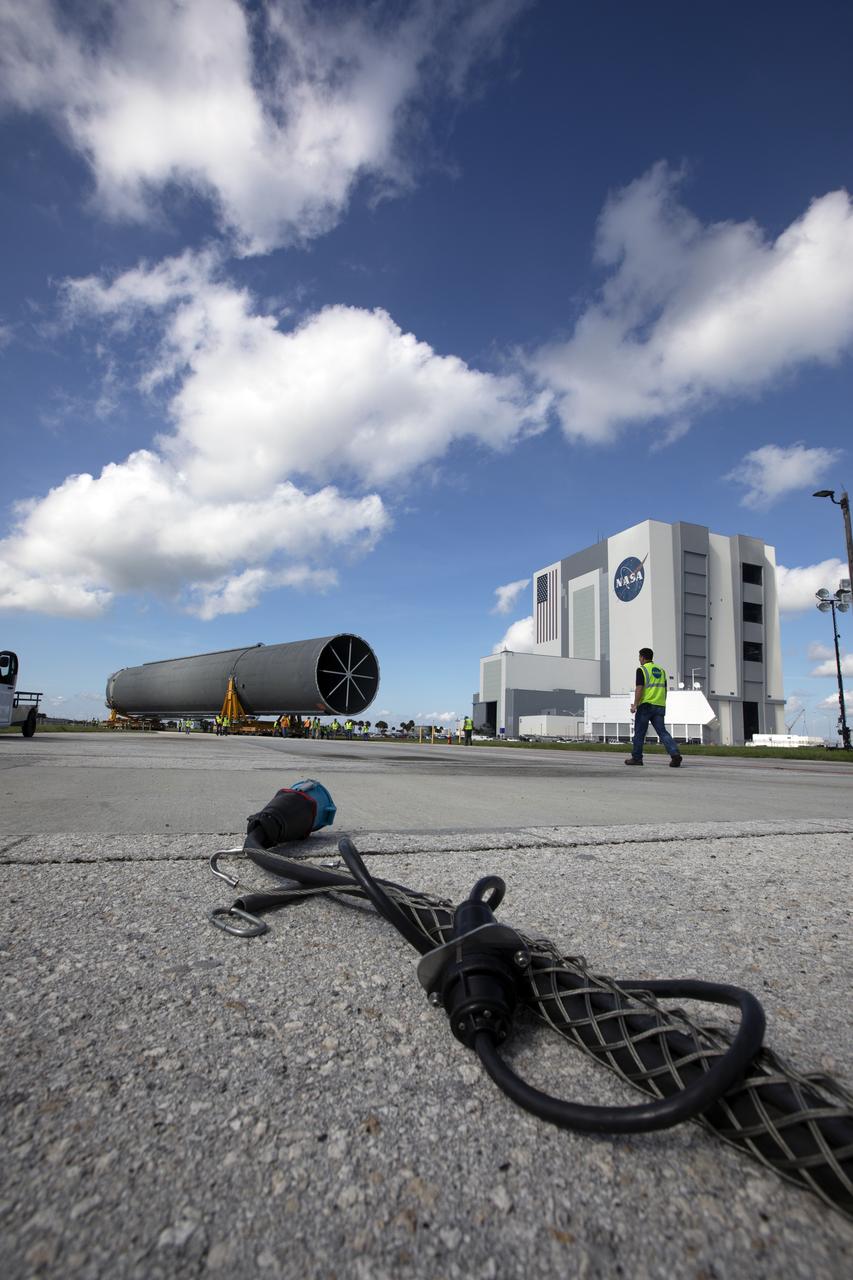
The 212-foot-long Space Launch System (SLS) rocket core stage pathfinder nears the entrance ramp to the Pegasus barge at the Launch Complex 39 turn basin wharf at NASA’s Kennedy Space Center in Florida on Oct. 28, 2019. The core stage pathfinder is a full-scale mock-up of the rocket's core stage. It was used by the Exploration Ground Systems Program and their contractor, Jacobs, to practice offloading, moving and stacking maneuvers inside the Vehicle Assembly Building, using important ground support equipment to train employees and certify all the equipment works properly. The pathfinder was at Kennedy for about a month. It will make the trek back to NASA's Michoud Assembly Facility in Louisiana.
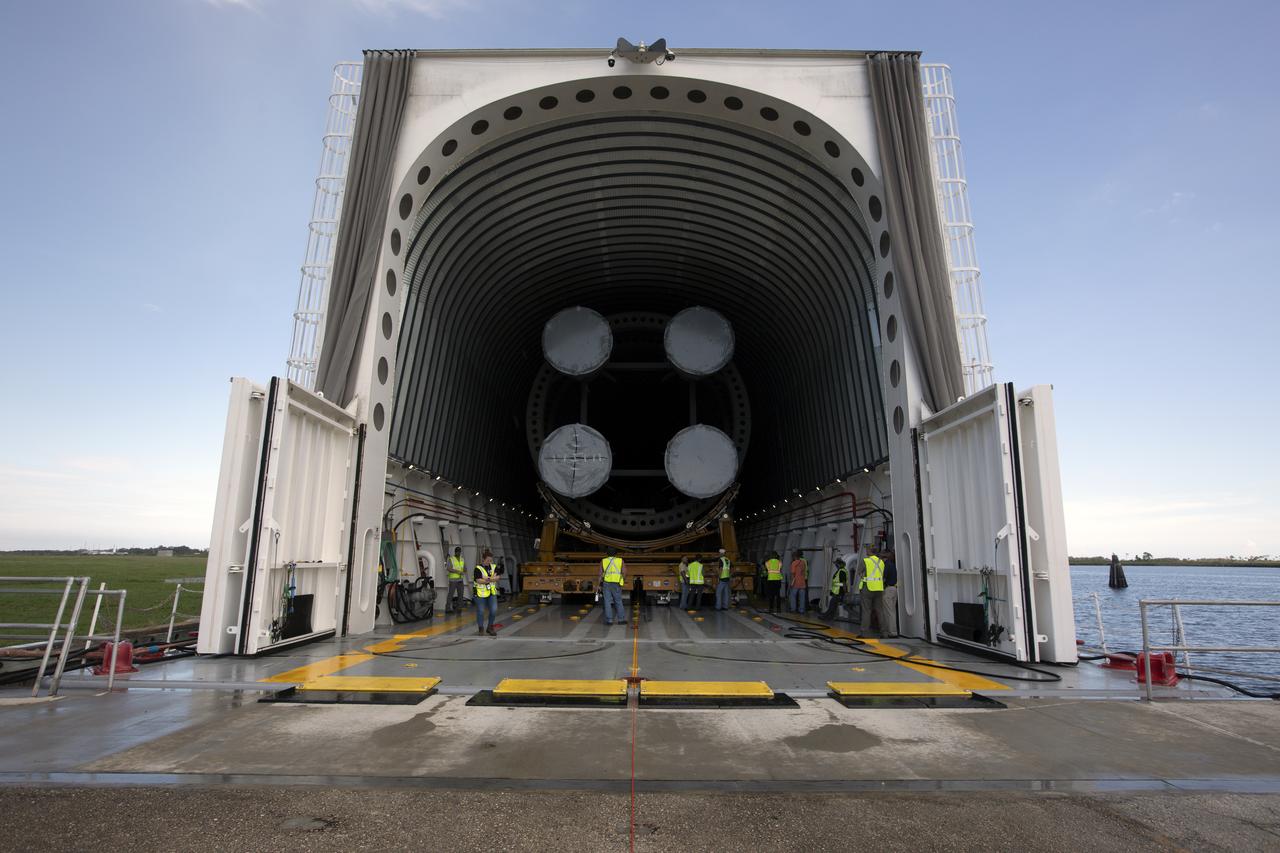
NASA and Jacobs workers assist as the 212-foot-long Space Launch System (SLS) rocket core stage pathfinder is moved inside the Pegasus barge at the Launch Complex 39 turn basin wharf at NASA’s Kennedy Space Center in Florida on Oct. 28, 2019. The core stage pathfinder is a full-scale mock-up of the rocket's core stage. It was used by the Exploration Ground Systems Program and their contractor, Jacobs, to practice offloading, moving and stacking maneuvers inside the Vehicle Assembly Building, using important ground support equipment to train employees and certify all the equipment works properly. The pathfinder was at Kennedy for about a month. It will make the trek back to NASA's Michoud Assembly Facility in Louisiana.
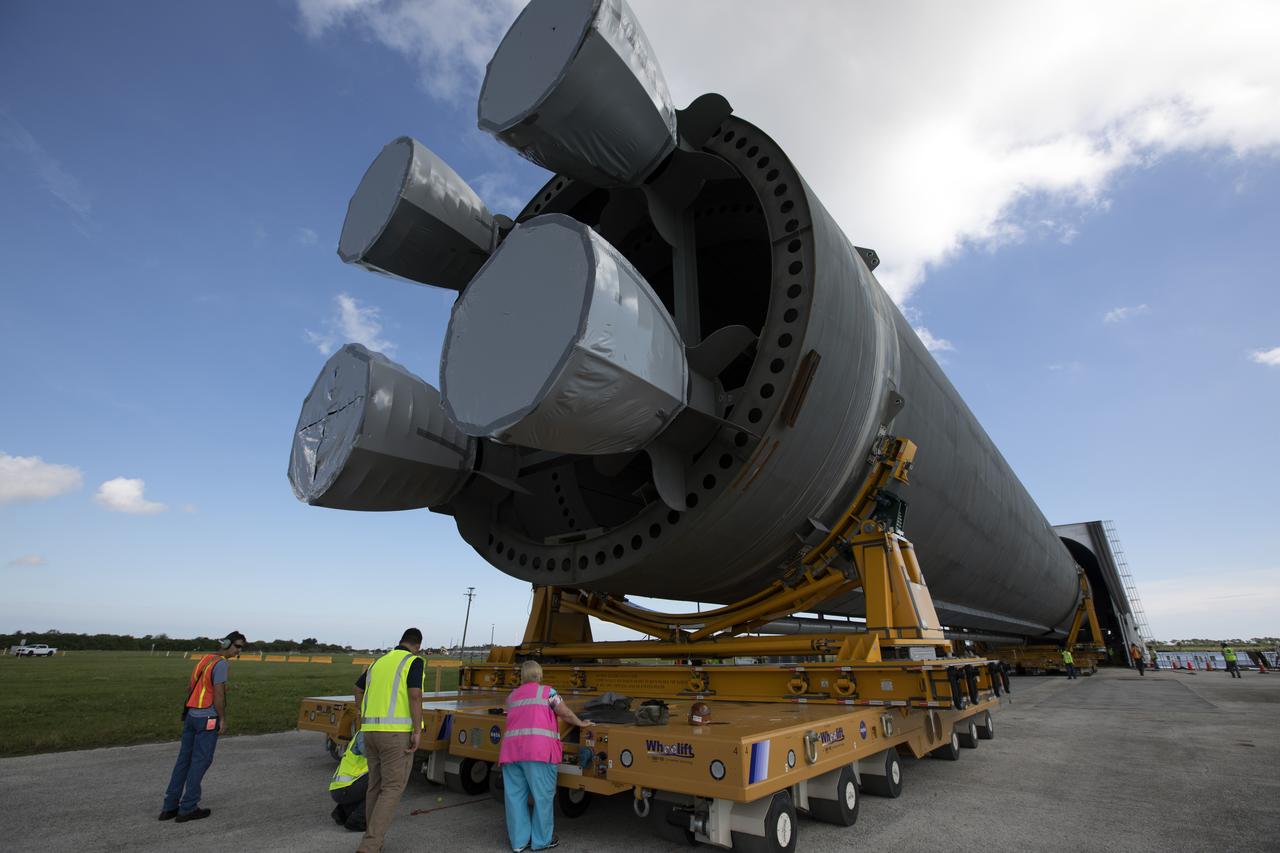
The 212-foot-long Space Launch System (SLS) rocket core stage pathfinder nears the entrance ramp to the Pegasus barge at the Launch Complex 39 turn basin wharf at NASA’s Kennedy Space Center in Florida on Oct. 28, 2019. The core stage pathfinder is a full-scale mock-up of the rocket's core stage. It was used by the Exploration Ground Systems Program and their contractor, Jacobs, to practice offloading, moving and stacking maneuvers inside the Vehicle Assembly Building, using important ground support equipment to train employees and certify all the equipment works properly. The pathfinder was at Kennedy for about a month. It will make the trek back to NASA's Michoud Assembly Facility in Louisiana.
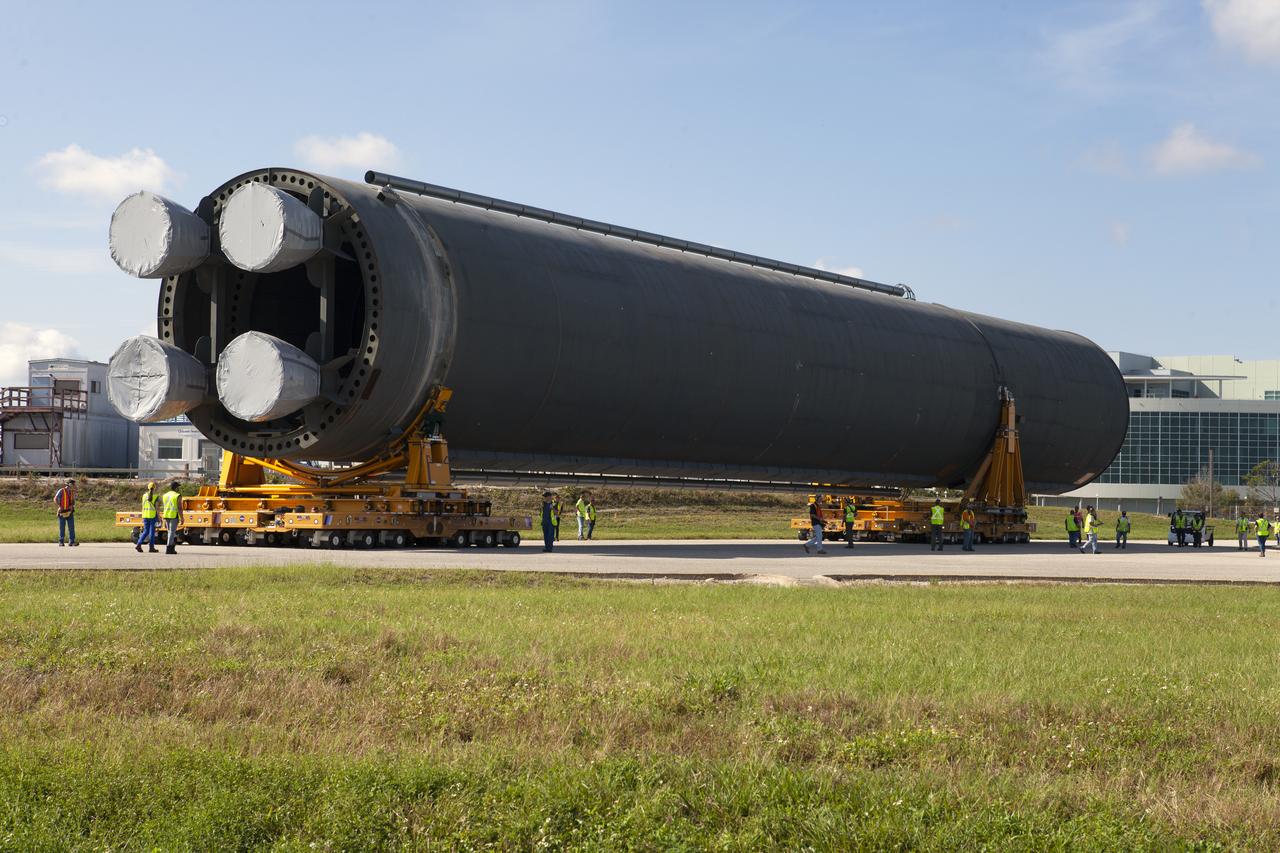
The 212-foot-long Space Launch System (SLS) rocket core stage pathfinder is being transported back to the Pegasus barge at the Launch Complex 39 turn basin wharf at NASA’s Kennedy Space Center in Florida on Oct. 28, 2019. The core stage pathfinder is a full-scale mock-up of the rocket's core stage. It was used by the Exploration Ground Systems Program and their contractor, Jacobs, to practice offloading, moving and stacking maneuvers inside the Vehicle Assembly Building, using important ground support equipment to train employees and certify all the equipment works properly. The pathfinder was at Kennedy for about a month. It will make the trek back to NASA's Michoud Assembly Facility in Louisiana.
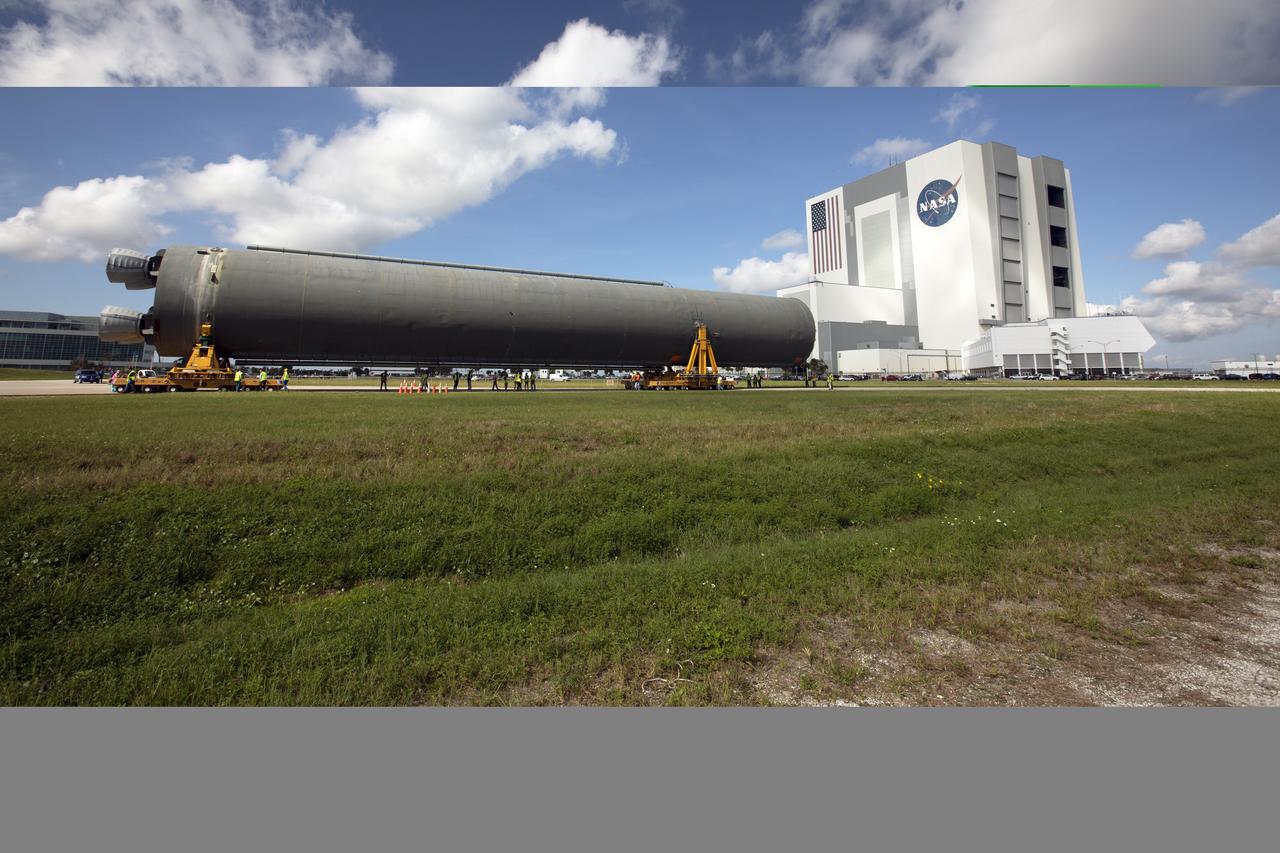
The 212-foot-long Space Launch System (SLS) rocket core stage pathfinder is being transported back to the Pegasus barge at the Launch Complex 39 turn basin wharf at NASA’s Kennedy Space Center in Florida on Oct. 28, 2019. The core stage pathfinder is a full-scale mock-up of the rocket's core stage. It was used by the Exploration Ground Systems Program and their contractor, Jacobs, to practice offloading, moving and stacking maneuvers inside the Vehicle Assembly Building, using important ground support equipment to train employees and certify all the equipment works properly. The pathfinder was at Kennedy for about a month. It will make the trek back to NASA's Michoud Assembly Facility in Louisiana.
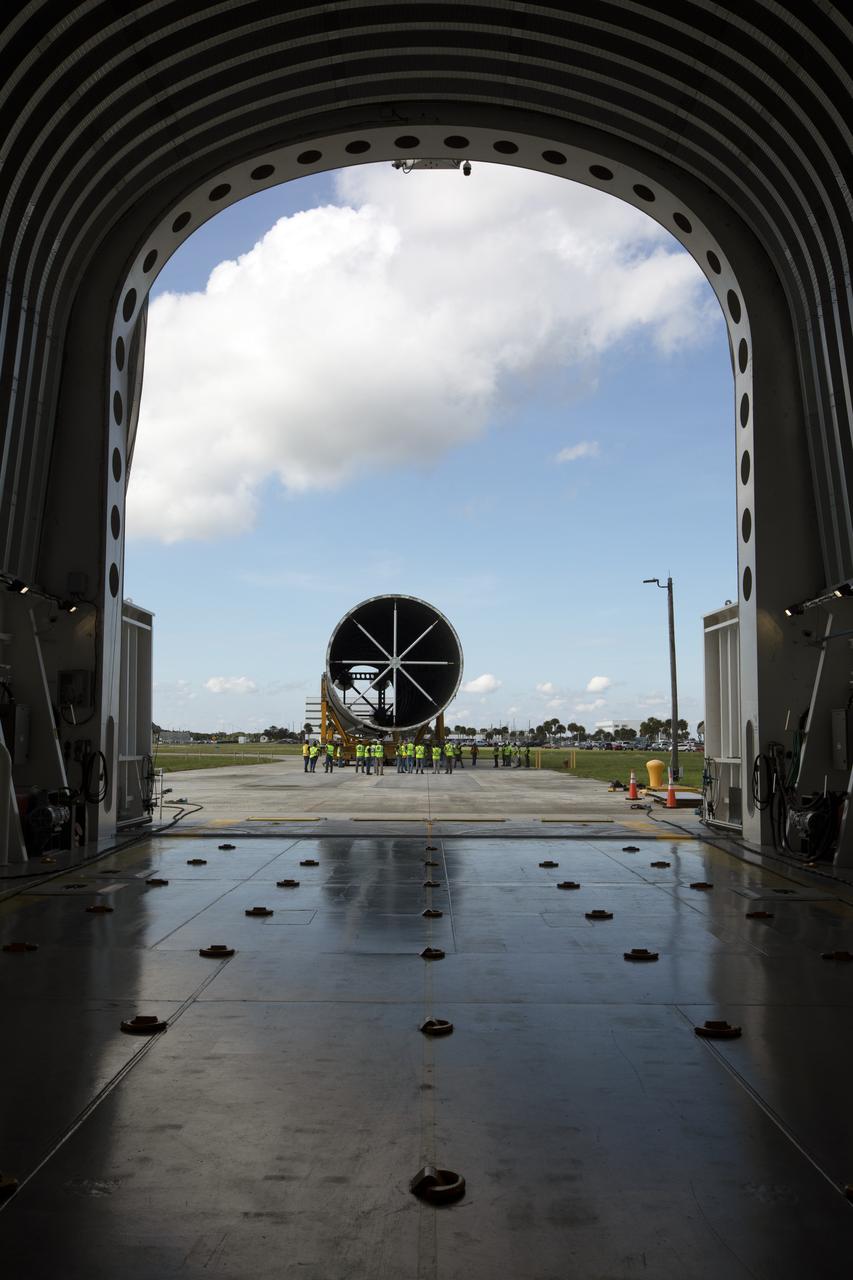
The 212-foot-long Space Launch System (SLS) rocket core stage pathfinder nears the entrance ramp to the Pegasus barge at the Launch Complex 39 turn basin wharf at NASA’s Kennedy Space Center in Florida on Oct. 28, 2019. The core stage pathfinder is a full-scale mock-up of the rocket's core stage. It was used by the Exploration Ground Systems Program and their contractor, Jacobs, to practice offloading, moving and stacking maneuvers inside the Vehicle Assembly Building, using important ground support equipment to train employees and certify all the equipment works properly. The pathfinder was at Kennedy for about a month. It will make the trek back to NASA's Michoud Assembly Facility in Louisiana.
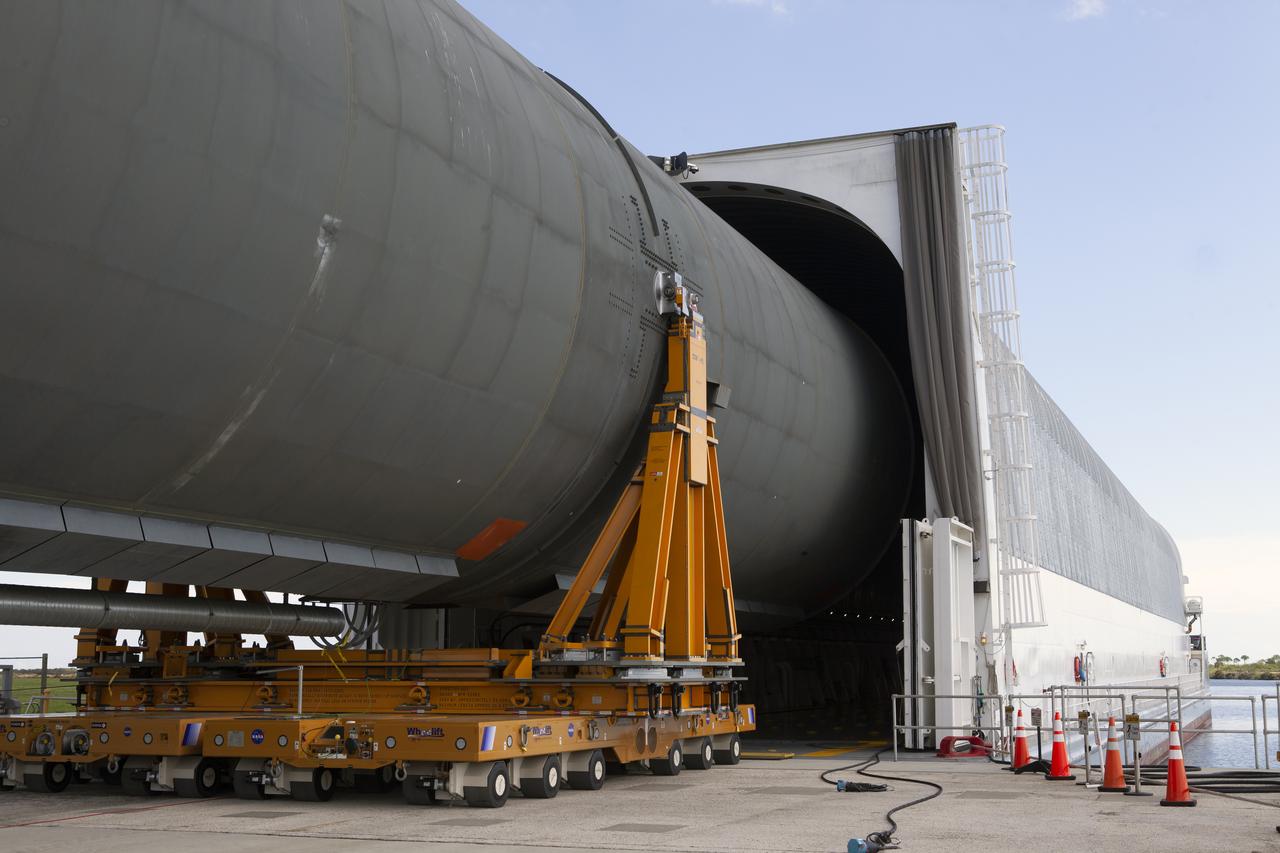
The 212-foot-long Space Launch System (SLS) rocket core stage pathfinder is moved inside the Pegasus barge at the Launch Complex 39 turn basin wharf at NASA’s Kennedy Space Center in Florida on Oct. 28, 2019. The core stage pathfinder is a full-scale mock-up of the rocket's core stage. It was used by the Exploration Ground Systems Program and their contractor, Jacobs, to practice offloading, moving and stacking maneuvers inside the Vehicle Assembly Building, using important ground support equipment to train employees and certify all the equipment works properly. The pathfinder was at Kennedy for about a month. It will make the trek back to NASA's Michoud Assembly Facility in Louisiana.
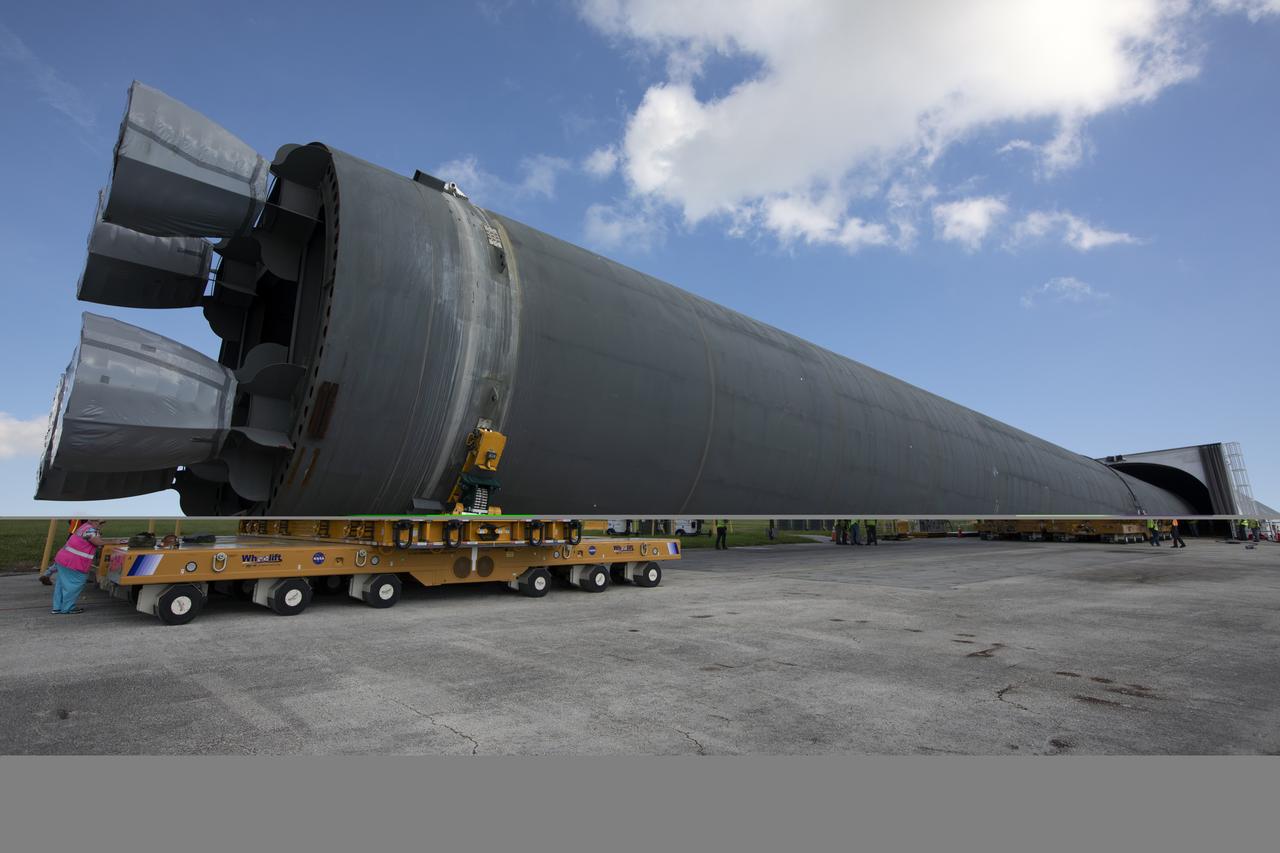
The 212-foot-long Space Launch System (SLS) rocket core stage pathfinder is moved inside the Pegasus barge at the Launch Complex 39 turn basin wharf at NASA’s Kennedy Space Center in Florida on Oct. 28, 2019. The core stage pathfinder is a full-scale mock-up of the rocket's core stage. It was used by the Exploration Ground Systems Program and their contractor, Jacobs, to practice offloading, moving and stacking maneuvers inside the Vehicle Assembly Building, using important ground support equipment to train employees and certify all the equipment works properly. The pathfinder was at Kennedy for about a month. It will make the trek back to NASA's Michoud Assembly Facility in Louisiana.
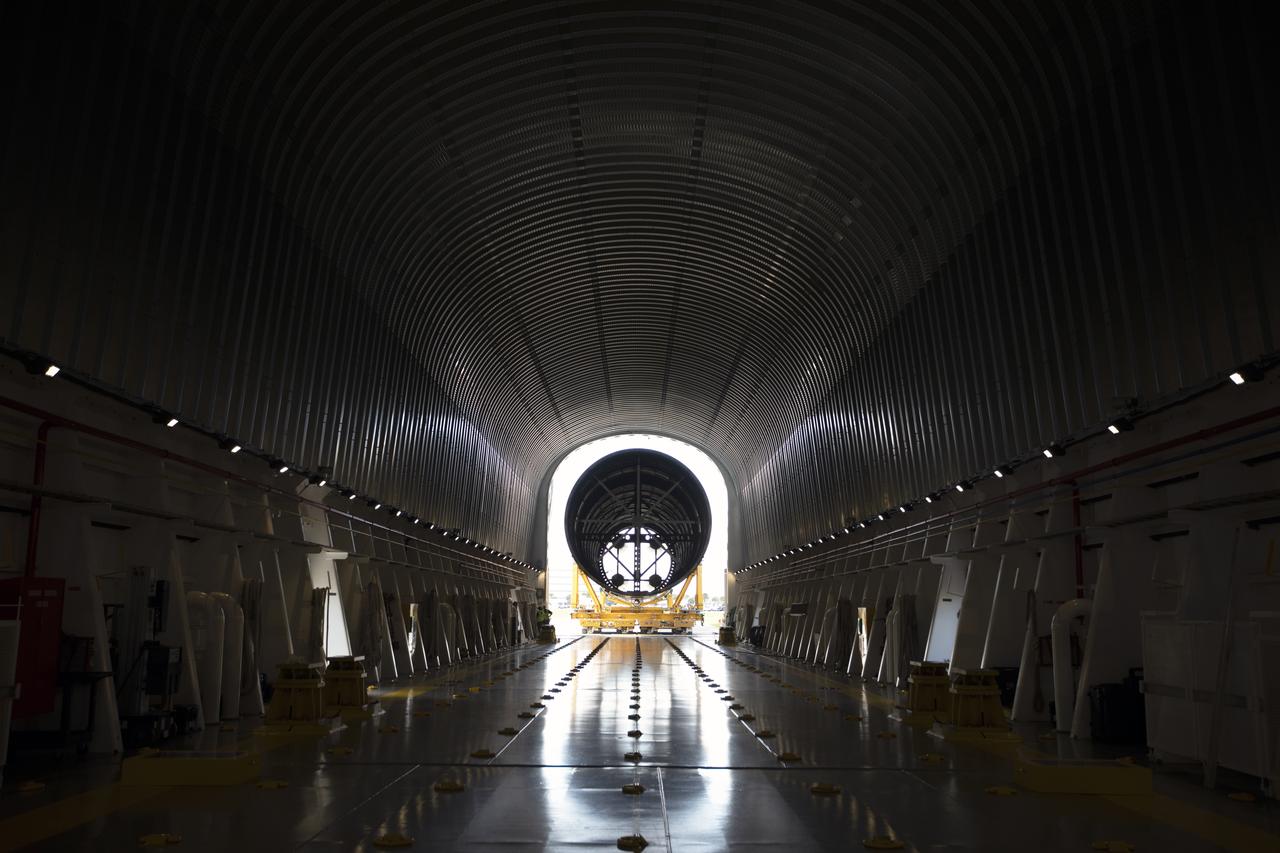
A view of the inside of the Pegasus barge at the Launch Complex 39 turn basin at NASA’s Kennedy Space Center in Florida, as the 212-foot-long Space Launch System (SLS) rocket core stage pathfinder is moved inside the barge on Oct. 28, 2019. The core stage pathfinder is a full-scale mock-up of the rocket's core stage. It was used by the Exploration Ground Systems Program and their contractor, Jacobs, to practice offloading, moving and stacking maneuvers inside the Vehicle Assembly Building, using important ground support equipment to train employees and certify all the equipment works properly. The pathfinder was at Kennedy for about a month. It will make the trek back to NASA's Michoud Assembly Facility in Louisiana.
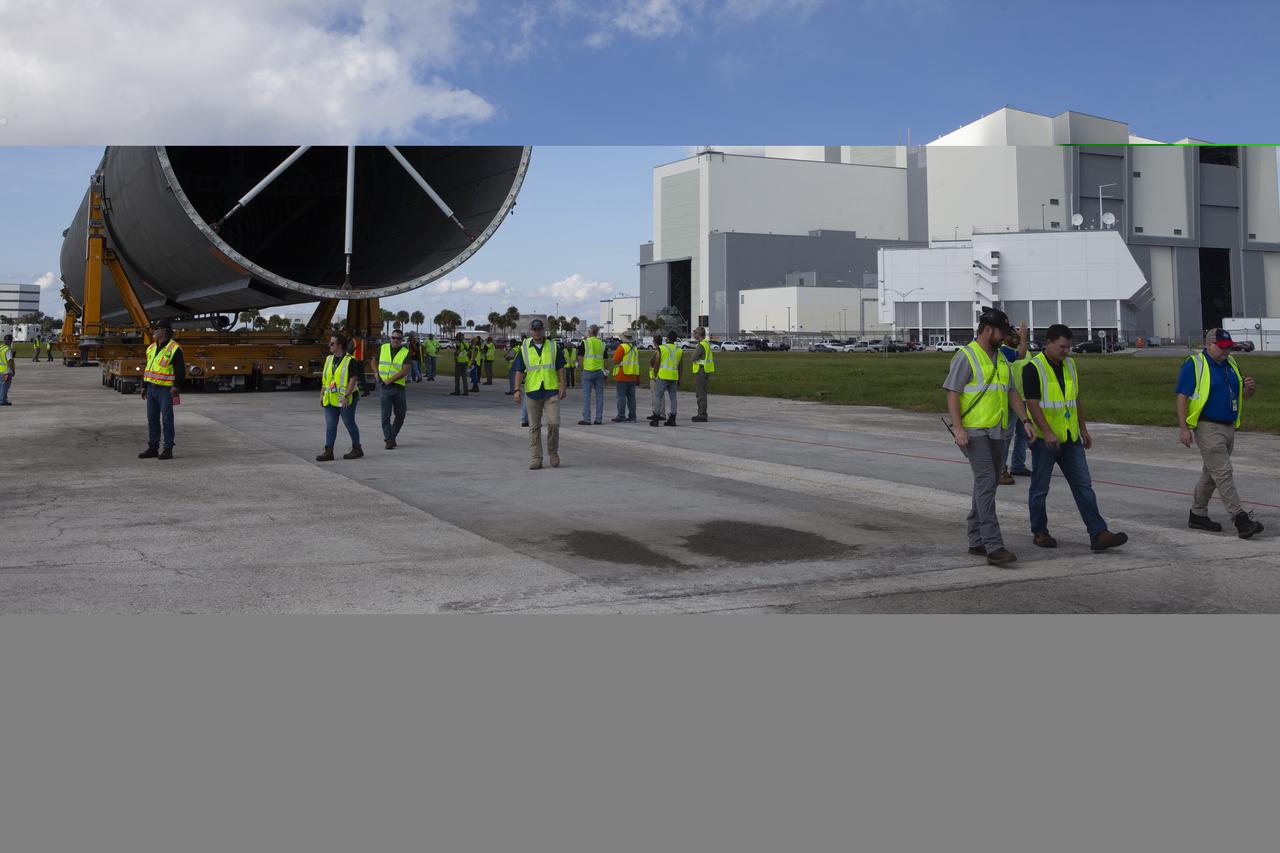
The 212-foot-long Space Launch System (SLS) rocket core stage pathfinder is being transported back to the Pegasus barge at the Launch Complex 39 turn basin wharf at NASA’s Kennedy Space Center in Florida on Oct. 28, 2019. The core stage pathfinder is a full-scale mock-up of the rocket's core stage. It was used by the Exploration Ground Systems Program and their contractor, Jacobs, to practice offloading, moving and stacking maneuvers inside the Vehicle Assembly Building, using important ground support equipment to train employees and certify all the equipment works properly. The pathfinder was at Kennedy for about a month. It will make the trek back to NASA's Michoud Assembly Facility in Louisiana.
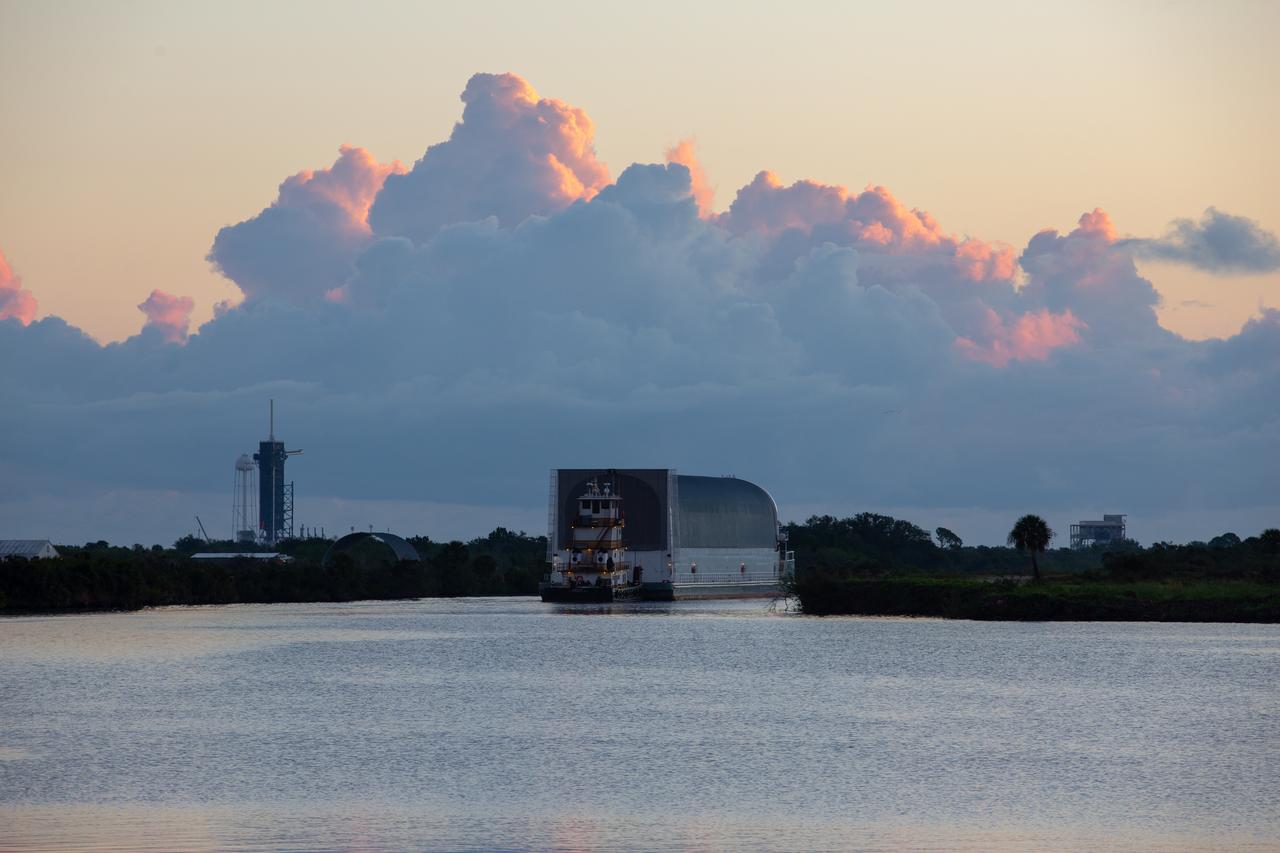
NASA’s Pegasus barge, with the 212-foot-long Space Launch System (SLS) rocket core stage pathfinder secured inside, departs the Launch Complex 39 turn basin wharf at NASA’s Kennedy Space Center in Florida on Oct. 31, 2019. The core stage pathfinder is a full-scale mock-up of the rocket's core stage. It was used by the Exploration Ground Systems Program and their contractor, Jacobs, to practice offloading, moving and stacking maneuvers inside the Vehicle Assembly Building, using important ground support equipment to train employees and certify all the equipment works properly. The pathfinder was at Kennedy for about a month. The barge with the pathfinder will make the trek back to NASA's Michoud Assembly Facility in Louisiana.
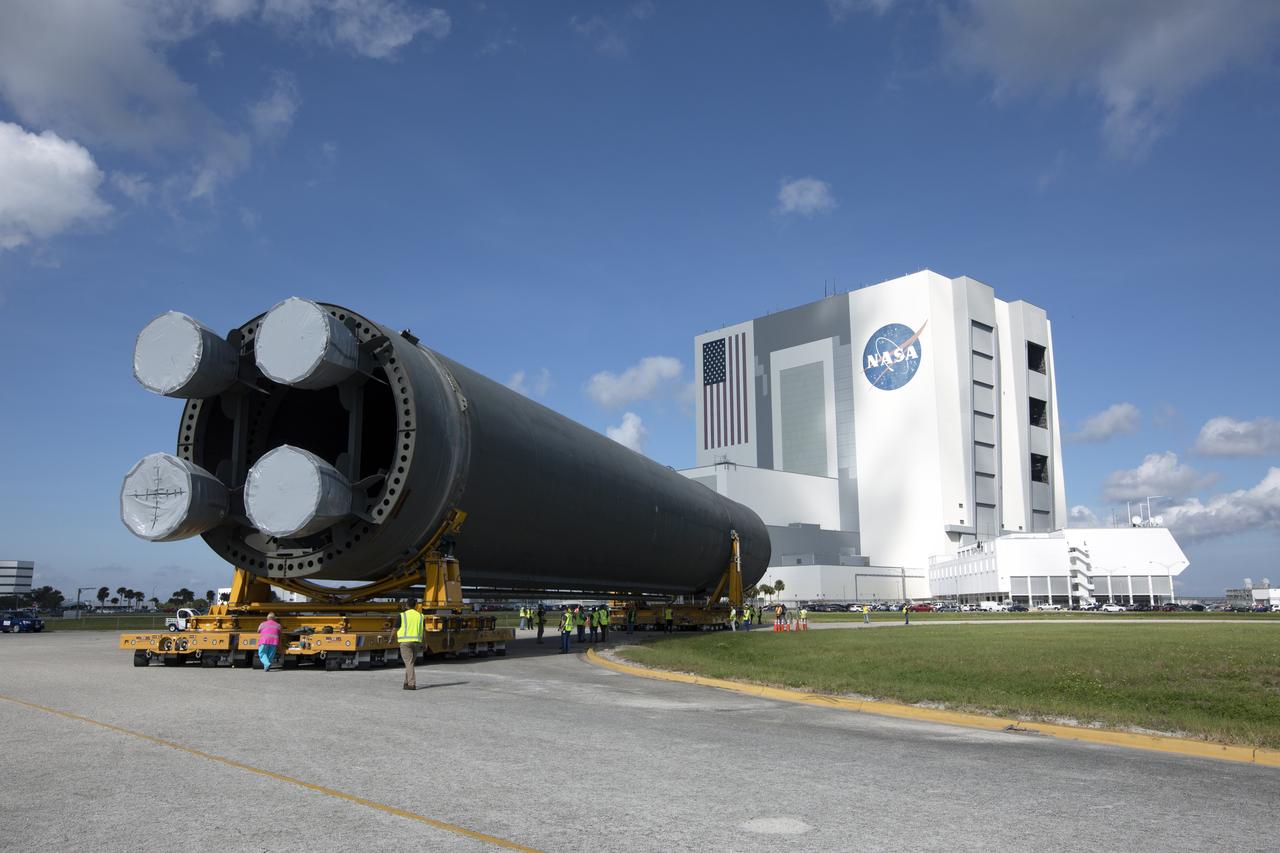
The 212-foot-long Space Launch System (SLS) rocket core stage pathfinder is being transported back to the Pegasus barge at the Launch Complex 39 turn basin wharf at NASA’s Kennedy Space Center in Florida on Oct. 28, 2019. The core stage pathfinder is a full-scale mock-up of the rocket's core stage. It was used by the Exploration Ground Systems Program and their contractor, Jacobs, to practice offloading, moving and stacking maneuvers inside the Vehicle Assembly Building, using important ground support equipment to train employees and certify all the equipment works properly. The pathfinder was at Kennedy for about a month. It will make the trek back to NASA's Michoud Assembly Facility in Louisiana.
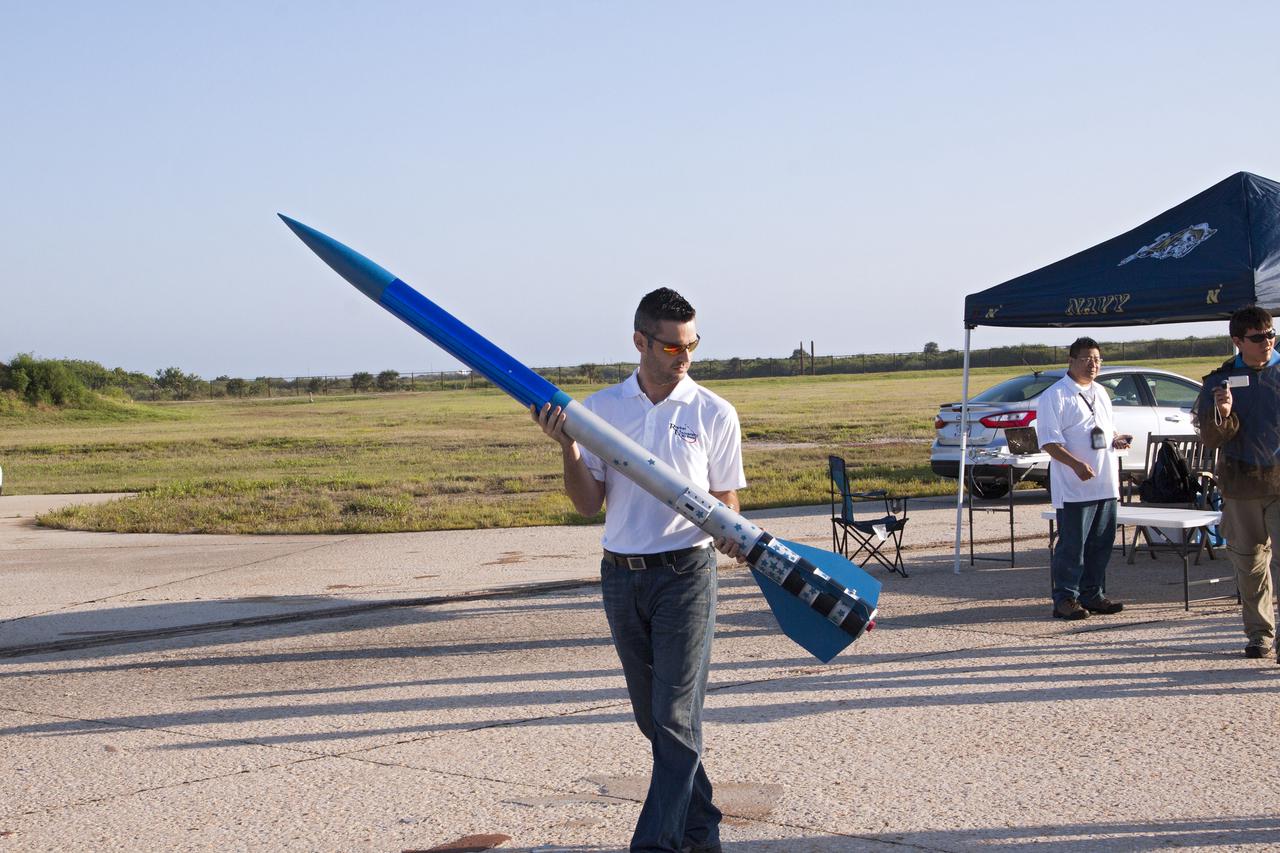
CAPE CANAVERAL, Fla. -- At NASA's Kennedy Space Center in Florida, Leandro James of Systems Hardware Engineering carries a small test rocket to the launch stand. The activity was part of Rocket University with the goal to test its systems and to verify that it performed as designed. As part of Rocket University, the engineers are given an opportunity to work a fast-track project to develop skills in developing spacecraft systems of the future. As NASA plans for future spaceflight programs to low-Earth orbit and beyond, teams of engineers at Kennedy are gaining experience in designing and flying launch vehicle systems on a small scale. Four teams of five to eight members from Kennedy are designing rockets complete with avionics and recovery systems. Launch operations require coordination with federal agencies, just as they would with rockets launched in support of a NASA mission. Photo credit: NASA_Jim Grossmann
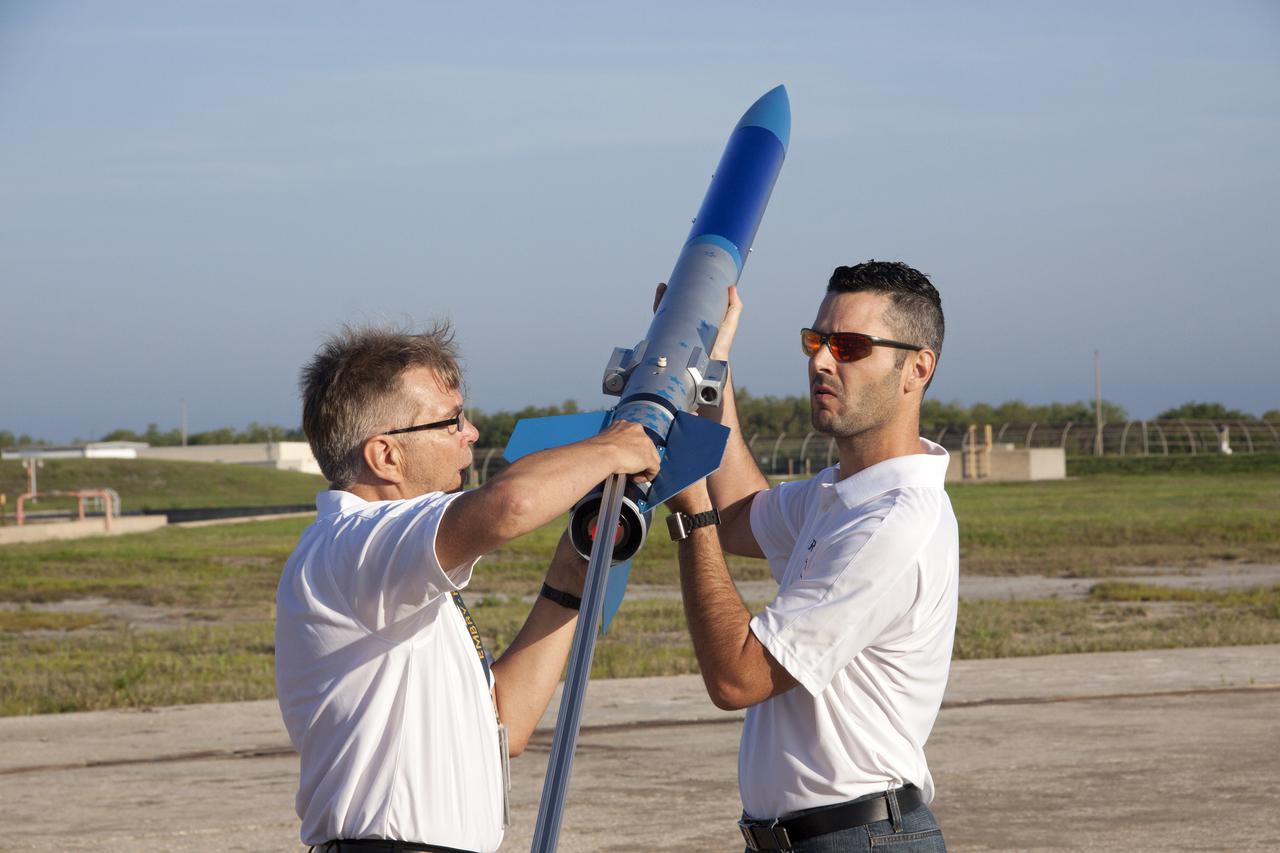
CAPE CANAVERAL, Fla. -- At NASA's Kennedy Space Center in Florida, Gary Dahlke of Engineering and Technology, left, and Leandro James of Systems Hardware Engineering attach a small rocket prior to its launch stand as part of Rocket University. The goal was to test its systems and to verify that it performed as designed. As part of Rocket University, the engineers are given an opportunity to work a fast-track project to develop skills in developing spacecraft systems of the future. As NASA plans for future spaceflight programs to low-Earth orbit and beyond, teams of engineers at Kennedy are gaining experience in designing and flying launch vehicle systems on a small scale. Four teams of five to eight members from Kennedy are designing rockets complete with avionics and recovery systems. Launch operations require coordination with federal agencies, just as they would with rockets launched in support of a NASA mission. Photo credit: NASA_Jim Grossmann
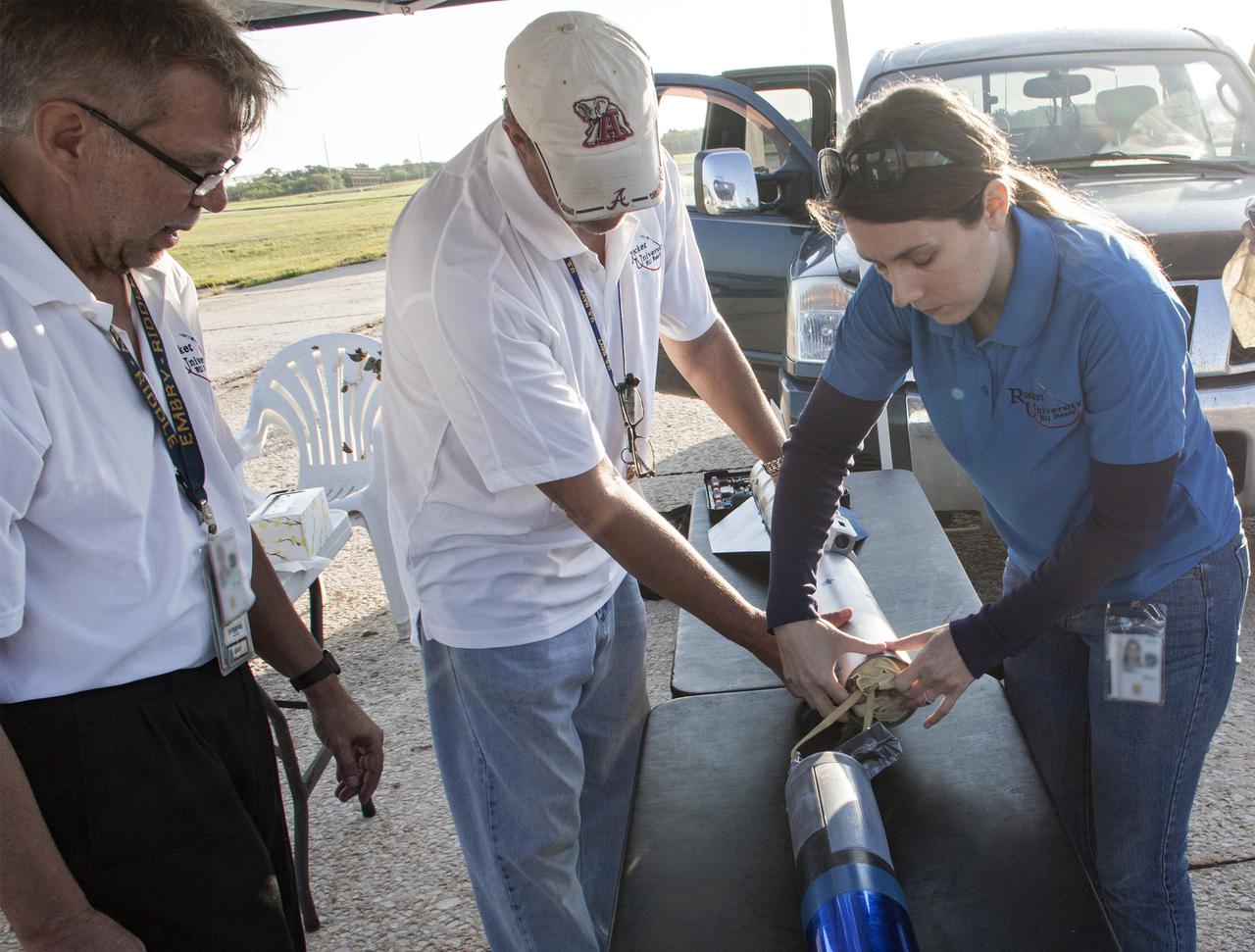
CAPE CANAVERAL, Fla. -- At NASA's Kennedy Space Center in Florida, from the left, Gary Dahlke of Engineering and Technology, George Mizell of Quality Assurance and Kim Simpson of Fluids, Mechanical and Structural Systems make final adjustments to a small rocket prior to launch as part of Rocket University. The goal was to test its systems and to verify that it performed as designed. As part of Rocket University, the engineers are given an opportunity to work a fast-track project to develop skills in developing spacecraft systems of the future. As NASA plans for future spaceflight programs to low-Earth orbit and beyond, teams of engineers at Kennedy are gaining experience in designing and flying launch vehicle systems on a small scale. Four teams of five to eight members from Kennedy are designing rockets complete with avionics and recovery systems. Launch operations require coordination with federal agencies, just as they would with rockets launched in support of a NASA mission. Photo credit: NASA_Jim Grossmann
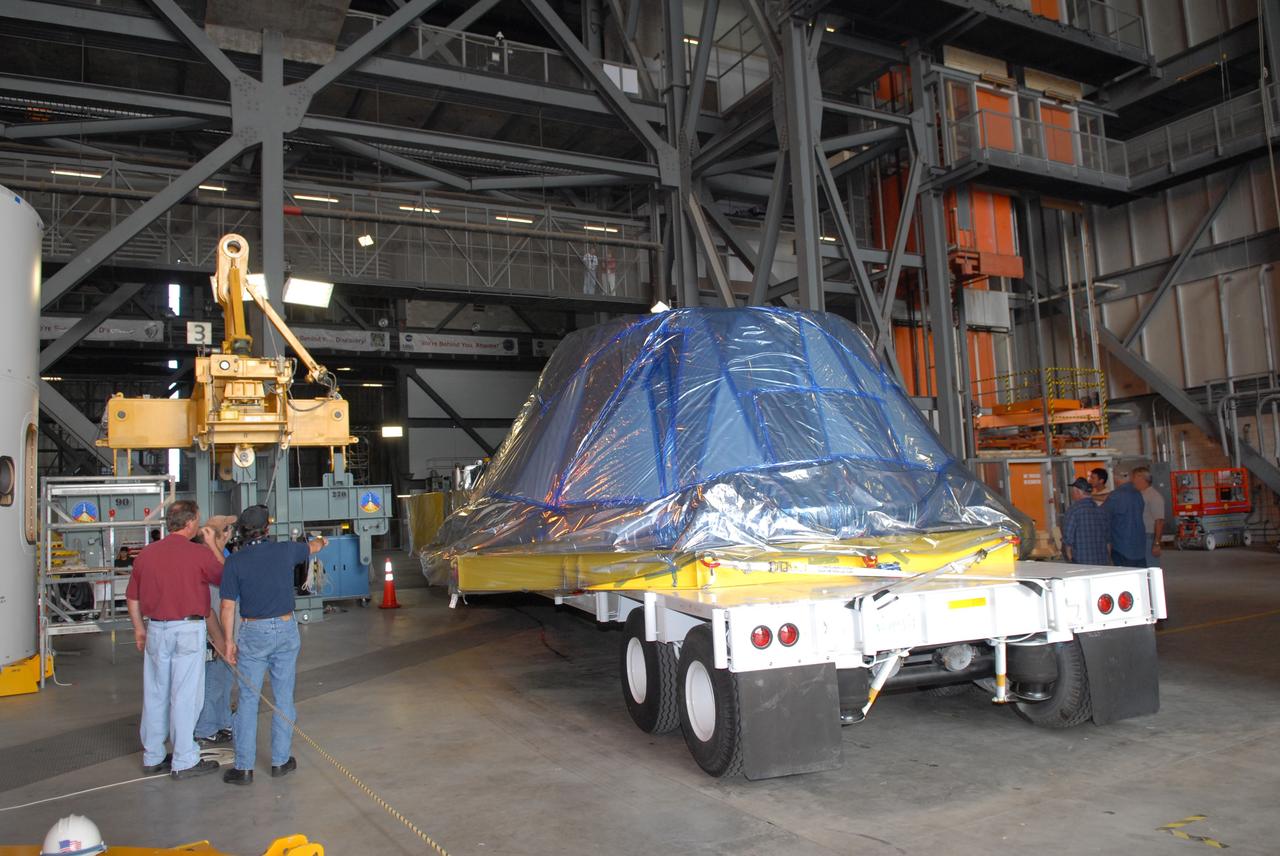
CAPE CANAVERAL, Fla. – The simulator crew module for NASA's Ares I-X rocket is moved into the Vehicle Assembly Building's high bay 4 at NASA's Kennedy Space Center in Florida. The precisely machined, full-scale simulator crew module is part of the hardware that will be used in the launch of the rocket. Also arriving is a launch abort system that, with the module, will form the tip of the rocket. Ares I-X is the test flight for the Ares I. The I-X flight will provide NASA an early opportunity to test and prove hardware, facilities and ground operations associated with Ares I. The launch of the 321-foot-tall, full-scale Ares I-X, targeted for July 2009, will be the first in a series of unpiloted rocket launches from Kennedy. When fully developed, the 16-foot diameter crew module will furnish living space and reentry protection for the astronauts, while their launch abort system will provide safe evacuation if a launch vehicle failure occurs. Photo credit: NASA/Jack Pfaller
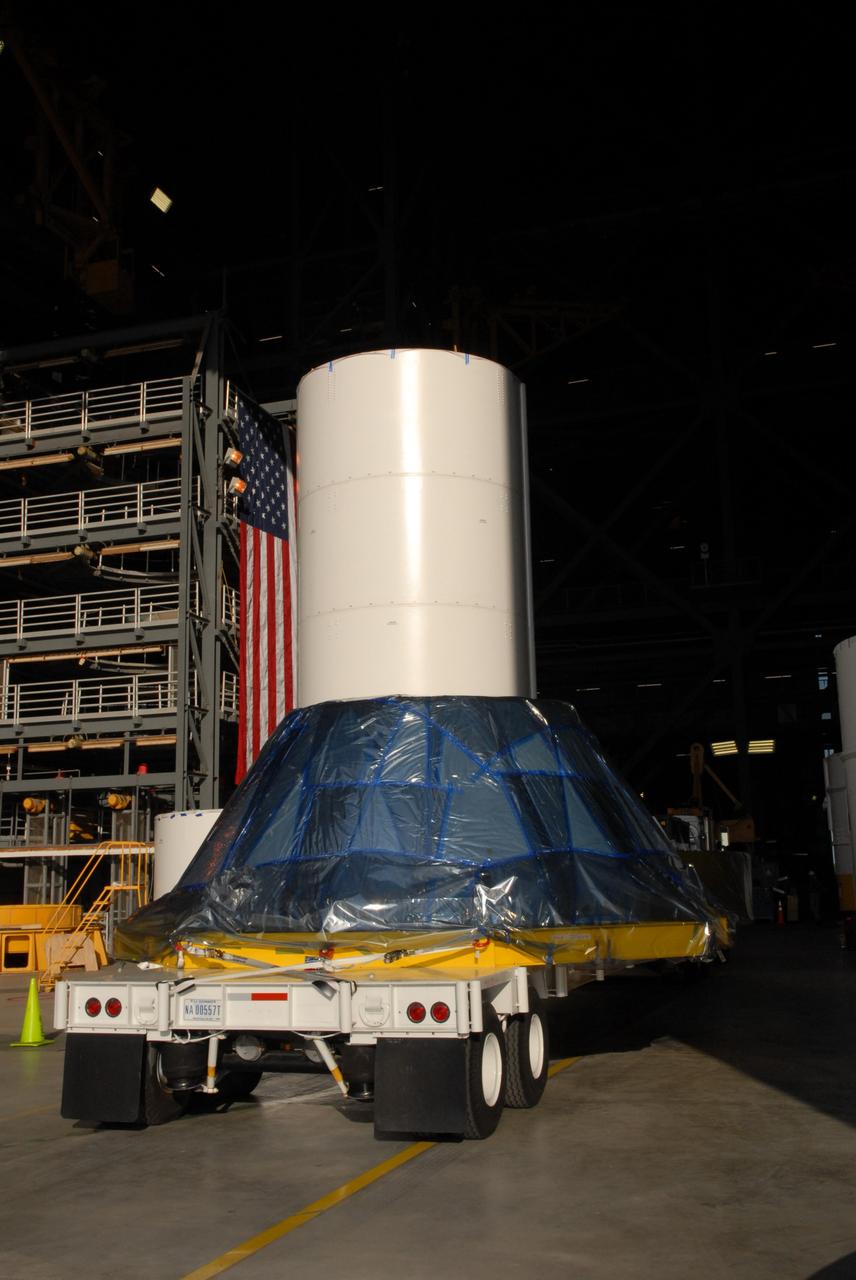
CAPE CANAVERAL, Fla. – The simulator crew module for NASA's Ares I-X rocket is moved into the Vehicle Assembly Building's high bay 4 at NASA's Kennedy Space Center in Florida. The precisely machined, full-scale simulator crew module is part of the hardware that will be used in the launch of the rocket. Also arriving is a launch abort system that, with the module, will form the tip of the rocket. Ares I-X is the test flight for the Ares I. The I-X flight will provide NASA an early opportunity to test and prove hardware, facilities and ground operations associated with Ares I. The launch of the 321-foot-tall, full-scale Ares I-X, targeted for July 2009, will be the first in a series of unpiloted rocket launches from Kennedy. When fully developed, the 16-foot diameter crew module will furnish living space and reentry protection for the astronauts, while their launch abort system will provide safe evacuation if a launch vehicle failure occurs. Photo credit: NASA/Jack Pfaller
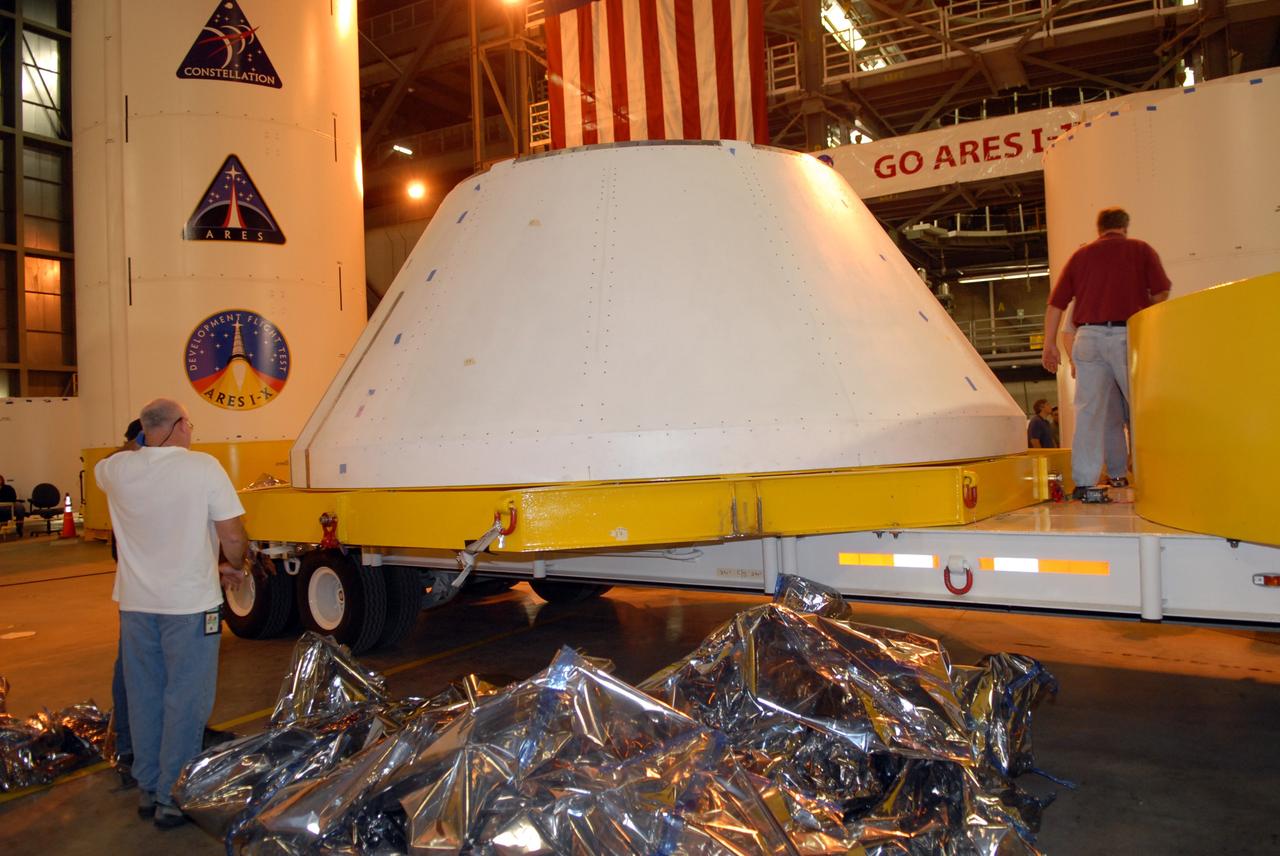
CAPE CANAVERAL, Fla. – In the Vehicle Assembly Building's high bay 4 at NASA's Kennedy Space Center in Florida, the protective blue cover is removed from the simulator crew module for the Ares I-X rocket. The precisely machined, full-scale simulator crew module is part of the hardware that will be used in the launch of the rocket. Also arriving is a launch abort system that, with the module, will form the tip of the rocket. Ares I-X is the test flight for the Ares I. The I-X flight will provide NASA an early opportunity to test and prove hardware, facilities and ground operations associated with Ares I. The launch of the 321-foot-tall, full-scale Ares I-X, targeted for July 2009, will be the first in a series of unpiloted rocket launches from Kennedy. When fully developed, the 16-foot diameter crew module will furnish living space and reentry protection for the astronauts, while their launch abort system will provide safe evacuation if a launch vehicle failure occurs. Photo credit: NASA/Jack Pfaller
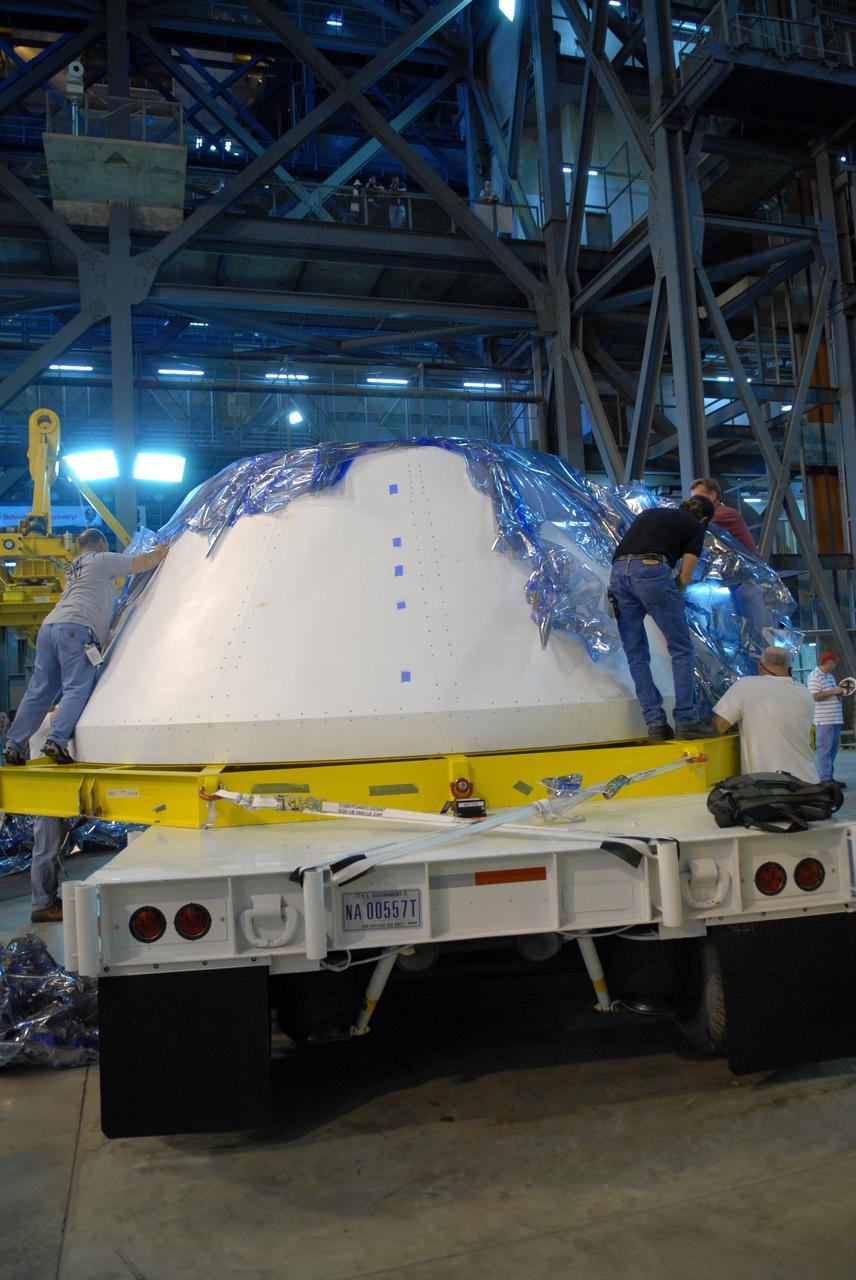
CAPE CANAVERAL, Fla. – In the Vehicle Assembly Building's high bay 4 at NASA's Kennedy Space Center in Florida, workers remove the protective blue cover from the simulator crew module for the Ares I-X rocket. The precisely machined, full-scale simulator crew module is part of the hardware that will be used in the launch of the rocket. Also arriving is a launch abort system that, with the module, will form the tip of the rocket. Ares I-X is the test flight for the Ares I. The I-X flight will provide NASA an early opportunity to test and prove hardware, facilities and ground operations associated with Ares I. The launch of the 321-foot-tall, full-scale Ares I-X, targeted for July 2009, will be the first in a series of unpiloted rocket launches from Kennedy. When fully developed, the 16-foot diameter crew module will furnish living space and reentry protection for the astronauts, while their launch abort system will provide safe evacuation if a launch vehicle failure occurs. Photo credit: NASA/Jack Pfaller
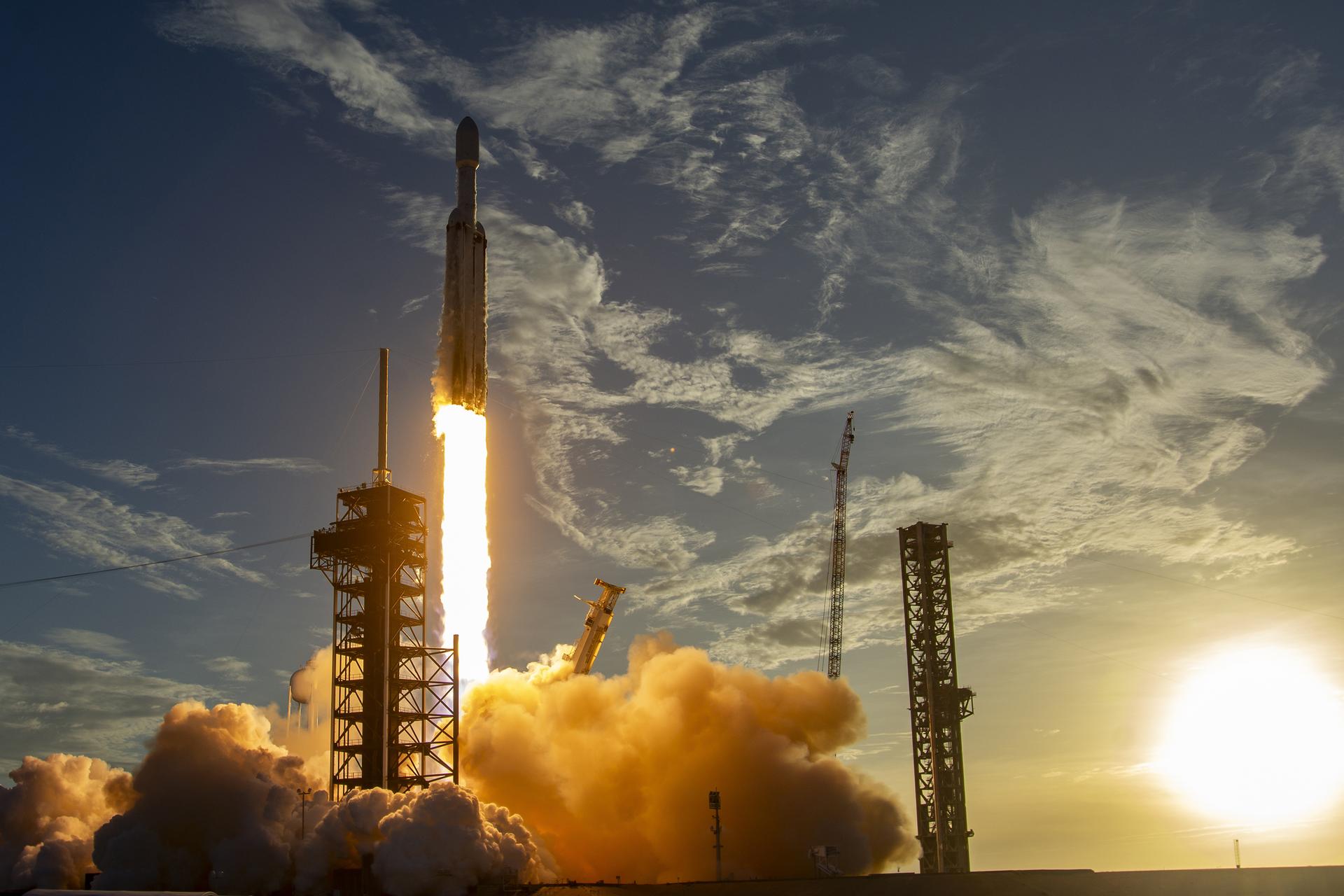
NASA’s Nancy Grace Roman Space Telescope rises to space atop a SpaceX Falcon Heavy rocket from Launch Complex 39A at the agency’s Kennedy Space Center in Florida on Sunday, Aug. 30, 2026. The milestone begins the observatory’s journey to explore the large‑scale structure of the universe. Roman will investigate dark energy and dark matter, conduct a statistical census of planetary systems, and enable a broad range of additional astrophysics research.
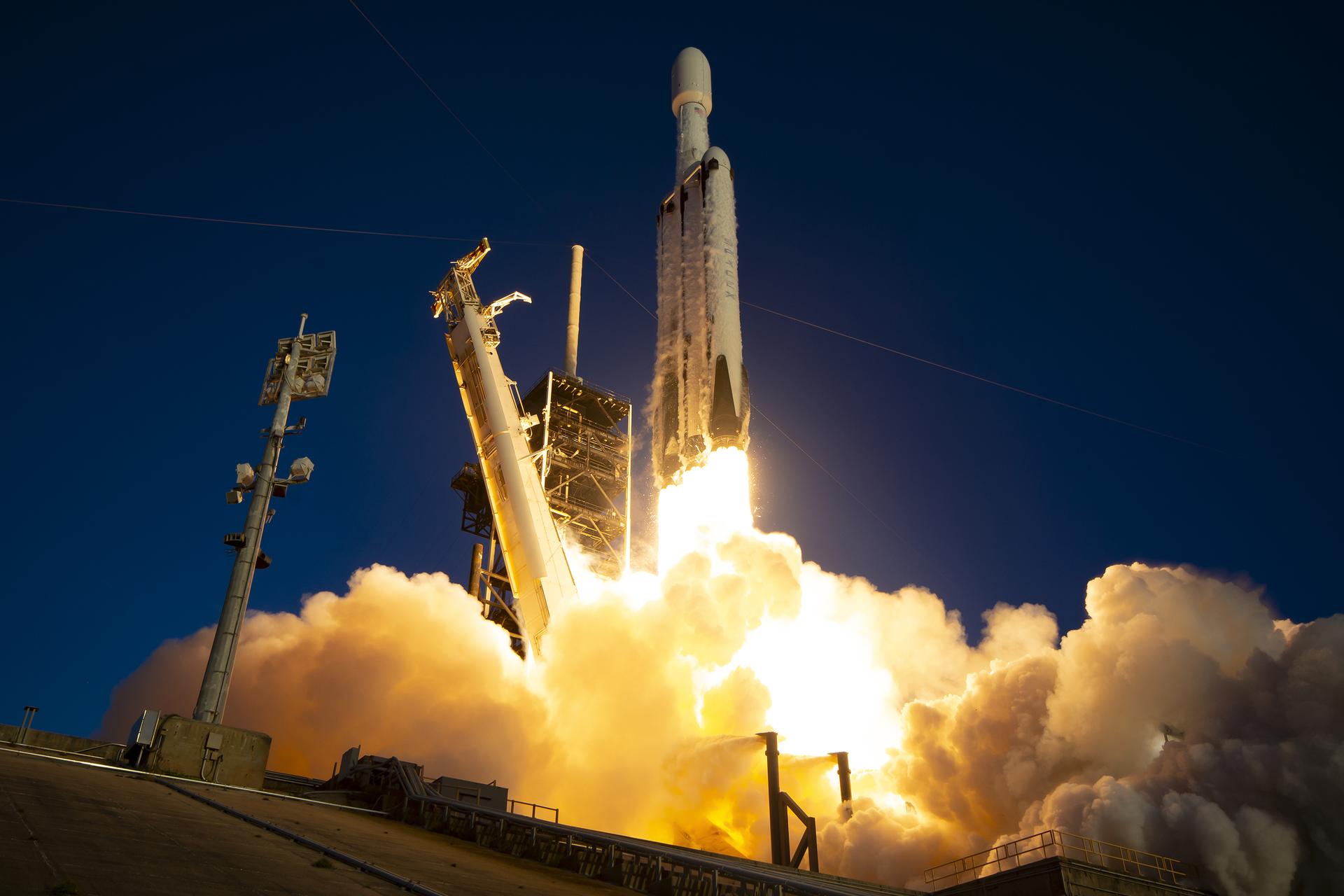
NASA’s Nancy Grace Roman Space Telescope rises to space atop a SpaceX Falcon Heavy rocket from Launch Complex 39A at the agency’s Kennedy Space Center in Florida on Sunday, Aug. 30, 2026. The milestone begins the observatory’s journey to explore the large‑scale structure of the universe. Roman will investigate dark energy and dark matter, conduct a statistical census of planetary systems, and enable a broad range of additional astrophysics research.
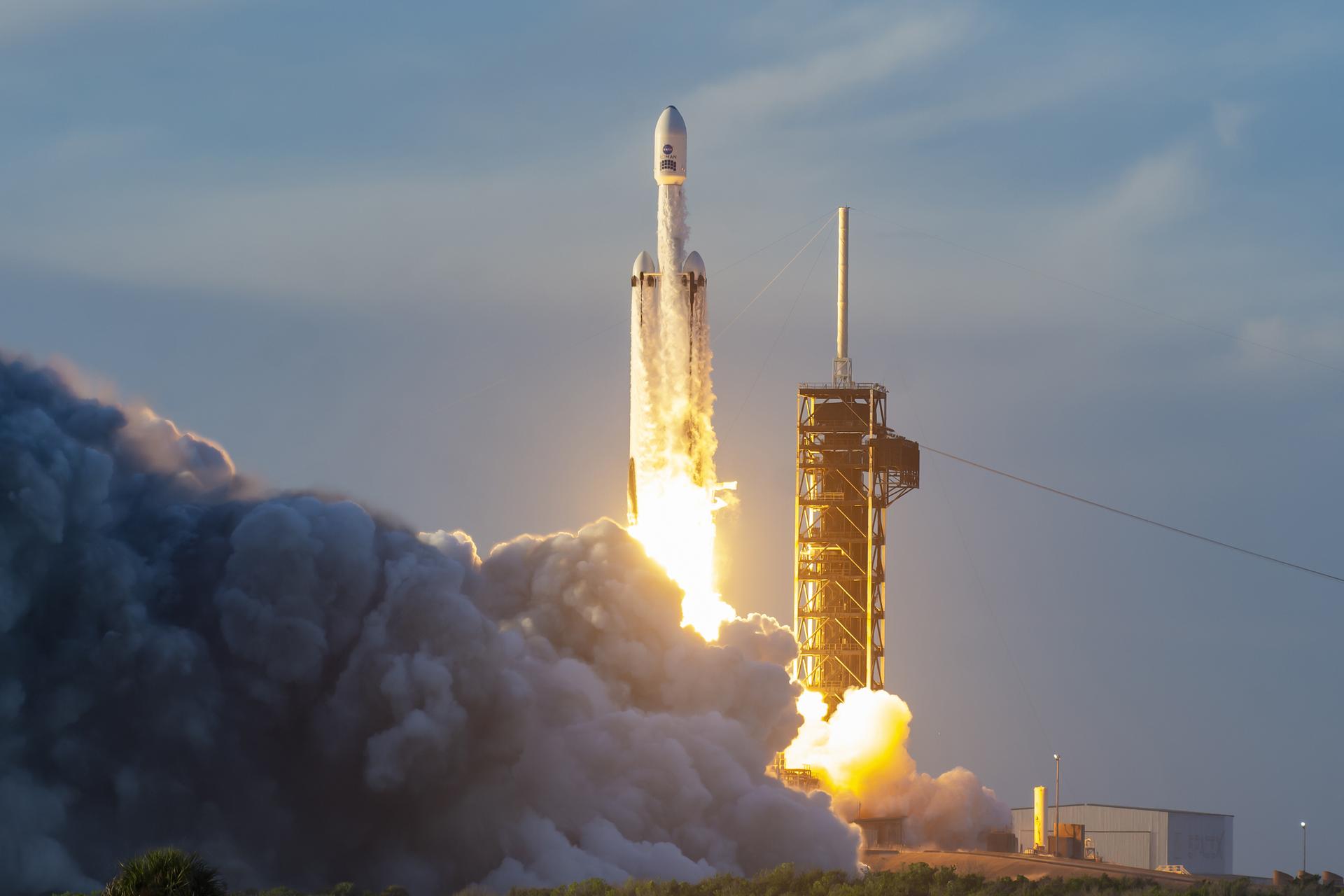
NASA’s Nancy Grace Roman Space Telescope rises to space atop a SpaceX Falcon Heavy rocket from Launch Complex 39A at the agency’s Kennedy Space Center in Florida on Sunday, Aug. 30, 2026. The milestone begins the observatory’s journey to explore the large‑scale structure of the universe. Roman will investigate dark energy and dark matter, conduct a statistical census of planetary systems, and enable a broad range of additional astrophysics research.
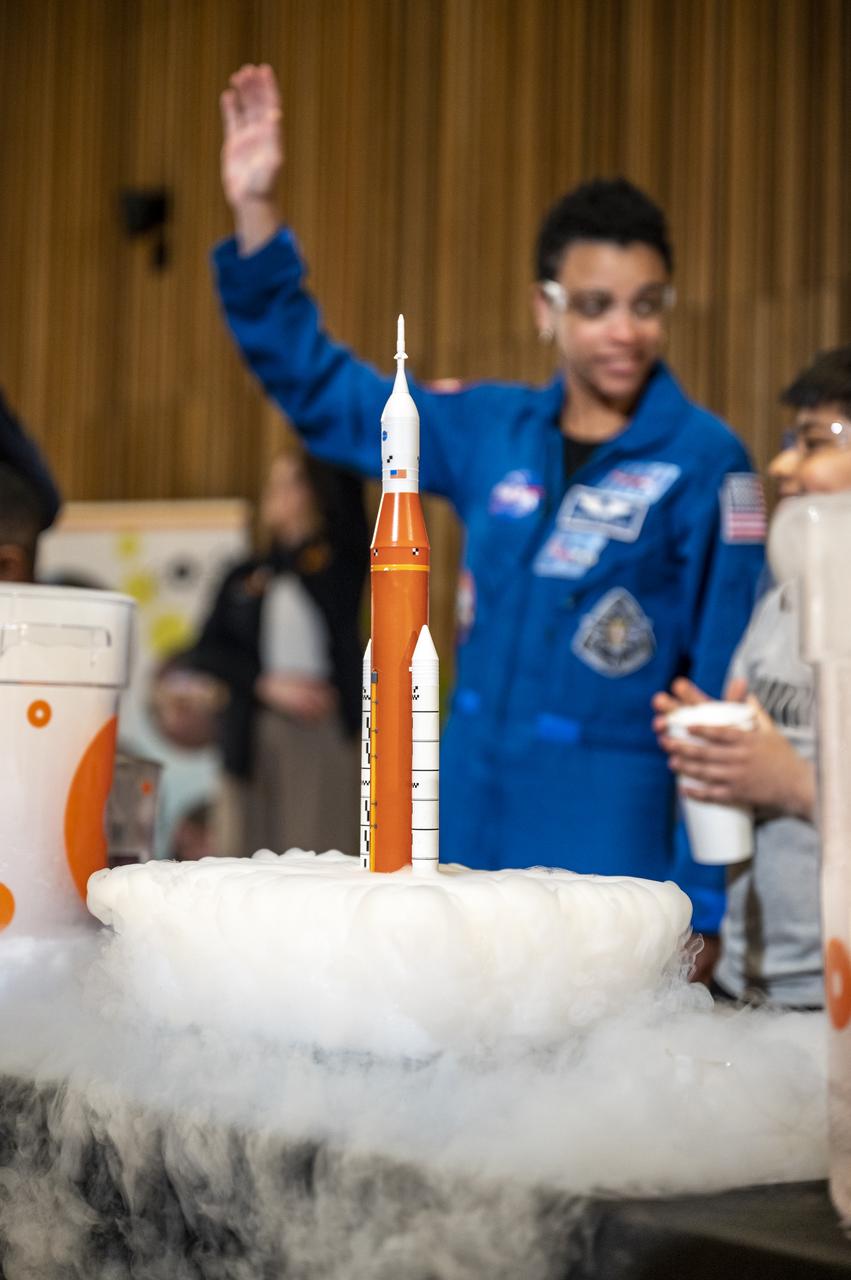
A scale model of NASA’s Space Launch System (SLS) is seen in the foreground during an event with NASA astronauts Jessica Watkins, Robert Hines, and Kjell Lindgren at the Martin Luther King Jr Memorial Library, Thursday, March 30, 2023, in Washington. Lindgren, Hines, and Watkins spent 170 days in space as part of Expeditions 67 and 68 aboard the International Space Station. Photo Credit: (NASA/Keegan Barber)
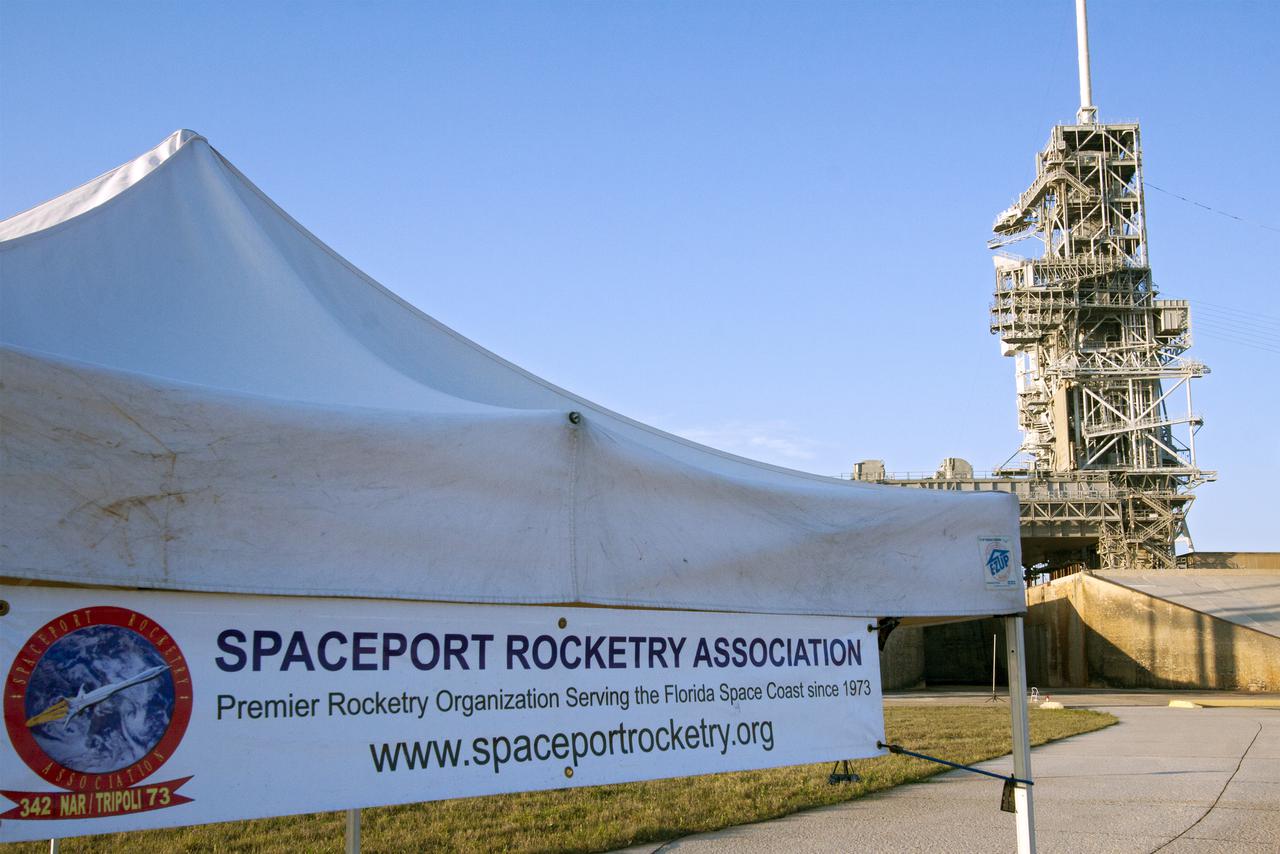
CAPE CANAVERAL, Fla. -- At NASA's Kennedy Space Center in Florida, engineers launched a small rocket as part of Rocket University. The goal was to test its systems and to verify that it performed as designed. The event was supported by the Spaceport Rocketry Association, a 40-year-old organization that provides launch demonstrations and educational programs. As part of Rocket University, the engineers are given an opportunity to work a fast-track project to develop skills in developing spacecraft systems of the future. As NASA plans for future spaceflight programs to low-Earth orbit and beyond, teams of engineers at Kennedy are gaining experience in designing and flying launch vehicle systems on a small scale. Four teams of five to eight members from Kennedy are designing rockets complete with avionics and recovery systems. Launch operations require coordination with federal agencies, just as they would with rockets launched in support of a NASA mission. Photo credit: NASA_Jim Grossmann
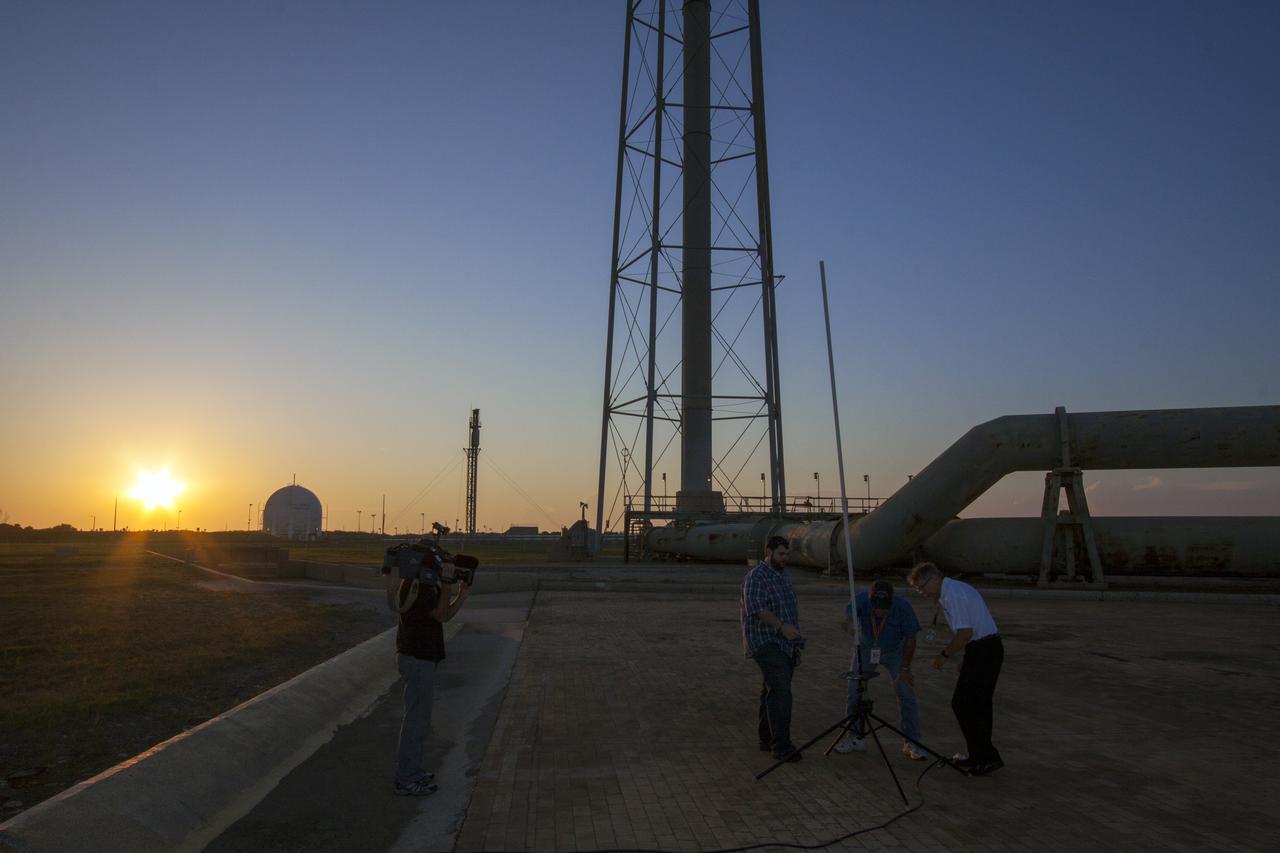
CAPE CANAVERAL, Fla. -- As the sun rises at NASA's Kennedy Space Center's Launch Pad 39A in Florida, a team of NASA engineers prepare to launch a single stage rocket as part of Rocket University. The goal was to test its systems and to verify that it performed as designed. As part of Rocket University, the engineers are given an opportunity to work a fast-track project to develop skills in developing spacecraft systems of the future. As NASA plans for future spaceflight programs to low-Earth orbit and beyond, teams of engineers at Kennedy are gaining experience in designing and flying launch vehicle systems on a small scale. Four teams of five to eight members from Kennedy are designing rockets complete with avionics and recovery systems. Launch operations require coordination with federal agencies, just as they would with rockets launched in support of a NASA mission. Photo credit: NASA_Jim Grossmann
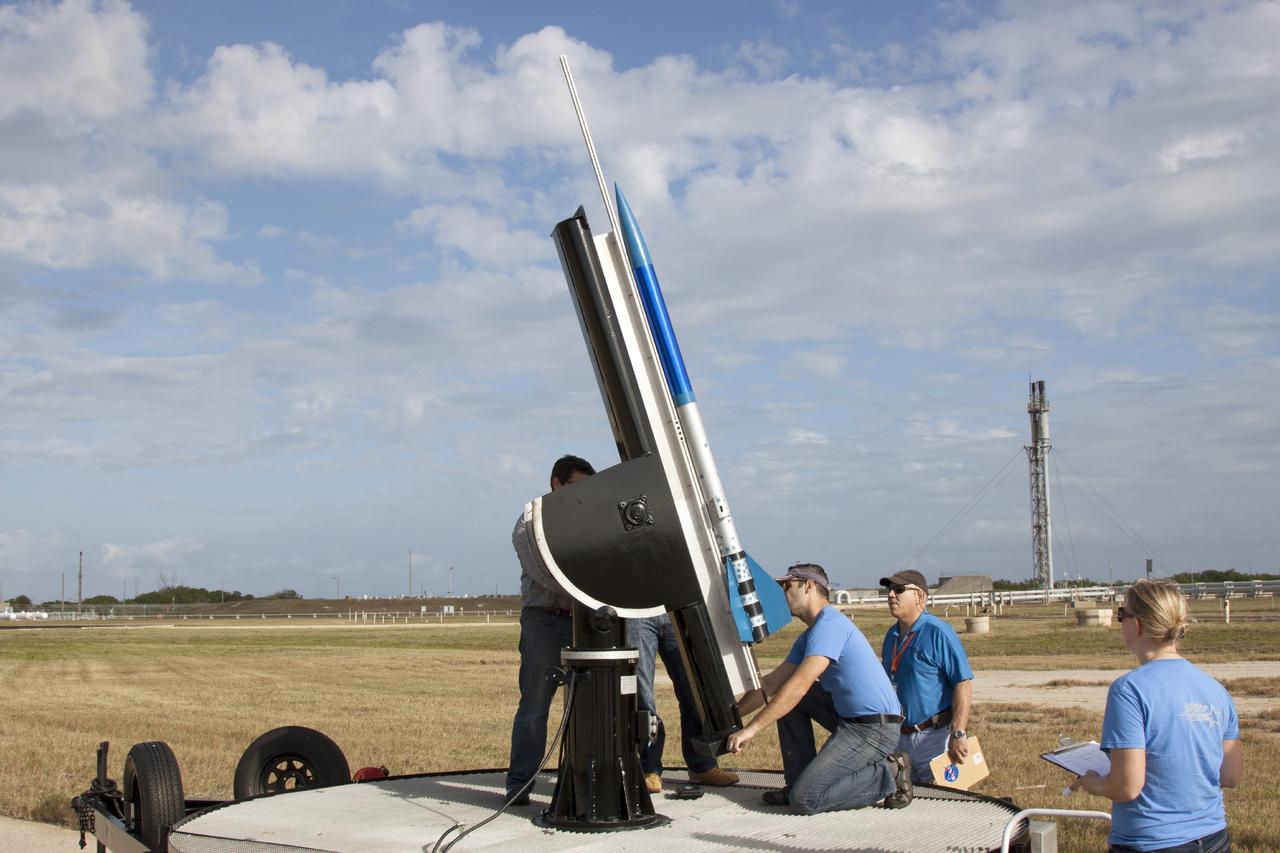
CAPE CANAVERAL, Fla. -- At NASA's Kennedy Space Center in Florida, engineers make final adjustments to a small rocket prior to launch as part of Rocket University. The launch will test systems designed by the student engineers. As part of Rocket University, the engineers are given an opportunity to work a fast-track project to develop skills in developing spacecraft systems of the future. As NASA plans for future spaceflight programs to low-Earth orbit and beyond, teams of engineers at Kennedy are gaining experience in designing and flying launch vehicle systems on a small scale. Four teams of five to eight members from Kennedy are designing rockets complete with avionics and recovery systems. Launch operations require coordination with federal agencies, just as they would with rockets launched in support of a NASA mission. Photo credit: NASA/Jim Grossmann
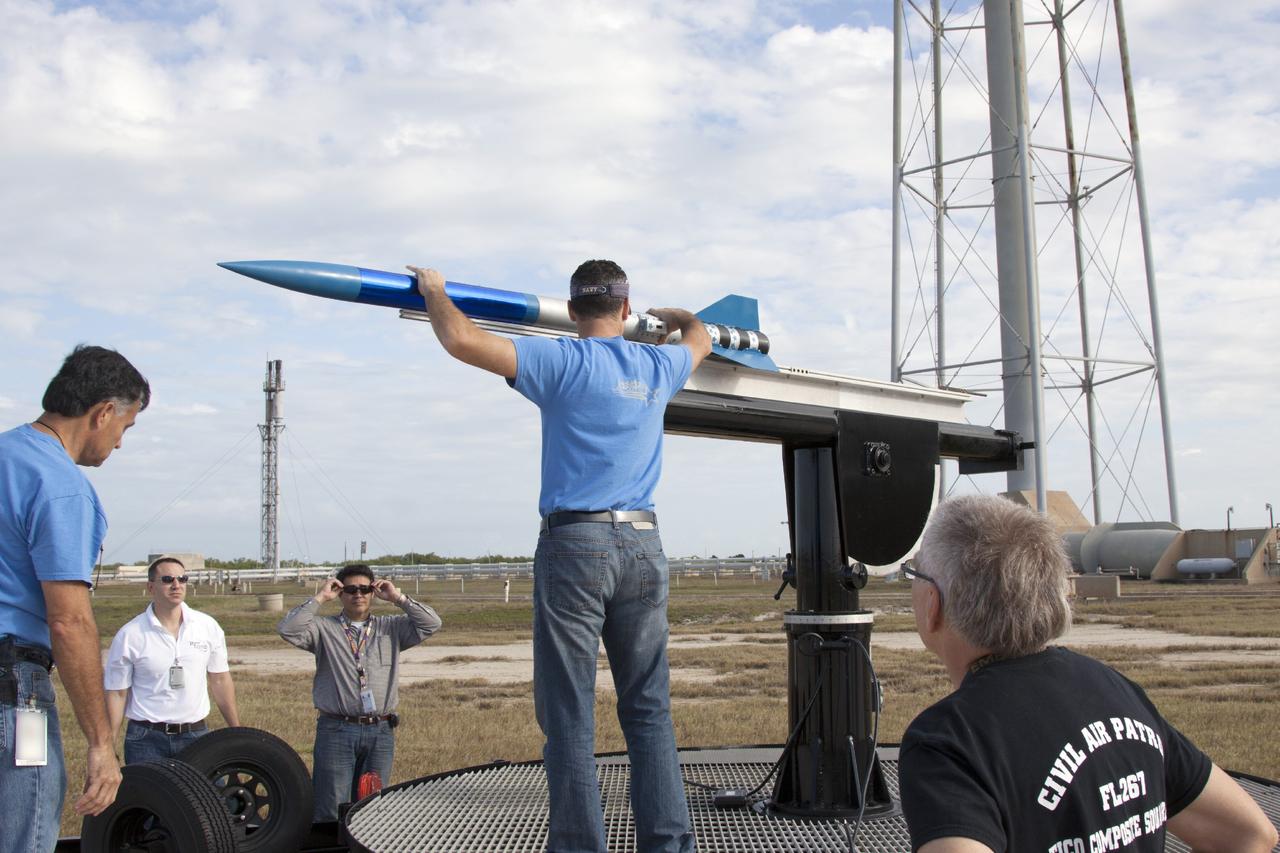
CAPE CANAVERAL, Fla. -- At NASA's Kennedy Space Center in Florida, engineers make final adjustments to a small rocket prior to launch as part of Rocket University. The launch will test systems designed by the student engineers. As part of Rocket University, the engineers are given an opportunity to work a fast-track project to develop skills in developing spacecraft systems of the future. As NASA plans for future spaceflight programs to low-Earth orbit and beyond, teams of engineers at Kennedy are gaining experience in designing and flying launch vehicle systems on a small scale. Four teams of five to eight members from Kennedy are designing rockets complete with avionics and recovery systems. Launch operations require coordination with federal agencies, just as they would with rockets launched in support of a NASA mission. Photo credit: NASA/Jim Grossmann