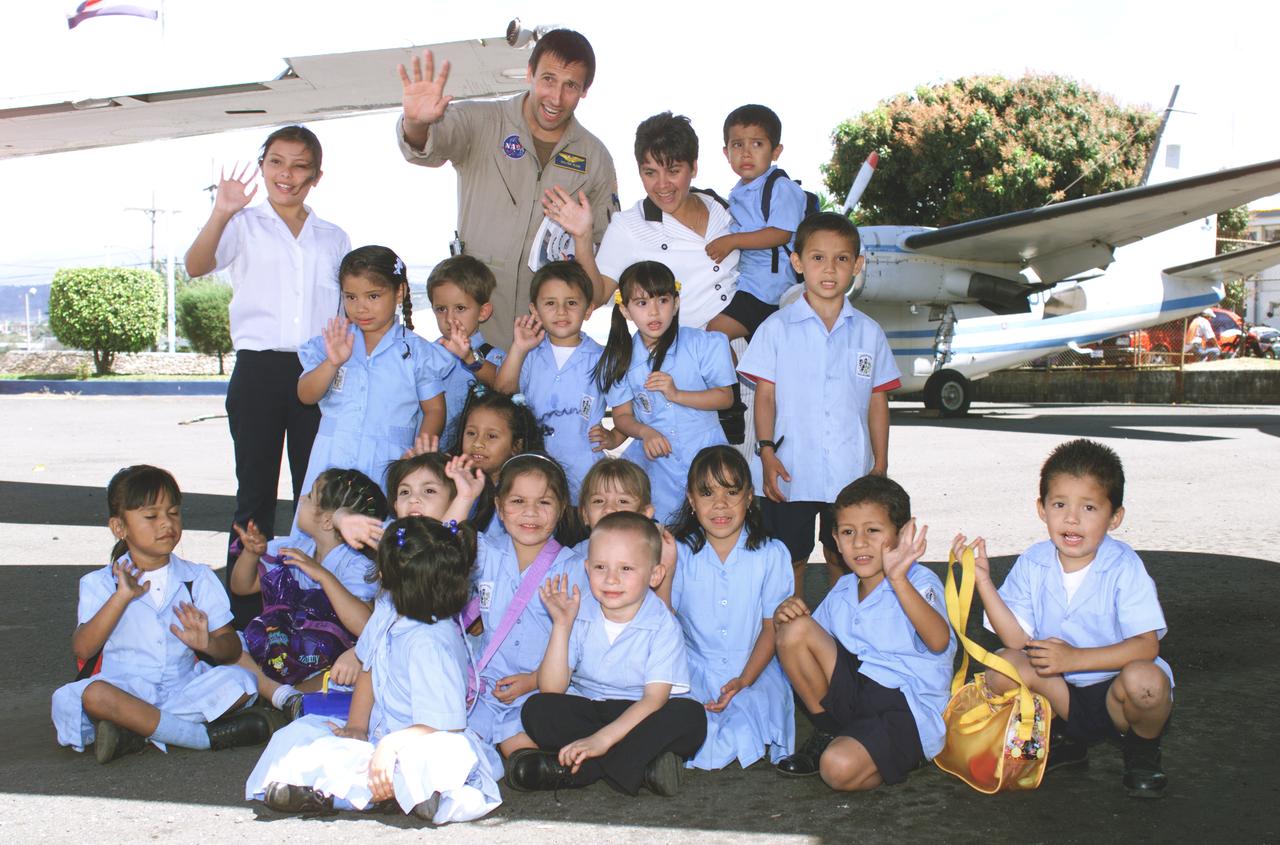
NASA Dryden Mission Manager Walter Klein poses with school children that visited the airport during AirSAR 2004. In spanish, he explained to them the mission of the DC-8 AirSAR 2004 Mesoamerican campaign in Costa Rica. AirSAR 2004 Mesoamerica is a three-week expedition by an international team of scientists that uses an all-weather imaging tool, called the Airborne Synthetic Aperture Radar (AirSAR) which is located onboard NASA's DC-8 airborne laboratory. Scientists from many parts of the world including NASA's Jet Propulsion Laboratory are combining ground research done in several areas in Central America with NASA's AirSAR technology to improve and expand on the quality of research they are able to conduct. The radar, developed by NASA's Jet Propulsion Laboratory, can penetrate clouds and also collect data at night. Its high-resolution sensors operate at multiple wavelengths and modes, allowing AirSAR to see beneath treetops, through thin sand, and dry snow pack. AirSAR's 2004 campaign is a collaboration of many U.S. and Central American institutions and scientists, including NASA; the National Science Foundation; the Smithsonian Institution; National Geographic; Conservation International; the Organization of Tropical Studies; the Central American Commission for Environment and Development; and the Inter-American Development Bank.
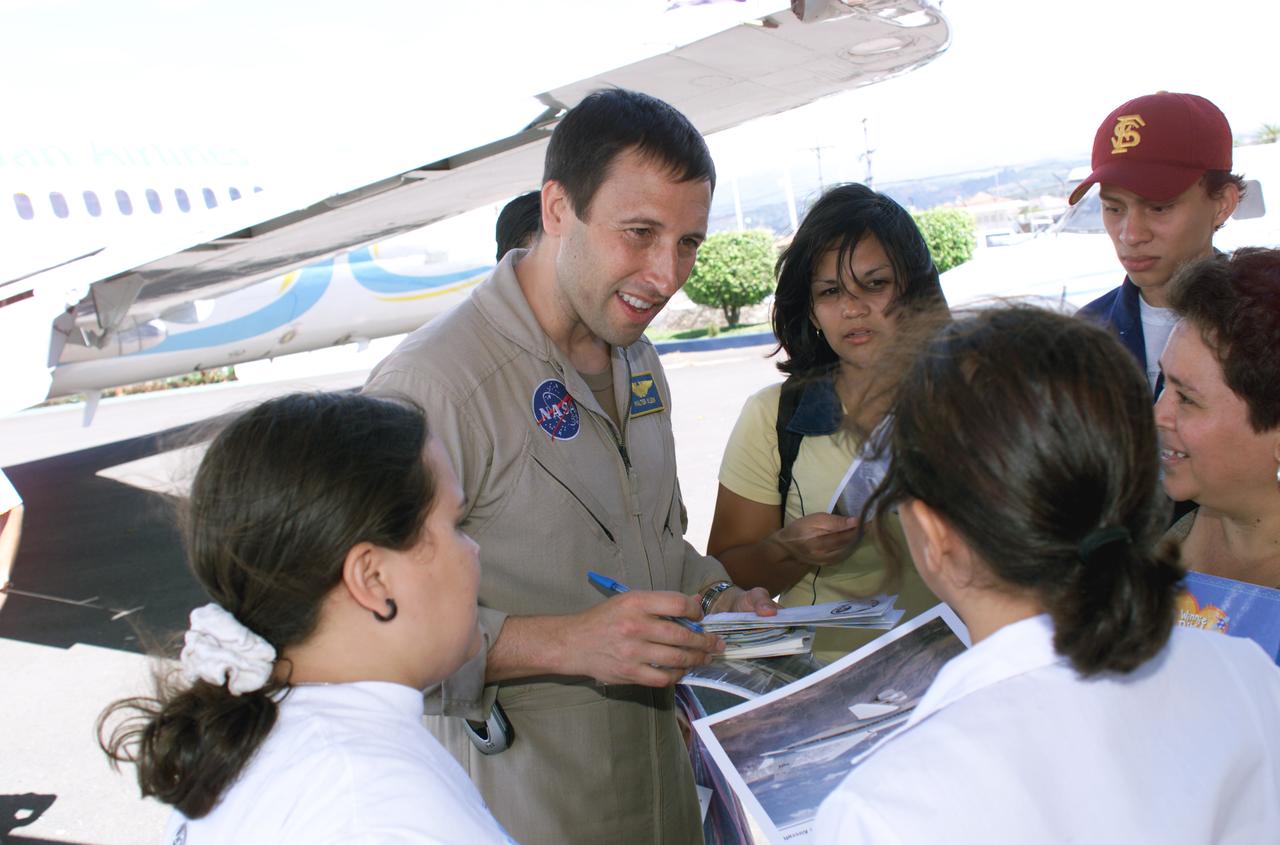
NASA Dryden Mission Manager Walter Klein passes out Airborne Science stickers and lithographs to underprivileged school children that visited the airport on Monday March 8, 2004. In spanish, he explained to them the mission of the DC-8 AirSAR 2004 Mesoamerican campaign in Costa Rica. AirSAR 2004 Mesoamerica is a three-week expedition by an international team of scientists that uses an all-weather imaging tool, called the Airborne Synthetic Aperture Radar (AirSAR) which is located onboard NASA's DC-8 airborne laboratory. Scientists from many parts of the world including NASA's Jet Propulsion Laboratory are combining ground research done in several areas in Central America with NASA's AirSAR technology to improve and expand on the quality of research they are able to conduct. The radar, developed by NASA's Jet Propulsion Laboratory, can penetrate clouds and also collect data at night. Its high-resolution sensors operate at multiple wavelengths and modes, allowing AirSAR to see beneath treetops, through thin sand, and dry snow pack. AirSAR's 2004 campaign is a collaboration of many U.S. and Central American institutions and scientists, including NASA; the National Science Foundation; the Smithsonian Institution; National Geographic; Conservation International; the Organization of Tropical Studies; the Central American Commission for Environment and Development; and the Inter-American Development Bank.
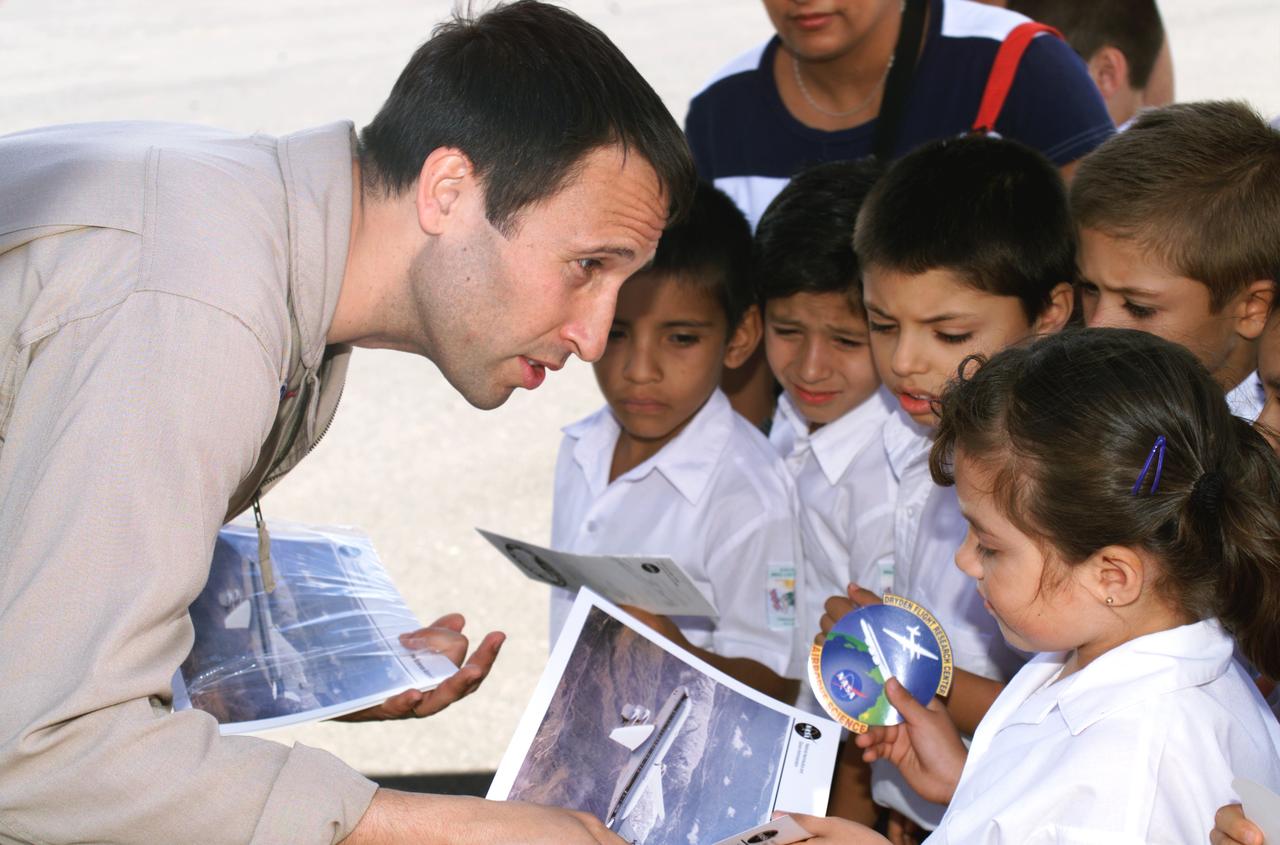
NASA Dryden Mission Manager Walter Klein passes out Airborne Science stickers and lithographs to underprivileged school children that visited the airport on Monday March 8, 2004. In spanish, he explained to them the mission of the DC-8 AirSAR 2004 Mesoamerican campaign in Costa Rica. AirSAR 2004 Mesoamerica is a three-week expedition by an international team of scientists that uses an all-weather imaging tool, called the Airborne Synthetic Aperture Radar (AirSAR) which is located onboard NASA's DC-8 airborne laboratory. Scientists from many parts of the world including NASA's Jet Propulsion Laboratory are combining ground research done in several areas in Central America with NASA's AirSAR technology to improve and expand on the quality of research they are able to conduct. The radar, developed by NASA's Jet Propulsion Laboratory, can penetrate clouds and also collect data at night. Its high-resolution sensors operate at multiple wavelengths and modes, allowing AirSAR to see beneath treetops, through thin sand, and dry snow pack. AirSAR's 2004 campaign is a collaboration of many U.S. and Central American institutions and scientists, including NASA; the National Science Foundation; the Smithsonian Institution; National Geographic; Conservation International; the Organization of Tropical Studies; the Central American Commission for Environment and Development; and the Inter-American Development Bank.
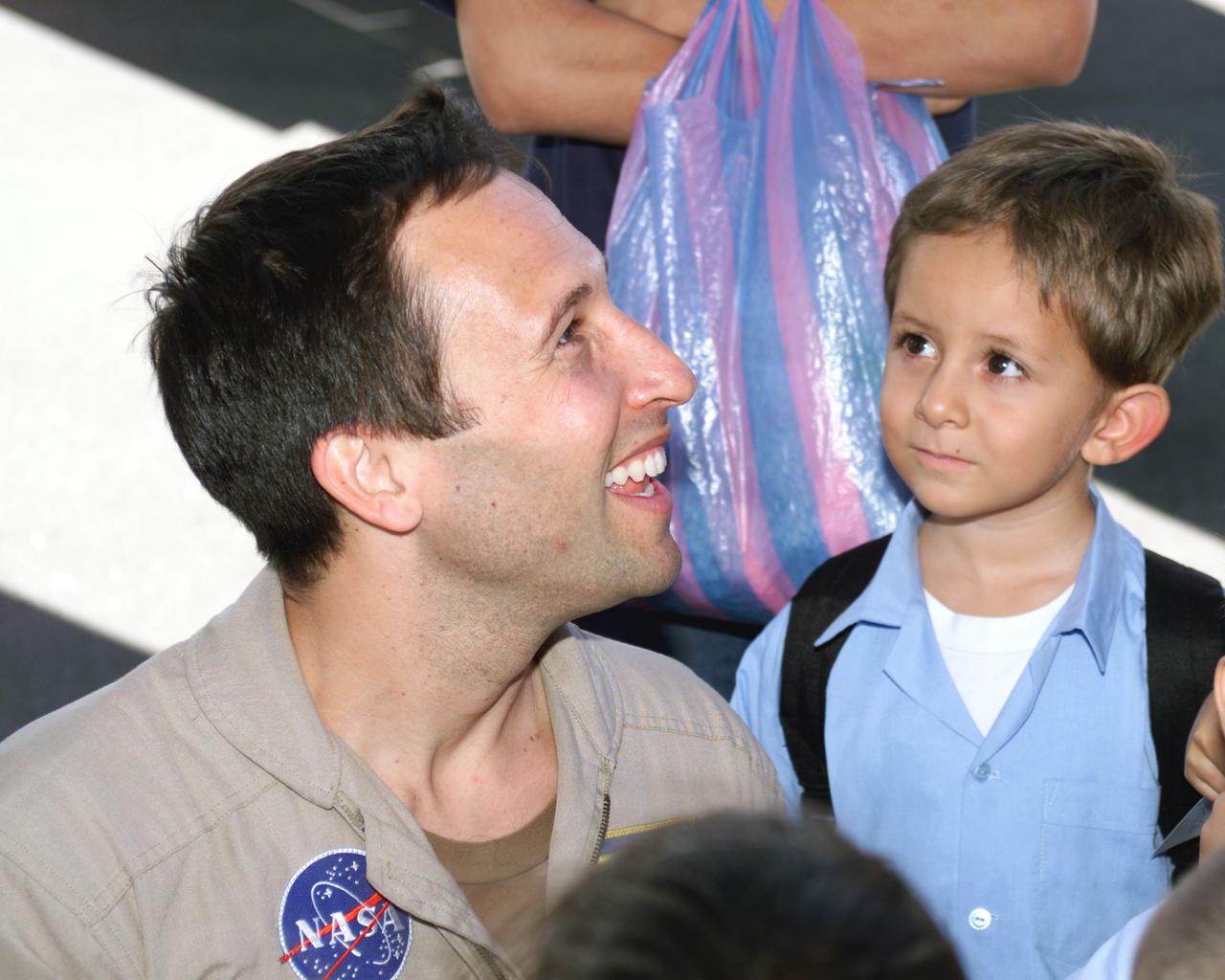
NASA Dryden Mission Manager Walter Klein passes out Airborne Science stickers and lithographs to underprivileged school children that visited the airport on Monday March 8, 2004. In spanish, he explained to them the mission of the DC-8 AirSAR 2004 Mesoamerican campaign in Costa Rica. AirSAR 2004 Mesoamerica is a three-week expedition by an international team of scientists that uses an all-weather imaging tool, called the Airborne Synthetic Aperture Radar (AirSAR) which is located onboard NASA's DC-8 airborne laboratory. Scientists from many parts of the world including NASA's Jet Propulsion Laboratory are combining ground research done in several areas in Central America with NASA's AirSAR technology to improve and expand on the quality of research they are able to conduct. The radar, developed by NASA's Jet Propulsion Laboratory, can penetrate clouds and also collect data at night. Its high-resolution sensors operate at multiple wavelengths and modes, allowing AirSAR to see beneath treetops, through thin sand, and dry snow pack. AirSAR's 2004 campaign is a collaboration of many U.S. and Central American institutions and scientists, including NASA; the National Science Foundation; the Smithsonian Institution; National Geographic; Conservation International; the Organization of Tropical Studies; the Central American Commission for Environment and Development; and the Inter-American Development Bank.
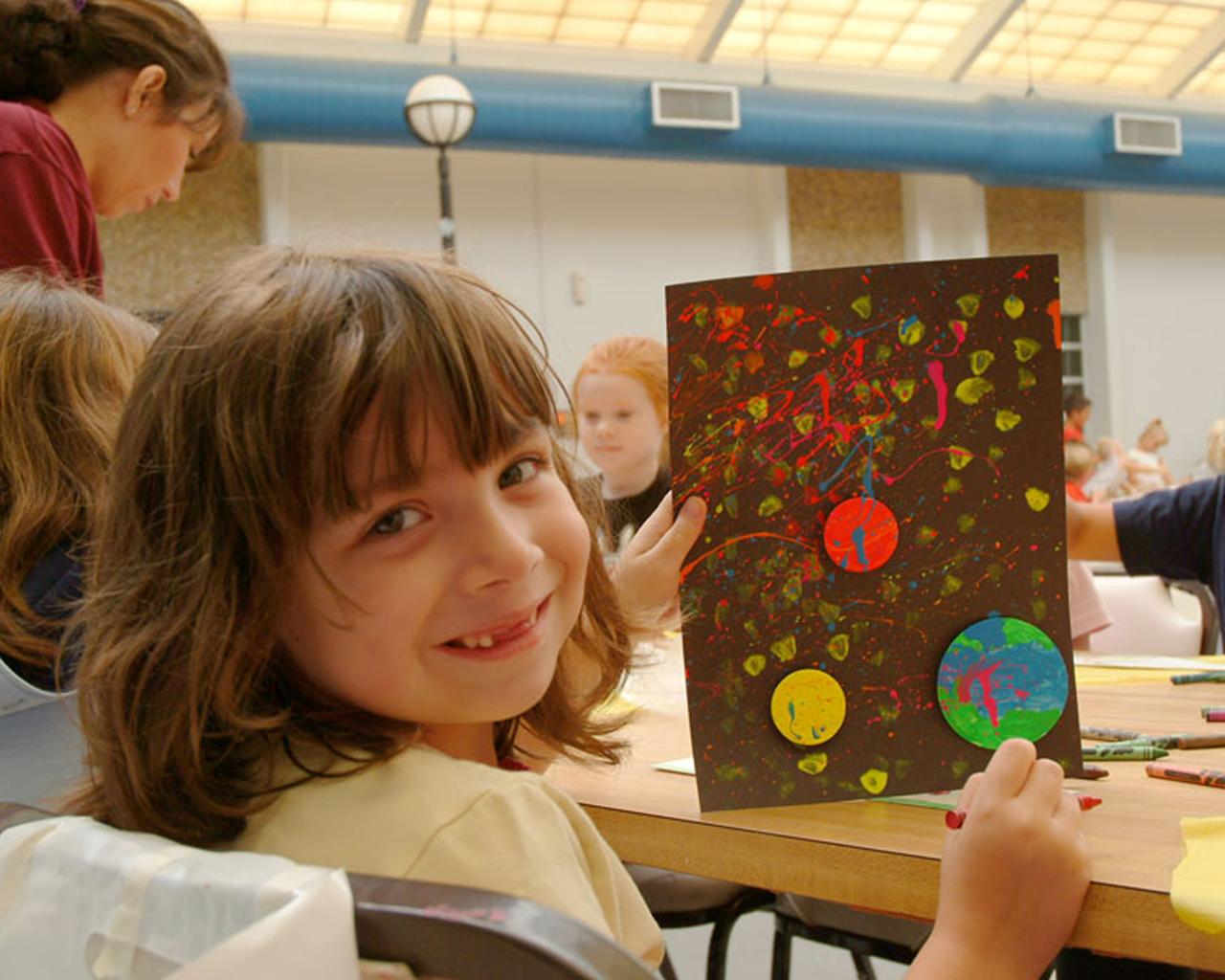
Sara Beth Casey, 5, proudly displays her artwork, 'Planets.' Sara Beth created the art as a student of Stennis Day Camp, a free camp for Stennis Space Center employees' children whose schools have not resumed since Hurricane Katrina hit the region on Aug. 29. The camp has registered nearly 200 children and averages 100 children each day. The camp will continue until all schools are back in session.
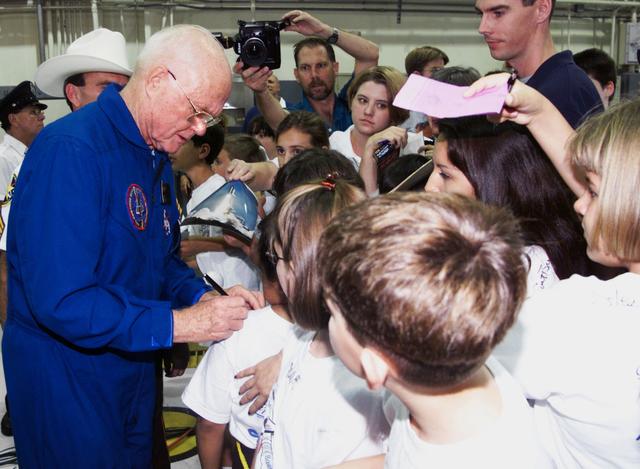
John Glenn signs autographs for school children following his STS-95 flight aboard the space shuttle Discovery.
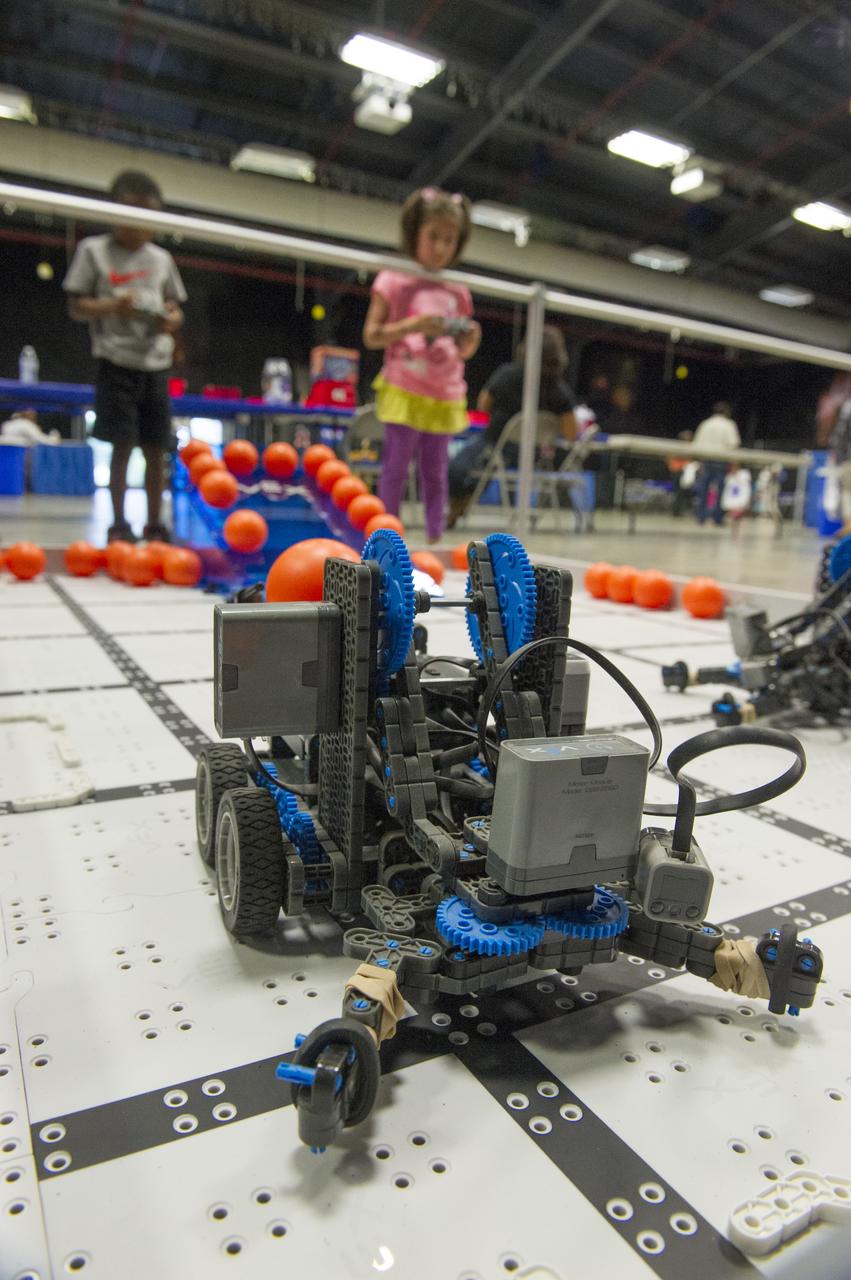
YOUNG PEOPLE PARTICIPATING IN “TAKE OUR CHILDREN TO WORK DAY,” AIDED BY STUDENTS AND TEACHERS ON THE MOULTON ROBOTICS TECHNOLOGIES TEAM FROM MOULTON MIDDLE SCHOOL AND LAWRENCE COUNTY HIGH SCHOOL, BOTH IN MOULTON, ALABAMA, LEARNED TO OPERATE ROBOTS
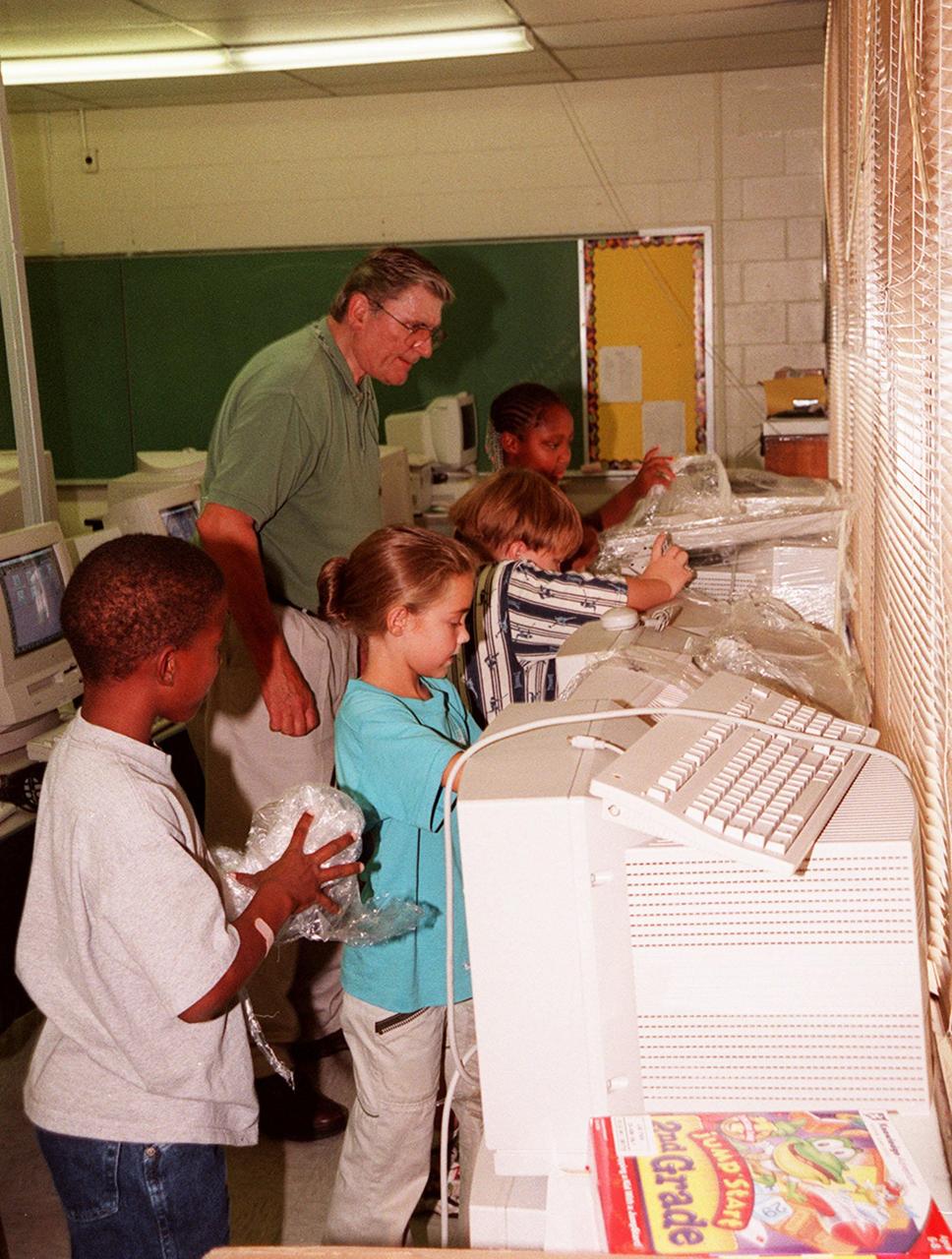
Children at Cambridge Elementary School, Cocoa, Fla., eagerly unwrap computer equipment donated by Kennedy Space Center. Cambridge is one of 13 Brevard County schools receiving 81 excess contractor computers thanks to an innovative educational outreach project spearheaded by the Nasa k-12 Education Services Office at ksc. Behind the children is Jim Thurston, a school volunteer and retired employee of USBI, who shared in the project. The Astronaut Memorial Foundation, a strategic partner in the effort, and several schools in rural Florida and Georgia also received refurbished computers as part of the year-long project. KSC employees put in about 3,300 volunteer hours to transform old, excess computers into upgraded, usable units. A total of $90,000 in upgraded computer equipment is being donated
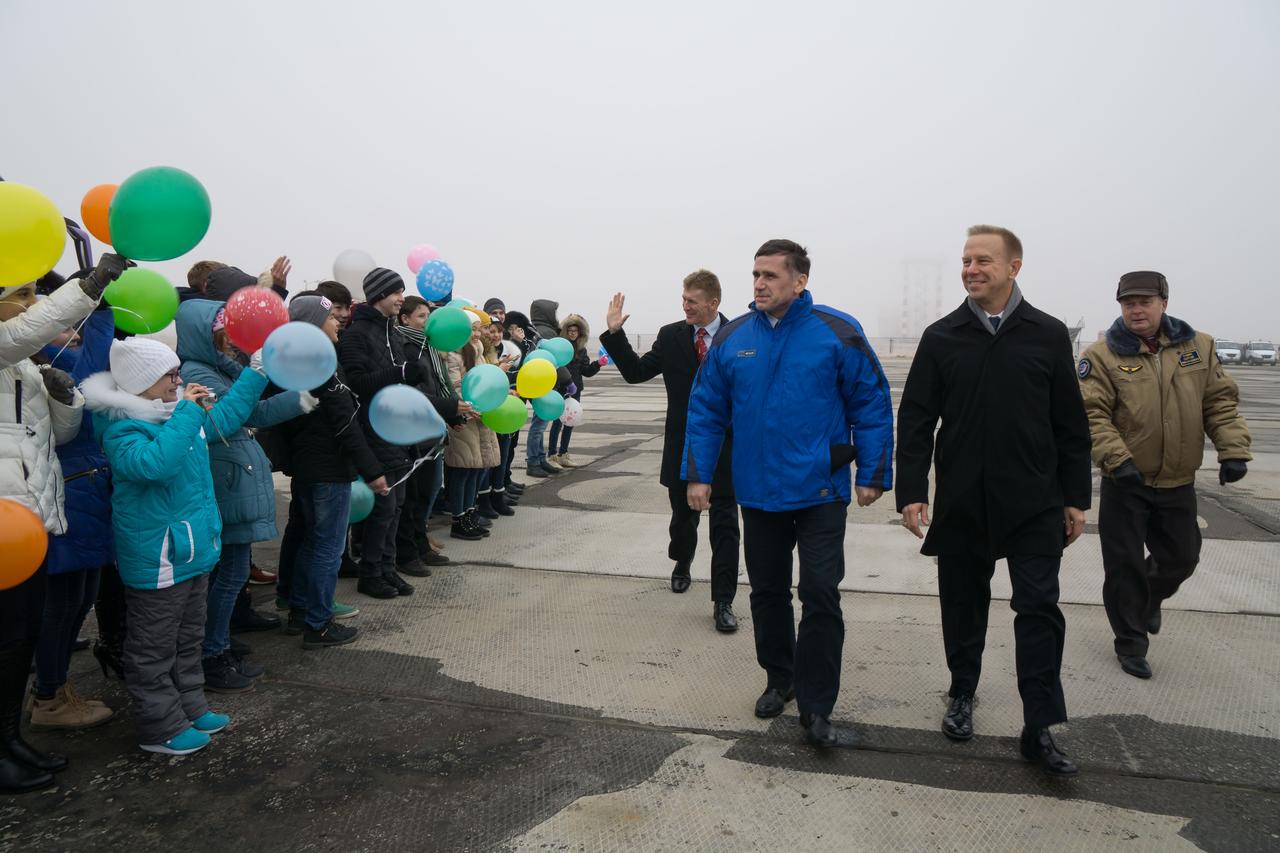
The Expedition 46-47 crewmembers arrive in Baikonur, Kazakhstan Nov. 30 for final pre-launch training following a flight from their training base at the Gagarin Cosmonaut Training Center in Star City, Russia and are greeted by school children. Tim Peake of the European Space Agency (left), Yuri Malenchenko of the Russian Federal Space Agency (Roscosmos, center) and Tim Kopra of NASA (right), will launch Dec. 15 on the Soyuz TMA-19M spacecraft for a six-month mission on the International Space Station. NASA / Victor Zelentsov
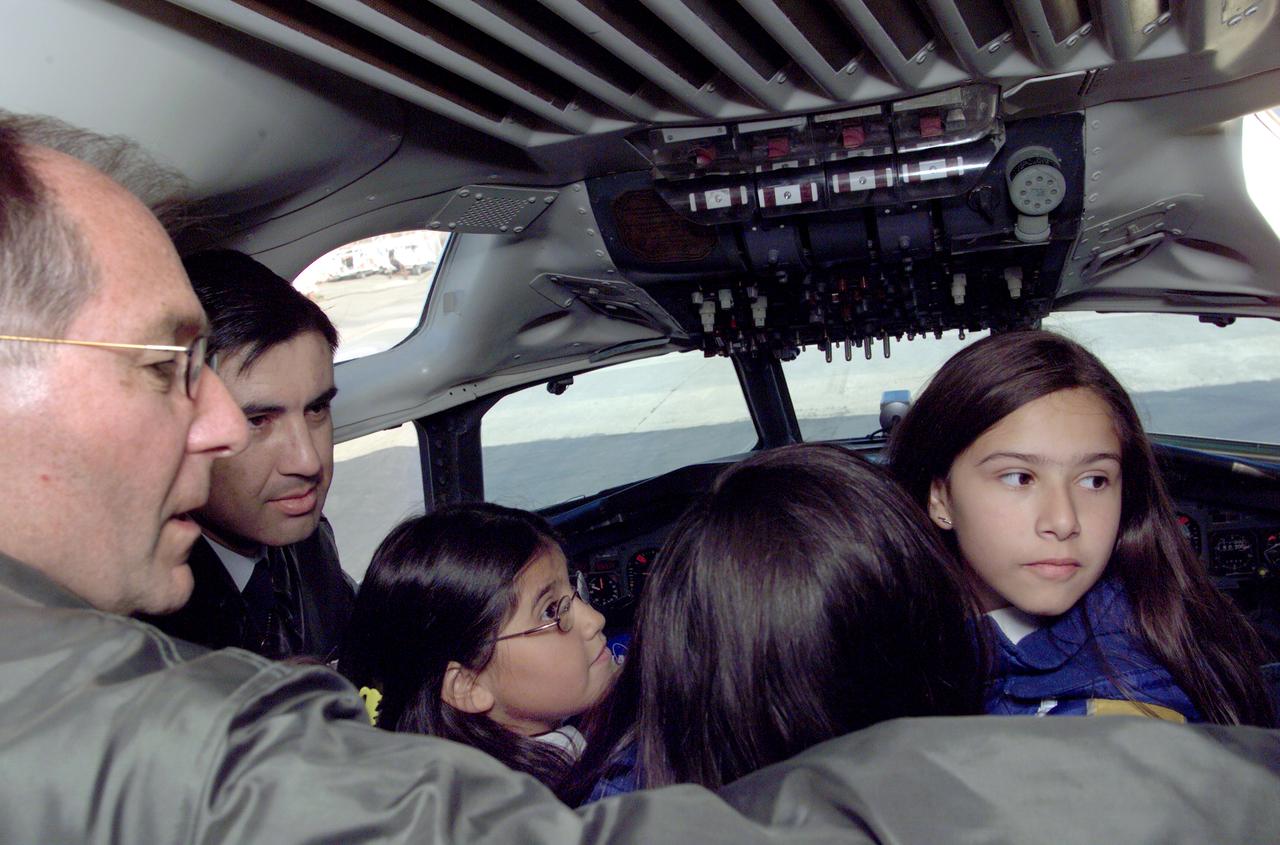
Pilot Bill Brockett (left) and Chilean Air Force Captain Saez with school children in the cockpit of NASA Dryden's DC-8 flying laboratory. Brockett explained NASA's AirSAR 2004 mission in Chile. AirSAR 2004 is a three-week expedition by an international team of scientists that uses an all-weather imaging tool, called the Airborne Synthetic Aperture Radar (AirSAR) which is located onboard NASA's DC-8 airborne laboratory. Scientists from many parts of the world including NASA's Jet Propulsion Laboratory are combining ground research done in several areas in Central and South America with NASA's AirSAR technology to improve and expand on the quality of research they are able to conduct. In South America and Antarctica, AirSAR collected imagery and data to help determine the contribution of Southern Hemisphere glaciers to sea level rise due to climate change. In Patagonia, researchers found this contribution had more than doubled from 1995 to 2000, compared to the previous 25 years. AirSAR data will make it possible to determine whether that trend is continuing or accelerating. AirSAR will also provide reliable information on ice shelf thickness to measure the contribution of the glaciers to sea level.
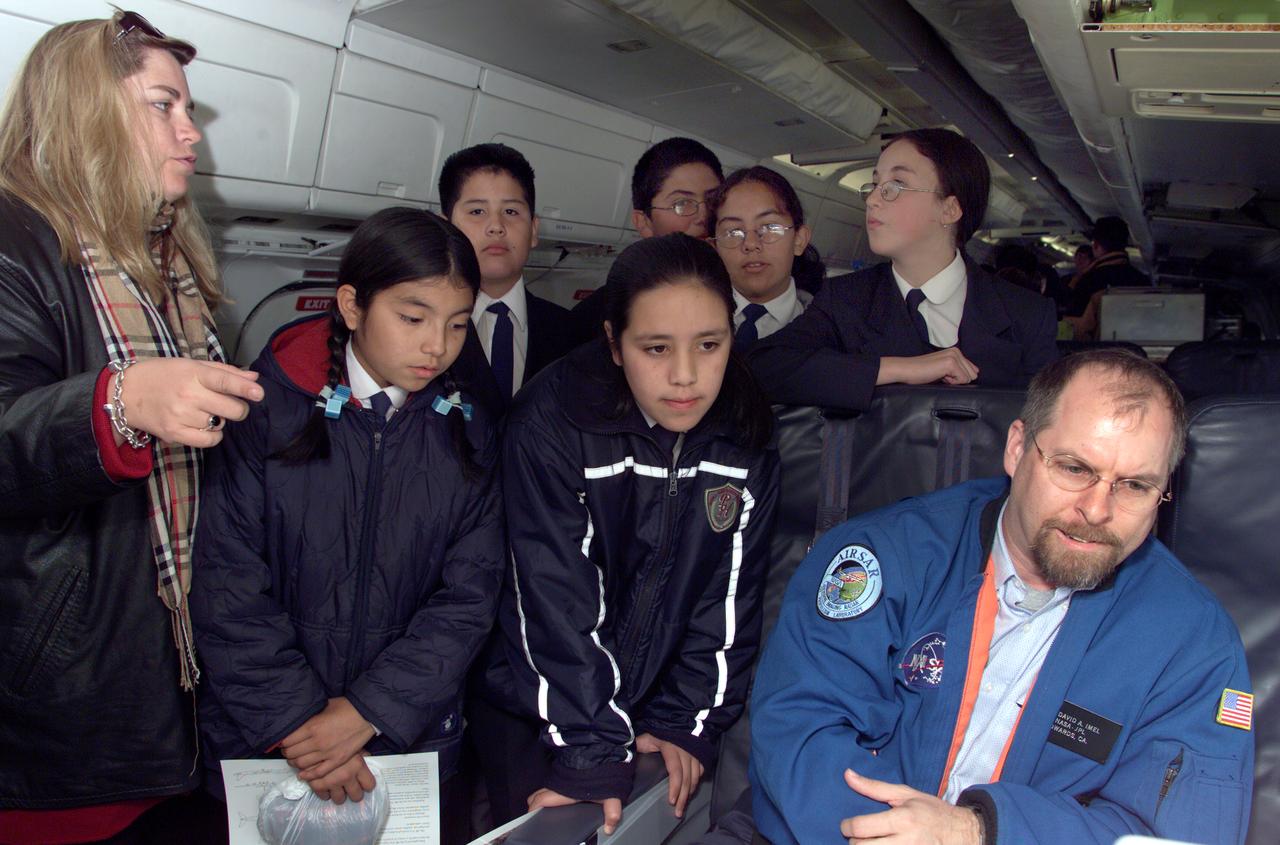
School children from Punta Arenas, Chile, talk with Dr. David Imel, an AirSAR scientist from NASA JPL, during AirSAR 2004. AirSAR 2004 is a three-week expedition by an international team of scientists that uses an all-weather imaging tool, called the Airborne Synthetic Aperture Radar (AirSAR) which is located onboard NASA's DC-8 airborne laboratory. Scientists from many parts of the world including NASA's Jet Propulsion Laboratory are combining ground research done in several areas in Central and South America with NASA's AirSAR technology to improve and expand on the quality of research they are able to conduct. In South America and Antarctica, AirSAR collected imagery and data to help determine the contribution of Southern Hemisphere glaciers to sea level rise due to climate change. In Patagonia, researchers found this contribution had more than doubled from 1995 to 2000, compared to the previous 25 years. AirSAR data will make it possible to determine whether that trend is continuing or accelerating. AirSAR will also provide reliable information on ice shelf thickness to measure the contribution of the glaciers to sea level.
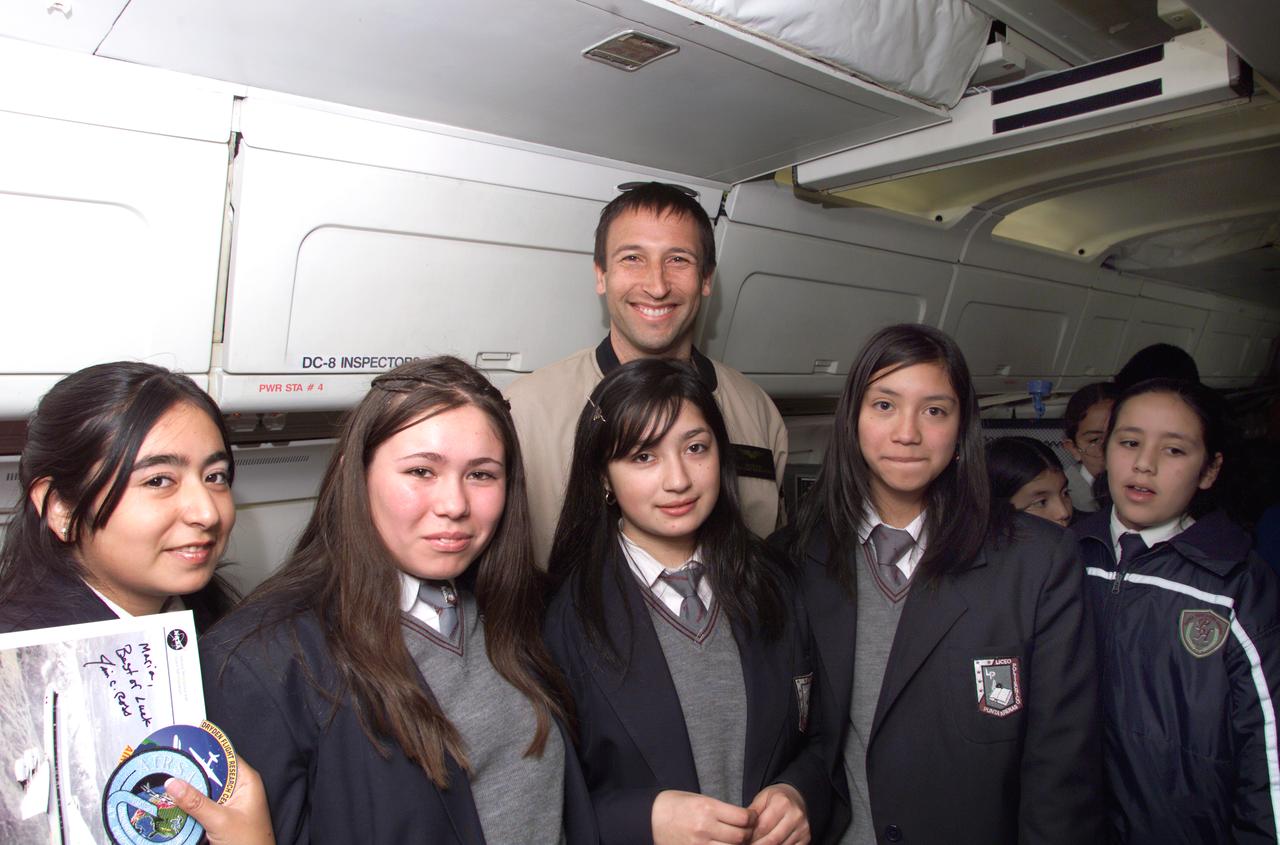
NASA Dryden Mission Manager Walter Klein poses with school children that visited the DC-8 during AirSAR 2004 in Punta Arenas, Chile. AirSAR 2004 is a three-week expedition by an international team of scientists that uses an all-weather imaging tool, called the Airborne Synthetic Aperture Radar (AirSAR) which is located onboard NASA's DC-8 airborne laboratory. Scientists from many parts of the world including NASA's Jet Propulsion Laboratory are combining ground research done in several areas in Central and South America with NASA's AirSAR technology to improve and expand on the quality of research they are able to conduct. In South America and Antarctica, AirSAR collected imagery and data to help determine the contribution of Southern Hemisphere glaciers to sea level rise due to climate change. In Patagonia, researchers found this contribution had more than doubled from 1995 to 2000, compared to the previous 25 years. AirSAR data will make it possible to determine whether that trend is continuing or accelerating. AirSAR will also provide reliable information on ice shelf thickness to measure the contribution of the glaciers to sea level.
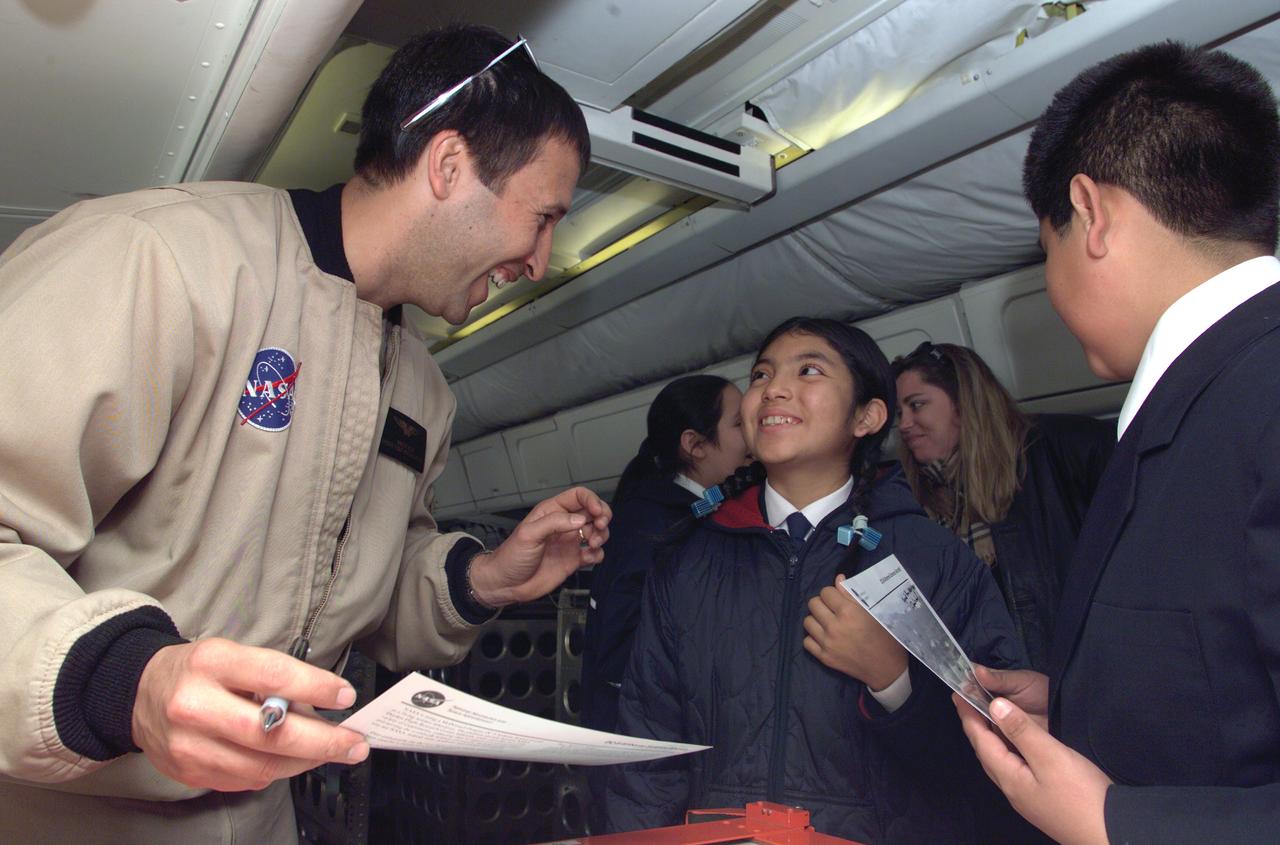
NASA Dryden Mission Manager Walter Klein talks with school children from Punta Arenas, Chile, during a tour of the DC-8 aircraft while it was in the country supporting the AirSAR 2004 campaign. AirSAR 2004 is a three-week expedition by an international team of scientists that uses an all-weather imaging tool, called the Airborne Synthetic Aperture Radar (AirSAR) which is located onboard NASA's DC-8 airborne laboratory. Scientists from many parts of the world including NASA's Jet Propulsion Laboratory are combining ground research done in several areas in Central and South America with NASA's AirSAR technology to improve and expand on the quality of research they are able to conduct. In South America and Antarctica, AirSAR collected imagery and data to help determine the contribution of Southern Hemisphere glaciers to sea level rise due to climate change. In Patagonia, researchers found this contribution had more than doubled from 1995 to 2000, compared to the previous 25 years. AirSAR data will make it possible to determine whether that trend is continuing or accelerating. AirSAR will also provide reliable information on ice shelf thickness to measure the contribution of the glaciers to sea level.
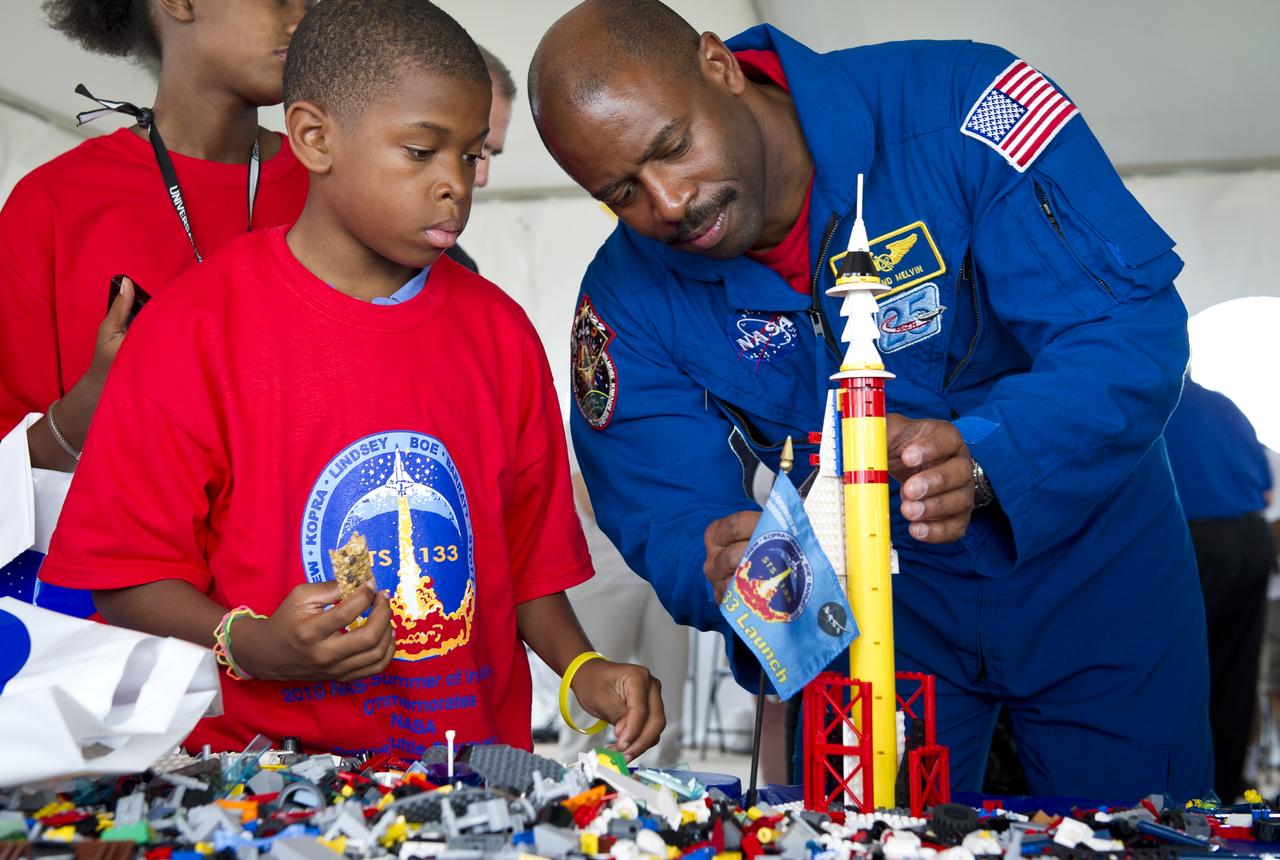
Associate Administrator for Education and Astronaut Leland Melvin talks with school children during the “Build the Future” activity where students created their vision of the future in space with LEGO bricks and elements inside a tent that was set up on the launch viewing area at NASA's Kennedy Space Center in Cape Canaveral, Fla. on Monday, Nov. 1, 2010. NASA and The LEGO Group signed a Space Act Agreement to spark children's interest in science, technology, engineering and math (STEM). Photo Credit: (NASA/Bill Ingalls)
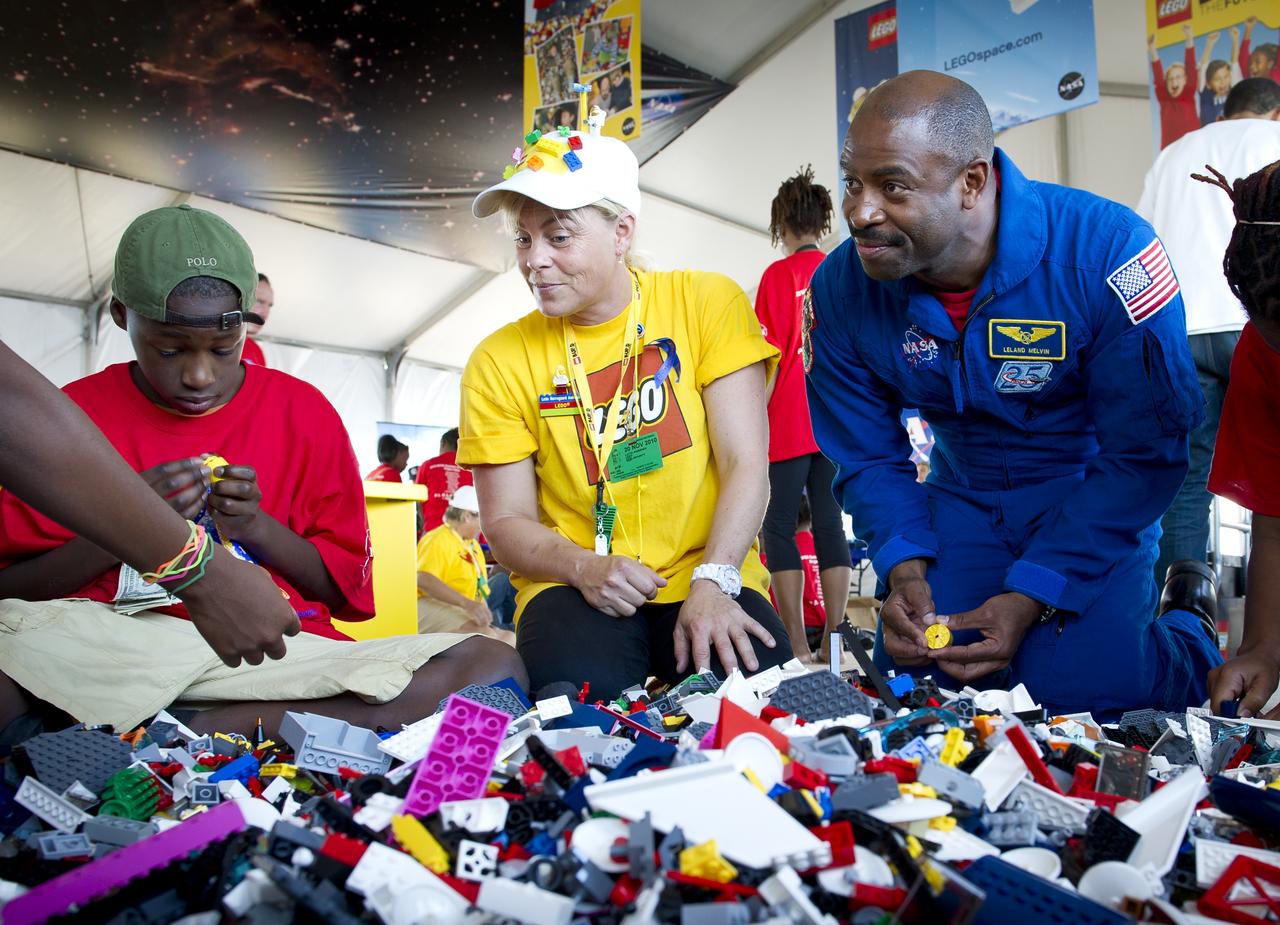
Associate Administrator for Education and Astronaut Leland Melvin talks with school children during the “Build the Future” activity where students created their vision of the future in space with LEGO bricks and elements inside a tent that was set up on the launch viewing area at NASA's Kennedy Space Center in Cape Canaveral, Fla. on Monday, Nov. 1, 2010. NASA and The LEGO Group signed a Space Act Agreement to spark children's interest in science, technology, engineering and math (STEM). Photo Credit: (NASA/Bill Ingalls)
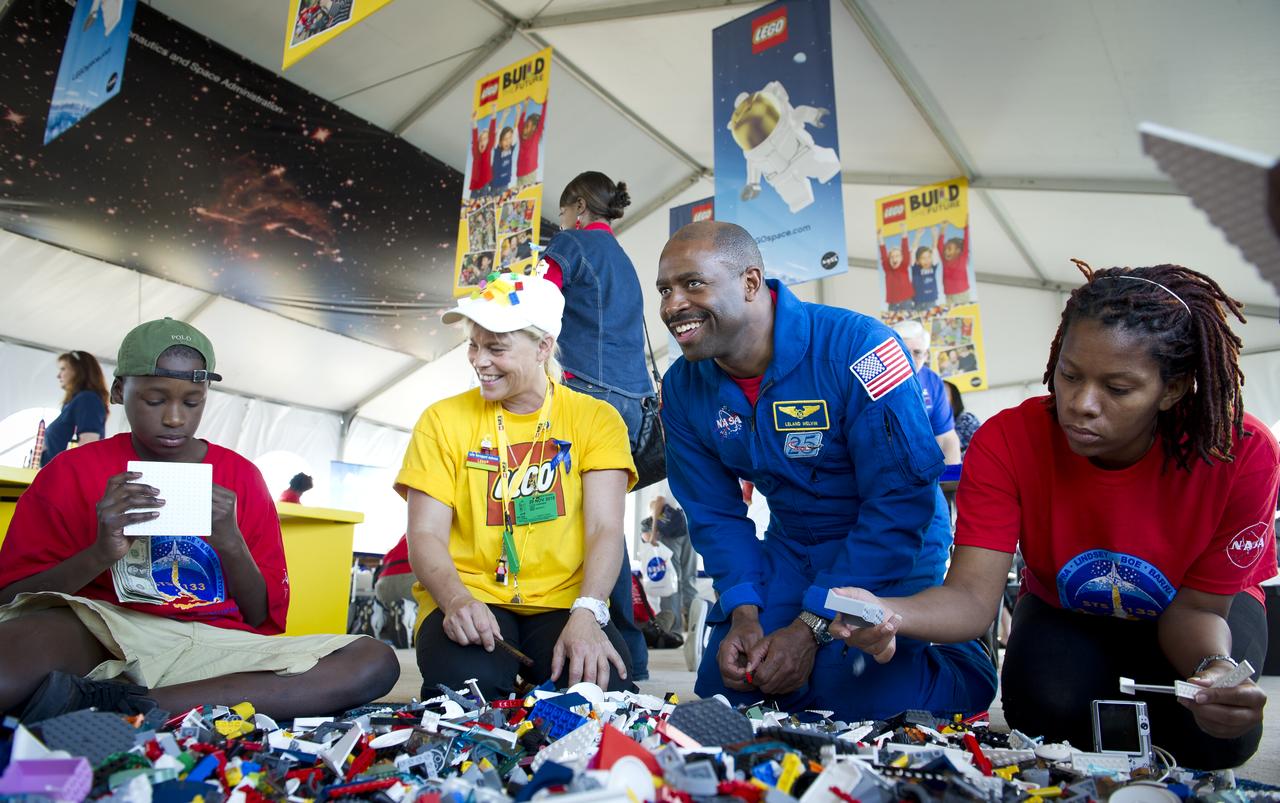
Associate Administrator for Education and Astronaut Leland Melvin, 3rd from left, talks with school children during the “Build the Future” activity where students created their vision of the future in space with LEGO bricks and elements inside a tent that was set up on the launch viewing area at NASA's Kennedy Space Center in Cape Canaveral, Fla. on Monday, Nov. 1, 2010. NASA and The LEGO Group signed a Space Act Agreement to spark children's interest in science, technology, engineering and math (STEM). Photo Credit: (NASA/Bill Ingalls)
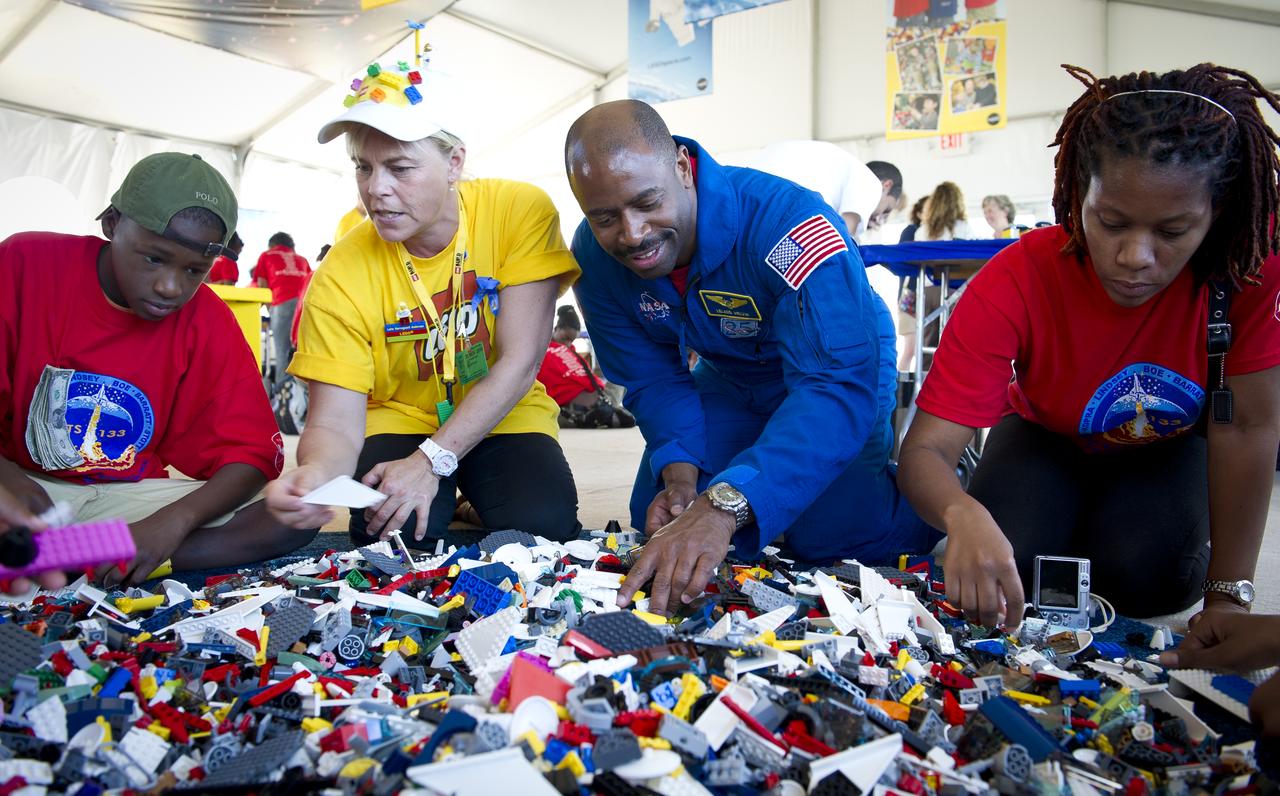
Associate Administrator for Education and Astronaut Leland Melvin, 3rd from left, talks with school children during the “Build the Future” activity where students created their vision of the future in space with LEGO bricks and elements inside a tent that was set up on the launch viewing area at NASA's Kennedy Space Center in Cape Canaveral, Fla. on Monday, Nov. 1, 2010. NASA and The LEGO Group signed a Space Act Agreement to spark children's interest in science, technology, engineering and math (STEM). Photo Credit: (NASA/Bill Ingalls)
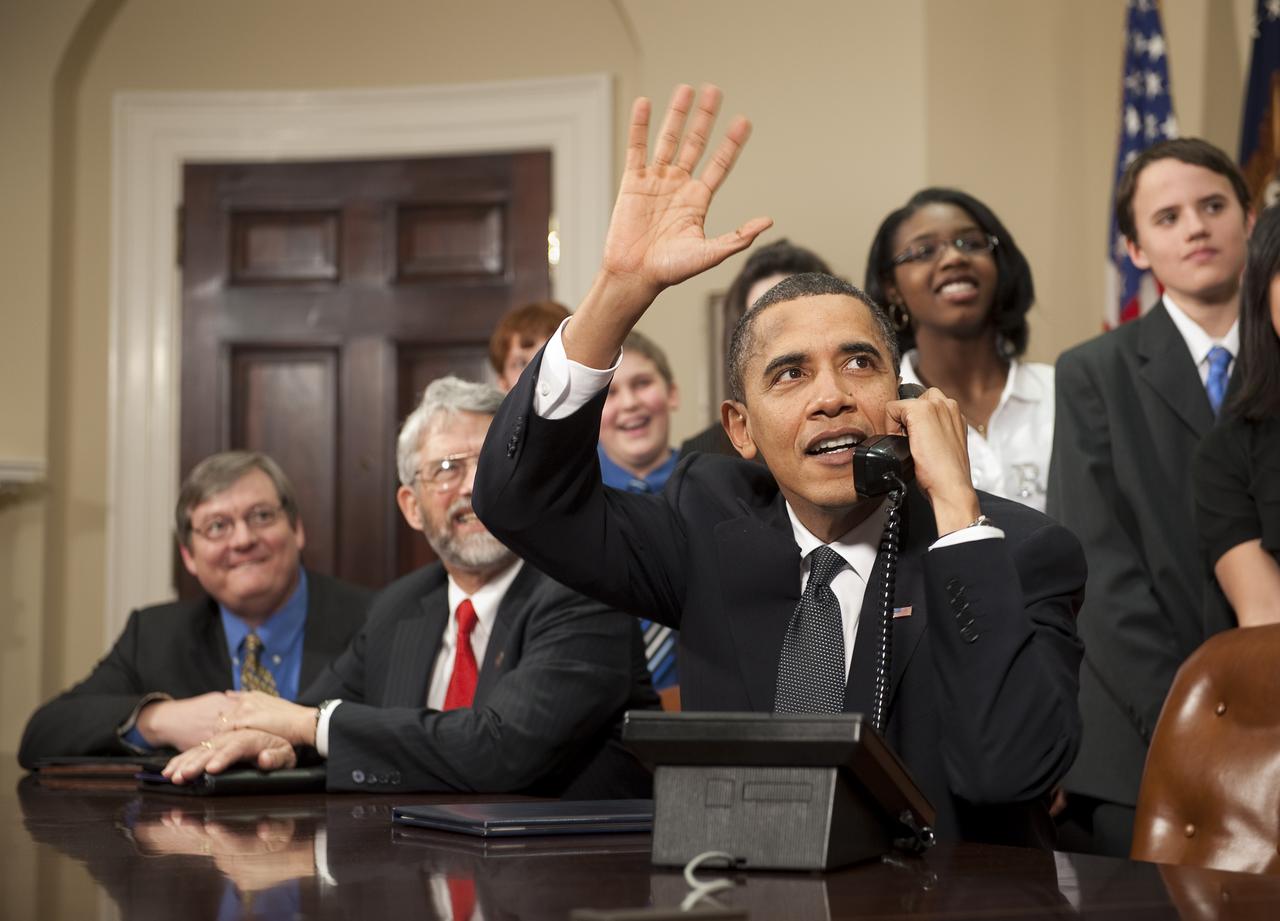
U.S. President Barack Obama, accompanied by members of Congress and middle school children, waves as he talks on the phone from the Roosevelt Room of the White House to astronauts on the International Space Station, Wednesday, Feb. 17, 2010 in Washington. Photo Credit: (NASA/Bill Ingalls)
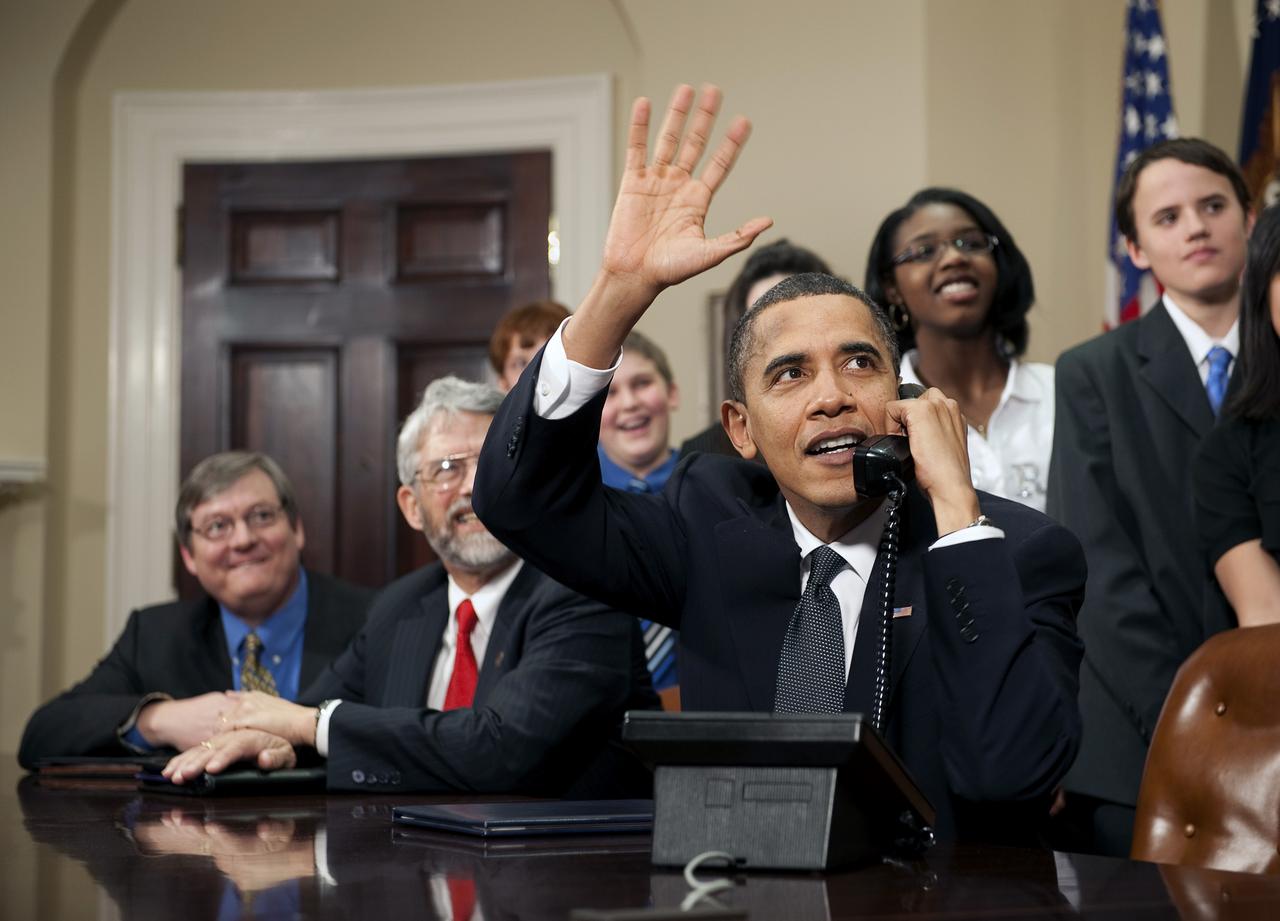
U.S. President Barack Obama, accompanied by members of Congress and middle school children, waves as he talks on the phone from the Roosevelt Room of the White House to astronauts on the International Space Station, Wednesday, Feb. 17, 2010 in Washington. Photo Credit: (NASA/Bill Ingalls)
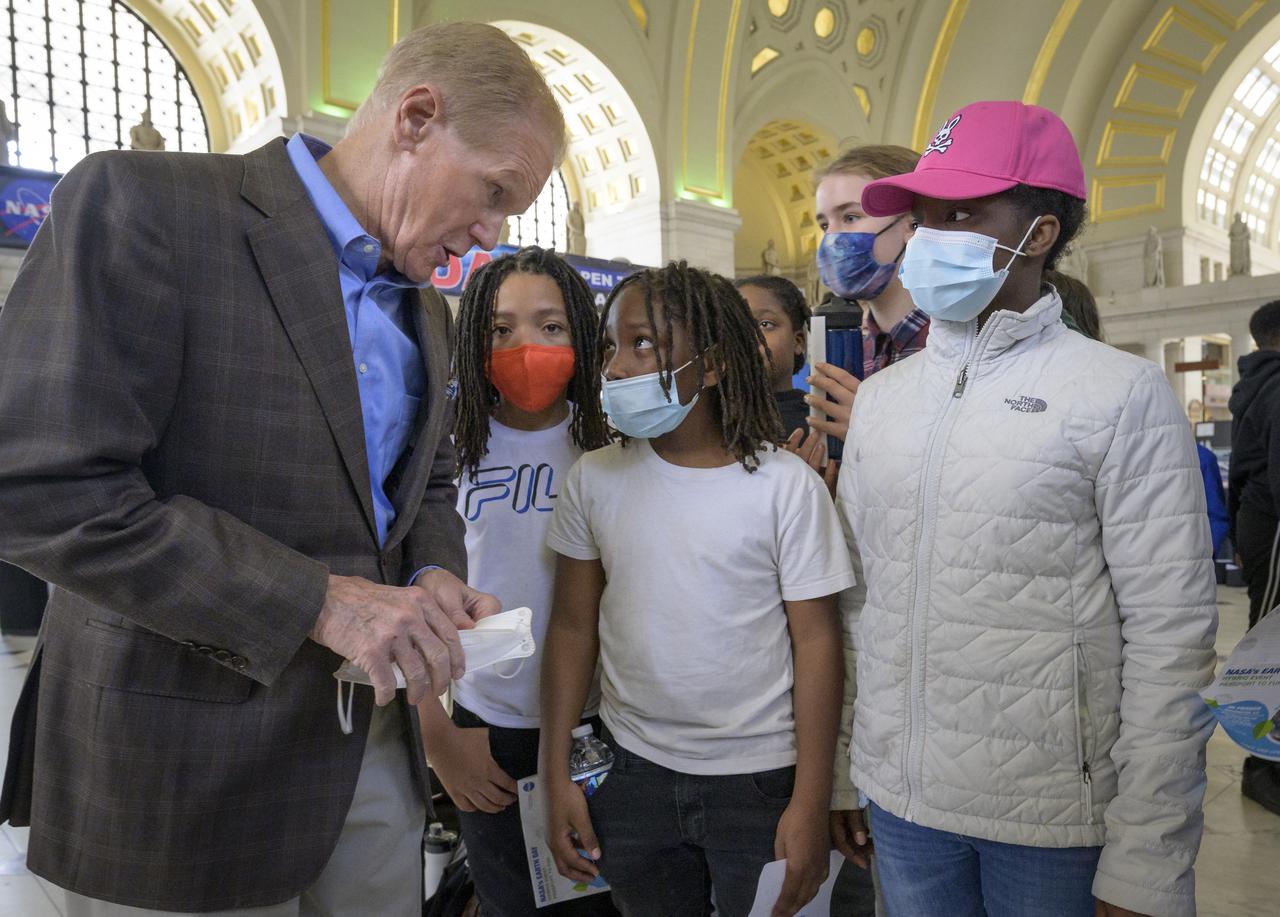
NASA Administrator Bill Nelson, left, talks with DC area school children about Earth Day during his visit of NASA hands-on exhibits inside Union Station in Washington, Friday, April 22, 2022. Photo Credit: (NASA/Bill Ingalls)
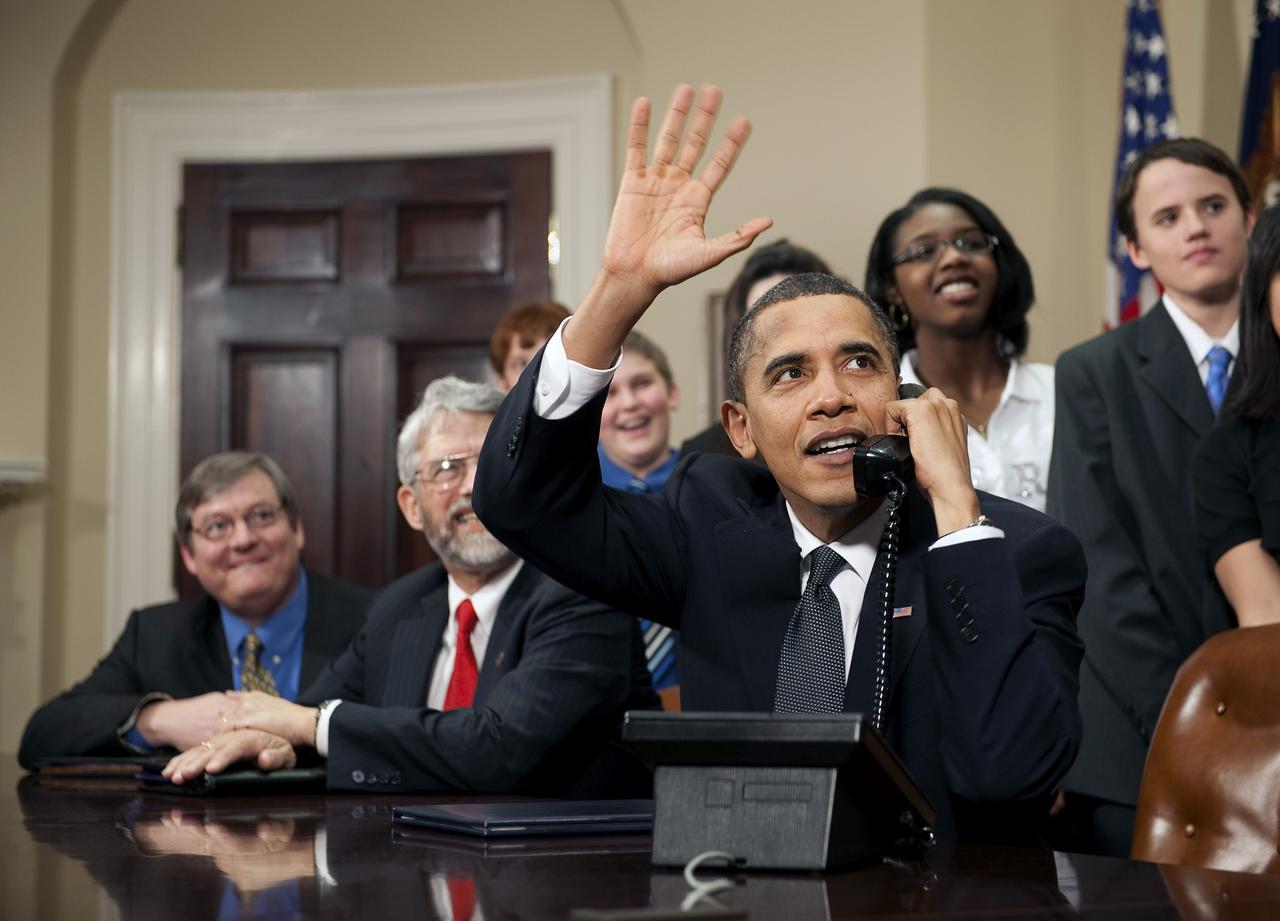
WASHINGTON - 201002170001HQ - U.S. President Barack Obama, accompanied by members of Congress and middle school children, waves as he talks on the phone from the Roosevelt Room of the White House to astronauts on the International Space Station, Wednesday, Feb. 17, 2010, in Washington. Photo Credit: NASA/Bill Ingalls
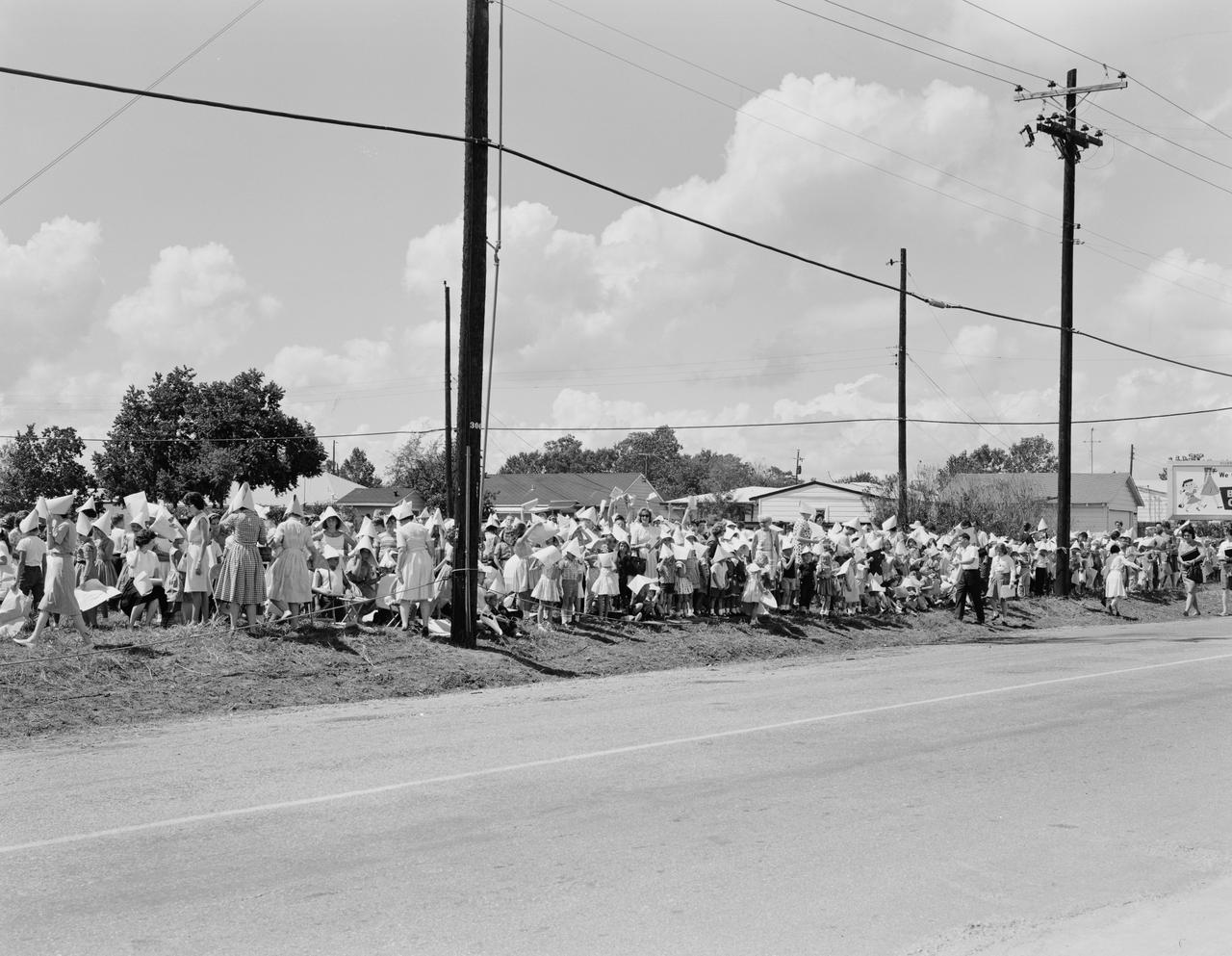
S62-03991 (11 September 1962) --- Just before the arrival of President John F. Kennedy at the J. P. Cornelius grade school, on Westover, turned out for a look at the Chief Executive in person. Wearing sun hats they made themselves, 700 children lined the roadway opposite the side entrance to the Rich Building.
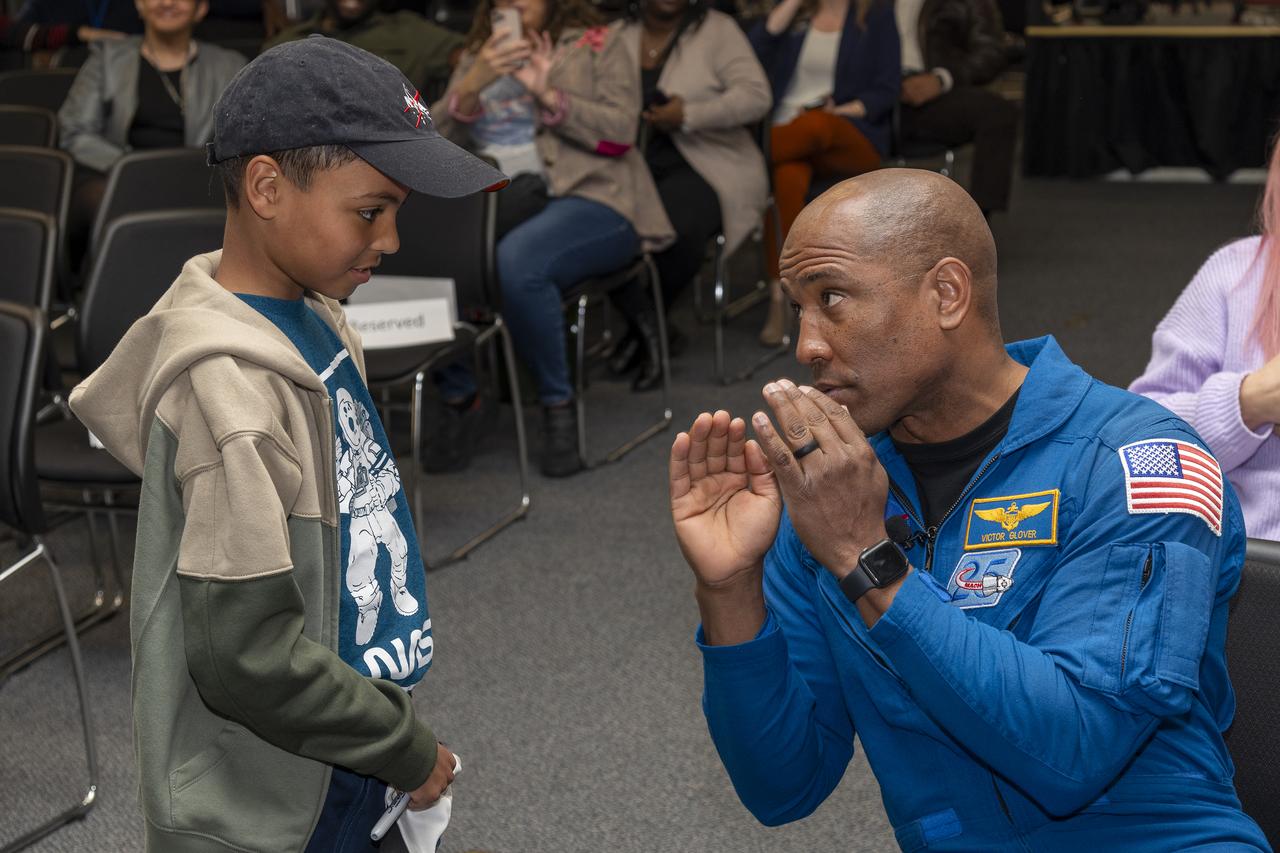
NASA Artemis II astronaut Victor Glover met with Edwards Air Force Base school-age children at a joint NASA and Air Force Black Employee Resource Group event at NASA’s Armstrong Flight Research Center in Edwards, California on Feb. 15.
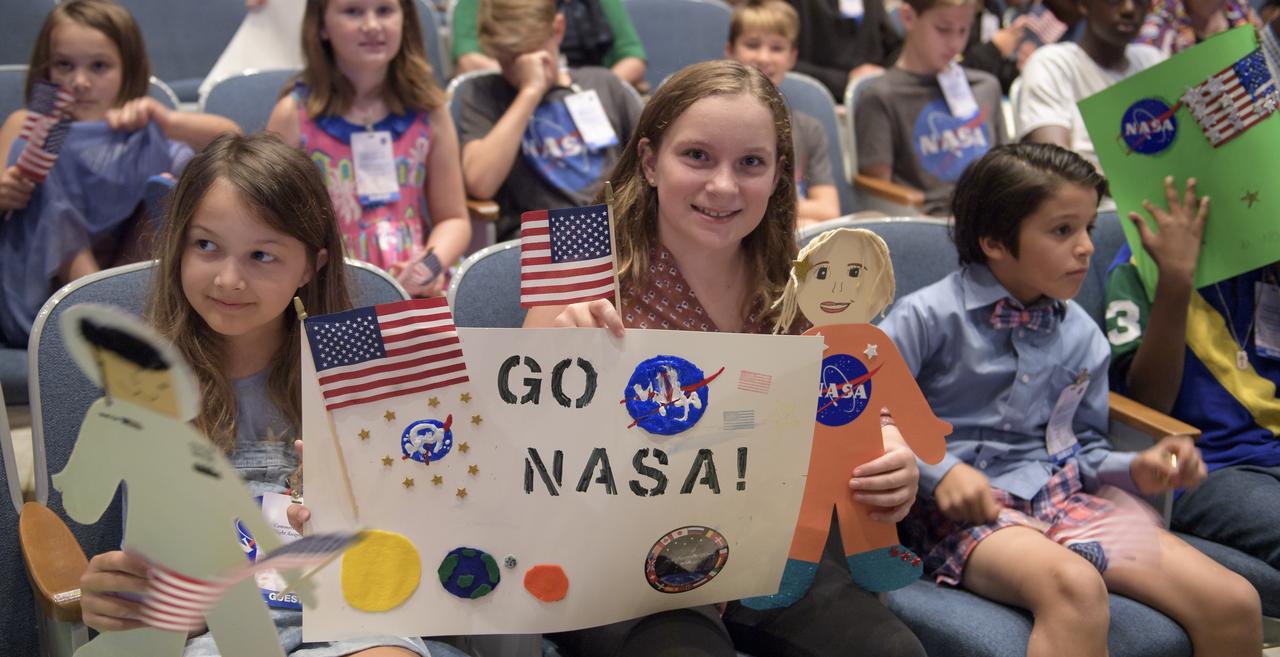
Local area school children are seen during a NASA event announcing the astronauts assigned to crew the first flight tests and missions of the Boeing CST-100 Starliner and SpaceX Crew Dragon, Friday, Aug. 3, 2018 at NASA’s Johnson Space Center in Houston, Texas. Photo Credit: (NASA/Bill Ingalls)
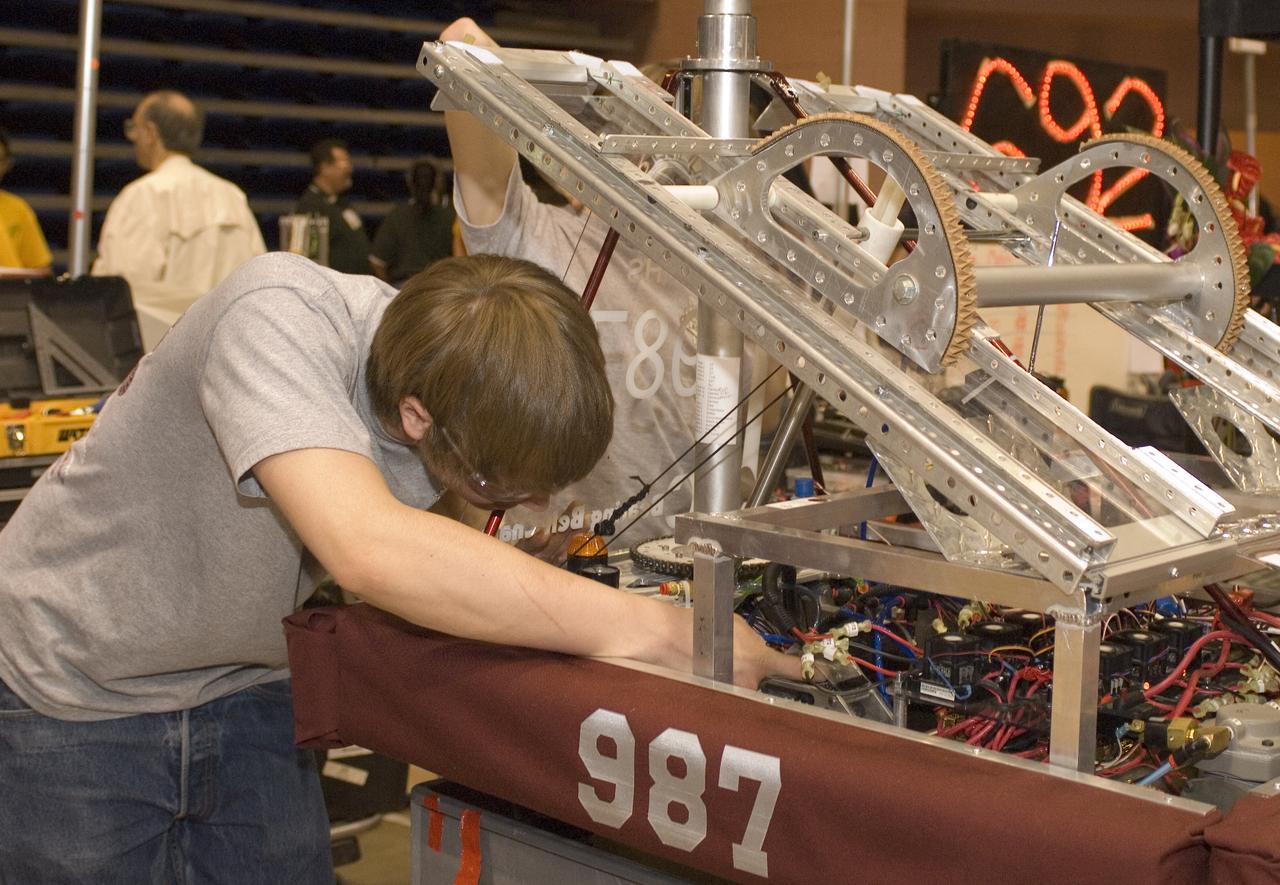
Silicon Valley FIRST Regional Robotics competition: HIGHROLLERS - TEAM 987 - Bearing Belt Chain/Alcoa Fastening Systems/VSR Lock/NASA/Summerlin Children's Forum & Cimarron-Memorial High School, Las Vegas, Nevada (NV)
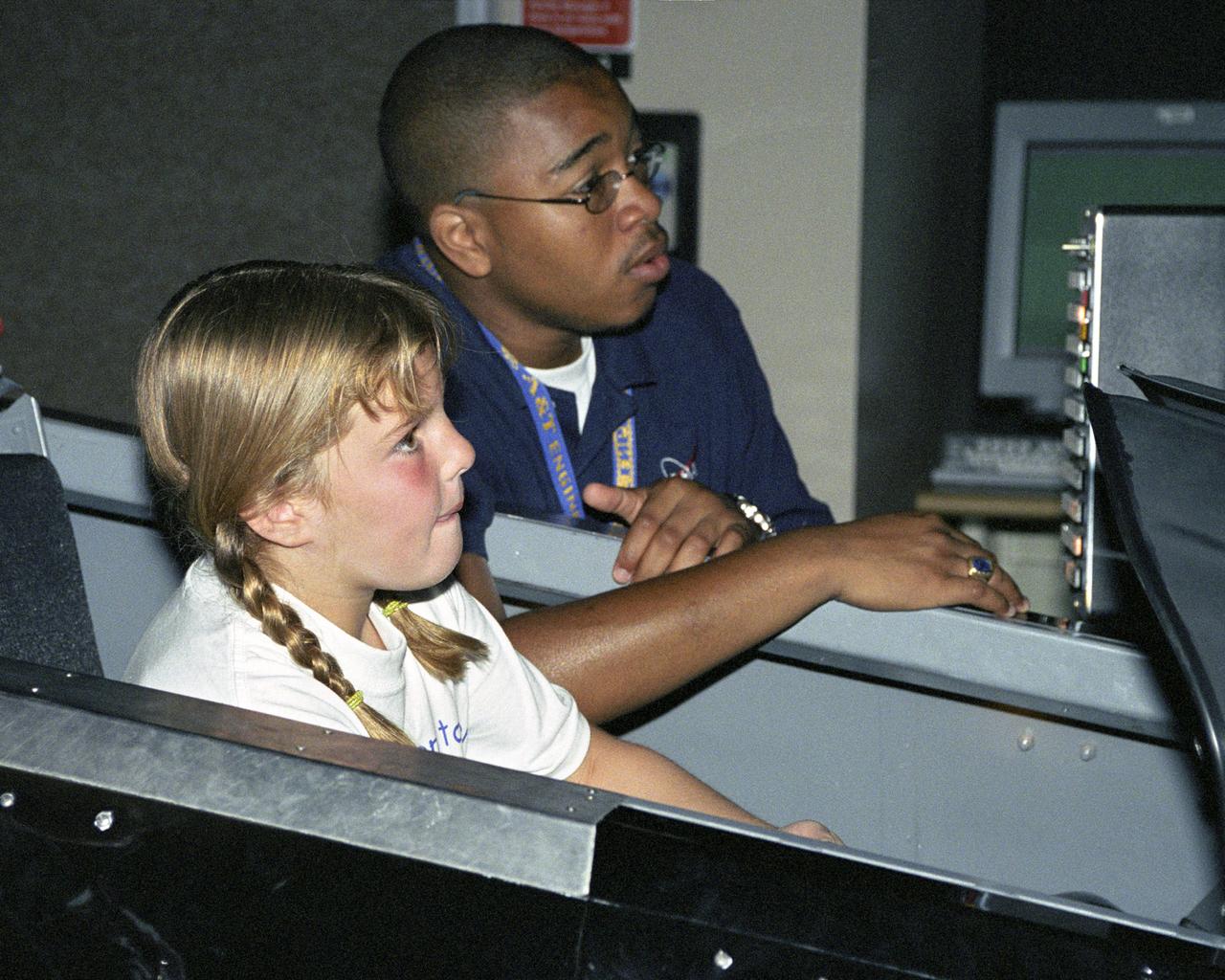
Nicole Schultheiss, a fourth-grader at Ulrich Elementary School in California City, "flew" an F/A-18 simulator with NASA engineer Byron Simpson's coaching during Take Your Children to Work Day June 22 at NASA Dryden Flight Research Center.

President Barack Obama is joined by members of Congress, including former astronaut Sen. Bill Nelson, right, and school children as he talks Tuesday, March 24, 2009, with astronauts on the International Space Station from the Roosevelt Room at the White House. (White House Photo/Pete Souza)
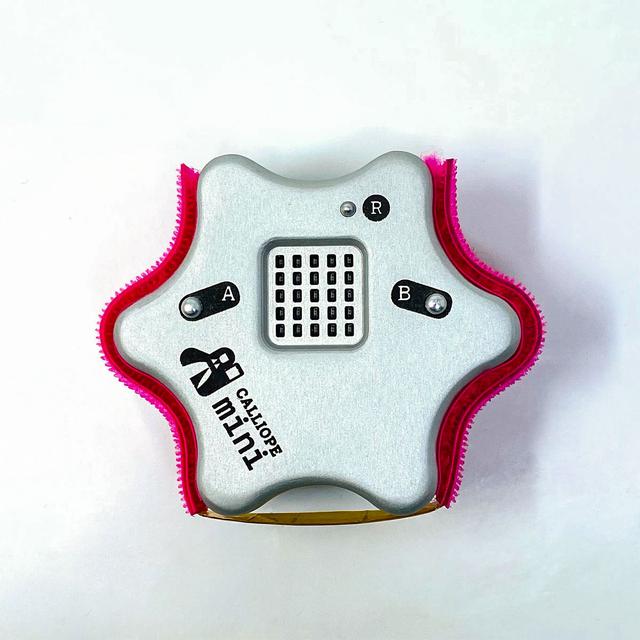
jsc2021e064349 (8/31/2021) --- A prefligt image of the Flight Model of the CalliopEO Hardware. CalliopEO (Calliope Mini in Space) is a project of Ruhr-Universität Bochum, Calliope gGmbH, and the German Space Agency at DLR to promote software programming skills among German school children. Image courtesy of Calliope gGmbH
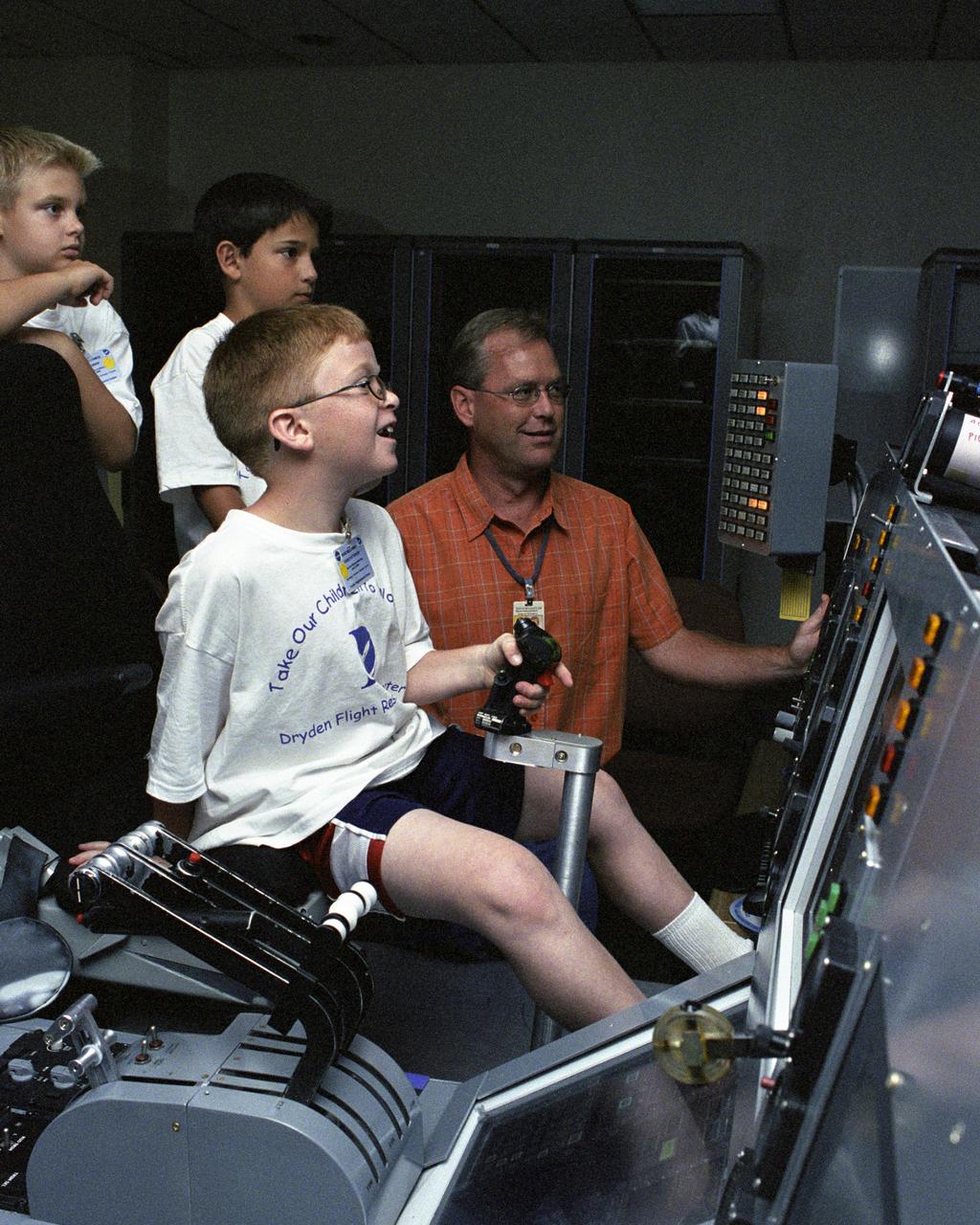
Eddie Patterson, a fourth-grade student at Tehachapi's Tompkins Elementary School, enjoyed "flying" a C-17 multi-engine aircraft simulator during Take Your Children to Work Day June 22 at NASA Dryden Flight Research Center while NASA Dryden engineer Ken Norlin and other students look on.
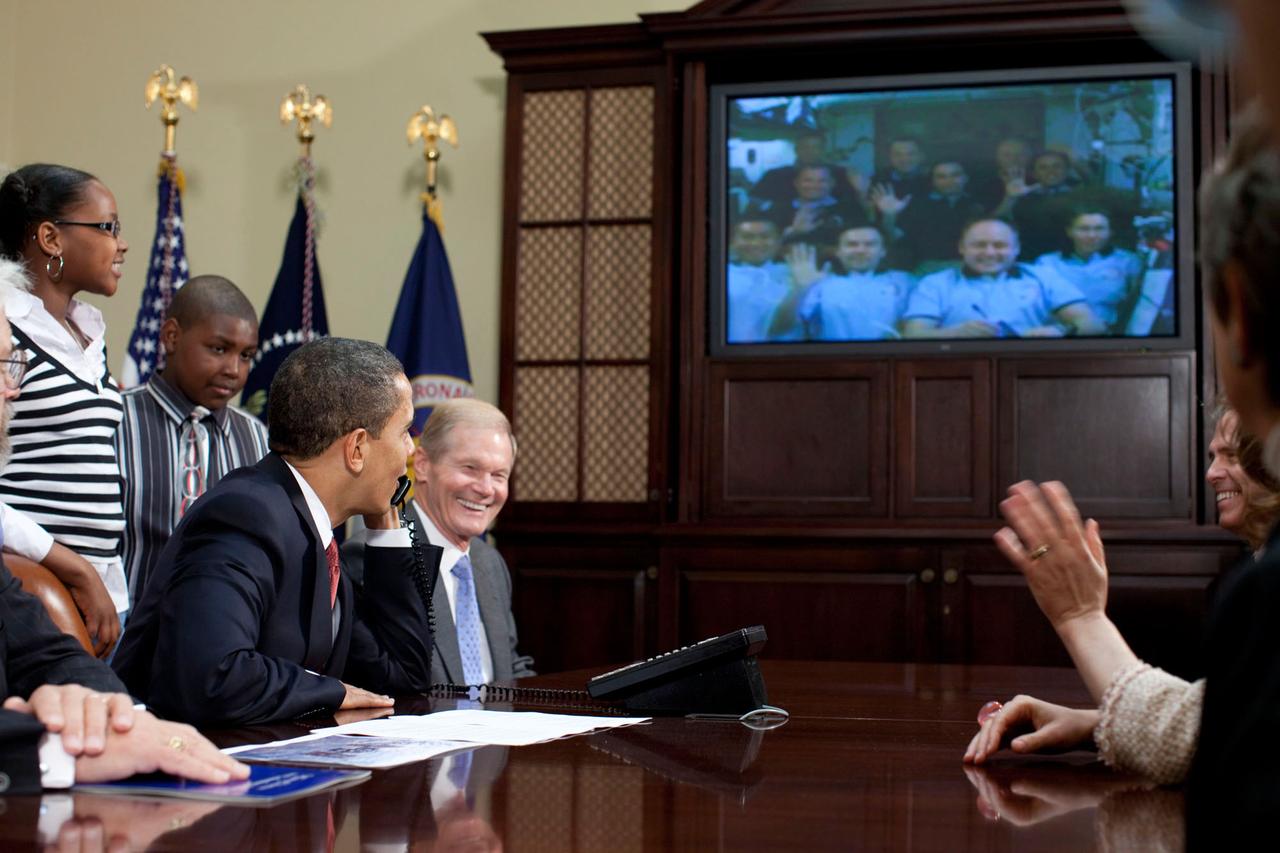
President Barack Obama is joined by members of Congress, including former astronaut Sen. Bill Nelson, right, and school children as he talks Tuesday, March 24, 2009, with astronauts on the International Space Station from the Roosevelt Room at the White House. (White House Photo/Pete Souza)
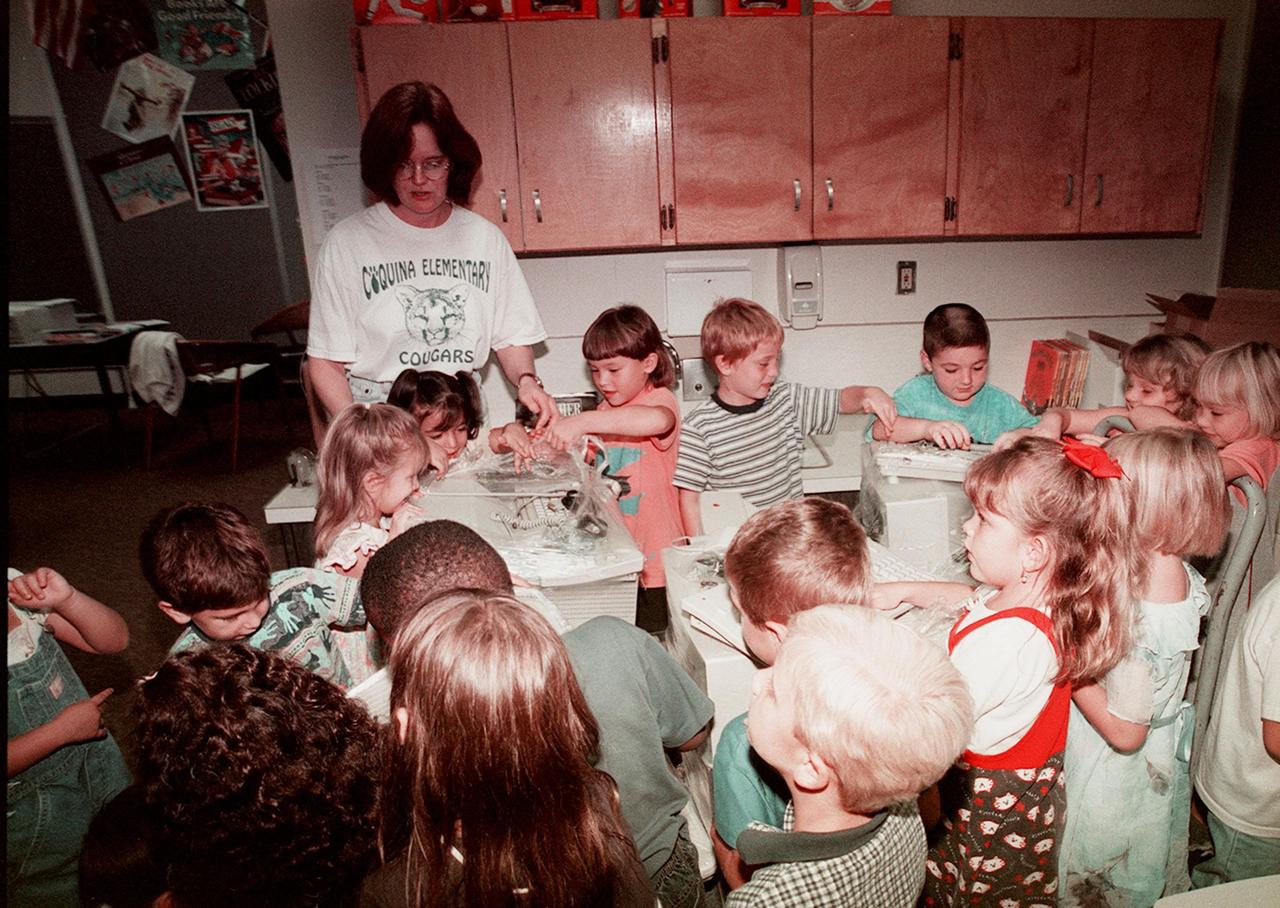
Children at Coquina Elementary School, Titusville, Fla., eagerly tear into the wrapped computer equipment donated by Kennedy Space Center. Coquina is one of 13 Brevard County schools receiving 81 excess contractor computers thanks to an innovative educational outreach project spearheaded by the Nasa k-12 Education Services Office at ksc. The Astronaut Memorial Foundation, a strategic partner in the effort, and several schools in rural Florida and Georgia also received refurbished computers as part of the year-long project. KSC employees put in about 3,300 volunteer hours to transform old, excess computers into upgraded, usable units. A total of $90,000 in upgraded computer equipment is being donated
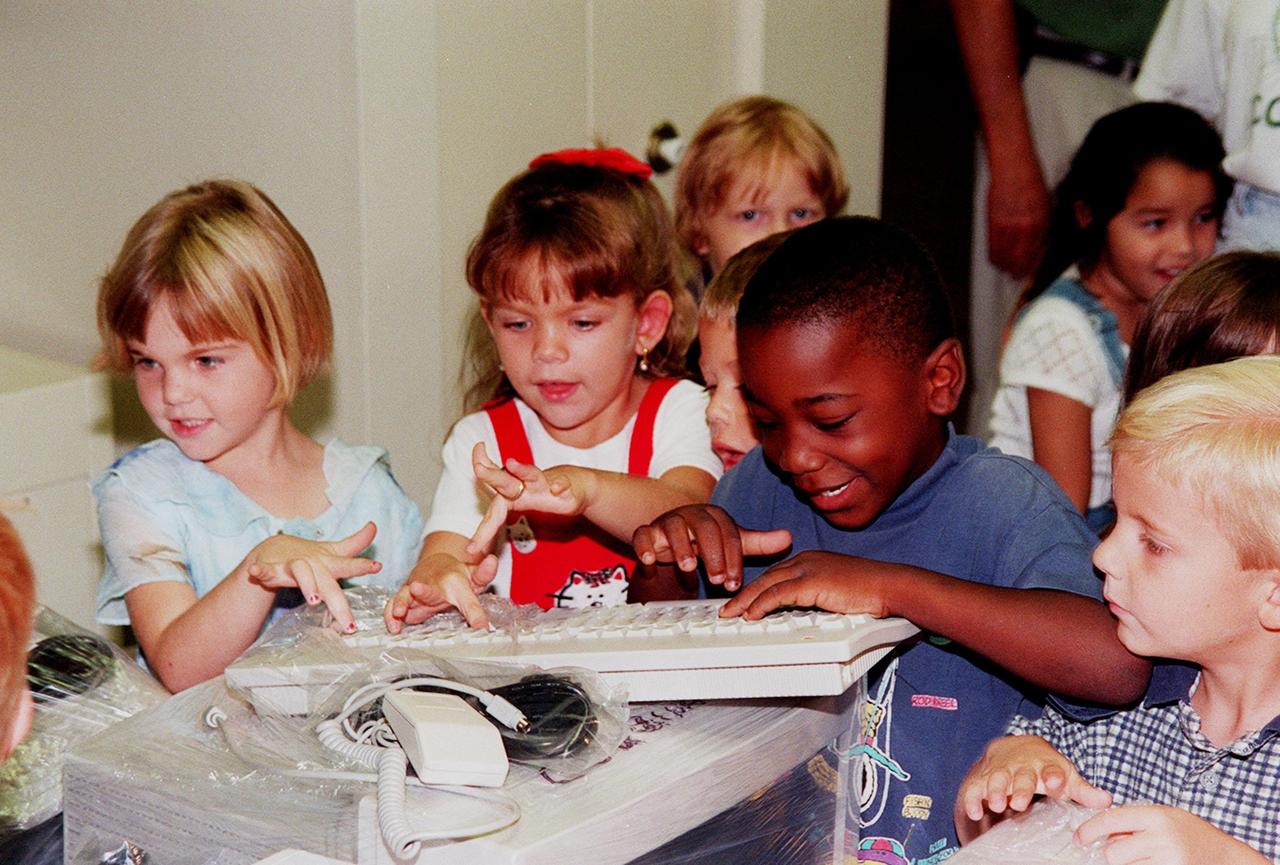
Children at Coquina Elementary School, Titusville, Fla., "practice" using a computer keyboard, part of equipment donated by Kennedy Space Center. Coquina is one of 13 Brevard County schools receiving 81 excess contractor computers thanks to an innovative educational outreach project spearheaded by the Nasa k-12 Education Services Office at ksc. The Astronaut Memorial Foundation, a strategic partner in the effort, and several schools in rural Florida and Georgia also received refurbished computers as part of the year-long project. KSC employees put in about 3,300 volunteer hours to transform old, excess computers into upgraded, usable units. A total of $90,000 in upgraded computer equipment is being donated
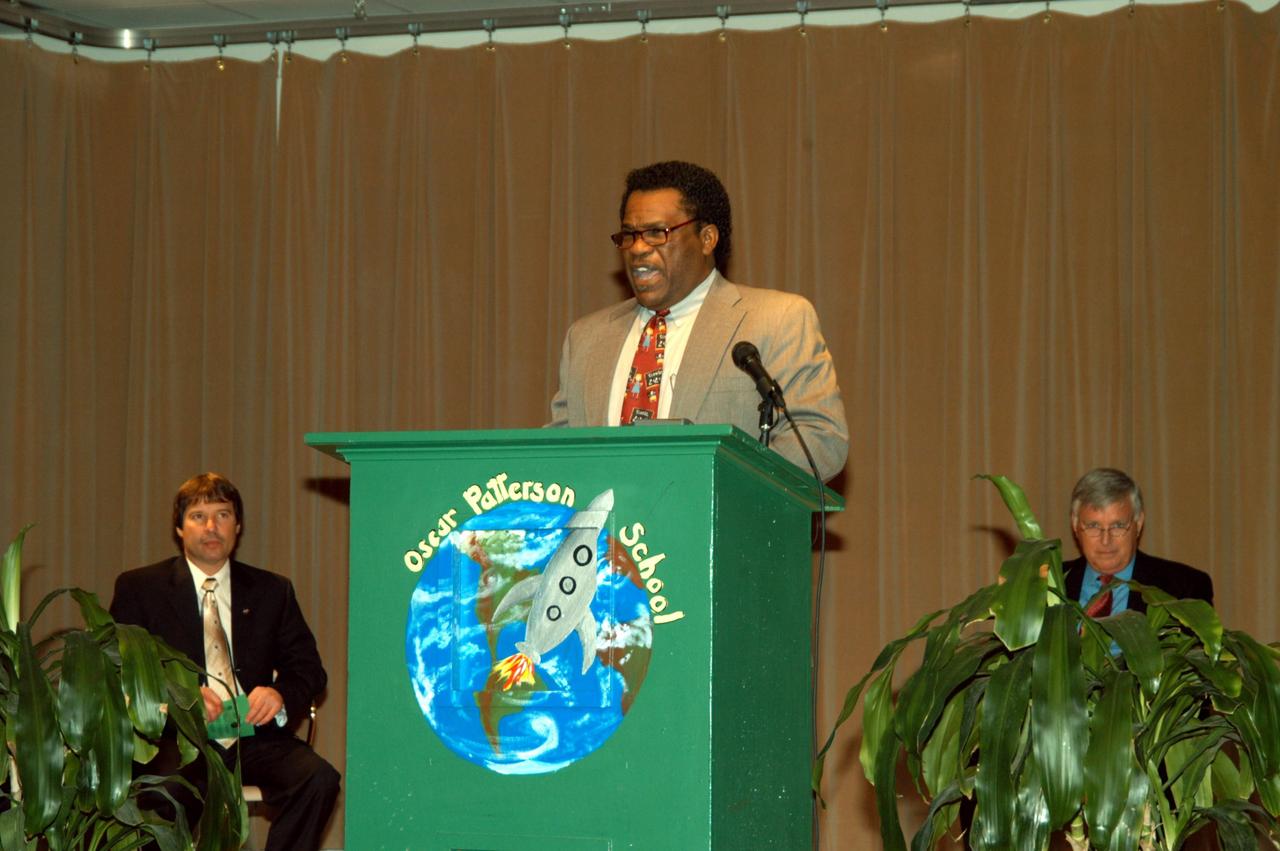
KENNEDY SPACE CENTER, FLA. -- Dr. Linward Barnes, principal of Oscar Patterson Elementary Magnet School in Panama City, Fla., introduces Center Director Jim Kennedy to the school children. Kennedy is visiting NASA Explorer Schools in Florida and Georgia to share America’s new vision for space exploration with the next generation of explorers. Kennedy is talking with students about our destiny as explorers, NASA’s stepping stone approach to exploring Earth, the Moon, Mars and beyond, how space impacts our lives, and how people and machines rely on each other in space.
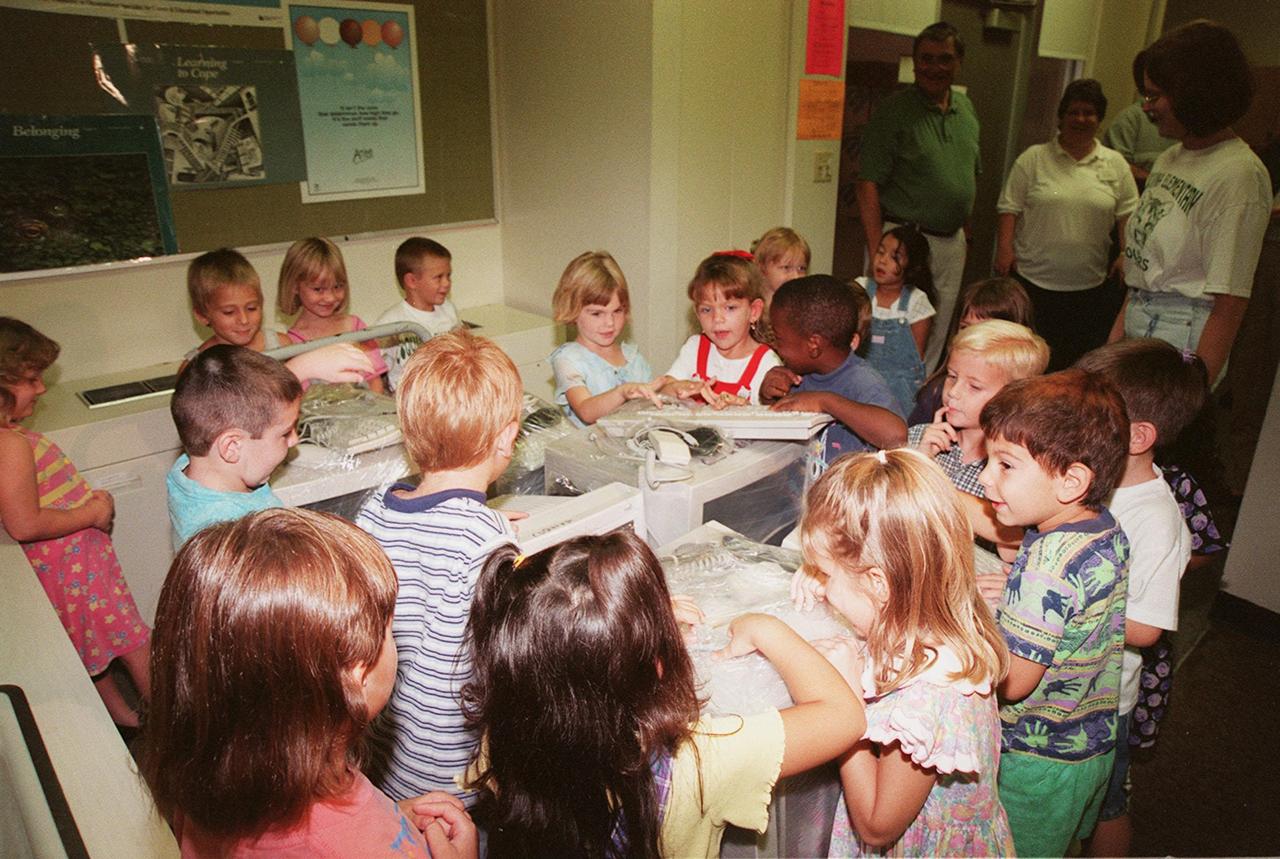
Children at Coquina Elementary School, Titusville, Fla., look with curiosity at the wrapped computer equipment donated by Kennedy Space Center. Coquina is one of 13 Brevard County schools receiving 81 excess contractor computers thanks to an innovative educational outreach project spearheaded by the Nasa k-12 Education Services Office at ksc. The Astronaut Memorial Foundation, a strategic partner in the effort, and several schools in rural Florida and Georgia also received refurbished computers as part of the year-long project. KSC employees put in about 3,300 volunteer hours to transform old, excess computers into upgraded, usable units. A total of $90,000 in upgraded computer equipment is being donated
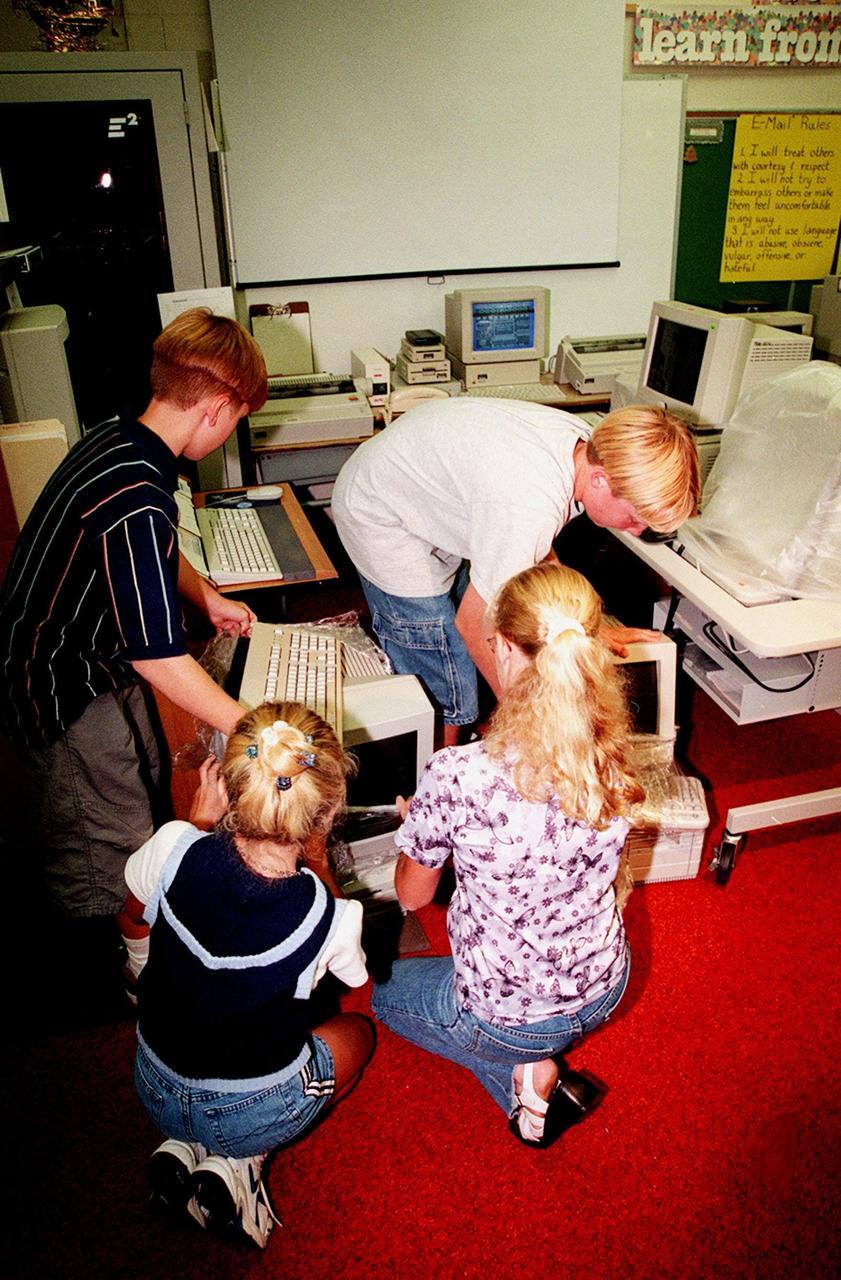
Children at Audubon Elementary School, Merritt Island, Fla., eagerly unwrap computer equipment donated by Kennedy Space Center. Audubon is one of 13 Brevard County schools receiving 81 excess contractor computers thanks to an innovative educational outreach project spearheaded by the Nasa k-12 Education Services Office at ksc. The Astronaut Memorial Foundation, a strategic partner in the effort, and several schools in rural Florida and Georgia also received refurbished computers as part of the year-long project. KSC employees put in about 3,300 volunteer hours to transform old, excess computers into upgraded, usable units. A total of $90,000 in upgraded computer equipment is being donated
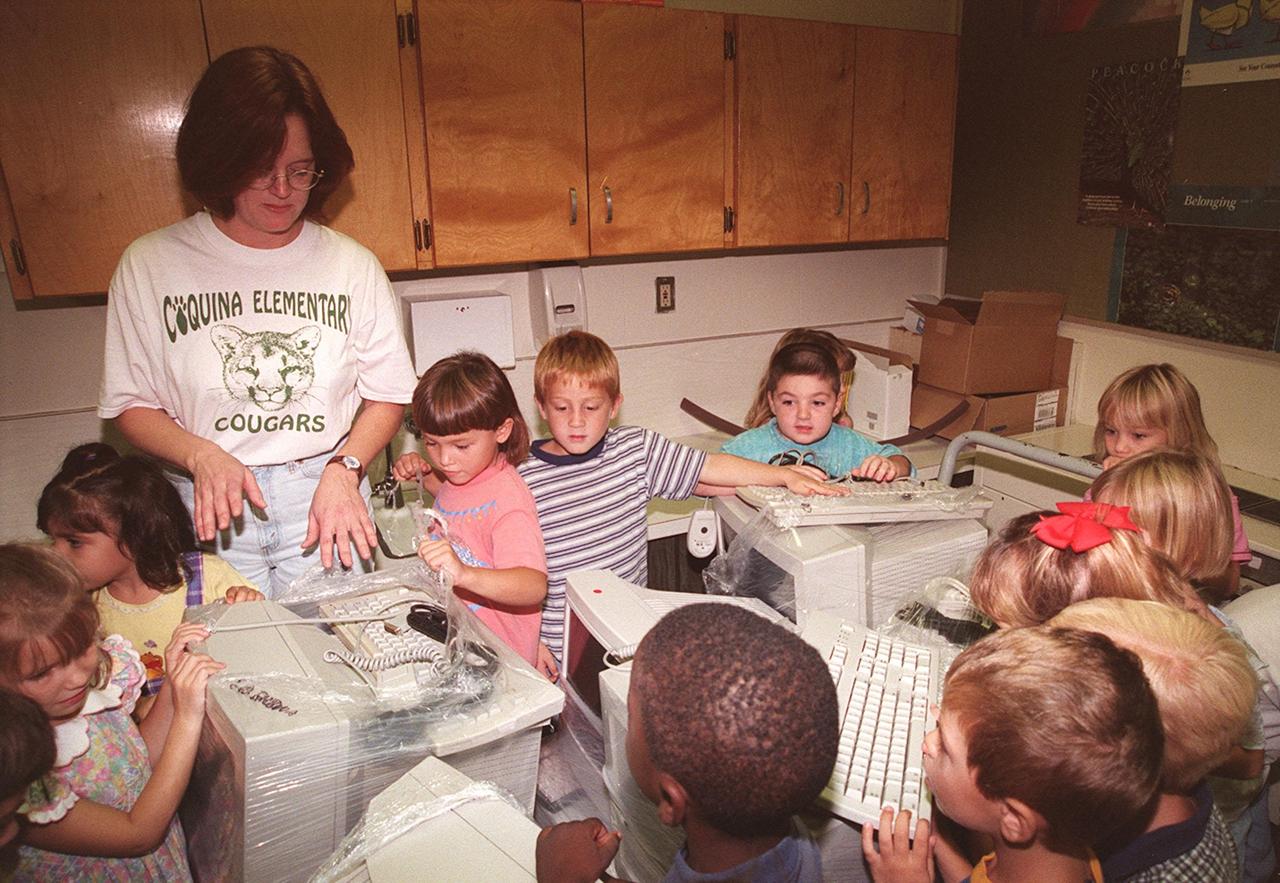
Children at Coquina Elementary School, Titusville, Fla., excitedly tear into the wrapped computer equipment donated by Kennedy Space Center. Coquina is one of 13 Brevard County schools receiving 81 excess contractor computers thanks to an innovative educational outreach project spearheaded by the Nasa k-12 Education Services Office at ksc. The Astronaut Memorial Foundation, a strategic partner in the effort, and several schools in rural Florida and Georgia also received refurbished computers as part of the year-long project. KSC employees put in about 3,300 volunteer hours to transform old, excess computers into upgraded, usable units. A total of $90,000 in upgraded computer equipment is being donated
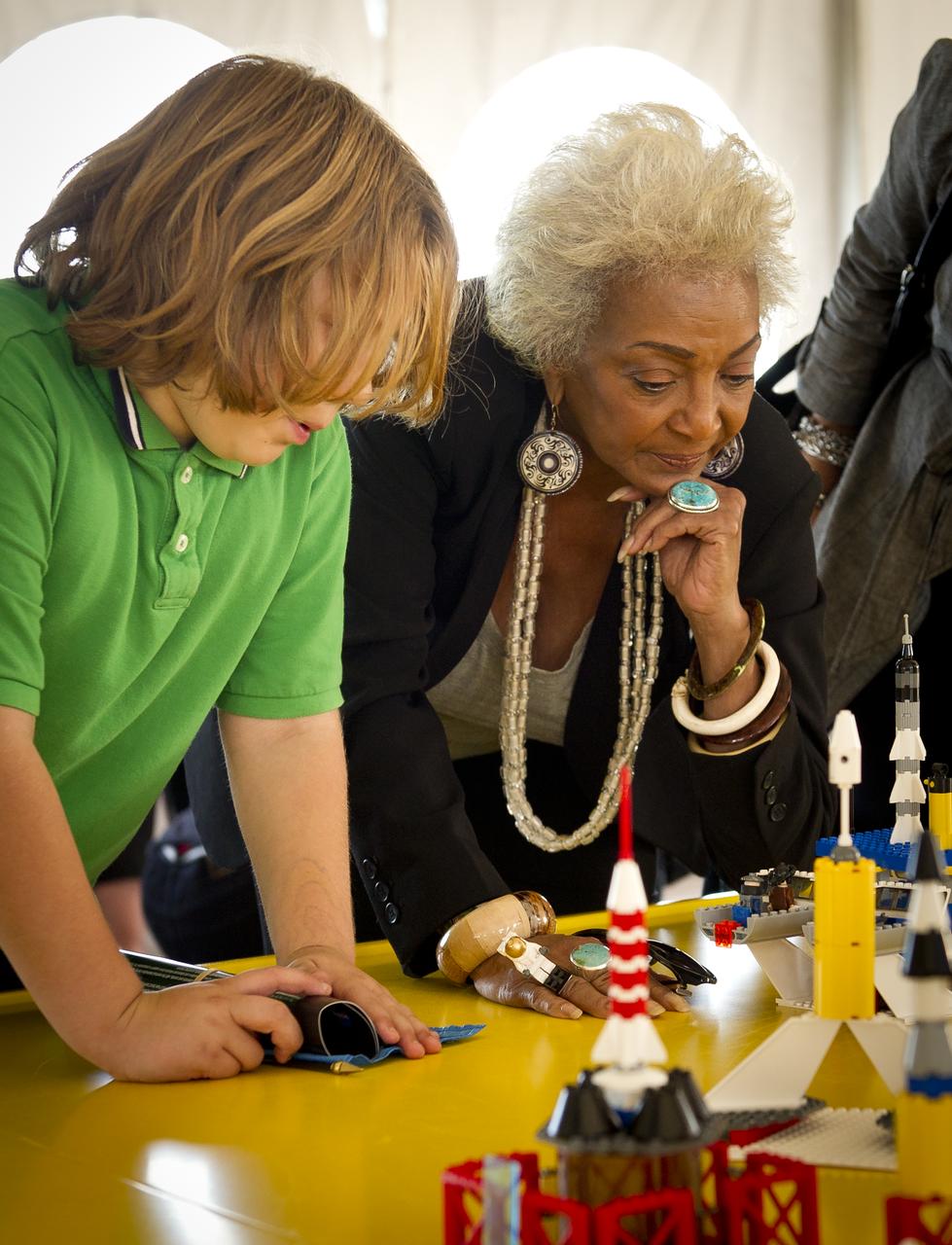
Actress Nichelle Nichols, known for her most famous role as communications officer Lieutenant Uhura aboard the USS Enterprise in the popular Star Trek television series, talks with school children during the “Build the Future” activity where students created their vision of the future in space with LEGO bricks and elements inside a tent that was set up on the launch viewing area at NASA's Kennedy Space Center in Cape Canaveral, Fla. on Monday, Nov. 1, 2010. NASA and The LEGO Group signed a Space Act Agreement to spark children's interest in science, technology, engineering and math (STEM). Photo Credit: (NASA/Bill Ingalls)
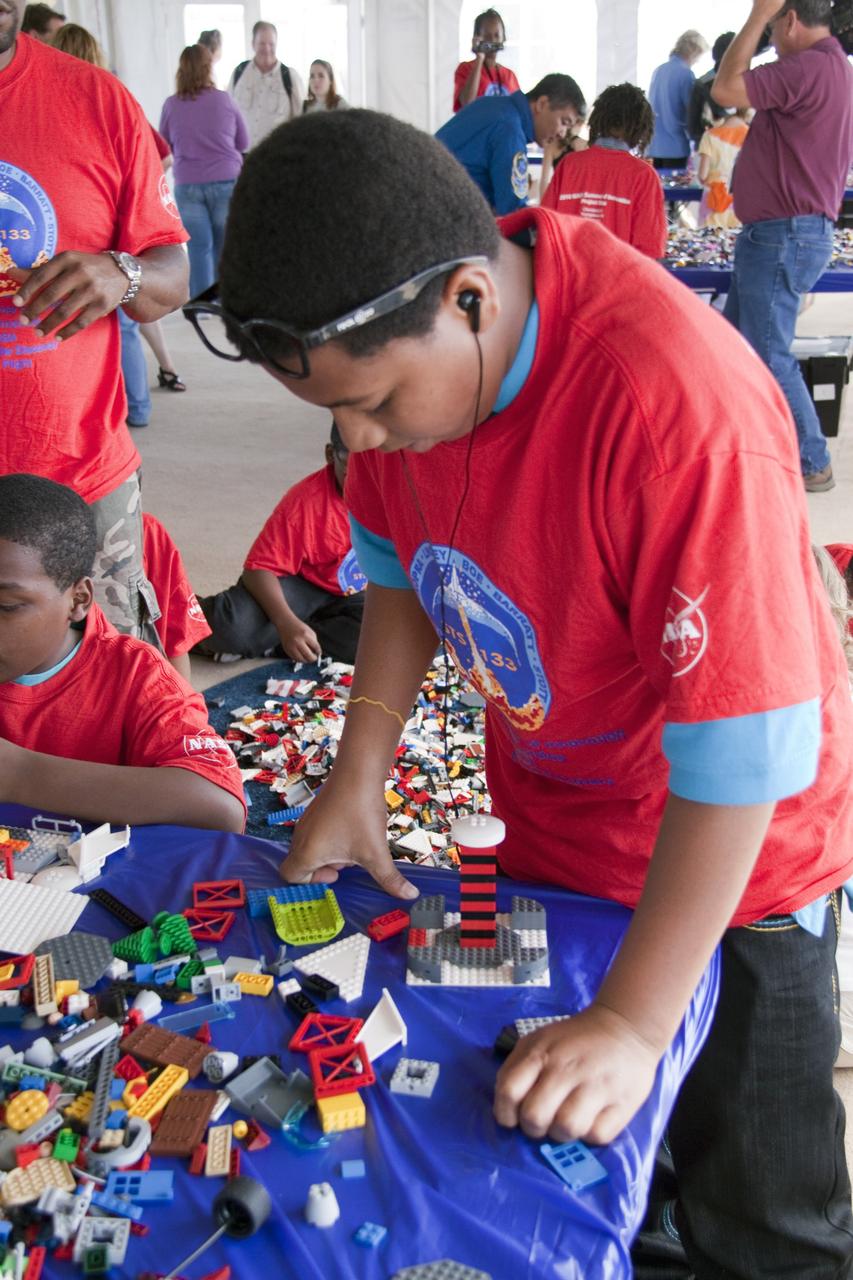
CAPE CANAVERAL, Fla. -- On the NASA Causeway at Kennedy Space Center in Florida, school children build LEGO space vehicles inside a 40- by 70-foot activity tent. There, children of all ages are building their vision of the future with LEGO bricks, marking the beginning of a three-year Space Act Agreement between NASA and The LEGO Group. The partnership is meant to spark the interest of children in science, technology, engineering and mathematics (STEM). To commemorate the partnership, two small LEGO space shuttles will launch aboard space shuttle Discovery's STS-133 mission to the International Space Station and the company will release four NASA-inspired products in its LEGO CITY line next year. LEGO sets also will fly to the space station aboard Endeavour's STS-134 mission, and will be put together on orbit to demonstrate the challenges faced while building things in microgravity. Photo credit: NASA/Jack Pfaller
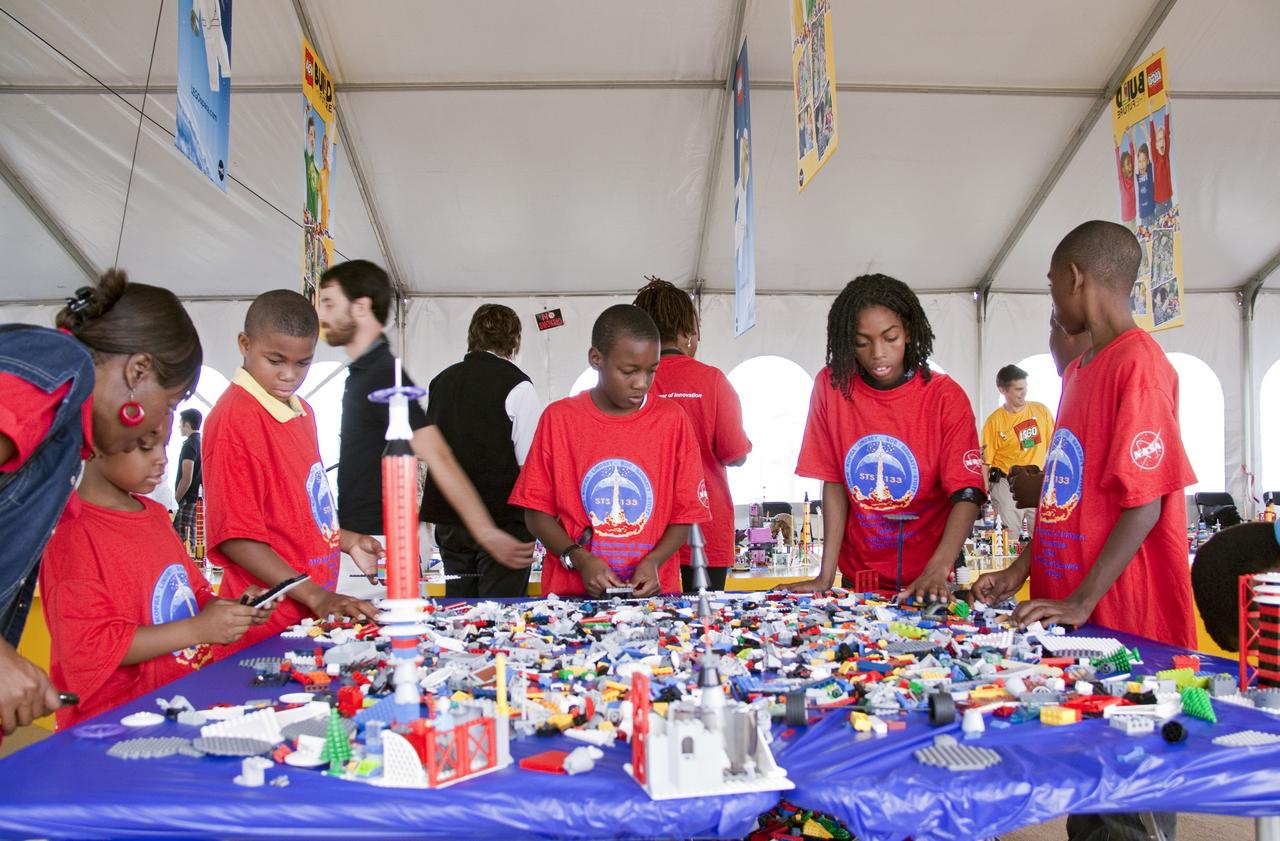
CAPE CANAVERAL, Fla. -- On the NASA Causeway at Kennedy Space Center in Florida, school children build LEGO space vehicles inside a 40- by 70-foot activity tent. There, children of all ages are building their vision of the future with LEGO bricks, marking the beginning of a three-year Space Act Agreement between NASA and The LEGO Group. The partnership is meant to spark the interest of children in science, technology, engineering and mathematics (STEM). To commemorate the partnership, two small LEGO space shuttles will launch aboard space shuttle Discovery's STS-133 mission to the International Space Station and the company will release four NASA-inspired products in its LEGO CITY line next year. LEGO sets also will fly to the space station aboard Endeavour's STS-134 mission, and will be put together on orbit to demonstrate the challenges faced while building things in microgravity. Photo credit: NASA/Jack Pfaller
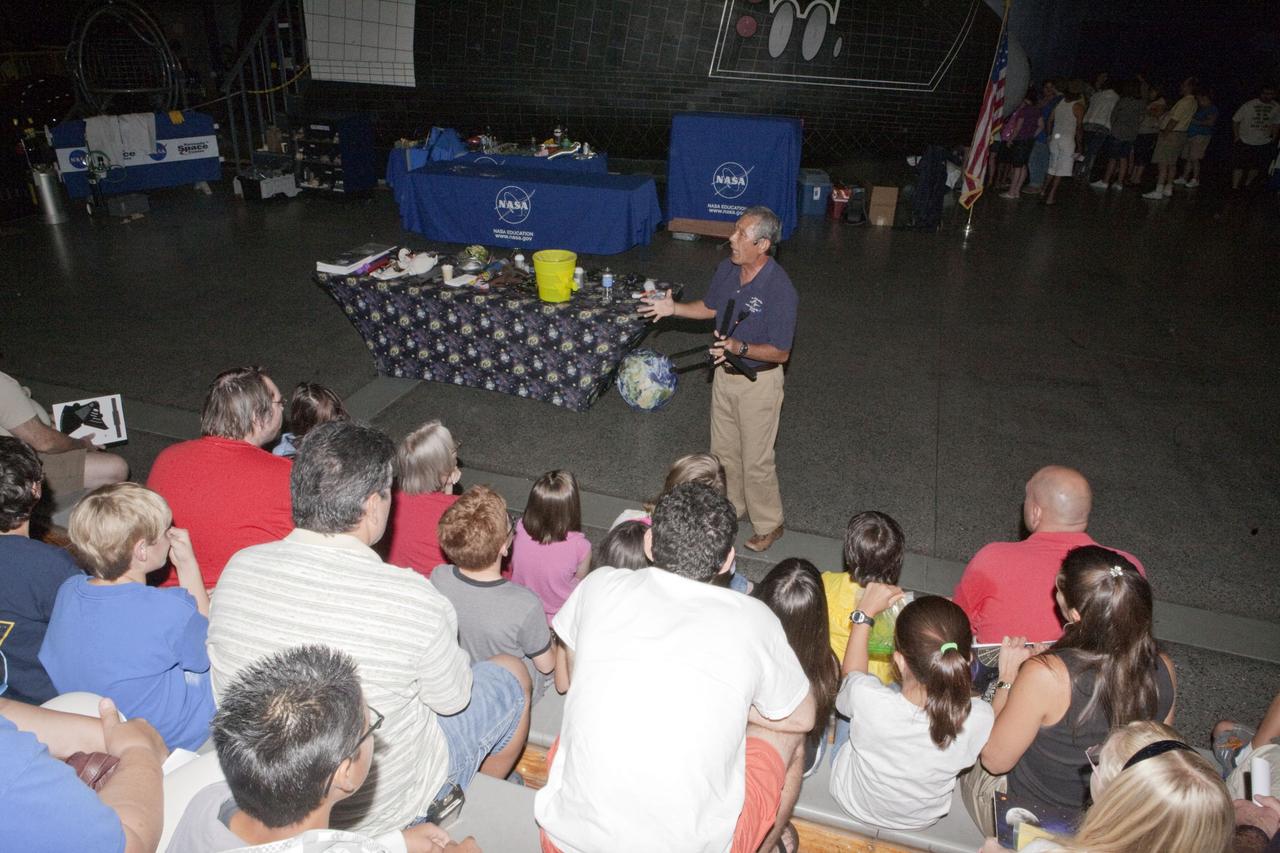
CAPE CANAVERAL, Fla. – An education specialist talks to children and their parents during Kennedy Space Center’s Family Night, Sept. 10, at the U.S. Astronaut Hall of Fame in Florida. NASA and the Kennedy Space Center Visitor Complex hosted the annual NASA family education night. The event, for fifth- through eighth-grade students and their parents, focuses on science, technology, engineering and mathematics (STEM) education activities that included astronaut appearances, a hovercraft, vortex cannon and alternative fuel vehicles. The back-to-school event is part of NASA’s Summer of Innovation initiative to provide interactive learning experiences to middle school students nationwide. Photo credit: NASA/Amanda Diller
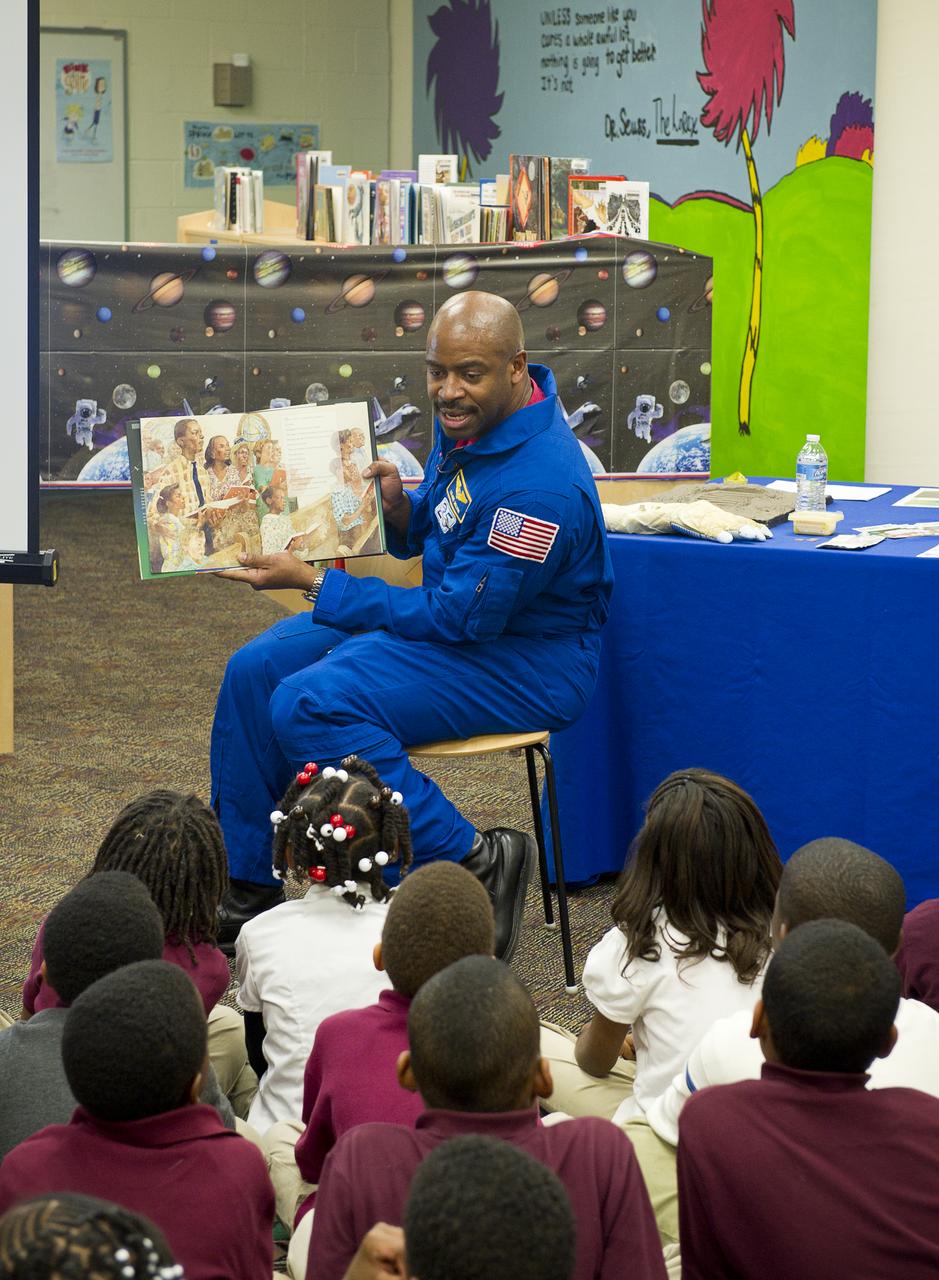
Leland Melvin, NASA Associate Administrator for Education and former space shuttle astronaut, reads to first and third grade students from the book “The Moon Over Star” at Ferebee-Hope Elementary School on Tuesday, Feb. 8, 2011, in Washington, DC. Ferebee-Hope Elementary School, in collaboration with Reading is Fundamental (RIF), hosted this event in honor of Black History Month, and to highlight the importance of reading. Reading is Fundamental distributes more than 50,000 free books to help children discover the joy of reading. Photo Credit: (NASA/Carla Cioffi)
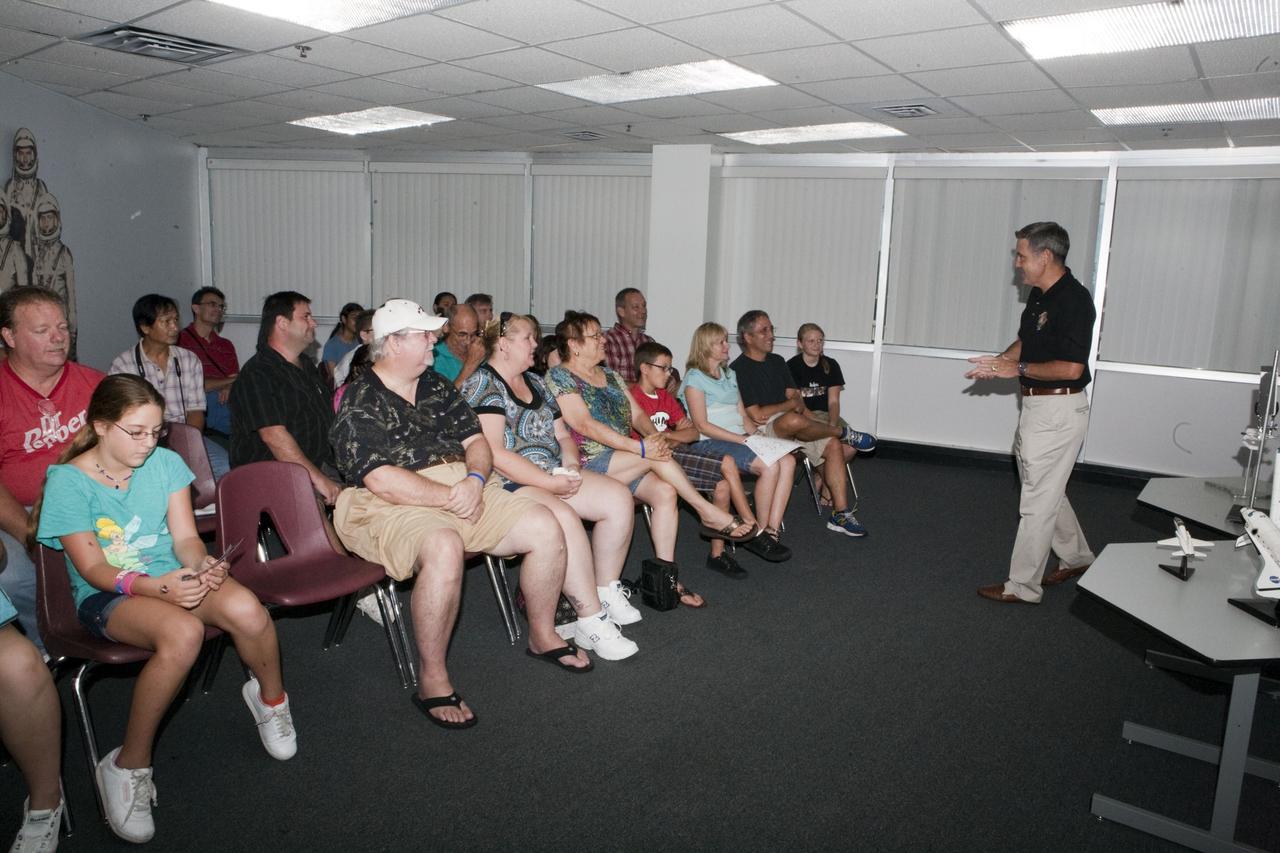
CAPE CANAVERAL, Fla. – Kennedy Space Center Director Bob Cabana speaks to children and their parents during Family Night, Sept. 10, at the U.S. Astronaut Hall of Fame in Florida. NASA and the Kennedy Space Center Visitor Complex hosted the annual NASA family education night. The event, for fifth- through eighth-grade students and their parents, focuses on science, technology, engineering and mathematics (STEM) education activities that included astronaut appearances, a hovercraft, vortex cannon and alternative fuel vehicles. The back-to-school event is part of NASA’s Summer of Innovation initiative to provide interactive learning experiences to middle school students nationwide. Photo credit: NASA/Amanda Diller
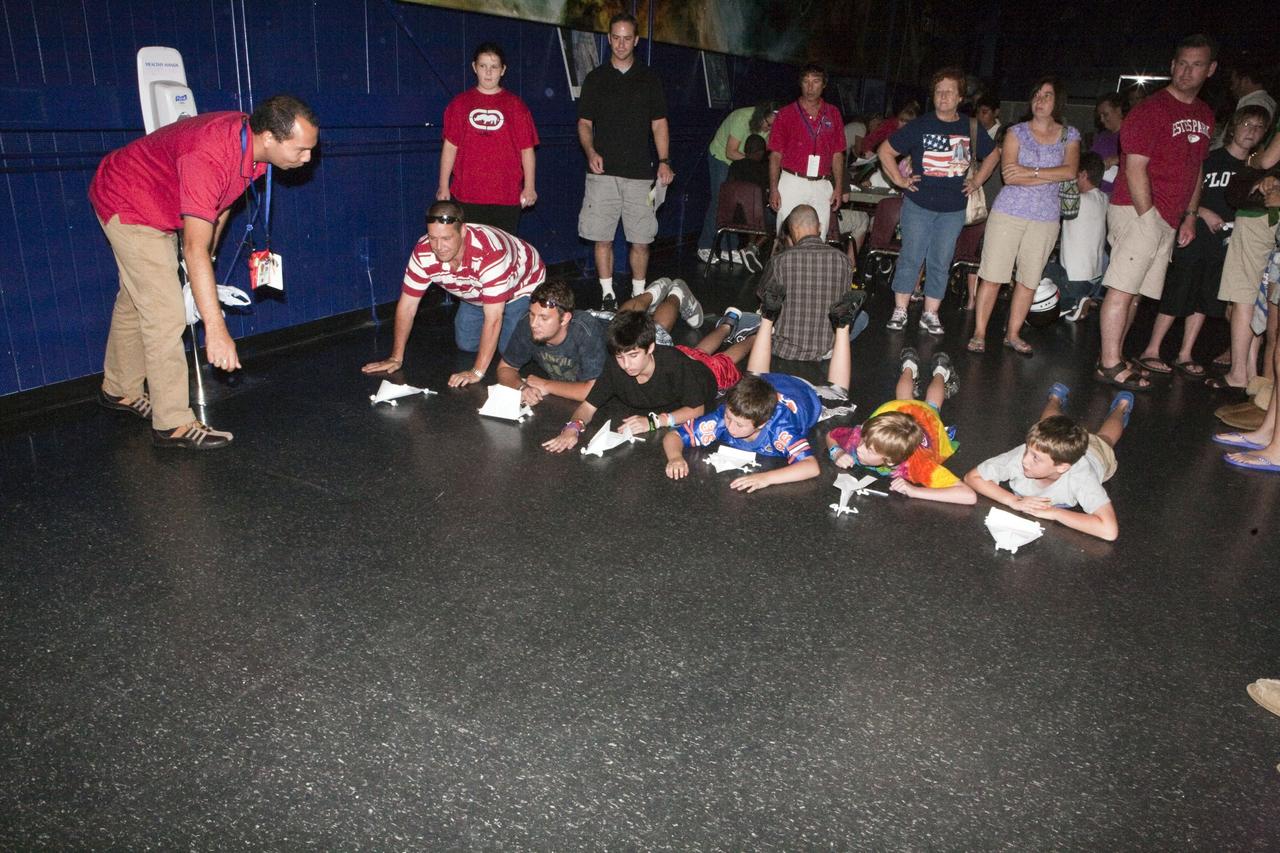
CAPE CANAVERAL, Fla. – Children participate in educational activities during Kennedy Space Center’s Family Night, Sept. 10, at the U.S. Astronaut Hall of Fame in Florida. NASA and the Kennedy Space Center Visitor Complex hosted the annual NASA family education night. The event, for fifth- through eighth-grade students and their parents, focuses on science, technology, engineering and mathematics (STEM) education activities that included astronaut appearances, a hovercraft, vortex cannon and alternative fuel vehicles. The back-to-school event is part of NASA’s Summer of Innovation initiative to provide interactive learning experiences to middle school students nationwide. Photo credit: NASA/Amanda Diller
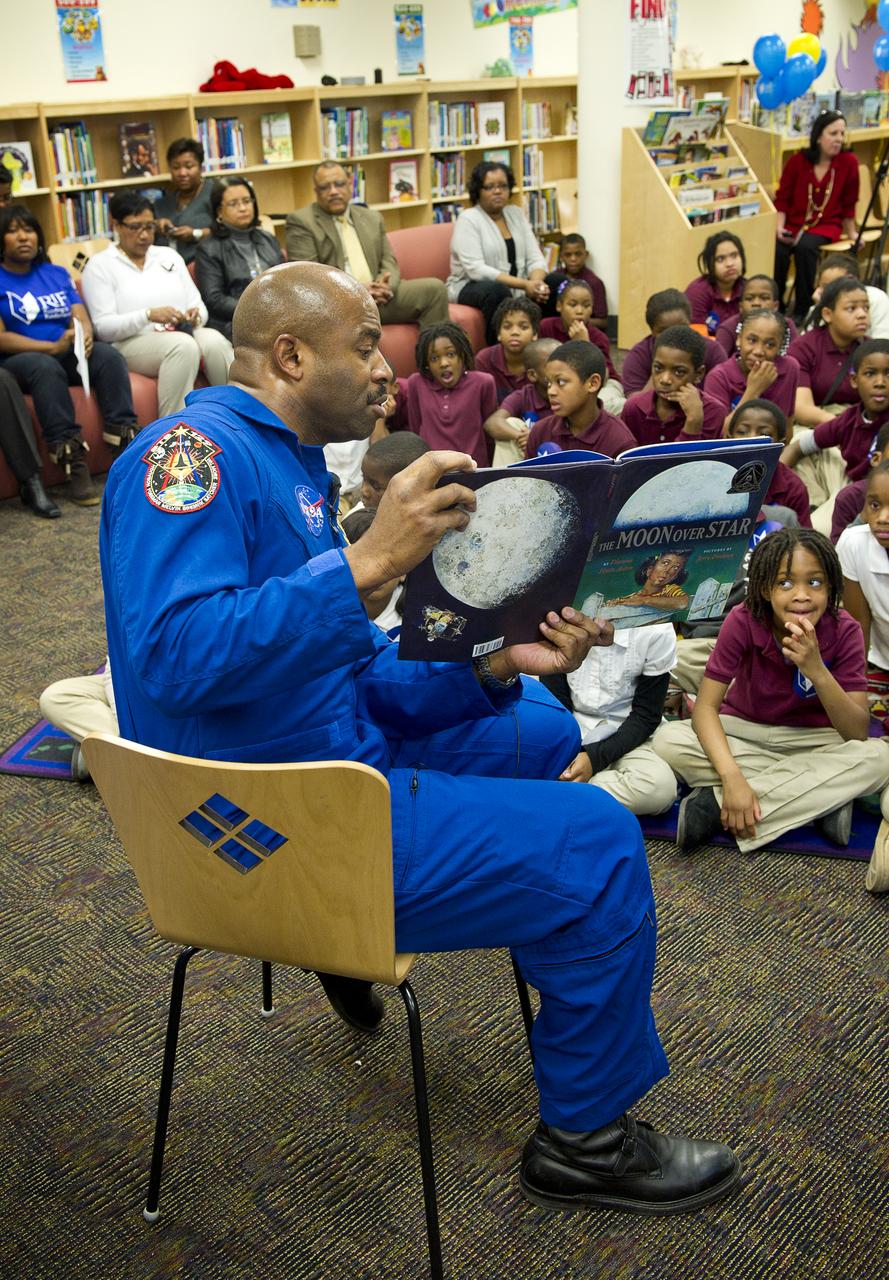
Leland Melvin, NASA Associate Administrator for Education and former space shuttle astronaut, reads to first and third grade students from the book “The Moon Over Star” at Ferebee-Hope Elementary School on Tuesday, Feb. 8, 2011, in Washington, DC. Ferebee-Hope Elementary School, in collaboration with Reading is Fundamental (RIF), hosted this event in honor of Black History Month, and to highlight the importance of reading. Reading is Fundamental distributes more than 50,000 free books to help children discover the joy of reading. Photo Credit: (NASA/Carla Cioffi)
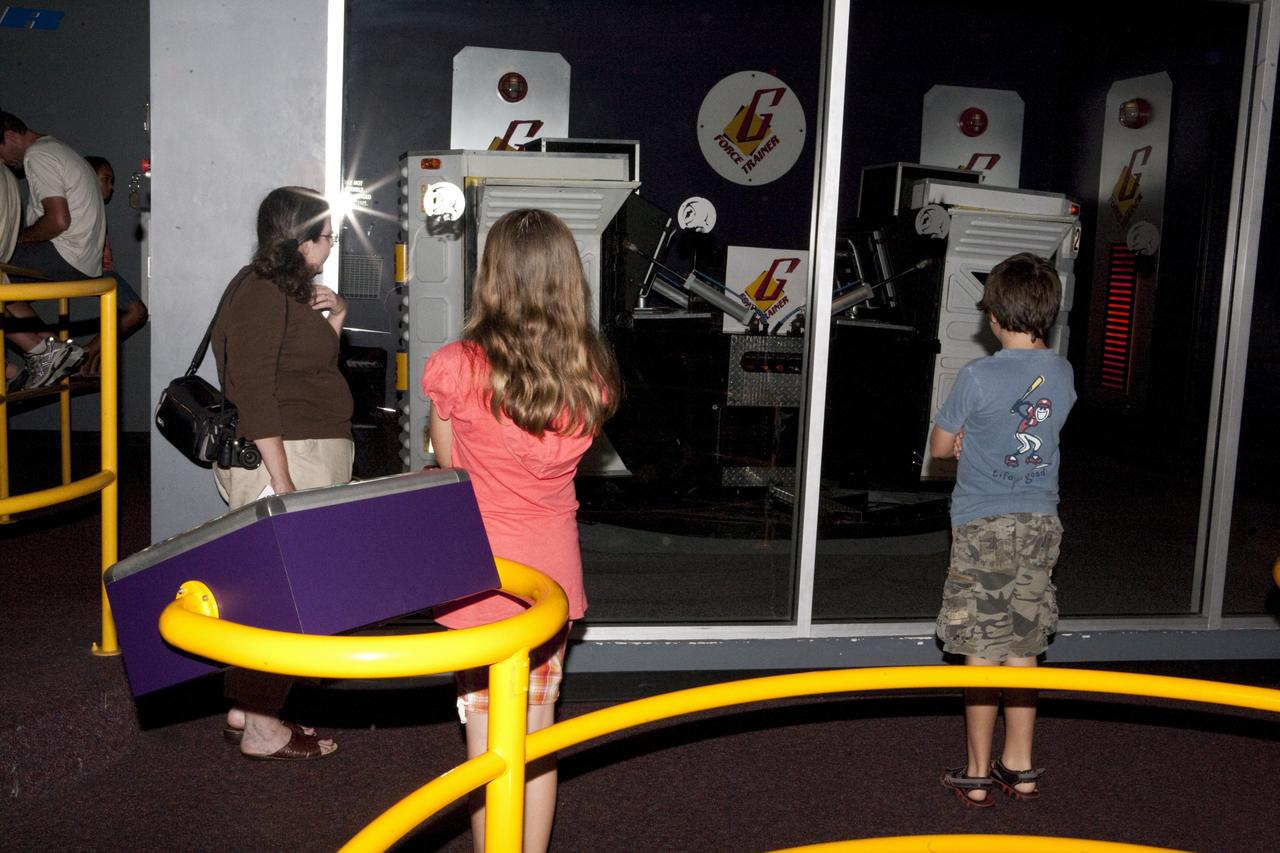
CAPE CANAVERAL, Fla. – Children view educational displays during Kennedy Space Center’s Family Night, Sept. 10, at the U.S. Astronaut Hall of Fame in Florida. NASA and the Kennedy Space Center Visitor Complex hosted the annual NASA family education night. The event, for fifth- through eighth-grade students and their parents, focuses on science, technology, engineering and mathematics (STEM) education activities that included astronaut appearances, a hovercraft, vortex cannon and alternative fuel vehicles. The back-to-school event is part of NASA’s Summer of Innovation initiative to provide interactive learning experiences to middle school students nationwide. Photo credit: NASA/Amanda Diller
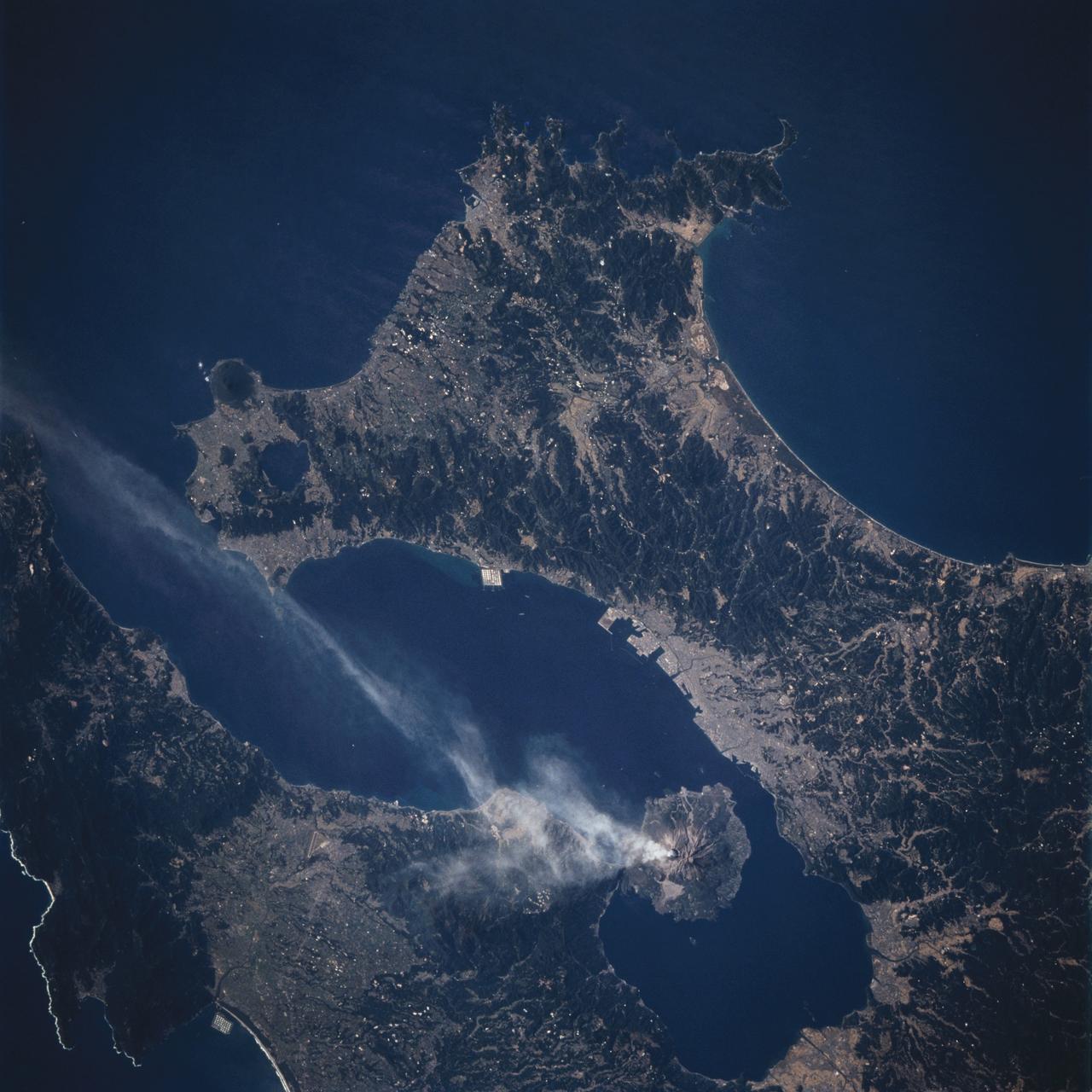
One of the world's most active volcanoes, Sakura-jima in southern-most Kyushu, Japan, erupts dozens of times a year. Volcanic eruptions are so much a part of of daily life in the city of Kagoshima (across the bay and west of Sakura-jima), that school children wear hard hats to school. This photo provides a nice clear view of Sakura-jima on a quiet day - only a plume of steam rises from the summit crater. The summit region is covered with gray ash from the frequent eruptions, and some of the rivers cutting down the mountain (especially the western drainages) appear to be filled with volcanic debris.
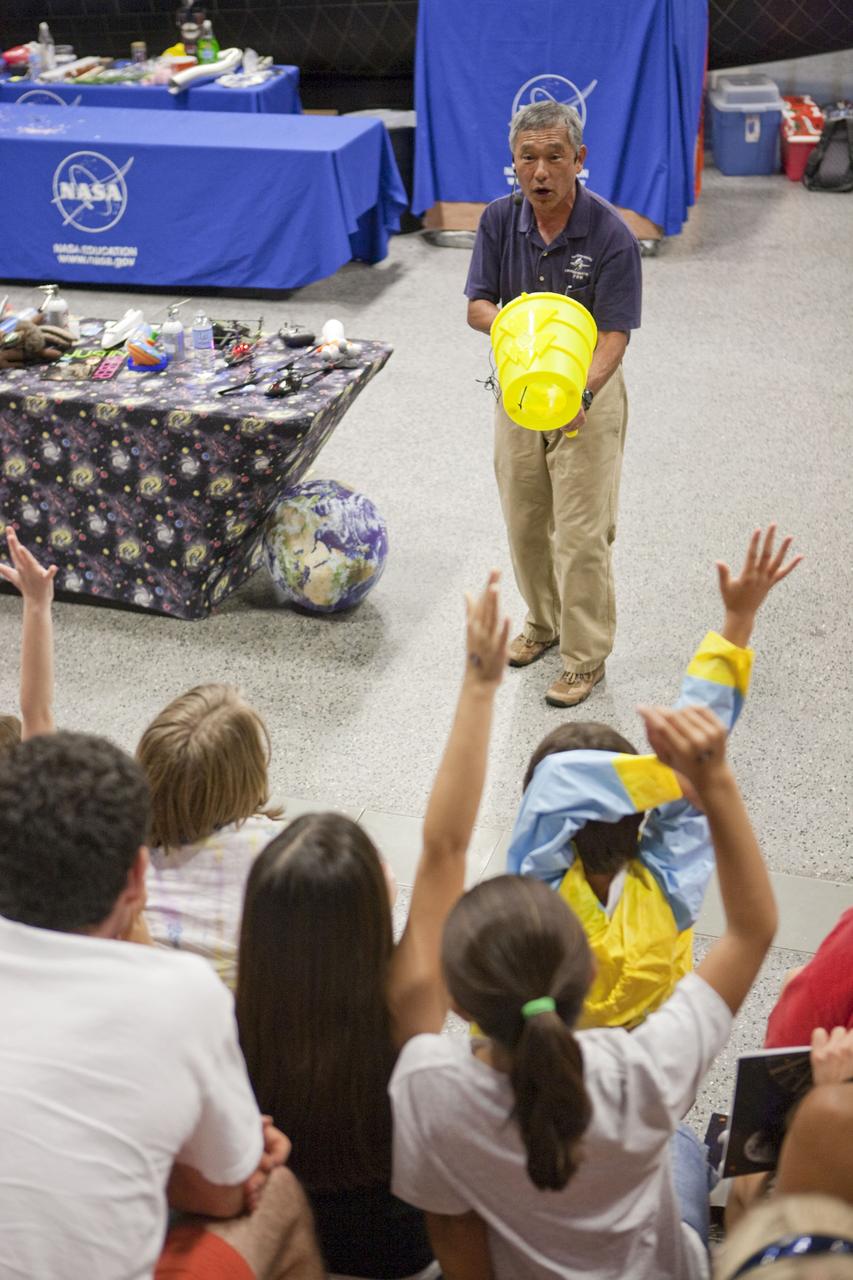
CAPE CANAVERAL, Fla. – An education specialist engages children in an educational activity during Kennedy Space Center’s Family Night, Sept. 10, at the U.S. Astronaut Hall of Fame in Florida. NASA and the Kennedy Space Center Visitor Complex hosted the annual NASA family education night. The event, for fifth- through eighth-grade students and their parents, focuses on science, technology, engineering and mathematics (STEM) education activities that included astronaut appearances, a hovercraft, vortex cannon and alternative fuel vehicles. The back-to-school event is part of NASA’s Summer of Innovation initiative to provide interactive learning experiences to middle school students nationwide. Photo credit: NASA/Amanda Diller
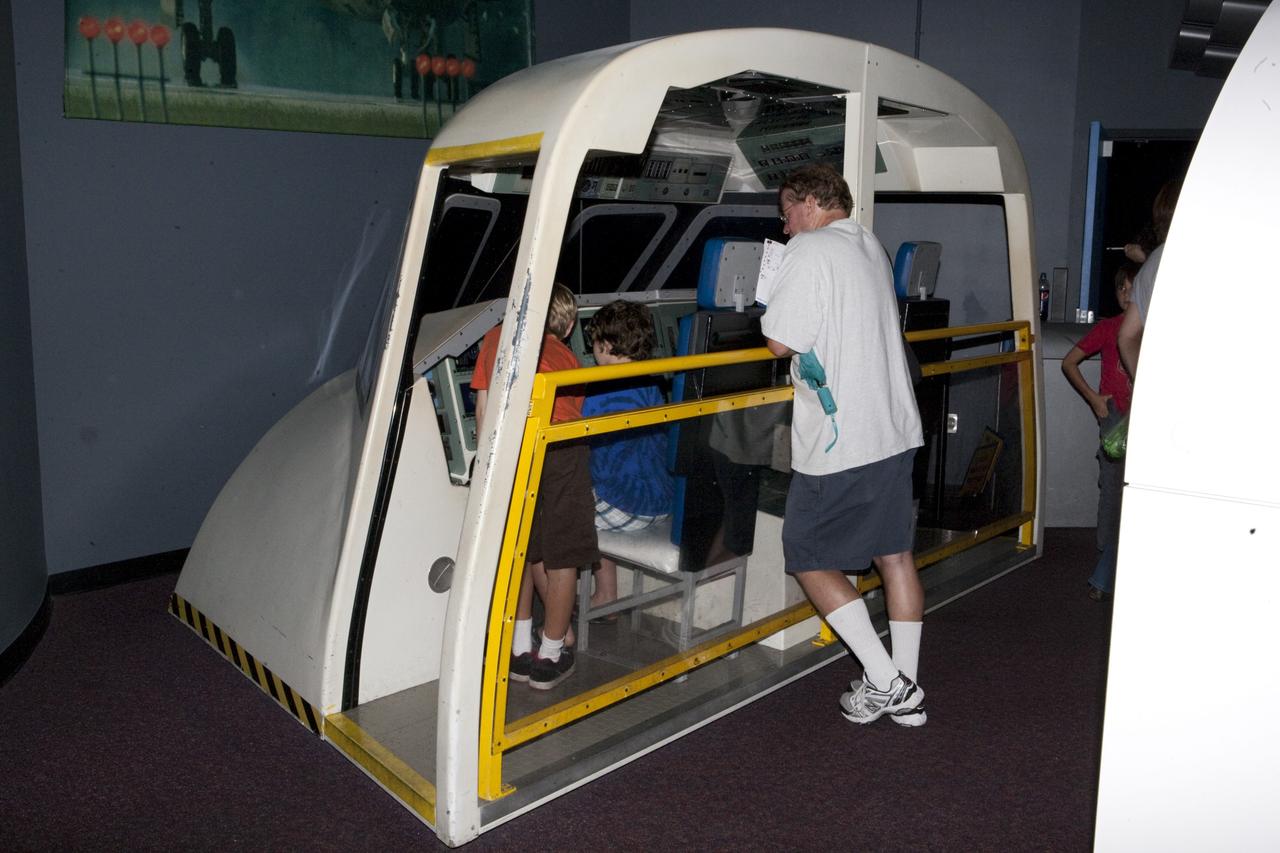
CAPE CANAVERAL, Fla. – Children participate in educational activities during Kennedy Space Center’s Family Night, Sept. 10, at the U.S. Astronaut Hall of Fame in Florida. NASA and the Kennedy Space Center Visitor Complex hosted the annual NASA family education night. The event, for fifth- through eighth-grade students and their parents, focuses on science, technology, engineering and mathematics (STEM) education activities that included astronaut appearances, a hovercraft, vortex cannon and alternative fuel vehicles. The back-to-school event is part of NASA’s Summer of Innovation initiative to provide interactive learning experiences to middle school students nationwide. Photo credit: NASA/Amanda Diller
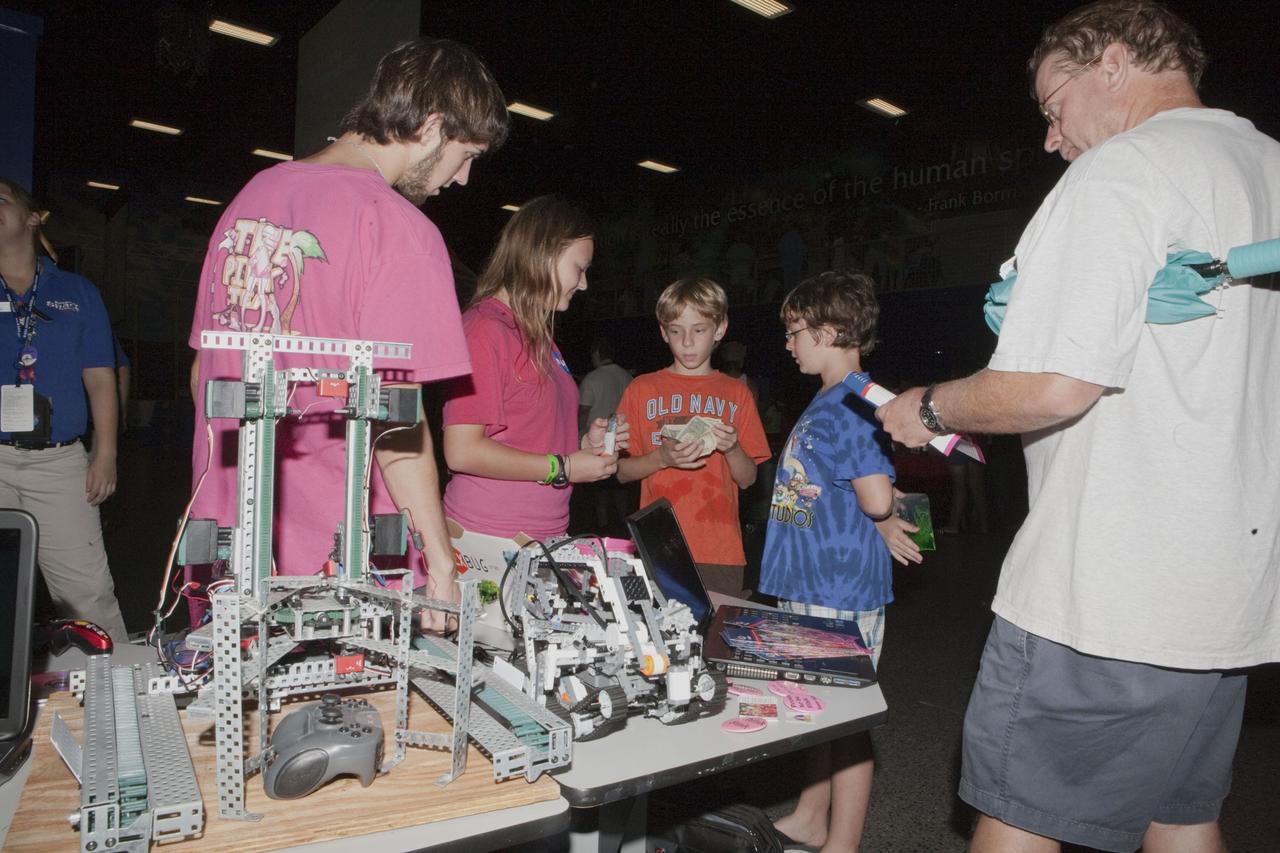
CAPE CANAVERAL, Fla. – Children participate in educational activities during Kennedy Space Center’s Family Night, Sept. 10, at the U.S. Astronaut Hall of Fame in Florida. NASA and the Kennedy Space Center Visitor Complex hosted the annual NASA family education night. The event, for fifth- through eighth-grade students and their parents, focuses on science, technology, engineering and mathematics (STEM) education activities that included astronaut appearances, a hovercraft, vortex cannon and alternative fuel vehicles. The back-to-school event is part of NASA’s Summer of Innovation initiative to provide interactive learning experiences to middle school students nationwide. Photo credit: NASA/Amanda Diller
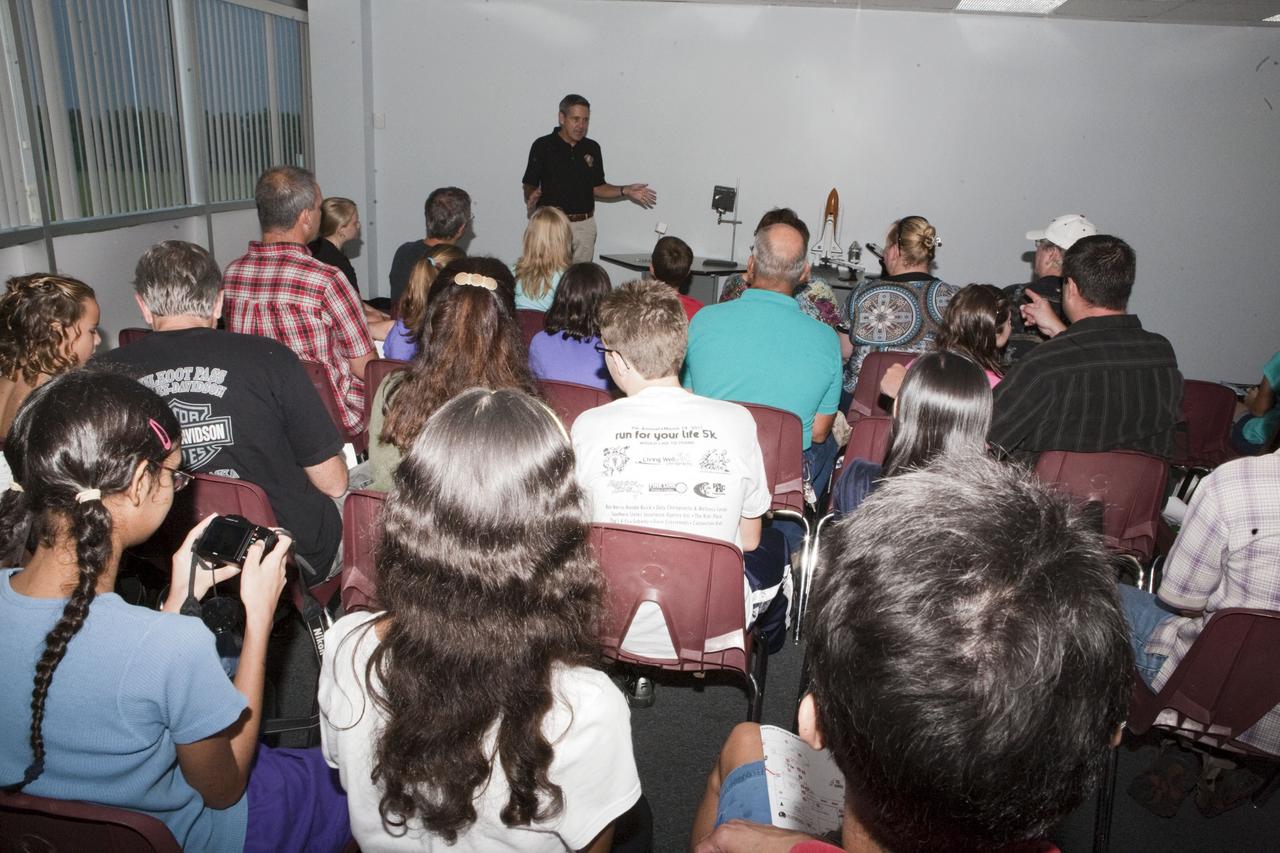
CAPE CANAVERAL, Fla. – Kennedy Space Center Director Bob Cabana speaks to children and their parents during Family Night, Sept. 10, at the U.S. Astronaut Hall of Fame in Florida. NASA and the Kennedy Space Center Visitor Complex hosted the annual NASA family education night. The event, for fifth- through eighth-grade students and their parents, focuses on science, technology, engineering and mathematics (STEM) education activities that included astronaut appearances, a hovercraft, vortex cannon and alternative fuel vehicles. The back-to-school event is part of NASA’s Summer of Innovation initiative to provide interactive learning experiences to middle school students nationwide. Photo credit: NASA/Amanda Diller
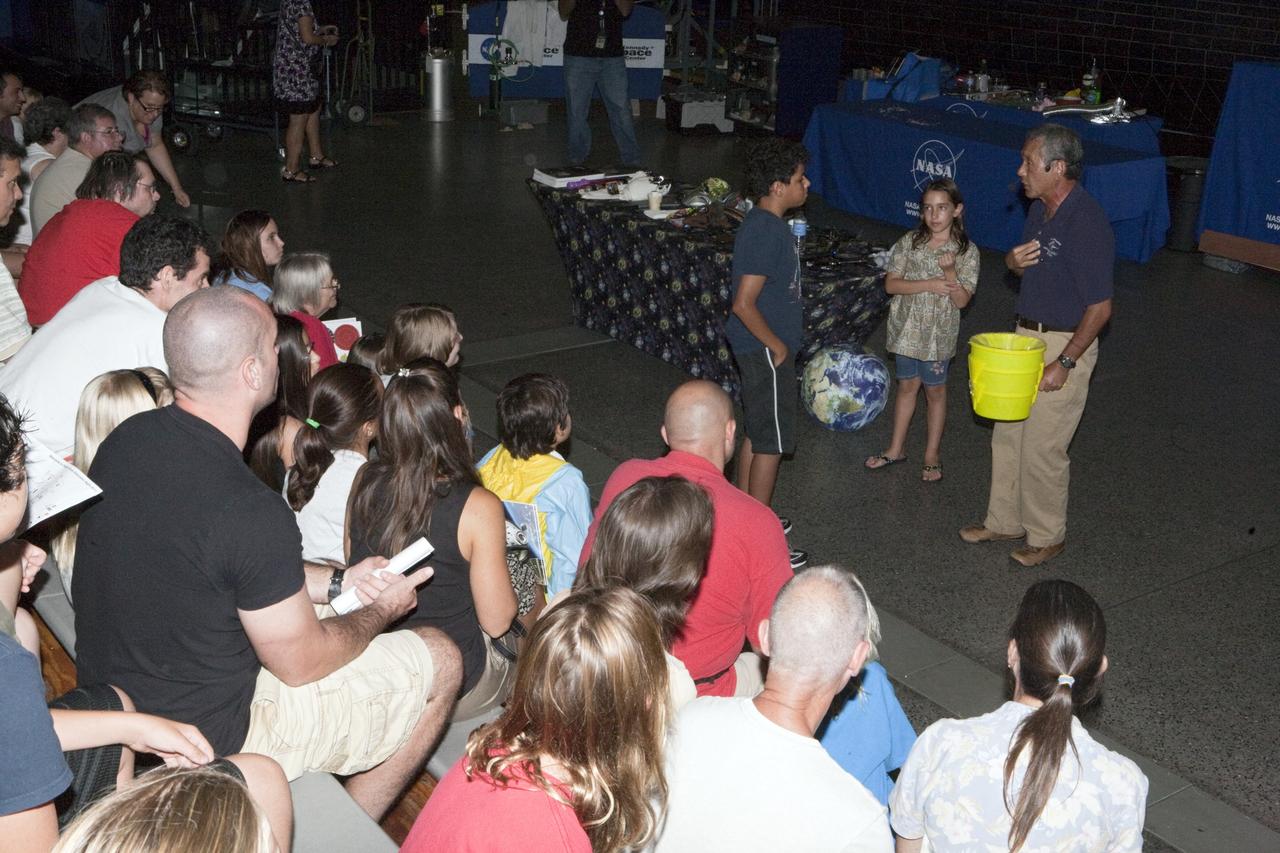
CAPE CANAVERAL, Fla. – Children participate in educational activities during Kennedy Space Center’s Family Night, Sept. 10, at the U.S. Astronaut Hall of Fame in Florida. NASA and the Kennedy Space Center Visitor Complex hosted the annual NASA family education night. The event, for fifth- through eighth-grade students and their parents, focuses on science, technology, engineering and mathematics (STEM) education activities that included astronaut appearances, a hovercraft, vortex cannon and alternative fuel vehicles. The back-to-school event is part of NASA’s Summer of Innovation initiative to provide interactive learning experiences to middle school students nationwide. Photo credit: NASA/Amanda Diller
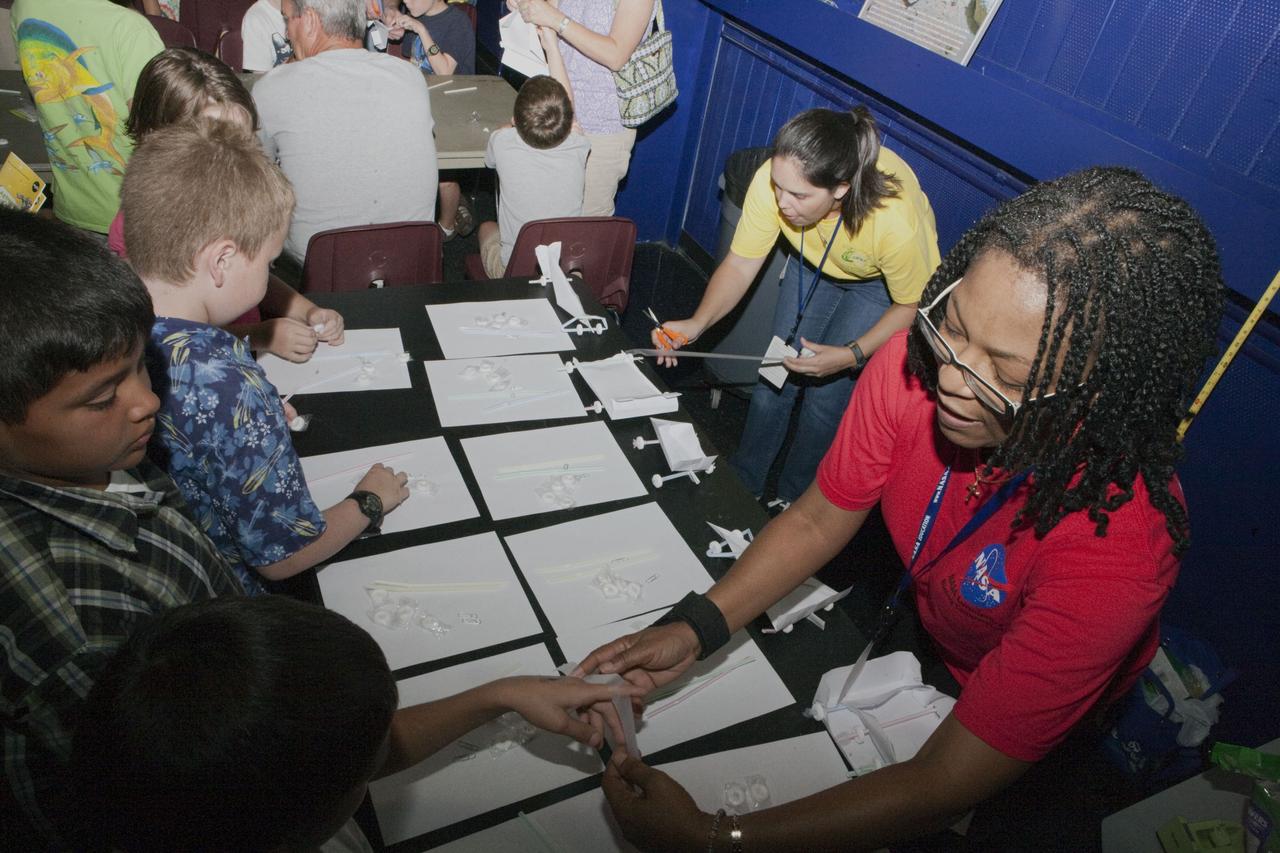
CAPE CANAVERAL, Fla. – Education specialists help children participation in educational activities during Family Night, Sept. 10, at Kennedy Space Center’s U.S. Astronaut Hall of Fame in Florida. NASA and the Kennedy Space Center Visitor Complex hosted the annual NASA family education night. The event, for fifth- through eighth-grade students and their parents, focuses on science, technology, engineering and mathematics (STEM) education activities that included astronaut appearances, a hovercraft, vortex cannon and alternative fuel vehicles. The back-to-school event is part of NASA’s Summer of Innovation initiative to provide interactive learning experiences to middle school students nationwide. Photo credit: NASA/Amanda Diller
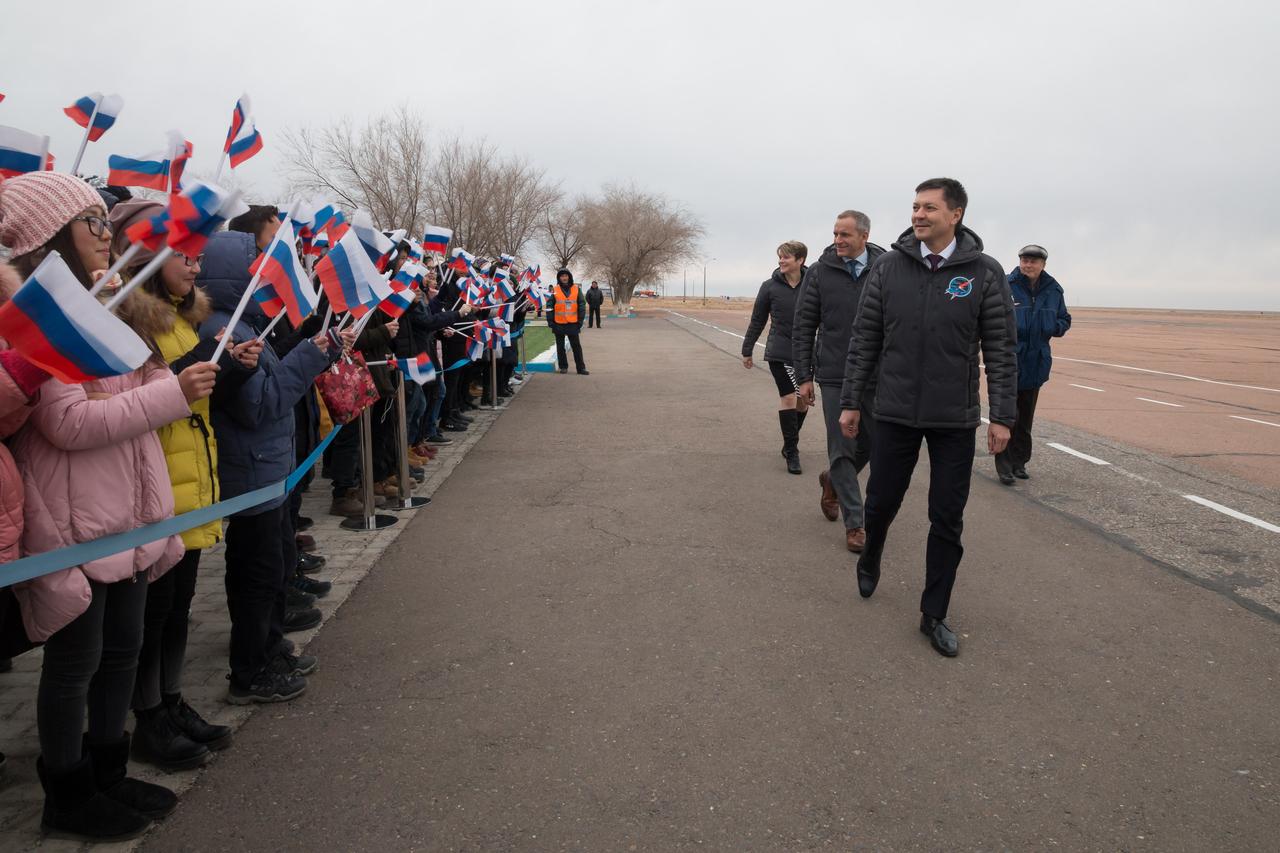
jsc2018e097264 - Expedition 58 crewmembers Anne McClain of NASA (top), Oleg Kononenko of Roscosmos (center) and David Saint-Jacques of the Canadian Space Agency (foreground) are greeted by local school children Nov. 19 after arriving at their launch site in Baikonur, Kazakhstan for final pre-launch training. They will launch Dec. 3 on the Soyuz MS-11 spacecraft from the Baikonur Cosmodrome in Kazakhstan for a six-and-a-half month mission on the International Space Station...NASA/Victor Zelentsov.
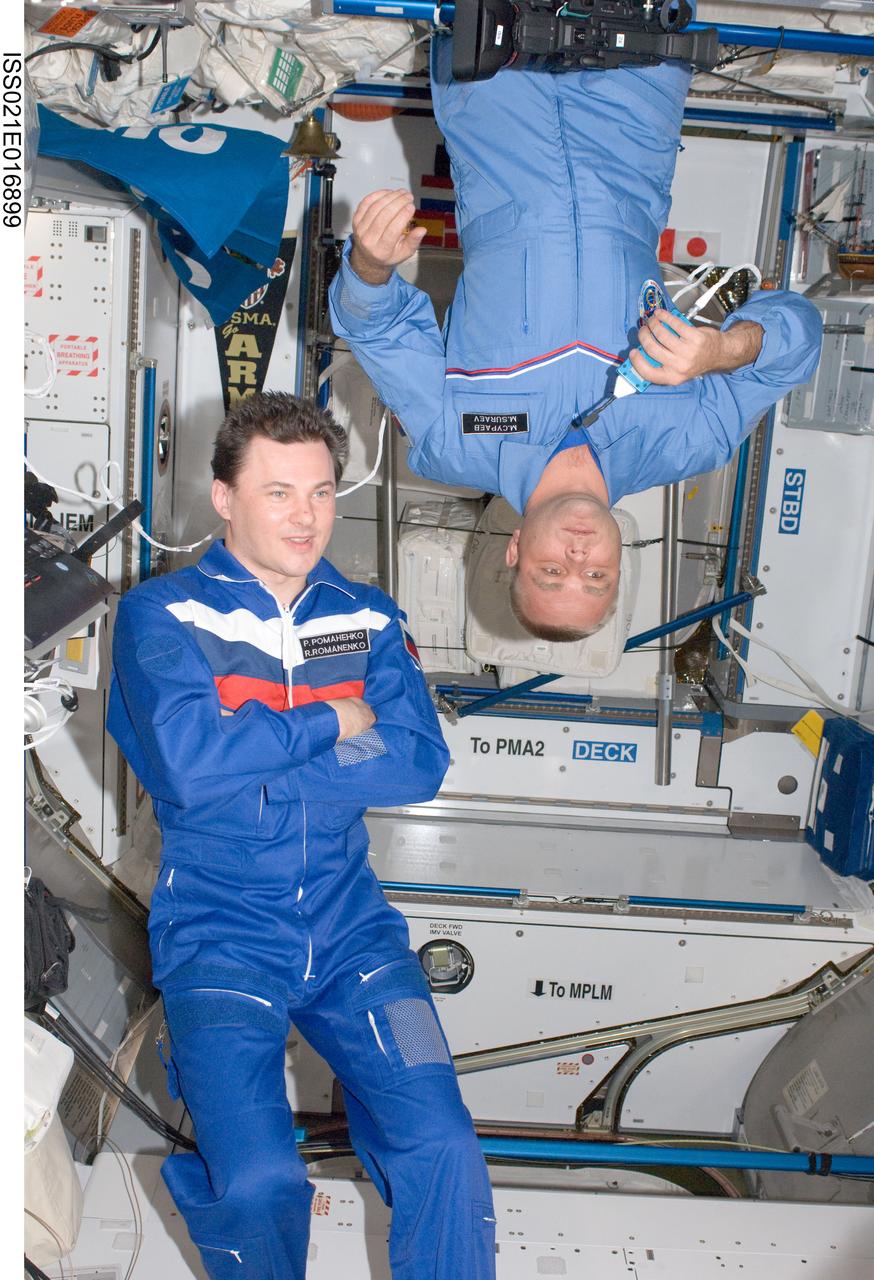
ISS021-E-016899 (12 Oct. 2009) --- Russian cosmonauts Roman Romanenko (left) and Maxim Suraev, both Expedition 21 flight engineers, participate in a PAO/TV downlink event from the Harmony node of the International Space Station. During the event, the crew members sent greetings to AK-47 Chief Designer M. T. Kalashnikov on his 90th birthday and to the participants of the Tenth Youth Tsiolkovsky Readings; along with a greeting to the 17th Annual International Space Olympiad for School Children, hosted by the City of Korolev.
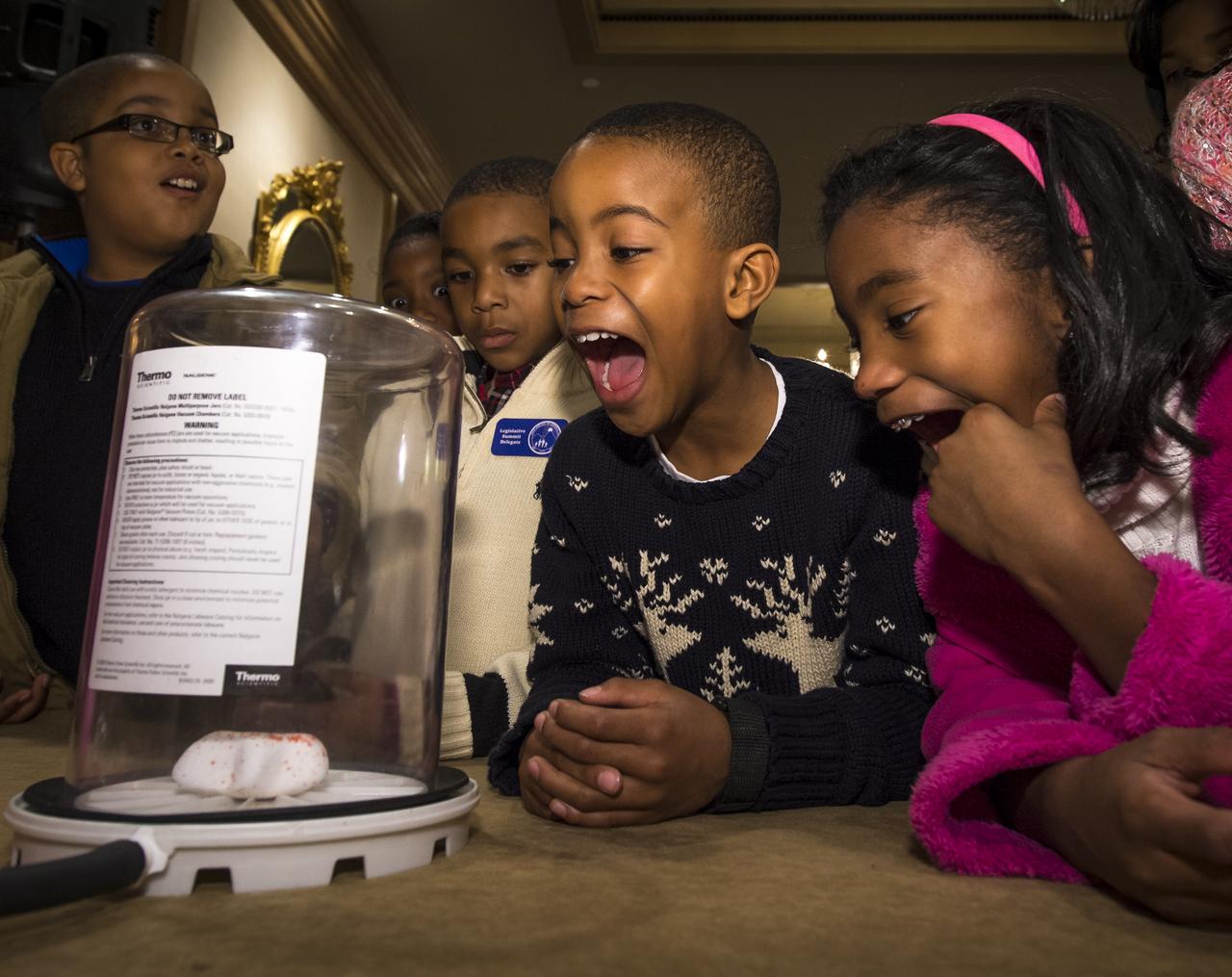
School children react to food shrinking in a vacuum chamber during an Science, Technology, Engineering, and Math (STEM) education event held at the Ritz-Carlton Hotel in Arlington, VA on Saturday, Jan. 19, 2013. Students were able to meet with Astronaut Melvin, conduct experiments, build their own space jab, and touch a mockup space suit. Photo Credit: (NASA/Bill Ingalls)
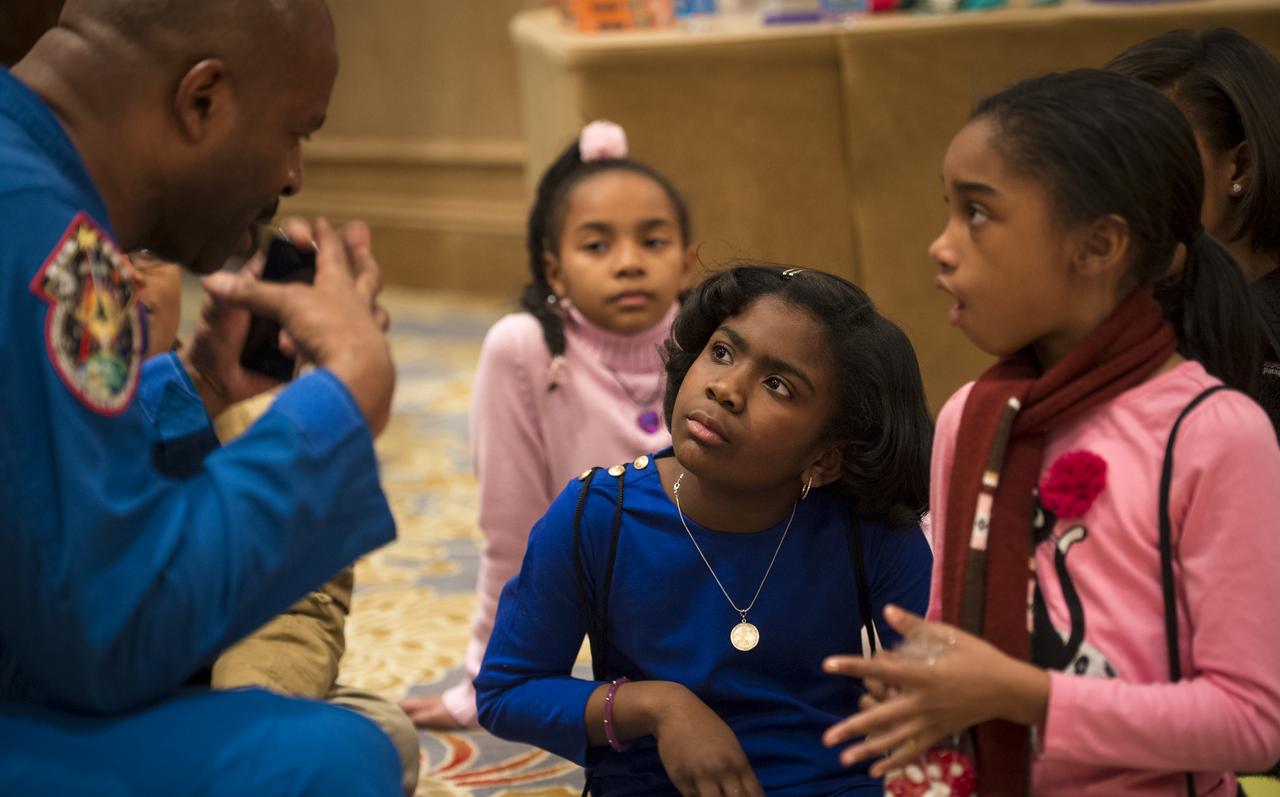
NASA Astronaut and Associate Administrator for Education, Leland Melvin, talks to school children during an Science, Technology, Engineering, and Math (STEM) education event held at the Ritz-Carlton Hotel in Arlington, VA on Saturday, Jan. 19, 2013. Students were able to meet with Astronaut Melvin, conduct experiments, build their own space jab, and touch a mockup space suit. Photo Credit: (NASA/Bill Ingalls)
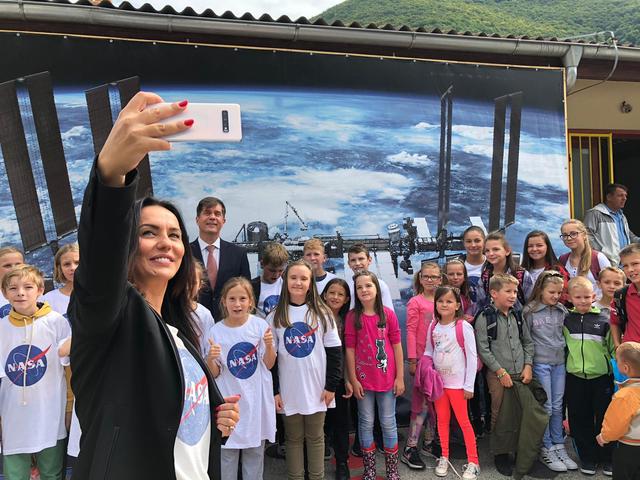
On Sept. 23, 2019, Eric Nelson, the U.S. Ambassador to Bosnia and Herzegovina, presented a framed letter to Snezana Ružičić, mayor of the Balkan municipality of Jezero. The letter, from NASA's director of Mars Exploration, James Watzin, honored the connection between the small Balkan town and Jezero Crater the landing site of NASA's upcoming Mars 2020 mission. In this picture, Ružičić snaps a selfie of the ambassador with local school children. https://photojournal.jpl.nasa.gov/catalog/PIA23463
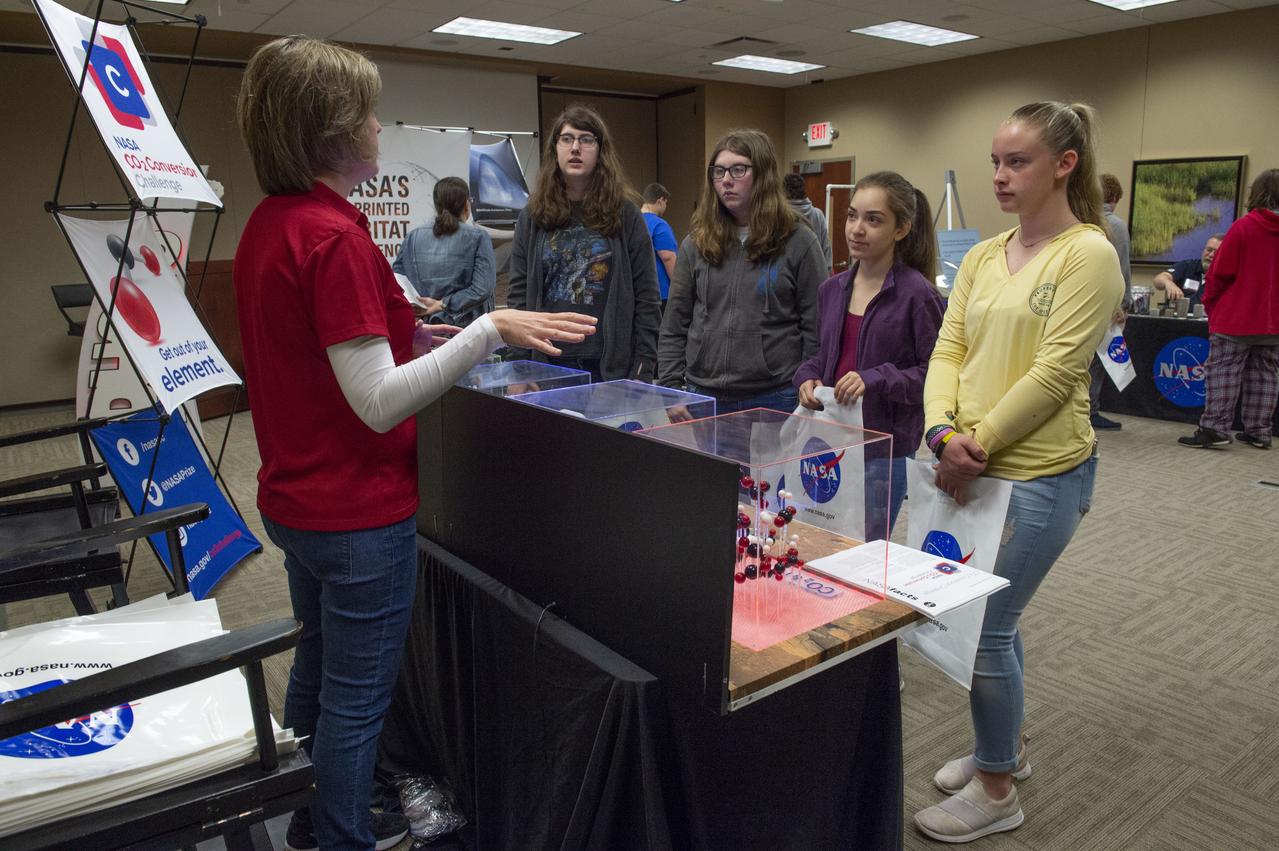
AI. SpaceFactory of New York and Pennsylvania State University of College Park print subscale habitat structures at NASA's 3D-Printed Habitat Challenge, held at the Caterpillar Edwards Demonstration & Learning Center in Edwards, Illinois, May 1-4, 2019. The habitat print is the final level of the multi-phase competition, which began in in 2015. The challenge is managed by NASA's Centennial Challenges program, and partner Bradley University of Peoria, Illinois. Dawn Mercer Turner talks to school children about CO2 conversion.
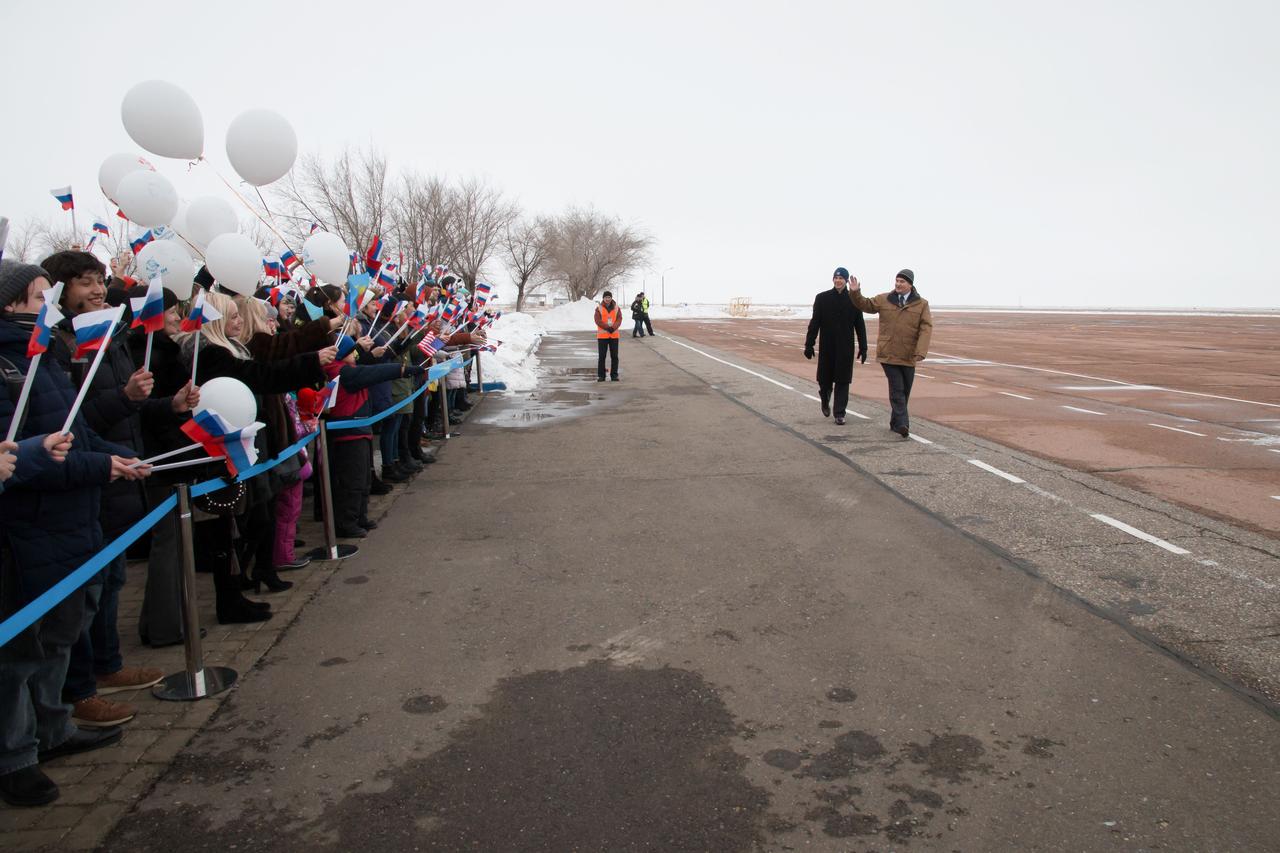
jsc2018e010819 - Expedition 55 backup crewmembers Nick Hague of NASA and Alexey Ovchinin of Roscosmos wave to local school children after arriving at the airstrip in Baikonur, Kazakhstan March 4 following a flight from their training base outside of Moscow. They are serving as backups to Ricky Arnold and Drew Feustel of NASA and Oleg Artemyev of Roscosmos, who will launch March 21 on the Soyuz MS-08 spacecraft for a five month mission on the International Space Station...NASA/Victor Zelentsov.
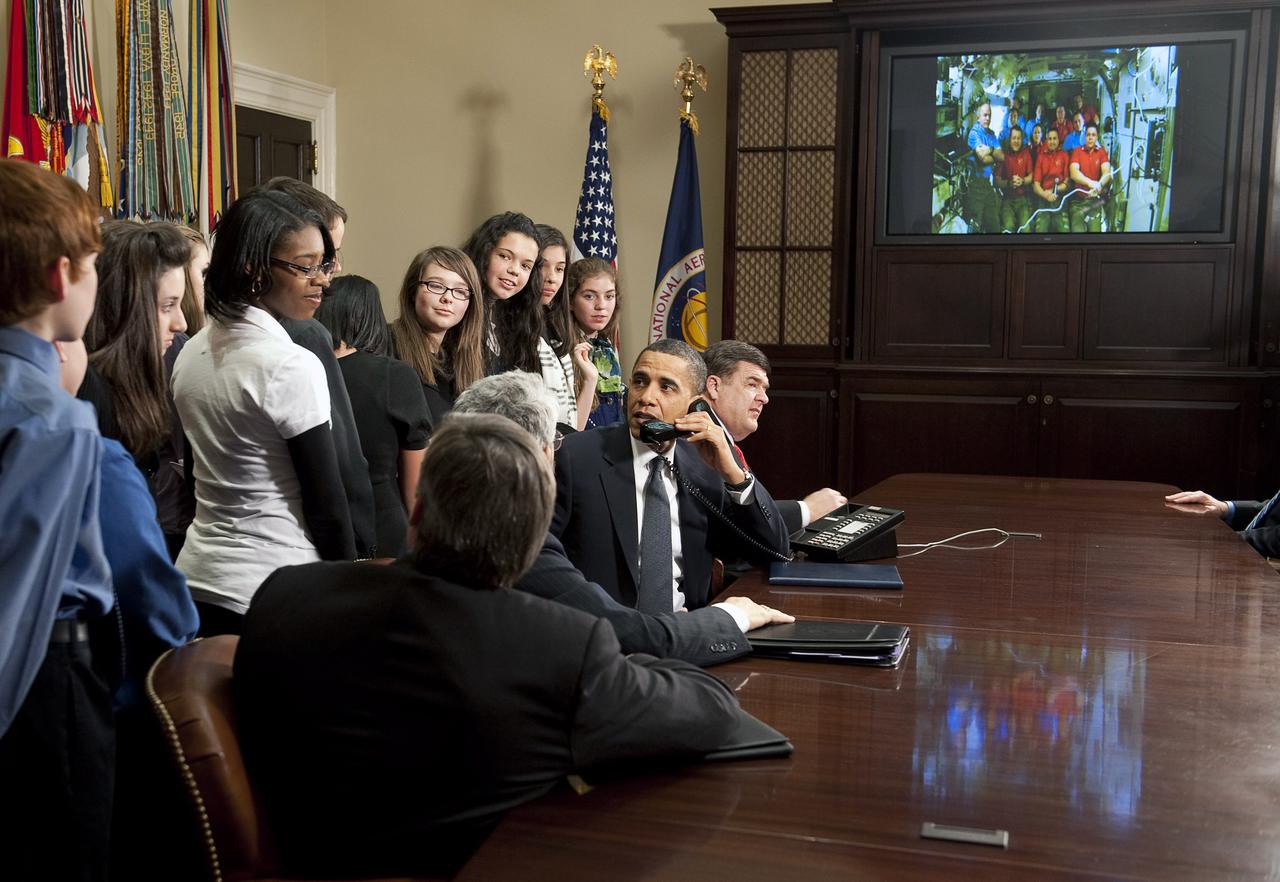
WASHINGTON - 201002170002HQ - U.S. President Barack Obama, accompanied by Congressman C.A. "Dutch" Ruppersberger (D-MD) and middle school children, prepares to hand over the phone to a student to ask a question to astronauts on the International Space Station during an event in the Roosevelt Room of the White House, Wednesday, Feb. 17, 2010, in Washington. Photo Credit: NASA/Bill Ingalls
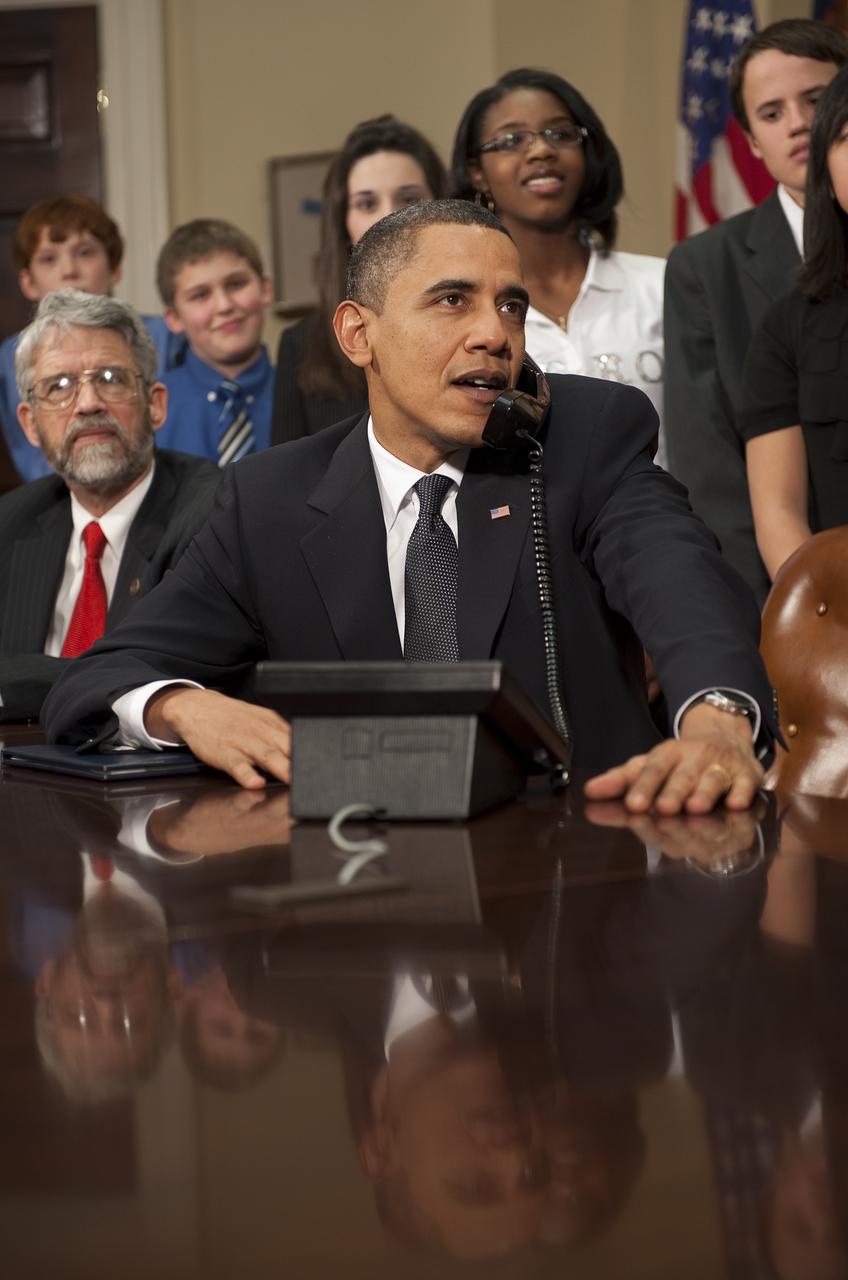
U.S. President Barack Obama, accompanied by White House Science Adviser John Holdren, left, Congressman C.A. "Dutch" Ruppersberger (D-MD) and middle school children, talks on the phone from the Roosevelt Room of the White House to astronauts on the International Space Station, Wednesday, Feb. 17, 2010 in Washington. Photo Credit: (NASA/Bill Ingalls)
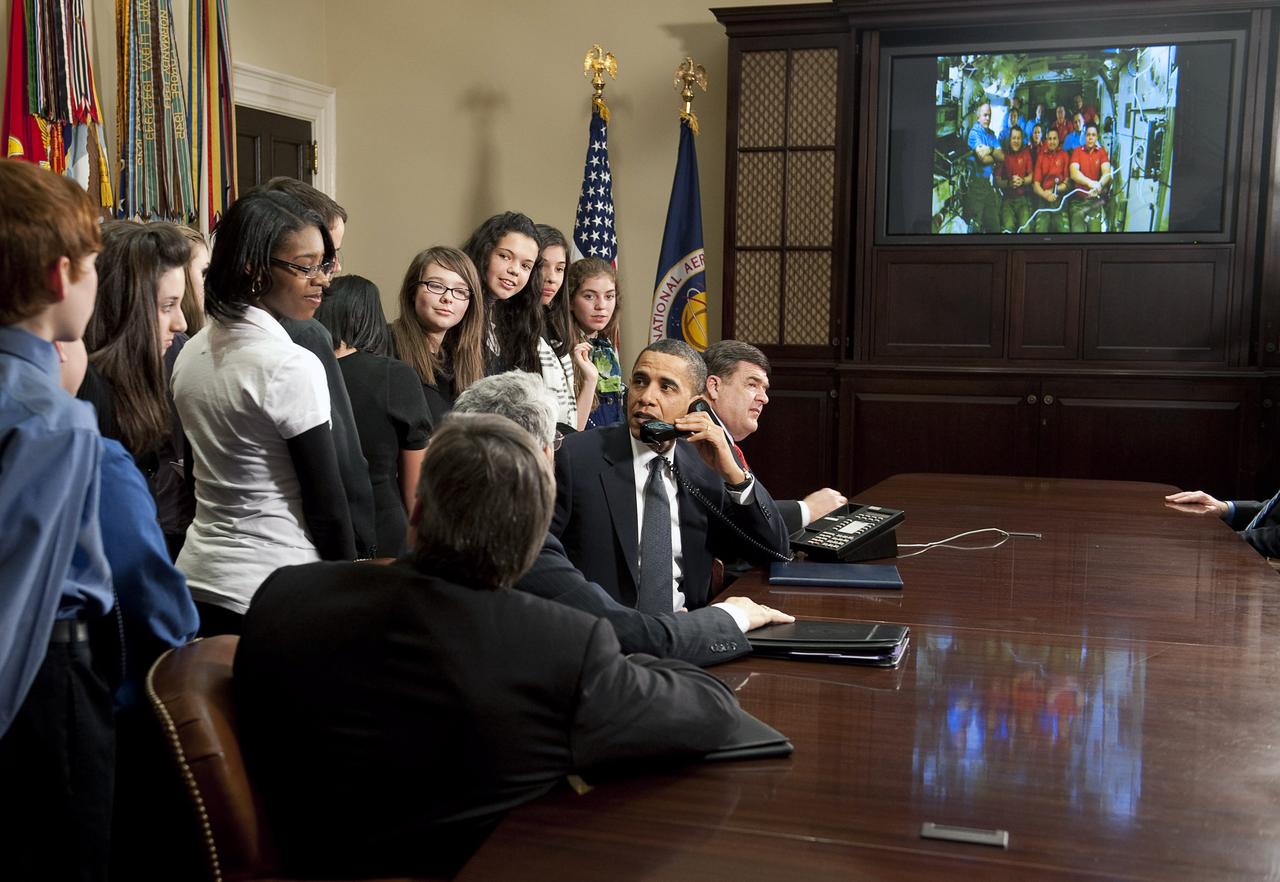
U.S. President Barack Obama, accompanied by Congressman C.A. "Dutch" Ruppersberger (D-MD) and middle school children, prepares to hand over the phone to a student to ask a question to astronauts on the International Space Station during an event in the Roosevelt Room of the White House, Wednesday, Feb. 17, 2010 in Washington. Photo Credit: (NASA/Bill Ingalls)
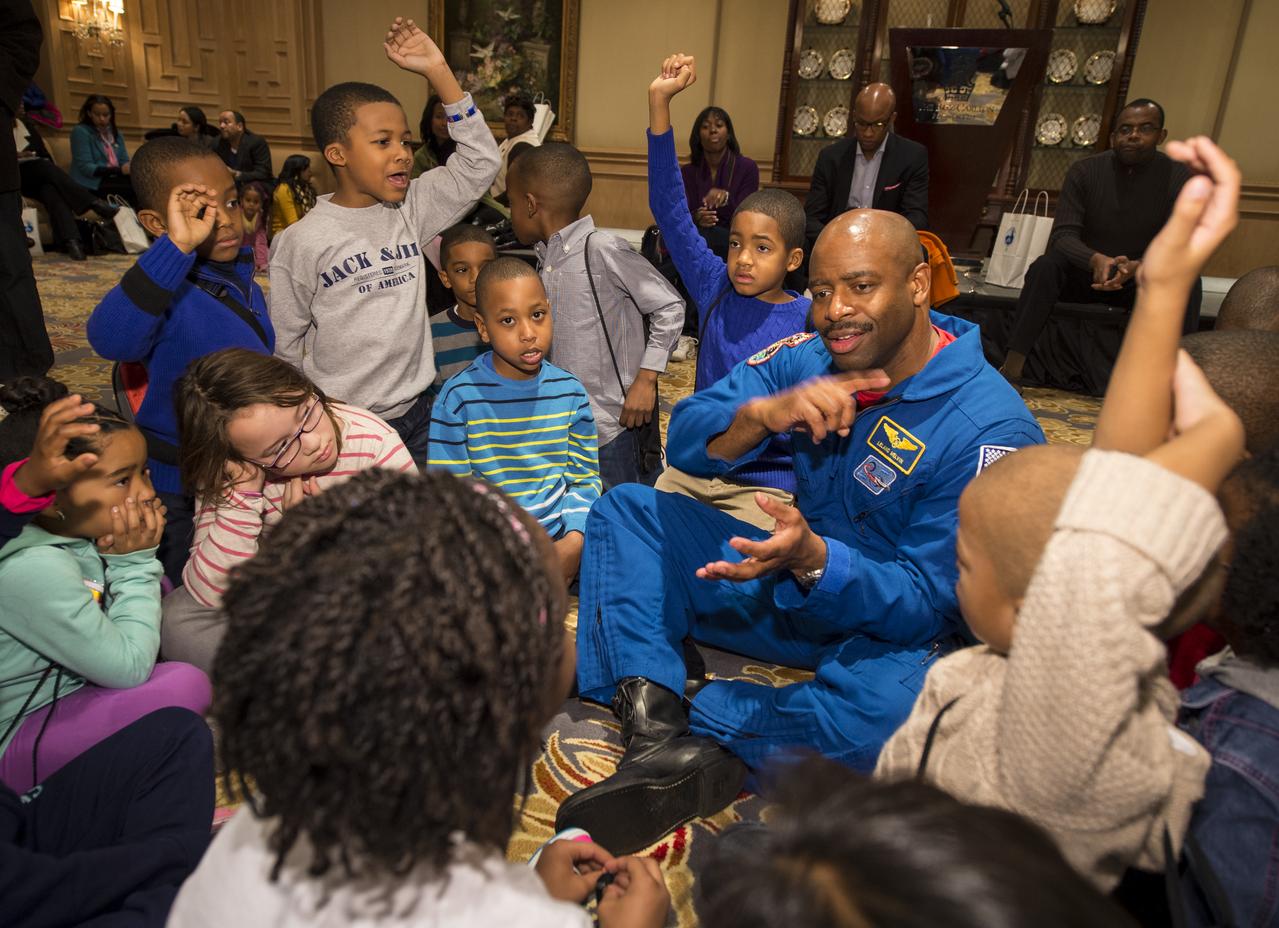
NASA Astronaut and Associate Administrator for Education, Leland Melvin, talks to school children during an Science, Technology, Engineering, and Math (STEM) education event held at the Ritz-Carlton Hotel in Arlington, VA on Saturday, Jan. 19, 2013. Students were able to meet with Astronaut Melvin, conduct experiments, build their own space jab, and touch a mockup space suit. Photo Credit: (NASA/Bill Ingalls)
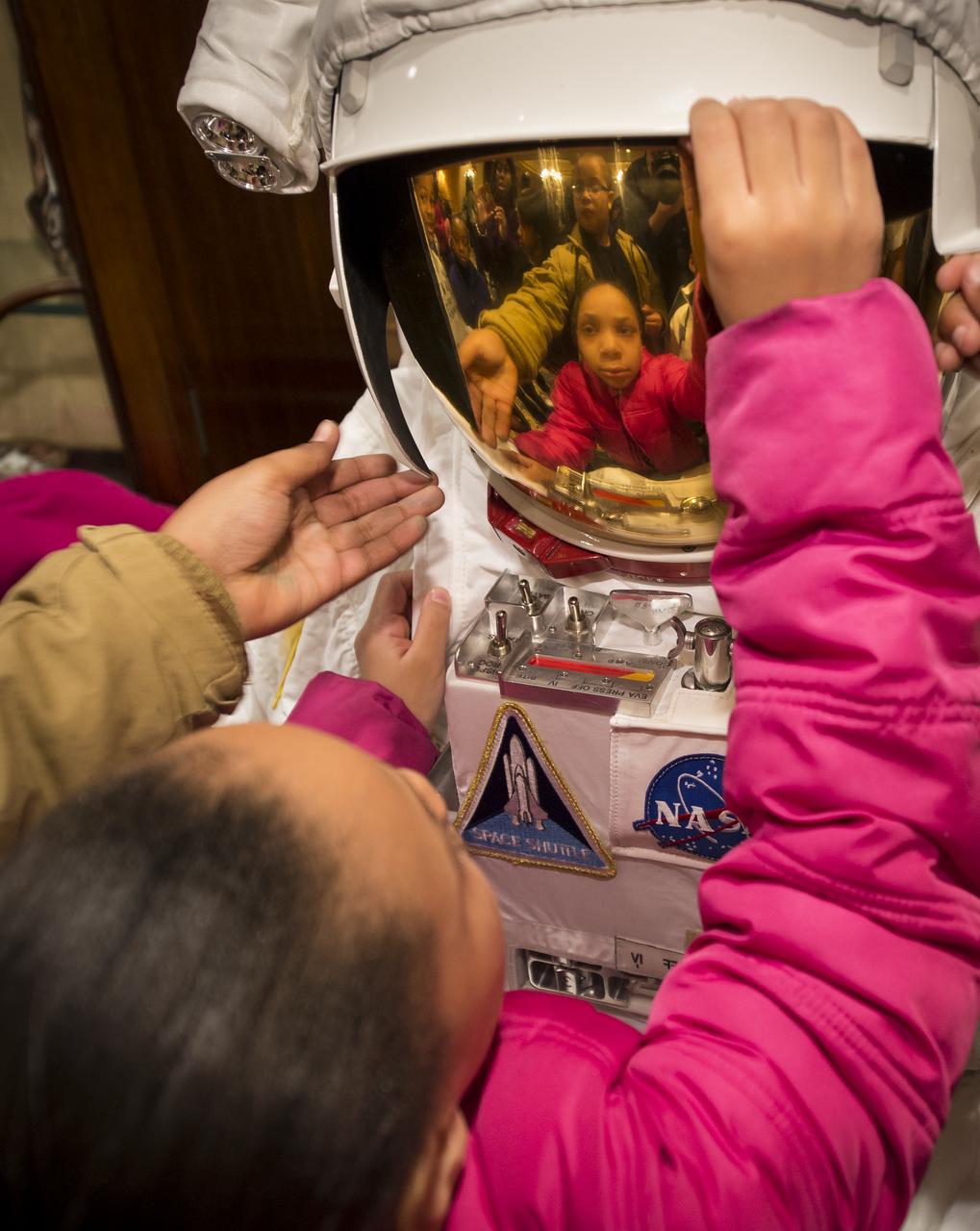
School children are given a hands-on experience with a mock spacesuit during a Science, Technology, Engineering, and Math (STEM) education event held at the Ritz-Carlton Hotel in Arlington, VA on Saturday, Jan. 19, 2013. Students were able to meet with Astronaut Leland Melvin, conduct experiments, build their own space jab, and touch a mockup space suit. Photo Credit: (NASA/Bill Ingalls)
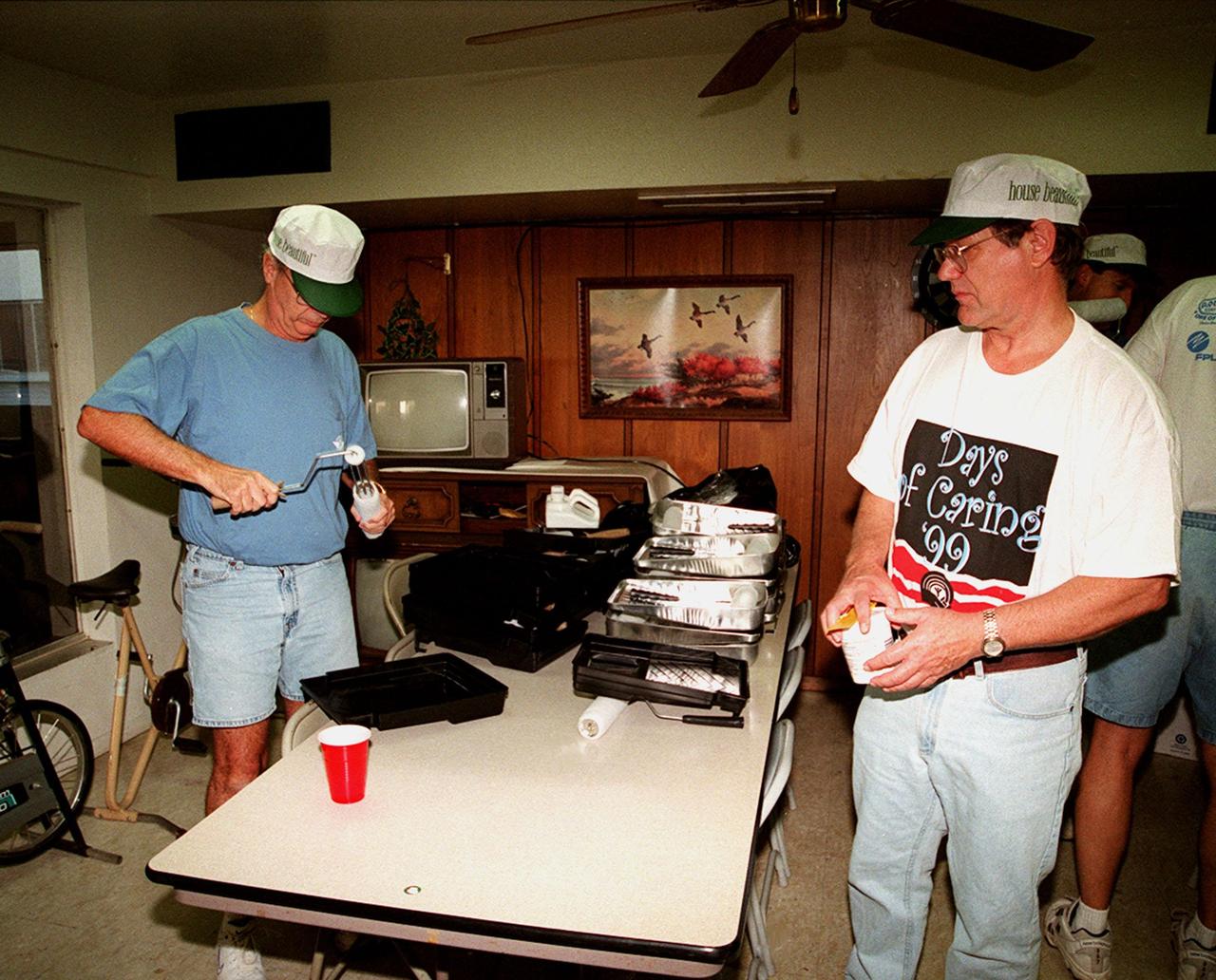
Volunteers for Days of Caring '99 set up the paint trays for painting at Baxley Manor, an apartment building for senior citizens on Merritt Island. Coordinated by the KSC Community Relations Council, Days of Caring provides an opportunity for employees to volunteer their services in projects such as painting, planting flowers, reading to school children, and more. Organizations accepting volunteers include The Embers, Yellow Umbrella, Serene Harbor, Domestic Violence Program, the YMCA of Brevard County, and others
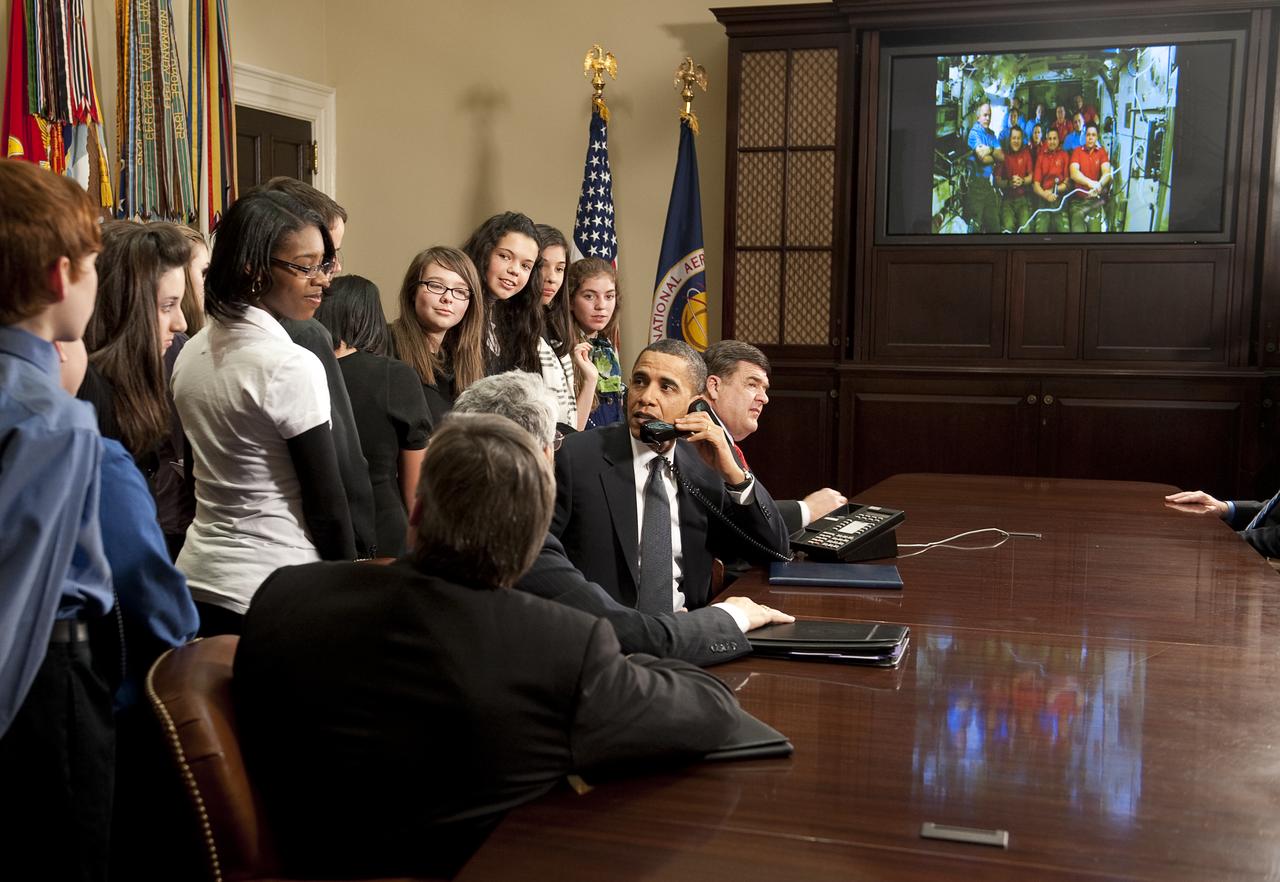
U.S. President Barack Obama, accompanied by Congressman C.A. "Dutch" Ruppersberger (D-MD) and middle school children, prepares to hand over the phone to a student to ask a question to astronauts on the International Space Station during an event in the Roosevelt Room of the White House, Wednesday, Feb. 17, 2010 in Washington. Photo Credit: (NASA/Bill Ingalls)
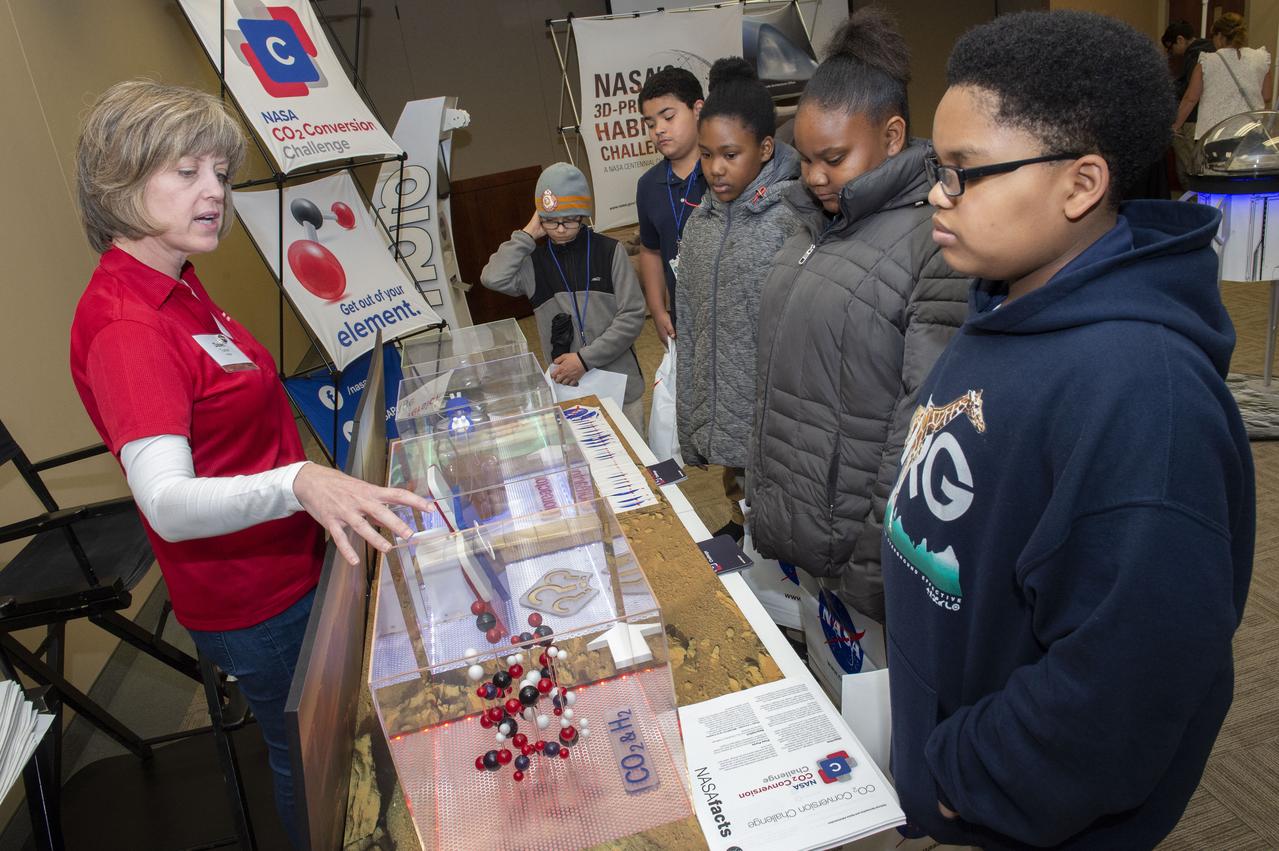
AI. SpaceFactory of New York and Pennsylvania State University of College Park print subscale habitat structures at NASA's 3D-Printed Habitat Challenge, held at the Caterpillar Edwards Demonstration & Learning Center in Edwards, Illinois, May 1-4, 2019. The habitat print is the final level of the multi-phase competition, which began in in 2015. The challenge is managed by NASA's Centennial Challenges program, and partner Bradley University of Peoria, Illinois. Dawn Mercer Turner talks to school children about CO2 conversion.
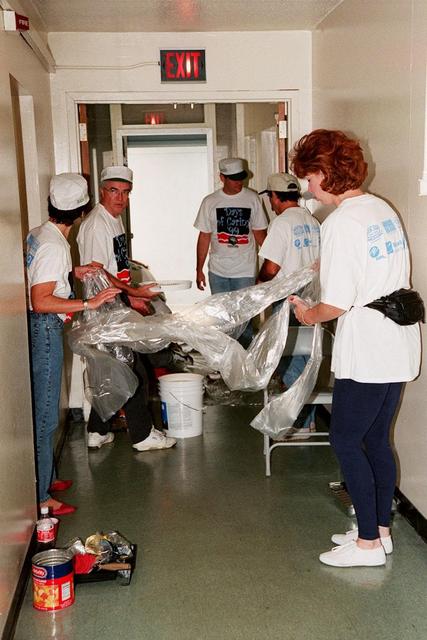
KSC volunteers for Days of Caring '99 unfold protective materials before getting ready to paint at Baxley Manor, an apartment building for senior citizens on Merritt Island. Coordinated by the KSC Community Relations Council, Days of Caring provides an opportunity for employees to volunteer their services in projects such as painting, planting flowers, reading to school children, and more. Organizations accepting volunteers include The Embers, Yellow Umbrella, Serene Harbor, Domestic Violence Program, the YMCA of Brevard County, and others
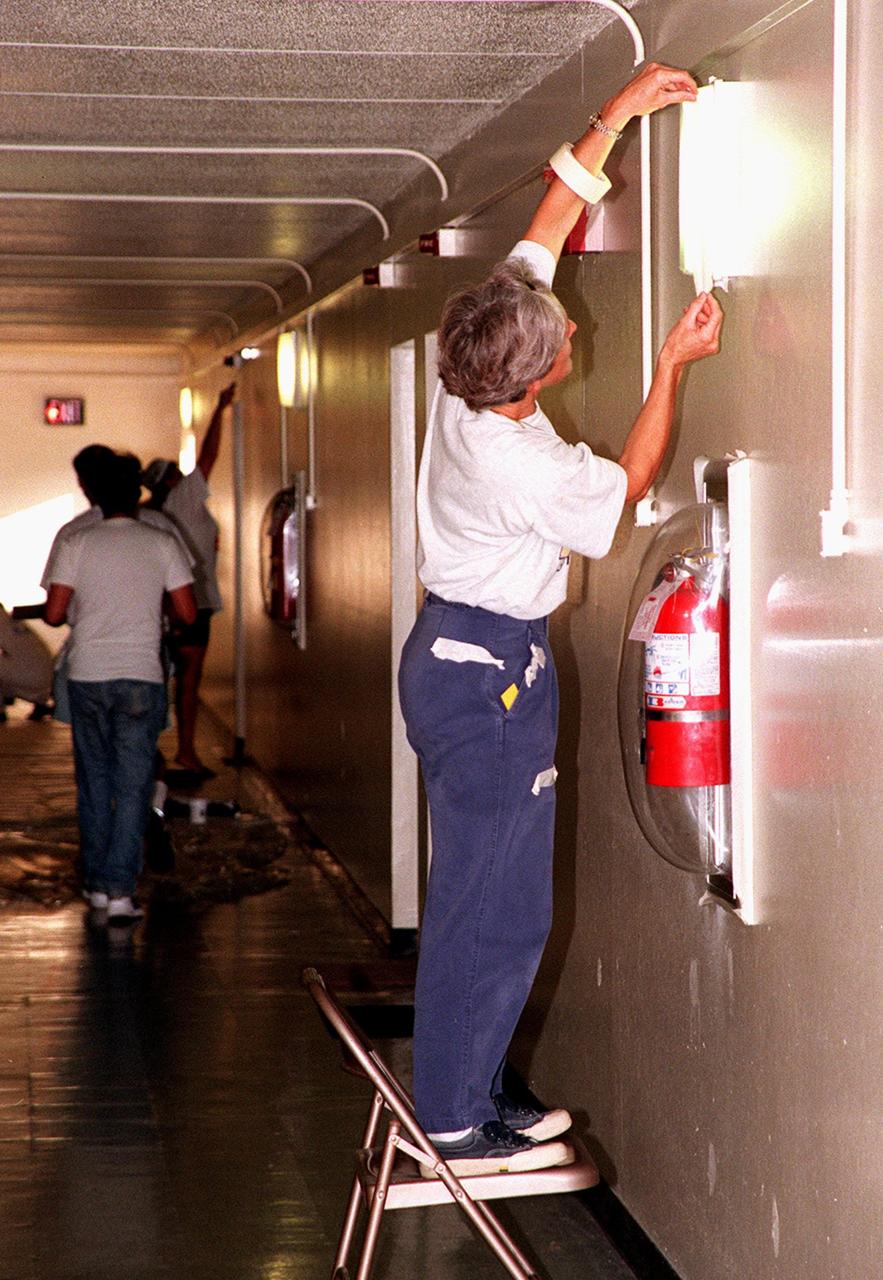
A volunteer for Days of Caring '99 prepares a light fixture before painting the walls in the hallway at Baxley Manor, an apartment building for senior citizens on Merritt Island. Coordinated by the KSC Community Relations Council, Days of Caring provides an opportunity for employees to volunteer their services in projects such as painting, planting flowers, reading to school children, and more. Organizations accepting volunteers include The Embers, Yellow Umbrella, Serene Harbor, Domestic Violence Program, the YMCA of Brevard County, and others
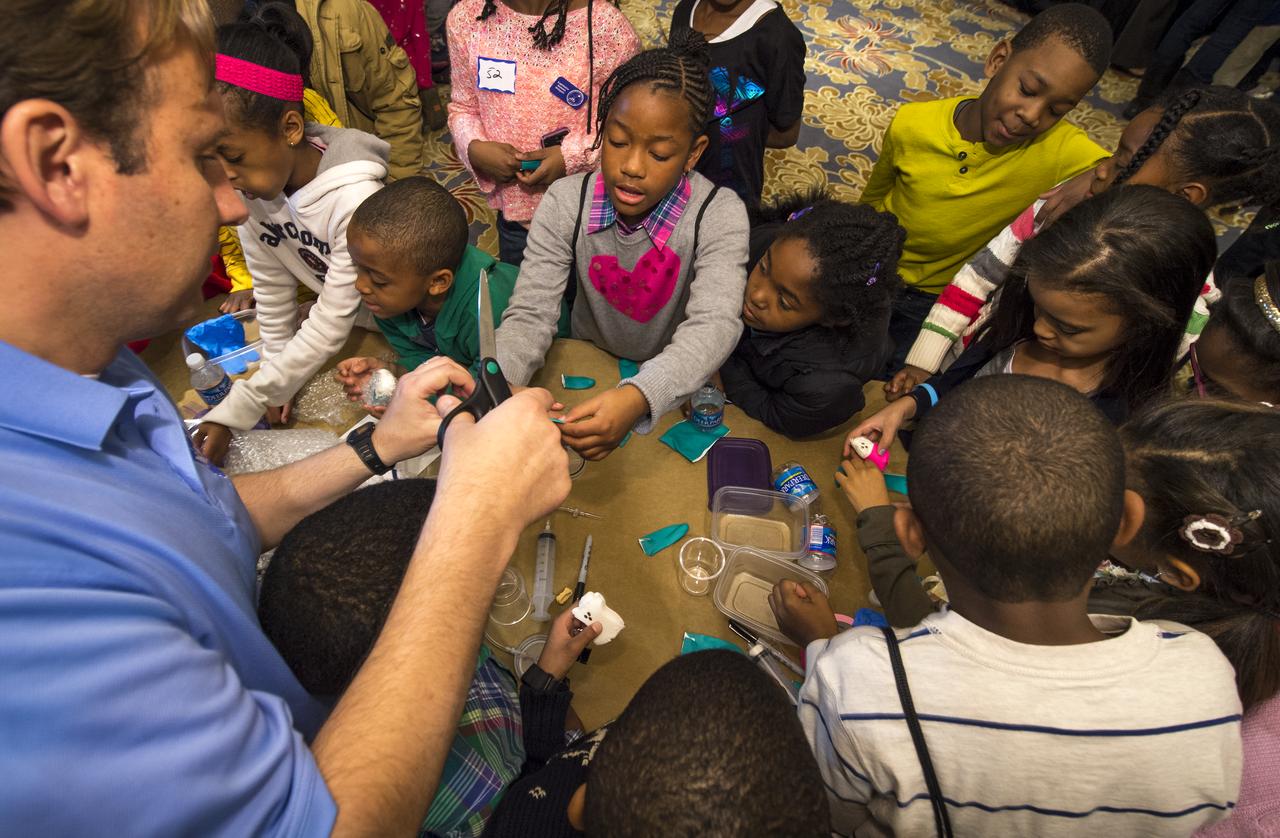
School children are taught to build their own spacecraft and habitat during a Science, Technology, Engineering, and Math (STEM) education event held at the Ritz-Carlton Hotel in Arlington, VA on Saturday, Jan. 19, 2013. Students were able to meet with Astronaut Leland Melvin, conduct experiments, build their own space jab, and touch a mockup space suit. Photo Credit: (NASA/Bill Ingalls)

AI. SpaceFactory of New York and Pennsylvania State University of College Park print subscale habitat structures at NASA's 3D-Printed Habitat Challenge, held at the Caterpillar Edwards Demonstration & Learning Center in Edwards, Illinois, May 1-4, 2019. The habitat print is the final level of the multi-phase competition, which began in in 2015. The challenge is managed by NASA's Centennial Challenges program, and partner Bradley University of Peoria, Illinois. Free Caterpillar sunglasses and caps are a hit with school children.
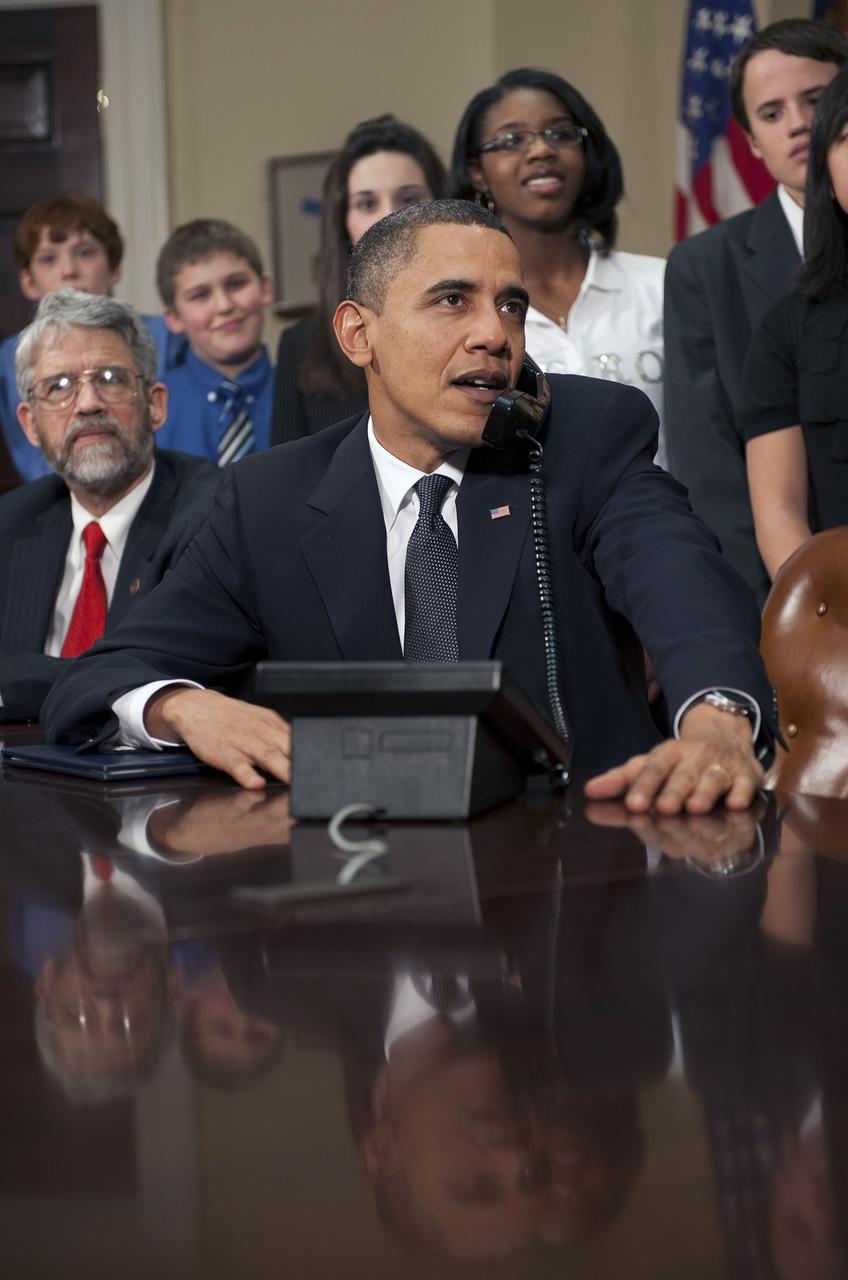
WASHINGTON - 201002170003HQ - U.S. President Barack Obama, accompanied by White House Science Adviser John Holdren, left, Congressman C.A. "Dutch" Ruppersberger (D-MD) and middle school children, talks on the phone from the Roosevelt Room of the White House to astronauts on the International Space Station, Wednesday, Feb. 17, 2010, in Washington. Photo Credit: NASA/Bill Ingalls
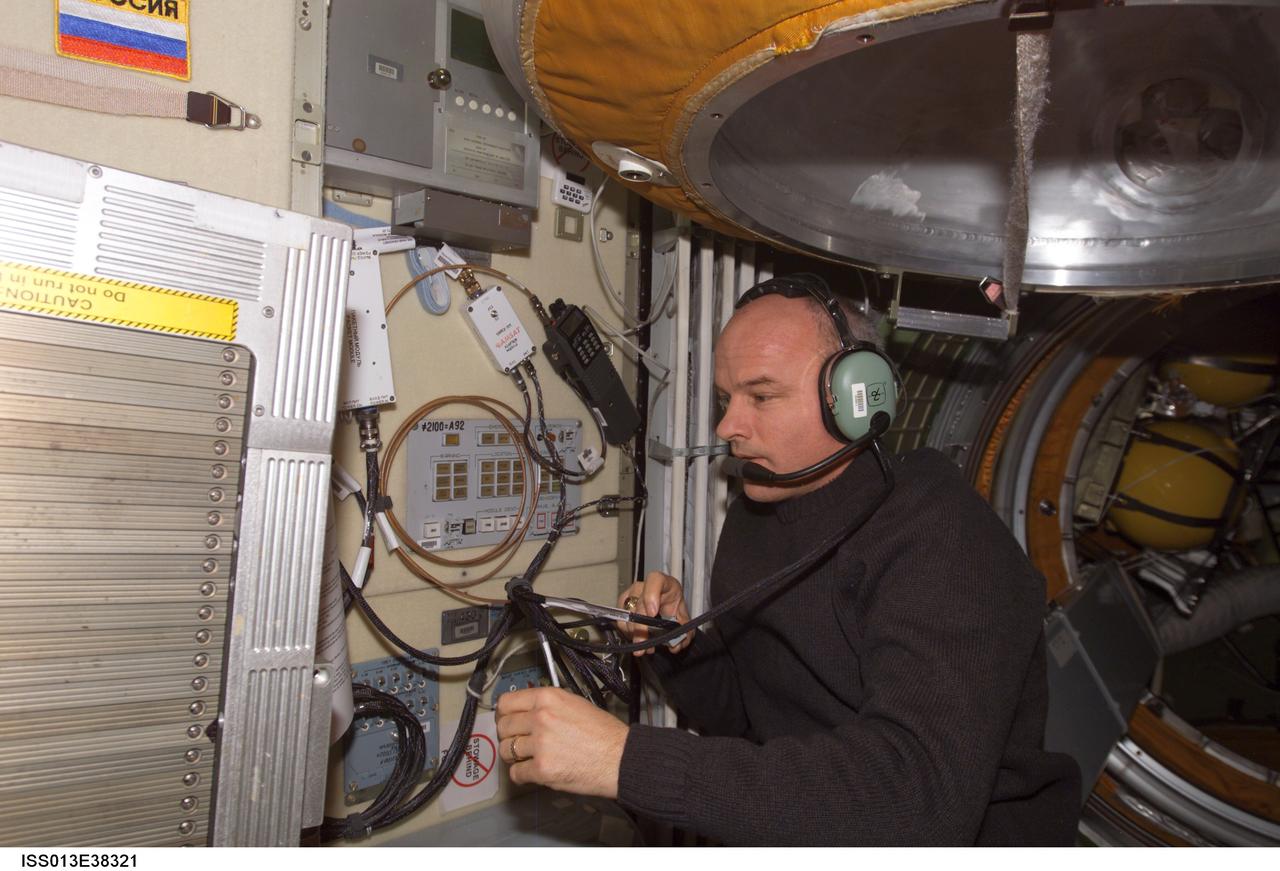
ISS013-E-38321 (17 June 2006) --- Astronaut Jeffrey N. Williams, Expedition 13 NASA space station science officer and flight engineer, uses the amateur radio system in the Zarya functional cargo block (FGB) to talk with school children during an Amateur Radio on the International Space Station (ARISS) contact. Two amateur radio stations are currently installed on the station.
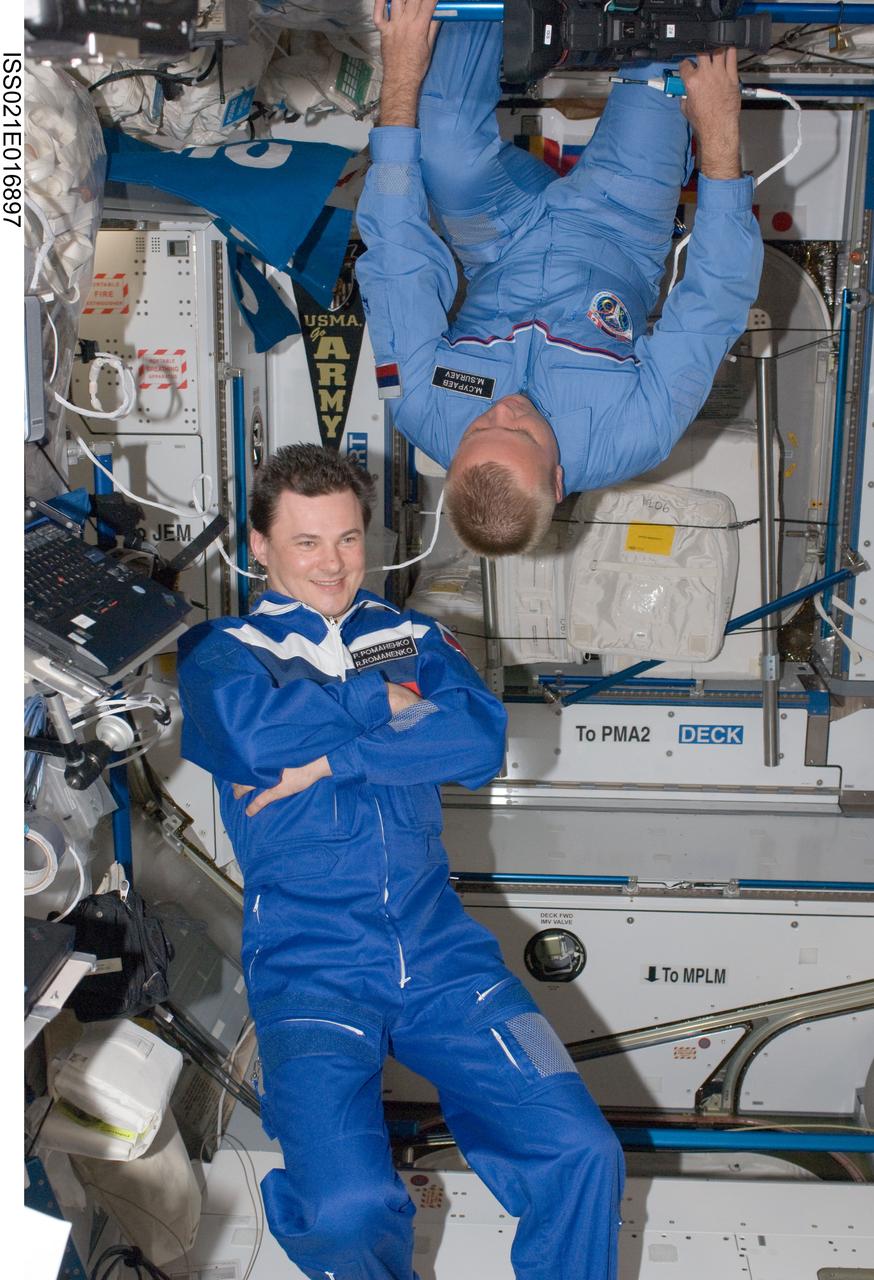
ISS021-E-016897 (12 Oct. 2009) --- Russian cosmonauts Roman Romanenko (left) and Maxim Suraev, both Expedition 21 flight engineers, participate in a PAO/TV downlink event from the Harmony node of the International Space Station. During the event, the crew members sent greetings to AK-47 Chief Designer M. T. Kalashnikov on his 90th birthday and to the participants of the Tenth Youth Tsiolkovsky Readings; along with a greeting to the 17th Annual International Space Olympiad for School Children, hosted by the City of Korolev.
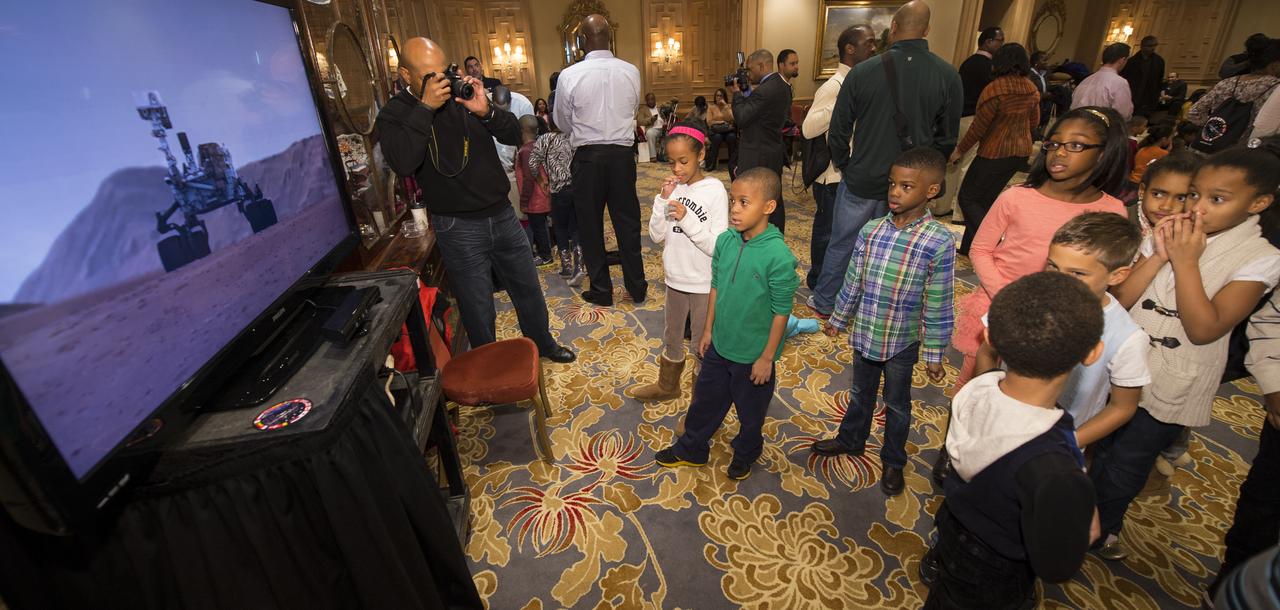
School children watch a TV program showing how the Mars rover Curiosity landed on Mars during an Science, Technology, Engineering, and Math (STEM) education event held at the Ritz-Carlton Hotel in Arlington, VA on Saturday, Jan. 19, 2013. Students were able to meet with Astronaut Melvin, conduct experiments, build their own space jab, and touch a mockup space suit. Photo Credit: (NASA/Bill Ingalls)
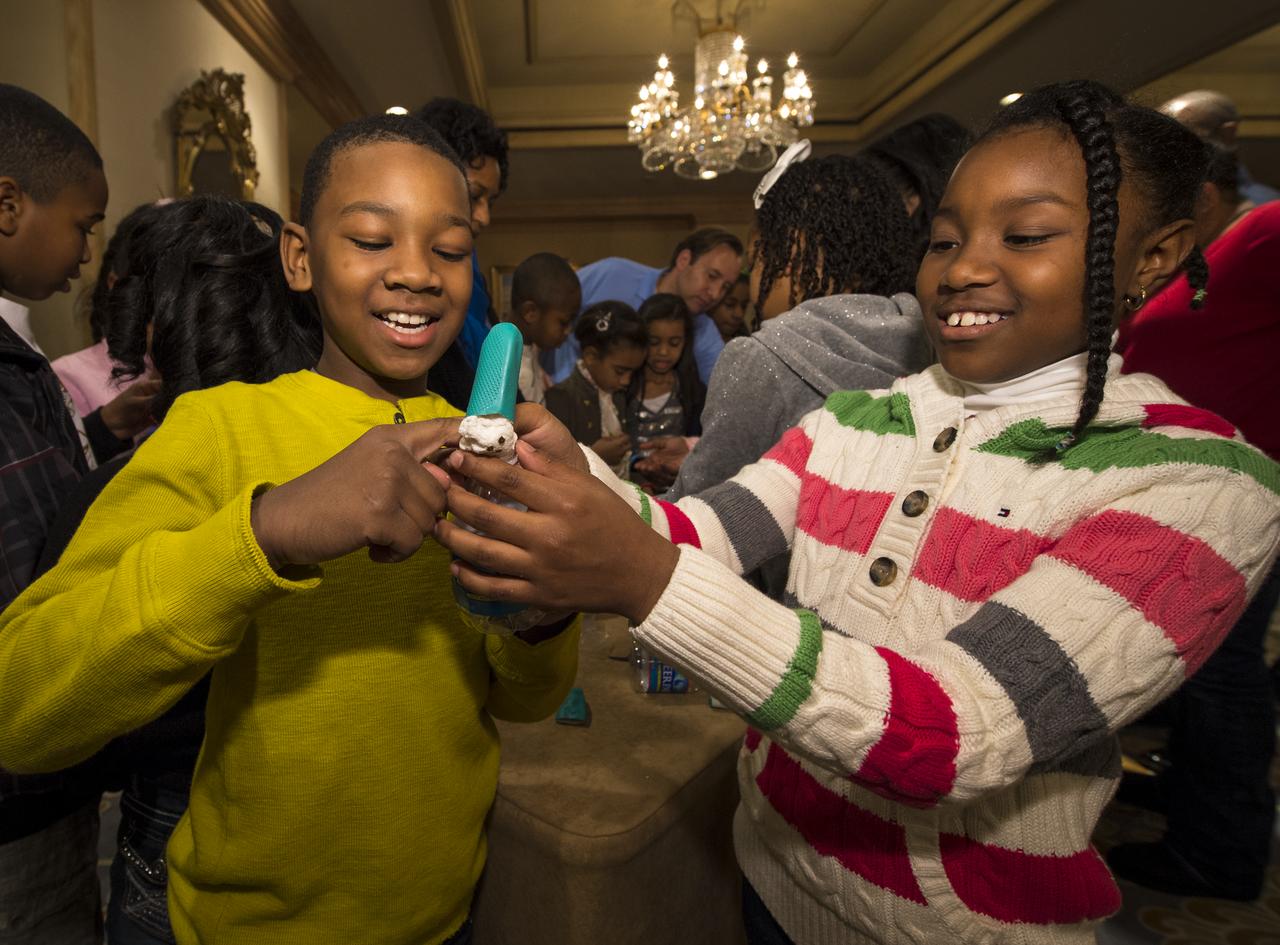
School children are taught to build their own spacecraft and habitat during a Science, Technology, Engineering, and Math (STEM) education event held at the Ritz-Carlton Hotel in Arlington, VA on Saturday, Jan. 19, 2013. Students were able to meet with Astronaut Leland Melvin, conduct experiments, build their own space jab, and touch a mockup space suit. Photo Credit: (NASA/Bill Ingalls)
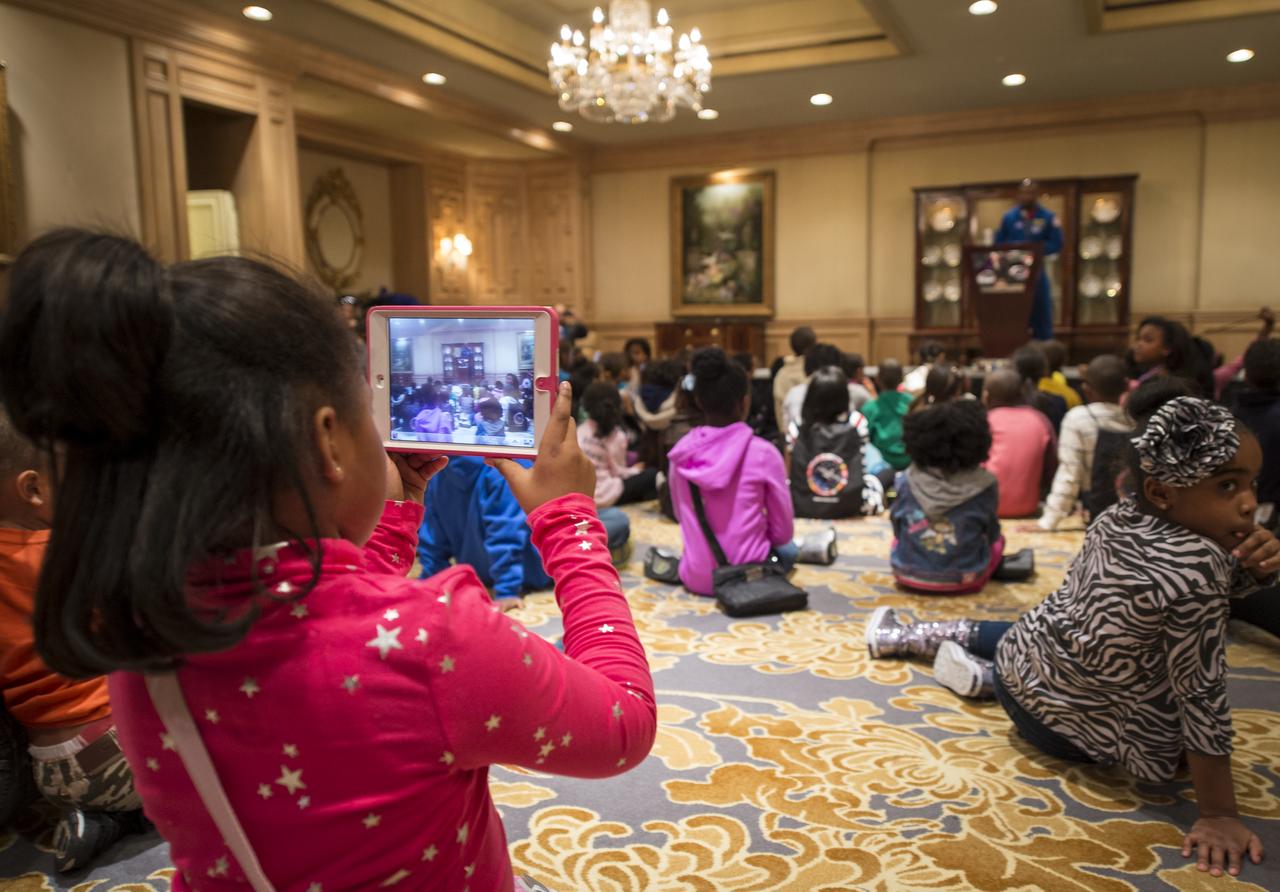
NASA Astronaut and Associate Administrator for Education, Leland Melvin, talks to school children during an Science, Technology, Engineering, and Math (STEM) education event held at the Ritz-Carlton Hotel in Arlington, VA on Saturday, Jan. 19, 2013. Students were able to meet with Astronaut Melvin, conduct experiments, build their own space jab, and touch a mockup space suit. Photo Credit: (NASA/Bill Ingalls)
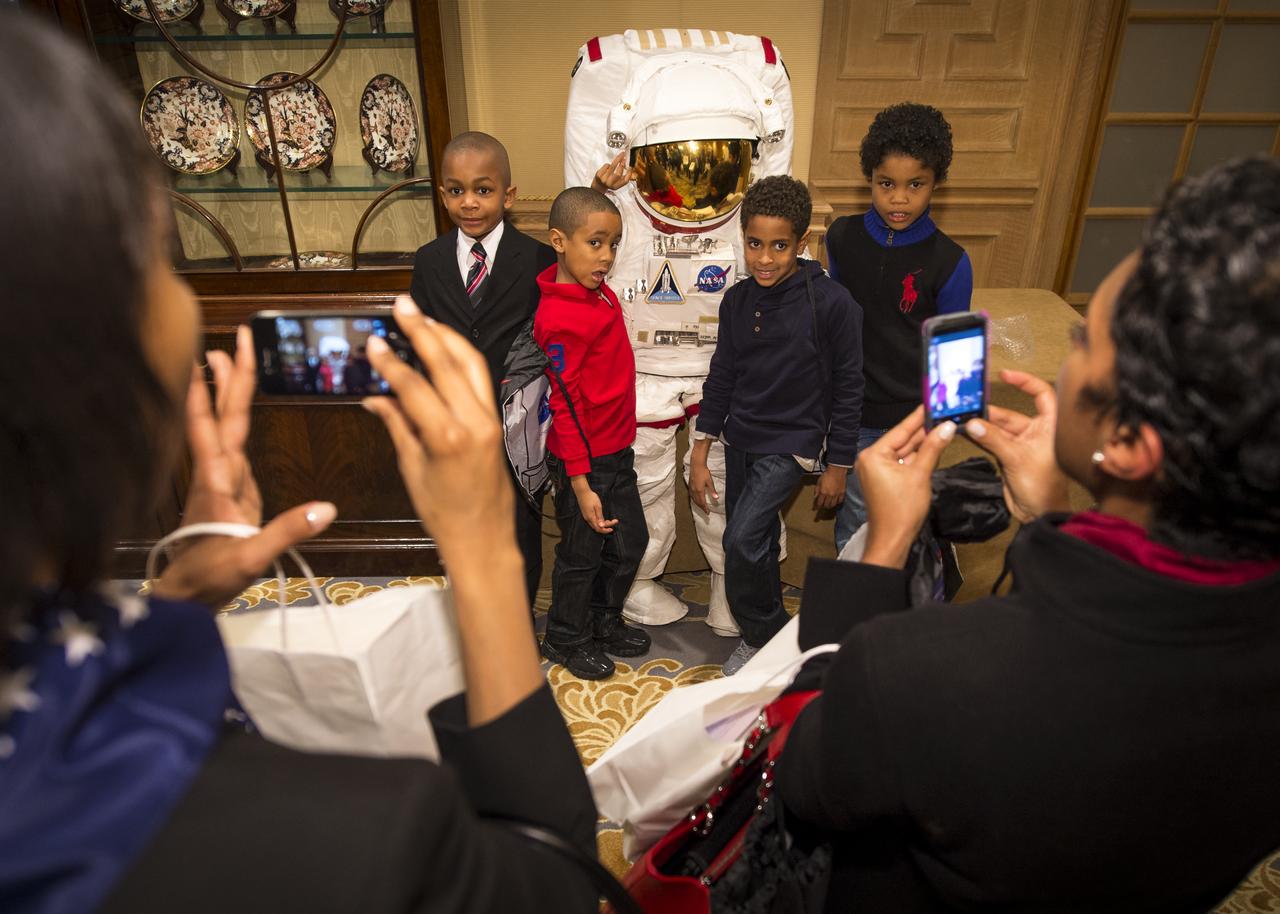
School children are photographed by their parents during a hands-on experience with a mock spacesuit during a Science, Technology, Engineering, and Math (STEM) education event held at the Ritz-Carlton Hotel in Arlington, VA on Saturday, Jan. 19, 2013. Students were able to meet with Astronaut Leland Melvin, conduct experiments, build their own space jab, and touch a mockup space suit. Photo Credit: (NASA/Bill Ingalls)
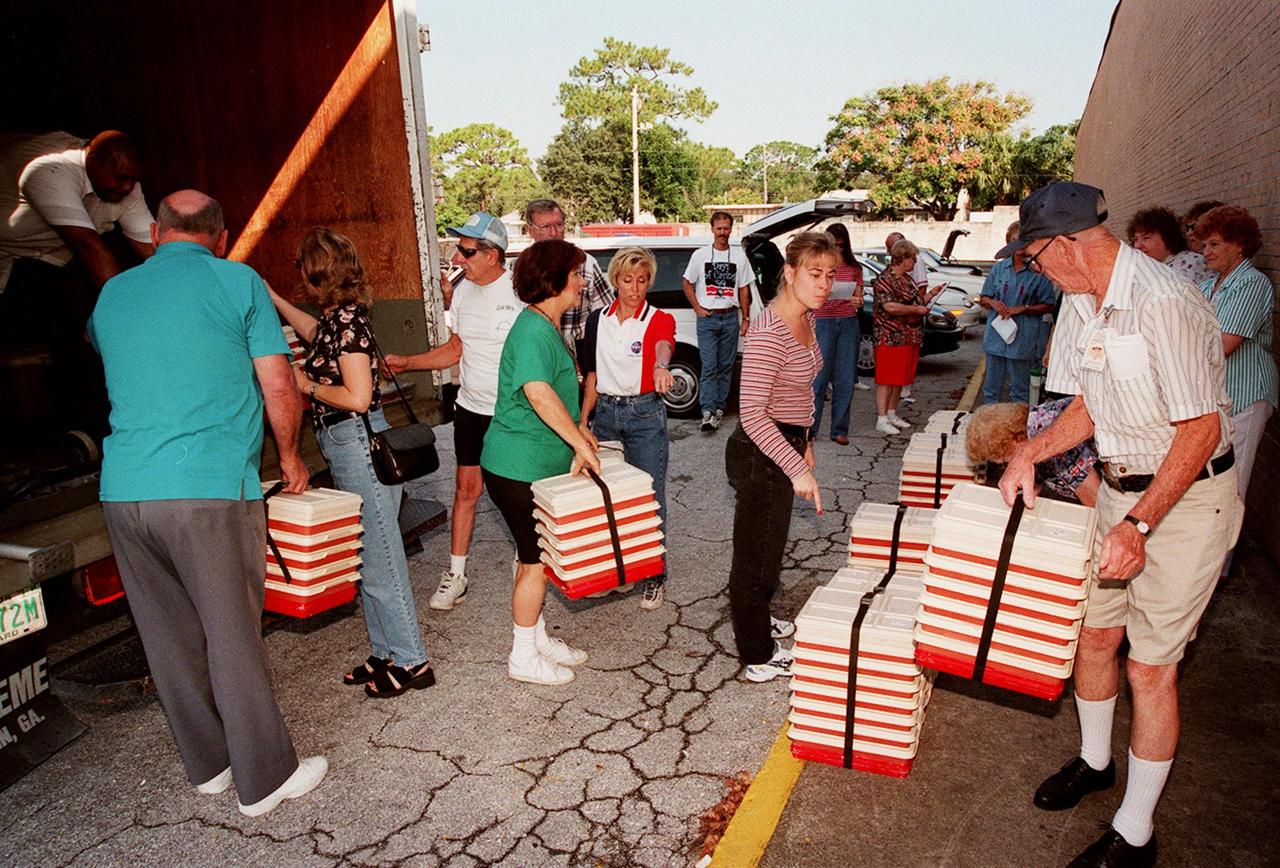
KSC volunteers at Miracle City Mall, Titusville, help unload containers for Meals on Wheels delivery as part of their '99 Days of Caring participation. The volunteers will also help deliver the meals. Coordinated by the KSC Community Relations Council, Days of Caring provides an opportunity for employees to volunteer their services in projects such as painting, planting flowers, reading to school children, and more. Organizations accepting volunteers include The Embers, Yellow Umbrella, Serene Harbor, Domestic Violence Program, the YMCA of Brevard County, and others
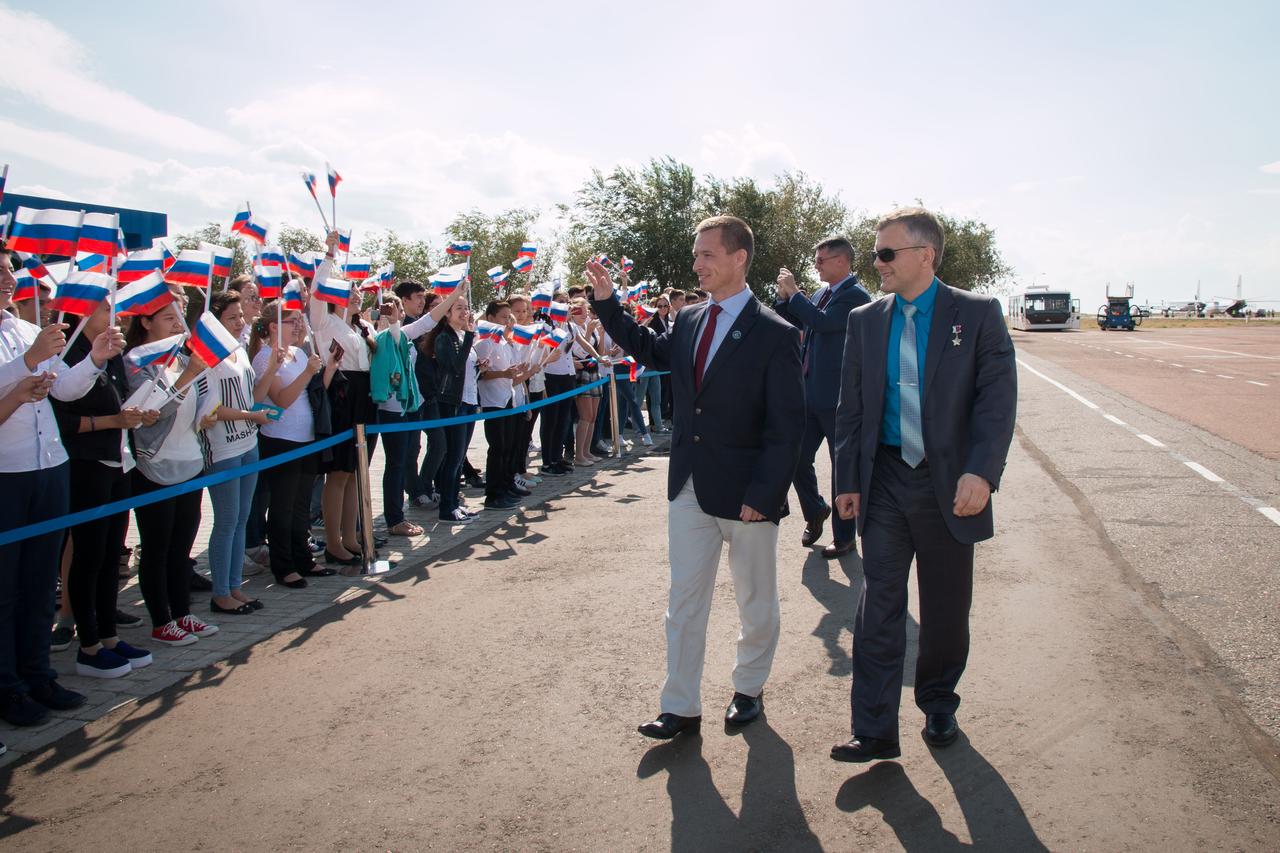
Expedition 49 crewmembers Sergey Ryzhikov of Roscosmos (left), Shane Kimbrough of NASA (center) and Andrey Borisenko of Roscosmos (right) are greeted by school children Sept. 8 in Baikonur, Kazakhstan after they arrived on a flight from their base at the Gagarin Cosmonaut Training Center in Star City, Russia for final pre-launch training. The trio will launch on Sept. 24, Kazakh time on the Soyuz MS-02 spacecraft for a five-month mission on the International Space Station. NASA/Victor Zelentsov
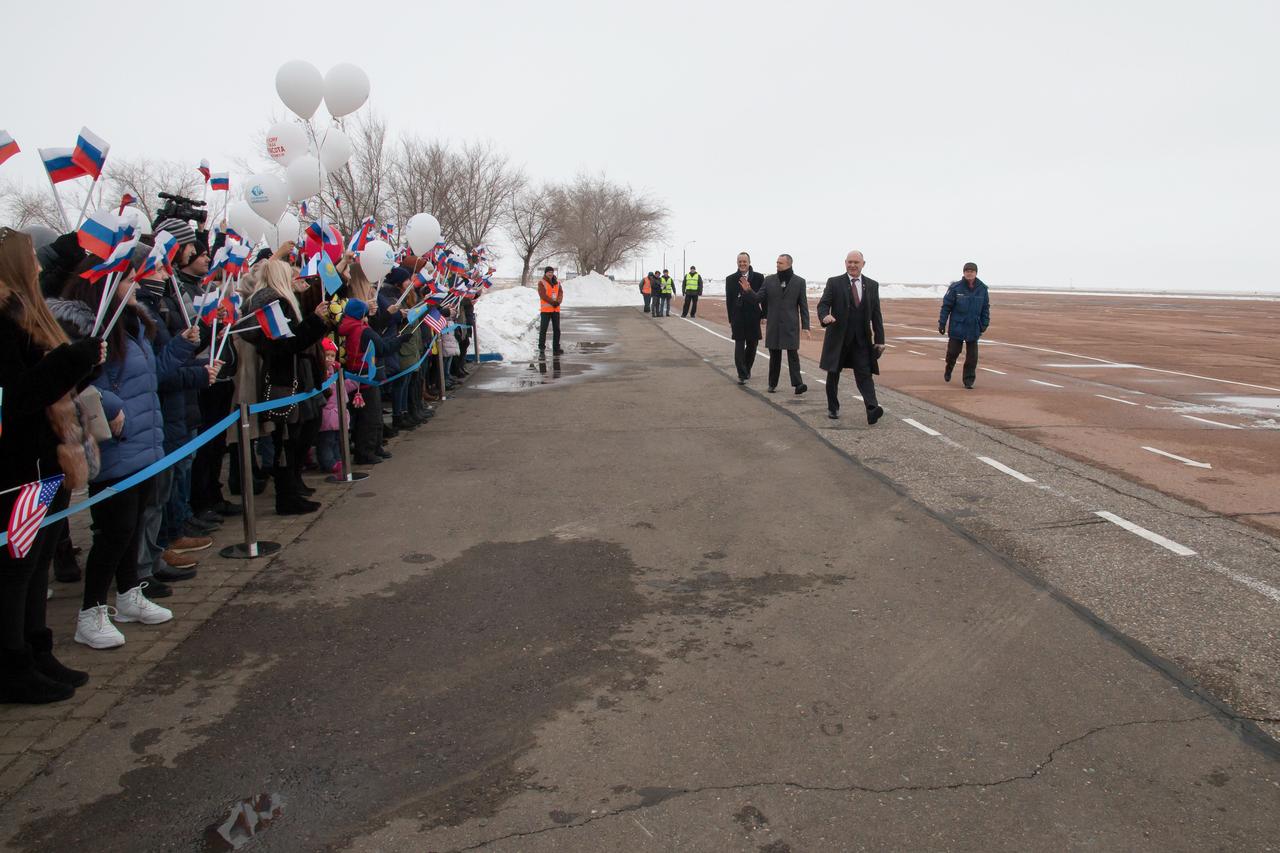
jsc2018e010816 - Expedition 55 crewmembers Ricky Arnold of NASA, Oleg Artemyev of Roscosmos and Drew Feustel of NASA are greeted by local school children in Baikonur, Kazakhstan after their arrival March 4 following a flight from their training base outside of Moscow. The trio will launch March 21 on the Soyuz MS-08 spacecraft for a five month mission on the International Space Station...NASA/Victor Zelentsov.
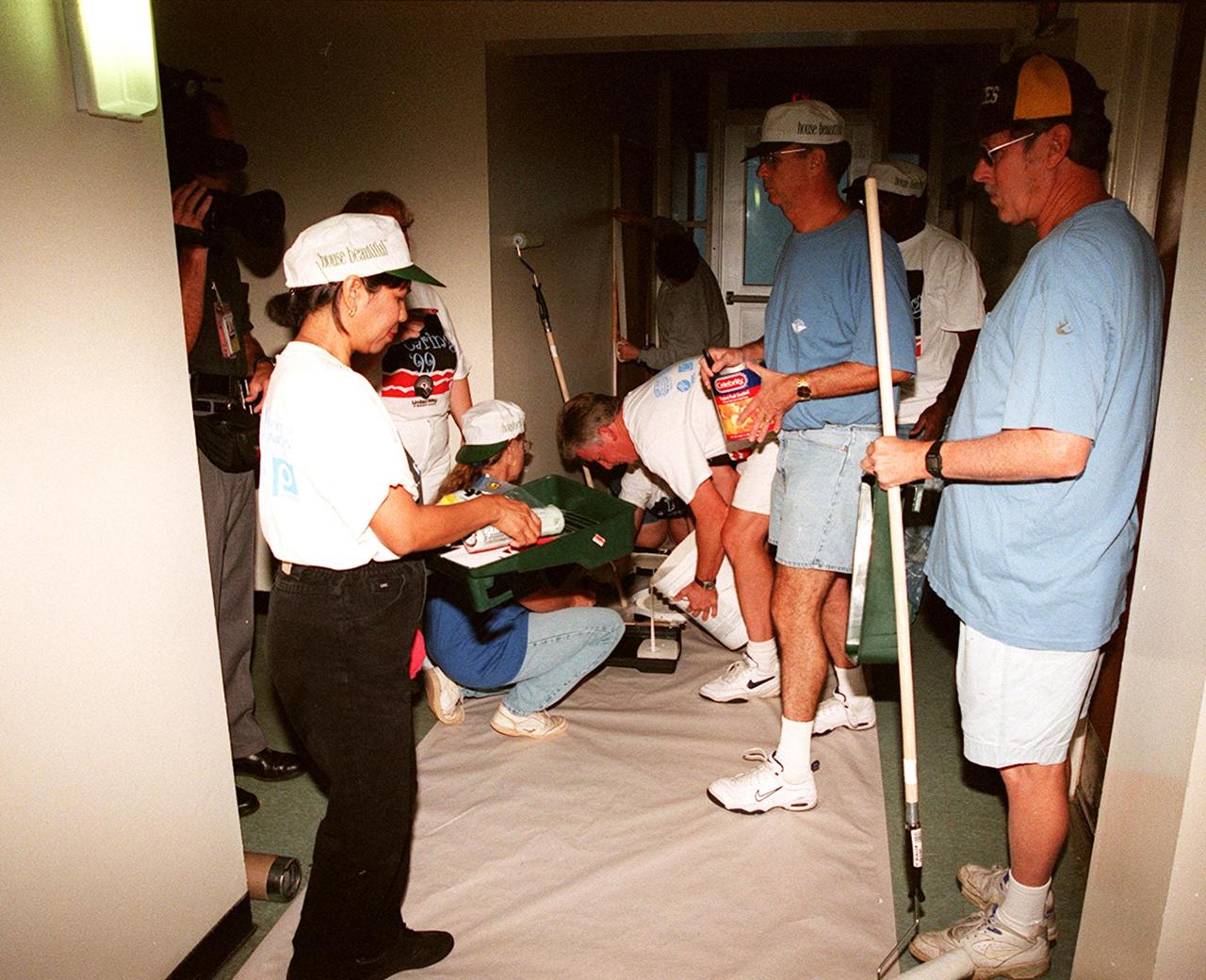
KSC volunteers with Days of Caring '99 share tasks while getting ready to paint at Baxley Manor, an apartment building for senior citizens on Merritt Island. Coordinated by the KSC Community Relations Council, Days of Caring provides an opportunity for employees to volunteer their services in projects such as painting, planting flowers, reading to school children, and more. Organizations accepting volunteers include The Embers, Yellow Umbrella, Serene Harbor, Domestic Violence Program, the YMCA of Brevard County, and others
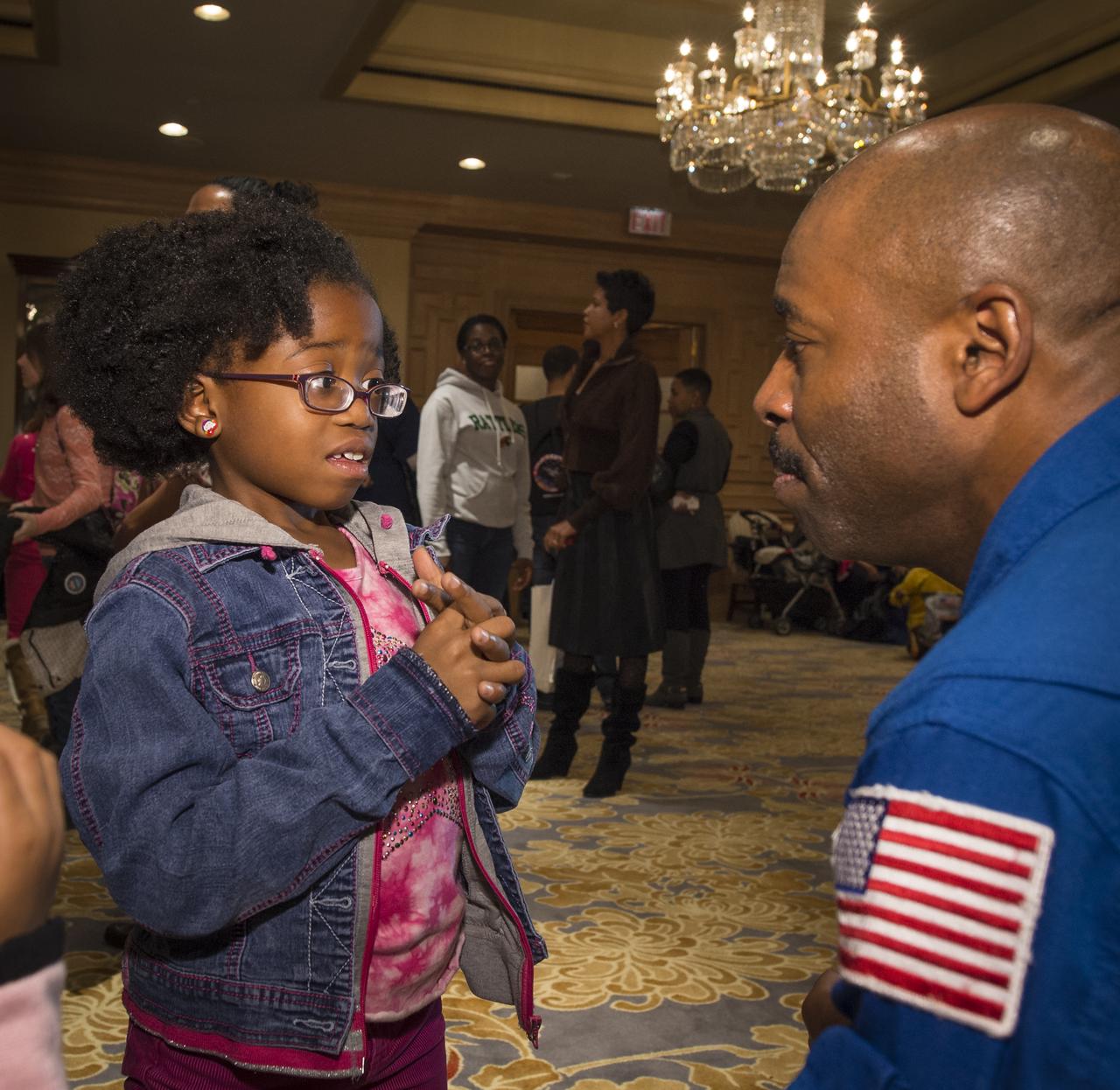
NASA Astronaut and Associate Administrator for Education, Leland Melvin, talks to school children during an Science, Technology, Engineering, and Math (STEM) education event held at the Ritz-Carlton Hotel in Arlington, VA on Saturday, Jan. 19, 2013. Students were able to meet with Astronaut Melvin, conduct experiments, build their own space jab, and touch a mockup space suit. Photo Credit: (NASA/Bill Ingalls)
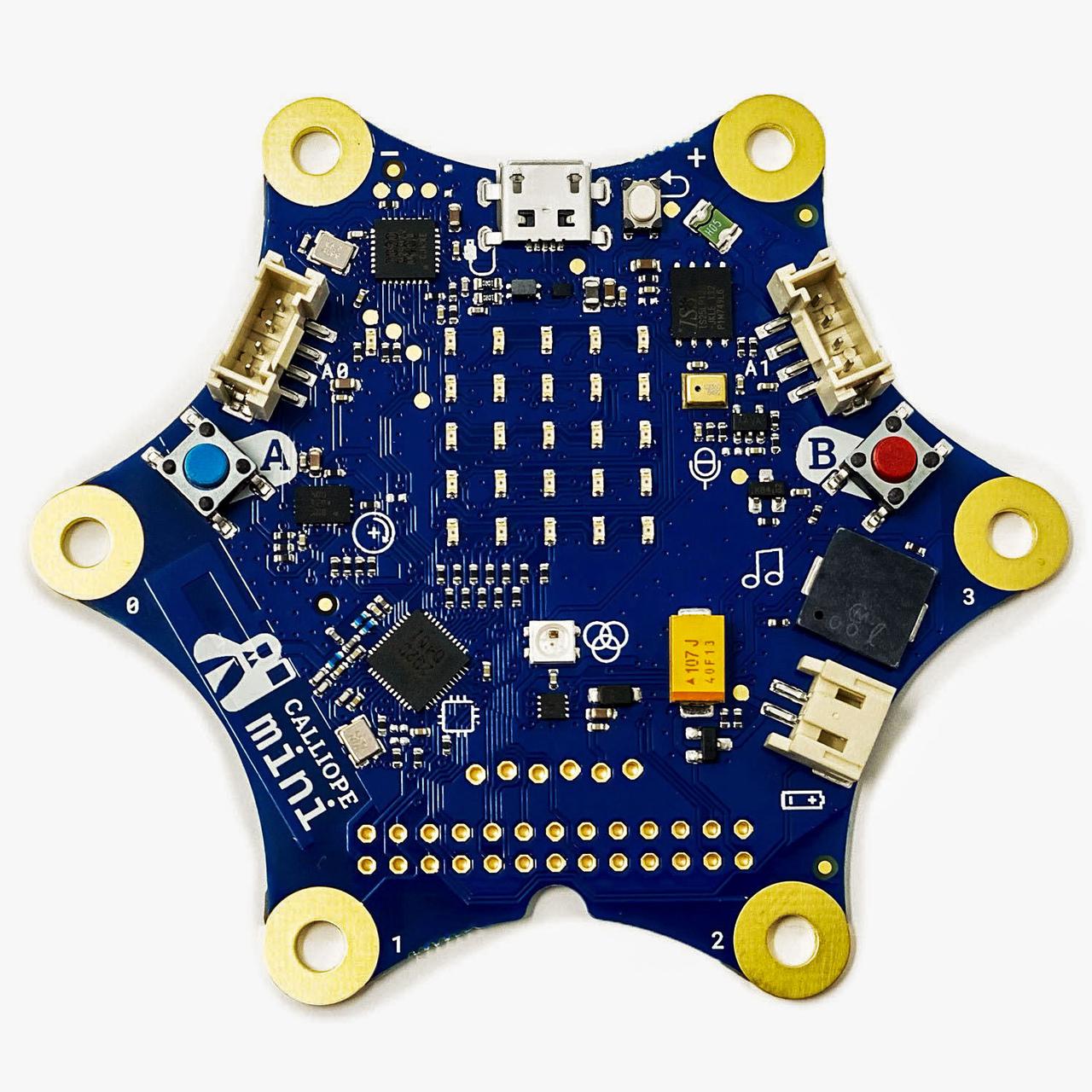
jsc2021e064348 (12/10/2021) --- The Standard Calliope mini Computer which is in a Modified Version the Heart and Brain of the CalliopEO Hardware. CalliopEO (Calliope Mini in Space) is a project of Ruhr-Universität Bochum, Calliope gGmbH, and the German Space Agency at DLR to promote software programming skills among German school children. Image courtesy of Calliope gGmbH
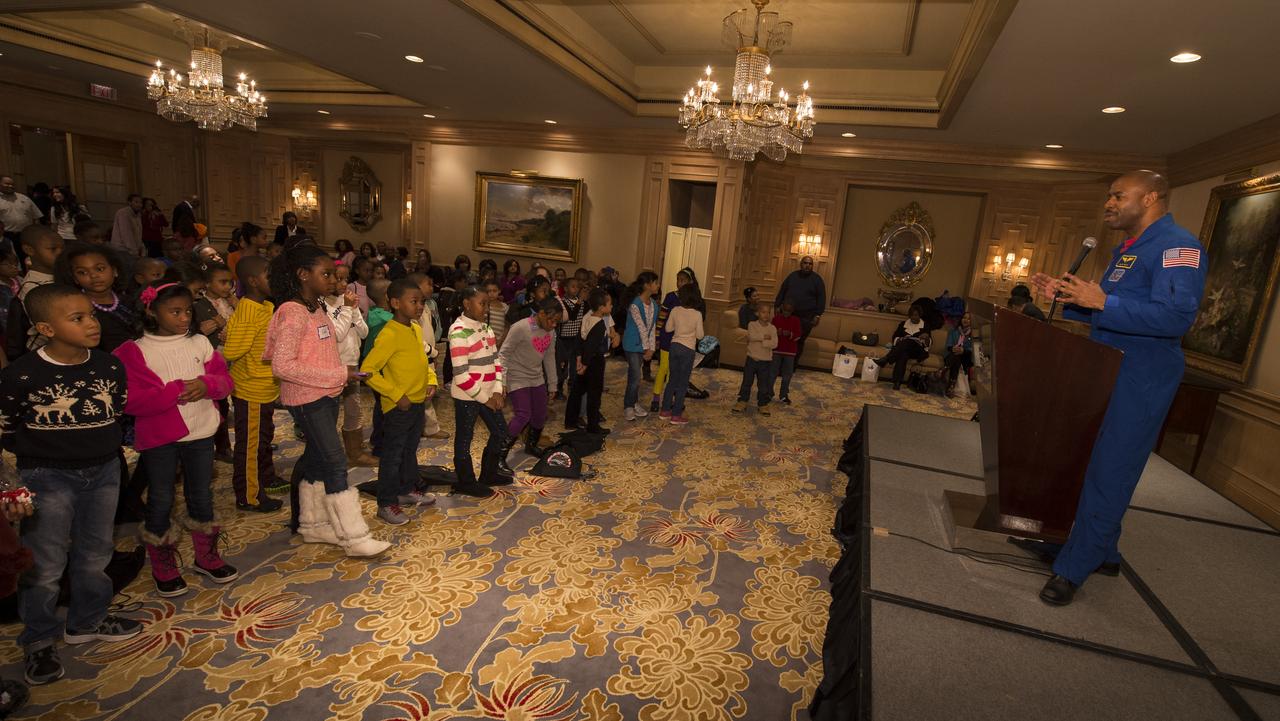
NASA Astronaut and Associate Administrator for Education, Leland Melvin, talks to school children during an Science, Technology, Engineering, and Math (STEM) education event held at the Ritz-Carlton Hotel in Arlington, VA on Saturday, Jan. 19, 2013. Students were able to meet with Astronaut Melvin, conduct experiments, build their own space jab, and touch a mockup space suit. Photo Credit: (NASA/Bill Ingalls)
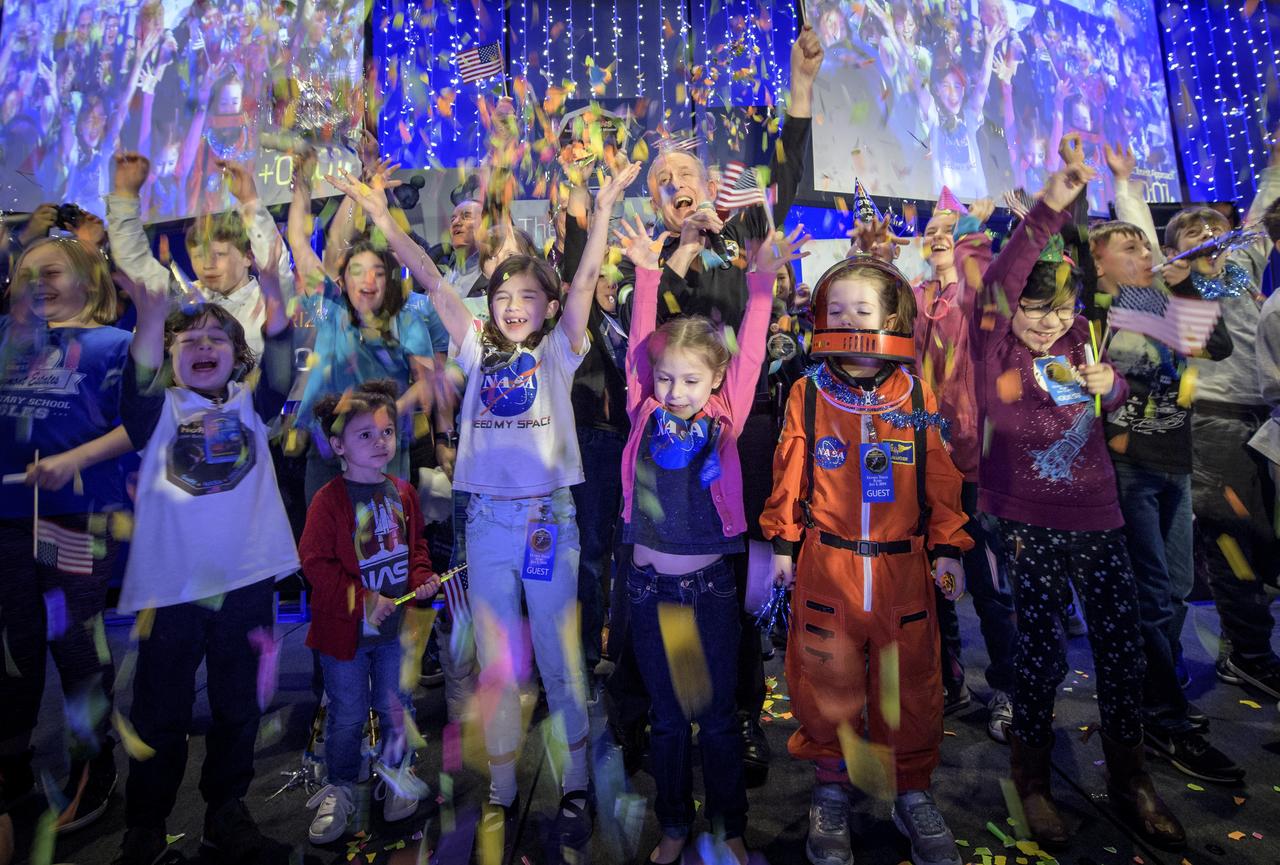
New Horizons principal investigator Alan Stern of the Southwest Research Institute (SwRI), Boulder, CO, center, celebrates with school children at the moment the spacecraft was planned to reach its closest approach to Kuiper Belt object Ultima Thule, Tuesday, Jan. 1, 2019 at Johns Hopkins University Applied Physics Laboratory (APL) in Laurel, Maryland. Photo Credit: (NASA/Bill Ingalls)
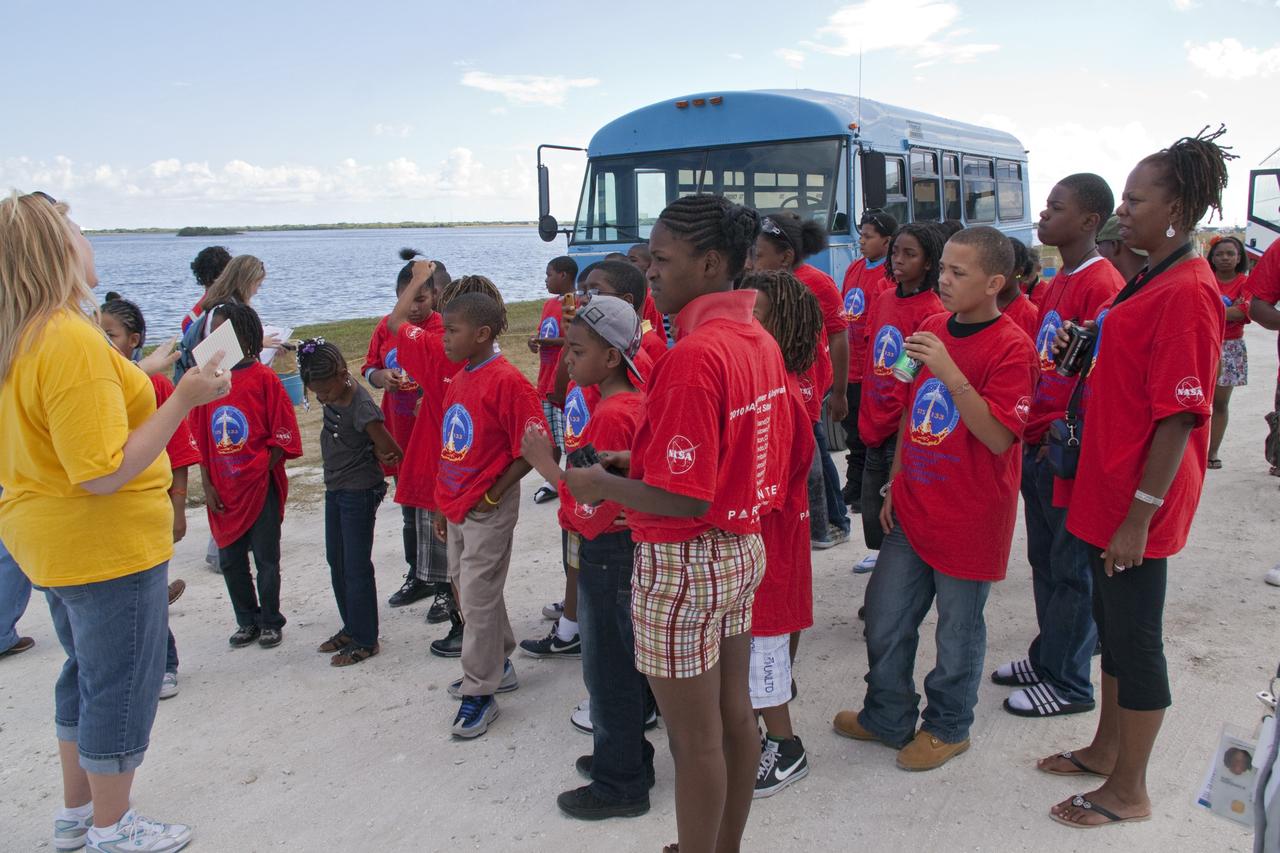
CAPE CANAVERAL, Fla. -- On the NASA Causeway at Kennedy Space Center in Florida, school children arrive at a 40- by 70-foot activity tent chock full of LEGO bricks. There, they will build their vision of the future with LEGO bricks, marking the beginning of a three-year Space Act Agreement between NASA and The LEGO Group. The partnership is meant to spark the interest of children in science, technology, engineering and mathematics (STEM). To commemorate the partnership, two small LEGO space shuttles will launch aboard space shuttle Discovery's STS-133 mission to the International Space Station and the company will release four NASA-inspired products in its LEGO CITY line next year. LEGO sets also will fly to the space station aboard Endeavour's STS-134 mission, and will be put together on orbit to demonstrate the challenges faced while building things in microgravity. Photo credit: NASA/Jack Pfaller
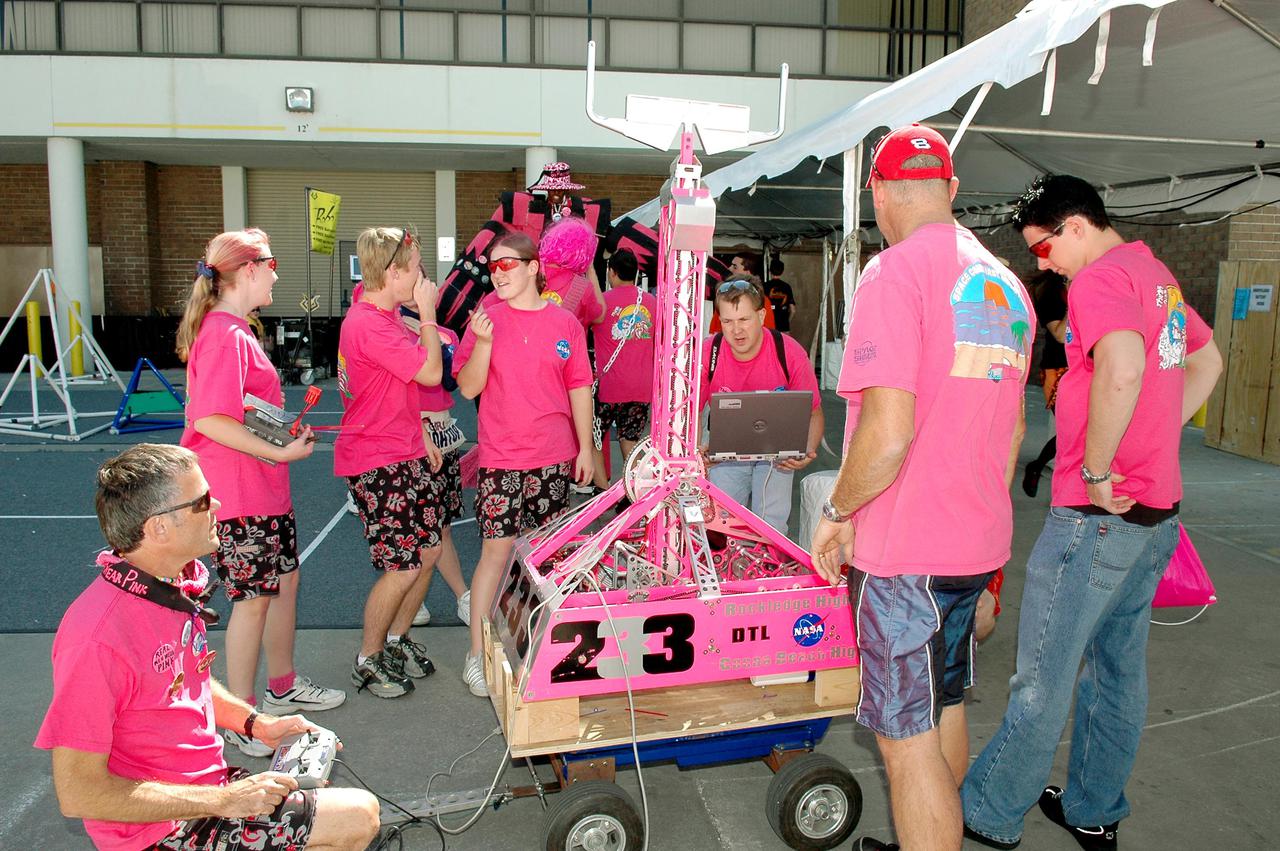
KENNEDY SPACE CENTER, FLA. - Members of the NASA-sponsored Space Coast FIRST Robotics Team, known as the Pink Team, prepare to compete with their robot, Roccobot. The competition was part of the 2005 FIRST Robotics Regional Competition held at the University of Central Florida March 10-12, 2005. The Pink Team took first place in the competition as part of the three-team winning alliance and advances to the Championship in Atlanta in April. The Pink Team comprises students from Rockledge High School and Cocoa Beach Junior_Senior High School, and was joined by the Bionic Tigers from Cocoa High School, sponsored by Analex Corp., and Children of the Swamp from Inlet Grove Community High School in West Palm Beach, sponsored by UTC-Pratt and Whitney-SP. NASA and the University of Central Florida are co-hosts of the regional event. The competition stages short games played by remote-controlled robots, which are designed and built in six weeks by a team of high school students and a handful of engineers-mentors. The students control the robots on the playing field.
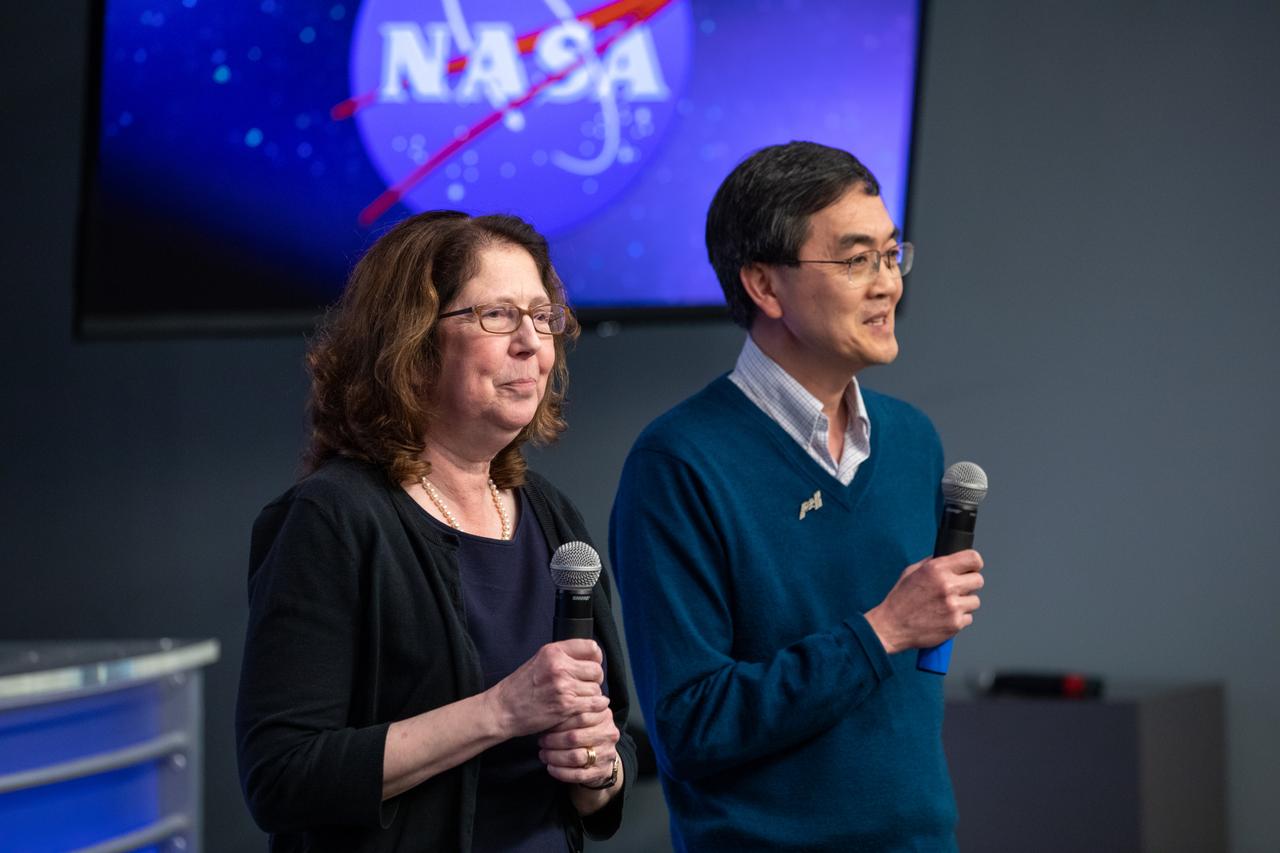
A What’s On Board Briefing for SpaceX’s 19th Commercial Resupply Services (CRS-19) mission for NASA to the International Space Station took place on Dec. 3, 2019, at the agency’s Kennedy Space Center in Florida. Se-Jin Lee (at right) professor at the Jackson Laboratory and University of Connecticut School of Medicine, and principal investigator of Rodent Research-19, and Emily Germain-Lee, professor at the University of Connecticut School of Medicine and chief of endocrinology and diabetes, Connecticut Children’s Medical Center, present their research to members of the media. They discussed the research on molecular signaling pathways that influence muscle degradation to prevent skeletal muscle and bone loss during spaceflight, and enhance recovery following return to Earth. The SpaceX Falcon 9 rocket and Dragon cargo module are scheduled to launch on Dec. 4, 2019, from Space Launch Complex 40 on Cape Canaveral Air Force Station in Florida.
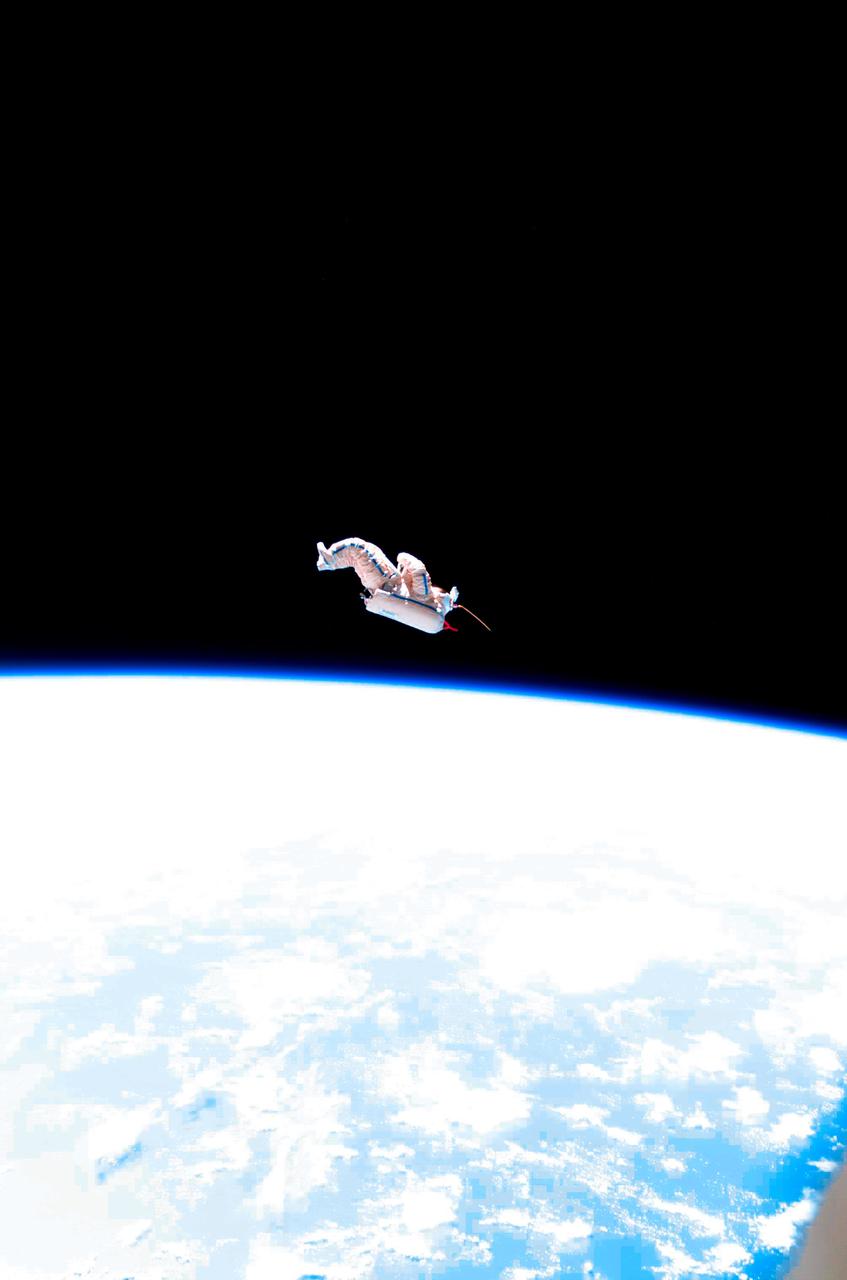
ISS012-E-24449 (3 Feb. 2006) --- Backdropped by the blackness of space and Earth's horizon, a spacesuit-turned-satellite called SuitSat began its orbit around the Earth after being released by the Expedition 12 crewmembers during a session of extravehicular activity (EVA) on Feb. 3, 2006. SuitSat, an unneeded Russian Orlan spacesuit, was outfitted by the crew with three batteries, internal sensors and a radio transmitter, which faintly transmitted recorded voices of school children to amateur radio operators worldwide. The suit will enter the atmosphere and burn up in a few weeks.
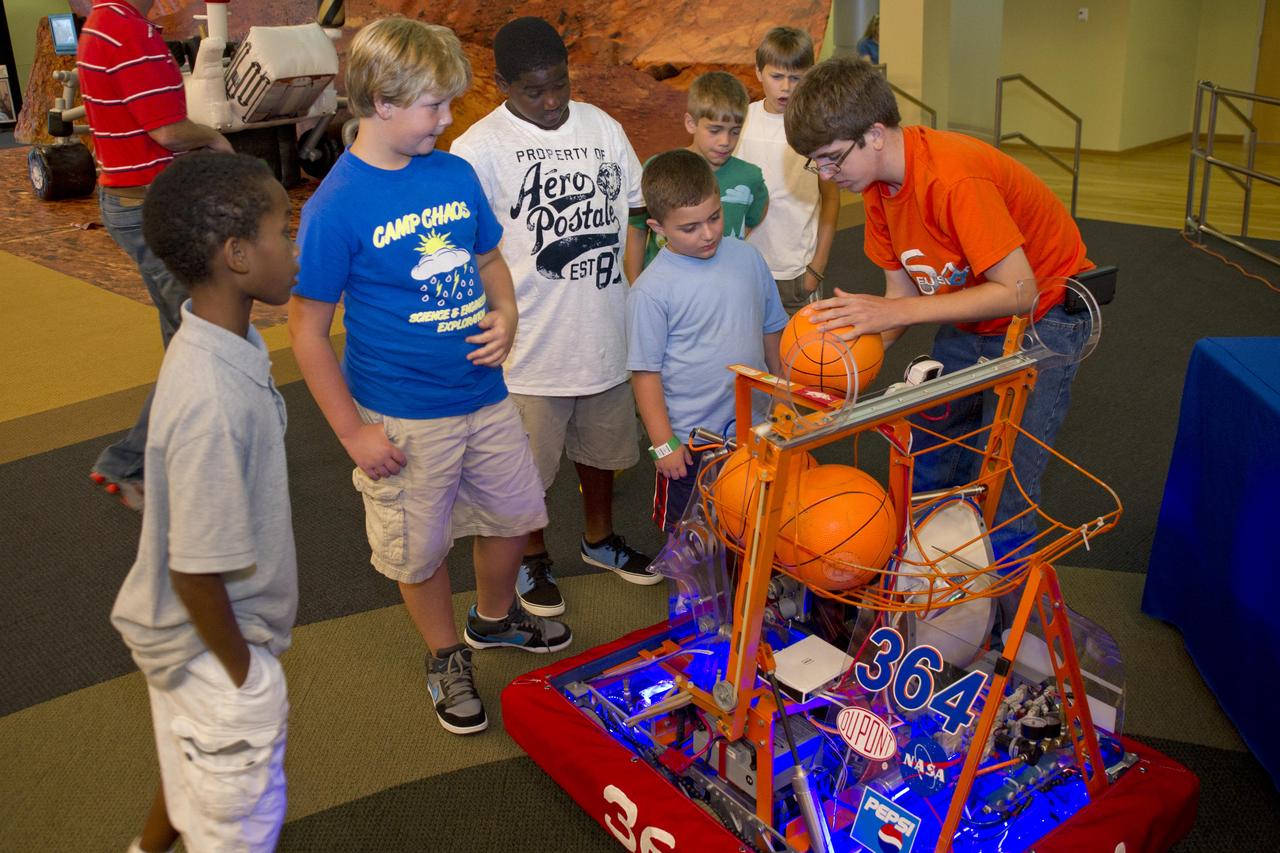
NASA welcomed hundreds of children and accompanying adults to its INFINITY visitor center on Aug. 4, offering Mars-related activities that focused attention on the space agency's Curiosity mission to the Red Planet. Among other things, students from Gulfport High School, who field a team each year in the FIRST (For Inspiration and Recognition of Science and Technology) Robotics Competition, offered young visitors a firsthand look at how robots work Hundreds of persons visited the INFINITY facility during the day, including media representatives from surrounding communities.
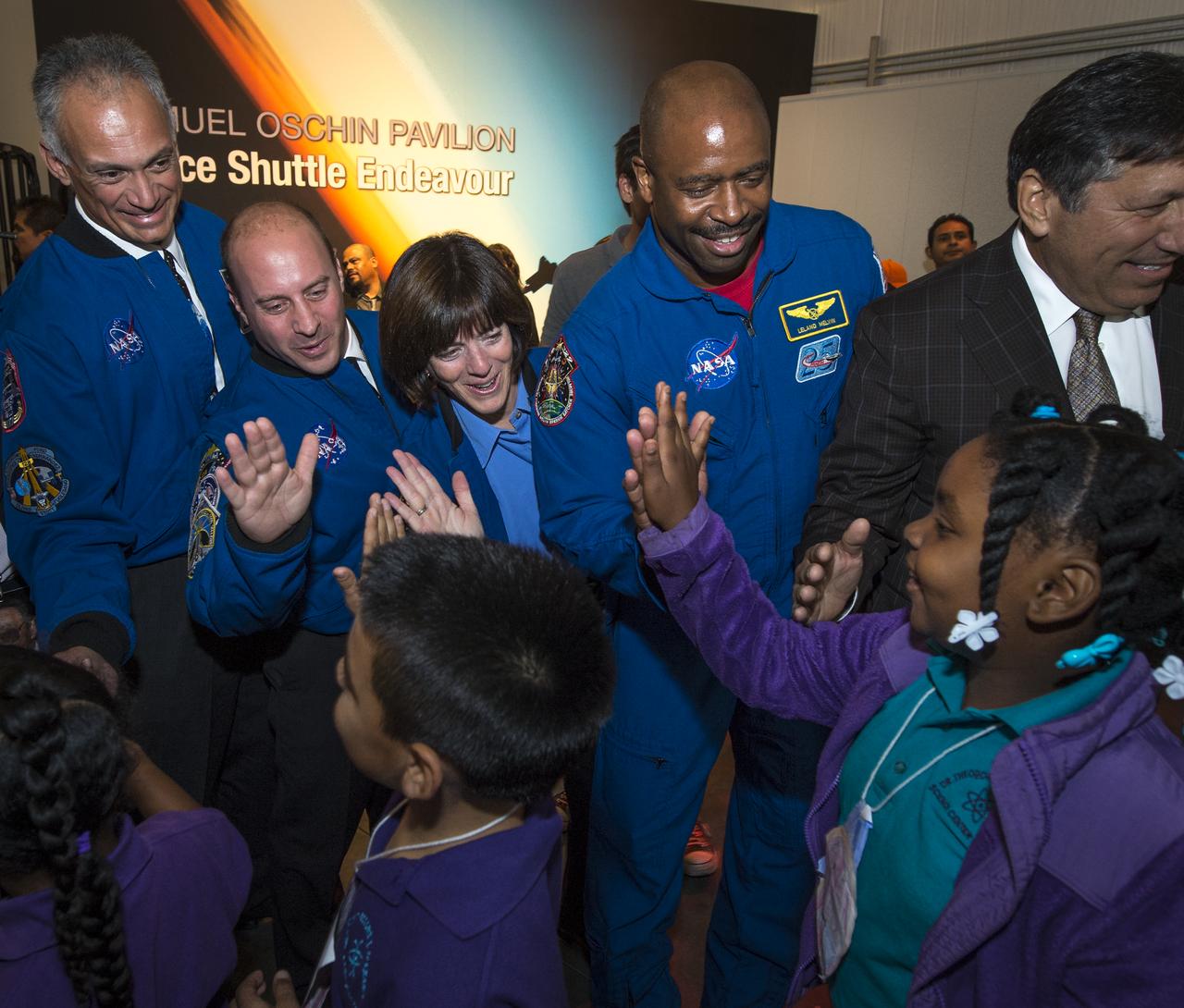
NASA Astronauts, from left, Danny Olivas, Garrett Reisman, Barbara Morgan, and, NASA Associate Administrator for Education and Astronaut, Leland Melvin give high fives to school children as they enter the California Science center's Samuel Oschin Space Shuttle Endeavour Display Pavilion, Tuesday, Oct. 30, 2012, in Los Angeles. Endeavour, built as a replacement for space shuttle Challenger, completed 25 missions, spent 299 days in orbit, and orbited Earth 4,671 times while traveling 122,883,151 miles. Photo Credit: (NASA/Bill Ingalls)
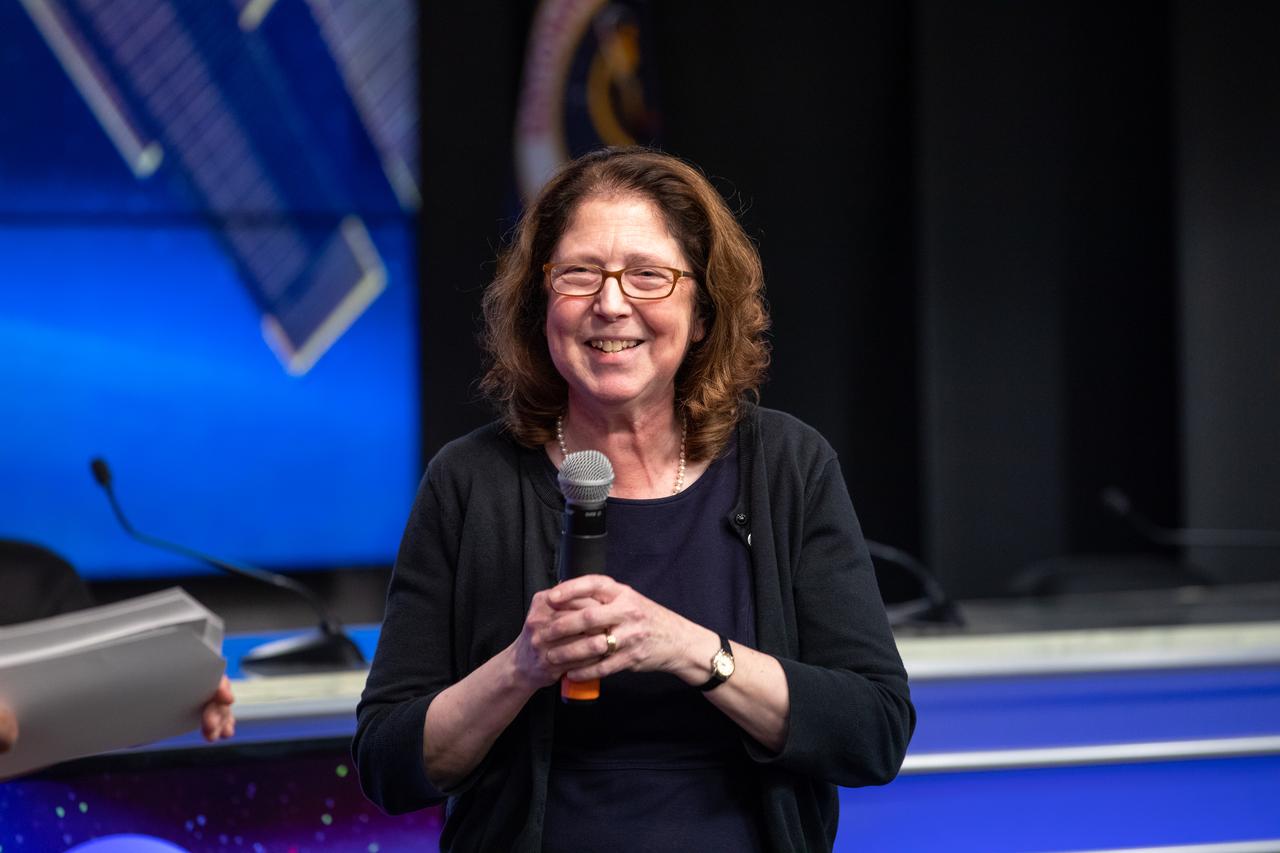
A What’s On Board Briefing for SpaceX’s 19th Commercial Resupply Services (CRS-19) mission for NASA to the International Space Station took place on Dec. 3, 2019, at the agency’s Kennedy Space Center in Florida. Emily Germain-Lee, professor at the University of Connecticut School of Medicine and chief of endocrinology and diabetes, Connecticut Children’s Medical Center, discussed her on molecular signaling pathways that influence muscle degradation to prevent skeletal muscle and bone loss during spaceflight, and enhance recovery following return to Earth. The SpaceX Falcon 9 rocket and Dragon cargo module are scheduled to launch on Dec. 4, 2019, from Space Launch Complex 40 on Cape Canaveral Air Force Station in Florida.
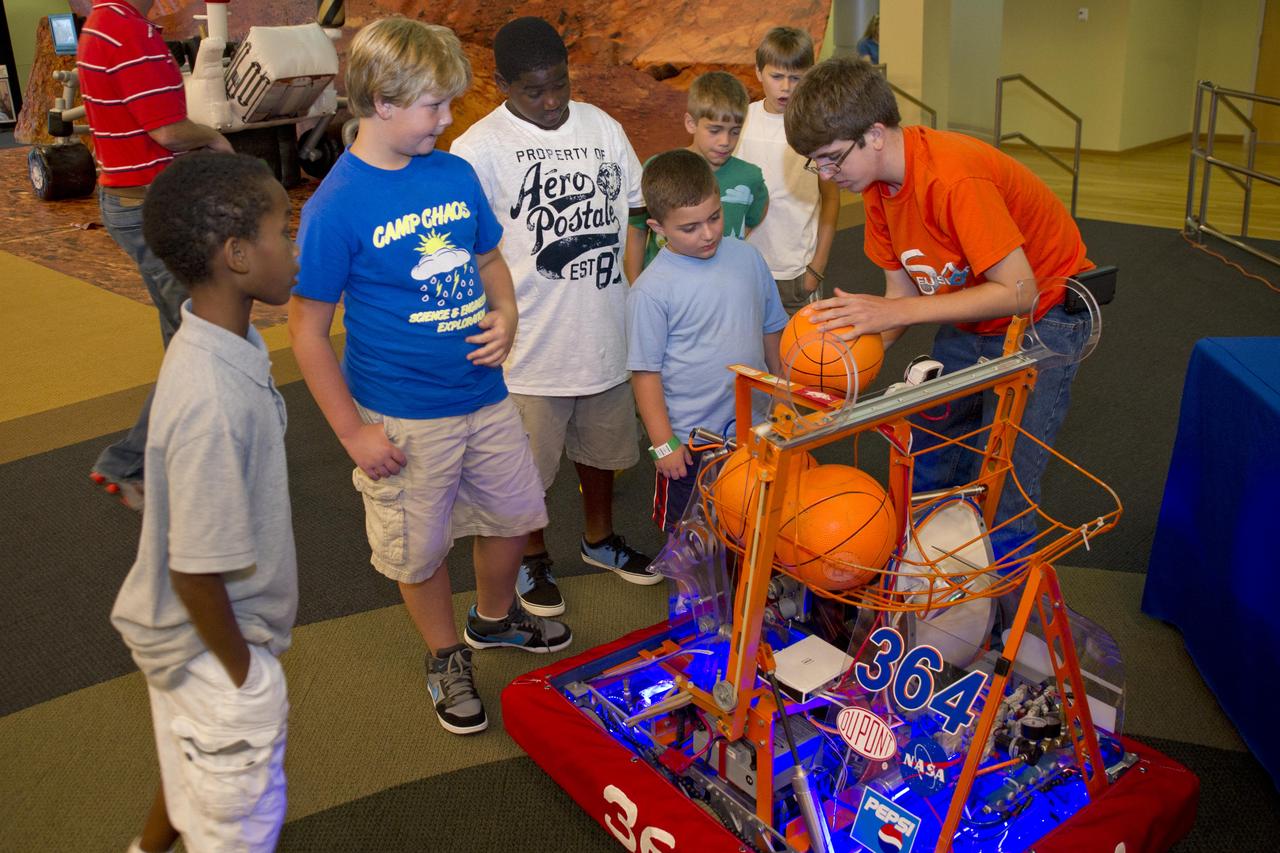
NASA welcomed hundreds of children and accompanying adults to its INFINITY visitor center on Aug. 4, offering Mars-related activities that focused attention on the space agency's Curiosity mission to the Red Planet. Among other things, students from Gulfport High School, who field a team each year in the FIRST (For Inspiration and Recognition of Science and Technology) Robotics Competition, offered young visitors a firsthand look at how robots work Hundreds of persons visited the INFINITY facility during the day, including media representatives from surrounding communities.
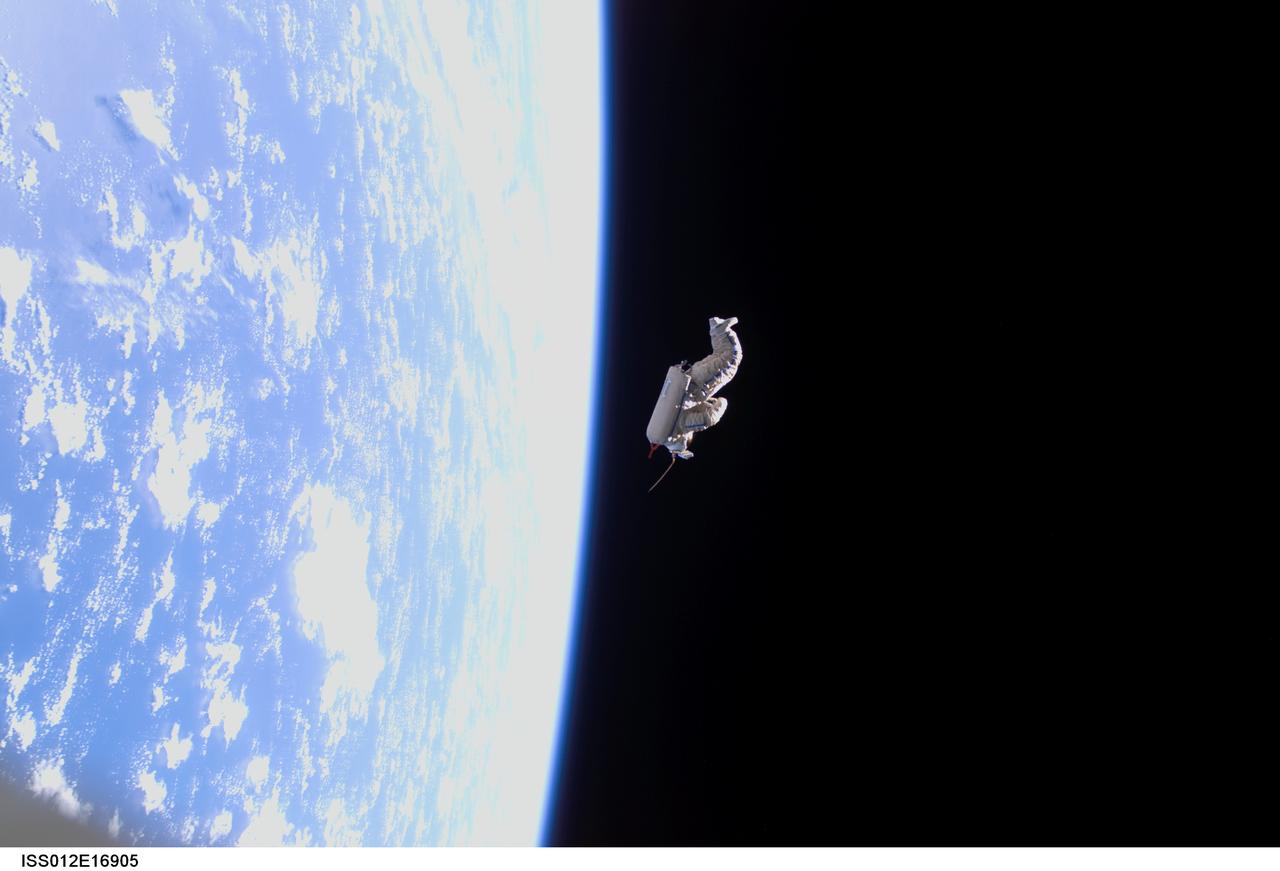
ISS012-E-16905 (3 Feb. 2006) --- Backdropped by the blackness of space and Earth’s horizon, a spacesuit-turned-satellite called SuitSat began its orbit around the Earth after it was released by the Expedition 12 crewmembers during a session of extravehicular activity (EVA) on Feb. 3, 2006. SuitSat, an unneeded Russian Orlan spacesuit, was outfitted by the crew with three batteries, internal sensors and a radio transmitter, which faintly transmitted recorded voices of school children to amateur radio operators worldwide. The suit will enter the atmosphere and burn up in a few weeks.
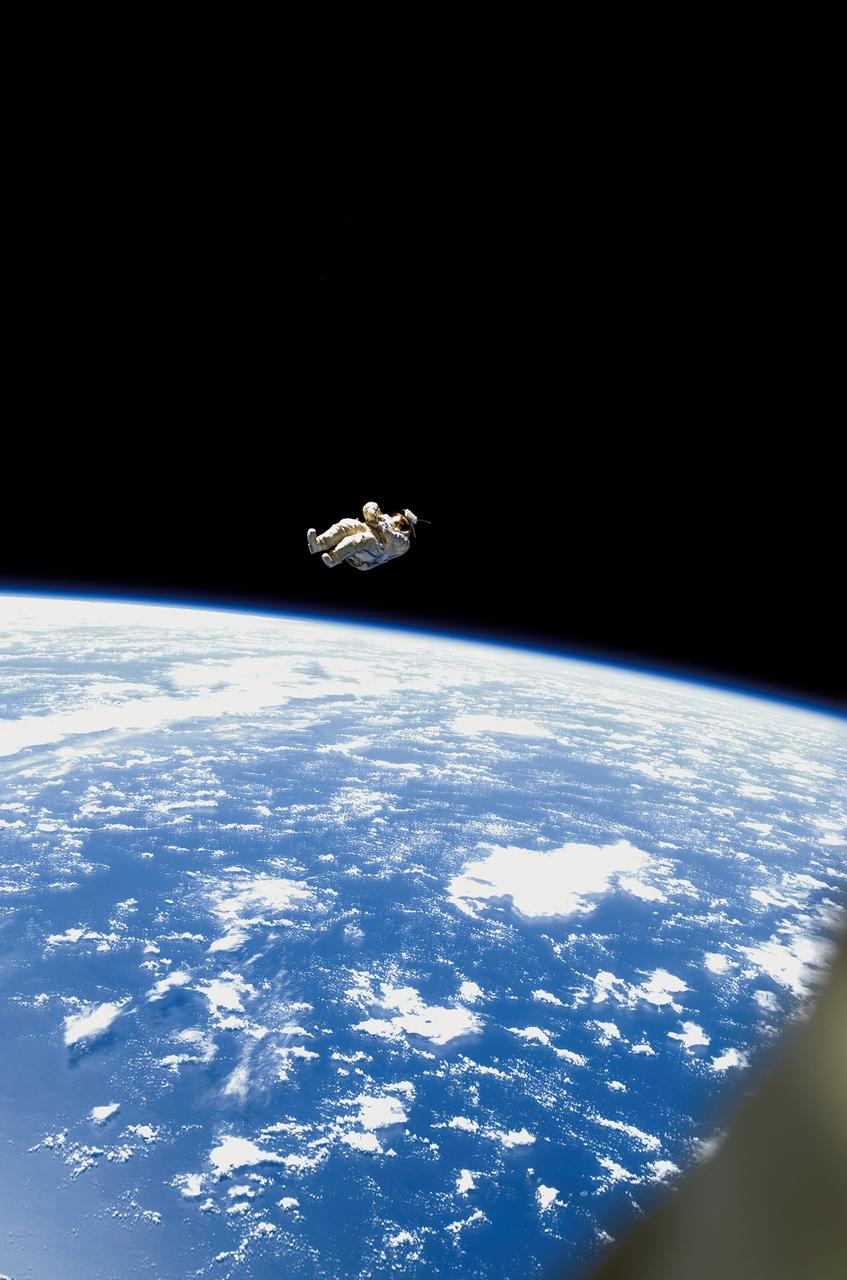
ISS012-E-16908 (3 Feb. 2006) --- Backdropped by the blackness of space and Earth’s horizon, a spacesuit-turned-satellite called SuitSat began its orbit around the Earth after it was released by the Expedition 12 crewmembers during a session of extravehicular activity (EVA) on Feb. 3, 2006. SuitSat, an unneeded Russian Orlan spacesuit, was outfitted by the crew with three batteries, internal sensors and a radio transmitter, which faintly transmitted recorded voices of school children to amateur radio operators worldwide. The suit will enter the atmosphere and burn up in a few weeks.
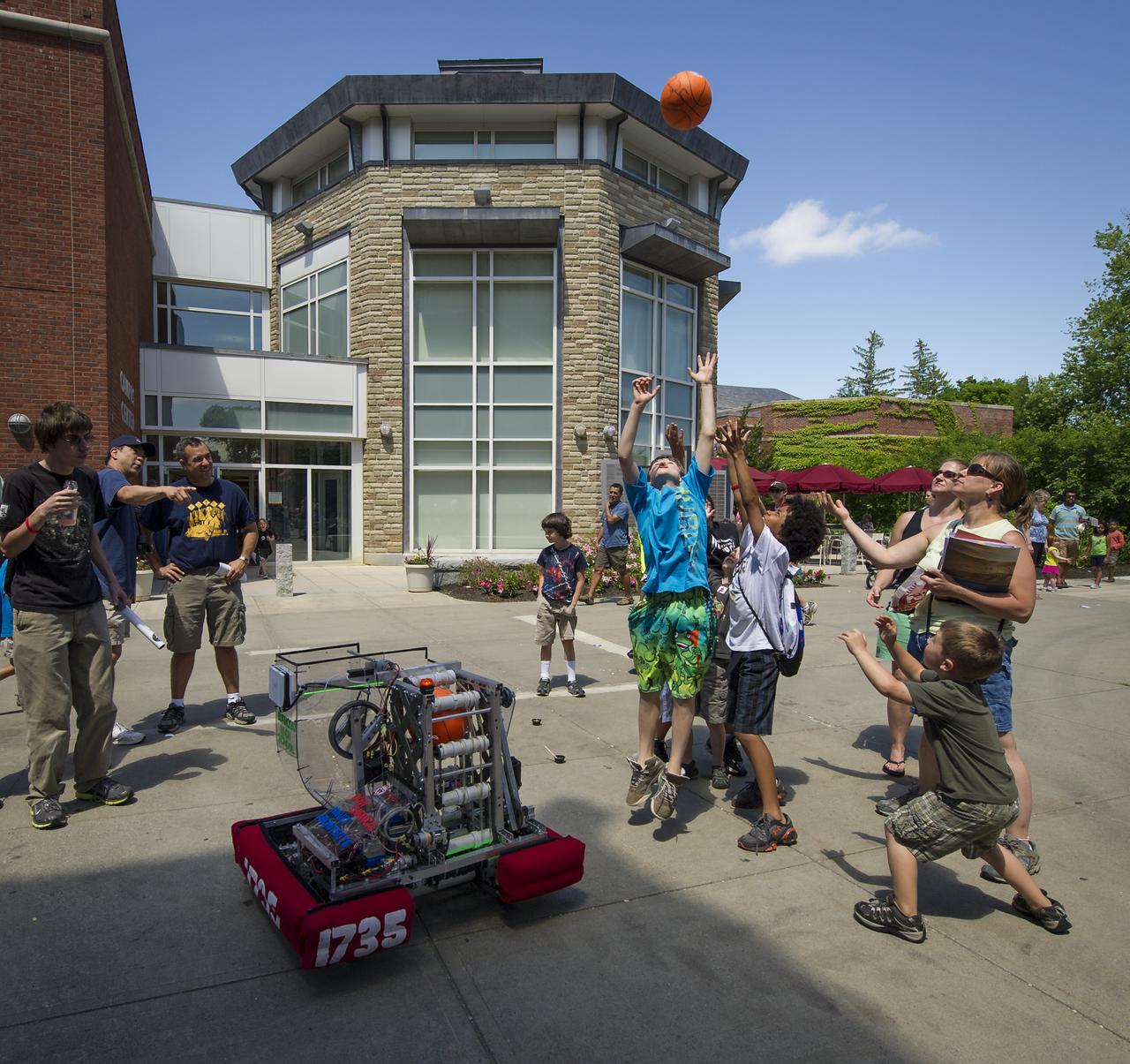
Children visiting the Worcester Polytechnic Institute (WPI) "TouchTomorrow" education and outreach event try to catch basketballs being thrown by a robot from FIRST Robotics at Burncoat High School (Mass.) on Saturday, June 16, 2012 at WPI in Worcester, Mass. The TouchTomorrow event was held in tandem with the NASA-WPI Sample Return Robot Centennial Challenge. The NASA-WPI challenge tasked robotic teams to build autonomous robots that can identify, collect and return samples. NASA needs autonomous robotic capability for future planetary exploration. Photo Credit: (NASA/Bill Ingalls)
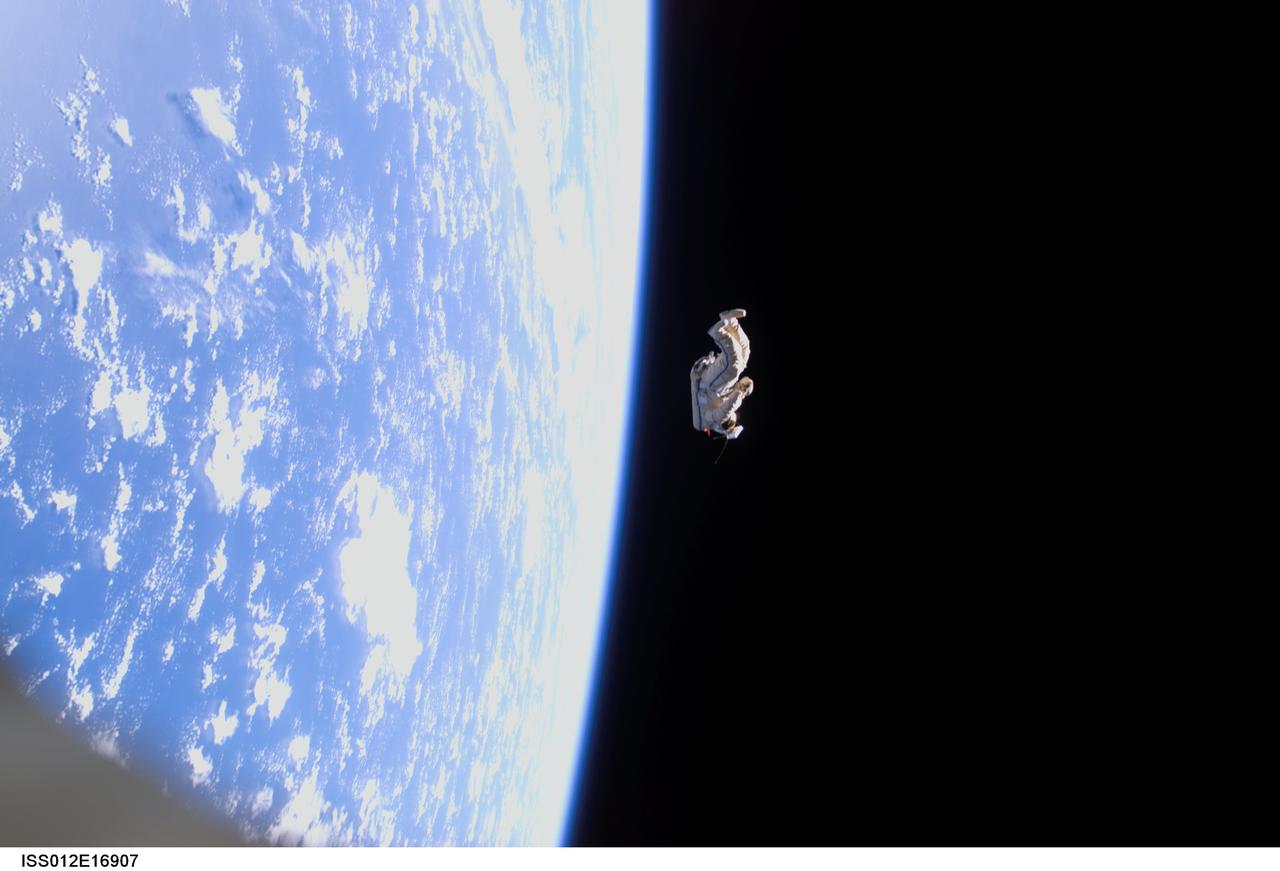
ISS012-E-16907 (3 Feb. 2006) --- Backdropped by the blackness of space and Earth’s horizon, a spacesuit-turned-satellite called SuitSat began its orbit around the Earth after it was released by the Expedition 12 crewmembers during a session of extravehicular activity (EVA) on Feb. 3, 2006. SuitSat, an unneeded Russian Orlan spacesuit, was outfitted by the crew with three batteries, internal sensors and a radio transmitter, which faintly transmitted recorded voices of school children to amateur radio operators worldwide. The suit will enter the atmosphere and burn up in a few weeks.
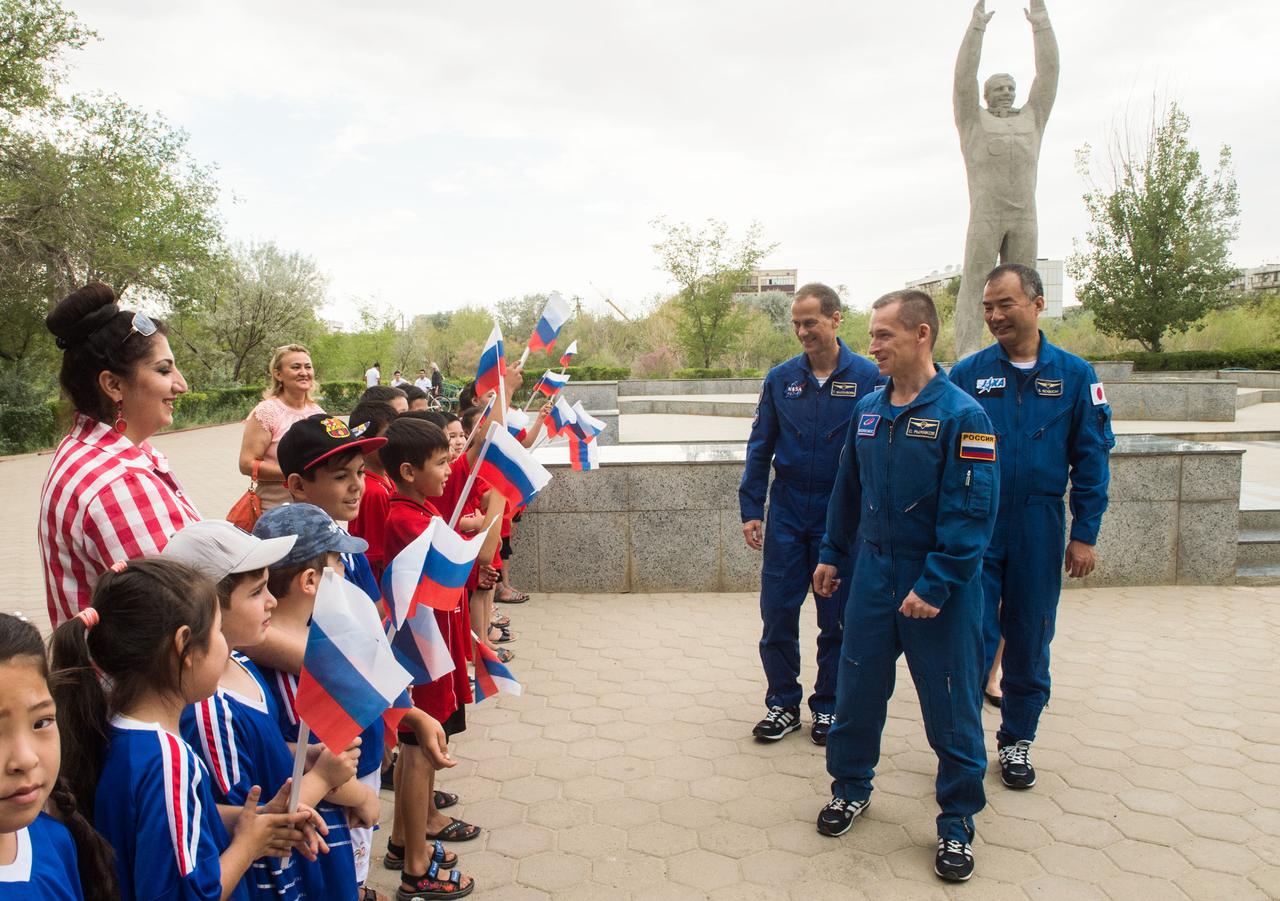
jsc2019e038392 - In the town of Baikonur, Kazakhstan, Expedition 60 backup crewmembers Tom Marshburn of NASA (left), Sergey Ryzhikov of Roscosmos (center) and Soichi Noguchi of the Japan Aerospace Exploration Agency (right) greet local school children July 6 near the statue of Yuri Gagarin, the first human to fly in space, during traditional pre-launch activities. They are the backups to Drew Morgan of NASA, Luca Parmitano of the European Space Agency and Alexander Skvortsov of Roscosmos, who will launch July 20 on the Soyuz MS-13 spacecraft from the Baikonur Cosmodrome in Kazakhstan for a mission on the International Space Station...Andrey Shelepin/GCTC.
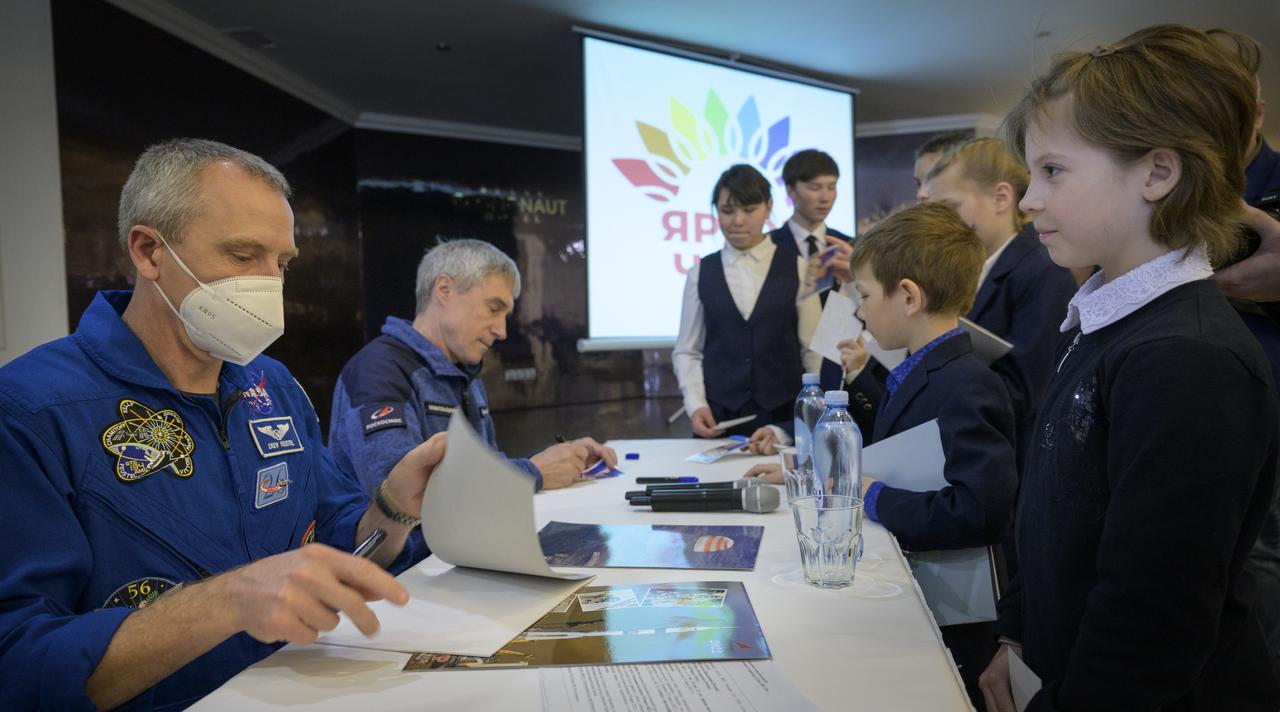
NASA Astronaut Office Representative, astronaut Drew Feustel, left, and Roscosmos Executive director of Human Spaceflight Programs Sergei Krikalev, give autographs to children from a local school, Monday, March 28, 2022, at the Cosmonaut Hotel in Karaganda, Kazakhstan. The two were part of an earlier meeting where NASA, Roscosmos, and Russian Search and Recovery Forces meet to discuss the readiness for the landing of Expedition 66 crew members Mark Vande Hei of NASA, and Pyotr Dubrov, and Anton Shkaplerov of Roscosmos. Vande Hei and Dubrov will be returning to Earth after logging 355 days in space as members of Expeditions 64-66 aboard the International Space Station. For Vande Hei, his mission is the longest single spaceflight by a U.S. astronaut in history. Shkaplerov will be returning after 176 days in space, serving as a Flight Engineer for Expedition 65 and commander of Expedition 66. Photo Credit: (NASA/Bill Ingalls)