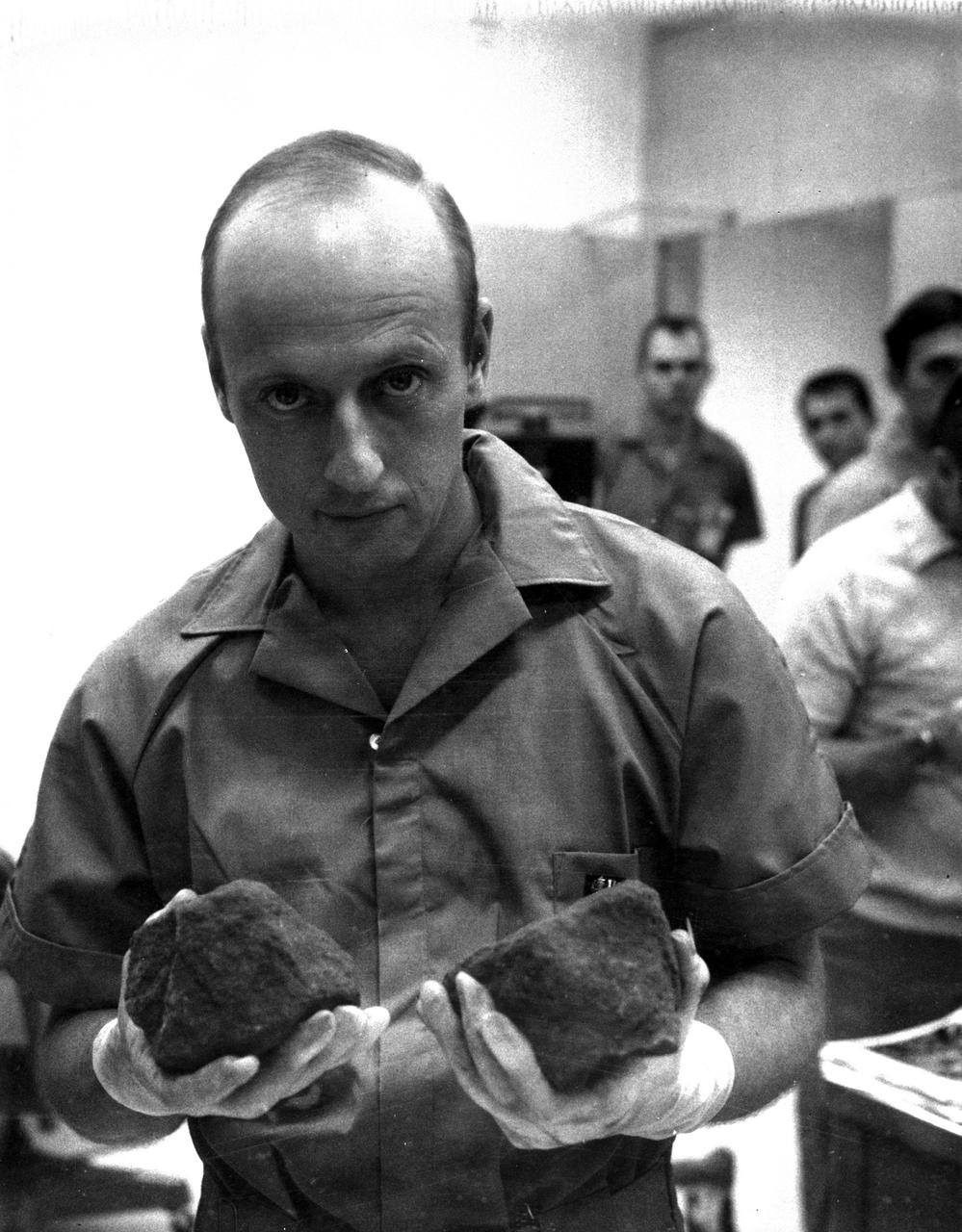
S69-60424 (29 Nov. 1969) --- Astronaut Charles Conrad Jr., commander of the Apollo 12 lunar landing mission, holds two lunar rocks which were among the samples brought back from the moon by the Apollo 12 astronauts. The samples are under scientific examination in the Manned Spacecraft Center's Lunar Receiving Laboratory.

Engineers at NASA's Jet Propulsion Laboratory dropped this prototype to learn how a future Sample Return Lander could safely touch down on Mars. The lander would be part of the Mars Sample Return campaign. NASA's Mars Sample Return will revolutionize our understanding of Mars by returning scientifically-selected samples for study using the most sophisticated instruments around the world. The mission will fulfill a solar system exploration goal, a high priority since 1980 and the last two National Academy of Sciences Planetary Decadal Surveys. This strategic partnership of NASA and ESA (European Space Agency) will be the first mission to return samples from another planet, including the first launch and return from the surface of another planet. These samples collected by Perseverance during its exploration of an ancient river-delta are thought to be the best opportunity to reveal the early evolution of Mars, including the potential for life. Movie available at https://photojournal.jpl.nasa.gov/catalog/PIA24766

This illustration depicts the Mars Earth Entry System for the Mars Sample Return campaign. The system would contain the orbiting sample inside a disk-shaped vehicle with a heat shield for safe entry through the Earth's atmosphere. NASA's Mars Sample Return (MSR) will revolutionize our understanding of Mars by returning scientifically-selected samples for study using the most sophisticated instruments around the world. The mission will fulfill a solar system exploration goal as identified by the National Academy of Sciences. This strategic partnership with the European Space Agency (ESA) will be the first mission to return samples from another planet, including the first launch from the surface of another planet. These samples collected by Perseverance during its exploration of an ancient river-delta are thought to be the best opportunity to reveal the early evolution of Mars, including the potential for life. https://photojournal.jpl.nasa.gov/catalog/PIA25336
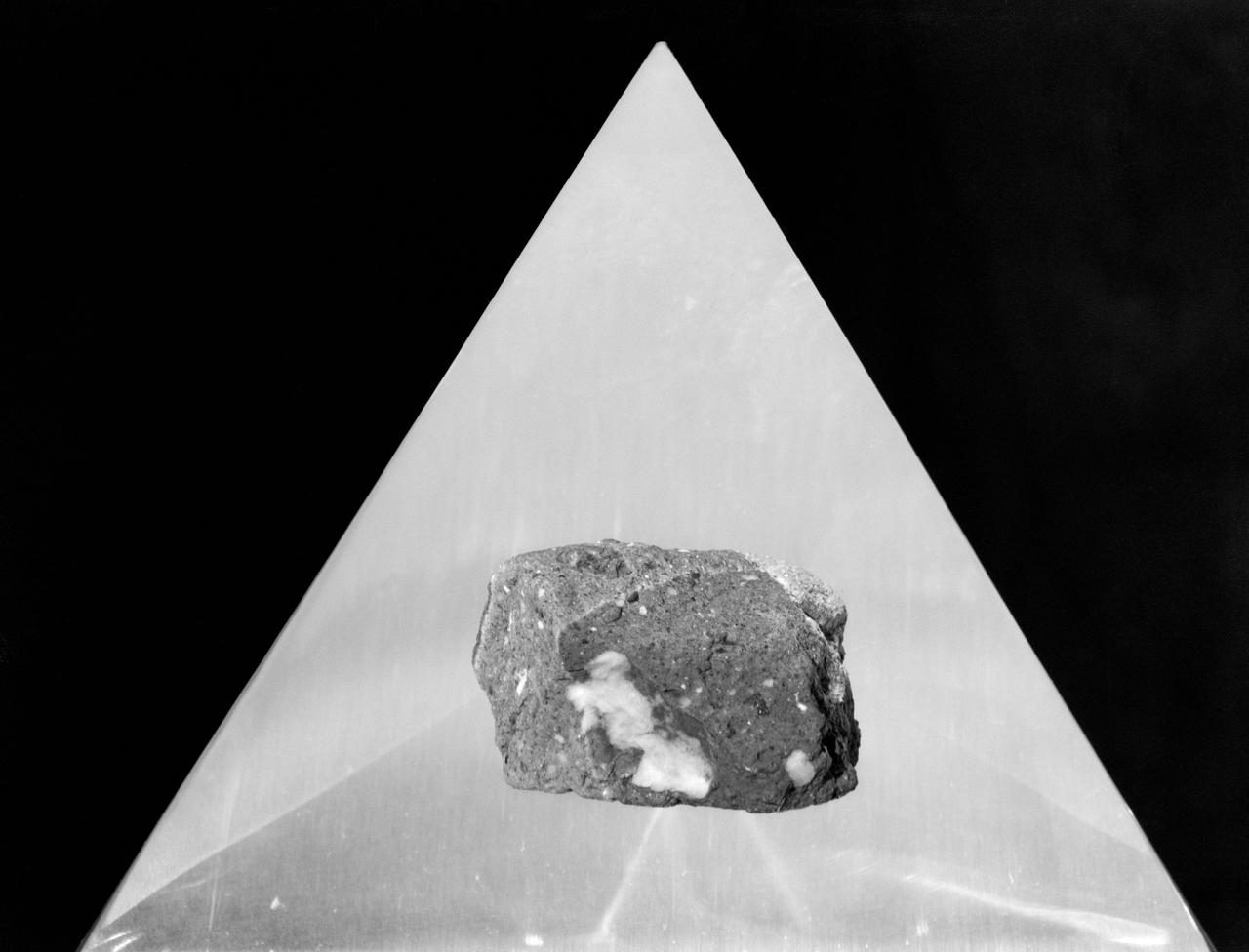
S75-23543 (April 1972) --- This Apollo 16 lunar sample (moon rock) was collected by astronaut John W. Young, commander of the mission, about 15 meters southwest of the landing site. This rock weighs 128 grams when returned to Earth. The sample is a polymict breccia. This rock, like all lunar highland breccias, is very old, about 3,900,000,000 years older than 99.99% of all Earth surface rocks, according to scientists. Scientific research is being conducted on the balance of this sample at NASA's Johnson Space Center and at other research centers in the United States and certain foreign nations under a continuing program of investigation involving lunar samples collected during the Apollo program.
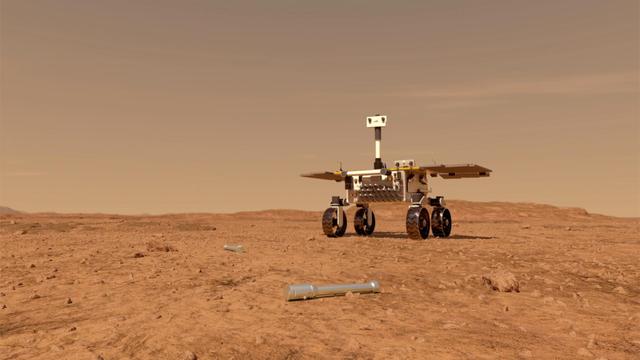
This illustration shows a concept of what a rover fetching rock and soil samples on Mars for return to Earth could look like. The sample tube in this image would have been left on the surface by a previous mission, NASA's Mars 2020 rover. NASA and the European Space Agency (ESA) are solidifying concepts for a Mars sample return mission to return Mars 2020 samples to Earth for scientific investigation. NASA will deliver a Mars lander in the vicinity of Jezero Crater, where the Mars 2020 rover will have collected and cached samples. The lander will carry a NASA rocket (the Mars Ascent Vehicle) along with ESA's Sample Fetch Rover that is roughly the size of NASA's Opportunity Mars rover. The fetch rover will gather the cached samples and carry them back to the lander for transfer to the ascent vehicle; additional samples could also be delivered directly by Mars 2020. The ascent vehicle will then launch a special container holding the samples into Mars orbit. ESA will put a spacecraft in orbit around Mars before the ascent vehicle launches. This spacecraft will rendezvous with and capture the orbiting samples before returning them to Earth. NASA will provide the payload module for the orbiter. https://photojournal.jpl.nasa.gov/catalog/PIA23493
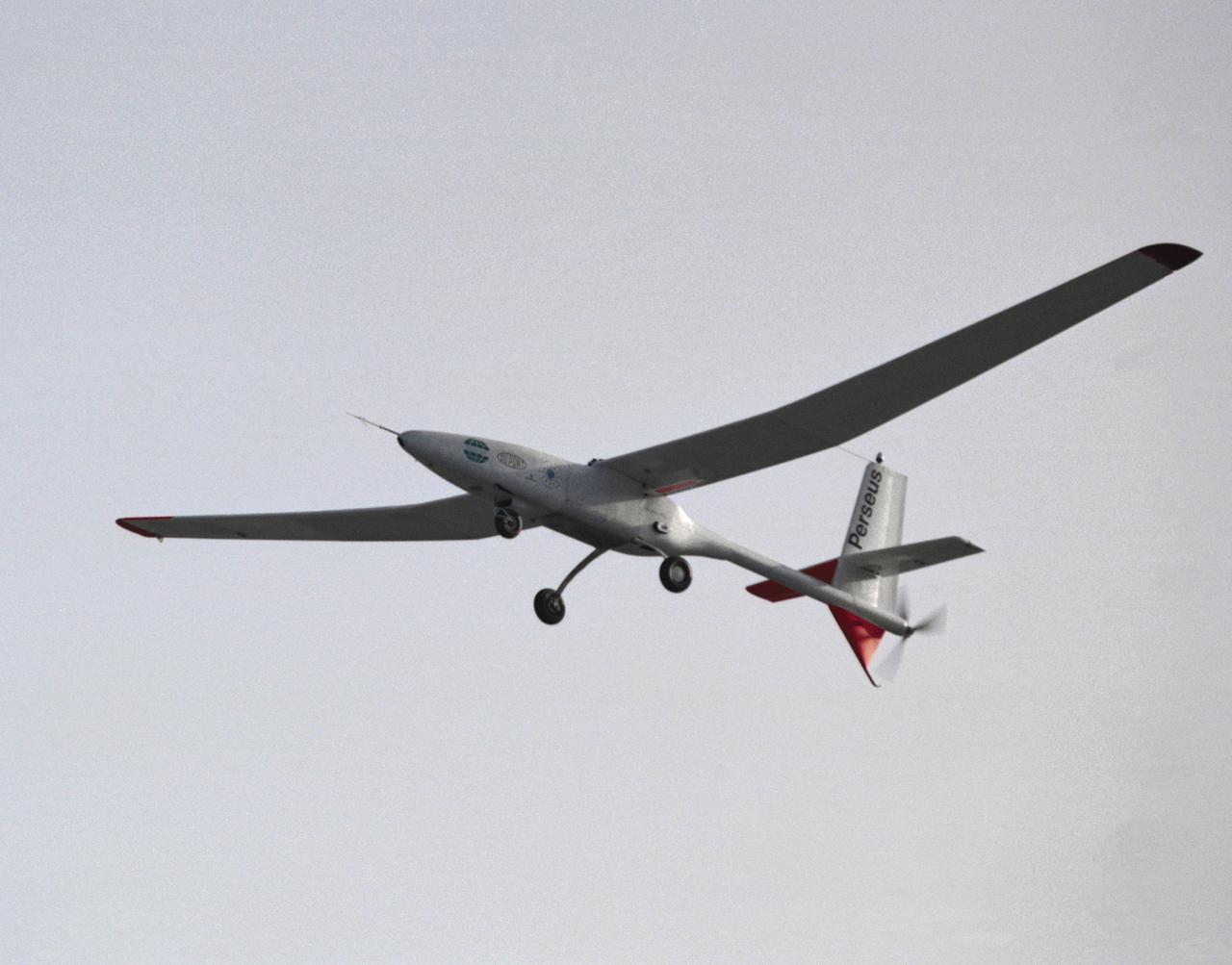
The Perseus proof-of-concept vehicle in flight at the Dryden Flight Research Center, Edwards, California in 1991. Perseus is one of several remotely-piloted aircraft designed for high-altitude, long-endurance scientific sampling missions being evaluated under the ERAST program.
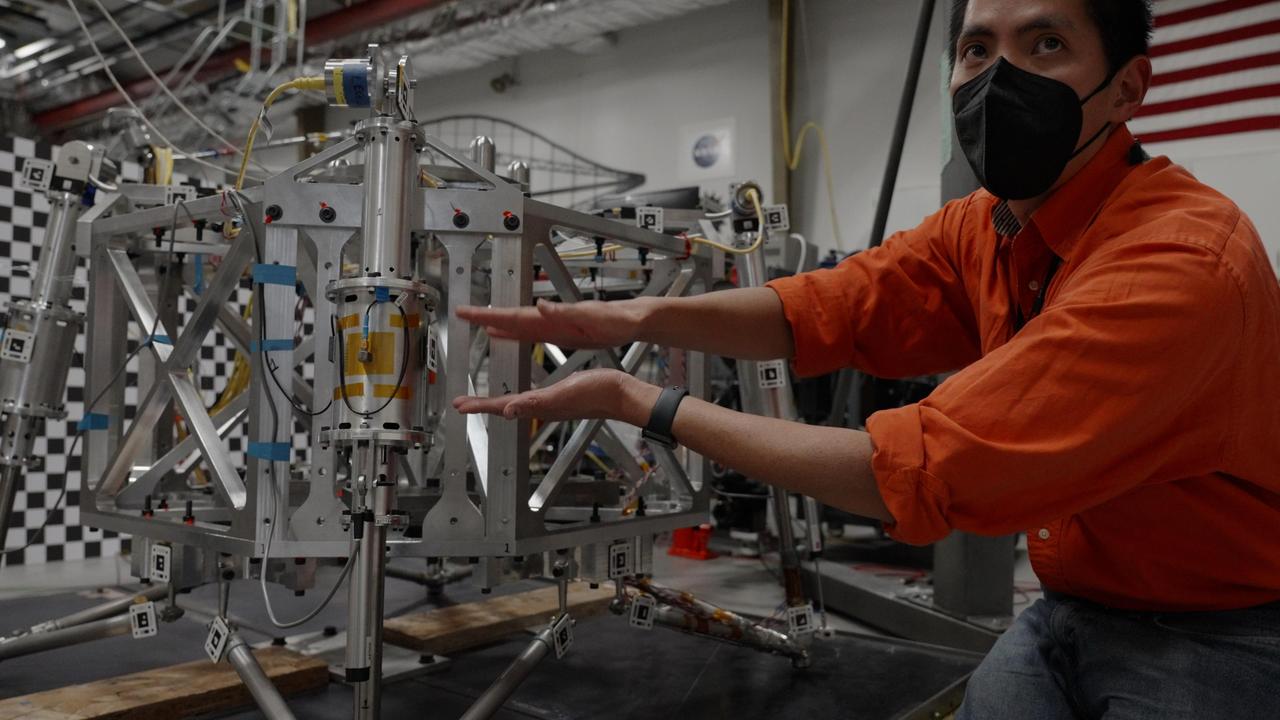
Engineer Abel Dizon explains how drop tests are conducted for a prototype lander being designed by NASA's Jet Propulsion Laboratory for the planned Mars Sample Return campaign. The Sample Retrieval Lander, estimated to weigh as much as 5,016 pounds (2,275 kilograms), would be the heaviest spacecraft ever to land on the Red Planet. To study the physics involved in landing such a massive spacecraft, engineers have been testing a lander prototype that's about one-third the size it would be on Mars. Mars Sample Return will revolutionize our understanding of Mars by bringing scientifically selected samples to Earth for study using the most sophisticated instrumentation around the world. NASA's planned Mars Sample Return (MSR) campaign would fulfill one of the highest priority solar system exploration goals identified by the National Academies of Sciences, Engineering and Medicine in the past three decadal surveys. This strategic partnership with the ESA (European Space Agency) features the first mission to return samples from another planet, including the first launch from the surface of another planet. The samples being collected by NASA's Perseverance rover during its exploration of an ancient river delta are thought to be the best opportunity to reveal the early evolution of Mars, including the potential for ancient life. https://photojournal.jpl.nasa.gov/catalog/PIA25822
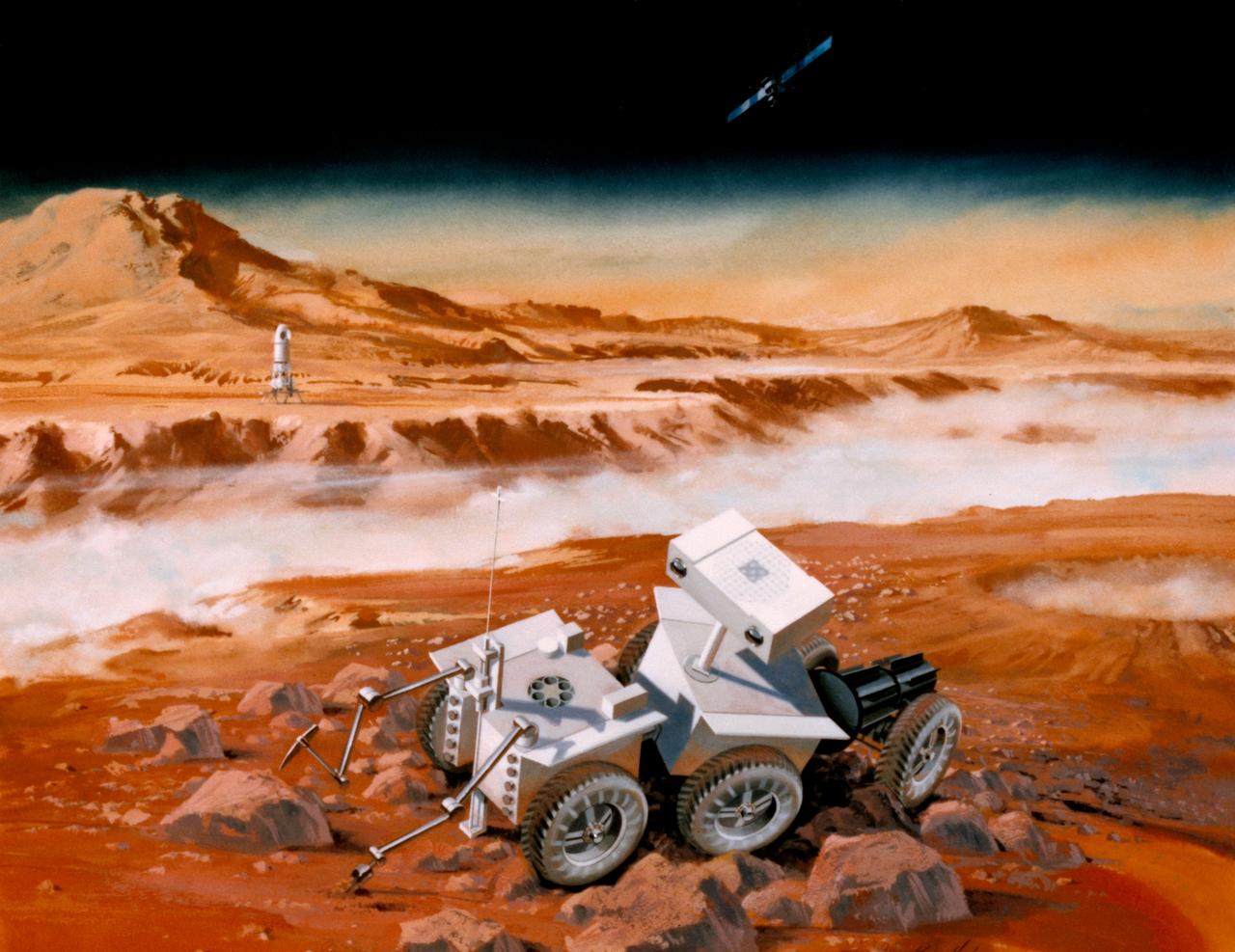
S87-35313 (15 May 1987)--- This artist's rendering illustrates a Mars Sample Return mission under study at Jet Propulsion Laboratory (JPL) and the NASA Johnson Space Center (JSC). As currently envisioned, the spacecraft would be launched in the mid to late 1990's into Earth-orbit by a space shuttle, released from the shuttle's cargo bay and propelled toward Mars by an upper-stage engine. A lander (left background) would separate from an orbiting vehicle (upper right) and descend to the planet's surface. The lander's payload would include a robotic rover (foreground), which would spend a year moving about the Martian terrain collecting scientifically significant rock and soil samples. The rover would then return to the lander and transfer its samples to a small rocket that would carry them into orbit and rendezvous with the orbiter for a return to Earth. As depicted here the rover consists of three two-wheeled cabs, and is fitted with a stereo camera vision system and tool-equipped arms for sample collection. The Mars Sample Return studies are funded by NASA's Office of Space Science and Applications.
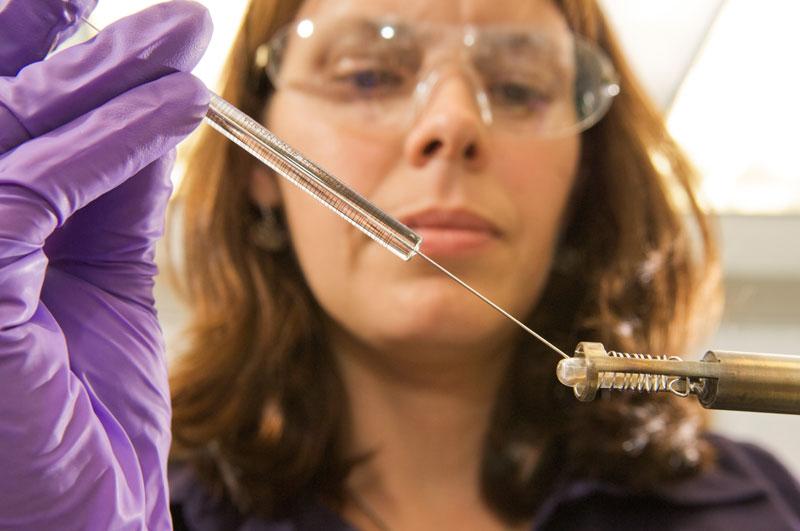
On Saturday, November 26, NASA is scheduled to launch the Mars Science Laboratory (MSL) mission featuring Curiosity, the largest and most advanced rover ever sent to the Red Planet. The Curiosity rover bristles with multiple cameras and instruments, including Goddard's Sample Analysis at Mars (SAM) instrument suite. By looking for evidence of water, carbon, and other important building blocks of life in the Martian soil and atmosphere, SAM will help discover whether Mars ever had the potential to support life. Curiosity will be delivered to Gale crater, a 96-mile-wide crater that contains a record of environmental changes in its sedimentary rock, in August 2012. ----- Goddard scientist Jennifer Eigenbrode injected a chemical into a rock sample and then heated the test tube to determine whether the sample-preparation method preserved the sample's molecular structure. Her testing proved successful, ultimately leading to the experiment's inclusion on the Sample Analysis at Mars instrument. Credit: NASA/GSFC/Chris Gunn <b><a href="http://www.nasa.gov/audience/formedia/features/MP_Photo_Guidelines.html" rel="nofollow">NASA image use policy.</a></b> <b><a href="http://www.nasa.gov/centers/goddard/home/index.html" rel="nofollow">NASA Goddard Space Flight Center</a></b> enables NASA’s mission through four scientific endeavors: Earth Science, Heliophysics, Solar System Exploration, and Astrophysics. Goddard plays a leading role in NASA’s accomplishments by contributing compelling scientific knowledge to advance the Agency’s mission. <b>Follow us on <a href="http://twitter.com/NASA_GoddardPix" rel="nofollow">Twitter</a></b> <b>Like us on <a href="http://www.facebook.com/pages/Greenbelt-MD/NASA-Goddard/395013845897?ref=tsd" rel="nofollow">Facebook</a></b> <b>Find us on <a href="http://instagrid.me/nasagoddard/?vm=grid" rel="nofollow">Instagram</a></b>
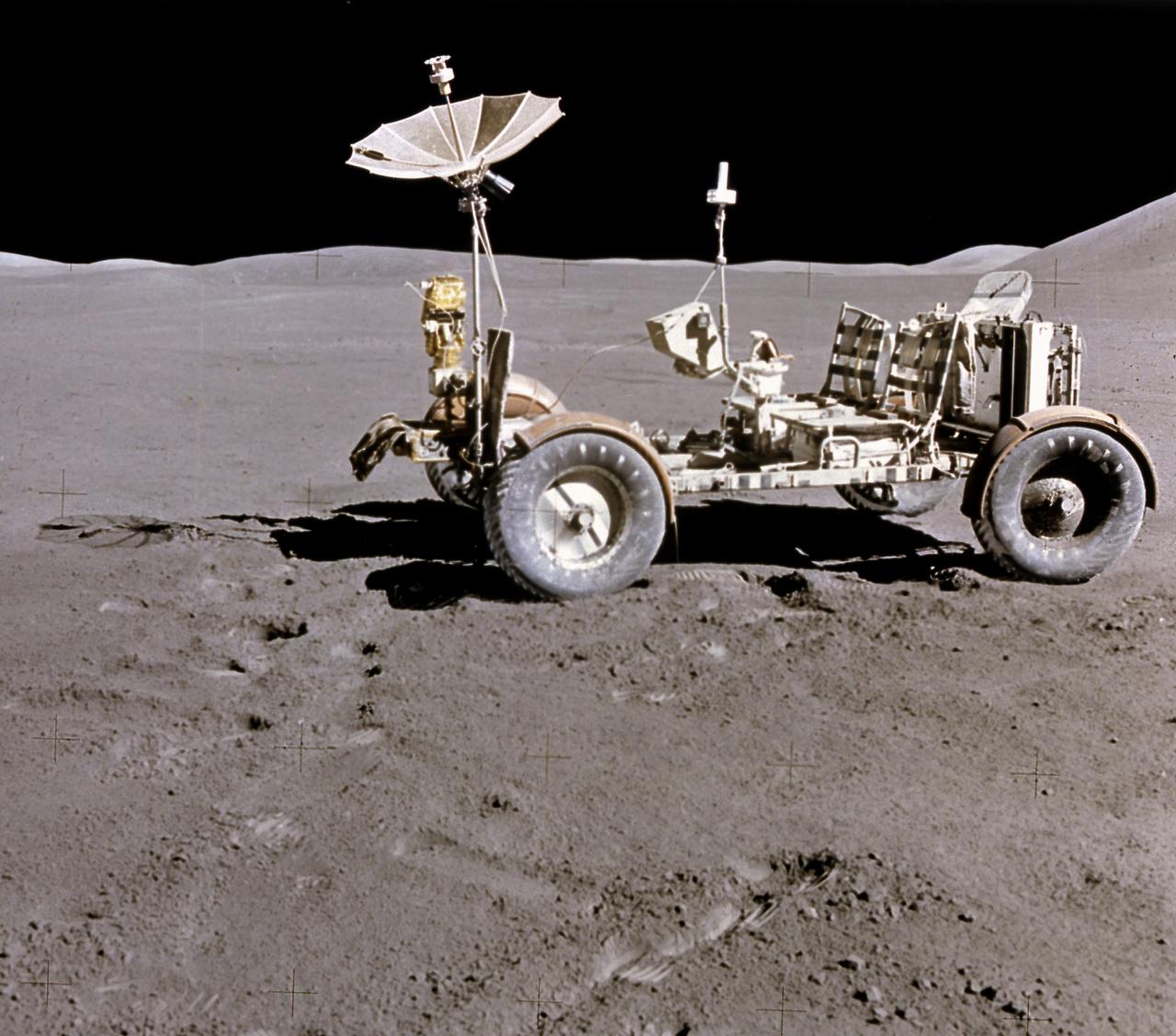
This photograph of the Lunar Roving Vehicle (LRV) was taken during the Apollo 15 mission. Powered by battery, the lightweight electric car greatly increased the range of mobility and productivity on the scientific traverses for astronauts. It weighed 462 pounds (77 pounds on the Moon) and could carry two suited astronauts, their gear and cameras, and several hundred pounds of bagged samples. The LRV's mobility was quite high. It could climb and descend slopes of about 25 degrees. The LRV was designed and developed by the Marshall Space Flight Center and built by the Boeing Company.
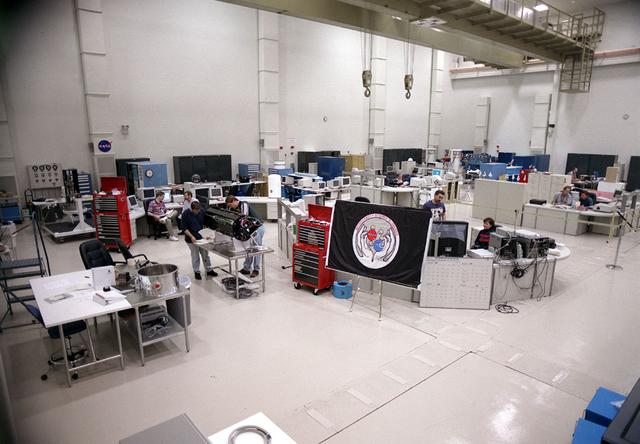
The Magnetically Damped Furnace (MDF) breadboard is being developed in response to NASA's mission and goals to advance the scientific knowledge of microgravity research, materials science, and related technologies. The objective of the MDF is to dampen the fluid flows due to density gradients and surface tension gradients in conductive melts by introducing a magnetic field during the sample processing. The MDF breadboard will serve as a proof of concept that the MDF performance requirements can be attained within the International Space Station resource constraints.

The terrain for the scientific work conducted by ICESCAPE scientists on July 4, 2010, is Arctic sea ice and melt ponds in the Chukchi Sea. The five-week field mission is dedicated to sampling the physical, chemical and biological characteristics of the ocean and sea ice. Impacts of Climate change on the Eco-Systems and Chemistry of the Arctic Pacific Environment (ICESCAPE) is a multi-year NASA shipborne project. The bulk of the research will take place in the Beaufort and Chukchi Sea’s in summer of 2010 and fall of 2011. Photo Credit: (NASA/Kathryn Hansen)
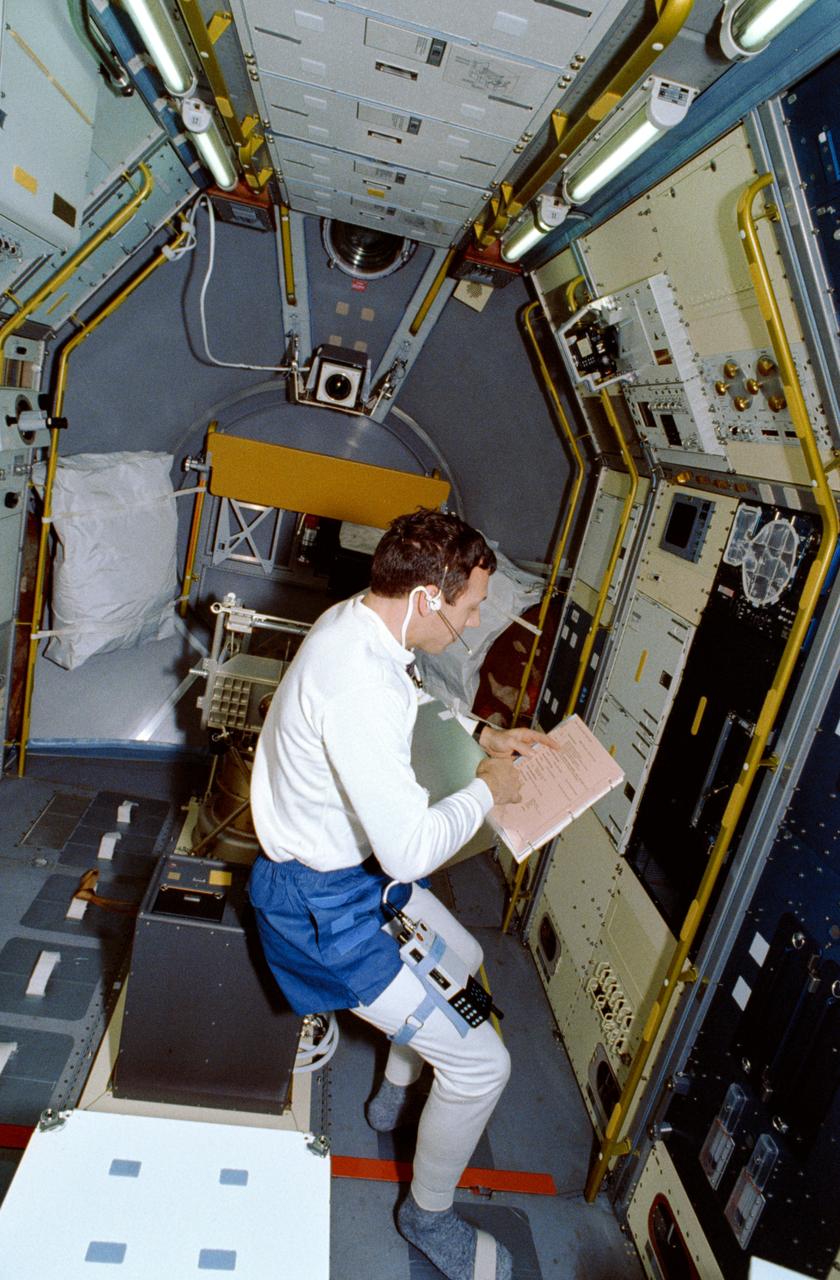
STS042-17-001 (22 Jan 1992) --- Astronaut David C. Hilmers, mission specialist, looks over a checklist at the Johnson Space Center refrigerator/freezer, in which perishable samples are stowed. The view gives an overall perspective of the science module -- heavily utilized for eight-days of scientific research supporting the International Microgravity Laboratory (IML-1) -- in Discovery's cargo bay.
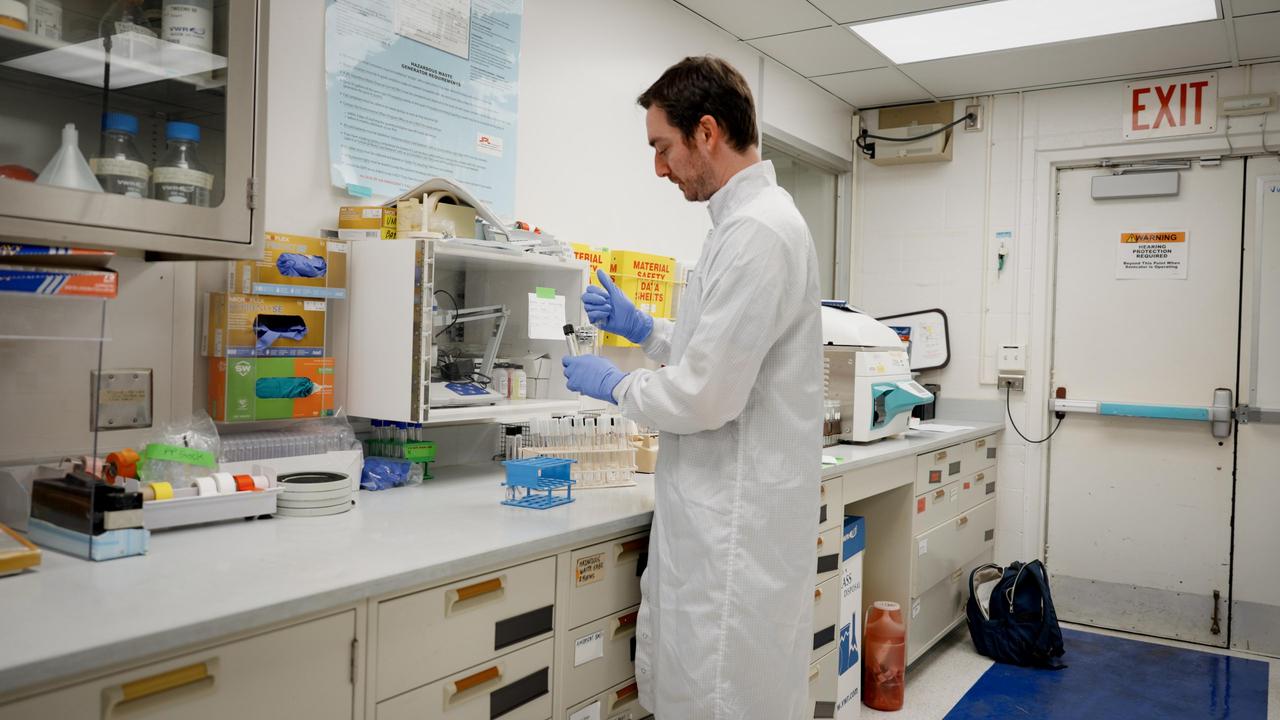
A planetary protection engineer at NASA's Jet Propulsion Laboratory prepares samples for analysis on March 20, 2024. The samples, swabbed from the surfaces of the agency's Europa Clipper spacecraft during its construction, were collected to help monitor the mission's adherence to strict standards for biological cleanliness. Created in keeping with the international 1967 Outer Space Treaty, the mission's planetary protection protocols are designed to minimize the chance that microbes brought from Earth could compromise future scientific investigations at its target destination: Jupiter's icy moon Europa. Europa Clipper's three main science objectives are to determine the thickness of the moon's icy shell and its interactions with the ocean below, to investigate its composition, and to characterize its geology. The mission's detailed exploration of Europa will help scientists better understand the astrobiological potential for habitable worlds beyond our planet. https://photojournal.jpl.nasa.gov/catalog/PIA26441
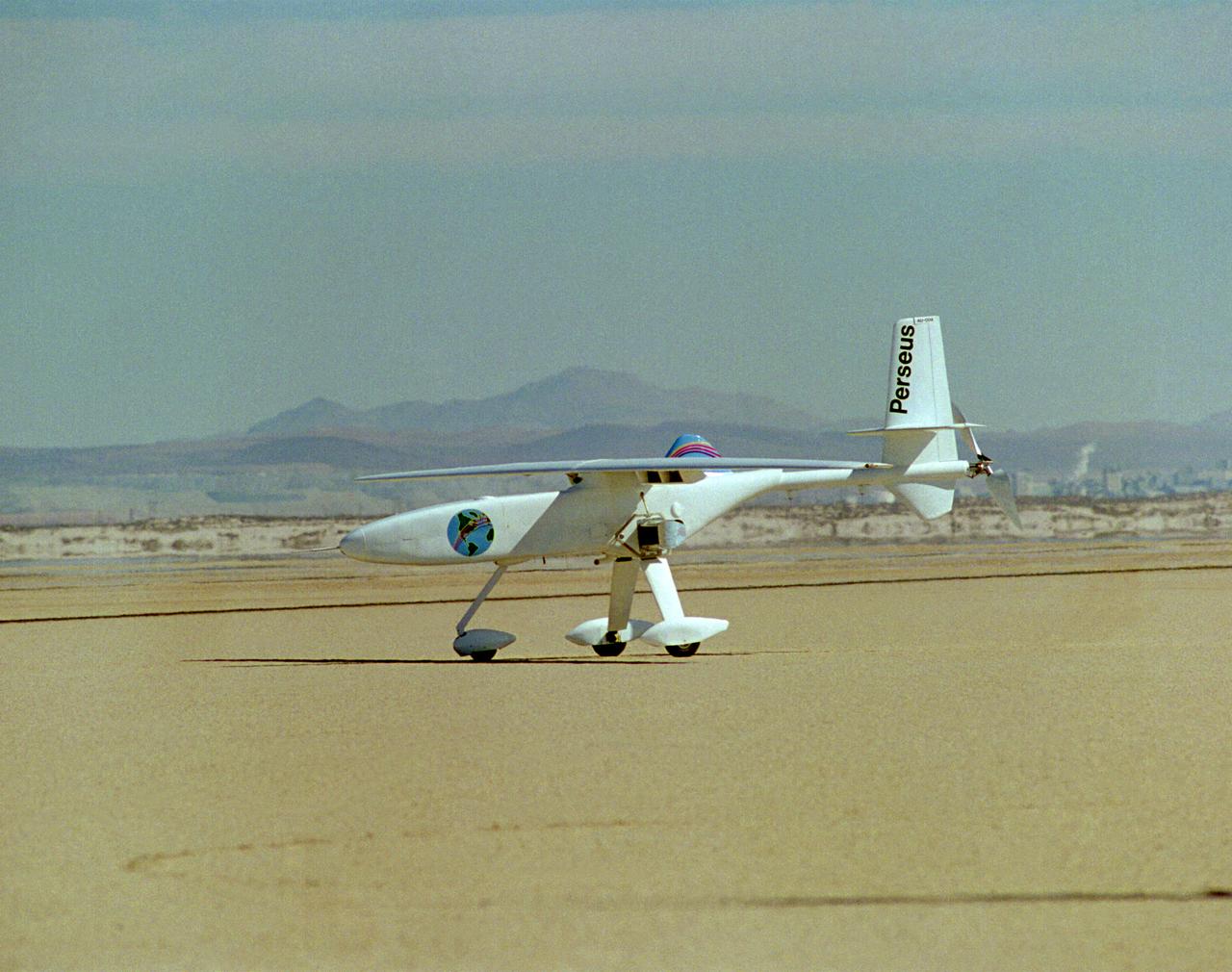
One of NASA's unmanned, remotely controlled aircraft, the Perseus B, is seen here before its first flight at the Dryden Flight Research Center, Edwards, California.

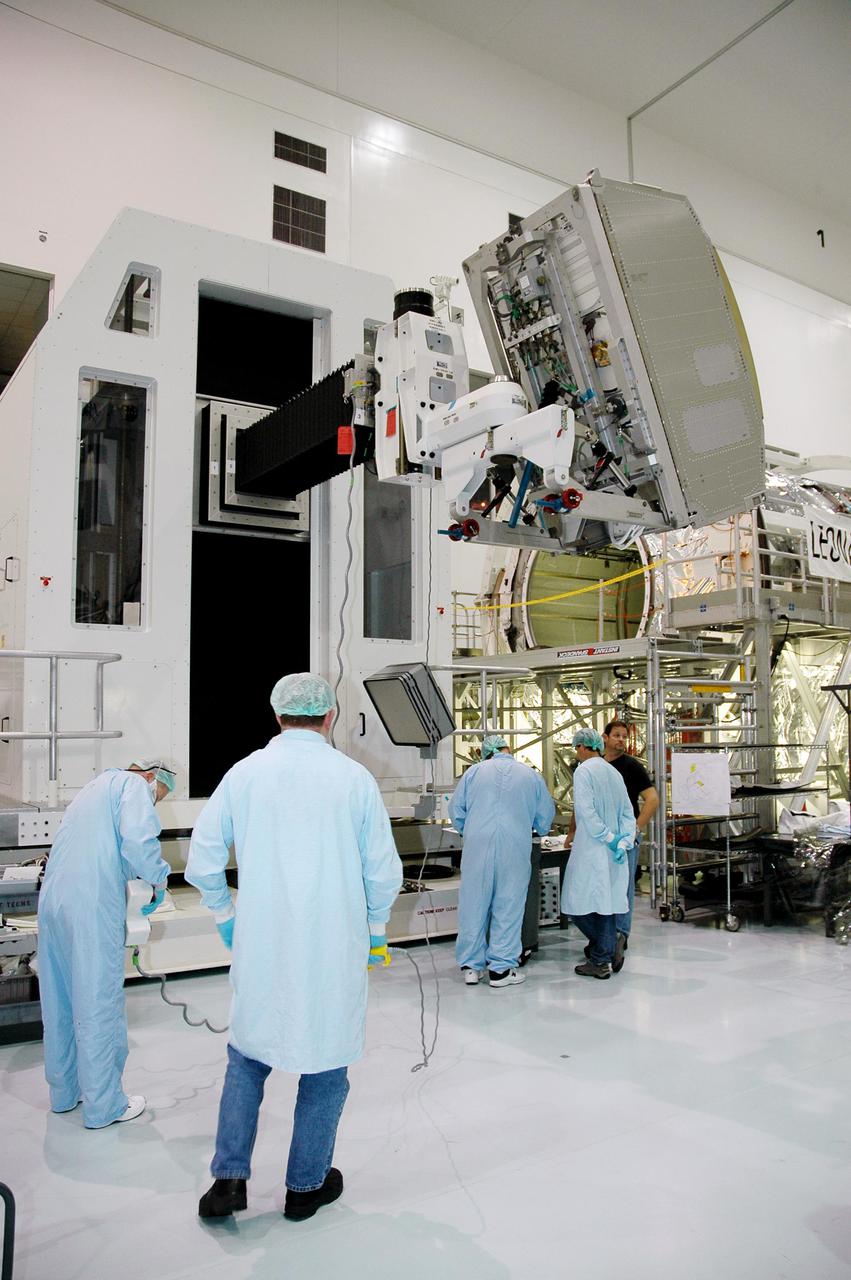
KENNEDY SPACE CENTER, FLA. - In the Space Station Processing Facility, a technician prepares to install the the Minus Eighty Degree Laboratory Freezer for ISS (MELFI) science rack into the Multi-Purpose Logisitics Module Leonardo. Leonardo will fly on Space Shuttle Atlantis on mission STS-121. The MELFI will provide cooling and storage for scientific experiment samples and perishable materials in four insulated containers, known as dewars, with independently selectable temperatures of -80 degrees Celsius, -26 degrees Celsius, and +4 degrees Celsius. MELFI will also be used to transport samples to and from the Station. MELFI is provided as laboratory support equipment by the European Space Agency. STS-121 is the second Return to Flight mission to the International Space Station. The launch window extends from Sept. 9 through Sept. 24.
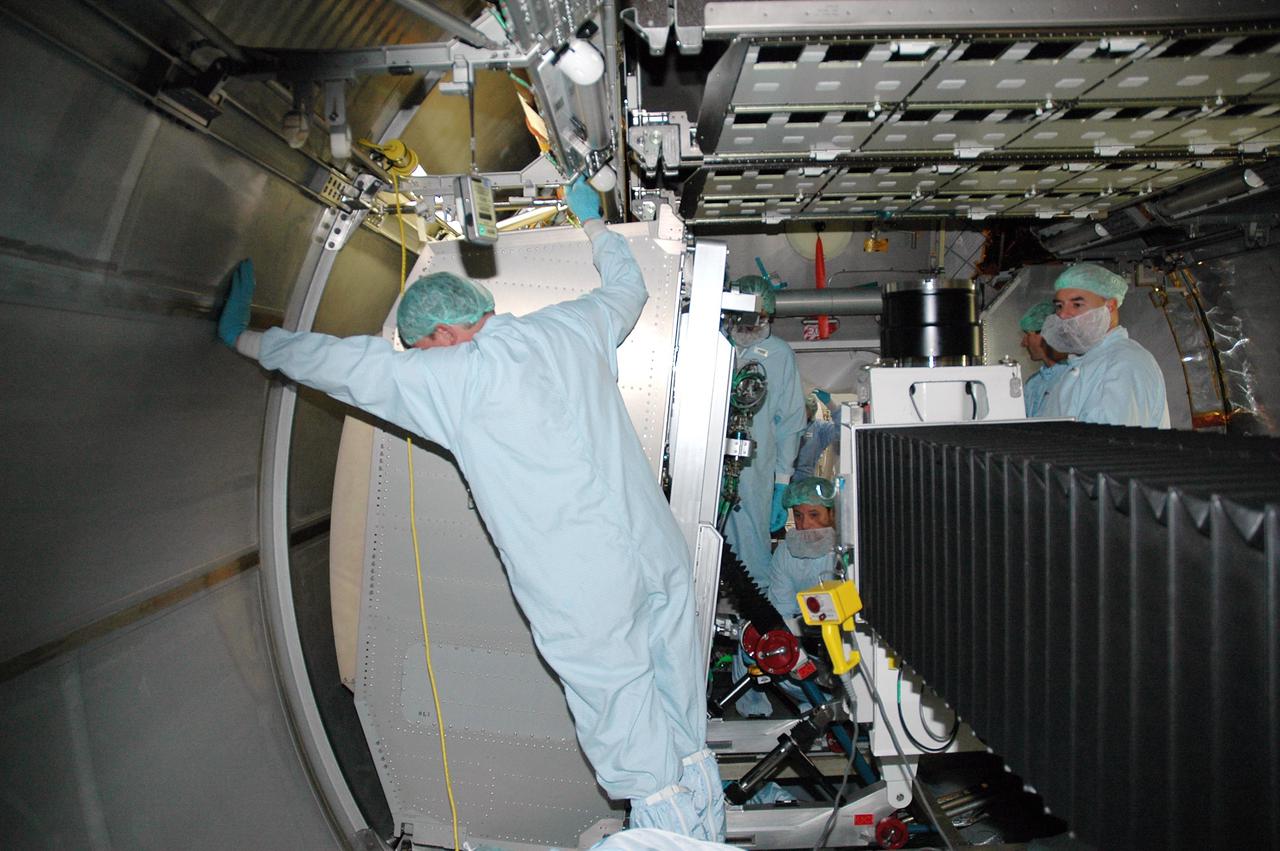
KENNEDY SPACE CENTER, FLA. - In the Space Station Processing Facility, technicians position the the Minus Eighty Degree Laboratory Freezer for ISS (MELFI) science rack for installation into the Multi-Purpose Logisitics Module Leonardo. Leonardo will fly on Space Shuttle Atlantis on mission STS-121. The MELFI will provide cooling and storage for scientific experiment samples and perishable materials in four insulated containers, known as dewars, with independently selectable temperatures of -80 degrees Celsius, -26 degrees Celsius, and +4 degrees Celsius. MELFI will also be used to transport samples to and from the Station. MELFI is provided as laboratory support equipment by the European Space Agency. STS-121 is the second Return to Flight mission to the International Space Station. The launch window extends from Sept. 9 through Sept. 24.
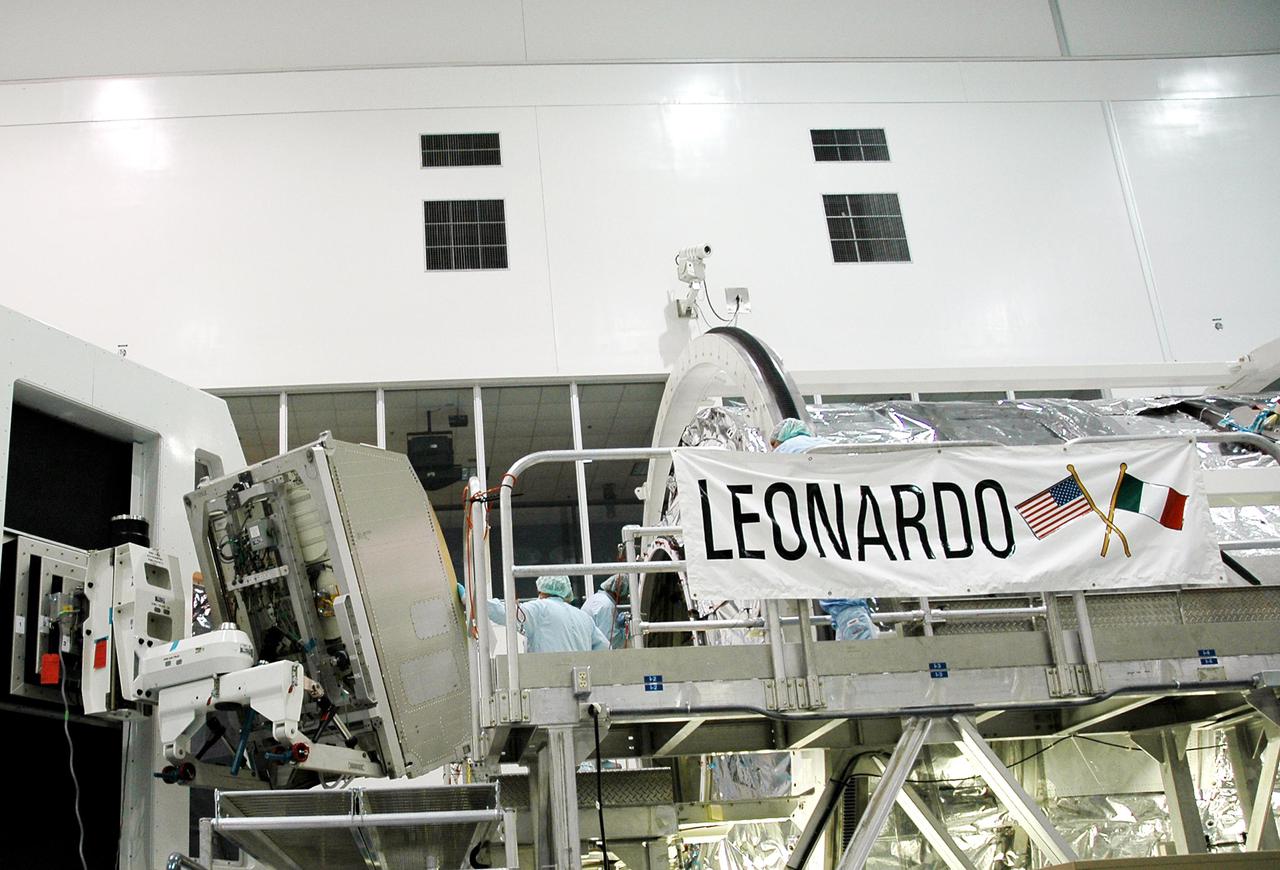
KENNEDY SPACE CENTER, FLA. - In the Space Station Processing Facility, technicians install the the Minus Eighty Degree Laboratory Freezer for ISS (MELFI) science rack into the Multi-Purpose Logisitics Module Leonardo. Leonardo will fly on Space Shuttle Atlantis on mission STS-121. The MELFI will provide cooling and storage for scientific experiment samples and perishable materials in four insulated containers, known as dewars, with independently selectable temperatures of -80 degrees Celsius, -26 degrees Celsius, and +4 degrees Celsius. MELFI will also be used to transport samples to and from the Station. MELFI is provided as laboratory support equipment by the European Space Agency. STS-121 is the second Return to Flight mission to the International Space Station. The launch window extends from Sept. 9 through Sept. 24.
KENNEDY SPACE CENTER, FLA. - In the Space Station Processing Facility, technicians prepare to install the the Minus Eighty Degree Laboratory Freezer for ISS (MELFI) science rack into the Multi-Purpose Logisitics Module Leonardo. Leonardo will fly on Space Shuttle Atlantis on mission STS-121. The MELFI will provide cooling and storage for scientific experiment samples and perishable materials in four insulated containers, known as dewars, with independently selectable temperatures of -80 degrees Celsius, -26 degrees Celsius, and +4 degrees Celsius. MELFI will also be used to transport samples to and from the Station. MELFI is provided as laboratory support equipment by the European Space Agency. STS-121 is the second Return to Flight mission to the International Space Station. The launch window extends from Sept. 9 through Sept. 24.
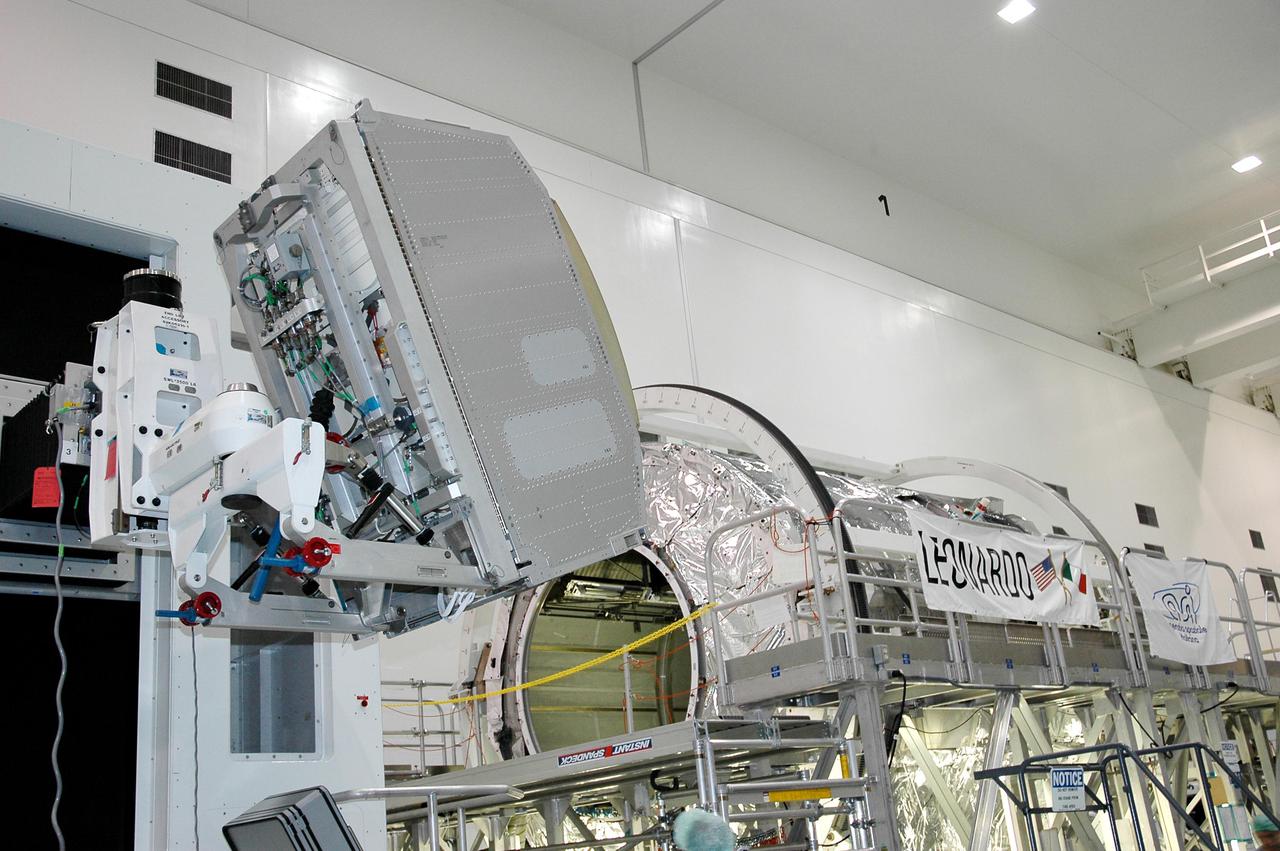
KENNEDY SPACE CENTER, FLA. - In the Space Station Processing Facility, the Minus Eighty Degree Laboratory Freezer for ISS (MELFI) science rack (left) is moved into position for installation into the Multi-Purpose Logisitics Module Leonardo. Leonardo will fly on Space Shuttle Atlantis on mission STS-121. The MELFI will provide cooling and storage for scientific experiment samples and perishable materials in four insulated containers, known as dewars, with independently selectable temperatures of -80 degrees Celsius, -26 degrees Celsius, and +4 degrees Celsius. MELFI will also be used to transport samples to and from the Station. MELFI is provided as laboratory support equipment by the European Space Agency. STS-121 is the second Return to Flight mission to the International Space Station. The launch window extends from Sept. 9 through Sept. 24.

Over 600 middle school, high school, and college students from across the nation launched 30 high-powered rockets just north of NASA’s Marshall Space Flight Center in Huntsville, Alabama. This year marked the 26th anniversary of the competition. To compete, students follow the NASA engineering design lifecycle by going through a series of reviews for nine months leading up to launch day. Each year, a payload challenge is issued to the university teams, and this year’s task took inspiration from the agency’s Artemis missions, where NASA will send astronauts to explore the Moon for scientific discovery, economic benefit, and to build the foundation for the first crewed missions to Mars. Teams were challenged build and fly a STEMnaut Habitat for Agricultural Utilization Study (HAUS) that safely houses four STEMnauts, non-living objects representing astronauts. The habitat had to include equipment capable of both collecting and testing soil samples to support agricultural research operations.

Over 600 middle school, high school, and college students from across the nation launched 30 high-powered rockets just north of NASA’s Marshall Space Flight Center in Huntsville, Alabama. This year marked the 26th anniversary of the competition. To compete, students follow the NASA engineering design lifecycle by going through a series of reviews for nine months leading up to launch day. Each year, a payload challenge is issued to the university teams, and this year’s task took inspiration from the agency’s Artemis missions, where NASA will send astronauts to explore the Moon for scientific discovery, economic benefit, and to build the foundation for the first crewed missions to Mars. Teams were challenged build and fly a STEMnaut Habitat for Agricultural Utilization Study (HAUS) that safely houses four STEMnauts, non-living objects representing astronauts. The habitat had to include equipment capable of both collecting and testing soil samples to support agricultural research operations.

Over 600 middle school, high school, and college students from across the nation launched 30 high-powered rockets just north of NASA’s Marshall Space Flight Center in Huntsville, Alabama. This year marked the 26th anniversary of the competition. To compete, students follow the NASA engineering design lifecycle by going through a series of reviews for nine months leading up to launch day. Each year, a payload challenge is issued to the university teams, and this year’s task took inspiration from the agency’s Artemis missions, where NASA will send astronauts to explore the Moon for scientific discovery, economic benefit, and to build the foundation for the first crewed missions to Mars. Teams were challenged build and fly a STEMnaut Habitat for Agricultural Utilization Study (HAUS) that safely houses four STEMnauts, non-living objects representing astronauts. The habitat had to include equipment capable of both collecting and testing soil samples to support agricultural research operations.

Over 600 middle school, high school, and college students from across the nation launched 30 high-powered rockets just north of NASA’s Marshall Space Flight Center in Huntsville, Alabama. This year marked the 26th anniversary of the competition. To compete, students follow the NASA engineering design lifecycle by going through a series of reviews for nine months leading up to launch day. Each year, a payload challenge is issued to the university teams, and this year’s task took inspiration from the agency’s Artemis missions, where NASA will send astronauts to explore the Moon for scientific discovery, economic benefit, and to build the foundation for the first crewed missions to Mars. Teams were challenged build and fly a STEMnaut Habitat for Agricultural Utilization Study (HAUS) that safely houses four STEMnauts, non-living objects representing astronauts. The habitat had to include equipment capable of both collecting and testing soil samples to support agricultural research operations.

Over 600 middle school, high school, and college students from across the nation launched 30 high-powered rockets just north of NASA’s Marshall Space Flight Center in Huntsville, Alabama. This year marked the 26th anniversary of the competition. To compete, students follow the NASA engineering design lifecycle by going through a series of reviews for nine months leading up to launch day. Each year, a payload challenge is issued to the university teams, and this year’s task took inspiration from the agency’s Artemis missions, where NASA will send astronauts to explore the Moon for scientific discovery, economic benefit, and to build the foundation for the first crewed missions to Mars. Teams were challenged build and fly a STEMnaut Habitat for Agricultural Utilization Study (HAUS) that safely houses four STEMnauts, non-living objects representing astronauts. The habitat had to include equipment capable of both collecting and testing soil samples to support agricultural research operations.

Over 600 middle school, high school, and college students from across the nation launched 30 high-powered rockets just north of NASA’s Marshall Space Flight Center in Huntsville, Alabama. This year marked the 26th anniversary of the competition. To compete, students follow the NASA engineering design lifecycle by going through a series of reviews for nine months leading up to launch day. Each year, a payload challenge is issued to the university teams, and this year’s task took inspiration from the agency’s Artemis missions, where NASA will send astronauts to explore the Moon for scientific discovery, economic benefit, and to build the foundation for the first crewed missions to Mars. Teams were challenged build and fly a STEMnaut Habitat for Agricultural Utilization Study (HAUS) that safely houses four STEMnauts, non-living objects representing astronauts. The habitat had to include equipment capable of both collecting and testing soil samples to support agricultural research operations.

Over 600 middle school, high school, and college students from across the nation launched 30 high-powered rockets just north of NASA’s Marshall Space Flight Center in Huntsville, Alabama. This year marked the 26th anniversary of the competition. To compete, students follow the NASA engineering design lifecycle by going through a series of reviews for nine months leading up to launch day. Each year, a payload challenge is issued to the university teams, and this year’s task took inspiration from the agency’s Artemis missions, where NASA will send astronauts to explore the Moon for scientific discovery, economic benefit, and to build the foundation for the first crewed missions to Mars. Teams were challenged build and fly a STEMnaut Habitat for Agricultural Utilization Study (HAUS) that safely houses four STEMnauts, non-living objects representing astronauts. The habitat had to include equipment capable of both collecting and testing soil samples to support agricultural research operations.

Over 600 middle school, high school, and college students from across the nation launched 30 high-powered rockets just north of NASA’s Marshall Space Flight Center in Huntsville, Alabama. This year marked the 26th anniversary of the competition. To compete, students follow the NASA engineering design lifecycle by going through a series of reviews for nine months leading up to launch day. Each year, a payload challenge is issued to the university teams, and this year’s task took inspiration from the agency’s Artemis missions, where NASA will send astronauts to explore the Moon for scientific discovery, economic benefit, and to build the foundation for the first crewed missions to Mars. Teams were challenged build and fly a STEMnaut Habitat for Agricultural Utilization Study (HAUS) that safely houses four STEMnauts, non-living objects representing astronauts. The habitat had to include equipment capable of both collecting and testing soil samples to support agricultural research operations.

Over 600 middle school, high school, and college students from across the nation launched 30 high-powered rockets just north of NASA’s Marshall Space Flight Center in Huntsville, Alabama. This year marked the 26th anniversary of the competition. To compete, students follow the NASA engineering design lifecycle by going through a series of reviews for nine months leading up to launch day. Each year, a payload challenge is issued to the university teams, and this year’s task took inspiration from the agency’s Artemis missions, where NASA will send astronauts to explore the Moon for scientific discovery, economic benefit, and to build the foundation for the first crewed missions to Mars. Teams were challenged build and fly a STEMnaut Habitat for Agricultural Utilization Study (HAUS) that safely houses four STEMnauts, non-living objects representing astronauts. The habitat had to include equipment capable of both collecting and testing soil samples to support agricultural research operations.
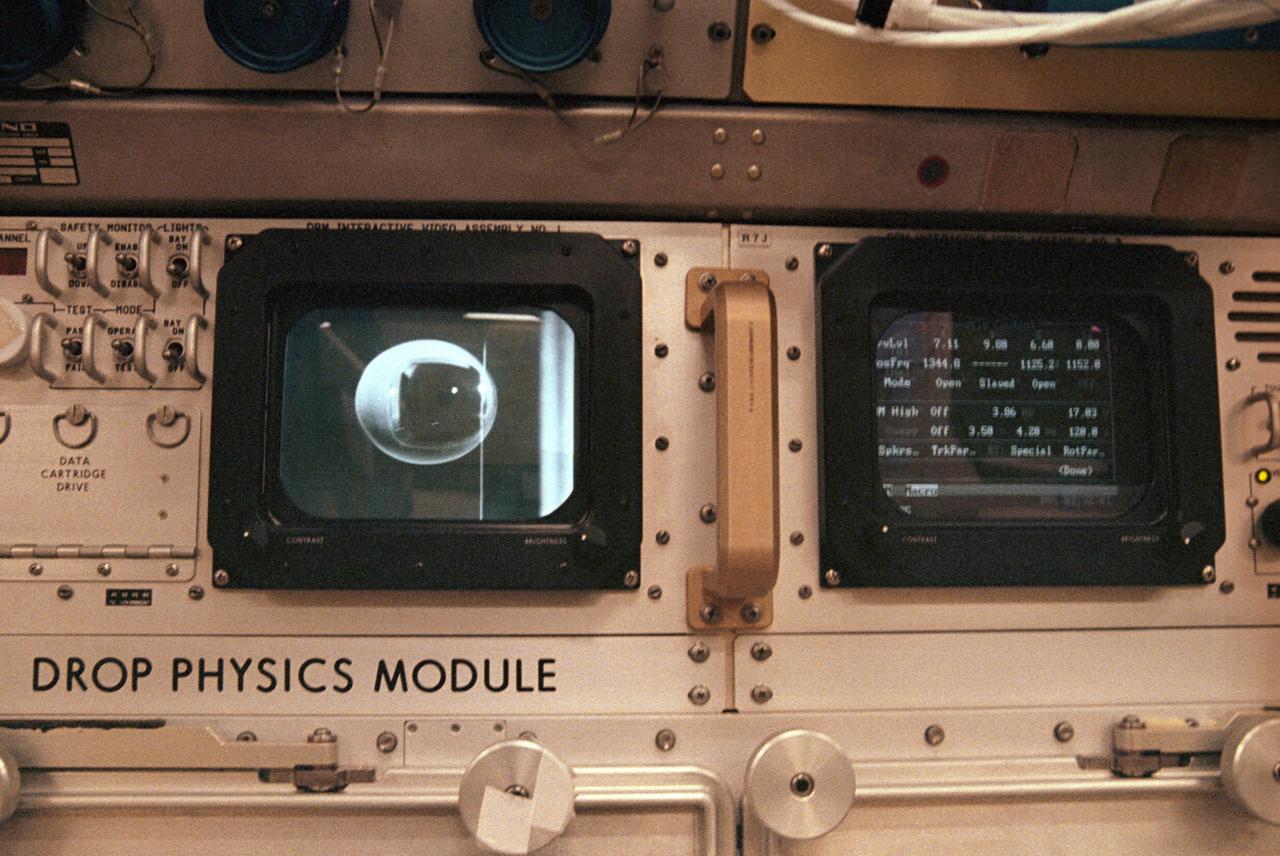
The first United States Microgravity Laboratory (USML-1) was one of NASA's science and technology programs that provided scientists an opportunity to research various scientific investigations in a weightlessness environment inside the Spacelab module. It also provided demonstrations of new equipment to help prepare for advanced microgravity research and processing aboard the Space Station. The USML-1 flew in orbit for extended periods, providing greater opportunities for research in materials science, fluid dynamics, biotechnology (crystal growth), and combustion science. This is a close-up view of the Drop Physics Module (DPM) in the USML science laboratory. The DPM was dedicated to the detailed study of the dynamics of fluid drops in microgravity: their equilibrium shapes, the dynamics of their flows, and their stable and chaotic behaviors. It also demonstrated a technique known as containerless processing. The DPM and microgravity combine to remove the effects of the container, such as chemical contamination and shape, on the sample being studied. Sound waves, generating acoustic forces, were used to suspend a sample in microgravity and to hold a sample of free drops away from the walls of the experiment chamber, which isolated the sample from potentially harmful external influences. The DPM gave scientists the opportunity to test theories of classical fluid physics, which have not been confirmed by experiments conducted on Earth. This image is a close-up view of the DPM. The USML-1 flew aboard the STS-50 mission on June 1992, and was managed by the Marshall Space Flight Center.

CAPE CANAVERAL, Fla. -- Inside the Space Life Sciences Laboratory near NASA’s Kennedy Space Center in Florida, the Mars Simulation Chamber is being prepared for the Microorganisms in the Stratosphere, or MIST, mission support. The chamber allows MIST scientists and engineers to simulate the stratosphere prior to high altitude flight experiments. The MIST mission will fly a small biological payload in low altitudes aboard a blimp in July to measure microbial survival and cellular responses to exposure in the upper atmosphere. Later in the year, the MIST mission will deploy samples at even high altitudes in the stratosphere using scientific balloons. Photo credit: NASA/Daniel Casper
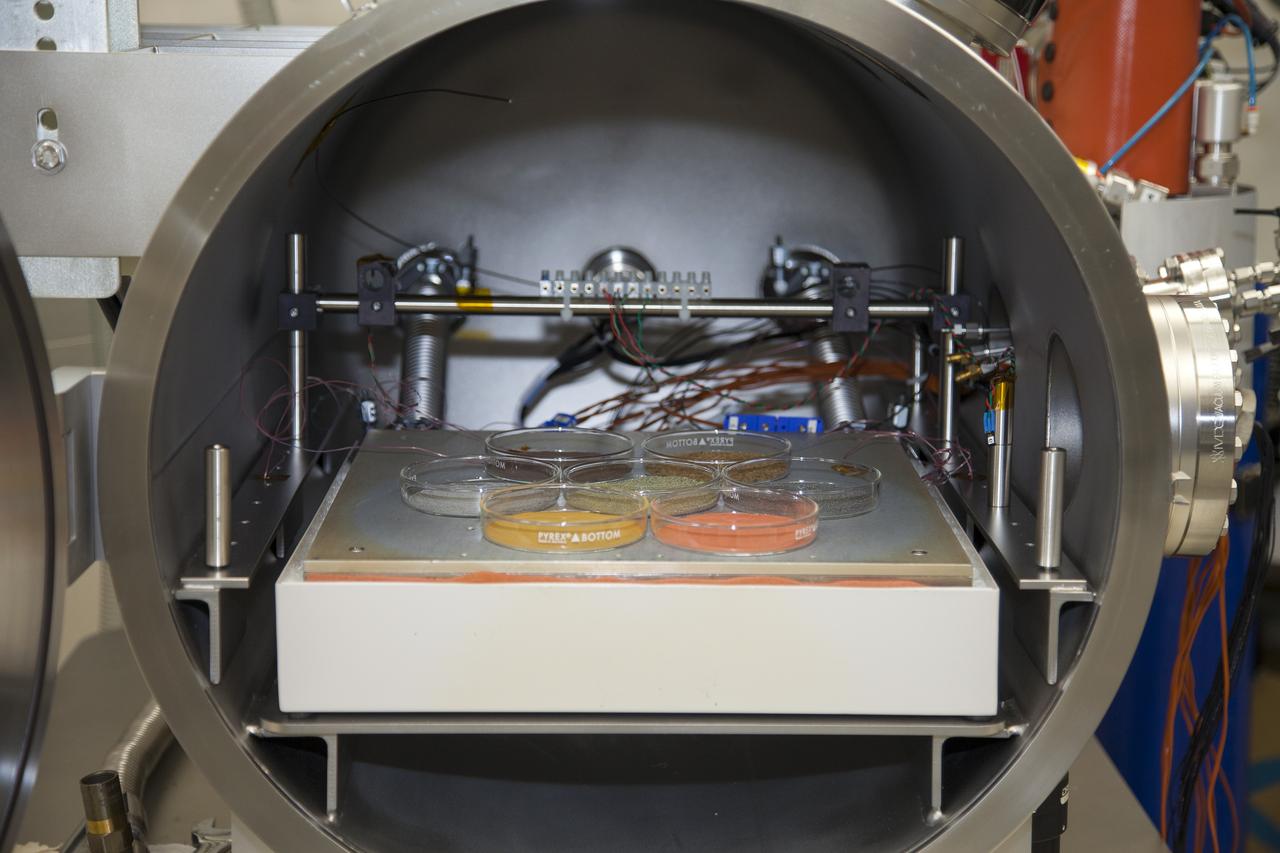
CAPE CANAVERAL, Fla. -- Inside the Space Life Sciences Laboratory near NASA’s Kennedy Space Center in Florida, the Mars Simulation Chamber is being prepared for the Microorganisms in the Stratosphere, or MIST, mission support. The chamber allows MIST scientists and engineers to simulate the stratosphere prior to high altitude flight experiments. The MIST mission will fly a small biological payload aboard a blimp in July to measure microbial survival and cellular responses to exposure in the upper atmosphere. Later in the year, the MIST mission will deploy samples at even higher altitudes in the stratosphere using scientific balloons. Photo credit: NASA/Daniel Casper
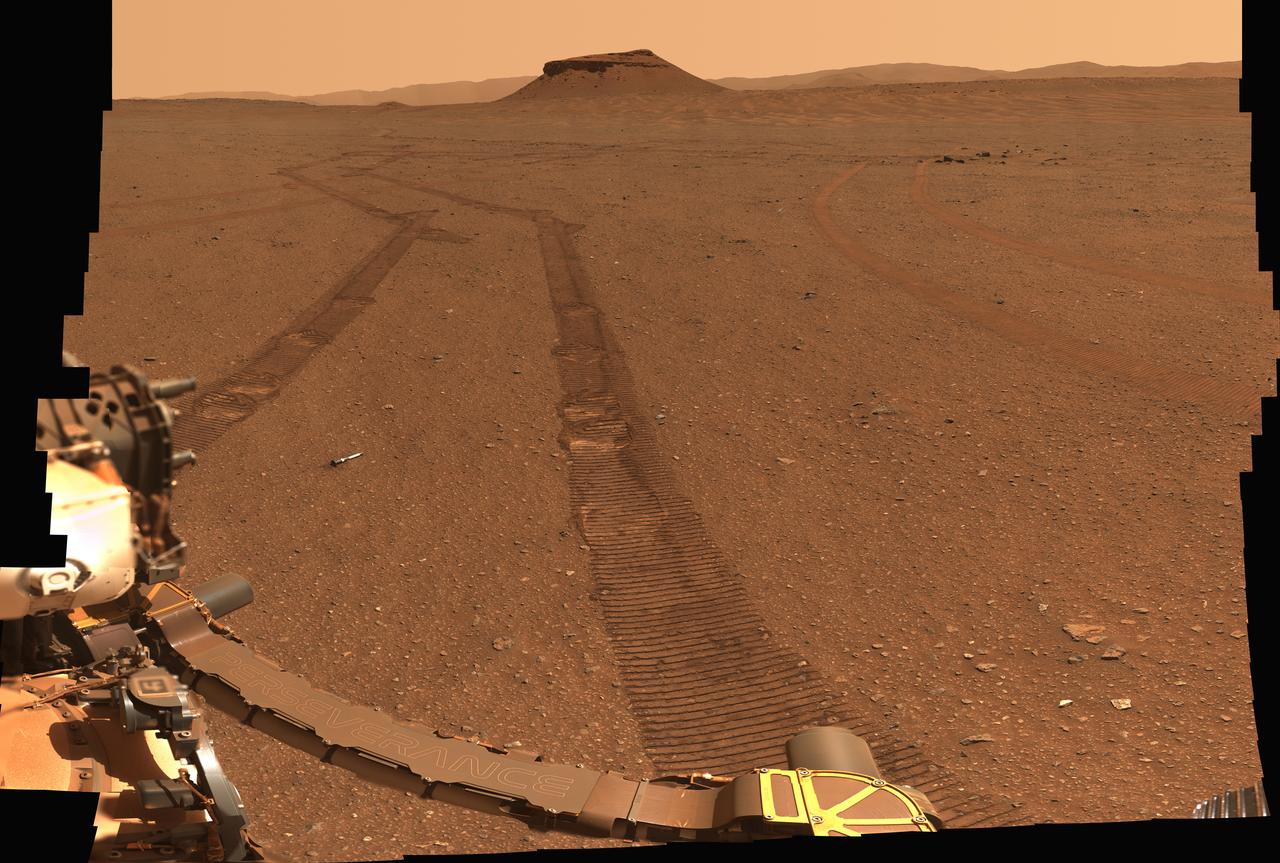
NASA's Perseverance Mars rover captured this portrait of its recently completed sample depot using its Mastcam-Z camera on Jan. 31, 2023, the 693rd Martian day, or sol, of the mission. This panorama is made up of 368 individual images that were stitched together after being sent back to Earth. The color in the scene has been adjusted to show the Martian surface as it would look to the human eye. Each sample tube is approximately 7 inches (18 centimeters) long and .8 inches (2 centimeters) in diameter. The "Amalik" sample closest to the rover was approximately 10 feet (3 meters) away from the camera at the time the image was taken. The "Atsah" and "Skyland" samples were approximately 66 feet (20 meters) away. "Bearwallow," "Coulettes," "Montdenier," "Crosswind Lake," and "Roubion" were approximately 115 to 164 feet (35 to 50 meters) away. "Mageik" and "Malay" were approximately 197 feet (60 meters) away. This is a natural-color view of the scene, showing the surface as it would appear to a human observer. Throughout its science campaigns, the rover has been taking a pair of samples from rocks the mission team deems scientifically significant. One sample from each pair taken so far now sits in the depot – along with one atmospheric sample and one "witness" tube – for a total of 10 tubes that were carefully arranged on the surface in a zigzag pattern. The depot is a crucial milestone in the NASA-ESA (European Space Agency) Mars Sample Return campaign, which aims to bring Mars samples to Earth for closer study. The Perseverance rover will be the primary means to hand off the collected samples to a future robotic lander as part of the campaign. The lander would, in turn, use a robotic arm to place the samples in a containment capsule aboard a small rocket that would blast off to Mars orbit, where another spacecraft would capture the sample container and return it safely to Earth. Hosting a duplicate set, the depot will serve as a backup if Perseverance can't deliver its samples. Perseverance built the depot at "Three Forks," a location within Mars' Jezero Crater. Billions of years ago, this crater was filled by a lake and delta. Sediment that built up in the delta formed a steep mound that Perseverance will be driving up in the months ahead to arrive at the top of the delta. Arizona State University leads the operations of the Mastcam-Z instrument, working in collaboration with Malin Space Science Systems in San Diego, on the design, fabrication, testing, and operation of the cameras, and in collaboration with the Neils Bohr Institute of the University of Copenhagen on the design, fabrication, and testing of the calibration targets. A key objective for Perseverance's mission on Mars is astrobiology, including the search for signs of ancient microbial life. The rover will characterize the planet's geology and past climate, pave the way for human exploration of the Red Planet, and be the first mission to collect and cache Martian rock and regolith (broken rock and dust). Subsequent NASA missions, in cooperation with ESA (European Space Agency), would send spacecraft to Mars to collect these sealed samples from the surface and return them to Earth for in-depth analysis. The Mars 2020 Perseverance mission is part of NASA's Moon to Mars exploration approach, which includes Artemis missions to the Moon that will help prepare for human exploration of the Red Planet. https://photojournal.jpl.nasa.gov/catalog/PIA25736

Over 600 middle school, high school, and college students from across the nation launched 30 high-powered rockets just north of NASA’s Marshall Space Flight Center in Huntsville, Alabama. This year marked the 26th anniversary of the competition. To compete, students follow the NASA engineering design lifecycle by going through a series of reviews for nine months leading up to launch day. Each year, a payload challenge is issued to the university teams, and this year’s task took inspiration from the agency’s Artemis missions, where NASA will send astronauts to explore the Moon for scientific discovery, economic benefit, and to build the foundation for the first crewed missions to Mars. Teams were challenged build and fly a STEMnaut Habitat for Agricultural Utilization Study (HAUS) that safely houses four STEMnauts, non-living objects representing astronauts. The habitat had to include equipment capable of both collecting and testing soil samples to support agricultural research operations.
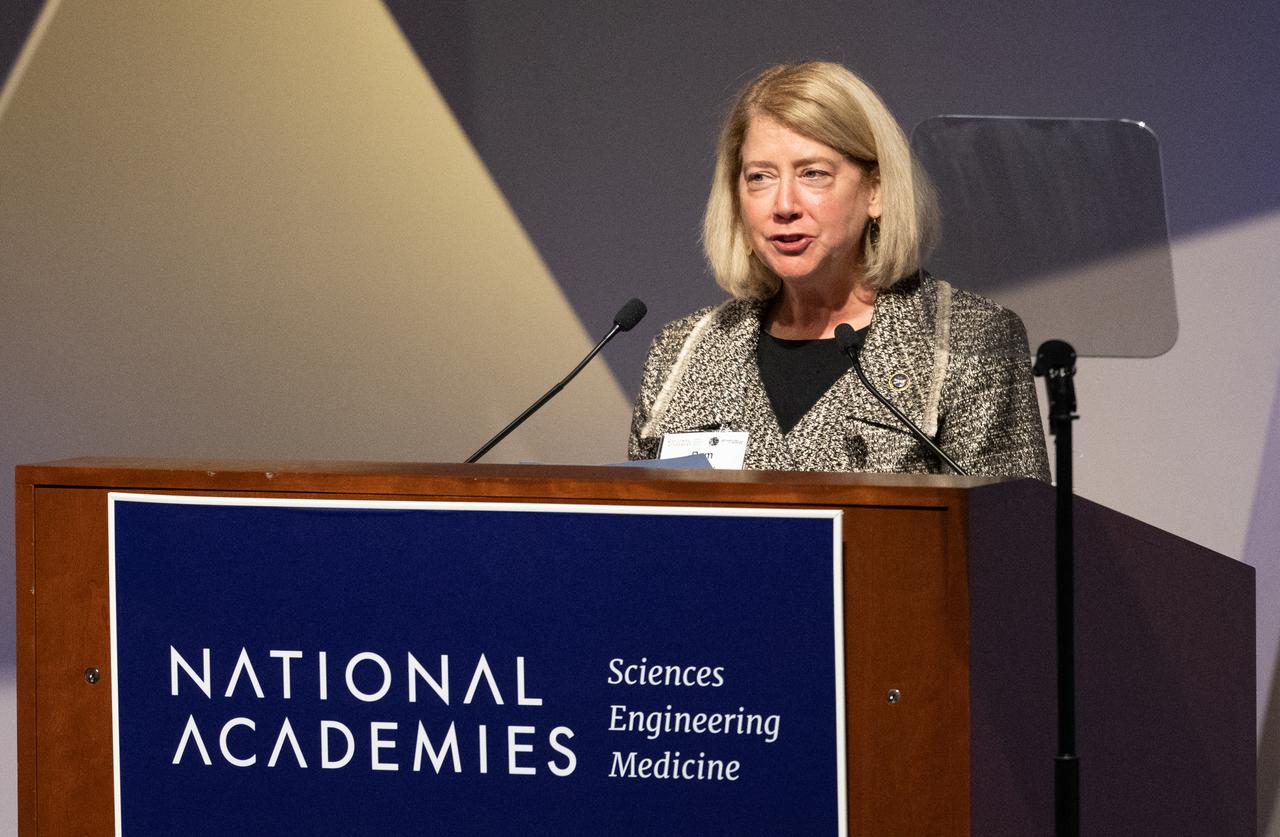
NASA Deputy Administrator Pam Melroy delivers remarks during an event celebrating the 50th anniversary of the Apollo 17 mission, Wednesday, Dec. 14, 2022, at the National Academies of Science in Washington. The three-astronaut crew of Apollo 17 - commander Eugene Cernan, lunar module pilot Harrison Schmitt, and command module pilot Ronald Evans, embarked on the last mission of the Apollo program to land humans on the Moon in December of 1972. Cernan and Schmitt spent three days on the lunar surface collecting samples and performing scientific experiments before lifting off from the Taurus-Littrow Valley on December 14, 1972. Photo Credit: (NASA/Joel Kowsky)
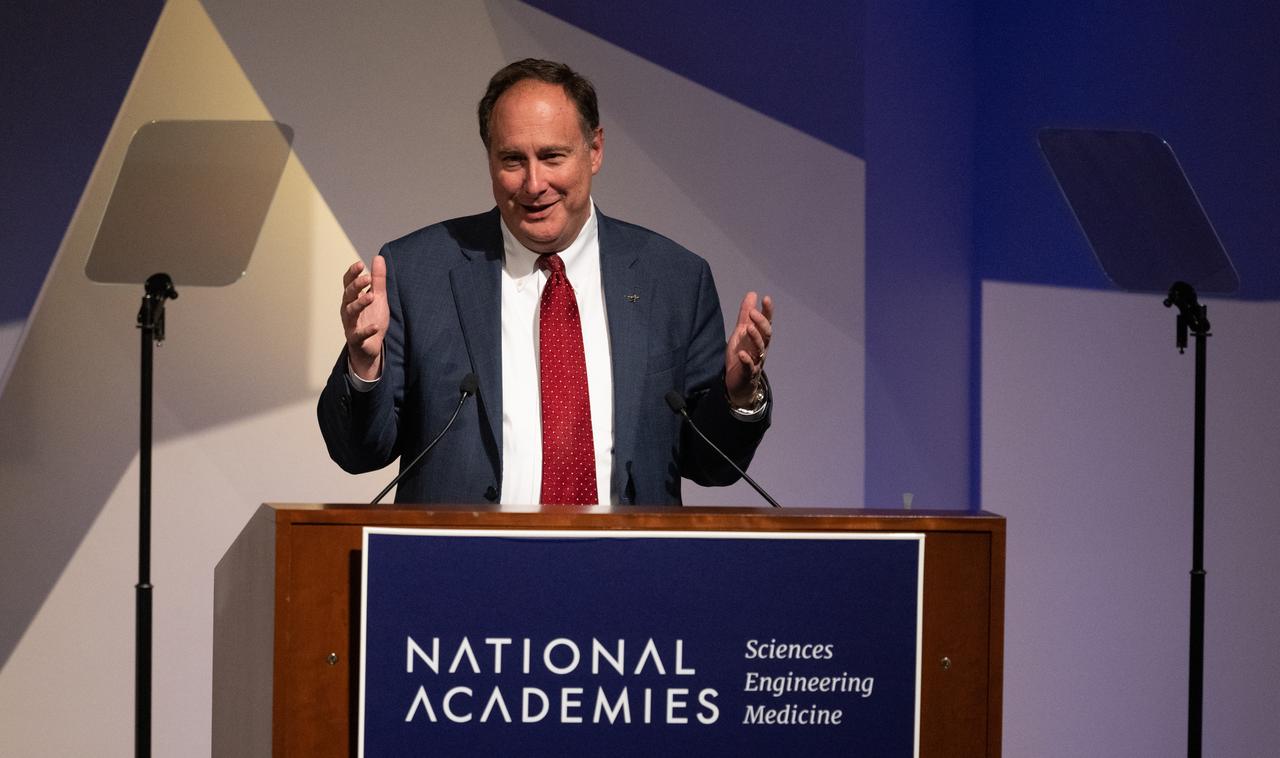
Robert Lightfoot, executive vice president of Lockheed Martin Space, speaks during an event celebrating the 50th anniversary of the Apollo 17 mission, Wednesday, Dec. 14, 2022, at the National Academies of Science in Washington. The three-astronaut crew of Apollo 17 - commander Eugene Cernan, lunar module pilot Harrison Schmitt, and command module pilot Ronald Evans, embarked on the last mission of the Apollo program to land humans on the Moon in December of 1972. Cernan and Schmitt spent three days on the lunar surface collecting samples and performing scientific experiments before lifting off from the Taurus-Littrow Valley on December 14, 1972. Photo Credit: (NASA/Joel Kowsky)
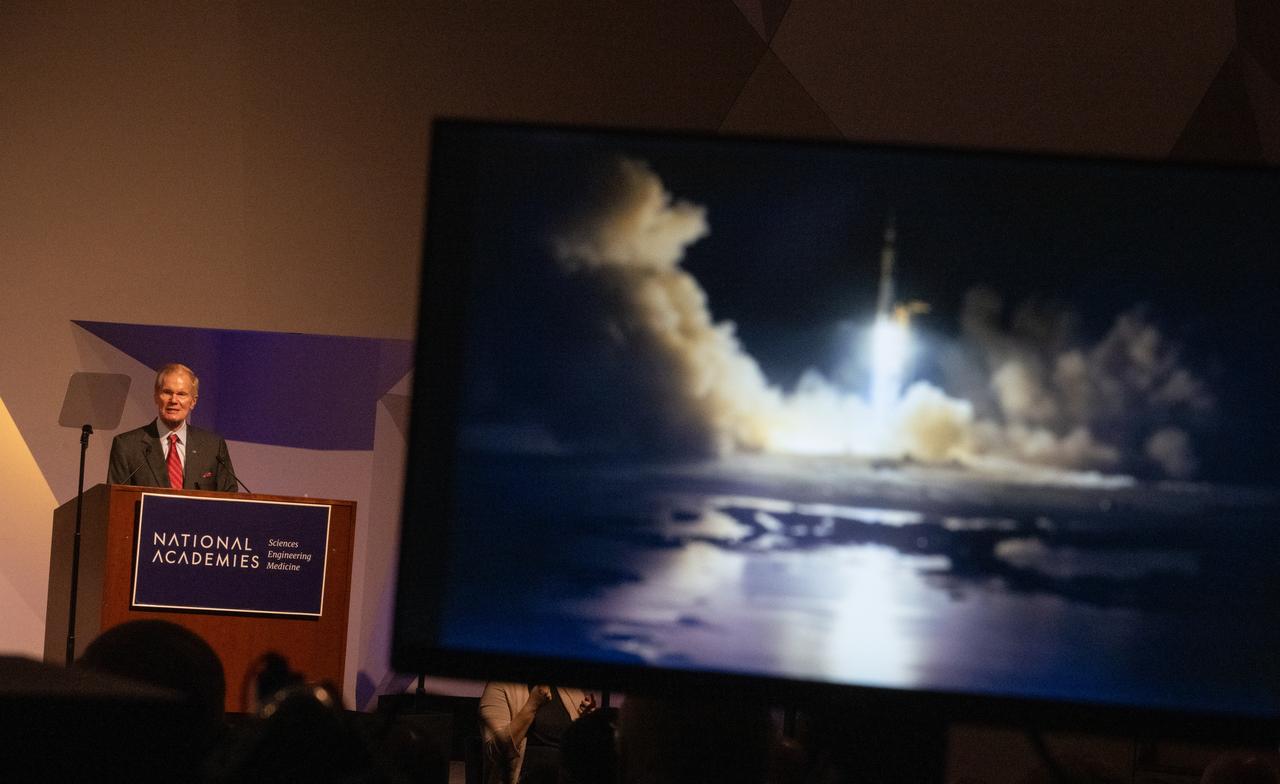
NASA Administrator Bill Nelson delivers remarks during an event celebrating the 50th anniversary of the Apollo 17 mission, Wednesday, Dec. 14, 2022, at the National Academies of Science in Washington. The three-astronaut crew of Apollo 17 - commander Eugene Cernan, lunar module pilot Harrison Schmitt, and command module pilot Ronald Evans, embarked on the last mission of the Apollo program to land humans on the Moon in December of 1972. Cernan and Schmitt spent three days on the lunar surface collecting samples and performing scientific experiments before lifting off from the Taurus-Littrow Valley on December 14, 1972. Photo Credit: (NASA/Joel Kowsky)
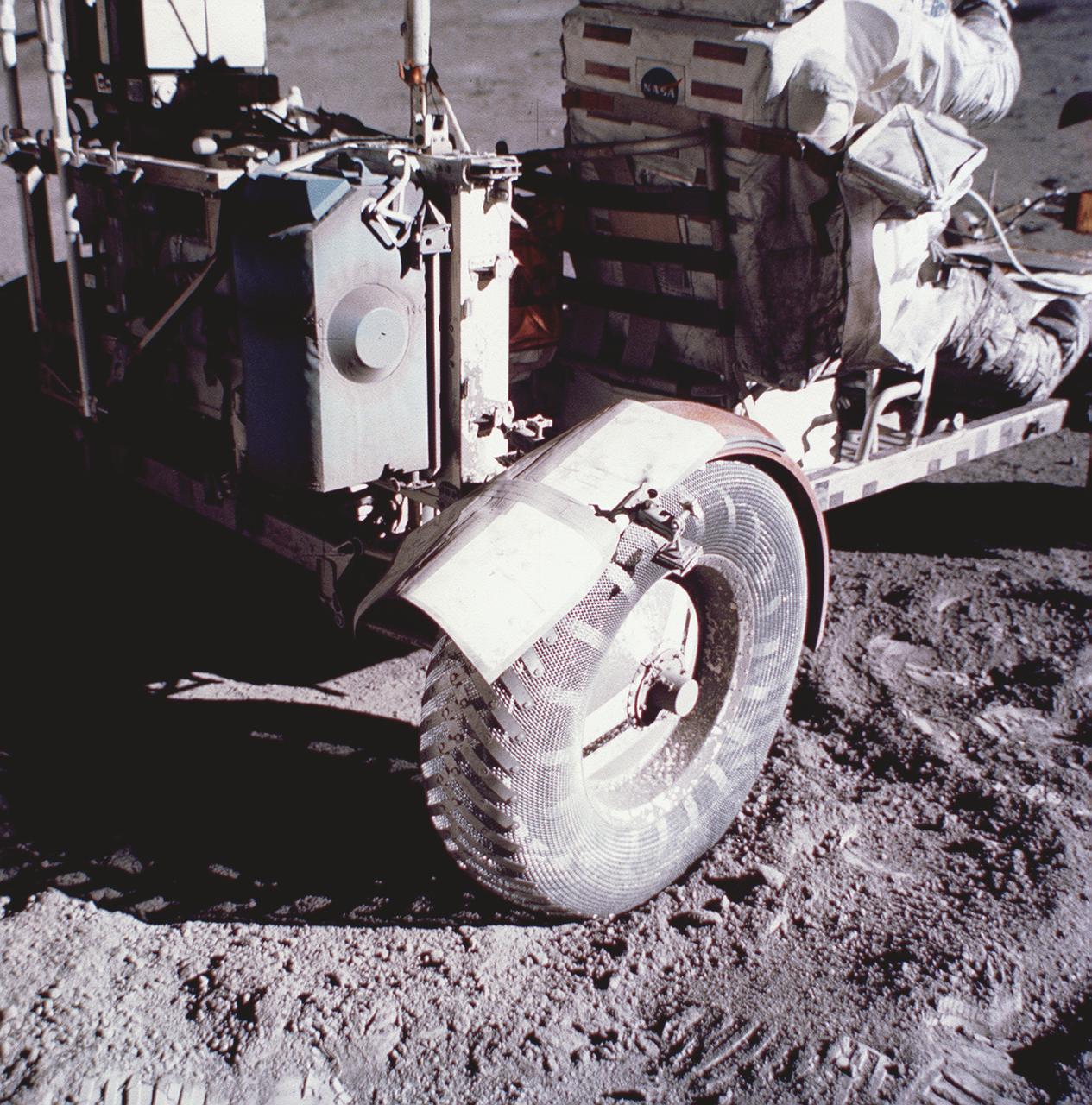
This photograph taken during the Apollo 17 mission (the last mission of the Apollo Program), depicts stiff plasticized maps being taped together and fastened by clamps to patch a broken fender of the Lunar Roving Vehicle (LRV). Powered by battery, the lightweight electric car greatly increased the range of mobility and productivity on the scientific traverses for astronauts. It weighed 462 pounds (77 pounds on the Moon) and could carry two suited astronauts, their gear and cameras, and several hundred pounds of bagged samples. The LRV's mobility was quite high. It could climb and descend slopes of about 25 degrees. The LRV was designed and developed by the Marshall Space Flight Center and built by the Boeing Company.
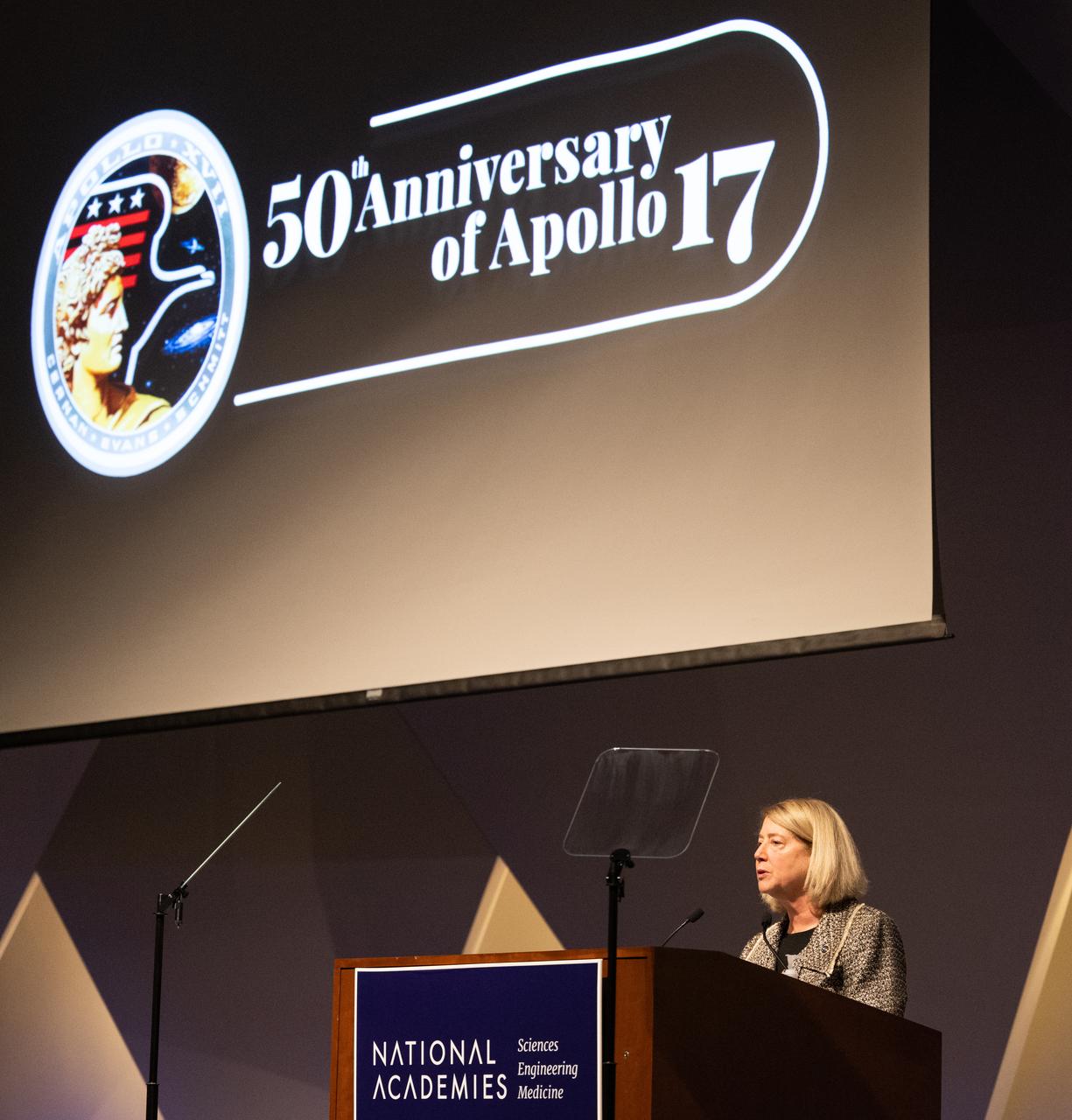
NASA Deputy Administrator Pam Melroy delivers remarks during an event celebrating the 50th anniversary of the Apollo 17 mission, Wednesday, Dec. 14, 2022, at the National Academies of Science in Washington. The three-astronaut crew of Apollo 17 - commander Eugene Cernan, lunar module pilot Harrison Schmitt, and command module pilot Ronald Evans, embarked on the last mission of the Apollo program to land humans on the Moon in December of 1972. Cernan and Schmitt spent three days on the lunar surface collecting samples and performing scientific experiments before lifting off from the Taurus-Littrow Valley on December 14, 1972. Photo Credit: (NASA/Joel Kowsky)
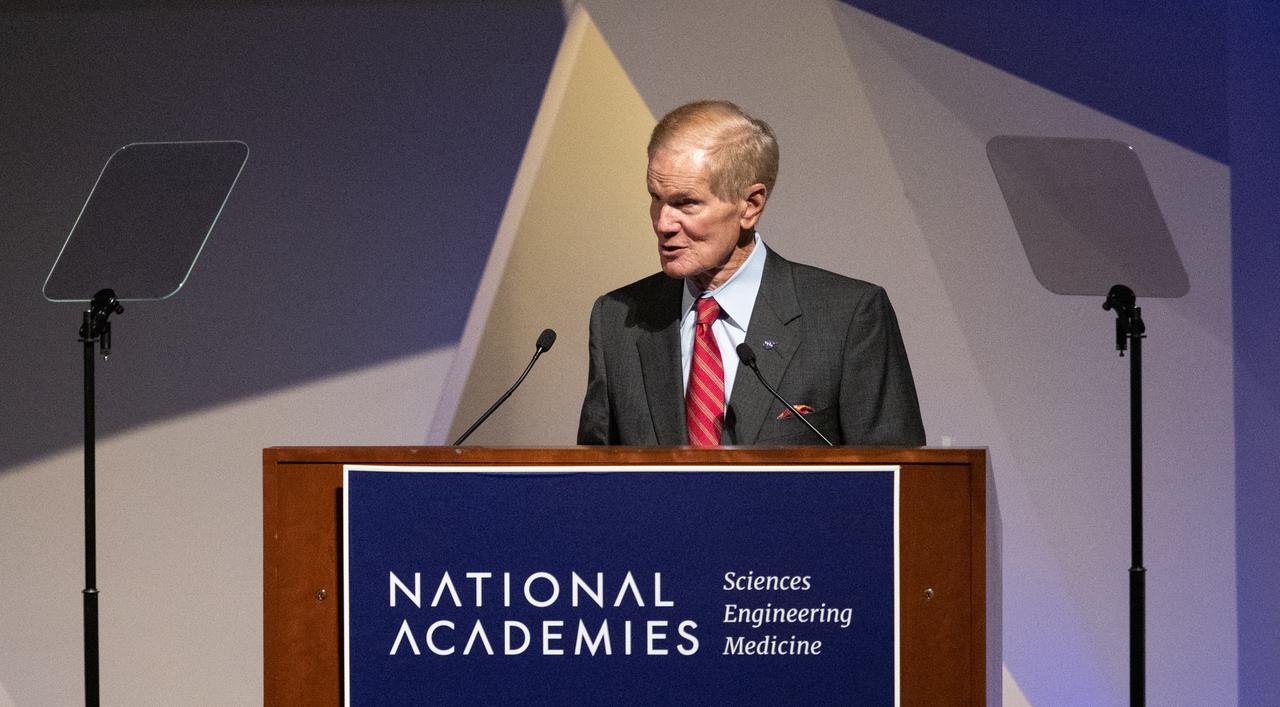
NASA Administrator Bill Nelson delivers remarks during an event celebrating the 50th anniversary of the Apollo 17 mission, Wednesday, Dec. 14, 2022, at the National Academies of Science in Washington. The three-astronaut crew of Apollo 17 - commander Eugene Cernan, lunar module pilot Harrison Schmitt, and command module pilot Ronald Evans, embarked on the last mission of the Apollo program to land humans on the Moon in December of 1972. Cernan and Schmitt spent three days on the lunar surface collecting samples and performing scientific experiments before lifting off from the Taurus-Littrow Valley on December 14, 1972. Photo Credit: (NASA/Joel Kowsky)
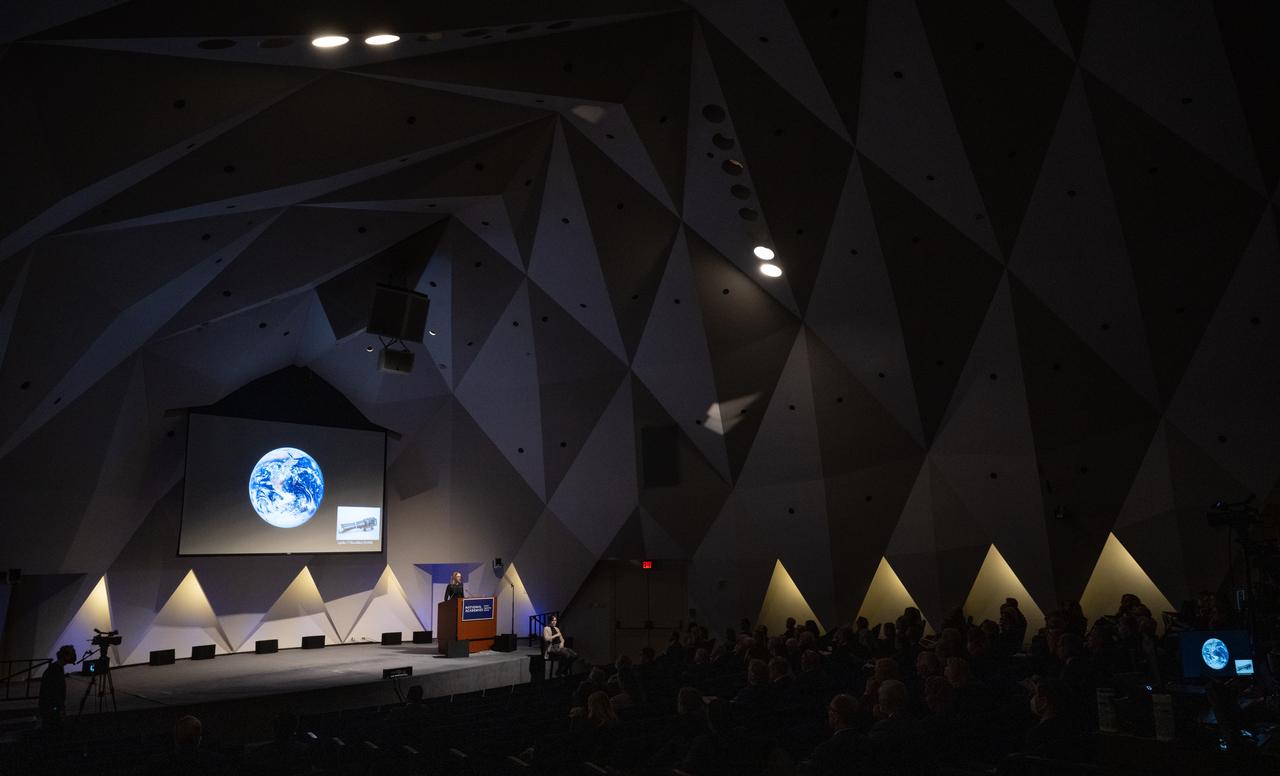
Teasel Muir-Harmony, curator of the Apollo collection at the Smithsonian National Air and Space Museum, speaks during an event celebrating the 50th anniversary of the Apollo 17 mission, Wednesday, Dec. 14, 2022, at the National Academies of Science in Washington. The three-astronaut crew of Apollo 17 - commander Eugene Cernan, lunar module pilot Harrison Schmitt, and command module pilot Ronald Evans, embarked on the last mission of the Apollo program to land humans on the Moon in December of 1972. Cernan and Schmitt spent three days on the lunar surface collecting samples and performing scientific experiments before lifting off from the Taurus-Littrow Valley on December 14, 1972. Photo Credit: (NASA/Joel Kowsky)
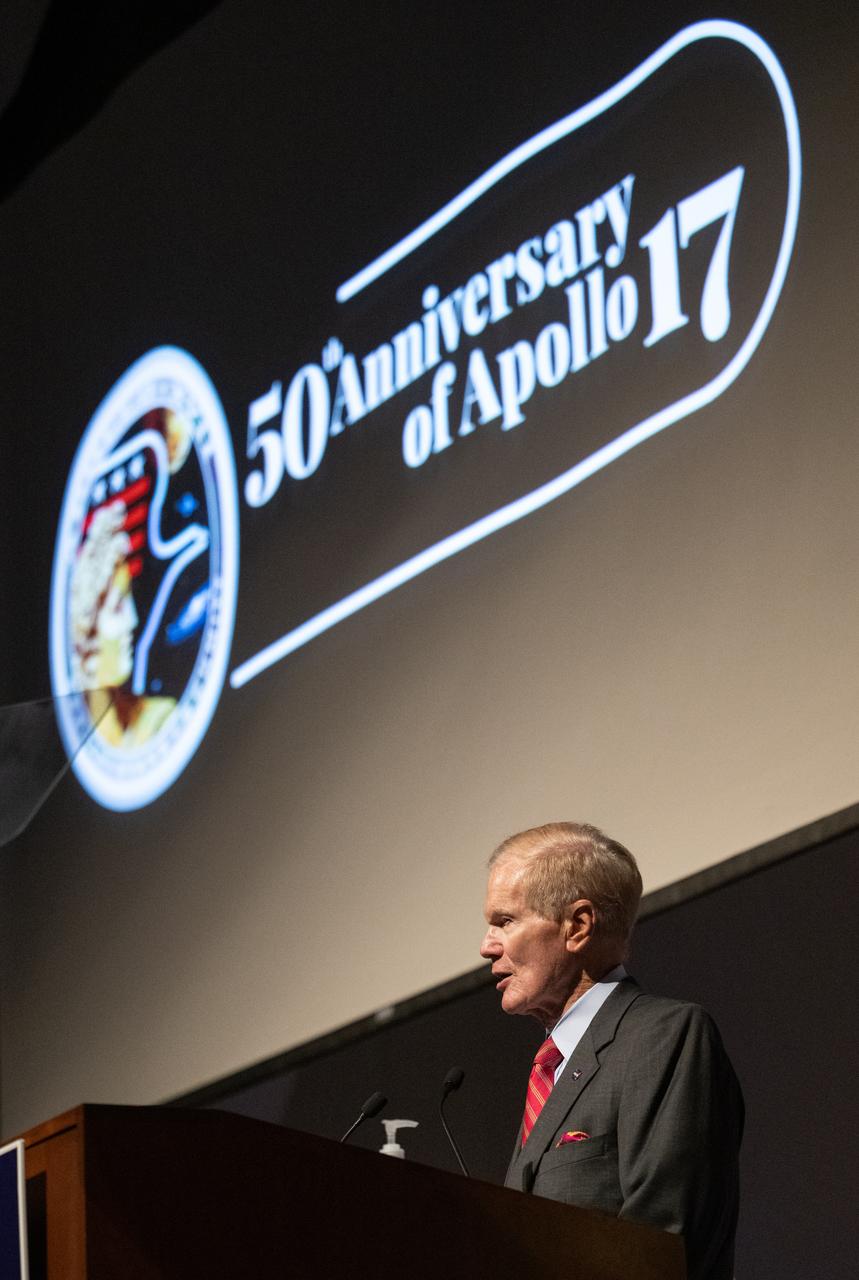
NASA Administrator Bill Nelson delivers remarks during an event celebrating the 50th anniversary of the Apollo 17 mission, Wednesday, Dec. 14, 2022, at the National Academies of Science in Washington. The three-astronaut crew of Apollo 17 - commander Eugene Cernan, lunar module pilot Harrison Schmitt, and command module pilot Ronald Evans, embarked on the last mission of the Apollo program to land humans on the Moon in December of 1972. Cernan and Schmitt spent three days on the lunar surface collecting samples and performing scientific experiments before lifting off from the Taurus-Littrow Valley on December 14, 1972. Photo Credit: (NASA/Joel Kowsky)
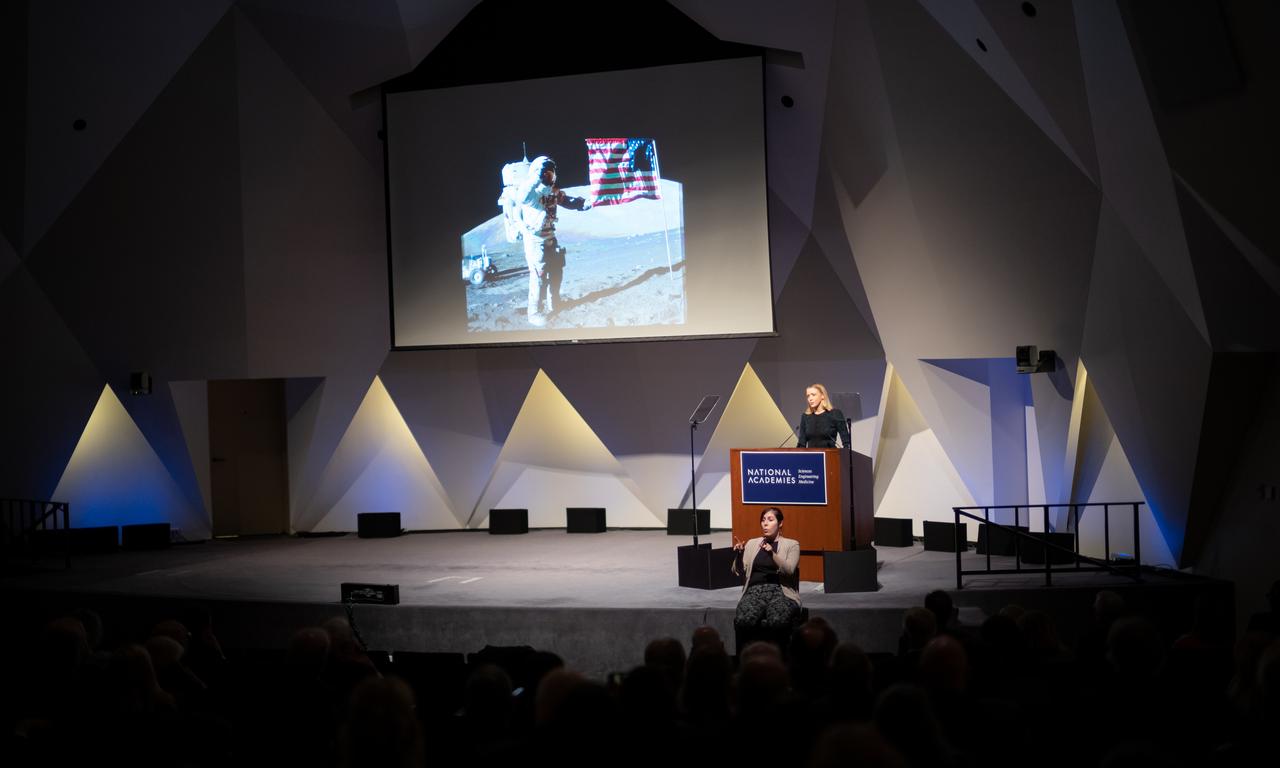
Teasel Muir-Harmony, curator of the Apollo collection at the Smithsonian National Air and Space Museum speaks during an event celebrating the 50th anniversary of the Apollo 17 mission, Wednesday, Dec. 14, 2022, at the National Academies of Science in Washington. The three-astronaut crew of Apollo 17 - commander Eugene Cernan, lunar module pilot Harrison Schmitt, and command module pilot Ronald Evans, embarked on the last mission of the Apollo program to land humans on the Moon in December of 1972. Cernan and Schmitt spent three days on the lunar surface collecting samples and performing scientific experiments before lifting off from the Taurus-Littrow Valley on December 14, 1972. Photo Credit: (NASA/Joel Kowsky)
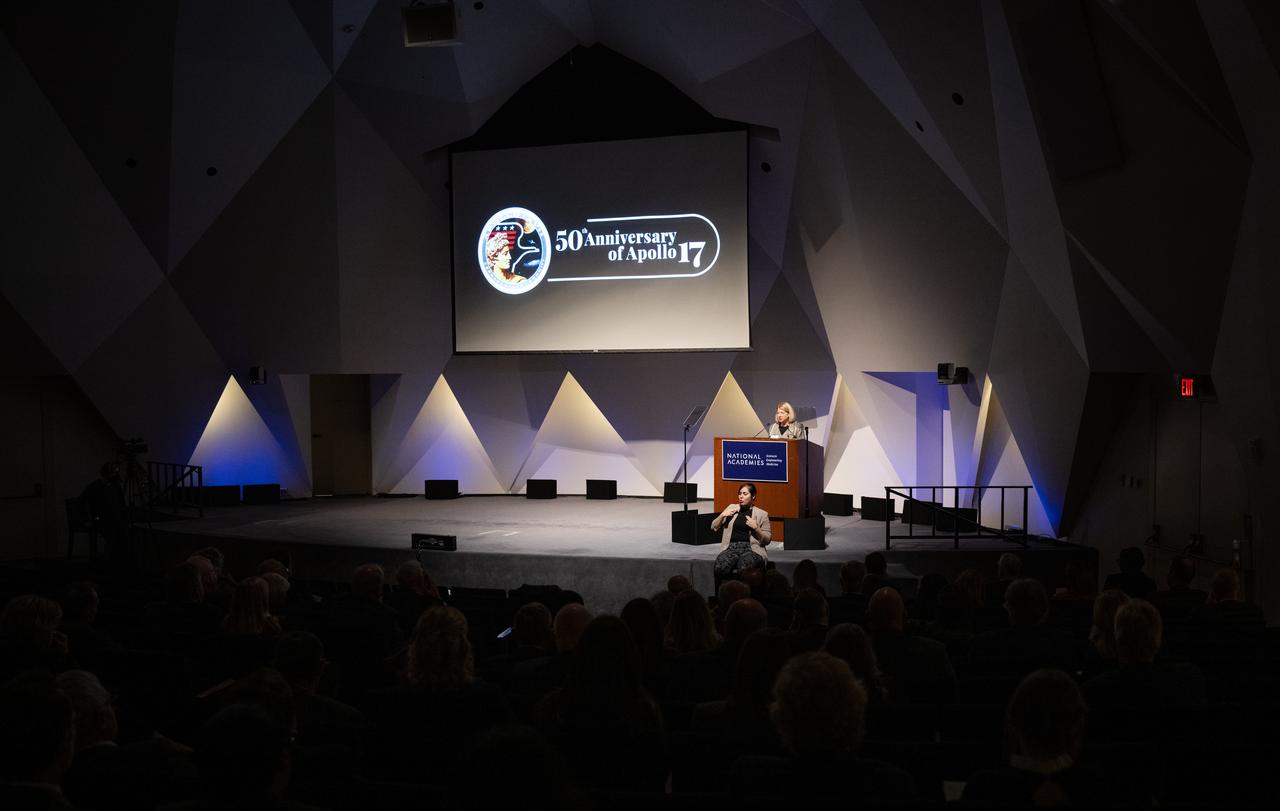
NASA Deputy Administrator Pam Melroy delivers remarks during an event celebrating the 50th anniversary of the Apollo 17 mission, Wednesday, Dec. 14, 2022, at the National Academies of Science in Washington. The three-astronaut crew of Apollo 17 - commander Eugene Cernan, lunar module pilot Harrison Schmitt, and command module pilot Ronald Evans, embarked on the last mission of the Apollo program to land humans on the Moon in December of 1972. Cernan and Schmitt spent three days on the lunar surface collecting samples and performing scientific experiments before lifting off from the Taurus-Littrow Valley on December 14, 1972. Photo Credit: (NASA/Joel Kowsky)
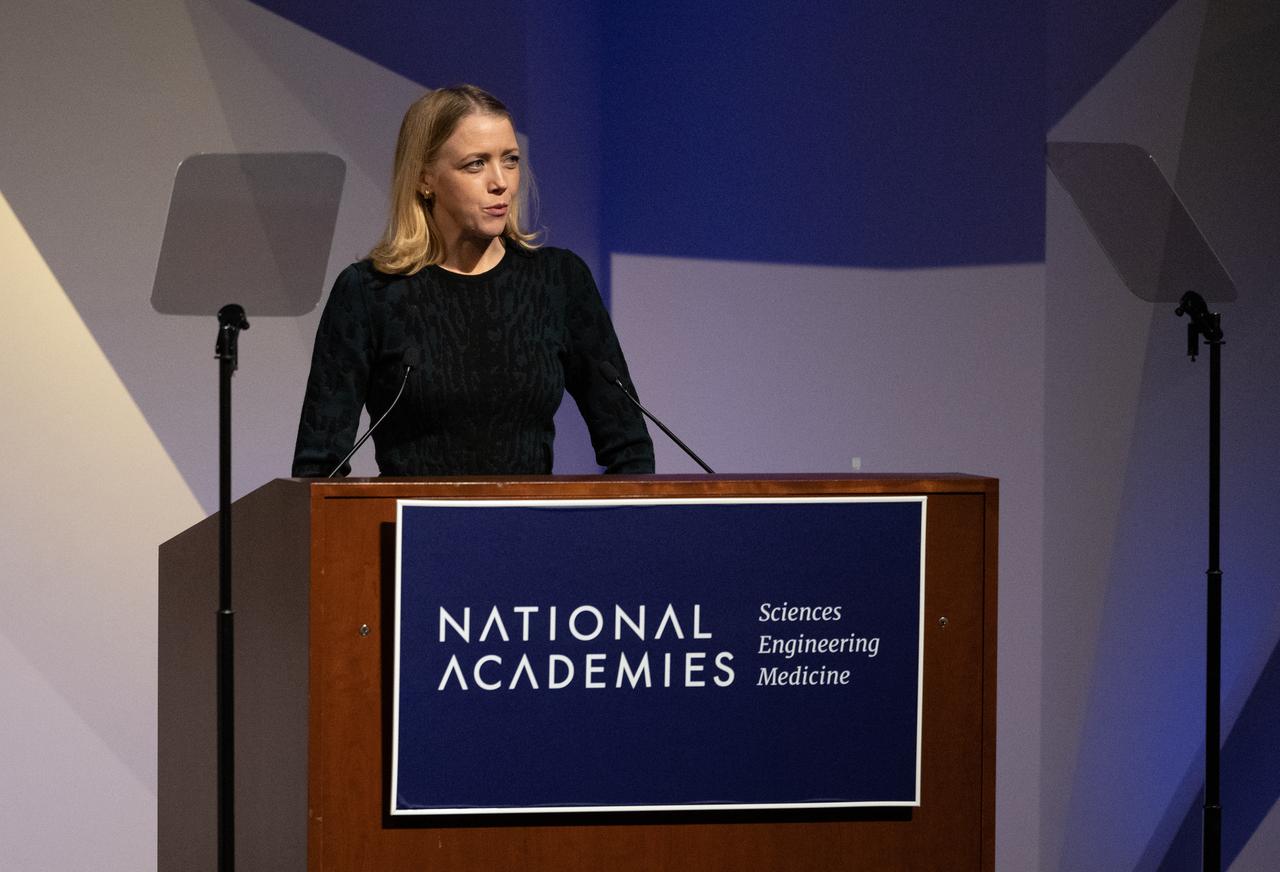
Teasel Muir-Harmony, curator of the Apollo collection at the Smithsonian National Air and Space Museum, speaks during an event celebrating the 50th anniversary of the Apollo 17 mission, Wednesday, Dec. 14, 2022, at the National Academies of Science in Washington. The three-astronaut crew of Apollo 17 - commander Eugene Cernan, lunar module pilot Harrison Schmitt, and command module pilot Ronald Evans, embarked on the last mission of the Apollo program to land humans on the Moon in December of 1972. Cernan and Schmitt spent three days on the lunar surface collecting samples and performing scientific experiments before lifting off from the Taurus-Littrow Valley on December 14, 1972. Photo Credit: (NASA/Joel Kowsky)
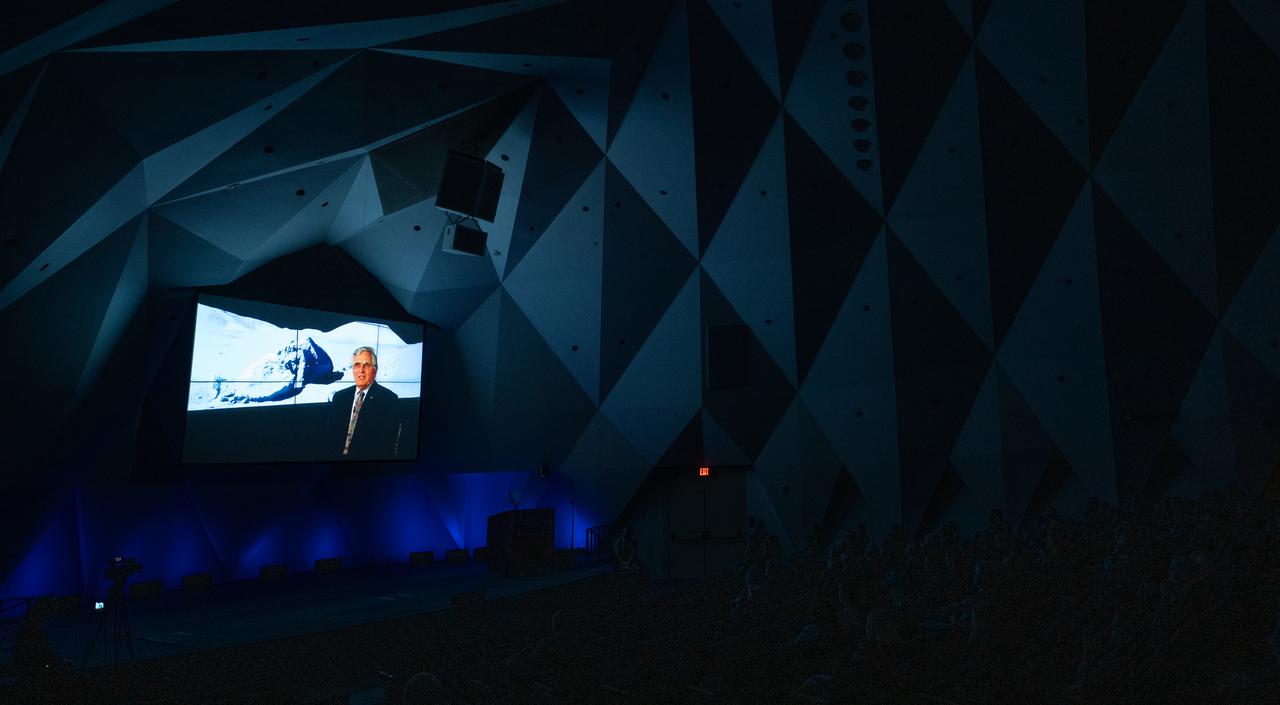
Apollo 17 astronaut Harrison Schmitt is seen in a video during an event celebrating the 50th anniversary of the Apollo 17 mission, Wednesday, Dec. 14, 2022, at the National Academies of Science in Washington. The three-astronaut crew of Apollo 17 - commander Eugene Cernan, lunar module pilot Harrison Schmitt, and command module pilot Ronald Evans, embarked on the last mission of the Apollo program to land humans on the Moon in December of 1972. Cernan and Schmitt spent three days on the lunar surface collecting samples and performing scientific experiments before lifting off from the Taurus-Littrow Valley on December 14, 1972. Photo Credit: (NASA/Joel Kowsky)
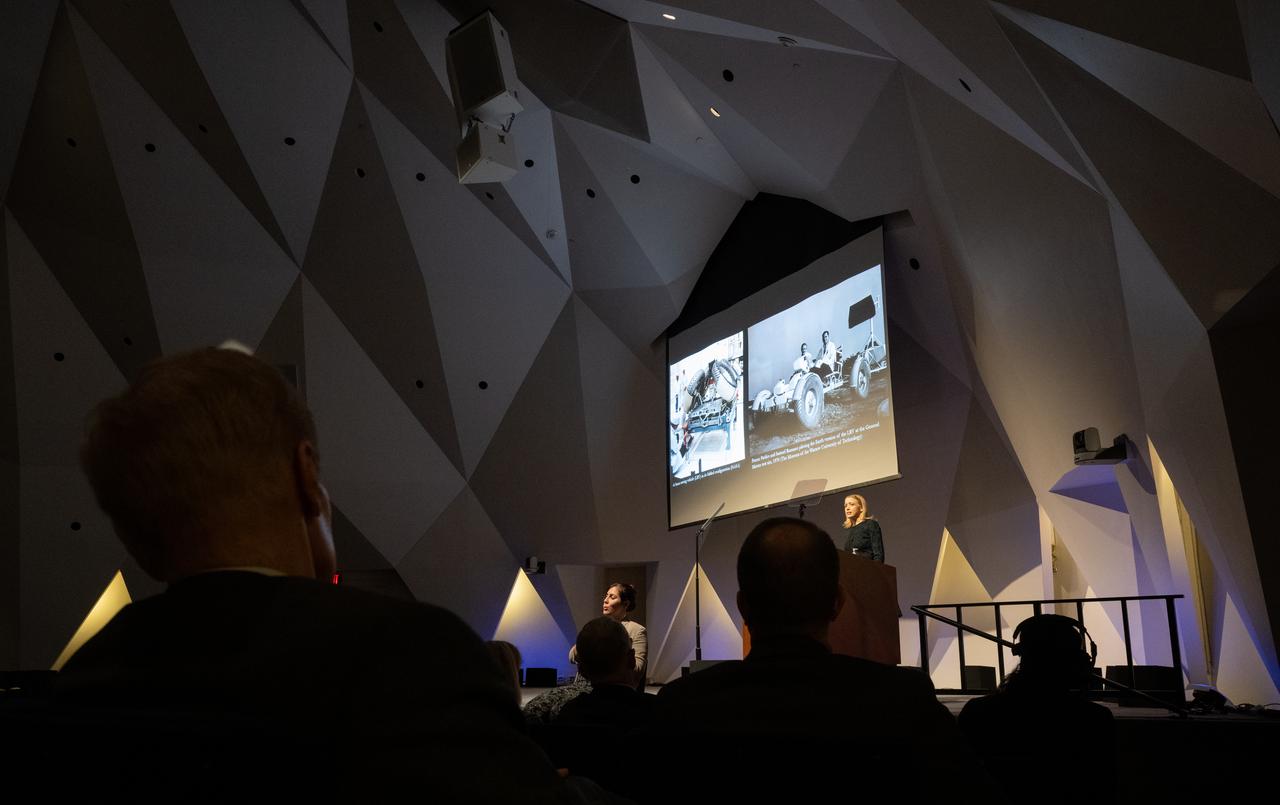
Teasel Muir-Harmony, curator of the Apollo collection at the Smithsonian National Air and Space Museum, speaks during an event celebrating the 50th anniversary of the Apollo 17 mission, Wednesday, Dec. 14, 2022, at the National Academies of Science in Washington. The three-astronaut crew of Apollo 17 - commander Eugene Cernan, lunar module pilot Harrison Schmitt, and command module pilot Ronald Evans, embarked on the last mission of the Apollo program to land humans on the Moon in December of 1972. Cernan and Schmitt spent three days on the lunar surface collecting samples and performing scientific experiments before lifting off from the Taurus-Littrow Valley on December 14, 1972. Photo Credit: (NASA/Joel Kowsky)
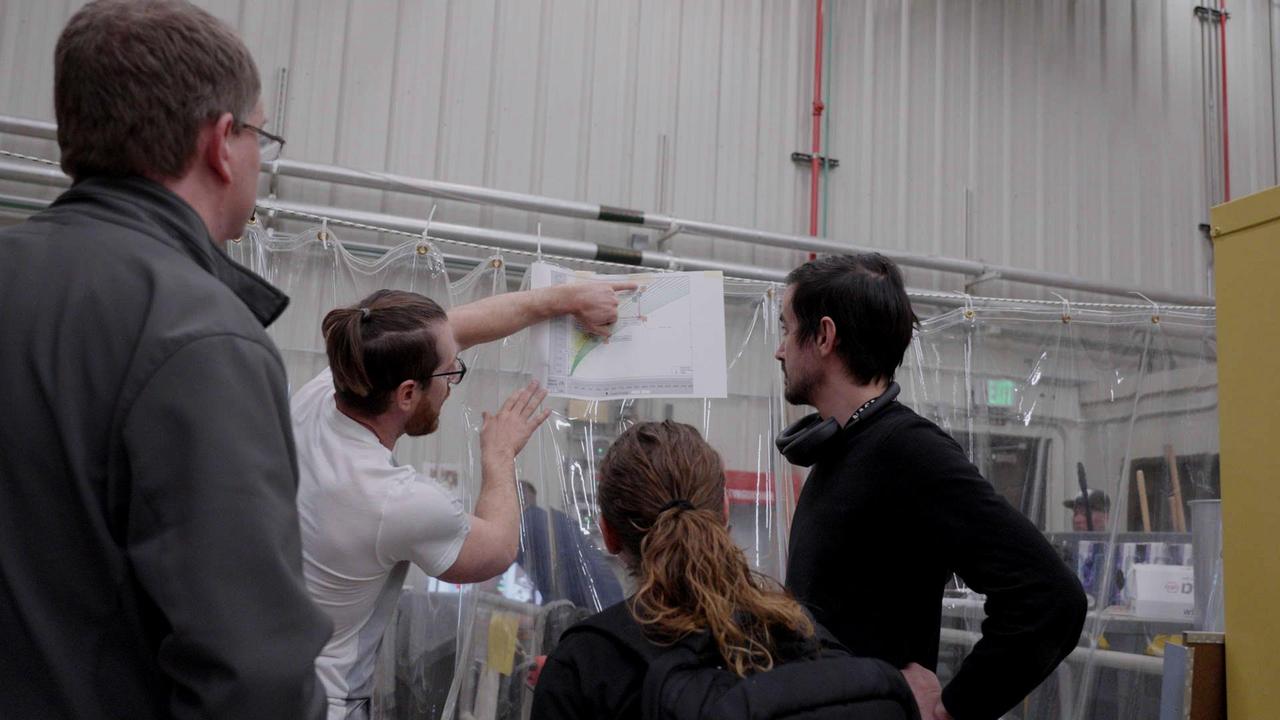
Patrick DeGrosse and fellow engineers at NASA's Jet Propulsion Laboratory review data from a recent test of a full-size footpad for a future Mars lander. The 16-inch-diameter (40-centimeter-diameter) footpad was plunged into a test bed filled with 10,000 pounds (4,536 kilograms) of simulated Martian soil in order to see how deep it would sink – too far, and the lander's belly could scrape against the ground during touchdown, damaging it. The Sample Retrieval Lander, which would be central to NASA's Mars Sample Return campaign, is estimated to weigh as much as 5,016 pounds (2,275 kilograms). It would be the heaviest spacecraft ever to land on the Red Planet. In order to understand how energy would be absorbed during the landing of such a massive spacecraft, JPL engineers have been conducting these footpad drop tests. Mars Sample Return will revolutionize our understanding of Mars by bringing scientifically selected samples to Earth for study using the most sophisticated instrumentation around the world. NASA's planned Mars Sample Return (MSR) campaign would fulfill one of the highest priority solar system exploration goals identified by the National Academies of Sciences, Engineering and Medicine in the past three decadal surveys. This strategic partnership with the ESA (European Space Agency) features the first mission to return samples from another planet, including the first launch from the surface of another planet. The samples being collected by NASA's Perseverance rover during its exploration of an ancient river delta are thought to be the best opportunity to reveal the early evolution of Mars, including the potential for ancient life. https://photojournal.jpl.nasa.gov/catalog/PIA25826
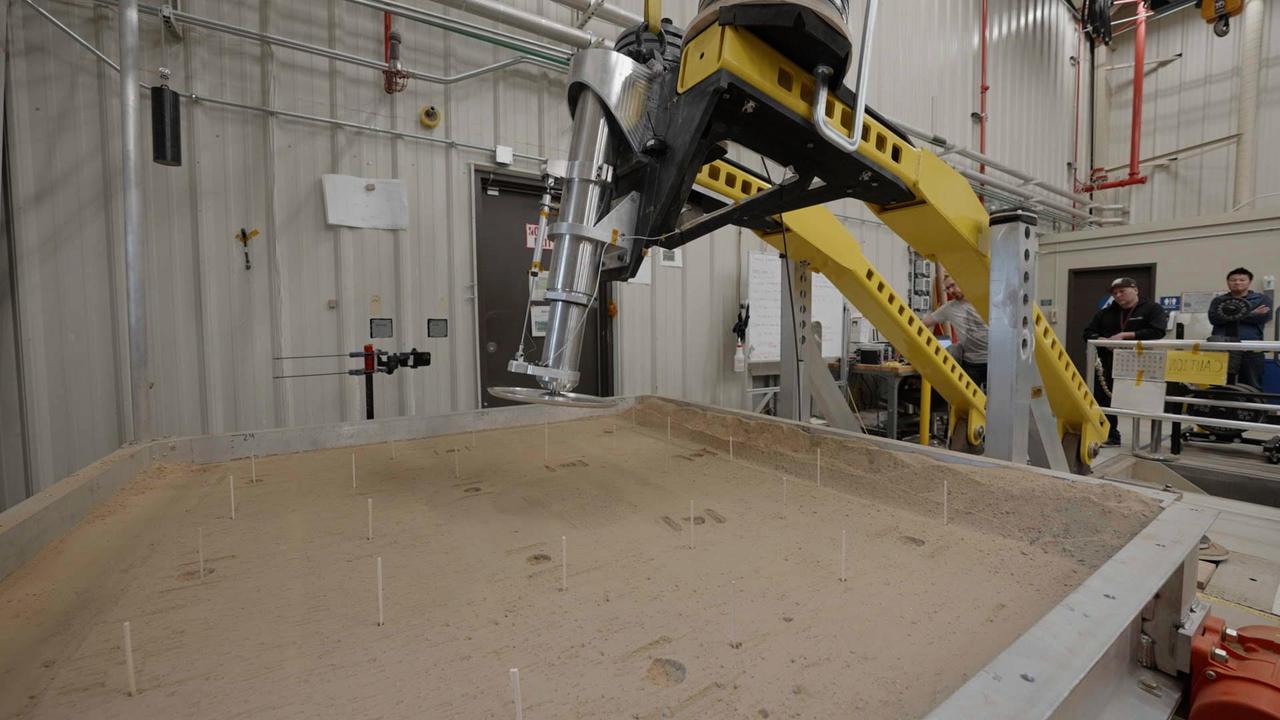
This setup is being used at NASA's Jet Propulsion Laboratory to test a 16-inch-diameter (40-centimeter-diameter) footpad for a future Mars lander. The footpad was plunged into a test bed filled with 10,000 pounds (4,536 kilograms) of simulated Martian soil in order to see how deep it would sink – too far, and the lander's belly could scrape against the ground during touchdown, damaging it. The Sample Retrieval Lander, which would be central to NASA's Mars Sample Return campaign, is estimated to weigh as much as 5,016 pounds (2,275 kilograms). It would be the heaviest spacecraft ever to land on the Red Planet. In order to understand how energy would be absorbed during the landing of such a massive spacecraft, JPL engineers have been conducting drop tests of a full-size footpad. Mars Sample Return will revolutionize our understanding of Mars by bringing scientifically selected samples to Earth for study using the most sophisticated instrumentation around the world. NASA's planned Mars Sample Return (MSR) campaign would fulfill one of the highest priority solar system exploration goals identified by the National Academies of Sciences, Engineering and Medicine in the past three decadal surveys. This strategic partnership with the ESA (European Space Agency) features the first mission to return samples from another planet, including the first launch from the surface of another planet. The samples being collected by NASA's Perseverance rover during its exploration of an ancient river delta are thought to be the best opportunity to reveal the early evolution of Mars, including the potential for ancient life. https://photojournal.jpl.nasa.gov/catalog/PIA25824
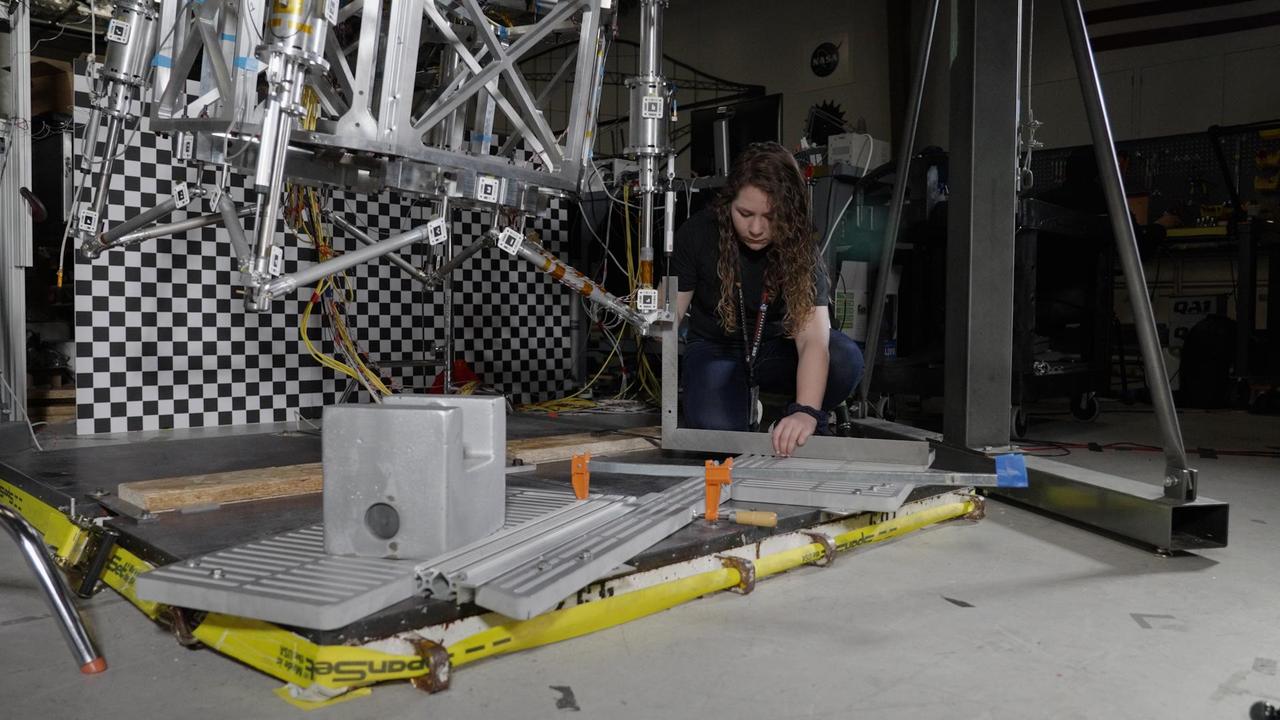
Morgan Montalvo, an engineer at NASA's Jet Propulsion Laboratory, sets guardrails on the floor below a prototype of the lander being designed for the agency's Mars Sample Return campaign. These guardrails were used to test a scenario where the lander would "stub a toe" against a rock while touching down on Mars. The Sample Retrieval Lander, estimated to weigh as much as 5,016 pounds (2,275 kilograms), would be the heaviest spacecraft ever to land on the Red Planet. To study the physics involved in landing such a massive spacecraft, engineers have been testing a lander prototype that's about one-third the size it would be on Mars. Mars Sample Return will revolutionize our understanding of Mars by bringing scientifically selected samples to Earth for study using the most sophisticated instrumentation around the world. NASA's planned Mars Sample Return (MSR) campaign would fulfill one of the highest priority solar system exploration goals identified by the National Academies of Sciences, Engineering and Medicine in the past three decadal surveys. This strategic partnership with the ESA (European Space Agency) features the first mission to return samples from another planet, including the first launch from the surface of another planet. The samples being collected by NASA's Perseverance rover during its exploration of an ancient river delta are thought to be the best opportunity to reveal the early evolution of Mars, including the potential for ancient life. https://photojournal.jpl.nasa.gov/catalog/PIA25823
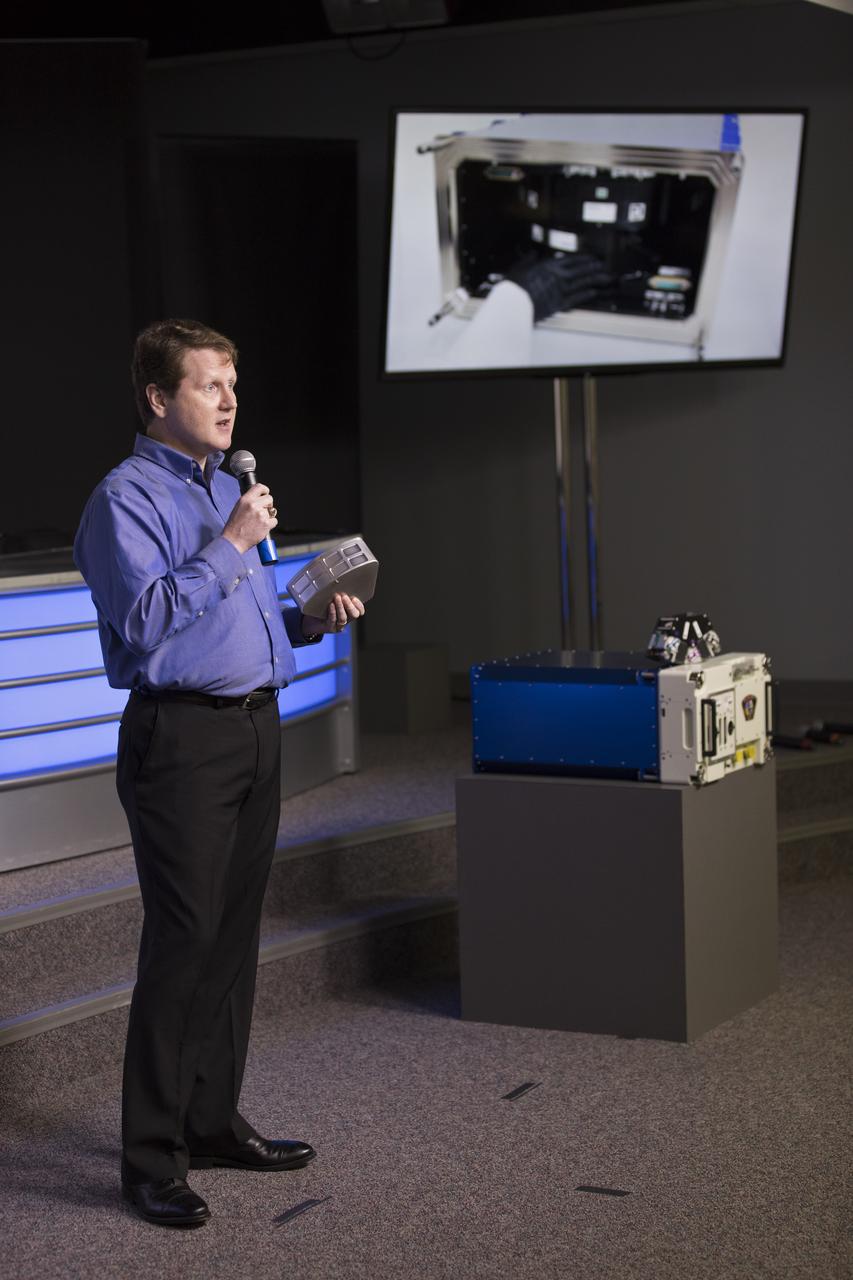
Rich Boling, vice president for corporate advancement at Techshot Inc., discusses the Multi-purpose Variable-g Platform, developed, owned and operated by Techshot. The new test bed will be able to host six separate experiment modules with samples such as plants, cells, protein crystals and fruit flies. The test bed is one of the scientific investigations that will be aboard a Dragon spacecraft scheduled for liftoff from Cape Canaveral Air Force Station's Space Launch Complex 40 at 4:30 p.m. EST, on April 2, 2018. The SpaceX Falcon 9 rocket will launch the company's 14th Commercial Resupply Services mission to the space station.
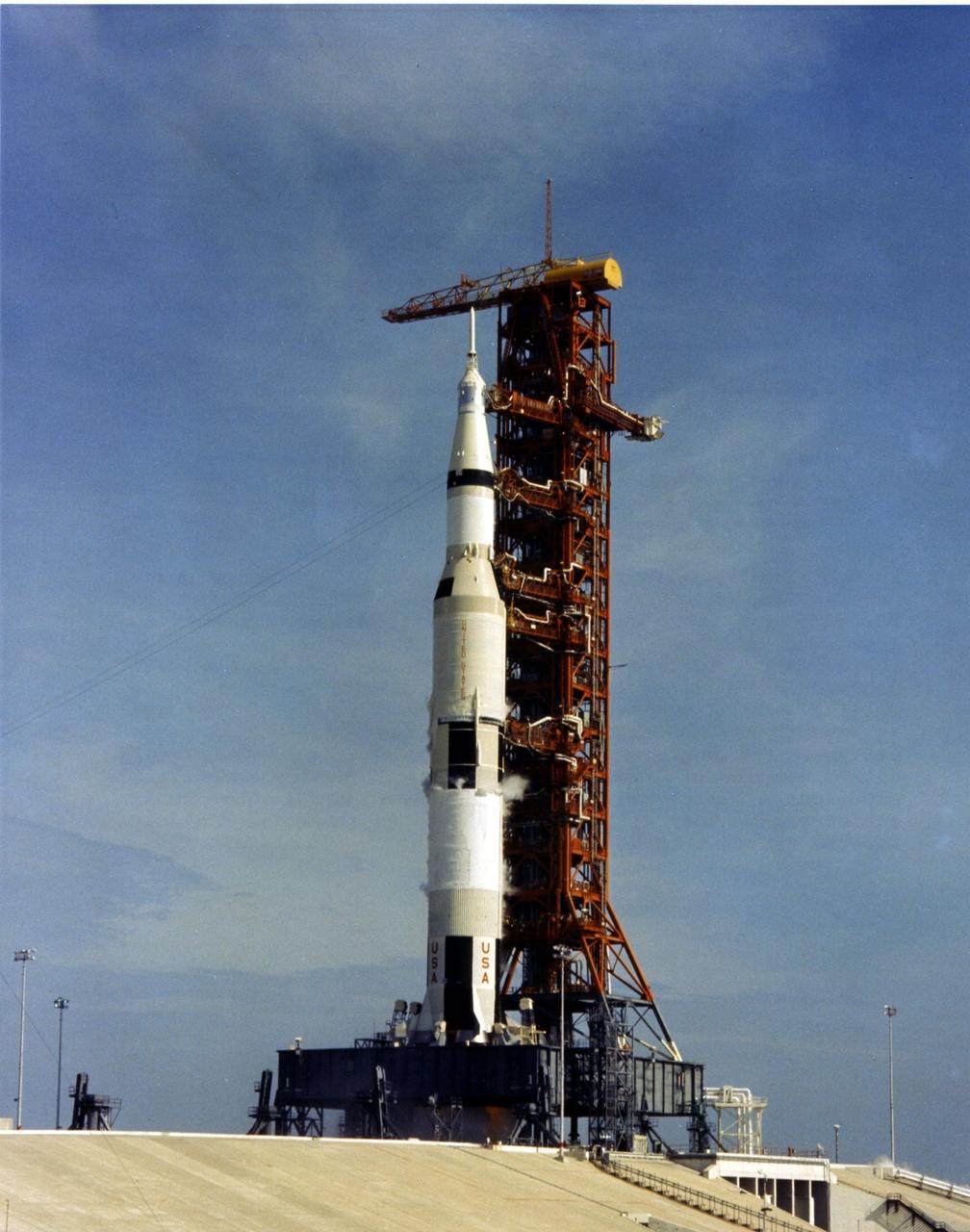
KENNEDY SPACE CENTER, FLA. -- The Apollo 11 Saturn V space vehicle, at Launch Pad 39A, awaits the liftoff scheduled for 9:32 a.m. EDT today, along with astronauts Neil A. Armstrong, Michael Collins and Edwin E. Aldrin Jr. During the planned eight-day mission, Armstrong and Aldrin will descend in a lunar module to the Moon's surface while Collins orbits overhead in the command module. The two astronauts are to spend 22 hours on the Moon, including two and one-half hours outside the lunar module. They will gather samples of lunar material and will deploy scientific experiments which will transmit data about the lunar environment. They will rejoin Collins the command module for the return trip to Earth
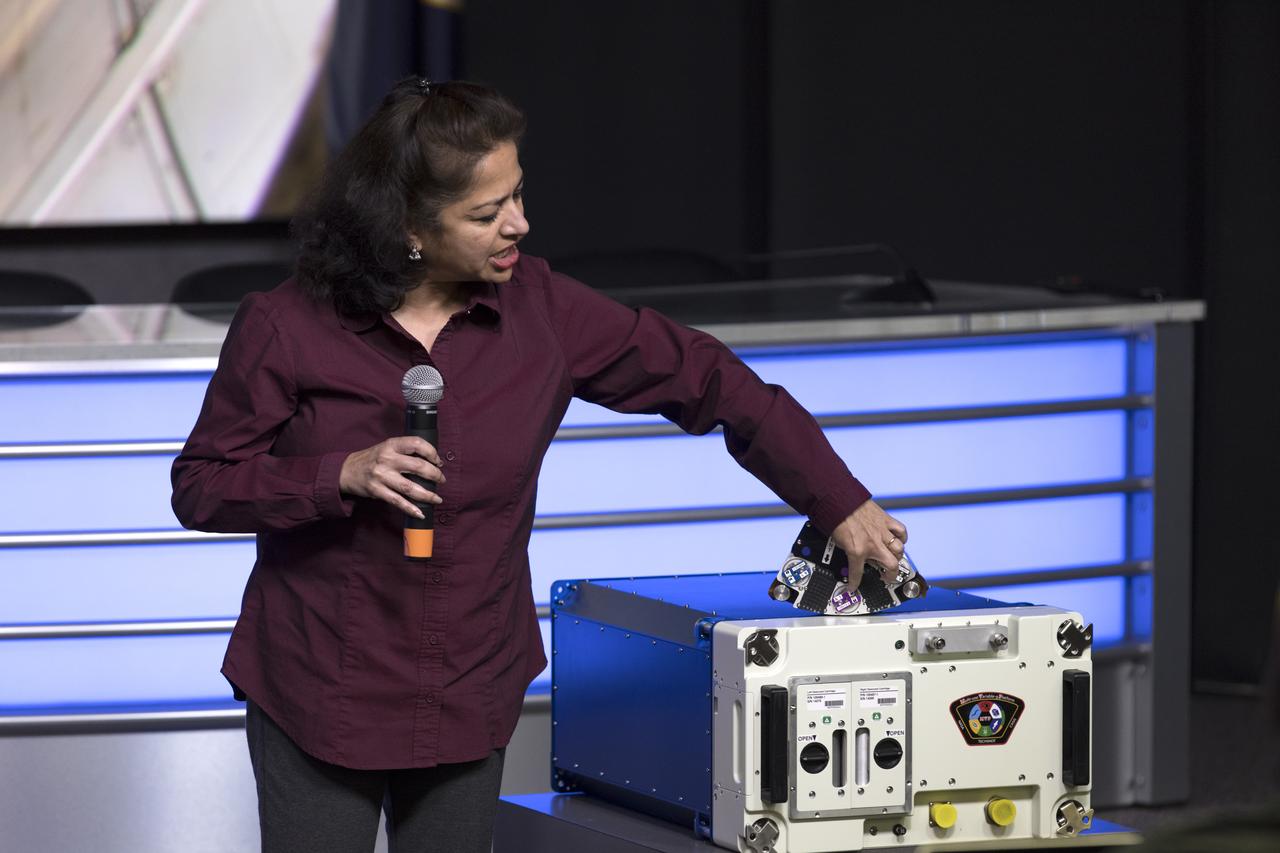
Sharmila Bhattacharya, a senior scientist at NASA's Ames Research Center, discusses the Multi-purpose Variable-g Platform, developed, owned and operated by Techshot. The new test bed will be able to host six separate experiment modules with samples such as plants, cells, protein crystals and fruit flies. The test bed is one of the scientific investigations that will be aboard a Dragon spacecraft scheduled for liftoff from Cape Canaveral Air Force Station's Space Launch Complex 40 at 4:30 p.m. EST, on April 2, 2018. The SpaceX Falcon 9 rocket will launch the company's 14th Commercial Resupply Services mission to the space station.
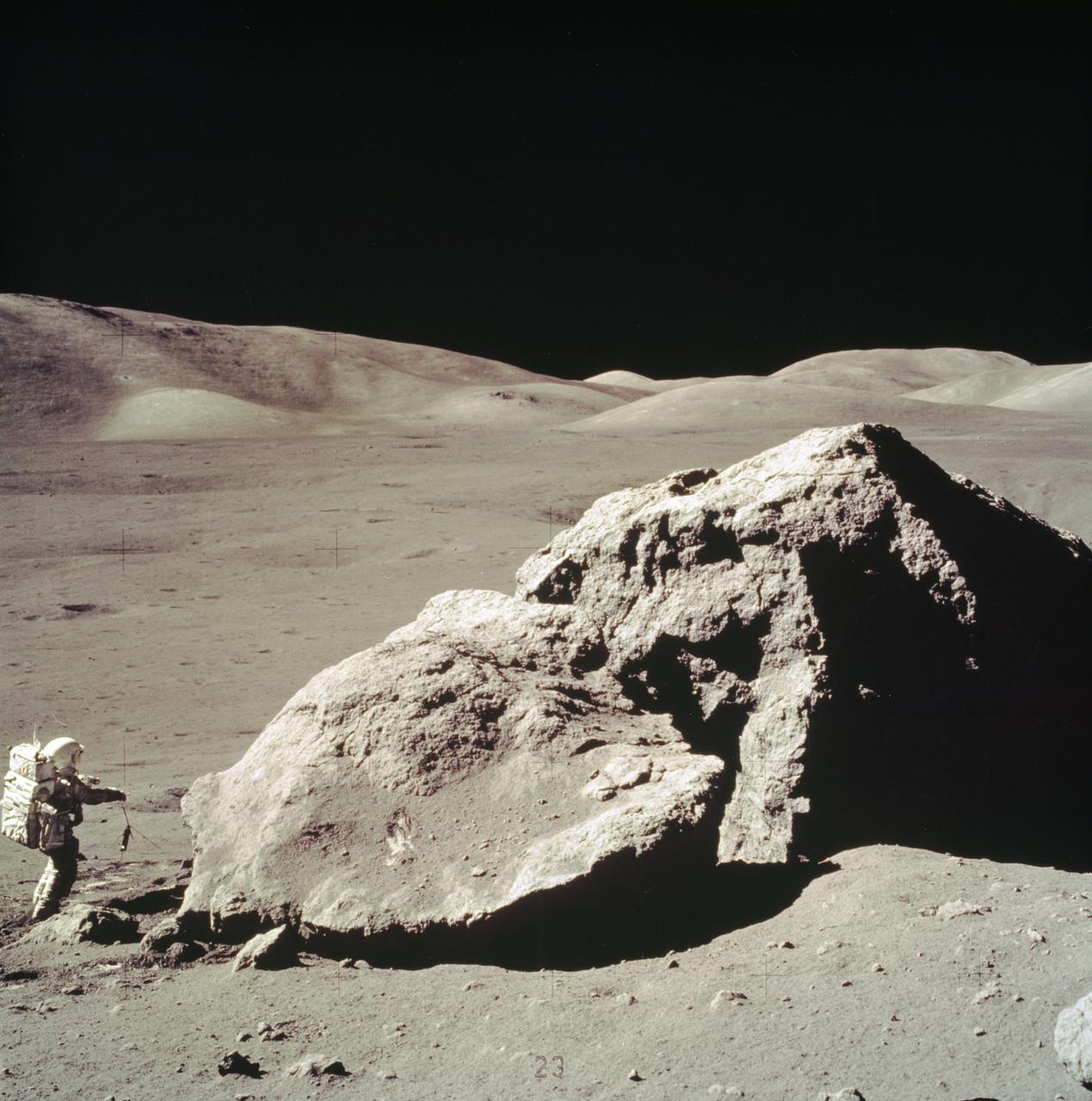
In this Apollo 17 onboard photo, Lunar Module pilot Harrison H. Schmitt collects rock samples from a huge boulder near the Valley of Tourus-Littrow on the lunar surface. The seventh and last manned lunar landing and return to Earth mission, the Apollo 17, carrying a crew of three astronauts: Schmitt; Mission Commander Eugene A. Cernan; and Command Module pilot Ronald E. Evans, lifted off on December 7, 1972 from the Kennedy Space Flight Center (KSC). Scientific objectives of the Apollo 17 mission included geological surveying and sampling of materials and surface features in a preselected area of the Taurus-Littrow region, deploying and activating surface experiments, and conducting in-flight experiments and photographic tasks during lunar orbit and transearth coast (TEC). These objectives included: Deployed experiments such as the Apollo lunar surface experiment package (ALSEP) with a Heat Flow experiment, Lunar seismic profiling (LSP), Lunar surface gravimeter (LSG), Lunar atmospheric composition experiment (LACE) and Lunar ejecta and meteorites (LEAM). The mission also included Lunar Sampling and Lunar orbital experiments. Biomedical experiments included the Biostack II Experiment and the BIOCORE experiment. The mission marked the longest Apollo mission, 504 hours, and the longest lunar surface stay time, 75 hours, which allowed the astronauts to conduct an extensive geological investigation. They collected 257 pounds (117 kilograms) of lunar samples with the use of the Marshall Space Flight Center designed Lunar Roving Vehicle (LRV). The mission ended on December 19, 1972
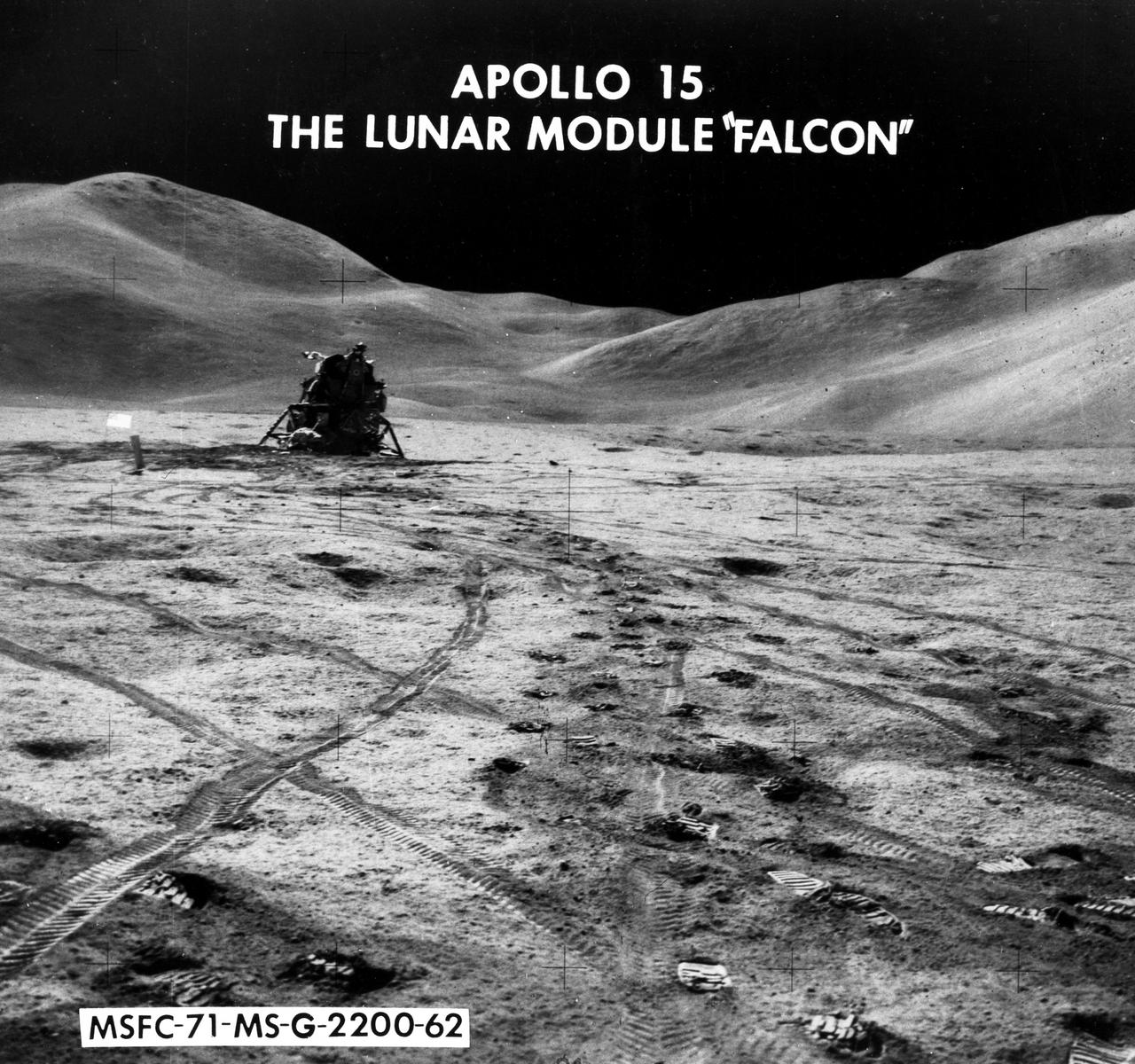
This is a photo of the Apollo 15 Lunar Module, Falcon, on the lunar surface. Apollo 15 launched from Kennedy Space Center (KSC) on July 26, 1971 via a Saturn V launch vehicle. Aboard was a crew of three astronauts including David R. Scott, Mission Commander; James B. Irwin, Lunar Module Pilot; and Alfred M. Worden, Command Module Pilot. The first mission designed to explore the Moon over longer periods, greater ranges and with more instruments for the collection of scientific data than on previous missions, the mission included the introduction of a $40,000,000 lunar roving vehicle (LRV) that reached a top speed of 16 kph (10 mph) across the Moon's surface. The successful Apollo 15 lunar landing mission was the first in a series of three advanced missions planned for the Apollo program. The primary scientific objectives were to observe the lunar surface, survey and sample material and surface features in a preselected area of the Hadley-Apennine region, setup and activation of surface experiments and conduct in-flight experiments and photographic tasks from lunar orbit. Apollo 15 televised the first lunar liftoff and recorded a walk in deep space by Alfred Worden. Both the Saturn V rocket and the LRV were developed at the Marshall Space Flight Center.
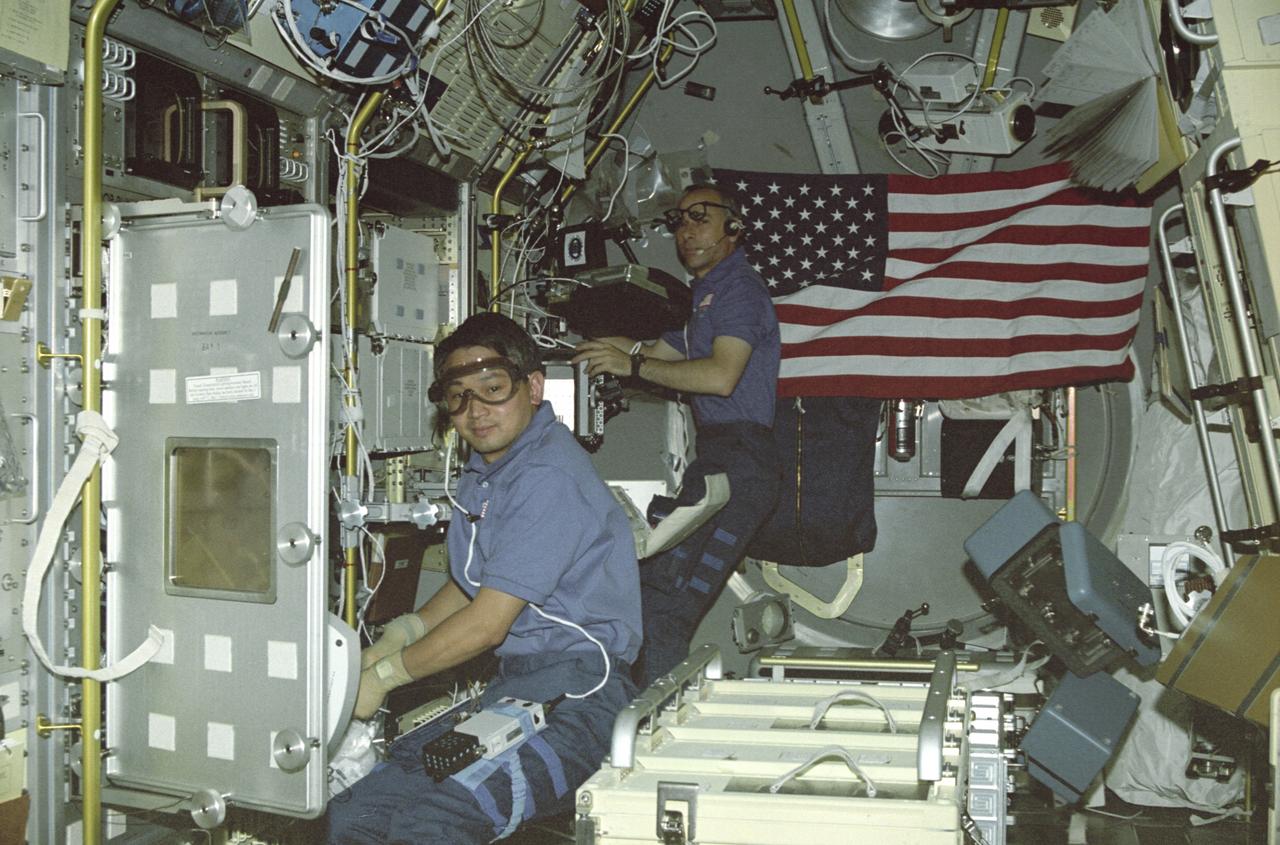
In this photograph, astronaut Eugene Trinh, a payload specialist for this mission, is working at the Drop Physics Module (DPM), and mission specialist Carl Meade is working on the experiment at the Glovebox inside the first United States Microgravity Laboratory (USML-1) Science Module. The USML-1 was one of NASA's missions dedicated to scientific investigations in a microgravity environment inside the Spacelab module. Investigations aboard the USML-1 included: materials science, fluid dynamics, biotechnology (crystal growth), and combustion science. The DPM is dedicated to the detailed study of the dynamics of fluid drops in microgravity. The Glovebox offers experimenters new capabilities and technologies in microgravity with a clean working space and minimizes contamination risks to both Spacelab and experiment samples. Payload specialists are professional scientists or engineers whose only assignment on a space flight is to carry out scientific and technological experiments. Their specific training for a space flight is usually limited to a short period of learning how to live and work in weightlessness. Mission Specialists are both professional scientists and career astronauts. Thus they are a link or bridge between the other crew members, and combine the functions of resident maintenance engineers, in-space counterparts of flight engineers in aircraft, and fully qualified scientists. The USML-1 flew aboard the STS-50 mission on June 1992, and was managed by the Marshall Space Flight Center.

An Airbus H225 helicopter lands at the Launch and Landing Facility at NASA’s Kennedy Space Center in Florida on Jan. 11, 2023, delivering scientific research samples for processing at the spaceport’s Space Station Processing Facility. The experiments returned to Earth on SpaceX's 26th commercial resupply services mission, which launched from Kennedy’s Pad 39A at 2:20 p.m. EST on Nov. 26, 2022, making its successful parachute-assisted splashdown west of Tampa in the Gulf of Mexico at 5:19 a.m. EST on Jan. 11. The SpaceX cargo Dragon returned approximately 4,400 pounds of scientific experiments and other cargo from the International Space Station. Splashing down off the coast of Florida enables quick transportation of the experiments, allowing SpaceX to retrieve Dragon and offload time-sensitive research cargo to pack on an Airbus H225 helicopter for delivery to Kennedy just hours later. Some of the scientific investigations that Dragon returned include those on deep space radiation protection, hydroponic and aeroponic plants, and bioprospecting, which is identifying plants and animals that may contain substances with potential for use as drugs, biochemicals, and more.
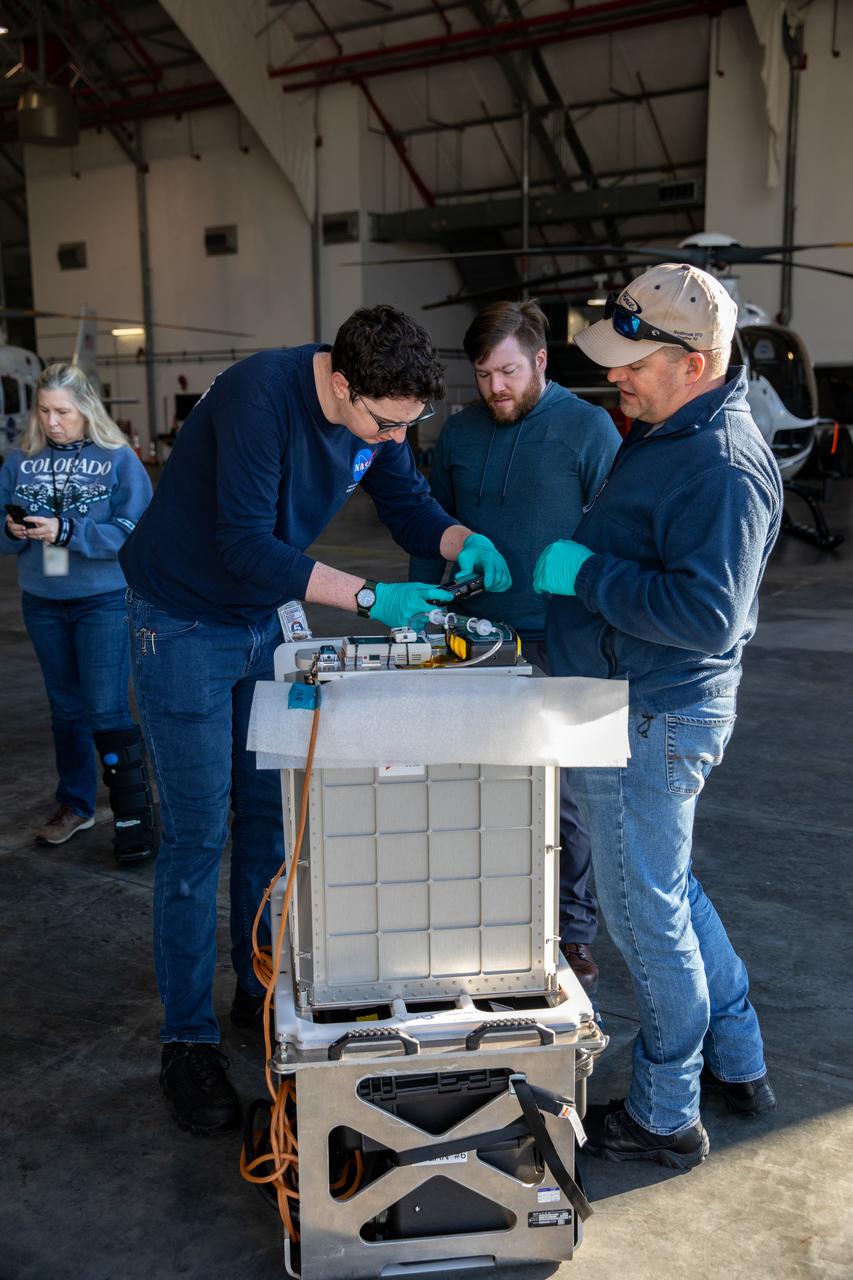
Technicians at the Launch and Landing Facility at NASA’s Kennedy Space Center in Florida receive scientific research samples for processing at the spaceport’s Space Station Processing Facility on Jan. 11, 2023. The experiments returned to Earth on SpaceX's 26th commercial resupply services mission, which launched from Kennedy’s Pad 39A at 2:20 p.m. EST on Nov. 26, 2022, making its successful parachute-assisted splashdown west of Tampa in the Gulf of Mexico, at 5:19 a.m. EST on Jan. 11. The SpaceX cargo Dragon returned approximately 4,400 pounds of scientific experiments and other cargo from the International Space Station. Splashing down off the coast of Florida enables quick transportation of the experiments, allowing SpaceX to retrieve Dragon and offload time-sensitive research cargo to pack on an Airbus H225 helicopter for delivery to Kennedy just hours later. Some of the scientific investigations that Dragon returned include those on deep space radiation protection, hydroponic and aeroponic plants, and bioprospecting, which is identifying plants and animals that may contain substances with potential for use as drugs, biochemicals, and more.
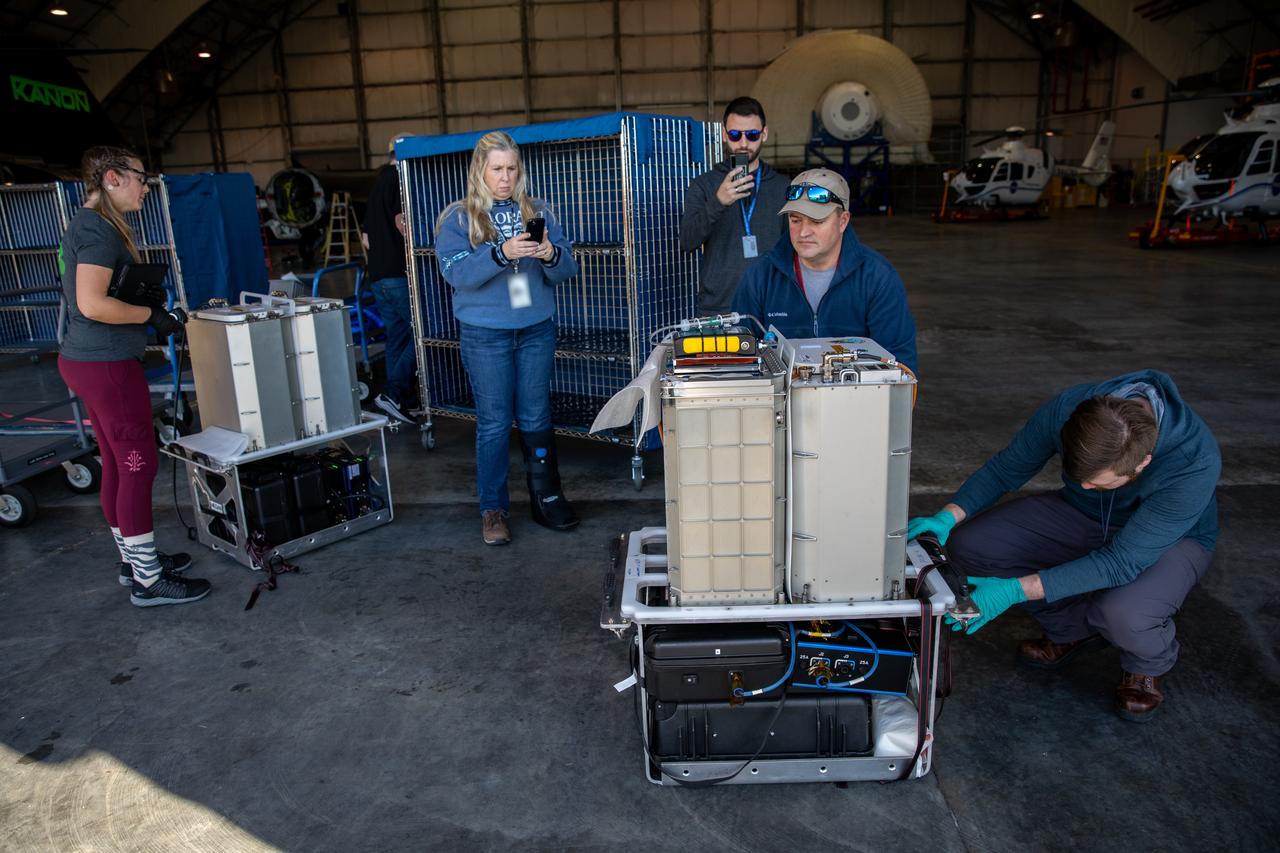
Technicians at the Launch and Landing Facility at NASA’s Kennedy Space Center in Florida receive scientific research samples for processing at the spaceport’s Space Station Processing Facility on Jan. 11, 2023. The experiments returned to Earth on SpaceX's 26th commercial resupply services mission, which launched from Kennedy’s Pad 39A at 2:20 p.m. EST on Nov. 26, 2022, making its successful parachute-assisted splashdown west of Tampa in the Gulf of Mexico, at 5:19 a.m. EST on Jan. 11. The SpaceX cargo Dragon returned approximately 4,400 pounds of scientific experiments and other cargo from the International Space Station. Splashing down off the coast of Florida enables quick transportation of the experiments, allowing SpaceX to retrieve Dragon and offload time-sensitive research cargo to pack on an Airbus H225 helicopter for delivery to Kennedy just hours later. Some of the scientific investigations that Dragon returned include those on deep space radiation protection, hydroponic and aeroponic plants, and bioprospecting, which is identifying plants and animals that may contain substances with potential for use as drugs, biochemicals, and more.

On July 18, 2011, Melinda Webster of University of Washington, calculated distances between sampling locations during the 2011 ICESCAPE mission's eighth sea ice station in the Arctic Ocean. The ICESCAPE mission, or "Impacts of Climate on Ecosystems and Chemistry of the Arctic Pacific Environment," is a NASA shipborne investigation to study how changing conditions in the Arctic affect the ocean's chemistry and ecosystems. The bulk of the research took place in the Beaufort and Chukchi seas in summer 2010 and 2011. Credit: NASA/Kathryn Hansen <b><a href="http://www.nasa.gov/audience/formedia/features/MP_Photo_Guidelines.html" rel="nofollow">NASA image use policy.</a></b> <b><a href="http://www.nasa.gov/centers/goddard/home/index.html" rel="nofollow">NASA Goddard Space Flight Center</a></b> enables NASA’s mission through four scientific endeavors: Earth Science, Heliophysics, Solar System Exploration, and Astrophysics. Goddard plays a leading role in NASA’s accomplishments by contributing compelling scientific knowledge to advance the Agency’s mission. <b>Follow us on <a href="http://twitter.com/NASA_GoddardPix" rel="nofollow">Twitter</a></b> <b>Like us on <a href="http://www.facebook.com/pages/Greenbelt-MD/NASA-Goddard/395013845897?ref=tsd" rel="nofollow">Facebook</a></b> <b>Find us on <a href="http://instagrid.me/nasagoddard/?vm=grid" rel="nofollow">Instagram</a></b>
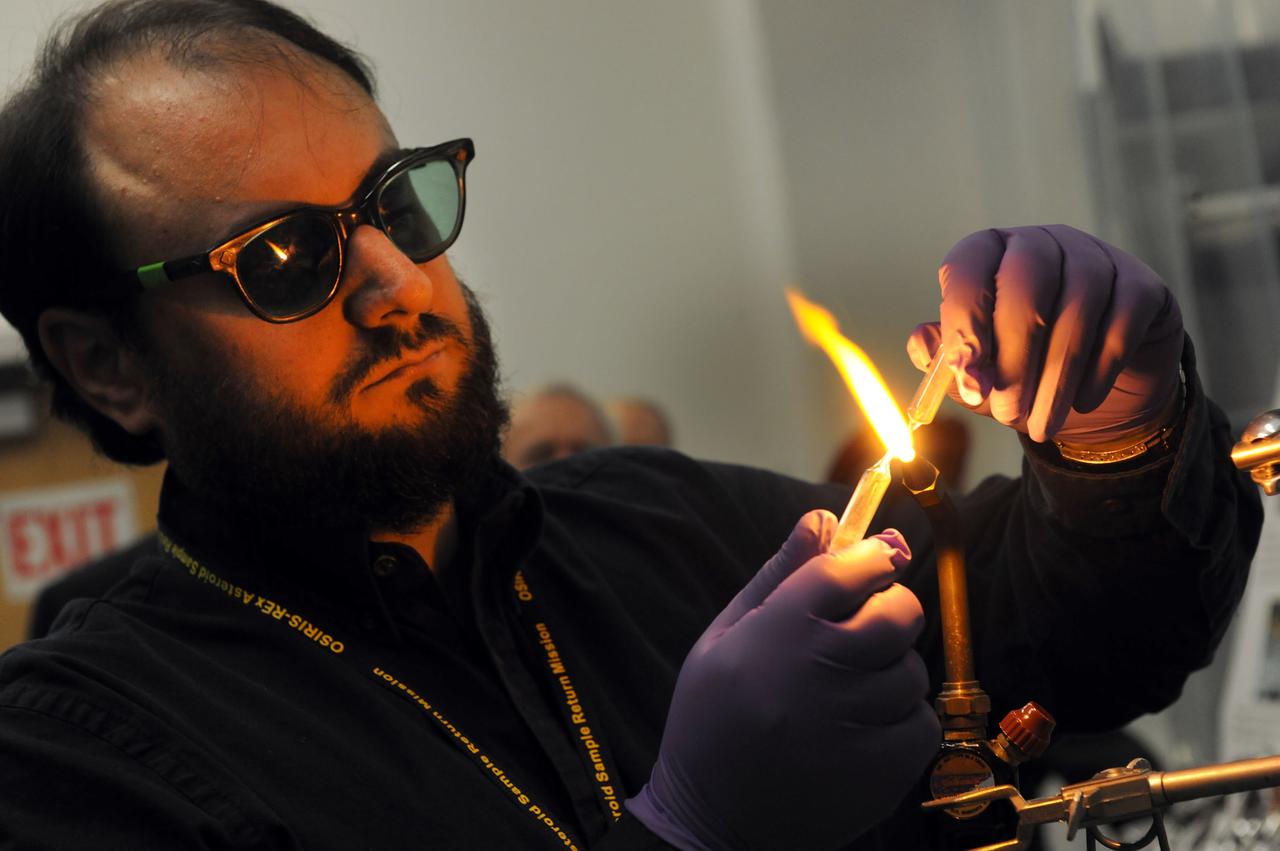
Dr. Jason Dworkin, Project Scientist for NASA's OSIRIS-Rex mission is seen hear sealing a glass test tube with a sample of Allende meteorite dust which is 4.567 BILLION years old. Jason is the Chief of NASA Goddard's Astrochemistry Lab. Read more about the mission here: <a href="http://www.nasa.gov/mission_pages/osiris-rex" rel="nofollow">www.nasa.gov/mission_pages/osiris-rex</a> Credit: NASA/Goddard/Debbie Mccallum <b><a href="http://www.nasa.gov/audience/formedia/features/MP_Photo_Guidelines.html" rel="nofollow">NASA image use policy.</a></b> <b><a href="http://www.nasa.gov/centers/goddard/home/index.html" rel="nofollow">NASA Goddard Space Flight Center</a></b> enables NASA’s mission through four scientific endeavors: Earth Science, Heliophysics, Solar System Exploration, and Astrophysics. Goddard plays a leading role in NASA’s accomplishments by contributing compelling scientific knowledge to advance the Agency’s mission. <b>Follow us on <a href="http://twitter.com/NASAGoddardPix" rel="nofollow">Twitter</a></b> <b>Like us on <a href="http://www.facebook.com/pages/Greenbelt-MD/NASA-Goddard/395013845897?ref=tsd" rel="nofollow">Facebook</a></b> <b>Find us on <a href="http://instagram.com/nasagoddard?vm=grid" rel="nofollow">Instagram</a></b>
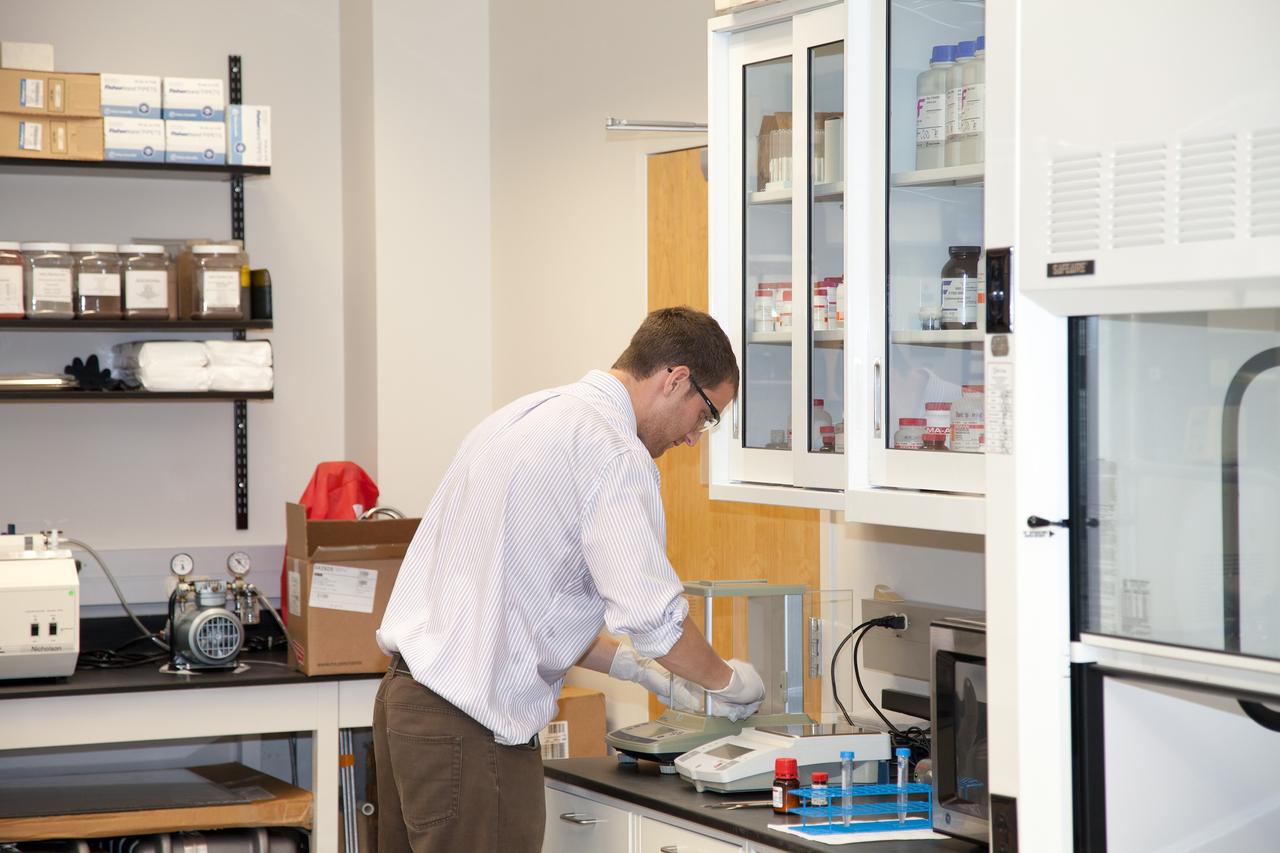
CAPE CANAVERAL, Fla. -- Inside the Space Life Sciences Laboratory near NASA’s Kennedy Space Center in Florida, Dr. David J. Smith, a microbiologist in the Surface Systems Office, prepares microbes that will be deployed for the Microorganisms in the Stratosphere, or MIST, mission. High altitudes exert a unique combination of stresses on microbes, outside the range of conditions normally encountered on the Earth's surface. Results from MIST may improve our understanding of the physical limits and habitable environments for life. The MIST mission will fly a small biological payload aboard a blimp in July to measure microbial survival and cellular responses to exposure in the upper atmoshere. Later in the year, the MIST mission will deploy samples at even higher altitudes in the stratosphere using scientific balloons. Photo credit: NASA/Daniel Casper
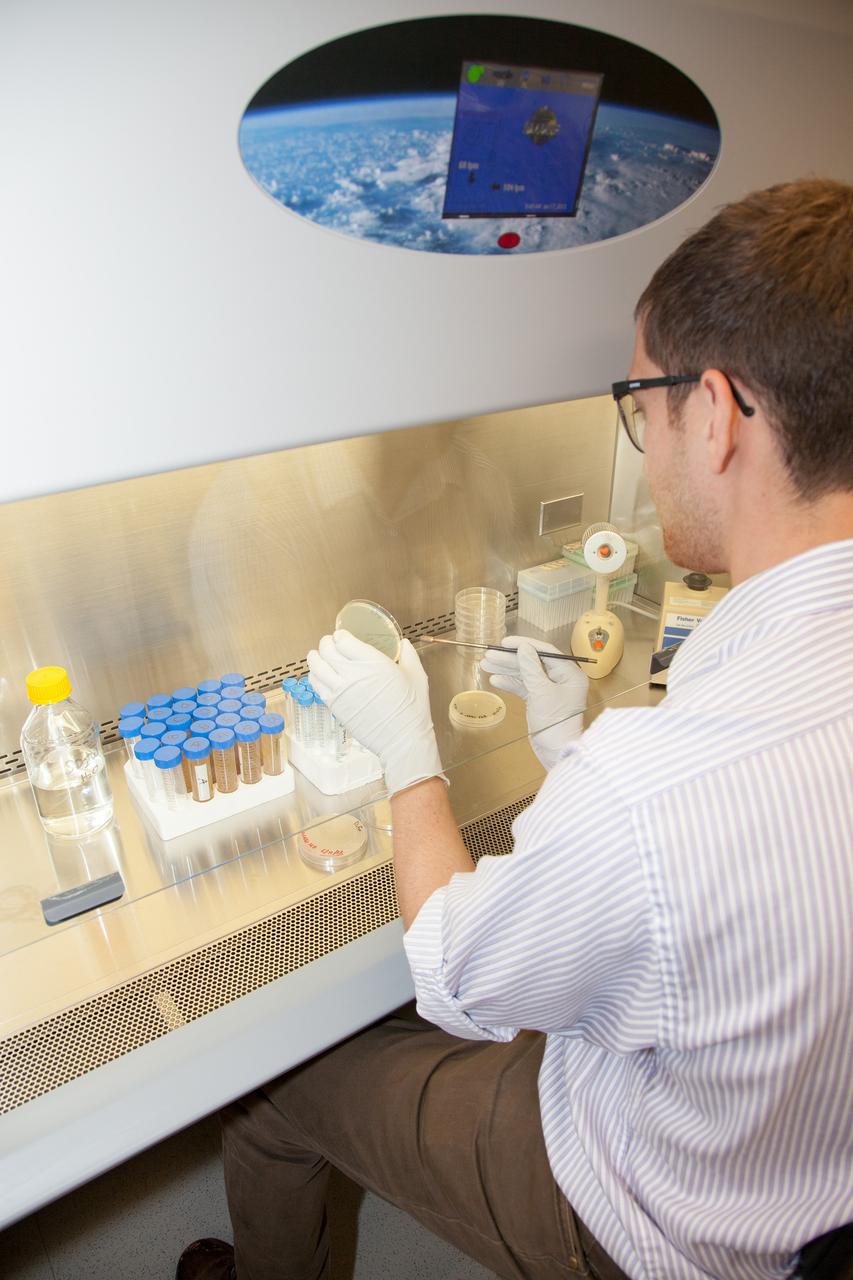
CAPE CANAVERAL, Fla. -- Inside the Space Life Sciences Laboratory near NASA’s Kennedy Space Center in Florida, Dr. David J. Smith, a microbiologist in the Surface Systems Office, prepares microbes that will be deployed for the Microorganisms in the Stratosphere, or MIST, mission. High altitudes exert a unique combination of stresses on microbes, outside the range of conditions normally encountered on the Earth's surface. Results from MIST may improve our understanding of physical limits and habitable environments for life. The MIST mission will fly a small biological payload aboard a blimp in July to measure microbial survival and cellular responses to exposure in the upper atmosphere. Later in the year, the MIST mission will deploy samples at even higher altitudes in the stratosphere using scientific balloons. Photo credit: NASA/Daniel Casper
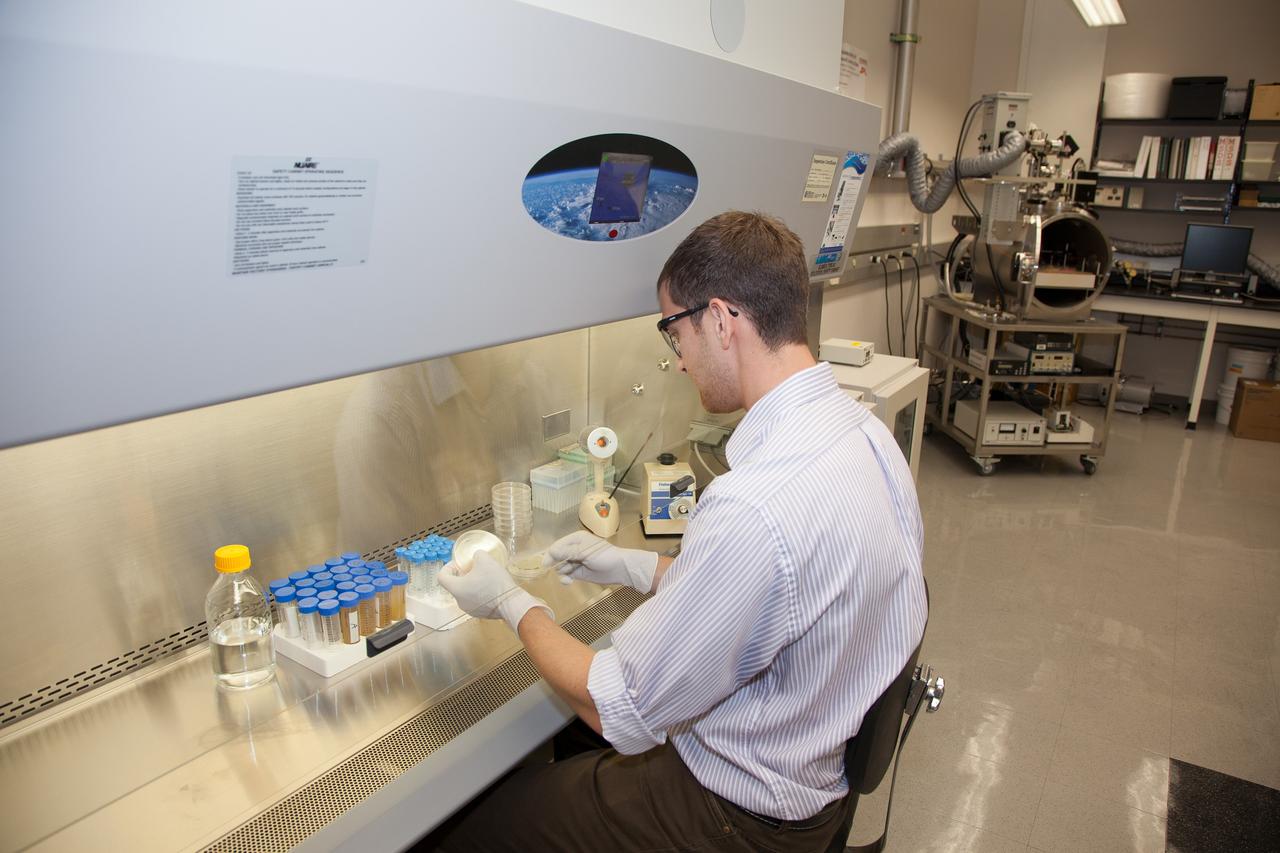
CAPE CANAVERAL, Fla. -- Inside the Space Life Sciences Laboratory near NASA’s Kennedy Space Center in Florida, Dr. David J. Smith, a microbiologist in the Surface Systems Office, prepares microbes that will be deployed for the Microorganisms in the Stratosphere, or MIST, mission. High altitudes exert a unique combination of stresses on microbes, outside the range of conditions normally encountered on the Earth's surface. Results from MIST may improve our understanding of the physical limits and habitable environments for life. The MIST mission will fly a small biological payload aboard a blimp in July to measure the microbial survival and cellular responses to exposure in the upper atmosphere. Later in the year, the MIST mission will deploy samples at even higher altitudes in the stratosphere using scientific balloons. Photo credit: NASA/Daniel Casper
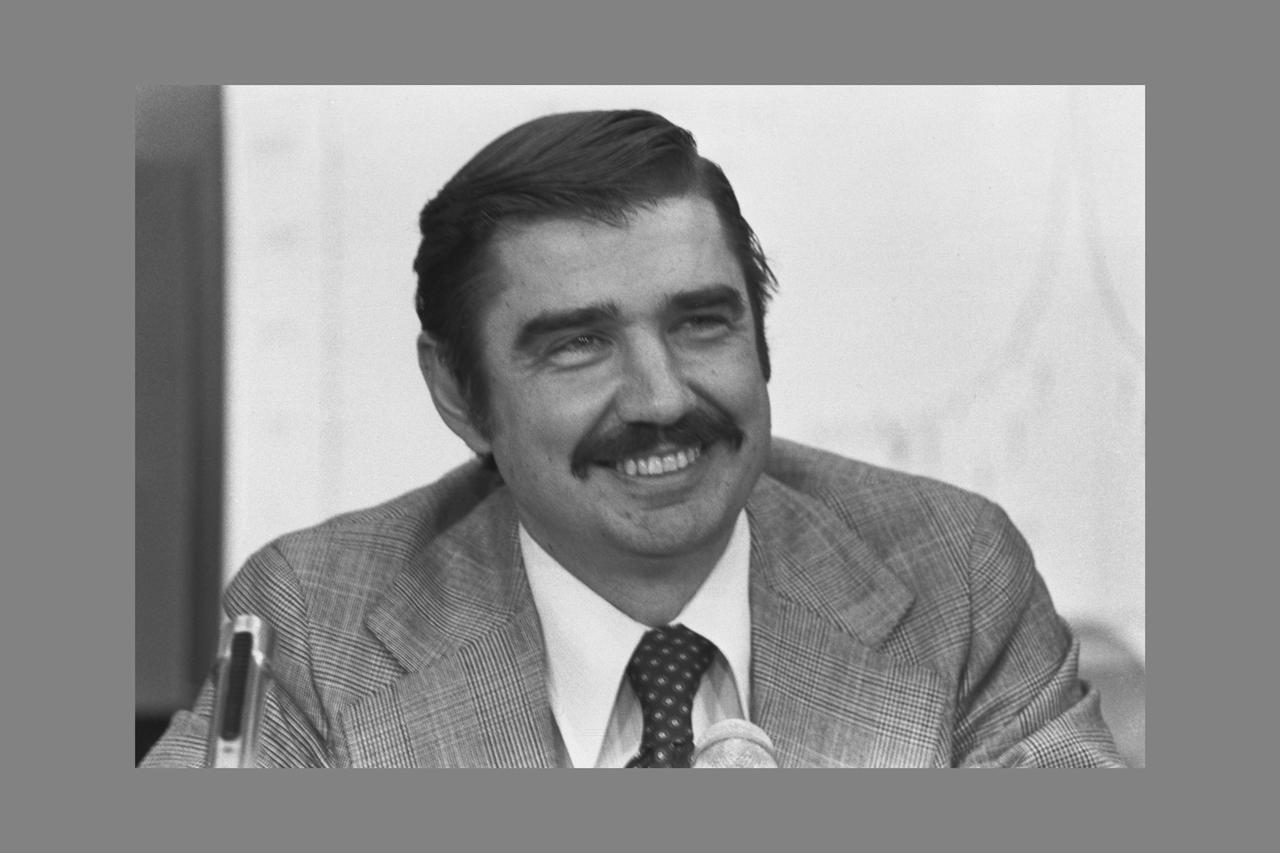
Photographs and Captions courtesy of Joseph and Donna Roizen Telegen, Palo Alto, CA (from) Pioneer 10 and 11 Missions Jupiter encounters - Activities at Ames Research Center December 1973 and December 1974 - As a memento of the highly successful Pioneer 10 and 11 missions to Jupiter, this collection of photographs represents a sampling of those taken at Ames Research Center during the Jupiter encounter periods in December 1973 and December 1974. The captions for these photographs are meant to suggest the lighter side of the intense activities that took place during these periods. I would like to express my gratitude to all participants in the Pioneer 10/11 program for their teamwork in accomplishing the scientific and technical objectives of the Pioneer 10 and 11 missions to Jupiter. (signed) Charles F. Hall - Manager, Pioneer Project Dr. Darrell l Judge 'I hope they are giving prizes for the best looking man at this conference because I finally got my moustache looking perfect.'

NASA Photographs and Captions courtesy of Joseph and Donna Roizen Telegen, Palo Alto, CA (from) Pioneer 10 and 11 Missions Jupiter encounters - Activities at Ames Research Center December 1973 and December 1974 - As a memento of the highly successful Pioneer 10 and 11 missions to Jupiter, this collection of photographs represents a sampling of those taken at Ames Research Center during the Jupiter encounter periods in December 1973 and December 1974. The captions for these photographs are meant to suggest the lighter side of the intense activities that took place during these periods. I would like to express my gratitude to all participants in the Pioneer 10/11 program for their teamwork in accomplishing the scientific and technical objectives of the Pioneer 10 and 11 missions to Jupiter. (signed) Charles F. Hall - Manager, Pioneer Project Dr. Carl Sagan 'Anybody who doesn't believe there are frogs in the Jovian atmosphere is going t hear from me.'
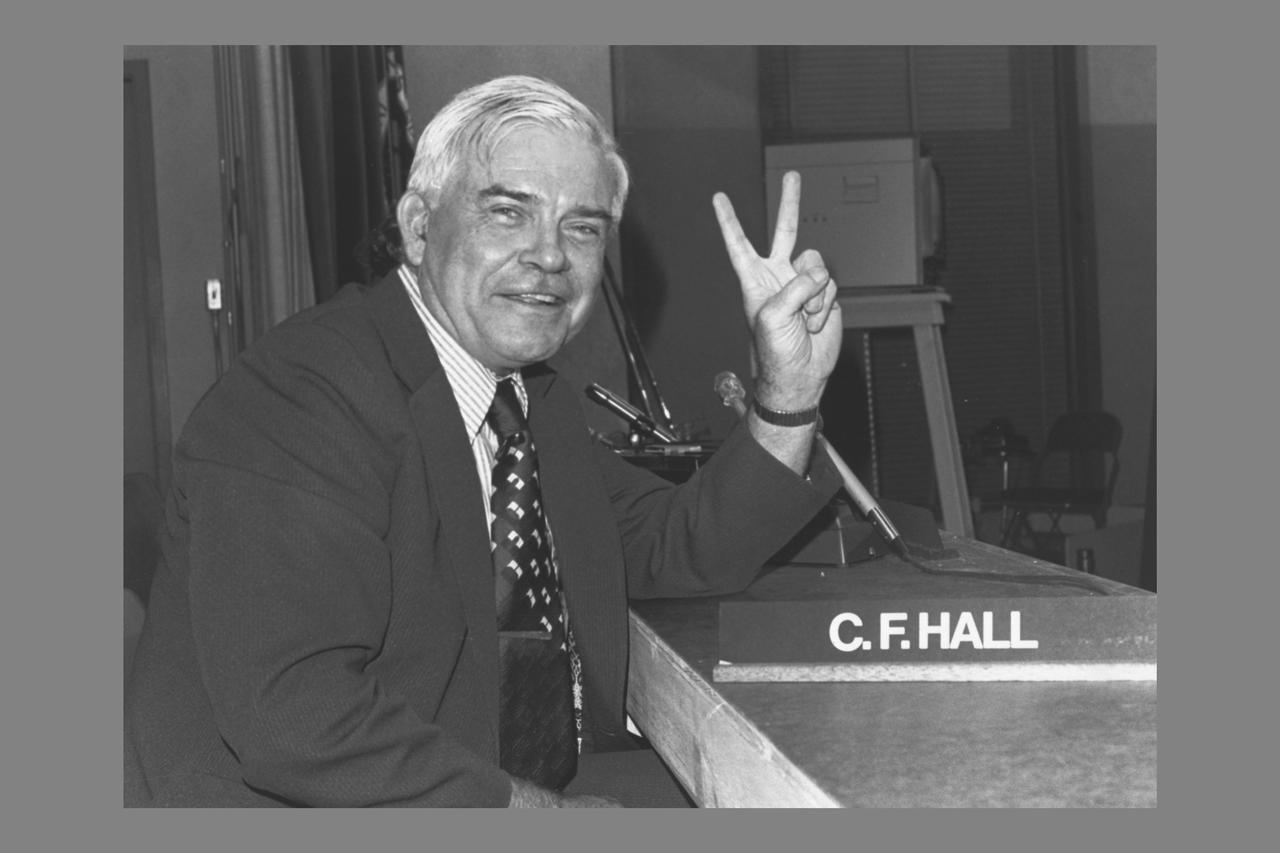
Photographs and Captions courtesy of Joseph and Donna Roizen Telegen, Palo Alto, CA (from) Pioneer 10 and 11 Missions Jupiter encounters - Activities at Ames Research Center December 1973 and December 1974 - As a memento of the highly successful Pioneer 10 and 11 missions to Jupiter, this collection of photographs represents a sampling of those taken at Ames Research Center during the Jupiter encounter periods in December 1973 and December 1974. The captions for these photographs are meant to suggest the lighter side of the intense activities that took place during these periods. I would like to express my gratitude to all participants in the Pioneer 10/11 program for their teamwork in accomplishing the scientific and technical objectives of the Pioneer 10 and 11 missions to Jupiter. (signed) Charles F. Hall - Manager, Pioneer Project Charles F. Hall ' Pioneers 10 and 11 not only made schedule, but they got 51,326.149 miles per gallon and met EPA environment pollution limits.'
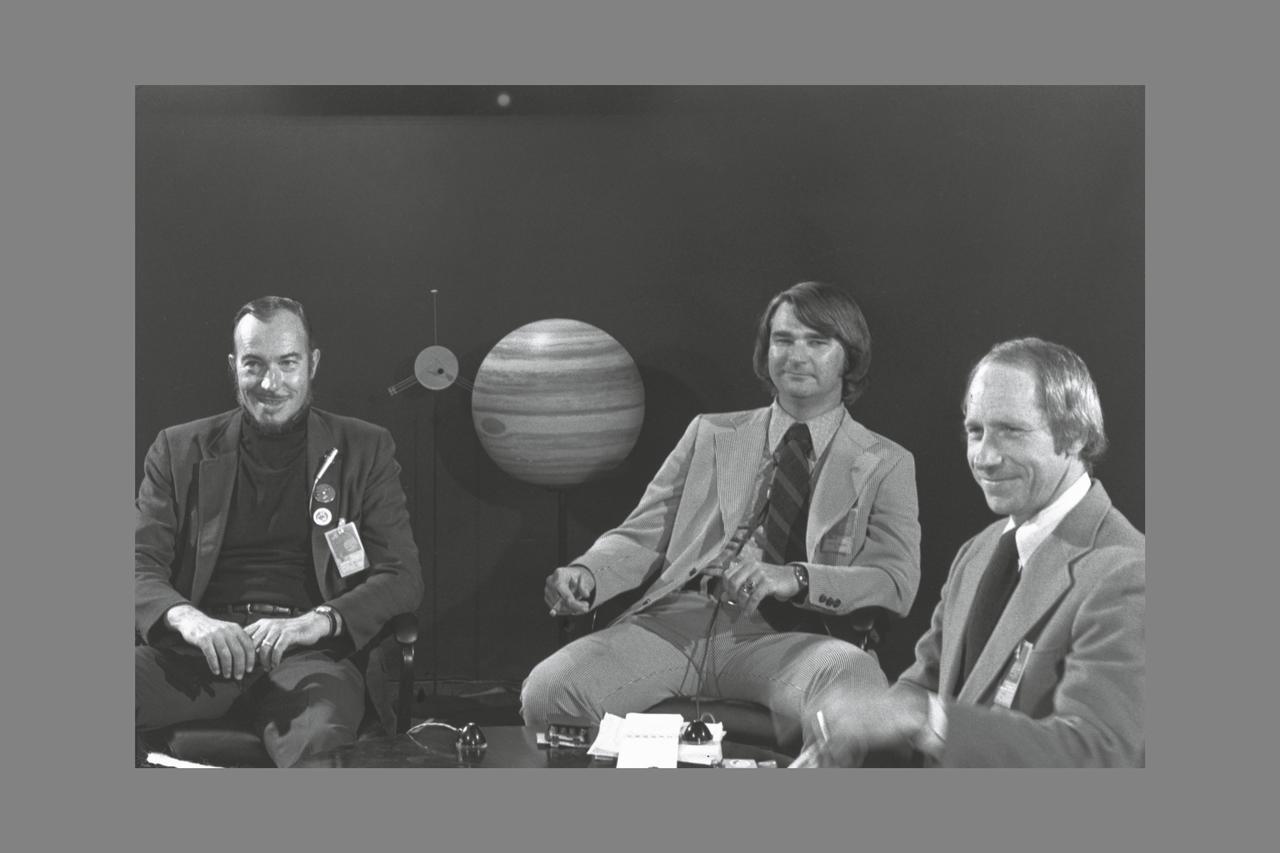
Pioneer 10 and 11 Missions Jupiter encounters - Activities at Ames Research Center December 1973 and December 1974 - As a memento of the highly successful Pioneer 10 and 11 missions to Jupiter, this collection of photographs represents a sampling of those taken at Ames Research Center during the Jupiter encounter periods in December 1973 and December 1974. The captions for these photographs are meant to suggest the lighter side of the intense activities that took place during these periods. I would like to express my gratitude to all participants in the Pioneer 10/11 program for their teamwork in accomplishing the scientific and technical objectives of the Pioneer 10 and 11 missions to Jupiter. (signed) Charles F. Hall - Manager, Pioneer Project L-R: Dr. John H Wolfe, Robert R Nunamaker, Alfred M. Worden
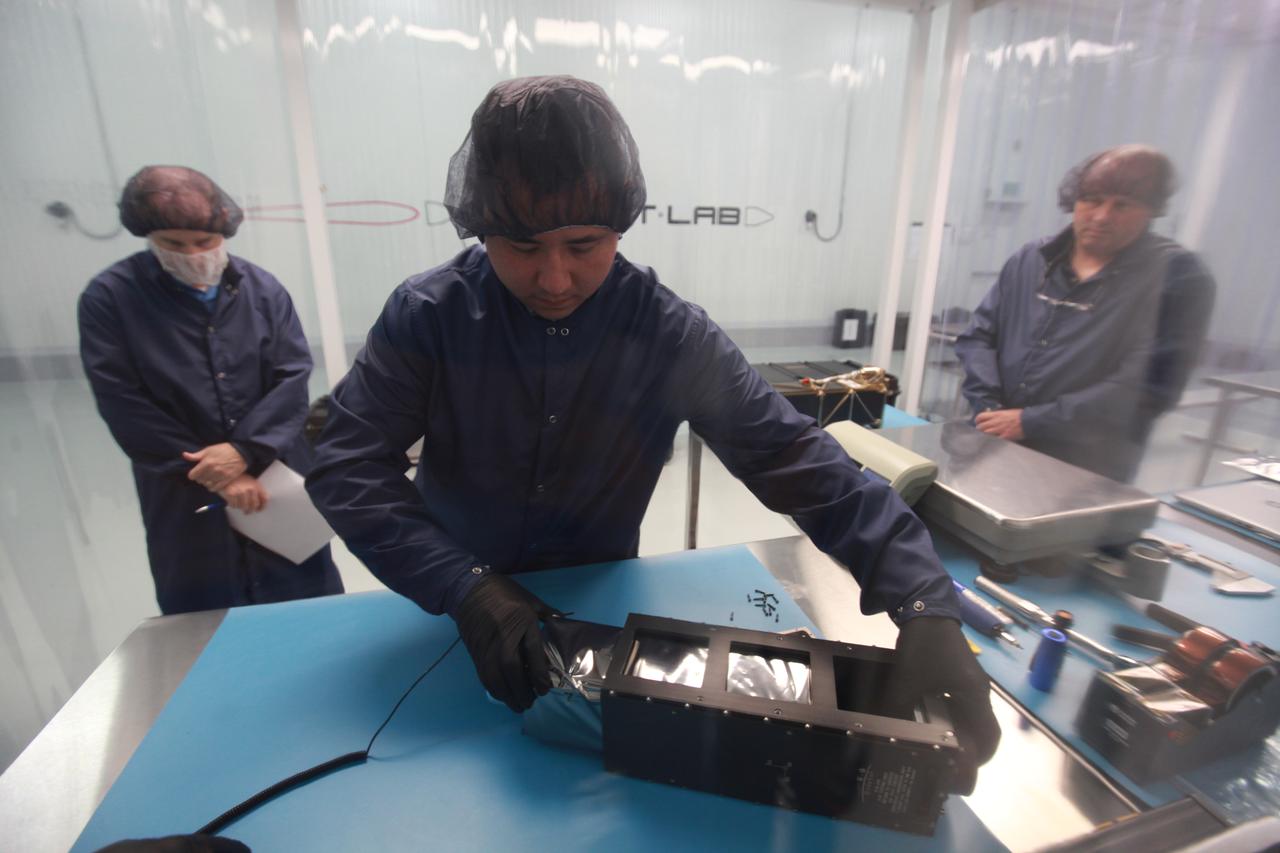
The NASA Langley Research Center (LaRC) Shields-1 CubeSat will demonstrate a research payload with materials durability experiments on emerging radiation shielding technologies. Shields-1 incorporates eight mdosimeters for radiation shielding experiments: one in the atomic number (Z)-grade radiation shielding vault, three behind experimental Z-grade radiation shielding samples developed at NASA LaRC, three behind baseline aluminum shielding samples, and one deep inside the research payload. The Z-grade is defined as an atomic number gradient of shielding materials using a low atomic number metal, such as aluminum, with a high atomic number material, like tantalum. The metals are fabricated into the vault structure. Also, Shields-1 measures a charge dissipation film resistance for technology development. The Shields-1 mission contributes to the SmallSat community with the development of technologies to increase the lifetimes of CubeSat missions from months to years in multiple radiation environments and increase the return on investment for scientific and commercial spacecraft.

The NASA Langley Research Center (LaRC) Shields-1 CubeSat will demonstrate a research payload with materials durability experiments on emerging radiation shielding technologies. Shields-1 incorporates eight mdosimeters for radiation shielding experiments: one in the atomic number (Z)-grade radiation shielding vault, three behind experimental Z-grade radiation shielding samples developed at NASA LaRC, three behind baseline aluminum shielding samples, and one deep inside the research payload. The Z-grade is defined as an atomic number gradient of shielding materials using a low atomic number metal, such as aluminum, with a high atomic number material, like tantalum. The metals are fabricated into the vault structure. Also, Shields-1 measures a charge dissipation film resistance for technology development. The Shields-1 mission contributes to the SmallSat community with the development of technologies to increase the lifetimes of CubeSat missions from months to years in multiple radiation environments and increase the return on investment for scientific and commercial spacecraft.
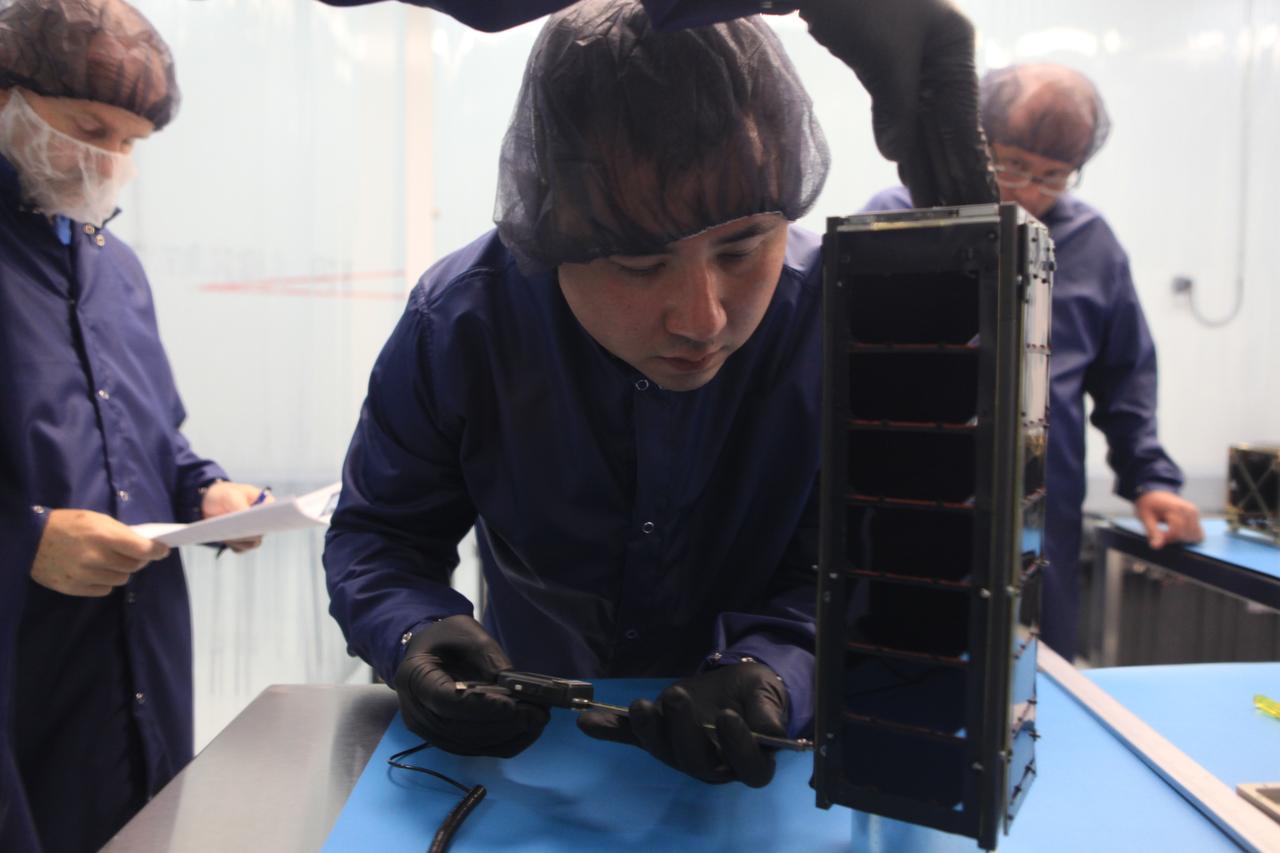
The NASA Langley Research Center (LaRC) Shields-1 CubeSat will demonstrate a research payload with materials durability experiments on emerging radiation shielding technologies. Shields-1 incorporates eight mdosimeters for radiation shielding experiments: one in the atomic number (Z)-grade radiation shielding vault, three behind experimental Z-grade radiation shielding samples developed at NASA LaRC, three behind baseline aluminum shielding samples, and one deep inside the research payload. The Z-grade is defined as an atomic number gradient of shielding materials using a low atomic number metal, such as aluminum, with a high atomic number material, like tantalum. The metals are fabricated into the vault structure. Also, Shields-1 measures a charge dissipation film resistance for technology development. The Shields-1 mission contributes to the SmallSat community with the development of technologies to increase the lifetimes of CubeSat missions from months to years in multiple radiation environments and increase the return on investment for scientific and commercial spacecraft.
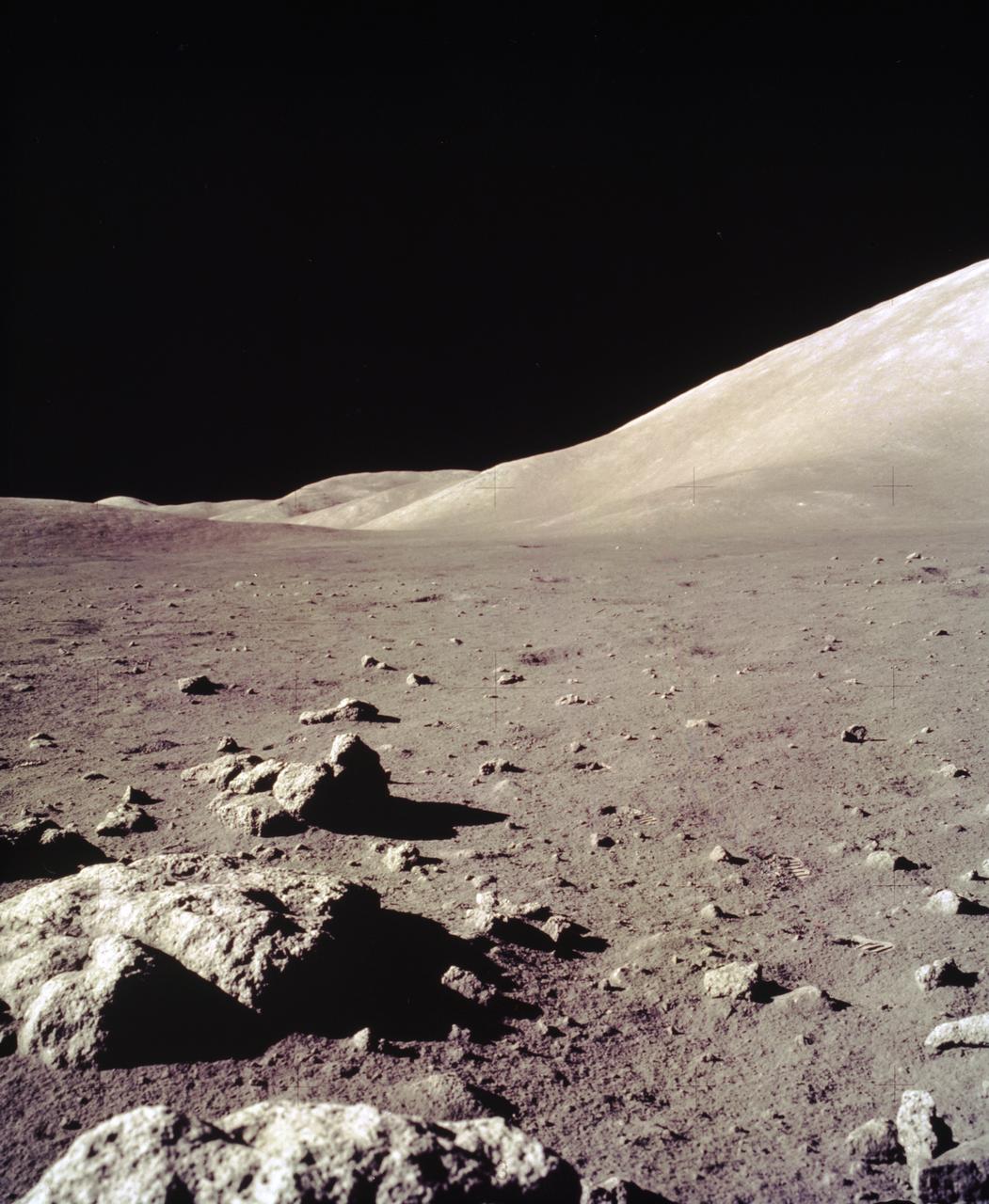
This view of the Lunar surface was taken during the Apollo 17 mission. The seventh and last manned lunar landing and return to Earth mission, the Apollo 17, carrying a crew of three astronauts: Mission Commander Eugene A. Cernan; Lunar Module pilot Harrison H. Schmitt; and Command Module pilot Ronald E. Evans, lifted off on December 7, 1972 from the Kennedy Space Flight Center (KSC). Scientific objectives of the Apollo 17 mission included geological surveying and sampling of materials and surface features in a preselected area of the Taurus-Littrow region, deploying and activating surface experiments, and conducting in-flight experiments and photographic tasks during lunar orbit and transearth coast (TEC). These objectives included: Deployed experiments such as the Apollo lunar surface experiment package (ALSEP) with a Heat Flow experiment, Lunar seismic profiling (LSP), Lunar surface gravimeter (LSG), Lunar atmospheric composition experiment (LACE) and Lunar ejecta and meteorites (LEAM). The mission also included Lunar Sampling and Lunar orbital experiments. Biomedical experiments included the Biostack II Experiment and the BIOCORE experiment. The mission marked the longest Apollo mission, 504 hours, and the longest lunar surface stay time, 75 hours, which allowed the astronauts to conduct an extensive geological investigation. They collected 257 pounds (117 kilograms) of lunar samples with the use of the Marshall Space Flight Center designed Lunar Roving Vehicle (LRV). The mission ended on December 19, 1972.
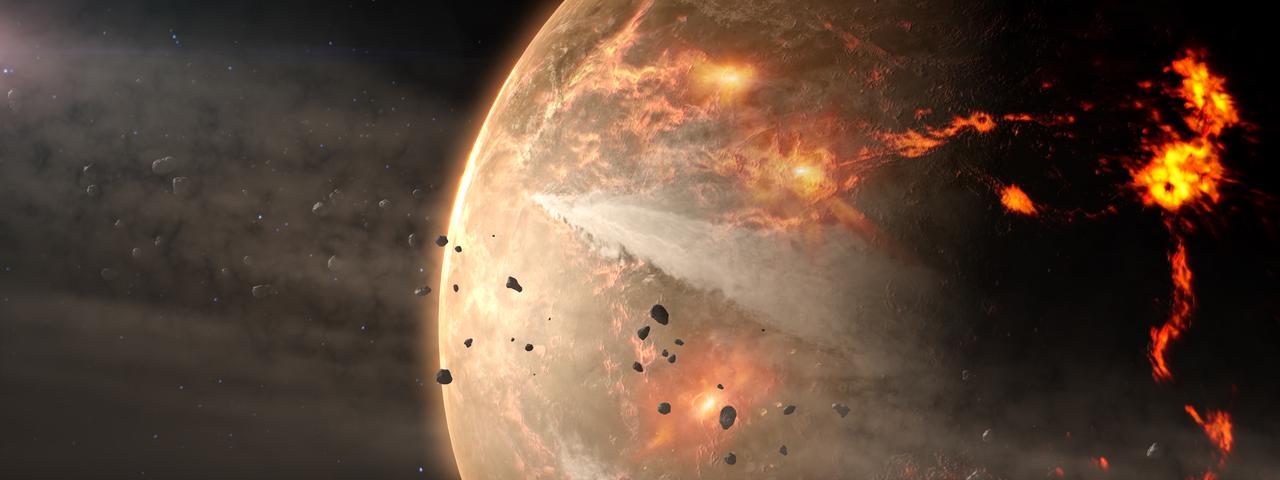
The Origins Spectral Interpretation Resource Identification Security -- Regolith Explorer spacecraft (OSIRIS-REx) will travel to a near-Earth asteroid, called Bennu, and bring a sample back to Earth for study. The mission will help scientists investigate how planets formed and how life began, as well as improve our understanding of asteroids that could impact Earth. OSIRIS-REx is scheduled for launch in late 2016. As planned, the spacecraft will reach its asteroid target in 2018 and return a sample to Earth in 2023. Watch the full video: <a href="http://youtu.be/gtUgarROs08" rel="nofollow">youtu.be/gtUgarROs08</a> Learn more about NASA’s OSIRIS-REx mission and the making of Bennu’s Journey: <a href="http://www.nasa.gov/content/goddard/bennus-journey/" rel="nofollow">www.nasa.gov/content/goddard/bennus-journey/</a> More information on the OSIRIS-REx mission is available at: <a href="http://www.nasa.gov/mission_pages/osiris-rex/index.html" rel="nofollow">www.nasa.gov/mission_pages/osiris-rex/index.html</a> <a href="http://www.asteroidmission.org" rel="nofollow">www.asteroidmission.org</a> <b><a href="http://www.nasa.gov/audience/formedia/features/MP_Photo_Guidelines.html" rel="nofollow">NASA image use policy.</a></b> <b><a href="http://www.nasa.gov/centers/goddard/home/index.html" rel="nofollow">NASA Goddard Space Flight Center</a></b> enables NASA’s mission through four scientific endeavors: Earth Science, Heliophysics, Solar System Exploration, and Astrophysics. Goddard plays a leading role in NASA’s accomplishments by contributing compelling scientific knowledge to advance the Agency’s mission. <b>Follow us on <a href="http://twitter.com/NASAGoddardPix" rel="nofollow">Twitter</a></b> <b>Like us on <a href="http://www.facebook.com/pages/Greenbelt-MD/NASA-Goddard/395013845897?ref=tsd" rel="nofollow">Facebook</a></b> <b>Find us on <a href="http://instagram.com/nasagoddard?vm=grid" rel="nofollow">Instagram</a></b>
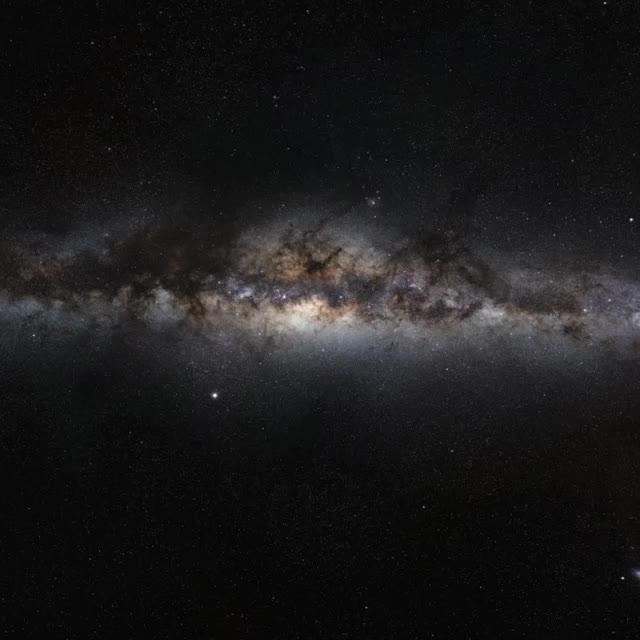
The Origins Spectral Interpretation Resource Identification Security -- Regolith Explorer spacecraft (OSIRIS-REx) will travel to a near-Earth asteroid, called Bennu, and bring a sample back to Earth for study. The mission will help scientists investigate how planets formed and how life began, as well as improve our understanding of asteroids that could impact Earth. OSIRIS-REx is scheduled for launch in late 2016. As planned, the spacecraft will reach its asteroid target in 2018 and return a sample to Earth in 2023. Watch the full video: <a href="http://youtu.be/gtUgarROs08" rel="nofollow">youtu.be/gtUgarROs08</a> Learn more about NASA’s OSIRIS-REx mission and the making of Bennu’s Journey: <a href="http://www.nasa.gov/content/goddard/bennus-journey/" rel="nofollow">www.nasa.gov/content/goddard/bennus-journey/</a> More information on the OSIRIS-REx mission is available at: <a href="http://www.nasa.gov/mission_pages/osiris-rex/index.html" rel="nofollow">www.nasa.gov/mission_pages/osiris-rex/index.html</a> <a href="http://www.asteroidmission.org" rel="nofollow">www.asteroidmission.org</a> <b><a href="http://www.nasa.gov/audience/formedia/features/MP_Photo_Guidelines.html" rel="nofollow">NASA image use policy.</a></b> <b><a href="http://www.nasa.gov/centers/goddard/home/index.html" rel="nofollow">NASA Goddard Space Flight Center</a></b> enables NASA’s mission through four scientific endeavors: Earth Science, Heliophysics, Solar System Exploration, and Astrophysics. Goddard plays a leading role in NASA’s accomplishments by contributing compelling scientific knowledge to advance the Agency’s mission. <b>Follow us on <a href="http://twitter.com/NASAGoddardPix" rel="nofollow">Twitter</a></b> <b>Like us on <a href="http://www.facebook.com/pages/Greenbelt-MD/NASA-Goddard/395013845897?ref=tsd" rel="nofollow">Facebook</a></b> <b>Find us on <a href="http://instagram.com/nasagoddard?vm=grid" rel="nofollow">Instagram</a></b>
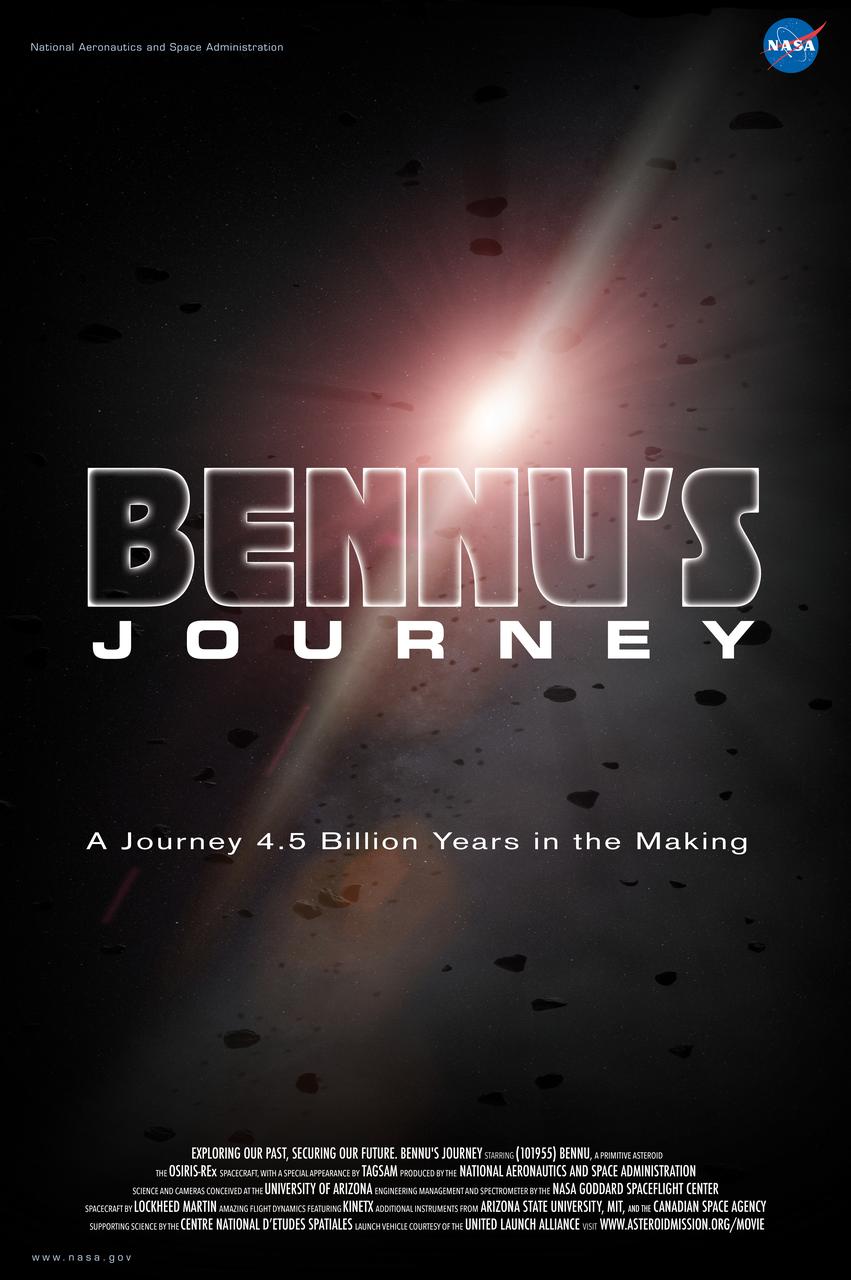
The Origins Spectral Interpretation Resource Identification Security -- Regolith Explorer spacecraft (OSIRIS-REx) will travel to a near-Earth asteroid, called Bennu, and bring a sample back to Earth for study. The mission will help scientists investigate how planets formed and how life began, as well as improve our understanding of asteroids that could impact Earth. OSIRIS-REx is scheduled for launch in late 2016. As planned, the spacecraft will reach its asteroid target in 2018 and return a sample to Earth in 2023. Watch the full video: <a href="http://youtu.be/gtUgarROs08" rel="nofollow">youtu.be/gtUgarROs08</a> Learn more about NASA’s OSIRIS-REx mission and the making of Bennu’s Journey: <a href="http://www.nasa.gov/content/goddard/bennus-journey/" rel="nofollow">www.nasa.gov/content/goddard/bennus-journey/</a> More information on the OSIRIS-REx mission is available at: <a href="http://www.nasa.gov/mission_pages/osiris-rex/index.html" rel="nofollow">www.nasa.gov/mission_pages/osiris-rex/index.html</a> <a href="http://www.asteroidmission.org" rel="nofollow">www.asteroidmission.org</a> <b><a href="http://www.nasa.gov/audience/formedia/features/MP_Photo_Guidelines.html" rel="nofollow">NASA image use policy.</a></b> <b><a href="http://www.nasa.gov/centers/goddard/home/index.html" rel="nofollow">NASA Goddard Space Flight Center</a></b> enables NASA’s mission through four scientific endeavors: Earth Science, Heliophysics, Solar System Exploration, and Astrophysics. Goddard plays a leading role in NASA’s accomplishments by contributing compelling scientific knowledge to advance the Agency’s mission. <b>Follow us on <a href="http://twitter.com/NASAGoddardPix" rel="nofollow">Twitter</a></b> <b>Like us on <a href="http://www.facebook.com/pages/Greenbelt-MD/NASA-Goddard/395013845897?ref=tsd" rel="nofollow">Facebook</a></b> <b>Find us on <a href="http://instagram.com/nasagoddard?vm=grid" rel="nofollow">Instagram</a></b>

This large asteroid, a proto-star undergoes fusion and our sun is born. This is the parent of Asteroid Bennu. Today, a NASA Spacecraft has the chance to retrieve a sample from Bennu to reveal the history of our solar system. OSIRIRS-REx is a NASA sample return mission to visit Asteroid Bennu. We plan to grab a piece of Bennu, because it’s a time capsule that can tell us about the origins of our planet and our entire solar system. Watch the full video: <a href="http://youtu.be/gtUgarROs08" rel="nofollow">youtu.be/gtUgarROs08</a> Learn more about NASA’s OSIRIS-REx mission and the making of Bennu’s Journey: <a href="http://www.nasa.gov/content/goddard/bennus-journey/" rel="nofollow">www.nasa.gov/content/goddard/bennus-journey/</a> More information on the OSIRIS-REx mission is available at: <a href="http://www.nasa.gov/mission_pages/osiris-rex/index.html" rel="nofollow">www.nasa.gov/mission_pages/osiris-rex/index.html</a> <a href="http://www.asteroidmission.org" rel="nofollow">www.asteroidmission.org</a> <b><a href="http://www.nasa.gov/audience/formedia/features/MP_Photo_Guidelines.html" rel="nofollow">NASA image use policy.</a></b> <b><a href="http://www.nasa.gov/centers/goddard/home/index.html" rel="nofollow">NASA Goddard Space Flight Center</a></b> enables NASA’s mission through four scientific endeavors: Earth Science, Heliophysics, Solar System Exploration, and Astrophysics. Goddard plays a leading role in NASA’s accomplishments by contributing compelling scientific knowledge to advance the Agency’s mission. <b>Follow us on <a href="http://twitter.com/NASAGoddardPix" rel="nofollow">Twitter</a></b> <b>Like us on <a href="http://www.facebook.com/pages/Greenbelt-MD/NASA-Goddard/395013845897?ref=tsd" rel="nofollow">Facebook</a></b> <b>Find us on <a href="http://instagram.com/nasagoddard?vm=grid" rel="nofollow">Instagram</a></b>
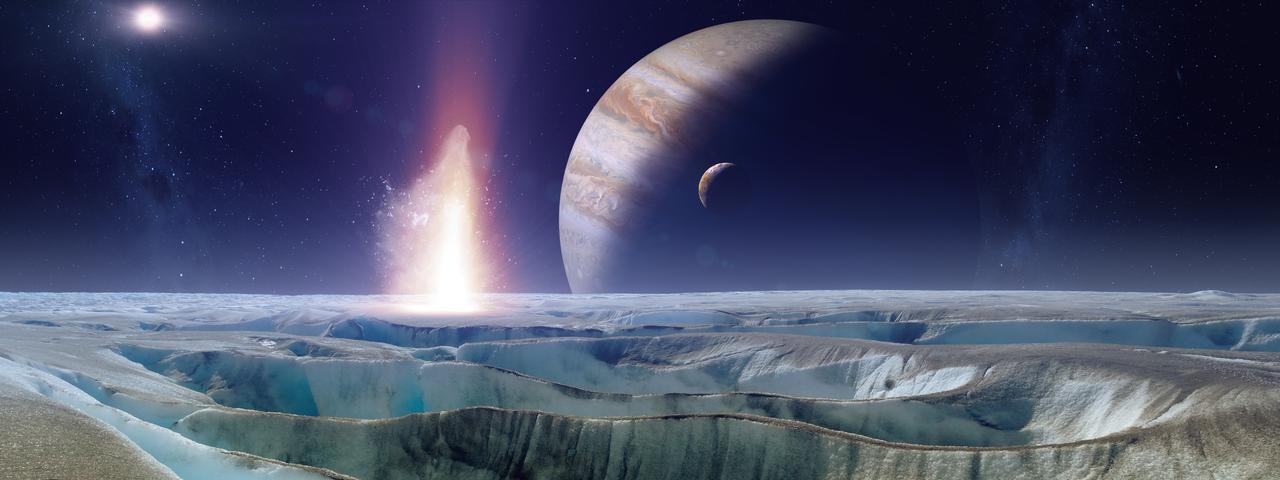
The Origins Spectral Interpretation Resource Identification Security -- Regolith Explorer spacecraft (OSIRIS-REx) will travel to a near-Earth asteroid, called Bennu, and bring a sample back to Earth for study. The mission will help scientists investigate how planets formed and how life began, as well as improve our understanding of asteroids that could impact Earth. OSIRIS-REx is scheduled for launch in late 2016. As planned, the spacecraft will reach its asteroid target in 2018 and return a sample to Earth in 2023. Watch the full video: <a href="http://youtu.be/gtUgarROs08" rel="nofollow">youtu.be/gtUgarROs08</a> Learn more about NASA’s OSIRIS-REx mission and the making of Bennu’s Journey: <a href="http://www.nasa.gov/content/goddard/bennus-journey/" rel="nofollow">www.nasa.gov/content/goddard/bennus-journey/</a> More information on the OSIRIS-REx mission is available at: <a href="http://www.nasa.gov/mission_pages/osiris-rex/index.html" rel="nofollow">www.nasa.gov/mission_pages/osiris-rex/index.html</a> <a href="http://www.asteroidmission.org" rel="nofollow">www.asteroidmission.org</a> <b><a href="http://www.nasa.gov/audience/formedia/features/MP_Photo_Guidelines.html" rel="nofollow">NASA image use policy.</a></b> <b><a href="http://www.nasa.gov/centers/goddard/home/index.html" rel="nofollow">NASA Goddard Space Flight Center</a></b> enables NASA’s mission through four scientific endeavors: Earth Science, Heliophysics, Solar System Exploration, and Astrophysics. Goddard plays a leading role in NASA’s accomplishments by contributing compelling scientific knowledge to advance the Agency’s mission. <b>Follow us on <a href="http://twitter.com/NASAGoddardPix" rel="nofollow">Twitter</a></b> <b>Like us on <a href="http://www.facebook.com/pages/Greenbelt-MD/NASA-Goddard/395013845897?ref=tsd" rel="nofollow">Facebook</a></b> <b>Find us on <a href="http://instagram.com/nasagoddard?vm=grid" rel="nofollow">Instagram</a></b>
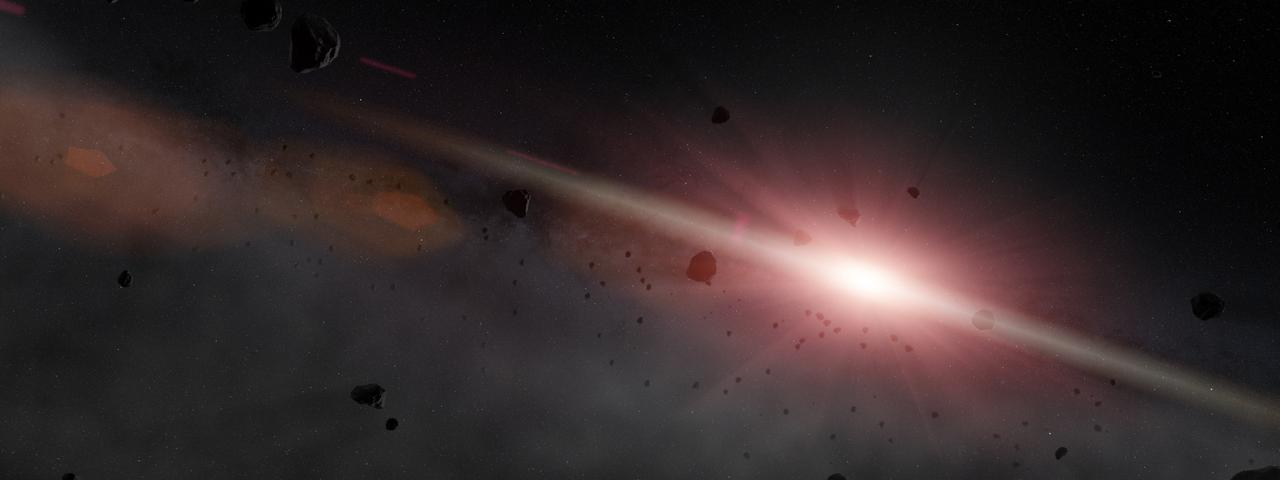
The Origins Spectral Interpretation Resource Identification Security -- Regolith Explorer spacecraft (OSIRIS-REx) will travel to a near-Earth asteroid, called Bennu, and bring a sample back to Earth for study. The mission will help scientists investigate how planets formed and how life began, as well as improve our understanding of asteroids that could impact Earth. OSIRIS-REx is scheduled for launch in late 2016. As planned, the spacecraft will reach its asteroid target in 2018 and return a sample to Earth in 2023. Watch the full video: <a href="http://youtu.be/gtUgarROs08" rel="nofollow">youtu.be/gtUgarROs08</a> Learn more about NASA’s OSIRIS-REx mission and the making of Bennu’s Journey: <a href="http://www.nasa.gov/content/goddard/bennus-journey/" rel="nofollow">www.nasa.gov/content/goddard/bennus-journey/</a> More information on the OSIRIS-REx mission is available at: <a href="http://www.nasa.gov/mission_pages/osiris-rex/index.html" rel="nofollow">www.nasa.gov/mission_pages/osiris-rex/index.html</a> <a href="http://www.asteroidmission.org" rel="nofollow">www.asteroidmission.org</a> <b><a href="http://www.nasa.gov/audience/formedia/features/MP_Photo_Guidelines.html" rel="nofollow">NASA image use policy.</a></b> <b><a href="http://www.nasa.gov/centers/goddard/home/index.html" rel="nofollow">NASA Goddard Space Flight Center</a></b> enables NASA’s mission through four scientific endeavors: Earth Science, Heliophysics, Solar System Exploration, and Astrophysics. Goddard plays a leading role in NASA’s accomplishments by contributing compelling scientific knowledge to advance the Agency’s mission. <b>Follow us on <a href="http://twitter.com/NASAGoddardPix" rel="nofollow">Twitter</a></b> <b>Like us on <a href="http://www.facebook.com/pages/Greenbelt-MD/NASA-Goddard/395013845897?ref=tsd" rel="nofollow">Facebook</a></b> <b>Find us on <a href="http://instagram.com/nasagoddard?vm=grid" rel="nofollow">Instagram</a></b>
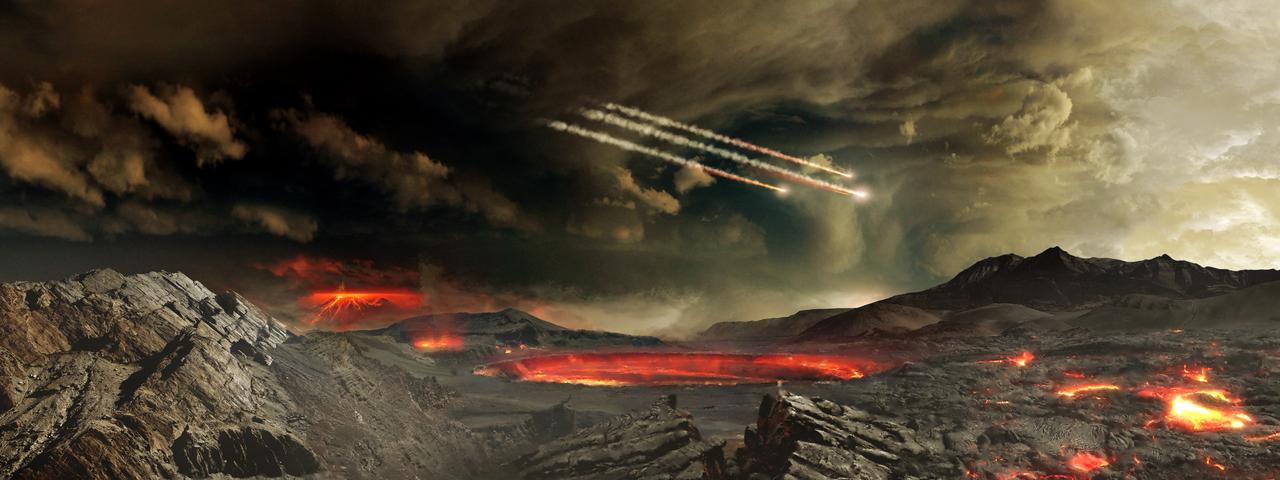
This is an artist's concept of the young Earth being bombarded by asteroids. Scientists think these impacts could have delivered significant amounts of organic matter and water to Earth. Image Credit: NASA's Goddard Space Flight Center Conceptual Image Lab The Origins Spectral Interpretation Resource Identification Security -- Regolith Explorer spacecraft (OSIRIS-REx) will travel to a near-Earth asteroid, called Bennu, and bring a sample back to Earth for study. The mission will help scientists investigate how planets formed and how life began, as well as improve our understanding of asteroids that could impact Earth. OSIRIS-REx is scheduled for launch in late 2016. As planned, the spacecraft will reach its asteroid target in 2018 and return a sample to Earth in 2023. Watch the full video: <a href="http://youtu.be/gtUgarROs08" rel="nofollow">youtu.be/gtUgarROs08</a> Learn more about NASA’s OSIRIS-REx mission and the making of Bennu’s Journey: <a href="http://www.nasa.gov/content/goddard/bennus-journey/" rel="nofollow">www.nasa.gov/content/goddard/bennus-journey/</a> More information on the OSIRIS-REx mission is available at: <a href="http://www.nasa.gov/mission_pages/osiris-rex/index.html" rel="nofollow">www.nasa.gov/mission_pages/osiris-rex/index.html</a> <a href="http://www.asteroidmission.org" rel="nofollow">www.asteroidmission.org</a> <b><a href="http://www.nasa.gov/audience/formedia/features/MP_Photo_Guidelines.html" rel="nofollow">NASA image use policy.</a></b> <b><a href="http://www.nasa.gov/centers/goddard/home/index.html" rel="nofollow">NASA Goddard Space Flight Center</a></b> enables NASA’s mission through four scientific endeavors: Earth Science, Heliophysics, Solar System Exploration, and Astrophysics. Goddard plays a leading role in NASA’s accomplishments by contributing compelling scientific knowledge to advance the Agency’s mission. <b>Follow us on <a href="http://twitter.com/NASAGoddardPix" rel="nofollow">Twitter</a></b> <b>Like us on <a href="http://www.facebook.com/pages/Greenbelt-MD/NASA-Goddard/395013845897?ref=tsd" rel="nofollow">Facebook</a></b> <b>Find us on <a href="http://instagram.com/nasagoddard?vm=grid" rel="nofollow">Instagram</a></b>
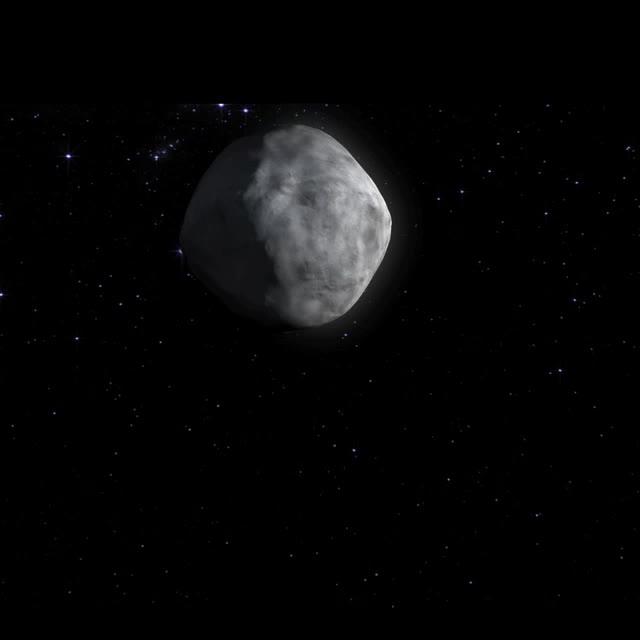
Asteroid Bennu is a time capsule, containing the raw ingredients of the solar system. Bennu has settled in a near-Earth orbit. Today, a NASA spacecraft OSIRIS-REx is going to retrieve a sample to learn more about our Solar System’s history. OSIRIRS-REx is a NASA sample return mission to visit Asteroid Bennu. We plan to grab a piece of Bennu, because it’s a time capsule that can tell us about the origins of our planet and our entire solar system. Watch the full video: <a href="http://youtu.be/gtUgarROs08" rel="nofollow">youtu.be/gtUgarROs08</a> Learn more about NASA’s OSIRIS-REx mission and the making of Bennu’s Journey: <a href="http://www.nasa.gov/content/goddard/bennus-journey/" rel="nofollow">www.nasa.gov/content/goddard/bennus-journey/</a> More information on the OSIRIS-REx mission is available at: <a href="http://www.nasa.gov/mission_pages/osiris-rex/index.html" rel="nofollow">www.nasa.gov/mission_pages/osiris-rex/index.html</a> <a href="http://www.asteroidmission.org" rel="nofollow">www.asteroidmission.org</a> <b><a href="http://www.nasa.gov/audience/formedia/features/MP_Photo_Guidelines.html" rel="nofollow">NASA image use policy.</a></b> <b><a href="http://www.nasa.gov/centers/goddard/home/index.html" rel="nofollow">NASA Goddard Space Flight Center</a></b> enables NASA’s mission through four scientific endeavors: Earth Science, Heliophysics, Solar System Exploration, and Astrophysics. Goddard plays a leading role in NASA’s accomplishments by contributing compelling scientific knowledge to advance the Agency’s mission. <b>Follow us on <a href="http://twitter.com/NASAGoddardPix" rel="nofollow">Twitter</a></b> <b>Like us on <a href="http://www.facebook.com/pages/Greenbelt-MD/NASA-Goddard/395013845897?ref=tsd" rel="nofollow">Facebook</a></b> <b>Find us on <a href="http://instagram.com/nasagoddard?vm=grid" rel="nofollow">Instagram</a></b>
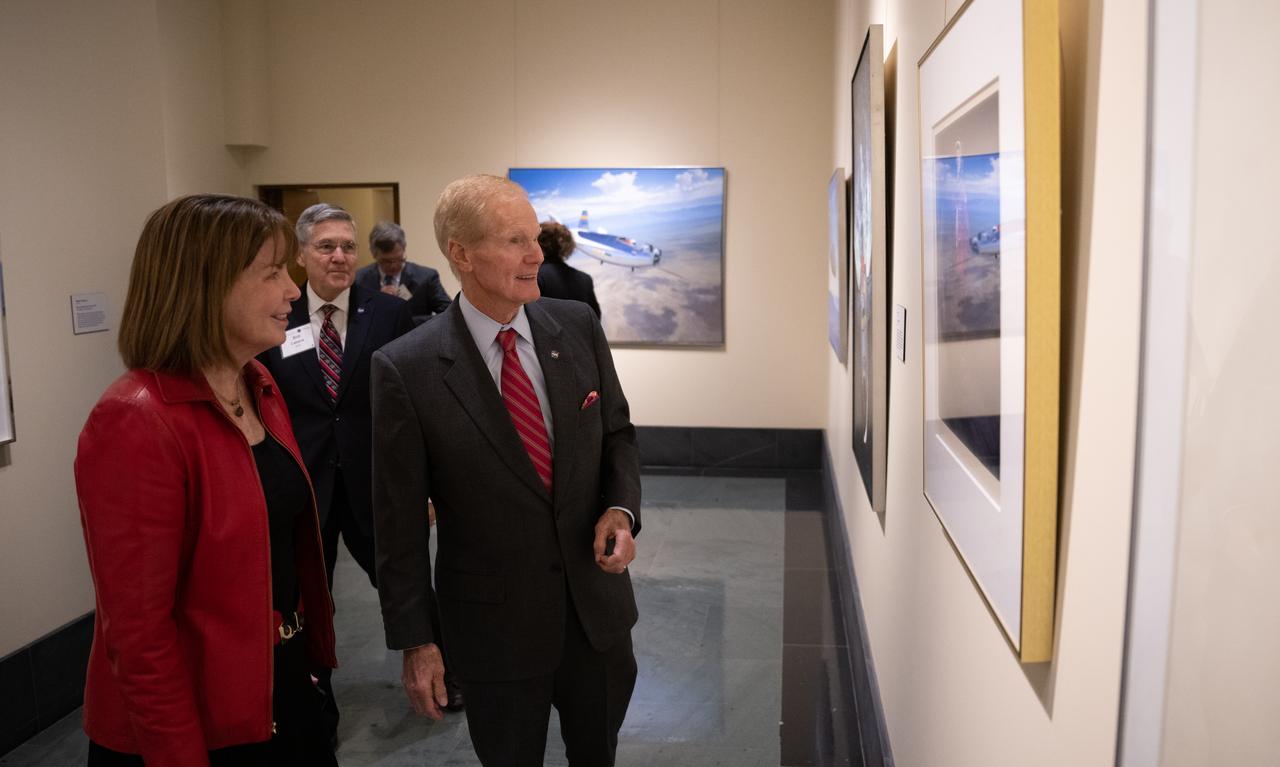
Colleen Hartman, director of physics, aeronautics, and space science at the National Academies of Science , left, and NASA Administrator Bill Nelson are seen as they view the NASA Art Program Exhibition “Launching the Future: Looking Back to Look Forward” during an event celebrating the 50th anniversary of the Apollo 17 mission, Wednesday, Dec. 14, 2022, at the National Academies of Science in Washington. The three-astronaut crew of Apollo 17 - commander Eugene Cernan, lunar module pilot Harrison Schmitt, and command module pilot Ronald Evans, embarked on the last mission of the Apollo program to land humans on the Moon in December of 1972. Cernan and Schmitt spent three days on the lunar surface collecting samples and performing scientific experiments before lifting off from the Taurus-Littrow Valley on December 14, 1972. Photo Credit: (NASA/Joel Kowsky)
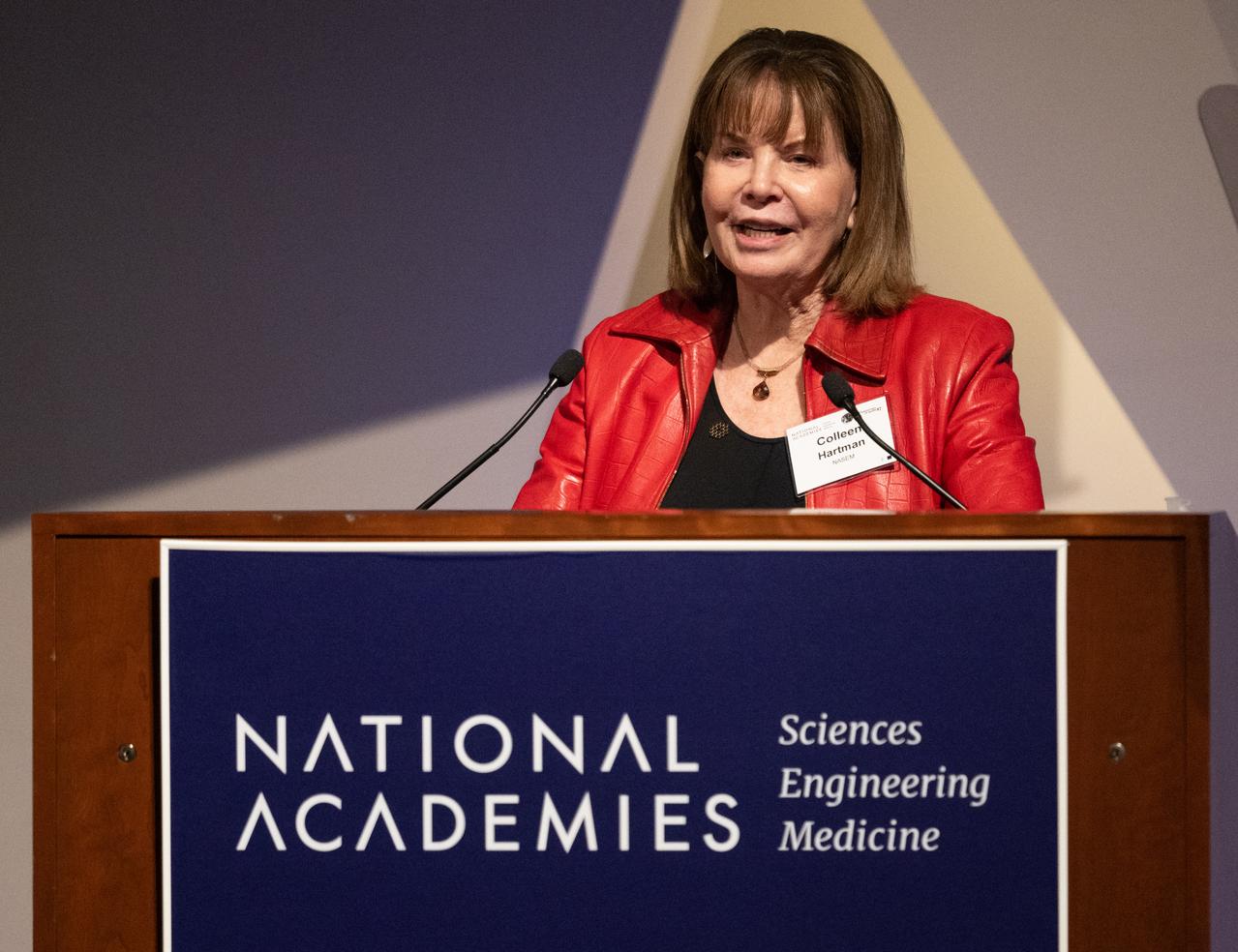
Colleen Hartman, director of physics, aeronautics, and space science at the National Academies of Science gives closing remarks during an event celebrating the 50th anniversary of the Apollo 17 mission, Wednesday, Dec. 14, 2022, at the National Academies of Science in Washington. The three-astronaut crew of Apollo 17 - commander Eugene Cernan, lunar module pilot Harrison Schmitt, and command module pilot Ronald Evans, embarked on the last mission of the Apollo program to land humans on the Moon in December of 1972. Cernan and Schmitt spent three days on the lunar surface collecting samples and performing scientific experiments before lifting off from the Taurus-Littrow Valley on December 14, 1972. Photo Credit: (NASA/Joel Kowsky)
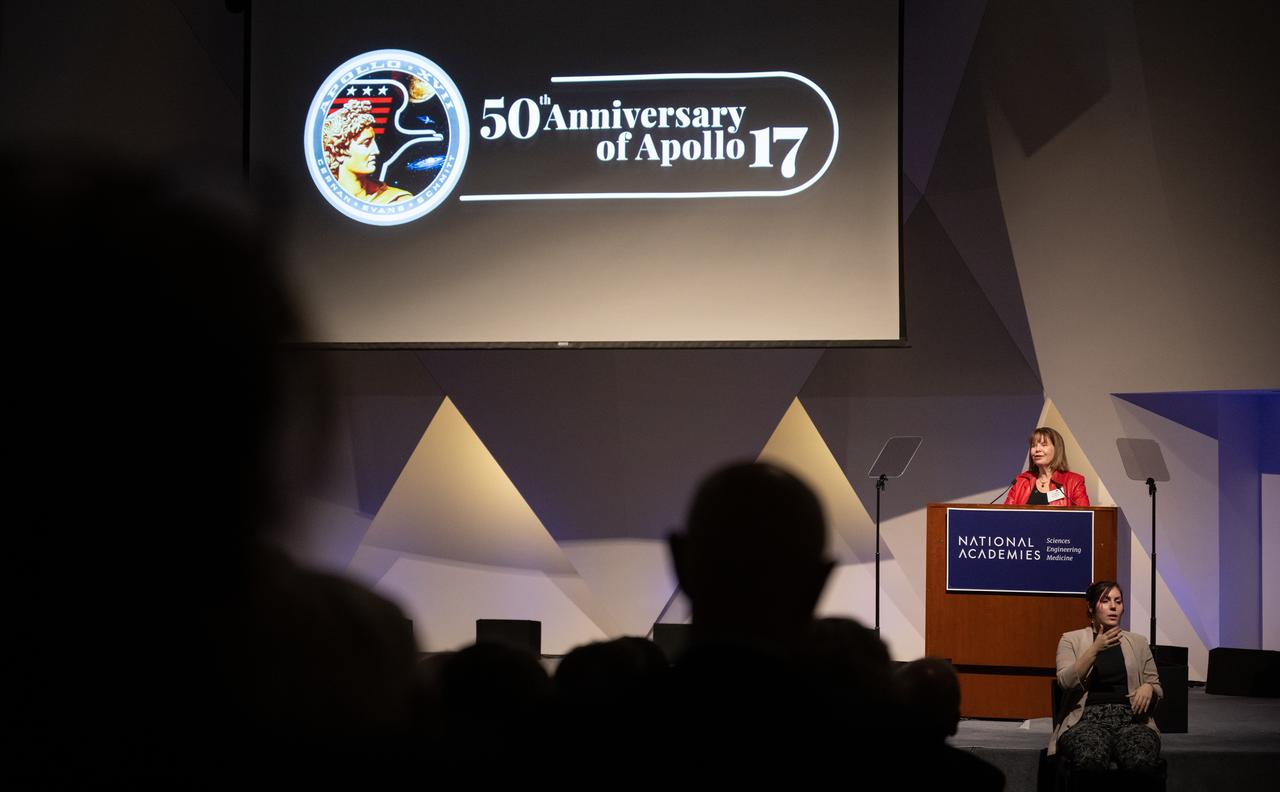
Colleen Hartman, director of physics, aeronautics, and space science at the National Academies of Science gives closing remarks during an event celebrating the 50th anniversary of the Apollo 17 mission, Wednesday, Dec. 14, 2022, at the National Academies of Science in Washington. The three-astronaut crew of Apollo 17 - commander Eugene Cernan, lunar module pilot Harrison Schmitt, and command module pilot Ronald Evans, embarked on the last mission of the Apollo program to land humans on the Moon in December of 1972. Cernan and Schmitt spent three days on the lunar surface collecting samples and performing scientific experiments before lifting off from the Taurus-Littrow Valley on December 14, 1972. Photo Credit: (NASA/Joel Kowsky)
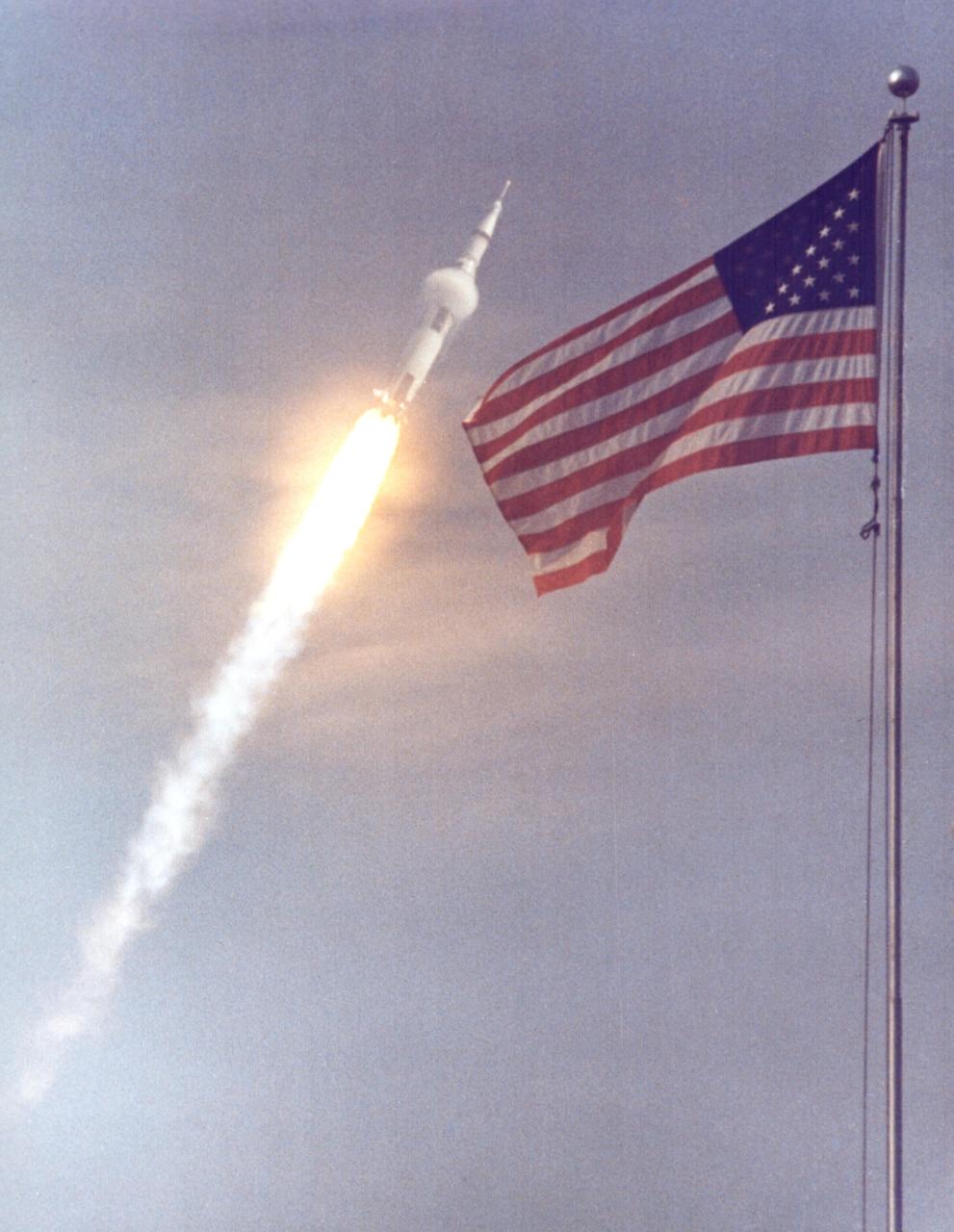
KENNEDY SPACE CENTER, FLA. - The American flag heralds the flight of Apollo 11, man's first lunar landing mission. The Apollo 11 Saturn V space vehicle lifted off with astronauts Neil A. Armstrong, Michael Collins and Edwin E. Aldrin Jr. at 9:32 a.m. EDT from KSC's Launch Complex 39A. During the planned eight-day mission, Armstrong and Aldrin will descend in a Lunar Module (LM) to the Moon's surface while Collins orbits overhead in the Command Module. The two astronauts are to spend 22 hours on the Moon, including two-and-one-half hours outside the LM. They will gather samples of lunar material and will deploy scientific experiments that will transmit data about the lunar environment. They will rejoin Collins in the Command Module for the return trip to Earth.
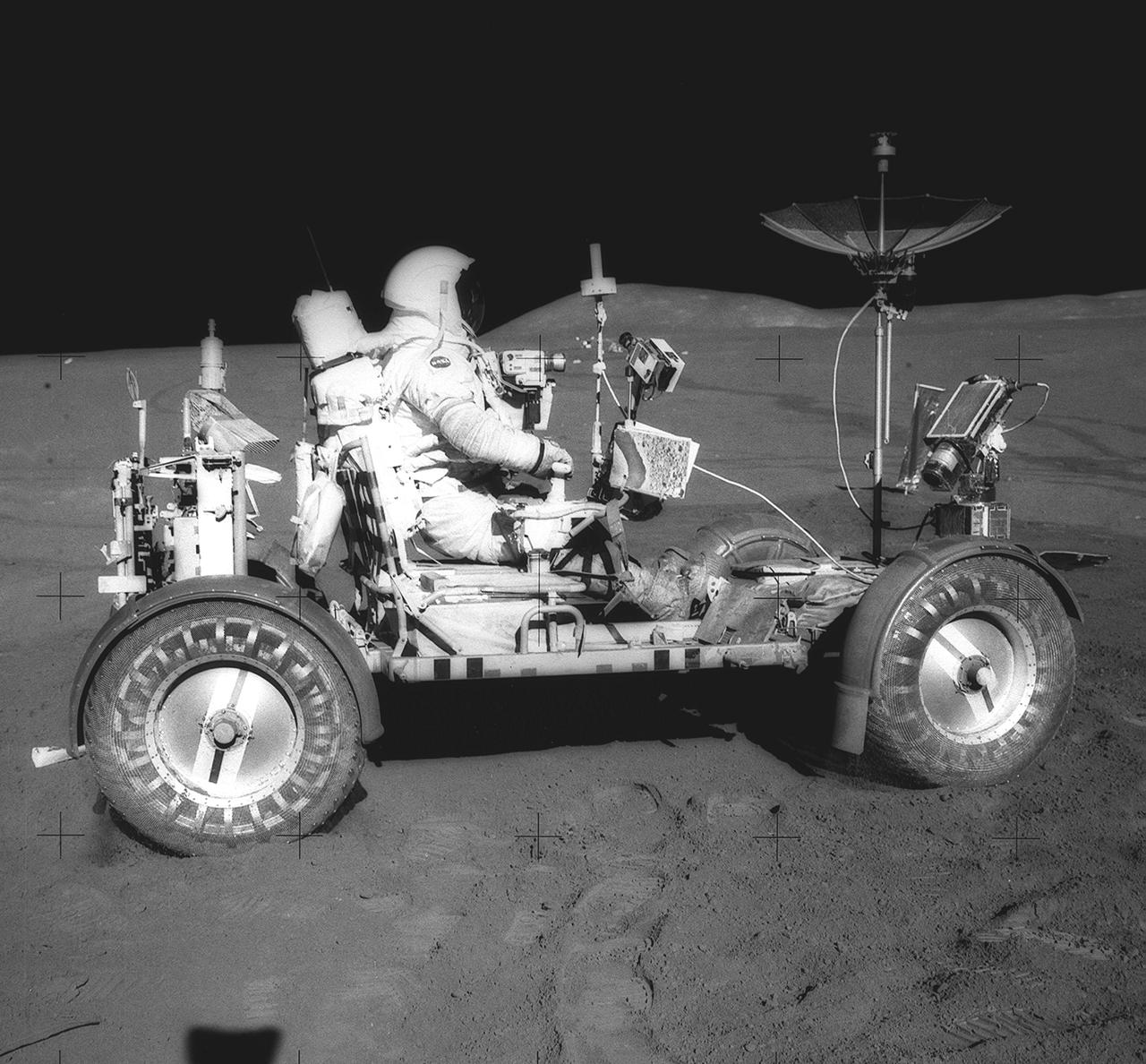
This photograph was taken during the Apollo 15 mission on the lunar surface. Astronaut David R. Scott waits in the Lunar Roving Vehicle (LRV) for astronaut James Irwin for the return trip to the Lunar Module, Falcon, with rocks and soil collected near the Hadley-Apernine landing site. The Apollo 15 was the first mission to use the LRV. Powered by battery, the lightweight electric car greatly increased the range of mobility and productivity on the scientific traverses for astronauts. It weighed 462 pounds (77 pounds on the Moon) and could carry two suited astronauts, their gear and cameras, and several hundred pounds of bagged samples. The LRV's mobility was quite high. It could climb and descend slopes of about 25 degrees. The LRV was designed and developed by the Marshall Space Flight Center and built by the Boeing Company.
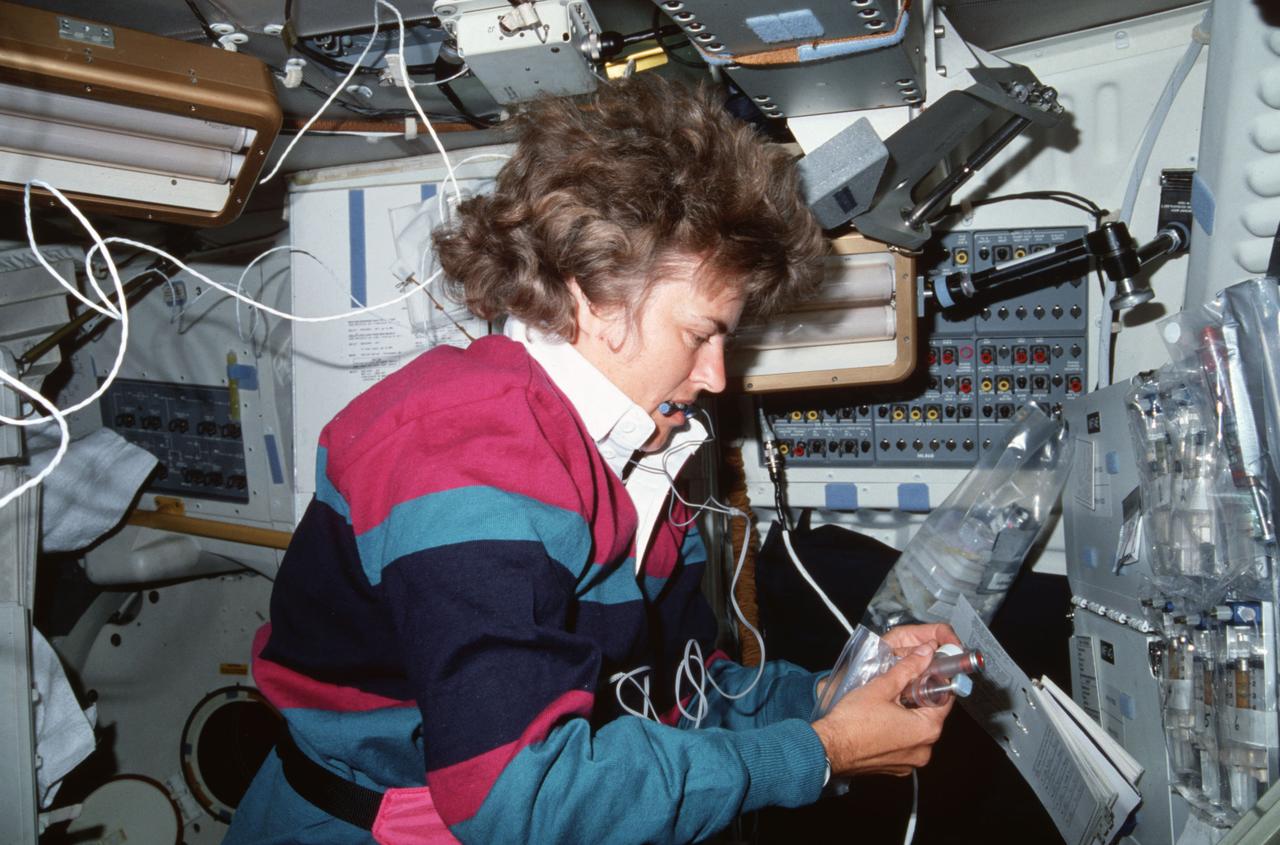
STS043-03-001 (2-11 Aug 1991) --- Astronaut Shannon W. Lucid, STS-43 mission specialist, is pictured with a sample from the Bio-serve Instrumentation Technology Associates Materials Dispersion Apparatus (BIMDA). BIMDA is designed to obtain data on scientific methods and commercial potential for growing large high quality protein crystals in microgravity. The experimental focus is on both synthetic and natural biological processes that provide the foundation of the assembly of large structures from macromolecules. In addition, cell processes and membrane (cell and artificial) processes are being evaluated. BIMDA experiments are stored and operated on the middeck in a refrigerator/incubator module (R/IM). During this flight, the R/IM maintains a constant internal temperature of 20 degrees Celsius. This experiment also flew on NASA?s STS-37 mission.
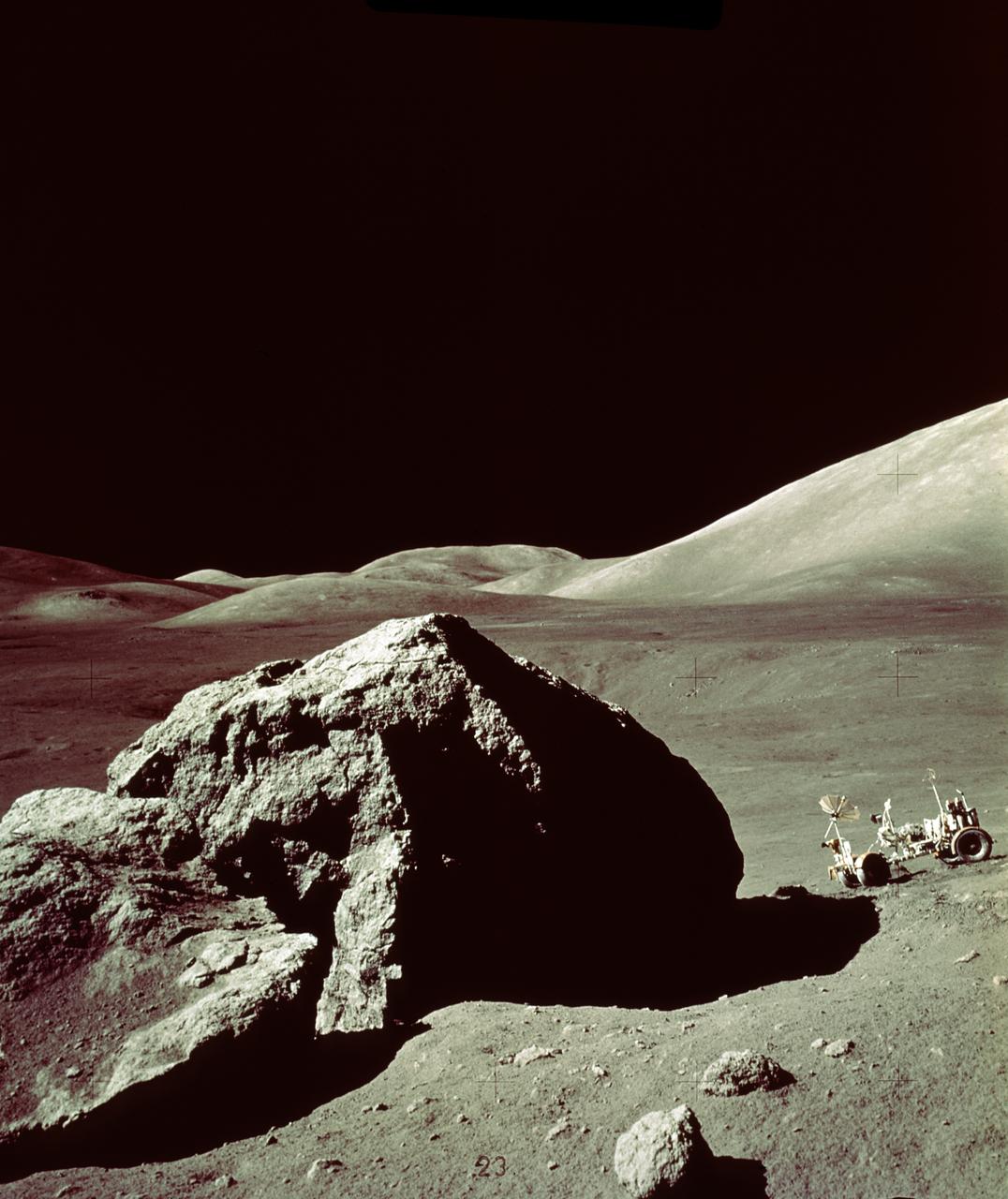
In this Apollo 17 onboard photo, a Lunar Roving Vehicle (LRV) is parked beside a huge boulder near the Valley of Tourus-Litttrow on the lunar surface. The seventh and last manned lunar landing and return to Earth mission, the Apollo 17, carrying a crew of three astronauts: Mission Commander Eugene A. Cernan; Lunar Module pilot Harrison H. Schmitt; and Command Module pilot Ronald E. Evans, lifted off on December 7, 1972 from the Kennedy Space Flight Center (KSC). Scientific objectives of the Apollo 17 mission included geological surveying and sampling of materials and surface features in a preselected area of the Taurus-Littrow region, deploying and activating surface experiments, and conducting in-flight experiments and photographic tasks during lunar orbit and transearth coast (TEC). These objectives included: Deployed experiments such as the Apollo lunar surface experiment package (ALSEP) with a Heat Flow experiment, Lunar seismic profiling (LSP), Lunar surface gravimeter (LSG), Lunar atmospheric composition experiment (LACE) and Lunar ejecta and meteorites (LEAM). The mission also included Lunar Sampling and Lunar orbital experiments. Biomedical experiments included the Biostack II Experiment and the BIOCORE experiment. The mission marked the longest Apollo mission, 504 hours, and the longest lunar surface stay time, 75 hours, which allowed the astronauts to conduct an extensive geological investigation. They collected 257 pounds (117 kilograms) of lunar samples with the use of the Marshall Space Flight Center developed LRV. The mission ended on December 19, 1972
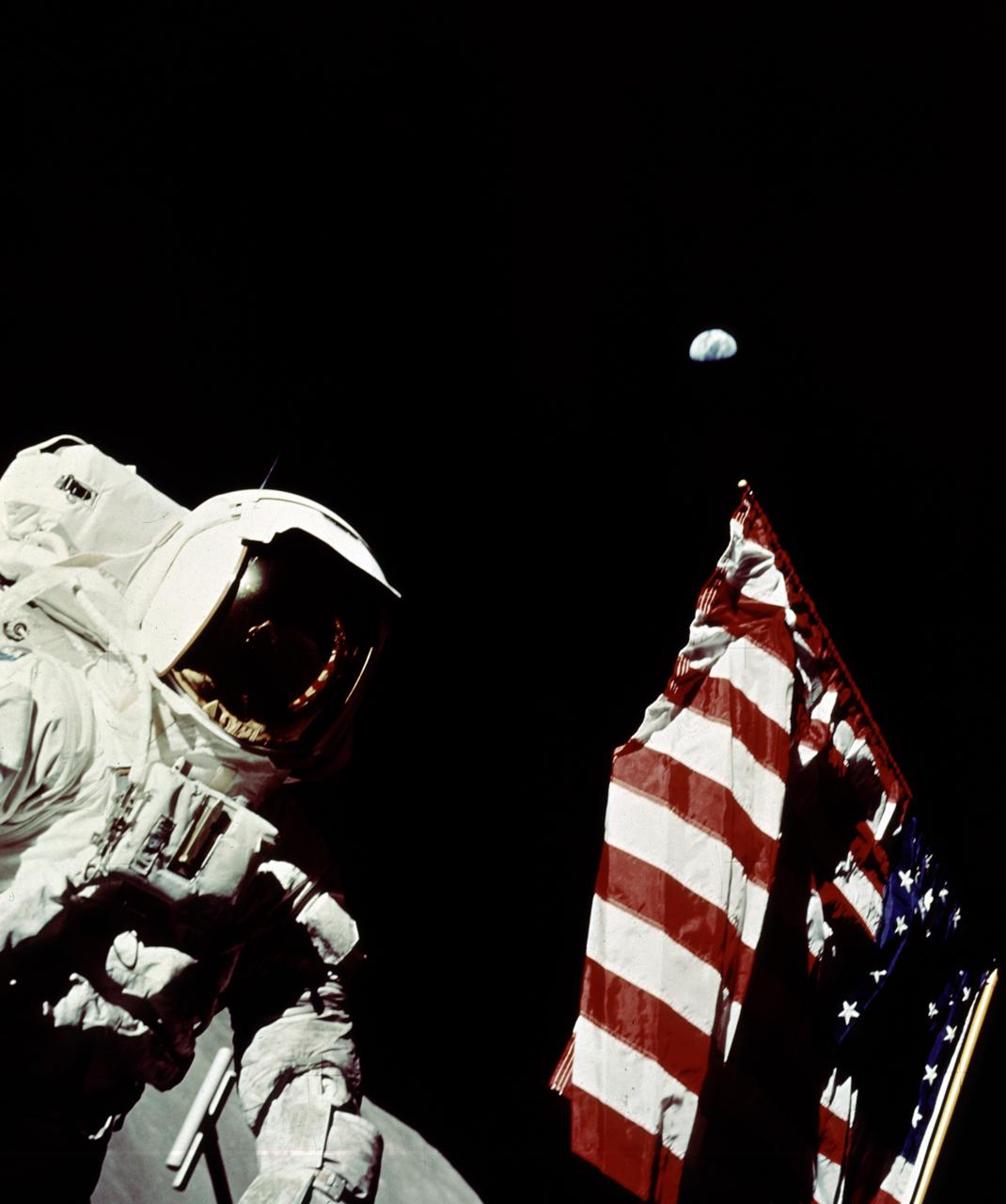
In this Apollo 17 onboard photo, Mission Commander Eugene A. Cernan adjusts the U.S. flag deployed upon the Moon. The seventh and last manned lunar landing and return to Earth mission, the Apollo 17, carrying a crew of three astronauts: Cernan; Lunar Module pilot Harrison H. Schmitt; and Command Module pilot Ronald E. Evans, lifted off on December 7, 1972 from the Kennedy Space Flight Center (KSC). Scientific objectives of the Apollo 17 mission included geological surveying and sampling of materials and surface features in a preselected area of the Taurus-Littrow region, deploying and activating surface experiments, and conducting in-flight experiments and photographic tasks during lunar orbit and transearth coast (TEC). These objectives included: Deployed experiments such as the Apollo lunar surface experiment package (ALSEP) with a Heat Flow experiment, Lunar seismic profiling (LSP), Lunar surface gravimeter (LSG), Lunar atmospheric composition experiment (LACE) and Lunar ejecta and meteorites (LEAM). The mission also included Lunar Sampling and Lunar orbital experiments. Biomedical experiments included the Biostack II Experiment and the BIOCORE experiment. The mission marked the longest Apollo mission, 504 hours, and the longest lunar surface stay time, 75 hours, which allowed the astronauts to conduct an extensive geological investigation. They collected 257 pounds (117 kilograms) of lunar samples with the use of the Marshall Space Flight Center developed LRV. The mission ended on December 19, 1972
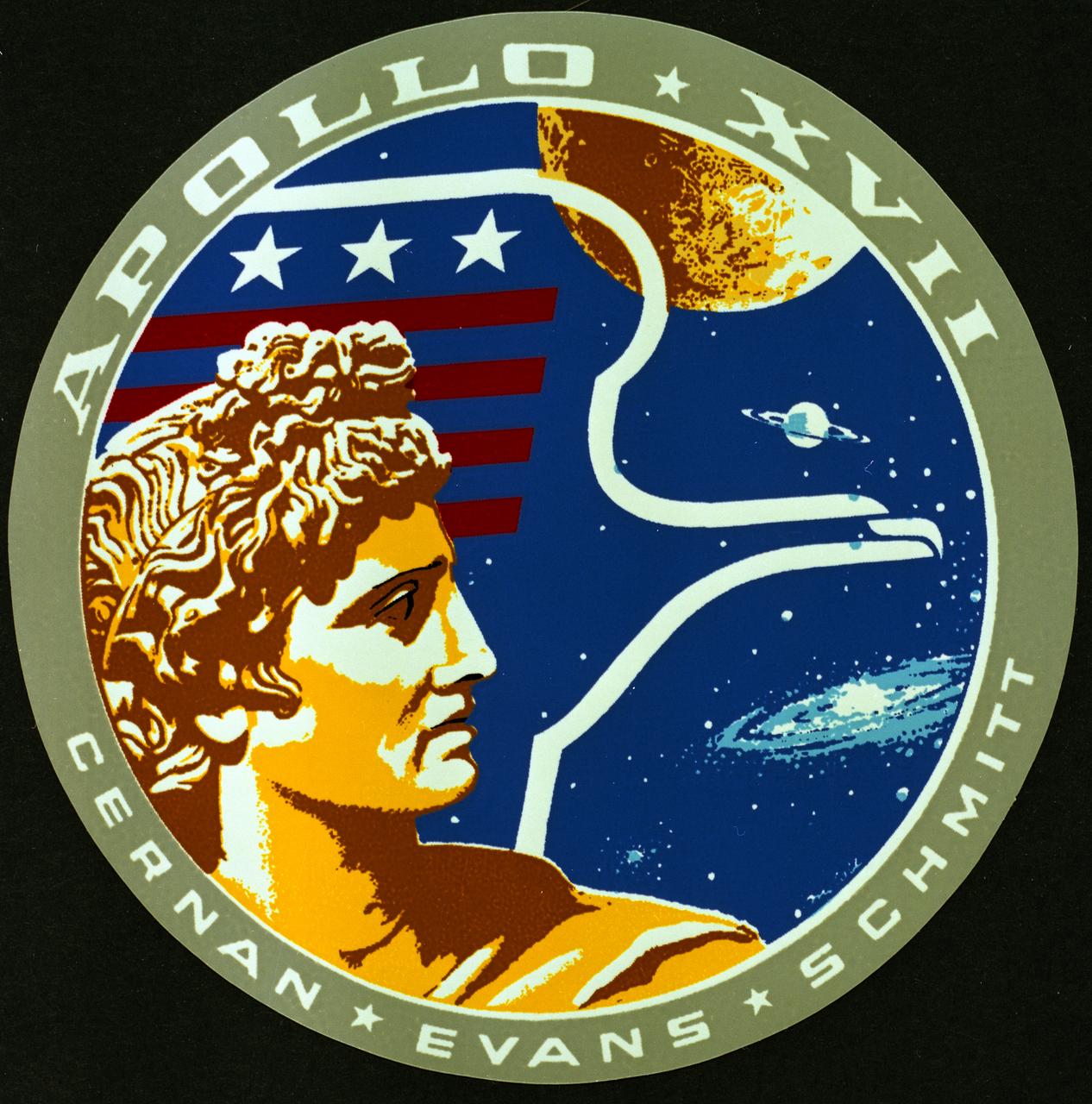
This is the Apollo 17 insignia or logo. The seventh and last manned lunar landing and return to Earth mission, the Apollo 17, carried a crew of three astronauts: Harrison H. Schmitt, Lunar Module pilot; Eugene A. Cernan, mission commander; and Ronald E. Evans, Command Module pilot. Apollo 17 lifted off on December 7, 1972 from the Kennedy Space Flight Center (KSC). Scientific objectives of the mission included geological surveying and sampling of materials and surface features in a preselected area of the Taurus-Littrow region, deploying and activating surface experiments, and conducting in-flight experiments and photographic tasks during lunar orbit and transearth coast (TEC). The objectives included deployed experiments such as the Apollo lunar surface experiment package (ALSEP) with a Heat Flow experiment, Lunar seismic profiling (LSP), Lunar surface gravimeter (LSG), Lunar atmospheric composition experiment (LACE) and Lunar ejecta and meteorites (LEAM). The mission also included Lunar Sampling and Lunar Orbital experiments. Biomedical experiments included the Biostack II and the BIOCORE experiments. The mission marked the longest Apollo mission, 504 hours, and the longest lunar surface stay time, 75 hours, which allowed the astronauts to conduct an extensive geological investigation. They collected 257 pounds (117 kilograms) of lunar samples with the use of the Marshall Space Flight Center (MSFC) designed Lunar Roving Vehicle (LRV). The mission ended on December 19, 1972.
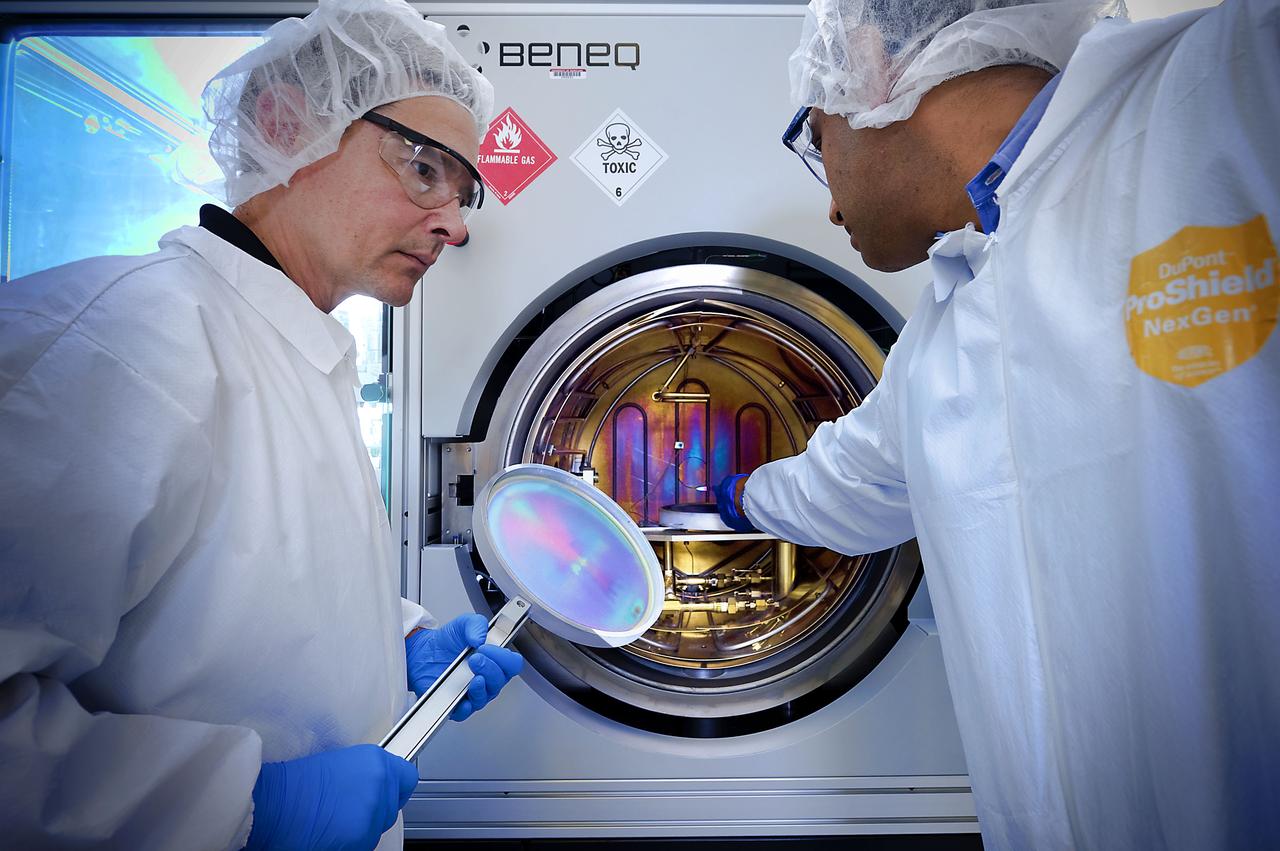
Goddard technologist Vivek Dwivedi (right) and his collaborator, University of Maryland professor Raymond Adomaitis (left), are preparing to insert a sample inside a reactor that will apply a thin film using the atomic layer deposition technique. Photo Credit: NASA/GSFC/Chris Gunn <b><a href="http://www.nasa.gov/audience/formedia/features/MP_Photo_Guidelines.html" rel="nofollow">NASA image use policy.</a></b> <b><a href="http://www.nasa.gov/centers/goddard/home/index.html" rel="nofollow">NASA Goddard Space Flight Center</a></b> enables NASA’s mission through four scientific endeavors: Earth Science, Heliophysics, Solar System Exploration, and Astrophysics. Goddard plays a leading role in NASA’s accomplishments by contributing compelling scientific knowledge to advance the Agency’s mission. <b>Follow us on <a href="http://twitter.com/NASA_GoddardPix" rel="nofollow">Twitter</a></b> <b>Like us on <a href="http://www.facebook.com/pages/Greenbelt-MD/NASA-Goddard/395013845897?ref=tsd" rel="nofollow">Facebook</a></b> <b>Find us on <a href="http://instagrid.me/nasagoddard/?vm=grid" rel="nofollow">Instagram</a></b>
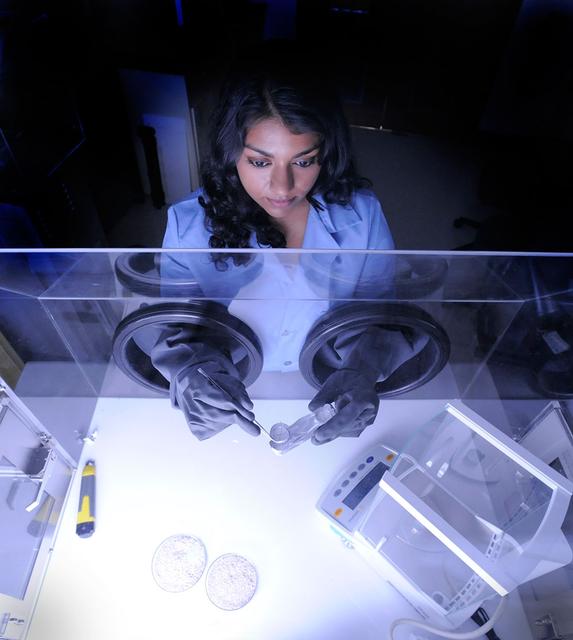
Goddard technologist Nithin Abraham, a member of the team that has developed a low-cost, low-mass technique for protecting sensitive spacecraft components from outgassed contaminants, studies a paint sample in her laboratory. To read this story go to: <a href="http://www.nasa.gov/topics/technology/features/outgas-tech.html" rel="nofollow">www.nasa.gov/topics/technology/features/outgas-tech.html</a> Credit: NASA/Pat Izzo <b><a href="http://www.nasa.gov/audience/formedia/features/MP_Photo_Guidelines.html" rel="nofollow">NASA image use policy.</a></b> <b><a href="http://www.nasa.gov/centers/goddard/home/index.html" rel="nofollow">NASA Goddard Space Flight Center</a></b> enables NASA’s mission through four scientific endeavors: Earth Science, Heliophysics, Solar System Exploration, and Astrophysics. Goddard plays a leading role in NASA’s accomplishments by contributing compelling scientific knowledge to advance the Agency’s mission. <b>Follow us on <a href="http://twitter.com/NASA_GoddardPix" rel="nofollow">Twitter</a></b> <b>Like us on <a href="http://www.facebook.com/pages/Greenbelt-MD/NASA-Goddard/395013845897?ref=tsd" rel="nofollow">Facebook</a></b> <b>Find us on <a href="http://instagram.com/nasagoddard?vm=grid" rel="nofollow">Instagram</a></b>
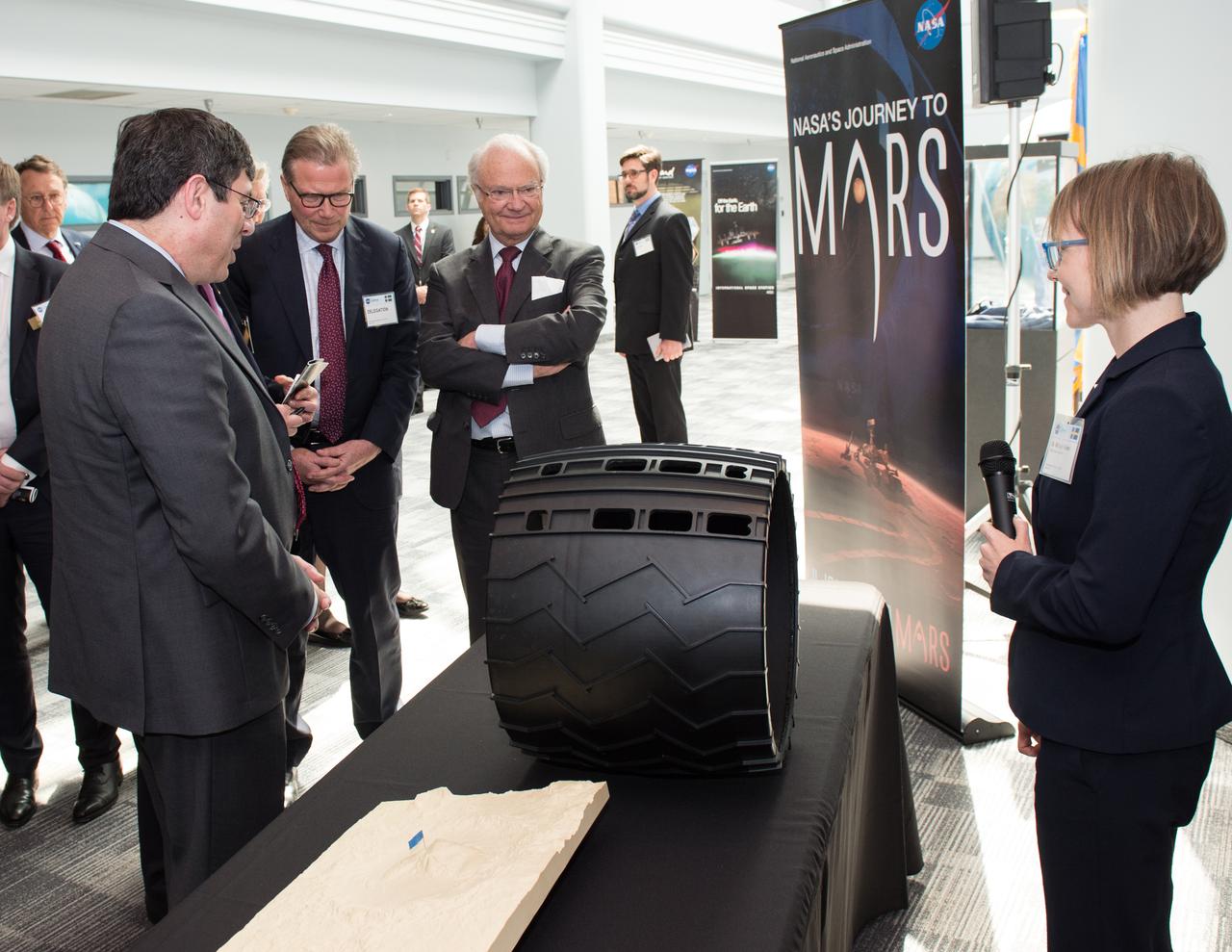
Swedish Delegation Visits GSFC – May 3, 2017 - Members of the Royal Swedish Academy of Engineering Sciences listen to Dr. Melissa Trainer, Sample Analysis at, Mars (SAM) team member and Charles Malespin, SAM Deputy Principal Investigator and Operations Test Lead discuss research being done in the SAM lab being carried by the Curiosity Rover on the surface of Mars. Credit: NASA/Goddard/Bill Hrybyk Read more: <a href="https://go.nasa.gov/2p1rP0h" rel="nofollow">go.nasa.gov/2p1rP0h</a> <b><a href="http://www.nasa.gov/audience/formedia/features/MP_Photo_Guidelines.html" rel="nofollow">NASA image use policy.</a></b> <b><a href="http://www.nasa.gov/centers/goddard/home/index.html" rel="nofollow">NASA Goddard Space Flight Center</a></b> enables NASA’s mission through four scientific endeavors: Earth Science, Heliophysics, Solar System Exploration, and Astrophysics. Goddard plays a leading role in NASA’s accomplishments by contributing compelling scientific knowledge to advance the Agency’s mission. <b>Follow us on <a href="http://twitter.com/NASAGoddardPix" rel="nofollow">Twitter</a></b> <b>Like us on <a href="http://www.facebook.com/pages/Greenbelt-MD/NASA-Goddard/395013845897?ref=tsd" rel="nofollow">Facebook</a></b> <b>Find us on <a href="http://instagrid.me/nasagoddard/?vm=grid" rel="nofollow">Instagram</a></b>
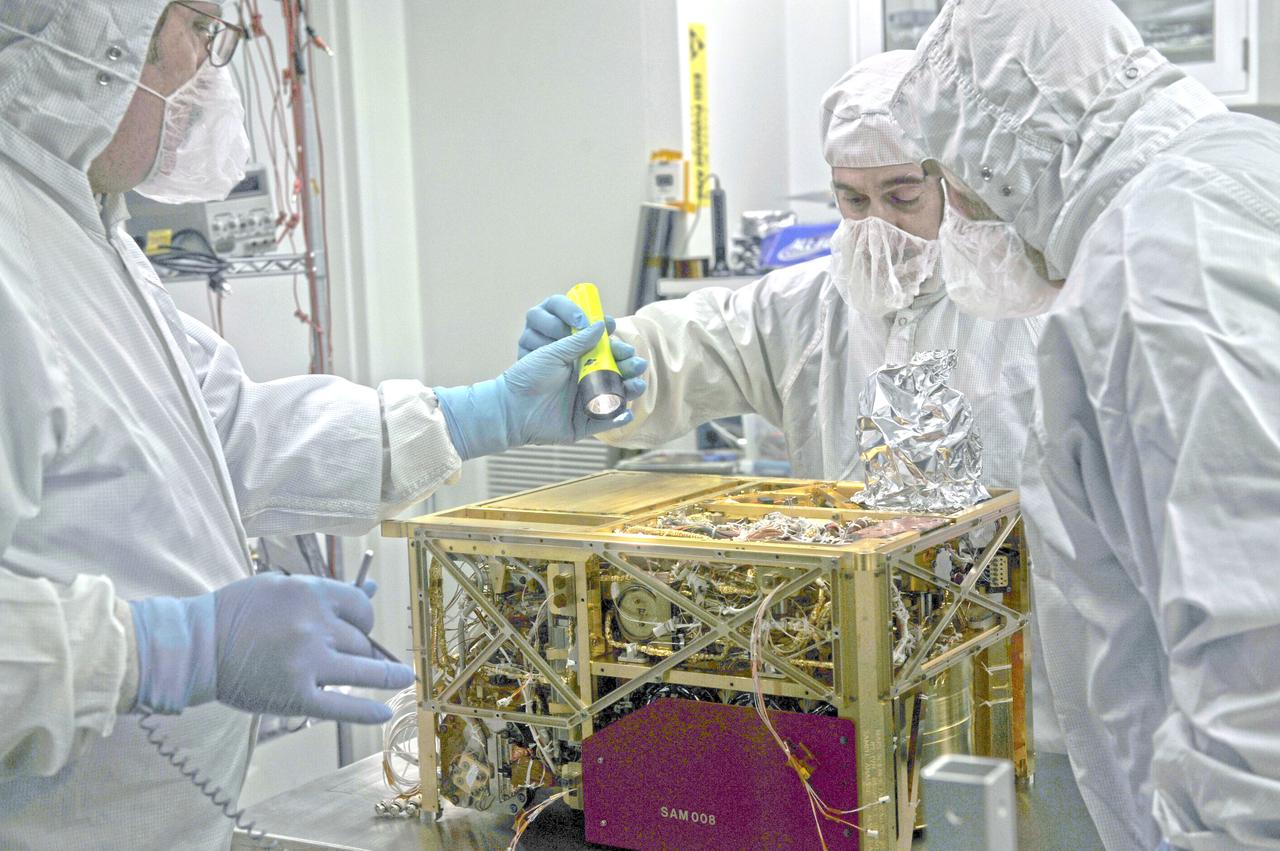
On Saturday, November 26, NASA is scheduled to launch the Mars Science Laboratory (MSL) mission featuring Curiosity, the largest and most advanced rover ever sent to the Red Planet. The Curiosity rover bristles with multiple cameras and instruments, including Goddard's Sample Analysis at Mars (SAM) instrument suite. By looking for evidence of water, carbon, and other important building blocks of life in the Martian soil and atmosphere, SAM will help discover whether Mars ever had the potential to support life. Curiosity will be delivered to Gale crater, a 96-mile-wide crater that contains a record of environmental changes in its sedimentary rock, in August 2012. ----- NASA image November 18, 2010 The Sample Analysis at Mars (SAM) instrument is considered one of the most complicated instruments ever to land on the surface of another planet. Equipped with a gas chromatograph, a quadruple mass spectrometer, and a tunable laser spectrometer, SAM will carry out the initial search for organic compounds when the Mars Science Laboratory (MSL) rover lands in 2012. Credit: NASA/GSFC/Ed Campion <b><a href="http://www.nasa.gov/audience/formedia/features/MP_Photo_Guidelines.html" rel="nofollow">NASA image use policy.</a></b> <b><a href="http://www.nasa.gov/centers/goddard/home/index.html" rel="nofollow">NASA Goddard Space Flight Center</a></b> enables NASA’s mission through four scientific endeavors: Earth Science, Heliophysics, Solar System Exploration, and Astrophysics. Goddard plays a leading role in NASA’s accomplishments by contributing compelling scientific knowledge to advance the Agency’s mission. <b>Follow us on <a href="http://twitter.com/NASA_GoddardPix" rel="nofollow">Twitter</a></b> <b>Like us on <a href="http://www.facebook.com/pages/Greenbelt-MD/NASA-Goddard/395013845897?ref=tsd" rel="nofollow">Facebook</a></b> <b>Find us on <a href="http://instagrid.me/nasagoddard/?vm=grid" rel="nofollow">Instagram</a></b>
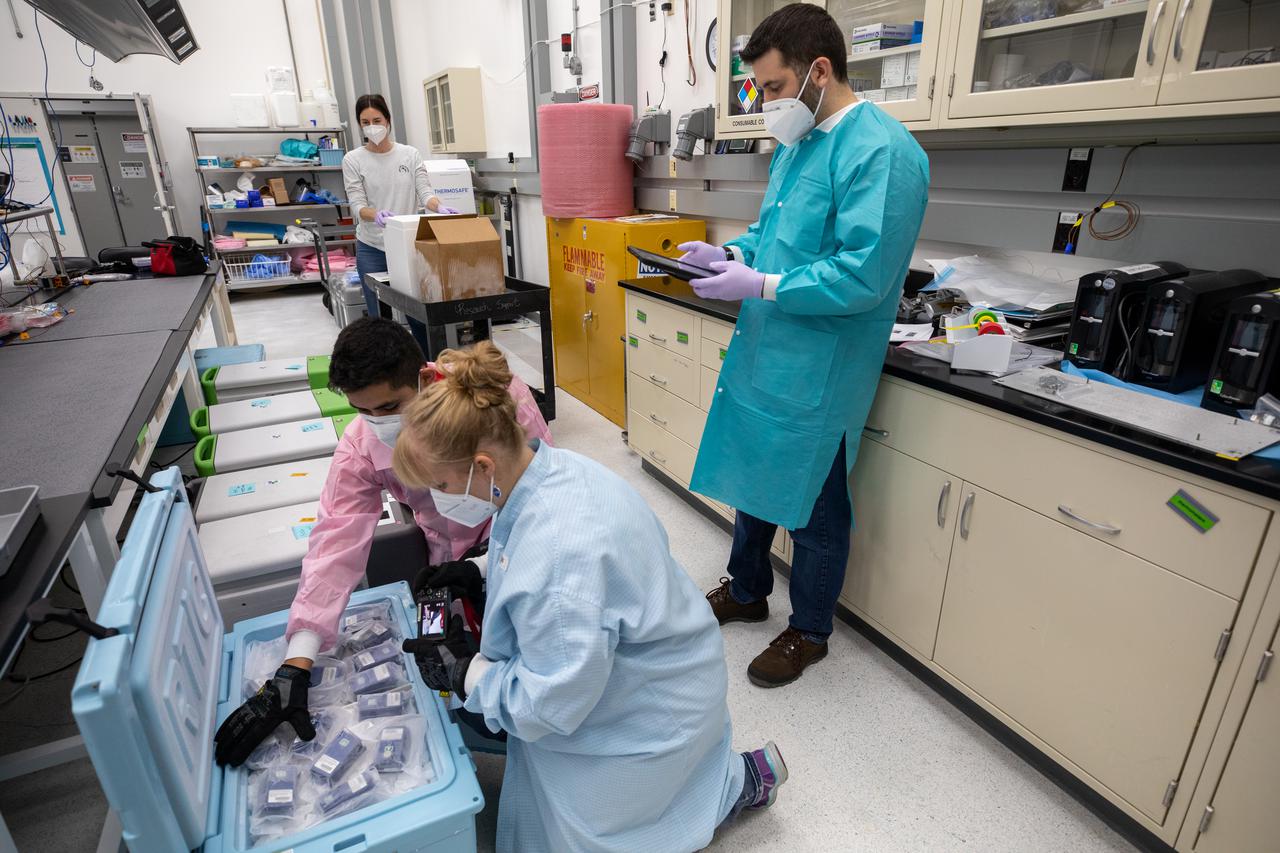
Members of the cold stowage team unpack science experiments inside the Space Station Processing Facility at NASA’s Kennedy Space Center in Florida on Jan. 14, 2021. The experiments returned to Earth on SpaceX’s 21st commercial resupply services mission (CRS-21). Making its successful parachute-assisted splashdown west of Tampa off the Florida coast, at 8:26 p.m. EST on Jan. 13, the SpaceX cargo Dragon returned more than 4,400 pounds of scientific experiments and other cargo from the International Space Station. After splashdown, SpaceX loaded Dragon aboard their Go Navigator recovery ship and packed an Airbus H225 helicopter with the time-sensitive research cargo for delivery to Kennedy. The upgraded cargo Dragon capsule also boasts double the powered locker capacity to preserve science samples, allowing for a significant increase in the research that can be carried back to Earth.
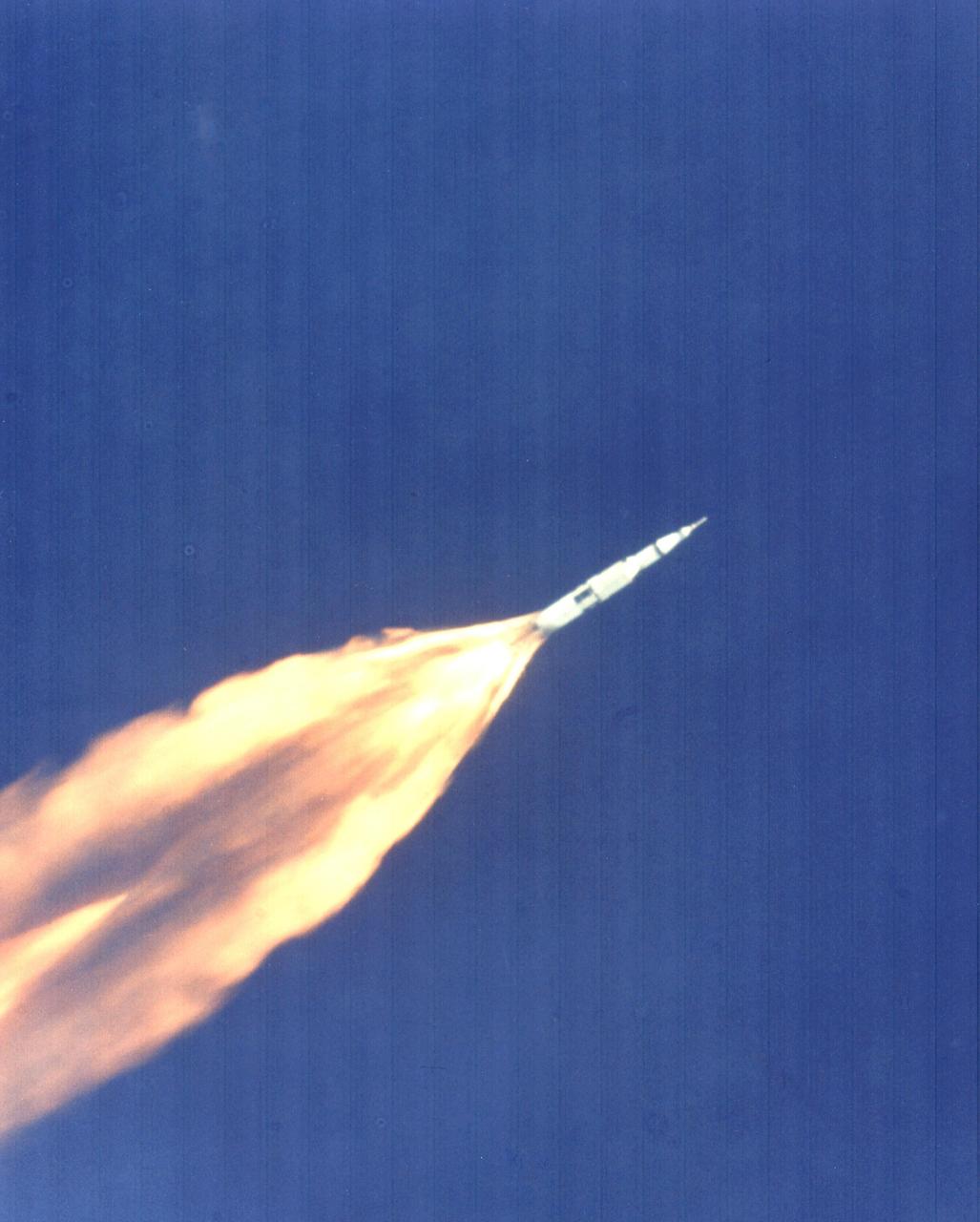
KENNEDY SPACE CENTER, FLA. - The Apollo 11 Saturn V space vehicle climbs toward orbit after liftoff from Pad 39A at 9:32 a.m. EDT. In two-and-a-half minutes of powered flight, the S-IC booster lifts the vehicle to an altitude of about 39 miles approximately 55 miles downrange. This photo was taken with a 70-mm telescopic camera mounted in an Air force EC-135N plane. Onboard are astronauts Neil A. Armstrong, Michael Collins and Edwin E. Aldrin Jr. During the planned eight-day mission, Armstrong and Aldrin will descend in a Lunar Module (LM) to the Moon's surface while Collins orbits overhead in the Command Module. The two astronauts are to spend 22 hours on the Moon, including two-and-one-half hours outside the LM. They will gather samples of lunar material and will deploy scientific experiments that will transmit data about the lunar environment. They will rejoin Collins in the Command Module for the return trip to Earth.
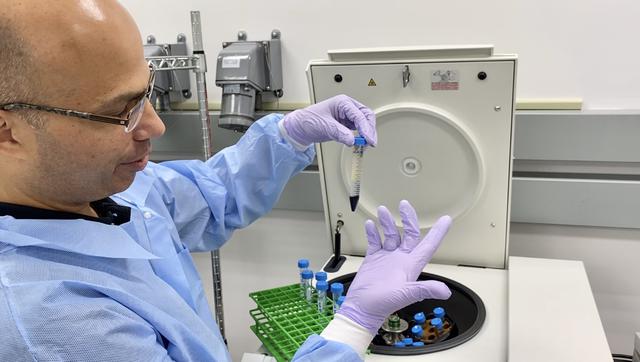
Senior Scientist George Makedonas, from NASA’S Human Immunology and Virology Lab, works with blood samples returned to Earth on SpaceX’s 22nd commercial resupply services mission in the Space Station Processing Facility (SSPF) at Kennedy Space Center in Florida, on July 10, 2021. After its successful parachute-assisted splashdown off the coast of Tallahassee, Florida at 11:29 p.m. EST on Friday, July 9, the SpaceX cargo Dragon returned more than 5,300 pounds of scientific experiments and other cargo from the International Space Station. Splashing down off the coast of Florida enables quick transportation of the science aboard the capsule to the SSPF, delivering some science back into the hands of the researchers as soon as four to nine hours after splashdown. This shorter transportation timeframe allows researchers to collect data with minimal loss of microgravity effects.
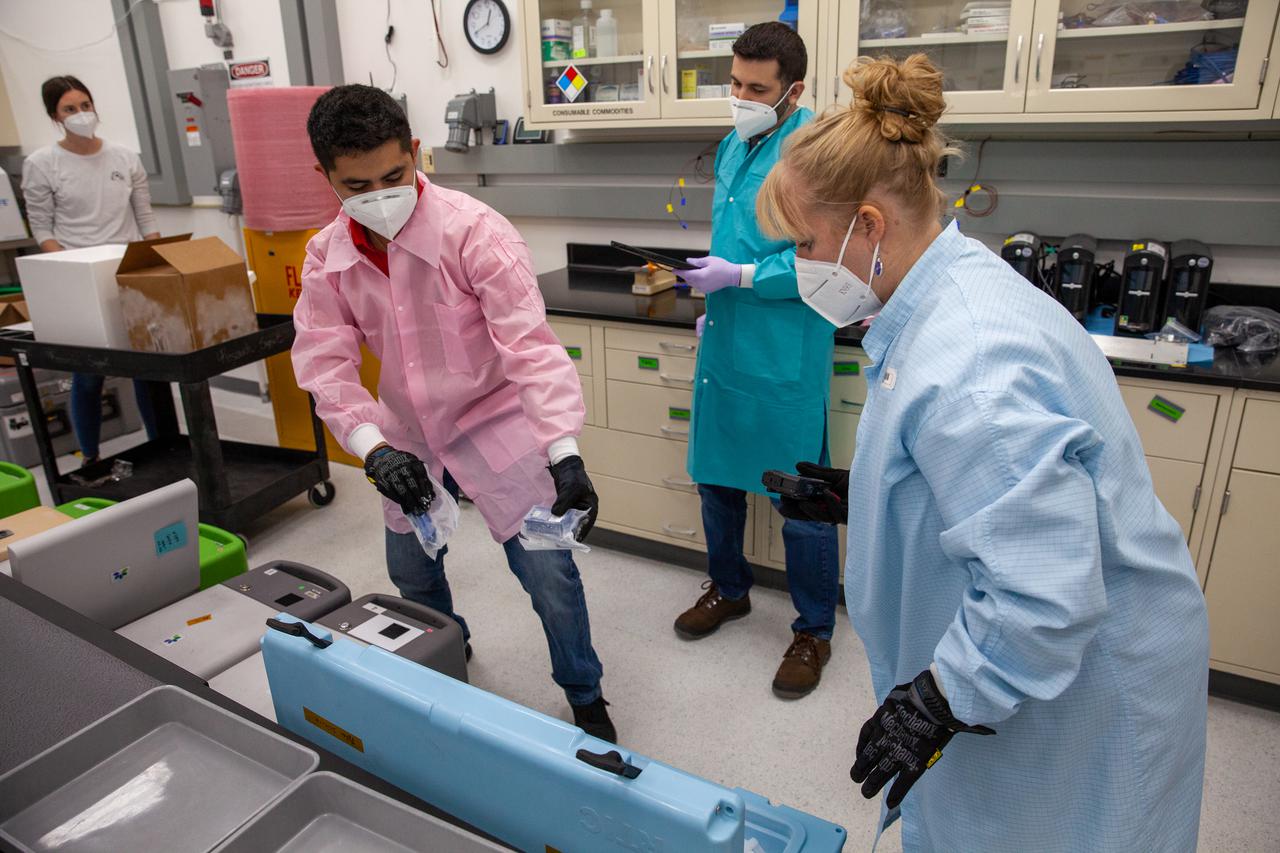
Members of the cold stowage team unpack science experiments inside the Space Station Processing Facility at NASA’s Kennedy Space Center in Florida on Jan. 14, 2021. The experiments returned to Earth on SpaceX’s 21st commercial resupply services mission (CRS-21). Making its successful parachute-assisted splashdown west of Tampa off the Florida coast, at 8:26 p.m. EST on Jan. 13, the SpaceX cargo Dragon returned more than 4,400 pounds of scientific experiments and other cargo from the International Space Station. After splashdown, SpaceX loaded Dragon aboard their Go Navigator recovery ship and packed an Airbus H225 helicopter with the time-sensitive research cargo for delivery to Kennedy. The upgraded cargo Dragon capsule also boasts double the powered locker capacity to preserve science samples, allowing for a significant increase in the research that can be carried back to Earth.
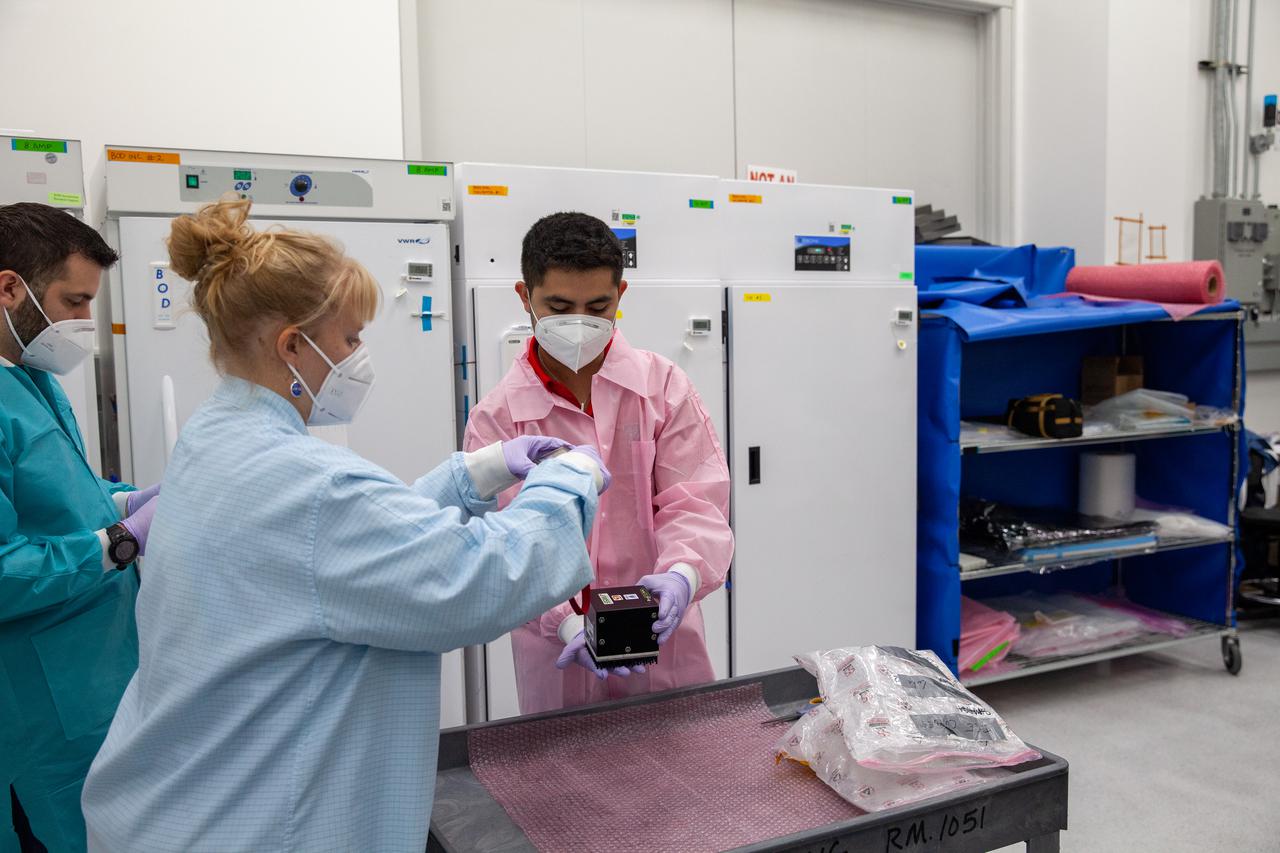
Members of the cold stowage team unpack science experiments inside the Space Station Processing Facility at NASA’s Kennedy Space Center in Florida on Jan. 14, 2021. The experiments returned to Earth on SpaceX’s 21st commercial resupply services mission (CRS-21). Making its successful parachute-assisted splashdown west of Tampa off the Florida coast, at 8:26 p.m. EST on Jan. 13, the SpaceX cargo Dragon returned more than 4,400 pounds of scientific experiments and other cargo from the International Space Station. After splashdown, SpaceX loaded Dragon aboard their Go Navigator recovery ship and packed an Airbus H225 helicopter with the time-sensitive research cargo for delivery to Kennedy. The upgraded cargo Dragon capsule also boasts double the powered locker capacity to preserve science samples, allowing for a significant increase in the research that can be carried back to Earth.
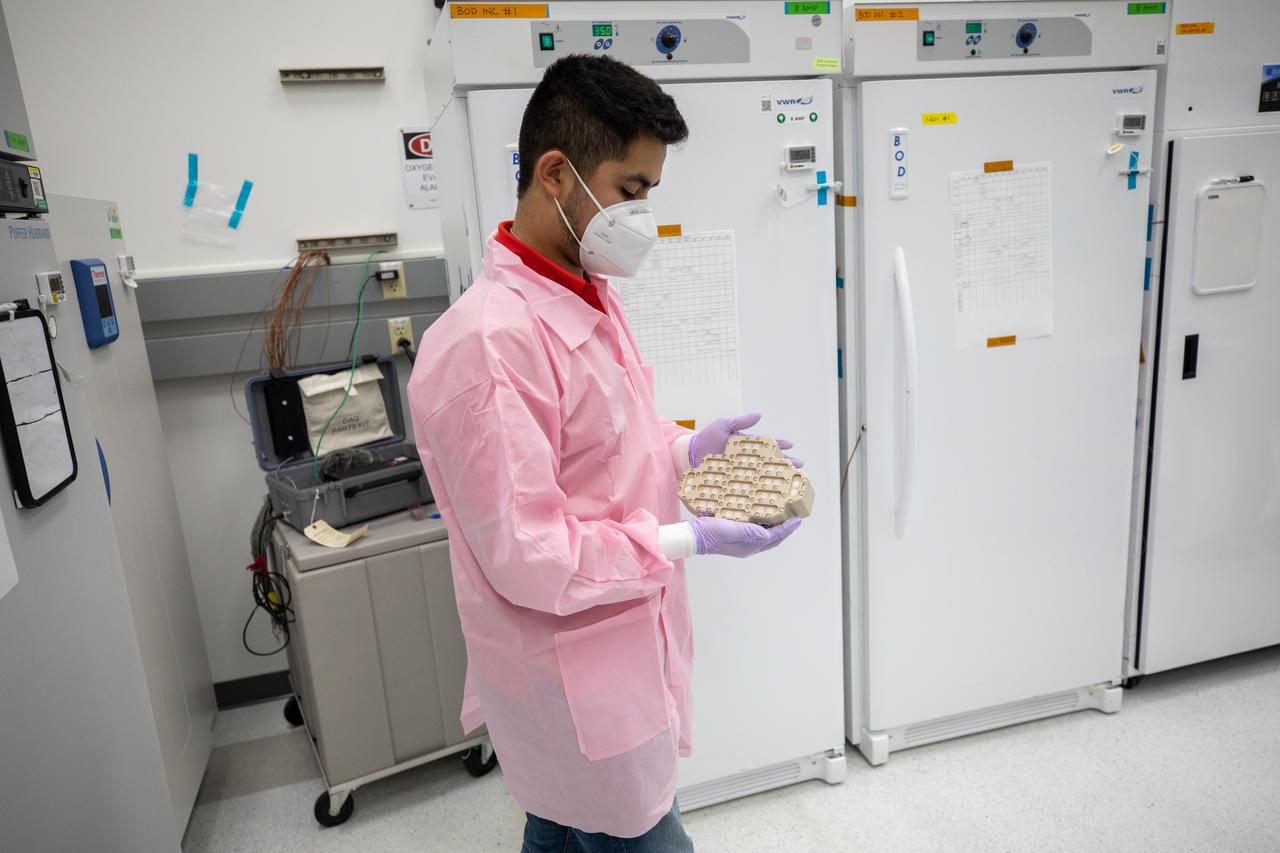
A member of the cold stowage team unpacks science experiments inside the Space Station Processing Facility at NASA’s Kennedy Space Center in Florida on Jan. 14, 2021. The experiments returned to Earth on SpaceX’s 21st commercial resupply services mission (CRS-21). Making its successful parachute-assisted splashdown west of Tampa off the Florida coast, at 8:26 p.m. EST on Jan. 13, the SpaceX cargo Dragon returned more than 4,400 pounds of scientific experiments and other cargo from the International Space Station. After splashdown, SpaceX loaded Dragon aboard their Go Navigator recovery ship and packed an Airbus H225 helicopter with the time-sensitive research cargo for delivery to Kennedy. The upgraded cargo Dragon capsule also boasts double the powered locker capacity to preserve science samples, allowing for a significant increase in the research that can be carried back to Earth.
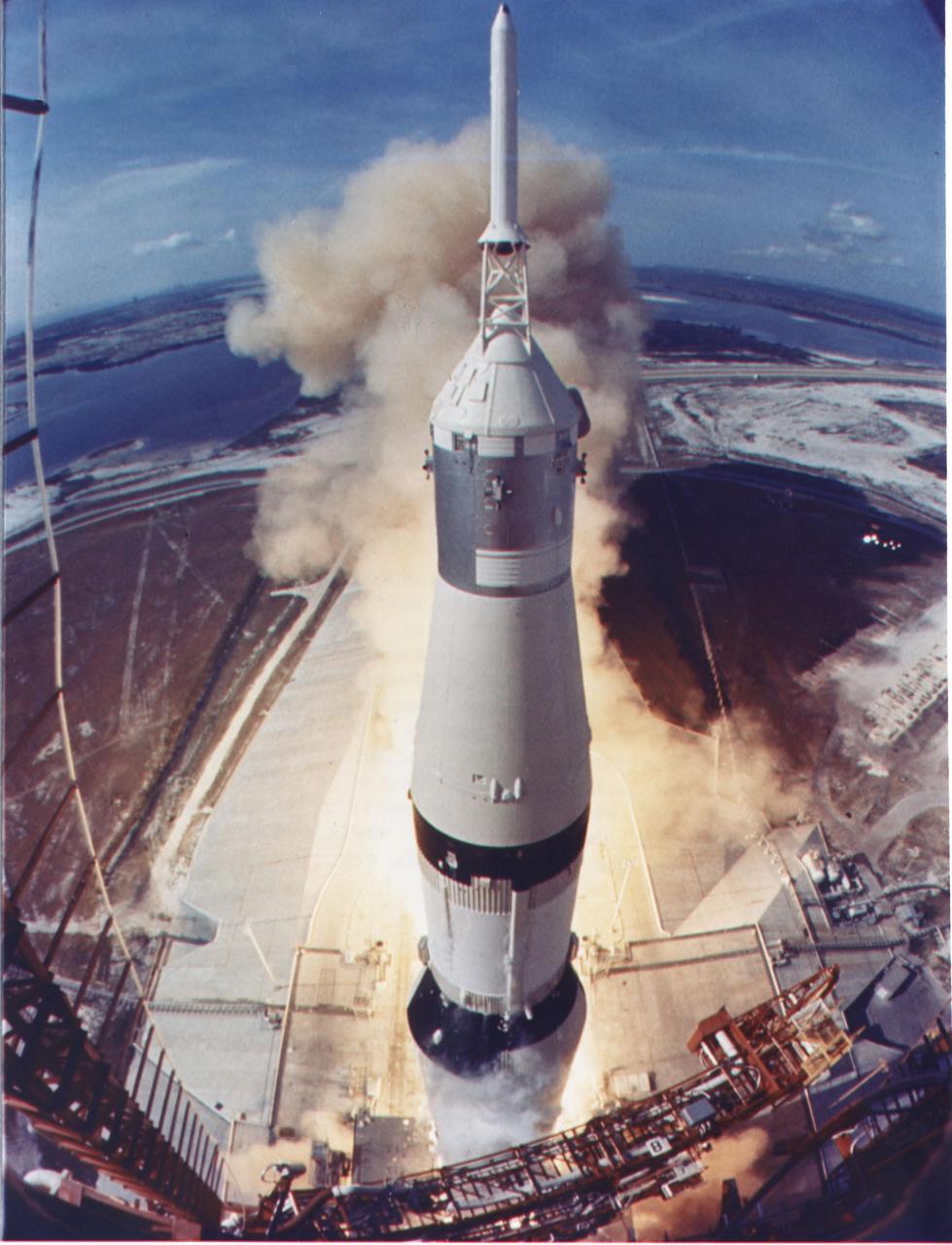
KENNEDY SPACE CENTER, FLA. -- The Apollo 11 Saturn V space vehicle lifts off with Astronauts Neil A. Armstrong, Michael Collins and Edwin E. Aldrin Jr. at 9:32 a.m. EDT July 16, 1969, from Kennedy Space Center's Launch Complex 39A. During the planned eight-day mission, Armstrong and Aldrin will descend in a lunar module to the Moon's surface while Collins orbits overhead in the command module. The two astronauts are to spend 22 hours on the Moon, including two and one-half hours outside the lunar module. They will gather samples of lunar material and willl deploy scientific experiments which will transmit data about the lunar environment. They will rejoin Collins in the command module for the return trip to Earth