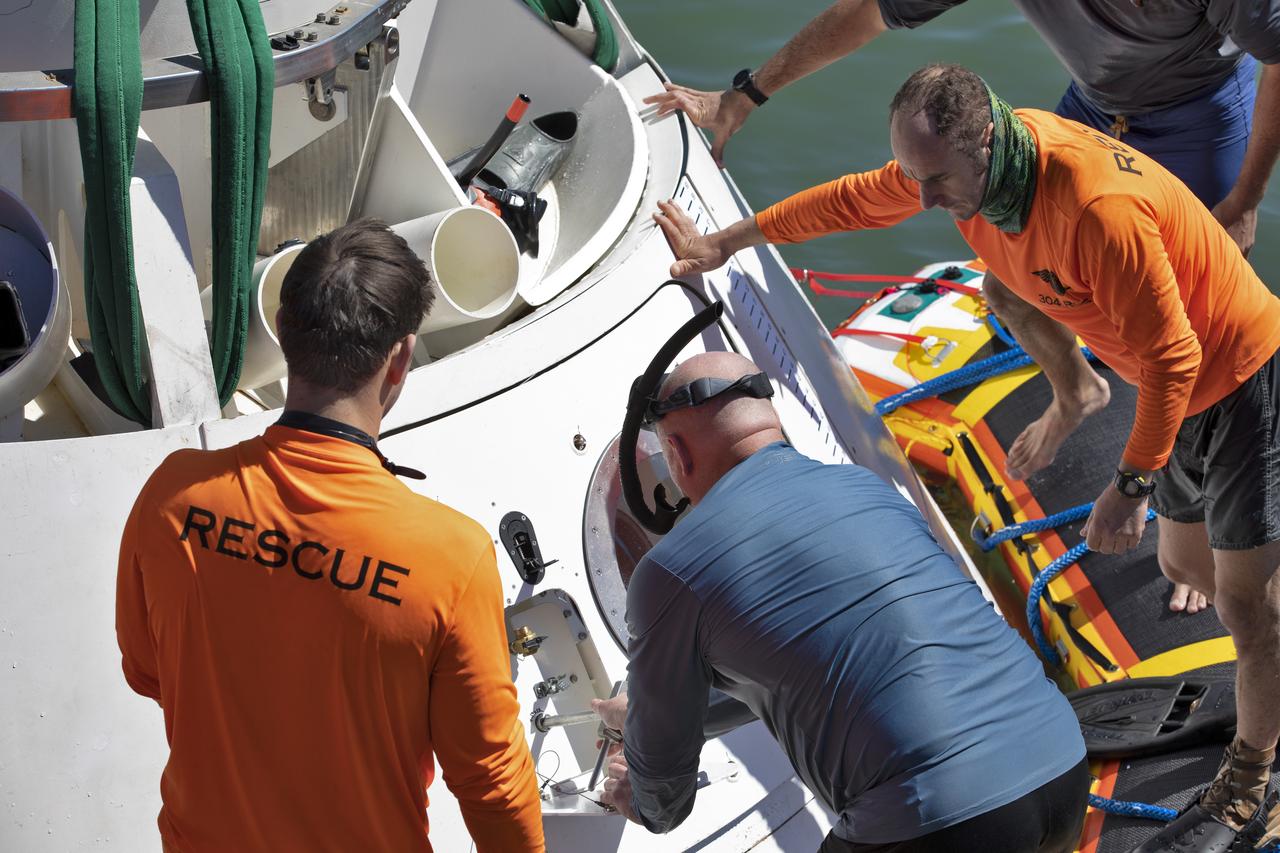
Rescue team members perform checks of the Boeing CST-100 Starliner training capsule, known as Boiler Plate 3, during a search and rescue exercise on April 16, 2019. NASA and the Department of Defense Human Space Flight Support Office Rescue Division are conducting a search and rescue training exercise over the next several days at the Wharf and in the Atlantic Ocean simulating a rescue in the unlikely event of an emergency. It is the first at-sea exercise with the Starliner training capsule ahead of Boeing’s Crew Flight Test with astronauts targeted for later this year. During normal return scenarios, Boeing's Starliner will land on land in a safe zone of about 15 square miles in the Western United States. Throughout the commercial crew development phases with NASA, Boeing has performed dozens of qualification tests on its parachute and airbag systems simulating conditions on land and in the water.
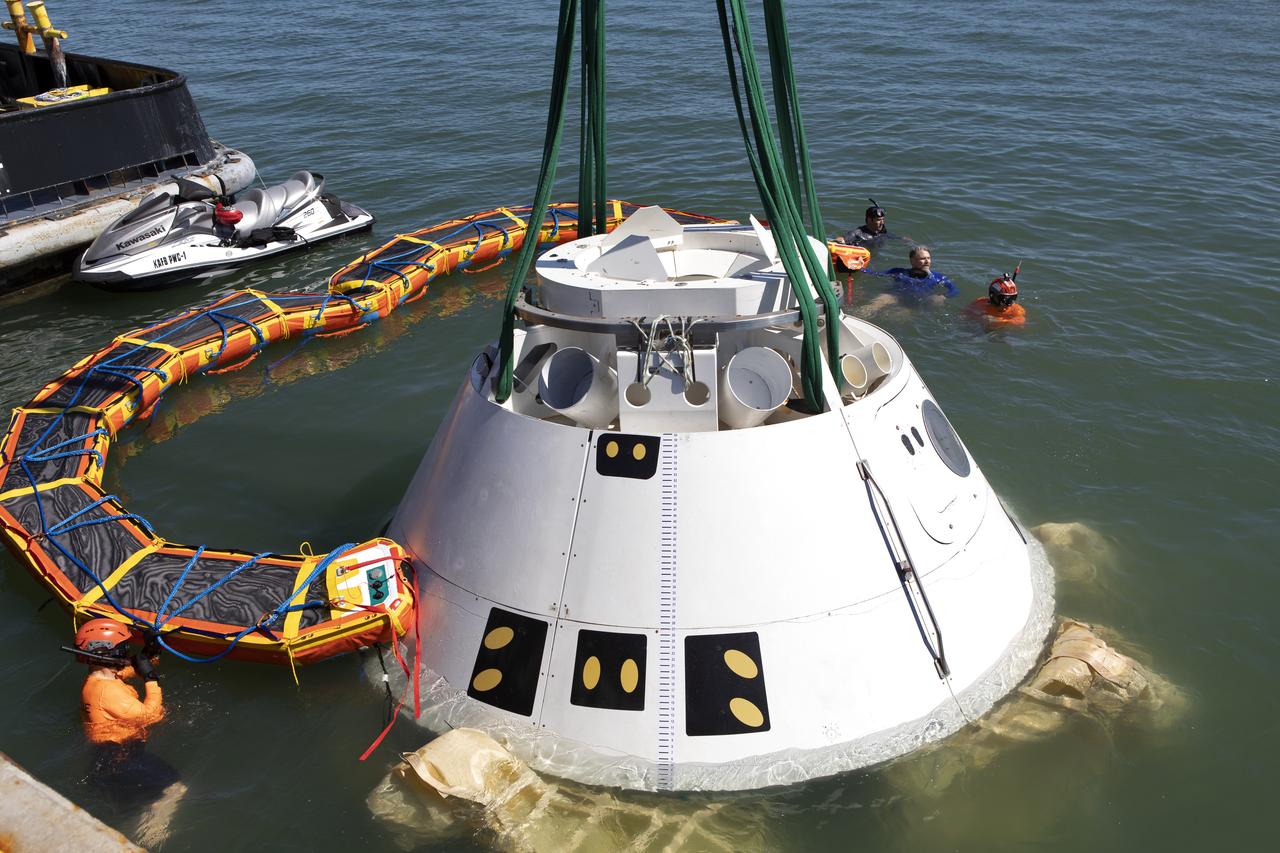
Rescue team members remove the stabilization collar from the Boeing CST-100 Starliner training capsule, known as Boiler Plate 3, in the water at the Army Wharf at Cape Canaveral Air Force Station in Florida on April 16, 2019. NASA and the Department of Defense Human Space Flight Support Office Rescue Division are conducting a search and rescue training exercise using the Starliner trainer over the next several days at the Wharf and in the Atlantic Ocean simulating a rescue in the unlikely event of an emergency. It is the first at-sea exercise with the Starliner training capsule ahead of Boeing’s Crew Flight Test with astronauts targeted for later this year. During normal return scenarios, Boeing's Starliner will land on land in a safe zone of about 15 square miles in the Western United States. Throughout the commercial crew development phases with NASA, Boeing has performed dozens of qualification tests on its parachute and airbag systems simulating conditions on land and in the water.
Rescue team members are using a Boeing CST-100 Starliner training capsule, known as Boiler Plate 3, to practice crew rescue procedures in the unlikely event of an emergency resulting in a splashdown. NASA and the Department of Defense Human Space Flight Support Office Rescue Division conducted a search and rescue training exercise at the Army Wharf at Cape Canaveral Air Force Station in Florida on April 17, 2019. The teams practiced manually inflating uprighting airbags to lift the spacecraft to its upright position. This is the first at-sea exercise with the Starliner training capsule ahead of Boeing’s Crew Flight Test with astronauts targeted for later this year. During normal return scenarios, Boeing's Starliner will land on land in a safe zone of about 15 square miles in the Western United States. Throughout the commercial crew development phases with NASA, Boeing has performed dozens of qualification tests on its parachute and airbag systems simulating conditions on land and in the water.
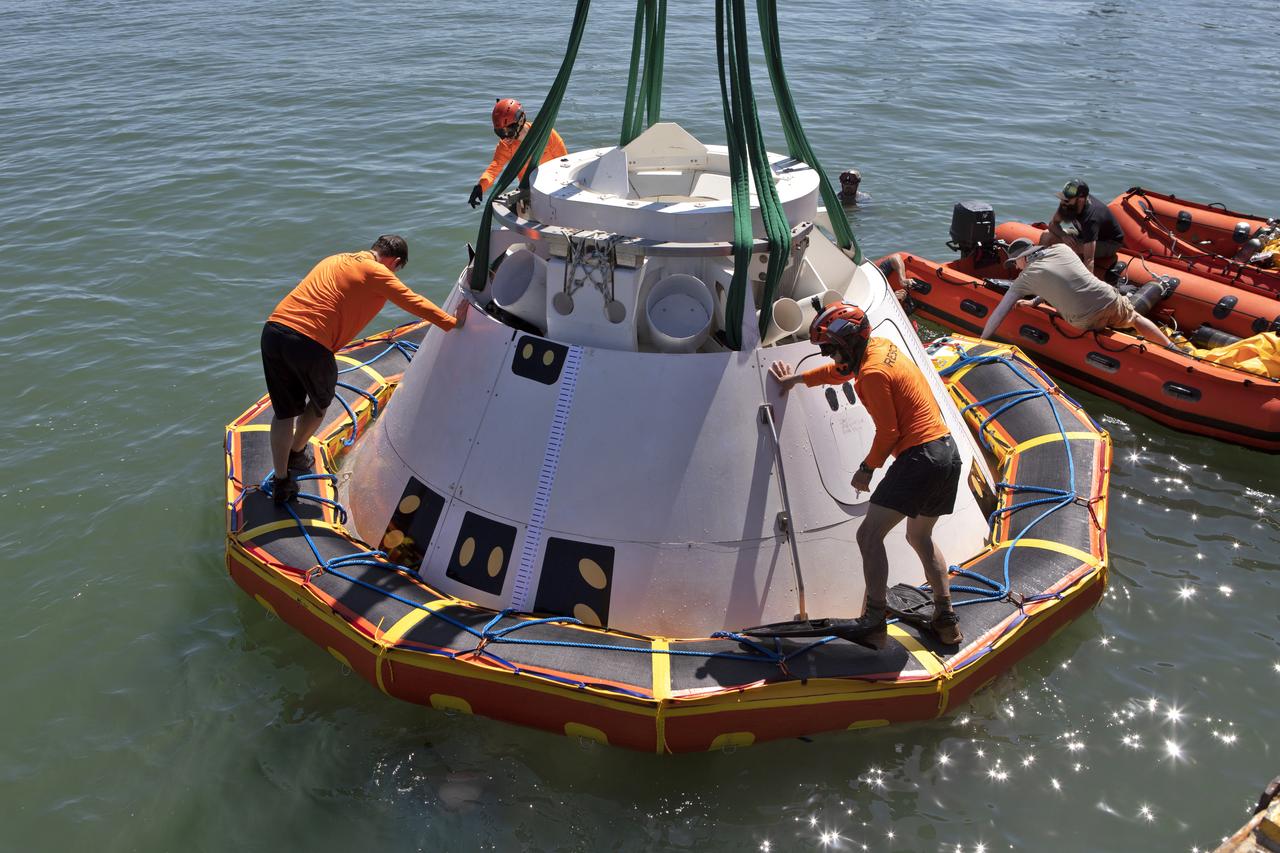
Rescue team members stand on the stabilization collar attached to the Boeing CST-100 Starliner training capsule, known as Boiler Plate 3, to perform checks during a search and rescue training exercise April 16, 2019. NASA and the Department of Defense Human Space Flight Support Office Rescue Division are conducting the exercise over the next several days at the Wharf and in the Atlantic Ocean simulating a rescue in the unlikely event of an emergency. It is the first at-sea exercise with the Starliner training capsule ahead of Boeing’s Crew Flight Test with astronauts targeted for later this year. During normal return scenarios, Boeing's Starliner will land on land in a safe zone of about 15 square miles in the Western United States. Throughout the commercial crew development phases with NASA, Boeing has performed dozens of qualification tests on its parachute and airbag systems simulating conditions on land and in the water.
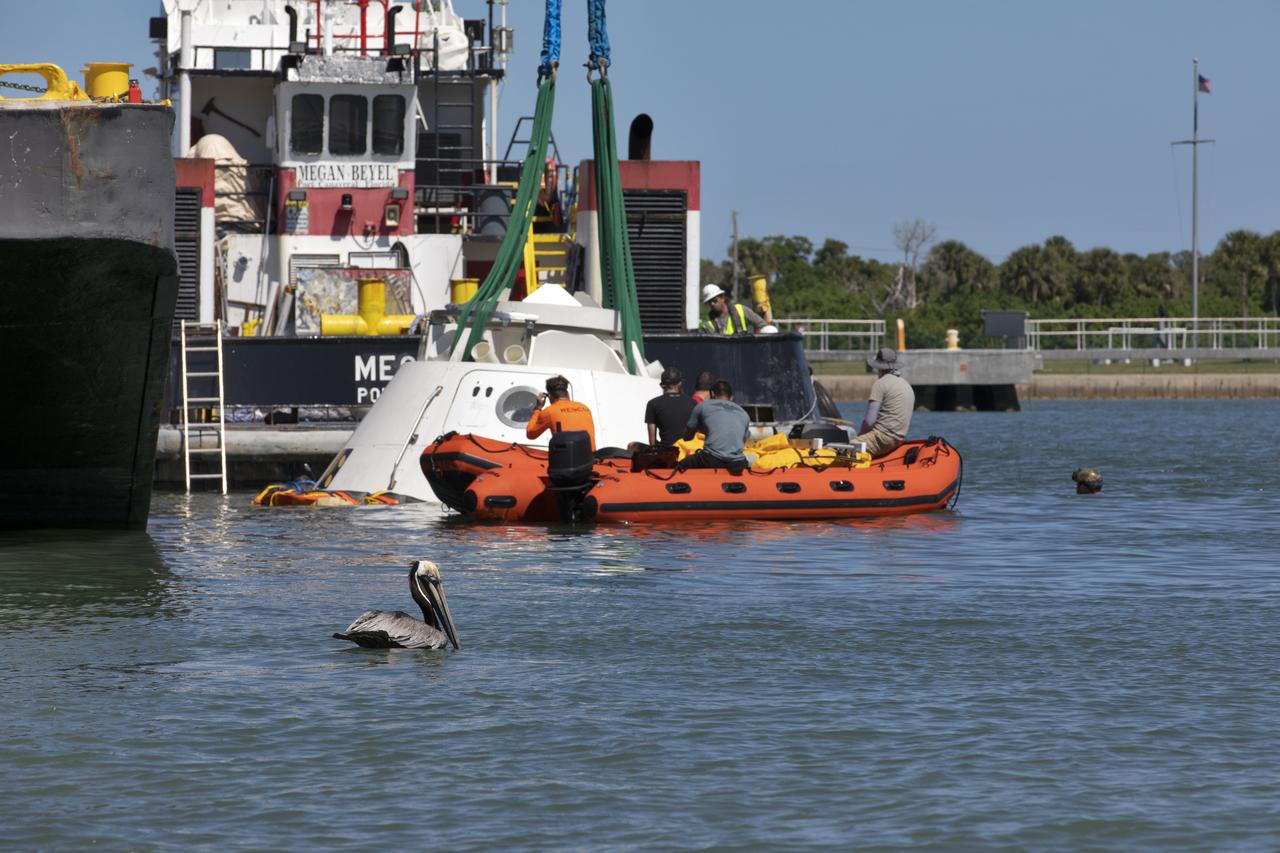
Rescue team members in an inflatable boat approach the Boeing CST-100 Starliner training capsule, known as Boiler Plate 3, at the Army Wharf at Cape Canaveral Air Force Station in Florida on April 16, 2019. NASA and the Department of Defense Human Space Flight Support Office Rescue Division are conducting a search and rescue training exercise over the next several days at the Wharf and in the Atlantic Ocean simulating a rescue in the unlikely event of an emergency. It is the first at-sea exercise with the Starliner training capsule ahead of Boeing’s Crew Flight Test with astronauts targeted for later this year. During normal return scenarios, Boeing's Starliner will land on land in a safe zone of about 15 square miles in the Western United States. Throughout the commercial crew development phases with NASA, Boeing has performed dozens of qualification tests on its parachute and airbag systems simulating conditions on land and in the water.
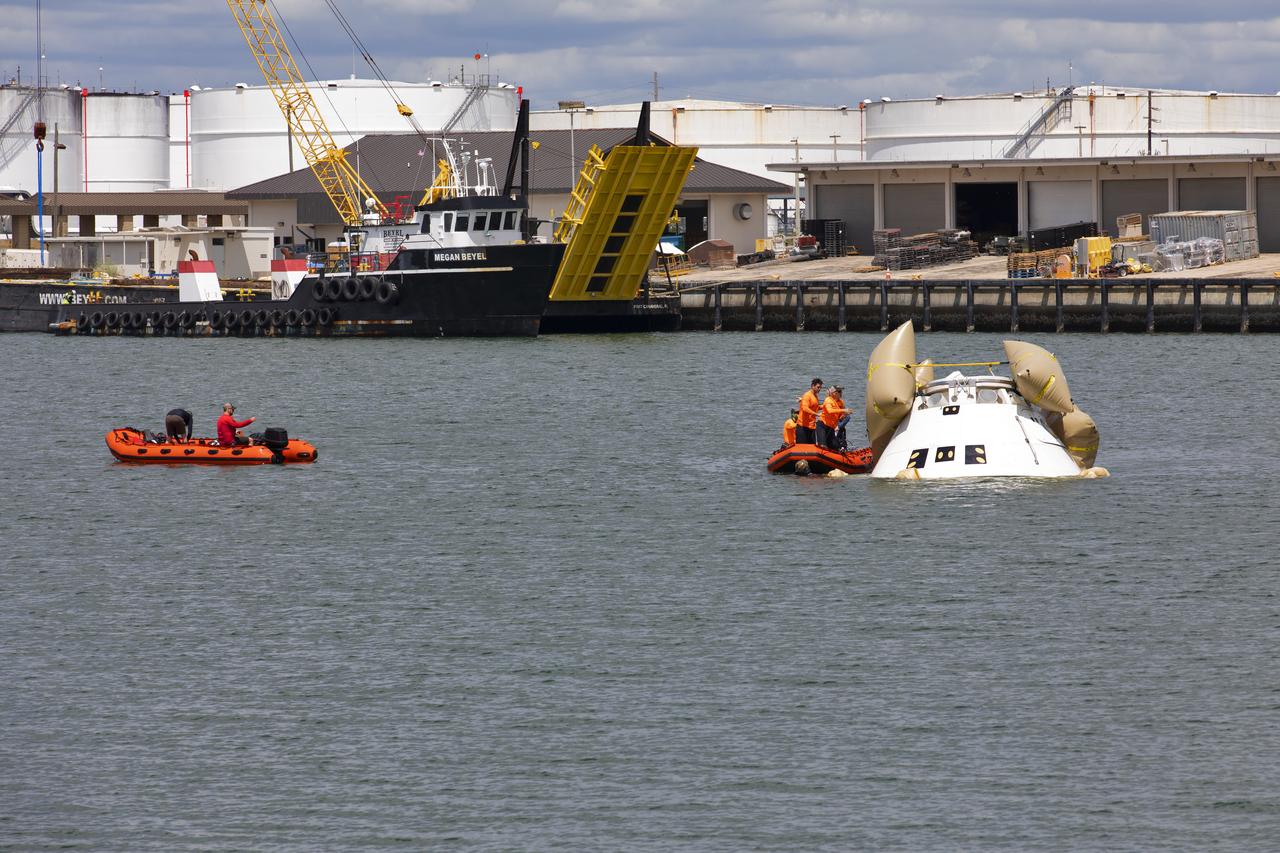
Rescue team members are using a Boeing CST-100 Starliner training capsule, known as Boiler Plate 3, to practice uprighting procedures in the unlikely event of an emergency resulting in a splashdown. NASA and the Department of Defense Human Space Flight Support Office Rescue Division conducted a search and rescue training exercise at the Army Wharf at Cape Canaveral Air Force Station in Florida on April 17, 2019. The manual uprighting airbags could be used to lift the spacecraft to its upright position. This is the first at-sea exercise with the Starliner training capsule ahead of Boeing’s Crew Flight Test with astronauts targeted for later this year. During normal return scenarios, Boeing's Starliner will land on land in a safe zone of about 15 square miles in the Western United States. Throughout the commercial crew development phases with NASA, Boeing has performed dozens of qualification tests on its parachute and airbag systems simulating conditions on land and in the water.
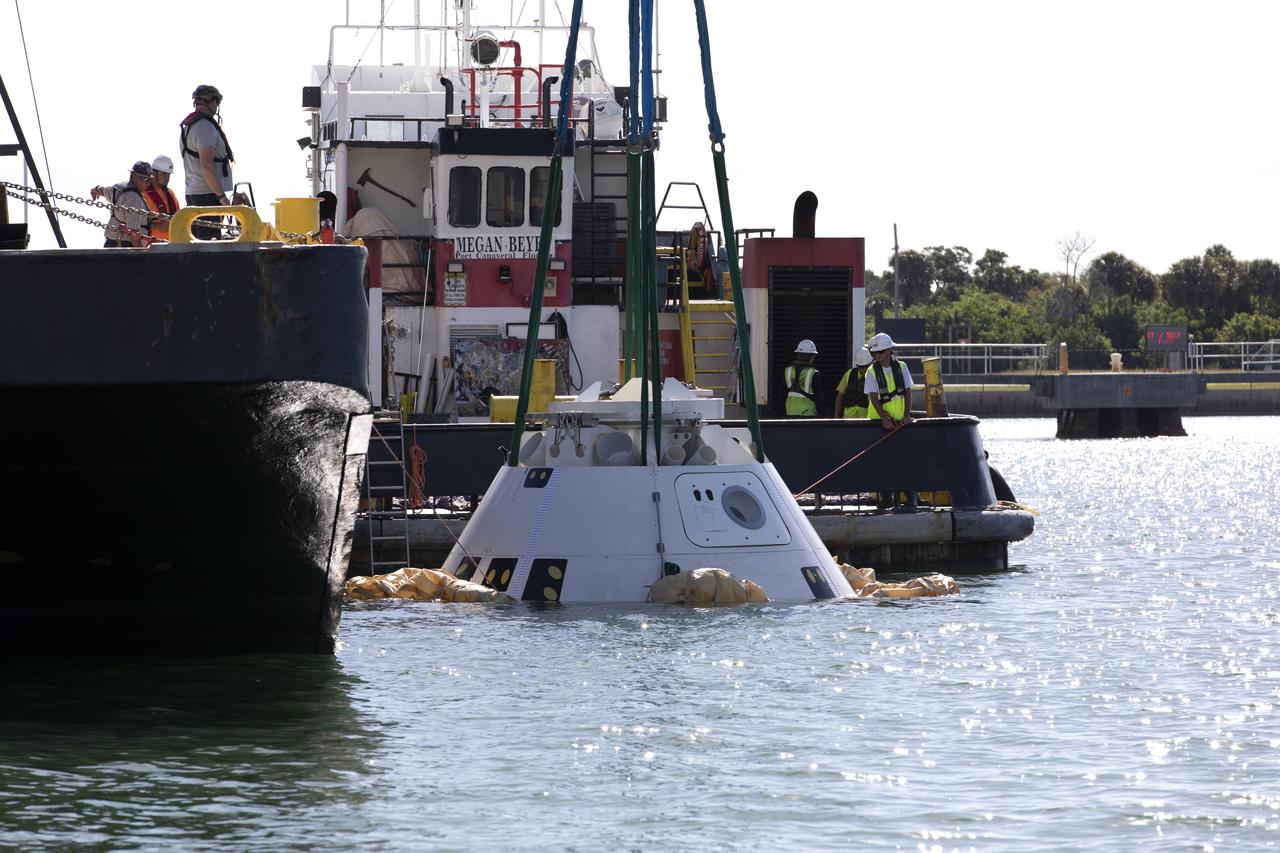
Rescue team members are using a Boeing CST-100 Starliner training capsule, known as Boiler Plate 3, to practice uprighting procedures in the unlikely event of an emergency resulting in a splashdown. NASA and the Department of Defense Human Space Flight Support Office Rescue Division conducted a search and rescue training exercise at the Army Wharf at Cape Canaveral Air Force Station in Florida on April 17, 2019. The manual uprighting airbags could be used to lift the spacecraft to its upright position. This is the first at-sea exercise with the Starliner training capsule ahead of Boeing’s Crew Flight Test with astronauts targeted for later this year. During normal return scenarios, Boeing's Starliner will land on land in a safe zone of about 15 square miles in the Western United States. Throughout the commercial crew development phases with NASA, Boeing has performed dozens of qualification tests on its parachute and airbag systems simulating conditions on land and in the water.
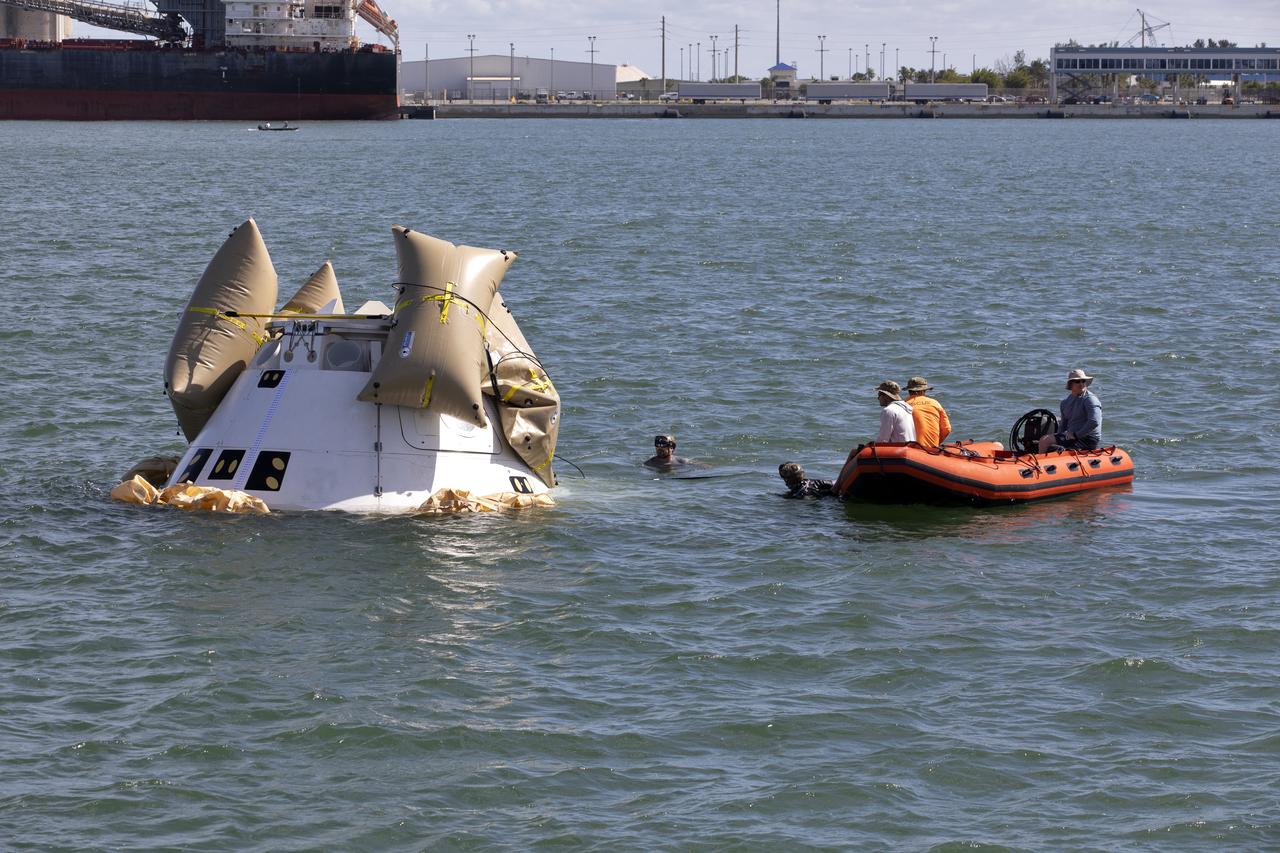
Rescue team members are using a Boeing CST-100 Starliner training capsule, known as Boiler Plate 3, to practice uprighting procedures in the unlikely event of an emergency resulting in a splashdown. NASA and the Department of Defense Human Space Flight Support Office Rescue Division conducted a search and rescue training exercise at the Army Wharf at Cape Canaveral Air Force Station in Florida on April 17, 2019. The manual uprighting airbags could be used to lift the spacecraft to its upright position. This is the first at-sea exercise with the Starliner training capsule ahead of Boeing’s Crew Flight Test with astronauts targeted for later this year. During normal return scenarios, Boeing's Starliner will land on land in a safe zone of about 15 square miles in the Western United States. Throughout the commercial crew development phases with NASA, Boeing has performed dozens of qualification tests on its parachute and airbag systems simulating conditions on land and in the water.
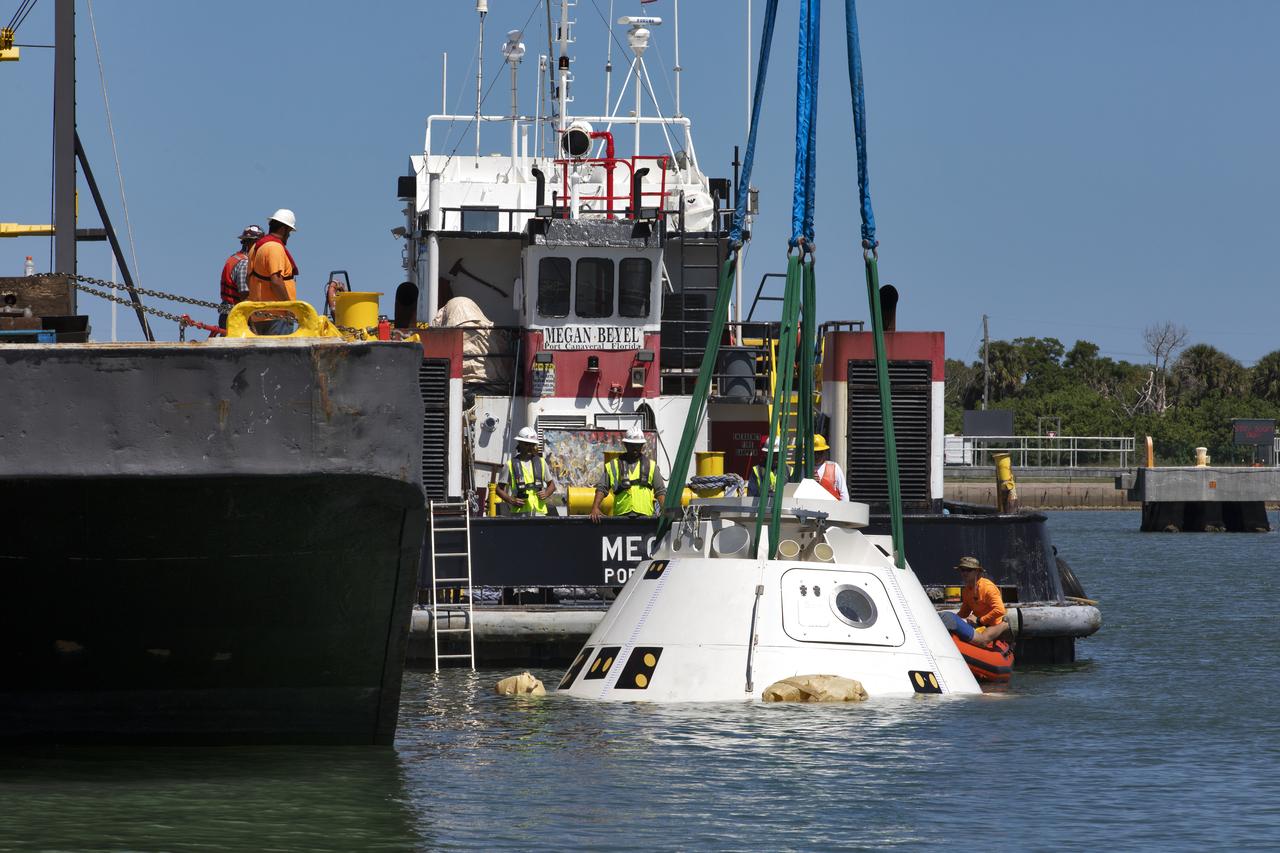
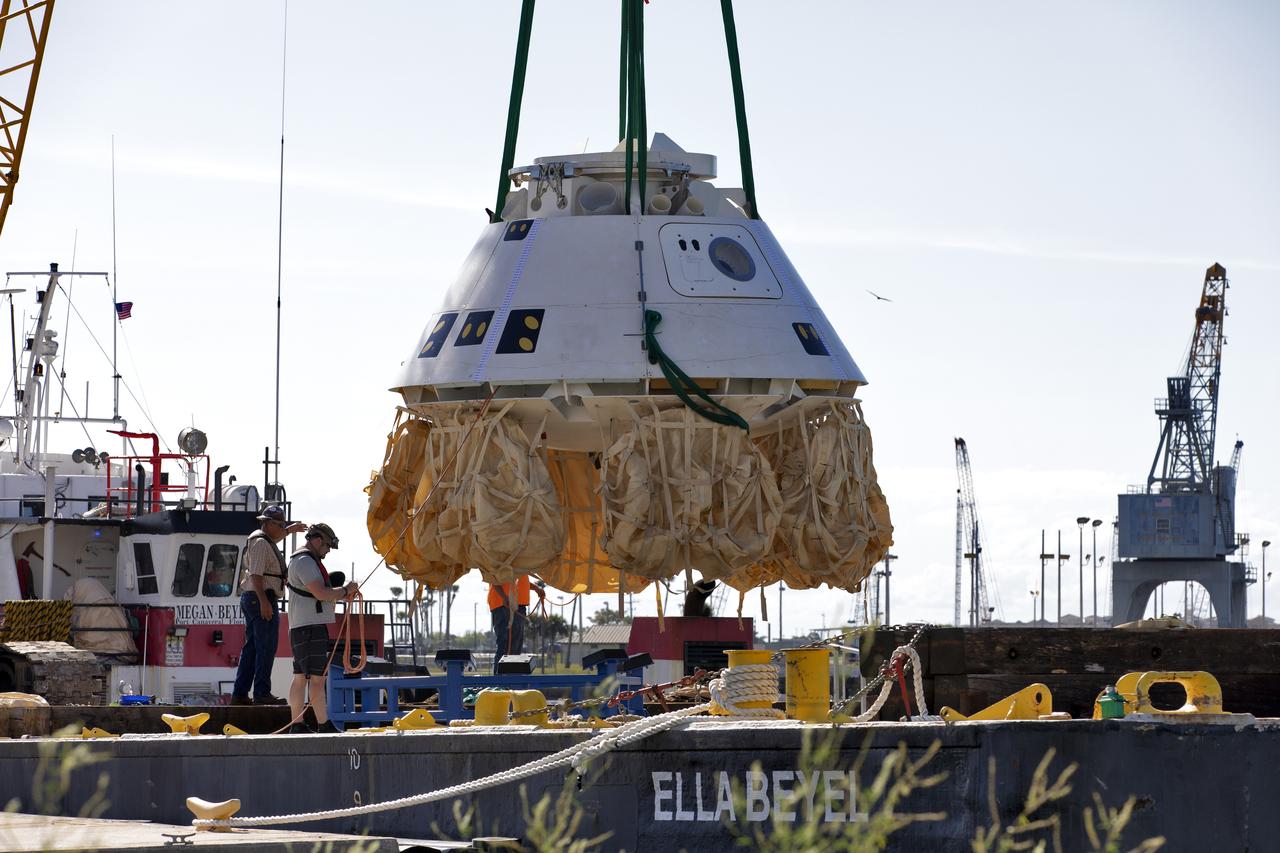
The Boeing CST-100 Starliner training capsule, known as Boiler Plate 3, is lowered into the water at the Army Wharf at Cape Canaveral Air Force Station in Florida on April 16, 2019. NASA and the Department of Defense Human Space Flight Support Office Rescue Division are conducting a search and rescue training exercise over the next several days at the Wharf and in the Atlantic Ocean simulating a rescue in the unlikely event of an emergency. It is the first at-sea exercise with the Starliner training capsule ahead of Boeing’s Crew Flight Test with astronauts targeted for later this year. During normal return scenarios, Boeing's Starliner will land on land in a safe zone of about 15 square miles in the Western United States. Throughout the commercial crew development phases with NASA, Boeing has performed dozens of qualification tests on its parachute and airbag systems simulating conditions on land and in the water.
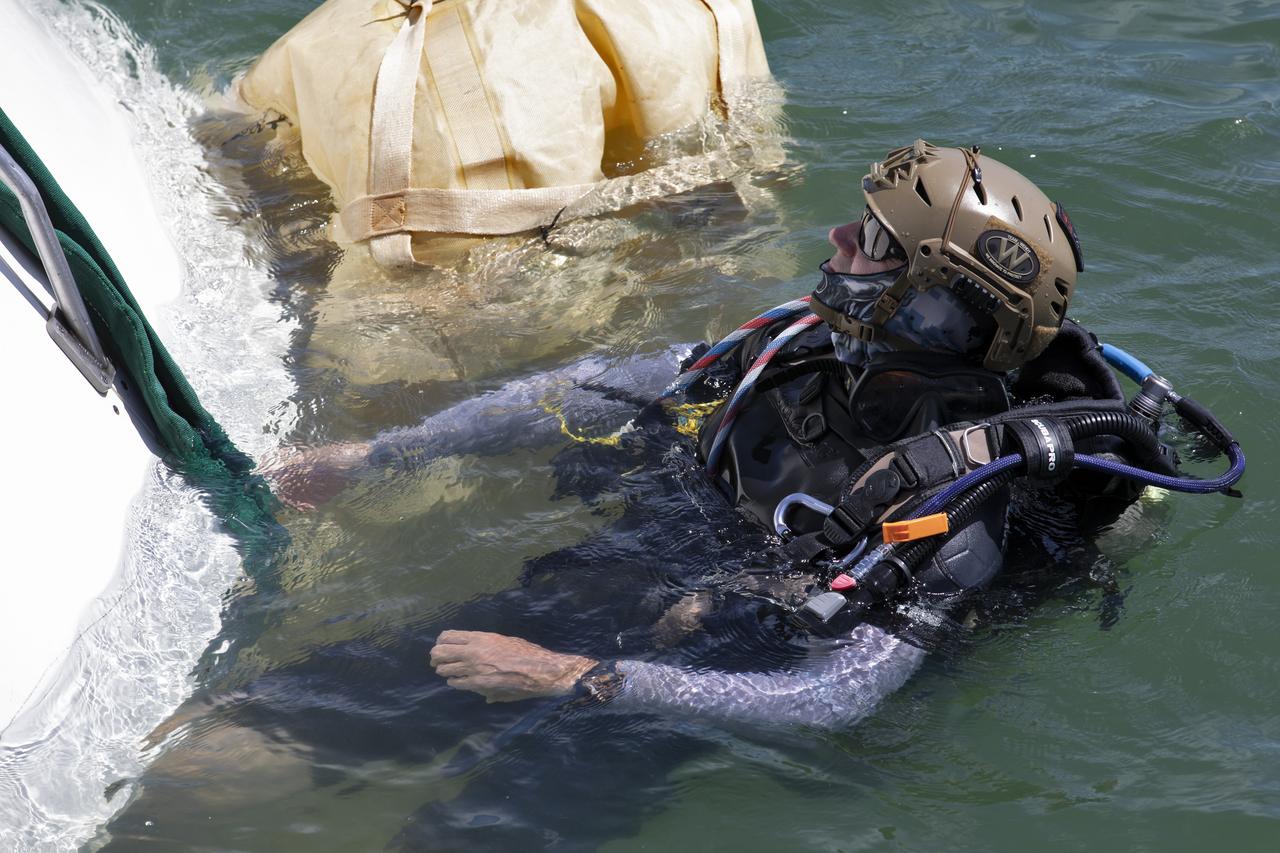
Rescue team members are using a Boeing CST-100 Starliner training capsule, known as Boiler Plate 3, to practice uprighting procedures in the unlikely event of an emergency resulting in a splashdown. NASA and the Department of Defense Human Space Flight Support Office Rescue Division conducted a search and rescue training exercise at the Army Wharf at Cape Canaveral Air Force Station in Florida on April 17, 2019. The manual uprighting airbags could be used to lift the spacecraft to its upright position. This is the first at-sea exercise with the Starliner training capsule ahead of Boeing’s Crew Flight Test with astronauts targeted for later this year. During normal return scenarios, Boeing's Starliner will land on land in a safe zone of about 15 square miles in the Western United States. Throughout the commercial crew development phases with NASA, Boeing has performed dozens of qualification tests on its parachute and airbag systems simulating conditions on land and in the water.
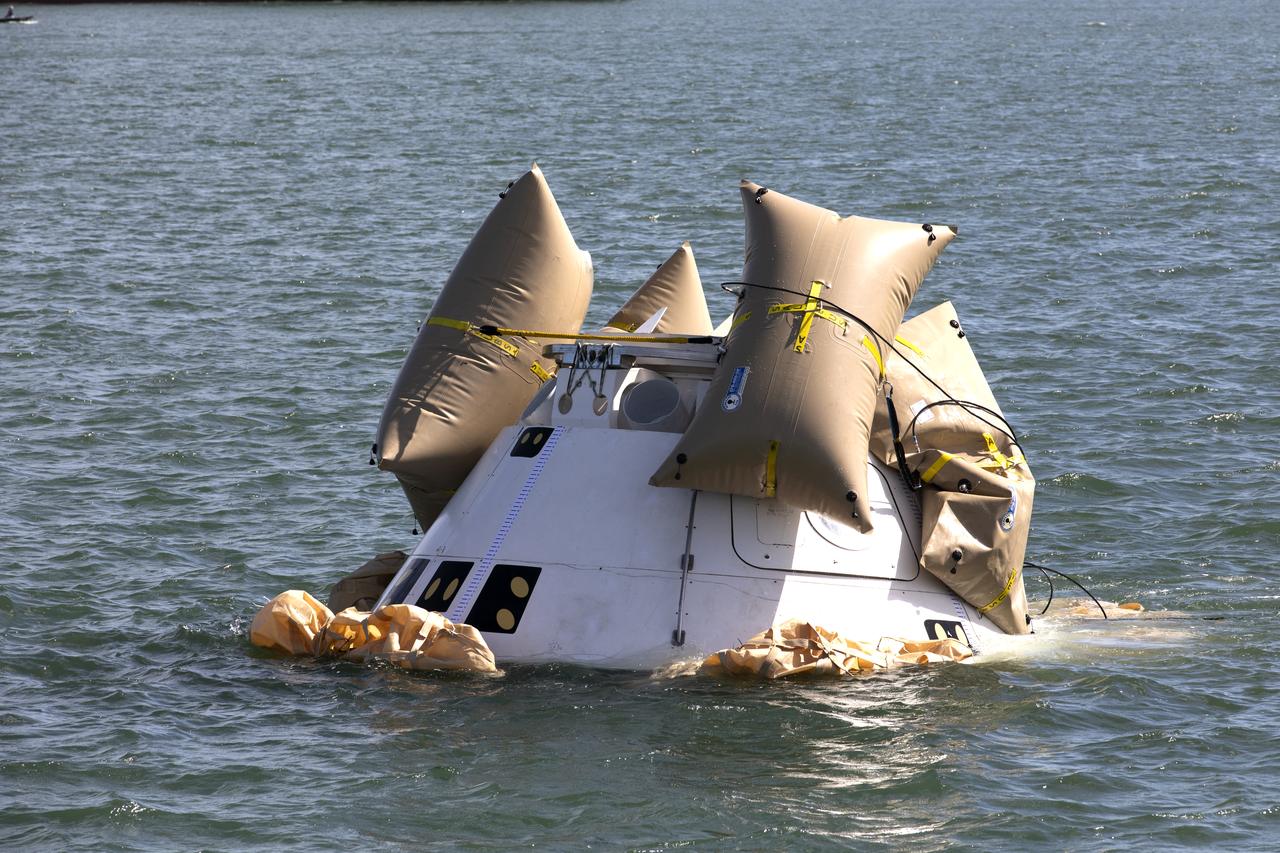
Rescue team members are using a Boeing CST-100 Starliner training capsule, known as Boiler Plate 3, to practice uprighting procedures in the unlikely event of an emergency resulting in a splashdown. NASA and the Department of Defense Human Space Flight Support Office Rescue Division conducted a search and rescue training exercise at the Army Wharf at Cape Canaveral Air Force Station in Florida on April 17, 2019. The manual uprighting airbags could be used to lift the spacecraft to its upright position. This is the first at-sea exercise with the Starliner training capsule ahead of Boeing’s Crew Flight Test with astronauts targeted for later this year. During normal return scenarios, Boeing's Starliner will land on land in a safe zone of about 15 square miles in the Western United States. Throughout the commercial crew development phases with NASA, Boeing has performed dozens of qualification tests on its parachute and airbag systems simulating conditions on land and in the water.
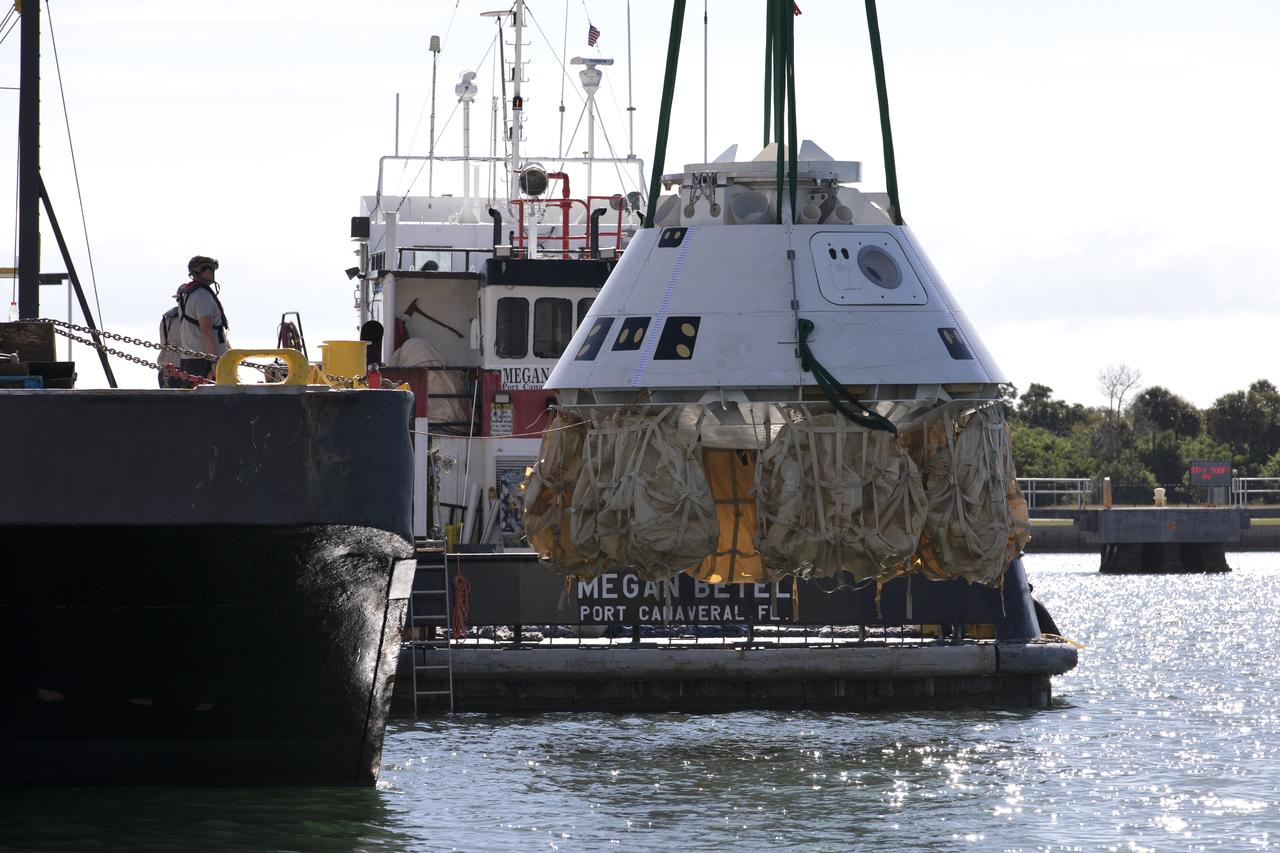
Rescue team members lower the Boeing CST-100 Starliner training capsule, known as Boiler Plate 3, into the water at the Army Wharf at Cape Canaveral Air Force Station in Florida on April 16, 2019. The team is practicing crew rescue procedures in the unlikely event of an emergency resulting in a splashdown. NASA and the Department of Defense Human Space Flight Support Office Rescue Division conducted a search and rescue training exercise at the Army Wharf at Cape Canaveral Air Force Station in Florida on April 17, 2019. The teams practiced manually inflating uprighting airbags to lift the spacecraft to its upright position. This is the first at-sea exercise with the Starliner training capsule ahead of Boeing’s Crew Flight Test with astronauts targeted for later this year. During normal return scenarios, Boeing's Starliner will land on land in a safe zone of about 15 square miles in the Western United States. Throughout the commercial crew development phases with NASA, Boeing has performed dozens of qualification tests on its parachute and airbag systems simulating conditions on land and in the water.
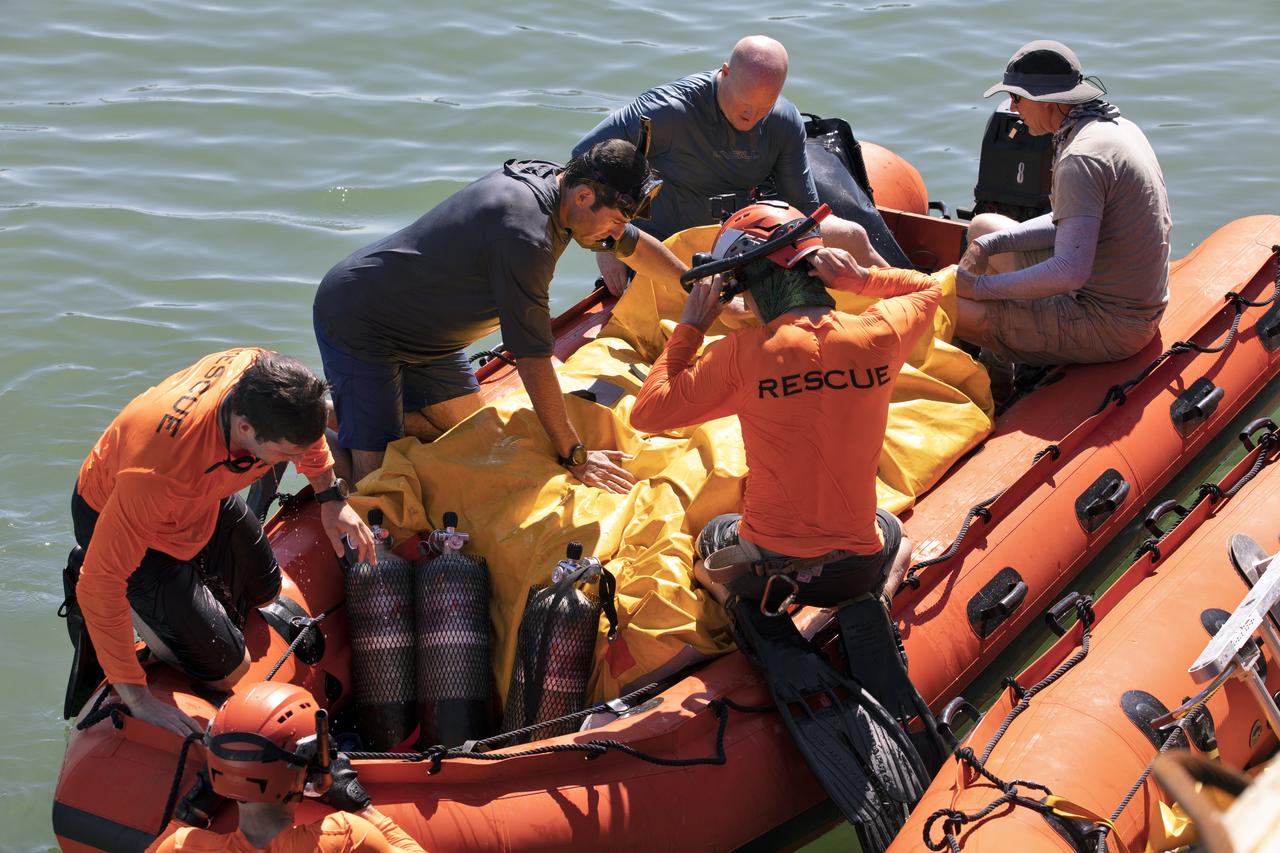
Rescue team members prepare an inflatable front porch that will be attached to the Boeing CST-100 Starliner training capsule, known as Boiler Plate 3, during a search and rescue training exercise at the Army Wharf at Cape Canaveral Air Force Station in Florida on April 16, 2019. The front porch will be used to extract astronauts from the capsule and conduct initial health assessments in the unlikely event of an emergency resulting in a splashdown. NASA and the Department of Defense Human Space Flight Support Office Rescue Division are conducting the exercise over the next several days at the Wharf and in the Atlantic Ocean. It is the first at-sea exercise with the Starliner training capsule ahead of Boeing’s Crew Flight Test with astronauts targeted for later this year. During normal return scenarios, Boeing's Starliner will land on land in a safe zone of about 15 square miles in the Western United States. Throughout the commercial crew development phases with NASA, Boeing has performed dozens of qualification tests on its parachute and airbag systems simulating conditions on land and in the water.
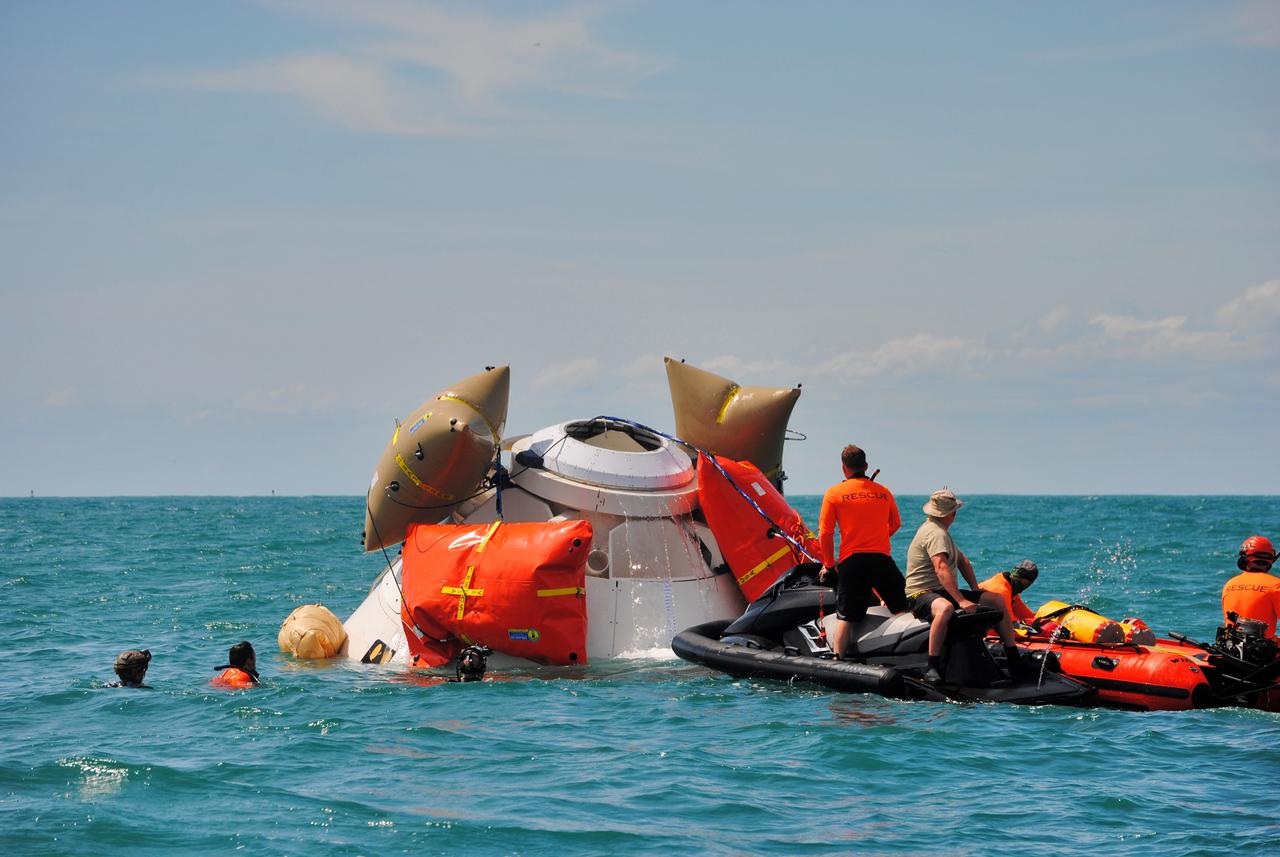
Rescue team members are using a Boeing CST-100 Starliner training capsule to rehearse a search and rescue training exercise in the unlikely event of an emergency resulting in a splashdown. NASA and the Department of Defense (DoD) Human Space Flight Support Office Rescue Division conducted the open-ocean exercise, after nearly two weeks of training, off the coast of Cape Canaveral near the agency’s Kennedy Space Center in Florida on April 25, 2019. This exercise provides team members with the necessary training ahead of Boeing’s Crew Flight Test with astronauts targeted for later this year. During normal return scenarios, Boeing’s Starliner will land in a safe zone of about 15 square miles in the Western United States. Throughout the commercial crew development phases with NASA, Boeing has performed dozens of qualification tests on its parachute and airbag systems simulating conditions on land and in the water.
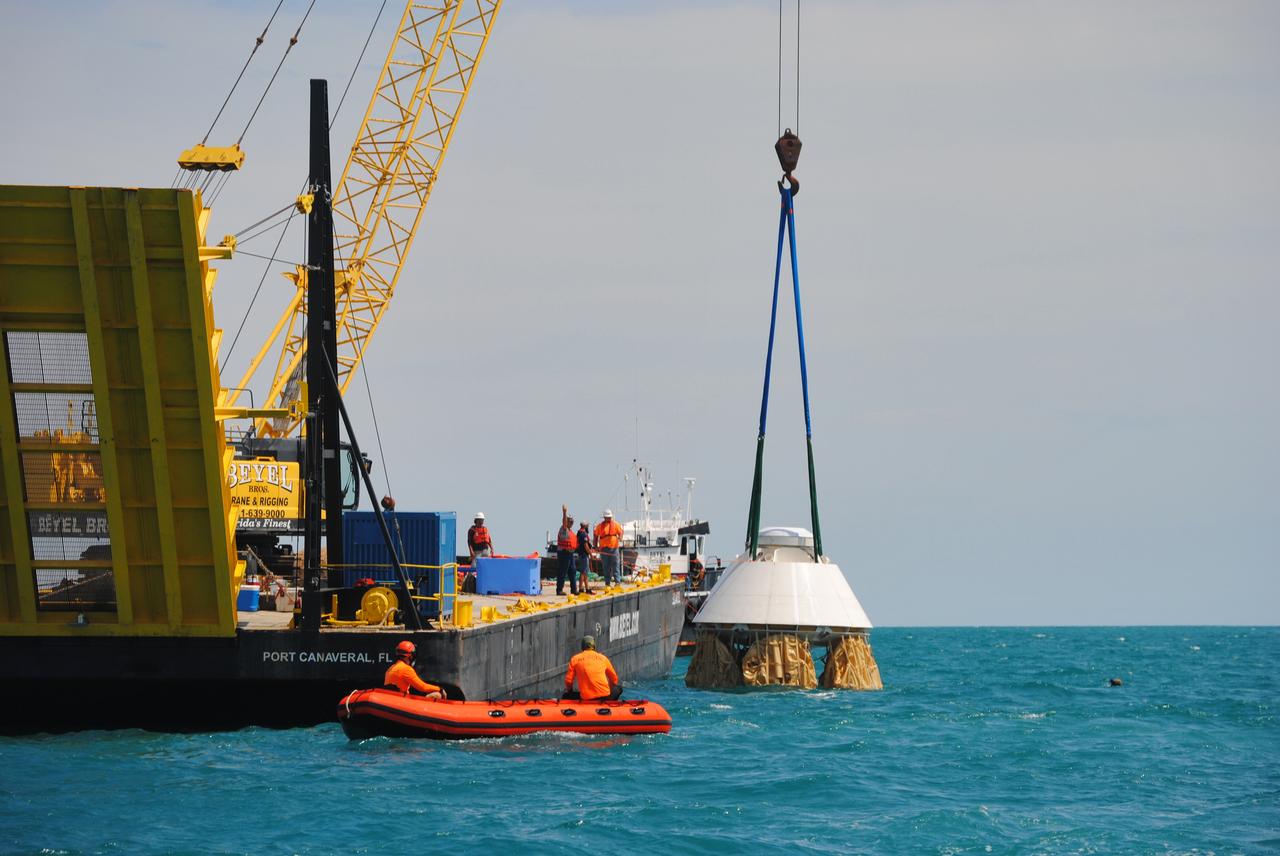
Rescue team members are using a Boeing CST-100 Starliner training capsule to rehearse a search and rescue training exercise in the unlikely event of an emergency resulting in a splashdown. NASA and the Department of Defense (DoD) Human Space Flight Support Office Rescue Division conducted the open-ocean exercise, after nearly two weeks of training, off the coast of Cape Canaveral near the agency’s Kennedy Space Center in Florida on April 25, 2019. This exercise provides team members with the necessary training ahead of Boeing’s Crew Flight Test with astronauts targeted for later this year. During normal return scenarios, Boeing’s Starliner will land in a safe zone of about 15 square miles in the Western United States. Throughout the commercial crew development phases with NASA, Boeing has performed dozens of qualification tests on its parachute and airbag systems simulating conditions on land and in the water.
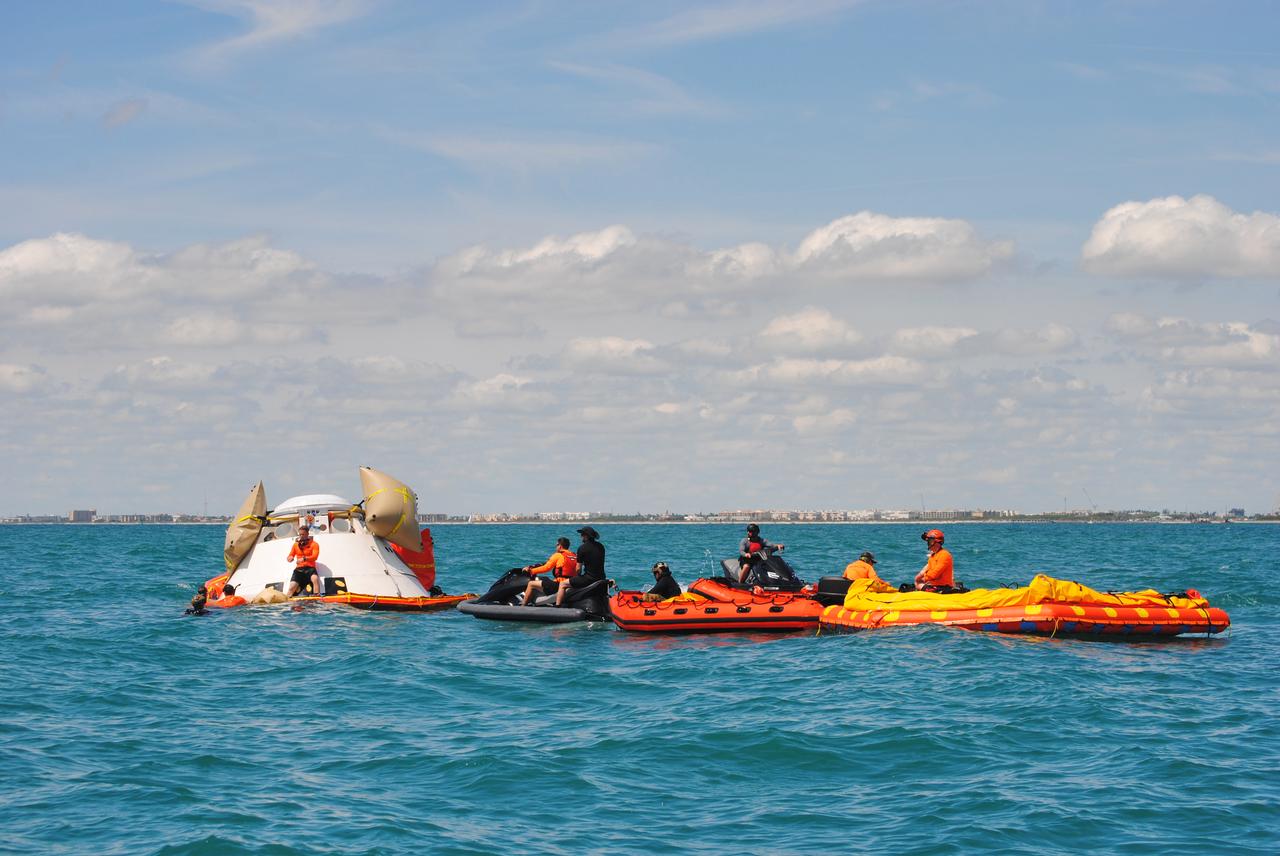
Rescue team members are using a Boeing CST-100 Starliner training capsule to rehearse a search and rescue training exercise in the unlikely event of an emergency resulting in a splashdown. NASA and the Department of Defense (DoD) Human Space Flight Support Office Rescue Division conducted the open-ocean exercise, after nearly two weeks of training, off the coast of Cape Canaveral near the agency’s Kennedy Space Center in Florida on April 25, 2019. This exercise provides team members with the necessary training ahead of Boeing’s Crew Flight Test with astronauts targeted for later this year. During normal return scenarios, Boeing’s Starliner will land in a safe zone of about 15 square miles in the Western United States. Throughout the commercial crew development phases with NASA, Boeing has performed dozens of qualification tests on its parachute and airbag systems simulating conditions on land and in the water.
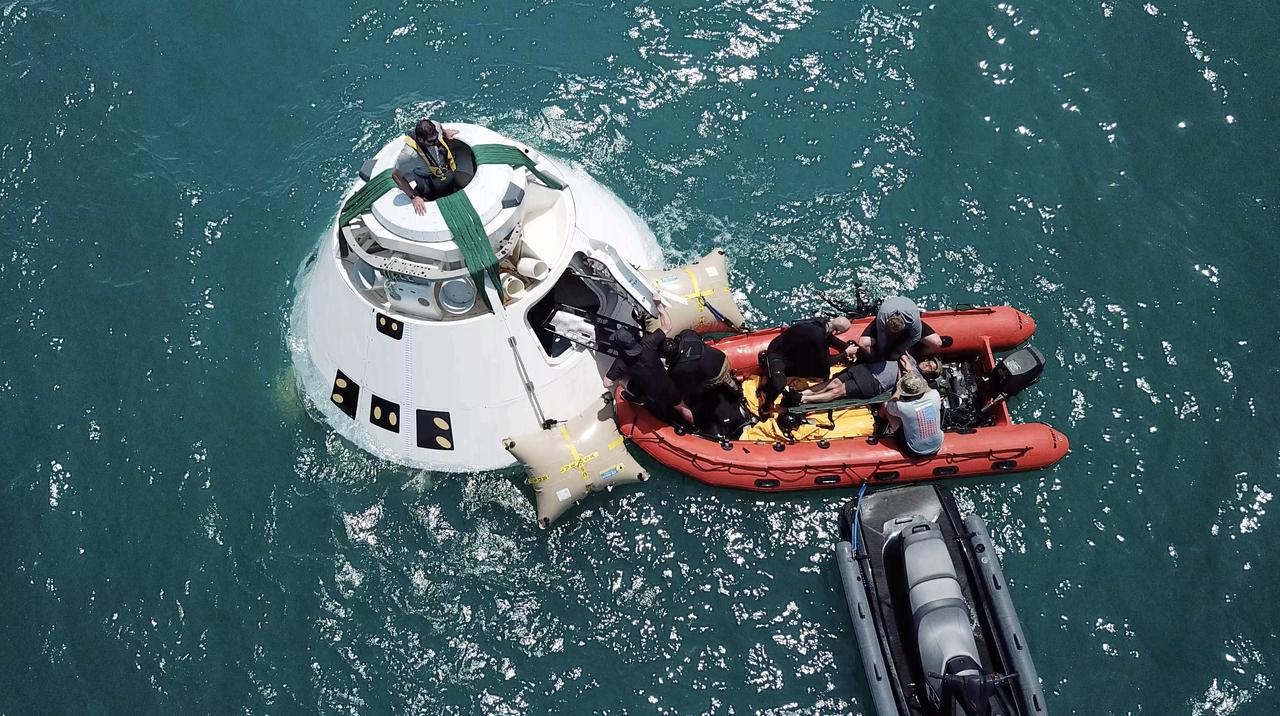
Rescue team members are using a Boeing CST-100 Starliner training capsule to rehearse a search and rescue training exercise in the unlikely event of an emergency resulting in a splashdown. NASA and the Department of Defense (DoD) Human Space Flight Support Office Rescue Division conducted the open-ocean exercise, after nearly two weeks of training, off the coast of Cape Canaveral near the agency’s Kennedy Space Center in Florida on April 25, 2019. This exercise provides team members with the necessary training ahead of Boeing’s Crew Flight Test with astronauts targeted for later this year. During normal return scenarios, Boeing’s Starliner will land in a safe zone of about 15 square miles in the Western United States. Throughout the commercial crew development phases with NASA, Boeing has performed dozens of qualification tests on its parachute and airbag systems simulating conditions on land and in the water.
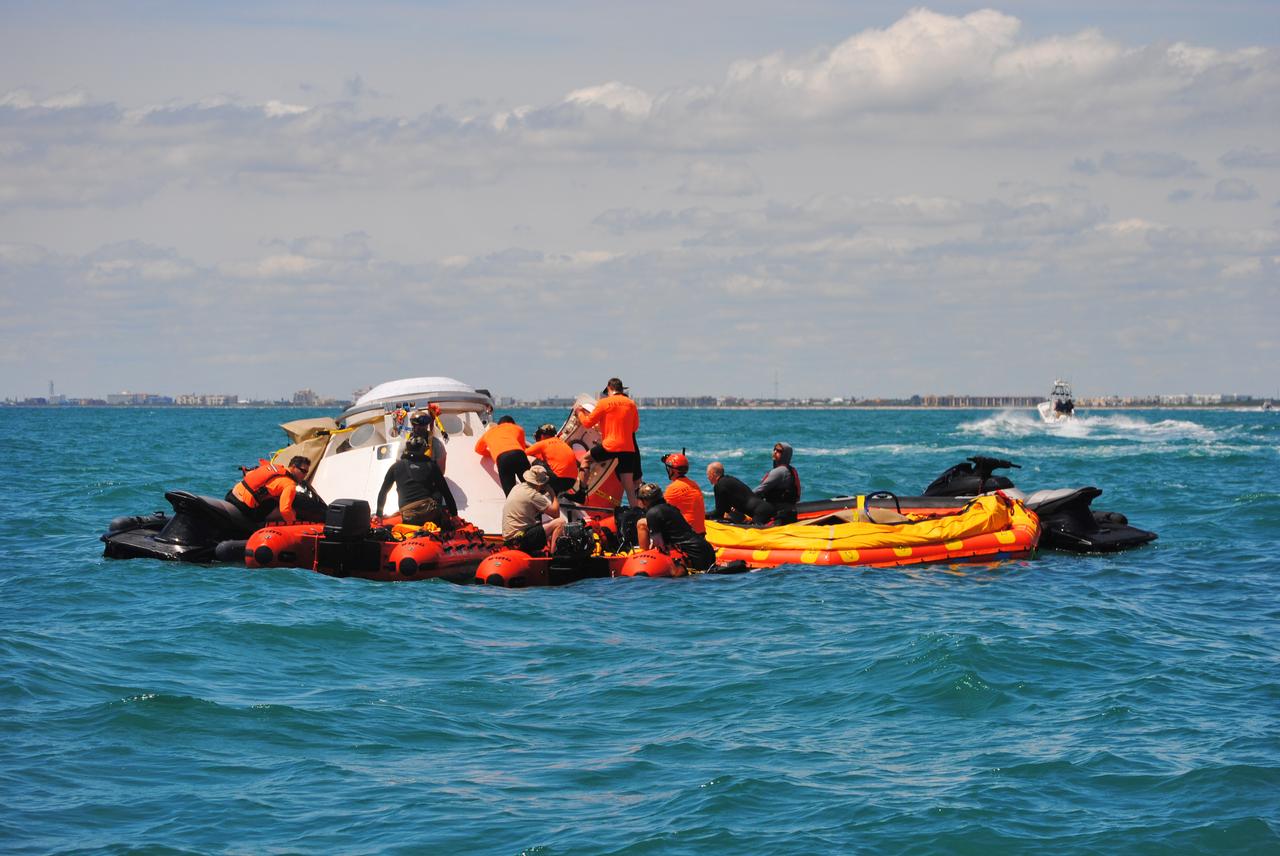
Rescue team members are using a Boeing CST-100 Starliner training capsule to rehearse a search and rescue training exercise in the unlikely event of an emergency resulting in a splashdown. NASA and the Department of Defense (DoD) Human Space Flight Support Office Rescue Division conducted the open-ocean exercise, after nearly two weeks of training, off the coast of Cape Canaveral near the agency’s Kennedy Space Center in Florida on April 25, 2019. This exercise provides team members with the necessary training ahead of Boeing’s Crew Flight Test with astronauts targeted for later this year. During normal return scenarios, Boeing’s Starliner will land in a safe zone of about 15 square miles in the Western United States. Throughout the commercial crew development phases with NASA, Boeing has performed dozens of qualification tests on its parachute and airbag systems simulating conditions on land and in the water.
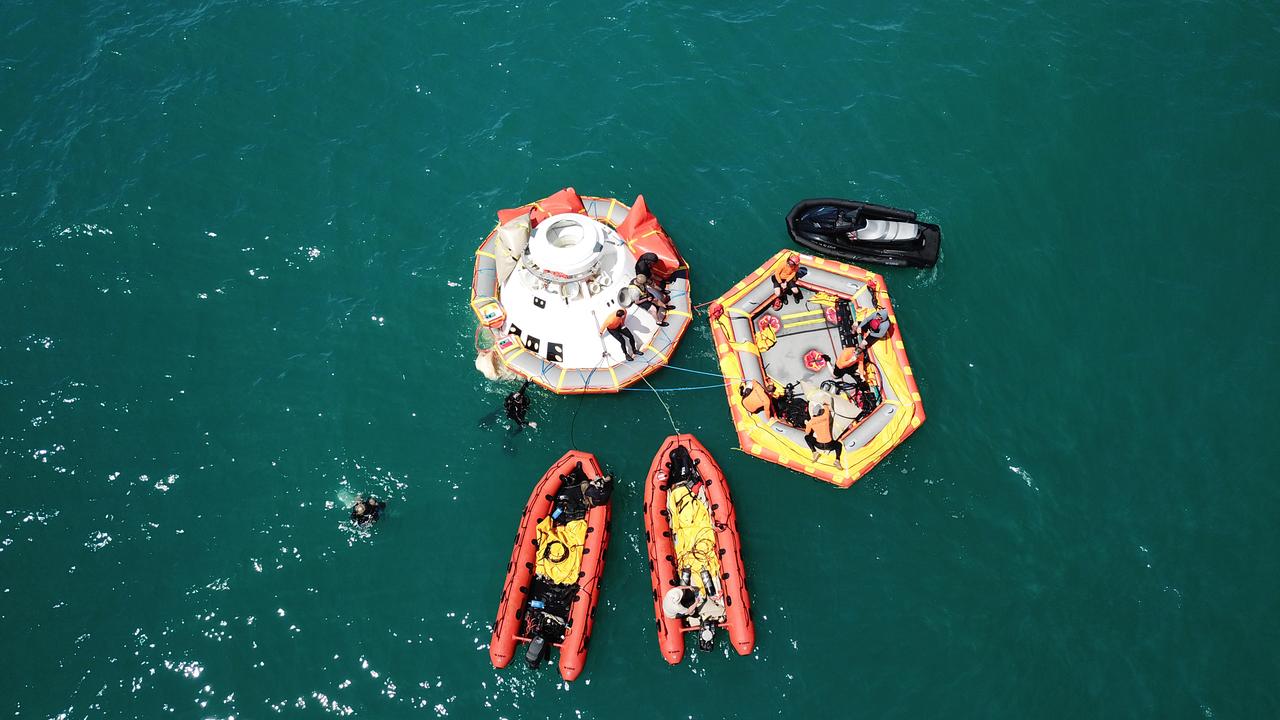
Rescue team members are using a Boeing CST-100 Starliner training capsule to rehearse a search and rescue training exercise in the unlikely event of an emergency resulting in a splashdown. NASA and the Department of Defense (DoD) Human Space Flight Support Office Rescue Division conducted the open-ocean exercise, after nearly two weeks of training, off the coast of Cape Canaveral near the agency’s Kennedy Space Center in Florida on April 25, 2019. This exercise provides team members with the necessary training ahead of Boeing’s Crew Flight Test with astronauts targeted for later this year. During normal return scenarios, Boeing’s Starliner will land in a safe zone of about 15 square miles in the Western United States. Throughout the commercial crew development phases with NASA, Boeing has performed dozens of qualification tests on its parachute and airbag systems simulating conditions on land and in the water.
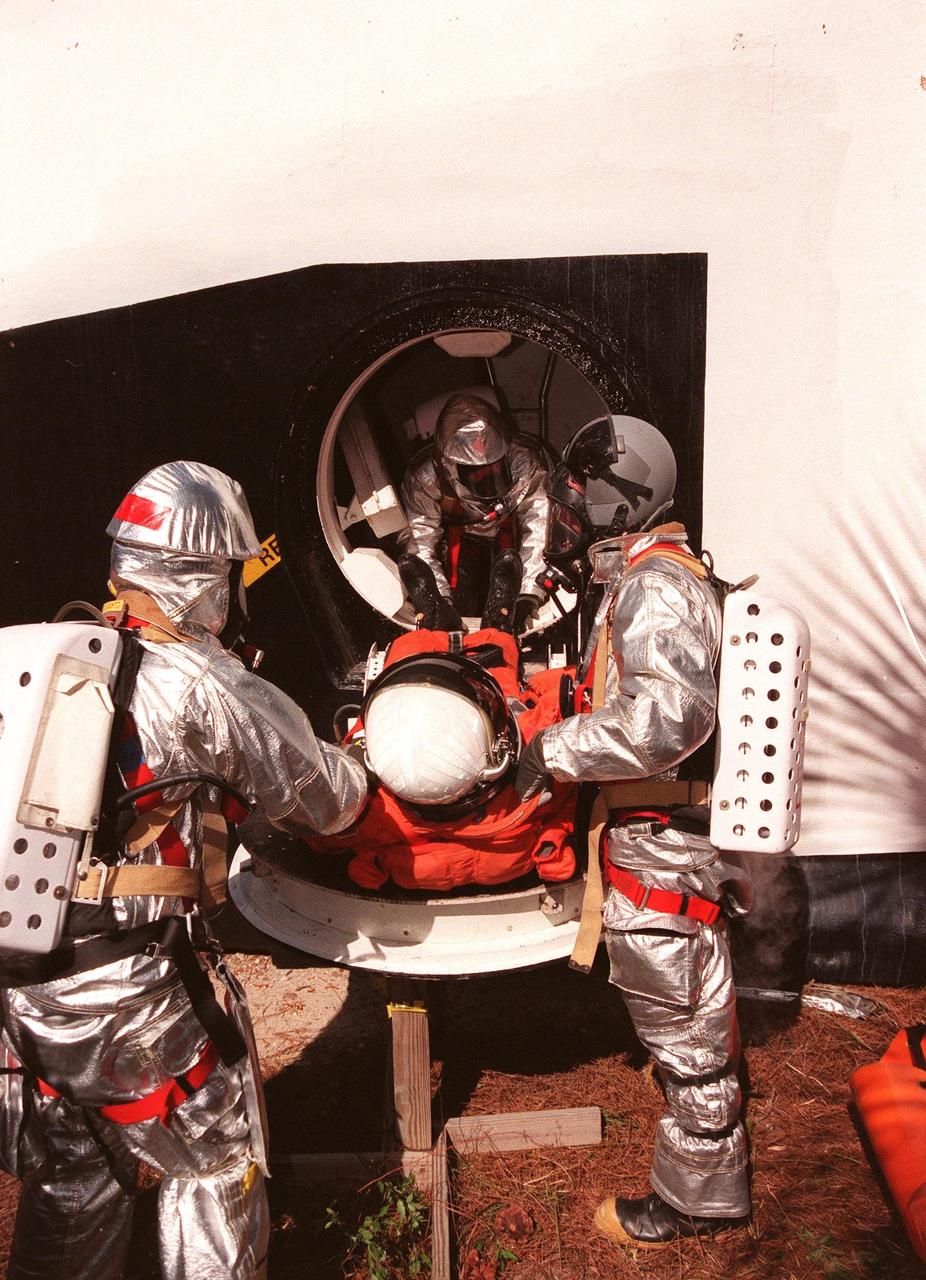
KENNEDY SPACE CENTER, FLA. -- During a simulated rescue mission in the woods near the Shuttle Landing Facility, the KSC response team removes a Shuttle "crew" member from the mock orbiter. The response team is training for the unlikely scenario of a Shuttle mishap at the SLF. The Mode 7 simulation of an astronaut rescue exercises all aspects of command and control, search and rescue, and medical procedures required for a successful rescue. The remote location of the mock-up prevents a totally land-based crew rescue, and calls on a NASA UH-1 helicopter to locate the site and four Air Force HH-60 helicopters to drop emergency equipment and fire/rescue workers to prepare the "crew" for preliminary triage. The helicopters later are used to remove the crew five astronaut candidates, one representative from the Vehicle Integration Test office, and one fire/rescue worker. The exercise concluded with airlifted "patients" arriving safely in the emergency rooms of participating area hospitals
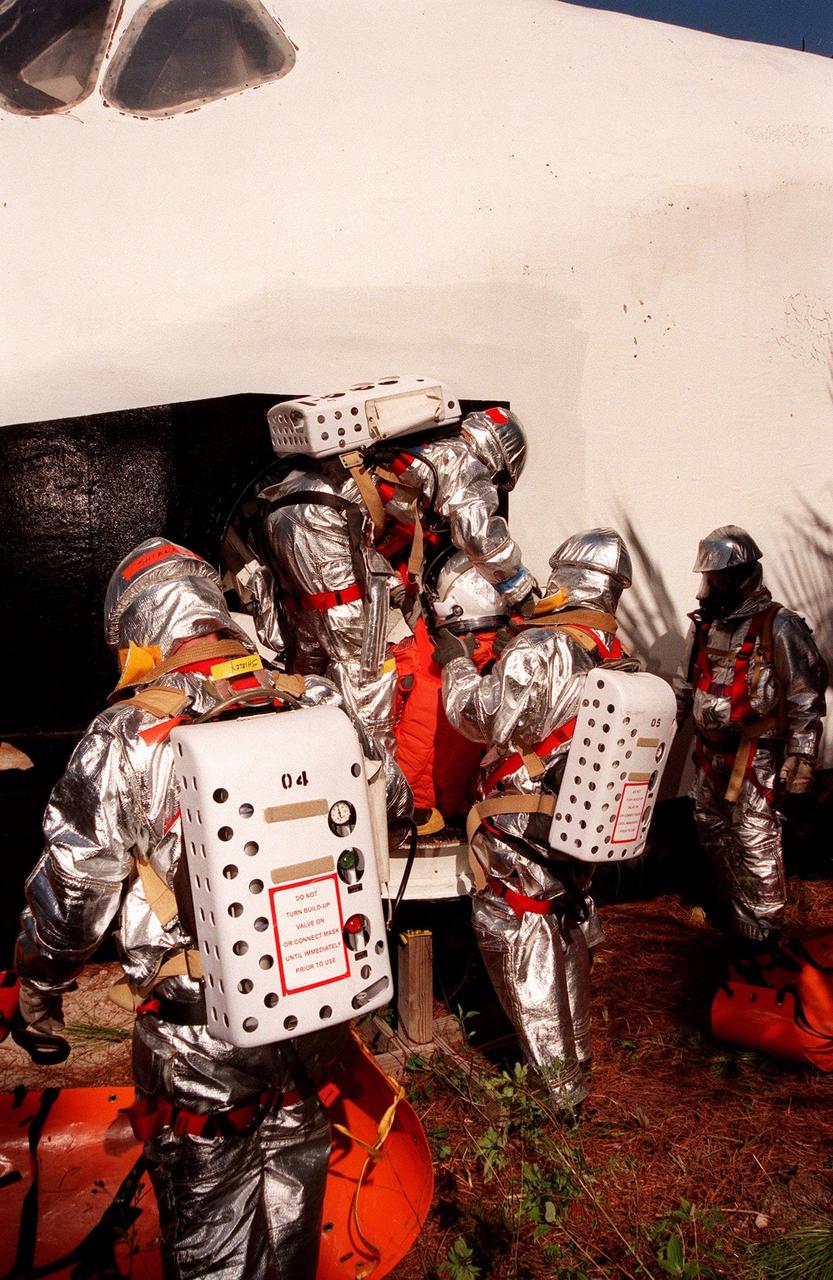
During a simulated rescue mission in the woods near the Shuttle Landing Facility (SLF), the KSC response team removes a crew member from a mock Shuttle. The response team is training for the unlikely scenario of a Shuttle mishap at the SLF. The Mode 7 simulation of an astronaut rescue exercises all aspects of command and control, search and rescue, and medical procedures required for a successful rescue. The remote location of the mock-up prevents a totally land-based crew rescue, and calls on a NASA UH-1 helicopter to locate the site and four Air Force HH-60 helicopters to drop emergency equipment and fire/rescue workers to prepare the "crew" for preliminary triage. The helicopters later are used to remove the crew five astronaut candidates, one representative from the Vehicle Integration Test office, and one fire/rescue worker. The exercise concluded with airlifted "patients" arriving safely in the emergency rooms of participating area hospitals
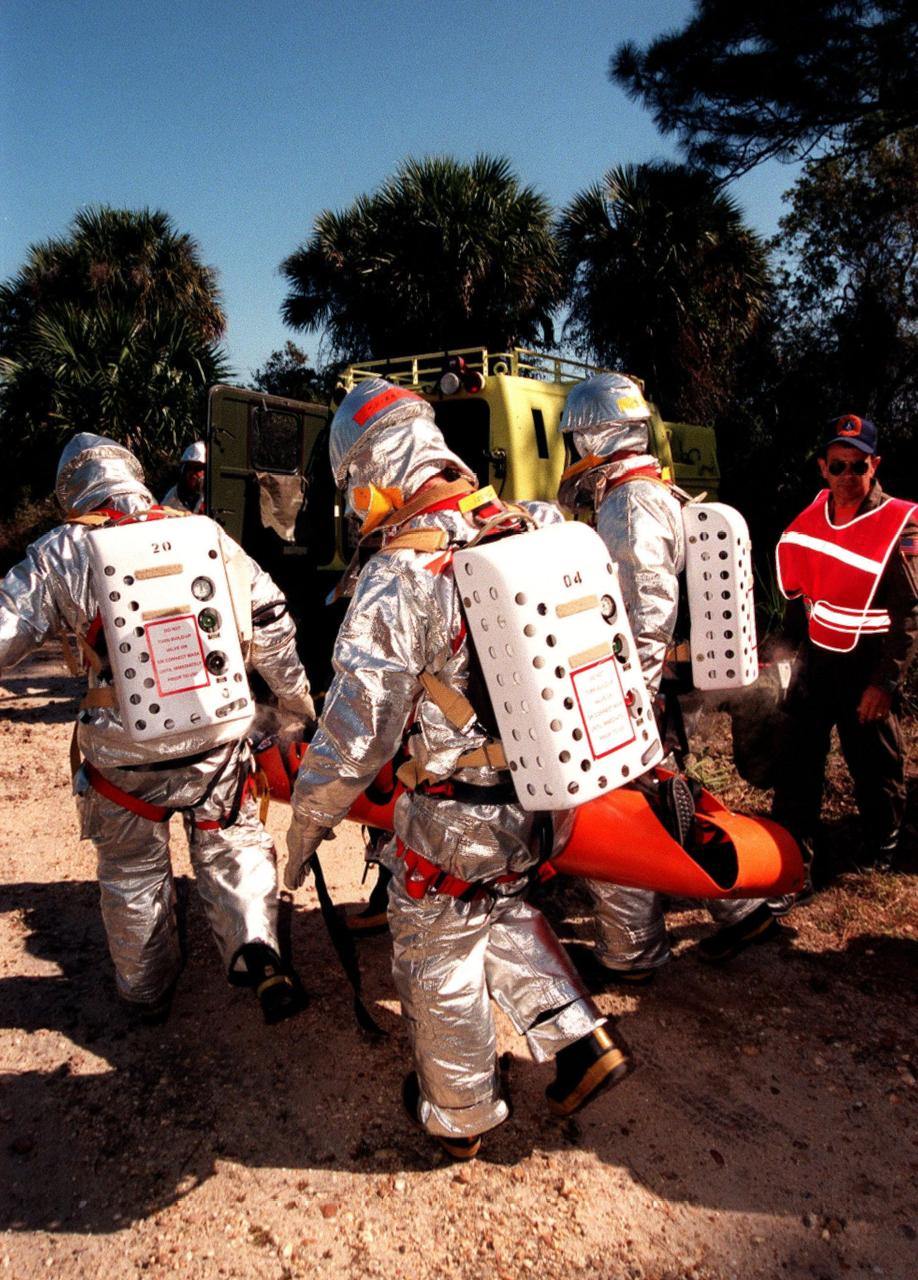
KENNEDY SPACE CENTER, FLA. -- In the woods next to the Shuttle Landing Facility (SLF), the KSC response team takes part in training for the unlikely scenario of a Shuttle mishap at the SLF. The Mode 7 simulation of an astronaut rescue exercises all aspects of command and control, search and rescue, and medical procedures required for a successful rescue. The remote location of the mock-up prevents a totally land-based crew rescue, and calls on a NASA UH-1 helicopter to locate the site and four Air Force HH-60 helicopters to drop emergency equipment and fire/rescue workers to prepare the "crew" for preliminary triage. The helicopters later are used to remove the crew five astronaut candidates, one representative from the Vehicle Integration Test office, and one fire/rescue worker. The exercise concluded with airlifted "patients" arriving safely in the emergency rooms of participating area hospitals
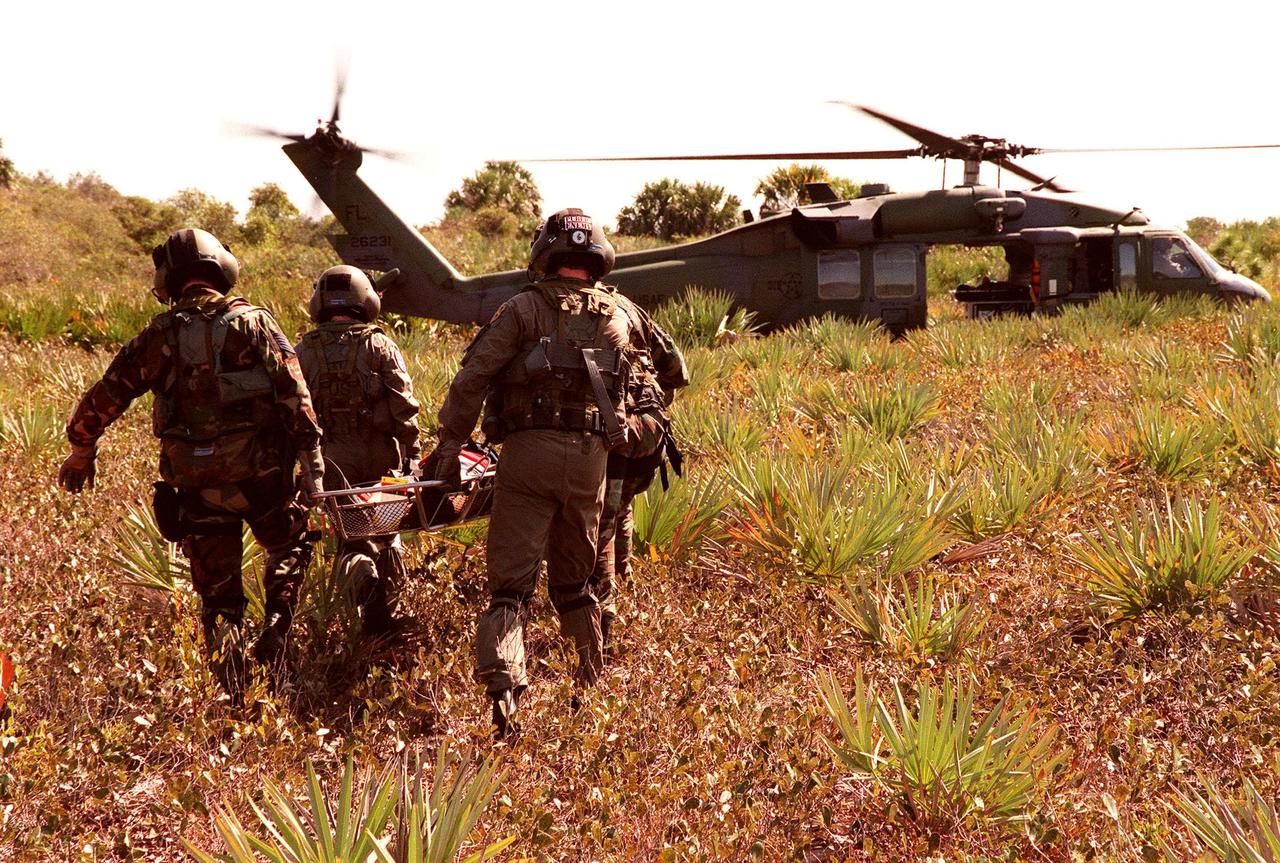
KENNEDY SPACE CENTER, FLA. -- During a simulated rescue mission in the woods near the Shuttle Landing Facility (SLF), the KSC response team practices carrying an injured crew member to an Air Force HH-60 helicopter for transport to a local hospital. The response team is training for the unlikely scenario of a Shuttle mishap at the SLF. The Mode 7 simulation of an astronaut rescue exercises all aspects of command and control, search and rescue, and medical procedures required for a successful rescue. The remote location of the mock-up prevents a totally land-based crew rescue, and calls on a NASA UH-1 helicopter to locate the site and four Air Force HH-60 helicopters to reach the site, drop emergency equipment and later remove the "crew" five astronaut candidates, one representative from the Vehicle Integration Test office, and one fire/rescue worker. The exercise will conclude with airlifted "patients" arriving safely in the emergency rooms of participating area hospitals
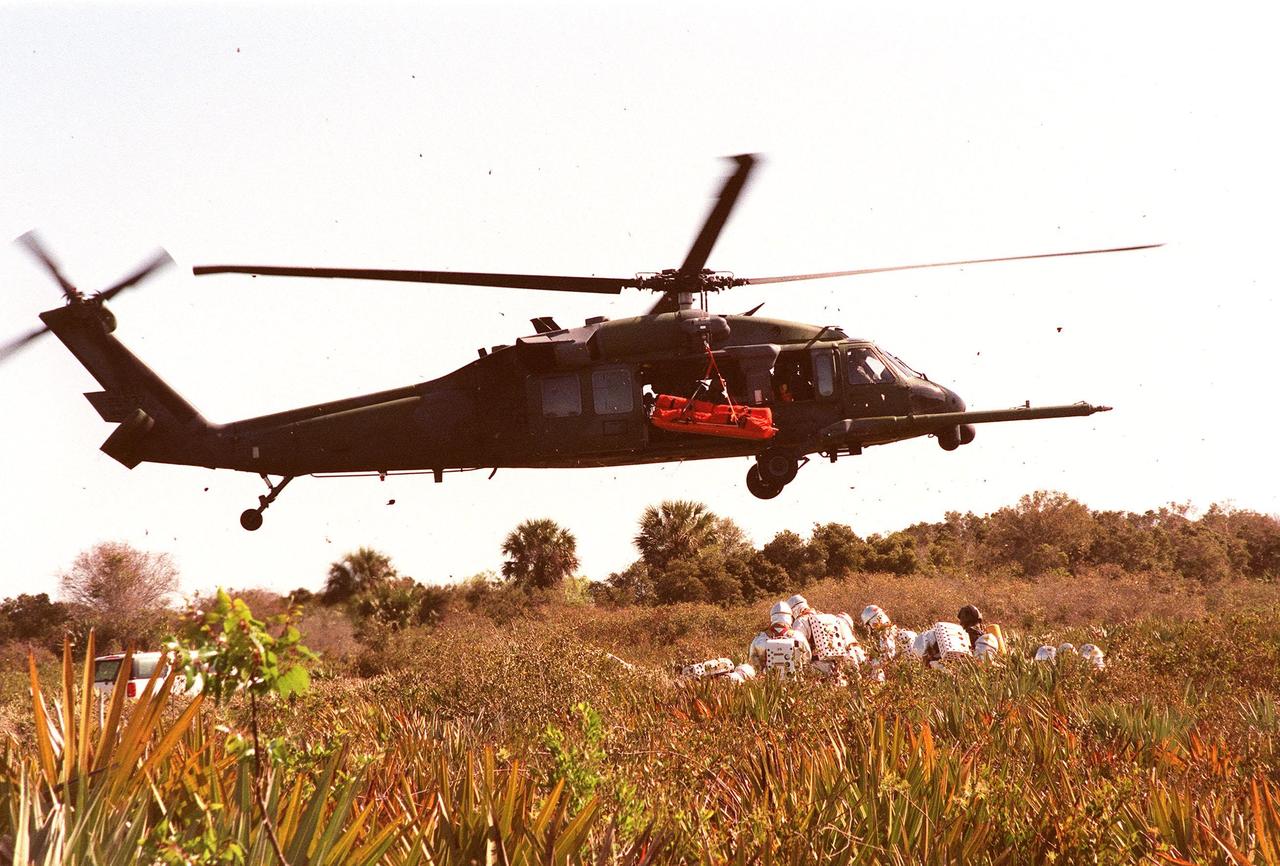
KENNEDY SPACE CENTER, FLA. -- During a simulated rescue mission in the woods near the Shuttle Landing Facility (SLF), the KSC response team practices lifting an injured crew member to an Air Force HH-60 helicopter for transport to a local hospital. The response team is training for the unlikely scenario of a Shuttle mishap at the SLF. The Mode 7 simulation of an astronaut rescue exercises all aspects of command and control, search and rescue, and medical procedures required for a successful rescue. The remote location of the mock-up prevents a totally land-based crew rescue, and calls on a NASA UH-1 helicopter to locate the site and four Air Force HH-60 helicopters to reach and prepare the "crew" five astronaut candidates, one representative from the Vehicle Integration Test office, and one fire/rescue worker for preliminary triage. The exercise will conclude with airlifted "patients" arriving safely in the emergency rooms of participating area hospitals
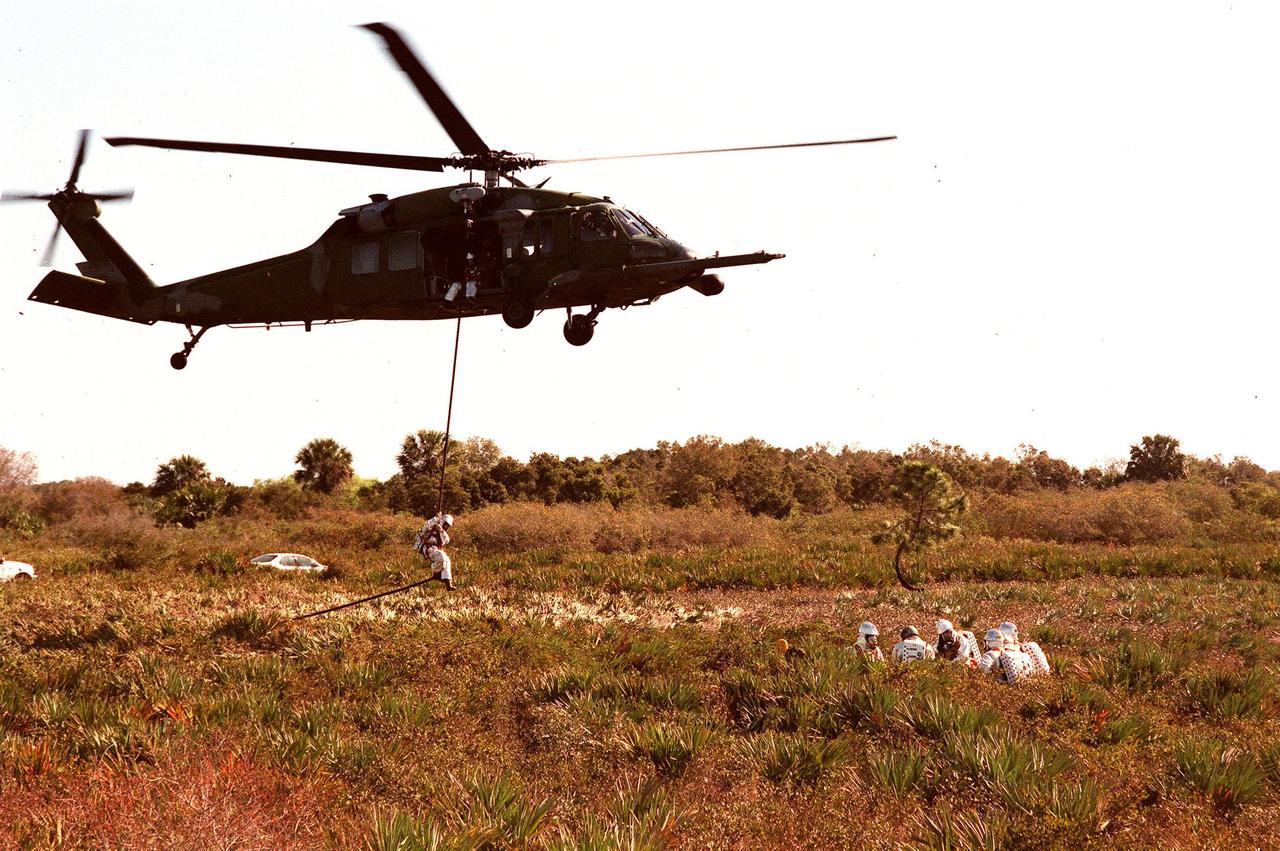
KENNEDY SPACE CENTER, FLA. -- During a simulated rescue mission in the woods near the Shuttle Landing Facility (SLF), a fire/rescue worker practices disembarking from an Air Force HH-60 helicopter. The KSC response team is training for the unlikely scenario of a Shuttle mishap at the SLF. The Mode 7 simulation of an astronaut rescue exercises all aspects of command and control, search and rescue, and medical procedures required for a successful rescue. The remote location of the mock-up prevents a totally land-based crew rescue, and calls on a NASA UH-1 helicopter to locate the site and four Air Force HH-60 helicopters to drop emergency equipment and fire/rescue workers to prepare the "crew" for preliminary traige. The helicopters are used later to remove the crew five astronaut candidates, one representative from the Vehicle Integration Test office, and one fire/rescue worker. The exercise will conclude with airlifted "patients" arriving safely in the emergency rooms of participating area hospitals
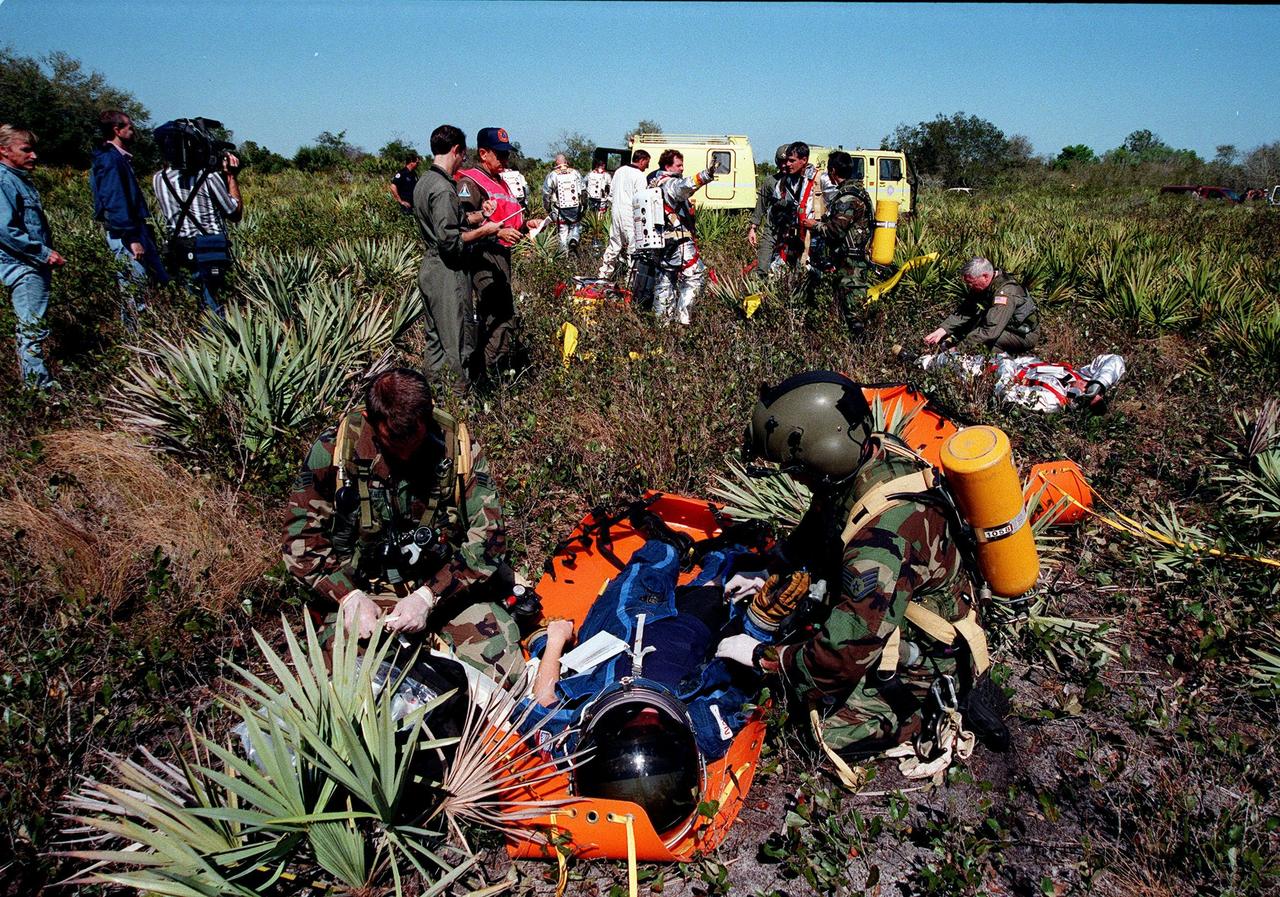
KENNEDY SPACE CENTER, FLA. -- During a simulated rescue mission in the woods near the Shuttle Landing Facility (SLF), the KSC response team practices stabilizing an injured crew member before transport to a local hospital by helicopter. The response team is training for the unlikely scenario of a Shuttle mishap at the SLF. The Mode 7 simulation of an astronaut rescue exercises all aspects of command and control, search and rescue, and medical procedures required for a successful rescue. The remote location of the mock-up prevents a totally land-based crew rescue, and calls on a NASA UH-1 helicopter to locate the site and four Air Force HH-60 helicopters to drop emergency equipment and fire/rescue workers who will prepare the "crew" for preliminary triage. The helicopters later will help remove the crew five astronaut candidates, one representative from the Vehicle Integration Test office, and one fire/rescue worker. The exercise will conclude with airlifted "patients" arriving safely in the emergency rooms of participating area hospitals
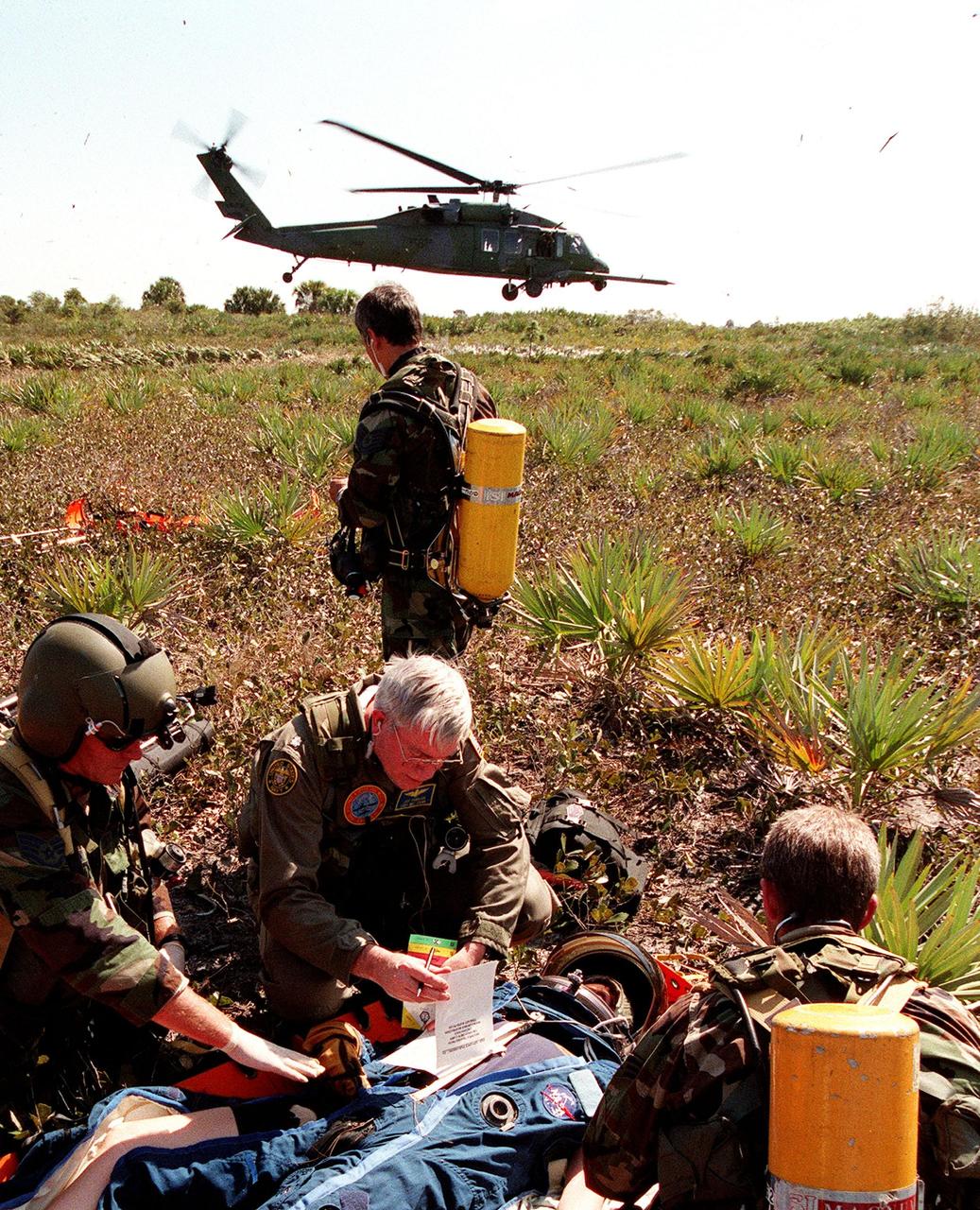
KENNEDY SPACE CENTER, FLA. -- During a simulated rescue mission in the woods near the Shuttle Landing Facility (SLF), the KSC response team practices stabilizing an injured crew member before transport to a local hospital by an Air Force HH-60 helicopter. The response team is training for the unlikely scenario of a Shuttle mishap at the SLF. The Mode 7 simulation of an astronaut rescue exercises all aspects of command and control, search and rescue, and medical procedures required for a successful rescue. The remote location of the mock-up prevents a totally land-based crew rescue, and calls on a NASA UH-1 helicopter to locate the site and four HH-60 helicopters to drop emergency equipment and fire/rescue workers to prepare the "crew" for preliminary triage. The helicopters are then used to remove the crew five astronaut candidates, one representative from the Vehicle Integration Test office, and one fire/rescue worker. The exercise will conclude with airlifted "patients" arriving safely in the emergency rooms of participating area hospitals
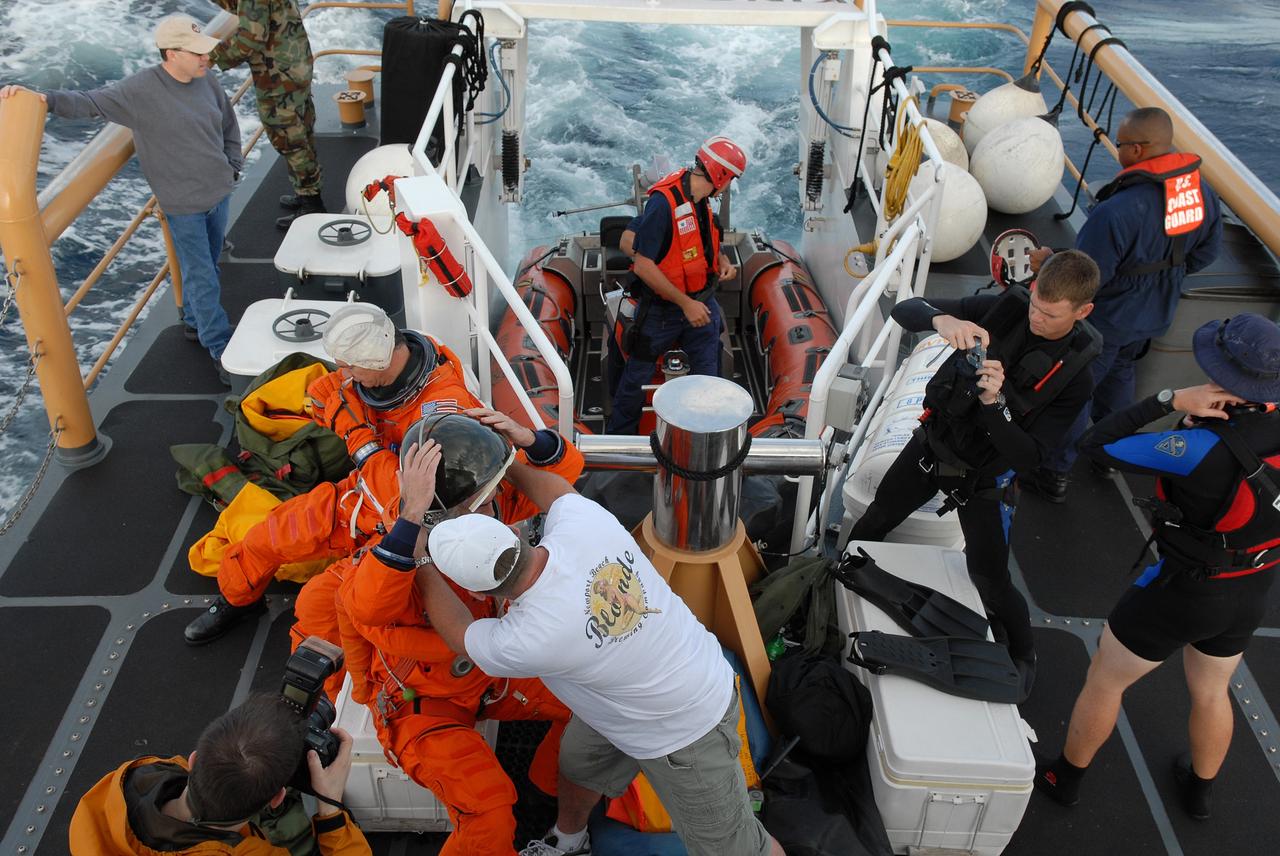
CAPE CANAVERAL, Fla. -- In a U.S. Coast Guard rescue boat off Florida's central east coast, participants in a rescue training exercise, known as Mode VIII, put on astronauts' launch-and-entry suits. In support of, and with logistical support from, NASA, USSTRATCOM is hosting a major exercise involving Department of Defense, Department of Homeland Security, search and rescue (SAR) forces, including the 45th Space Wing at Patrick Air Force Base, which support space shuttle astronaut bailout contingency operations, known as Mode VIII. This exercise tests SAR capabilities to locate, recover and provide medical treatment for astronauts following a space shuttle launch phase open-ocean bailout. Participants include members of the U.S. Navy, U.S. Coast Guard, U.S. Air Force, and NASA's Kennedy Space Center and Johnson Space Center. Photo credit: NASA/Dimitri Gerondidakis
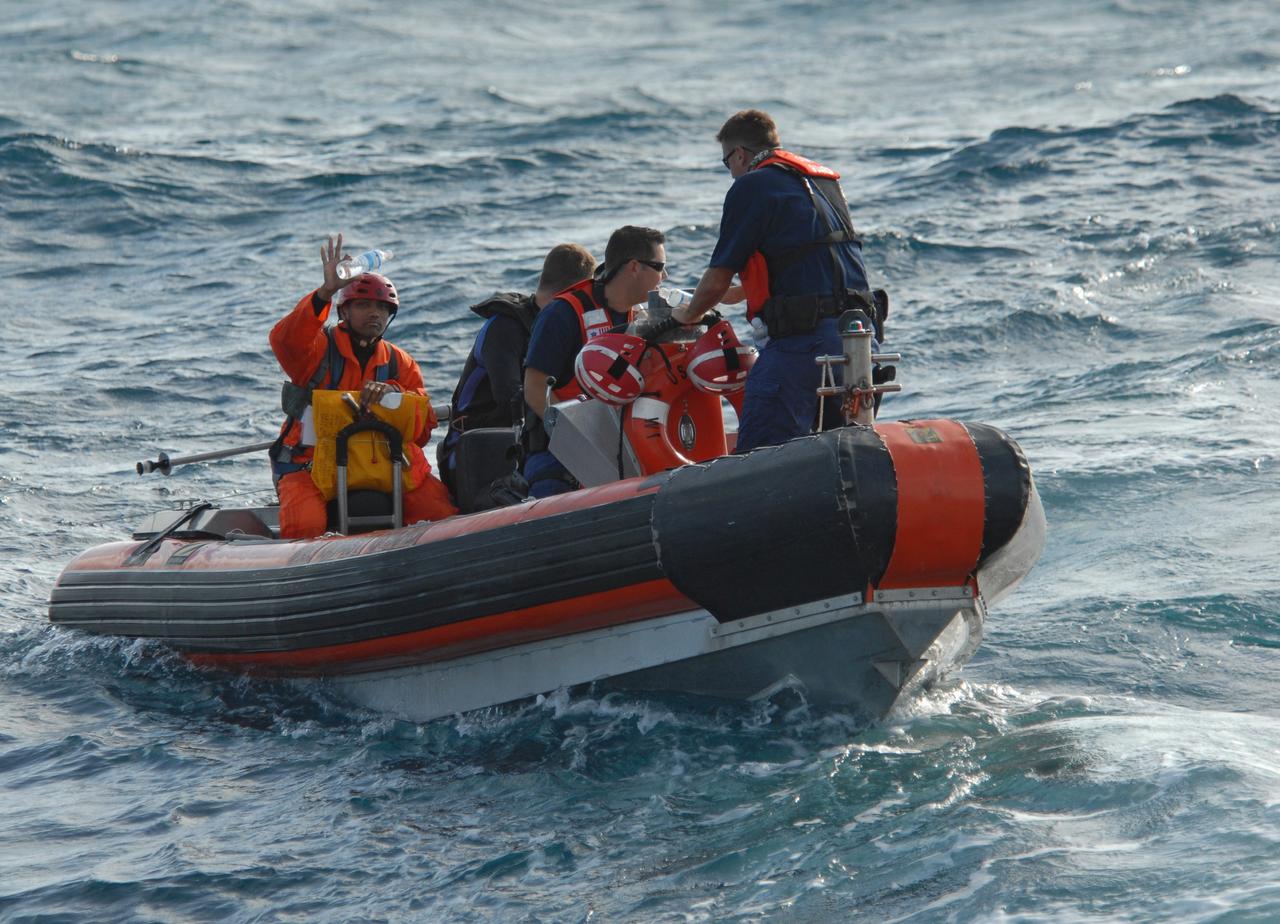
CAPE CANAVERAL, Fla. -- Participants in a rescue training exercise, known as Mode VIII, are successfully launched from a U.S. Coast Guard rescue boat off Florida's central east coast. In support of, and with logistical support from, NASA, USSTRATCOM is hosting a major exercise involving Department of Defense, Department of Homeland Security, search and rescue (SAR) forces, including the 45th Space Wing at Patrick Air Force Base, which support space shuttle astronaut bailout contingency operations, known as Mode VIII. This exercise tests SAR capabilities to locate, recover and provide medical treatment for astronauts following a space shuttle launch phase open-ocean bailout. Participants include members of the U.S. Navy, U.S. Coast Guard, U.S. Air Force, and NASA's Kennedy Space Center and Johnson Space Center. Photo credit: NASA/Dimitri Gerondidakis
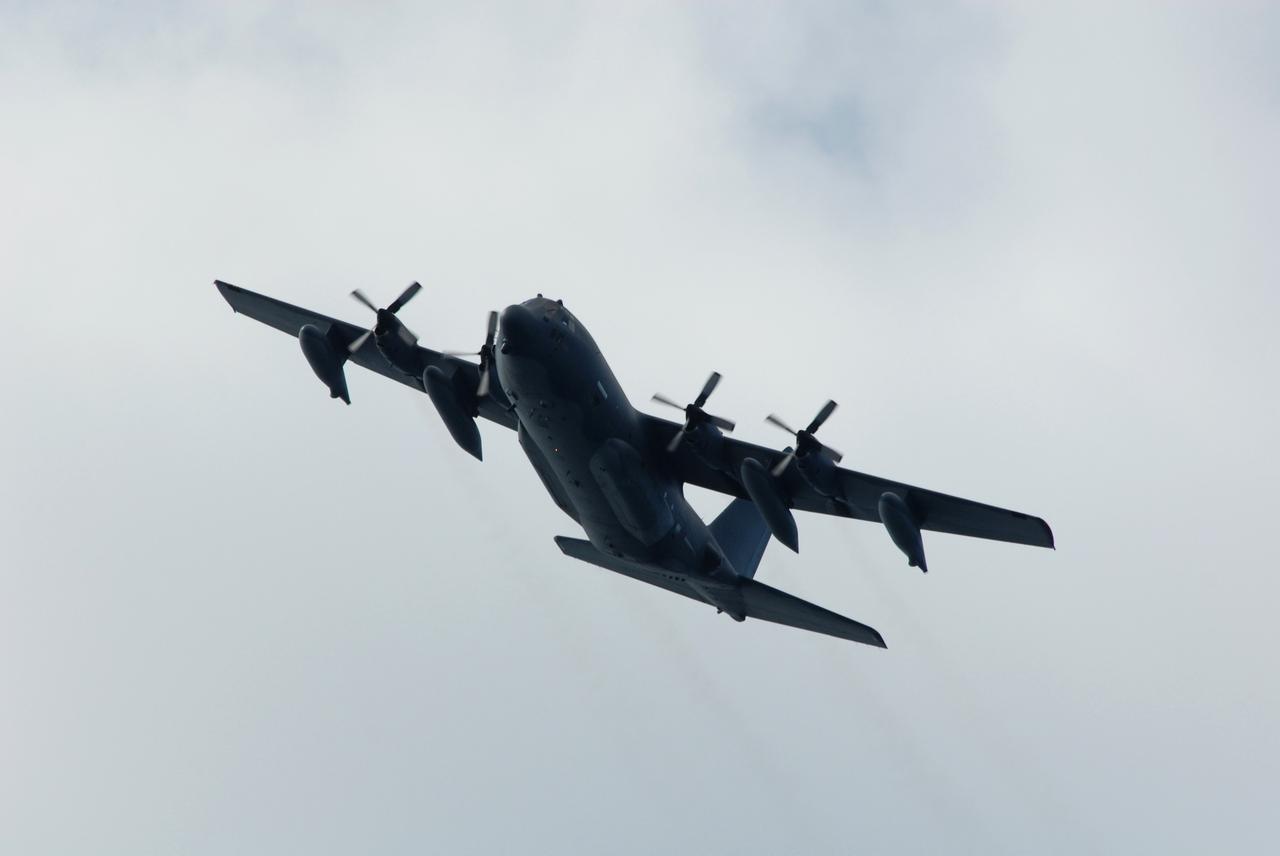
CAPE CANAVERAL, Fla. -- An Air Force HC-130 rescue tanker flies over the target area off Florida's central east coast during a rescue training exercise, known as Mode VIII. In support of, and with logistical support from, NASA, USSTRATCOM is hosting a major exercise involving Department of Defense, Department of Homeland Security, search and rescue (SAR) forces, including the 45th Space Wing at Patrick Air Force Base, which support space shuttle astronaut bailout contingency operations, known as Mode VIII. This exercise tests SAR capabilities to locate, recover and provide medical treatment for astronauts following a space shuttle launch phase open-ocean bailout. Participants include members of the U.S. Navy, U.S. Coast Guard, U.S. Air Force, and NASA's Kennedy Space Center and Johnson Space Center. Photo credit: NASA/Dimitri Gerondidakis
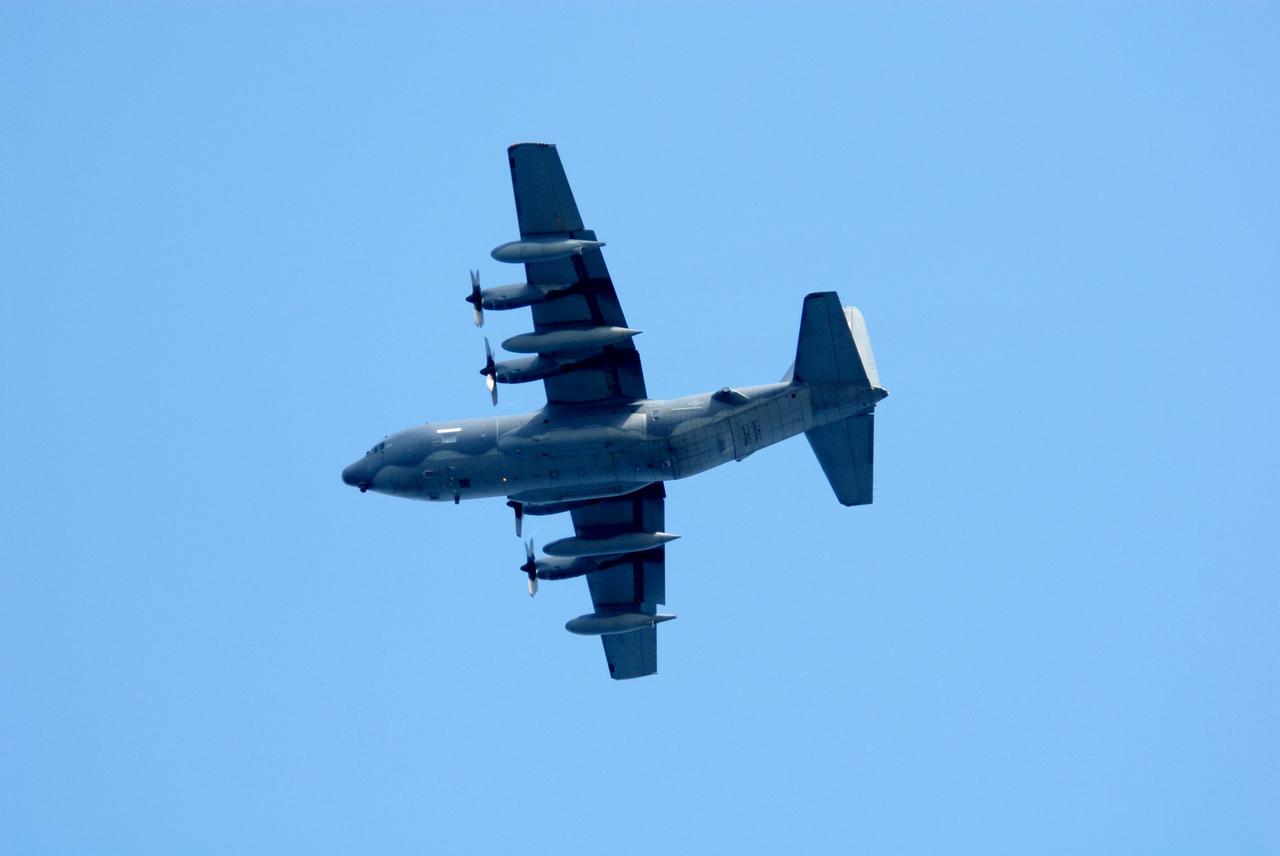
CAPE CANAVERAL, Fla. -- An Air Force HC-130 rescue tanker flies over the target area off Florida's central east coast during a rescue training exercise, known as Mode VIII. In support of, and with logistical support from, NASA, USSTRATCOM is hosting a major exercise involving Department of Defense, Department of Homeland Security, search and rescue (SAR) forces, including the 45th Space Wing at Patrick Air Force Base, which support space shuttle astronaut bailout contingency operations, known as Mode VIII. This exercise tests SAR capabilities to locate, recover and provide medical treatment for astronauts following a space shuttle launch phase open-ocean bailout. Participants include members of the U.S. Navy, U.S. Coast Guard, U.S. Air Force, and NASA's Kennedy Space Center and Johnson Space Center. Photo credit: NASA/Dimitri Gerondidakis
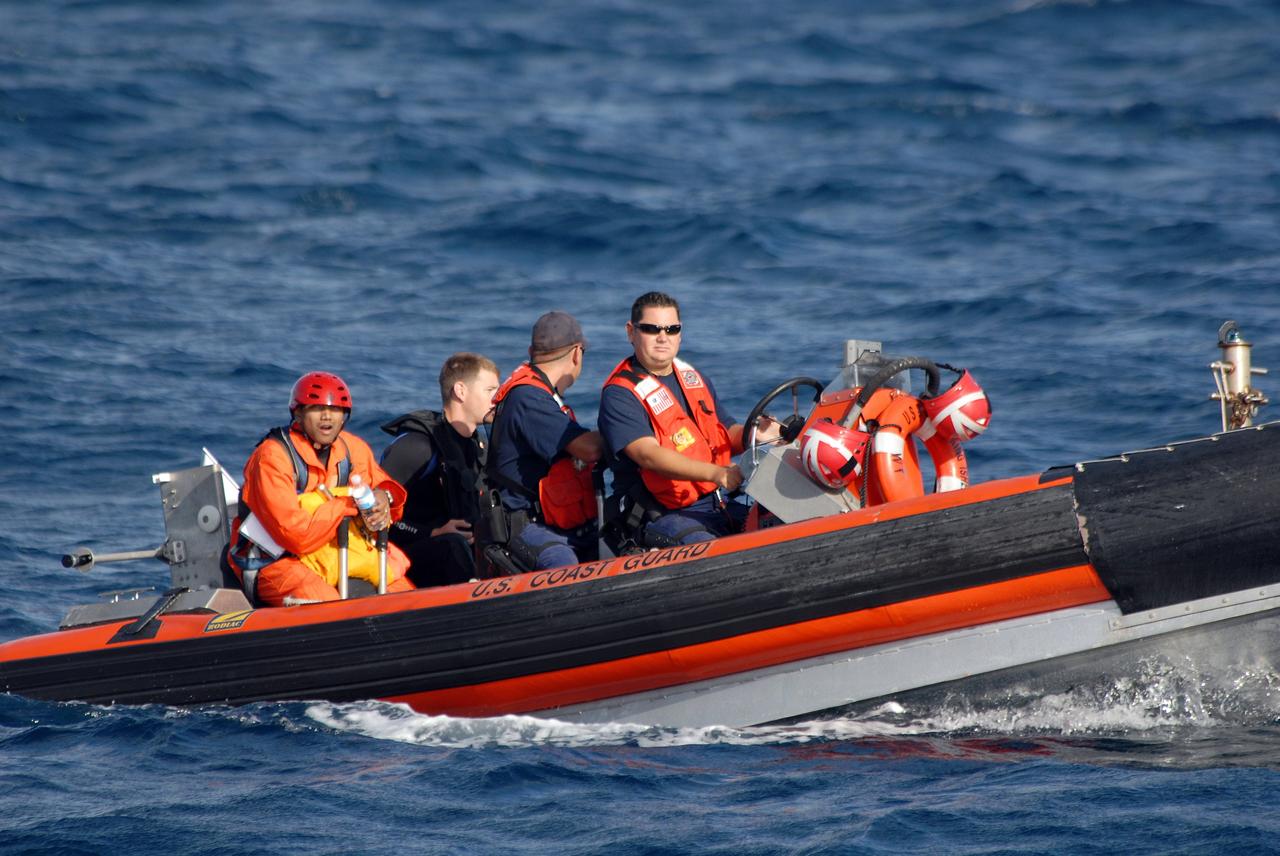
CAPE CANAVERAL, Fla. -- Participants in a rescue training exercise, known as Mode VIII, are successfully launched from a U.S. Coast Guard rescue boat off Florida's central east coast. In support of, and with logistical support from, NASA, USSTRATCOM is hosting a major exercise involving Department of Defense, Department of Homeland Security, search and rescue (SAR) forces, including the 45th Space Wing at Patrick Air Force Base, which support space shuttle astronaut bailout contingency operations, known as Mode VIII. This exercise tests SAR capabilities to locate, recover and provide medical treatment for astronauts following a space shuttle launch phase open-ocean bailout. Participants include members of the U.S. Navy, U.S. Coast Guard, U.S. Air Force, and NASA's Kennedy Space Center and Johnson Space Center. Photo credit: NASA/Dimitri Gerondidakis
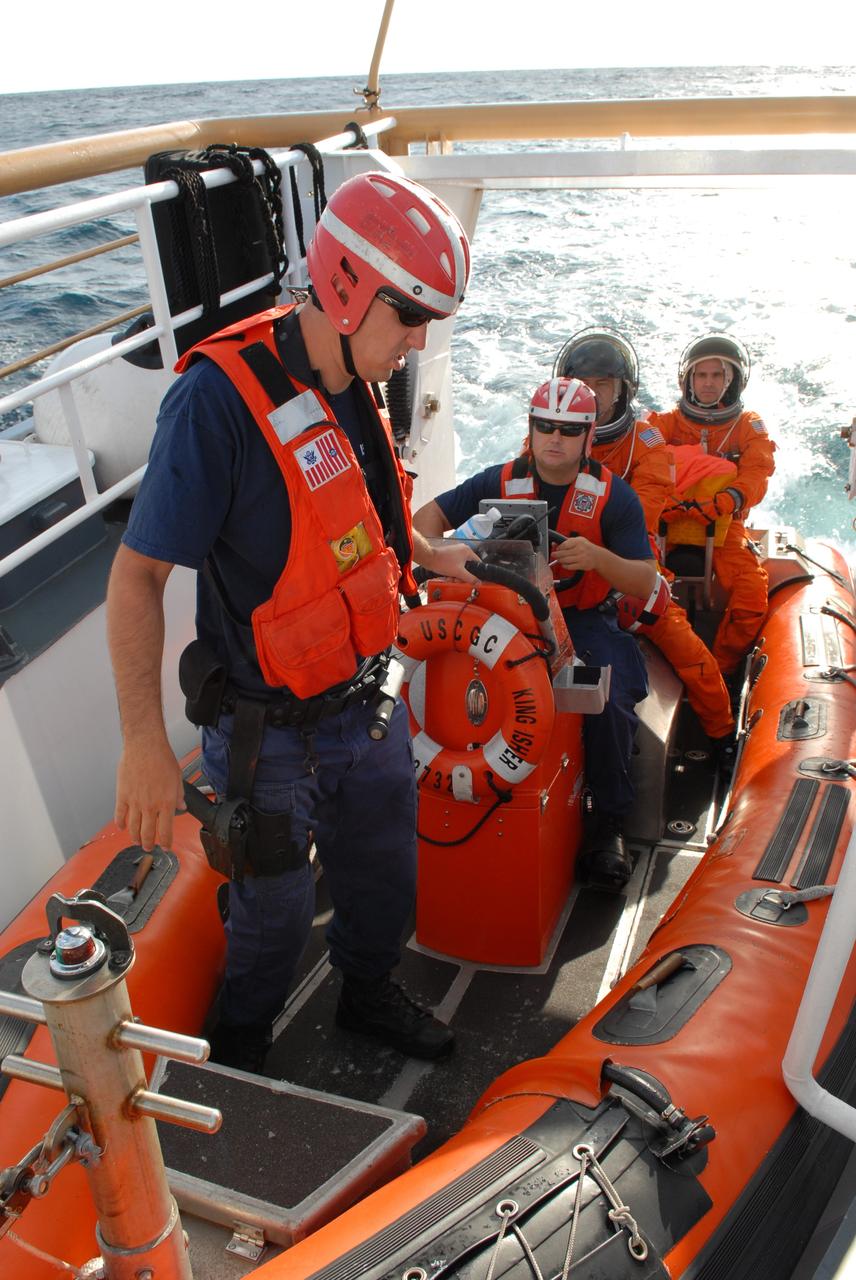
CAPE CANAVERAL, Fla. -- In a U.S. Coast Guard rescue boat off Florida's central east coast, participants in a rescue training exercise, known as Mode VIII, are ready to be launched into the Atlantic Ocean. In support of, and with logistical support from, NASA, USSTRATCOM is hosting a major exercise involving Department of Defense, Department of Homeland Security, search and rescue (SAR) forces, including the 45th Space Wing at Patrick Air Force Base, which support space shuttle astronaut bailout contingency operations, known as Mode VIII. This exercise tests SAR capabilities to locate, recover and provide medical treatment for astronauts following a space shuttle launch phase open-ocean bailout. Participants include members of the U.S. Navy, U.S. Coast Guard, U.S. Air Force, and NASA's Kennedy Space Center and Johnson Space Center. Photo credit: NASA/Dimitri Gerondidakis
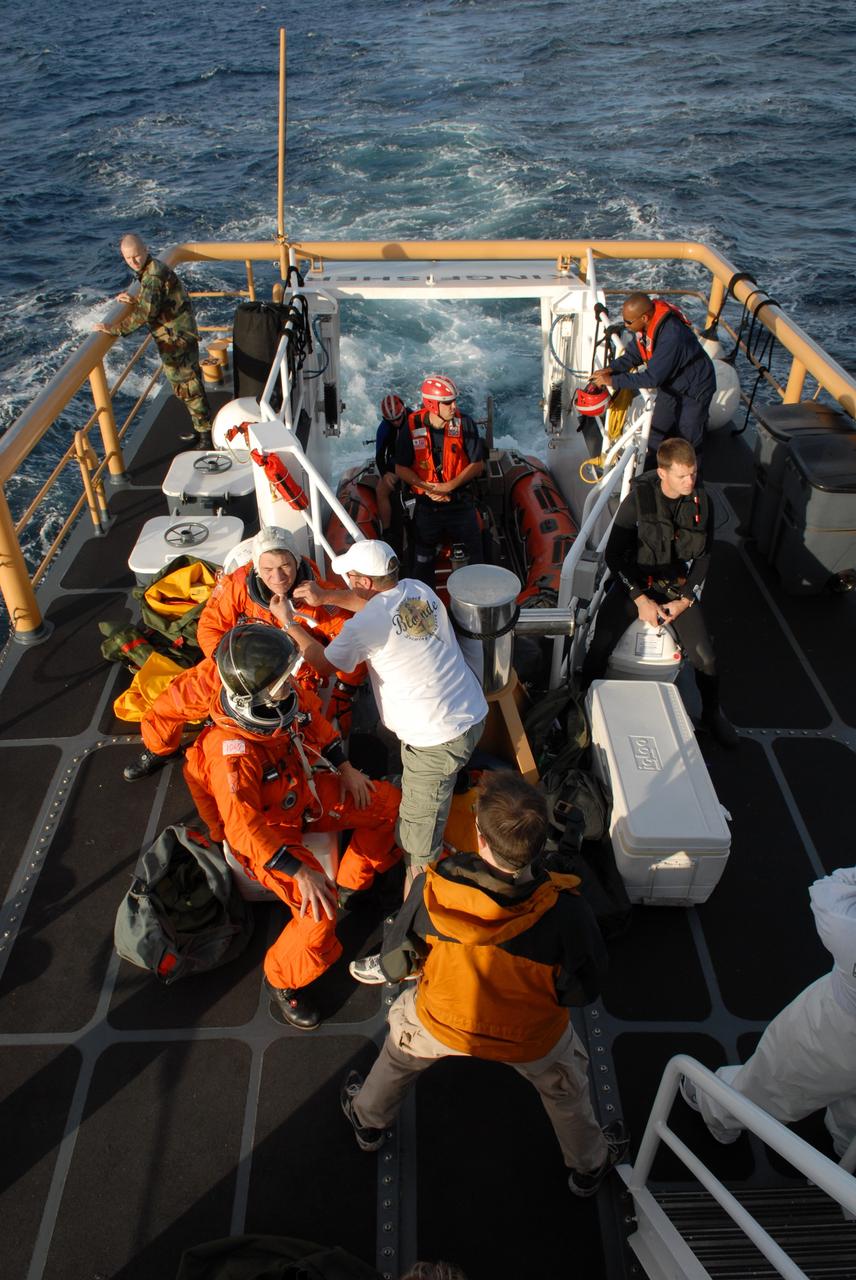
CAPE CANAVERAL, Fla. -- In a U.S. Coast Guard rescue boat off Florida's central east coast, participants in a rescue training exercise, known as Mode VIII, put on astronauts' launch-and-entry suits. In support of, and with logistical support from, NASA, USSTRATCOM is hosting a major exercise involving Department of Defense, Department of Homeland Security, search and rescue (SAR) forces, including the 45th Space Wing at Patrick Air Force Base, which support space shuttle astronaut bailout contingency operations, known as Mode VIII. This exercise tests SAR capabilities to locate, recover and provide medical treatment for astronauts following a space shuttle launch phase open-ocean bailout. Participants include members of the U.S. Navy, U.S. Coast Guard, U.S. Air Force, and NASA's Kennedy Space Center and Johnson Space Center. Photo credit: NASA/Dimitri Gerondidakis
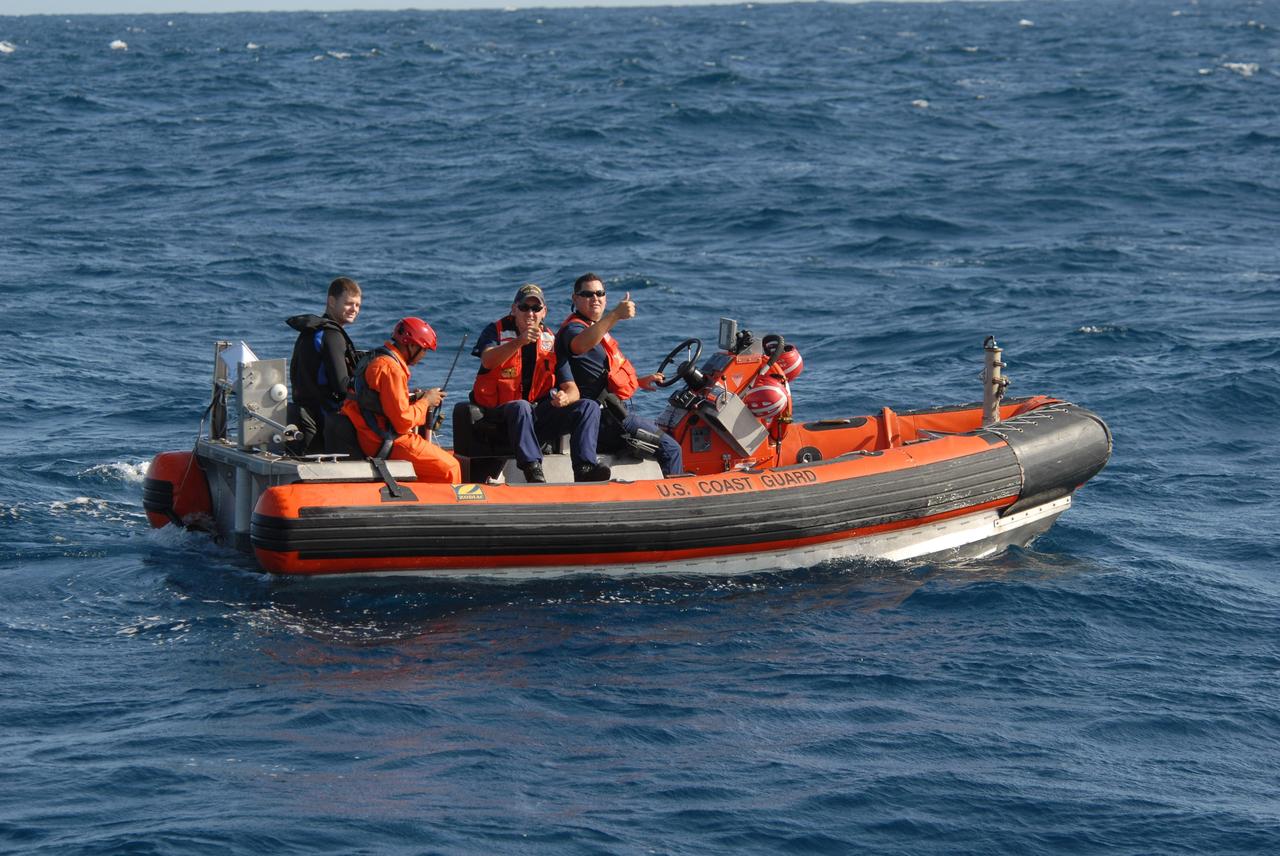
CAPE CANAVERAL, Fla. -- Participants in a rescue training exercise, known as Mode VIII, are successfully launched from a U.S. Coast Guard rescue boat off Florida's central east coast. In support of, and with logistical support from, NASA, USSTRATCOM is hosting a major exercise involving Department of Defense, Department of Homeland Security, search and rescue (SAR) forces, including the 45th Space Wing at Patrick Air Force Base, which support space shuttle astronaut bailout contingency operations, known as Mode VIII. This exercise tests SAR capabilities to locate, recover and provide medical treatment for astronauts following a space shuttle launch phase open-ocean bailout. Participants include members of the U.S. Navy, U.S. Coast Guard, U.S. Air Force, and NASA's Kennedy Space Center and Johnson Space Center. Photo credit: NASA/Dimitri Gerondidakis
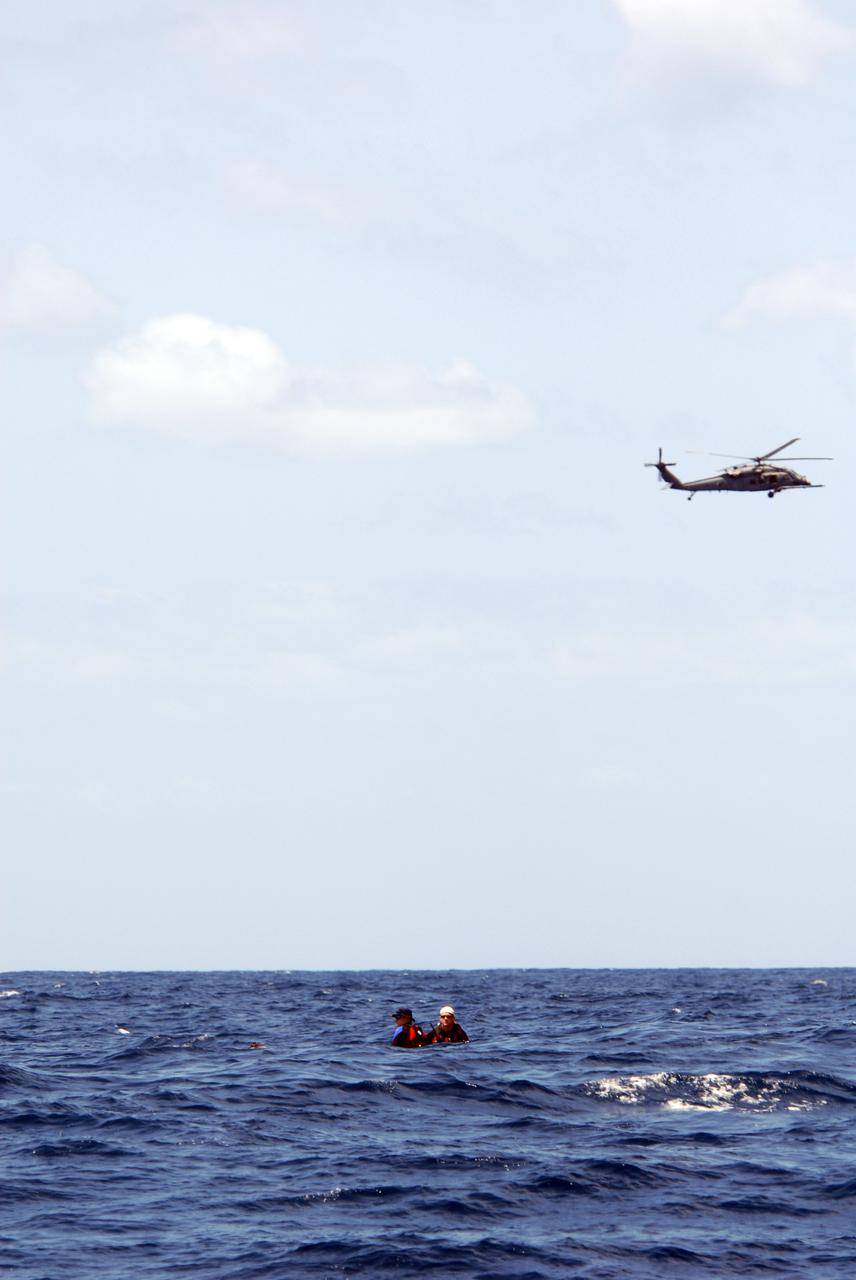
CAPE CANAVERAL, Fla. -- Participants in a rescue training exercise, known as Mode VIII, wait for a support boat off Florida's central east coast. In support of, and with logistical support from, NASA, USSTRATCOM is hosting a major exercise involving Department of Defense, Department of Homeland Security, search and rescue (SAR) forces, including the 45th Space Wing at Patrick Air Force Base, which support space shuttle astronaut bailout contingency operations, known as Mode VIII. This exercise tests SAR capabilities to locate, recover and provide medical treatment for astronauts following a space shuttle launch phase open-ocean bailout. Participants include members of the U.S. Navy, U.S. Coast Guard, U.S. Air Force, and NASA's Kennedy Space Center and Johnson Space Center. Photo credit: NASA/Dimitri Gerondidakis

CAPE CANAVERAL, Fla. -- In a rescue training exercise, known as Mode VIII, off Florida's central east coast, a participant is lifted out of the water with a harness from an HH-60G helicopter. In support of, and with logistical support from, NASA, USSTRATCOM is hosting a major exercise involving Department of Defense, Department of Homeland Security, search and rescue (SAR) forces, including the 45th Space Wing at Patrick Air Force Base, which support space shuttle astronaut bailout contingency operations, known as Mode VIII. This exercise tests SAR capabilities to locate, recover and provide medical treatment for astronauts following a space shuttle launch phase open-ocean bailout. Participants include members of the U.S. Navy, U.S. Coast Guard, U.S. Air Force, and NASA's Kennedy Space Center and Johnson Space Center. Photo credit: NASA/Dimitri Gerondidakis
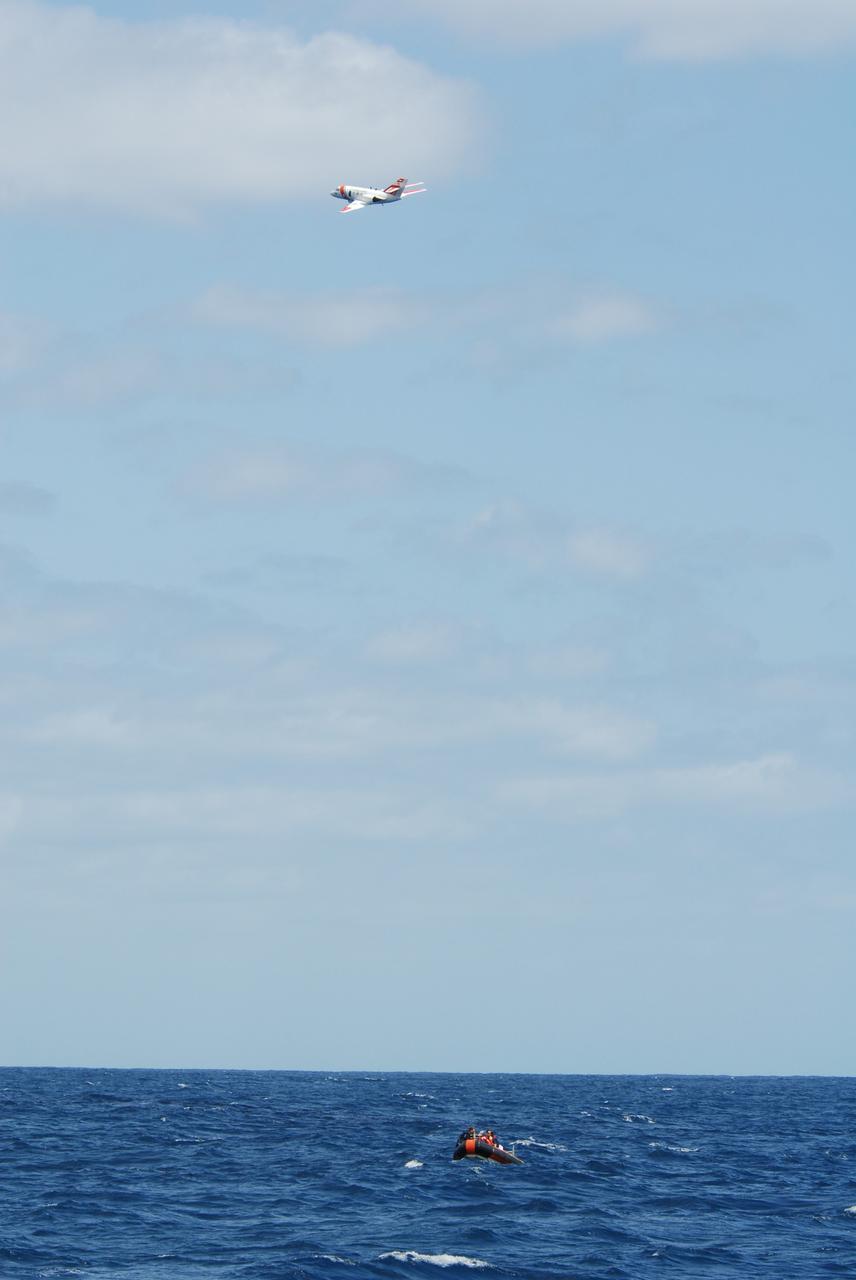
CAPE CANAVERAL, Fla. -- A U.S. Coast Guard HU-25 Falcon jet flies over a rescue boat during a training exercise, known as Mode VIII, off Florida's central east coast. In support of, and with logistical support from, NASA, USSTRATCOM is hosting a major exercise involving Department of Defense, Department of Homeland Security, search and rescue (SAR) forces, including the 45th Space Wing at Patrick Air Force Base, which support space shuttle astronaut bailout contingency operations, known as Mode VIII. This exercise tests SAR capabilities to locate, recover and provide medical treatment for astronauts following a space shuttle launch phase open-ocean bailout. Participants include members of the U.S. Navy, U.S. Coast Guard, U.S. Air Force, and NASA's Kennedy Space Center and Johnson Space Center. Photo credit: NASA/Dimitri Gerondidakis
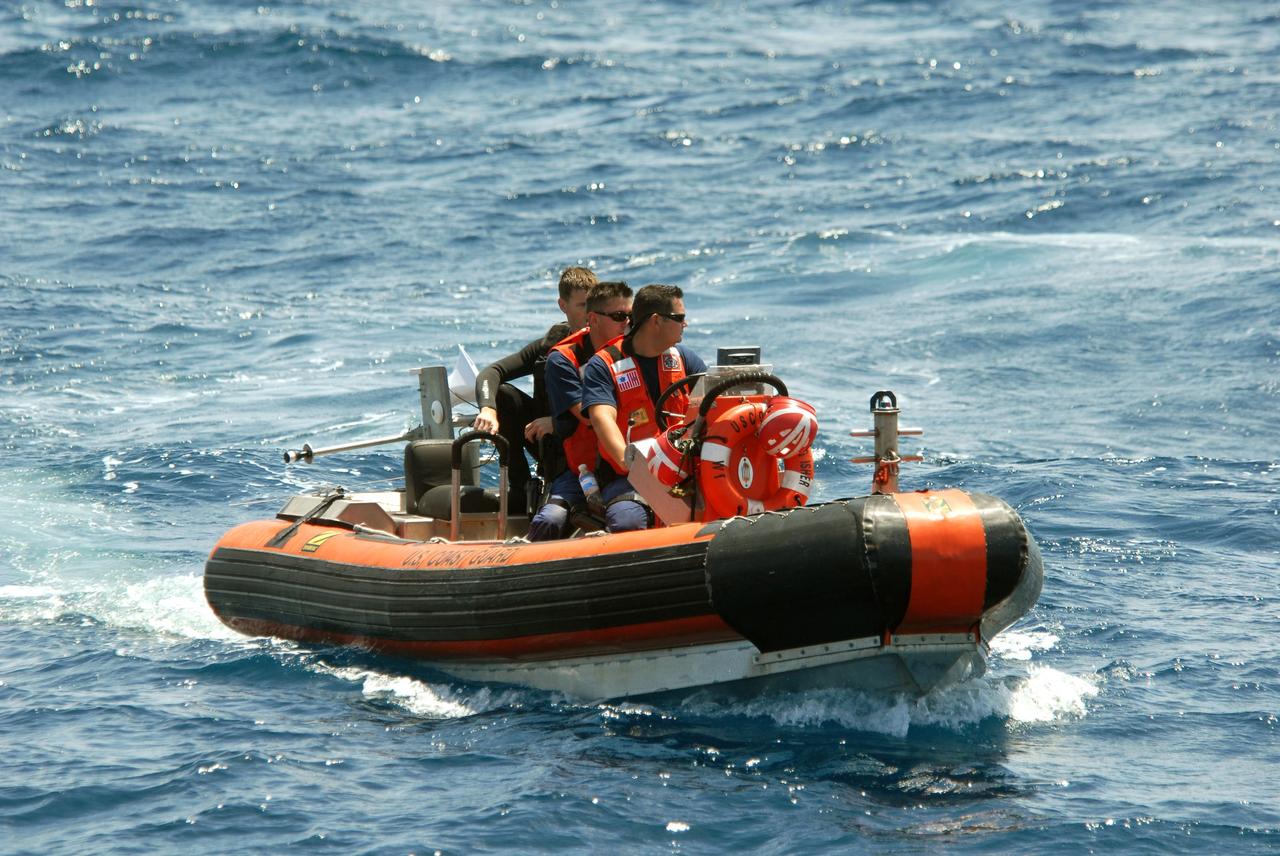
CAPE CANAVERAL, Fla. -- Off Florida's central east coast, a support boat from a rescue training exercise, known as Mode VIII, returns to the Freedom Star, one of NASA's solid rocket booster retrieval ships from NASA's Kennedy Space Center. In support of, and with logistical support from, NASA, USSTRATCOM is hosting a major exercise involving Department of Defense, Department of Homeland Security, search and rescue (SAR) forces, including the 45th Space Wing at Patrick Air Force Base, which support space shuttle astronaut bailout contingency operations, known as Mode VIII. This exercise tests SAR capabilities to locate, recover and provide medical treatment for astronauts following a space shuttle launch phase open-ocean bailout. Participants include members of the U.S. Navy, U.S. Coast Guard, U.S. Air Force, and NASA's Kennedy Space Center and Johnson Space Center. Photo credit: NASA/Dimitri Gerondidakis
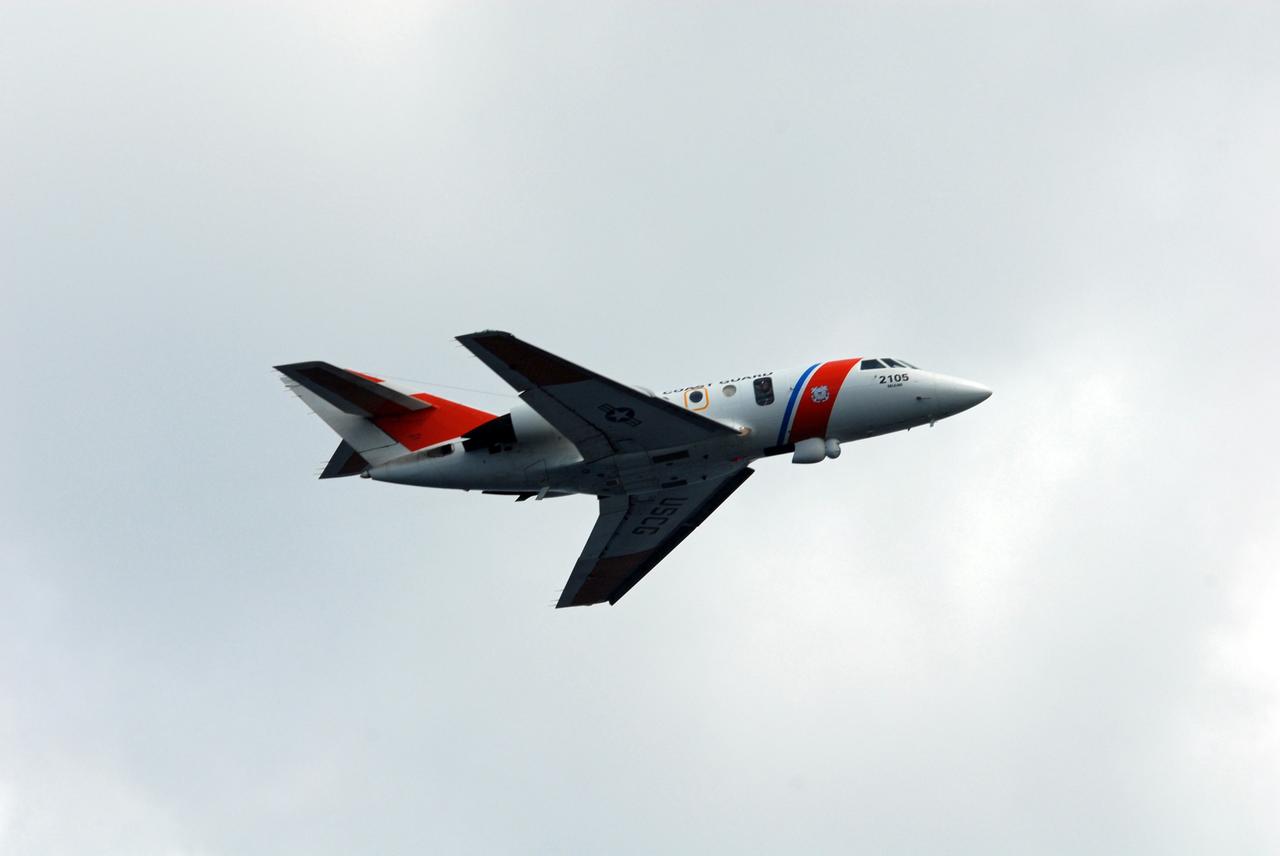
CAPE CANAVERAL, Fla. -- A U.S. Coast Guard HU-25 Falcon jet flies overhead during a rescue training exercise, known as Mode VIII, off Florida's central east coast. In support of, and with logistical support from, NASA, USSTRATCOM is hosting a major exercise involving Department of Defense, Department of Homeland Security, search and rescue (SAR) forces, including the 45th Space Wing at Patrick Air Force Base, which support space shuttle astronaut bailout contingency operations, known as Mode VIII. This exercise tests SAR capabilities to locate, recover and provide medical treatment for astronauts following a space shuttle launch phase open-ocean bailout. Participants include members of the U.S. Navy, U.S. Coast Guard, U.S. Air Force, and NASA's Kennedy Space Center and Johnson Space Center. Photo credit: NASA/Dimitri Gerondidakis
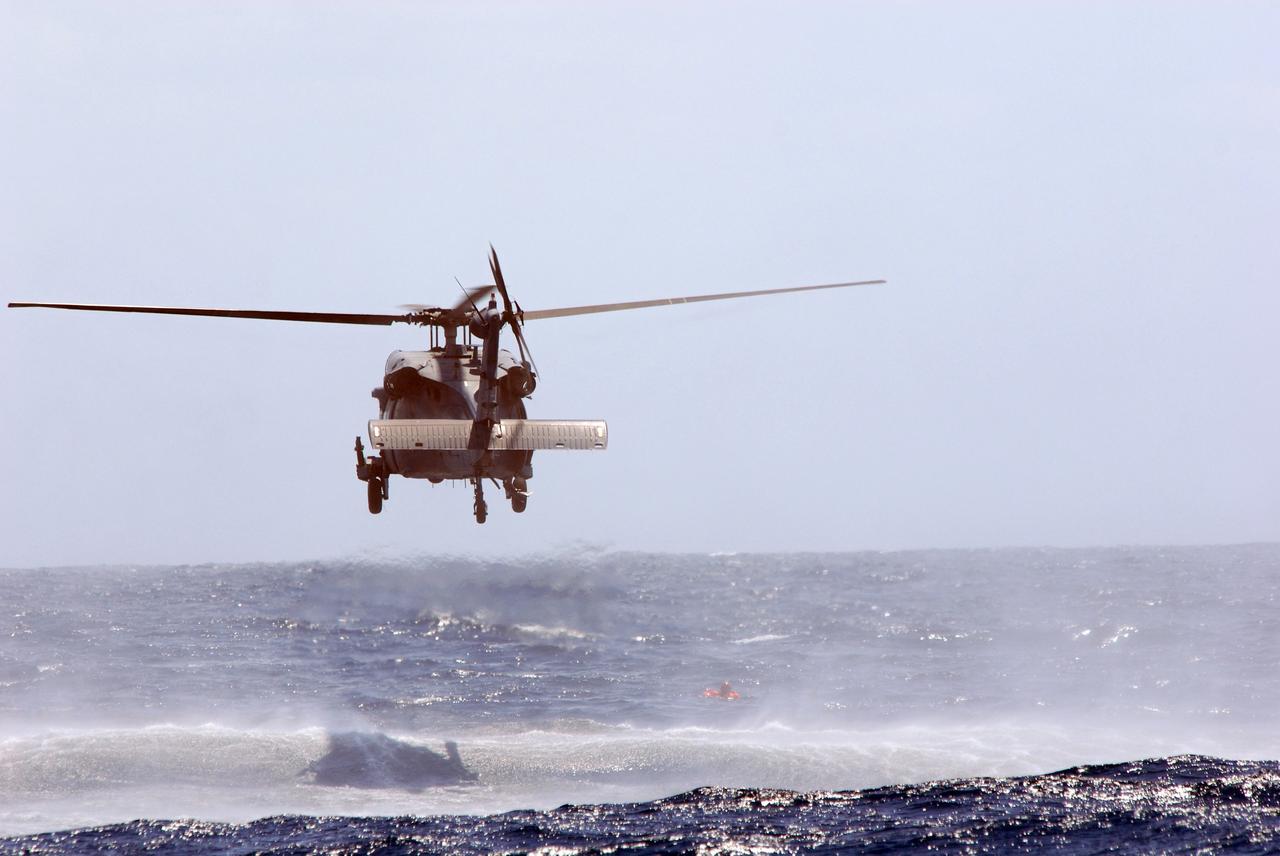
CAPE CANAVERAL, Fla. -- In a training exercise, known as Mode VIII, off Florida's central east coast, an HH-60G helicopter executes a rescue maneuver of a participant. In support of, and with logistical support from, NASA, USSTRATCOM is hosting a major exercise involving Department of Defense, Department of Homeland Security, search and rescue (SAR) forces, including the 45th Space Wing at Patrick Air Force Base, which support space shuttle astronaut bailout contingency operations, known as Mode VIII. This exercise tests SAR capabilities to locate, recover and provide medical treatment for astronauts following a space shuttle launch phase open-ocean bailout. Participants include members of the U.S. Navy, U.S. Coast Guard, U.S. Air Force, and NASA's Kennedy Space Center and Johnson Space Center. Photo credit: NASA/Dimitri Gerondidakis
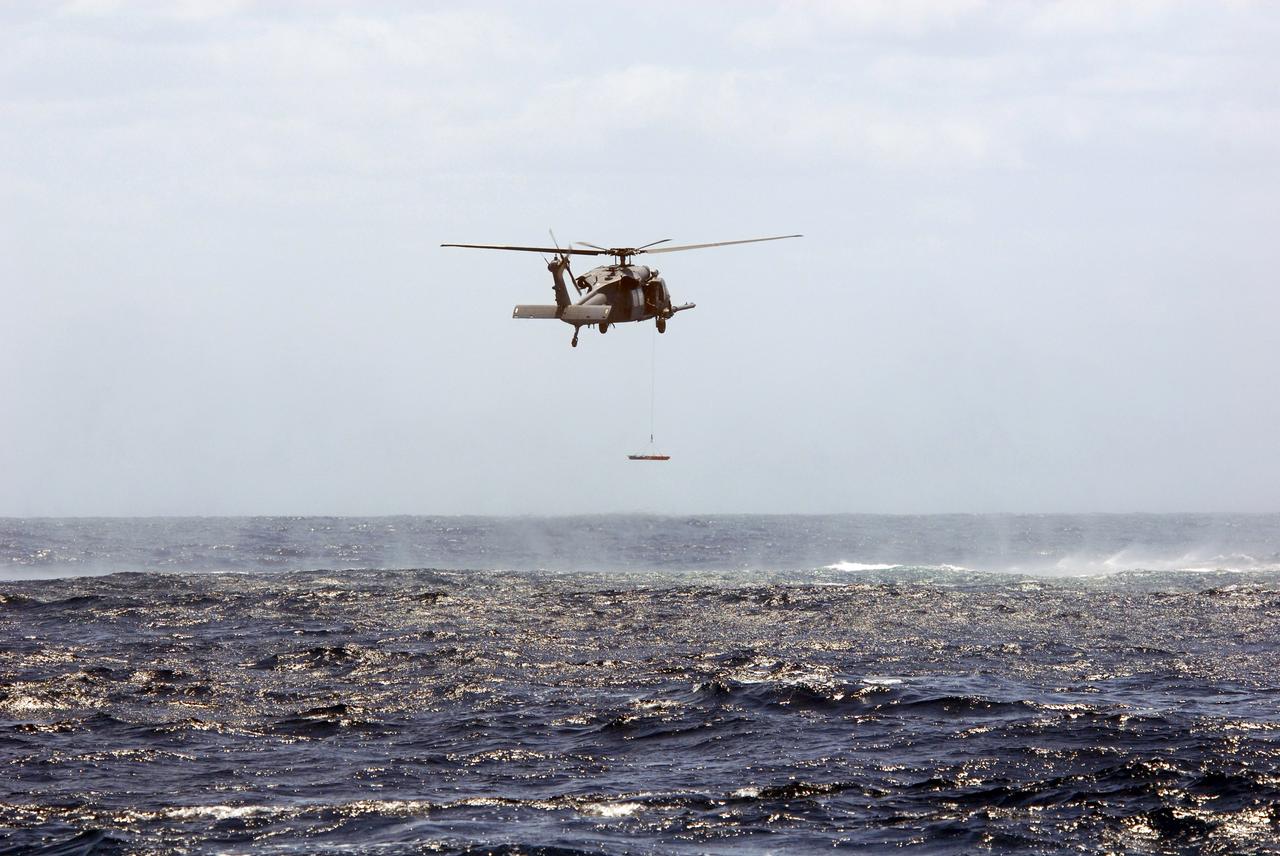
CAPE CANAVERAL, Fla. -- In a training exercise, known as Mode VIII, off Florida's central east coast, an HH-60G helicopter rescues a participant from the Atlantic Ocean. In support of, and with logistical support from, NASA, USSTRATCOM is hosting a major exercise involving Department of Defense, Department of Homeland Security, search and rescue (SAR) forces, including the 45th Space Wing at Patrick Air Force Base, which support space shuttle astronaut bailout contingency operations, known as Mode VIII. This exercise tests SAR capabilities to locate, recover and provide medical treatment for astronauts following a space shuttle launch phase open-ocean bailout. Participants include members of the U.S. Navy, U.S. Coast Guard, U.S. Air Force, and NASA's Kennedy Space Center and Johnson Space Center. Photo credit: NASA/Dimitri Gerondidakis
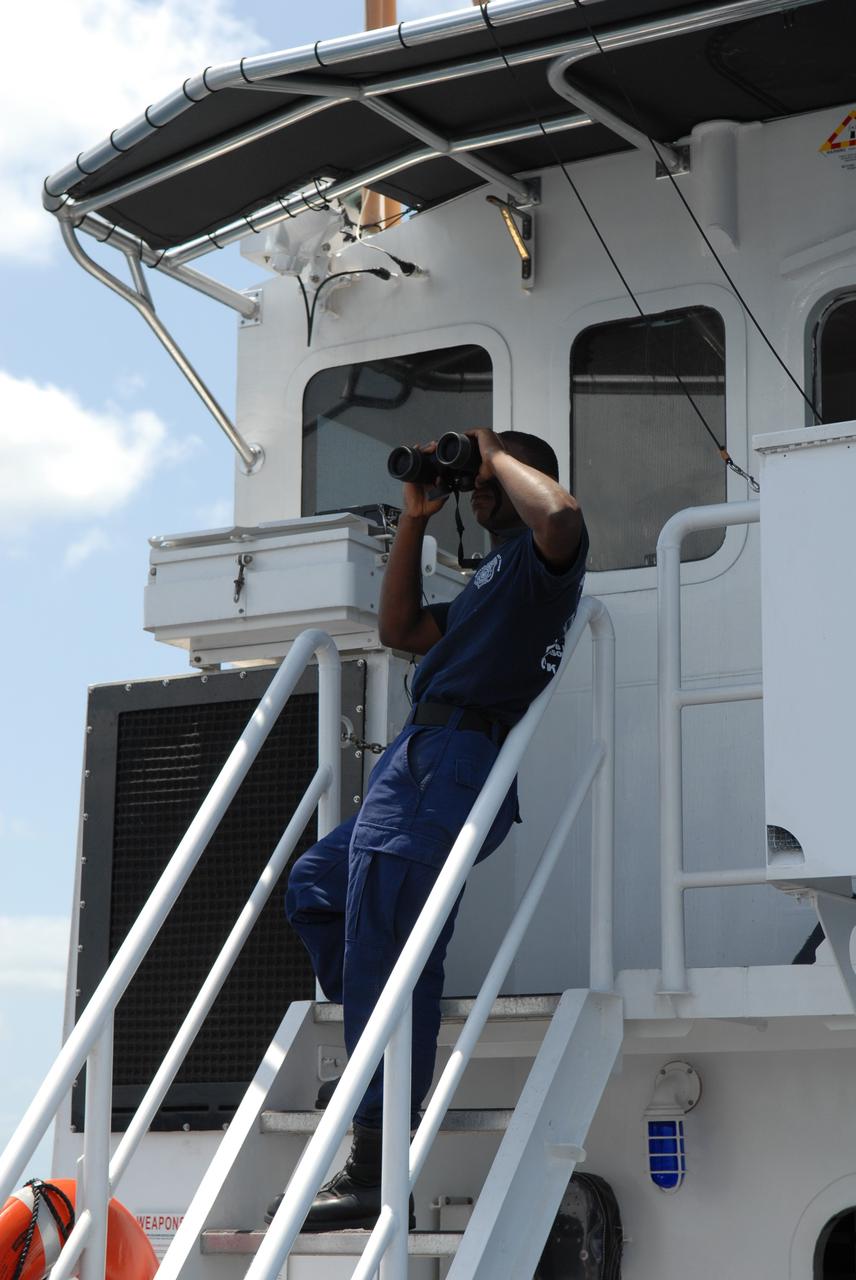
CAPE CANAVERAL, Fla. -- Off Florida's central east coast, a member of the rescue team in a training exercise, known as Mode VIII, keeps watch for the returning support crew from the U.S. Coast Guard cutter Kingfisher, from Port Canaveral, Fla. In support of, and with logistical support from, NASA, USSTRATCOM is hosting a major exercise involving Department of Defense, Department of Homeland Security, search and rescue (SAR) forces, including the 45th Space Wing at Patrick Air Force Base, which support space shuttle astronaut bailout contingency operations, known as Mode VIII. This exercise tests SAR capabilities to locate, recover and provide medical treatment for astronauts following a space shuttle launch phase open-ocean bailout. Participants include members of the U.S. Navy, U.S. Coast Guard, U.S. Air Force, and NASA's Kennedy Space Center and Johnson Space Center. Photo credit: NASA/Dimitri Gerondidakis
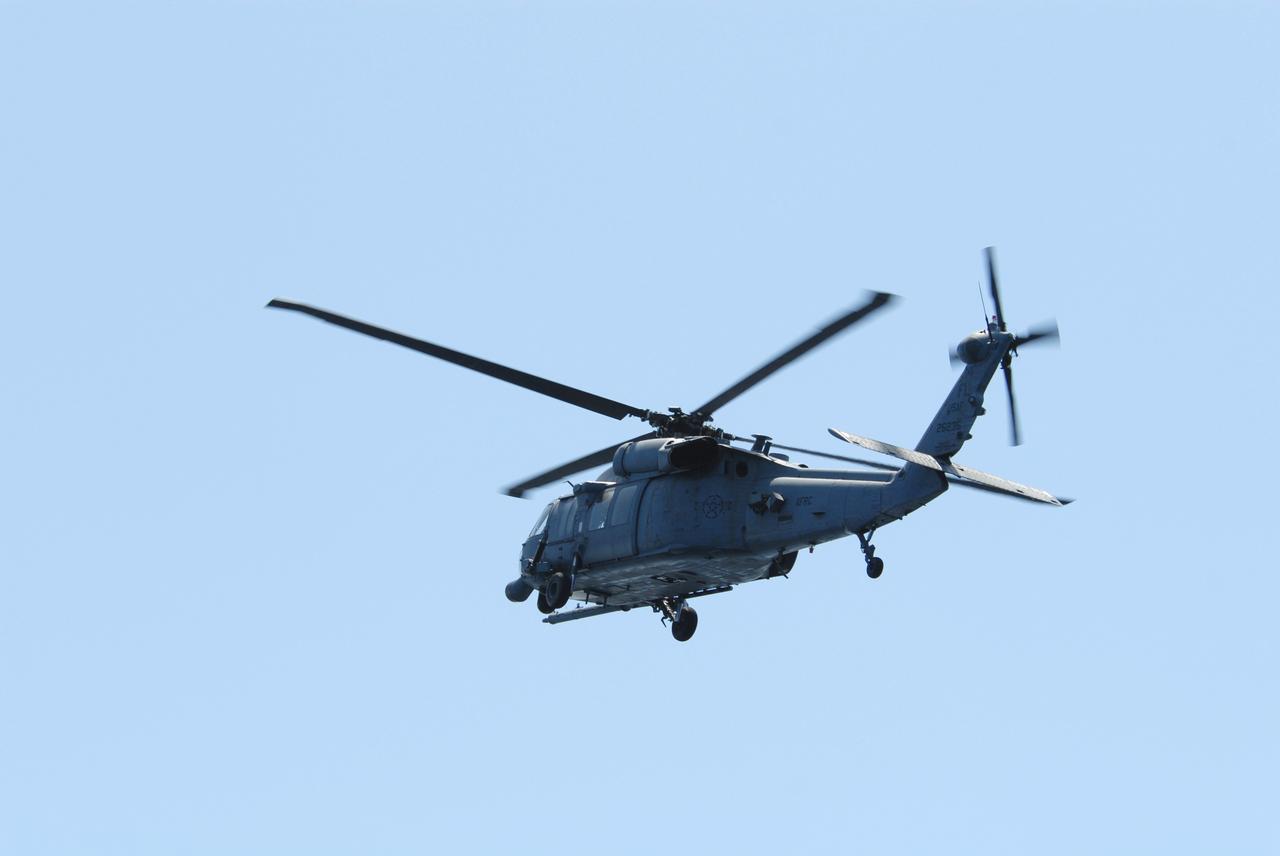
CAPE CANAVERAL, Fla. -- An HH-60G helicopter flies overhead of a rescue boat during a training exercise, known as Mode VIII, off Florida's central east coast. In support of, and with logistical support from, NASA, USSTRATCOM is hosting a major exercise involving Department of Defense, Department of Homeland Security, search and rescue (SAR) forces, including the 45th Space Wing at Patrick Air Force Base, which support space shuttle astronaut bailout contingency operations, known as Mode VIII. This exercise tests SAR capabilities to locate, recover and provide medical treatment for astronauts following a space shuttle launch phase open-ocean bailout. Participants include members of the U.S. Navy, U.S. Coast Guard, U.S. Air Force, and NASA's Kennedy Space Center and Johnson Space Center. Photo credit: NASA/Dimitri Gerondidakis
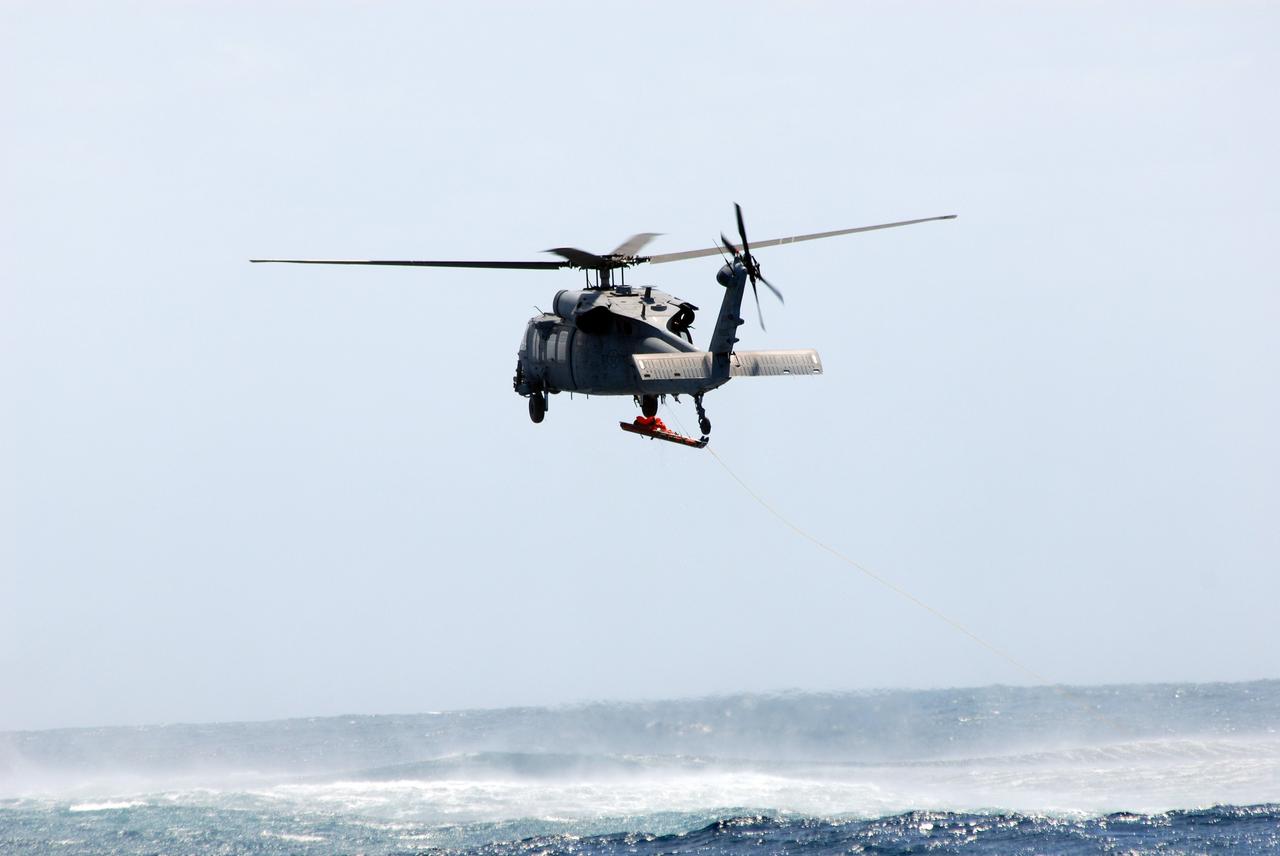
CAPE CANAVERAL, Fla. -- In a rescue training exercise, known as Mode VIII, off Florida's central east coast, an HH-60G helicopter lifts the stretcher bearing a participant. In support of, and with logistical support from, NASA, USSTRATCOM is hosting a major exercise involving Department of Defense, Department of Homeland Security, search and rescue (SAR) forces, including the 45th Space Wing at Patrick Air Force Base, which support space shuttle astronaut bailout contingency operations, known as Mode VIII. This exercise tests SAR capabilities to locate, recover and provide medical treatment for astronauts following a space shuttle launch phase open-ocean bailout. Participants include members of the U.S. Navy, U.S. Coast Guard, U.S. Air Force, and NASA's Kennedy Space Center and Johnson Space Center. Photo credit: NASA/Dimitri Gerondidakis

CAPE CANAVERAL, Fla. -- In a rescue training exercise, known as Mode VIII, off Florida's central east coast, a participant is lifted out of the water with a harness from an HH-60G helicopter. In support of, and with logistical support from, NASA, USSTRATCOM is hosting a major exercise involving Department of Defense, Department of Homeland Security, search and rescue (SAR) forces, including the 45th Space Wing at Patrick Air Force Base, which support space shuttle astronaut bailout contingency operations, known as Mode VIII. This exercise tests SAR capabilities to locate, recover and provide medical treatment for astronauts following a space shuttle launch phase open-ocean bailout. Participants include members of the U.S. Navy, U.S. Coast Guard, U.S. Air Force, and NASA's Kennedy Space Center and Johnson Space Center. Photo credit: NASA/Dimitri Gerondidakis
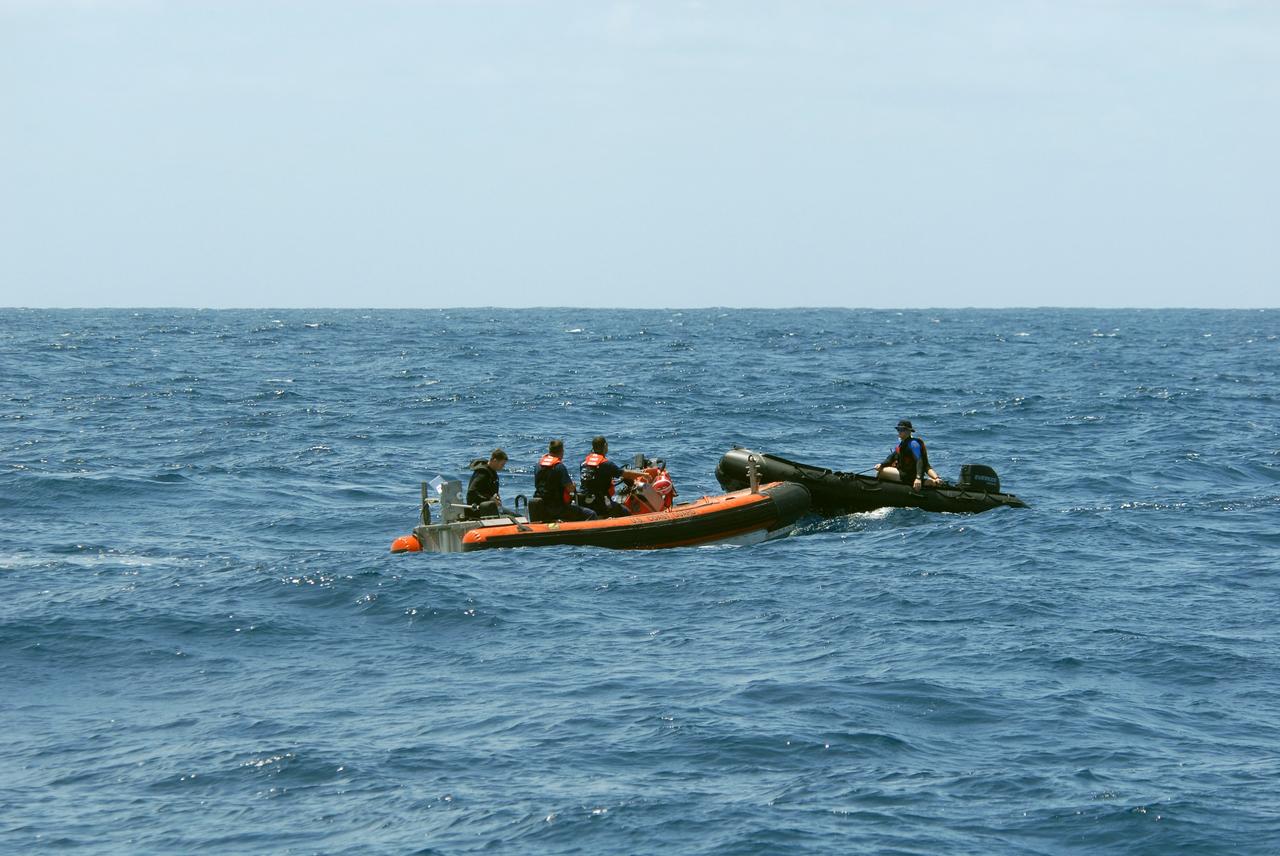
CAPE CANAVERAL, Fla. -- Support boats connect off Florida's central east coast during a rescue training exercise, known as Mode VIII. In support of, and with logistical support from, NASA, USSTRATCOM is hosting a major exercise involving Department of Defense, Department of Homeland Security, search and rescue (SAR) forces, including the 45th Space Wing at Patrick Air Force Base, which support space shuttle astronaut bailout contingency operations, known as Mode VIII. This exercise tests SAR capabilities to locate, recover and provide medical treatment for astronauts following a space shuttle launch phase open-ocean bailout. Participants include members of the U.S. Navy, U.S. Coast Guard, U.S. Air Force, and NASA's Kennedy Space Center and Johnson Space Center. Photo credit: NASA/Dimitri Gerondidakis
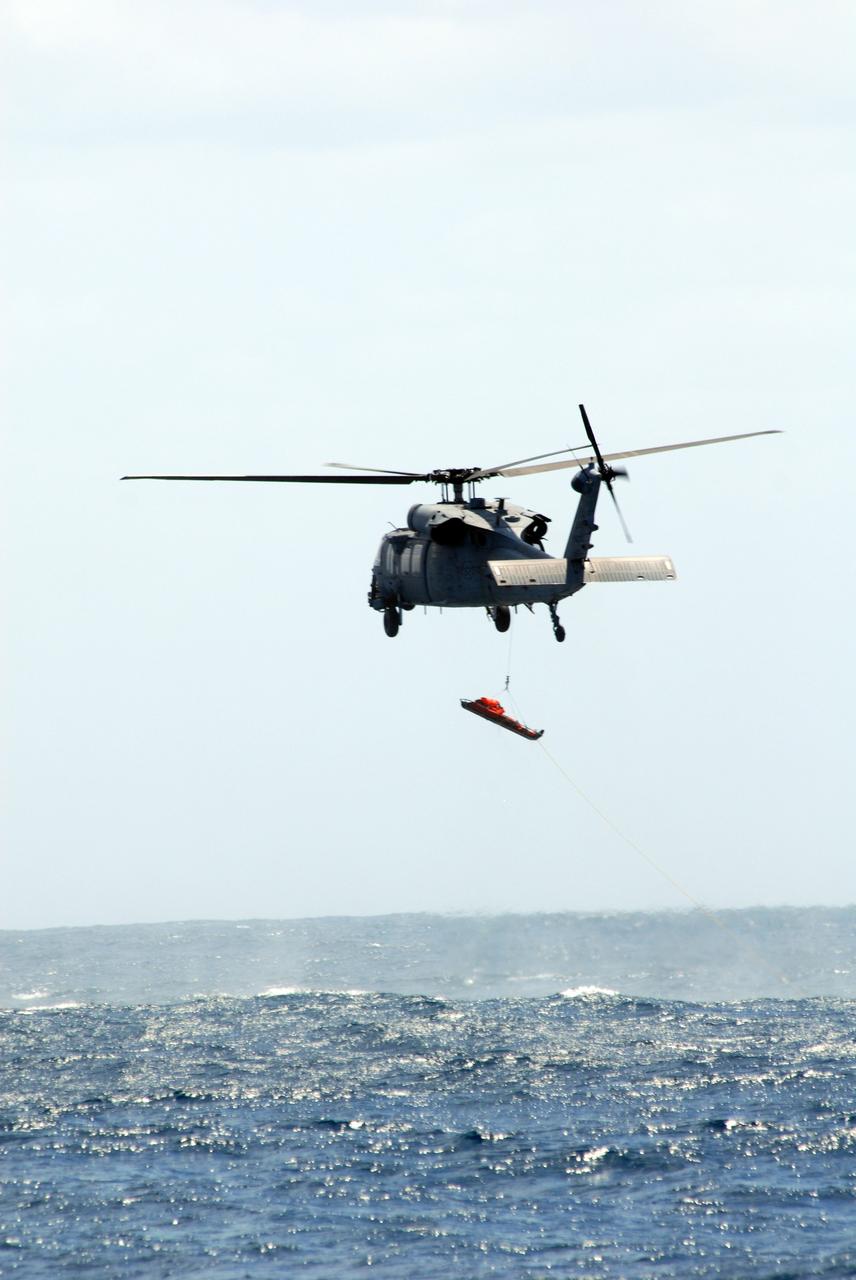
CAPE CANAVERAL, Fla. -- In a rescue training exercise, known as Mode VIII, off Florida's central east coast, an HH-60G helicopter lifts the stretcher bearing a participant. In support of, and with logistical support from, NASA, USSTRATCOM is hosting a major exercise involving Department of Defense, Department of Homeland Security, search and rescue (SAR) forces, including the 45th Space Wing at Patrick Air Force Base, which support space shuttle astronaut bailout contingency operations, known as Mode VIII. This exercise tests SAR capabilities to locate, recover and provide medical treatment for astronauts following a space shuttle launch phase open-ocean bailout. Participants include members of the U.S. Navy, U.S. Coast Guard, U.S. Air Force, and NASA's Kennedy Space Center and Johnson Space Center. Photo credit: NASA/Dimitri Gerondidakis
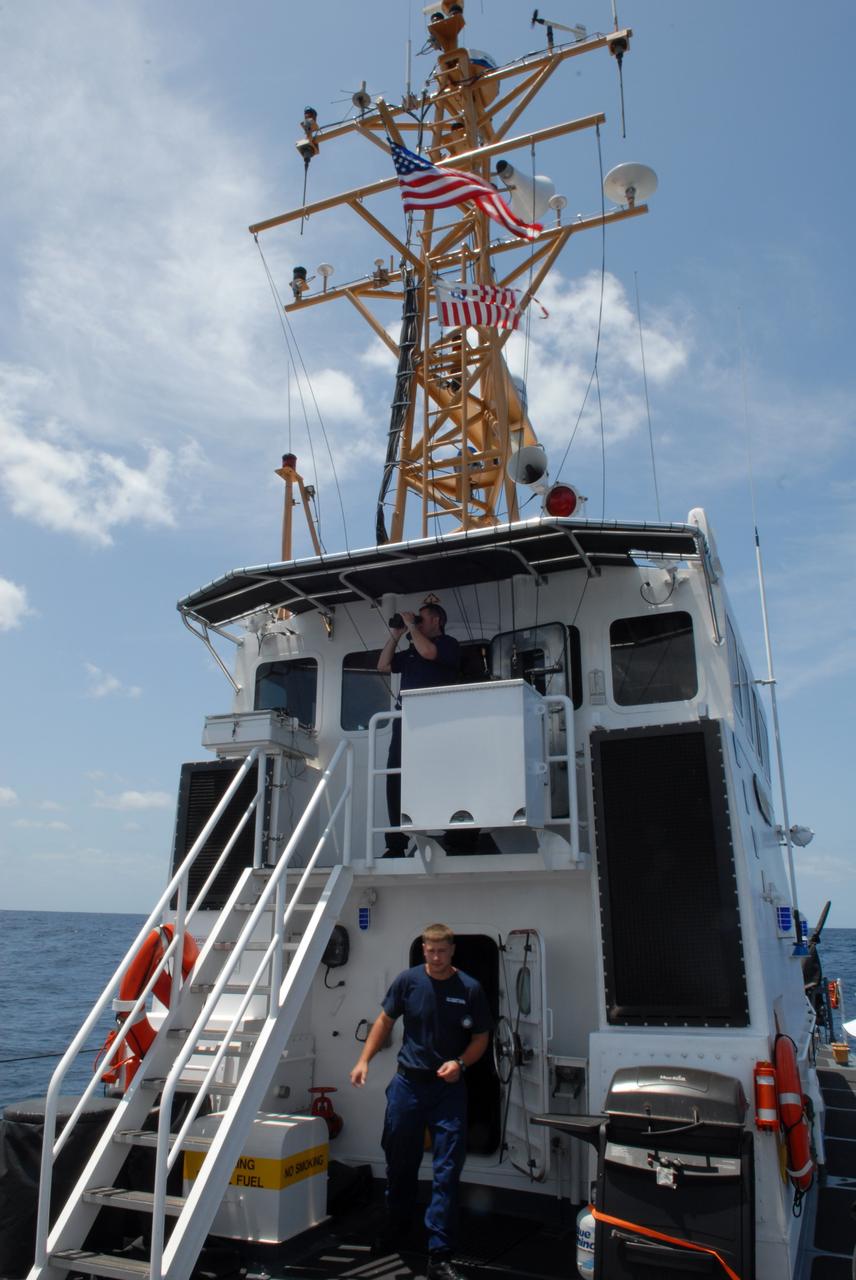
CAPE CANAVERAL, Fla. -- Off Florida's central east coast, members of the rescue team in a training exercise, known as Mode VIII, stay alert aboard the U.S. Coast Guard cutter Kingfisher, from Port Canaveral, Fla. In support of, and with logistical support from, NASA, USSTRATCOM is hosting a major exercise involving Department of Defense, Department of Homeland Security, search and rescue (SAR) forces, including the 45th Space Wing at Patrick Air Force Base, which support space shuttle astronaut bailout contingency operations, known as Mode VIII. This exercise tests SAR capabilities to locate, recover and provide medical treatment for astronauts following a space shuttle launch phase open-ocean bailout. Participants include members of the U.S. Navy, U.S. Coast Guard, U.S. Air Force, and NASA's Kennedy Space Center and Johnson Space Center. Photo credit: NASA/Dimitri Gerondidakis
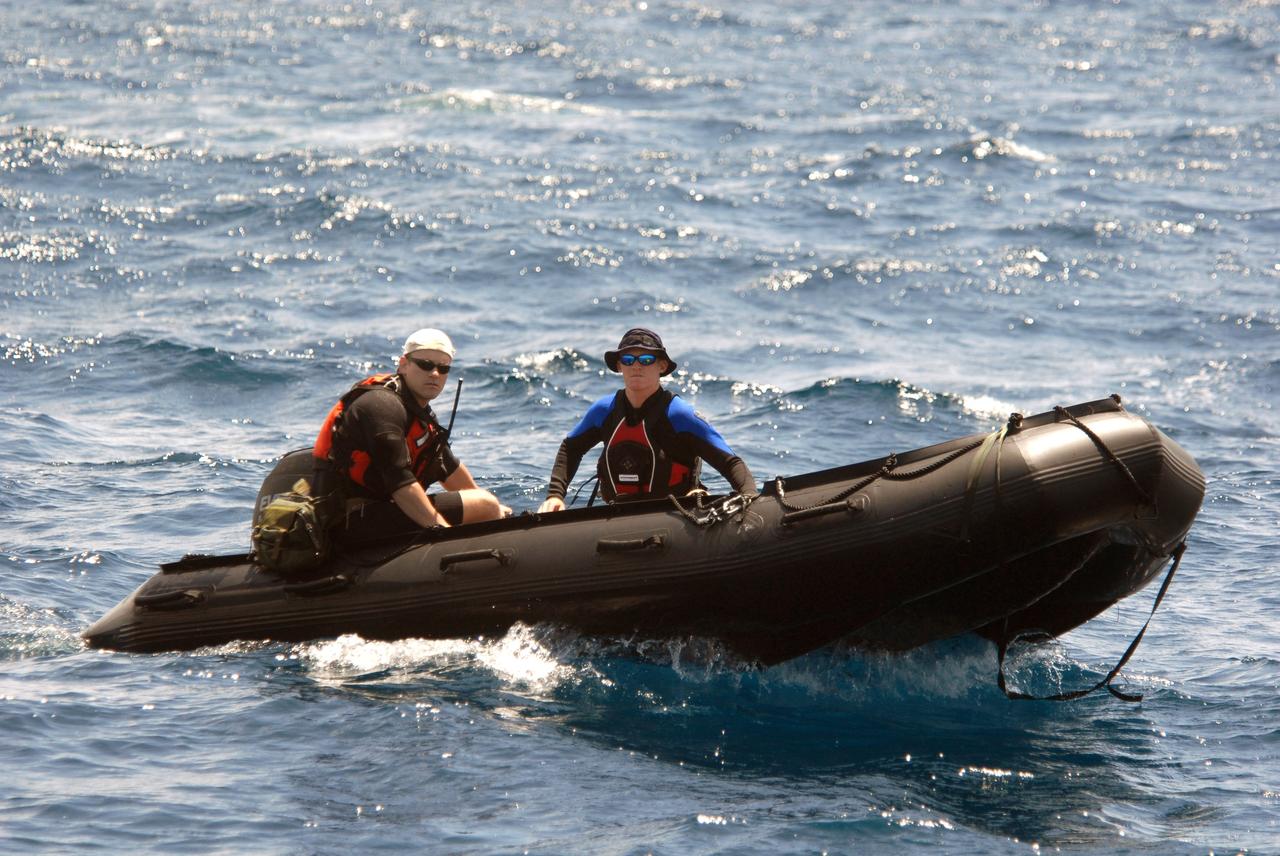
CAPE CANAVERAL, Fla. -- A support boat from a rescue training exercise, known as Mode VIII, returns to the ship off Florida's central east coast. In support of, and with logistical support from, NASA, USSTRATCOM is hosting a major exercise involving Department of Defense, Department of Homeland Security, search and rescue (SAR) forces, including the 45th Space Wing at Patrick Air Force Base, which support space shuttle astronaut bailout contingency operations, known as Mode VIII. This exercise tests SAR capabilities to locate, recover and provide medical treatment for astronauts following a space shuttle launch phase open-ocean bailout. Participants include members of the U.S. Navy, U.S. Coast Guard, U.S. Air Force, and NASA's Kennedy Space Center and Johnson Space Center. Photo credit: NASA/Dimitri Gerondidakis
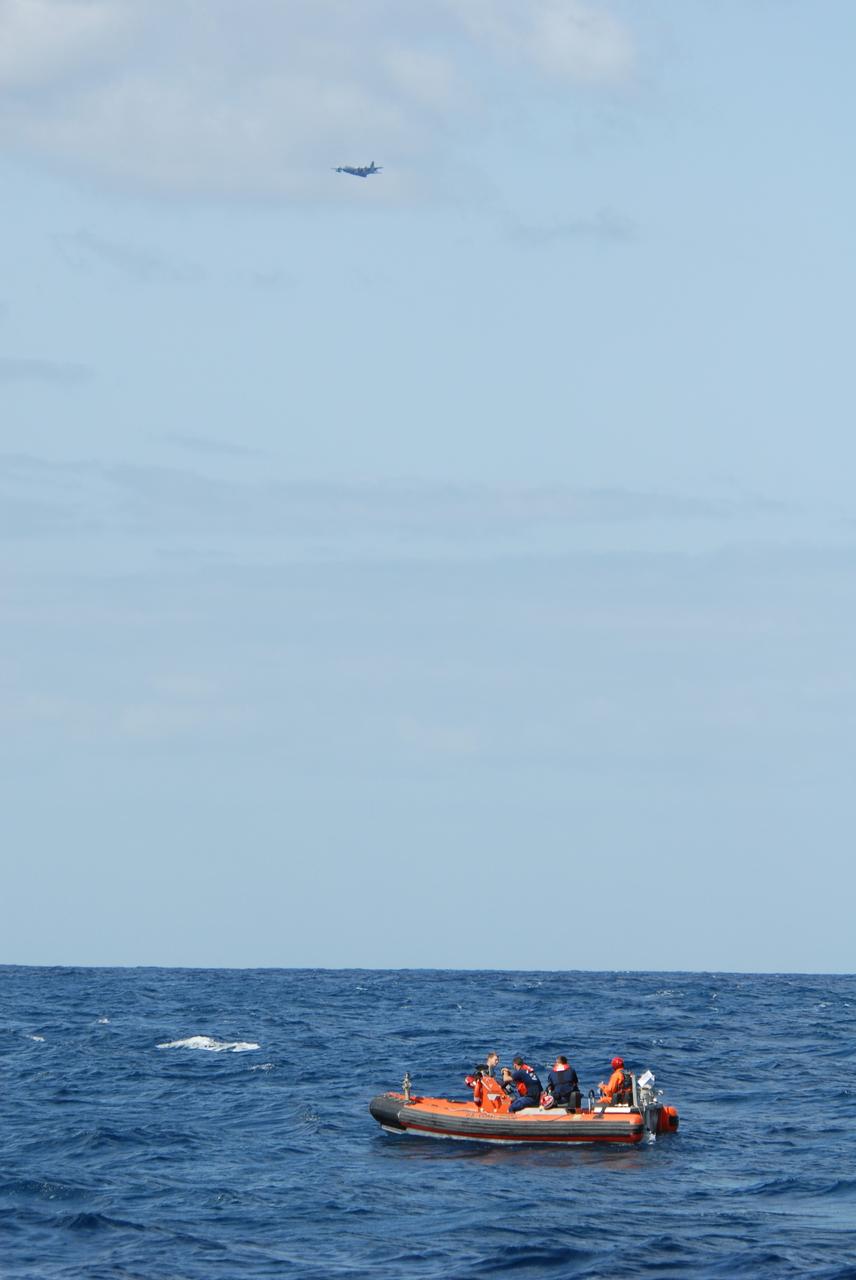
CAPE CANAVERAL, Fla. -- Participants take part in a rescue training exercise, known as Mode VIII, off Florida's central east coast while a U.S. Coast Guard HU-25 Falcon jet flies overhead. In support of, and with logistical support from, NASA, USSTRATCOM is hosting a major exercise involving Department of Defense, Department of Homeland Security, search and rescue (SAR) forces, including the 45th Space Wing at Patrick Air Force Base, which support space shuttle astronaut bailout contingency operations, known as Mode VIII. This exercise tests SAR capabilities to locate, recover and provide medical treatment for astronauts following a space shuttle launch phase open-ocean bailout. Participants include members of the U.S. Navy, U.S. Coast Guard, U.S. Air Force, and NASA's Kennedy Space Center and Johnson Space Center. Photo credit: NASA/Dimitri Gerondidakis

CAPE CANAVERAL, Fla. -- In a U.S. Coast Guard boat off Florida's central east coast, astronaut Richard Mastracchio adjusts his launch-and-entry suit to participate in a rescue training exercise, known as Mode VIII. Behind him is astronaut Paulo Nespoli. In support of, and with logistical support from, NASA, USSTRATCOM is hosting a major exercise involving Department of Defense, Department of Homeland Security, search and rescue (SAR) forces, including the 45th Space Wing at Patrick Air Force Base, which support space shuttle astronaut bailout contingency operations, known as Mode VIII. This exercise tests SAR capabilities to locate, recover and provide medical treatment for astronauts following a space shuttle launch phase open-ocean bailout. Participants include members of the U.S. Navy, U.S. Coast Guard, U.S. Air Force, and NASA's Kennedy Space Center and Johnson Space Center. Photo credit: NASA/Dimitri Gerondidakis
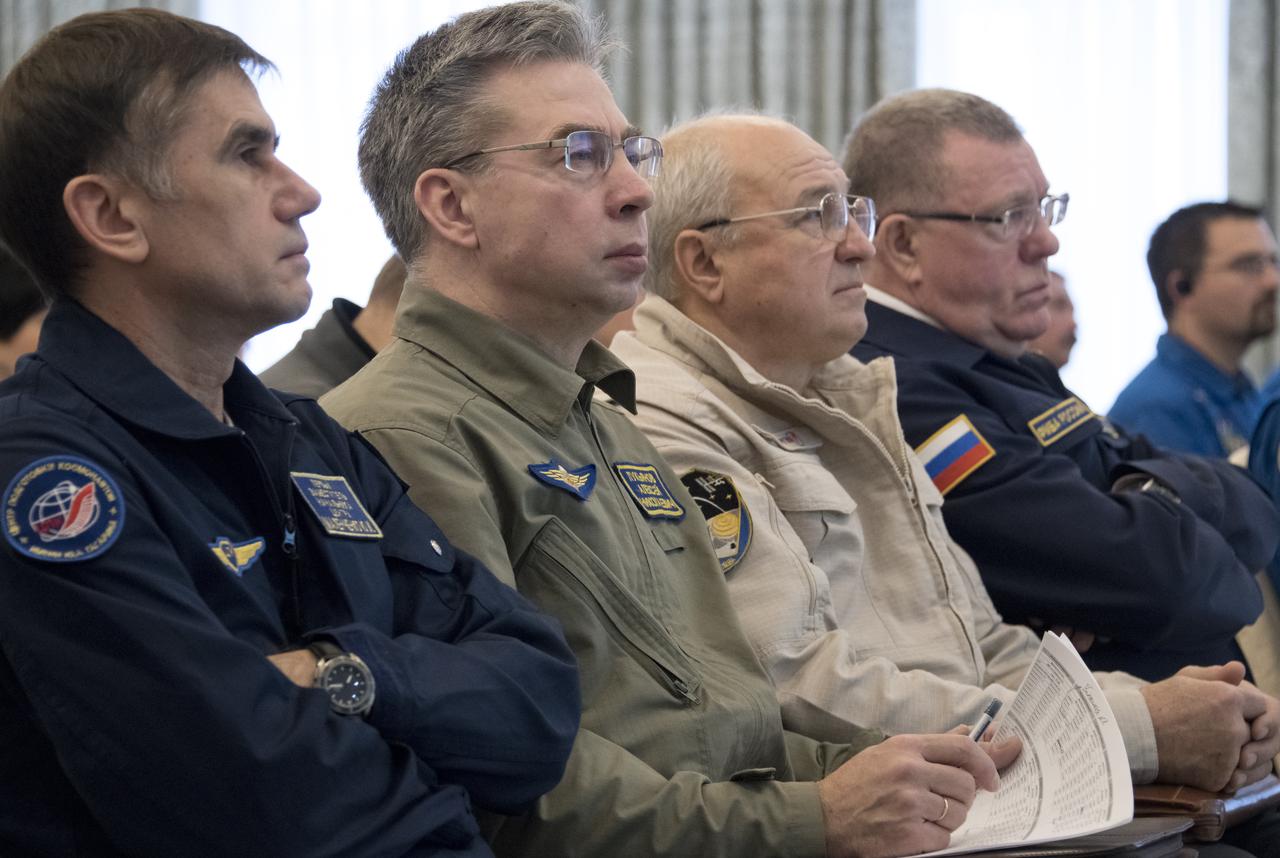
Deputy Head of the Gagarin Cosmonaut Training Center and cosmonaut Yuri Malenchenko, left, Head of the Search-and-Rescue Department of Rosaviatsiya (Russian Federal Air Transport Agency) Aleksey N. Lukiyanov, second from left, and other Russian Search and Recovery personnel are seen during a readiness review for the landing of Expedition 53 Commander Randy Bresnik of NASA and Flight Engineers Paolo Nespoli of ESA (European Space Agency) and Sergey Ryazanskiy of the Russian space agency Roscosmos Tuesday, Dec. 12, 2017. Bresnik, Nespoli and Ryazanskiy are returning after 139 days in space where they served as members of the Expedition 52 and 53 crews onboard the International Space Station. Photo Credit: (NASA/Bill Ingalls)

Roscosmos cosmonaut Alexander Skvortsov, center, is supported by Deputy Head of the Search-and-Rescue Department of Rosaviatsiya (Russian Federal Air Transport Agency) Aleksey Lukiyanov, left, and Gagarin Cosmonaut Training Center (GCTC) Deputy Head for cosmonaut training Yuri Malenchenko, right, at the Karaganda Airport in Kazakhstan after he, NASA astronaut Christina Koch and, ESA astronaut Luca Parmitano landed in their Soyuz MS-13 spacecraft in a remote area near the town of Zhezkazgan, Kazakhstan on Thursday, Feb. 6, 2020. Koch returned to Earth after logging 328 days in space --- the longest spaceflight in history by a woman --- as a member of Expeditions 59-60-61 on the International Space Station. Skvortsov and Parmitano returned after 201 days in space where they served as Expedition 60-61 crew members onboard the station. Photo Credit: (NASA/Bill Ingalls)

CAPE CANAVERAL, Fla. -- Off Florida's central east coast, support boats from a training exercise, known as Mode VIII, return to the U.S. Coast Guard cutter Kingfisher, from Port Canaveral, Fla. In support of, and with logistical support from, NASA, USSTRATCOM is hosting a major exercise involving Department of Defense, Department of Homeland Security, search and rescue (SAR) forces, including the 45th Space Wing at Patrick Air Force Base, which support space shuttle astronaut bailout contingency operations, known as Mode VIII. This exercise tests SAR capabilities to locate, recover and provide medical treatment for astronauts following a space shuttle launch phase open-ocean bailout. Participants include members of the U.S. Navy, U.S. Coast Guard, U.S. Air Force, and NASA's Kennedy Space Center and Johnson Space Center. Photo credit: NASA/Dimitri Gerondidakis