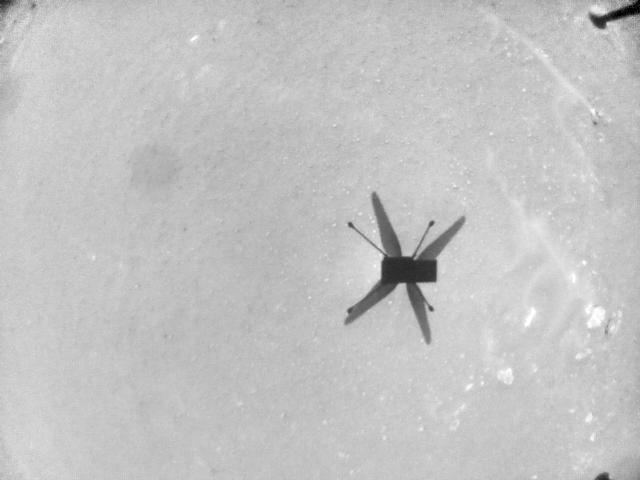
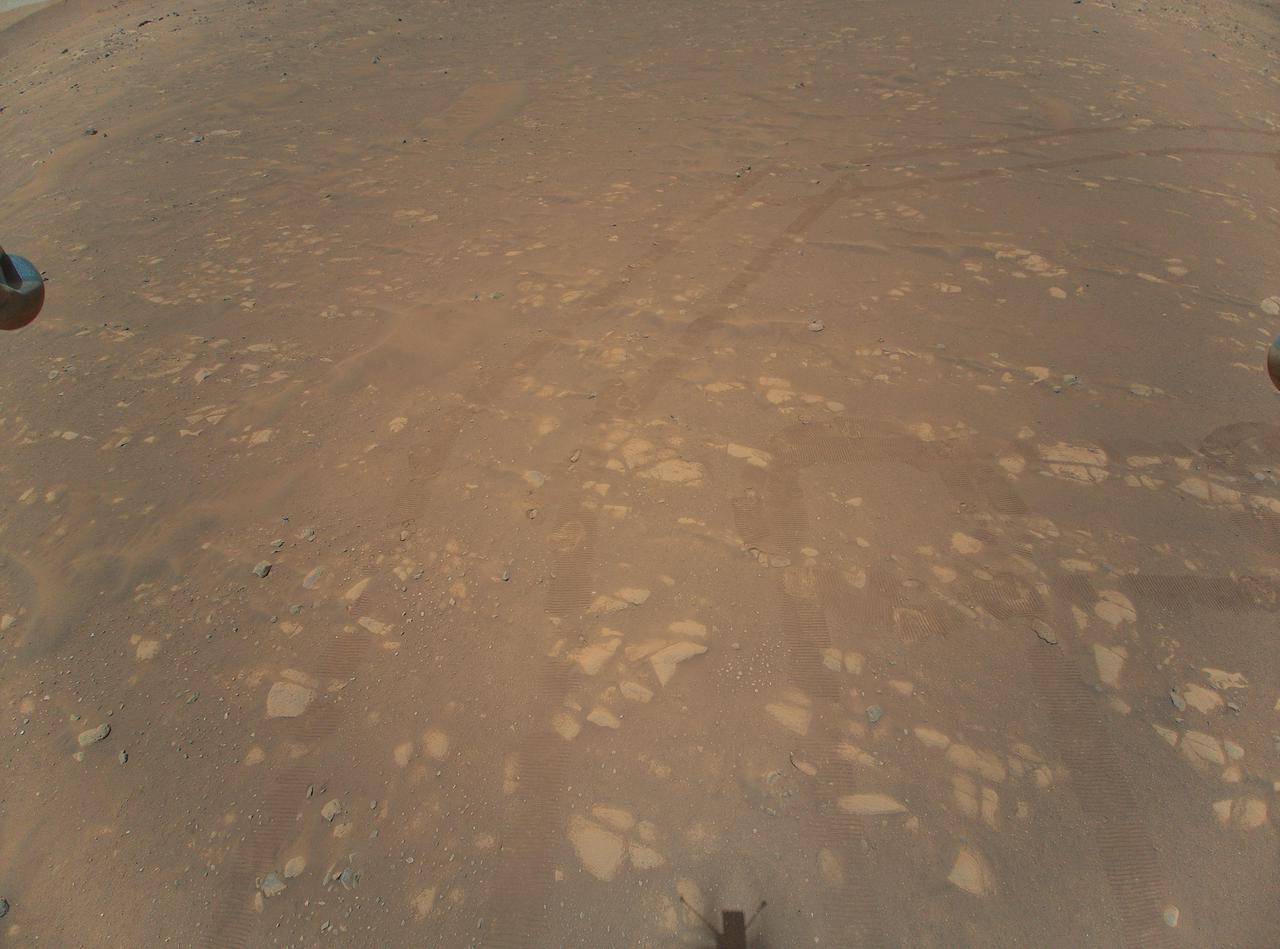
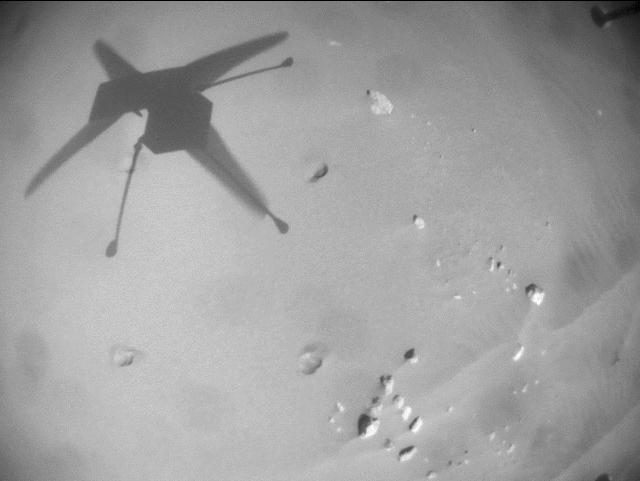
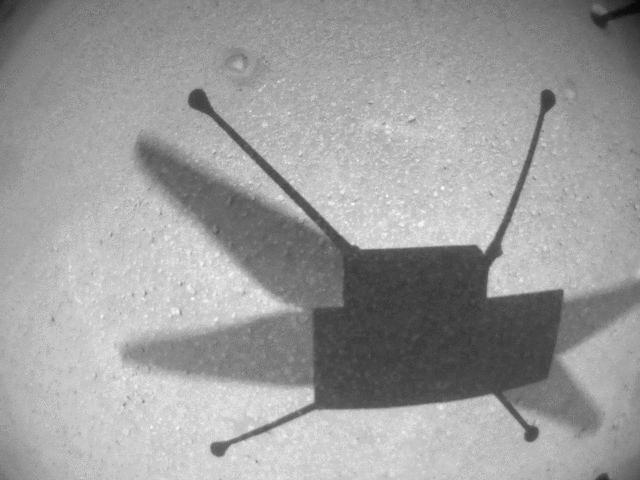
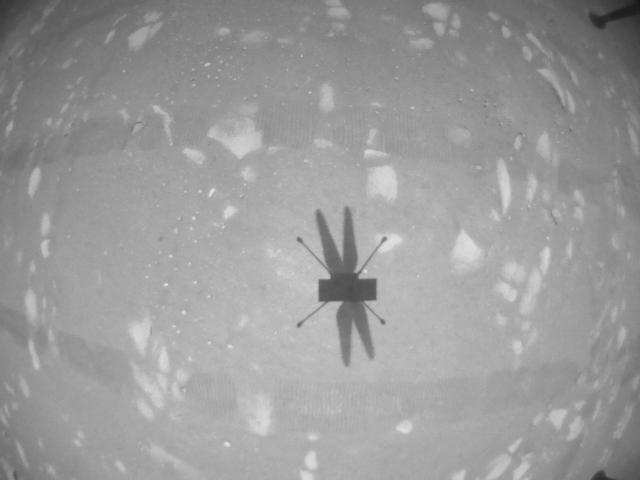
The downward-looking navigation camera aboard NASA's Ingenuity Mars Helicopter took this image of the rotorcraft's shadow on the surface of Jezero Crater during helicopter's second experimental test flight on April 22, 2021. The helicopter's navigation camera autonomously tracks the ground during flight.  The Ingenuity Mars Helicopter was built by JPL, which also manages this technology demonstration project for NASA Headquarters. It is supported by NASA's Science Mission Directorate, Aeronautics Research Mission Directorate, and Space Technology Mission Directorate. NASA's Ames Research Center and Langley Research Center provided significant flight performance analysis and technical assistance during Ingenuity's development.  A key objective for Perseverance's mission on Mars is astrobiology, including the search for signs of ancient microbial life. The rover will characterize the planet's geology and past climate, pave the way for human exploration of the Red Planet, and be the first mission to collect and cache Martian rock and regolith (broken rock and dust).  Subsequent NASA missions, in cooperation with ESA (European Space Agency), would send spacecraft to Mars to collect these sealed samples from the surface and return them to Earth for in-depth analysis.  The Mars 2020 Perseverance mission is part of NASA's Moon to Mars exploration approach, which includes Artemis missions to the Moon that will help prepare for human exploration of the Red Planet.  https://photojournal.jpl.nasa.gov/catalog/PIA24592
In-Flight Image From Ingenuity's Second Flight
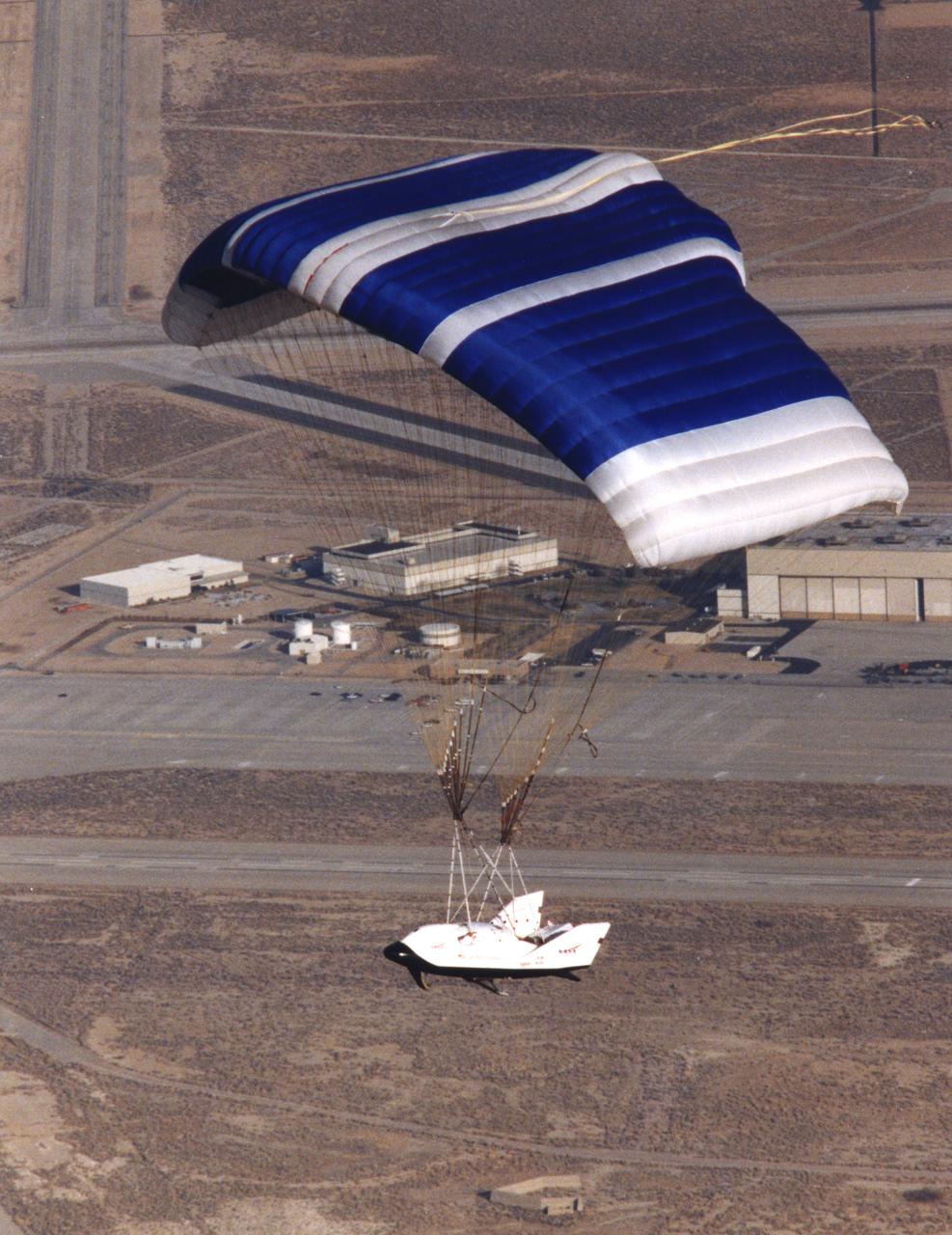
NASA's X-38, a research vehicle developed as part of an effort to build an emergency Crew Return Vehicle (CRV) for the International Space Station, descends toward the desert floor under its steerable parafoil on its second free flight. The X-38 was launched from NASA Dryden's B-52 Mothership on Saturday, February 6, 1999, from an altitude of approximately 23,000 feet.
X-38 in Flight during Second Free Flight
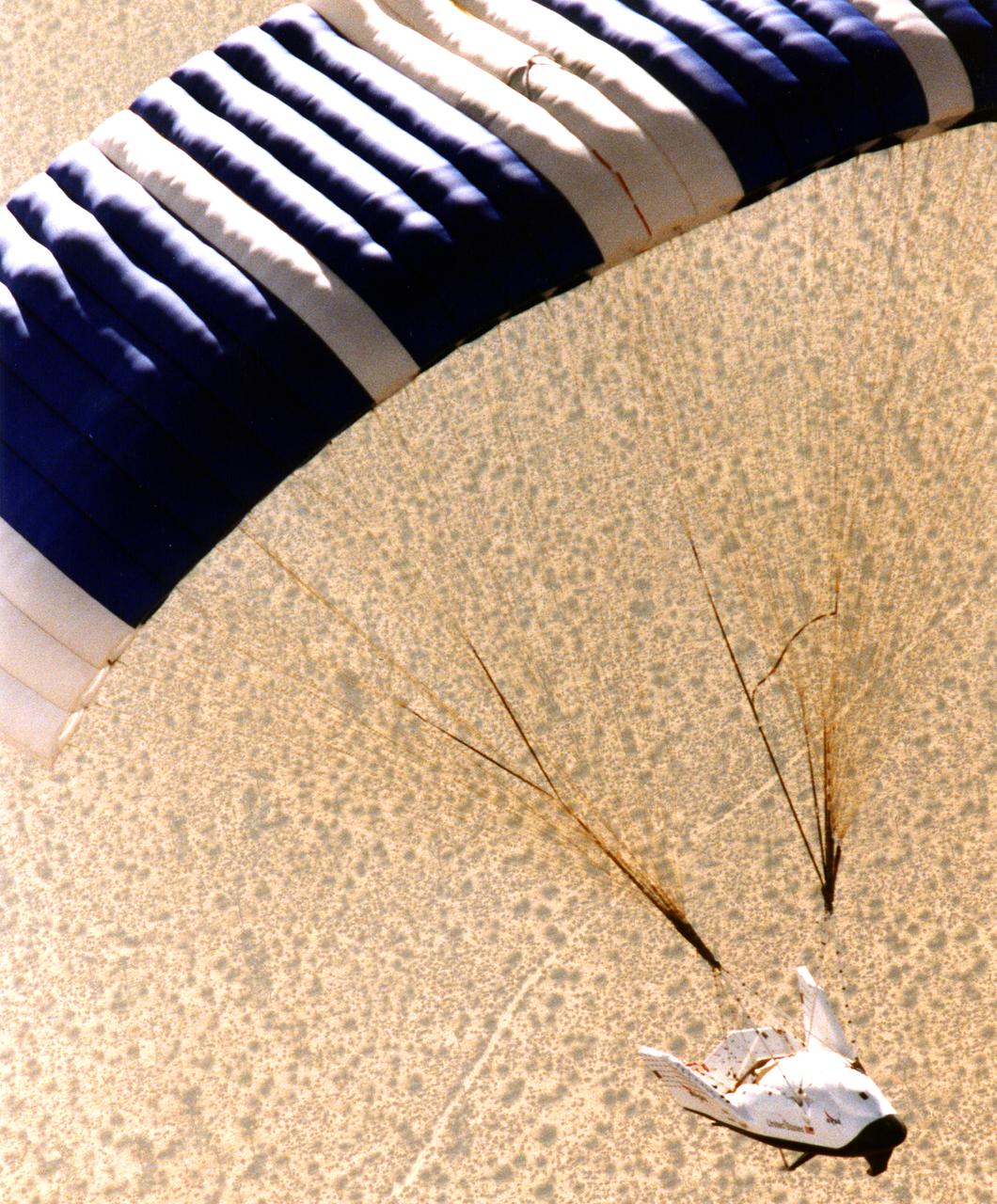
NASA's X-38, a research vehicle developed as part of an effort to build an emergency Crew Return Vehicle (CRV) for the International Space Station, descends toward the desert floor under its steerable parafoil on its second free flight. The X-38 was launched from NASA Dryden's B-52 Mothership on Saturday, February 6, 1999, from an altitude of approximately 23,000 feet.
X-38 in Flight during Second Free Flight
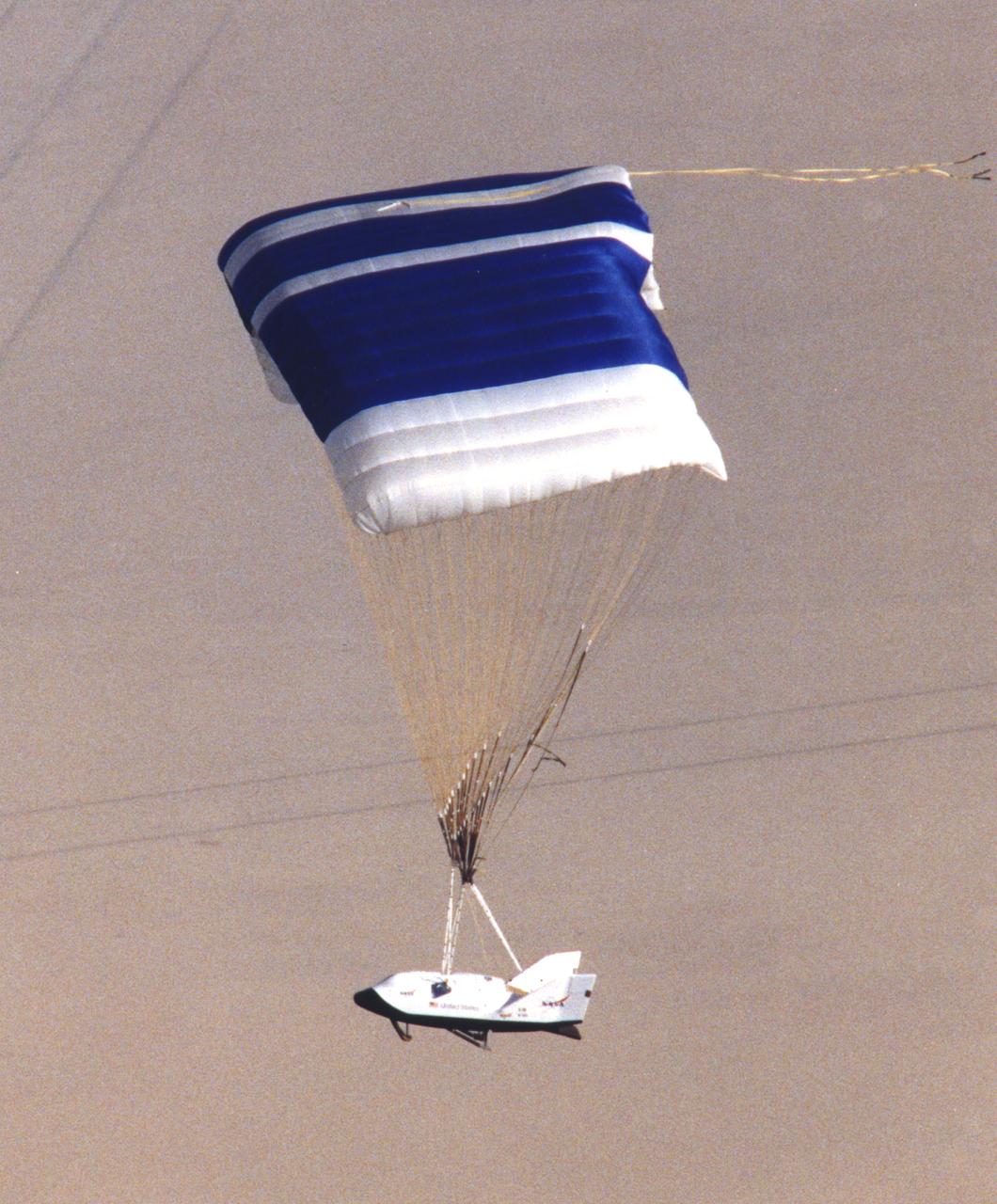
NASA's X-38, a research vehicle developed as part of an effort to build an emergency Crew Return Vehicle (CRV) for the International Space Station, descends toward a desert lakebed under its steerable parafoil on its second free flight. The X-38 was launched from NASA Dryden's B-52 Mothership on Saturday, February 6, 1999, from an altitude of approximately 23,000 feet.
X-38 in Flight during Second Free Flight
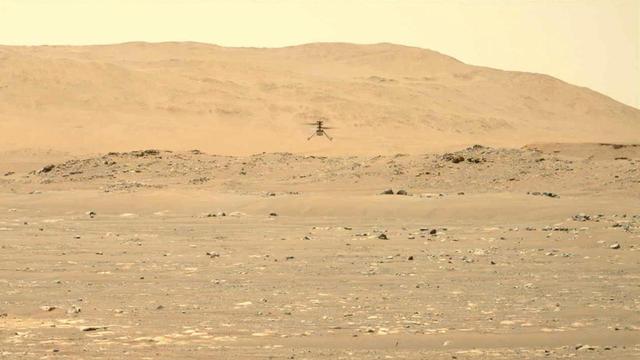
NASA's Ingenuity Mars Helicopter hovers and rotates over Jezero Crater during its second experimental flight test on April 22, 2021. The footage was captured by the Mastcam-Z imager, a pair of zoomable cameras aboard NASA's Perseverance Mars rover.  Altimeter data from the solar-powered helicopter indicates it climbed to its prescribed maximum altitude of 16 feet (5 meters), flew downrange 7 feet (2 meters) and returned, performed several turns while in a hover, and landed. Total flight time 51.9 seconds.  Flying in a controlled manner on Mars is far more difficult than flying on Earth. The Red Planet has significant gravity (about one-third that of Earth's), but an atmosphere with only about 1% of the density at Earth's surface.  Stitched together from multiple images, the mosaic is not white balanced; instead, it is displayed in a preliminary calibrated version of a natural-color composite, approximately simulating the colors of the scene as it would appear on Mars.  Arizona State University in Tempe leads the operations of the Mastcam-Z instrument, working in collaboration with Malin Space Science Systems in San Diego.  The Ingenuity Mars Helicopter was built by JPL, which also manages this technology demonstration project for NASA Headquarters. It is supported by NASA's Science Mission Directorate, Aeronautics Research Mission Directorate, and Space Technology Mission Directorate. NASA's Ames Research Center and Langley Research Center provided significant flight performance analysis and technical assistance during Ingenuity's development.  A key objective for Perseverance's mission on Mars is astrobiology, including the search for signs of ancient microbial life. The rover will characterize the planet's geology and past climate, pave the way for human exploration of the Red Planet, and be the first mission to collect and cache Martian rock and regolith (broken rock and dust).  Subsequent NASA missions, in cooperation with ESA (European Space Agency), would send spacecraft to Mars to collect these sealed samples from the surface and return them to Earth for in-depth analysis.  The Mars 2020 Perseverance mission is part of NASA's Moon to Mars exploration approach, which includes Artemis missions to the Moon that will help prepare for human exploration of the Red Planet.  Movie available at https://photojournal.jpl.nasa.gov/catalog/PIA24595
Perseverance's Mastcam-Z Video of Second Flight
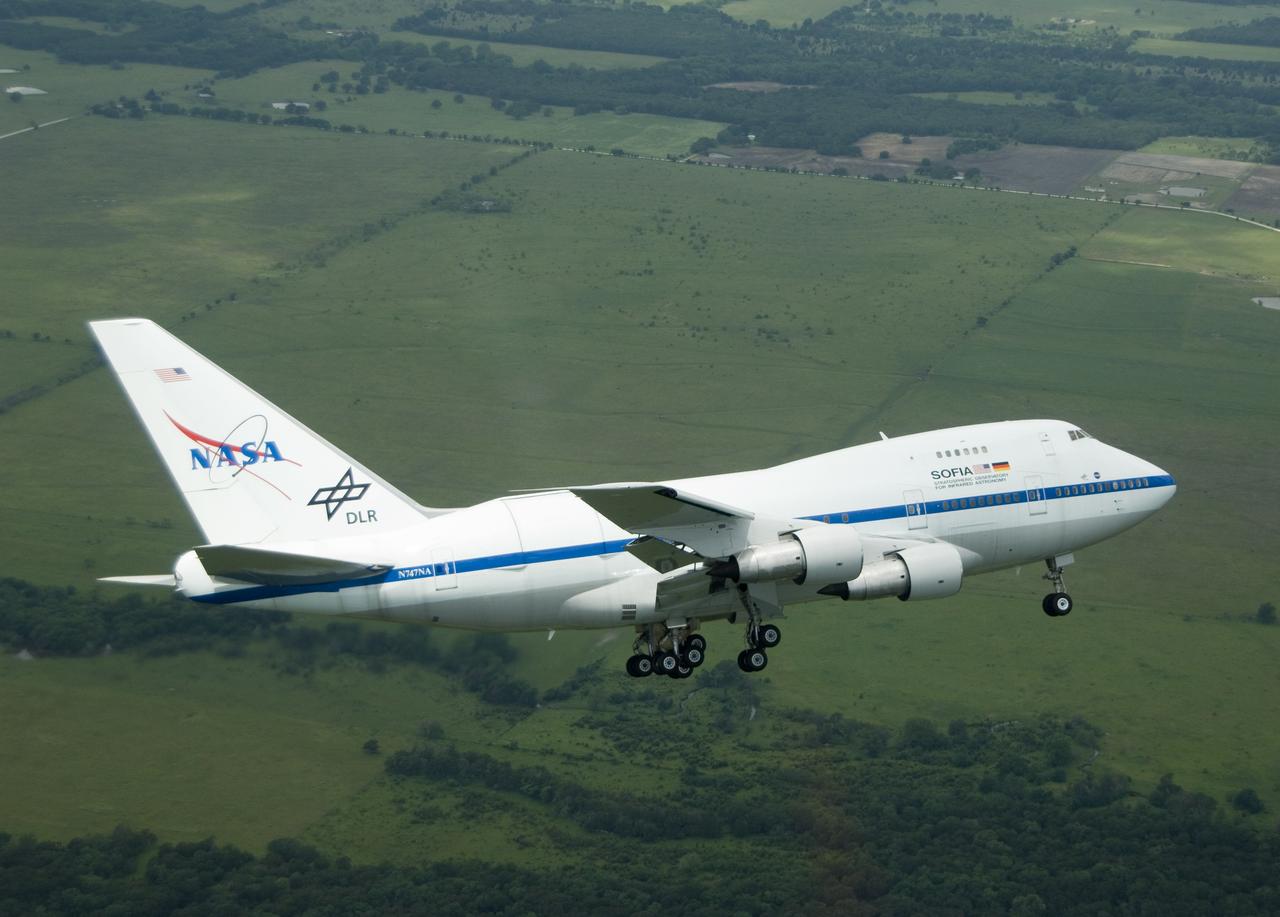
NASA's highly modified Boeing 747SP SOFIA observatory banks low over the Texas countryside as it heads for landing at Waco to conclude its second check flight.
NASA's highly modified Boeing 747SP SOFIA observatory banks low over the Texas countryside as it heads for landing at Waco to conclude its second check flight
NASA's Stratospheric Observatory for Infrared Astronomy is silhouetted against the sky as it soars on its second check flight near Waco, Texas on May 10, 2007.
NASA's Stratospheric Observatory for Infrared Astronomy is silhouetted against the sky as it soars on its second check flight near Waco, Texas on May 10, 2007
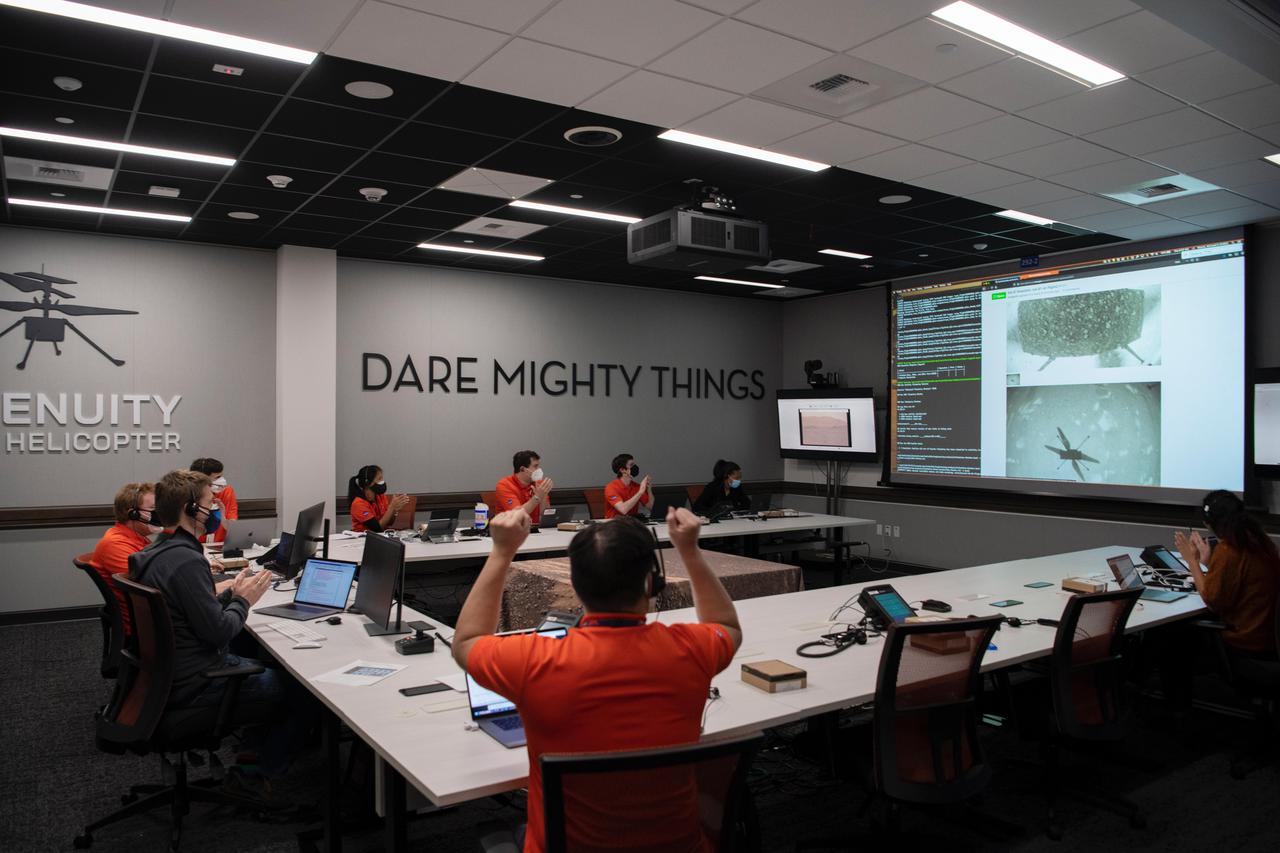
Members of NASA's Ingenuity Mars Helicopter team at the agency's Jet Propulsion Laboratory react to data showing that the helicopter completed its second flight on the Red Planet on April 22, 2021.  The Ingenuity Mars Helicopter was built by JPL, which also manages this technology demonstration project for NASA Headquarters. It is supported by NASA's Science Mission Directorate, Aeronautics Research Mission Directorate, and Space Technology Mission Directorate. NASA's Ames Research Center and Langley Research Center provided significant flight performance analysis and technical assistance during Ingenuity's development.  A key objective for Perseverance's mission on Mars is astrobiology, including the search for signs of ancient microbial life. The rover will characterize the planet's geology and past climate, pave the way for human exploration of the Red Planet, and be the first mission to collect and cache Martian rock and regolith (broken rock and dust).  Subsequent NASA missions, in cooperation with ESA (European Space Agency), would send spacecraft to Mars to collect these sealed samples from the surface and return them to Earth for in-depth analysis.  The Mars 2020 Perseverance mission is part of NASA's Moon to Mars exploration approach, which includes Artemis missions to the Moon that will help prepare for human exploration of the Red Planet.  https://photojournal.jpl.nasa.gov/catalog/PIA24597
Ingenuity's Team Reacts to Data Showing Helicopter Completed Its Second Flight
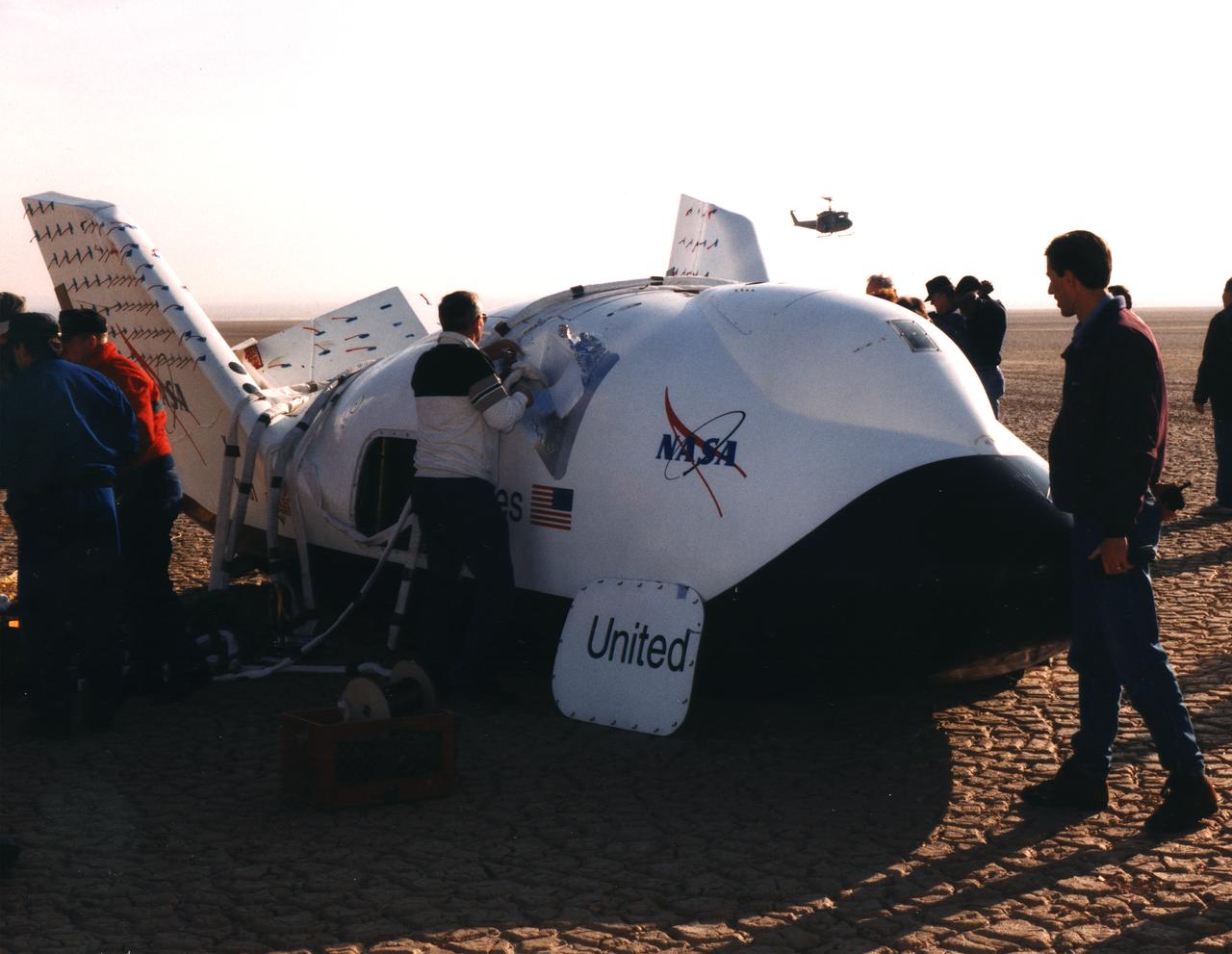
NASA's X-38, a prototype of a Crew Return Vehicle (CRV) resting on the lakebed near the Dryden Flight Research Center after the completion of its second free flight. The X-38 was launched from NASA Dryden's B-52 Mothership on Saturday, February 6, 1999, from an altitude of approximately 23,000 feet.
X-38 on Lakebed after Landing on Second Free Flight
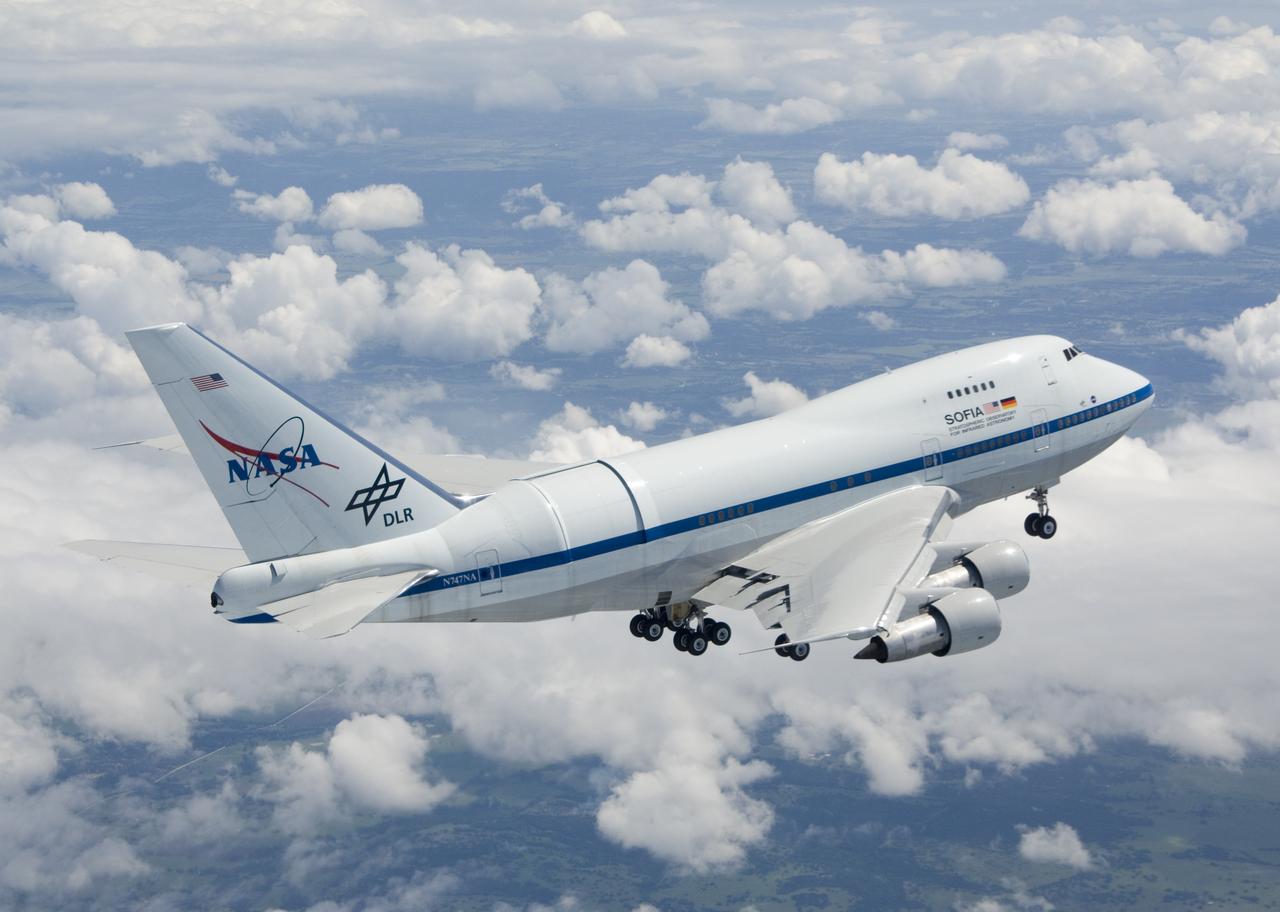
NASA's Boeing 747SP SOFIA airborne observatory soars over a bed of puffy clouds during its second checkout flight over the Texas countryside on May 10, 2007.
NASA's Boeing 747SP SOFIA airborne observatory soars over a bed of puffy clouds during its second checkout flight over the Texas countryside on May 10, 2007
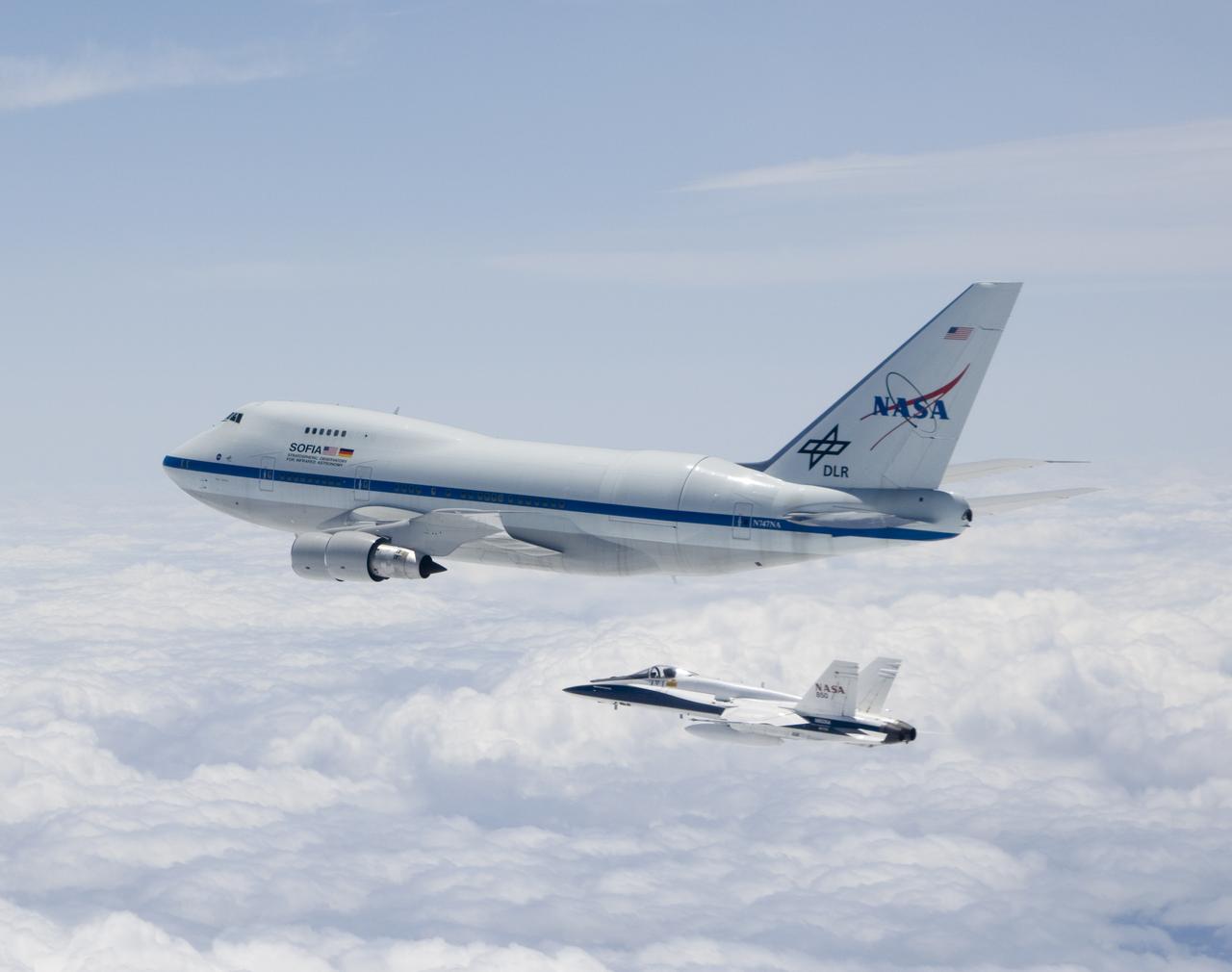
NASA's SOFIA airborne observatory is shadowed by a NASA F/A-18 safety chase aircraft during its second checkout flight near Waco, Texas on May 10, 2007.
NASA's SOFIA airborne observatory is shadowed by a NASA F/A-18 safety chase aircraft during its second checkout flight near Waco, Texas on May 10, 2007
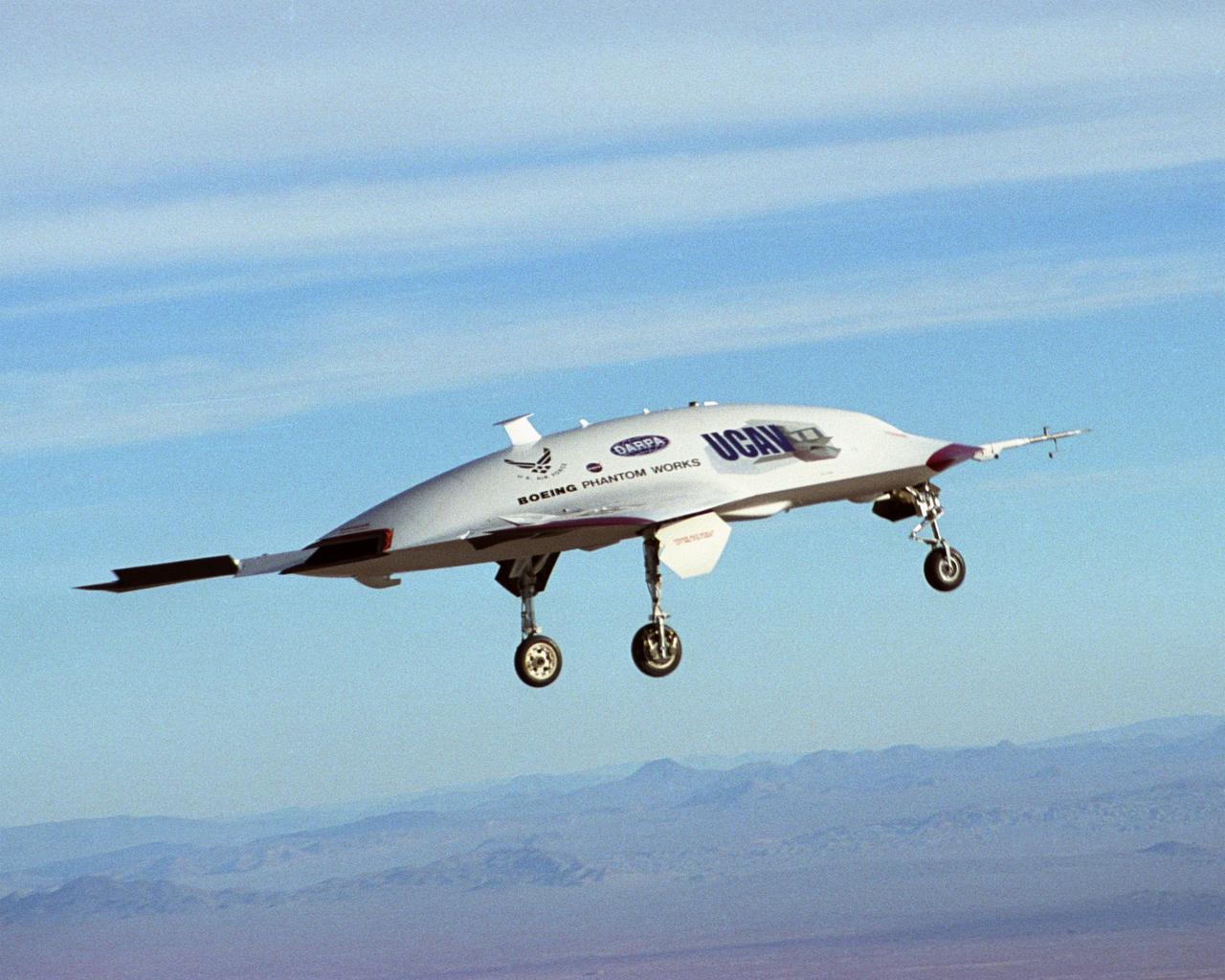
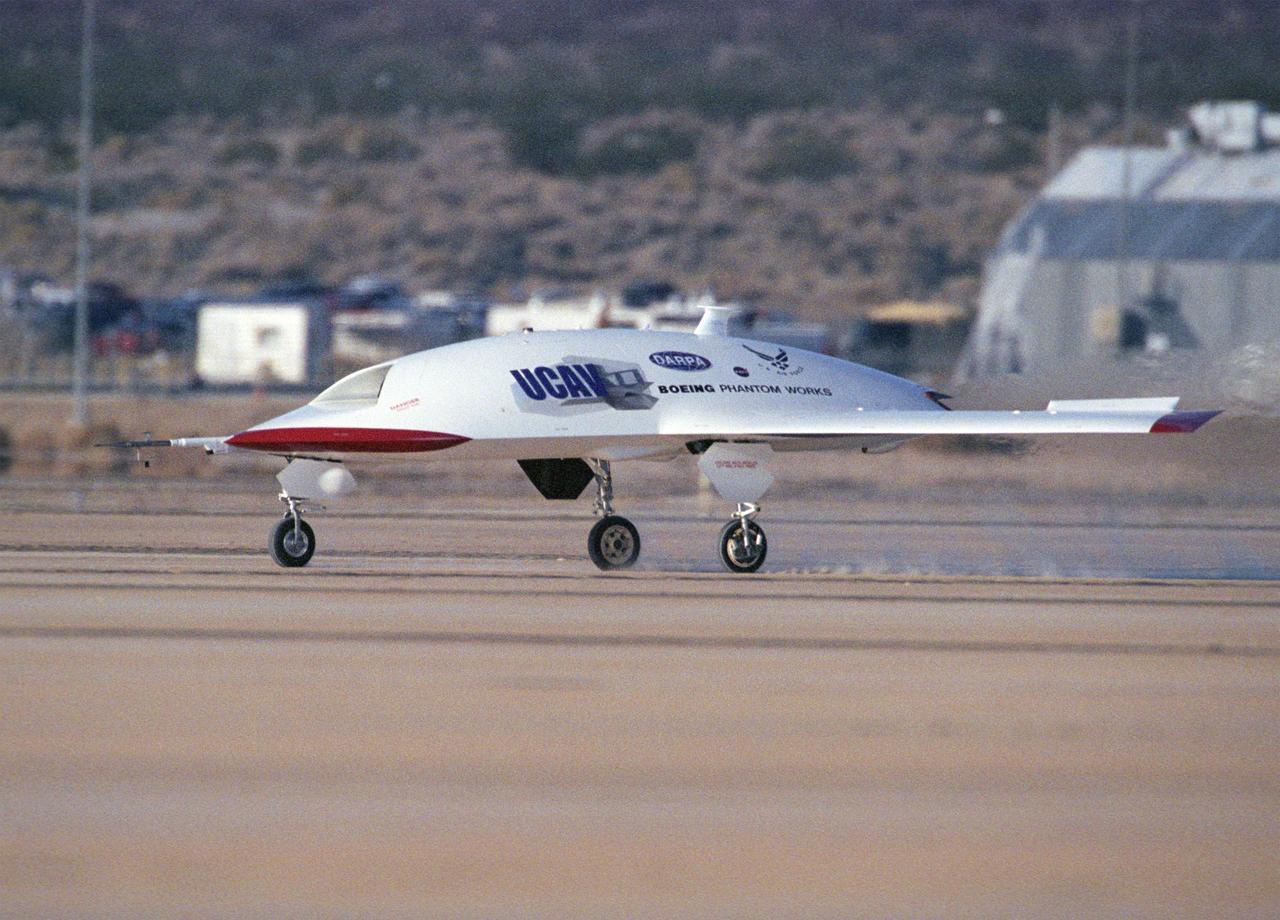
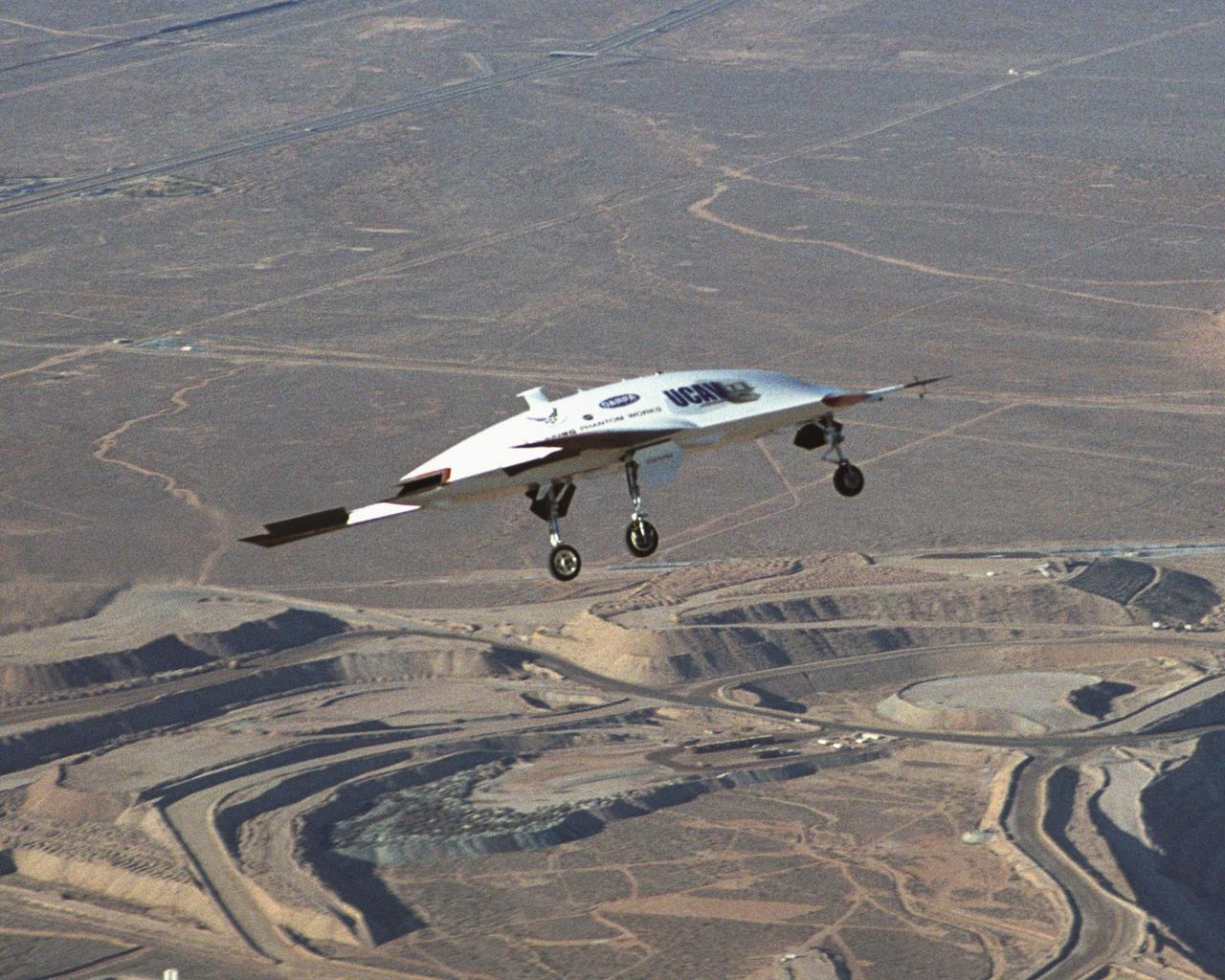
The second X-45A Unmanned Combat Air Vehicle (UCAV) technology demonstrator completed its first flight on November 21, 2002, after taking off from a dry lakebed at NASA's Dryden Flight Research Center, Edwards Air Force Base, California.  X-45A vehicle two flew for approximately 30 minutes and reached an airspeed of 195 knots and an altitude of 7500 feet. This flight validated the functionality of the UCAV flight software on the second air vehicle.  Dryden is supporting the DARPA/Boeing team in the design, development, integration, and demonstration of the critical technologies, processes, and system attributes leading to an operational UCAV system. Dryden support of the X-45A demonstrator system includes analysis, component development, simulations, ground and flight tests.
The second X-45A Unmanned Combat Air Vehicle (UCAV) technology demonstrator aircraft during its maiden flight. The flight marks another milestone for the UCAV program, and verified the aircraft's flight control software
The second X-45A Unmanned Combat Air Vehicle (UCAV) technology demonstrator completed its first flight on November 21, 2002, after taking off from a dry lakebed at NASA's Dryden Flight Research Center, Edwards Air Force Base, California.  X-45A vehicle two flew for approximately 30 minutes and reached an airspeed of 195 knots and an altitude of 7500 feet. This flight validated the functionality of the UCAV flight software on the second air vehicle.  Dryden is supporting the DARPA/Boeing team in the design, development, integration, and demonstration of the critical technologies, processes, and system attributes leading to an operational UCAV system. Dryden support of the X-45A demonstrator system includes analysis, component development, simulations, ground and flight tests.
The second X-45A Unmanned Combat Air Vehicle (UCAV) technology demonstrator aircraft during its maiden flight. The flight marks another milestone for the UCAV program, and verified the aircraft's flight control software
The second X-45A Unmanned Combat Air Vehicle (UCAV) technology demonstrator completed its first flight on November 21, 2002, after taking off from a dry lakebed at NASA's Dryden Flight Research Center, Edwards Air Force Base, California.  X-45A vehicle two flew for approximately 30 minutes and reached an airspeed of 195 knots and an altitude of 7500 feet. This flight validated the functionality of the UCAV flight software on the second air vehicle.  Dryden is supporting the DARPA/Boeing team in the design, development, integration, and demonstration of the critical technologies, processes, and system attributes leading to an operational UCAV system. Dryden support of the X-45A demonstrator system includes analysis, component development, simulations, ground and flight tests.
The second X-45A Unmanned Combat Air Vehicle (UCAV) technology demonstrator aircraft during its maiden flight. The flight marks another milestone for the UCAV program, and verified the aircraft's flight control software
The second X-45A Unmanned Combat Air Vehicle (UCAV) technology demonstrator completed its first flight on November 21, 2002, after taking off from a dry lakebed at NASA's Dryden Flight Research Center, Edwards Air Force Base, California.  X-45A vehicle two flew for approximately 30 minutes and reached an airspeed of 195 knots and an altitude of 7500 feet. This flight validated the functionality of the UCAV flight software on the second air vehicle.  Dryden is supporting the DARPA/Boeing team in the design, development, integration, and demonstration of the critical technologies, processes, and system attributes leading to an operational UCAV system. Dryden support of the X-45A demonstrator system includes analysis, component development, simulations, ground and flight tests.
The second X-45A Unmanned Combat Air Vehicle (UCAV) technology demonstrator aircraft during its maiden flight. The flight marks another milestone for the UCAV program, and verified the aircraft's flight control software
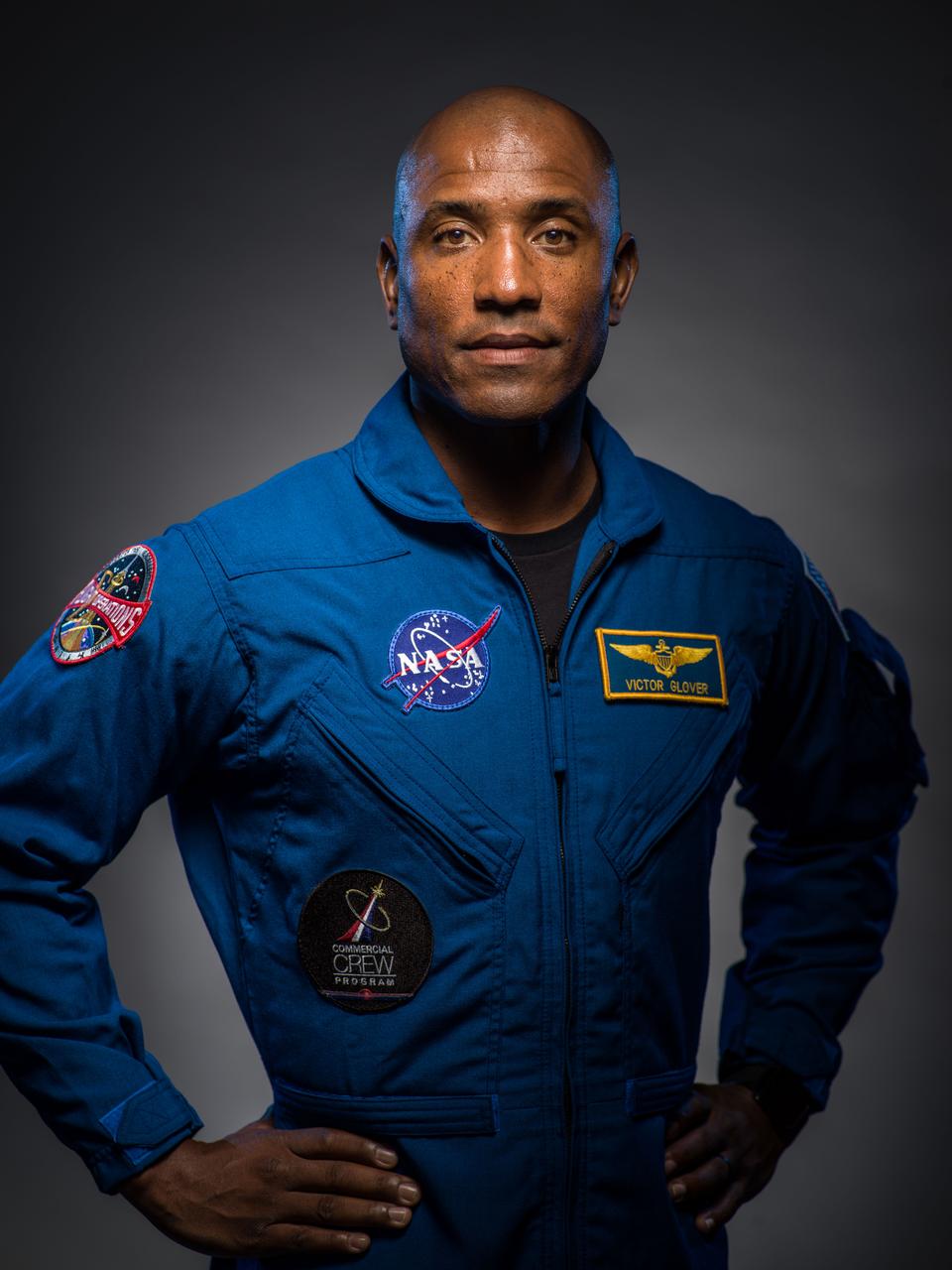
jsc2018e067775_alt (Aug. 1, 2018) --- NASA Astronaut Victor Glover has been assigned to the second flight of SpaceX’s Crew Dragon.
NASA Astronaut Victor Glover
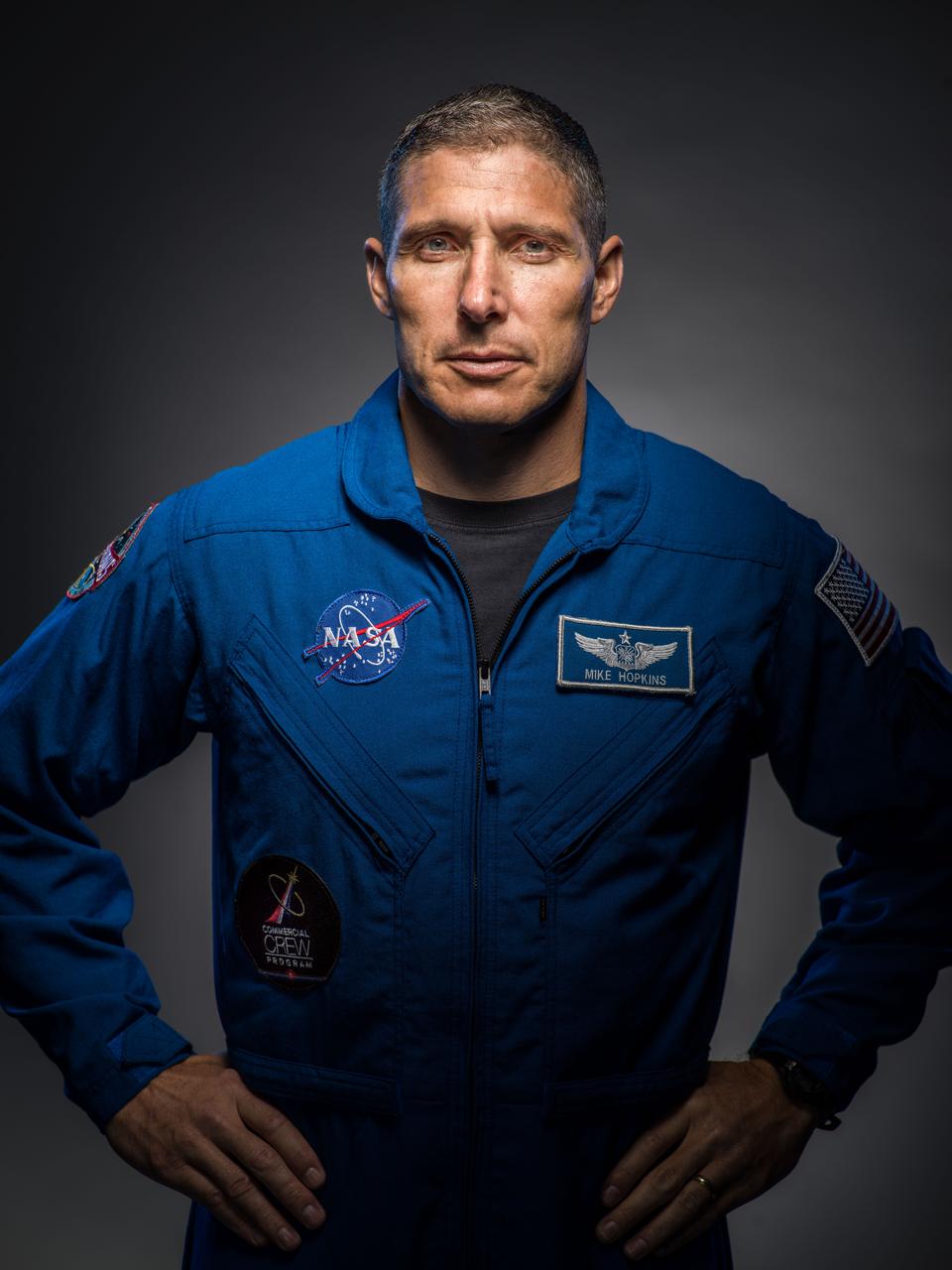
jsc2018e067630_alt (Aug. 1, 2018) --- NASA Astronaut Mike Hopkins has been assigned to the second flight of SpaceX’s Crew Dragon.
NASA Astronaut Mike Hopkins
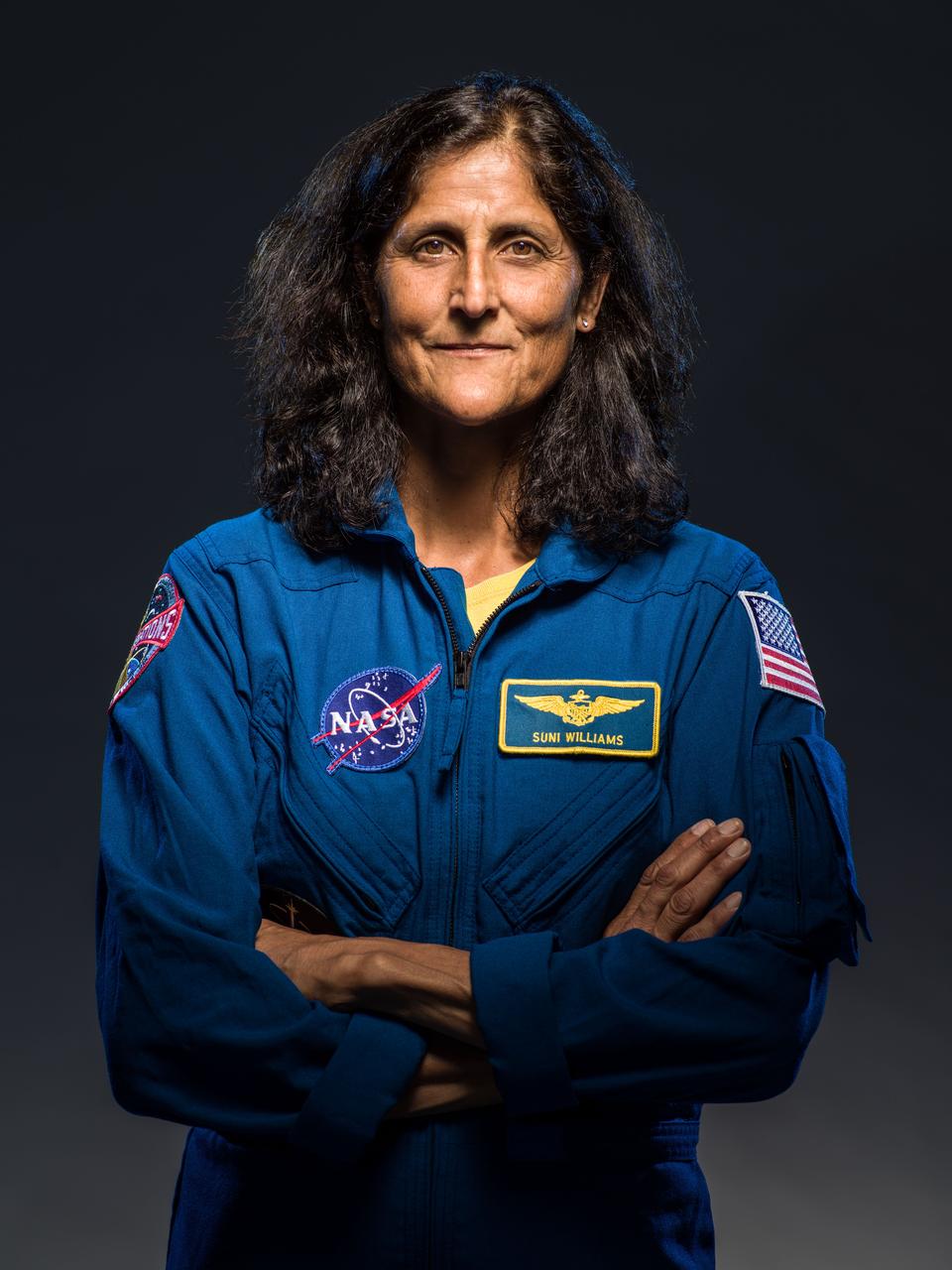
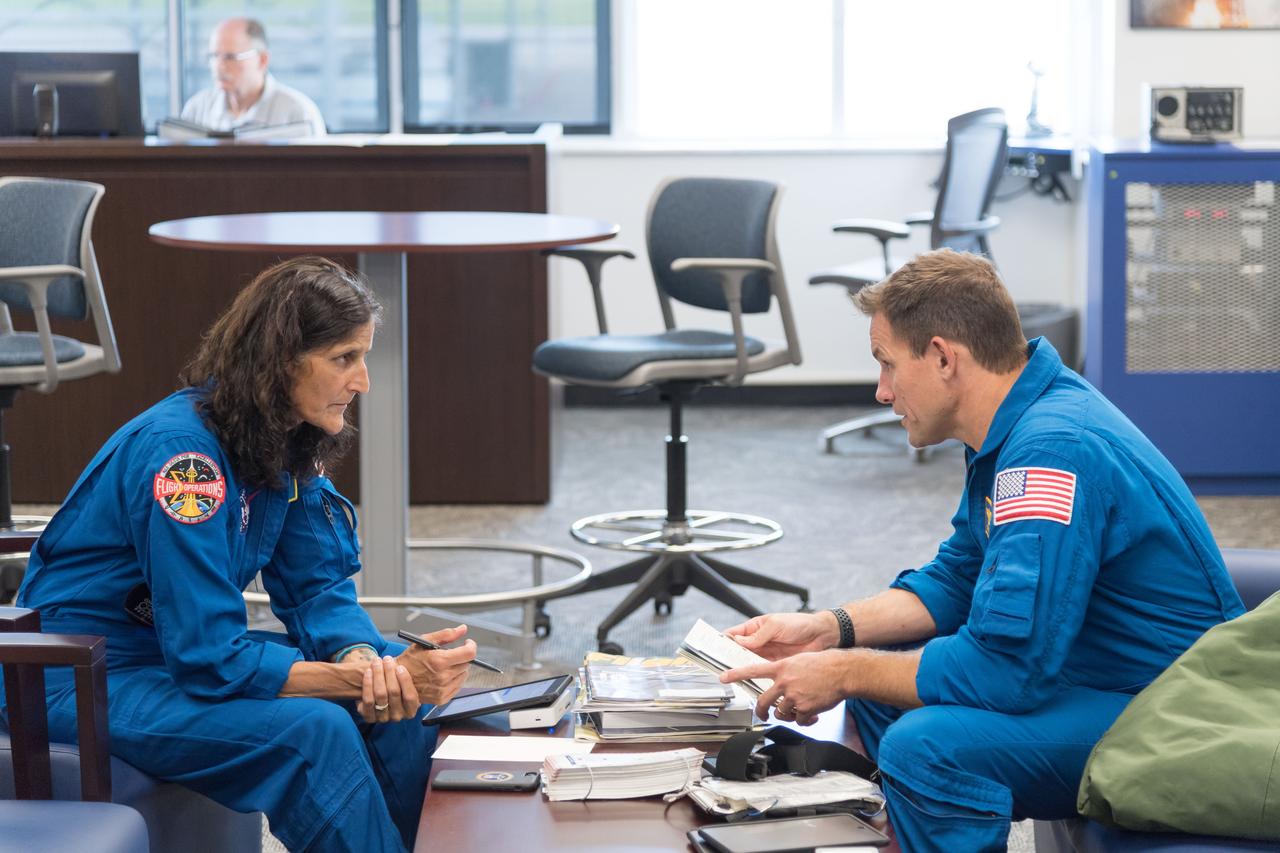
jsc2018e067716_alt (Aug. 1, 2018) --- NASA Astronaut Suni Williams has been assigned to the second flight of Boeing’s CST-100 Starliner.
NASA Astronaut Suni Williams
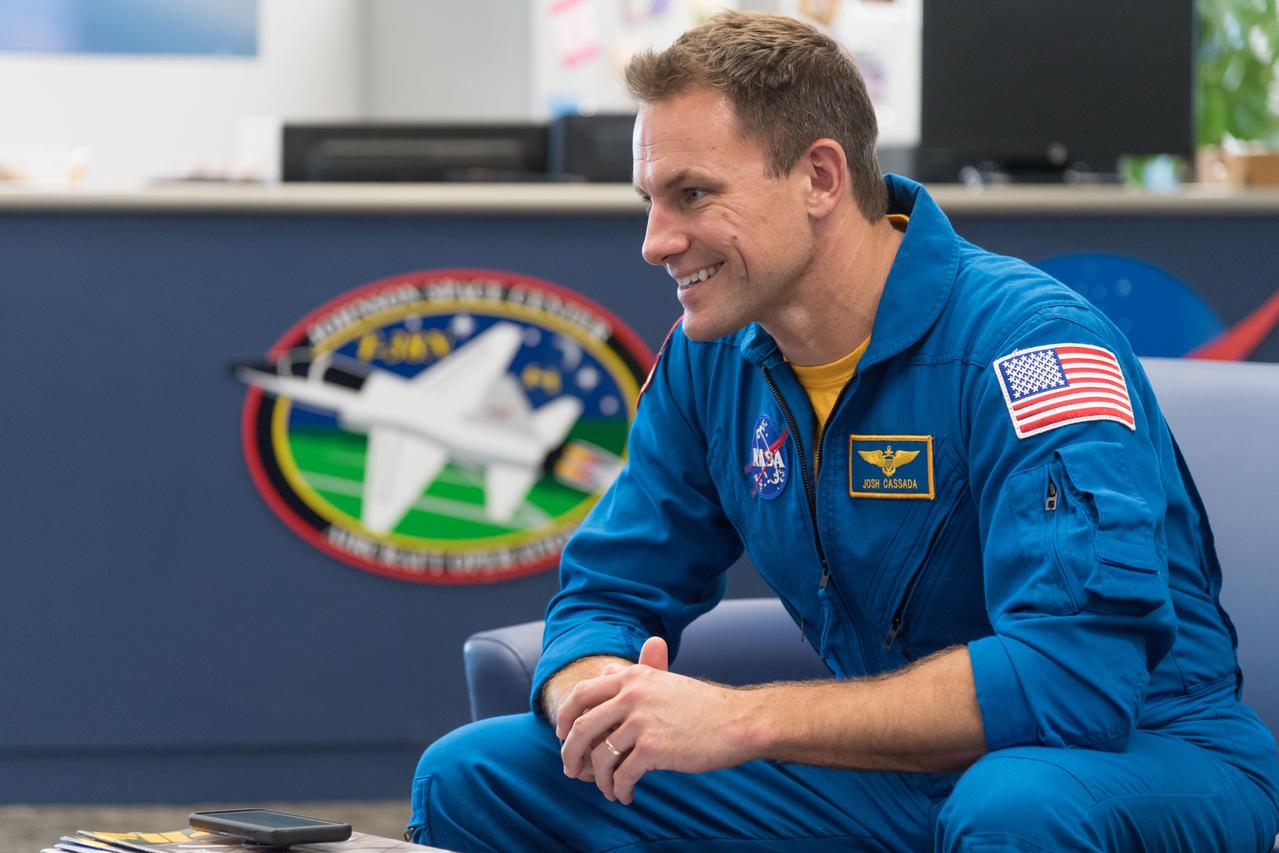
jsc2018e066248_alt (Aug. 1, 2018) --- NASA Astronaut Josh Cassada has been assigned to the second flight of Boeing’s CST-100 Starliner.
NASA Astronaut Josh Cassada
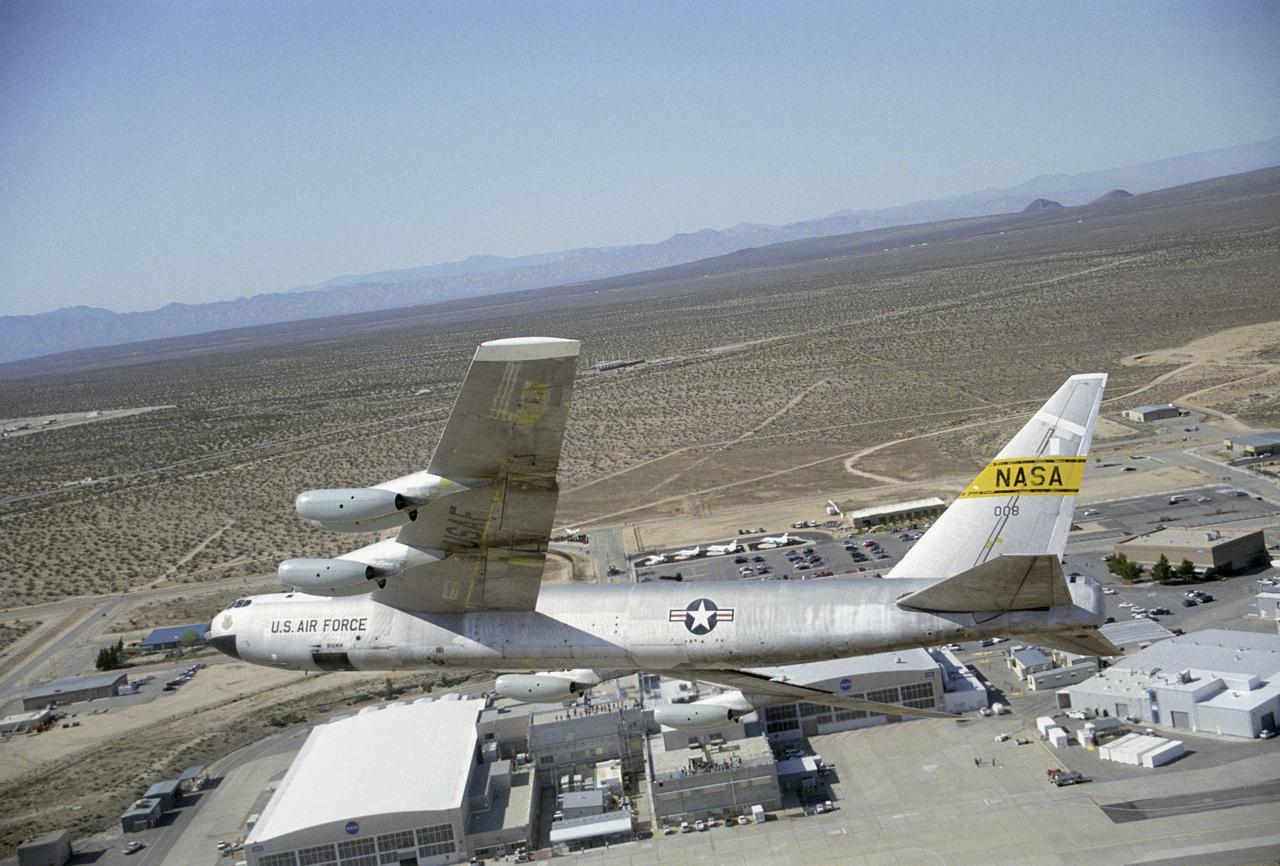
NASA's B-52B aircraft over the Dryden Flight Research Center after the successful launch of the second X-43A hypersonic research vehicle.
NASA's B-52B aircraft over the Dryden Flight Research Center after the successful launch of the second X-43A hypersonic research vehicle
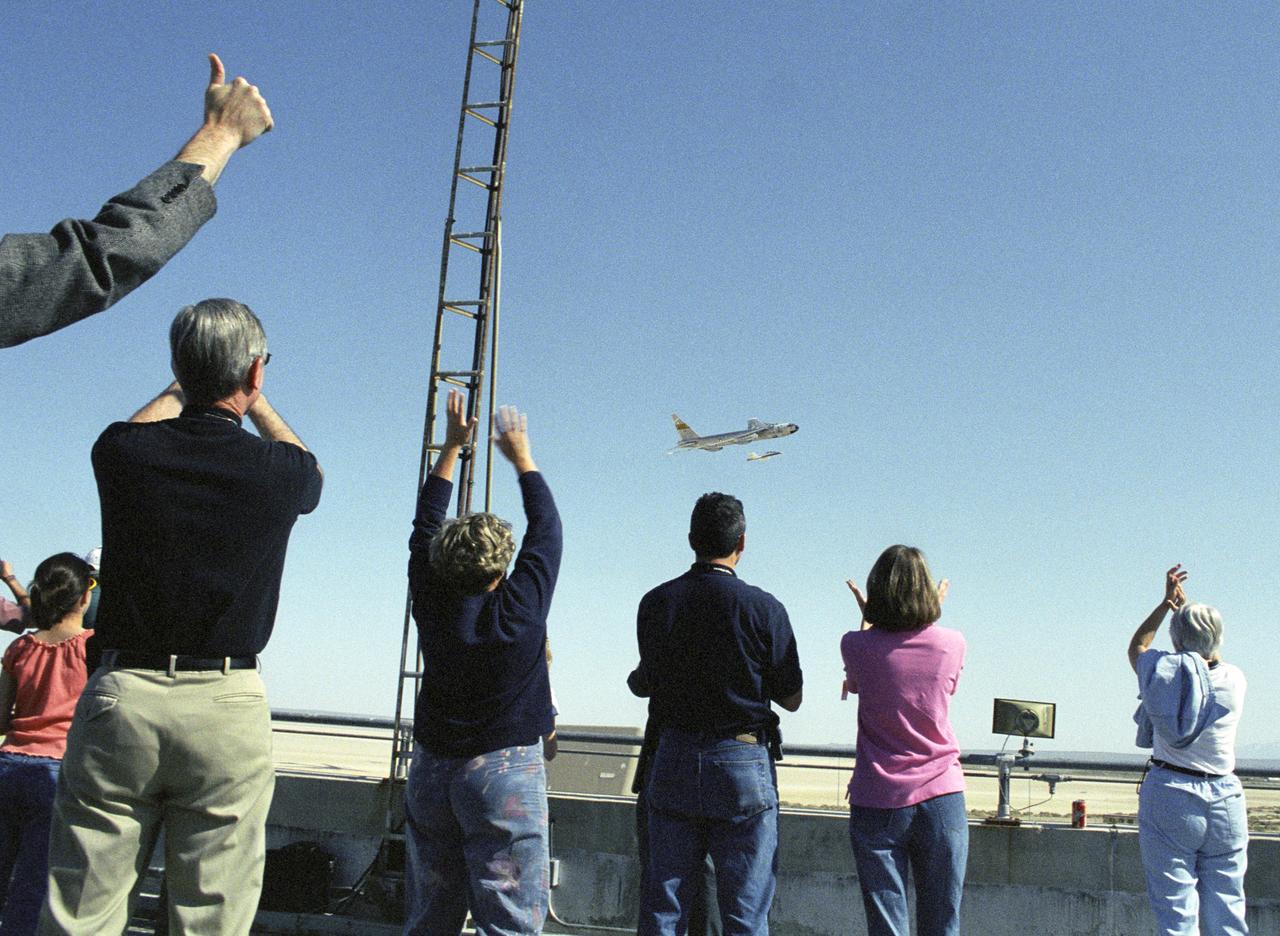
Employees atop NASA Dryden's main building celebrate the return flyby of the B-52B aircraft after it launched the second X-43A aircraft on its successful flight.
Employees atop DFRC's main building celebrate the return flyby of the B-52B aircraft after it launched the second X-43A aircraft on its successful flight
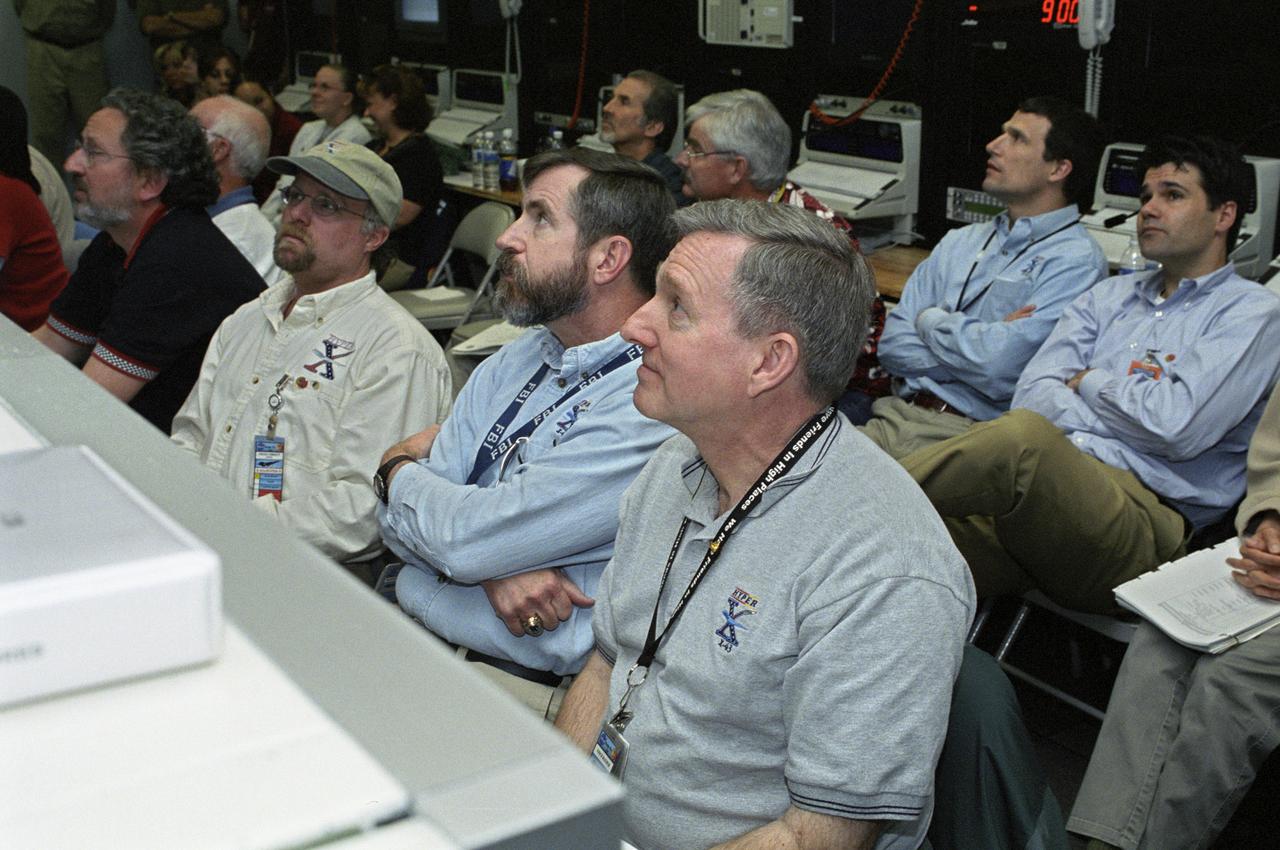
NASA personnel in a control room during the successful second flight of the X-43A aircraft. front row, left to right: Randy Voland, LaRC Propulsion; Craig Christy, Boeing Systems; Dave Reubush, NASA Hyper-X Deputy Program Manager; and Vince Rausch, NASA Hyper-X Program Manager. back row, left to right: Bill Talley, DCI/consultant; Pat Stoliker, DFRC Director (Acting) of Research Engineering; John Martin, LaRC G&C; and Dave Bose, AMA/Controls.
NASA personnel in a control room during the successful second flight of the X-43A aircraft
This sequence of images – taken on May 22, 2021, by the navigation camera aboard NASA's Ingenuity Mars Helicopter – depicts the last 29 seconds of the rotorcraft's sixth flight. Frame rate is 3.3 frames per second until Ingenuity began its final descent to the surface, at which point it collected a frame every two seconds.  Movie available at https://photojournal.jpl.nasa.gov/catalog/PIA24598
Ingenuity Flight Six Navcam Image
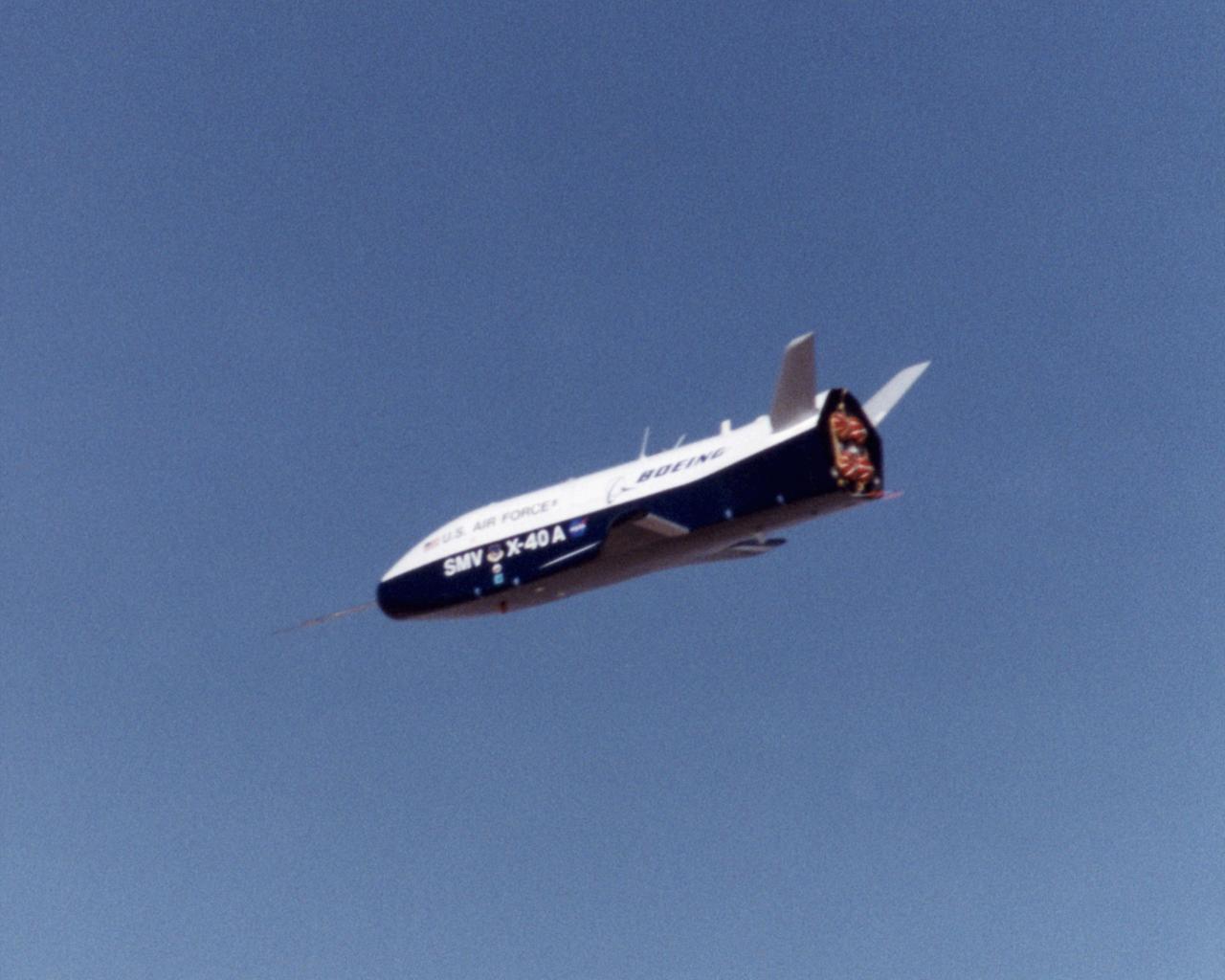
First flight at NASA's Dryden Flight Research Center for the X-40A was a 74 second glide from 15,000 feet on March 14, 2001. The unpiloted X-40 is a risk-reduction vehicle for the X-37, which is intended to be a reusable space vehicle.  NASA's Marshall Space Flight Center in Huntsville, Ala, manages the X-37 project. At Dryden, the X-40A will undergo a series of ground and air tests to reduce possible risks to the larger X-37, including drop tests from a helicopter to check guidance and navigation systems planned for use in the X-37. The X-37 is designed to demonstrate technologies in the orbital and reentry environments for next-generation reusable launch vehicles that will increase both safety and reliability, while reducing launch costs from $10,000 per pound to $1,000 per pound.
First flight at NASA's Dryden Flight Research Center for the X-40A was a 74 second glide from 15,000 feet on March 14, 2001
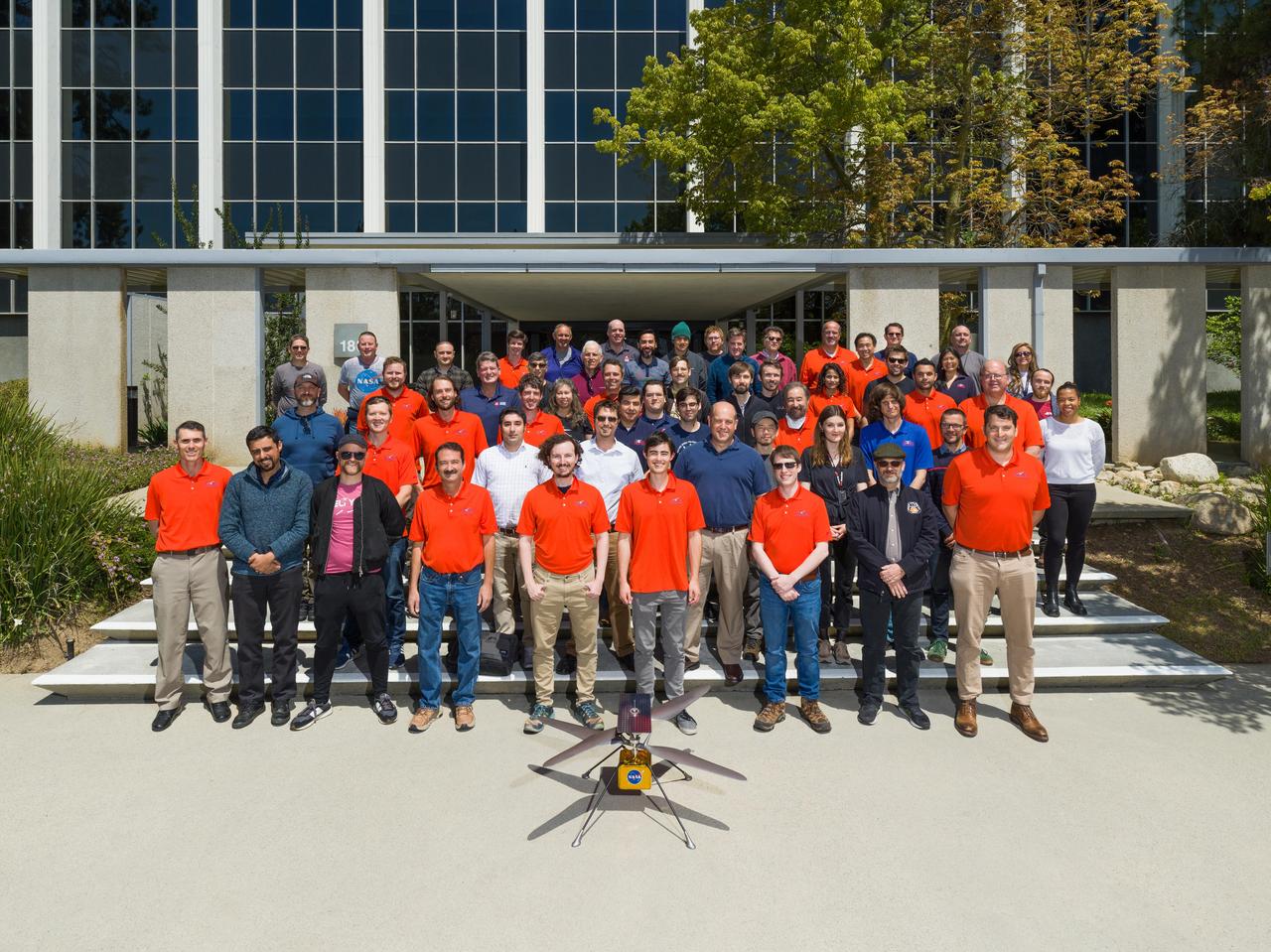
Members of NASA's Ingenuity Mars Helicopter team got together for a team photo on the second anniversary of the rotorcraft's first flight on Mars. The image was taken at the agency's Jet Propulsion Laboratory in Southern California on April 19, 2023.  https://photojournal.jpl.nasa.gov/catalog/PIA25882
Ingenuity Team Celebrates Two Years of Mars Flight
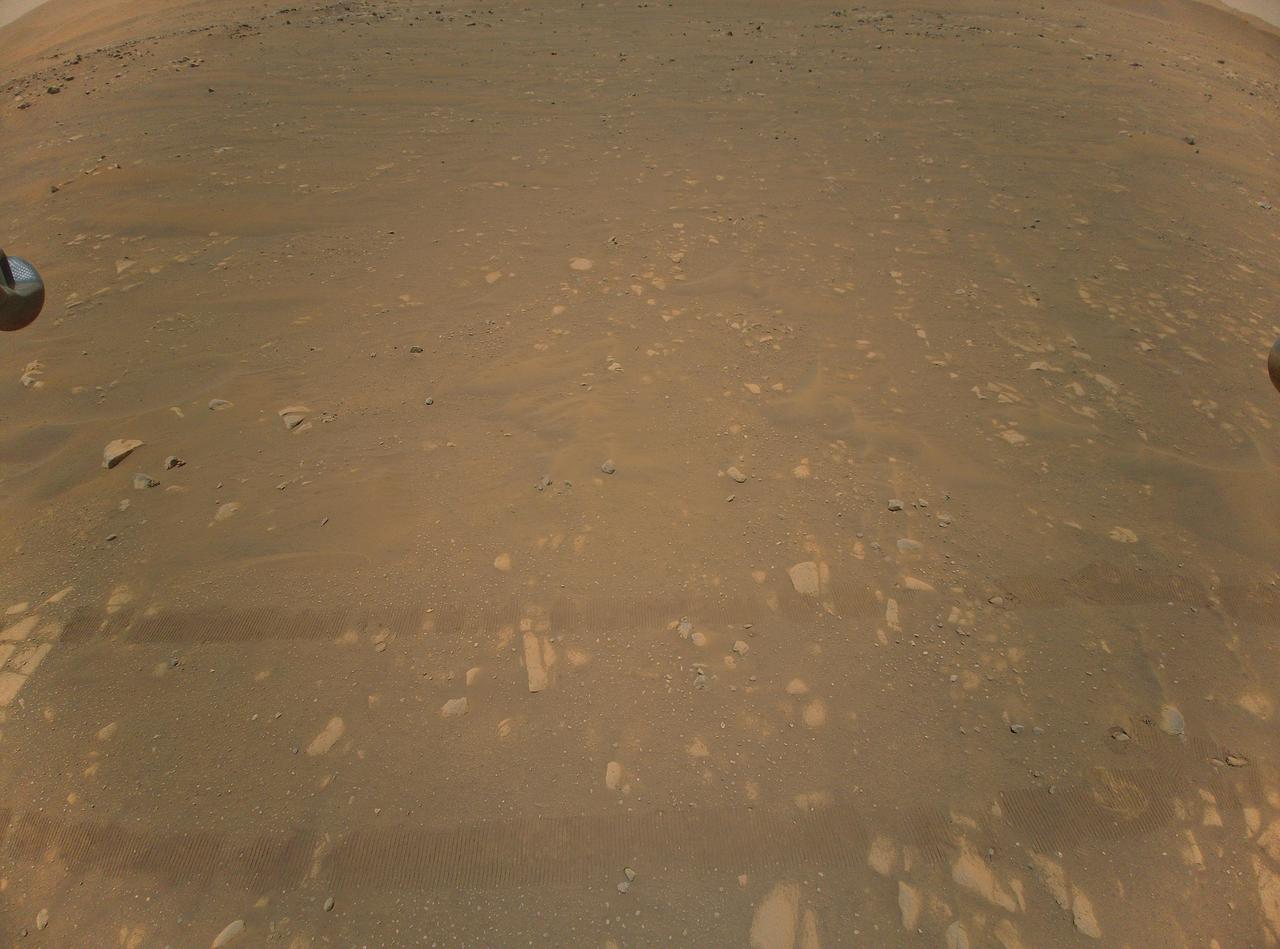
This is the second color image taken by NASA's Ingenuity helicopter. It was snapped on the helicopter's second flight, on April 22, 2021, from an altitude of about 17 feet (5.2 meters). Tracks made by NASA's Perseverance Mars rover can be seen as well.  https://photojournal.jpl.nasa.gov/catalog/PIA24500
Second Color Image Taken by Ingenuity
Flight Director Matt Smith studies the data during the second post-launch trajectory correction maneuver during Perseverance's cruise to Mars. The team is in the Mission Support Area at NASA's Jet Propulsion Laboratory in Southern California.  https://photojournal.jpl.nasa.gov/catalog/PIA24195
A Flight Director's Focus
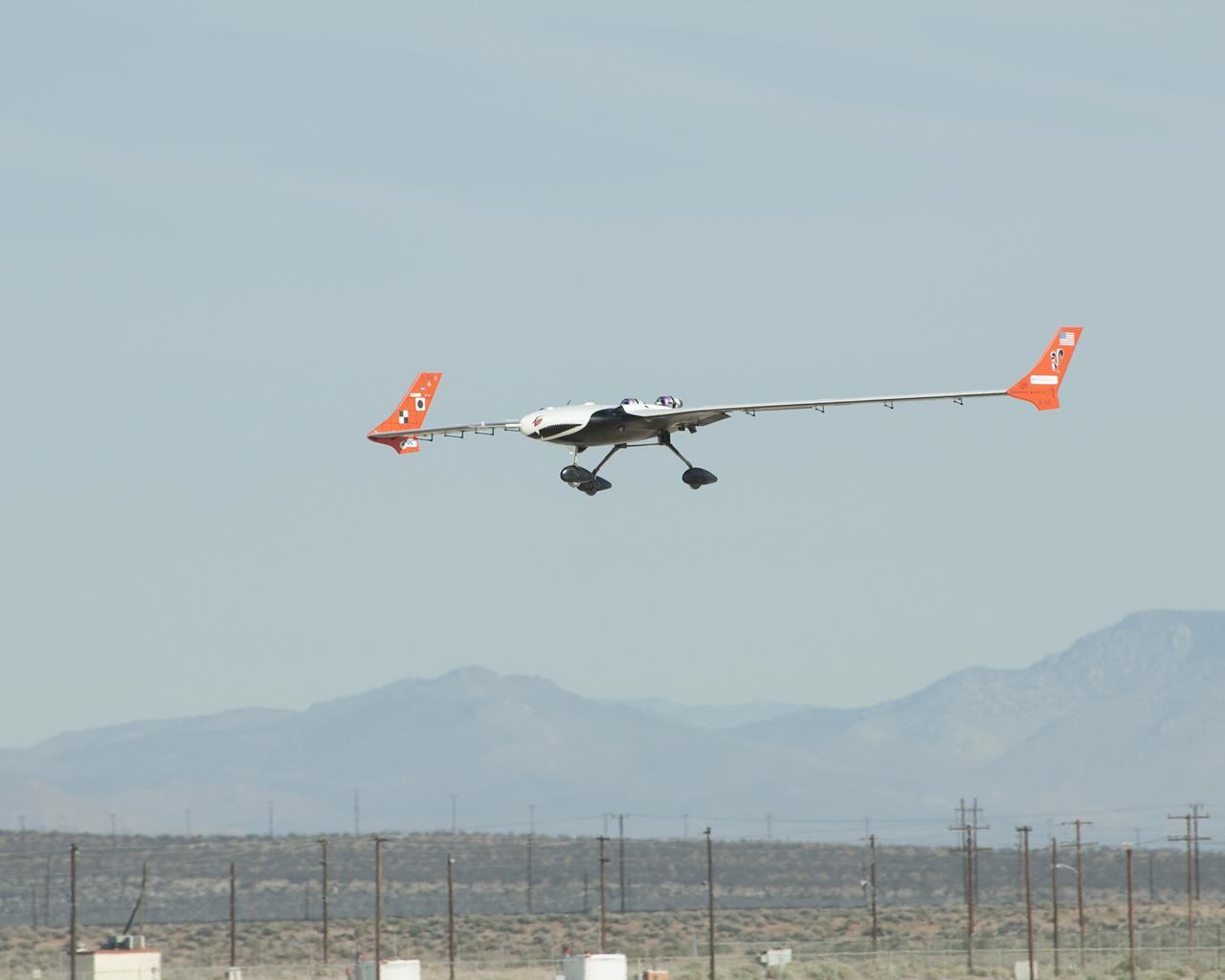
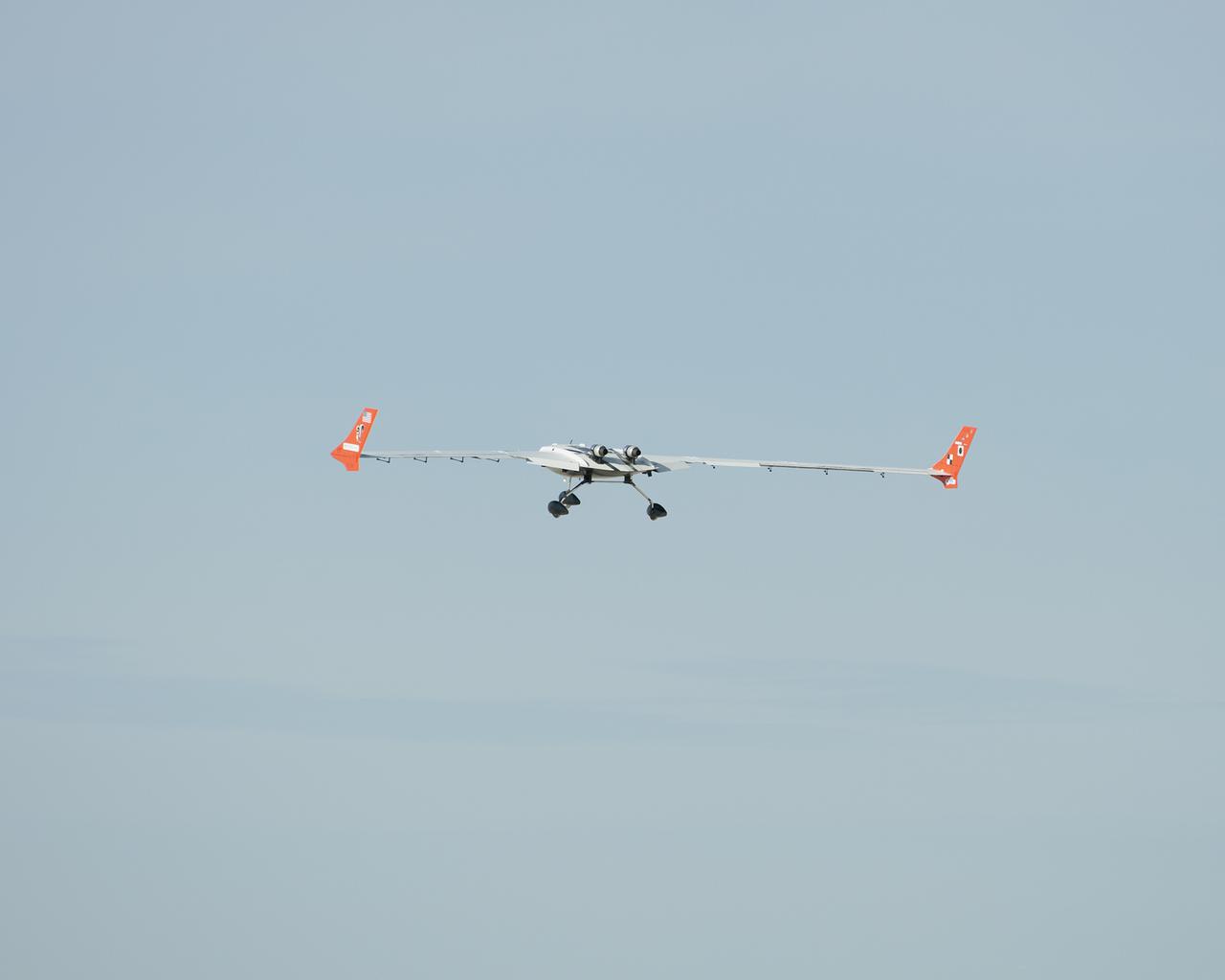
The X-56A takes off on its maiden flight from NASA Armstrong Flight Research Center, Edwards, California.
Second X-56A MUTT Makes First Flight
NASA researchers are using the X-56A, a low-cost, modular, remotely piloted aerial vehicle, to explore the behavior of lightweight, flexible aircraft structures.
Second X-56A MUTT Makes First Flight
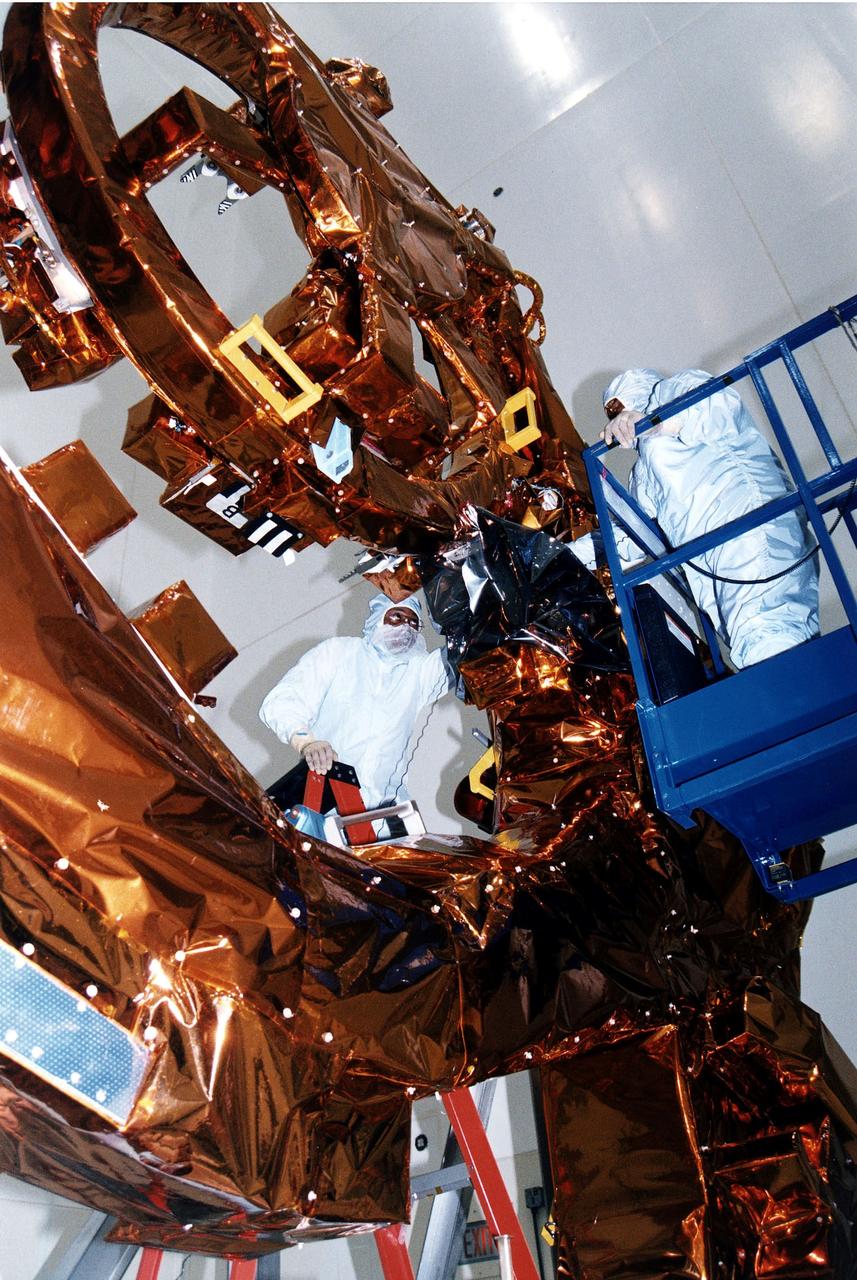
The main structural body of the second flight test vehicle in NASA Low-Density Supersonic Decelerator LDSD project is seen during its assembly in a cleanroom at NASA Jet Propulsion Laboratory.
LDSD Flight Test Vehicle 2 in Cleanroom
This color image of the Earth was taken by NASA’s Galileo spacecraft on December 11 as it departed on its 3-year flight to Jupiter, about 2 1/2 days after the second Earth flyby.  http://photojournal.jpl.nasa.gov/catalog/PIA00232
Earth - Departing Image by Galileo
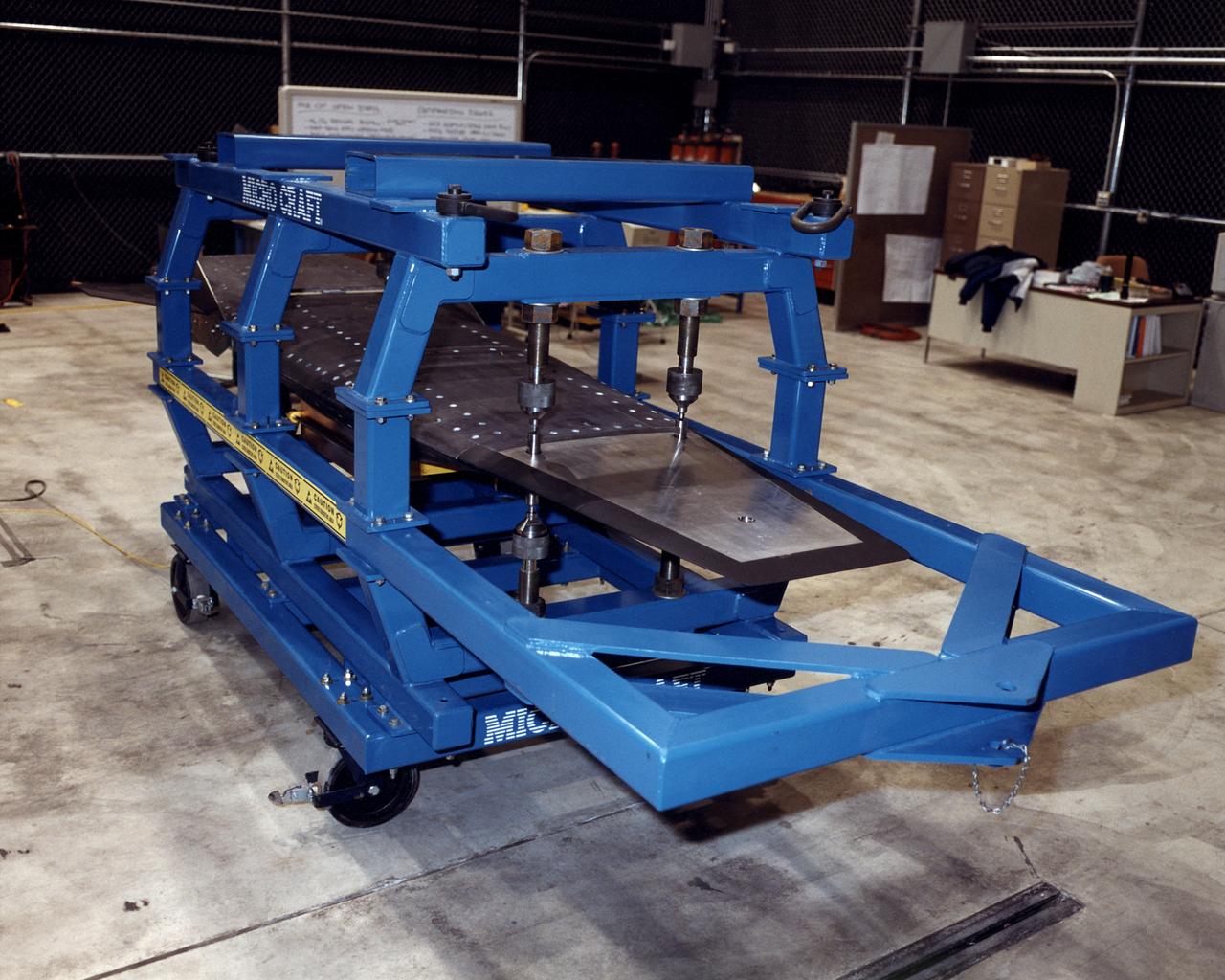
The second of three X-43A hypersonic research aircraft, shown here in its protective shipping jig, arrived at NASA's Dryden Flight Research Center, Edwards, California, on January 31, 2001. The arrival of the second X-43A from its manufacturer, MicroCraft, Inc., of Tullahoma, Tenn., followed by only a few days the mating of the first X-43A and its specially-designed adapter to the first stage of a modified Pegasus® booster rocket. The booster, built by Orbital Sciences Corp., Dulles, Va., will accelerate the 12-foot-long, unpiloted research aircraft to a predetermined altitude and speed after the X-43A/booster "stack" is air-launched from NASA's venerable NB-52 mothership. The X-43A will then separate from the rocket and fly a pre-programmed trajectory, conducting aerodynamic and propulsion experiments until it impacts into the Pacific Ocean. Three research flights are planned, two at Mach 7 and one at Mach 10 (seven and 10 times the speed of sound respectively) with the first tentatively scheduled for early summer, 2001. The X-43A is powered by a revolutionary supersonic-combustion ramjet ("scramjet") engine, and will use the underbody of the aircraft to form critical elements of the engine. The forebody shape helps compress the intake airflow, while the aft section acts as a nozzle to direct thrust. The X-43A flights will be the first actual flight tests of an aircraft powered by an air-breathing scramjet engine.
The second X-43A hypersonic research aircraft, shown here in its protective shipping jig, arrives at NASA's Dryden Flight Research Center
Matt Smith, flight director for the second Mars 2020 mission trajectory correction maneuver (TCM-2), studying the screens at NASA's Jet Propulsion Laboratory in Southern California. TCMs are a series of planned adjustments to put the rover on the correct path to land on Mars.  https://photojournal.jpl.nasa.gov/catalog/PIA24193
All Systems Go for Planned Course Correction
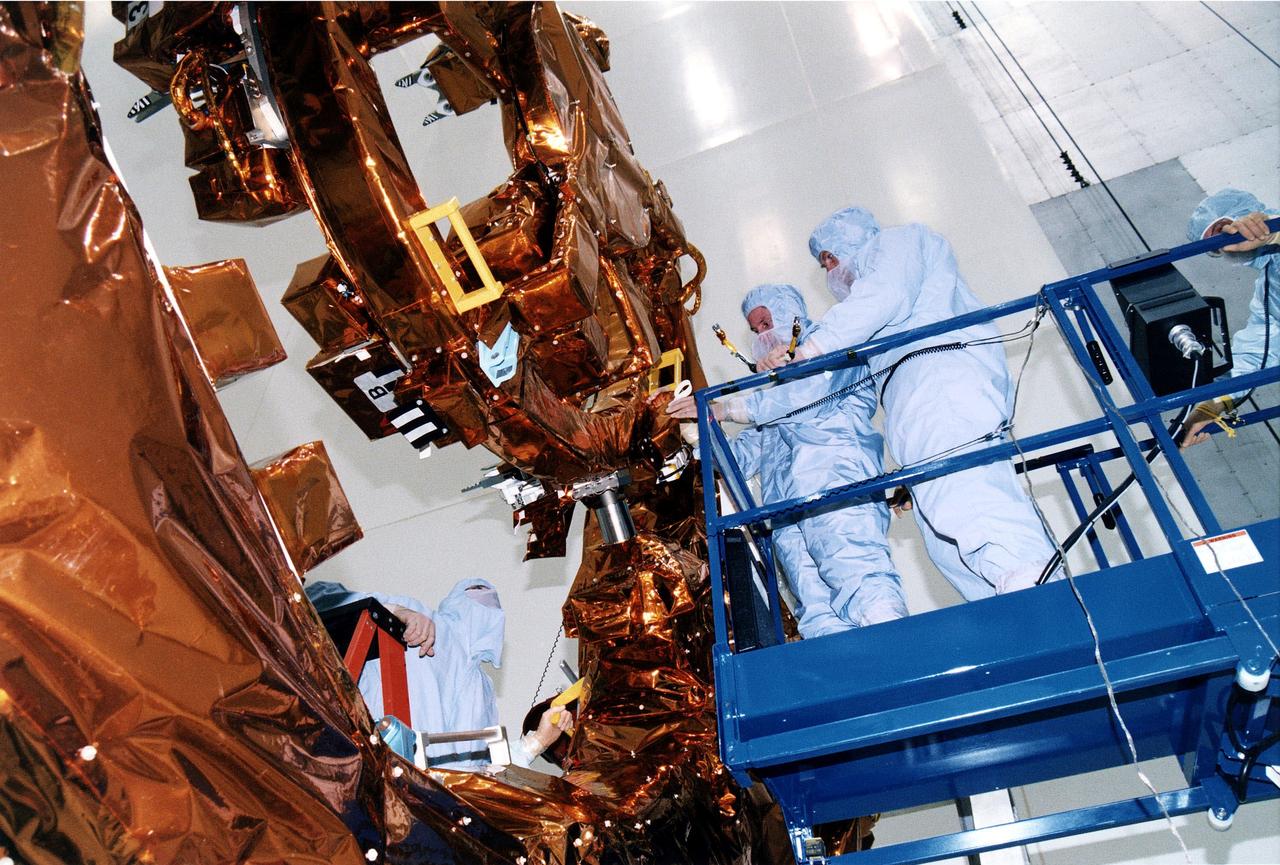
KENNEDY SPACE CENTER, FLA. -  Workers in KSC's Vertical Processing Facility make final adjustments to the Flight Support System (FSS) for STS-82, the second Hubble Space Telescope servicing mission.  The FSS is reusable flight hardware that provides the mechanical, structural and electrical interfaces between HST, the space support equipment and the orbiter for payload retrieval and on-orbit servicing.  Liftoff aboard Discovery is targeted Feb. 11 with a crew of seven.
KENNEDY SPACE CENTER, FLA. - Workers in KSC's Vertical Processing Facility make final adjustments to the Flight Support System (FSS) for STS-82, the second Hubble Space Telescope servicing mission. The FSS is reusable flight hardware that provides the mechanical, structural and electrical interfaces between HST, the space support equipment and the orbiter for payload retrieval and on-orbit servicing. Liftoff aboard Discovery is targeted Feb. 11 with a crew of seven.
This is the third color image taken by NASA's Ingenuity helicopter. It was snapped on the helicopter's second flight, on April 22, 2021, from an altitude of about 17 feet (5.2 meters). Tracks made by NASA's Perseverance Mars rover can be seen as well.  https://photojournal.jpl.nasa.gov/catalog/PIA24621
The Third Color Image Taken by Ingenuity
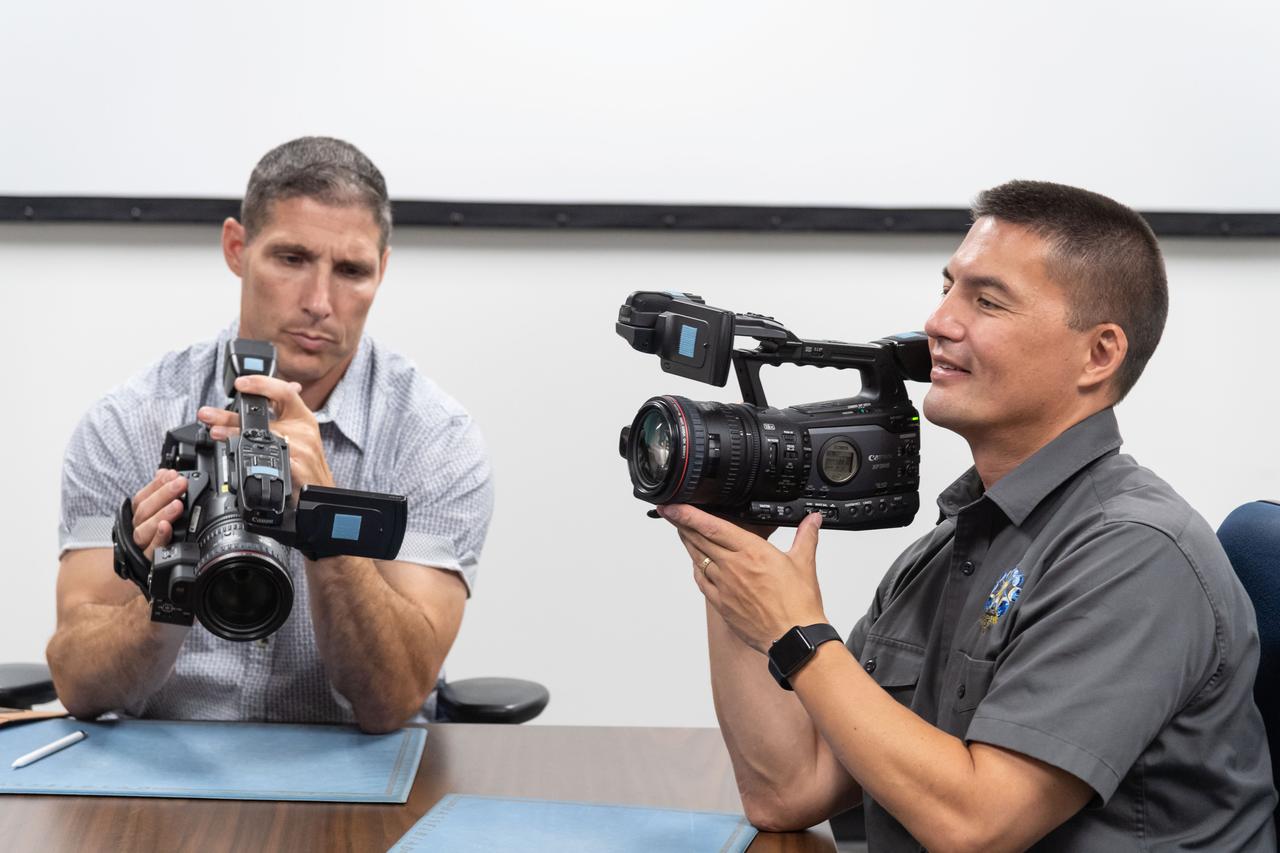
NASA Commercial Crew Program Astronauts Mike Hopkins and Kjell Lindgren practice operating the cameras they would use on board the International Space Station. Hopkins is assigned to the second flight of SpaceX’s Crew Dragon, and Lindgren is assigned as a backup for the Crew Dragon’s first and second flights.
CCP Astronauts - Camera Proficiency Training
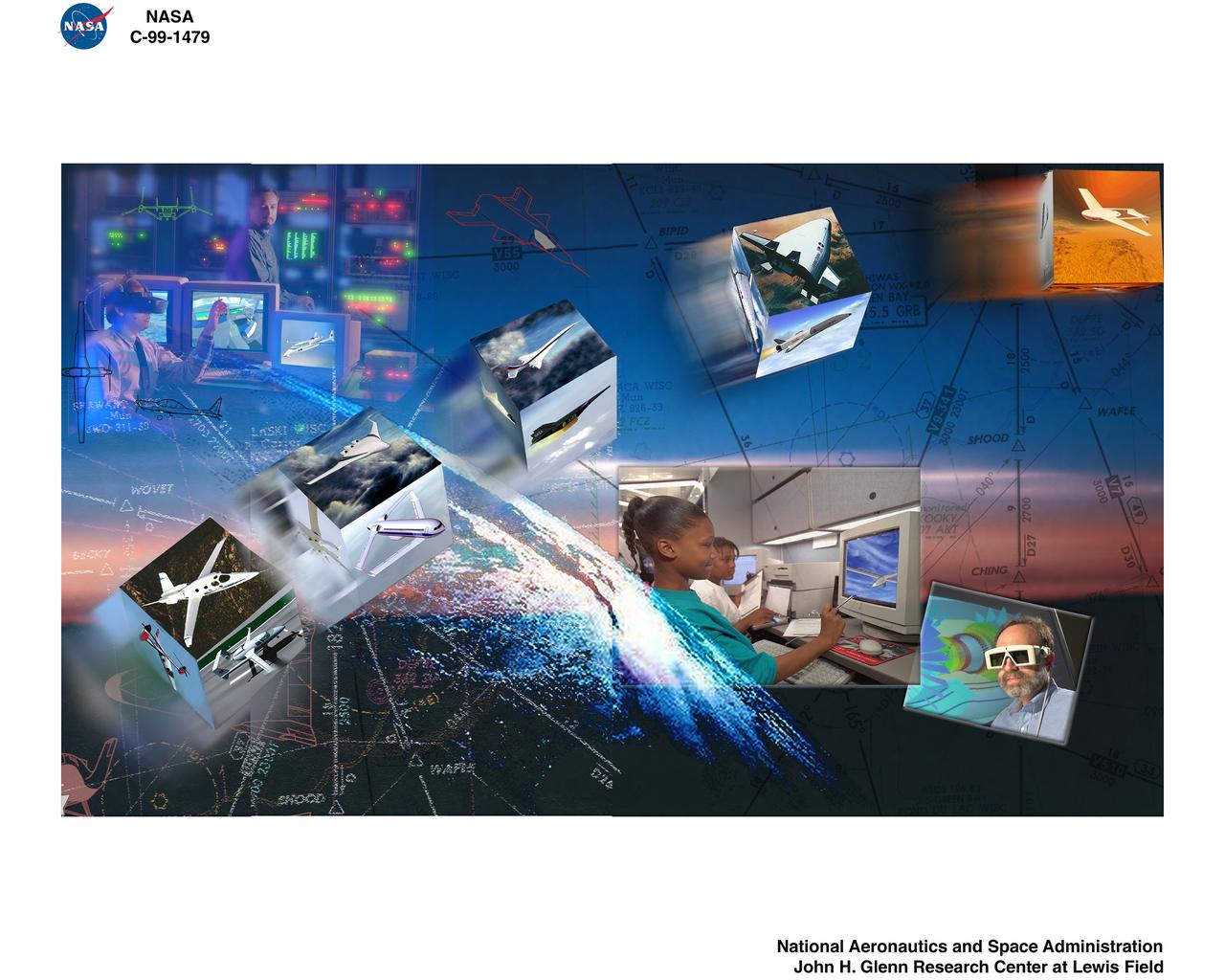
LEADING THE SECOND CENTURY OF FLIGHT THEME MURAL FOR OSHKOSH EAA FLY-IN 1999
GRC-1999-C-01479
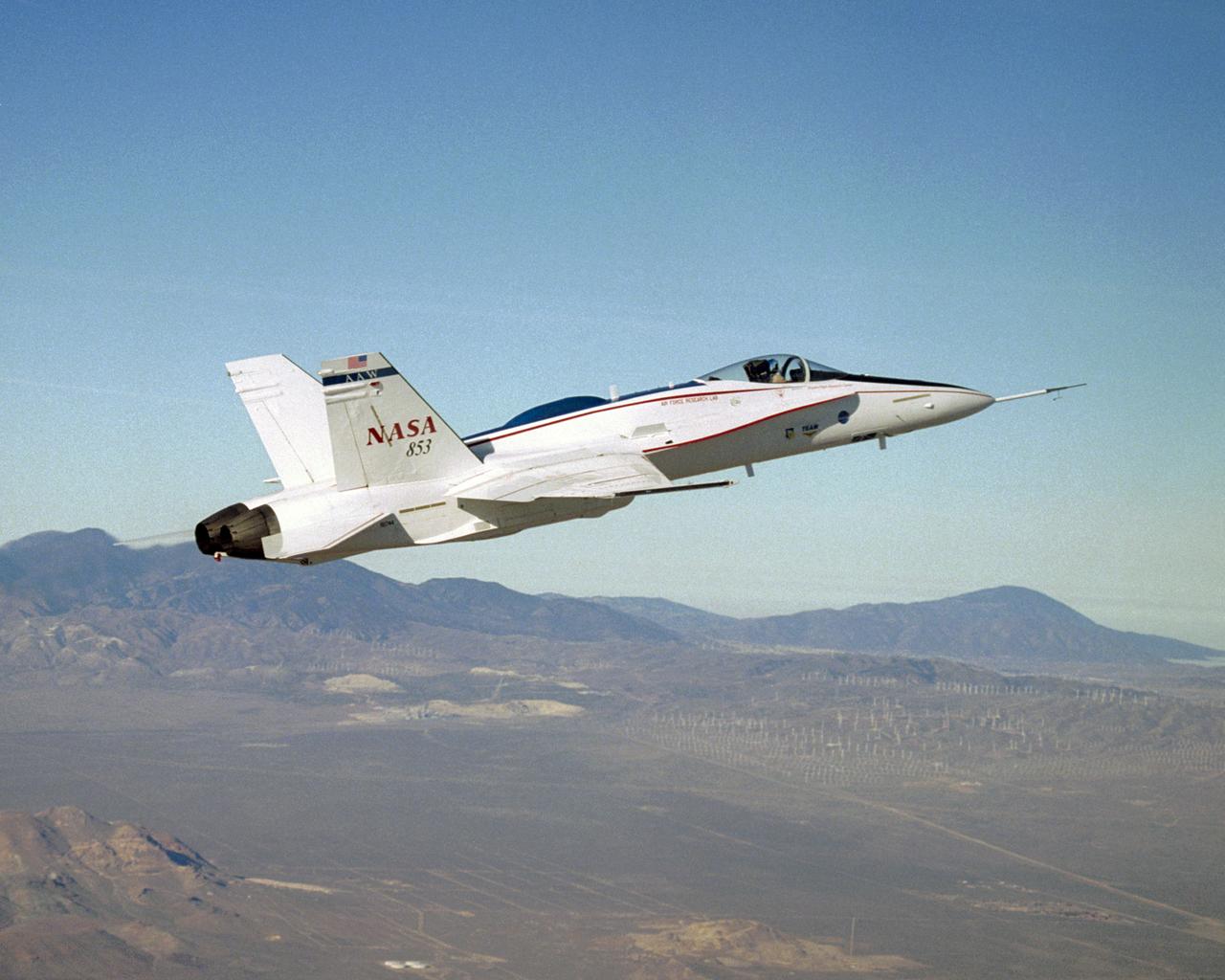
NASA's Active Aeroelastic Wing F/A-18 resumed flight tests in the second phase of the program at the Dryden Flight Research Center in early December 2004.
EC04-0361-02
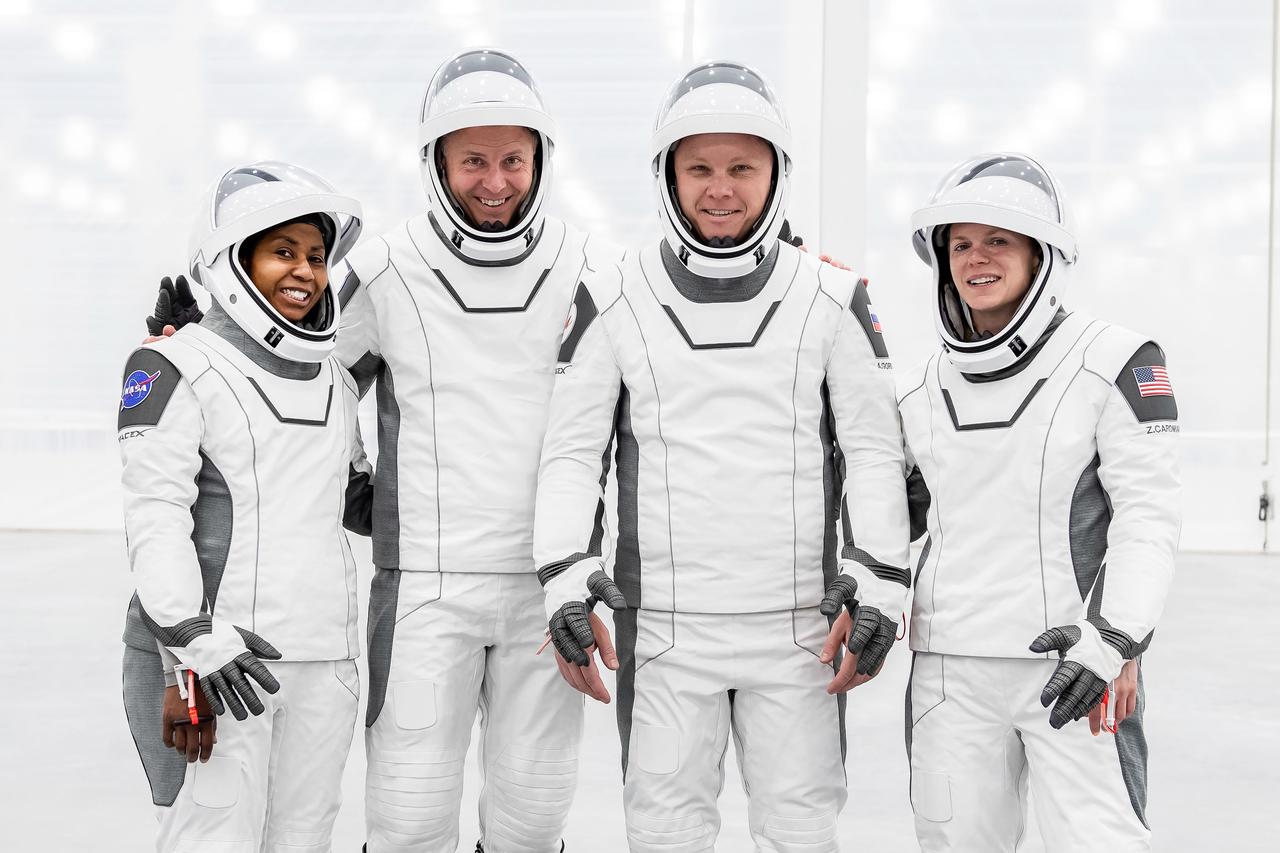
jsc2024e052327 (July 22, 2024) --- The crew of NASA’s SpaceX Crew-9 mission to the International Space Station poses for a group photo in their flight suits at SpaceX’s new Dragon refurbishing facility at Kennedy Space Center in Florida. This will be the first spaceflight for Cardman and Gorbunov, the second mission to the orbiting laboratory for Hague, and fourth spaceflight for Wilson. Credit: SpaceX
The crew of NASA’s SpaceX Crew-9 mission
CAPE CANAVERAL, Fla. -- STS-6 second Flight Readiness Firing test, Launch Complex 39.  Photo credit: NASA
KSC-83PC-0023
S77-28210 (13 Sept 1977) --- Astronauts Joe H. Engle (face down), commander, and Richard H. Truly (face partially obscured by Engle), pilot, are greeted by Rockwell technicians following egress from the  shuttle Orbiter 101 "Enterprise." They had just completed a five-minute, 31-second unpowered free flight in the "Enterprise," the second of a series of such flights, conducted on September 13, 1977, at the Dryden Flight Research Center (DFRC) and Edwards Air Force Base.
Astronauts Engle and Truly following egress Shuttle Orbiter 101 "Enterprise"
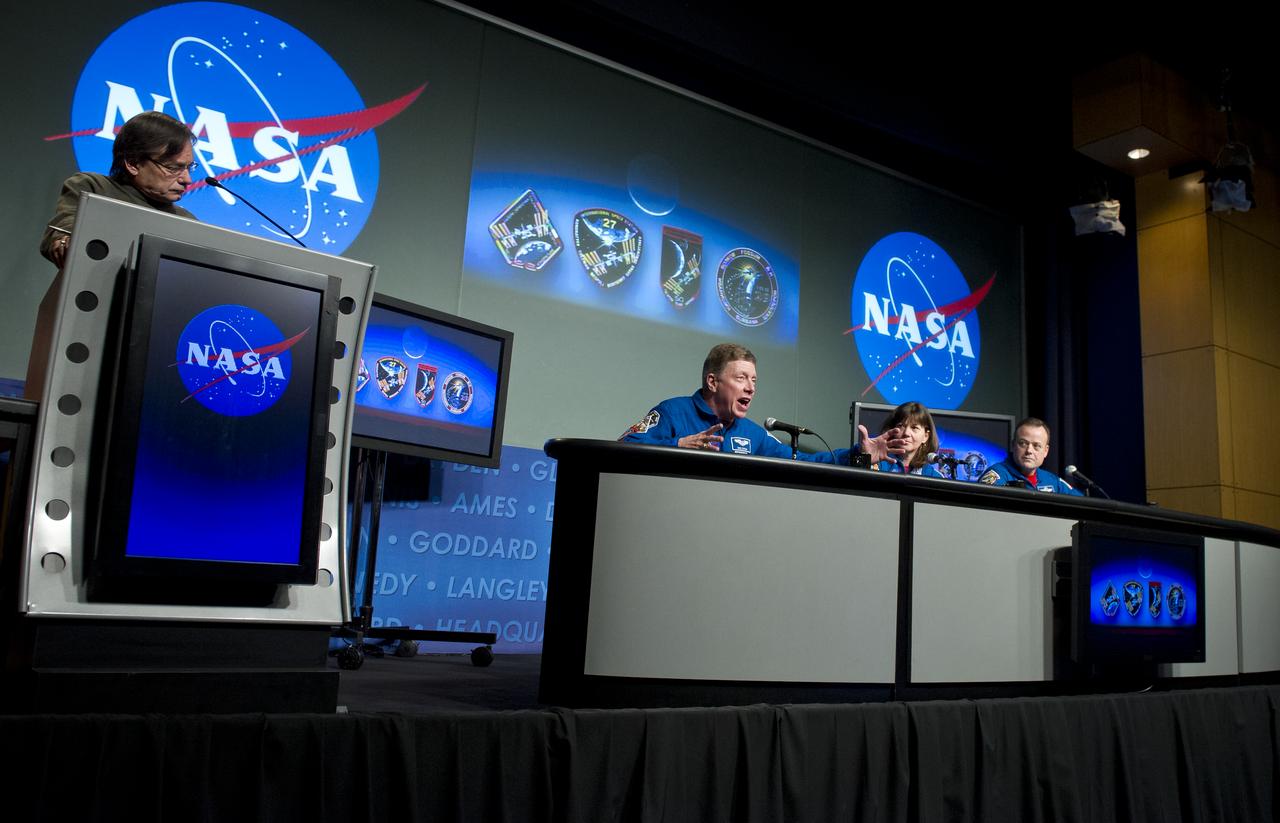
Mike Fossum, second from left, Expedition 28 flight engineer and Expedition 29 Commander, discusses his mission to the International Space Station during a visit to NASA Headquarters in Washington, Tuesday, Feb. 14, 2012.  Seen with Fossum are astronauts Catherine Coleman, second from right, Expedition 26 & 27 flight engineer, and Ron Garan, Expedition 27 & 28 flight engineer.  Photo Credit:  (NASA/Carla Cioffi)
Expeditions 26, 27, 28 & 29 Presentation
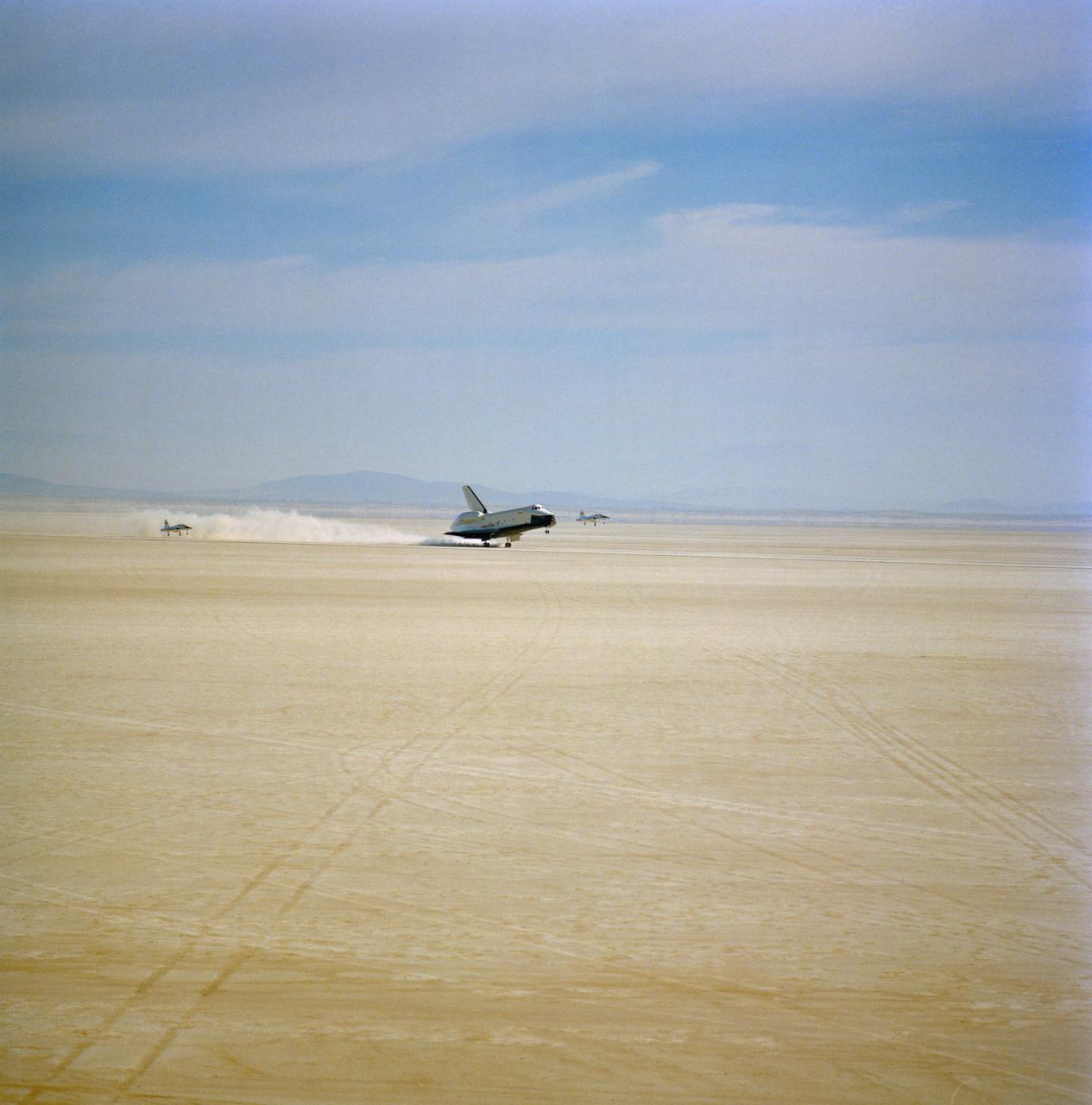
S77-28209 (13 Sept 1977) --- The shuttle orbiter 101 "Enterprise" lands on the desert at Edwards Air Force Base to conclude a five-minute, 31-second unpowered flight during the second free-flight of the Shuttle Approach and Landing Test (ALT) series, on September 13, 1977.  Two T-38 chase planes remain with the "Enterprise" for the landing.  Asstronauts Joe H. Engle, commander, and Richard H. Truly, pilot, were the crewmen for the flight.
Shuttle Orbiter "Enterprise" lands at Edwards AFB after second ALT
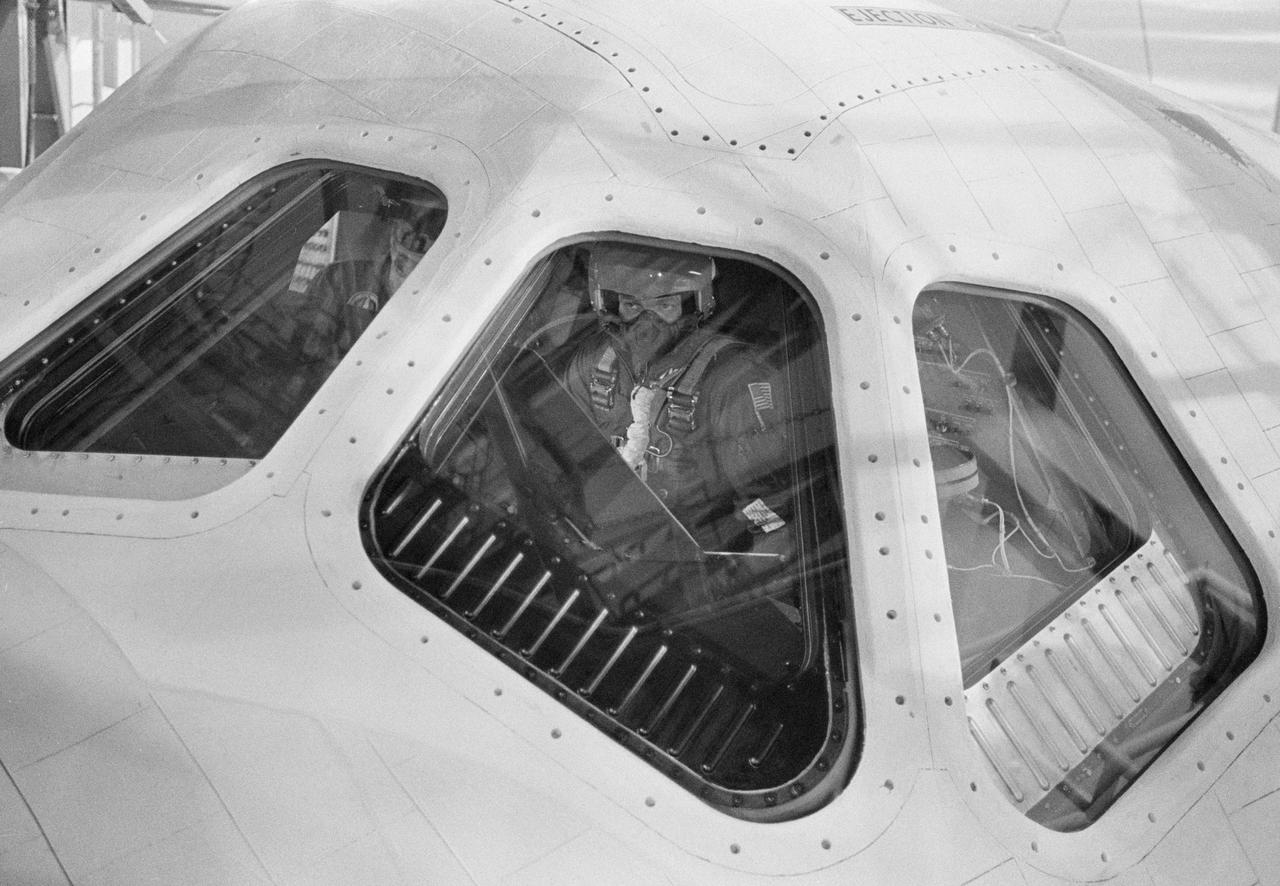
S77-28212 (13 Sept 1977) --- Astronauts Joe H. Engle (right), commander, and Richard H. Truly, pilot, sit in the cockpit of the shuttle Orbiter 101 "Enterprise" at the Dryden Flight Research Center (DFRC) prior to takeoff of the NASA 747 carrier aircraft to which the "Enterprise" was mated.  The pair later made a five-minute, 31-second free-flight in the craft, the second in a series of such flights for the Shuttle Approach and Landing Tests (ALT) program.  The photograph was made from the Mate-Demate Device (MDD).
Astronauts Engle and Truly in cockpit of Orbiter 101 prior to takeoff
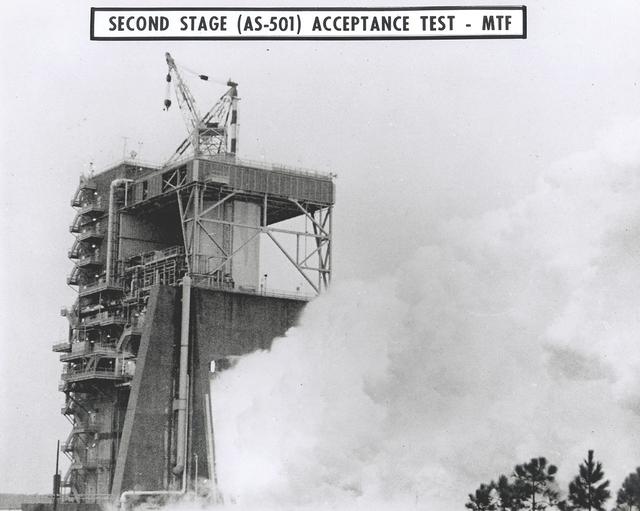
This photograph shows a test firing of a Saturn V second stage (S-II) on the S-IC test stand at the Propulsion Test Facility near New Orleans, Louisiana. This second stage component was used in the unmarned test flight of Apollo 4.
Saturn Apollo Program
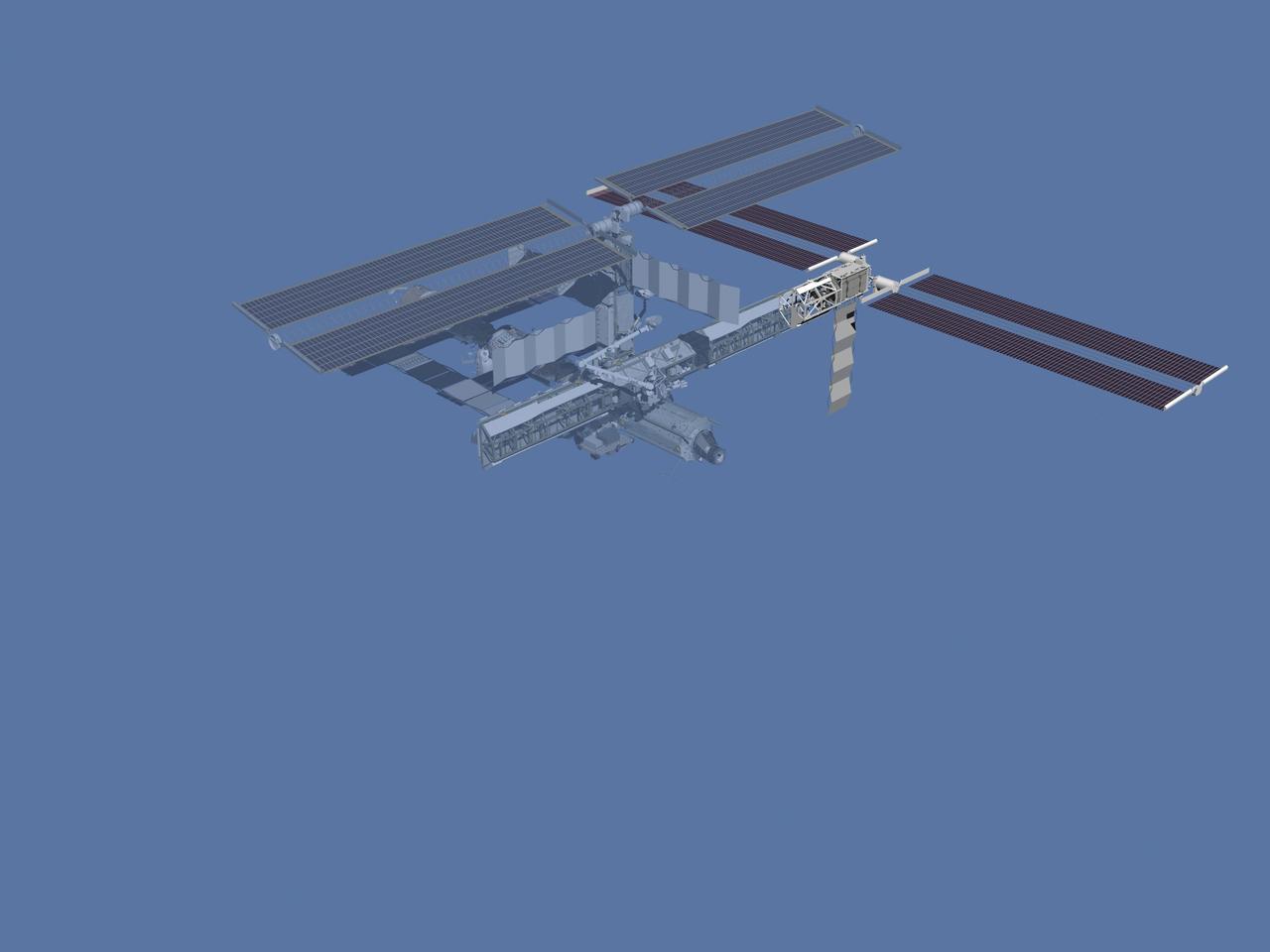
JSC2006-E-43498 (September 2006) --- Computer-generated artist's rendering of the International Space Station after flight STS-115/12A. Space Shuttle Atlantis crew delivers and installs the second port truss segment P3/P4. The second set of solar arrays is deployed.
ISS Assembly Sequence Rev H still images for use on Imagery Online, HSF web
This animated GIF was generated using imagery acquired by the navigation camera aboard NASA's Ingenuity Mars Helicopter during its 25th flight on April 18, 2022. Covering a distance of 2,310 feet (704 meters) and at a speed of 12 mph (5.5 meters per second), it was the Red Planet rotorcraft's longest and fastest flight to date.  The first frame of the clip shows the view about one second into the flight. After reaching an altitude of 33 feet (10 meters), the helicopter heads southwest, accelerating to its maximum speed in less than three seconds. Ingenuity first flies over a group of sand ripples then, about halfway through the video, several rock fields. Finally, relatively flat and featureless terrain appears below, making a good landing spot. The video of the 161.3-second flight was speeded up approximately five times, reducing it to less than 35 seconds.  Ingenuity's navigation camera has been programmed to deactivate whenever the rotorcraft is within 3 feet (1 meter) of the surface. This helps ensure any dust kicked up during takeoff and landing won't interfere with the navigation system as it tracks features on the ground.  Movie available at https://photojournal.jpl.nasa.gov/catalog/PIA25321
Ingenuity Mars Helicopter's Record-Breaking Flight
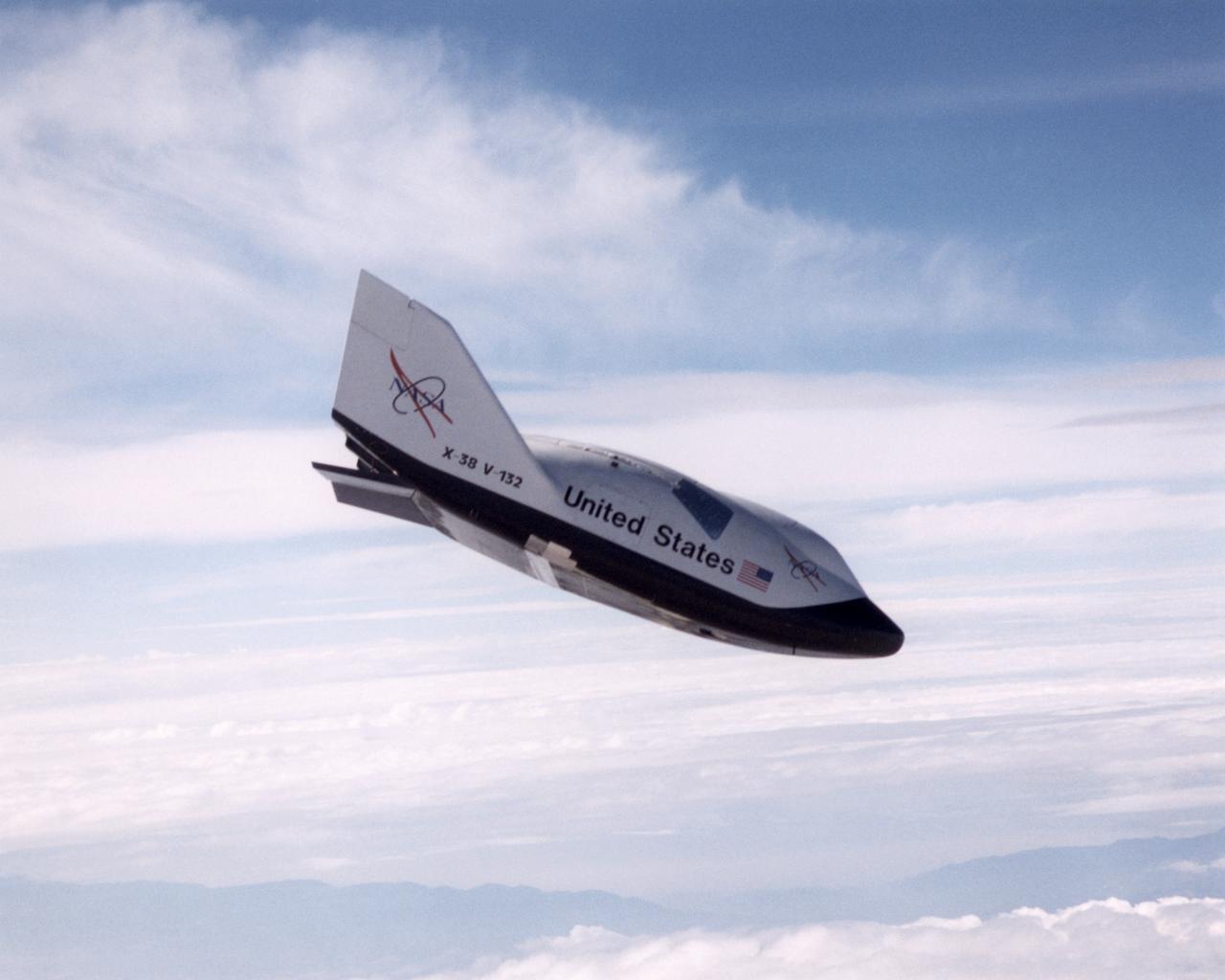
The X-38, a research vehicle built to help develop technology for an emergency Crew Return Vehicle (CRV), descends under its steerable parachute during a July 1999 test flight at the Dryden Flight Research Center, Edwards, California. It was the fourth free flight of the test vehicles in the X-38 program, and the second free flight test of Vehicle 132 or Ship 2. The goal of this flight was to release the vehicle from a higher altitude -- 31,500 feet -- and to fly the vehicle longer -- 31 seconds -- than any previous X-38 vehicle had yet flown. The project team also conducted aerodynamic verification maneuvers and checked improvements made to the drogue parachute.
X-38 Ship #2 in Free Flight
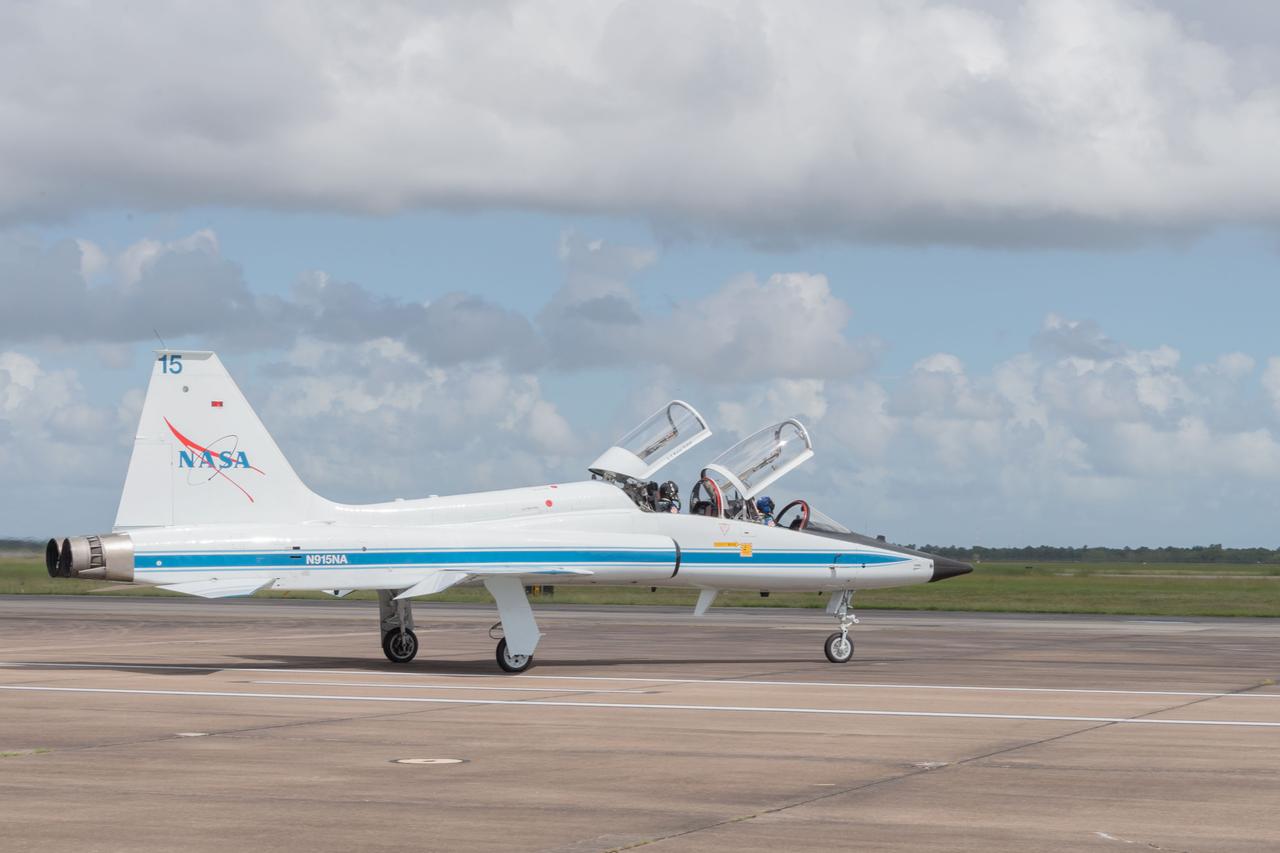
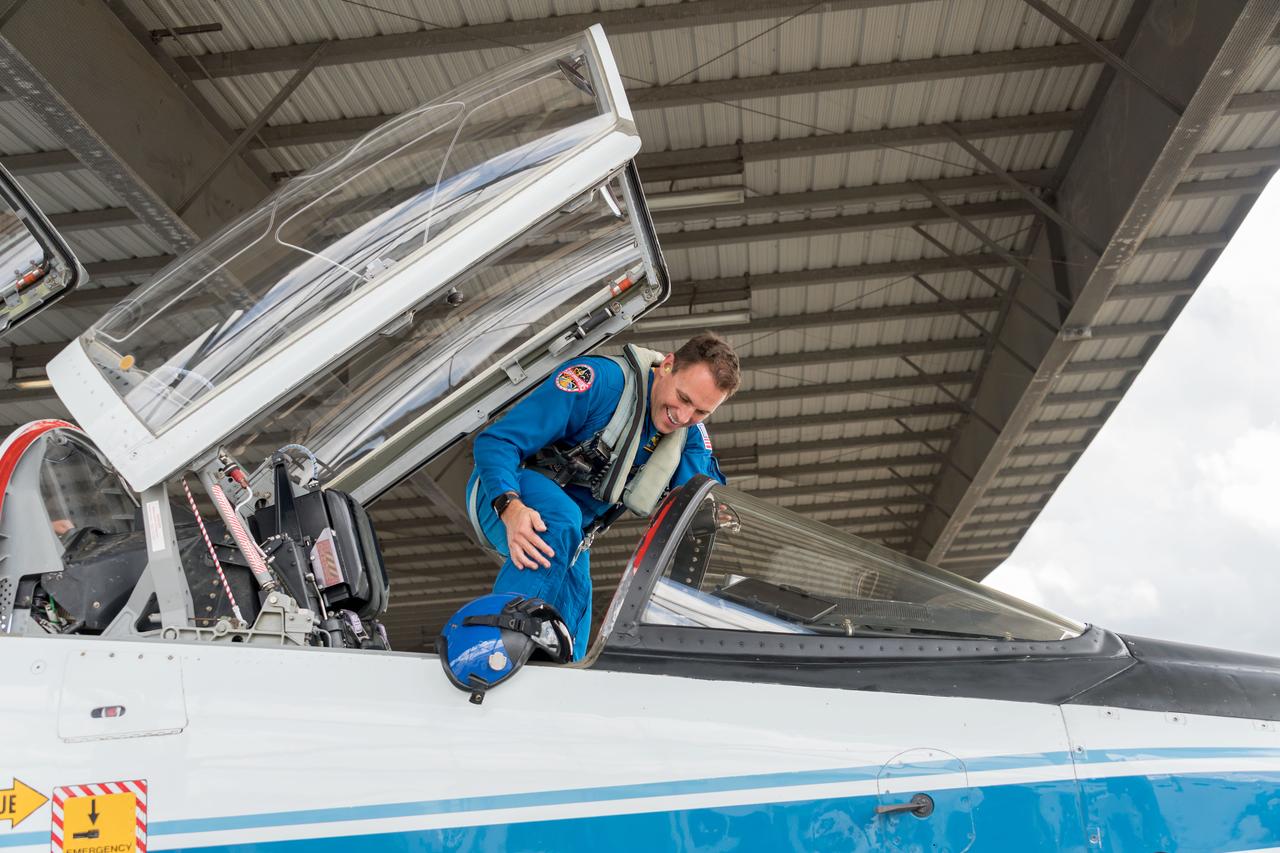
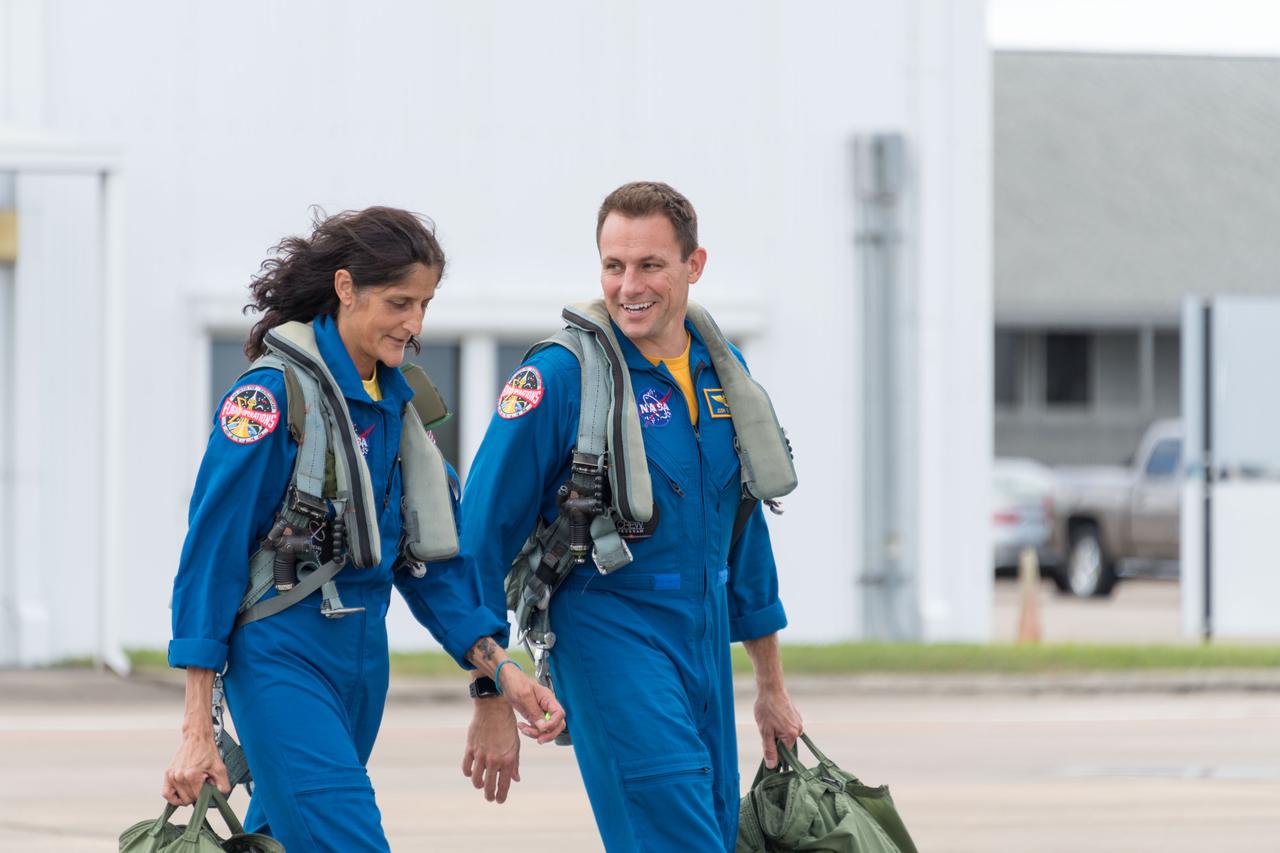
NASA commercial crew astronauts Josh Cassada and Suni Williams prepare for T-38 training flights at Ellington Field Joint Reserve Base in Houston. Cassada and Williams are assigned to the Boeing Starliner’s second crewed flight.
CCP Astronauts - NASA T-38 Aircraft Operations
NASA commercial crew astronaut Suni Williams prepares for T-38 training flights at Ellington Field Joint Reserve Base in Houston. Williams is assigned to the Boeing Starliner’s second crewed flight.
CCP Astronauts - NASA T-38 Aircraft Operations
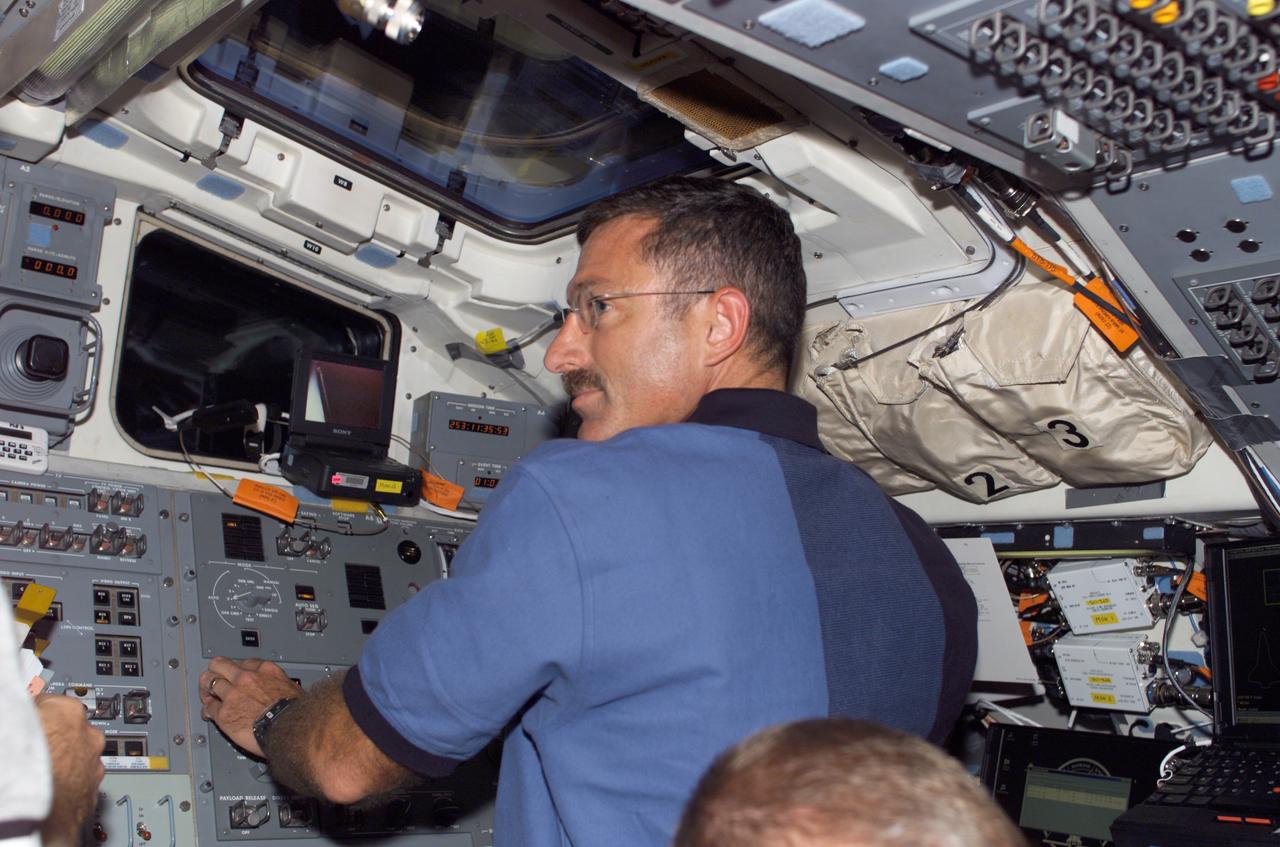
S115-E-05317 (10 Sept. 2006) --- Astronaut Daniel C. Burbank, STS-115 mission specialist, works with controls on the aft flight deck of the Space Shuttle Atlantis during activities on the second flight day.
STS-115 MS Burbank on Atlantis Aft Flight Deck
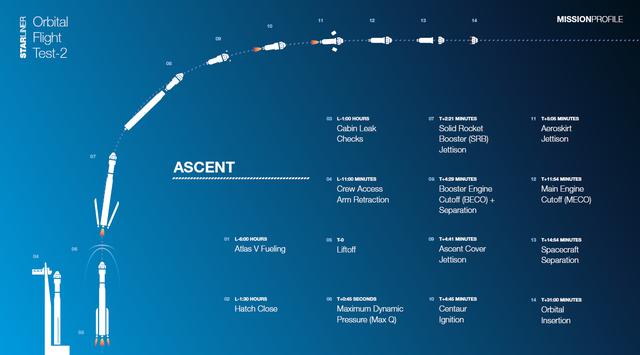
This graphic details ascent operations for NASA’s Boeing Orbital Flight Test-2 (OFT-2). OFT-2 is the second uncrewed flight test of the company’s CST-100 Starliner spacecraft for the agency’s Commercial Crew Program.
Boeing OFT-2 Graphics - Ascent
STS121-E-05443 (5 July 2006) --- On Discovery's flight deck, astronaut Mark E. Kelly, pilot, anticipates tomorrow's docking and busy flight day three activities of STS-121, his second space mission.
Kelly on the FWD FD during STS-121
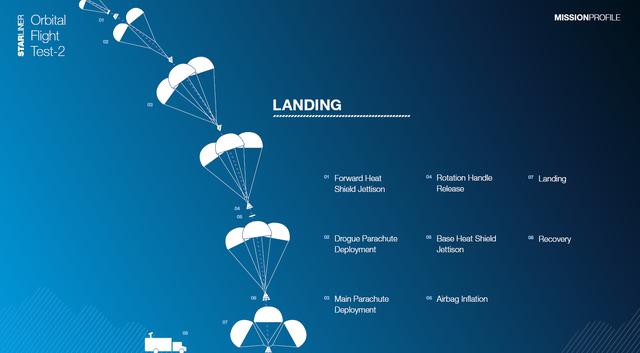
This graphic details landing operations for NASA’s Boeing Orbital Flight Test-2 (OFT-2). OFT-2 is the second uncrewed flight test of the company’s CST-100 Starliner spacecraft for the agency’s Commercial Crew Program.
Boeing OFT-2 Graphics - Landing
NASA commercial crew astronaut Josh Cassada prepares for T-38 training flights at Ellington Field Joint Reserve Base in Houston. Cassada is assigned to the Boeing Starliner’s second crewed flight.
CCP Astronauts - NASA T-38 Aircraft Operations
NASA commercial crew astronaut Josh Cassada prepares for T-38 training flights at Ellington Field Joint Reserve Base in Houston. Cassada is assigned to the Boeing Starliner’s second crewed flight.
CCP Astronauts - NASA T-38 Aircraft Operations
NASA commercial crew astronauts Josh Cassada and Suni Williams prepare for T-38 training flights at Ellington Field Joint Reserve Base in Houston. Cassada and Williams are assigned to the Boeing Starliner’s second crewed flight.
CCP Astronauts - NASA T-38 Aircraft Operations
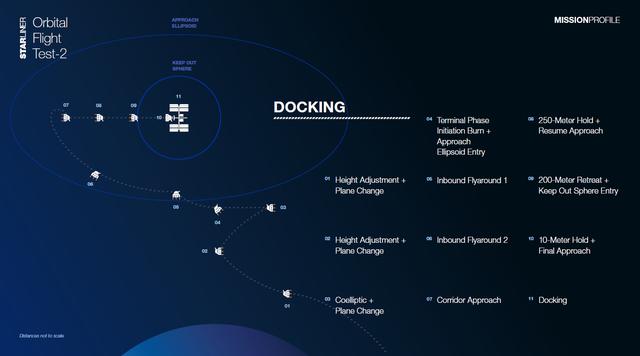
This graphic details docking operations for NASA’s Boeing Orbital Flight Test-2 (OFT-2). OFT-2 is the second uncrewed flight test of the company’s CST-100 Starliner spacecraft for the agency’s Commercial Crew Program.
Boeing OFT-2 Graphics - Docking
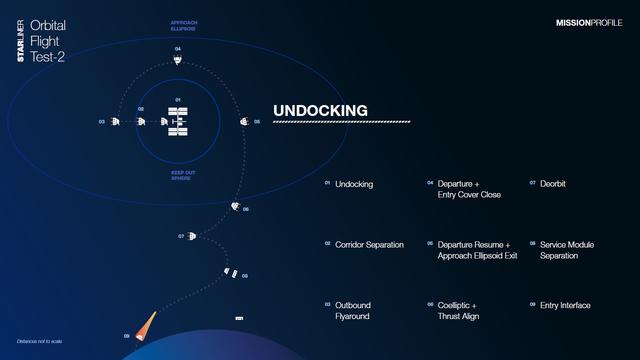
This graphic details undocking operations for NASA’s Boeing Orbital Flight Test-2 (OFT-2). OFT-2 is the second uncrewed flight test of the company’s CST-100 Starliner spacecraft for the agency’s Commercial Crew Program.
Boeing OFT-2 Graphics - Undocking
NASA commercial crew astronauts Josh Cassada and Suni Williams prepare for T-38 training flights at Ellington Field Joint Reserve Base in Houston. Cassada and Williams are assigned to the Boeing Starliner’s second crewed flight.
CCP Astronauts - NASA T-38 Aircraft Operations
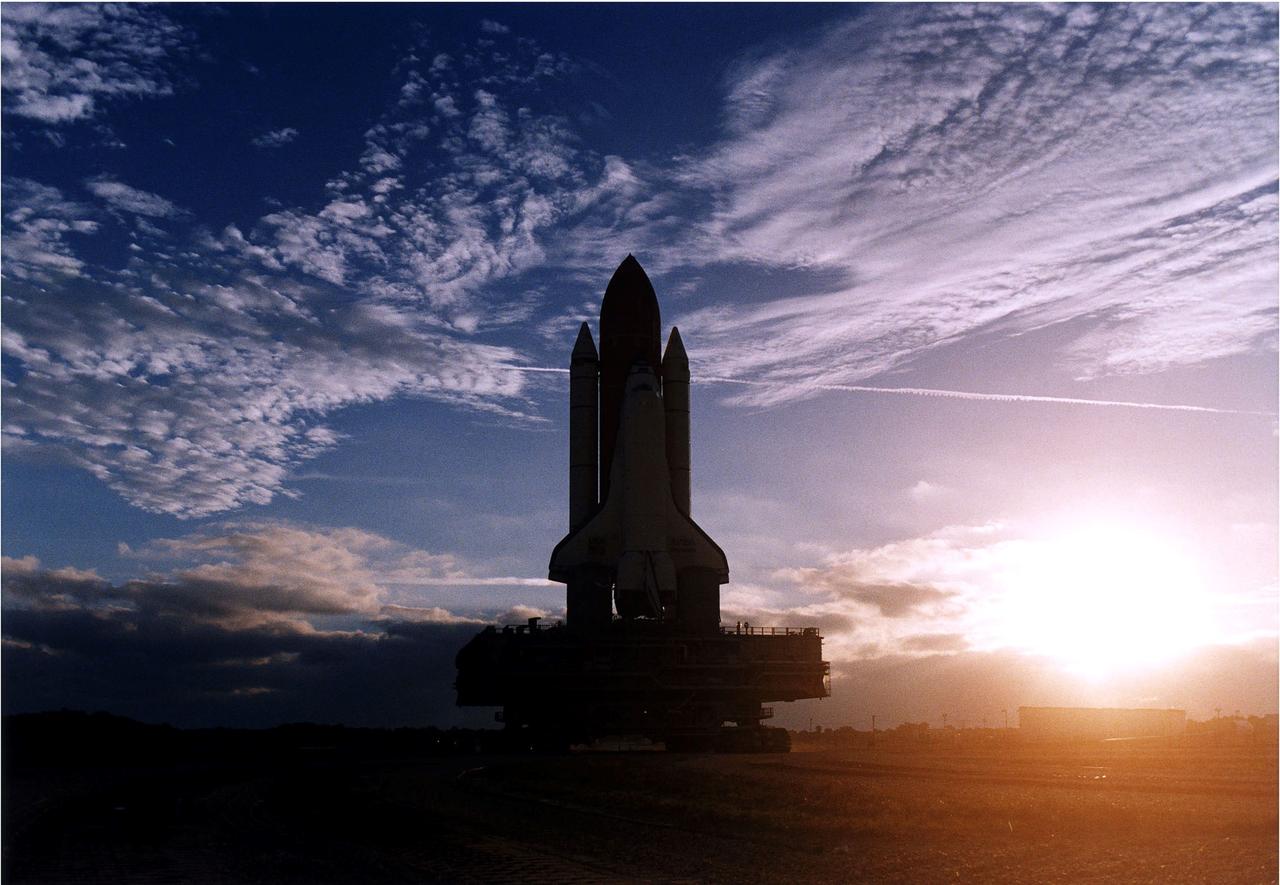
KENNEDY SPACE CENTER, FLA. -  The rising sun and some scattered clouds provide a picturesque backdrop for the Space Shuttle Discovery as it travels along the crawlerway toward Launch Pad 39A in preparation for the STS-82 mission.  The Shuttle is on a Mobile Launcher Platform, and the entire assemblage is being carried by a large, tracked vehicle called the crawler transporter.  A seven-member crew will perform the second servicing of the orbiting Hubble Space Telescope (HST) during the 10-day STS-82 flight, whcih is targeted for a Feb. 11 liftoff.
KENNEDY SPACE CENTER, FLA. - The rising sun and some scattered clouds provide a picturesque backdrop for the Space Shuttle Discovery as it travels along the crawlerway toward Launch Pad 39A in preparation for the STS-82 mission. The Shuttle is on a Mobile Launcher Platform, and the entire assemblage is being carried by a large, tracked vehicle called the crawler transporter. A seven-member crew will perform the second servicing of the orbiting Hubble Space Telescope (HST) during the 10-day STS-82 flight, whcih is targeted for a Feb. 11 liftoff.
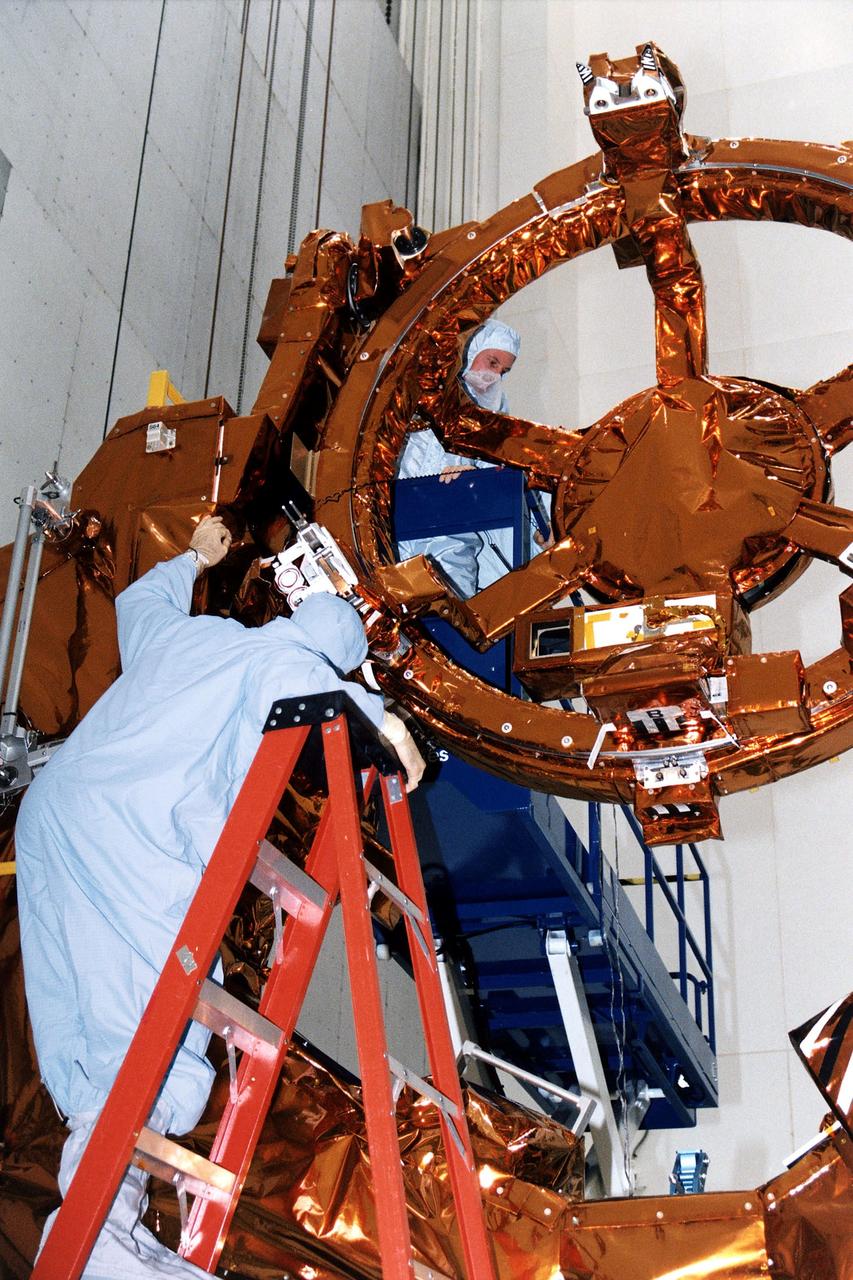
KENNEDY SPACE CENTER, FLA. -  STS-82 Mission Specialist Gregory J. Harbaugh, at top, inspects part of the Flight Support System during the Crew Equipment Integration Test (CEIT) at KSC's Vertical Processing Facility.  Harbaugh and the other six STS-82 crew members will conduct the second Hubble Space Telescope (HST) servicing mission aboard the Space Shuttle Discovery.  Harbaugh will be one of four spacewalkers.  Liftoff aboard Discovery is scheduled Feb. 11.
KENNEDY SPACE CENTER, FLA. - STS-82 Mission Specialist Gregory J. Harbaugh, at top, inspects part of the Flight Support System during the Crew Equipment Integration Test (CEIT) at KSC's Vertical Processing Facility. Harbaugh and the other six STS-82 crew members will conduct the second Hubble Space Telescope (HST) servicing mission aboard the Space Shuttle Discovery. Harbaugh will be one of four spacewalkers. Liftoff aboard Discovery is scheduled Feb. 11.
KENNEDY SPACE CENTER, FLA.  - As the Stafford-Covey Return to Flight Task Group (SCTG) tours the Orbiter Processing Facility, Richard O. Covey (second from left), former Space Shuttle commander, points to equipment.  Covey is co-chair of the SCTG along with Thomas P. Stafford, Apollo commander. Others in the photo are William Wegner, James Adamson and Joe Engle.  Chartered by NASA Administrator Sean O’Keefe, the task group will perform an independent assessment of NASA’s implementation of the final recommendations by the Columbia Accident Investigation Board.
KENNEDY SPACE CENTER, FLA. - As the Stafford-Covey Return to Flight Task Group (SCTG) tours the Orbiter Processing Facility, Richard O. Covey (second from left), former Space Shuttle commander, points to equipment. Covey is co-chair of the SCTG along with Thomas P. Stafford, Apollo commander. Others in the photo are William Wegner, James Adamson and Joe Engle. Chartered by NASA Administrator Sean O’Keefe, the task group will perform an independent assessment of NASA’s implementation of the final recommendations by the Columbia Accident Investigation Board.
KENNEDY SPACE CENTER, FLA.  -  In the Columbia Debris Hangar, Shuttle Launch Director Mike Leinbach (left) talks to members of the  Stafford-Covey Return to Flight Task Group (SCTG) about reconstruction efforts.   Chairing the task group are Richard O. Covey (second from right), former Space Shuttle commander, and Thomas P. Stafford, Apollo commander.  Chartered by NASA Administrator Sean O’Keefe, the task group will perform an independent assessment of NASA’s implementation of the final recommendations by the Columbia Accident Investigation Board.
KENNEDY SPACE CENTER, FLA. - In the Columbia Debris Hangar, Shuttle Launch Director Mike Leinbach (left) talks to members of the Stafford-Covey Return to Flight Task Group (SCTG) about reconstruction efforts. Chairing the task group are Richard O. Covey (second from right), former Space Shuttle commander, and Thomas P. Stafford, Apollo commander. Chartered by NASA Administrator Sean O’Keefe, the task group will perform an independent assessment of NASA’s implementation of the final recommendations by the Columbia Accident Investigation Board.
KENNEDY SPACE CENTER, FLA. -  STS-82 crew members examine part of the Flight Support System during the Crew Equipment Integration Test (CEIT) in KSC's Vertical Processing Facility.  From left are Mission Specialists Steven L. Smith and Gregory J. Harbaugh and Payload Commander Mark C. Lee.  Liftoff of STS-82, the second Hubble Space Telescope (HST) servicing mission, is scheduled Feb. 11 aboard Discovery with a crew of seven.
KENNEDY SPACE CENTER, FLA. - STS-82 crew members examine part of the Flight Support System during the Crew Equipment Integration Test (CEIT) in KSC's Vertical Processing Facility. From left are Mission Specialists Steven L. Smith and Gregory J. Harbaugh and Payload Commander Mark C. Lee. Liftoff of STS-82, the second Hubble Space Telescope (HST) servicing mission, is scheduled Feb. 11 aboard Discovery with a crew of seven.
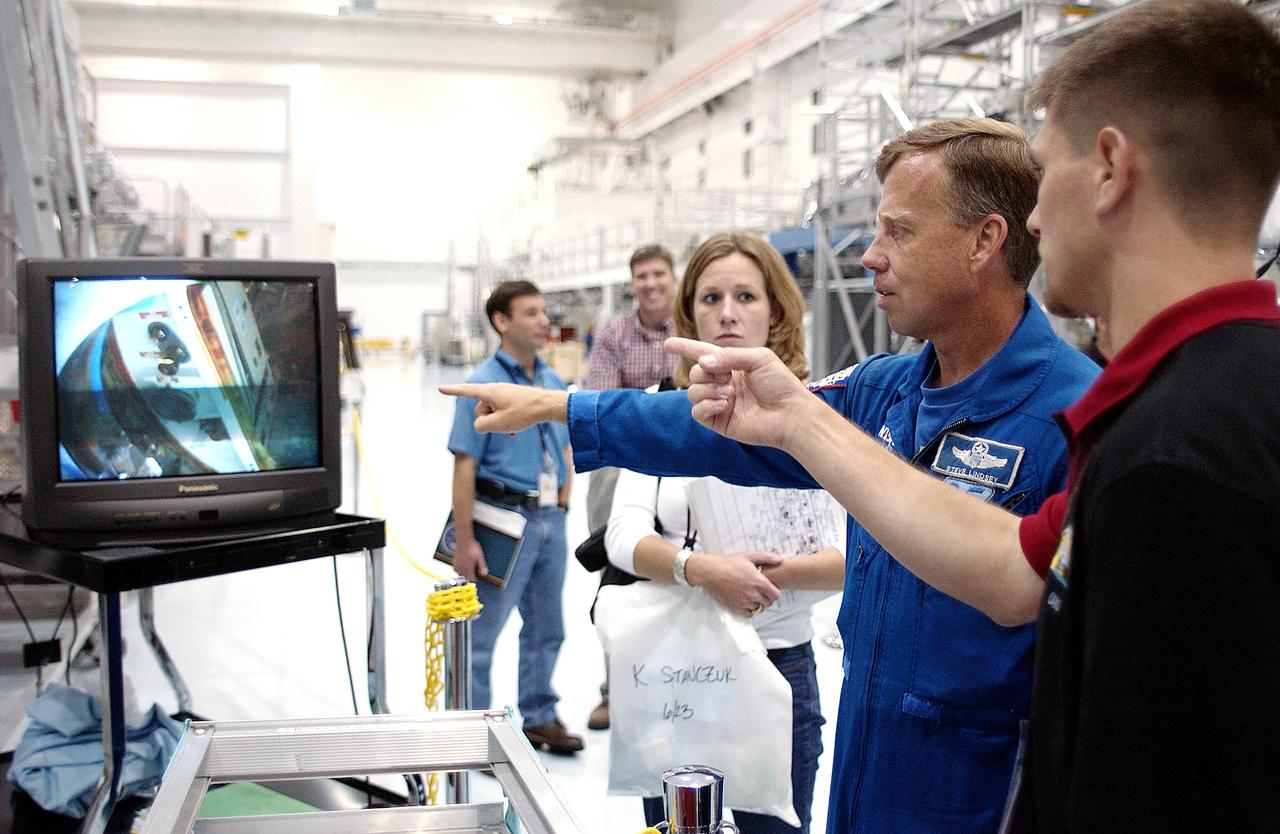
KENNEDY SPACE CENTER, FLA. -  NASA astronaut Steven W. Lindsey (second from right) views the interior of the pressurized module of the Japanese Experiment Module (JEM) on a television monitor in the Space Station Processing Facility.  This major component of JEM, named "Kibo" (Hope), is Japan's primary contribution to the International Space Station and arrived at KSC on June 4.  Lindsey is assigned to command STS-119, an upcoming Space Shuttle flight to the Station.
KENNEDY SPACE CENTER, FLA. - NASA astronaut Steven W. Lindsey (second from right) views the interior of the pressurized module of the Japanese Experiment Module (JEM) on a television monitor in the Space Station Processing Facility. This major component of JEM, named "Kibo" (Hope), is Japan's primary contribution to the International Space Station and arrived at KSC on June 4. Lindsey is assigned to command STS-119, an upcoming Space Shuttle flight to the Station.
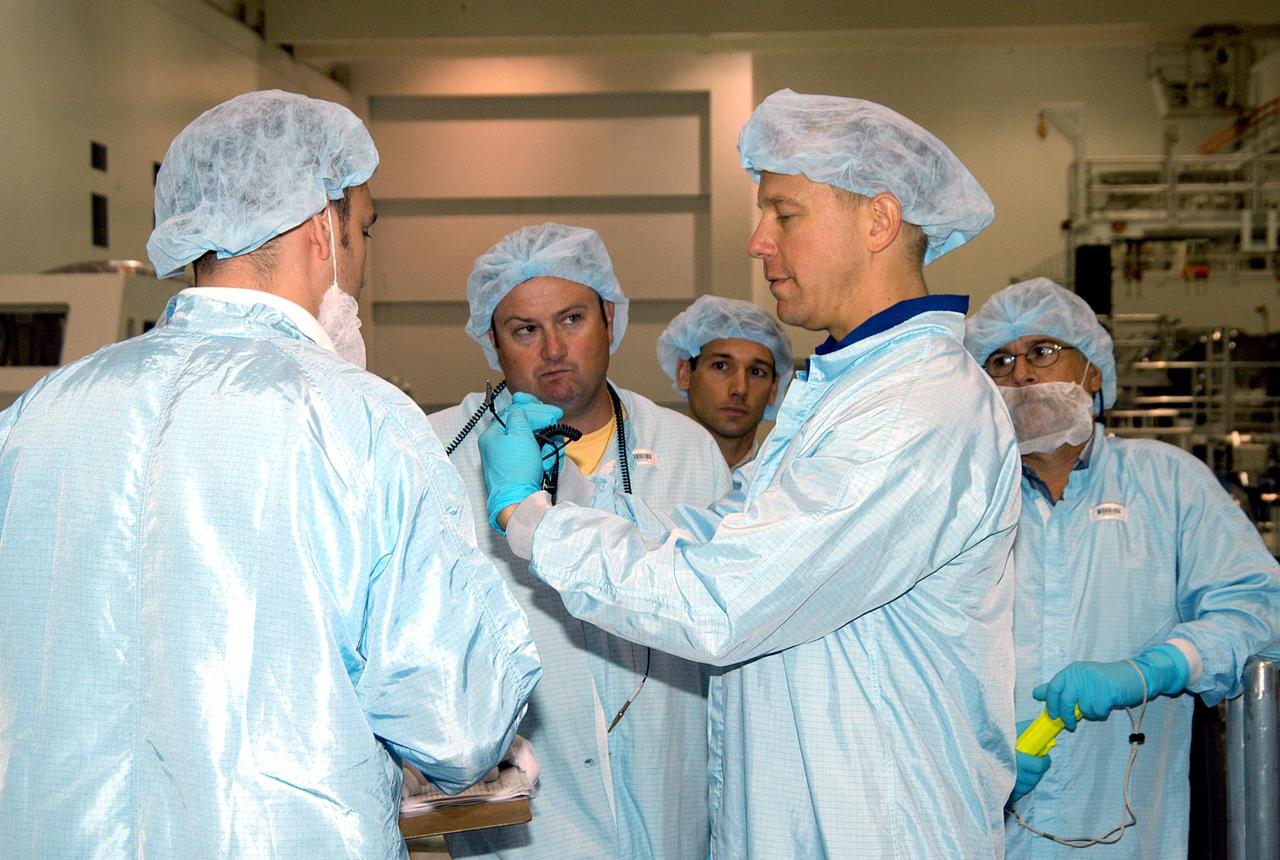
KENNEDY SPACE CENTER, FLA. - Astronaut Tim Kopra (second from right) talks with workers in the Space Station Processing Facility about the Intravehicular Activity (IVA) constraints testing on the Italian-built Node 2, a future element of the International Space Station.  .  The second of three Station connecting modules, the Node 2 attaches to the end of the U.S. Lab and provides attach locations for several other elements.  Kopra is currently assigned technical duties in the Space Station Branch of the Astronaut Office, where his primary focus involves the testing of crew interfaces for two future ISS modules as well as the implementation of support computers and operational Local Area Network on ISS.   Node 2 is scheduled to launch on mission STS-120, Station assembly flight 10A.
KENNEDY SPACE CENTER, FLA. - Astronaut Tim Kopra (second from right) talks with workers in the Space Station Processing Facility about the Intravehicular Activity (IVA) constraints testing on the Italian-built Node 2, a future element of the International Space Station. . The second of three Station connecting modules, the Node 2 attaches to the end of the U.S. Lab and provides attach locations for several other elements. Kopra is currently assigned technical duties in the Space Station Branch of the Astronaut Office, where his primary focus involves the testing of crew interfaces for two future ISS modules as well as the implementation of support computers and operational Local Area Network on ISS. Node 2 is scheduled to launch on mission STS-120, Station assembly flight 10A.
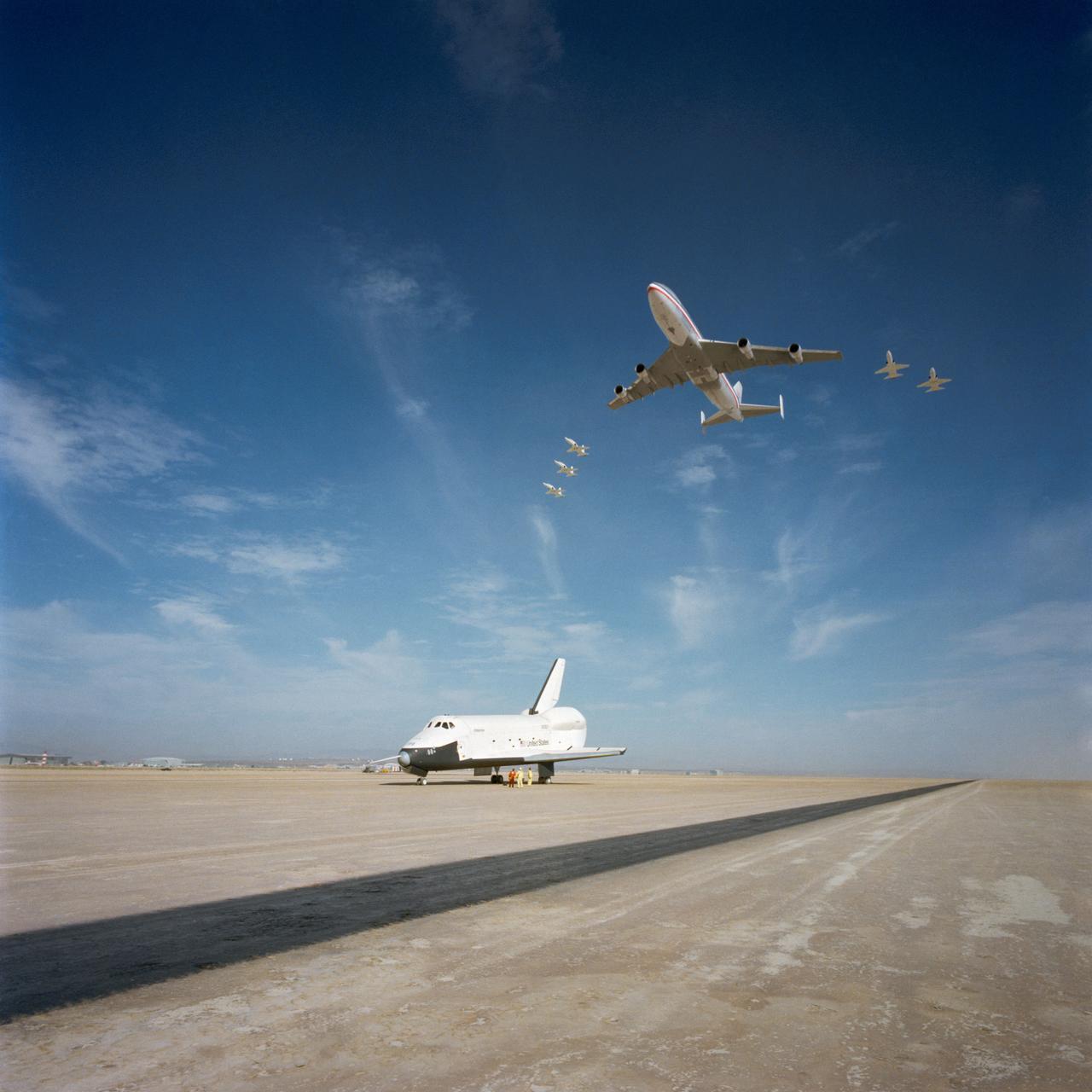
S77-28200 (13 Sept 1977) --- This impressive scene was photographed when the NASA 747 carrier aircraft and five T-38 aircraft flew over the shuttle Orbiter 101 "Enterprise" while it was parked on the runway at Edwards Air Force Base in Southern California.  The Orbiter 101 had just completed a five-minute, 28-second unpowered mission during the second free flight of the Shuttle Approach and Landing Tests (ALT) conducted September 13, 1977, at the Dryden Flight Research Center.
NASA 747 Carrier Aircraft - Five (5) T-38 Aircraft - Shuttle Orbiter 101 "Enterprise" - Edwards AFB (EAFB), CA
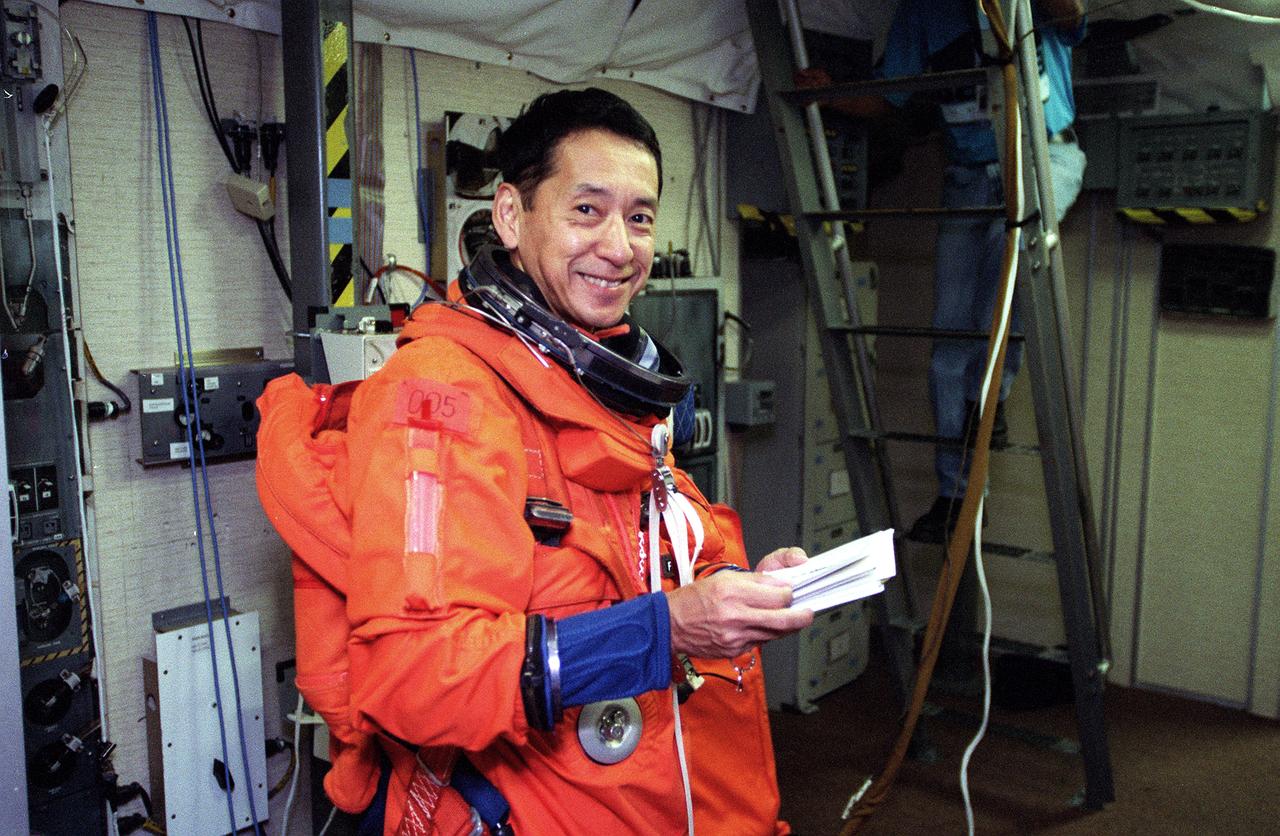
S99-10565 (24 August 1999) --- Astronaut   Mamoru Mohri, STS-99 mission specialist,  goes over a checklist on the mid deck of   a shuttle trainer at the Johnson Space Center (JSC).  Mohri represents Japan's  National Space Development Agency (NASDA).  He will be making his second flight in space and his second flight aboard the Space Shuttle Endeavour, having flown as a payload specialist on the STS-47 mission in 1992.
STS-99 crewmembers train in orbiter mock-up
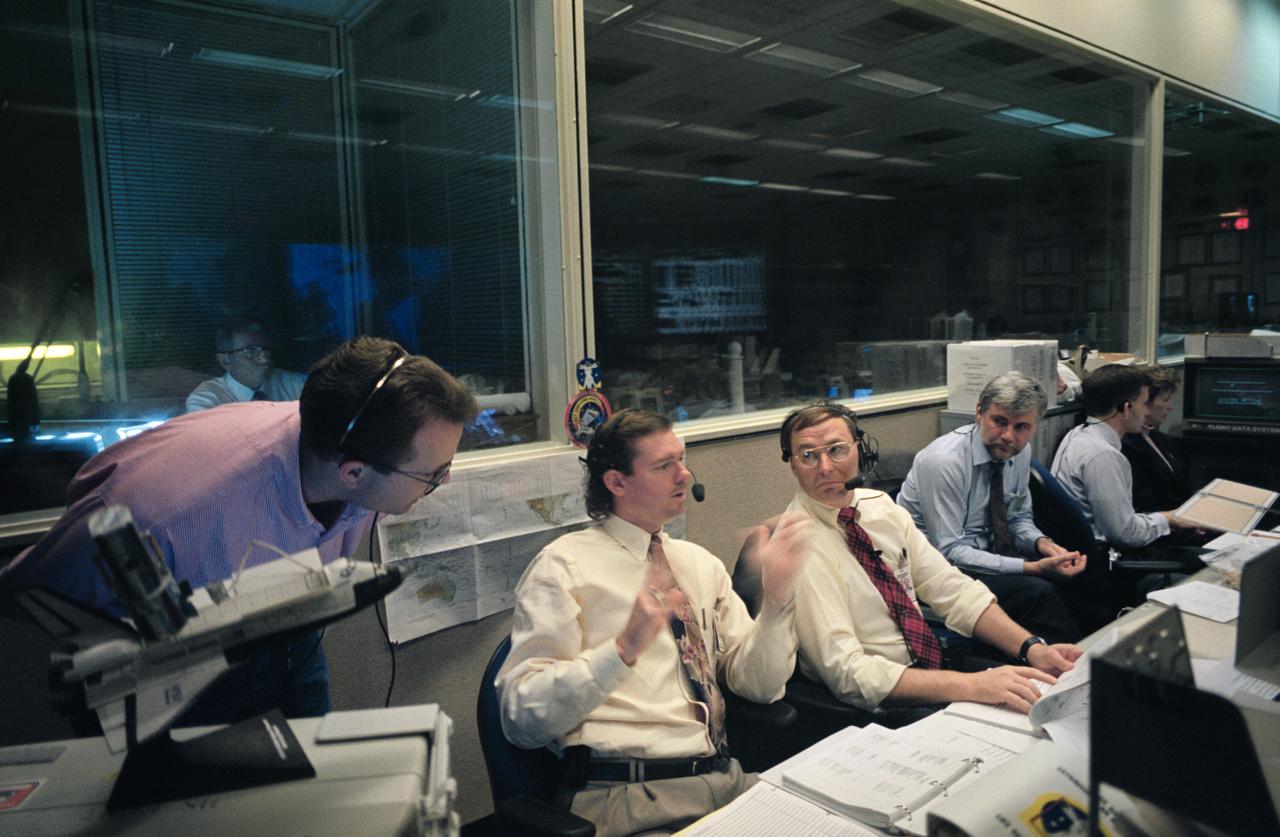
STS61-S-094 (5 Dec 1993) --- Kyle Herring, second left, illustrates a point during mission commentary for the second Extravehicular Activity (EVA-2) of the STS-61 Hubble Space Telescope (HST) servicing mission.  Astronaut Jerry L. Ross (center), a space walker on two previous NASA shuttle missions, amplified Herring's explanations.  At the flight surgeon's console is Dr. Klaus Lohn (third right) of the Institute for Flight Medicine in Koln, Germany.
Mission control activity during STS-61 EVA-2
Expedition 51 prime crew members, Flight Engineer Jack Fischer of NASA, left, and Soyuz Commander Fyodor Yurchikhin of Roscosmos, second left, are seen with Expedition 51 back up crew members, Soyuz Commander Sergey Ryazanskiy of Roscosmos, second from right, and Flight Engineer Randy Bresnik of NASA, right, during a press conference held at the Cosmonaut Hotel in Baikonur, Kazakhstan on Wednesday, April 19, 2017. The mission is set to launch April 20 from the Baikonur Cosmodrome. Photo Credit: (NASA/Aubrey Gemignani)
Expedition 51 Press Conference
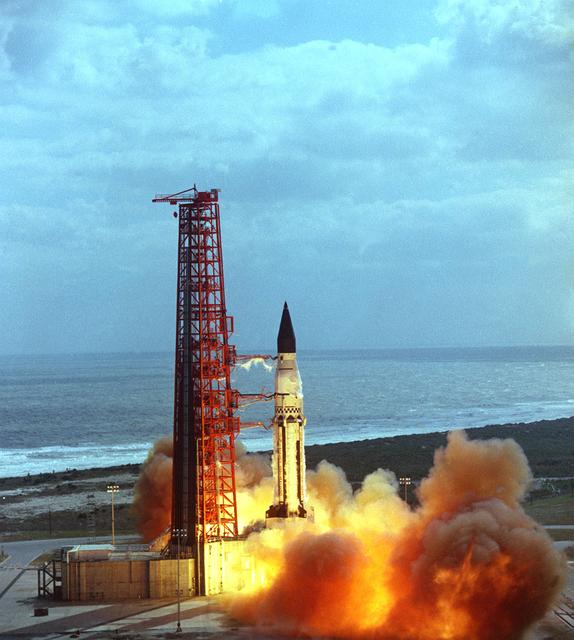
The launch of the SA-5 on January 29, 1964 was the fifth Saturn I launch vehicle. The SA-5 marked a number of firsts in the Marshall Space Flight Center-managed Saturn development program, including the first flight of Saturn I Block II vehicle with eight aerodynamic fins at the bottom of the S-I stage (first stage) for enhanced stability in flight. This also was the first flight of a live S-IV (second or upper) stage with the cluster of six liquid hydrogen-fueled RL-10 engines. the first successful second stage separation, and the first use of the Launch Complex 37.
Saturn Apollo Program
S81-29900 (May 1981) --- This is the official insignia for STS-2 the United States second space shuttle orbital flight test mission. Crewmen are astronauts Joe H. Engle, commander, and Richard H. Truly, pilot. Their spacecraft, orbiter 102 Columbia, is depicted along with the crew members surnames, and the merged eagle and American flag. The number two is significant, as it applies to the number of crew members as well as the second flight for the Columbia and the second in a series of space shuttle missions.     The NASA insignia design for space shuttle flights is reserved for use by the astronauts and for other official use as the NASA Administrator may authorize. Public availability has been approved only in the forms of illustrations by the various news media. When and if there is any change in this policy, which is not anticipated, the change will be publicly announced. Photo credit: NASA
OFFICIAL STS-2 CREW STATION
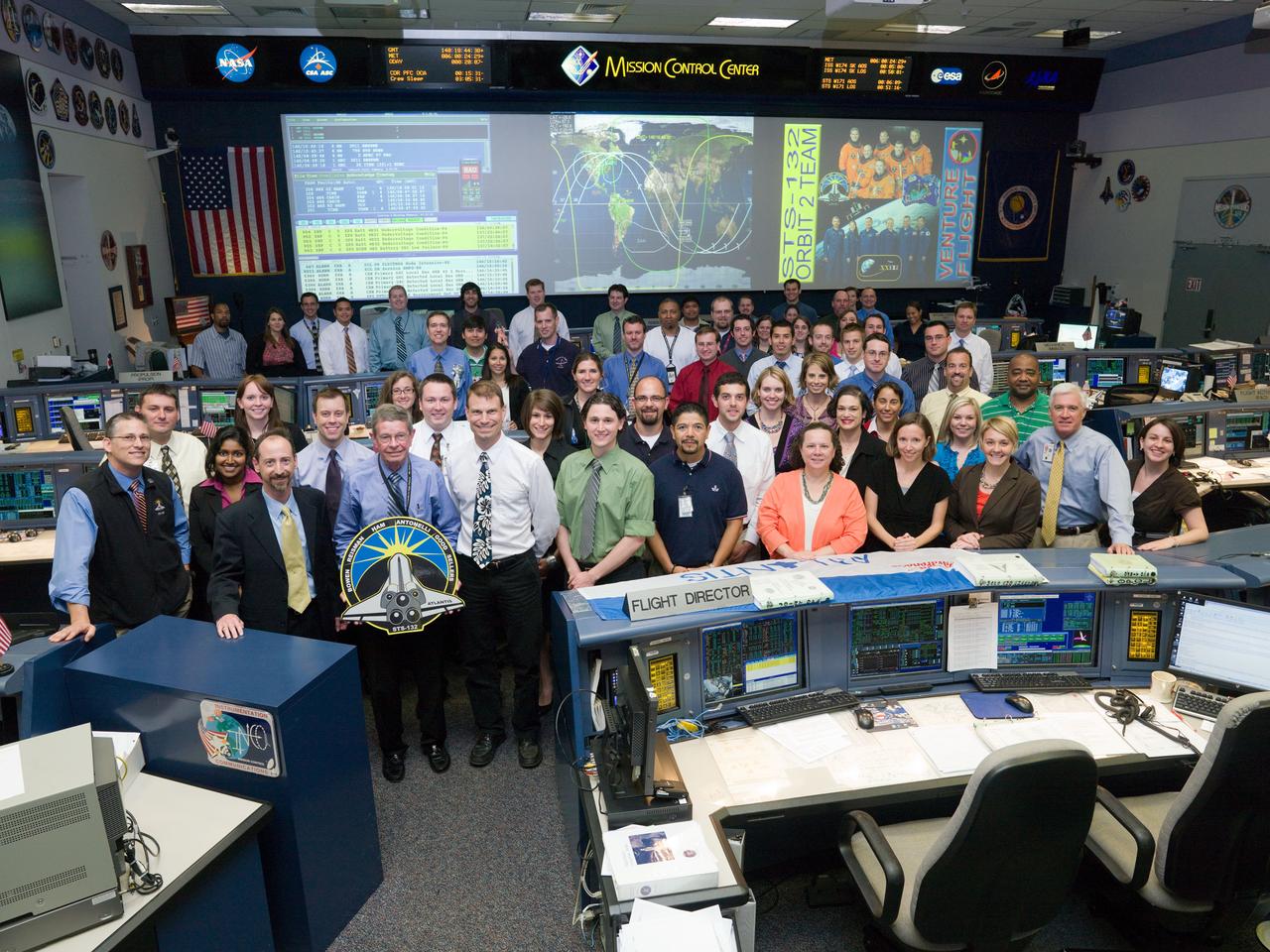
JSC2010-E-086451 (20 May 2010) --- The members of the STS-132 Orbit 2 flight control team pose for a group portrait in the space shuttle flight control room in the Mission Control Center at NASA's Johnson Space Center. Flight director Chris Edelen (second left) is visible on the front row.
STS-132 Flight Control Team in WFCR - Orbit 2
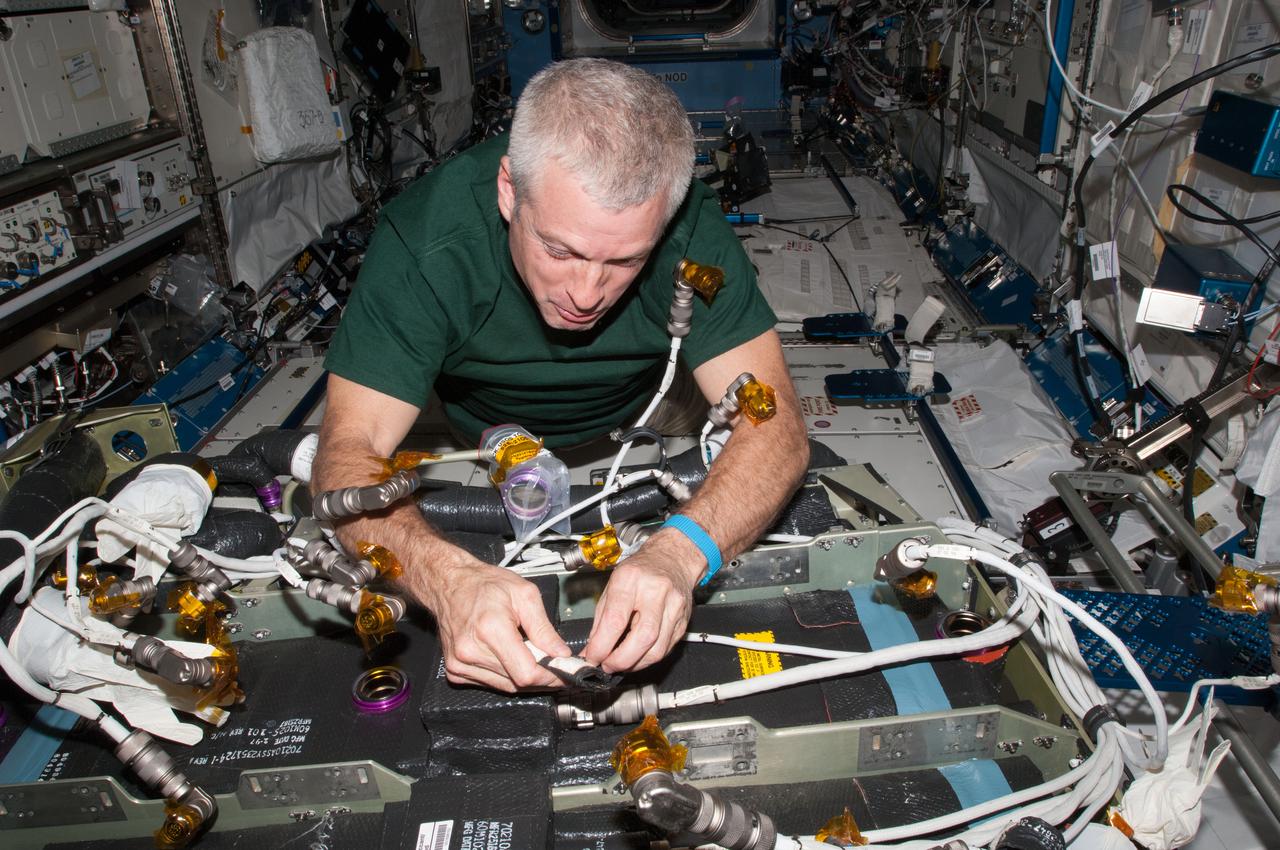
ISS039-E-010367 (9 April 2014) --- In the Kibo laboratory aboard the International Space Station, Expedition 39 Flight Engineer Steve Swanson works during in-flight maintenance to mate electrical connectors in Tranquility's Carbon Dioxide Removal Assembly (CDRA). The image was taken during the second day of CDRA in-flight maintenance.
Swanson during Day 2 of CDRA IFM
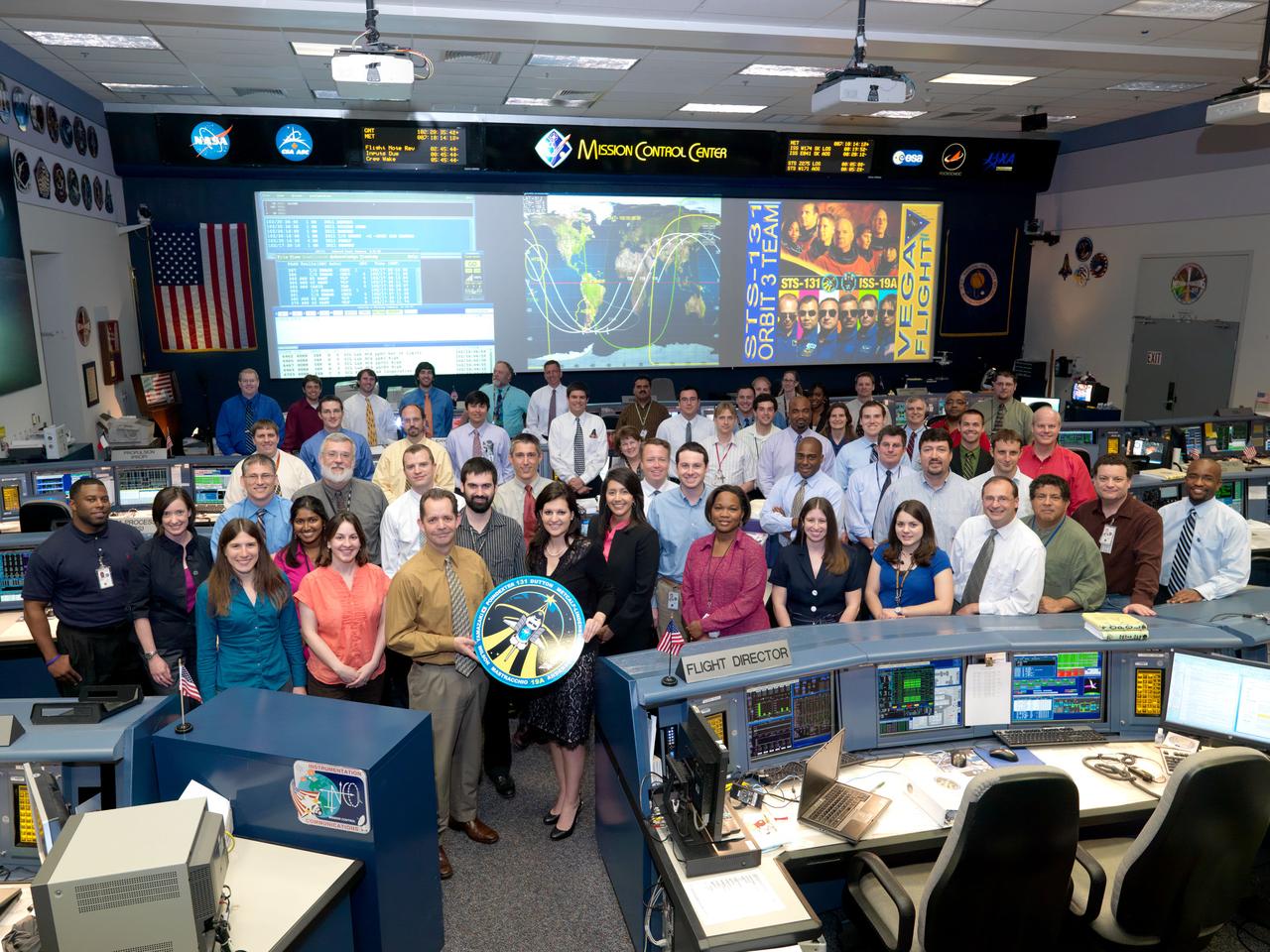
JSC2010-E-050902 (12 April 2010) --- The members of the STS-131 Planning flight control team pose for a group portrait in the space shuttle flight control room in the Mission Control Center at NASA's Johnson Space Center. Flight director Ginger Kerrick (center) is visible on the second row.
STS-131 Flight Control Team in WFCR - Planning - Flight Director: Ginger Kerrick
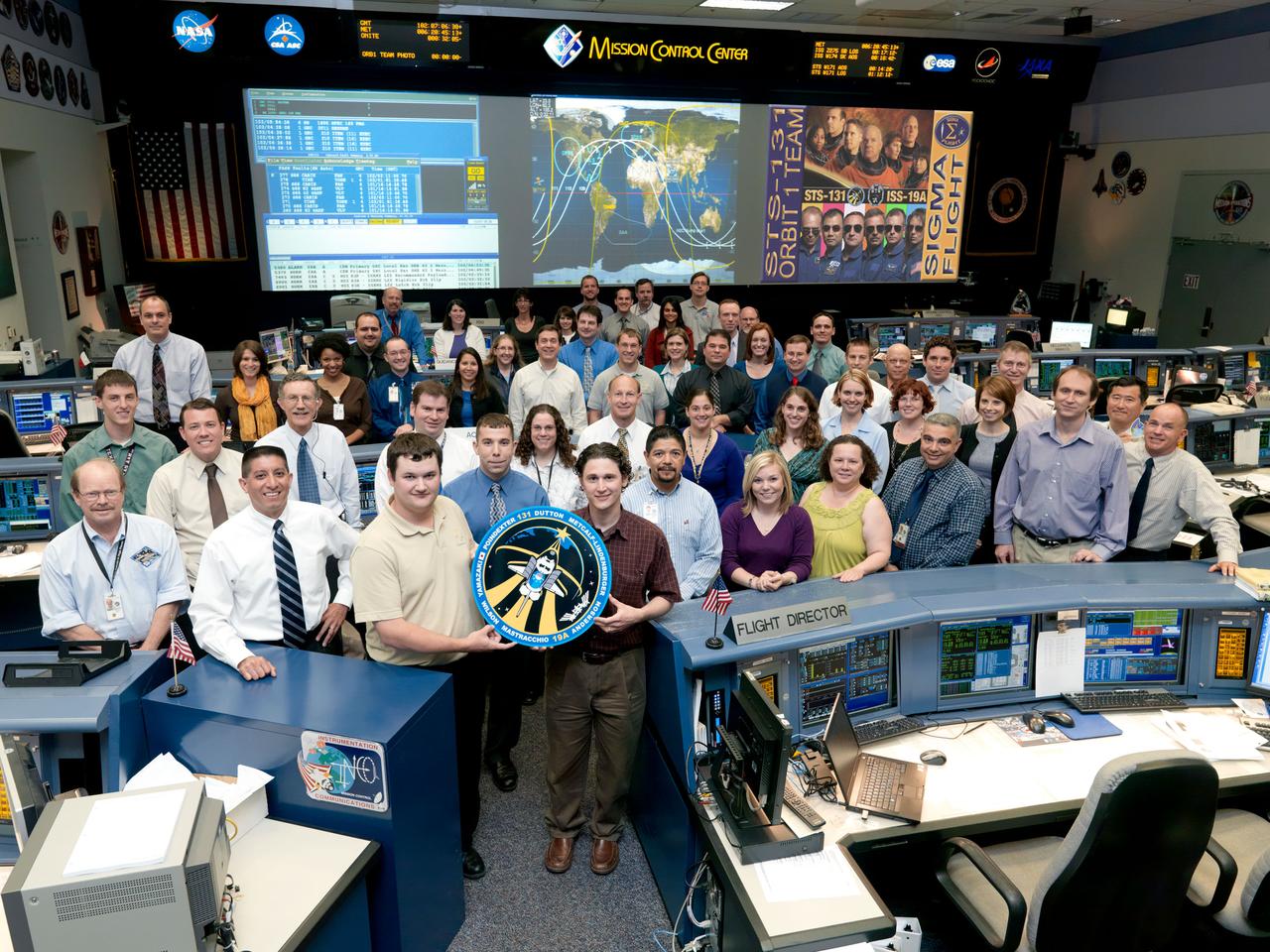
JSC2010-E-050680 (12 April 2010) --- The members of the STS-131 Orbit 1 flight control team pose for a group portrait in the space shuttle flight control room in the Mission Control Center at NASA's Johnson Space Center. Flight director Richard Jones (second left) is on the front row.
STS-131 Flight Control Team in WFCR - Orbit 1 - Flight Director: Richard Jones
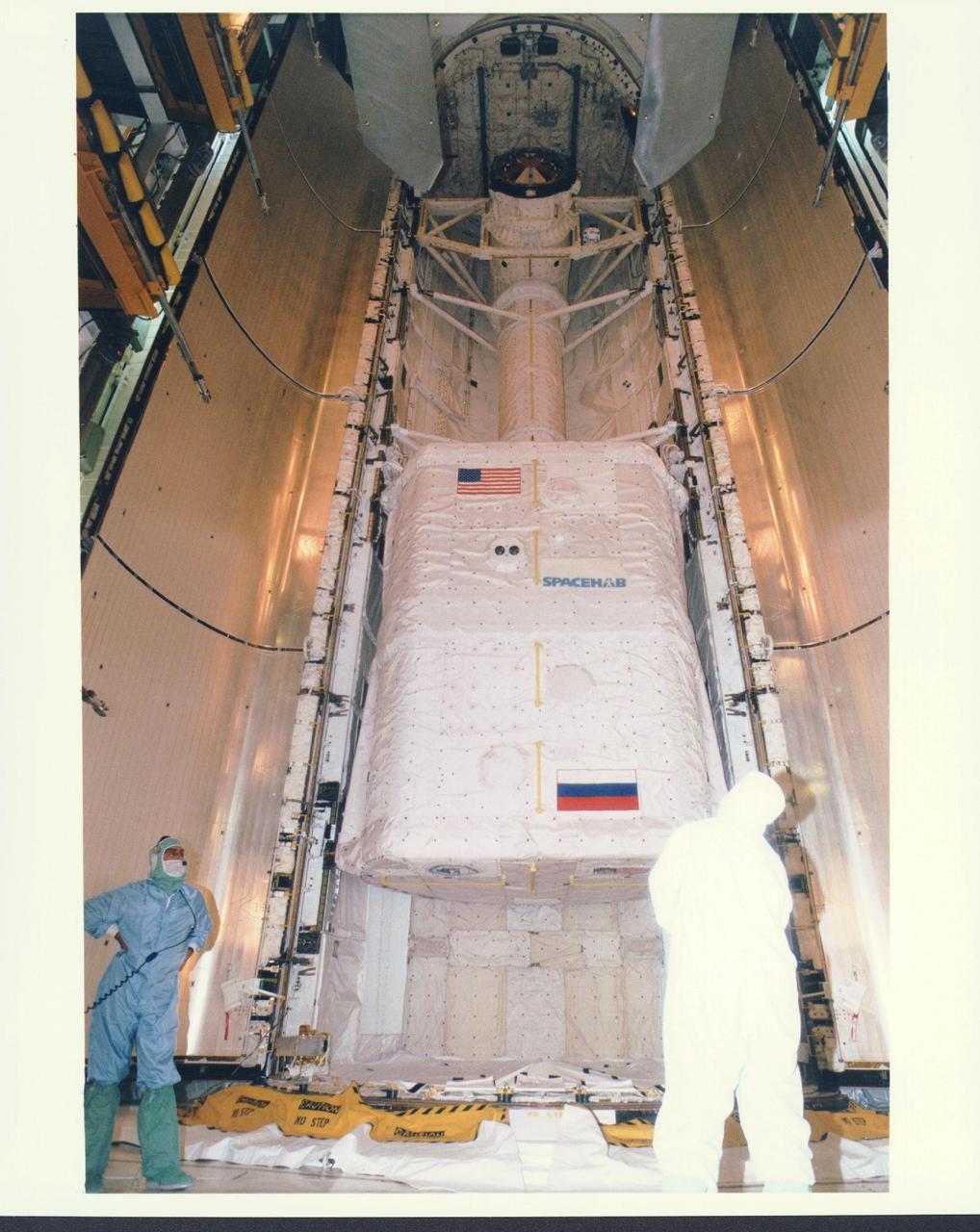
KENNEDY SPACE CENTER, FLA. -   Workers in the Payload Changeout Room (PCR) at Launch Pad 39A are preparing to close the payload doors for flight on the Space Shuttle Atlantis, targeted for liftoff on Mission STS-79 around Sept. 12.  The SPACEHAB Double Module located in the aft area of the payload bay is filled with supplies and other items slated for transfer to the Russian Space Station Mir. STS-79 marks the second flight of a SPACEHAB in support of the Shuttle-Mir dockings, and the first flight of the double-module configuration.  The SPACEHAB is connected by tunnel to the Orbiter Docking System (ODS), with the Androgynous Peripheral Docking System (APDS) clearly visible on top of the ODS. The APDS provides the docking interface for the linkup with Mir, while the ODS provides a passageway from the orbiter to the Russian space station and the SPACEHAB.
KENNEDY SPACE CENTER, FLA. - Workers in the Payload Changeout Room (PCR) at Launch Pad 39A are preparing to close the payload doors for flight on the Space Shuttle Atlantis, targeted for liftoff on Mission STS-79 around Sept. 12. The SPACEHAB Double Module located in the aft area of the payload bay is filled with supplies and other items slated for transfer to the Russian Space Station Mir. STS-79 marks the second flight of a SPACEHAB in support of the Shuttle-Mir dockings, and the first flight of the double-module configuration. The SPACEHAB is connected by tunnel to the Orbiter Docking System (ODS), with the Androgynous Peripheral Docking System (APDS) clearly visible on top of the ODS. The APDS provides the docking interface for the linkup with Mir, while the ODS provides a passageway from the orbiter to the Russian space station and the SPACEHAB.
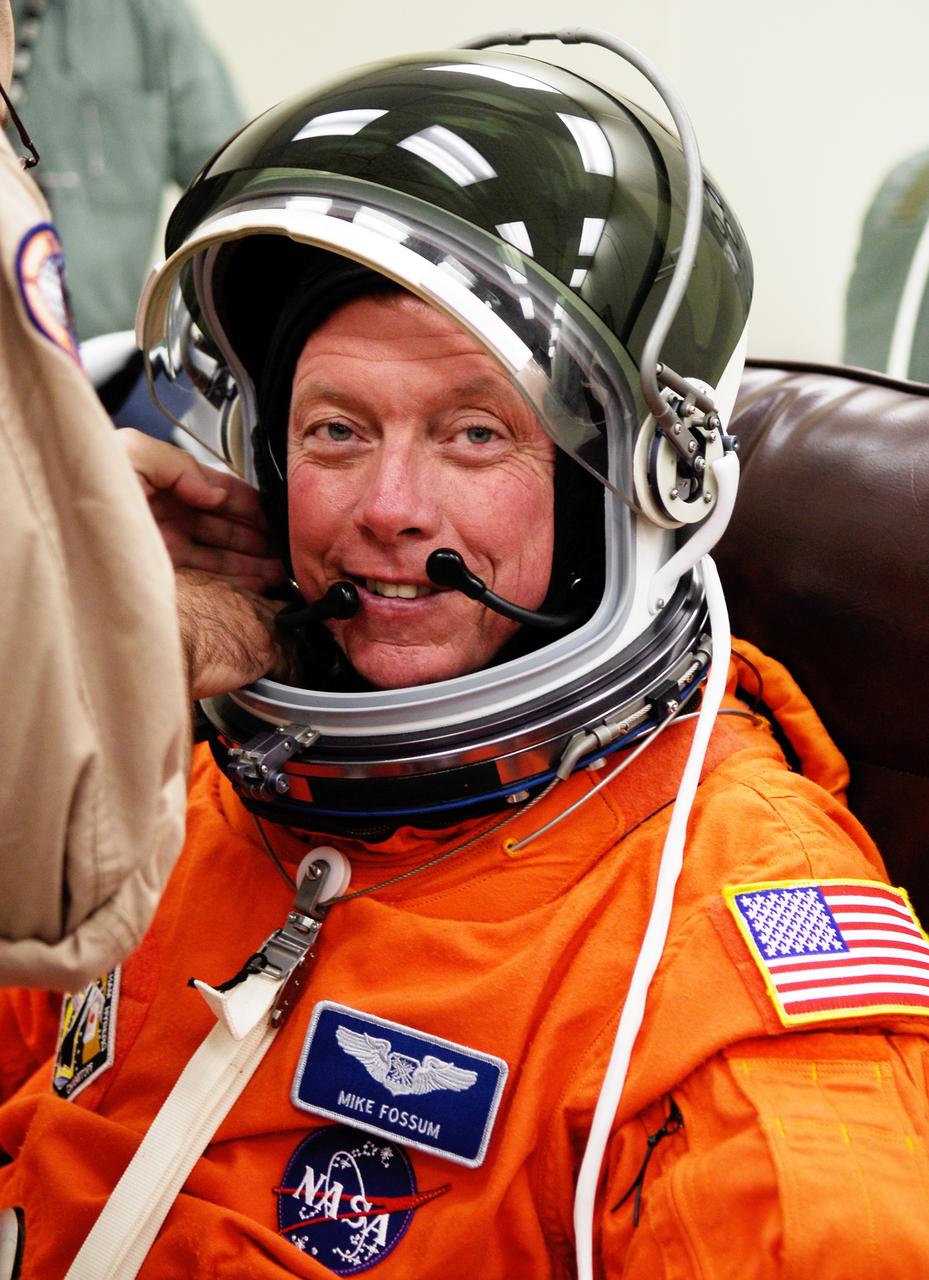
CAPE CANAVERAL, Fla. --  Crew members for space shuttle Discovery's STS-124 mission don their launch and entry suits before heading to Launch Pad 39A.  A suit technician checks the communications cap inside Mission Specialist Mike Fossum's helmet.  Fossum is making his second shuttle flight.  The STS-124 mission is the second of three flights launching components to complete the Japan Aerospace Exploration Agency's Kibo laboratory.  The shuttle crew will install Kibo's large Japanese Pressurized Module and its remote manipulator system, or RMS.  The 14-day flight includes three spacewalks.  Launch is scheduled for 5:02 p.m. May 31. Photo credit: NASA/Kim Shiflett
KSC-08pd1513
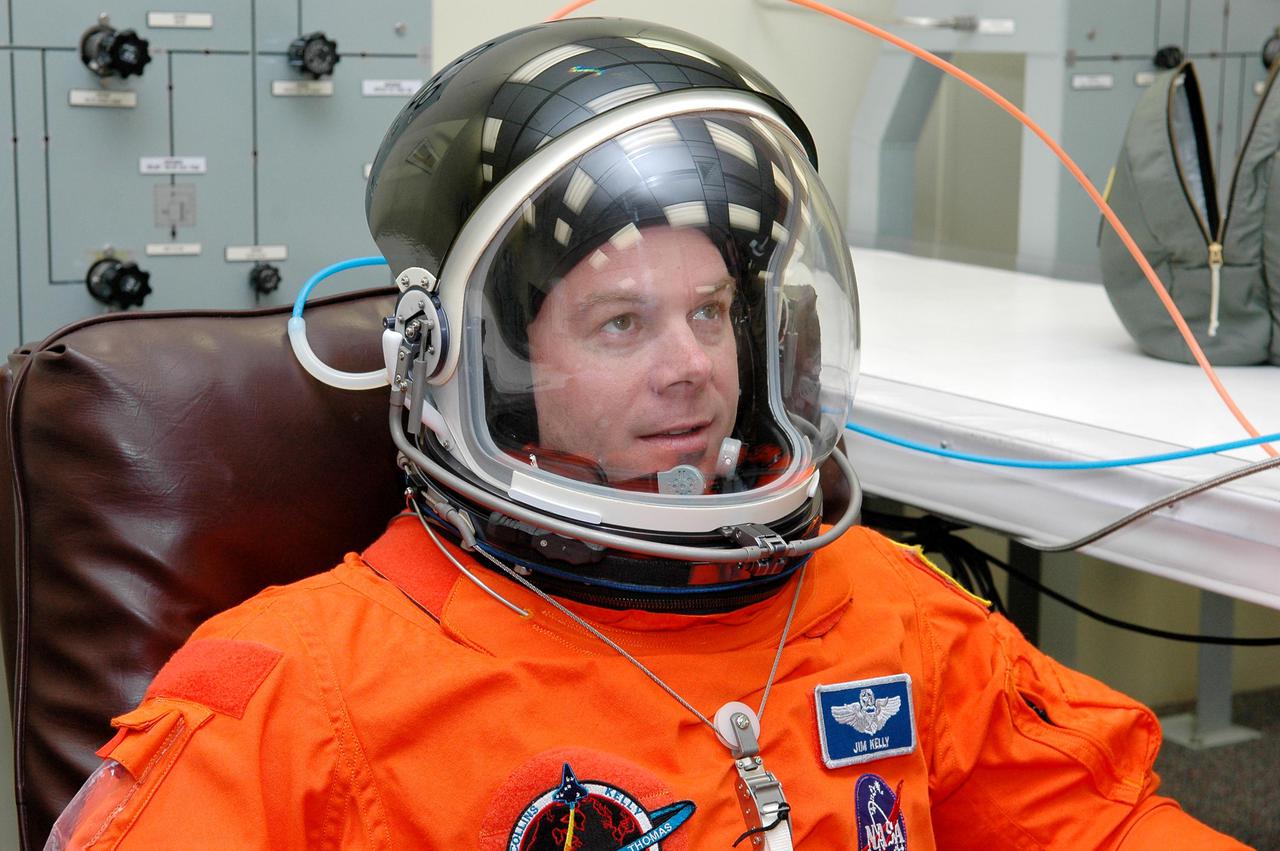
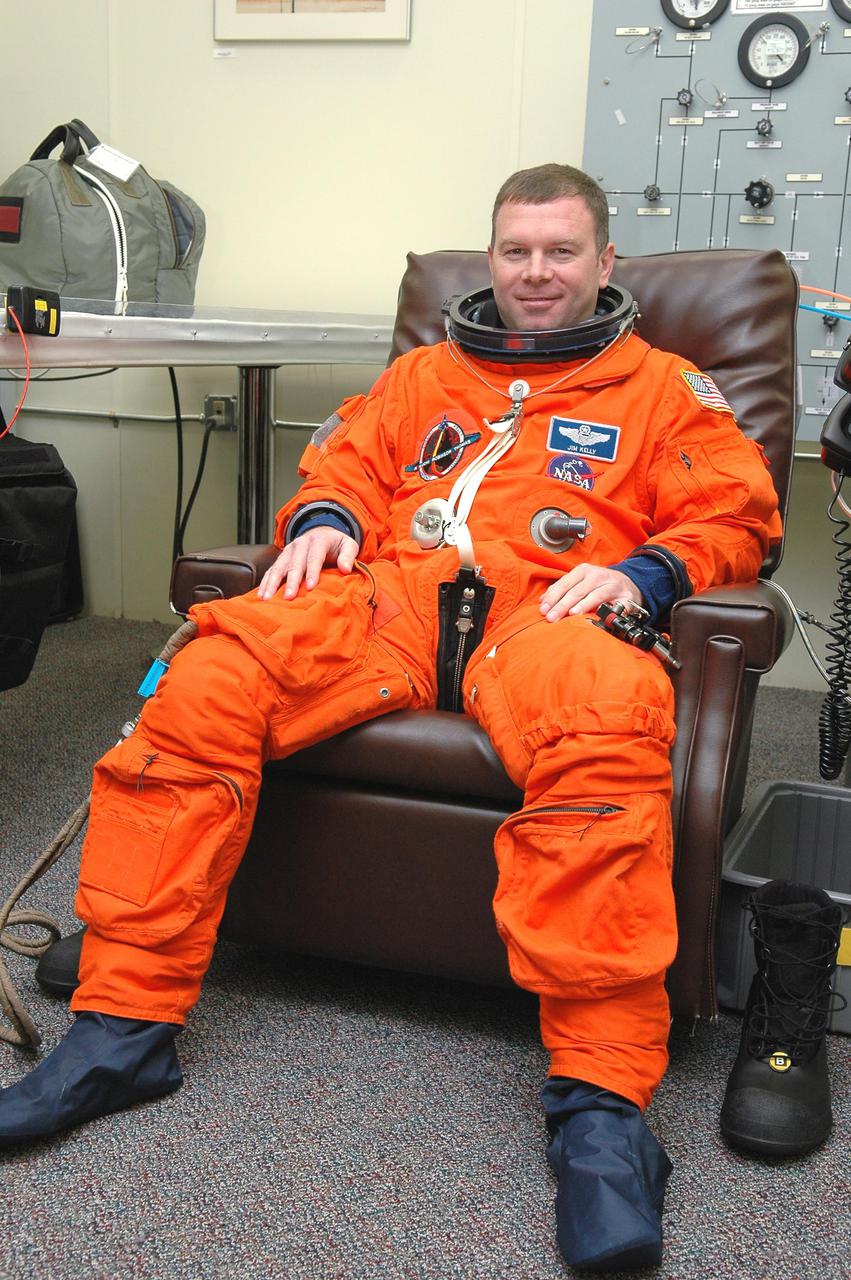
KENNEDY SPACE CENTER, FLA. -   In the Operations and Checkout Building at NASA Kennedy Space Center, STS-114 Pilot James Kelly is fitted with the helmet for his launch and entry suit before heading to the launch pad.  Kelly is making his second space flight on the historic Return to Flight mission STS-114 to the International Space Station.  On its second attempt for launch, Discovery is scheduled to lift off at 10:39 a.m. EDT today from Launch Pad 39B.  It is the 114th Space Shuttle flight and the 31st for Discovery.  The 12-day mission is expected to end with touchdown at the Shuttle Landing Facility on Aug. 7.
KSC-05pd-1720
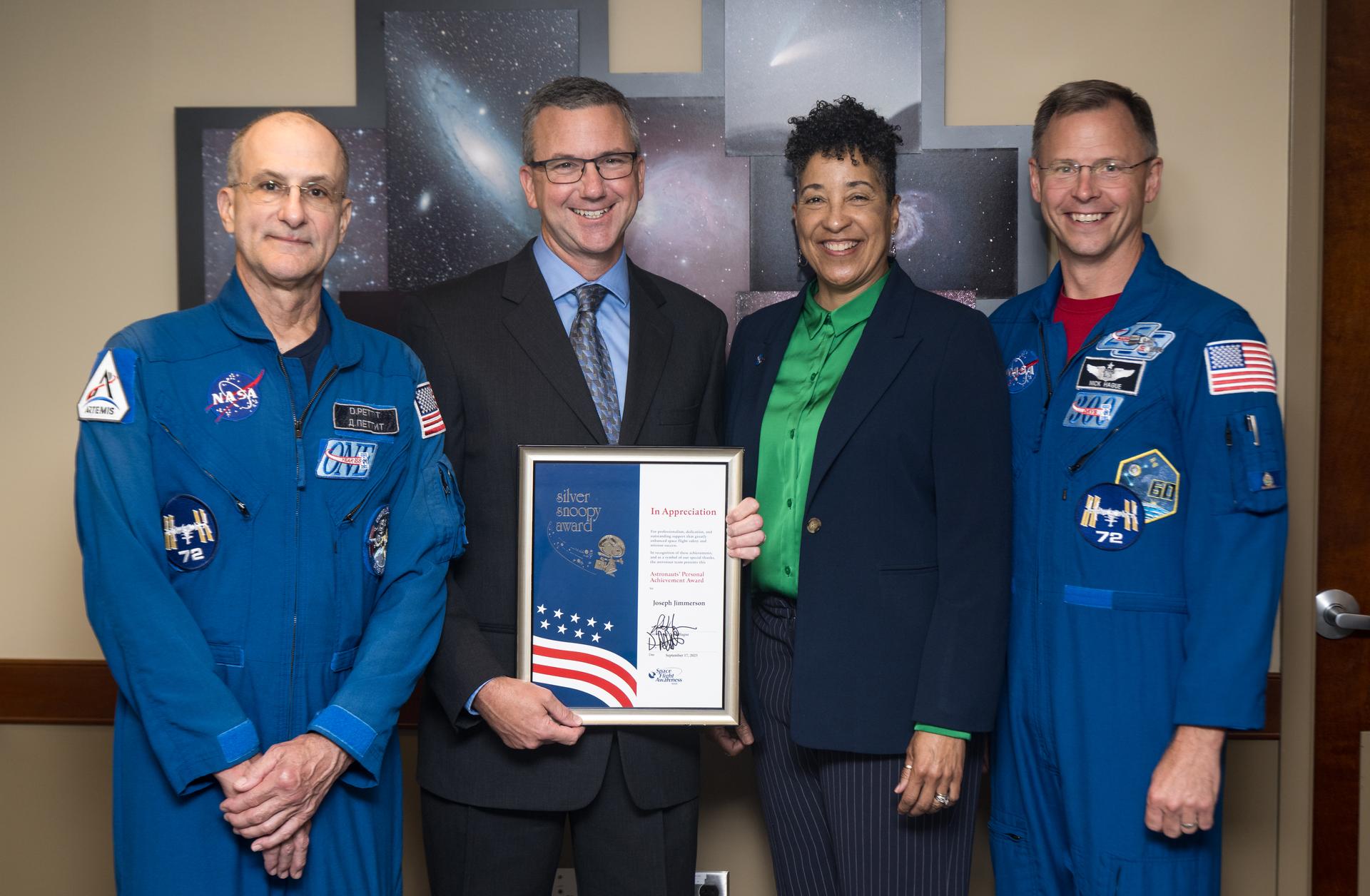
NASA astronauts Don Pettit, left, and Nick Hague, right, pose for a photo with Silver Snoopy awardee, NASA Range Operations Contract Engineer Manager at Wallops Flight Facility, Joseph Jimmerson, second from left, and Cynthia Simmons, acting center director of NASA's Goddard Space Flight Center, second from right, Wednesday, Sept. 17, 2025, at NASA’s Goddard Space Flight Center in Greenbelt, Md. Pettit and Hague served as part of Expedition 72 onboard the International Space Station. Photo Credit: (NASA/Aubrey Gemignani)
Expedition 72 Silver Snoopy Awards
KENNEDY SPACE CENTER, FLA. -  In the Operations and Checkout Building at NASA Kennedy Space Center, STS-114 Pilot James Kelly is donning his launch and entry suit before heading to the launch pad.  Kelly is making his second space flight on the historic Return to Flight mission STS-114 to the International Space Station.  On its second attempt for launch, Discovery is scheduled to lift off at 10:39 a.m. EDT today from Launch Pad 39B.  It is the 114th Space Shuttle flight and the 31st for Discovery.  The 12-day mission is expected to end with touchdown at the Shuttle Landing Facility on Aug. 7.
KSC-05pd-1715
This video clip was obtained by the Ingenuity Mars Helicopter's black-and-white navigation camera during its 14th flight, on Oct. 24, 2021. During the flight, the rotorcraft reached a peak altitude of 16 feet (5 meters) with a small sideways translation of 7 feet (2 meters) to avoid a nearby sand ripple, before setting down again.  Flight 14 was only 23 seconds in length. As a result, enough onboard memory was available to obtain black-and-white navigation camera imagery at the high-rate of 7.4 frames a second.  Movie available at https://photojournal.jpl.nasa.gov/catalog/PIA24976
Ingenuity Captures Flight 14 Video
A successful Orion parachute test takes place at U.S. Army Yuma Proving ground in Arizona on March 8, 2017. This is the second test in a series of eight that will certify Orion's parachutes for human space flight.
3-8-2017 Orion Parachute Test
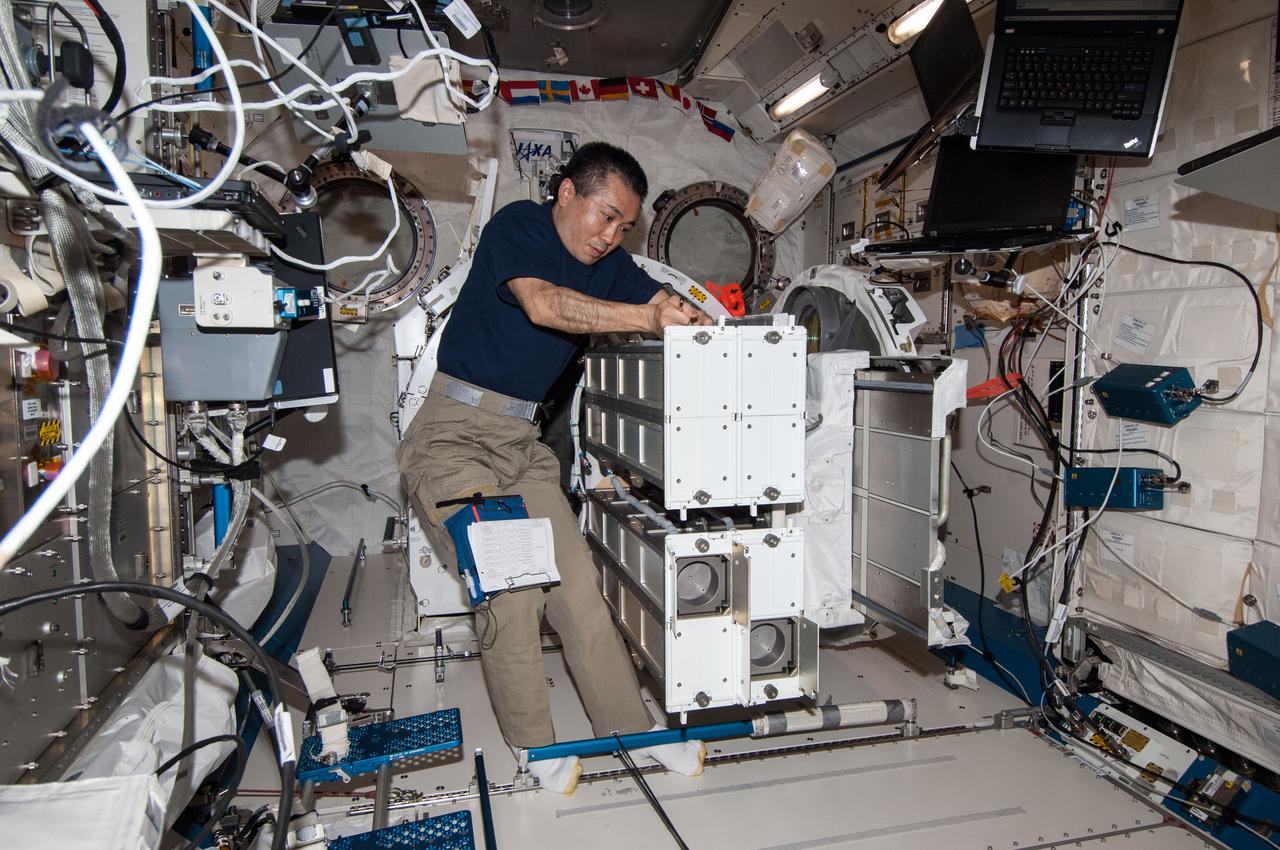
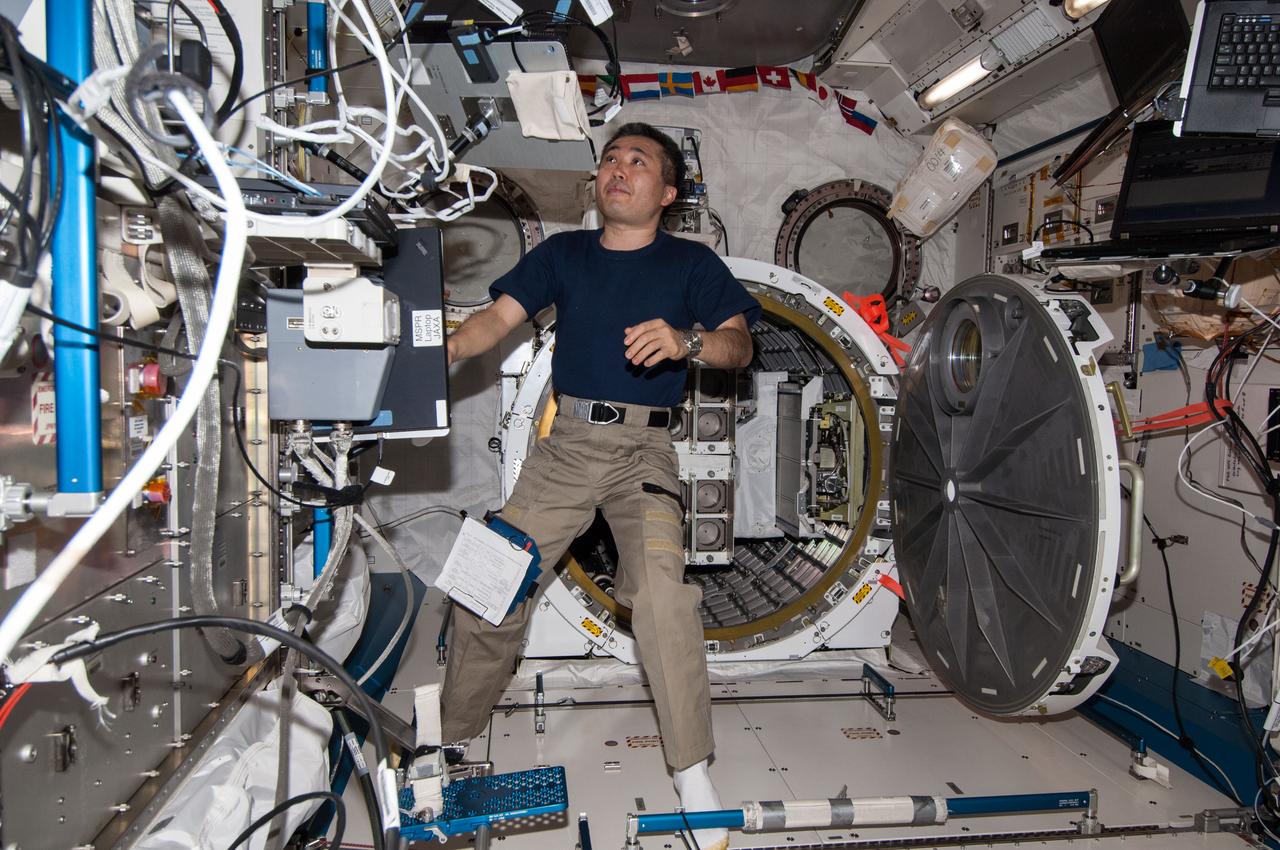
ISS038-E-053276 (19 Feb. 2014) --- In the International Space Station's Kibo laboratory, Japan Aerospace Exploration Agency astronaut Koichi Wakata, Expedition 38 flight engineer, prepares a second batch of NanoRacks CubeSats for deployment.
NRCSD Replacement Operations
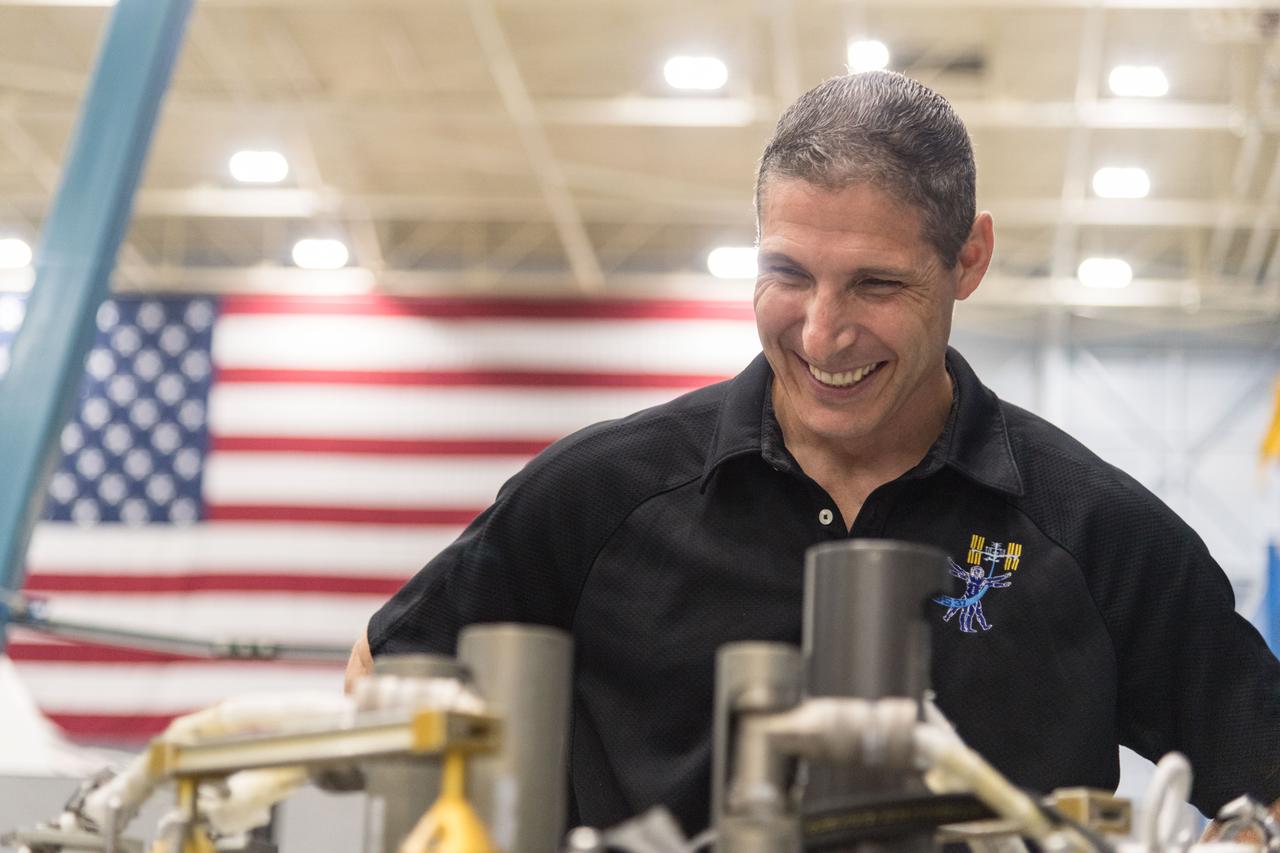
NASA commercial crew astronaut Mike Hopkins trains with Extravehicular Activity (EVA) tools and hardware in Johnson Space Center’s Space Vehicle Mockup Facility in Houston. Hopkins is assigned to the second crewed flight of SpaceX’s Crew Dragon.
CCP Astronauts - ISS EVA HI-FI Hardware 2/3 Training
ISS038-E-053280 (19 Feb. 2014) --- In the International Space Station's Kibo laboratory, Japan Aerospace Exploration Agency astronaut Koichi Wakata, Expedition 38 flight engineer, prepares a second batch of NanoRacks CubeSats for deployment.
NRCSD Replacement Operations
NASA commercial crew astronaut Mike Hopkins trains with Extravehicular Activity (EVA) tools and hardware in Johnson Space Center’s Space Vehicle Mockup Facility in Houston. Hopkins is assigned to the second crewed flight of SpaceX’s Crew Dragon.
CCP Astronauts - ISS EVA HI-FI Hardware 2/3 Training
NASA commercial crew astronaut Suni Williams performs physical training on the Advanced Resistive Exercise Device (ARED) at the agency’s Johnson Space Center in Houston. Williams is assigned to the Boeing Starliner’s second crewed flight.
CCP Astronauts - Advanced Resistive Exercise Device (ARED) PT #2
S135-E-006276 (9 July 2011) --- NASA astronaut  Doug Hurley, STS-135 pilot, is pictured on the middeck of the space shuttle Atlantis during the flight's second day of activities in Earth orbit.  Photo credit: NASA
Hurley Washes Up on Middeck
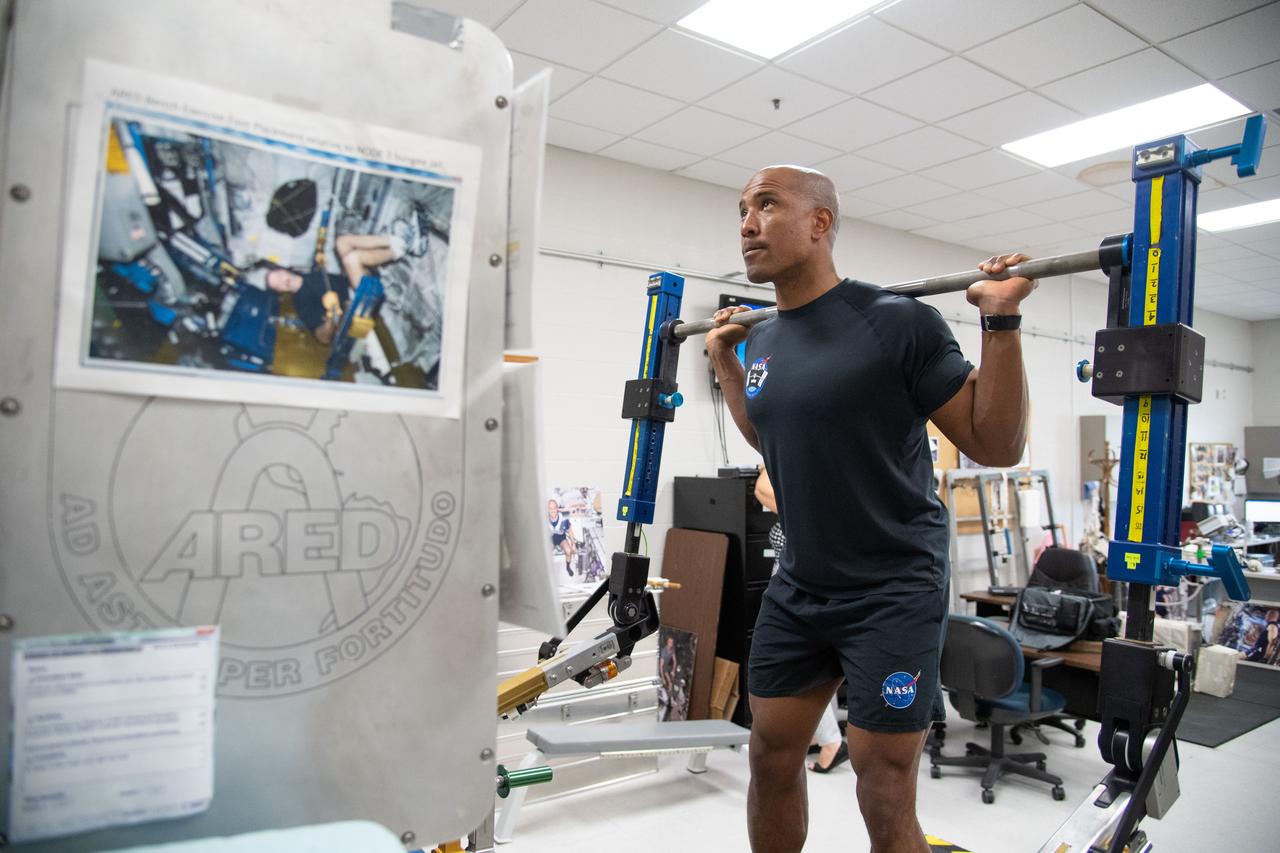
NASA commercial crew astronaut Victor Glover performs physical training on the Advanced Resistive Exercise Device (ARED) at the agency’s Johnson Space Center in Houston. Glover is assigned to the SpaceX Crew Dragon’s second crewed flight.
CCP Astronauts - CMS Advanced Resistive Exercise Device (ARED) O
A successful Orion parachute test takes place at U.S. Army Yuma Proving ground in Arizona on March 8, 2017. This is the second test in a series of eight that will certify Orion's parachutes for human space flight.
3-8-2017 Orion Parachute Test
NASA commercial crew astronaut Josh Cassada trains for docking to the International Space Station. Cassada is assigned to the second crewed flight to the International Space Station of Boeing’s CST-100 Starliner.
CCP Astronauts - ISVT BES Phase 2 Training
NASA commercial crew astronaut Josh Cassada trains for docking to the International Space Station. Cassada is assigned to the second crewed flight to the International Space Station of Boeing’s CST-100 Starliner.
CCP Astronauts - ISVT BES Phase 2 Training
ISS038-E-053269 (19 Feb. 2014) --- In the International Space Station's Kibo laboratory, Japan Aerospace Exploration Agency astronaut Koichi Wakata, Expedition 38 flight engineer, prepares a second batch of NanoRacks CubeSats for deployment.
NRCSD Replacement Operations
A successful Orion parachute test takes place at U.S. Army Yuma Proving ground in Arizona on March 8, 2017. This is the second test in a series of eight that will certify Orion's parachutes for human space flight.
3-8-2017 Orion Parachute Test
This is a photograph of a group of government officials touring the Marshall Space Flight Center in July 1961 with Dr. von Braun. Second from left is Alabama Congressman Robert Jones.
Wernher von Braun
An Amphitech OASys Ka-band radar was the primary sensor installed on Scaled Composites' Proteus for the second phase of NASA-sponsored unmanned aerial vehicle Detect, See and Avoid flight tests.
Amphitech Radar on Proteus
A successful Orion parachute test takes place at U.S. Army Yuma Proving ground in Arizona on March 8, 2017. This is the second test in a series of eight that will certify Orion's parachutes for human space flight.
3-8-2017 Orion Parachute Test
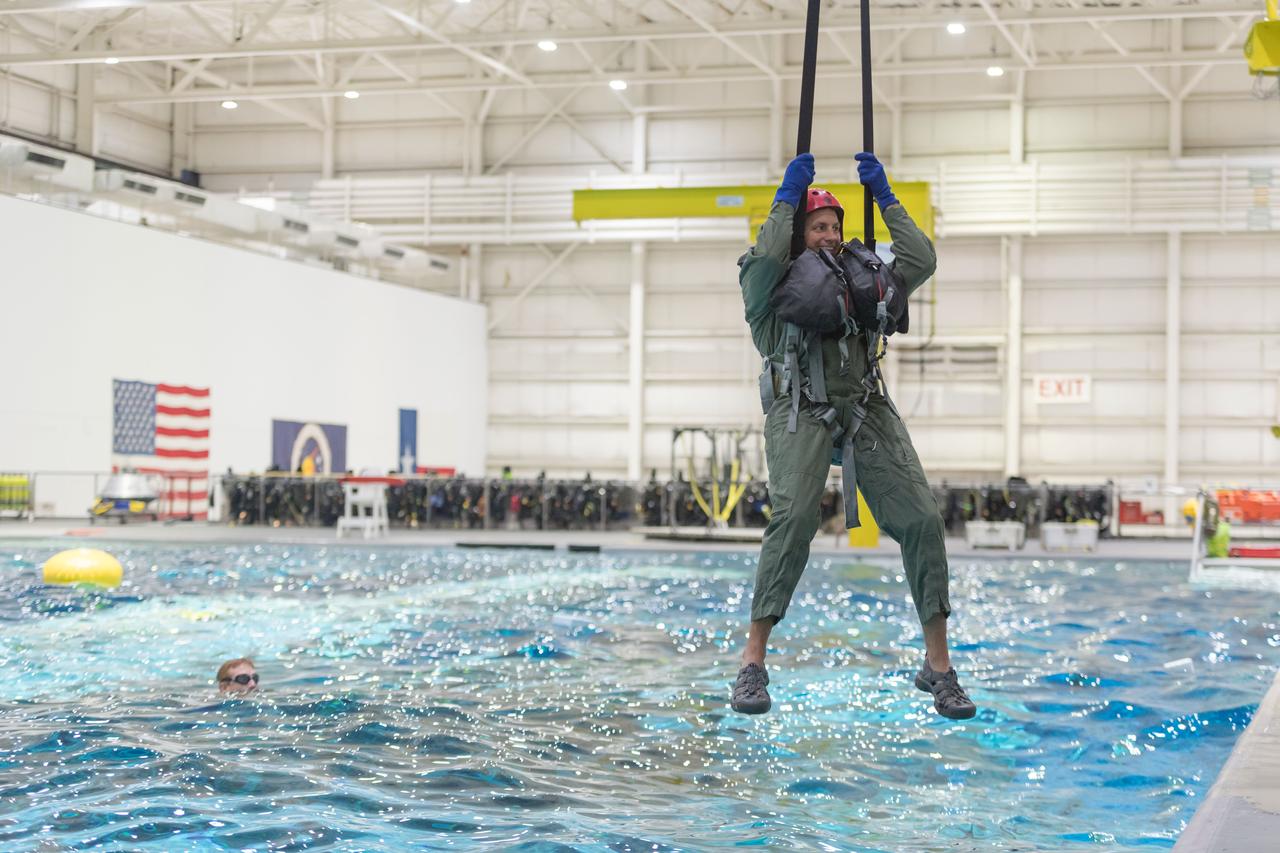
NASA commercial crew astronaut Victor Glover gets training on some of the tools he could use during spacewalks at the International Space Station. Glover is assigned to the SpaceX Crew Dragon’s second crewed flight.
CCP Astronauts - ISS EVA Maintenance 2 IG Training