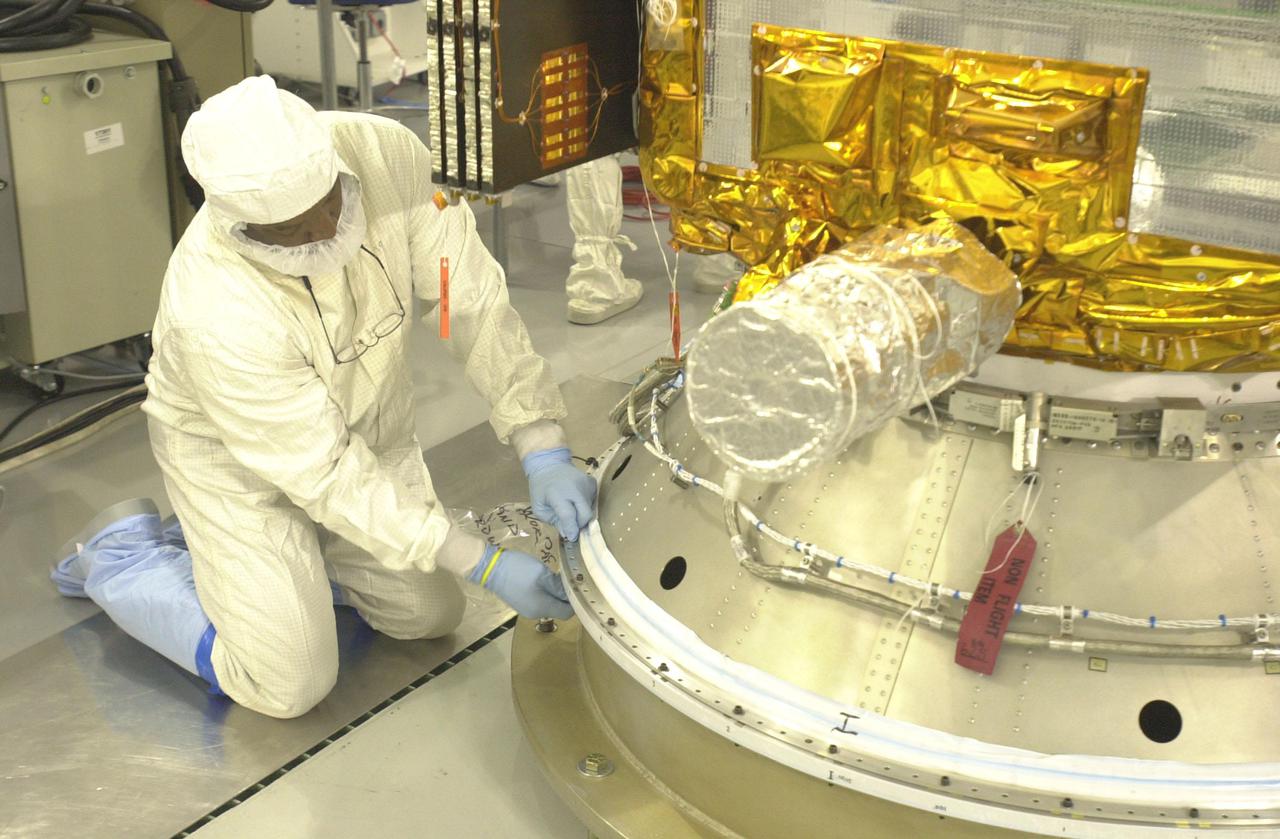
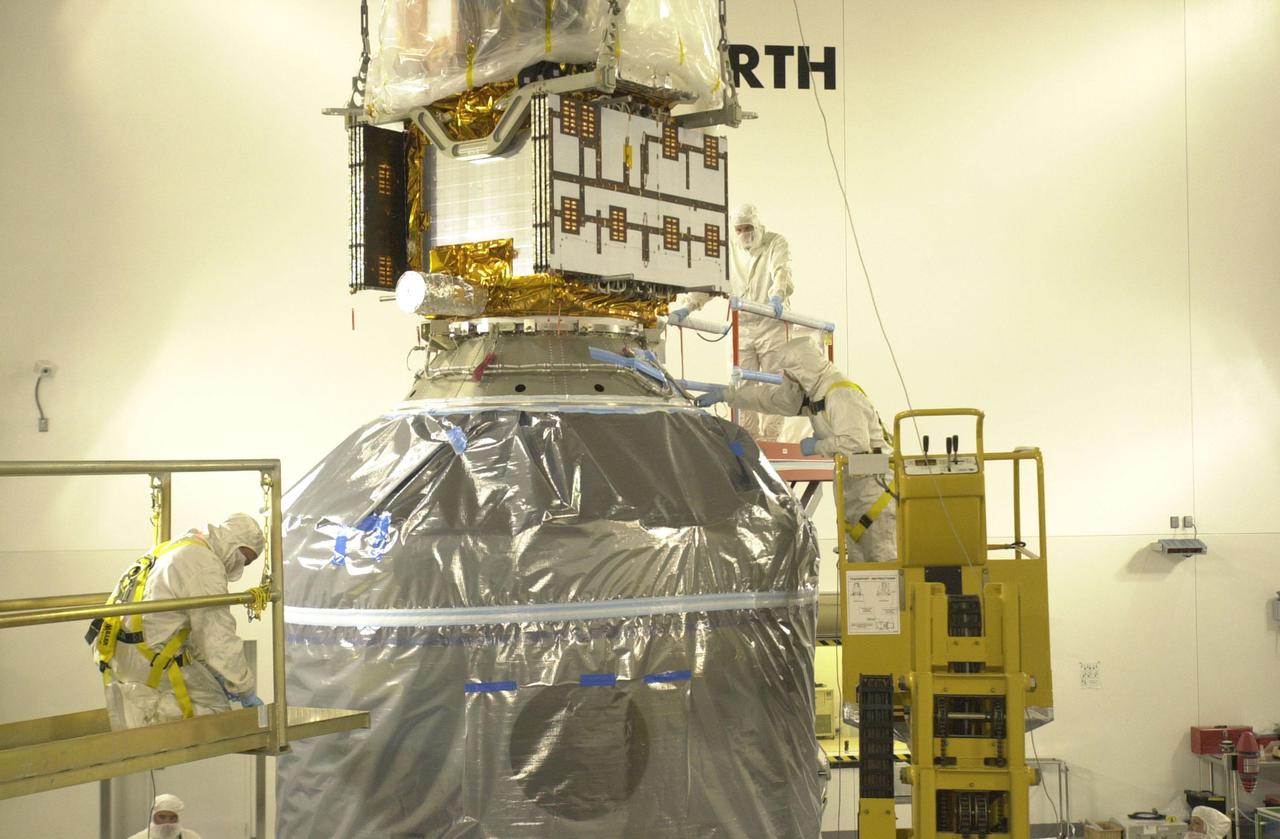
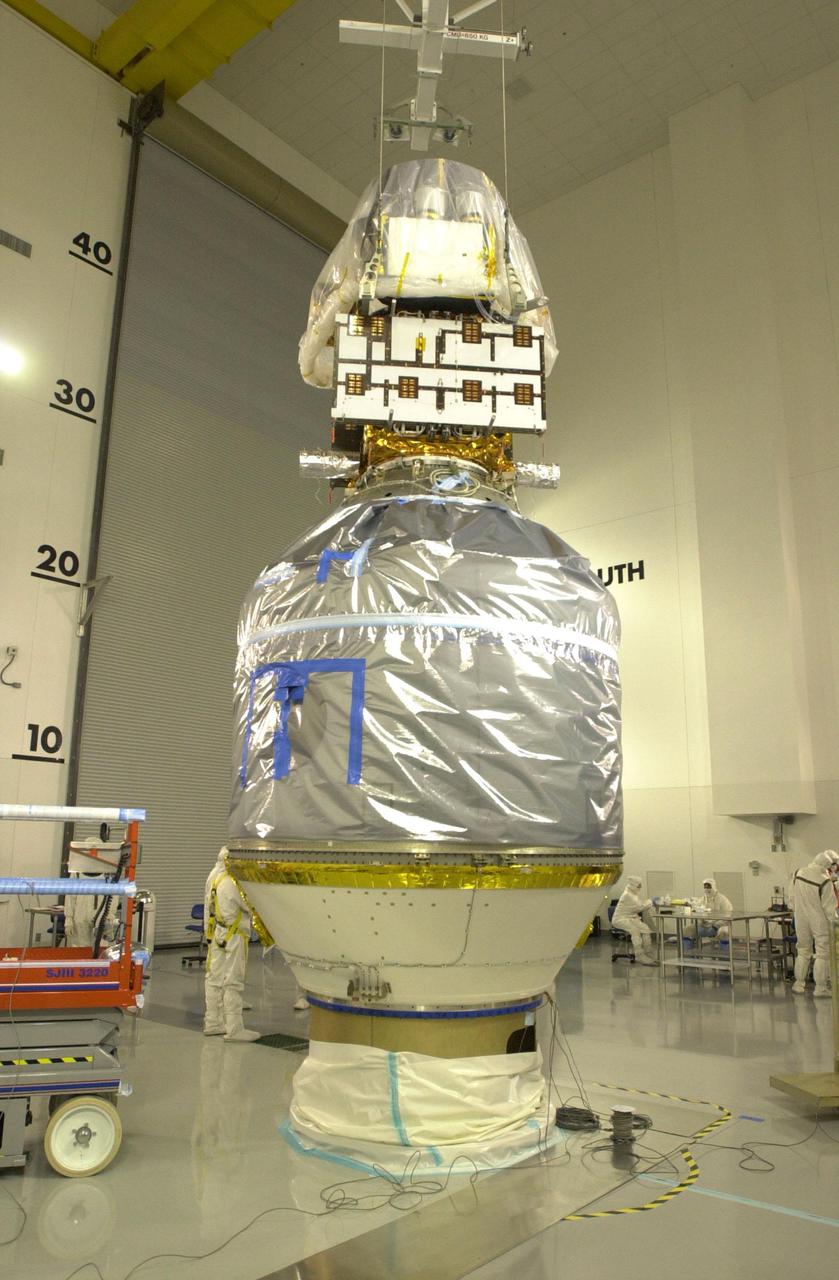
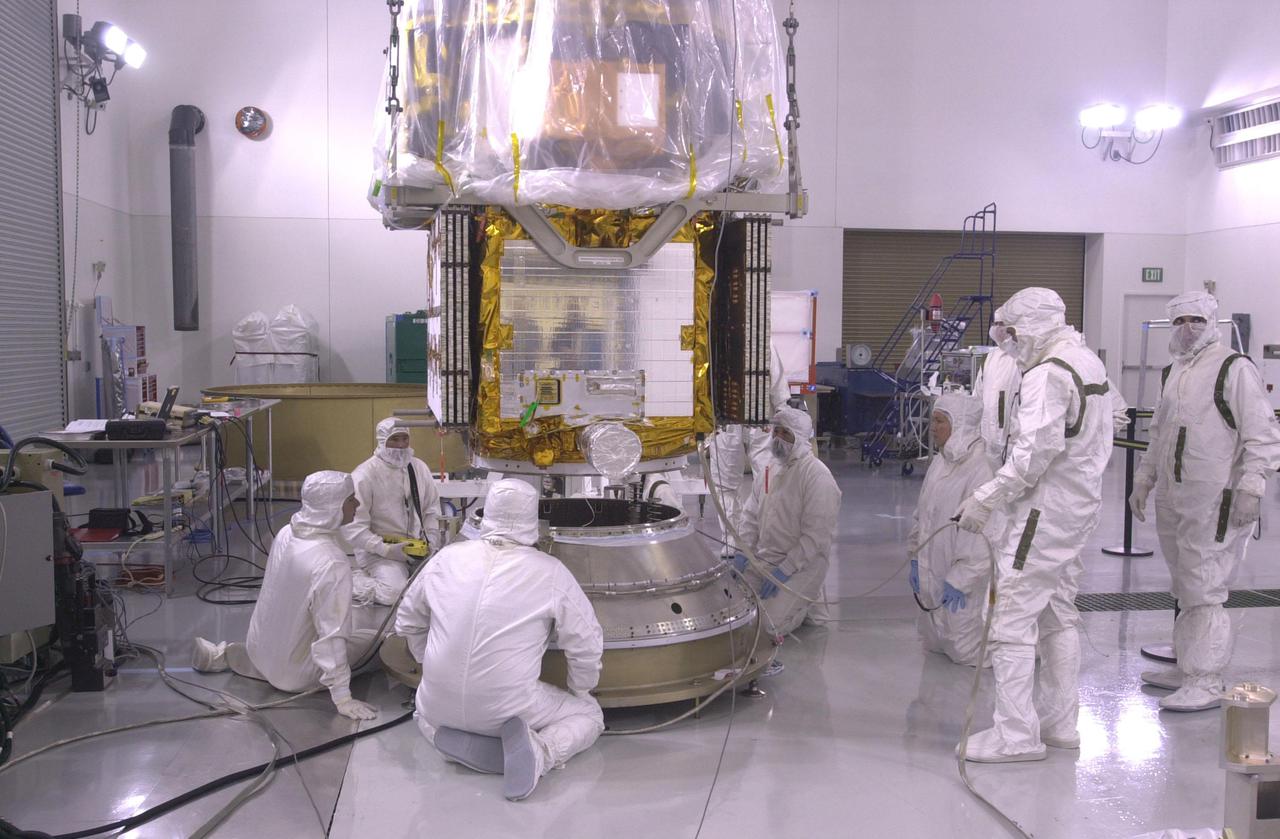
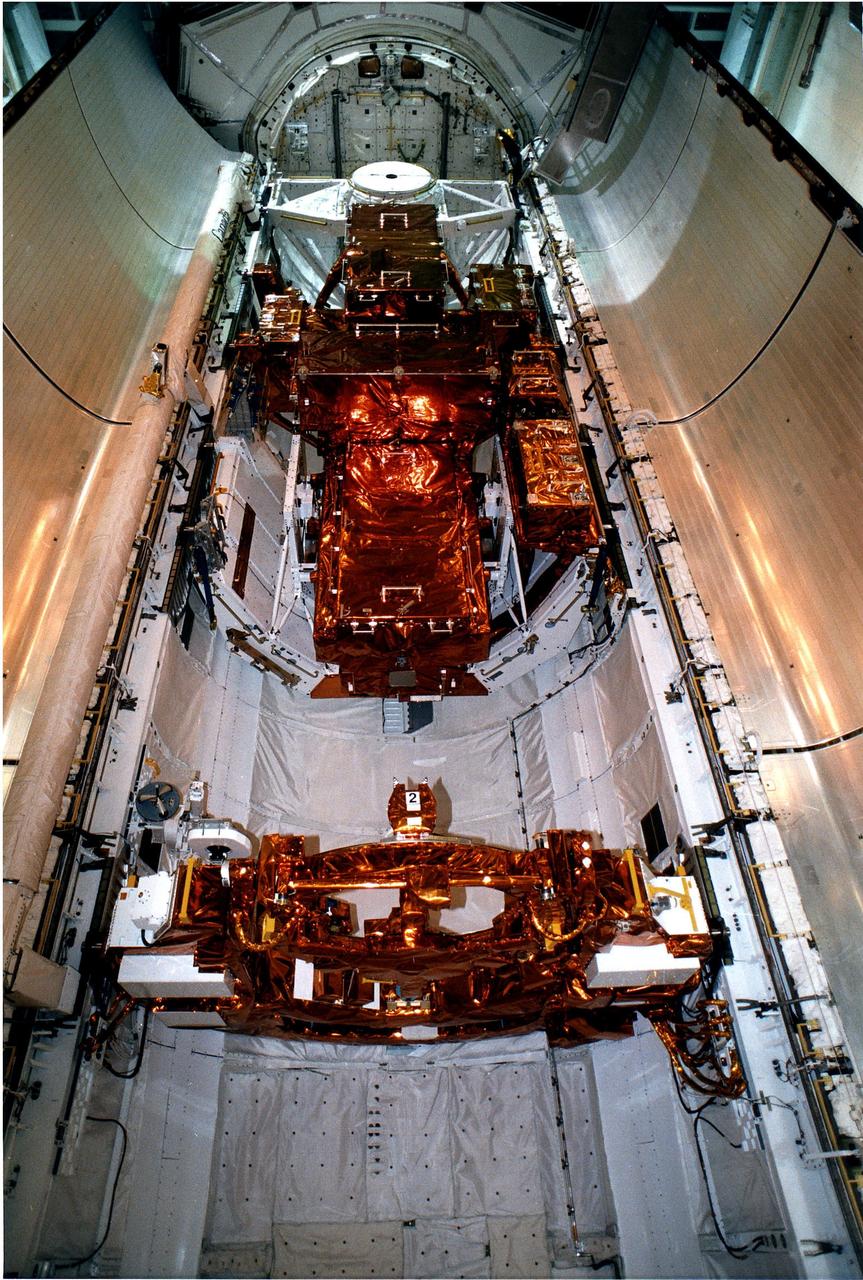
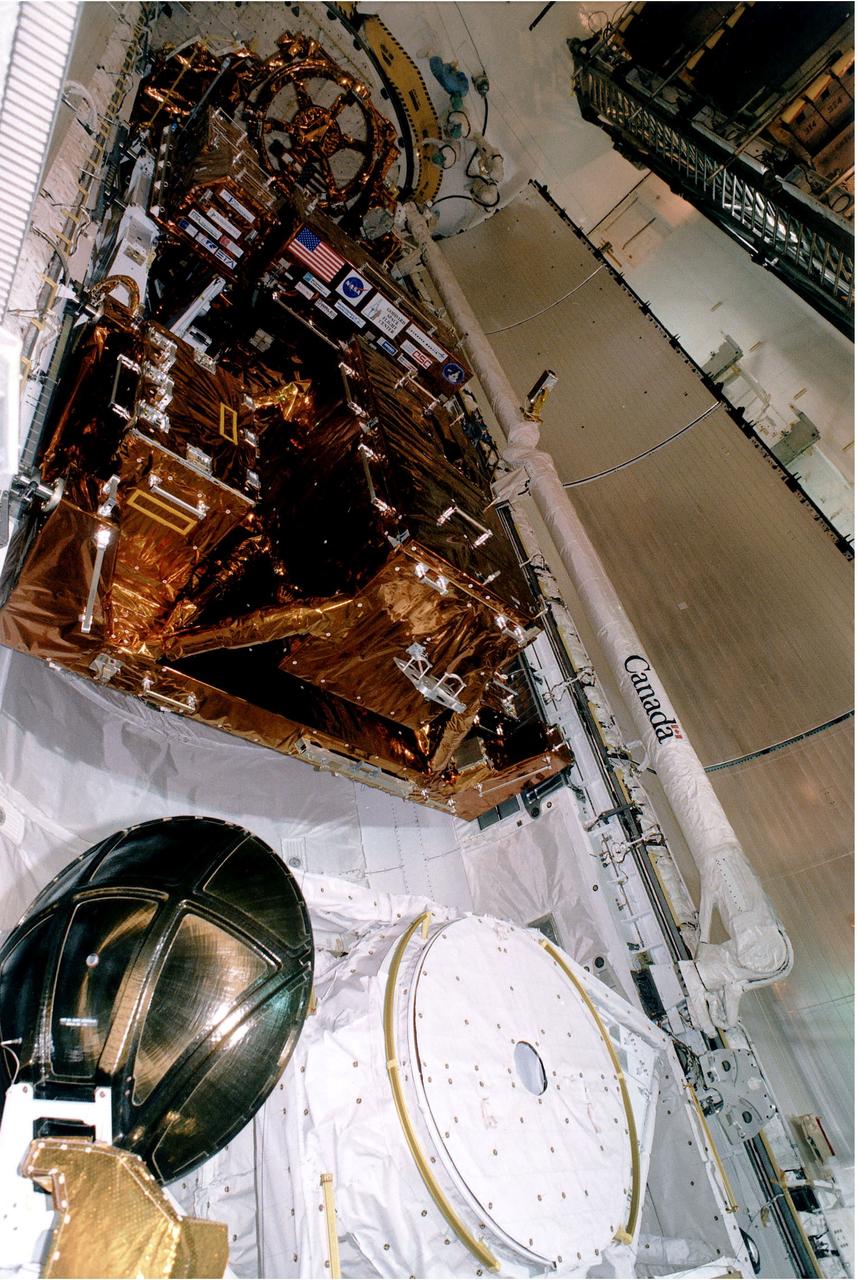
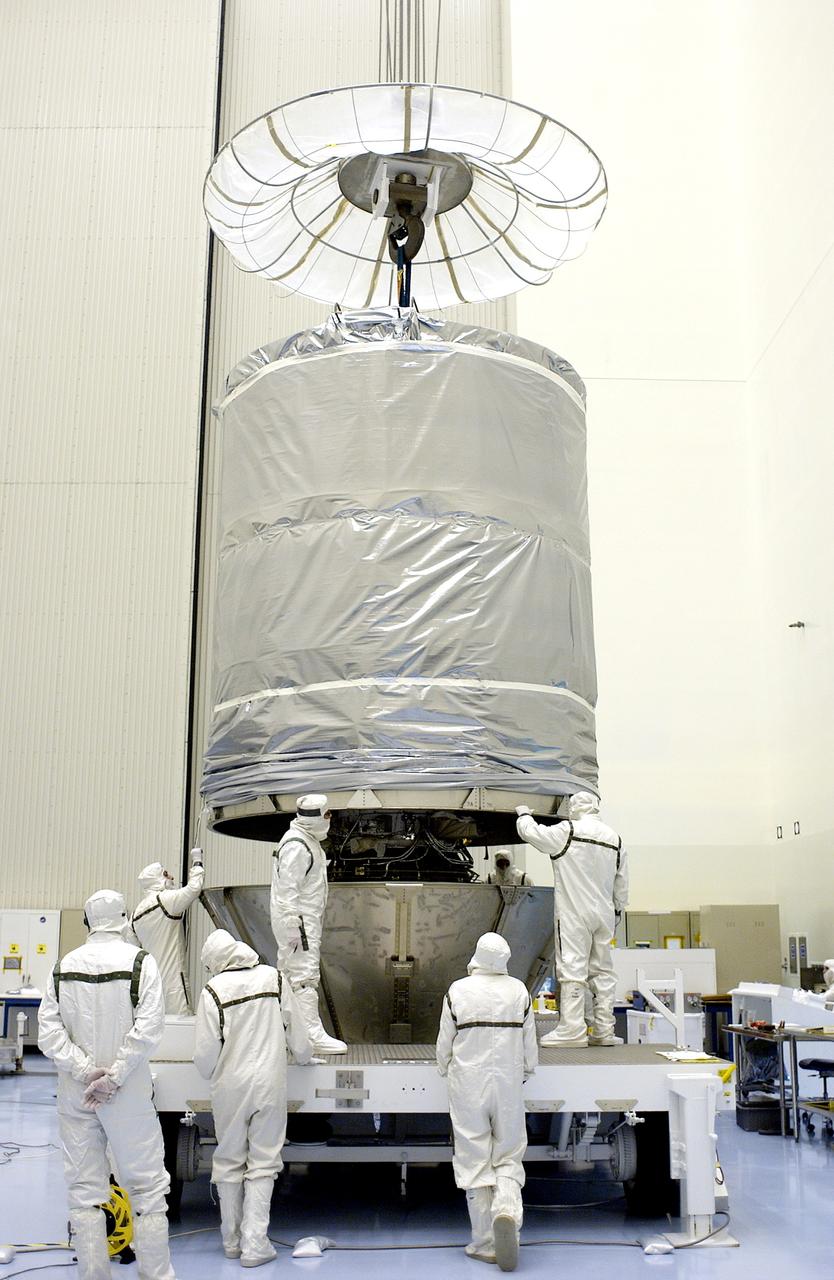
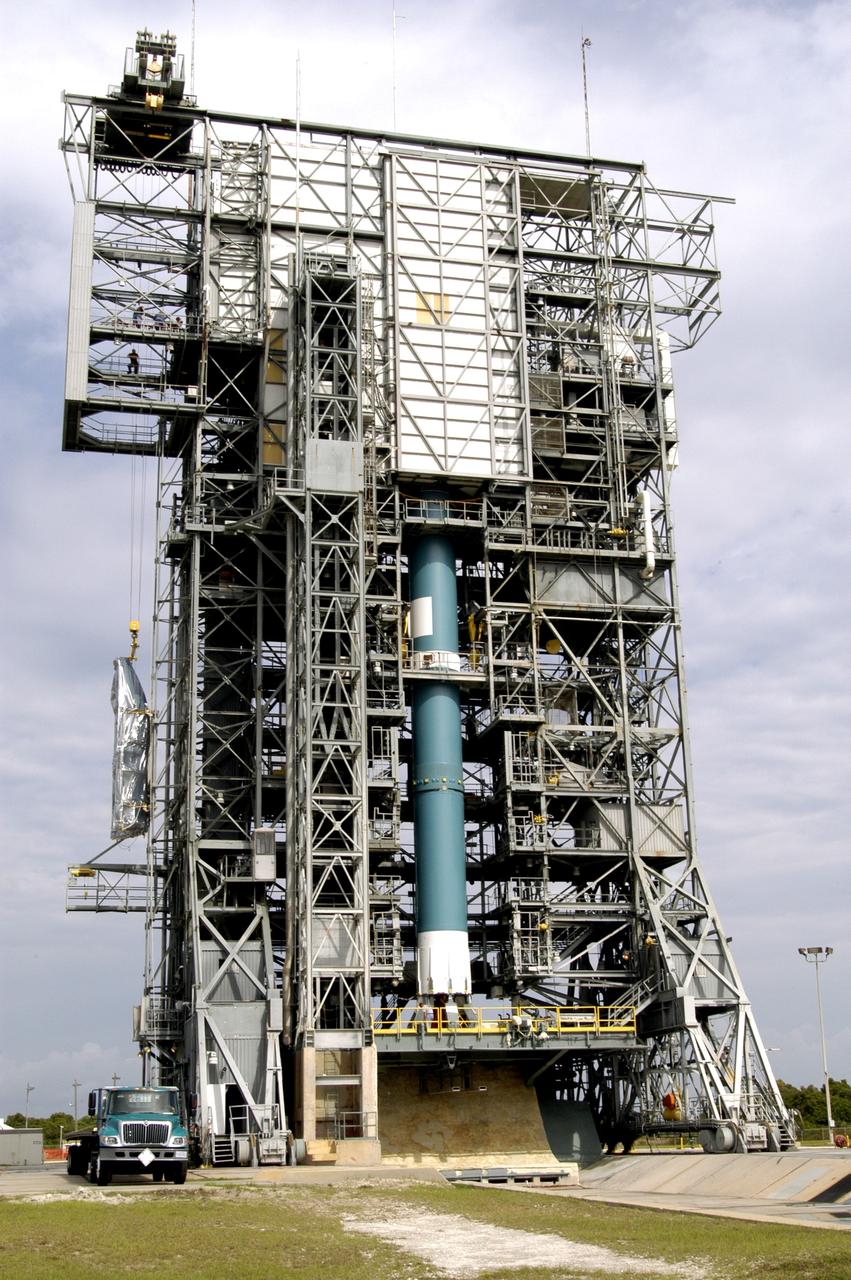
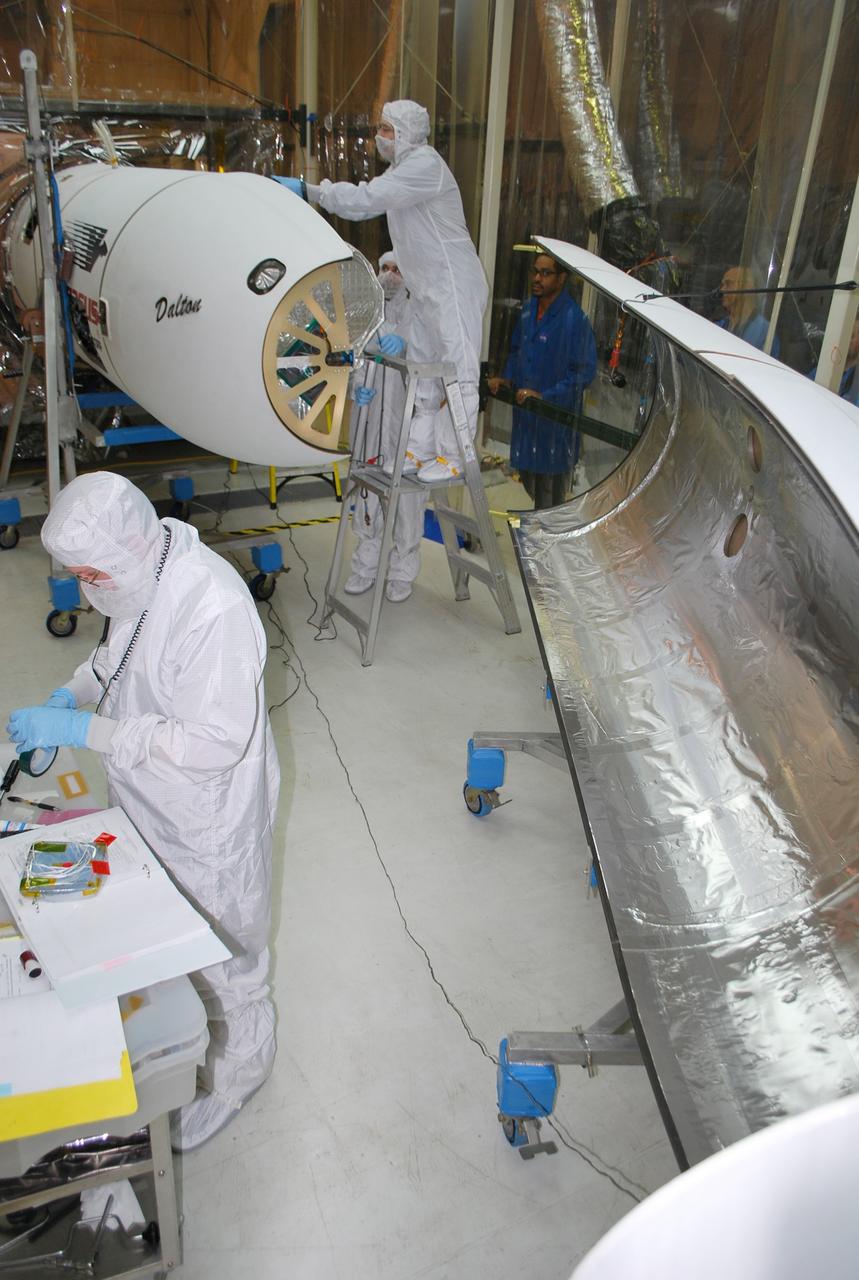
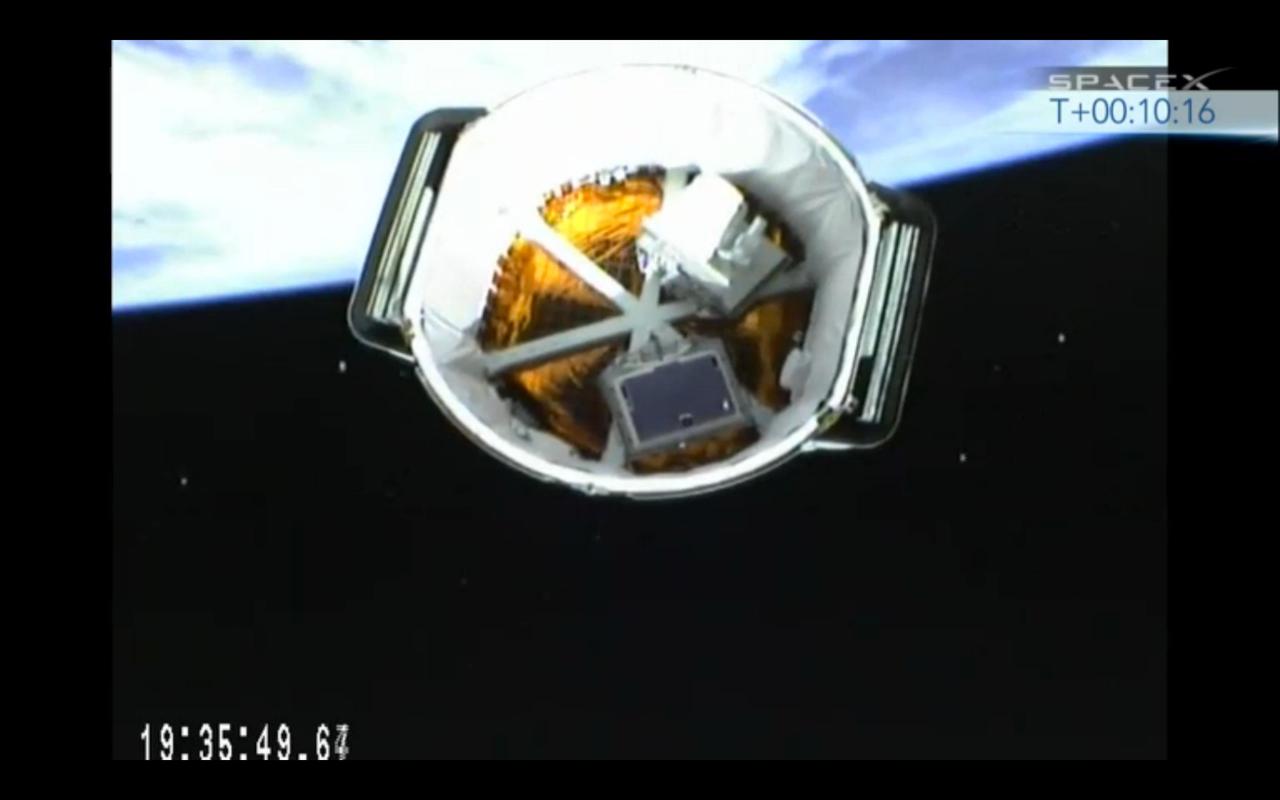
NASA Optical PAyload for Lasercomm Science OPALS is seen in the SpaceX Dragon trunk following second stage separation of the SpaceX Falcon 9 rocket on April 18, 2014.
Second Stage Separation
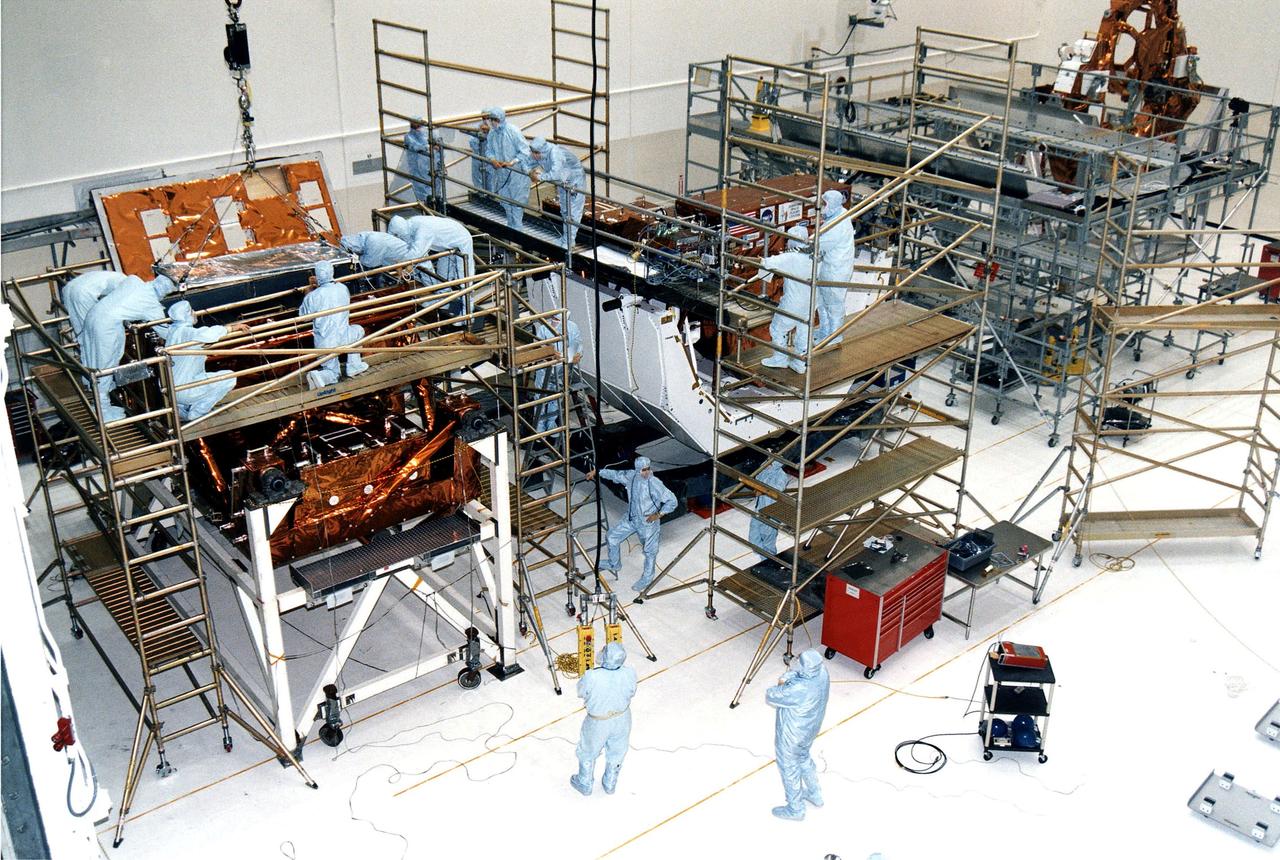
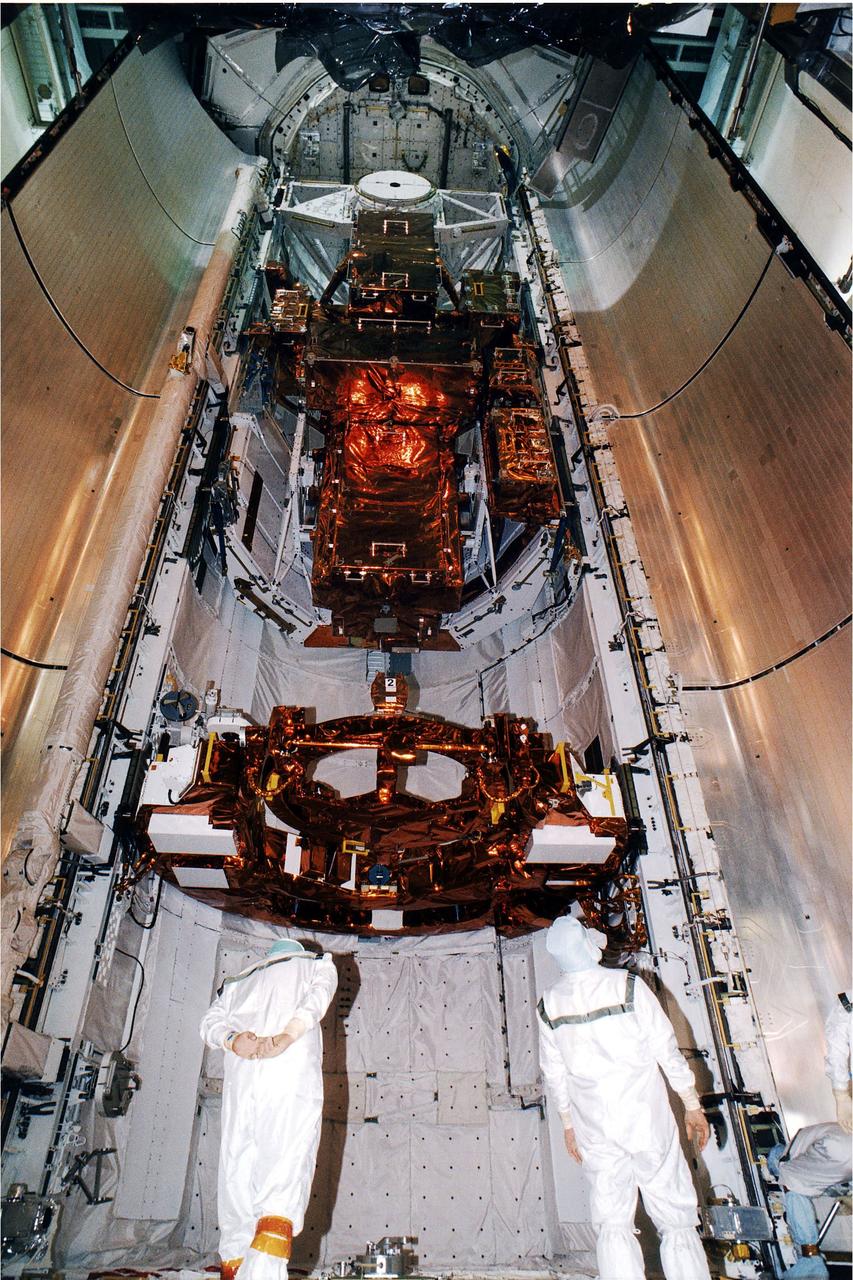
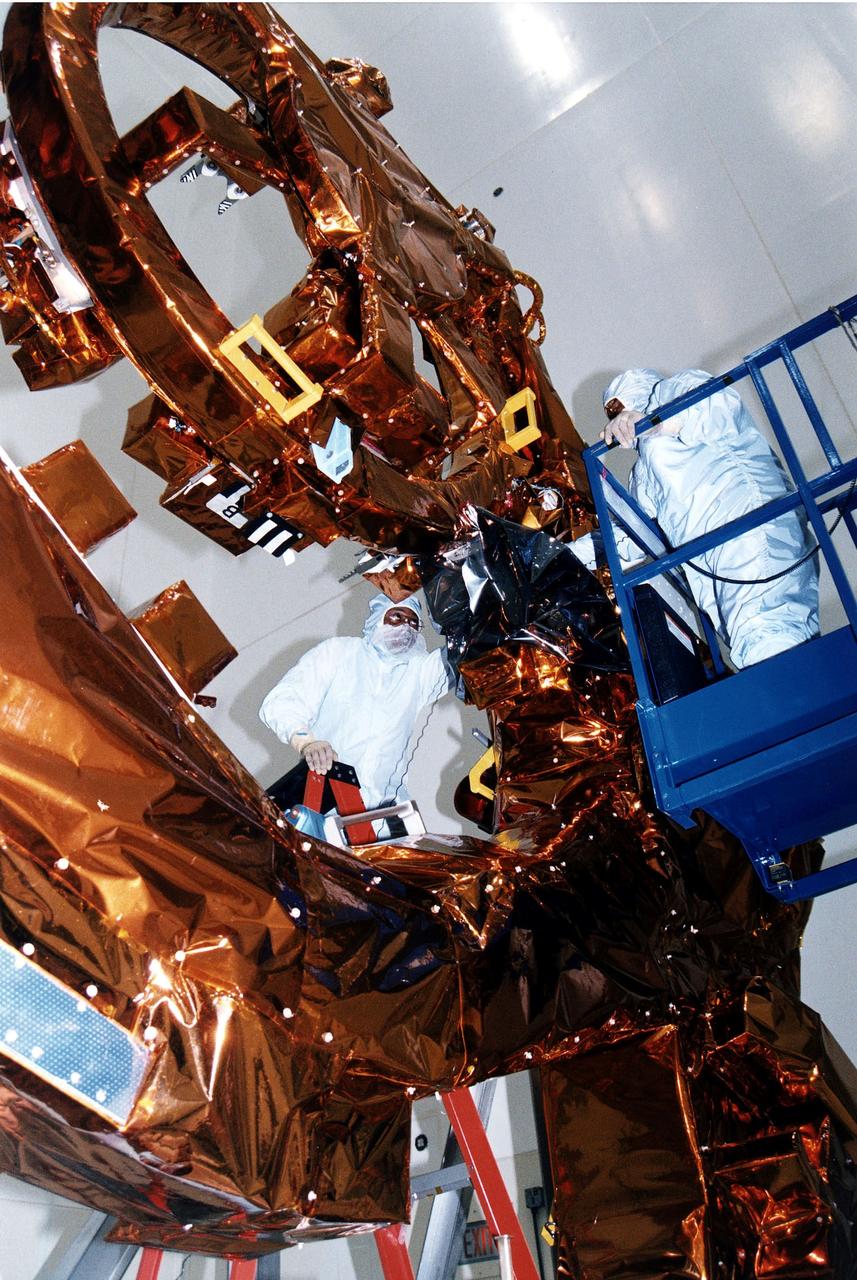
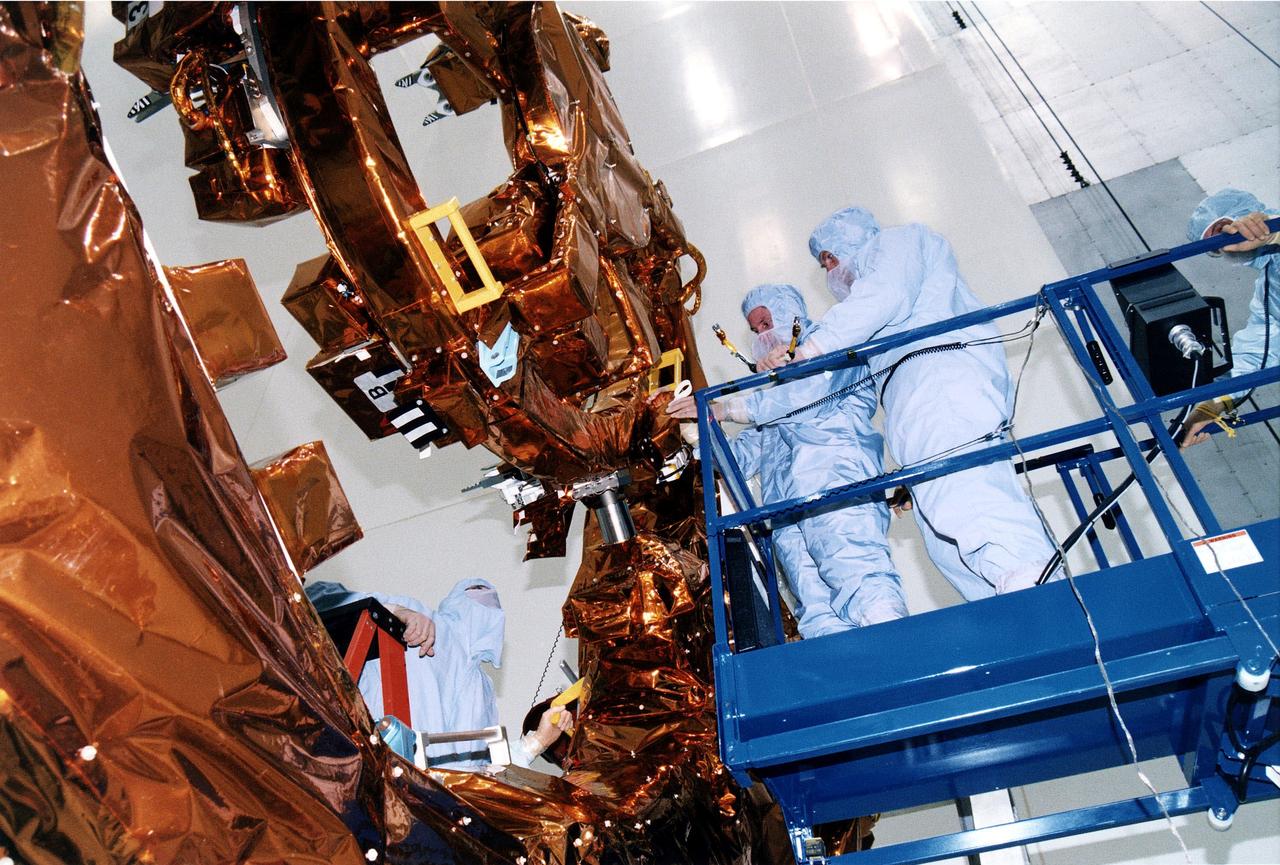
KENNEDY SPACE CENTER, FLA. - Workers in KSC's Vertical Processing Facility make final prelaunch prepartions to various payload elements that are part of the second Hubble Space Telescope (HST) servicing mission, STS-82.  Liftoff is targeted Feb. 11 aboard Discovery with a crew of seven.
KENNEDY SPACE CENTER, FLA. - Workers in KSC's Vertical Processing Facility make final prelaunch prepartions to various payload elements that are part of the second Hubble Space Telescope (HST) servicing mission, STS-82. Liftoff is targeted Feb. 11 aboard Discovery with a crew of seven.
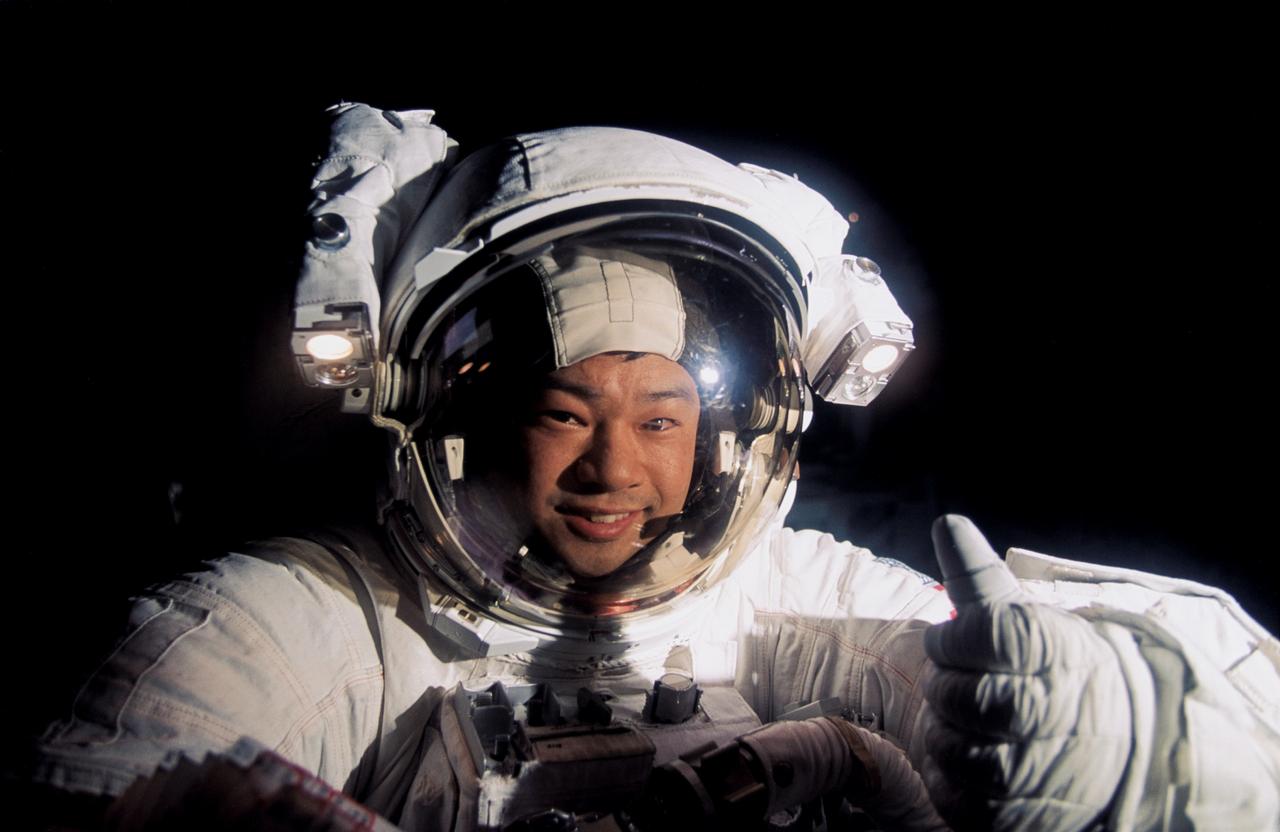
STS072-393-008 (17 Jan. 1996) --- Astronaut Leroy Chiao gives a thumbs up signal, marking the success of his second extravehicular activity (EVA) in three days. Chiao was joined by astronaut Winston E. Scott on this EVA.
Payload bay activity during second EVA of STS-72 mission
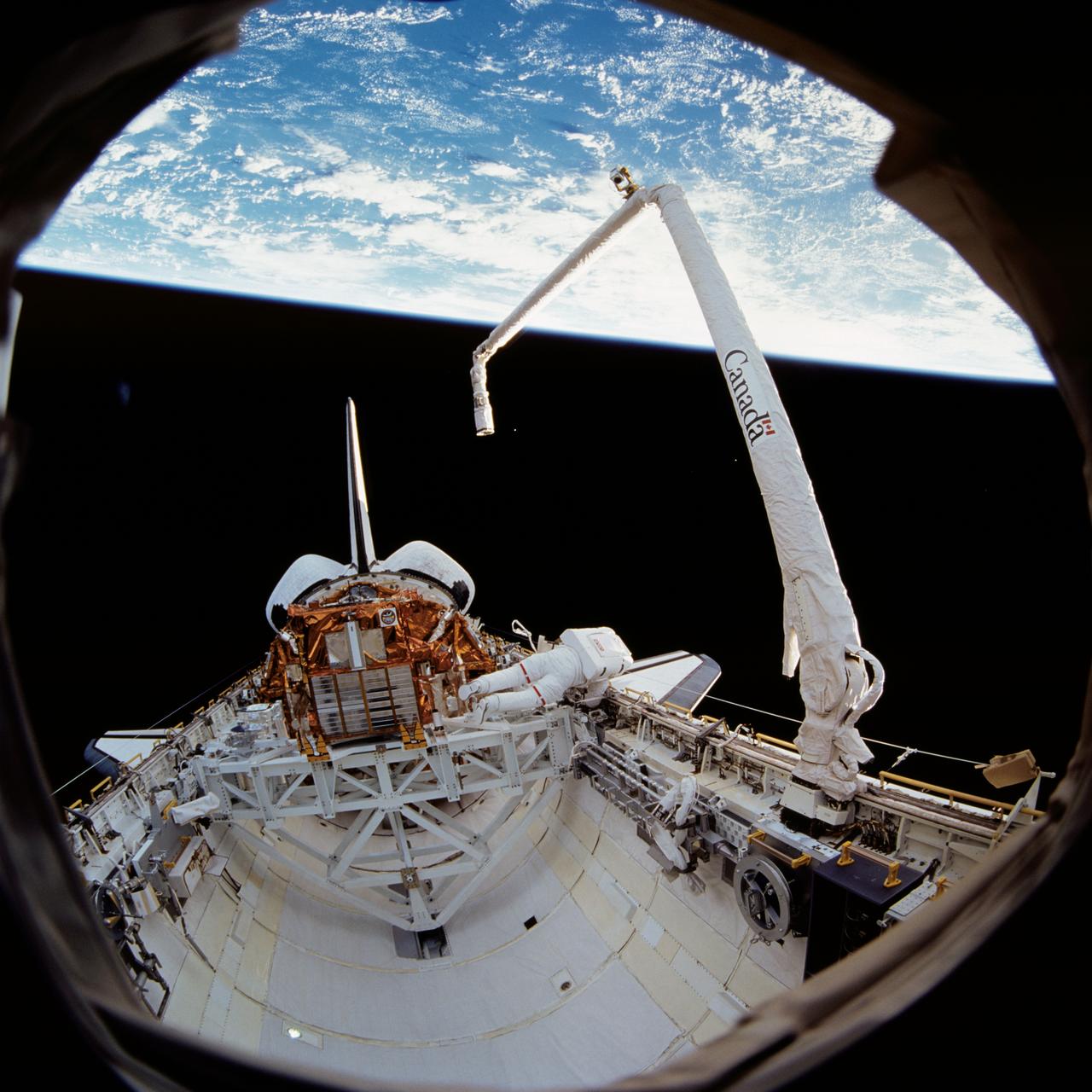
STS072-722-041 (17 Jan. 1996) --- Astronaut Winston E. Scott traverses the portside of the Space Shuttle Endeavour's cargo bay during the second of two Extravehicular Activities (EVA) to demonstrate space station assembly techniques. A 30mm lens on a 70mm handheld camera gives a "fish-eye" effect to the scene.  Both the Japanese Space Flyer Unit (SFU) and the Office of Aeronautics and Space Technology (OAST) Flyer satellite are in their stowed positions. TV cameras on the Remote Manipulator System (RMS) provided live coverage of the activity.
Payload bay activity during second EVA of STS-72 mission
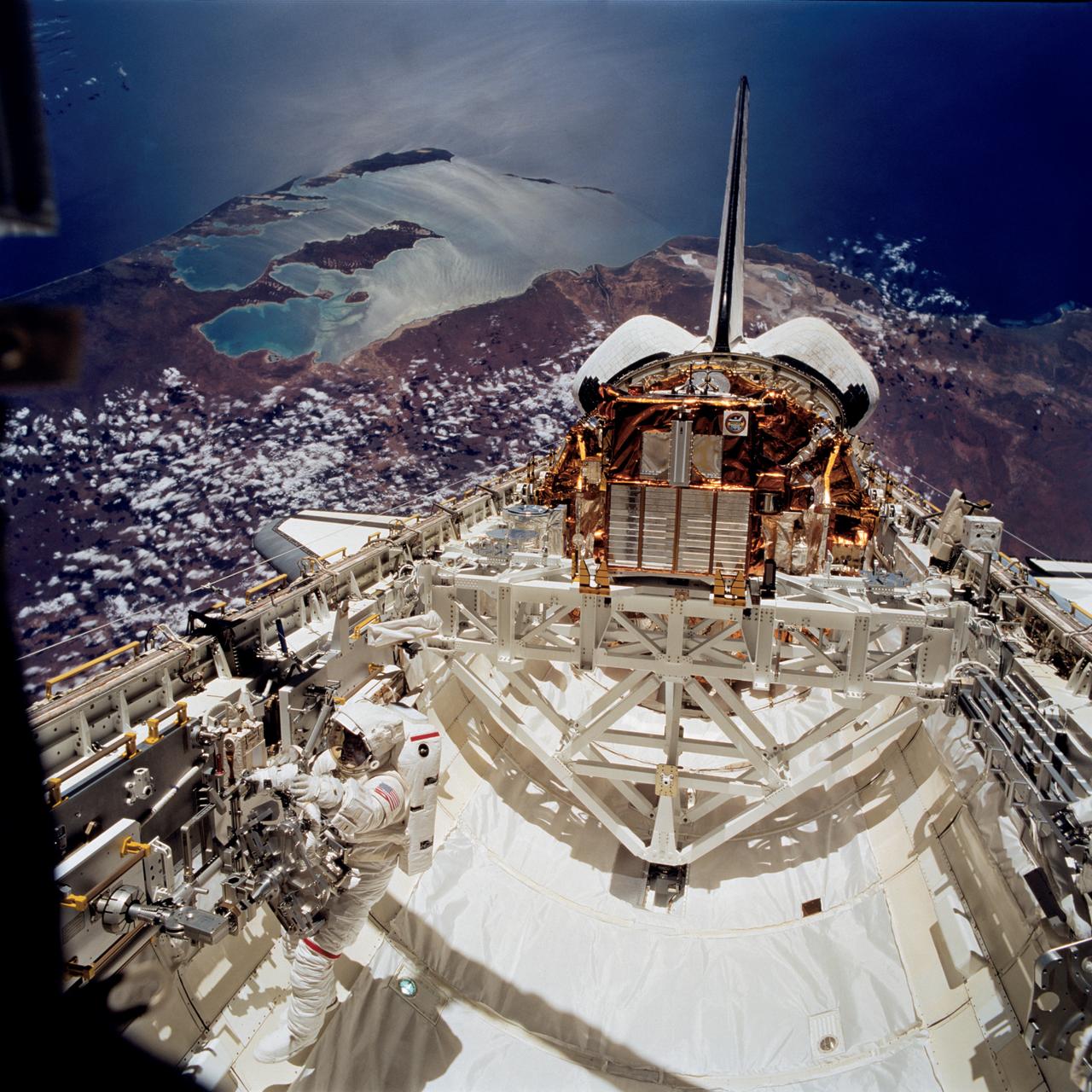
STS072-740-044 (17 Jan. 1996) --- Backdropped against Australia's Shark Bay, this panoramic scene of the Space Shuttle Endeavour in Earth-orbit was recorded during the mission's second Extravehicular Activity (EVA-2) on January 17, 1996.  Astronaut Leroy Chiao works with a Mobile Foot Restraint (MFR) at bottom left. The Japanese Space Flyer Unit (SFU) satellite and the Office of Aeronautics and Space Technology (OAST) Flyer satellite are seen in their stowed positions in the aft cargo bay.
Payload bay activity during second EVA of STS-72 mission
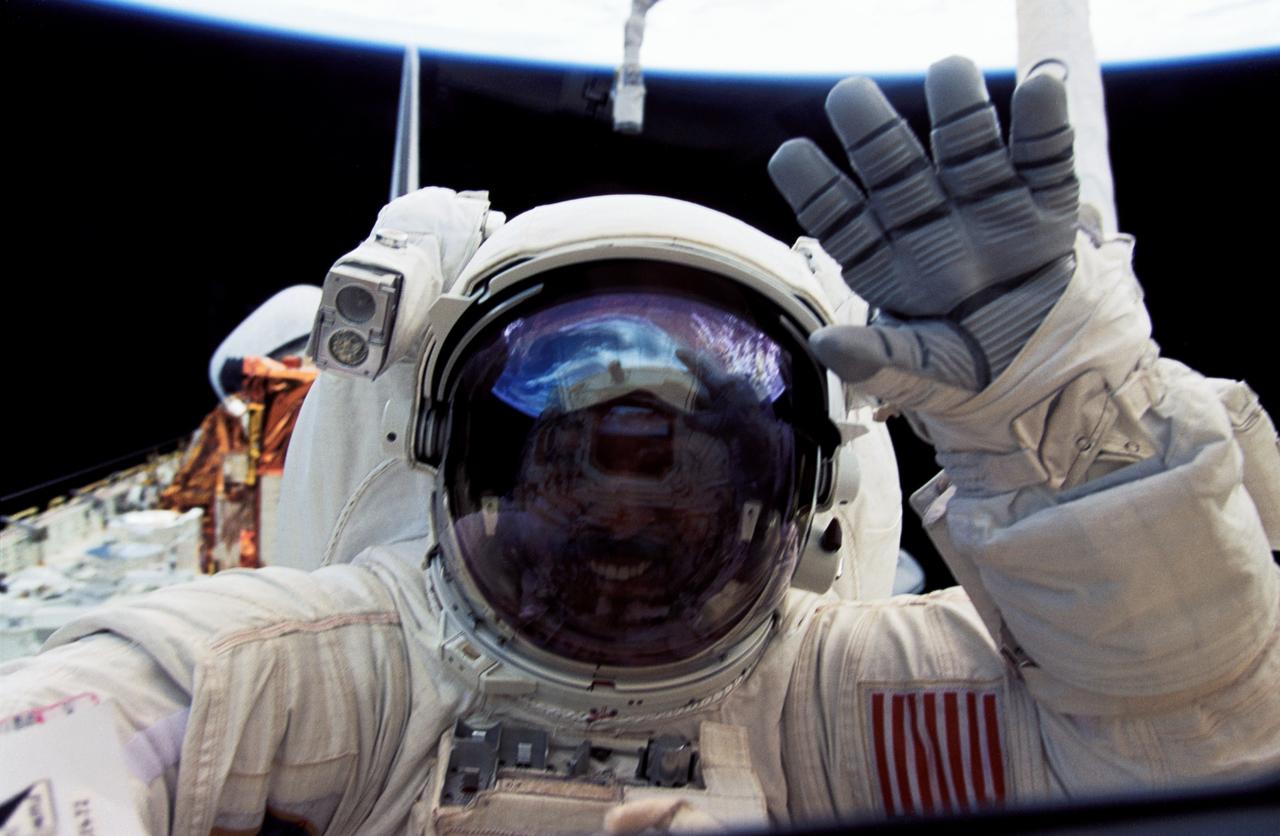
STS072-393-022 (17 Jan. 1996) --- In the Space Shuttle Endeavour's cargo bay, astronaut Winston E. Scott waves to crew mates inside the crew cabin during his extravehicular activity (EVA) on January 17, 1996.  Scott was joined by astronaut Leroy Chiao for the EVA.
Payload bay activity during second EVA of STS-72 mission
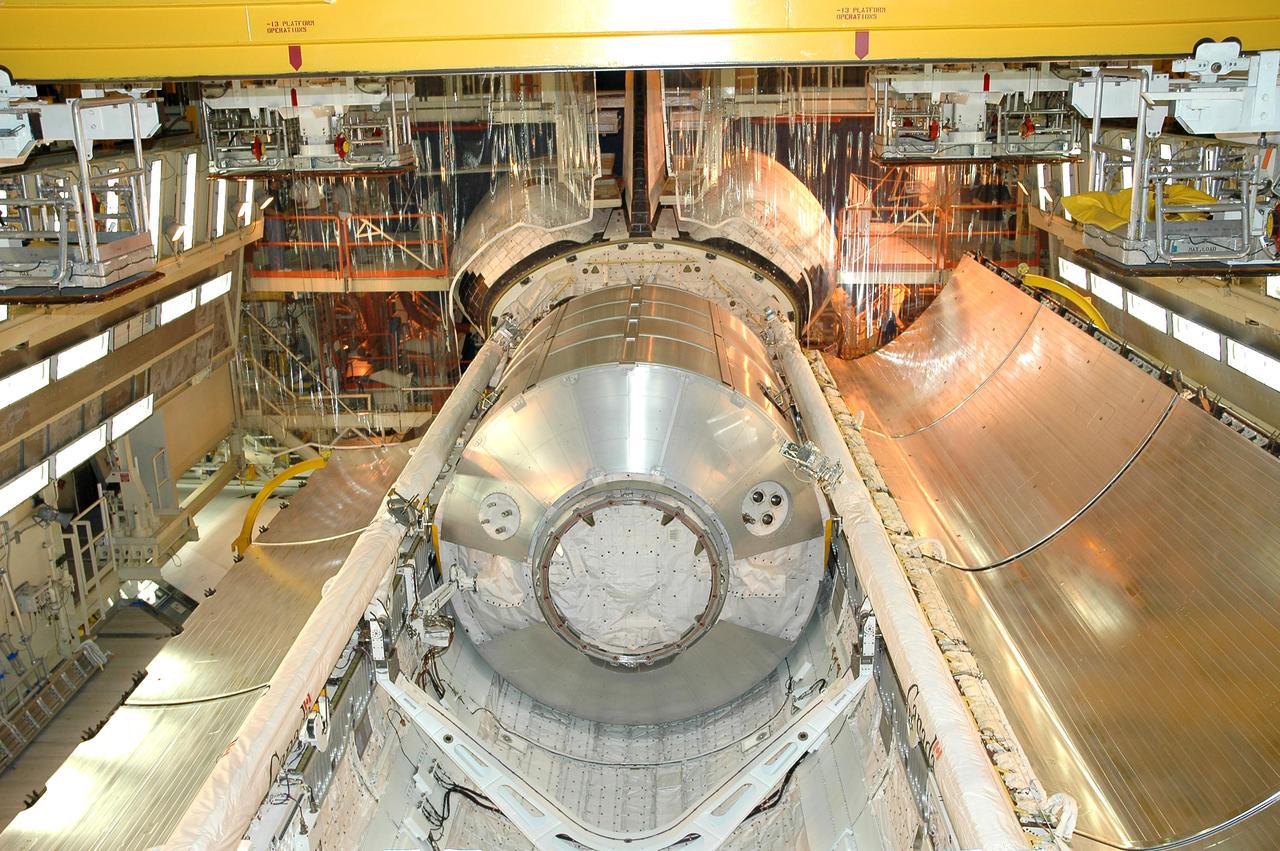
KENNEDY SPACE CENTER, FLA. -   At the KSC Launch Pad 39A, two members of the payload closeout crew check equipment as the doors are just about ready to be closed.  The Payload inside the bay of Discovery, the orbiter for the STS-82 mission, is ready for the launch of the second Hubble Space Telescope service mission.  The payload consists of the Near Infrared Camera and Multi-Object Spectrometer (NICMOS) that will be installed, Fine Guidance Sensor #1 (FGS-1), and the Space Telescope Imaging Spectrograph (STIS) to be installed. The STS-82 will launch with a crew of seven at 3:54 a.m. EST, Feb. 11, 1997. The launch window is 65 minutes in duration. The Mission Commander for STS-82 is Ken Bowersox. The purpose of the mission is to upgrade the scientific capabilities, service or replace aging components on the Telescope and provide a reboost to the optimum altitude.
KENNEDY SPACE CENTER, FLA. - At the KSC Launch Pad 39A, two members of the payload closeout crew check equipment as the doors are just about ready to be closed. The Payload inside the bay of Discovery, the orbiter for the STS-82 mission, is ready for the launch of the second Hubble Space Telescope service mission. The payload consists of the Near Infrared Camera and Multi-Object Spectrometer (NICMOS) that will be installed, Fine Guidance Sensor #1 (FGS-1), and the Space Telescope Imaging Spectrograph (STIS) to be installed. The STS-82 will launch with a crew of seven at 3:54 a.m. EST, Feb. 11, 1997. The launch window is 65 minutes in duration. The Mission Commander for STS-82 is Ken Bowersox. The purpose of the mission is to upgrade the scientific capabilities, service or replace aging components on the Telescope and provide a reboost to the optimum altitude.
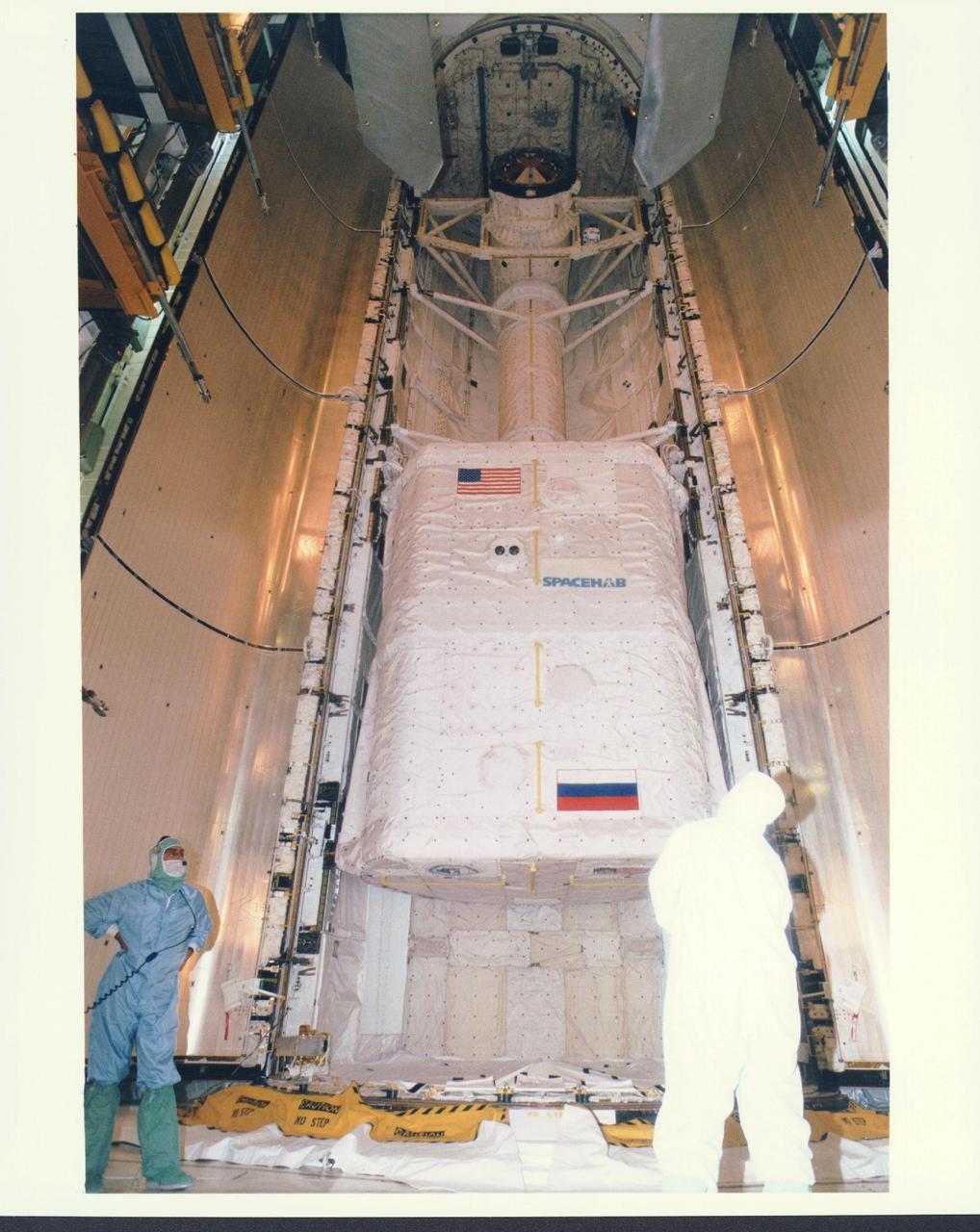
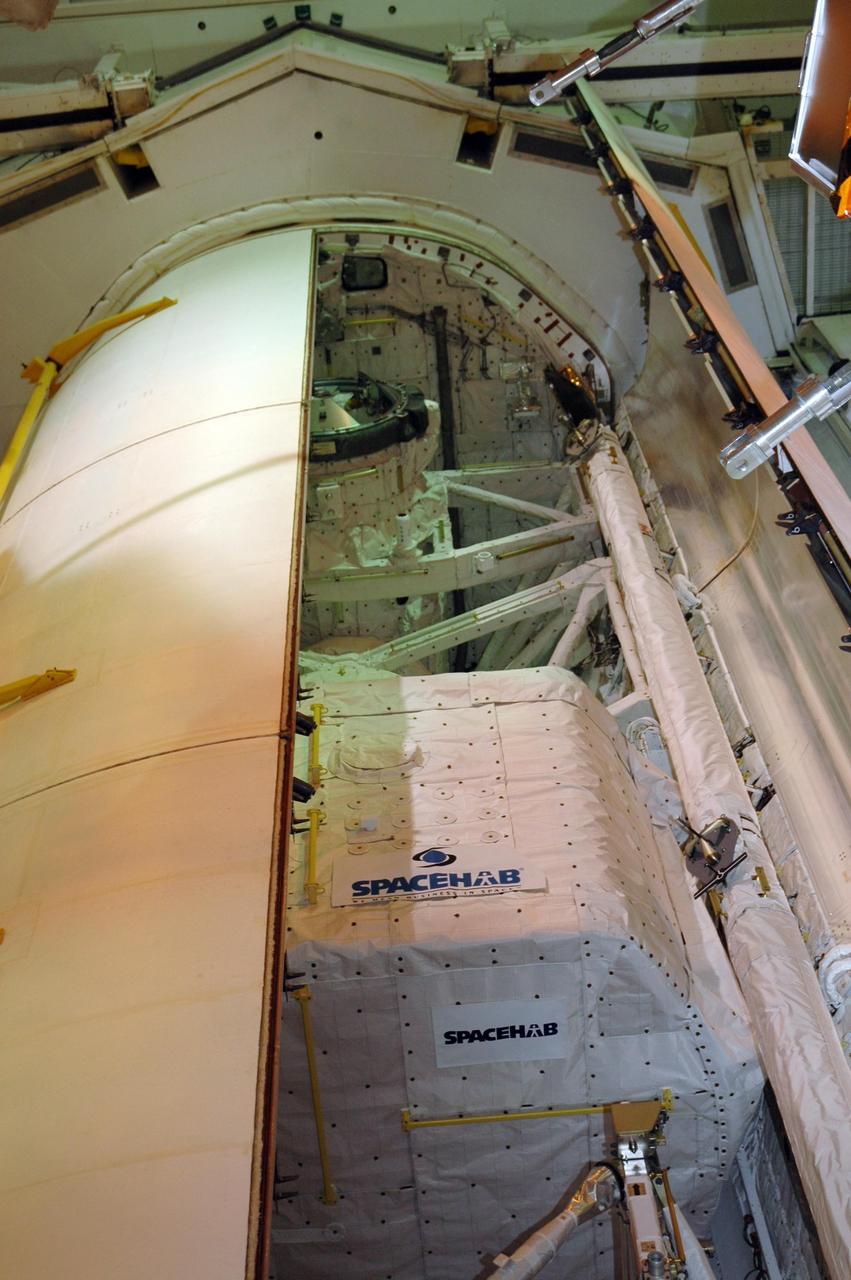
KENNEDY SPACE CENTER, FLA. -   Workers in the Payload Changeout Room (PCR) at Launch Pad 39A are preparing to close the payload doors for flight on the Space Shuttle Atlantis, targeted for liftoff on Mission STS-79 around Sept. 12.  The SPACEHAB Double Module located in the aft area of the payload bay is filled with supplies and other items slated for transfer to the Russian Space Station Mir. STS-79 marks the second flight of a SPACEHAB in support of the Shuttle-Mir dockings, and the first flight of the double-module configuration.  The SPACEHAB is connected by tunnel to the Orbiter Docking System (ODS), with the Androgynous Peripheral Docking System (APDS) clearly visible on top of the ODS. The APDS provides the docking interface for the linkup with Mir, while the ODS provides a passageway from the orbiter to the Russian space station and the SPACEHAB.
KENNEDY SPACE CENTER, FLA. - Workers in the Payload Changeout Room (PCR) at Launch Pad 39A are preparing to close the payload doors for flight on the Space Shuttle Atlantis, targeted for liftoff on Mission STS-79 around Sept. 12. The SPACEHAB Double Module located in the aft area of the payload bay is filled with supplies and other items slated for transfer to the Russian Space Station Mir. STS-79 marks the second flight of a SPACEHAB in support of the Shuttle-Mir dockings, and the first flight of the double-module configuration. The SPACEHAB is connected by tunnel to the Orbiter Docking System (ODS), with the Androgynous Peripheral Docking System (APDS) clearly visible on top of the ODS. The APDS provides the docking interface for the linkup with Mir, while the ODS provides a passageway from the orbiter to the Russian space station and the SPACEHAB.
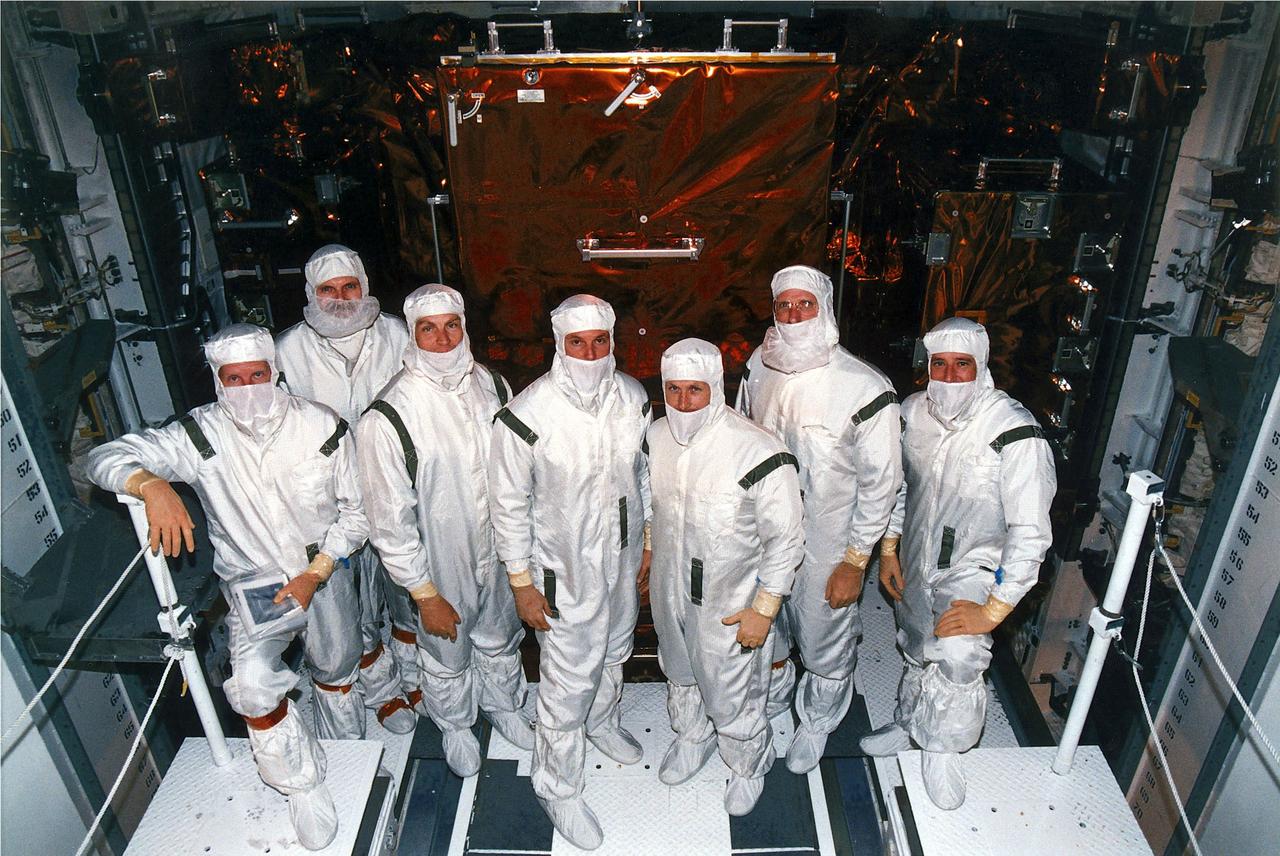
KENNEDY SPACE CENTER, FLA. -   STS-82 crew members pose in their clean room suits at Launch Pad 39A where the Space Shuttle Discovery is undergoing final preparations for liftoff on the second Hubble Space Telescope (HST) servicing mission.  They are making a final inspection of the payload before payload bay closure.  From left are Mission Specialists Steven A. Hawley and Steven L. Smith, Payload Commander Mark C. Lee, Mission Specialist GregoryJ. Harbaugh, Mission Commander Kenneth D. Bowersox, Mission Specialist Joseph R. "Joe" Tanner and Pilot Scott J. "Doc" Horowitz.  STS-82 is scheduled for liftoff on Feb. 11 during a 65-minute launch window that opens at 3:56 a.m. EST.
KENNEDY SPACE CENTER, FLA. - STS-82 crew members pose in their clean room suits at Launch Pad 39A where the Space Shuttle Discovery is undergoing final preparations for liftoff on the second Hubble Space Telescope (HST) servicing mission. They are making a final inspection of the payload before payload bay closure. From left are Mission Specialists Steven A. Hawley and Steven L. Smith, Payload Commander Mark C. Lee, Mission Specialist GregoryJ. Harbaugh, Mission Commander Kenneth D. Bowersox, Mission Specialist Joseph R. "Joe" Tanner and Pilot Scott J. "Doc" Horowitz. STS-82 is scheduled for liftoff on Feb. 11 during a 65-minute launch window that opens at 3:56 a.m. EST.
KENNEDY SPACE CENTER, FLA. -  Workers in KSC's Vertical Processing Facility make final adjustments to the Flight Support System (FSS) for STS-82, the second Hubble Space Telescope servicing mission.  The FSS is reusable flight hardware that provides the mechanical, structural and electrical interfaces between HST, the space support equipment and the orbiter for payload retrieval and on-orbit servicing.  Liftoff aboard Discovery is targeted Feb. 11 with a crew of seven.
KENNEDY SPACE CENTER, FLA. - Workers in KSC's Vertical Processing Facility make final adjustments to the Flight Support System (FSS) for STS-82, the second Hubble Space Telescope servicing mission. The FSS is reusable flight hardware that provides the mechanical, structural and electrical interfaces between HST, the space support equipment and the orbiter for payload retrieval and on-orbit servicing. Liftoff aboard Discovery is targeted Feb. 11 with a crew of seven.
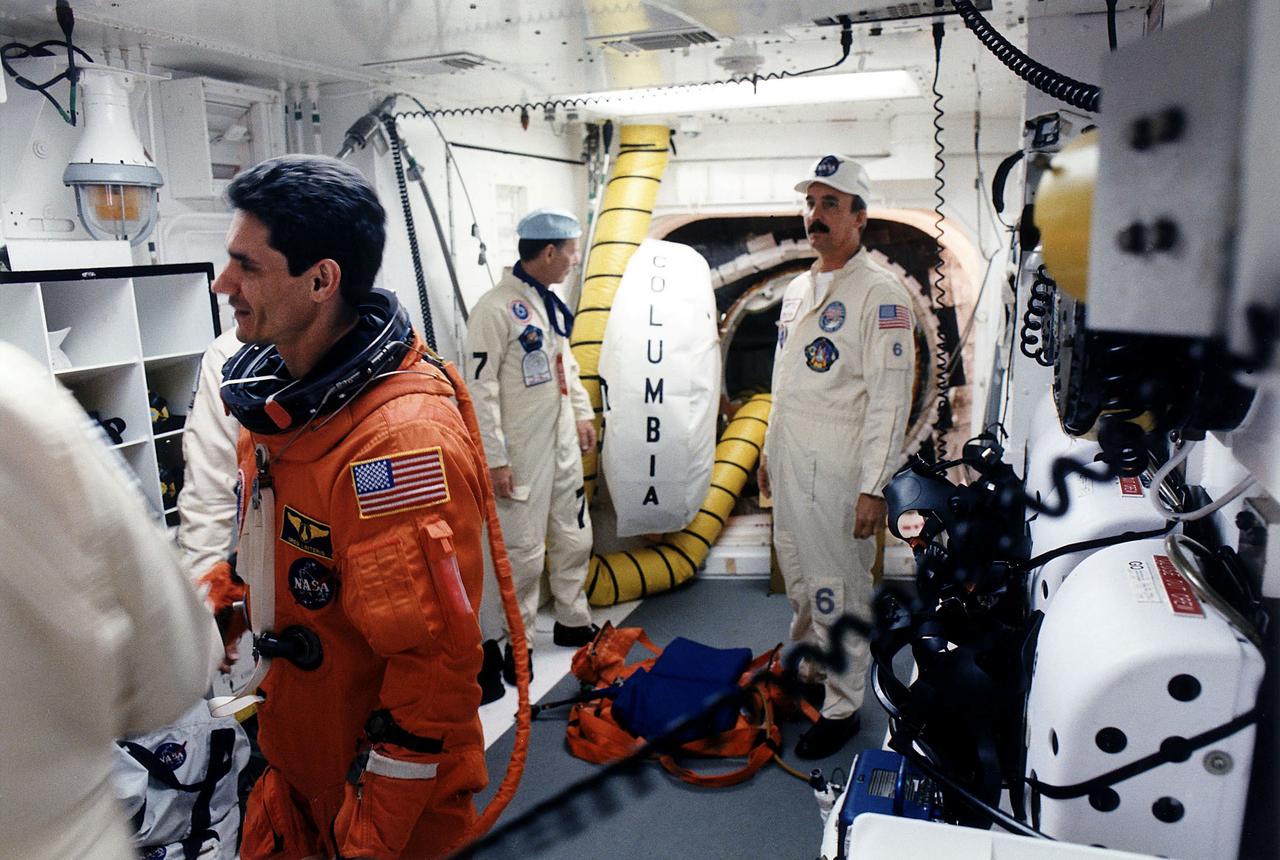
KENNEDY SPACE CENTER, FLA. - STS-83 Payload Specialist Gregory T. Linteris chats with White Room closeout crew members as he prepares to enter the Space Shuttle Columbia at Launch Pad 39A. Closeout crew workers Max Kandler (second from right) and Bob Saulnier wait to assist Linteris with his ascent/reentry suit.
KENNEDY SPACE CENTER, FLA. -  STS-82 crew members examine part of the Flight Support System during the Crew Equipment Integration Test (CEIT) in KSC's Vertical Processing Facility.  From left are Mission Specialists Steven L. Smith and Gregory J. Harbaugh and Payload Commander Mark C. Lee.  Liftoff of STS-82, the second Hubble Space Telescope (HST) servicing mission, is scheduled Feb. 11 aboard Discovery with a crew of seven.
KENNEDY SPACE CENTER, FLA. - STS-82 crew members examine part of the Flight Support System during the Crew Equipment Integration Test (CEIT) in KSC's Vertical Processing Facility. From left are Mission Specialists Steven L. Smith and Gregory J. Harbaugh and Payload Commander Mark C. Lee. Liftoff of STS-82, the second Hubble Space Telescope (HST) servicing mission, is scheduled Feb. 11 aboard Discovery with a crew of seven.
KENNEDY SPACE CENTER, FLA. — At Launch Pad 39A, the second payload bay door of Endeavour closes over the cargo inside.  The payload includes the S5 truss, the SPACEHAB module and external stowage platform 3. The mission is the 22nd flight to the International Space Station and is targeted for launch on Aug. 7.   NASA/Charisse Nahser
KSC-07pd2050
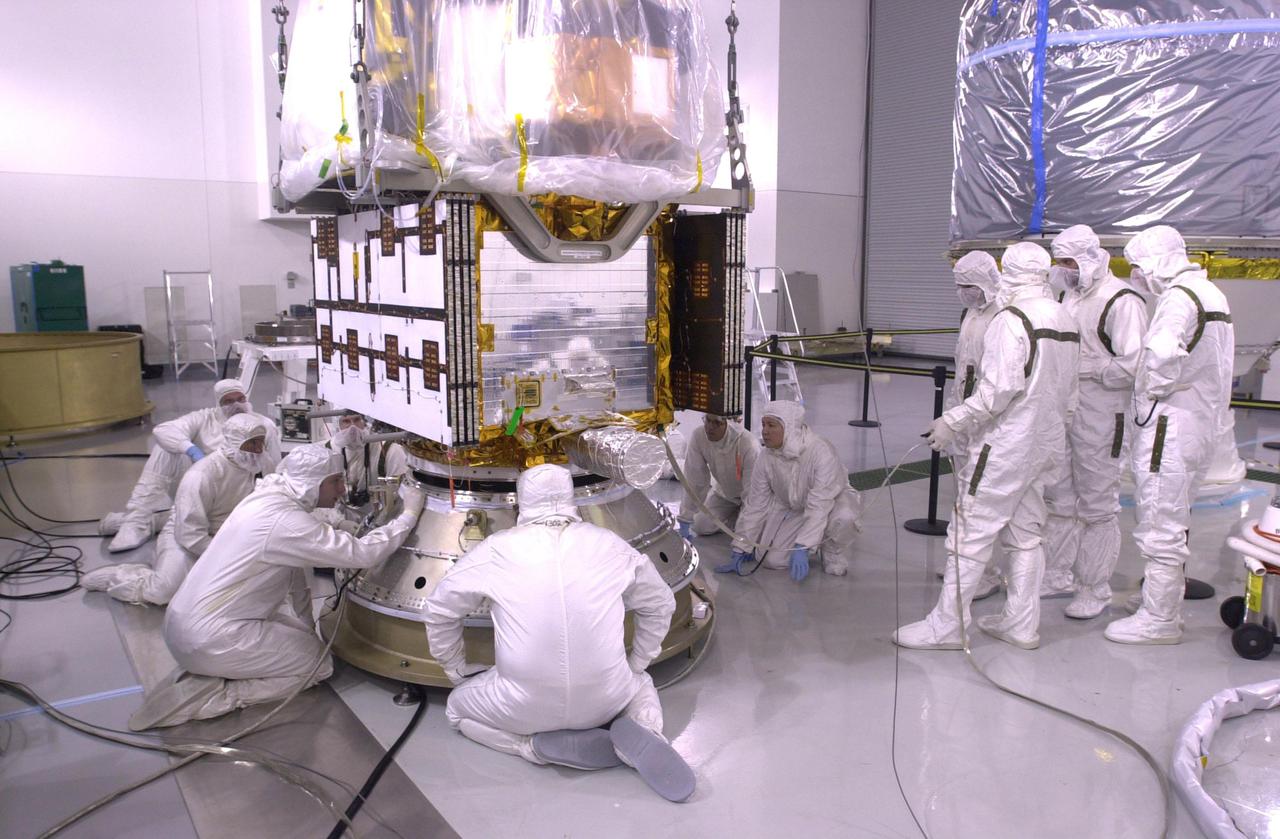
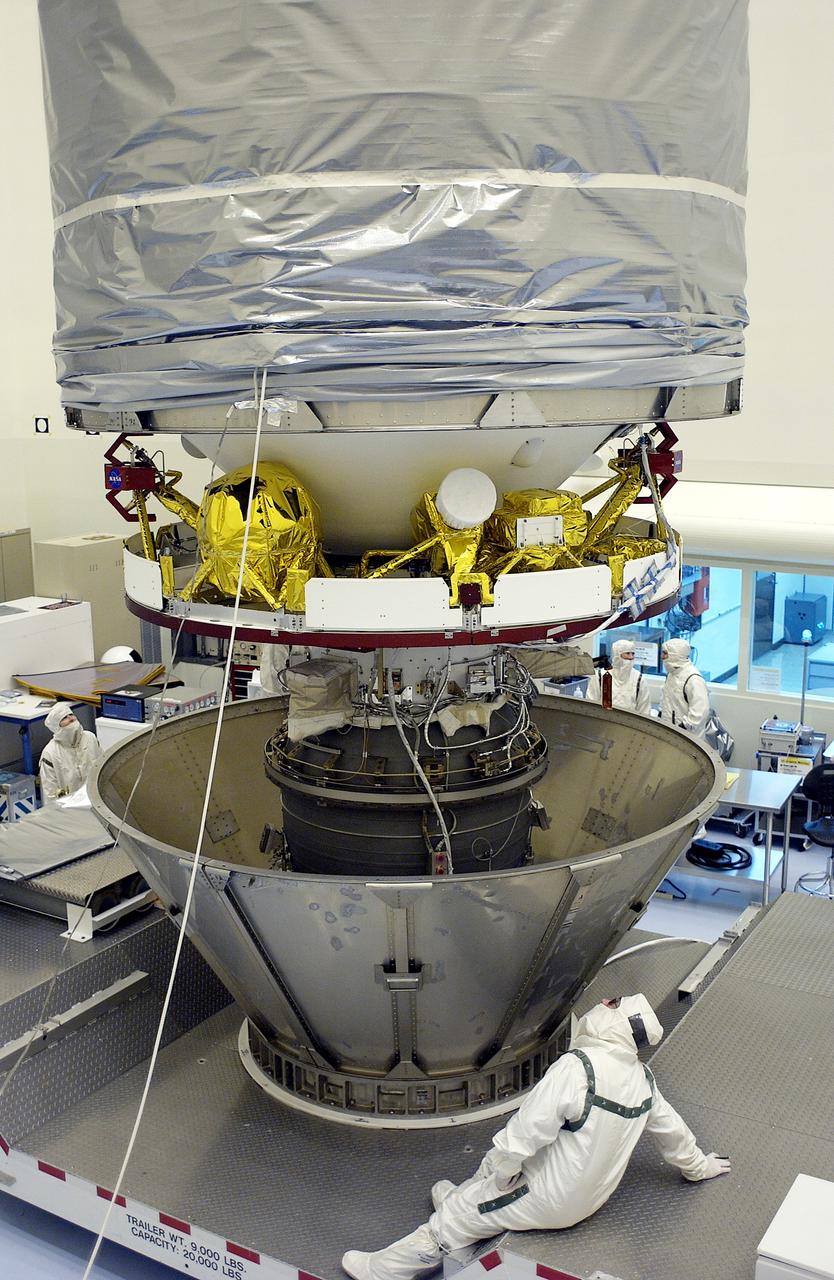
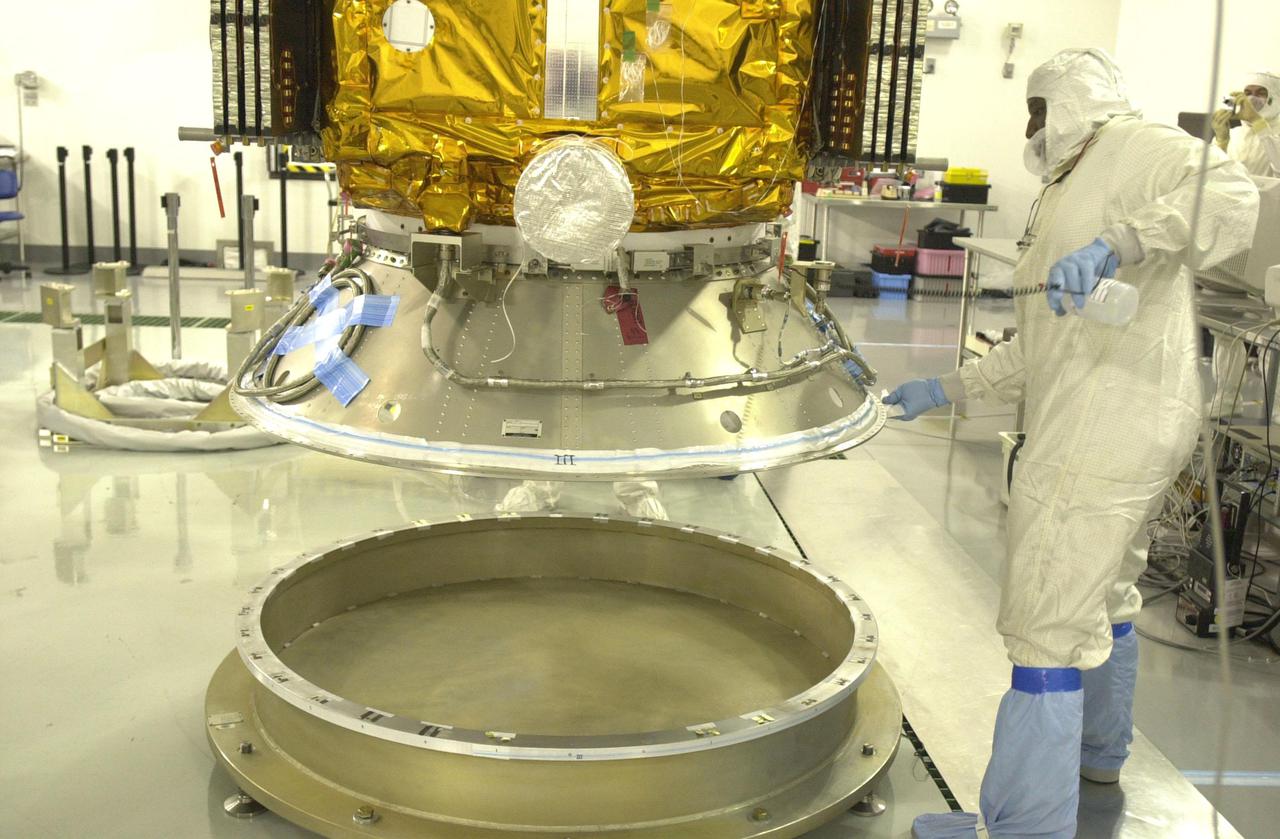
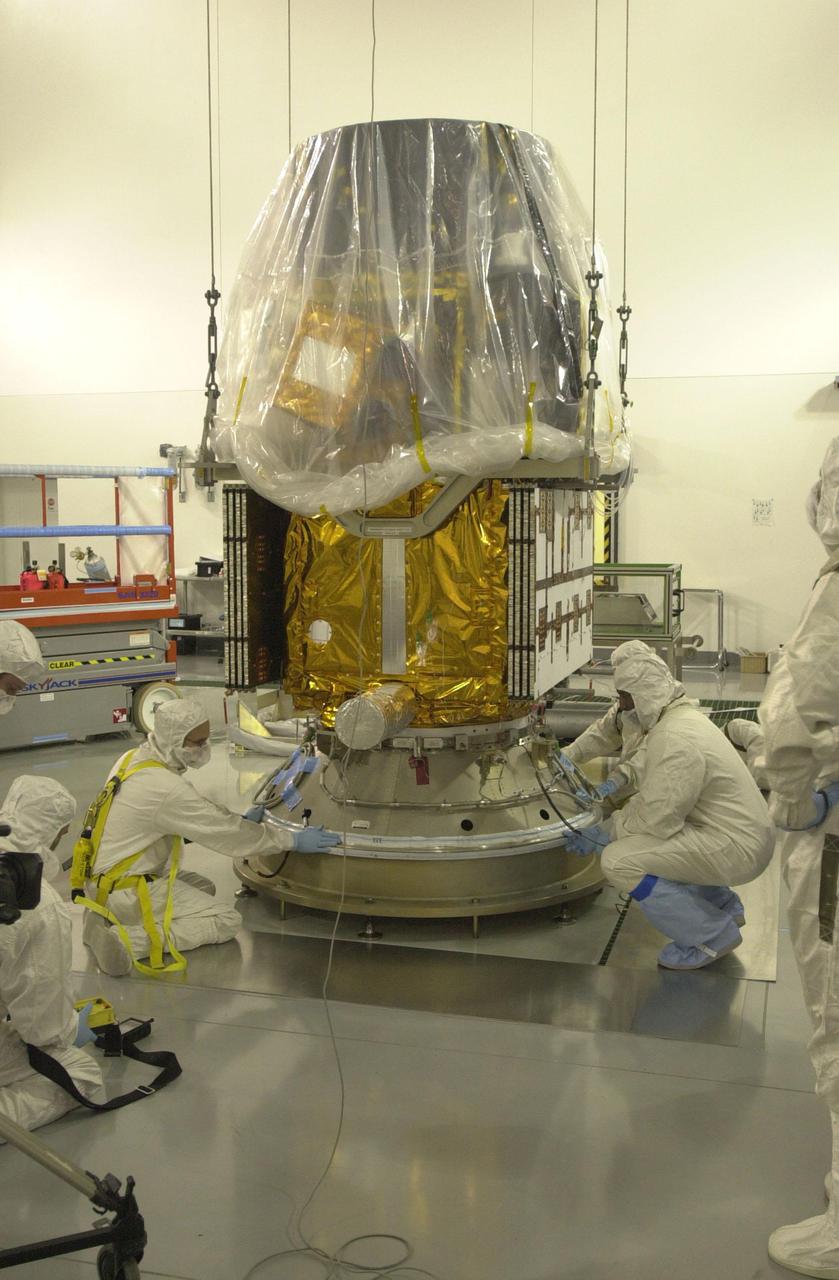
VANDENBERG AIR FORCE BASE, CALIF.  — Inside the Astrotech Payload Processing Facility on Vandenberg Air Force Base in California, workers attach the CALIPSO spacecraft onto another payload attach fitting.  CALIPSO will be mated with the Lower Delta Payload Attach Fitting (LDPAF) that contains the CloudSat satellite.  Later the UDPAF will be mated with the lower Delta Payload Attach Fitting, which contains the CloudSat satellite. The PAF is the interface between the spacecraft and the second stage of the rocket. CALIPSO stands for Cloud-Aerosol Lidar and Infrared Pathfinder Satellite Observation.
KSC-05PD-2158
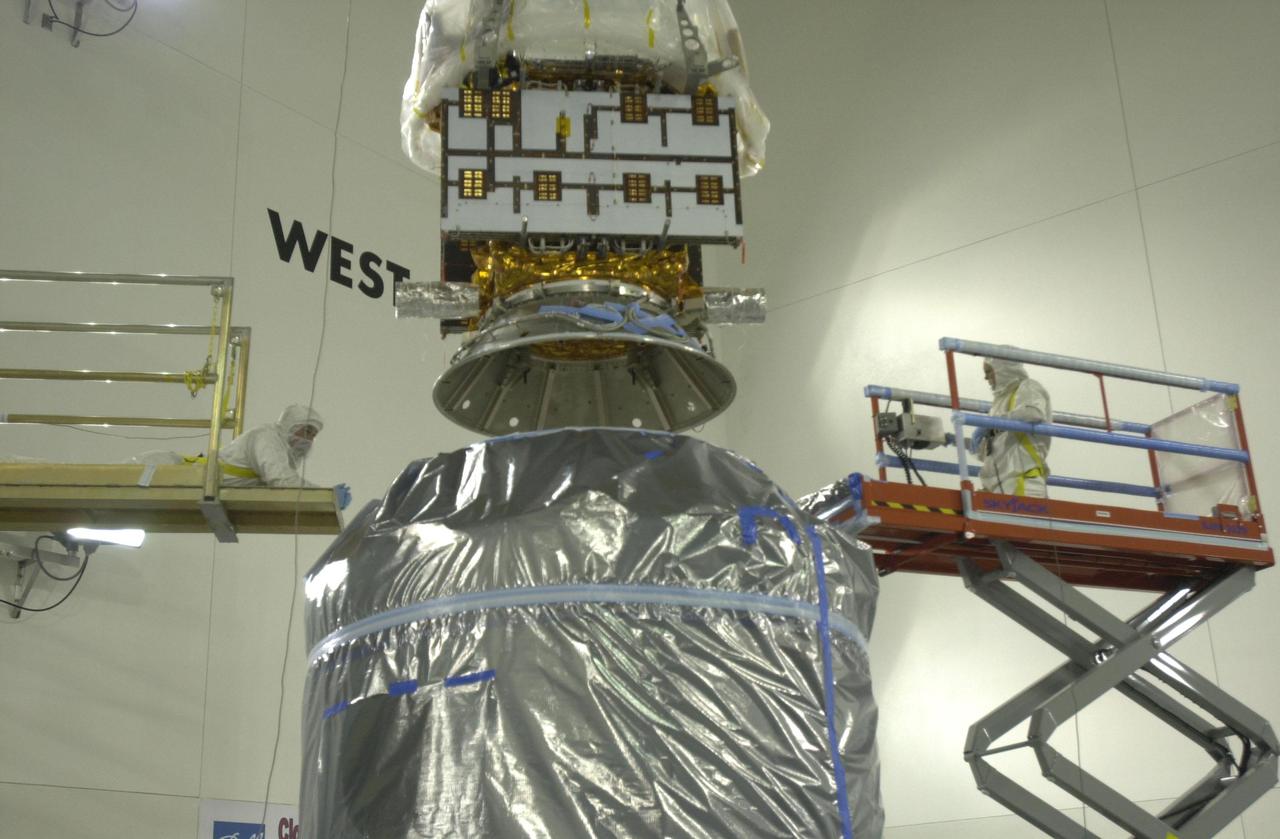
VANDENBERG AIR FORCE BASE, CALIF.  — Inside the Astrotech Payload Processing Facility on Vandenberg Air Force Base in California, workers lower the CALIPSO spacecraft and Upper Delta Payload Attach Fitting (UDPAF) toward the Lower Delta Payload Attach Fitting (LDPAF) that contains the CloudSat satellite.   Later the UDPAF will be mated with the lower Delta Payload Attach Fitting, which contains the CloudSat satellite. The PAF is the interface between the spacecraft and the second stage of the rocket. CALIPSO stands for Cloud-Aerosol Lidar and Infrared Pathfinder Satellite Observation.
KSC-05PD-2160
KENNEDY SPACE CENTER, FLA. -    The launch tower on Launch Complex 17-A, Cape Canaveral Air Force Station, clears the Boeing Delta II rocket and its Mars Exploration Rover (MER-A) payload in preparation for a second attempt at launch.  The first attempt on June 8, 2003, was scrubbed due to bad weather in the vicinity.  MER-A is the first of two rovers being launched to Mars.  When the two rovers arrive at Mars in 2004, they will bounce to airbag-cushioned landings at sites offering a balance of favorable conditions for safe landings and interesting science. The rovers see sharper images, can explore farther and examine rocks better than anything that has ever landed on Mars.  The designated site for MER-A mission is Gusev Crater, which appears to have been a crater lake.  The second rover, MER-B, is scheduled to launch June 25.
KENNEDY SPACE CENTER, FLA. - The launch tower on Launch Complex 17-A, Cape Canaveral Air Force Station, clears the Boeing Delta II rocket and its Mars Exploration Rover (MER-A) payload in preparation for a second attempt at launch. The first attempt on June 8, 2003, was scrubbed due to bad weather in the vicinity. MER-A is the first of two rovers being launched to Mars. When the two rovers arrive at Mars in 2004, they will bounce to airbag-cushioned landings at sites offering a balance of favorable conditions for safe landings and interesting science. The rovers see sharper images, can explore farther and examine rocks better than anything that has ever landed on Mars. The designated site for MER-A mission is Gusev Crater, which appears to have been a crater lake. The second rover, MER-B, is scheduled to launch June 25.
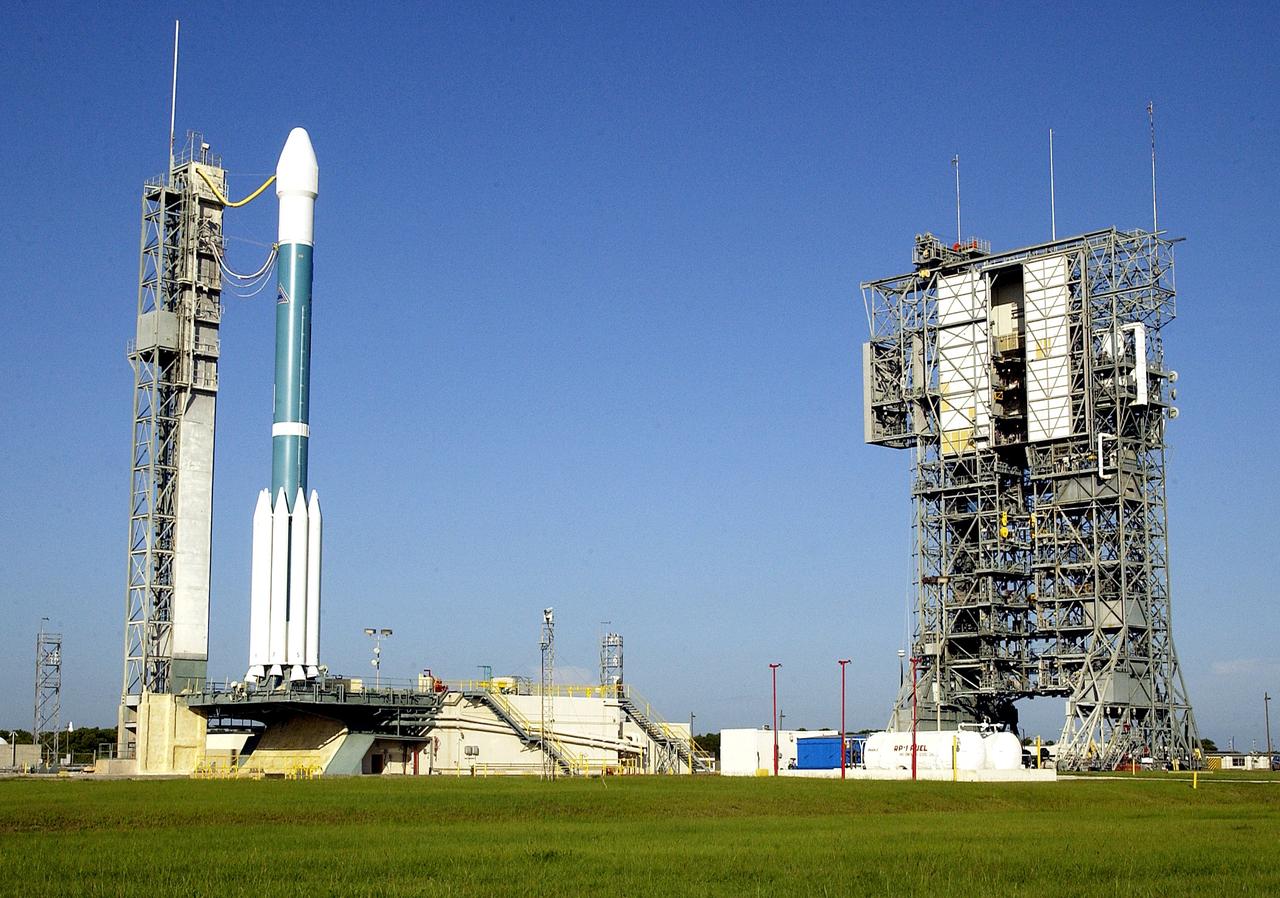
KENNEDY SPACE CENTER, FLA. -    The launch tower (right) on Launch Complex 17-A, Cape Canaveral Air Force Station, has been rolled back from the Boeing Delta II rocket and its Mars Exploration Rover (MER-A) payload (left) in preparation for a second attempt at launch.  The first attempt on June 8, 2003, was scrubbed due to bad weather in the vicinity.  MER-A is the first of two rovers being launched to Mars.  When the two rovers arrive at Mars in 2004, they will bounce to airbag-cushioned landings at sites offering a balance of favorable conditions for safe landings and interesting science. The rovers see sharper images, can explore farther and examine rocks better than anything that has ever landed on Mars.  The designated site for MER-A mission is Gusev Crater, which appears to have been a crater lake.  The second rover, MER-B, is scheduled to launch June 25.
KENNEDY SPACE CENTER, FLA. - The launch tower (right) on Launch Complex 17-A, Cape Canaveral Air Force Station, has been rolled back from the Boeing Delta II rocket and its Mars Exploration Rover (MER-A) payload (left) in preparation for a second attempt at launch. The first attempt on June 8, 2003, was scrubbed due to bad weather in the vicinity. MER-A is the first of two rovers being launched to Mars. When the two rovers arrive at Mars in 2004, they will bounce to airbag-cushioned landings at sites offering a balance of favorable conditions for safe landings and interesting science. The rovers see sharper images, can explore farther and examine rocks better than anything that has ever landed on Mars. The designated site for MER-A mission is Gusev Crater, which appears to have been a crater lake. The second rover, MER-B, is scheduled to launch June 25.
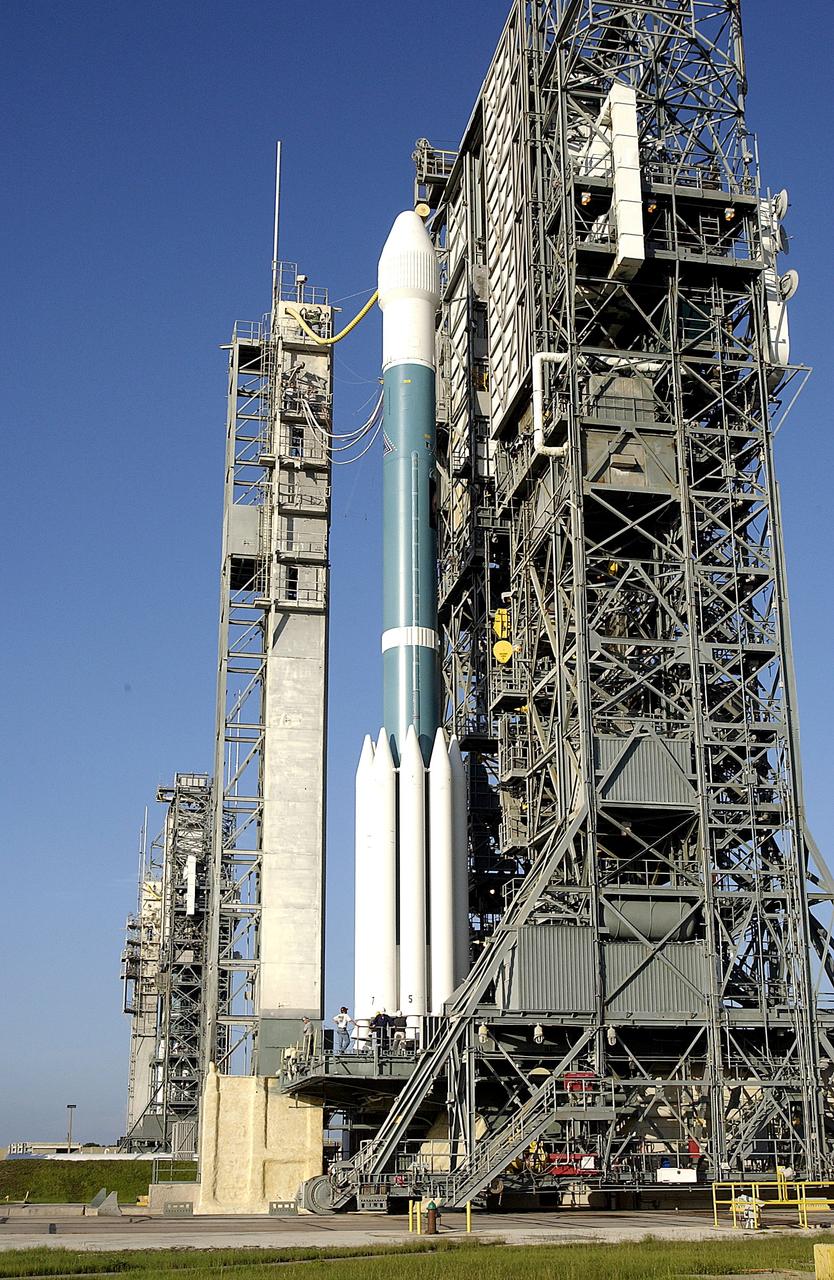
KENNEDY SPACE CENTER, FLA. - On Launch Complex 17-A, Cape Canaveral Air Force Station, the launch tower begins to roll back from the Boeing Delta II rocket and its Mars Exploration Rover (MER-A) payload in preparation for a second attempt at launch.  The first attempt on June 8, 2003, was scrubbed due to bad weather in the vicinity.  MER-A is the first of two rovers being launched to Mars.  When the two rovers arrive at Mars in 2004, they will bounce to airbag-cushioned landings at sites offering a balance of favorable conditions for safe landings and interesting science. The rovers see sharper images, can explore farther and examine rocks better than anything that has ever landed on Mars.  The designated site for MER-A mission is Gusev Crater, which appears to have been a crater lake.  The second rover, MER-B, is scheduled to launch June 25.
KENNEDY SPACE CENTER, FLA. - On Launch Complex 17-A, Cape Canaveral Air Force Station, the launch tower begins to roll back from the Boeing Delta II rocket and its Mars Exploration Rover (MER-A) payload in preparation for a second attempt at launch. The first attempt on June 8, 2003, was scrubbed due to bad weather in the vicinity. MER-A is the first of two rovers being launched to Mars. When the two rovers arrive at Mars in 2004, they will bounce to airbag-cushioned landings at sites offering a balance of favorable conditions for safe landings and interesting science. The rovers see sharper images, can explore farther and examine rocks better than anything that has ever landed on Mars. The designated site for MER-A mission is Gusev Crater, which appears to have been a crater lake. The second rover, MER-B, is scheduled to launch June 25.
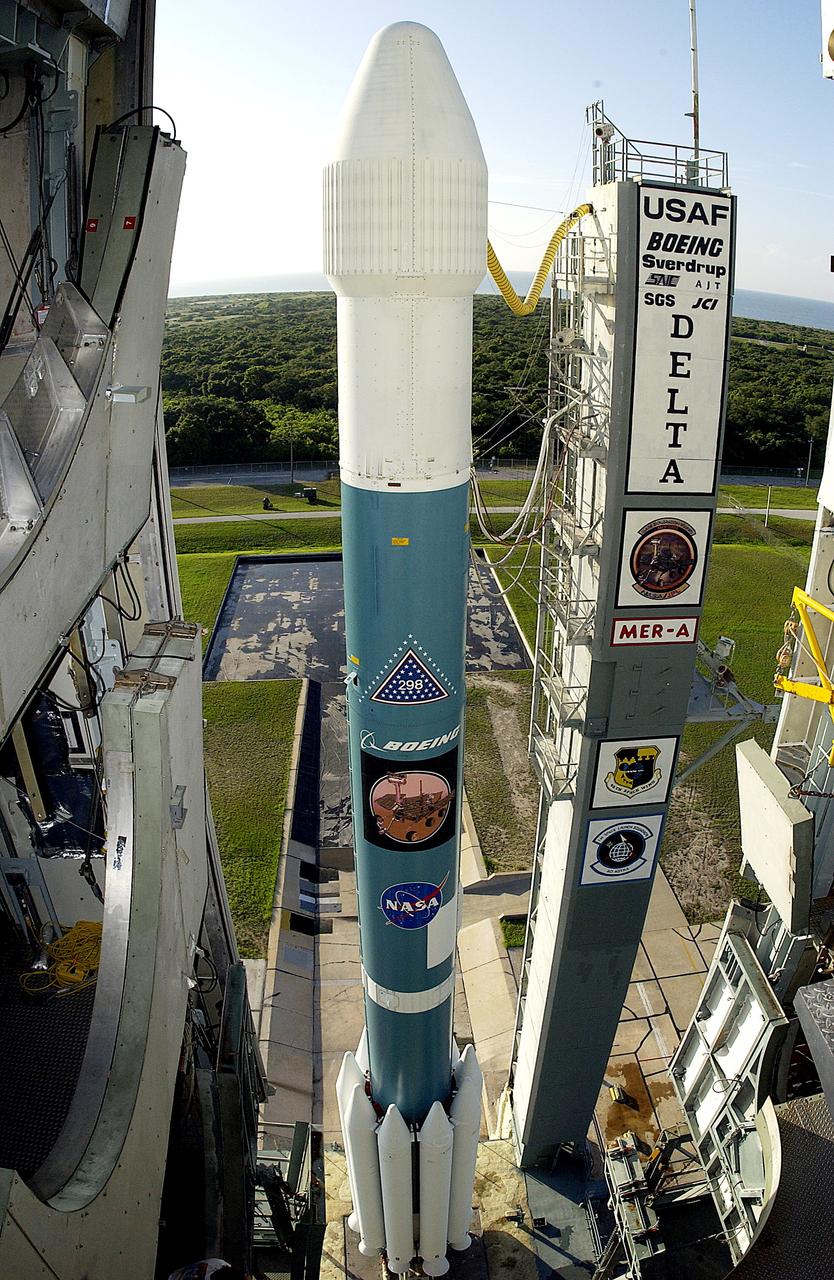
KENNEDY SPACE CENTER, FLA. -    On Launch Complex 17-A, Cape Canaveral Air Force Station, the Boeing Delta II rocket and its Mars Exploration Rover (MER-A) payload are in the clear after tower rollback in preparation for a second attempt at launch.  The first attempt on June 8, 2003, was scrubbed due to bad weather in the vicinity.  MER-A is the first of two rovers being launched to Mars.  When the two rovers arrive at Mars in 2004, they will bounce to airbag-cushioned landings at sites offering a balance of favorable conditions for safe landings and interesting science. The rovers see sharper images, can explore farther and examine rocks better than anything that has ever landed on Mars.  The designated site for MER-A mission is Gusev Crater, which appears to have been a crater lake.  The second rover, MER-B, is scheduled to launch June 25.
KENNEDY SPACE CENTER, FLA. - On Launch Complex 17-A, Cape Canaveral Air Force Station, the Boeing Delta II rocket and its Mars Exploration Rover (MER-A) payload are in the clear after tower rollback in preparation for a second attempt at launch. The first attempt on June 8, 2003, was scrubbed due to bad weather in the vicinity. MER-A is the first of two rovers being launched to Mars. When the two rovers arrive at Mars in 2004, they will bounce to airbag-cushioned landings at sites offering a balance of favorable conditions for safe landings and interesting science. The rovers see sharper images, can explore farther and examine rocks better than anything that has ever landed on Mars. The designated site for MER-A mission is Gusev Crater, which appears to have been a crater lake. The second rover, MER-B, is scheduled to launch June 25.
KENNEDY SPACE CENTER, FLA. -  On Launch Complex 17-A, Cape Canaveral Air Force Station, the launch tower begins to roll back from the Boeing Delta II rocket and its Mars Exploration Rover (MER-A) payload in preparation for a second attempt at launch.  The first attempt on June 8, 2003, was scrubbed due to bad weather in the vicinity.  MER-A is the first of two rovers being launched to Mars.  When the two rovers arrive at Mars in 2004, they will bounce to airbag-cushioned landings at sites offering a balance of favorable conditions for safe landings and interesting science. The rovers see sharper images, can explore farther and examine rocks better than anything that has ever landed on Mars.  The designated site for MER-A mission is Gusev Crater, which appears to have been a crater lake.  The second rover, MER-B, is scheduled to launch June 25.
KENNEDY SPACE CENTER, FLA. - On Launch Complex 17-A, Cape Canaveral Air Force Station, the launch tower begins to roll back from the Boeing Delta II rocket and its Mars Exploration Rover (MER-A) payload in preparation for a second attempt at launch. The first attempt on June 8, 2003, was scrubbed due to bad weather in the vicinity. MER-A is the first of two rovers being launched to Mars. When the two rovers arrive at Mars in 2004, they will bounce to airbag-cushioned landings at sites offering a balance of favorable conditions for safe landings and interesting science. The rovers see sharper images, can explore farther and examine rocks better than anything that has ever landed on Mars. The designated site for MER-A mission is Gusev Crater, which appears to have been a crater lake. The second rover, MER-B, is scheduled to launch June 25.
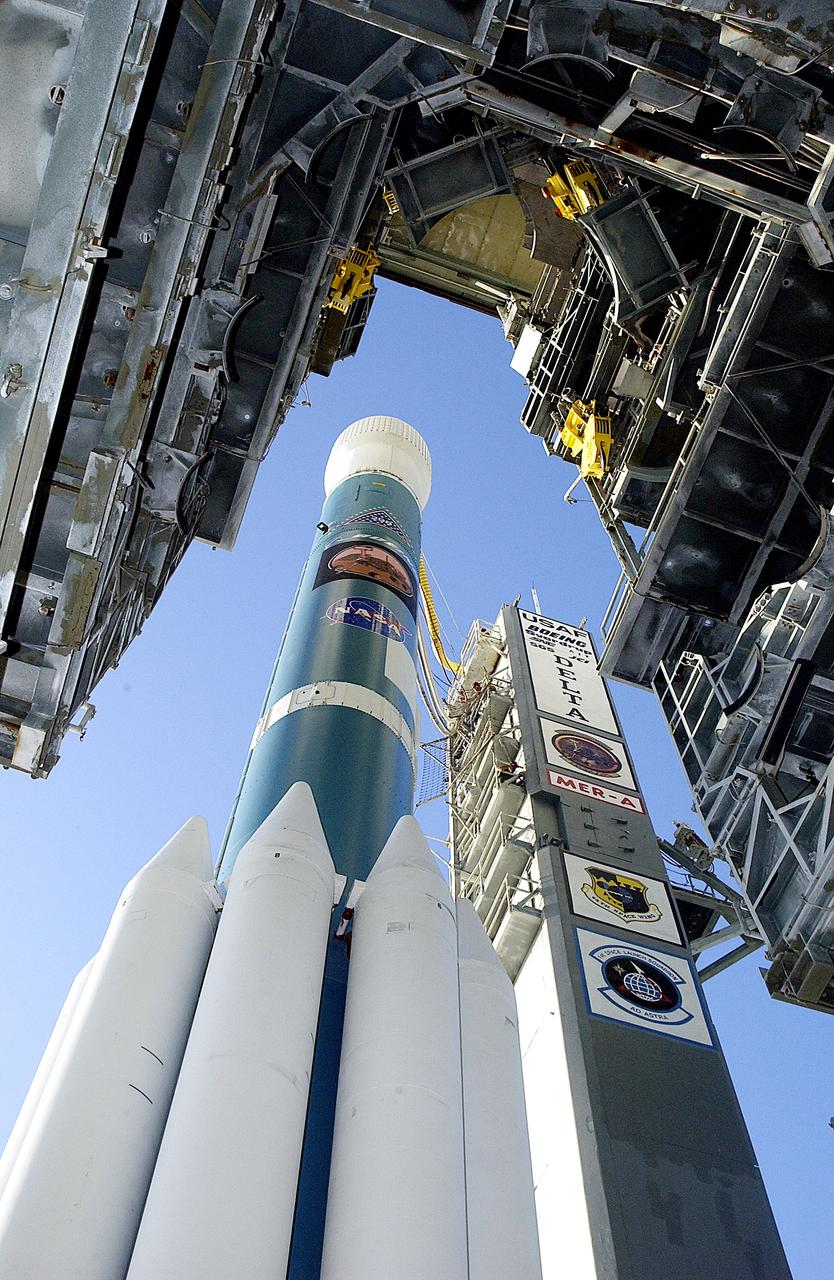
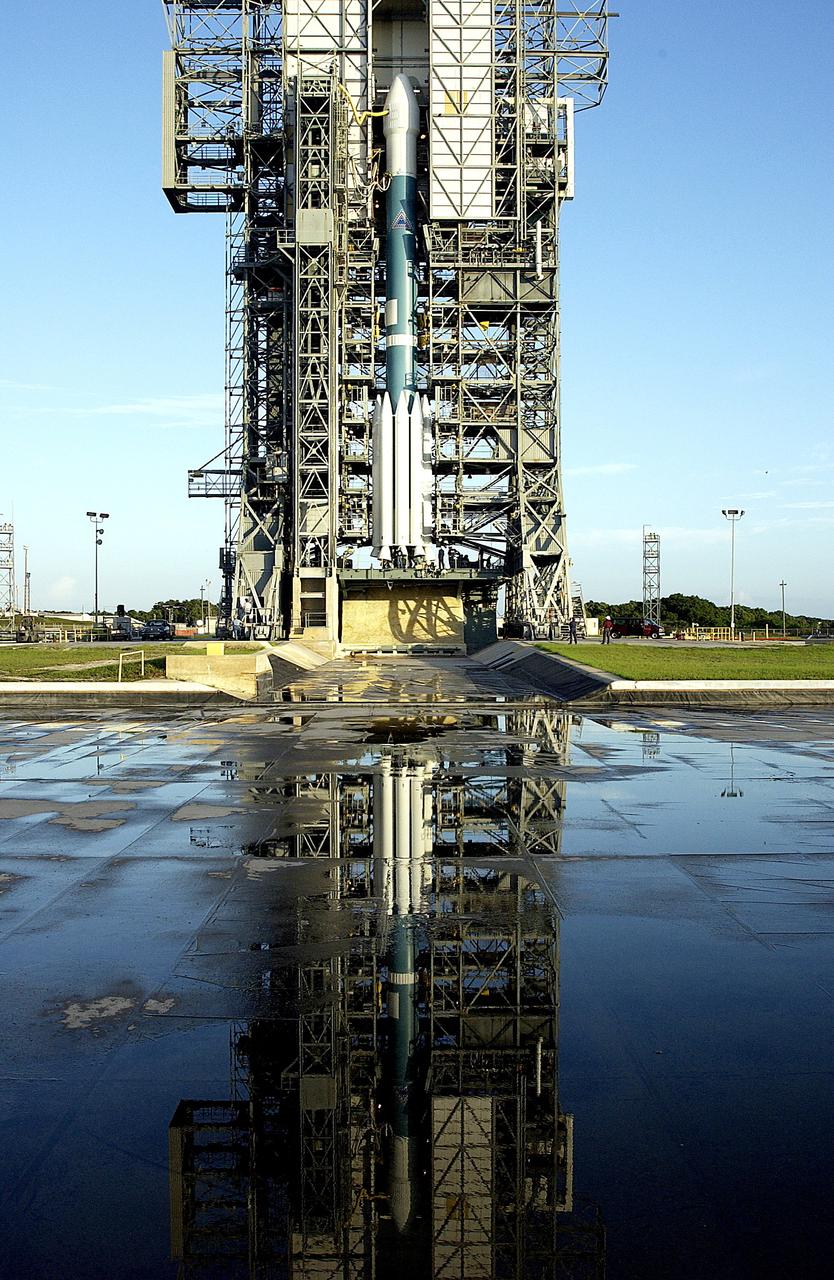
KENNEDY SPACE CENTER, FLA. -   The Boeing Delta II rocket and its Mars Exploration Rover (MER-A) payload is viewed from under the launch tower as it moves away on Launch Complex 17-A, Cape Canaveral Air Force Station.  This will be a second attempt at launch.  The first attempt on June 8, 2003, was scrubbed due to bad weather in the vicinity.  MER-A is the first of two rovers being launched to Mars.  When the two rovers arrive at Mars in 2004, they will bounce to airbag-cushioned landings at sites offering a balance of favorable conditions for safe landings and interesting science. The rovers see sharper images, can explore farther and examine rocks better than anything that has ever landed on Mars.  The designated site for MER-A mission is Gusev Crater, which appears to have been a crater lake.  The second rover, MER-B, is scheduled to launch June 25.
KENNEDY SPACE CENTER, FLA. - The Boeing Delta II rocket and its Mars Exploration Rover (MER-A) payload is viewed from under the launch tower as it moves away on Launch Complex 17-A, Cape Canaveral Air Force Station. This will be a second attempt at launch. The first attempt on June 8, 2003, was scrubbed due to bad weather in the vicinity. MER-A is the first of two rovers being launched to Mars. When the two rovers arrive at Mars in 2004, they will bounce to airbag-cushioned landings at sites offering a balance of favorable conditions for safe landings and interesting science. The rovers see sharper images, can explore farther and examine rocks better than anything that has ever landed on Mars. The designated site for MER-A mission is Gusev Crater, which appears to have been a crater lake. The second rover, MER-B, is scheduled to launch June 25.
KENNEDY SPACE CENTER, FLA. -  On Launch Complex 17-A, Cape Canaveral Air Force Station, the Boeing Delta II rocket and its Mars Exploration Rover (MER-A) payload waits for rollback of the launch tower in preparation for a second attempt at launch.  The first attempt on June 8, 2003, was scrubbed due to bad weather in the vicinity.  MER-A is the first of two rovers being launched to Mars.  When the two rovers arrive at Mars in 2004, they will bounce to airbag-cushioned landings at sites offering a balance of favorable conditions for safe landings and interesting science. The rovers see sharper images, can explore farther and examine rocks better than anything that has ever landed on Mars.  The designated site for MER-A mission is Gusev Crater, which appears to have been a crater lake.  The second rover, MER-B, is scheduled to launch June 25.
KENNEDY SPACE CENTER, FLA. - On Launch Complex 17-A, Cape Canaveral Air Force Station, the Boeing Delta II rocket and its Mars Exploration Rover (MER-A) payload waits for rollback of the launch tower in preparation for a second attempt at launch. The first attempt on June 8, 2003, was scrubbed due to bad weather in the vicinity. MER-A is the first of two rovers being launched to Mars. When the two rovers arrive at Mars in 2004, they will bounce to airbag-cushioned landings at sites offering a balance of favorable conditions for safe landings and interesting science. The rovers see sharper images, can explore farther and examine rocks better than anything that has ever landed on Mars. The designated site for MER-A mission is Gusev Crater, which appears to have been a crater lake. The second rover, MER-B, is scheduled to launch June 25.
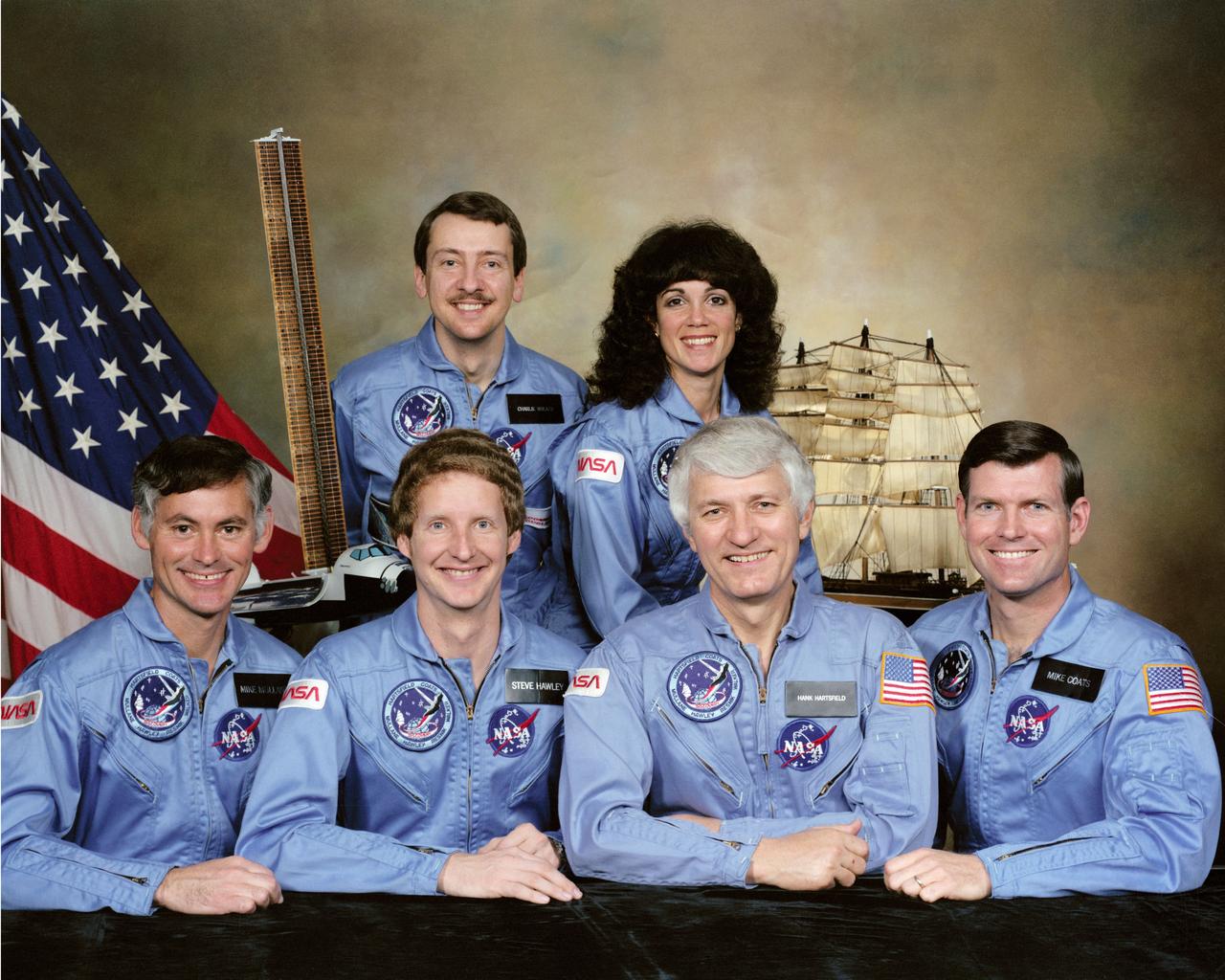
S84-30259 (April 1984) --- NASA's Discovery will carry these six STS51-D crew members into space on an early summer mission. Astronaut Henry W. Hartsfield Jr. (second right, front row) is crew commander; and Michael L. Coats, right, is pilot. Astronauts Richard M. (Mike) Mullane, left; Steven A. Hawley (second left) and Judith A. Resnik are mission specialists. Charles D. Walker (back row) is payload specialist. Both the early ocean-going Discovery and the debuting spacecraft are depicted in the backdrop. The conspicuous payload in the cargo bay of the spacecraft is that of NASA's Office of Aeronautics and Space Technology (OAST-1). Photo credit: NASA
Official photo of the 41-D crew
VANDENBERG AIR FORCE BASE, CALIF.  — Inside the Astrotech Payload Processing Facility on Vandenberg Air Force Base in California, workers lift the CALIPSO spacecraft from the Upper Delta Payload Attach Fitting (UDPAF) to adjust the attachment.  CALIPSO will be mated with the Lower Delta Payload Attach Fitting (LDPAF) that contains the CloudSat satellite.  The PAF is the interface between the spacecraft and the second stage of the rocket. CALIPSO stands for Cloud-Aerosol Lidar and Infrared Pathfinder Satellite Observation.
KSC-05PD-2164
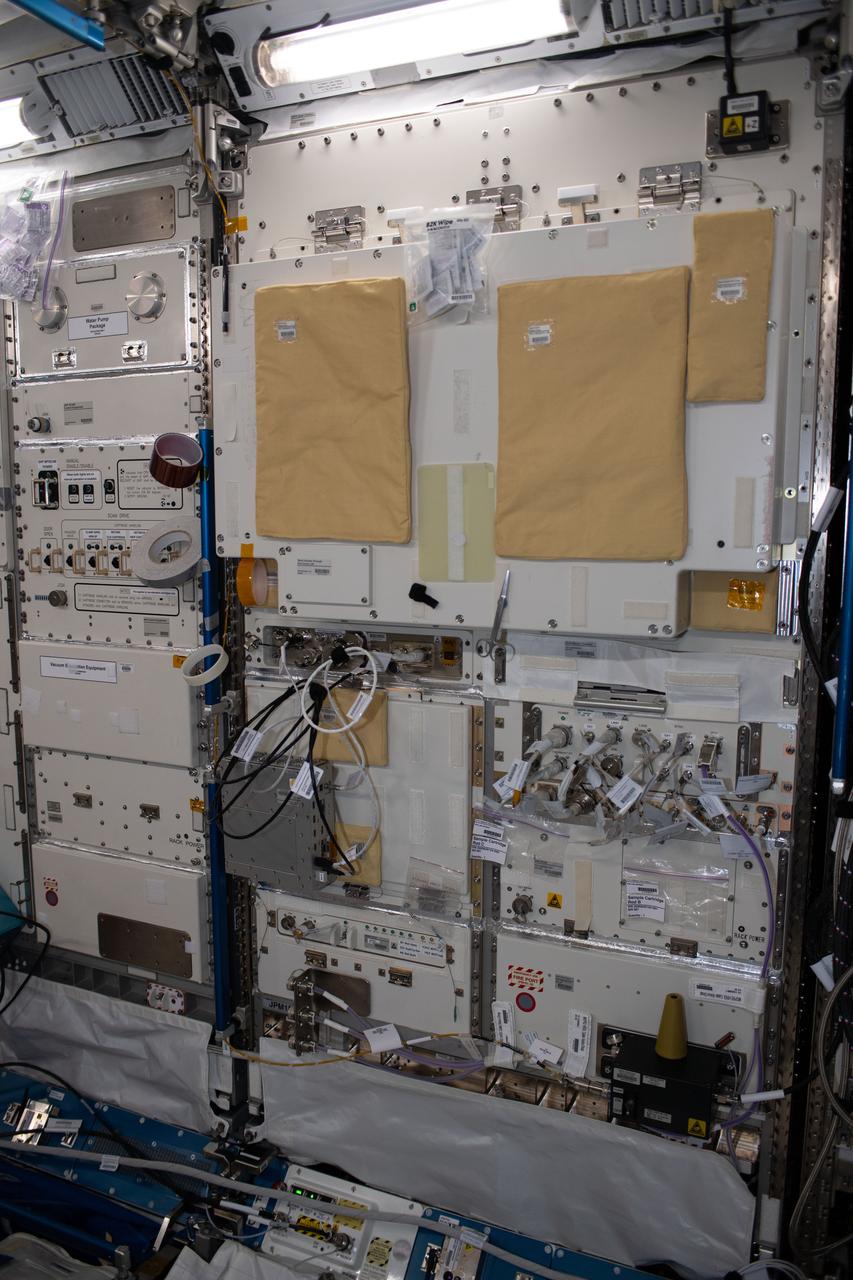
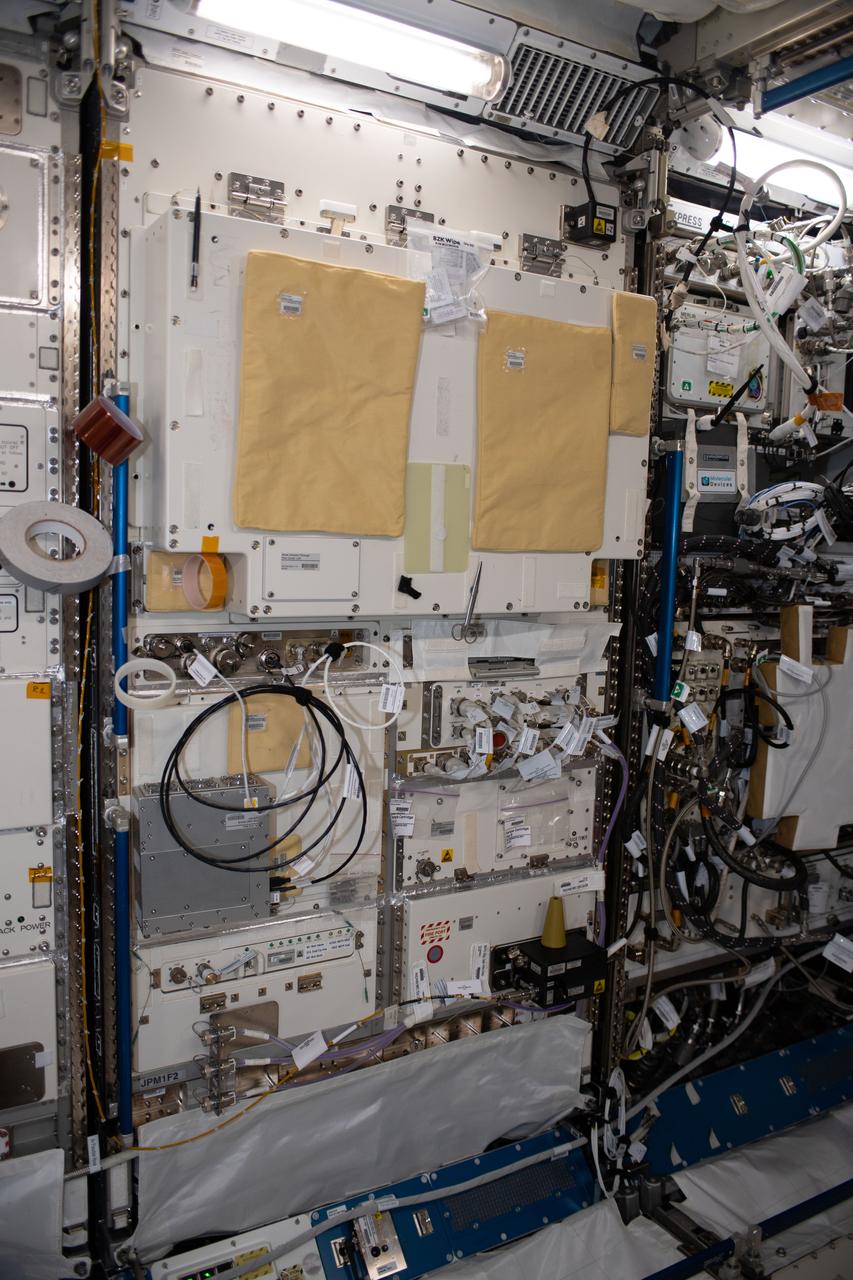
iss056e150256 (8/21/2018) --- A view of the Multi purpose Small Payload Rack (MSPR) 2 in the Kibo Japanese Experiment Pressurized Module (JPM) aboard the International Space Station (ISS). The Multi Purpose Small Payload Rack-2 (MSPR-2) is a second multipurpose payload rack system used in the Japanese Experiment Module (JEM). Similar to the original MSPR (still in use), MSPR-2 has two workspaces and a work table that can be used for wide fields of space environment utilization including science and educational missions.
Payload Control Box Relocation
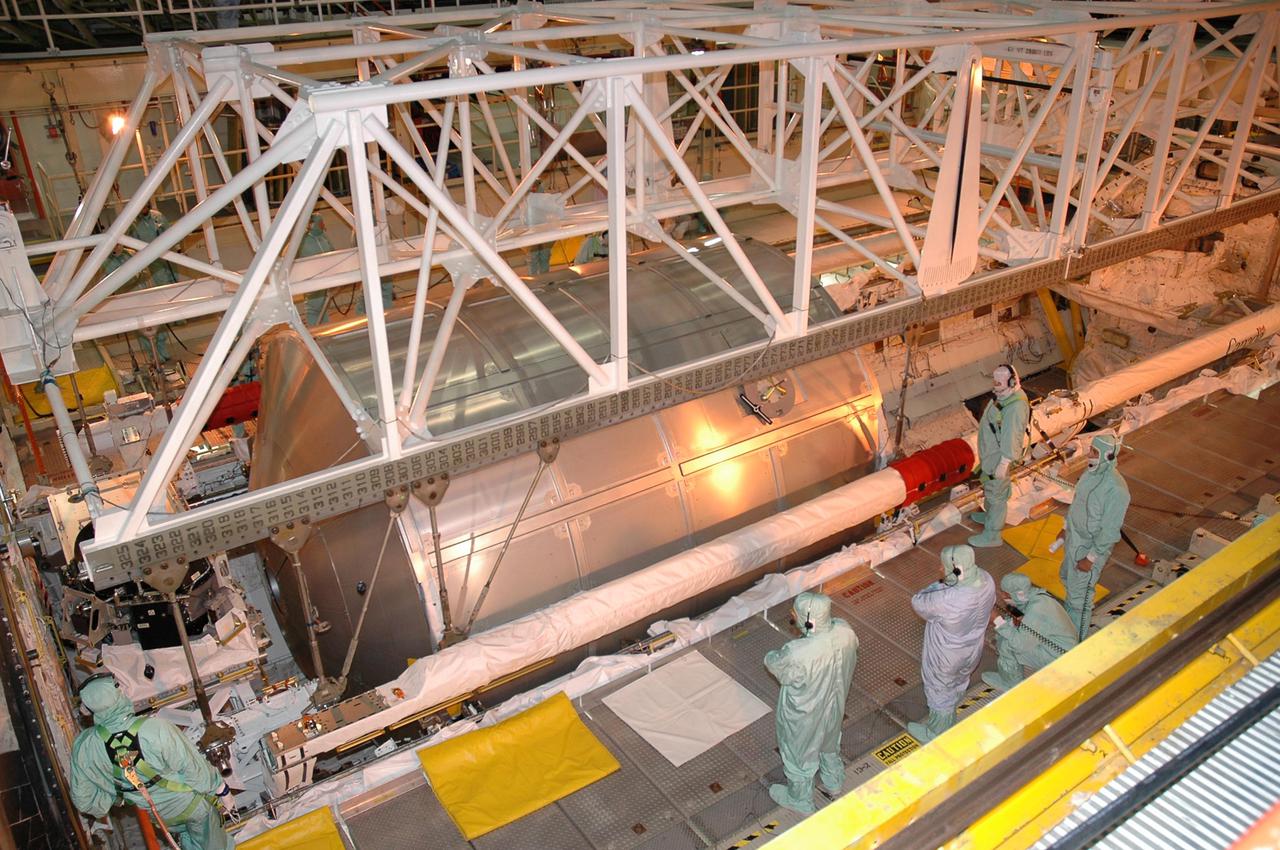
KENNEDY SPACE CENTER, FLA. -- In bay 3 of NASA Kennedy Space Center’s Orbiter Processing Facility, technicians oversee the removal of Return to Flight mission STS-114 cargo from Space Shuttle Discovery's payload bay.  The Multi-Purpose Logistics Module Raffaello, in the payload bay, holds material returned to KSC from the International Space Station. The module will be lifted out of the payload bay and transferred to the Space Station Processing Facility to be emptied. Discovery will fly next on the second Return to Flight mission, STS-121.
KSC-05PD-2028
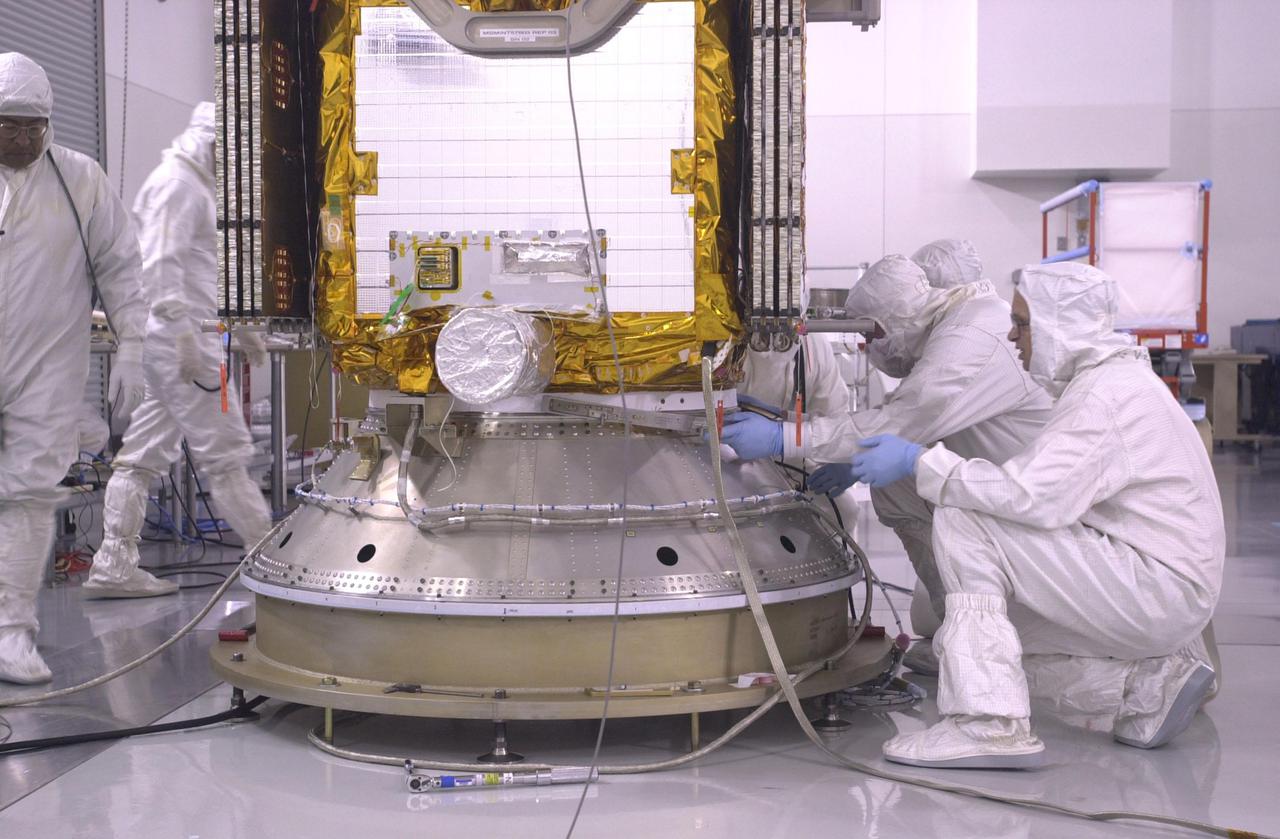
VANDENBERG AIR FORCE BASE, CALIF.  — Inside the Astrotech Payload Processing Facility on Vandenberg Air Force Base in California, workers check the Upper Delta Payload Attach Fitting (UDPAF) holding the CALIPSO spacecraft.  CALIPSO will be mated with the Lower Delta Payload Attach Fitting (LDPAF) that contains the CloudSat satellite.  The PAF is the interface between the spacecraft and the second stage of the rocket. CALIPSO stands for Cloud-Aerosol Lidar and Infrared Pathfinder Satellite Observation.
KSC-05PD-2163
VANDENBERG AIR FORCE BASE, CALIF.  — Inside the Astrotech Payload Processing Facility on Vandenberg Air Force Base in California, a worker makes an adjustment on the Upper Delta Payload Attach Fitting (UDPAF) holding the CALIPSO spacecraft.  CALIPSO will be mated with the Lower Delta Payload Attach Fitting (LDPAF) that contains the CloudSat satellite.  The PAF is the interface between the spacecraft and the second stage of the rocket. CALIPSO stands for Cloud-Aerosol Lidar and Infrared Pathfinder Satellite Observation.
KSC-05PD-2162
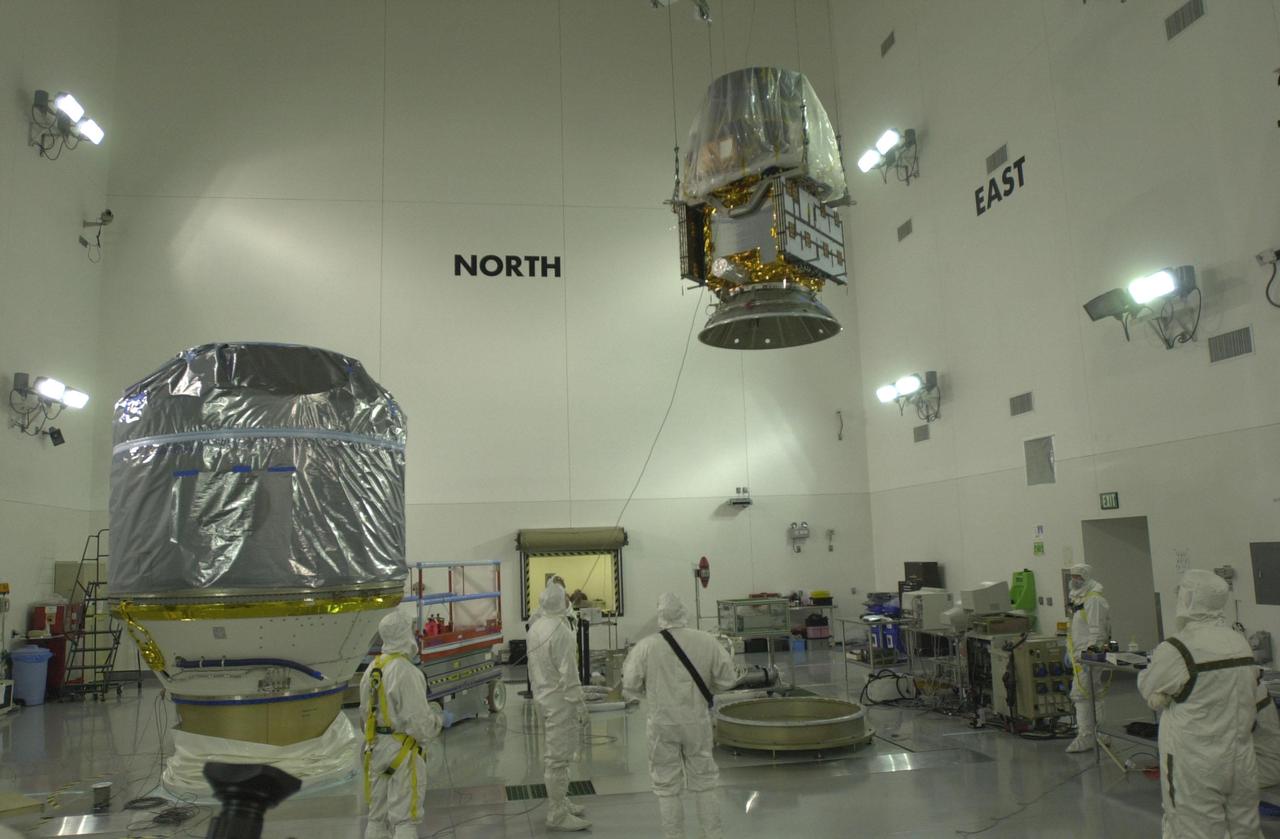
VANDENBERG AIR FORCE BASE, CALIF.  — Inside the Astrotech Payload Processing Facility on Vandenberg Air Force Base in California, workers oversee the lowering of the CALIPSO spacecraft toward the upper Delta Payload Attach Fitting (UDPAF). Later the UDPAF will be mated with the lower Delta Payload Attach Fitting, which contains the CloudSat satellite. The PAF is the interface between the spacecraft and the second stage of the rocket. CALIPSO stands for Cloud-Aerosol Lidar and Infrared Pathfinder Satellite Observation.
KSC-05PD-2150
VANDENBERG AIR FORCE BASE, CALIF.  — Inside the Astrotech Payload Processing Facility on Vandenberg Air Force Base in California, workers again lower the CALIPSO spacecraft and Upper Delta Payload Attach Fitting (UDPAF) toward the Lower Delta Payload Attach Fitting (LDPAF) that contains the CloudSat satellite.  The PAF is the interface between the spacecraft and the second stage of the rocket. CALIPSO stands for Cloud-Aerosol Lidar and Infrared Pathfinder Satellite Observation.
KSC-05PD-2165
VANDENBERG AIR FORCE BASE, CALIF.  — Inside the Astrotech Payload Processing Facility on Vandenberg Air Force Base in California, the CALIPSO spacecraft is back on the floor or further adjustments.  CALIPSO will be mated with the Lower Delta Payload Attach Fitting (LDPAF) that contains the CloudSat satellite.   Later the UDPAF will be mated with the lower Delta Payload Attach Fitting, which contains the CloudSat satellite. The PAF is the interface between the spacecraft and the second stage of the rocket. CALIPSO stands for Cloud-Aerosol Lidar and Infrared Pathfinder Satellite Observation.
KSC-05PD-2161
VANDENBERG AIR FORCE BASE, CALIF.  — Inside the Astrotech Payload Processing Facility on Vandenberg Air Force Base in California, workers secure the CALIPSO spacecraft on the upper Delta Payload Attach Fitting (UDPAF).  Later the UDPAF will be mated with the lower Delta Payload Attach Fitting, which contains the CloudSat satellite. The PAF is the interface between the spacecraft and the second stage of the rocket. CALIPSO stands for Cloud-Aerosol Lidar and Infrared Pathfinder Satellite Observation.
KSC-05PD-2153
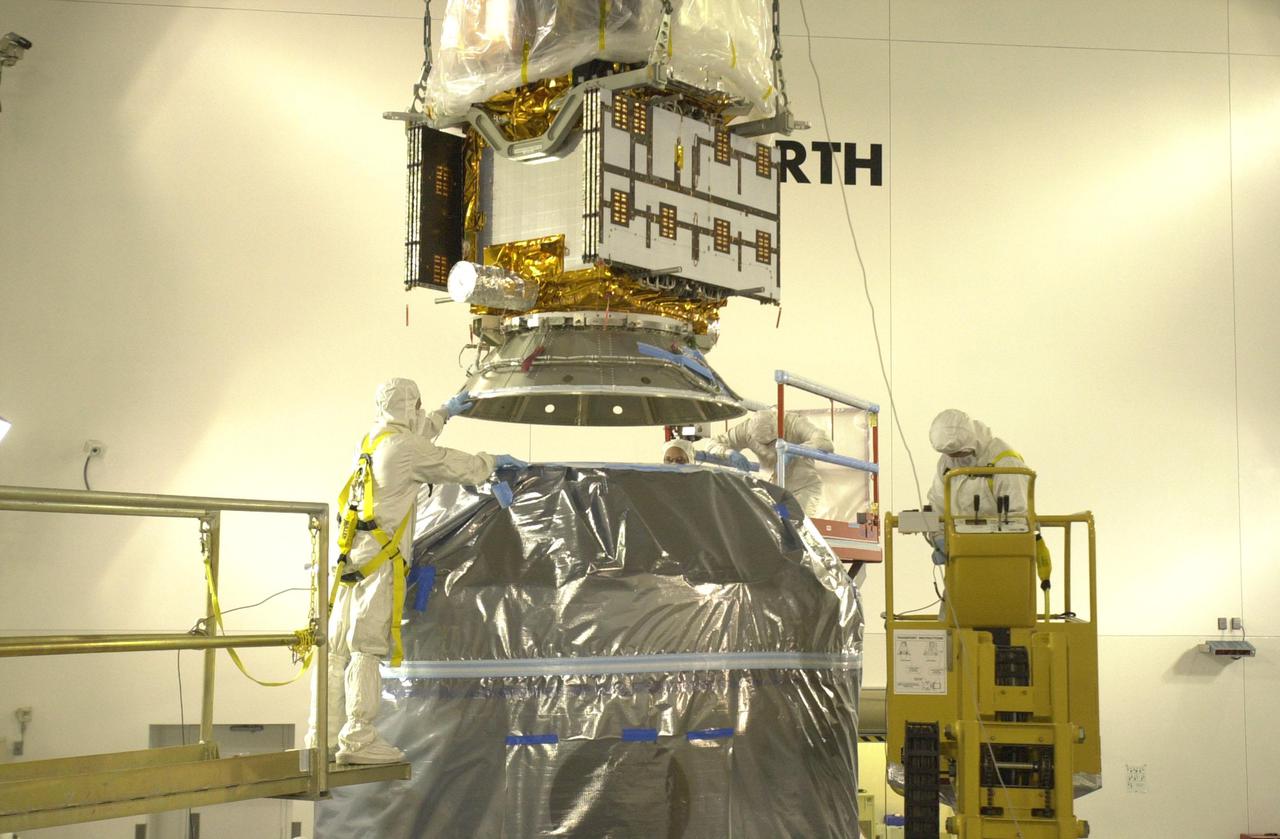
VANDENBERG AIR FORCE BASE, CALIF.  — Inside the Astrotech Payload Processing Facility on Vandenberg Air Force Base in California, the Upper Delta Payload Attach Fitting (UDPAF) with the CALIPSO spacecraft has been lowered onto the Lower Delta Payload Attach Fitting (LDPAF) that contains the CloudSat satellite.   The PAF is the interface between the spacecraft and the second stage of the rocket. CALIPSO stands for Cloud-Aerosol Lidar and Infrared Pathfinder Satellite Observation.
KSC-05PD-2167
VANDENBERG AIR FORCE BASE, CALIF.  — Inside the Astrotech Payload Processing Facility on Vandenberg Air Force Base in California, workers check the lowering of the CALIPSO spacecraft and Upper Delta Payload Attach Fitting (UDPAF) onto the Lower Delta Payload Attach Fitting (LDPAF) that contains the CloudSat satellite.   The PAF is the interface between the spacecraft and the second stage of the rocket. CALIPSO stands for Cloud-Aerosol Lidar and Infrared Pathfinder Satellite Observation.
KSC-05PD-2166
iss056e150255 (8/21/2018) --- A view of the Multi purpose Small Payload Rack (MSPR) 2 in the Kibo Japanese Experiment Pressurized Module (JPM) aboard the International Space Station (ISS). The Multi Purpose Small Payload Rack-2 (MSPR-2) is a second multipurpose payload rack system used in the Japanese Experiment Module (JEM). Similar to the original MSPR (still in use), MSPR-2 has two workspaces and a work table that can be used for wide fields of space environment utilization including science and educational missions.
Payload Control Box Relocation
VANDENBERG AIR FORCE BASE, CALIF.  — Inside the Astrotech Payload Processing Facility on Vandenberg Air Force Base in California, workers check the attachment of the CALIPSO spacecraft onto the upper Delta Payload Attach Fitting (UDPAF).   Later the UDPAF will be mated with the lower Delta Payload Attach Fitting, which contains the CloudSat satellite. The PAF is the interface between the spacecraft and the second stage of the rocket. CALIPSO stands for Cloud-Aerosol Lidar and Infrared Pathfinder Satellite Observation.
KSC-05PD-2154
VANDENBERG AIR FORCE BASE, CALIF.  — Inside the Astrotech Payload Processing Facility on Vandenberg Air Force Base in California, workers secure the CALIPSO spacecraft on the upper Delta Payload Attach Fitting (UDPAF).  Later the UDPAF will be mated with the lower Delta Payload Attach Fitting, which contains the CloudSat satellite. The PAF is the interface between the spacecraft and the second stage of the rocket. CALIPSO stands for Cloud-Aerosol Lidar and Infrared Pathfinder Satellite Observation.
KSC-05PD-2151
VANDENBERG AIR FORCE BASE, CALIF.  — Inside the Astrotech Payload Processing Facility on Vandenberg Air Force Base in California, workers move the CALIPSO spacecraft away from the Lower Delta Payload Attach Fitting, which contains the CloudSat satellite.  Later the UDPAF will be mated with the lower Delta Payload Attach Fitting, which contains the CloudSat satellite. The PAF is the interface between the spacecraft and the second stage of the rocket. CALIPSO stands for Cloud-Aerosol Lidar and Infrared Pathfinder Satellite Observation.
KSC-05PD-2157
VANDENBERG AIR FORCE BASE, CALIF.  — From an elevated platform, workers inside the Astrotech Payload Processing Facility on Vandenberg Air Force Base in California guide the lowering of the CALIPSO spacecraft onto the Lower Delta Payload Attach Fitting (LDPAF) that contains the CloudSat satellite.Later the UDPAF will be mated with the lower Delta Payload Attach Fitting, which contains the CloudSat satellite. The PAF is the interface between the spacecraft and the second stage of the rocket. CALIPSO stands for Cloud-Aerosol Lidar and Infrared Pathfinder Satellite Observation.
KSC-05PD-2156
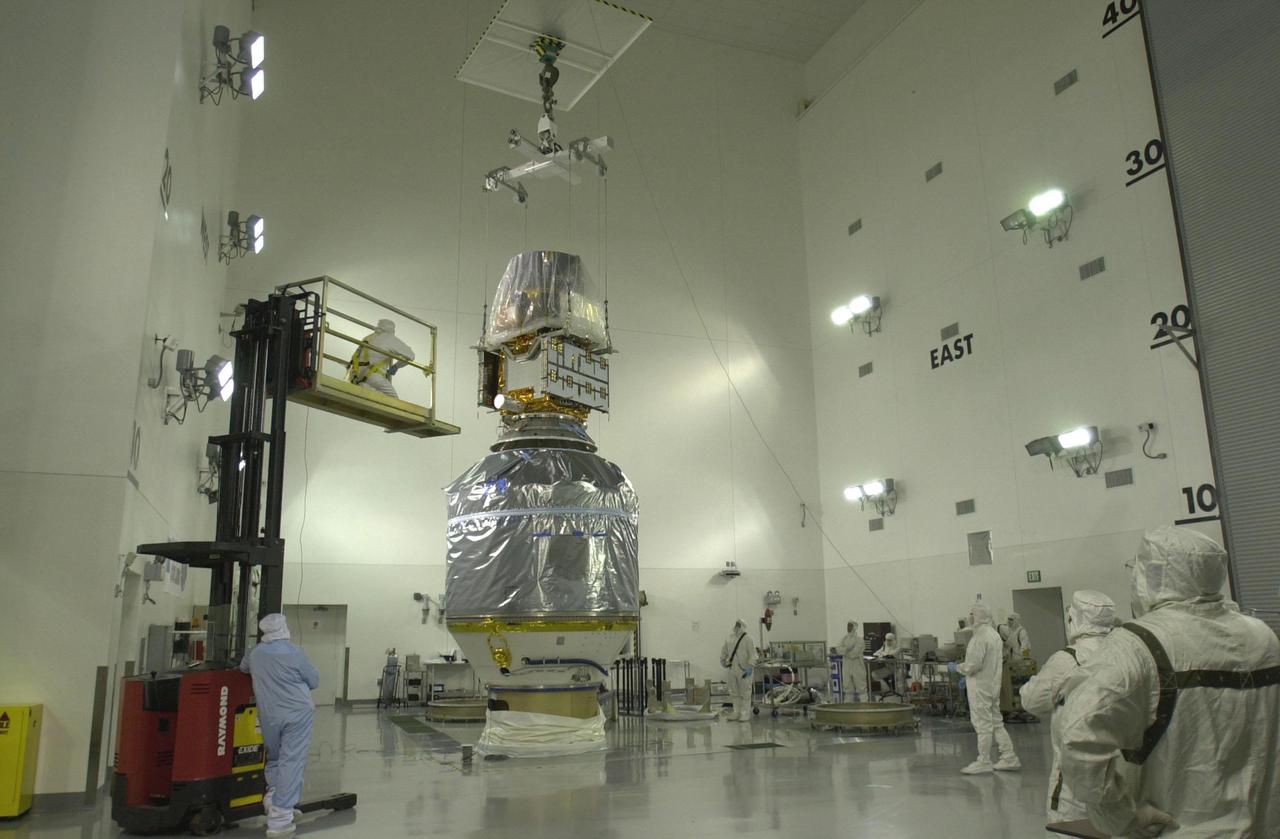
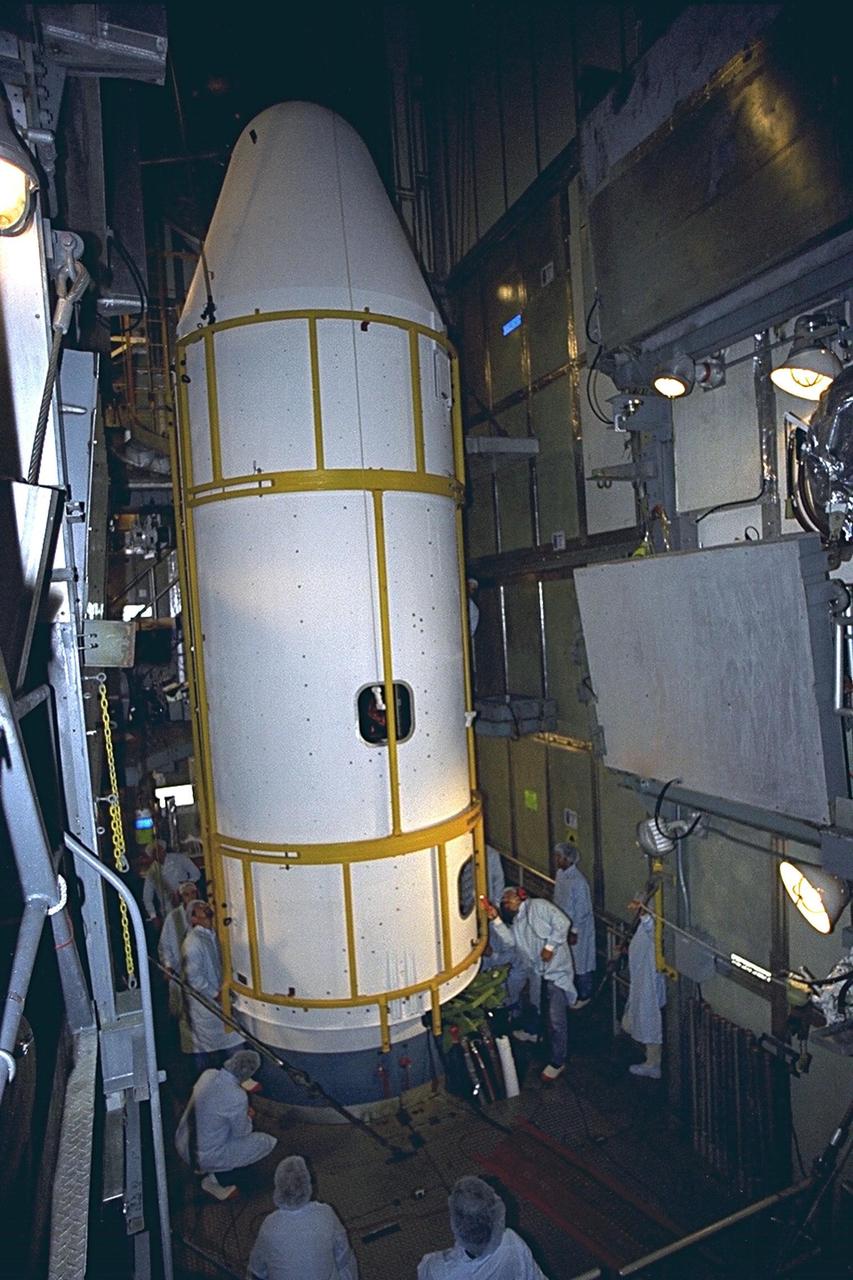
KENNEDY SPACE CENTER, FLA. - In the Payload Hazardous Servicing Facility, the cylindrical payload canister is lowered around Mars Exploration Rover 1 (MER-B).  Once secure inside the canister, the rover will be transported to Launch Complex 17-B, Cape Canaveral Air Force Station, for mating with the Delta rocket.  The second of twin rovers being sent to Mars, it is equipped with a robotic arm, a drilling tool, three spectrometers, and four pairs of cameras that allow it to have a human-like, 3D view of the terrain. Each rover could travel as far as 100 meters in one day to act as Mars scientists' eyes and hands, exploring an environment where humans can't yet go.  MER-B is scheduled to launch from Pad 17-B June 26 at one of two available times,  12:27:31 a.m. EDT or 1:08:45 a.m. EDT.
KENNEDY SPACE CENTER, FLA. - In the Payload Hazardous Servicing Facility, the cylindrical payload canister is lowered around Mars Exploration Rover 1 (MER-B). Once secure inside the canister, the rover will be transported to Launch Complex 17-B, Cape Canaveral Air Force Station, for mating with the Delta rocket. The second of twin rovers being sent to Mars, it is equipped with a robotic arm, a drilling tool, three spectrometers, and four pairs of cameras that allow it to have a human-like, 3D view of the terrain. Each rover could travel as far as 100 meters in one day to act as Mars scientists' eyes and hands, exploring an environment where humans can't yet go. MER-B is scheduled to launch from Pad 17-B June 26 at one of two available times, 12:27:31 a.m. EDT or 1:08:45 a.m. EDT.
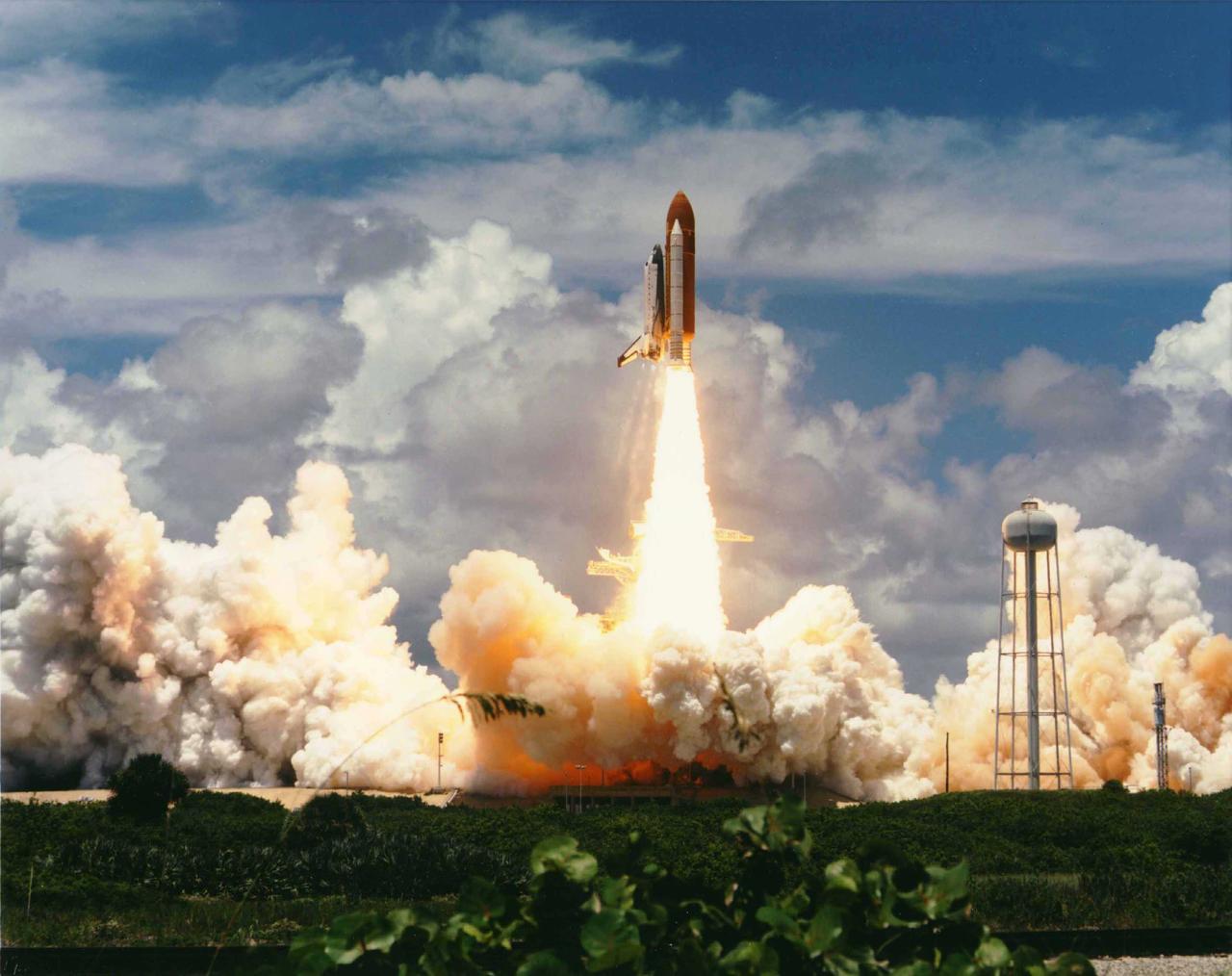
KENNEDY SPACE CENTER, FLA. - The second International Microgravity Laboratory-2 (IML-2) is off to an ontime start as the Space Shuttle Columbia lifts off from Launch Pad 39A at 12:43:00 p.m. EDT.  On board are a crew of seven and more than 80 investigations developed by more than 200 scientists from 13 countries.  The IML-2 complement includes materials science, bioprocessing, space and radiation biology, and human physiology experiments that will be carried out over the course of the 14-day flight.  The commander of Space Shuttle Mission STS-65 is Robert D. Cabana.  James D. Halsell Jr. is the pilot; the payload commander is Richard J. Hieb; the three mission specialists are Carl E. Walz, Leroy Chiao and Donald A. Thomas.  Dr. Chiaki Mukai, representing NASDA, the National Space Development Agency of Japan, is the payload specialist.  Mukai becomes the first Japanese woman to fly into space.
KENNEDY SPACE CENTER, FLA. - The second International Microgravity Laboratory-2 (IML-2) is off to an ontime start as the Space Shuttle Columbia lifts off from Launch Pad 39A at 12:43:00 p.m. EDT. On board are a crew of seven and more than 80 investigations developed by more than 200 scientists from 13 countries. The IML-2 complement includes materials science, bioprocessing, space and radiation biology, and human physiology experiments that will be carried out over the course of the 14-day flight. The commander of Space Shuttle Mission STS-65 is Robert D. Cabana. James D. Halsell Jr. is the pilot; the payload commander is Richard J. Hieb; the three mission specialists are Carl E. Walz, Leroy Chiao and Donald A. Thomas. Dr. Chiaki Mukai, representing NASDA, the National Space Development Agency of Japan, is the payload specialist. Mukai becomes the first Japanese woman to fly into space.
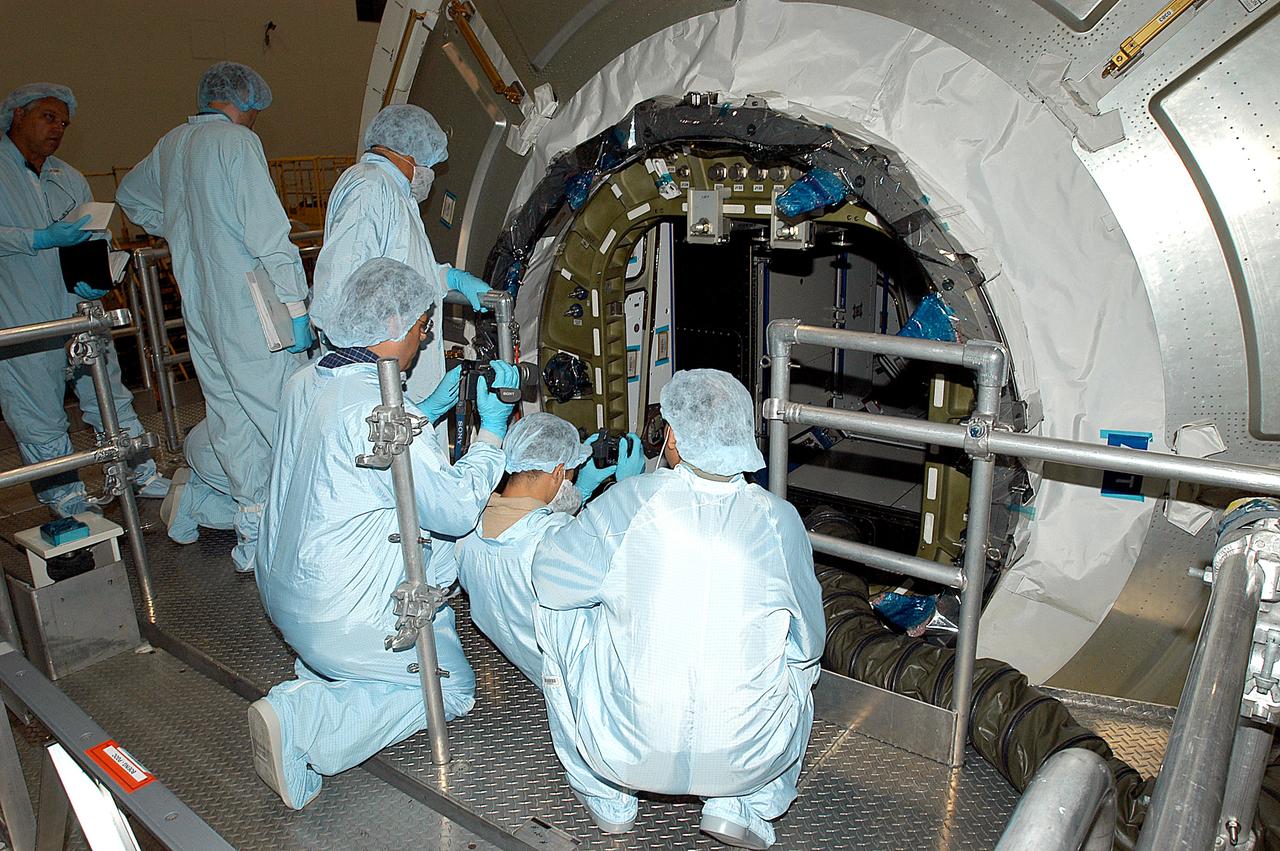
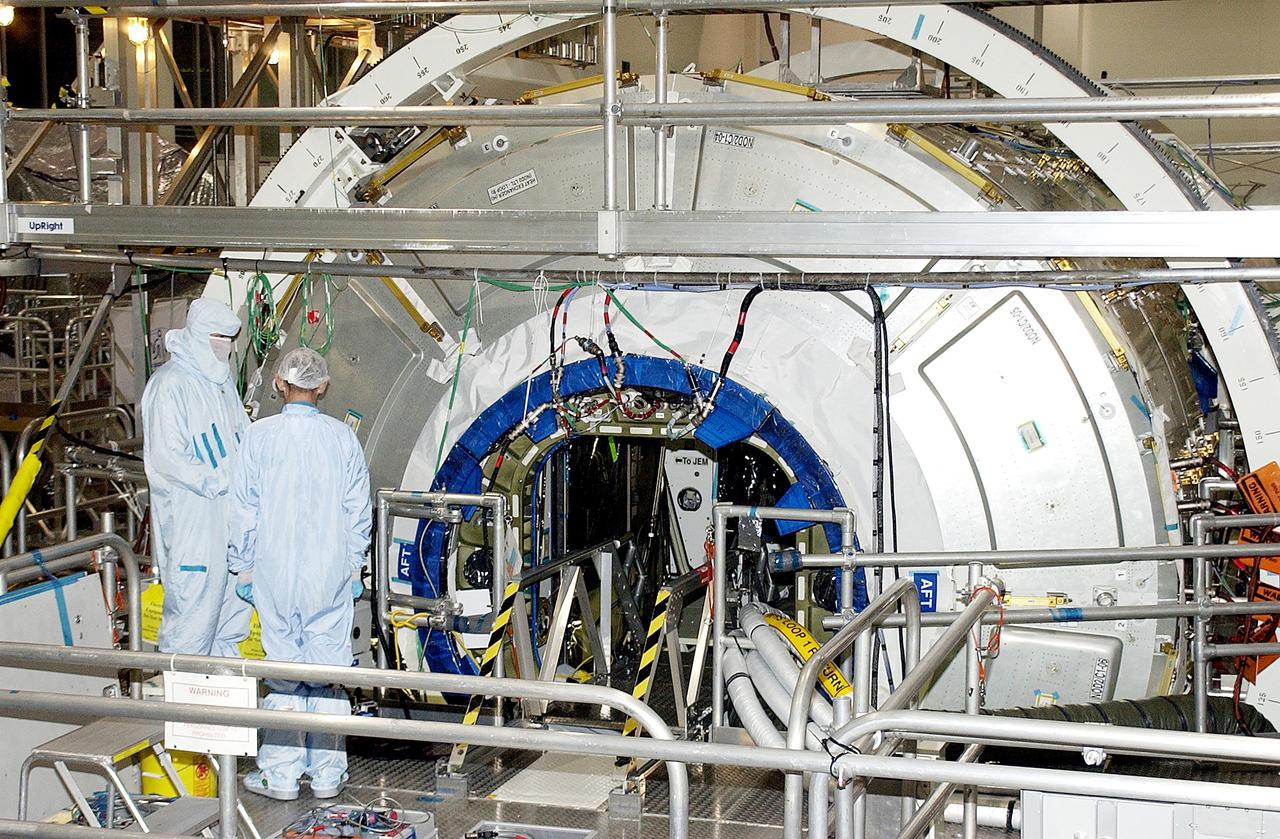
KENNEDY SPACE CENTER, FLA. -  Workers in the Space Station Processing Facility attempt to open the hatch on the Italian-built Node 2, a future element of the International Space Station.  Node 2 arrived at KSC June 1.  The second of three Station connecting modules, the module  attaches to the end of the U.S. Lab and provides attach locations for the Japanese laboratory, European laboratory, the Centrifuge Accommodation Module and, later, Multipurpose Logistics Modules. It will provide the primary docking location for the Shuttle when a pressurized mating adapter is attached to Node 2.  Installation of the module will complete  the U.S. Core of the ISS.  Node 2 is the designated payload for mission STS-120.  No orbiter or launch date has been determined yet.Installation of the module will complete  the U.S. Core of the ISS.  Node 2 is the designated payload for mission STS-120.  No orbiter or launch date has been determined yet.
KENNEDY SPACE CENTER, FLA. - Workers in the Space Station Processing Facility attempt to open the hatch on the Italian-built Node 2, a future element of the International Space Station. Node 2 arrived at KSC June 1. The second of three Station connecting modules, the module attaches to the end of the U.S. Lab and provides attach locations for the Japanese laboratory, European laboratory, the Centrifuge Accommodation Module and, later, Multipurpose Logistics Modules. It will provide the primary docking location for the Shuttle when a pressurized mating adapter is attached to Node 2. Installation of the module will complete the U.S. Core of the ISS. Node 2 is the designated payload for mission STS-120. No orbiter or launch date has been determined yet.Installation of the module will complete the U.S. Core of the ISS. Node 2 is the designated payload for mission STS-120. No orbiter or launch date has been determined yet.
KENNEDY SPACE CENTER, FLA. - In the Payload Hazardous Servicing Facility, workers maneuver the cylindrical payload canister into place around Mars Exploration Rover 1 (MER-B).  Once secure inside the canister, the rover will be transported to Launch Complex 17-B, Cape Canaveral Air Force Station, for mating with the Delta rocket.  The second of twin rovers being sent to Mars, it is equipped with a robotic arm, a drilling tool, three spectrometers, and four pairs of cameras that allow it to have a human-like, 3D view of the terrain. Each rover could travel as far as 100 meters in one day to act as Mars scientists' eyes and hands, exploring an environment where humans can't yet go.  MER-B is scheduled to launch from Pad 17-B June 26 at one of two available times,  12:27:31 a.m. EDT or 1:08:45 a.m. EDT.
KENNEDY SPACE CENTER, FLA. - In the Payload Hazardous Servicing Facility, workers maneuver the cylindrical payload canister into place around Mars Exploration Rover 1 (MER-B). Once secure inside the canister, the rover will be transported to Launch Complex 17-B, Cape Canaveral Air Force Station, for mating with the Delta rocket. The second of twin rovers being sent to Mars, it is equipped with a robotic arm, a drilling tool, three spectrometers, and four pairs of cameras that allow it to have a human-like, 3D view of the terrain. Each rover could travel as far as 100 meters in one day to act as Mars scientists' eyes and hands, exploring an environment where humans can't yet go. MER-B is scheduled to launch from Pad 17-B June 26 at one of two available times, 12:27:31 a.m. EDT or 1:08:45 a.m. EDT.
KENNEDY SPACE CENTER, FLA. - At Launch Complex 17-A, Cape Canaveral Air Force Station, the second half of the fairing for the Mars Exploration Rover 2 (MER-2/MER-A) is lifted up the outside of the launch tower.  Visible on another side is the Delta II rocket that will carry the payload into space.  The fairing will be installed around the payload for protection during launch.  The MER Mission consists of two identical rovers designed to cover roughly 110 yards each Martian day over various terrain. Each rover will carry five scientific instruments that will allow it to search for evidence of liquid water that may have been present in the planet's past.  Identical to each other, the rovers will land at different regions of Mars.  Launch date for MER-A  is scheduled for June 5.
KENNEDY SPACE CENTER, FLA. - At Launch Complex 17-A, Cape Canaveral Air Force Station, the second half of the fairing for the Mars Exploration Rover 2 (MER-2/MER-A) is lifted up the outside of the launch tower. Visible on another side is the Delta II rocket that will carry the payload into space. The fairing will be installed around the payload for protection during launch. The MER Mission consists of two identical rovers designed to cover roughly 110 yards each Martian day over various terrain. Each rover will carry five scientific instruments that will allow it to search for evidence of liquid water that may have been present in the planet's past. Identical to each other, the rovers will land at different regions of Mars. Launch date for MER-A is scheduled for June 5.
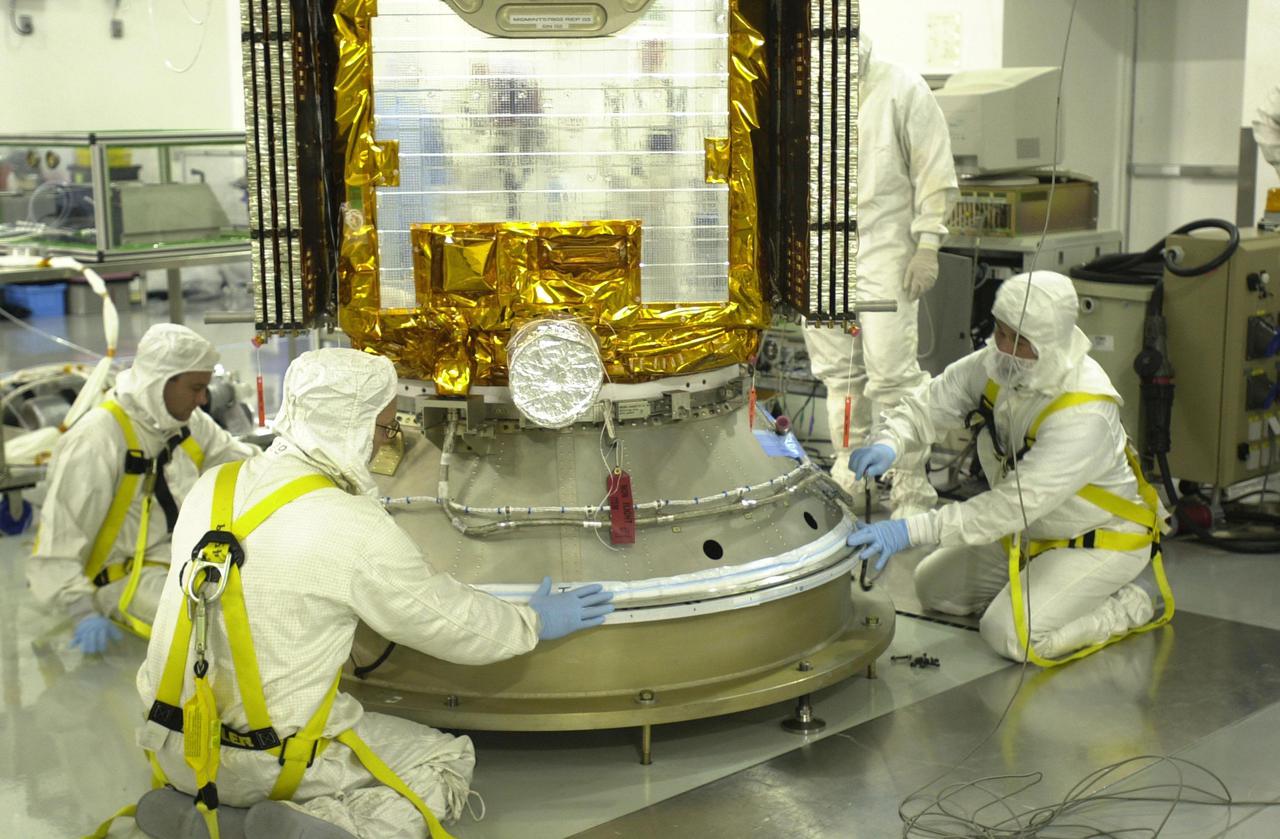
KENNEDY SPACE CENTER, FLA. - Workers in the Payload Hazardous Servicing Facility secure the lower panels of a payload canister around Mars Exploration Rover 1 (MER-B).  The rover will be transported to Launch Complex 17-B, Cape Canaveral Air Force Station, for mating with the Delta rocket.  The second of twin rovers being sent to Mars, it is equipped with a robotic arm, a drilling tool, three spectrometers, and four pairs of cameras that allow it to have a human-like, 3D view of the terrain. Each rover could travel as far as 100 meters in one day to act as Mars scientists' eyes and hands, exploring an environment where humans can't yet go.  MER-B is scheduled to launch from Pad 17-B June 26 at one of two available times,  12:27:31 a.m. EDT or 1:08:45 a.m. EDT.
KENNEDY SPACE CENTER, FLA. - Workers in the Payload Hazardous Servicing Facility secure the lower panels of a payload canister around Mars Exploration Rover 1 (MER-B). The rover will be transported to Launch Complex 17-B, Cape Canaveral Air Force Station, for mating with the Delta rocket. The second of twin rovers being sent to Mars, it is equipped with a robotic arm, a drilling tool, three spectrometers, and four pairs of cameras that allow it to have a human-like, 3D view of the terrain. Each rover could travel as far as 100 meters in one day to act as Mars scientists' eyes and hands, exploring an environment where humans can't yet go. MER-B is scheduled to launch from Pad 17-B June 26 at one of two available times, 12:27:31 a.m. EDT or 1:08:45 a.m. EDT.
KENNEDY SPACE CENTER, FLA. -   The Payload is seen inside of the Bay just before the doors are closed for flight at Pad 39A, Kennedy Space Center, Fla.  Discovery, the orbiter for STS-82 mission, is ready for the launch of the second Hubble Space Telescope service mission.  The payload consists of the Near Infrared Camera and Multi-Object Spectrometer (NICMOS) that will be installed, Fine Guidance Sensor #1 (FGS-1), and the Space Telescope Imaging Spectrograph (STIS) to be installed.  The STS-82 will launch with a crew of seven at 3:54 a.m. EST, Feb. 11, 1997.  The launch window is 65 minutes in duration.  The Mission Commander for STS-82 is Ken Bowersox.  The purpose of the mission is to upgrade the scientific capabilities, service or replace aging components on the Telescope, and provide a reboost to the optimum altitude.
KENNEDY SPACE CENTER, FLA. - The Payload is seen inside of the Bay just before the doors are closed for flight at Pad 39A, Kennedy Space Center, Fla. Discovery, the orbiter for STS-82 mission, is ready for the launch of the second Hubble Space Telescope service mission. The payload consists of the Near Infrared Camera and Multi-Object Spectrometer (NICMOS) that will be installed, Fine Guidance Sensor #1 (FGS-1), and the Space Telescope Imaging Spectrograph (STIS) to be installed. The STS-82 will launch with a crew of seven at 3:54 a.m. EST, Feb. 11, 1997. The launch window is 65 minutes in duration. The Mission Commander for STS-82 is Ken Bowersox. The purpose of the mission is to upgrade the scientific capabilities, service or replace aging components on the Telescope, and provide a reboost to the optimum altitude.
KENNEDY SPACE CENTER, FLA. -  The Payload is seen inside of the Bay just before the doors are closed for flight at KSC's Launch Pad 39A.   Discovery, the orbiter for the STS-82 mission, is ready for the launch of the second Hubble Space Telescope service mission.  The payload consists of the Near Infrared Camera and Multi-Object Spectrometer (NICMOS) that will be installed, Fine Guidance Sensor #1 (FGS-1), and the Space Telescope Imaging Spectrograph (STIS) to be installed. The STS-82 will launch with a crew of seven at 3:54 a.m. EST, Feb. 11, 1997. The launch window is 65 minutes in duration. The Mission Commander for STS-82 is Ken Bowersox. The purpose of the mission is to upgrade the scientific capabilities, service or replace aging components on the Telescope, and provide a reboost to the optimum altitude.
KENNEDY SPACE CENTER, FLA. - The Payload is seen inside of the Bay just before the doors are closed for flight at KSC's Launch Pad 39A. Discovery, the orbiter for the STS-82 mission, is ready for the launch of the second Hubble Space Telescope service mission. The payload consists of the Near Infrared Camera and Multi-Object Spectrometer (NICMOS) that will be installed, Fine Guidance Sensor #1 (FGS-1), and the Space Telescope Imaging Spectrograph (STIS) to be installed. The STS-82 will launch with a crew of seven at 3:54 a.m. EST, Feb. 11, 1997. The launch window is 65 minutes in duration. The Mission Commander for STS-82 is Ken Bowersox. The purpose of the mission is to upgrade the scientific capabilities, service or replace aging components on the Telescope, and provide a reboost to the optimum altitude.
KENNEDY SPACE CENTER, FLA. - In the Payload Hazardous Servicing Facility, workers secure the cylindrical payload canister to the lower panels surrounding Mars Exploration Rover 1 (MER-B).  Once secure inside the canister, the rover will be transported to Launch Complex 17-B, Cape Canaveral Air Force Station, for mating with the Delta rocket.  The second of twin rovers being sent to Mars, it is equipped with a robotic arm, a drilling tool, three spectrometers, and four pairs of cameras that allow it to have a human-like, 3D view of the terrain. Each rover could travel as far as 100 meters in one day to act as Mars scientists' eyes and hands, exploring an environment where humans can't yet go.  MER-B is scheduled to launch from Pad 17-B June 26 at one of two available times,  12:27:31 a.m. EDT or 1:08:45 a.m. EDT.
KENNEDY SPACE CENTER, FLA. - In the Payload Hazardous Servicing Facility, workers secure the cylindrical payload canister to the lower panels surrounding Mars Exploration Rover 1 (MER-B). Once secure inside the canister, the rover will be transported to Launch Complex 17-B, Cape Canaveral Air Force Station, for mating with the Delta rocket. The second of twin rovers being sent to Mars, it is equipped with a robotic arm, a drilling tool, three spectrometers, and four pairs of cameras that allow it to have a human-like, 3D view of the terrain. Each rover could travel as far as 100 meters in one day to act as Mars scientists' eyes and hands, exploring an environment where humans can't yet go. MER-B is scheduled to launch from Pad 17-B June 26 at one of two available times, 12:27:31 a.m. EDT or 1:08:45 a.m. EDT.
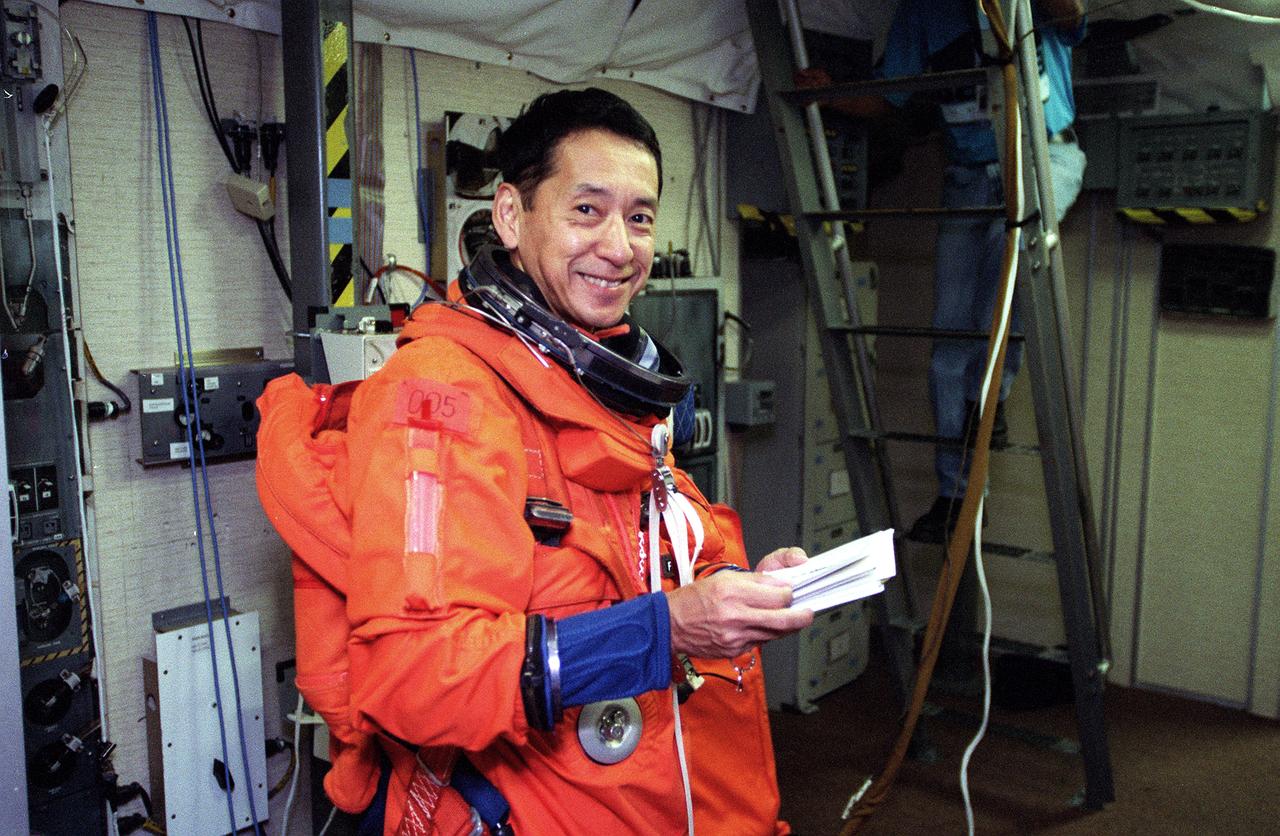
S99-10565 (24 August 1999) --- Astronaut   Mamoru Mohri, STS-99 mission specialist,  goes over a checklist on the mid deck of   a shuttle trainer at the Johnson Space Center (JSC).  Mohri represents Japan's  National Space Development Agency (NASDA).  He will be making his second flight in space and his second flight aboard the Space Shuttle Endeavour, having flown as a payload specialist on the STS-47 mission in 1992.
STS-99 crewmembers train in orbiter mock-up
Workers make final checks as the second part of the bi-sector payload fairing for the Advanced Composition Explorer (ACE) is closed around the spacecraft at Launch Complex 17A, Cape Canaveral Air Station. ACE will be launched on a Boeing Delta II expendable launch vehicle. The spacecraft will investigate the origin and evolution of solar phenomenon, the formation of solar corona, solar flares and acceleration of the solar wind. This will be the second Delta launch under the Boeing name and the first from Cape Canaveral. Liftoff is scheduled Aug. 24
KSC-97DC1283
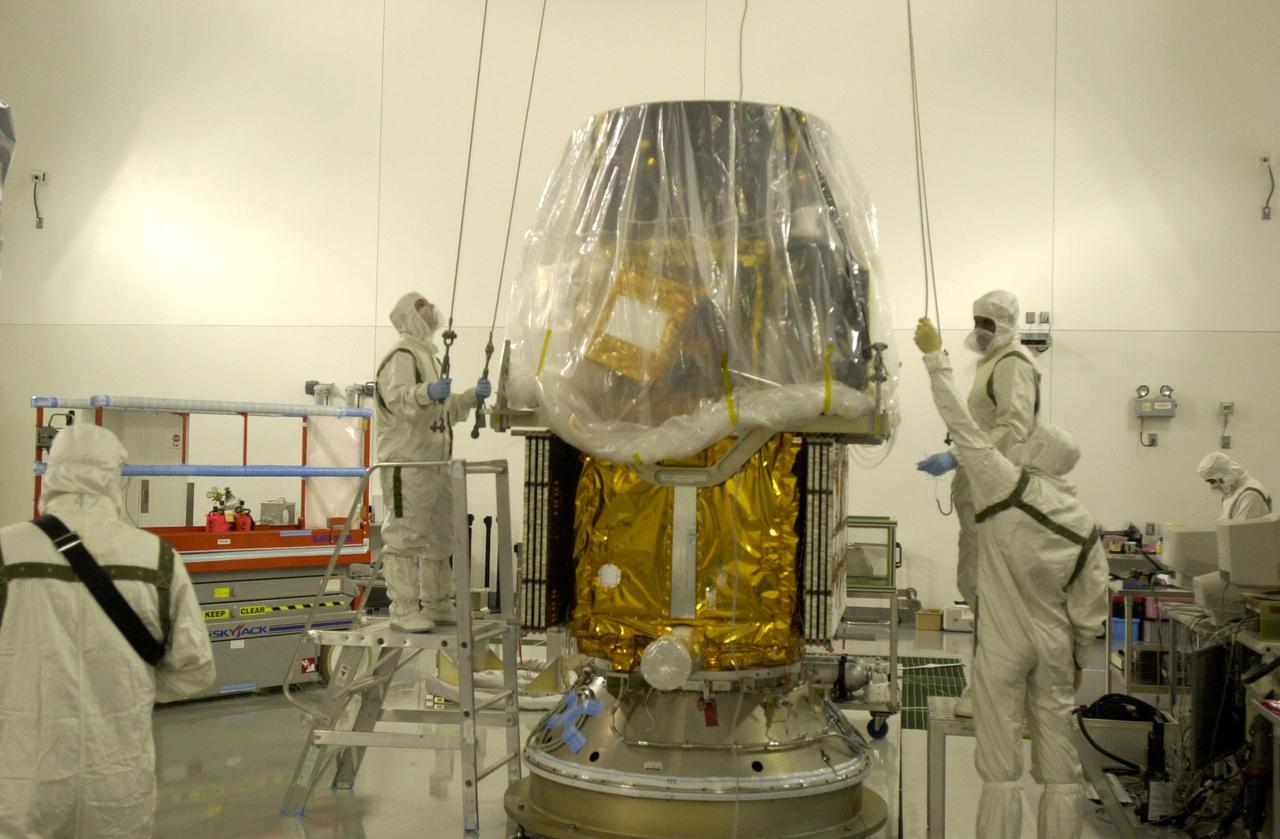
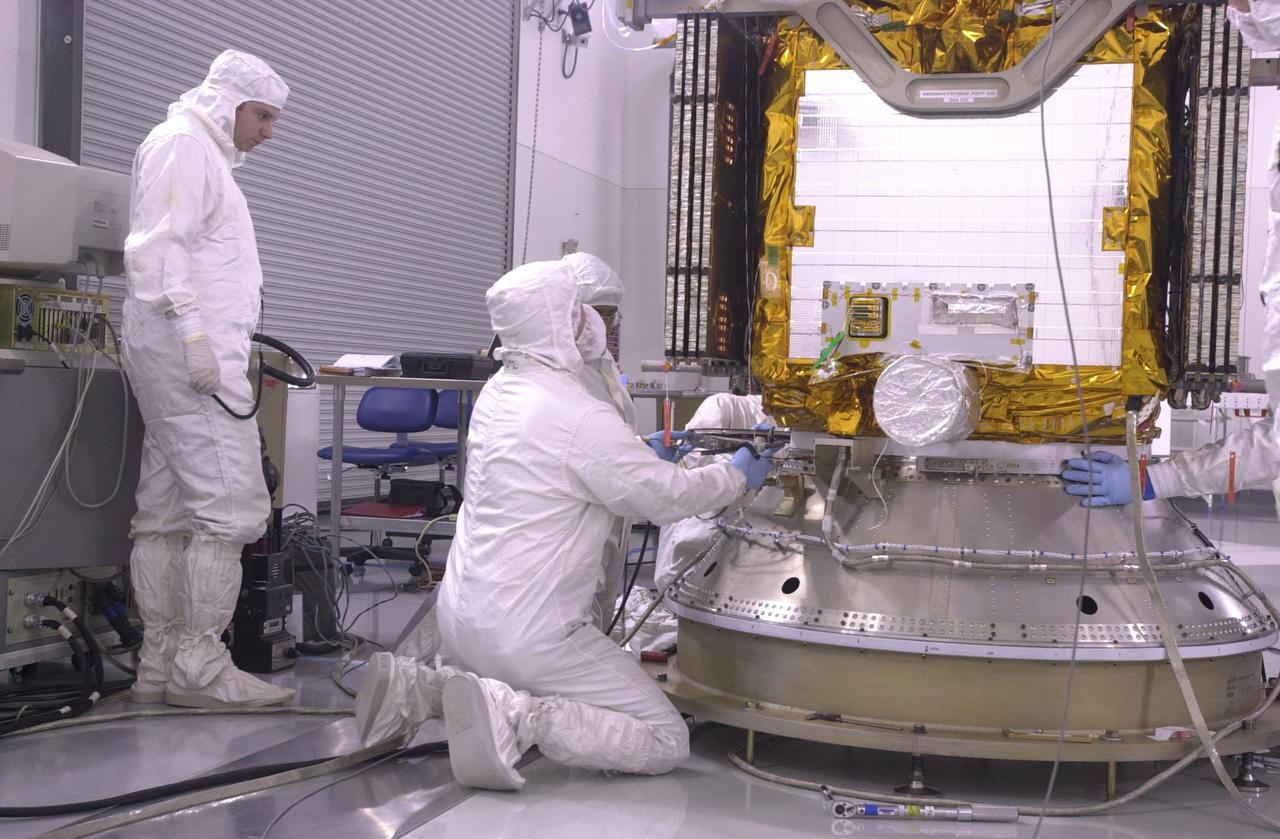
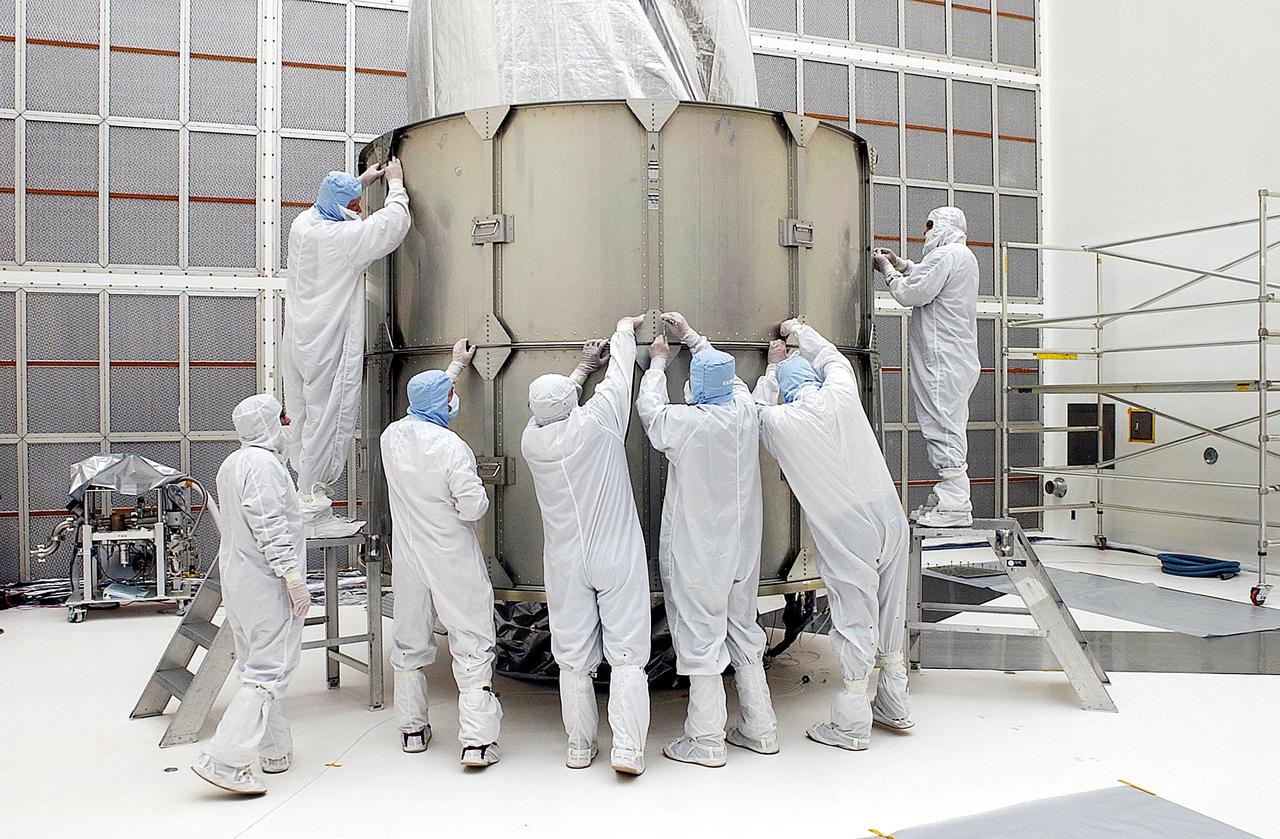
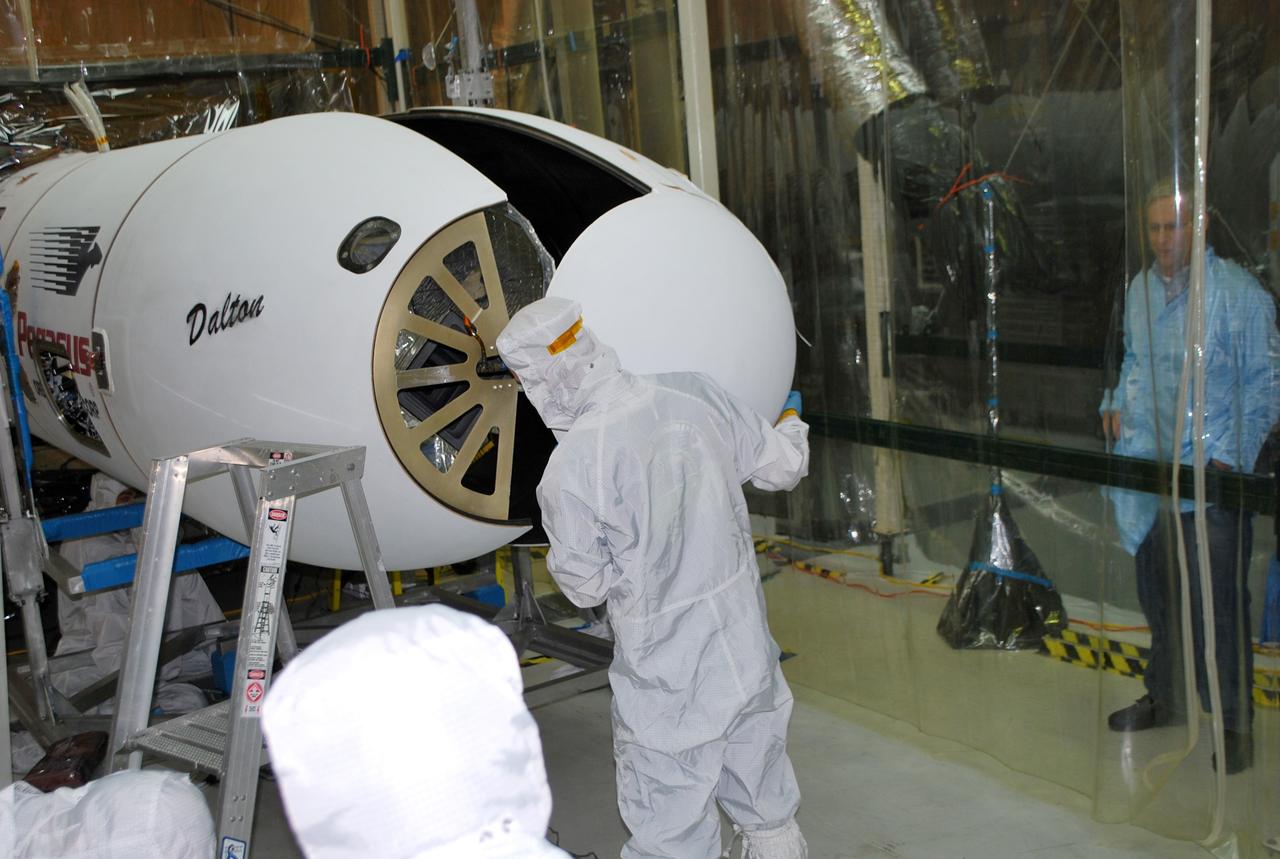
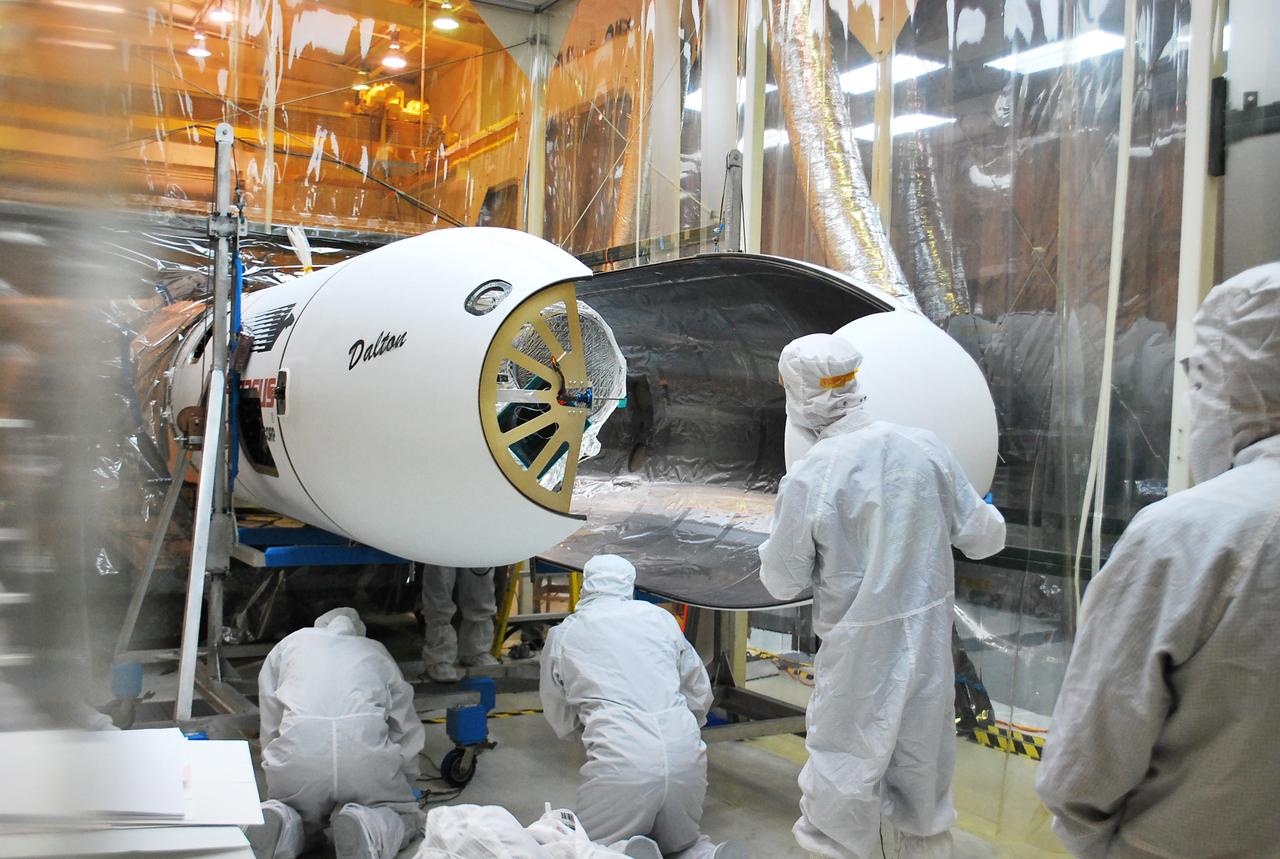
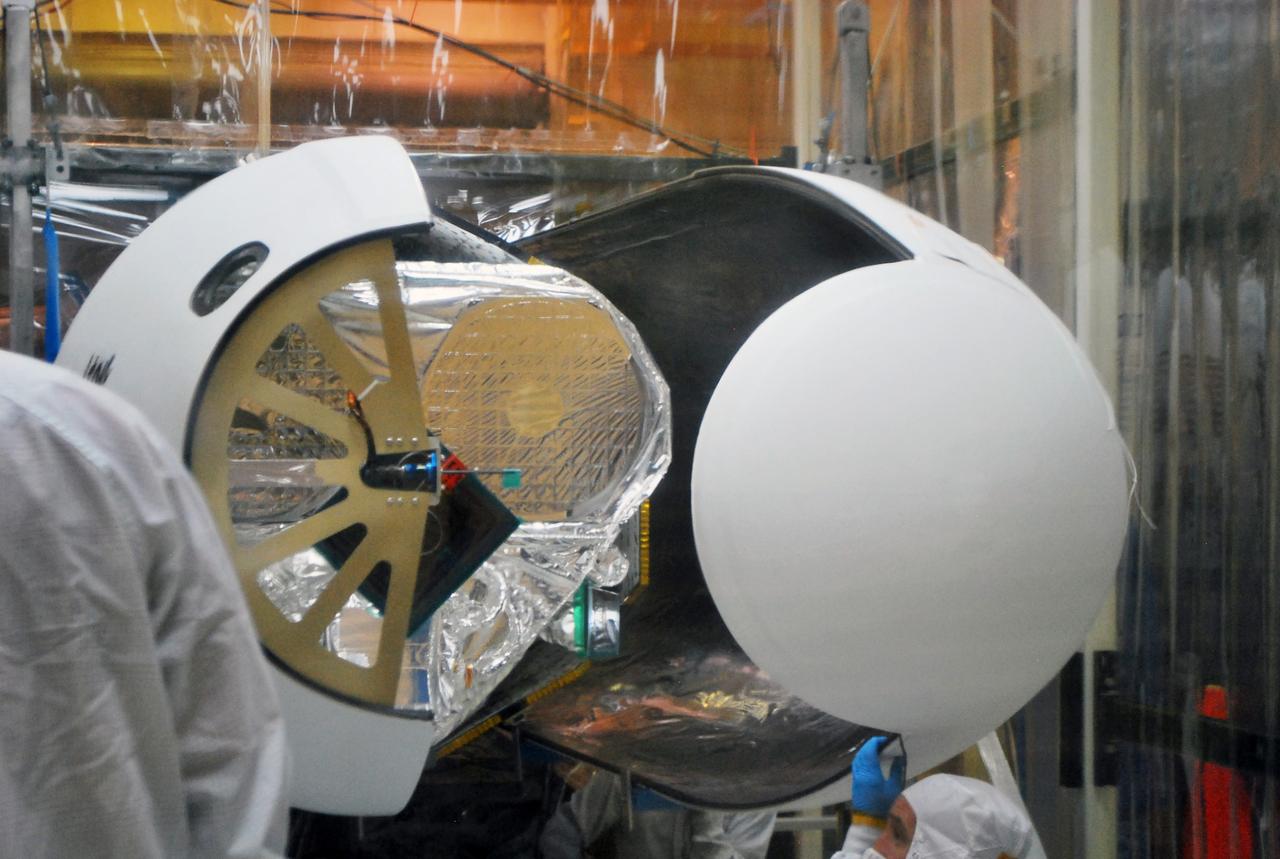
VANDENBERG AFB, Calif. – Technicians install the second half of the payload fairing over the NuSTAR spacecraft as they continue to process the spacecraft and its Pegasus rocket for launch. NuSTAR stands for Nuclear Spectroscopic Telescope Array. Photo credit: NASA/Randy Beaudoin
KSC-2012-3029
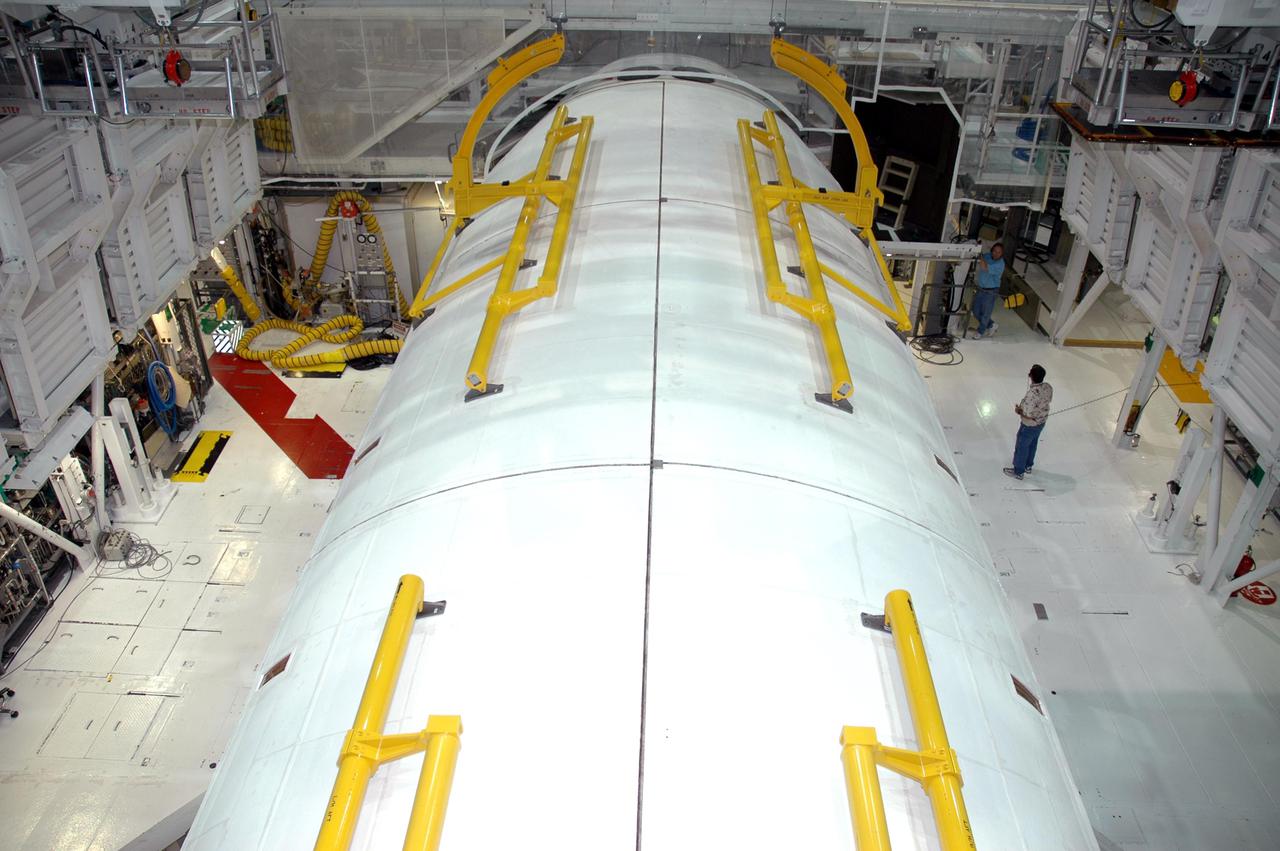
KENNEDY SPACE CENTER, FLA. - In the Orbiter Processing Facility at Kennedy Space Center in Florida, the payload bay doors of the orbiter Atlantis are closed.  Atlantis is scheduled to fly on the second Return to Flight mission, STS-121, targeted for launch in a window extending from Sept. 9 to Sept. 24.
KSC-05pd-1350
KENNEDY SPACE CENTER, FLA. - In the Orbiter Processing Facility at Kennedy Space Center in Florida, the payload bay doors of the orbiter Atlantis are nearly closed. Atlantis is scheduled to fly on the second Return to Flight mission, STS-121, targeted for launch in a window extending from Sept. 9 to Sept. 24.
KSC-05pd-1349
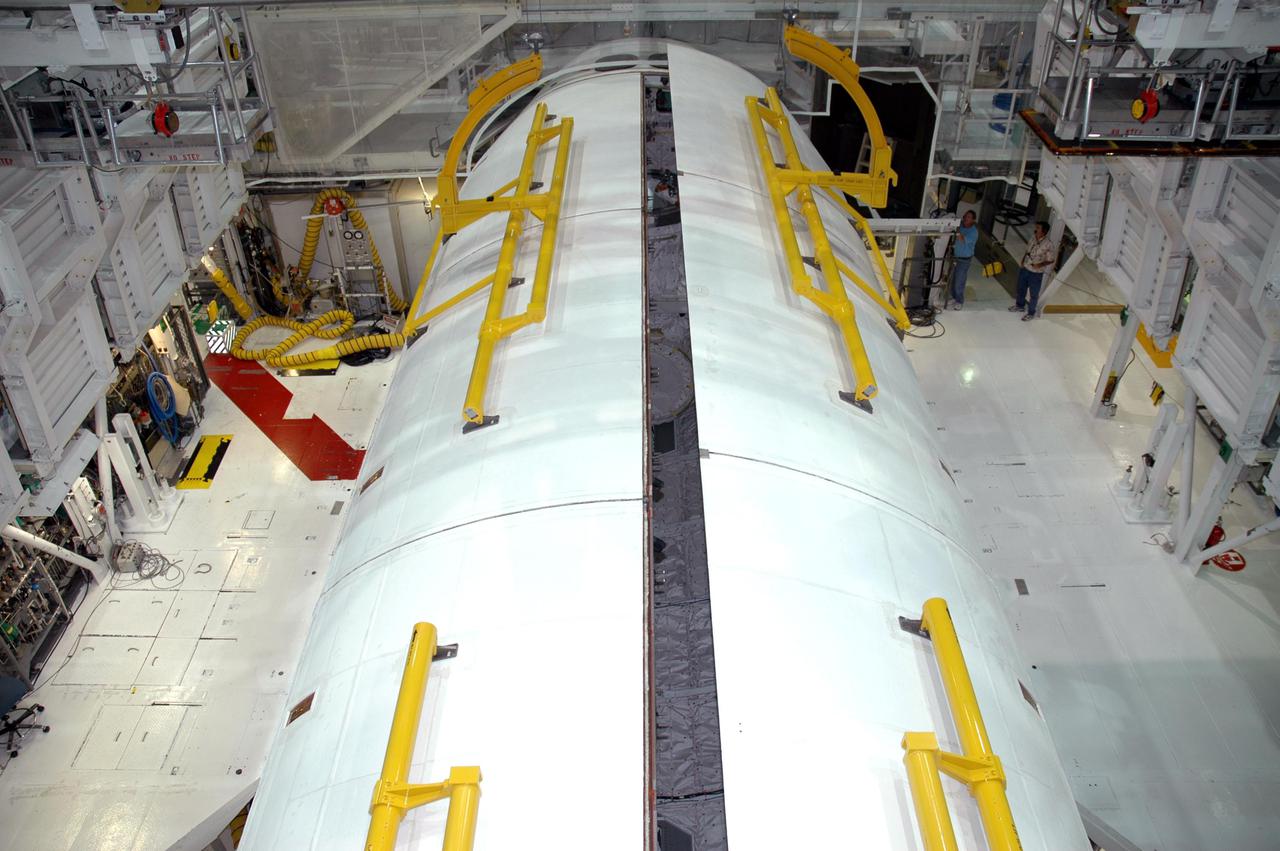
VANDENBERG AFB, Calif. – Technicians install the second half of the payload fairing over the NuSTAR spacecraft as they continue to process the spacecraft and its Pegasus rocket for launch. NuSTAR stands for Nuclear Spectroscopic Telescope Array. Photo credit: NASA/Randy Beaudoin
KSC-2012-3026
VANDENBERG AFB, Calif. – Technicians install one half of the payload fairing over the NuSTAR spacecraft as they continue to process the spacecraft and its Pegasus rocket for launch. The second half of the fairing stands ready for installation. NuSTAR stands for Nuclear Spectroscopic Telescope Array. Photo credit: NASA/Randy Beaudoin
KSC-2012-3025
KENNEDY SPACE CENTER, FLA. - Workers adjust a second layer of the payload canister around the Space Infrared Telescope Facility (SIRTF) in the background.  SIRTF is currently scheduled for transportation to Launch Complex 17-B, Cape Canaveral Air Force Station, and mating with the Delta II on or about April 4.
KSC-03pd0968
VANDENBERG AFB, Calif. – Technicians install the second half of the payload fairing over the NuSTAR spacecraft as they continue to process the spacecraft and its Pegasus rocket for launch. NuSTAR stands for Nuclear Spectroscopic Telescope Array. Photo credit: NASA/Randy Beaudoin
KSC-2012-3028
VANDENBERG AFB, Calif. – Technicians install the second half of the payload fairing over the NuSTAR spacecraft as they continue to process the spacecraft and its Pegasus rocket for launch. NuSTAR stands for Nuclear Spectroscopic Telescope Array. Photo credit: NASA/Randy Beaudoin
KSC-2012-3027
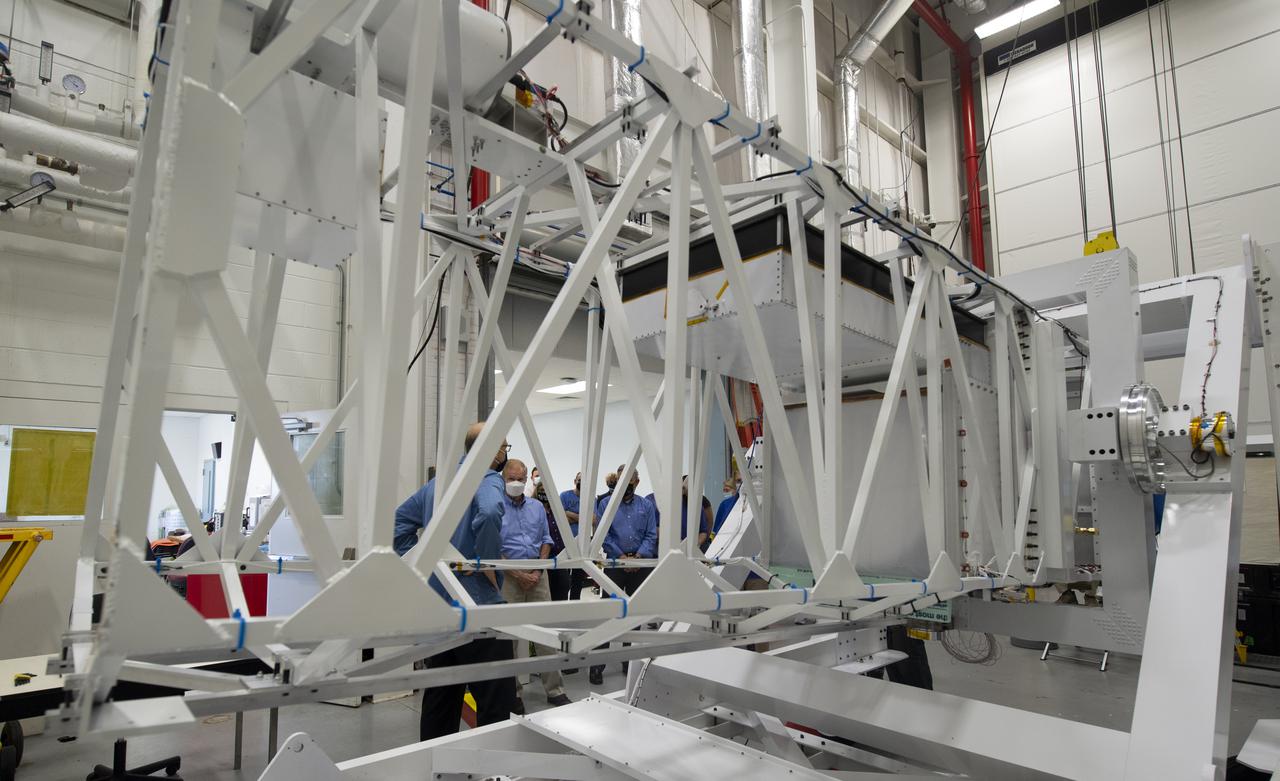
NASA Administrator Bill Nelson is seen through the structure of the Wallops Arc Second Pointer balloon payload being assembled in the Small Satellites, Balloon Research and Development Lab, Tuesday, Aug. 10, 2021, at NASA’s Wallops Flight Facility in Virginia.  Photo Credit: (NASA/Joel Kowsky)
NASA Leadership Tours Wallops Flight Facility
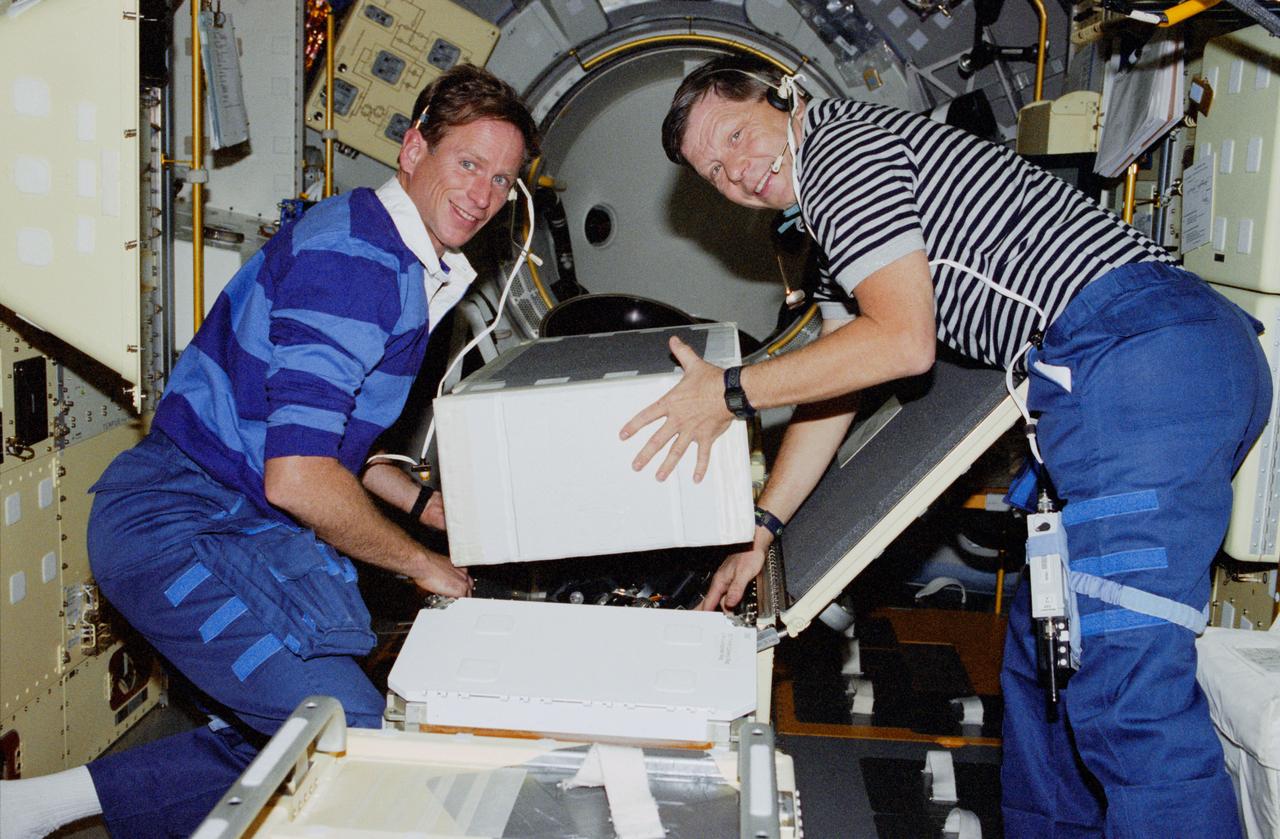
STS083-308-021 (4-8 April 1997) --- Payload specialist Roger K. Crouch and astronaut Michael L. Gernhardt, mission specialist, load boxes as they prepare to deactivate the Spacelab Science Module.  Crouch and Gernhardt, along with five other NASA astronauts and a second payload specialist supporting the Microgravity Sciences Laboratory (MSL-1) mission, were less than a fourth of the way through a scheduled 16-day flight when a power problem cut short their planned stay.
Crouch and Gernhardt unpack items from Spacelab center aisle
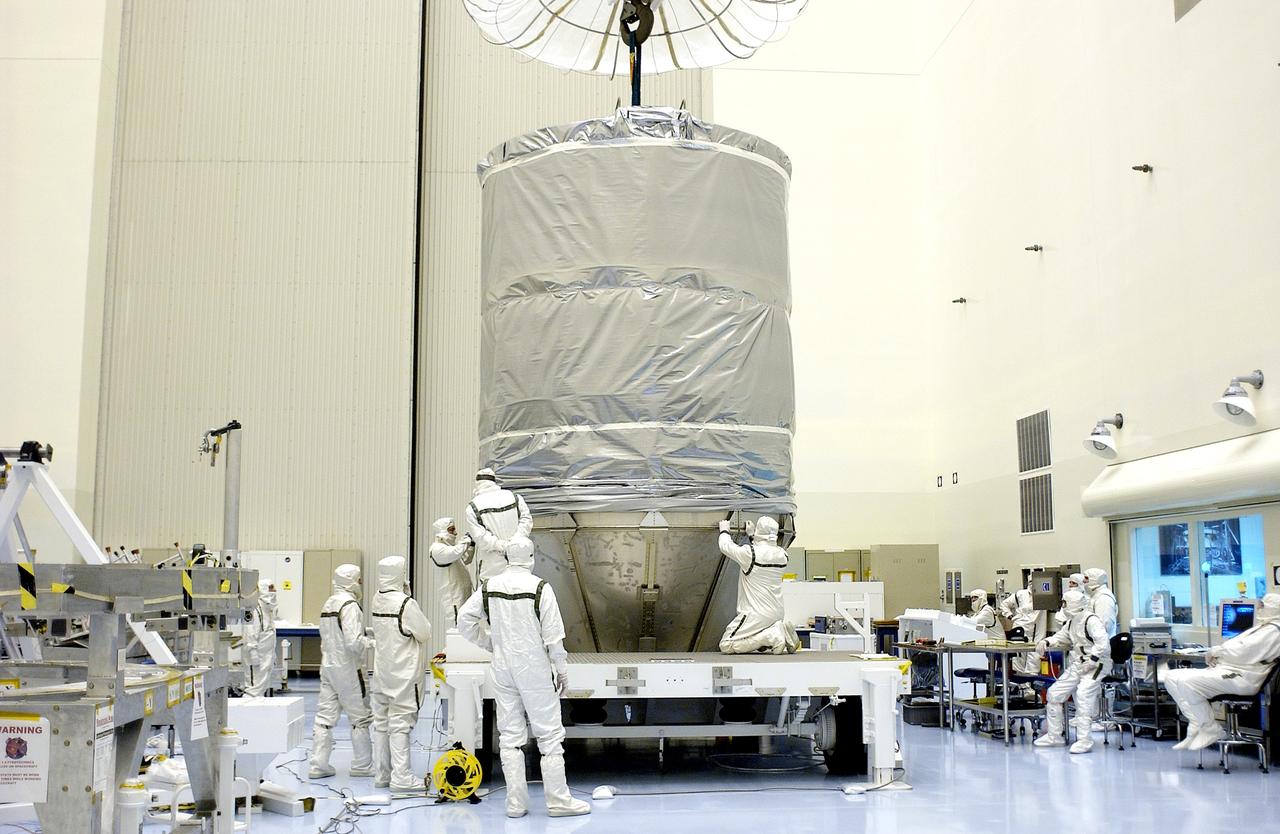
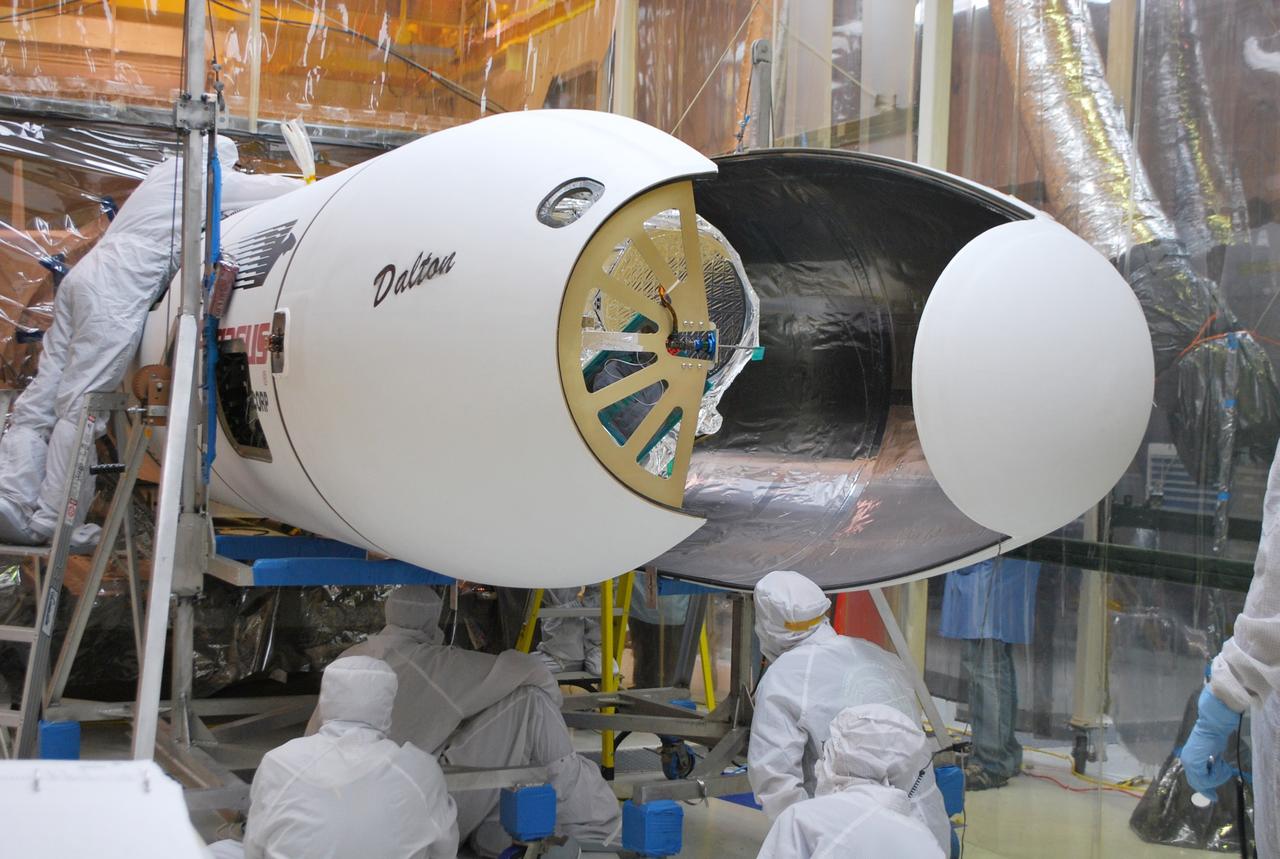
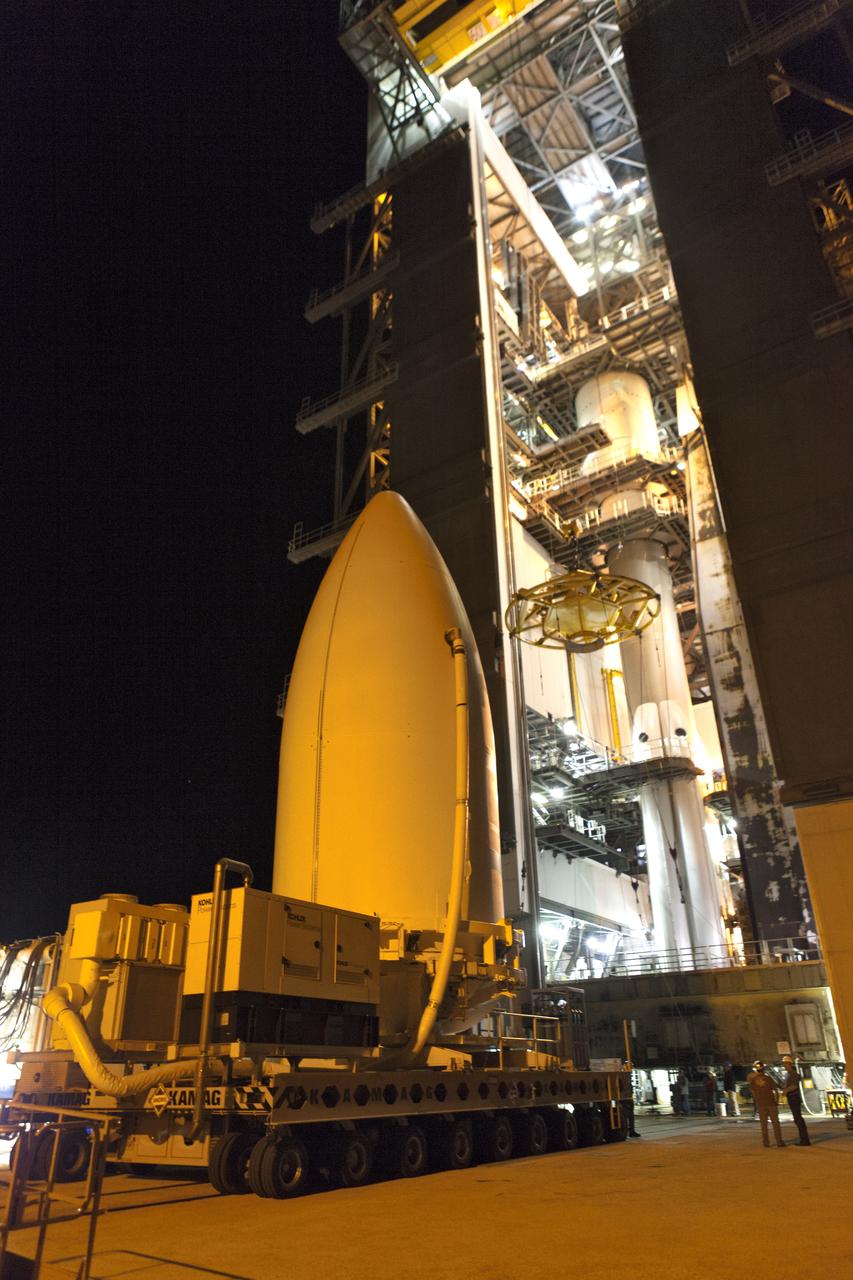
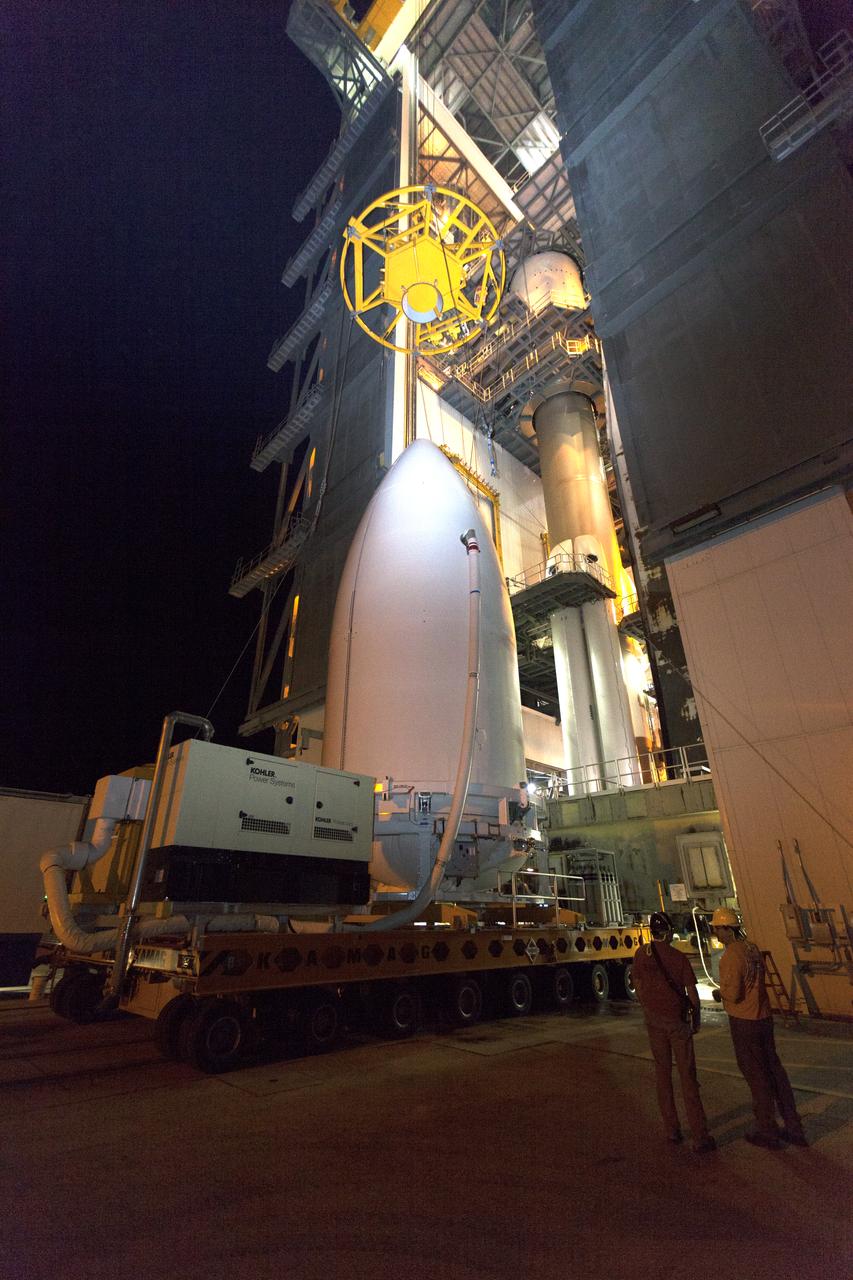
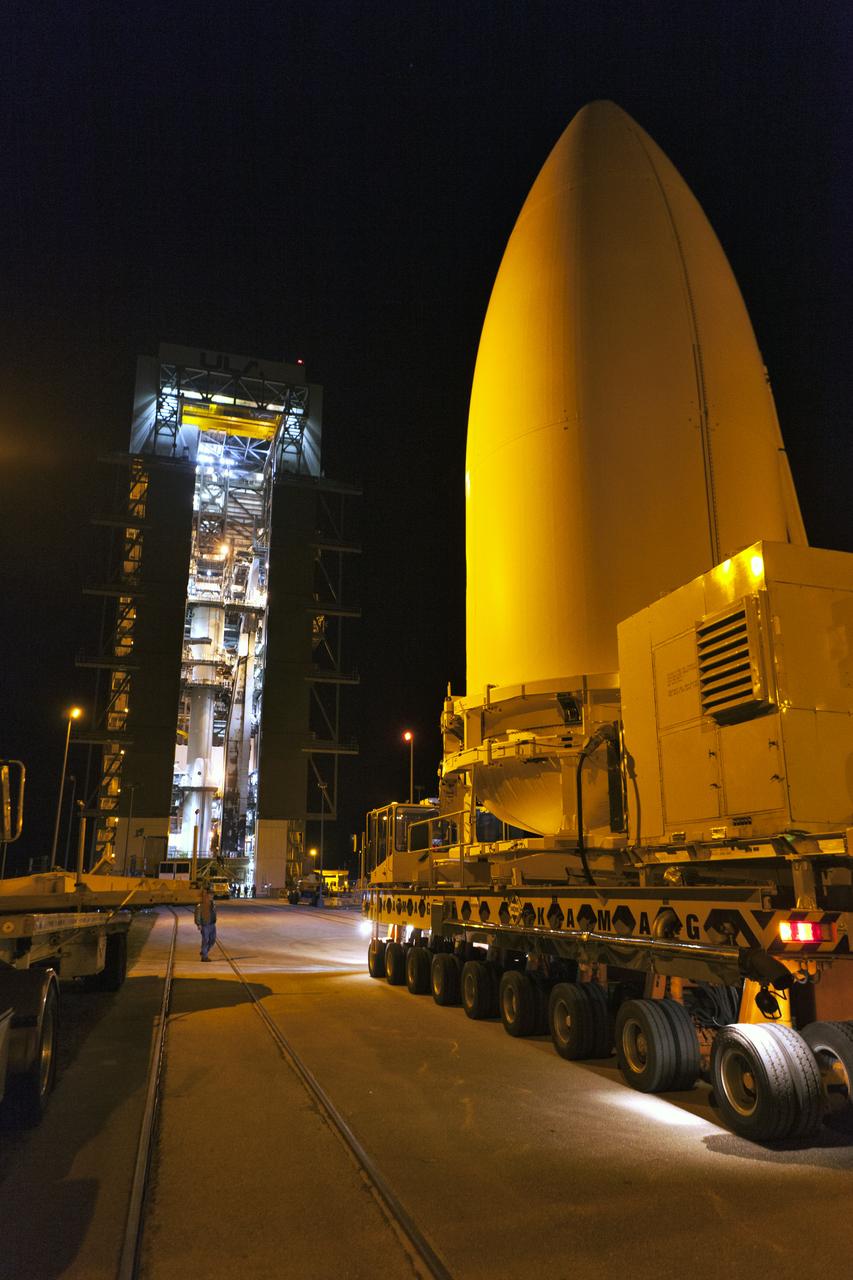
The payload fairing containing NOAA's Geostationary Operational Environmental Satellite-S (GOES-S), secured on a transporter, arrives at the United Launch Alliance (ULA) Vertical Integration Facility at Space Launch Complex 41 at Cape Canaveral Air Force Station in Florida. The payload fairing will be lifted and mated to the ULA Atlas V rocket. GOES-S is the second in a series of four advanced geostationary weather satellites. GOES-S is slated to launch aboard the ULA Atlas V on March 1.
GOES-S Spacecraft Transport from Astrotech to Pad 41
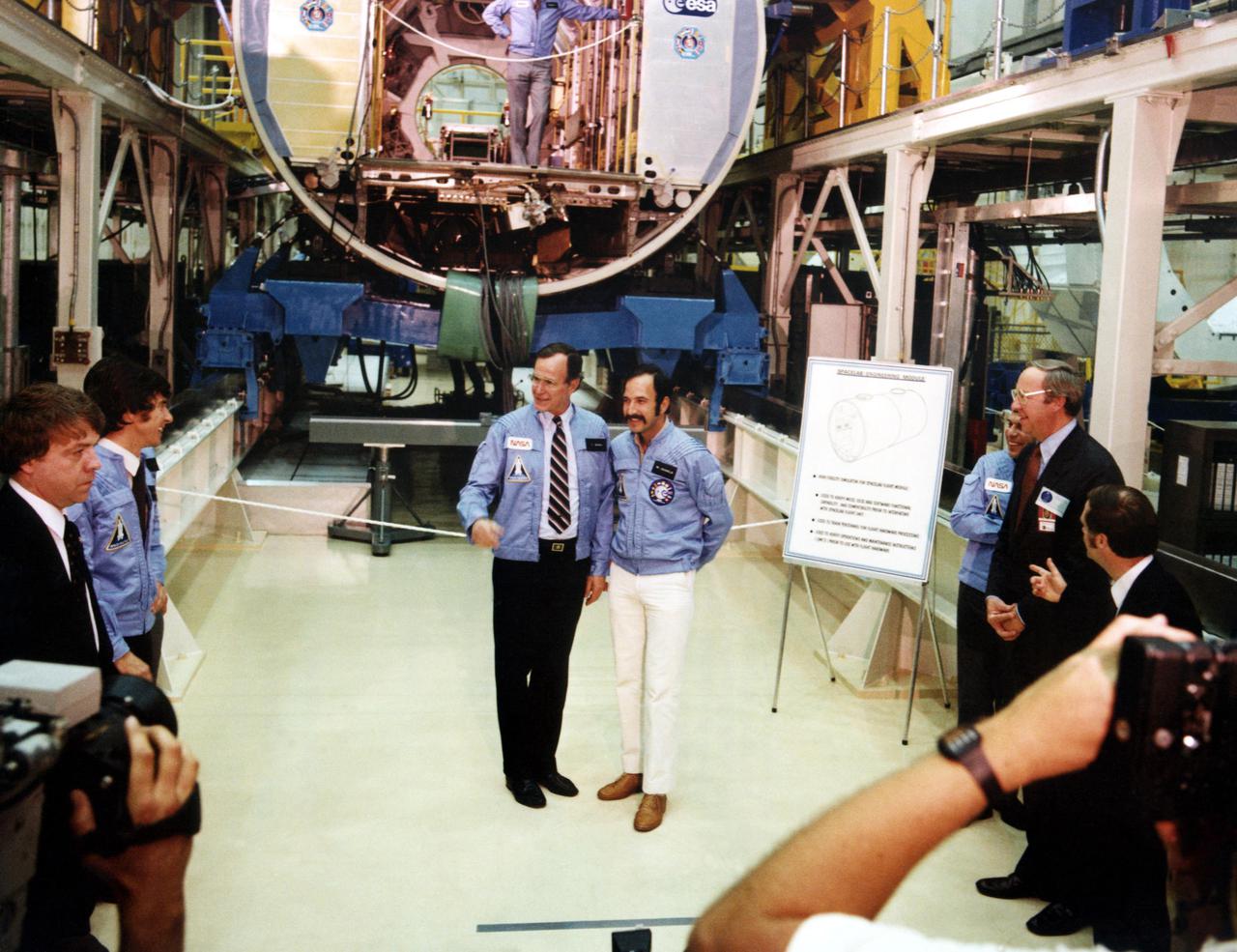
KENNEDY SPACE CENTER, FLA. -- Vice President George F. Bush, center left, is pictured with Payload Specialist Wubbo Ockels of the Netherlands during the Spacelab Arrival Ceremony.  Second from left is Payload Specialist Ulf Merbold, Germany.  At far right are James McCulls, chief, Special Services Branch, NASA Headquarters; and James C. Harrington, director, Spacelab Program, NASA.  Overhead, astronaut Owen K. Garriott, U.S.A., stands in the Spacelab Engineering Module.
KSC-82pc-130
STS083-308-025 (4-8 April 1997) --- Payload specialist Roger K. Crouch, talks to ground controllers while working at Combustion Module-1 in the Spacelab Science Module.  Crouch, along with five other NASA astronauts and a second payload specialist supporting the Microgravity Sciences Laboratory (MSL-1) mission were less than a fourth of the way through a scheduled 16-day flight when a power problem cut short their planned stay.
CM-1 - PS Crouch in front of rack
KENNEDY SPACE CENTER, FLA. --  In the Orbiter Processing Facility, STS-123 Pilot Dominic Gorie (second from right) checks out the orbiter boom sensor system in Endeavour's payload bay.  He and other crew members are at NASA's Kennedy Space Center for a crew equipment interface test, a process of familiarization with payloads, hardware and the space shuttle. The STS-123 mission is targeted for launch on space shuttle Endeavour on Feb. 14.  It will be the 25th assembly flight of the station.   Photo credit: NASA/Kim Shiflett
KSC-07pd3550
The payload fairing containing NOAA's Geostationary Operational Environmental Satellite-S (GOES-S), secured on a transporter, arrives at the United Launch Alliance (ULA) Vertical Integration Facility at Space Launch Complex 41 at Cape Canaveral Air Force Station in Florida. The payload fairing will be lifted and mated to the ULA Atlas V rocket. GOES-S is the second in a series of four advanced geostationary weather satellites. GOES-S is slated to launch aboard the ULA Atlas V on March 1.
GOES-S Spacecraft Transport from Astrotech to Pad 41
CAPE CANAVERAL, Fla. ---In Orbiter Processing Facility Bay 3 at NASA's Kennedy Space Center, space shuttle Discovery's second payload bay door is nearly closed. Discovery is the designated vehicle on the STS-124 mission to the International Space Station.  On the mission, the shuttle will transport the Kibo Japanese Experiment Module - Pressurized Module and the Japanese Remote Manipulator System. The payload will be installed at the launch pad.  Launch is targeted for May 25.  Photo credit: NASA/Chris Rhodes
KSC-08pd0880
The payload fairing containing NOAA's Geostationary Operational Environmental Satellite-S (GOES-S), secured on a transporter, arrives at the United Launch Alliance (ULA) Vertical Integration Facility at Space Launch Complex 41 at Cape Canaveral Air Force Station in Florida. The payload fairing will be lifted and mated to the ULA Atlas V rocket. GOES-S is the second in a series of four advanced geostationary weather satellites. GOES-S is slated to launch aboard the ULA Atlas V on March 1.
GOES-S Spacecraft Transport from Astrotech to Pad 41
KENNEDY SPACE CENTER, FLA. -- In bay 3 of NASA Kennedy Space Center’s Orbiter Processing Facility, the Multi-Purpose Logistics Module Raffaello is removed from Space Shuttle Discovery's payload bay.  The module holds material returned to KSC from the International Space Station on Return to Flight mission STS-114. The module is being lifted out of the payload bay and transferred to the Space Station Processing Facility to be emptied. Discovery will fly next on the second Return to Flight mission, STS-121.
KSC-05PD-2031
KENNEDY SPACE CENTER, FLA. --  In Orbiter Processing Facility Bay 3, workers install the new orbital boom sensor system in Discovery’s payload bay.  The previous boom was removed for repairs on the manipulator positioning mechanism, the pedestals that hold the boom in place in the payload bay.  Discovery is the designated orbiter for the second return-to-flight mission, STS-121.  The mission is scheduled no earlier than mid-May.
KSC-05pd2610
KENNEDY SPACE CENTER, FLA. -- In bay 3 of NASA Kennedy Space Center’s Orbiter Processing Facility, technicians oversee the removal of the Multi-Purpose Logistics Module Raffaello from Space Shuttle Discovery's payload bay.  The module holds material returned to KSC from the International Space Station on Return to Flight mission STS-114. The module is being lifted out of the payload bay and transferred to the Space Station Processing Facility to be emptied. Discovery will fly next on the second Return to Flight mission, STS-121.
KSC-05PD-2029
KENNEDY SPACE CENTER, FLA.  -  In bay 3 of NASA Kennedy Space Center’s Orbiter Processing Facility, the payload bay doors on Discovery are being opened.  Seen inside is the Multi-Purpose Logistics Module Raffaello, which holds material being returned to KSC from the International Space Station as part of Return to Flight mission STS-114.  The module will be lifted out of the payload bay and transferred to the Space Station Processing Facility to be emptied.  Discovery will begin processing for the second Return to Flight mission, STS-121.
KSC-05PD-2023
KENNEDY SPACE CENTER, FLA. --  In the Orbiter Processing Facility, STS-123 Pilot Dominic Gorie (second from right) checks out the orbiter boom sensor system in Endeavour's payload bay.  He and other crew members are at NASA's Kennedy Space Center for a crew equipment interface test, a process of familiarization with payloads, hardware and the space shuttle. The STS-123 mission is targeted for launch on space shuttle Endeavour on Feb. 14.  It will be the 25th assembly flight of the station.   Photo credit: NASA/Kim Shiflett
KSC-07pd3564
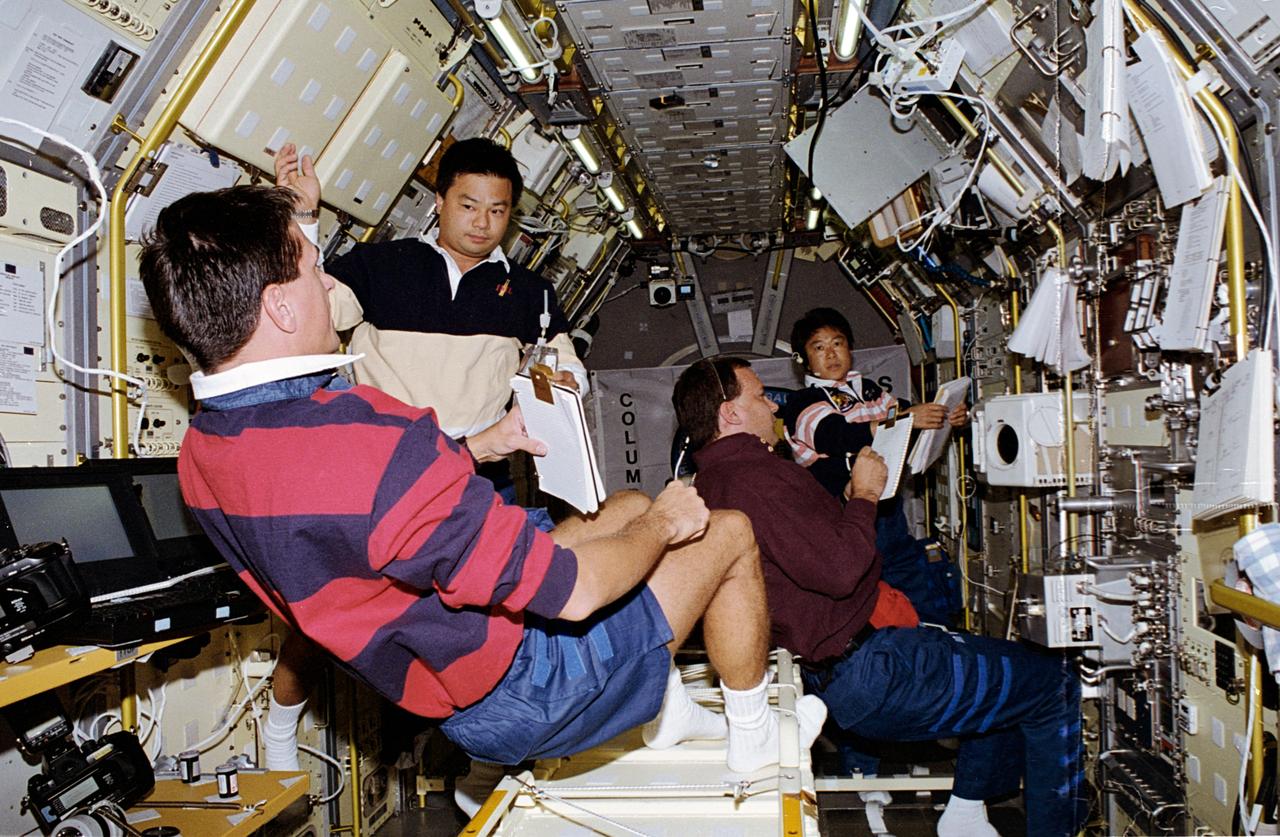
STS065-05-037 (8-23 July 1994) --- In the science module aboard the Space Shuttle Columbia, four members of the crew busy themselves with experiments in support of the second International Microgravity Laboratory (IML-2) mission.  Left to right are Donald A. Thomas and Leroy Chiao, both mission specialists; Richard J. Hieb, payload commander, and Dr. Chiaki Mukai of NASDA, payload specialist.
STS-65 crew works inside the IML-2 spacelab module aboard Columbia, OV-102
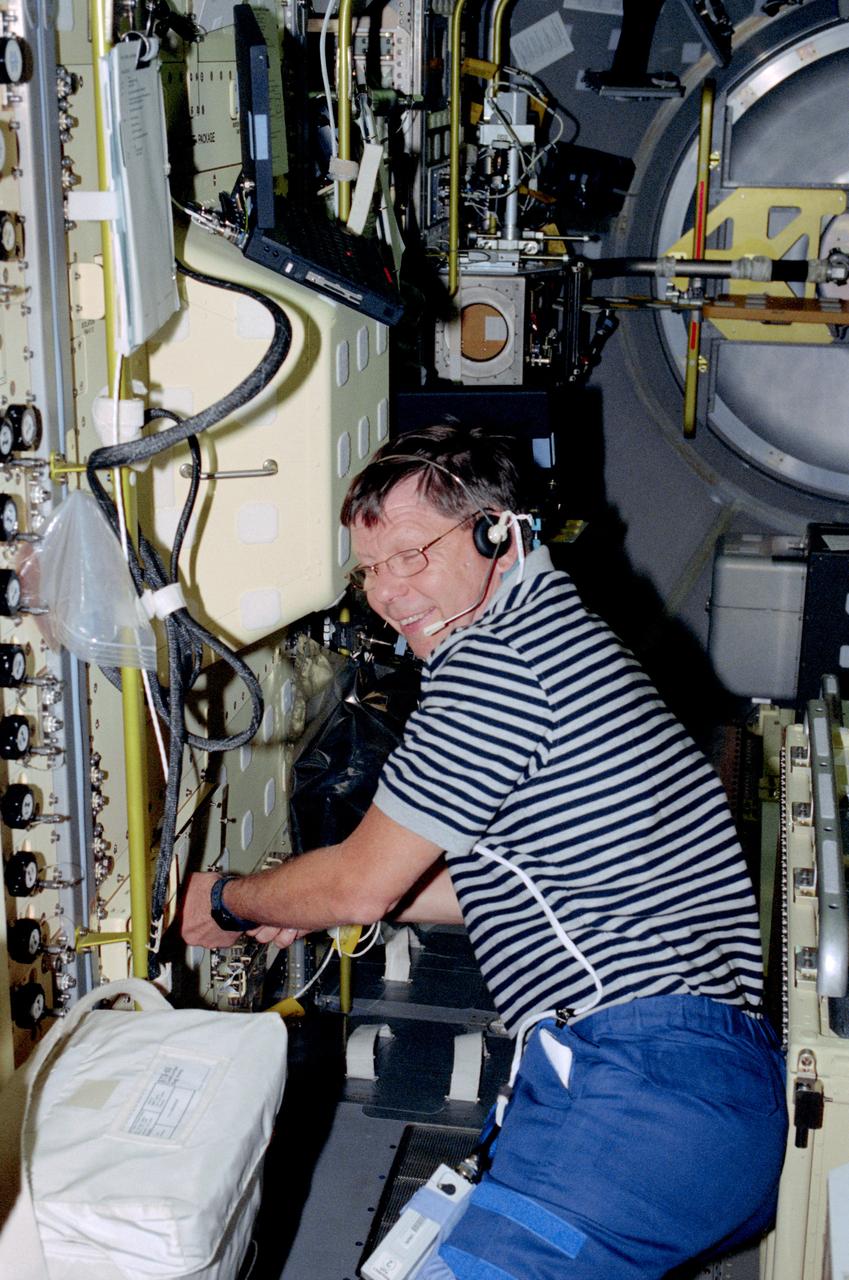
STS083-306-002 (4-8 April 1997) --- Payload specialist Gregory T. Linteris, talks to ground controllers while updating progress on an experiment in the Spacelab Science Module.  Linteris, along with five other NASA astronauts and a second payload specialist supporting the Microgravity Sciences Laboratory (MSL-1) mission were less than a fourth of the way through a scheduled 16-day flight when a power problem cut short their planned stay.
DCE - PS Linteris with PGSC
CAPE CANAVERAL, Fla. --- In Orbiter Processing Facility Bay 3 at NASA's Kennedy Space Center, space shuttle Discovery's second payload bay door, at right, is beginning to close. Discovery is the designated vehicle on the STS-124 mission to the International Space Station.  On the mission, the shuttle will transport the Kibo Japanese Experiment Module - Pressurized Module and the Japanese Remote Manipulator System. The payload will be installed at the launch pad.  Launch is targeted for May 25.  Photo credit: NASA/Chris Rhodes
KSC-08pd0879
KENNEDY SPACE CENTER, FLA. --  In Orbiter Processing Facility Bay 3, the new orbital boom sensor system is lowered into Discovery’s payload bay.  The previous boom was removed for repairs on the manipulator positioning mechanism, the pedestals that hold the boom in place in the payload bay.  Discovery is the designated orbiter for the second return-to-flight mission, STS-121.  The mission is scheduled no earlier than mid-May.
KSC-05pd2609
KENNEDY SPACE CENTER, FLA. -- In bay 3 of NASA Kennedy Space Center’s Orbiter Processing Facility, the Multi-Purpose Logistics Module Raffaello is removed from Space Shuttle Discovery's payload bay.  The module holds material returned to KSC from the International Space Station on Return to Flight mission STS-114. The module is being lifted out of the payload bay and transferred to the Space Station Processing Facility to be emptied. Discovery will fly next on the second Return to Flight mission, STS-121.
KSC-05PD-2030
KENNEDY SPACE CENTER, FLA. --  In Orbiter Processing Facility Bay 3,  a crane carries the new orbital boom sensor system to be installed in Discovery’s payload bay.  The previous boom was removed for repairs on the manipulator positioning mechanism, the pedestals that hold the boom in place in the payload bay. Discovery is the designated orbiter for the second return-to-flight mission, STS-121.  The mission is scheduled no earlier than mid-May.
KSC-05pd2608
The payload fairing containing NOAA's Geostationary Operational Environmental Satellite-S (GOES-S), secured on a transporter, arrives at the United Launch Alliance (ULA) Vertical Integration Facility at Space Launch Complex 41 at Cape Canaveral Air Force Station in Florida. The payload fairing will be lifted and mated to the ULA Atlas V rocket. GOES-S is the second in a series of four advanced geostationary weather satellites. GOES-S is slated to launch aboard the ULA Atlas V on March 1.
GOES-S Spacecraft Transport from Astrotech to Pad 41
KENNEDY SPACE CENTER, FLA. --  In Orbiter Processing Facility Bay 3, workers check the installation of the new orbital boom sensor system in Discovery’s payload bay.  The previous boom was removed for repairs on the manipulator positioning mechanism, the pedestals that hold the boom in place in the payload bay.  Discovery is the designated orbiter for the second return-to-flight mission, STS-121.  The mission is scheduled no earlier than mid-May.
KSC-05pd2611
KENNEDY SPACE CENTER, FLA.  -  In bay 3 of NASA Kennedy Space Center’s Orbiter Processing Facility, the payload bay doors on Discovery are open.  Seen inside is the Multi-Purpose Logistics Module Raffaello, which holds material being returned to KSC from the International Space Station as part of Return to Flight mission STS-114.  The module will be lifted out of the payload bay and transferred to the Space Station Processing Facility to be emptied. Discovery will begin processing for the second Return to Flight mission, STS-121.
KSC-05PD-2024
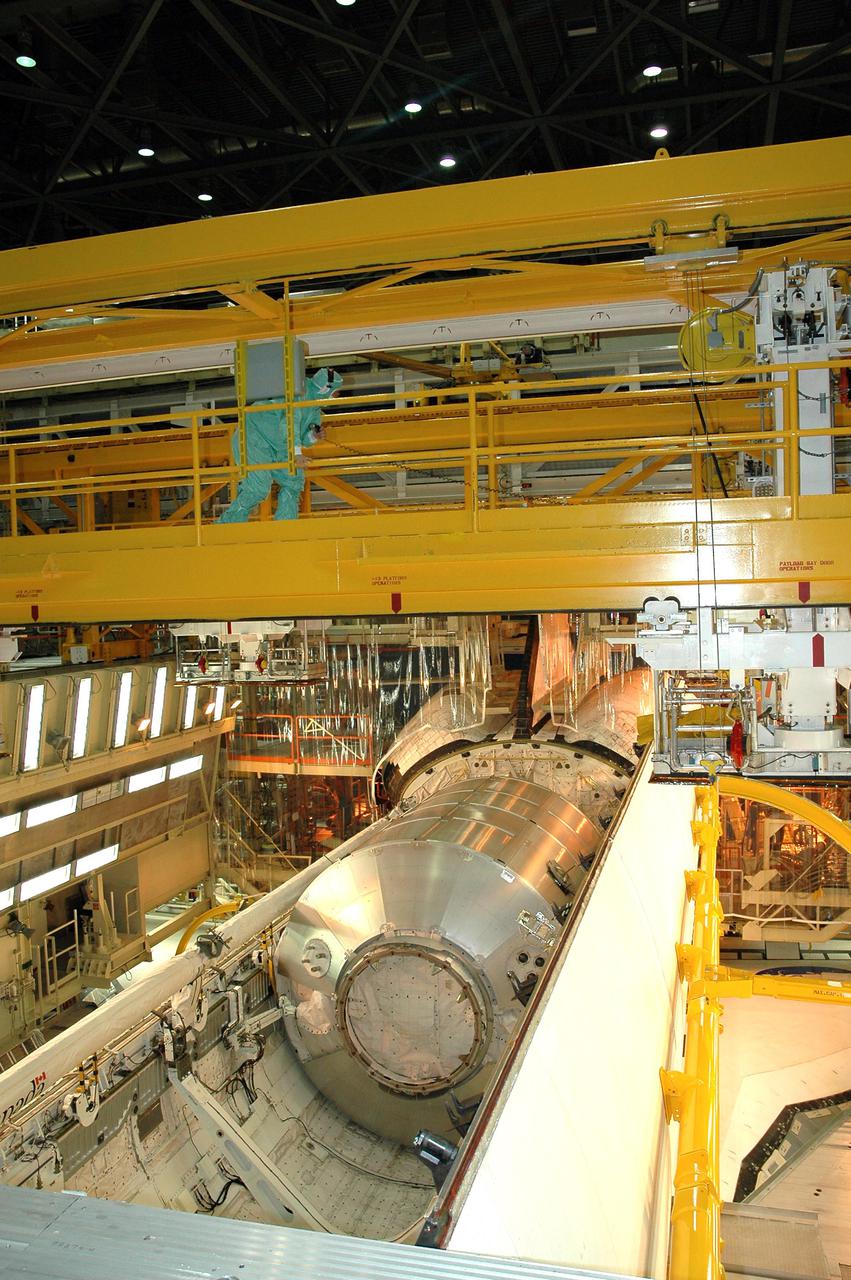
KENNEDY SPACE CENTER, FLA.  - In the Space Station Processing Facility, work is ongoing on the U.S. Node 2, the second of three Space Station connecting modules.  The Italian-built Node 2 attaches to the end of the U.S. Lab and will provide attach locations for the Japanese laboratory, European laboratory, the Centrifuge Accommodation Module and, later, Multipurpose Logistics Modules. It will provide the primary docking location for the Shuttle when a pressurized mating adapter is attached to Node 2.  Installation of the module will complete the U.S. Core of the ISS.  Node 2 is the designated payload for mission STS-120.  No orbiter or launch date has been determined yet.
KENNEDY SPACE CENTER, FLA. - In the Space Station Processing Facility, work is ongoing on the U.S. Node 2, the second of three Space Station connecting modules. The Italian-built Node 2 attaches to the end of the U.S. Lab and will provide attach locations for the Japanese laboratory, European laboratory, the Centrifuge Accommodation Module and, later, Multipurpose Logistics Modules. It will provide the primary docking location for the Shuttle when a pressurized mating adapter is attached to Node 2. Installation of the module will complete the U.S. Core of the ISS. Node 2 is the designated payload for mission STS-120. No orbiter or launch date has been determined yet.
KENNEDY SPACE CENTER, FLA.  -  Work is ongoing on the U.S. Node 2 in the Space Station Processing Facility.  The second of three Space Station connecting modules, the Italian-built Node 2 attaches to the end of the U.S. Lab and will provide attach locations for the Japanese laboratory, European laboratory, the Centrifuge Accommodation Module and, later, Multipurpose Logistics Modules. It will provide the primary docking location for the Shuttle when a pressurized mating adapter is attached to Node 2.  Installation of the module will complete the U.S. Core of the ISS.  Node 2 is the designated payload for mission STS-120.  No orbiter or launch date has been determined yet.
KENNEDY SPACE CENTER, FLA. - Work is ongoing on the U.S. Node 2 in the Space Station Processing Facility. The second of three Space Station connecting modules, the Italian-built Node 2 attaches to the end of the U.S. Lab and will provide attach locations for the Japanese laboratory, European laboratory, the Centrifuge Accommodation Module and, later, Multipurpose Logistics Modules. It will provide the primary docking location for the Shuttle when a pressurized mating adapter is attached to Node 2. Installation of the module will complete the U.S. Core of the ISS. Node 2 is the designated payload for mission STS-120. No orbiter or launch date has been determined yet.
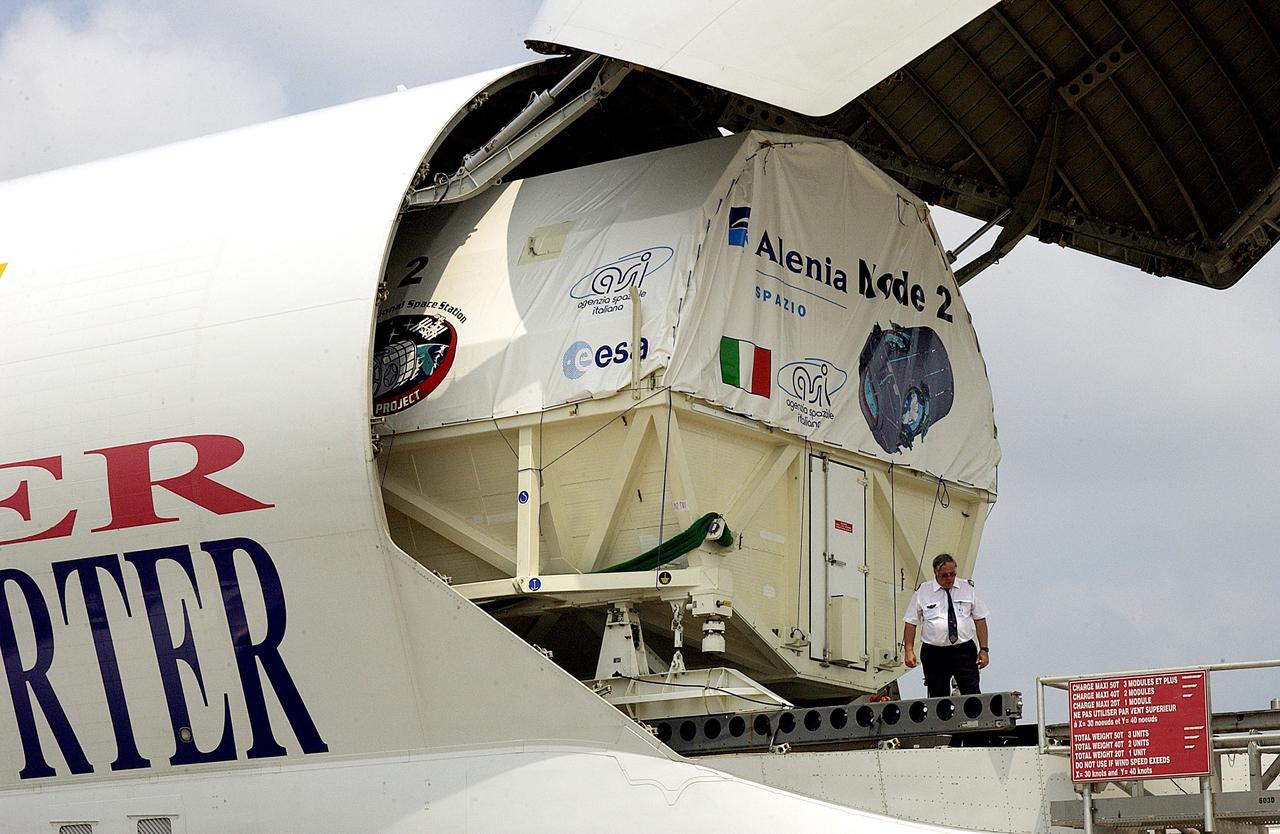
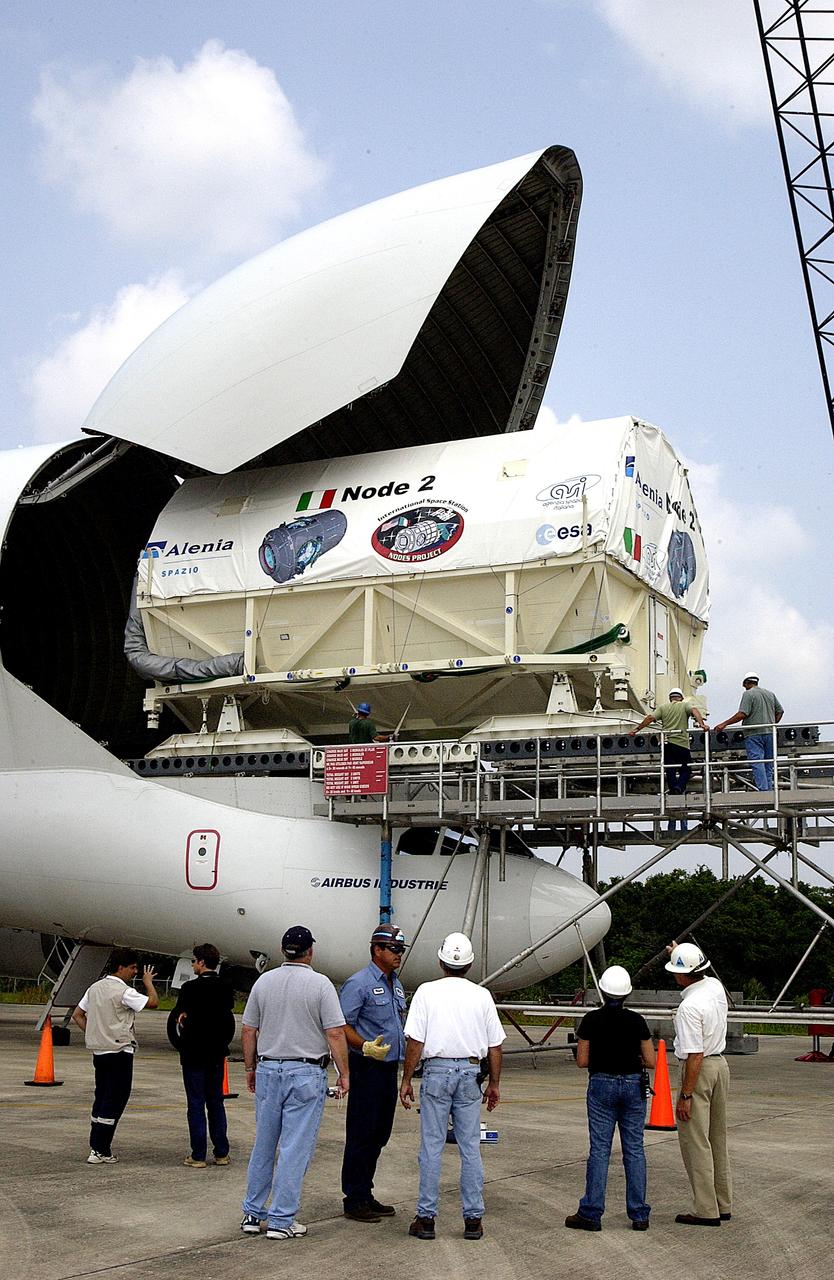
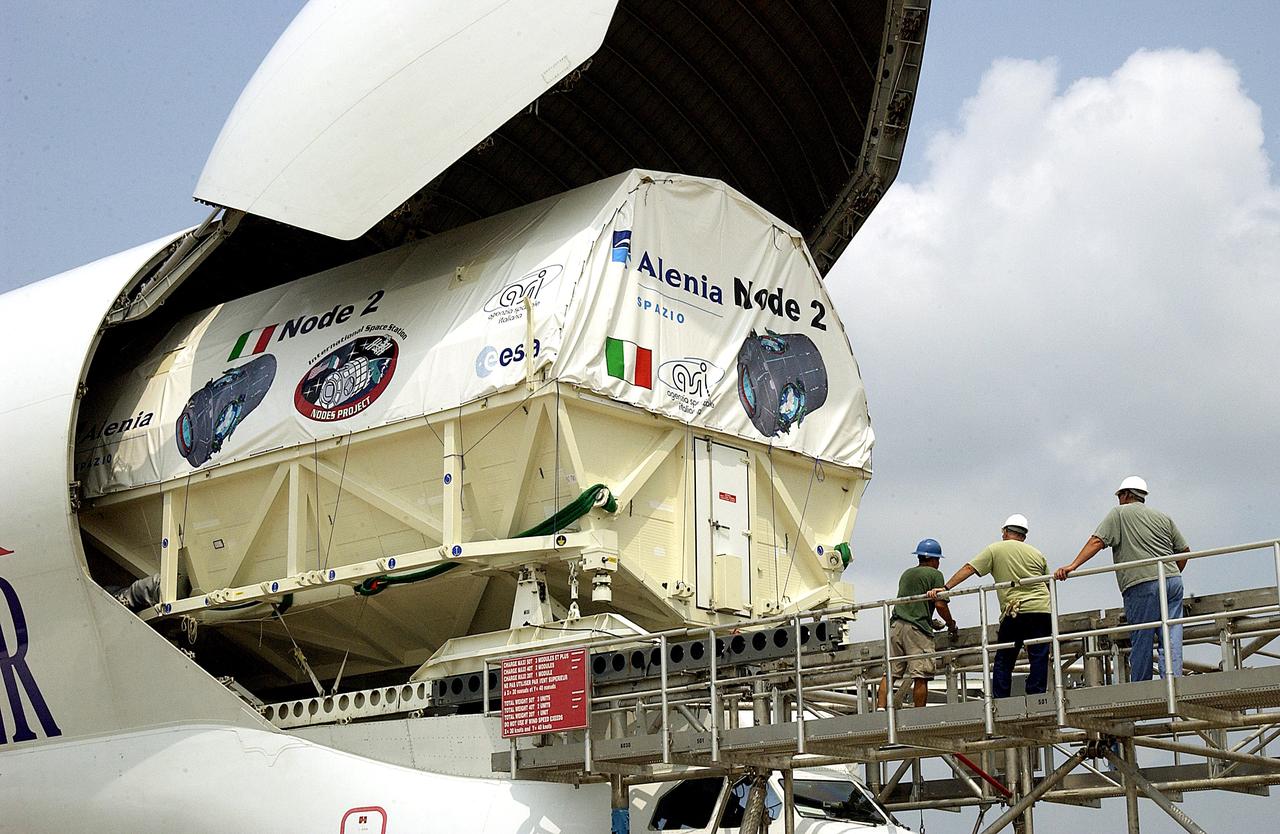
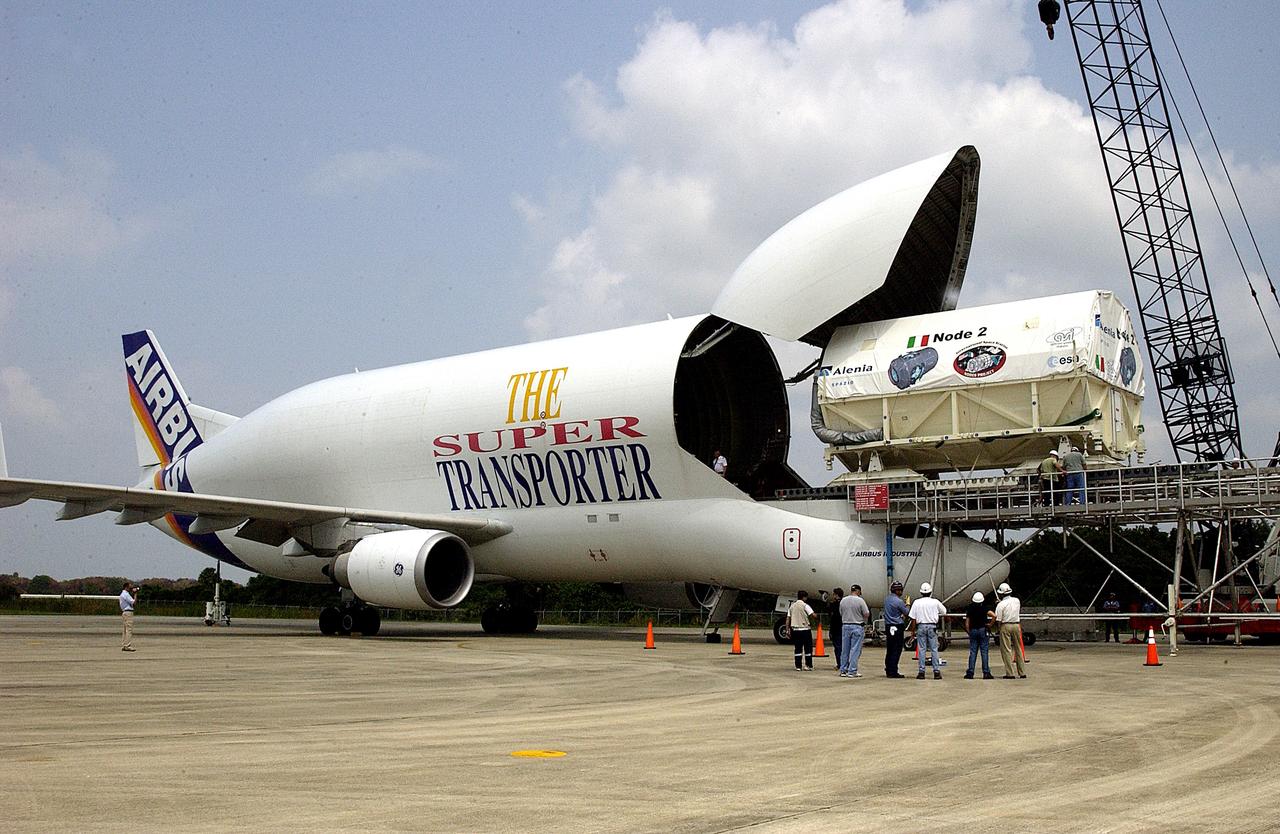
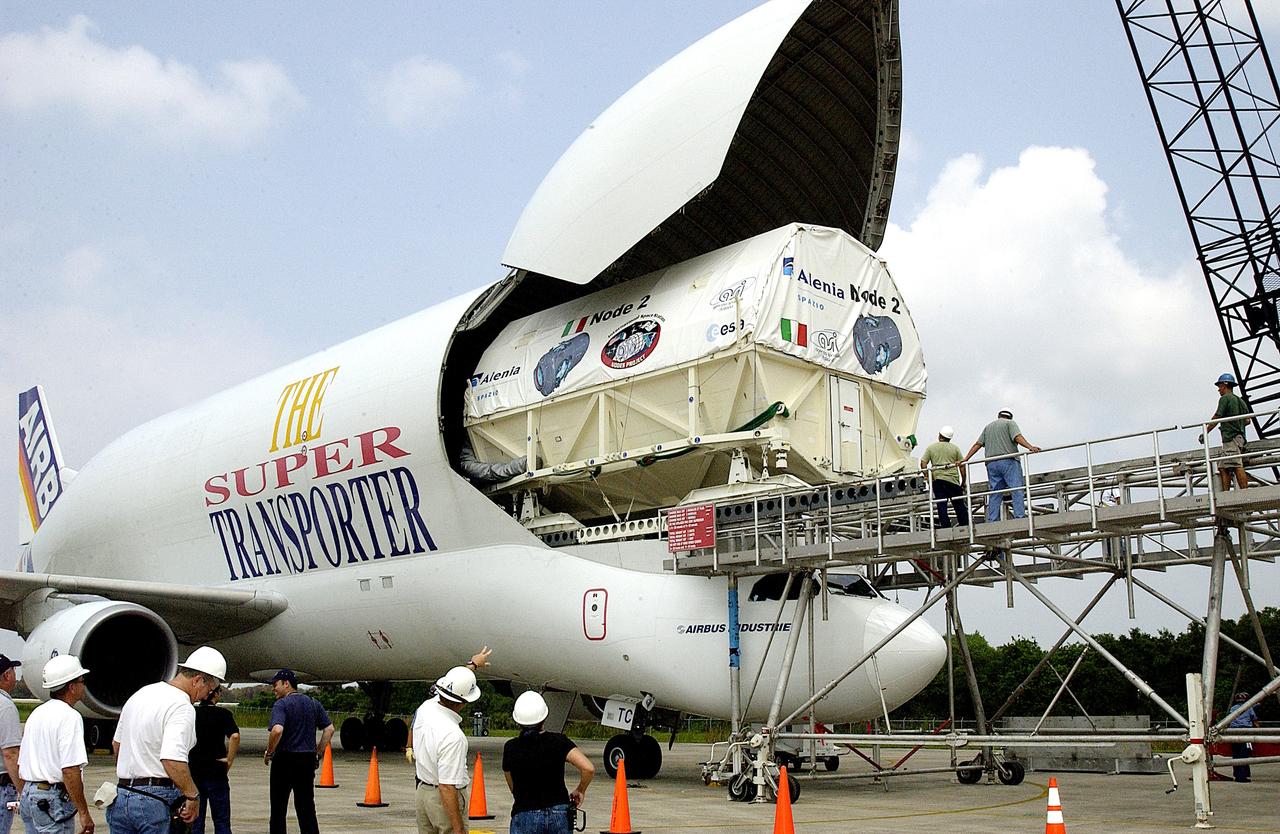
KENNEDY SPACE CENTER, FLA. - At the Shuttle Landing Facility, the nose of the Beluga aircraft is open to offload the Italian-built module, U.S. Node 2, for the International Space Station.  The second of three Station connecting modules, Node 2 attaches to the end of the U.S. Lab and provides attach locations for the Japanese laboratory, European laboratory, the Centrifuge Accommodation Module and, later, Multipurpose Logistics Modules. It will provide the primary docking location for the Shuttle when a pressurized mating adapter is attached to Node 2.  Installation of the module will complete  the U.S. Core of the ISS.  Node 2 is the designated payload for mission STS-120.  No orbiter or launch date has been determined yet.
KENNEDY SPACE CENTER, FLA. - At the Shuttle Landing Facility, the nose of the Beluga aircraft is open to offload the Italian-built module, U.S. Node 2, for the International Space Station. The second of three Station connecting modules, Node 2 attaches to the end of the U.S. Lab and provides attach locations for the Japanese laboratory, European laboratory, the Centrifuge Accommodation Module and, later, Multipurpose Logistics Modules. It will provide the primary docking location for the Shuttle when a pressurized mating adapter is attached to Node 2. Installation of the module will complete the U.S. Core of the ISS. Node 2 is the designated payload for mission STS-120. No orbiter or launch date has been determined yet.
KENNEDY SPACE CENTER, FLA. - The U.S. Node 2 is unveiled after its arrival in the Space Station Processing Facility.  The second of three Station connecting modules, the Italian-built Node 2 attaches to the end of the U.S. Lab and provides attach locations for the Japanese laboratory, European laboratory, the Centrifuge Accommodation Module and, later, Multipurpose Logistics Modules. It will provide the primary docking location for the Shuttle when a pressurized mating adapter is attached to Node 2.  Installation of the module will complete  the U.S. Core of the ISS.  Node 2 is the designated payload for mission STS-120.  No orbiter or launch date has been determined yet.
KENNEDY SPACE CENTER, FLA. - The U.S. Node 2 is unveiled after its arrival in the Space Station Processing Facility. The second of three Station connecting modules, the Italian-built Node 2 attaches to the end of the U.S. Lab and provides attach locations for the Japanese laboratory, European laboratory, the Centrifuge Accommodation Module and, later, Multipurpose Logistics Modules. It will provide the primary docking location for the Shuttle when a pressurized mating adapter is attached to Node 2. Installation of the module will complete the U.S. Core of the ISS. Node 2 is the designated payload for mission STS-120. No orbiter or launch date has been determined yet.
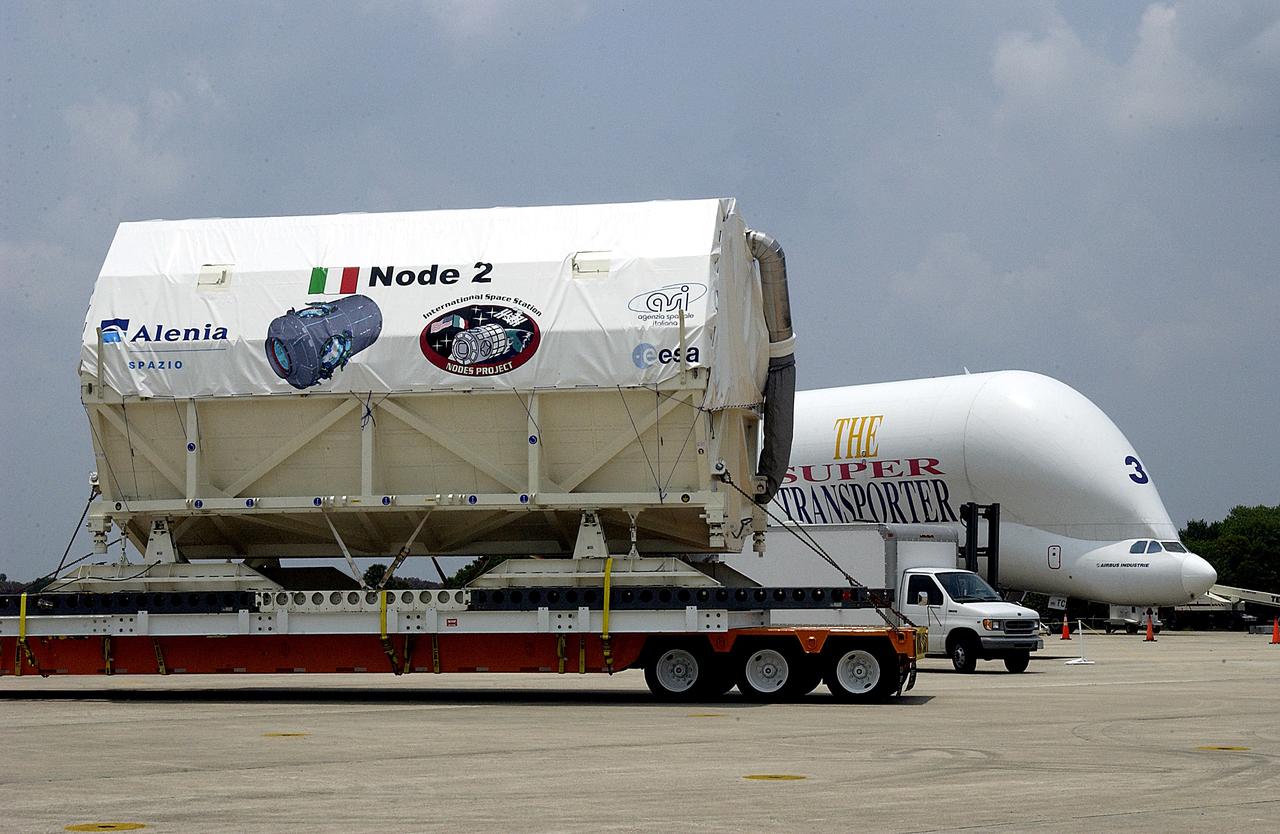
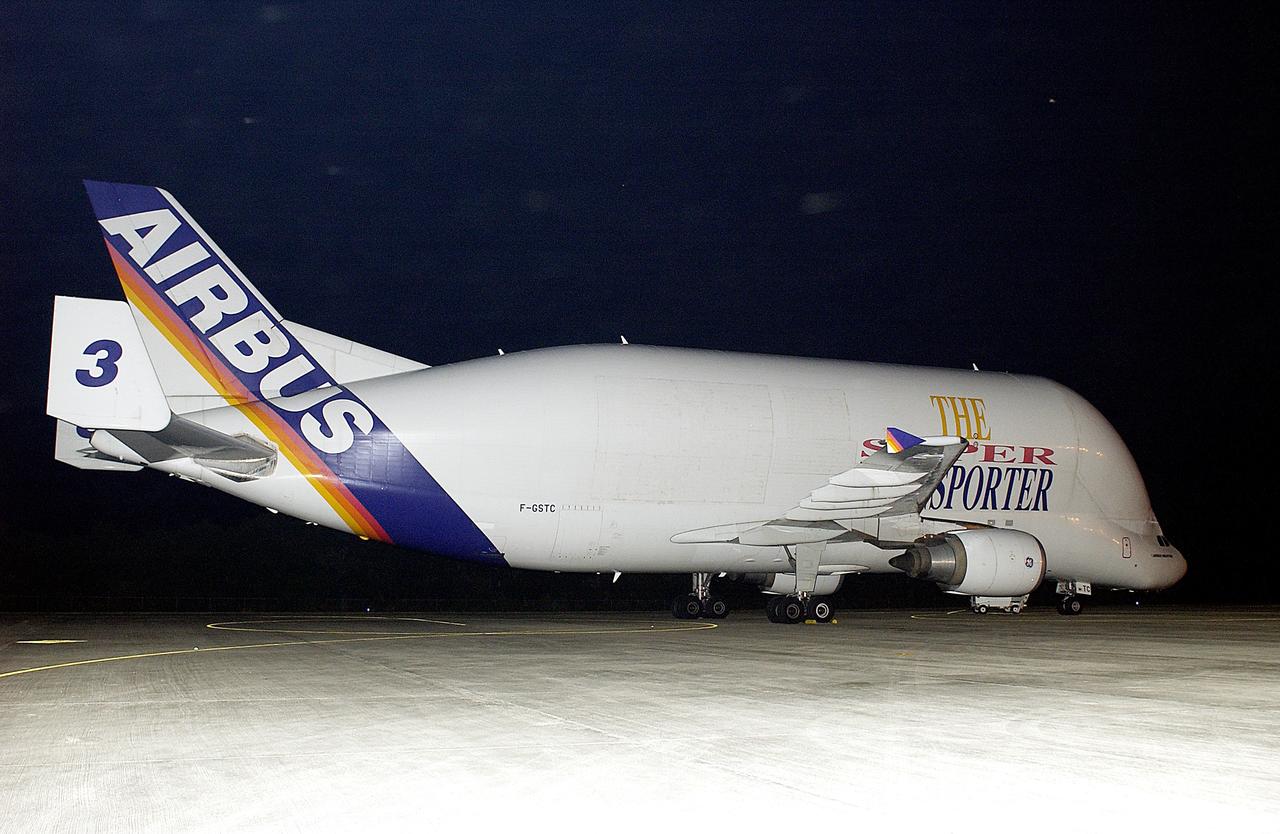
KKENNEDY SPACE CENTER, FLA. -  A Beluga aircraft arrives at the Shuttle Landing Facility with its cargo of the Italian-built module, U.S. Node 2, for the International Space Station.  The second of three Station connecting modules, Node 2 attaches to the end of the U.S. Lab and provides attach locations for the Japanese laboratory, European laboratory, the Centrifuge Accommodation Module and, later, Multipurpose Logistics Modules. It will provide the primary docking location for the Shuttle when a pressurized mating adapter is attached to Node 2.  Installation of the module will complete  the U.S. Core of the ISS.  Node 2 is the designated payload for mission STS-120.  No orbiter or launch date has been determined yet.
KKENNEDY SPACE CENTER, FLA. - A Beluga aircraft arrives at the Shuttle Landing Facility with its cargo of the Italian-built module, U.S. Node 2, for the International Space Station. The second of three Station connecting modules, Node 2 attaches to the end of the U.S. Lab and provides attach locations for the Japanese laboratory, European laboratory, the Centrifuge Accommodation Module and, later, Multipurpose Logistics Modules. It will provide the primary docking location for the Shuttle when a pressurized mating adapter is attached to Node 2. Installation of the module will complete the U.S. Core of the ISS. Node 2 is the designated payload for mission STS-120. No orbiter or launch date has been determined yet.
KENNEDY SPACE CENTER, FLA. -  The Italian-built module, U.S. Node 2, is moved into the Space Station Processing Facility. The second of three connecting modules on the International Space Station, Node 2 attaches to the end of the U.S. Lab and provides attach locations for the Japanese laboratory, European laboratory, the Centrifuge Accommodation Module and, later, Multipurpose Logistics Modules. It will provide the primary docking location for the Shuttle when a pressurized mating adapter is attached to Node 2.  Installation of the module will complete  the U.S. Core of the ISS.  Node 2 is the designated payload for mission STS-120.  No orbiter or launch date has been determined yet.
KENNEDY SPACE CENTER, FLA. - The Italian-built module, U.S. Node 2, is moved into the Space Station Processing Facility. The second of three connecting modules on the International Space Station, Node 2 attaches to the end of the U.S. Lab and provides attach locations for the Japanese laboratory, European laboratory, the Centrifuge Accommodation Module and, later, Multipurpose Logistics Modules. It will provide the primary docking location for the Shuttle when a pressurized mating adapter is attached to Node 2. Installation of the module will complete the U.S. Core of the ISS. Node 2 is the designated payload for mission STS-120. No orbiter or launch date has been determined yet.
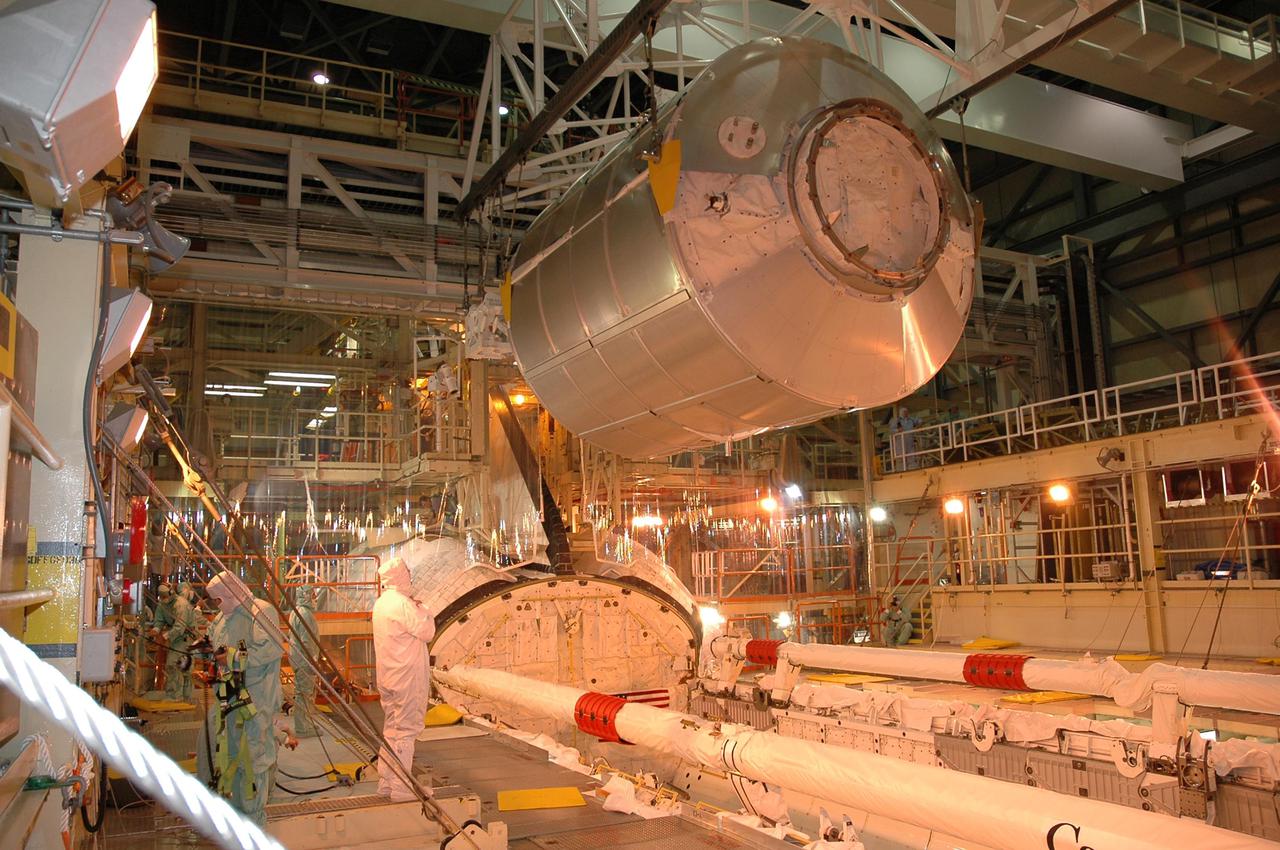
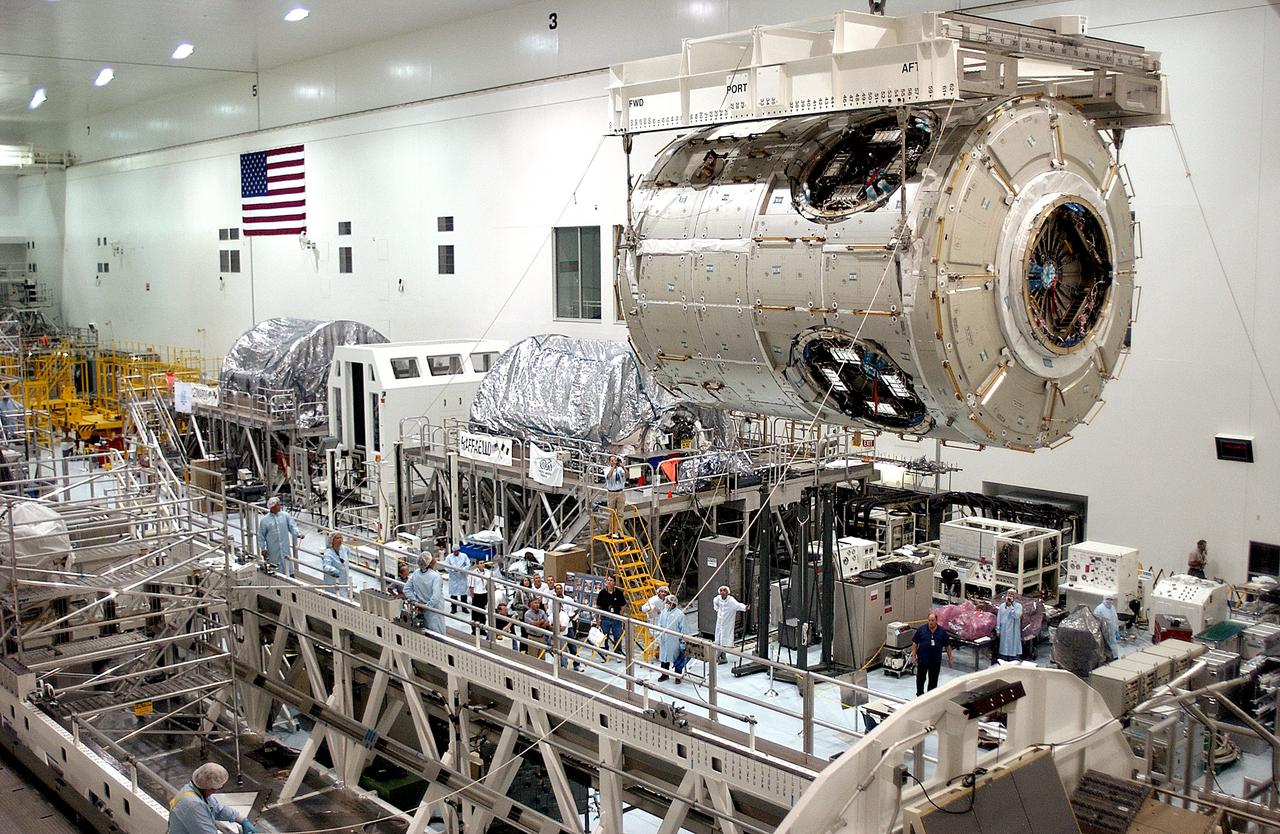
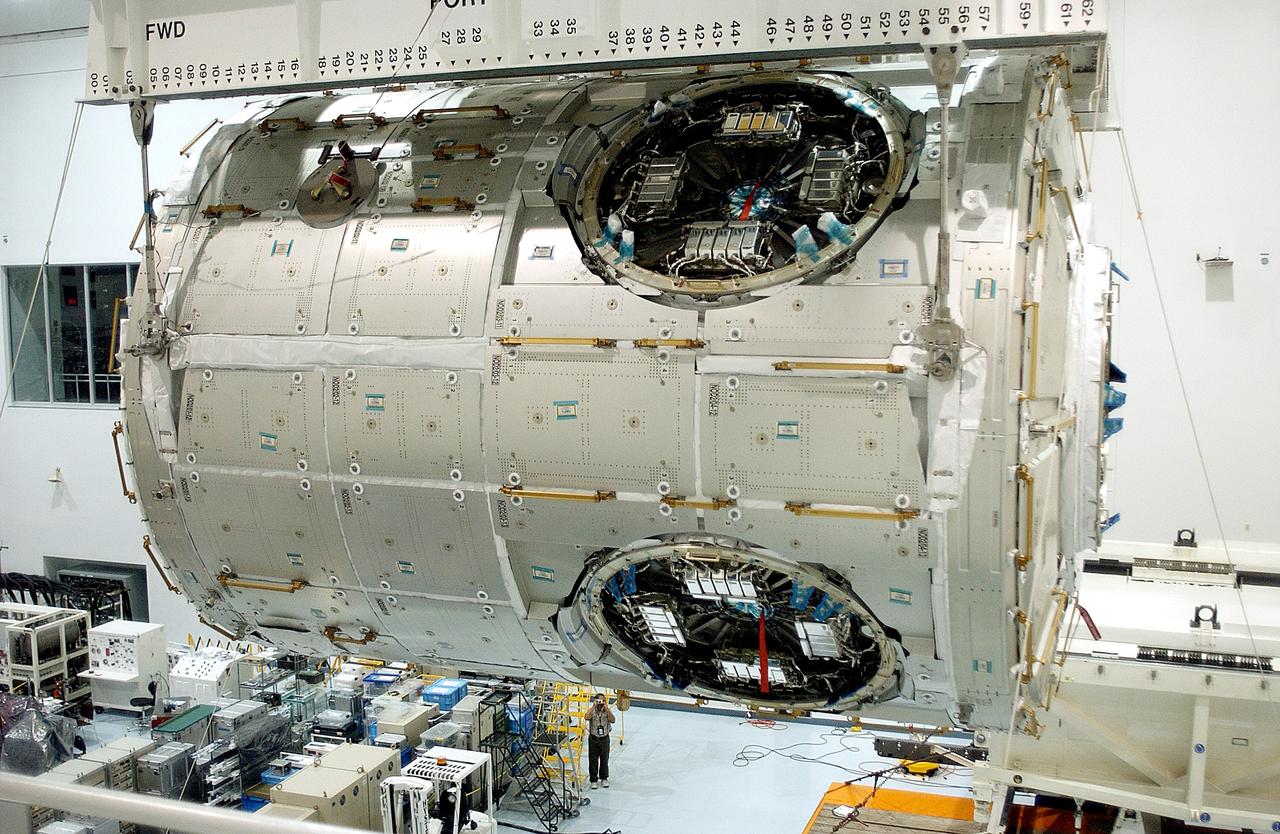
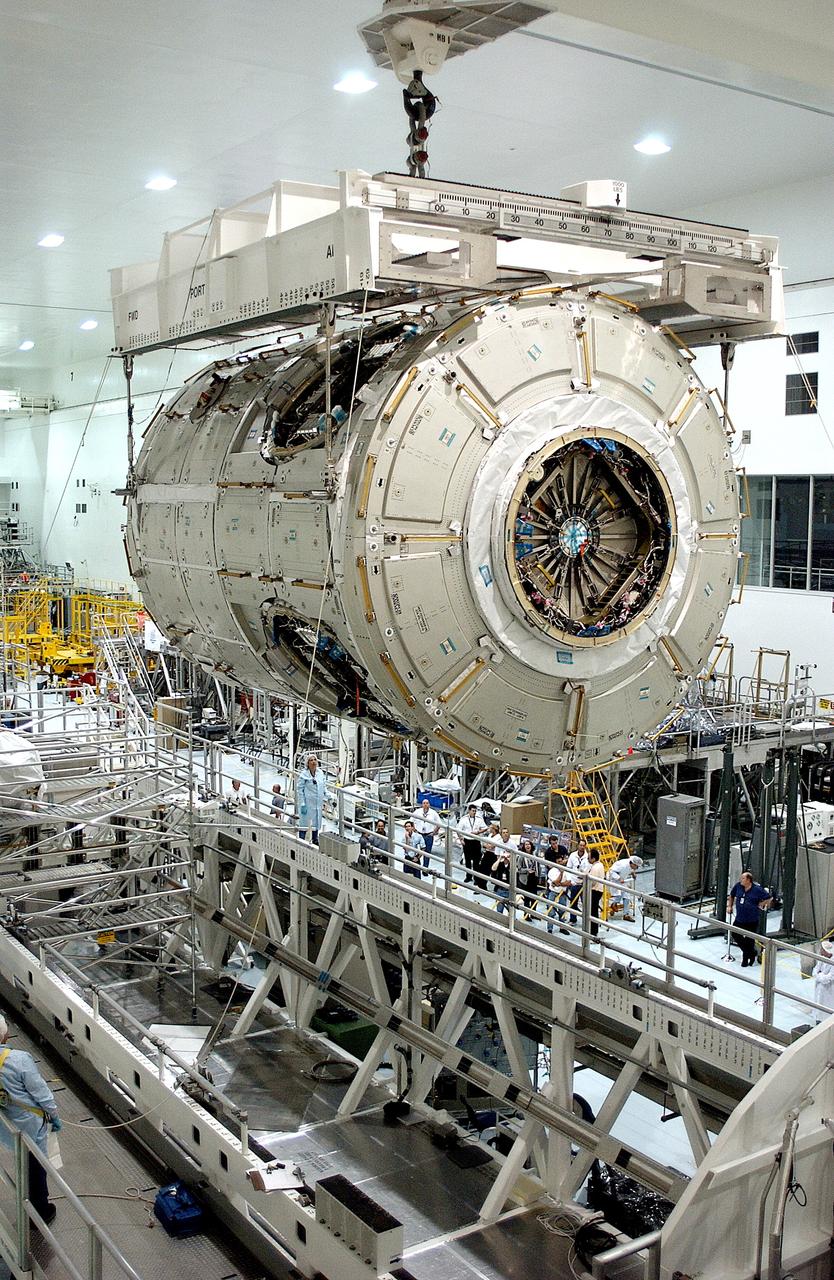
KENNEDY SPACE CENTER, FLA. - An overhead crane in the Space Station Processing Facility carries the U.S. Node 2 across the floor to a workstand.  The second of three connecting modules on the International Space Station, the Italian-built Node 2 attaches to the end of the U.S. Lab and provides attach locations for the Japanese laboratory, European laboratory, the Centrifuge Accommodation Module and, later, Multipurpose Logistics Modules. It will provide the primary docking location for the Shuttle when a pressurized mating adapter is attached to Node 2.  Installation of the module will complete  the U.S. Core of the ISS.  Node 2 is the designated payload for mission STS-120.  No orbiter or launch date has been determined yet.
KENNEDY SPACE CENTER, FLA. - An overhead crane in the Space Station Processing Facility carries the U.S. Node 2 across the floor to a workstand. The second of three connecting modules on the International Space Station, the Italian-built Node 2 attaches to the end of the U.S. Lab and provides attach locations for the Japanese laboratory, European laboratory, the Centrifuge Accommodation Module and, later, Multipurpose Logistics Modules. It will provide the primary docking location for the Shuttle when a pressurized mating adapter is attached to Node 2. Installation of the module will complete the U.S. Core of the ISS. Node 2 is the designated payload for mission STS-120. No orbiter or launch date has been determined yet.
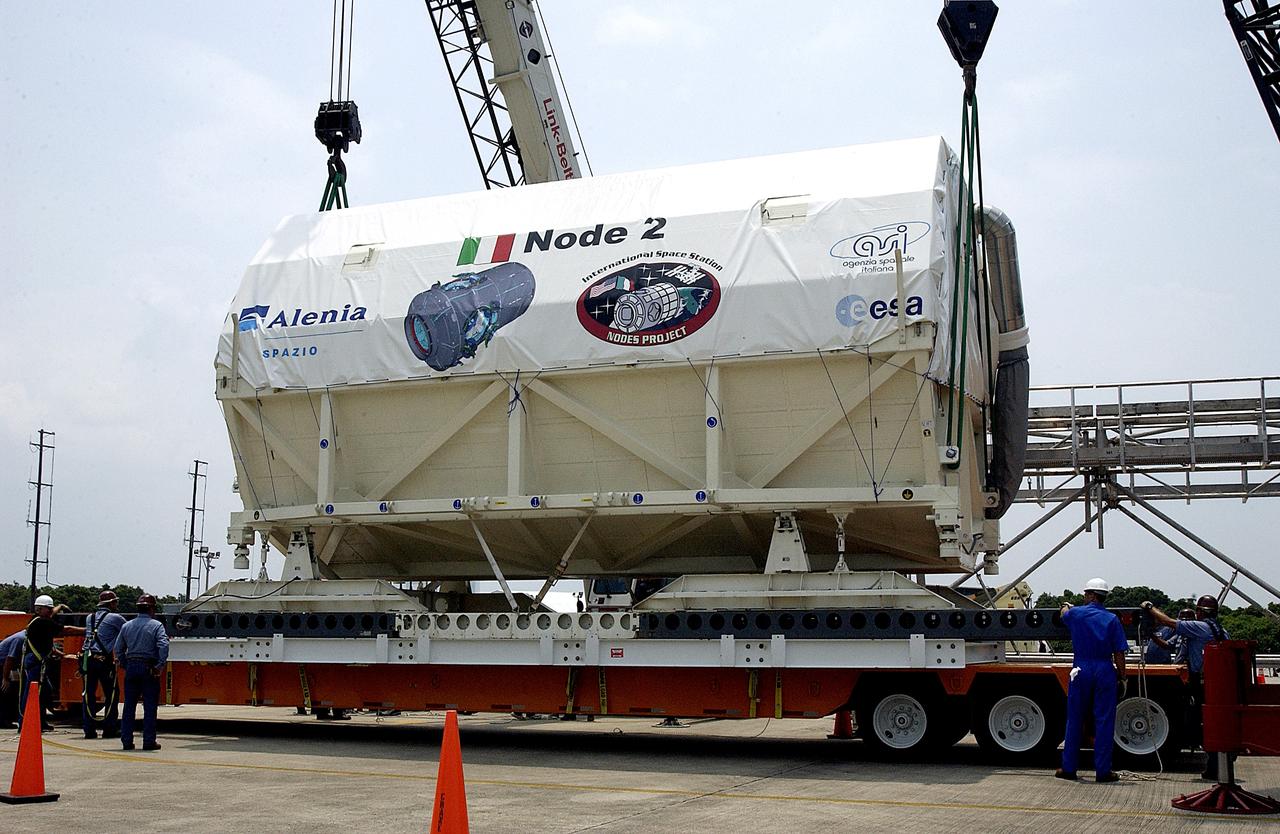
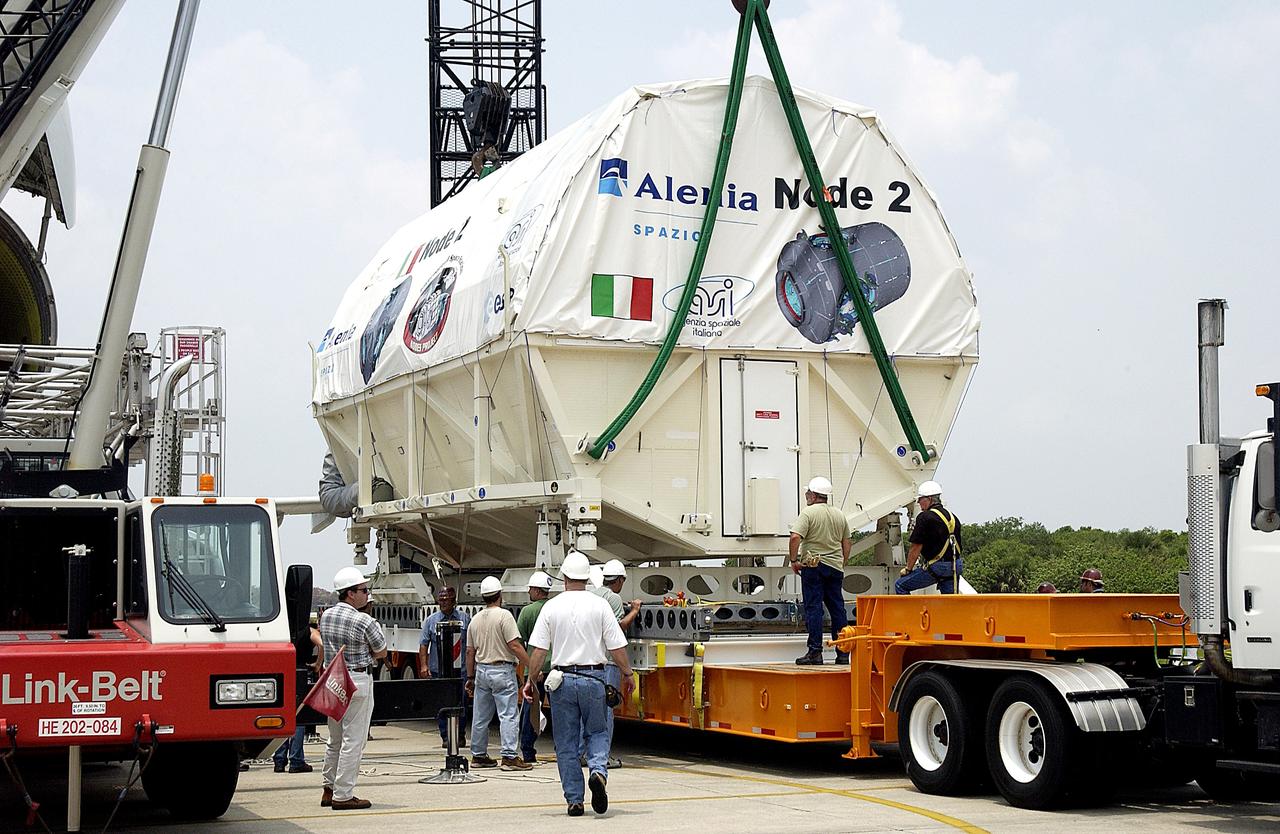
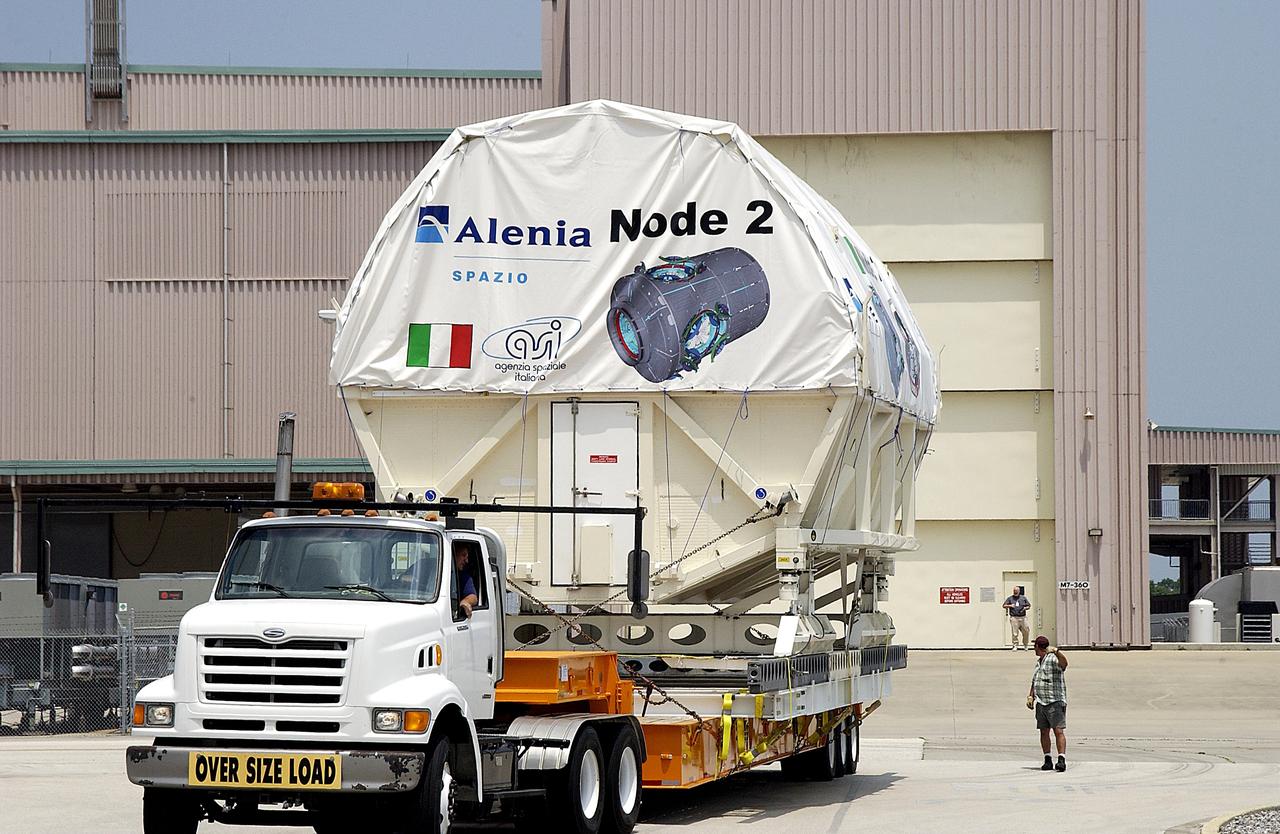
KENNEDY SPACE CENTER, FLA. -  The Italian-built module, U.S. Node 2, is lowered onto a transporter after its arrival at the Shuttle Landing Facility.  It will be taken to the Space Station Processing Facility.  The second of three connecting modules on the International Space Station, Node 2 attaches to the end of the U.S. Lab and provides attach locations for the Japanese laboratory, European laboratory, the Centrifuge Accommodation Module and, later, Multipurpose Logistics Modules. It will provide the primary docking location for the Shuttle when a pressurized mating adapter is attached to Node 2.  Installation of the module will complete  the U.S. Core of the ISS.  Node 2 is the designated payload for mission STS-120.  No orbiter or launch date has been determined yet.
KENNEDY SPACE CENTER, FLA. - The Italian-built module, U.S. Node 2, is lowered onto a transporter after its arrival at the Shuttle Landing Facility. It will be taken to the Space Station Processing Facility. The second of three connecting modules on the International Space Station, Node 2 attaches to the end of the U.S. Lab and provides attach locations for the Japanese laboratory, European laboratory, the Centrifuge Accommodation Module and, later, Multipurpose Logistics Modules. It will provide the primary docking location for the Shuttle when a pressurized mating adapter is attached to Node 2. Installation of the module will complete the U.S. Core of the ISS. Node 2 is the designated payload for mission STS-120. No orbiter or launch date has been determined yet.
KENNEDY SPACE CENTER, FLA. - The U.S. Node 2 is moved toward a workstand in the Space Station Processing Facility.  The second of three connecting modules on the International Space Station, the Italian-built Node 2 attaches to the end of the U.S. Lab and provides attach locations for the Japanese laboratory, European laboratory, the Centrifuge Accommodation Module and, later, Multipurpose Logistics Modules. It will provide the primary docking location for the Shuttle when a pressurized mating adapter is attached to Node 2.  Installation of the module will complete  the U.S. Core of the ISS.  Node 2 is the designated payload for mission STS-120.  No orbiter or launch date has been determined yet.
KENNEDY SPACE CENTER, FLA. - The U.S. Node 2 is moved toward a workstand in the Space Station Processing Facility. The second of three connecting modules on the International Space Station, the Italian-built Node 2 attaches to the end of the U.S. Lab and provides attach locations for the Japanese laboratory, European laboratory, the Centrifuge Accommodation Module and, later, Multipurpose Logistics Modules. It will provide the primary docking location for the Shuttle when a pressurized mating adapter is attached to Node 2. Installation of the module will complete the U.S. Core of the ISS. Node 2 is the designated payload for mission STS-120. No orbiter or launch date has been determined yet.
KENNEDY SPACE CENTER, FLA. - The Italian-built module, U.S. Node 2, for the International Space Station is offloaded from a Beluga at the Shuttle Landing Facility. The second of three Station connecting modules, Node 2 attaches to the end of the U.S. Lab and provides attach locations for the Japanese laboratory, European laboratory, the Centrifuge Accommodation Module and, later, Multipurpose Logistics Modules. It will provide the primary docking location for the Shuttle when a pressurized mating adapter is attached to Node 2.  Installation of the module will complete  the U.S. Core of the ISS.  Node 2 is the designated payload for mission STS-120.  No orbiter or launch date has been determined yet.
KENNEDY SPACE CENTER, FLA. - The Italian-built module, U.S. Node 2, for the International Space Station is offloaded from a Beluga at the Shuttle Landing Facility. The second of three Station connecting modules, Node 2 attaches to the end of the U.S. Lab and provides attach locations for the Japanese laboratory, European laboratory, the Centrifuge Accommodation Module and, later, Multipurpose Logistics Modules. It will provide the primary docking location for the Shuttle when a pressurized mating adapter is attached to Node 2. Installation of the module will complete the U.S. Core of the ISS. Node 2 is the designated payload for mission STS-120. No orbiter or launch date has been determined yet.
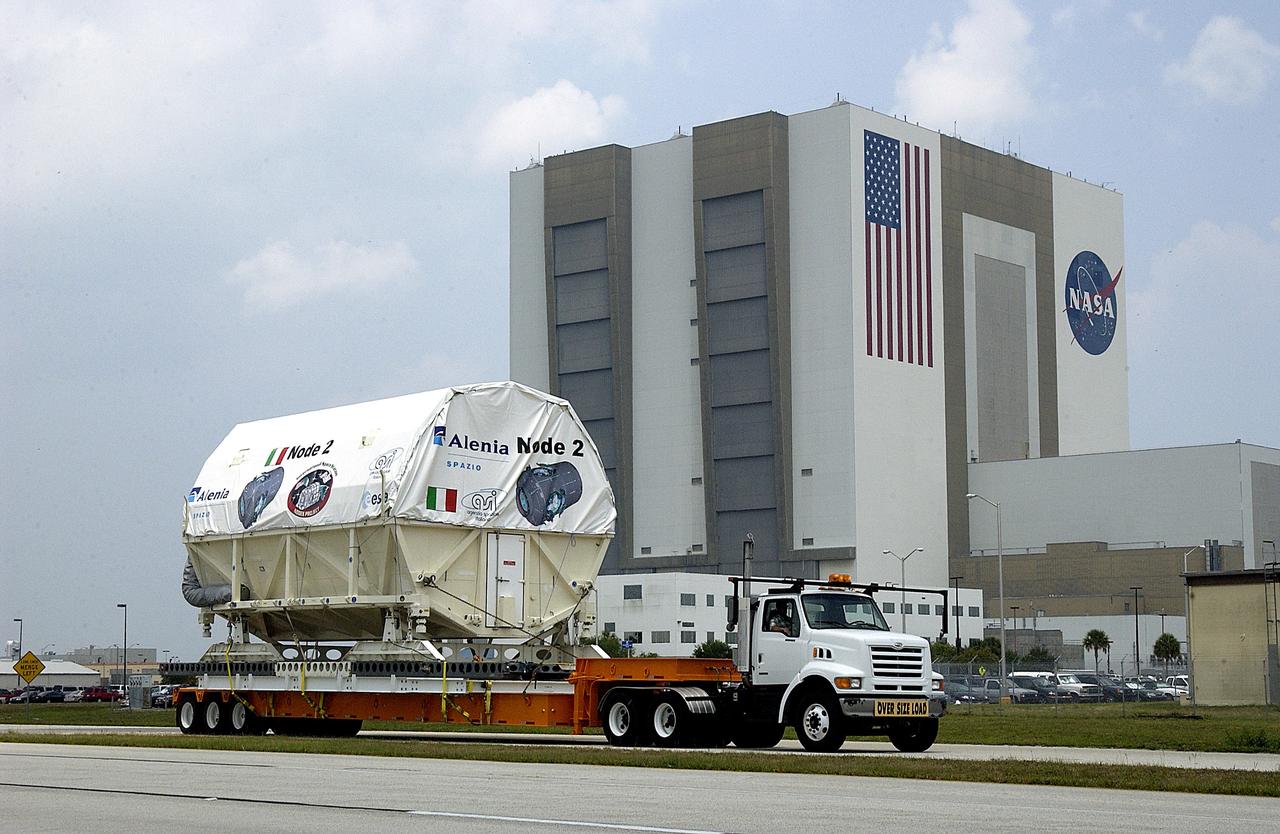
KENNEDY SPACE CENTER, FLA. -  The Italian-built module, U.S. Node 2, moves past the Vehicle Assembly Building as it is transferred to the Space Station Processing Facility. The second of three connecting modules on the International Space Station, Node 2 attaches to the end of the U.S. Lab and provides attach locations for the Japanese laboratory, European laboratory, the Centrifuge Accommodation Module and, later, Multipurpose Logistics Modules. It will provide the primary docking location for the Shuttle when a pressurized mating adapter is attached to Node 2.  Installation of the module will complete  the U.S. Core of the ISS.  Node 2 is the designated payload for mission STS-120.  No orbiter or launch date has been determined yet.
KENNEDY SPACE CENTER, FLA. - The Italian-built module, U.S. Node 2, moves past the Vehicle Assembly Building as it is transferred to the Space Station Processing Facility. The second of three connecting modules on the International Space Station, Node 2 attaches to the end of the U.S. Lab and provides attach locations for the Japanese laboratory, European laboratory, the Centrifuge Accommodation Module and, later, Multipurpose Logistics Modules. It will provide the primary docking location for the Shuttle when a pressurized mating adapter is attached to Node 2. Installation of the module will complete the U.S. Core of the ISS. Node 2 is the designated payload for mission STS-120. No orbiter or launch date has been determined yet.
KENNEDY SPACE CENTER, FLA. - An overhead crane in the Space Station Processing Facility is attached to the U.S. Node 2 to lift it out of its shipping container.  The node will be moved to a workstand.  The second of three connecting modules on the International Space Station, the Italian-built Node 2 attaches to the end of the U.S. Lab and provides attach locations for the Japanese laboratory, European laboratory, the Centrifuge Accommodation Module and, later, Multipurpose Logistics Modules. It will provide the primary docking location for the Shuttle when a pressurized mating adapter is attached to Node 2.  Installation of the module will complete  the U.S. Core of the ISS.  Node 2 is the designated payload for mission STS-120.  No orbiter or launch date has been determined yet.
KENNEDY SPACE CENTER, FLA. - An overhead crane in the Space Station Processing Facility is attached to the U.S. Node 2 to lift it out of its shipping container. The node will be moved to a workstand. The second of three connecting modules on the International Space Station, the Italian-built Node 2 attaches to the end of the U.S. Lab and provides attach locations for the Japanese laboratory, European laboratory, the Centrifuge Accommodation Module and, later, Multipurpose Logistics Modules. It will provide the primary docking location for the Shuttle when a pressurized mating adapter is attached to Node 2. Installation of the module will complete the U.S. Core of the ISS. Node 2 is the designated payload for mission STS-120. No orbiter or launch date has been determined yet.
KENNEDY SPACE CENTER, FLA. - The Italian-built module, U.S. Node 2, for the International Space Station is offloaded from a Beluga aircraft at the Shuttle Landing Facility. The second of three Station connecting modules, Node 2 attaches to the end of the U.S. Lab and provides attach locations for the Japanese laboratory, European laboratory, the Centrifuge Accommodation Module and, later, Multipurpose Logistics Modules. It will provide the primary docking location for the Shuttle when a pressurized mating adapter is attached to Node 2.  Installation of the module will complete  the U.S. Core of the ISS.  Node 2 is the designated payload for mission STS-120.  No orbiter or launch date has been determined yet.
KENNEDY SPACE CENTER, FLA. - The Italian-built module, U.S. Node 2, for the International Space Station is offloaded from a Beluga aircraft at the Shuttle Landing Facility. The second of three Station connecting modules, Node 2 attaches to the end of the U.S. Lab and provides attach locations for the Japanese laboratory, European laboratory, the Centrifuge Accommodation Module and, later, Multipurpose Logistics Modules. It will provide the primary docking location for the Shuttle when a pressurized mating adapter is attached to Node 2. Installation of the module will complete the U.S. Core of the ISS. Node 2 is the designated payload for mission STS-120. No orbiter or launch date has been determined yet.
KENNEDY SPACE CENTER, FLA. -  Workers in the Space Station Processing Facility attempt to open the hatch on the Italian-built Node 2, a future element of the International Space Station.  Node 2 arrived at KSC June 1.  The second of three Station connecting modules, the module  attaches to the end of the U.S. Lab and provides attach locations for the Japanese laboratory, European laboratory, the Centrifuge Accommodation Module and, later, Multipurpose Logistics Modules. It will provide the primary docking location for the Shuttle when a pressurized mating adapter is attached to Node 2.  Installation of the module will complete  the U.S. Core of the ISS.  Node 2 is the designated payload for mission STS-120.  No orbiter or launch date has been determined yet.
KENNEDY SPACE CENTER, FLA. - Workers in the Space Station Processing Facility attempt to open the hatch on the Italian-built Node 2, a future element of the International Space Station. Node 2 arrived at KSC June 1. The second of three Station connecting modules, the module attaches to the end of the U.S. Lab and provides attach locations for the Japanese laboratory, European laboratory, the Centrifuge Accommodation Module and, later, Multipurpose Logistics Modules. It will provide the primary docking location for the Shuttle when a pressurized mating adapter is attached to Node 2. Installation of the module will complete the U.S. Core of the ISS. Node 2 is the designated payload for mission STS-120. No orbiter or launch date has been determined yet.
KENNEDY SPACE CENTER, FLA. - The Italian-built module, U.S. Node 2, for the International Space Station is offloaded from a Beluga aircraft at the Shuttle Landing Facility. The second of three Station connecting modules, Node 2 attaches to the end of the U.S. Lab and provides attach locations for the Japanese laboratory, European laboratory, the Centrifuge Accommodation Module and, later, Multipurpose Logistics Modules. It will provide the primary docking location for the Shuttle when a pressurized mating adapter is attached to Node 2.  Installation of the module will complete  the U.S. Core of the ISS.  Node 2 is the designated payload for mission STS-120.  No orbiter or launch date has been determined yet.
KENNEDY SPACE CENTER, FLA. - The Italian-built module, U.S. Node 2, for the International Space Station is offloaded from a Beluga aircraft at the Shuttle Landing Facility. The second of three Station connecting modules, Node 2 attaches to the end of the U.S. Lab and provides attach locations for the Japanese laboratory, European laboratory, the Centrifuge Accommodation Module and, later, Multipurpose Logistics Modules. It will provide the primary docking location for the Shuttle when a pressurized mating adapter is attached to Node 2. Installation of the module will complete the U.S. Core of the ISS. Node 2 is the designated payload for mission STS-120. No orbiter or launch date has been determined yet.
KENNEDY SPACE CENTER, FLA. -   STS-82 Mission Specialist Steven A Hawley stands beside part of Discovery's Remote Manipulator System (RMS) arm, at right, which he will operate for the capture, berthing and redeployment of the Hubble Space Telescope (HST).  The robotic arm also will be used as work platform for the four spacewalkers.  Hawley is the prime RMS operator on the flight, which will be the second HST servicing mission.  He and the other six members of the crew are making a final inspection of the payload at Launch Pad 39A before launch. STS-82 is scheduled for liftoff on Feb. 11 during a 65-minute launch window that opens at 3:56 a.m. EST.
KENNEDY SPACE CENTER, FLA. - STS-82 Mission Specialist Steven A Hawley stands beside part of Discovery's Remote Manipulator System (RMS) arm, at right, which he will operate for the capture, berthing and redeployment of the Hubble Space Telescope (HST). The robotic arm also will be used as work platform for the four spacewalkers. Hawley is the prime RMS operator on the flight, which will be the second HST servicing mission. He and the other six members of the crew are making a final inspection of the payload at Launch Pad 39A before launch. STS-82 is scheduled for liftoff on Feb. 11 during a 65-minute launch window that opens at 3:56 a.m. EST.
KENNEDY SPACE CENTER, FLA. -  STS-82 Payload Commander Mark C. Lee prepares to step down from the T-38 jet he flew from an air field serving the astronauts' home base at Johnson Space Center, Houston, Texas, to KSC's Shuttle Landing Facility.  Lee and the other six members of the STS-82 crew will spend the last few days before launch at KSC.  STS-82 is scheduled for liftoff on Feb. 11 during a 65-minute launch window that opens at 3:56 a.m. EST.  The 10-day flight aboard the Space Shuttle Discovery will be the second Hubble Space Telescope (HST) servicing mission.
KENNEDY SPACE CENTER, FLA. - STS-82 Payload Commander Mark C. Lee prepares to step down from the T-38 jet he flew from an air field serving the astronauts' home base at Johnson Space Center, Houston, Texas, to KSC's Shuttle Landing Facility. Lee and the other six members of the STS-82 crew will spend the last few days before launch at KSC. STS-82 is scheduled for liftoff on Feb. 11 during a 65-minute launch window that opens at 3:56 a.m. EST. The 10-day flight aboard the Space Shuttle Discovery will be the second Hubble Space Telescope (HST) servicing mission.
KENNEDY SPACE CENTER, FLA. - An overhead crane in the Space Station Processing Facility lifts the U.S. Node 2 out of its shipping container.  The node will be moved to a workstand.  The second of three connecting modules on the International Space Station, the Italian-built Node 2 attaches to the end of the U.S. Lab and provides attach locations for the Japanese laboratory, European laboratory, the Centrifuge Accommodation Module and, later, Multipurpose Logistics Modules. It will provide the primary docking location for the Shuttle when a pressurized mating adapter is attached to Node 2.  Installation of the module will complete  the U.S. Core of the ISS.  Node 2 is the designated payload for mission STS-120.  No orbiter or launch date has been determined yet.
KENNEDY SPACE CENTER, FLA. - An overhead crane in the Space Station Processing Facility lifts the U.S. Node 2 out of its shipping container. The node will be moved to a workstand. The second of three connecting modules on the International Space Station, the Italian-built Node 2 attaches to the end of the U.S. Lab and provides attach locations for the Japanese laboratory, European laboratory, the Centrifuge Accommodation Module and, later, Multipurpose Logistics Modules. It will provide the primary docking location for the Shuttle when a pressurized mating adapter is attached to Node 2. Installation of the module will complete the U.S. Core of the ISS. Node 2 is the designated payload for mission STS-120. No orbiter or launch date has been determined yet.
KENNEDY SPACE CENTER, FLA. - The Italian-built module, U.S. Node 2, for the International Space Station is offloaded from a Beluga at the Shuttle Landing Facility. The second of three Station connecting modules, Node 2 attaches to the end of the U.S. Lab and provides attach locations for the Japanese laboratory, European laboratory, the Centrifuge Accommodation Module and, later, Multipurpose Logistics Modules. It will provide the primary docking location for the Shuttle when a pressurized mating adapter is attached to Node 2.  Installation of the module will complete  the U.S. Core of the ISS.  Node 2 is the designated payload for mission STS-120.  No orbiter or launch date has been determined yet.
KENNEDY SPACE CENTER, FLA. - The Italian-built module, U.S. Node 2, for the International Space Station is offloaded from a Beluga at the Shuttle Landing Facility. The second of three Station connecting modules, Node 2 attaches to the end of the U.S. Lab and provides attach locations for the Japanese laboratory, European laboratory, the Centrifuge Accommodation Module and, later, Multipurpose Logistics Modules. It will provide the primary docking location for the Shuttle when a pressurized mating adapter is attached to Node 2. Installation of the module will complete the U.S. Core of the ISS. Node 2 is the designated payload for mission STS-120. No orbiter or launch date has been determined yet.