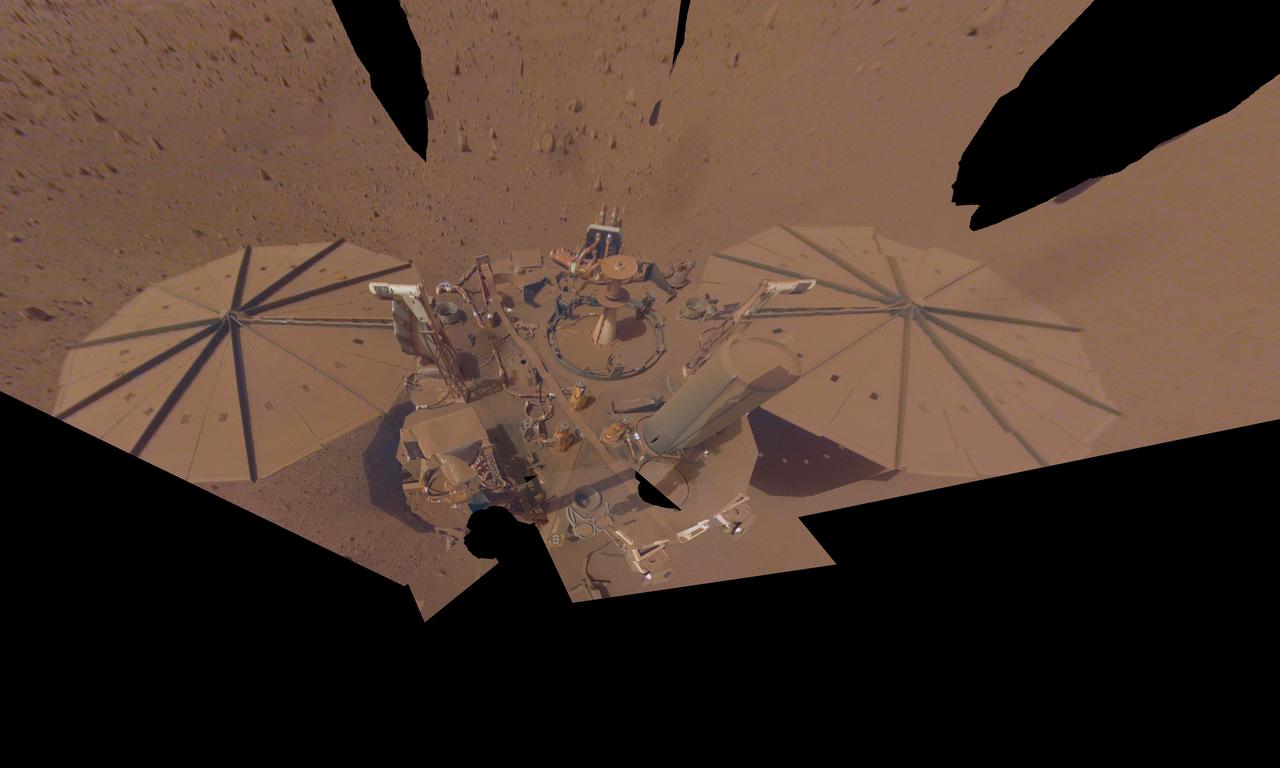
NASA's InSight Mars lander took this final selfie on April 24, 2022, the 1,211th Martian day, or sol, of the mission. The lander is covered with far more dust than it was in its first selfie, taken in December 2018, not long after landing – or in its second selfie, composed of images taken in March and April 2019. The arm needs to move several times in order to capture a full selfie. Because InSight's dusty solar panels are producing less power, the team will soon put the lander's robotic arm in its resting position (called the "retirement pose") for the last time in May of 2022. Animation available at https://photojournal.jpl.nasa.gov/catalog/PIA25287
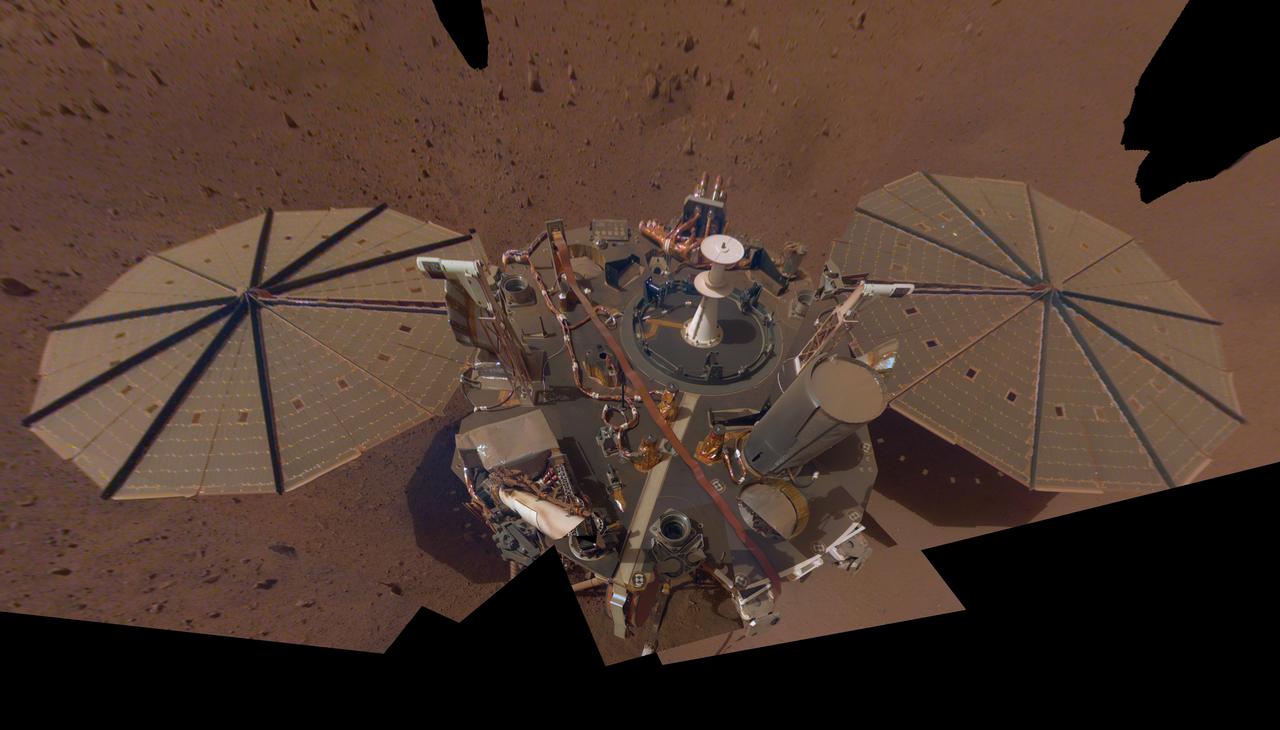
This is NASA InSight's second full selfie on Mars. Since taking its first selfie, the lander has removed its heat probe and seismometer from its deck, placing them on the Martian surface; a thin coating of dust now covers the spacecraft as well. This selfie is a mosaic made up of 14 images taken on March 15 and April 11 - the 106th and 133rd Martian days, or sols, of the mission - by InSight's Instrument Deployment Camera, located on its robotic arm. InSight's first selfie showed its instruments still on the deck. Now that they're removed, the viewer can see the spacecraft's air pressure sensor (white object in center), the tether box for its seismometer and the tether for its heat probe running across the deck. Also visible is its robotic arm and grapple. https://photojournal.jpl.nasa.gov/catalog/PIA23203
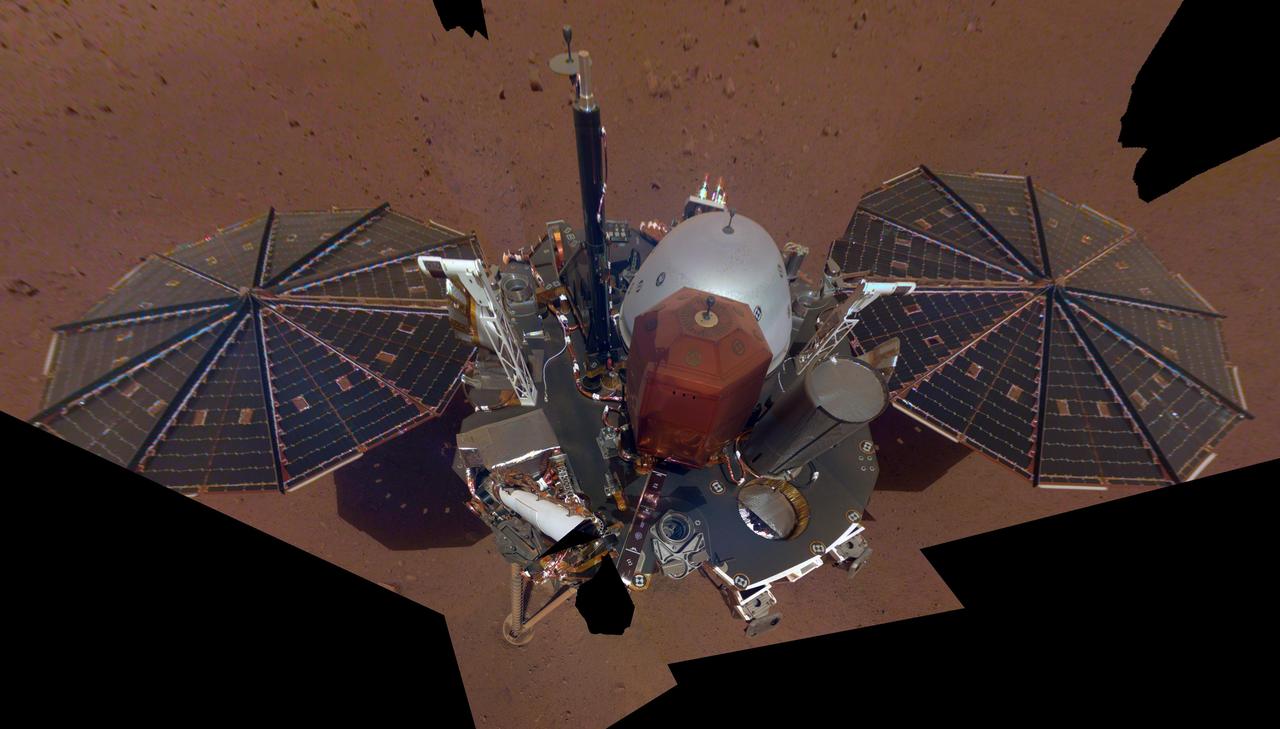
This is NASA InSight's first full selfie on Mars. It displays the lander's solar panels and deck. On top of the deck are its science instruments, weather sensor booms and UHF antenna. The selfie was taken on Dec. 6, 2018 (Sol 10). The selfie is made up of 11 images which were taken by its Instrument Deployment Camera, located on the elbow of its robotic arm. Those images are then stitched together into a mosaic. https://photojournal.jpl.nasa.gov/catalog/PIA22876
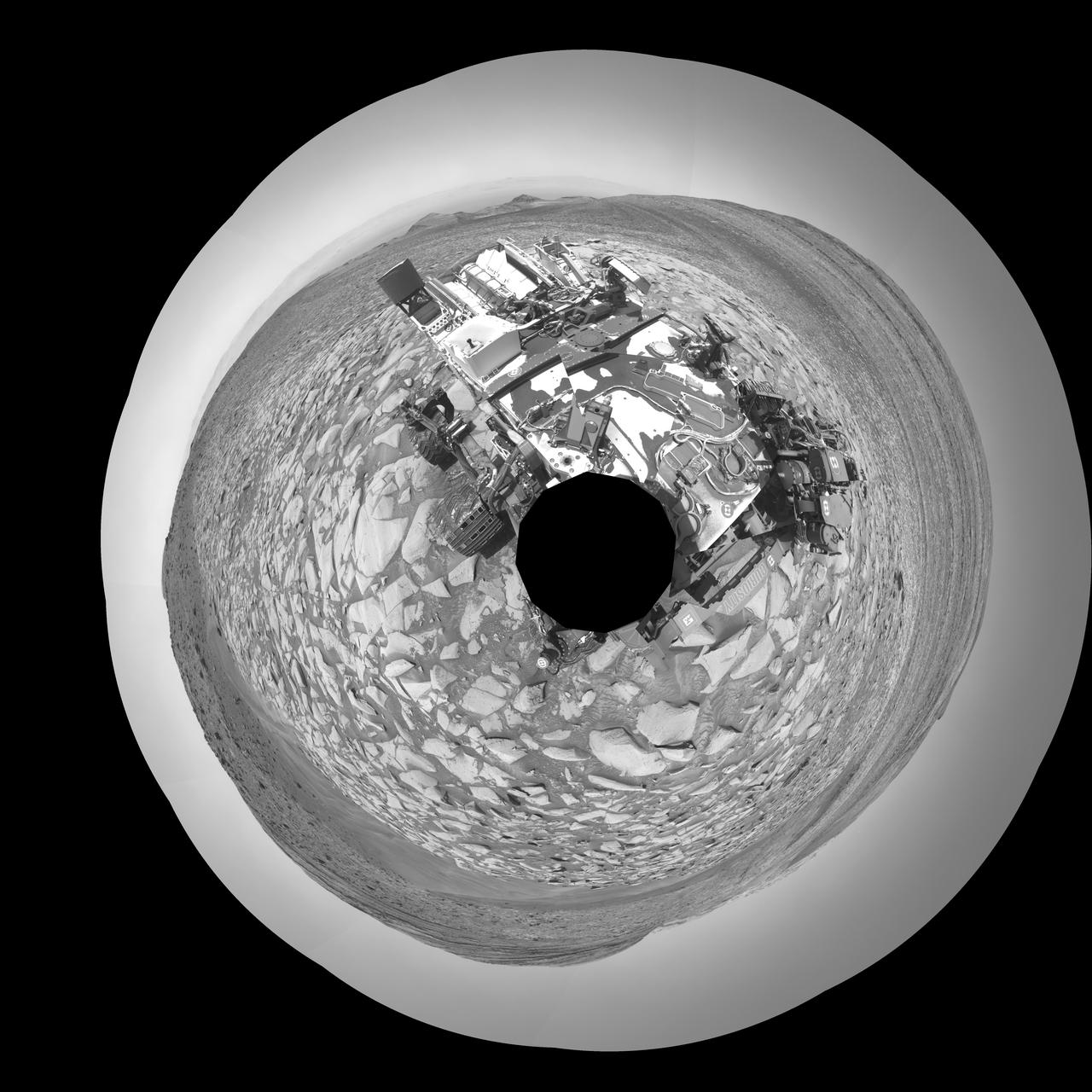
NASA's Curiosity Mars rover captured this selfie using its left black-and-white navigation camera, which is mounted on its mast, or "head," on Feb. 3, 2024, the 4,086th Martian day, or sol, of the mission. The selfie is made up of 36 individual images that were stitched together after being sent back to Earth. This warped view is different than the color selfies Curiosity has taken in the past using the camera on the end of its robotic arm, called the Mars Hand Lens Imager, or MAHLI. With its arm acting as a kind of selfie stick, Curiosity can show more of its body and surroundings. Instead, the images from the navigation camera on the mast are displayed as a polar projection; the black hole in the center is where the mast is located on the rover, an area which it can't image. https://photojournal.jpl.nasa.gov/catalog/PIA26310
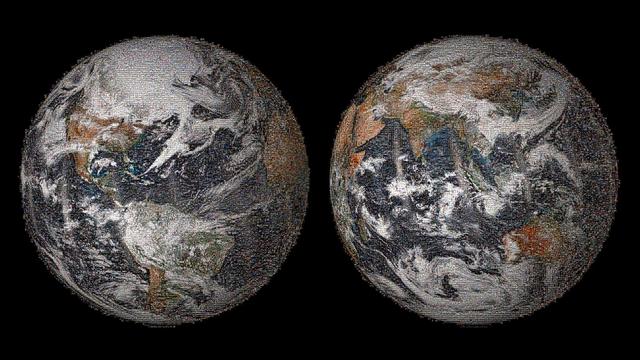
The 3.2 gigapixel Global Selfie mosaic, hosted by GigaPan, was made with 36,422 individual images that were posted to social media sites on or around Earth Day, April 22, 2014. Zoom in and find yours here: <a href="http://1.usa.gov/SnR7ki" rel="nofollow">1.usa.gov/SnR7ki</a> Credit: NASA The 3.2 gigapixel Global Selfie mosaic, hosted by GigaPan, was made with 36,422 individual images that were posted to social media sites on or around Earth Day, April 22, 2014. Zoom in and find yours here: <a href="http://1.usa.gov/SnR7ki" rel="nofollow">1.usa.gov/SnR7ki</a>
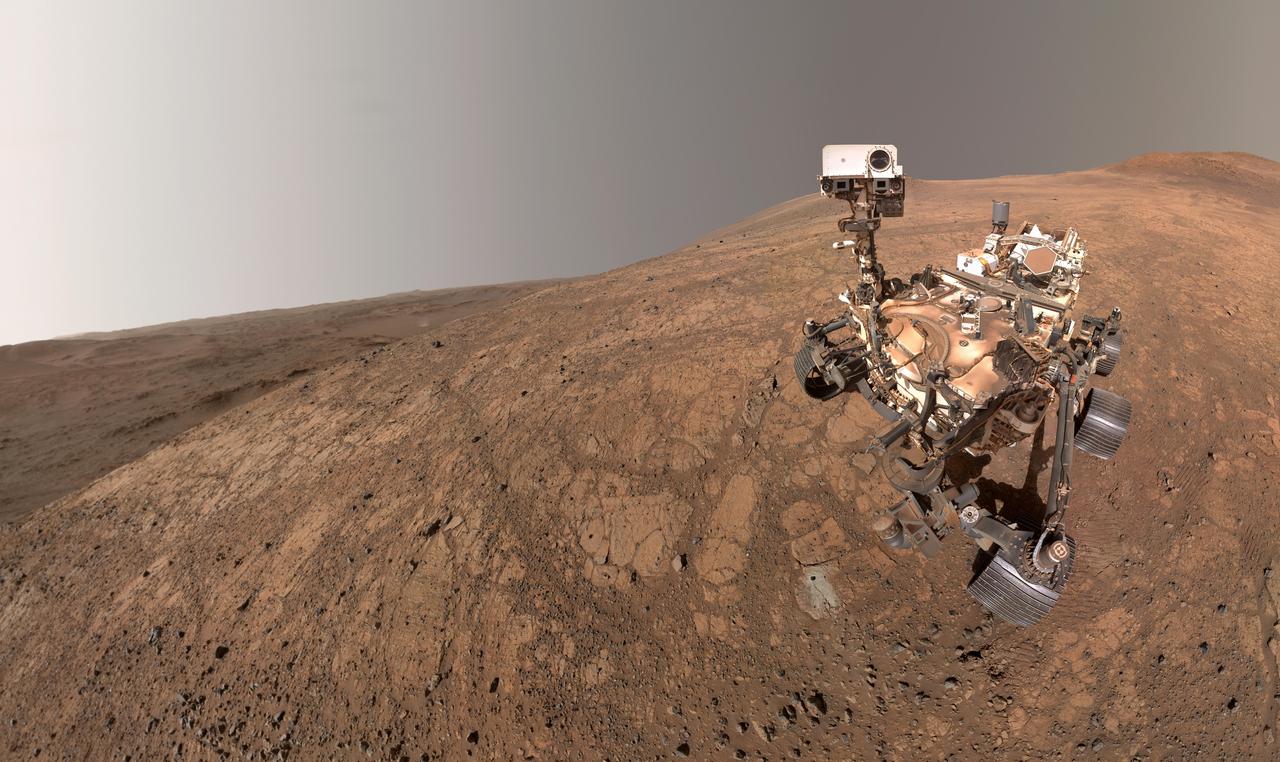
NASA's Perseverance rover took this selfie on May 10, 2025, marking its 1,500th Martian day, or sol, exploring the Red Planet. A dust devil twirls in the background, about 3 miles (5 kilometers) away, to the left of the rover. The small dark hole in the rock in front of the rover is the borehole made when Perseverance collected a sample dubbed "Bell Island." The selfie is composed of 59 images taken by the WATSON (Wide Angle Topographic Sensor for Operations and eNgineering) camera on the end of the rover's robotic arm. The images were stitched together after being sent back to Earth. The selfie was further processed to improve visual contrast and accentuate color differences. https://photojournal.jpl.nasa.gov/catalog/PIA26574
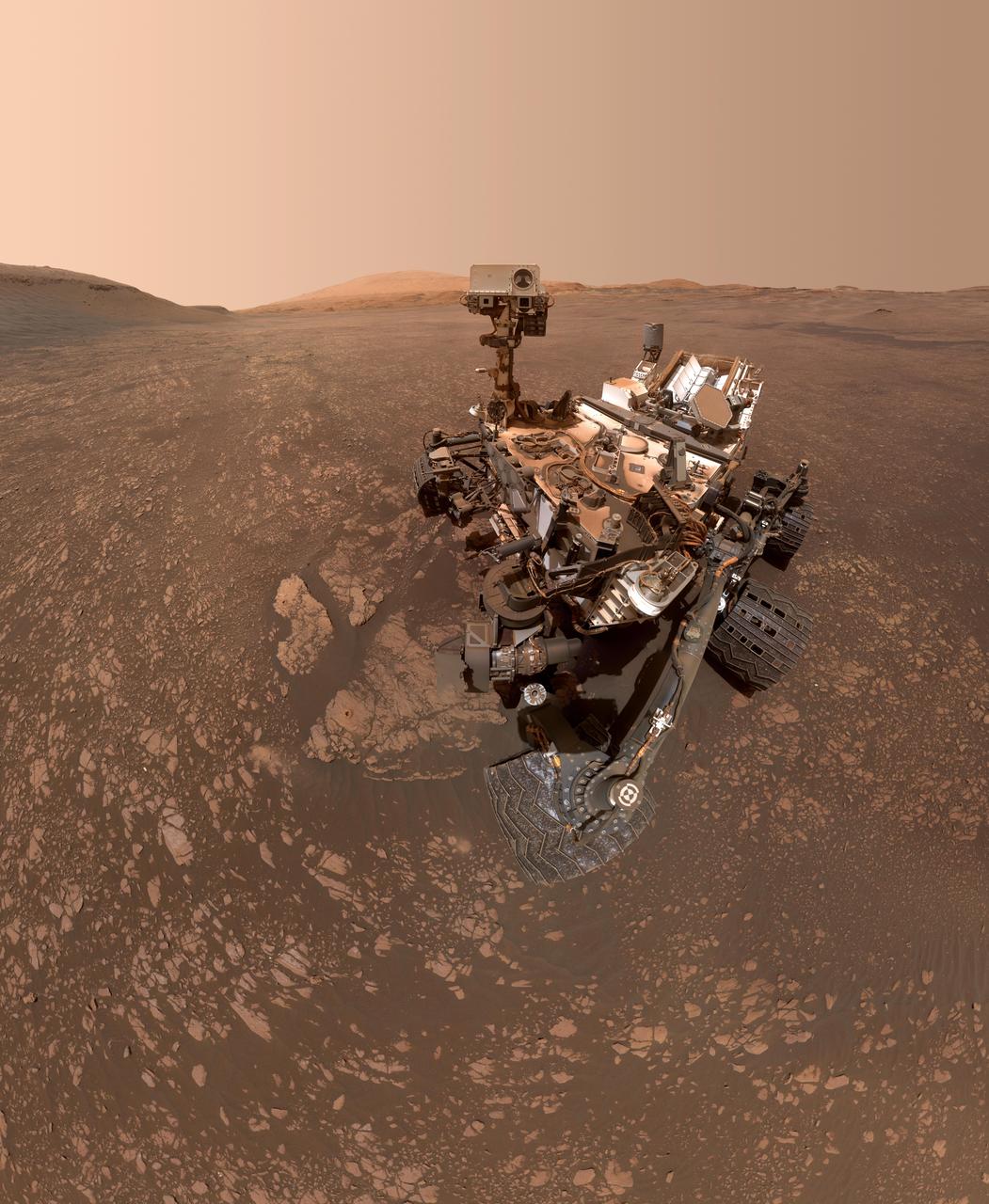
NASA's Curiosity Mars rover took this selfie on May 12, 2019 (the 2,405th Martian day, or sol, of the mission). To the lower-left of the rover are its two recent drill holes, at targets called "Aberlady" and "Kilmarie." These are Curiosity's 20th and 21st drill sites. The selfie is composed of 57 individual images taken by the rover's Mars Hand Lens Imager (MAHLI), a camera on the end of the rover's robotic arm. The images are stitched together into a panorama, and the robotic arm is digitally removed. https://photojournal.jpl.nasa.gov/catalog/PIA23240
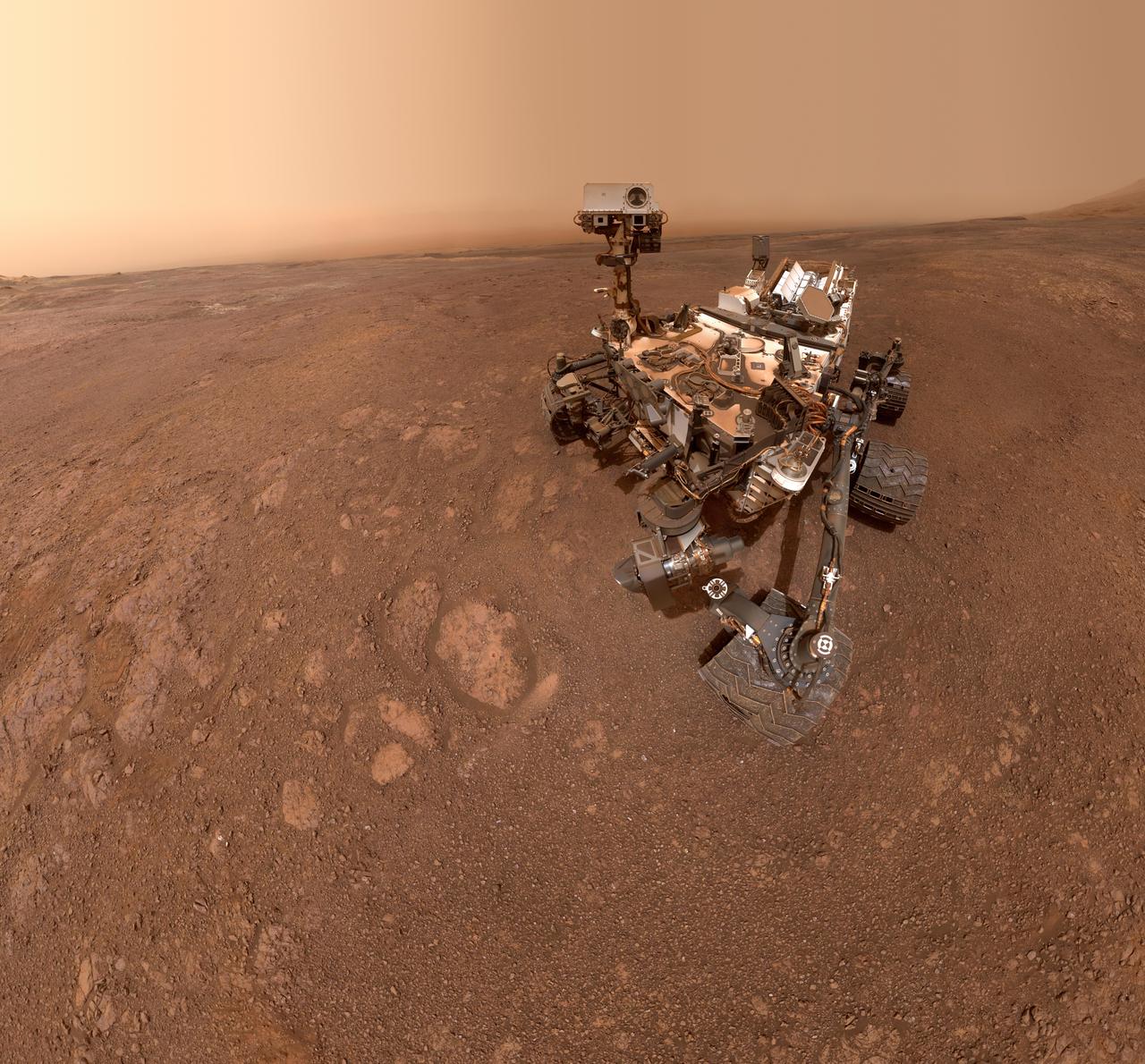
A selfie taken by NASA's Curiosity Mars rover on Sol 2291 (January 15) at the "Rock Hall" drill site, located on Vera Rubin Ridge. This was Curiosity's 19th drill site. The drill hole is visible to the rover's lower-left; the entire scene is slightly dustier than usual due to a regional dust storm affecting the area. The selfie is composed of 57 individual images taken by the rover's Mars Hand Lens Imager (MAHLI), a camera on the end of the rover's robotic arm. The images are then stitched together into a panorama. https://photojournal.jpl.nasa.gov/catalog/PIA22960
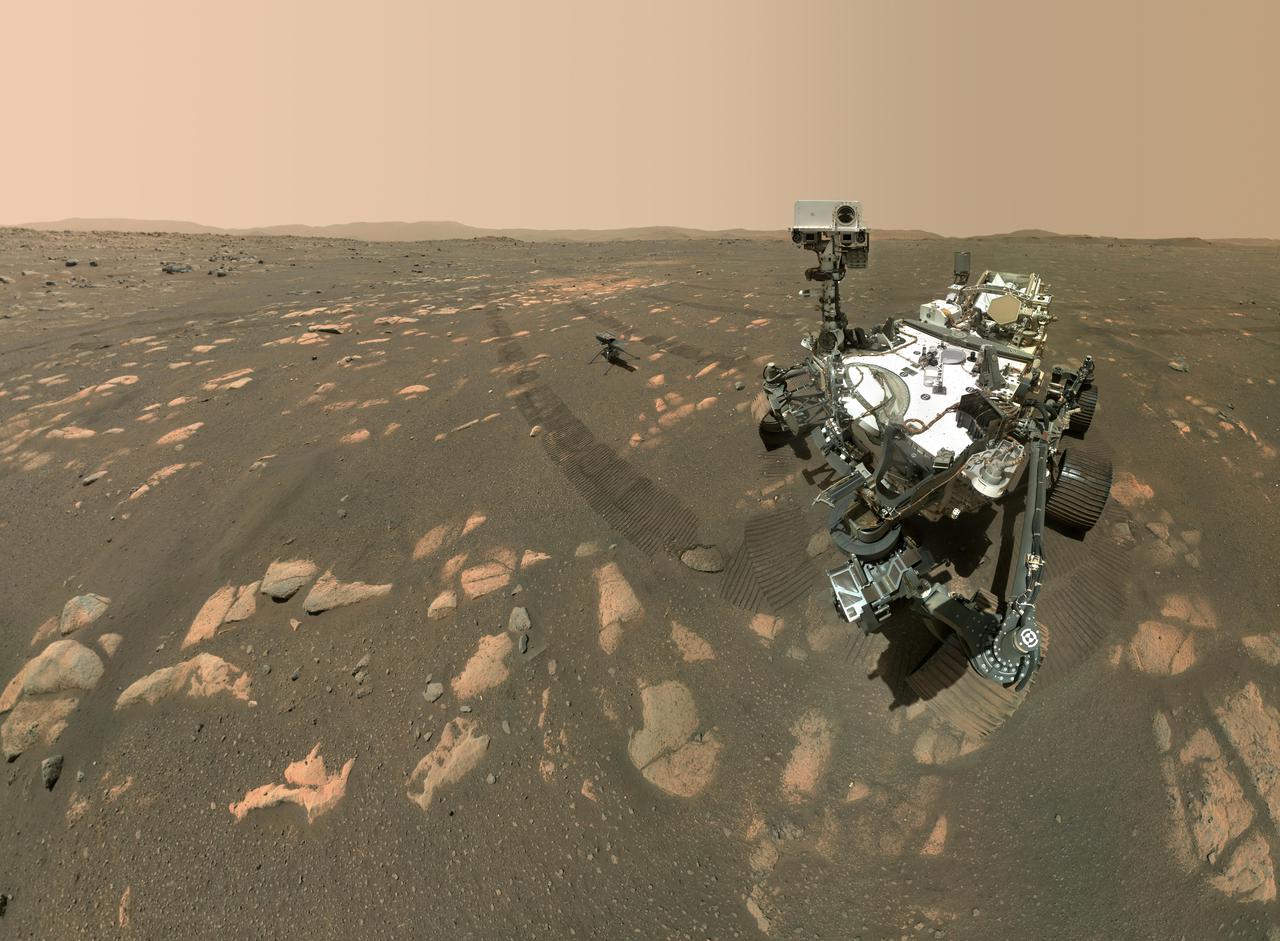
NASA's Perseverance Mars rover took a selfie with the Ingenuity helicopter, seen here about 13 feet (3.9 meters) from the rover in this image taken April 6, 2021, the 46th Martian day, or sol, of the mission by the WATSON (Wide Angle Topographic Sensor for Operations and eNgineering) camera on the SHERLOC (Scanning Habitable Environments with Raman and Luminescence for Organics and Chemicals) instrument, located at the end of the rover's long robotic arm. Perseverance's selfie with Ingenuity is made up of 62 individual images stitched together once they are sent back to Earth; they were taken in sequence while the rover was looking at the helicopter, then again while it was looking at the WATSON camera. The Curiosity rover takes similar selfies using a camera on its robotic arm. Movie available at https://photojournal.jpl.nasa.gov/catalog/PIA24542
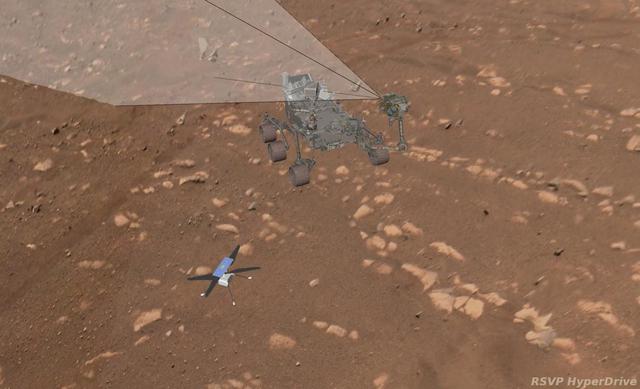
This animation shows a computer simulation of NASA's Perseverance Mars rover taking its first selfie. The point of view of the rover's WATSON (Wide Angle Topographic Sensor for Operations and eNgineering) camera is included to show how each of the 62 images were taken, which were later sent to Earth and stitched together into the selfie. The selfie was taken on April 6, 2021. A key objective for Perseverance's mission on Mars is astrobiology, including the search for signs of ancient microbial life. The rover will characterize the planet's geology and past climate, pave the way for human exploration of the Red Planet, and be the first mission to collect and cache Martian rock and regolith (broken rock and dust). Subsequent NASA missions, in cooperation with ESA (European Space Agency), would send spacecraft to Mars to collect these sealed samples from the surface and return them to Earth for in-depth analysis. The Mars 2020 Perseverance mission is part of NASA's Moon to Mars exploration approach, which includes Artemis missions to the Moon that will help prepare for human exploration of the Red Planet. Movie available at https://photojournal.jpl.nasa.gov/catalog/PIA24669
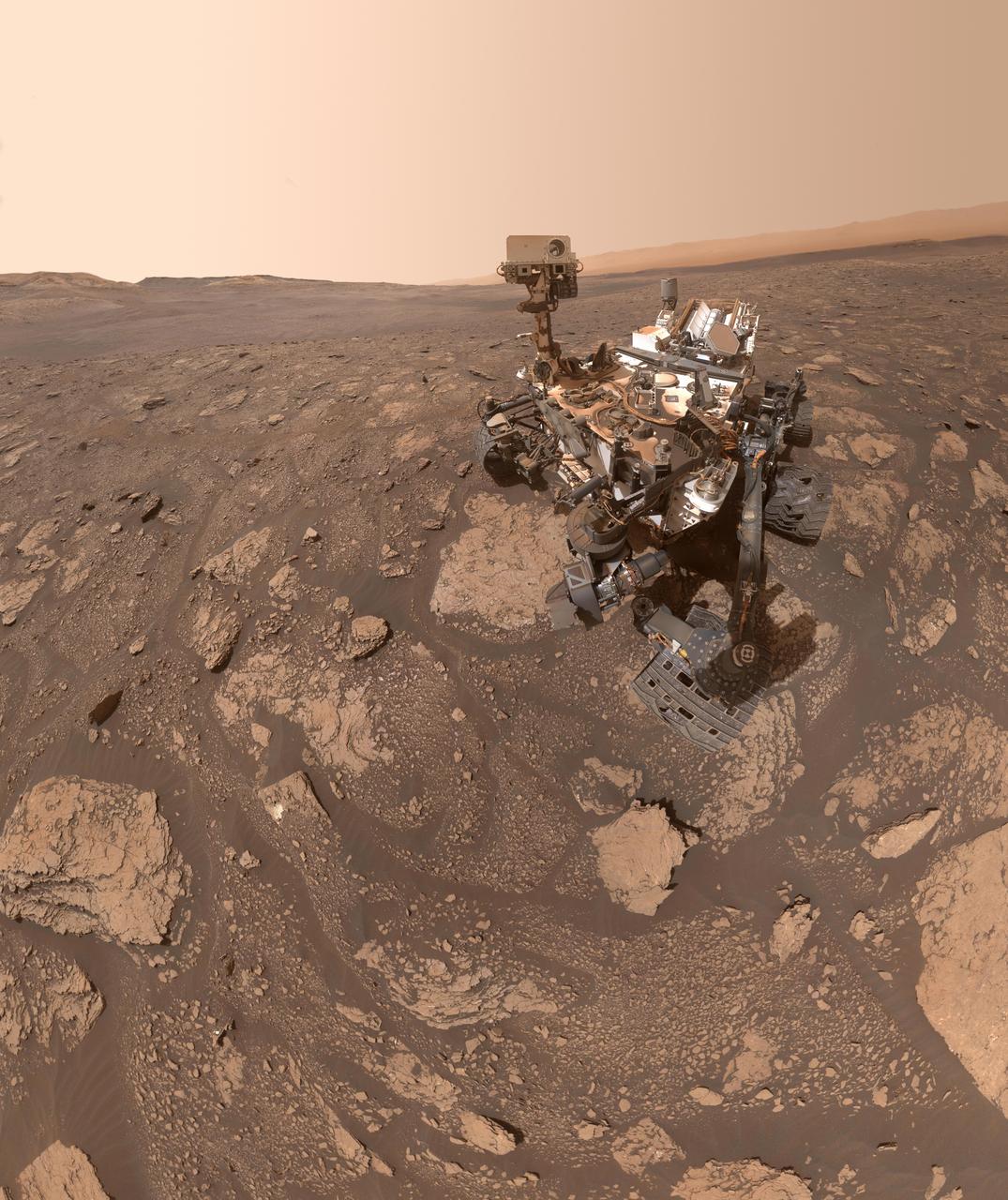
NASA's Curiosity Mars rover took this selfie at a location nicknamed "Mary Anning" after a 19th century English paleontologist. Curiosity snagged three samples of drilled rock at this site on its way out of the Glen Torridon region, which scientists believe was a site where ancient conditions would have been favorable to supporting life, if it ever was present. Curiosity took the selfie using a camera called the Mars Hand Lens Imager located on the end of its robotic arm (videos explaining how Curiosity's selfies are taken can be found here). A close-up detail from within the selfie shows the three holes that a rock drill, also found on the end of Curiosity's arm, added to the surface. The three drill holes are named "Mary Anning," "Mary Anning 3" and "Groken," the last name coming from a site of geological interest in the Scottish countryside. https://photojournal.jpl.nasa.gov/catalog/PIA24173

A self-portrait of NASA's Curiosity rover taken on Sol 2082 (June 15, 2018). A Martian dust storm has reduced sunlight and visibility at the rover's location in Gale Crater. Self-portraits are created using images taken by Curiosity's Mars Hands Lens Imager (MAHLI). https://photojournal.jpl.nasa.gov/catalog/PIA22486
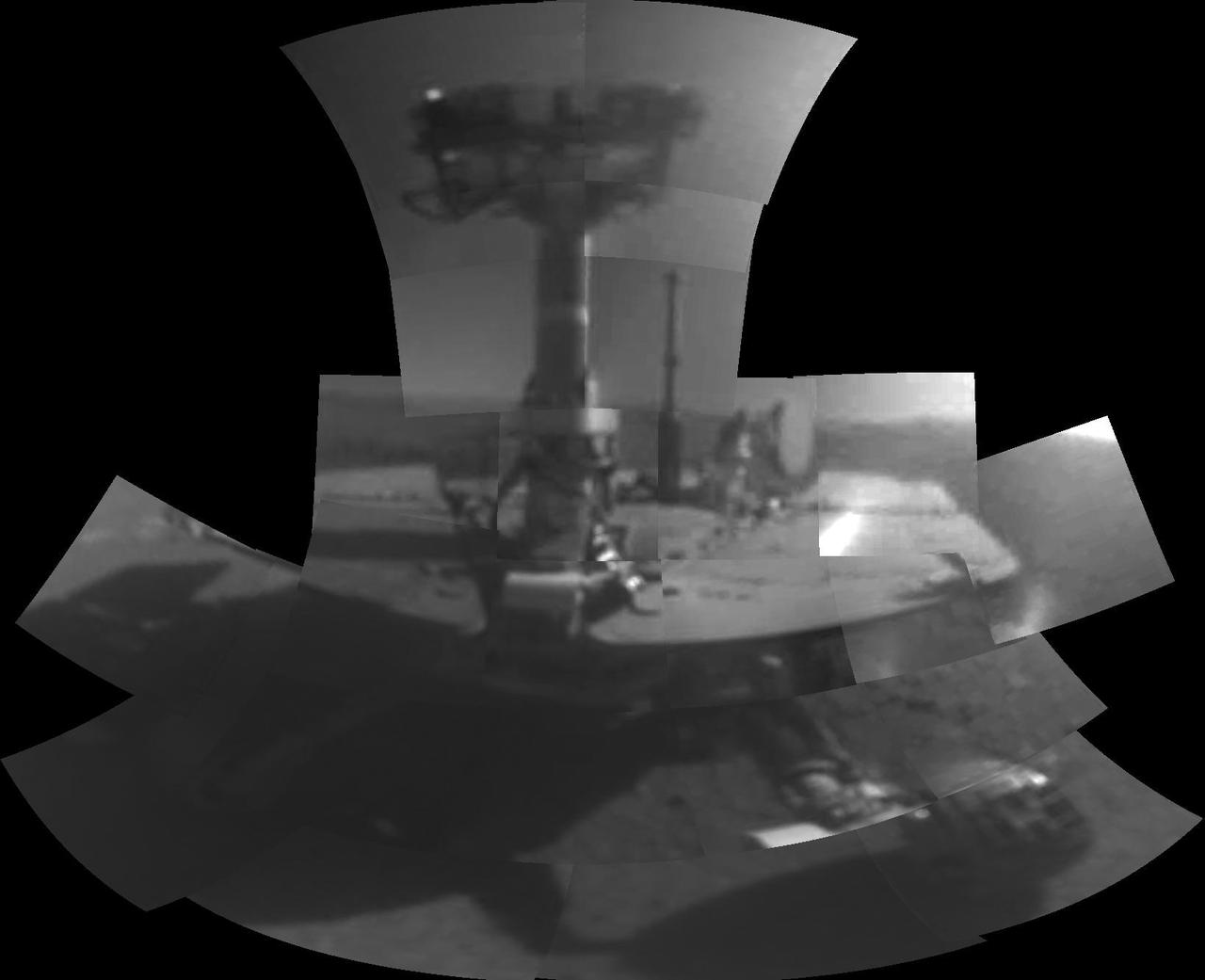
This self-portrait of NASA's Opportunity Mars rover shows the vehicle at a site called "Perseverance Valley" on the slopes of Endeavour Crater. It was taken with the rover's Microscopic Imager to celebrate the 5000th Martian Day, or sol, of the rover's mission. The Microscopic Imager is a fixed-focus camera mounted at the end of the rover's robotic arm. Because it was designed for close inspection of rocks, soils and other targets at a distance of around 2.7 inches (7 cm), the rover is out of focus. The rover's self-portrait view is made by stitching together multiple images take on Sol 5,000 and 5,006 of the mission. Wrist motions and turret rotations on the arm allowed the Microscopic Imager to acquire the mosaic's component images. The resulting mosaic does not include the rover's arm. This simulation from planning software used to write commands for the rover shows the motion of the robotic arm, and an inset view of the Microscopic Imager. https://photojournal.jpl.nasa.gov/catalog/PIA22222
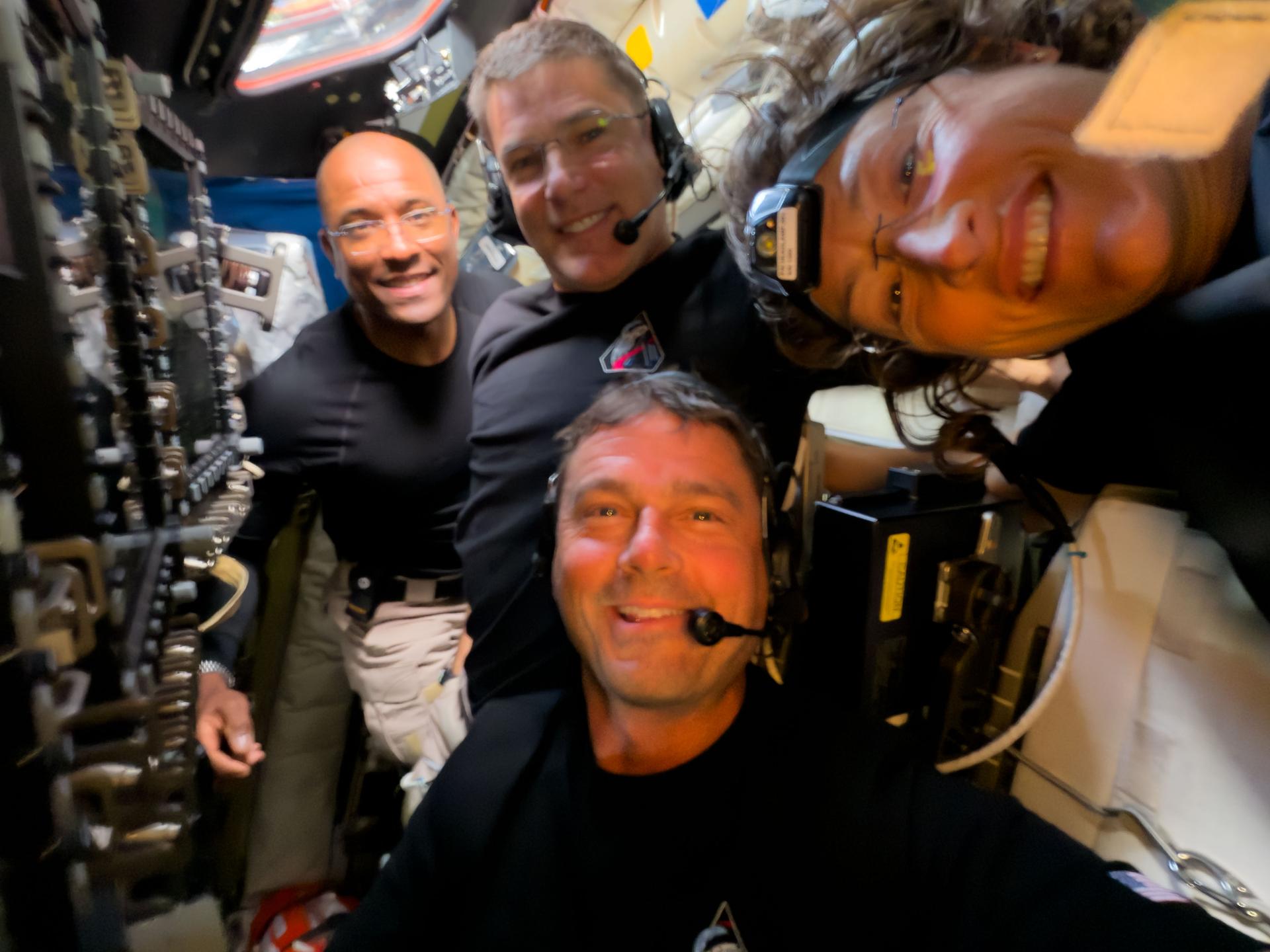
art002e009296 (April 6, 2026) – Midway through their lunar observation period, the Artemis II crew members – Reid Wiseman, Victor Glover, Christina Koch, and Jeremy Hansen – pause to turn the camera around for a selfie inside the Orion spacecraft.
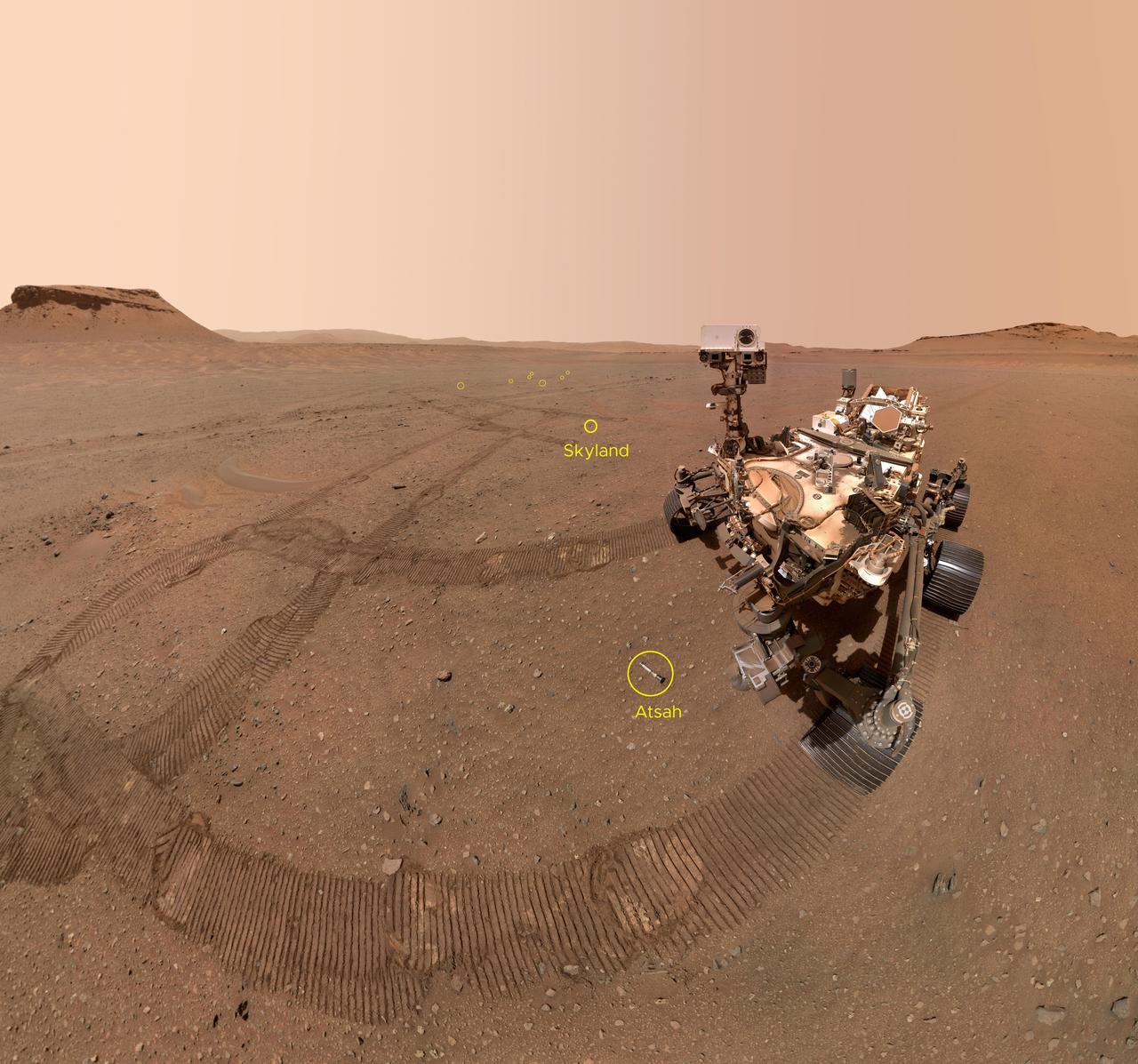
NASA's Perseverance Mars rover took a selfie with nine of the 10 sample tubes it deposited at a sample depot created within an area of Jezero Crater nicknamed "Three Forks." This annotated version of the selfie points out the estimated locations of those nine tubes. The ninth tube dropped during the construction of the depot, containing the sample the science team refers to as "Atsah," can be seen in front of the rover. Other sample tubes are visible in the background, including "Skyland," which is labeled. The image was taken by the WATSON (Wide Angle Topographic Sensor for Operations and eNgineering) camera on the end of the rover's robotic arm on Jan. 22, 2023, the 684th Martian day, or sol, of the mission. The selfie is composed of 59 individual WATSON images that were stitched together once they were sent back to Earth. The Curiosity rover takes similar selfies using a camera on its robotic arm; videos explaining how the rovers take their selfies can be found here. The depot marks a crucial milestone in the NASA-ESA (European Space Agency) Mars Sample Return campaign that aims to bring Mars samples to Earth for closer study. The depot – completed when the 10th tube was dropped on Jan. 29, 2023 – will serve as a backup if Perseverance can't deliver its samples to a future robotic lander. A key objective for Perseverance's mission on Mars is astrobiology, including the search for signs of ancient microbial life. The rover will characterize the planet's geology and past climate, pave the way for human exploration of the Red Planet, and be the first mission to collect and cache Martian rock and regolith (broken rock and dust). Subsequent NASA missions, in cooperation with ESA (European Space Agency), would send spacecraft to Mars to collect these sealed samples from the surface and return them to Earth for in-depth analysis. The Mars 2020 Perseverance mission is part of NASA's Moon to Mars exploration approach, which includes Artemis missions to the Moon that will help prepare for human exploration of the Red Planet. https://photojournal.jpl.nasa.gov/catalog/PIA25735
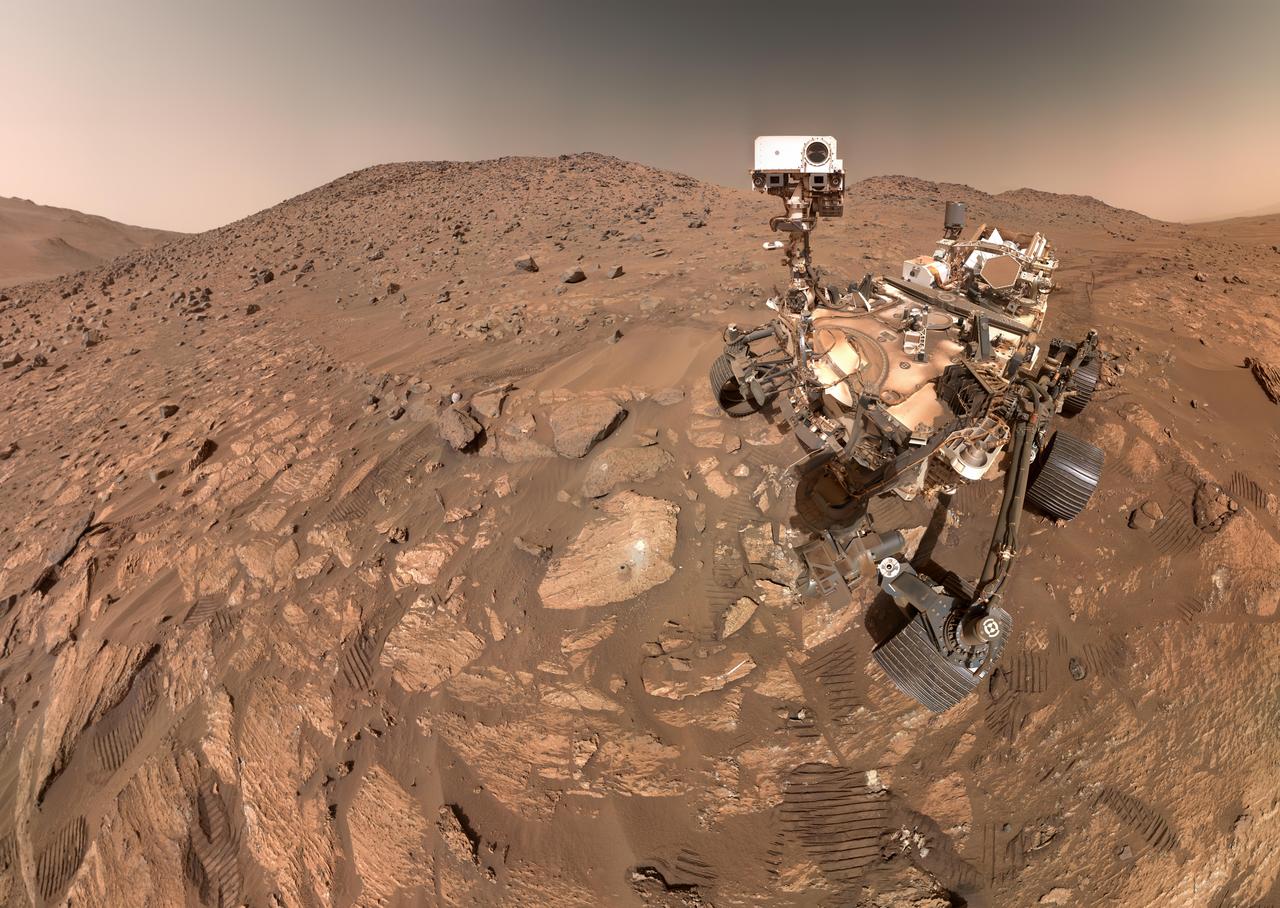
NASA's Perseverance Mars rover took this selfie on July 23, 2024, the 1,218th Martian day, or sol, of the mission. To the left of the rover near the center of the image is the arrowhead-shaped rock nicknamed "Cheyava Falls," which has features that may bear on the question of whether Mars was home to microscopic life in the distant past. The small dark hole in the rock is where Perseverance took a core sample, which is now in a sample tube stored in the rover's belly. The white patch to the right of the hole is where the rover used an abrasion tool to clear away the top surface, allowing science instruments to study the rock's composition. Measuring 3.2 feet by 2 feet (1 meter by 0.6 meters) and named after a Grand Canyon waterfall, Cheyava Falls lies at the northern edge of Neretva Vallis, an ancient river valley measuring a quarter-mile (400 meters) wide that was carved by water rushing into Jezero Crater long ago. The selfie is composed of 62 images taken by the WATSON (Wide Angle Topographic Sensor for Operations and eNgineering) camera on the end of the rover's robotic arm. The images were stitched together after being sent back to Earth. Animation available at https://photojournal.jpl.nasa.gov/catalog/PIA26344
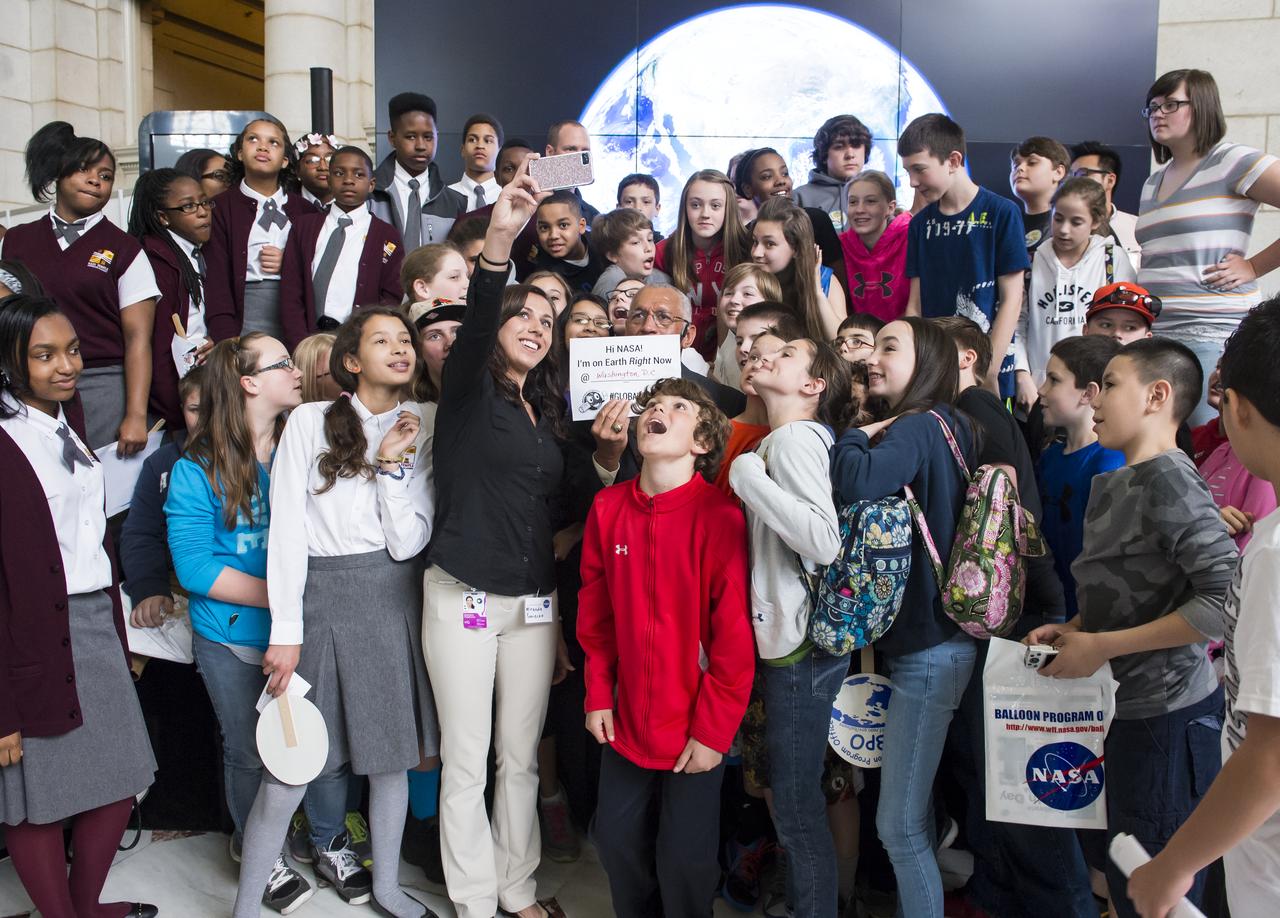
NASA Administrator Charles Bolden poses for a quick selfie with students who attended the NASA sponsored Earth Day event April 22, 2014 at Union Station in Washington, DC. NASA announced the "Global Selfie" event as part of its "Earth Right Now" campaign, celebrating the launch of five Earth-observing missions in 2014. All selfies posted to social media with the hashtag "GlobalSelfie" will be included in a mosaic image of Earth. Photo Credit: (NASA/Aubrey Gemignani)
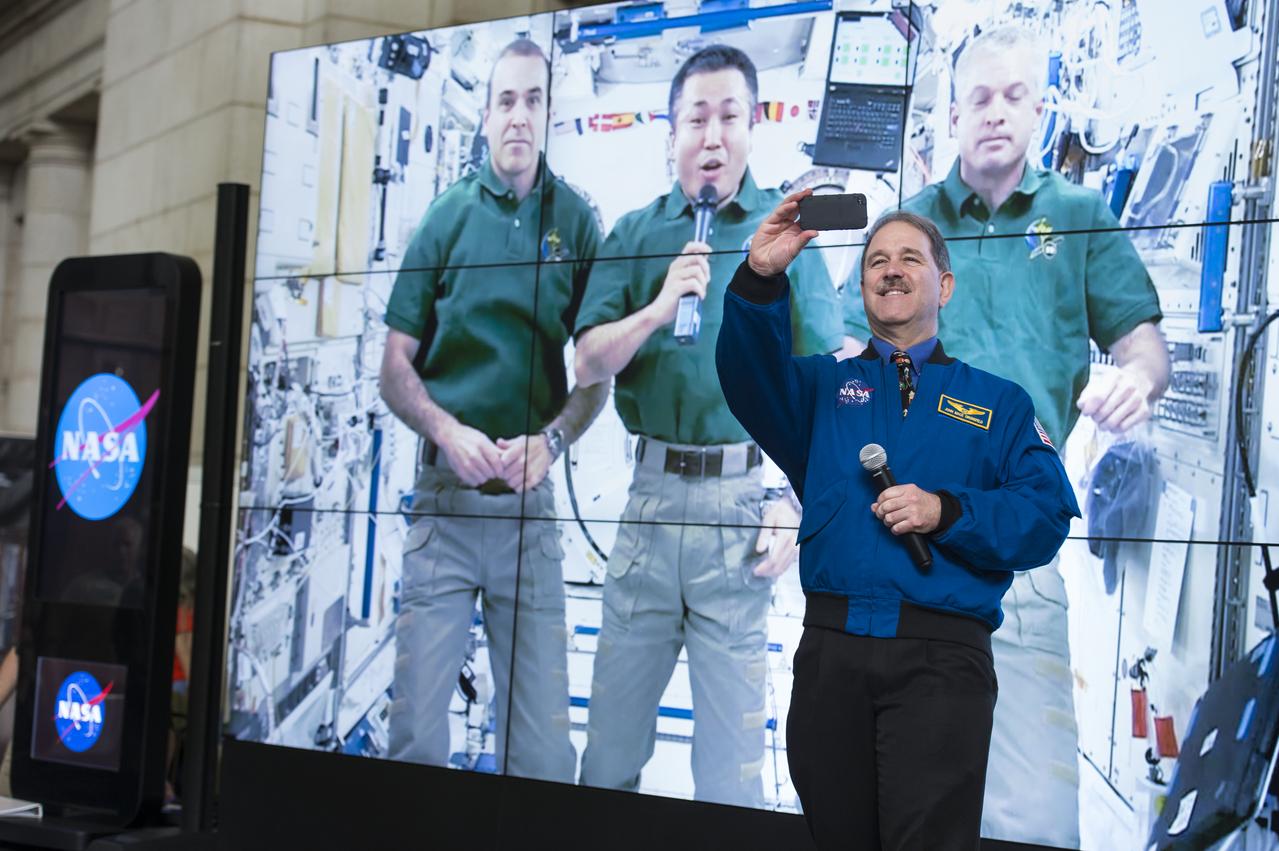
NASA Astronaut John Mace Grunsfeld takes a quick selfie with astronauts at the International Space Station at the NASA sponsored Earth Day event April 22, 2014 at Union Station in Washington, DC. NASA announced the "Global Selfie" event as part of its "Earth Right Now" campaign, celebrating the launch of five Earth-observing missions in 2014. All selfies posted to social media with the hashtag "GlobalSelfie" will be included in a mosaic image of Earth. Photo Credit: (NASA/Aubrey Gemignani)
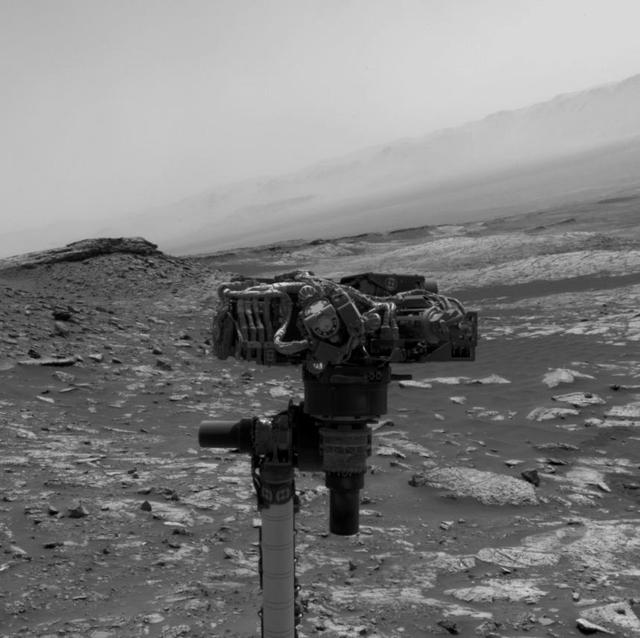
This video, taken by the Navigation Cameras, or Navcams, on the Mast of NASA's Curiosity Mars rover, shows the rover's robotic arm as it rotates to take a selfie. A camera at the end of the arm captured 86 individual images that were later stitched into a panorama. The Navcams are black-and-white cameras generally used to help engineers plan Curiosity's movements. Animation available at https://photojournal.jpl.nasa.gov/catalog/PIA23625
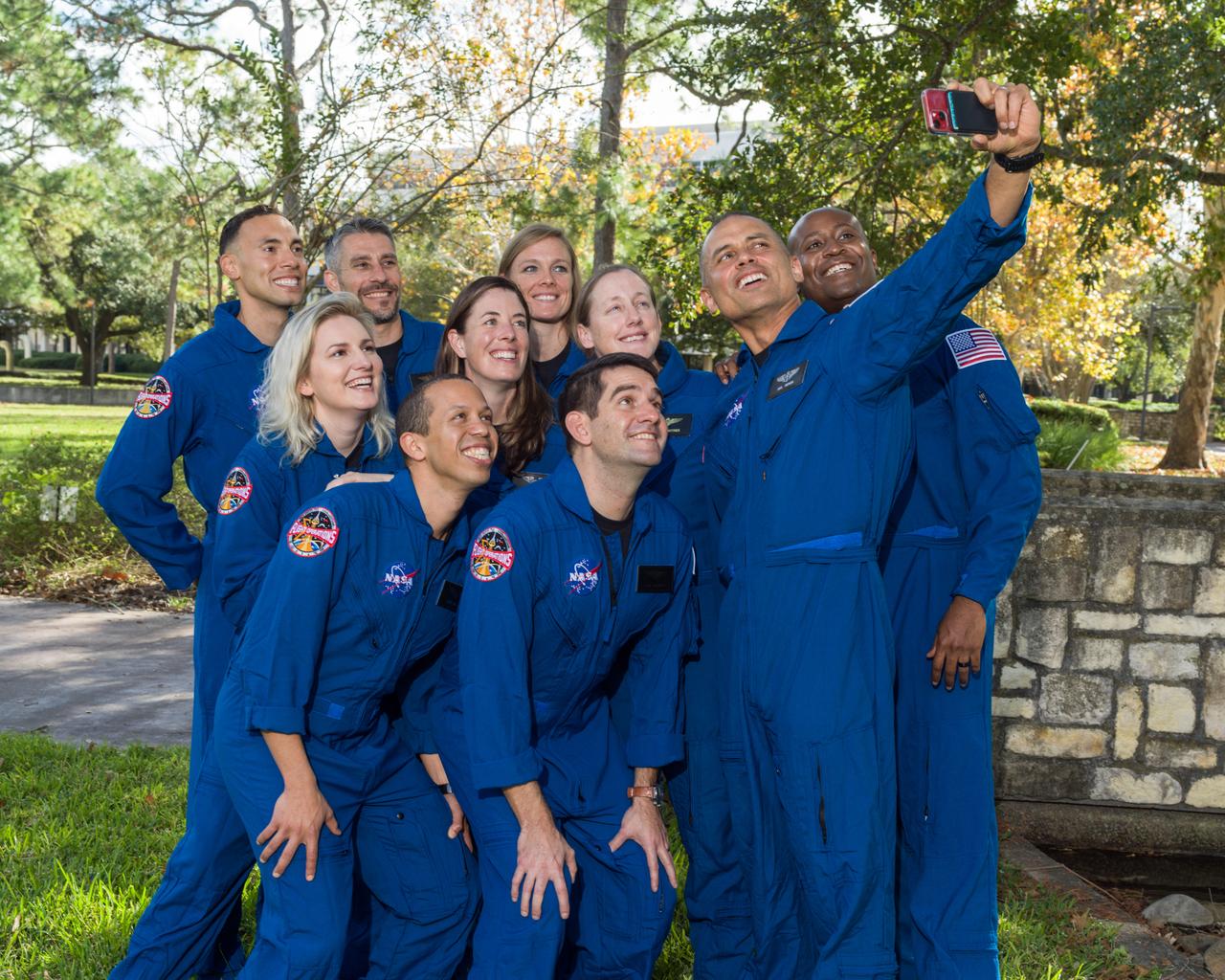
Astronaut Candidate Class of 2021. Photo Date: December 3, 2021. Location: JSC Mall. Photographer: Robert Markowitz
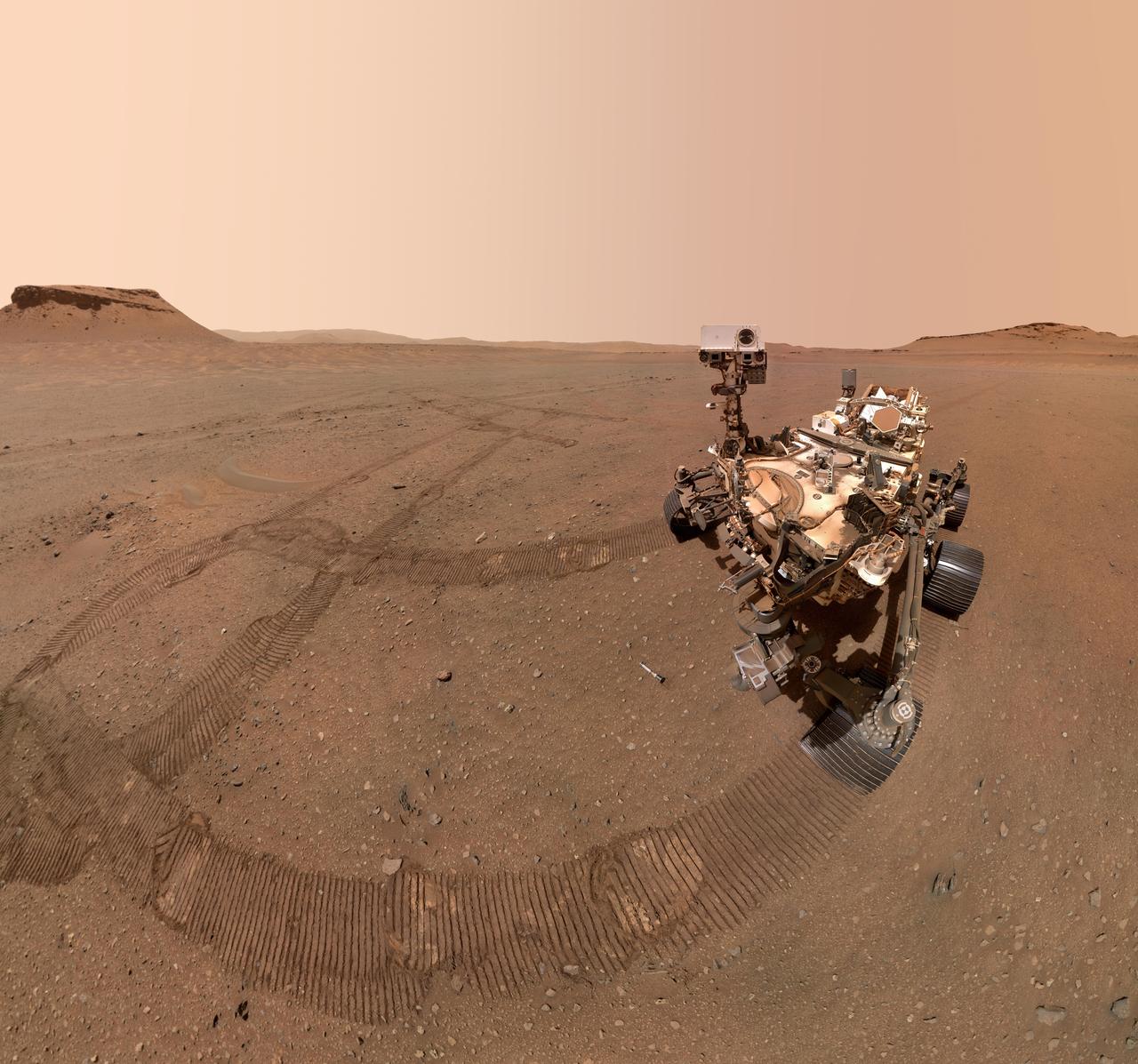
NASA's Perseverance Mars rover took a selfie with several of the 10 sample tubes it deposited at a sample depot it is creating within an area of Jezero Crater nicknamed "Three Forks." The image was taken by the WATSON (Wide Angle Topographic Sensor for Operations and eNgineering) camera on the end of the rover's robotic arm on Jan. 22, 2023, the 684th Martian day, or sol, of the mission. The ninth tube dropped during the construction of the depot, containing the sample the science team refers to as "Atsah," can be seen in front of the rover. Other sample tubes are visible in the background. In an animated GIF, the rover looks down at the "Atsah" sample then back at the camera. The selfie is composed of 59 individual WATSON images that were stitched together once they were sent back to Earth. The Curiosity rover takes similar selfies using a camera on its robotic arm; videos explaining how the rovers take their selfies can be found here. The depot marks a crucial milestone in the NASA-ESA (European Space Agency) Mars Sample Return campaign that aims to bring Mars samples to Earth for closer study. The depot will serve as a backup if Perseverance can't deliver its samples to a future robotic lander. A key objective for Perseverance's mission on Mars is astrobiology, including the search for signs of ancient microbial life. The rover will characterize the planet's geology and past climate, pave the way for human exploration of the Red Planet, and be the first mission to collect and cache Martian rock and regolith (broken rock and dust). Subsequent NASA missions, in cooperation with ESA (European Space Agency), would send spacecraft to Mars to collect these sealed samples from the surface and return them to Earth for in-depth analysis. The Mars 2020 Perseverance mission is part of NASA's Moon to Mars exploration approach, which includes Artemis missions to the Moon that will help prepare for human exploration of the Red Planet. Animation available at https://photojournal.jpl.nasa.gov/catalog/PIA25681
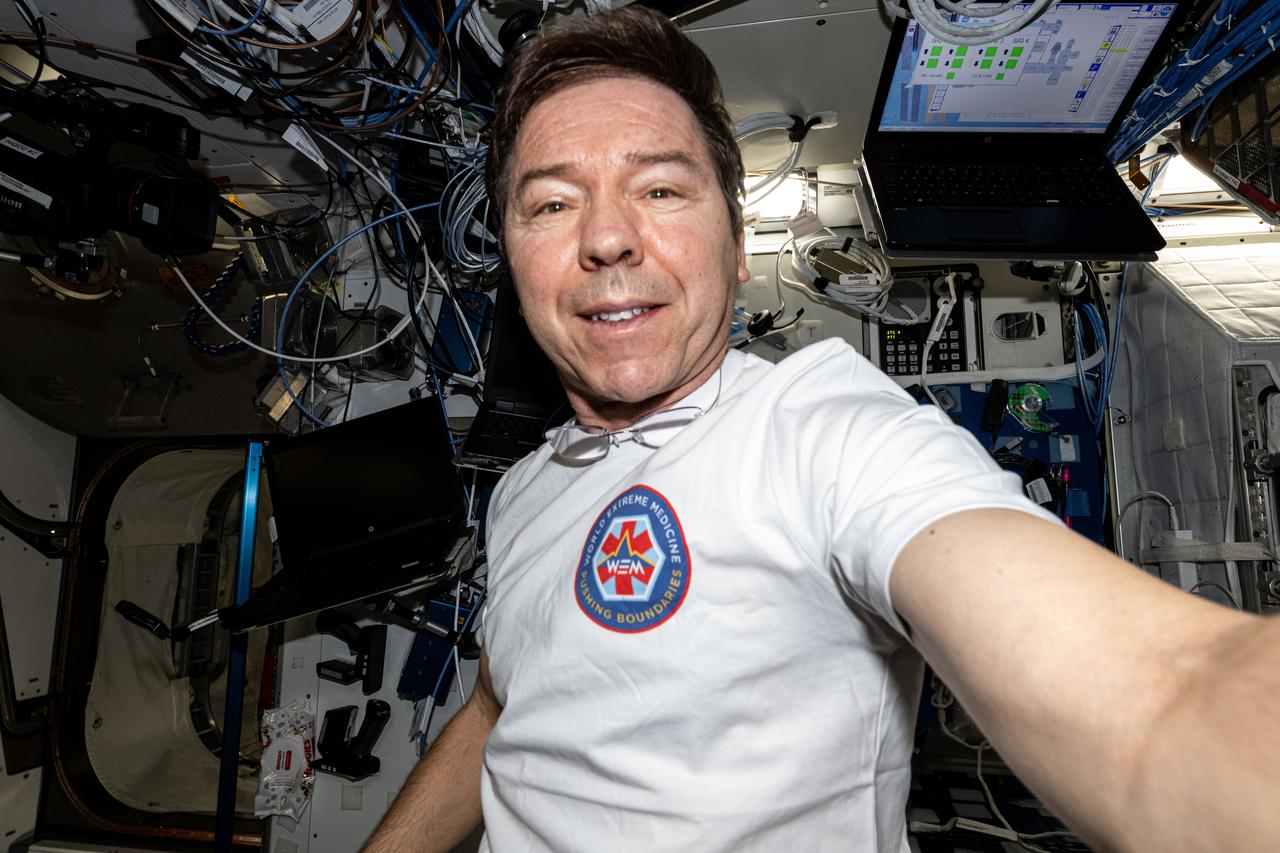
iss071e673526 (Sept. 16, 2024) -- NASA astronaut and Expedition 71 Flight Engineer Mike Barratt poses for a selfie aboard the International Space Station.
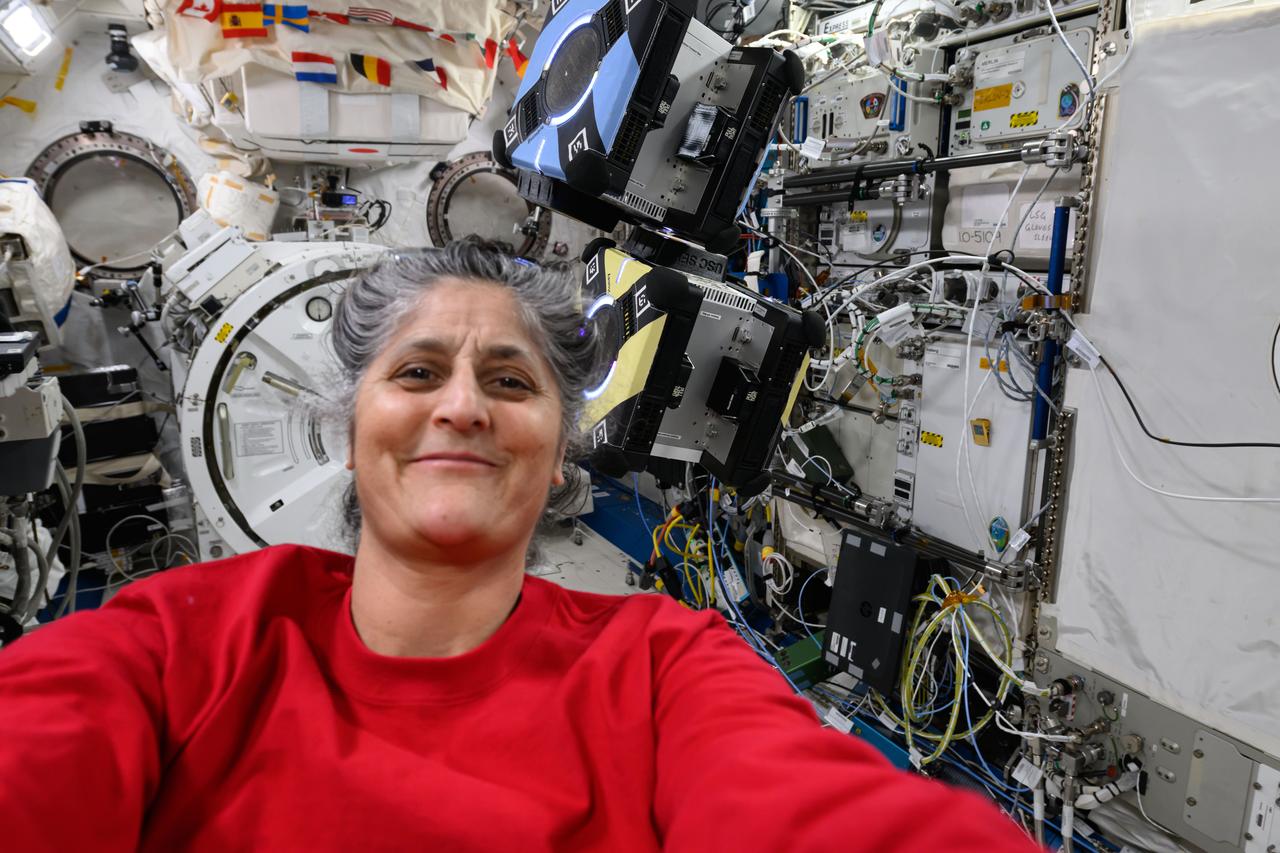
iss072e423916 (Jan. 3, 2024) --- NASA astronaut and Expedition 72 Commander Suni Williams takes a selfie portrait with a pair of Astrobee robotic free-flyers behind her inside the International Space Station's Kibo laboratory module.
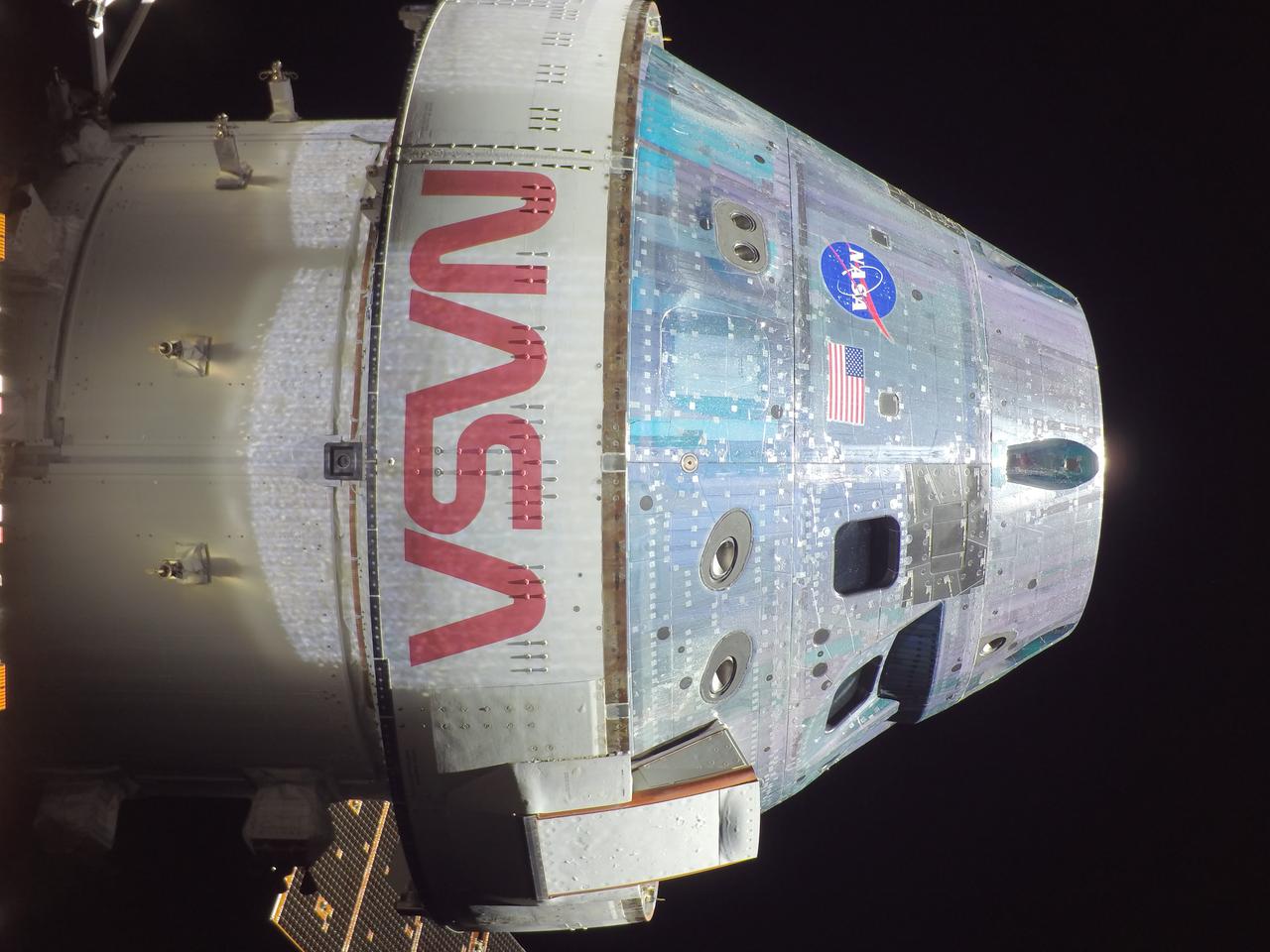
Orion snapped this high-resolution selfie in space with a camera mounted on its solar array wing during a routine external inspection of the spacecraft on the third day into the Artemis I mission.
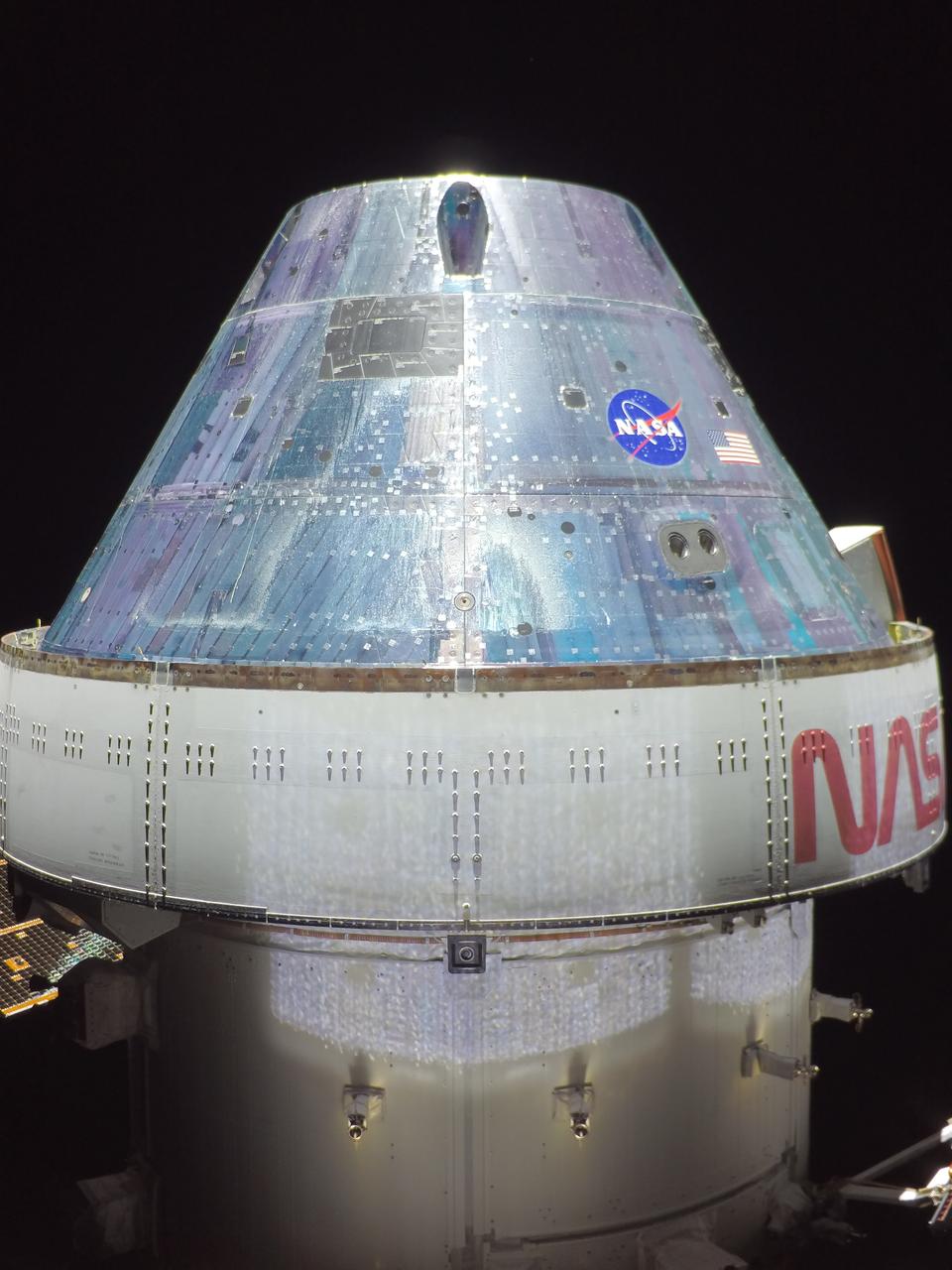
Orion snapped this high-resolution selfie in space with a camera mounted on its solar array wing during a routine external inspection of the spacecraft on the third day into the Artemis I mission.
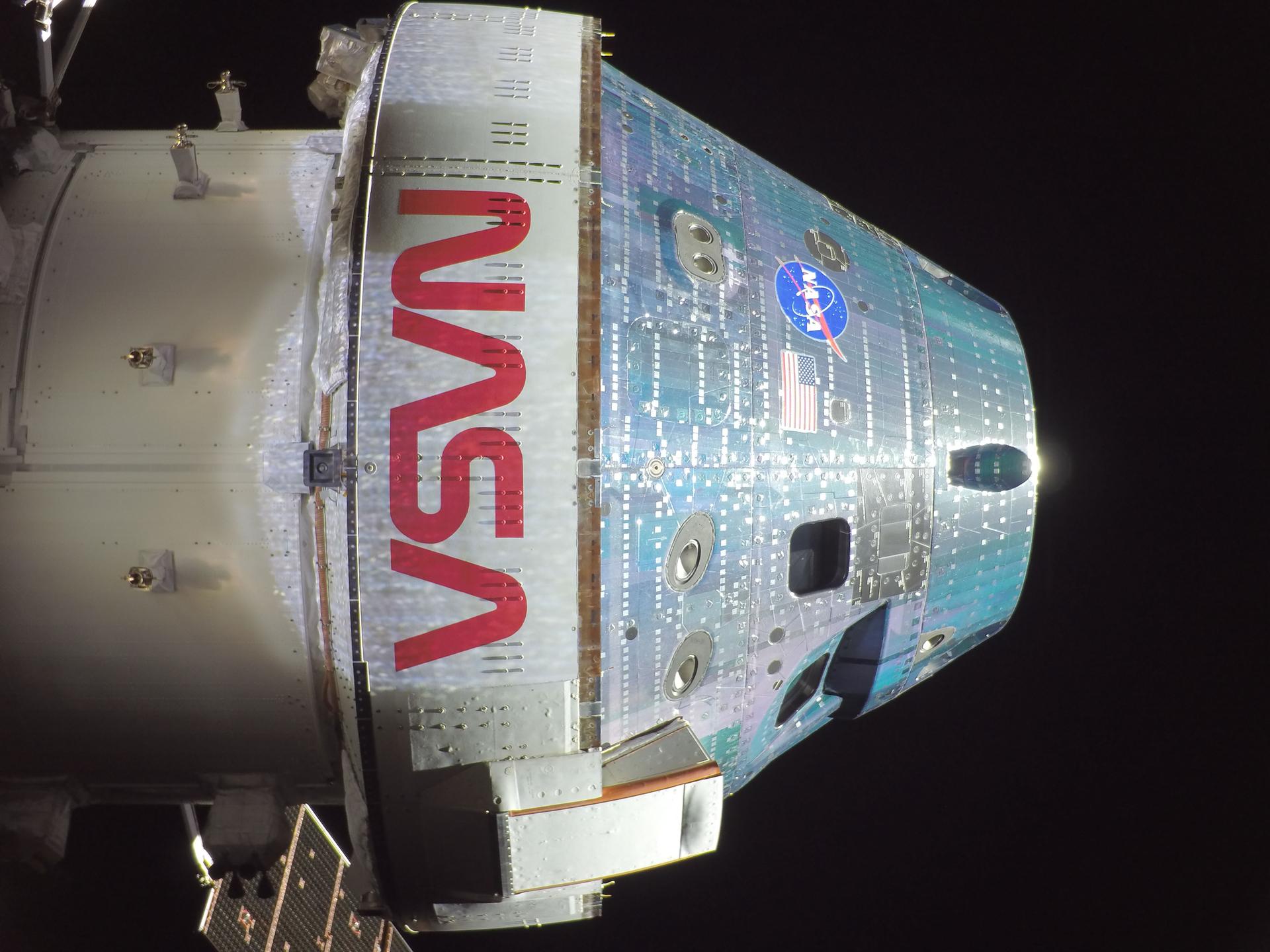
art002e004357 (April 3, 2026) - Orion snapped this high-resolution selfie in space with a camera mounted on one of its solar array wings during a routine external inspection of the spacecraft on the second day into the Artemis II mission.
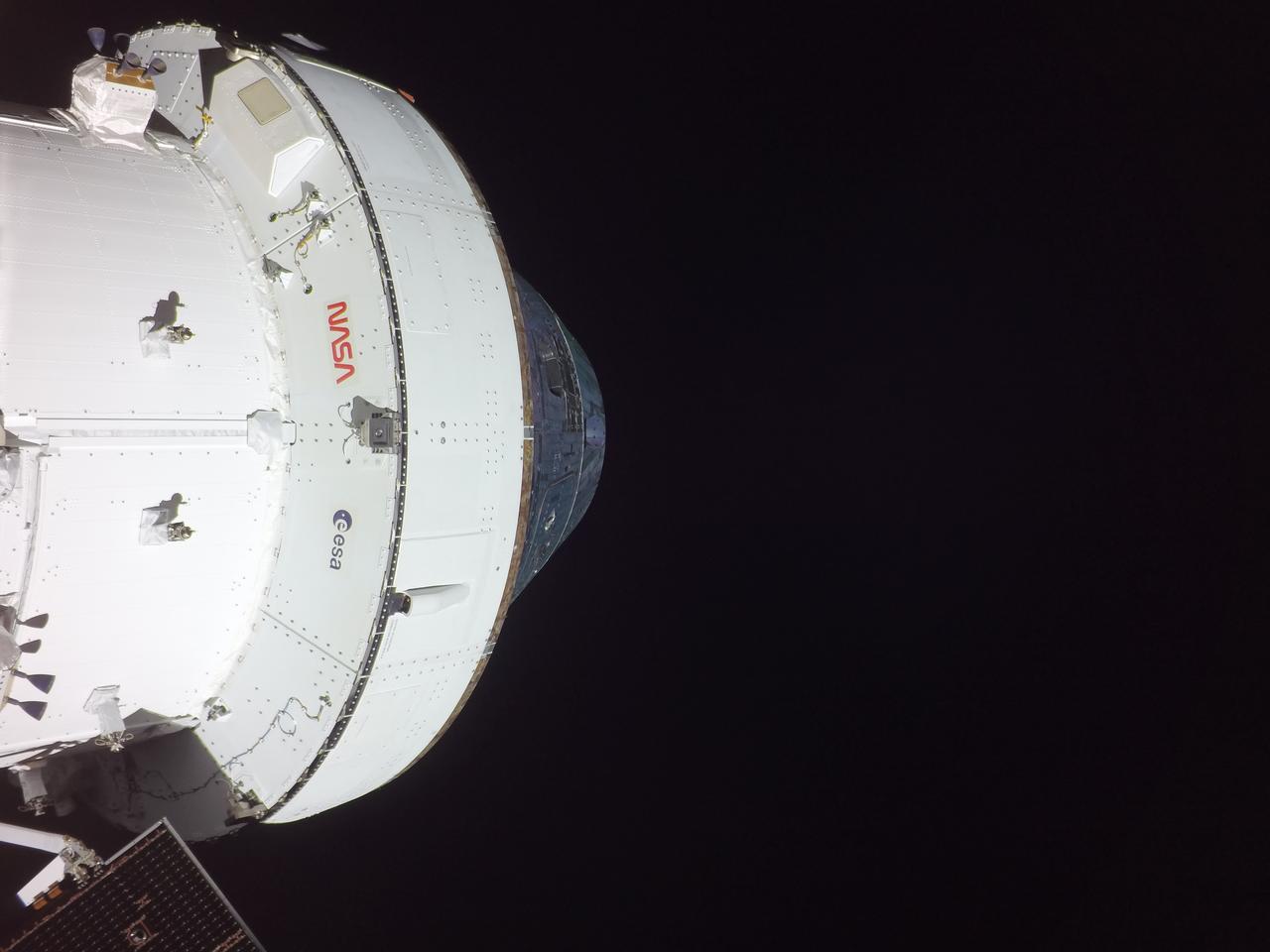
Orion snapped this high-resolution selfie in space with a camera mounted on its solar array wing during a routine external inspection of the spacecraft on the third day into the Artemis I mission.
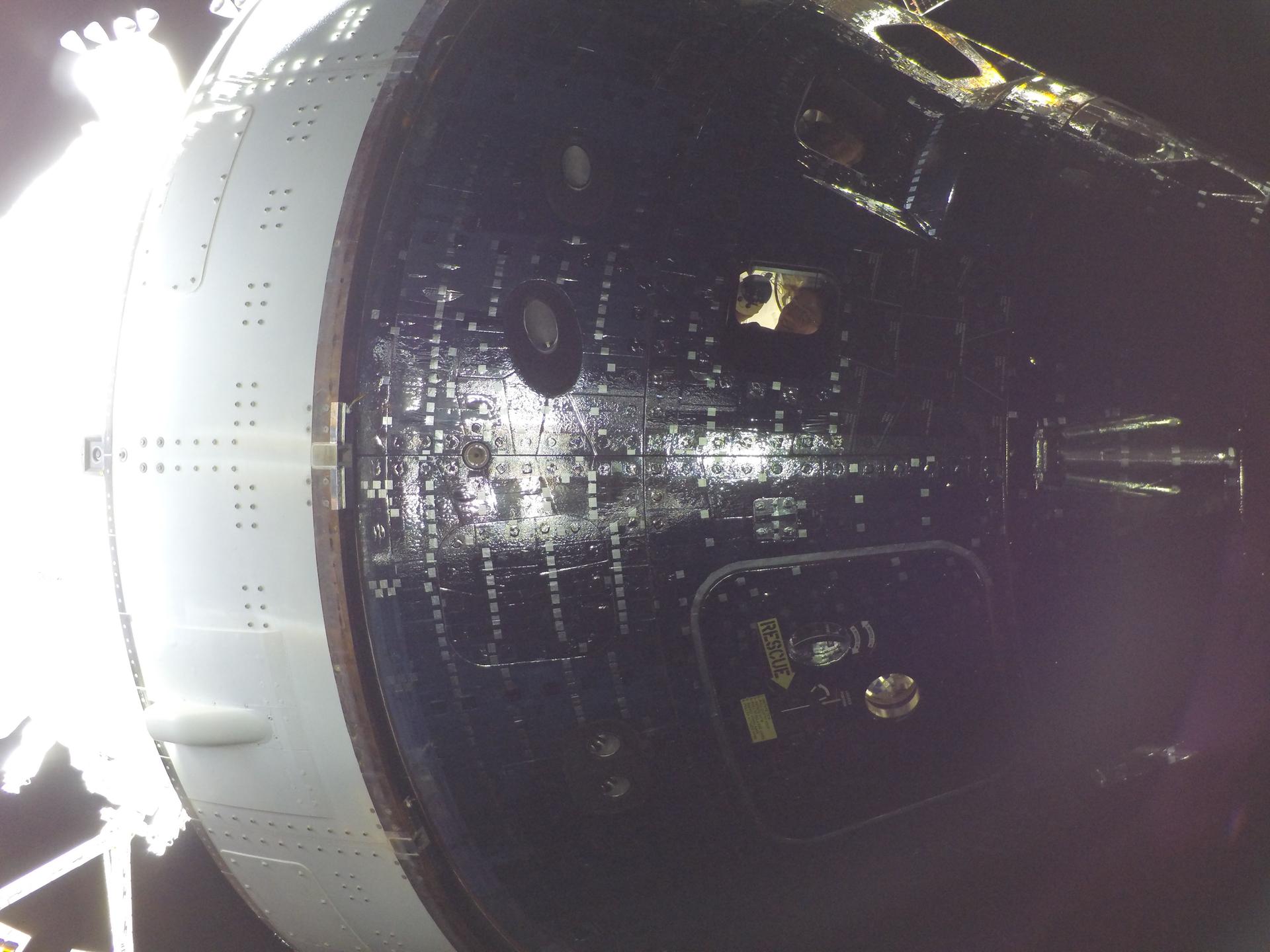
art002e009013 (April 4, 2026) - Artemis II Mission Specialist Christina Koch is seen through a window of the Orion spacecraft while on her way to the Moon. This selfie-style photo was taken using a camera on the end of one of Orion's solar array wings on flight day 4 of the approximately 10-day test flight, when Orion was more than halfway to the Moon. Koch is holding "Rise", the zero gravity indicator that launched with the crew after being selected from more than 2,600 original designs that were submitted from countries around the world. A zero gravity indicator is a small plush item that typically rides with a crew to visually indicate when they are in space. “Rise” was inspired by the iconic Earthrise moment from the Apollo 8 mission.
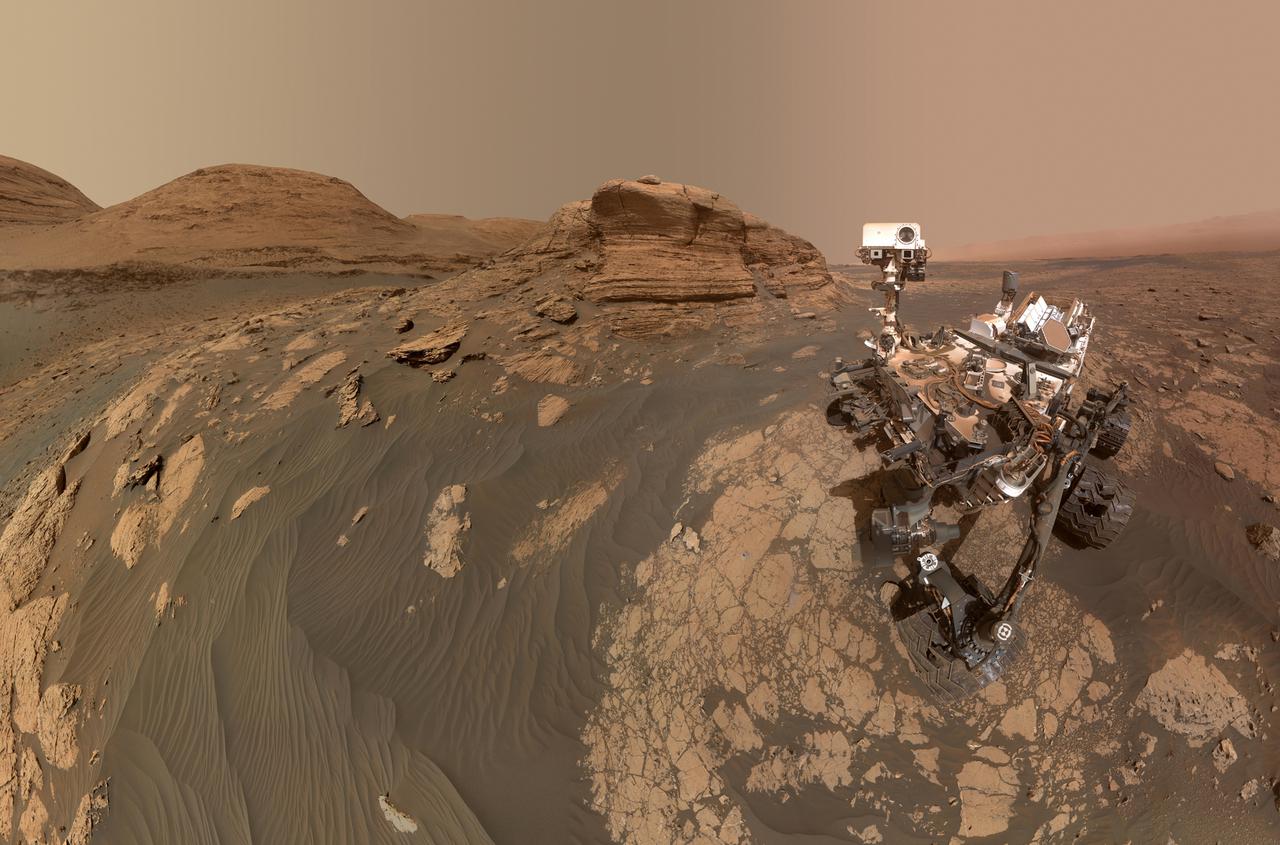
NASA's Curiosity Mars rover used two different cameras to create this selfie in front of Mont Mercou, a rock outcrop that stands 20 feet (6 meters) tall. The panorama is made up of 60 images taken by the Mars Hand Lens Imager (MAHLI) on the rover's robotic arm on March 26, 2021, the 3070th Martian day, or sol, of the mission. These were combined with 11 images taken by the Mastcam on the mast, or "head," of the rover on March 16, 2021, the 3,060th Martian day of the mission. The hole visible to the left of the rover is where its robotic drill sampled a rock nicknamed "Nontron." The Curiosity team is nicknaming features in this part of Mars using names from the region around the village of Nontron in southwestern France. https://photojournal.jpl.nasa.gov/catalog/PIA24543
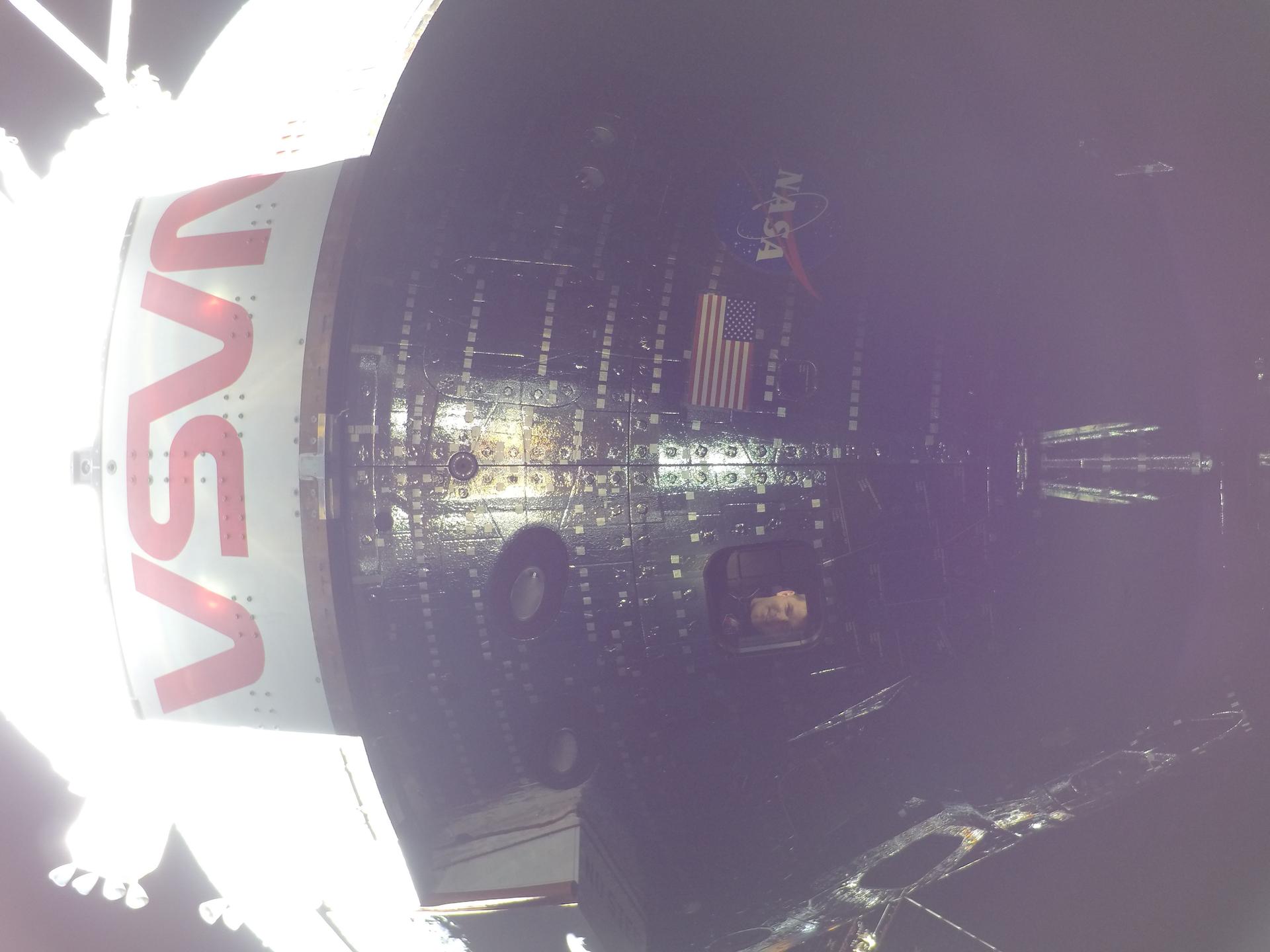
art002e009008 (April 4, 2026) - Artemis II Mission Specialist Jeremy Hansen is seen through a window of the Orion spacecraft while on his way to the Moon. This selfie-style photo was taken using a camera on the end of one of Orion's solar array wings on flight day 4 of the approximately 10-day test flight, when Orion was more than halfway to the Moon.
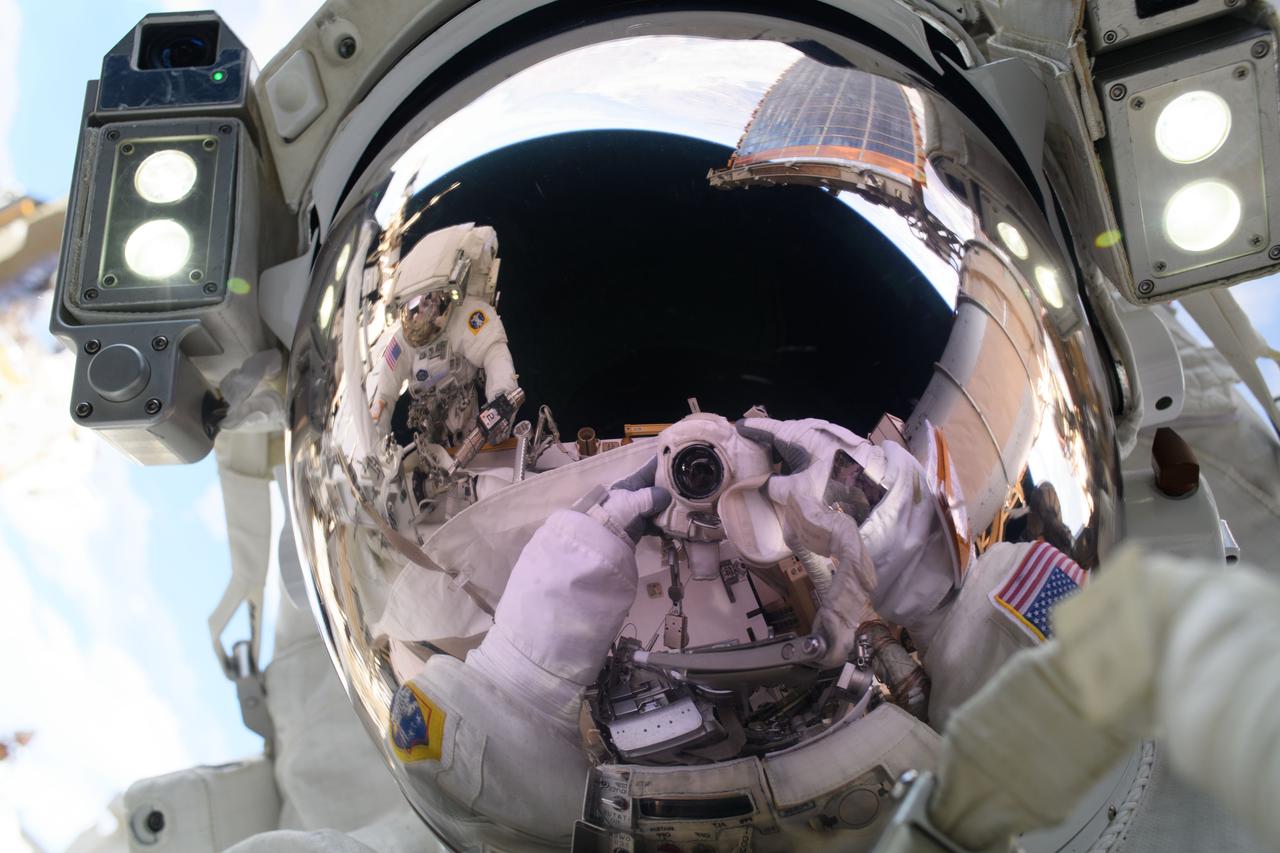
iss073e0008235 (May 1, 2025) --- NASA astronaut and Expedition 72 Flight Engineer Anne McClain points a camera towards herself and takes a "space-selfie" during a spacewalk to upgrade the orbital outpost's power generation system and relocate a communications antenna. Reflected in her helmet's visor is fellow spacewalker and NASA astronaut Nichole Ayers.
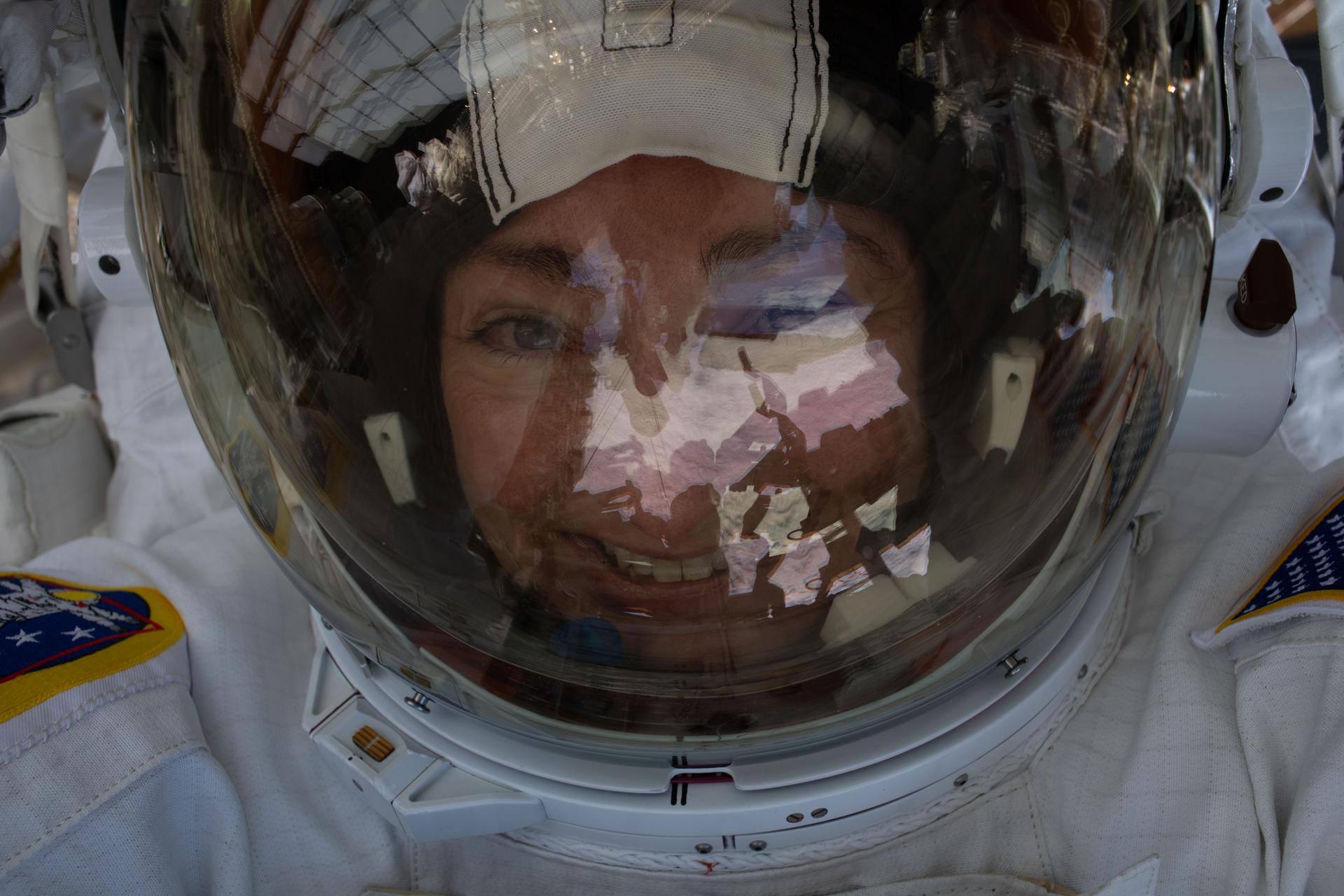
iss074e0789734 (June 30, 2026) --- NASA astronaut and Expedition 74 flight engineer Jessica Meir smiles for an out-of-this-world "space-selfie" during a seven-hour-and-20-minute spacewalk to replace a malfunctioning wrist joint on the International Space Station's Canadarm2 robotic arm. Credit: NASA/Jessica Meir
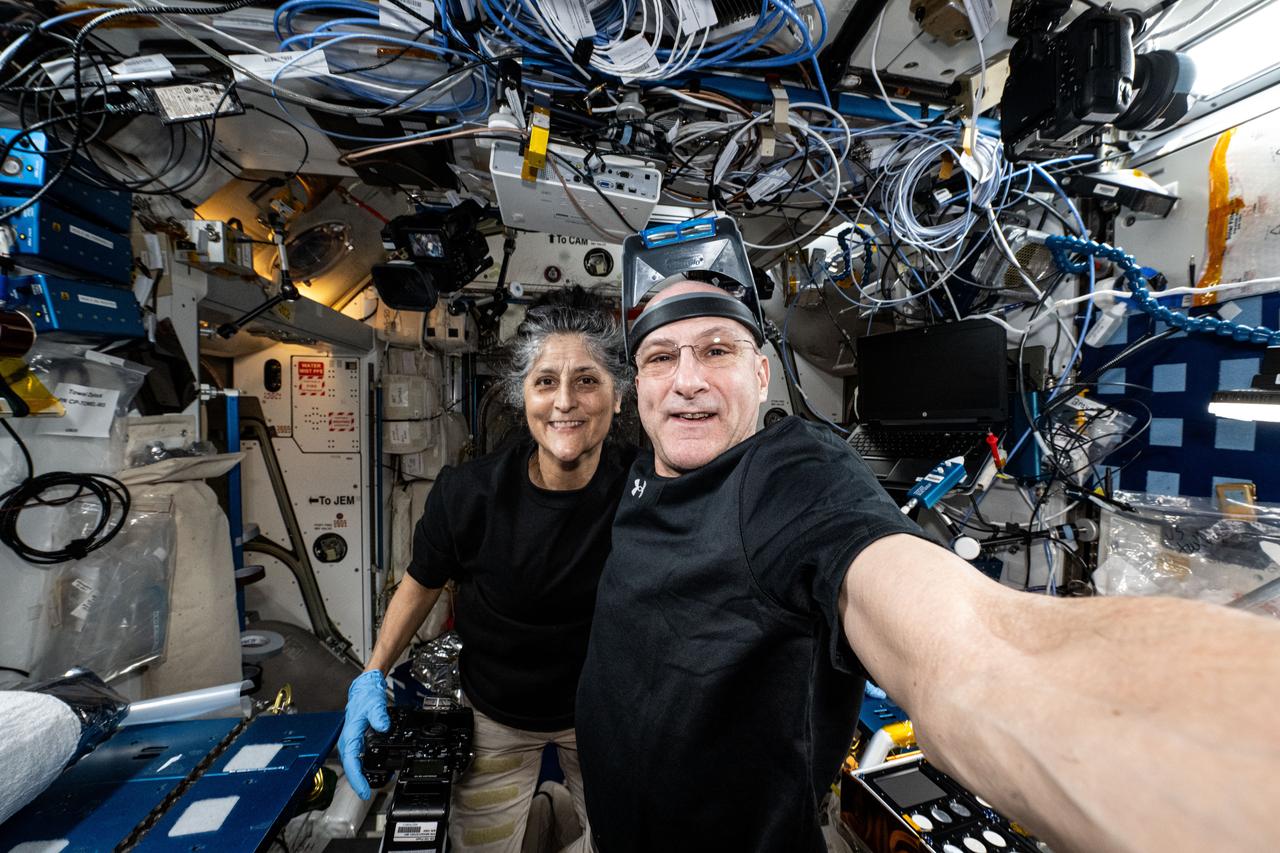
iss072e363109 (Dec. 13, 2024) --- NASA astronauts Suni Williams and Don Pettit, Expedition 72 Commander and Flight Engineer respectively, take a break from science maintenance activities and pose for a selfie-portrait aboard the International Space Station's Harmony module.
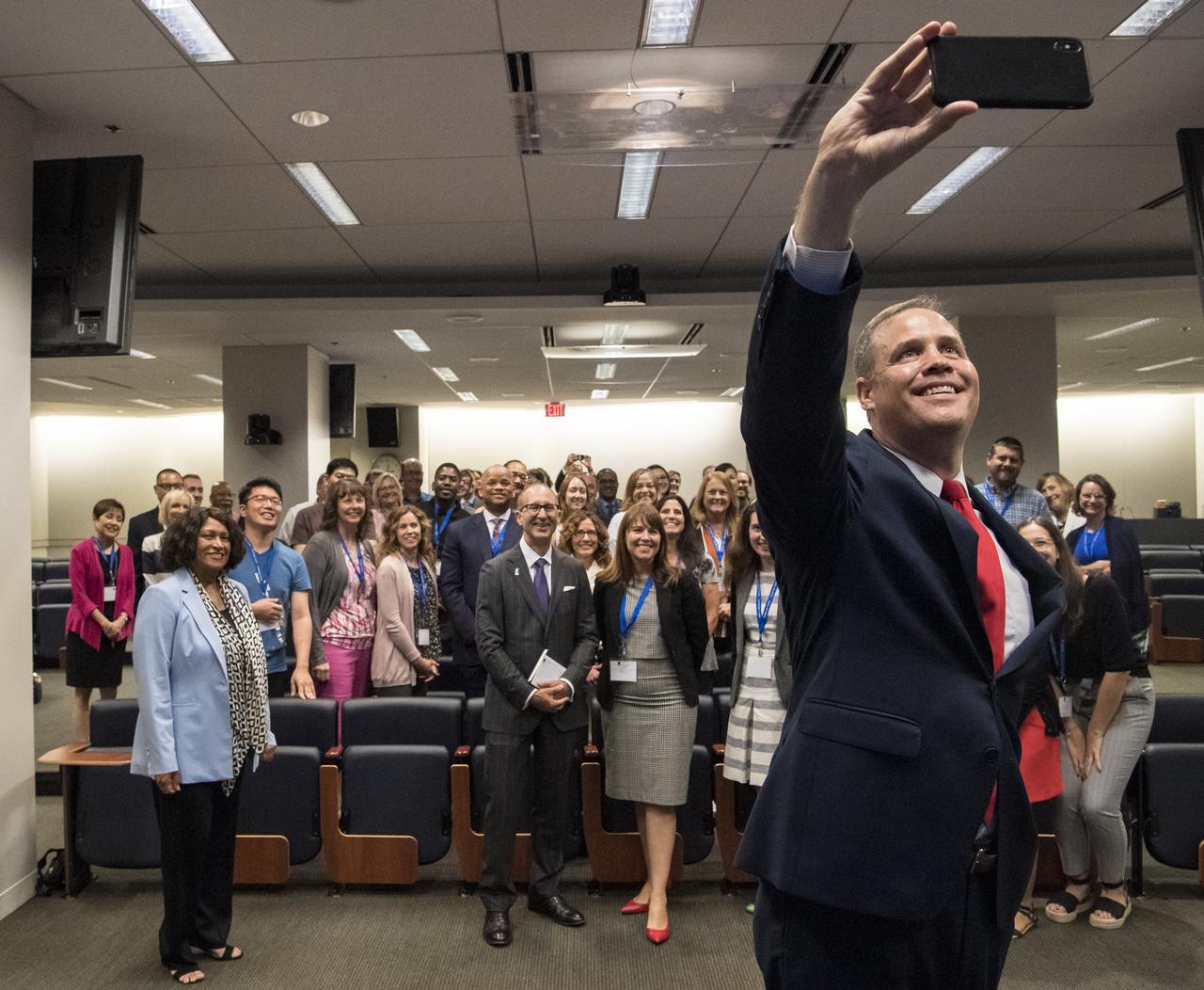
NASA Administrator Jim Bridenstine takes a selfie with the audience at the Challenger Center Annual Conference, Wednesday, August 14, 2019 at the Lockheed Martin Global Vision Center in Arlington, VA. Photo Credit: (NASA/Aubrey Gemignani)
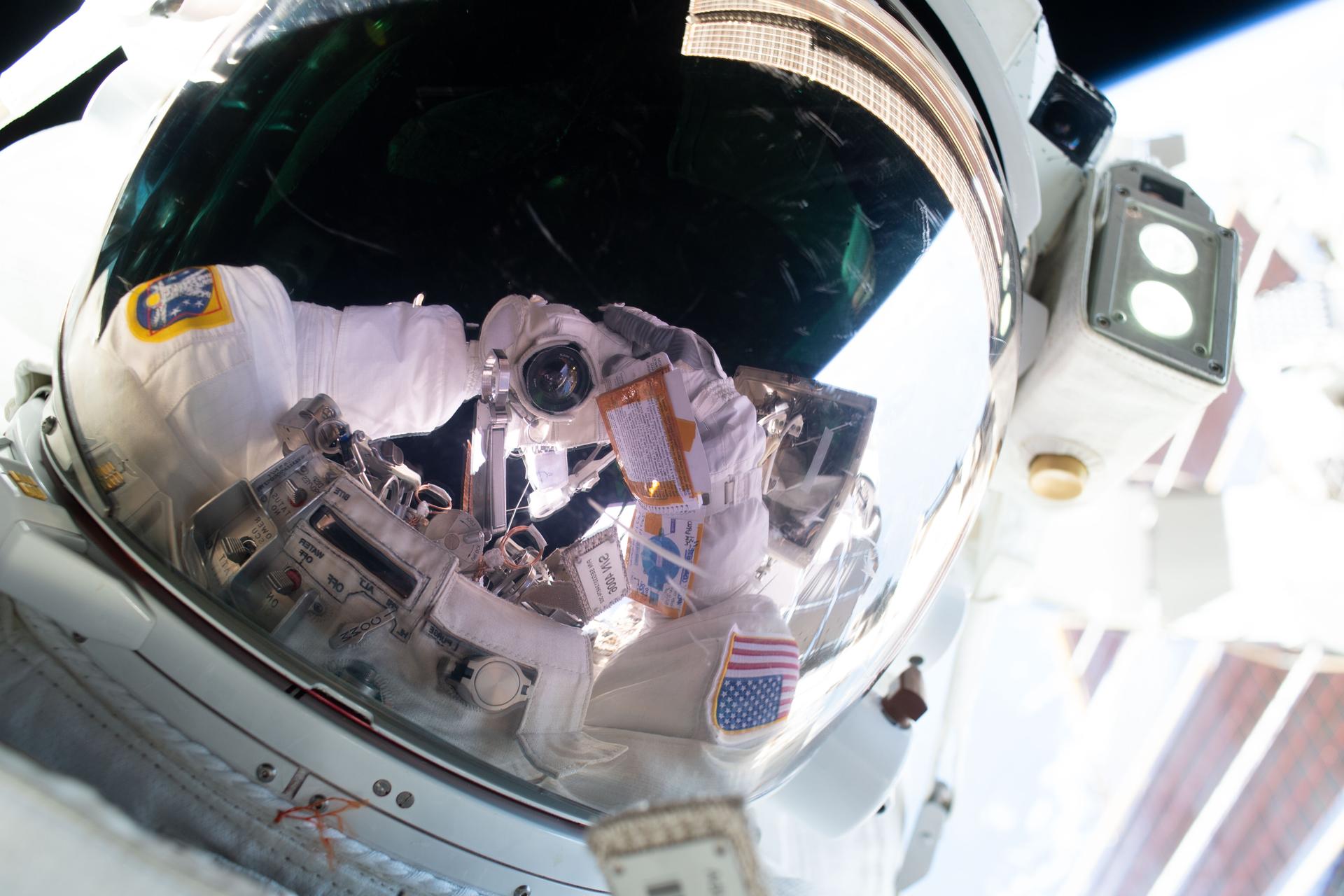
iss075e0068637 (Aug. 25, 2026) --- NASA astronaut and Expedition 75 flight engineer Anil Menon points his camera toward his spacesuit’s helmet visor and takes an out-of-this-world “space selfie.” Menon participated in a six-hour and 30-minute spacewalk with ESA (European Space Agency) astronaut and Expedition 75 flight engineer Sophie Adenot (out of frame) to install a high-speed space-to-ground antenna outside the International Space Station. Credit: NASA/Anil Menon
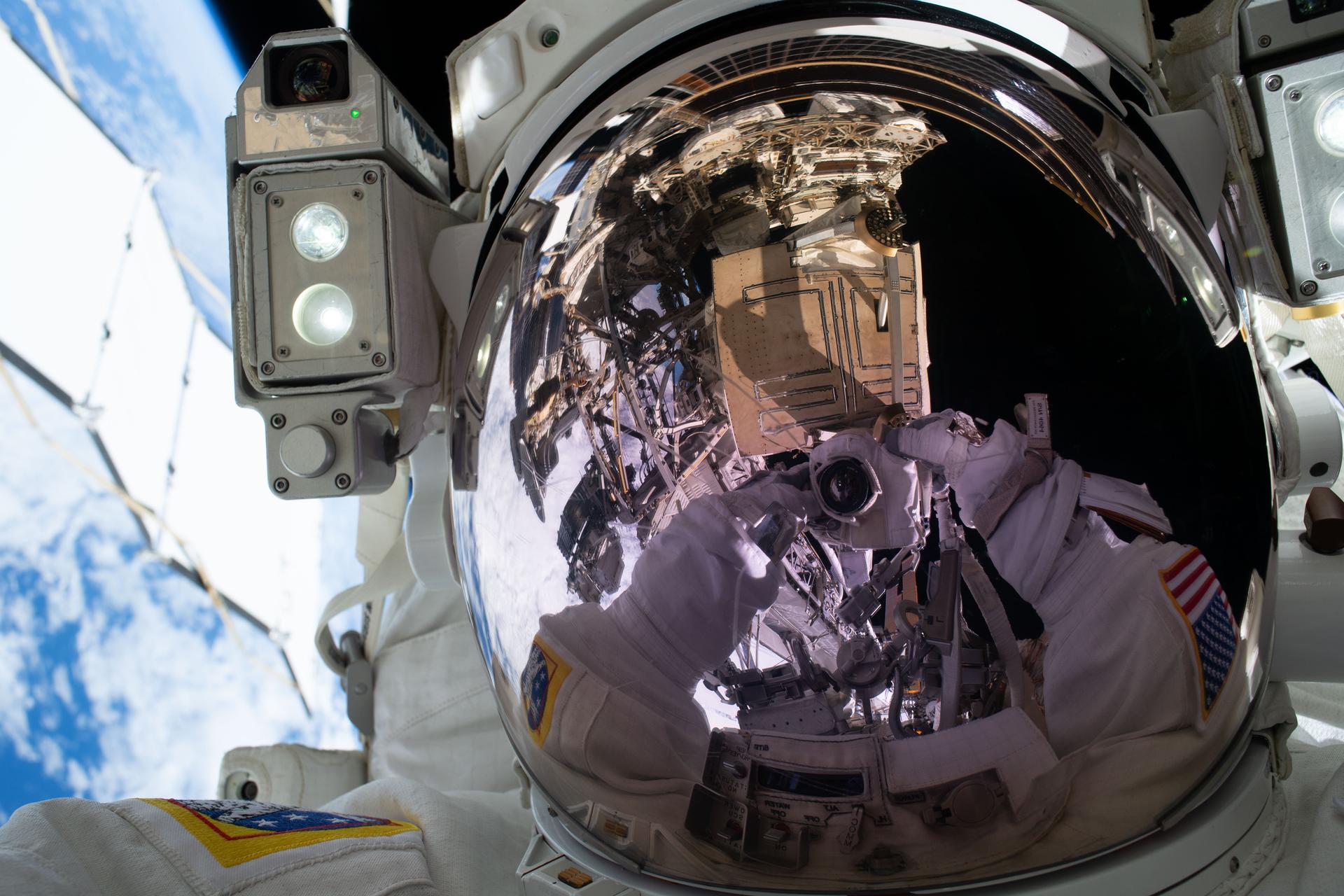
iss075e0086316 (Sept. 1, 2026) --- Expedition 75 commander Jessica Meir of NASA points her camera toward her spacesuit’s helmet visor and takes an out-of-this-world “space selfie.” Meir participated in a six-hour and 49‑minute spacewalk with ESA (European Space Agency) flight engineer Sophie Adenot (out of frame), installing a spacecraft navigation aid, swabbing the station’s exterior for microorganisms, and preparing a cosmic particle detector for future upgrades outside the International Space Station. Credit: NASA/Jessica Meir
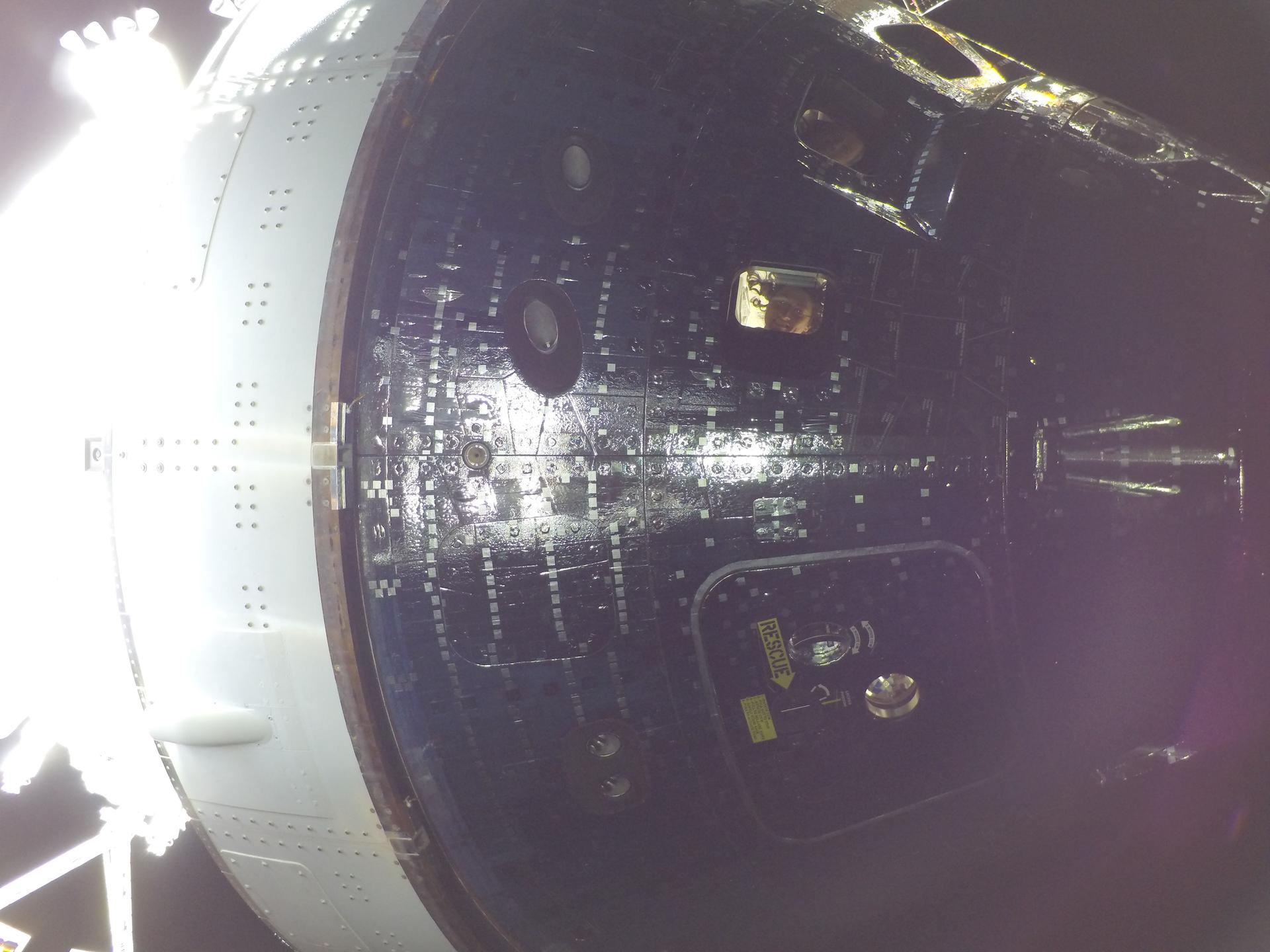
art002e009014 (April 4, 2026) - Artemis II Mission Specialist Christina Koch (center) and Commander Reid Wiseman (top) are seen through windows of the Orion spacecraft while on their way to the Moon. This selfie-style photo was taken using a camera on the end of one of Orion's solar array wings on flight day 4 of the approximately 10-day test flight, when Orion was more than halfway to the Moon.
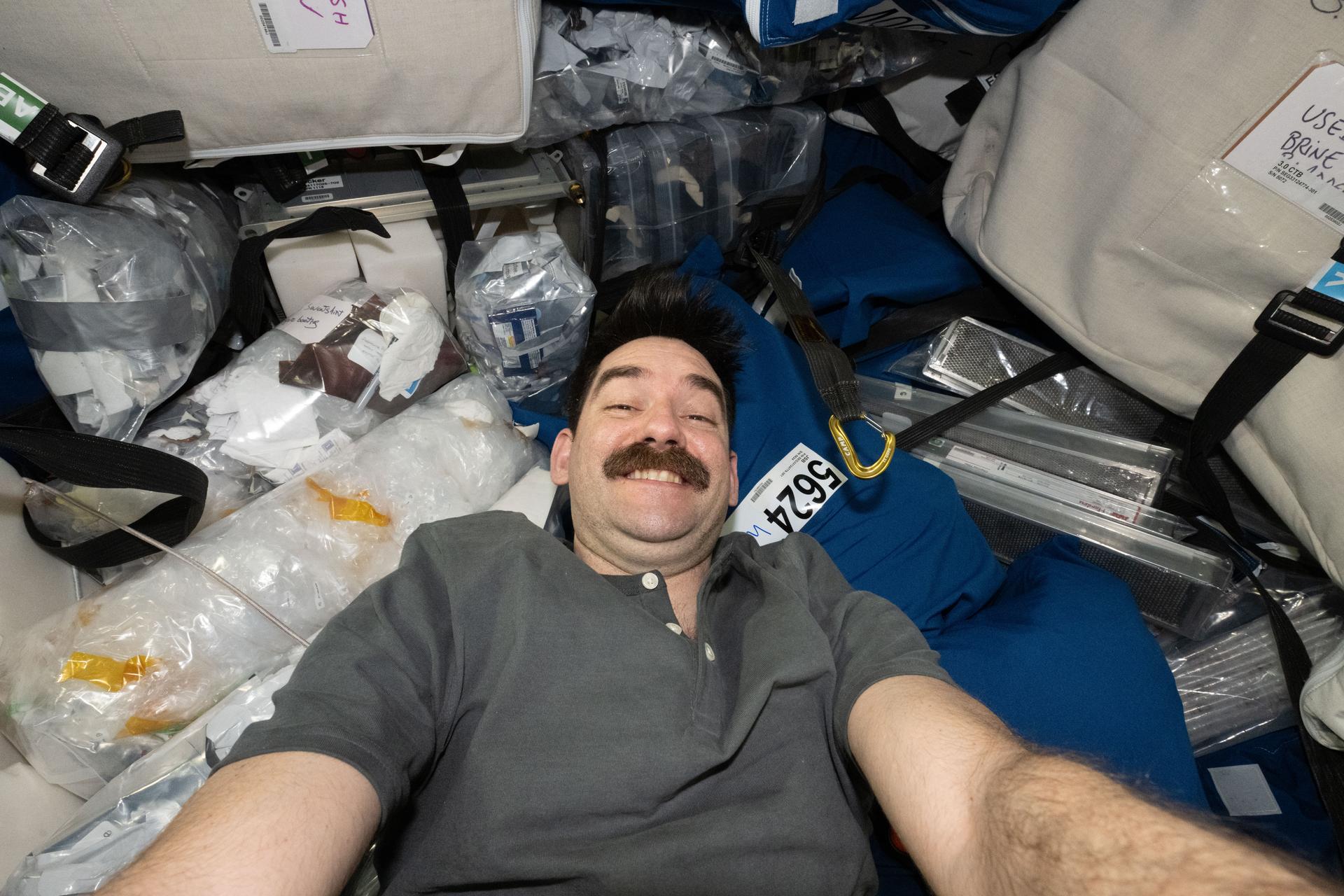
iss075e0161437 (Oct. 5, 2026) --- NASA astronaut and Expedition 75 flight engineer Jack Hathaway takes a selfie inside Northrop Grumman's Cygnus XL cargo spacecraft during cargo transfer activities. Credit: NASA/Jack Hathaway
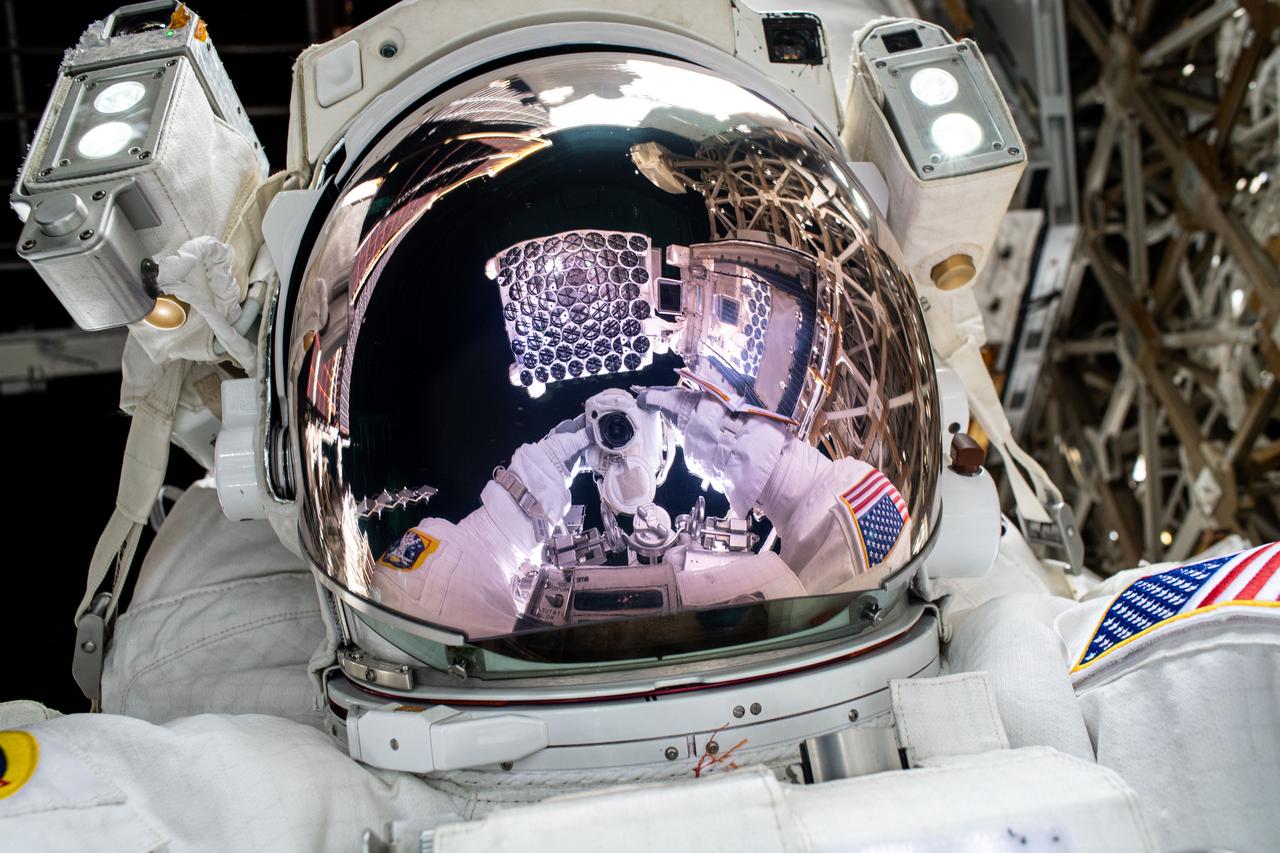
iss072e487911 (Jan. 16, 2025) --- The NICER X-ray telescope is reflected on NASA astronaut and Expedition 72 Flight Engineer Nick Hague's spacesuit helmet visor in this high-flying "space-selfie." Also, visible in Hague's visor is the camera he is pointing toward himself to take this photograph. During the six-hour spacewalk, Hague patched light leaks on some of NICER's 56 X-ray concentrators that block ultraviolet, infrared, and visible light while allowing X-rays to pass through to the mirrors underneath enabling the observation of neutron stars.
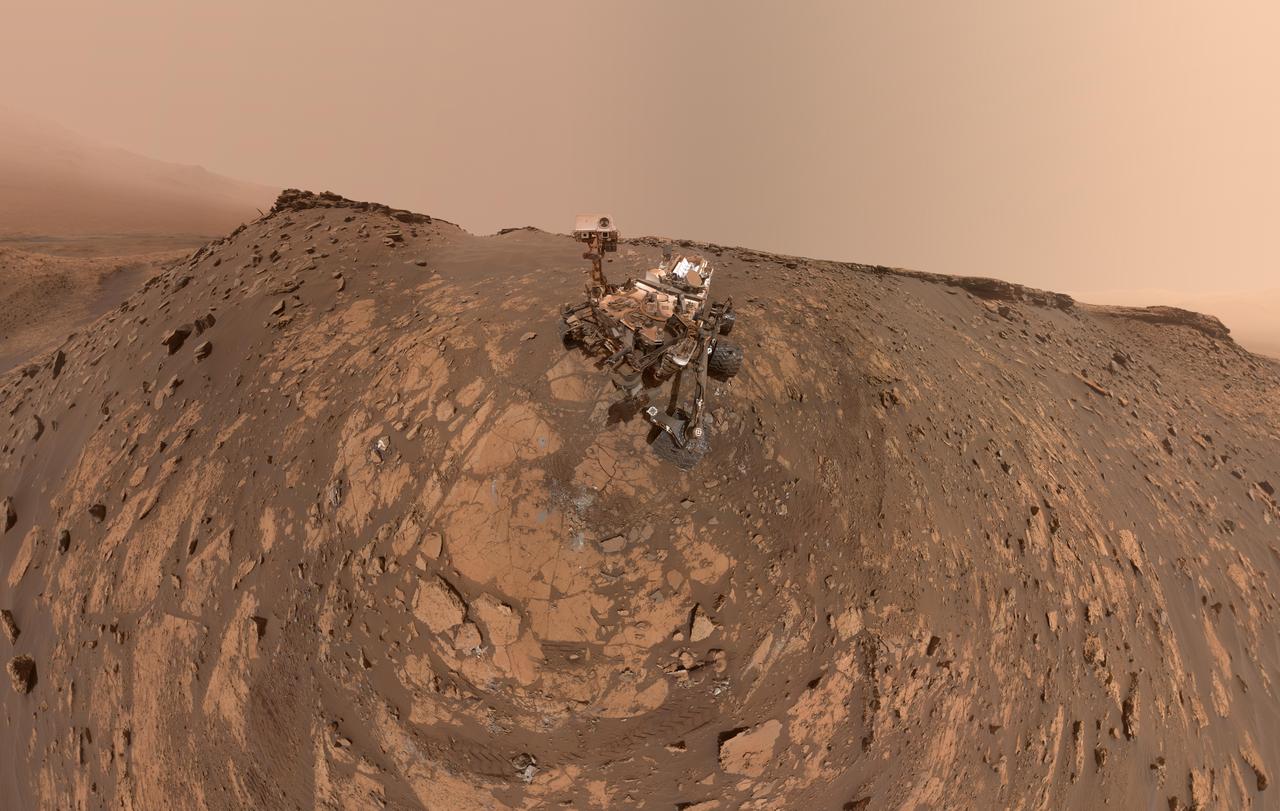
This selfie was taken by NASA's Curiosity Mars rover on Feb. 26, 2020 (the 2,687th Martian day, or sol, of the mission). The crumbling rock layer at the top of the image is the Greenheugh Pediment, which Curiosity climbed soon after taking the image. Directly to the left of Curiosity's foremost wheel is a hole the rover drilled at a rock feature called "Hutton." The selfie includes 86 individual images taken by the Mars Hand Lens Imager (MAHLI) camera on the end of Curiosity's robotic arm. The images were then stitched into a panorama. https://photojournal.jpl.nasa.gov/catalog/PIA23624
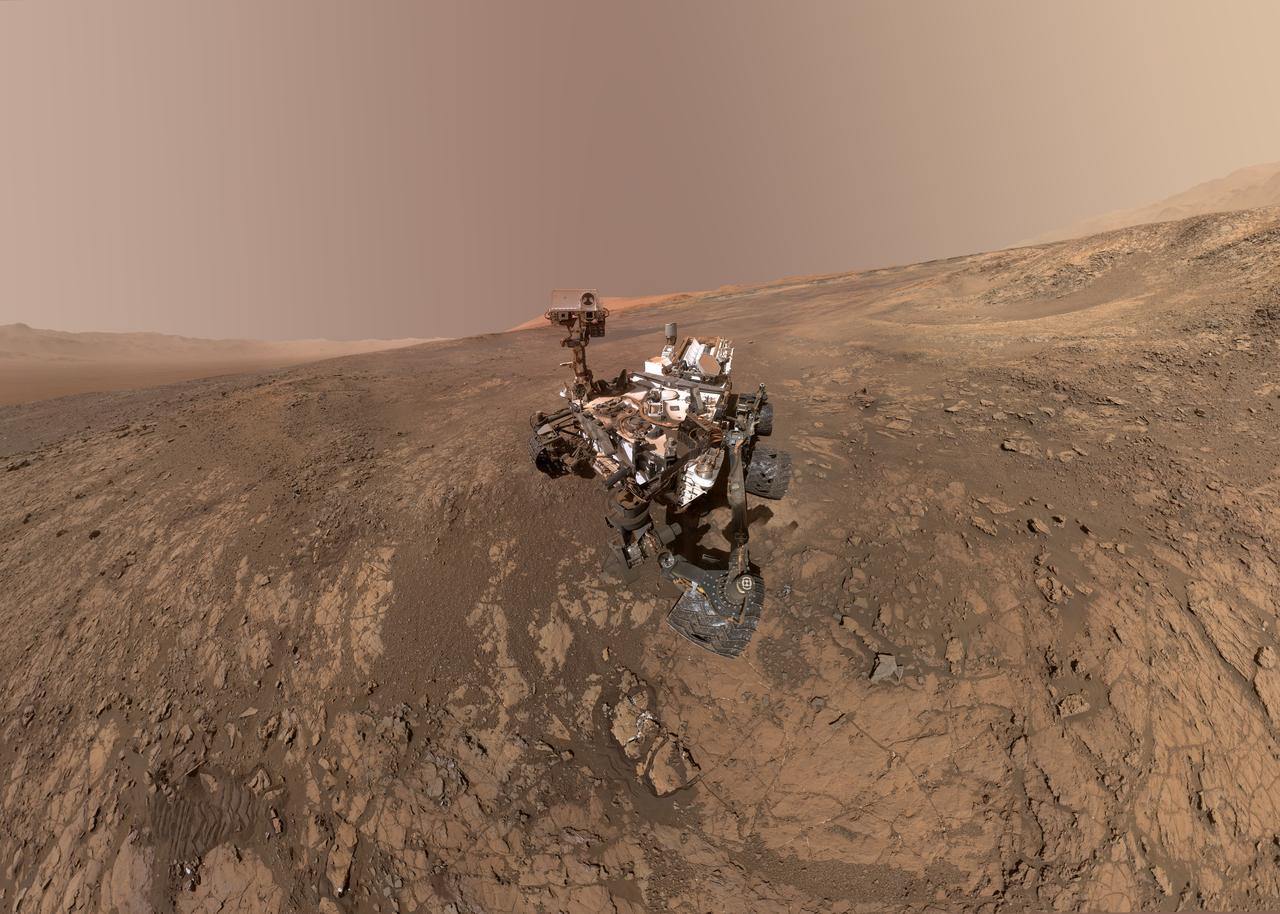
This self-portrait of NASA's Curiosity Mars rover shows the vehicle on Vera Rubin Ridge, which it's been investigating for the past several months. Directly behind the rover is the start of a clay-rich slope scientists are eager to begin exploring. In the coming week, Curiosity will begin to climb this slope. North is on the left and west is on the right, with Gale Crater's rim on the horizon of both edges. Poking up just behind Curiosity's mast is Mount Sharp, photobombing the robot's selfie. Curiosity landed on Mars five years ago with the intention of studying lower Mount Sharp, where it will remain for all of its time on Mars. The mountain's base provides access to layers formed over millions of years. These layers formed in the presence of water -- likely due to a lake or lakes that sat at the bottom of the mountain, which sits inside of Gale Crater. This mosaic was assembled from dozens of images taken by Curiosity's Mars Hands Lens Imager (MAHLI). They were all taken on Jan. 23, 2018, during Sol 1943. The view does not include the rover's arm nor the MAHLI camera itself, except in the miniature scene reflected upside down in the parabolic mirror at the top of the mast. That mirror is part of Curiosity's Chemistry and Camera (ChemCam) instrument. MAHLI appears in the center of the mirror. Wrist motions and turret rotations on the arm allowed MAHLI to acquire the mosaic's component images. The arm was positioned out of the shot in the images, or portions of images, that were used in this mosaic. A full-resolution image is available at https://photojournal.jpl.nasa.gov/catalog/PIA22207
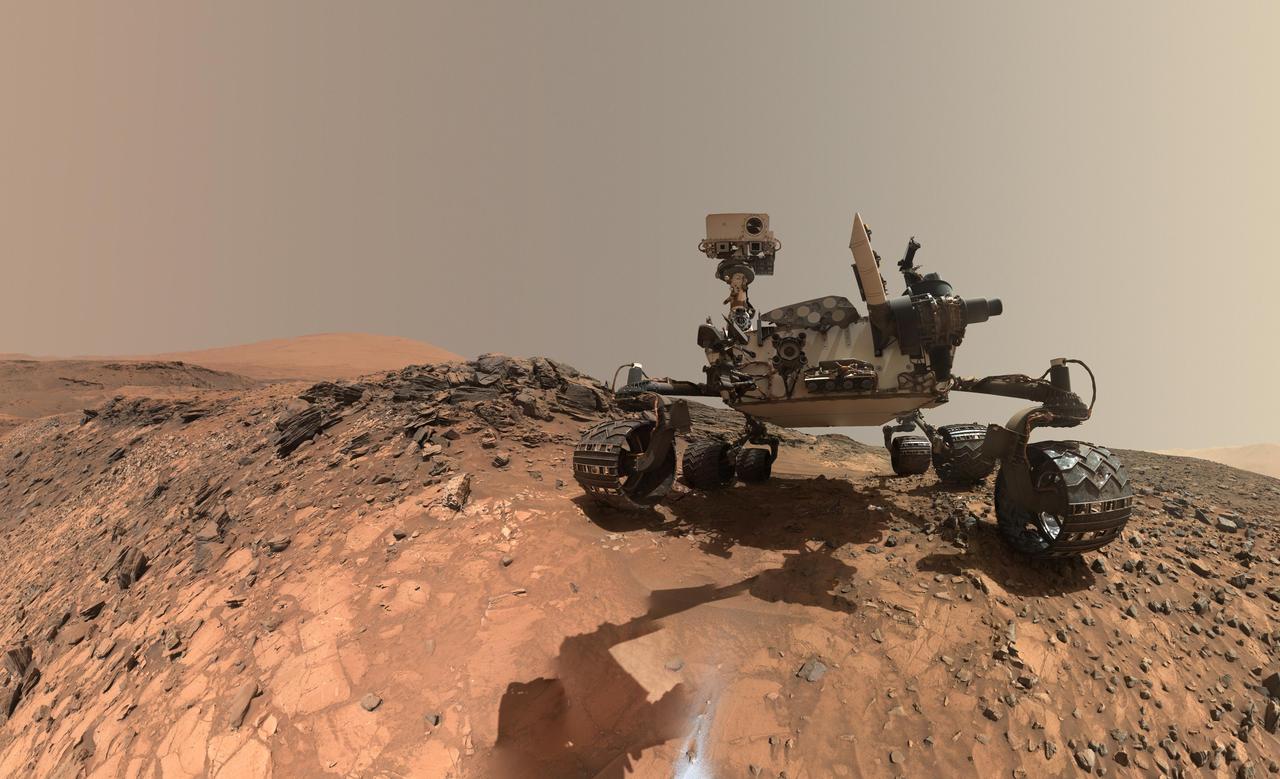
This low-angle self-portrait of NASA's Curiosity Mars rover shows the vehicle at the site from which it reached down to drill into a rock target called "Buckskin" on lower Mount Sharp. The selfie combines several component images taken by Curiosity's Mars Hand Lens Imager (MAHLI) on Aug. 5, 2015, during the 1,065th Martian day, or sol, of the rover's work on Mars. For scale, the rover's wheels are 20 inches (50 centimeters) in diameter and about 16 inches (40 centimeters) wide. This view is a portion of a larger panorama available at PIA19807. A close look reveals a small rock stuck onto Curiosity's left middle wheel (on the right in this head-on view). The rock had been seen previously during periodic monitoring of wheel condition about three weeks earlier, in the MAHLI raw image at http://mars.nasa.gov/msl/multimedia/raw/?rawid=1046MH0002640000400290E01_DXXX&s=1046. MAHLI is mounted at the end of the rover's robotic arm. For this self-portrait, the rover team positioned the camera lower in relation to the rover body than for any previous full self-portrait of Curiosity. This yielded a view that includes the rover's "belly," as in a partial self-portrait (/catalog/PIA16137) taken about five weeks after Curiosity's August 2012 landing inside Mars' Gale Crater. The selfie at Buckskin does not include the rover's robotic arm beyond a portion of the upper arm held nearly vertical from the shoulder joint. With the wrist motions and turret rotations used in pointing the camera for the component images, the arm was positioned out of the shot in the frames or portions of frames used in this mosaic. This process was used previously in acquiring and assembling Curiosity self-portraits taken at sample-collection sites "Rocknest" (PIA16468), "John Klein" (PIA16937), "Windjana" (PIA18390) and "Mojave" (PIA19142). MAHLI was built by Malin Space Science Systems, San Diego. NASA's Jet Propulsion Laboratory, a division of the California Institute of Technology in Pasadena, manages the Mars Science Laboratory Project for the NASA Science Mission Directorate, Washington. JPL designed and built the project's Curiosity rover. MAHLI was built by Malin Space Science Systems, San Diego. NASA's Jet Propulsion Laboratory, a division of the California Institute of Technology in Pasadena, manages the Mars Science Laboratory Project for the NASA Science Mission Directorate, Washington. JPL designed and built the project's Curiosity rover. http://photojournal.jpl.nasa.gov/catalog/PIA19808
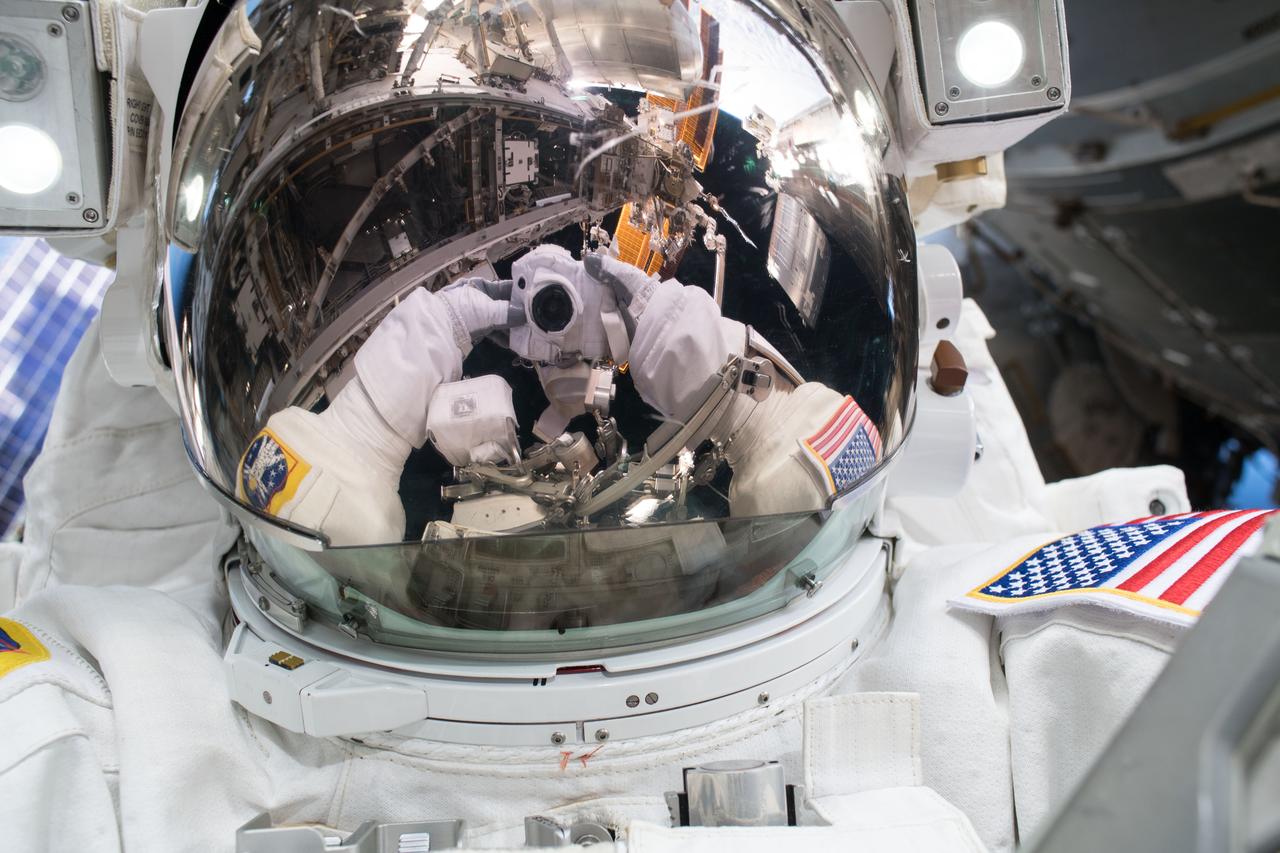
iss055e071506 (May 16, 2018) --- Astronaut Ricky Arnold takes an out-of-this-world selfie, or "space-selfie," during a spacewalk on May 16 to swap thermal control gear.
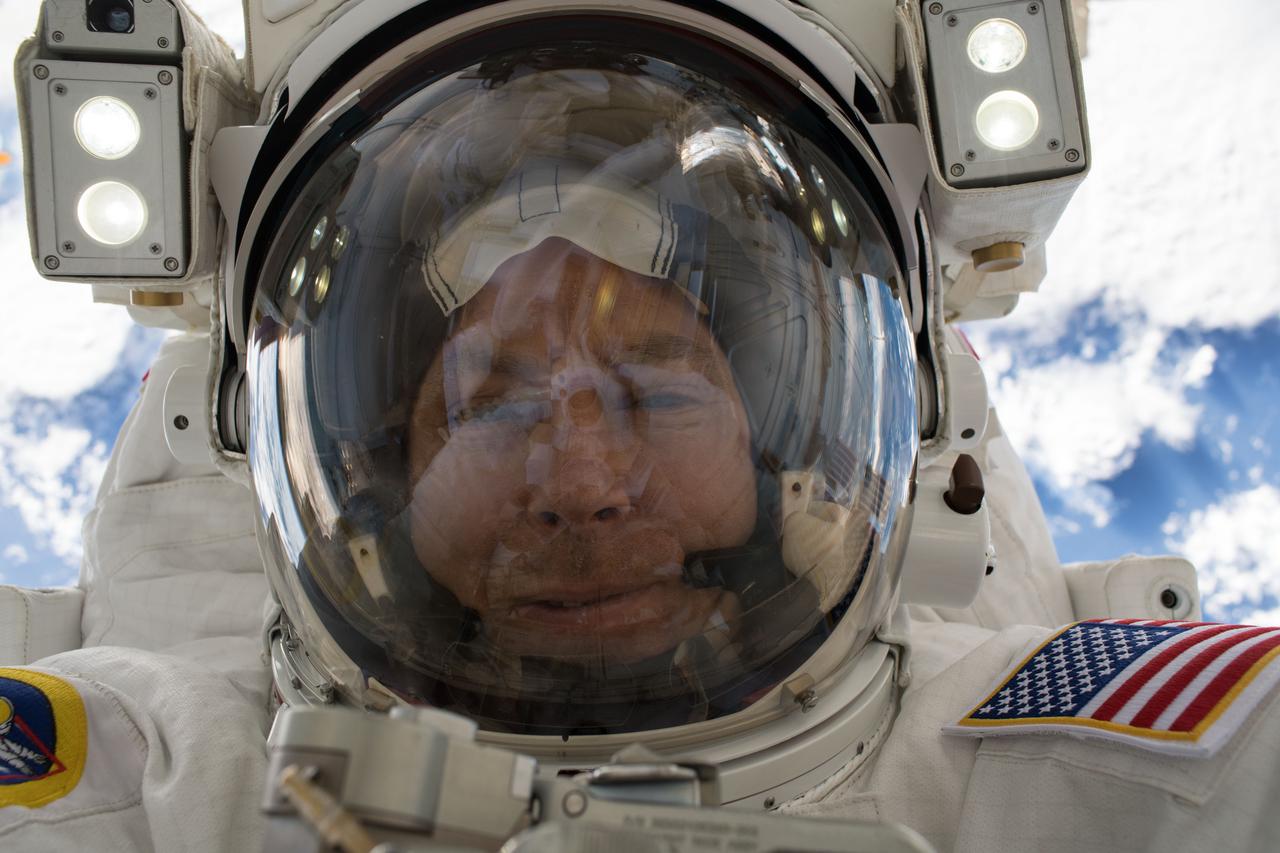
iss055e071274 (May 16, 2018) --- Astronaut Drew Feustel takes an out-of-this-world selfie, or "space-selfie," during a spacewalk on May 16 to swap thermal control gear.
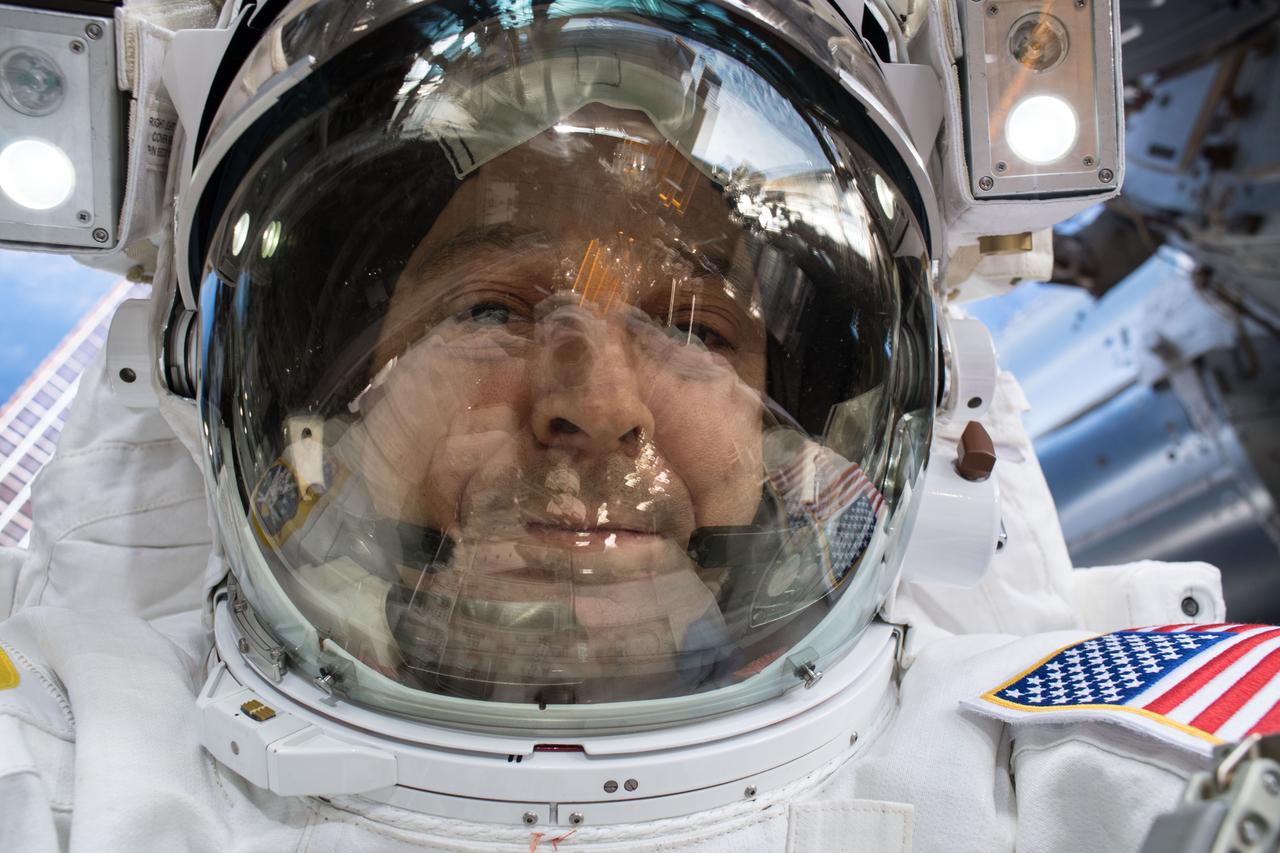
iss055e071274 (May 16, 2018) --- Astronaut Ricky Arnold takes an out-of-this-world selfie, or "space-selfie," during a spacewalk on May 16 to swap thermal control gear.
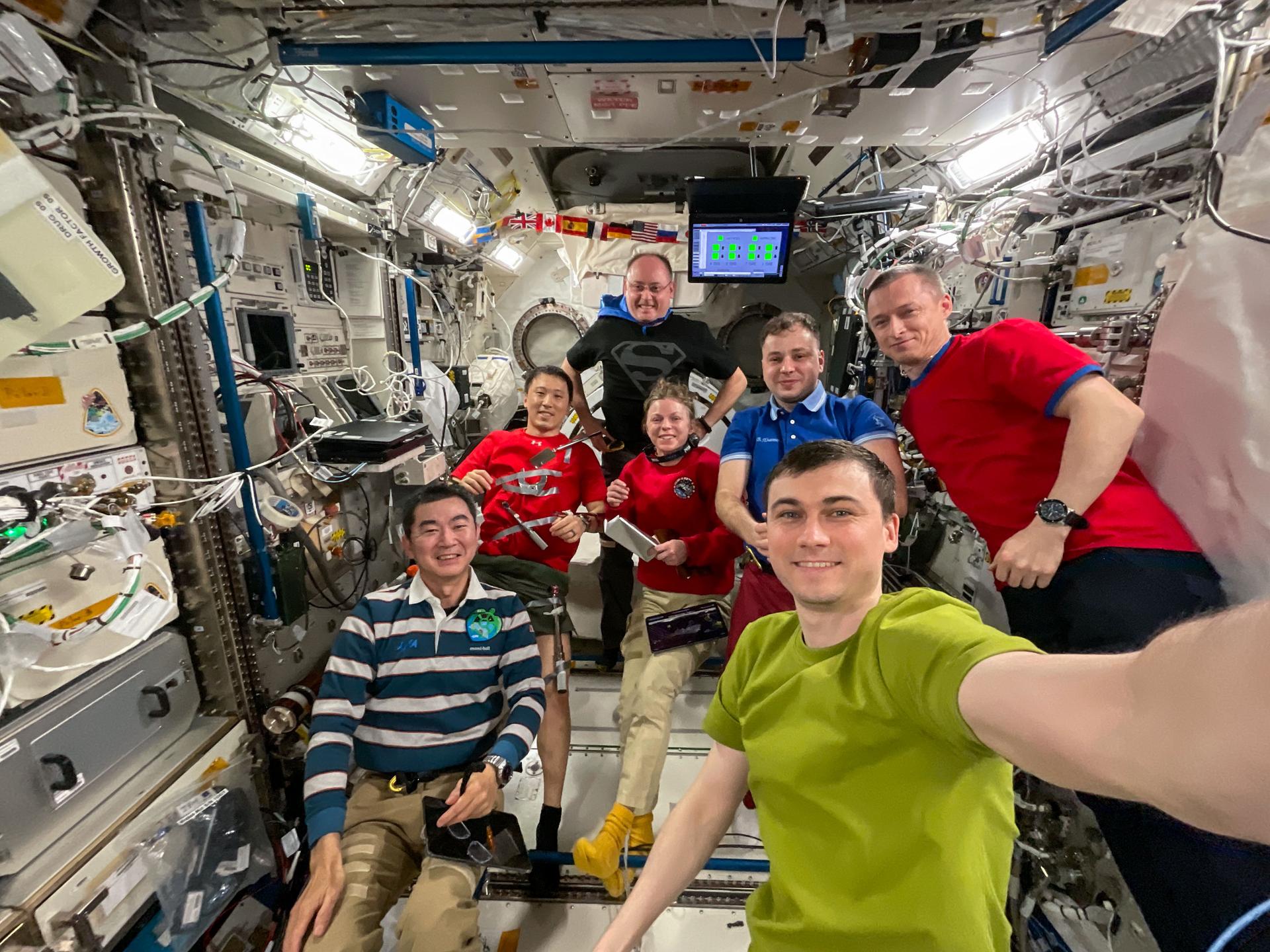
iss073e1329931 (Oct. 24, 2025) --- Roscosmos cosmonaut Alexey Zubritsky holds the camera for a group selfie with fellow Expedition 73 crew members Kimiya Yui of JAXA (Japan Aerospace Exploration Agency) at lower left, (second row from left) NASA astronauts Jonny Kim and Zena Cardman, Roscosmos cosmonauts Oleg Platonov and Sergey Ryzhikov, and in the back, NASA astronaut Mike Fincke.
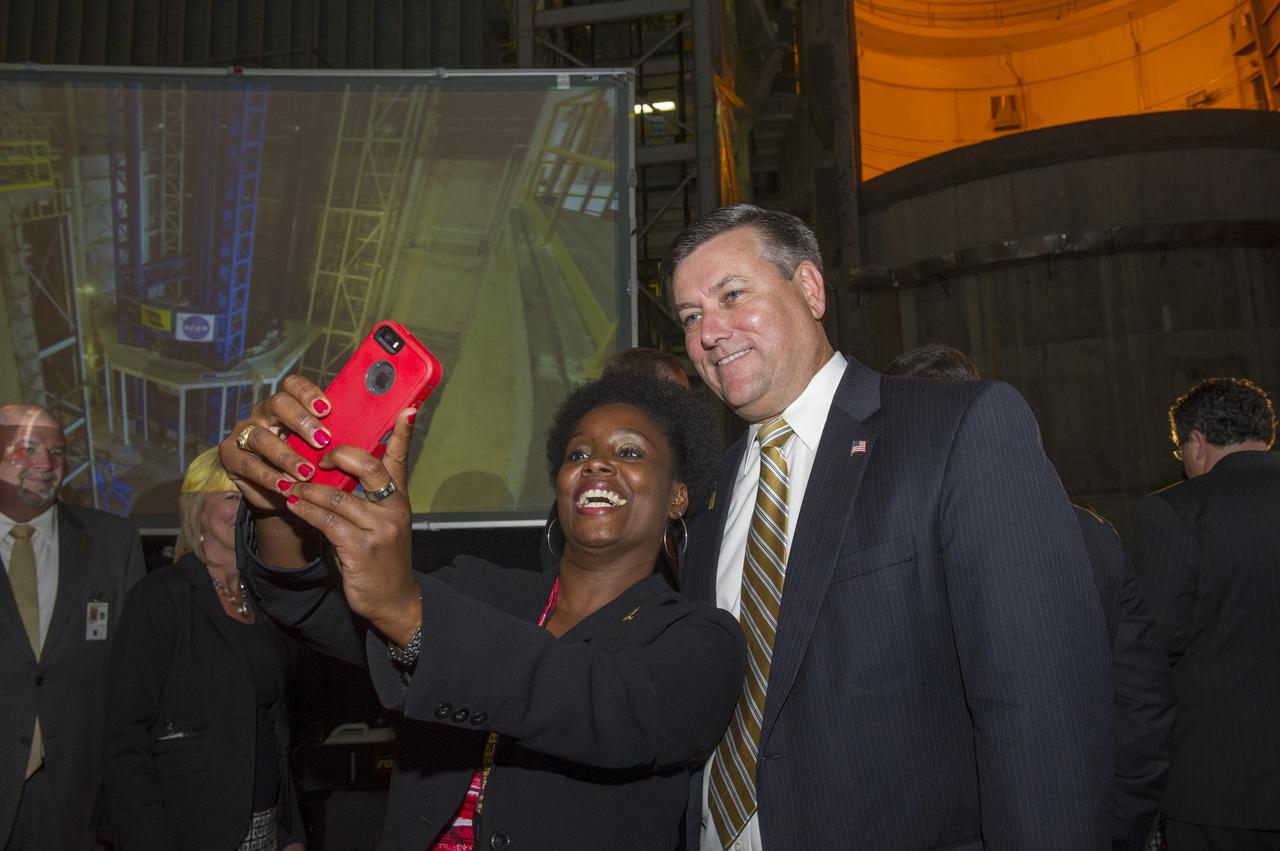
DR. RENEE HORTON TAKES A SELFIE WITH PATRICK SCHEUERMANN
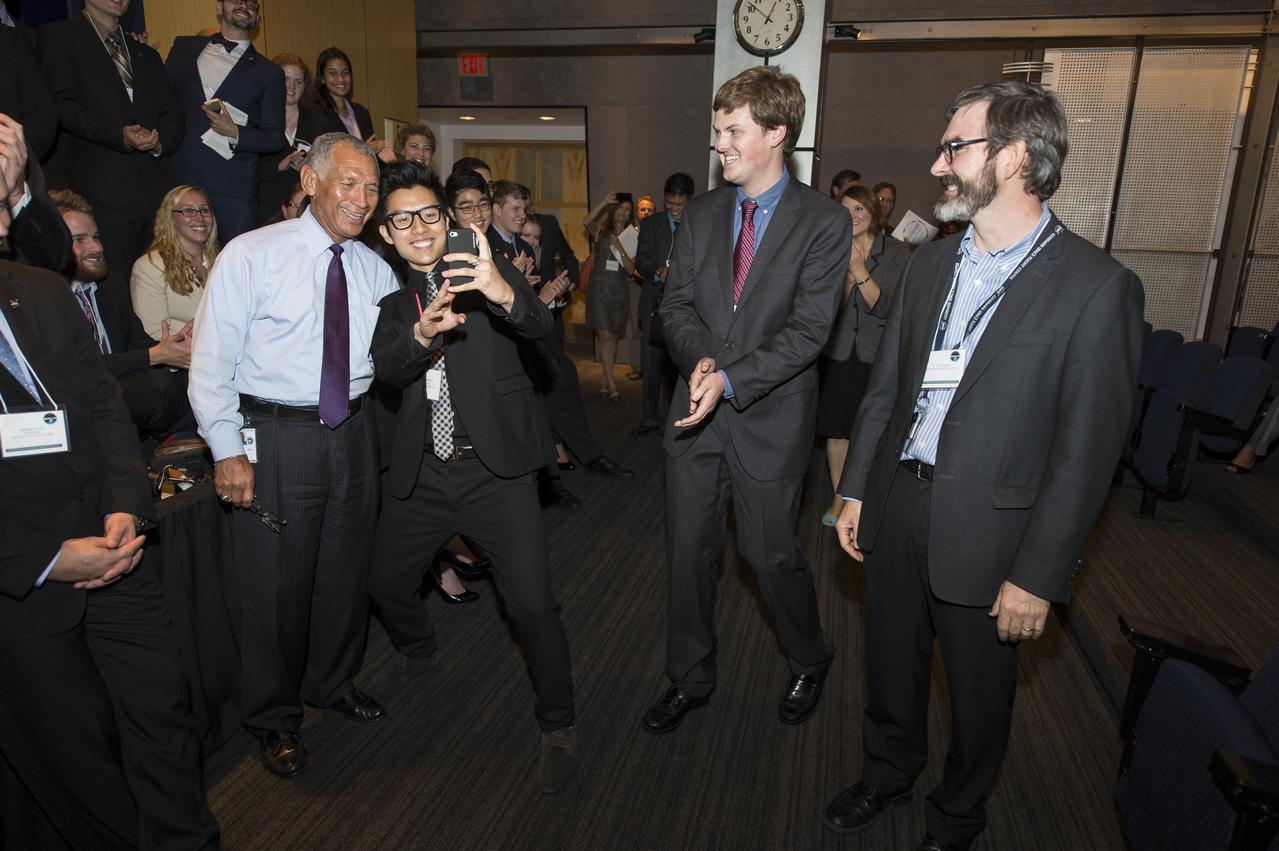
NASA Administrator Charles Bolden poses for a selfie after a quick rap performance by some young professionals during the annual DEVELOP Earth Science Application Showcase at NASA headquarters Tuesday, August 5, 2014. The Earth Science Applications Showcase highlights the work of over 150 participants in the 10-week DEVELOP program that started in June. The DEVELOP Program bridges the gap between NASA Earth science and society, building capacity in both its participants and partner organizations, to better prepare them to handle the challenges that face our society and future generations. Photo Credit: (NASA/Aubrey Gemignani)
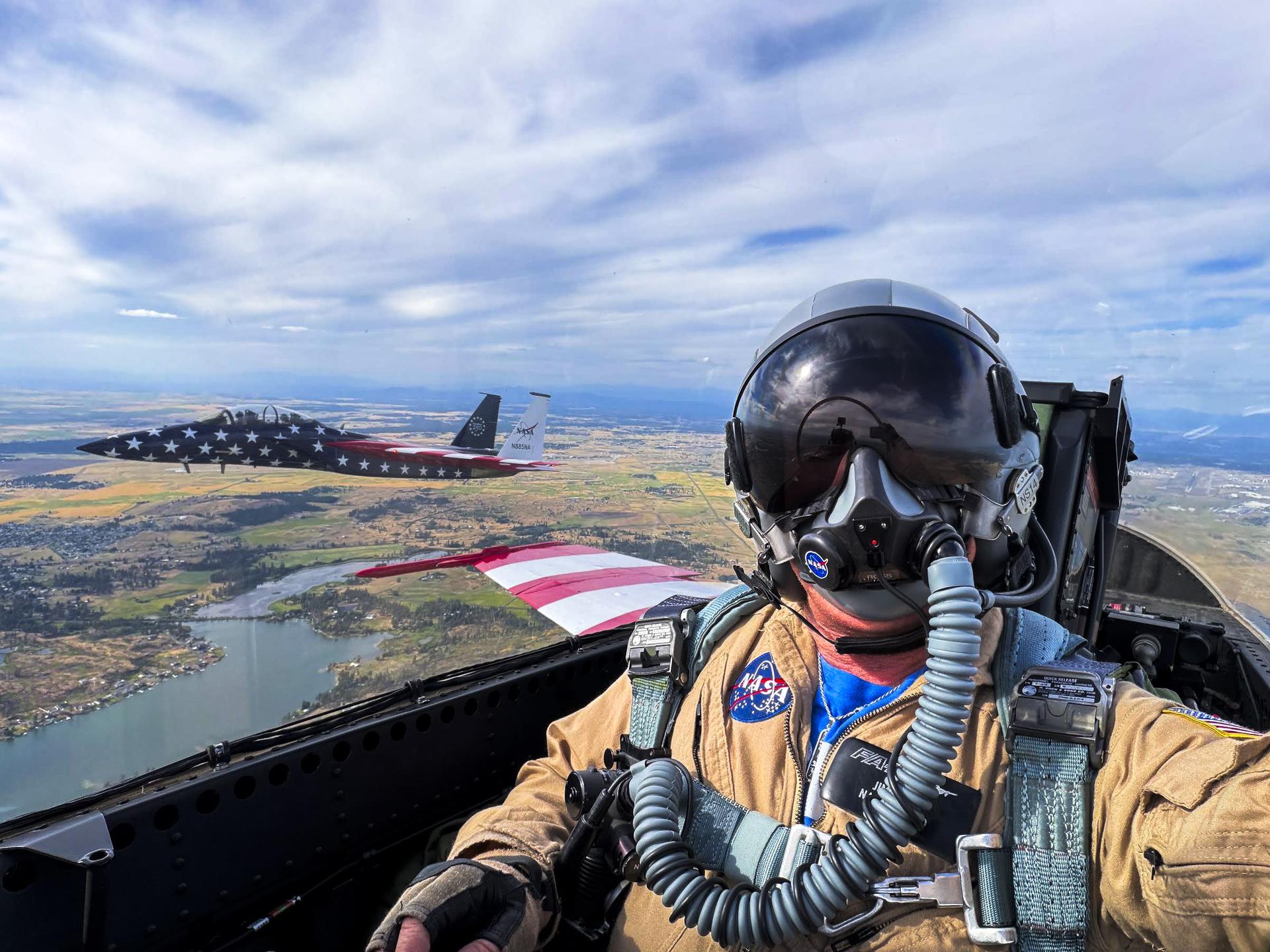
NASA photographer Jim Ross takes a selfie from the rear seat of a NASA F/A‑18 during a cross‑country flight from Spokane, Washington, to Washington, D.C., on Thursday, July 2, 2026. The agency’s F‑15, flying alongside the aircraft, is visible through the window. Both aircraft, from NASA’s Armstrong Flight Research Center in Edwards, California, participated in the Freedom 250 flyover with other NASA and military aircraft on Saturday, July 4, 2026.
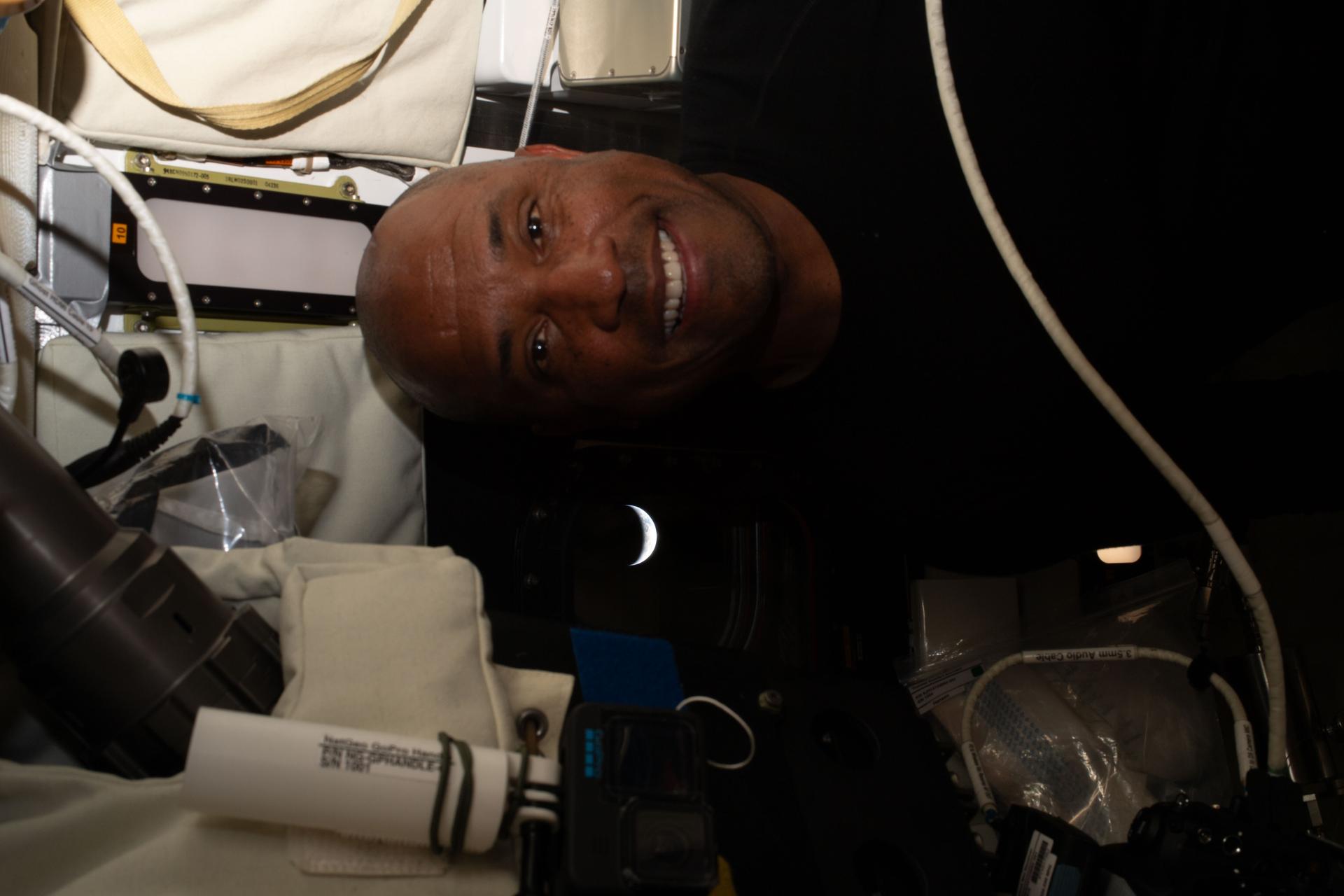
art002e025219 (April 9, 2026) - NASA astronaut Victor Glover pictured inside the Orion spacecraft with the crescent Earth pictured through the window behind him. This picture was captured after the Artemis II crew completed their lunar flyby and were on their way back to Earth. Credit: NASA
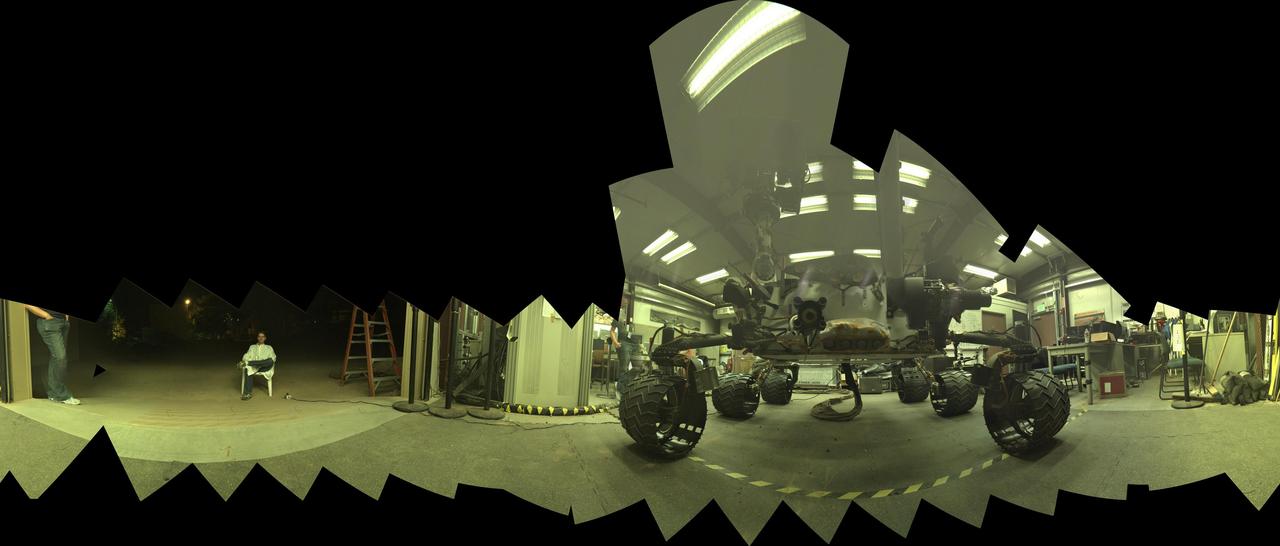
This view of a test rover at NASA's Jet Propulsion Laboratory, Pasadena, California, results from advance testing of arm positions and camera pointings for taking a low-angle self-portrait of NASA's Curiosity Mars rover. This rehearsal in California led to a dramatic Aug. 5, 2015, selfie of Curiosity, online at PIA19807. Curiosity's arm-mounted Mars Hand Lens Imager (MAHLI) camera took 92 of component images that were assembled into that mosaic. The rover team positioned the camera lower in relation to the rover body than for any previous full self-portrait of Curiosity. This practice version was taken at JPL's Mars Yard in July 2013, using the Vehicle System Test Bed (VSTB) rover, which has a test copy of MAHLI on its robotic arm. MAHLI was built by Malin Space Science Systems, San Diego. JPL, a division of the California Institute of Technology in Pasadena, manages the Mars Science Laboratory Project for the NASA Science Mission Directorate, Washington. JPL designed and built the project's Curiosity rover. http://photojournal.jpl.nasa.gov/catalog/PIA19810
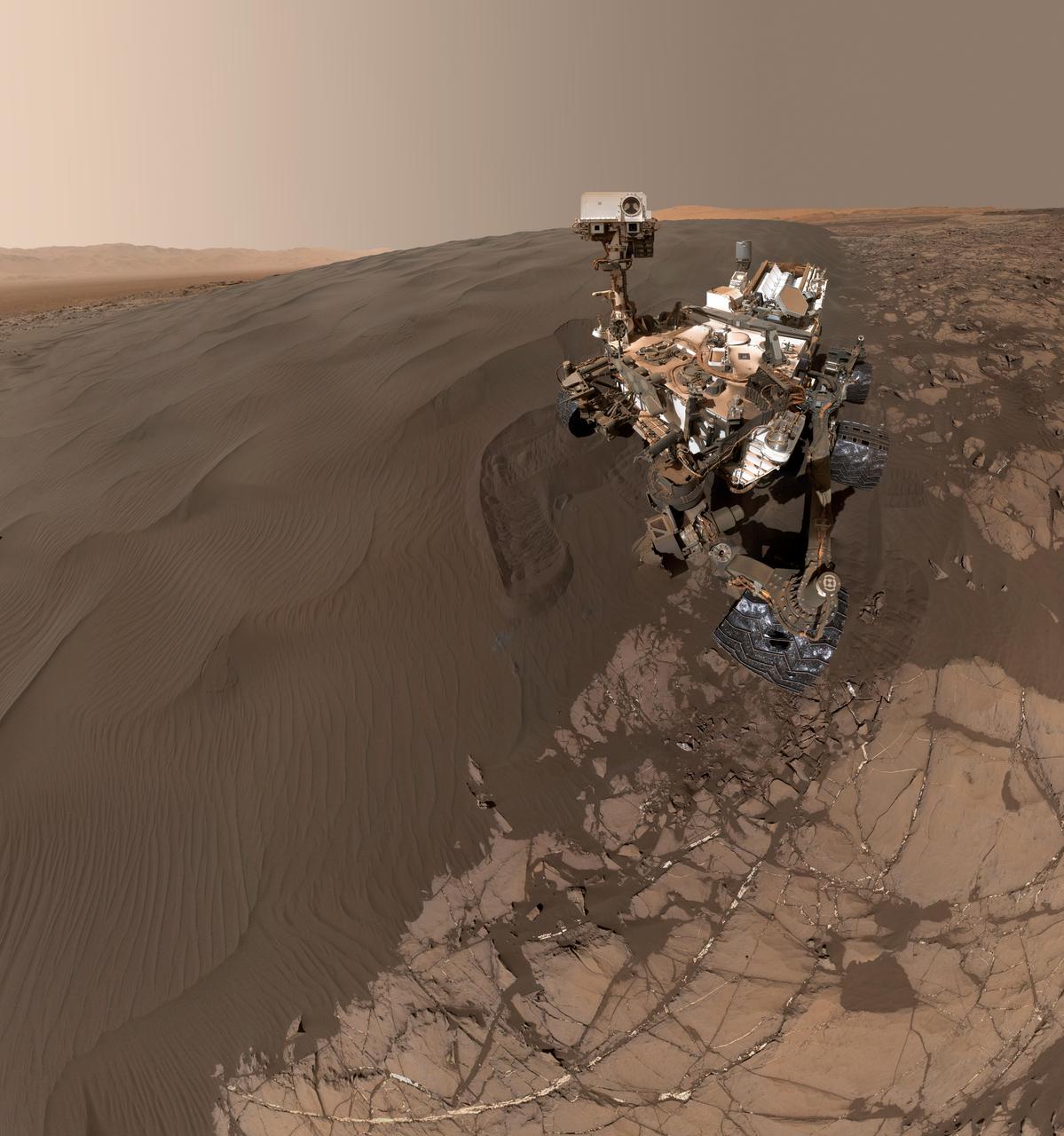
This self-portrait of NASA's Curiosity Mars rover shows the vehicle at "Namib Dune," where the rover's activities included scuffing into the dune with a wheel and scooping samples of sand for laboratory analysis. The scene combines 57 images taken on Jan. 19, 2016, during the 1,228th Martian day, or sol, of Curiosity's work on Mars. The camera used for this is the Mars Hand Lens Imager (MAHLI) at the end of the rover's robotic arm. Namib Dune is part of the dark-sand "Bagnold Dune Field" along the northwestern flank of Mount Sharp. Images taken from orbit have shown that dunes in the Bagnold field move as much as about 3 feet (1 meter) per Earth year. The location of Namib Dune is show on a map of Curiosity's route at http://mars.nasa.gov/msl/multimedia/images/?ImageID=7640. The relationship of Bagnold Dune Field to the lower portion of Mount Sharp is shown in a map at PIA16064. The view does not include the rover's arm. Wrist motions and turret rotations on the arm allowed MAHLI to acquire the mosaic's component images. The arm was positioned out of the shot in the images, or portions of images, that were used in this mosaic. This process was used previously in acquiring and assembling Curiosity self-portraits taken at sample-collection sites, including "Rocknest" (PIA16468), "Windjana" (PIA18390) and "Buckskin" (PIA19807). For scale, the rover's wheels are 20 inches (50 centimeters) in diameter and about 16 inches (40 centimeters) wide. Other Curiosity self-portraits are available at http://photojournal.jpl.nasa.gov/catalog/PIA20316
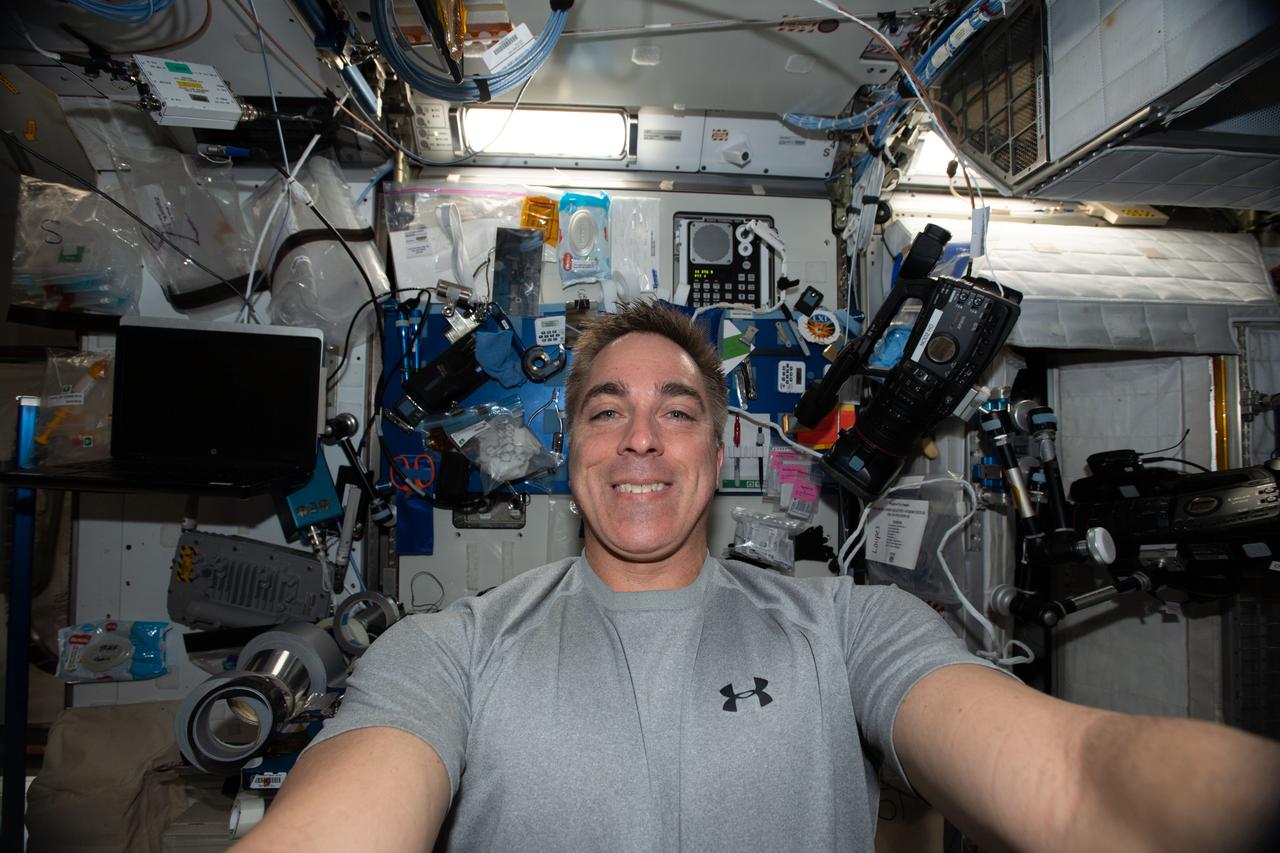
iss063e004860 (May 3, 2020) --- NASA astronaut and Expedition 63 Commander Chris Cassidy poses for a weekend selfie aboard the International Space Station.
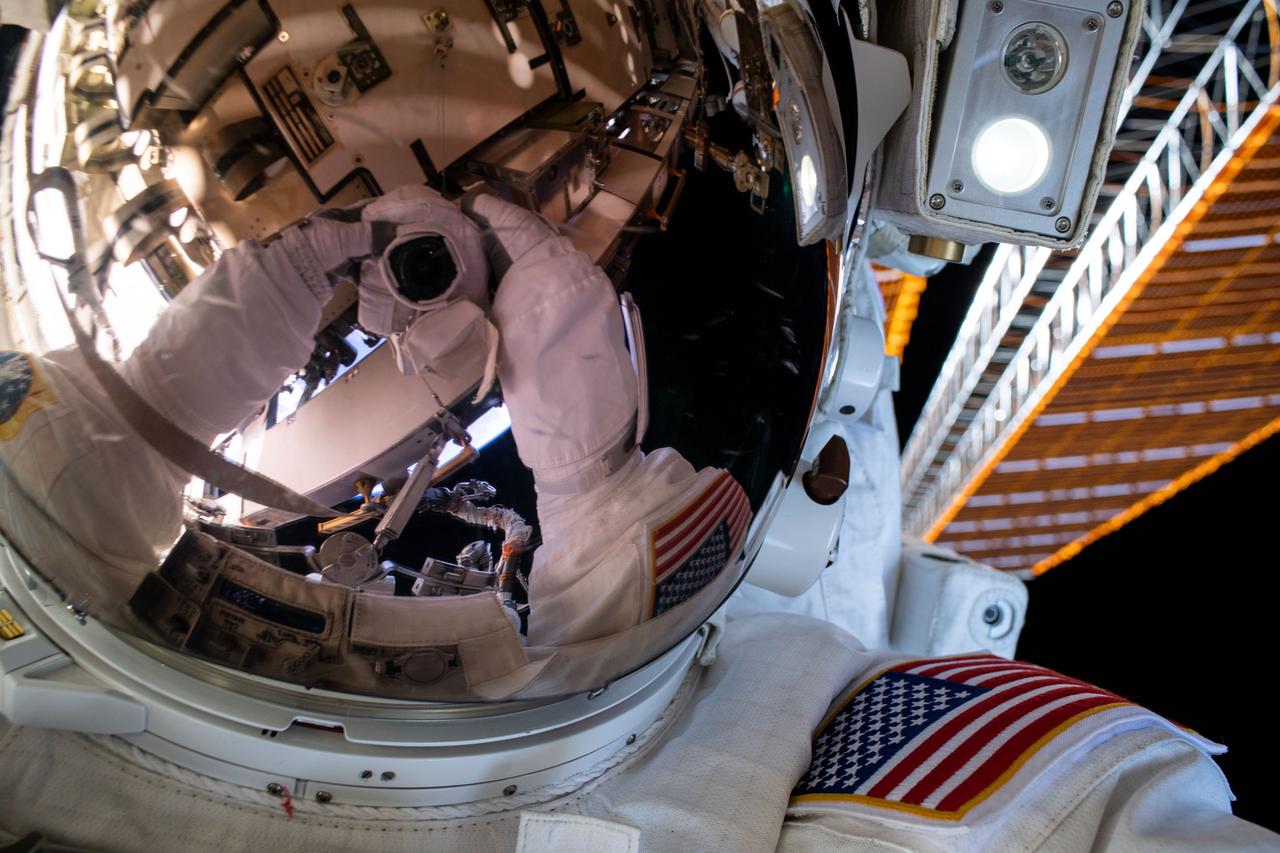
iss063e033403 (June 26, 2020) --- A spacewalker's spacesuit gloves and camera are reflected in the helmet visor in this "space-selfie" taken during a six-hour and seven-minute spacewalk.
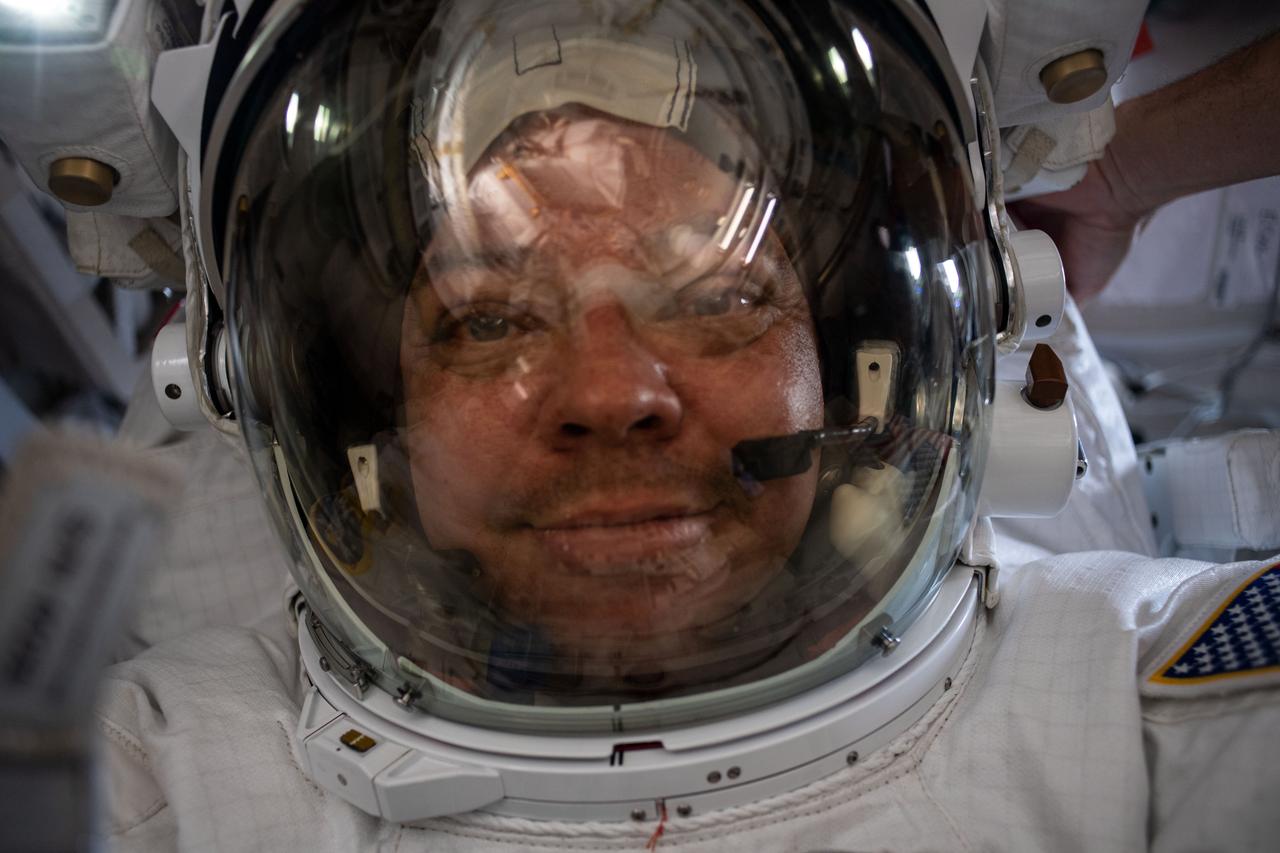
iss063e052704 (July 21, 2020) --- NASA spacewalker Bob Behnken takes a "space-selfie" with his helmet visor up on his U.S. spacesuit.
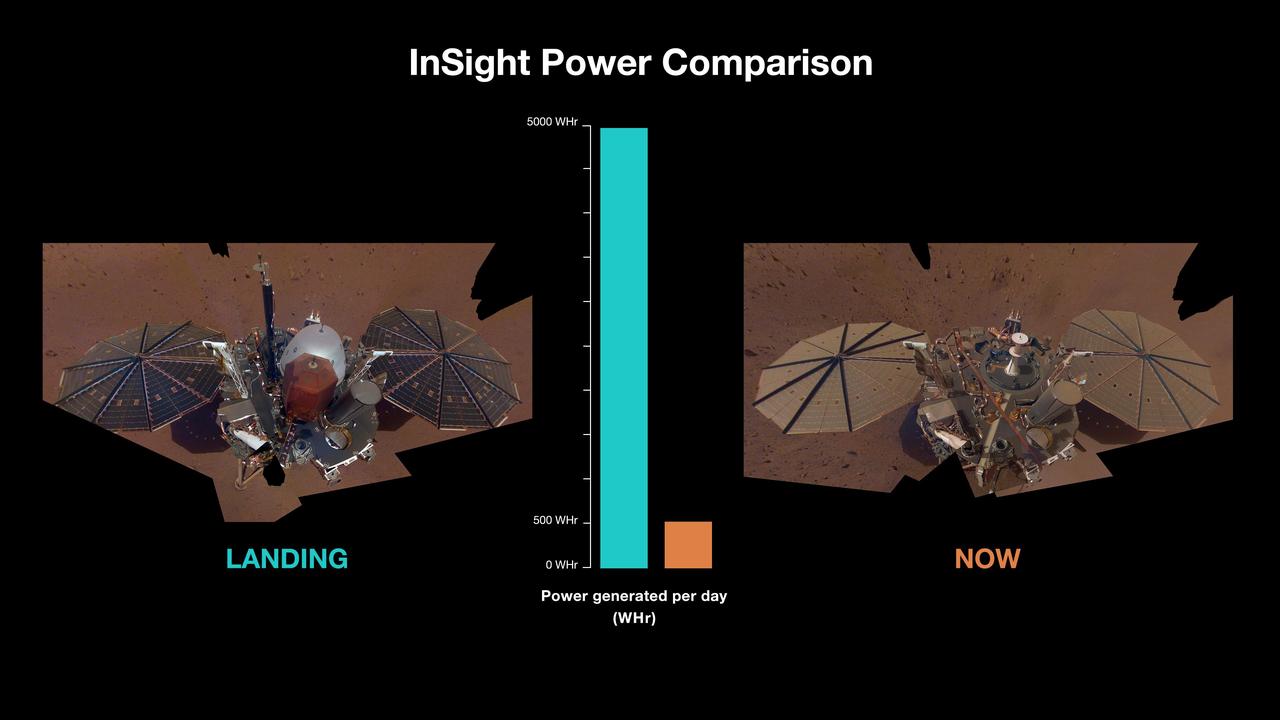
The solar panels on NASA's InSight Mars lander produced roughly 5,000 watt-hours each Martian day, or sol, after the spacecraft touched down. But by spring 2022, enough dust had settled on the panels that they were only producing about 500 watt-hours each sol. The lander's first full selfie, which shows clean panels, was taken in December 2018; the dusty selfie (at right) is from images taken in March and April 2019. https://photojournal.jpl.nasa.gov/catalog/PIA25284
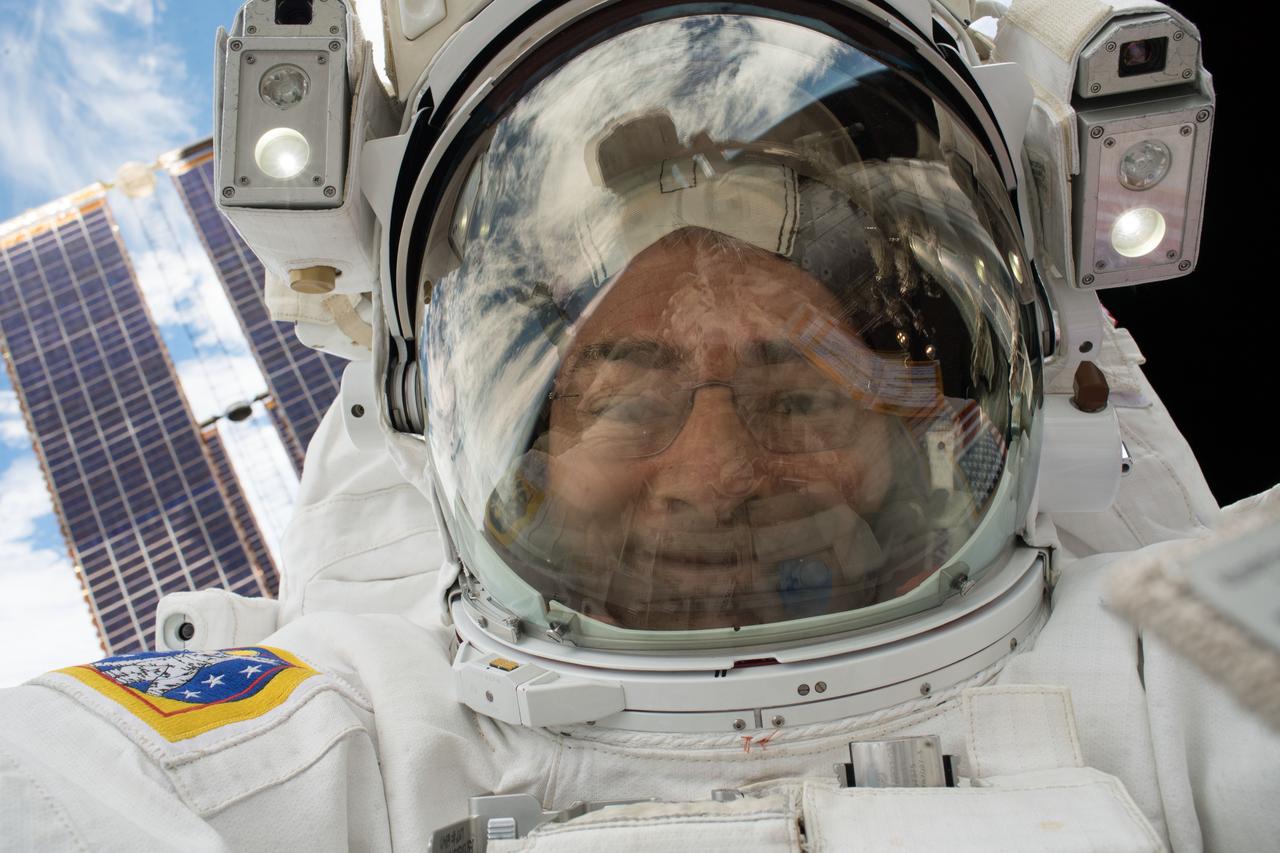
iss054e022850 (Jan. 23, 2018) --- NASA astronaut Mark Vande Hei photographed himself with his helmet visor up during a spacewalk that took place on Jan. 23, 2018. Though less dramatic than a selfie with the reflective visor down this picture could still be considered a "space-selfie." He and NASA astronaut Scott Tingle spent seven hours and 24 minutes working outside the International Space Station for maintenance on the Canadarm2 robotic arm.
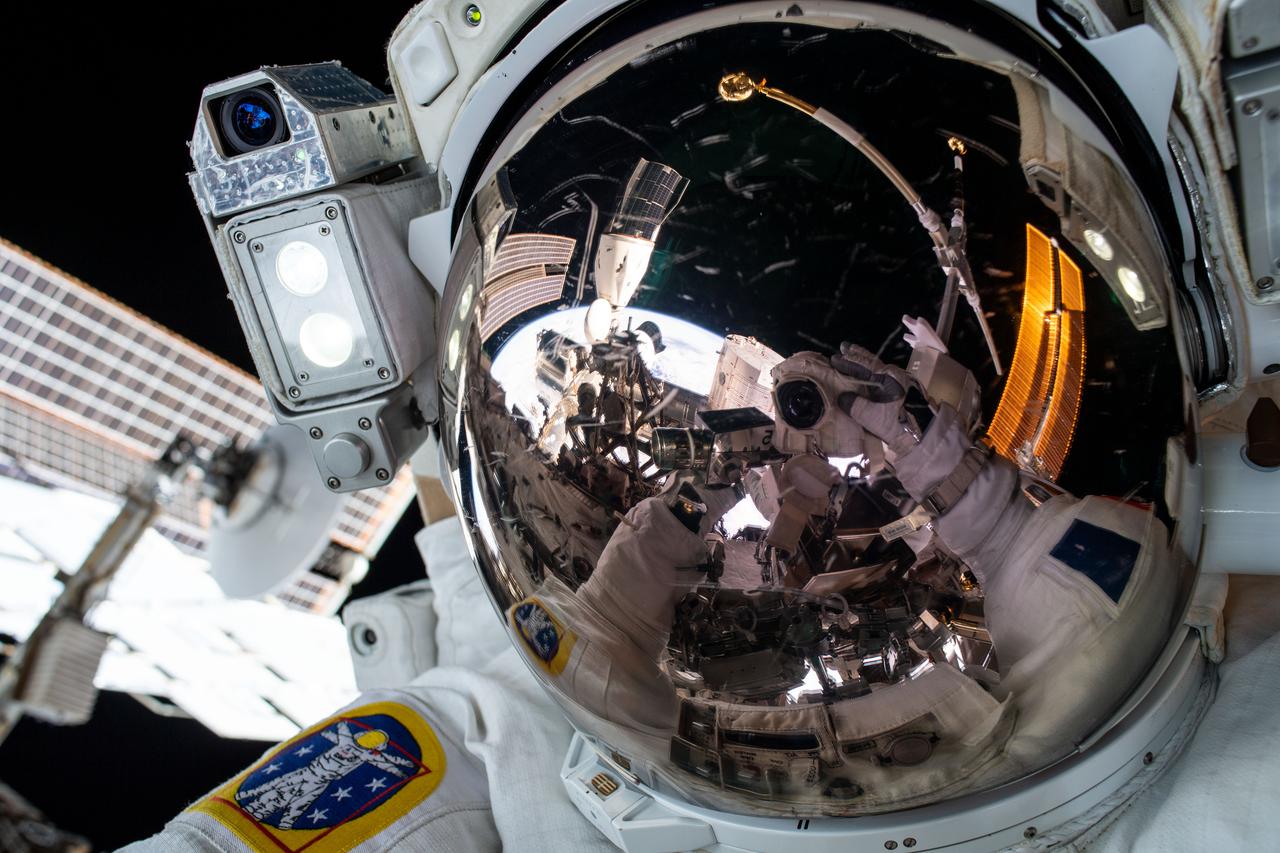
iss065e376212 (Sept. 12, 2021) --- ESA (European Space Agency) astronaut Thomas Pesquet is pictured with his helmet visor down in this "space-selfie" taken during a spacewalk.
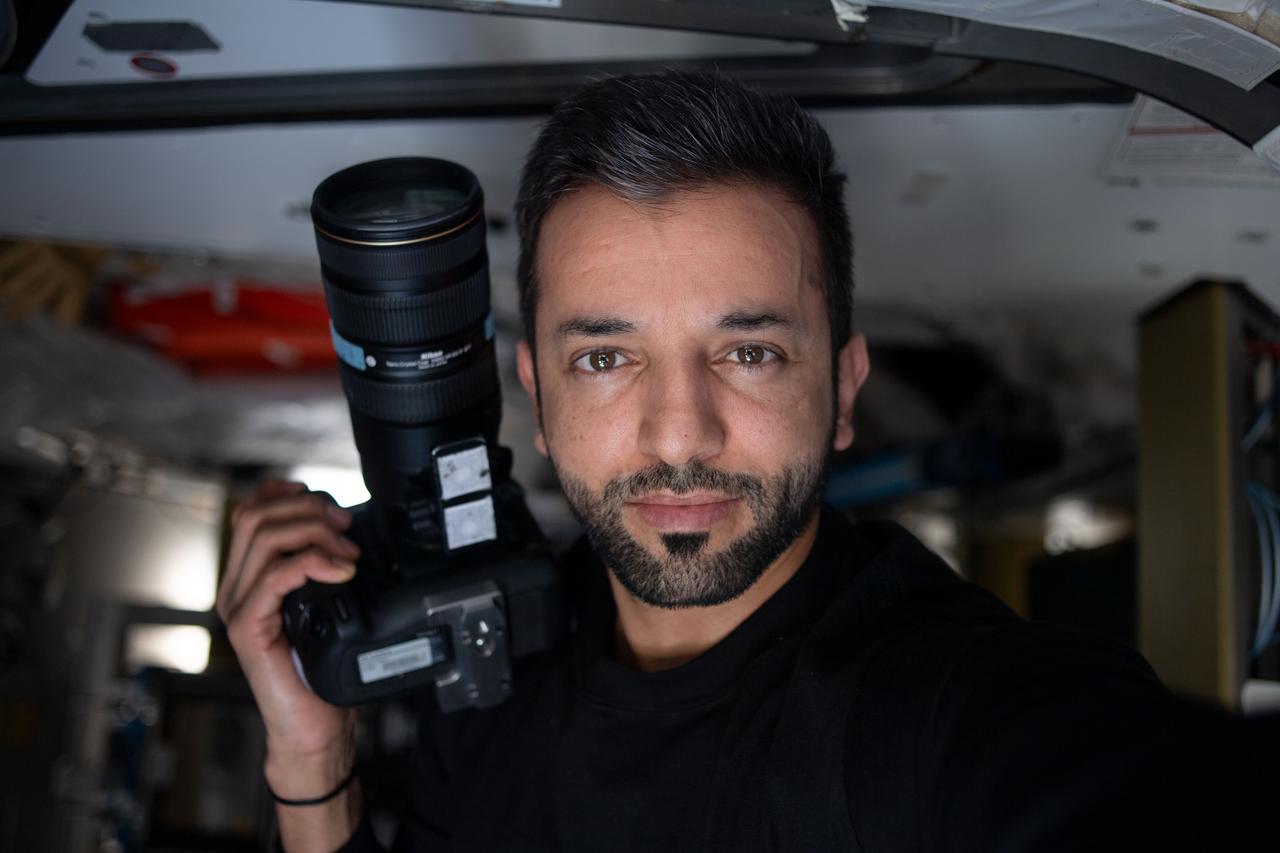
iss069e031084 (July 11, 2023) -- United Arab Emirates (UAE) Flight Engineer Sultan Alneyadi poses for a selfie while taking photos of Earth from the International Space Station.
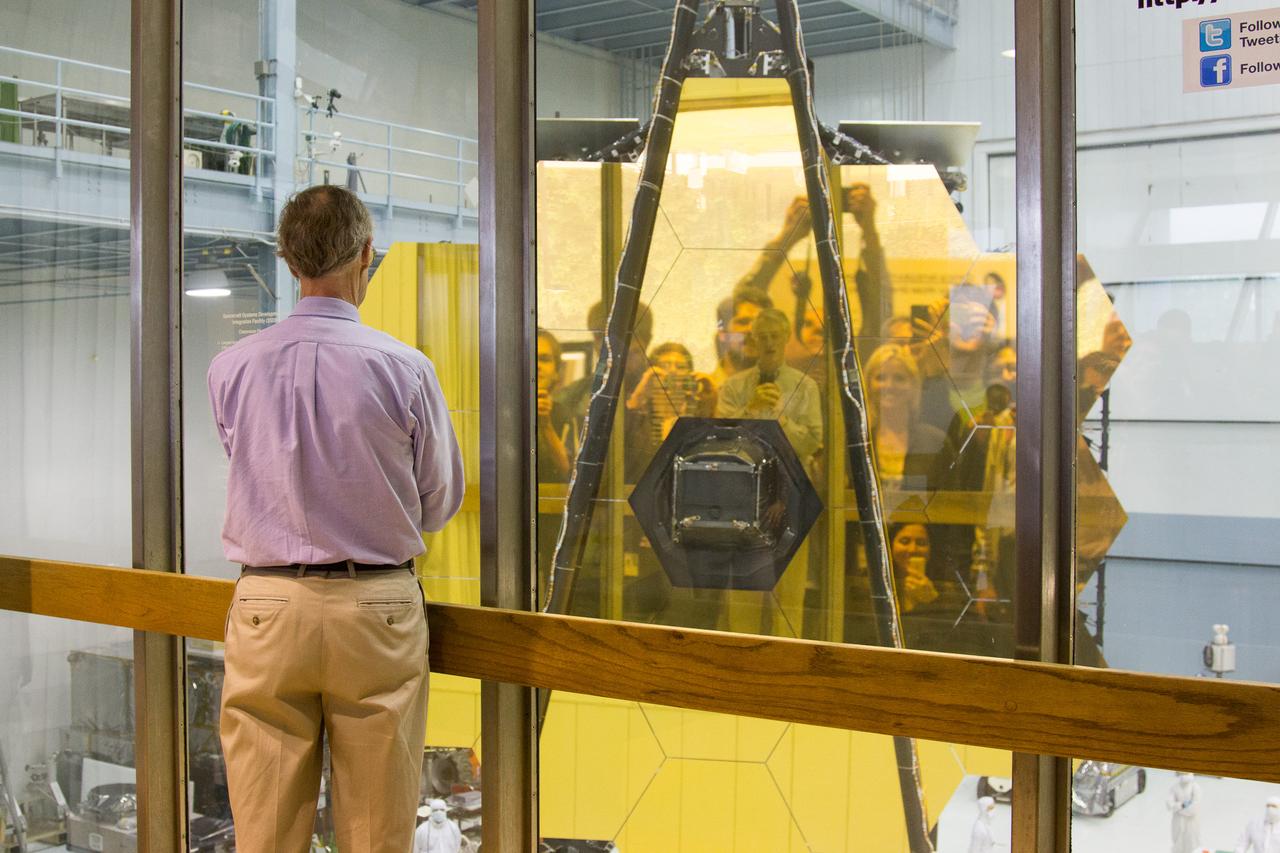
John Mather, Project Scientist for JWST, faces the James Webb Space Telescope primary mirror, taking a selfie, NASA/Goddard Space Flight Center, Greenbelt, MD, May 4, 2016
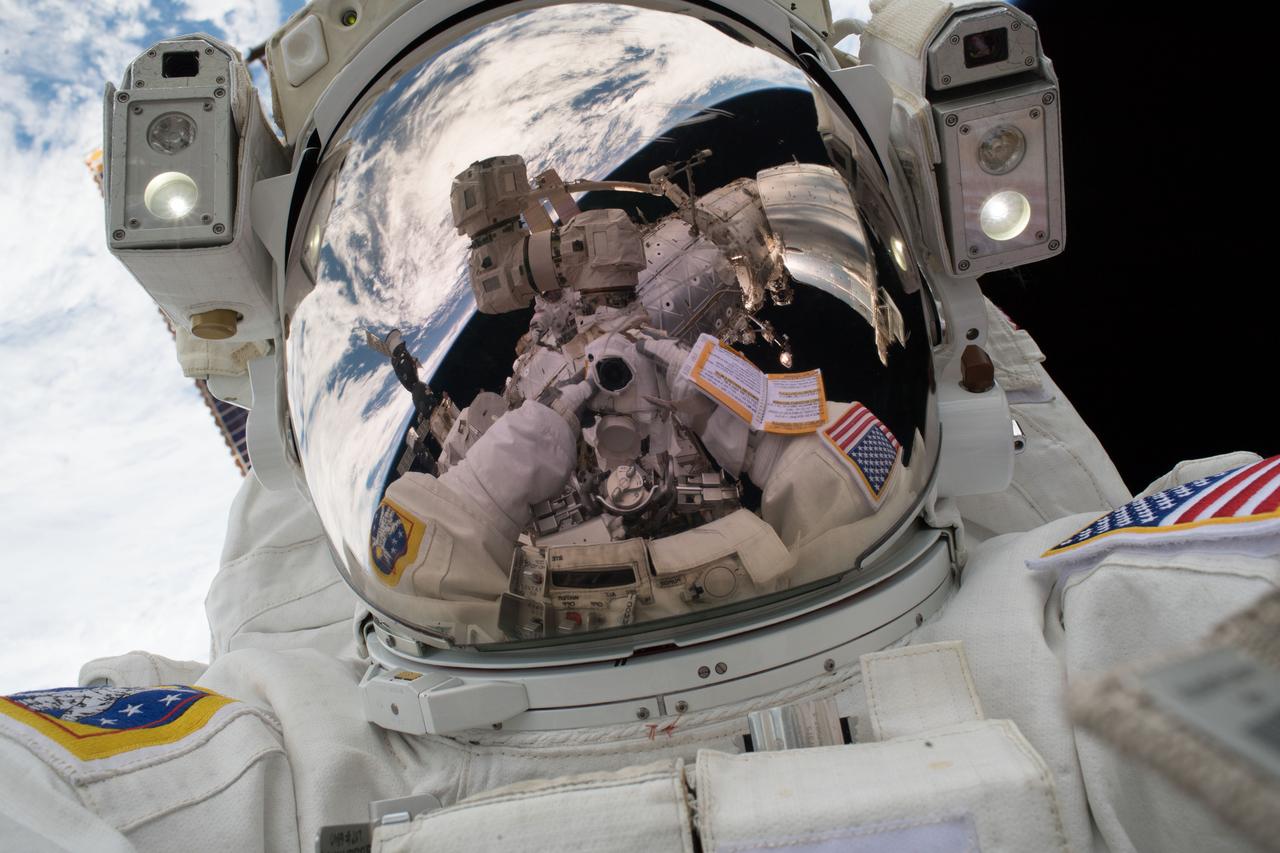
iss054e022843 (Jan. 23, 2018) --- Spacewalker Mark Vande Hei took his own photograph during the first spacewalk of 2018. These sky-high pictures are better known as “space-selfies.”
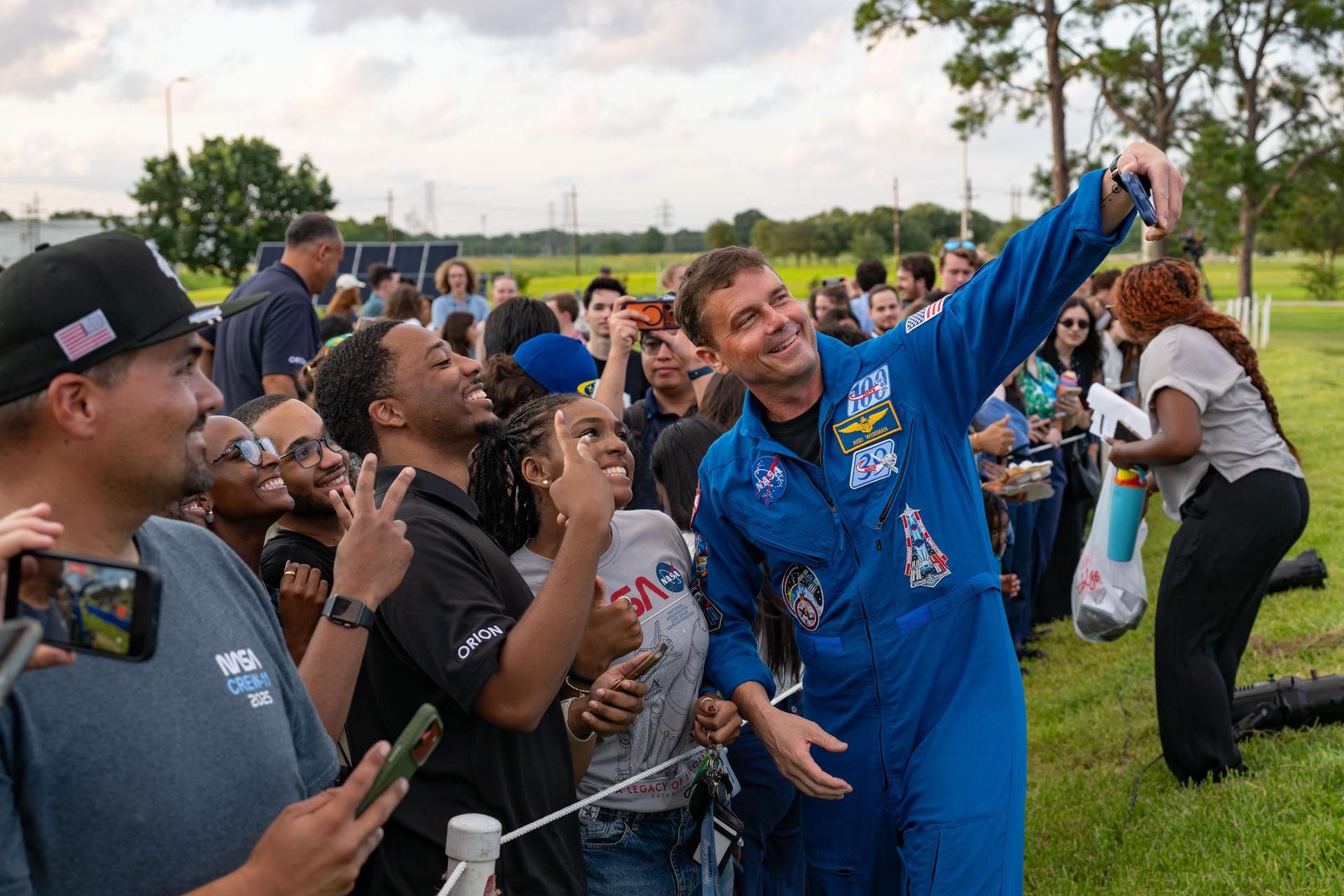
jsc2026e397516 (June 25, 2026) - NASA astronaut Reid Wiseman takes a selfie with attendees at an Artemis II employee celebration event at NASA's Johnson Space Center. Credit: NASA

John Mather, Project Scientist for JWST, faces the James Webb Space Telescope primary mirror, taking a selfie, NASA/Goddard Space Flight Center, Greenbelt, MD, May 4, 2016
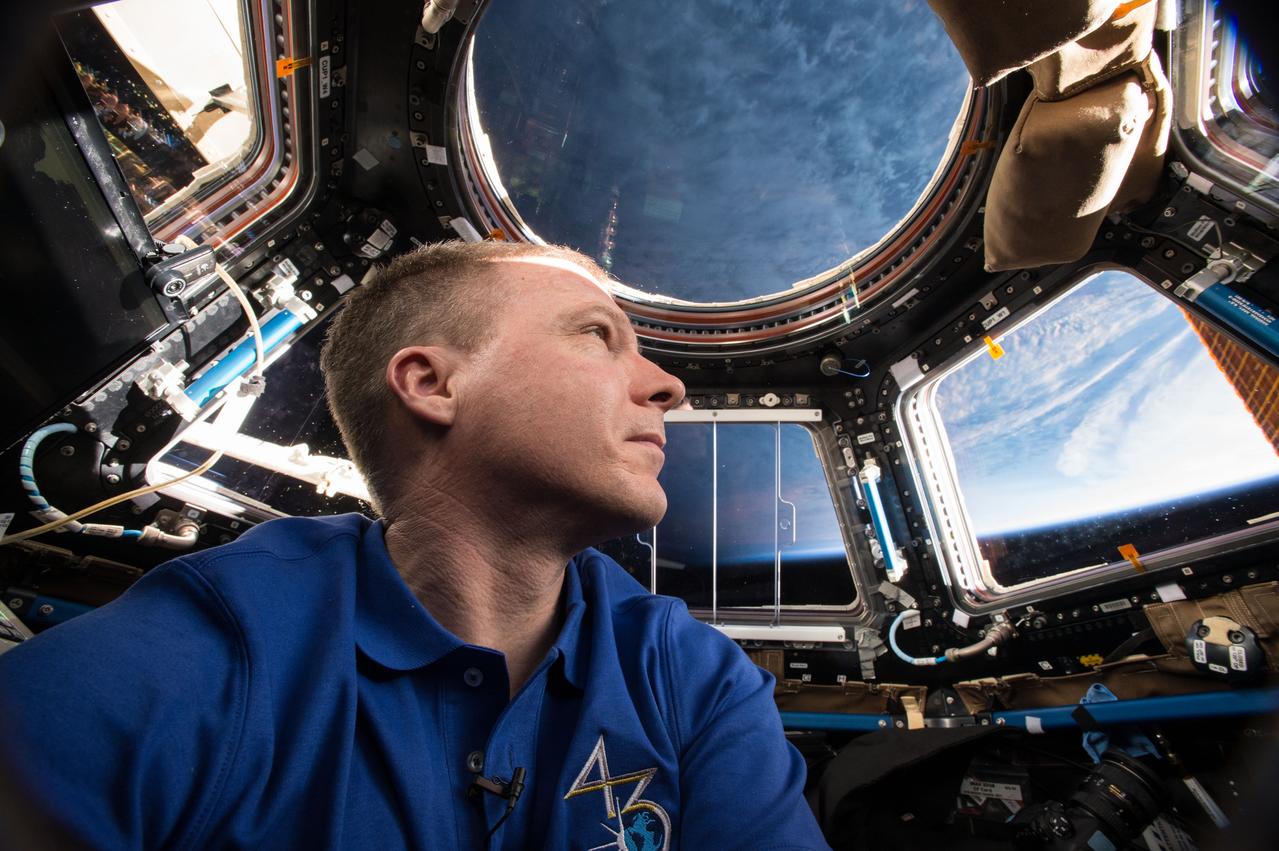
ISS043E241729 (05/24/2015) --- Expedition 43 commander and NASA astronaut Terry Virts is seen here inside of the station’s Cupola module. The Cupola is designed for the observation of operations outside the ISS such as robotic activities, the approach of vehicles, and spacewalks. It also provides spectacular views of Earth and celestial objects for use in astronaut observation experiments. It houses the robotic workstation that controls the space station’s robotic arm and can accommodate two crewmembers simultaneously.
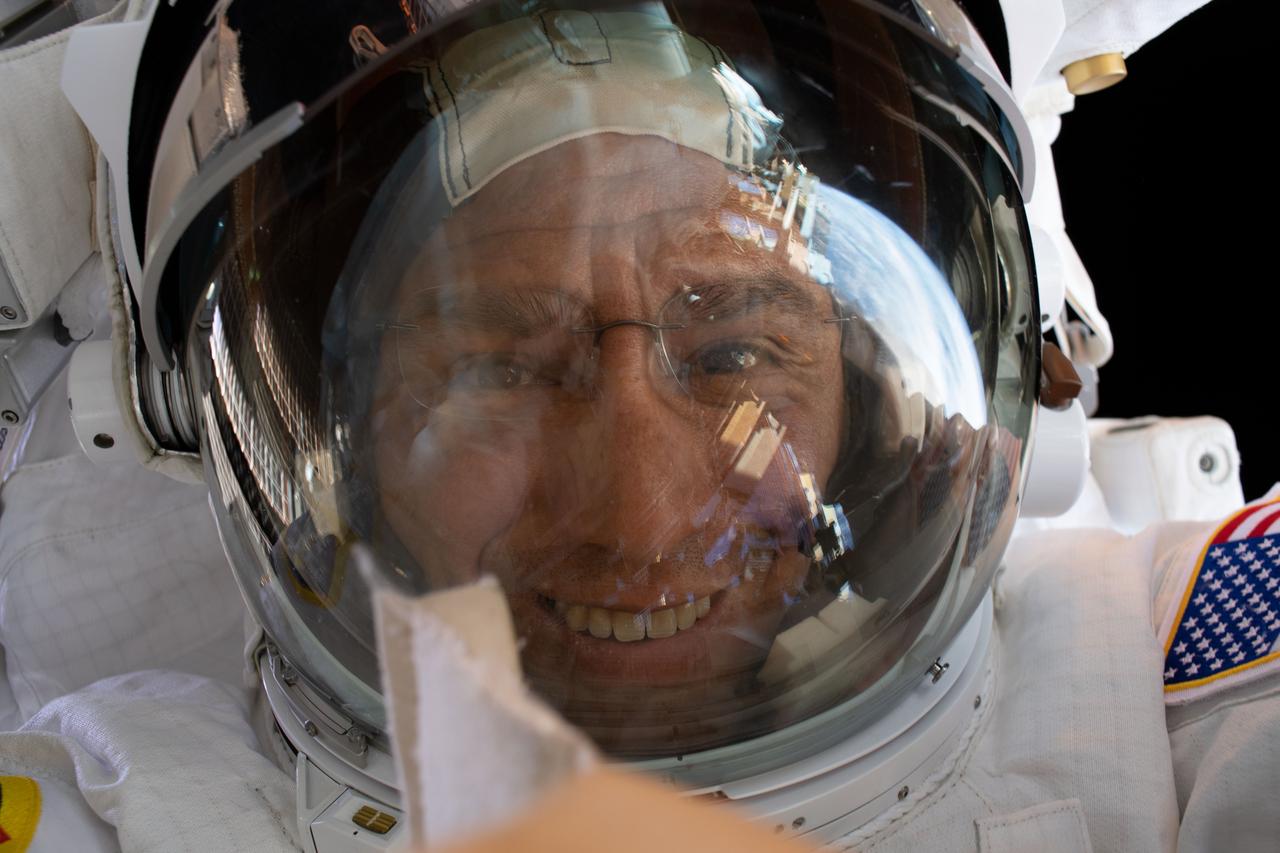
iss068e022445 (Nov. 15, 2022) --- NASA astronaut and Expedition 68 Flight Engineer Frank Rubio points his camera toward himself and takes an out-of-this-world "space-selfie" with his helmet visor's reflective shield up during a spacewalk in his Extravehicular Mobility Unit, or spacesuit.
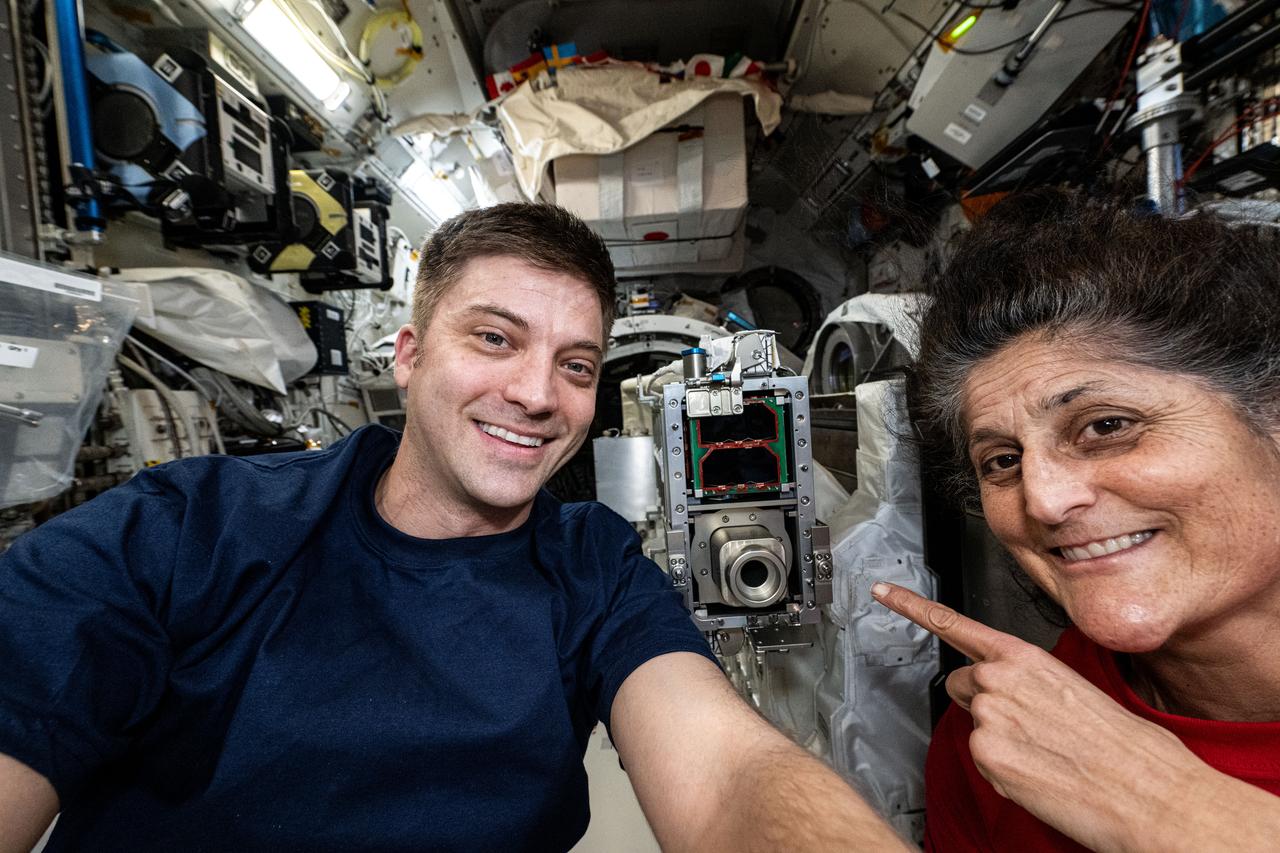
iss071e547361 (Aug. 23, 2024) --- NASA astronauts Matthew Dominick, Expedition 71 Flight Engineer, and Suni Williams, Boeing's Crew Flight Test Pilot, smile for a selfie portrait aboard the International Space Station's Kibo laboratory module.
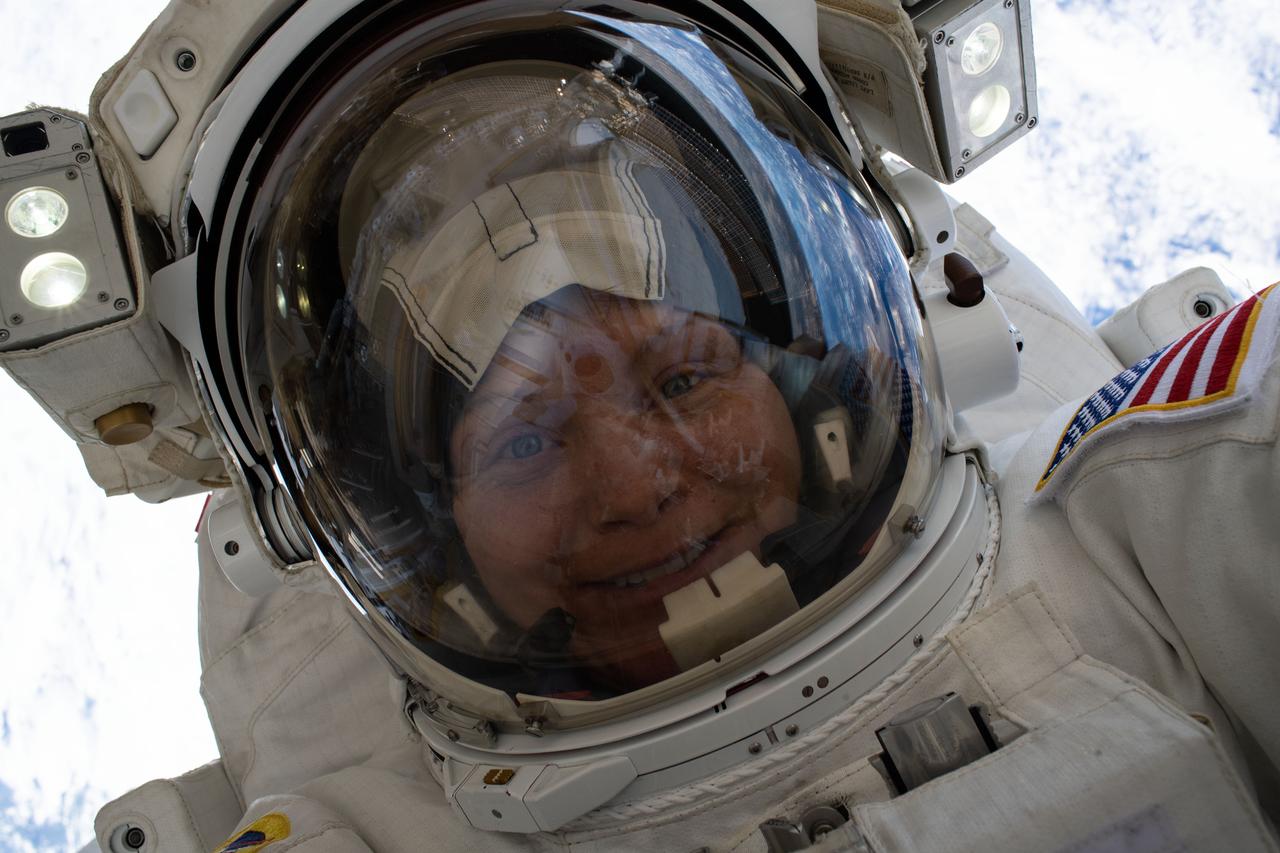
iss059e002821 (March 22, 2019) --- NASA astronaut Anne McClain takes a "space-selfie" with her helmet visor up 260 miles above the Earth's surface during a six-hour, 39-minute spacewalk to upgrade the orbital complex's power storage capacity.
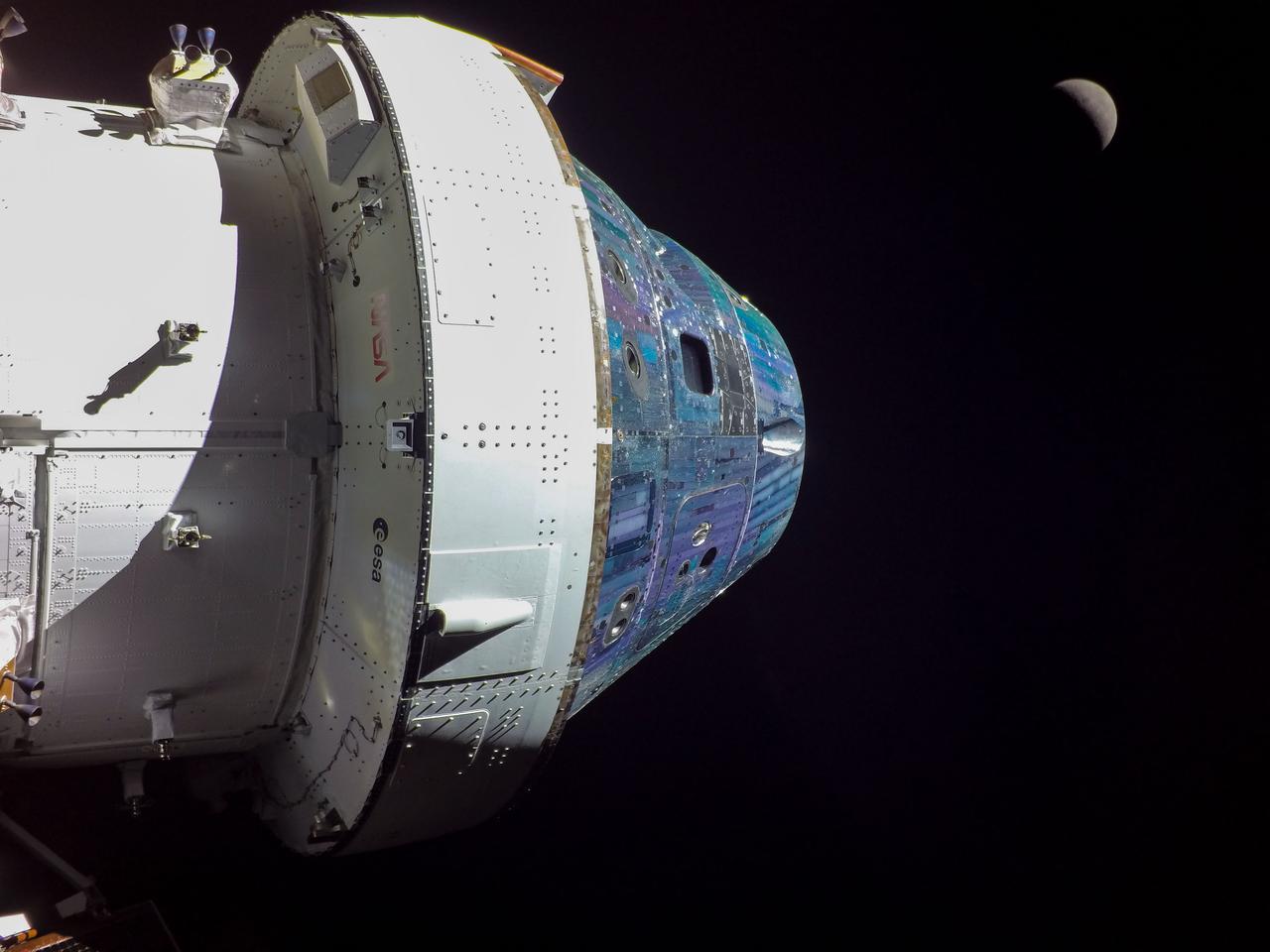
art001e000415 (Nov. 23, 2022) – On Flight Day 8, NASA’s Orion spacecraft remains two days away from reaching its distant retrograde orbit. The Moon is in view as Orion snaps a selfie using a camera mounted on one of its solar array at 10:57 p.m. EST.
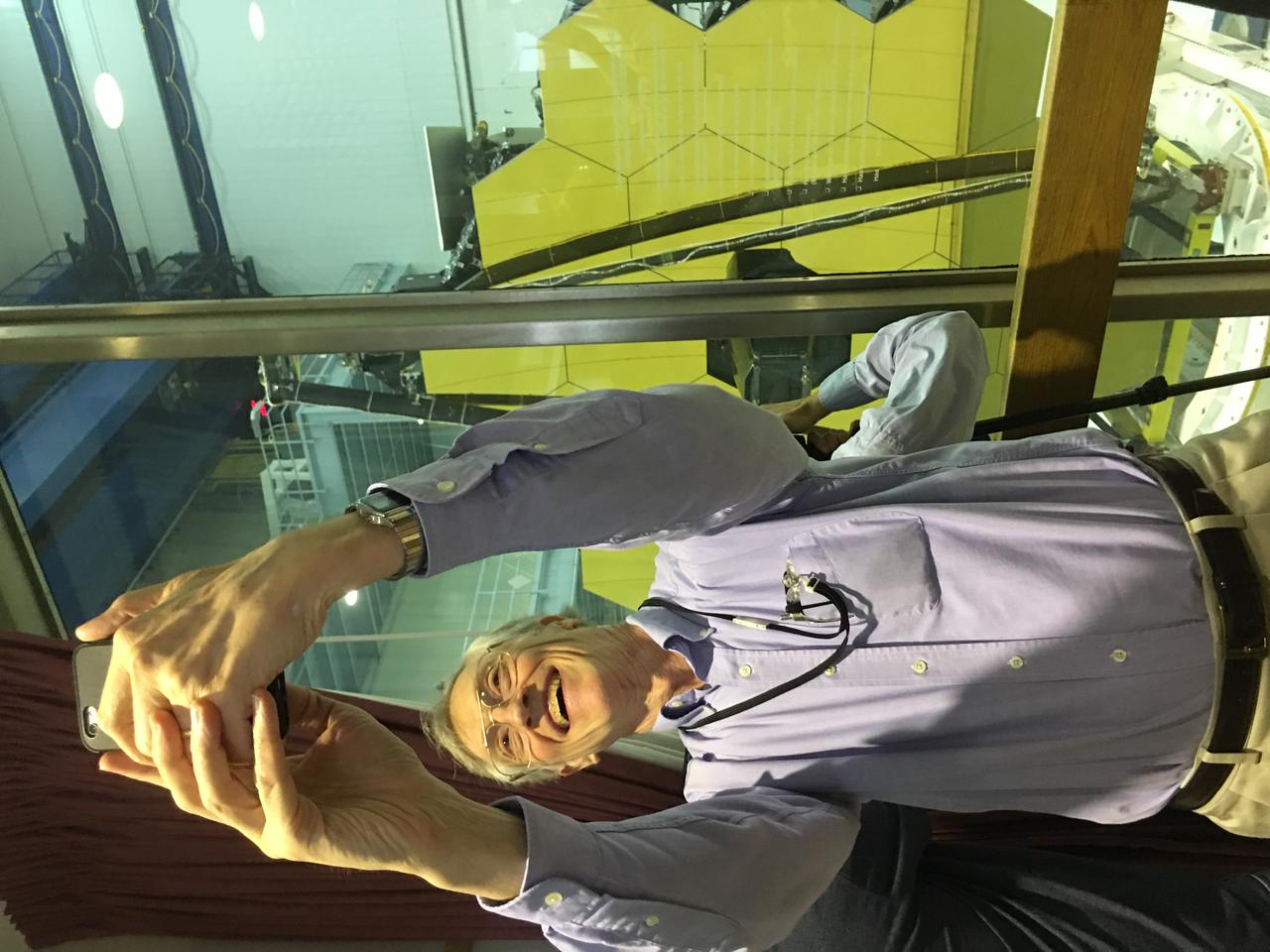
Nobel Laureate and James Webb Space Telescope project scientist Dr. John Mather takes a selfie with the telescope. May 4, 2016 was a rare day for JWST, as it briefly faced the cleanroom observation window. The telescope was eventually rotated face-down in prep for the installation of the flight instruments. Credit: Meredith Gibb
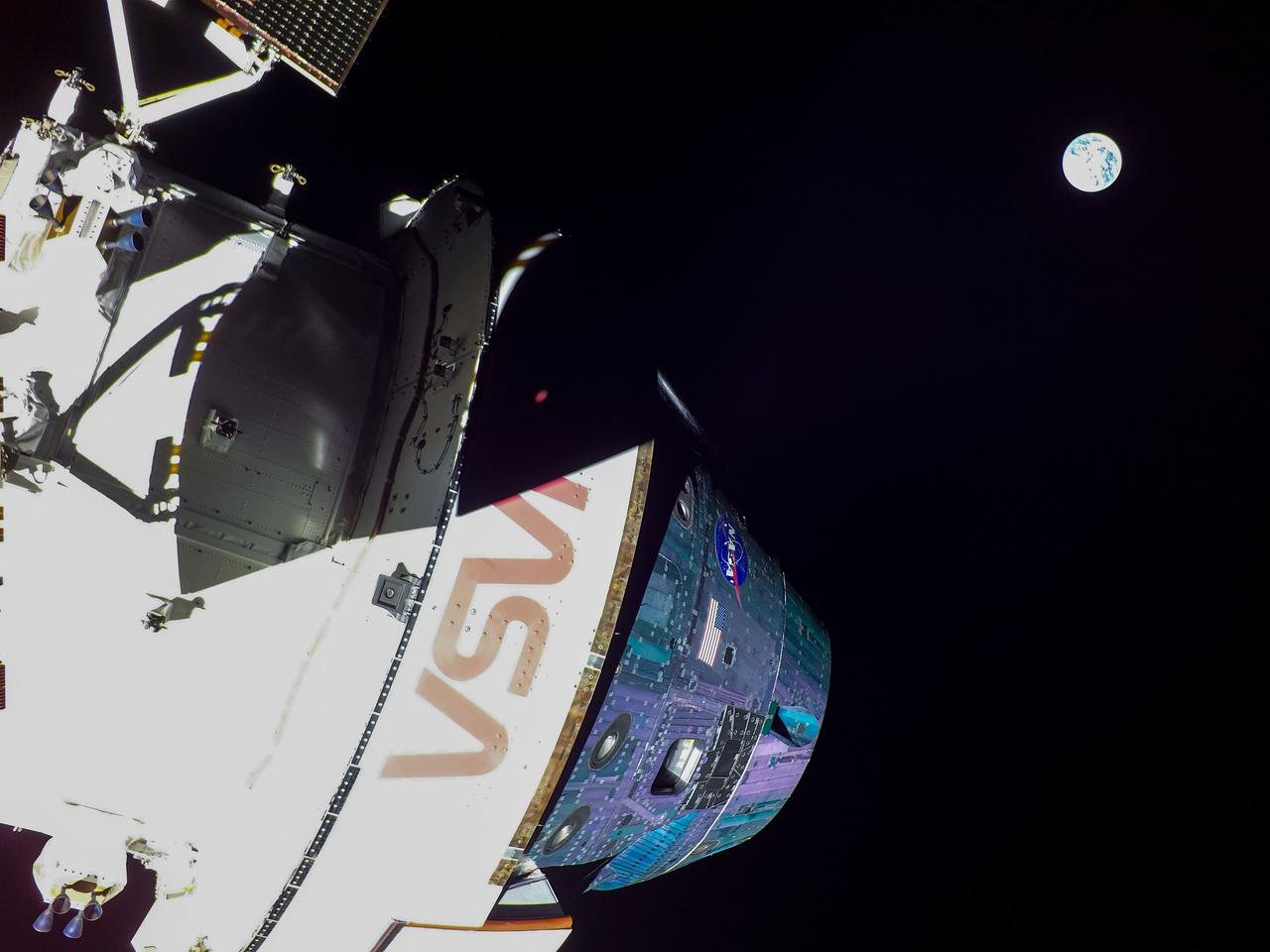
art001e000414 (Nov. 23, 2022) – On Flight Day 8, NASA’s Orion spacecraft remains two days away from reaching its distant retrograde orbit. The Earth is in view as Orion snaps a selfie using a camera mounted on one of its solar array at 10:56 p.m. EST.
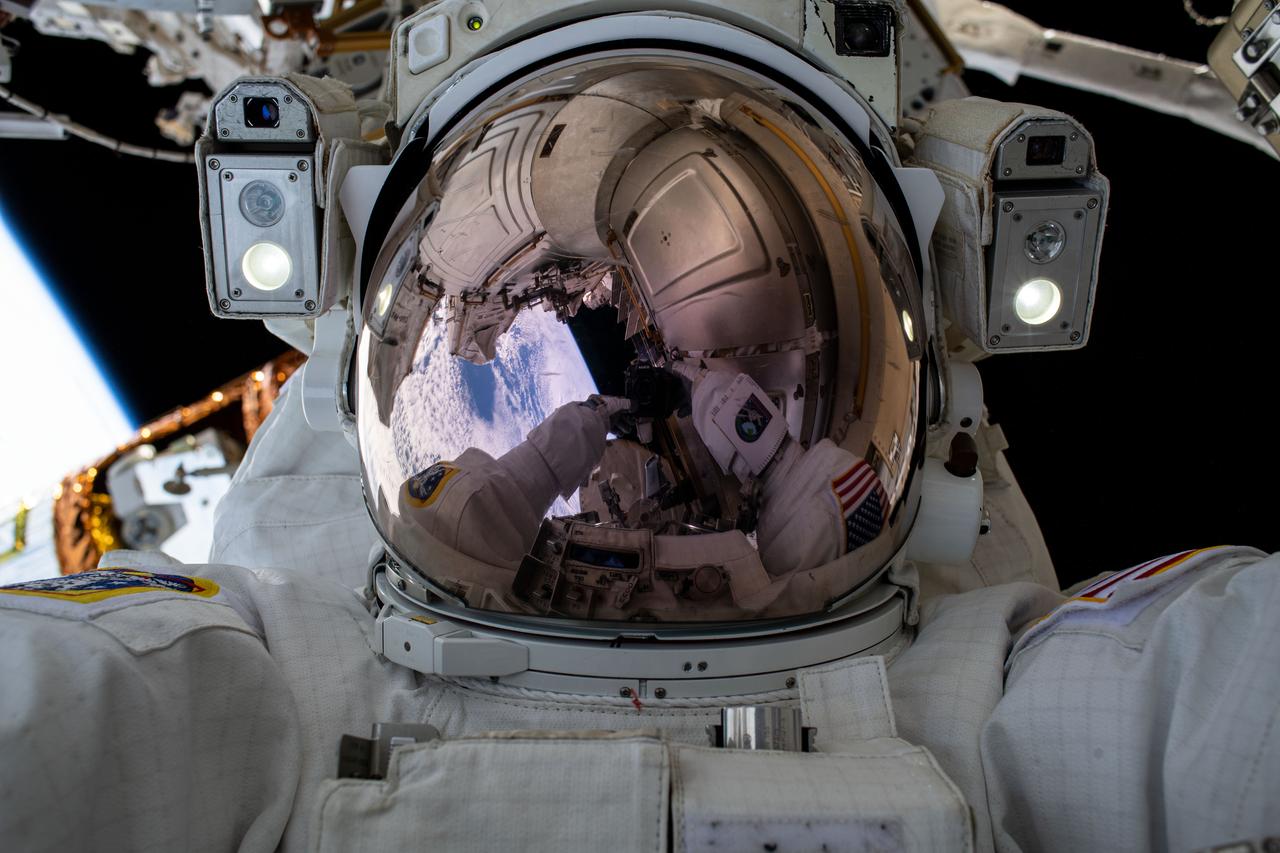
iss063e052397 (July 21, 2020) --- NASA astronaut and Expedition 63 Commander Chris Cassidy took this epic "space-selfie" during his fourth spacewalk this year at the International Space Station. Cassidy has completed 10 spacewalks throughout his career for a total of 54 hours and 51 minutes spacewalking time.
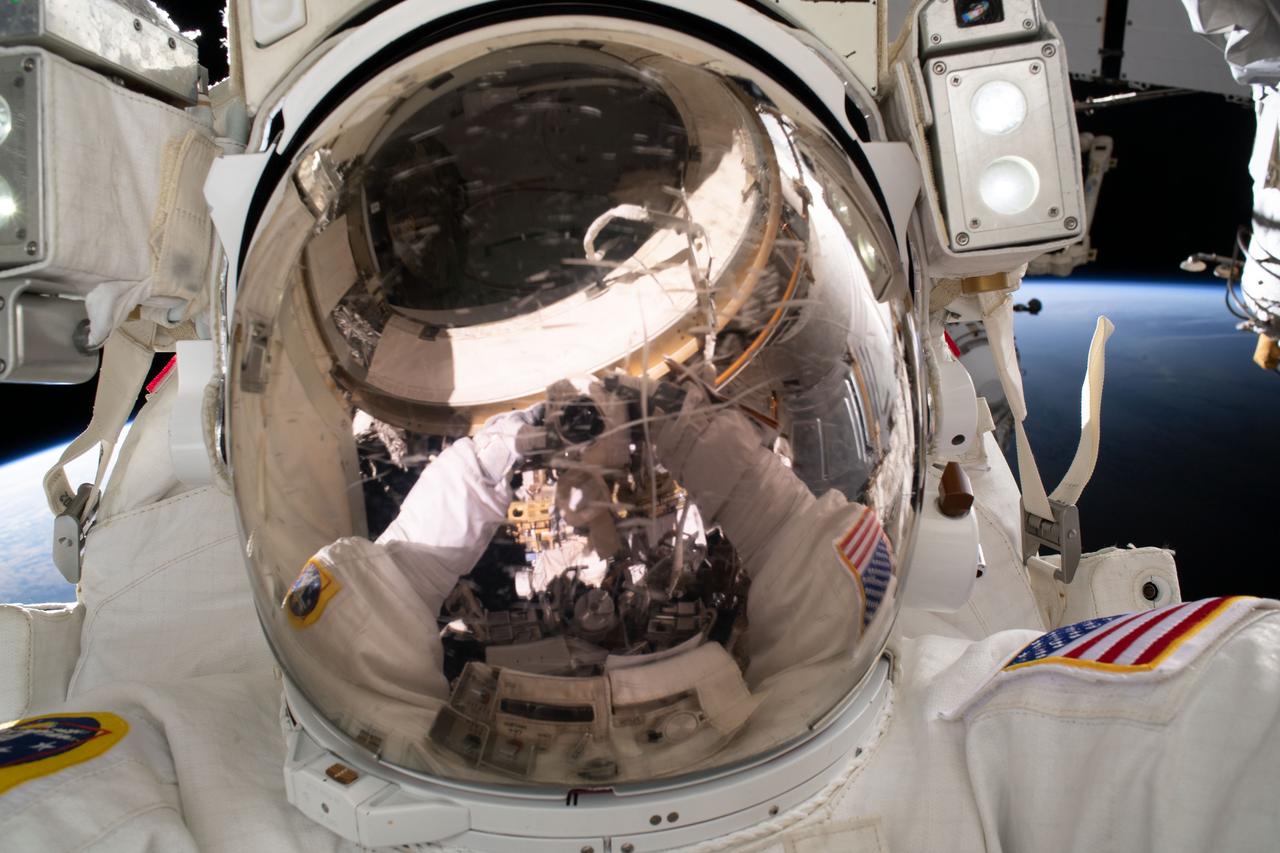
iss069e020708 (June 15, 2023) --- NASA astronaut and Expedition 68 Flight Engineer Woody Hoburg points the camera toward himself and takes an out-of-this-world "space-selfie" during a five-hour and 35-minute spacewalk to install a roll-out solar array on the International Space Station's truss structure.
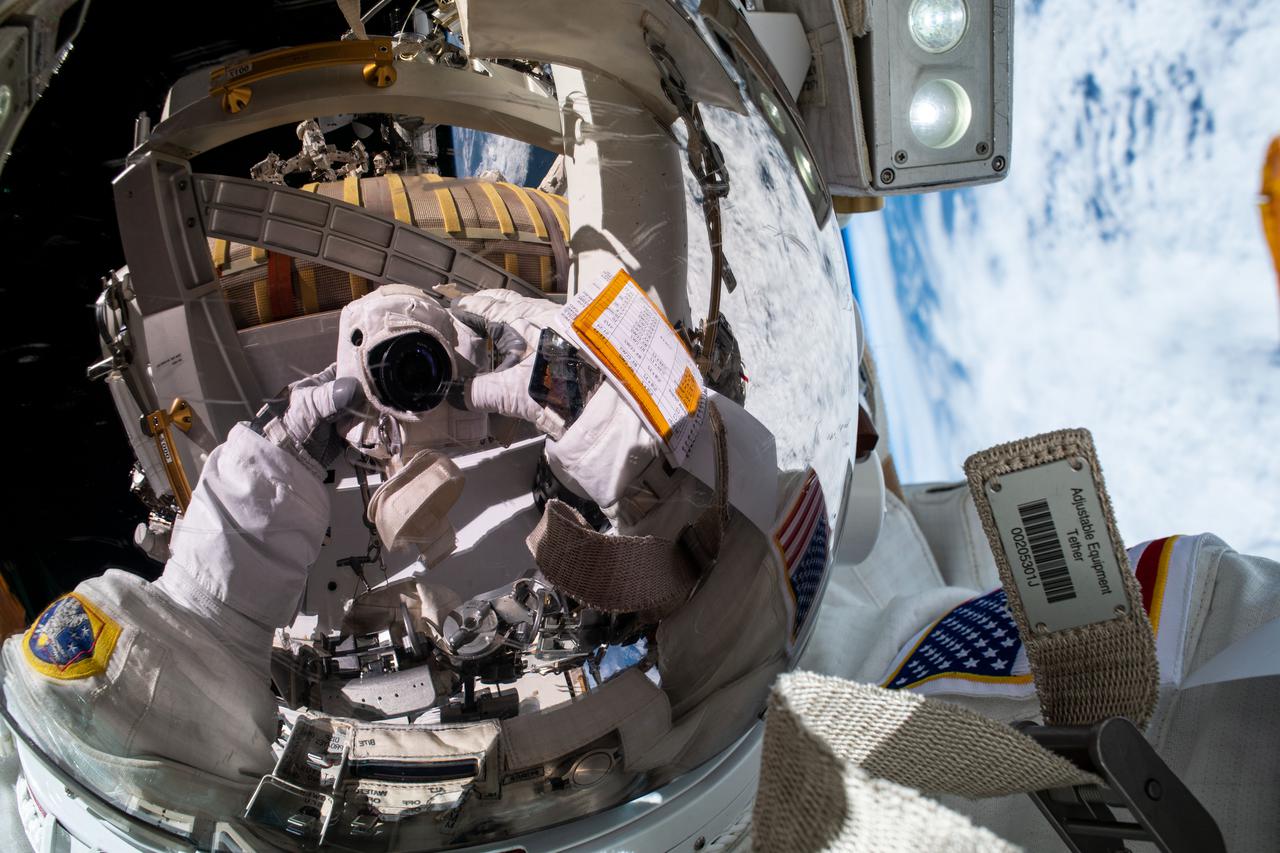
iss065e145170 (June 25, 2021) --- NASA spacewalker Shane Kimbrough took this "space-selfie" with the Earth behind him as he and fellow spacewalker Thomas Pesquet of ESA (European Space Agency) worked to complete the installation of the second roll out solar array on the International Space Station's Port-6 truss structure.
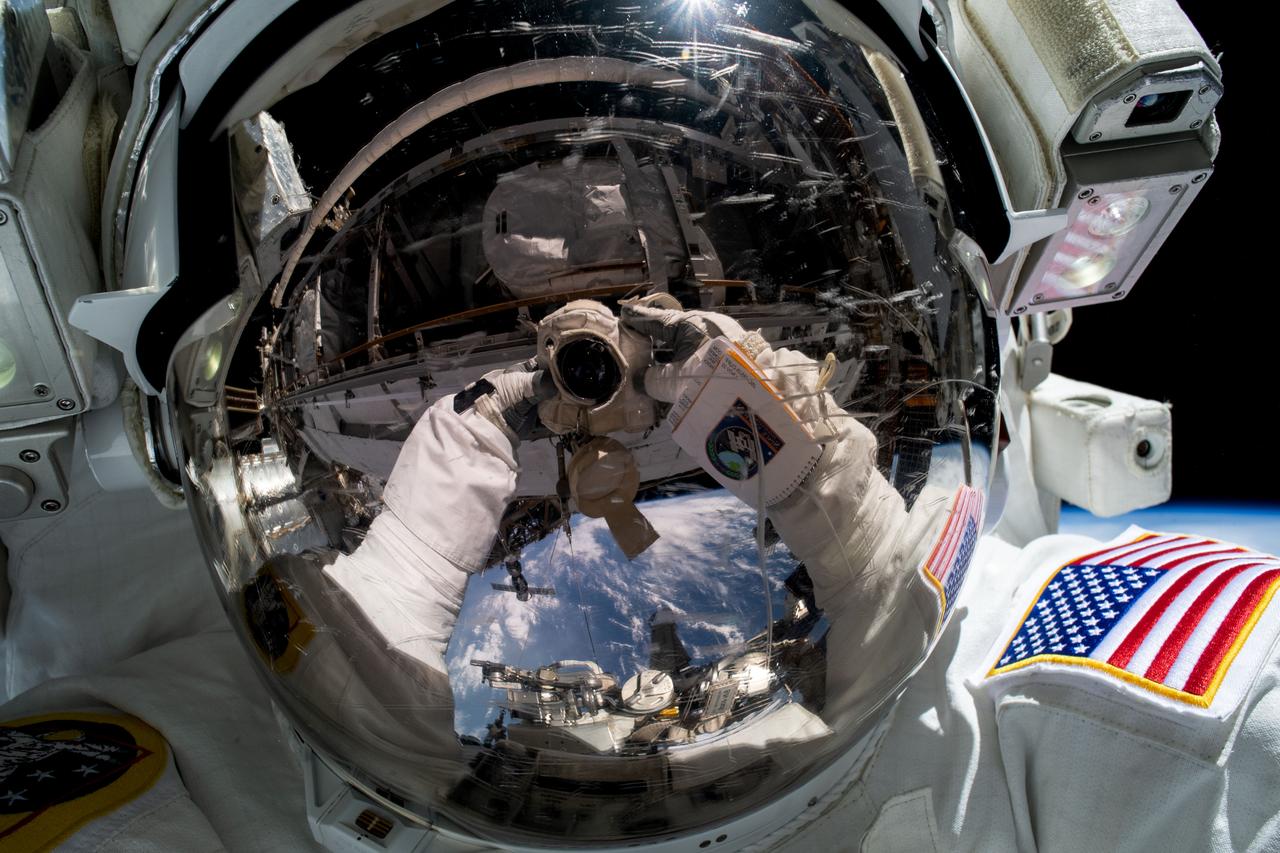
iss069e018575 (June 9, 2023) --- NASA astronaut and Expedition 68 Flight Engineer Woody Hoburg points the camera toward himself and takes an out-of-this-world "space-selfie" during a six-hour and three-minute spacewalk to install a roll-out solar array on the International Space Station's truss structure.
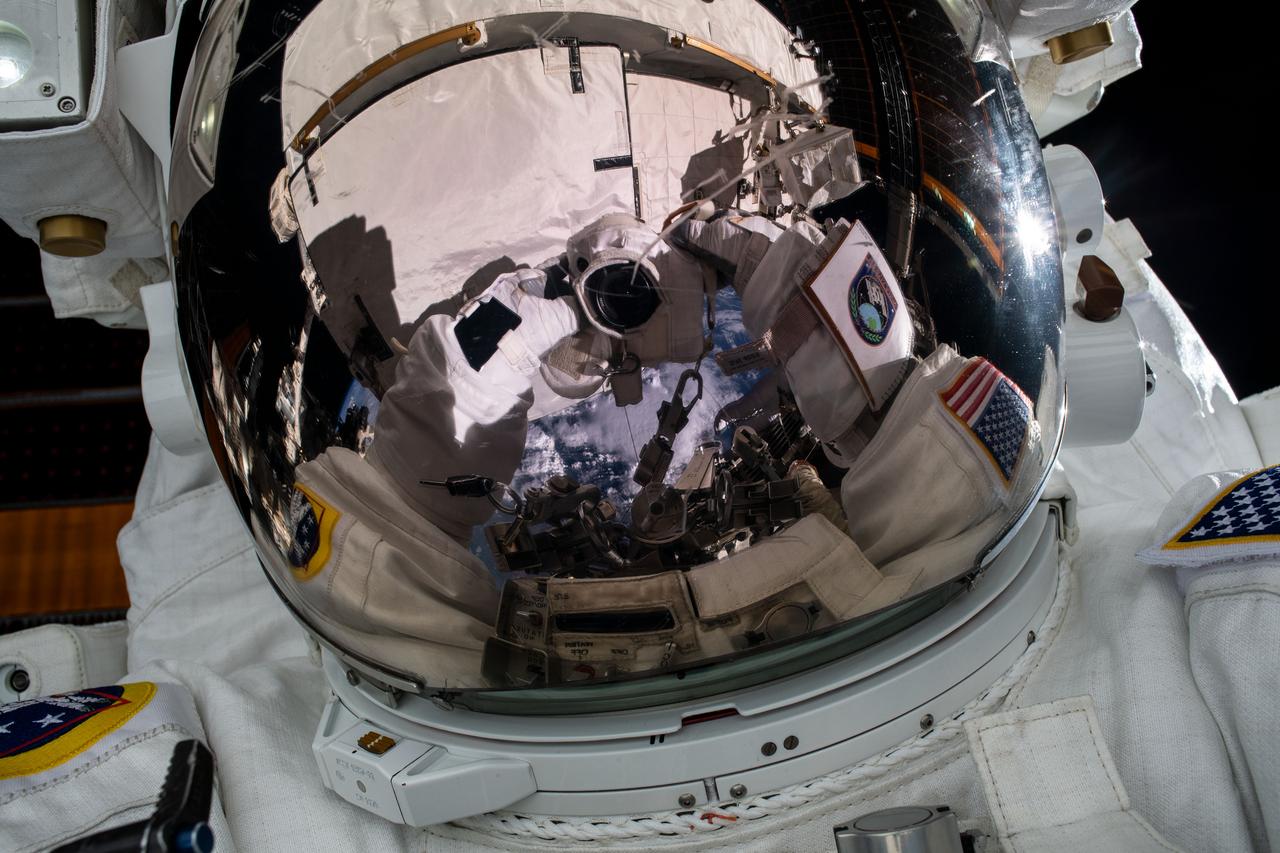
iss061e126557 (Jan. 15, 2020) --- NASA astronaut Jessica Meir takes an out-of-this-world "space-selfie" during a spacewalk she conducted with NASA astronaut Christina Koch (out of frame) to install new lithium-ion batteries that store and distribute power collected from solar arrays on the station’s Port-6 truss structure.
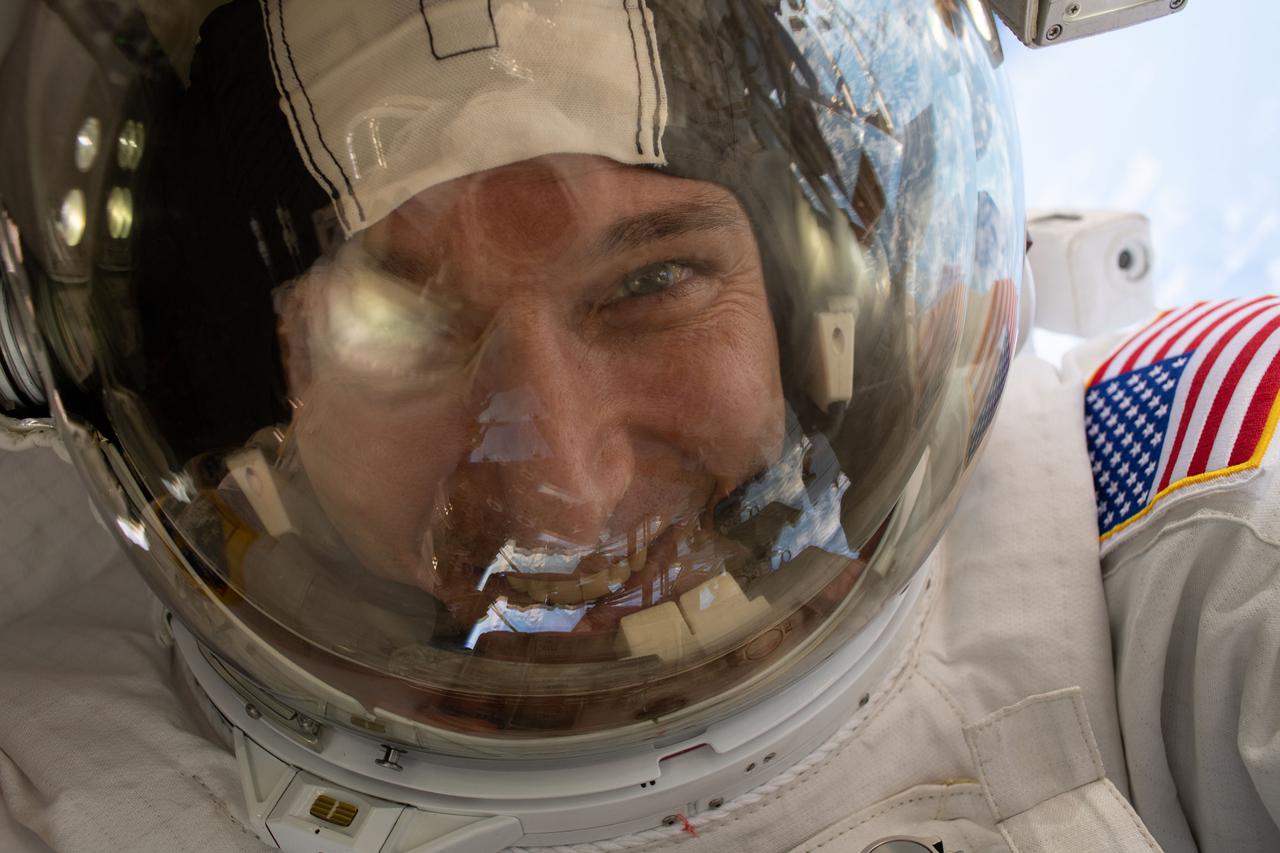
iss064e042327 (March 13, 2021) --- NASA astronaut and Expedition 64 Flight Engineer Michael Hopkins takes a "space-selfie" with his helmet's visor down during a spacewalk to service the station’s cooling system and communications gear with fellow NASA spacewalker Victor Glover (out of frame).
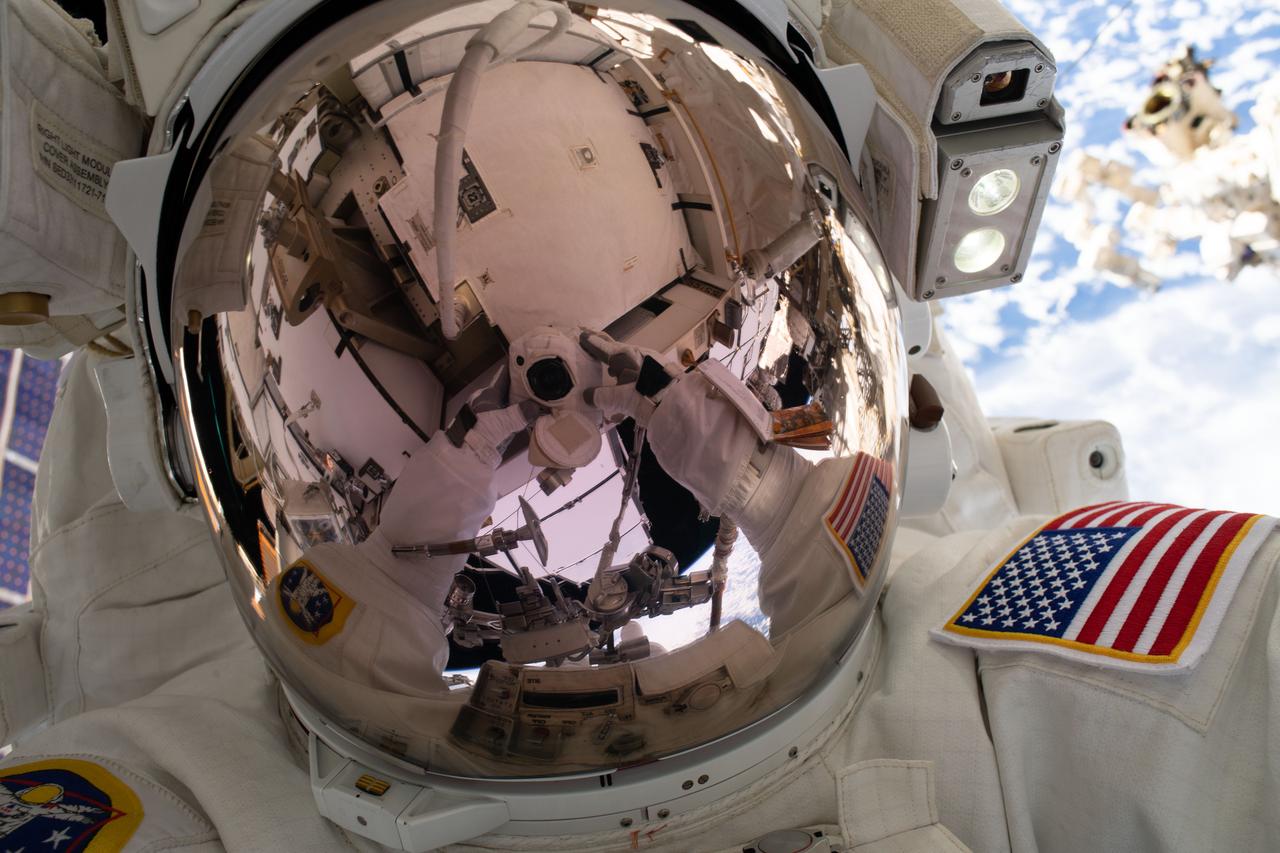
iss059e002710 (March 22, 2019) --- NASA astronaut Nick Hague takes an out-of-this-world "space-selfie" 250 miles above Earth during a spacewalk to upgrade the International Space Station's power storage capacity. This was Hague's and NASA astronaut Anne McClain's (out of frame) first spacewalk.
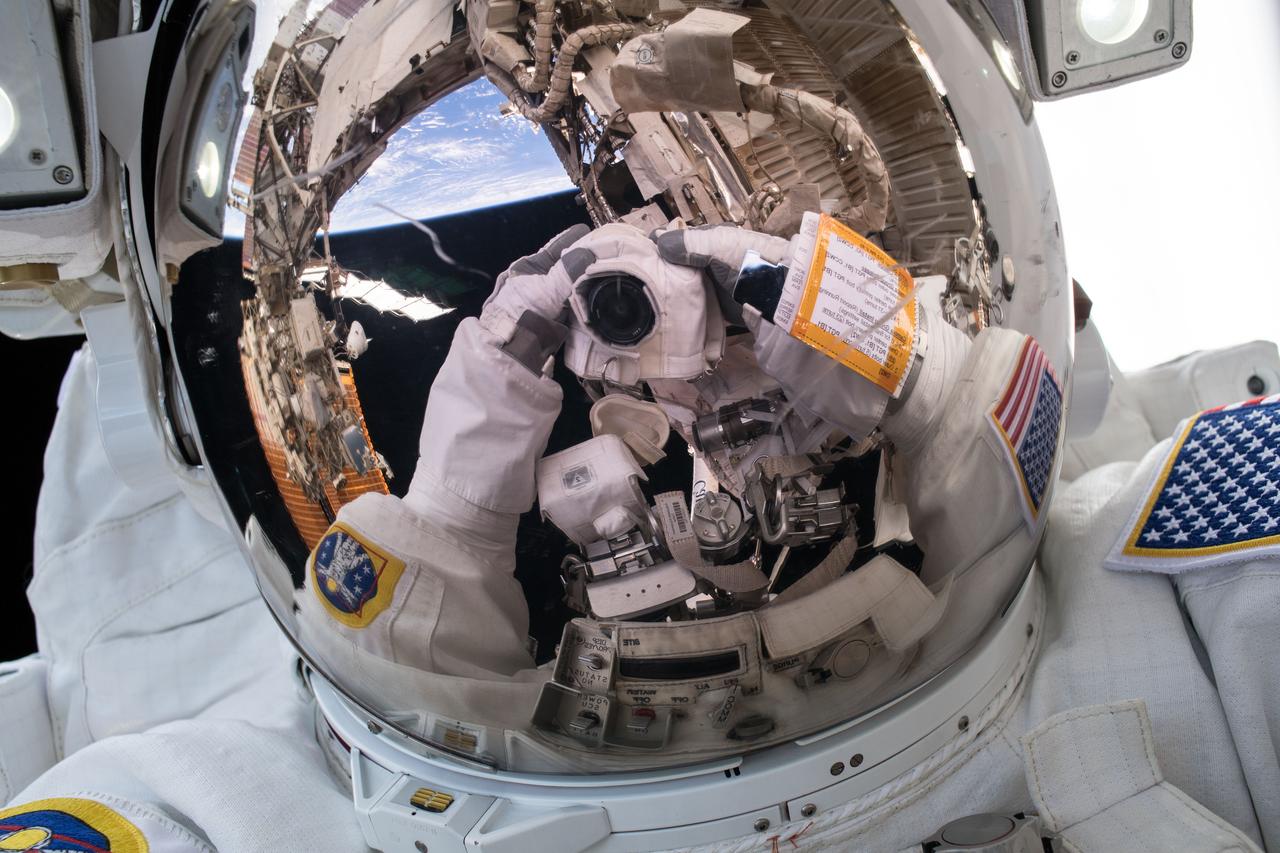
iss055e006284 (March 29, 2018) --- NASA astronaut Ricky Arnold takes an out of this world "space-selfie" during a brief opportunity while conducting a spacewalk with fellow NASA astronaut Drew Feustel (out of frame) on March 29, 2018.
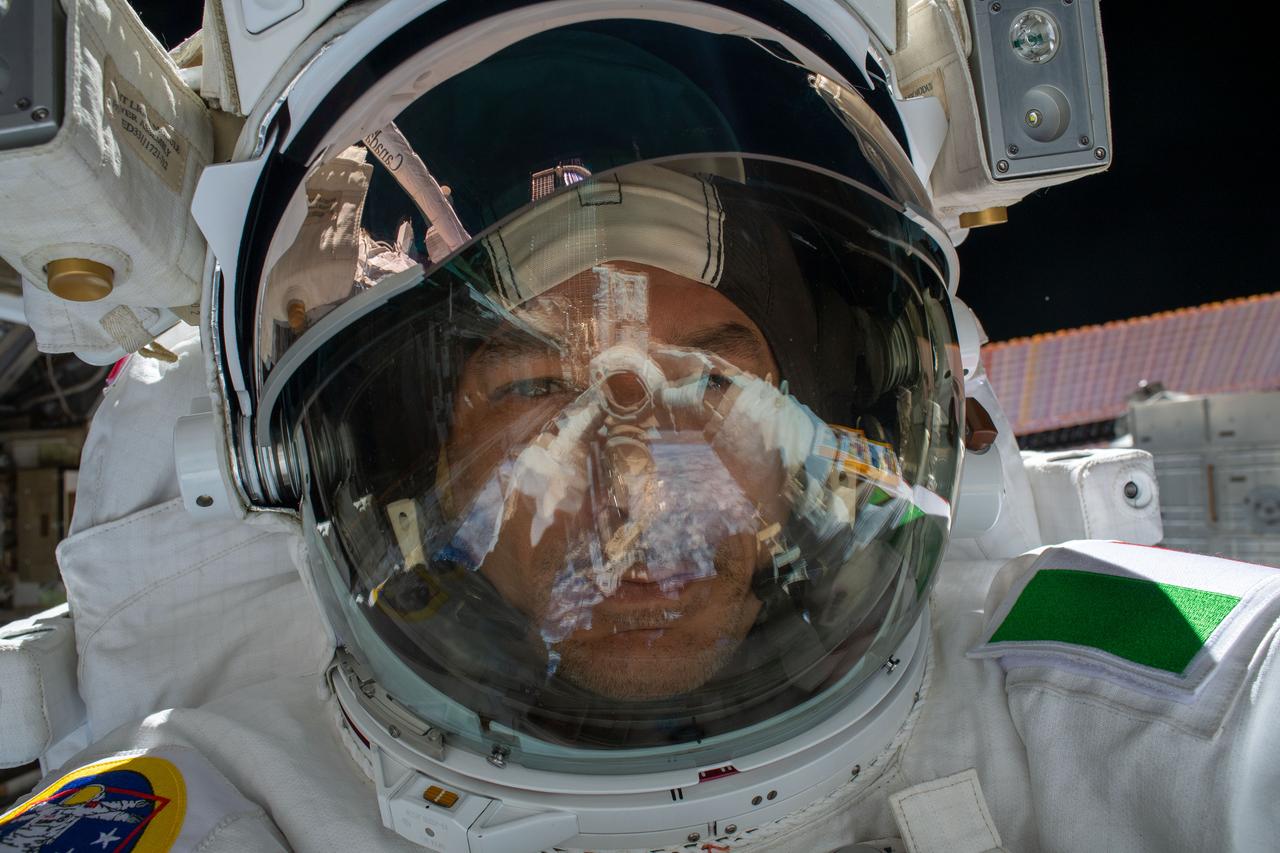
iss061e040949 (Nov. 15, 2019) --- ESA (European Space Agency) astronaut Luca Parmitano takes an out-of-this-world "space-selfie" with his spacesuit's helmet visor up during the first spacewalk to repair the Alpha Magnetic Spectrometer, the International Space Station's cosmic particle detector.
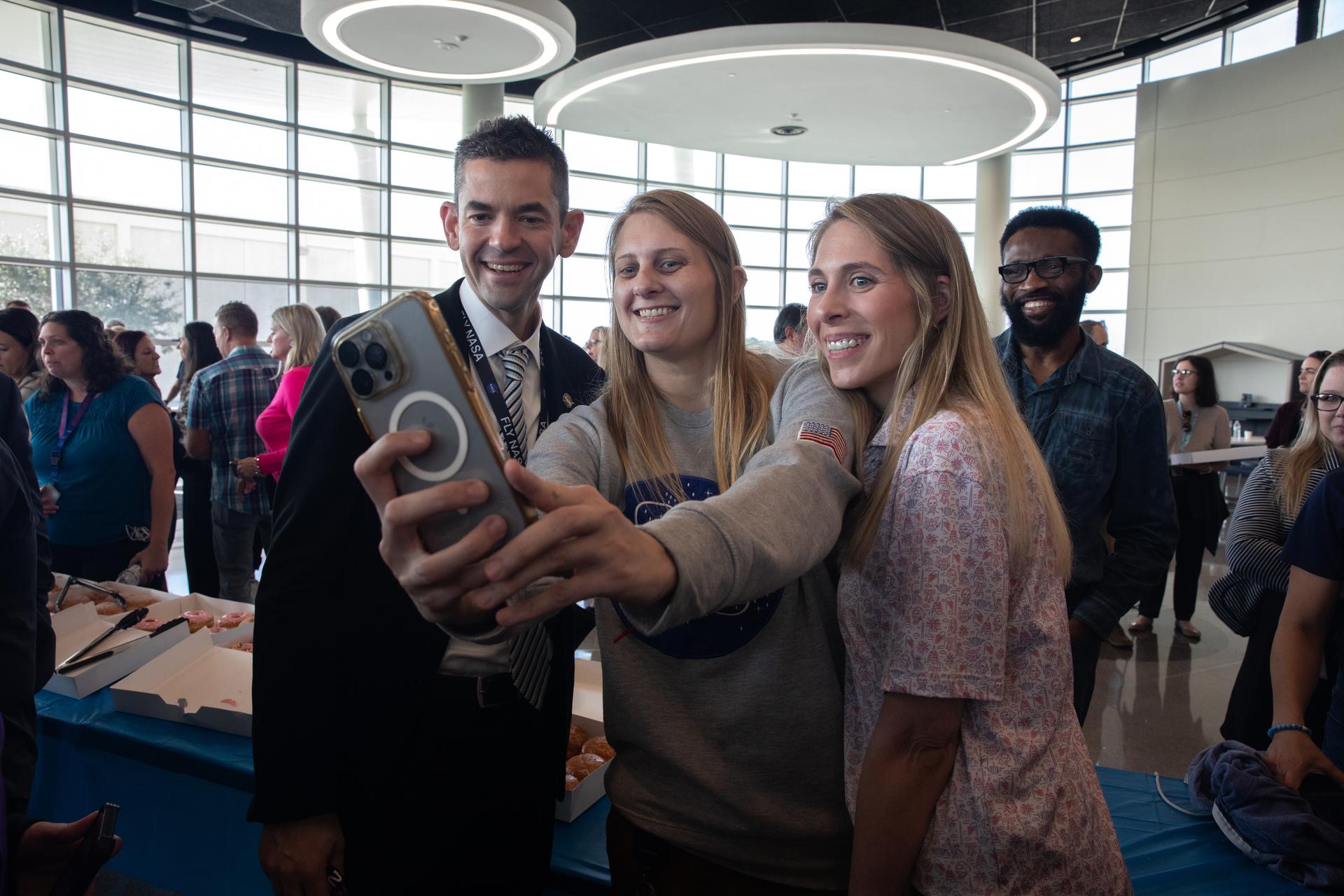
NASA Administrator Jared Isaacman (left) poses for a selfie with NASA employees during his visit to NASA’s Kennedy Space Center in Florida, on Tuesday, Jan. 13, 2026. Isaacman, NASA’s 15th administrator, began visiting the agency’s centers after his appointment on Dec. 17, 2025, to hear from employees, contractors, and partners.
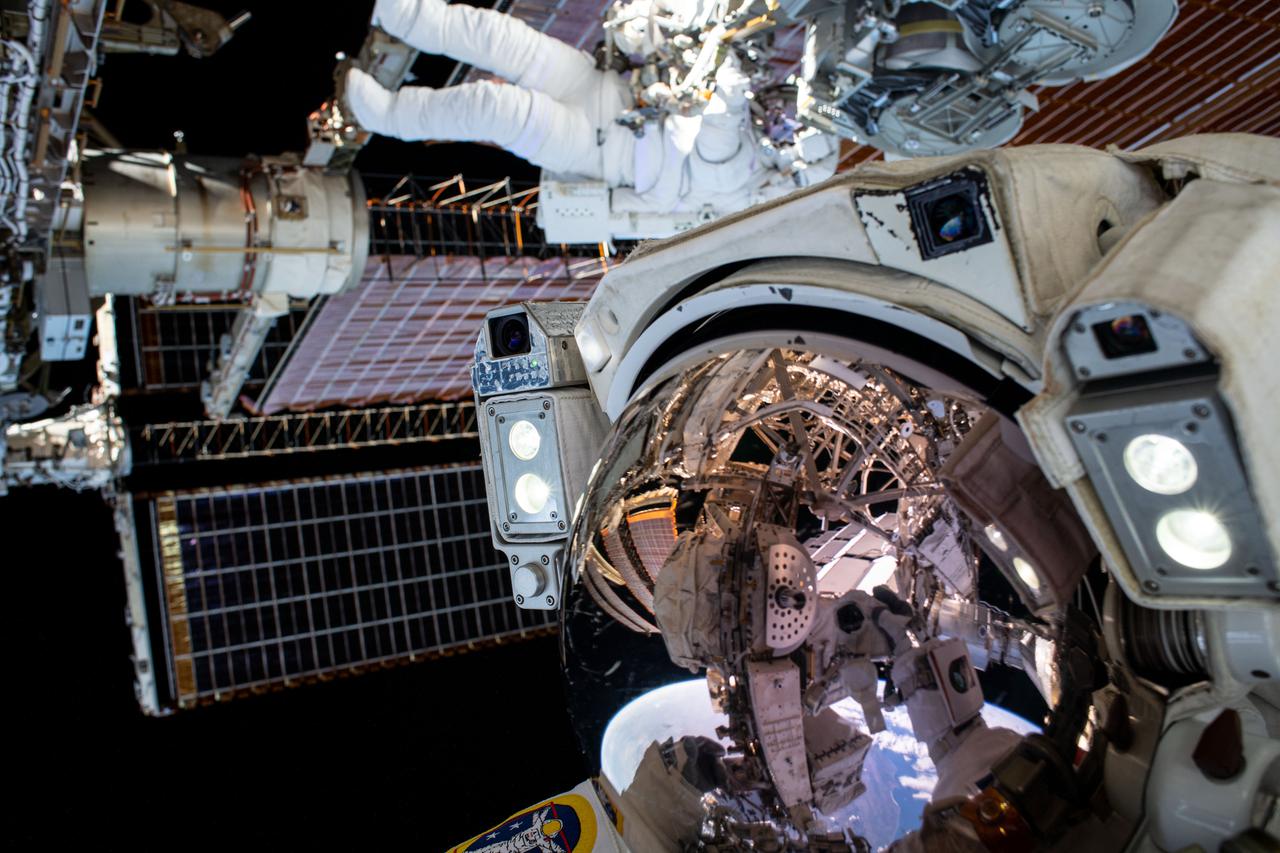
iss065e145237 (June 25, 2021) --- This unique "space-selfie" from spacewalker Thomas Pesquet of ESA (European Space Agency) captures he and NASA spacewalker Shane Kimbrough as they work to complete the installation of the second roll out solar array on the International Space Station's Port-6 truss structure.
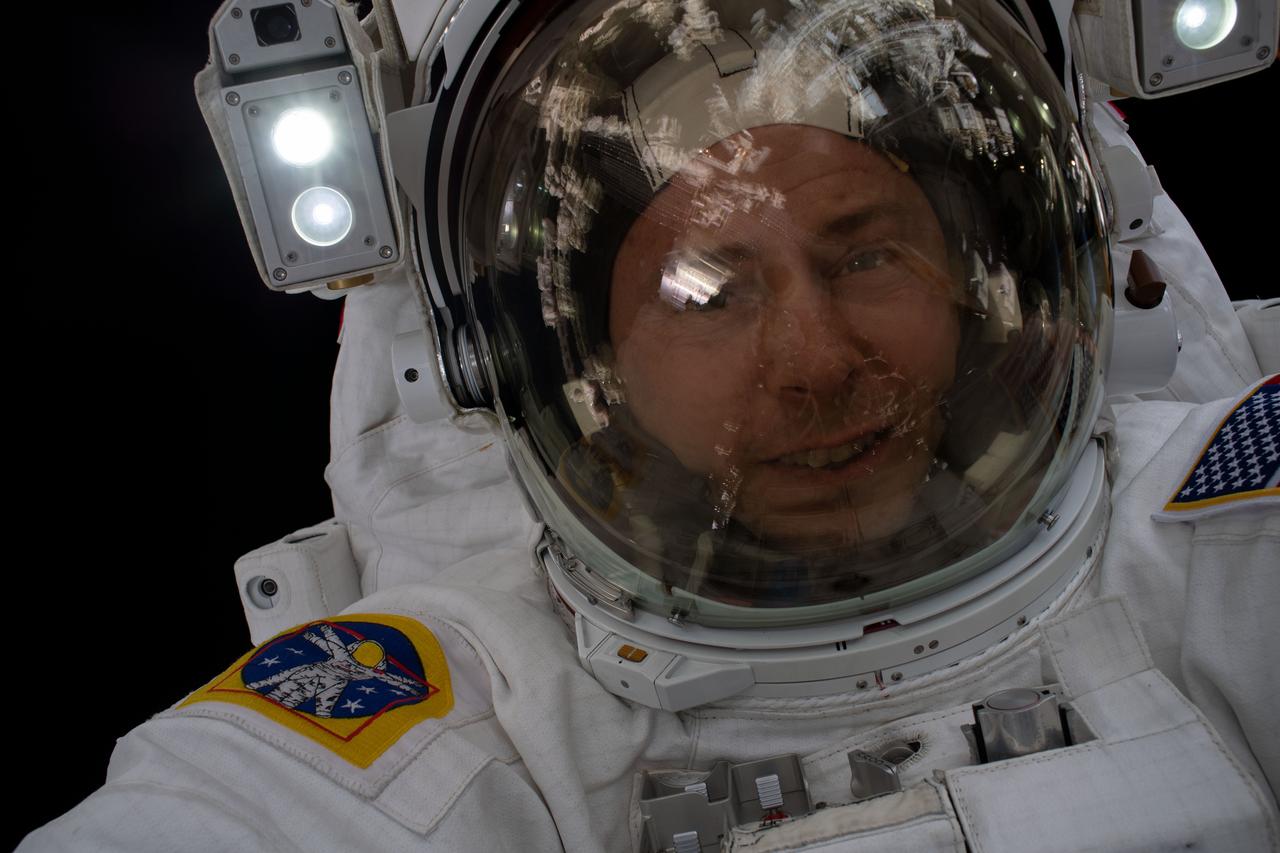
iss060e043180 (Aug. 21, 2019) --- NASA astronaut Nick Hague takes an out-of-this-world "space-selfie" during a spacewalk to install the International Space Station’s second commercial crew vehicle docking port, the International Docking Adapter-3 (IDA-3).
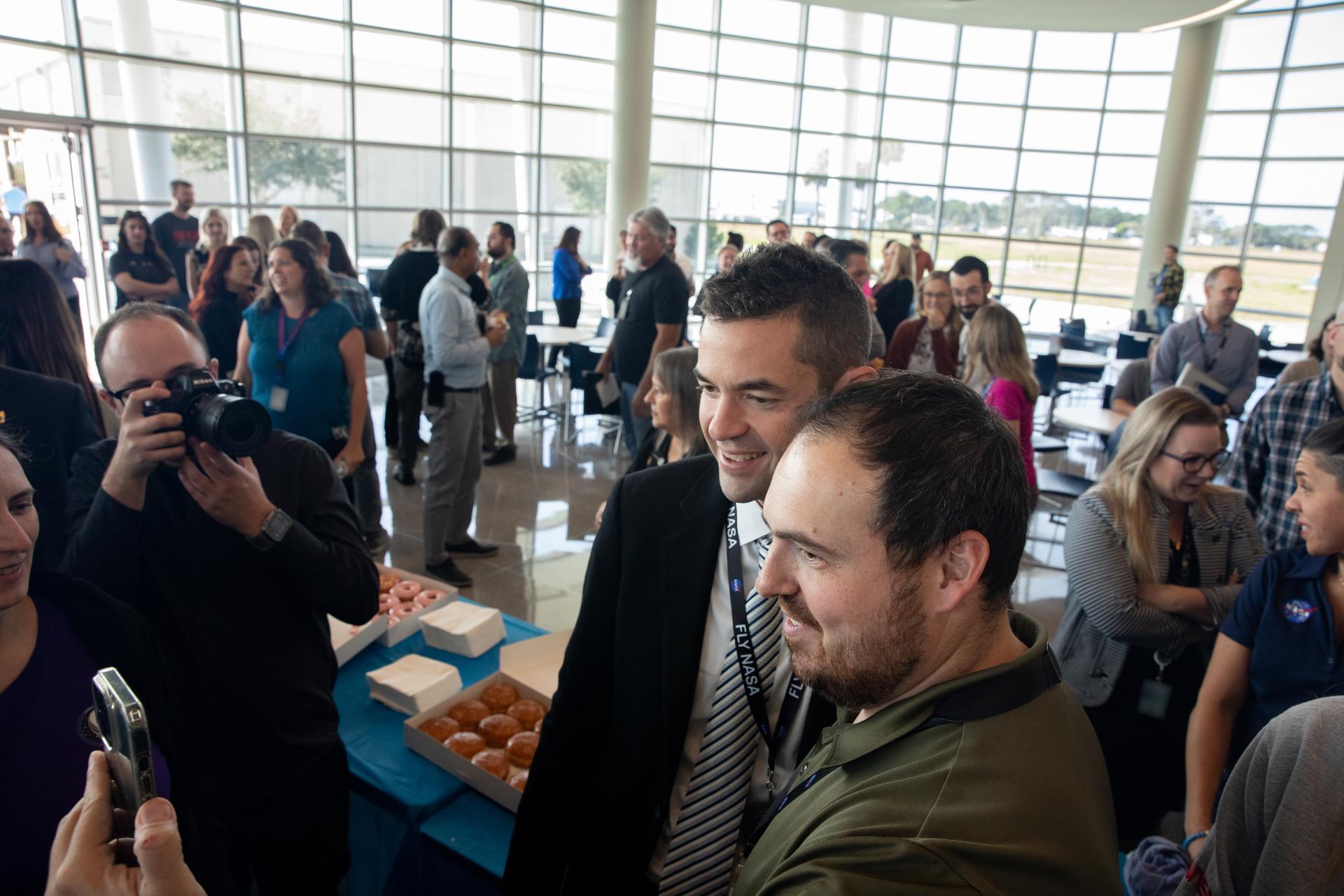
NASA Administrator Jared Isaacman (center) poses for a selfie with a NASA employee during his visit to NASA’s Kennedy Space Center in Florida, on Tuesday, Jan. 13, 2026. Isaacman, NASA’s 15th administrator, began visiting the agency’s centers after his appointment on Dec. 17, 2025, to hear from employees, contractors, and partners.
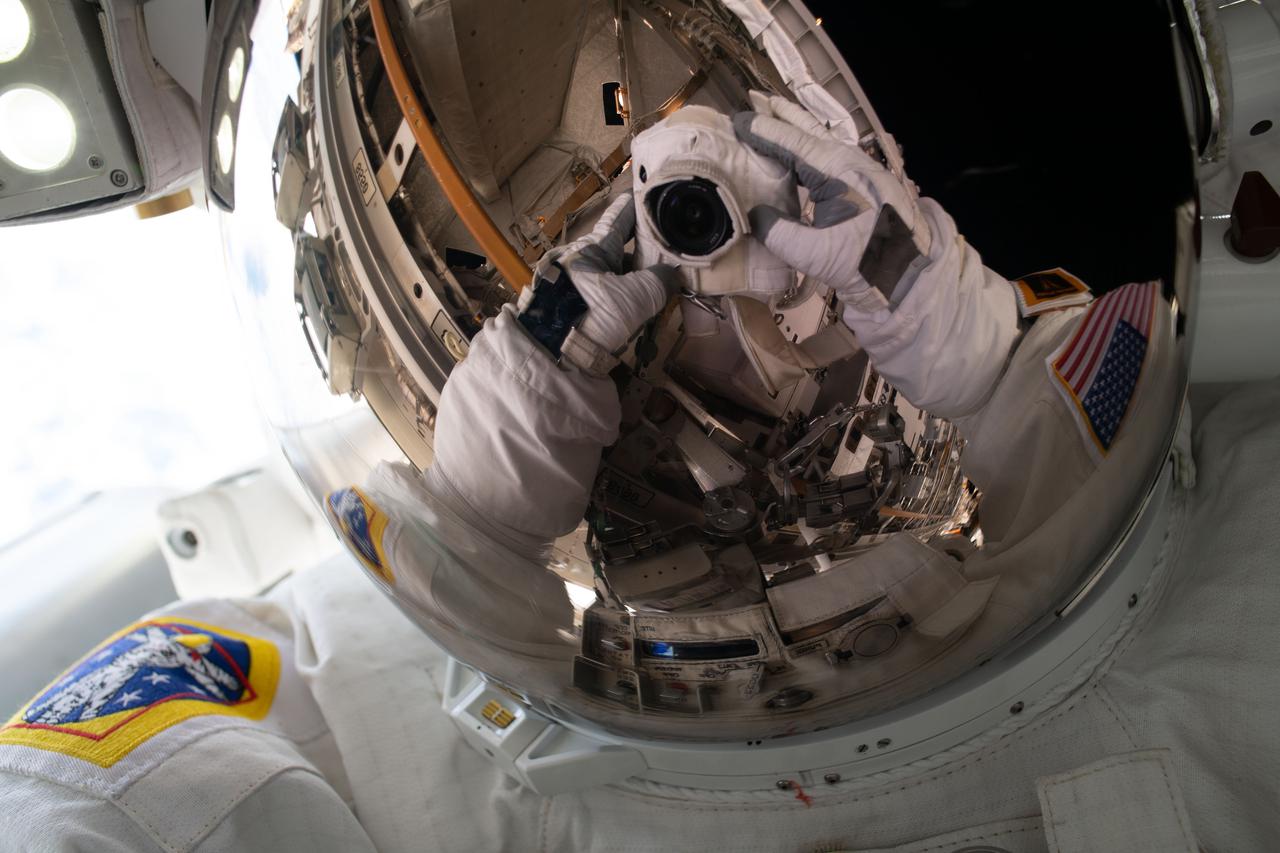
iss064e027943 (Feb. 1, 2021) --- NASA astronaut Michael Hopkins points his camera, insulated from the harmful environment of space, toward his spacesuit helmet's reflective shield and takes an out-of-this-world "space-selfie" during a spacewalk he conducted with fellow NASA astronaut Victor Glover (out of frame).
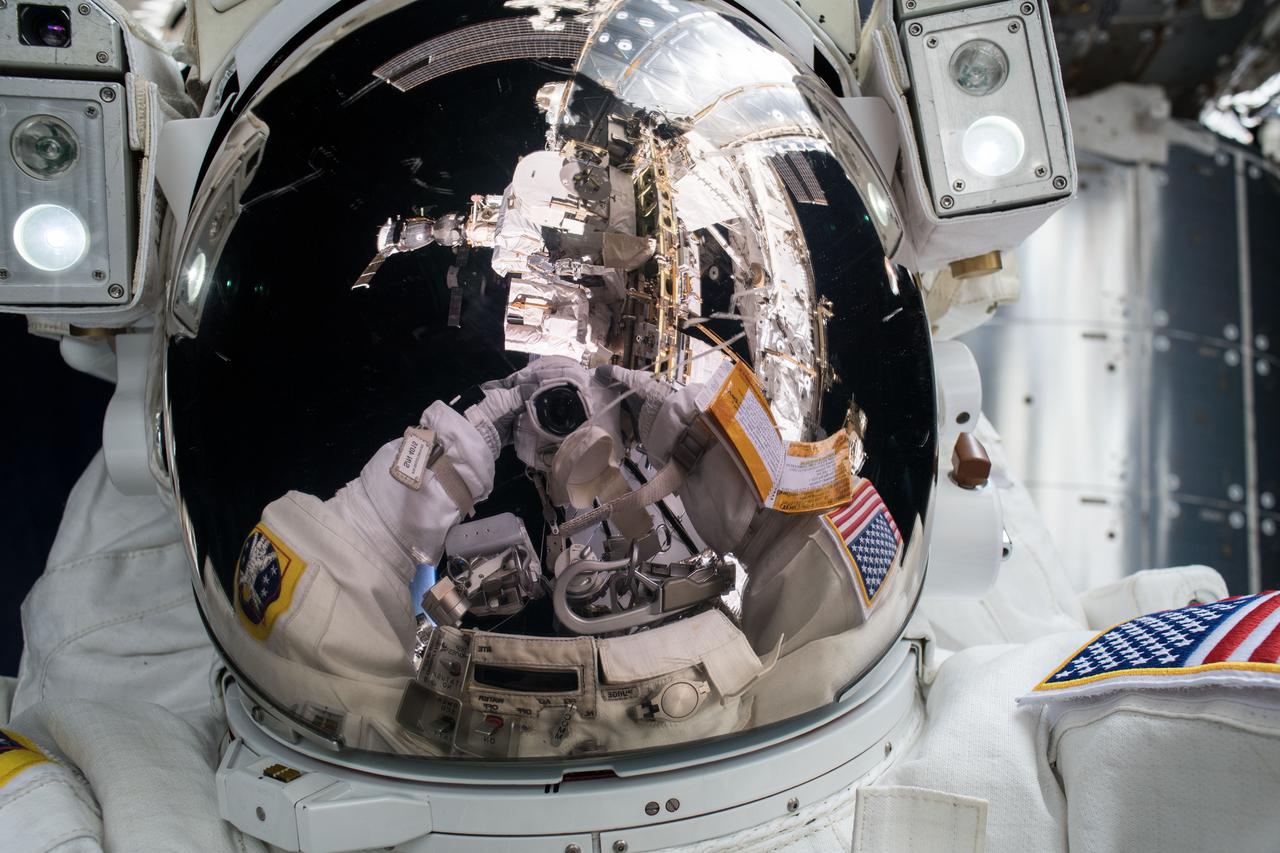
iss054e047709 (Feb. 16, 2018) --- NASA astronaut and Expedition 54 Flight Engineer Mark Vande Hei takes a "space-selfie" during a spacewalk with astronaut Norishige Kanai (out of frame) of the Japan Aerospace Exploration Agency (JAXA). The duo spent nearly six hours servicing components on the Canadarm2 robotic arm.

iss059e005841 (March 29, 2019) --- NASA astronaut Nick Hague takes a "space-selfie" with his helmet visor up and the Earth 260 miles below him during a six-hour, 45-minute spacewalk to upgrade the orbital complex's power storage capacity.
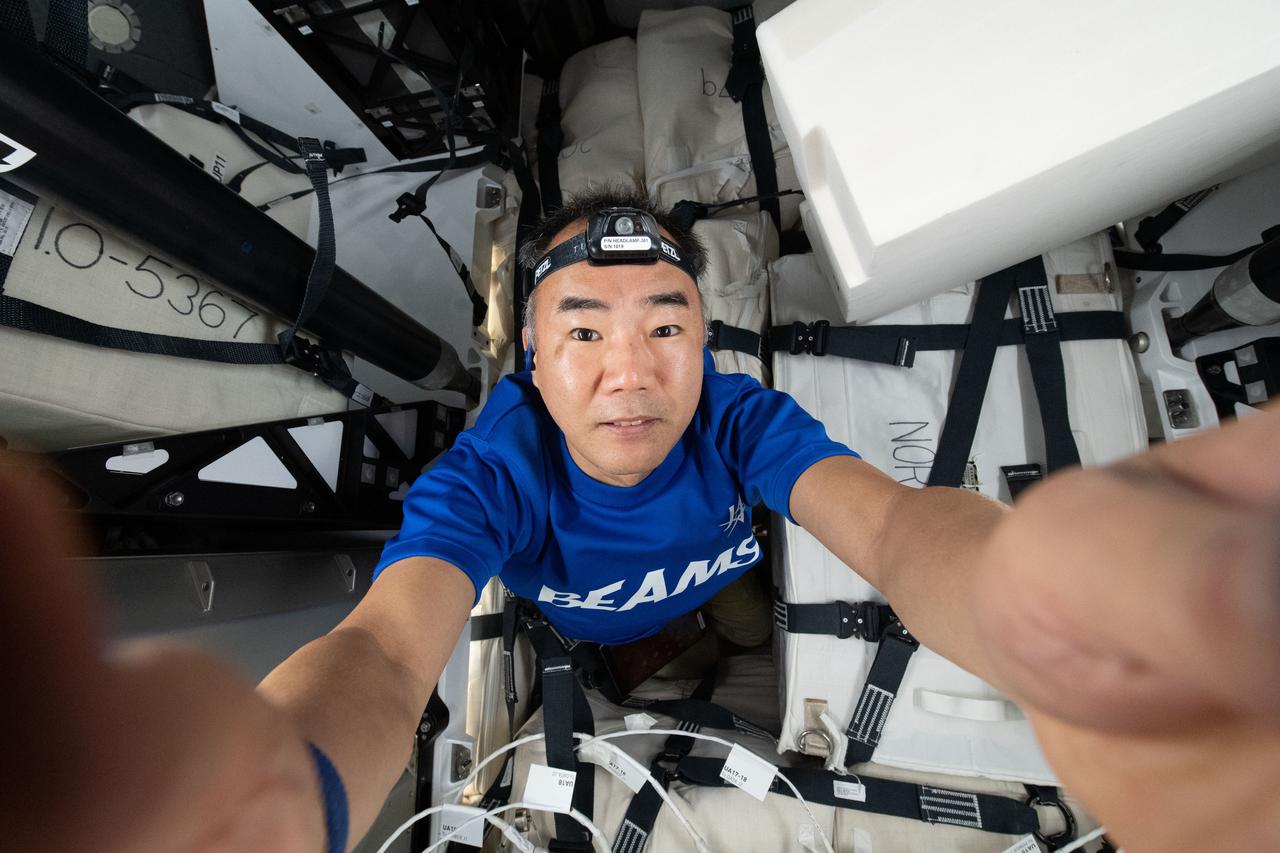
iss064e021855 (Jan. 10, 2021) --- Flight Engineer Soichi Noguchi of JAXA captures a "selfie" as he works to load cargo the inside SpaceX Cargo Dragon resupply ship before its undocking and departure from the International Space Station on Jan. 12.
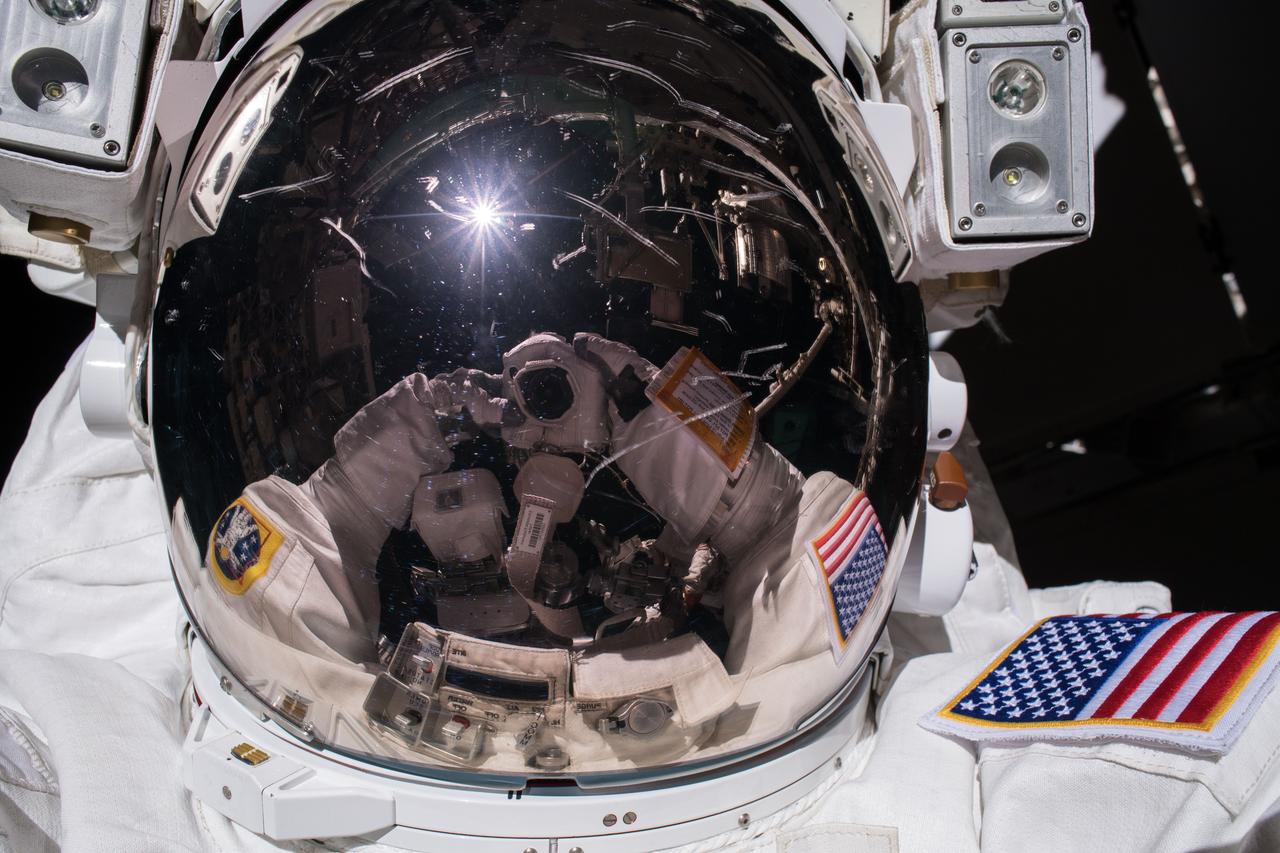
iss055e006302 (March 29, 2018) --- NASA astronaut Ricky Arnold takes an out of this world "space-selfie" during a brief opportunity while conducting a spacewalk with fellow NASA astronaut Drew Feustel (out of frame) on March 29, 2018.
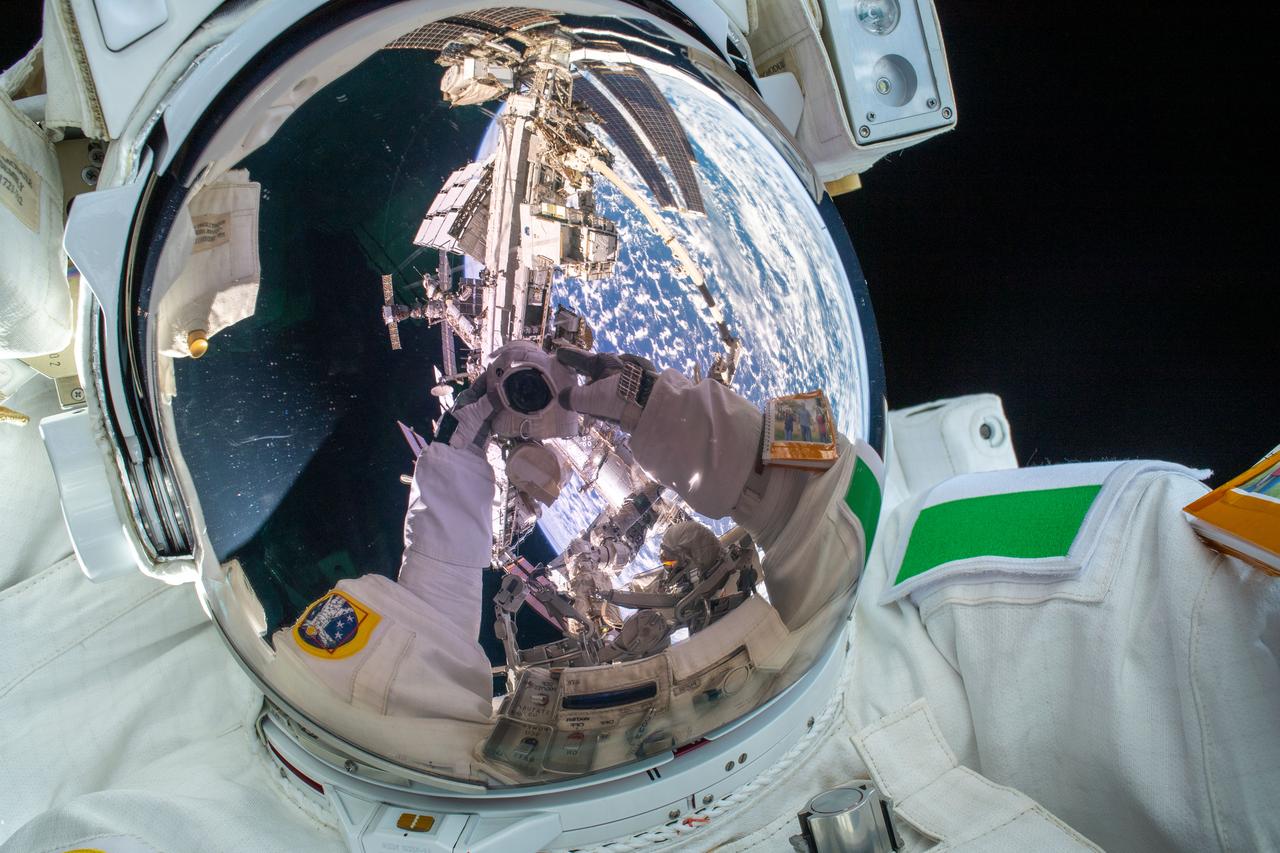
iss061e040912 (Nov. 15, 2019) --- ESA (European Space Agency) astronaut Luca Parmitano takes an out-of-this-world "space-selfie" with his spacesuit's helmet visor down during the first spacewalk to repair the Alpha Magnetic Spectrometer, the International Space Station's cosmic particle detector.
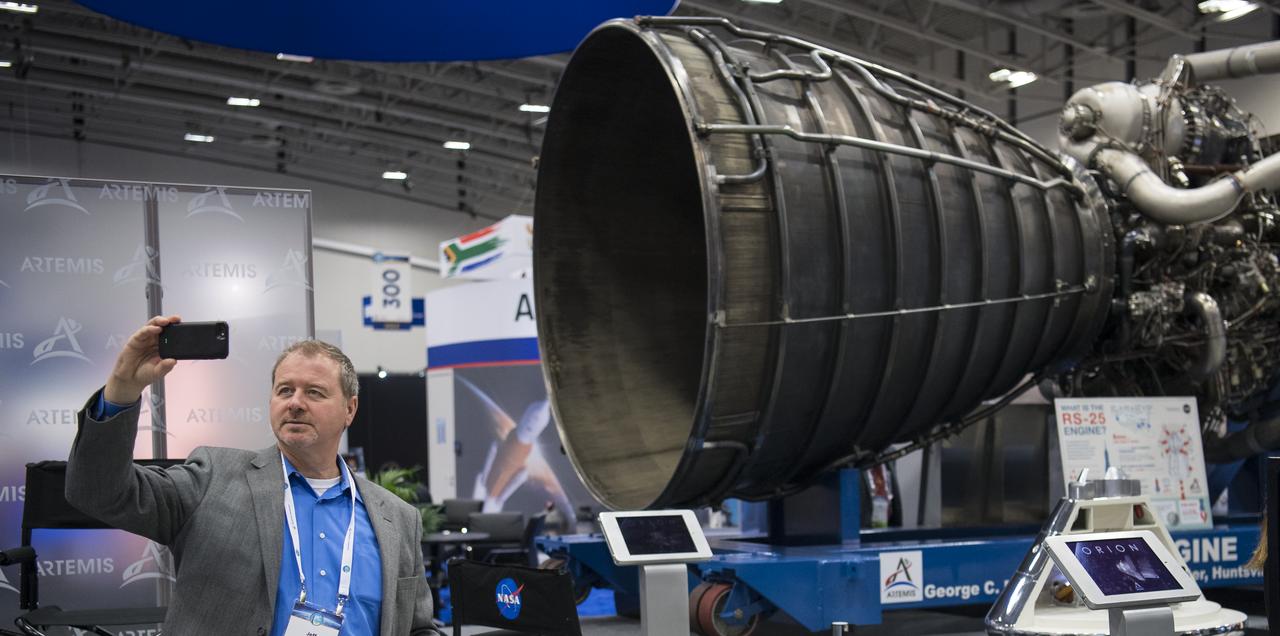
An attendee takes a selfie with an RS-25 engine, the same type that will power NASA's Space Launch System, while visiting the NASA exhibit space at the 70th International Astronautical Congress, Tuesday, Oct. 22, 2019 at the Walter E. Washington Convention Center in Washington. Photo Credit: (NASA/Joel Kowsky)
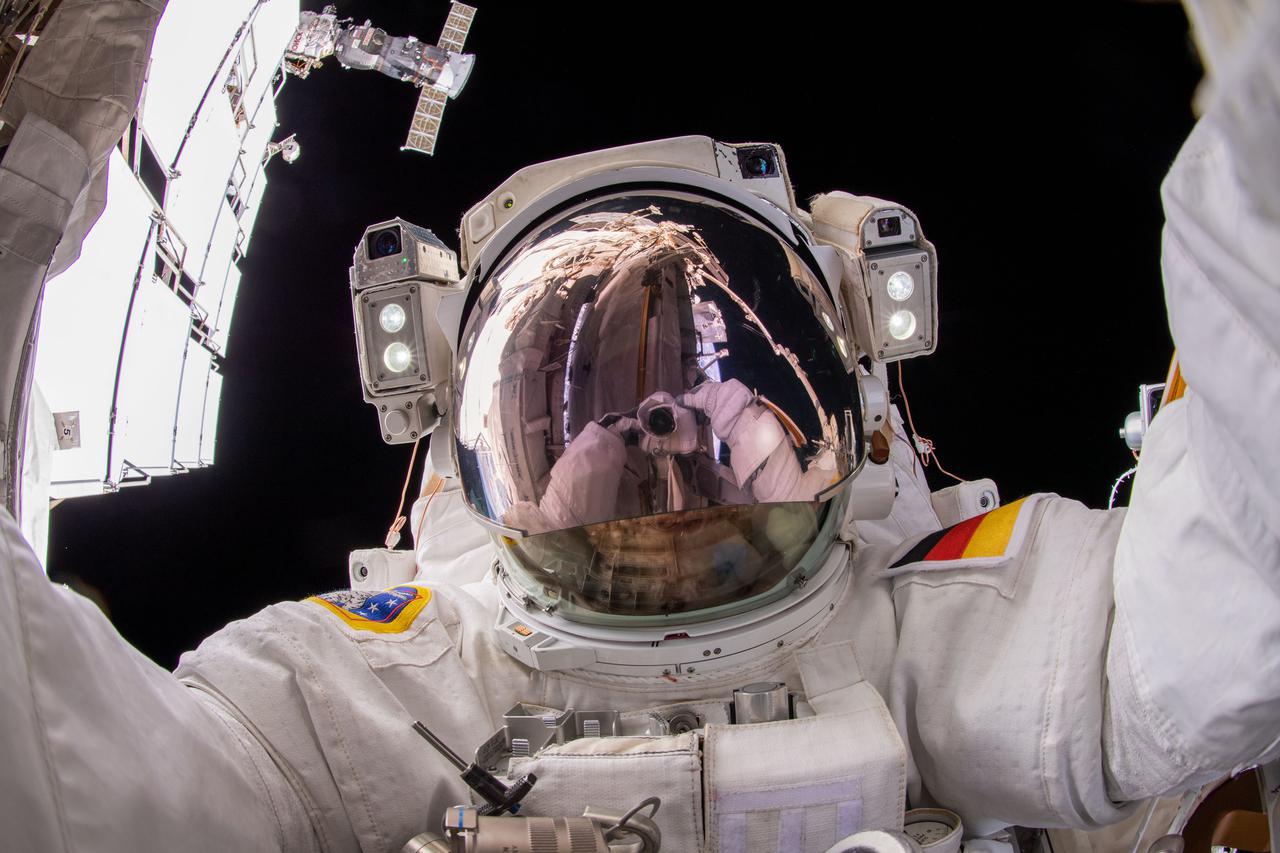
iss066e175249 (March 23, 2022) --- ESA (European Space Agency) astronaut and Expedition 66 Flight Engineer Matthias Maurer points the camera toward himself and takes a "space-selfie" during a six-hour and 54-minute spacewalk to install thermal gear and electronic components on the International Space Station.

iss065e120871 (June 16, 2021) --- Expedition 65 Flight Engineer Thomas Pesquet of ESA (European Space Agency) takes a "space-selfie" with his spacesuit's helmet visor down during a spacewalk to install new roll out solar arrays on the International Space Station's P-6 truss structure.
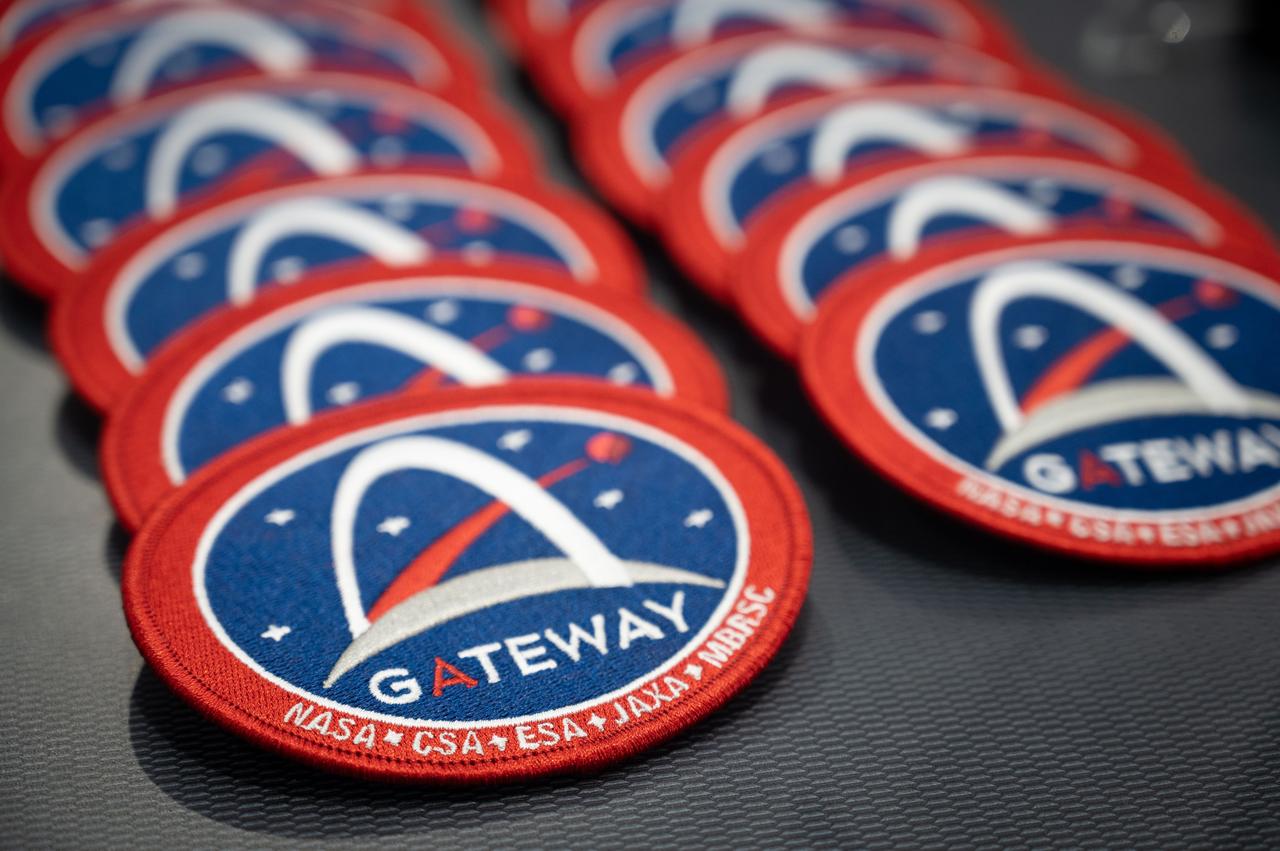
jsc2024e055761 (July 26, 2024) -- A display of Gateway patches at the NASA Pavilion during EAA AirVenture Oshkosh 2024. Gateway highlights at NASA’s exhibition space include a detailed 1:100th scale model of Gateway, a selfie station for Moon photos, and exclusive Gateway stickers, pins, and patches. Photo Credit: NASA/Andrew Carlsen
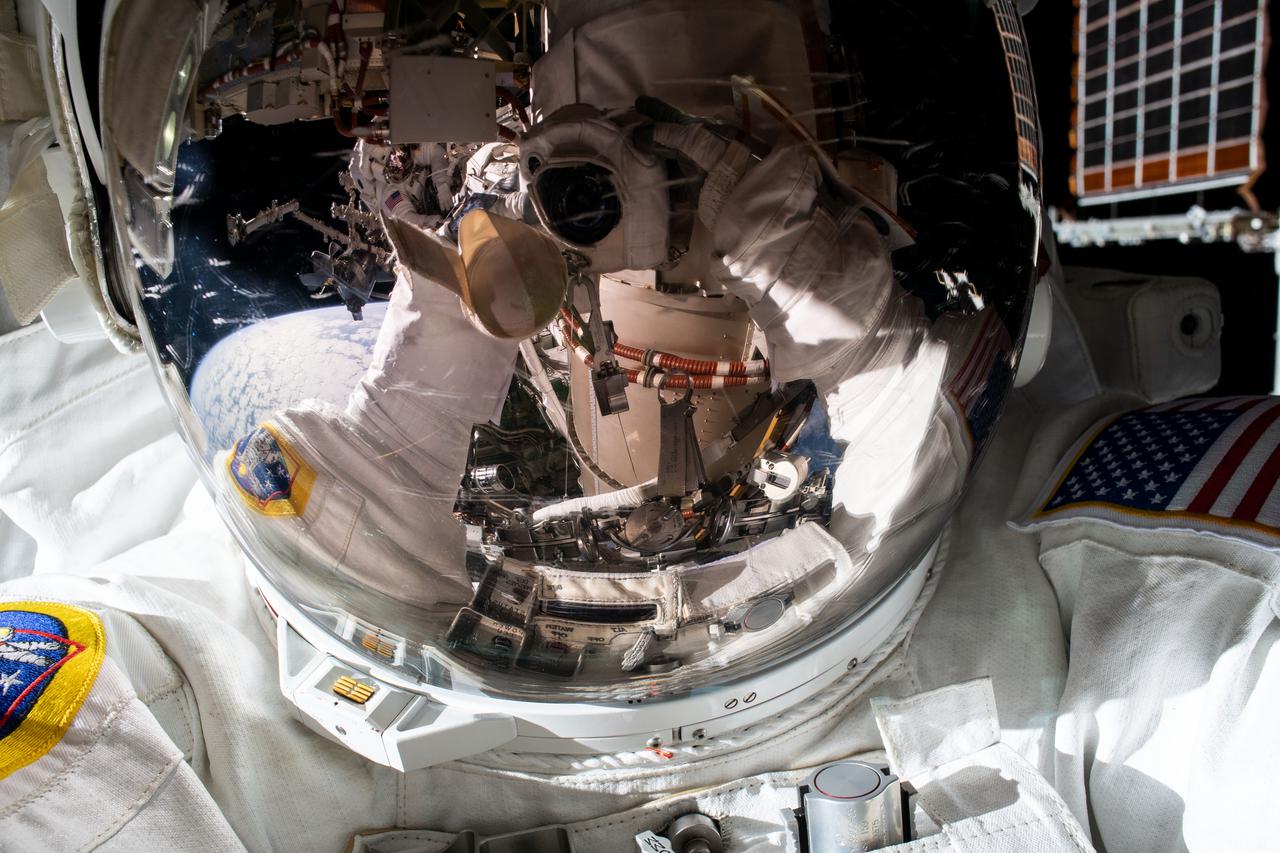
iss066e166325 (March 15, 2022) --- NASA astronaut Kayla Barron points the camera toward herself with her spaceuit's helmet shield down and takes a "space-selfie" during a six-hour and 54-minute spacewalk to set up the orbital lab for its next roll-out solar array.
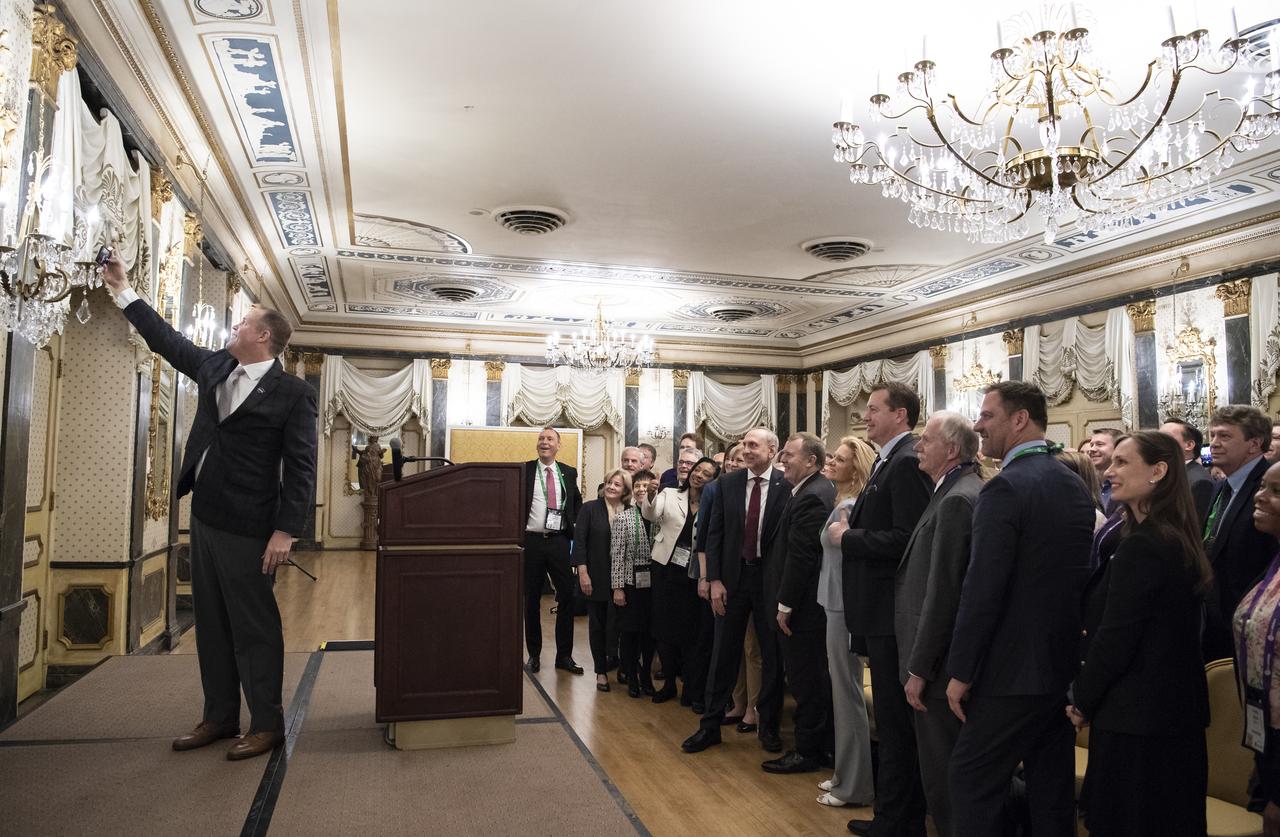
NASA Administrator Jim Bridenstine takes a selfie with NASA staff at an agency meeting at the Space Symposium, Monday, April 8, 2019, at the Broadmoor Hotel in Colorado Springs, Colorado. NASA officials from NASA centers around the country were in attendance. Photo credit: (NASA/Aubrey Gemignani)
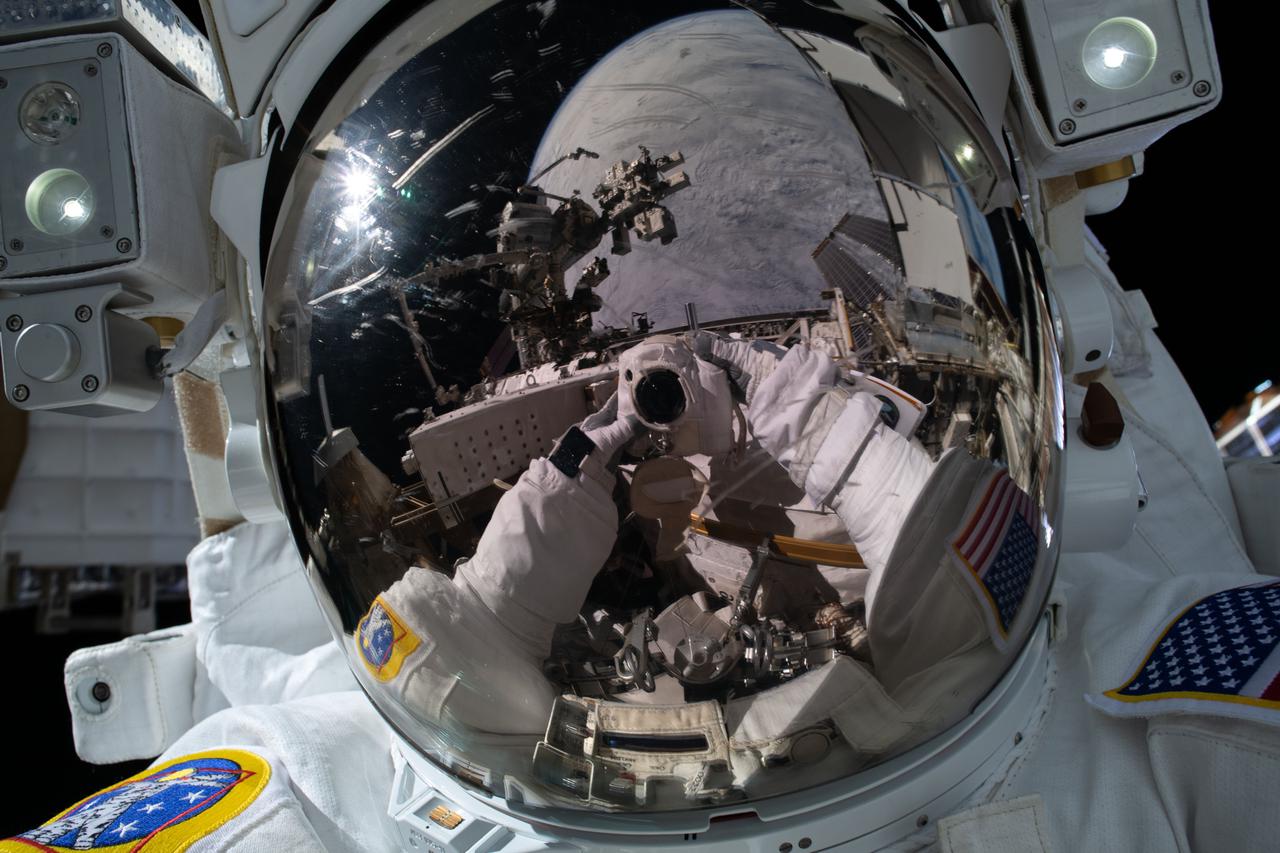
iss066e085978 (Dec. 2, 2021) --- NASA spacewalker Kayla Barron points the camera toward herself and takes an out-of-this-world "space-selfie" with her spacesuit's helmet visor down reflecting the International Space Station and the Earth more than 260 miles below.
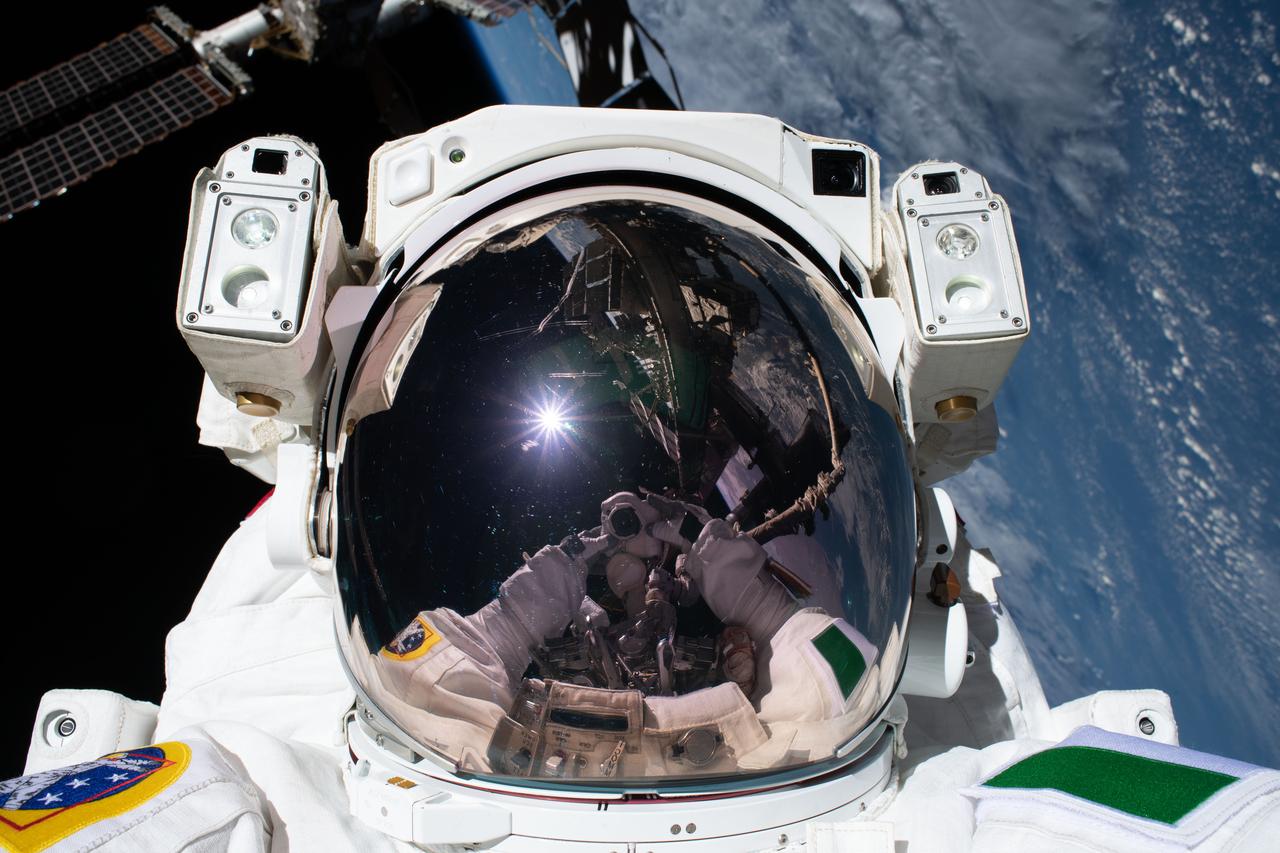
iss061e057607 (Nov. 22, 2019) --- Astronaut Luca Parmitano of ESA (European Space Agency) takes an out-of-this-world "space-selfie" with his spacesuit's helmet visor down during the second spacewalk to repair the International Space Station's cosmic particle detector, the Alpha Magnetic Spectrometer.
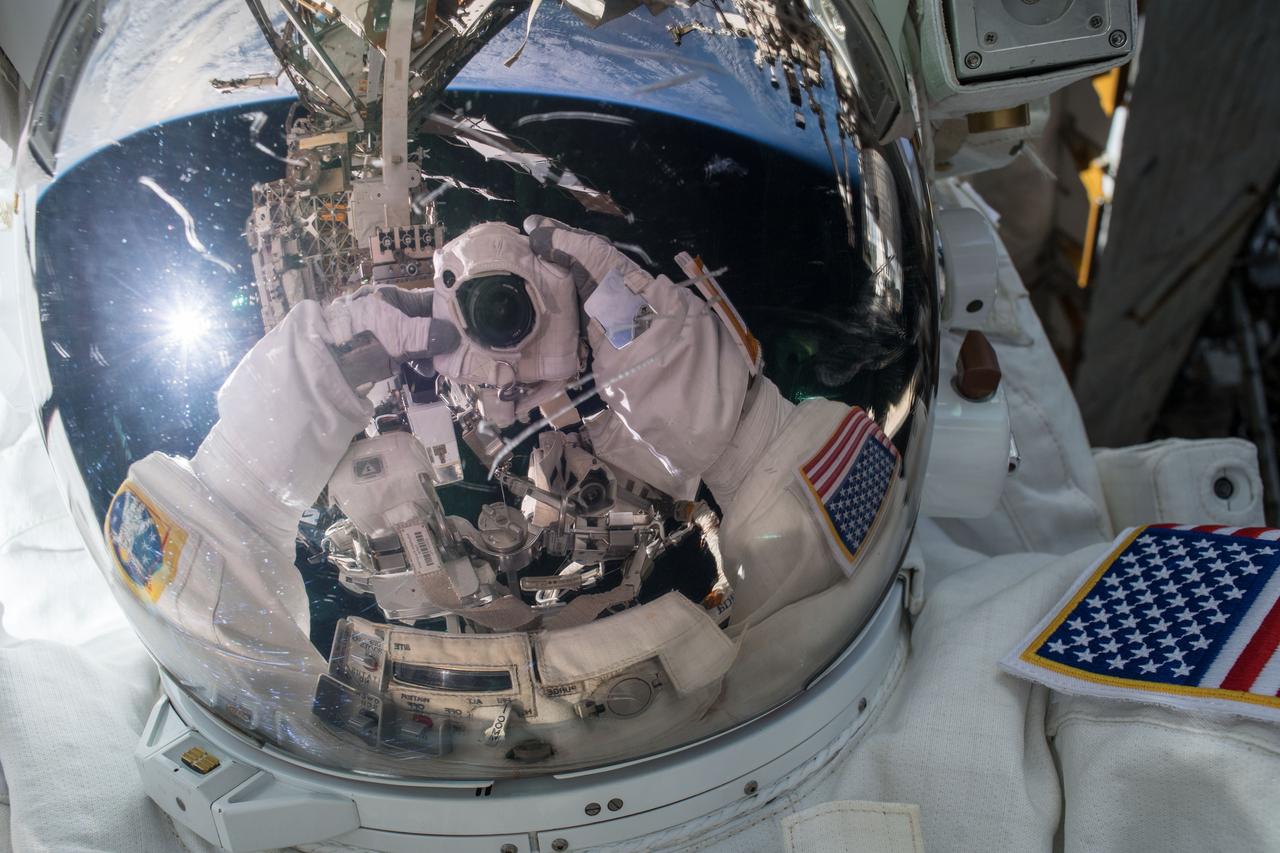
iss055e006349 (March 29, 2018) --- NASA astronaut Ricky Arnold takes an out of this world "space-selfie" during a brief opportunity while conducting a spacewalk with fellow NASA astronaut Drew Feustel (out of frame) on March 29, 2018.
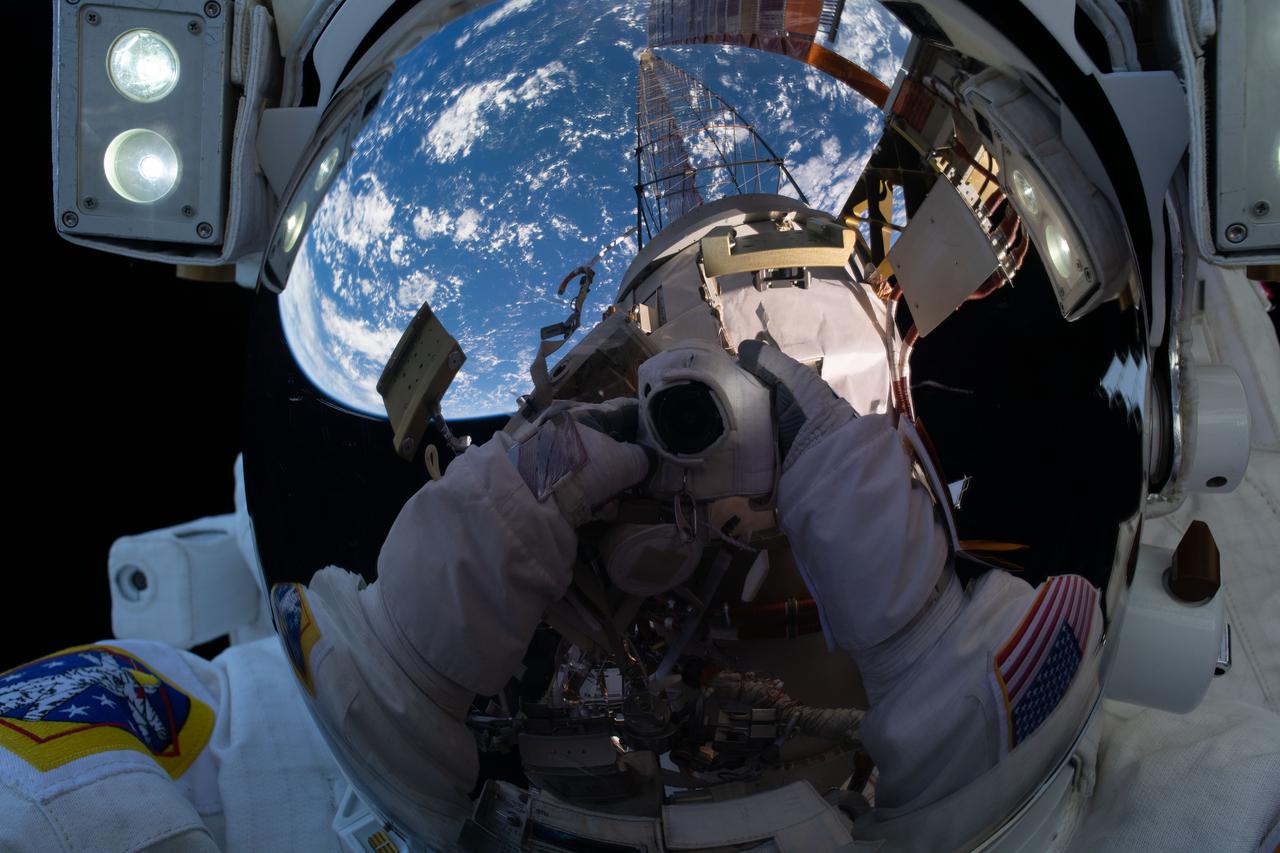
iss064e027922 (Feb. 1, 2021) --- NASA astronaut Michael Hopkins points his camera, insulated from the harmful environment of space, toward his spacesuit helmet's reflective shield and takes an out-of-this-world "space-selfie" during a spacewalk he conducted with fellow NASA astronaut Victor Glover (out of frame).
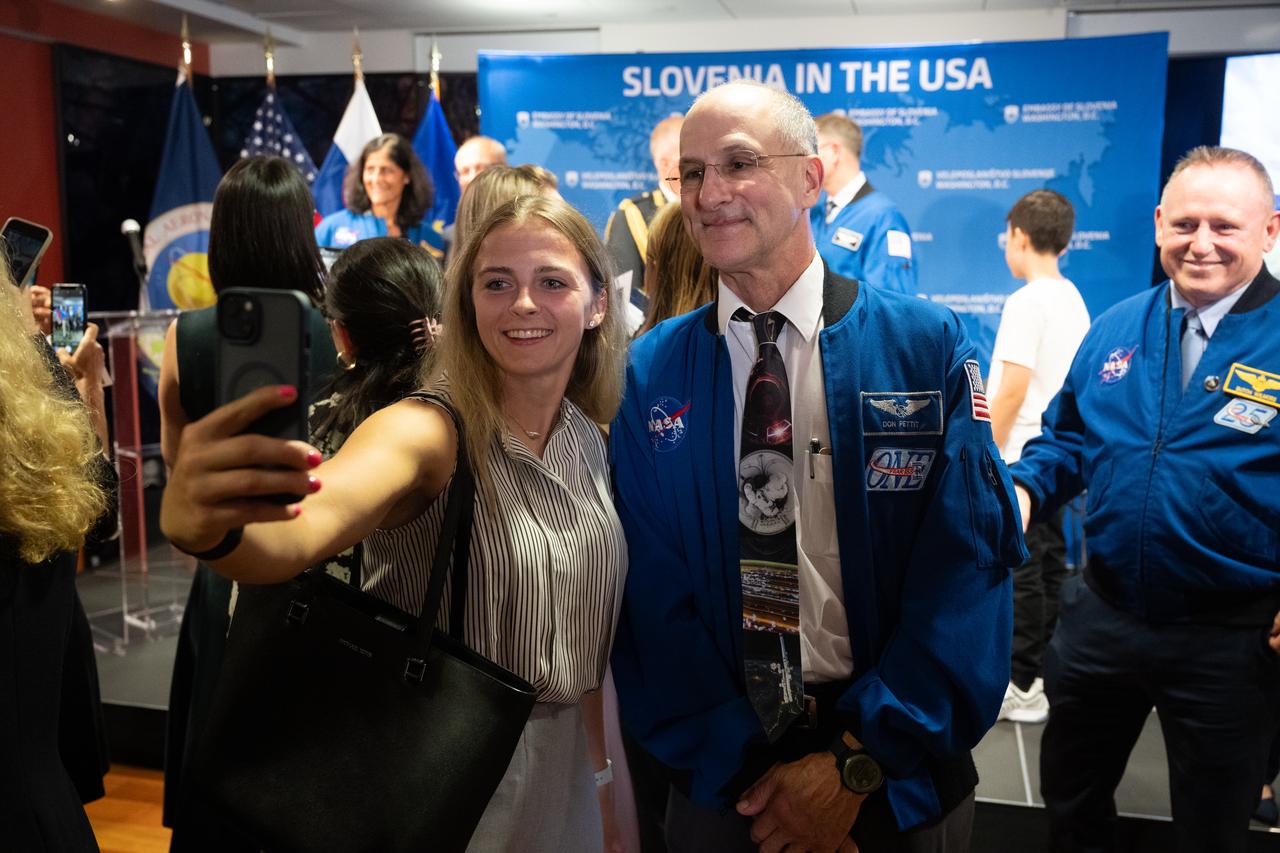
NASA astronaut Don Pettit takes a selfie with an attendee following a panel discussion at the Embassy of Slovenia, Wednesday, Sept. 17, 2025, in Washington. Pettit, and fellow NASA astronauts Nick Hague, Butch Wilmore, and Suni Williams served as part of Expedition 72 onboard the International Space Station. Photo Credit: (NASA/Joel Kowsky)