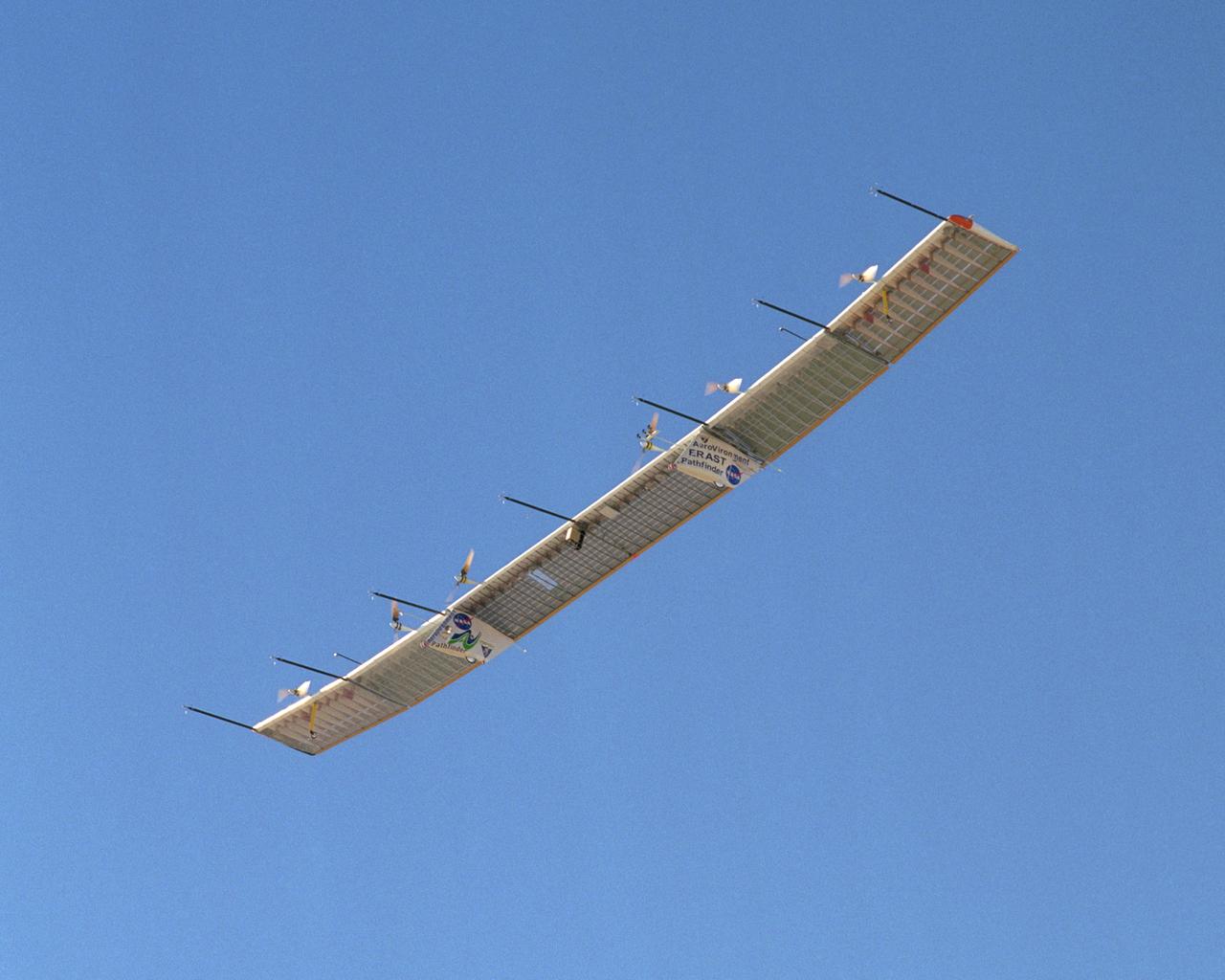
With its sensor booms projecting ahead of the wing, the Pathfinder-Plus solar-electric aircraft soars under a blue sky on a turbulence measurement research flight.
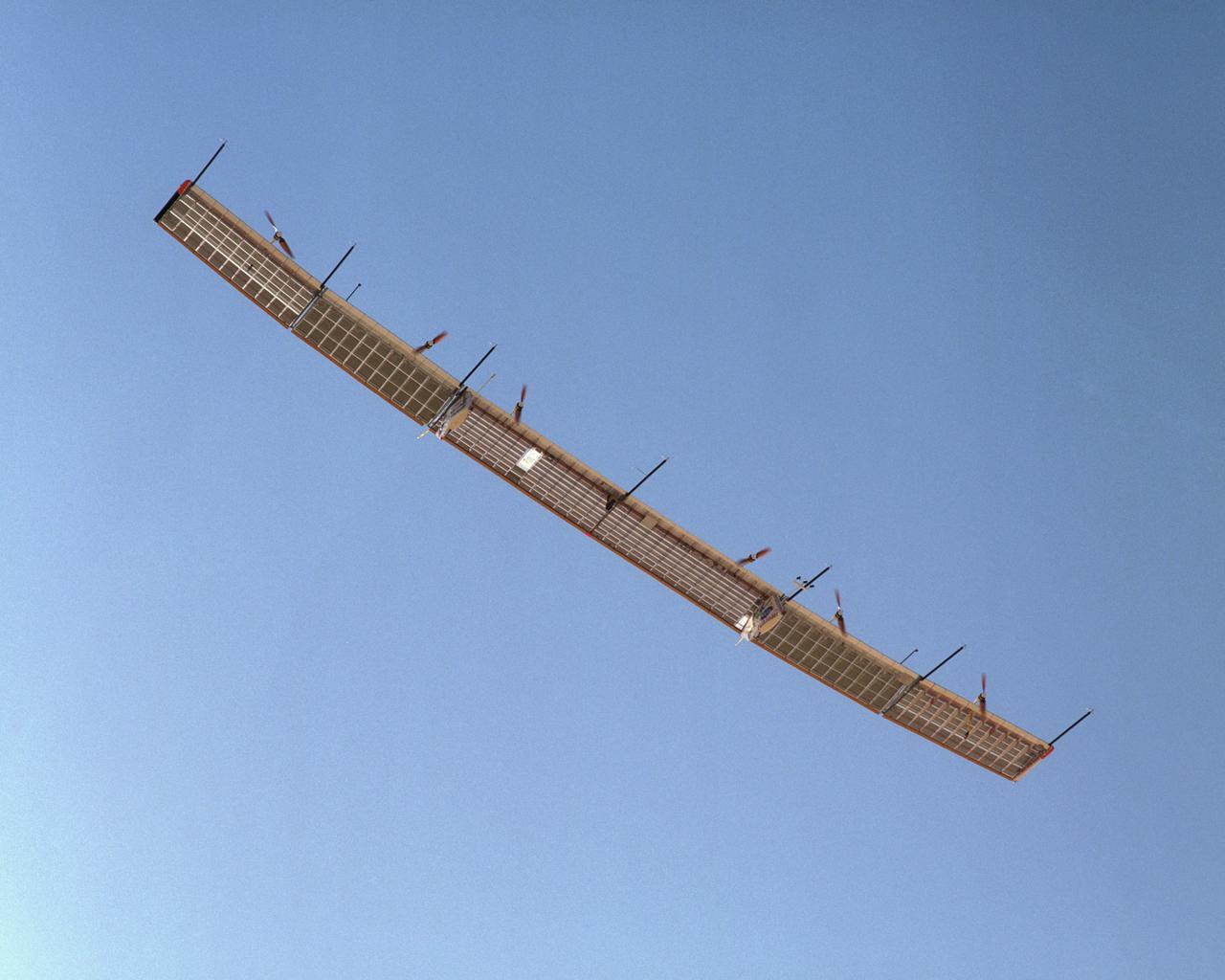
With its sensor booms projecting ahead of the wing, the Pathfinder-Plus solar wing soars under a blue sky on its final turbulence measurement research flight.
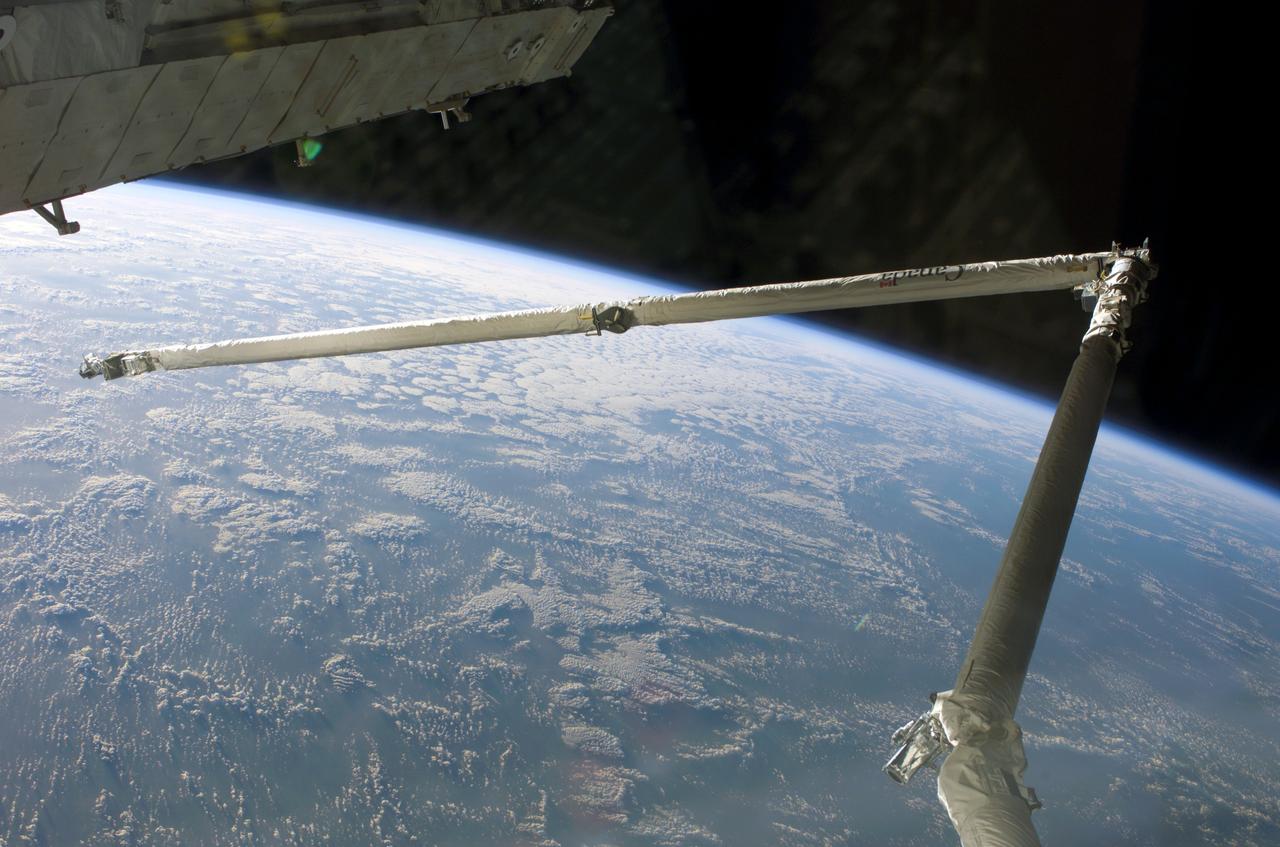
S114-E-5712 (28 July 2005) --- This view of the Orbital Boom Sensor System, backdropped by clouds and Earth’s limb, was taken by the STS-114 crew during approach and docking operations with the international space station.
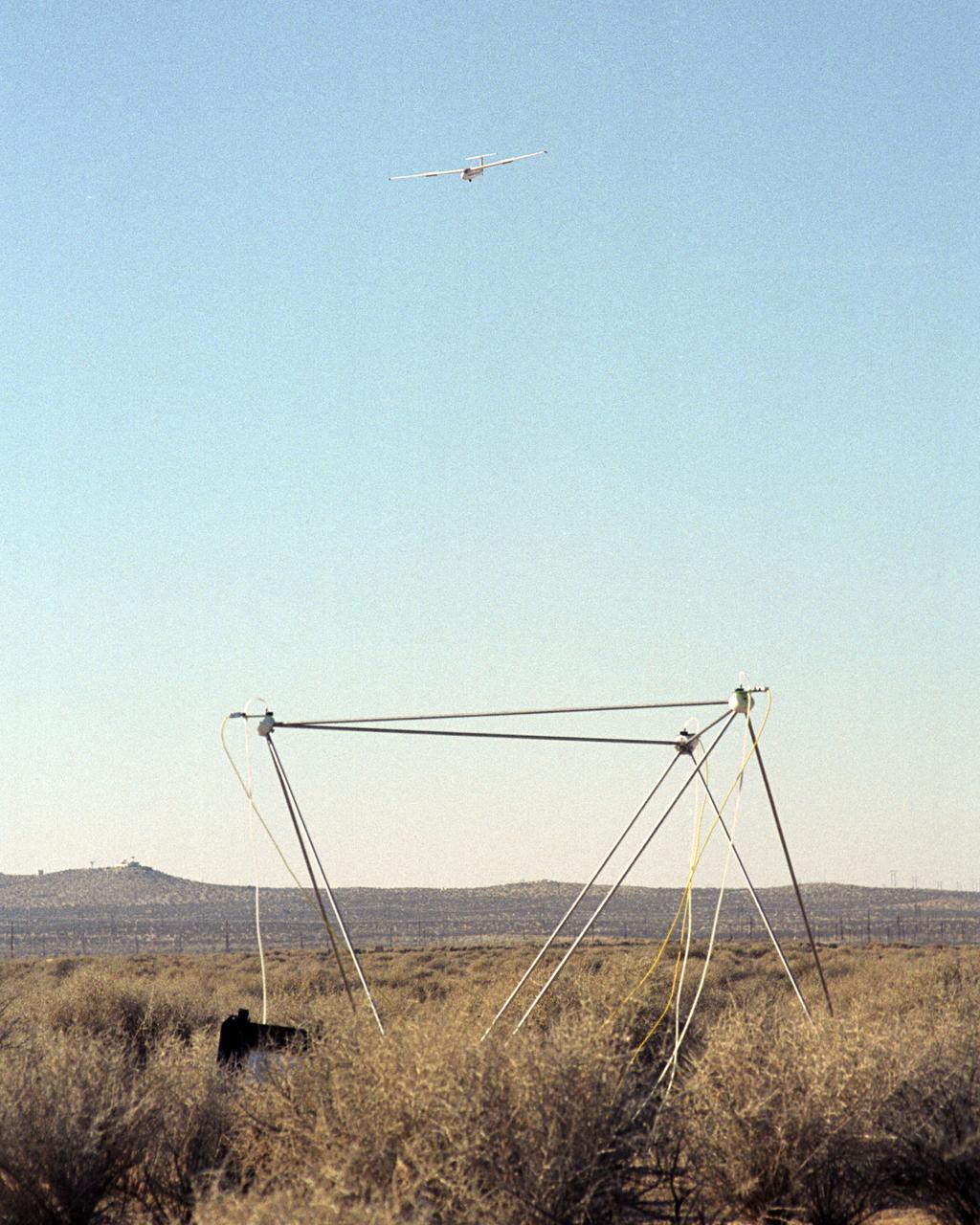
A United States Air Force Test Pilot School Blanik L-23 glider carrying a microphone and a pressure transducer flies near a BADS (Boom Amplitudes Direction System) sensor following flight at an altitude of 10 thousand feet under the path of the F-5E SSBE aircraft. The SSBE (Shaped Sonic Boom Experiment) was formerly known as the Shaped Sonic Boom Demonstration, or SSBD, and is part of DARPA's Quiet Supersonic Platform (QSP) program. On August 27, 2003, the F-5E SSBD aircraft demonstrated a method to reduce the intensity of sonic booms.
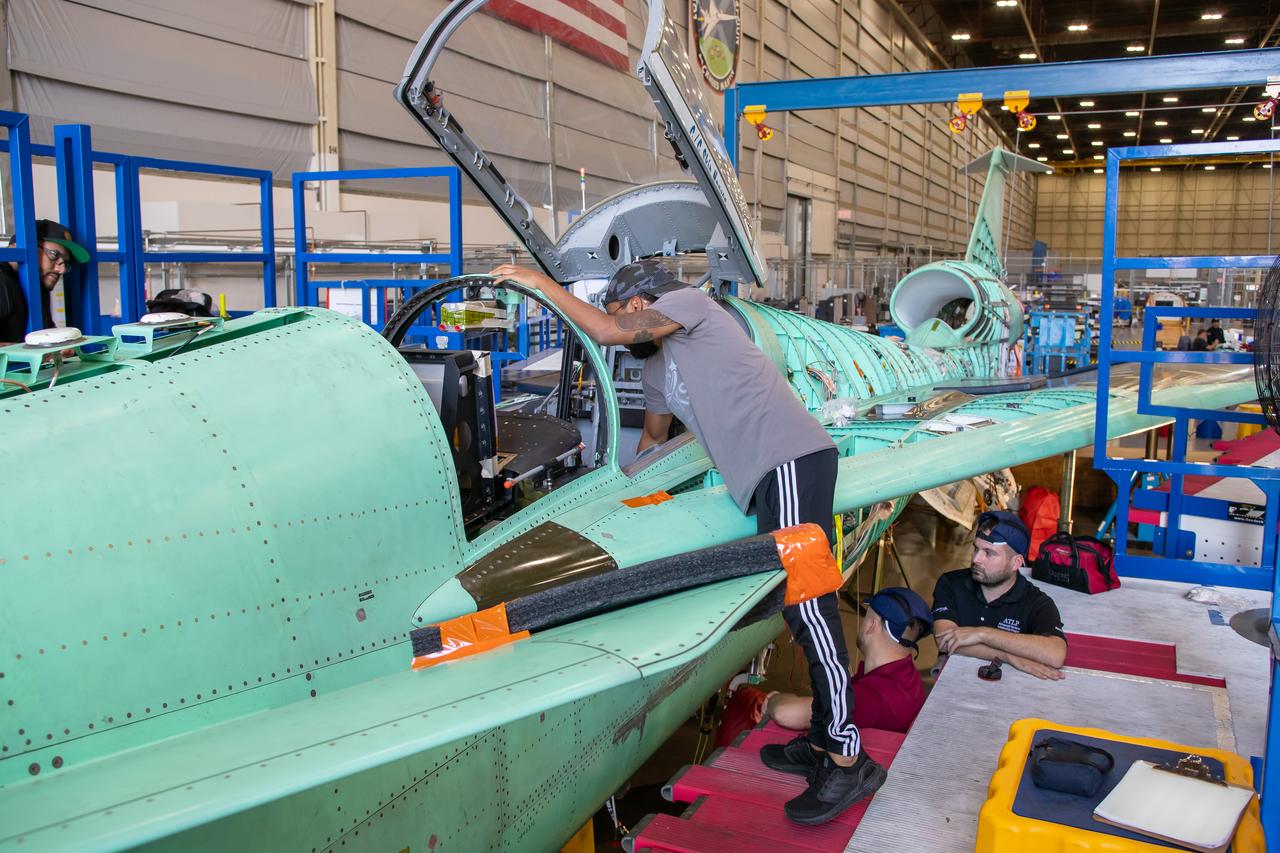
A Lockheed Martin Skunk Works technician inspects some of the wiring and sensors on the X-59 aircraft in preparation for the first power-on system checkouts. Once complete, the X-59 aircraft will demonstrate the ability to fly supersonic while reducing the loud sonic boom to a quiet sonic thump and help enable commercial supersonic air travel over land. This aircraft is the centerpiece of NASA’s Quesst mission.
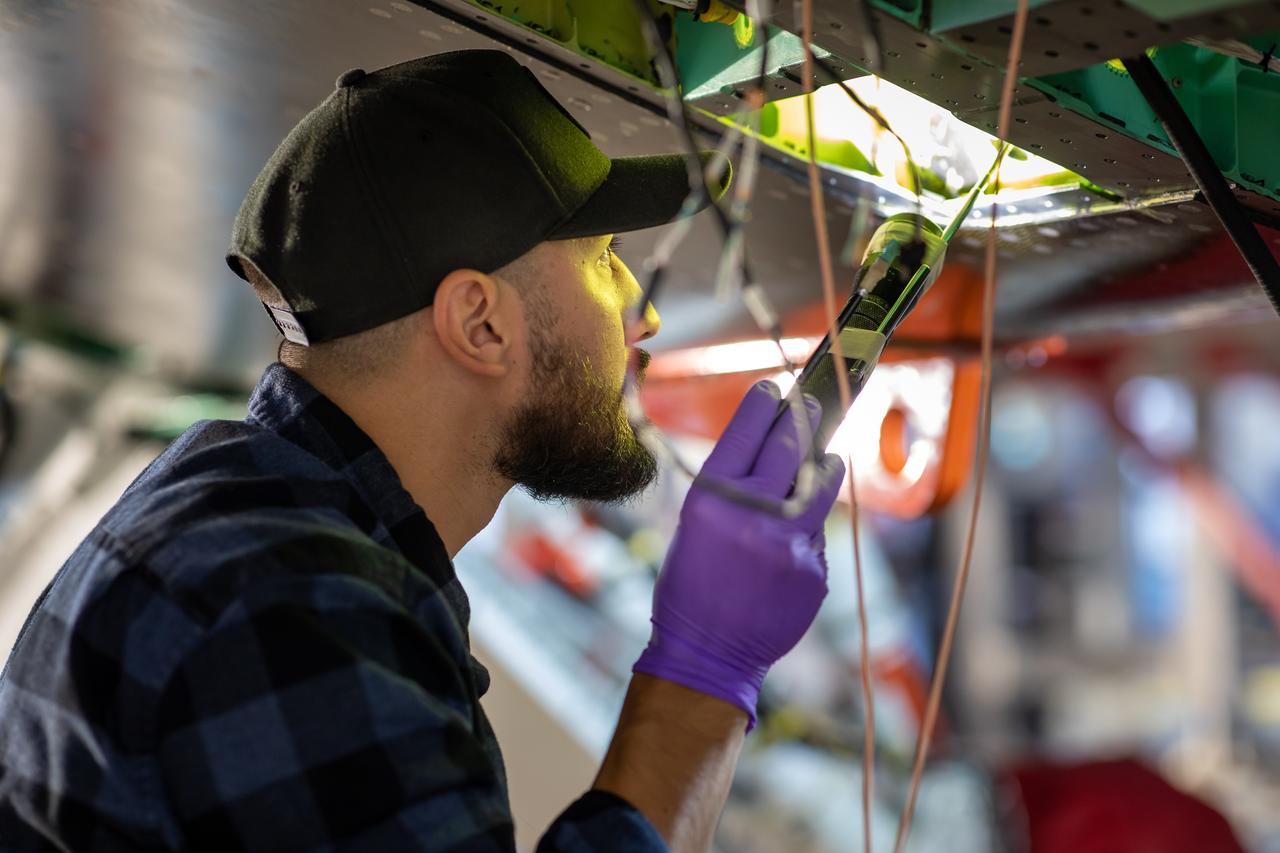
A Lockheed Martin Skunk Works technician inspects some of the wiring and sensors on the X-59 aircraft in preparation for the first power-on system checkouts. Once complete, the X-59 aircraft will demonstrate the ability to fly supersonic while reducing the loud sonic boom to a quiet sonic thump and help enable commercial supersonic air travel over land. This aircraft is the centerpiece of NASA’s Quesst mission.
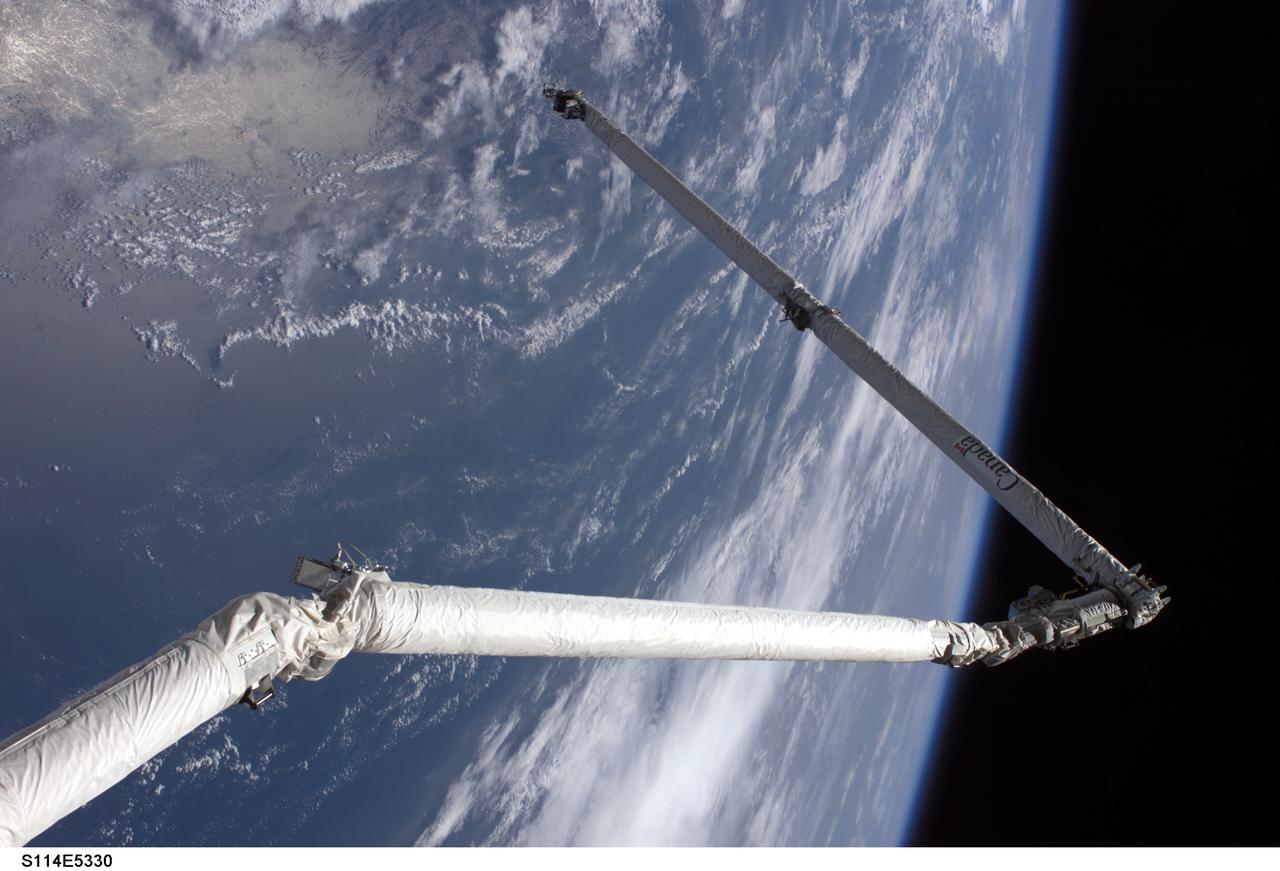
STS114-E-5330 (28 July 2005) --- As seen from Discovery's cabin, STS-114 Remote Manipulator System (RMS) robot arm flexes above Earth. Crews of Space Station and Discovery will later use RMS and boom to study Shuttle's tiles.
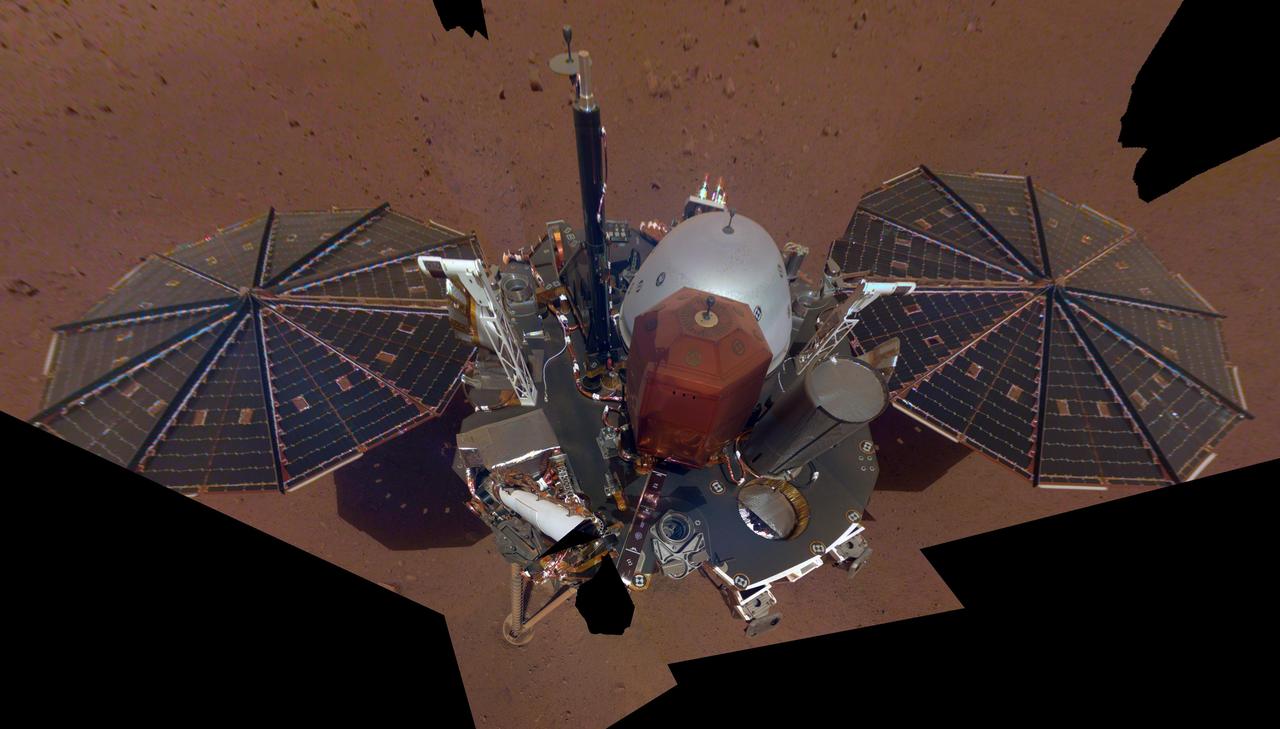
This is NASA InSight's first full selfie on Mars. It displays the lander's solar panels and deck. On top of the deck are its science instruments, weather sensor booms and UHF antenna. The selfie was taken on Dec. 6, 2018 (Sol 10). The selfie is made up of 11 images which were taken by its Instrument Deployment Camera, located on the elbow of its robotic arm. Those images are then stitched together into a mosaic. https://photojournal.jpl.nasa.gov/catalog/PIA22876
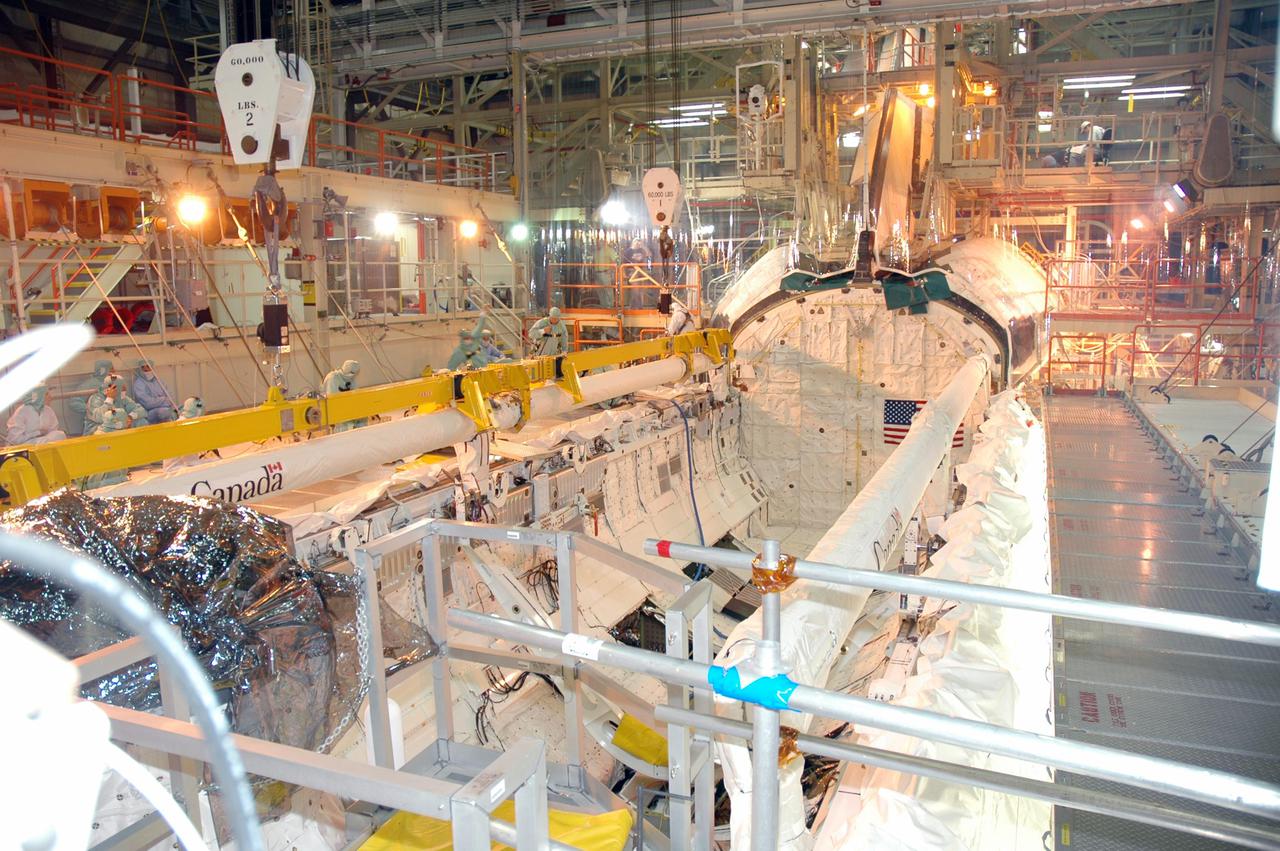
KENNEDY SPACE CENTER, FLA. - In NASA Kennedy Space Center’s Orbiter Processing Facility, bay 3, workers at left are preparing to remove the orbiter boom sensor system from Discovery’s payload bay. The boom will undergo inspection. The orbiter will be processed for the second Return to Flight mission, STS-121. The orbiter boom sensor system, built in Canada, was used during Return to Flight mission STS-114 to provide more extensive inspection and photography of Discovery.
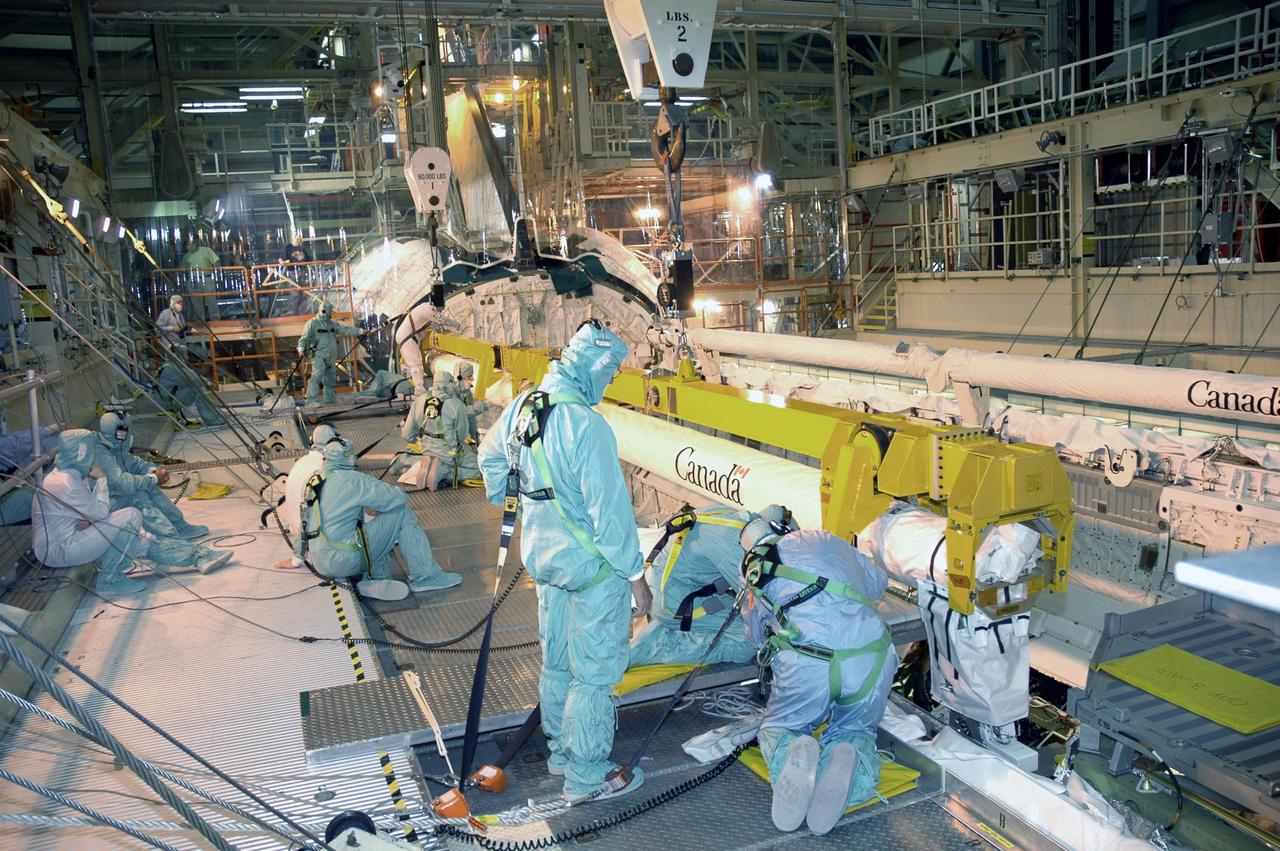
KENNEDY SPACE CENTER, FLA. -In NASA Kennedy Space Center’s Orbiter Processing Facility, bay 3, workers prepare to remove the orbiter boom sensor system from Discovery’s payload bay. The boom will undergo inspection. The orbiter will be processed for the second Return to Flight mission, STS-121. The orbiter boom sensor system, built in Canada, was used during Return to Flight mission STS-114 to provide more extensive inspection and photography of Discovery.

KENNEDY SPACE CENTER, FLA. - In NASA Kennedy Space Center’s Orbiter Processing Facility, bay 3, workers prepare to remove the orbiter boom sensor system from Discovery’s payload bay. The boom will undergo inspection. The orbiter will be processed for the second Return to Flight mission, STS-121. The orbiter boom sensor system, built in Canada, was used during Return to Flight mission STS-114 to provide more extensive inspection and photography of Discovery.
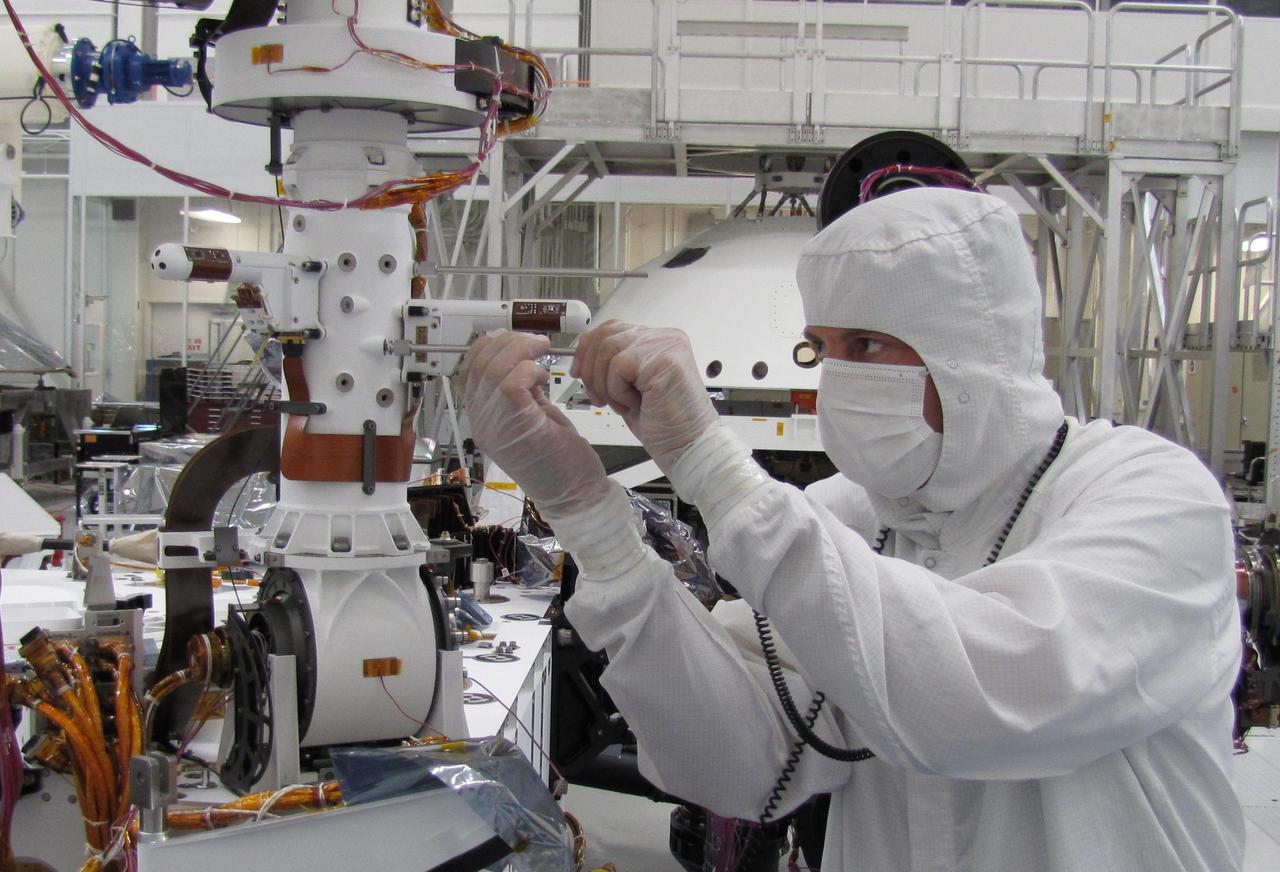
Sensors on two finger-like mini-booms extending horizontally from the mast of NASA Mars rover Curiosity will monitor wind speed, wind direction and air temperature; image taken during installation of the instrument inside a clean room at NASA JPL.
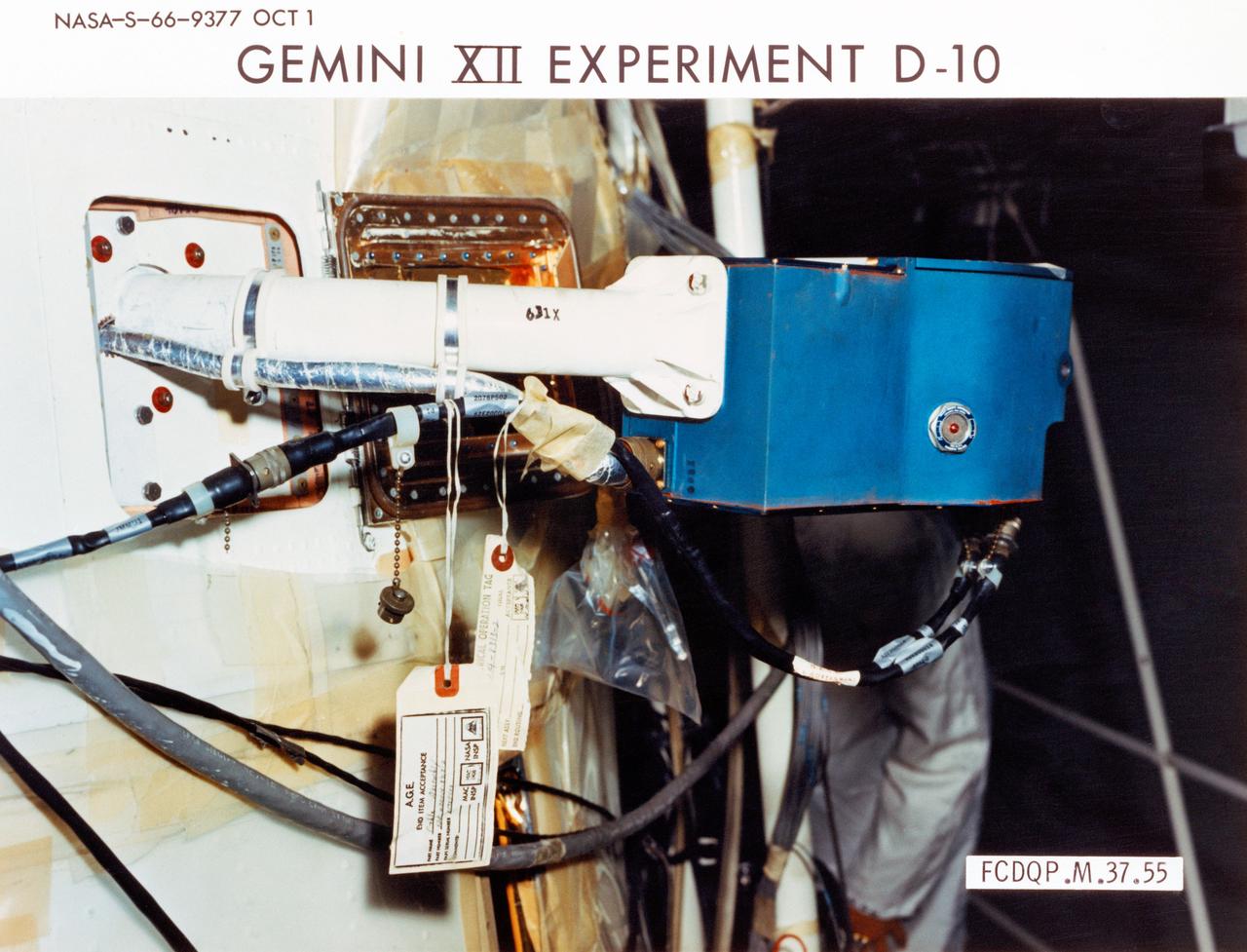
S66-09377 (1 Oct. 1966) --- One of two Ion Sensors which will be used to investigate determination of Gemini-12 spacecraft attitude in yaw and pitch from measurement of ion flow variations. Each sensor is attached to an extendible boom in the retrograde adapter section. Photo credit: NASA
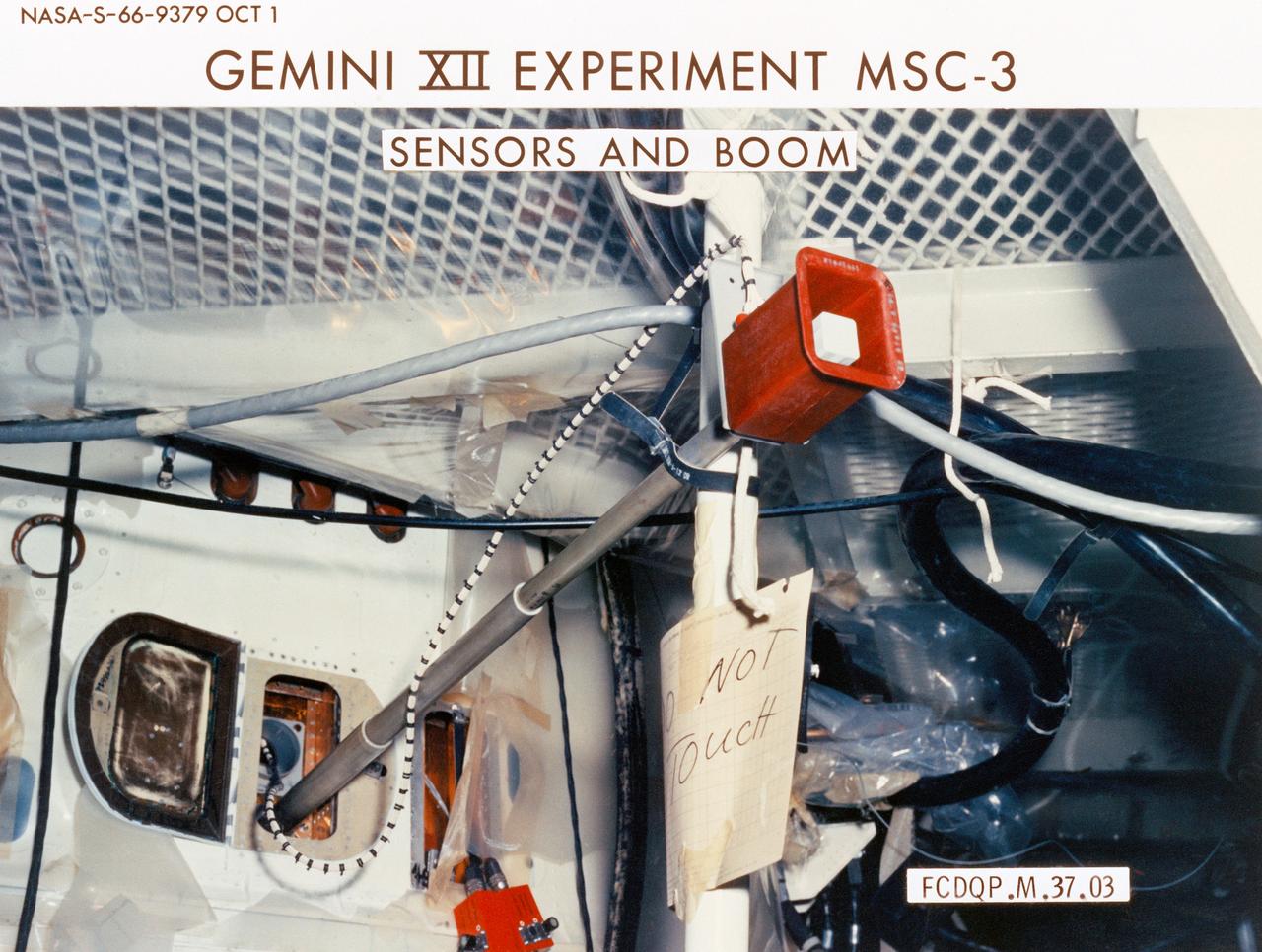
S66-09379 (1 Oct. 1966) --- Tri-Axis Magnetometer-Sensor Unit mounted on telescoping boom. Cable connects Sensor Unit with Electronics Unit mounted on retrograde beam in retrograde adapter section. Objective of experiment is to monitor the direction and amplitude of Earth's magnetic field (Gemini-12). Photo credit: NASA
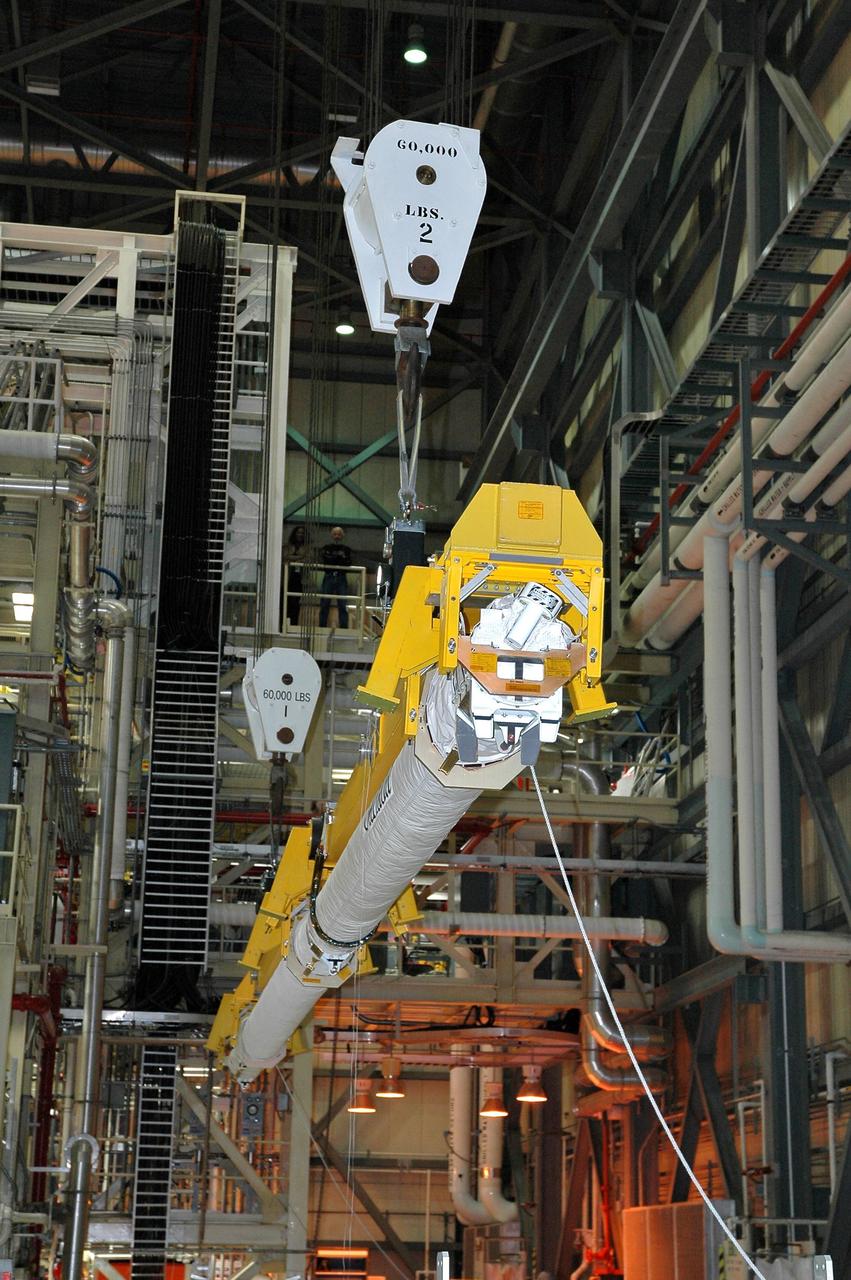
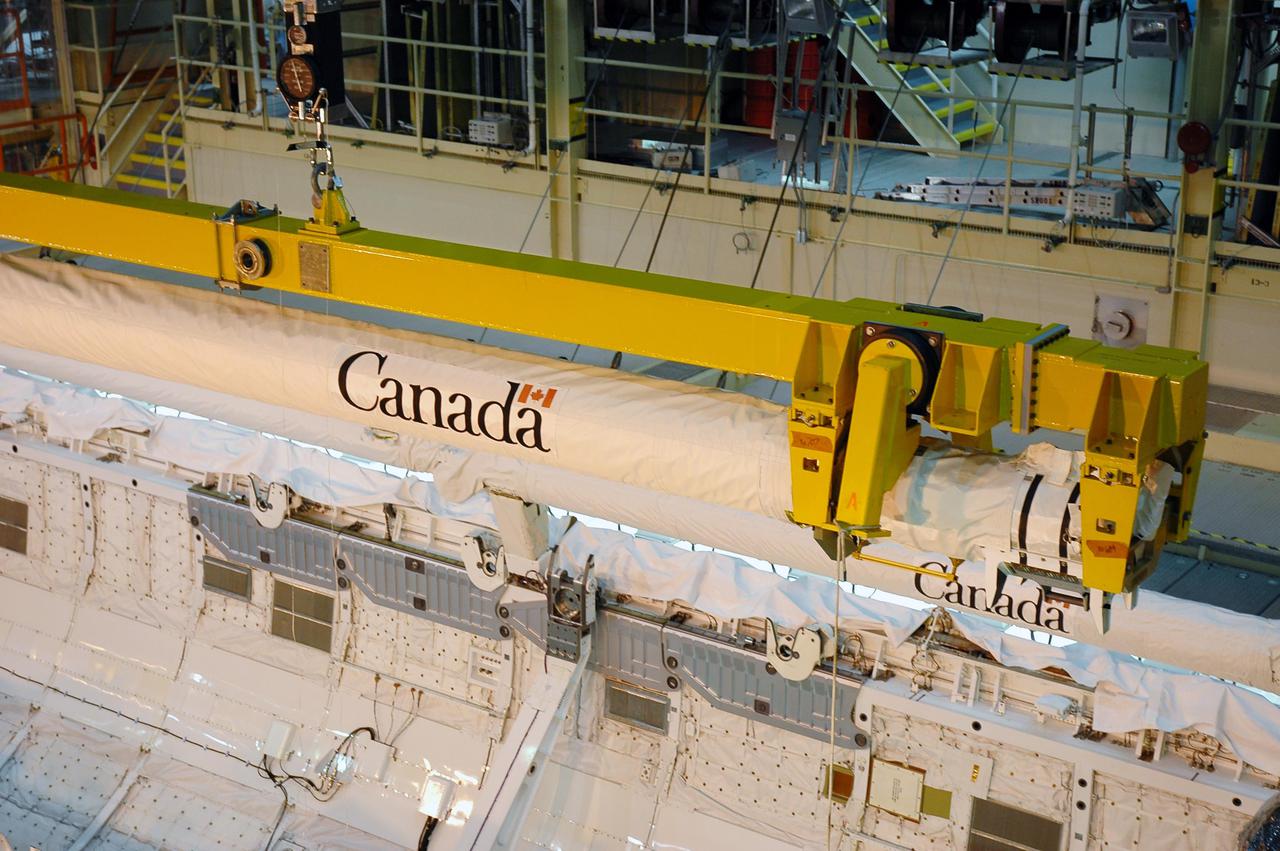
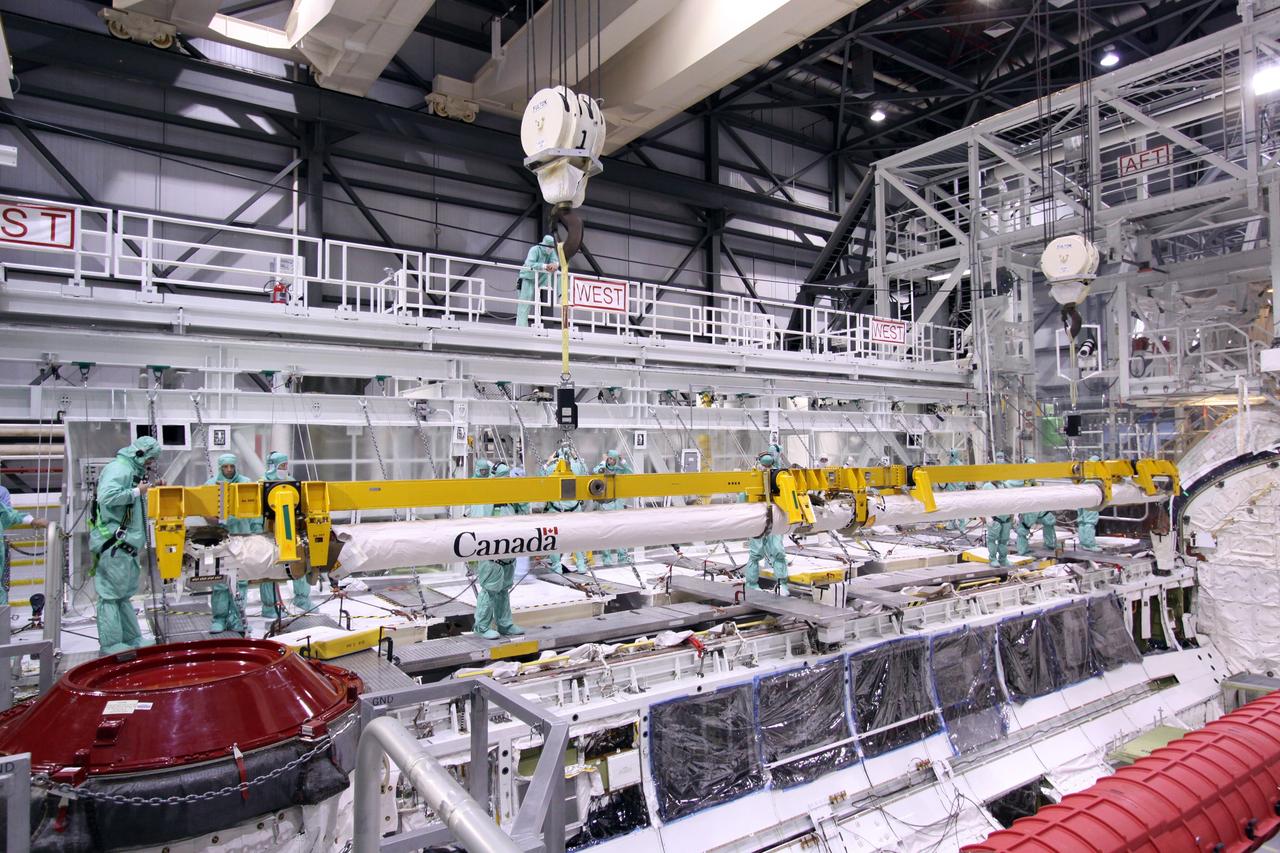
KENNEDY SPACE CENTER, FLA. -- In Orbiter Processing Facility Bay 3, the new orbital boom sensor system is lowered into Discovery’s payload bay. The previous boom was removed for repairs on the manipulator positioning mechanism, the pedestals that hold the boom in place in the payload bay. Discovery is the designated orbiter for the second return-to-flight mission, STS-121. The mission is scheduled no earlier than mid-May.
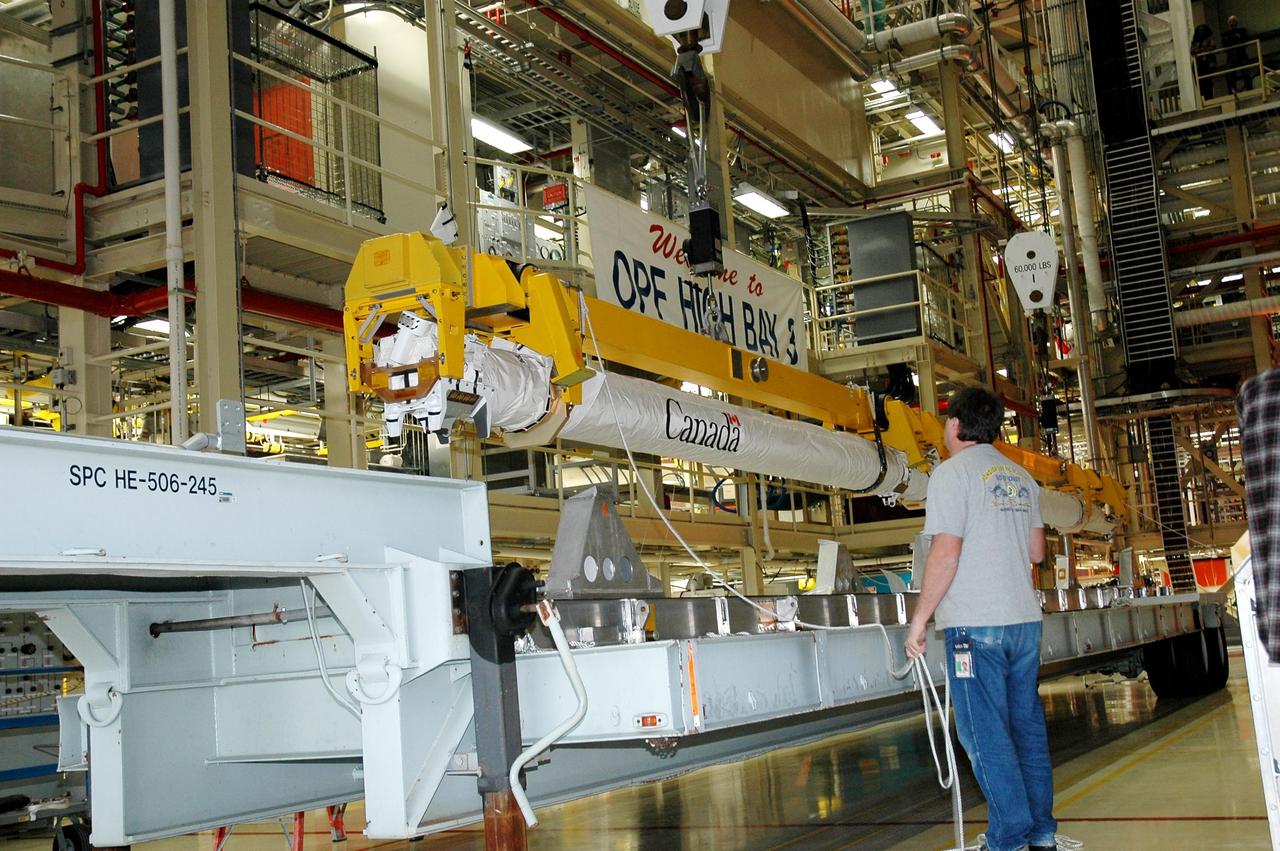
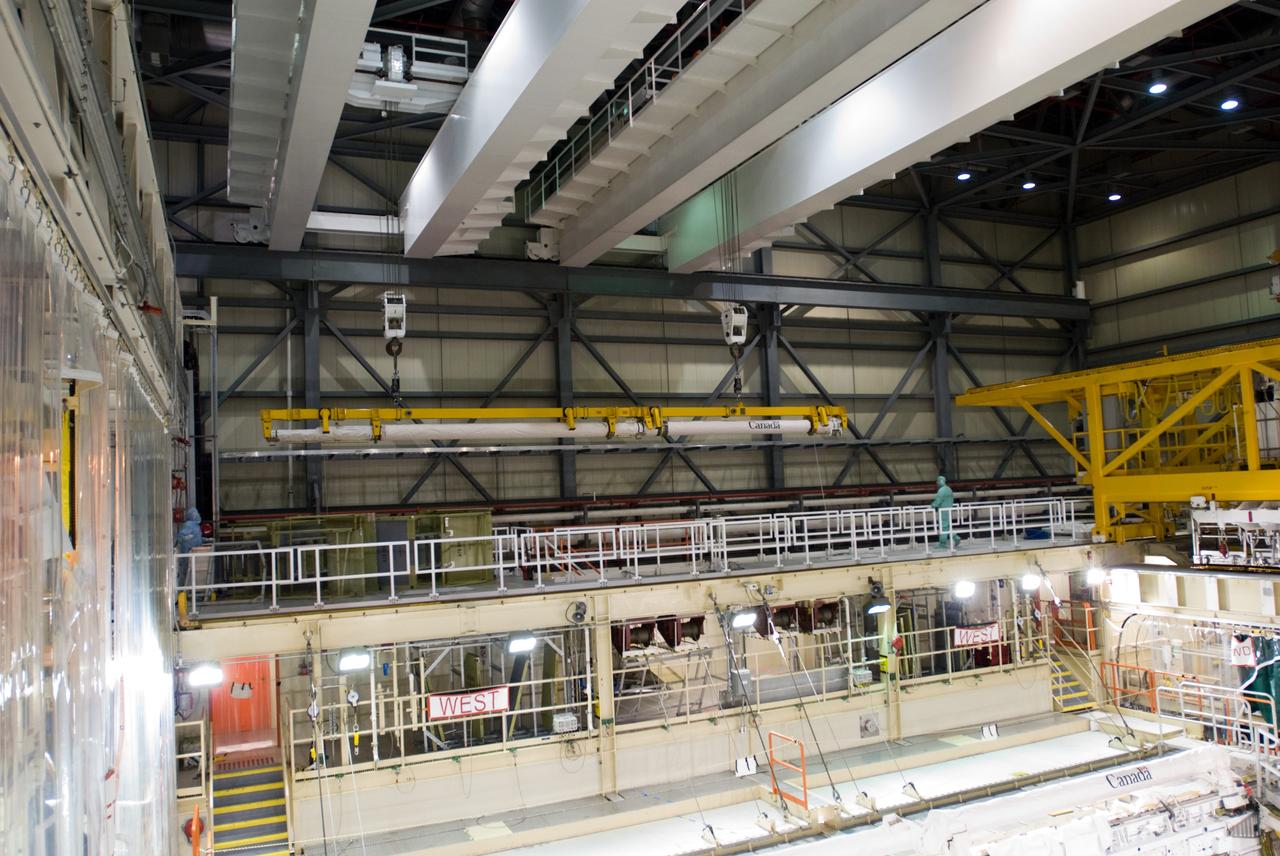
KENNEDY SPACE CENTER, FLA. -- In Orbiter Processing Facility Bay 3, a crane carries the new orbital boom sensor system to be installed in Discovery’s payload bay. The previous boom was removed for repairs on the manipulator positioning mechanism, the pedestals that hold the boom in place in the payload bay. Discovery is the designated orbiter for the second return-to-flight mission, STS-121. The mission is scheduled no earlier than mid-May.
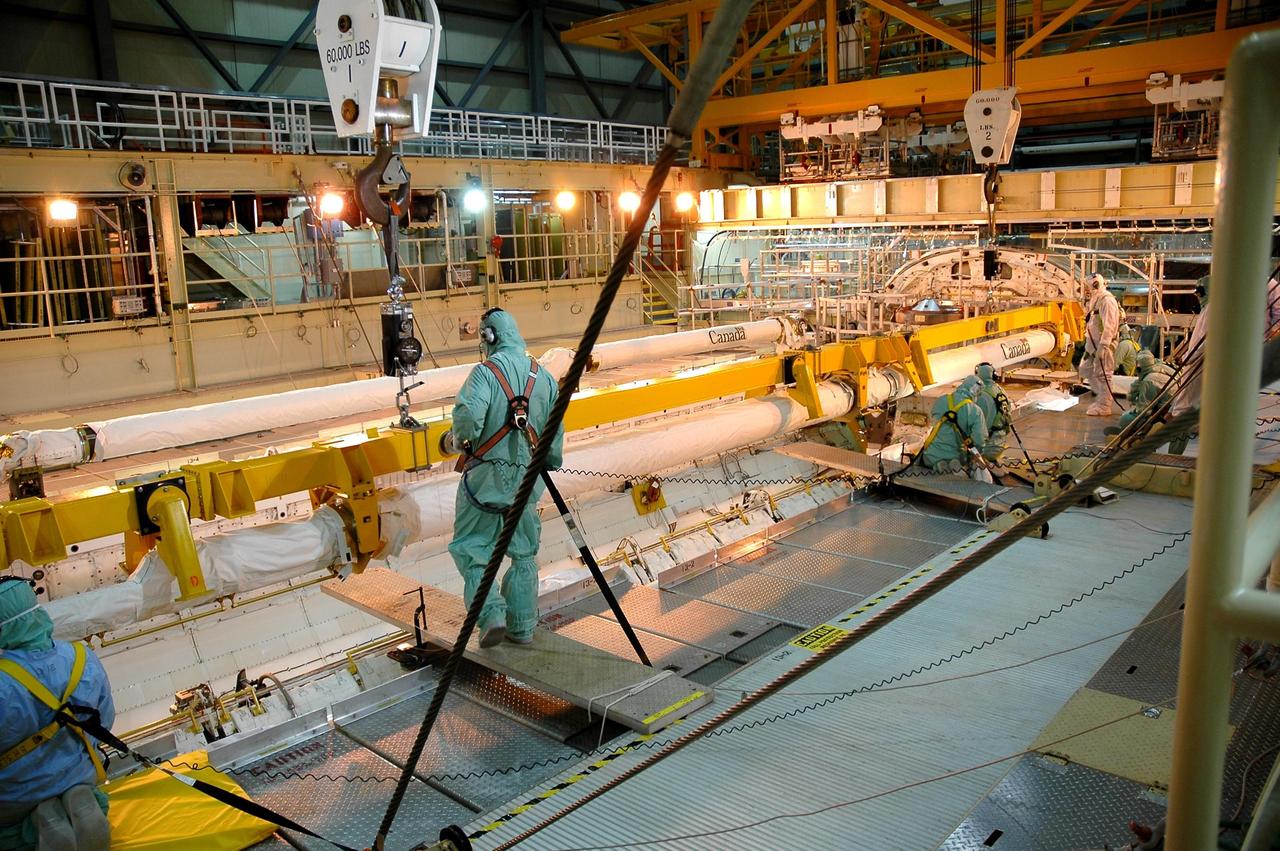
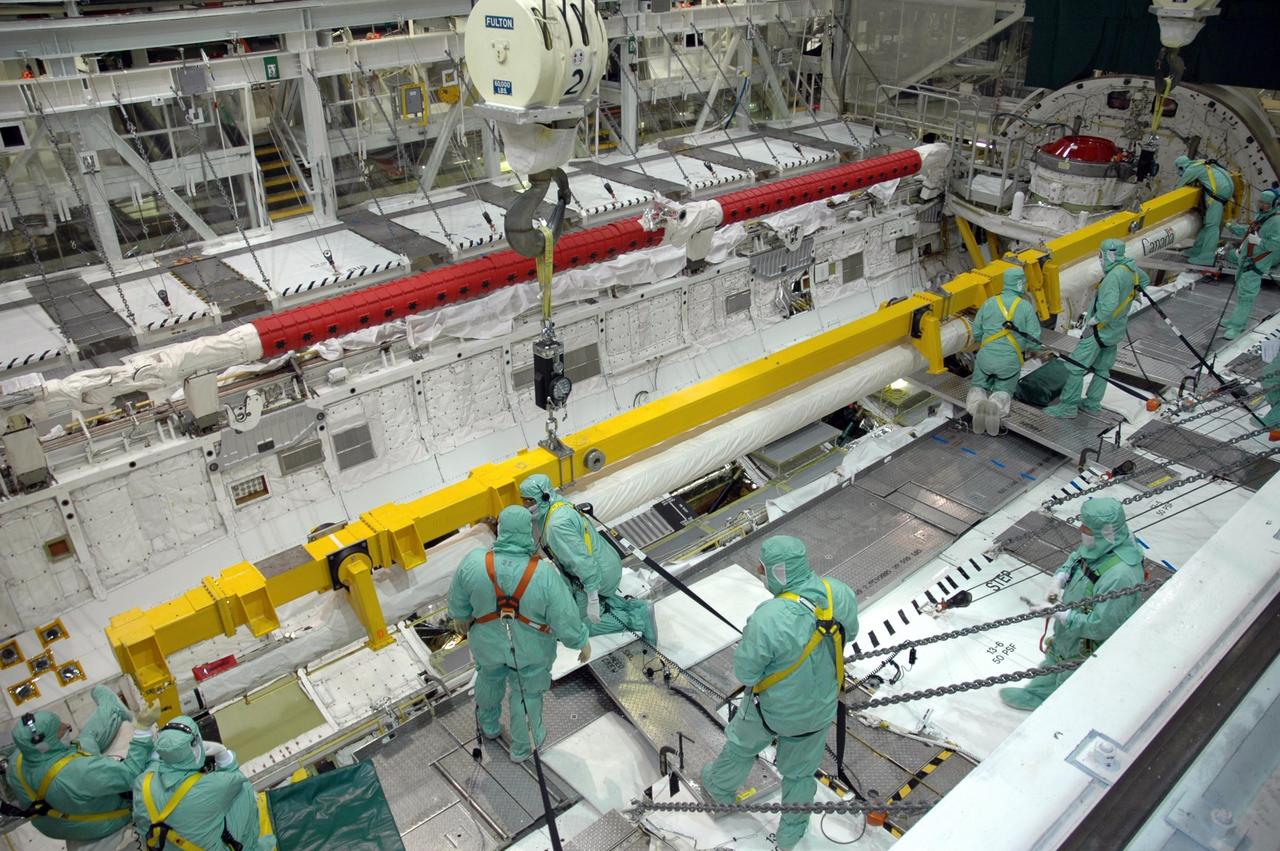
KENNEDY SPACE CENTER, FLA. -- In Orbiter Processing Facility Bay 3, workers check the installation of the new orbital boom sensor system in Discovery’s payload bay. The previous boom was removed for repairs on the manipulator positioning mechanism, the pedestals that hold the boom in place in the payload bay. Discovery is the designated orbiter for the second return-to-flight mission, STS-121. The mission is scheduled no earlier than mid-May.
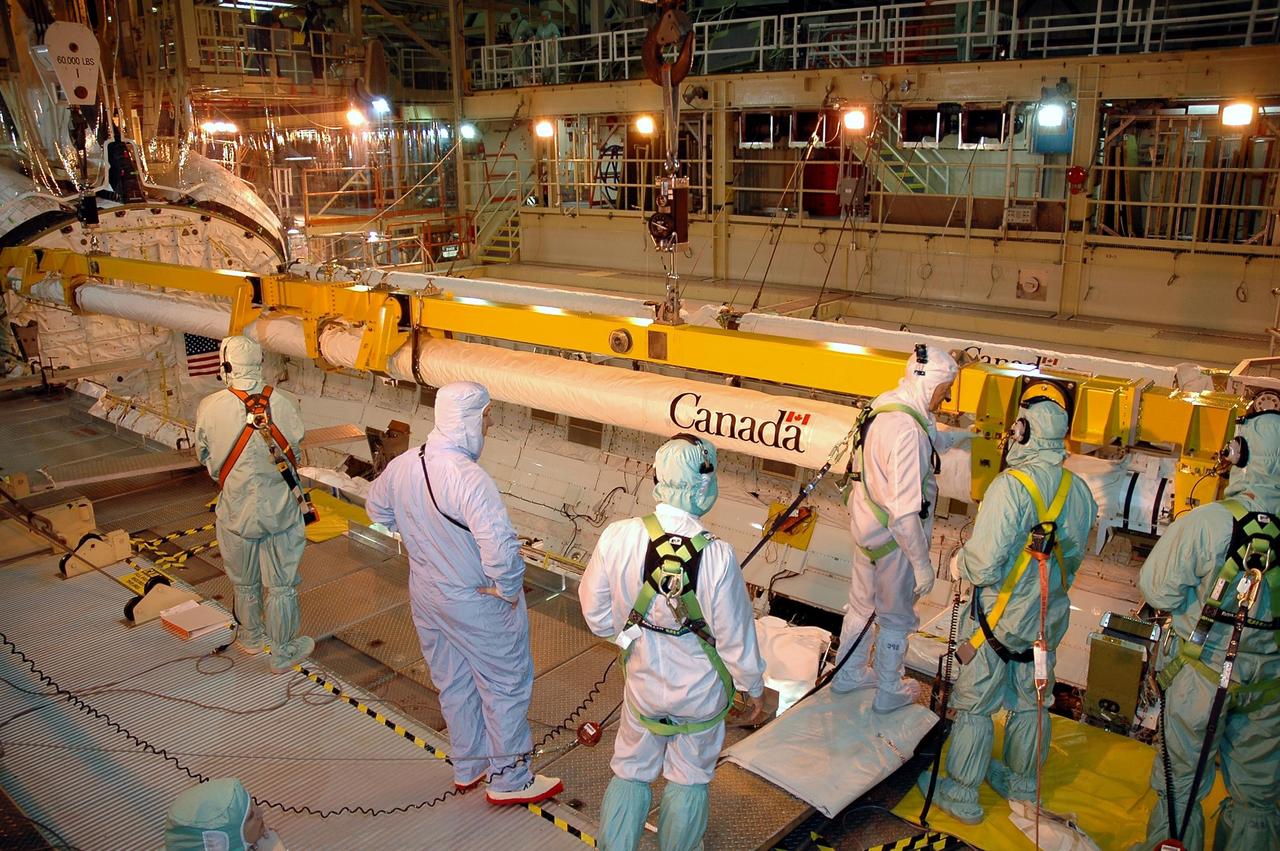
KENNEDY SPACE CENTER, FLA. -- In Orbiter Processing Facility Bay 3, workers install the new orbital boom sensor system in Discovery’s payload bay. The previous boom was removed for repairs on the manipulator positioning mechanism, the pedestals that hold the boom in place in the payload bay. Discovery is the designated orbiter for the second return-to-flight mission, STS-121. The mission is scheduled no earlier than mid-May.
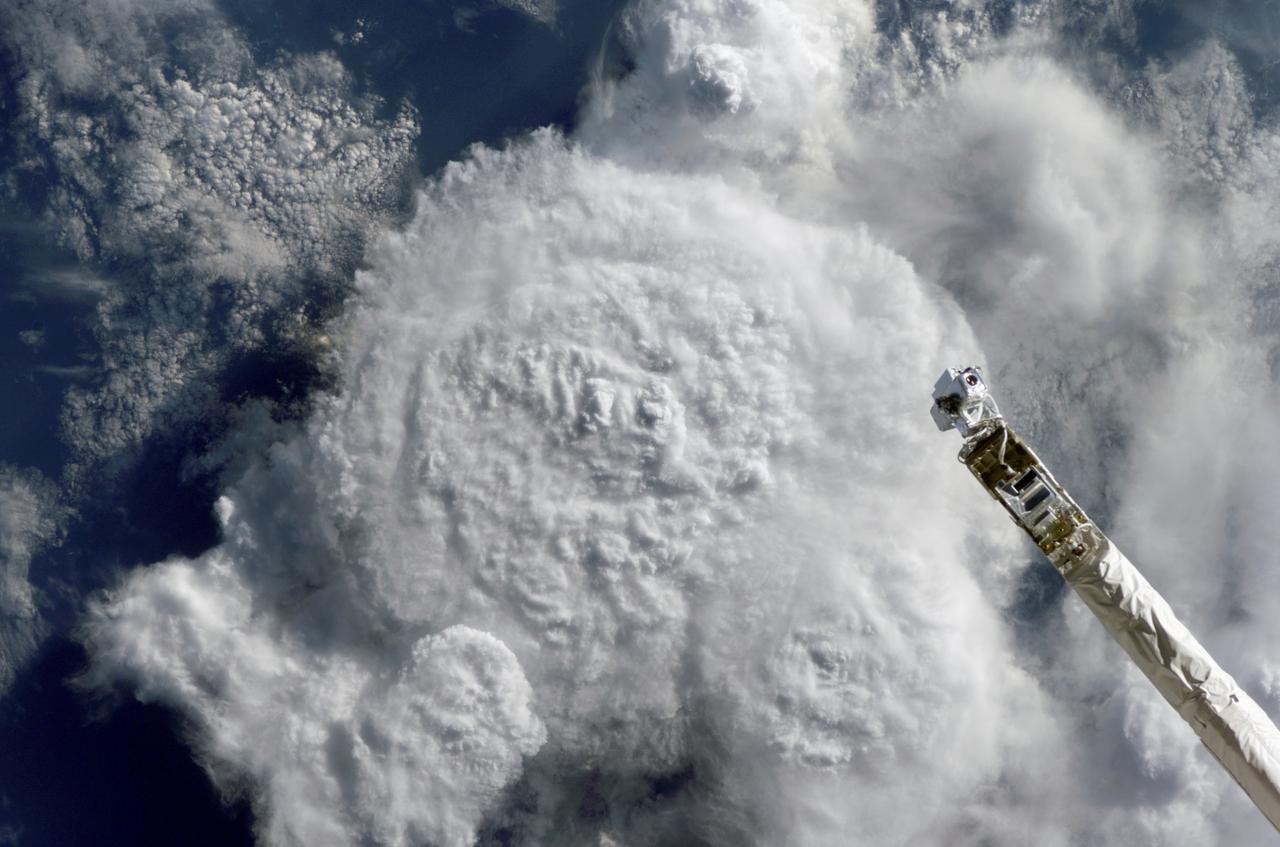
S114-E-5746 (29 July 2005) --- A mass of storm clouds was photographed by a STS-114 crewmember onboard the Space Shuttle Discovery. Part of the Orbiter Boom Sensor system end effector is also visible in the frame.
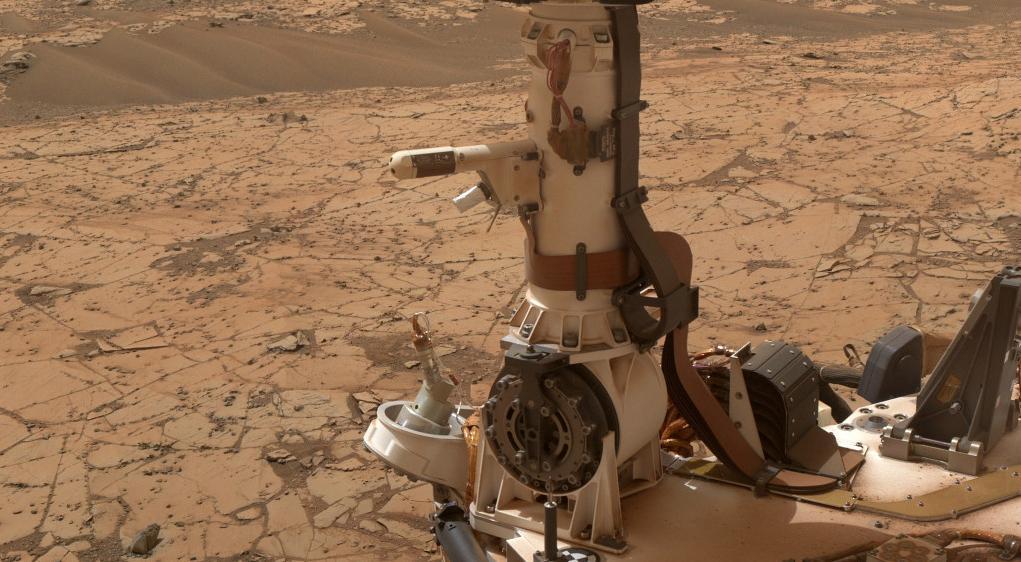
The Rover Environmental Monitoring Station (REMS) on NASA's Curiosity Mars rover includes temperature and humidity sensors mounted on the rover's mast. One of the REMS booms extends to the left from the mast in this view. Spain provided REMS to NASA's Mars Science Laboratory Project. The monitoring station has provided information about air pressure, relative humidity, air temperature, ground temperature, wind and ultraviolet radiation in all Martian seasons and at all times of day or night. This view is a detail from a January 2015 Curiosity self-portrait. The self-portrait, at PIA19142, was assembled from images taken by Curiosity's Mars Hand Lens Imager. http://photojournal.jpl.nasa.gov/catalog/PIA19164
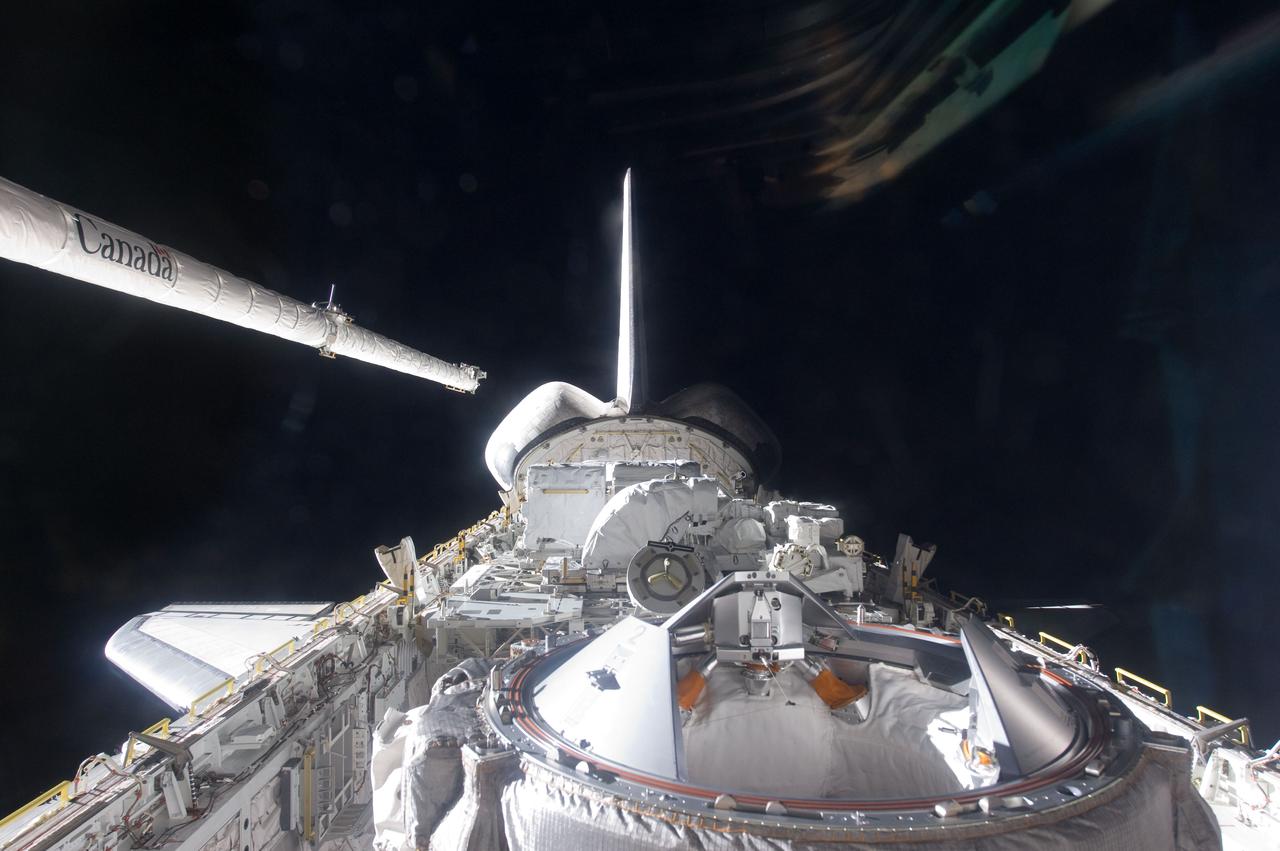
S134-E-006505 (17 May 2011) --- The Orbiter Boom Sensor System (OBSS), pictured on the second flight day of STS-134, on left side of this photo showing Endeavour's vertical stabilizer and cargo bay, is a 50-foot boom carried onboard each of NASA's space shuttles. The boom can be grappled by the Canadarm and serves as an extension of the arm, doubling its length to a combined total of 100 feet (30 meters). At the far end of the boom is an instrumentation package of cameras and lasers used to scan the leading edges of the wings, the nose cap, and the crew compartment after each lift-off and before each landing. Photo credit: NASA
KENNEDY SPACE CENTER, FLA. - In Orbiter Processing Facility bay 1 at NASA's Kennedy Space Center, the orbiter boom sensor system is lifted off a transporter. The boom will be installed in Atlantis' payload bay. The 50-foot-long boom attaches to the shuttle arm and is one of the new safety measures added prior to Return to Flight last year. It equips the orbiter with cameras and laser systems to inspect the shuttle's heat shield while in space. Atlantis is scheduled to launch on mission STS-115 no earlier than Aug. 28. Photo credit: NASA/Jim Grossmann
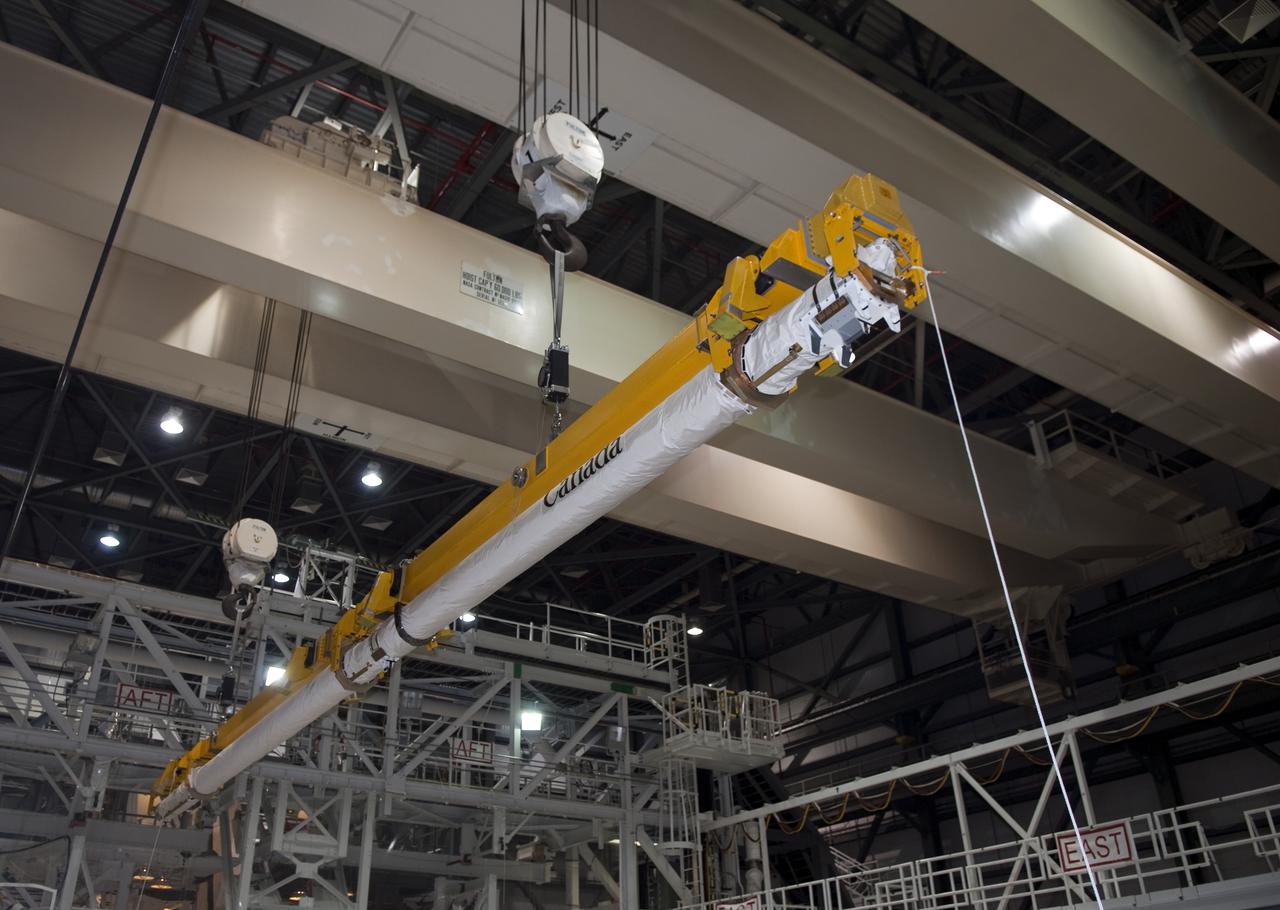
CAPE CANAVERAL, Fla. - Inside Orbiter Processing Facility-2 at Kennedy Space Center in Florida, a crane is used to lift the Orbiter Boom Sensor System, or OBSS, from the payload bay of space shuttle Endeavour. The OBSS will be transported to the Vehicle Assembly Building for refurbishment. After refurbishment, the boom will be reinstalled in Endeavour for use during the STS-134 mission, currently targeted for launch in July. Photo credit: NASA_Jim Grossmann
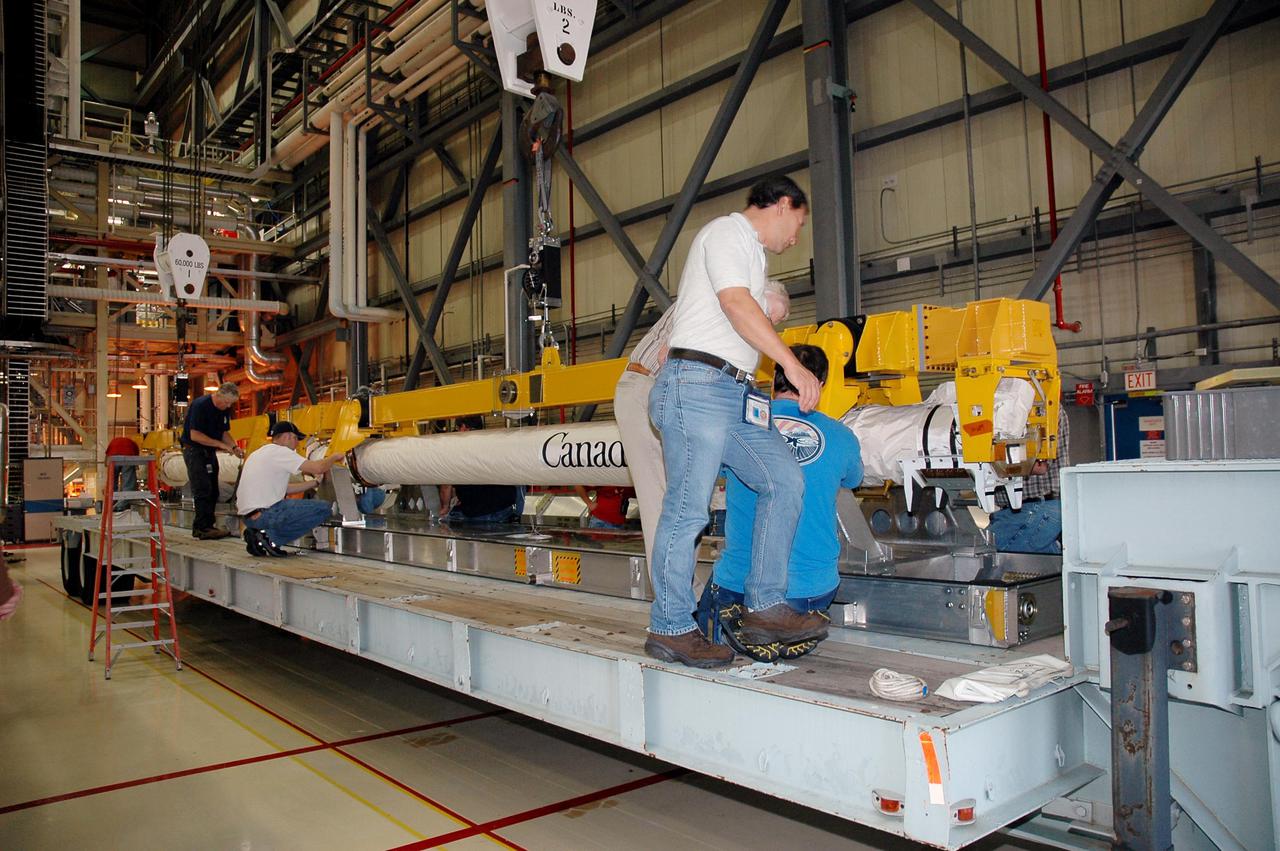
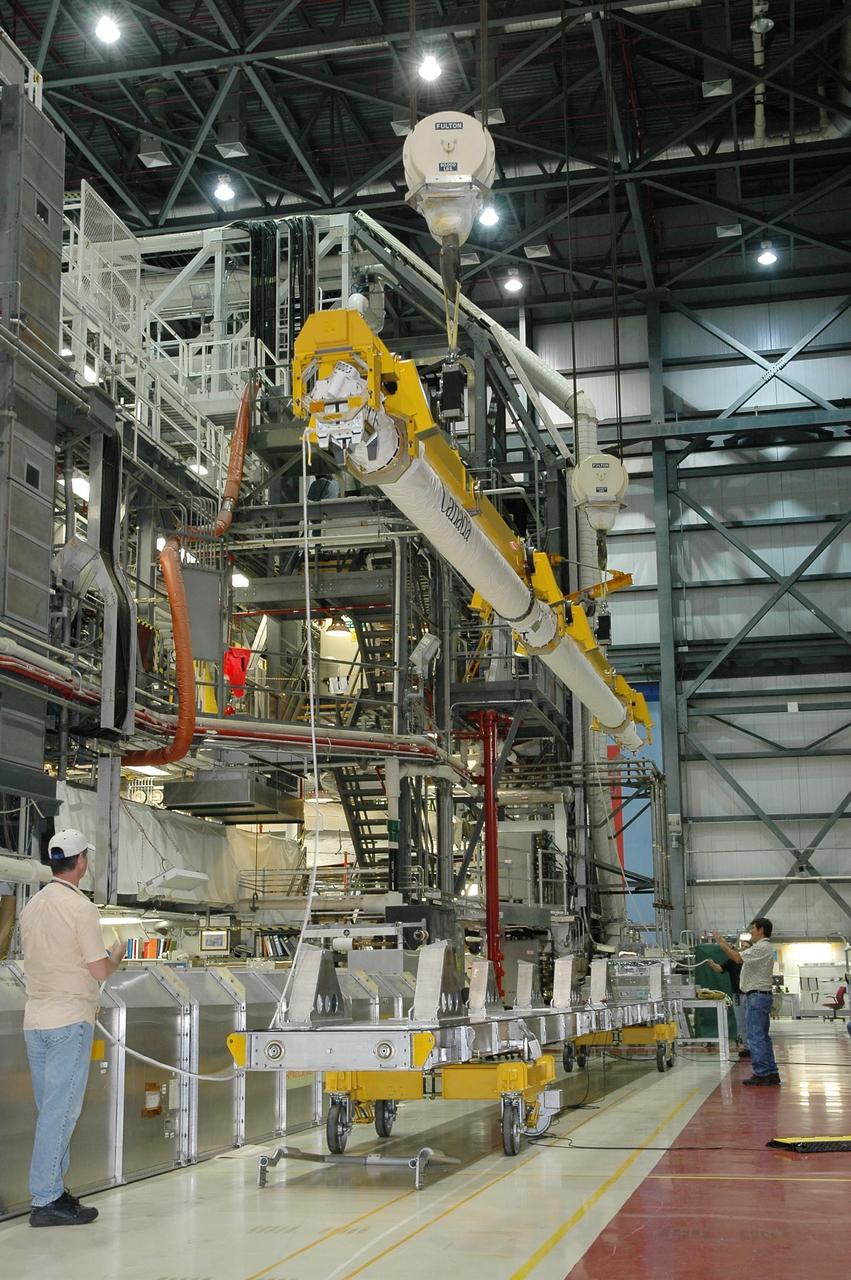
KENNEDY SPACE CENTER, FLA. - In NASA Kennedy Space Center’s Orbiter Processing Facility, bay 3, workers secure the Canadian-built orbiter boom sensor system robotic arm onto a stand after removal from Discovery’s payload bay. The boom, which was was used on Return to Flight mission STS-114 to provide more extensive inspection and photography of Discovery, will undergo inspection. The orbiter will be processed for the second Return to Flight mission, STS-121.
KENNEDY SPACE CENTER, FLA. - In NASA Kennedy Space Center’s Orbiter Processing Facility, bay 3, the Canadian-built orbiter boom sensor system robotic arm is removed from Discovery’s payload bay. The boom, which was was used on Return to Flight mission STS-114 to provide more extensive inspection and photography of Discovery, will undergo inspection. The orbiter will be processed for the second Return to Flight mission, STS-121.
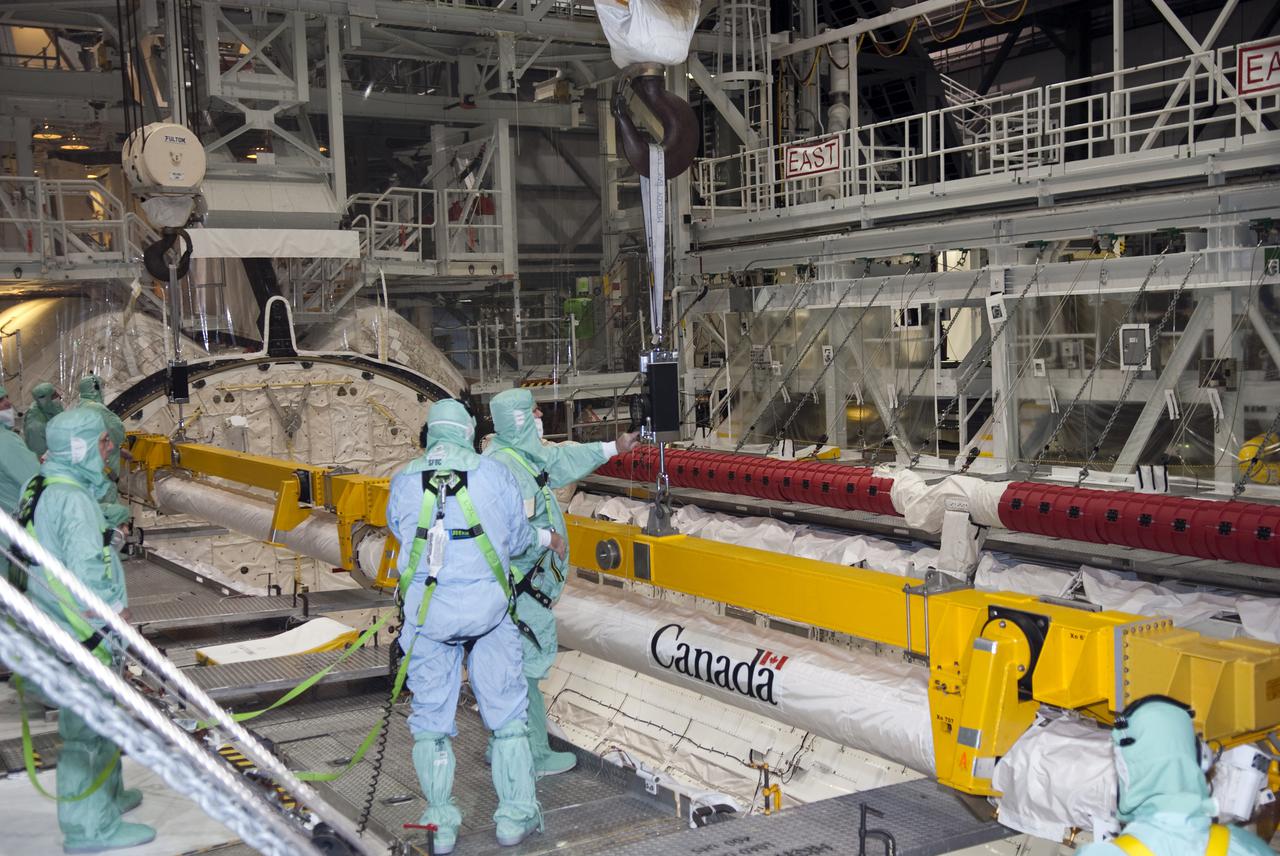
CAPE CANAVERAL, Fla. - Inside Orbiter Processing Facility-2 at Kennedy Space Center in Florida, technicians detach the Orbiter Boom Sensor System, or OBSS, from the payload bay of space shuttle Endeavour. The OBSS will be transported to the Vehicle Assembly Building for refurbishment. After refurbishment, the boom will be reinstalled in Endeavour for use during the STS-134 mission, currently targeted for launch in July. Photo credit: NASA_Jim Grossmann
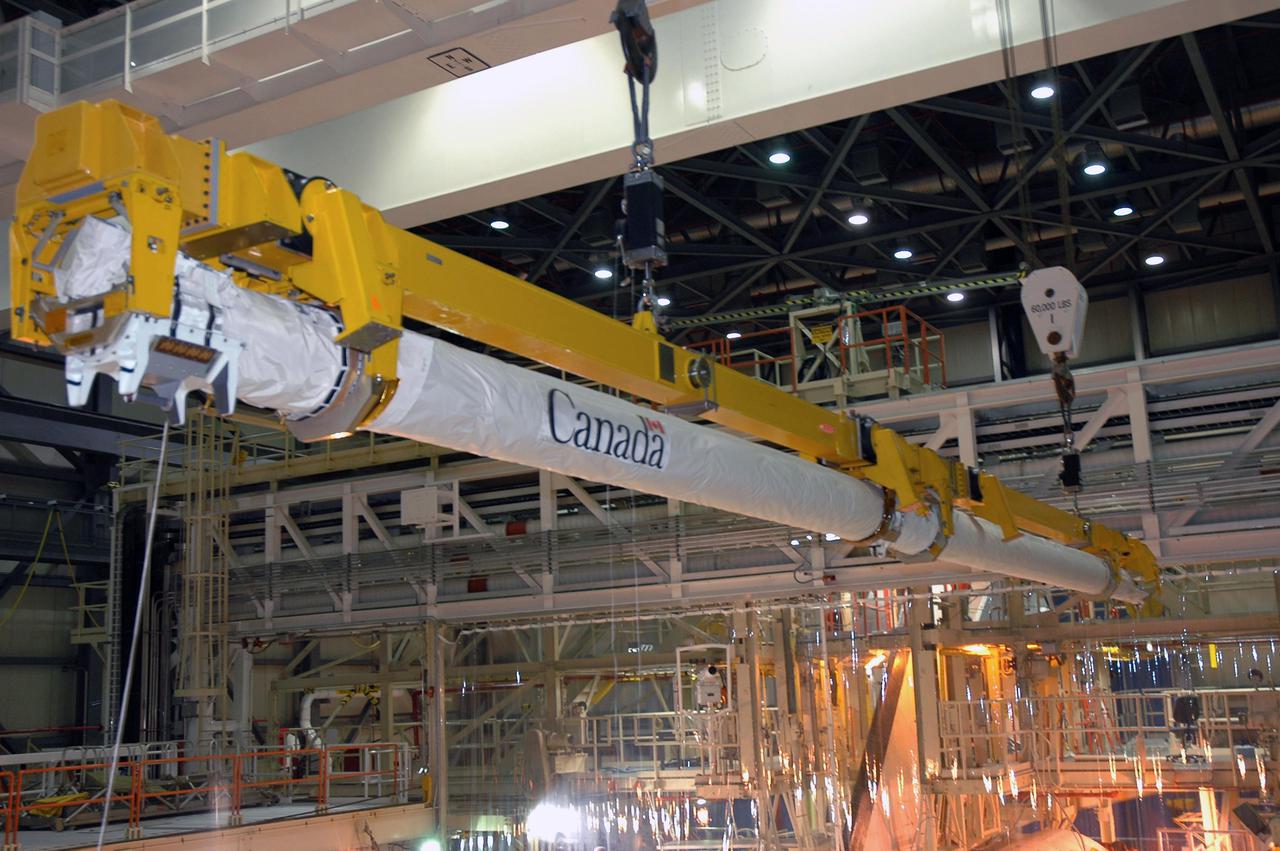
KENNEDY SPACE CENTER, FLA. - In NASA Kennedy Space Center’s Orbiter Processing Facility, bay 3, the the Canadian-built orbiter boom sensor system robotic arm is lifted away from Discovery. The boom, which was was used on Return to Flight mission STS-114 to provide more extensive inspection and photography of Discovery, will undergo inspection. The orbiter will be processed for the second Return to Flight mission, STS-121.
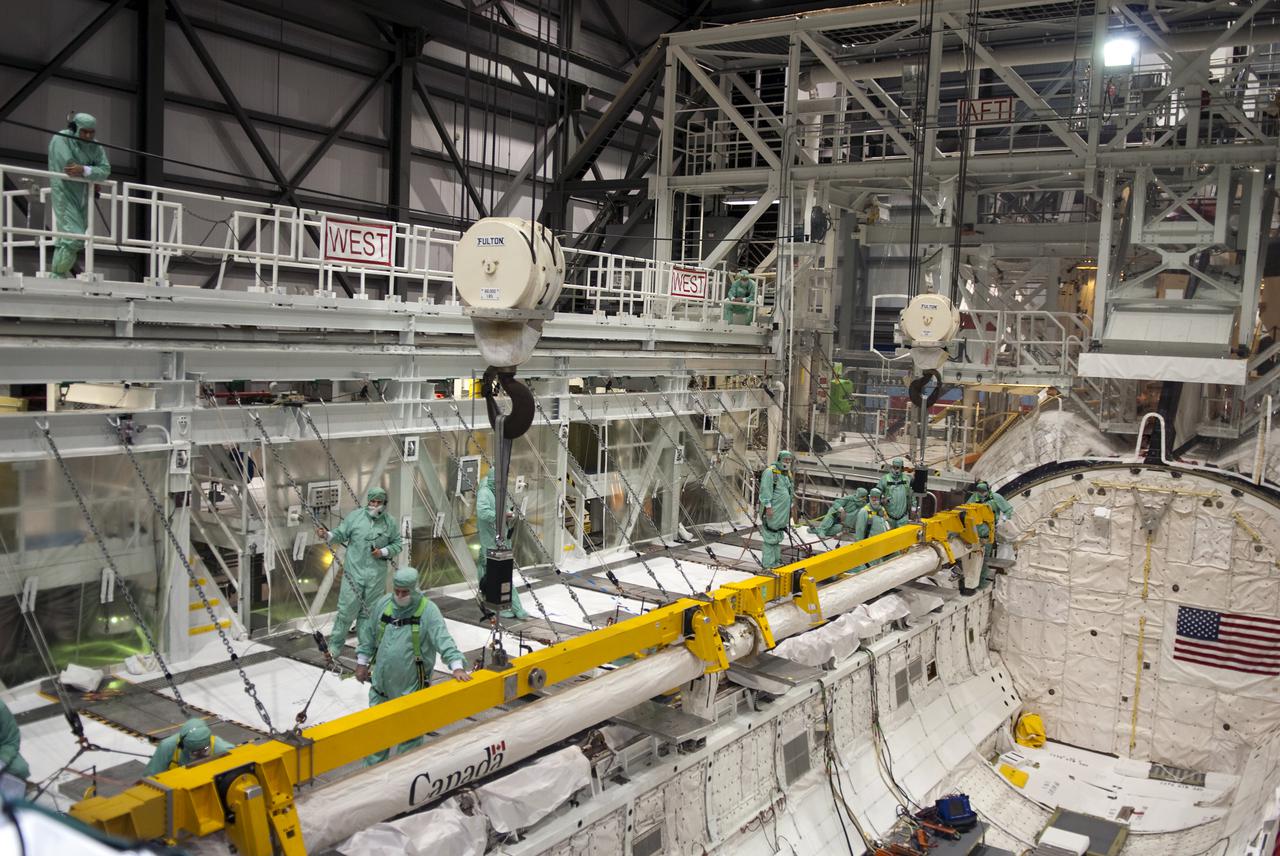
CAPE CANAVERAL, Fla. - Inside Orbiter Processing Facility-2 at Kennedy Space Center in Florida, technicians begin to detach the Orbiter Boom Sensor System, or OBSS, from the payload bay of space shuttle Endeavour. The OBSS will be transported to the Vehicle Assembly Building for refurbishment. After refurbishment, the boom will be reinstalled in Endeavour for use during the STS-134 mission, currently targeted for launch in July. Photo credit: NASA_Jim Grossmann
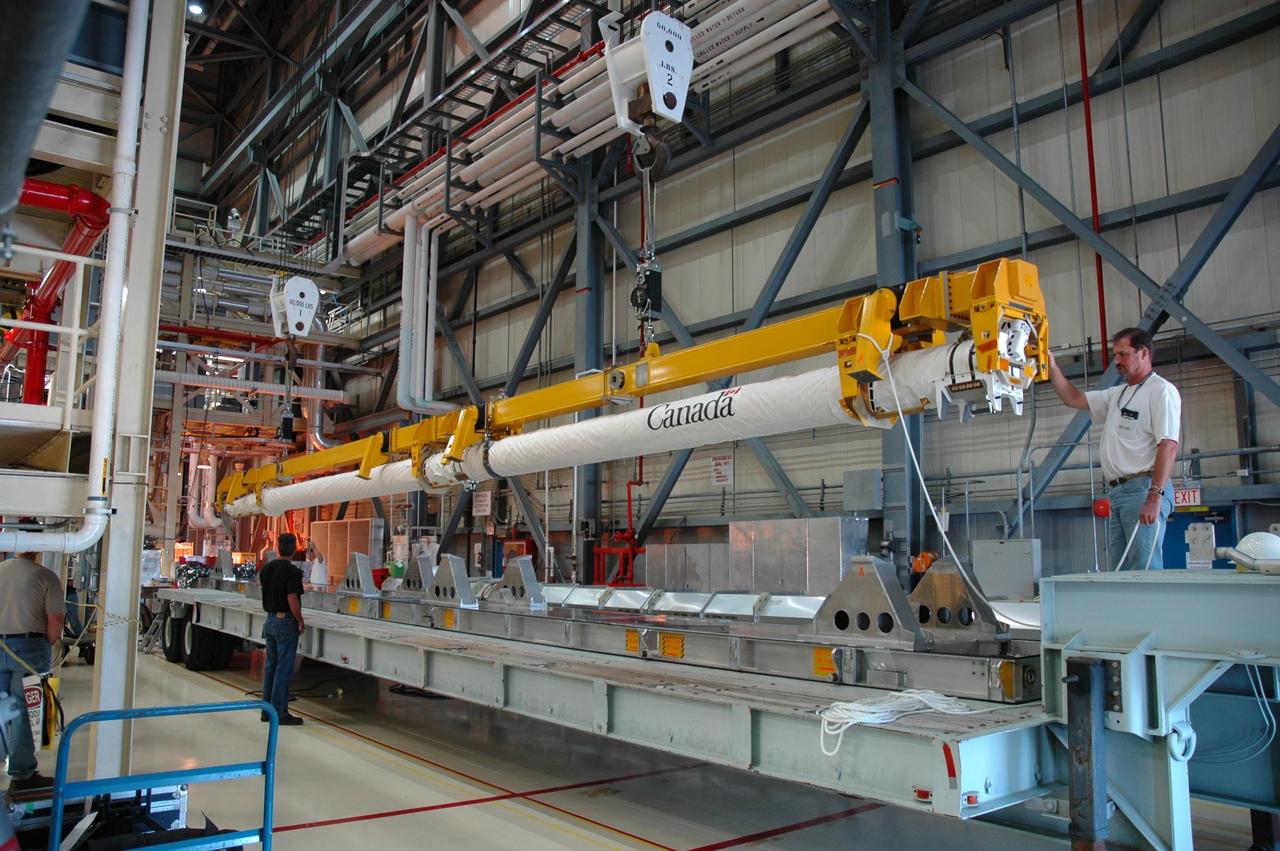
KENNEDY SPACE CENTER, FLA. - In bay 3 of the Orbiter Processing Facility, the orbiter boom sensor system (OBSS) is lifted off a stand. The boom will be reinstalled in Discovery's payload bay. It was removed last week in order to inspect the power system, which is routine after every flight. Discovery returned from mission STS-121 in late July, and is now being processed for mission STS-116, scheduled to launch in mid-December. Photo credit: NASA/Jim Grossmann
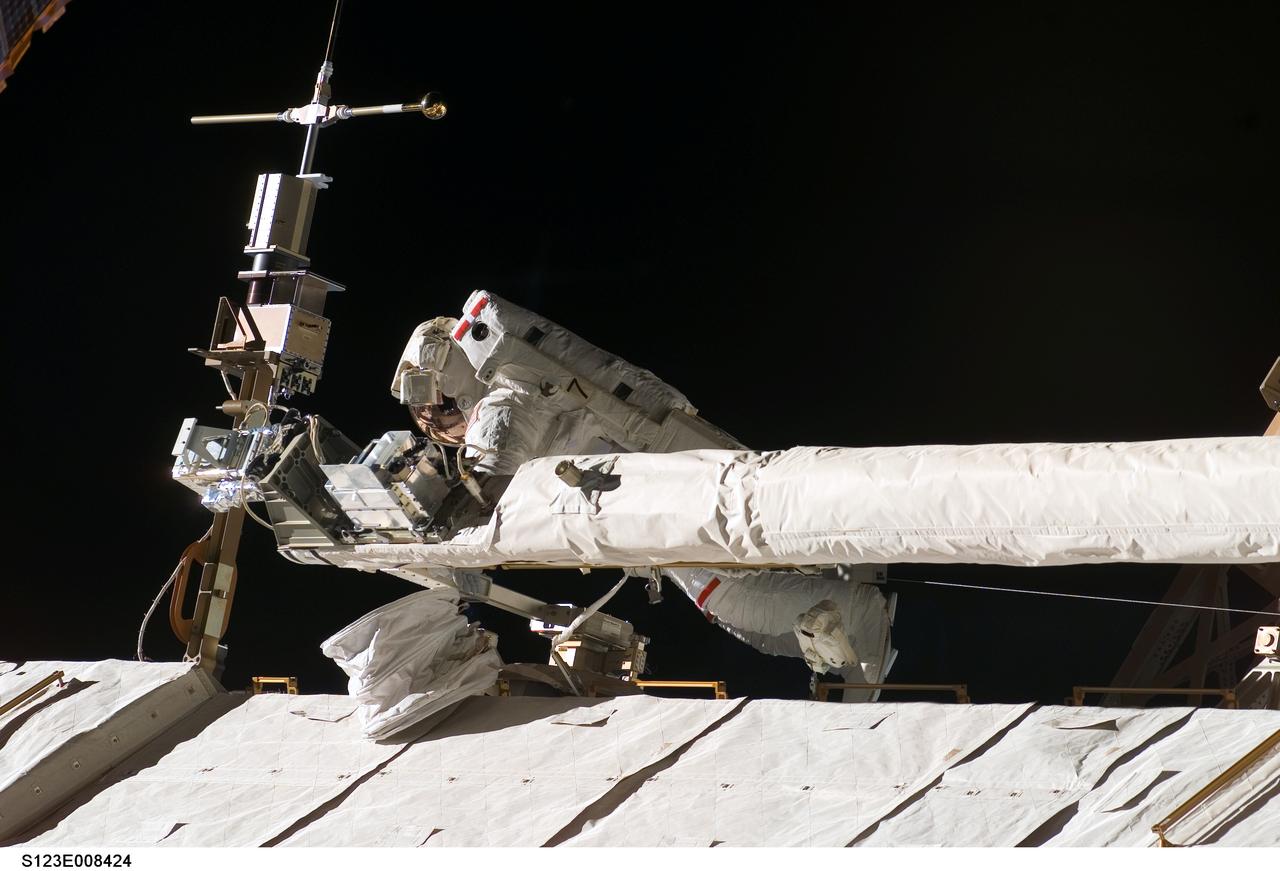
S123-E-008424 (23 March 2008) --- Astronaut Mike Foreman, STS-123 mission specialist, helps to tie down the Orbiter Boom Sensor System on the International Space Station's S1 truss during EVA 5 on March 22. The structure at the end of the boom is a transmission device for laser imagery from the laser devices used for scanning the thermal protection system.
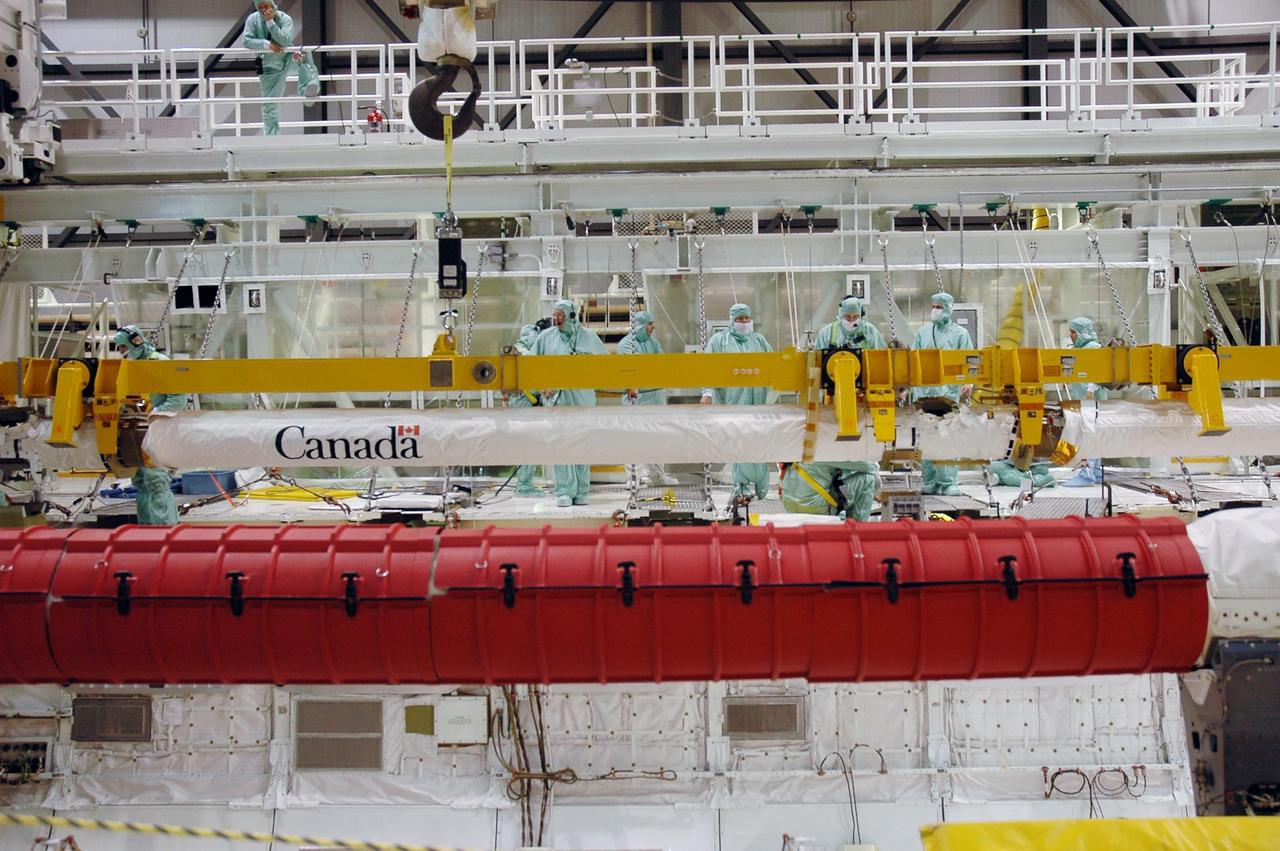
KENNEDY SPACE CENTER, FLA. -- In Orbiter Processing Facility bay 2, the orbiter boom sensor system (in the background) is lowered into the open payload bay of Endeavour. The boom will be installed in the payload bay for launch. The orbiter is scheduled to fly on mission STS-118 to the International Space Station in the summer of 2007. It will deliver the third starboard truss segment, S5. Photo credit: NASA/Troy Cryder
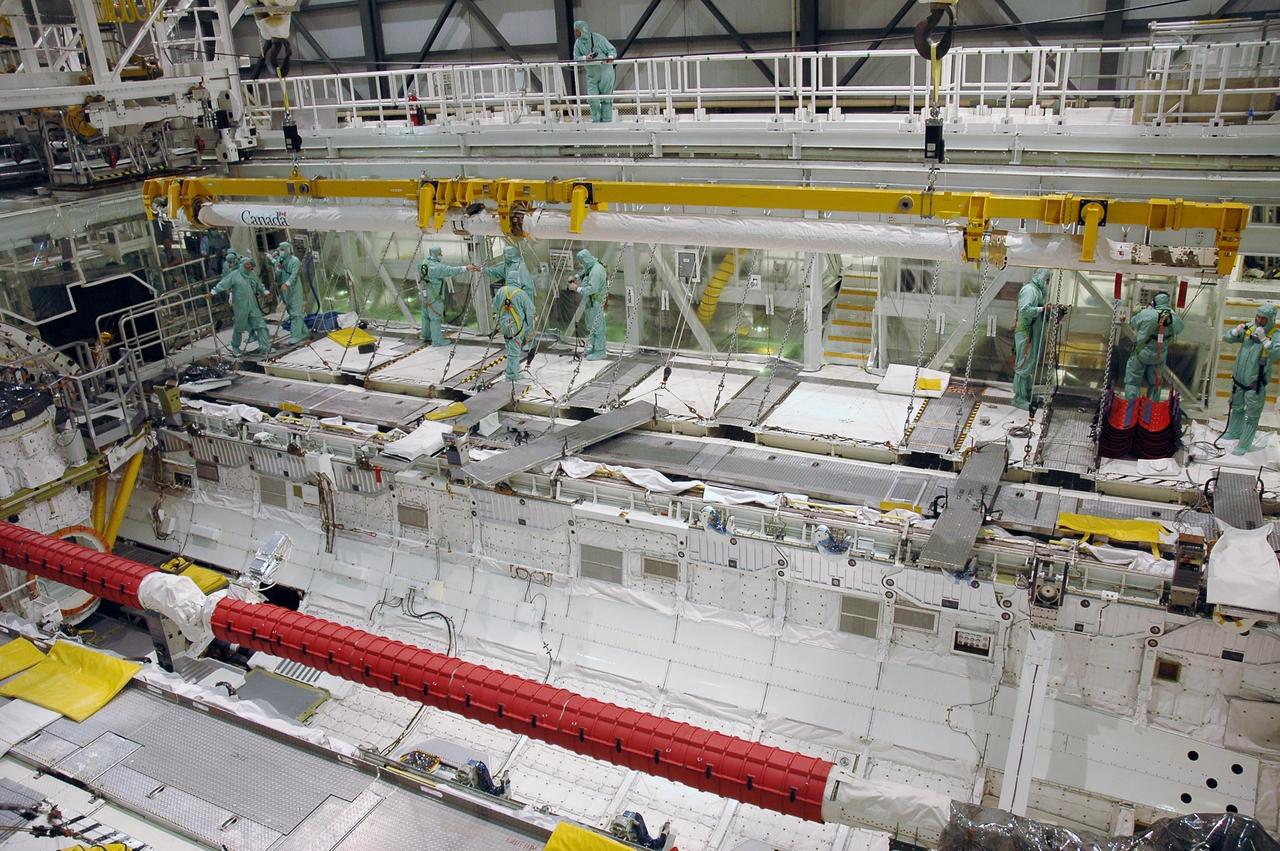
KENNEDY SPACE CENTER, FLA. -- In Orbiter Processing Facility bay 2, the orbiter boom sensor system (in the background) is moved toward the open payload bay of Endeavour. The boom will be installed in the payload bay for launch. The orbiter is scheduled to fly on mission STS-118 to the International Space Station in the summer of 2007. It will deliver the third starboard truss segment, S5. Photo credit: NASA/Troy Cryder
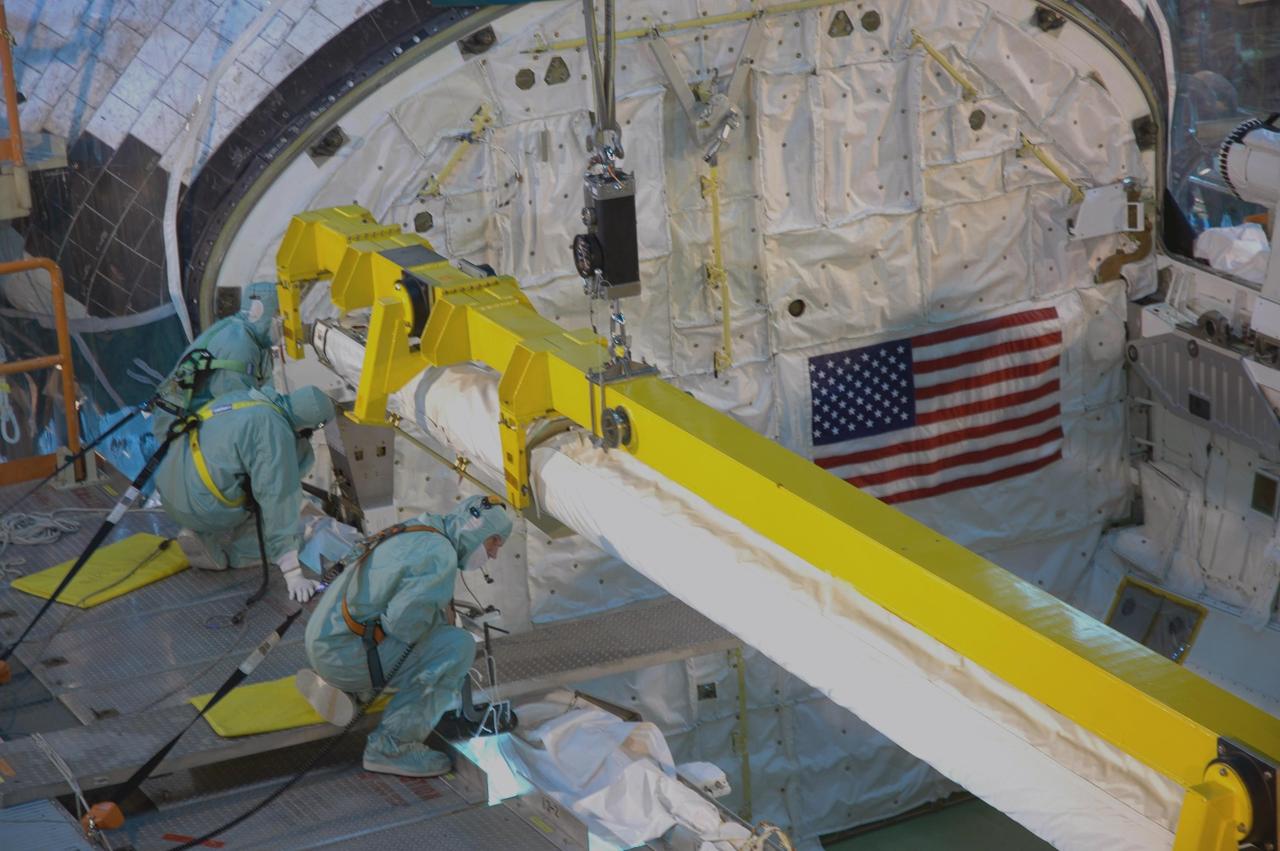
KENNEDY SPACE CENTER, FLA. - Workers in bay 3 of the Orbiter Processing Facility check the installation of the orbiter boom sensor system in Discovery's payload bay. The boom was removed last week in order to inspect the power system, which is routine after every flight. Discovery returned from mission STS-121 in late July, and is now being processed for mission STS-116, scheduled to launch in mid-December. Photo credit: NASA/Jim Grossmann
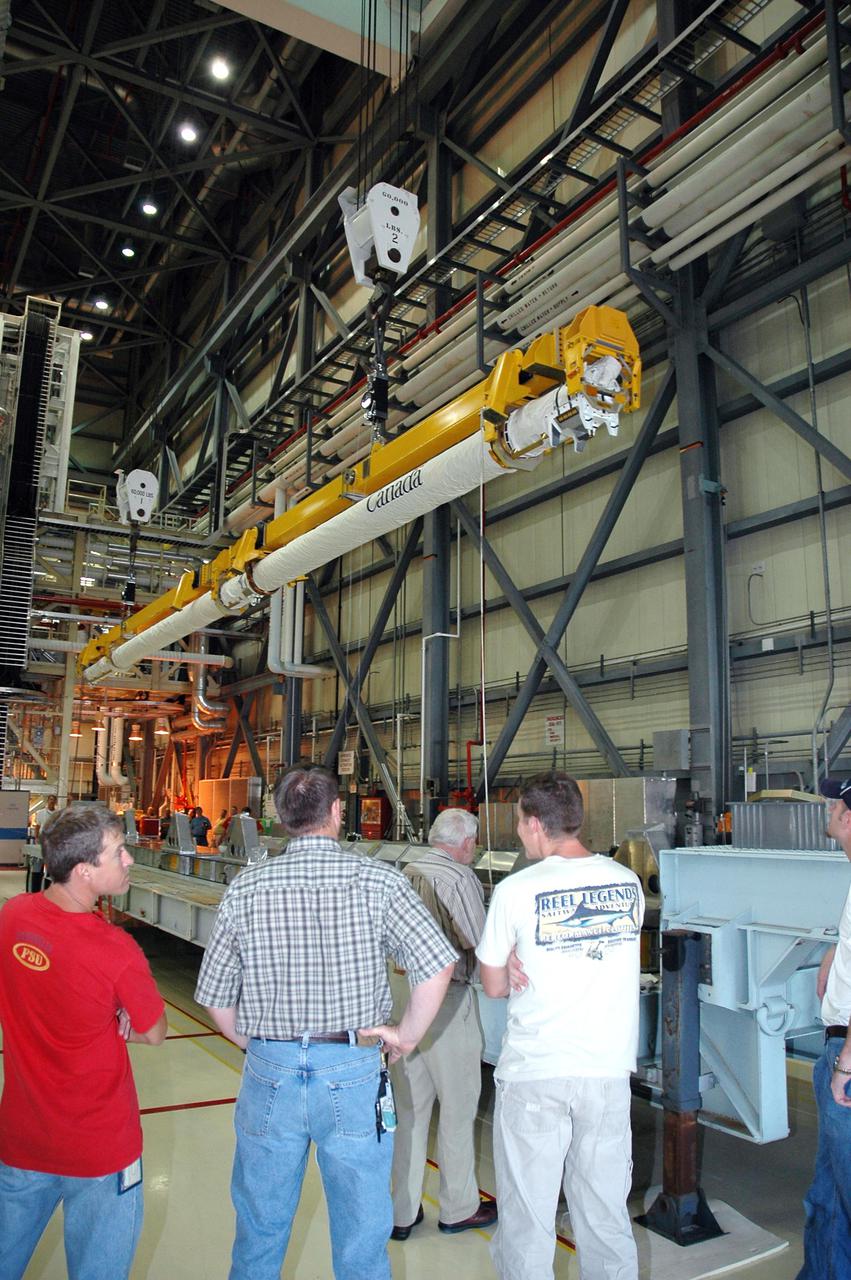
KENNEDY SPACE CENTER, FLA. - In NASA Kennedy Space Center’s Orbiter Processing Facility, bay 3, the Canadian-built orbiter boom sensor system robotic arm is being lowered onto a stand after removal from Discovery’s payload bay. The boom, which was was used on Return to Flight mission STS-114 to provide more extensive inspection and photography of Discovery, will undergo inspection. The orbiter will be processed for the second Return to Flight mission, STS-121.
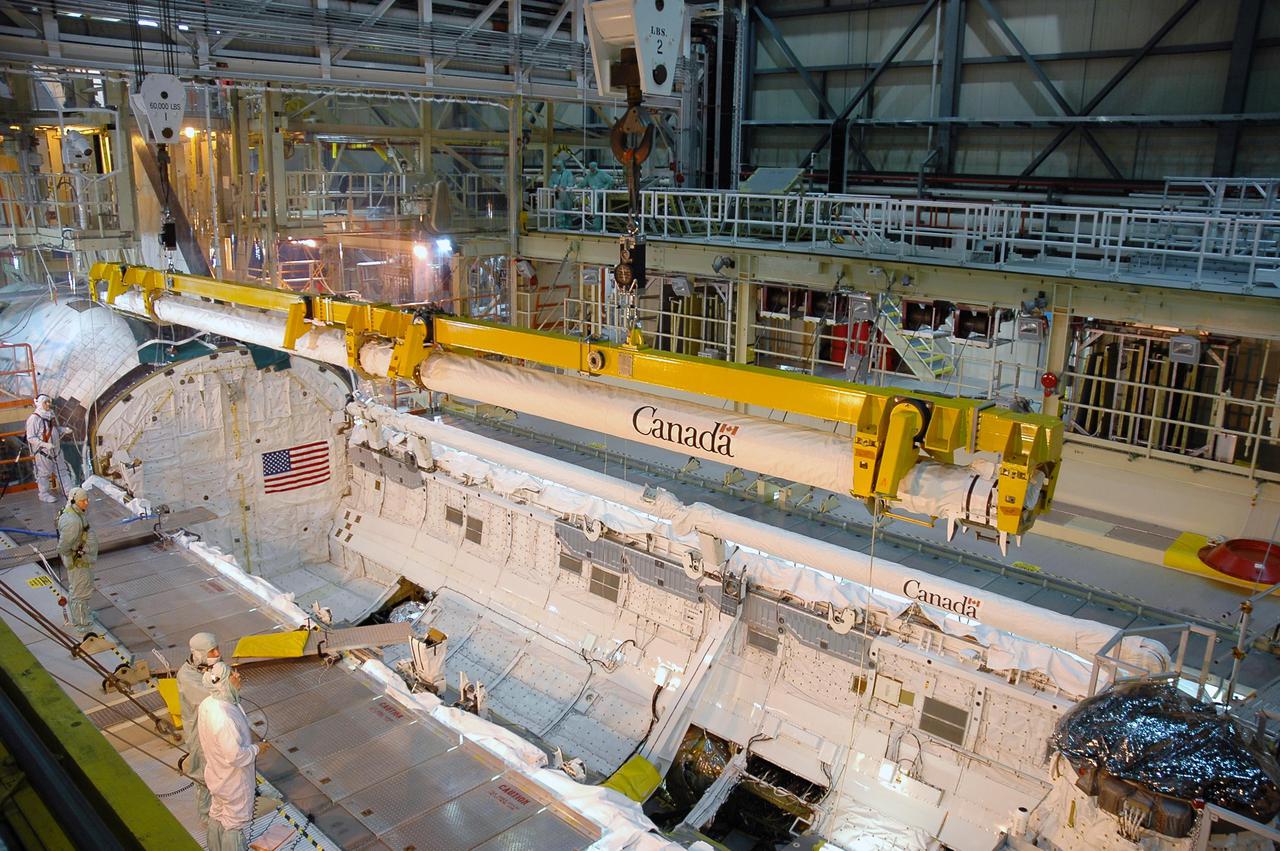
KENNEDY SPACE CENTER, FLA. - In NASA Kennedy Space Center’s Orbiter Processing Facility, bay 3, the Canadian-built orbiter boom sensor system robotic arm is removed from Discovery’s payload bay. The boom, which was was used on Return to Flight mission STS-114 to provide more extensive inspection and photography of Discovery, will undergo inspection. The orbiter will be processed for the second Return to Flight mission, STS-121.
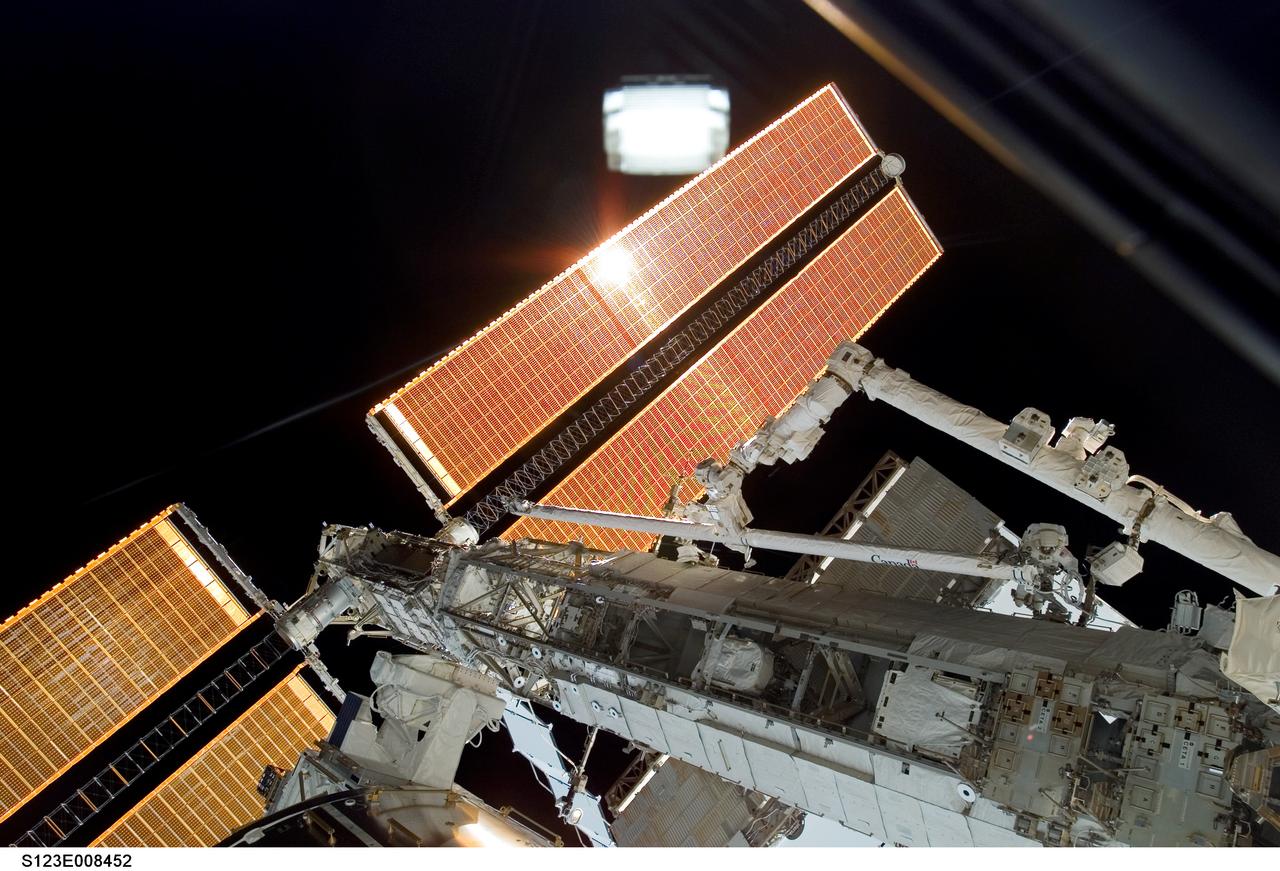
S123-E-008452 (23 March 2008) --- The Canadarm2, or Space Station Remote Manipulation System (SSRMS) robot arm, completes the handoff of the Orbiter Boom Sensor System for stowage on the International Space Station's S1 truss. There is no room on the next shuttle flight to launch with the sensor system onboard, so for the first time, it is being stowed on the orbital outpost prior to the undocking of the ISS and Space Shuttle Endeavour.
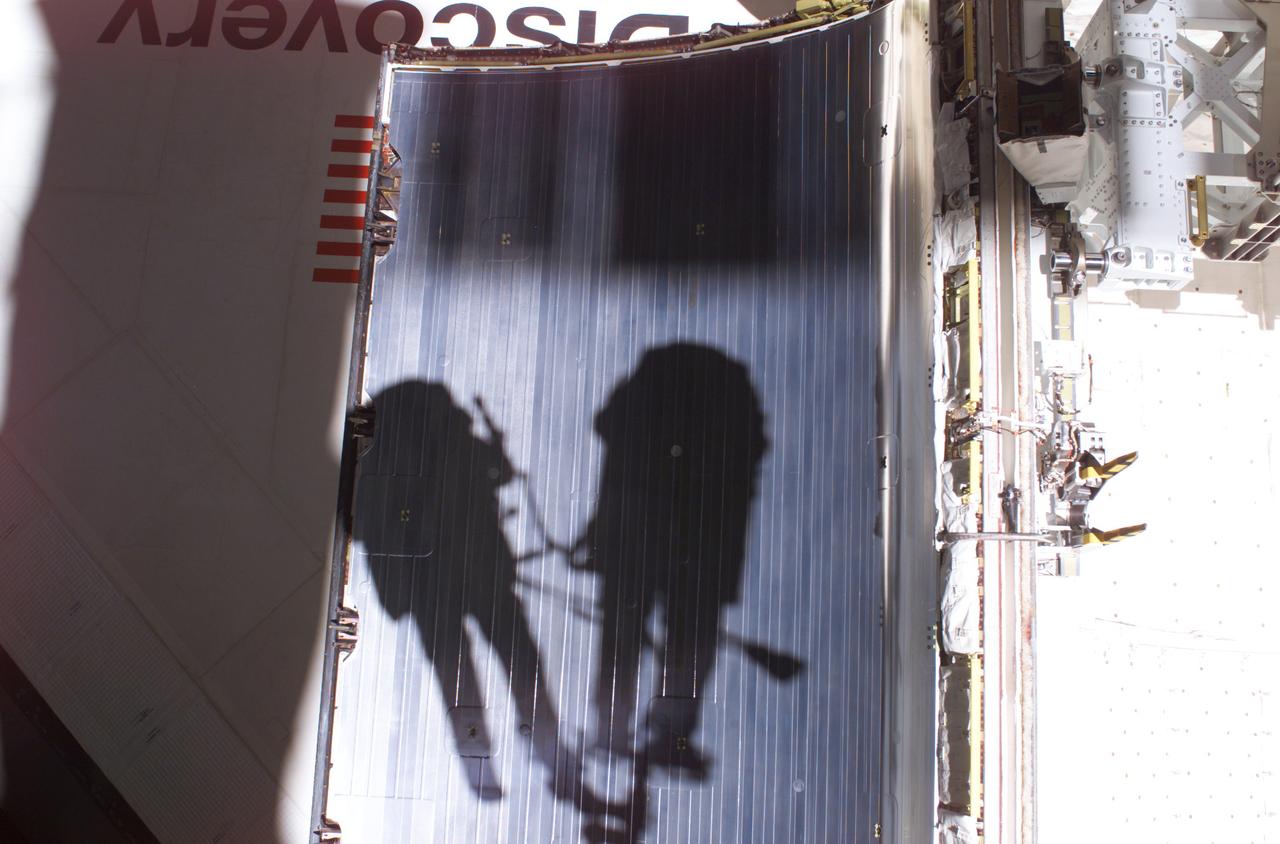
The shadows of astronauts Piers J. Sellers and Michael E. Fossum, STS-121 mission specialists, who are anchored to the Space Shuttle Discovery's Remote Manipulator System/Orbiter Boom Sensor System (RMS/OBSS) foot restraint, are visible against a shuttle's payload bay door during a session of extravehicular activity (EVA).
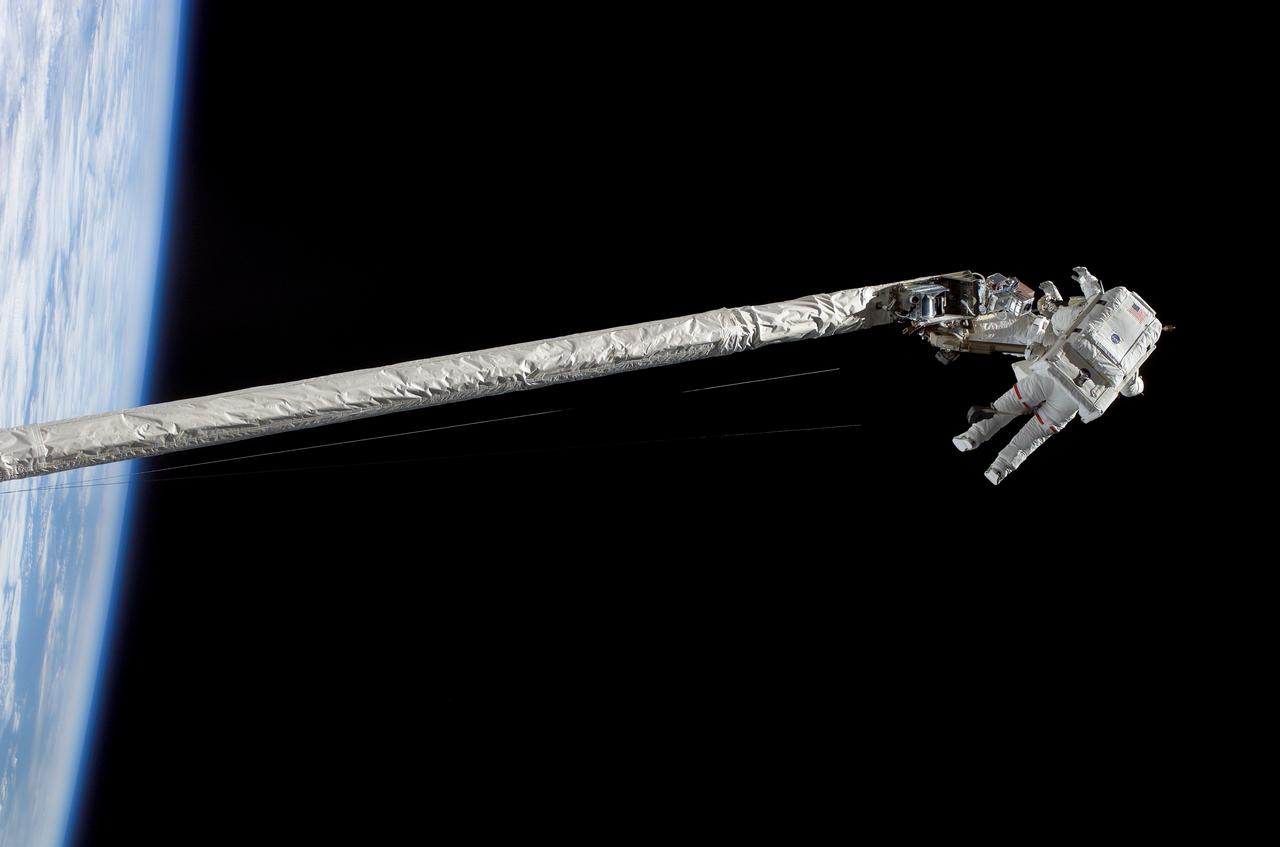
S121-E-06056 (8 July 2006) --- Astronauts Piers J. Sellers (red stripes) and Michael E. Fossum, STS-121 mission specialists, work in tandem on the shuttle's Remote Manipulator System/Orbiter Boom Sensor System (RMS/OBSS) during the mission's first scheduled session of extravehicular activity (EVA).
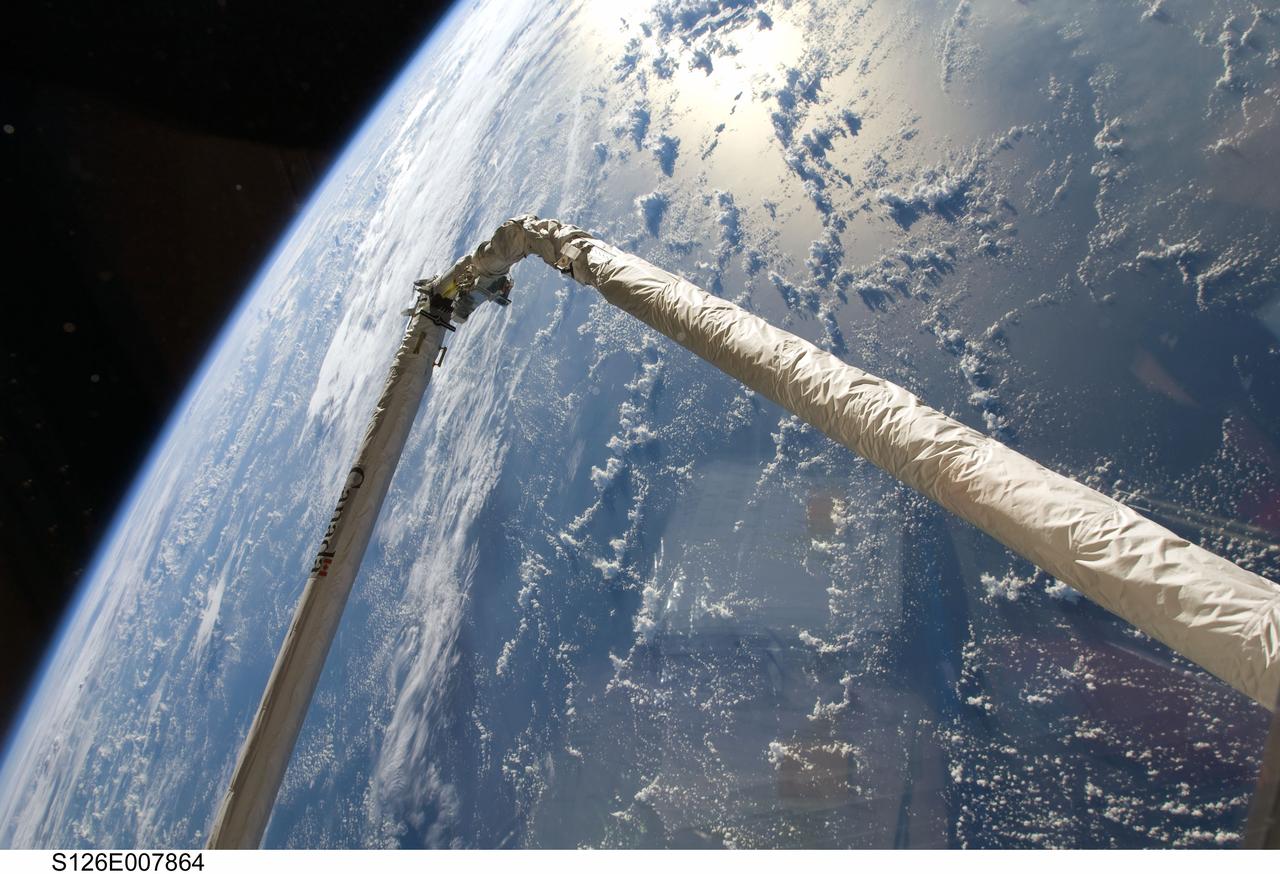
S126-E-007864 (15 Nov. 2008) --- Space Shuttle Endeavour's Remote Manipulator System/Orbiter Boom Sensor System (RMS/OBSS) is featured in this image photographed by an STS-126 crewmember aboard the shuttle. Earth's horizon and the blackness of space provide the backdrop for the scene.
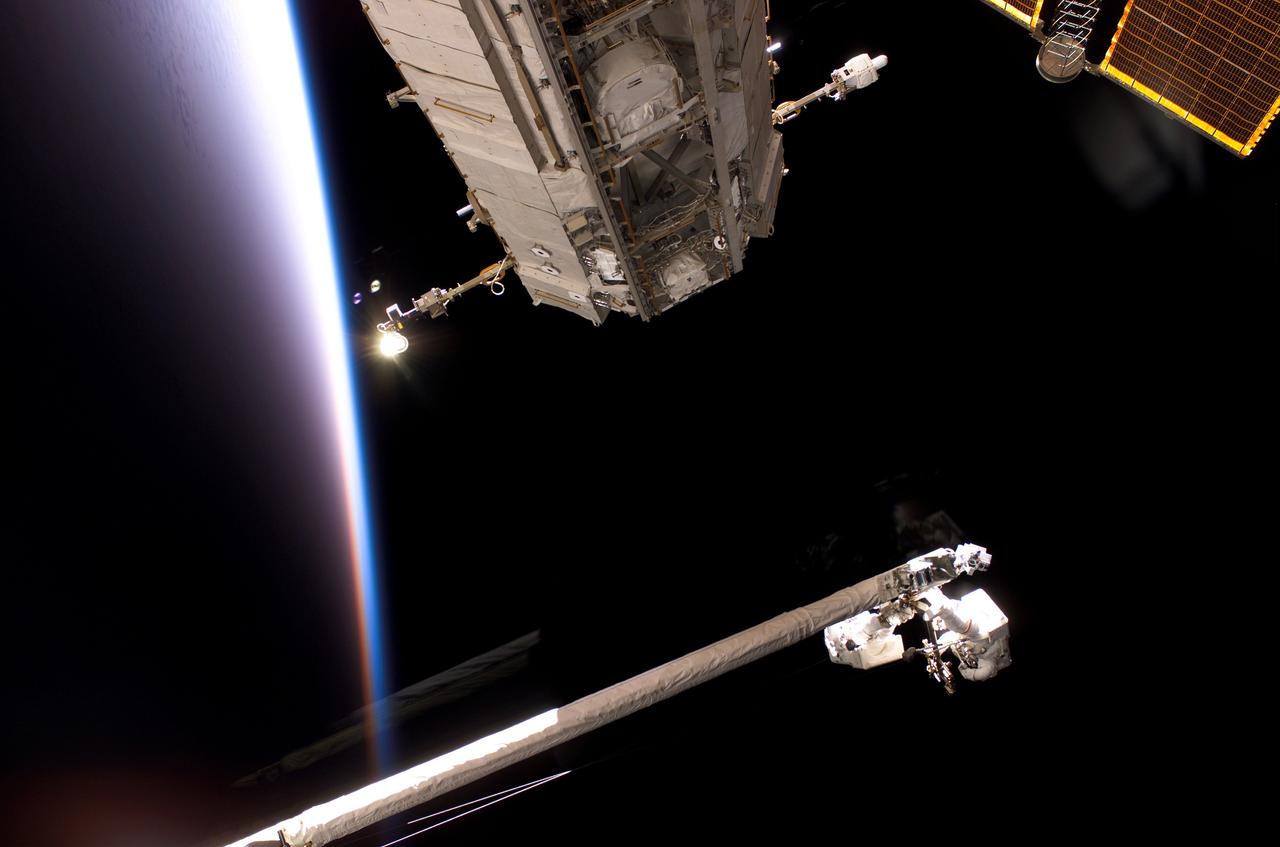
S121-E-06040 (8 July 2006) --- Astronauts Piers J. Sellers (red stripes) and Michael E. Fossum, STS-121 mission specialists, work in tandem on the shuttle's Remote Manipulator System/Orbiter Boom Sensor System (RMS/OBSS) during the mission's first scheduled session of extravehicular activity (EVA).
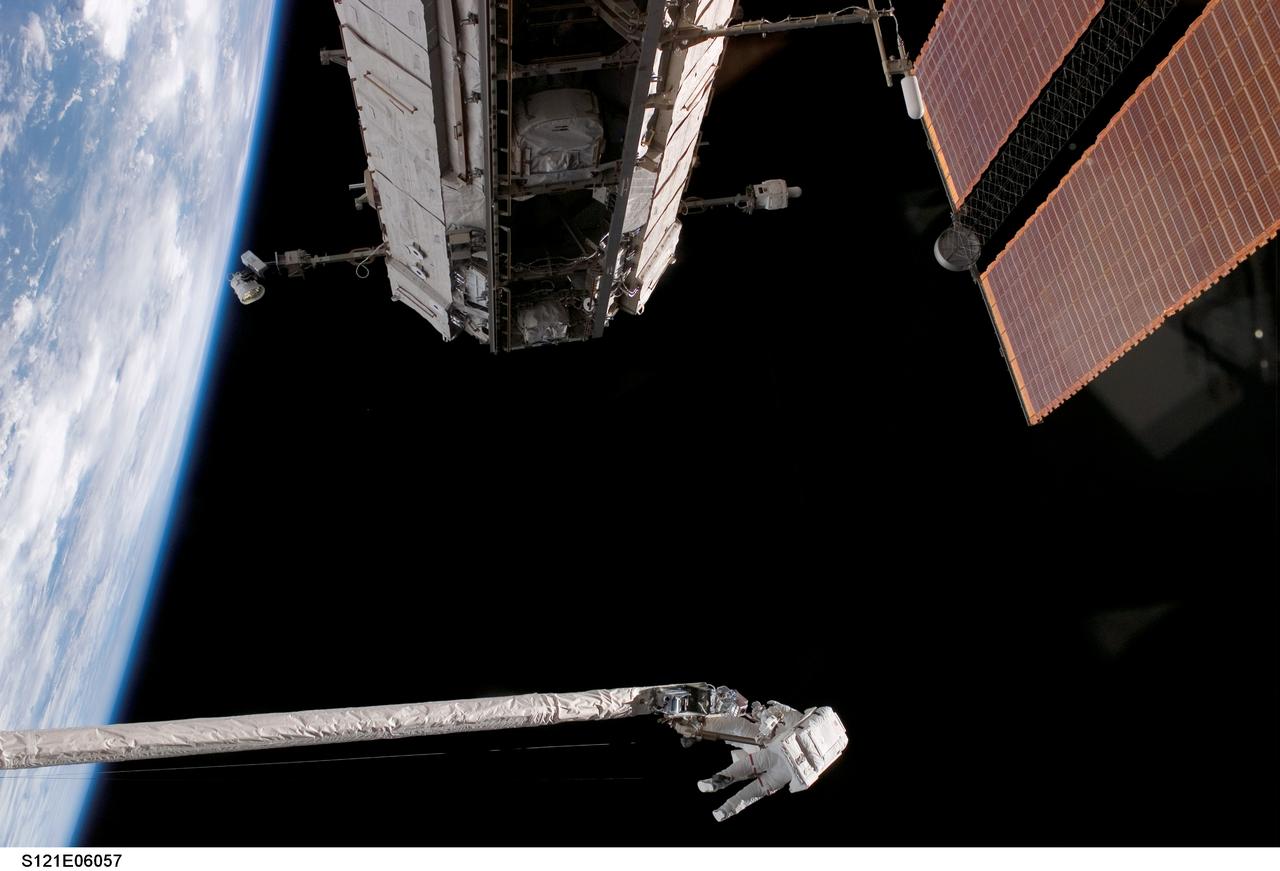
S121-E-06057 (8 July 2006) --- Astronauts Piers J. Sellers (red stripes) and Michael E. Fossum, STS-121 mission specialists, work in tandem on the shuttle's Remote Manipulator System/Orbiter Boom Sensor System (RMS/OBSS) during the mission's first scheduled session of extravehicular activity (EVA).

ISS011-E-11337 (29 July 2005) --- This scene, photographed from the International Space Station while docked with Space Shuttle Discovery, shows the orbiter, the orbiter's Remote Manipulator System (RMS) arm, the Space Station RMS (Canadarm2), the Orbiter Boom and Sensor System (OBSS) and a Soyuz vehicle docked with the orbital outpost.
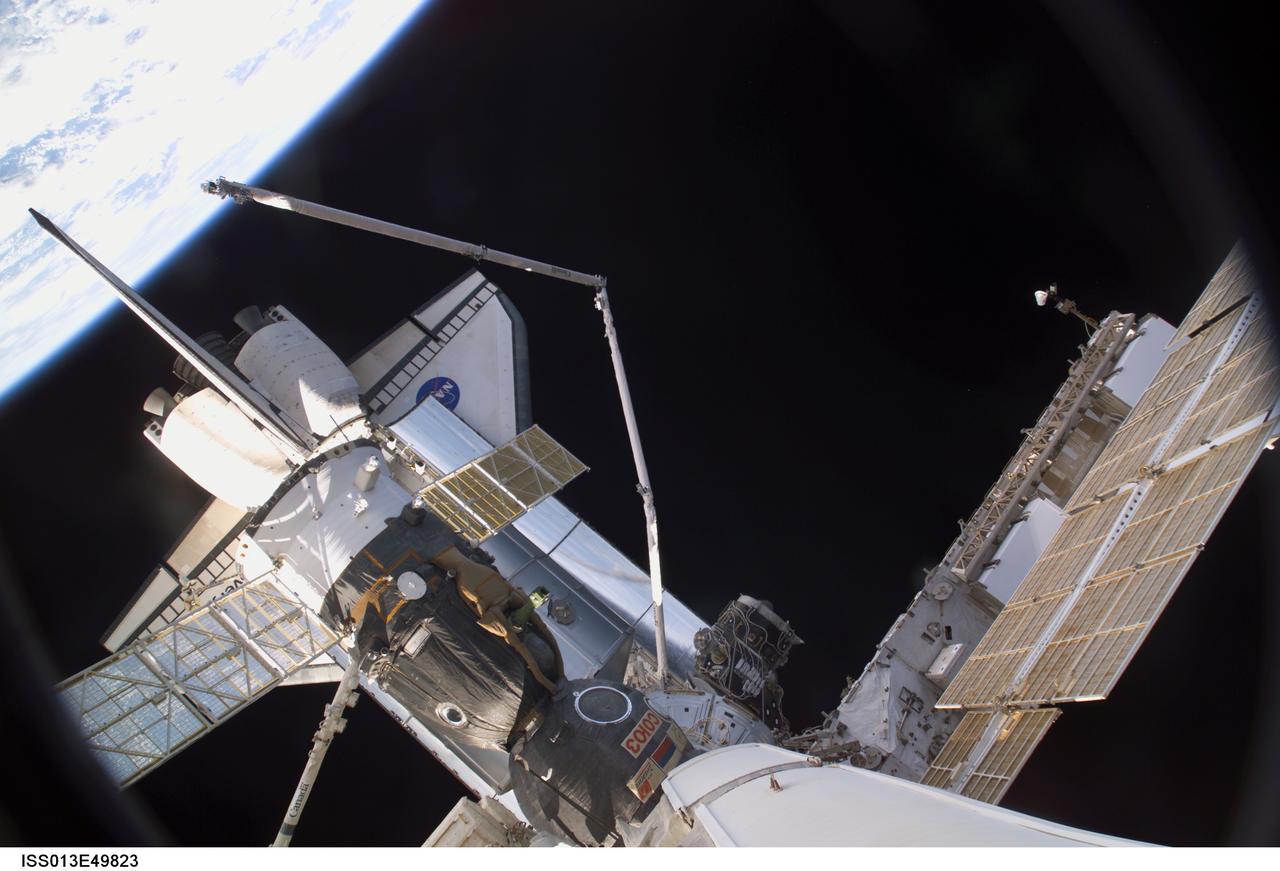
ISS013-E-49823 (11 July 2006) --- This scene, photographed from the International Space Station while docked with Space Shuttle Discovery, shows the orbiter, the orbiter's Remote Manipulator System (RMS) arm, the Space Station RMS (Canadarm2), the Orbiter Boom and Sensor System (OBSS) and a Soyuz vehicle docked with the orbital outpost.
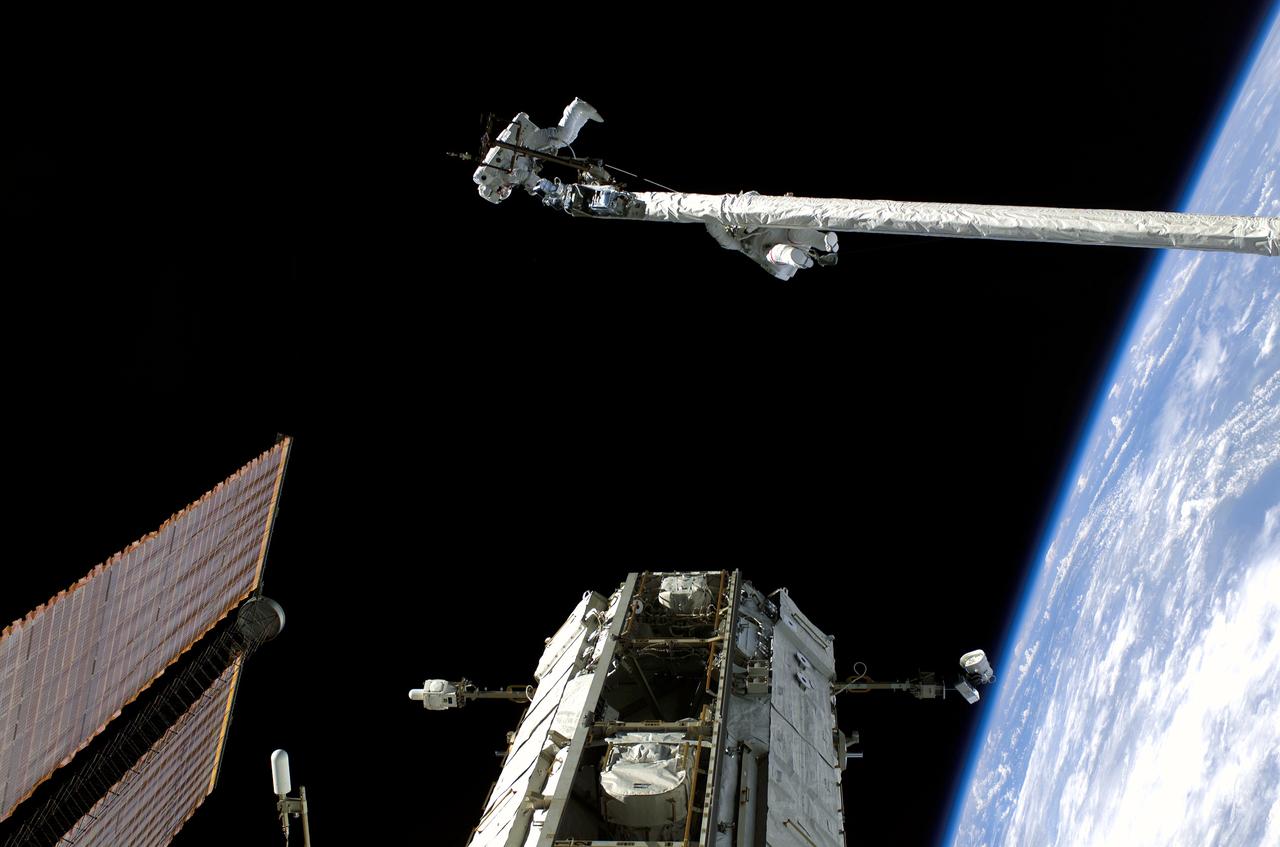
S121-E-06058 (8 July 2006) --- Astronauts Piers J. Sellers (red stripes) and Michael E. Fossum, STS-121 mission specialists, work in tandem on the shuttle's Remote Manipulator System/Orbiter Boom Sensor System (RMS/OBSS) during the mission's first scheduled session of extravehicular activity (EVA).
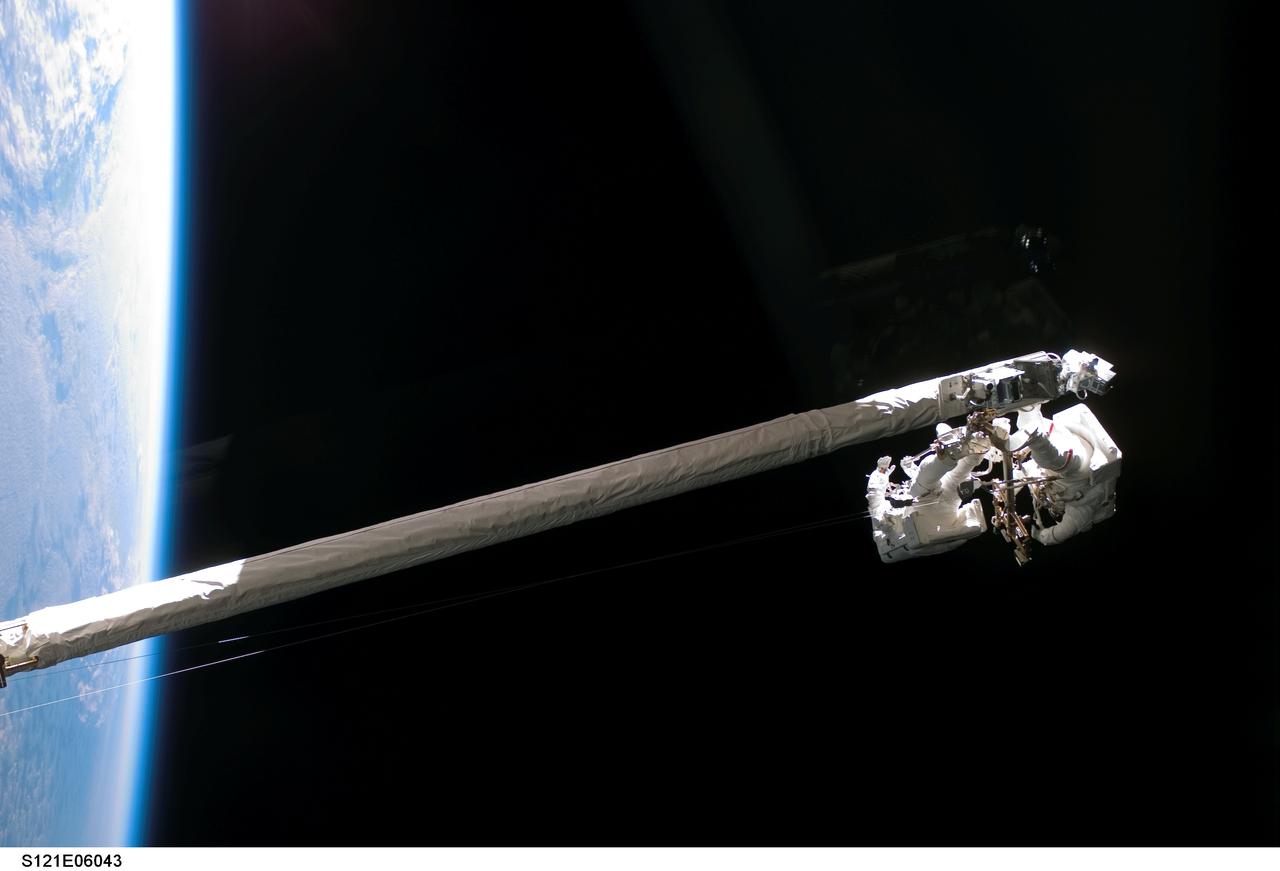
S121-E-06043 (8 July 2006) --- Astronauts Piers J. Sellers (red stripes) and Michael E. Fossum, STS-121 mission specialists, work in tandem on the shuttle's Remote Manipulator System/Orbiter Boom Sensor System (RMS/OBSS) during the mission's first scheduled session of extravehicular activity (EVA).
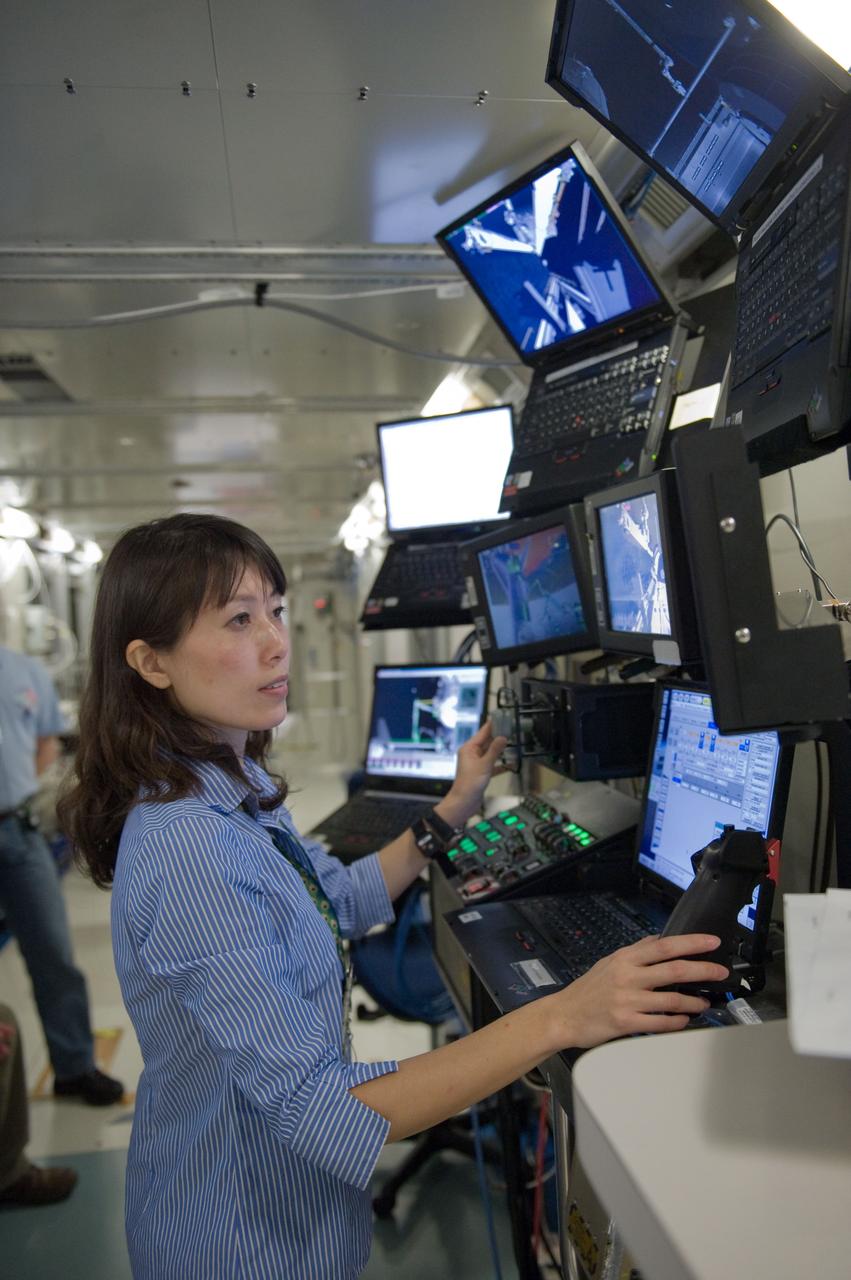
JSC2010-E-008557 (12 Jan. 2010) --- Japan Aerospace Exploration Agency (JAXA) astronaut Naoko Yamazaki, STS-131 mission specialist, participates in a Thermal Protection System (TPS) Orbiter Boom Sensor System (OBSS) training session in the Jake Garn Simulation and Training Facility at NASA?s Johnson Space Center.
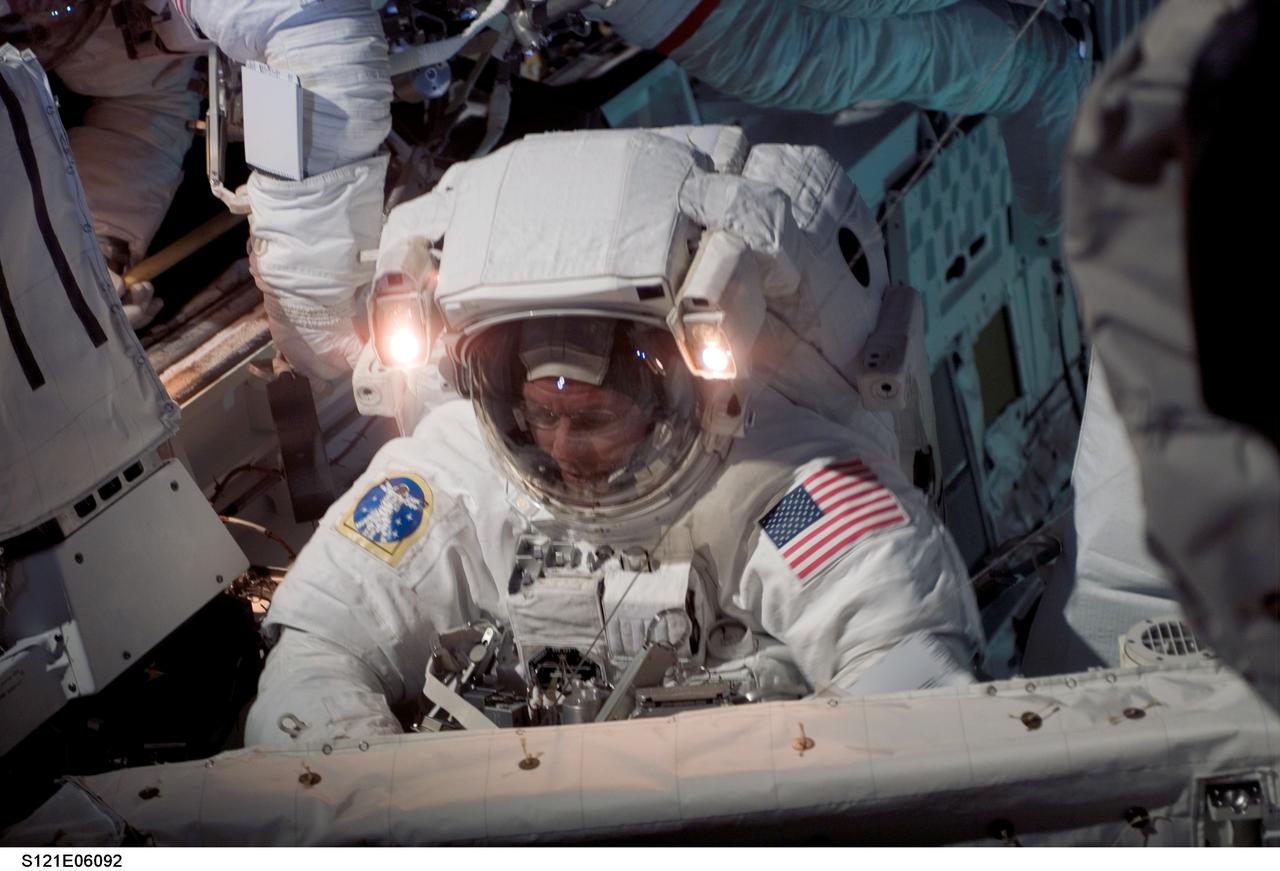
S121-E-06092 (8 July 2006) --- Astronaut Michael E. Fossum, STS-121 mission specialist, repositions tethers at the forward bulkhead of the Space Shuttle Discovery after completing the Orbiter Boom Sensor System (OBSS) evaluations during the mission's first session of extravehicular activity (EVA).
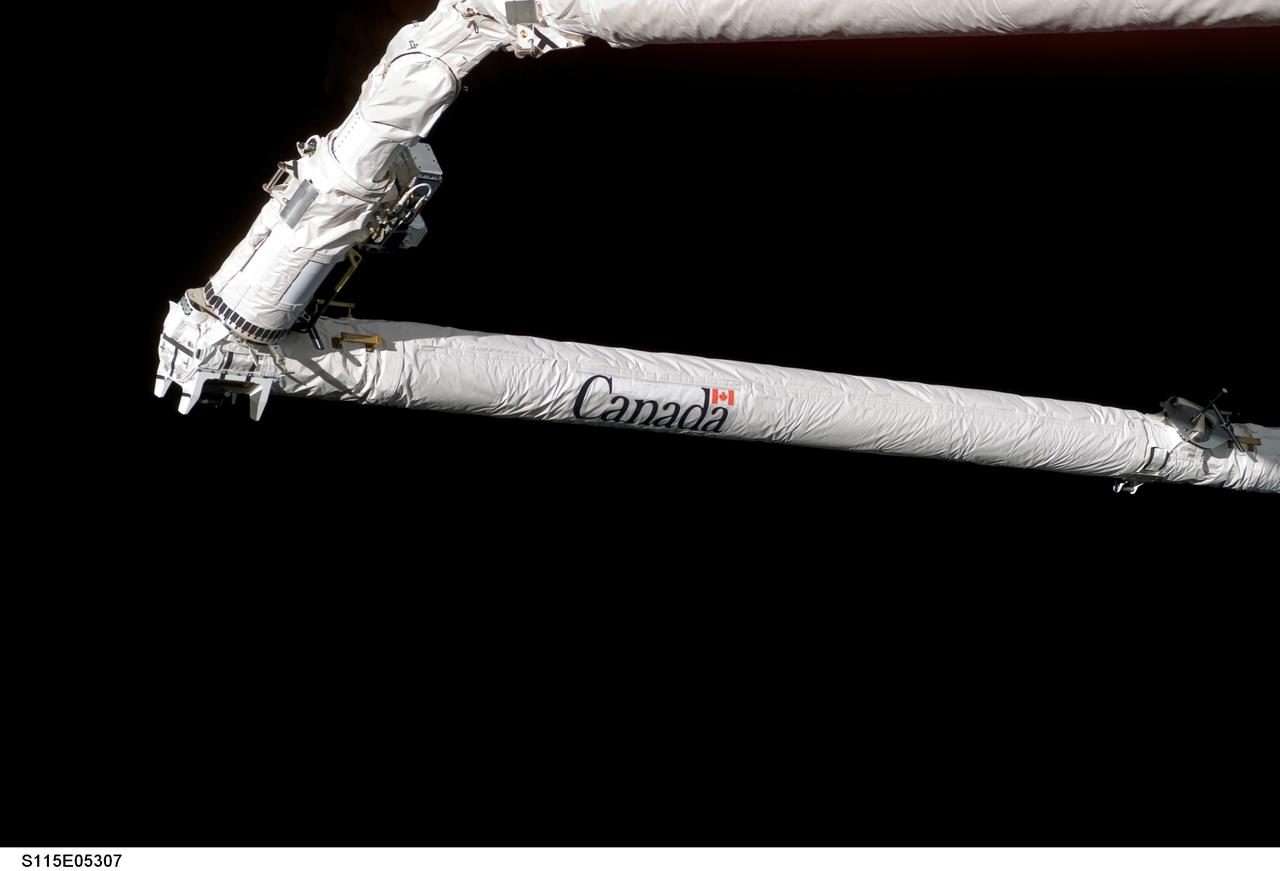
S115-E-05307 (10 Sept. 2006) --- As in the case of the previous two shuttle missions, a tandem of the orbiter boom sensor system (OBSS) and the remote manipulator system (RMS) arm conducts a survey of the thermal protection system on the Space Shuttle Atlantis.
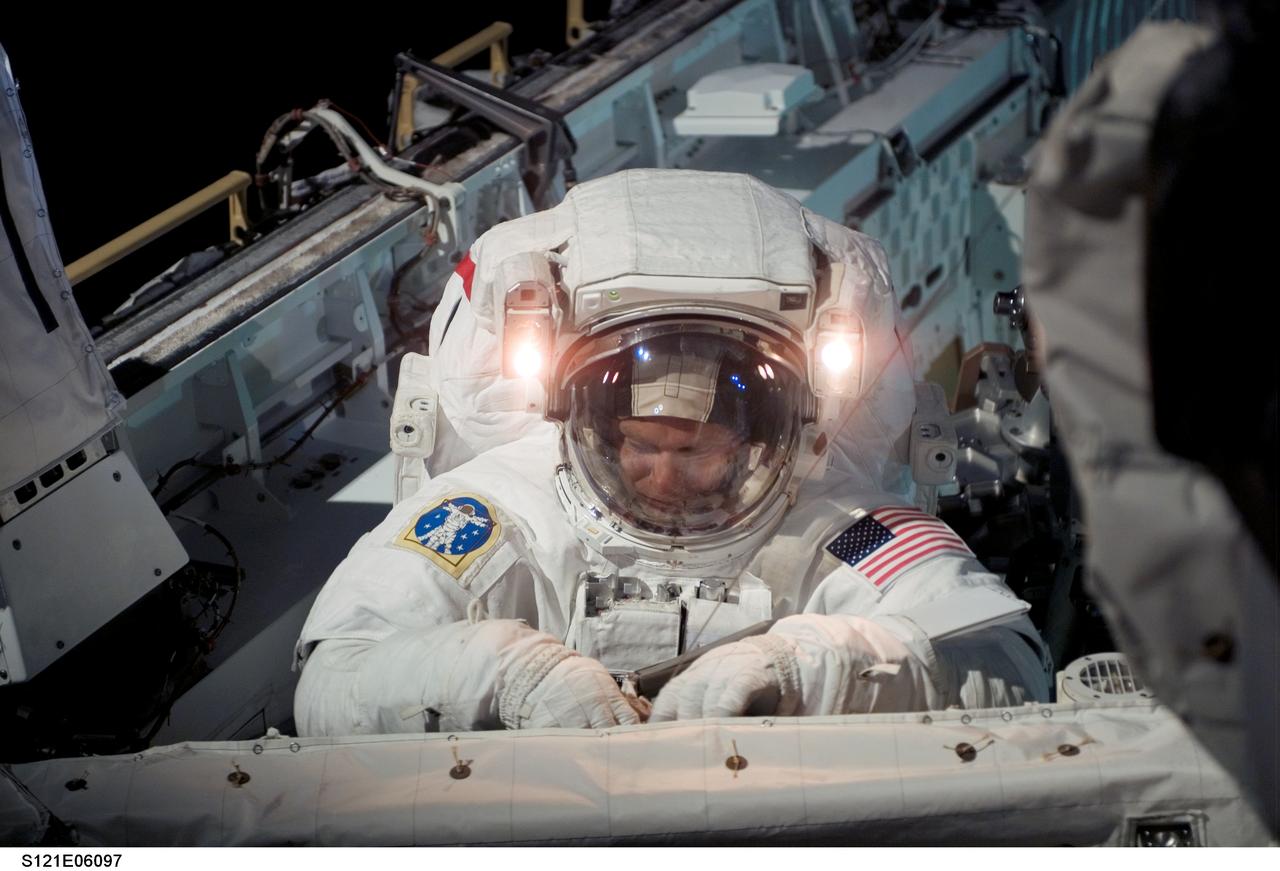
S121-E-06097 (8 July 2006) --- Astronaut Piers J. Sellers, STS-121 mission specialist, repositions tethers at the forward bulkhead of the Space Shuttle Discovery after completing the Orbiter Boom Sensor System (OBSS) evaluations during the mission's first session of extravehicular activity (EVA).
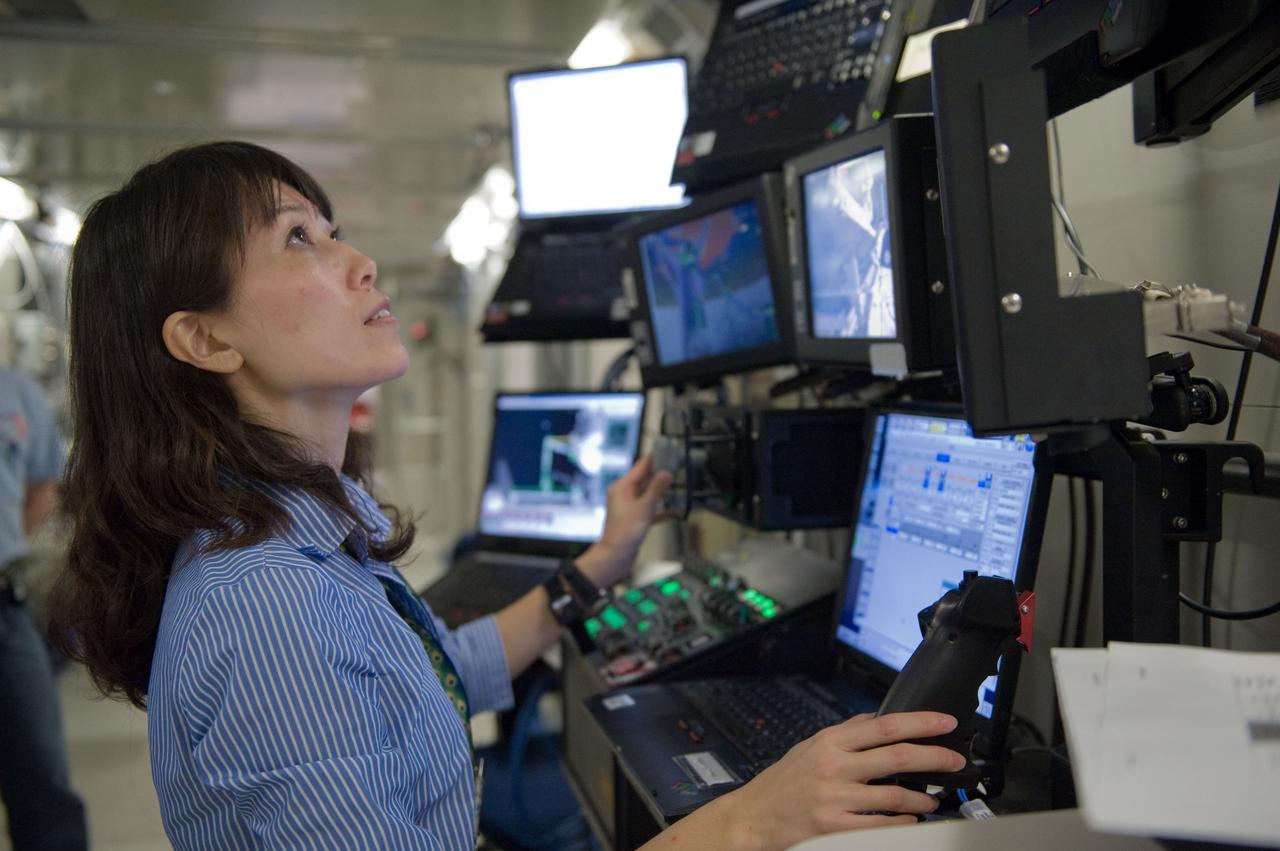
JSC2010-E-008556 (12 Jan. 2010) --- Japan Aerospace Exploration Agency (JAXA) astronaut Naoko Yamazaki, STS-131 mission specialist, participates in a Thermal Protection System (TPS) Orbiter Boom Sensor System (OBSS) training session in the Jake Garn Simulation and Training Facility at NASA?s Johnson Space Center.
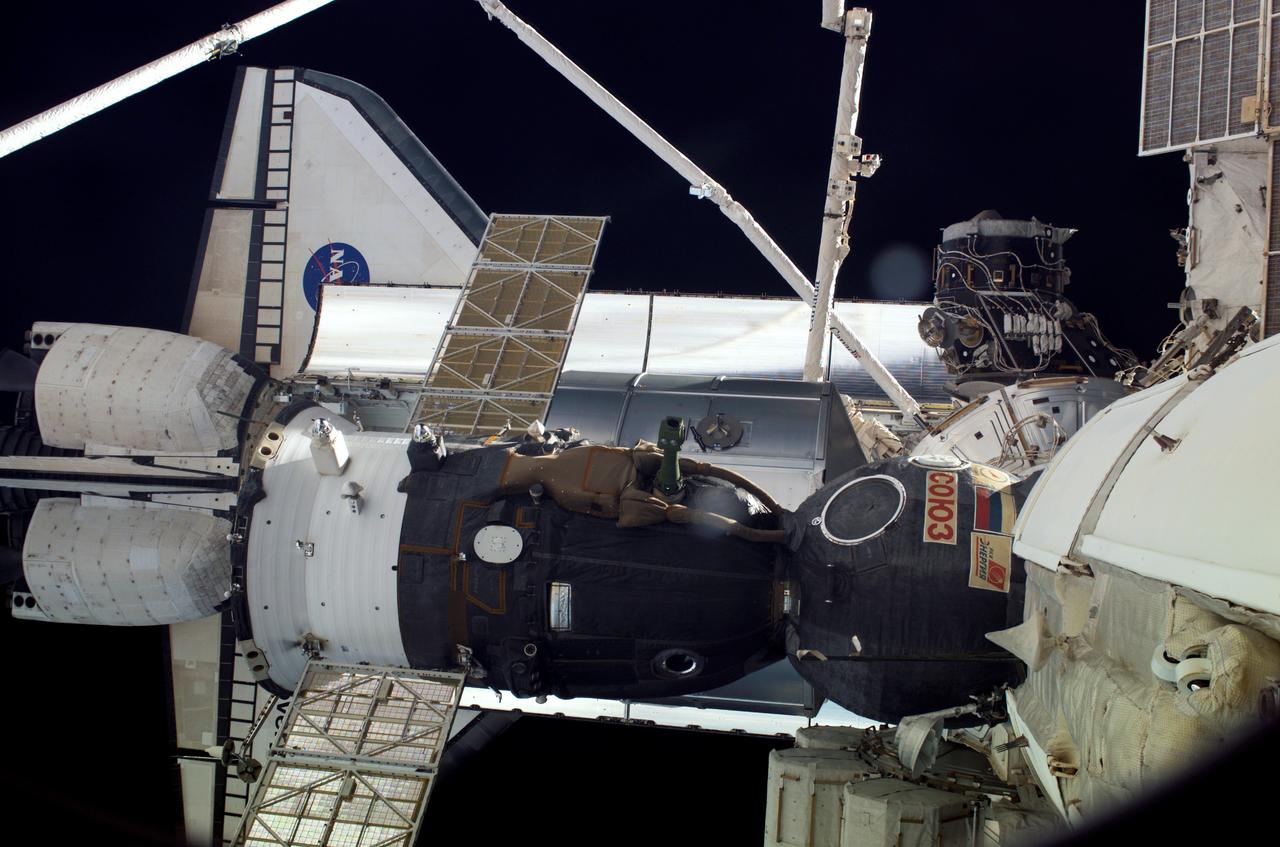
S121-E-06540 (13 July 2006) --- This scene, photographed from the International Space Station while docked with Space Shuttle Discovery, shows the orbiter, the orbiter's Remote Manipulator System (RMS) arm, the Space Station RMS (Canadarm2), the Orbiter Boom and Sensor System (OBSS) and a Soyuz vehicle docked with the orbital outpost.
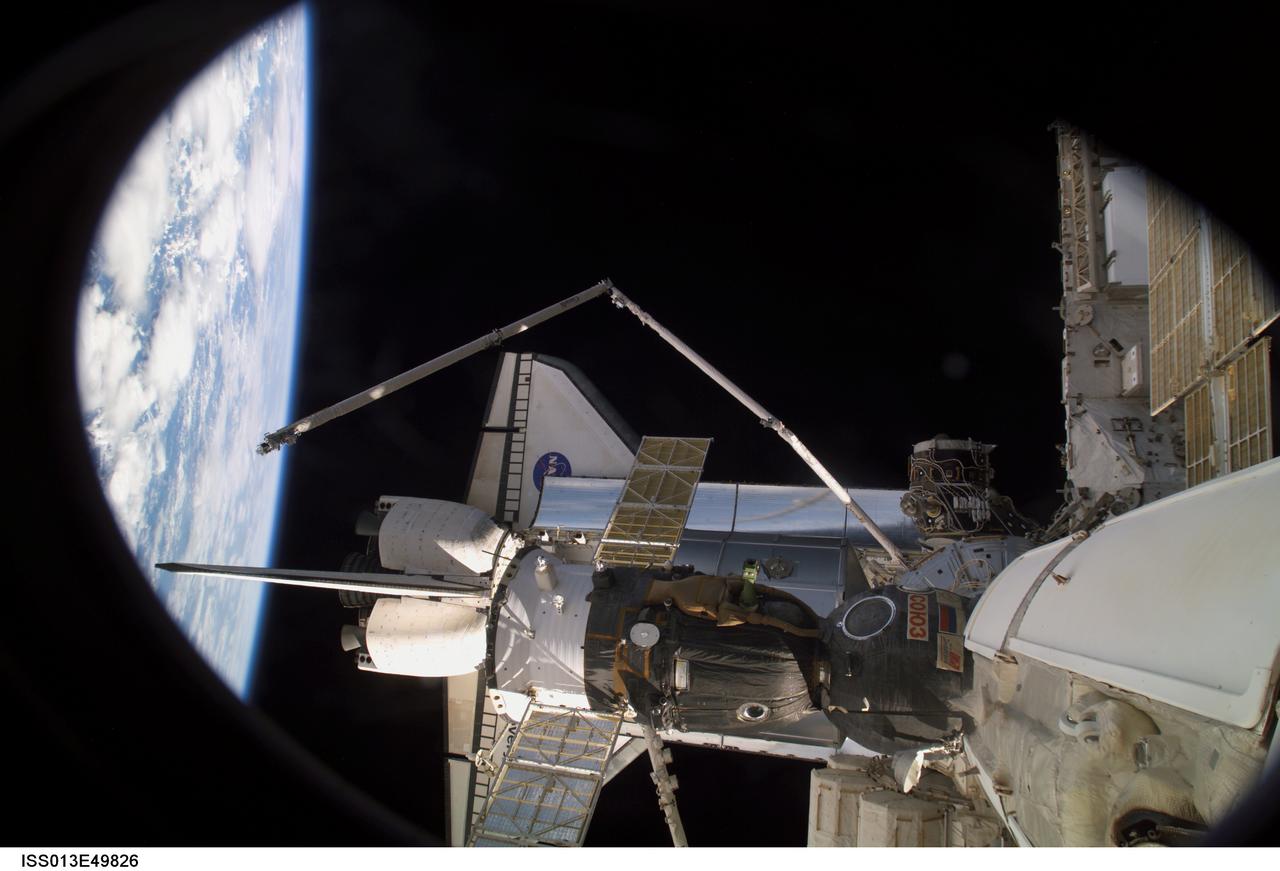
ISS013-E-49826 (11 July 2006) --- This scene, photographed from the International Space Station while docked with Space Shuttle Discovery, shows the orbiter, the orbiter's Remote Manipulator System (RMS) arm, the Space Station RMS (Canadarm2), the Orbiter Boom and Sensor System (OBSS) and a Soyuz vehicle docked with the orbital outpost.
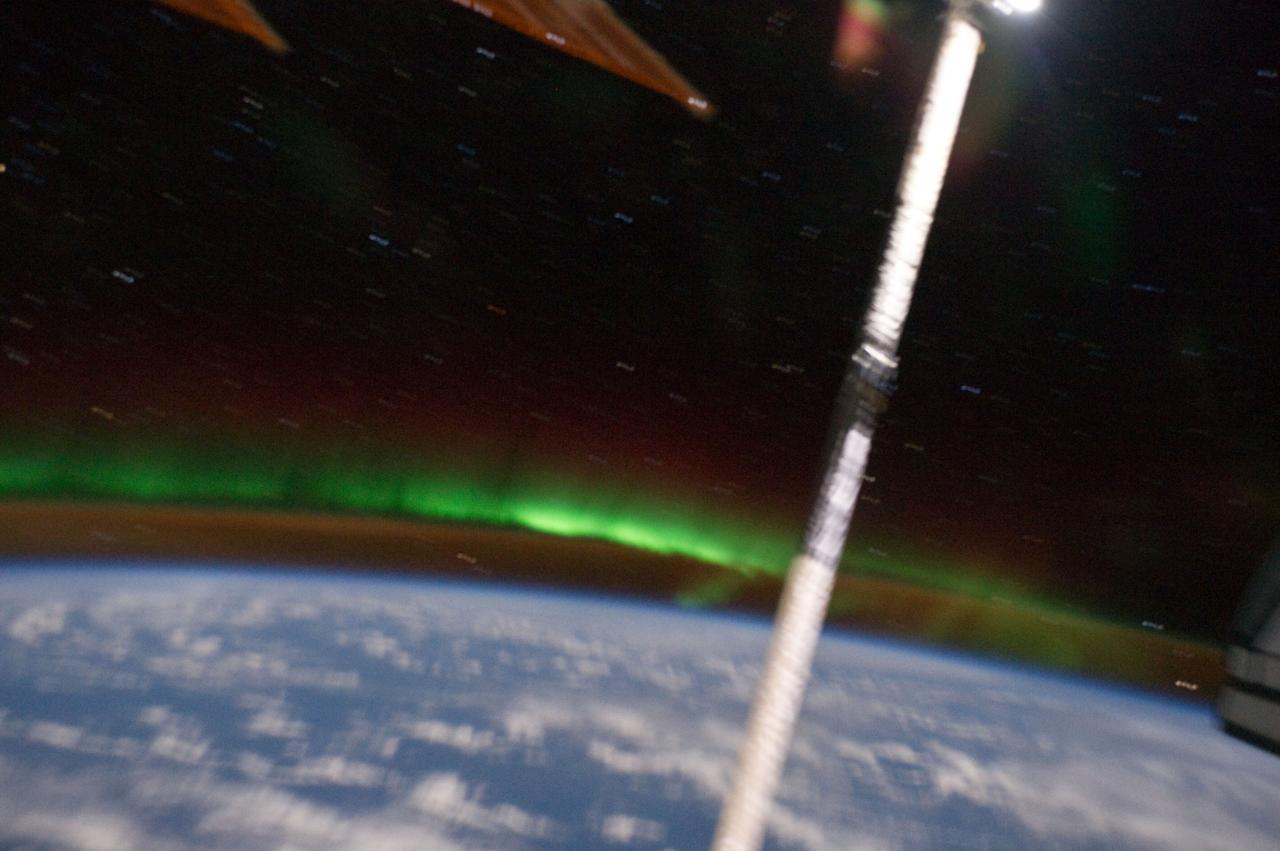
ISS028-E-017382 (17 July 2011) --- Earth's horizon, "decorated" by an intermingling airglow and Aurora Australis was captured in a digital image photographed by one of the members of the joint Atlantis-International Space Station crews. The Orbiter Boom Sensor System extension to the shuttle's robotic arm is also pictured.
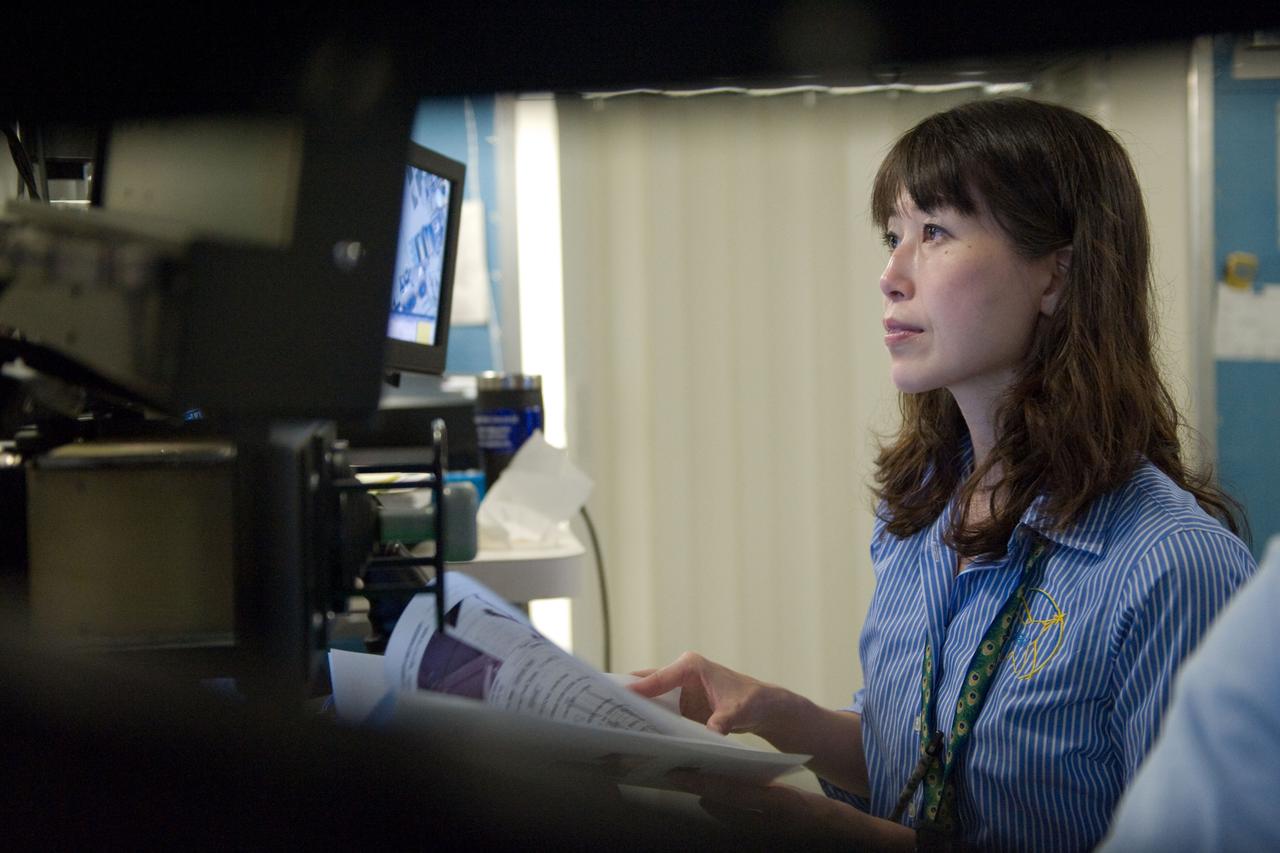
JSC2010-E-008553 (12 Jan. 2010) --- Japan Aerospace Exploration Agency (JAXA) astronaut Naoko Yamazaki, STS-131 mission specialist, participates in a Thermal Protection System (TPS) Orbiter Boom Sensor System (OBSS) training session in the Jake Garn Simulation and Training Facility at NASA?s Johnson Space Center.
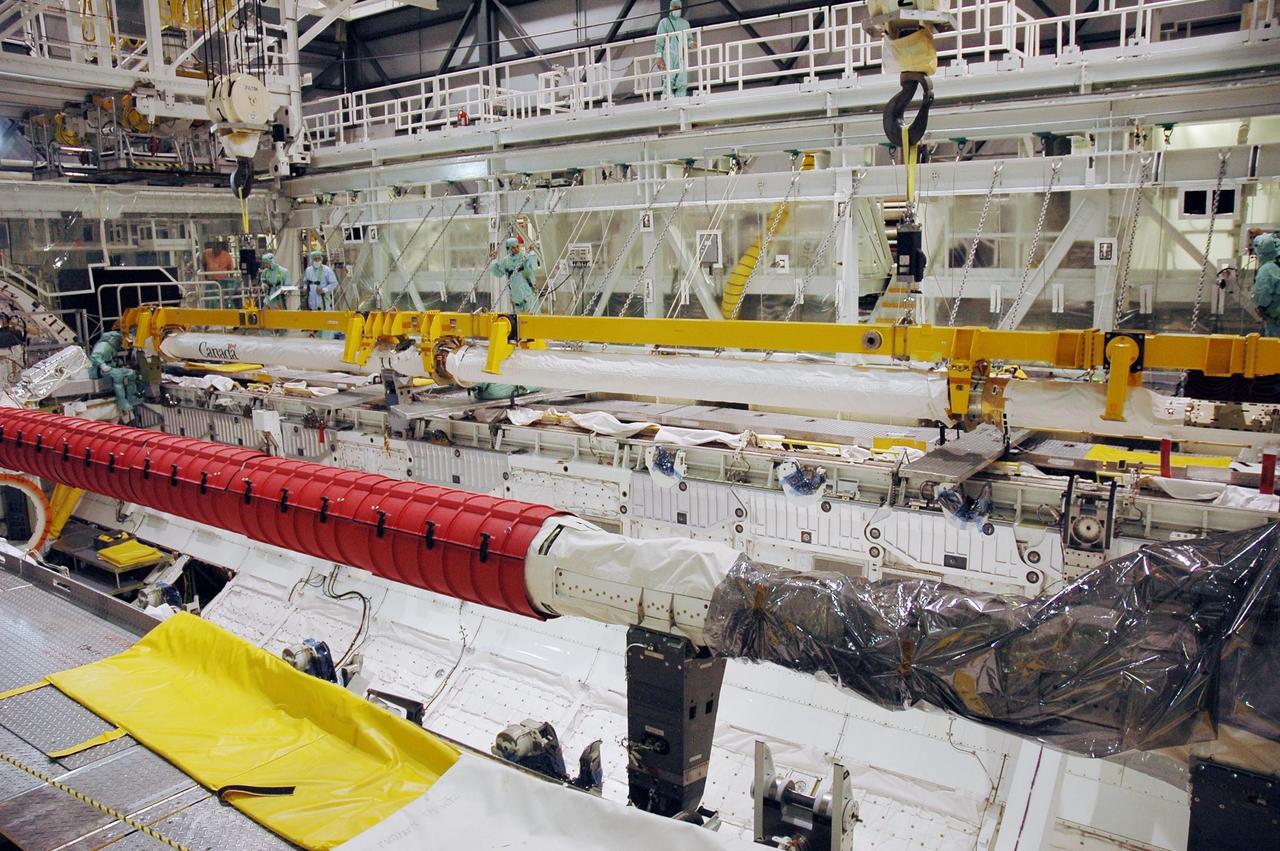
KENNEDY SPACE CENTER, FLA. -- In Orbiter Processing Facility bay 2, workers secure the orbiter boom sensor system in Endeavour's payload bay. The orbiter is scheduled to fly on mission STS-118 to the International Space Station in the summer of 2007. It will deliver the third starboard truss segment, S5. Photo credit: NASA/Troy Cryder
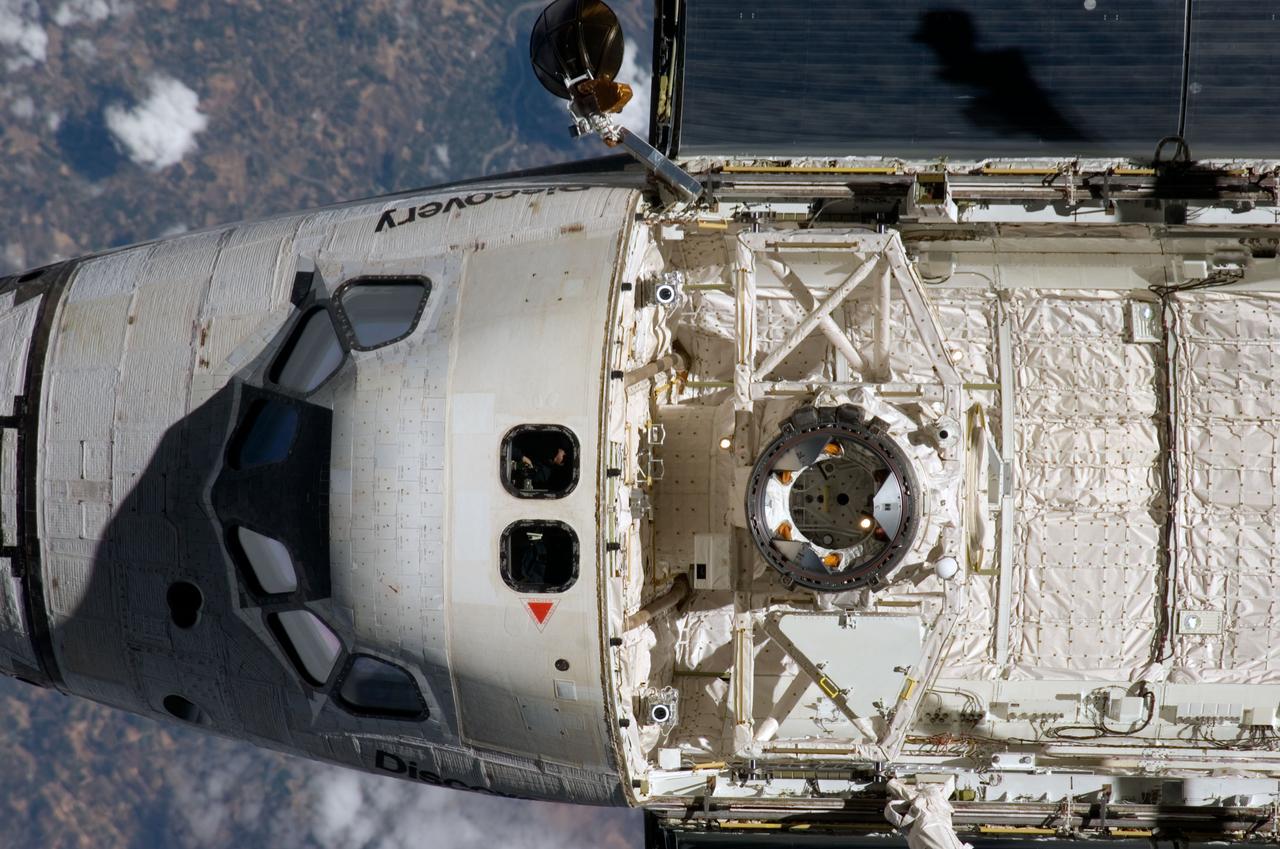
ISS017-E-009386 (11 June 2008) --- A nadir view of the Space Shuttle Discovery's crew cabin and the forward section of the payload bay soon after the shuttle and the International Space Station began their post-undocking relative separation on June 11. One of the Expedition 17 crewmembers recorded the photo with a digital still camera.
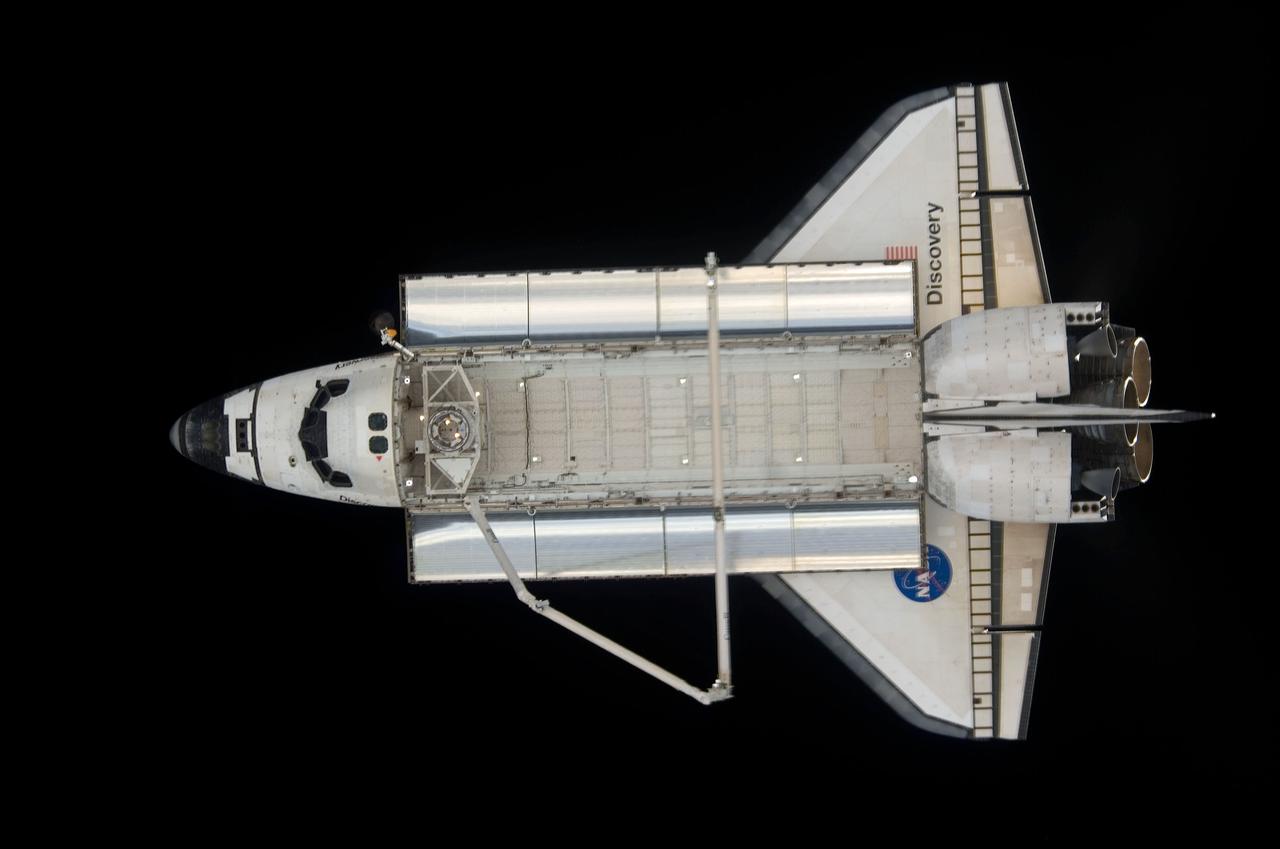
ISS017-E-009341 (11 June 2008) --- A view of the Space Shuttle Discovery backdropped against the blackness of space soon after the shuttle and the International Space Station began their post-undocking relative separation on June 11. One of the Expedition 17 crewmembers recorded the photo with a digital still camera.
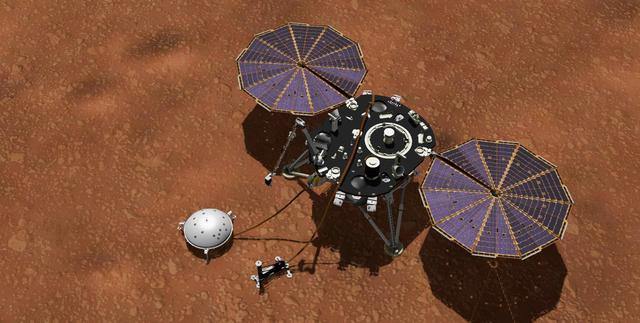
This artist's concept shows NASA's InSight lander with its instruments deployed on the Martian surface. InSight's package of weather sensors, called the Auxiliary Payload Subsystem (APSS), includes an air pressure sensor inside the lander -- its inlet is visible on InSight's deck -- and two air temperature and wind sensors on the deck. Under the deck's edge is a magnetometer, provided by UCLA, to measure changes in the local magnetic field that could also influence SEIS. InSight's air temperature and wind sensors are actually refurbished spares built for Curiosity's Rover Environmental Monitoring Station (REMS). Called Temperature and Wind for InSight, or TWINS, these two east- and west-facing booms sit on the lander's deck and were provided by Spain's Centro de Astrobiología (CAB). https://photojournal.jpl.nasa.gov/catalog/PIA22957
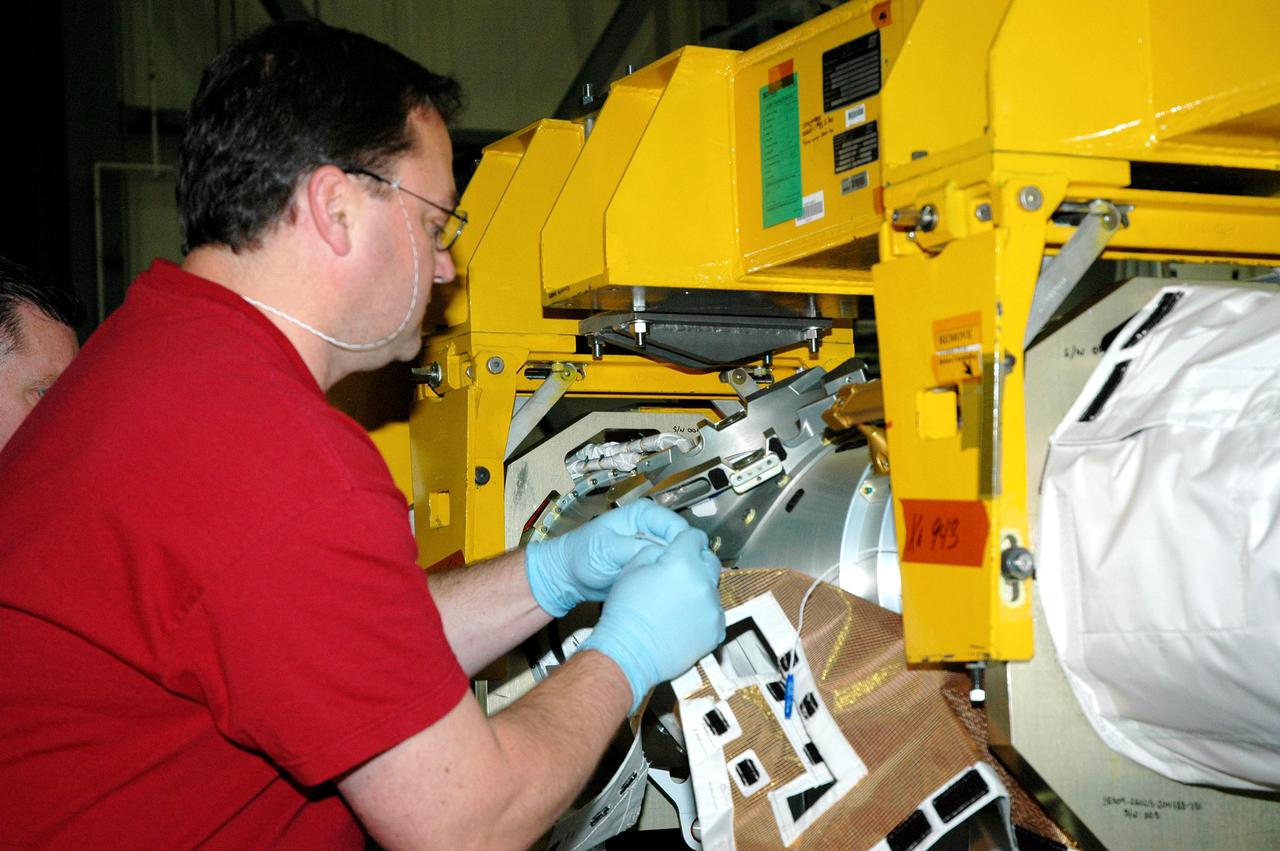
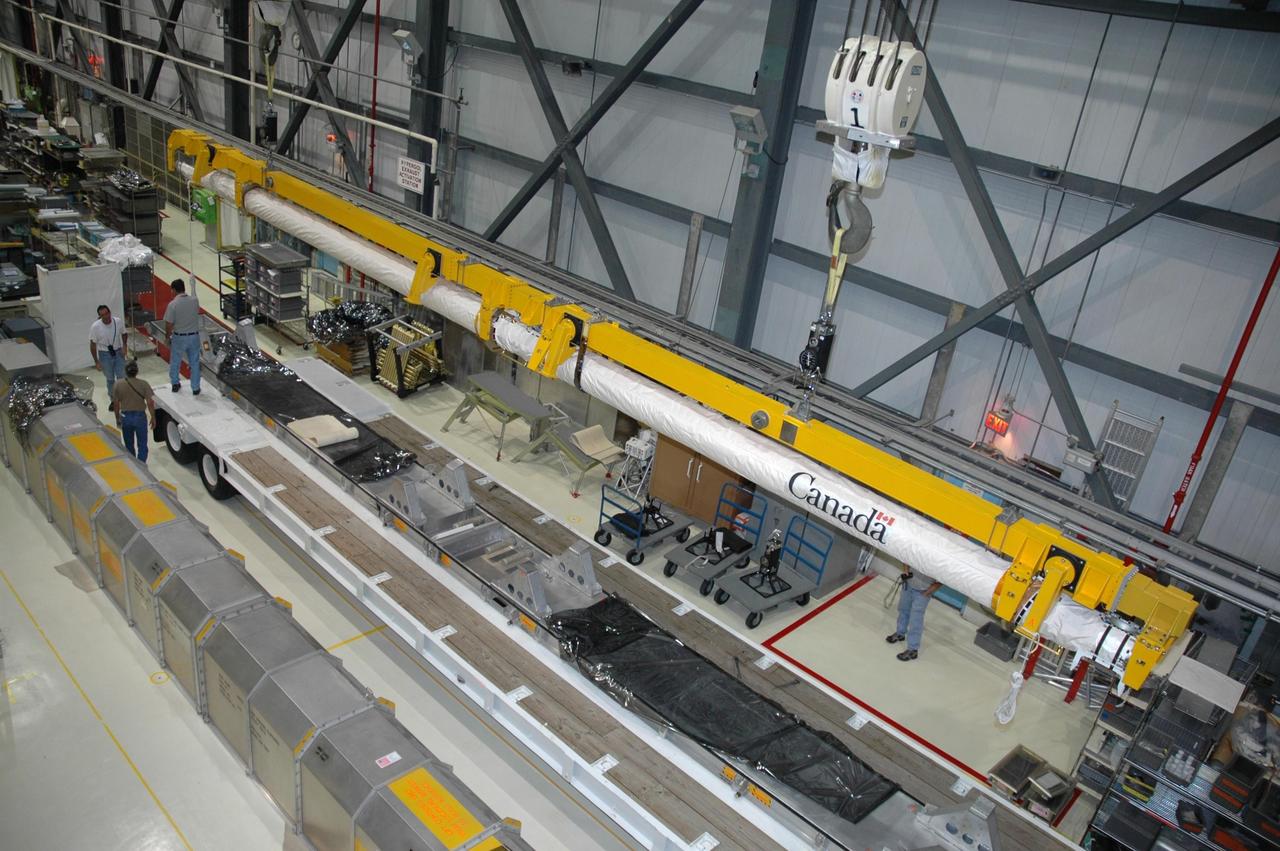
KENNEDY SPACE CENTER, FLA. - In the back transfer aisle of the Orbiter Processing Facility bay 3, Todd Dugan, a technician with United Space Alliance, begins attaching the Thermal Protection System (TPS) blanket to the Orbiter Boom Sensor System (OBSS). The installation of the insulation concludes TPS closeout prior to installation of the boom in the orbiter Discovery. The OBSS is one of the new safety measures for Return to Flight, equipping the Shuttle with cameras and laser systems to inspect the Shuttle’s Thermal Protection System while in space. Discovery is designated as the Return to Flight vehicle for mission STS-114, with a launch window of May 12 to June 3, 2005.
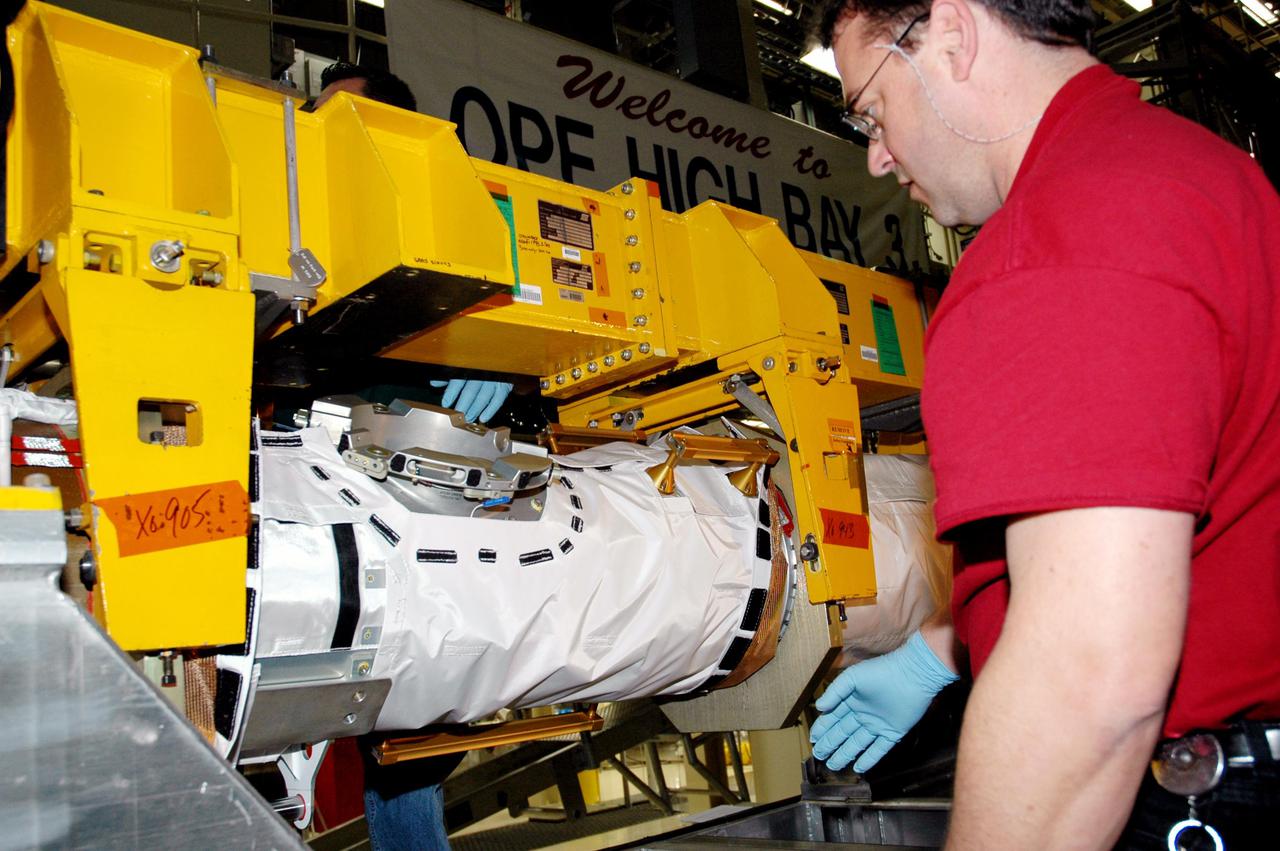
KENNEDY SPACE CENTER, FLA. - In the back transfer aisle of the Orbiter Processing Facility bay 3, Todd Dugan, a technician with United Space Alliance, checks out the Thermal Protection System (TPS) blanket wrapped around the Orbiter Boom Sensor System (OBSS). The installation of the insulation concludes TPS closeout prior to installation of the boom in the orbiter Discovery. The OBSS is one of the new safety measures for Return to Flight, equipping the Shuttle with cameras and laser systems to inspect the Shuttle’s Thermal Protection System while in space. Discovery is designated as the Return to Flight vehicle for mission STS-114, with a launch window of May 12 to June 3, 2005.
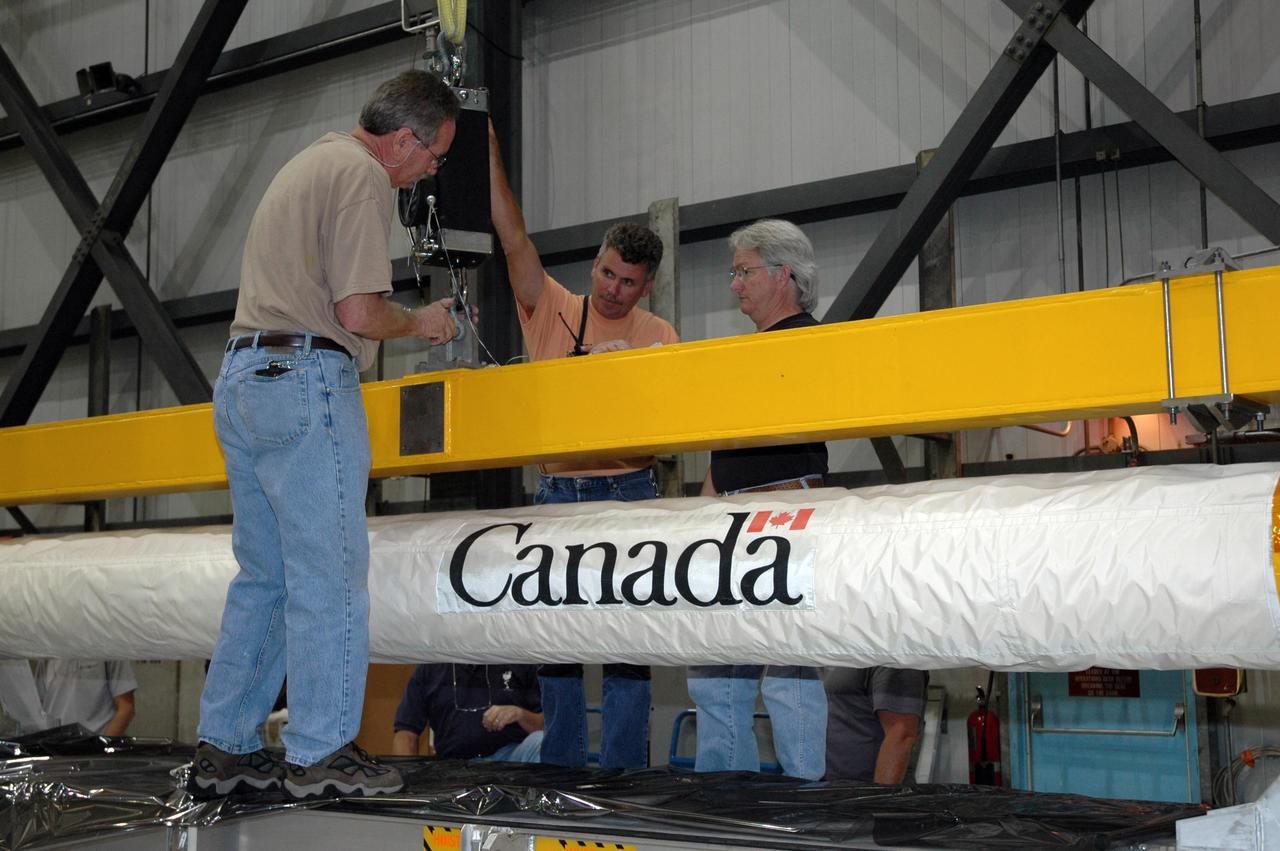
KENNEDY SPACE CENTER, FLA. - In the Orbiter Processing Facility's bay 1, workers prepare the orbiter boom sensor system for installation on the starboard side of Atlantis's payload bay for mission STS-117. The 50-foot-long boom attaches to the shuttle arm and provides equipment to inspect the shuttle's heat shield while in space. It contains an intensified television camera (ITVC) and a laser dynamic range imager, which are mounted on a pan and tilt unit, and a laser camera system (LCS) mounted on a stationary bracket. Mission STS-117 will carry the S3/S4 arrays for installation on the International Space Station. Launch of Space Shuttle Atlantis is scheduled for March. Photo credit: NASA/Jack Pfaller
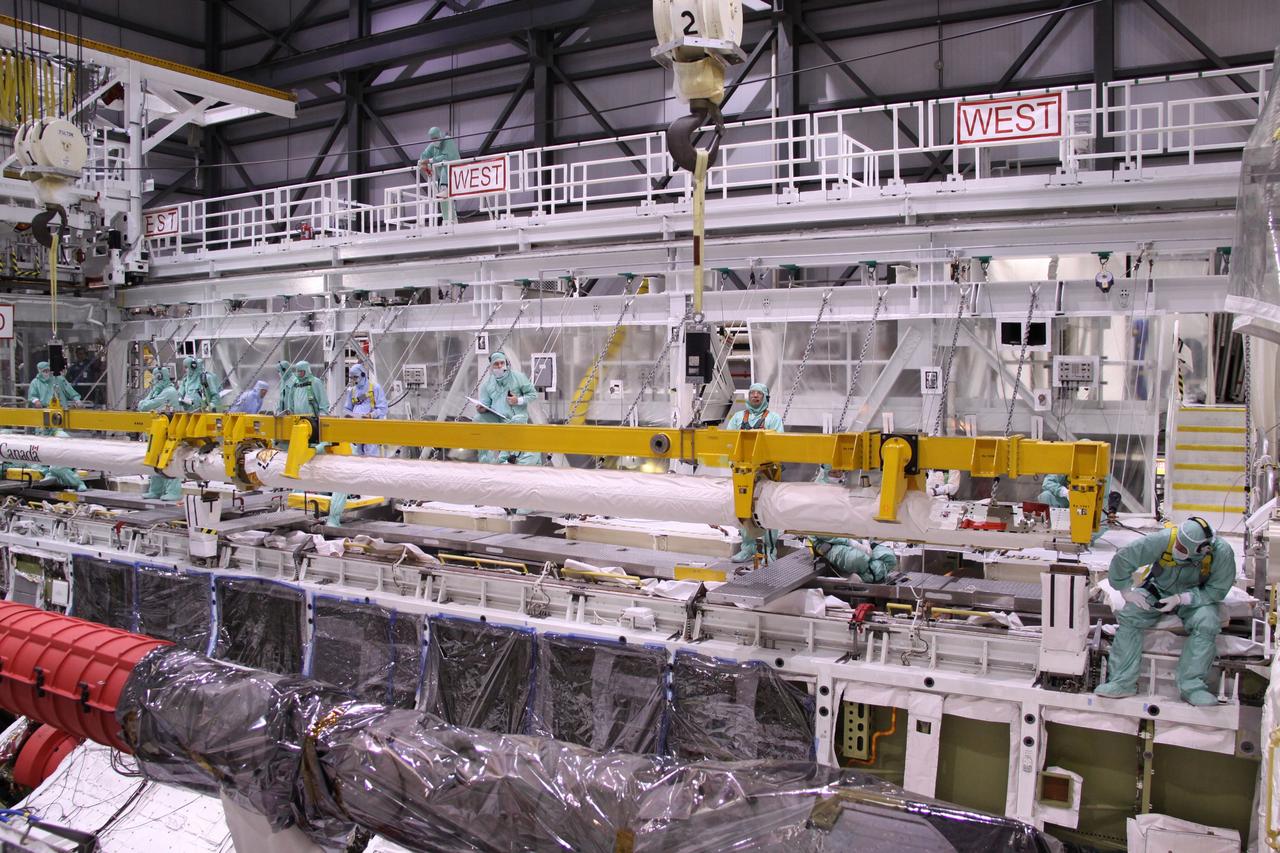
CAPE CANAVERAL, Fla. – In NASA Kennedy Space Center's Orbiter Processing Facility bay 2, workers watch the movement of space shuttle Endeavour's Orbiter Boom Sensor System as it is lowered into the payload bay. The OBSS is a 50-foot boom with a laser and cameras on it that astronauts use to inspect a shuttle's heat shield while in orbit. After returning from the STS-127 mission July 31, 2009, Endeavour now is being processed for the STS-130 mission targeted for Feb. 4, 2010. Endeavour will deliver to the International Space Station the Tranquility pressurized module that will provide room for many of the station's life support systems. Photo credit: NASA/Jack Pfaller
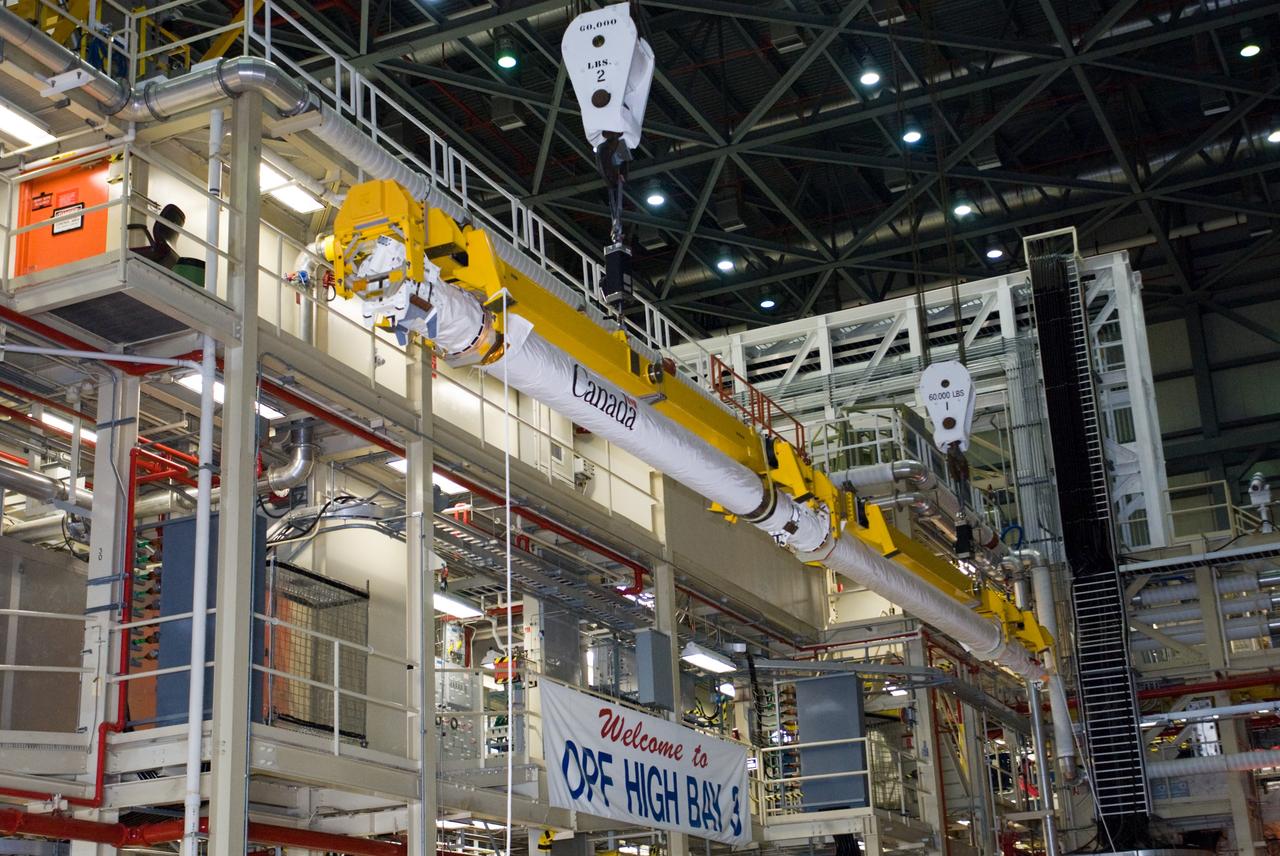
CAPE CANAVERAL, Fla. – In the Orbiter Processing Facility’s bay 3, the orbiter boom sensor system is lifted by a crane for installation in space shuttle Discovery’s payload bay for mission STS-128. The 50-foot-long boom attaches to the shuttle arm and provides equipment to inspect the shuttle's heat shield while in space. It contains an intensified television camera (ITVC) and a laser dynamic range imager, which are mounted on a pan and tilt unit, and a laser camera system (LCS) mounted on a stationary bracket. The STS-128 flight will carry science and storage racks to the International Space Station on space shuttle Discovery. Launch of Discovery is targeted for Aug. 6. Photo credit: NASA/Jim Grossmann
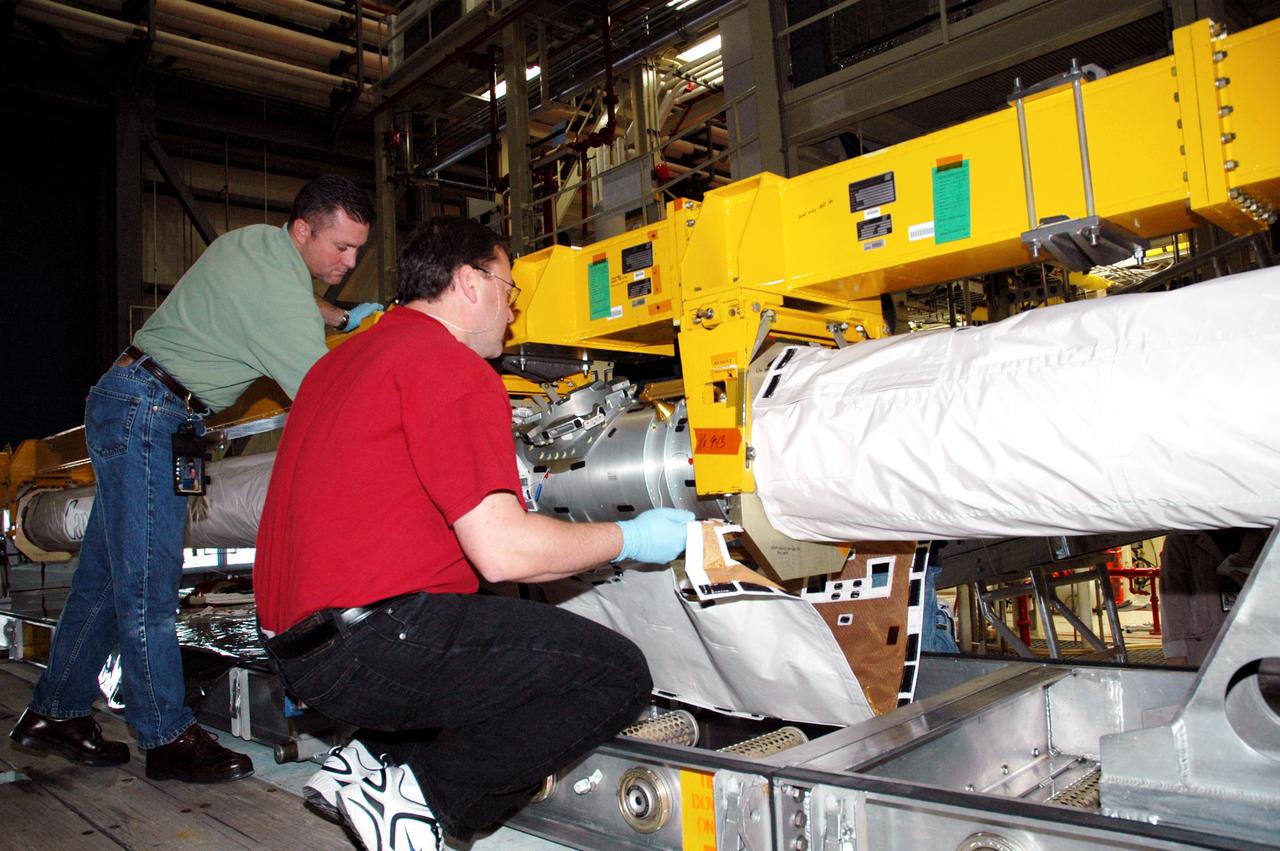
KENNEDY SPACE CENTER, FLA. - In the back transfer aisle of the Orbiter Processing Facility bay 3, Todd Dugan (right), a technician with United Space Alliance, lifts a Thermal Protection System (TPS) blanket onto an area of the Orbiter Boom Sensor System (OBSS). The installation will conclude TPS closeout prior to installation of the boom in the orbiter Discovery. The OBSS is one of the new safety measures for Return to Flight, equipping the Shuttle with cameras and laser systems to inspect the Shuttle’s Thermal Protection System while in space. Discovery is designated as the Return to Flight vehicle for mission STS-114, with a launch window of May 12 to June 3, 2005.
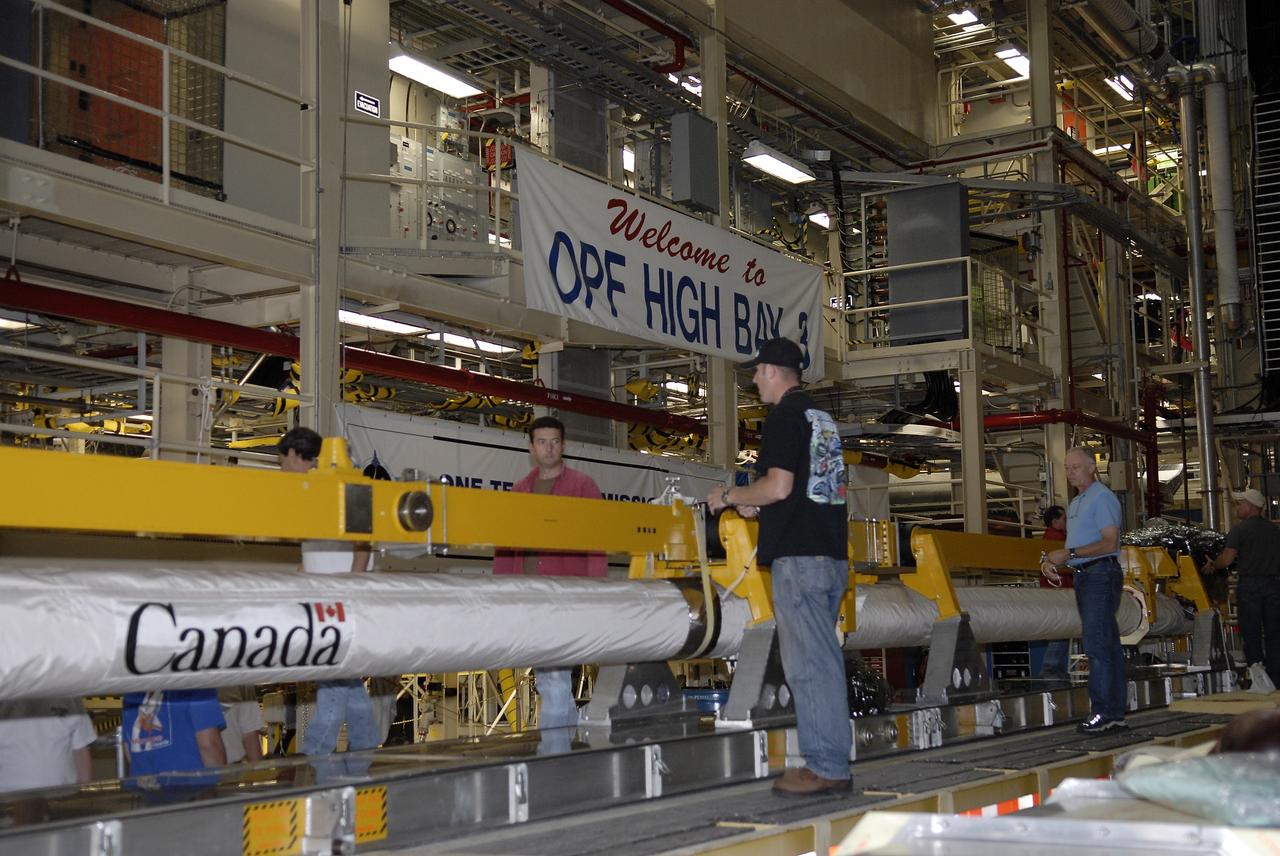
CAPE CANAVERAL, Fla. – In the Orbiter Processing Facility’s bay 3, workers prepare to install the orbiter boom sensor system in the payload bay of space shuttle Discovery to support mission STS-128. The 50-foot-long boom attaches to the shuttle arm and provides equipment to inspect the shuttle's heat shield while in space. It contains an intensified television camera (ITVC) and a laser dynamic range imager, which are mounted on a pan and tilt unit, and a laser camera system (LCS) mounted on a stationary bracket. The STS-128 flight will carry science and storage racks to the International Space Station on space shuttle Discovery. Launch of Discovery is targeted for Aug. 6. Photo credit: NASA/Kim Shiflett
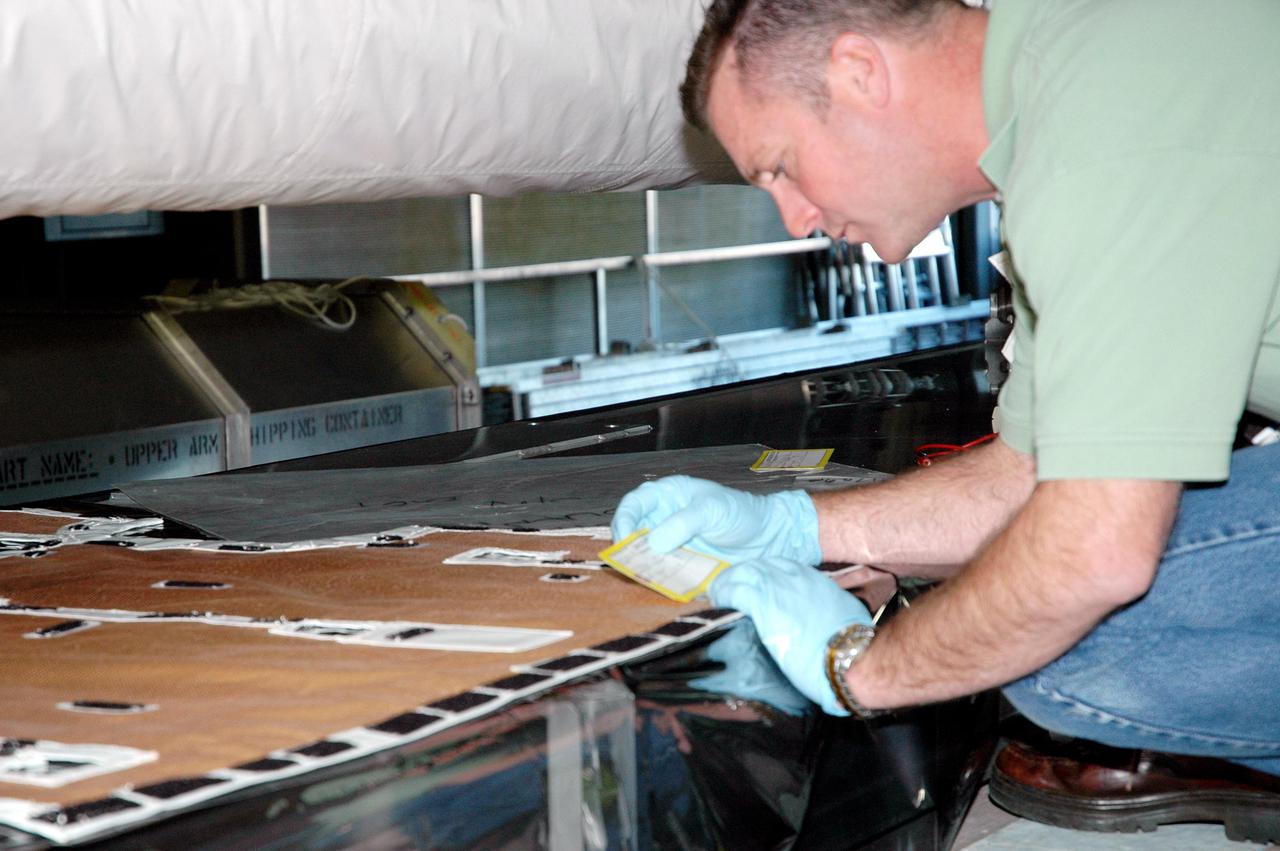
KENNEDY SPACE CENTER, FLA. - In the back transfer aisle of the Orbiter Processing Facility bay 3, a worker checks paperwork for the Thermal Protection System (TPS) blanket to be wrapped around the Orbiter Boom Sensor System (OBSS). The installation of the insulation concludes TPS closeout prior to installation of the boom in the orbiter Discovery. The OBSS is one of the new safety measures for Return to Flight, equipping the Shuttle with cameras and laser systems to inspect the Shuttle’s Thermal Protection System while in space. Discovery is designated as the Return to Flight vehicle for mission STS-114, with a launch window of May 12 to June 3, 2005.
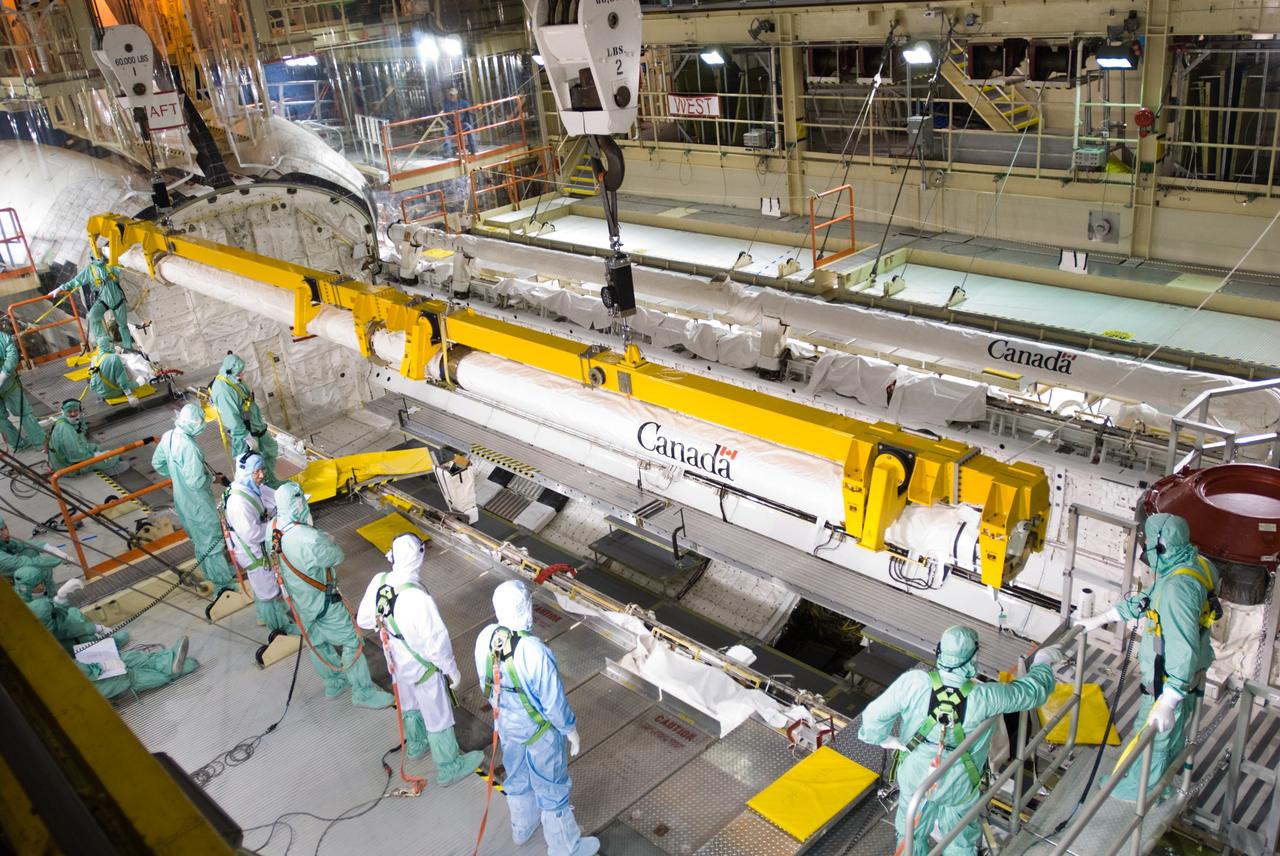
CAPE CANAVERAL, Fla. – In the Orbiter Processing Facility’s bay 3, the orbiter boom sensor system is lowered by a crane into the payload bay of space shuttle Discovery for installation to support mission STS-128. The 50-foot-long boom attaches to the shuttle arm and provides equipment to inspect the shuttle's heat shield while in space. It contains an intensified television camera (ITVC) and a laser dynamic range imager, which are mounted on a pan and tilt unit, and a laser camera system (LCS) mounted on a stationary bracket. The STS-128 flight will carry science and storage racks to the International Space Station on space shuttle Discovery. Launch of Discovery is targeted for Aug. 6. Photo credit: NASA/Jim Grossmann
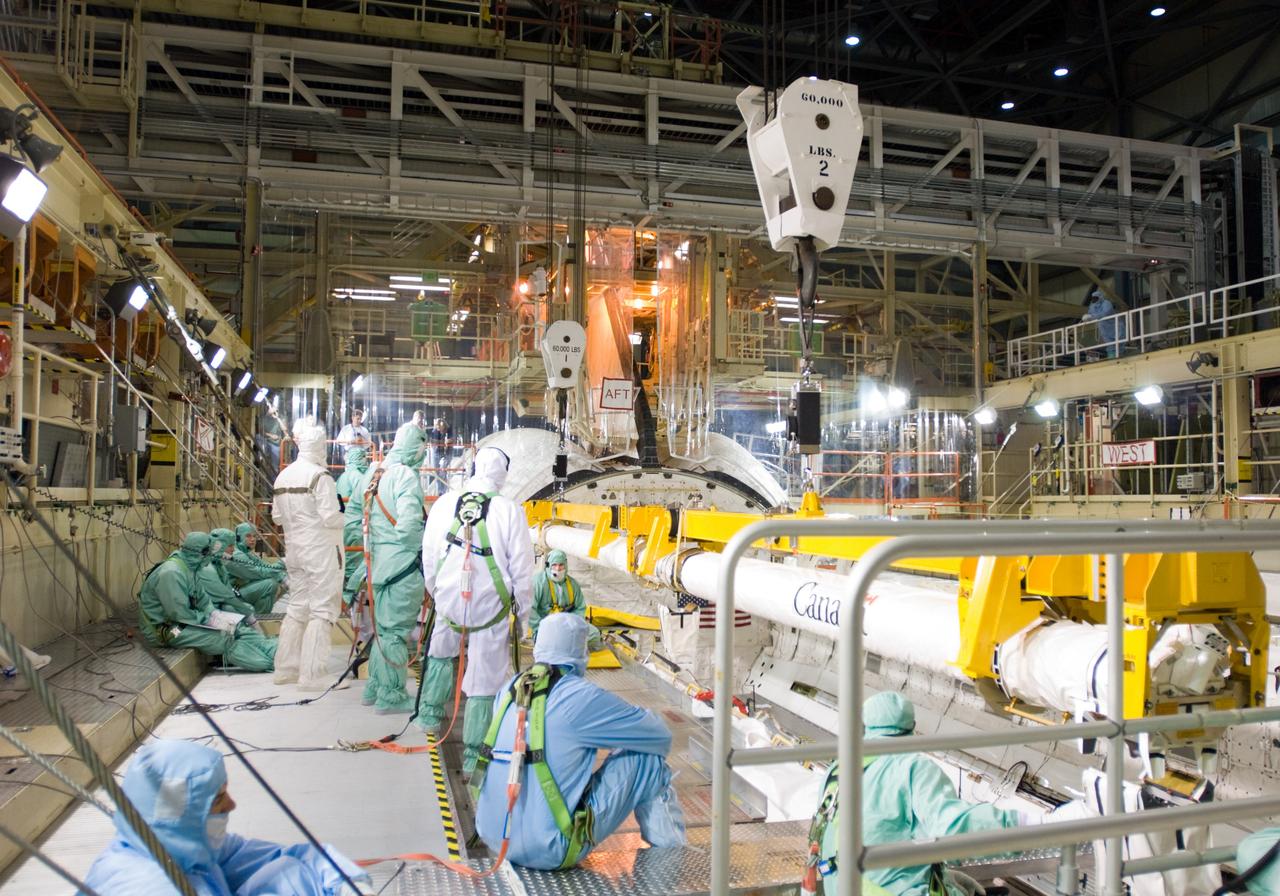
CAPE CANAVERAL, Fla. – In the Orbiter Processing Facility’s bay 3, workers install the orbiter boom sensor system in the payload bay of space shuttle Discovery to support mission STS-128. The 50-foot-long boom attaches to the shuttle arm and provides equipment to inspect the shuttle's heat shield while in space. It contains an intensified television camera (ITVC) and a laser dynamic range imager, which are mounted on a pan and tilt unit, and a laser camera system (LCS) mounted on a stationary bracket. The STS-128 flight will carry science and storage racks to the International Space Station on space shuttle Discovery. Launch of Discovery is targeted for Aug. 6. Photo credit: NASA/Jim Grossmann
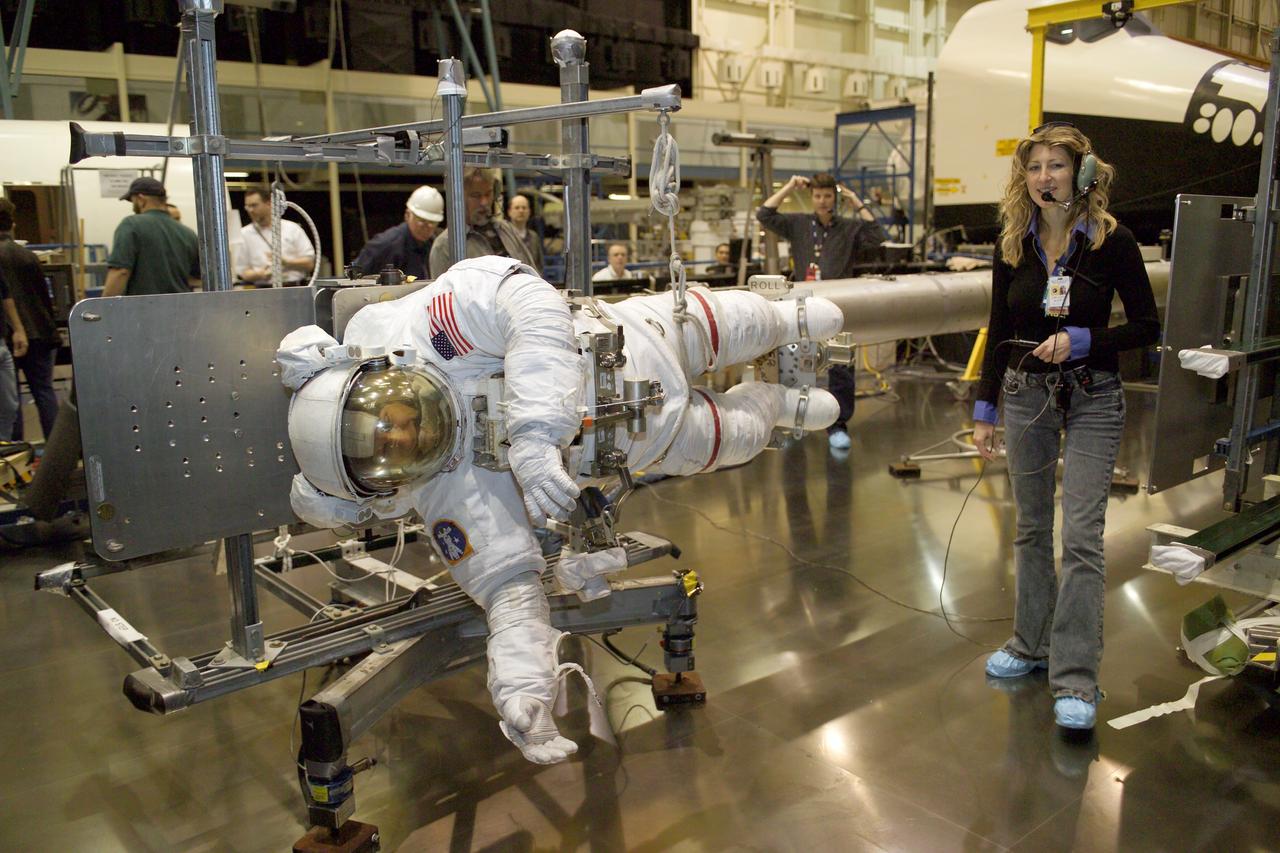
JSC2005-E-08196 (25 February 2005) --- Astronaut Piers J. Sellers, STS-121 mission specialist, wearing a training version of the Extravehicular Mobility Unit (EMU) space suit, participates in an extravehicular activity (EVA) simulation while anchored on the end of the training version of the space shuttle Remote Manipulator System (RMS) robotic arm in the Space Vehicle Mockup Facility at Johnson Space Center. The RMS has a 50-foot boom, called the Orbiter Boom Sensor System (OBSS), extension attached which would be used to reach underneath the orbiter to access tiles. Lora Bailey (right), Manager, JSC Engineering Tile Repair, assisted Sellers.

CAPE CANAVERAL, Fla. – In the Orbiter Processing Facility’s bay 3, space shuttle Discovery’s payload bay is readied for installation of the orbiter boom sensor system to support mission STS-128. The 50-foot-long boom attaches to the shuttle arm and provides equipment to inspect the shuttle's heat shield while in space. It contains an intensified television camera (ITVC) and a laser dynamic range imager, which are mounted on a pan and tilt unit, and a laser camera system (LCS) mounted on a stationary bracket. The STS-128 flight will carry science and storage racks to the International Space Station on space shuttle Discovery. Launch of Discovery is targeted for Aug. 6. Photo credit: NASA/Jim Grossmann
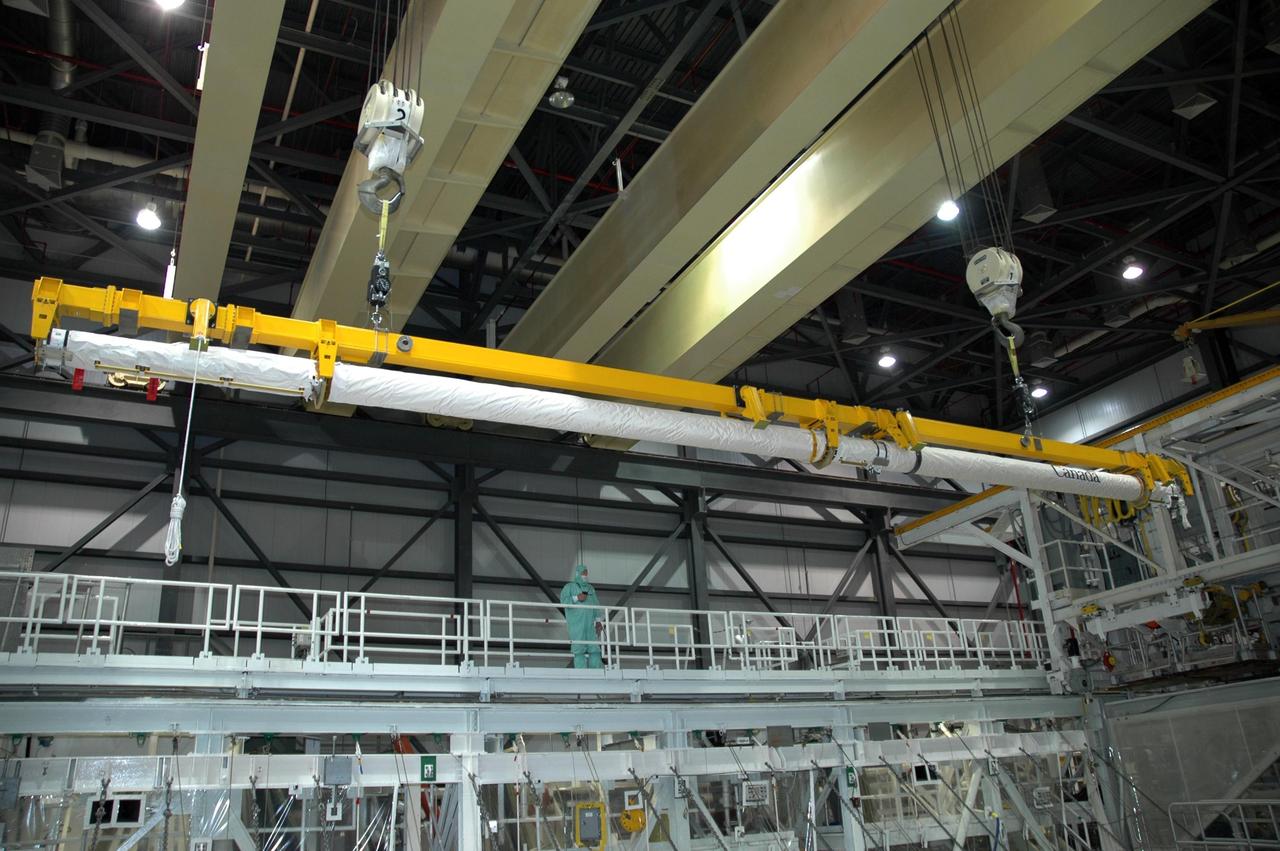
KENNEDY SPACE CENTER, FLA. - In the Orbiter Processing Facility’s bay 1, the orbiter boom sensor system is lifted by a crane for installation on the starboard side of Atlantis’s payload bay for mission STS-117. The 50-foot-long boom attaches to the shuttle arm and provides equipment to inspect the shuttle's heat shield while in space. It contains an intensified television camera (ITVC) and a laser dynamic range imager, which are mounted on a pan and tilt unit, and a laser camera system (LCS) mounted on a stationary bracket. Mission STS-117 will carry the S3/S4 arrays for installation on the International Space Station. Launch of Space Shuttle Atlantis is scheduled for March. Photo credit: NASA/Jack Pfaller
KENNEDY SPACE CENTER, FLA. - In the Orbiter Processing Facility’s bay 1, the orbiter boom sensor system is lifted by a crane for installation on the starboard side of Atlantis’s payload bay for mission STS-117. The 50-foot-long boom attaches to the shuttle arm and provides equipment to inspect the shuttle's heat shield while in space. It contains an intensified television camera (ITVC) and a laser dynamic range imager, which are mounted on a pan and tilt unit, and a laser camera system (LCS) mounted on a stationary bracket. Mission STS-117 will carry the S3/S4 arrays for installation on the International Space Station. Launch of Space Shuttle Atlantis is scheduled for March. Photo credit: NASA/Jack Pfaller
CAPE CANAVERAL, Fla. – In NASA Kennedy Space Center's Orbiter Processing Facility bay 2, a crane lowers space shuttle Endeavour's Orbiter Boom Sensor System toward the payload bay for reinstallation. The OBSS is a 50-foot boom with a laser and cameras on it that astronauts use to inspect a shuttle's heat shield while in orbit. After returning from the STS-127 mission July 31, 2009, Endeavour now is being processed for the STS-130 mission targeted for Feb. 4, 2010. Endeavour will deliver to the International Space Station the Tranquility pressurized module that will provide room for many of the station's life support systems. Photo credit: NASA/Jack Pfaller
CAPE CANAVERAL, Fla. – In the Orbiter Processing Facility’s bay 3, the orbiter boom sensor system is lifted by a crane for installation in space shuttle Discovery’s payload bay for mission STS-128. The 50-foot-long boom attaches to the shuttle arm and provides equipment to inspect the shuttle's heat shield while in space. It contains an intensified television camera (ITVC) and a laser dynamic range imager, which are mounted on a pan and tilt unit, and a laser camera system (LCS) mounted on a stationary bracket. The STS-128 flight will carry science and storage racks to the International Space Station on space shuttle Discovery. Launch of Discovery is targeted for Aug. 6. Photo credit: NASA/Jim Grossmann
KENNEDY SPACE CENTER, FLA. - In the Orbiter Processing Facility’s bay 1, workers are ready to secure the orbiter boom sensor system on the starboard side of Atlantis’s payload bay for mission STS-117. The 50-foot-long boom attaches to the shuttle arm and provides equipment to inspect the shuttle's heat shield while in space. It contains an intensified television camera (ITVC) and a laser dynamic range imager, which are mounted on a pan and tilt unit, and a laser camera system (LCS) mounted on a stationary bracket. Mission STS-117 will carry the S3/S4 arrays for installation on the International Space Station. Launch of Space Shuttle Atlantis is scheduled for March. Photo credit: NASA/Jack Pfaller
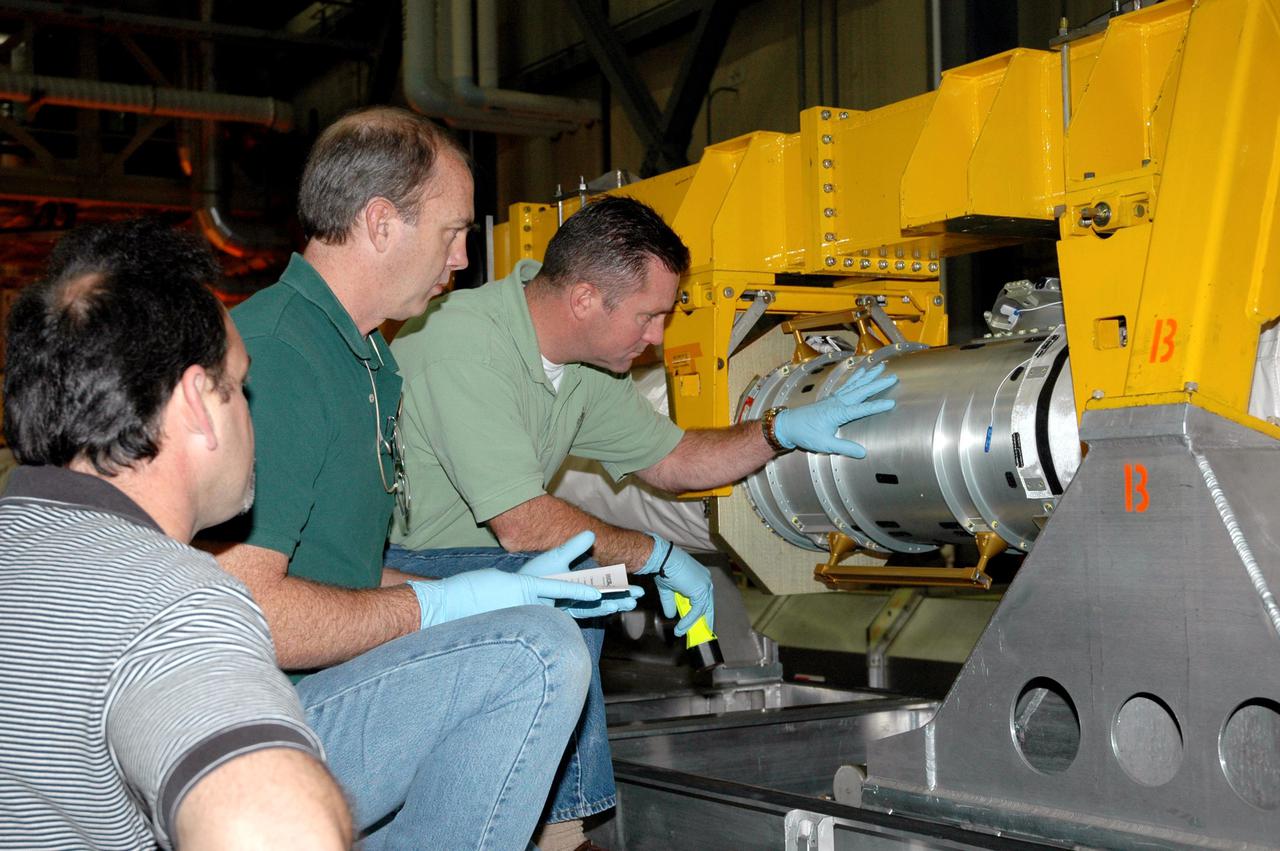
KENNEDY SPACE CENTER, FLA. - In the back transfer aisle of the Orbiter Processing Facility bay 3, workers check an area of the Orbiter Boom Sensor System (OBSS) that will be wrapped with a Thermal Protection System (TPS) blanket. The installation will conclude TPS closeout prior to installation of the boom in the orbiter Discovery. The OBSS is one of the new safety measures for Return to Flight, equipping the Shuttle with cameras and laser systems to inspect the Shuttle’s Thermal Protection System while in space. Discovery is designated as the Return to Flight vehicle for mission STS-114, with a launch window of May 12 to June 3, 2005.
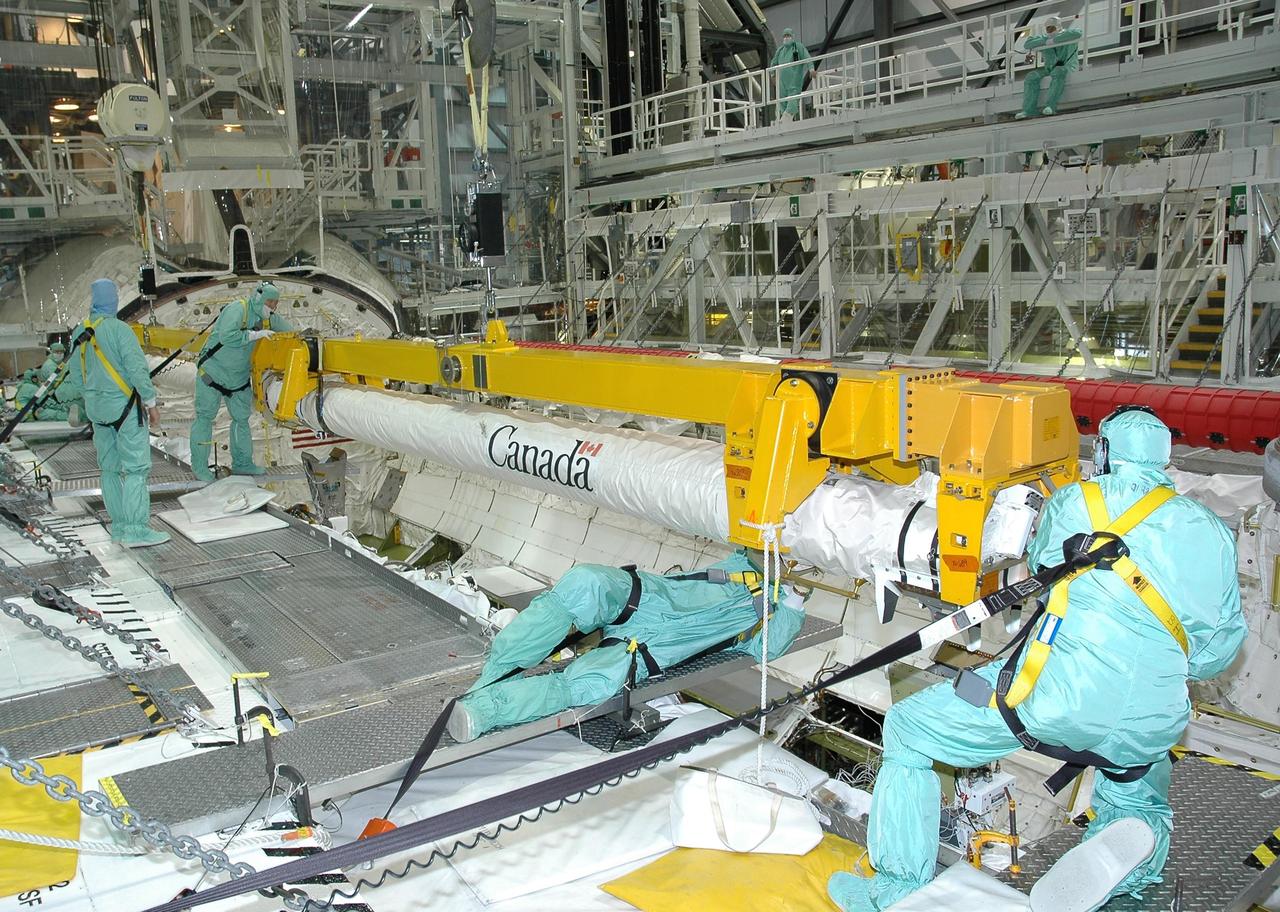
KENNEDY SPACE CENTER, FLA. - In Orbiter Processing Facility bay 1 at NASA's Kennedy Space Center, workers install the orbiter boom sensor system into Atlantis' payload bay. The 50-foot-long boom attaches to the shuttle arm and is one of the new safety measures added prior to Return to Flight last year. It equips the orbiter with cameras and laser systems to inspect the shuttle's heat shield while in space. Atlantis is scheduled to launch on mission STS-115 no earlier than Aug. 28. Photo credit: NASA/Jim Grossmann
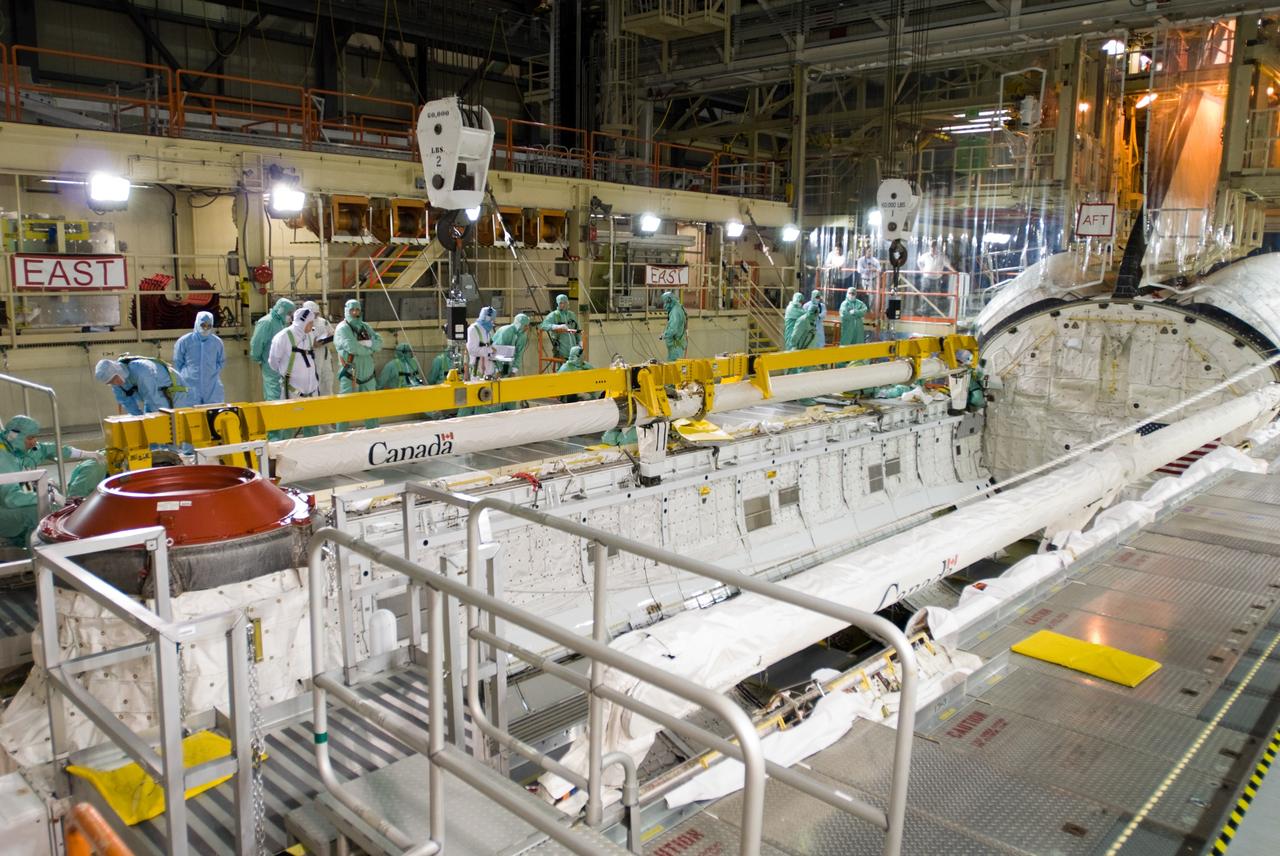
CAPE CANAVERAL, Fla. – In the Orbiter Processing Facility’s bay 3, the orbiter boom sensor system is installed in the payload bay of space shuttle Discovery to support mission STS-128. The 50-foot-long boom attaches to the shuttle arm and provides equipment to inspect the shuttle's heat shield while in space. It contains an intensified television camera (ITVC) and a laser dynamic range imager, which are mounted on a pan and tilt unit, and a laser camera system (LCS) mounted on a stationary bracket. The STS-128 flight will carry science and storage racks to the International Space Station on space shuttle Discovery. Launch of Discovery is targeted for Aug. 6. Photo credit: NASA/Jim Grossmann
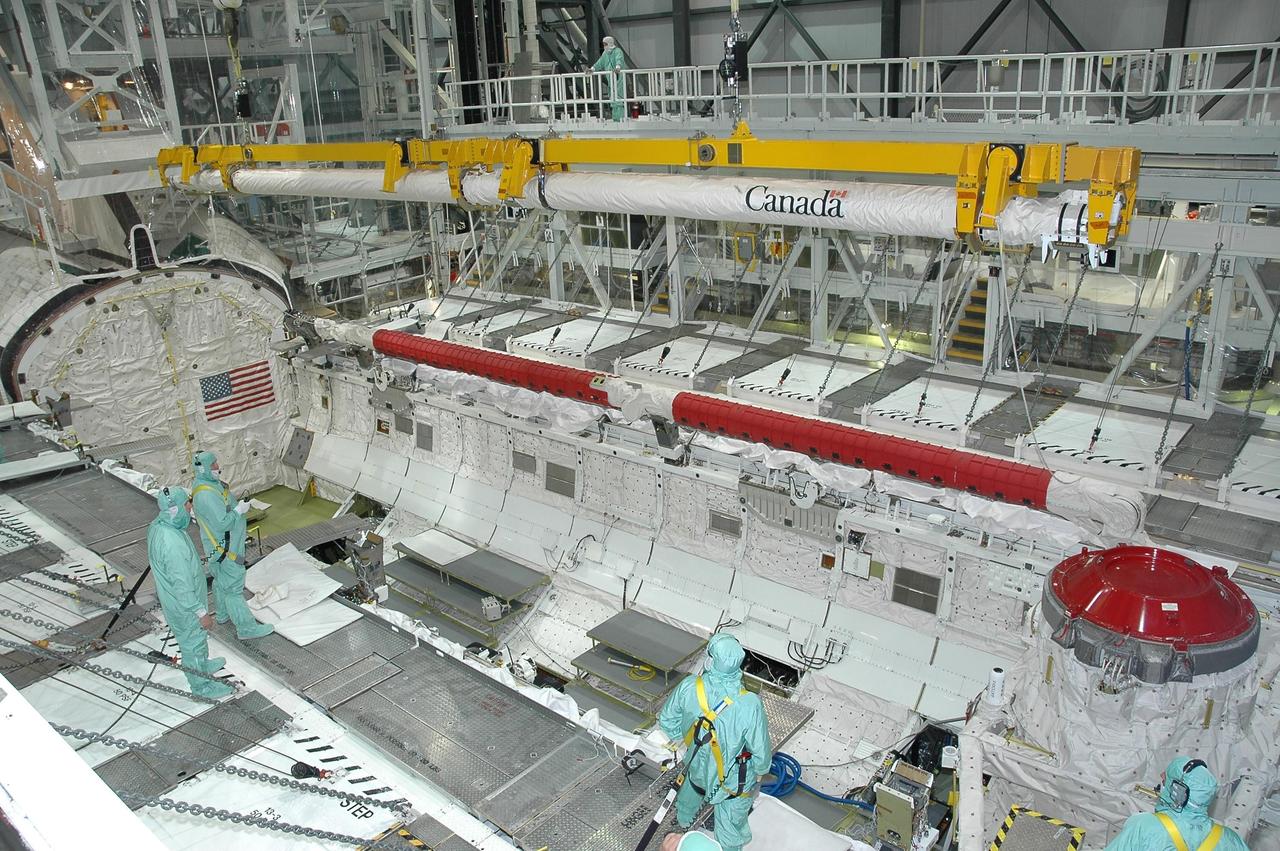
KENNEDY SPACE CENTER, FLA. - In Orbiter Processing Facility bay 1 at NASA's Kennedy Space Center, the orbiter boom sensor system is lowered into Atlantis' payload bay for installation. The 50-foot-long boom attaches to the shuttle arm and is one of the new safety measures added prior to Return to Flight last year. It equips the orbiter with cameras and laser systems to inspect the shuttle's heat shield while in space. Atlantis is scheduled to launch on mission STS-115 no earlier than Aug. 28. Photo credit: NASA/Jim Grossmann
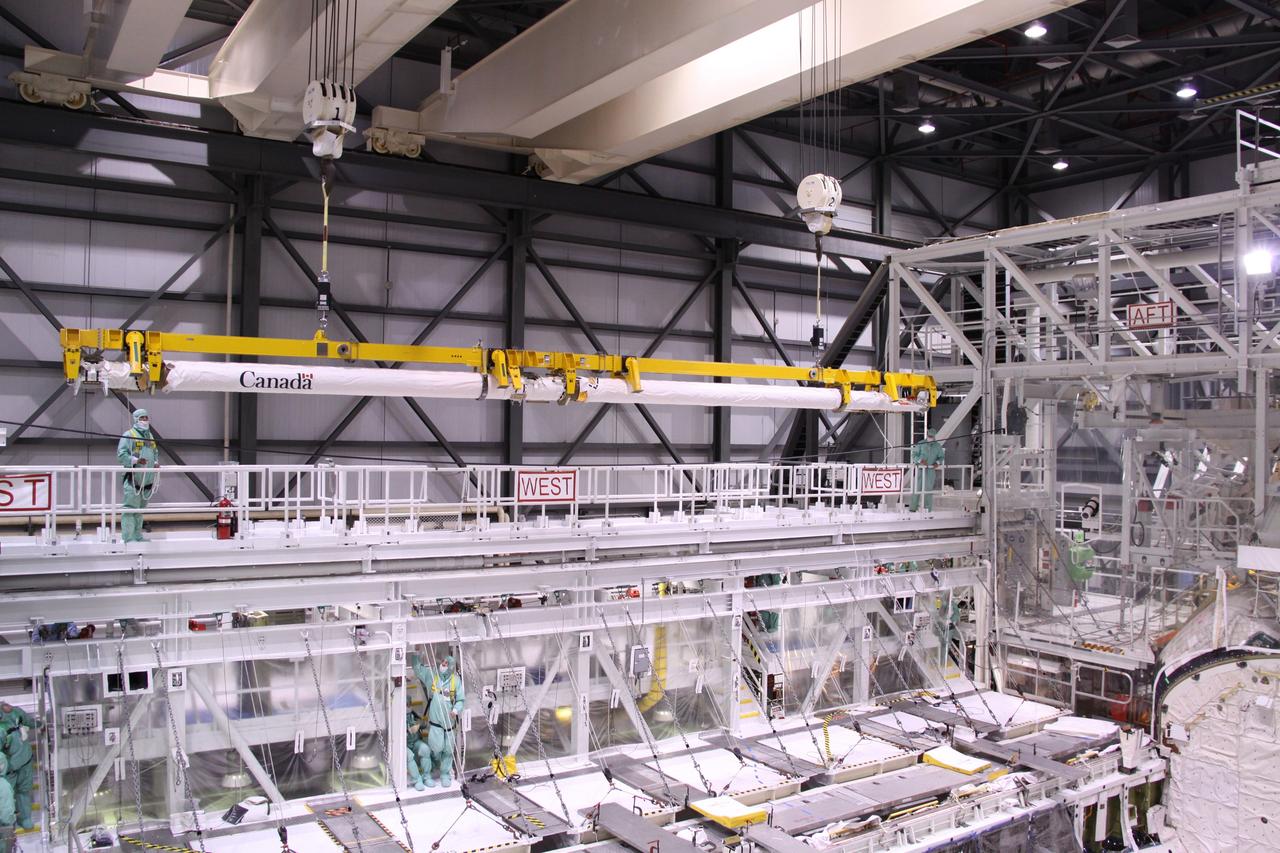
CAPE CANAVERAL, Fla. – In NASA Kennedy Space Center's Orbiter Processing Facility bay 2, a crane lifts space shuttle Endeavour's Orbiter Boom Sensor System and moves it toward the payload bay for reinstallation. The OBSS is a 50-foot boom with a laser and cameras on it that astronauts use to inspect a shuttle's heat shield while in orbit. After returning from the STS-127 mission July 31, 2009, Endeavour now is being processed for the STS-130 mission targeted for Feb. 4, 2010. Endeavour will deliver to the International Space Station the Tranquility pressurized module that will provide room for many of the station's life support systems. Photo credit: NASA/Jack Pfaller
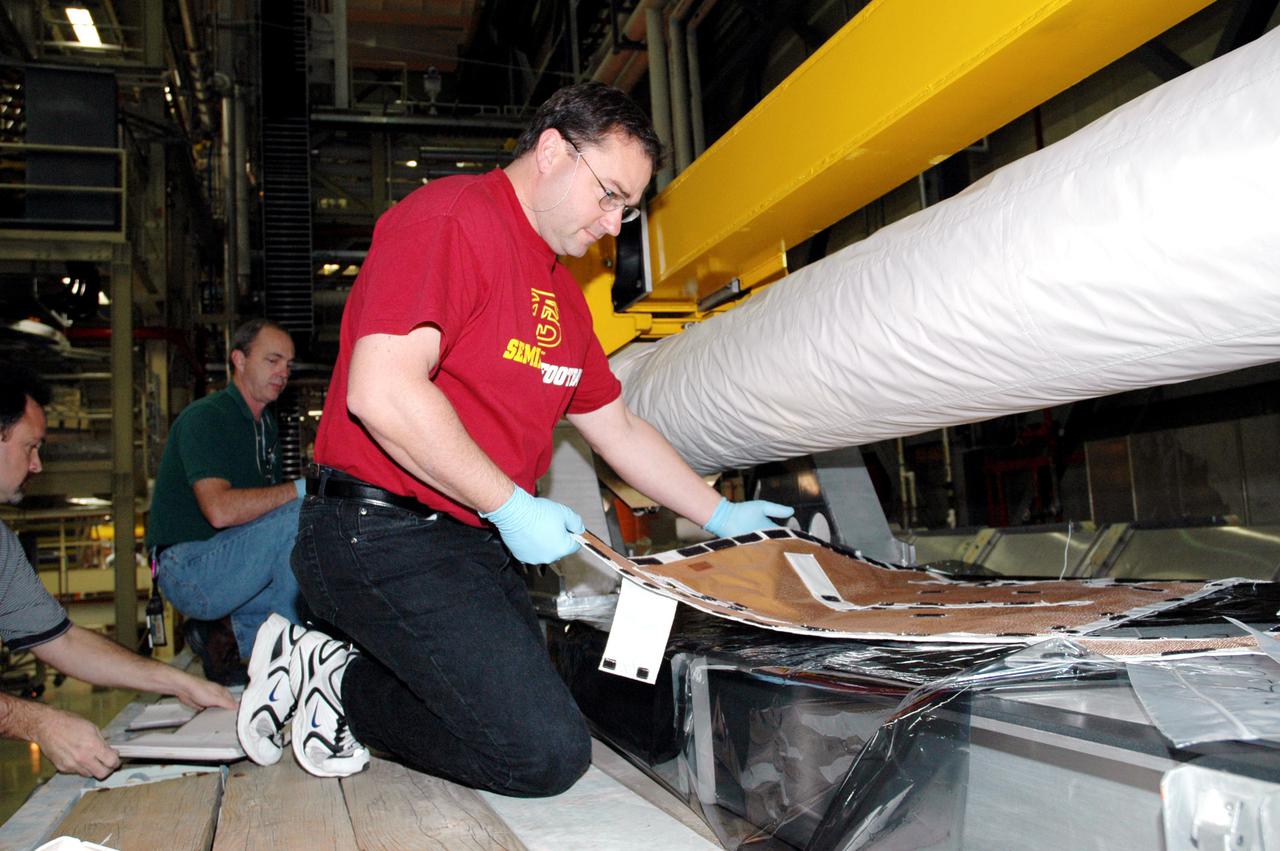
KENNEDY SPACE CENTER, FLA. - In the back transfer aisle of the Orbiter Processing Facility bay 3, Todd Dugan, a technician with United Space Alliance, prepares the Thermal Protection System (TPS) blanket to be installed around the Orbiter Boom Sensor System (OBSS). The installation concludes TPS closeout prior to installation of the boom in the orbiter Discovery. The OBSS is one of the new safety measures for Return to Flight, equipping the Shuttle with cameras and laser systems to inspect the Shuttle’s Thermal Protection System while in space. Discovery is designated as the Return to Flight vehicle for mission STS-114, with a launch window of May 12 to June 3, 2005.
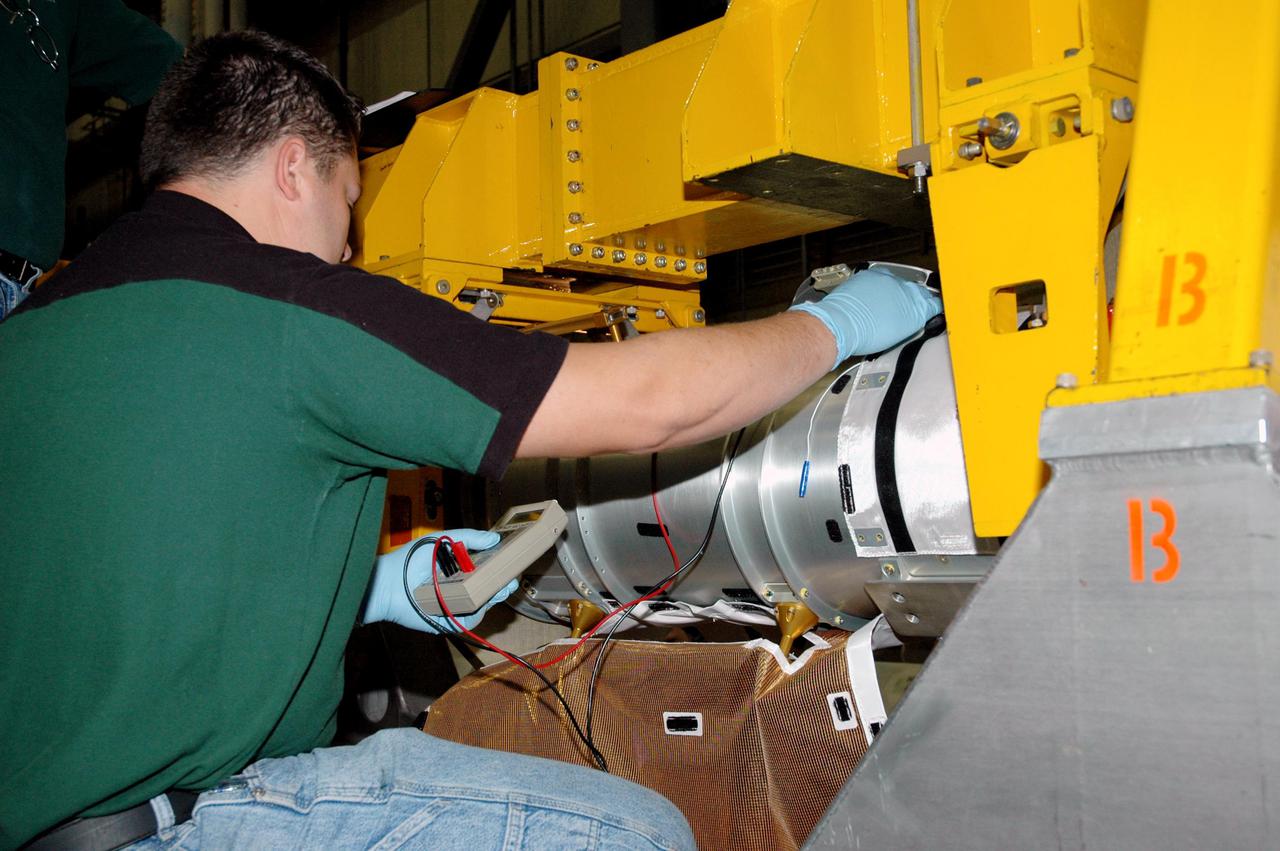
KENNEDY SPACE CENTER, FLA. - In the back transfer aisle of the Orbiter Processing Facility bay 3, a worker checks the resistance measurement of one of the Thermal Protection System (TPS) blanket ground wires to ensure a proper ground between the blanket to be installed and the Orbiter Boom Sensor System (OBSS). The installation will conclude TPS closeout prior to installation of the boom in the orbiter Discovery. The OBSS is one of the new safety measures for Return to Flight, equipping the Shuttle with cameras and laser systems to inspect the Shuttle’s Thermal Protection System while in space. Discovery is designated as the Return to Flight vehicle for mission STS-114, with a launch window of May 12 to June 3, 2005.
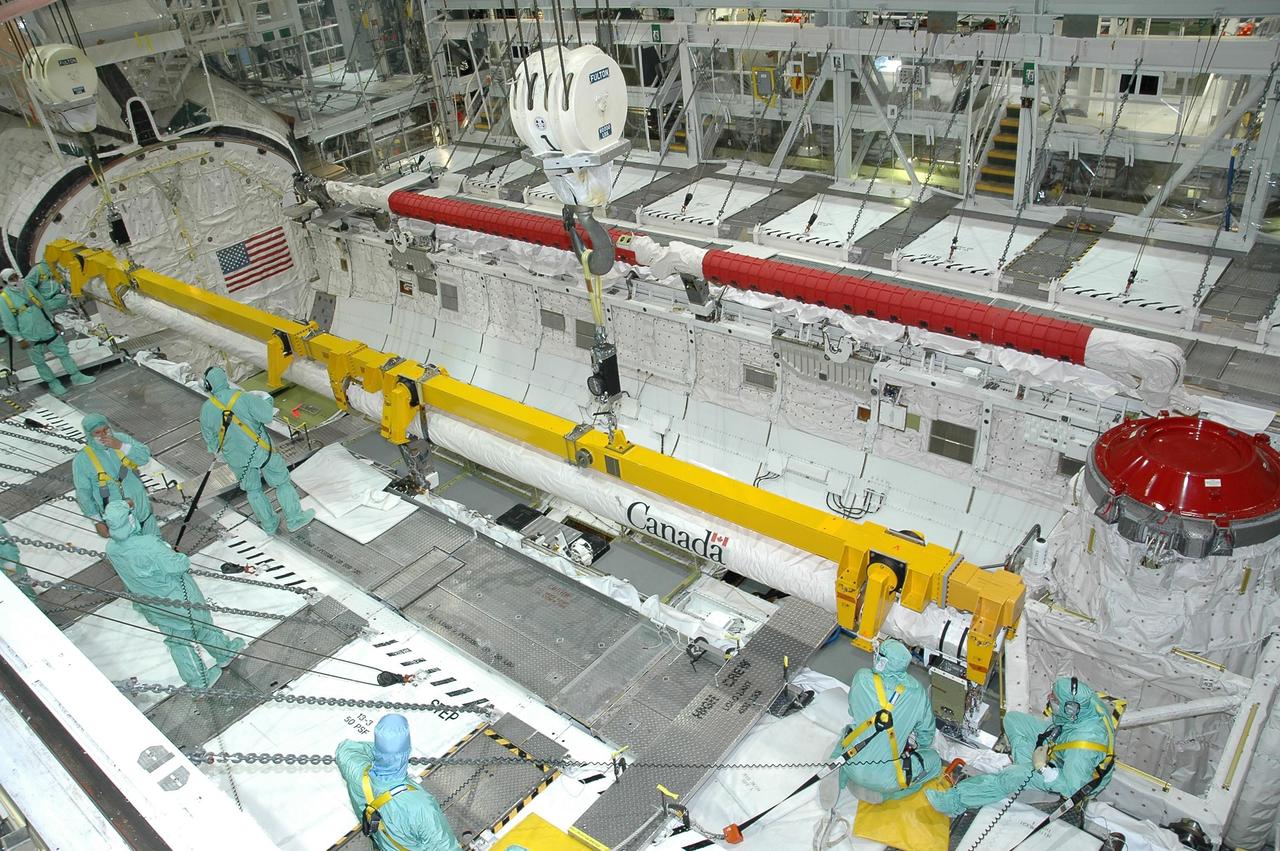
KENNEDY SPACE CENTER, FLA. - In Orbiter Processing Facility bay 1 at NASA's Kennedy Space Center, workers complete installation of the orbiter boom sensor system into Atlantis' payload bay. The 50-foot-long boom attaches to the shuttle arm and is one of the new safety measures added prior to Return to Flight last year. It equips the orbiter with cameras and laser systems to inspect the shuttle's heat shield while in space. Atlantis is scheduled to launch on mission STS-115 no earlier than Aug. 28. Photo credit: NASA/Jim Grossmann
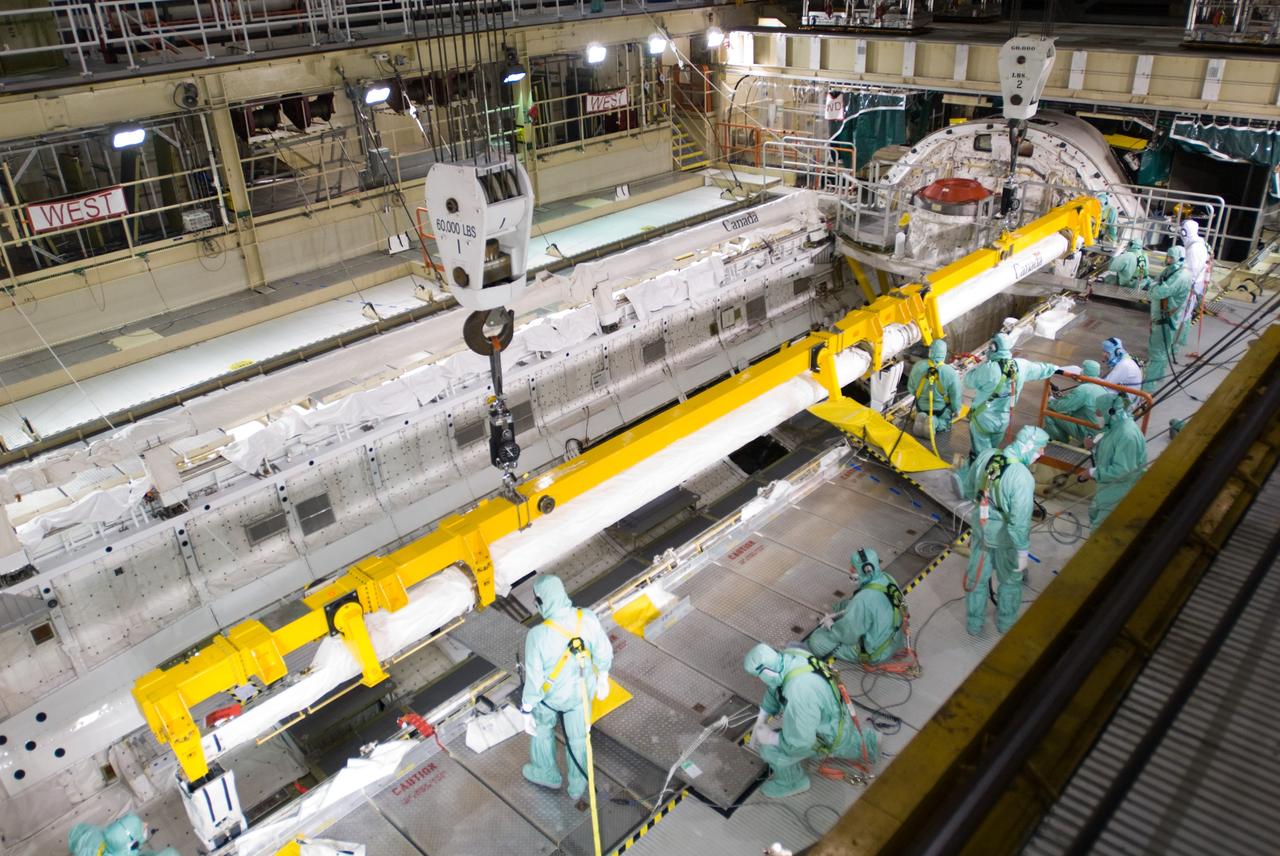
CAPE CANAVERAL, Fla. – In the Orbiter Processing Facility’s bay 3, workers prepare to install the orbiter boom sensor system in the payload bay of space shuttle Discovery to support mission STS-128. The 50-foot-long boom attaches to the shuttle arm and provides equipment to inspect the shuttle's heat shield while in space. It contains an intensified television camera (ITVC) and a laser dynamic range imager, which are mounted on a pan and tilt unit, and a laser camera system (LCS) mounted on a stationary bracket. The STS-128 flight will carry science and storage racks to the International Space Station on space shuttle Discovery. Launch of Discovery is targeted for Aug. 6. Photo credit: NASA/Jim Grossmann
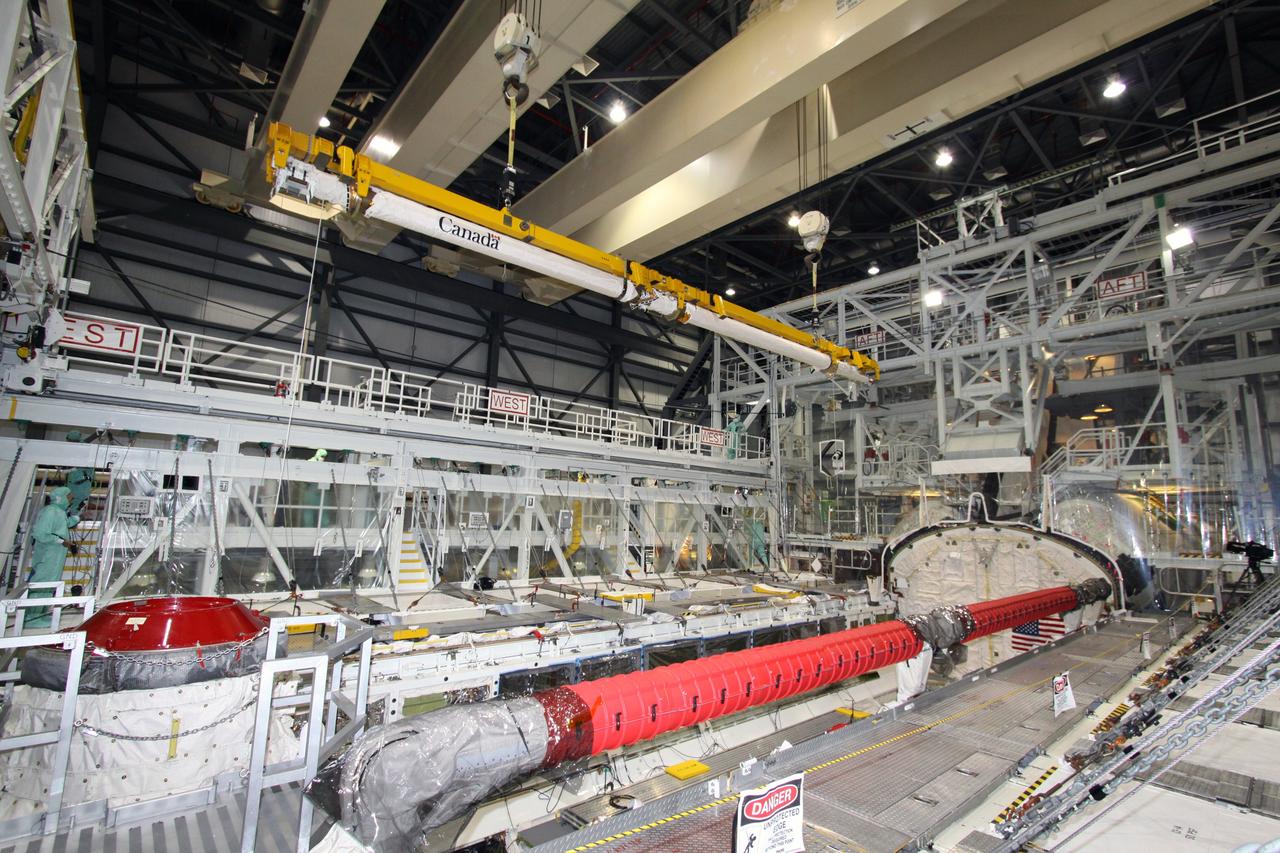
CAPE CANAVERAL, Fla. –In NASA Kennedy Space Center's Orbiter Processing Facility bay 2, a crane lifts space shuttle Endeavour's Orbiter Boom Sensor System out of the payload bay. After returning from the STS-127 mission July 31, 2009, Endeavour now is being processed for the STS-130 mission targeted for Feb. 4, 2010. Endeavour will deliver to the International Space Station the Tranquility pressurized module that will provide room for many of the station's life support systems. Photo credit: NASA/Jack Pfaller
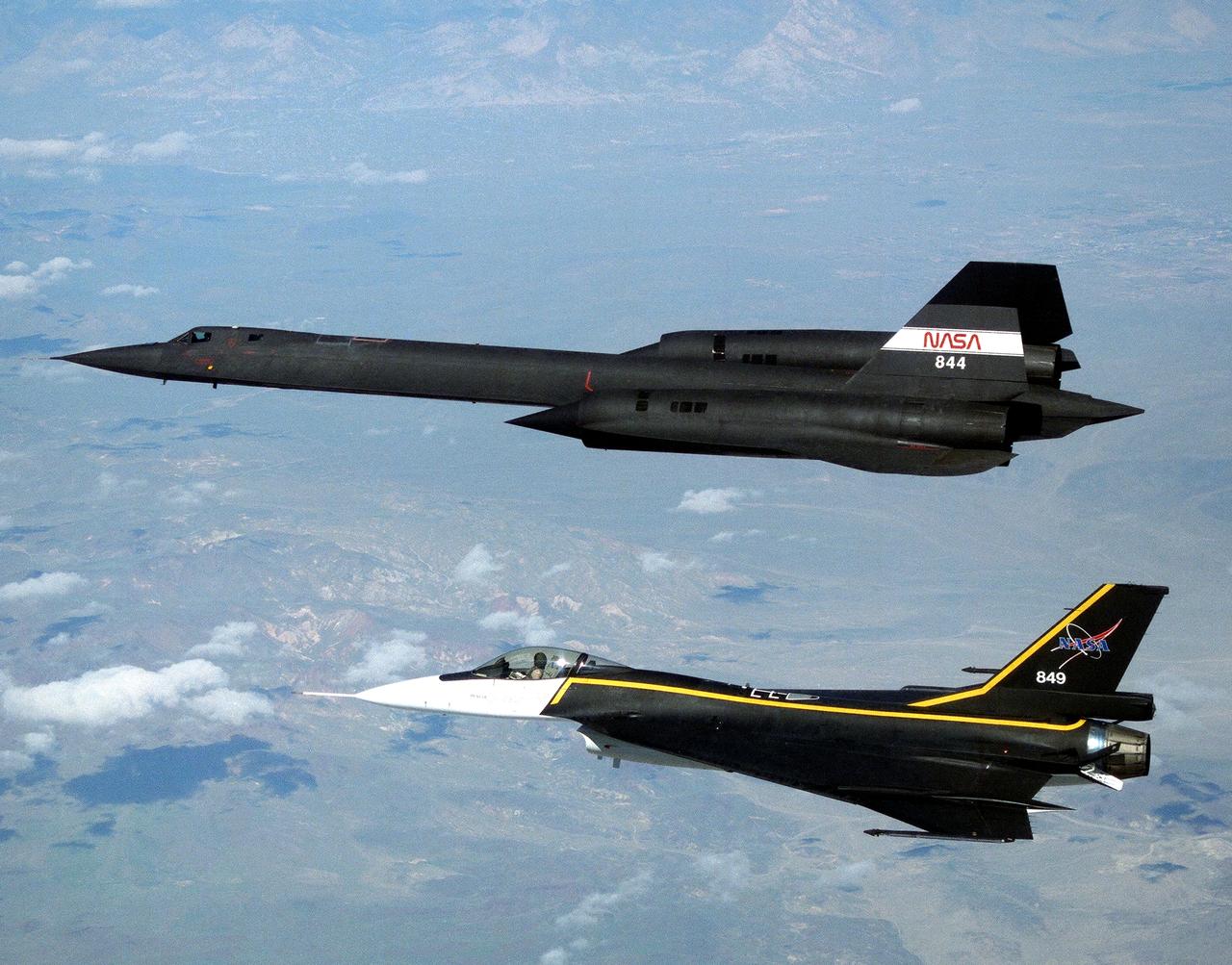
The single-seat F-16XL, NASA 849, joins up with an SR-71A, NASA 844, as crews set up for one of the flights in the recent sonic boom research program conducted by the Dryden Flight Research Center, Edwards, California. During the missions, the F-16XL probed the shockwaves generated by the SR-71, while at lower altitudes sensors on an F-18 and on a YO-3A, and also on the ground, recorded data from the same shockwave.
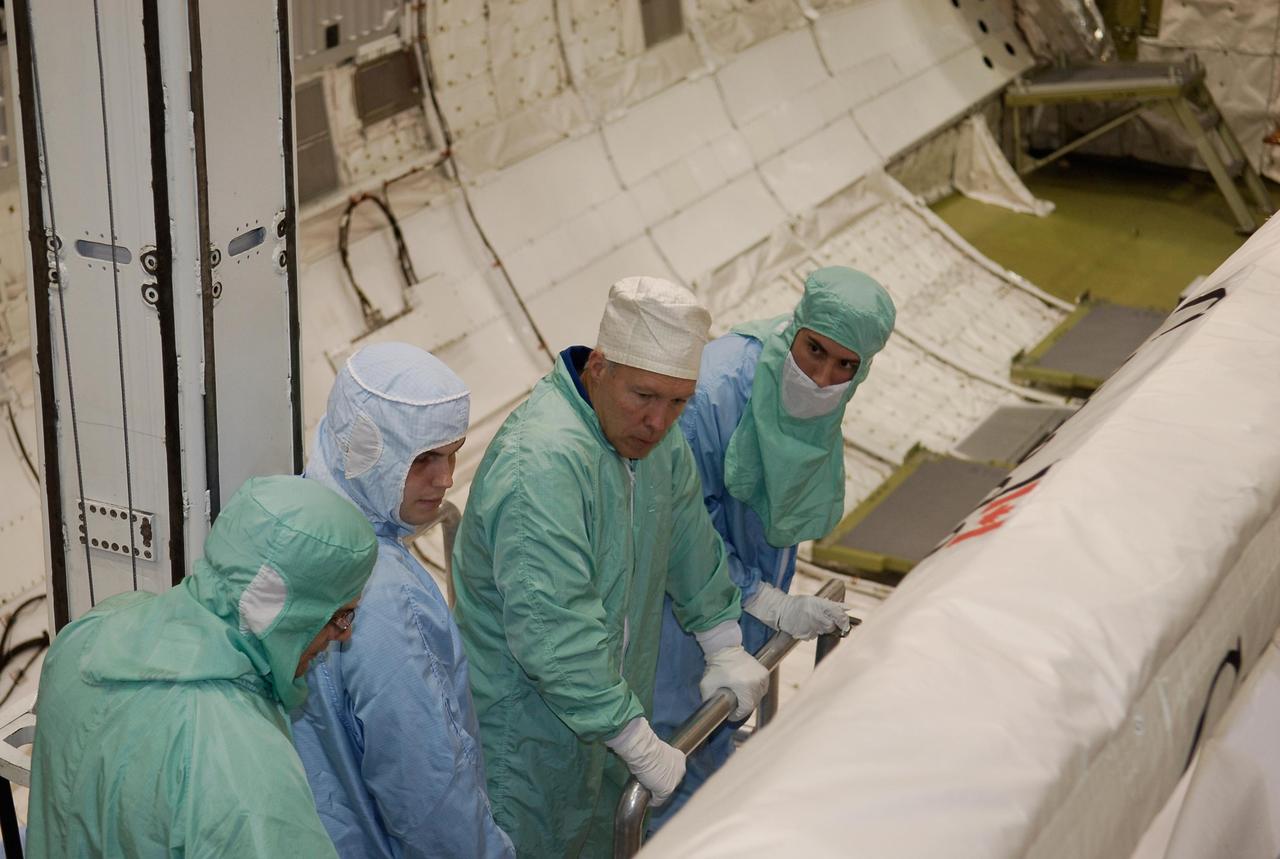
KENNEDY SPACE CENTER, FLA. -- In the Orbiter Processing Facility, STS-123 Pilot Dominic Gorie (second from right) checks out the orbiter boom sensor system in Endeavour's payload bay. He and other crew members are at NASA's Kennedy Space Center for a crew equipment interface test, a process of familiarization with payloads, hardware and the space shuttle. The STS-123 mission is targeted for launch on space shuttle Endeavour on Feb. 14. It will be the 25th assembly flight of the station. Photo credit: NASA/Kim Shiflett
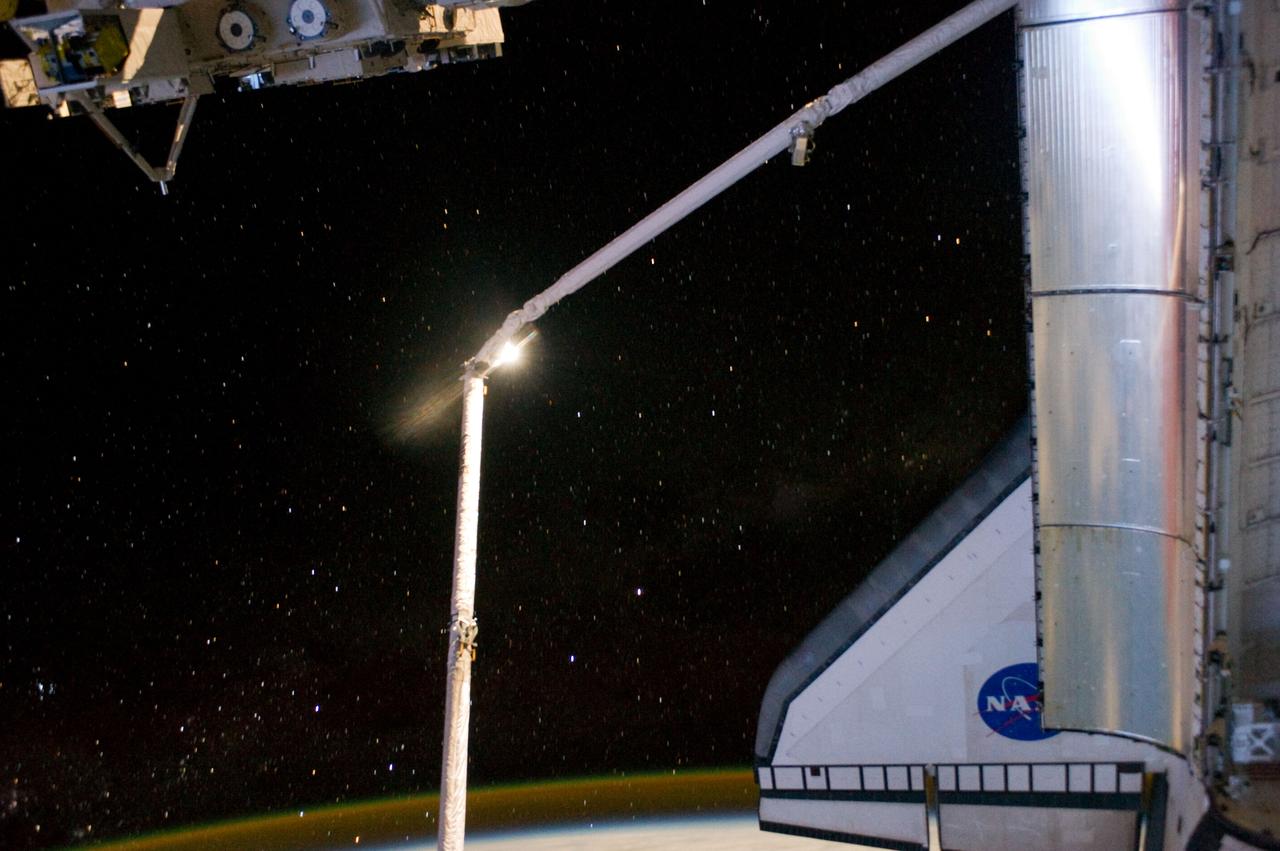
ISS028-E-017253 (17 July 2011) --- This is one of a series of photographs recorded from the International Space Station showing the docked space shuttle Atlantis' port side backdropped against the blackness of space. Part of the Orbiter Boom Sensor System, connected to the remote manipulator system or robot arm, is at frame center. At the very bottom of the frame can be seen a faint line, representing airglow over Earth.
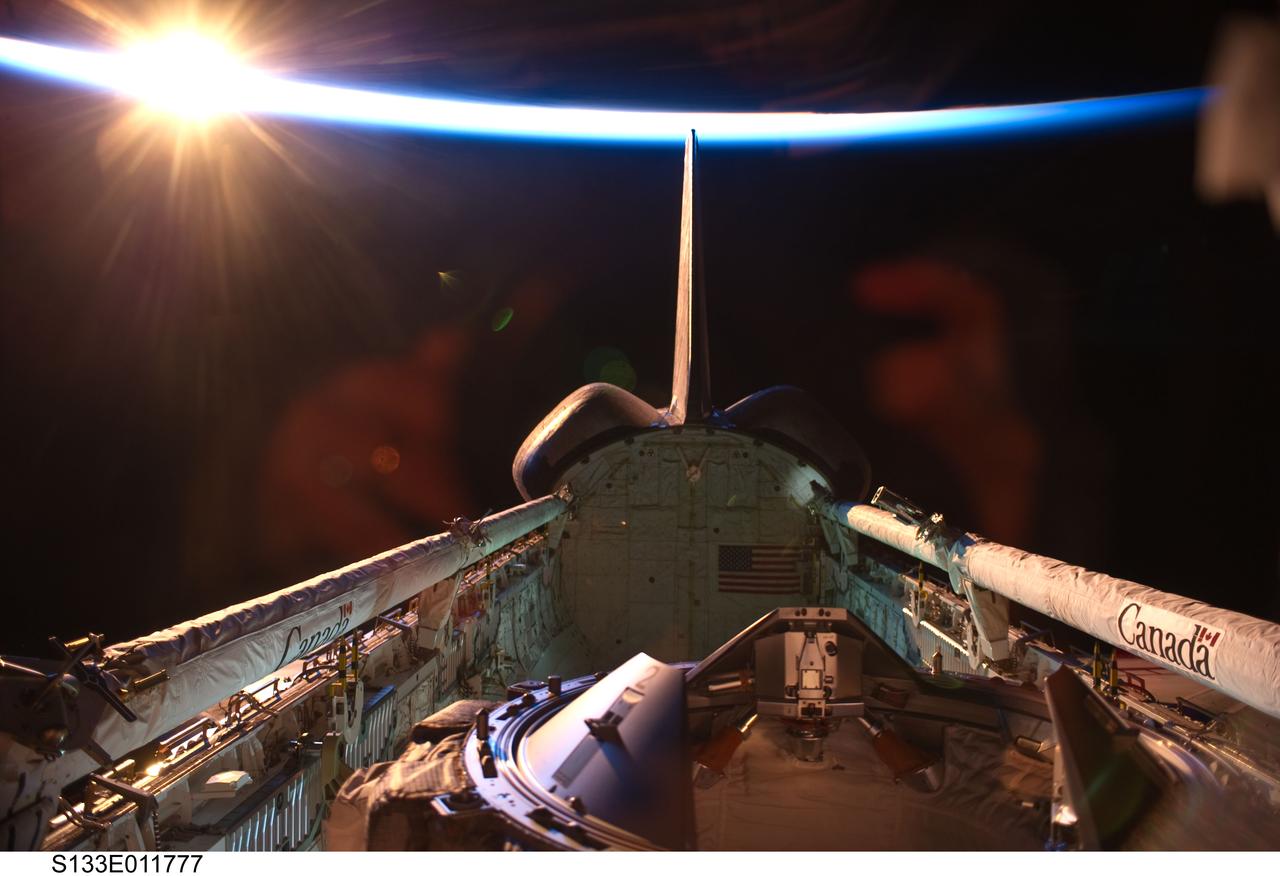
S133-E-011777 (7 March 2011) --- An orbital sunrise brightens this view of space shuttle Discovery’s vertical stabilizer, orbital maneuvering system (OMS) pods, docking mechanism, remote manipulator system/orbiter boom sensor system (RMS/OBSS) and payload bay photographed by an STS-133 crew member on the shuttle during flight day 12 activities. Photo credit: NASA or National Aeronautics and Space Administration
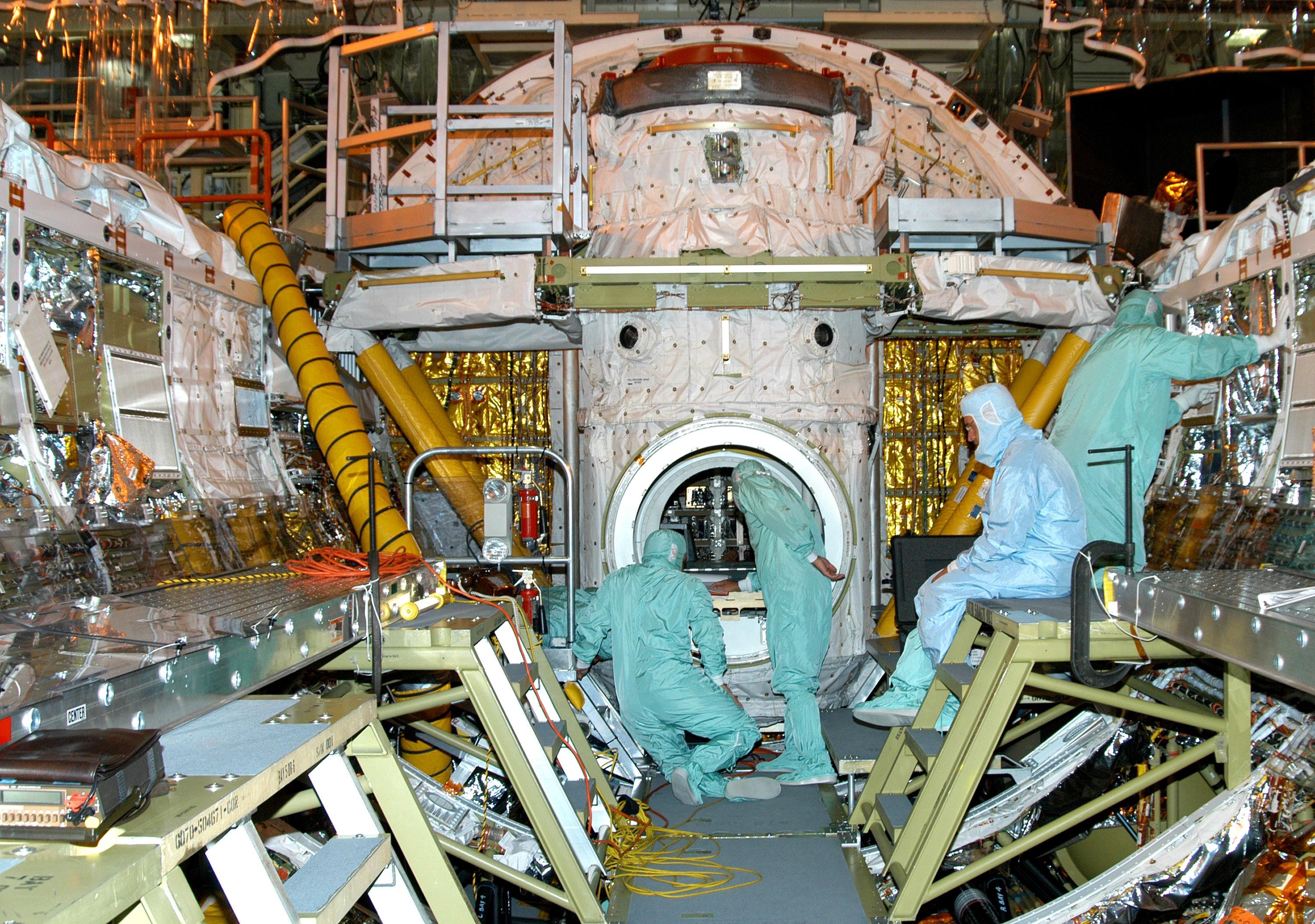
KENNEDY SPACE CENTER, FLA. - In the Orbiter Processing Facility, two workers (center) check paperwork about the wiring being installed in Discovery’s cargo bay that will support the addition of an Orbiter Boom Sensor System (OBSS) . The OBSS is one of the new safety measures for Return to Flight, equipping the Shuttle with cameras and laser systems to inspect the Shuttle’s Thermal Protection System while in space. Discovery is designated as the Return to Flight vehicle for mission STS-114, no earlier than March 2005.
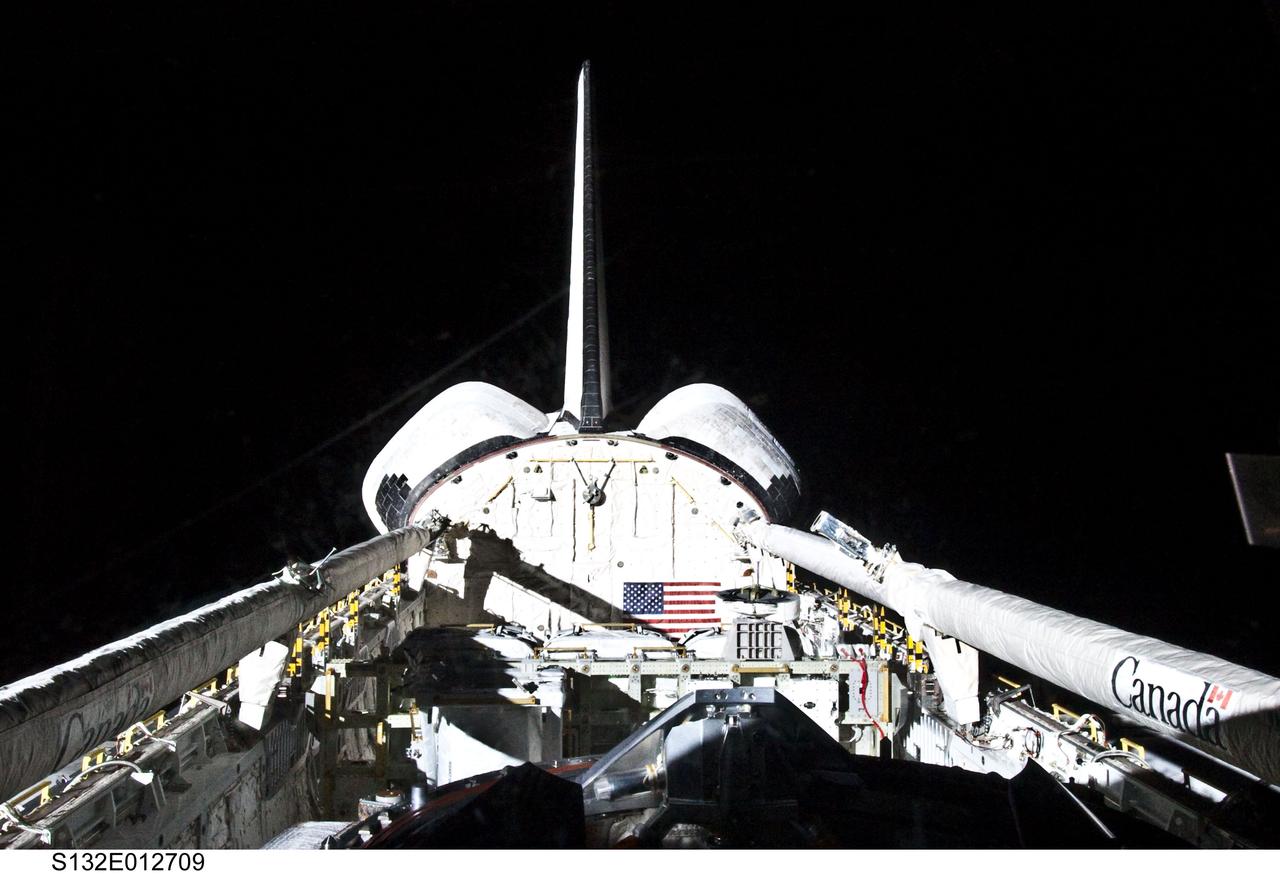
S132-E-012709 (25 May 2010) --- Space shuttle Atlantis’ vertical stabilizer, orbital maneuvering system (OMS) pods, remote manipulator system/orbiter boom sensor system (RMS/OBSS), payload bay and docking mechanism are featured in this image photographed by an STS-132 crew member on the shuttle during flight day 12 activities.
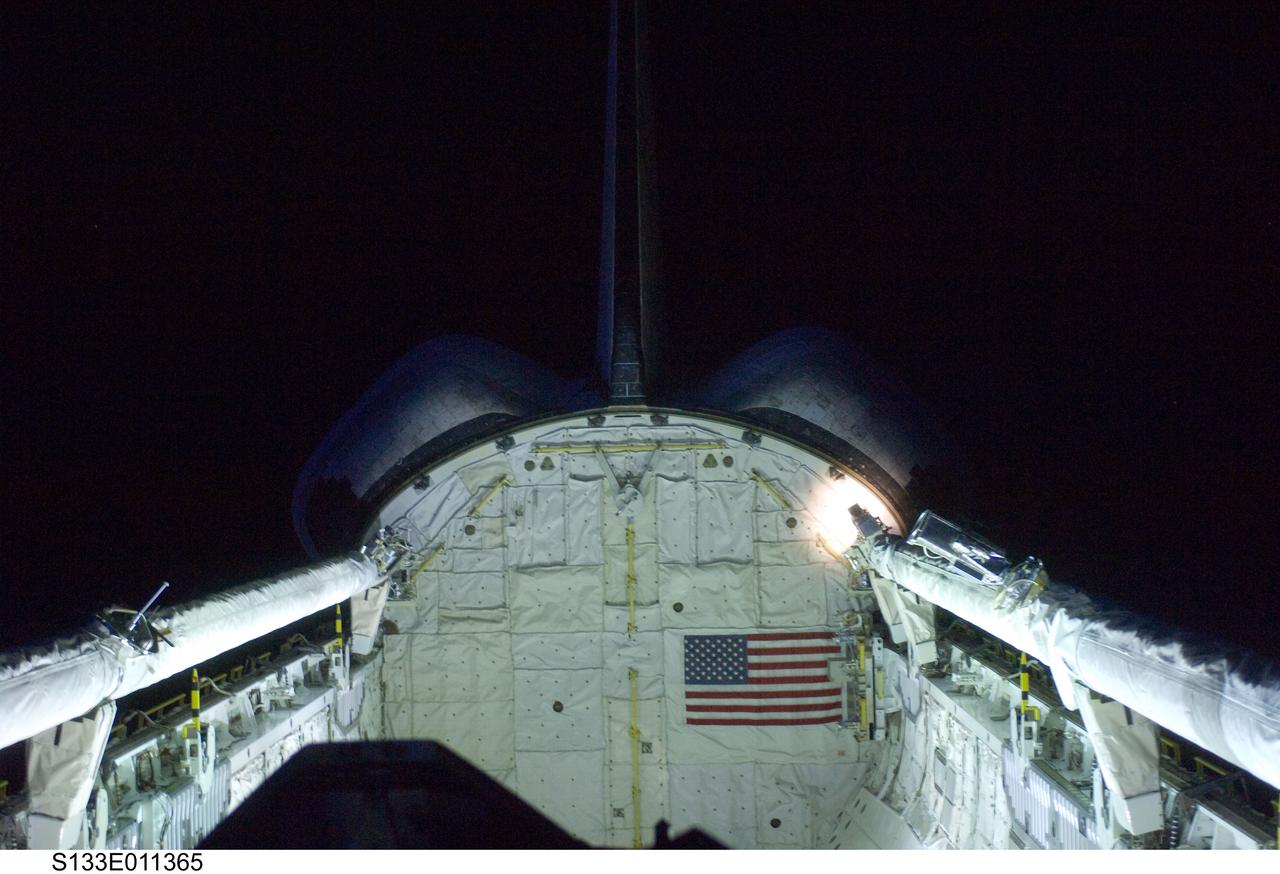
S133-E-011365 (7 March 2011) --- Space shuttle Discovery’s vertical stabilizer, orbital maneuvering system (OMS) pods, remote manipulator system/orbiter boom sensor system (RMS/OBSS) and payload bay are featured in this image photographed by an STS-133 crew member on the shuttle during flight day 12 activities. Photo credit: NASA or National Aeronautics and Space Administration

KENNEDY SPACE CENTER, FLA. -- In the Orbiter Processing Facility, STS-123 Pilot Dominic Gorie (second from right) checks out the orbiter boom sensor system in Endeavour's payload bay. He and other crew members are at NASA's Kennedy Space Center for a crew equipment interface test, a process of familiarization with payloads, hardware and the space shuttle. The STS-123 mission is targeted for launch on space shuttle Endeavour on Feb. 14. It will be the 25th assembly flight of the station. Photo credit: NASA/Kim Shiflett
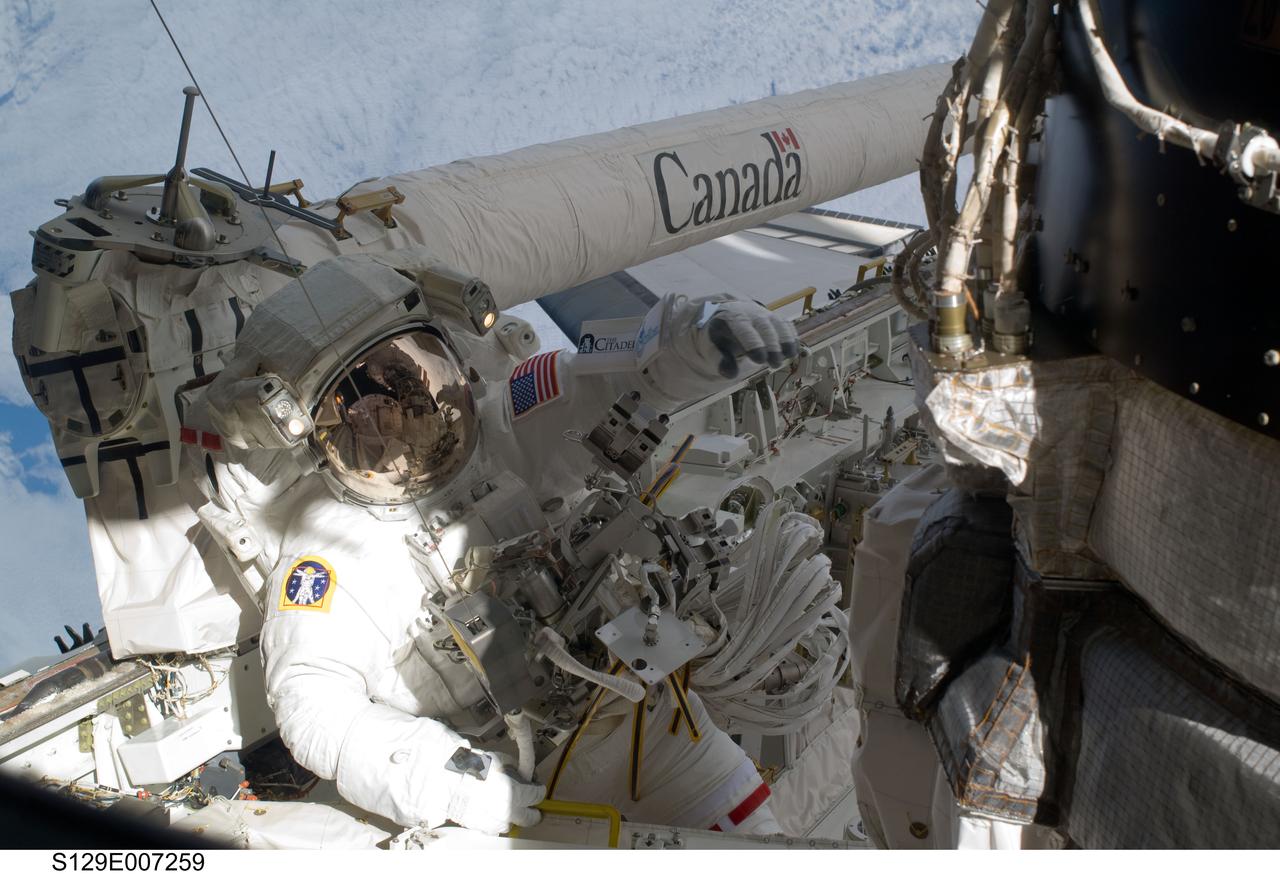
S129-E-007259 (21 Nov. 2009) --- Astronaut Randy Bresnik, STS-129 mission specialist, is pictured near the base of the Orbiter Boom Sensor System on the starboard side of the cargo bay of the space shuttle Atlantis, docked with the International Space Station. Astronauts Bresnik and Mike Foreman were in the midst of the second of three scheduled spacewalks for this shuttle crew, working in cooperation with the five current crewmembers for the orbital outpost and with their five Atlantis crewmates, all of whom pitched in EVA support from inside.
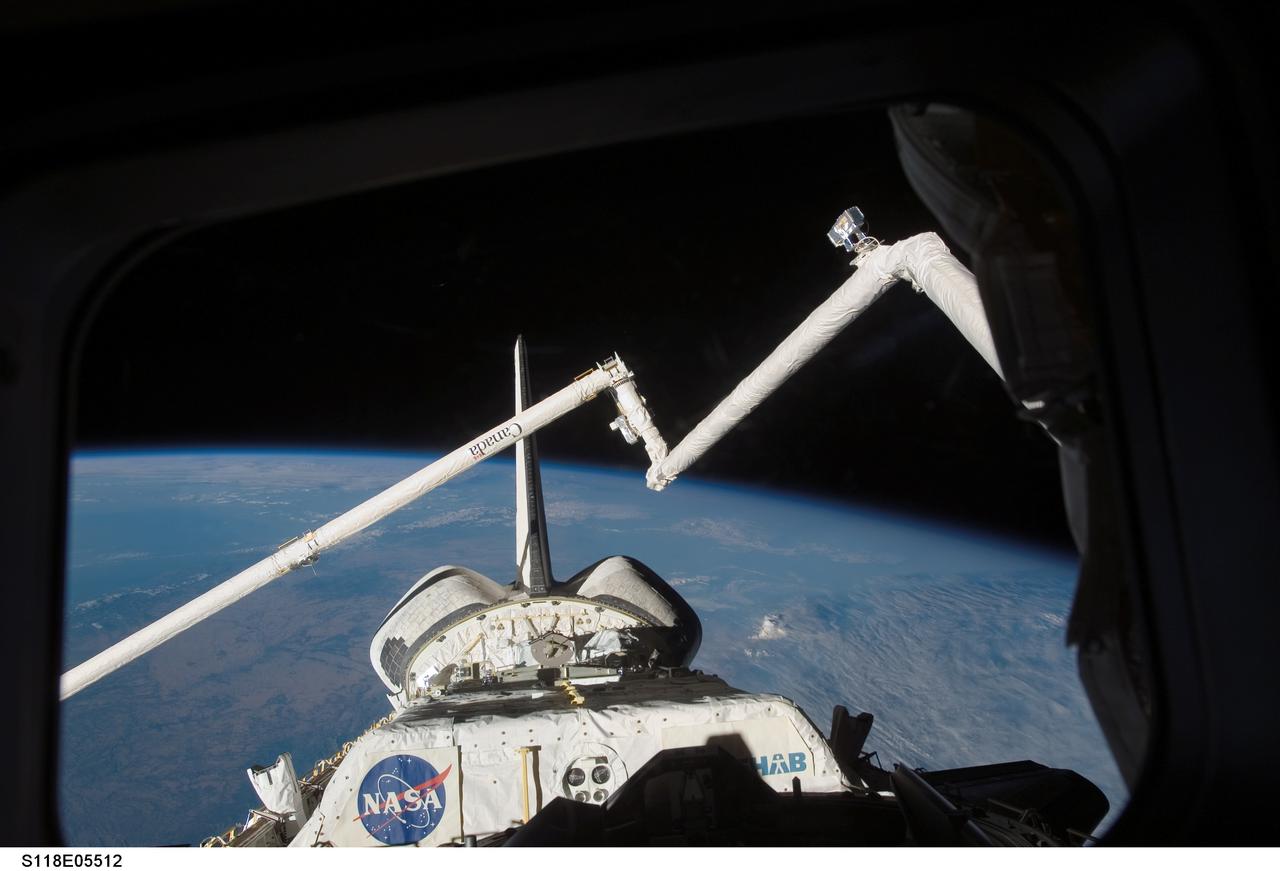
S118-E-05512 (9 Aug. 2007) --- Backdropped by the blackness of space and Earth's horizon, the SPACEHAB pressurized logistics module in Space Shuttle Endeavour's payload bay, vertical stabilizer and the shuttle's Remote Manipulator System/Orbiter Boom Sensor System (RMS/OBSS) are featured in this image photographed by an STS-118 crewmember during flight day two activities.
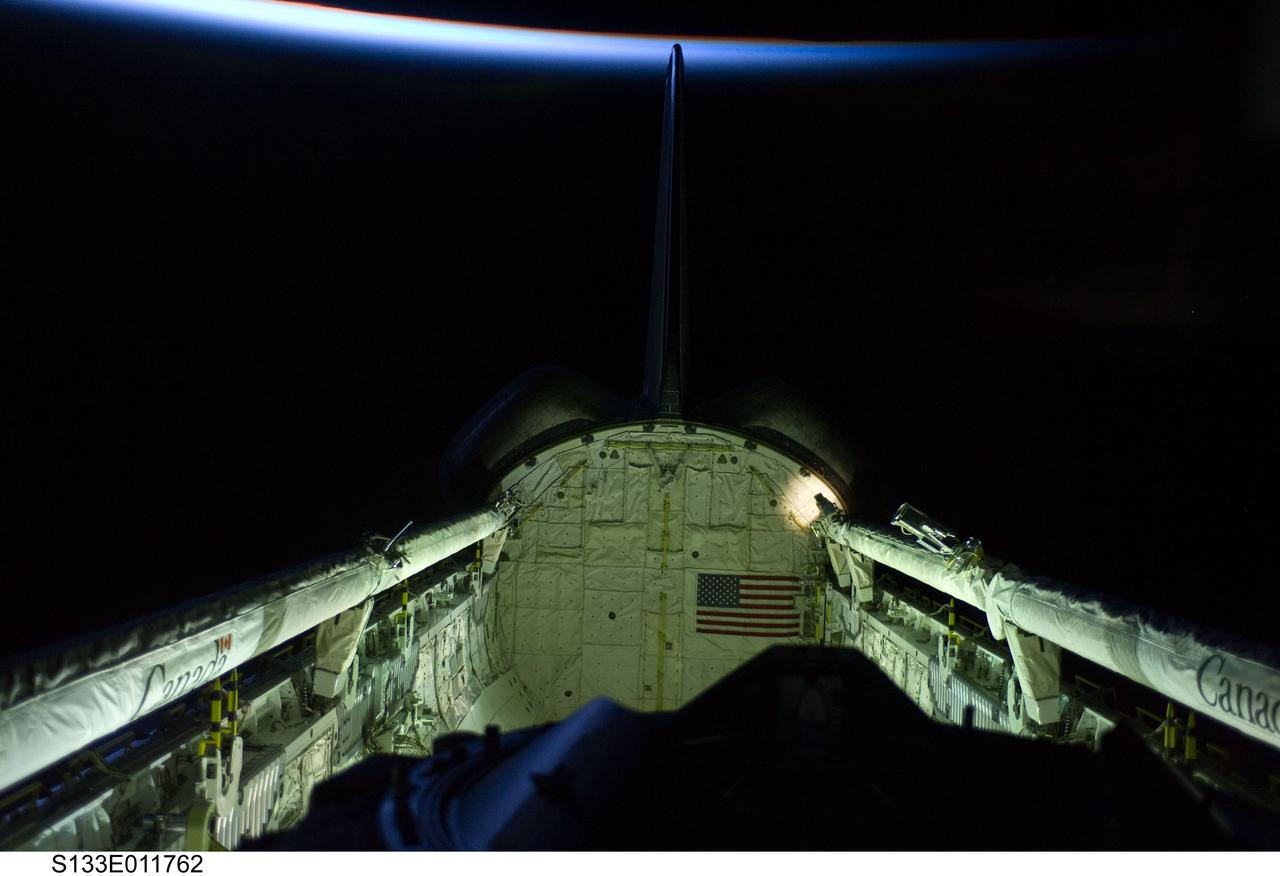
S133-E-011762 (7 March 2011) --- Space shuttle Discovery’s vertical stabilizer, orbital maneuvering system (OMS) pods, docking mechanism, remote manipulator system/orbiter boom sensor system (RMS/OBSS) and payload bay are featured in this image photographed by an STS-133 crew member on the shuttle during flight day 12 activities. The thin line of Earth’s atmosphere is at top. Photo credit: NASA or National Aeronautics and Space Administration
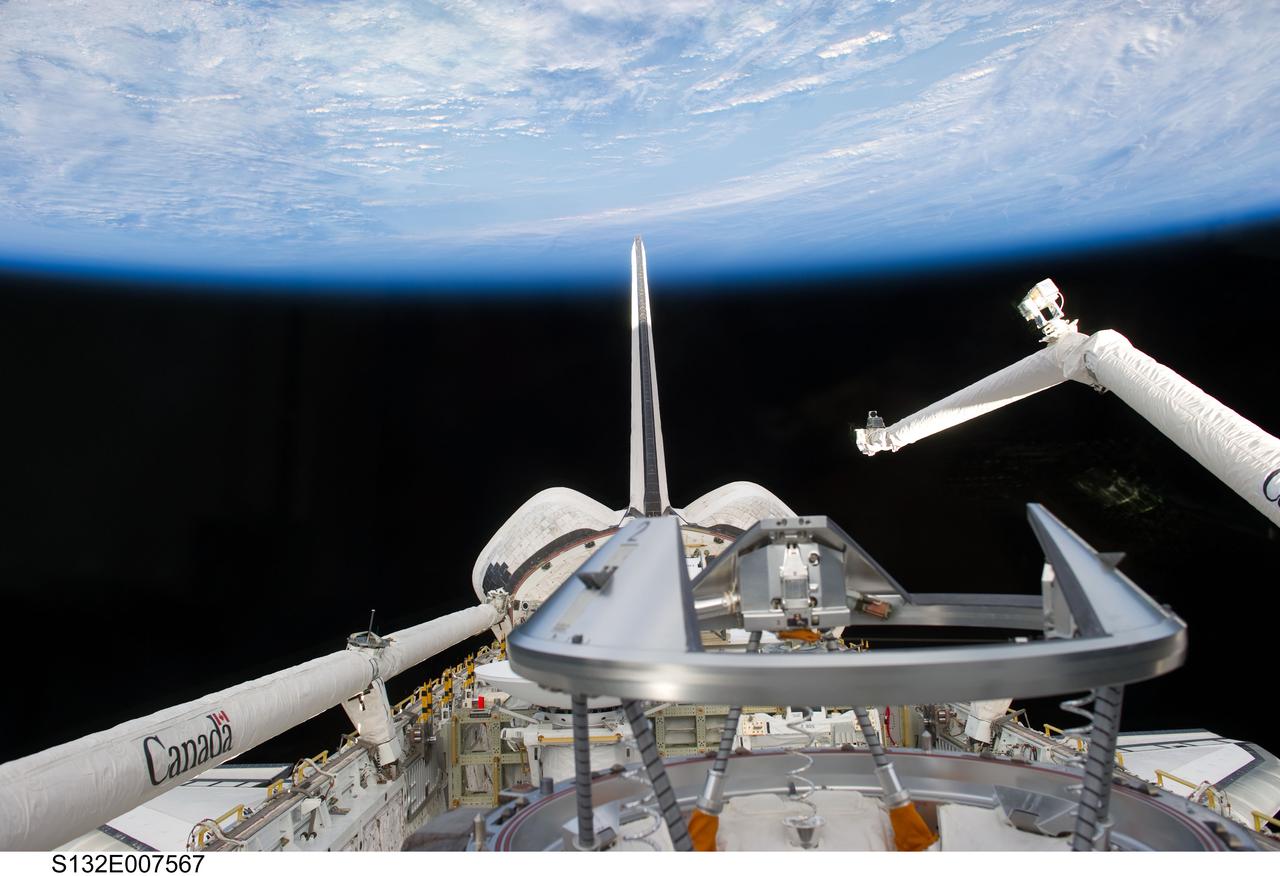
S132-E-007567 (15 May 2010) --- Backdropped by Earth’s horizon and the blackness of space, space shuttle Atlantis’ payload bay, docking mechanism (foreground), vertical stabilizer, orbital maneuvering system (OMS) pods, and Remote Manipulator System/Orbiter Boom Sensor System (RMS/OBSS) are featured in this image photographed by an STS-132 crew member from an aft flight deck window.
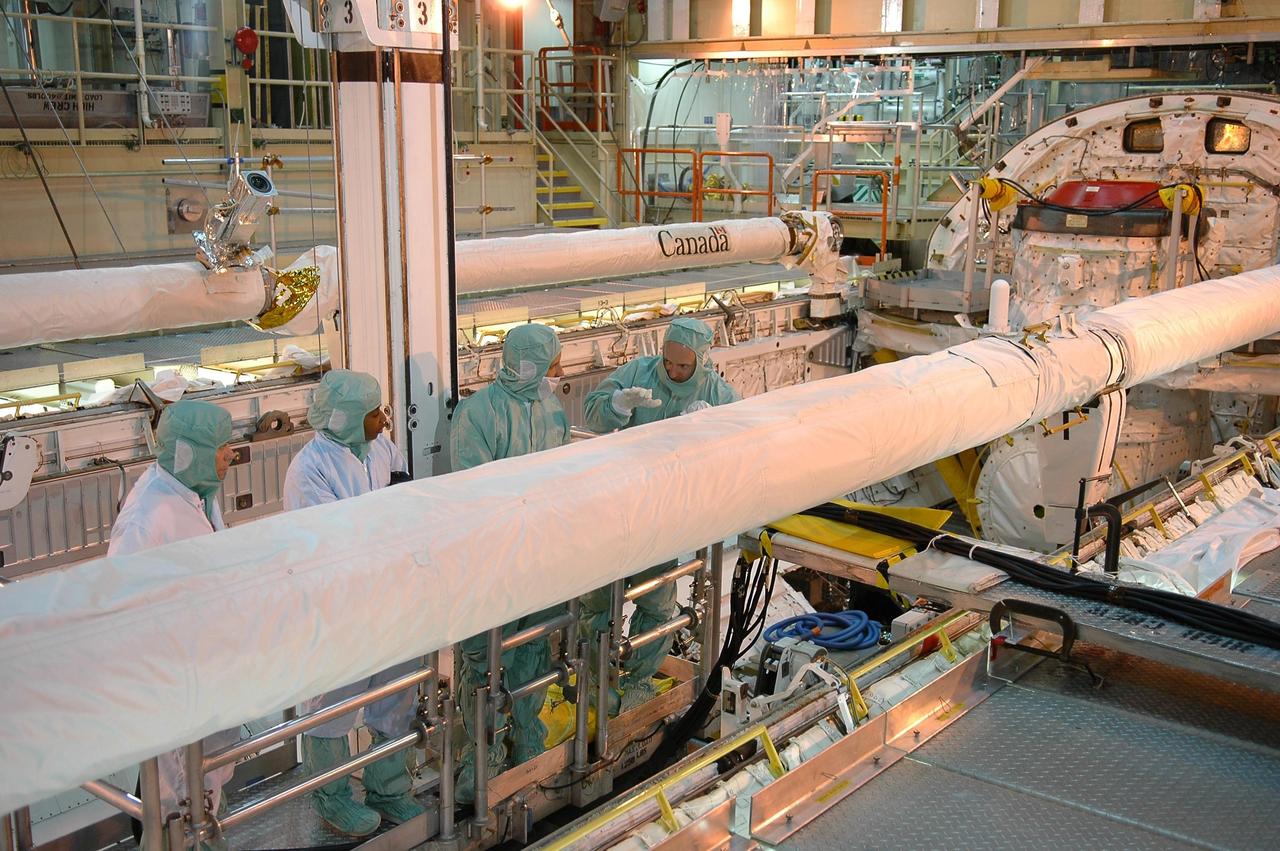
KENNEDY SPACE CENTER, FLA. - In NASA Kennedy Space Center's Orbiter Processing Facility bay 3, STS-121 Pilot Mark Kelly and Mission Specialist Stephanie Wilson are joined by two shuttle technicians as they examine the orbiter boom sensor system in Discovery's payload bay. The crew is at Kennedy to take part in the crew equipment interface test, which provides hands-on experience with equipment to be used on-orbit. Launch of Space Shuttle Discovery on mission STS-121, the second return-to-flight mission, is scheduled no earlier than May.
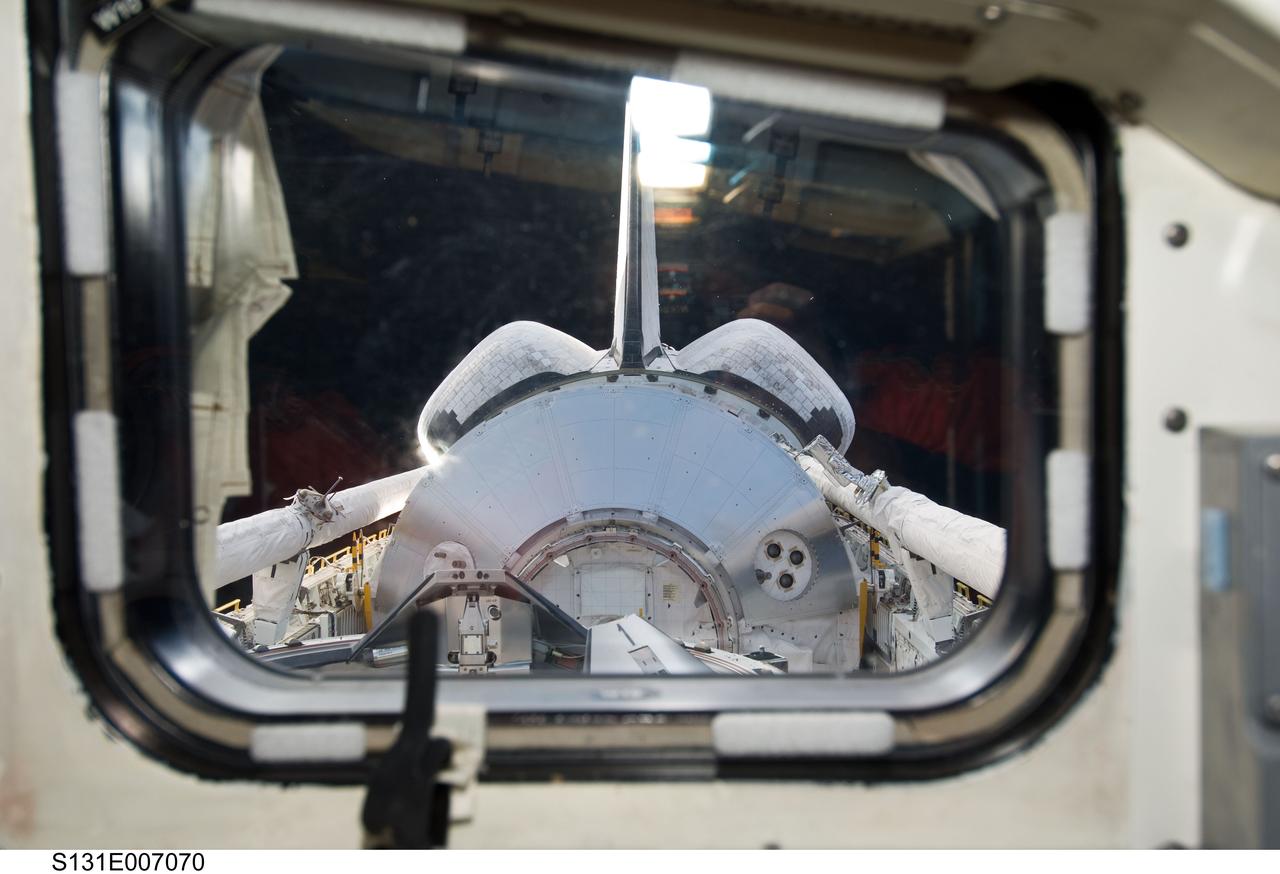
S131-E-007070 (5 April 2010) --- The Leonardo Multi-Purpose Logistics Module (MPLM) visible in space shuttle Discovery's payload bay, docking mechanism, vertical stabilizer, orbital maneuvering system (OMS) pods and Remote Manipulator System/Orbiter Boom Sensor System (RMS/OBSS) are featured in this image photographed by an STS-131 crew member from an aft flight deck window.
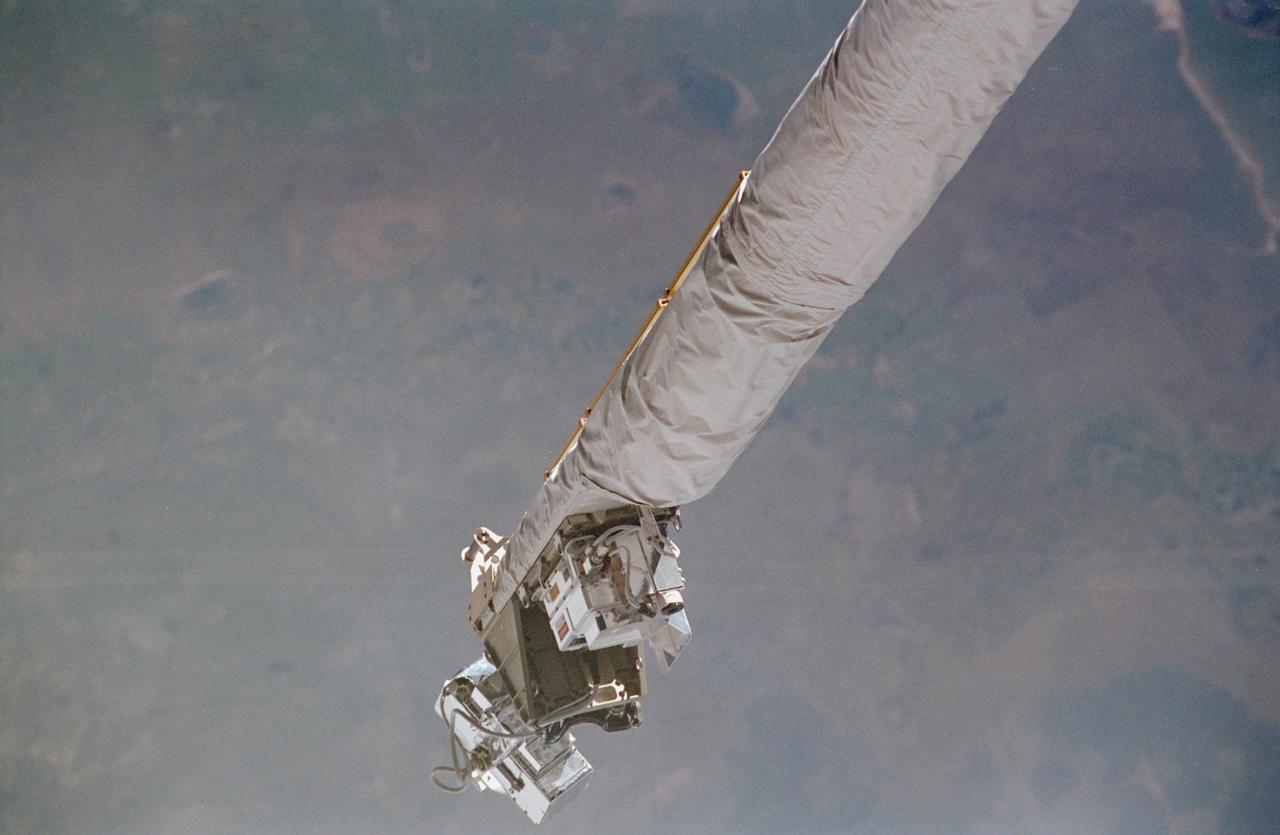
STS121-319-004 (5 July 2006) --- The Laser Dynamic Range Imager (LDRI), Intensified Television Camera (ITVC) and Laser Camera System (LCS), located on the end of Space Shuttle Discovery's Remote Manipulator System/Orbiter Boom Sensor System (RMS/OBSS), is featured in this image photographed during STS-121 Flight Day 2 survey activities. The inspection included an examination of Discovery's nose cap and the reinforced carbon-carbon panels along the leading edge of the port and starboard wings, looking for any evidence of damage.