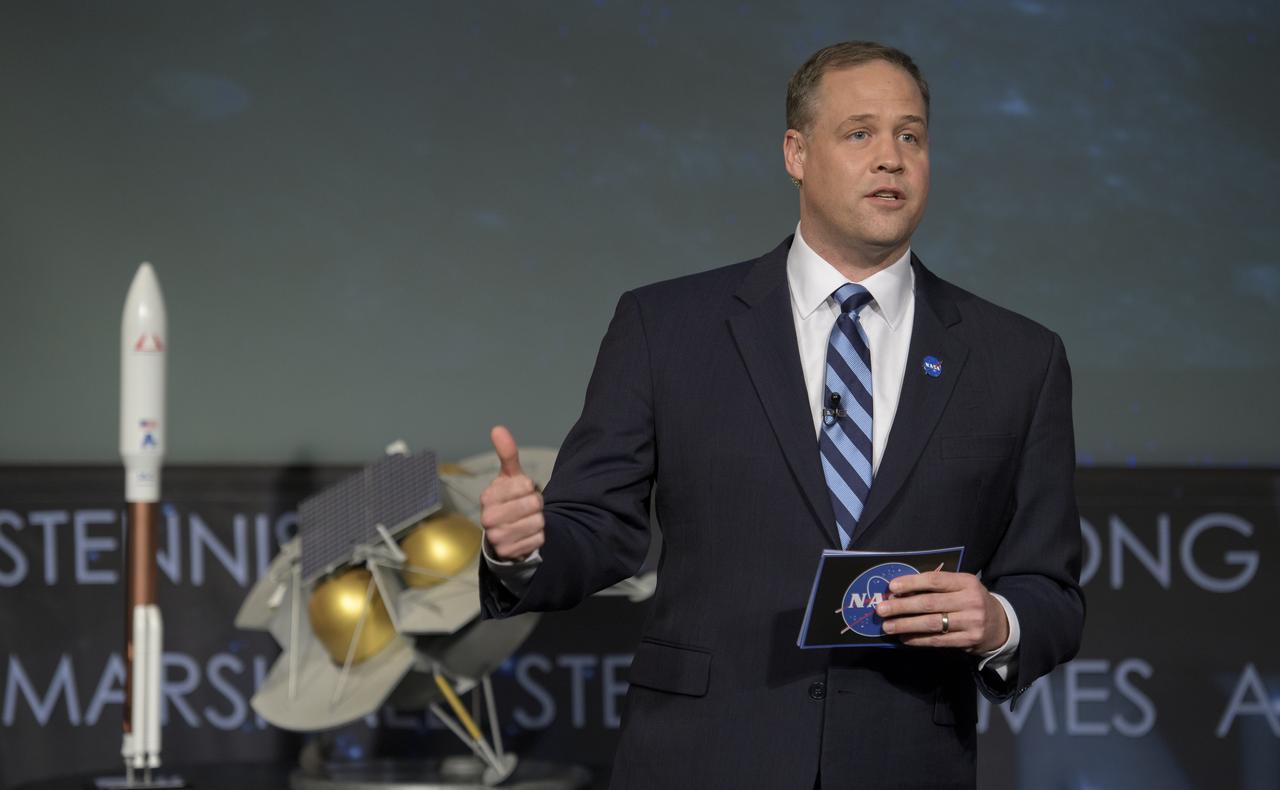
NASA Administrator Jim Bridenstine announces the nine U.S. companies that are eligible to bid on NASA delivery services to the lunar surface through Commercial Lunar Payload Services (CLPS) contracts, Thursday, Nov. 29, 2018 at NASA Headquarters in Washington. The companies will be able to bid on delivering science and technology payloads for NASA, including payload integration and operations, launching from Earth and landing on the surface of the Moon. NASA expects to be one of many customers that will use these commercial landing services. Photo Credit: (NASA/Bill Ingalls)
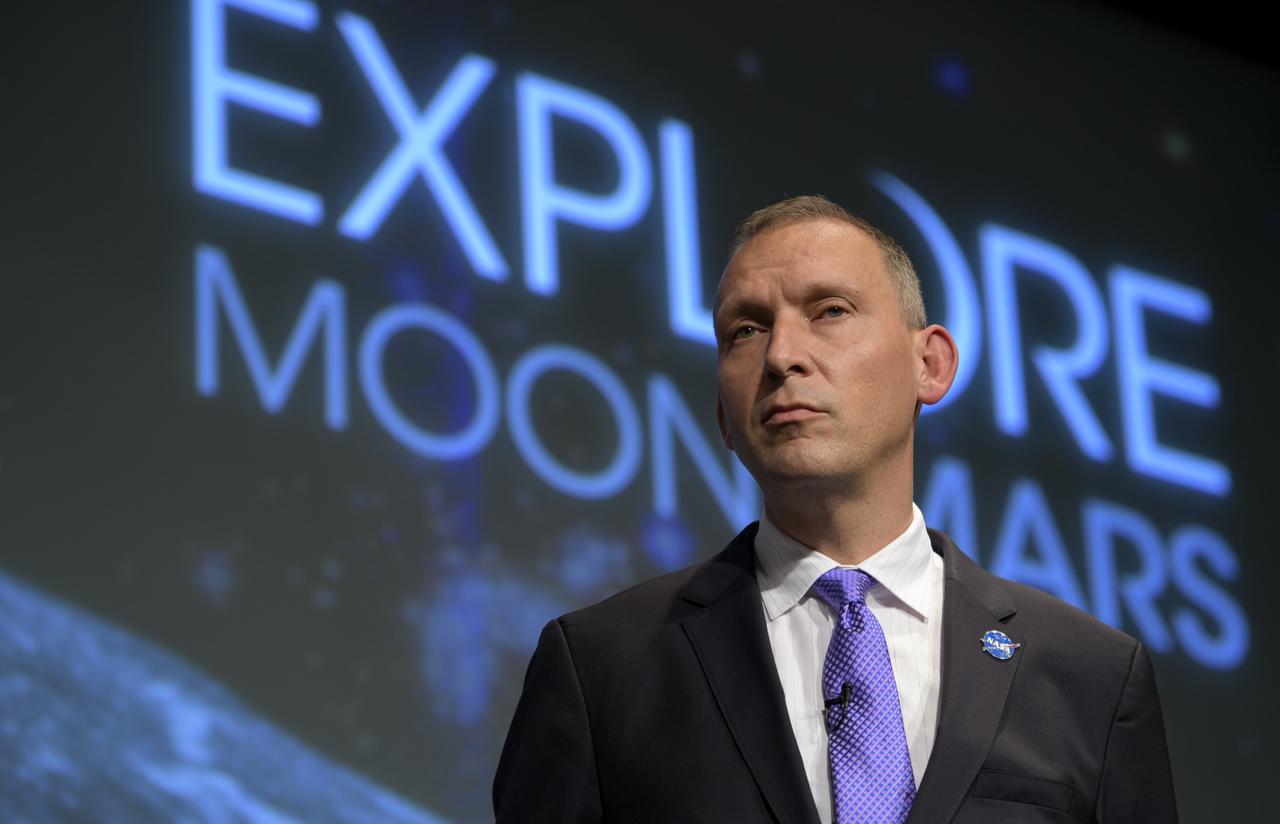
NASA Associate Administrator for the Science Mission Directorate, Thomas Zurbuchen, answers questions during an event where nine U.S. companies where named as eligible to bid on NASA delivery services to the lunar surface through Commercial Lunar Payload Services (CLPS) contracts, Thursday, Nov. 29, 2018 at NASA Headquarters in Washington. The companies will be able to bid on delivering science and technology payloads for NASA, including payload integration and operations, launching from Earth and landing on the surface of the Moon. NASA expects to be one of many customers that will use these commercial landing services. Photo Credit: (NASA/Bill Ingalls)
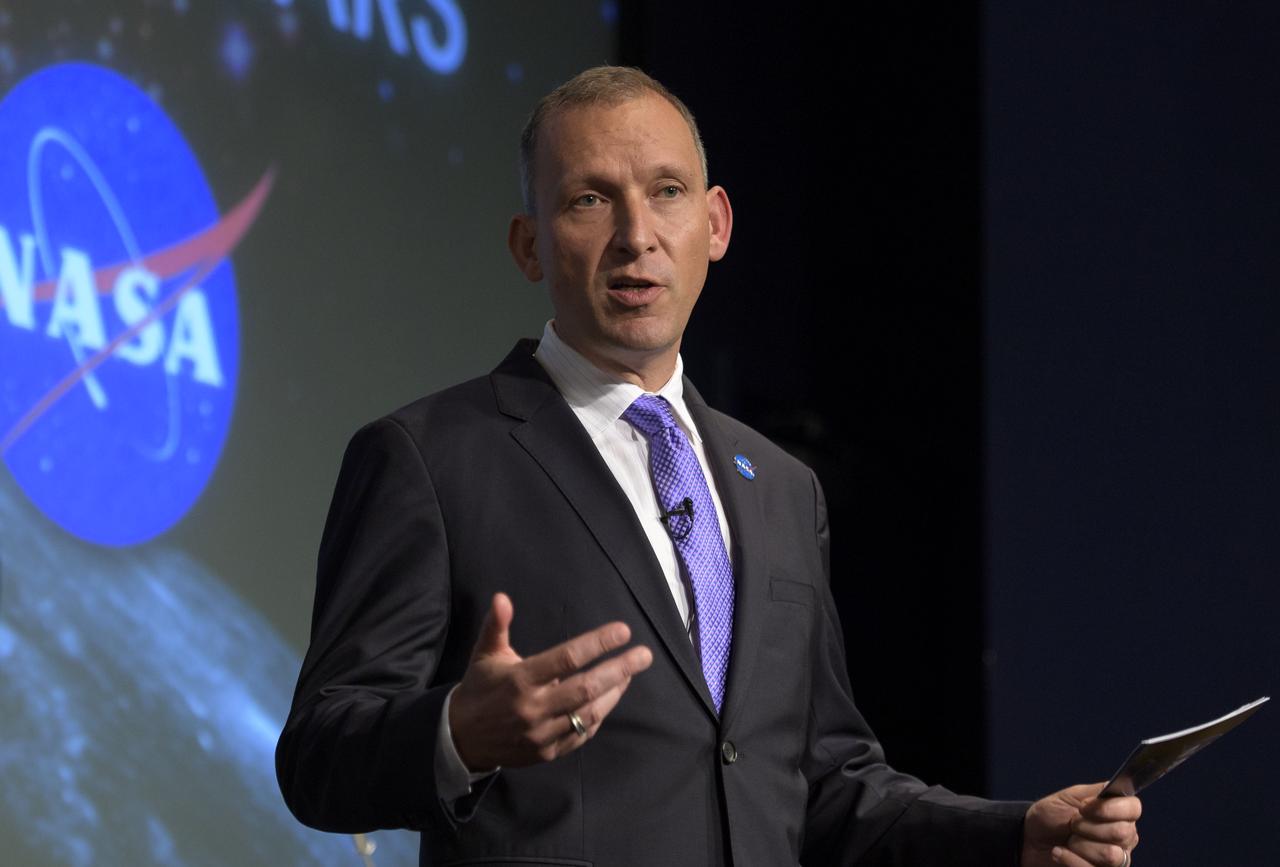
NASA Associate Administrator for the Science Mission Directorate, Thomas Zurbuchen, answers questions during an event where nine U.S. companies where named as eligible to bid on NASA delivery services to the lunar surface through Commercial Lunar Payload Services (CLPS) contracts, Thursday, Nov. 29, 2018 at NASA Headquarters in Washington. The companies will be able to bid on delivering science and technology payloads for NASA, including payload integration and operations, launching from Earth and landing on the surface of the Moon. NASA expects to be one of many customers that will use these commercial landing services. Photo Credit: (NASA/Bill Ingalls)
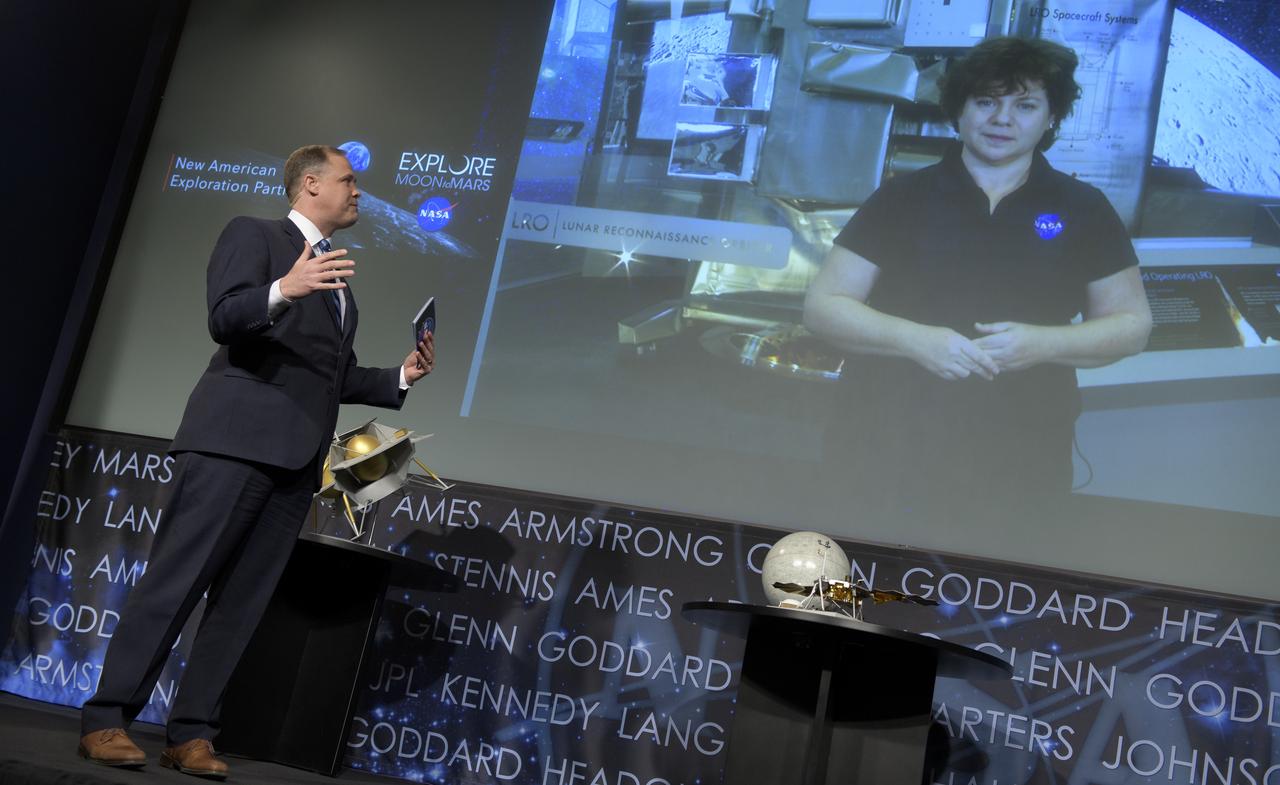
NASA Administrator Jim Bridenstine talks with Barbara Cohen, associate project scientist for the Lunar Reconnaissance Orbiter at NASA’s Goddard Space Flight Center in Greenbelt, Maryland during a event where it was announced that nine U.S. companies are eligible to bid on NASA delivery services to the lunar surface through Commercial Lunar Payload Services (CLPS) contracts, Thursday, Nov. 29, 2018 at NASA Headquarters in Washington. The companies will be able to bid on delivering science and technology payloads for NASA, including payload integration and operations, launching from Earth and landing on the surface of the Moon. NASA expects to be one of many customers that will use these commercial landing services. Photo Credit: (NASA/Bill Ingalls)
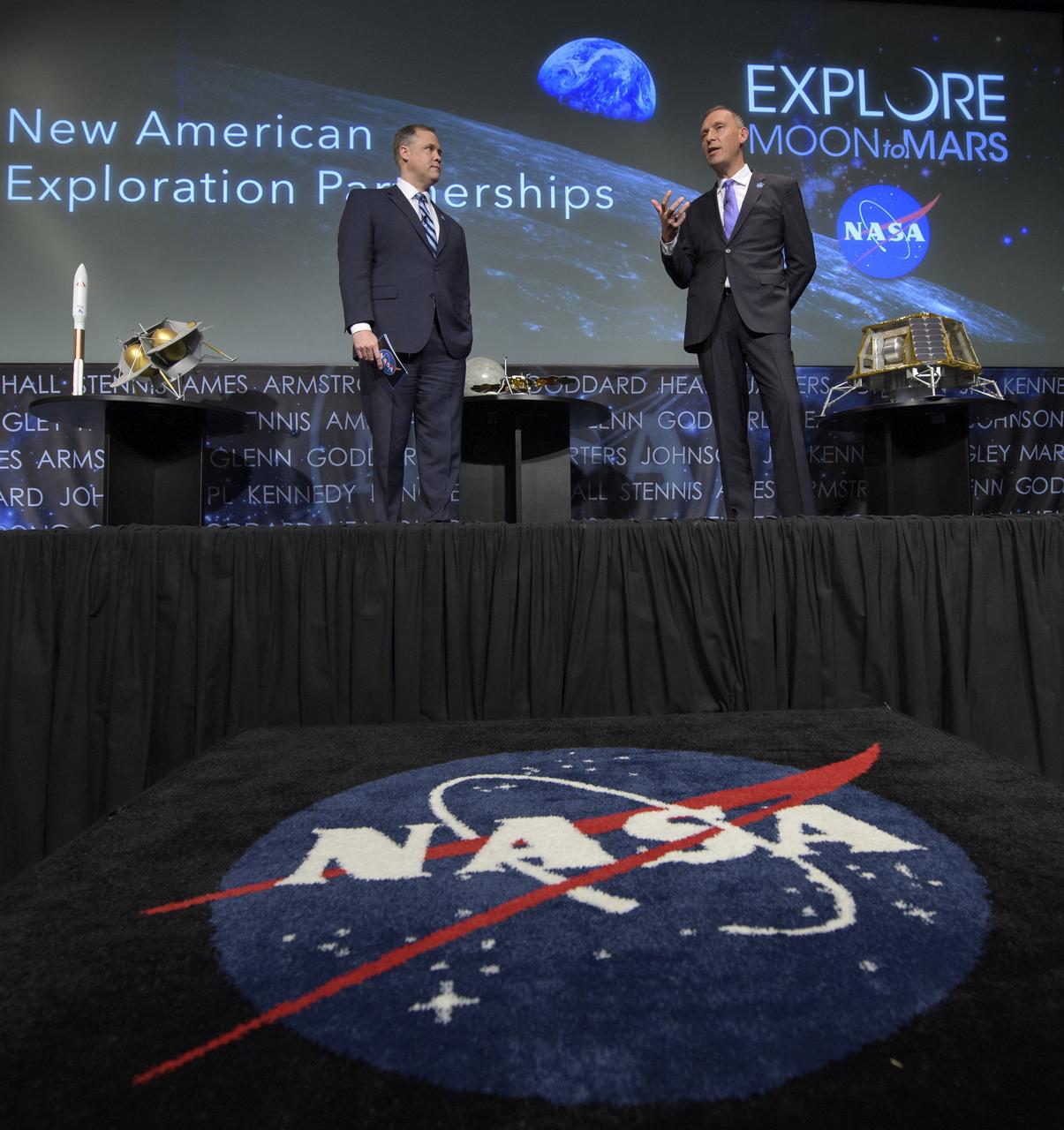
NASA Administrator Jim Bridenstine, left, and NASA Associate Administrator for the Science Mission Directorate, Thomas Zurbuchen, answer questions during an event where nine U.S. companies where named as eligible to bid on NASA delivery services to the lunar surface through Commercial Lunar Payload Services (CLPS) contracts, Thursday, Nov. 29, 2018 at NASA Headquarters in Washington. The companies will be able to bid on delivering science and technology payloads for NASA, including payload integration and operations, launching from Earth and landing on the surface of the Moon. NASA expects to be one of many customers that will use these commercial landing services. Photo Credit: (NASA/Bill Ingalls)
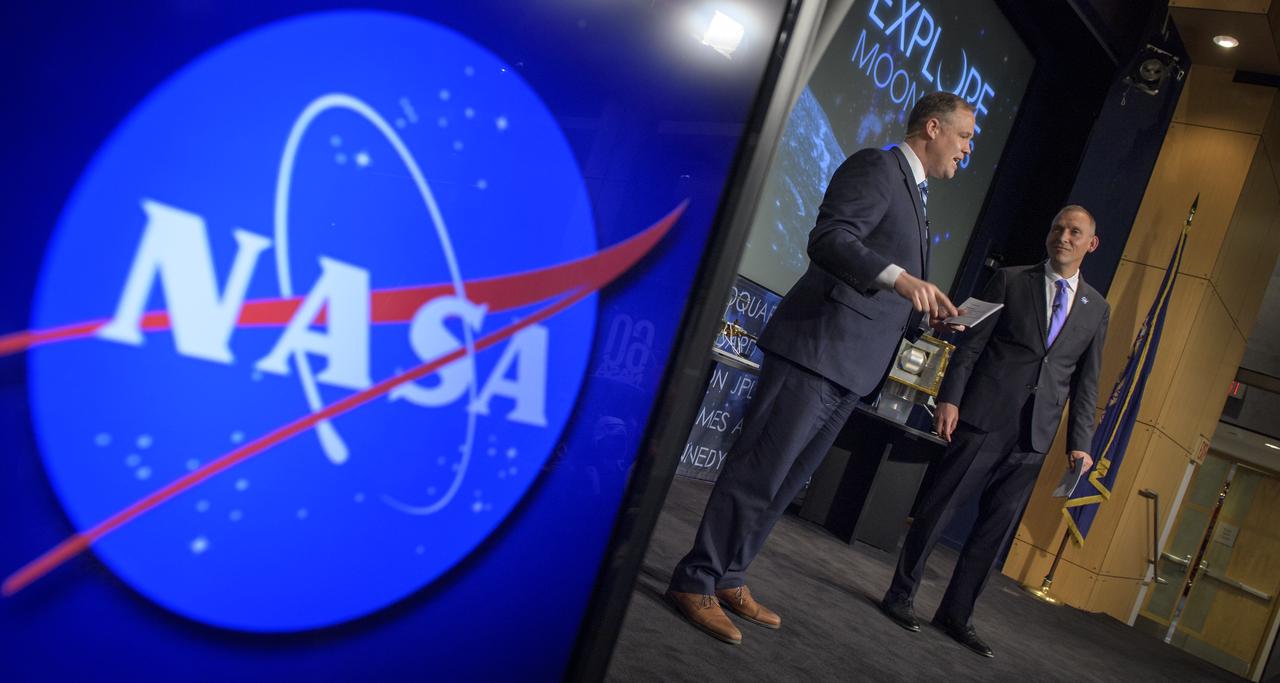
NASA Administrator Jim Bridenstine, left, and NASA Associate Administrator for the Science Mission Directorate, Thomas Zurbuchen, answer questions during an event where nine U.S. companies where named as eligible to bid on NASA delivery services to the lunar surface through Commercial Lunar Payload Services (CLPS) contracts, Thursday, Nov. 29, 2018 at NASA Headquarters in Washington. The companies will be able to bid on delivering science and technology payloads for NASA, including payload integration and operations, launching from Earth and landing on the surface of the Moon. NASA expects to be one of many customers that will use these commercial landing services. Photo Credit: (NASA/Bill Ingalls)
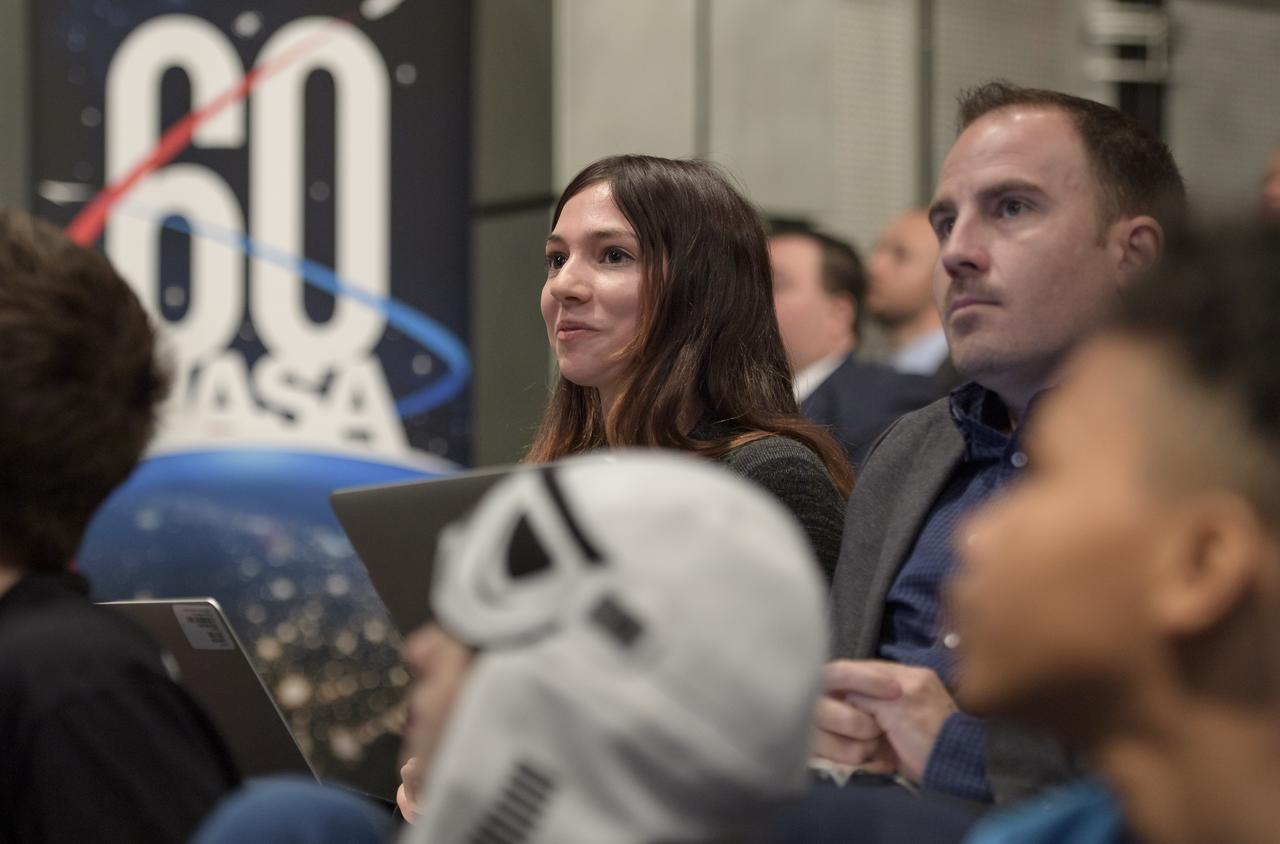
Thalia Patrinos, and Jason Townsend from NASA's Social Media Teamm monitor questions coming in from social media during an event where nine U.S. companies where named as eligible to bid on NASA delivery services to the lunar surface through Commercial Lunar Payload Services (CLPS) contracts, Thursday, Nov. 29, 2018 at NASA Headquarters in Washington. The companies will be able to bid on delivering science and technology payloads for NASA, including payload integration and operations, launching from Earth and landing on the surface of the Moon. NASA expects to be one of many customers that will use these commercial landing services. Photo Credit: (NASA/Bill Ingalls)
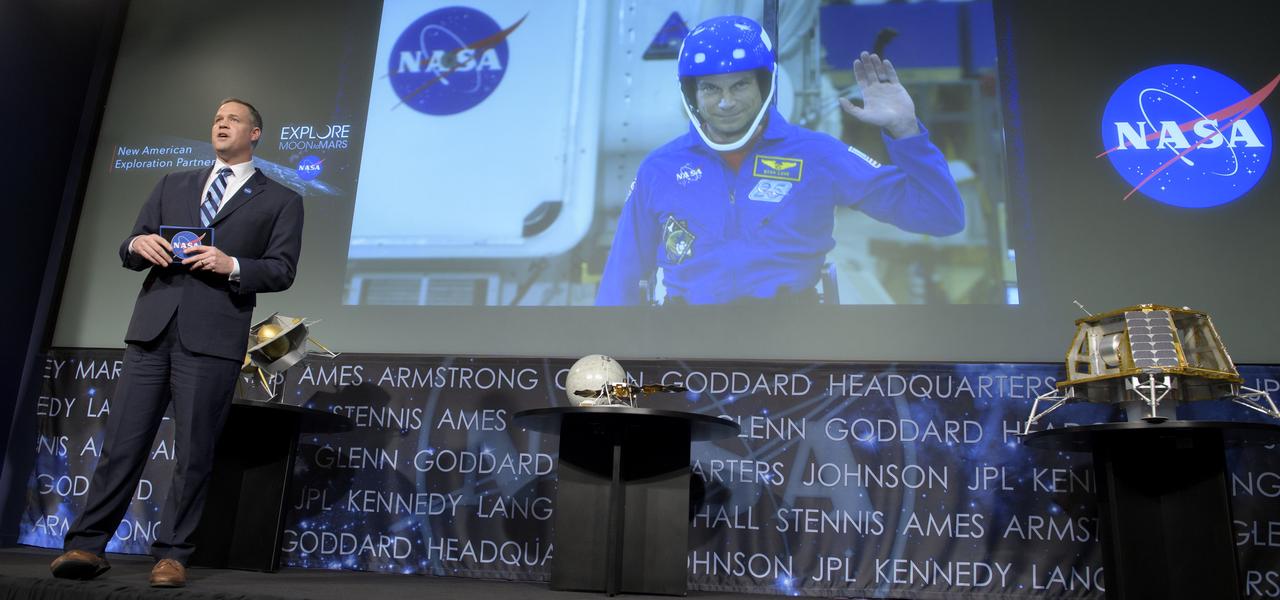
NASA Administrator Jim Bridenstine talks via satellite with NASA astronaut Stan Love from NASA’s Johnson Space Center in Houston during an event where it was announced that nine U.S. companies are eligible to bid on NASA delivery services to the lunar surface through Commercial Lunar Payload Services (CLPS) contracts, Thursday, Nov. 29, 2018 at NASA Headquarters in Washington. The companies will be able to bid on delivering science and technology payloads for NASA, including payload integration and operations, launching from Earth and landing on the surface of the Moon. NASA expects to be one of many customers that will use these commercial landing services. Photo Credit: (NASA/Bill Ingalls)
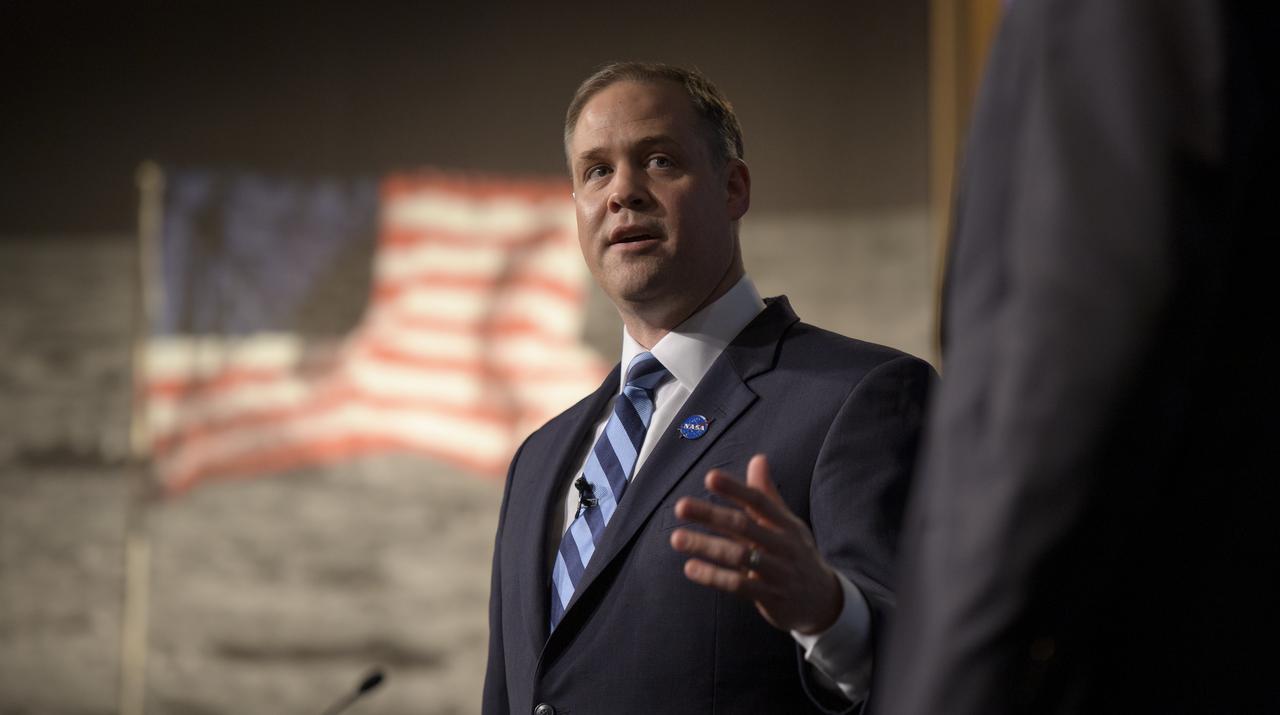
NASA Administrator Jim Bridenstine answers questions during an event where nine U.S. companies where named as eligible to bid on NASA delivery services to the lunar surface through Commercial Lunar Payload Services (CLPS) contracts, Thursday, Nov. 29, 2018 at NASA Headquarters in Washington. The companies will be able to bid on delivering science and technology payloads for NASA, including payload integration and operations, launching from Earth and landing on the surface of the Moon. NASA expects to be one of many customers that will use these commercial landing services. Photo Credit: (NASA/Bill Ingalls)
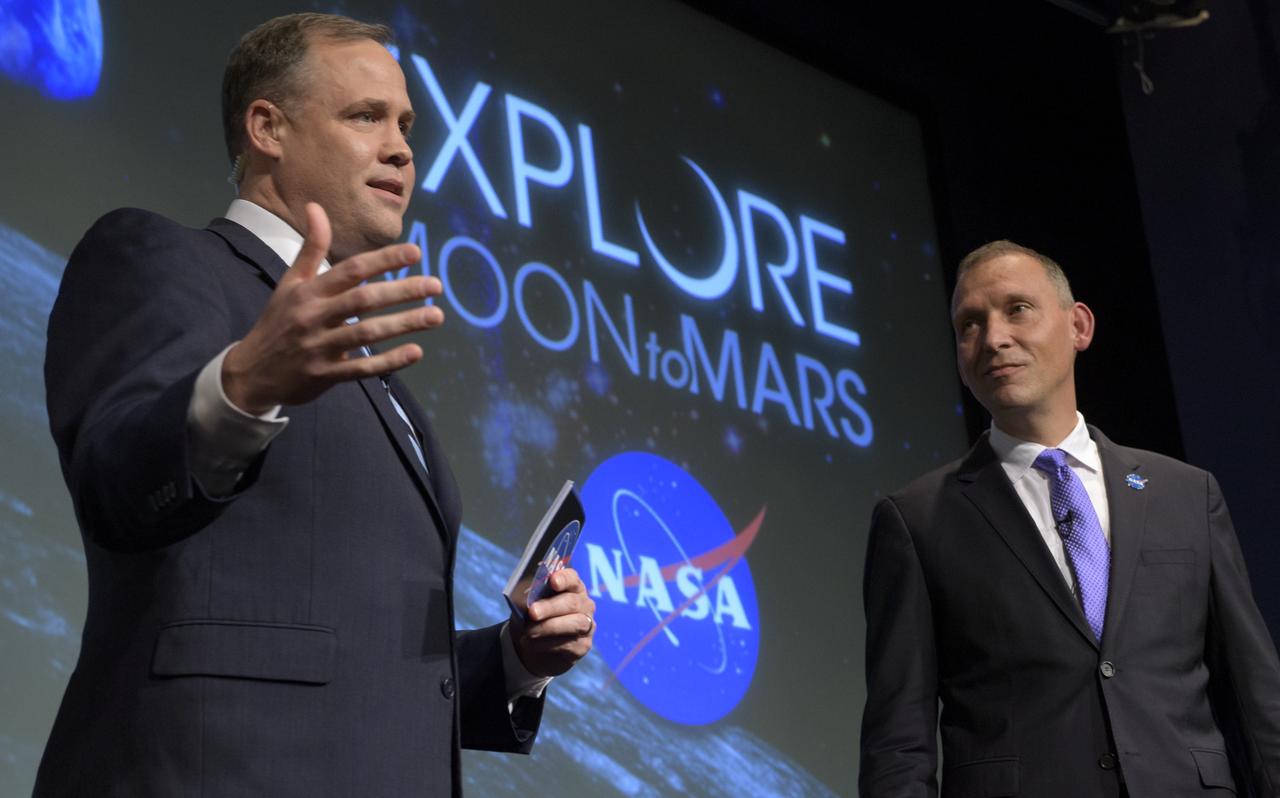
NASA Administrator Jim Bridenstine, left, and NASA Associate Administrator for the Science Mission Directorate, Thomas Zurbuchen, answer questions during an event where nine U.S. companies where named as eligible to bid on NASA delivery services to the lunar surface through Commercial Lunar Payload Services (CLPS) contracts, Thursday, Nov. 29, 2018 at NASA Headquarters in Washington. The companies will be able to bid on delivering science and technology payloads for NASA, including payload integration and operations, launching from Earth and landing on the surface of the Moon. NASA expects to be one of many customers that will use these commercial landing services. Photo Credit: (NASA/Bill Ingalls)
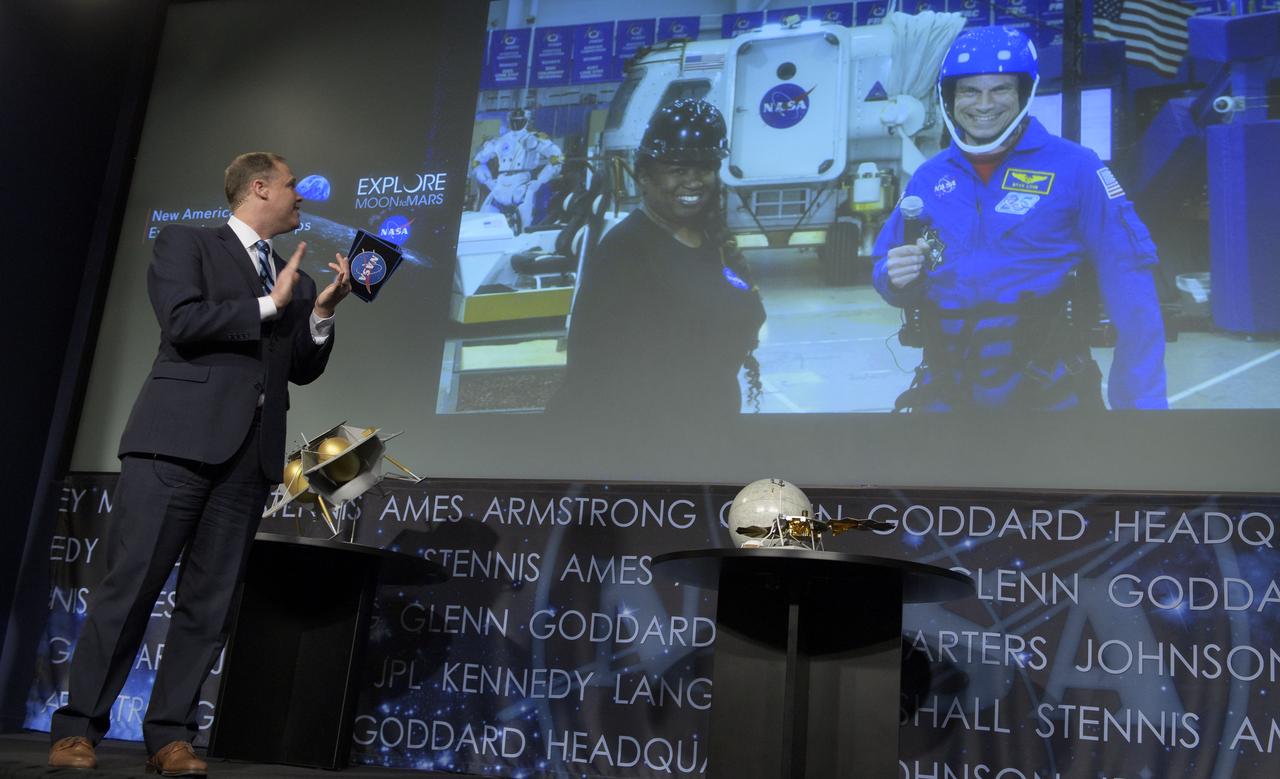
NASA Administrator Jim Bridenstine talks via satellite with Andrea Mosie, Apollo sample laboratory manager, and NASA astronaut Stan Love from NASA’s Johnson Space Center in Houston during a event where it was announced that nine U.S. companies are eligible to bid on NASA delivery services to the lunar surface through Commercial Lunar Payload Services (CLPS) contracts, Thursday, Nov. 29, 2018 at NASA Headquarters in Washington. The companies will be able to bid on delivering science and technology payloads for NASA, including payload integration and operations, launching from Earth and landing on the surface of the Moon. NASA expects to be one of many customers that will use these commercial landing services. Photo Credit: (NASA/Bill Ingalls)
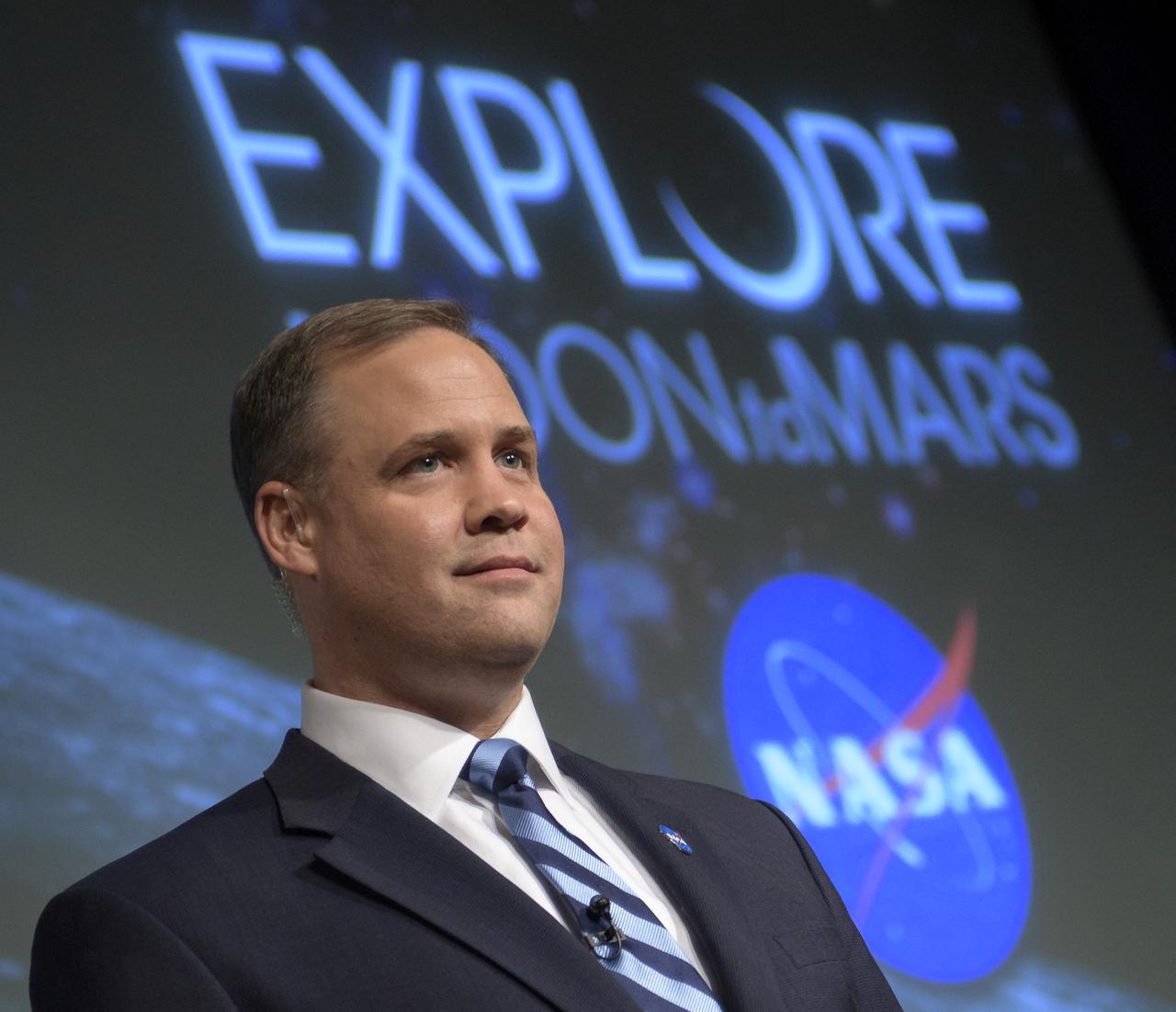
NASA Administrator Jim Bridenstine answers questions during an event where nine U.S. companies where named as eligible to bid on NASA delivery services to the lunar surface through Commercial Lunar Payload Services (CLPS) contracts, Thursday, Nov. 29, 2018 at NASA Headquarters in Washington. The companies will be able to bid on delivering science and technology payloads for NASA, including payload integration and operations, launching from Earth and landing on the surface of the Moon. NASA expects to be one of many customers that will use these commercial landing services. Photo Credit: (NASA/Bill Ingalls)
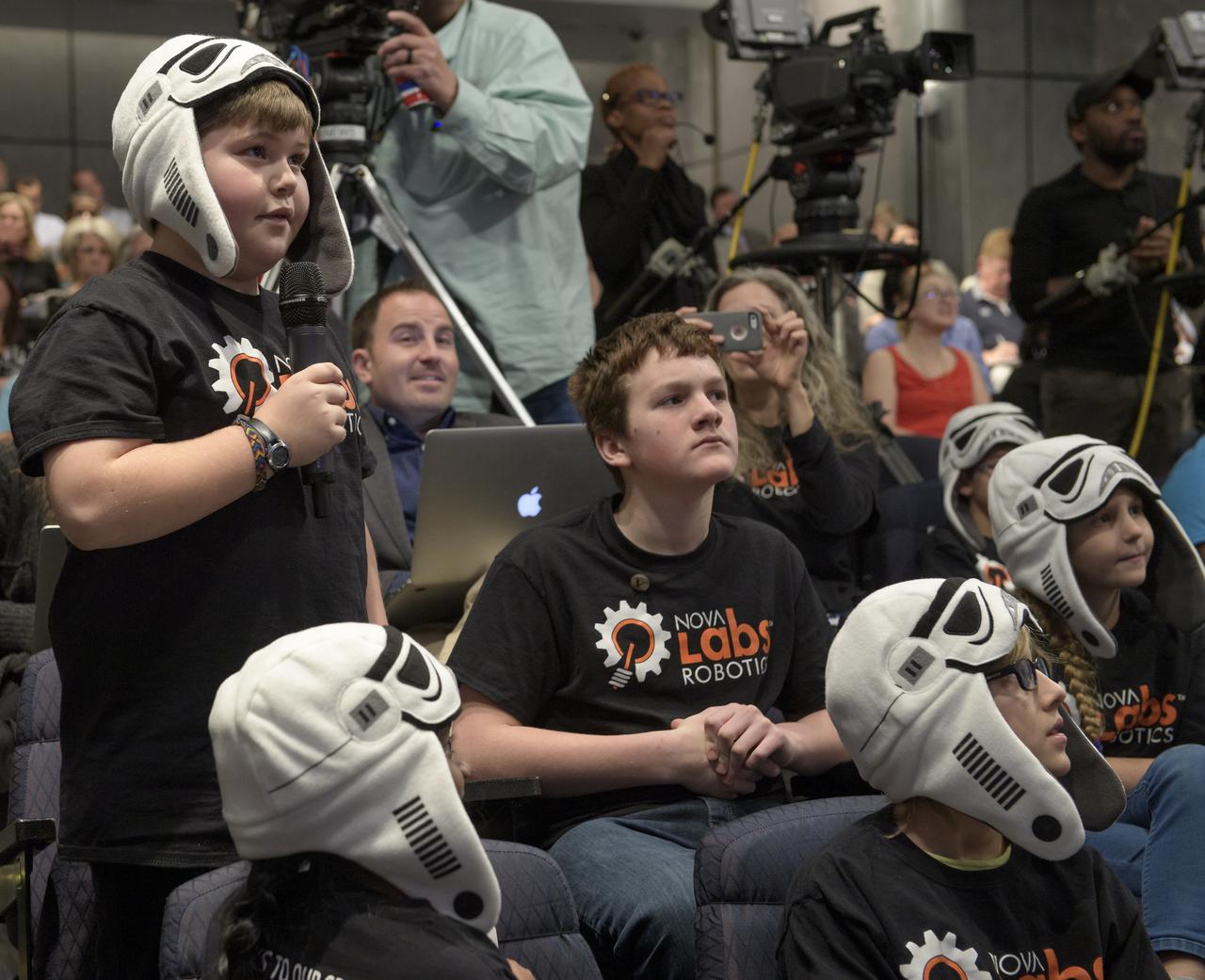
A Nova Labs Robotics "BrainStorm Troopers" team member from Reston, Virginia asks a question during an Commercial Lunar Payload Services (CLPS) announcement, Thursday, Nov. 29, 2018 at NASA Headquarters in Washington. Nine companies will be able to bid on delivering science and technology payloads for NASA, including payload integration and operations, launching from Earth and landing on the surface of the Moon. NASA expects to be one of many customers that will use these commercial landing services. Photo Credit: (NASA/Bill Ingalls)
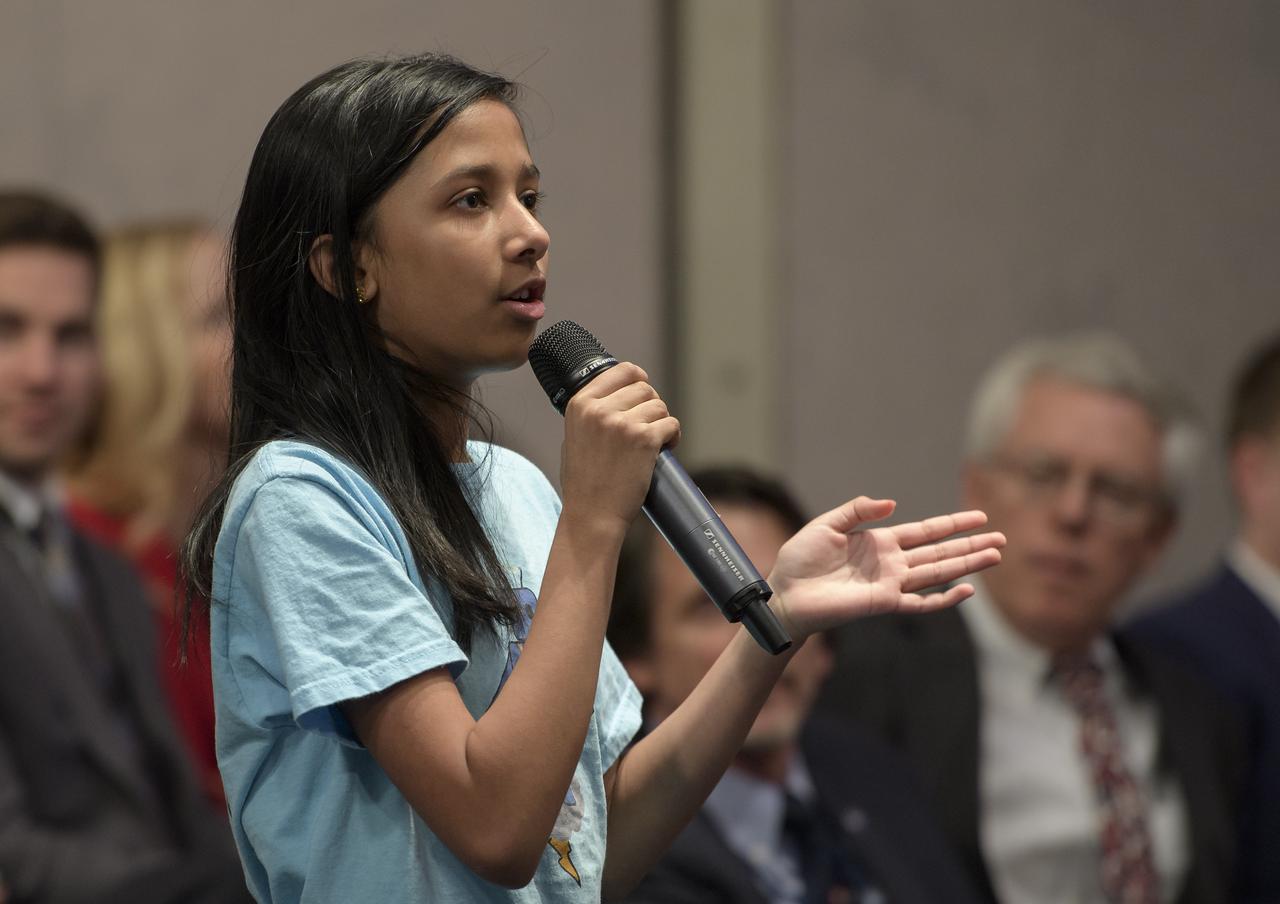
A Cascades Thunderbots "Robotics for Youth" team member from Sterling, Virginia asks a question during an Commercial Lunar Payload Services (CLPS) announcement, Thursday, Nov. 29, 2018 at NASA Headquarters in Washington. Nine companies will be able to bid on delivering science and technology payloads for NASA, including payload integration and operations, launching from Earth and landing on the surface of the Moon. NASA expects to be one of many customers that will use these commercial landing services. Photo Credit: (NASA/Bill Ingalls)
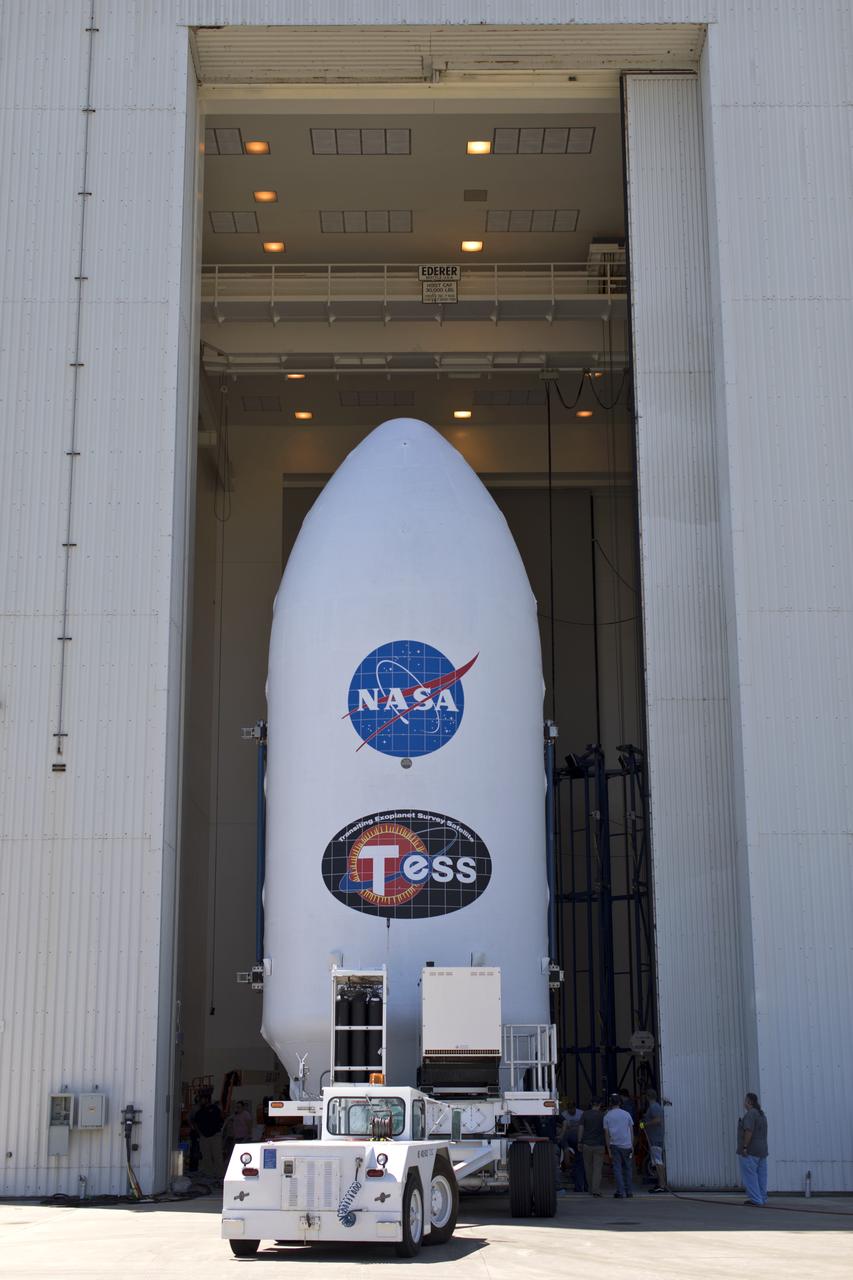
The payload fairing for NASA's Transiting Exoplanet Survey Satellite (TESS) is moved inside the Payload Hazardous Servicing Facility at the agency's Kennedy Space Center in Florida. Inside the facility, TESS will be encapsulated in the payload fairing. The satellite is scheduled to launch atop a SpaceX Falcon 9 rocket from Space Launch Complex 40 at Cape Canaveral Air Force Station on April 16. The satellite is the next step in NASA's search for planets outside our solar system, known as exoplanets. TESS is a NASA Astrophysics Explorer mission led and operated by MIT in Cambridge, Massachusetts, and managed by NASA’s Goddard Space Flight Center in Greenbelt, Maryland. Dr. George Ricker of MIT’s Kavli Institute for Astrophysics and Space Research serves as principal investigator for the mission. Additional partners include Orbital ATK, NASA’s Ames Research Center, the Harvard-Smithsonian Center for Astrophysics and the Space Telescope Science Institute. More than a dozen universities, research institutes and observatories worldwide are participants in the mission. NASA’s Launch Services Program is responsible for launch management.
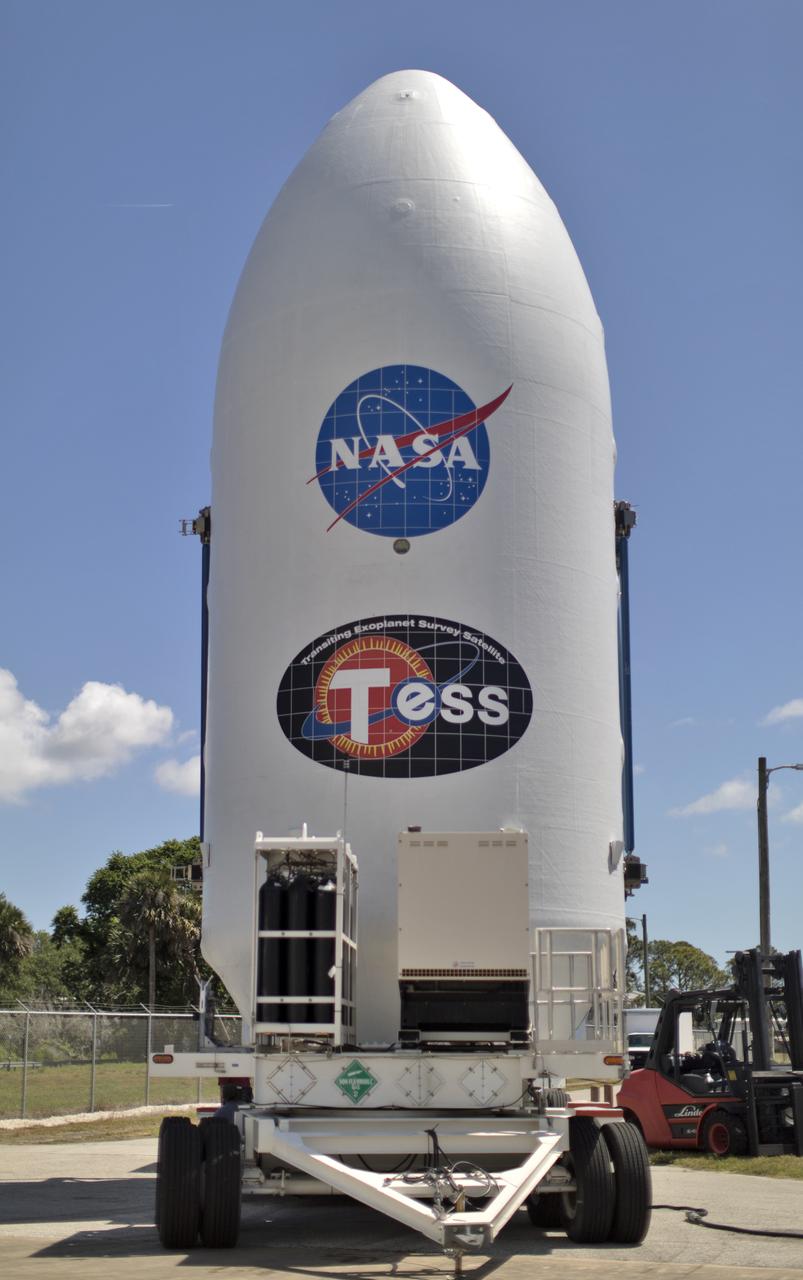
The payload fairing for NASA's Transiting Exoplanet Survey Satellite (TESS) is being prepared for the move to the Payload Hazardous Servicing Facility at the agency's Kennedy Space Center in Florida. Inside the facility, TESS will be encapsulated in the payload fairing. The satellite is scheduled to launch atop a SpaceX Falcon 9 rocket from Space Launch Complex 40 at Cape Canaveral Air Force Station on April 16. The satellite is the next step in NASA's search for planets outside our solar system, known as exoplanets. TESS is a NASA Astrophysics Explorer mission led and operated by MIT in Cambridge, Massachusetts, and managed by NASA’s Goddard Space Flight Center in Greenbelt, Maryland. Dr. George Ricker of MIT’s Kavli Institute for Astrophysics and Space Research serves as principal investigator for the mission. Additional partners include Orbital ATK, NASA’s Ames Research Center, the Harvard-Smithsonian Center for Astrophysics and the Space Telescope Science Institute. More than a dozen universities, research institutes and observatories worldwide are participants in the mission. NASA’s Launch Services Program is responsible for launch management.
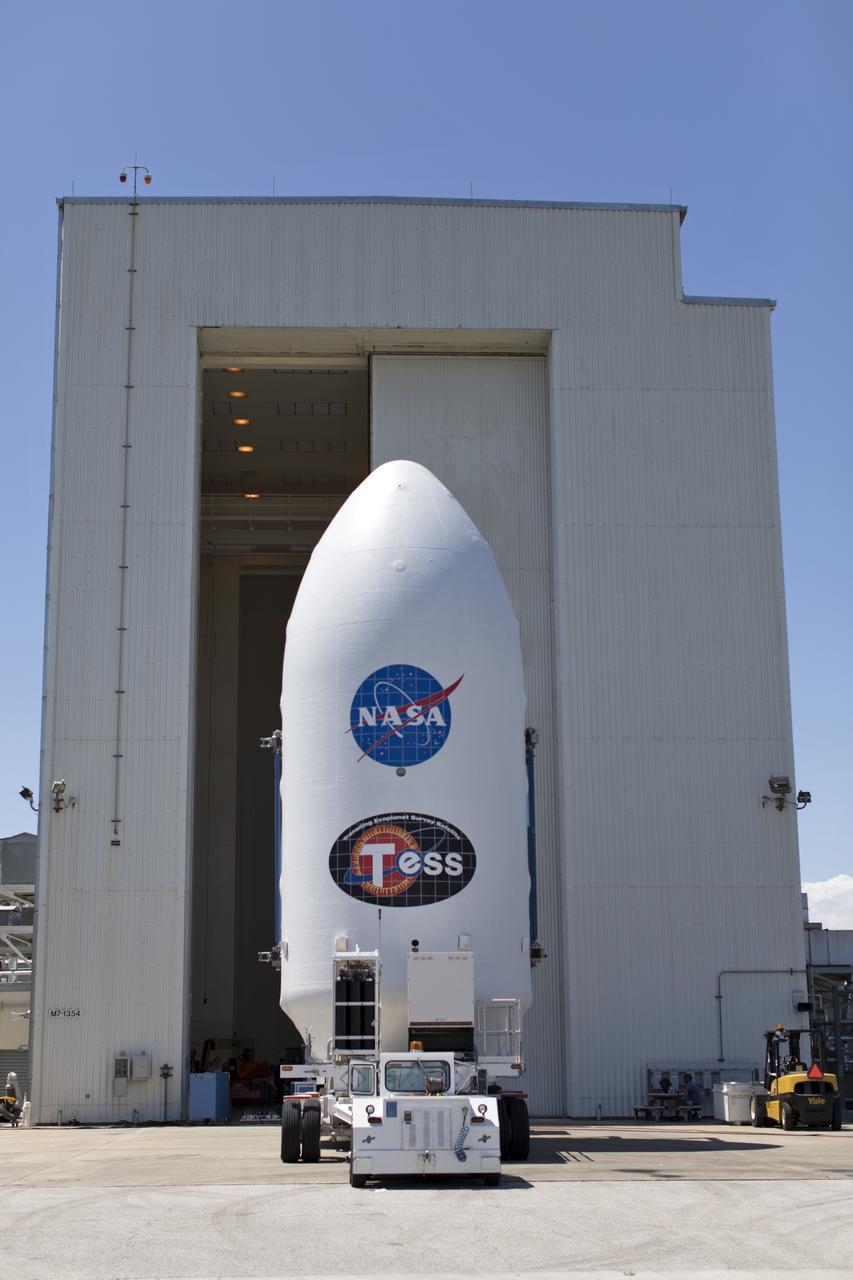
The payload fairing for NASA's Transiting Exoplanet Survey Satellite (TESS) is moved to the entrance of the Payload Hazardous Servicing Facility at the agency's Kennedy Space Center in Florida. Inside the facility, TESS will be encapsulated in the payload fairing. The satellite is scheduled to launch atop a SpaceX Falcon 9 rocket from Space Launch Complex 40 at Cape Canaveral Air Force Station on April 16. The satellite is the next step in NASA's search for planets outside our solar system, known as exoplanets. TESS is a NASA Astrophysics Explorer mission led and operated by MIT in Cambridge, Massachusetts, and managed by NASA’s Goddard Space Flight Center in Greenbelt, Maryland. Dr. George Ricker of MIT’s Kavli Institute for Astrophysics and Space Research serves as principal investigator for the mission. Additional partners include Orbital ATK, NASA’s Ames Research Center, the Harvard-Smithsonian Center for Astrophysics and the Space Telescope Science Institute. More than a dozen universities, research institutes and observatories worldwide are participants in the mission. NASA’s Launch Services Program is responsible for launch management.

The payload fairing for NASA's Transiting Exoplanet Survey Satellite (TESS) is moved inside the Payload Hazardous Servicing Facility at the agency's Kennedy Space Center in Florida. Inside the facility, TESS will be encapsulated in the payload fairing. The satellite is scheduled to launch atop a SpaceX Falcon 9 rocket from Space Launch Complex 40 at Cape Canaveral Air Force Station on April 16. The satellite is the next step in NASA's search for planets outside our solar system, known as exoplanets. TESS is a NASA Astrophysics Explorer mission led and operated by MIT in Cambridge, Massachusetts, and managed by NASA’s Goddard Space Flight Center in Greenbelt, Maryland. Dr. George Ricker of MIT’s Kavli Institute for Astrophysics and Space Research serves as principal investigator for the mission. Additional partners include Orbital ATK, NASA’s Ames Research Center, the Harvard-Smithsonian Center for Astrophysics and the Space Telescope Science Institute. More than a dozen universities, research institutes and observatories worldwide are participants in the mission. NASA’s Launch Services Program is responsible for launch management.
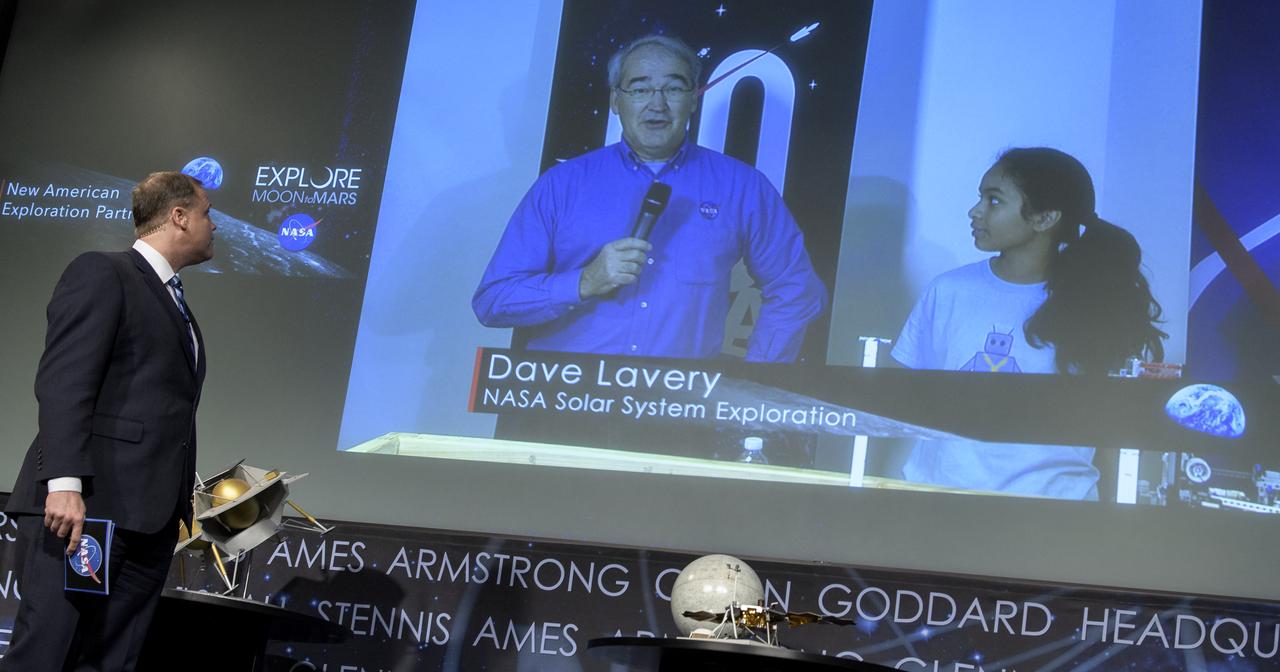
NASA Administrator Jim Bridenstine talks with Dave Lavery, Program Executive for Solar System Exploration, and Dishaa Bhat, 14, from Mary Henderson Middle School in Falls Church, Virginia, during a event where it was announced that nine U.S. companies are eligible to bid on NASA delivery services to the lunar surface through Commercial Lunar Payload Services (CLPS) contracts, Thursday, Nov. 29, 2018 at NASA Headquarters in Washington. The companies will be able to bid on delivering science and technology payloads for NASA, including payload integration and operations, launching from Earth and landing on the surface of the Moon. NASA expects to be one of many customers that will use these commercial landing services. Photo Credit: (NASA/Bill Ingalls)
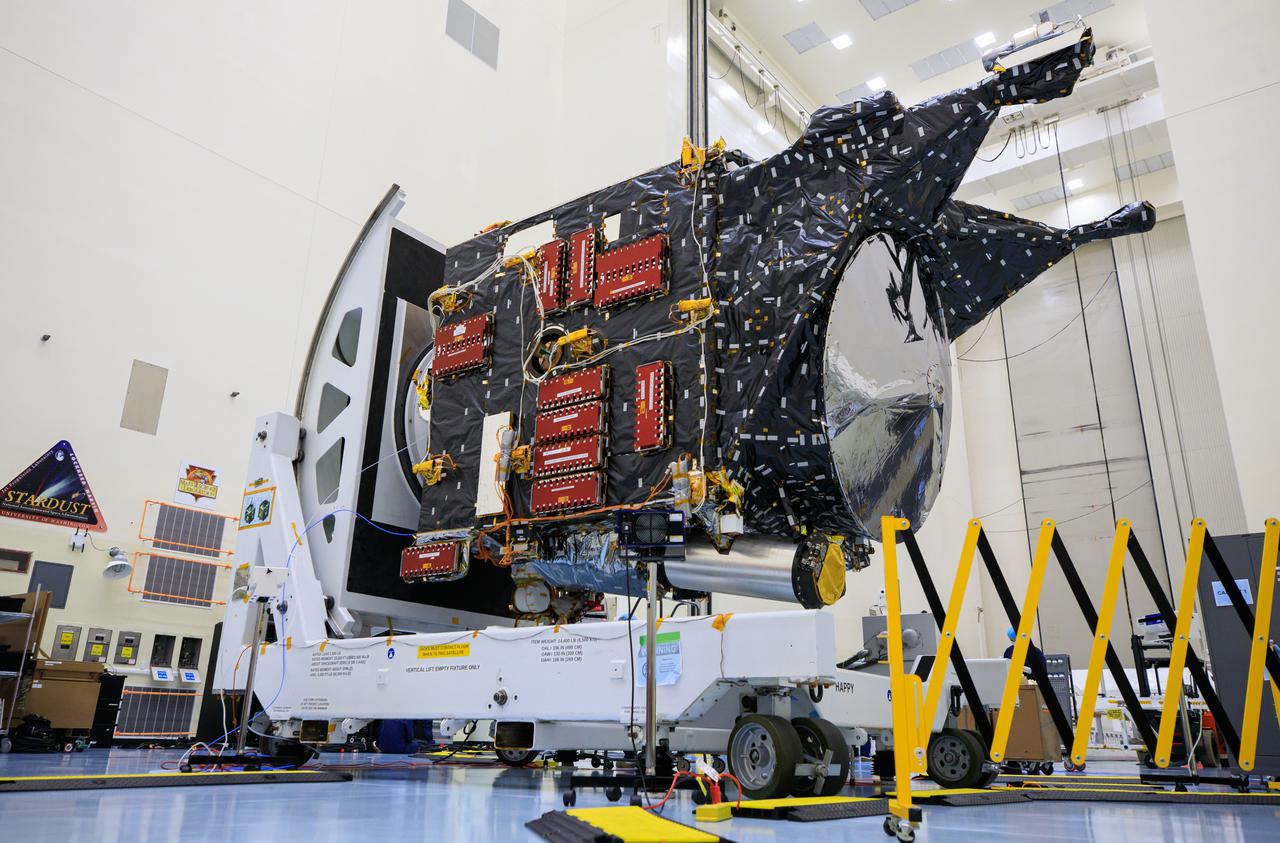
NASA’s Psyche spacecraft undergoes processing and servicing ahead of launch atop a work stand inside the Payload Hazardous Servicing Facility at NASA’s Kennedy Space Center in Florida on May 3, 2022. Psyche is targeting to lift off aboard a SpaceX Falcon Heavy rocket on Aug. 1, 2022. The spacecraft will use solar-electric propulsion to travel approximately 1.5 billion miles to rendezvous with its namesake asteroid in 2026. The Psyche mission is led by Arizona State University. NASA’s Jet Propulsion Laboratory, which is managed for the agency by Caltech in Pasadena, California, is responsible for the mission’s overall management, system engineering, integration and testing, and mission operations. Maxar Technologies in Palo Alto, California, provided the high-power solar electric propulsion spacecraft chassis. NASA’s Launch Services Program (LSP), based at Kennedy, is managing the launch. Psyche will be the 14th mission in the agency's Discovery program and LSP’s 100th primary mission.
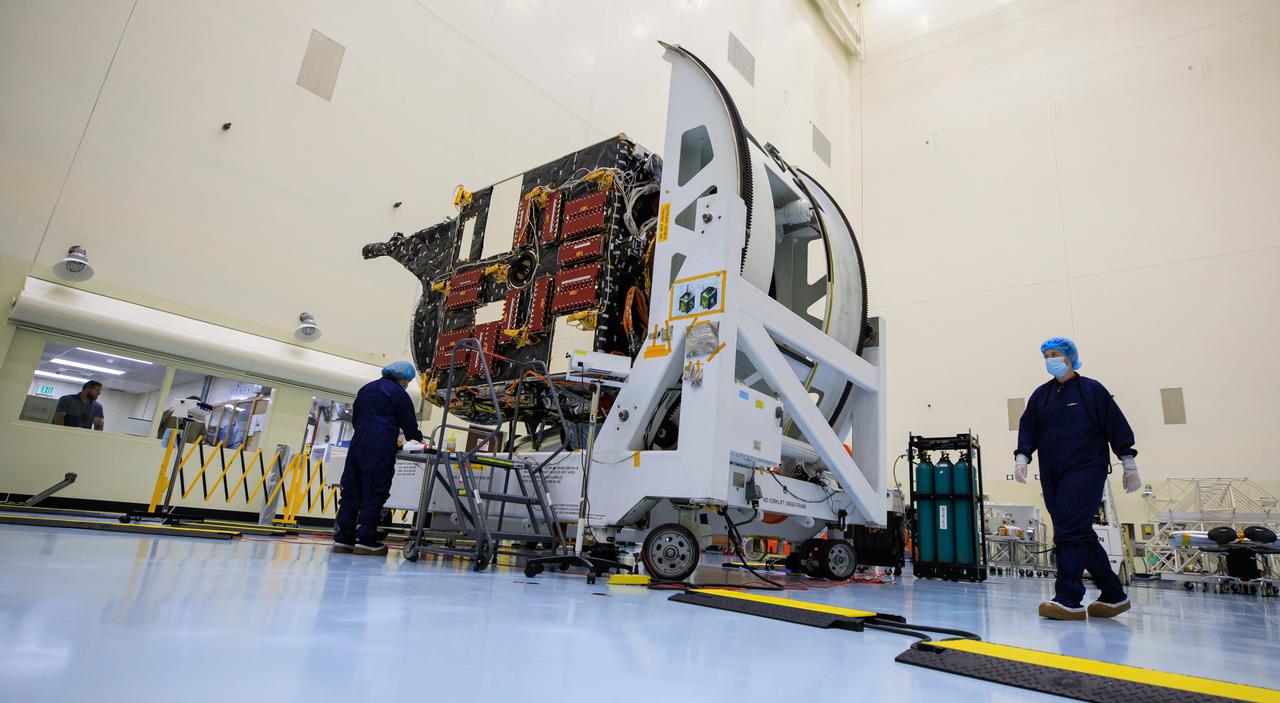
NASA’s Psyche spacecraft undergoes processing and servicing ahead of launch atop a work stand inside the Payload Hazardous Servicing Facility at NASA’s Kennedy Space Center in Florida on May 3, 2022. Psyche is targeting to lift off aboard a SpaceX Falcon Heavy rocket on Aug. 1, 2022. The spacecraft will use solar-electric propulsion to travel approximately 1.5 billion miles to rendezvous with its namesake asteroid in 2026. The Psyche mission is led by Arizona State University. NASA’s Jet Propulsion Laboratory, which is managed for the agency by Caltech in Pasadena, California, is responsible for the mission’s overall management, system engineering, integration and testing, and mission operations. Maxar Technologies in Palo Alto, California, provided the high-power solar electric propulsion spacecraft chassis. NASA’s Launch Services Program (LSP), based at Kennedy, is managing the launch. Psyche will be the 14th mission in the agency's Discovery program and LSP’s 100th primary mission.

NASA’s Psyche spacecraft undergoes processing and servicing ahead of launch atop a work stand inside the Payload Hazardous Servicing Facility at NASA’s Kennedy Space Center in Florida on May 3, 2022. Psyche is targeting to lift off aboard a SpaceX Falcon Heavy rocket on Aug. 1, 2022. The spacecraft will use solar-electric propulsion to travel approximately 1.5 billion miles to rendezvous with its namesake asteroid in 2026. The Psyche mission is led by Arizona State University. NASA’s Jet Propulsion Laboratory, which is managed for the agency by Caltech in Pasadena, California, is responsible for the mission’s overall management, system engineering, integration and testing, and mission operations. Maxar Technologies in Palo Alto, California, provided the high-power solar electric propulsion spacecraft chassis. NASA’s Launch Services Program (LSP), based at Kennedy, is managing the launch. Psyche will be the 14th mission in the agency's Discovery program and LSP’s 100th primary mission.
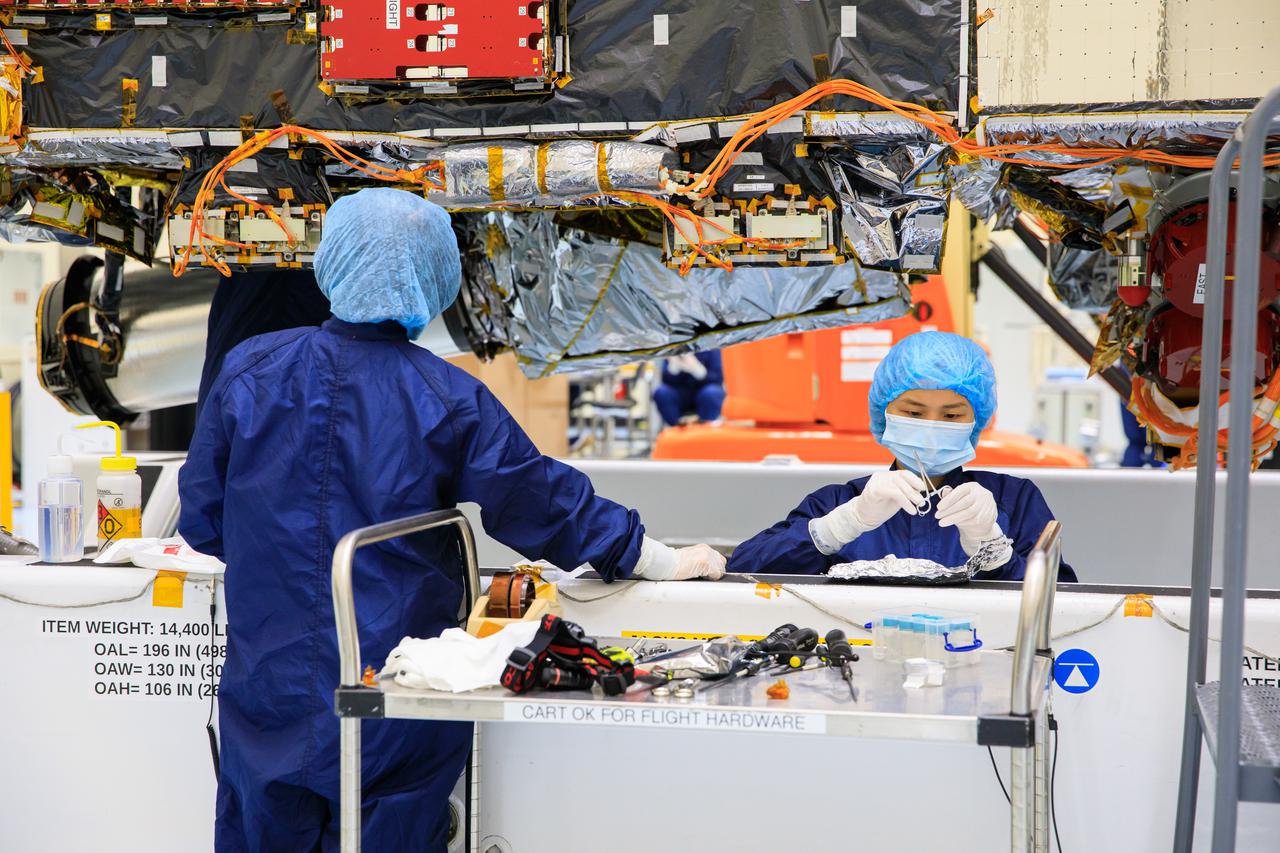
Technicians at NASA’s Kennedy Space Center in Florida perform work on the agency’s Psyche spacecraft inside the Payload Hazardous Servicing Facility (PHSF) on May 3, 2022. While inside the PHSF, the spacecraft will undergo routine processing and servicing ahead of launch. Psyche is targeting to lift off aboard a SpaceX Falcon Heavy rocket on Aug. 1, 2022. The spacecraft will use solar-electric propulsion to travel approximately 1.5 billion miles to rendezvous with its namesake asteroid in 2026. The Psyche mission is led by Arizona State University. NASA’s Jet Propulsion Laboratory, which is managed for the agency by Caltech in Pasadena, California, is responsible for the mission’s overall management, system engineering, integration and testing, and mission operations. Maxar Technologies in Palo Alto, California, provided the high-power solar electric propulsion spacecraft chassis. NASA’s Launch Services Program (LSP), based at Kennedy, is managing the launch. Psyche will be the 14th mission in the agency's Discovery program and LSP’s 100th primary mission.

Technicians at NASA’s Kennedy Space Center in Florida perform work on the agency’s Psyche spacecraft inside the Payload Hazardous Servicing Facility (PHSF) on May 3, 2022. While inside the PHSF, the spacecraft will undergo routine processing and servicing ahead of launch. Psyche is targeting to lift off aboard a SpaceX Falcon Heavy rocket on Aug. 1, 2022. The spacecraft will use solar-electric propulsion to travel approximately 1.5 billion miles to rendezvous with its namesake asteroid in 2026. The Psyche mission is led by Arizona State University. NASA’s Jet Propulsion Laboratory, which is managed for the agency by Caltech in Pasadena, California, is responsible for the mission’s overall management, system engineering, integration and testing, and mission operations. Maxar Technologies in Palo Alto, California, provided the high-power solar electric propulsion spacecraft chassis. NASA’s Launch Services Program (LSP), based at Kennedy, is managing the launch. Psyche will be the 14th mission in the agency's Discovery program and LSP’s 100th primary mission.
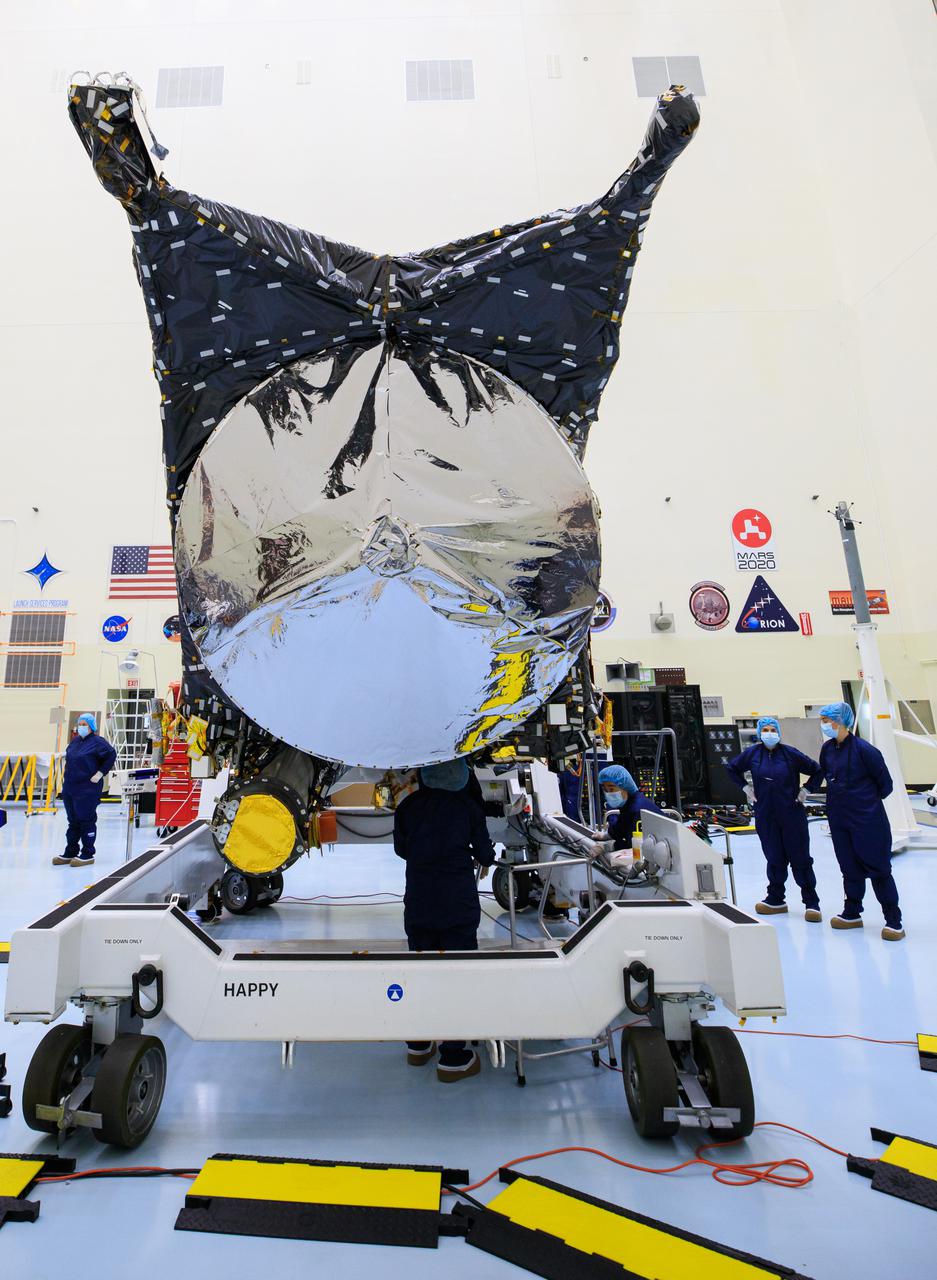
Technicians at NASA’s Kennedy Space Center in Florida perform work on the agency’s Psyche spacecraft inside the Payload Hazardous Servicing Facility (PHSF) on May 3, 2022. While inside the PHSF, the spacecraft will undergo routine processing and servicing ahead of launch. Psyche is targeting to lift off aboard a SpaceX Falcon Heavy rocket on Aug. 1, 2022. The spacecraft will use solar-electric propulsion to travel approximately 1.5 billion miles to rendezvous with its namesake asteroid in 2026. The Psyche mission is led by Arizona State University. NASA’s Jet Propulsion Laboratory, which is managed for the agency by Caltech in Pasadena, California, is responsible for the mission’s overall management, system engineering, integration and testing, and mission operations. Maxar Technologies in Palo Alto, California, provided the high-power solar electric propulsion spacecraft chassis. NASA’s Launch Services Program (LSP), based at Kennedy, is managing the launch. Psyche will be the 14th mission in the agency's Discovery program and LSP’s 100th primary mission.
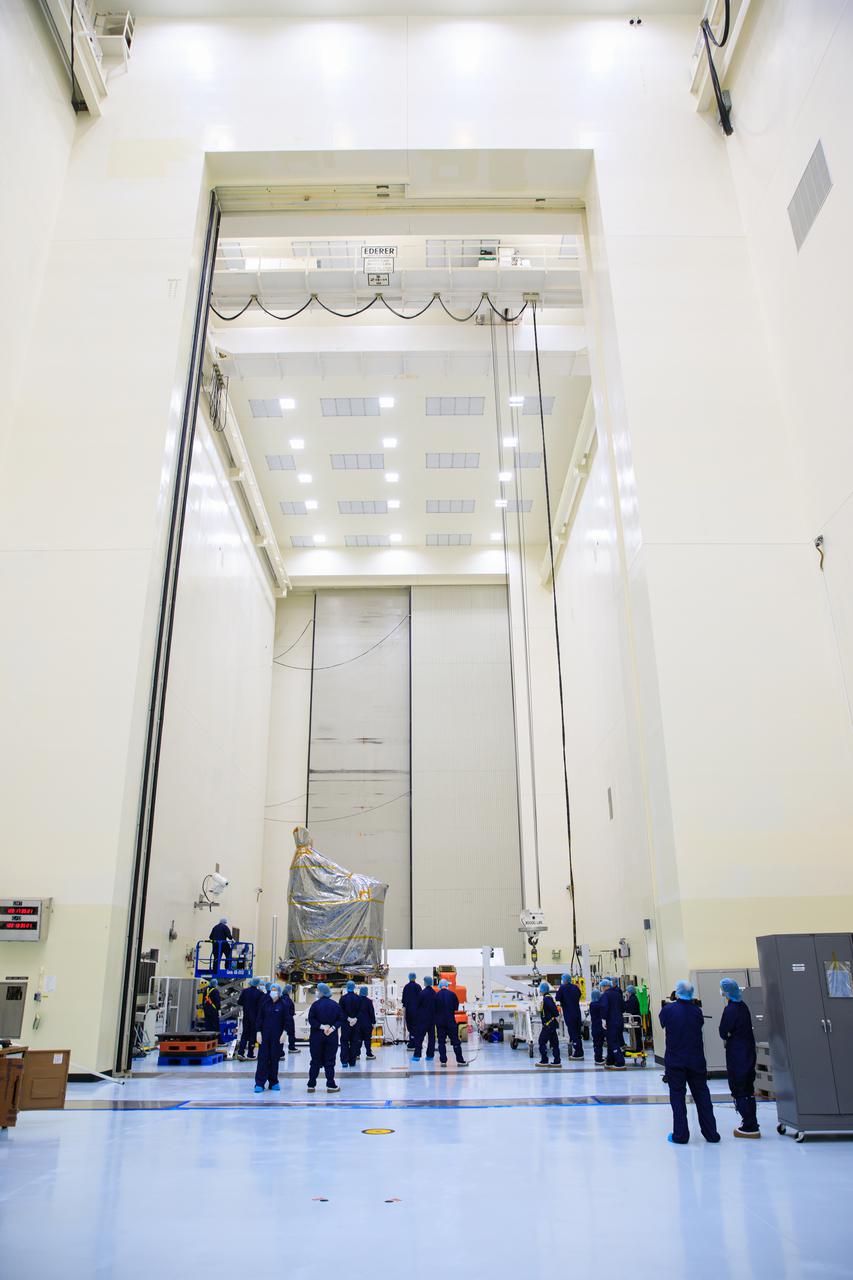
Inside the Payload Hazardous Servicing Facility (PHSF) at NASA's Kennedy Space Center, technicians prepare to move the agency’s Psyche spacecraft – recently removed from its shipping container and inside a protective covering – to a work stand on May 2, 2022. Psyche is scheduled to launch aboard a SpaceX Falcon Heavy rocket on Aug. 1, 2022. The spacecraft will use solar-electric propulsion to travel approximately 1.5 billion miles to rendezvous with its namesake asteroid in 2026. The Psyche mission is led by Arizona State University. NASA’s Jet Propulsion Laboratory, which is managed for the agency by Caltech in Pasadena, California, is responsible for the mission’s overall management, system engineering, integration and testing, and mission operations. Maxar Technologies in Palo Alto, California, provided the high-power solar electric propulsion spacecraft chassis. NASA’s Launch Services Program (LSP), based at Kennedy, is managing the launch. Psyche will be the 14th mission in the agency's Discovery program and LSP’s 100th primary mission.
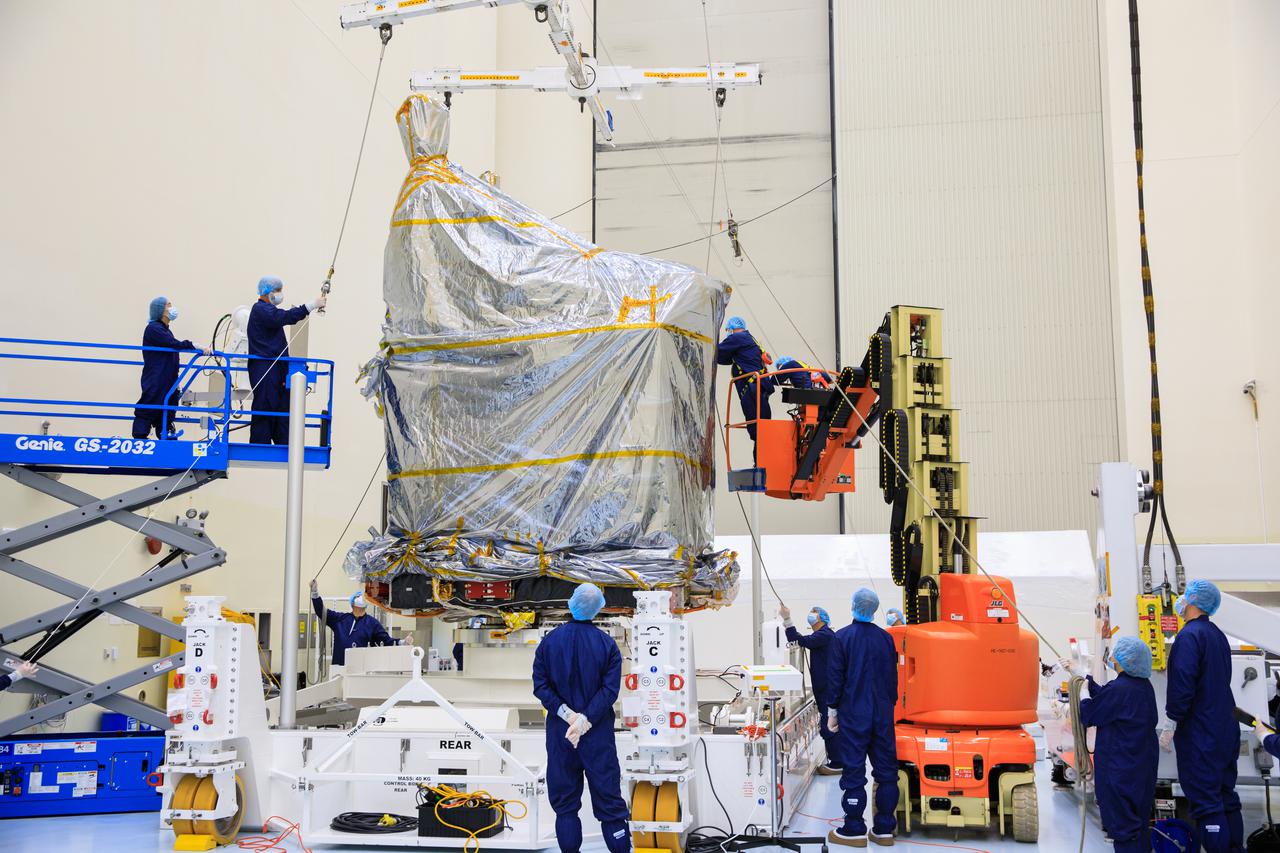
Inside the Payload Hazardous Servicing Facility (PHSF) at NASA's Kennedy Space Center, the agency’s Psyche spacecraft – recently removed from its shipping container and inside a protective covering – is moved by crane to a work stand on Monday, May 2, 2022. Psyche is scheduled to launch aboard a SpaceX Falcon Heavy rocket on Aug. 1, 2022. The spacecraft will use solar-electric propulsion to travel approximately 1.5 billion miles to rendezvous with its namesake asteroid in 2026. The Psyche mission is led by Arizona State University. NASA’s Jet Propulsion Laboratory, which is managed for the agency by Caltech in Pasadena, California, is responsible for the mission’s overall management, system engineering, integration and testing, and mission operations. Maxar Technologies in Palo Alto, California, provided the high-power solar electric propulsion spacecraft chassis. NASA’s Launch Services Program (LSP), based at Kennedy, is managing the launch. Psyche will be the 14th mission in the agency's Discovery program and LSP’s 100th primary mission.
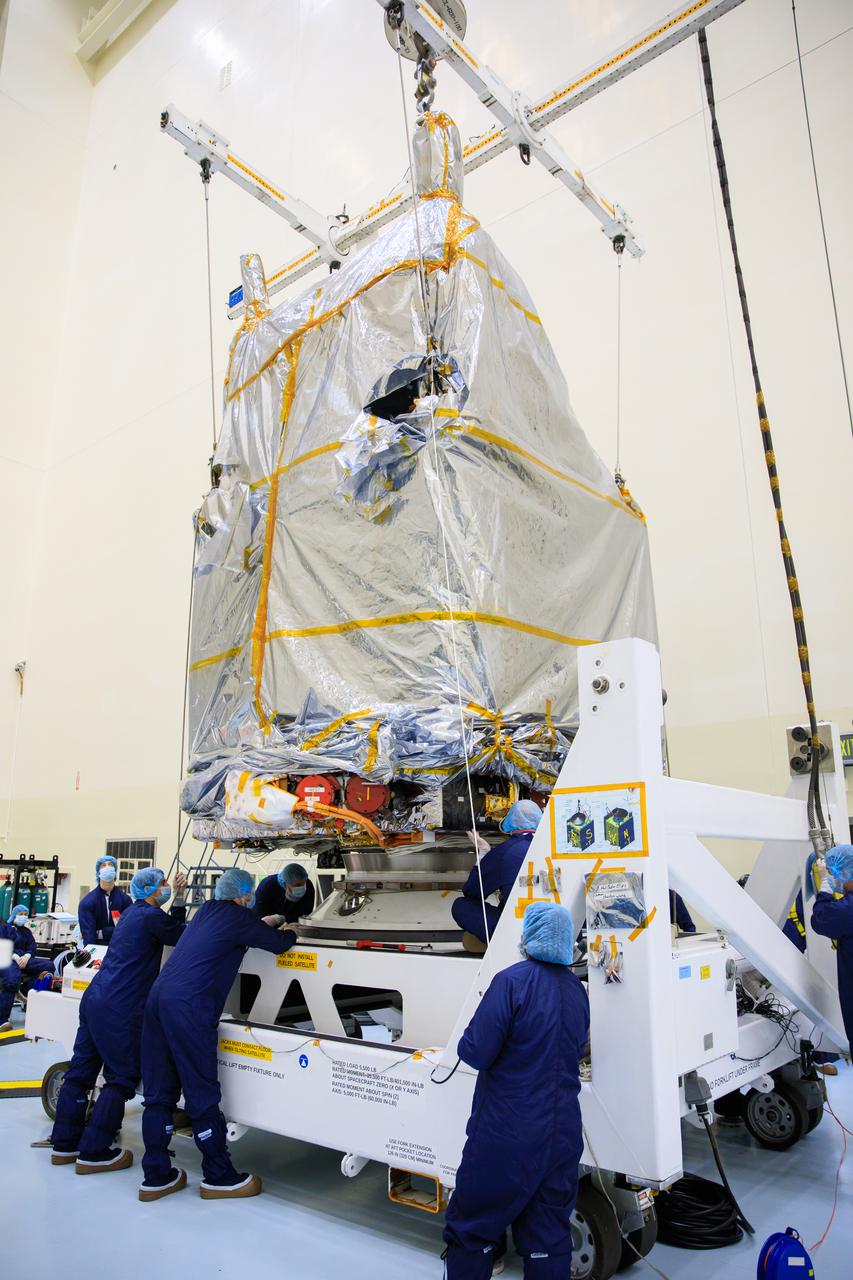
Inside the Payload Hazardous Servicing Facility (PHSF) at NASA's Kennedy Space Center, the agency’s Psyche spacecraft – recently removed from its shipping container and inside a protective covering – is moved by crane to a work stand on Monday, May 2, 2022. Psyche is scheduled to launch aboard a SpaceX Falcon Heavy rocket on Aug. 1, 2022. The spacecraft will use solar-electric propulsion to travel approximately 1.5 billion miles to rendezvous with its namesake asteroid in 2026. The Psyche mission is led by Arizona State University. NASA’s Jet Propulsion Laboratory, which is managed for the agency by Caltech in Pasadena, California, is responsible for the mission’s overall management, system engineering, integration and testing, and mission operations. Maxar Technologies in Palo Alto, California, provided the high-power solar electric propulsion spacecraft chassis. NASA’s Launch Services Program (LSP), based at Kennedy, is managing the launch. Psyche will be the 14th mission in the agency's Discovery program and LSP’s 100th primary mission.
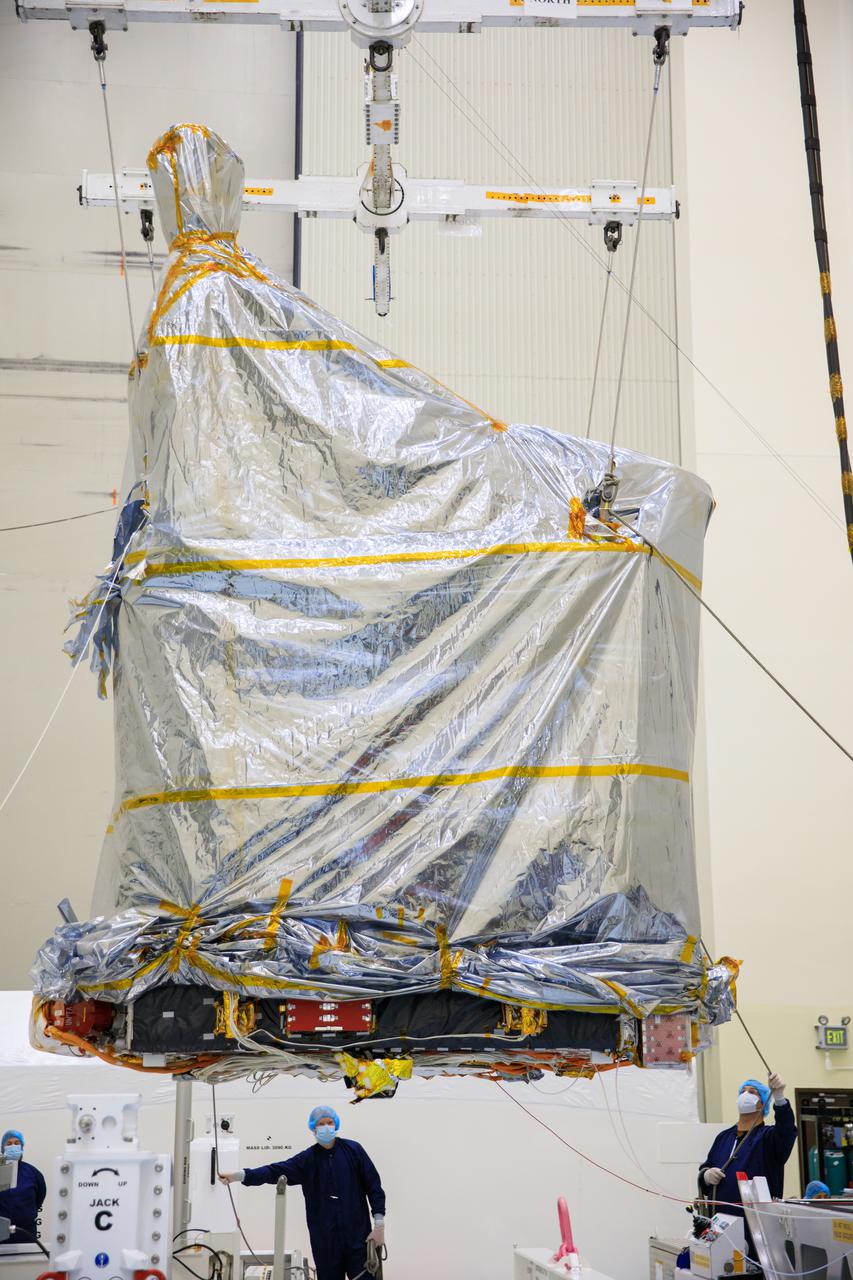
Inside the Payload Hazardous Servicing Facility (PHSF) at NASA's Kennedy Space Center, the agency’s Psyche spacecraft – recently removed from its shipping container and inside a protective covering – is moved by crane to a work stand on Monday, May 2, 2022. Psyche is scheduled to launch aboard a SpaceX Falcon Heavy rocket on Aug. 1, 2022. The spacecraft will use solar-electric propulsion to travel approximately 1.5 billion miles to rendezvous with its namesake asteroid in 2026. The Psyche mission is led by Arizona State University. NASA’s Jet Propulsion Laboratory, which is managed for the agency by Caltech in Pasadena, California, is responsible for the mission’s overall management, system engineering, integration and testing, and mission operations. Maxar Technologies in Palo Alto, California, provided the high-power solar electric propulsion spacecraft chassis. NASA’s Launch Services Program (LSP), based at Kennedy, is managing the launch. Psyche will be the 14th mission in the agency's Discovery program and LSP’s 100th primary mission.
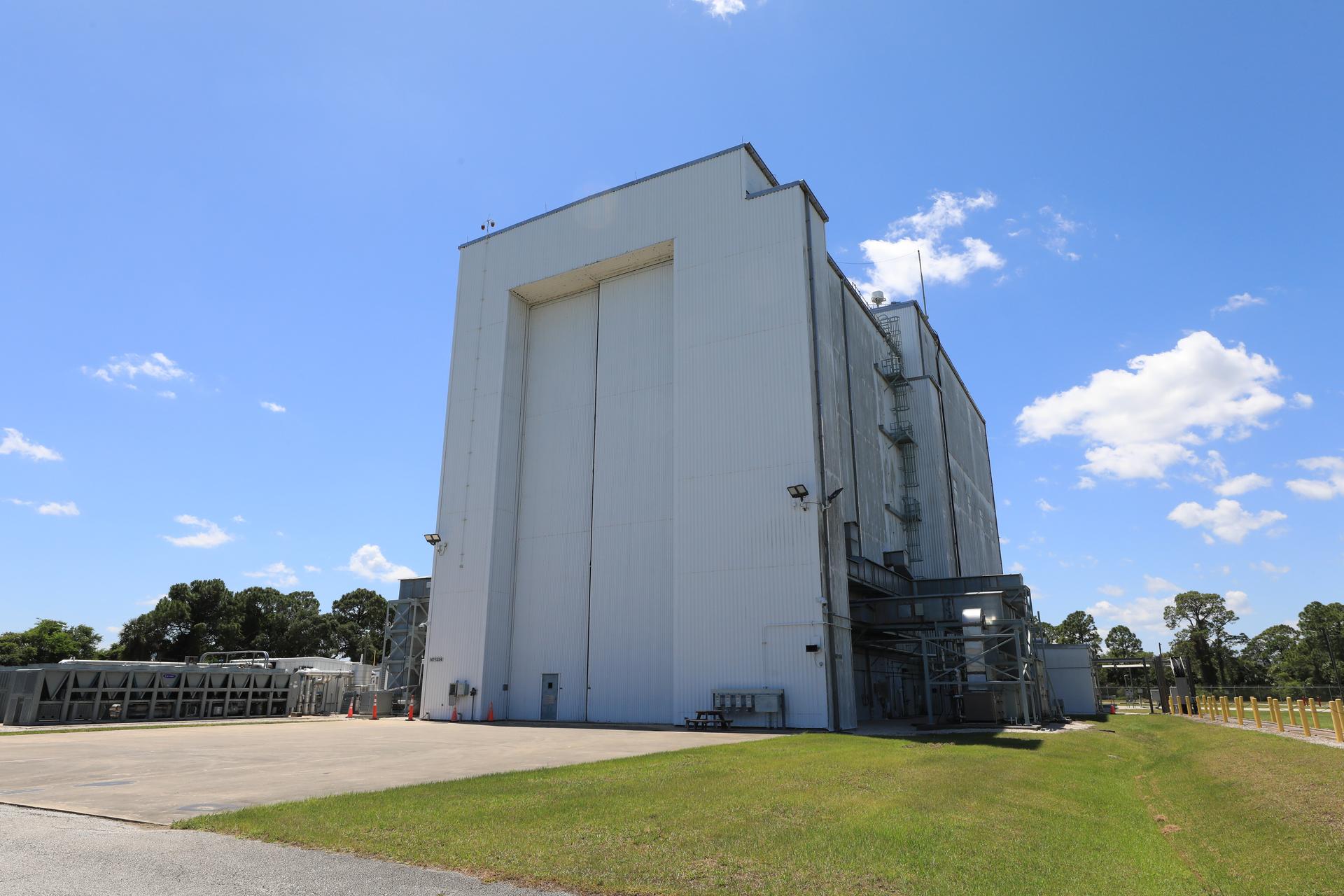
A photograph shows the exterior of NASA’s Payload Hazardous Servicing Facility (PHSF) on Tuesday, April 21, 2026, at NASA’s Kennedy Space Center in Florida. Recently, technicians performed several upgrades to the facility ahead of the arrival of the agency’s Nancy Grace Roman Space Telescope, designed to provide deep, panoramic views of the cosmos, generating never-before-seen pictures that will revolutionize our understanding of the universe. Roman will undergo several prelaunch operations, including thermal protection closeout, cleaning, solar array work, and loading hydrazine propellant. The PHSF is one of the very few facilities where spacecraft undergo both hazardous fueling operations and delicate contamination control procedures.
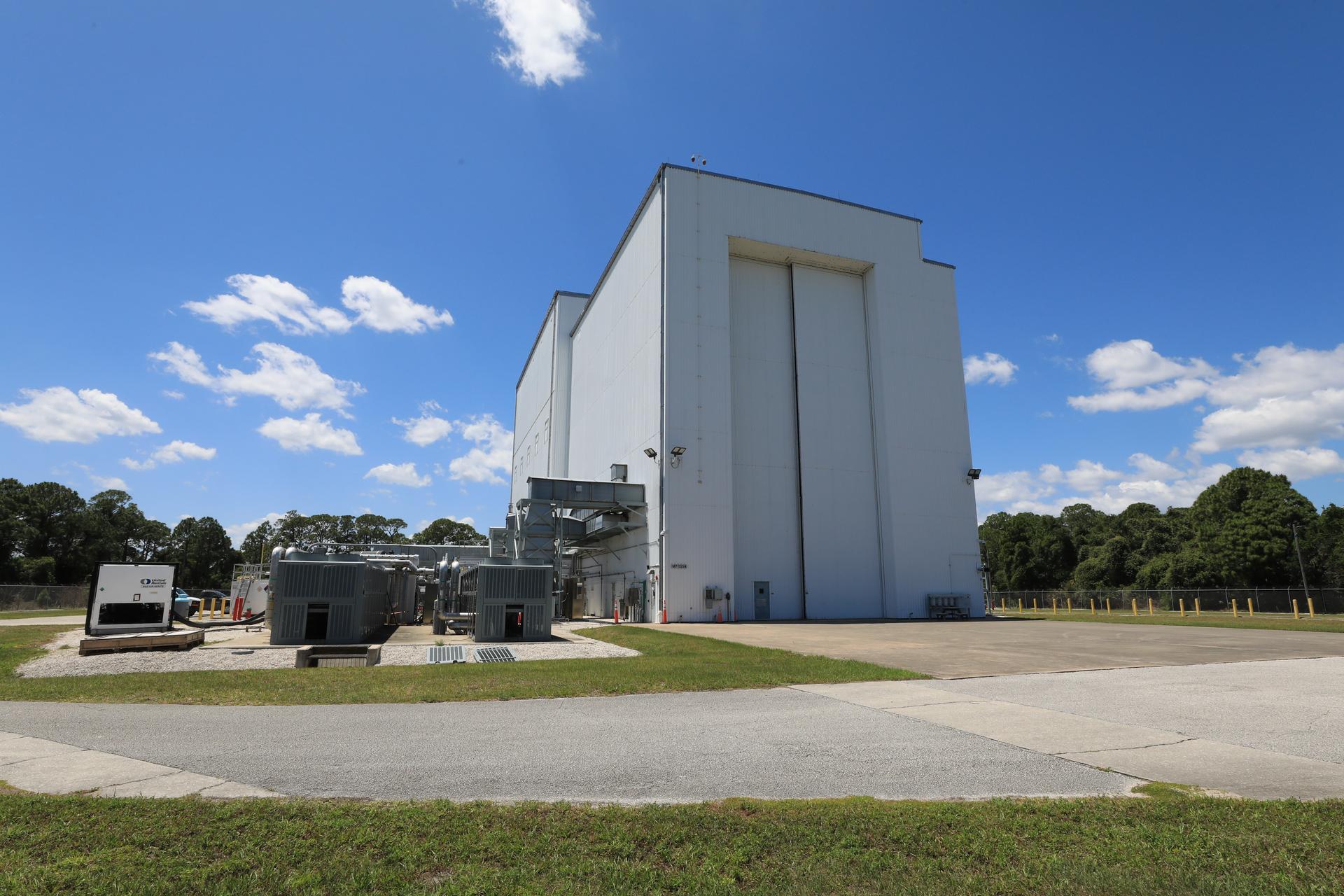
A photograph shows the exterior of NASA’s Payload Hazardous Servicing Facility (PHSF) on Tuesday, April 21, 2026, at NASA’s Kennedy Space Center in Florida. Recently, technicians performed several upgrades to the facility ahead of the arrival of the agency’s Nancy Grace Roman Space Telescope, designed to provide deep, panoramic views of the cosmos, generating never-before-seen pictures that will revolutionize our understanding of the universe. Roman will undergo several prelaunch operations, including thermal protection closeout, cleaning, solar array work, and loading hydrazine propellant. The PHSF is one of the very few facilities where spacecraft undergo both hazardous fueling operations and delicate contamination control procedures.
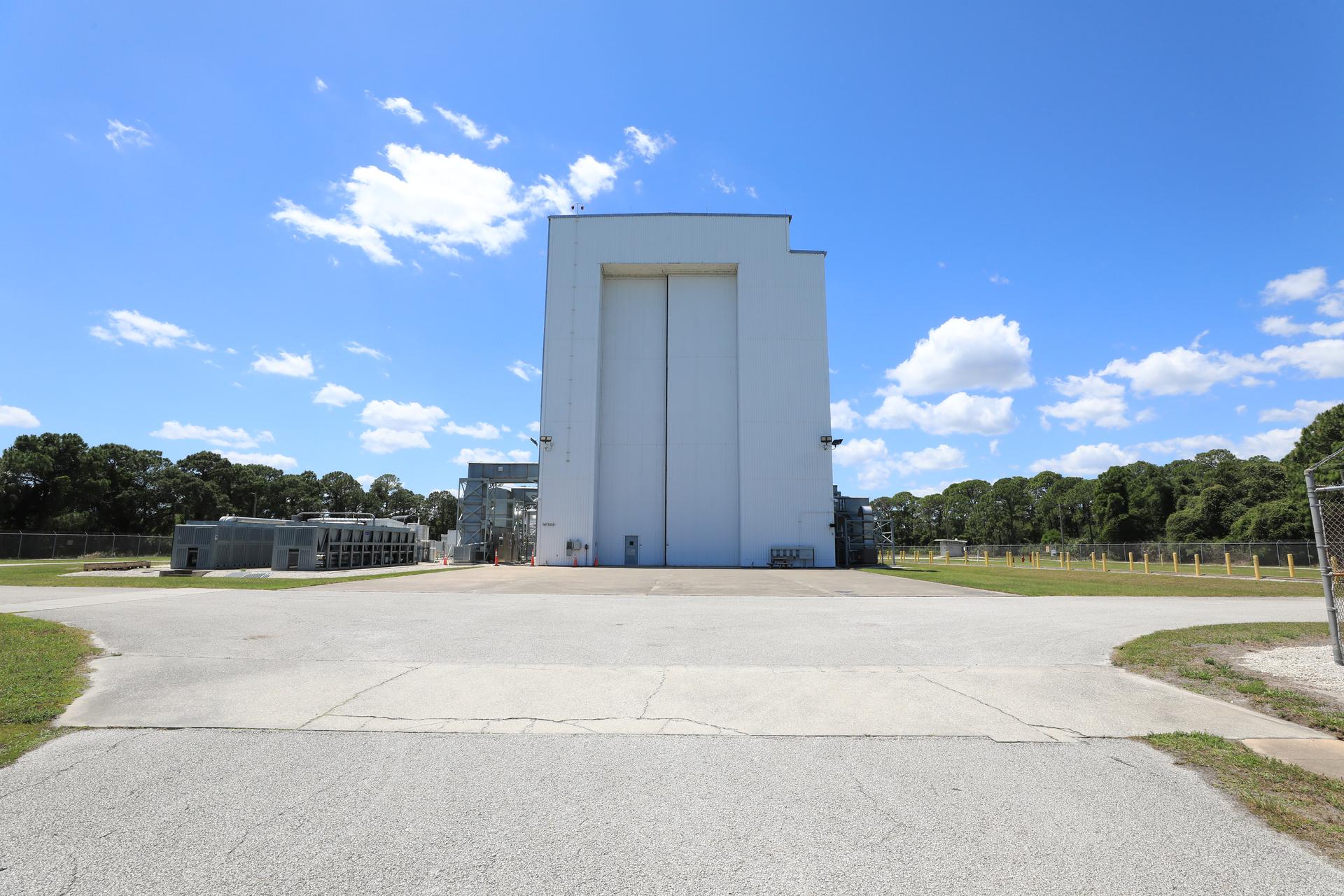
A photograph shows the exterior of NASA’s Payload Hazardous Servicing Facility (PHSF) on Tuesday, April 21, 2026, at NASA’s Kennedy Space Center in Florida. Recently, technicians performed several upgrades to the facility ahead of the arrival of the agency’s Nancy Grace Roman Space Telescope, designed to provide deep, panoramic views of the cosmos, generating never-before-seen pictures that will revolutionize our understanding of the universe. Roman will undergo several prelaunch operations, including thermal protection closeout, cleaning, solar array work, and loading hydrazine propellant. The PHSF is one of the very few facilities where spacecraft undergo both hazardous fueling operations and delicate contamination control procedures.
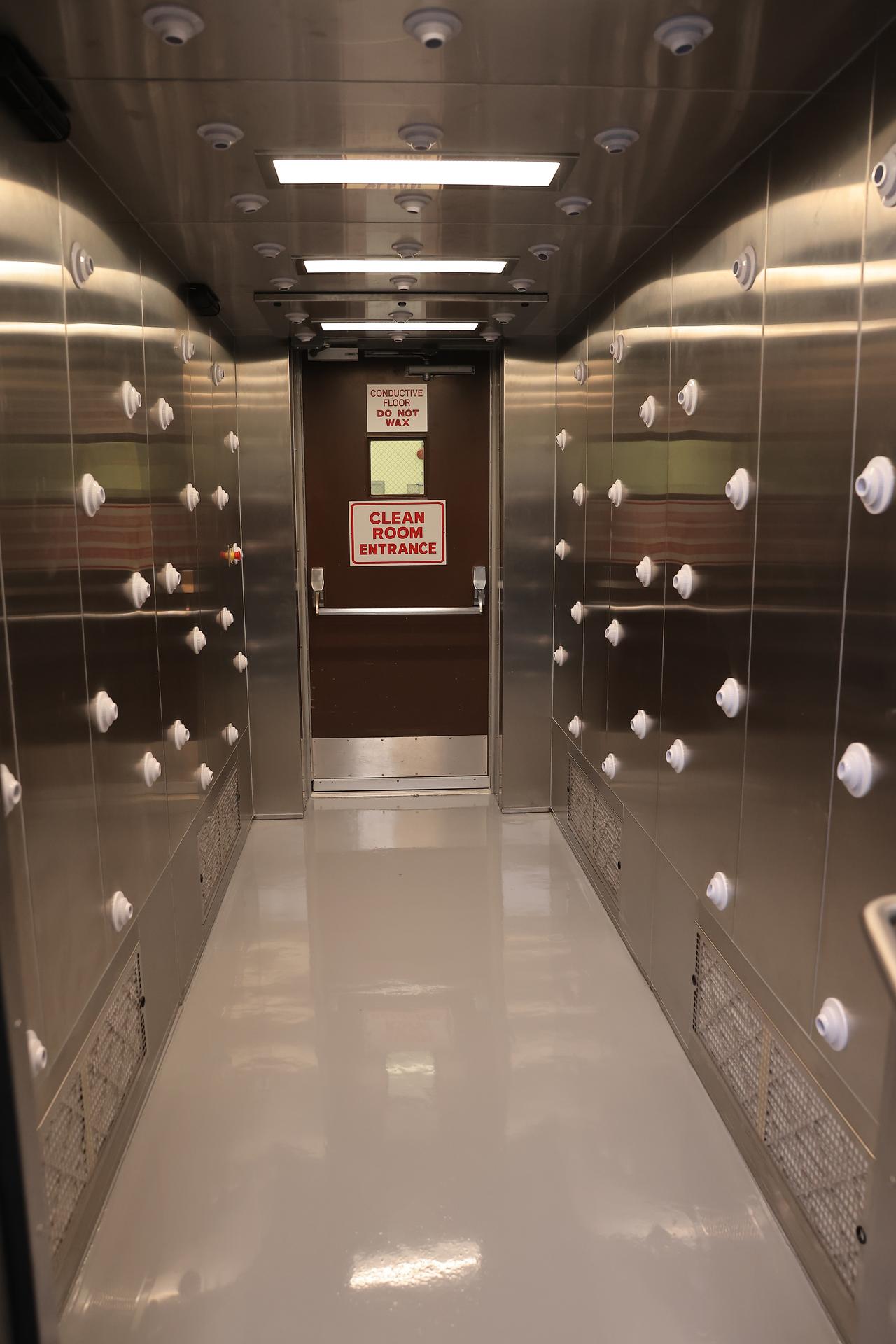
This image shows the recently upgraded air showers which blast high-velocity HEPA-filtered air onto people before they enter a clean room at NASA’s Payload Hazardous Servicing Facility at the agency’s Kennedy Space Center in Florida on Friday, Feb. 27, 2026. The PHSF went through several upgrades ahead of the arrival of Nancy Grace Roman Space Telescope. Roman will provide deep, panoramic views of the cosmos, generating never-before-seen pictures that will revolutionize our understanding of the universe. Roman will undergo several prelaunch operations, including thermal protection closeout, cleaning, solar array work, and loading hydrazine propellant.
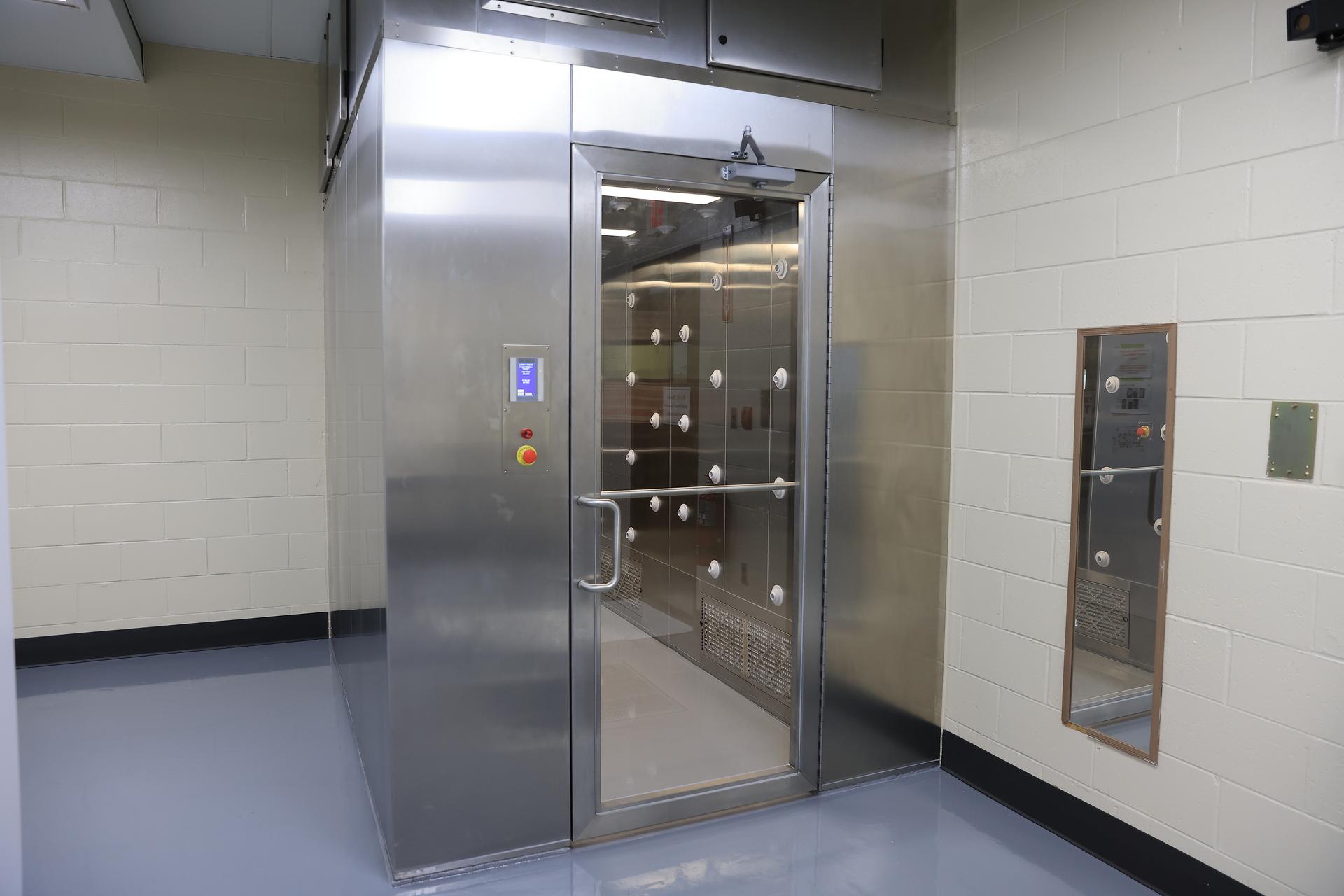
This image shows the recently upgraded air showers which blast high-velocity HEPA-filtered air onto people before they enter a clean room at NASA’s Payload Hazardous Servicing Facility at the agency’s Kennedy Space Center in Florida on Friday, Feb. 27, 2026. The PHSF went through several upgrades ahead of the arrival of Nancy Grace Roman Space Telescope. Roman will provide deep, panoramic views of the cosmos, generating never-before-seen pictures that will revolutionize our understanding of the universe. Roman will undergo several prelaunch operations, including thermal protection closeout, cleaning, solar array work, and loading hydrazine propellant.
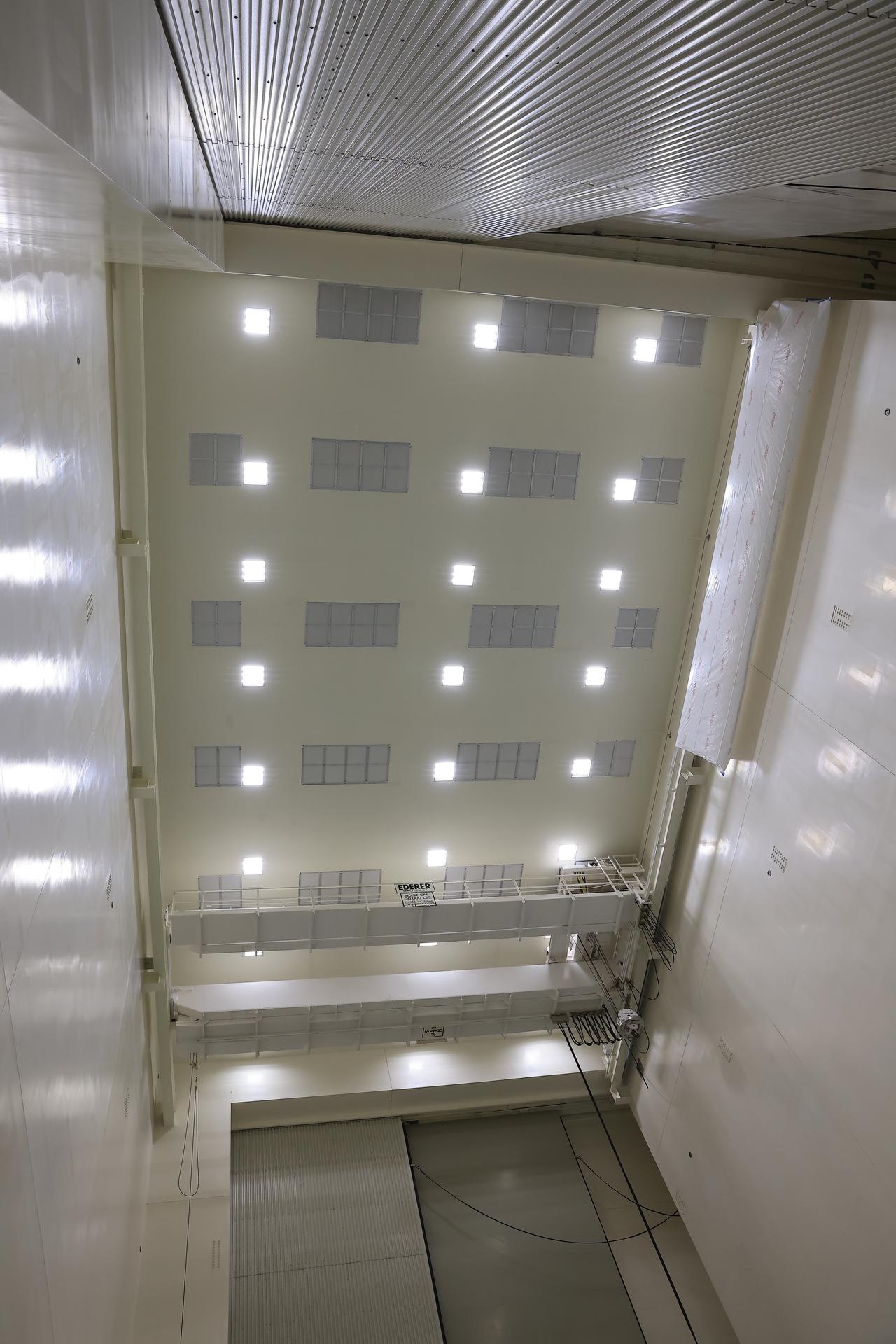
This photograph shows a newly repainted crane mounted inside NASA’s Payload Hazardous Servicing Facility on Friday, Feb. 27, 2026, preparations for the arrival of the agency’s Nancy Grace Roman Space Telescope to NASA’s Kennedy Space Center in Florida. Workers repainted the facility’s 15-ton bridge crane to prevent any paint chips from becoming foreign object debris. The Roman space telescope will provide deep, panoramic views of the cosmos, generating never-before-seen pictures that will revolutionize our understanding of the universe. Roman will undergo several prelaunch operations, including thermal protection closeout, cleaning, solar array work, and loading hydrazine propellant.
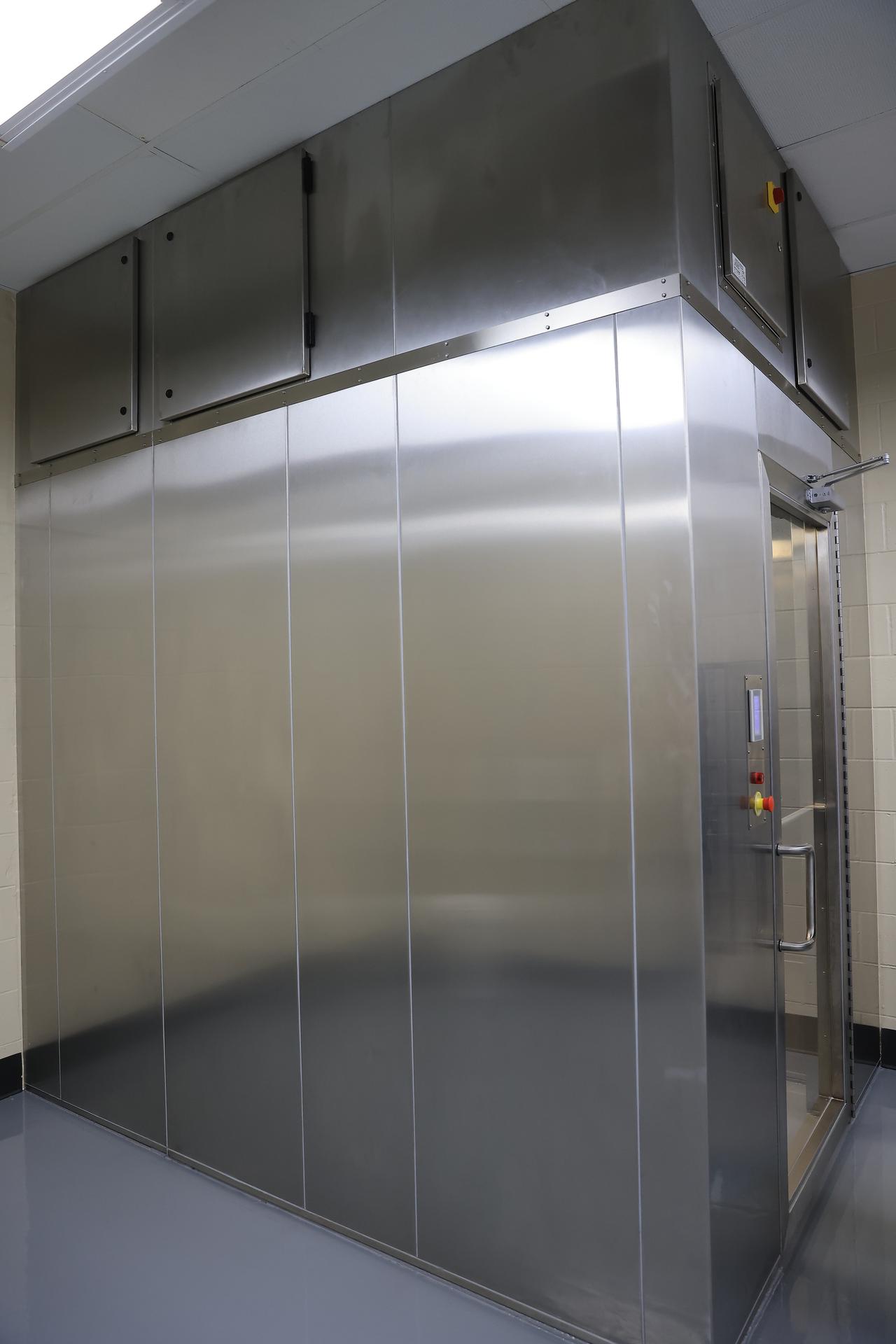
This image shows the recently upgraded air showers which blast high-velocity HEPA-filtered air onto people before they enter a clean room at NASA’s Payload Hazardous Servicing Facility at the agency’s Kennedy Space Center in Florida on Friday, Feb. 27, 2026. The PHSF went through several upgrades ahead of the arrival of Nancy Grace Roman Space Telescope. Roman will provide deep, panoramic views of the cosmos, generating never-before-seen pictures that will revolutionize our understanding of the universe. Roman will undergo several prelaunch operations, including thermal protection closeout, cleaning, solar array work, and loading hydrazine propellant.

NASA Administrator Jim Bridenstine, left, and NASA Associate Administrator for the Science Mission Directorate Thomas Zurbuchen, right, pose for a photograph with the representatives of the nine U.S. companies that are eligible to bid on NASA delivery services to the lunar surface through Commercial Lunar Payload Services (CLPS) contracts, Thursday, Nov. 29, 2018 at NASA Headquarters in Washington. The representatives of the companies are: Steve Altemus, President and CEO of Intuitive Machines; 2nd from left, Sean Mahoney, CEO, Masten Space Systems Inc; Eric Salwan, Director of Commercial Business Development, Firefly Aerospace; Jennifer Jensen, Vice President, National Security & Space, Draper; Joe Landon, VP of Advanced Programs, Commercial Civil Space, Lockheed Martin Space; Steve Bailey, Deep Space Systems Inc; Daven Maharaj, Chief Operating Officer, Moon Express Inc; John Thornton, CEO, Astrobotic Technology Inc; and Jeff Patton, Chief Engineering Advisor, Orbit Beyond Inc, 2nd from right. Photo Credit: (NASA/Bill Ingalls)
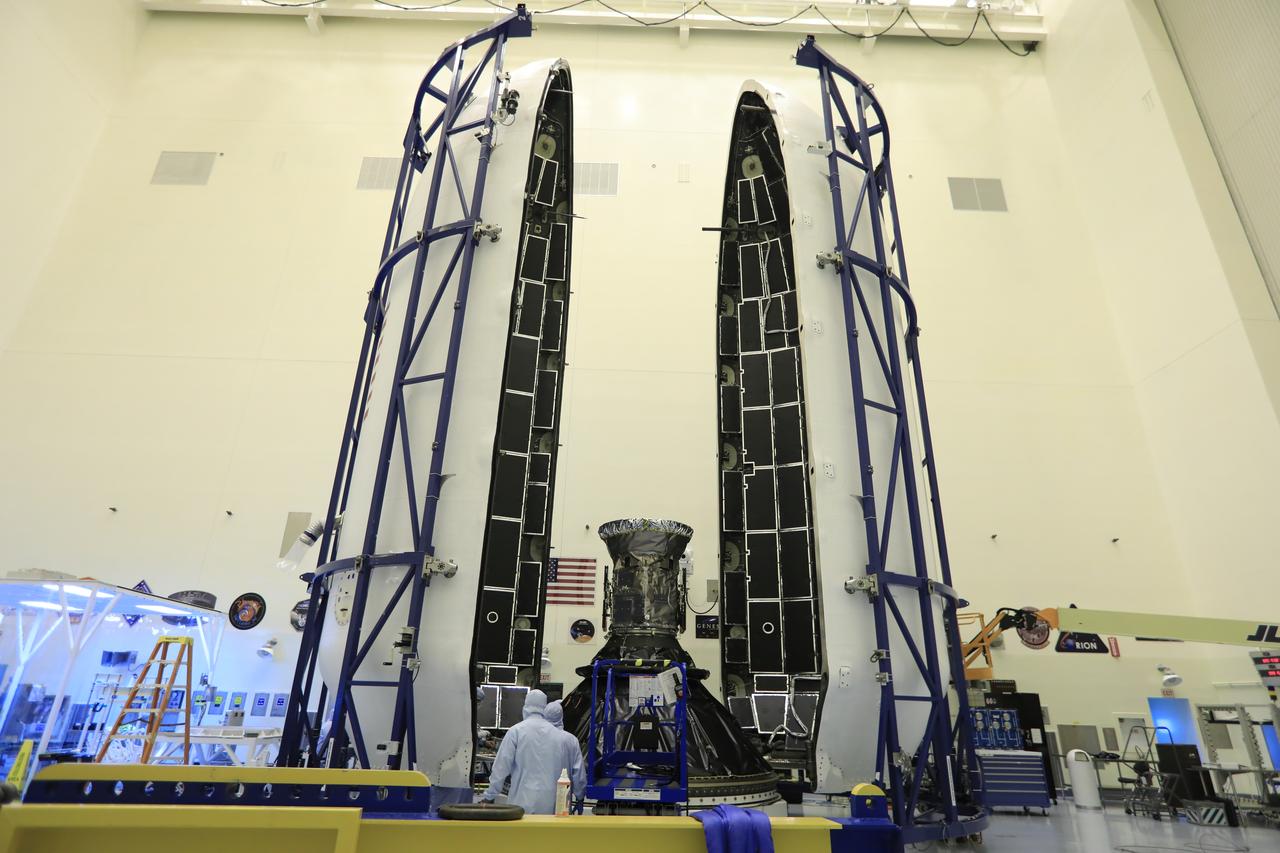
Technicians prepare NASA's Transiting Exoplanet Survey Satellite (TESS) for encapsulation in the SpaceX payload fairing inside the Payload Hazardous Servicing Facility at the agency's Kennedy Space Center in Florida. The satellite is scheduled to launch atop a SpaceX Falcon 9 rocket from Space Launch Complex 40 at Cape Canaveral Air Force Station on April 16. The satellite is the next step in NASA's search for planets outside our solar system, known as exoplanets. TESS is a NASA Astrophysics Explorer mission led and operated by MIT in Cambridge, Massachusetts, and managed by NASA’s Goddard Space Flight Center in Greenbelt, Maryland. Dr. George Ricker of MIT’s Kavli Institute for Astrophysics and Space Research serves as principal investigator for the mission. Additional partners include Orbital ATK, NASA’s Ames Research Center, the Harvard-Smithsonian Center for Astrophysics and the Space Telescope Science Institute. More than a dozen universities, research institutes and observatories worldwide are participants in the mission. NASA’s Launch Services Program is responsible for launch management.
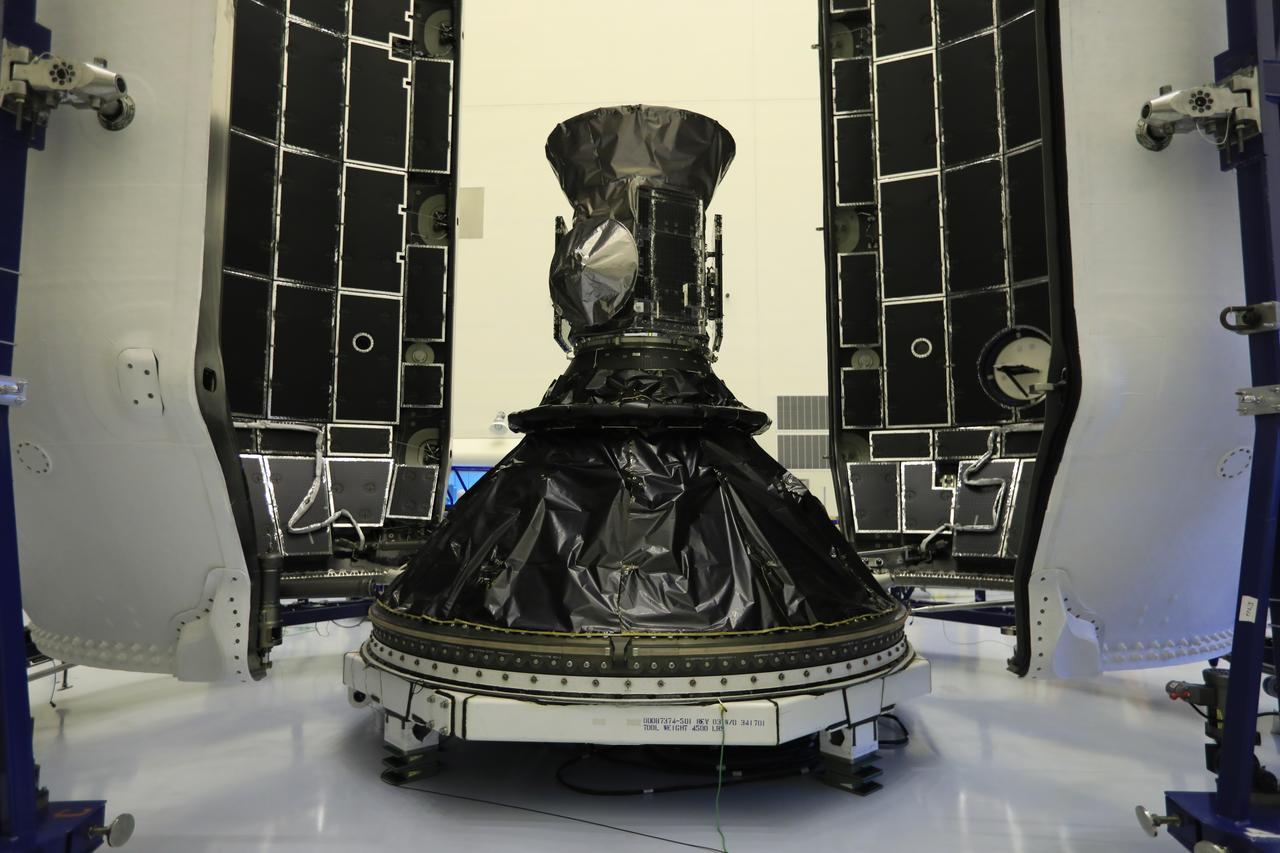
Inside the Payload Hazardous Servicing Facility at NASA's Kennedy Space Center in Florida, NASA's Transiting Exoplanet Survey Satellite (TESS) is being prepared for encapsulation in the SpaceX payload fairing. The satellite is scheduled to launch atop a SpaceX Falcon 9 rocket from Space Launch Complex 40 at Cape Canaveral Air Force Station on April 16. The satellite is the next step in NASA's search for planets outside our solar system, known as exoplanets. TESS is a NASA Astrophysics Explorer mission led and operated by MIT in Cambridge, Massachusetts, and managed by NASA’s Goddard Space Flight Center in Greenbelt, Maryland. Dr. George Ricker of MIT’s Kavli Institute for Astrophysics and Space Research serves as principal investigator for the mission. Additional partners include Orbital ATK, NASA’s Ames Research Center, the Harvard-Smithsonian Center for Astrophysics and the Space Telescope Science Institute. More than a dozen universities, research institutes and observatories worldwide are participants in the mission. NASA’s Launch Services Program is responsible for launch management.
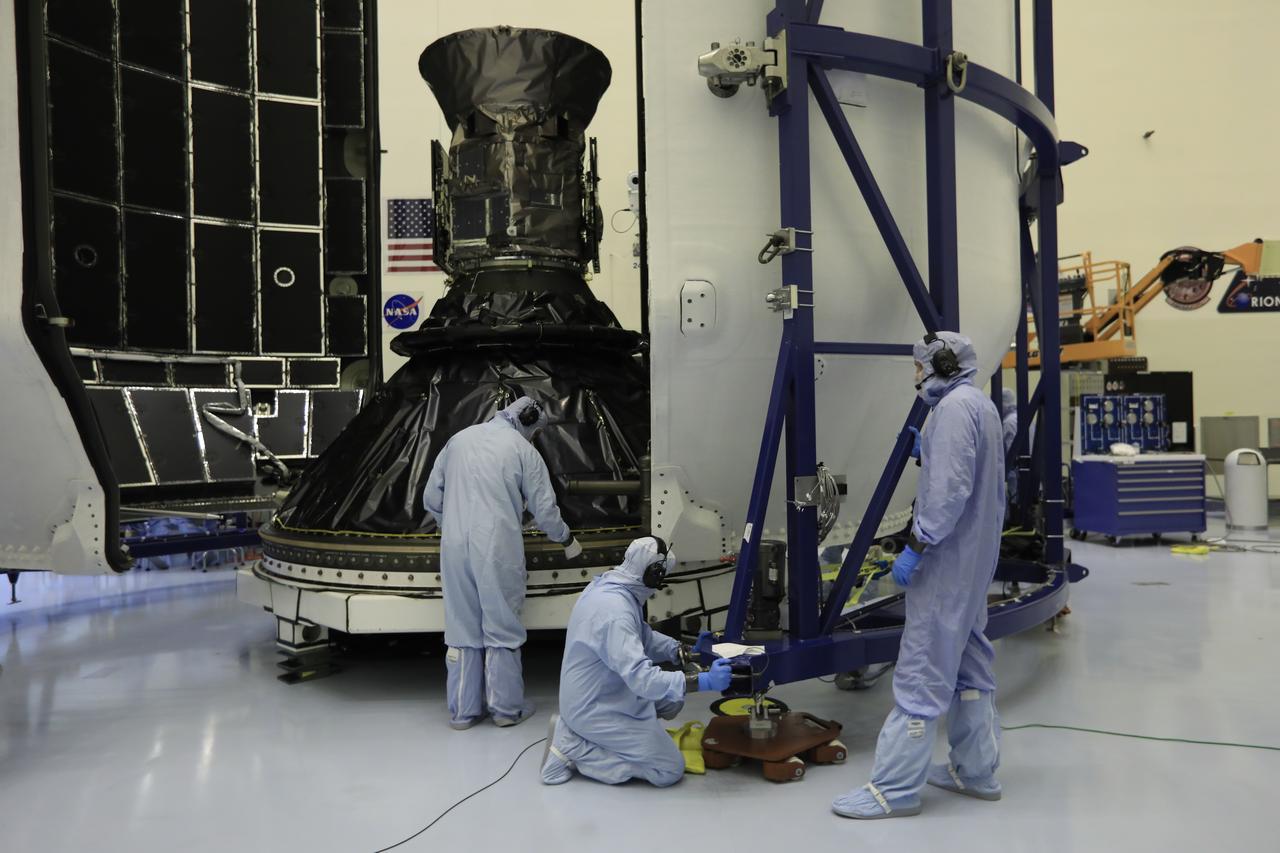
Technicians prepare NASA's Transiting Exoplanet Survey Satellite (TESS) for encapsulation in the SpaceX payload fairing inside the Payload Hazardous Servicing Facility at the agency's Kennedy Space Center in Florida. The satellite is scheduled to launch atop a SpaceX Falcon 9 rocket from Space Launch Complex 40 at Cape Canaveral Air Force Station on April 16. The satellite is the next step in NASA's search for planets outside our solar system, known as exoplanets. TESS is a NASA Astrophysics Explorer mission led and operated by MIT in Cambridge, Massachusetts, and managed by NASA’s Goddard Space Flight Center in Greenbelt, Maryland. Dr. George Ricker of MIT’s Kavli Institute for Astrophysics and Space Research serves as principal investigator for the mission. Additional partners include Orbital ATK, NASA’s Ames Research Center, the Harvard-Smithsonian Center for Astrophysics and the Space Telescope Science Institute. More than a dozen universities, research institutes and observatories worldwide are participants in the mission. NASA’s Launch Services Program is responsible for launch management.
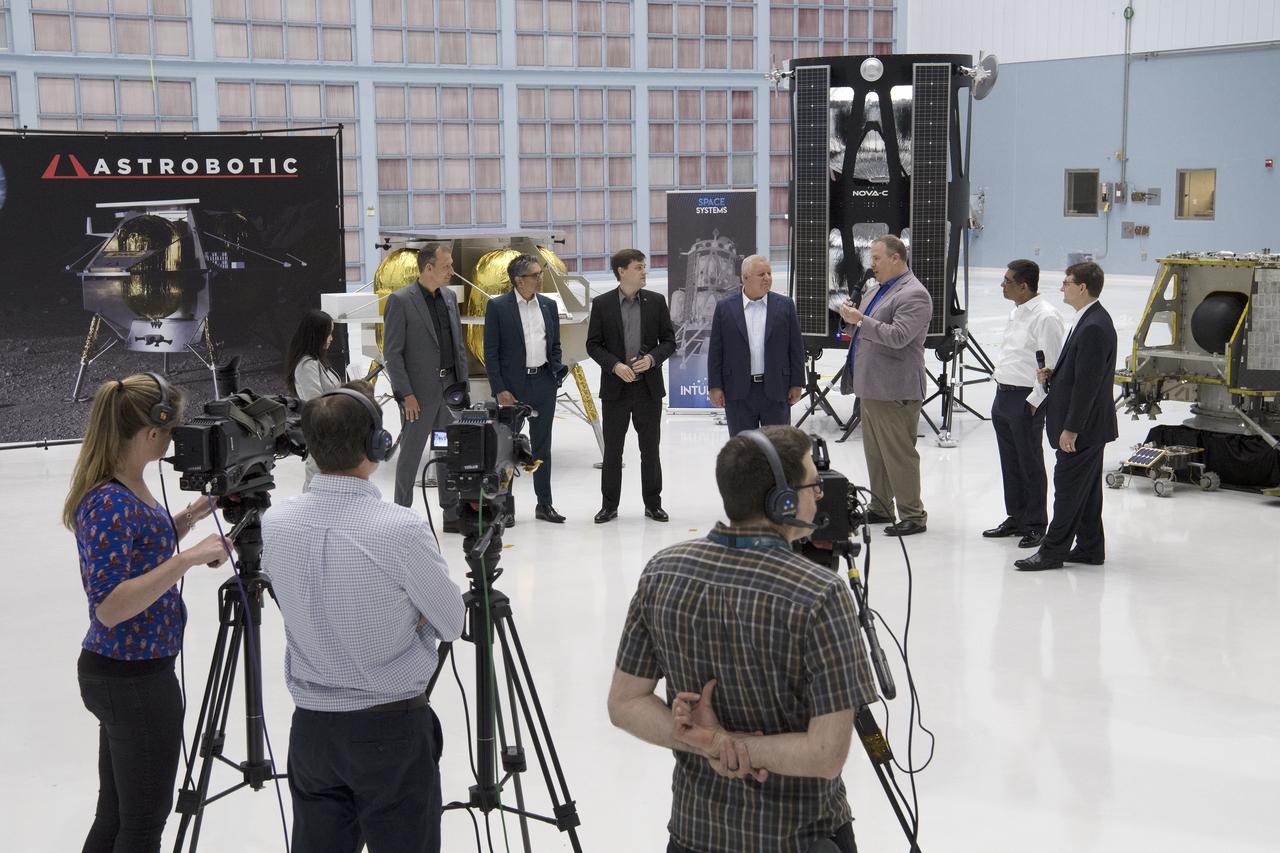
Lunar Commericial Payload Services Announcement was made at Godddard May 31, 2019. Tom Zurbuchen, AA Science Mission Directorate congratulated three companies for providing first lunar landers for Artemis: Astrobotic, Intuitive Machines and OrbitBeyond
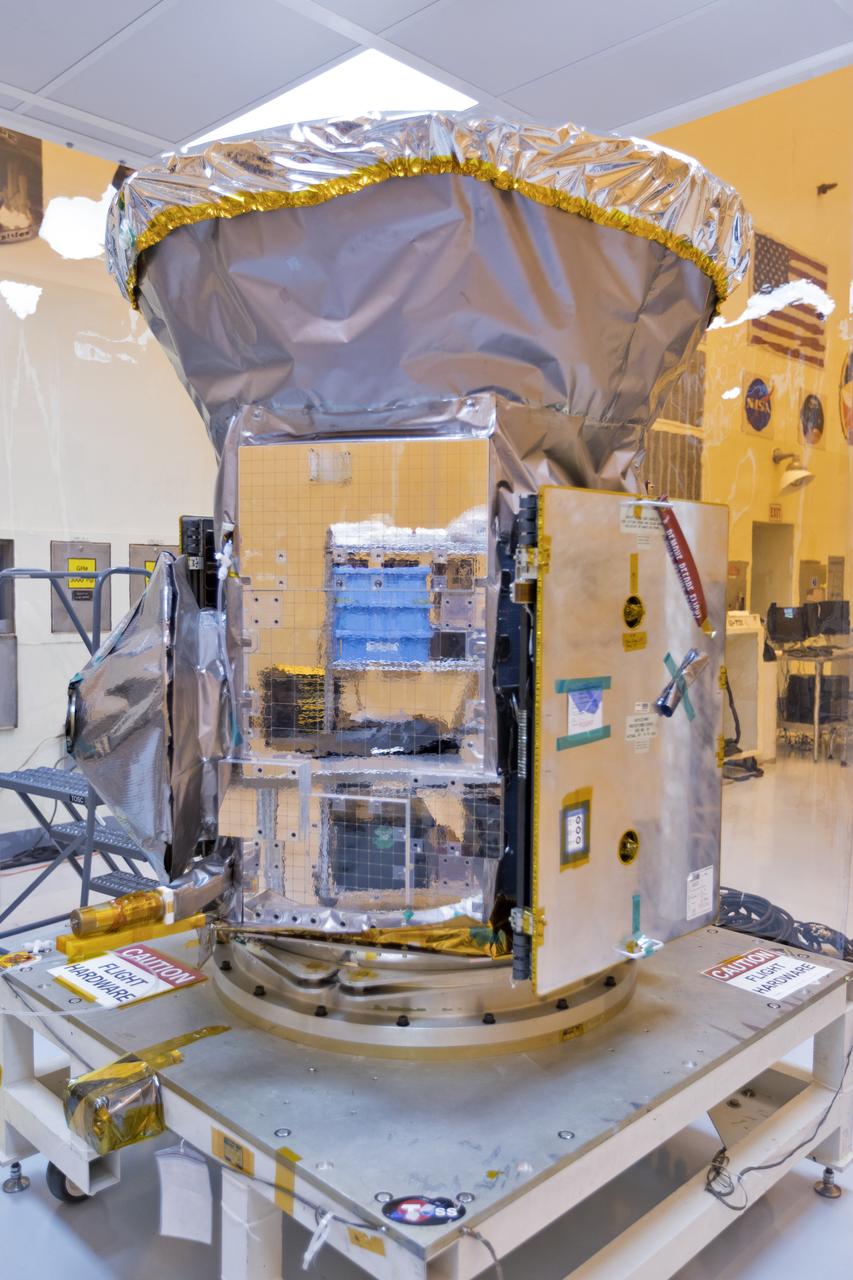
In the Payload Hazardous Servicing Facility at NASA's Kennedy Space Center in Florida, the agency's Transiting Exoplanet Survey Satellite, or TESS, has been uncreated from its shipping container for inspections and preflight processing. The satellite is NASA's next step in the search for planets outside of the solar system also known as "exoplanets." TESS is a NASA Astrophysics Explorer mission led and operated by MIT in Cambridge, Massachusetts, and managed by NASA’s Goddard Space Flight Center in Greenbelt, Maryland. Dr. George Ricker of MIT’s Kavli Institute for Astrophysics and Space Research serves as principal investigator for the mission. Additional partners include Orbital ATK, NASA’s Ames Research Center, and the Harvard-Smithsonian Center for Astrophysics and the Space Telescope Science Institute. More than a dozen universities, research institutes and observatories worldwide are participants in the mission. NASA’s Launch Services Program is responsible for launch management. SpaceX of Hawthorne, California, is the provider of the Falcon 9 launch service. TESS is scheduled to launch atop a Falcon 9 rocket no earlier than April 16, 2018 from Space Launch Complex 41 at Cape Canaveral Air Force Station.
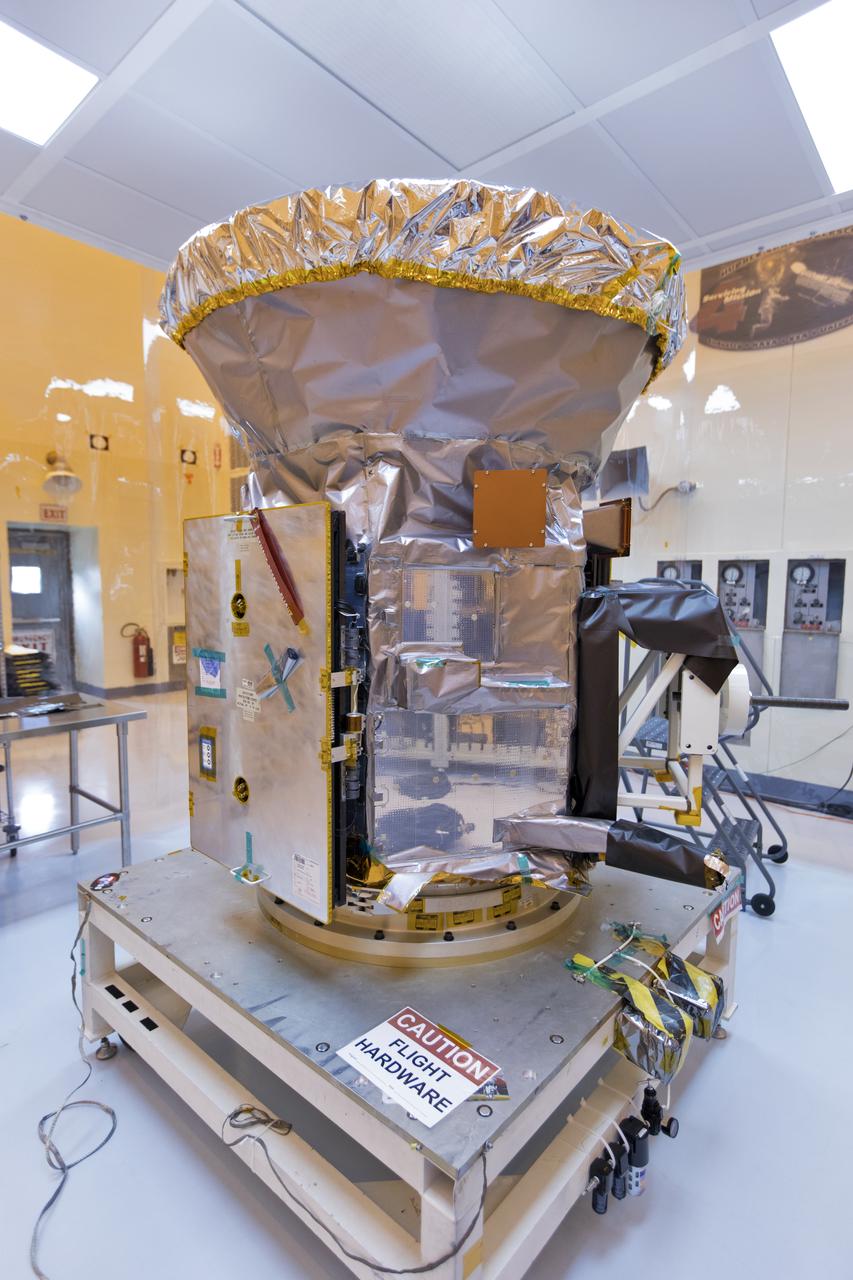
In the Payload Hazardous Servicing Facility at NASA's Kennedy Space Center in Florida, the agency's Transiting Exoplanet Survey Satellite, or TESS, has been uncreated from its shipping container for inspections and preflight processing. The satellite is NASA's next step in the search for planets outside of the solar system also known as "exoplanets." TESS is a NASA Astrophysics Explorer mission led and operated by MIT in Cambridge, Massachusetts, and managed by NASA’s Goddard Space Flight Center in Greenbelt, Maryland. Dr. George Ricker of MIT’s Kavli Institute for Astrophysics and Space Research serves as principal investigator for the mission. Additional partners include Orbital ATK, NASA’s Ames Research Center, and the Harvard-Smithsonian Center for Astrophysics and the Space Telescope Science Institute. More than a dozen universities, research institutes and observatories worldwide are participants in the mission. NASA’s Launch Services Program is responsible for launch management. SpaceX of Hawthorne, California, is the provider of the Falcon 9 launch service. TESS is scheduled to launch atop a Falcon 9 rocket no earlier than April 16, 2018 from Space Launch Complex 41 at Cape Canaveral Air Force Station.
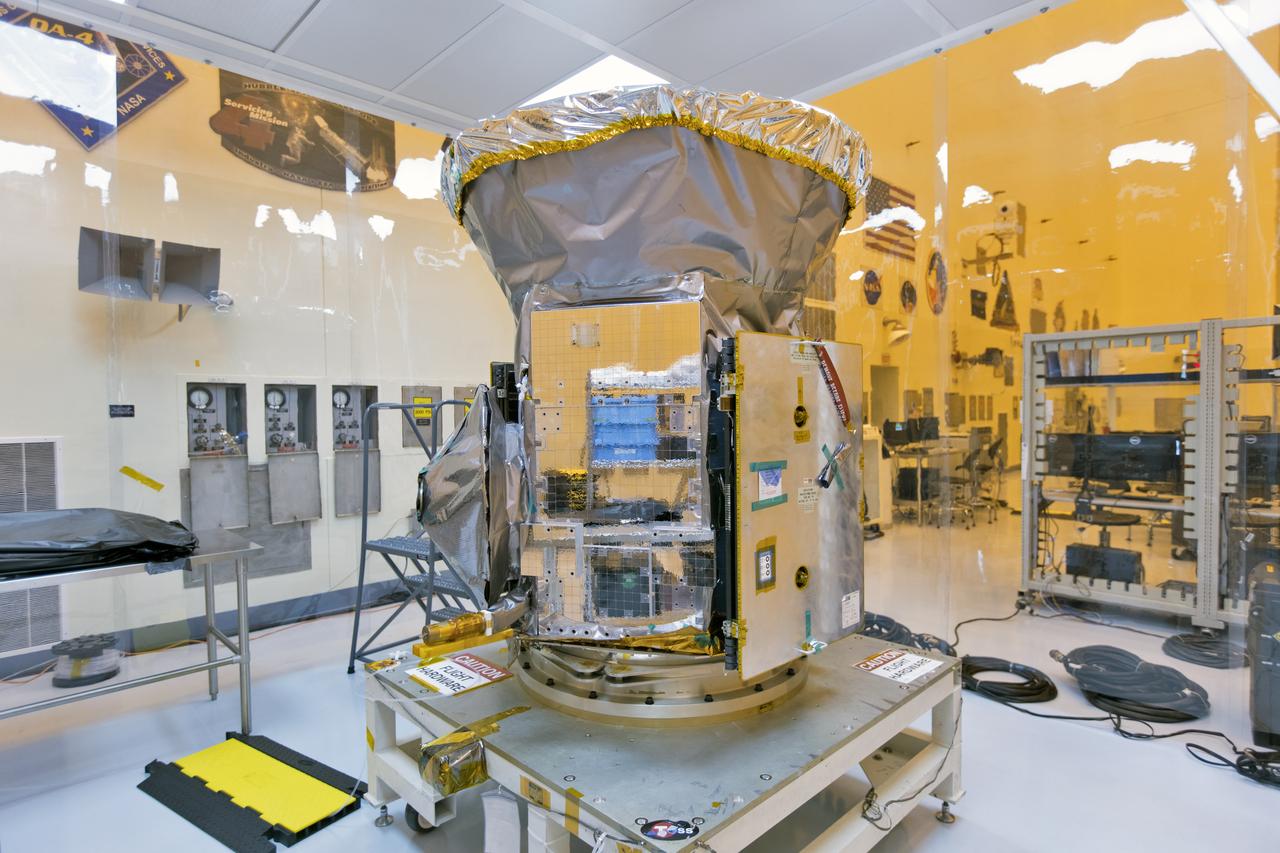
In the Payload Hazardous Servicing Facility at NASA's Kennedy Space Center in Florida, the agency's Transiting Exoplanet Survey Satellite, or TESS, has been uncreated from its shipping container for inspections and preflight processing. The satellite is NASA's next step in the search for planets outside of the solar system also known as "exoplanets." TESS is a NASA Astrophysics Explorer mission led and operated by MIT in Cambridge, Massachusetts, and managed by NASA’s Goddard Space Flight Center in Greenbelt, Maryland. Dr. George Ricker of MIT’s Kavli Institute for Astrophysics and Space Research serves as principal investigator for the mission. Additional partners include Orbital ATK, NASA’s Ames Research Center, and the Harvard-Smithsonian Center for Astrophysics and the Space Telescope Science Institute. More than a dozen universities, research institutes and observatories worldwide are participants in the mission. NASA’s Launch Services Program is responsible for launch management. SpaceX of Hawthorne, California, is the provider of the Falcon 9 launch service. TESS is scheduled to launch atop a Falcon 9 rocket no earlier than April 16, 2018 from Space Launch Complex 41 at Cape Canaveral Air Force Station.
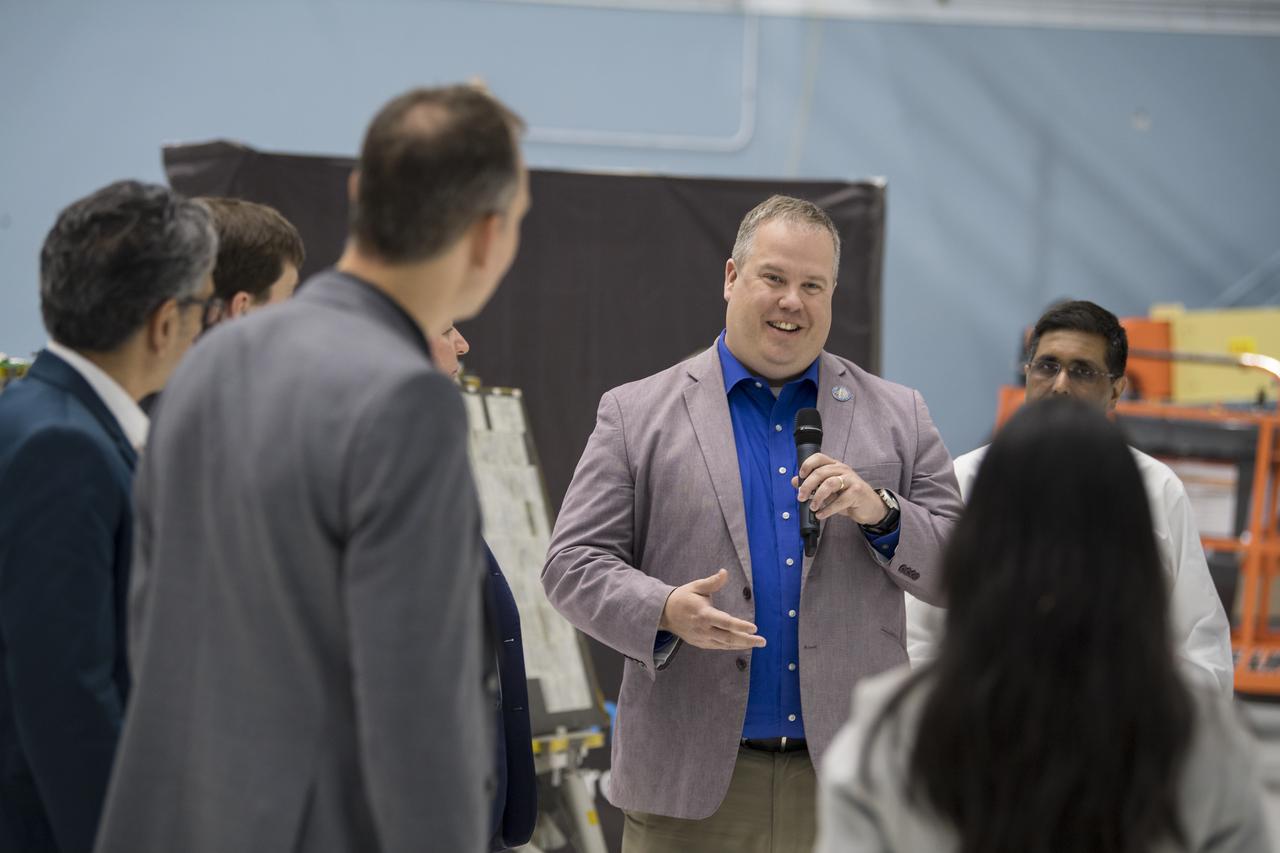
Vice President of Research and Development of Intuitive Machines, Tim Crain, second from right, speaks about their lunar lander, Friday, May 31, 2019, at Goddard Space Flight Center in Md. Astrobotic, Intuitive Machines, and Orbit Beyond have been selected to provide the first lunar landers for the Artemis program's lunar surface exploration. Photo credit: (NASA/Aubrey Gemignani)
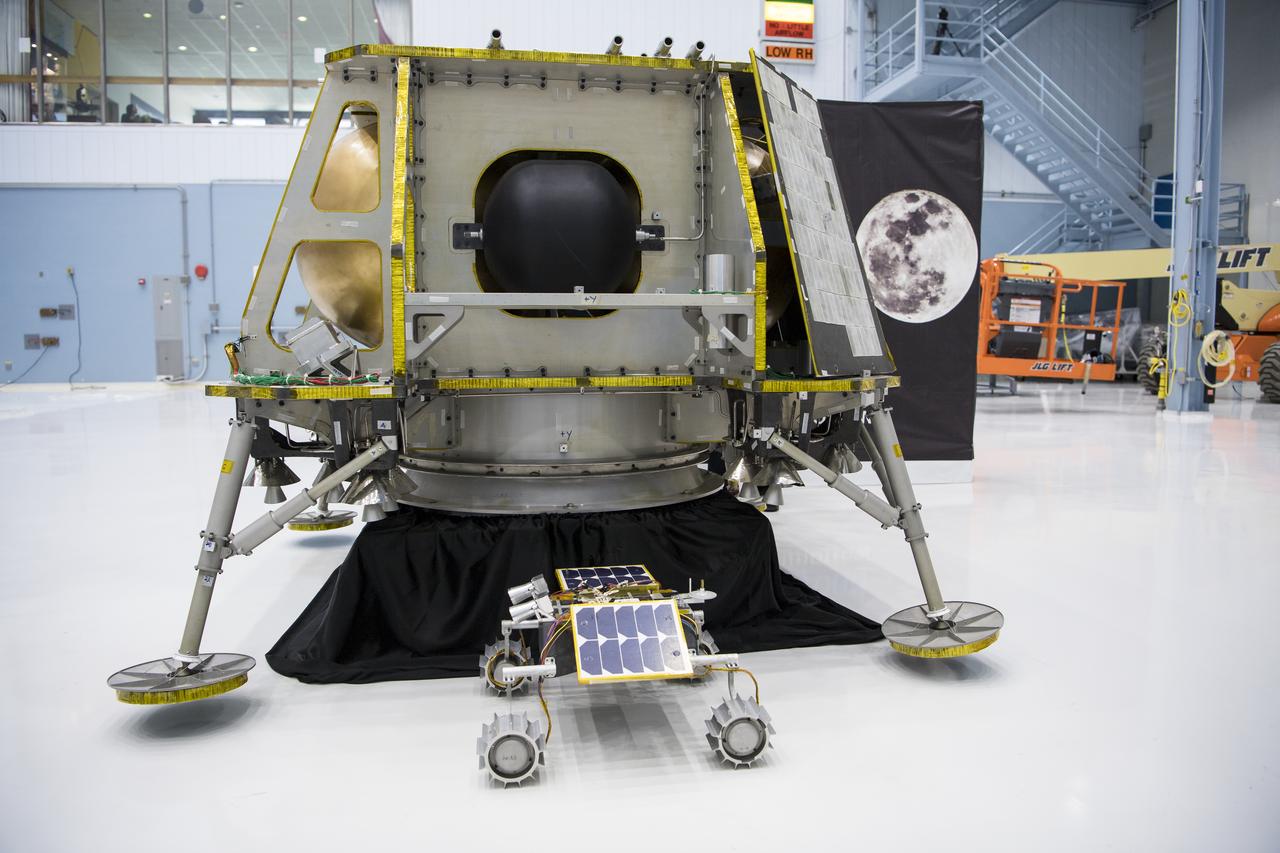
The OrbitBeyond lunar lander is seen, Friday, May 31, 2019, at Goddard Space Flight Center in Md. Astrobotic, Intuitive Machines, and OrbitBeyond have been selected to provide the first lunar landers for the Artemis program's lunar surface exploration. Photo credit: (NASA/Aubrey Gemignani)
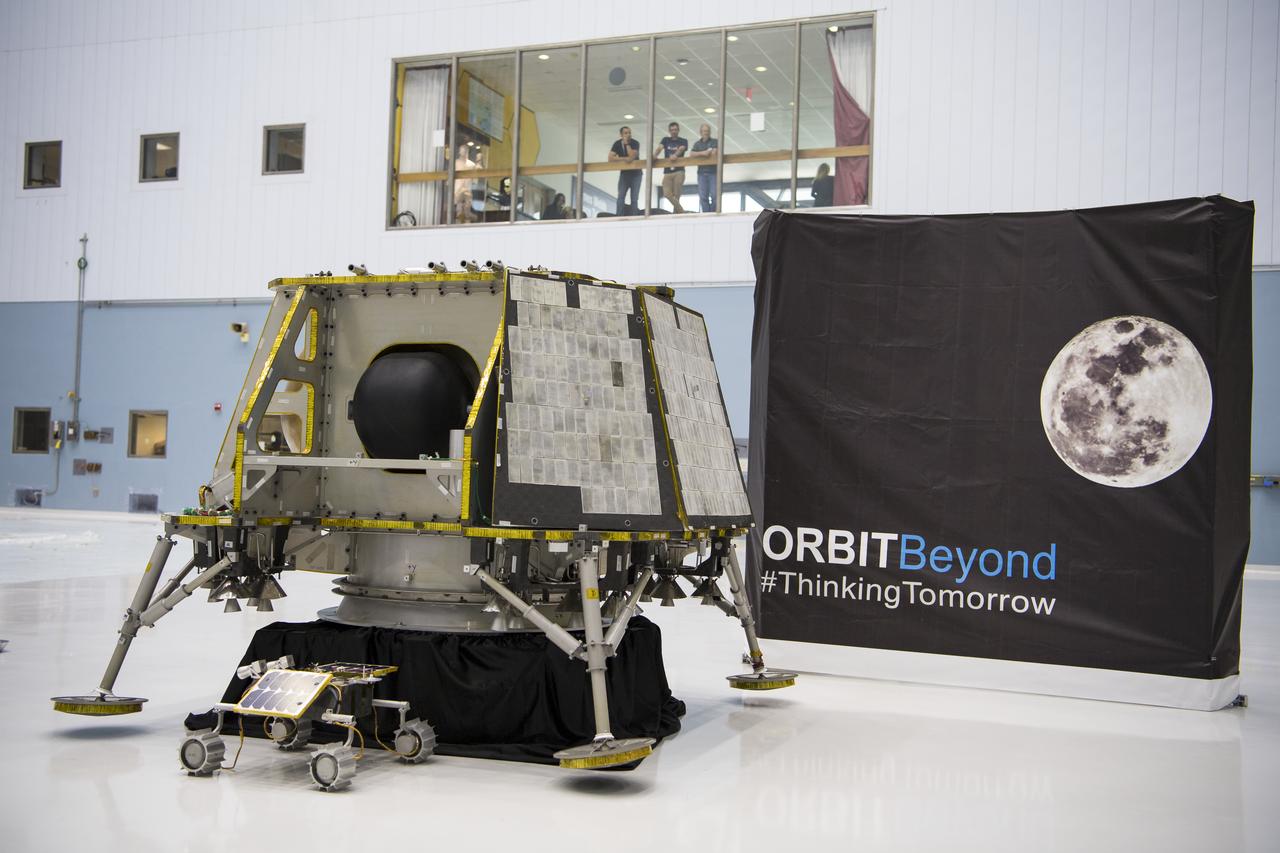
The OrbitBeyond lunar lander is seen, Friday, May 31, 2019, at Goddard Space Flight Center in Md. Astrobotic, Intuitive Machines, and OrbitBeyond have been selected to provide the first lunar landers for the Artemis program's lunar surface exploration. Photo credit: (NASA/Aubrey Gemignani)
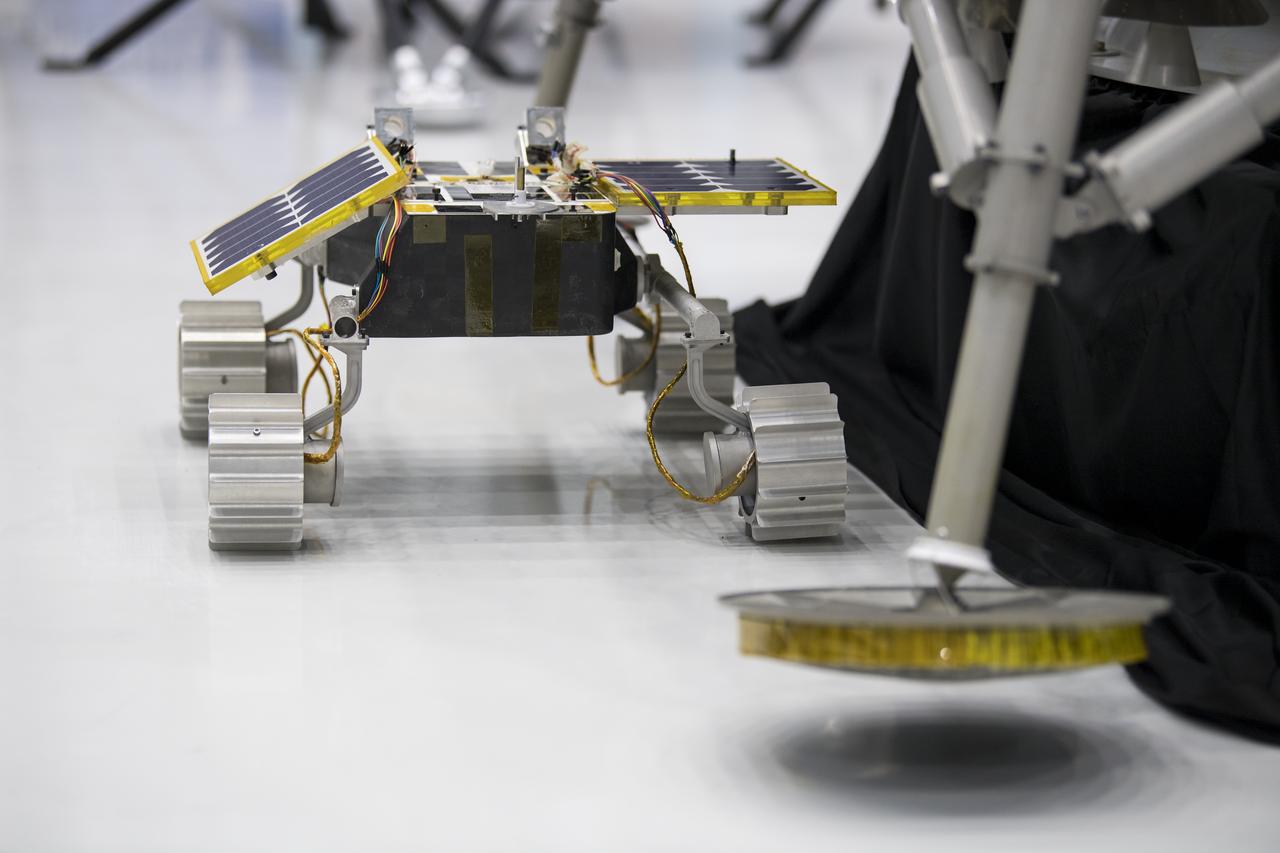
The OrbitBeyond lunar rover is seen, Friday, May 31, 2019, at Goddard Space Flight Center in Md. Astrobotic, Intuitive Machines, and OrbitBeyond have been selected to provide the first lunar landers for the Artemis program's lunar surface exploration. Photo credit: (NASA/Aubrey Gemignani)
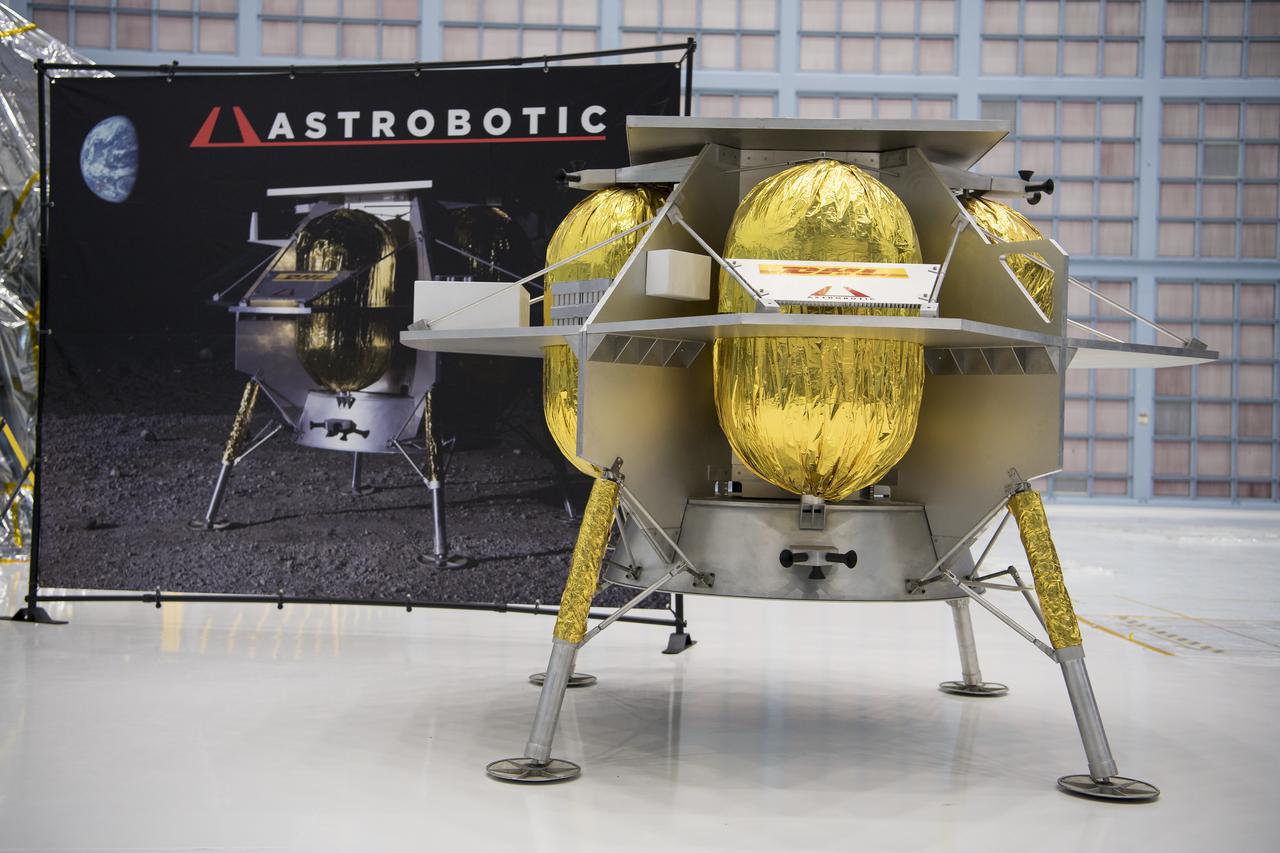
The Astrobotic lunar lander is seen, Friday, May 31, 2019, at Goddard Space Flight Center in Md. Astrobotic, Intuitive Machines, and OrbitBeyond have been selected to provide the first lunar landers for the Artemis program's lunar surface exploration. Photo credit: (NASA/Aubrey Gemignani)
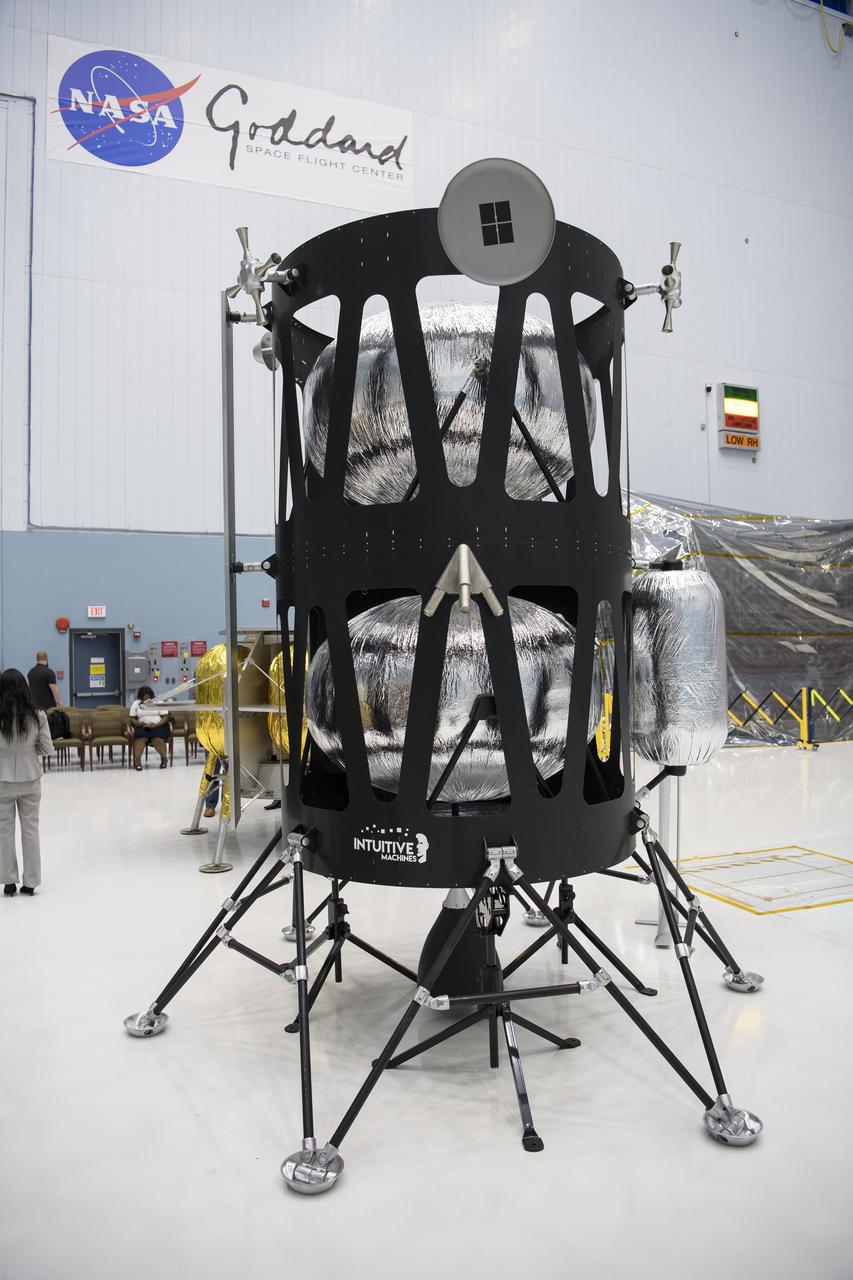
The Intuitive Machines lunar lander is seen, Friday, May 31, 2019, at Goddard Space Flight Center in Md. Astrobotic, Intuitive Machines, and Orbit Beyond have been selected to provide the first lunar landers for the Artemis program's lunar surface exploration. Photo credit: (NASA/Aubrey Gemignani)
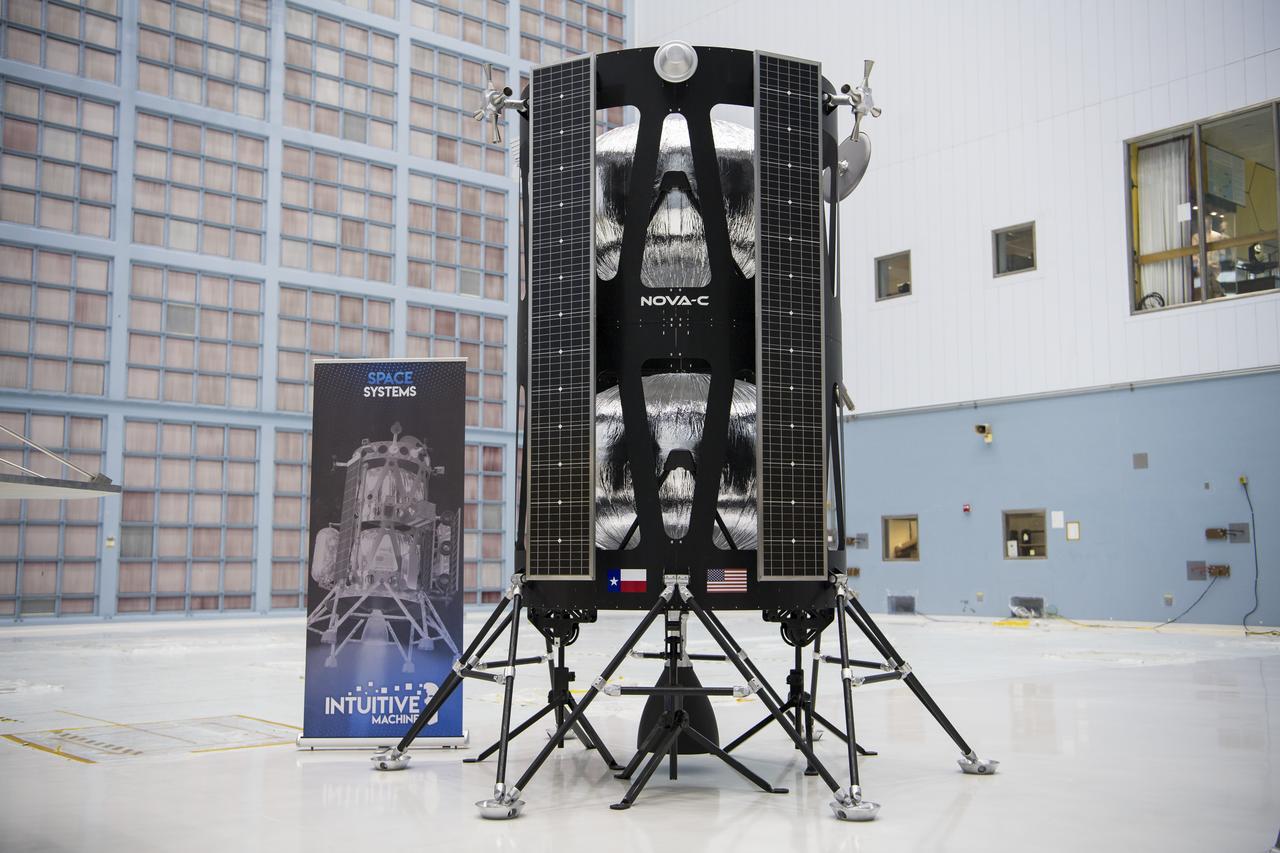
The Intuitive Machines lunar lander is seen, Friday, May 31, 2019, at Goddard Space Flight Center in Md. Astrobotic, Intuitive Machines, and Orbit Beyond have been selected to provide the first lunar landers for the Artemis program's lunar surface exploration. Photo credit: (NASA/Aubrey Gemignani)
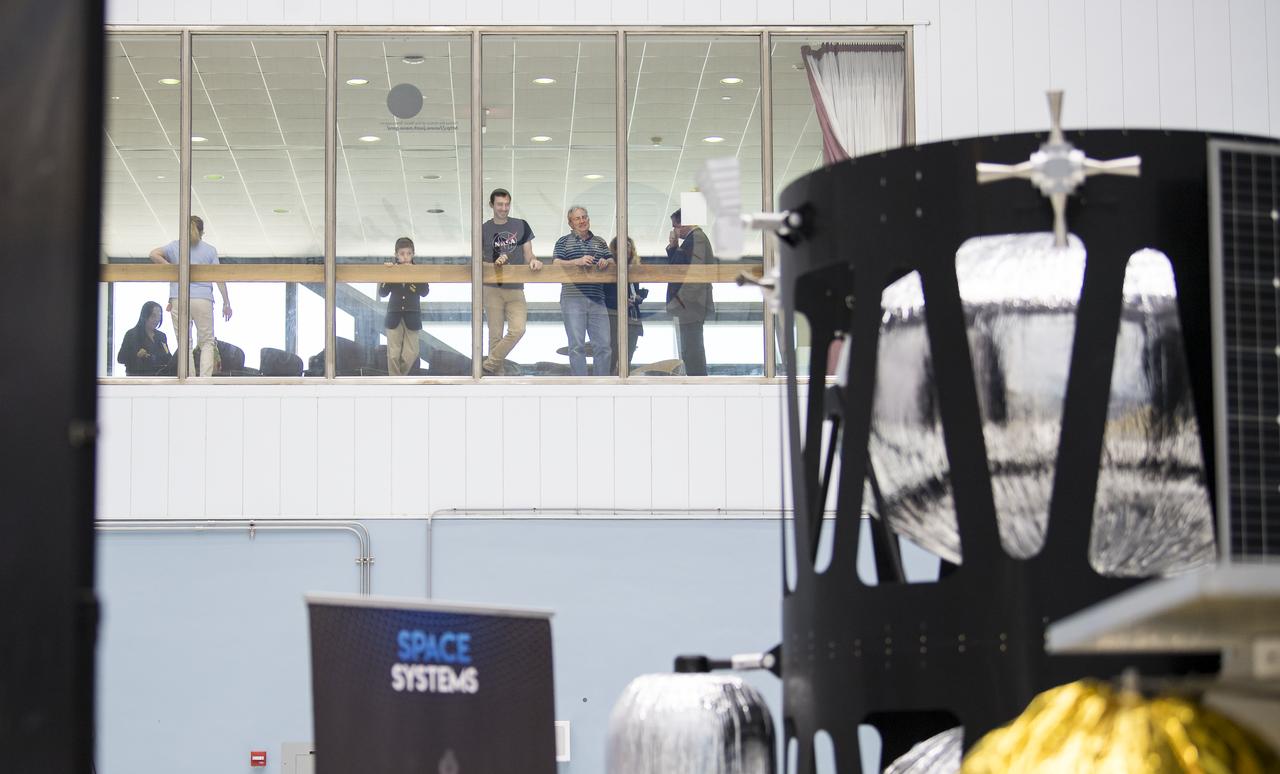
Goddard Space Flight Center employees are seen looking at the lunar landers from above, Friday, May 31, 2019, at Goddard Space Flight Center in Md. Astrobotic, Intuitive Machines, and Orbit Beyond have been selected to provide the first lunar landers for the Artemis program's lunar surface exploration. Photo credit: (NASA/Aubrey Gemignani)

NASA Press Officer Felicia Chou, introduces a pre-recorded video announcement by NASA Administrator Jim Bridenstine about the companies selected to provide the first commercial lunar landers, Friday, May 31, 2019, at Goddard Space Flight Center in Md. Intuitive Machines, Astrobotic, and Orbit Beyond have been selected to provide the first lunar landers for the Artemis program's lunar surface exploration. Photo credit: (NASA/Aubrey Gemignani)
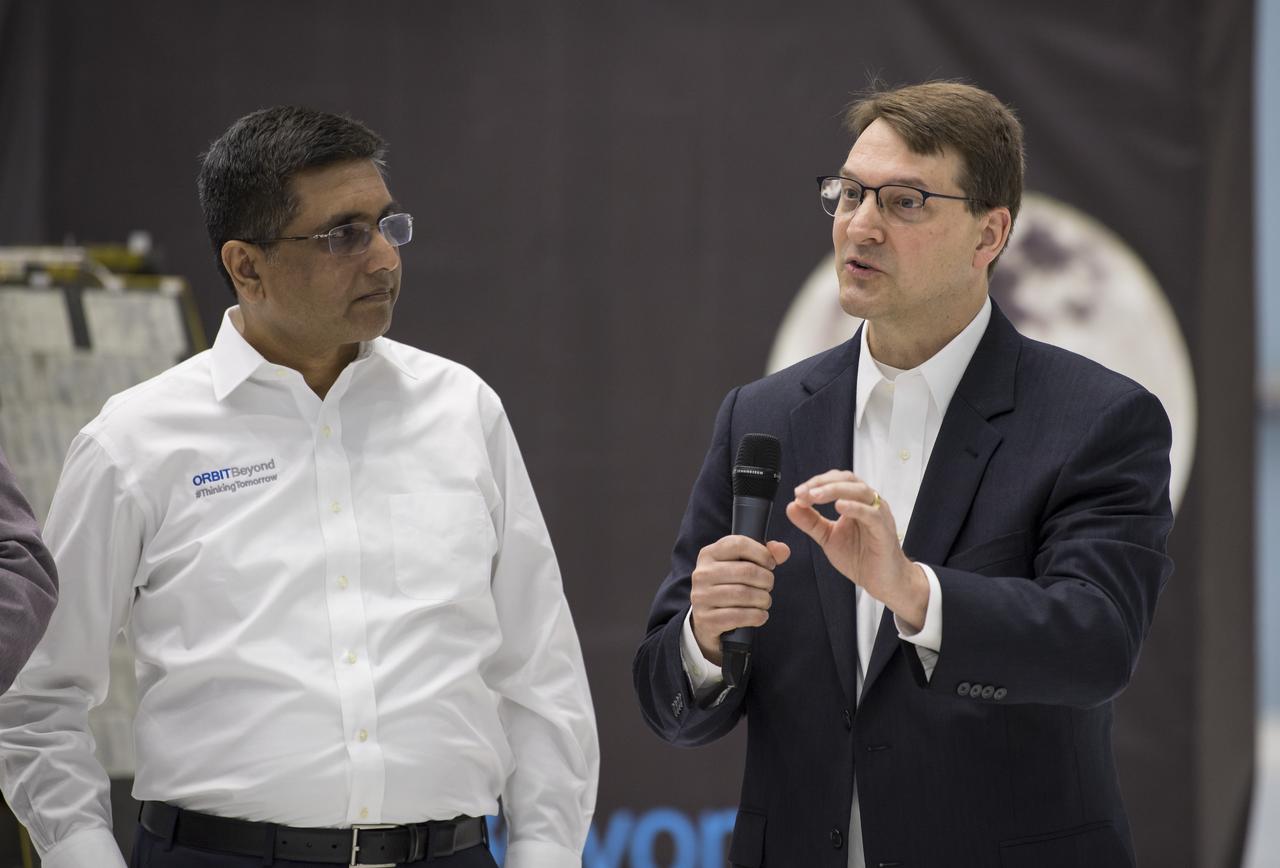
President and CEO of OrbitBeyond, Siba Padhi, left, and Chief Science Officer, OrbitBeyond, Jon Morse, speak about their lunar lander, Friday, May 31, 2019, at Goddard Space Flight Center in Md. Astrobotic, Intuitive Machines, and Orbit Beyond have been selected to provide the first lunar landers for the Artemis program's lunar surface exploration. Photo credit: (NASA/Aubrey Gemignani)
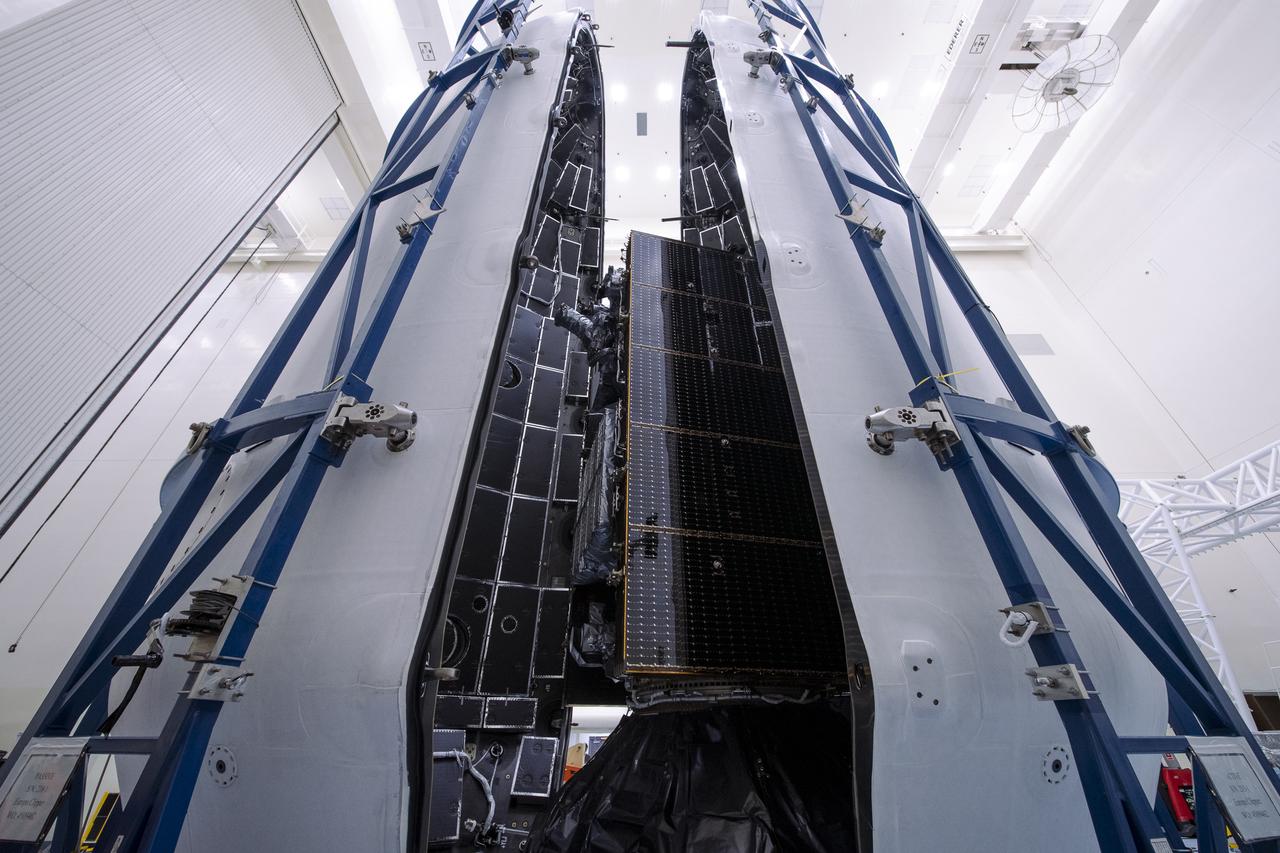
Technicians encapsulate NASA’s Europa Clipper spacecraft inside SpaceX’s Falcon Heavy payload fairing in the Payload Hazardous Servicing Facility at NASA’s Kennedy Space Center in Florida on Wednesday, Oct. 2, 2024. The payload fairing will protect the spacecraft during liftoff from Launch Complex 39A on its journey to explore Jupiter’s icy moon, Europa. The spacecraft will complete nearly 50 flybys of Jupiter’s icy moon, Europa, to determine if there are conditions suitable for life beyond Earth.
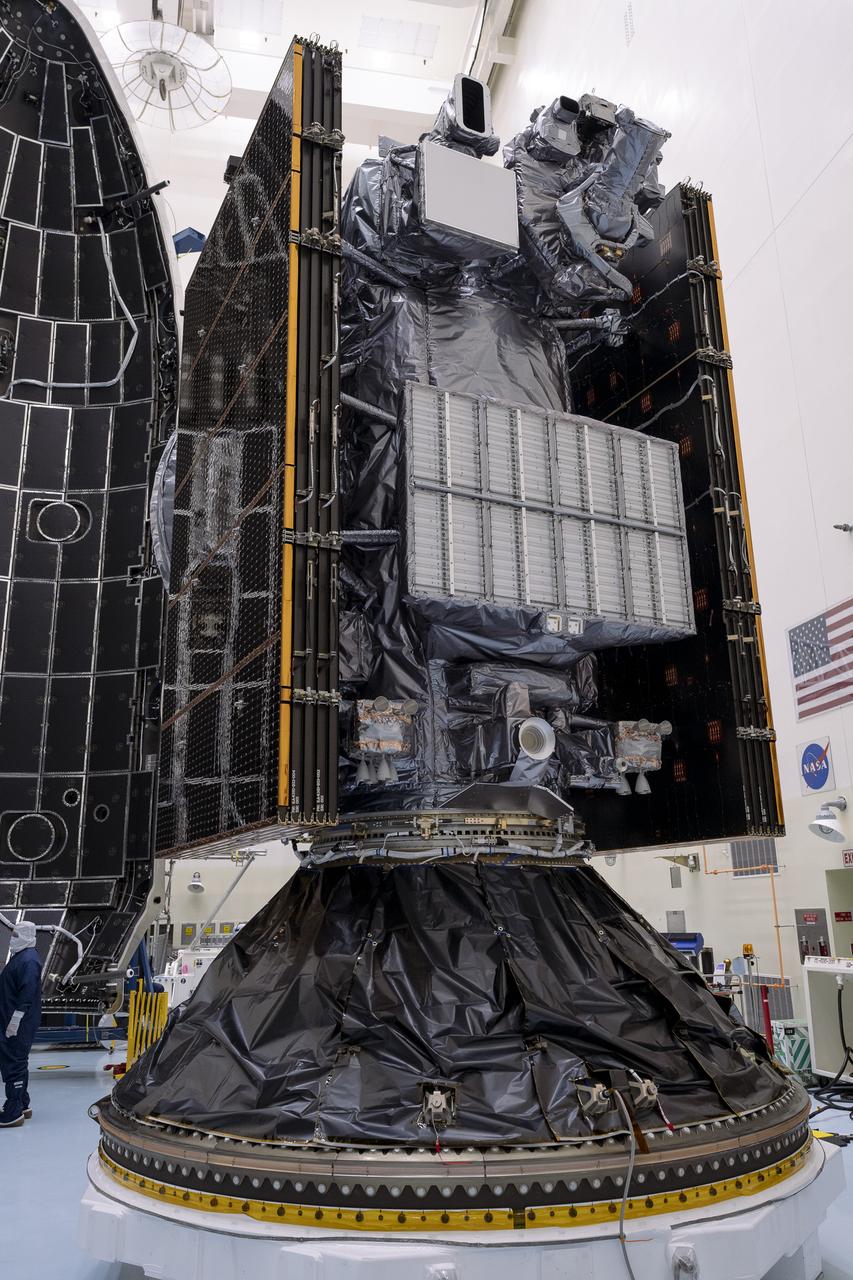
Technicians prepare to encapsulate NASA’s Europa Clipper spacecraft inside SpaceX’s Falcon Heavy payload fairing in the Payload Hazardous Servicing Facility at NASA’s Kennedy Space Center in Florida on Wednesday, Oct. 2, 2024. The payload fairing will protect the spacecraft during liftoff from Launch Complex 39A on its journey to explore Jupiter’s icy moon, Europa. The spacecraft will complete nearly 50 flybys of Jupiter’s icy moon, Europa, to determine if there are conditions suitable for life beyond Earth.
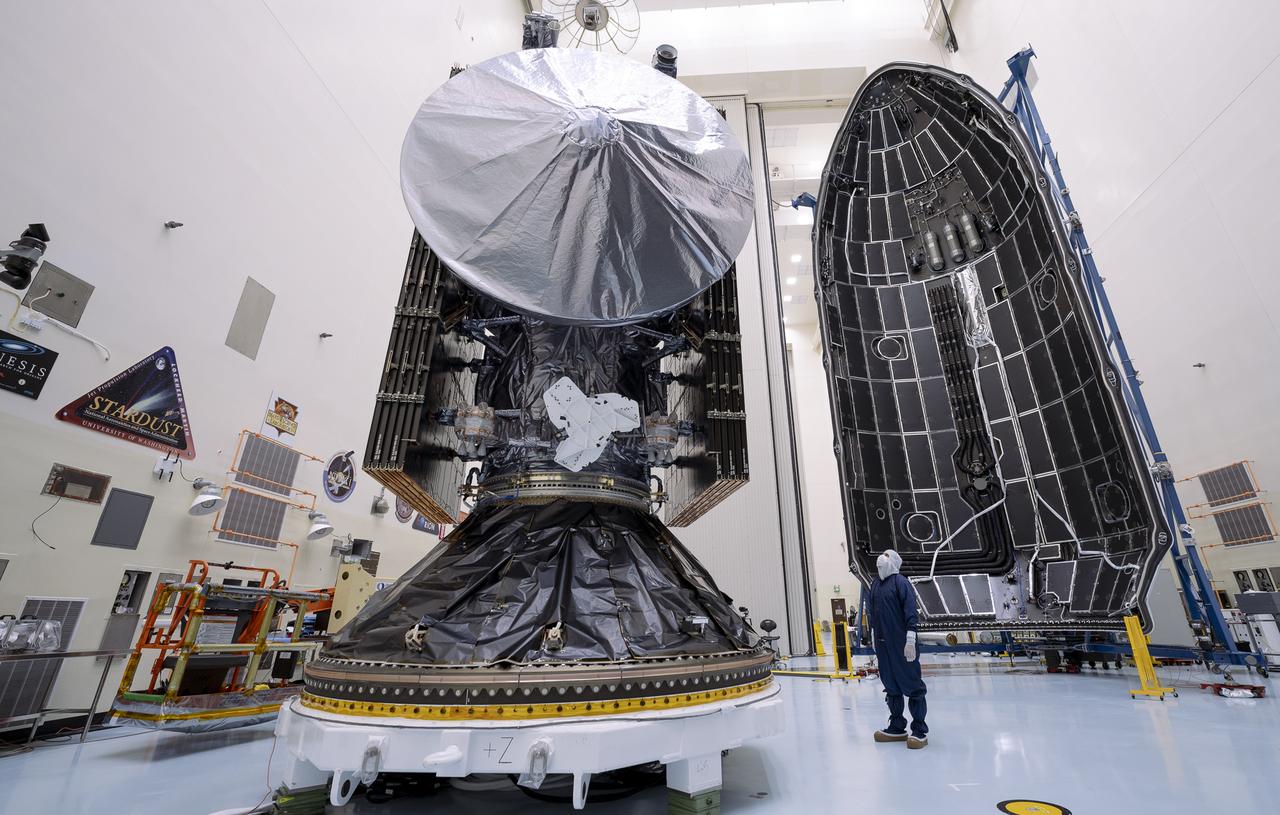
Technicians prepare to encapsulate NASA’s Europa Clipper spacecraft inside SpaceX’s Falcon Heavy payload fairing in the Payload Hazardous Servicing Facility at NASA’s Kennedy Space Center in Florida on Wednesday, Oct. 2, 2024. The payload fairing will protect the spacecraft during liftoff from Launch Complex 39A on its journey to explore Jupiter’s icy moon, Europa. The spacecraft will complete nearly 50 flybys of Jupiter’s icy moon, Europa, to determine if there are conditions suitable for life beyond Earth.
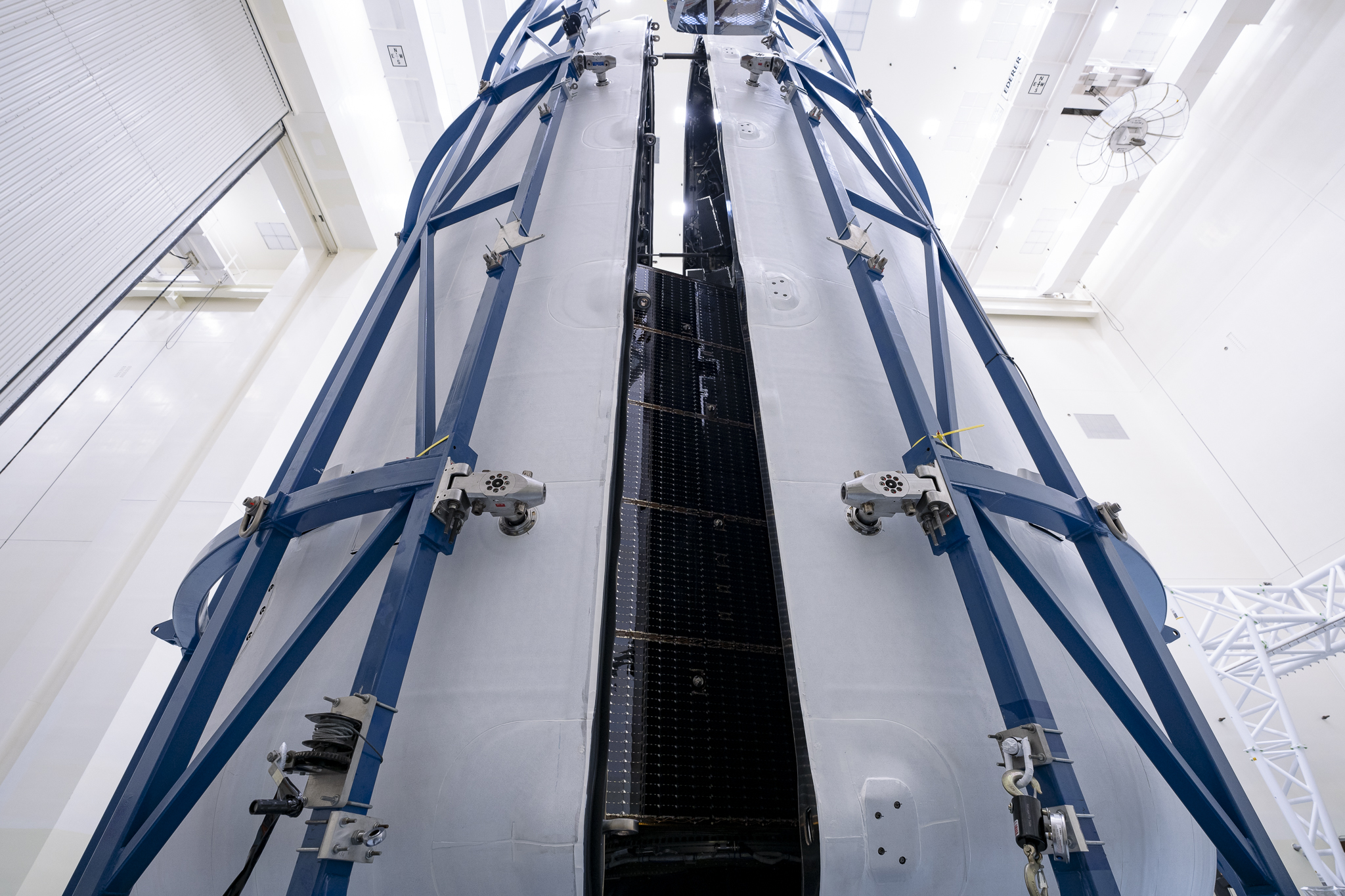
Technicians encapsulate NASA’s Europa Clipper spacecraft inside SpaceX’s Falcon Heavy payload fairing in the Payload Hazardous Servicing Facility at NASA’s Kennedy Space Center in Florida on Wednesday, Oct. 2, 2024. The payload fairing will protect the spacecraft during liftoff from Launch Complex 39A on its journey to explore Jupiter’s icy moon, Europa. The spacecraft will complete nearly 50 flybys of Jupiter’s icy moon, Europa, to determine if there are conditions suitable for life beyond Earth.
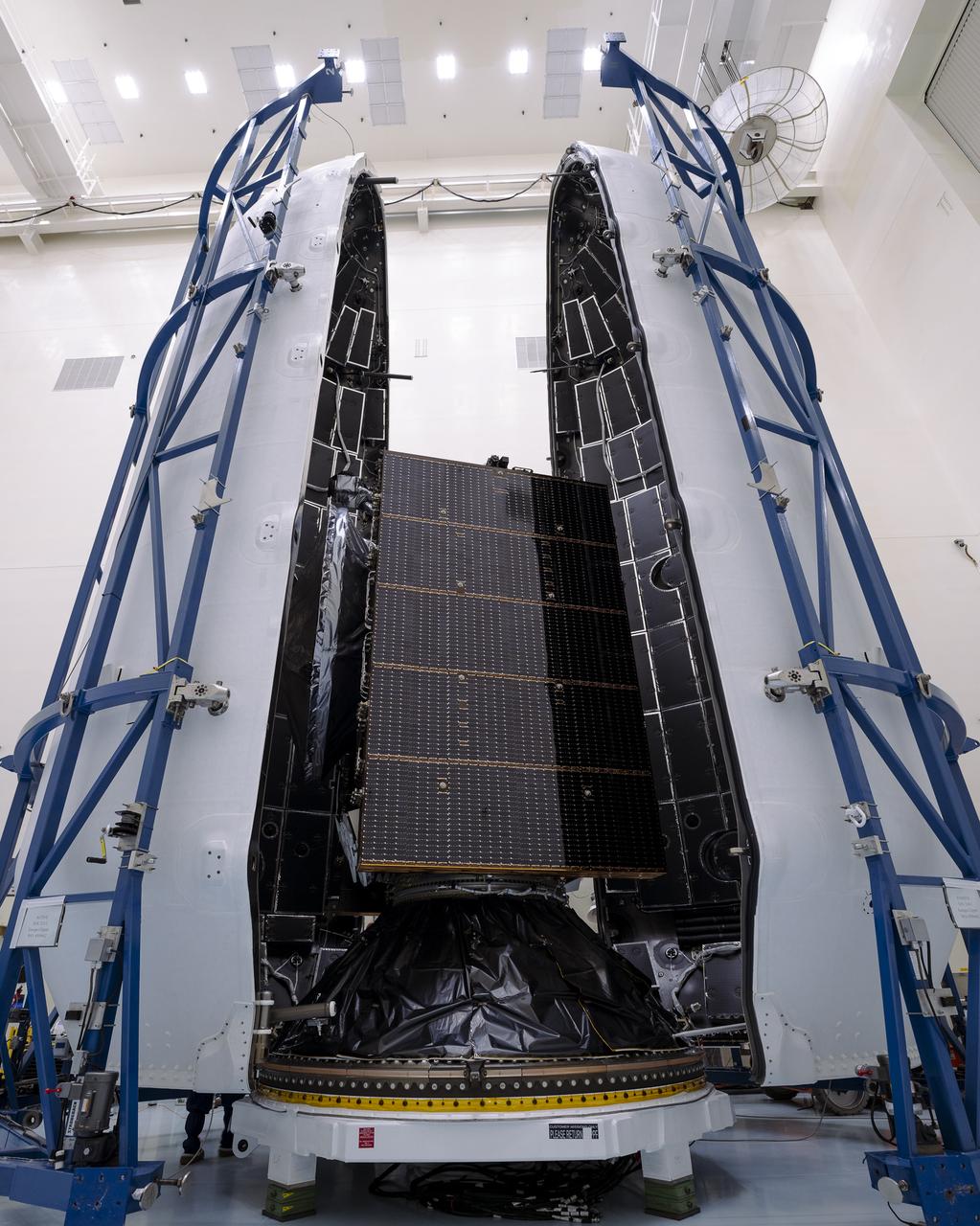
Technicians prepare to encapsulate NASA’s Europa Clipper spacecraft inside SpaceX’s Falcon Heavy payload fairing in the Payload Hazardous Servicing Facility at NASA’s Kennedy Space Center in Florida on Wednesday, Oct. 2, 2024. The payload fairing will protect the spacecraft during liftoff from Launch Complex 39A on its journey to explore Jupiter’s icy moon, Europa. The spacecraft will complete nearly 50 flybys of Jupiter’s icy moon, Europa, to determine if there are conditions suitable for life beyond Earth.
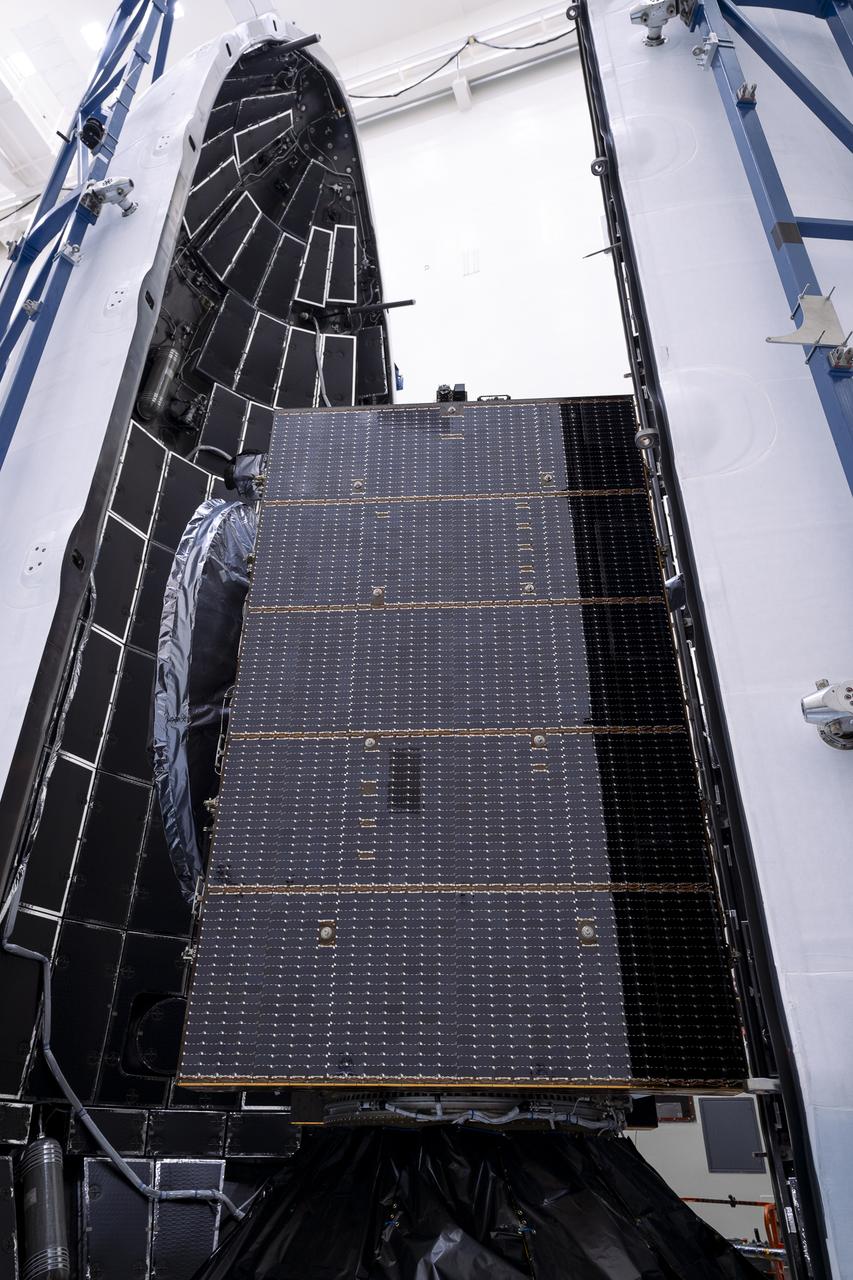
Technicians prepare to encapsulate NASA’s Europa Clipper spacecraft inside SpaceX’s Falcon Heavy payload fairing in the Payload Hazardous Servicing Facility at NASA’s Kennedy Space Center in Florida on Wednesday, Oct. 2, 2024. The payload fairing will protect the spacecraft during liftoff from Launch Complex 39A on its journey to explore Jupiter’s icy moon, Europa. The spacecraft will complete nearly 50 flybys of Jupiter’s icy moon, Europa, to determine if there are conditions suitable for life beyond Earth.
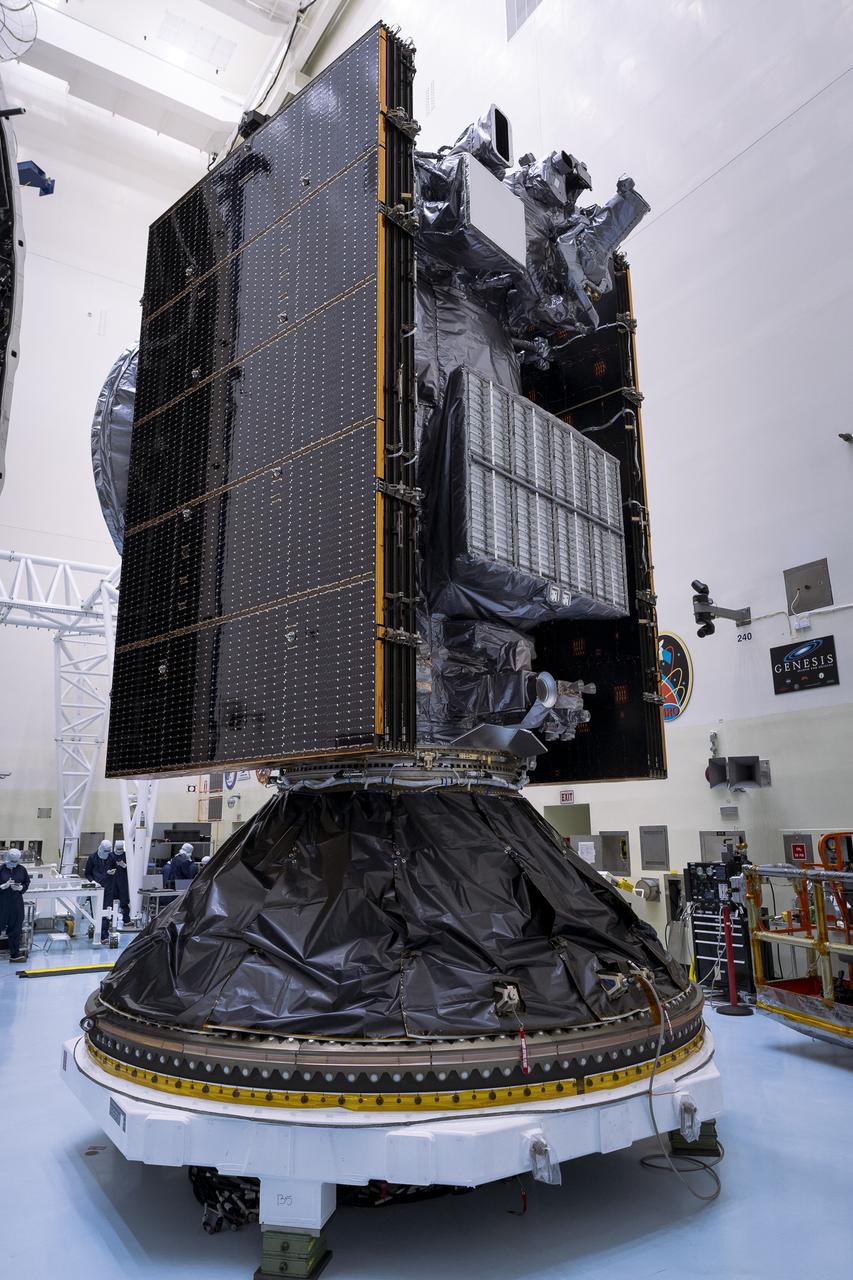
Technicians prepare to encapsulate NASA’s Europa Clipper spacecraft inside SpaceX’s Falcon Heavy payload fairing in the Payload Hazardous Servicing Facility at NASA’s Kennedy Space Center in Florida on Wednesday, Oct. 2, 2024. The payload fairing will protect the spacecraft during liftoff from Launch Complex 39A on its journey to explore Jupiter’s icy moon, Europa. The spacecraft will complete nearly 50 flybys of Jupiter’s icy moon, Europa, to determine if there are conditions suitable for life beyond Earth.
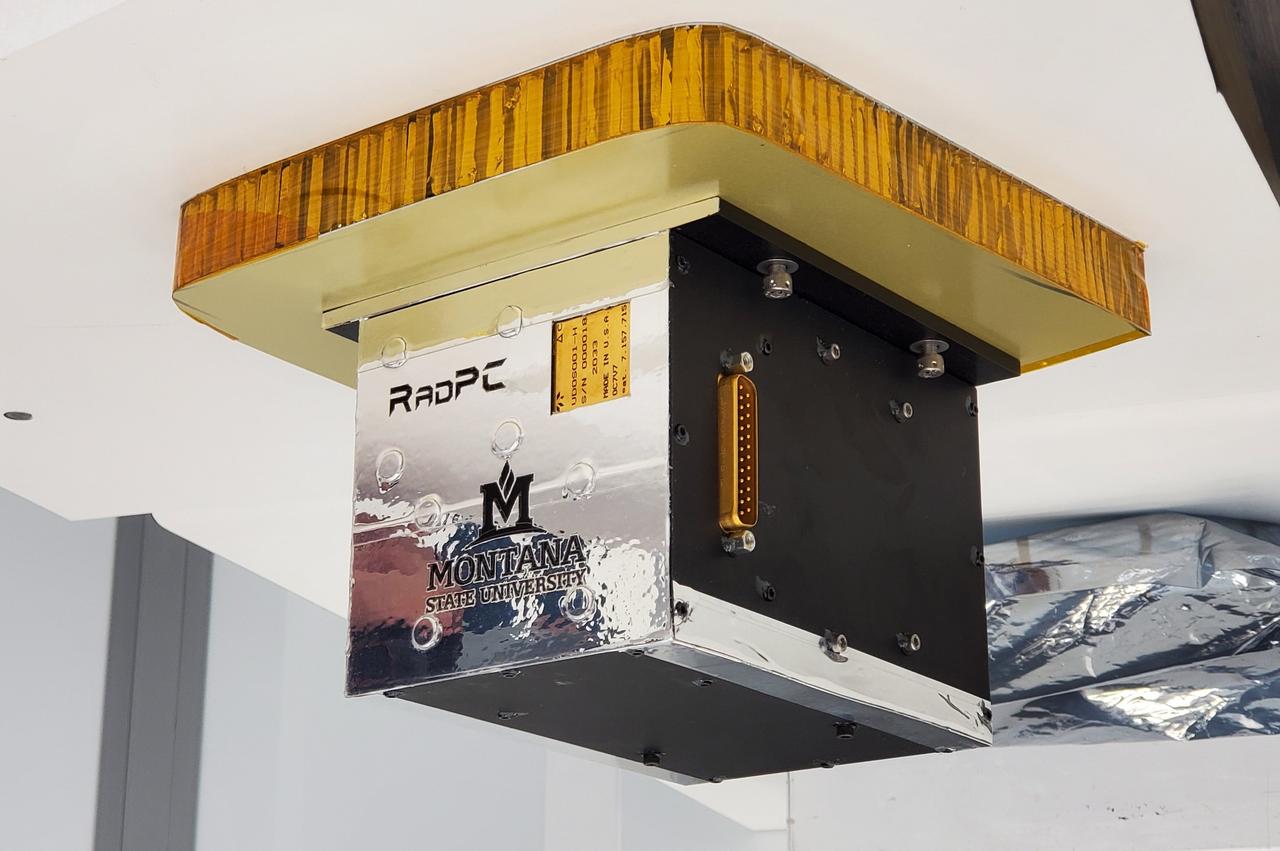
A technology demonstration flying aboard the next delivery for NASA’s CLPS (Commercial Lunar Payload Services) initiative could help mitigate radiation effects on computers in space. Radiation Tolerant Computer, or RadPC, is one of 10 payloads set to be carried to the Moon by the Blue Ghost 1 lunar lander in 2025. Developed by Montana State University in Bozeman, RadPC is designed designed to demonstrate computer recovery from faults caused by single-event effects of ionizing radiation. Investigations and demonstrations, such as RadPC, launched on CLPS flights will help NASA study Earth’s nearest neighbor under Artemis and pave the way for future crewed missions on the Moon. NASA’s Marshall Space Flight Center in Huntsville, Alabama, manages the development for seven of the 10 CLPS payloads that will be carried on Firefly’s Blue Ghost lunar lander.
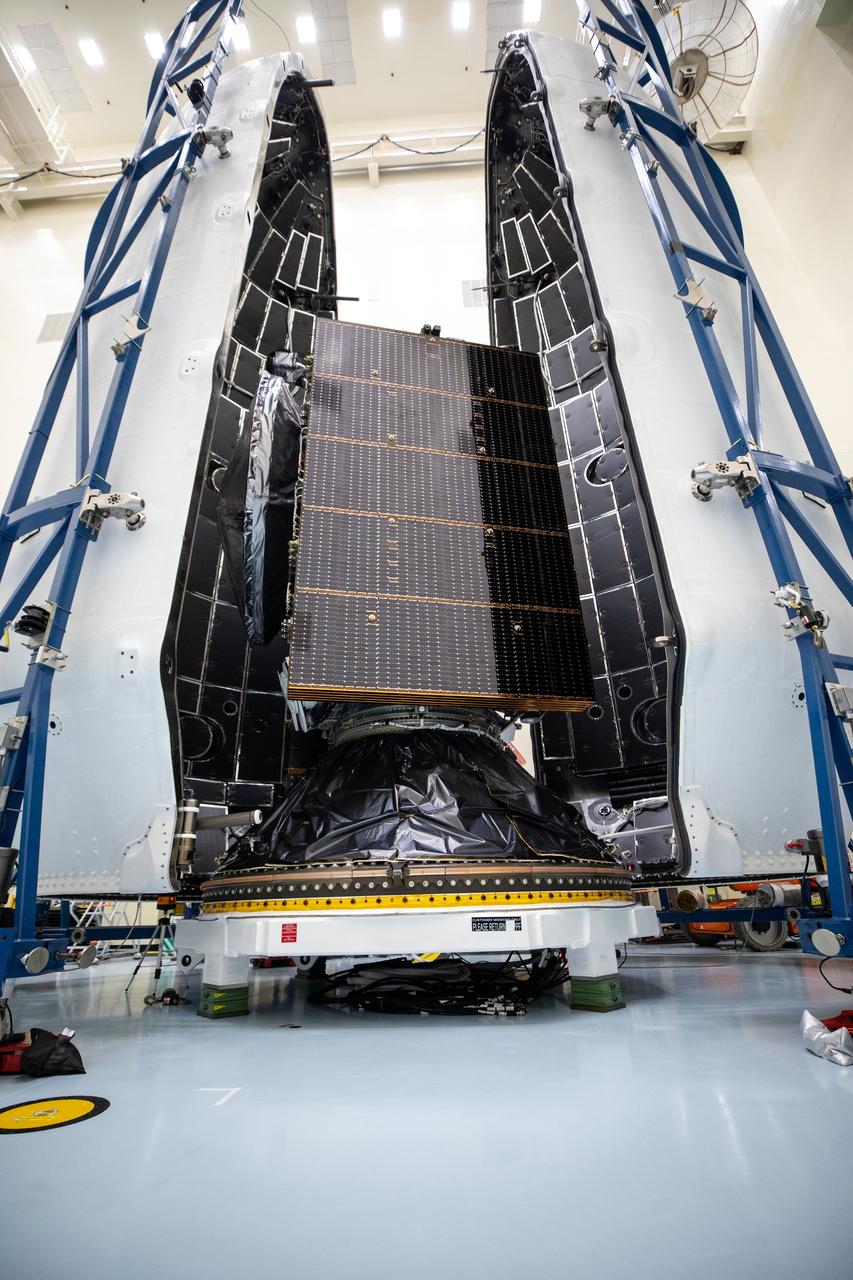
Technicians encapsulated NASA’s Europa Clipper spacecraft inside payload fairings on Wednesday, Oct. 2, 2024, in the Payload Hazardous Servicing Facility at NASA’s Kennedy Space Center in Florida. The fairings will protect the spacecraft during launch as it begins its journey to explore Jupiter’s icy moon, Europa. The mission will help scientists determine if the moon could support life. NASA and SpaceX are targeting launch at 12:31 p.m. EDT on Thursday, Oct. 10, 2024, from Launch Complex 39A at Kennedy Space Center in Florida.
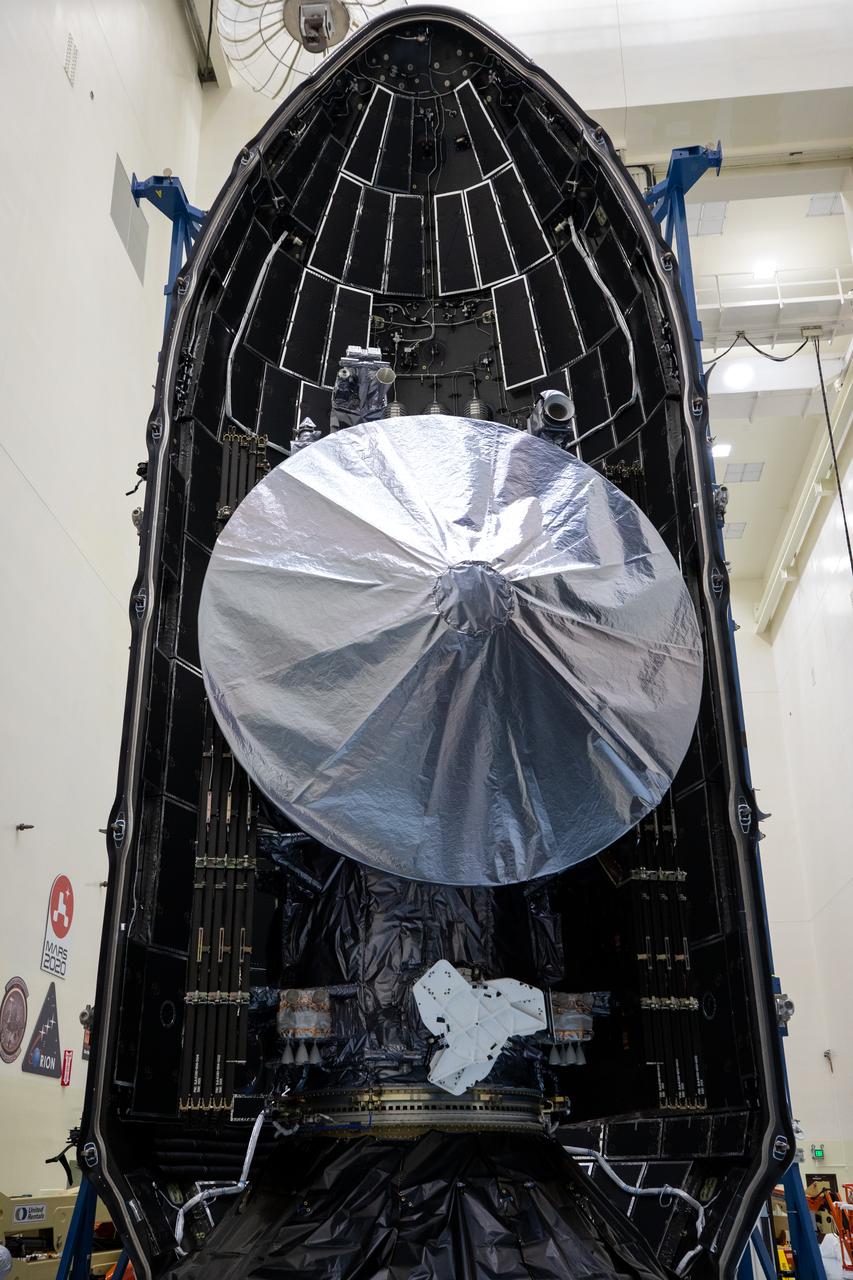
Technicians encapsulated NASA’s Europa Clipper spacecraft inside payload fairings on Wednesday, Oct. 2, 2024, in the Payload Hazardous Servicing Facility at NASA’s Kennedy Space Center in Florida. The fairings will protect the spacecraft during launch as it begins its journey to explore Jupiter’s icy moon, Europa. The mission will help scientists determine if the moon could support life. NASA and SpaceX are targeting launch at 12:31 p.m. EDT on Thursday, Oct. 10, 2024, from Launch Complex 39A at Kennedy Space Center in Florida.
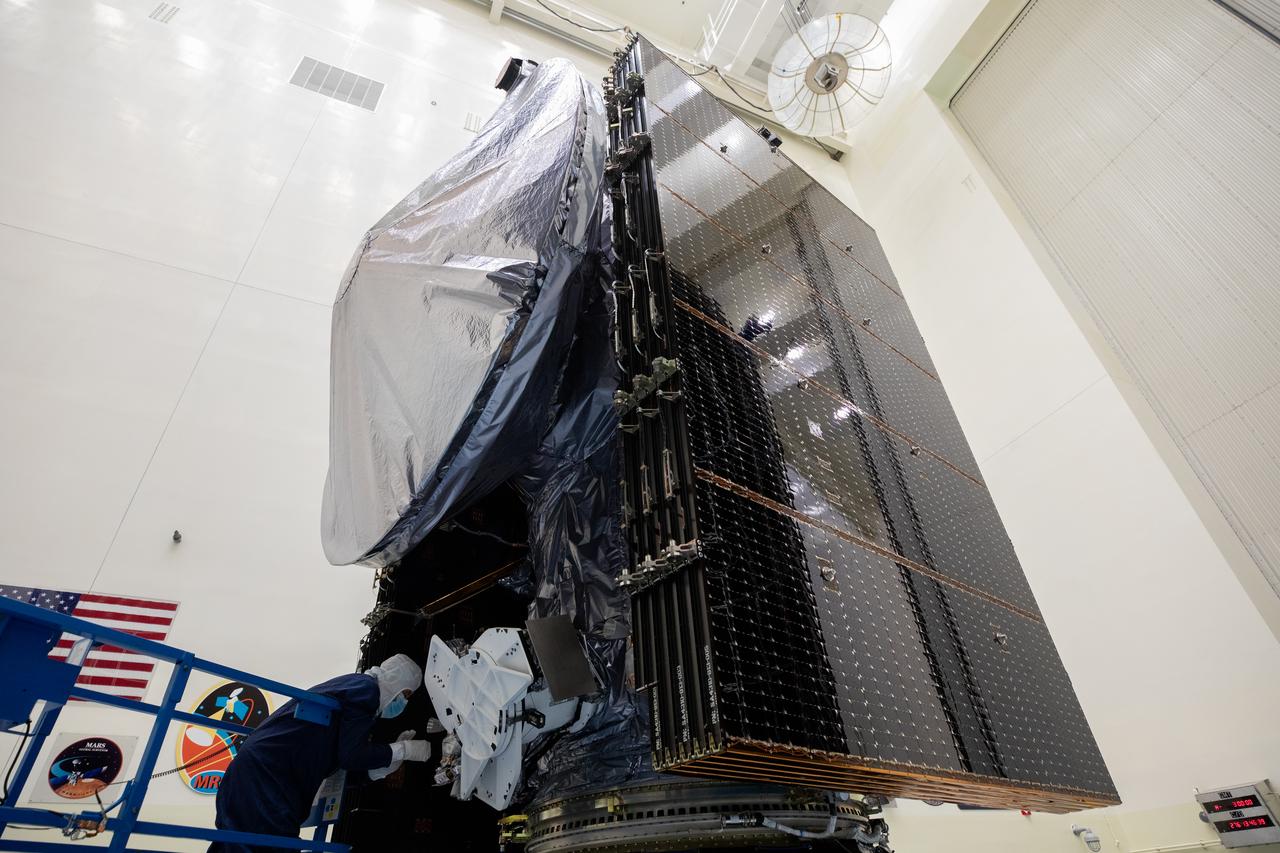
Technicians encapsulated NASA’s Europa Clipper spacecraft inside payload fairings on Wednesday, Oct. 2, 2024, in the Payload Hazardous Servicing Facility at NASA’s Kennedy Space Center in Florida. The fairings will protect the spacecraft during launch as it begins its journey to explore Jupiter’s icy moon, Europa. The mission will help scientists determine if the moon could support life. NASA and SpaceX are targeting launch at 12:31 p.m. EDT on Thursday, Oct. 10, 2024, from Launch Complex 39A at Kennedy Space Center in Florida.
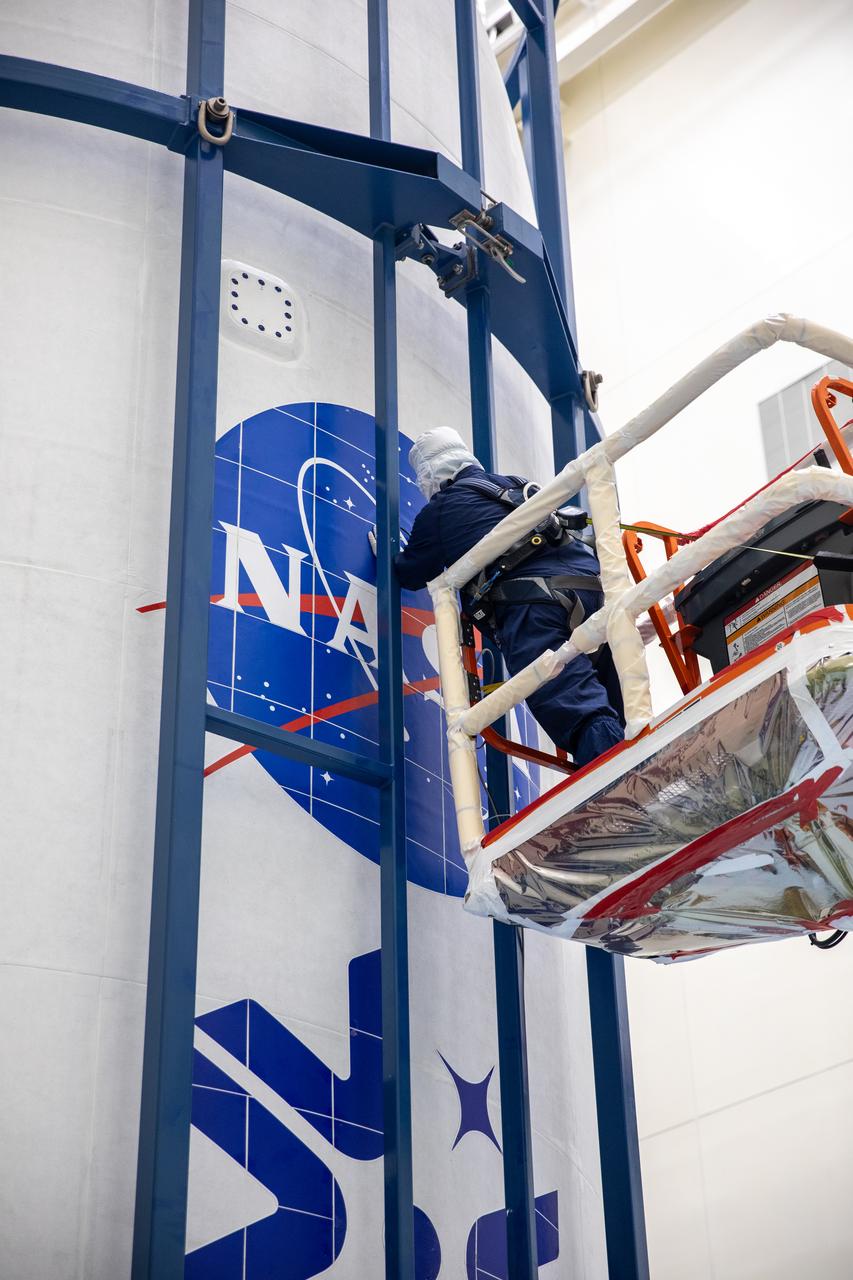
Technicians encapsulated NASA’s Europa Clipper spacecraft inside payload fairings on Wednesday, Oct. 2, 2024, in the Payload Hazardous Servicing Facility at NASA’s Kennedy Space Center in Florida. The fairings will protect the spacecraft during launch as it begins its journey to explore Jupiter’s icy moon, Europa. The mission will help scientists determine if the moon could support life. NASA and SpaceX are targeting launch at 12:31 p.m. EDT on Thursday, Oct. 10, 2024, from Launch Complex 39A at Kennedy Space Center in Florida.
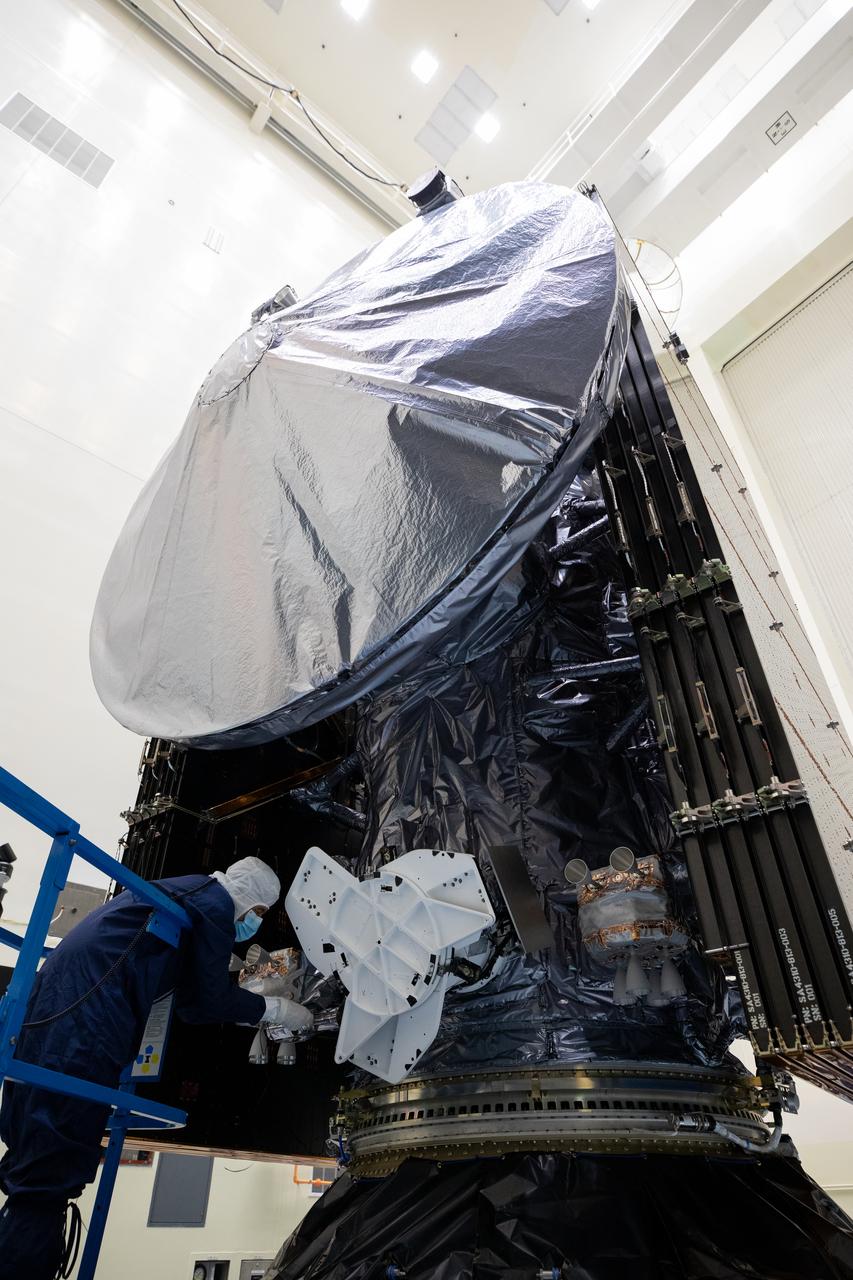
Technicians encapsulated NASA’s Europa Clipper spacecraft inside payload fairings on Wednesday, Oct. 2, 2024, in the Payload Hazardous Servicing Facility at NASA’s Kennedy Space Center in Florida. The fairings will protect the spacecraft during launch as it begins its journey to explore Jupiter’s icy moon, Europa. The mission will help scientists determine if the moon could support life. NASA and SpaceX are targeting launch at 12:31 p.m. EDT on Thursday, Oct. 10, 2024, from Launch Complex 39A at Kennedy Space Center in Florida.
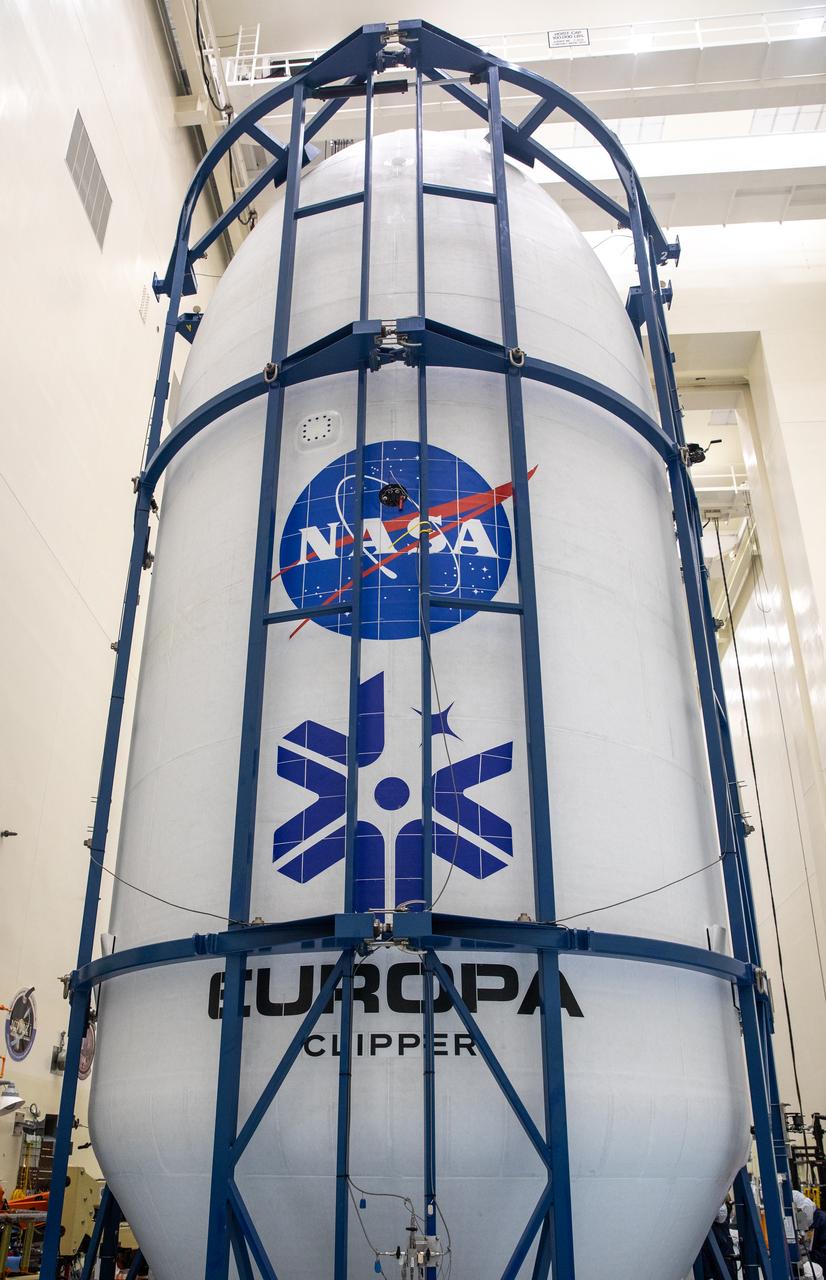
Technicians encapsulated NASA’s Europa Clipper spacecraft inside payload fairings on Wednesday, Oct. 2, 2024, in the Payload Hazardous Servicing Facility at NASA’s Kennedy Space Center in Florida. The fairings will protect the spacecraft during launch as it begins its journey to explore Jupiter’s icy moon, Europa. The mission will help scientists determine if the moon could support life. NASA and SpaceX are targeting launch at 12:31 p.m. EDT on Thursday, Oct. 10, 2024, from Launch Complex 39A at Kennedy Space Center in Florida.
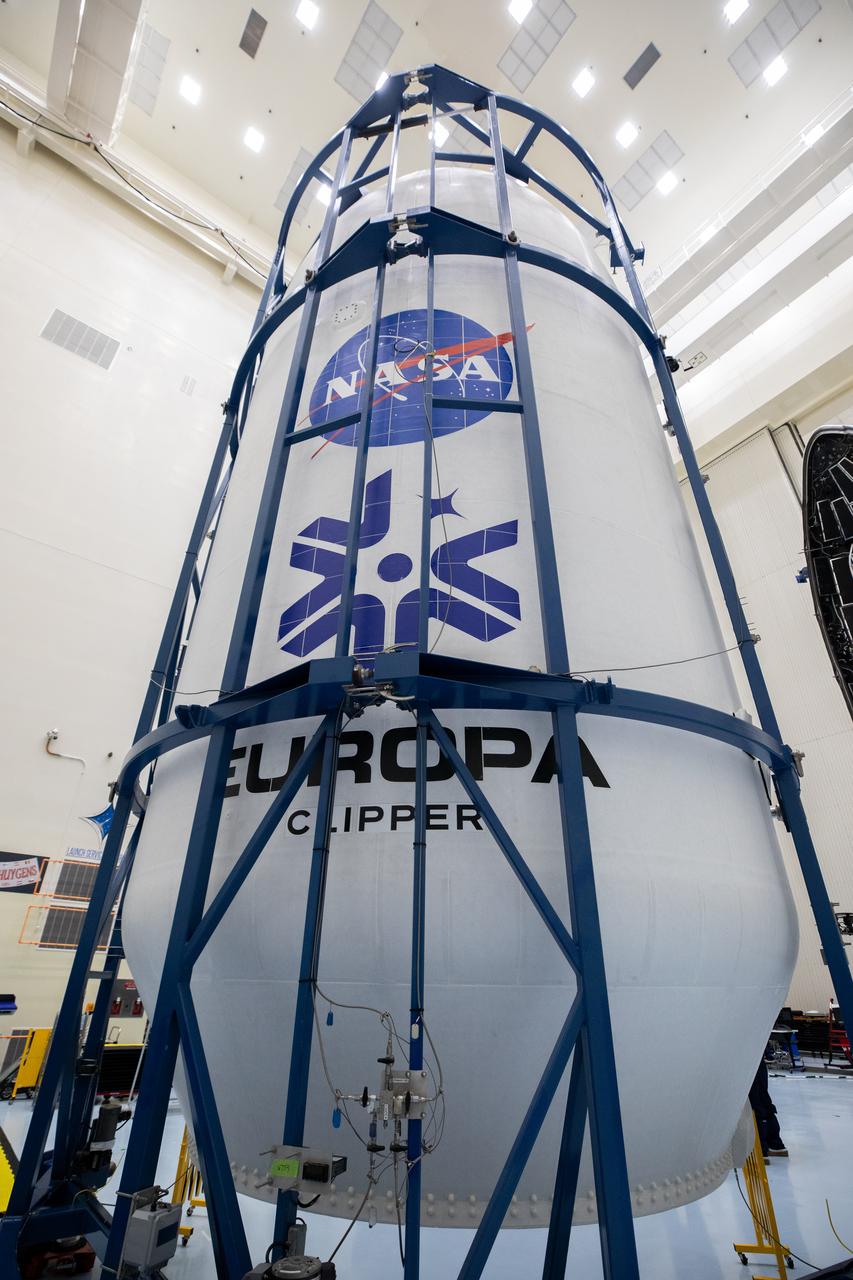
Technicians encapsulated NASA’s Europa Clipper spacecraft inside payload fairings on Wednesday, Oct. 2, 2024, in the Payload Hazardous Servicing Facility at NASA’s Kennedy Space Center in Florida. The fairings will protect the spacecraft during launch as it begins its journey to explore Jupiter’s icy moon, Europa. The mission will help scientists determine if the moon could support life. NASA and SpaceX are targeting launch at 12:31 p.m. EDT on Thursday, Oct. 10, 2024, from Launch Complex 39A at Kennedy Space Center in Florida.
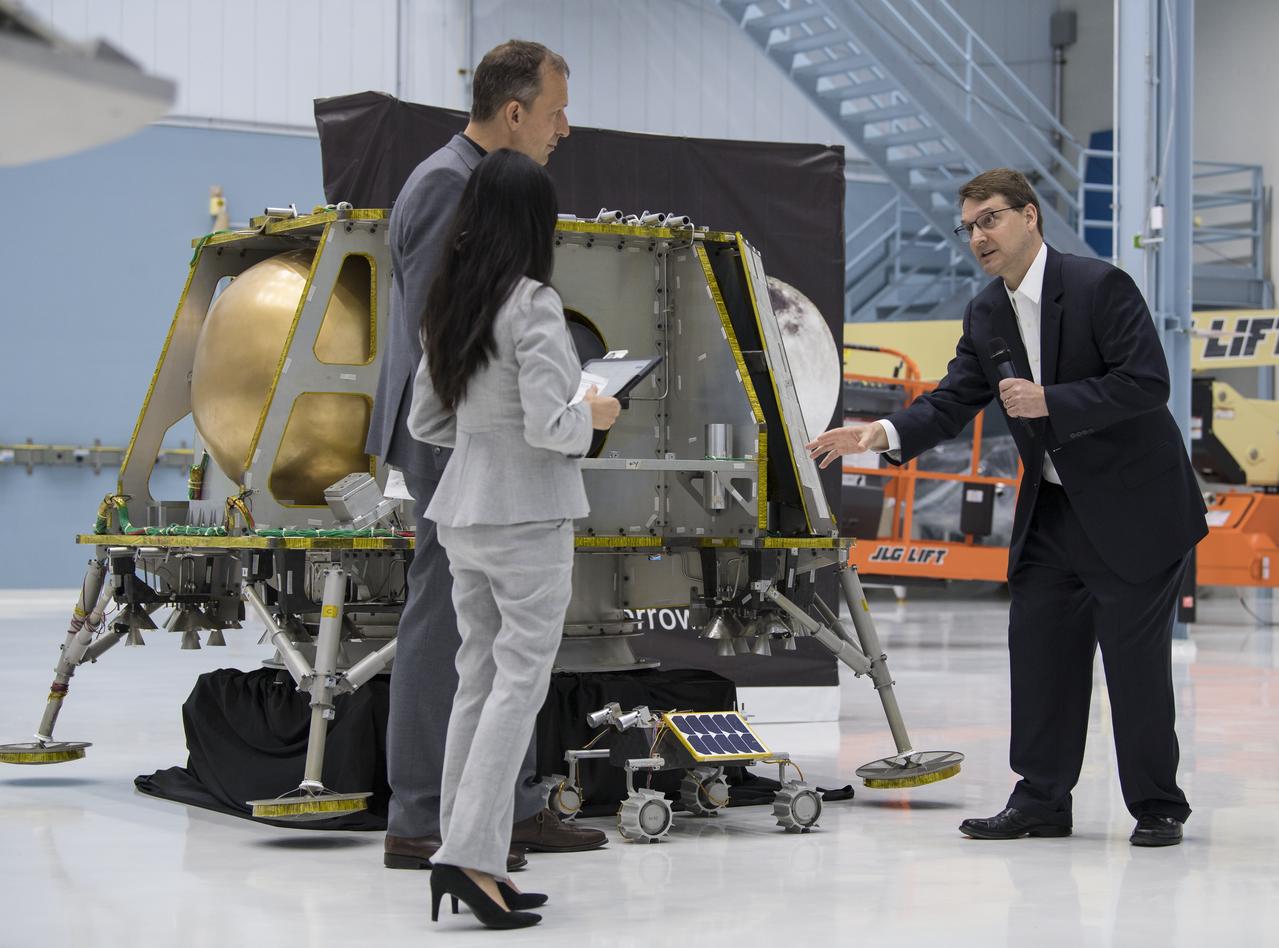
NASA Associate Administrator, Science Mission Directorate, Thomas Zurbuchen, second left, listens as Chief Science Officer, OrbitBeyond, Jon Morse, speaks about their lunar lander, Friday, May 31, 2019, at Goddard Space Flight Center in Md. Astrobotic, Intuitive Machines, and OrbitBeyond have been selected to provide the first lunar landers for the Artemis program's lunar surface exploration. Photo credit: (NASA/Aubrey Gemignani)
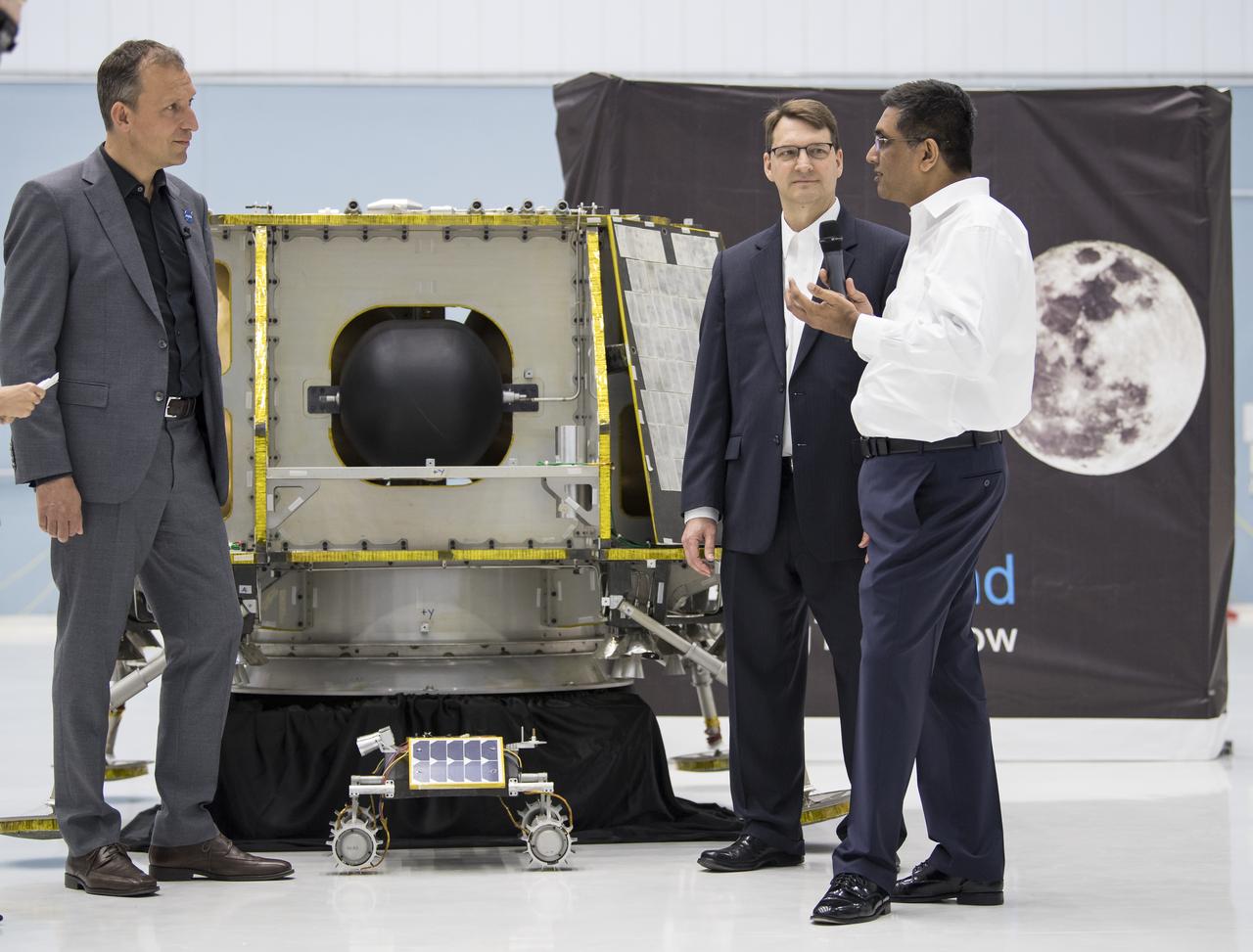
NASA Associate Administrator, Science Mission Directorate, Thomas Zurbuchen, left, speaks to, President and CEO of OrbitBeyond, Siba Padhi, right, and Chief Science Officer, OrbitBeyond, Jon Morse, about their lunar lander, Friday, May 31, 2019, at Goddard Space Flight Center in Md. Astrobotic, Intuitive Machines, and Orbit Beyond have been selected to provide the first lunar landers for the Artemis program's lunar surface exploration. Photo credit: (NASA/Aubrey Gemignani)
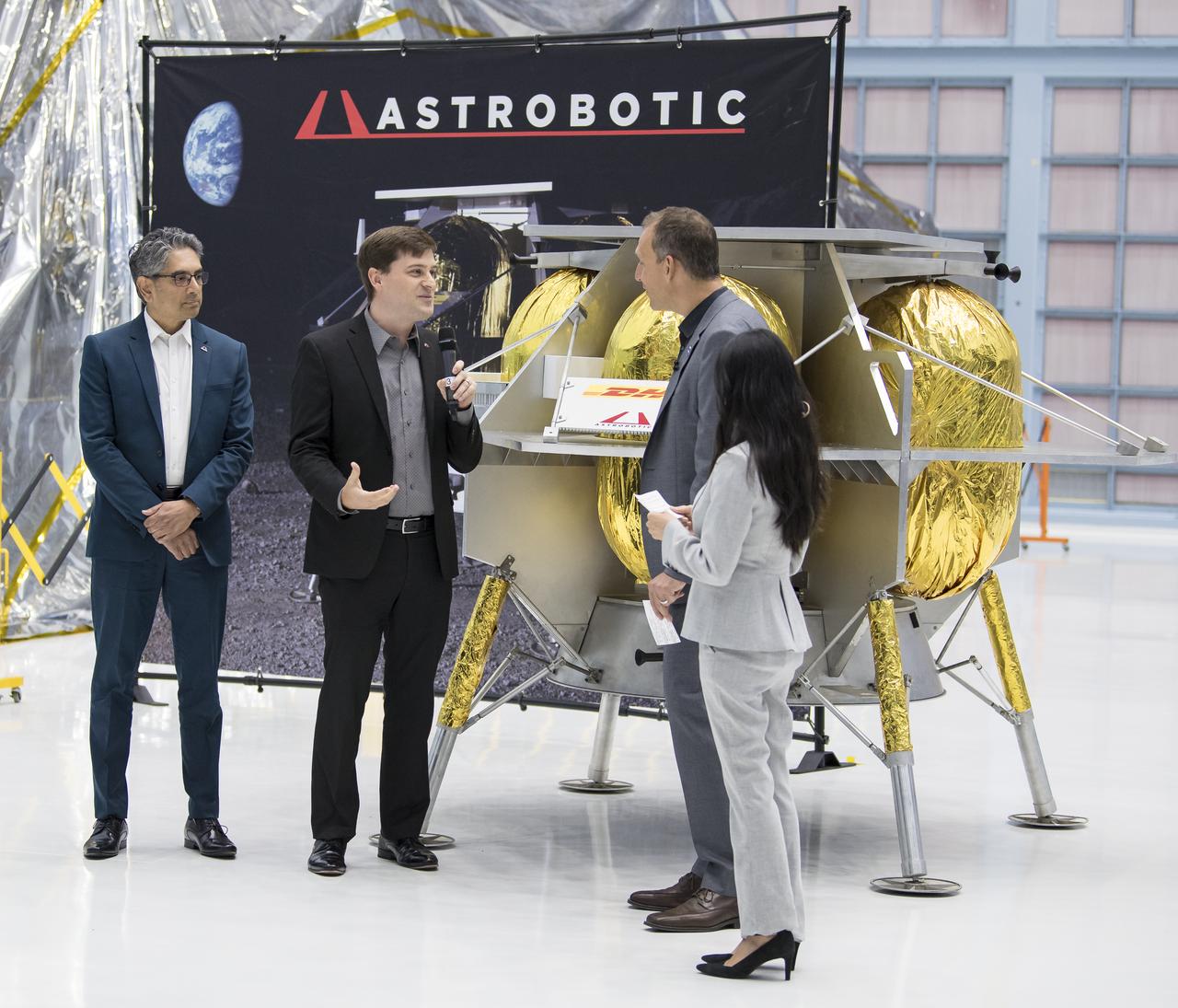
NASA Associate Administrator, Science Mission Directorate, Thomas Zurbuchen, second from right, speaks to Astrobotic CEO, John Thornton, second from left, and Astrobotic Mission Director, Sharad Bhaskaran, left, about their lunar lander, Friday, May 31, 2019, at Goddard Space Flight Center in Md. Astrobotic, Intuitive Machines, and Orbit Beyond have been selected to provide the first lunar landers for the Artemis program's lunar surface exploration. Photo credit: (NASA/Aubrey Gemignani)
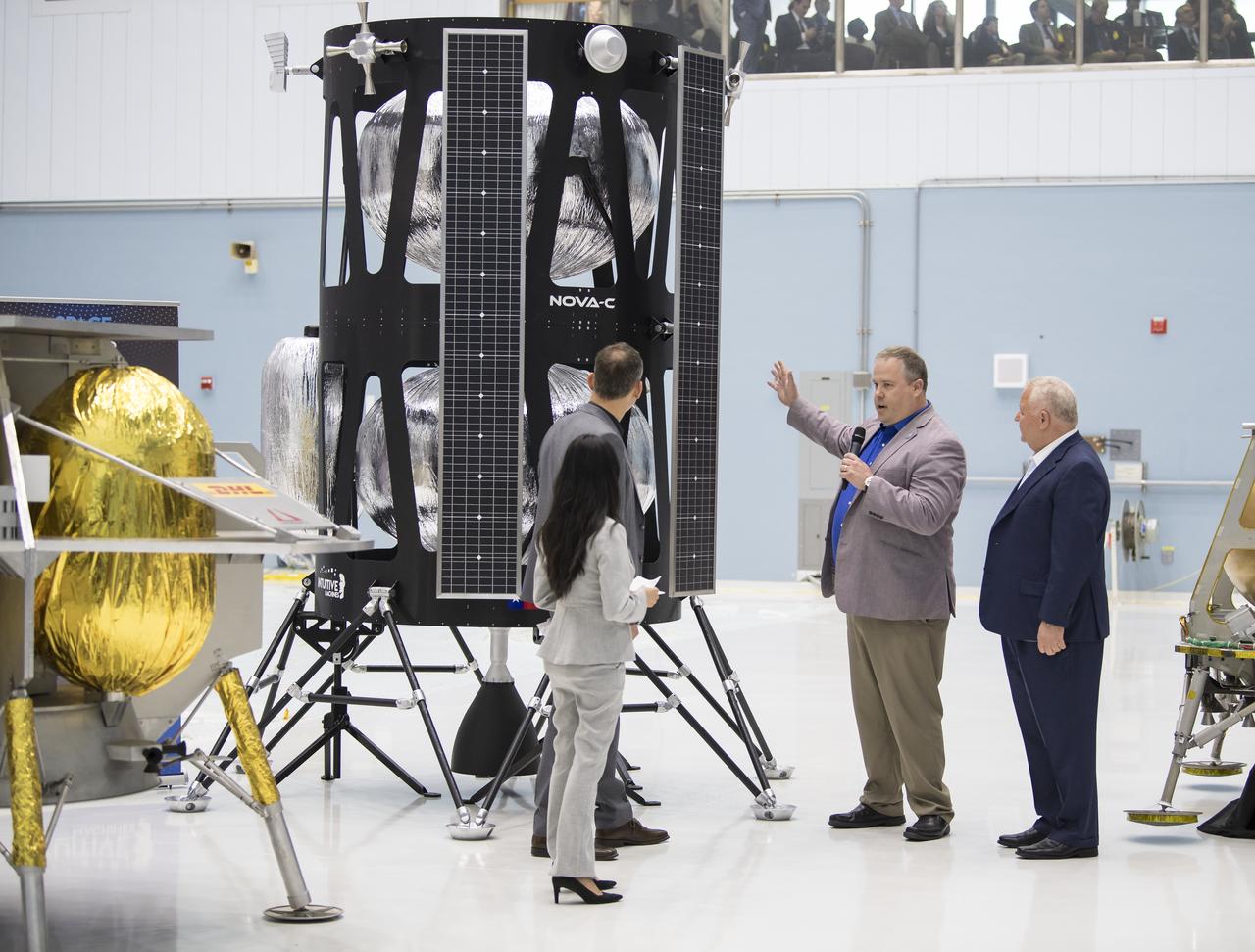
VP of Research and Development of Intuitive Machines, Tim Crain, second from right, speaks with NASA Associate Administrator, Science Mission Directorate, Thomas Zurbuchen, second from left, about their lunar lander, Friday, May 31, 2019, at Goddard Space Flight Center in Md. Astrobotic, Intuitive Machines, and Orbit Beyond have been selected to provide the first lunar landers for the Artemis program's lunar surface exploration. Photo credit: (NASA/Aubrey Gemignani)
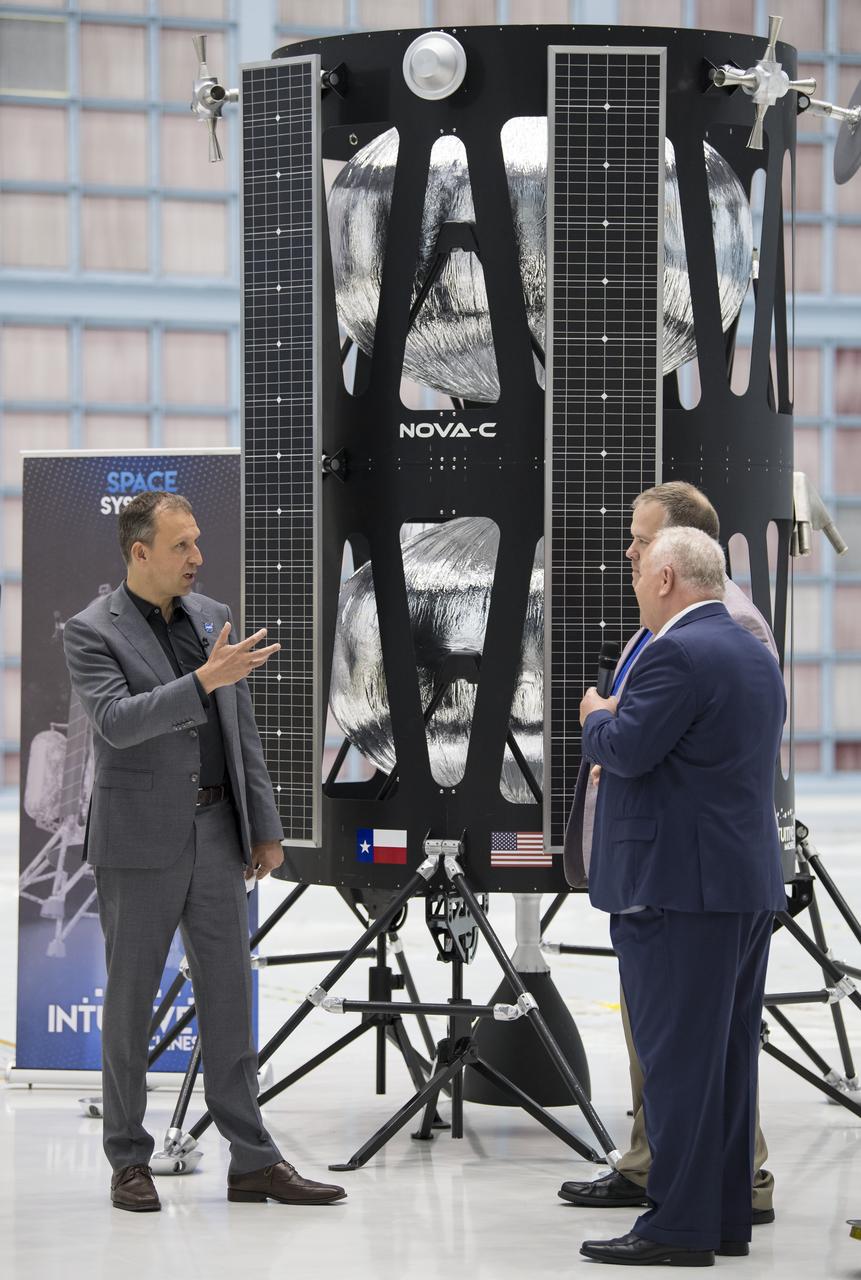
NASA Associate Administrator, Science Mission Directorate, Thomas Zurbuchen, left, speaks to, Chairman of the Board of Intuitive Machines, Kam Ghaffarian, right, and VP of Research and Development of Intuitive Machines, Tim Crain, second from right, about their lunar lander, Friday, May 31, 2019, at Goddard Space Flight Center in Md. Astrobotic, Intuitive Machines, and Orbit Beyond have been selected to provide the first lunar landers for the Artemis program's lunar surface exploration. Photo credit: (NASA/Aubrey Gemignani)
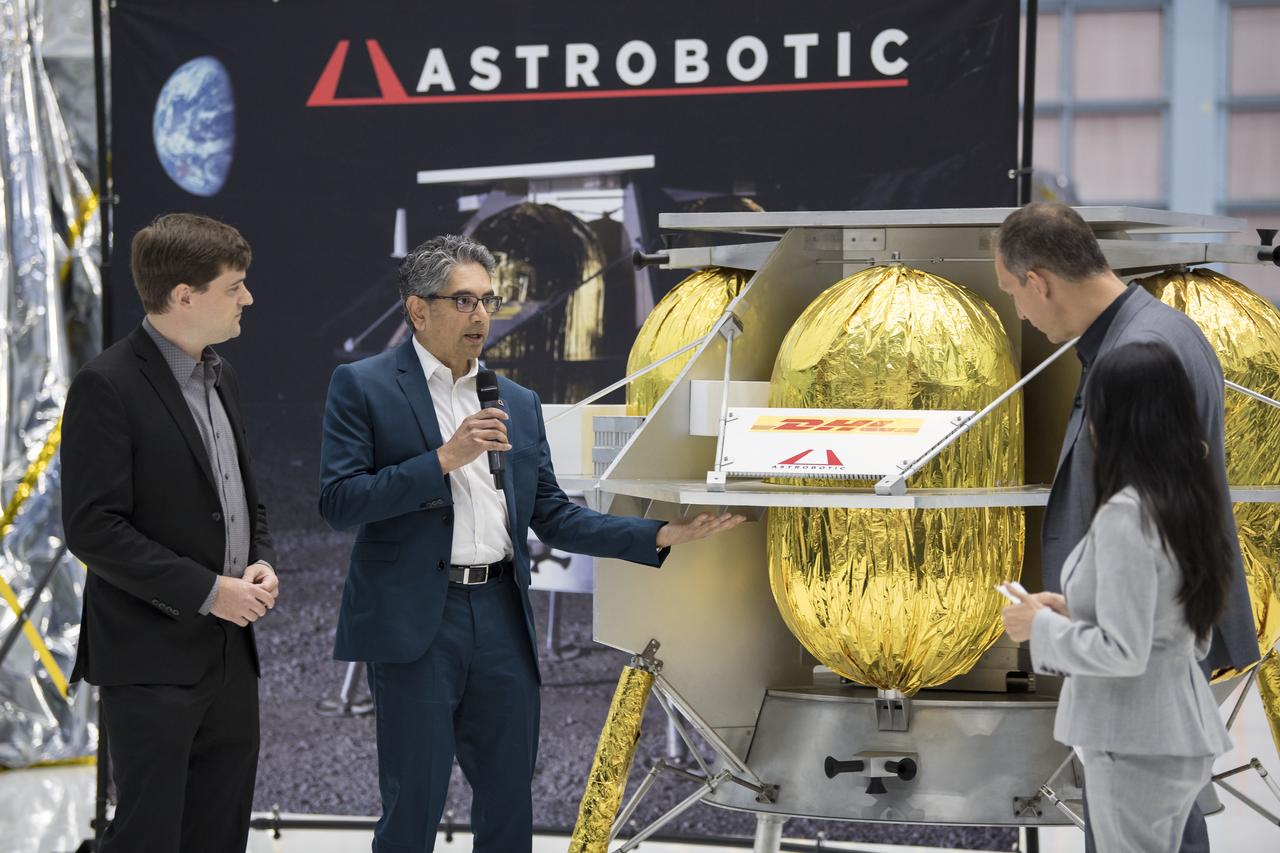
NASA Associate Administrator, Science Mission Directorate, Thomas Zurbuchen, second from right, speaks to Astrobotic CEO, John Thornton, left, and Astrobotic Mission Director, Sharad Bhaskaran, second from left, about their lunar lander, Friday, May 31, 2019, at Goddard Space Flight Center in Md. Astrobotic, Intuitive Machines, and Orbit Beyond have been selected to provide the first lunar landers for the Artemis program's lunar surface exploration. Photo credit: (NASA/Aubrey Gemignani)
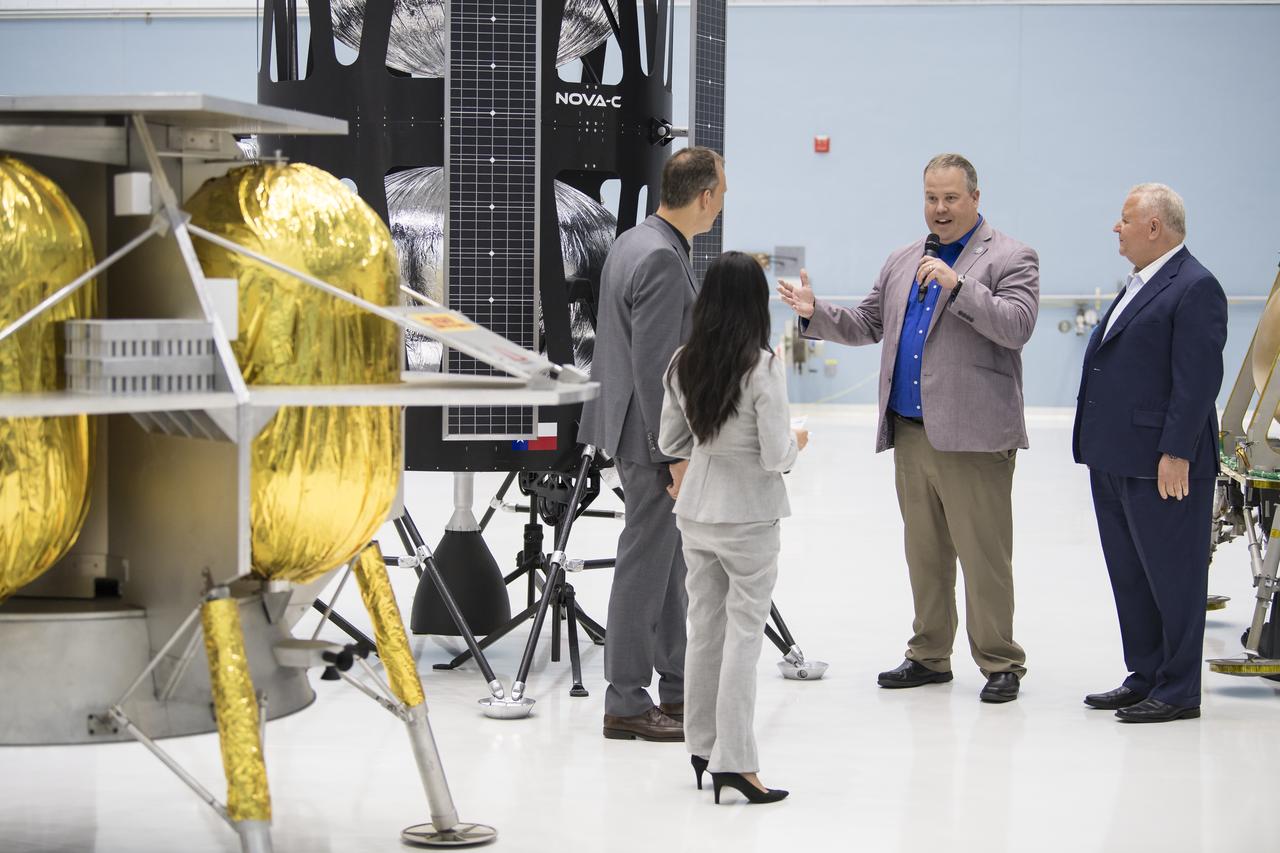
VP of Research and Development of Intuitive Machines, Tim Crain, second from right, speaks with NASA Associate Administrator, Science Mission Directorate, Thomas Zurbuchen, second from left, about their lunar lander, Friday, May 31, 2019, at Goddard Space Flight Center in Md. Astrobotic, Intuitive Machines, and Orbit Beyond have been selected to provide the first lunar landers for the Artemis program's lunar surface exploration. Photo credit: (NASA/Aubrey Gemignani)
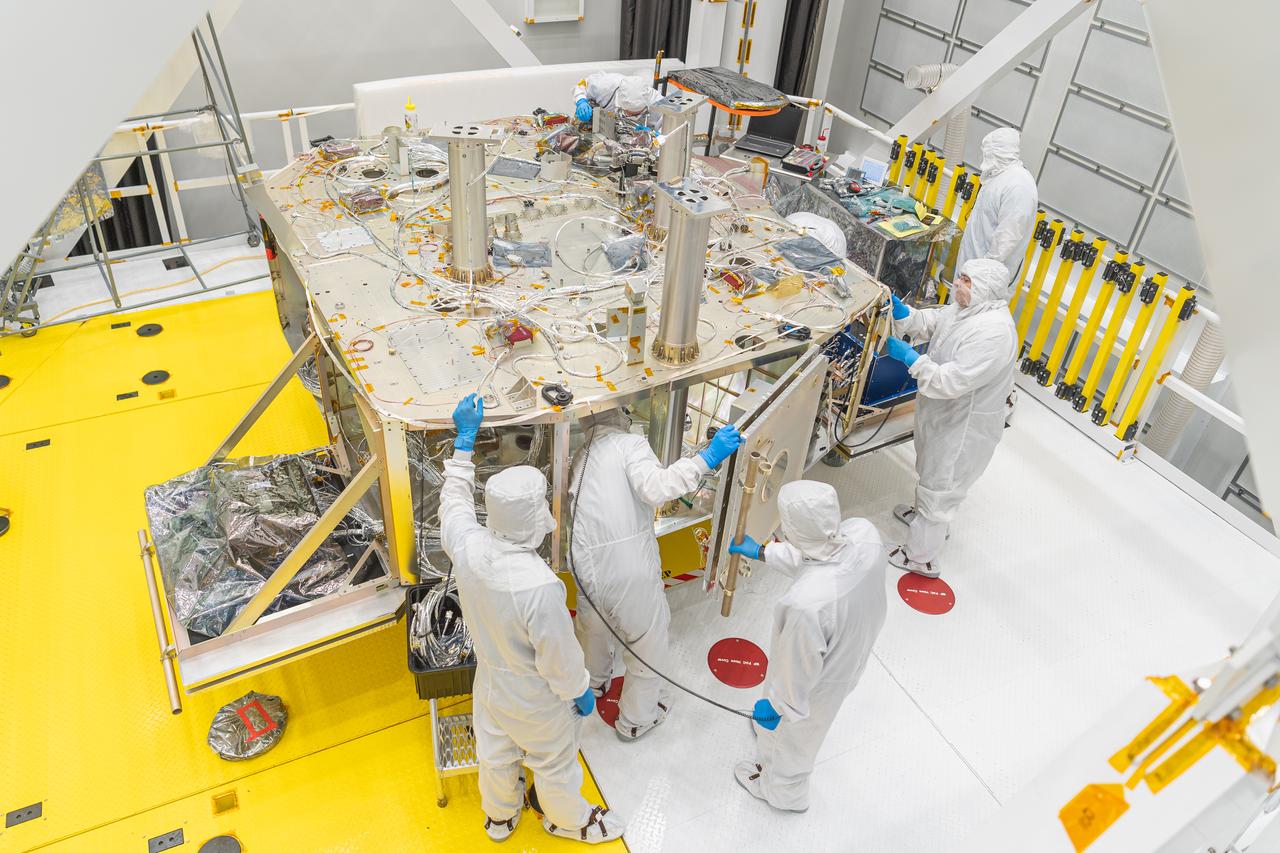
The OSAM-1 integration and testing team deploys and stows the radiator panels on the OSAM-1 servicing payload at Goddard Space Flight Center, Greenbelt Md., Sept 14, 2023. This photo has been reviewed by OSAM1 project management and the Export Control Office and is released for public view. NASA/Mike Guinto
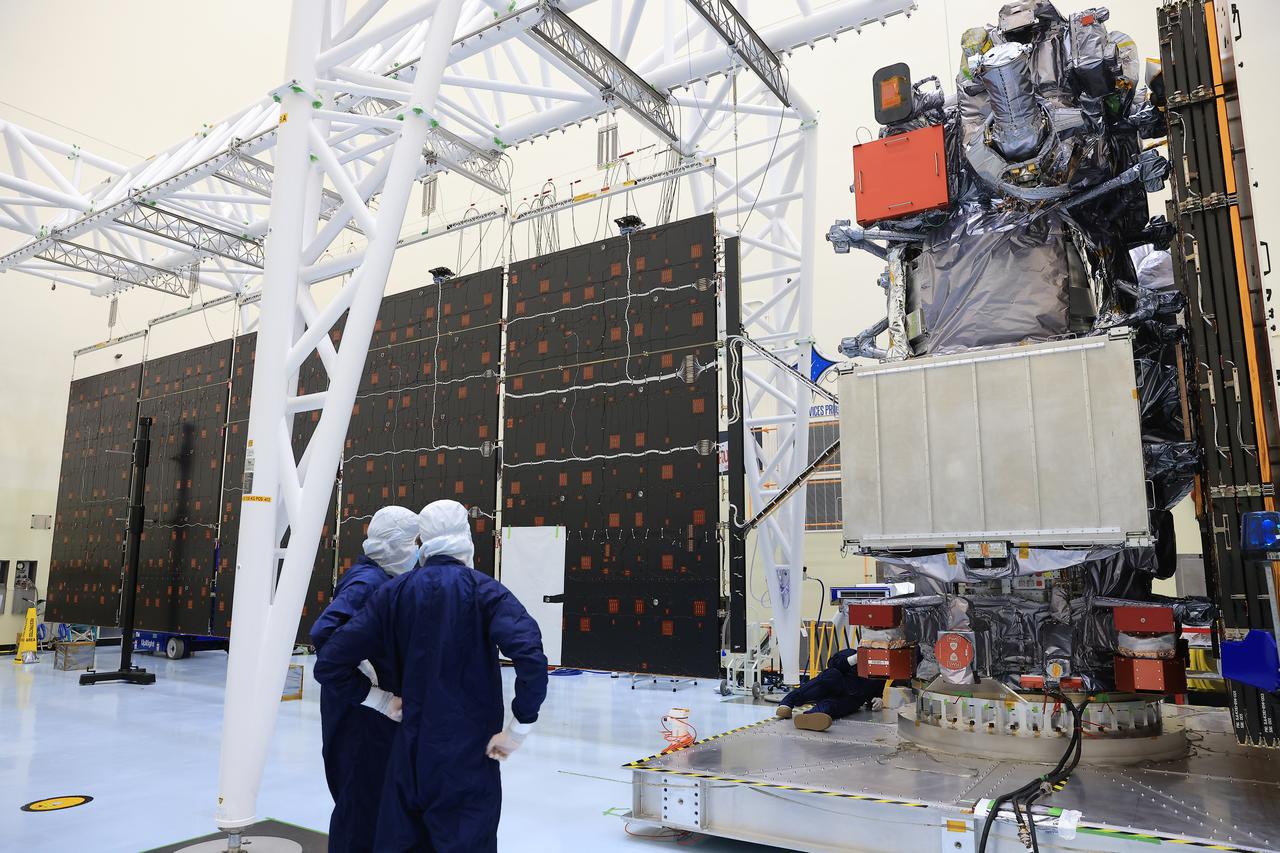
Technicians test and extend one of the two “wings” comprising the solar arrays for NASA’s Europa Clipper spacecraft on Friday, Aug. 23, 2024, at the Payload Hazardous Servicing Facility at the agency’s Kennedy Space Center in Florida. Each array measures about 46.5 feet (14.2 meters) long and about 13.5 feet (4.1 meters) high. The spacecraft needs the massive solar arrays to power to Jupiter’s icy moon Europa to help scientists better understand the astrobiological potential for habitable worlds beyond our planet.
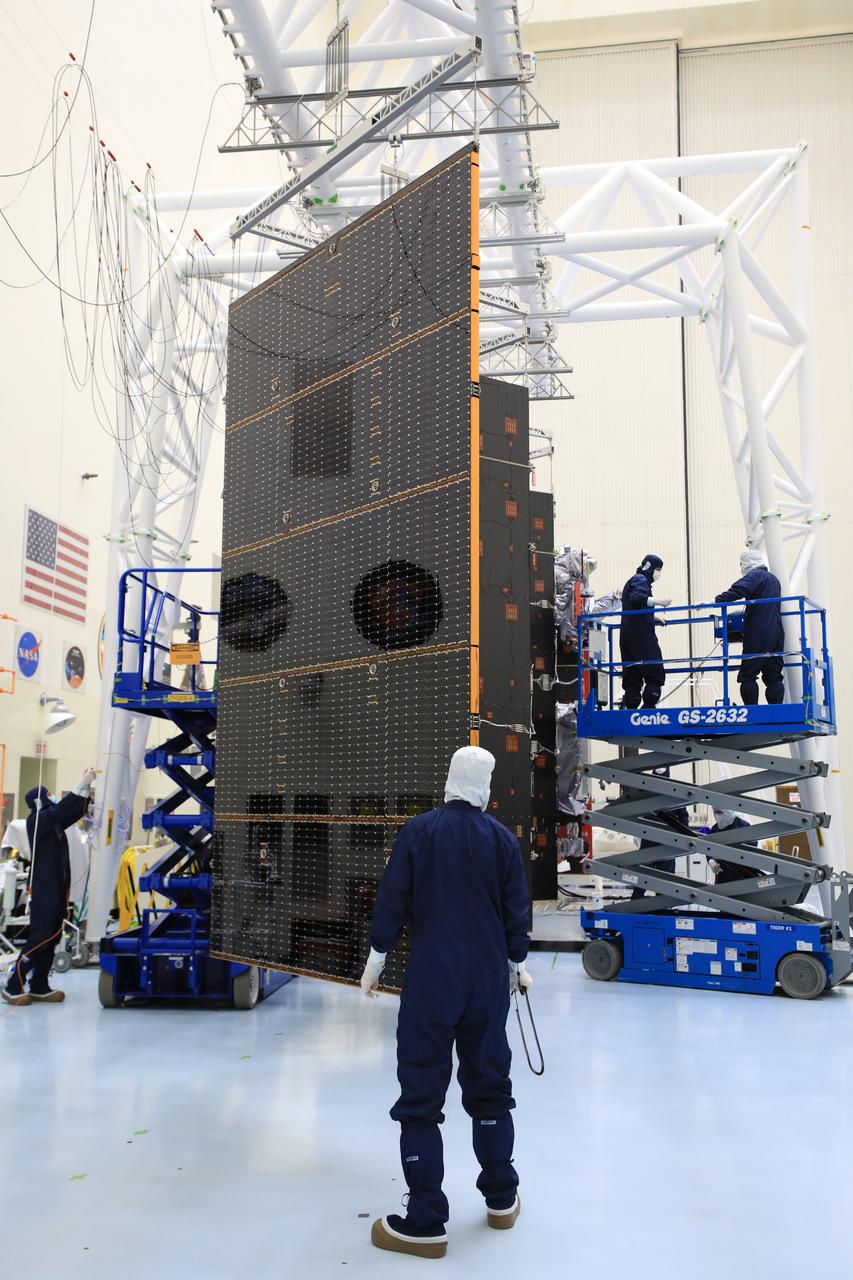
Technicians test and extend one of the two “wings” comprising the solar arrays for NASA’s Europa Clipper spacecraft on Friday, Aug. 23, 2024, at the Payload Hazardous Servicing Facility at the agency’s Kennedy Space Center in Florida. Each array measures about 46.5 feet (14.2 meters) long and about 13.5 feet (4.1 meters) high. The spacecraft needs the massive solar arrays to power to Jupiter’s icy moon Europa to help scientists better understand the astrobiological potential for habitable worlds beyond our planet.
Technicians test and extend one of the two “wings” comprising the solar arrays for NASA’s Europa Clipper spacecraft on Friday, Aug. 23, 2024, at the Payload Hazardous Servicing Facility at the agency’s Kennedy Space Center in Florida. Each array measures about 46.5 feet (14.2 meters) long and about 13.5 feet (4.1 meters) high. The spacecraft needs the massive solar arrays to power to Jupiter’s icy moon Europa to help scientists better understand the astrobiological potential for habitable worlds beyond our planet.
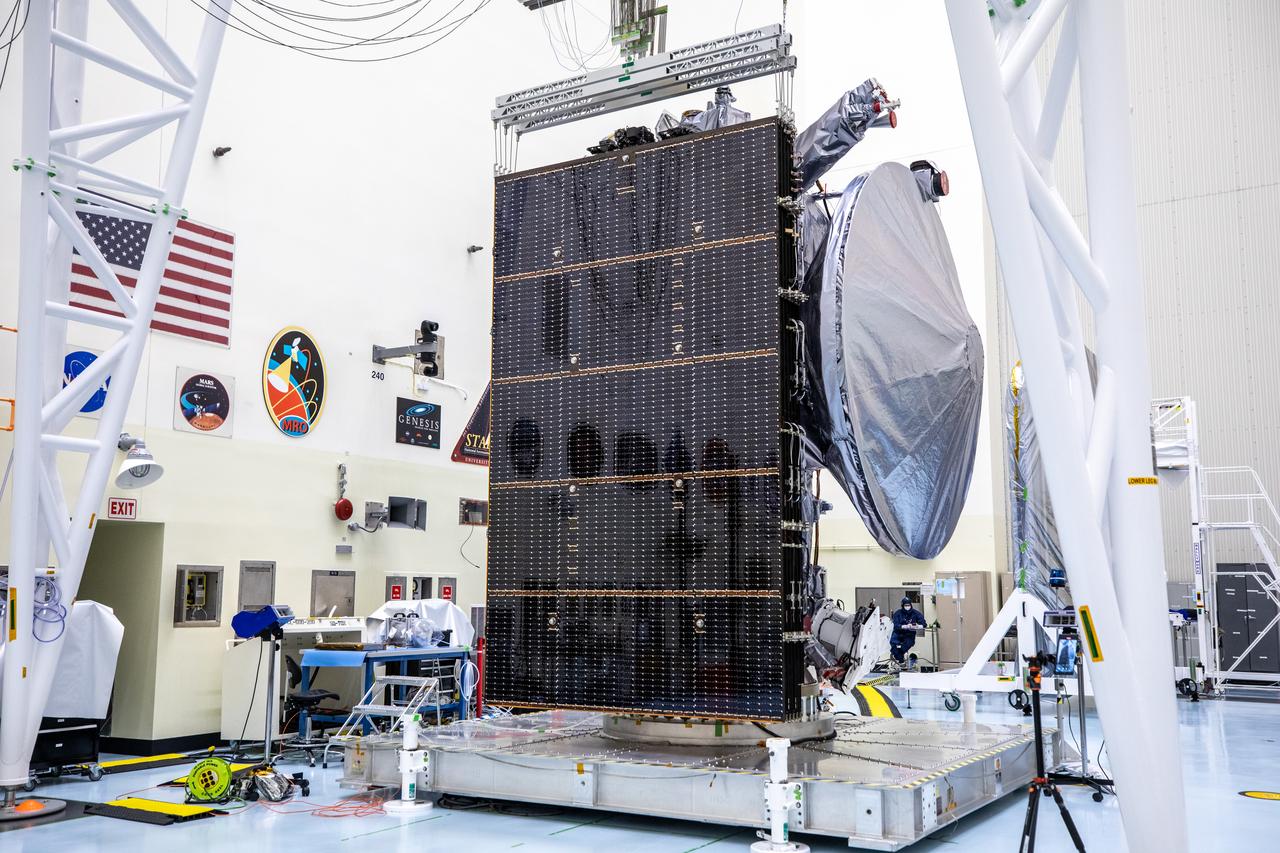
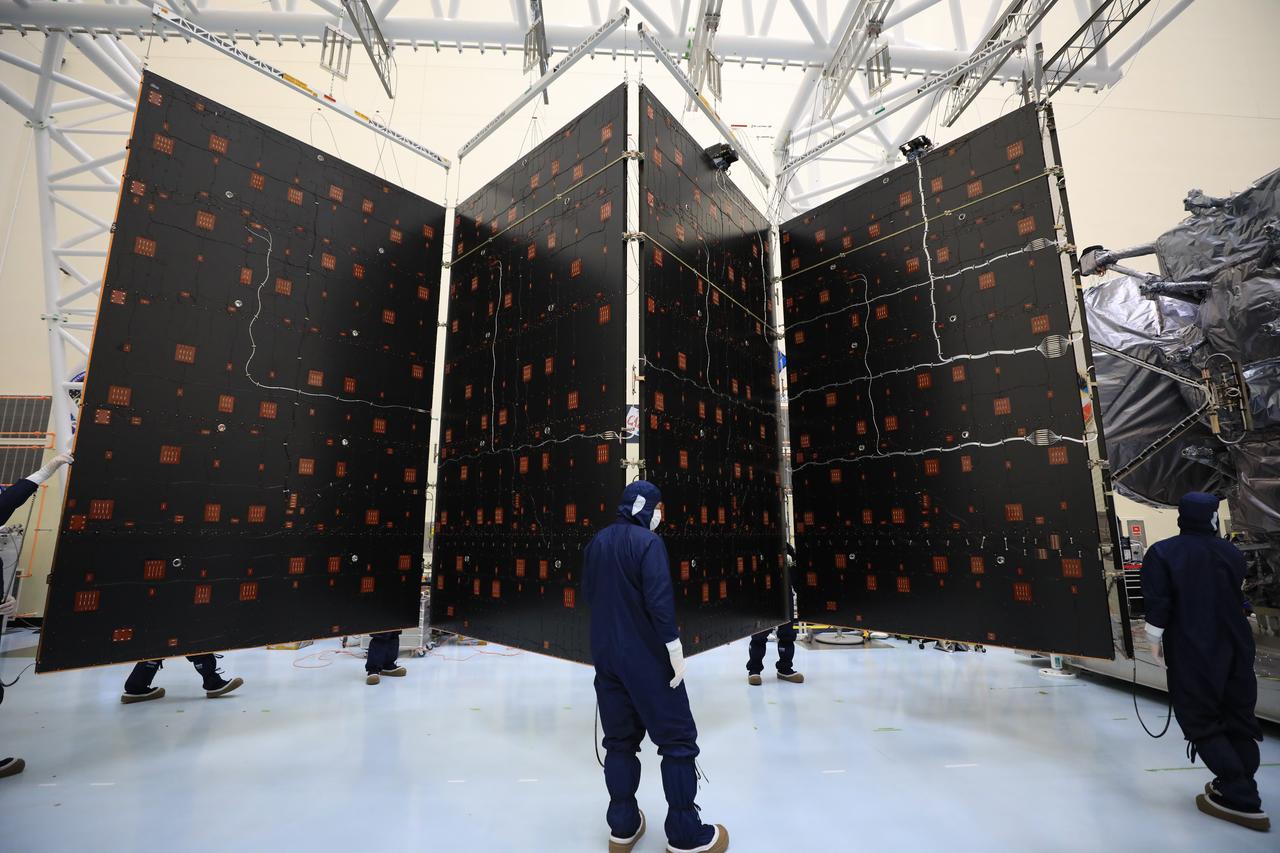
Technicians tested deploying a set of massive solar arrays measuring about 46.5 feet (14.2 meters) long and about 13.5 feet (4.1 meters) high for NASA’s Europa Clipper spacecraft inside the agency’s Payload Hazardous Servicing Facility at Kennedy Space Center in Florida on Wednesday, Aug. 7, 2024. Once launched to study Jupiter’s icy moon, Europa, the solar arrays will fully extend to power the spacecraft to perform flybys to gather science and data to determine if the moon can support habitable conditions.
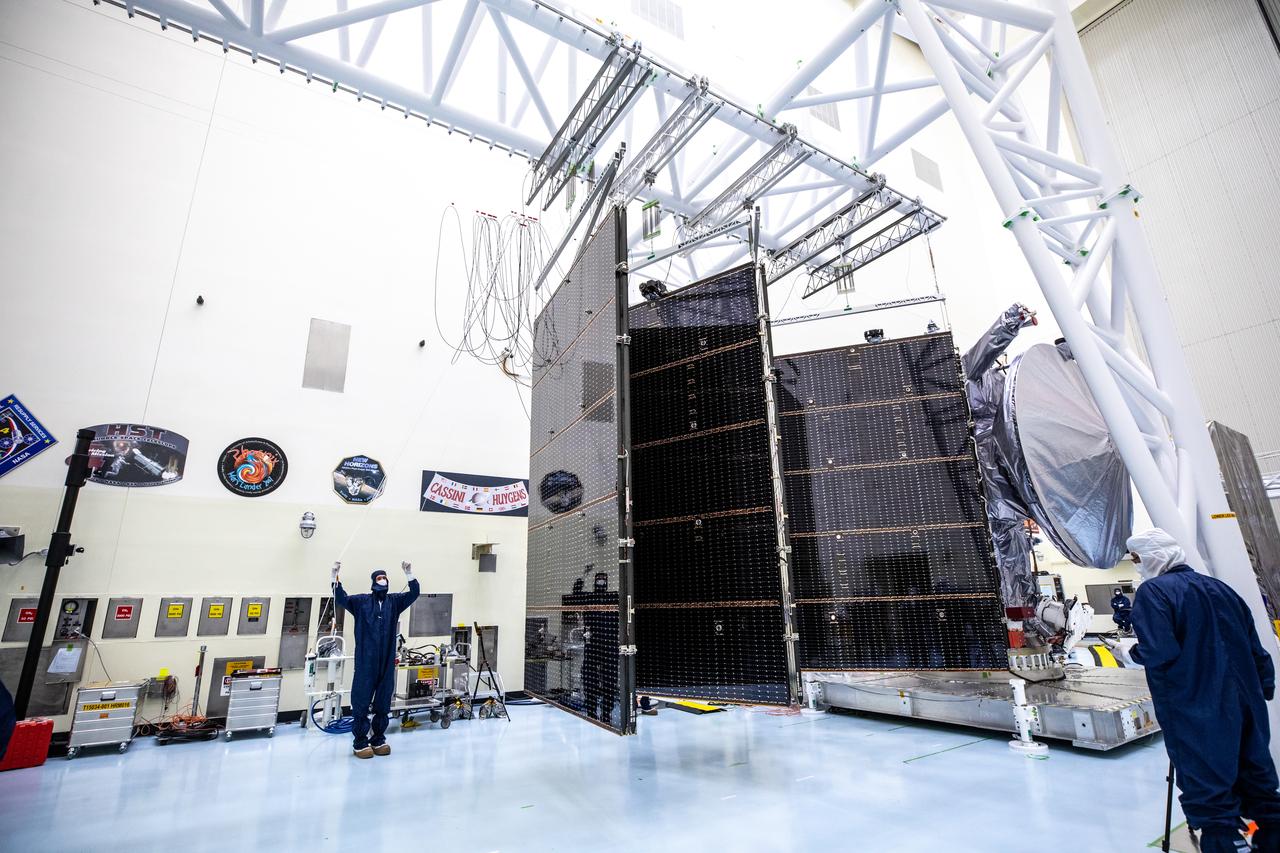
Technicians tested deploying a set of massive solar arrays measuring about 46.5 feet (14.2 meters) long and about 13.5 feet (4.1 meters) high for NASA’s Europa Clipper spacecraft inside the agency’s Payload Hazardous Servicing Facility at Kennedy Space Center in Florida on Wednesday, Aug. 7, 2024. Once launched to study Jupiter’s icy moon, Europa, the solar arrays will fully extend to power the spacecraft to perform flybys to gather science and data to determine if the moon can support habitable conditions.
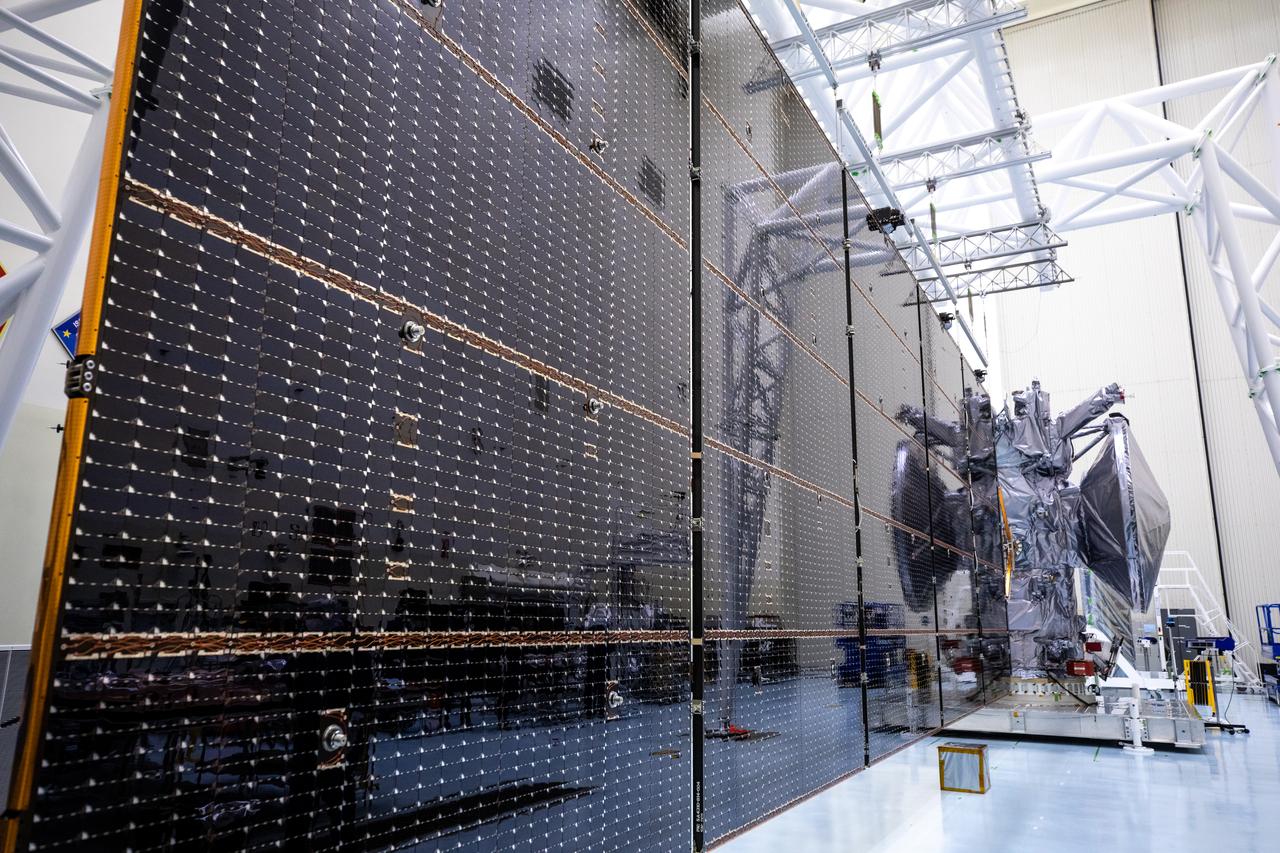
Technicians tested deploying a set of massive solar arrays measuring about 46.5 feet (14.2 meters) long and about 13.5 feet (4.1 meters) high for NASA’s Europa Clipper spacecraft inside the agency’s Payload Hazardous Servicing Facility at Kennedy Space Center in Florida on Wednesday, Aug. 7, 2024. Once launched to study Jupiter’s icy moon, Europa, the solar arrays will fully extend to power the spacecraft to perform flybys to gather science and data to determine if the moon can support habitable conditions.
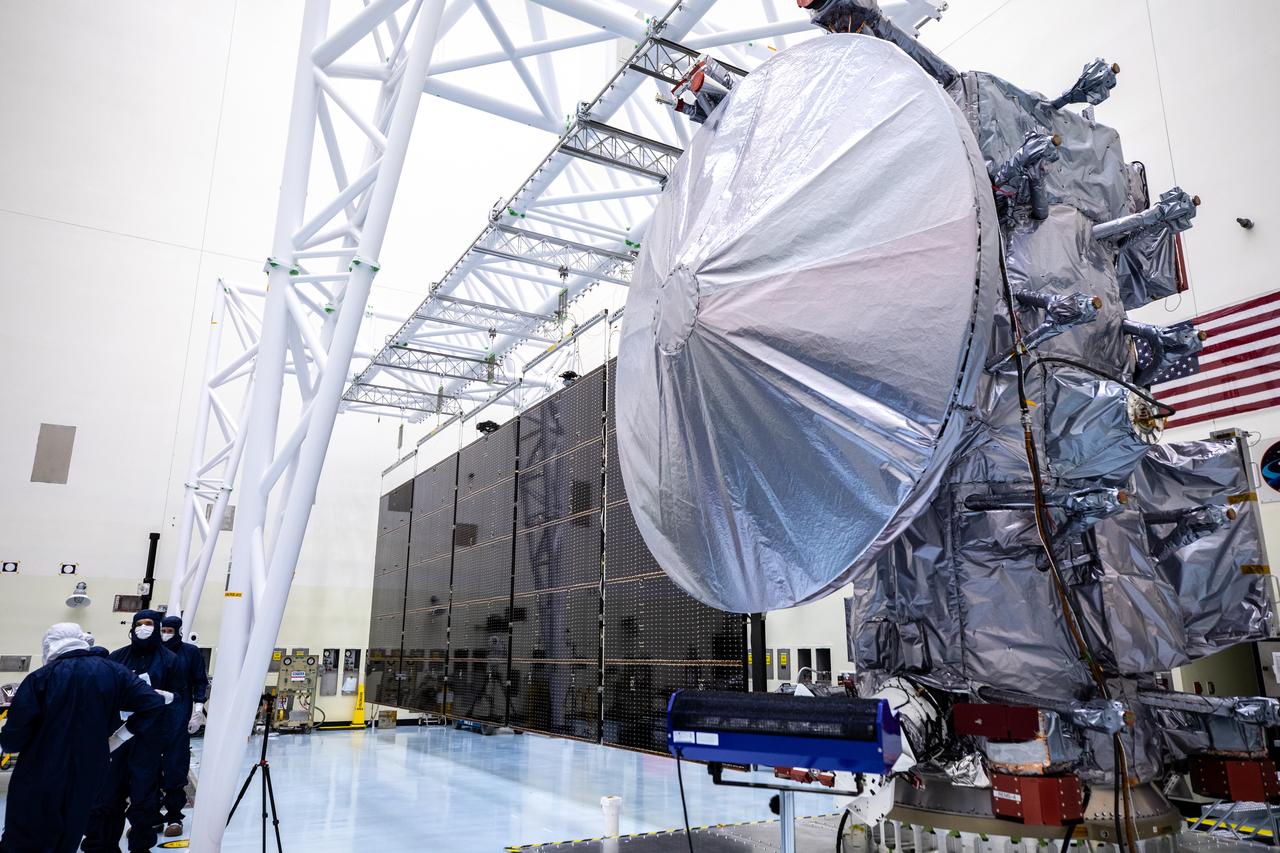
Technicians tested deploying a set of massive solar arrays measuring about 46.5 feet (14.2 meters) long and about 13.5 feet (4.1 meters) high for NASA’s Europa Clipper spacecraft inside the agency’s Payload Hazardous Servicing Facility at Kennedy Space Center in Florida on Wednesday, Aug. 7, 2024. Once launched to study Jupiter’s icy moon, Europa, the solar arrays will fully extend to power the spacecraft to perform flybys to gather science and data to determine if the moon can support habitable conditions.
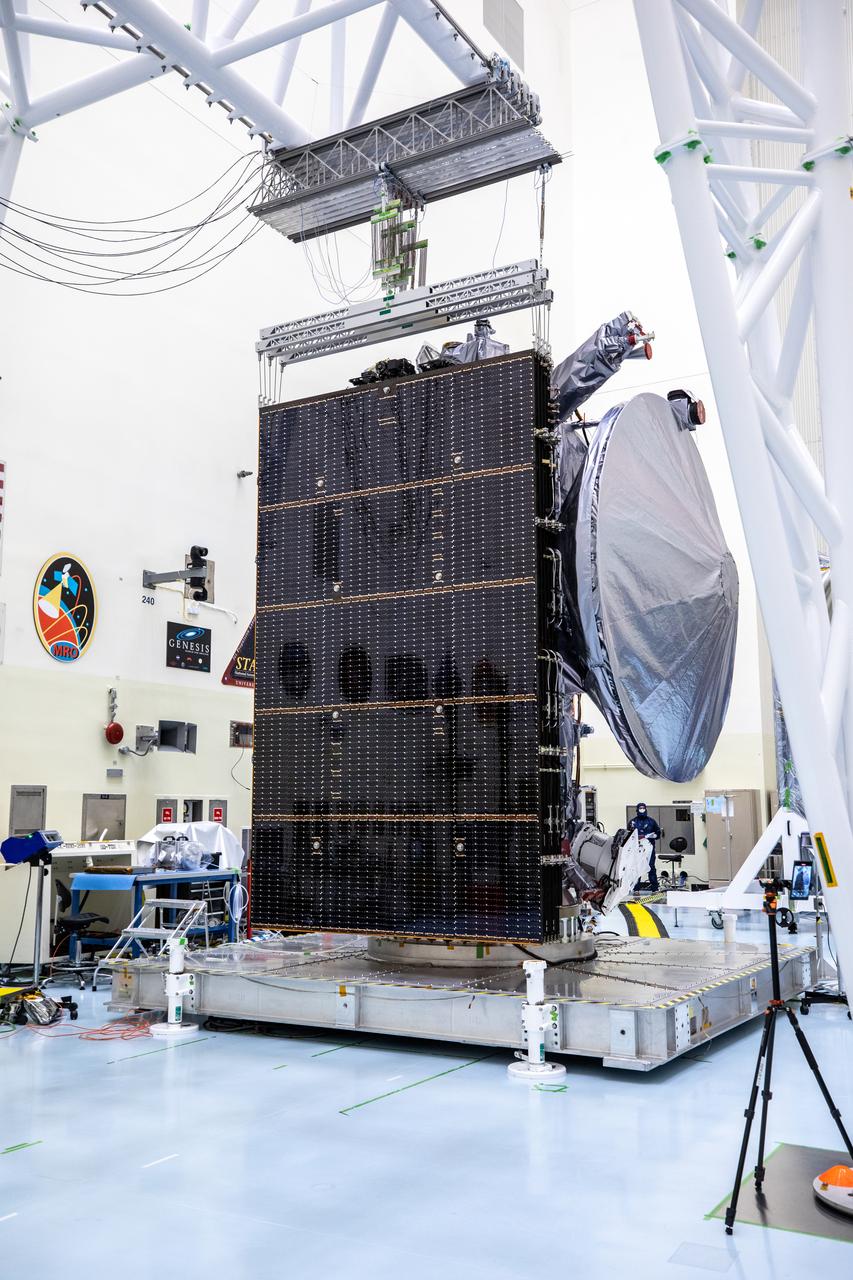
Technicians tested deploying a set of massive solar arrays measuring about 46.5 feet (14.2 meters) long and about 13.5 feet (4.1 meters) high for NASA’s Europa Clipper spacecraft inside the agency’s Payload Hazardous Servicing Facility at Kennedy Space Center in Florida on Wednesday, Aug. 7, 2024. Once launched to study Jupiter’s icy moon, Europa, the solar arrays will fully extend to power the spacecraft to perform flybys to gather science and data to determine if the moon can support habitable conditions.
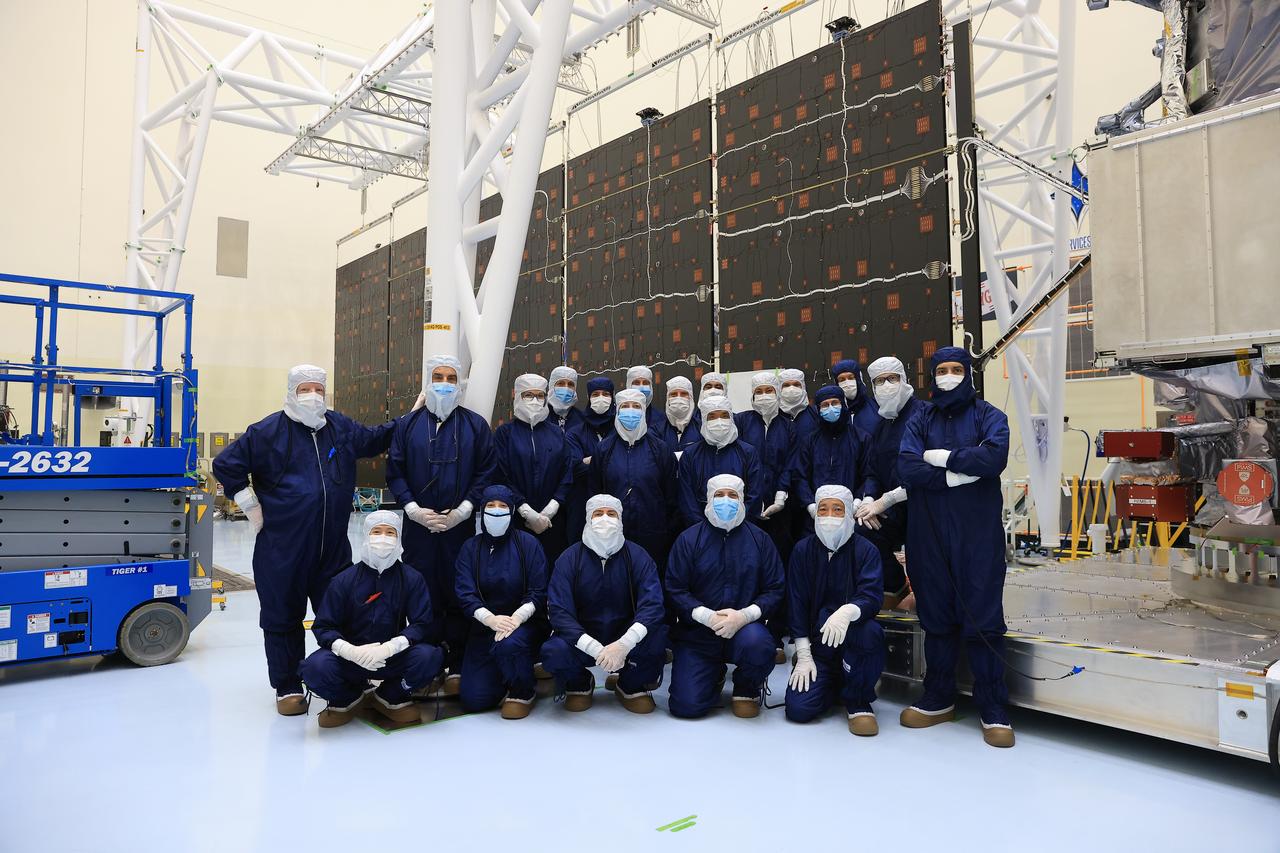
Technicians pose for a photo in front of one of the two “wings” comprising the solar arrays for NASA’s Europa Clipper spacecraft on Friday, Aug. 23, 2024, at the Payload Hazardous Servicing Facility at the agency’s Kennedy Space Center in Florida. Each array measures about 46.5 feet (14.2 meters) long and about 13.5 feet (4.1 meters) high. The spacecraft needs the massive solar arrays to power to Jupiter’s icy moon Europa to help scientists better understand the astrobiological potential for habitable worlds beyond our planet.
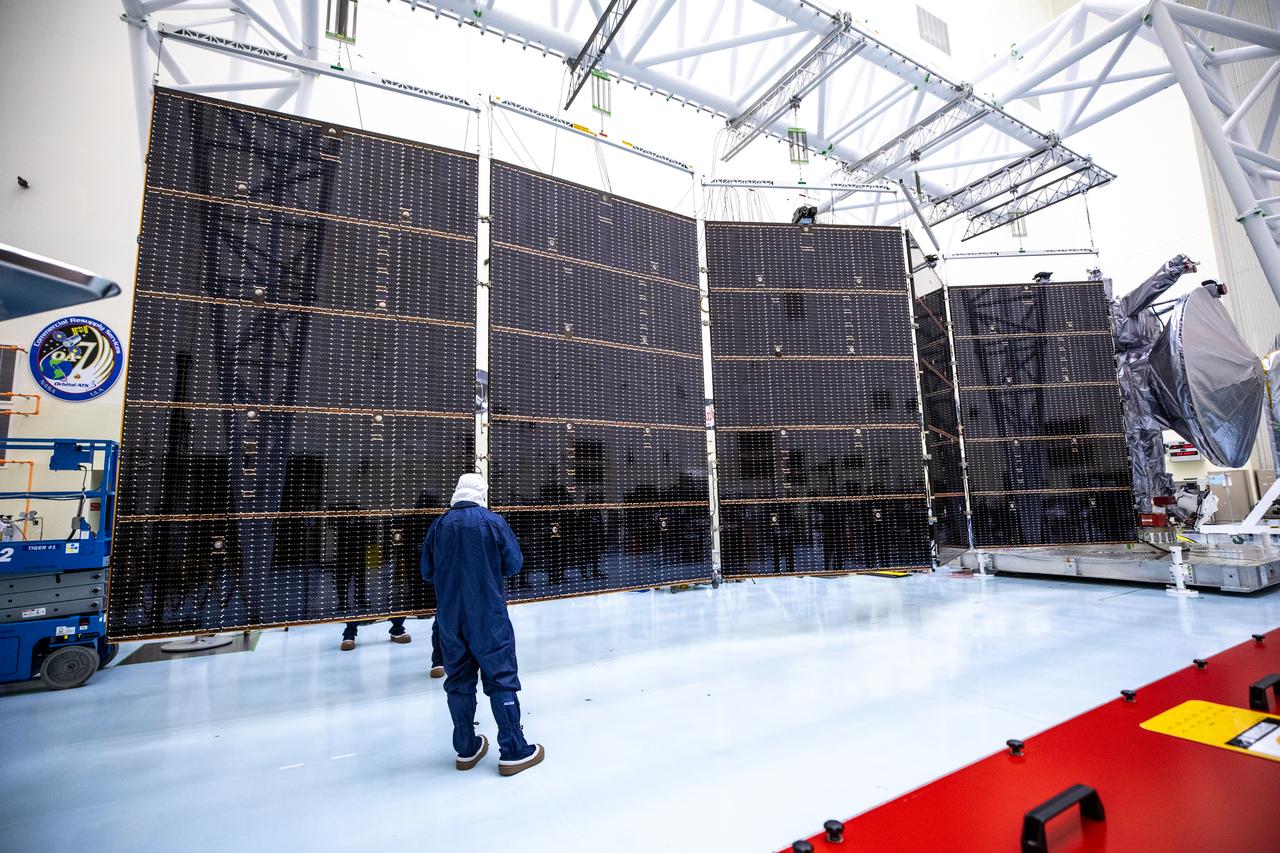
Technicians tested deploying a set of massive solar arrays measuring about 46.5 feet (14.2 meters) long and about 13.5 feet (4.1 meters) high for NASA’s Europa Clipper spacecraft inside the agency’s Payload Hazardous Servicing Facility at Kennedy Space Center in Florida on Wednesday, Aug. 7, 2024. Once launched to study Jupiter’s icy moon, Europa, the solar arrays will fully extend to power the spacecraft to perform flybys to gather science and data to determine if the moon can support habitable conditions.
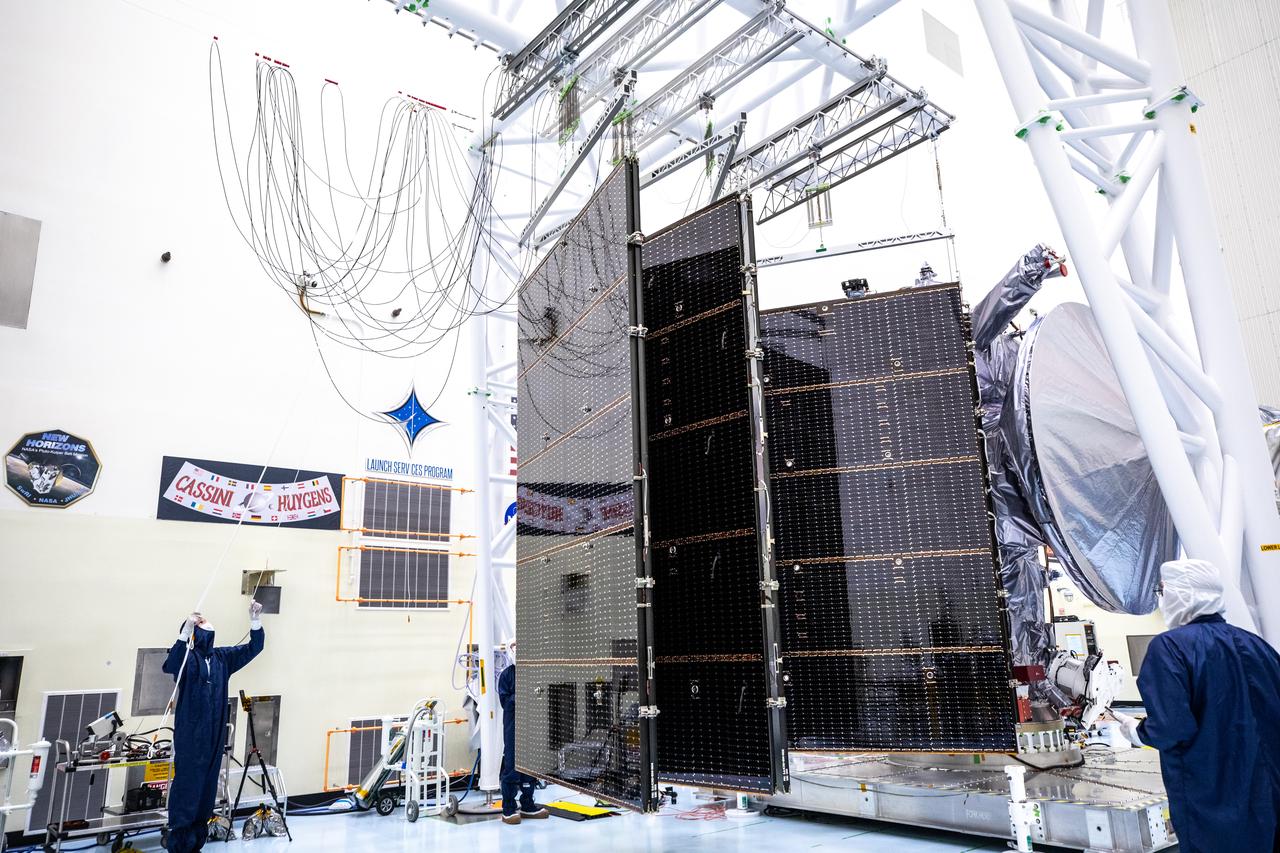
Technicians tested deploying a set of massive solar arrays measuring about 46.5 feet (14.2 meters) long and about 13.5 feet (4.1 meters) high for NASA’s Europa Clipper spacecraft inside the agency’s Payload Hazardous Servicing Facility at Kennedy Space Center in Florida on Wednesday, Aug. 7, 2024. Once launched to study Jupiter’s icy moon, Europa, the solar arrays will fully extend to power the spacecraft to perform flybys to gather science and data to determine if the moon can support habitable conditions.
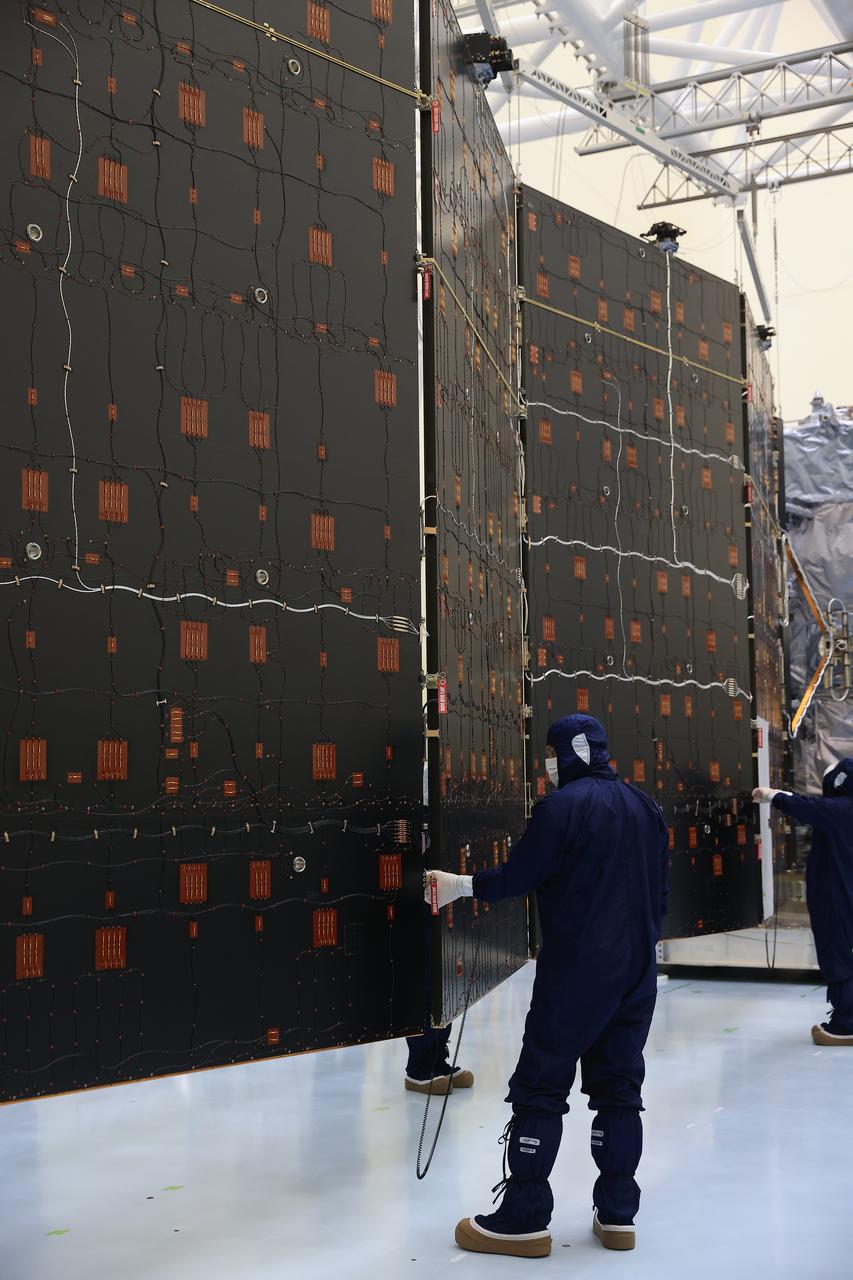
Technicians test and extend one of the two “wings” comprising the solar arrays for NASA’s Europa Clipper spacecraft on Friday, Aug. 23, 2024, at the Payload Hazardous Servicing Facility at the agency’s Kennedy Space Center in Florida. Each array measures about 46.5 feet (14.2 meters) long and about 13.5 feet (4.1 meters) high. The spacecraft needs the massive solar arrays to power to Jupiter’s icy moon Europa to help scientists better understand the astrobiological potential for habitable worlds beyond our planet.
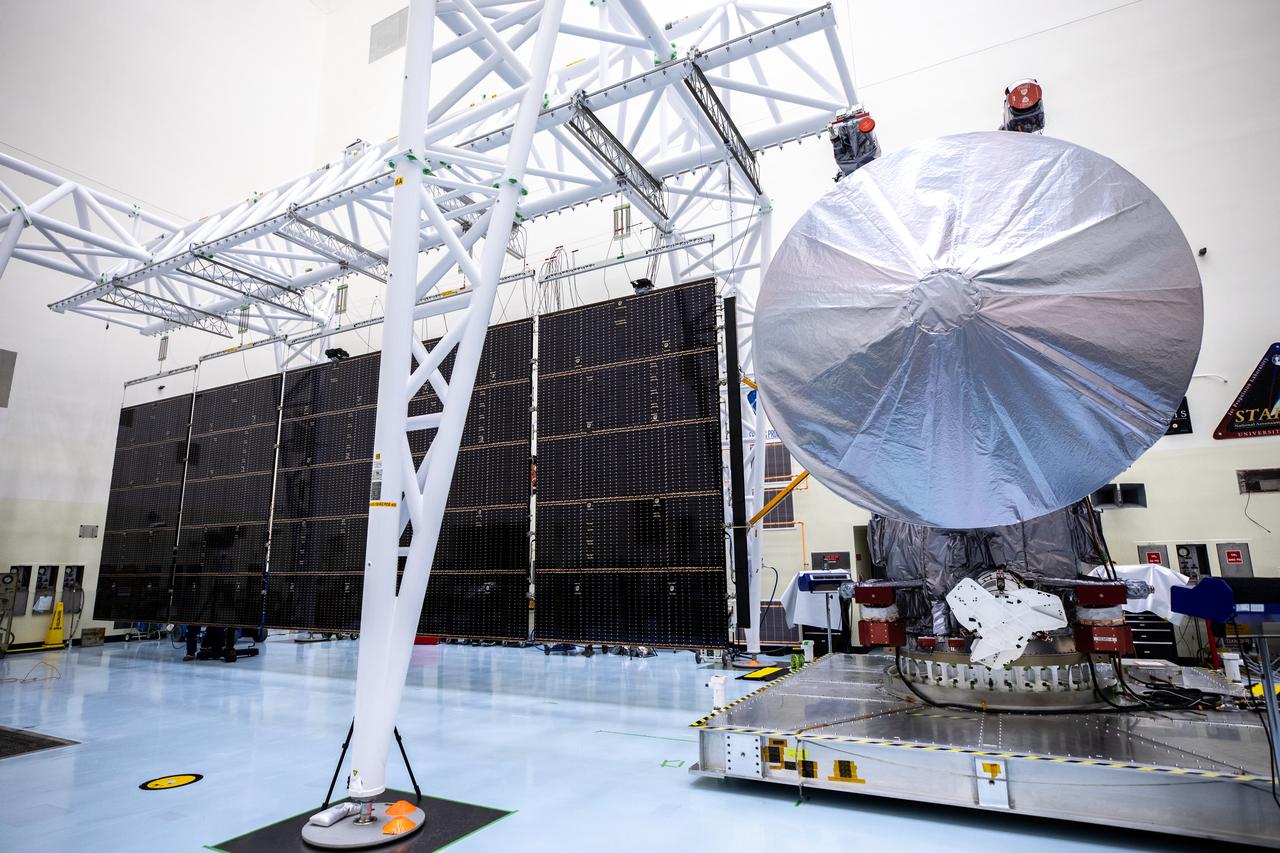
Technicians tested deploying a set of massive solar arrays measuring about 46.5 feet (14.2 meters) long and about 13.5 feet (4.1 meters) high for NASA’s Europa Clipper spacecraft inside the agency’s Payload Hazardous Servicing Facility at Kennedy Space Center in Florida on Wednesday, Aug. 7, 2024. Once launched to study Jupiter’s icy moon, Europa, the solar arrays will fully extend to power the spacecraft to perform flybys to gather science and data to determine if the moon can support habitable conditions.
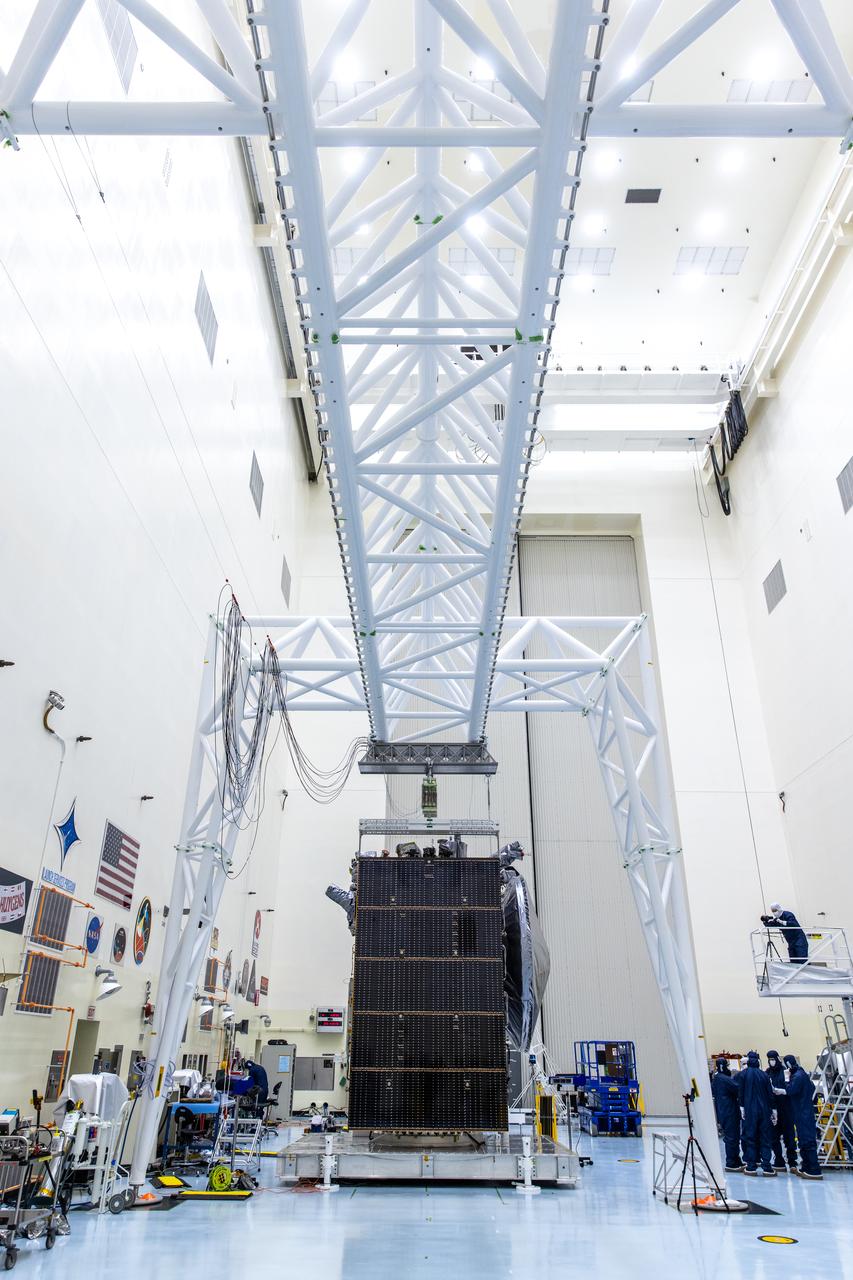
Technicians tested deploying a set of massive solar arrays measuring about 46.5 feet (14.2 meters) long and about 13.5 feet (4.1 meters) high for NASA’s Europa Clipper spacecraft inside the agency’s Payload Hazardous Servicing Facility at Kennedy Space Center in Florida on Wednesday, Aug. 7, 2024. Once launched to study Jupiter’s icy moon, Europa, the solar arrays will fully extend to power the spacecraft to perform flybys to gather science and data to determine if the moon can support habitable conditions.
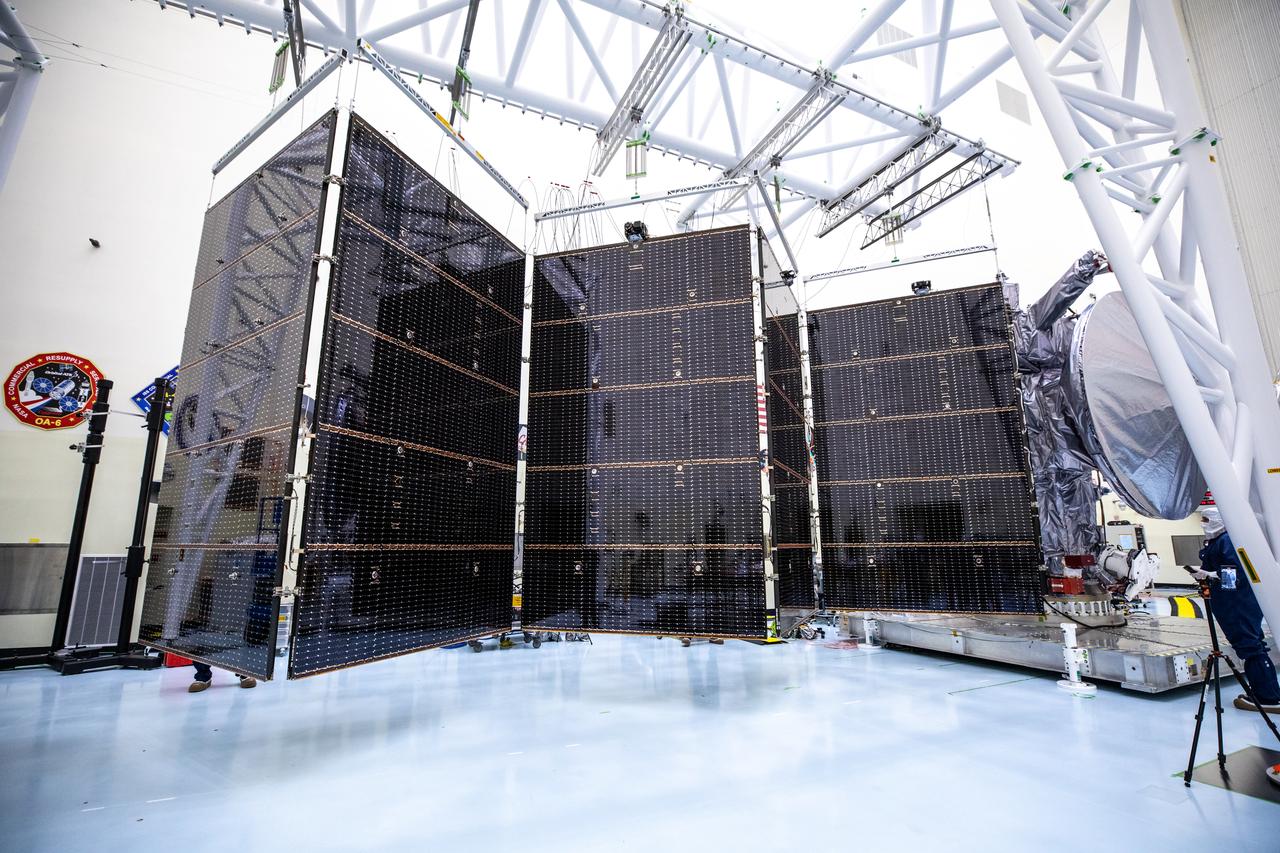
Technicians tested deploying a set of massive solar arrays measuring about 46.5 feet (14.2 meters) long and about 13.5 feet (4.1 meters) high for NASA’s Europa Clipper spacecraft inside the agency’s Payload Hazardous Servicing Facility at Kennedy Space Center in Florida on Wednesday, Aug. 7, 2024. Once launched to study Jupiter’s icy moon, Europa, the solar arrays will fully extend to power the spacecraft to perform flybys to gather science and data to determine if the moon can support habitable conditions.
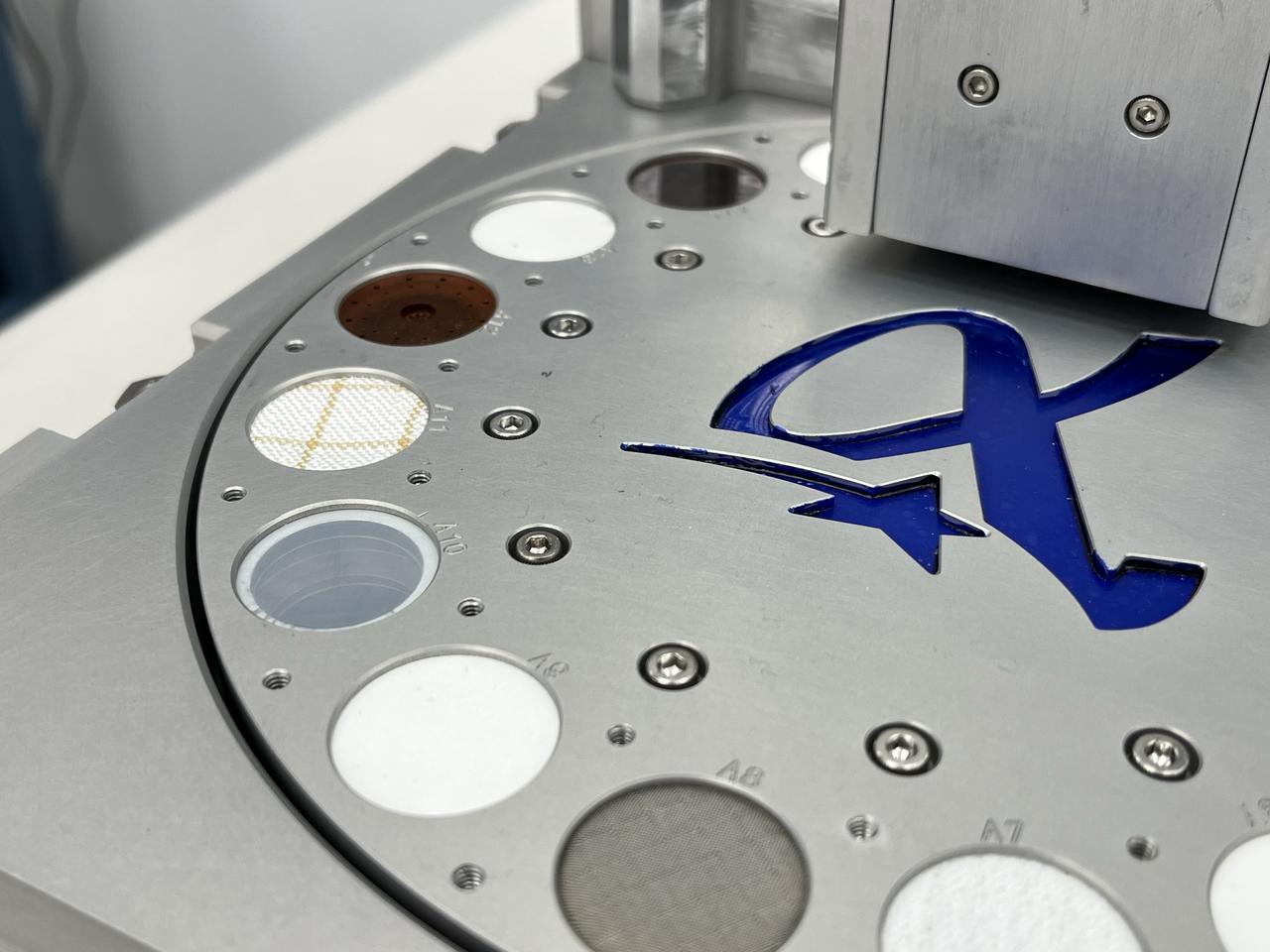
A science instrument flying aboard the next delivery for NASA’s CLPS (Commercial Lunar Payload Services) initiative is planning to study how different materials react to the lunar environment. Regolith Adherence Characterization, or RAC, is one of 10 payloads set to be carried to the Moon by the Blue Ghost 1 lunar lander in 2025. Developed by Aegis Aerospace, RAC’s wheels feature a series of different sample materials, helping researchers to better understand how lunar dust repels or attaches to each. Investigations and demonstrations, such as RAC, launched on CLPS flights will help NASA study Earth’s nearest neighbor under Artemis and pave the way for future crewed missions on the Moon. NASA’s Marshall Space Flight Center in Huntsville, Alabama, manages the development for seven of the 10 CLPS payloads that will be carried on Firefly’s Blue Ghost lunar lander.
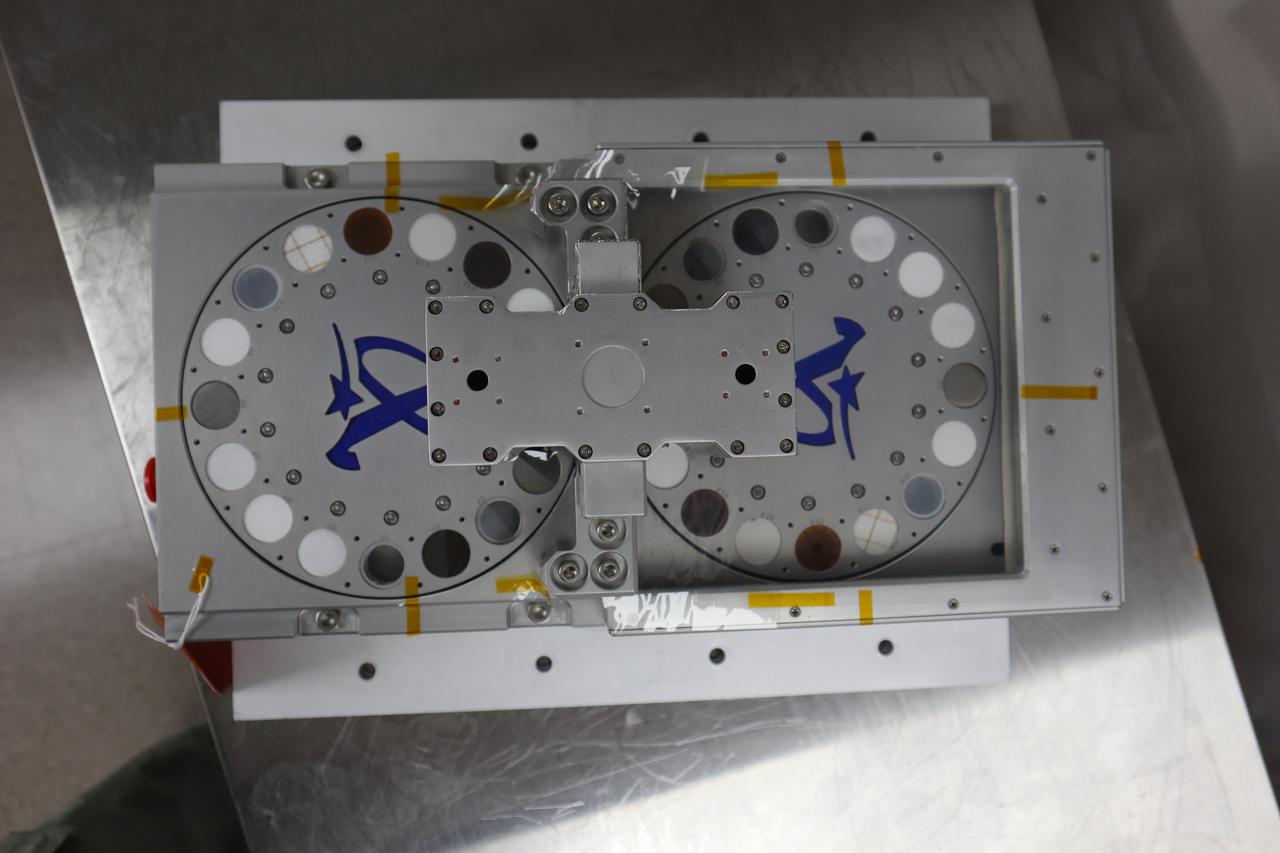
A science instrument flying aboard the next delivery for NASA’s CLPS (Commercial Lunar Payload Services) initiative is planning to study how different materials react to the lunar environment. Regolith Adherence Characterization, or RAC, is one of 10 payloads set to be carried to the Moon by the Blue Ghost 1 lunar lander in 2025. Developed by Aegis Aerospace, RAC’s wheels feature a series of different sample materials, helping researchers to better understand how lunar dust repels or attaches to each. Investigations and demonstrations, such as RAC, launched on CLPS flights will help NASA study Earth’s nearest neighbor under Artemis and pave the way for future crewed missions on the Moon. NASA’s Marshall Space Flight Center in Huntsville, Alabama, manages the development for seven of the 10 CLPS payloads that will be carried on Firefly’s Blue Ghost lunar lander.
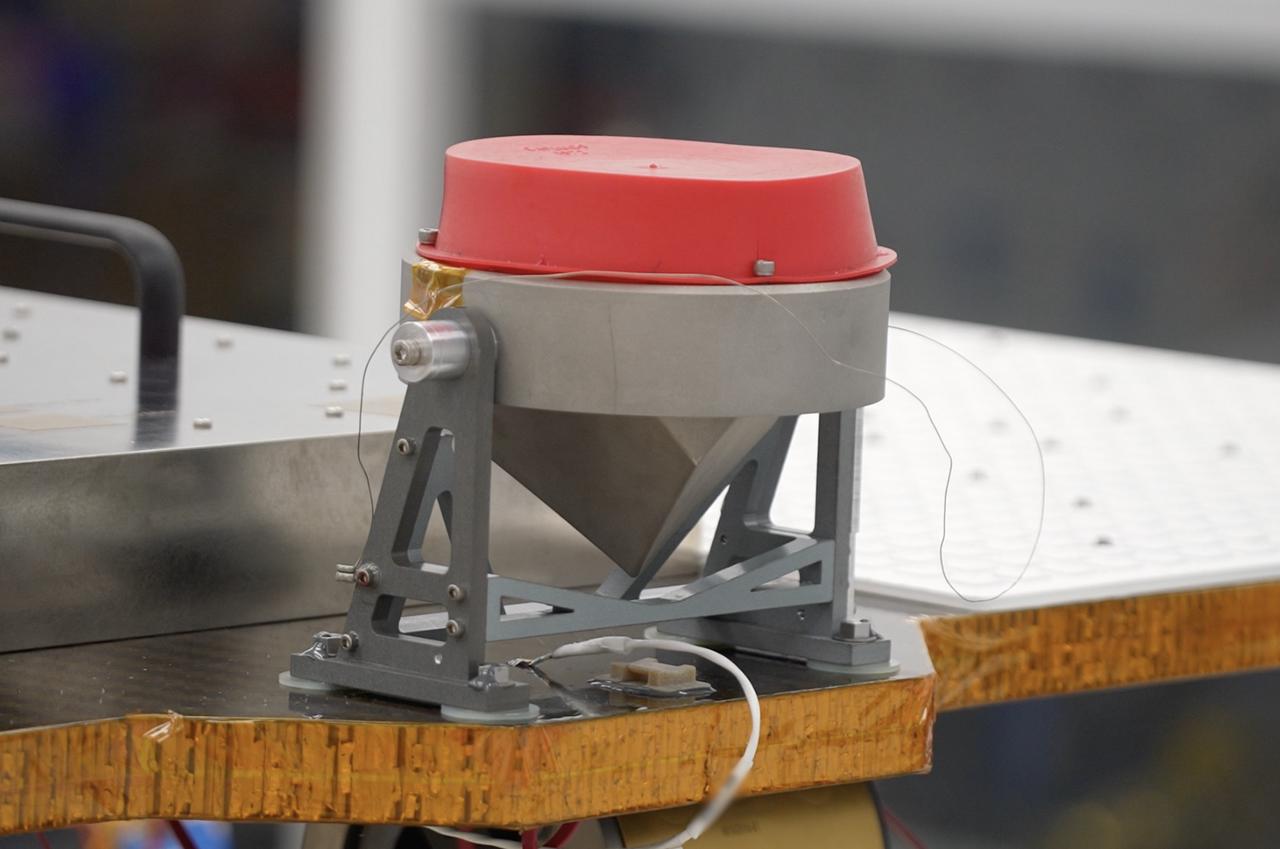
A science instrument flying aboard the next delivery for NASA’s CLPS (Commercial Lunar Payload Services) initiative is expected to significantly expand our knowledge of the Moon. Next Generation Lunar Retroreflector, or NGLR-1, is one of 10 payloads set to be carried to the Moon by the Blue Ghost 1 lunar lander in 2025. Developed by the University of Maryland in College Park, NGLR-1 is designed to reflect very short laser pulses from Earth-based lunar laser ranging observatories using a retroreflector, or a mirror designed to reflect the incoming light back in the same incoming direction. Investigations and demonstrations, such as NGLR-1, launched on CLPS flights will help NASA study Earth’s nearest neighbor under Artemis and pave the way for future crewed missions on the Moon. NASA’s Marshall Space Flight Center in Huntsville, Alabama, manages the development for seven of the 10 CLPS payloads that will be carried on Firefly’s Blue Ghost lunar lander.
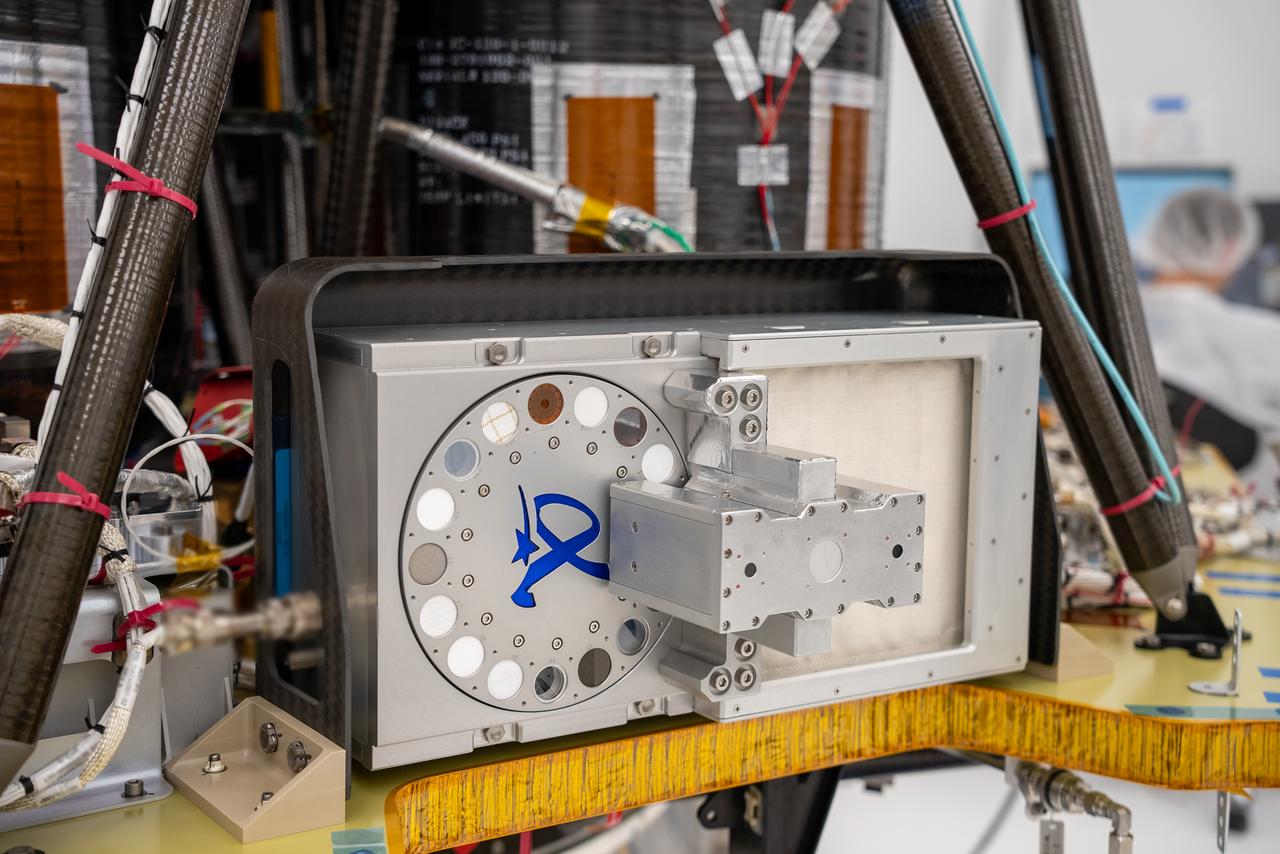
A science instrument flying aboard the next delivery for NASA’s CLPS (Commercial Lunar Payload Services) initiative is planning to study how different materials react to the lunar environment. Regolith Adherence Characterization, or RAC, is one of 10 payloads set to be carried to the Moon by the Blue Ghost 1 lunar lander in 2025. Developed by Aegis Aerospace, RAC’s wheels feature a series of different sample materials, helping researchers to better understand how lunar dust repels or attaches to each. Investigations and demonstrations, such as RAC, launched on CLPS flights will help NASA study Earth’s nearest neighbor under Artemis and pave the way for future crewed missions on the Moon. NASA’s Marshall Space Flight Center in Huntsville, Alabama, manages the development for seven of the 10 CLPS payloads that will be carried on Firefly’s Blue Ghost lunar lander.
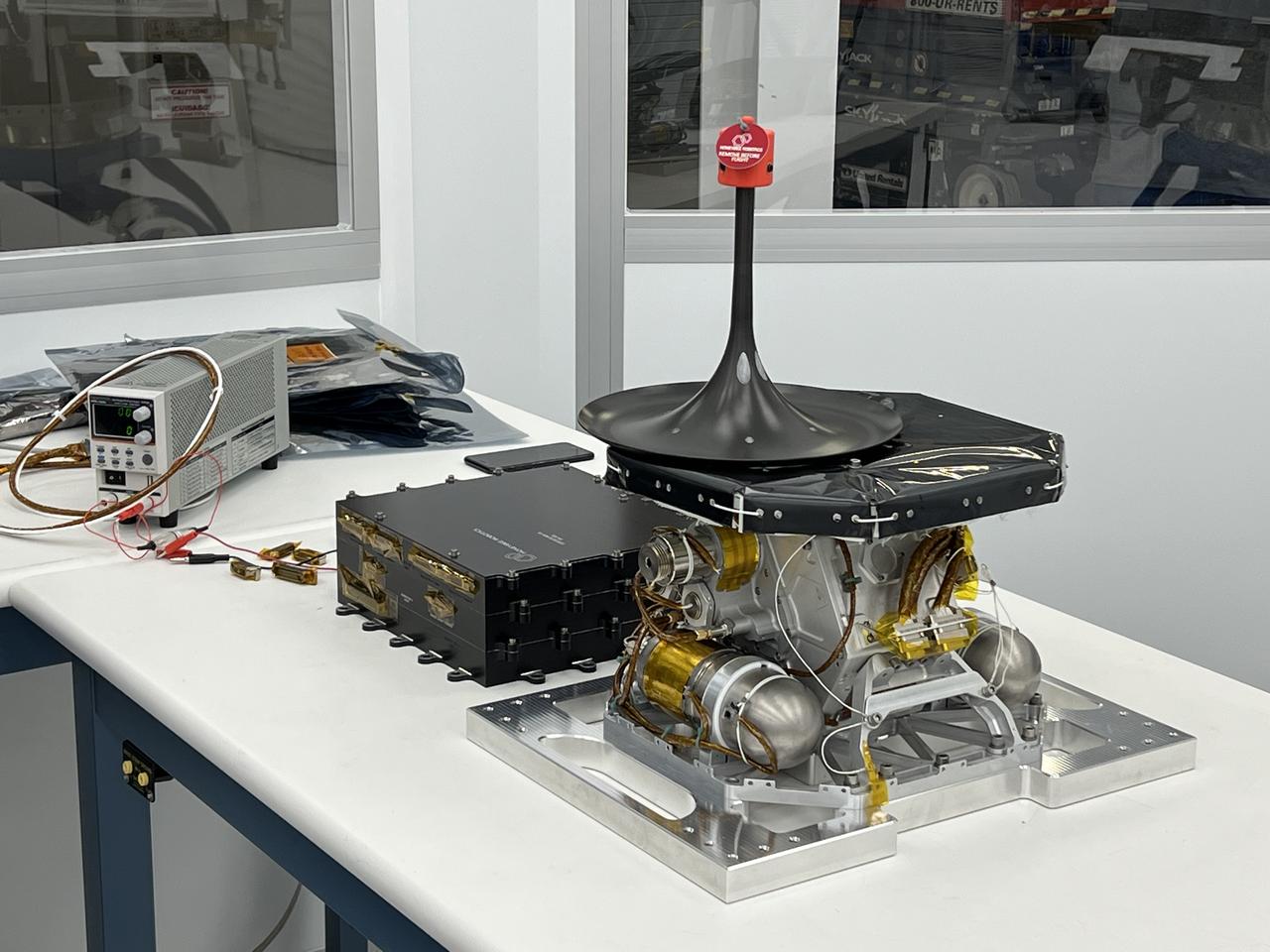
A science instrument flying aboard the next delivery for NASA’s CLPS (Commercial Lunar Payload Services) initiative could help improve our understanding of the Moon. The Lunar Instrumentation for Subsurface Thermal Exploration with Rapidity, or LISTER, is one of 10 payloads set to be carried to the Moon by the Blue Ghost 1 lunar lander in 2025. Developed jointly by Texas Tech University and Honeybee Robotics, LISTER’s planned mission is to measure the flow of heat from the Moon’s interior using a specialized drill. Investigations and demonstrations, such as LISTER, launched on CLPS flights will help NASA study Earth’s nearest neighbor under Artemis and pave the way for future crewed missions on the Moon. NASA’s Marshall Space Flight Center in Huntsville, Alabama, manages the development and operations for seven of the 10 CLPS payloads that will be carried on Firefly’s Blue Ghost lunar lander.
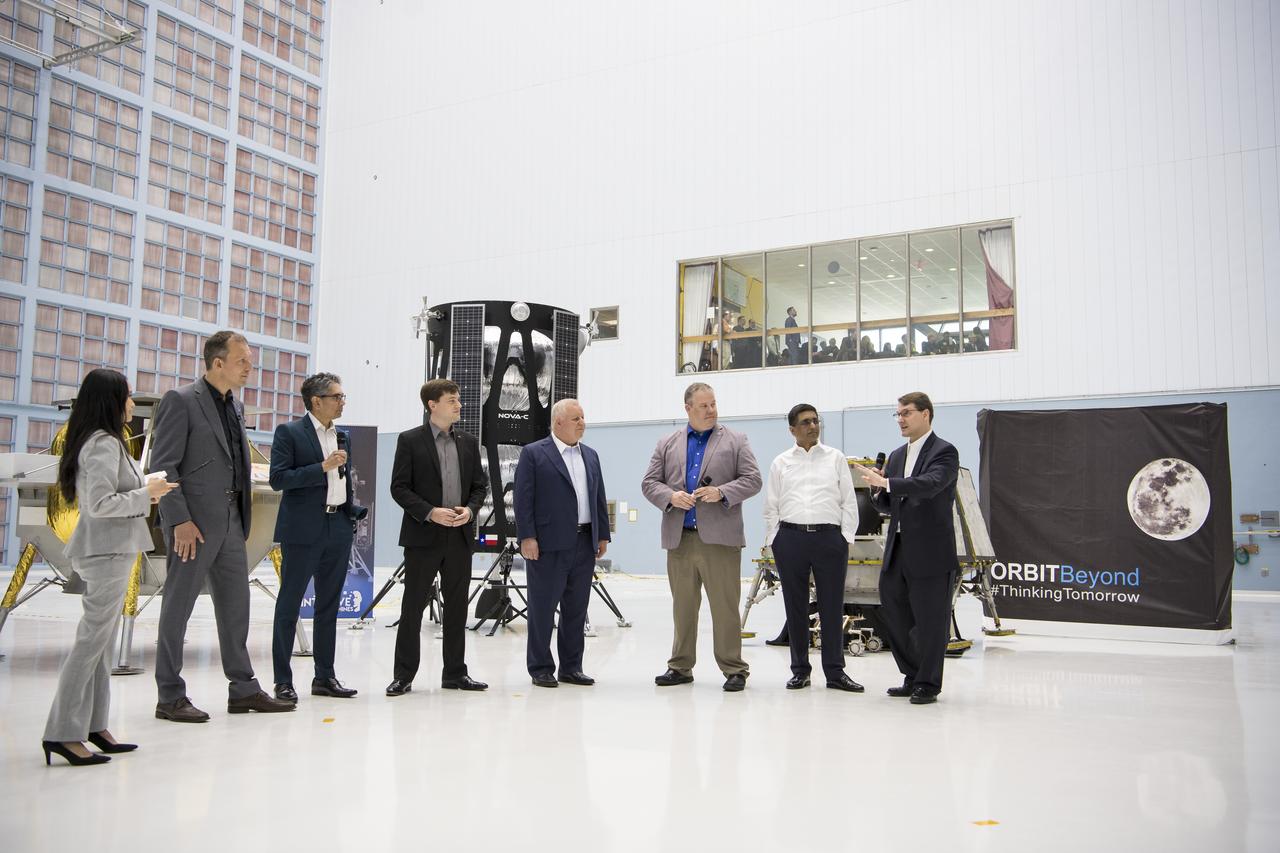
Chief Science Officer, OrbitBeyond, Jon Morse speaks about their lunar lander with, from left to right, NASA Press Officer, Felicia Chou; NASA Associate Administrator, Science Mission Directorate, Thomas Zurbuchen; Astrobotic Mission Director, Sharad Bhaskaran; Astrobotic CEO, John Thornton; Chairman of the Board of Intuitive Machines, Kam Ghaffarian; VP of Research and Development of Intuitive Machines, Tim Crain; President and CEO of OrbitBeyond, Siba Padhi, Friday, May 31, 2019, at Goddard Space Flight Center in Md. Astrobotic, Intuitive Machines, and OrbitBeyond have been selected to provide the first lunar landers for the Artemis program's lunar surface exploration. Photo credit: (NASA/Aubrey Gemignani)
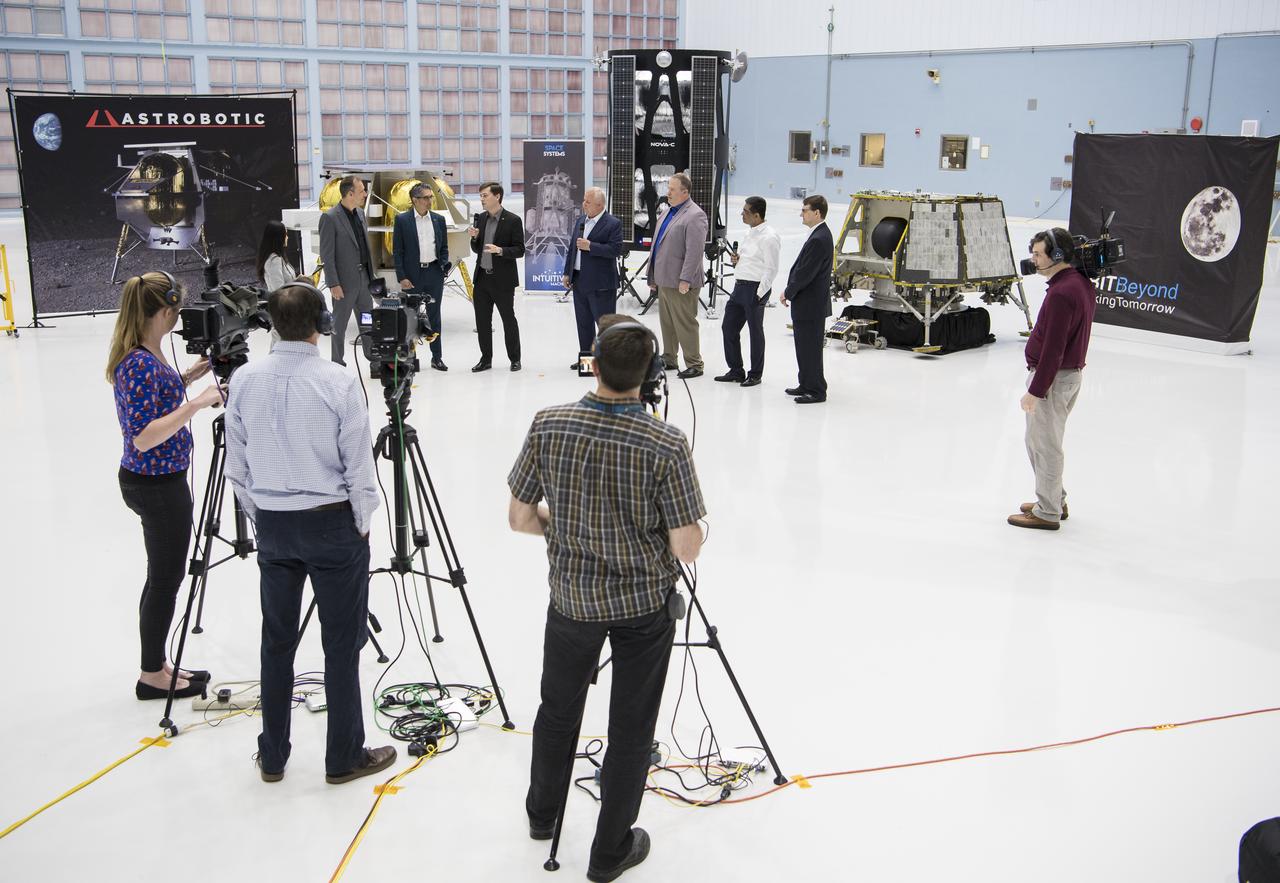
Astrobotic CEO, John Thornton, fourth from left, speaks about their lunar lander with, from left to right, NASA Press Officer, Felicia Chou; NASA Associate Administrator, Science Mission Directorate, Thomas Zurbuchen; Astrobotic Mission Director, Sharad Bhaskaran; Chairman of the Board of Intuitive Machines, Kam Ghaffarian; VP of Research and Development of Intuitive Machines, Tim Crain; President and CEO of OrbitBeyond, Siba Padhi; and Chief Science Officer, OrbitBeyond, Jon Morse, Friday, May 31, 2019, at Goddard Space Flight Center in Md. Astrobotic, Intuitive Machines, and OrbitBeyond have been selected to provide the first lunar landers for the Artemis program's lunar surface exploration. Photo credit: (NASA/Aubrey Gemignani)
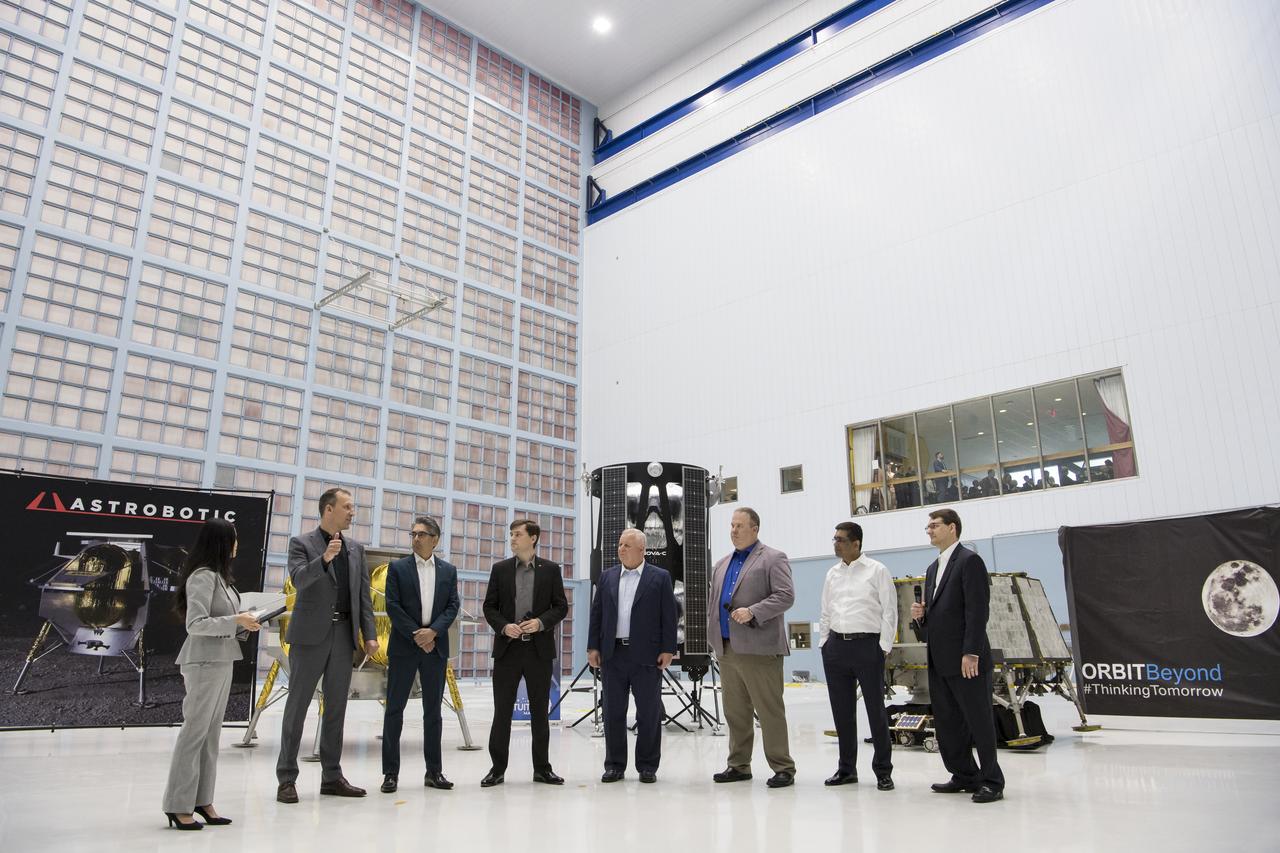
From left to right, NASA Press Officer, Felicia Chou; NASA Associate Administrator, Science Mission Directorate, Thomas Zurbuchen; Astrobotic Mission Director, Sharad Bhaskaran; Astrobotic CEO, John Thornton; Chairman of the Board of Intuitive Machines, Kam Ghaffarian; VP of Research and Development of Intuitive Machines, Tim Crain; President and CEO of OrbitBeyond, Siba Padhi; and Chief Science Officer, OrbitBeyond, Jon Morse talk about their lunar landers, Friday, May 31, 2019, at Goddard Space Flight Center in Md. Astrobotic, Intuitive Machines, and OrbitBeyond have been selected to provide the first lunar landers for the Artemis program's lunar surface exploration. Photo credit: (NASA/Aubrey Gemignani)