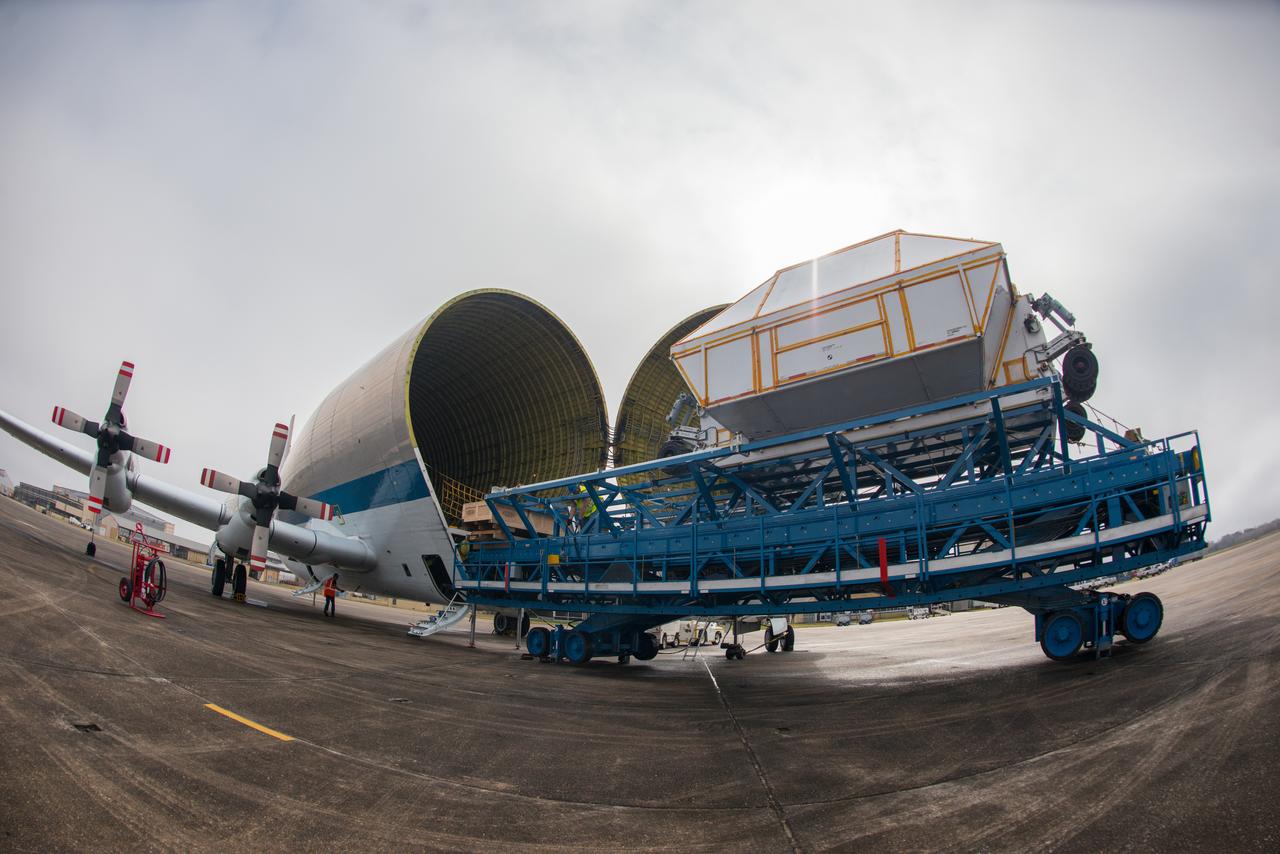
Artemis I Orion departs Michoud Assembly Facility for Kennedy Space Center in Florida on Feb. 1, 2016. The vessel was loaded onto NASA's Super Guppy cargo aircraft. Part of Batch image transfer from Flickr.
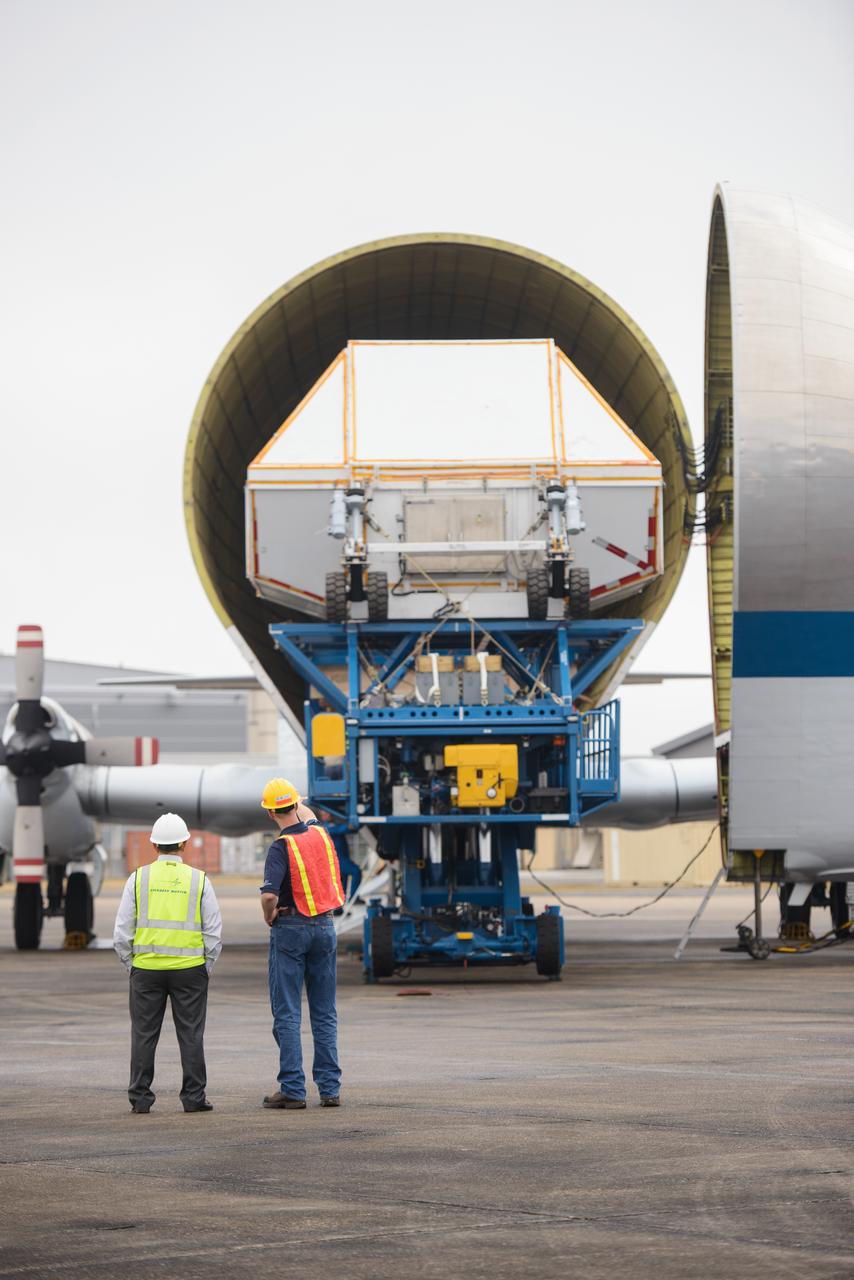
Artemis I Orion departs Michoud Assembly Facility for Kennedy Space Center in Florida on Feb. 1, 2016. The vessel was loaded onto NASA's Super Guppy cargo aircraft. Part of Batch image transfer from Flickr.
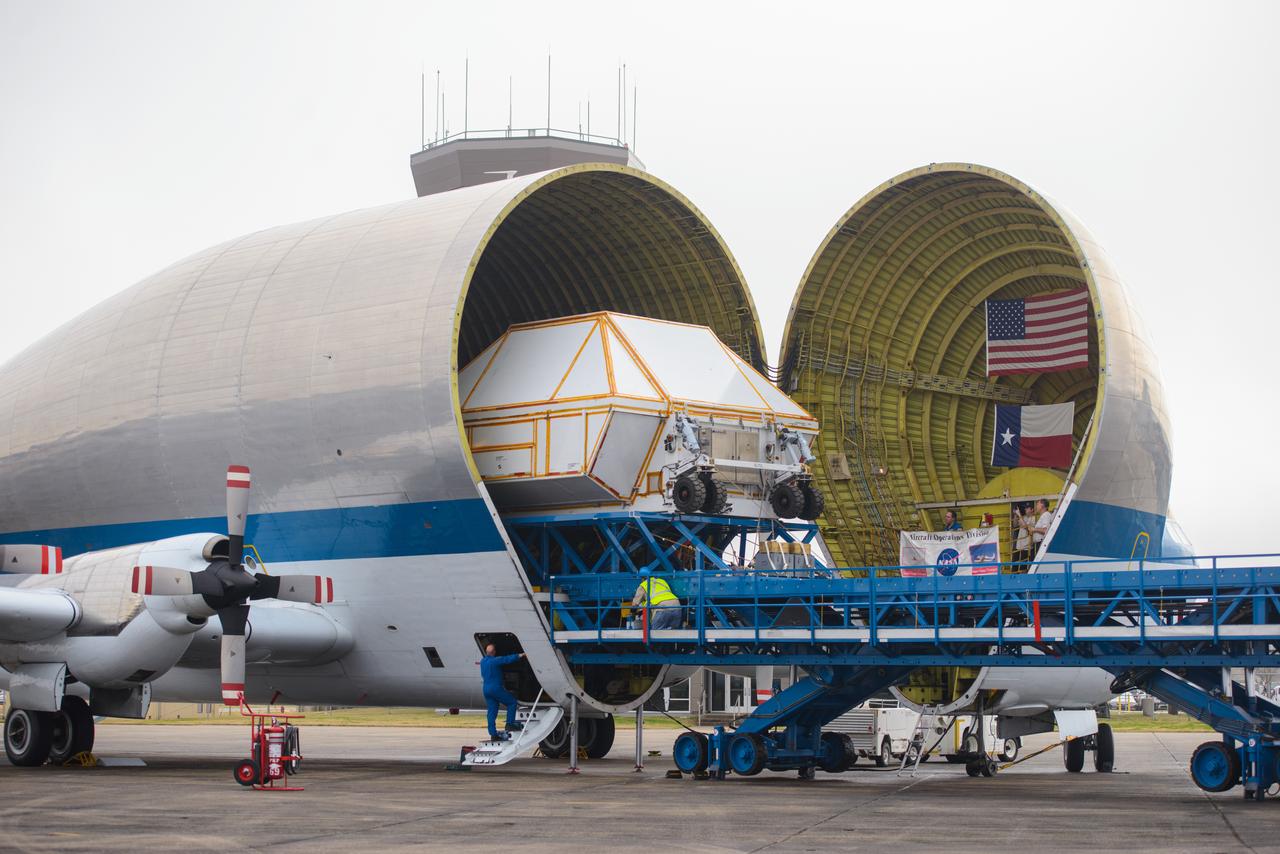
Artemis I Orion departs Michoud Assembly Facility for Kennedy Space Center in Florida on Feb. 1, 2016. The vessel was loaded onto NASA's Super Guppy cargo aircraft. Part of Batch image transfer from Flickr.
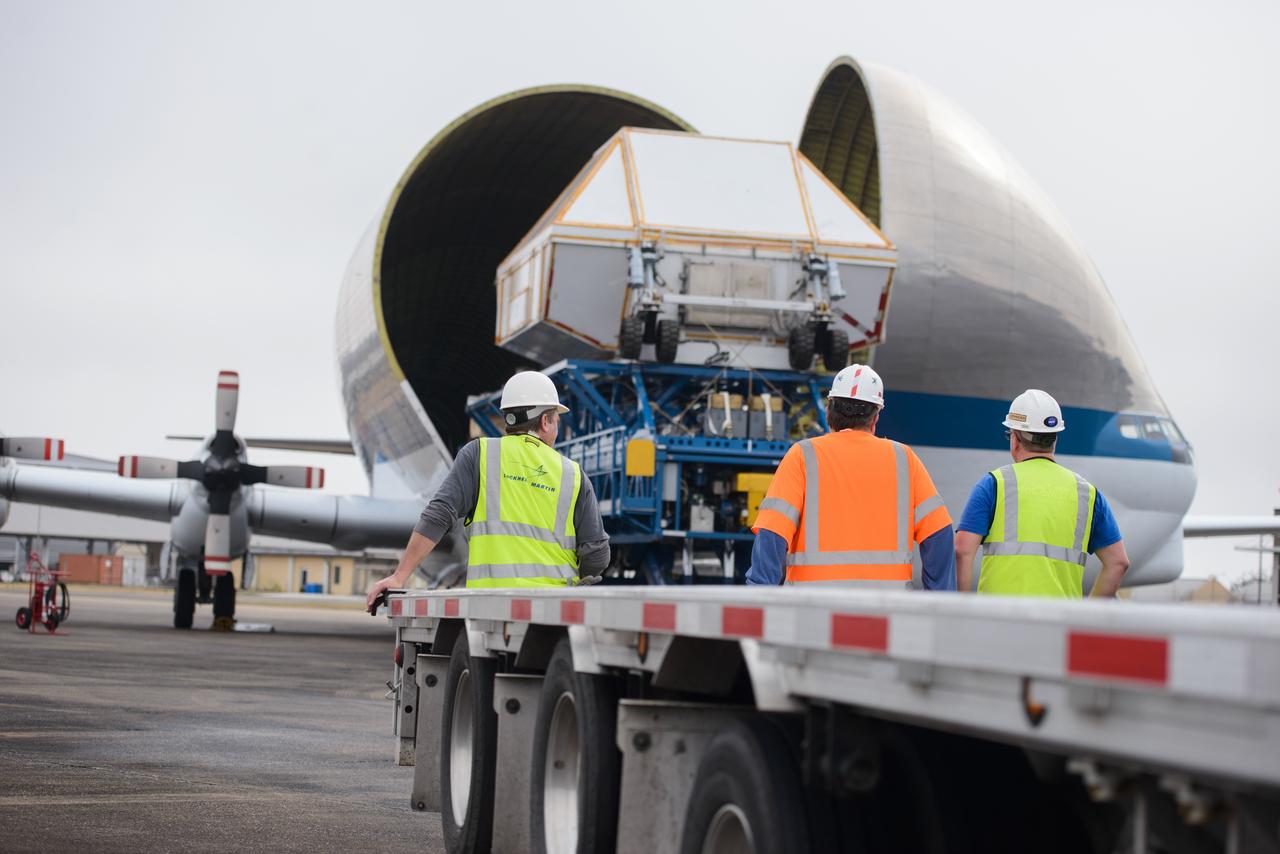
Artemis I Orion departs Michoud Assembly Facility for Kennedy Space Center in Florida on Feb. 1, 2016. The vessel was loaded onto NASA's Super Guppy cargo aircraft. Part of Batch image transfer from Flickr.

Artemis I Orion departs Michoud Assembly Facility for Kennedy Space Center in Florida on Feb. 1, 2016. The vessel was loaded onto NASA's Super Guppy cargo aircraft. Part of Batch image transfer from Flickr.
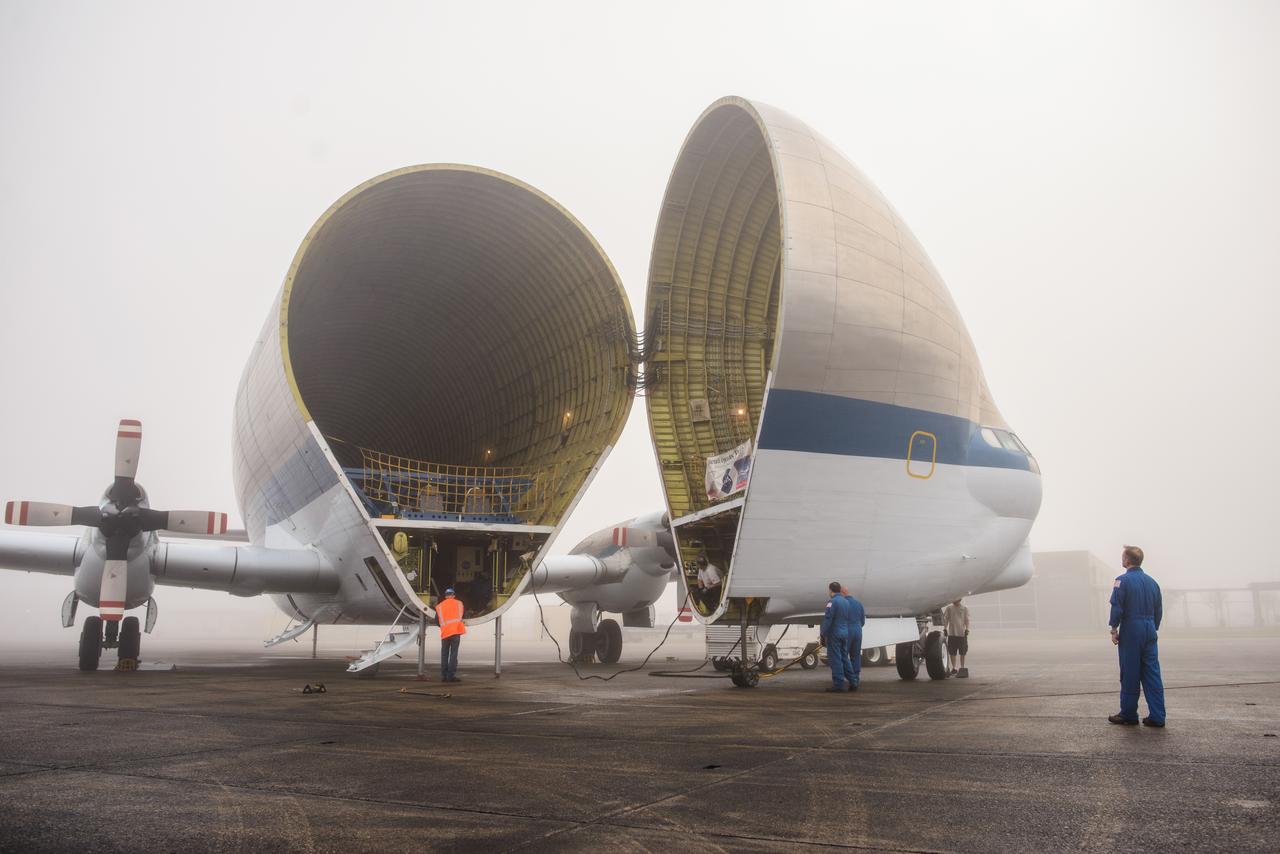
Artemis I Orion departs Michoud Assembly Facility for Kennedy Space Center in Florida on Feb. 1, 2016. The vessel was loaded onto NASA's Super Guppy cargo aircraft. Part of Batch image transfer from Flickr.
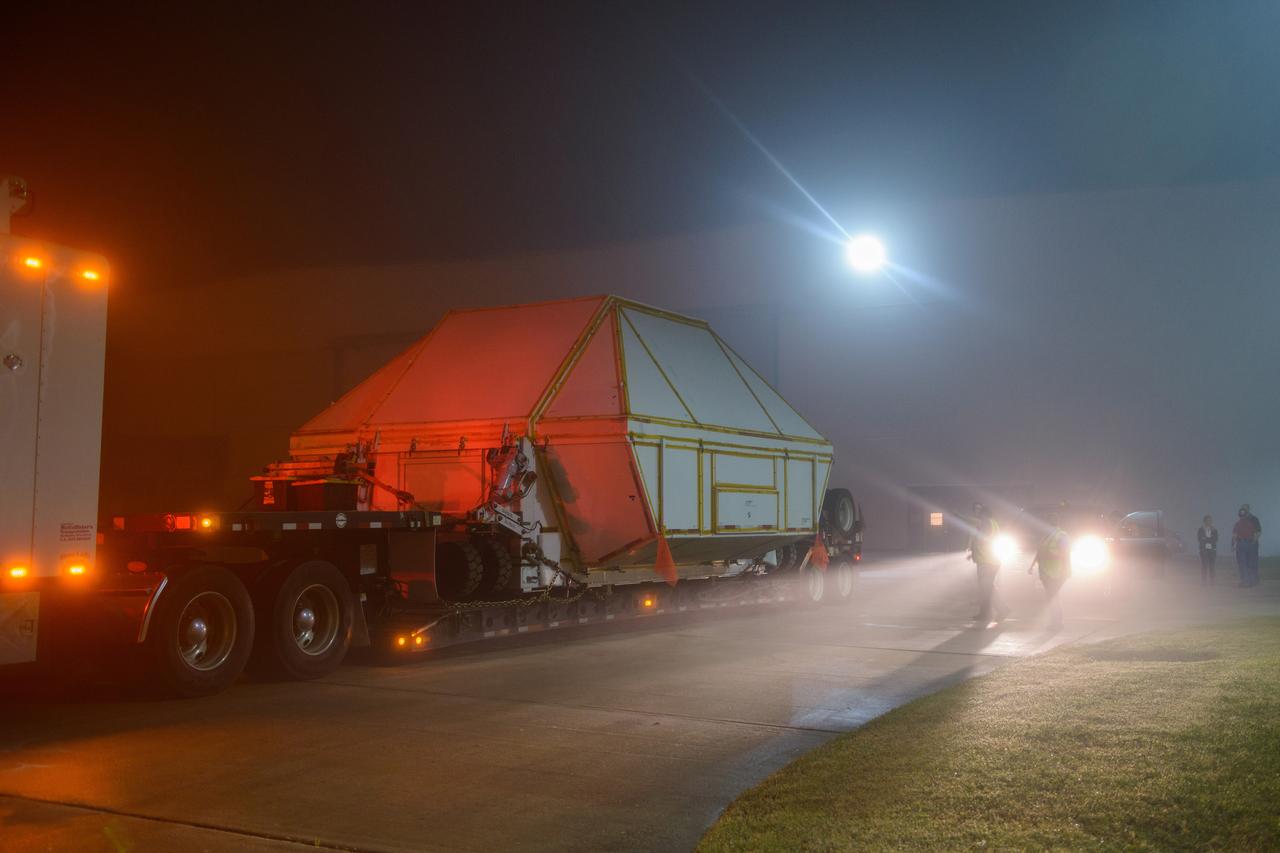
Artemis I Orion departs Michoud Assembly Facility for Kennedy Space Center in Florida on Feb. 1, 2016. The vessel was loaded onto NASA's Super Guppy cargo aircraft. Part of Batch image transfer from Flickr.
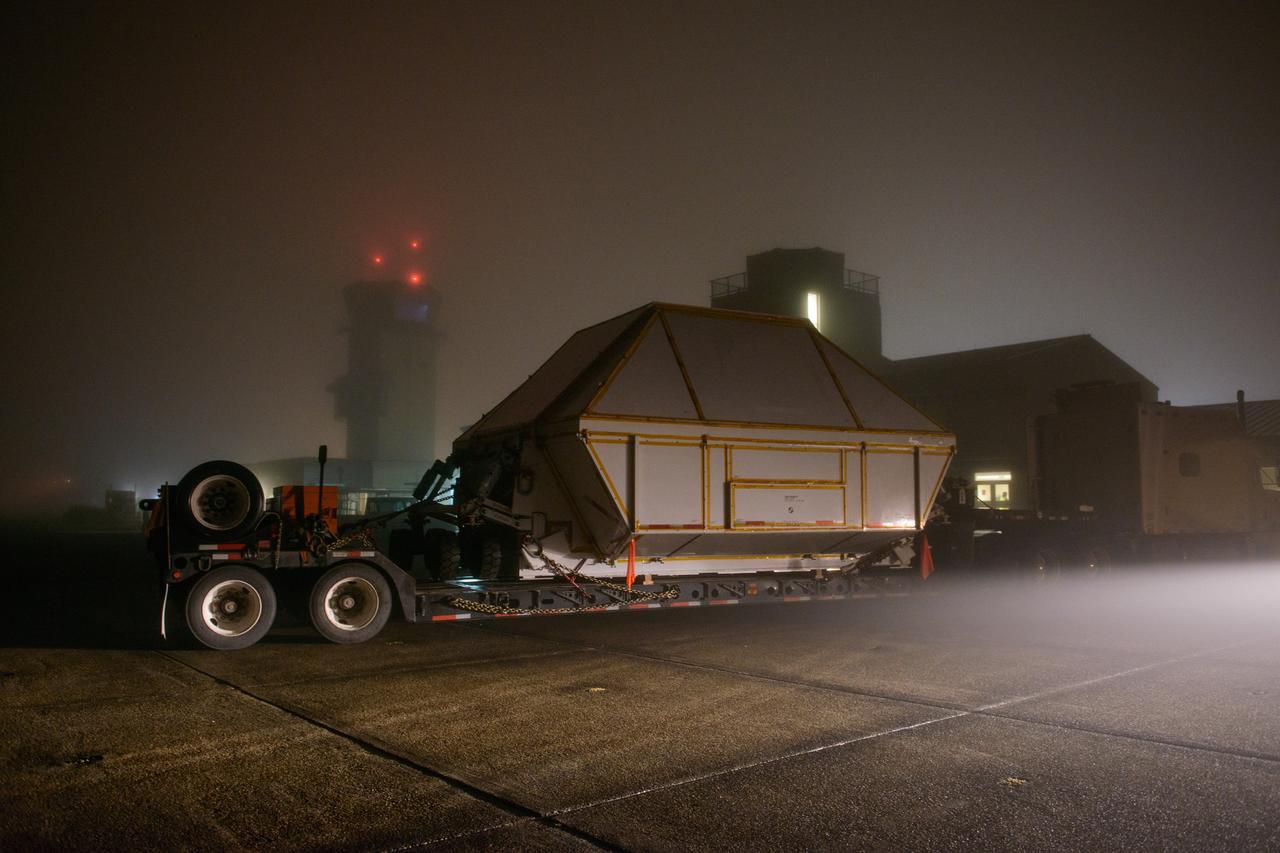
Artemis I Orion departs Michoud Assembly Facility for Kennedy Space Center in Florida on Feb. 1, 2016. The vessel was loaded onto NASA's Super Guppy cargo aircraft. Part of Batch image transfer from Flickr.
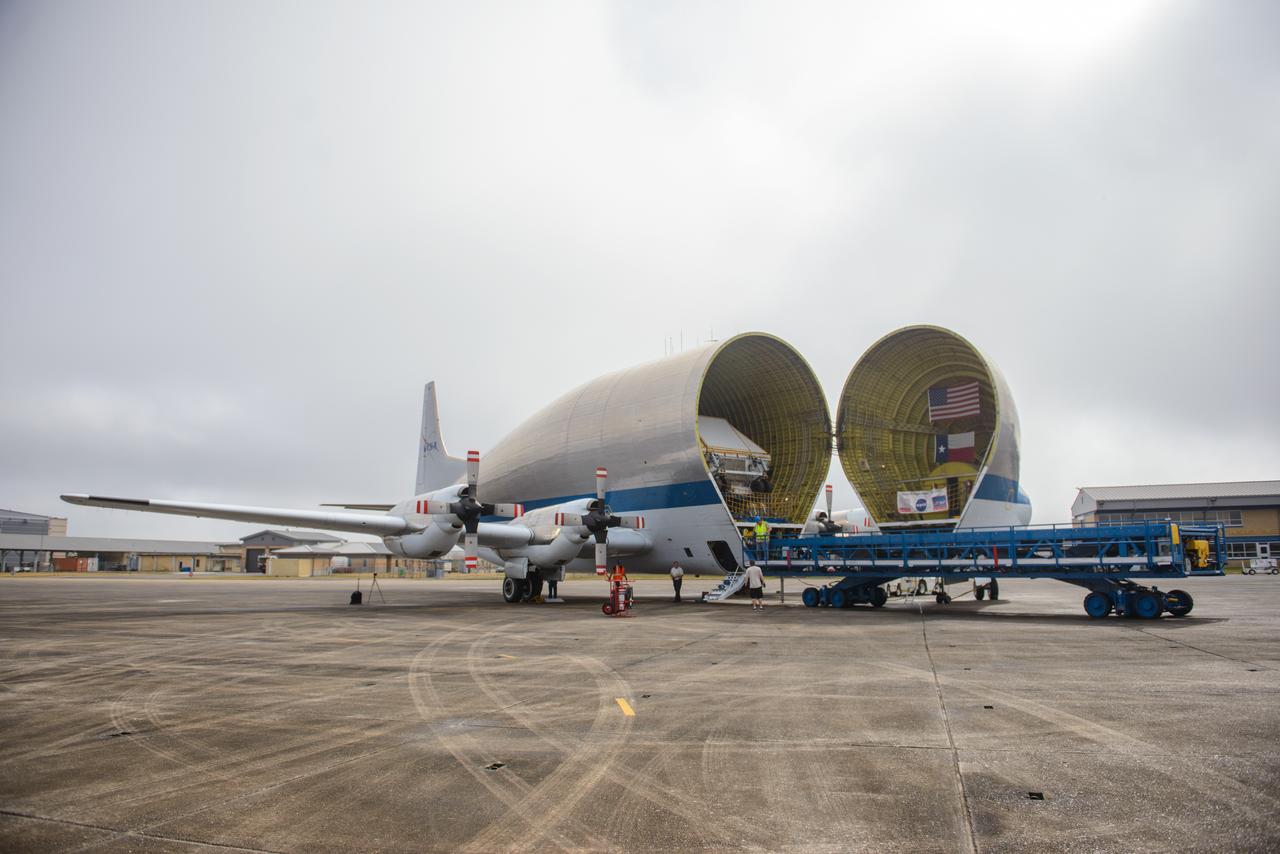
Artemis I Orion departs Michoud Assembly Facility for Kennedy Space Center in Florida on Feb. 1, 2016. The vessel was loaded onto NASA's Super Guppy cargo aircraft. Part of Batch image transfer from Flickr.
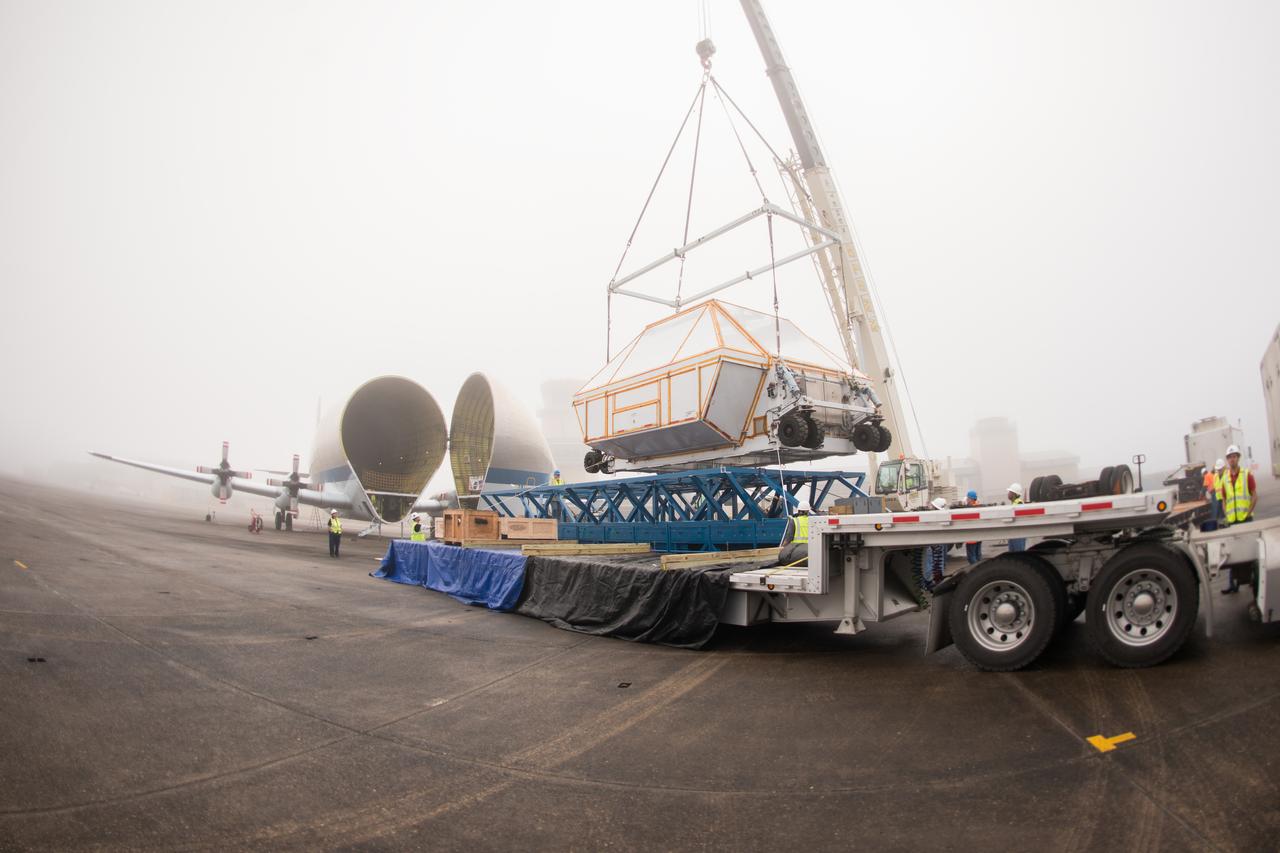
The Artemis I Orion crew module pressure vessel is loaded on NASA's Super Guppy plane in New Orleans for transport to Kennedy Space Center on Feb. 1, 2016. Part of Batch image transfer from Flickr.
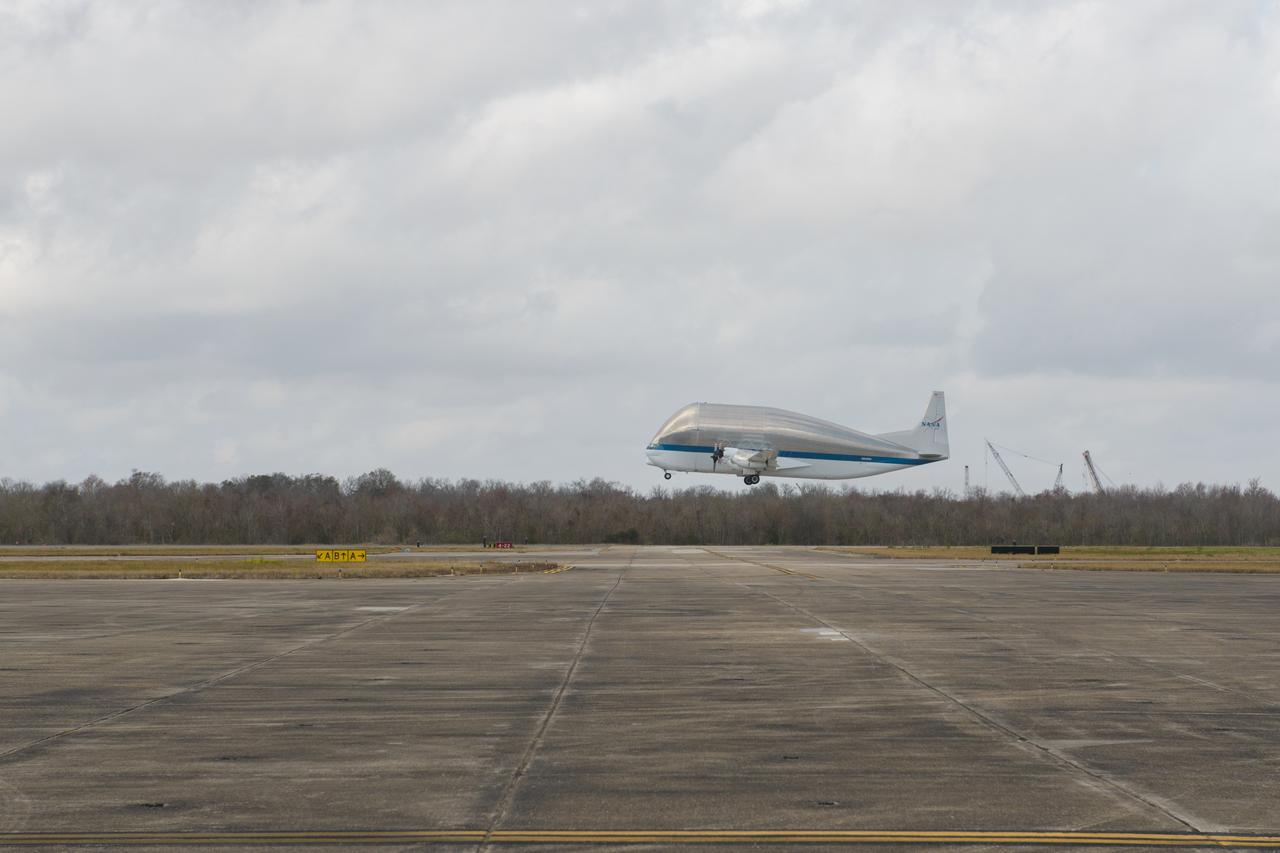
Artemis I Orion departs Michoud Assembly Facility for Kennedy Space Center in Florida on Feb. 1, 2016. The vessel was loaded onto NASA's Super Guppy cargo aircraft. Part of Batch image transfer from Flickr.
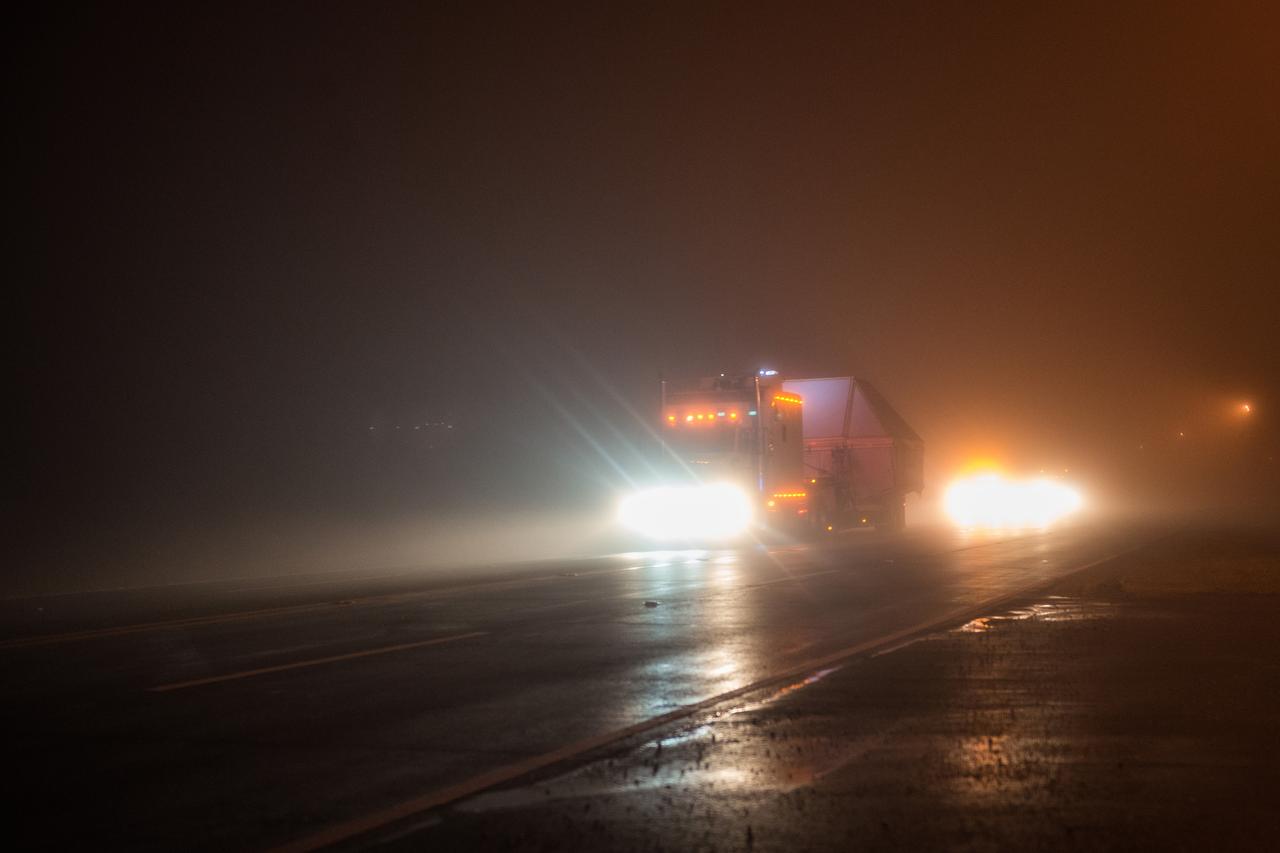
Artemis I Orion departs Michoud Assembly Facility for Kennedy Space Center in Florida on Feb. 1, 2016. The vessel was loaded onto NASA's Super Guppy cargo aircraft. Part of Batch image transfer from Flickr.
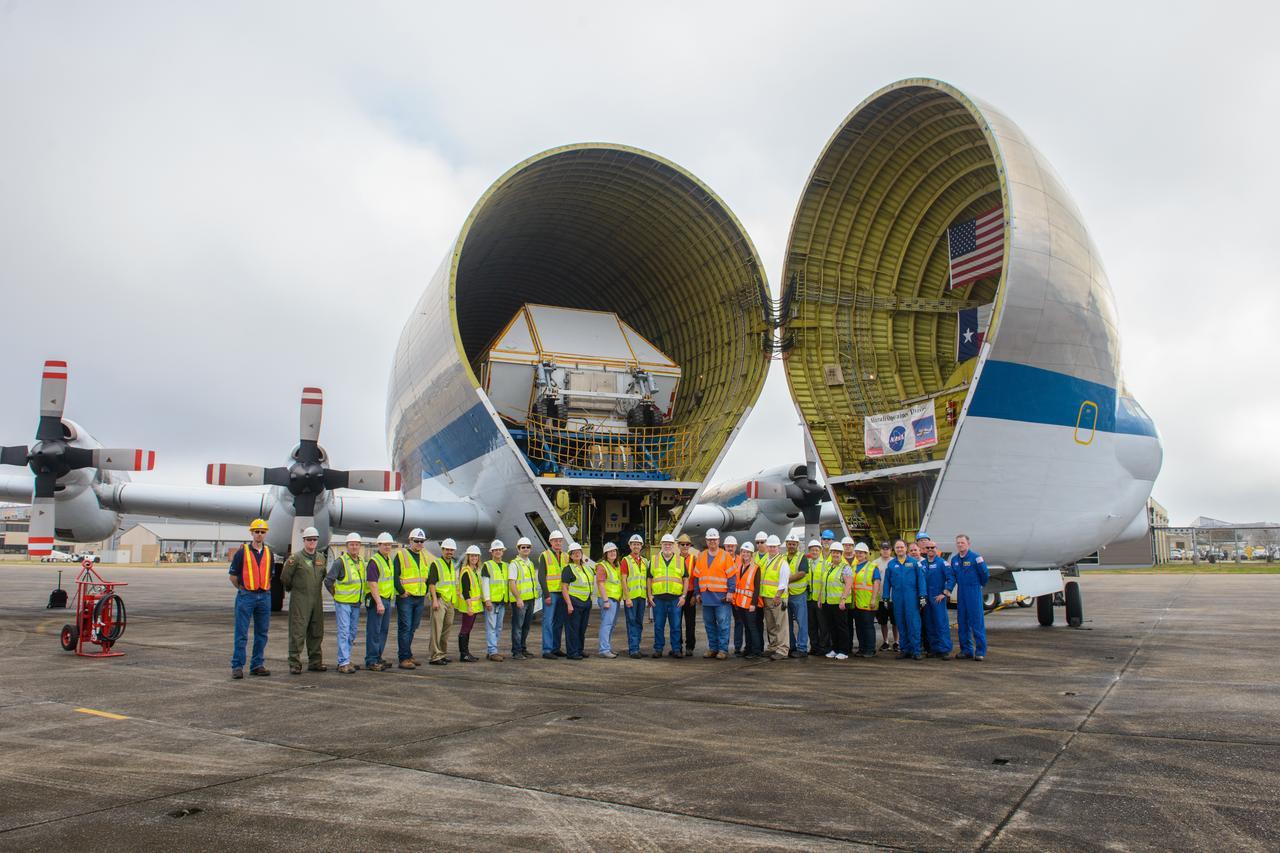
Artemis I Orion departs Michoud Assembly Facility for Kennedy Space Center in Florida on Feb. 1, 2016. The vessel was loaded onto NASA's Super Guppy cargo aircraft. Part of Batch image transfer from Flickr.
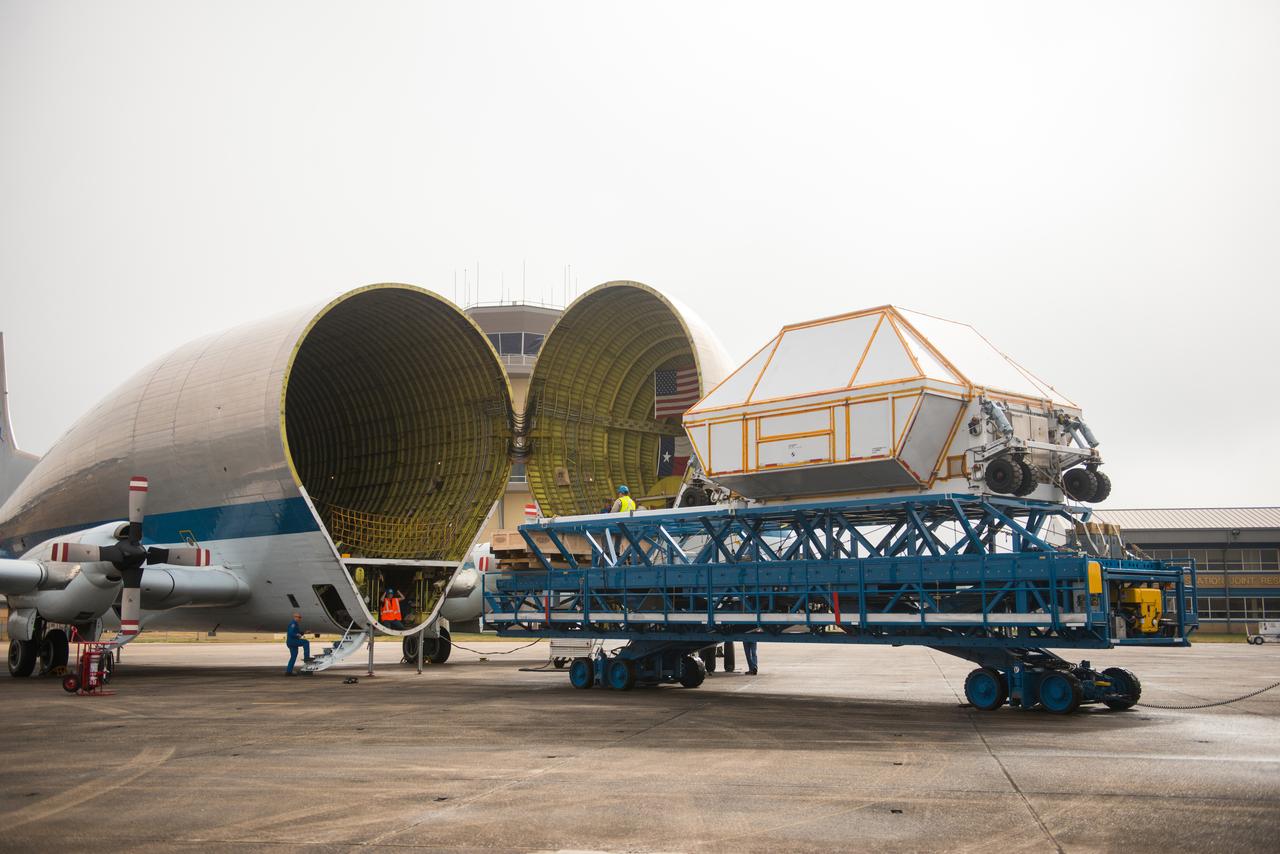
Artemis I Orion departs Michoud Assembly Facility in New Orleans for Kennedy Space Center in Florida on Feb. 1, 2016. The vessel was loaded onto NASA's Super Guppy cargo aircraft. Part of Batch image transfer from Flickr.
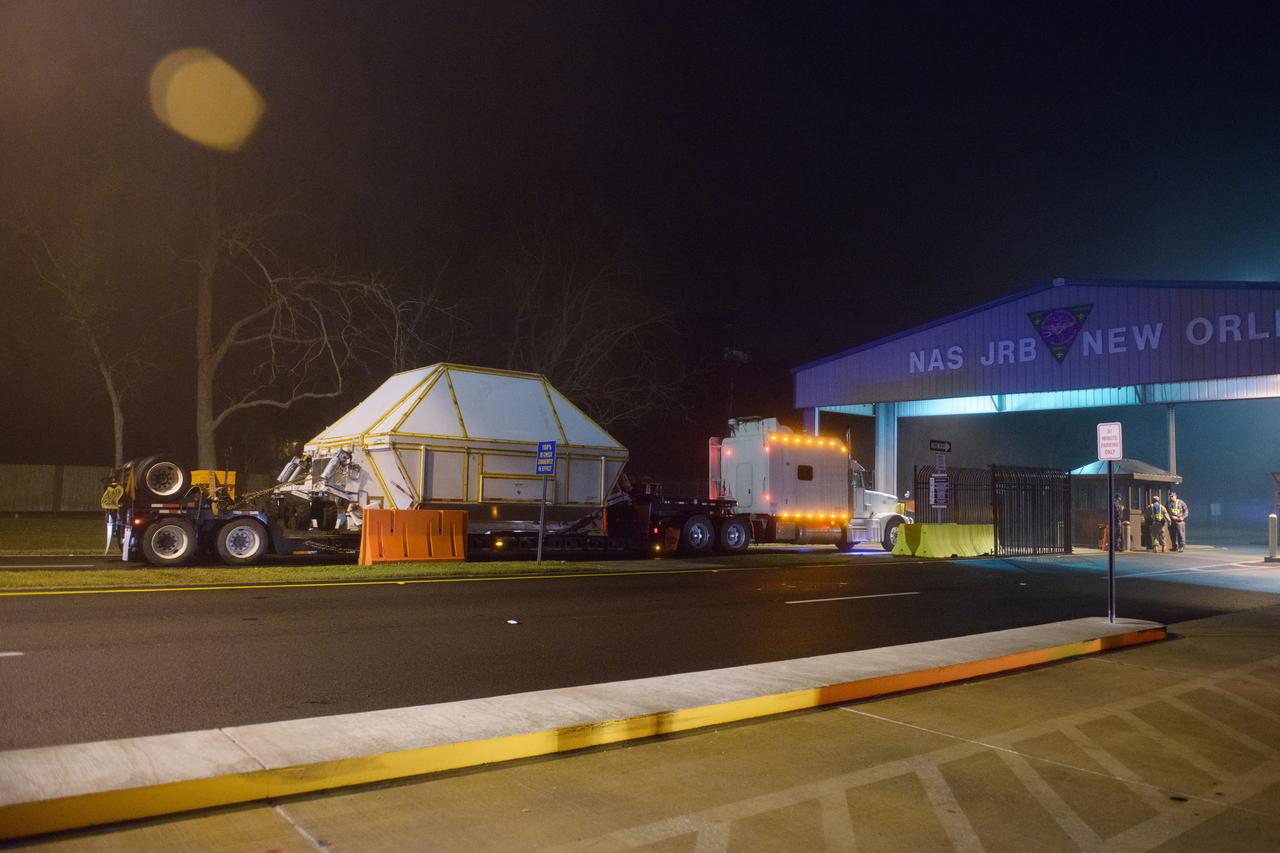
Artemis I Orion departs Michoud Assembly Facility for Kennedy Space Center in Florida on Feb. 1, 2016. The vessel was loaded onto NASA's Super Guppy cargo aircraft. Part of Batch image transfer from Flickr.
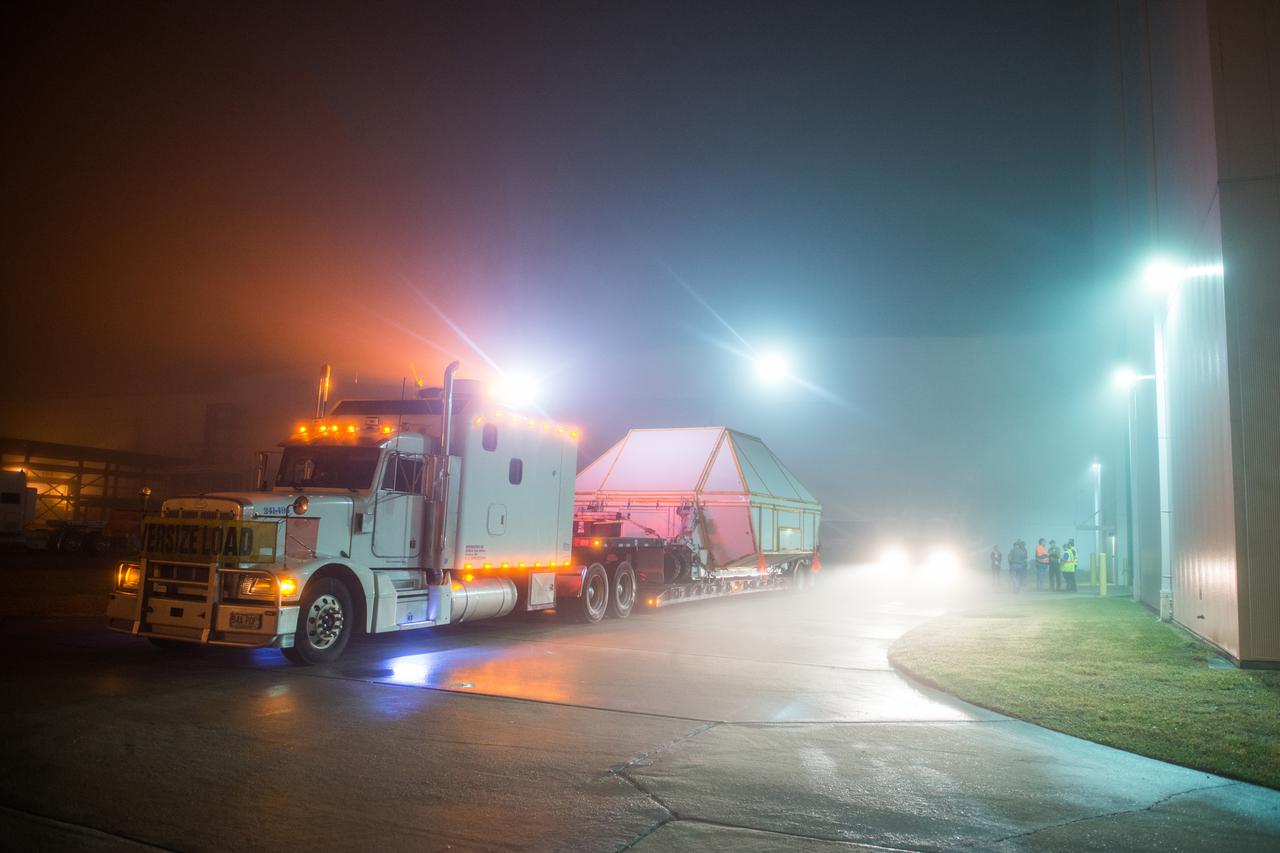
Artemis I Orion departs Michoud Assembly Facility for Kennedy Space Center in Florida on Feb. 1, 2016. The vessel was loaded onto NASA's Super Guppy cargo aircraft. Part of Batch image transfer from Flickr.
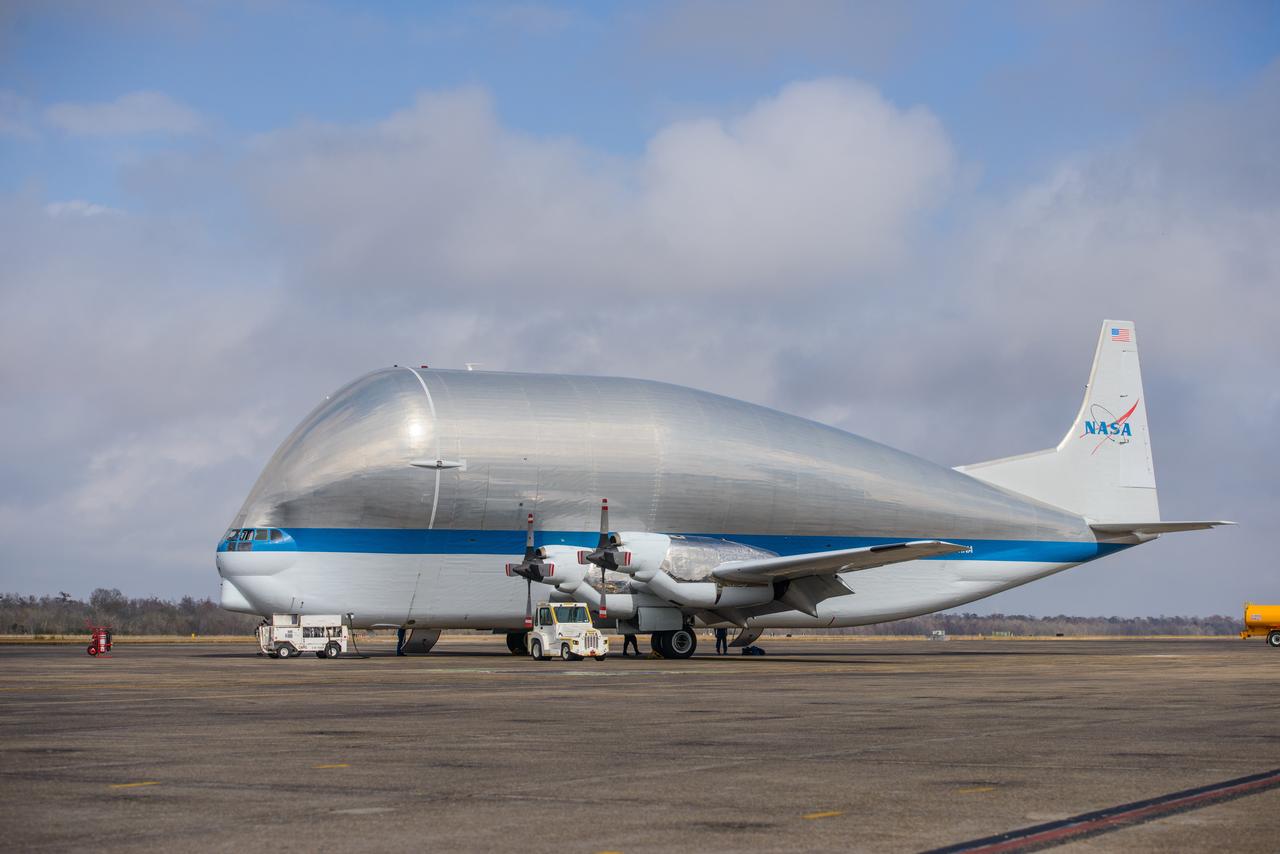
Artemis I Orion departs Michoud Assembly Facility for Kennedy Space Center in Florida on Feb. 1, 2016. The vessel was loaded onto NASA's Super Guppy cargo aircraft. Part of Batch image transfer from Flickr.
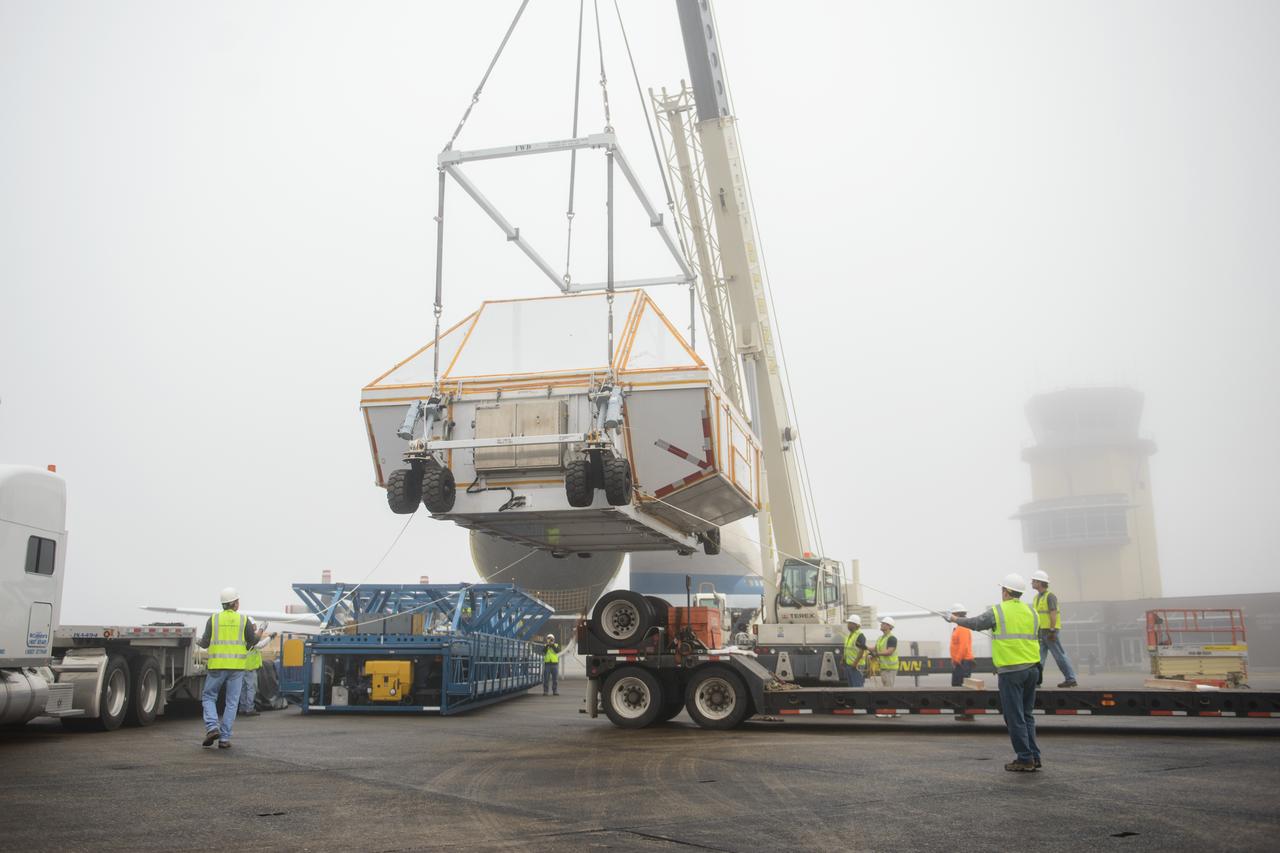
The Artemis I Orion crew module pressure vessel is loaded on NASA's Super Guppy plane in New Orleans for transport to Kennedy Space Center on Feb. 1, 2016. Part of Batch image transfer from Flickr.
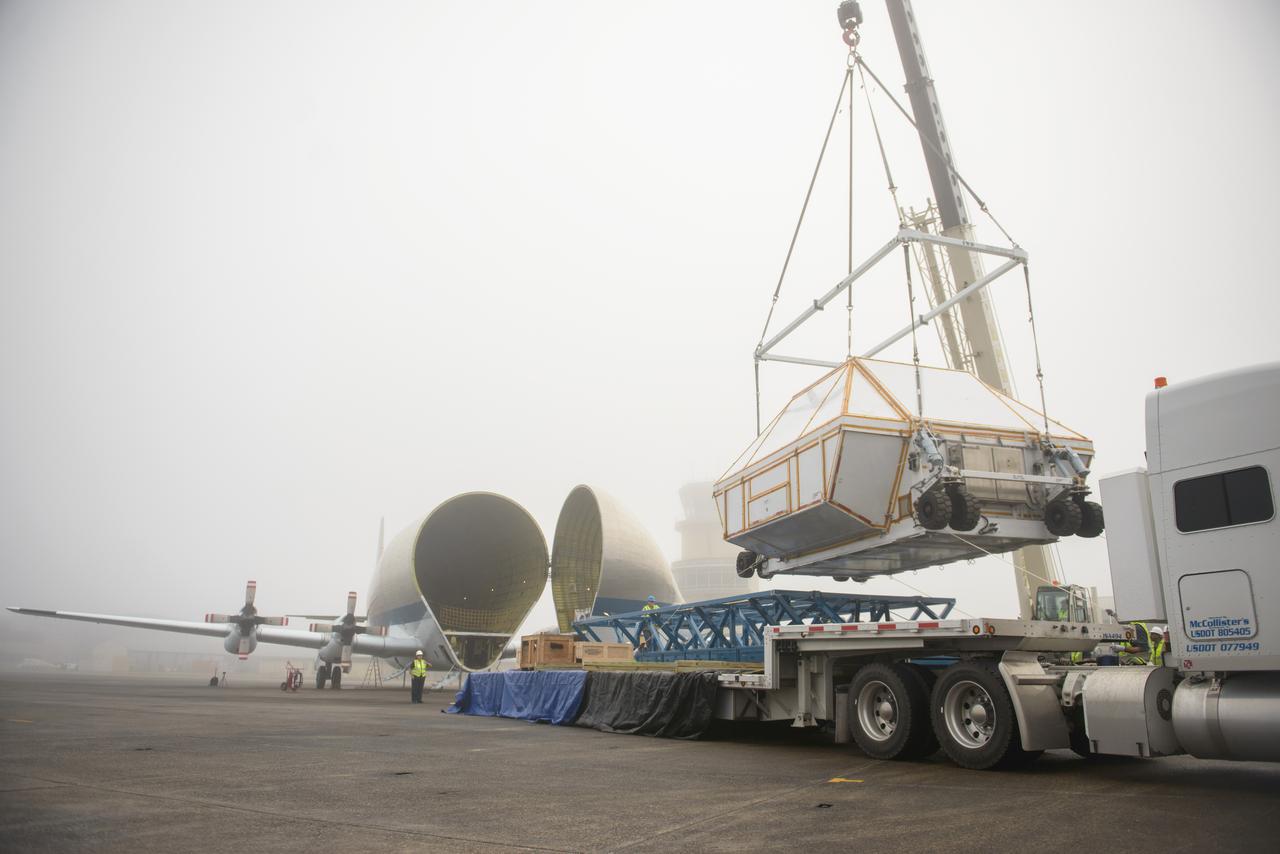
Artemis I Orion departs Michoud Assembly Facility for Kennedy Space Center in Florida on Feb. 1, 2016. The vessel was loaded onto NASA's Super Guppy cargo aircraft. Part of Batch image transfer from Flickr.
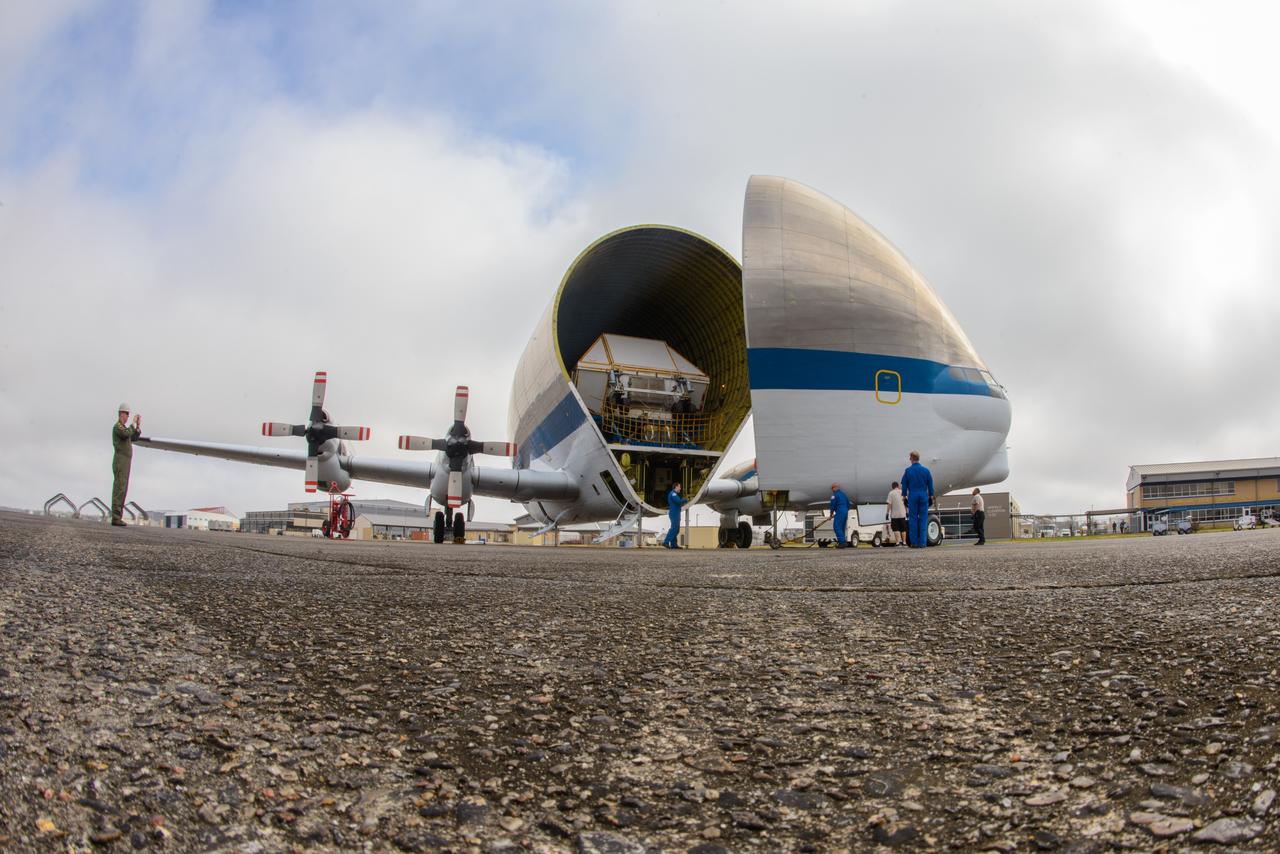
Artemis I Orion departs Michoud Assembly Facility for Kennedy Space Center in Florida on Feb. 1, 2016. The vessel was loaded onto NASA's Super Guppy cargo aircraft. Part of Batch image transfer from Flickr.
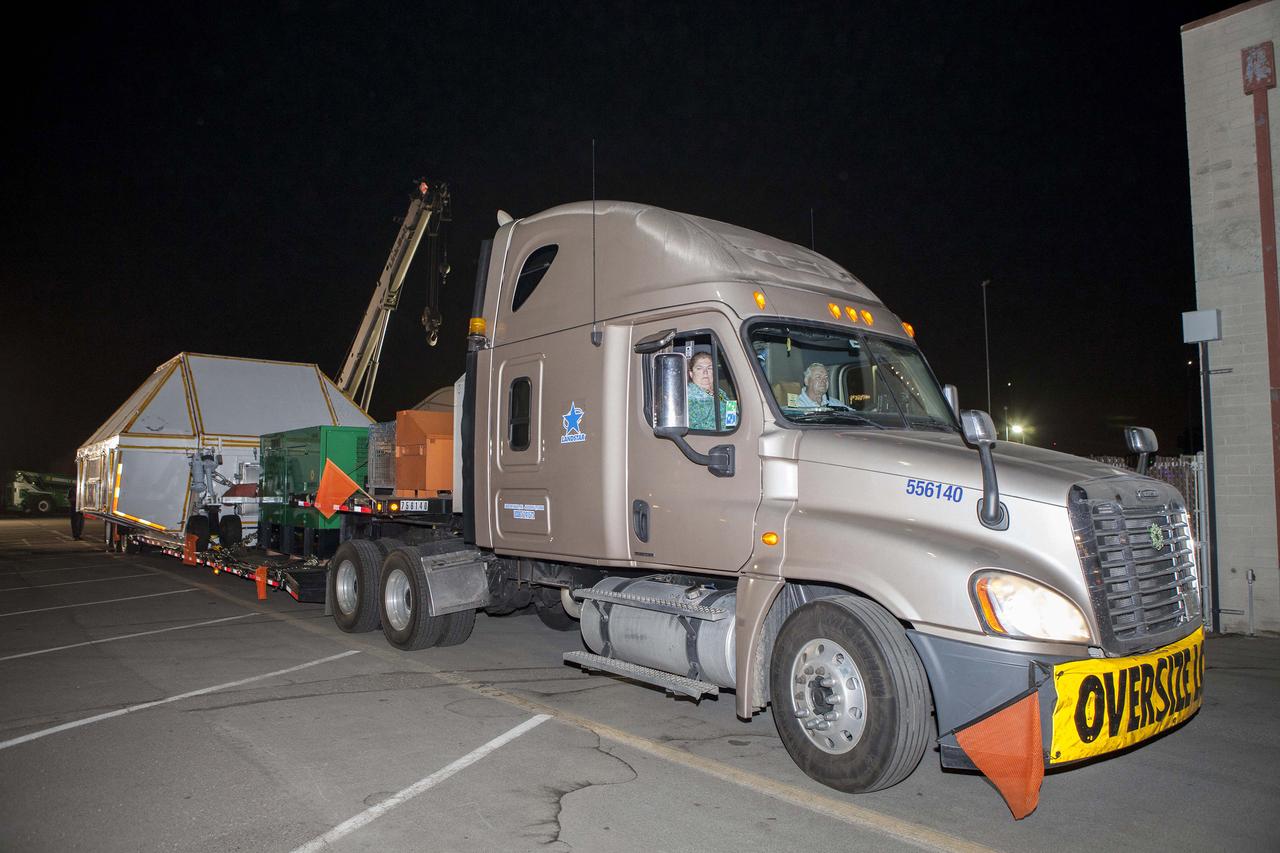
Orion is Taken From Ship and Put in Shipping Container
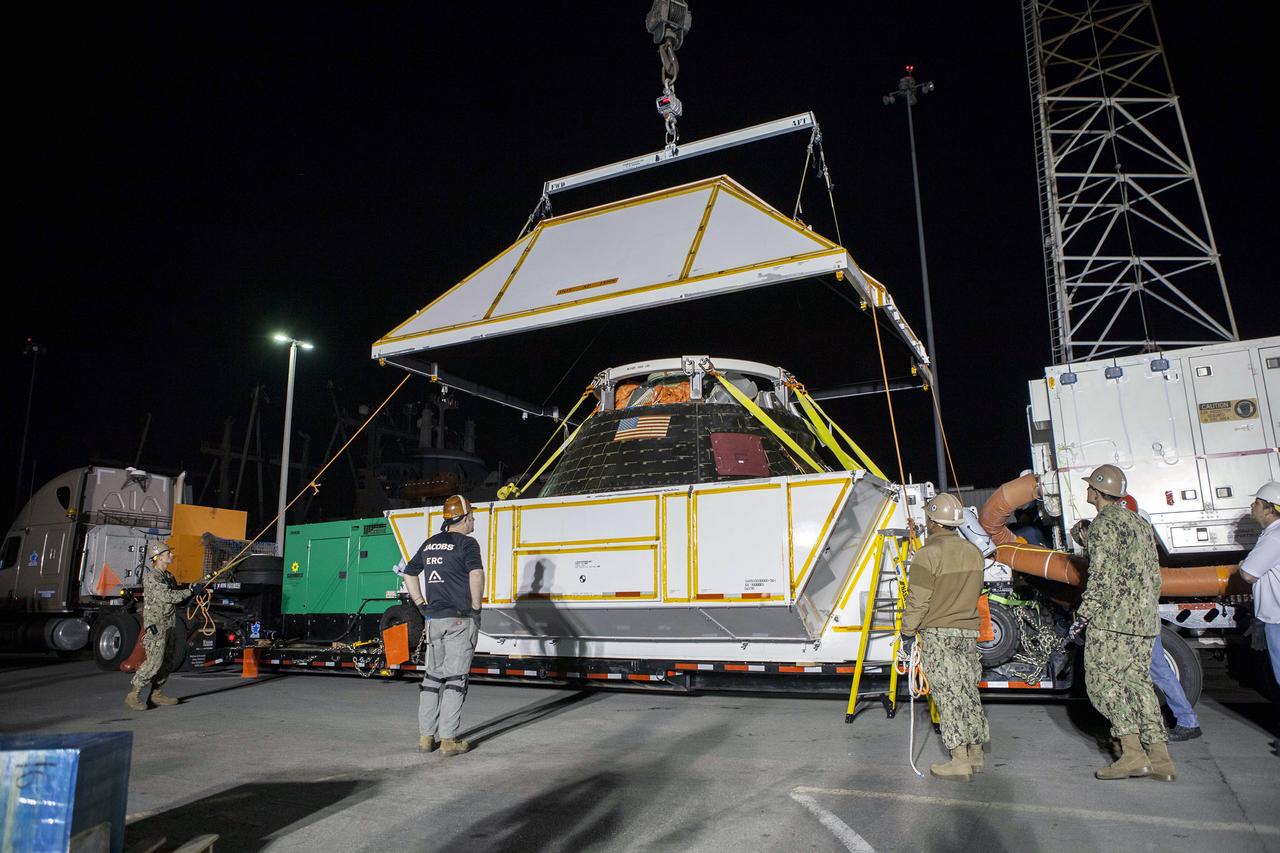
Orion is Taken From Ship and Put in Shipping Container
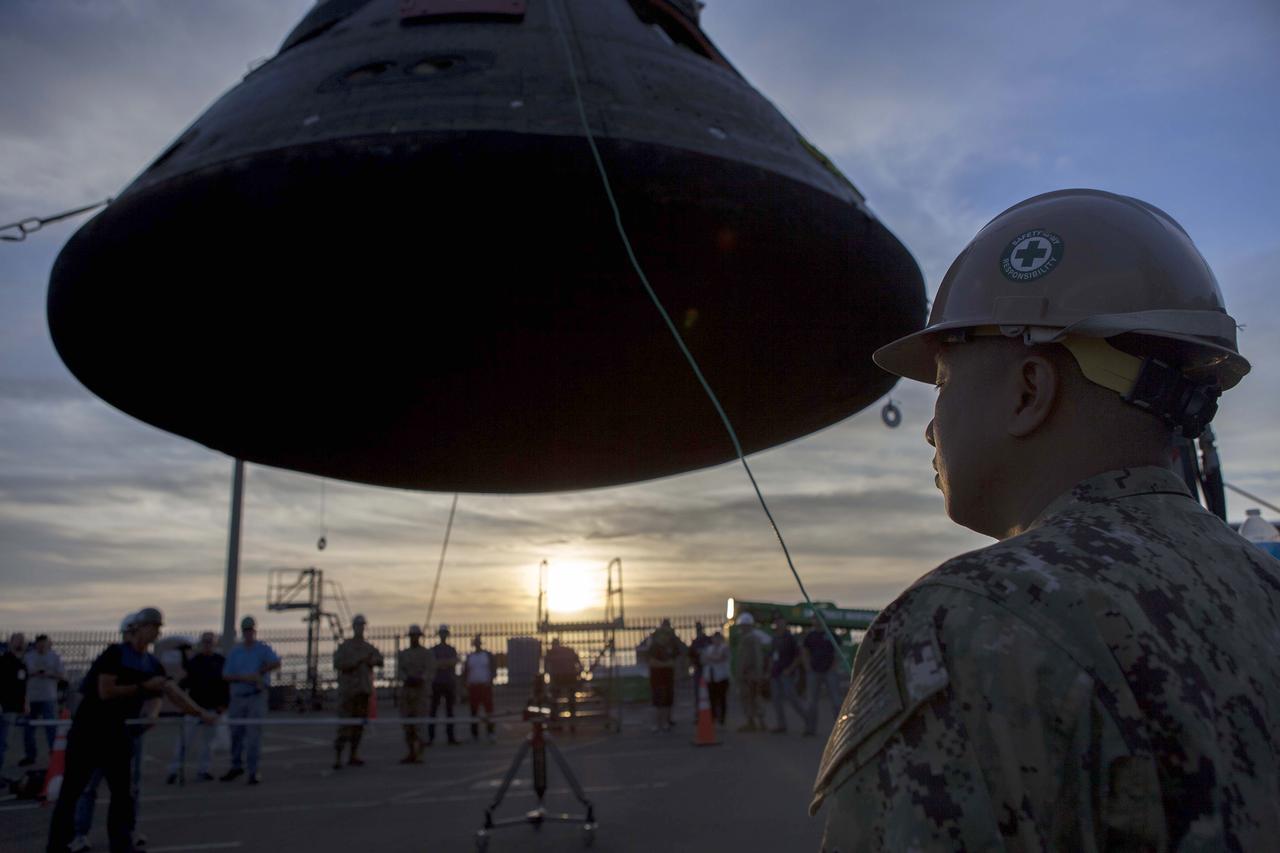
Orion is Taken From Ship and Put in Shipping Container
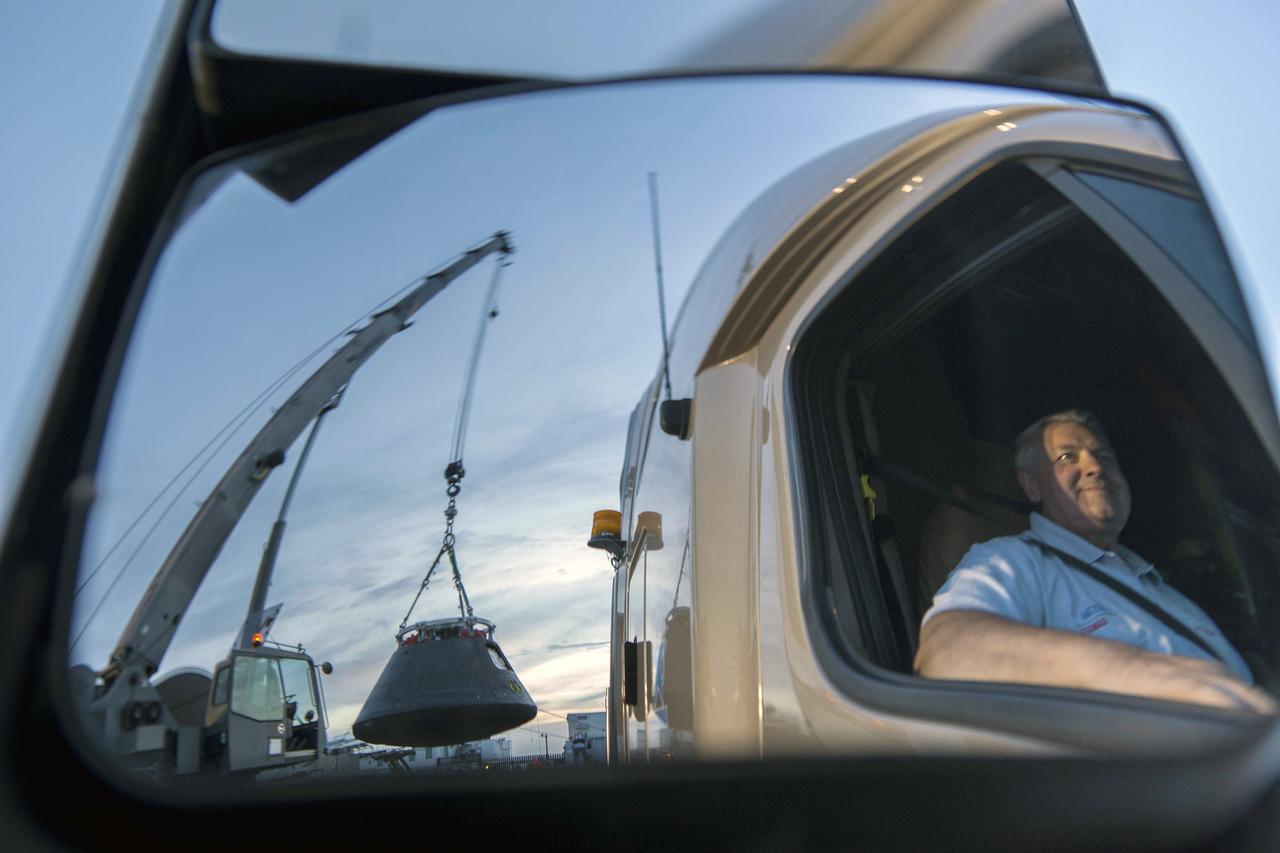
Orion is Taken From Ship and Put in Shipping Container
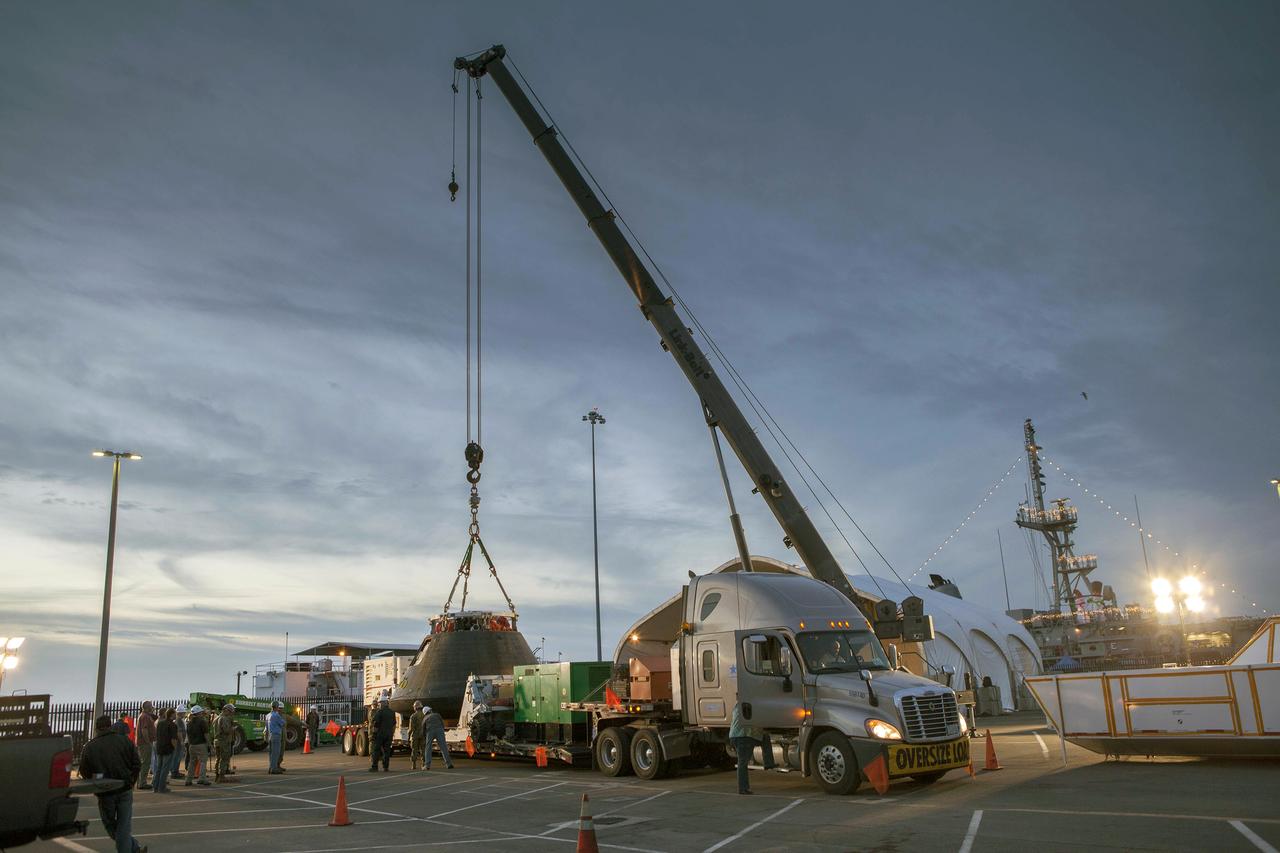
Orion is Taken From Ship and Put in Shipping Container
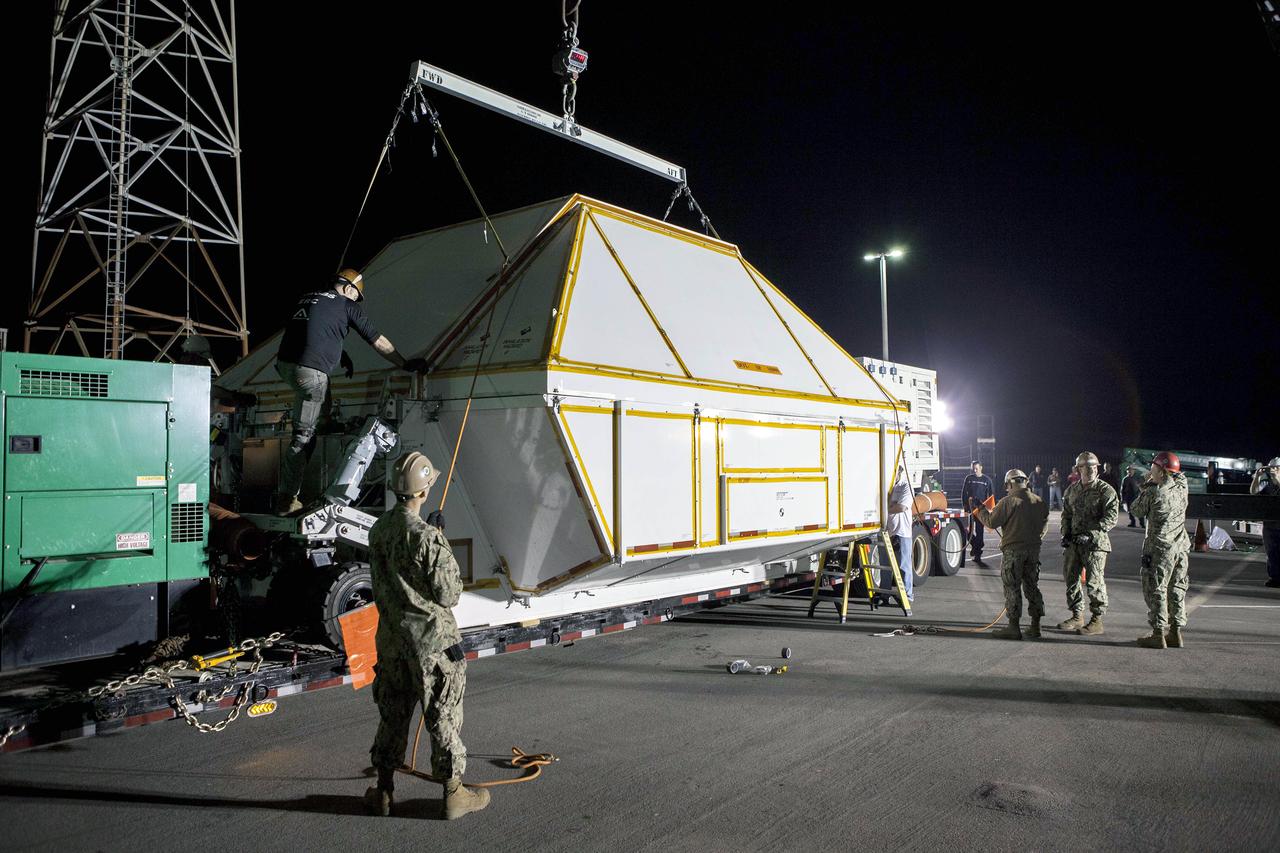
Orion is Taken From Ship and Put in Shipping Container
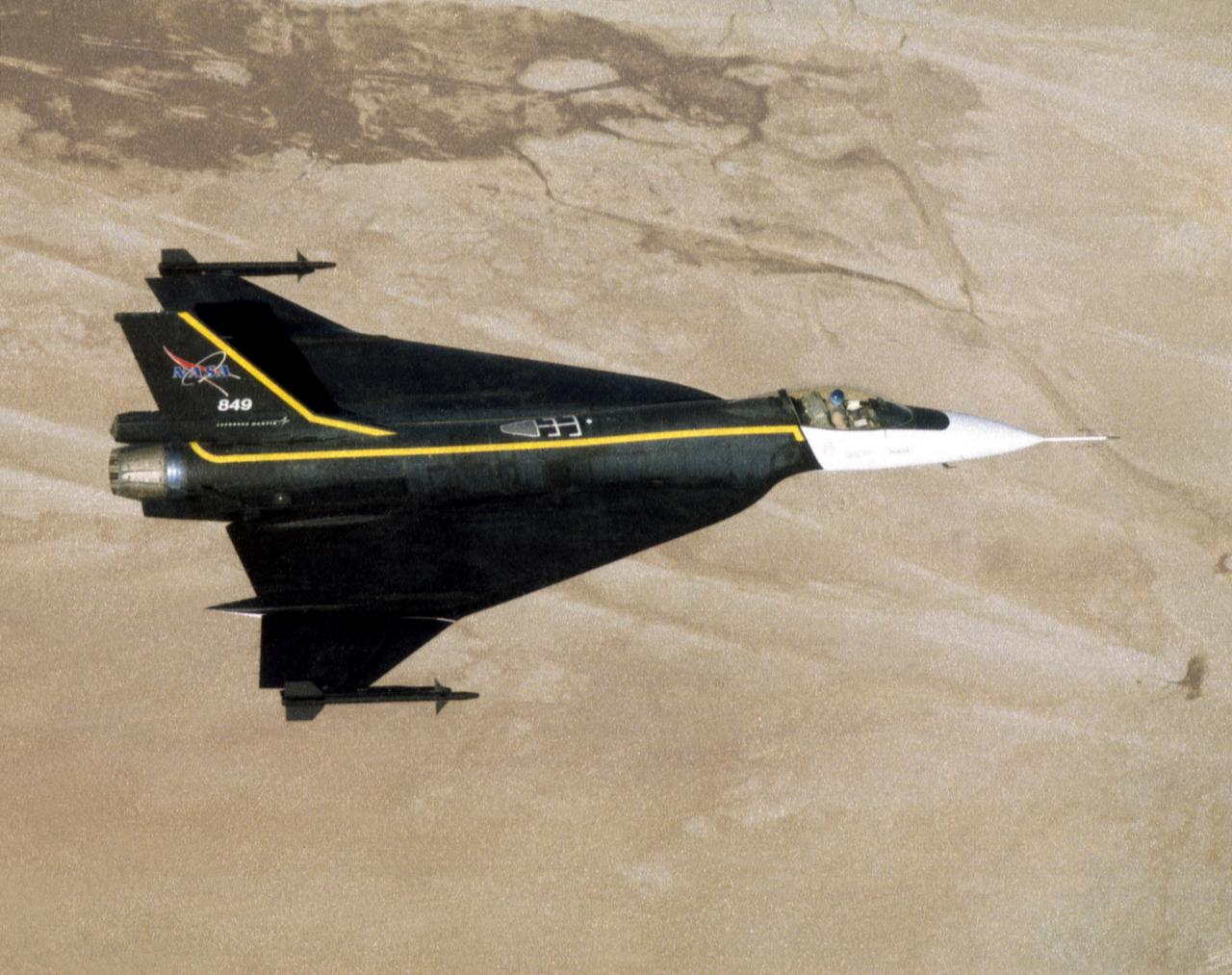
An image of the F-16XL #1 during its functional flight check of the Digital Flight Control System (DFCS) on December 16, 1997. The mission was flown by NASA research pilot Dana Purifoy, and lasted 1 hour and 25 minutes. The tests included pilot familiarly, functional check, and handling qualities evaluation maneuvers to a speed of Mach 0.6 and 300 knots. Purifoy completed all the briefed data points with no problems, and reported that the DFCS handled as well, if not better than the analog computer system that it replaced.
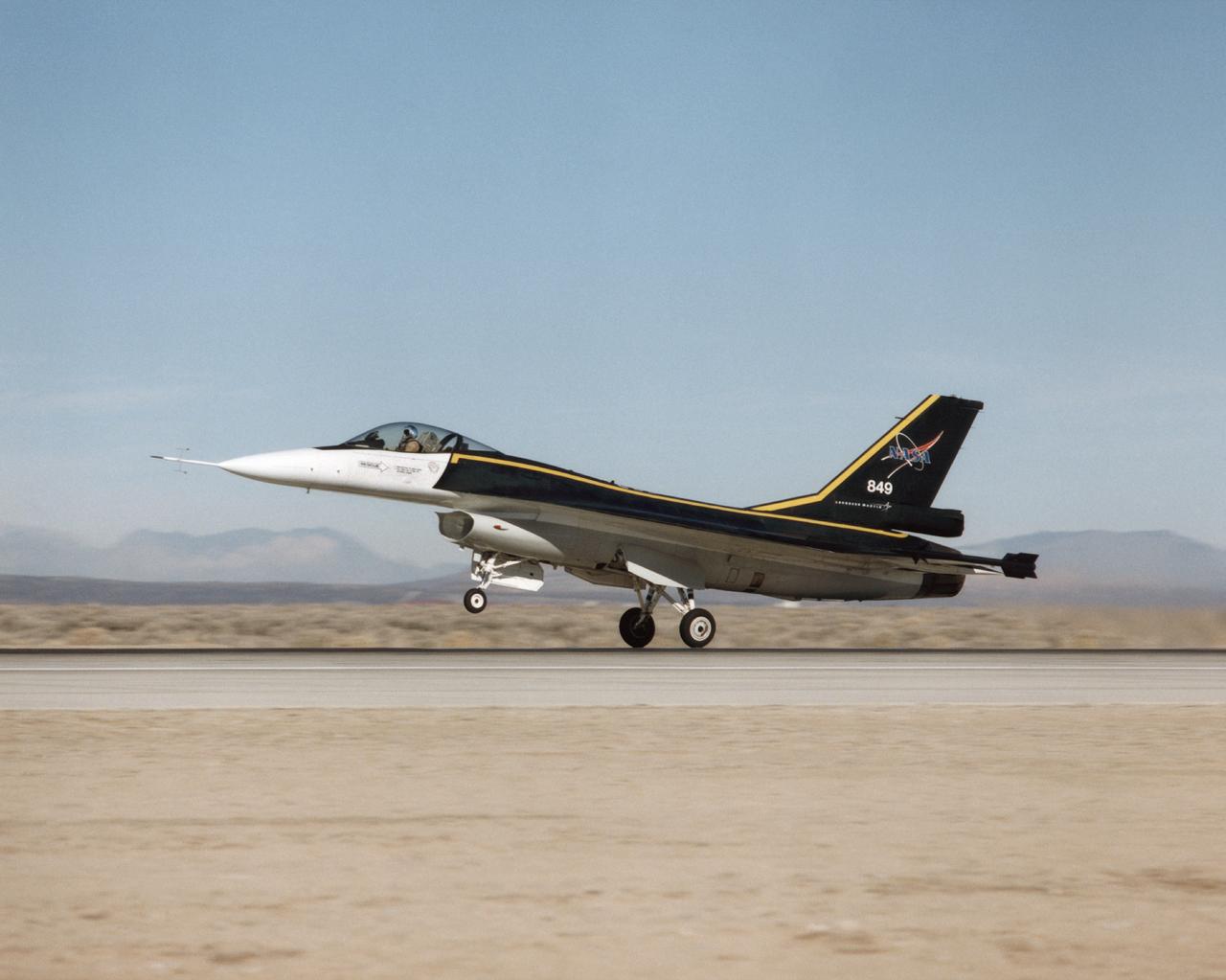
The F-16XL #1 (NASA 849) takes off for the first flight of the Digital Flight Control System (DFCS) on December 16, 1997. Like most first flight, the DFCS required months of preparations. During July 1997, crews worked on the engine, cockpit, canopy, seat, and instrumentation. By late August, the aircraft began combined systems tests and a flight readiness review. Although the Air Force Safety Review Board (AFSRB)- a group that provided double checks on all flight operations - approved the program in late November 1997, a problem with the aircraft flight computer delayed the functional check flight until mid-December.
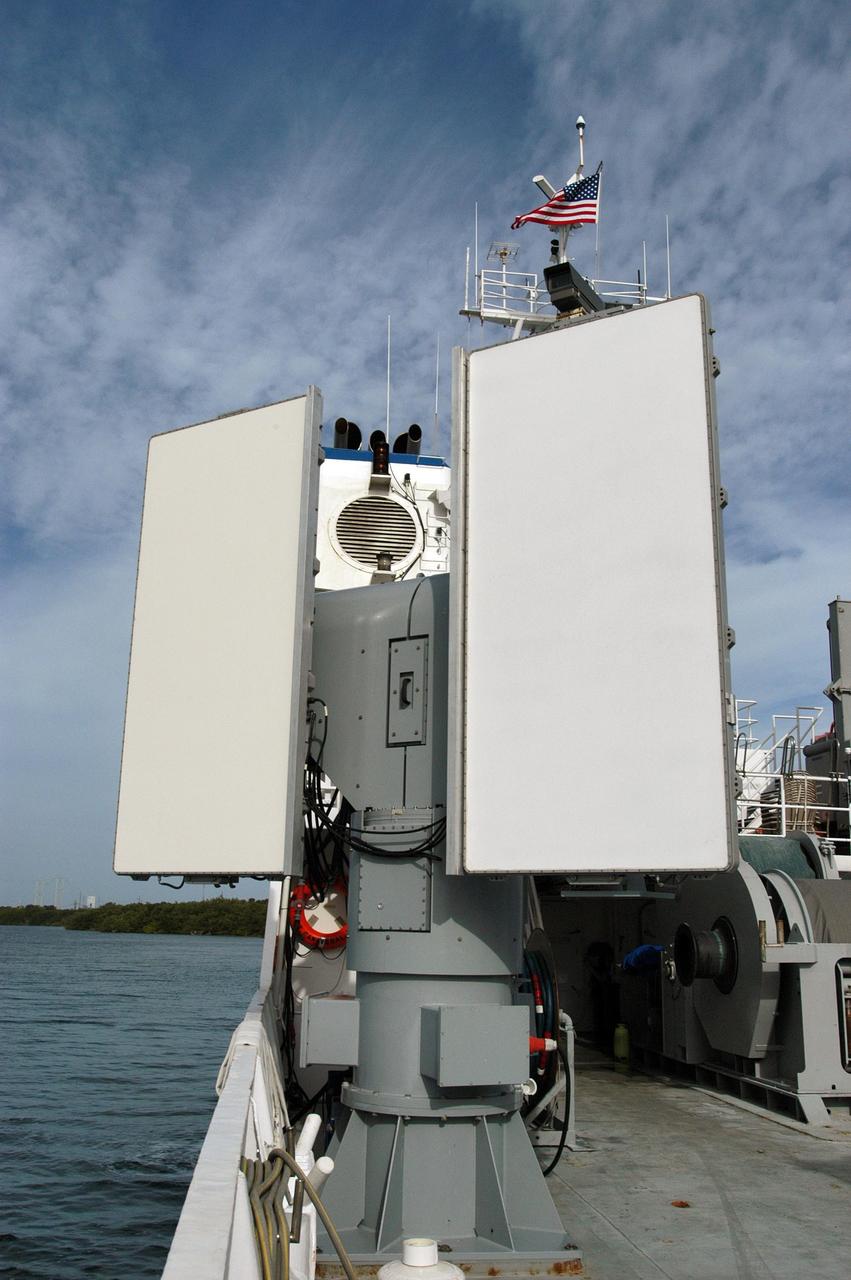
KENNEDY SPACE CENTER, FLA. -- The X-band radar array is installed on the solid rocket booster retrieval ship Liberty before launch of Space Shuttle Discovery. It is one of two Weibel Continuous Pulse Doppler X-band radars located on each of the two SRB retrieval ships. This one will be located downrange of the launch site. Working with the land-based C-band radar, the X-band radars provide velocity and differential shuttle/debris motion information during launch. The radar data will be sent from the ships via satellite link and analyzed at the C-band radar site located on north Kennedy Space Center. Photo credit: NASA/George Shelton
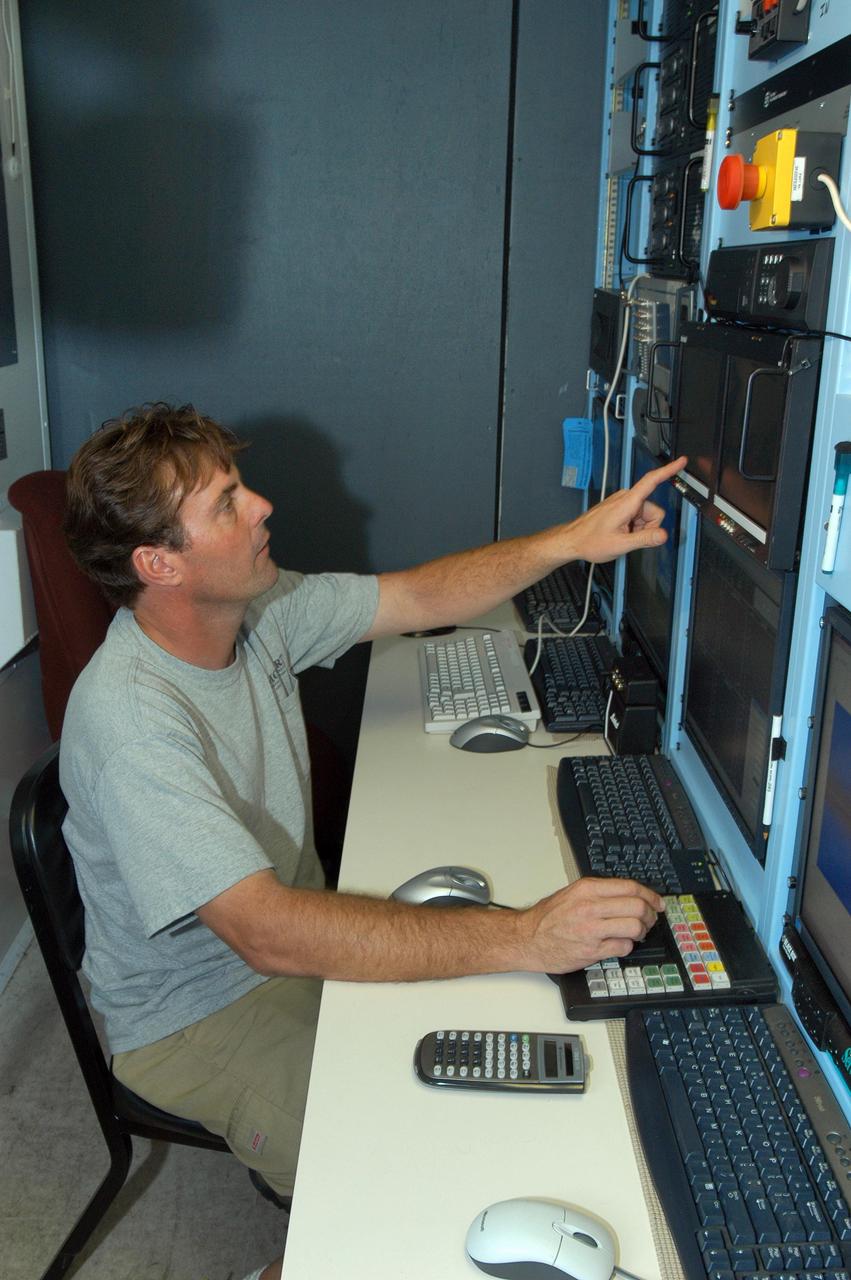
KENNEDY SPACE CENTER, FLA. -- Radar operator Scott Peabody tests the X-band radar array installed on the solid rocket booster retrieval ship Liberty before launch of Space Shuttle Discovery. It is one of two Weibel Continuous Pulse Doppler X-band radars located on each of the two SRB retrieval ships. This one will be located downrange of the launch site. It is one of two Weibel Continuous Pulse Doppler X-band radars located on each of the two SRB retrieval ships. This one will be located downrange of the launch site. Working with the land-based C-band radar, the X-band radars provide velocity and differential shuttle/debris motion information during launch. The radar data will be sent from the ships via satellite link and analyzed at the C-band radar site located on north Kennedy Space Center. Photo credit: NASA/George Shelton
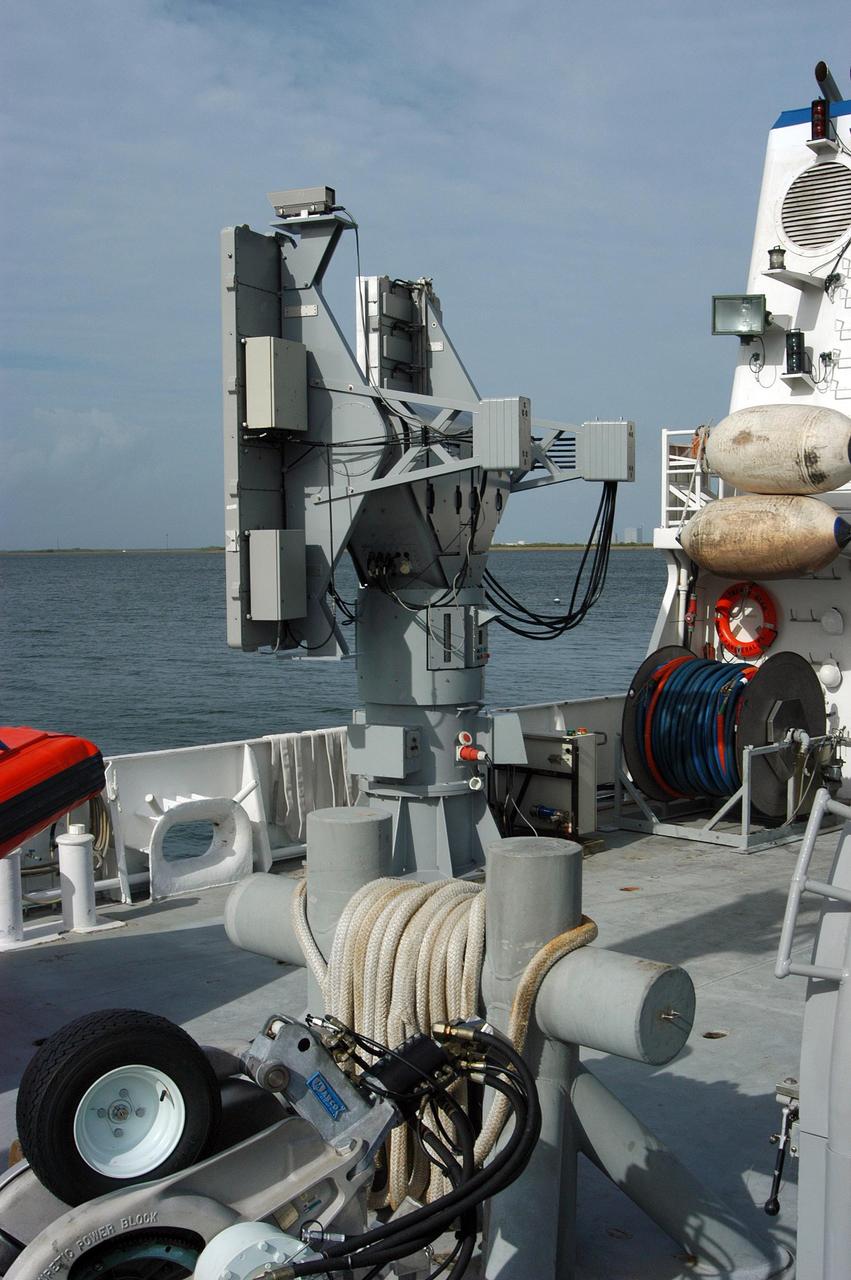
KENNEDY SPACE CENTER, FLA. -- The X-band radar array is installed on the solid rocket booster retrieval ship Liberty before launch of Space Shuttle Discovery. It is one of two Weibel Continuous Pulse Doppler X-band radars located on each of the two SRB retrieval ships. This one will be located downrange of the launch site. Working with the land-based C-band radar, the X-band radars provide velocity and differential shuttle/debris motion information during launch. The radar data will be sent from the ships via satellite link and analyzed at the C-band radar site located on north Kennedy Space Center. Photo credit: NASA/George Shelton
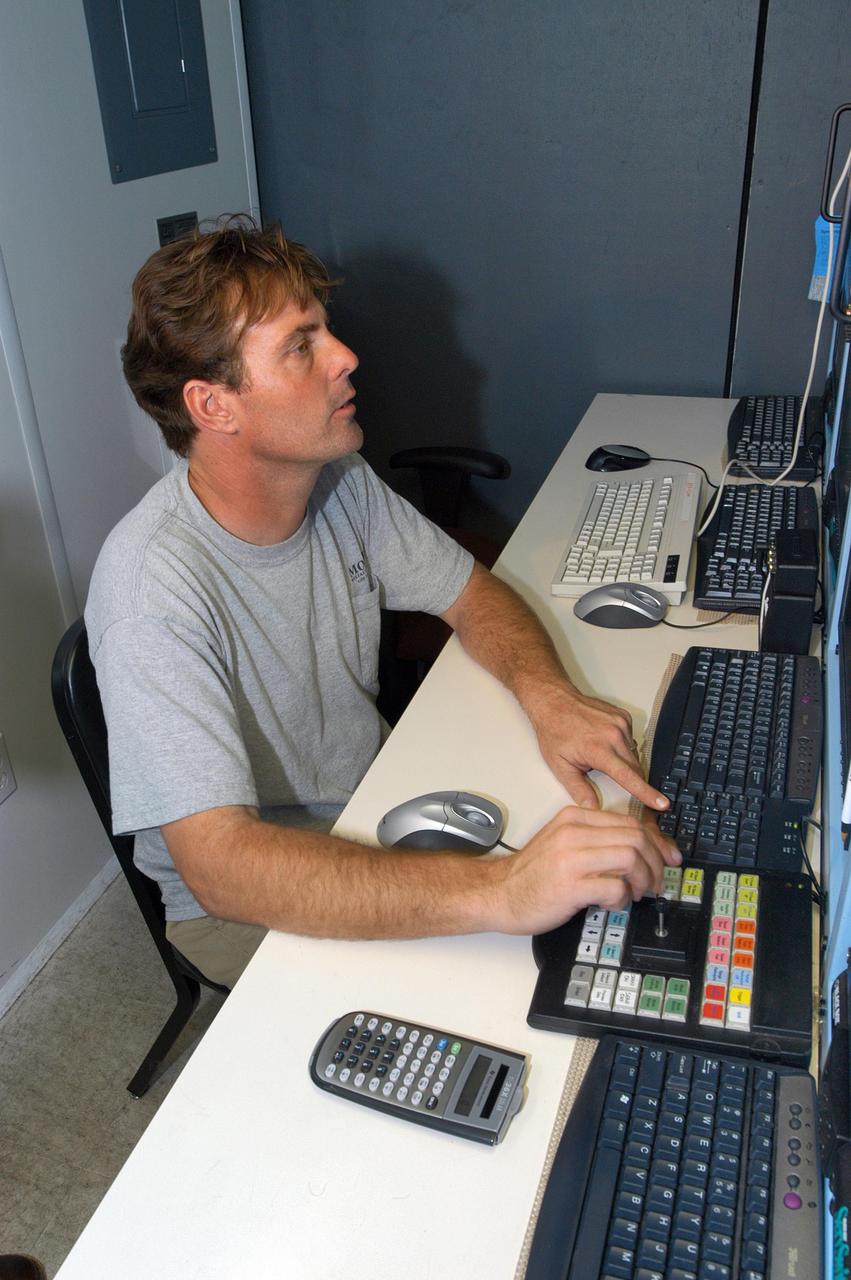
KENNEDY SPACE CENTER, FLA. -- Radar operator Scott Peabody tests the X-band radar array installed on the solid rocket booster retrieval ship Liberty before launch of Space Shuttle Discovery. It is one of two Weibel Continuous Pulse Doppler X-band radars located on each of the two SRB retrieval ships. This one will be located downrange of the launch site. It is one of two Weibel Continuous Pulse Doppler X-band radars located on each of the two SRB retrieval ships. This one will be located downrange of the launch site. Working with the land-based C-band radar, the X-band radars provide velocity and differential shuttle/debris motion information during launch. The radar data will be sent from the ships via satellite link and analyzed at the C-band radar site located on north Kennedy Space Center. Photo credit: NASA/George Shelton
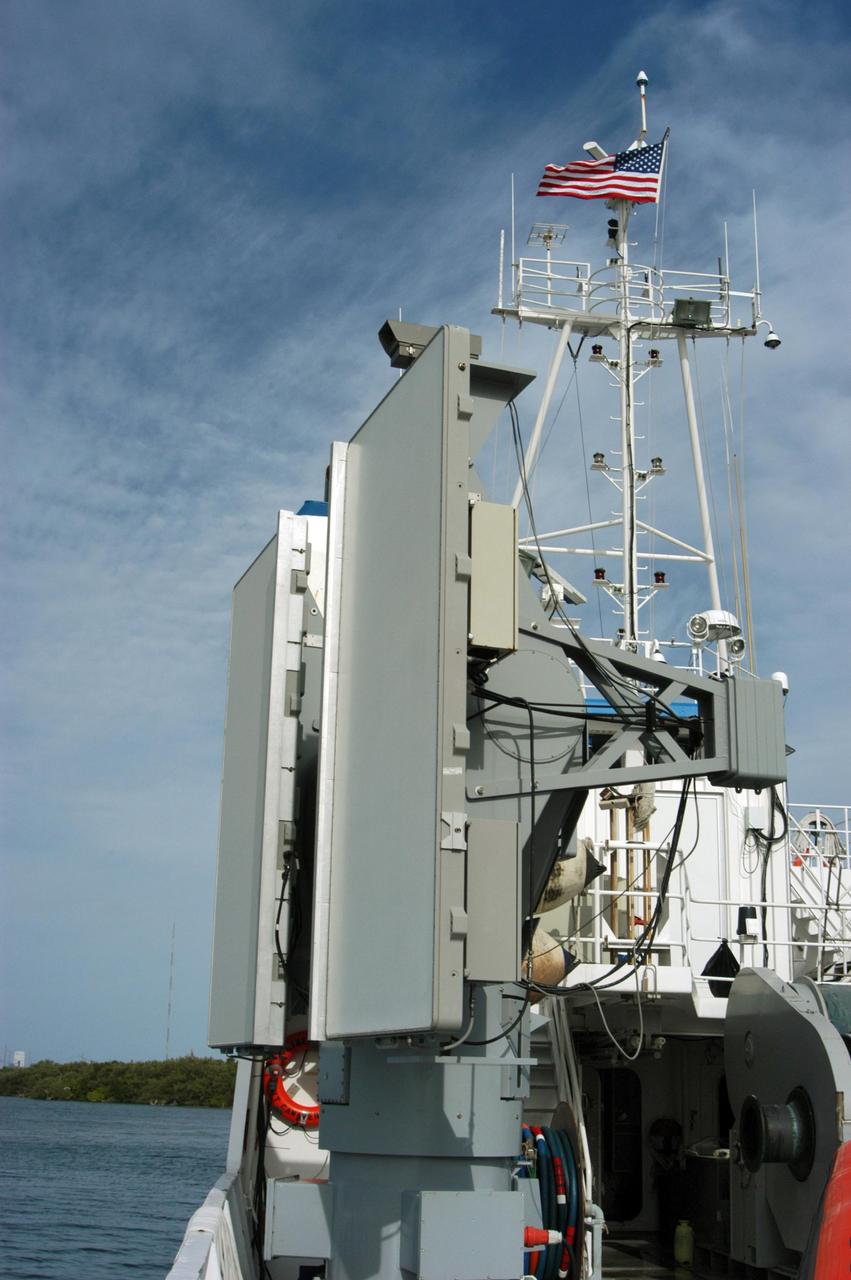
KENNEDY SPACE CENTER, FLA. -- The X-band radar array is installed on the solid rocket booster retrieval ship Liberty before launch of Space Shuttle Discovery. It is one of two Weibel Continuous Pulse Doppler X-band radars located on each of the two SRB retrieval ships. This one will be located downrange of the launch site. Working with the land-based C-band radar, the X-band radars provide velocity and differential shuttle/debris motion information during launch. The radar data will be sent from the ships via satellite link and analyzed at the C-band radar site located on north Kennedy Space Center. Photo credit: NASA/George Shelton
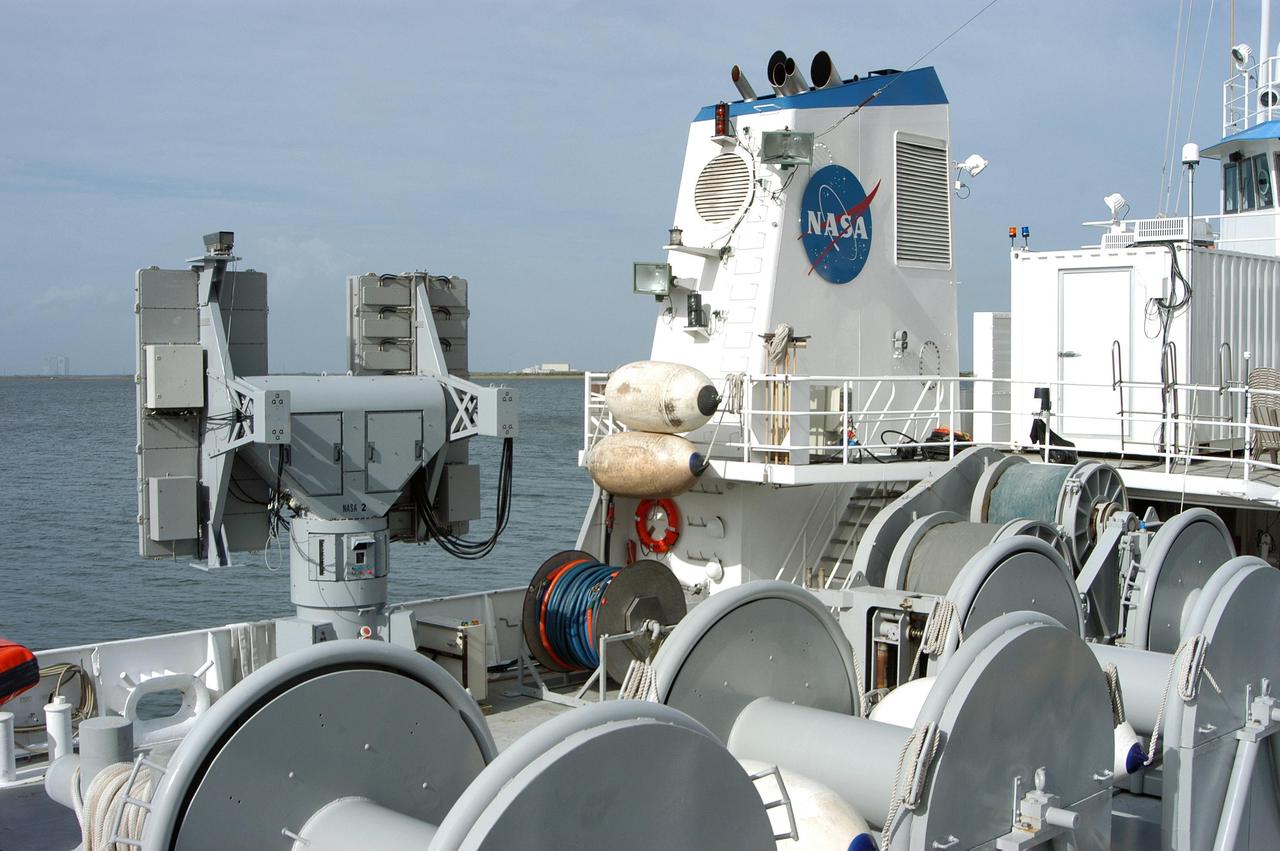
KENNEDY SPACE CENTER, FLA. -- The X-band radar array is being installed on the solid rocket booster retrieval ship Liberty before launch of Space Shuttle Discovery. It is one of two Weibel Continuous Pulse Doppler X-band radars located on each of the two SRB retrieval ships. This one will be located downrange of the launch site. Working with the land-based C-band radar, the X-band radars provide velocity and differential shuttle/debris mo¬tion information during launch. The radar data will be sent from the ships via satellite link and analyzed at the C-band radar site located on north Kennedy Space Center. Photo credit: NASA/George Shelton
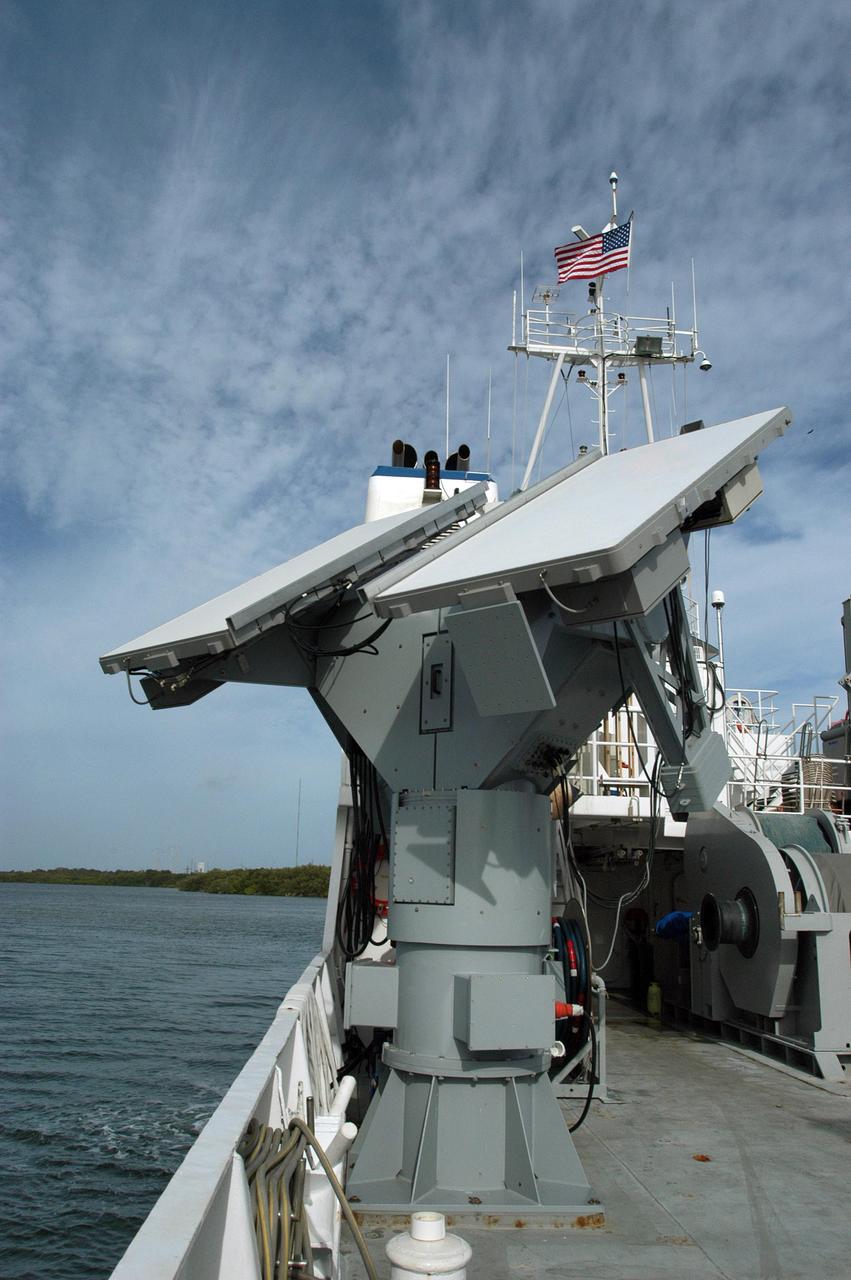
KENNEDY SPACE CENTER, FLA. -- The X-band radar array is installed on the solid rocket booster retrieval ship Liberty before launch of Space Shuttle Discovery. It is one of two Weibel Continuous Pulse Doppler X-band radars located on each of the two SRB retrieval ships. This one will be located downrange of the launch site. Working with the land-based C-band radar, the X-band radars provide velocity and differential shuttle/debris motion information during launch. The radar data will be sent from the ships via satellite link and analyzed at the C-band radar site located on north Kennedy Space Center. Photo credit: NASA/George Shelton

The XV-15 tilt rotor ships #1 and #2 parked on the NASA Dryden Flight Research Center ramp. The XV-15s, manufactured by Bell, were involved in limited research at Dryden in 1980 and 1981. The development of the XV-15 Tiltrotor research aircraft was initiated in 1973 with joint Army/NASA funding as a "proof of concept", or "technology demonstrator" program, with two aircraft being built by Bell Helicopter Textron (BHT) in 1977. The aircraft are powered by twin Lycoming T-53 turboshaft engines that are connected by a cross-shaft and drive three-bladed, 25 ft diameter metal rotors (the size extensively tested in a wind tunnel). The engines and main transmissions are located in wingtip nacelles to minimize the operational loads on the cross-shaft system and, with the rotors, tilt as a single unit. For takeoff, the proprotors and their engines are used in the straight-up position where the thrust is directed downward. The XV-15 then climbs vertically into the air like a helicopter. In this VTOL mode, the vehicle can lift off and hover for approximately one hour. Once off the ground, the XV-15 has the ability to fly in one of two different modes. It can fly as a helicopter, in the partially converted airplane mode. The XV-15 can also then convert from the helicopter mode to the airplane mode. This is accomplished by continuous rotation of the proprotors from the helicopter rotor position to the conventional airplane propeller position. During the ten to fifteen second conversion period, the aircraft speed increases and lift is transferred from the rotors to the wing. To land, the proprotors are rotated up to the helicopter rotor position and flown as a helicopter to a vertical landing.
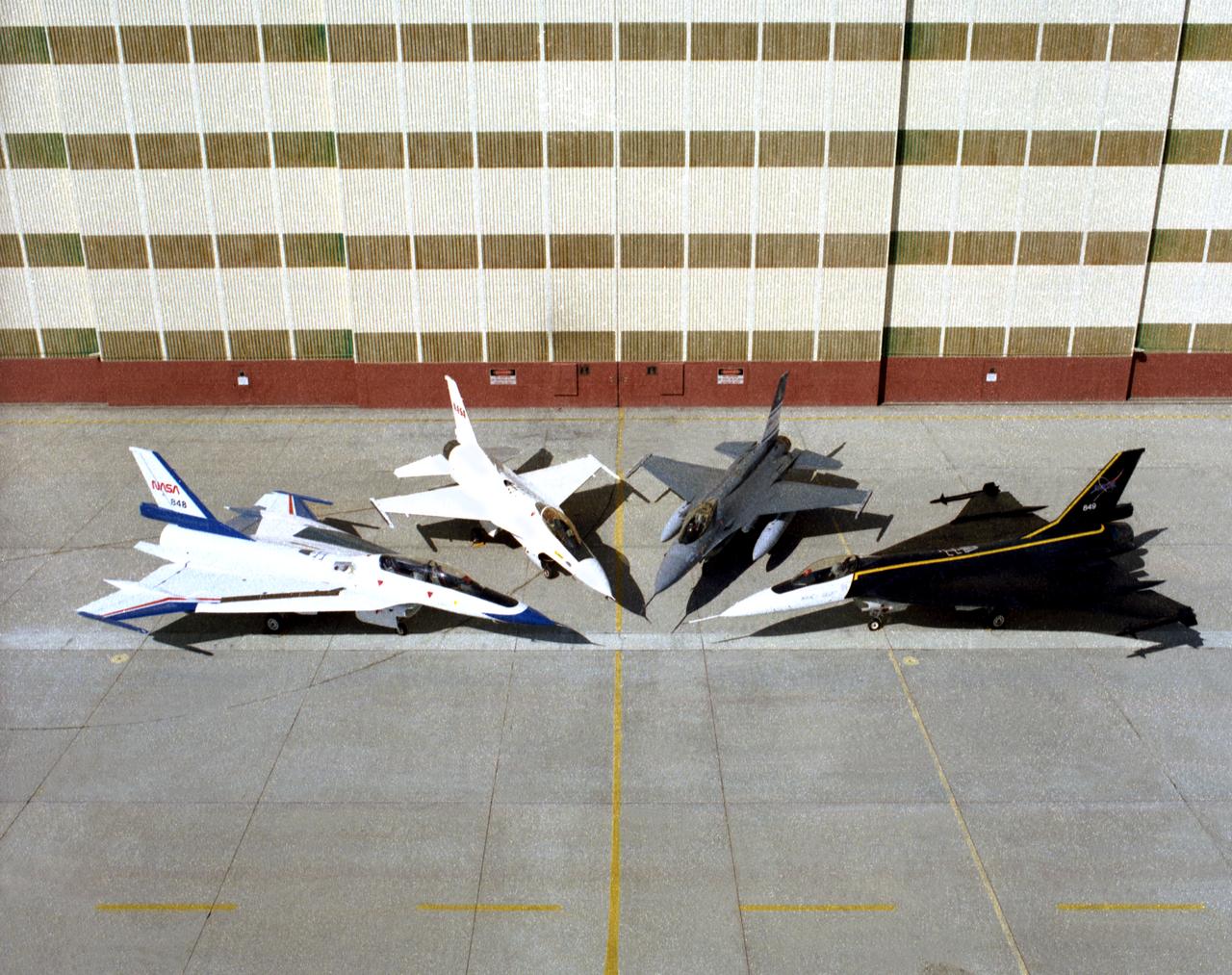
Four different versions of the F-16 were used by Dryden in the 1990s. On the left and right sides are two F-16XLs. On the left is the F-16XL #2 (NASA 848), which is the two-seat version, used for advanced laminar flow studies until late 1996. On the right is the single-seat F-16XL #1 (NASA 849), used for laminar flow research and sonic boom research. (Laminar flow refers to smooth airflow over a wing, which increases lift and reduces drag compared to turbulent airflow). Between them at center left is an F-16A (NASA 816), the only civilian operated F-16. Next to it at center right is the U.S. Air Force Advance Fighter Technology Integration (AFTI) F-16, a program to test new sensor and control technologies for future fighter aircraft. Both F-16XLs are in storage at Dryden. The F-16A was never flown at Dryden, and was parked by the entrance to the center. The AFTI F-16 is in the Air Force Museum.
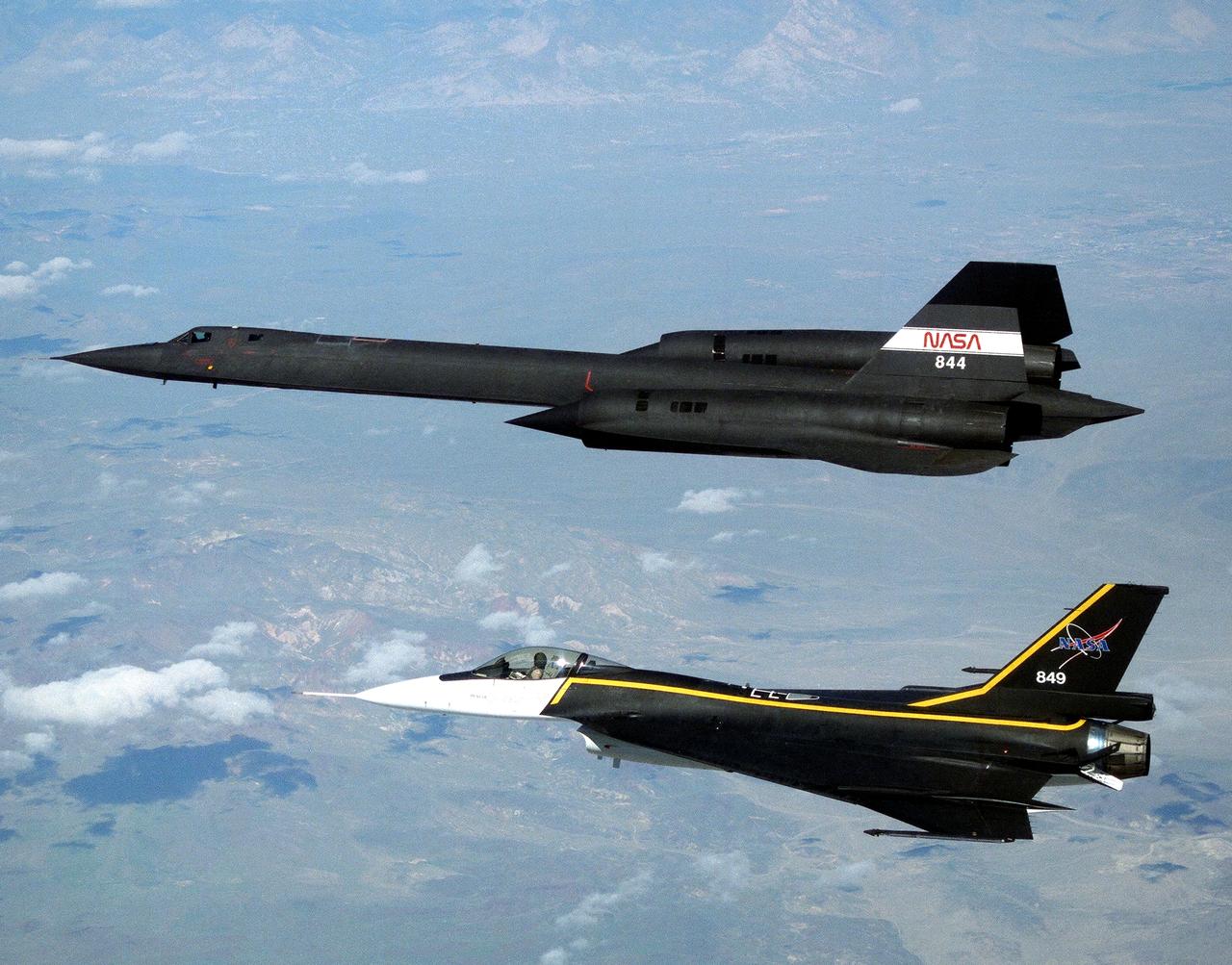
The single-seat F-16XL, NASA 849, joins up with an SR-71A, NASA 844, as crews set up for one of the flights in the recent sonic boom research program conducted by the Dryden Flight Research Center, Edwards, California. During the missions, the F-16XL probed the shockwaves generated by the SR-71, while at lower altitudes sensors on an F-18 and on a YO-3A, and also on the ground, recorded data from the same shockwave.
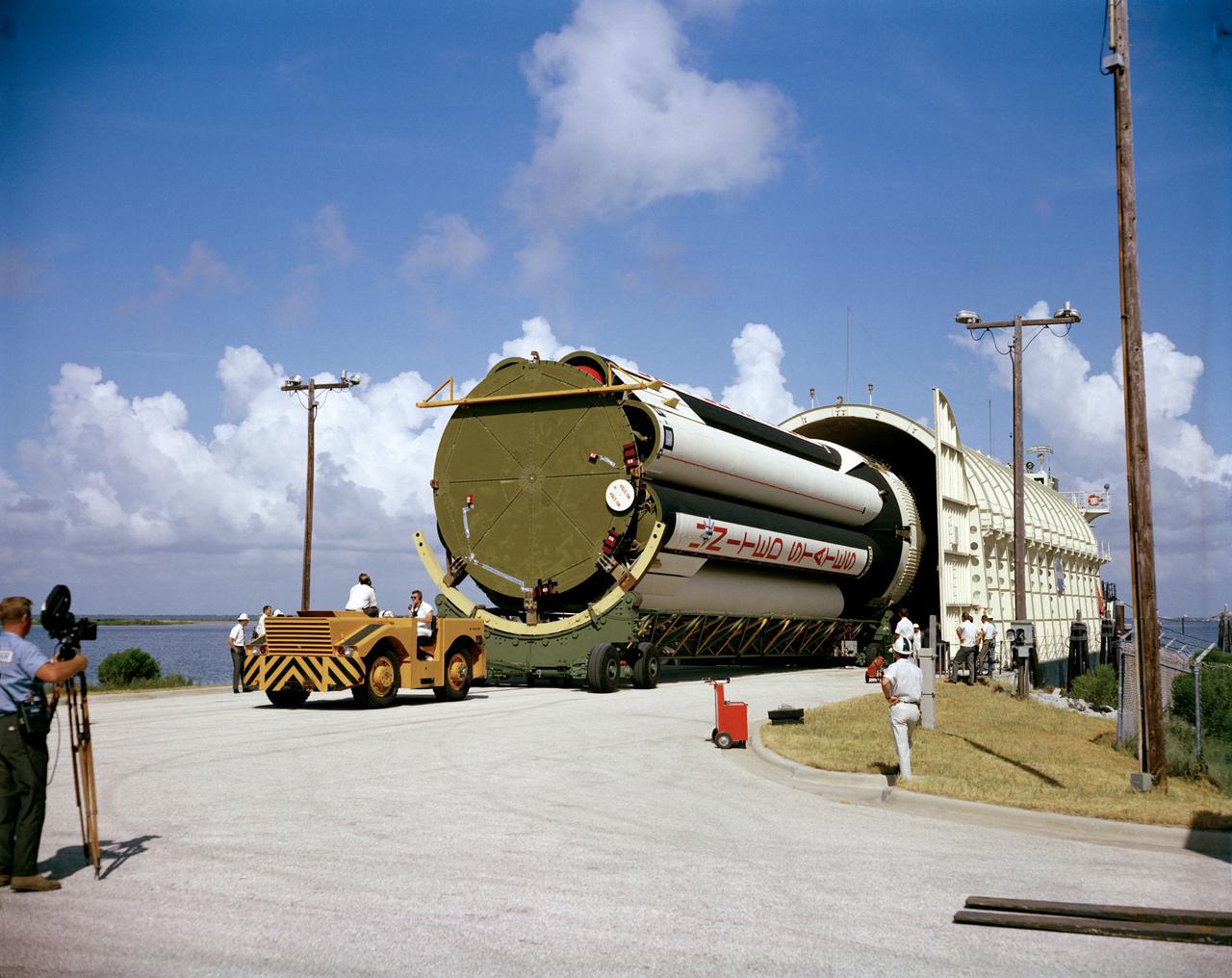
S66-50152 (1966) --- A stage of the uprated Saturn 1 launch vehicle unloaded from NASA barge Promise after arrival at Cape Kennedy. Launch vehicle for Apollo/Saturn 204 mission.
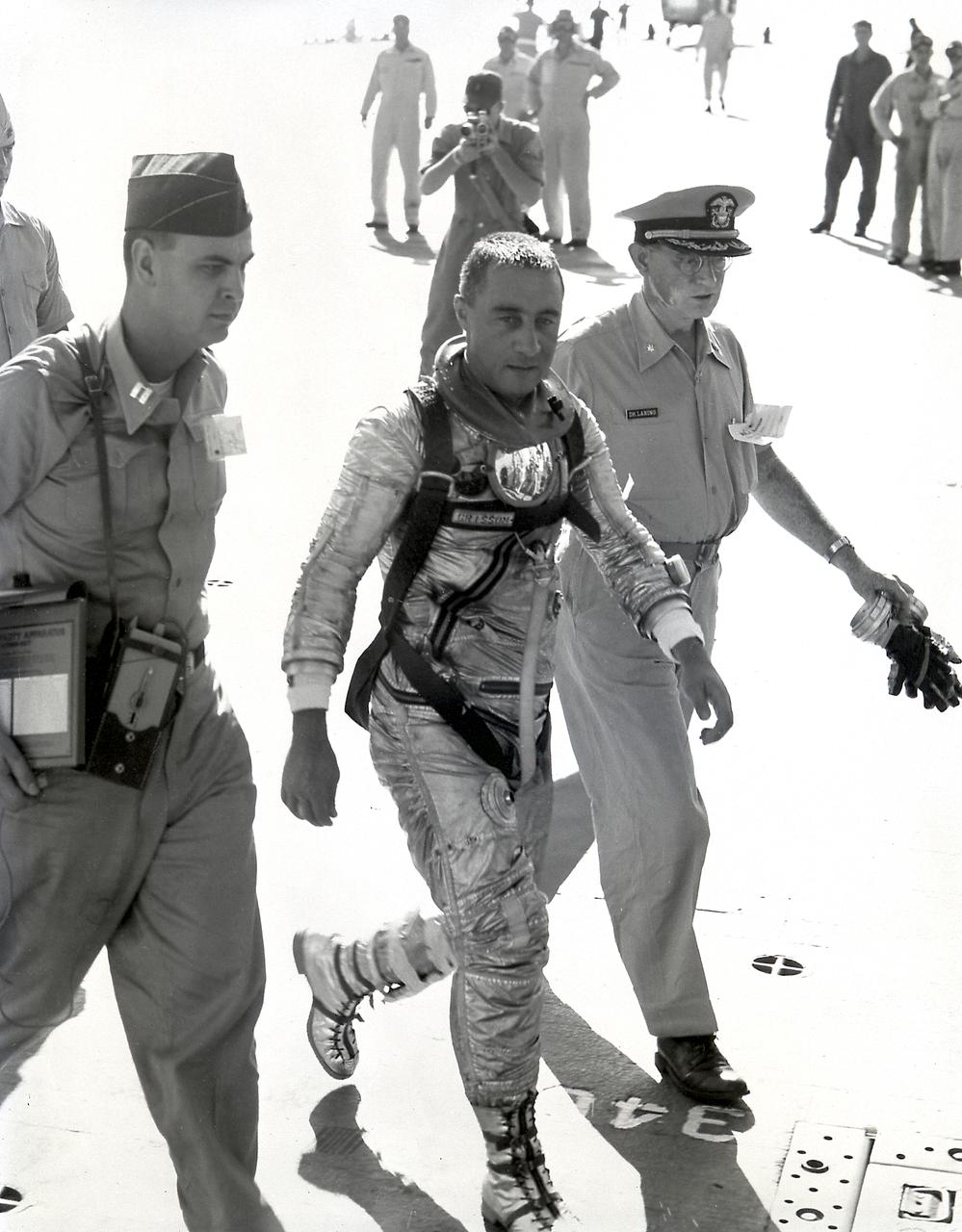
Astronaut Virgil Grissom walks on the recovery ship after completing the 15-1/2-minute suborbital MR-4 mission.
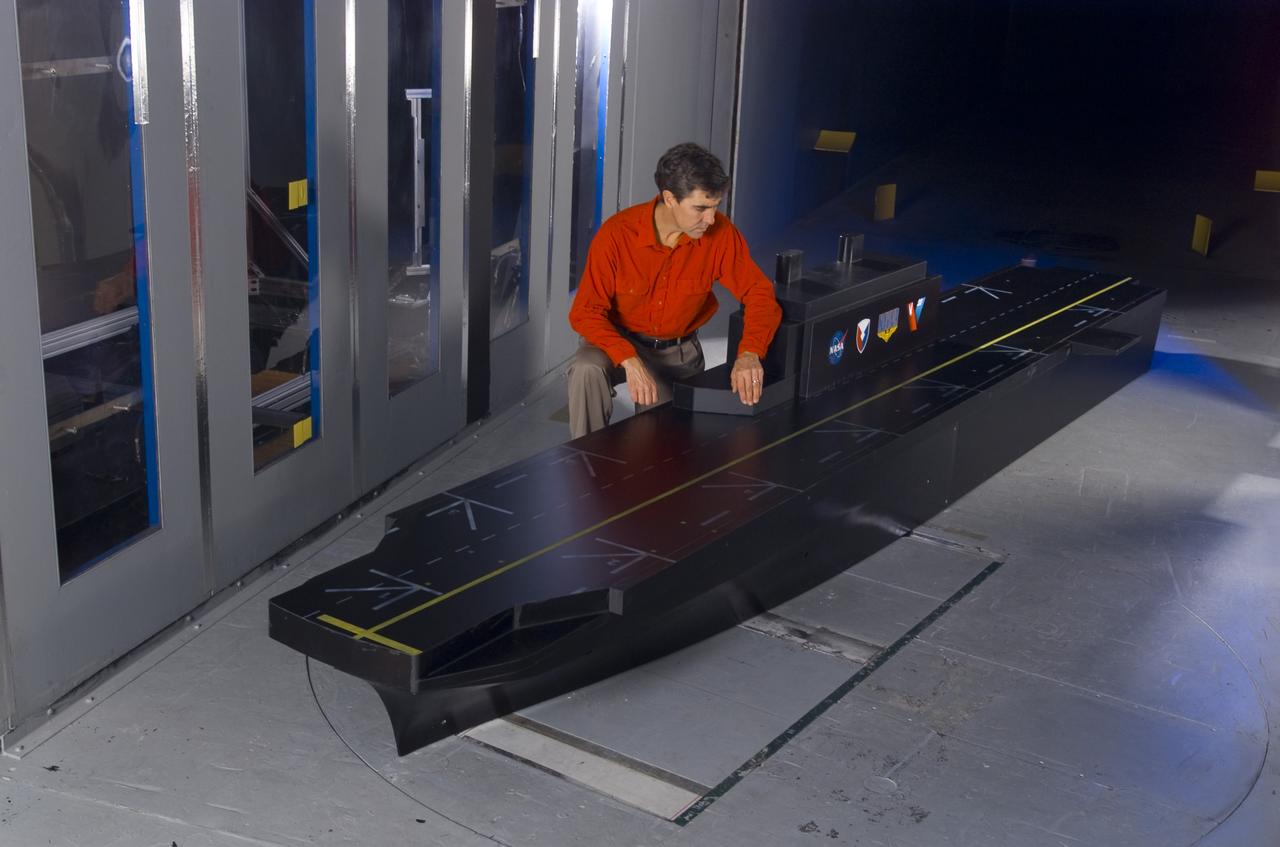
7x10ft#1 W. T. aircraft carrier (model ship) installation for oil flow tests with Bill Warmbrodt
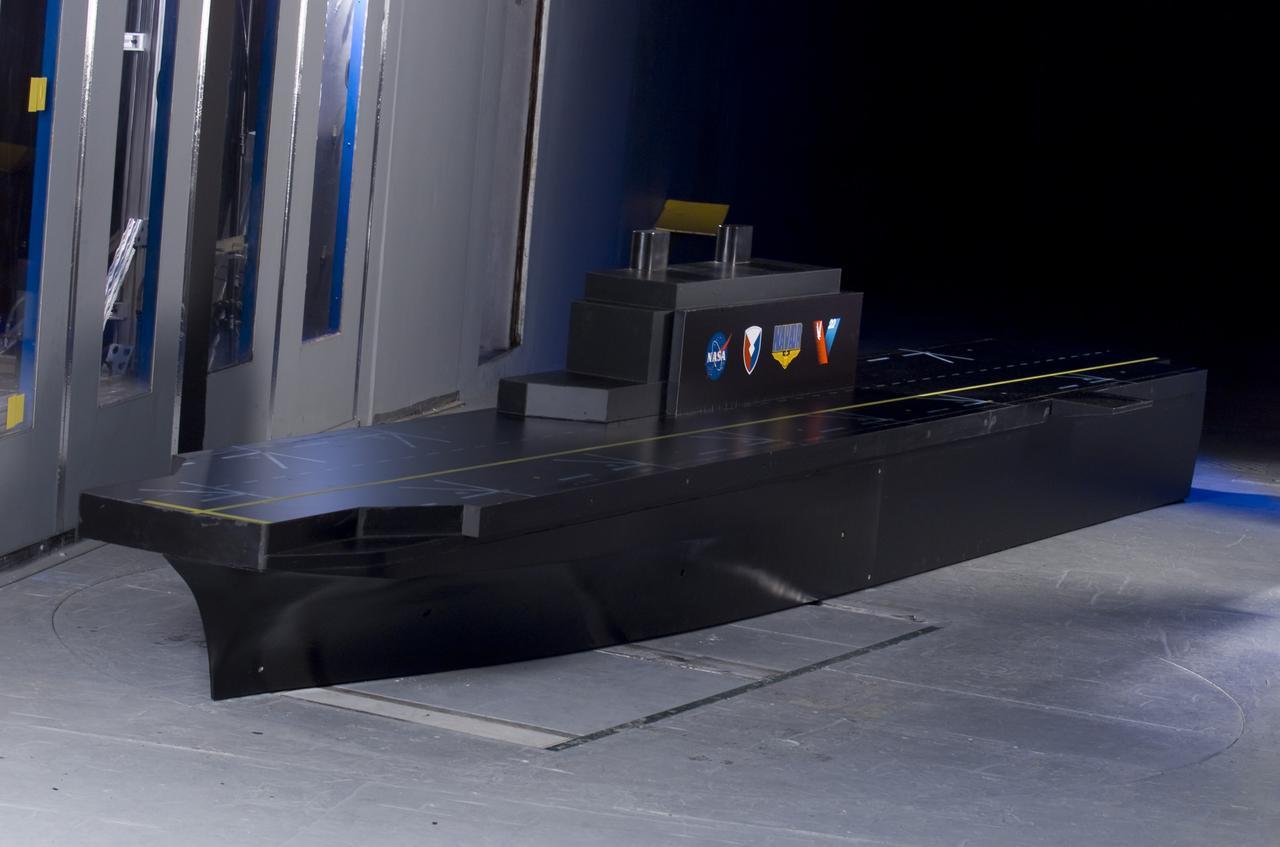
7x10ft#1 W. T. aircraft carrier (model ship) installation for oil flow tests
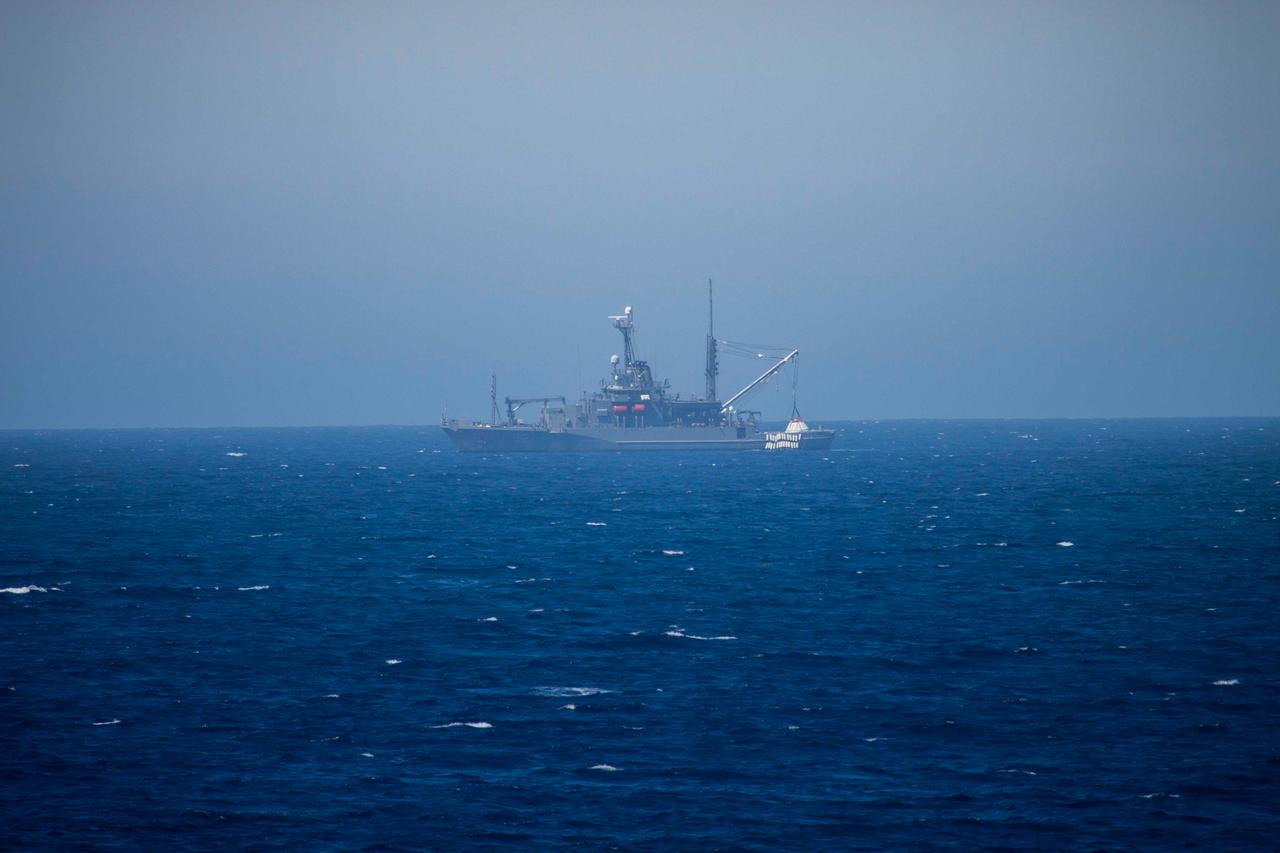
NASA and Navy personnel on board the Salvor used the ship's crane to test recovery techniques on Sept. 15, 2014, prior to Exploration Flight Test-1 (EFT-1). Part of Batch image transfer from Flickr.
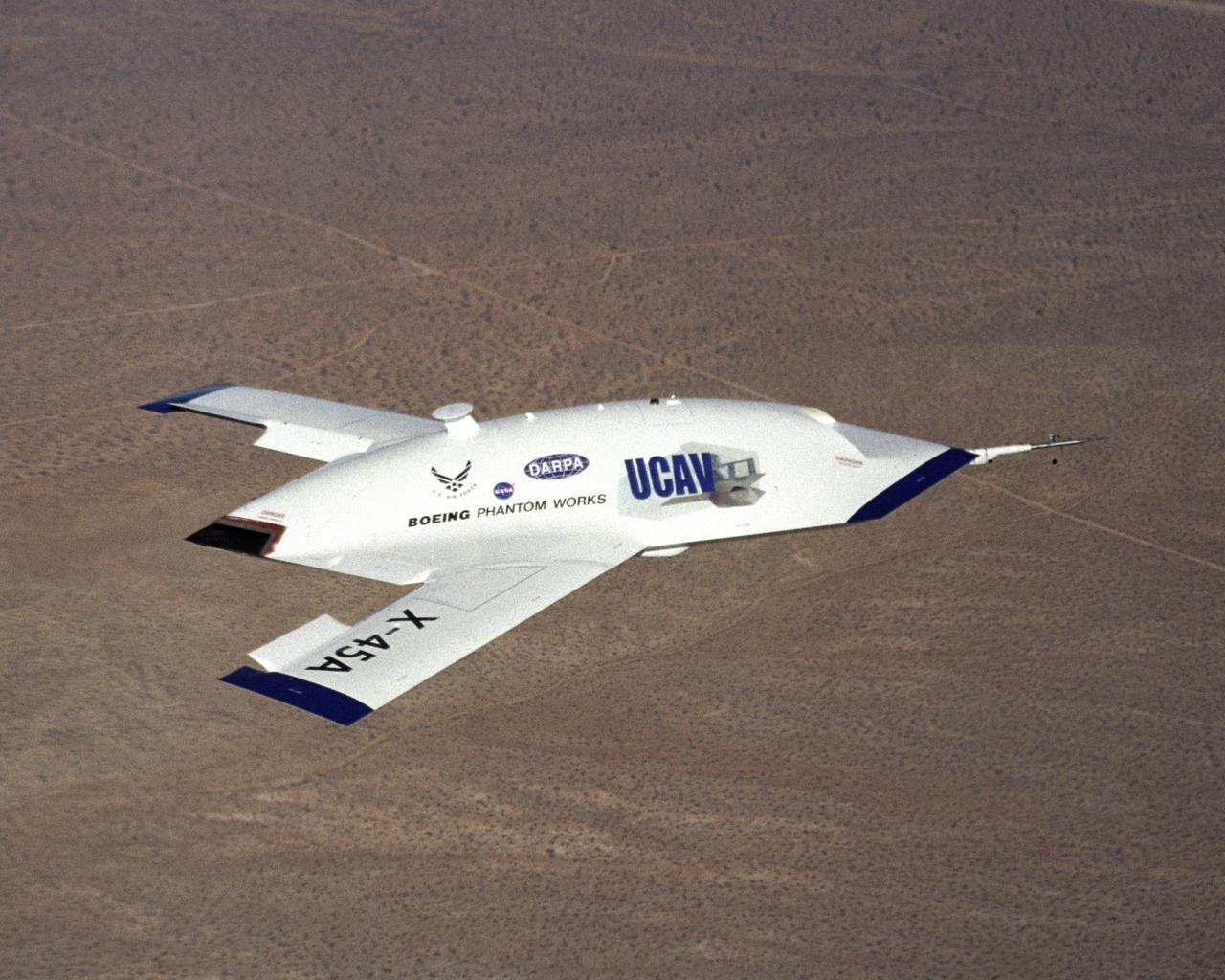
The first X-45A Unmanned Combat Air Vehicle (UCAV) technology demonstrator completed its sixth flight on Dec. 19, 2002, raising its landing gear in flight for the first time. The X-45A flew for 40 minutes and reached an airspeed of 195 knots and an altitude of 7,500 feet. Dryden is supporting the DARPA/Boeing team in the design, development, integration, and demonstration of the critical technologies, processes, and system attributes leading to an operational UCAV system. Dryden support of the X-45A demonstrator system includes analysis, component development, simulations, ground and flight tests.
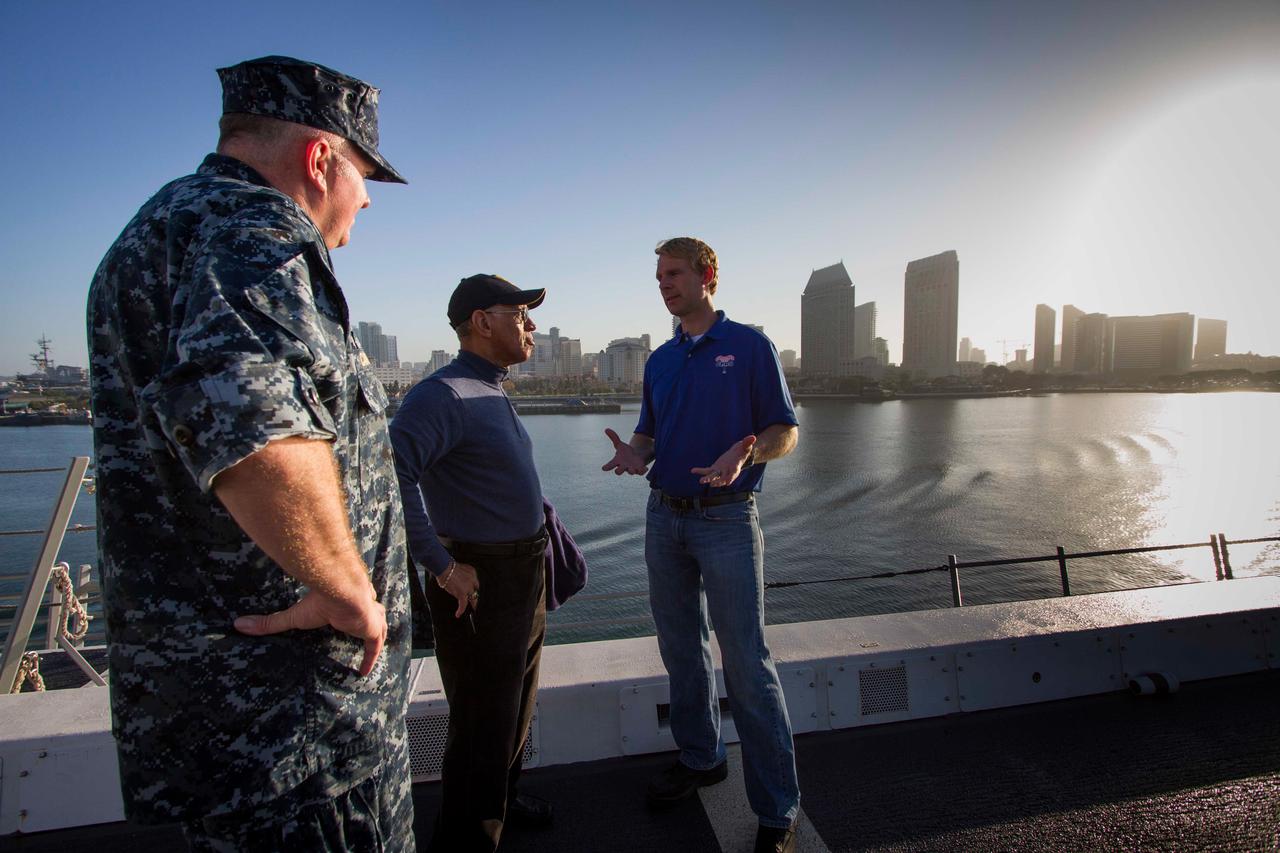
NASA Administrator Charles Bolden talks with a member of the Orion recovery team on board the USS Anchorage as the ship heads to sea to test Orion recovery tools and techniques on Sept. 15, 2014, prior to Exploration Flight Test-1 (EFT-1). Part of Batch image transfer from Flickr.
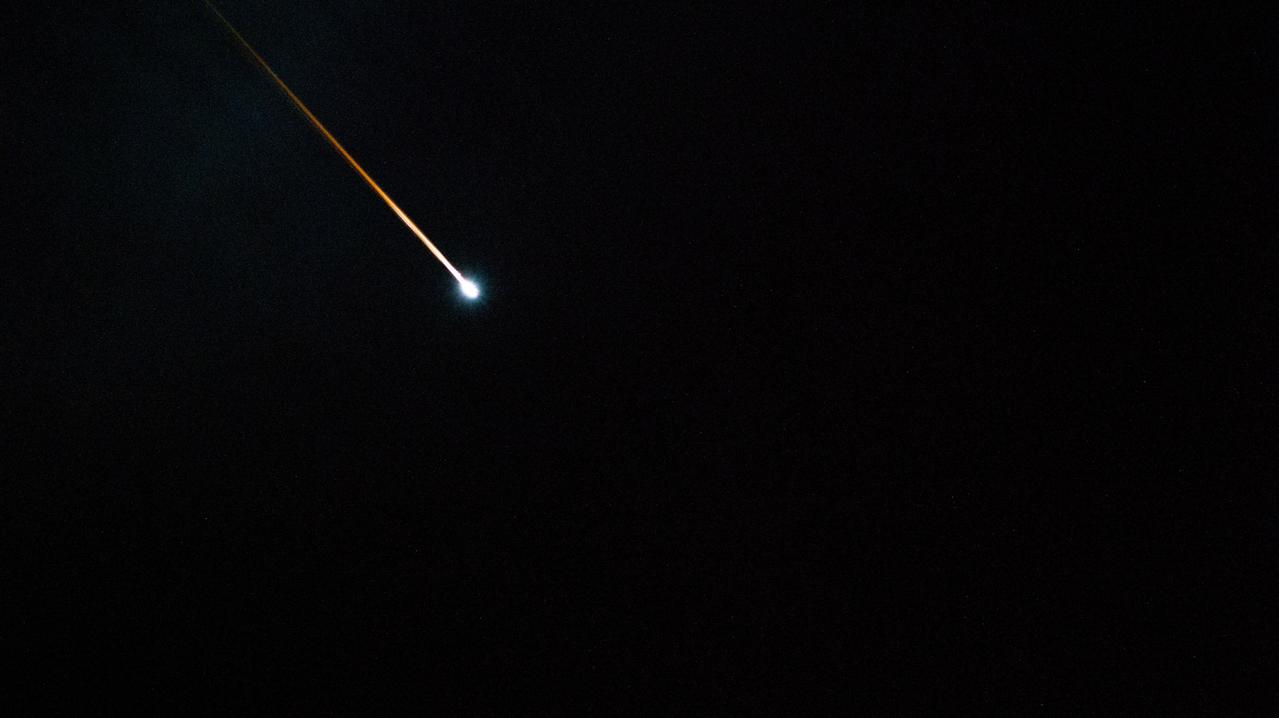
iss067e102151 (June 1, 2022) --- The ISS Progress 79 resupply ship from Roscosmos leaves a plasma trail as it reenters Earth's atmosphere for a fiery, but safe demise above the Pacific Ocean.
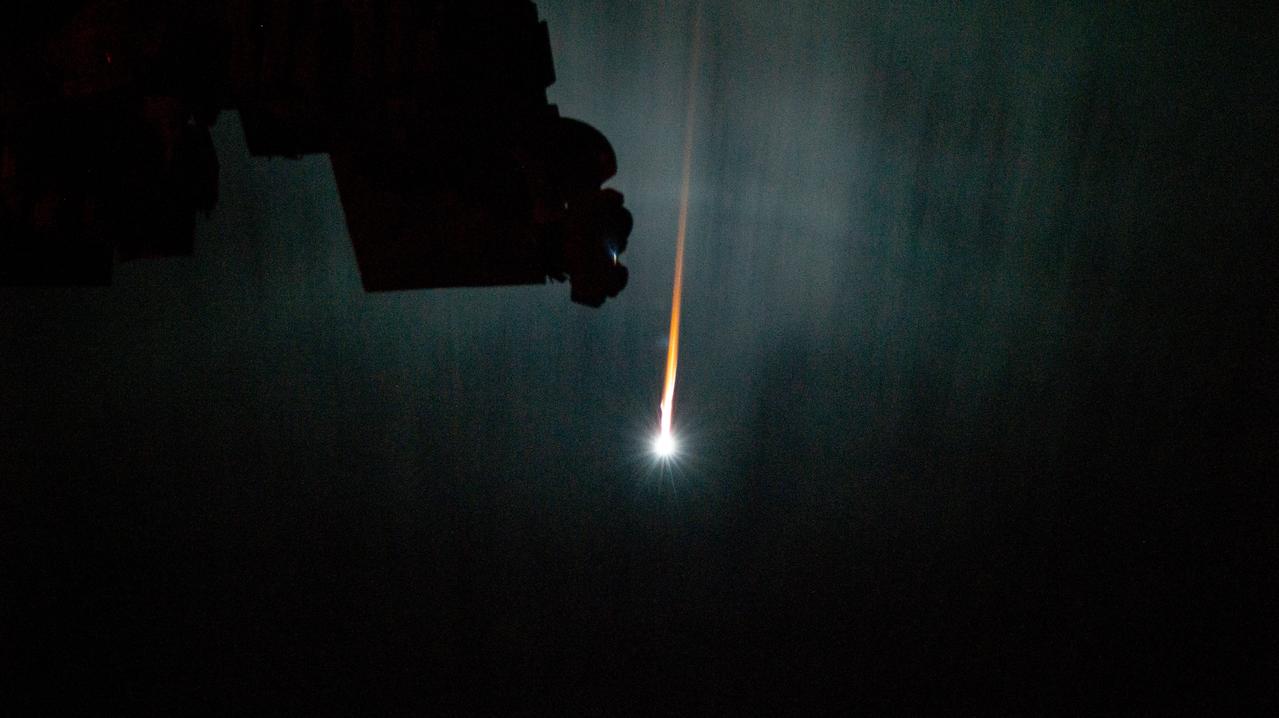
iss067e102149 (June 1, 2022) --- The ISS Progress 79 resupply ship from Roscosmos leaves a plasma trail as it reenters Earth's atmosphere for a fiery, but safe demise above the Pacific Ocean.
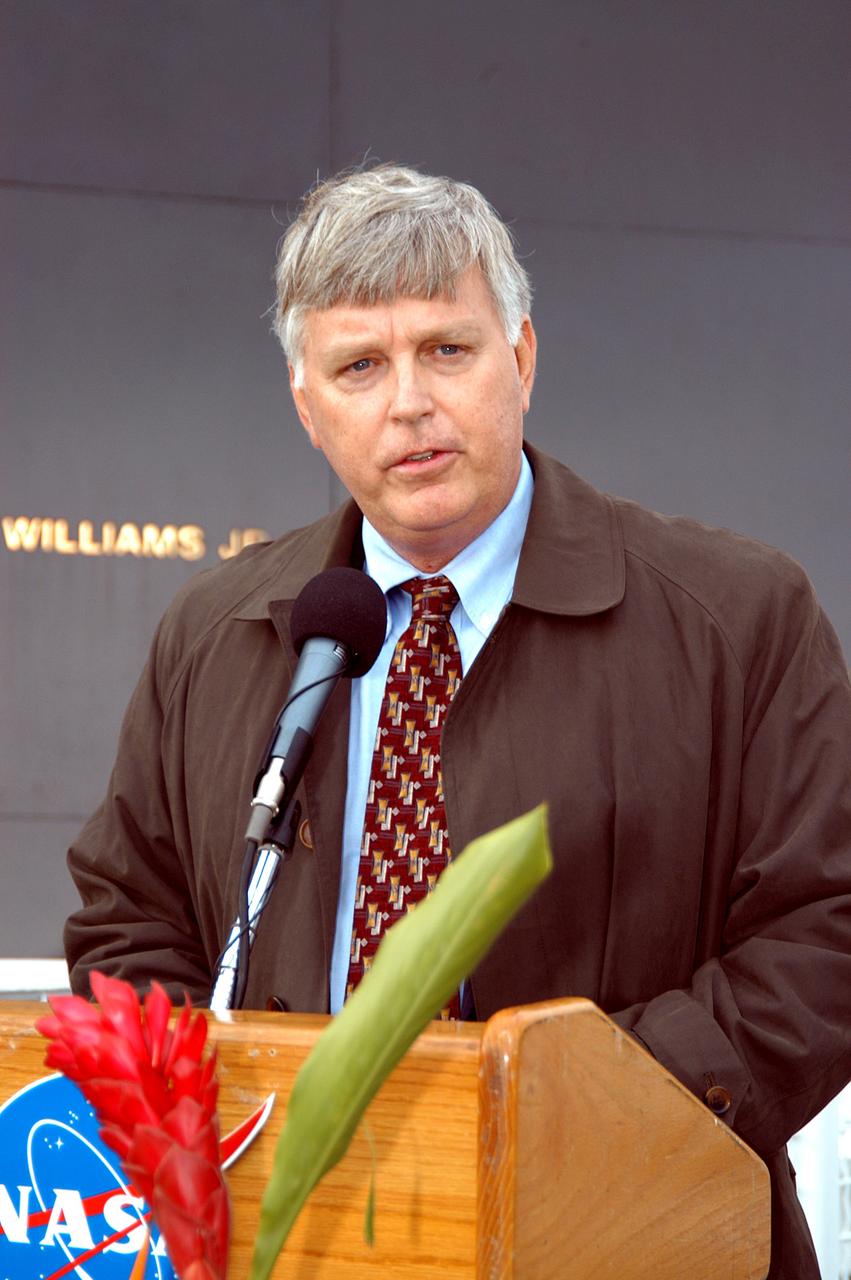
KENNEDY SPACE CENTER, FLA. - Center Director Jim Kennedy speaks to attendees at a memorial service honoring the crew of Columbia. He stands in front of the Space Memorial Mirror at the KSC Visitor Complex. Feb. 1 is the one-year anniversary of the loss of the crew and orbiter Columbia in a tragic accident as the ship returned to Earth following mission STS-107. Attended by many friends, co-workers and families, the memorial service was also open to the public.
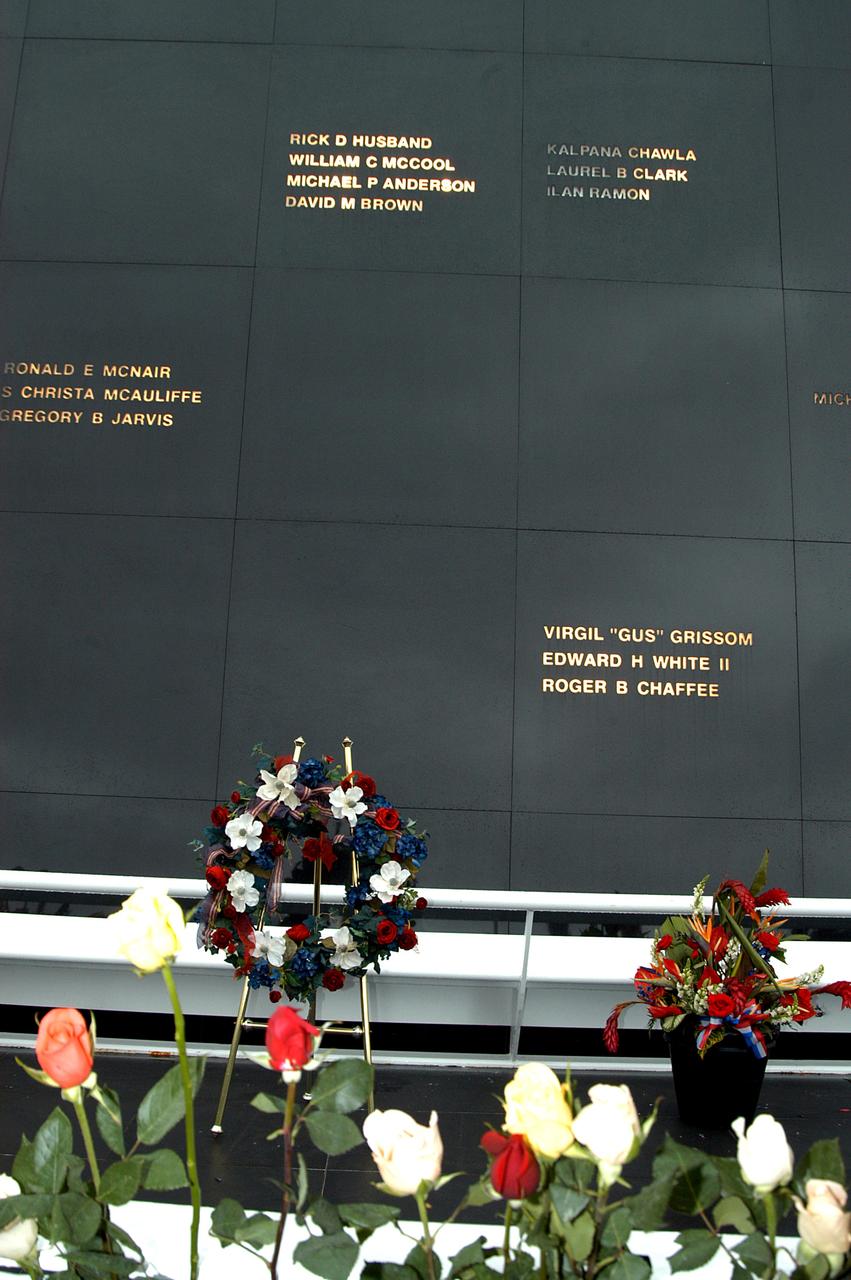
KENNEDY SPACE CENTER, FLA. - Roses and a floral wreath adorn the Space Memorial Mirror following a memorial service for the crew of Columbia. Feb. 1 is the one-year anniversary of the loss of the crew and orbiter Columbia in a tragic accident as the ship returned to Earth following mission STS-107. The public was invited to the memorial service, which included comments by Center Director Jim Kennedy and Executive Director of Florida Space Authority Winston Scott. Scott is a former astronaut who flew on Columbia in 1997.
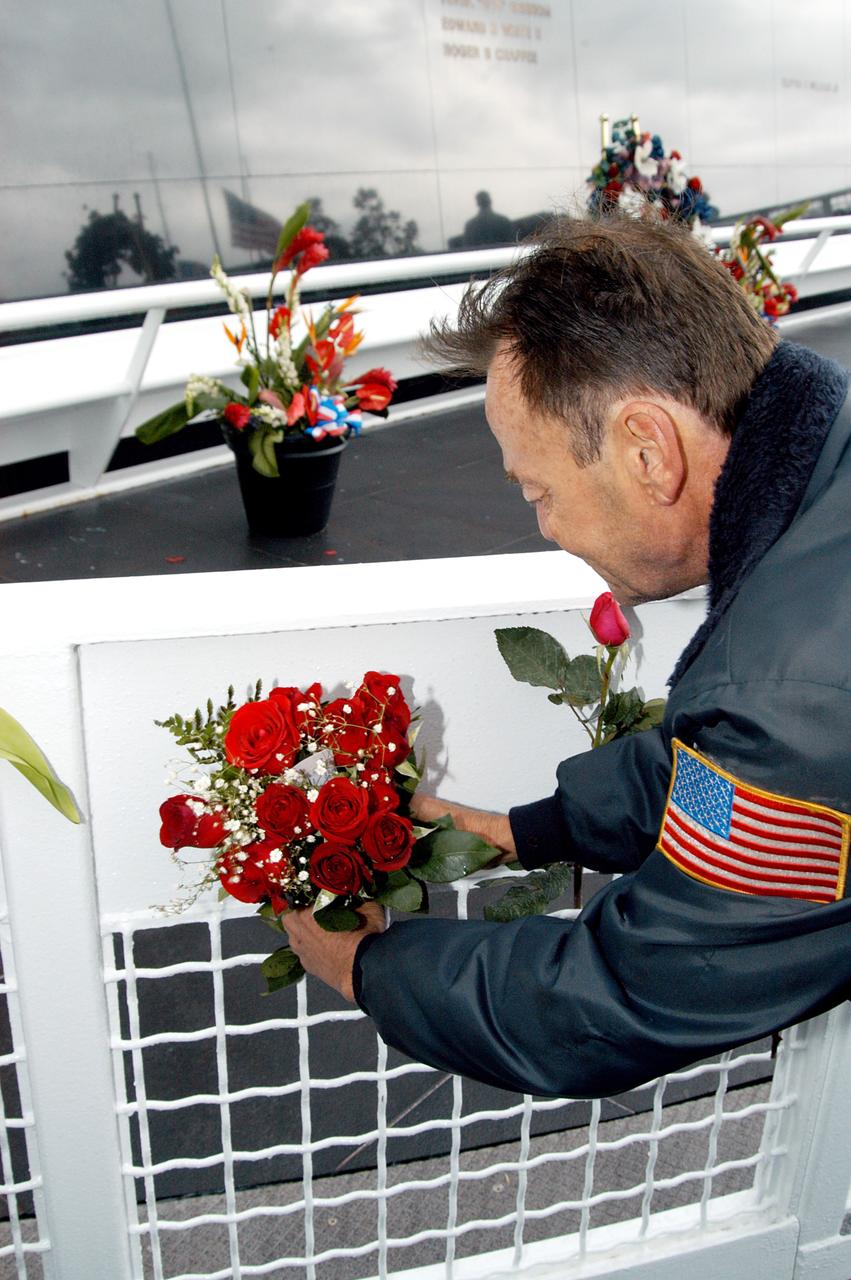
KENNEDY SPACE CENTER, FLA. - Following the memorial service for the crew of Columbia at the Space Memorial Mirror, a visitor leaves a rose bouquet behind. Feb. 1 is the one-year anniversary of the loss of the crew and orbiter Columbia in a tragic accident as the ship returned to Earth following mission STS-107. The public was invited to the memorial service, held in the KSC Visitor Complex, which included comments by Center Director Jim Kennedy and Executive Director of Florida Space Authority Winston Scott. Scott is a former astronaut who flew on Columbia in 1997.

KENNEDY SPACE CENTER, FLA. - Winston Scott, executive director of Florida Space Authority, speaks to attendees at a memorial service honoring the crew of Columbia. He stands in front of the Space Memorial Mirror at the KSC Visitor Complex. Feb. 1 is the one-year anniversary of the loss of the crew and orbiter Columbia in a tragic accident as the ship returned to Earth following mission STS-107. Scott is a former astronaut who flew on Columbia in 1997. Attended by many friends, co-workers and families, the memorial service was also open to the public.

SpaceX’s Crew Dragon approaches the International Space Station during the Demo-1 mission on Sunday, March 3, 2019. The uncrewed spacecraft docked to the orbiting laboratory following a 2:49 a.m. EST liftoff aboard a SpaceX Falcon 9 rocket from Launch Complex 39A at NASA’s Kennedy Space Center in Florida on March 2. Crew Dragon made 18 orbits of Earth before successfully attaching to the space station. The spacecraft undocked at 2:32 a.m., March 8, splashing down in the Atlantic Ocean, about 200 miles off Florida’s east coast, at 8:45 a.m. It arrived in Port Canaveral in Florida on the main deck of SpaceX’s recovery ship, Go Searcher, on March 9. SpaceX’s inaugural flight with NASA’s Commercial Crew Program is the first flight test of a space system designed for humans built and operated by a commercial company through a public-private partnership. NASA and SpaceX will use data from Demo-1 to further prepare for Demo-2, the crewed flight test that will carry NASA astronauts Bob Behnken and Doug Hurley to the International Space Station later this year.

SpaceX’s Crew Dragon spacecraft arrives in Port Canaveral, Florida, aboard the company’s recovery ship, Go Searcher, on Saturday, March 9, 2019. Crew Dragon splashed down in the Atlantic Ocean, about 200 miles off Florida’s east coast, at 8:45 a.m. EST on March 8, after undocking from the International Space Station at 2:32 a.m. As part of the Demo-1 mission, the uncrewed spacecraft docked to the orbiting laboratory on March 3, following a 2:49 a.m. EST liftoff aboard a SpaceX Falcon 9 rocket from Launch Complex 39A at NASA’s Kennedy Space Center in Florida on March 2. SpaceX’s inaugural flight with NASA’s Commercial Crew Program is the first flight test of a space system designed for humans built and operated by a commercial company through a public-private partnership. NASA and SpaceX will use data from Demo-1 to further prepare for Demo-2, the crewed flight test that will carry NASA astronauts Bob Behnken and Doug Hurley to the International Space Station later this year.
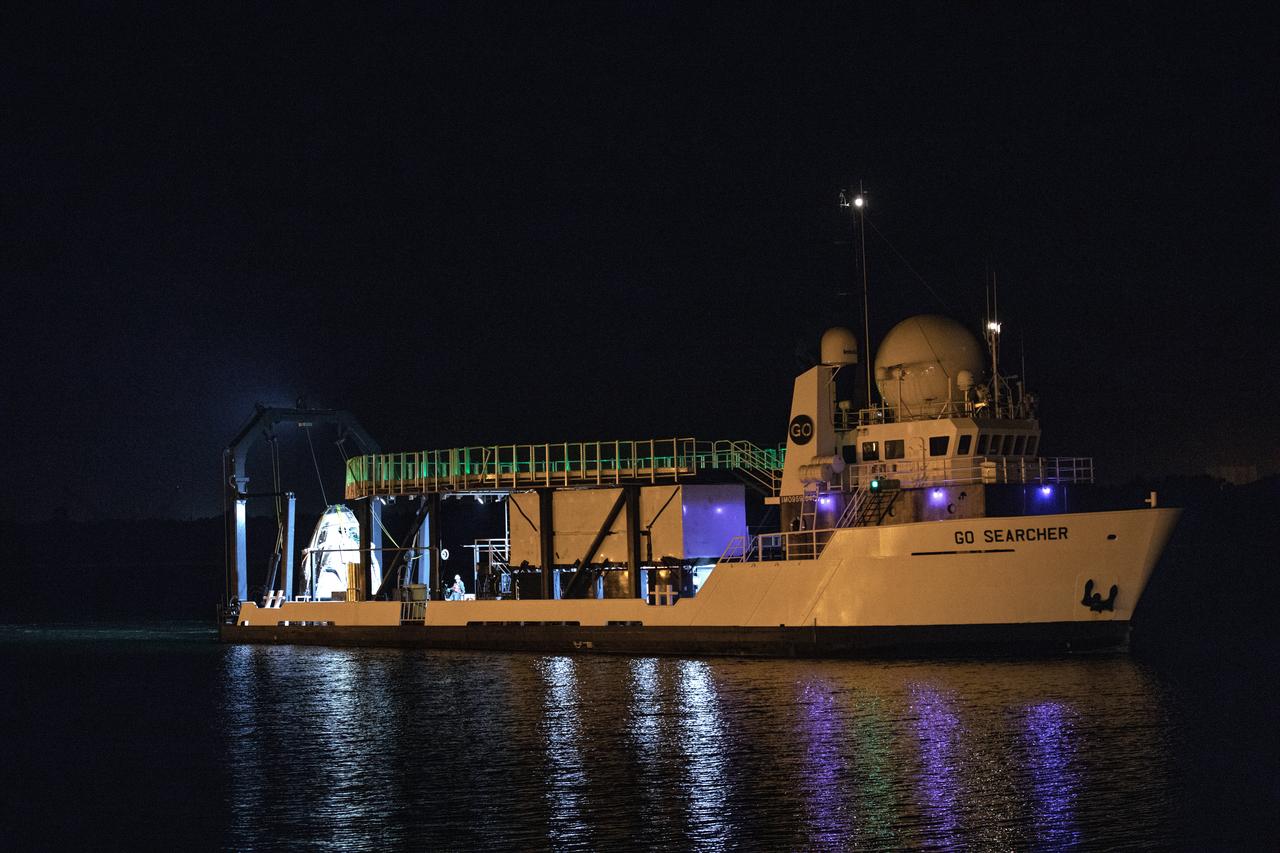
SpaceX’s recovery ship, Go Searcher, enters Port Canaveral in Florida on Saturday, March 9, 2019, with the company’s Crew Dragon spacecraft on its main deck. Crew Dragon splashed down in the Atlantic Ocean, about 200 miles off Florida’s east coast, at 8:45 a.m. EST on March 8, after undocking from the International Space Station at 2:32 a.m. As part of the Demo-1 mission, the uncrewed spacecraft docked to the orbiting laboratory on March 3, following a 2:49 a.m. EST liftoff aboard a SpaceX Falcon 9 rocket from Launch Complex 39A at NASA’s Kennedy Space Center in Florida on March 2. SpaceX’s inaugural flight with NASA’s Commercial Crew Program is the first flight test of a space system designed for humans built and operated by a commercial company through a public-private partnership. NASA and SpaceX will use data from Demo-1 to further prepare for Demo-2, the crewed flight test that will carry NASA astronauts Bob Behnken and Doug Hurley to the International Space Station later this year.
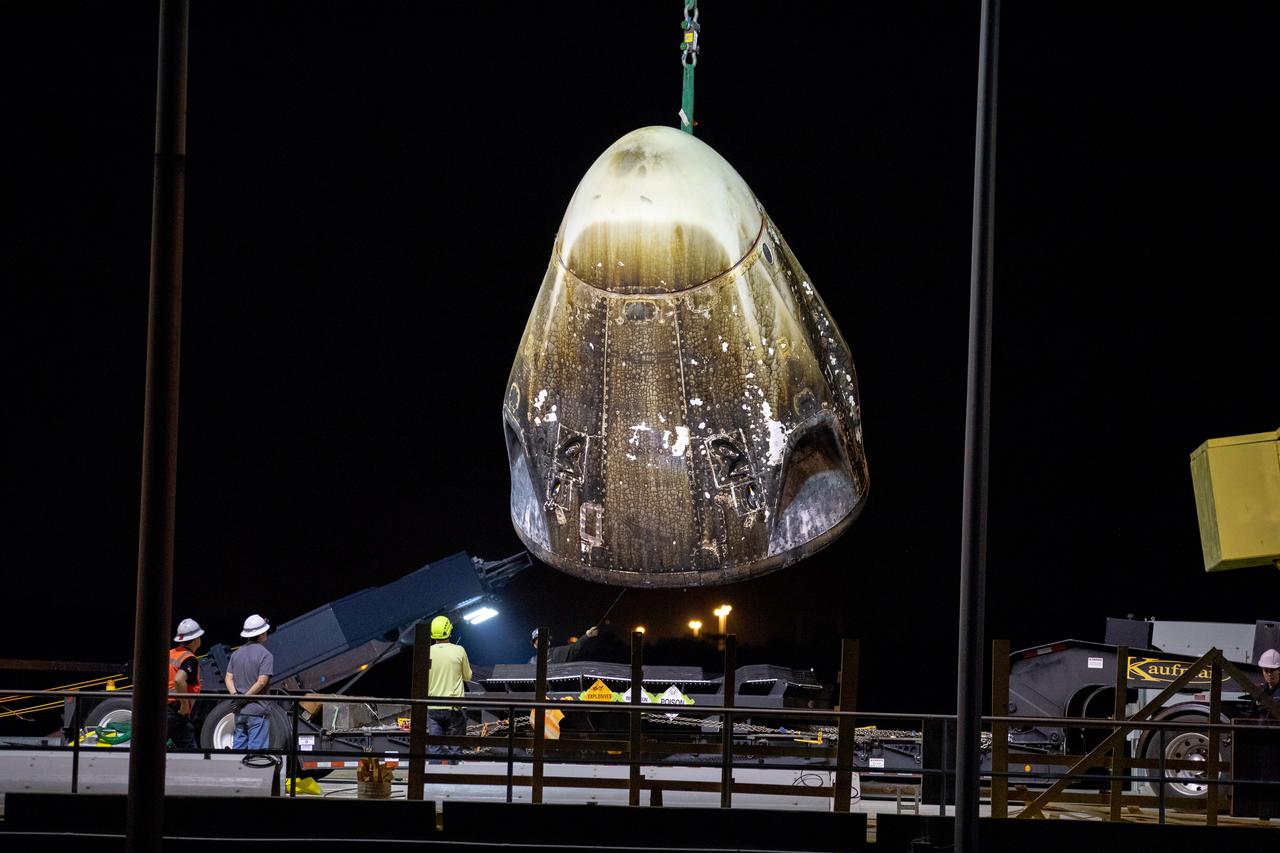
The SpaceX Crew Dragon spacecraft is offloaded from the company’s recovery ship, Go Searcher, in Florida’s Port Canaveral on Saturday, March 9, 2019. Crew Dragon splashed down in the Atlantic Ocean, about 200 miles off Florida’s east coast, at 8:45 a.m. EST on March 8, after undocking from the International Space Station at 2:32 a.m. As part of the Demo-1 mission, the uncrewed spacecraft docked to the orbiting laboratory on March 3, following a 2:49 a.m. EST liftoff aboard a SpaceX Falcon 9 rocket from Launch Complex 39A at NASA’s Kennedy Space Center in Florida on March 2. SpaceX’s inaugural flight with NASA’s Commercial Crew Program is the first flight test of a space system designed for humans built and operated by a commercial company through a public-private partnership. NASA and SpaceX will use data from Demo-1 to further prepare for Demo-2, the crewed flight test that will carry NASA astronauts Bob Behnken and Doug Hurley to the International Space Station later this year.
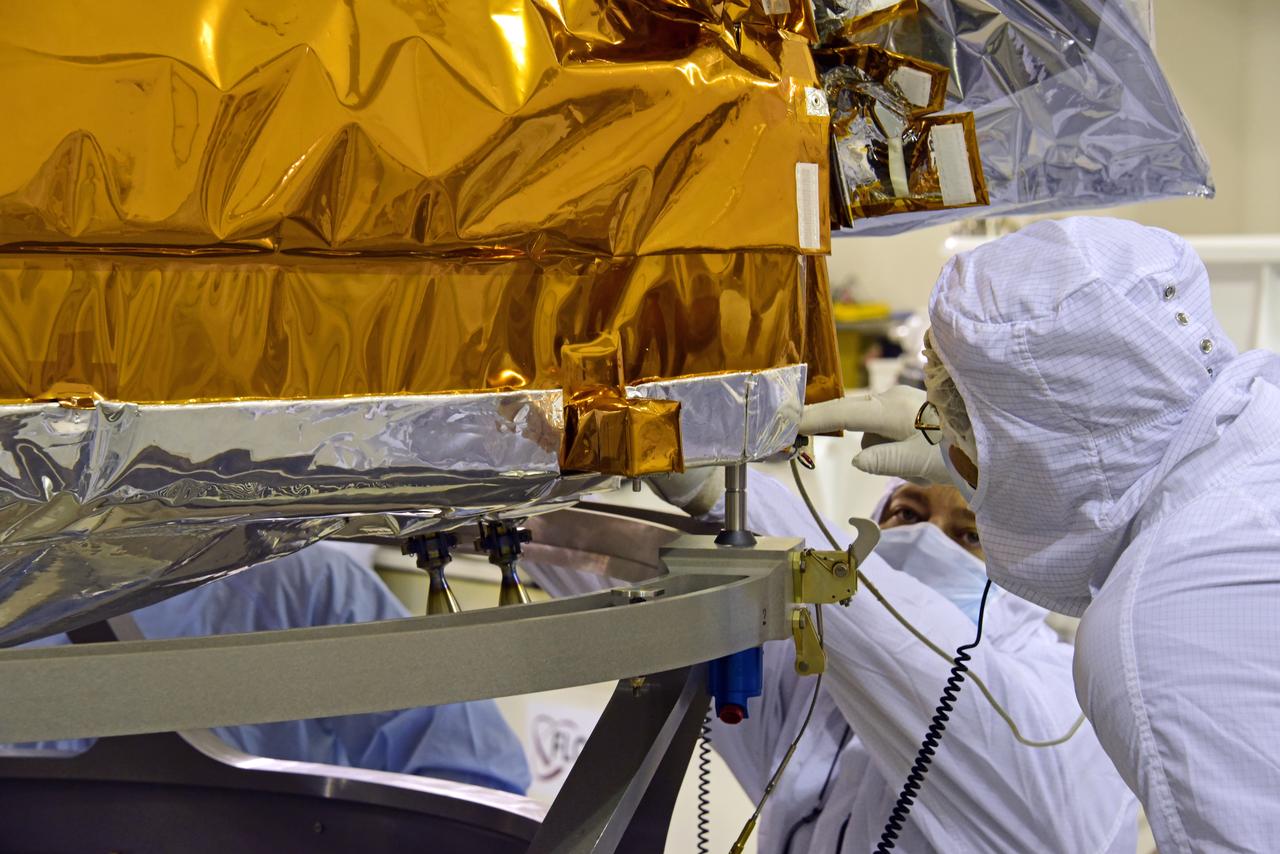
NOAA's Joint Polar Satellite System-1, or JPSS-1, remains wrapped in a protective covering after removal from its shipping container at the Astrotech Processing Facility at Vandenberg Air Force Base in California. Technicians help secure the spacecraft onto a payload attach fitting. JPSS-1 will liftoff aboard a United Launch Alliance Delta II rocket from Vandenberg's Space Launch Complex-2. JPSS-1 is the first in a series of four next-generation environmental satellites in a collaborative program between NOAA and NASA.
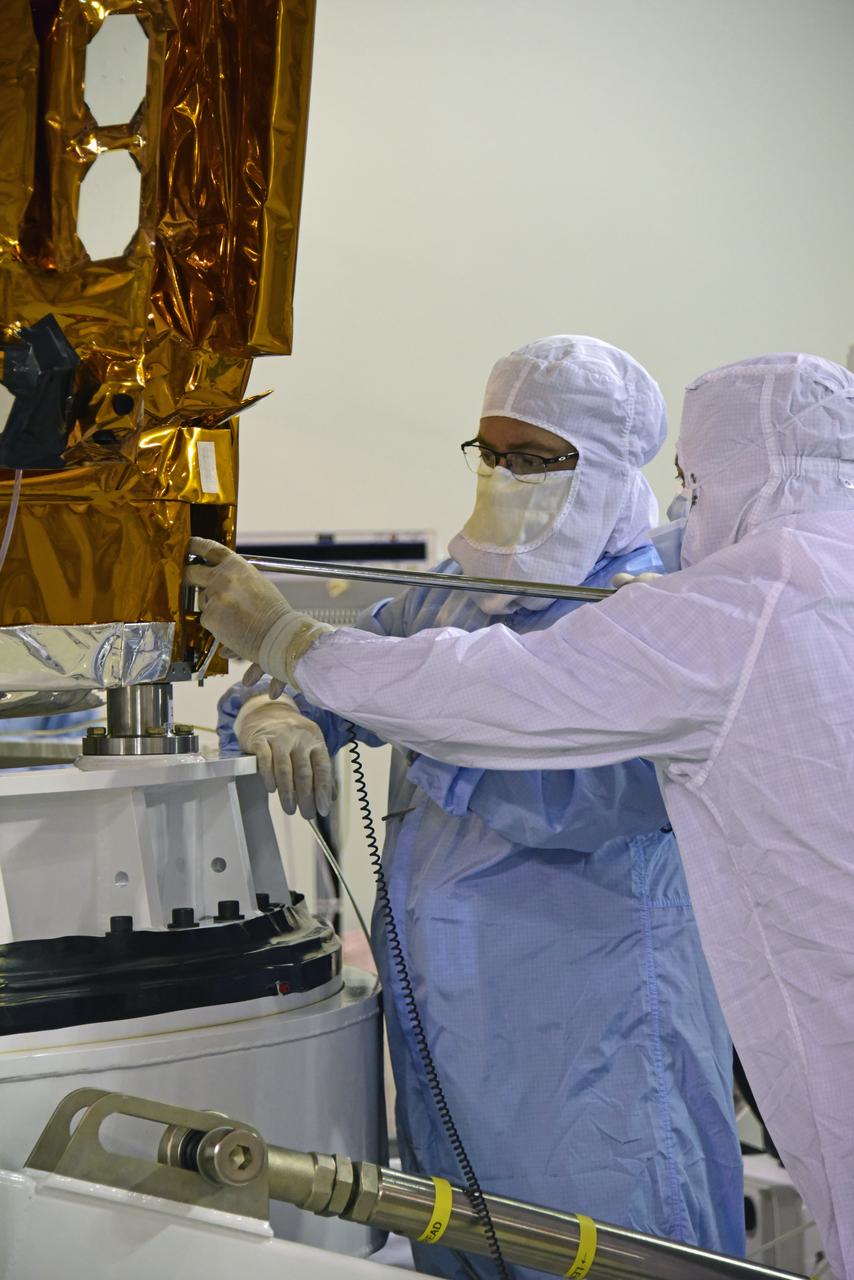
NOAA's Joint Polar Satellite System-1, or JPSS-1, remains wrapped in a protective covering after removal from its shipping container at the Astrotech Processing Facility at Vandenberg Air Force Base in California. Technicians prepare the spacecraft for its move to a payload attach fitting. JPSS-1 will liftoff aboard a United Launch Alliance Delta II rocket from Vandenberg's Space Launch Complex-2. JPSS-1 is the first in a series of four next-generation environmental satellites in a collaborative program between NOAA and NASA.
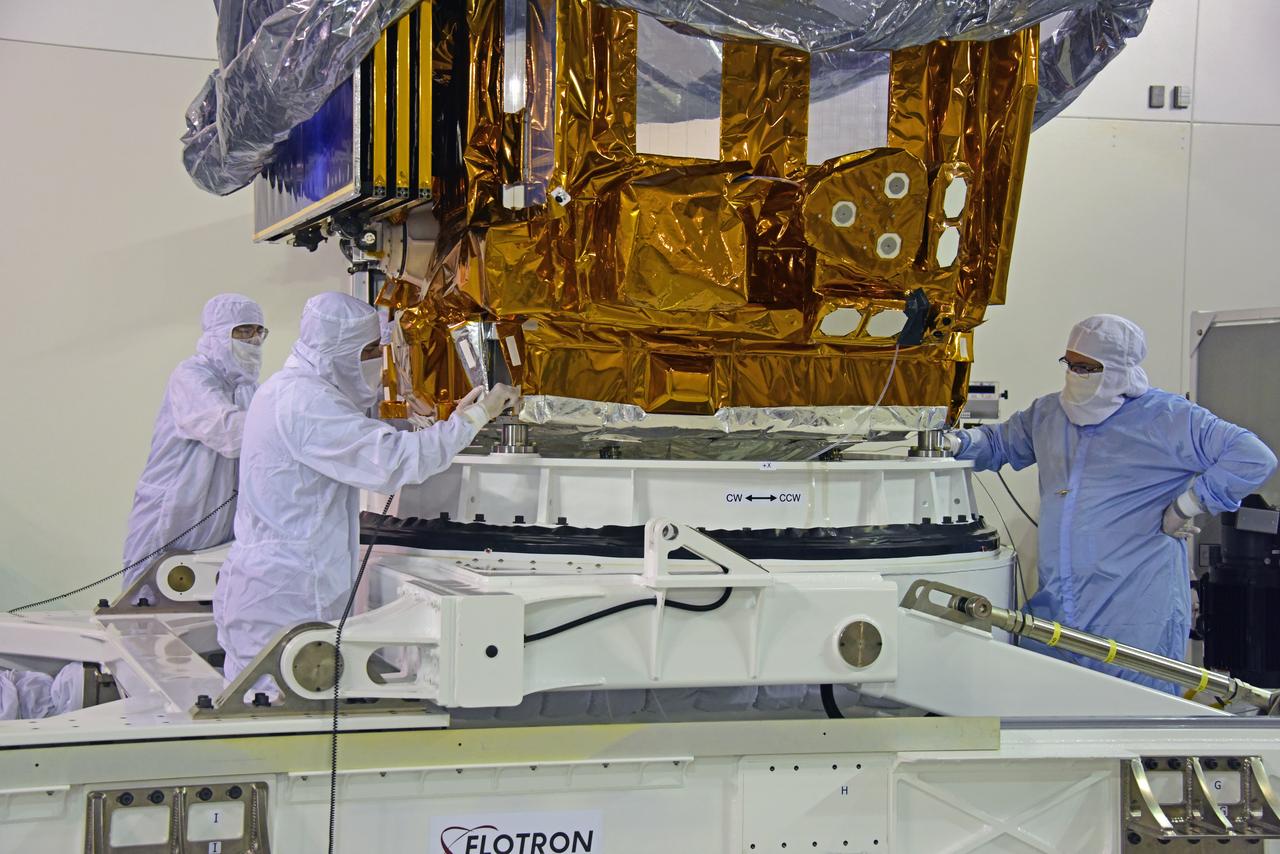
NOAA's Joint Polar Satellite System-1, or JPSS-1, remains wrapped in a protective covering after removal from its shipping container at the Astrotech Processing Facility at Vandenberg Air Force Base in California. Technicians prepare the spacecraft for its move to a payload attach fitting. JPSS-1 will liftoff aboard a United Launch Alliance Delta II rocket from Vandenberg's Space Launch Complex-2. JPSS-1 is the first in a series of four next-generation environmental satellites in a collaborative program between NOAA and NASA.
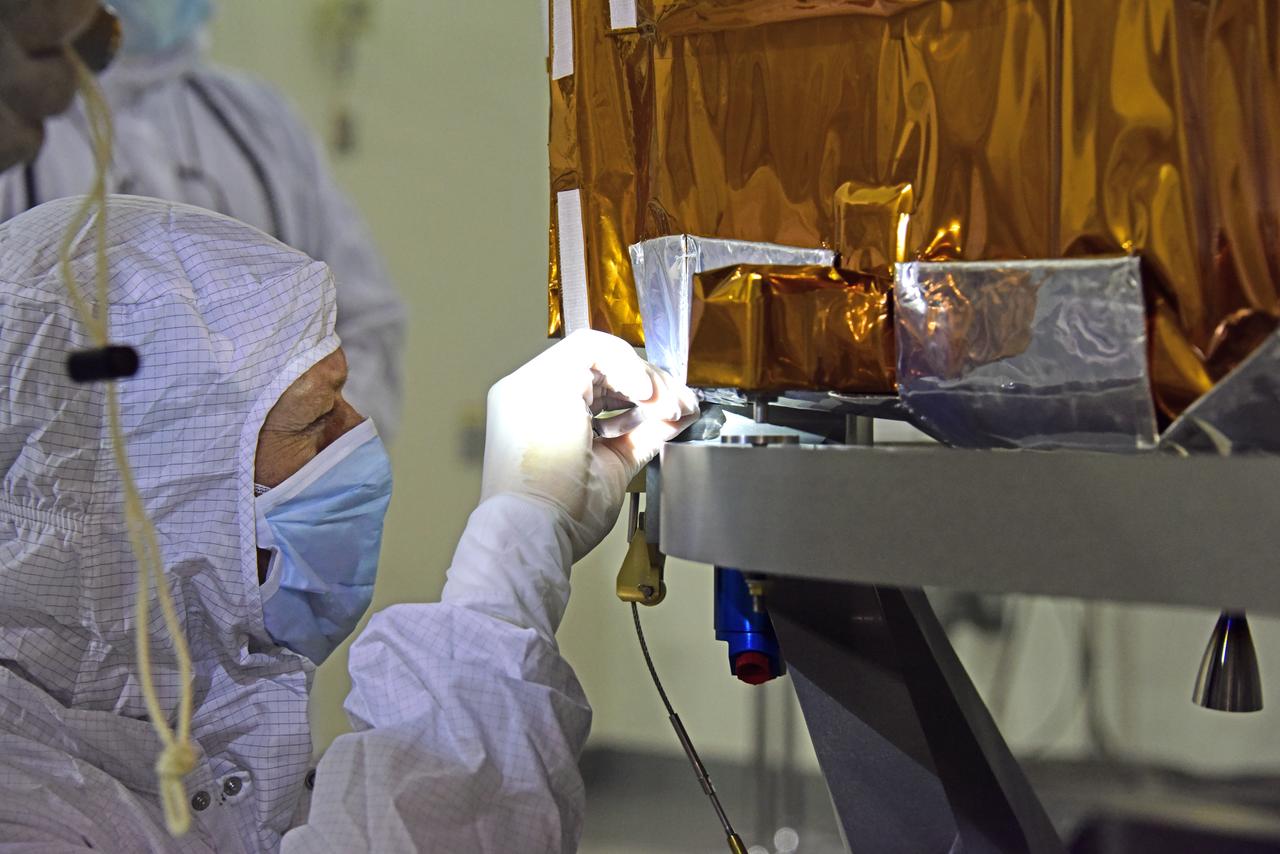
NOAA's Joint Polar Satellite System-1, or JPSS-1, remains wrapped in a protective covering after removal from its shipping container at the Astrotech Processing Facility at Vandenberg Air Force Base in California. Technicians confirm that the spacecraft is secured onto a payload attach fitting. JPSS-1 will liftoff aboard a United Launch Alliance Delta II rocket from Vandenberg's Space Launch Complex-2. JPSS-1 is the first in a series of four next-generation environmental satellites in a collaborative program between NOAA and NASA.
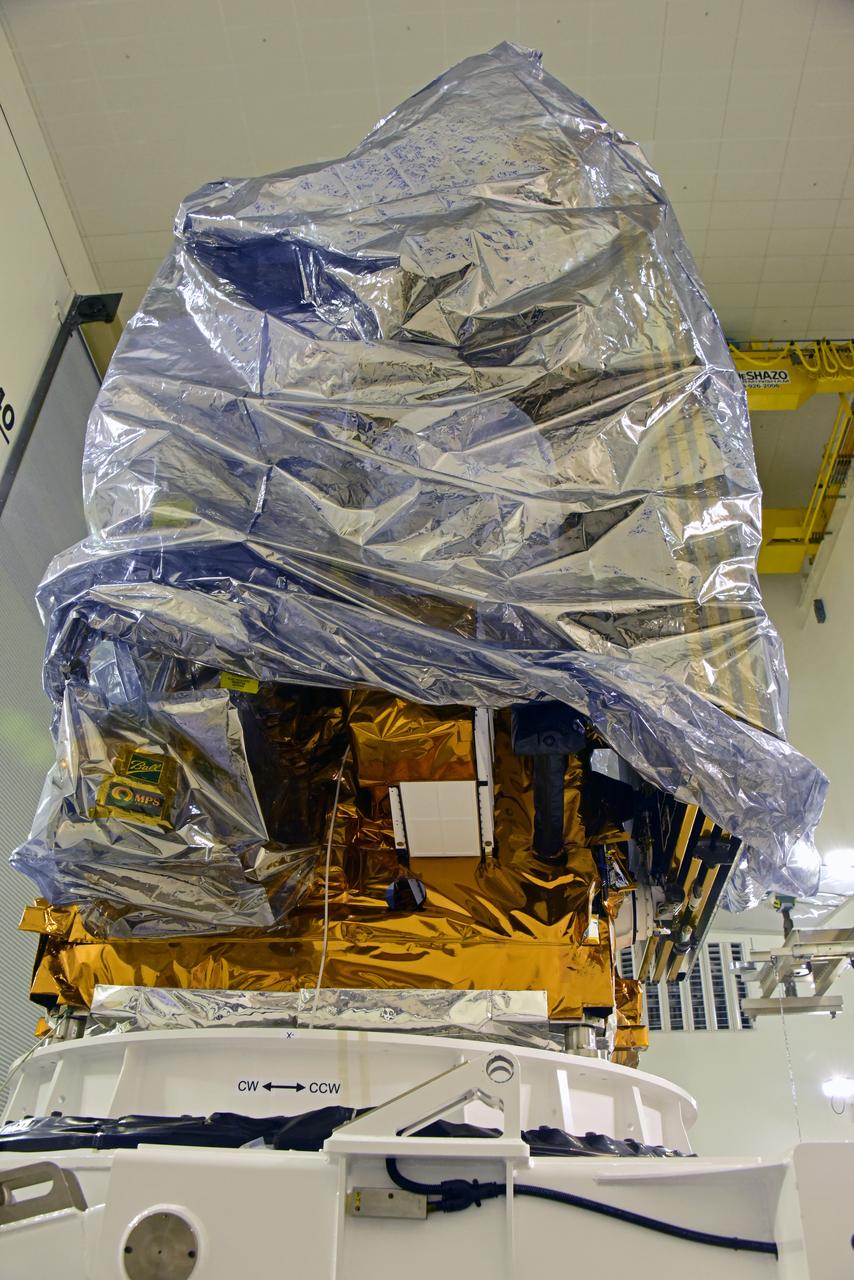
NOAA's Joint Polar Satellite System-1, or JPSS-1, remains wrapped in a protective covering after removal from its shipping container at the Astrotech Processing Facility at Vandenberg Air Force Base in California. The spacecraft is being prepared for its move to a payload attach fitting. JPSS-1 will liftoff aboard a United Launch Alliance Delta II rocket from Vandenberg's Space Launch Complex-2. JPSS-1 is the first in a series of four next-generation environmental satellites in a collaborative program between NOAA and NASA.
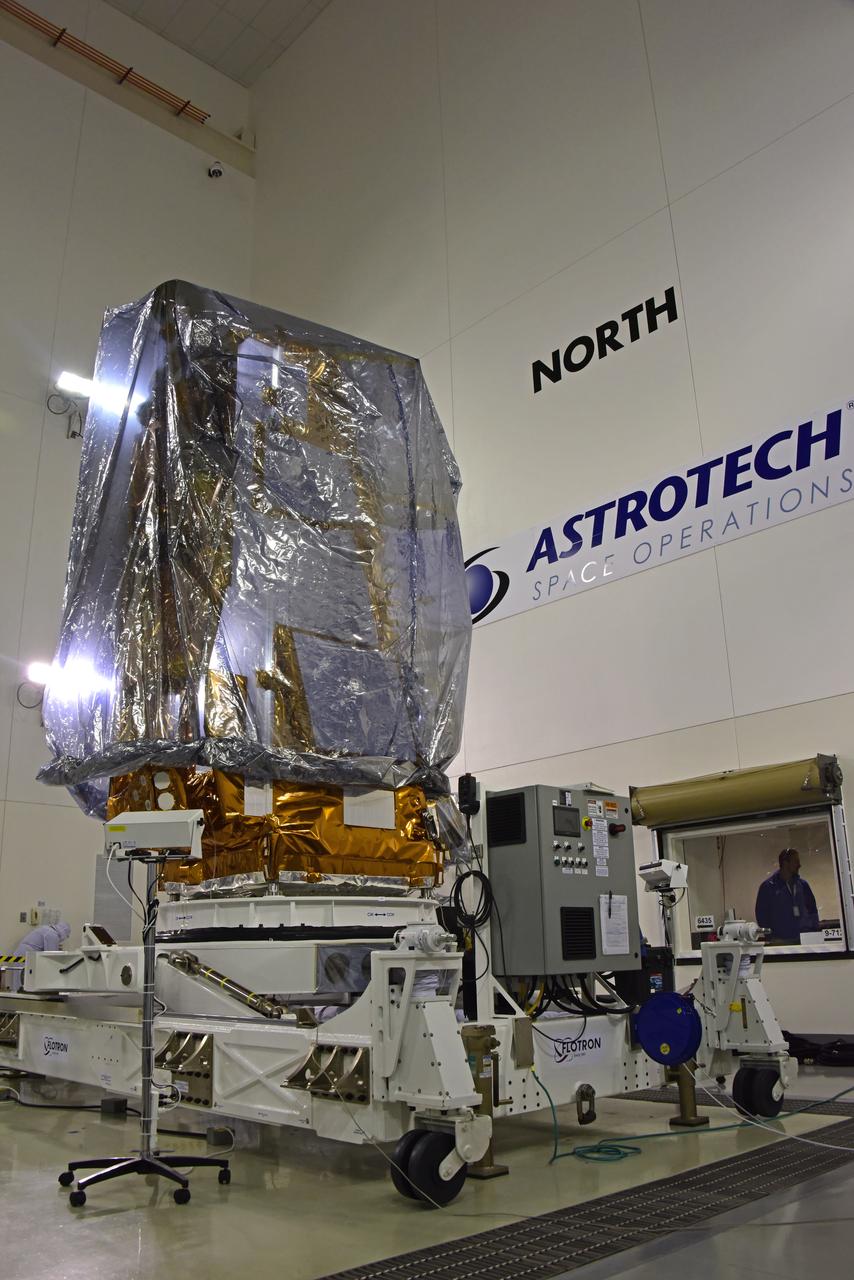
NOAA's Joint Polar Satellite System-1, or JPSS-1, remains wrapped in a protective covering after removal from its shipping container at the Astrotech Processing Facility at Vandenberg Air Force Base in California. The spacecraft is being prepared for its move to a payload attach fitting. JPSS-1 will liftoff aboard a United Launch Alliance Delta II rocket from Vandenberg's Space Launch Complex-2. JPSS-1 is the first in a series of four next-generation environmental satellites in a collaborative program between NOAA and NASA.

iss059e007838 (April 1, 2019) --- (From right) Flight Engineer Alexey Ovchinin and Commander Oleg Kononenko, both cosmonauts from Roscosmos, train for the arrival of the Russian Progress 72 (72P) resupply ship. The Expedition 59 duo inside the Zvezda service module practiced using the TORU, a backup manual docking system, to guide the 72P to a docking in the unlikely event the resupply ship’s automatic Kurs docking system failed.
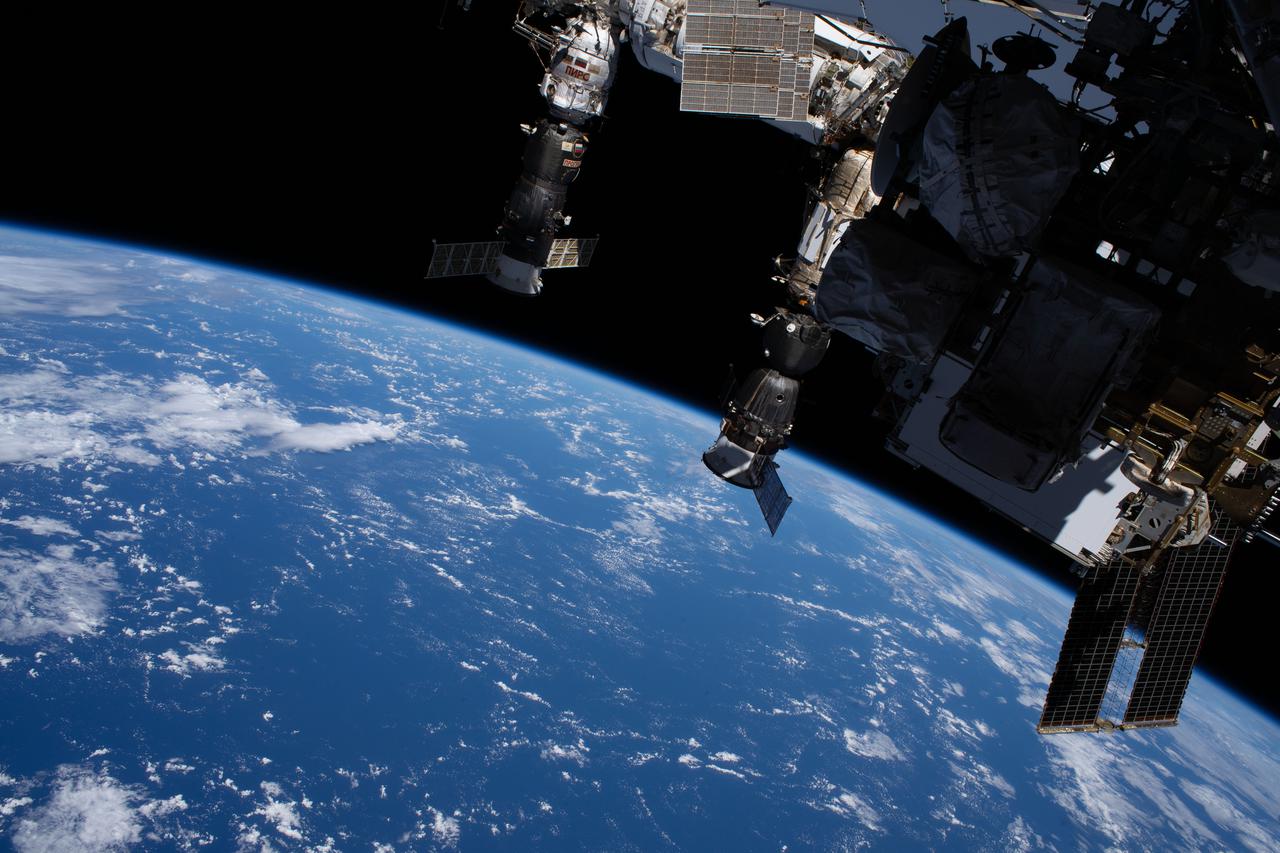
iss064e027923 (Feb. 1, 2021) --- This photograph of two Russian spaceships, (from left) the Progress 76 resupply ship and the Soyuz MS-17 crew ship, docked to the International Space Station was taken by NASA astronaut Michael Hopkins during a spacewalk he conducted with fellow NASA astronaut Victor Glover (both out of frame). The space station was orbiting 263 miles above the Pacific Ocean off the coast of South America at the time this picture was taken.
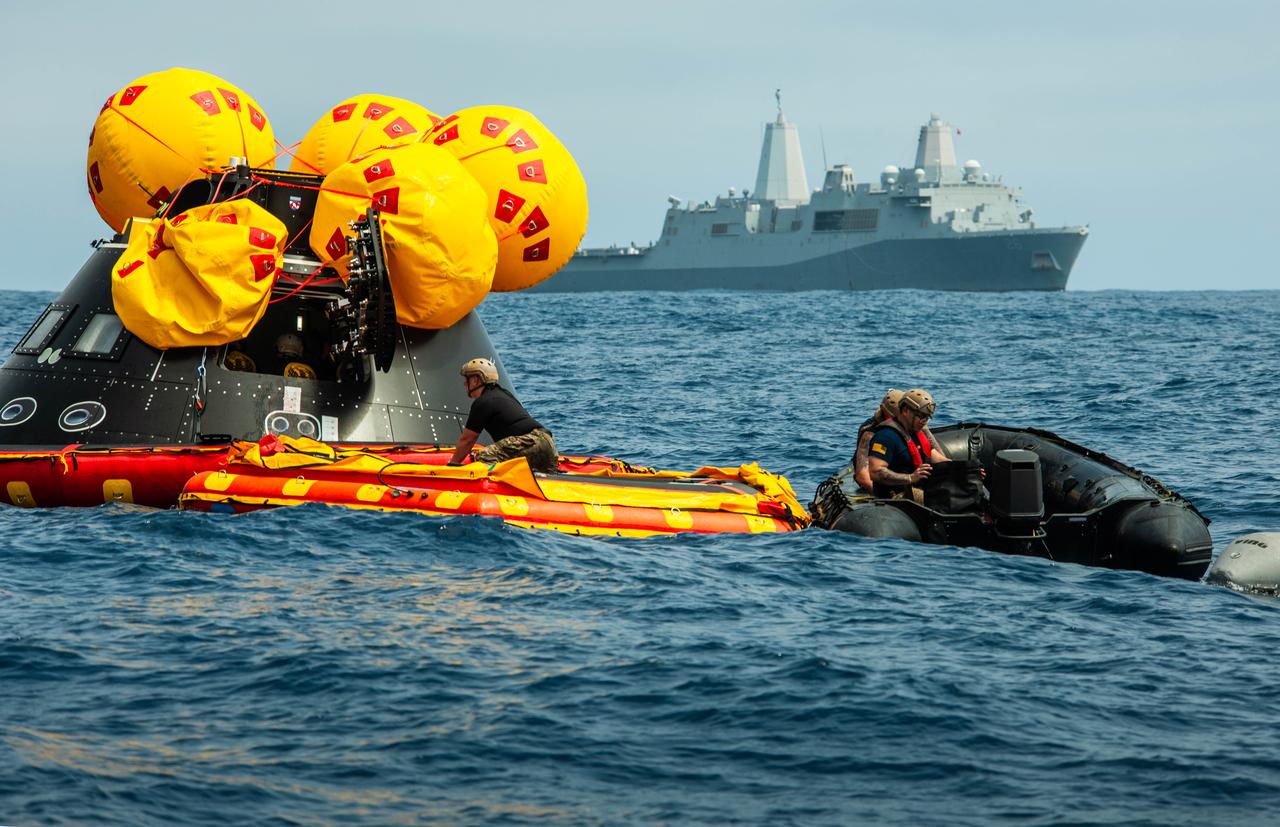
Navy divers from Explosive Ordnance Disposal (EOD) Expeditionary Support Unit 1 work to secure the Orion Crew Module Test Article (CMTA) in the Pacific Ocean as part of NASA’s Underway Recovery Test 10 (URT-10). The divers are trained in open water and small boat procedures and will be the team to help Artemis astronauts exit the Orion spacecraft and make it safely to the recovery ship after splashdown in addition to preparing the spacecraft to be transported back inside the recovery ship.
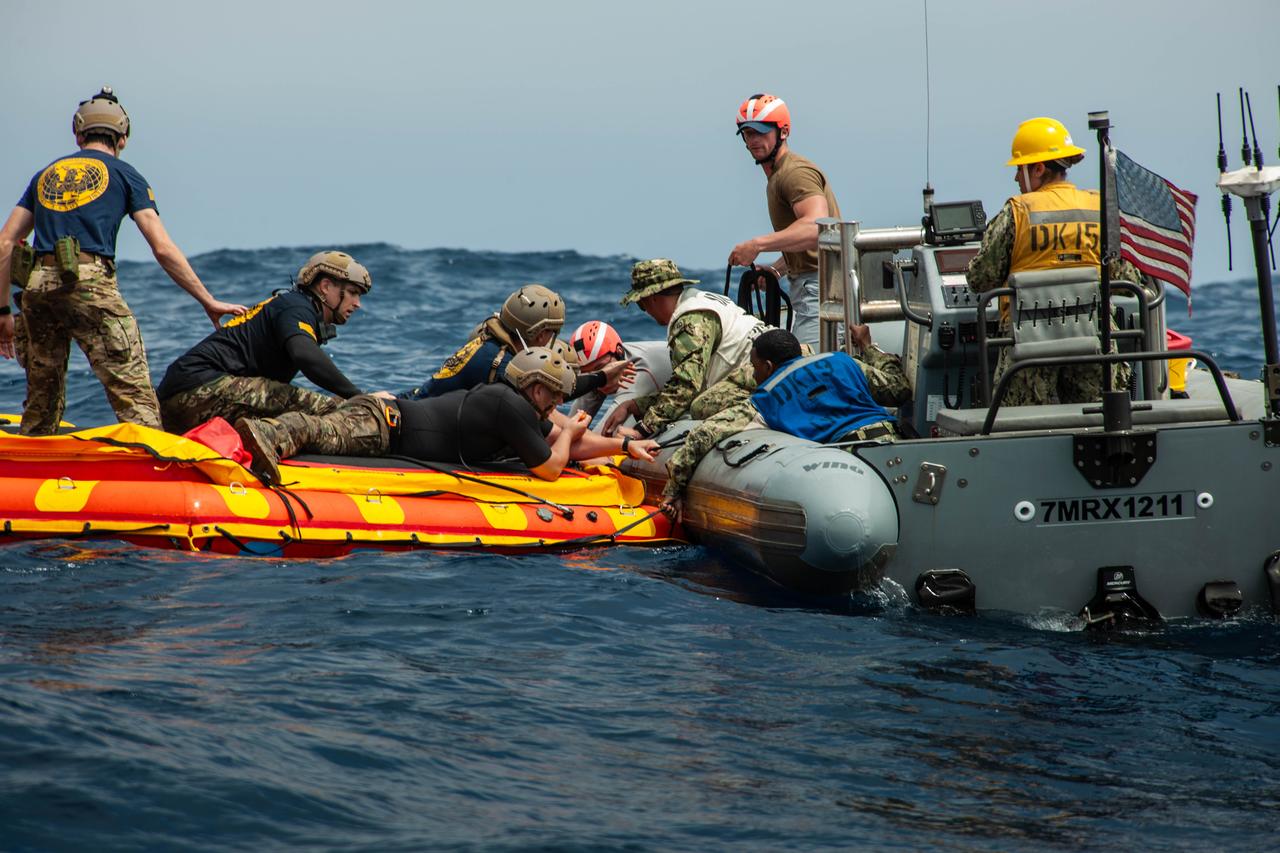
Navy divers from Explosive Ordnance Disposal (EOD) Expeditionary Support Unit 1 work to secure the Orion Crew Module Test Article (CMTA) in the Pacific Ocean as part of NASA’s Underway Recovery Test 10 (URT-10). The divers are trained in open water and small boat procedures and will be the team to help Artemis astronauts exit the Orion spacecraft and make it safely to the recovery ship after splashdown in addition to preparing the spacecraft to be transported back inside the recovery ship.
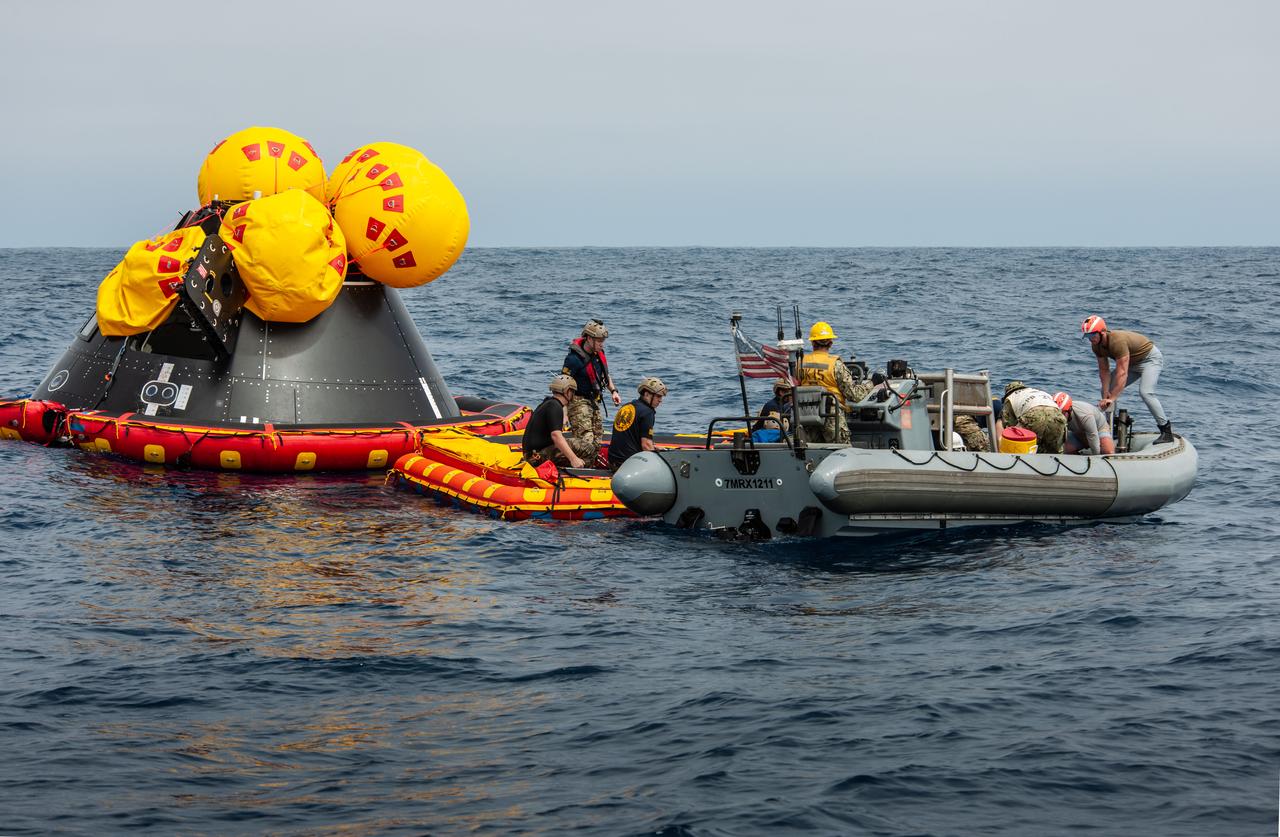
Navy divers from Explosive Ordnance Disposal (EOD) Expeditionary Support Unit 1 work to secure the Orion Crew Module Test Article (CMTA) in the Pacific Ocean as part of NASA’s Underway Recovery Test 10 (URT-10). The divers are trained in open water and small boat procedures and will be the team to help Artemis astronauts exit the Orion spacecraft and make it safely to the recovery ship after splashdown in addition to preparing the spacecraft to be transported back inside the recovery ship.
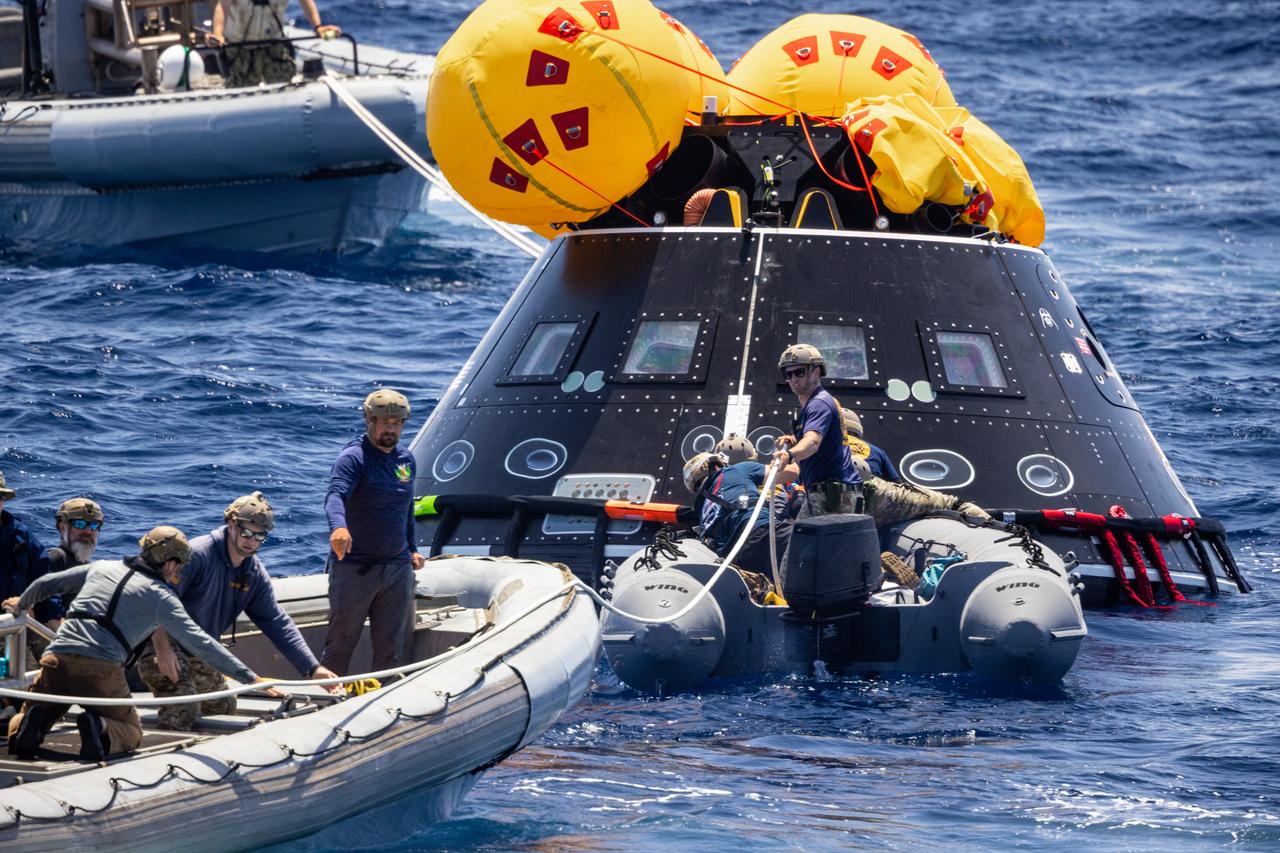
Navy divers from Explosive Ordnance Disposal (EOD) Expeditionary Support Unit 1 work to secure the Orion Crew Module Test Article (CMTA) in the Pacific Ocean as part of NASA’s Underway Recovery Test 10 (URT-10). The divers are trained in open water and small boat procedures and will be the team to help Artemis astronauts exit the Orion spacecraft and make it safely to the recovery ship after splashdown in addition to preparing the spacecraft to be transported back inside the recovery ship.
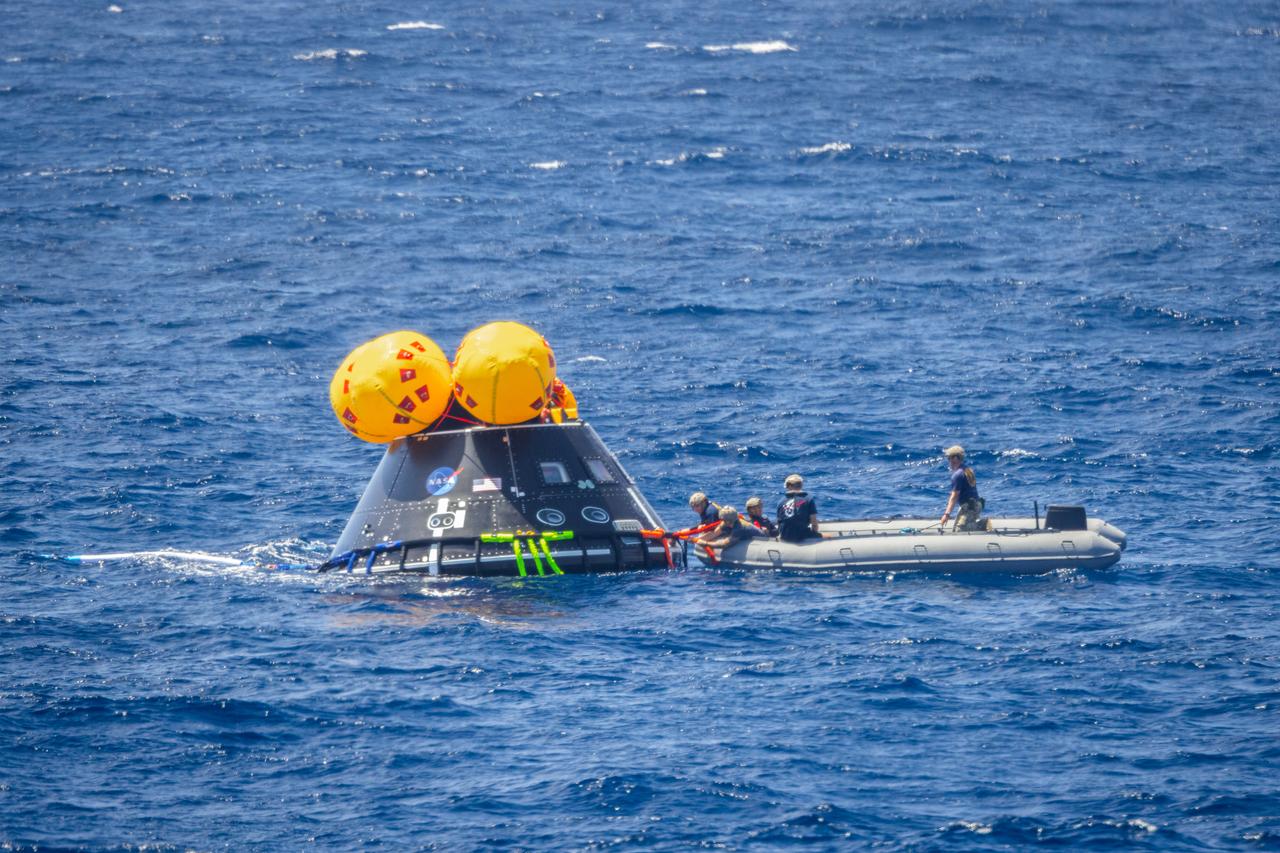
Navy divers from Explosive Ordnance Disposal (EOD) Expeditionary Support Unit 1 work to secure the Orion Crew Module Test Article (CMTA) in the Pacific Ocean as part of NASA’s Underway Recovery Test 10 (URT-10). The divers are trained in open water and small boat procedures and will be the team to help Artemis astronauts exit the Orion spacecraft and make it safely to the recovery ship after splashdown in addition to preparing the spacecraft to be transported back inside the recovery ship.
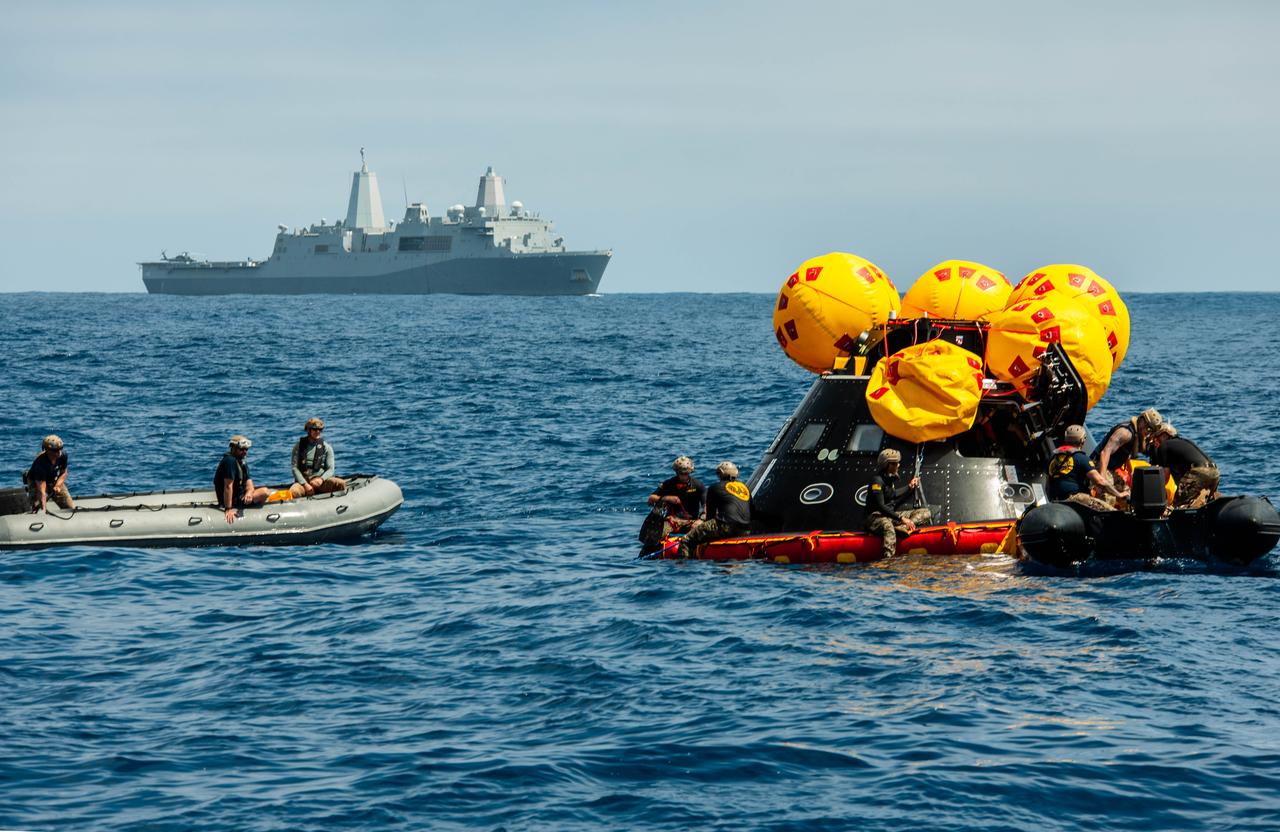
Navy divers from Explosive Ordnance Disposal (EOD) Expeditionary Support Unit 1 work to secure the Orion Crew Module Test Article (CMTA) in the Pacific Ocean as part of NASA’s Underway Recovery Test 10 (URT-10). The divers are trained in open water and small boat procedures and will be the team to help Artemis astronauts exit the Orion spacecraft and make it safely to the recovery ship after splashdown in addition to preparing the spacecraft to be transported back inside the recovery ship.
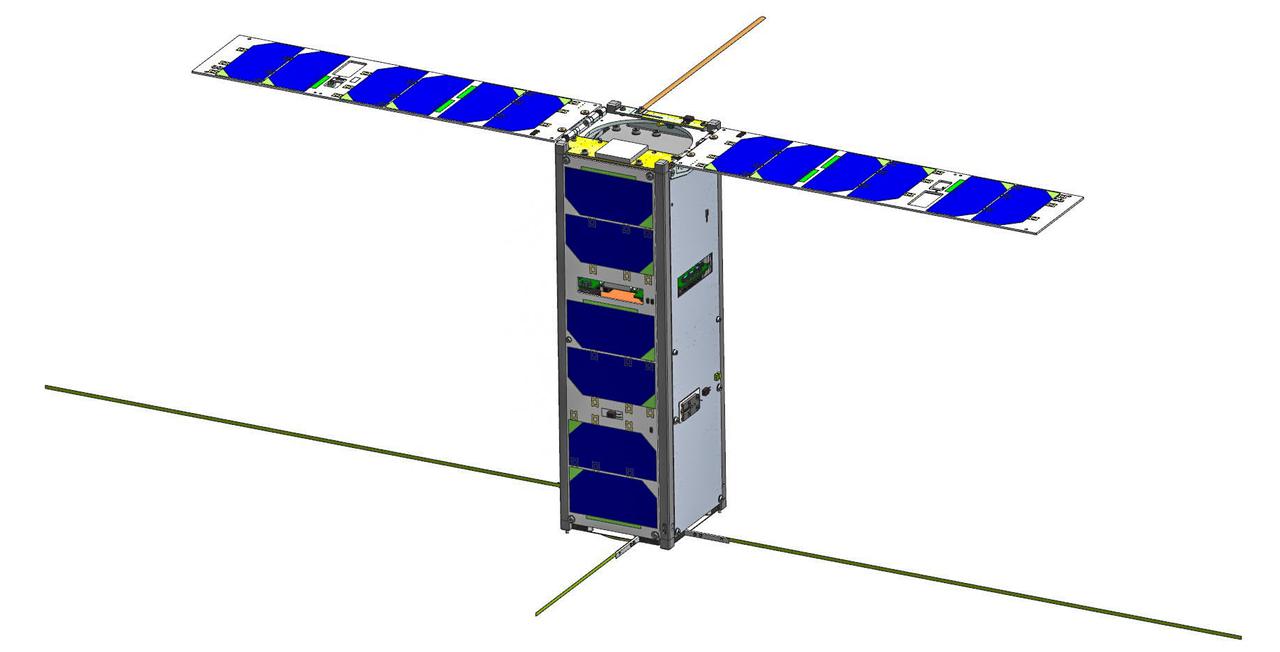
jsc2022e000004 (1/5/2022) --- A preflight graphic of IHI-SAT in in deployed configuration. IHI-SAT is the 3U CubeSat designed, developed and launched by IHI Corporation with support of Tohoku University. IHI-SAT demonstrates advanced AIS (automatic identification system) receiving system. This new system improves a ship’s detection rate in a sea area where many other ships are under way. Image Credit: Image courtesy of IHI Corporation.
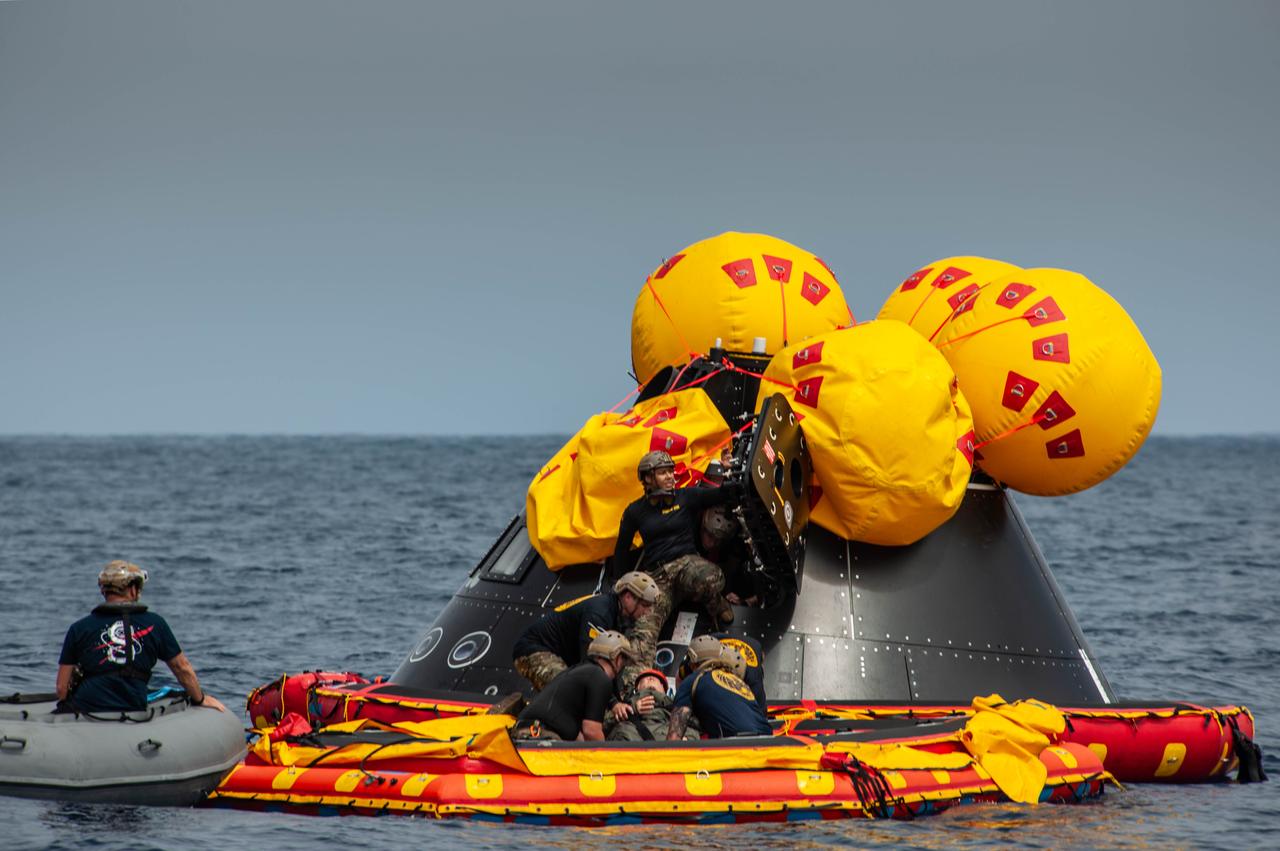
Navy divers from Explosive Ordnance Disposal (EOD) Expeditionary Support Unit 1 practice contingency recovery procedures with a manikin and the Orion Crew Module Test Article (CMTA) in the Pacific Ocean as part of NASA’s Underway Recovery Test 10 (URT-10). The divers are trained in open water and small boat procedures and will be the team to help Artemis astronauts exit the Orion spacecraft and make it safely to the recovery ship after splashdown in addition to preparing the spacecraft to be transported back inside the recovery ship.
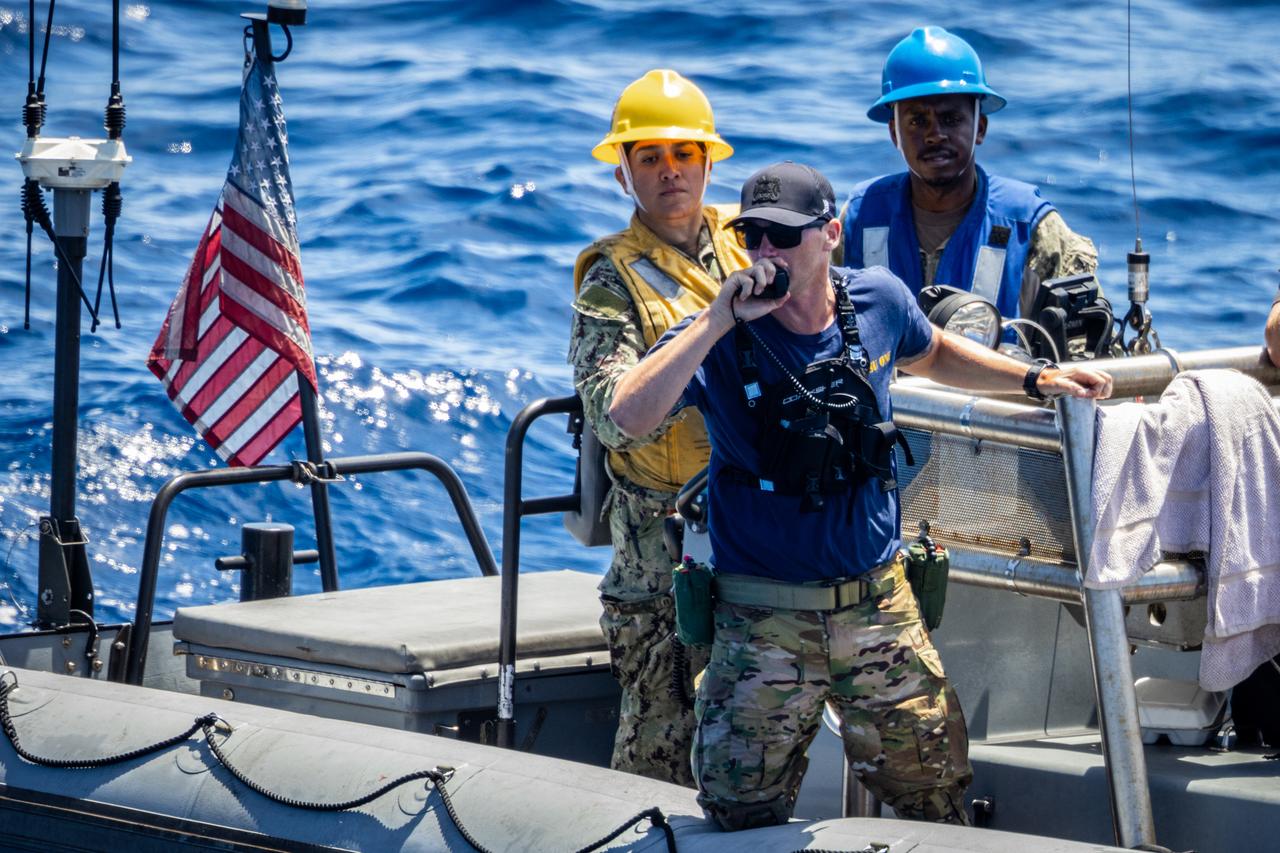
Navy divers from Explosive Ordnance Disposal (EOD) Expeditionary Support Unit 1 work to secure the Orion Crew Module Test Article (CMTA) in the Pacific Ocean as part of NASA’s Underway Recovery Test 10 (URT-10). The divers are trained in open water and small boat procedures and will be the team to help Artemis astronauts exit the Orion spacecraft and make it safely to the recovery ship after splashdown in addition to preparing the spacecraft to be transported back inside the recovery ship.
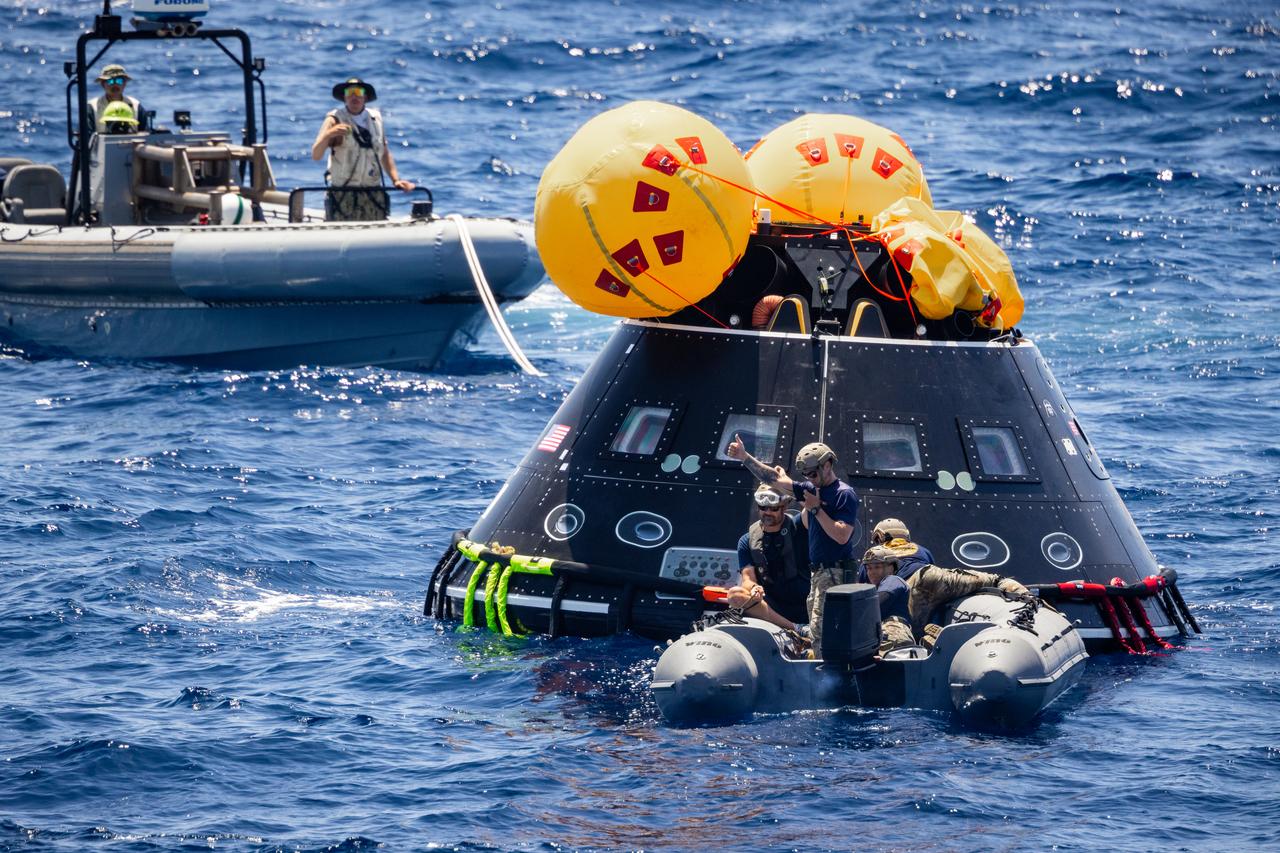
Navy divers from Explosive Ordnance Disposal (EOD) Expeditionary Support Unit 1 work to secure the Orion Crew Module Test Article (CMTA) in the Pacific Ocean as part of NASA’s Underway Recovery Test 10 (URT-10). The divers are trained in open water and small boat procedures and will be the team to help Artemis astronauts exit the Orion spacecraft and make it safely to the recovery ship after splashdown in addition to preparing the spacecraft to be transported back inside the recovery ship.
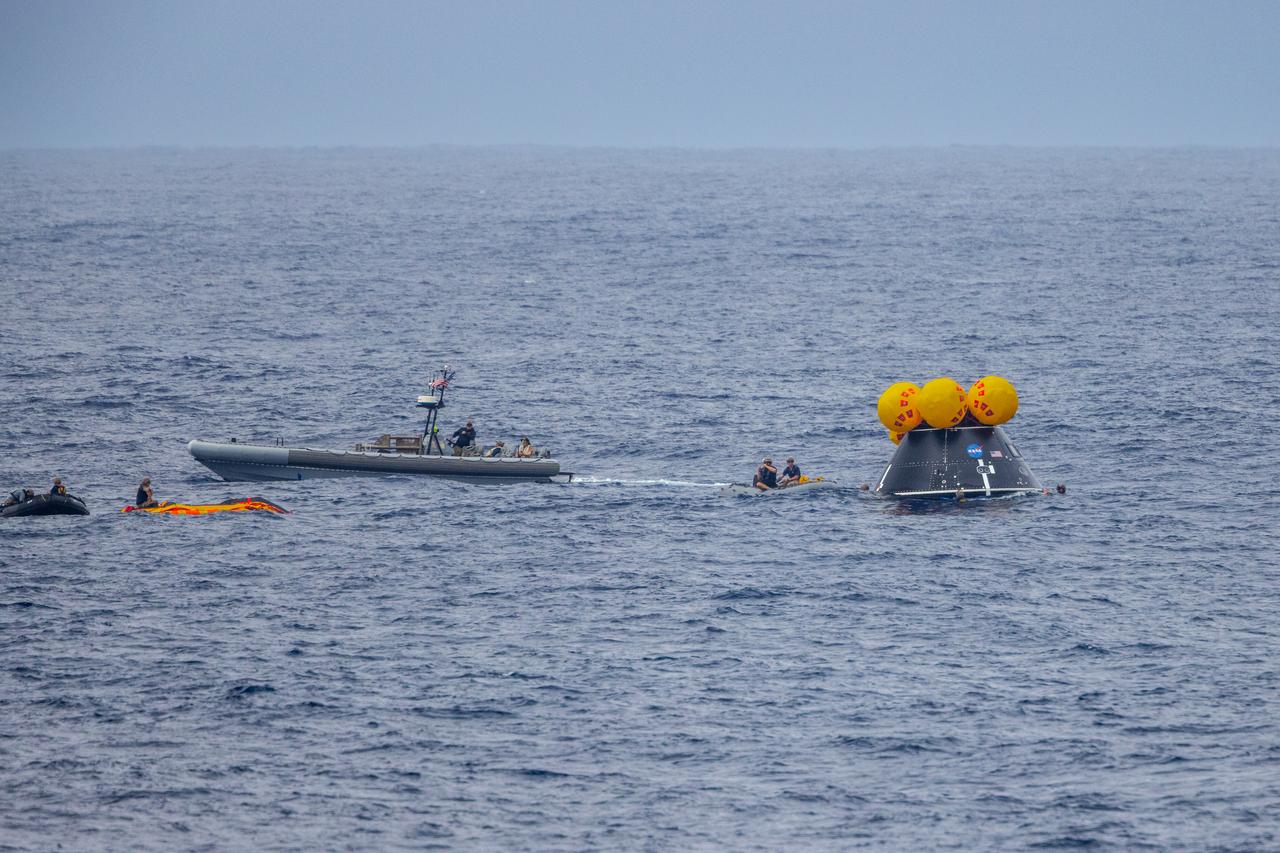
Navy divers from Explosive Ordnance Disposal (EOD) Expeditionary Support Unit 1 work to secure the Orion Crew Module Test Article (CMTA) in the Pacific Ocean as part of NASA’s Underway Recovery Test 10 (URT-10). The divers are trained in open water and small boat procedures and will be the team to help Artemis astronauts exit the Orion spacecraft and make it safely to the recovery ship after splashdown in addition to preparing the spacecraft to be transported back inside the recovery ship.
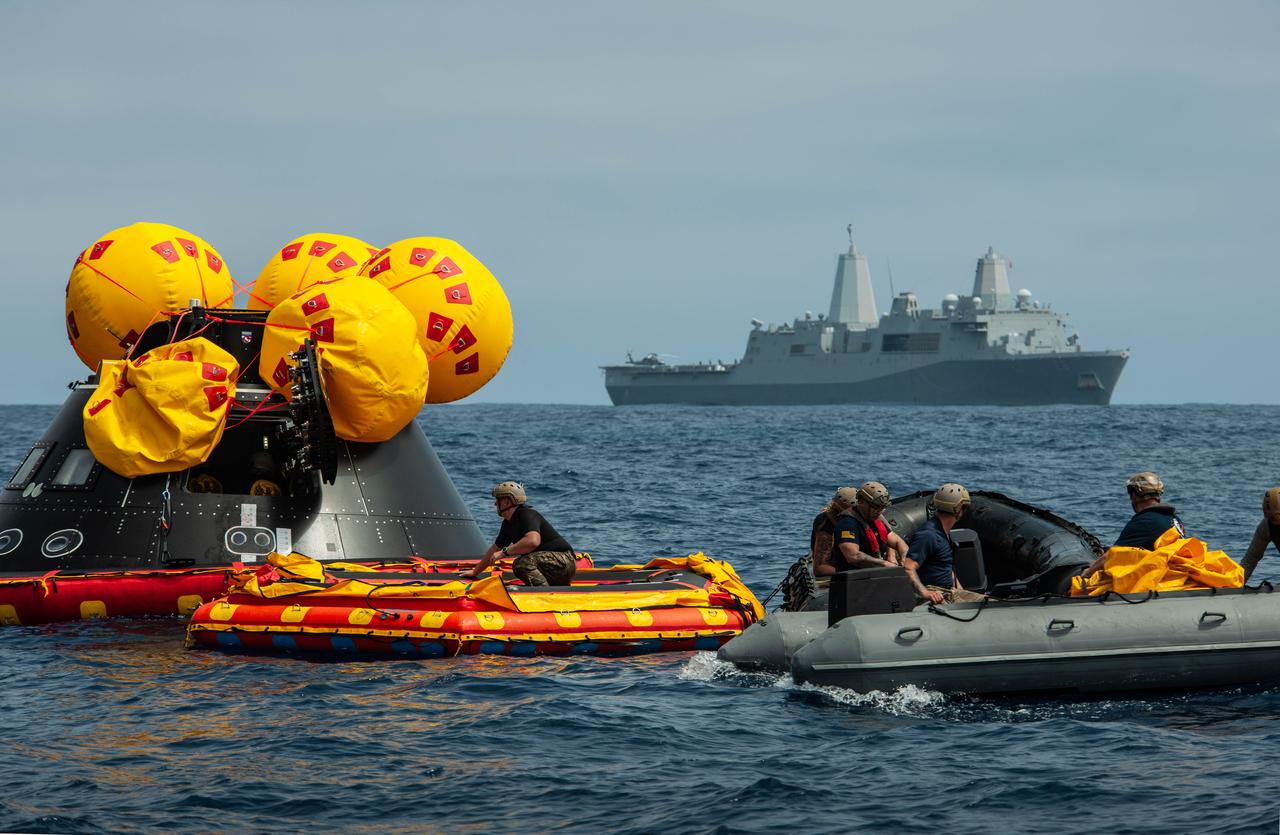
Navy divers from Explosive Ordnance Disposal (EOD) Expeditionary Support Unit 1 work to secure the Orion Crew Module Test Article (CMTA) in the Pacific Ocean as part of NASA’s Underway Recovery Test 10 (URT-10). The divers are trained in open water and small boat procedures and will be the team to help Artemis astronauts exit the Orion spacecraft and make it safely to the recovery ship after splashdown in addition to preparing the spacecraft to be transported back inside the recovery ship.
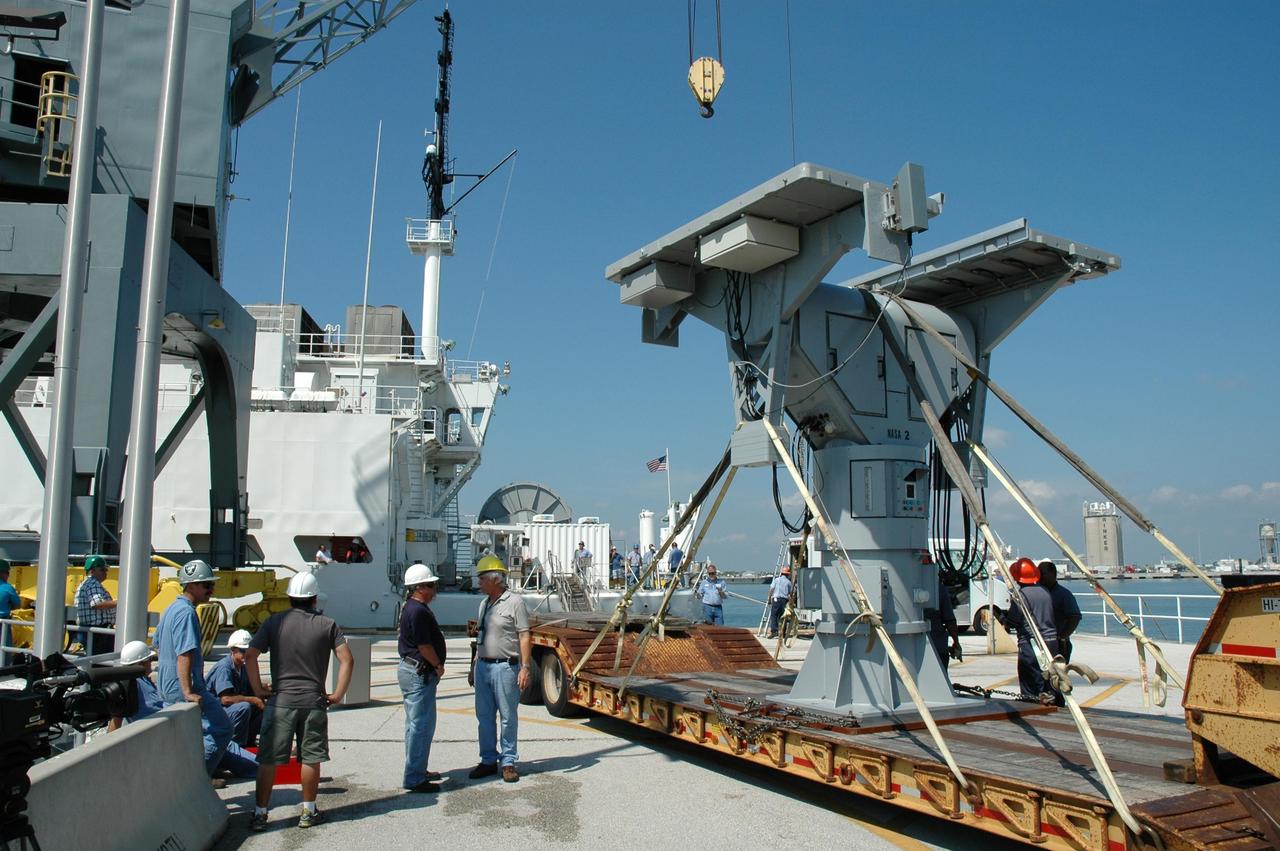
KENNEDY SPACE CENTER, FLA. - An X-band radar is ready to be loaded on the U.S. Naval Ship Hayes at Port Canaveral in Florida to support the July 1 launch of Space Shuttle Discovery on mission STS-121. There are two Continuous Pulse Doppler X-band radars located on ships for the STS-121 launch. The other one is mounted on a booster recovery ship downrange of the launch site. The two radars provide velocity and differential Shuttle/debris motion information. Combined with the C-band radar located at the Haulover Canal near the launch site, they provide high definition images of any debris that might fall from the external tank/shuttle. The X-band data (screen captures) will be sent from the ships via satellite link to the National Center for Atmospheric Research site. Photo credit: NASA/Jim Grossmann
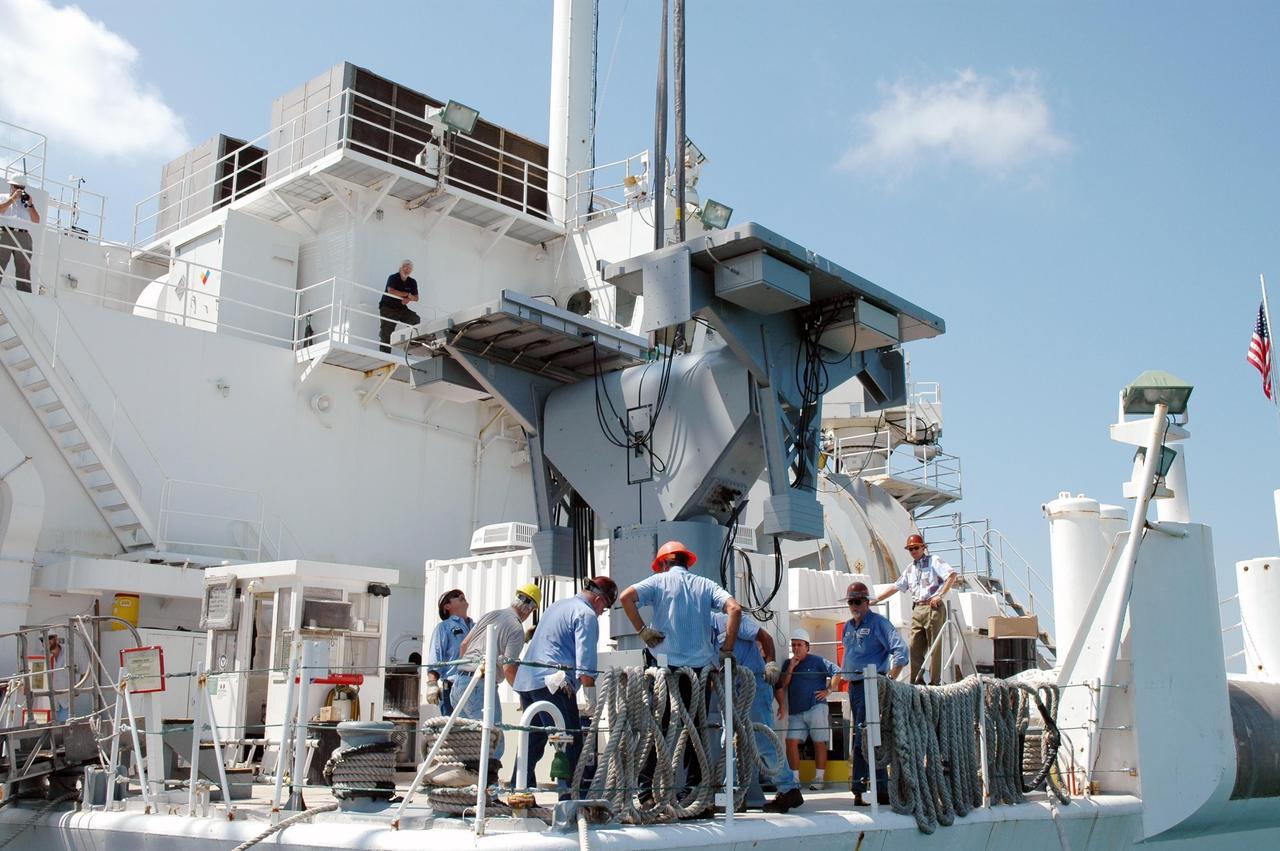
KENNEDY SPACE CENTER, FLA. - An X-band radar is installed on the U.S. Naval Ship Hayes at Port Canaveral in Florida to support the July 1 launch of Space Shuttle Discovery on mission STS-121. There are two Continuous Pulse Doppler X-band radars located on ships for the STS-121 launch. The other one is mounted on a booster recovery ship downrange of the launch site. The two radars provide velocity and differential Shuttle/debris motion information. Combined with the C-band radar located at the Haulover Canal near the launch site, they provide high definition images of any debris that might fall from the external tank/shuttle. The X-band data (screen captures) will be sent from the ships via satellite link to the National Center for Atmospheric Research site. Photo credit: NASA/Jim Grossmann
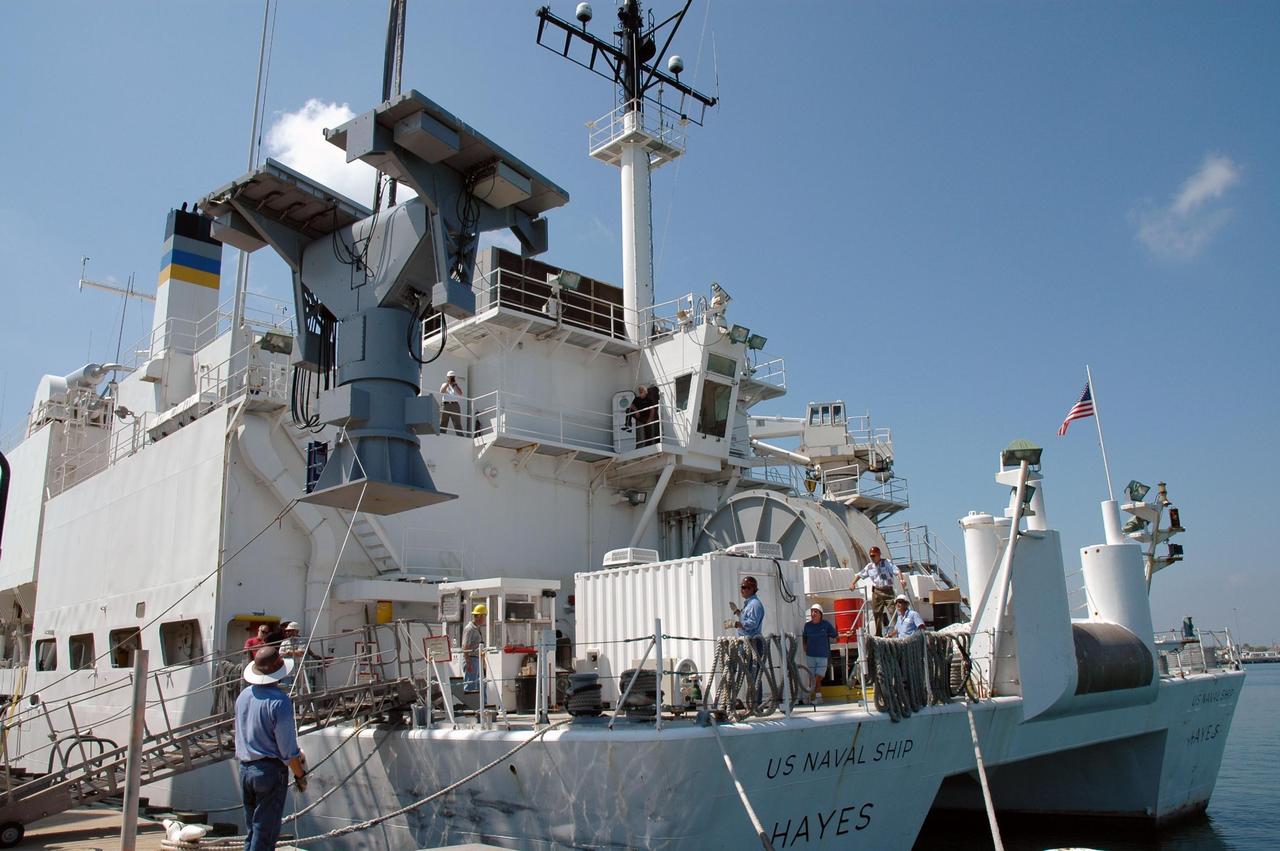
KENNEDY SPACE CENTER, FLA. - An X-band radar is transferred onto the U.S. Naval Ship Hayes at Port Canaveral in Florida to support the July 1 launch of Space Shuttle Discovery on mission STS-121. There are two Continuous Pulse Doppler X-band radars located on ships for the STS-121 launch. The other one is mounted on a booster recovery ship downrange of the launch site. The two radars provide velocity and differential Shuttle/debris motion information. Combined with the C-band radar located at the Haulover Canal near the launch site, they provide high definition images of any debris that might fall from the external tank/shuttle. The X-band data (screen captures) will be sent from the ships via satellite link to the National Center for Atmospheric Research site. Photo credit: NASA/Jim Grossmann

KENNEDY SPACE CENTER, FLA. - On the dock at Port Canaveral in Florida, a worker secures a crane hook on an X-band radar to be transferred to and installed on the U.S. Naval Ship Hayes. The radar will support the July 1 launch of Space Shuttle Discovery on mission STS-121. There are two Continuous Pulse Doppler X-band radars located on ships for the STS-121 launch. The other one is mounted on a booster recovery ship downrange of the launch site. The two radars provide velocity and differential Shuttle/debris motion information. Combined with the C-band radar located at the Haulover Canal near the launch site, they provide high definition images of any debris that might fall from the external tank/shuttle. The X-band data (screen captures) will be sent from the ships via satellite link to the National Center for Atmospheric Research site. Photo credit: NASA/Jim Grossmann
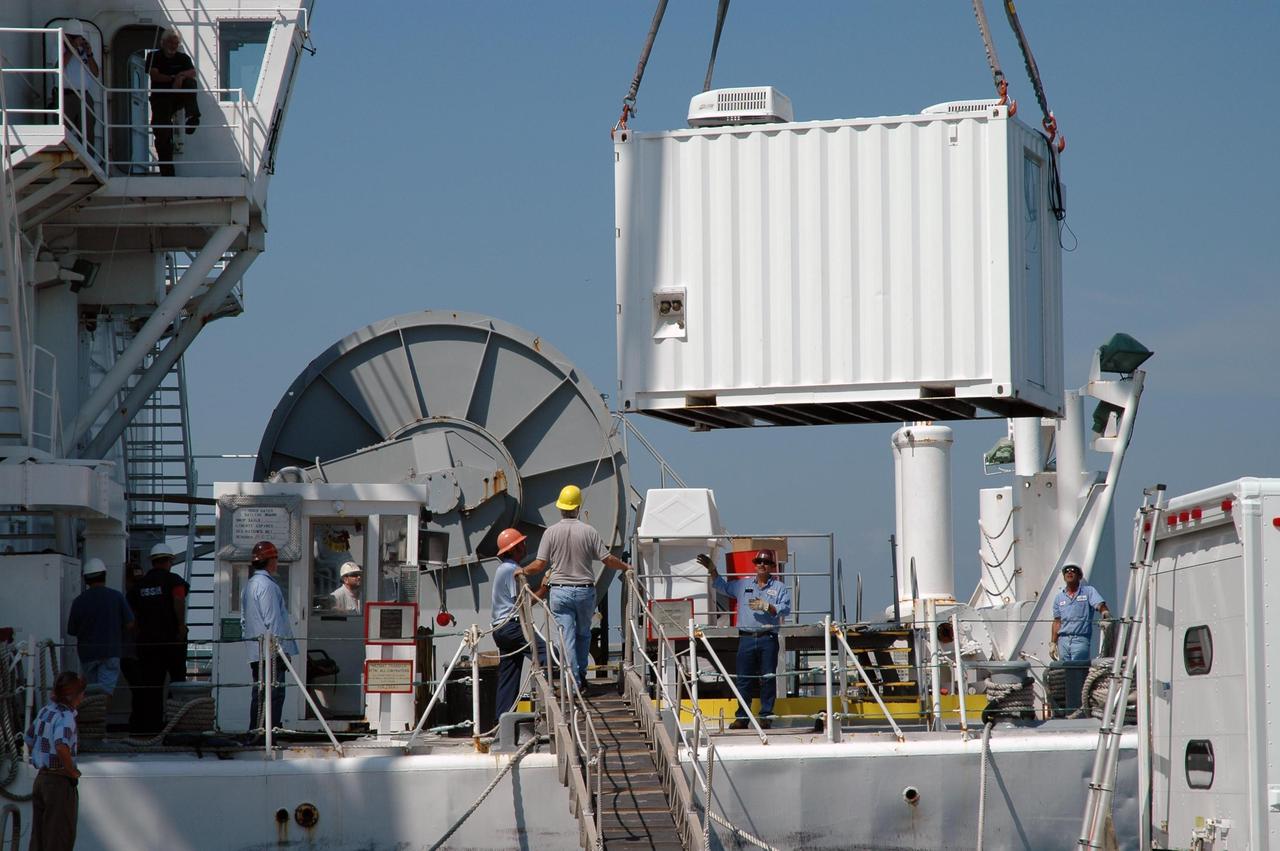
KENNEDY SPACE CENTER, FLA. - A support equipment module for an X-band radar is being loaded on the U.S. Naval Ship Hayes at Port Canaveral in Florida to support the July 1 launch of Space Shuttle Discovery on mission STS-121. There are two Continuous Pulse Doppler X-band radars located on ships for the STS-121 launch. The other one is mounted on a booster recovery ship downrange of the launch site. The two radars provide velocity and differential Shuttle/debris motion information. Combined with the C-band radar located at the Haulover Canal near the launch site, they provide high definition images of any debris that might fall from the external tank/shuttle. The X-band data (screen captures) will be sent from the ships via satellite link to the National Center for Atmospheric Research site. Photo credit: NASA/Jim Grossmann
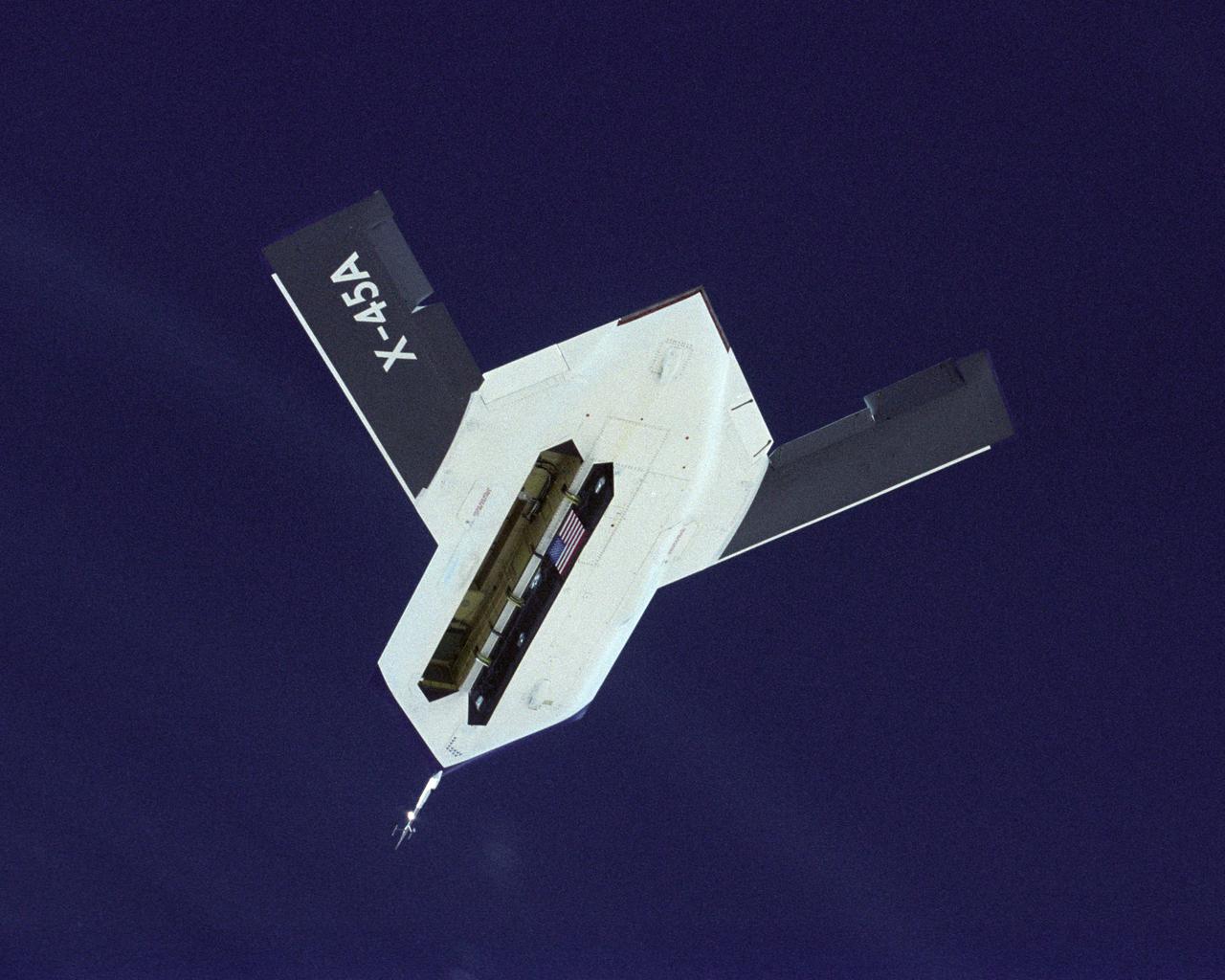
The DARPA/U.S. Air Force X-45A Unmanned Combat Air Vehicle (UCAV) system demonstration program completed the first phase of demonstrations, known as Block I, on Feb. 28, 2003. The final Block I activities included two flights at Dryden, during which safe operation of the weapons bay door was verified at 35,000 feet and speeds of Mach 0.75, the maximum planned altitude and speed for the two X-45A demonstrator vehicles.
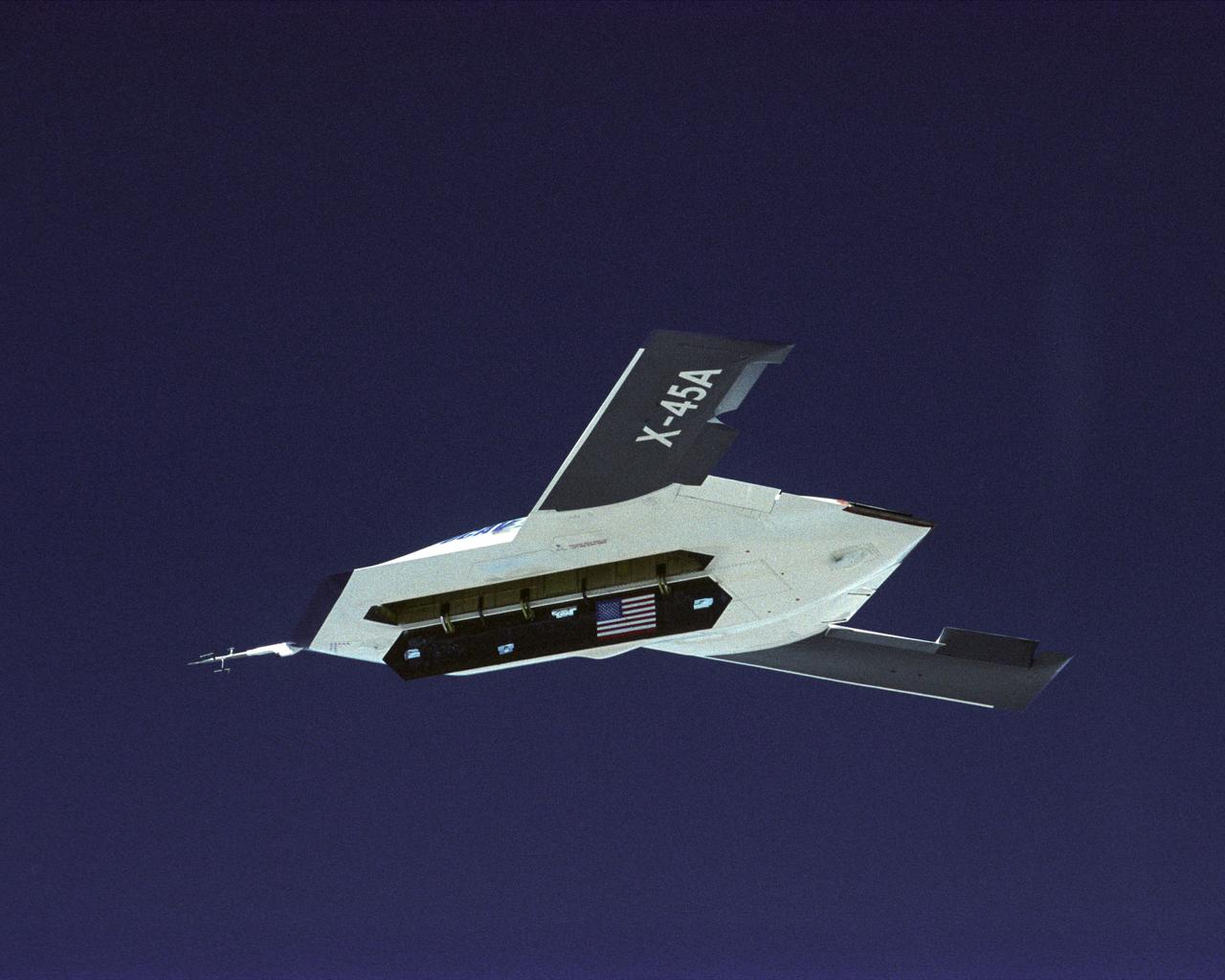
The DARPA/U.S. Air Force X-45A Unmanned Combat Air Vehicle (UCAV) system demonstration program completed the first phase of demonstrations, known as Block I, on Feb. 28, 2003. The final Block I activities included two flights at Dryden, during which safe operation of the weapons bay door was verified at 35,000 feet and speeds of Mach 0.75, the maximum planned altitude and speed for the two X-45A demonstrator vehicles.
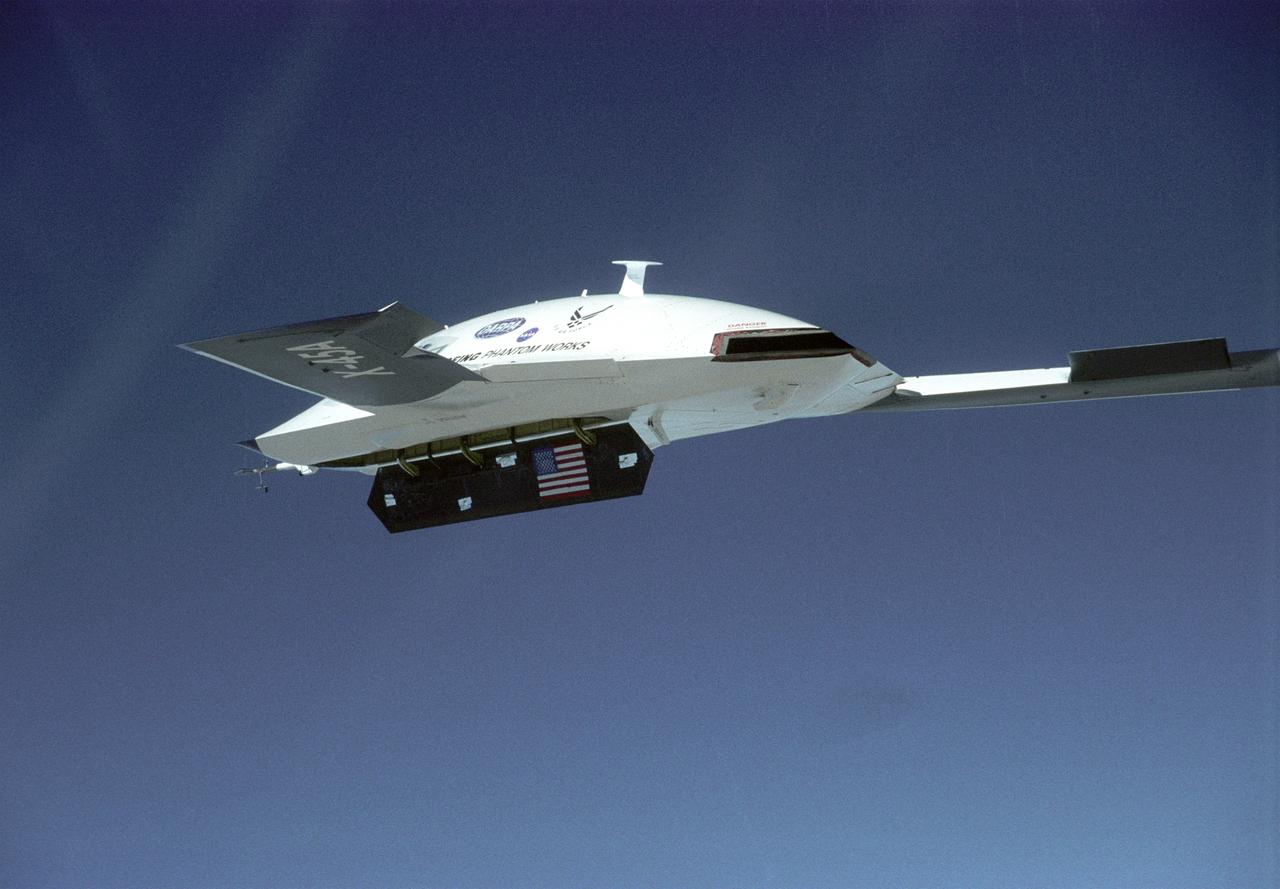
The DARPA/U.S. Air Force X-45A Unmanned Combat Air Vehicle (UCAV) system demonstration program completed the first phase of demonstrations, known as Block I, on Feb. 28, 2003. The final Block I activities included two flights at Dryden, during which safe operation of the weapons bay door was verified at 35,000 feet and speeds of Mach 0.75, the maximum planned altitude and speed for the two X-45A demonstrator vehicles.
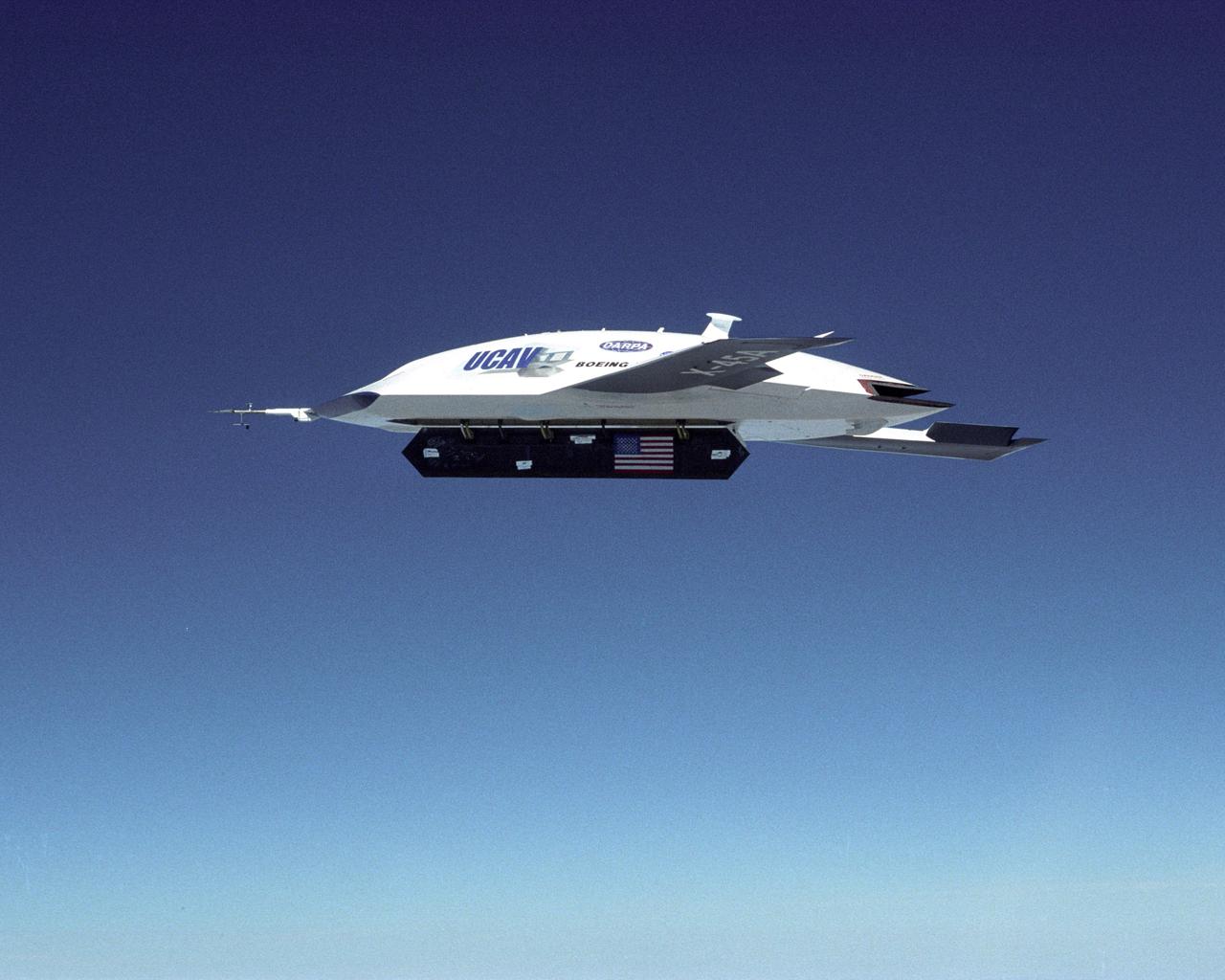
The DARPA/U.S. Air Force X-45A Unmanned Combat Air Vehicle (UCAV) system demonstration program completed the first phase of demonstrations, known as Block I, on Feb. 28, 2003. The final Block I activities included two flights at Dryden, during which safe operation of the weapons bay door was verified at 35,000 feet and speeds of Mach 0.75, the maximum planned altitude and speed for the two X-45A demonstrator vehicles.
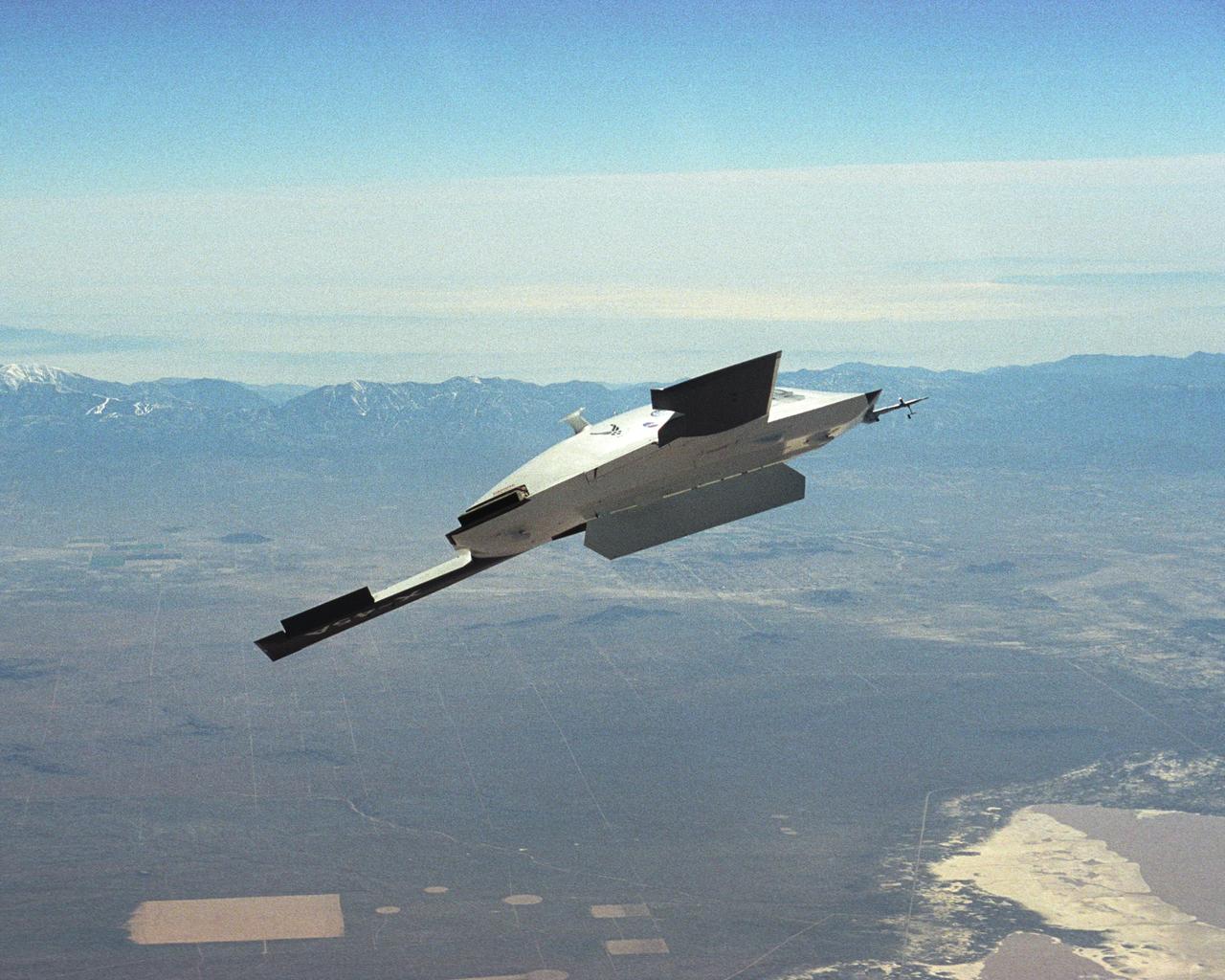
The DARPA/U.S. Air Force X-45A Unmanned Combat Air Vehicle (UCAV) system demonstration program completed the first phase of demonstrations, known as Block I, on Feb. 28, 2003. The final Block I activities included two flights at Dryden, during which safe operation of the weapons bay door was verified at 35,000 feet and speeds of Mach 0.75, the maximum planned altitude and speed for the two X-45A demonstrator vehicles.
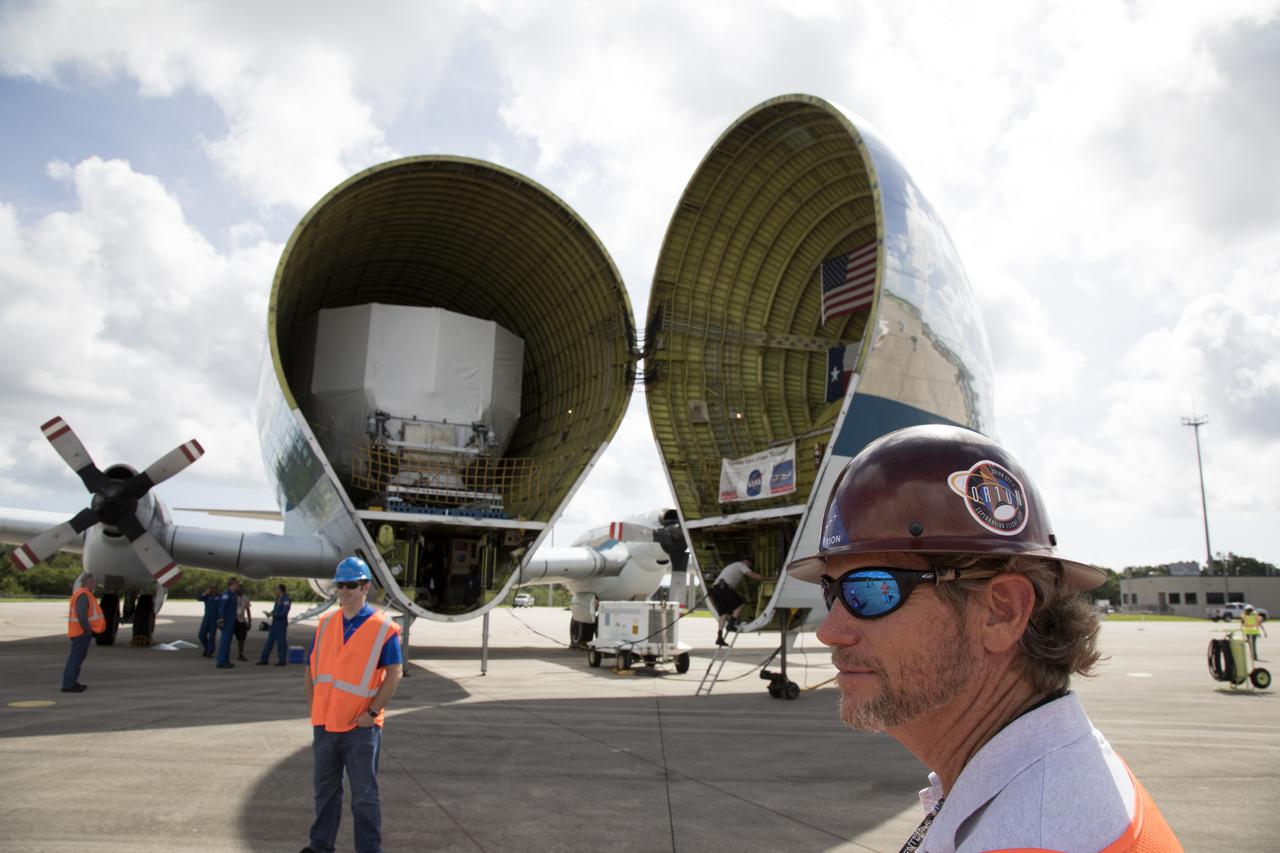
The Orion service module structural test article for Exploration Mission-1 (EM-1), built by the European Space Agency, is secured inside NASA's Super Guppy aircraft at Kennedy Space Center's Shuttle Landing Facility, managed by Space Florida. The module will be shipped to Lockheed Martin's Denver facility to undergo testing. The Orion spacecraft will launch atop the agency's Space Launch System rocket on EM-1 in 2019.
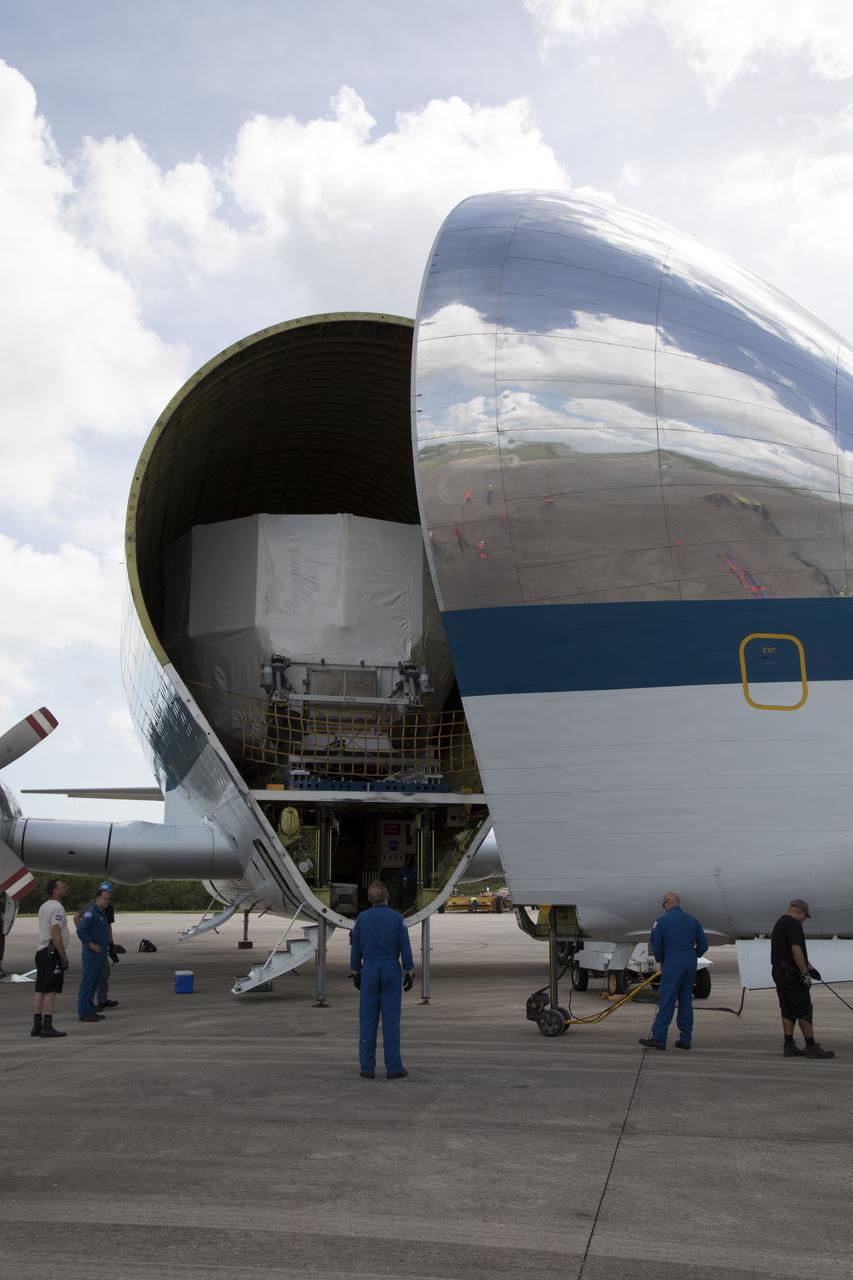
The Orion service module structural test article for Exploration Mission-1 (EM-1), built by the European Space Agency, is secured inside NASA's Super Guppy aircraft at Kennedy Space Center's Shuttle Landing Facility, managed by Space Florida. The module will be shipped to Lockheed Martin's Denver facility to undergo testing. The Orion spacecraft will launch atop the agency's Space Launch System rocket on EM-1 in 2019.
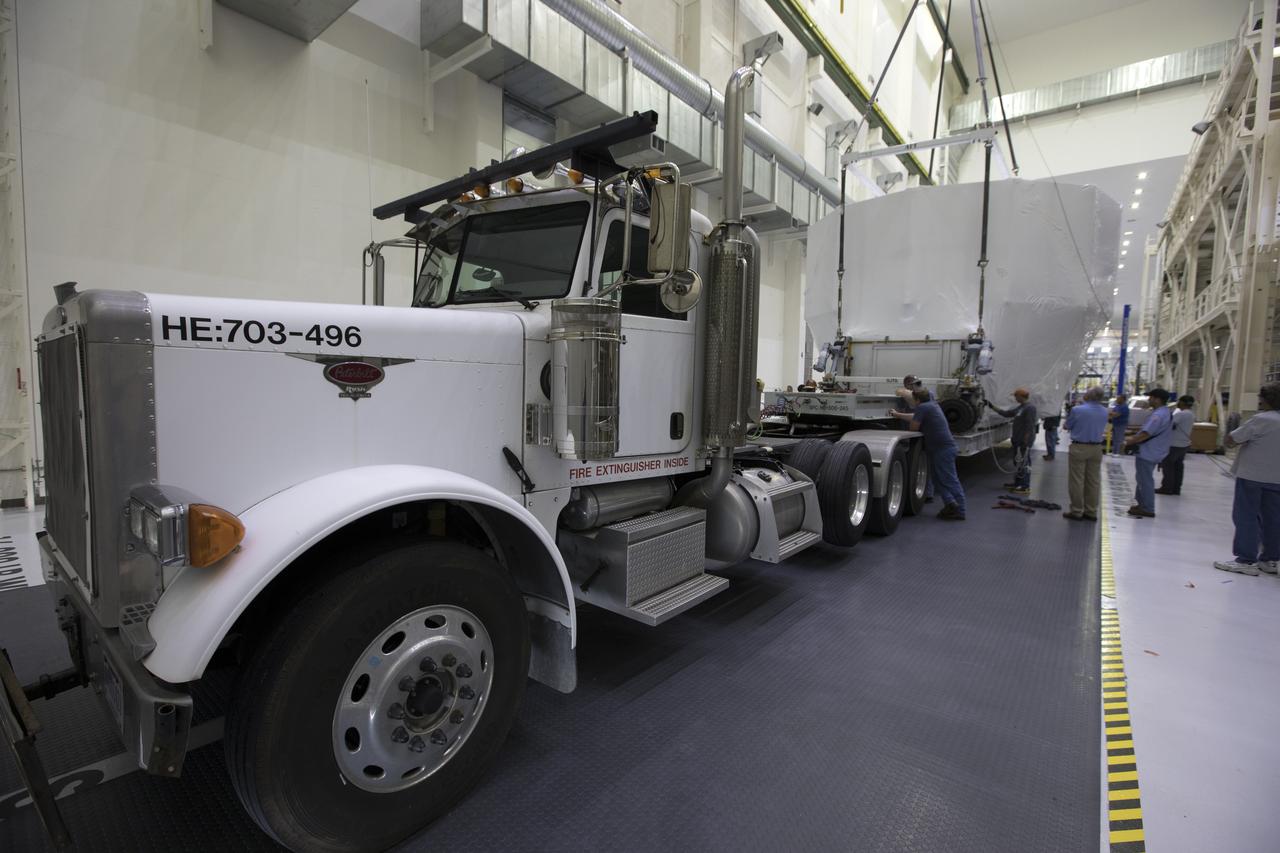
Inside the Neil Armstrong Operations and Checkout Building high bay, the Orion service module structural test article for Exploration Mission-1 (EM-1), built by the European Space Agency, is secured on the flatbed of a transport truck. The service module will be shipped to Lockheed Martin's Denver facility to undergo testing. The Orion spacecraft will launch atop the agency's Space Launch System rocket on EM-1 in 2019.
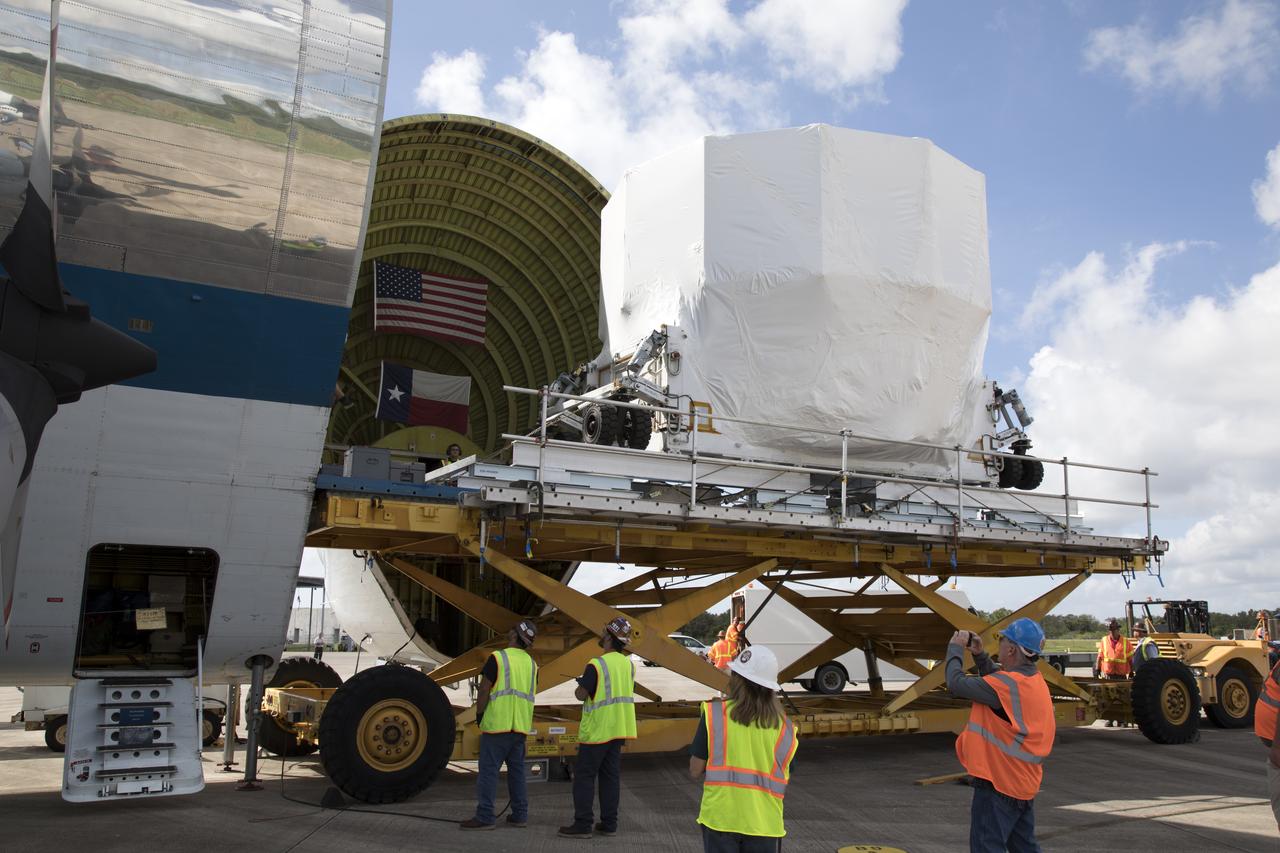
At Kennedy Space Center's Shuttle Landing Facility in Florida, workers prepare to move the Orion service module structural test article for Exploration Mission-1 (EM-1), built by the European Space Agency, inside NASA's Super Guppy aircraft. The module will be secured inside the aircraft and shipped to Lockheed Martin's Denver facility to undergo testing. The Orion spacecraft will launch atop the agency's Space Launch System rocket on EM-1 in 2019.
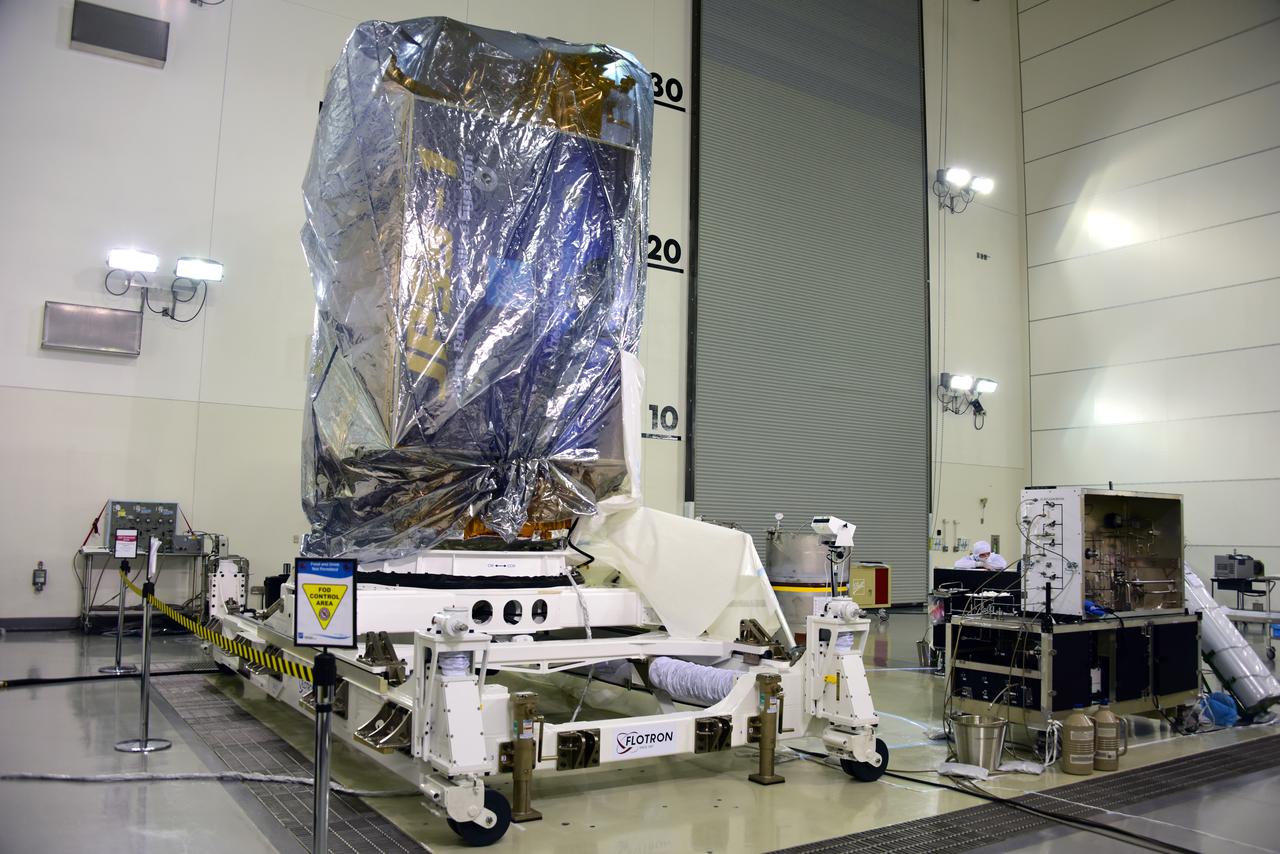
NOAA's Joint Polar Satellite System-1, or JPSS-1, remains wrapped in a protective covering after removal from its shipping container at the Astrotech Processing Facility at Vandenberg Air Force Base in California. The spacecraft is being prepared for its upcoming liftoff aboard a United Launch Alliance Delta II rocket from Vandenberg's Space Launch Complex-2W. JPSS-1 is the first in a series four next-generation environmental satellites in a collaborative program between NOAA and NASA.
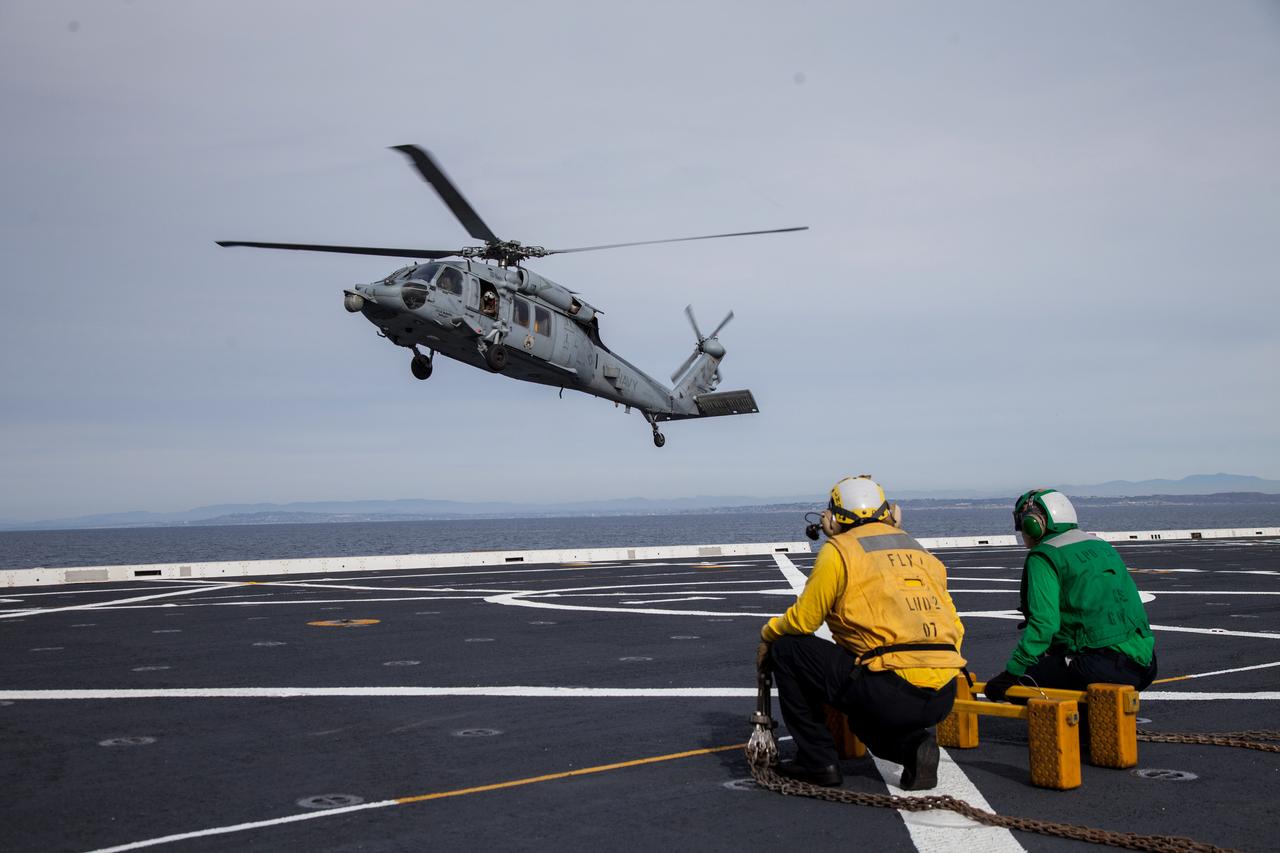
A helicopter lands on the flight deck of the USS Anchorage as the Navy ship makes its way to the recovery zone for NASA's Orion spacecraft on Dec. 1, 2014. Orion is scheduled to launch on Exploration Flight Test-1 (EFT-1) from Florida on Dec. 4, and splashdown 4.5 hours later in the Pacific Ocean, where it will be picked up by the Anchorage. Part of Batch image transfer from Flickr.
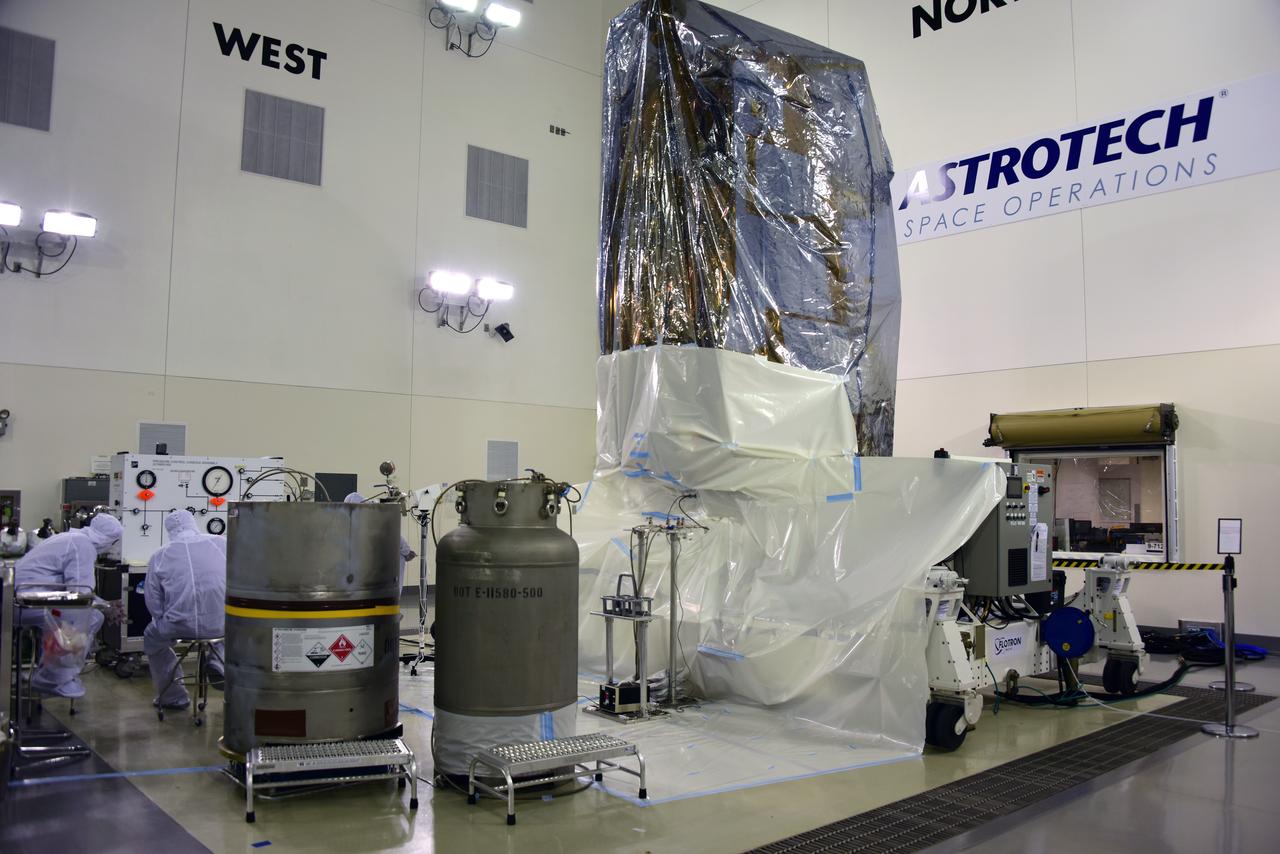
NOAA's Joint Polar Satellite System-1, or JPSS-1, remains wrapped in a protective covering after removal from its shipping container at the Astrotech Processing Facility at Vandenberg Air Force Base in California. The spacecraft is being prepared for its upcoming liftoff aboard a United Launch Alliance Delta II rocket from Vandenberg's Space Launch Complex-2W. JPSS-1 is the first in a series four next-generation environmental satellites in a collaborative program between NOAA and NASA.
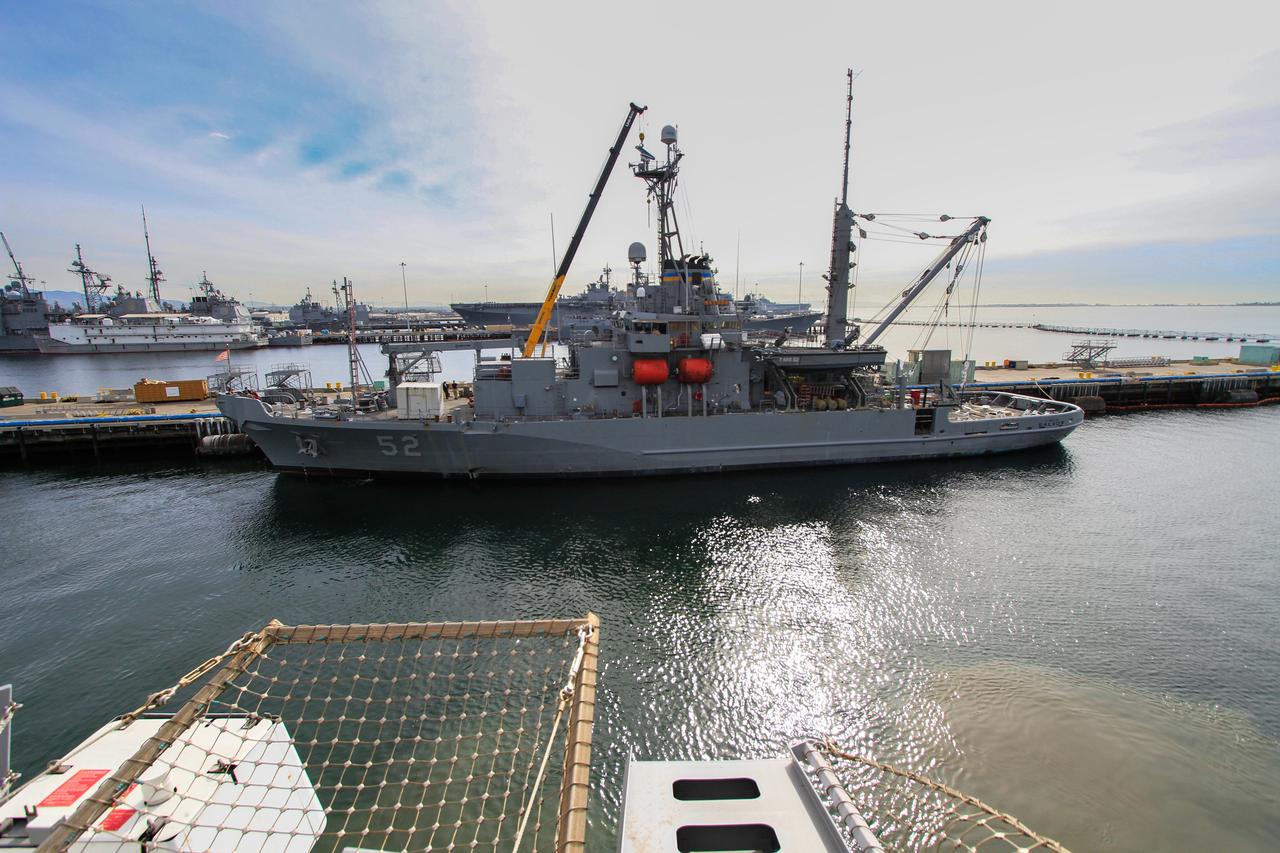
The Navy's USNS Salvor sets sail along side the USS Anchorage, as both ships make their way to the Orion recovery zone on Dec. 1, 2014. Orion is scheduled to launch on Exploration Flight Test-1 (EFT-1) from Florida on Dec. 4, and splashdown 4.5 hours later in the Pacific Ocean. It will be picked up and brought back to shore by the Anchorage, with the Salvor acting as backup. Part of Batch image transfer from Flickr.
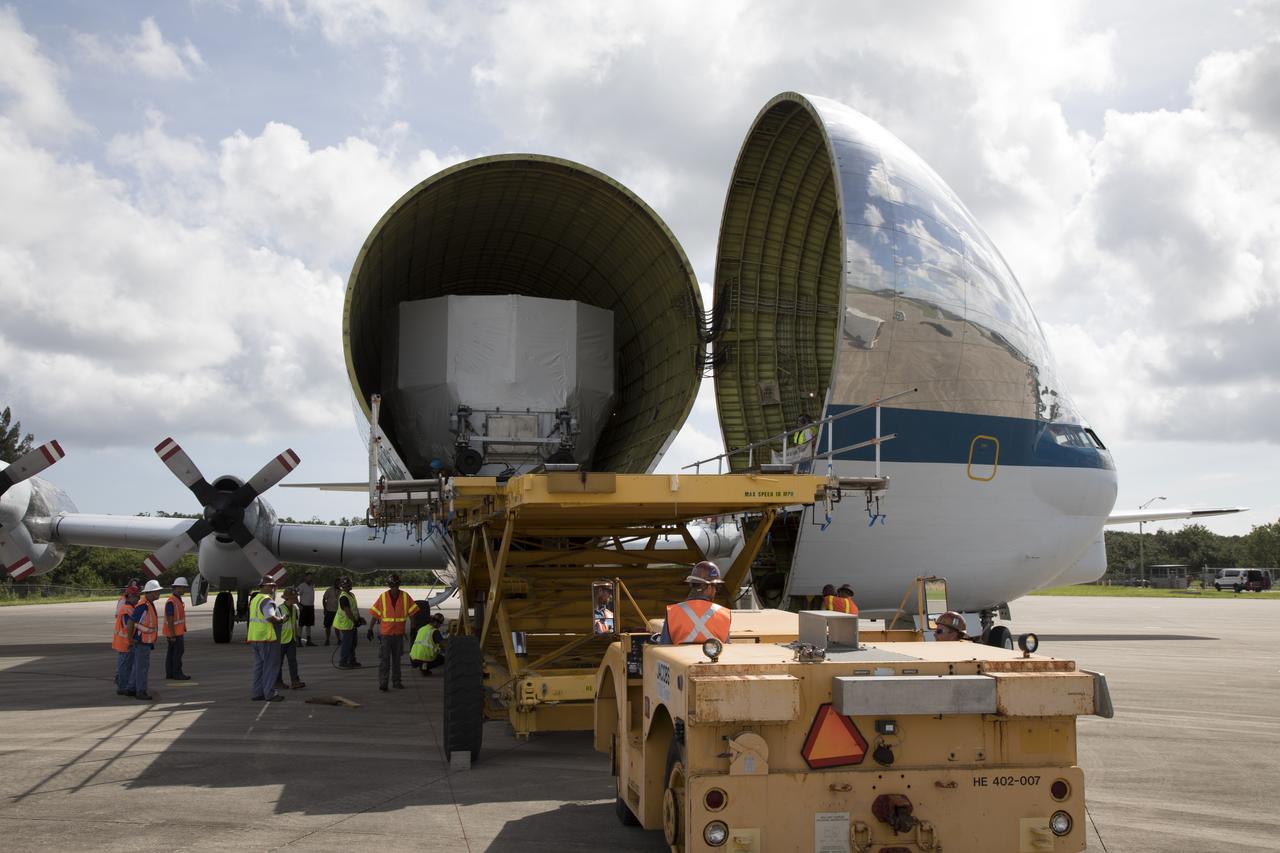
The Orion service module structural test article for Exploration Mission-1 (EM-1), built by the European Space Agency, is moved inside NASA's Super Guppy aircraft at Kennedy Space Center's Shuttle Landing Facility, managed by Space Florida. The module will be secured inside the aircraft and shipped to Lockheed Martin's Denver facility to undergo testing. The Orion spacecraft will launch atop the agency's Space Launch System rocket on EM-1 in 2019.
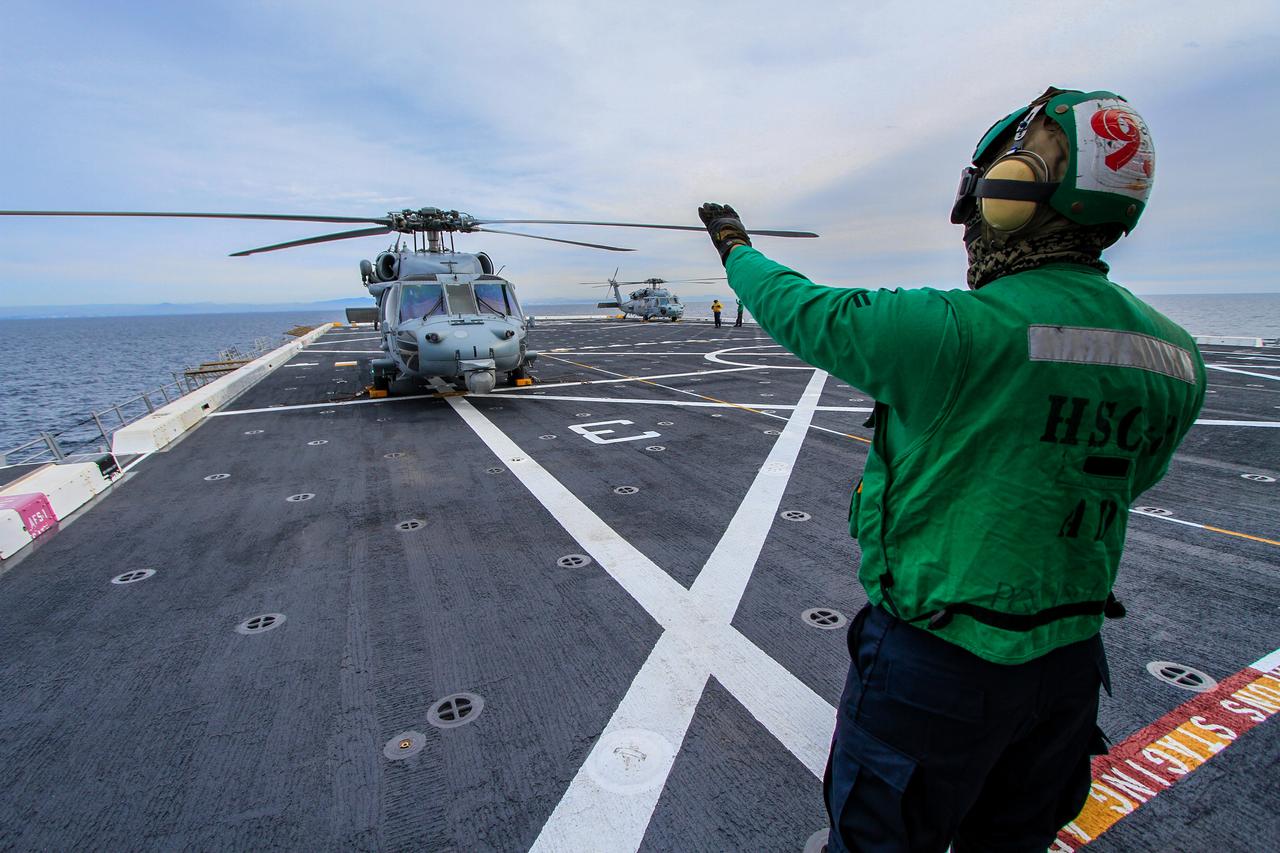
A helicopter lands on the flight deck of the USS Anchorage as the Navy ship makes its way to the recovery zone for NASA's Orion spacecraft on Dec. 1, 2014. Orion is scheduled to launch on Exploration Flight Test-1 (EFT-1) from Florida on Dec. 4, and splashdown 4.5 hours later in the Pacific Ocean, where it will be picked up by the Anchorage. Part of Batch image transfer from Flickr.
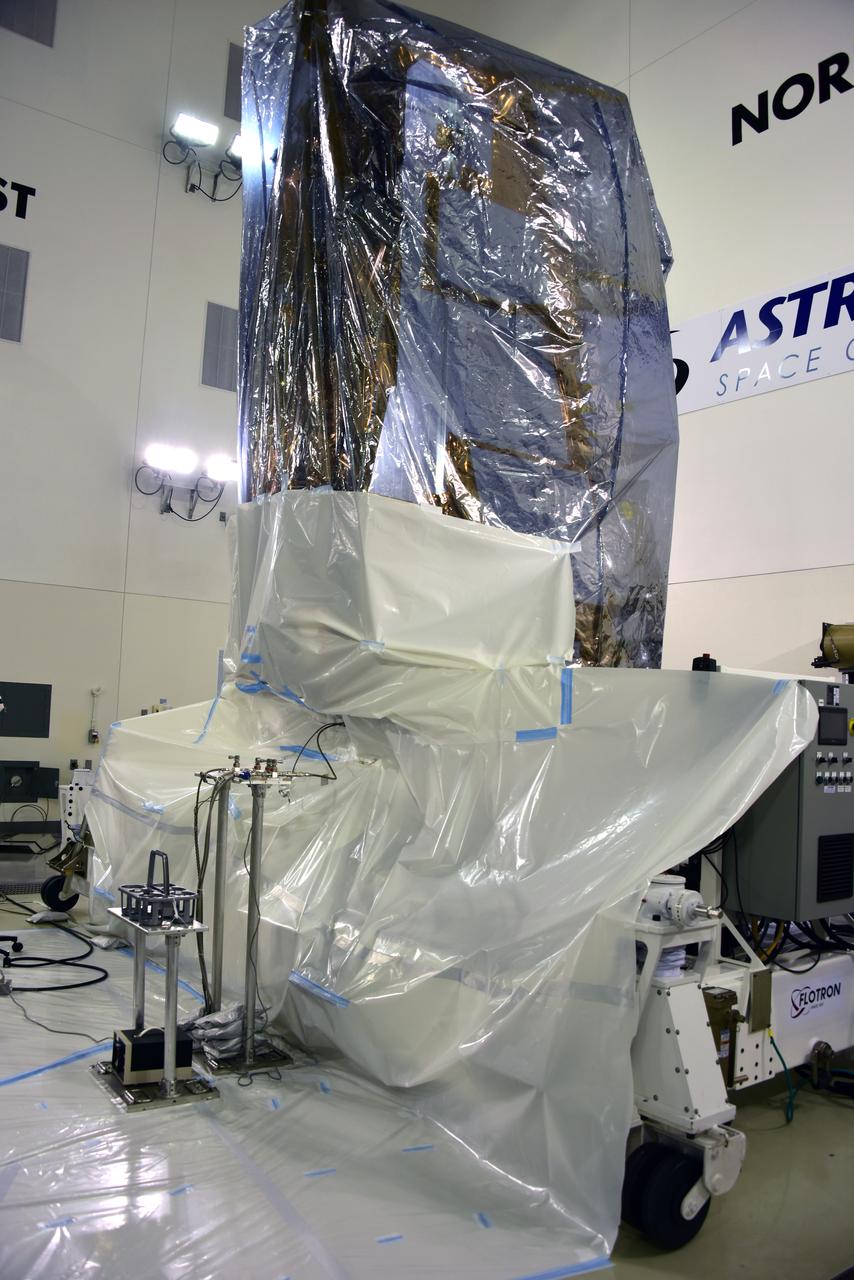
NOAA's Joint Polar Satellite System-1, or JPSS-1, remains wrapped in a protective covering after removal from its shipping container at the Astrotech Processing Facility at Vandenberg Air Force Base in California. The spacecraft is being prepared for its upcoming liftoff aboard a United Launch Alliance Delta II rocket from Vandenberg's Space Launch Complex-2W. JPSS-1 is the first in a series four next-generation environmental satellites in a collaborative program between NOAA and NASA.
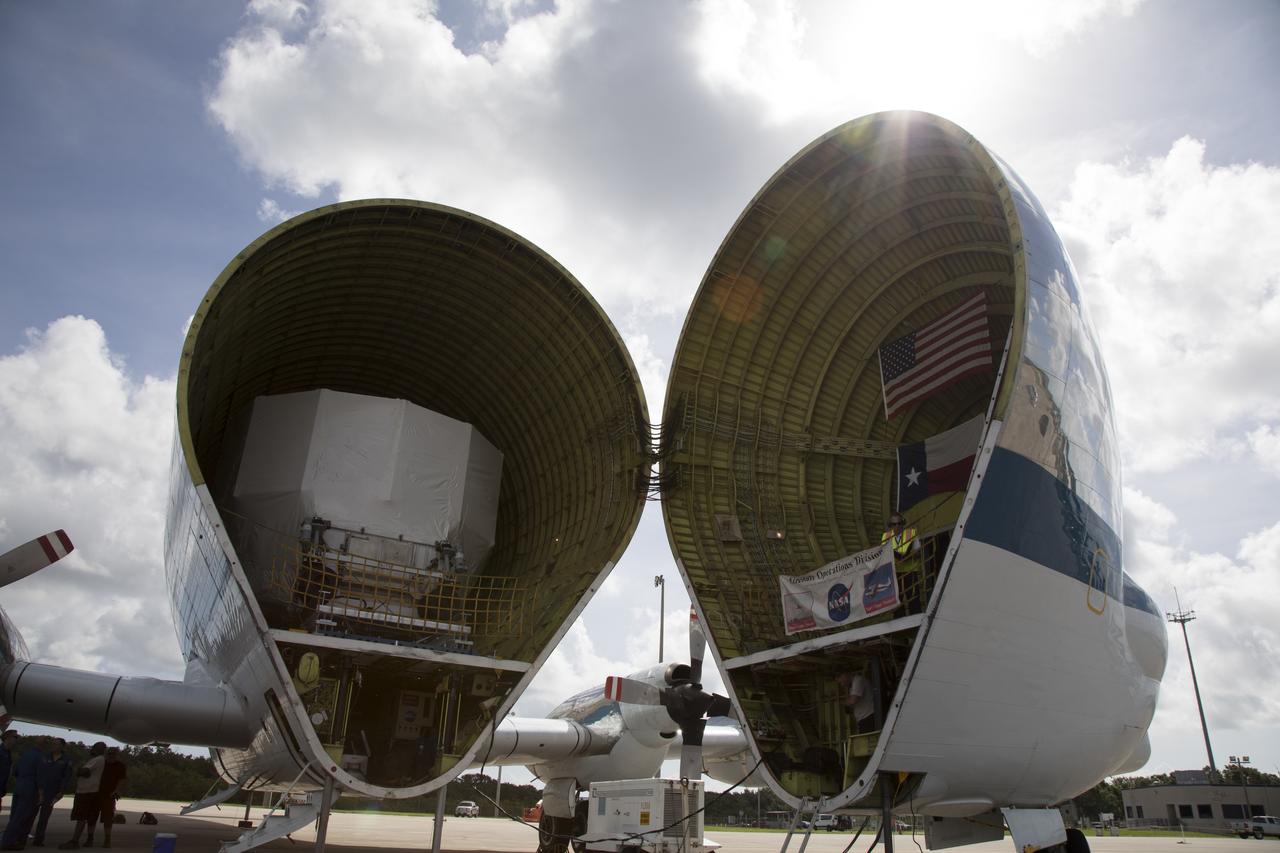
The Orion service module structural test article for Exploration Mission-1 (EM-1), built by the European Space Agency, is secured inside NASA's Super Guppy aircraft at Kennedy Space Center's Shuttle Landing Facility, managed by Space Florida. The module will be shipped to Lockheed Martin's Denver facility to undergo testing. The Orion spacecraft will launch atop the agency's Space Launch System rocket on EM-1 in 2019.
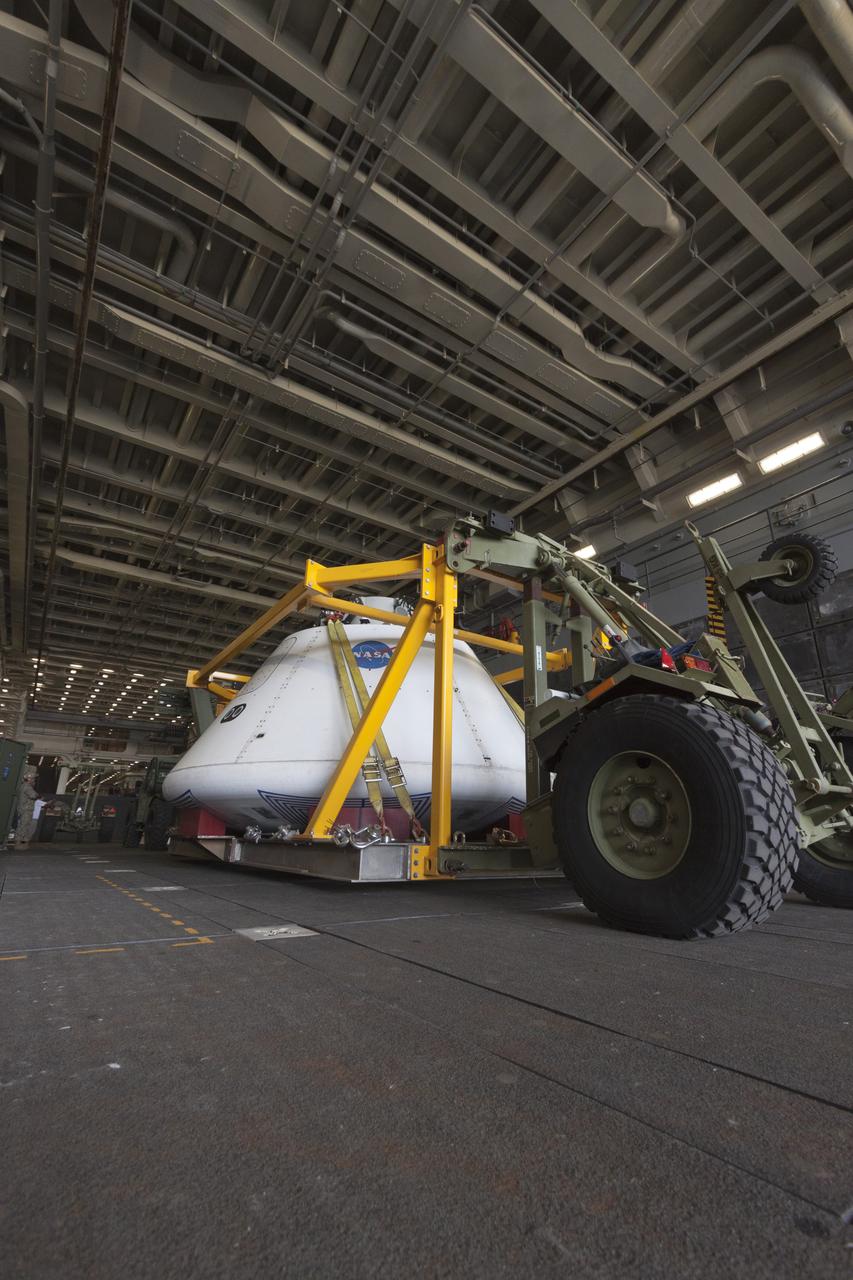
SAN DIEGO, Calif. – The Orion boilerplate test vehicle arrived at the U.S. Naval Base San Diego in California, and is loaded aboard the USS San Diego. Orion was transported in the ship’s well deck about 100 miles offshore for an underway recovery test. NASA and the U.S. Navy are conducting tests to prepare for recovery of the Orion crew module, forward bay cover and parachutes on its return from a deep space mission. The underway recovery test will allow the teams to demonstrate and evaluate the recovery processes, procedures, hardware and personnel in open waters. The Ground Systems Development and Operations Program Orion is the exploration spacecraft designed to carry astronauts to destinations not yet explored by humans, including an asteroid and Mars. It will have emergency abort capability, sustain the crew during space travel and provide safe re-entry from deep space return velocities. The first unpiloted test flight of the Orion is scheduled to launch in 2014 atop a Delta IV rocket and in 2017 on NASA’s Space Launch System rocket. For more information, visit http://www.nasa.gov/orion. Photo credit: NASA/Cory Huston
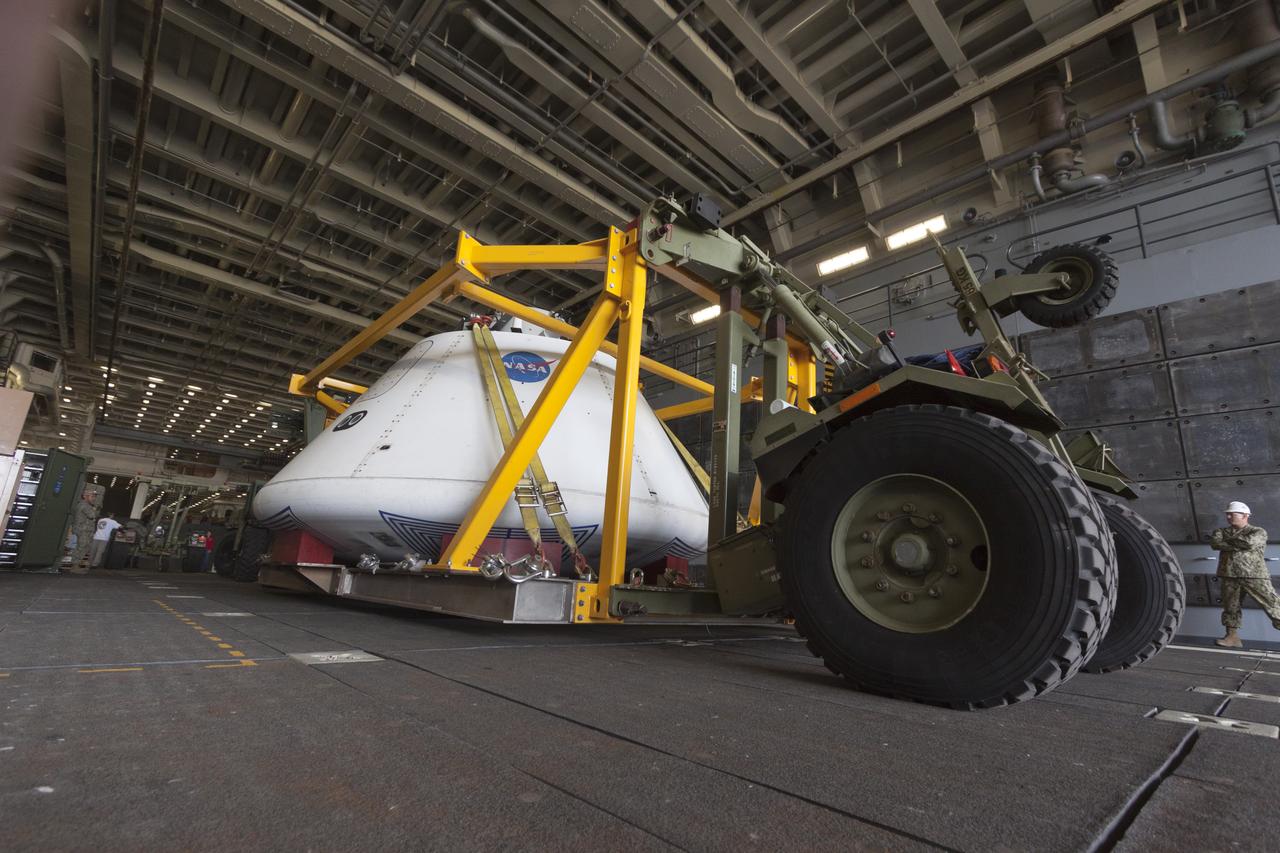
SAN DIEGO, Calif. – The Orion boilerplate test vehicle arrived at the U.S. Naval Base San Diego in California, and was loaded aboard the USS San Diego. Orion was transported in the ship’s well deck about 100 miles offshore for an underway recovery test. NASA and the U.S. Navy are conducting tests to prepare for recovery of the Orion crew module, forward bay cover and parachutes on its return from a deep space mission. The underway recovery test will allow the teams to demonstrate and evaluate the recovery processes, procedures, hardware and personnel in open waters. The Ground Systems Development and Operations Program Orion is the exploration spacecraft designed to carry astronauts to destinations not yet explored by humans, including an asteroid and Mars. It will have emergency abort capability, sustain the crew during space travel and provide safe re-entry from deep space return velocities. The first unpiloted test flight of the Orion is scheduled to launch in 2014 atop a Delta IV rocket and in 2017 on NASA’s Space Launch System rocket. For more information, visit http://www.nasa.gov/orion. Photo credit: NASA/Cory Huston
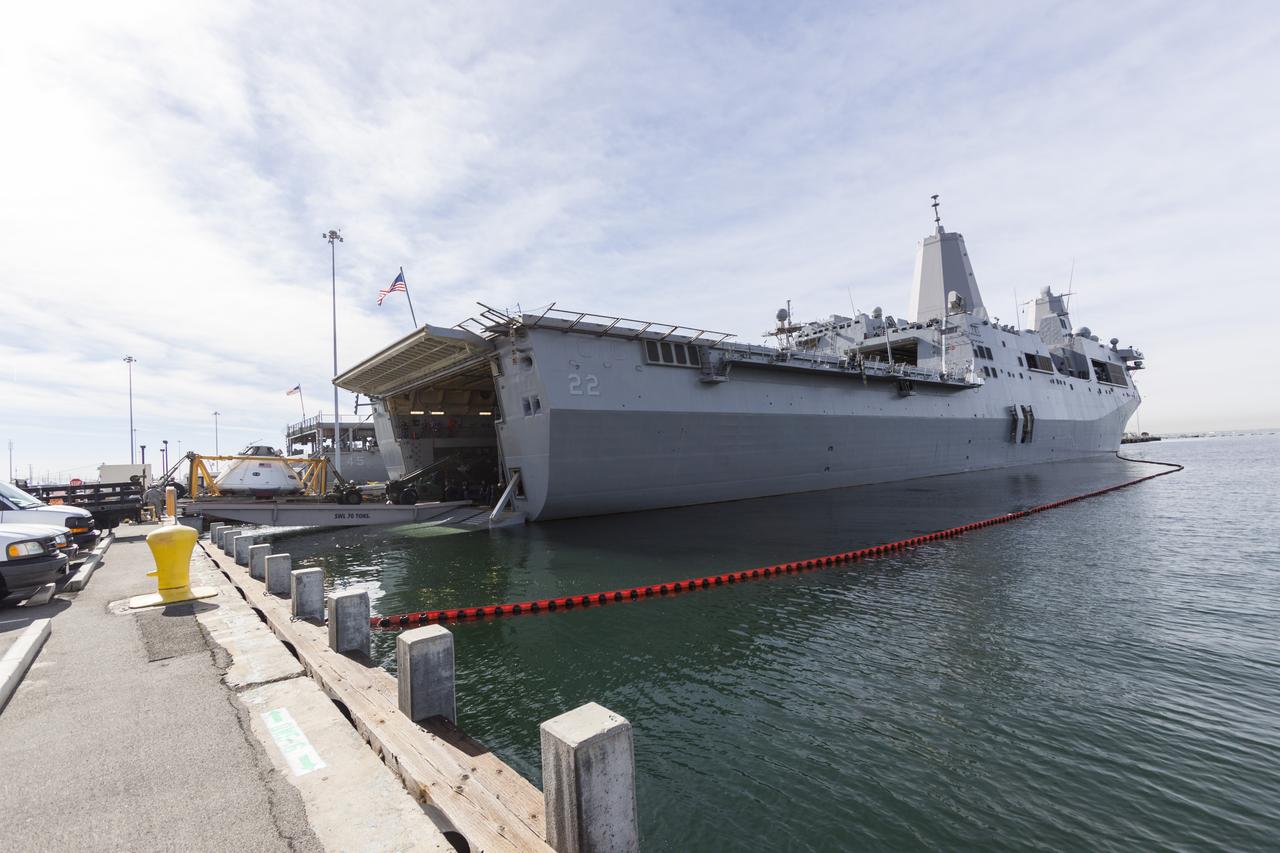
SAN DIEGO, Calif. – The Orion boilerplate test vehicle arrived at the U.S. Naval Base San Diego in California, and is being loaded aboard the USS San Diego. Orion was transported in the ship’s well deck about 100 miles offshore for an underway recovery test. NASA and the U.S. Navy are conducting tests to prepare for recovery of the Orion crew module, forward bay cover and parachutes on its return from a deep space mission. The underway recovery test will allow the teams to demonstrate and evaluate the recovery processes, procedures, hardware and personnel in open waters. The Ground Systems Development and Operations Program Orion is the exploration spacecraft designed to carry astronauts to destinations not yet explored by humans, including an asteroid and Mars. It will have emergency abort capability, sustain the crew during space travel and provide safe re-entry from deep space return velocities. The first unpiloted test flight of the Orion is scheduled to launch in 2014 atop a Delta IV rocket and in 2017 on NASA’s Space Launch System rocket. For more information, visit http://www.nasa.gov/orion. Photo credit: NASA/Cory Huston