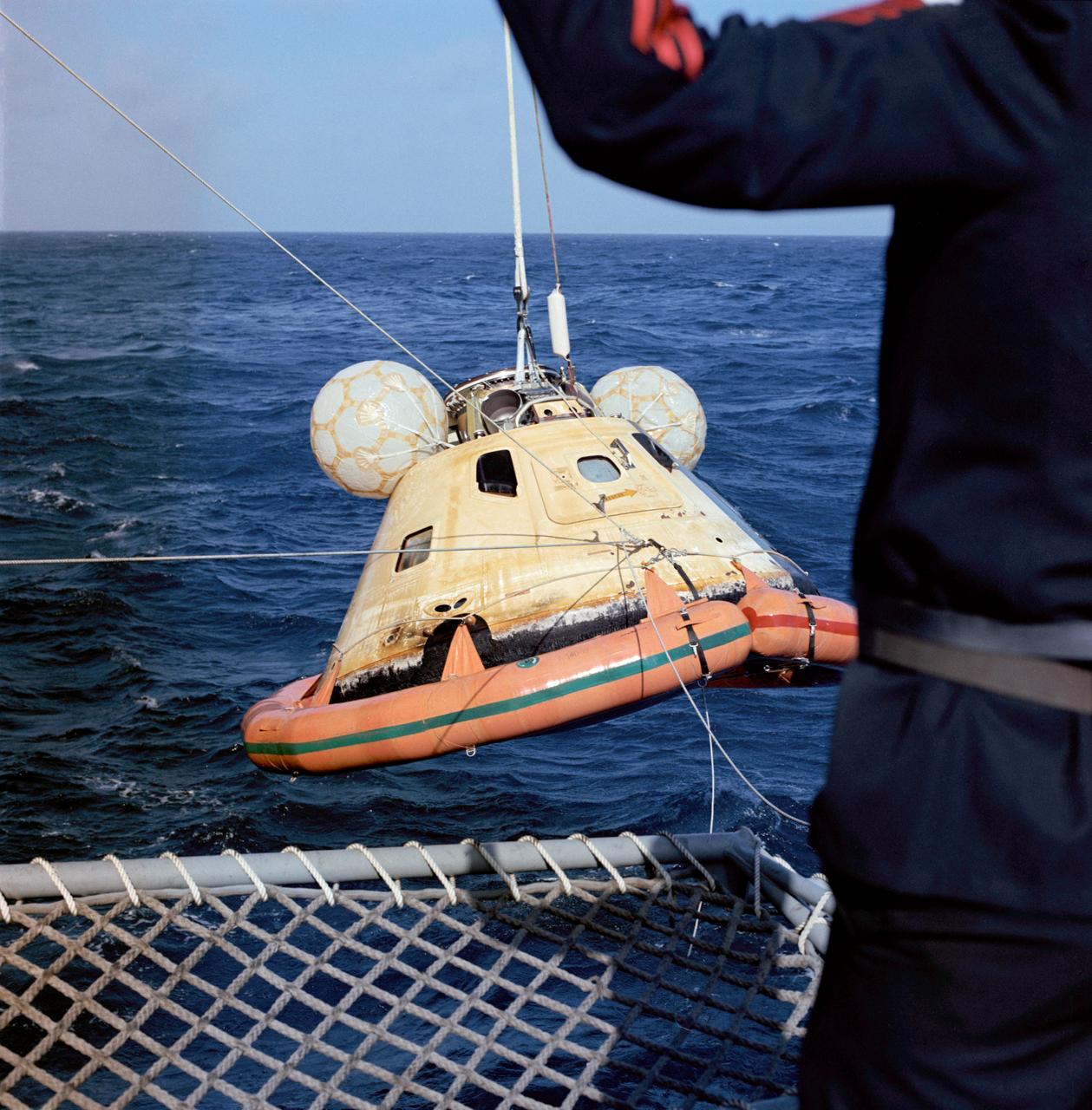
S73-36423 (25 Sept. 1973) --- The Skylab 3 Command Module, with astronauts Alan L. Bean, Owen K. Garriott and Jack R. Lousma still inside, is hoisted aboard the prime recovery ship, USS New Orleans, during recovery operations in the Pacific Ocean. The three crewmen had just completed a successful 59-day visit to the Skylab space station in Earth orbit. The Command Module splashed down in the Pacific about 230 miles southwest of San Diego, California. Earlier in the recovery operations a team of U.S. Navy swimmers attached the flotation collar to the spacecraft to improve its buoyancy. Photo credit: NASA
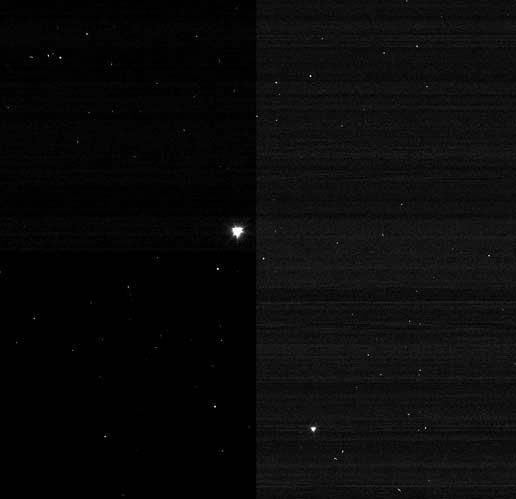
This image of NASA Deep Impact impactor probe was taken by the mission mother ship, or flyby spacecraft, after the two separated at 11:07 p.m. Pacific time, July 2 2:07 a.m. Eastern time, July 3, 2005.
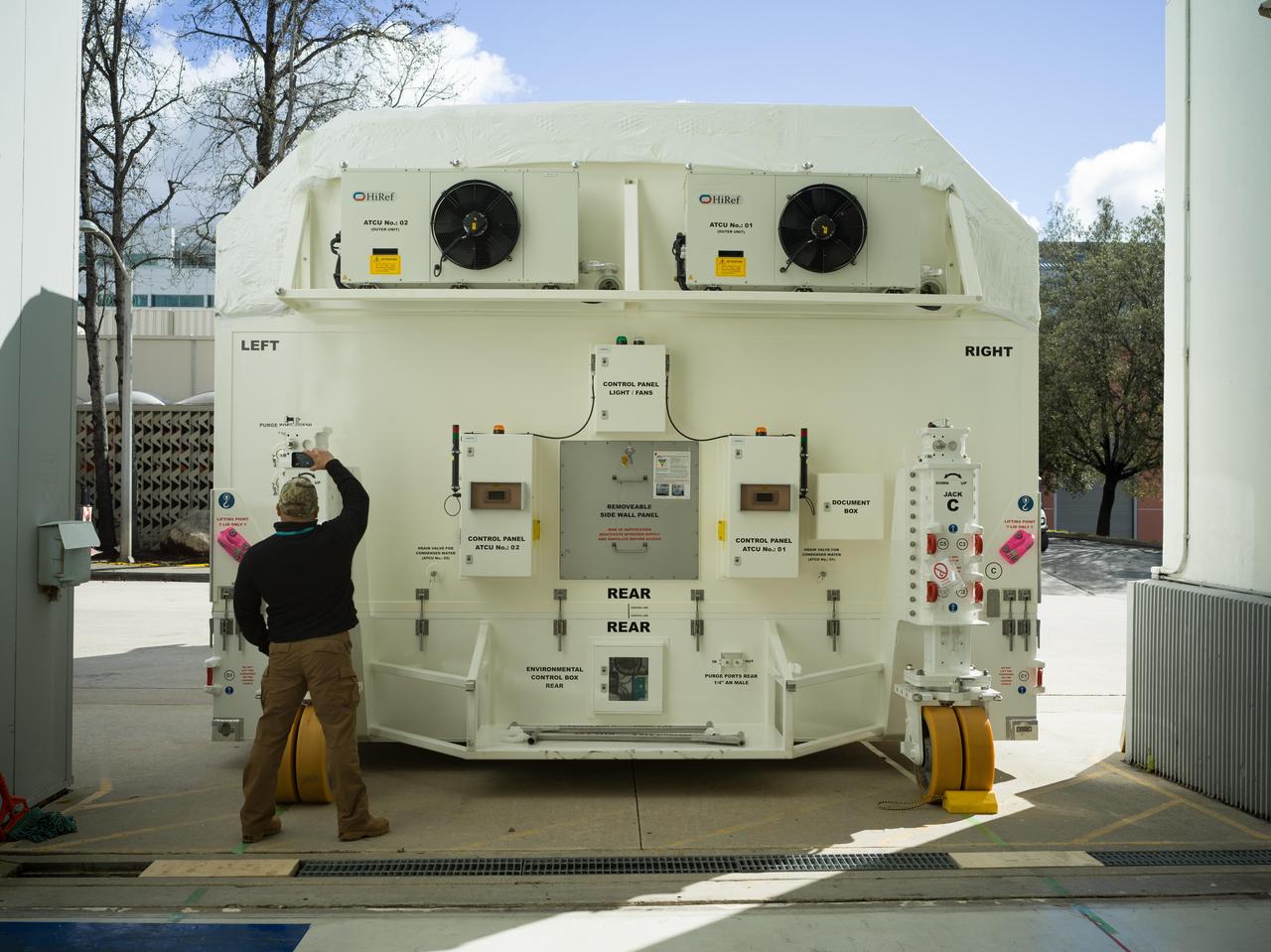
A specially designed, climate-controlled shipping container holding the NASA-ISRO Synthetic Aperture Radar (NISAR) science instrument payload sits outside an airlock at the Spacecraft Assembly Facility at NASA's Jet Propulsion Laboratory on Feb. 26, 2023. The payload was shipped to Bengaluru, India, on March 3, arriving on March 6. There it will be integrated with the satellite body, or bus, and undergo further testing leading up to launch in 2024. The NISAR mission – a joint effort between NASA and the Indian Space Research Organisation – will observe nearly all the planet's land and ice surfaces twice every 12 days, measuring movements in extremely fine detail. It will also survey forests and agricultural regions to understand carbon exchange between plants and the atmosphere. NISAR's science payload will be the most advanced radar system ever launched as part of a NASA mission, and it will feature the largest-ever radar antenna of its kind: a drum-shaped, wire mesh reflector nearly 40 feet (12 meters) in diameter that will extend from a 30-foot (9-meter) boom. The mission's science instruments consist of L- and S-band radar, so named to indicate the wavelengths of their signals. ISRO built the S-band radar, which it shipped to JPL in March 2021. Engineers spent much of the last two years integrating the instrument with the JPL-built L-band system, then conducting tests to verify they work well together. JPL, which is managed for NASA by Caltech in Pasadena, leads the U.S. component of NISAR. In addition to the L-band radar, NASA is also providing the radar reflector antenna, the deployable boom, a high-rate communication subsystem for science data, GPS receivers, a solid-state recorder, and payload data subsystem. In addition to the S-band radar, ISRO is providing the spacecraft bus, the launch vehicle, and associated launch services and satellite mission operations. https://photojournal.jpl.nasa.gov/catalog/PIA25568
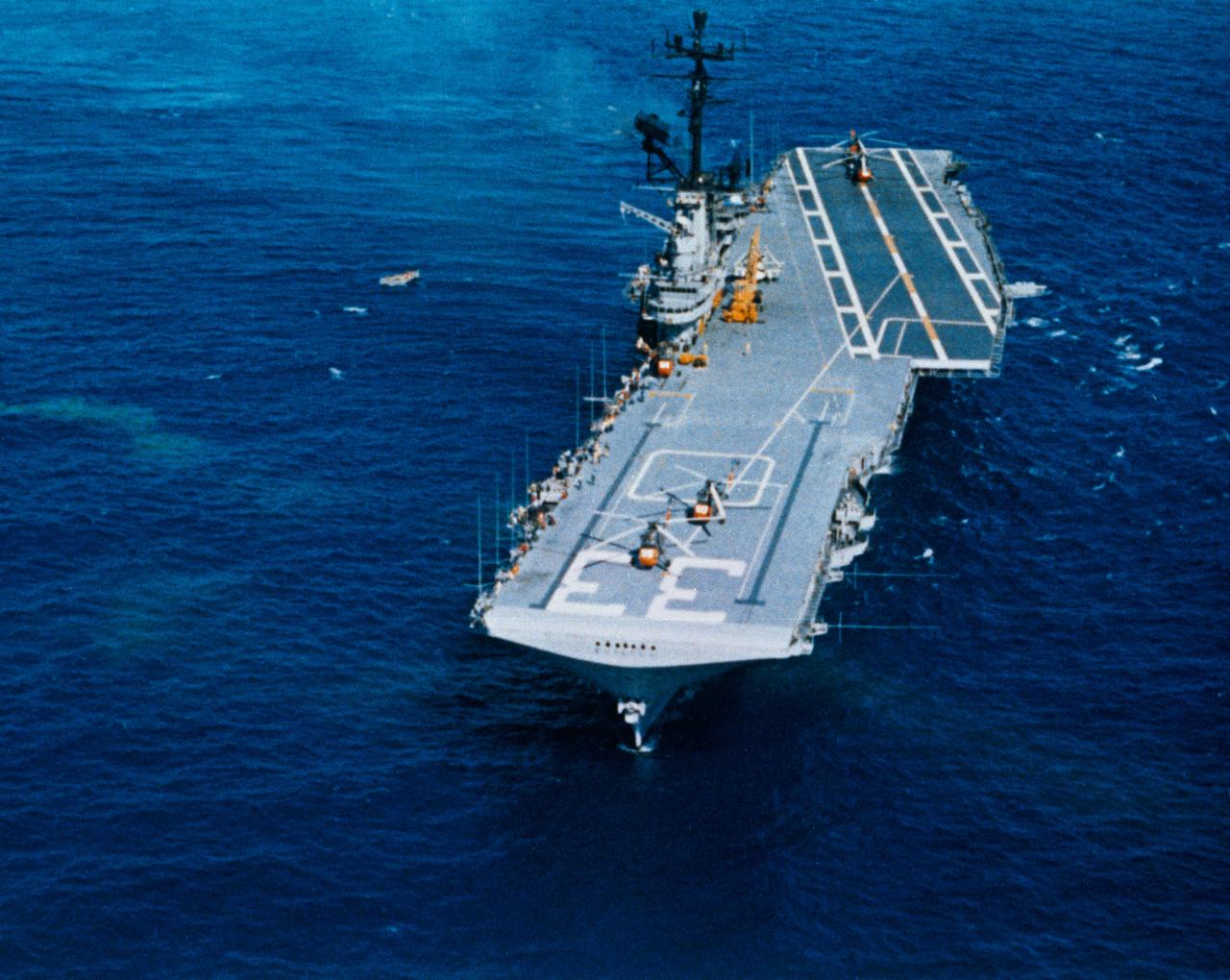
S62-09048 (3 Oct. 1962) --- Aerial view of the USS Kearsarge, recovery ship for the Mercury-Atlas 8 mission. Photo credit: NASA

iss032e028722 (Sept. 12, 2012) --- Japan’s third resupply ship, the H-II Transfer Vehicle-3 (HTV-3), also known as the Kounotori, is pictured in September of 2012 attached to the International Space Station’s Harmony module and in the grips of the Canadarm2 robotic arm.
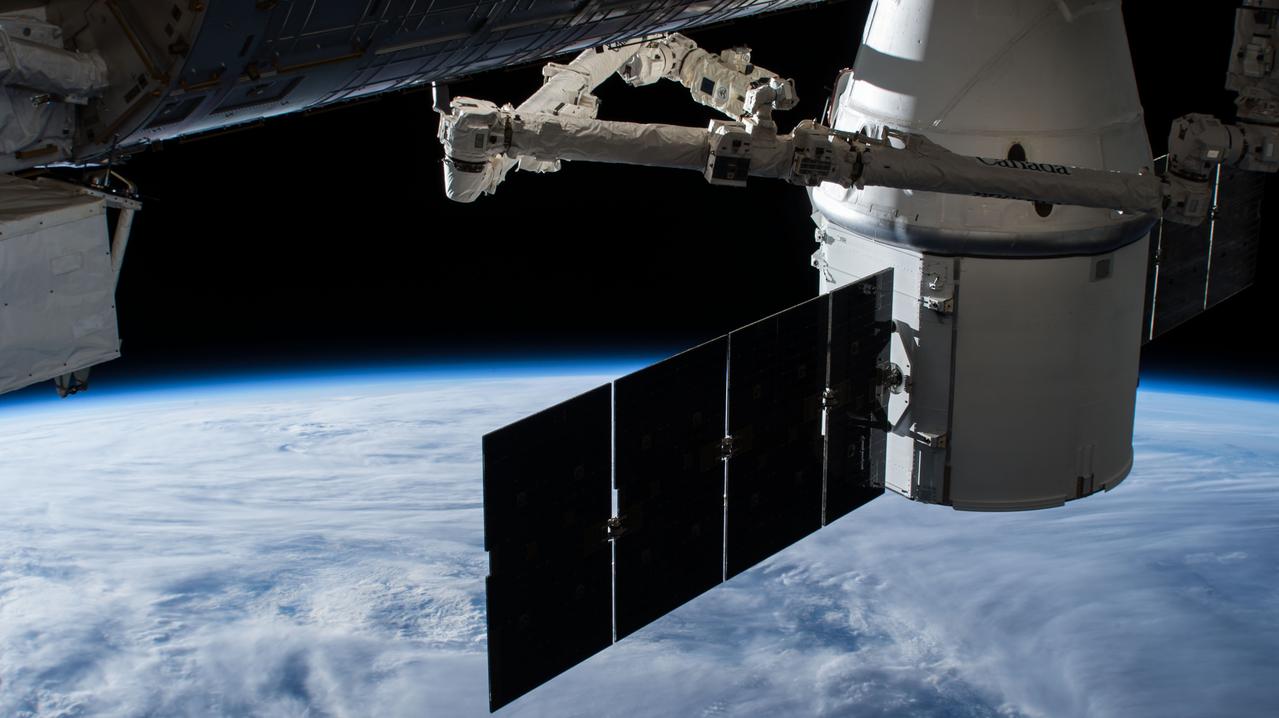
iss056e075963 (July 3, 2018) --- The SpaceX Dragon resupply ship is pictured attached to the International Space Station's Harmony module the day after it was captured by NASA astronaut Ricky Arnold operating the Canadarm2 robotic arm.
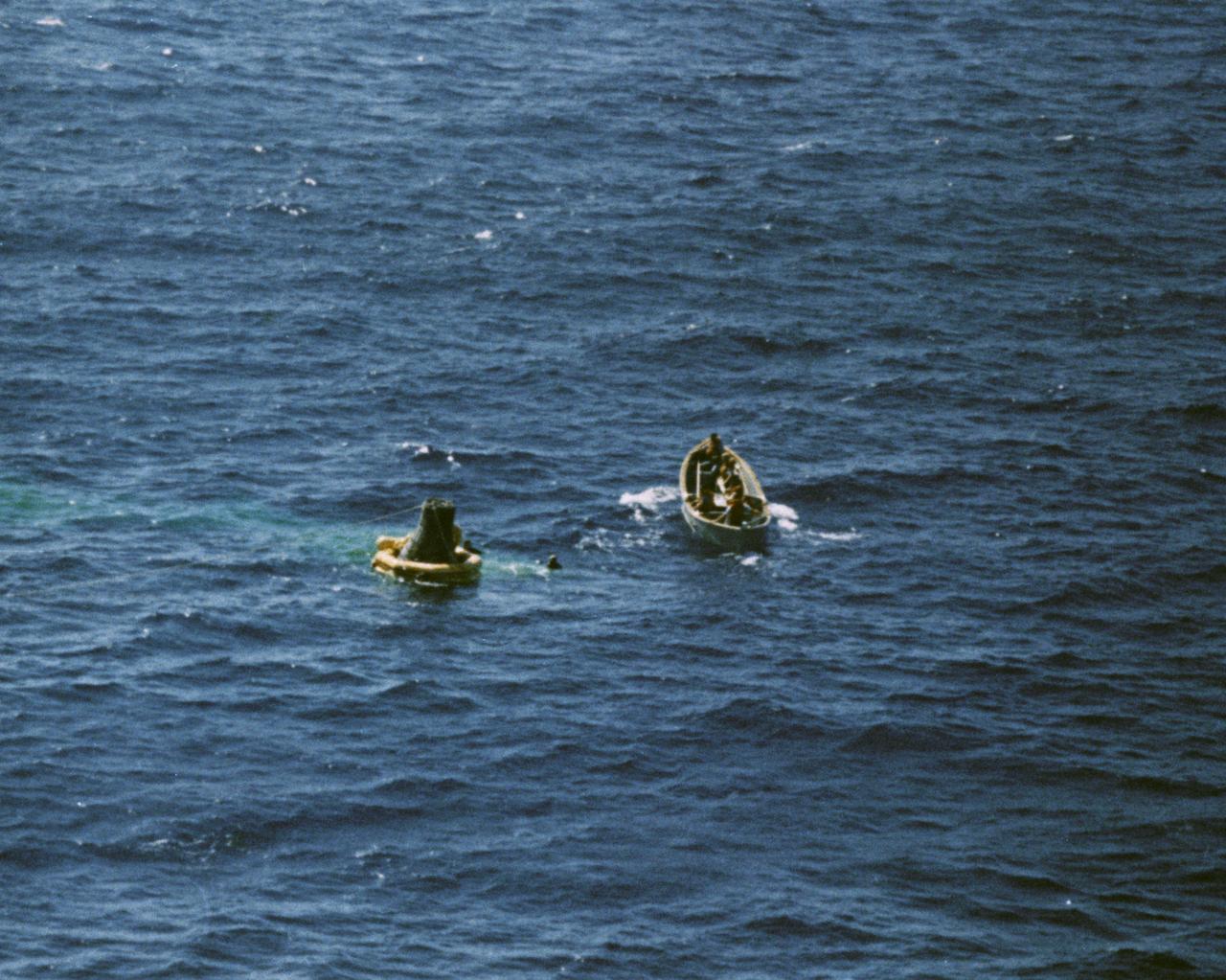
S62-09049 (3 Oct. 1962) --- Aerial view of a life boat from the USS Kearsarge, recovery ship, approaching the floating Sigma 7 capsule for the Mercury-Atlas 8 (MA-8) mission. Photo credit: NASA
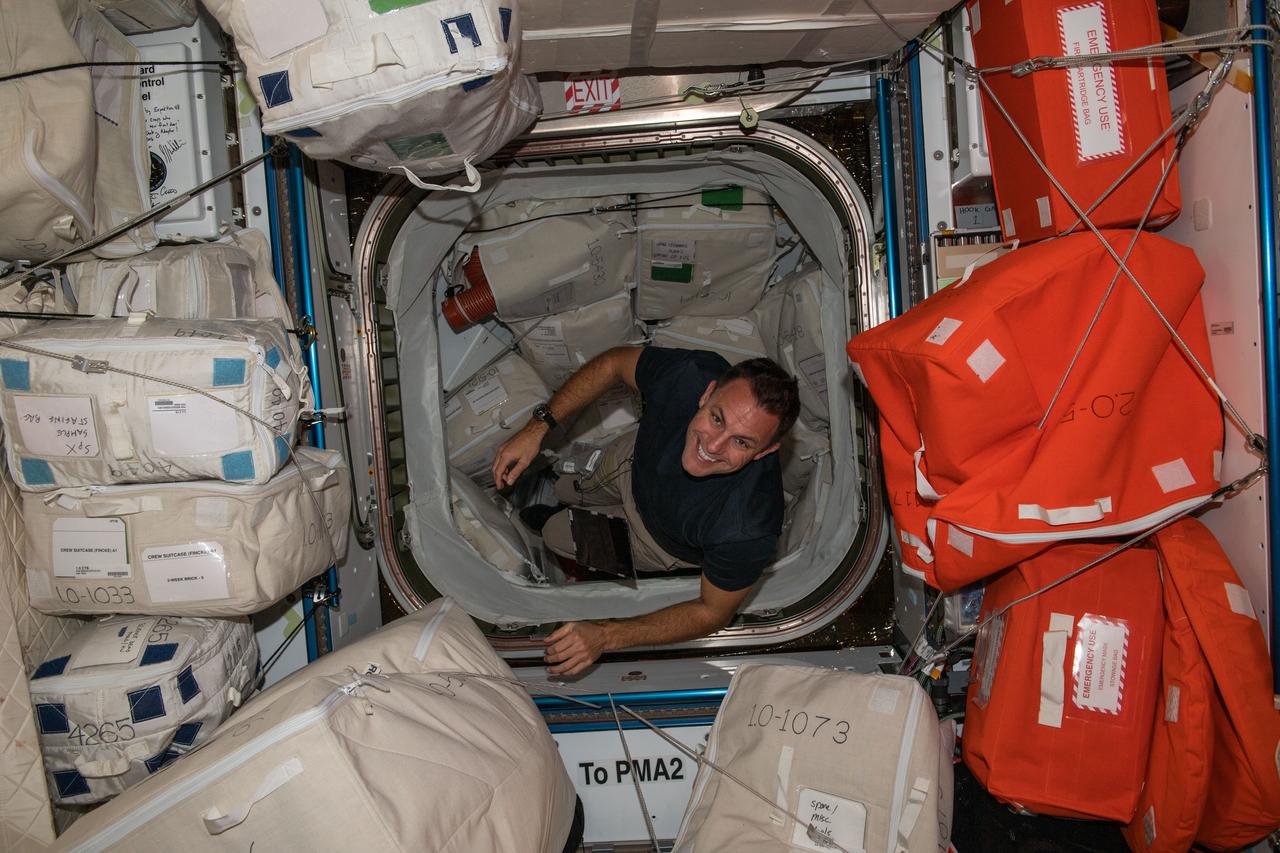
iss068e020515 (Nov. 3, 2022) --- NASA astronaut and Expedition 68 Flight Engineer Josh Cassada is pictured inside the Harmony module's forward-facing international docking adapter where the SpaceX Dragon Endeavour crew ship is docked.
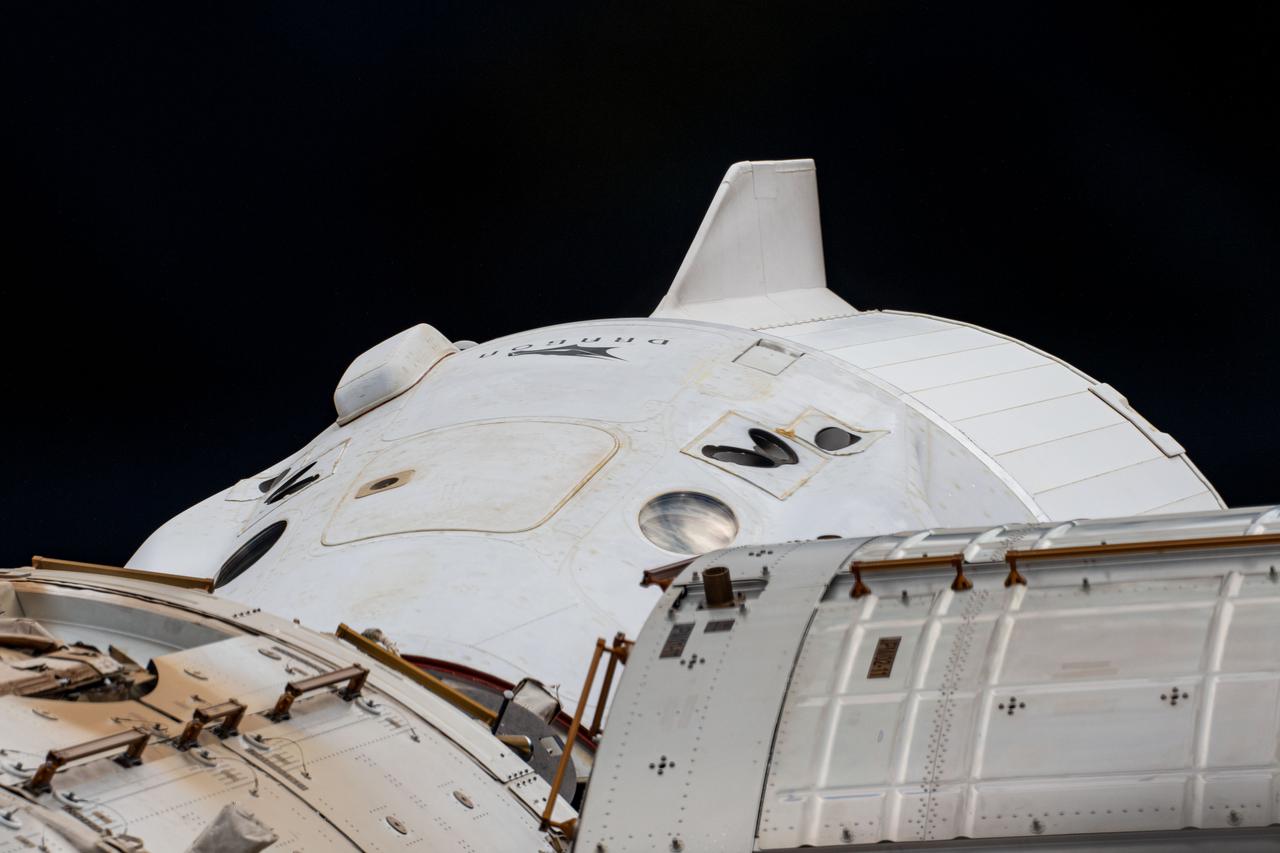
iss067e005316 (April 6, 2022) --- The SpaceX Dragon Endurance crew ship that carried four Crew-3 astronauts to the International Space Station is pictured docked to the forward-facing port of the Harmony module.
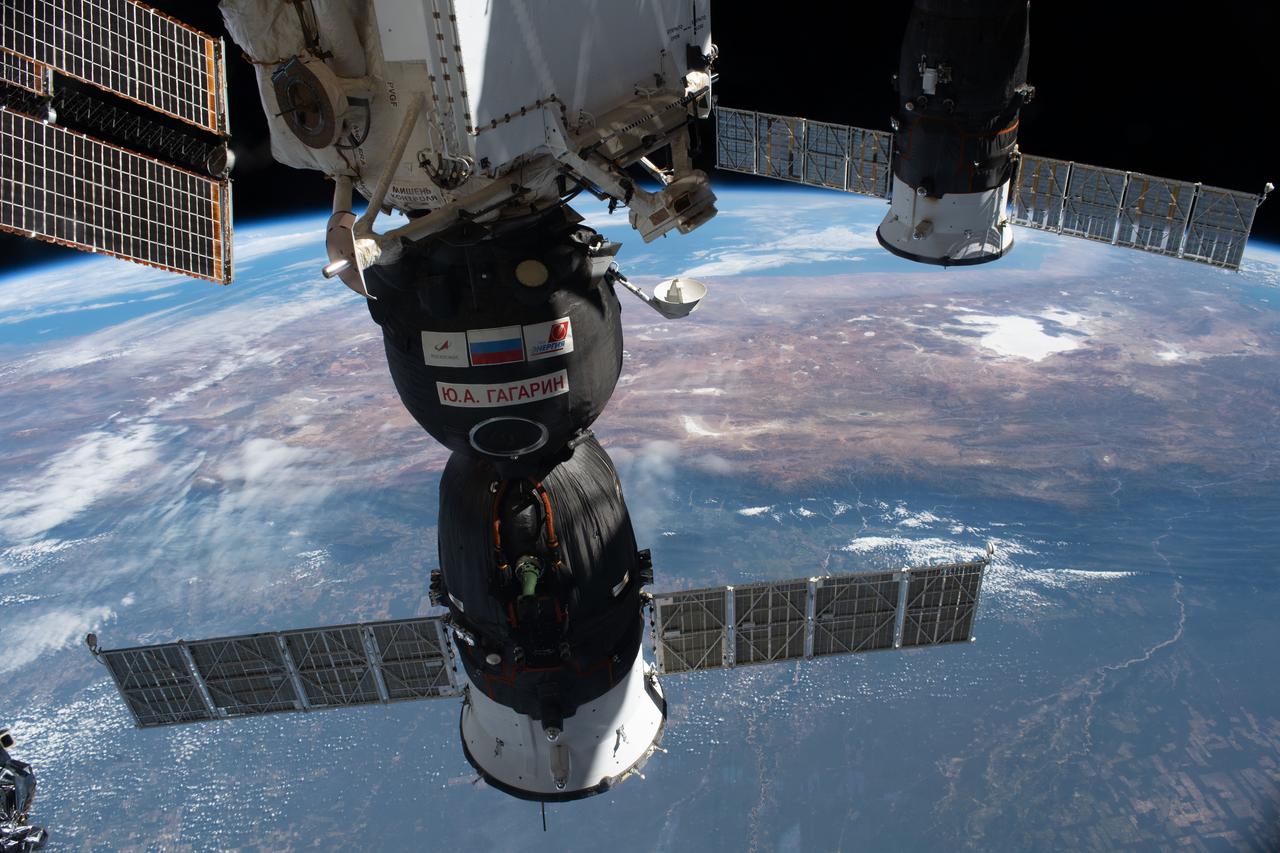
iss065e056881 (May 3, 2021) --- The Soyuz MS-18 crew ship (foreground) and the ISS Progress 77 cargo craft are pictured docked to the International Space Station as it orbited 265 miles above South America.
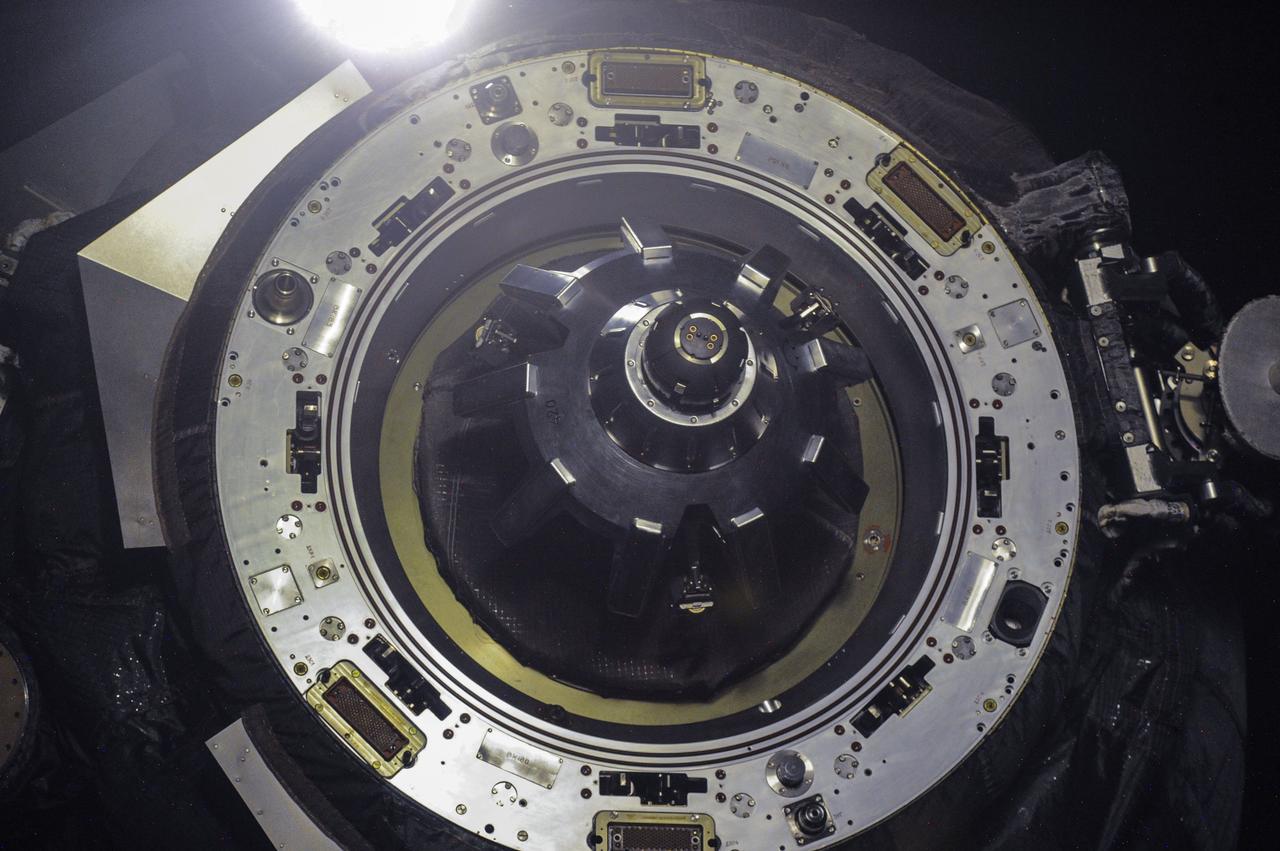
ISS038-E-041175 (3 Feb. 2014) --- This close-up view shows the docking mechanism of the unpiloted Russian ISS Progress 52 resupply ship as it undocks from the International Space Station's Pirs Docking Compartment at 11:21 a.m. (EST) on Feb. 3, 2014. The Progress backed away to a safe distance from the orbital complex to begin several days of tests to study thermal effects of space on its attitude control system. Filled with trash and other unneeded items, the Russian resupply ship will be commanded to re-enter Earth's atmosphere Feb. 11 and disintegrate harmlessly over the Pacific Ocean.
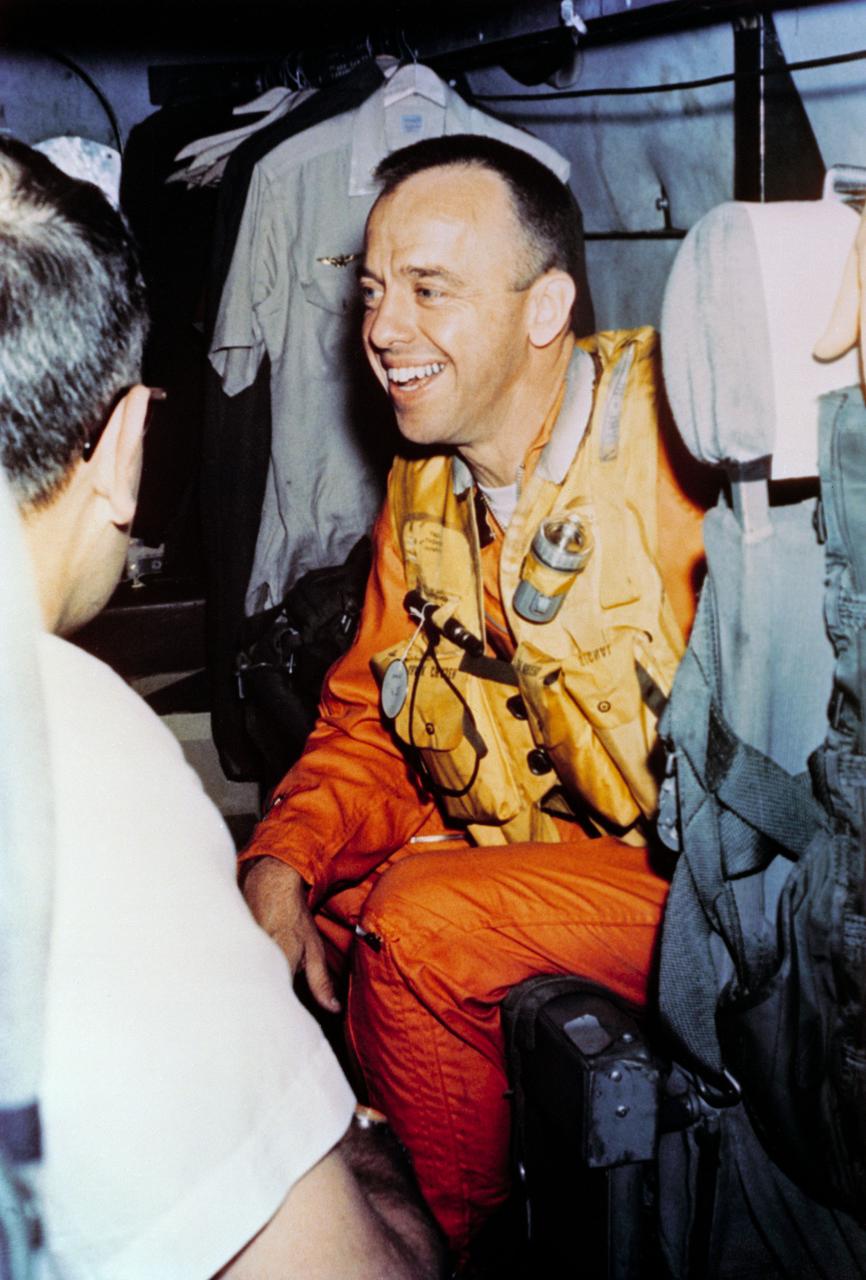
S88-31383 (5 May 1961) --- Astronaut Alan B. Shepard Jr., Mercury-Redstone 3 (MR-3) pilot, jokes with doctors while in-flight between the U.S. Navy Carrier Champlain and the Grand Bahama Islands. Shepard is the first American in space with the successful completion of the 15-minute suborbital mission. Photo credit: NASA or National Aeronautics and Space Administration
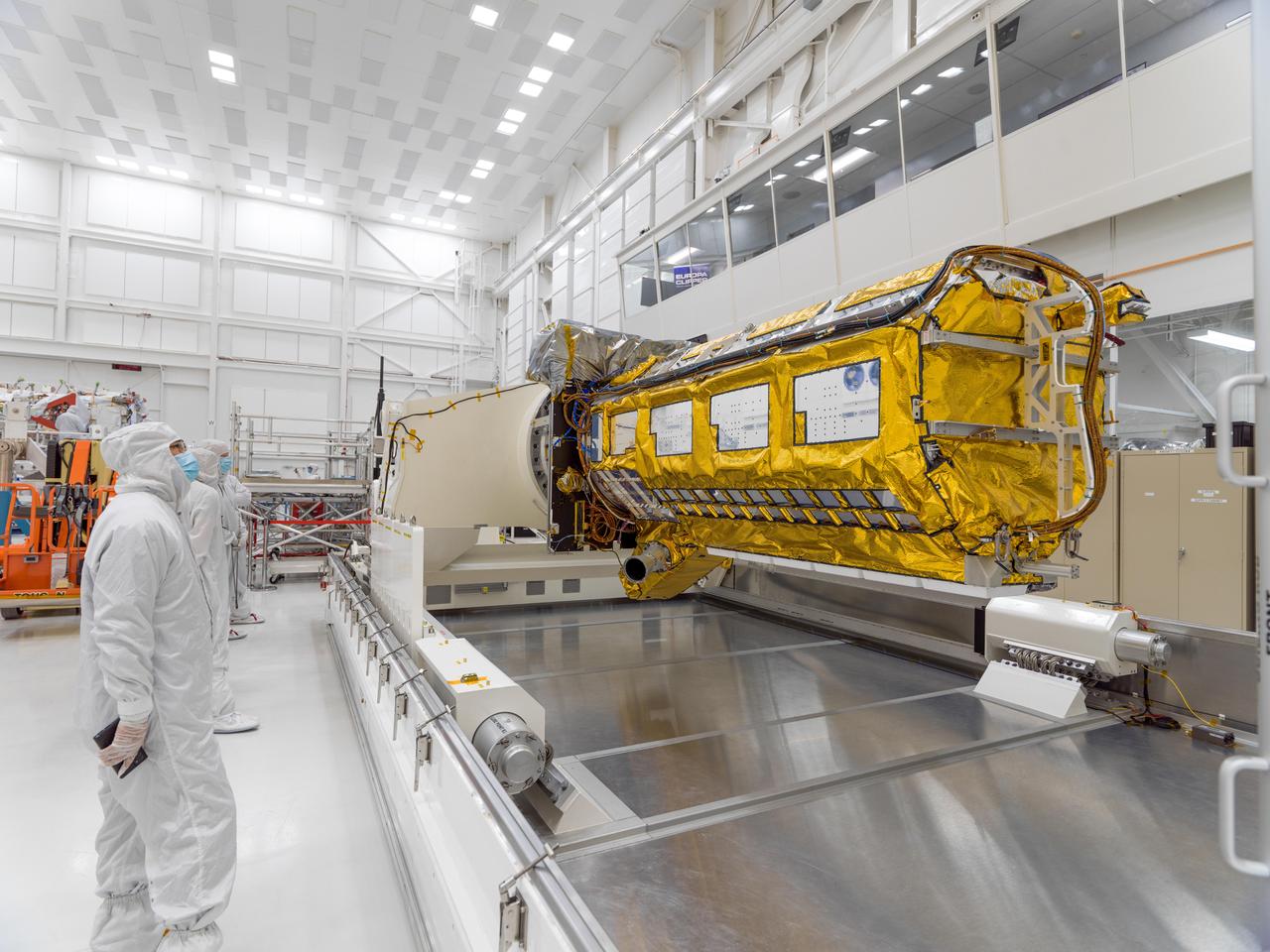
The NASA-ISRO Synthetic Aperture Radar (NISAR) science instrument payload sits in its specially designed, climate-controlled shipping container in a clean room at NASA's Jet Propulsion Laboratory on Feb. 23, 2023. Engineers and technicians used a crane to lift the payload and mount it vertically onto a stage at the far end of the container before tilting it horizontally. The payload was then shipped to Bengaluru, India, on March 3, arriving on March 6. There it will be integrated with the satellite body, or bus, and undergo further testing leading up to launch in 2024. The NISAR mission – a joint effort between NASA and the Indian Space Research Organisation – will observe nearly all the planet's land and ice surfaces twice every 12 days, measuring movements in extremely fine detail. It will also survey forests and agricultural regions to understand carbon exchange between plants and the atmosphere. NISAR's science payload will be the most advanced radar system ever launched as part of a NASA mission, and it will feature the largest-ever radar antenna of its kind: a drum-shaped, wire mesh reflector nearly 40 feet (12 meters) in diameter that will extend from a 30-foot (9-meter) boom. The mission's science instruments consist of L- and S-band radar, so named to indicate the wavelengths of their signals. ISRO built the S-band radar, which it shipped to JPL in March 2021. Engineers spent much of the last two years integrating the instrument with the JPL-built L-band system, then conducting tests to verify they work well together. JPL, which is managed for NASA by Caltech in Pasadena, leads the U.S. component of NISAR. In addition to the L-band radar, NASA is also providing the radar reflector antenna, the deployable boom, a high-rate communication subsystem for science data, GPS receivers, a solid-state recorder, and payload data subsystem. In addition to the S-band radar, ISRO is providing the spacecraft bus, the launch vehicle, and associated launch services and satellite mission operations. https://photojournal.jpl.nasa.gov/catalog/PIA25566
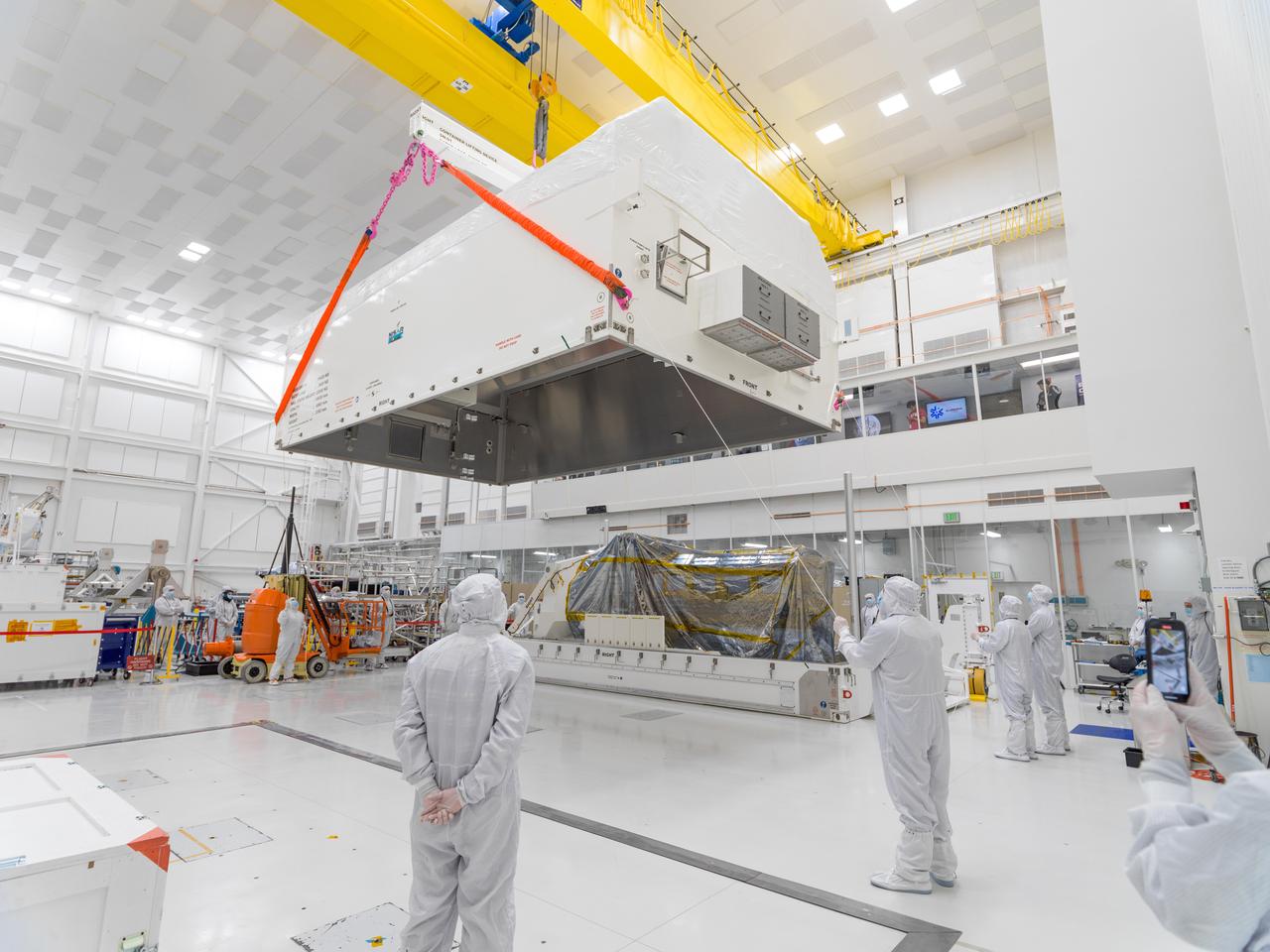
In a clean room at NASA's Jet Propulsion Laboratory on Feb. 23, 2023, engineers and technicians use a crane to prepare to seal a specially designed, climate-controlled shipping container holding the NASA-ISRO Synthetic Aperture Radar (NISAR) science instrument payload. The payload was then shipped to Bengaluru, India, on March 3, arriving on March 6. There it will be integrated with the satellite body, or bus, and undergo further testing leading up to launch in 2024. The NISAR mission – a joint effort between NASA and the Indian Space Research Organisation – will observe nearly all the planet's land and ice surfaces twice every 12 days, measuring movements in extremely fine detail. It will also survey forests and agricultural regions to understand carbon exchange between plants and the atmosphere. NISAR's science payload will be the most advanced radar system ever launched as part of a NASA mission, and it will feature the largest-ever radar antenna of its kind: a drum-shaped, wire mesh reflector nearly 40 feet (12 meters) in diameter that will extend from a 30-foot (9-meter) boom. The mission's science instruments consist of L- and S-band radar, so named to indicate the wavelengths of their signals. ISRO built the S-band radar, which it shipped to JPL in March 2021. Engineers spent much of the last two years integrating the instrument with the JPL-built L-band system, then conducting tests to verify they work well together. JPL, which is managed for NASA by Caltech in Pasadena, leads the U.S. component of NISAR. In addition to the L-band radar, NASA is also providing the radar reflector antenna, the deployable boom, a high-rate communication subsystem for science data, GPS receivers, a solid-state recorder, and payload data subsystem. In addition to the S-band radar, ISRO is providing the spacecraft bus, the launch vehicle, and associated launch services and satellite mission operations. https://photojournal.jpl.nasa.gov/catalog/PIA25567
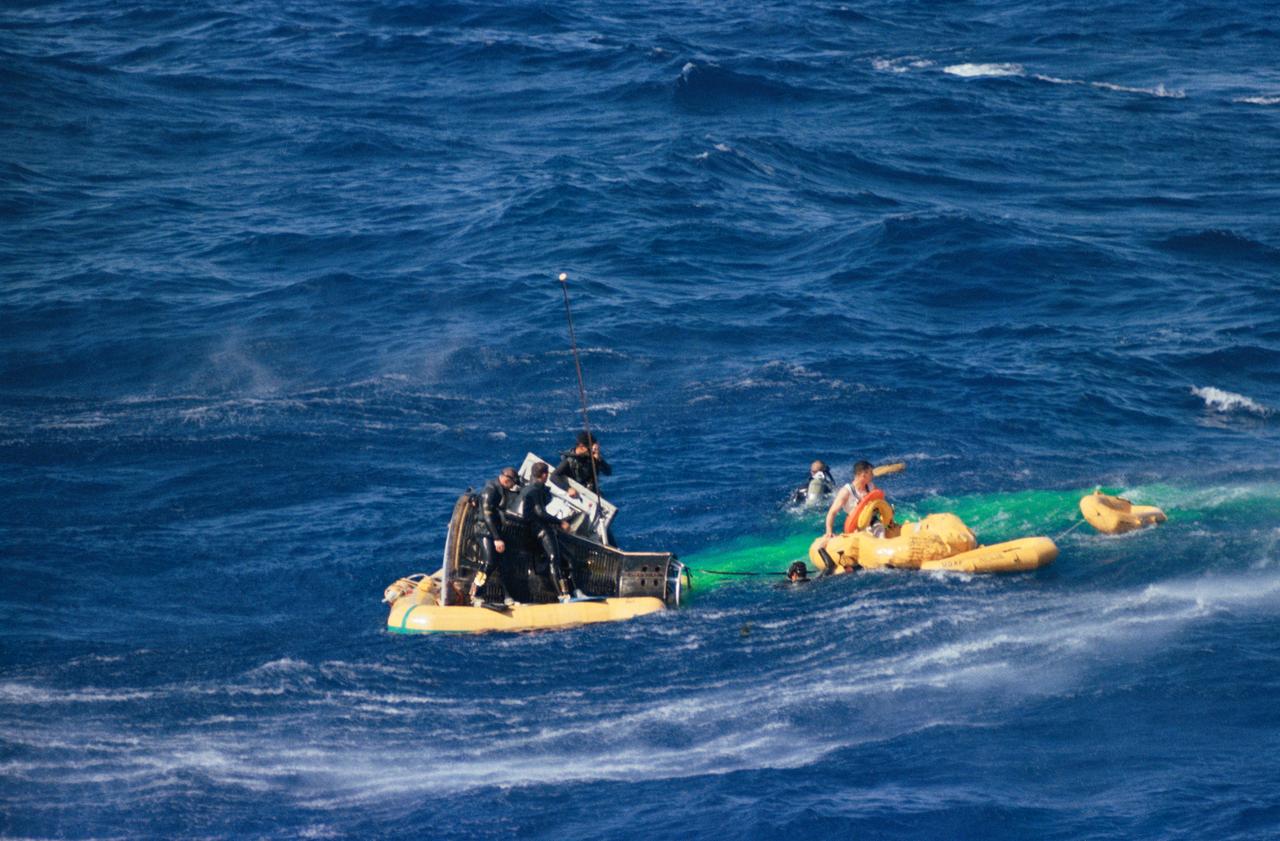
S65-22893 (23 March 1965) --- Astronaut John W. Young, the pilot of the Gemini-Titan III (GT-3) flight, waits in a life raft to be picked up by a helicopter during recovery operations following the successful three-orbit mission. Young and astronaut Virgil I. Grissom, command pilot, were flown by helicopter to the nearby recovery vessel, the USS Intrepid. The recovery ship later came alongside and retrieved the GT-3 spacecraft. United States Navy swimmers assisted in the GT-3 recovery operations.
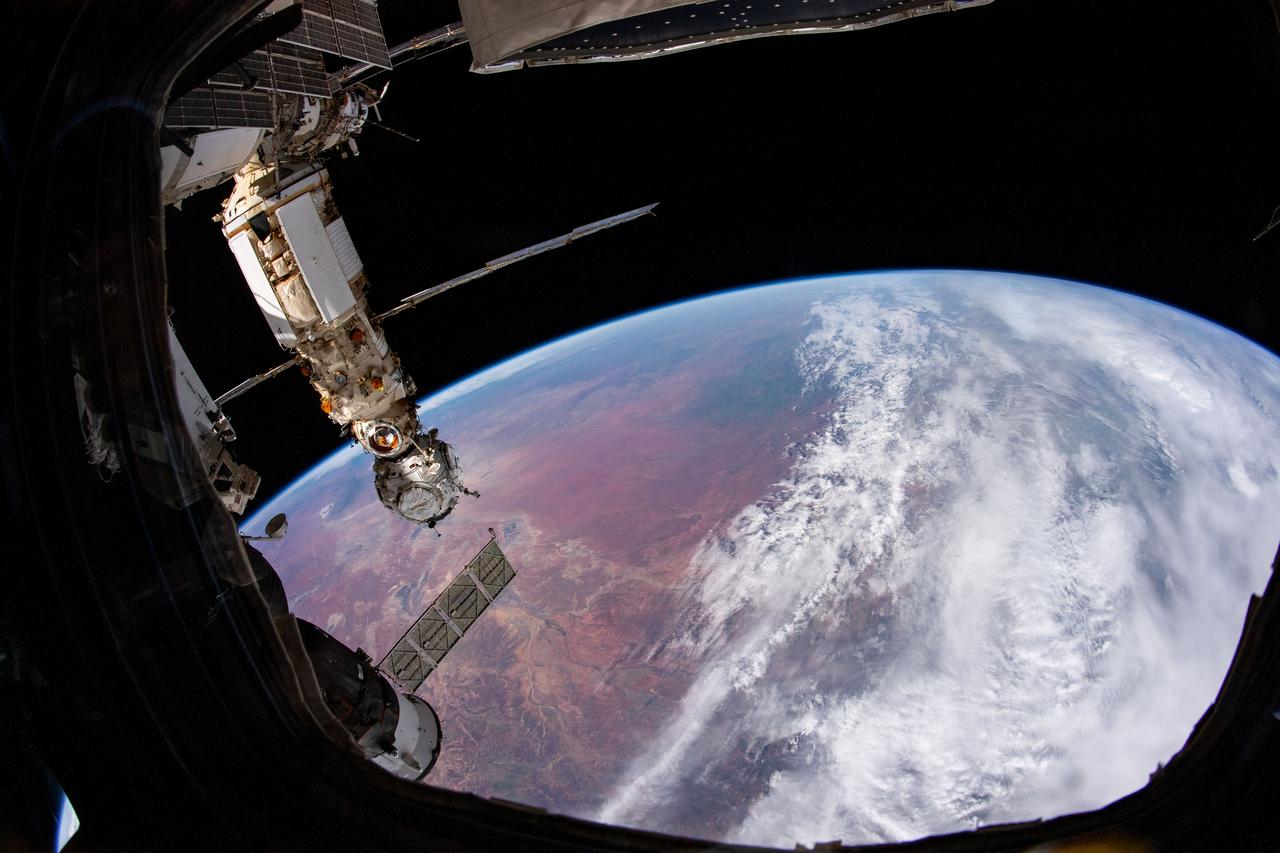
iss066e135344 (Feb. 3, 2022) --- The Nauka multipurpose laboratory module and the Prichal docking module are pictured as the International Space Station orbited 265 miles above central Australia. At lower left, is a portion of the Soyuz MS-19 crew ship docked to the Rassvet module.
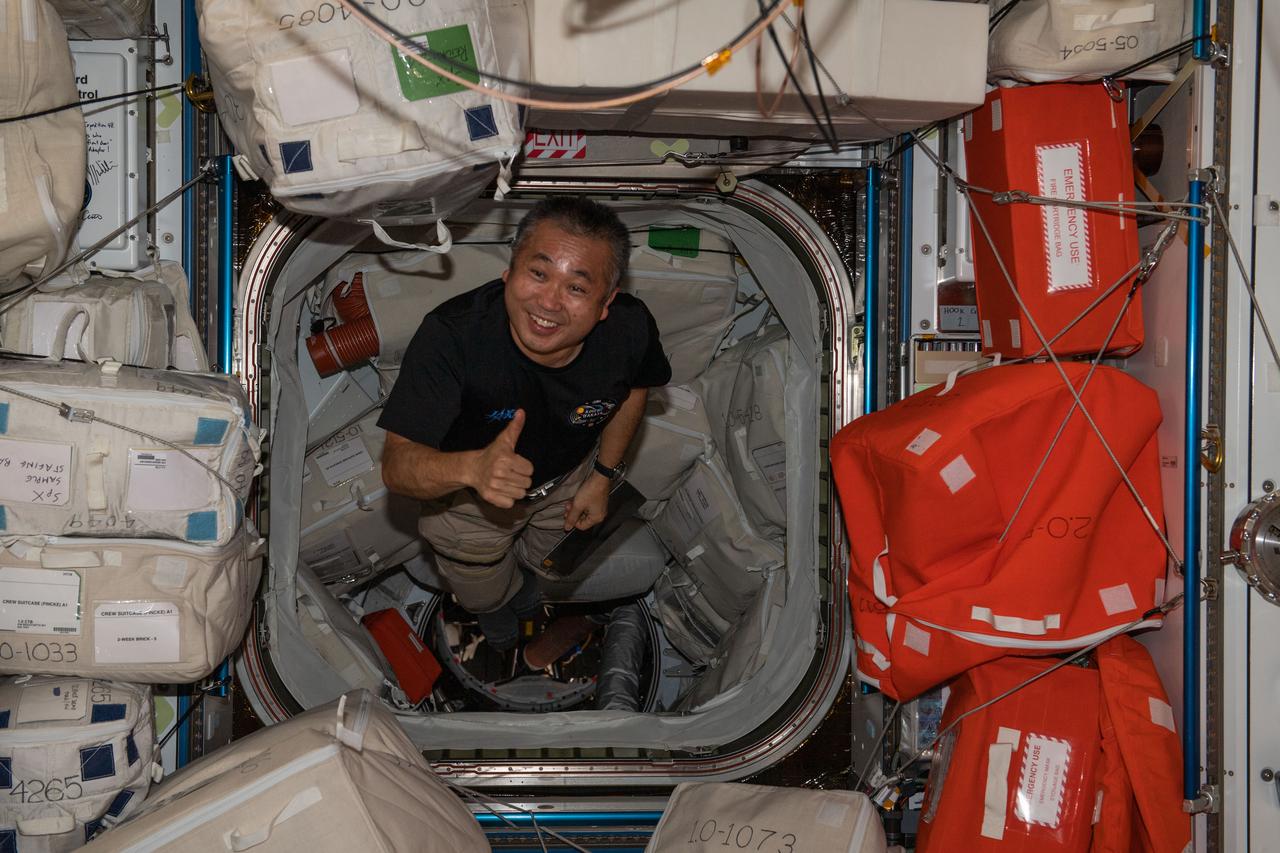
iss068e020523 (Nov. 3, 2022) --- Expedition 68 Flight Engineer Koichi Wakata of the Japan Aerospace Exploration Agency (JAXA) gives a "thumbs up" from inside the Harmony module's forward-facing international docking adapter where the SpaceX Dragon Endeavour crew ship is docked.
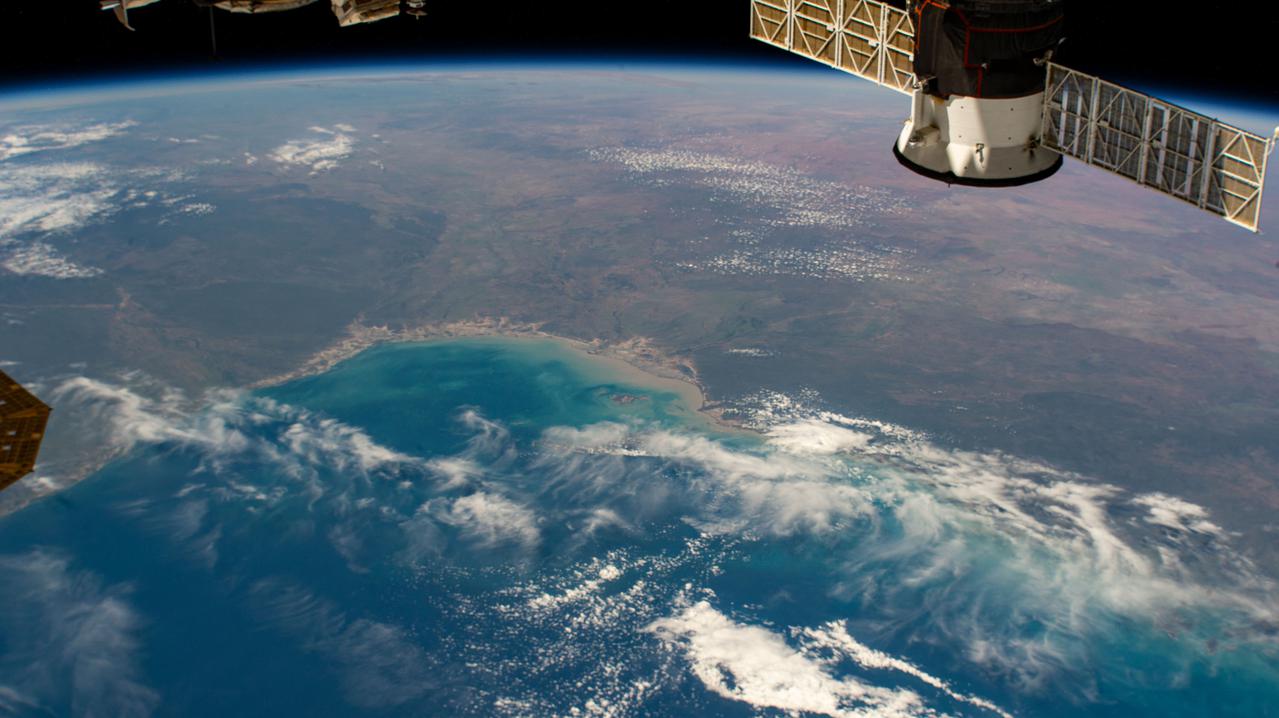
iss064e051879 (April 3, 2021) --- The Gulf of Carpentaria in northern Australia is pictured from the International Space Station as it orbited 264 miles above the Arafura Sea near the Indonesian province of Papua. At the top right, is the aft-end of the ISS Progress 77 resupply ship docked to the Pirs docking compartment.
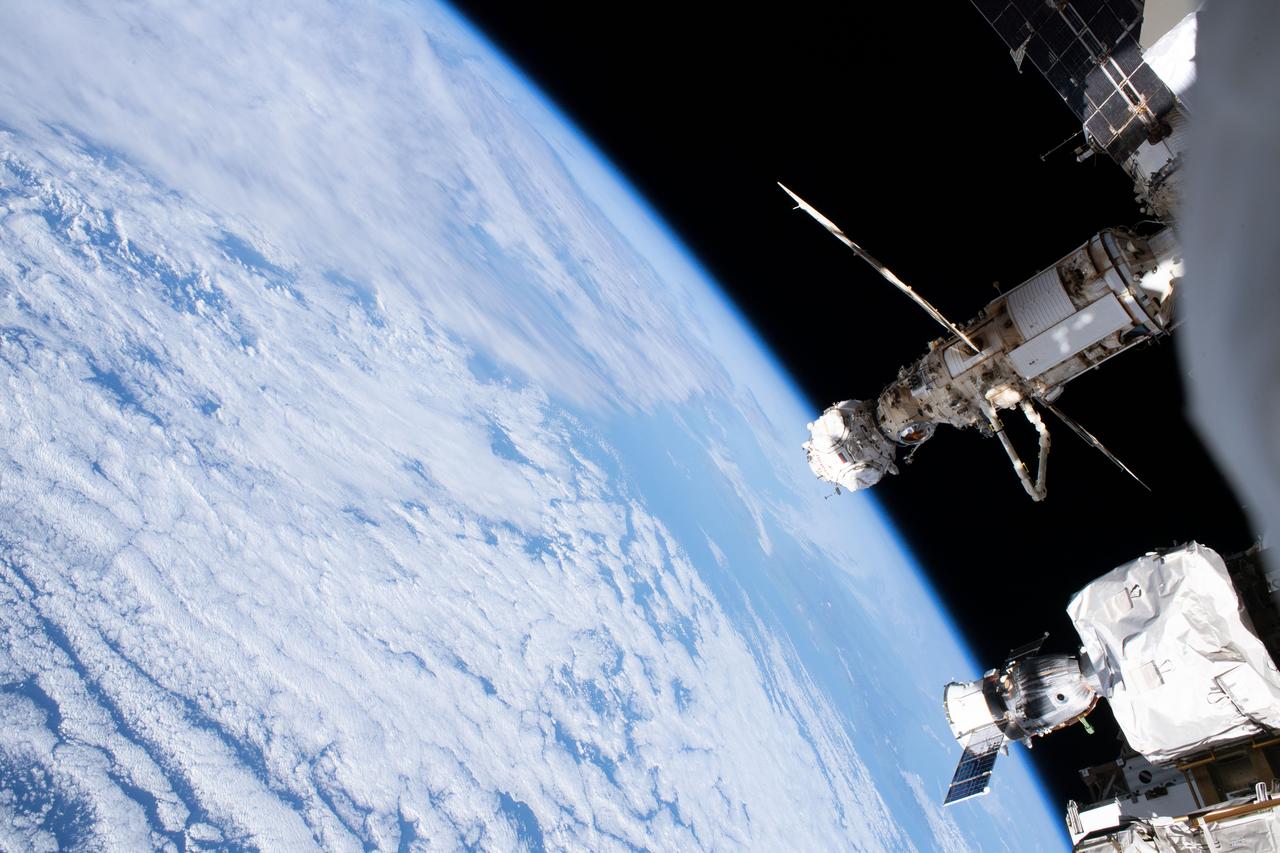
iss068e026379 (Dec. 3, 2022) --- The International Space Station was orbiting 271 miles above the southern Pacific Ocean when NASA astronaut and Expedition 68 Flight Engineer Josh Cassada captured this photograph of the Nauka multipurpose laboratory module, the Prichal docking module, and the Soyuz MS-22 crew ship during a spacewalk.
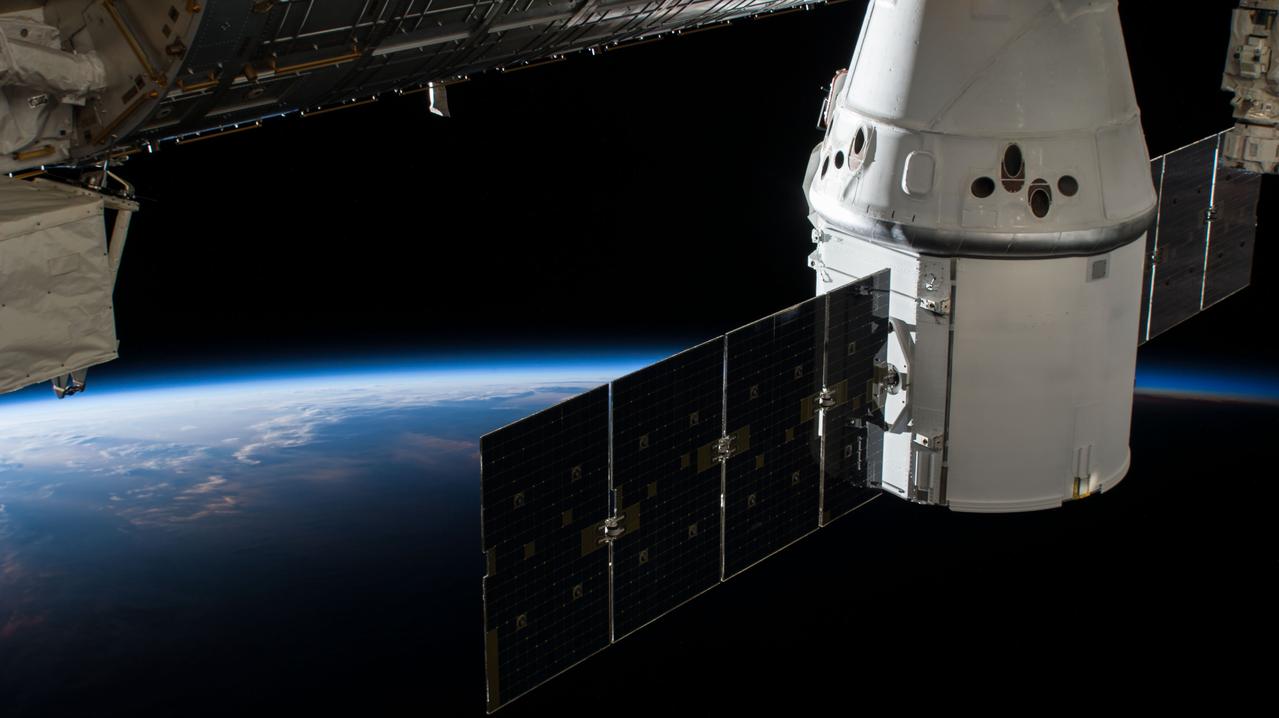
iss056e075978 (July 3, 2018) --- The SpaceX Dragon resupply ship, on its 15th Commercial Resupply Services mission (CRS-15), is pictured attached to the International Space Station the day after it was captured and installed on the Harmony module. The orbital complex was flying over northern central China near the Mongolian border at the time this photograph was taken.
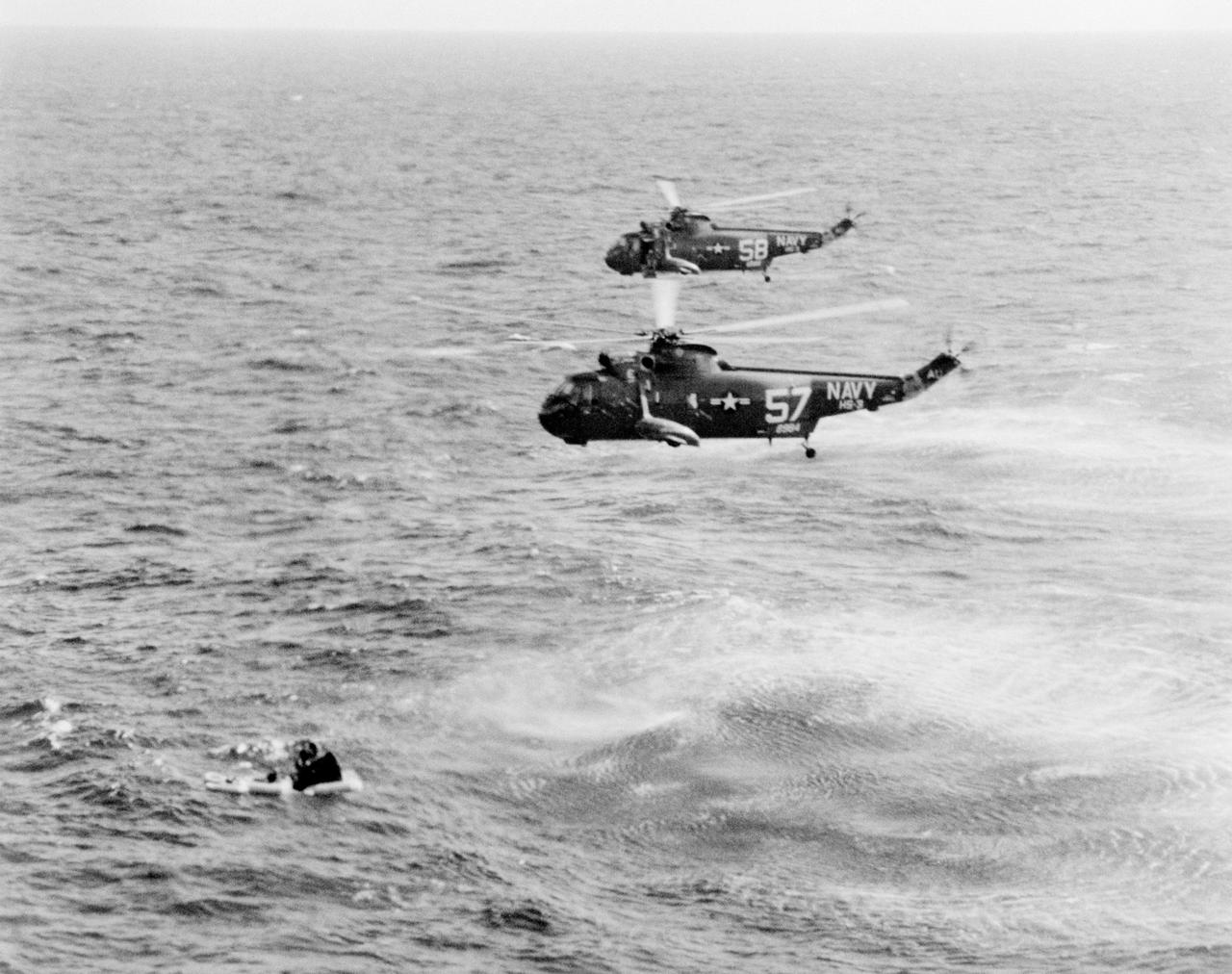
S65-19229 (23 March 1965) --- The Gemini-Titan 3 spacecraft is shown in the water after the March 23rd four-hour and 53-minute flight. Two helicopters from the recovery ship, the USS Intrepid, hover over the scene for the pickup of the astronauts.
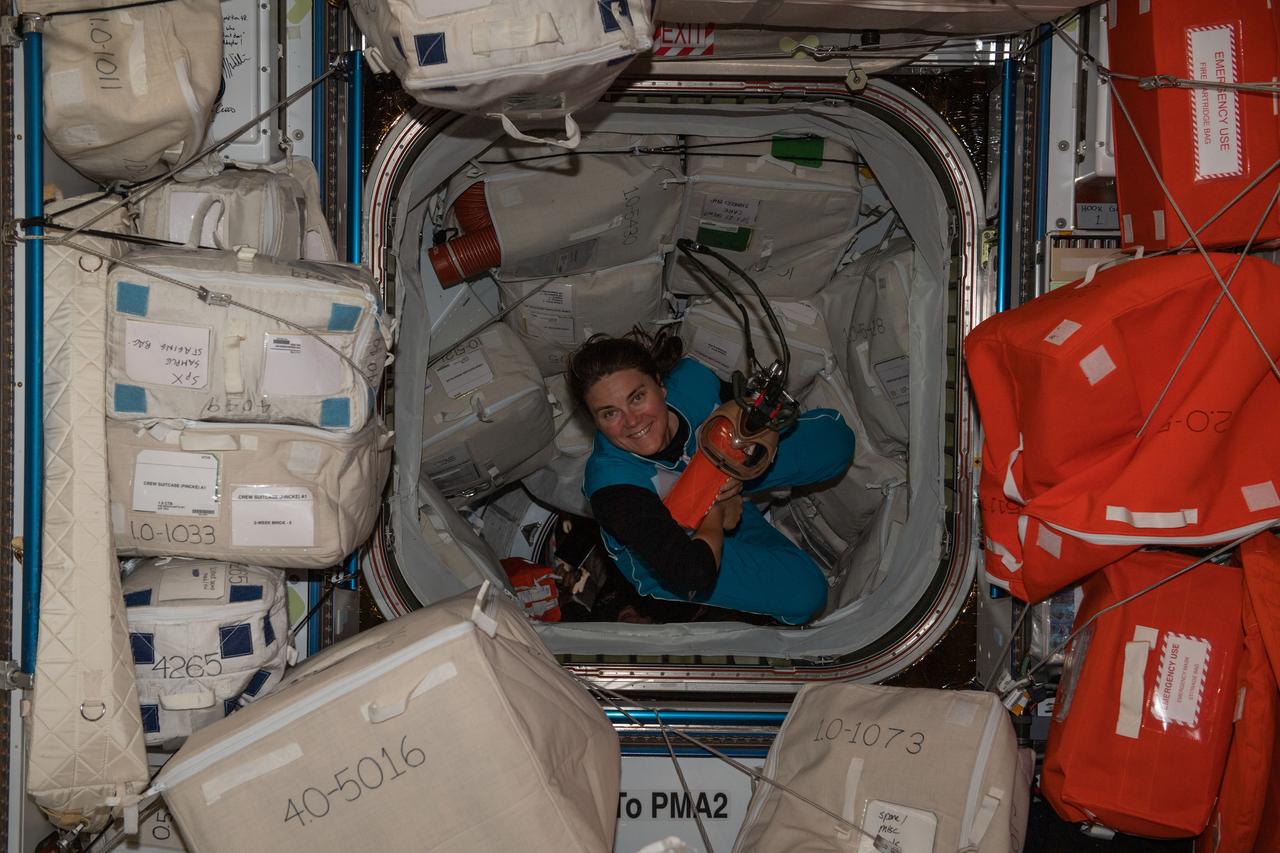
iss068e020521 (Nov. 3, 2022) --- Roscosmos cosmonaut and Expedition 68 Flight Engineer Anna Kikina is pictured carrying personal protective equipment inside the Harmony module's forward-facing international docking adapter where the SpaceX Dragon Endeavour crew ship is docked.

iss067e110329 (June 3, 2022) --- The Progress 81 cargo craft approaches the International Space Station for a docking to the Zvezda service module's rear port. In the foreground, is the Soyuz MS-21 crew ship docked to the Prichal dokcing module on the orbiting lab's Russian segment.
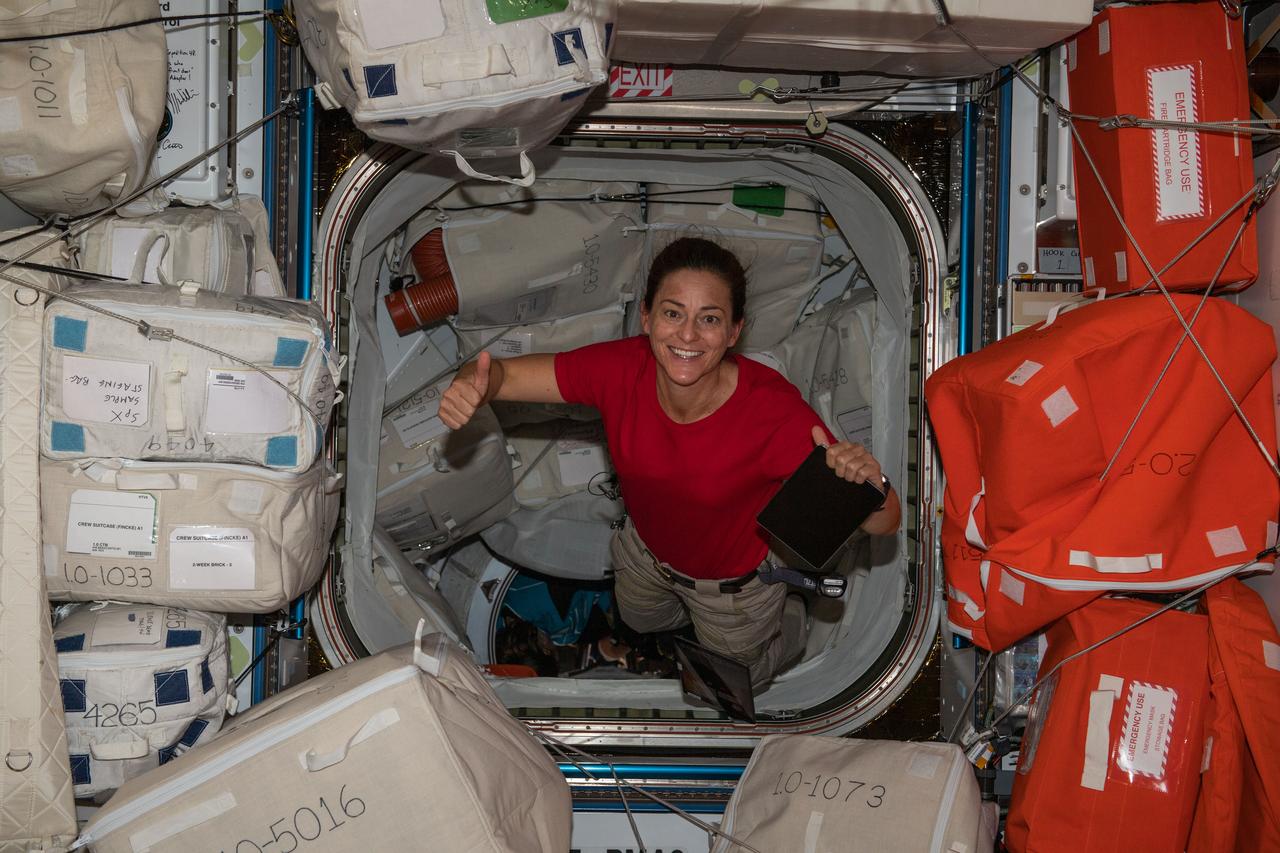
iss068e020519 (Nov. 3, 2022) --- NASA astronaut and Expedition 68 Flight Engineer Nicole Mann gives a "thumbs up" from inside the Harmony module's forward-facing international docking adapter where the SpaceX Dragon Endeavour crew ship is docked.
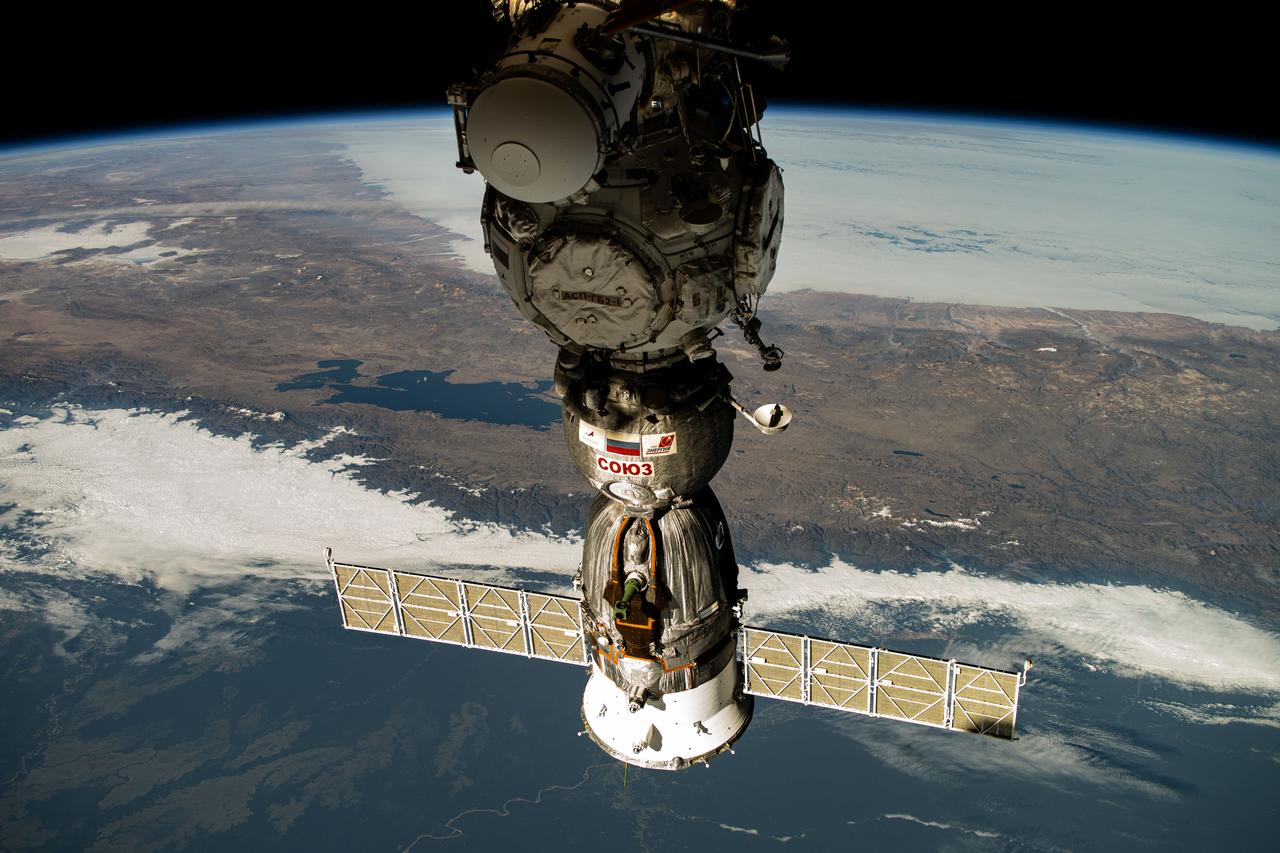
iss071e163005 (June 3, 2024) --- The Soyuz MS-25 crew ship is pictured docked to the Prichal docking module as the International Space Station orbited 258 miles above South America. Highlights in the background of this photograph include Lake Titicaca and the snow-capped Andes mountiain range.
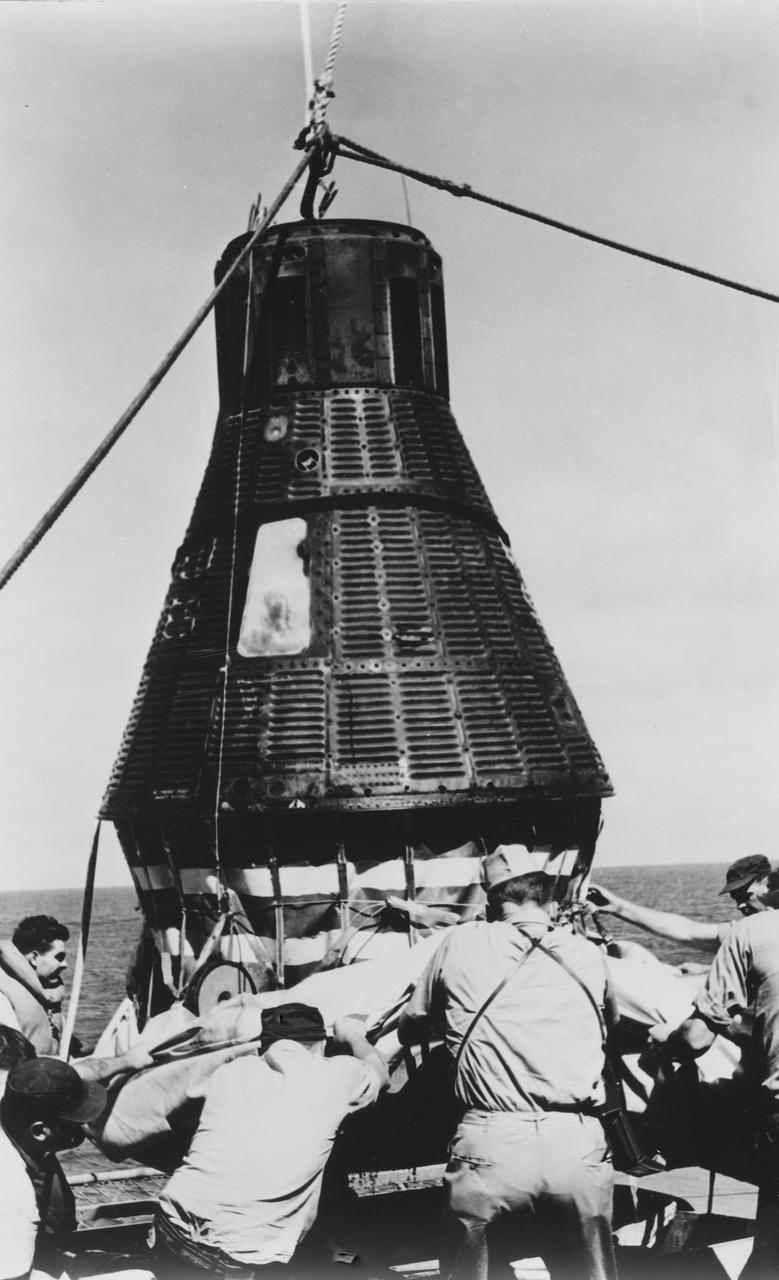
S62-06175 (3 Oct. 1962) --- Closeup view of the Mercury-Atlas 8 (MA-8) Sigma 7 capsule being lowered to recovery ship's deck. Navy personnel remove the floatation device before opening the capsule. Photo credit: NASA
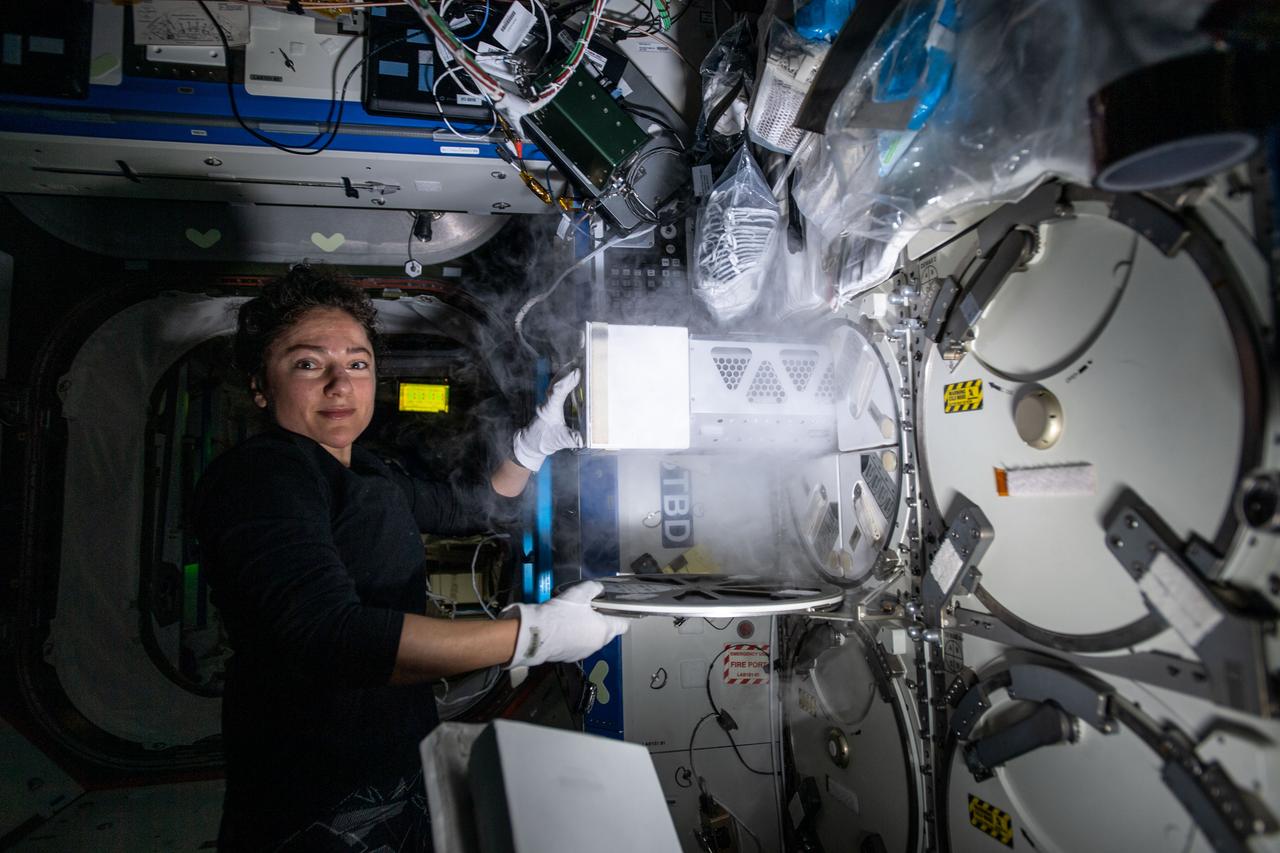
iss062e120699 (April 3, 2020) --- NASA astronaut and Expedition 62 Flight Engineer Jessica Meir gathers frozen research samples stowed in an International Space Station science freezer for loading inside the SpaceX Dragon resupply ship and return to Earth for scientific analysis.
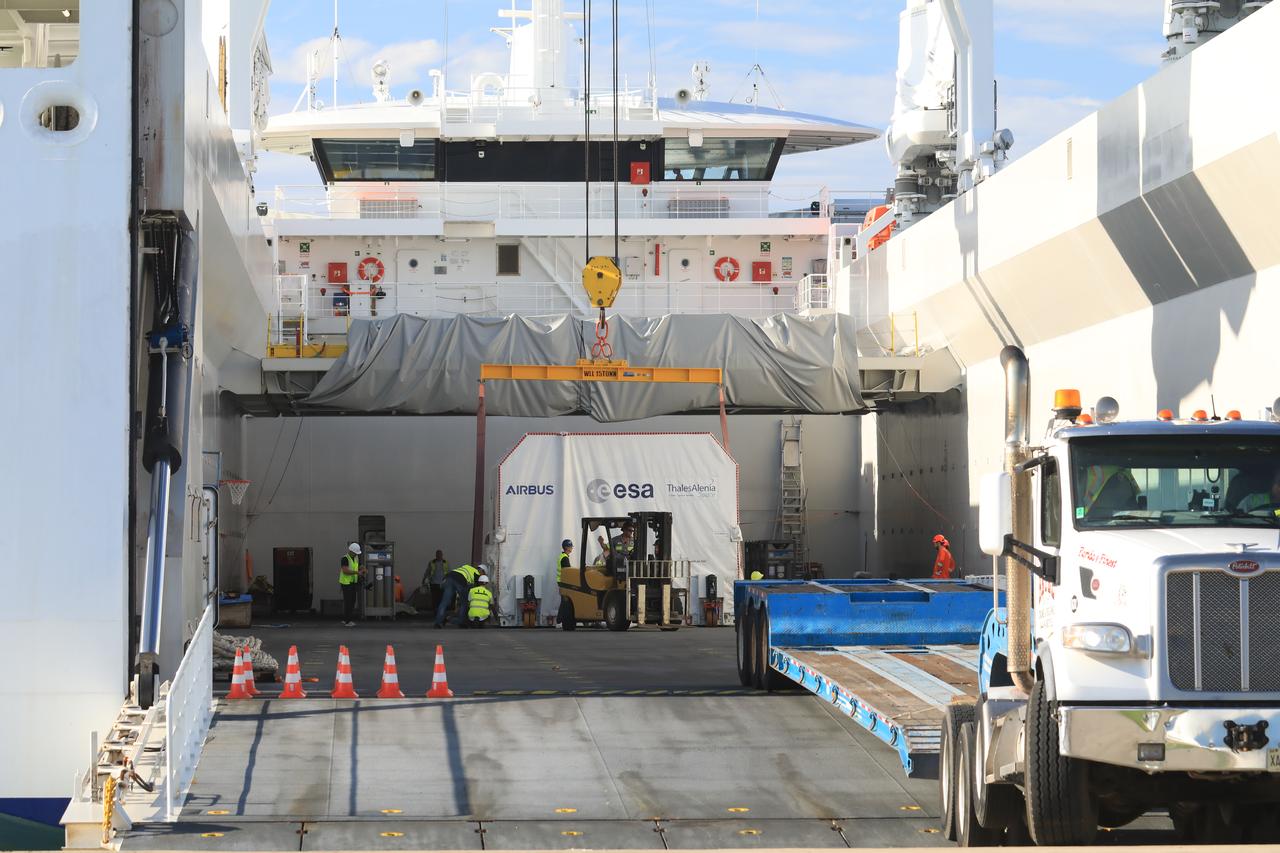
The transport carrier containing the European Service Module 3 for NASA’s Artemis III mission arrives at Port Canaveral on Tuesday, Sept. 3, 2024, awaiting transportation to NASA’s Kennedy Space Center in Florida. The European Service Module 3, which is assembled by Airbus in Bremen, Germany, traveled 10 days across the Atlantic Ocean via the Canopee ship. The European Service Module 3 provides the spacecraft’s propulsion, thermal control, electrical power, and life support systems. Artemis III will send four astronauts to the lunar orbit where two crew members will spend a week near the South Pole of the Moon conducting new science.
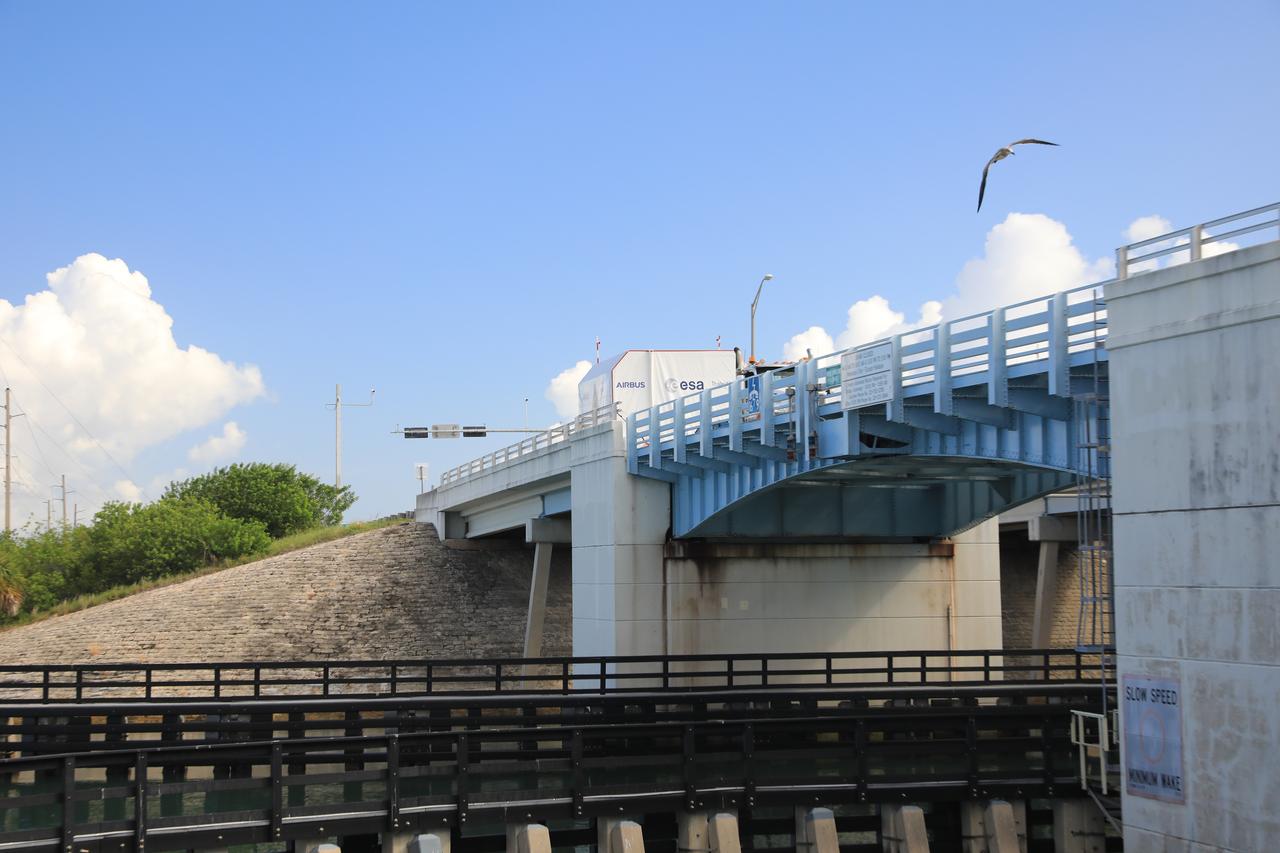
The transport carrier containing the European Service Module 3 for NASA’s Artemis III mission arrives at Port Canaveral on Tuesday, Sept. 3, 2024, awaiting transportation to NASA’s Kennedy Space Center in Florida. The European Service Module 3, which is assembled by Airbus in Bremen, Germany, traveled 10 days across the Atlantic Ocean via the Canopee ship. The European Service Module 3 provides the spacecraft’s propulsion, thermal control, electrical power, and life support systems. Artemis III will send four astronauts to the lunar orbit where two crew members will spend a week near the South Pole of the Moon conducting new science.
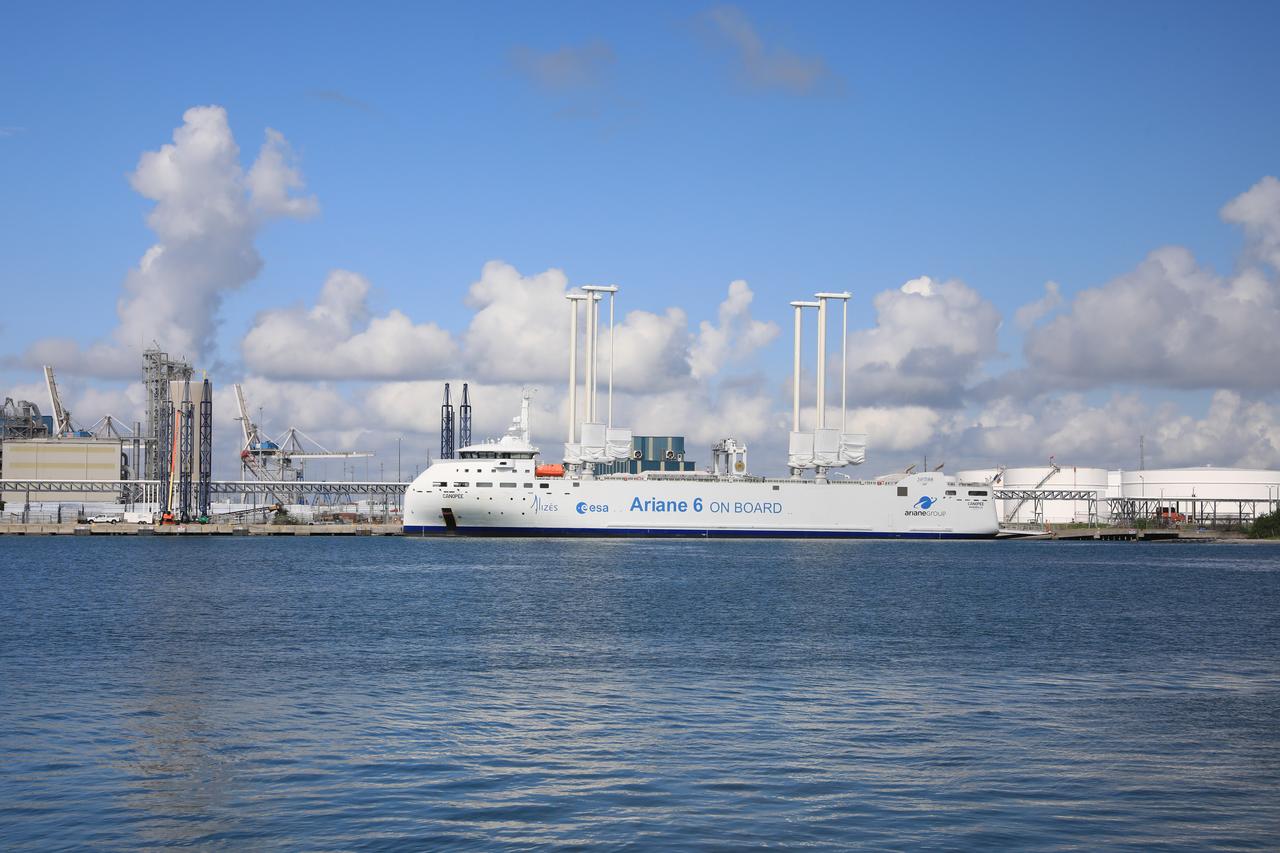
The European Service Module 3 for NASA’s Artemis III mission arrives at Port Canaveral on Tuesday, Sept. 3, 2024, awaiting transportation to NASA’s Kennedy Space Center in Florida. The European Service Module 3, which is assembled by Airbus in Bremen, Germany, traveled across the Atlantic Ocean by the ESA (European Space Agency) aboard the Canopee ship. The European Service Module 3 provides the spacecraft’s propulsion, thermal control, electrical power, and life support systems. Artemis III will send four astronauts to the lunar orbit where two crew members will spend a week near the South Pole of the Moon conducting new science.
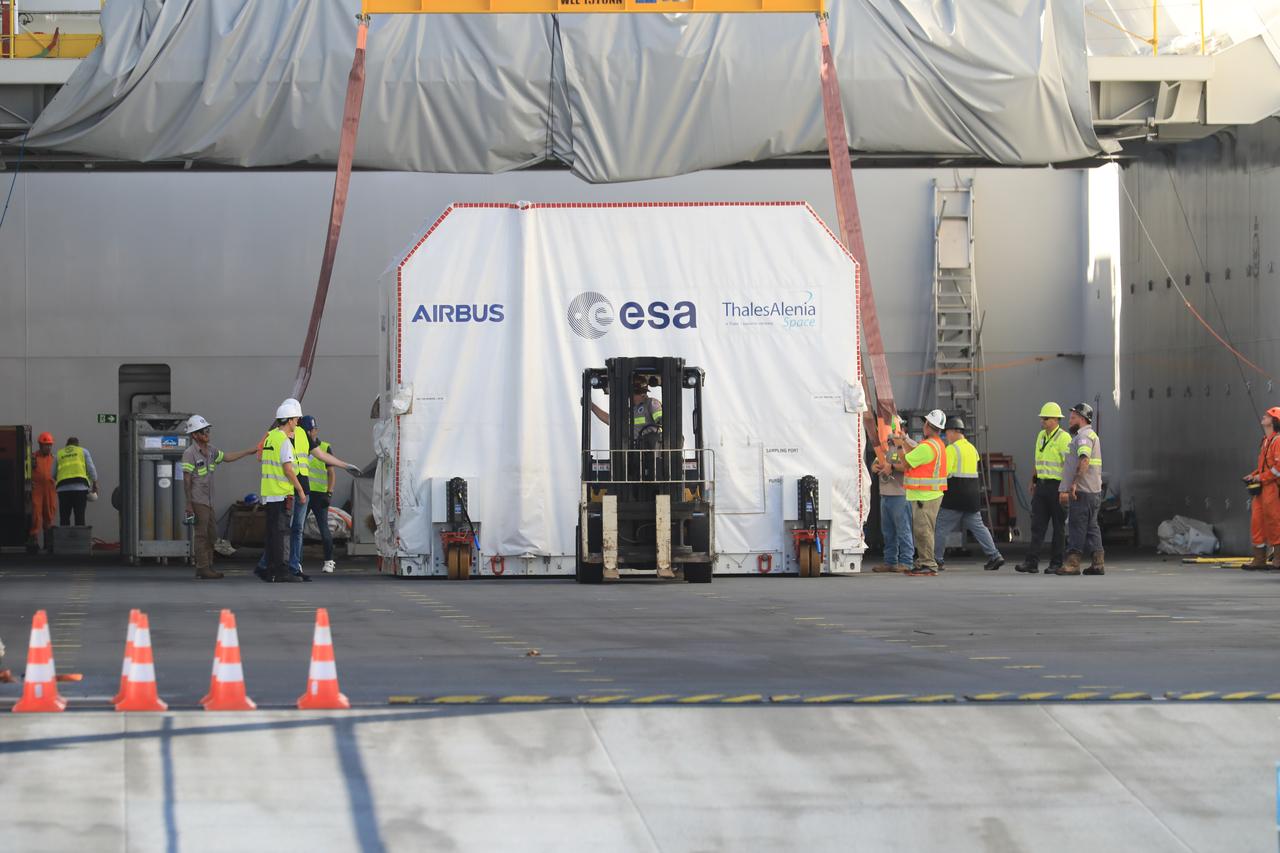
The transport carrier containing the European Service Module 3 for NASA’s Artemis III mission arrives at Port Canaveral on Tuesday, Sept. 3, 2024, awaiting transportation to NASA’s Kennedy Space Center in Florida. The European Service Module 3, which is assembled by Airbus in Bremen, Germany, traveled 10 days across the Atlantic Ocean via the Canopee ship. The European Service Module 3 provides the spacecraft’s propulsion, thermal control, electrical power, and life support systems. Artemis III will send four astronauts to the lunar orbit where two crew members will spend a week near the South Pole of the Moon conducting new science.
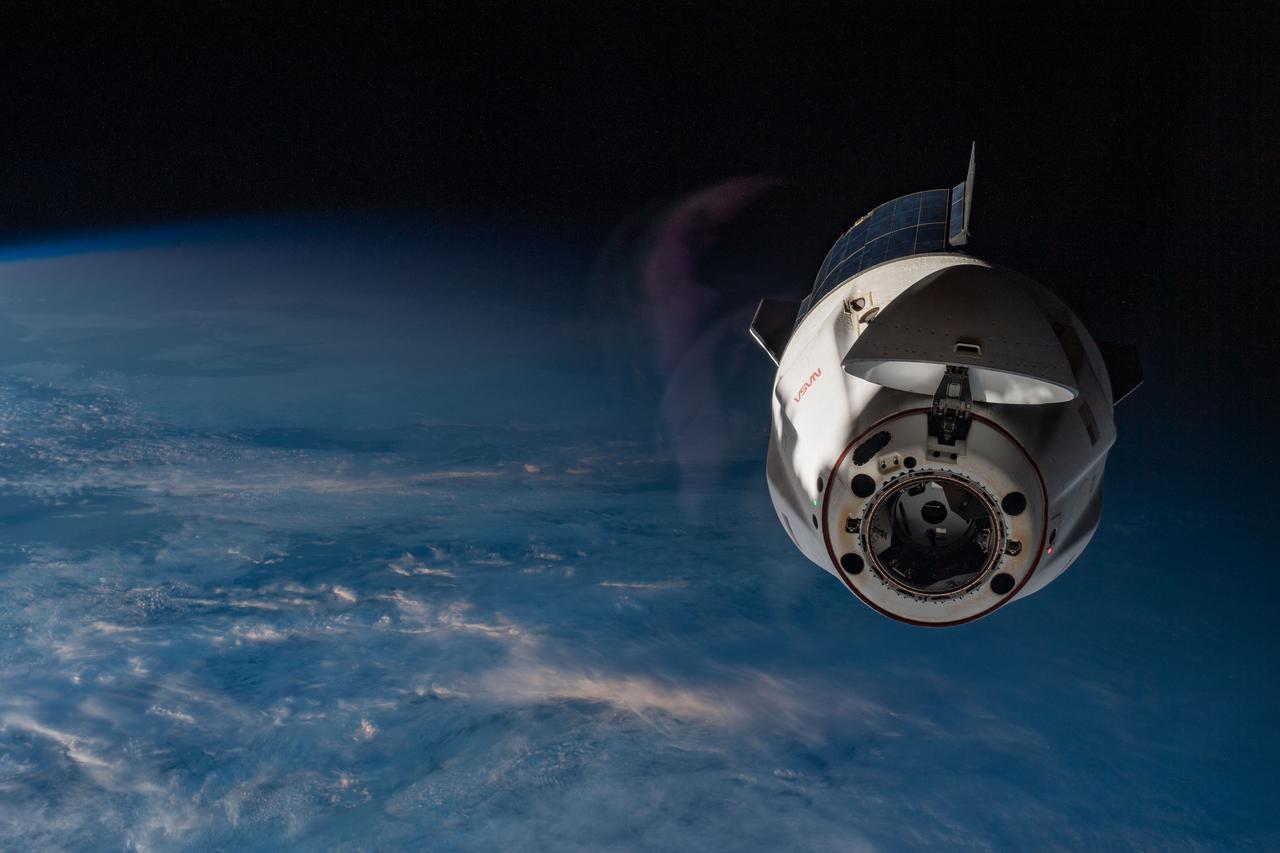
iss067e035177 (May 5, 2022) --- The SpaceX Dragon Endurance crew ship, carrying four Crew-3 astronauts back to Earth, is pictured from a window on the International Space Station following its undocking from the Harmony module's foward port. Crew-3 Commander Raja Chari led Pilot Tom Marshburn and Mission Specialists Kayla Barron and Matthias Maurer inside Endurance as they reentered Earth's atmosphere and parachuted to a splashdown off the coast of Tampa, Florida, the next day.
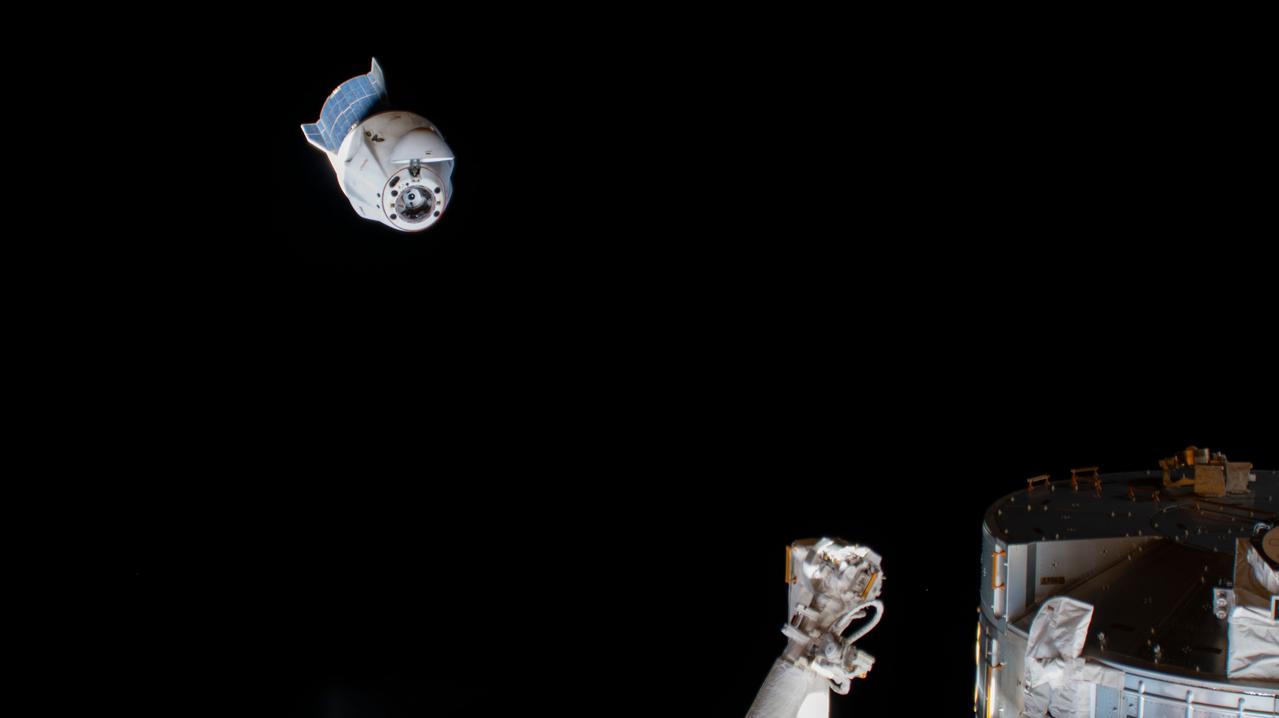
iss067e034663 (May 5, 2021) --- The SpaceX Dragon Endurance crew ship, carrying four Crew-3 astronauts back to Earth, is pictured backing away from the International Space Station following its undocking from the forward port on the Harmony module. Crew-3 Commander Raja Chari led Pilot Tom Marshburn and Mission Specialists Kayla Barron and Matthias Maurer inside Endurance as they reentered Earth's atmosphere and parachuted to a splashdown off the coast of Tampa, Florida, the next day.
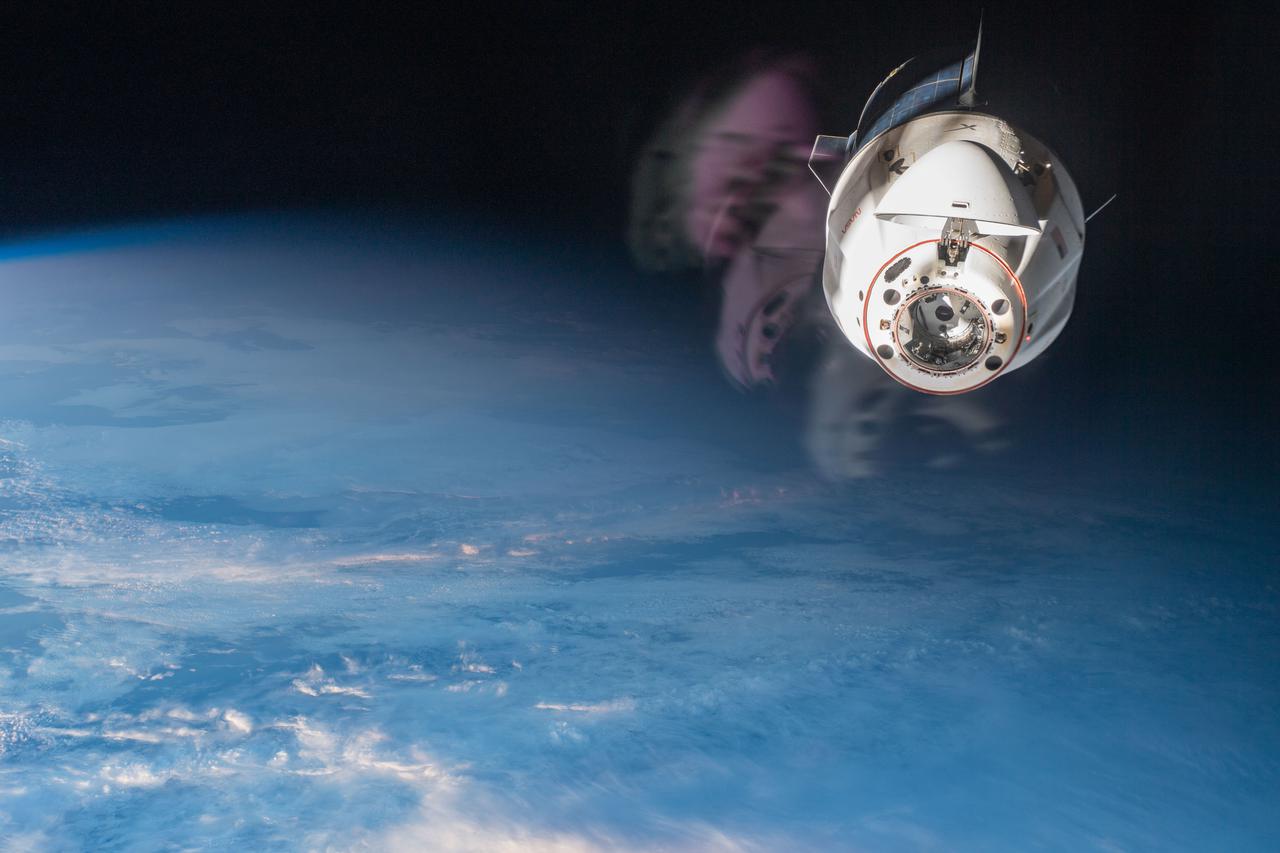
iss067e035214 (May 5, 2022) --- The SpaceX Dragon Endurance crew ship, carrying four Crew-3 astronauts back to Earth, is pictured from a window on the International Space Station following its undocking from the Harmony module's foward port. Crew-3 Commander Raja Chari led Pilot Tom Marshburn and Mission Specialists Kayla Barron and Matthias Maurer inside Endurance as they reentered Earth's atmosphere and parachuted to a splashdown off the coast of Tampa, Florida, the next day.
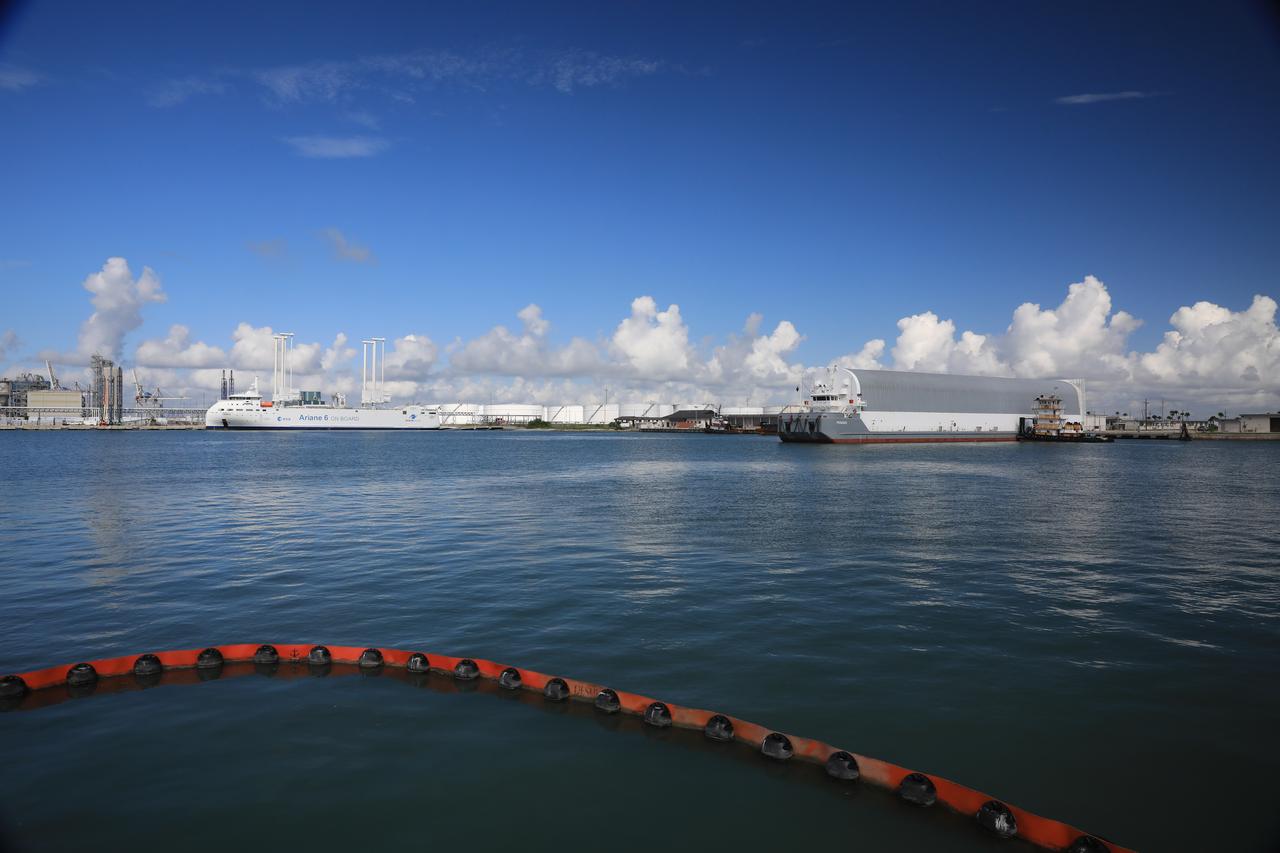
NASA’s Pegasus barge, carrying several pieces of the Artemis campaign hardware, along with the ESA (European Space Agency) ship carrying European Service Module 3 for NASA’s Artemis III mission arrives at Port Canaveral on Tuesday, Sept. 3, 2024, awaiting transportation to NASA’s Kennedy Space Center in Florida. Through the Artemis campaign, we are exploring the Moon for scientific discovery, technology advancement, and to learn how to live and work on another world.
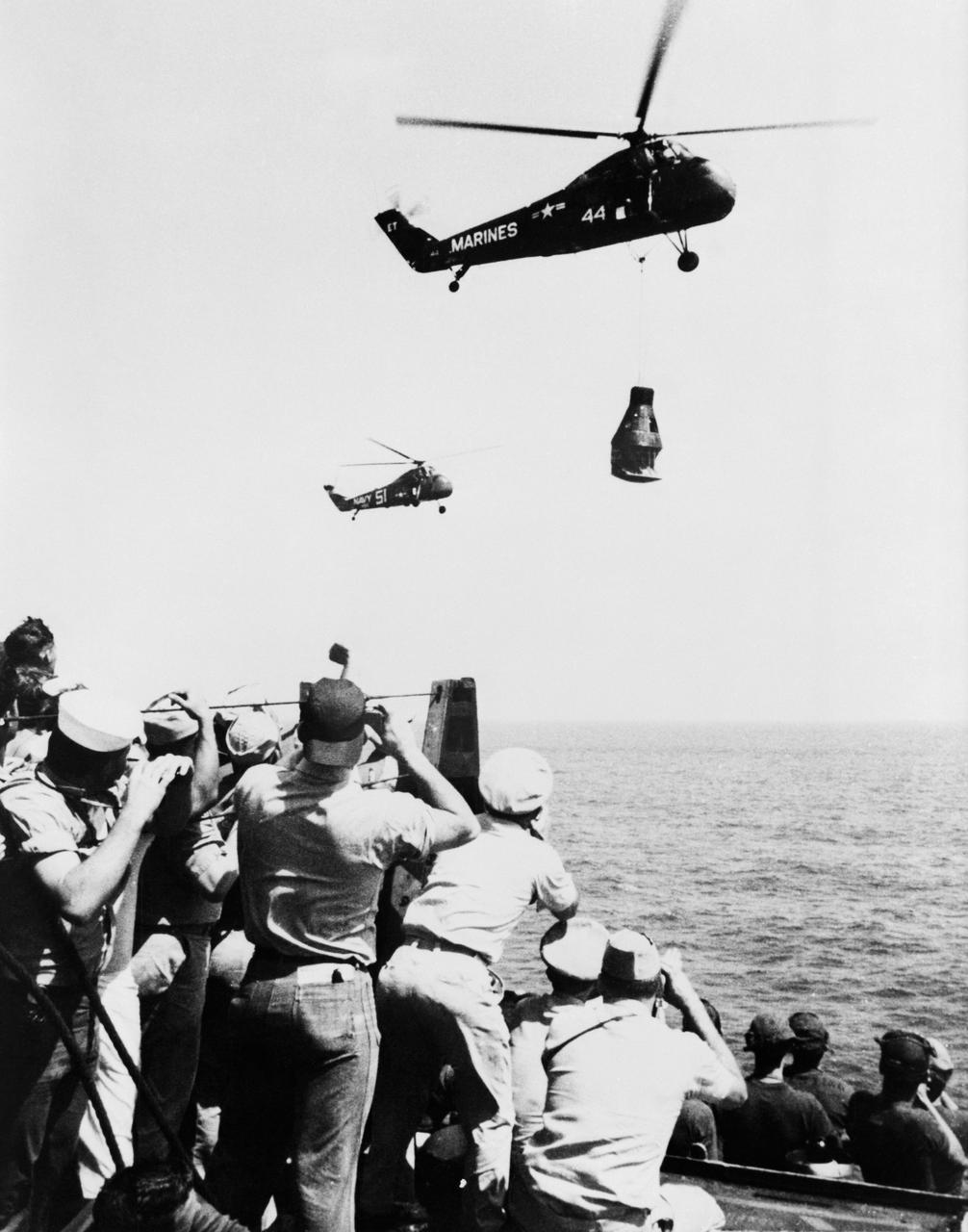
S61-02711 (5 May 1961) --- Crew members of the U.S. Navy Carrier Champlain cheer and take pictures of the arrival of the first Project Mercury pilot to fly a suborbital flight, astronaut Alan B. Shepard Jr. Two helicopters are approaching the ship, one carrying the astronaut and the other the Mercury-Redstone 3 (MR-3) capsule. Photo credit: NASA or National Aeronautics and Space Administration
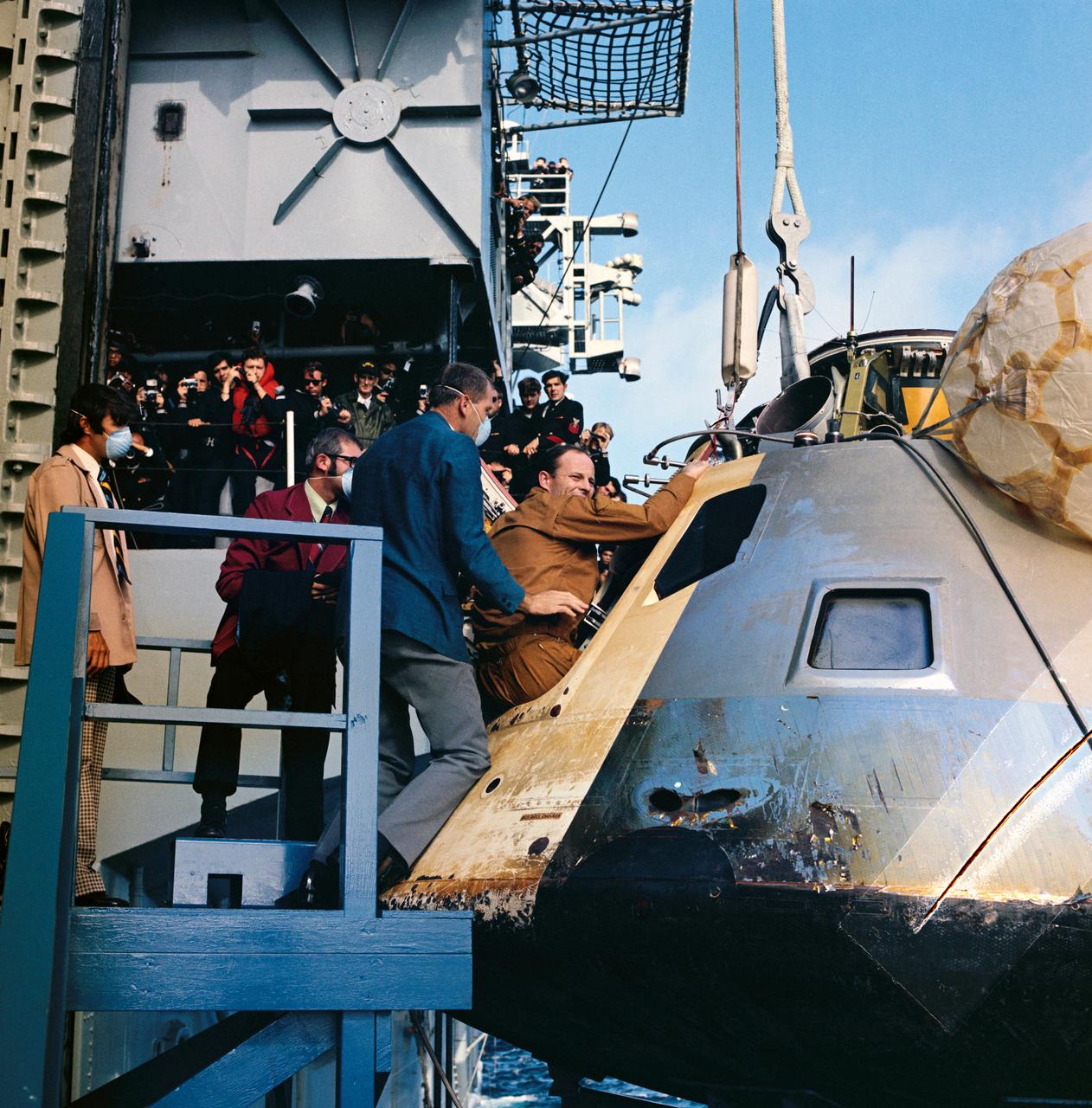
S73-36435 (25 Sept. 1973) --- Astronaut Jack R. Lousma, Skylab 3 pilot, egresses the Skylab 3 Command Module aboard the prime recovery ship, USS New Orleans, during recovery operations in the Pacific Ocean. Astronauts Lousma; Alan L. Bean, commander; and Owen L. Garriott, science pilot, had just completed a successful 59-day visit to the Skylab space station in Earth orbit. The Skylab 3 spacecraft splashed down in the Pacific about 230 miles southwest of San Diego, California. Photo credit: NASA
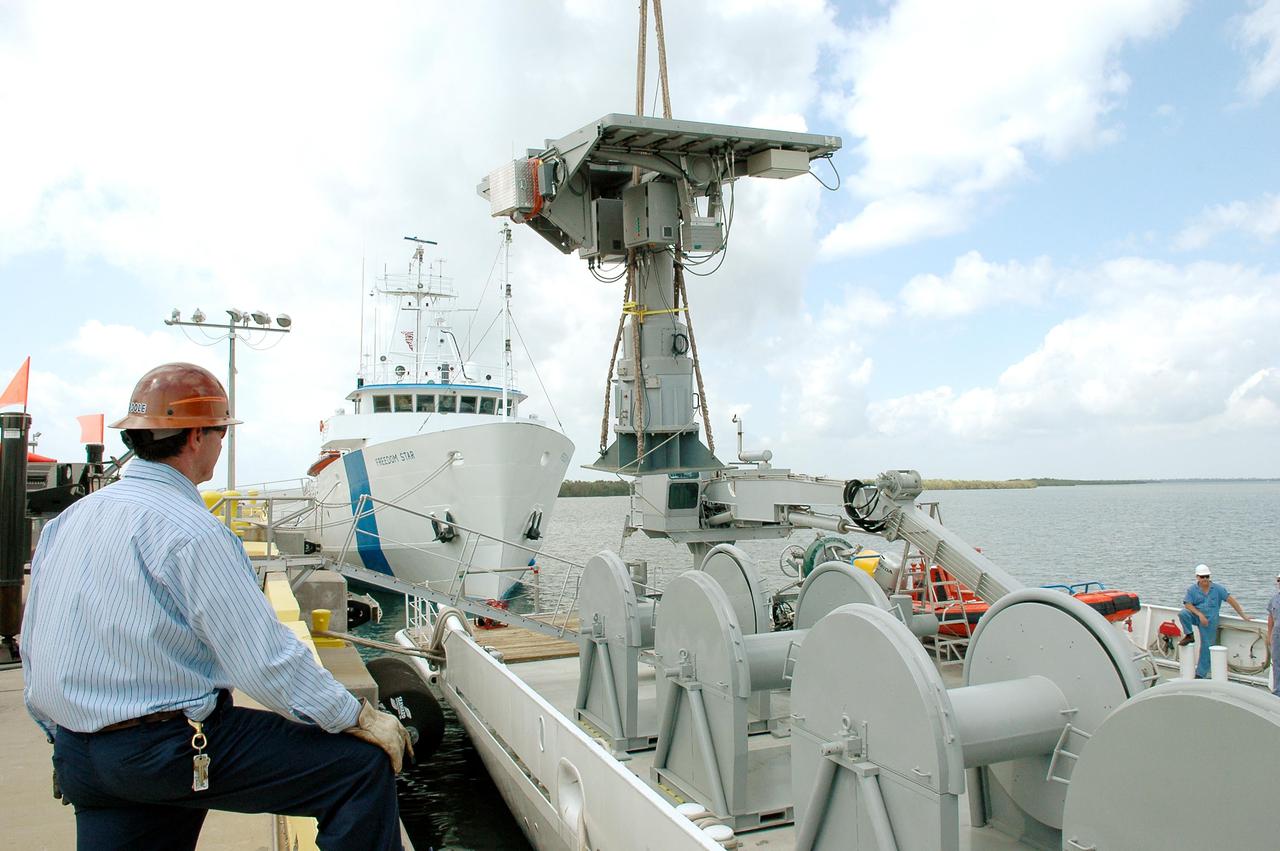
KENNEDY SPACE CENTER, FLA. - An X-band Doppler radar array is lowered toward the deck of the Liberty Star, one of the two SRB Retrieval Ships, at Hangar AF at Cape Canaveral Air Force Station. The other retrieval ship, Freedom Star, is aft of the Liberty Star. The radar will be used for tracking support on NASA’s Return to Flight mission, STS-114, on Space Shuttle Discovery. Launch is targeted for May 15 with a launch window that extends to June 3. During its 12-day mission, Discovery’s seven-member crew will test new hardware and techniques to improve Shuttle safety, as well as deliver supplies to the International Space Station.
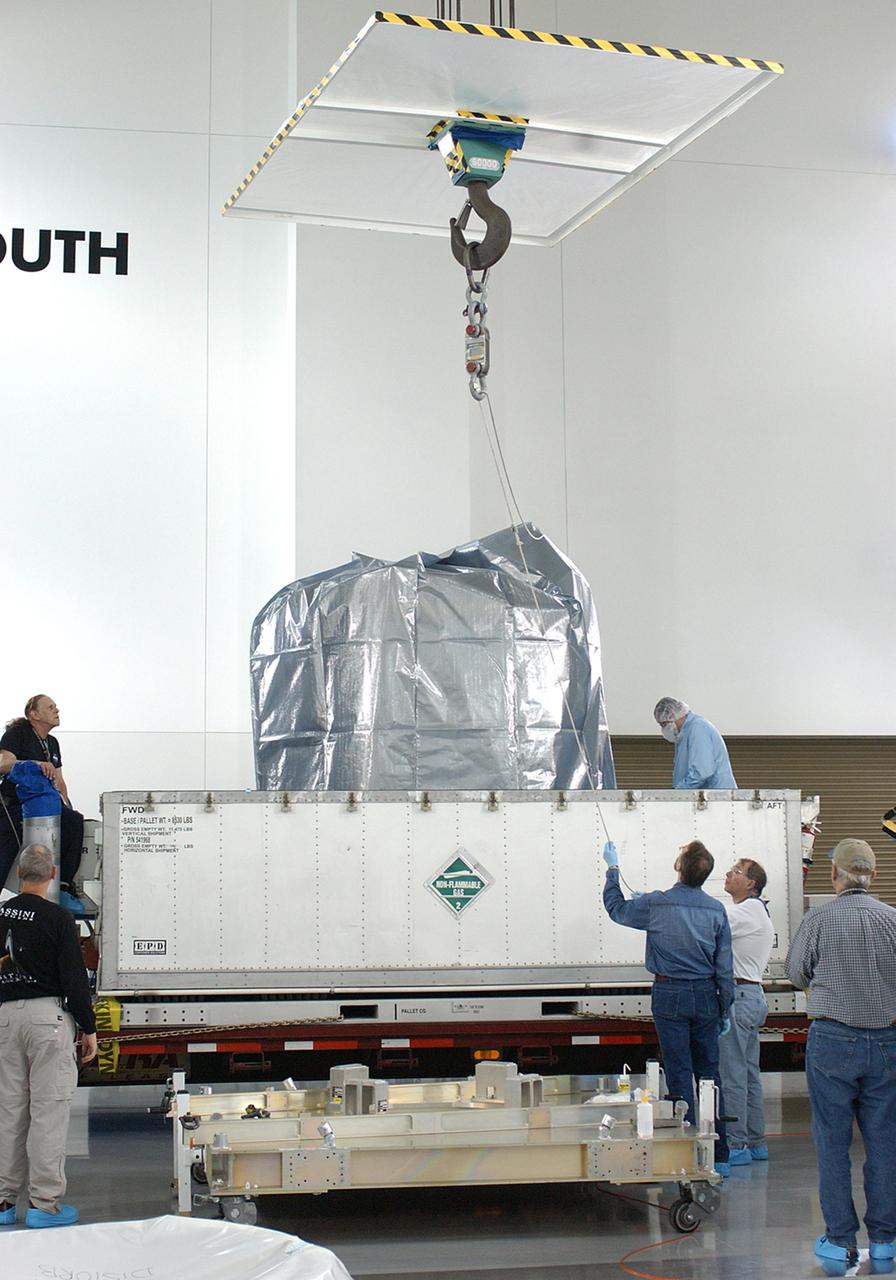
KENNEDY SPACE CENTER, FLA. - At the Astrotech Payload Processing Facility on Vandenberg Air Force Base in California, an overhead crane is attached to the CloudSat spacecraft to lift it out of its shipping container. CloudSat was shipped from Ball Aerospace and Technologies Corp. in Boulder, Colo. The spacecraft will undergo electrical and spacecraft transmitter testing. In combination with the Cloud-Aerosol Lidar and Infrared Pathfinder Satellite Observation (CALIPSO), the spacecraft will provide never-before-seen 3-D perspectives of how clouds and aerosols form, evolve, and affect weather and climate. CALIPSO and CloudSat will fly in formation with three other satellites to enhance understanding of climate systems. The launch date for CloudSat_CALIPSO is no earlier than Aug. 22.
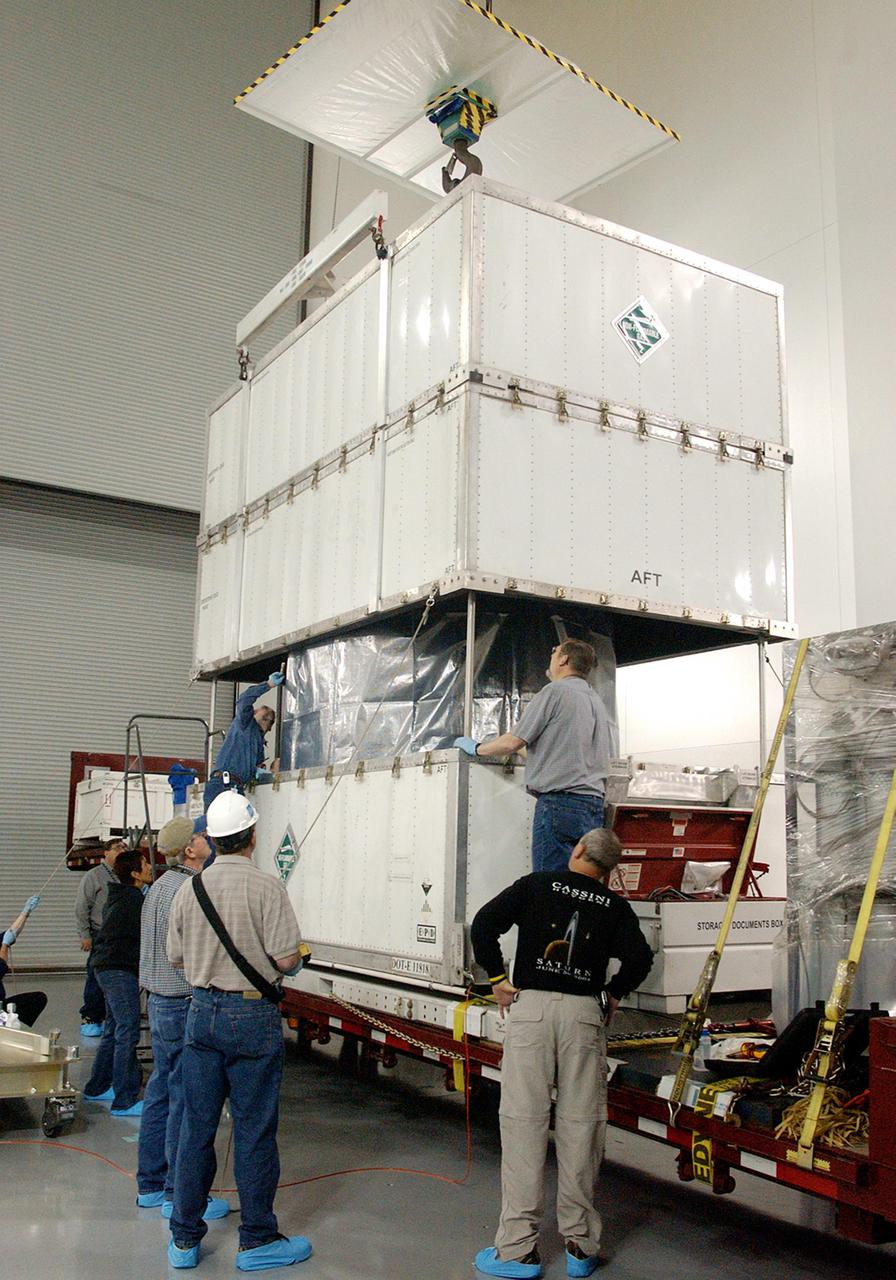
KENNEDY SPACE CENTER, FLA. - The shipping container is lifted away from the CloudSat spacecraft at the Astrotech Payload Processing Facility on Vandenberg Air Force Base in California. It was shipped from Ball Aerospace and Technologies Corp. in Boulder, Colo. CloudSat will undergo electrical and spacecraft transmitter testing. In combination with the Cloud-Aerosol Lidar and Infrared Pathfinder Satellite Observation (CALIPSO), the spacecraft will provide never-before-seen 3-D perspectives of how clouds and aerosols form, evolve, and affect weather and climate. CALIPSO and CloudSat will fly in formation with three other satellites to enhance understanding of climate systems. The launch date for CloudSat_CALIPSO is no earlier than Aug. 22.
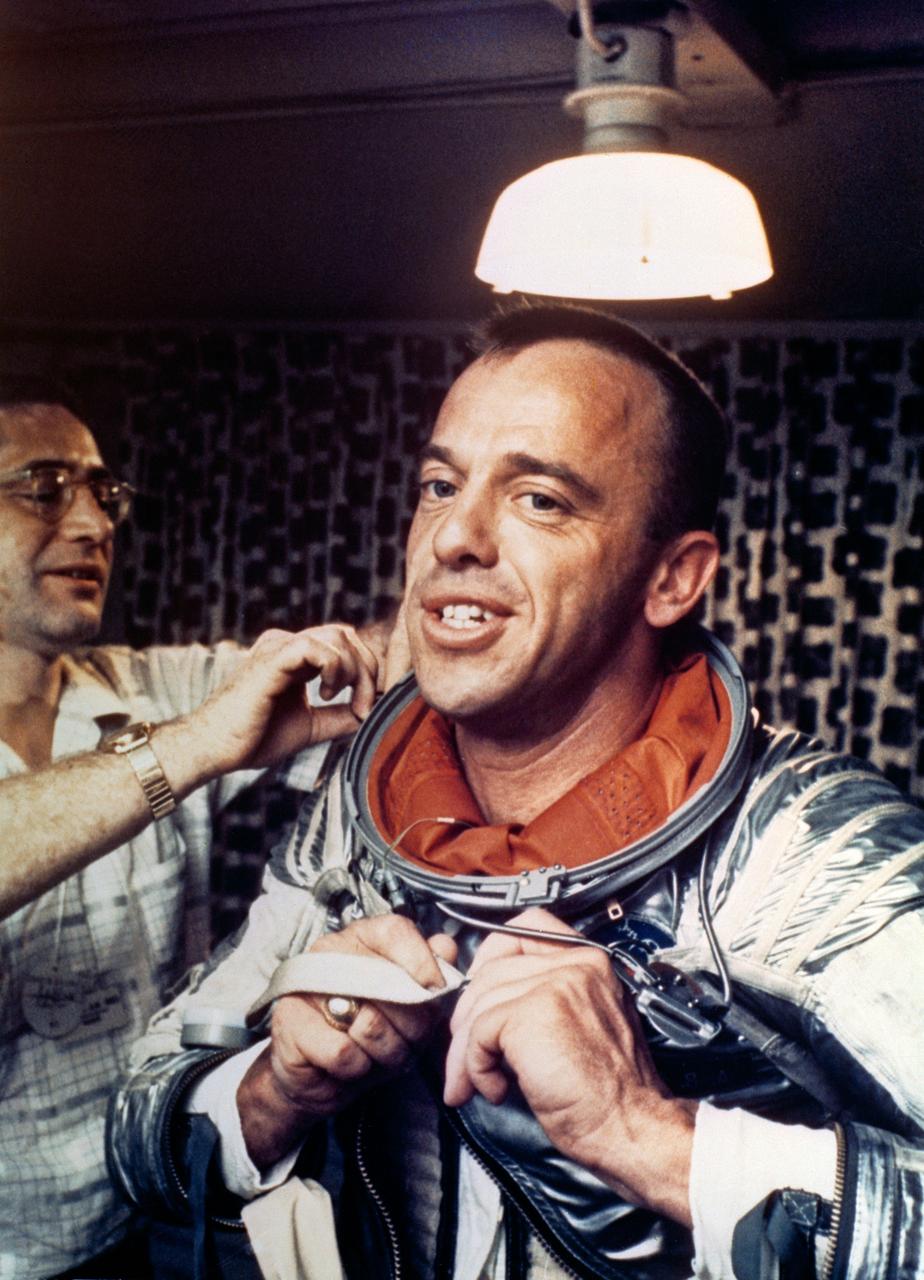
S88-31382 (5 May 1961) --- Astronaut Alan B. Shepard receives assistance in removing his spacesuit while on the U.S. Champlain after the recovery of his Mercury capsule. Photo credit: NASA or National Aeronautics and Space Administration
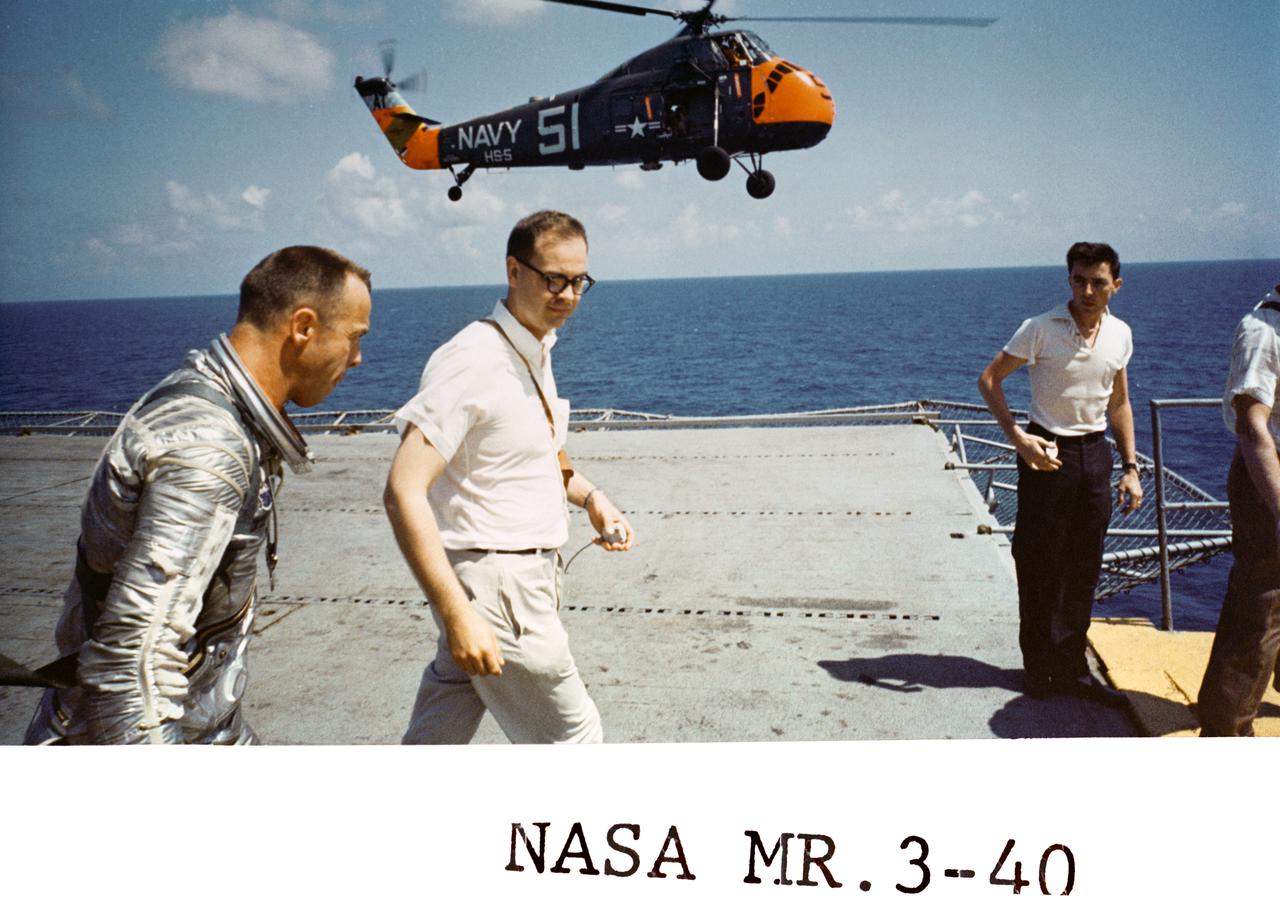
S88-31380 (5 May 1961) --- Astronaut Alan B. Shepard Jr., strides across the deck of the U.S. Navy Carrier Champlain following an inspection of his Freedom 7 capsule. Shepard had just completed the first manned U.S. space mission, a 15-minute suborbital flight. (NASA Hq. Photo No., MR3-40) Photo credit: NASA or National Aeronautics and Space Administration
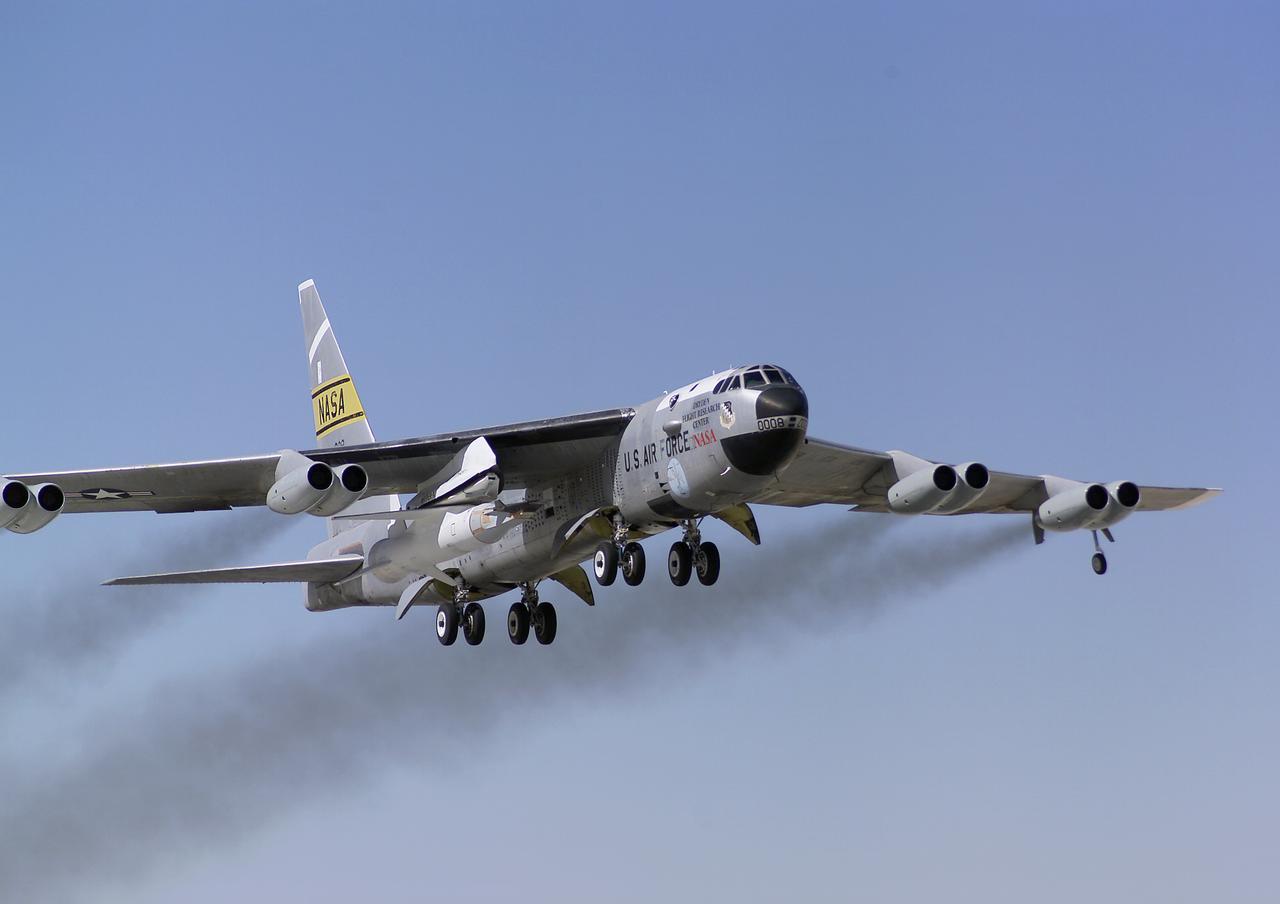
Attached to the same B-52B mothership that once launched X-15 research aircraft in the 1960s, NASA's third X-43A performed a captive carry evaluation flight from Edwards Air Force Base, California on September 27, 2004. The X-43 remained mated to the B-52 throughout this mission, intended to check its readiness for launch scheduled later in the fall.
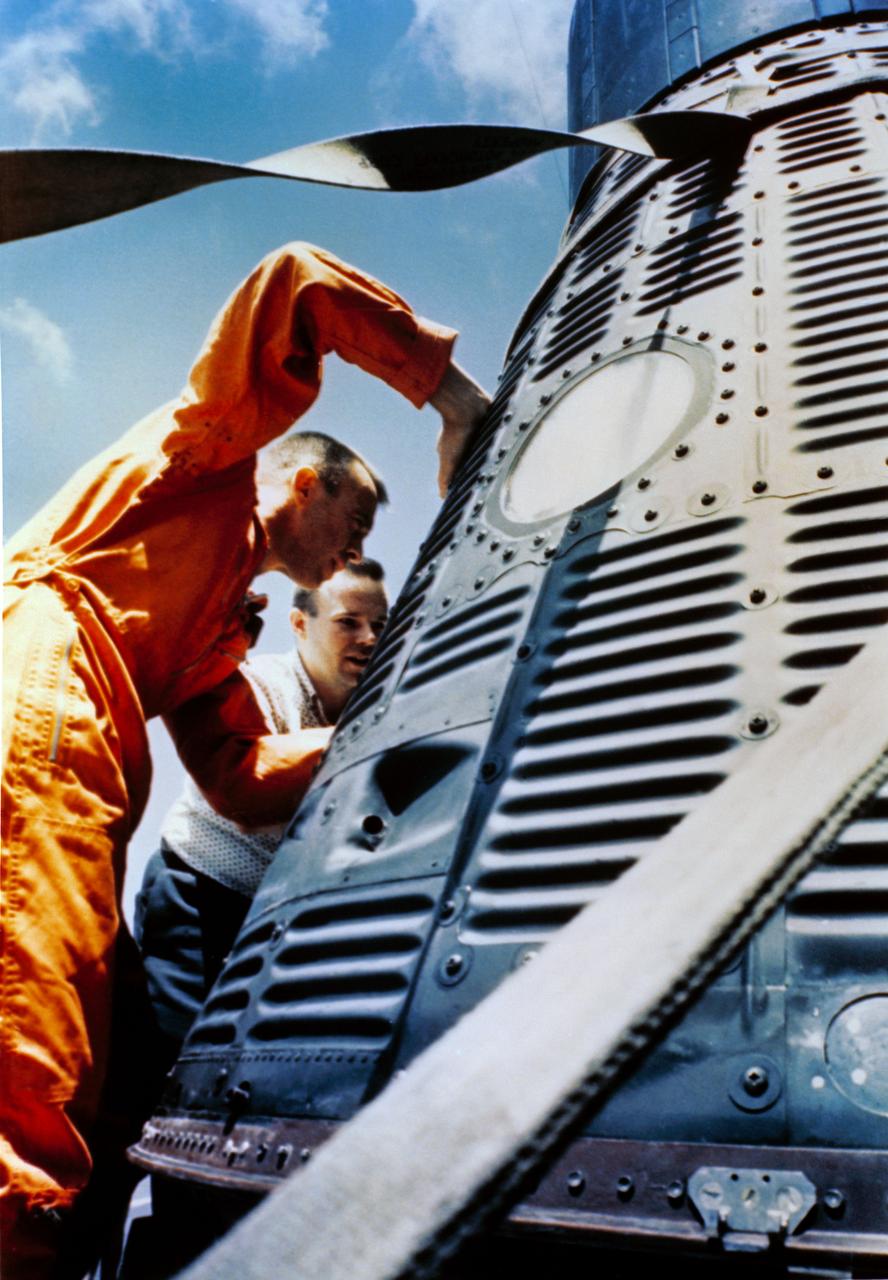
S88-31384 (5 May 1961) --- Astronaut Alan B. Shepard Jr., Mercury-Redstone 3 (MR-3) pilot, is pictured near his Freedom 7 capsule during a postflight inspection aboard the U.S. Navy Carrier Champlain after the recovery of his Mercury vehicle. Earlier Shepard had completed the historical 15-minute suborbital Mercury-Redstone 3 mission, marking the U.S. inaugural manned space mission. (NASA Hq. No. 61-MR3-107 or MR3-44) Photo credit: NASA or National Aeronautics and Space Administration
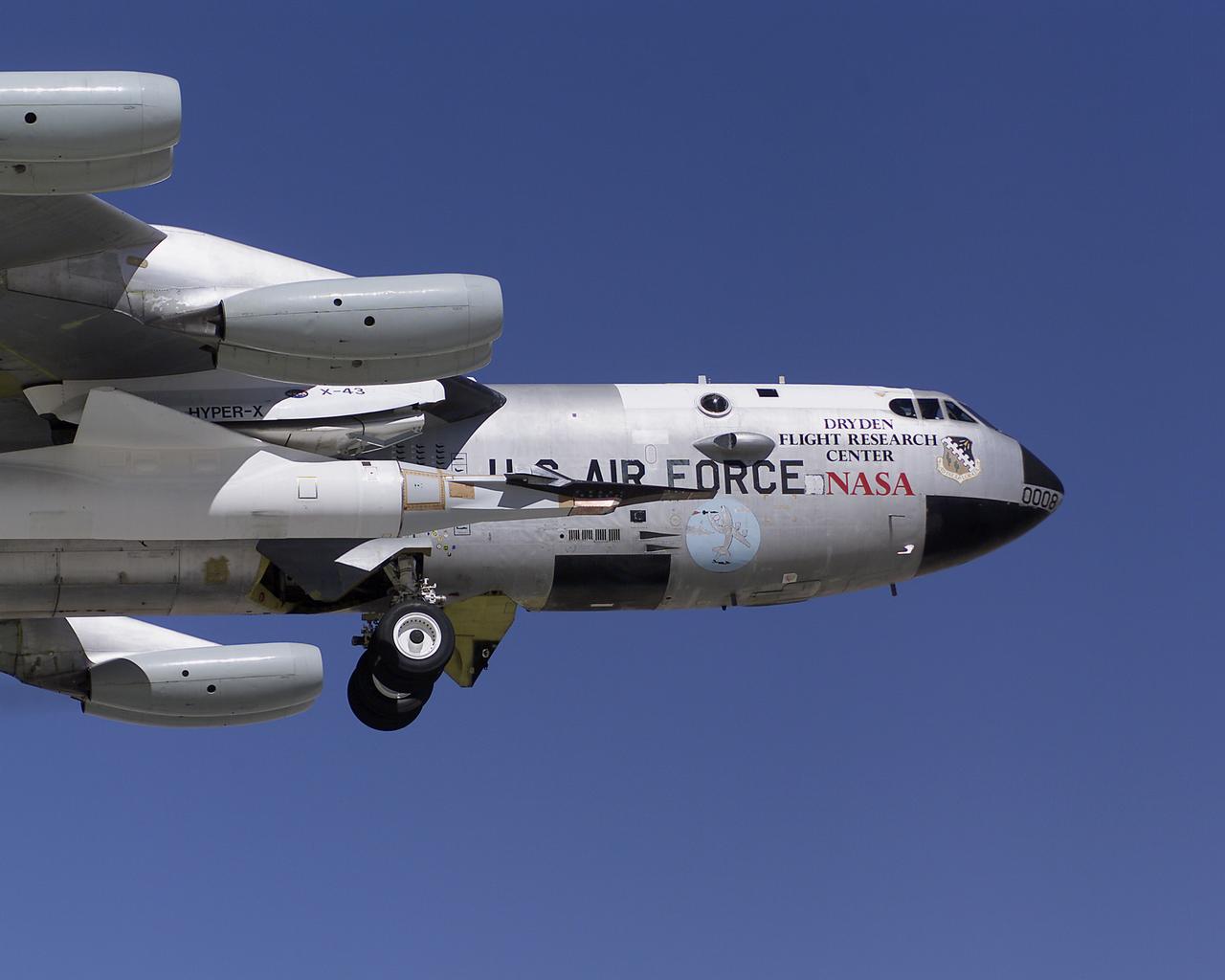
Attached to the same B-52B mothership that once launched X-15 research aircraft in the 1960s, NASA's third X-43A performed a captive carry evaluation flight from Edwards Air Force Base, California on September 27, 2004. The X-43 remained mated to the B-52 throughout this mission, intended to check its readiness for launch scheduled later in the fall.
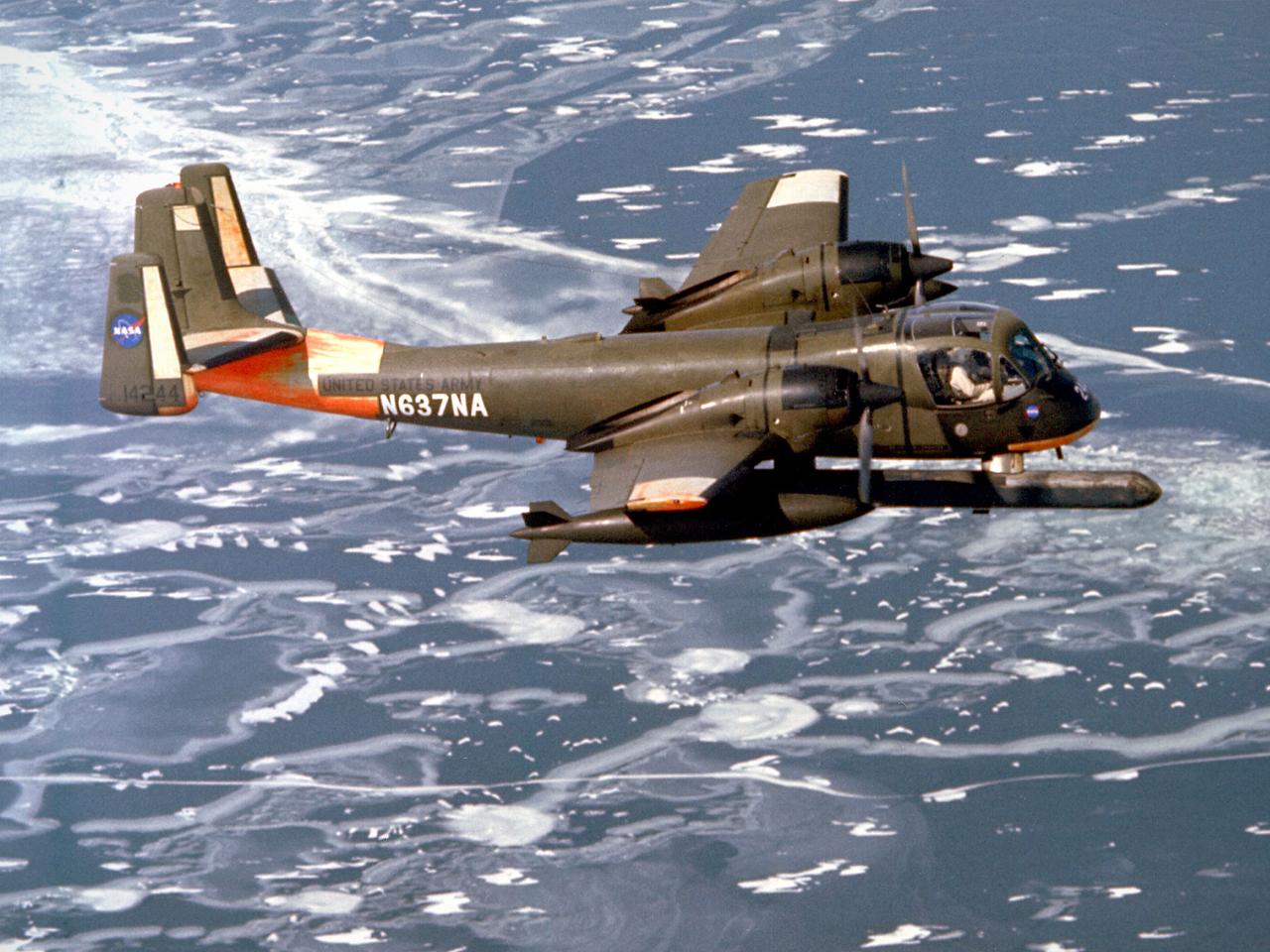
A Grumman OV-1B Mohawk maps Great Lakes’ ice flows for the National Aeronautics and Space Administration (NASA) Lewis Research Center in Cleveland, Ohio. The regular freezing of large portions of the Great Lakes during the winter frequently stalled the region’s shipping industry. Lewis developed two complementary systems to monitor the ice. The Side Looking Airborne Radar (SLAR) system used microwaves to measure the ice distribution, and electromagnetic systems employed noise modulation to determine the thickness of the ice. Once this dual system was in place, the information could be generated during a single pass of a research aircraft and quickly distributed to ship captains planning their routes. The SLAR was superior to aerial photography for this task because it was able to penetrate cloud cover. The SLAR system used pulsed microwaves to examine a band of ice or water on either side of the aircraft up to 31 miles wide. The Lewis ice mapping devices were first tested during the winter of 1972 and 1973. The system was installed on the tail of the Coast Guard’s OV-1B aircraft. An infrared thermal mapping instrument was installed on Lewis’ DC-3 to determine the ice temperature and estimate its thickness. The team created 160 ice charts that were sent to 28 ships and 2 icebreakers. Shipping was able to continue throughout the season for the first time that winter.
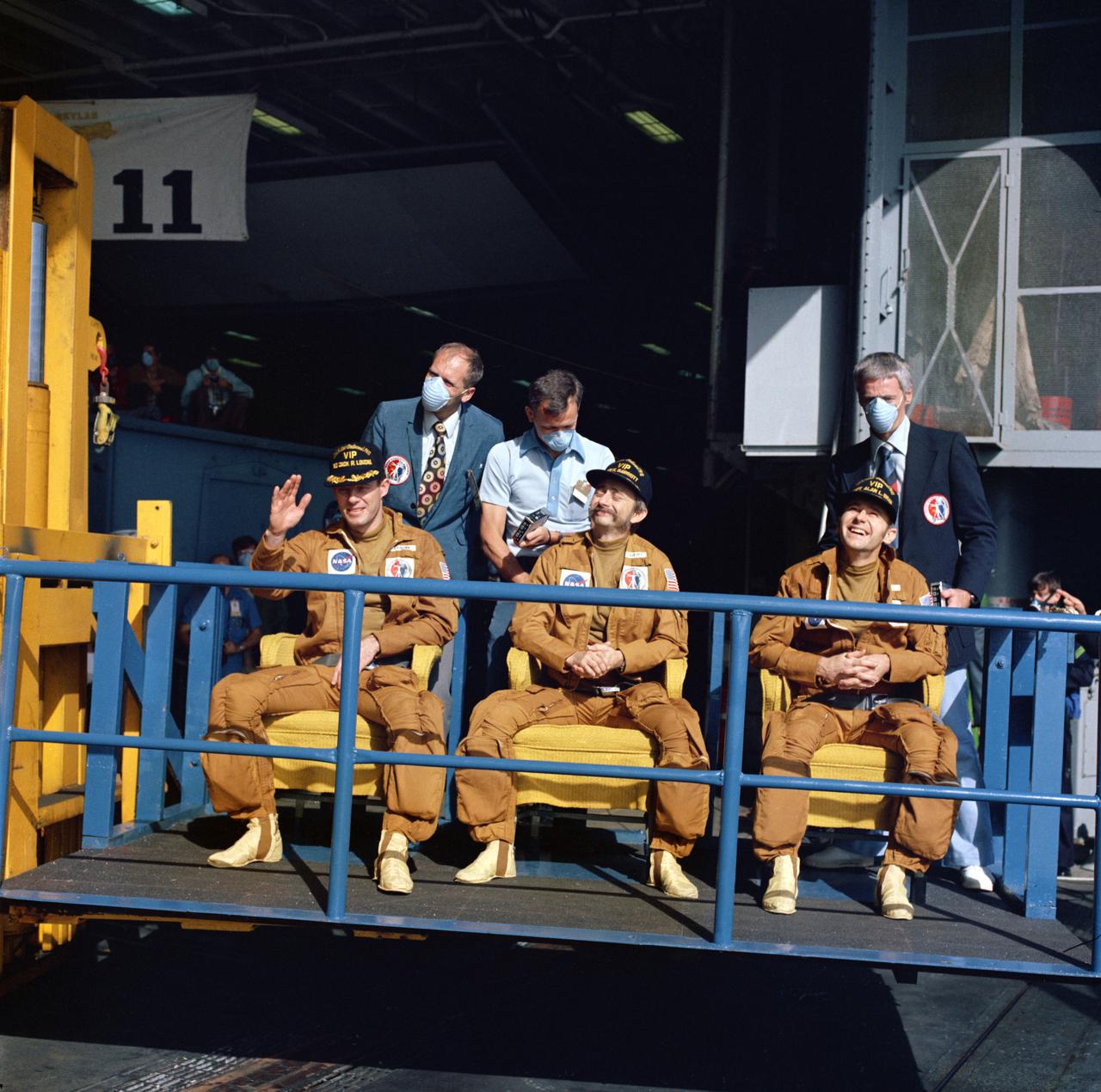
S73-36451 (25 Sept. 1973) --- The three crewmen of the Skylab 3 mission are seen aboard the prime recovery ship, USS New Orleans, following their successful 59-day visit to the Skylab space station in Earth orbit. They are, left to right, astronaut Jack R. Lousma, pilot; scientist-astronaut Owen K. Garriott, science pilot; and astronaut Alan L. Bean, commander. The Skylab 3 Command Module with the three crewmen aboard splashed down in the Pacific about 230 miles southwest of San Diego, California. They are seated atop a platform of a fork-lift dolly. Recovery support personnel are wearing face masks to prevent exposing the crewmen to disease. Photo credit: NASA

S67-49447 (9 Nov. 1967) --- Close-up view of the charred heat shield of the Apollo Spacecraft 017 Command Module aboard the USS Bennington. The damage was caused by the extreme heat of reentry. The carrier Bennington was the prime recovery ship for the Apollo 4 (Spacecraft 017/Saturn 501) unmanned, Earth-orbital space mission. Splashdown occurred at 3:37 p.m. (EST), Nov. 9, 1967, 934 nautical miles northwest of Honolulu, Hawaii.
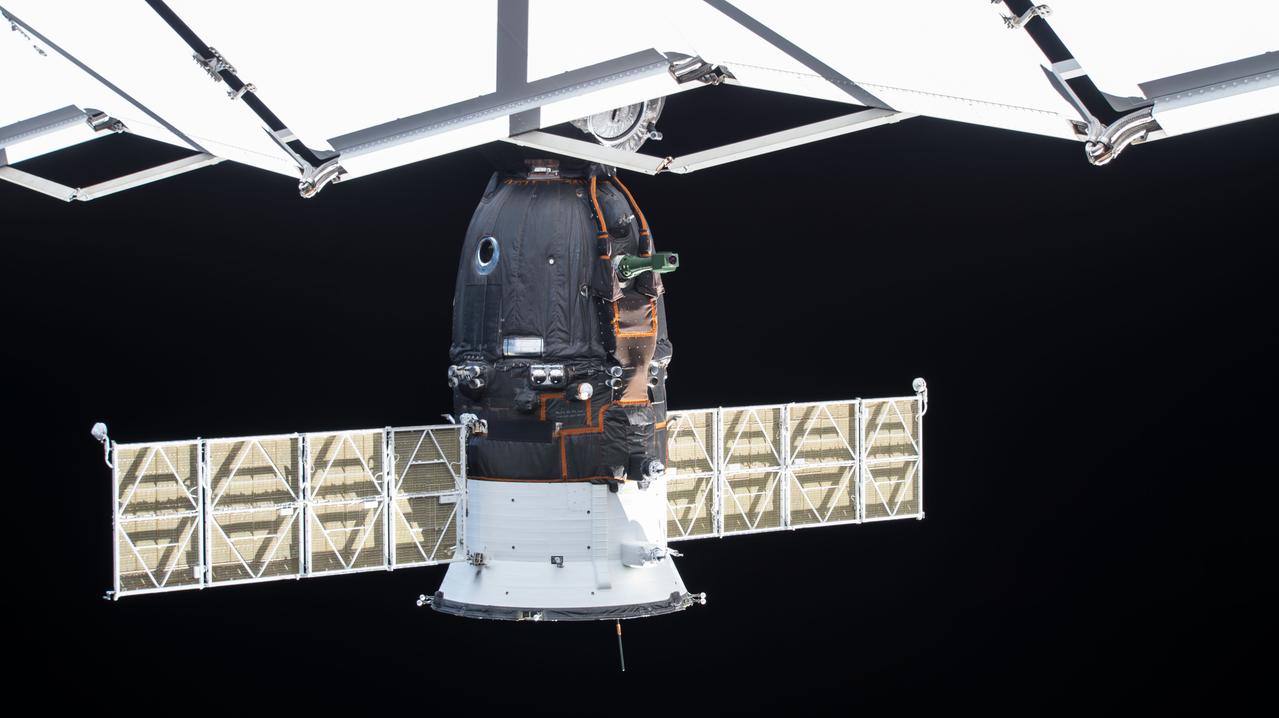
iss057e114163 (Dec. 7, 2018) --- The Soyuz MS-11 spacecraft docked to the Poisk module is pictured from a ground-controlled external high definition camera. The Soyuz crew ship arrived at the International Space Station Dec. 3 with three new crewmembers, including Soyuz Commander Oleg Kononenko and Flight Engineers Anne McClain and David Saint-Jacques. It will return the same three crewmembers to a parachute-assisted landing in Kazakhstan on June 24.

iss059e087862 (June 3, 2019) --- NASA astronaut Anne McClain signs the inside of the vestibule between the SpaceX Dragon cargo craft and the Harmony module. The hatch to Dragon was later closed and the resupply ship detached from Harmony before it was released from the grips of the Canadarm2 robotic arm. Dragon spent nearly a month attached to the International Space Station.
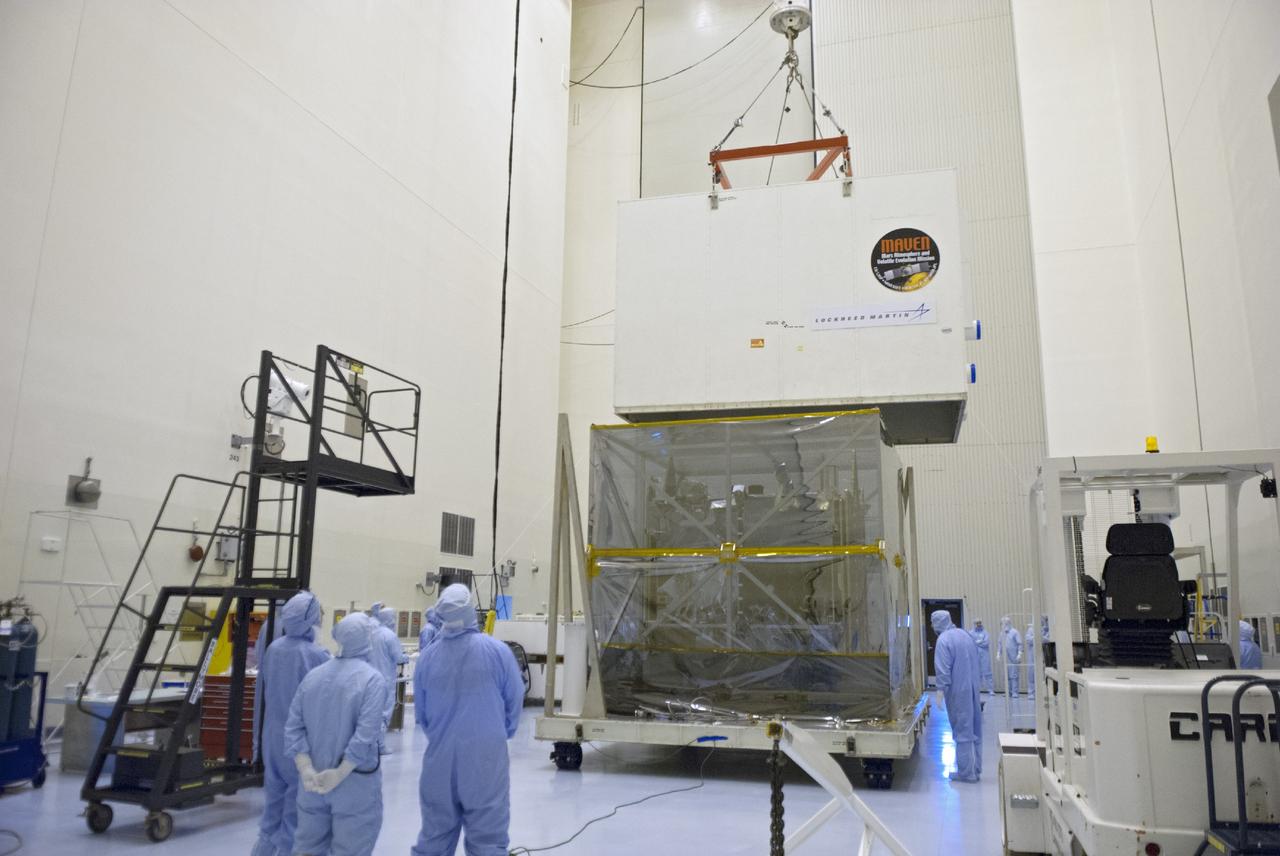
CAPE CANAVERAL, Fla. – Engineers use a sling to remove a shipping container from around NASA’s Mars Atmosphere and Volatile Evolution MAVEN spacecraft inside the Payload Hazardous Servicing Facility on Aug. 3, 2013, at the agency’s Kennedy Space Center in Florida. MAVEN will be prepared inside the facility for its scheduled November launch to Mars. Positioned in an orbit above the Red Planet, MAVEN will study the upper atmosphere of Mars in unprecedented detail. Photo credit: NASA/Tim Jacobs
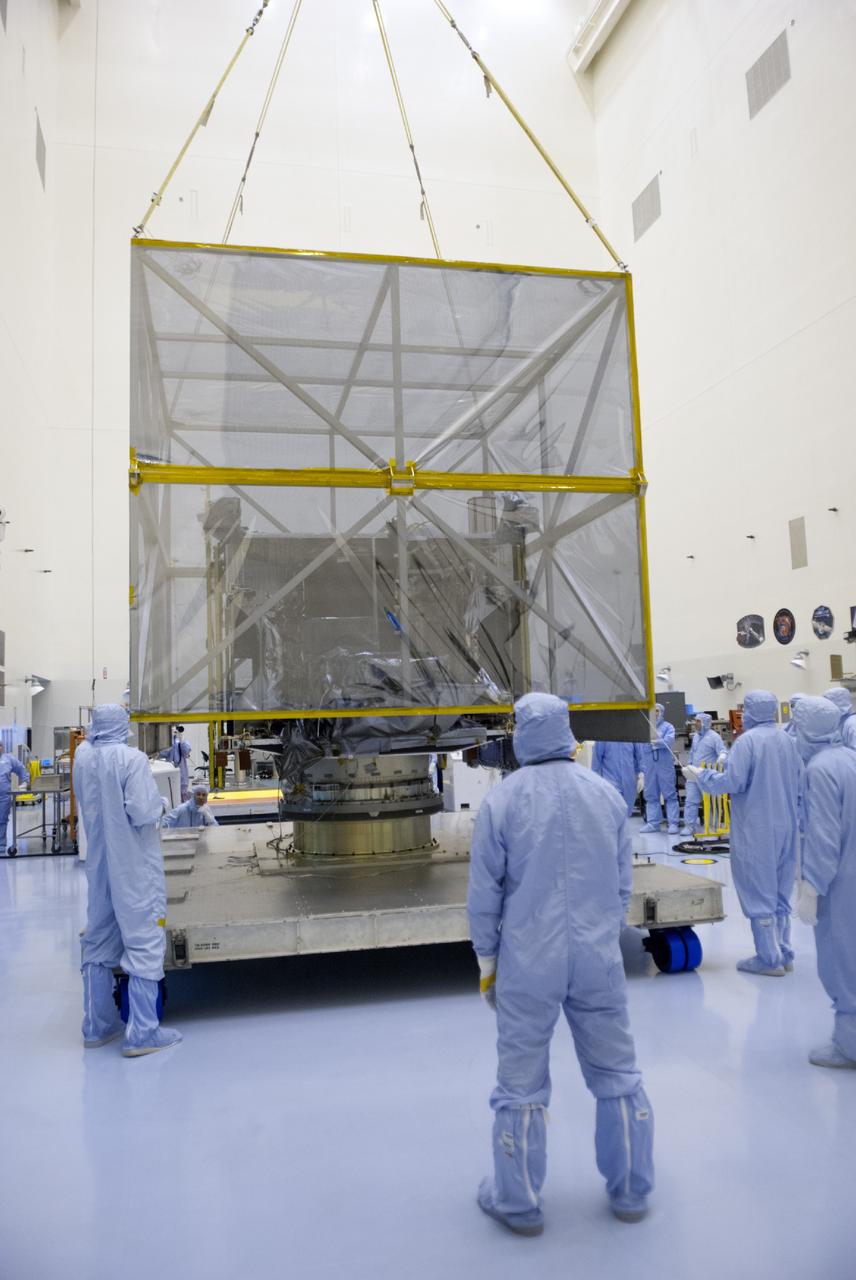
CAPE CANAVERAL, Fla. – A crane lifts shipping material from around NASA’s Mars Atmosphere and Volatile Evolution MAVEN spacecraft inside the Payload Hazardous Servicing Facility on Aug. 3, 2013, at the agency’s Kennedy Space Center in Florida. MAVEN will be prepared inside the facility for its scheduled November launch to Mars. Positioned in an orbit above the Red Planet, MAVEN will study the upper atmosphere of Mars in unprecedented detail. Photo credit: NASA/Tim Jacobs
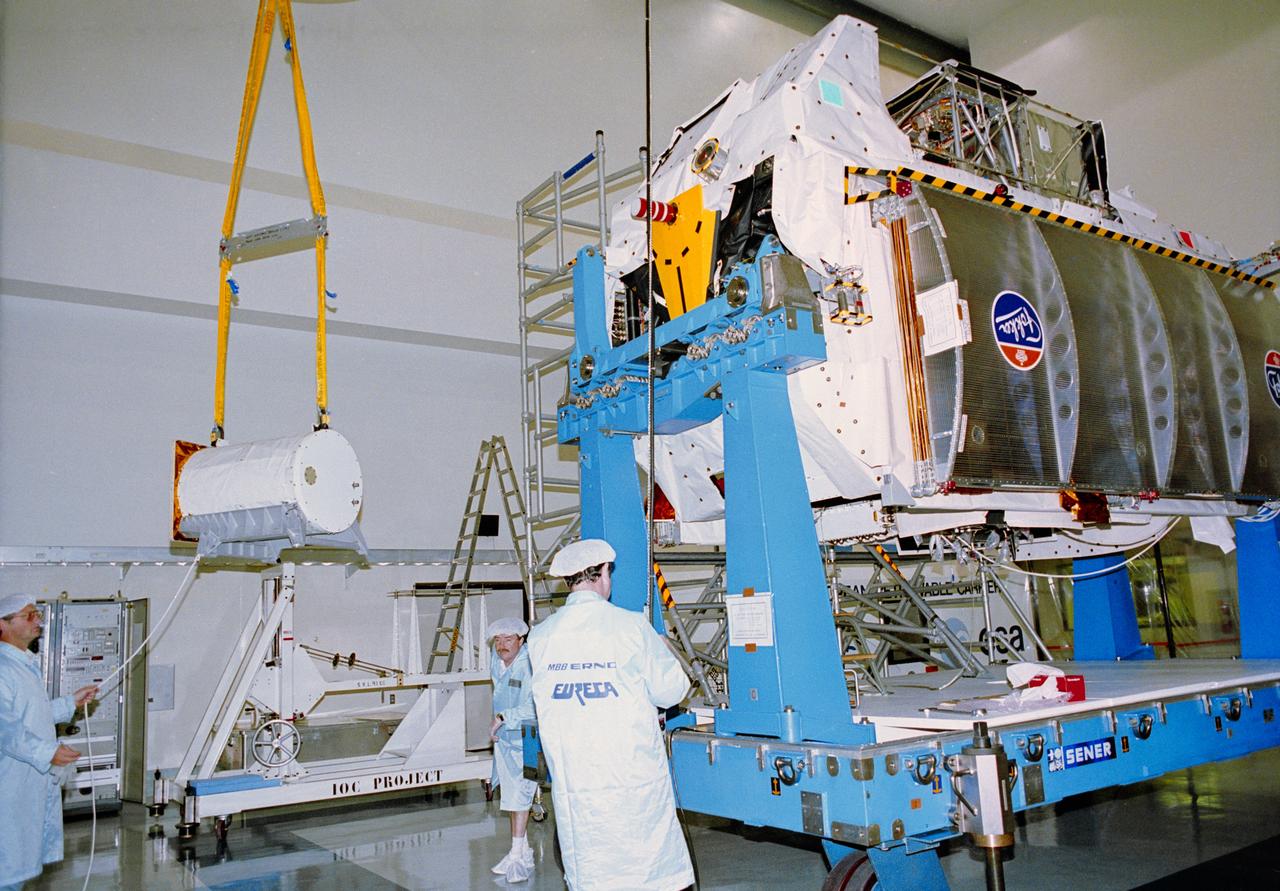
S92-41442 (3 Dec 1991) --- At the Astrotech Space Operations spacecraft processing facility in Titusville, German aerospace workers check out the European Retrievable Carrier (EURECA) after removing it from the shipping container. The approximately 10,000-pound spacecraft is scheduled to return to KSC next April to undergo final preparations for launch on the STS-46 mission. Sponsored by the European Space Agency, EURECA is a free-flying reusable research platform that will be deployed during the flight and retrieved at a later date by another Shuttle crew.
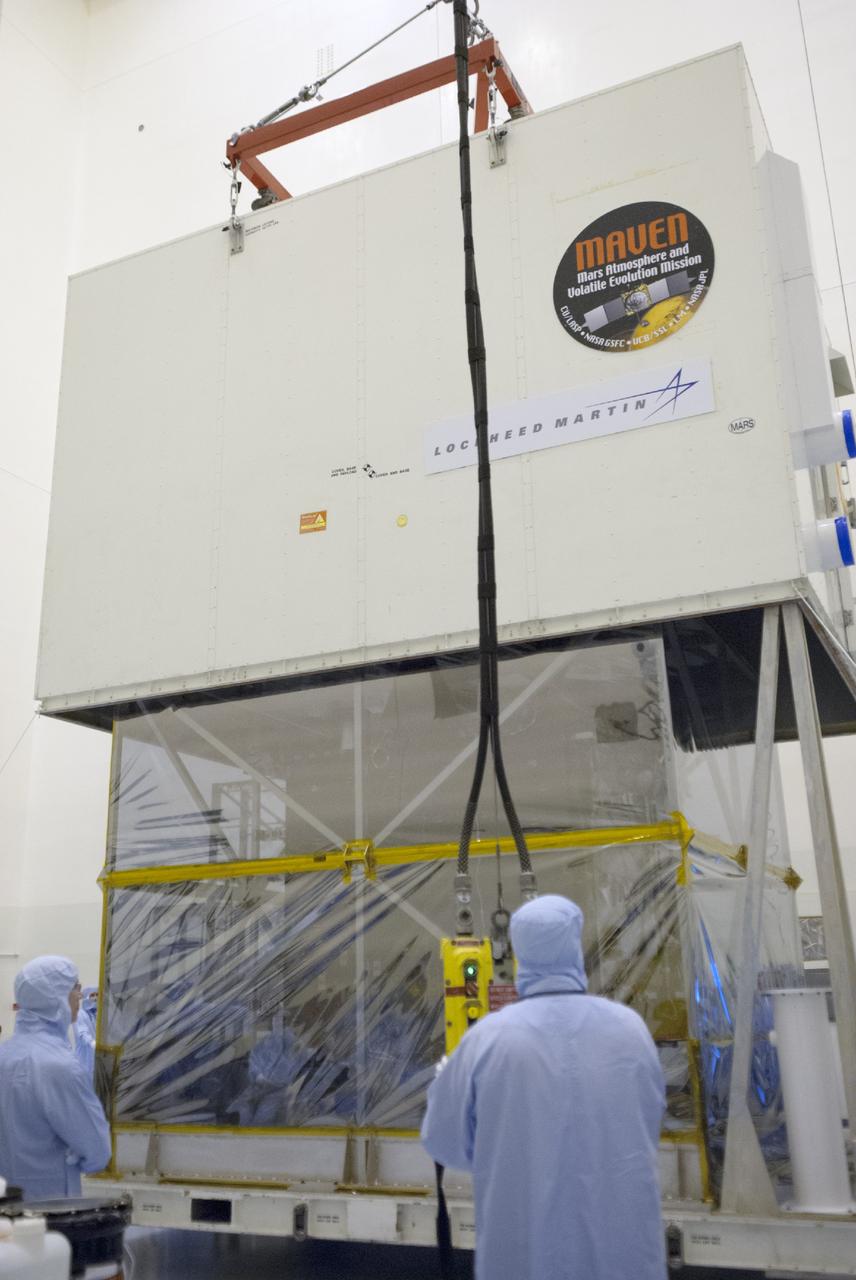
CAPE CANAVERAL, Fla. – Engineers use a sling to remove a shipping container from around NASA’s Mars Atmosphere and Volatile Evolution MAVEN spacecraft inside the Payload Hazardous Servicing Facility on Aug. 3, 2013, at the agency’s Kennedy Space Center in Florida. MAVEN will be prepared inside the facility for its scheduled November launch to Mars. Positioned in an orbit above the Red Planet, MAVEN will study the upper atmosphere of Mars in unprecedented detail. Photo credit: NASA/Tim Jacobs
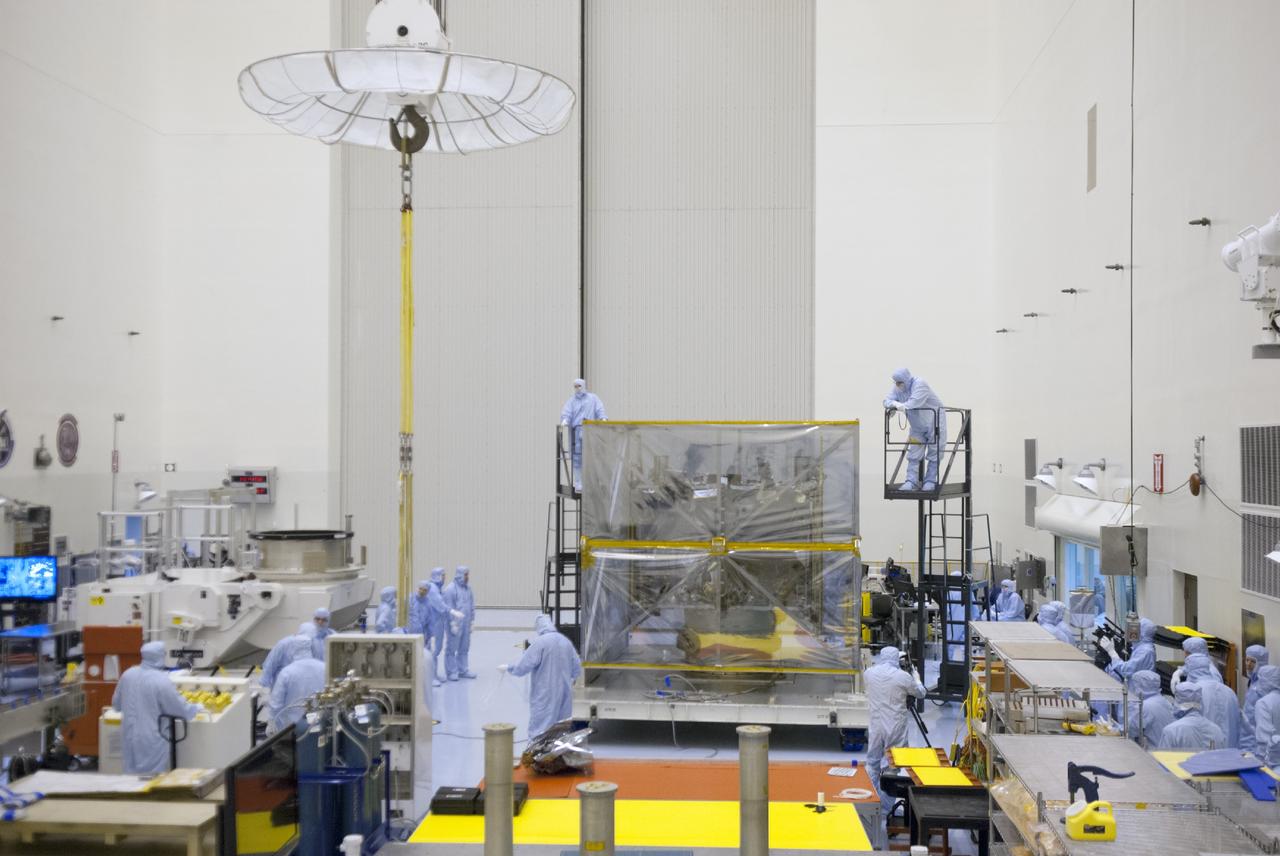
CAPE CANAVERAL, Fla. – Engineers prepare to remove shipping material from around NASA’s Mars Atmosphere and Volatile Evolution MAVEN spacecraft inside the Payload Hazardous Servicing Facility on Aug. 3, 2013, at the agency’s Kennedy Space Center in Florida. MAVEN will be prepared inside the facility for its scheduled November launch to Mars. Positioned in an orbit above the Red Planet, MAVEN will study the upper atmosphere of Mars in unprecedented detail. Photo credit: NASA/Tim Jacobs
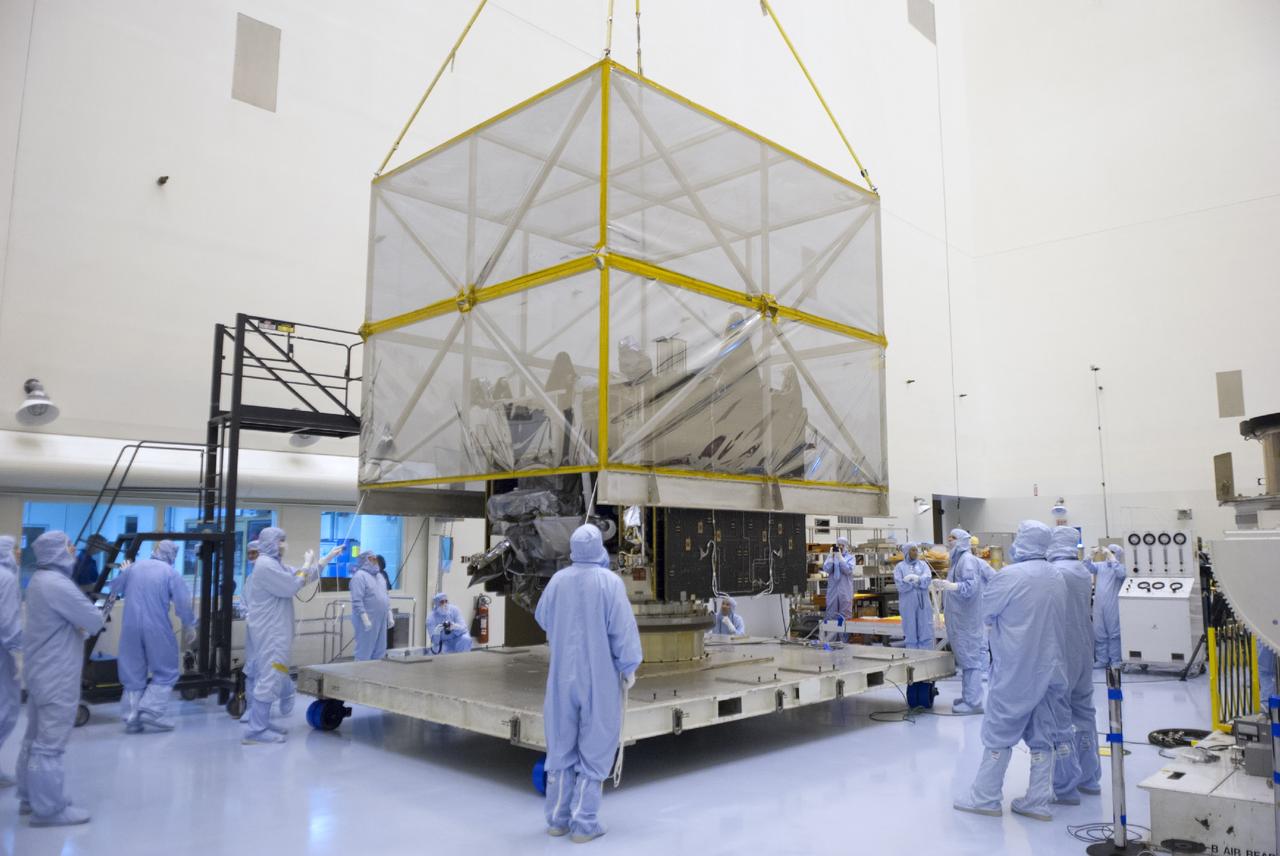
CAPE CANAVERAL, Fla. – A crane lifts shipping material from around NASA’s Mars Atmosphere and Volatile Evolution MAVEN spacecraft inside the Payload Hazardous Servicing Facility on Aug. 3, 2013, at the agency’s Kennedy Space Center in Florida. MAVEN will be prepared inside the facility for its scheduled November launch to Mars. Positioned in an orbit above the Red Planet, MAVEN will study the upper atmosphere of Mars in unprecedented detail. Photo credit: NASA/Tim Jacobs
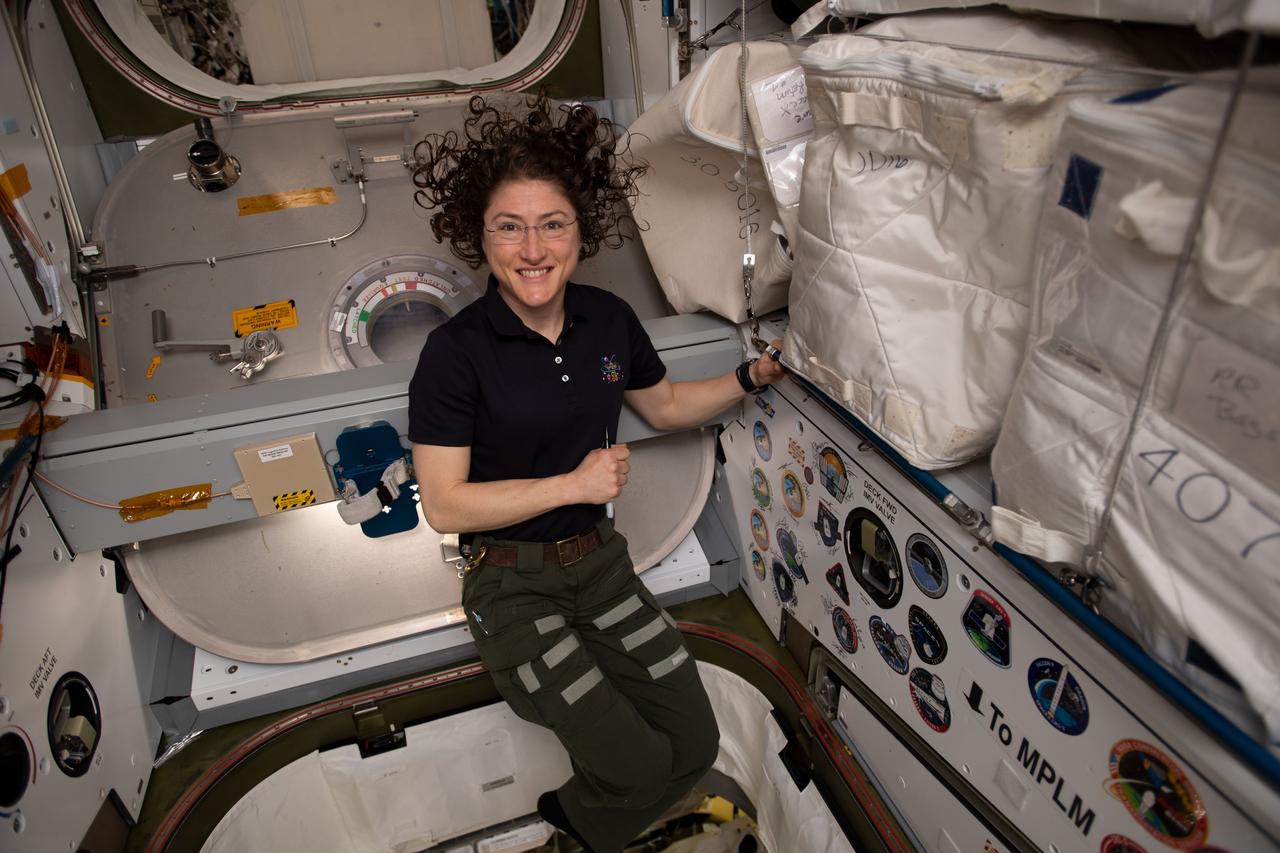
iss059e087869 (June 3, 2019) --- NASA astronaut Christina Koch poses for a portrait inside of the vestibule between the SpaceX Dragon cargo craft and the Harmony module. The hatch to Dragon was later closed and the resupply ship detached from Harmony before it was released from the grips of the Canadarm2 robotic arm. Dragon spent nearly a month attached to the International Space Station.
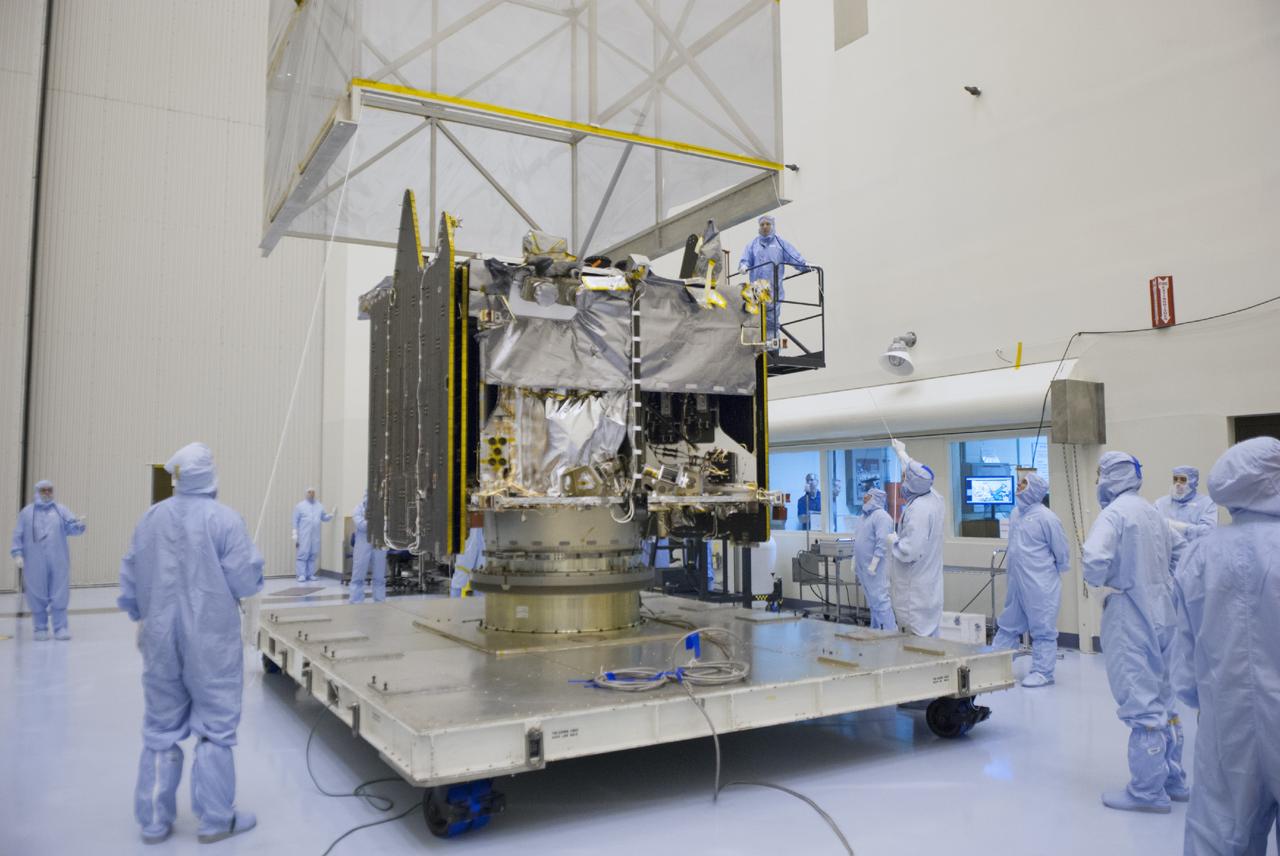
CAPE CANAVERAL, Fla. – Engineers oversee the removal of shipping material from around NASA’s Mars Atmosphere and Volatile Evolution MAVEN spacecraft inside the Payload Hazardous Servicing Facility on Aug. 3, 2013, at the agency’s Kennedy Space Center in Florida. MAVEN will be prepared inside the facility for its scheduled November launch to Mars. Positioned in an orbit above the Red Planet, MAVEN will study the upper atmosphere of Mars in unprecedented detail. Photo credit: NASA/Tim Jacobs
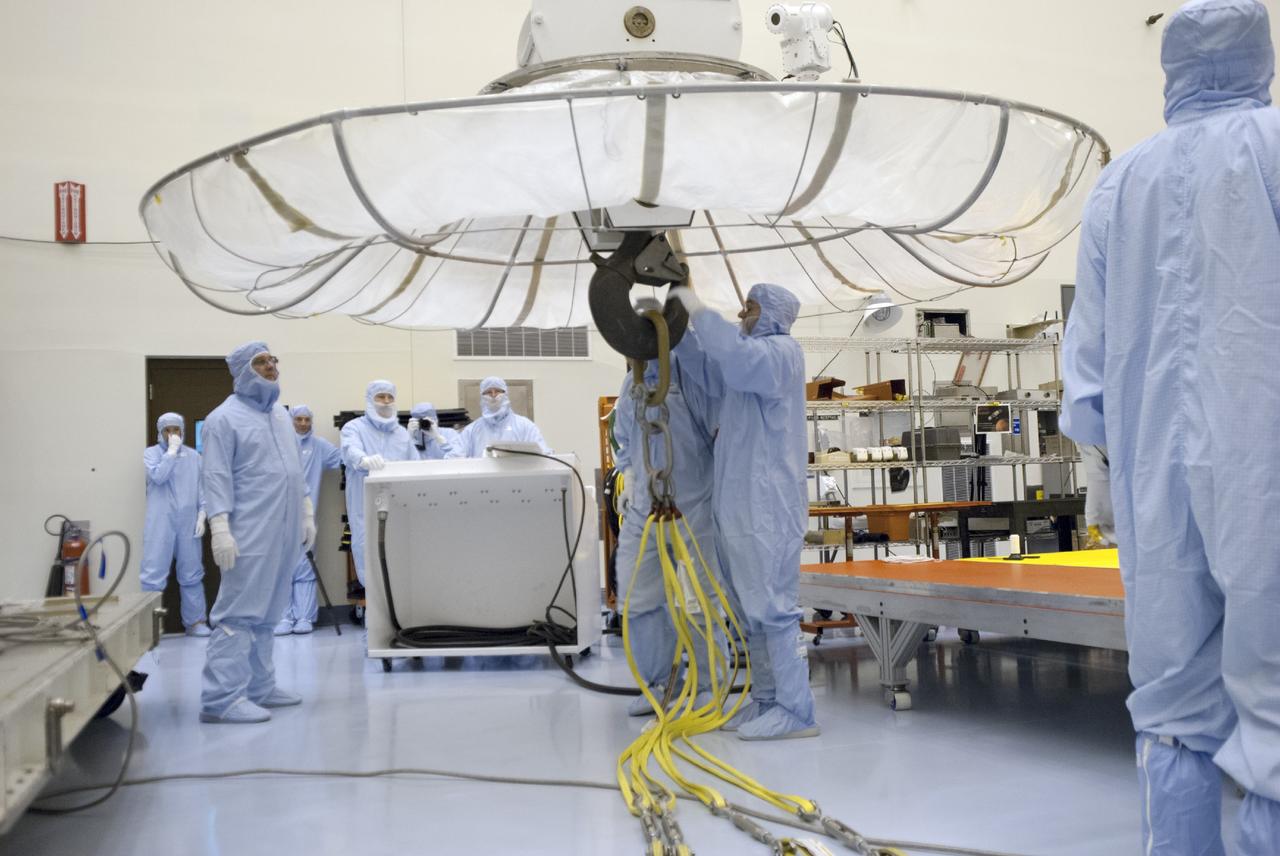
CAPE CANAVERAL, Fla. – Engineers prepare a crane to remove shipping material from around NASA’s Mars Atmosphere and Volatile Evolution MAVEN spacecraft inside the Payload Hazardous Servicing Facility on Aug. 3, 2013, at the agency’s Kennedy Space Center in Florida. MAVEN will be prepared inside the facility for its scheduled November launch to Mars. Positioned in an orbit above the Red Planet, MAVEN will study the upper atmosphere of Mars in unprecedented detail. Photo credit: NASA/Tim Jacobs
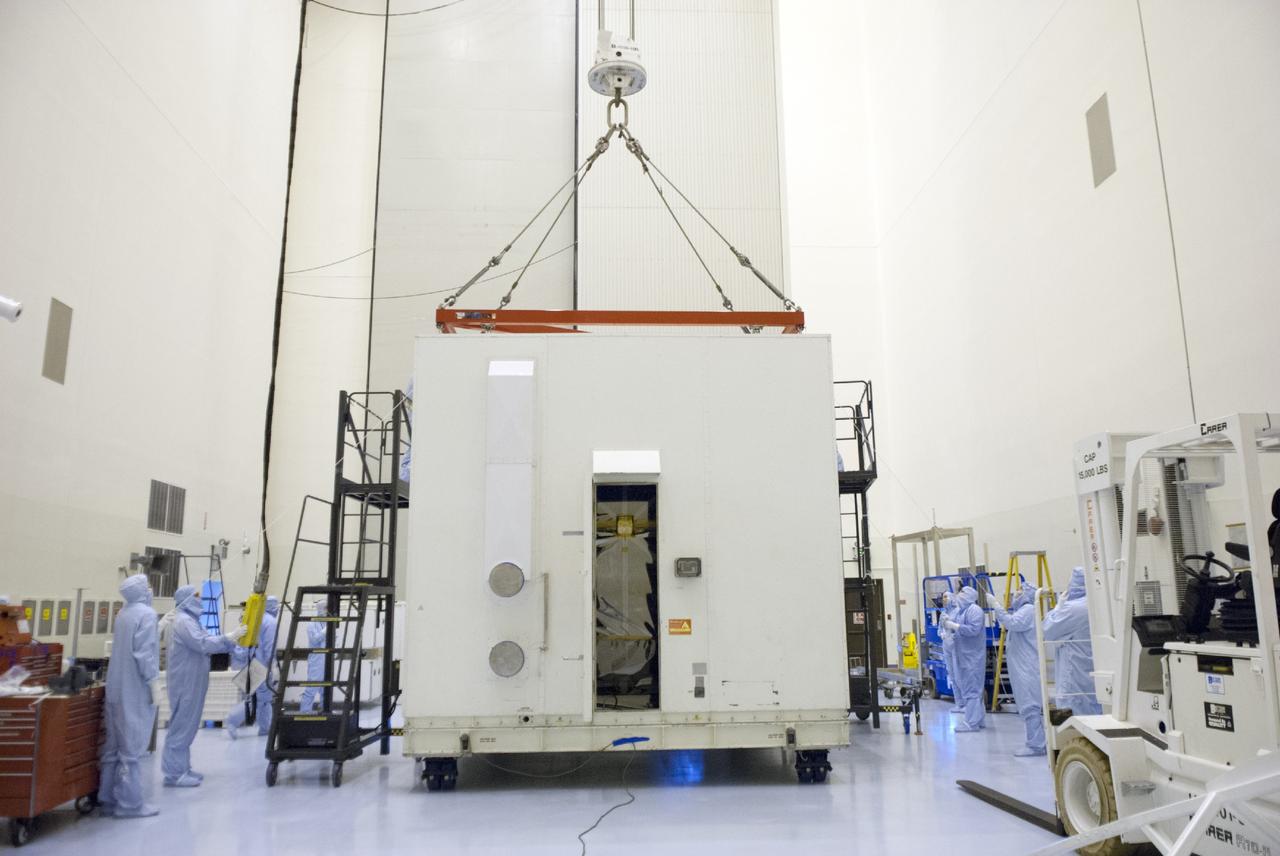
CAPE CANAVERAL, Fla. – Engineers use a sling to remove a shipping container from around NASA’s Mars Atmosphere and Volatile Evolution MAVEN spacecraft inside the Payload Hazardous Servicing Facility on Aug. 3, 2013, at the agency’s Kennedy Space Center in Florida. MAVEN will be prepared inside the facility for its scheduled November launch to Mars. Positioned in an orbit above the Red Planet, MAVEN will study the upper atmosphere of Mars in unprecedented detail. Photo credit: NASA/Tim Jacobs
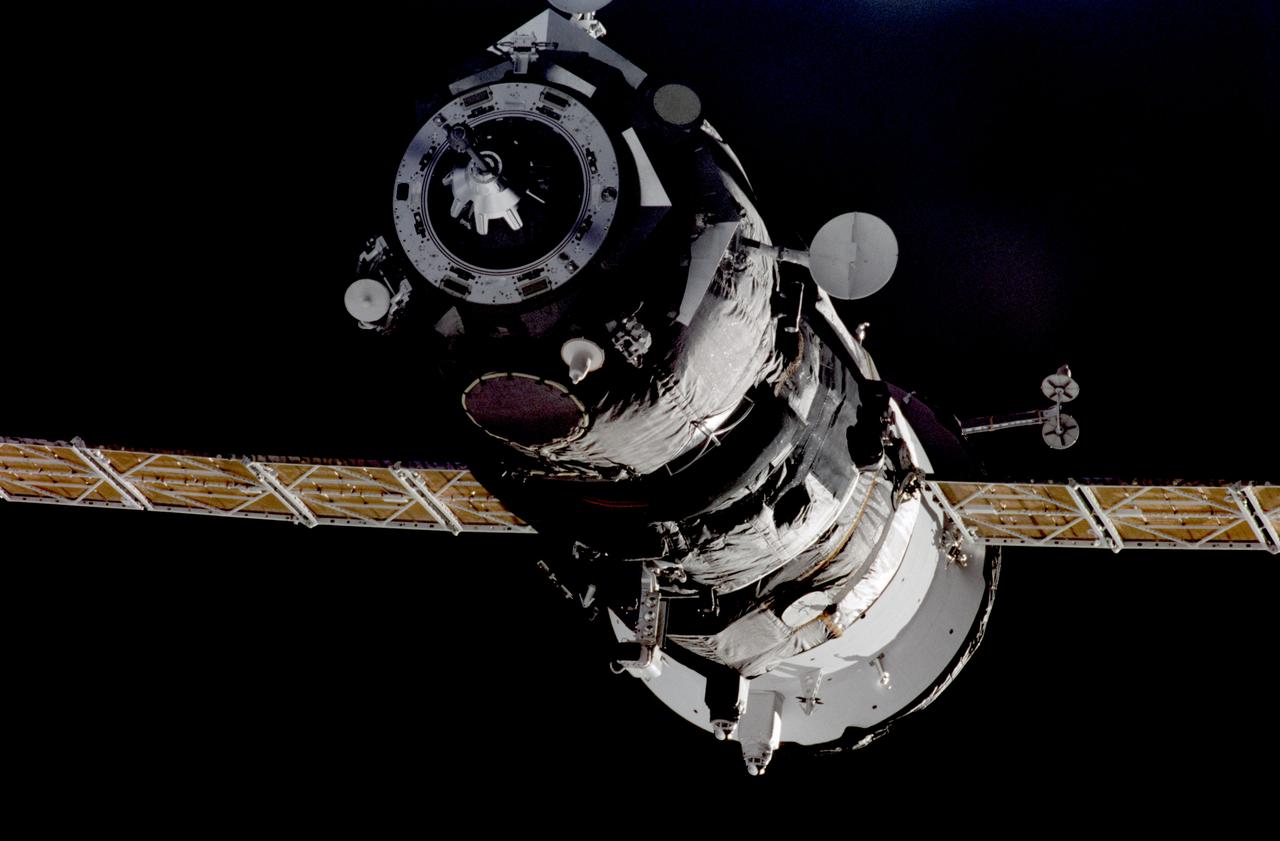
ISS01-324-002 (18 November 2000) --- A Progress supply ship linked up to the orbiting International Space Station (ISS) at 3:48 GMT, November 18, bringing Expedition 1 commander William M. Shepherd, pilot Yuri P. Gidzenko and flight engineer Sergei K. Krikalev two tons of food, clothing, hardware and holiday gifts from their families. The photograph was taken with a 35mm camera and the film was later handed over to the STS-97 crew members for return to Earth and subsequent processing.
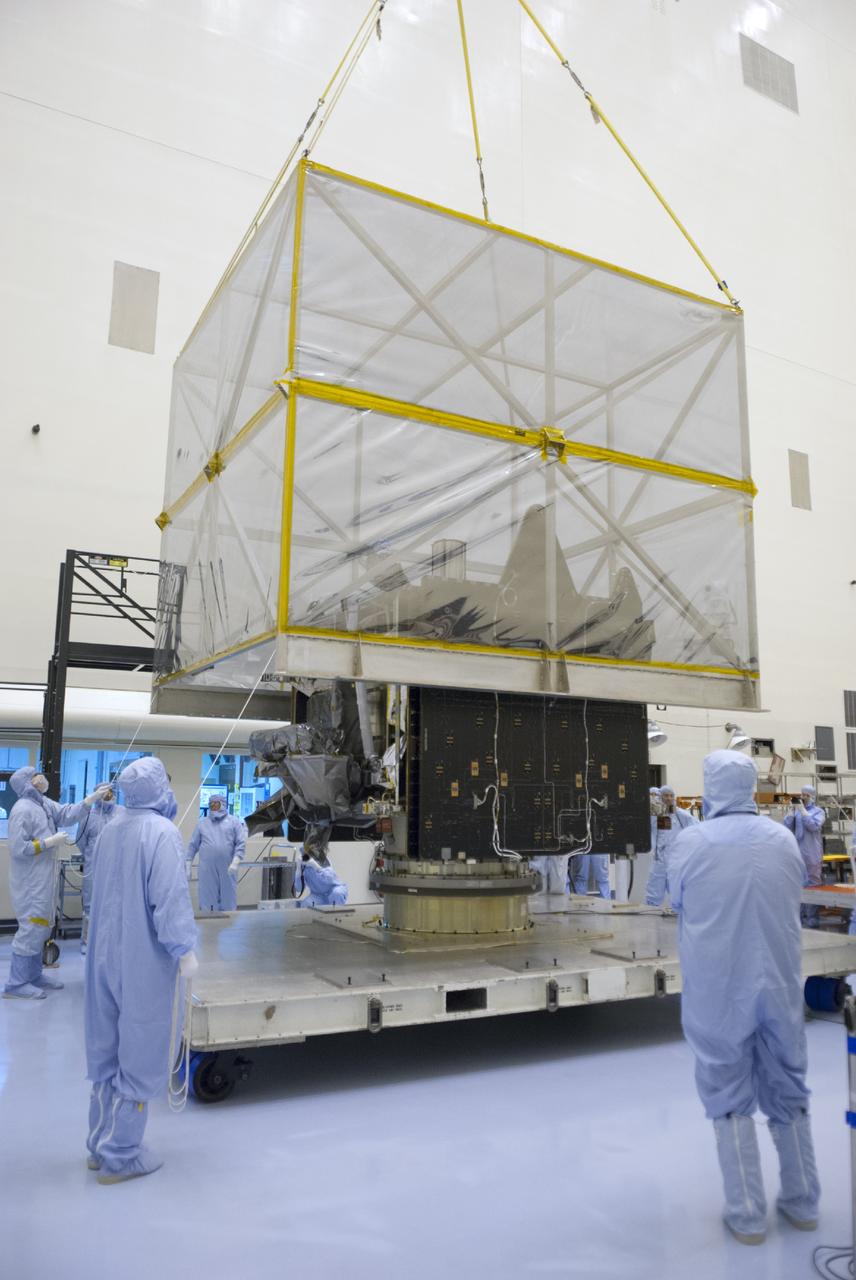
CAPE CANAVERAL, Fla. – A crane lifts shipping material from around NASA’s Mars Atmosphere and Volatile Evolution MAVEN spacecraft inside the Payload Hazardous Servicing Facility on Aug. 3, 2013, at the agency’s Kennedy Space Center in Florida. MAVEN will be prepared inside the facility for its scheduled November launch to Mars. Positioned in an orbit above the Red Planet, MAVEN will study the upper atmosphere of Mars in unprecedented detail. Photo credit: NASA/Tim Jacobs
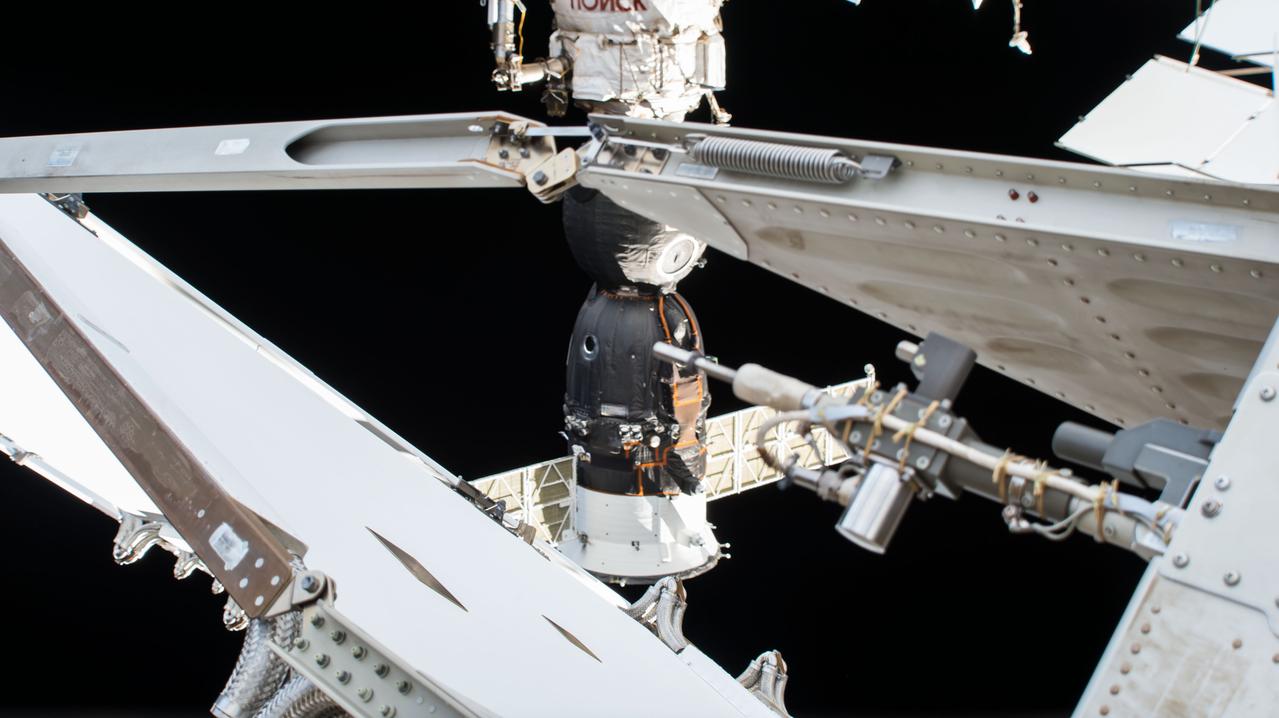
iss057e114173 (Dec. 7, 2018) --- The Soyuz MS-11 spacecraft docked to the Poisk module is pictured from a ground-controlled external high definition camera. The Soyuz crew ship arrived at the International Space Station Dec. 3 with three new crewmembers including Soyuz Commander Oleg Kononenko and Flight Engineers Anne McClain and David Saint-Jacques. It will return the same three crewmembers to a parachute-assisted landing in Kazakhstan on June 24.
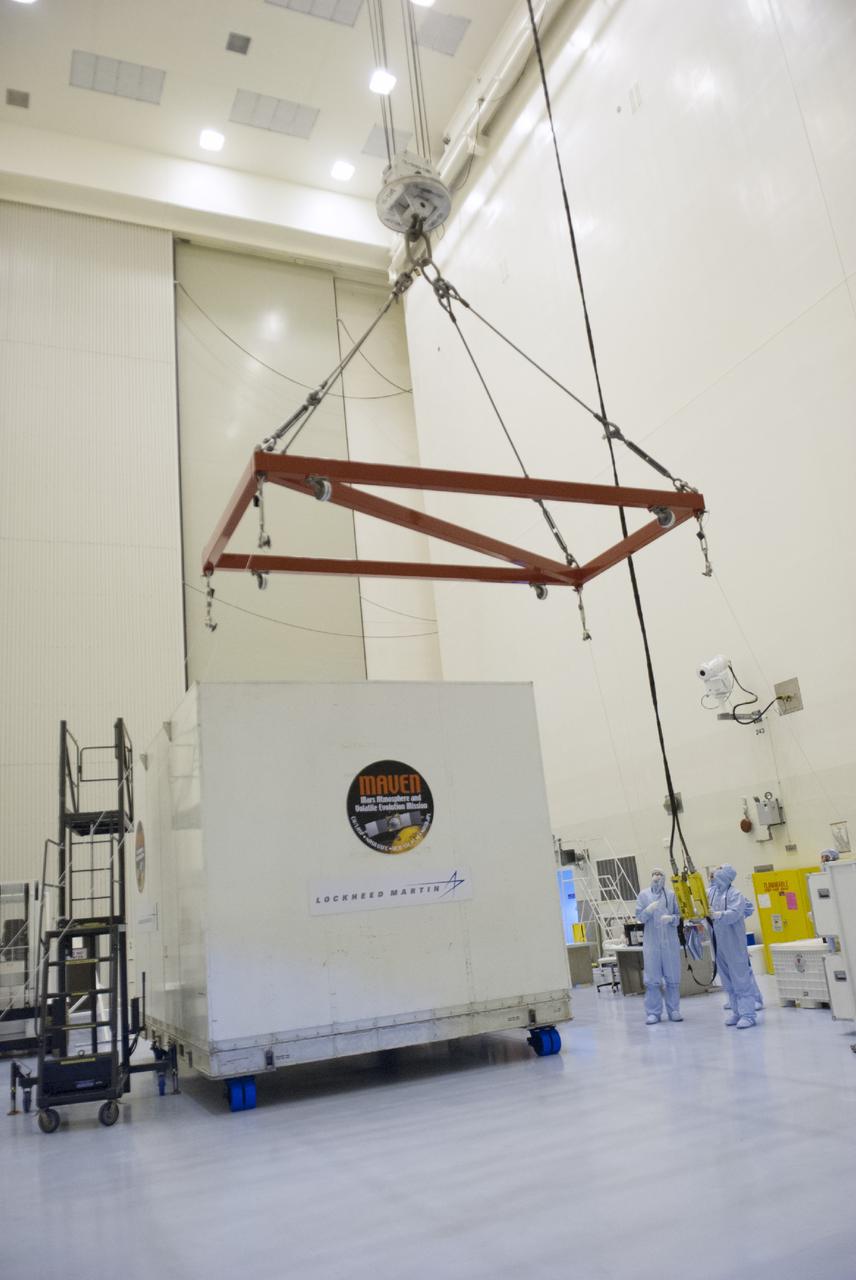
CAPE CANAVERAL, Fla. – Engineers move a sling into place for the removal of a shipping container from around NASA’s Mars Atmosphere and Volatile Evolution MAVEN spacecraft inside the Payload Hazardous Servicing Facility on Aug. 3, 2013, at the agency’s Kennedy Space Center in Florida. MAVEN will be prepared inside the facility for its scheduled November launch to Mars. Positioned in an orbit above the Red Planet, MAVEN will study the upper atmosphere of Mars in unprecedented detail. Photo credit: NASA/Tim Jacobs
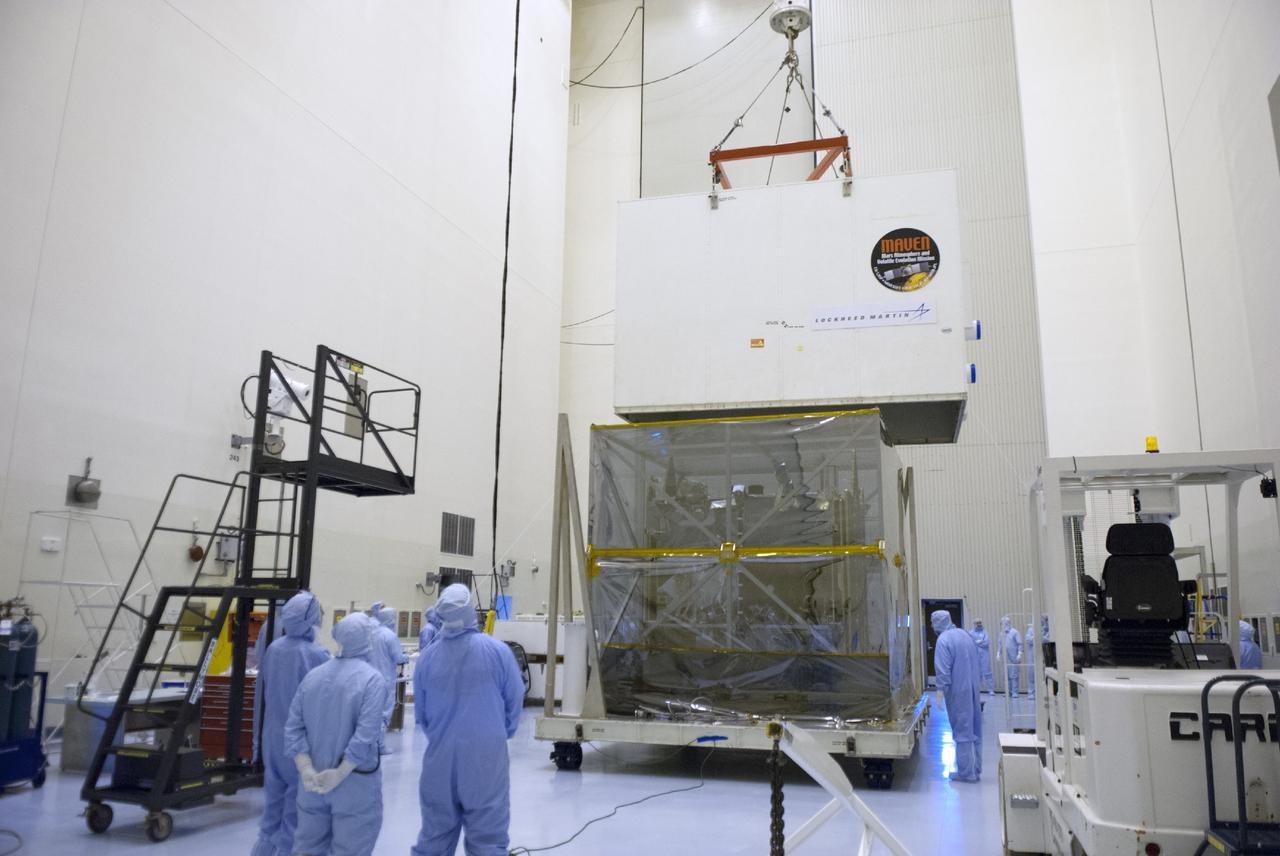
CAPE CANAVERAL, Fla. – Engineers use a sling to remove a shipping container from around NASA’s Mars Atmosphere and Volatile Evolution MAVEN spacecraft inside the Payload Hazardous Servicing Facility on Aug. 3, 2013, at the agency’s Kennedy Space Center in Florida. MAVEN will be prepared inside the facility for its scheduled November launch to Mars. Positioned in an orbit above the Red Planet, MAVEN will study the upper atmosphere of Mars in unprecedented detail. Photo credit: NASA/Tim Jacobs
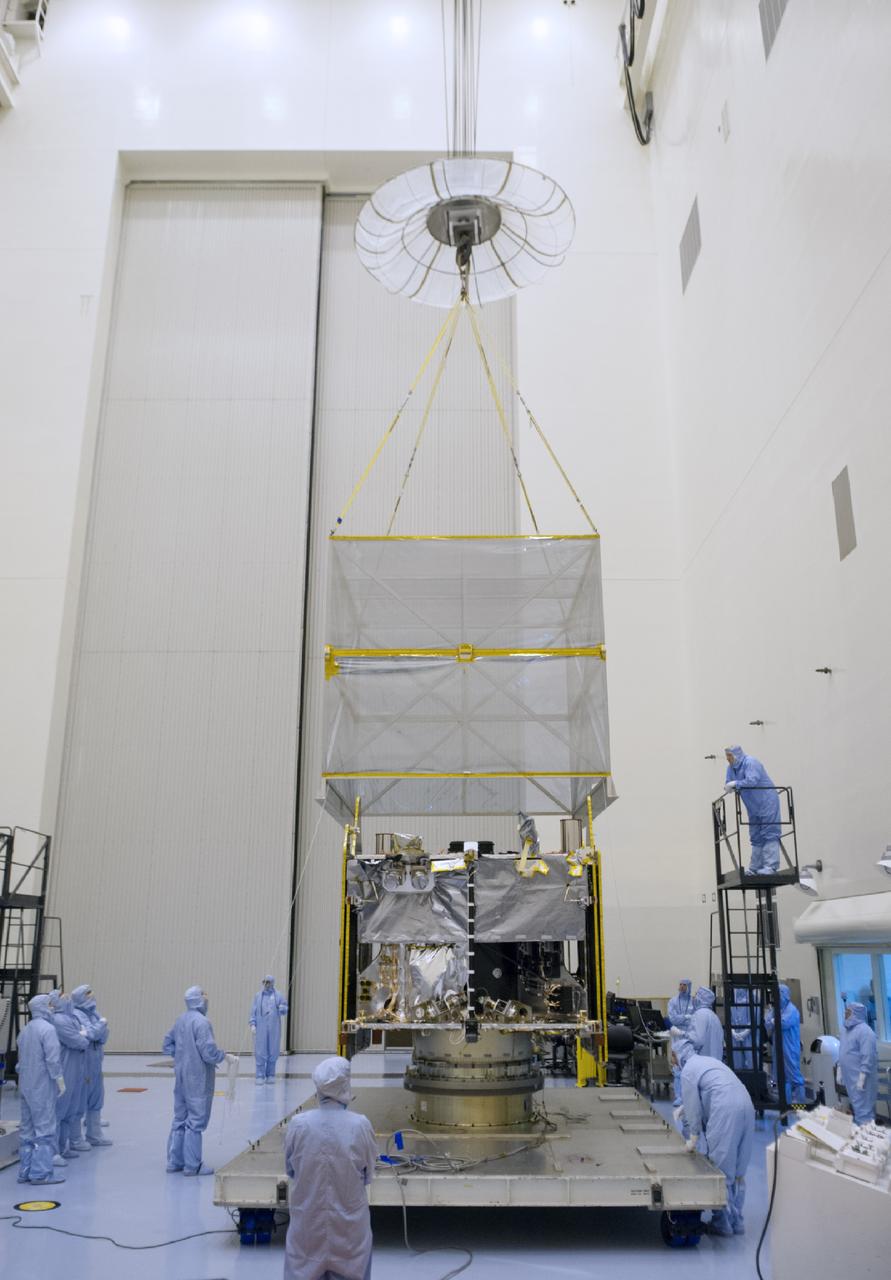
CAPE CANAVERAL, Fla. – A crane lifts shipping material from around NASA’s Mars Atmosphere and Volatile Evolution MAVEN spacecraft inside the Payload Hazardous Servicing Facility on Aug. 3, 2013, at the agency’s Kennedy Space Center in Florida. MAVEN will be prepared inside the facility for its scheduled November launch to Mars. Positioned in an orbit above the Red Planet, MAVEN will study the upper atmosphere of Mars in unprecedented detail. Photo credit: NASA/Tim Jacobs
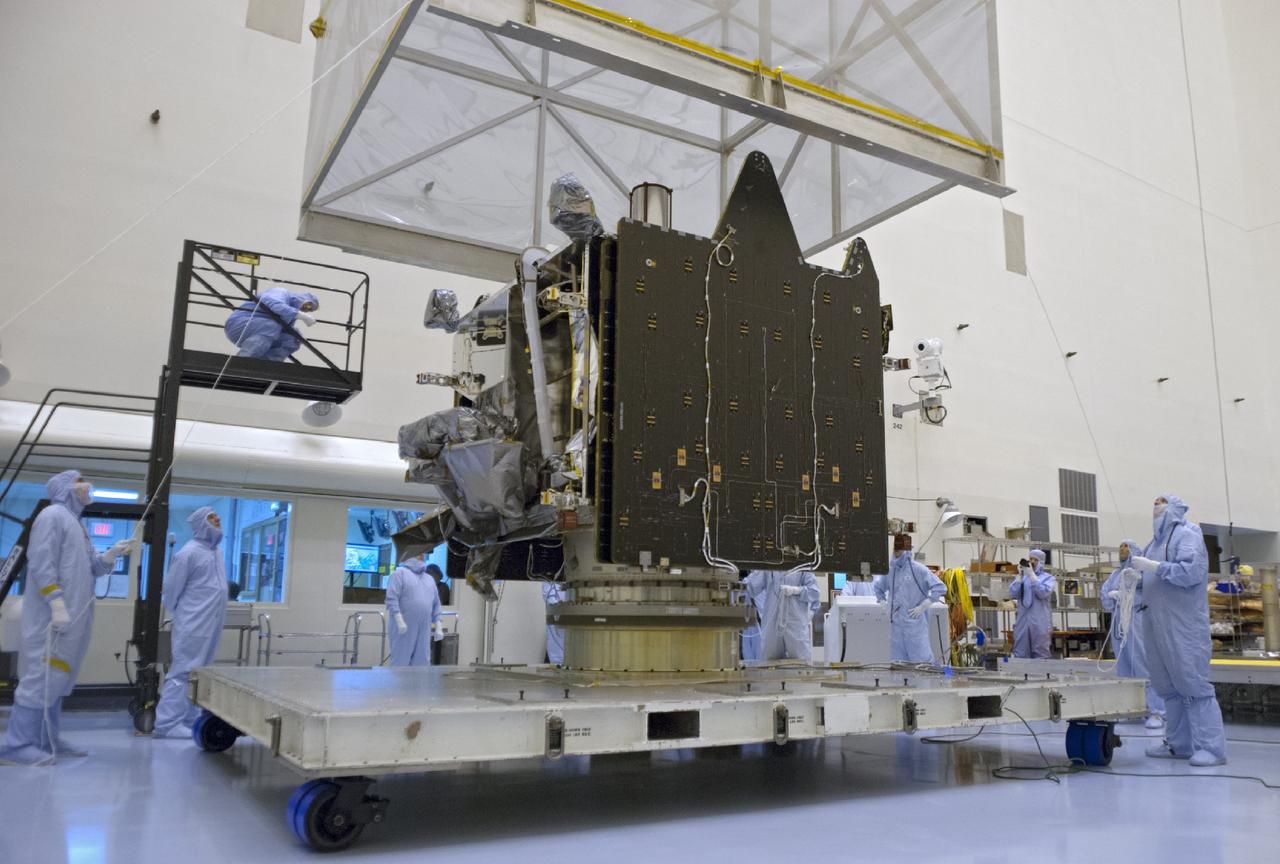
CAPE CANAVERAL, Fla. – A crane lifts shipping material from around NASA’s Mars Atmosphere and Volatile Evolution MAVEN spacecraft inside the Payload Hazardous Servicing Facility on Aug. 3, 2013, at the agency’s Kennedy Space Center in Florida. MAVEN will be prepared inside the facility for its scheduled November launch to Mars. Positioned in an orbit above the Red Planet, MAVEN will study the upper atmosphere of Mars in unprecedented detail. Photo credit: NASA/Tim Jacobs
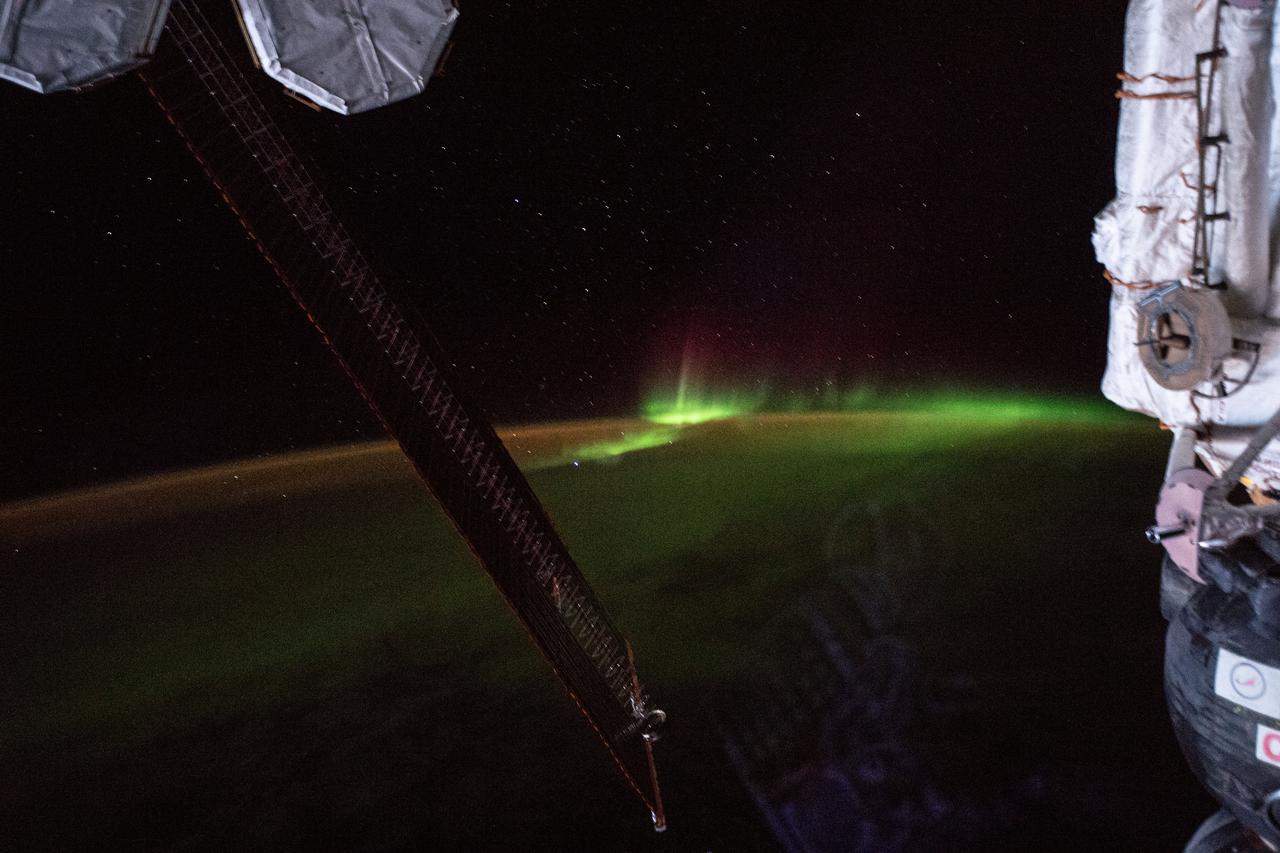
iss059e010180 (April 3, 2019) --- The aurora australis, also known as the "southern lights", is pictured as the International Space Station orbited 265 miles above the Indian Ocean southwest of Australia. Portions of the orbital complex can be seen including (from left) a pair of high-pressure gas tanks, solar arrays and the Soyuz MS-12 crew ship docked to the Rassvet module.

CAPE CANAVERAL, Fla. – Engineers prepare to remove shipping material from around NASA’s Mars Atmosphere and Volatile Evolution MAVEN spacecraft inside the Payload Hazardous Servicing Facility on Aug. 3, 2013, at the agency’s Kennedy Space Center in Florida. MAVEN will be prepared inside the facility for its scheduled November launch to Mars. Positioned in an orbit above the Red Planet, MAVEN will study the upper atmosphere of Mars in unprecedented detail. Photo credit: NASA/Tim Jacobs
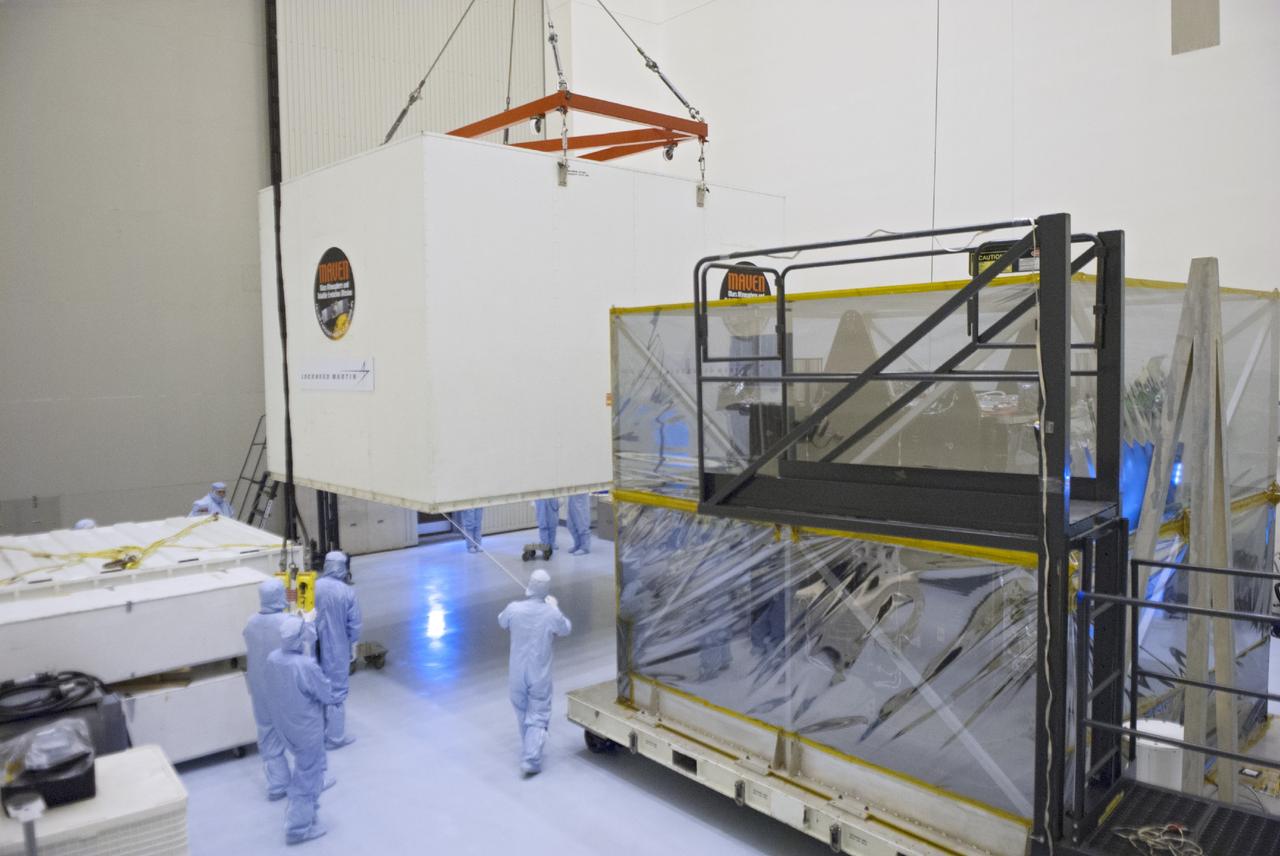
CAPE CANAVERAL, Fla. – Engineers move a shipping container from around NASA’s Mars Atmosphere and Volatile Evolution MAVEN spacecraft inside the Payload Hazardous Servicing Facility on Aug. 3, 2013, at the agency’s Kennedy Space Center in Florida. MAVEN will be prepared inside the facility for its scheduled November launch to Mars. Positioned in an orbit above the Red Planet, MAVEN will study the upper atmosphere of Mars in unprecedented detail. Photo credit: NASA/Tim Jacobs
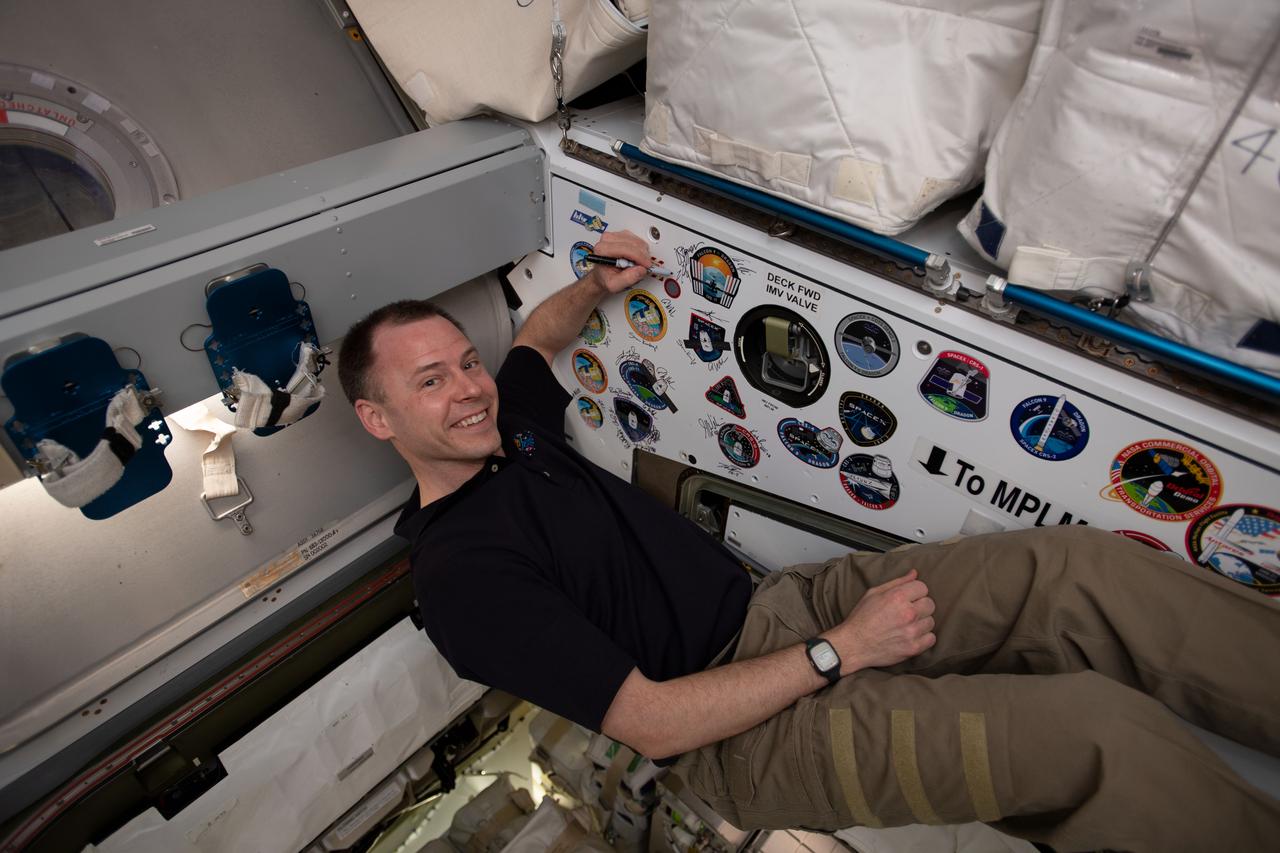
iss059e087866 (June 3, 2019) --- NASA astronaut Nick Hague signs the inside of the vestibule between the SpaceX Dragon cargo craft and the Harmony module. The hatch to Dragon was later closed and the resupply ship detached from Harmony before it was released from the grips of the Canadarm2 robotic arm. Dragon spent nearly a month attached to the International Space Station.
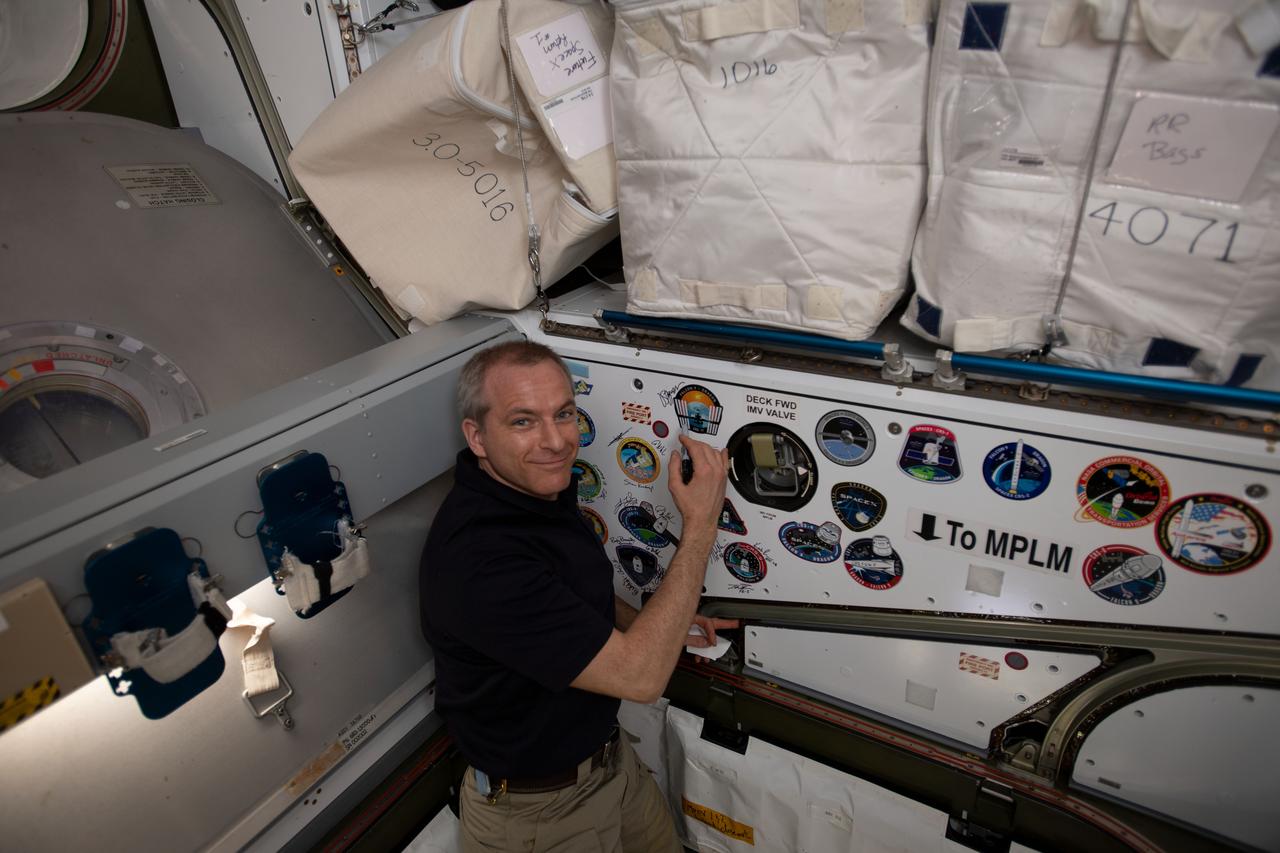
iss059e087858 (June 3, 2019) --- Canadian Space Agency astronaut David Saint-Jacques signs the inside of the vestibule between the SpaceX Dragon cargo craft and the Harmony module. The hatch to Dragon was later closed and the resupply ship detached from Harmony before it was released from the grips of the Canadarm2 robotic arm. Dragon spent nearly a month attached to the International Space Station.
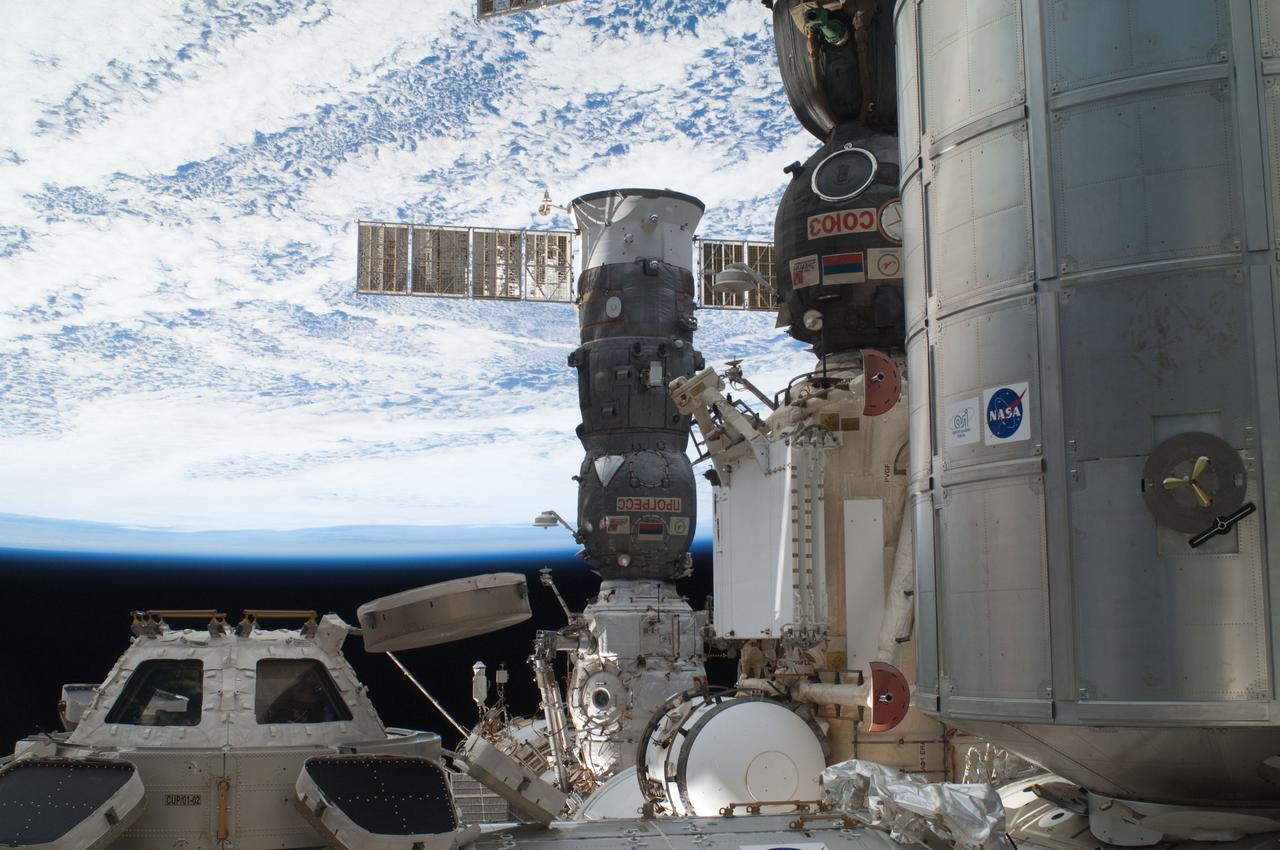
ISS028-E-016202 (12 July 2011) --- This medium wide view, photographed during a July 12 spacewalk, shows the International Space Station's Cupola, backdropped against black space, a horizon scene and various components of the orbiting outpost, including the Leonardo Permanent Multipurpose Module, right, along with two "parked" Russian spacecraft -- a Soyuz and a progress supply ship. Node 3 or Tranquility (on which the Cupola is mounted) is just out of frame, bottom.
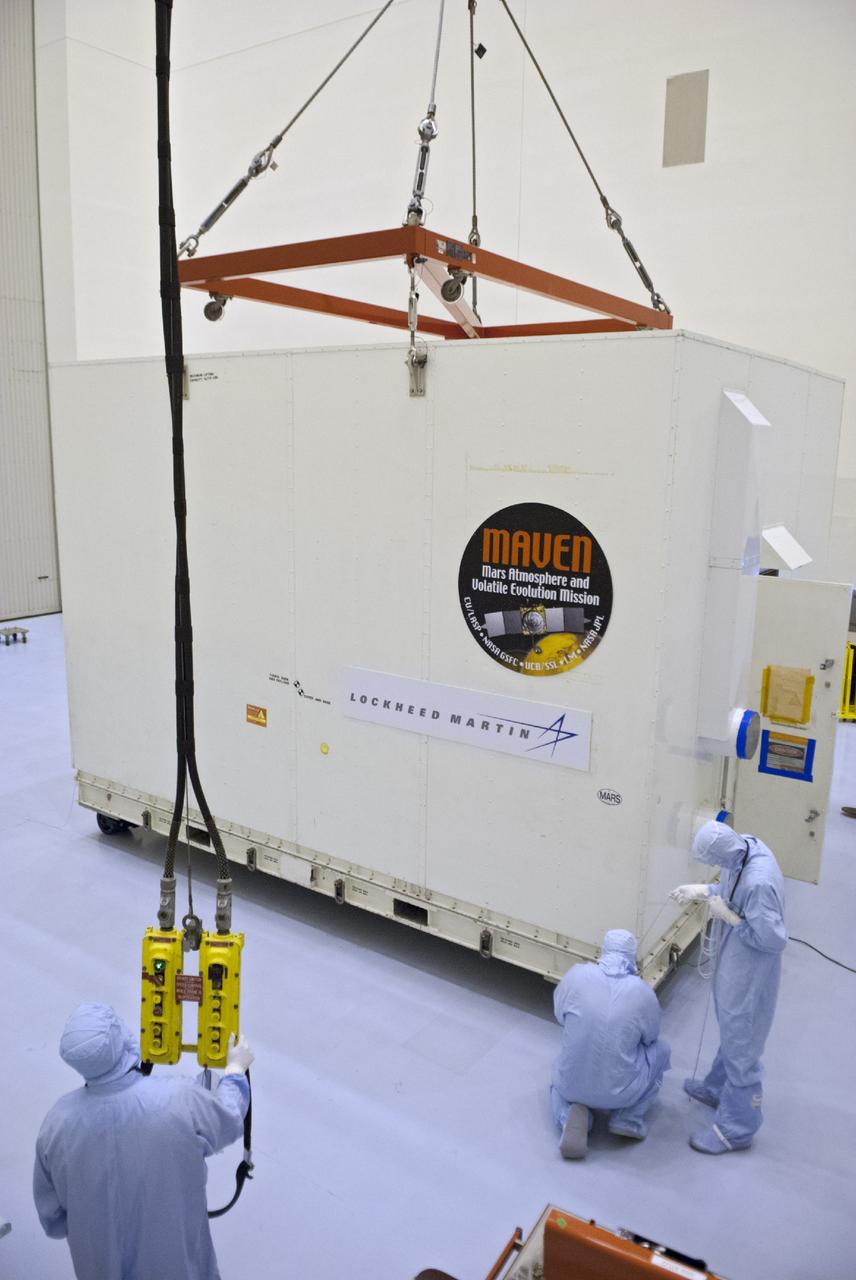
CAPE CANAVERAL, Fla. – Engineers prepare to remove a shipping container from around NASA’s Mars Atmosphere and Volatile Evolution MAVEN spacecraft inside the Payload Hazardous Servicing Facility on Aug. 3, 2013, at the agency’s Kennedy Space Center in Florida. MAVEN will be prepared inside the facility for its scheduled November launch to Mars. Positioned in an orbit above the Red Planet, MAVEN will study the upper atmosphere of Mars in unprecedented detail. Photo credit: NASA/Tim Jacobs

S67-49423 (9 Nov. 1967) --- The Apollo Spacecraft 017 Command Module, with flotation collar still attached, is hoisted aboard the USS Bennington, prime recovery ship for the Apollo 4 (Spacecraft 017/Saturn 501) unmanned, Earth-orbital space mission. The Command Module splashed down at 3:37 p.m. (EST), Nov. 9, 1967, 934 nautical miles northwest of Honolulu, Hawaii, in the mid-Pacific Ocean. Note charred heat shield caused by extreme heat of reentry.
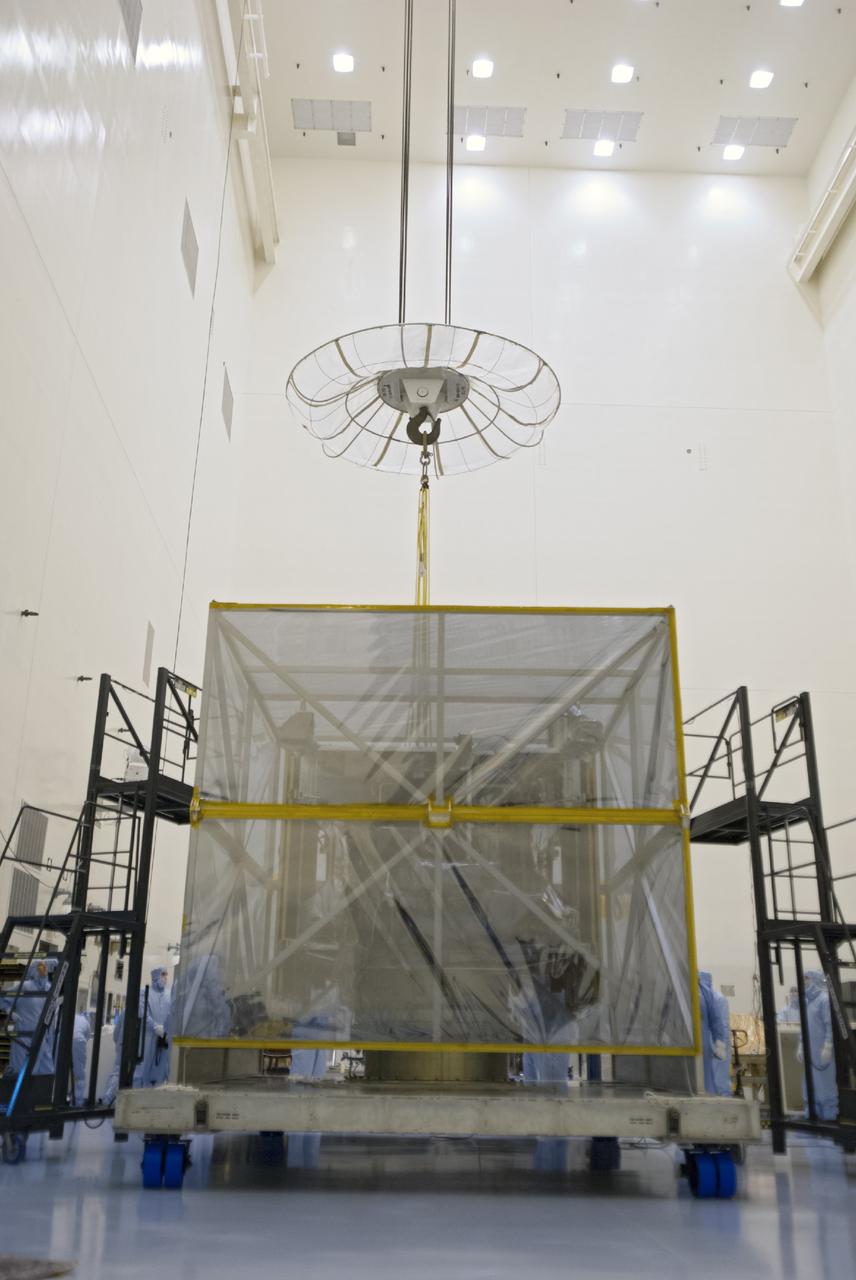
CAPE CANAVERAL, Fla. – A crane begins to lift shipping material from around NASA’s Mars Atmosphere and Volatile Evolution MAVEN spacecraft inside the Payload Hazardous Servicing Facility on Aug. 3, 2013, at the agency’s Kennedy Space Center in Florida. MAVEN will be prepared inside the facility for its scheduled November launch to Mars. Positioned in an orbit above the Red Planet, MAVEN will study the upper atmosphere of Mars in unprecedented detail. Photo credit: NASA/Tim Jacobs
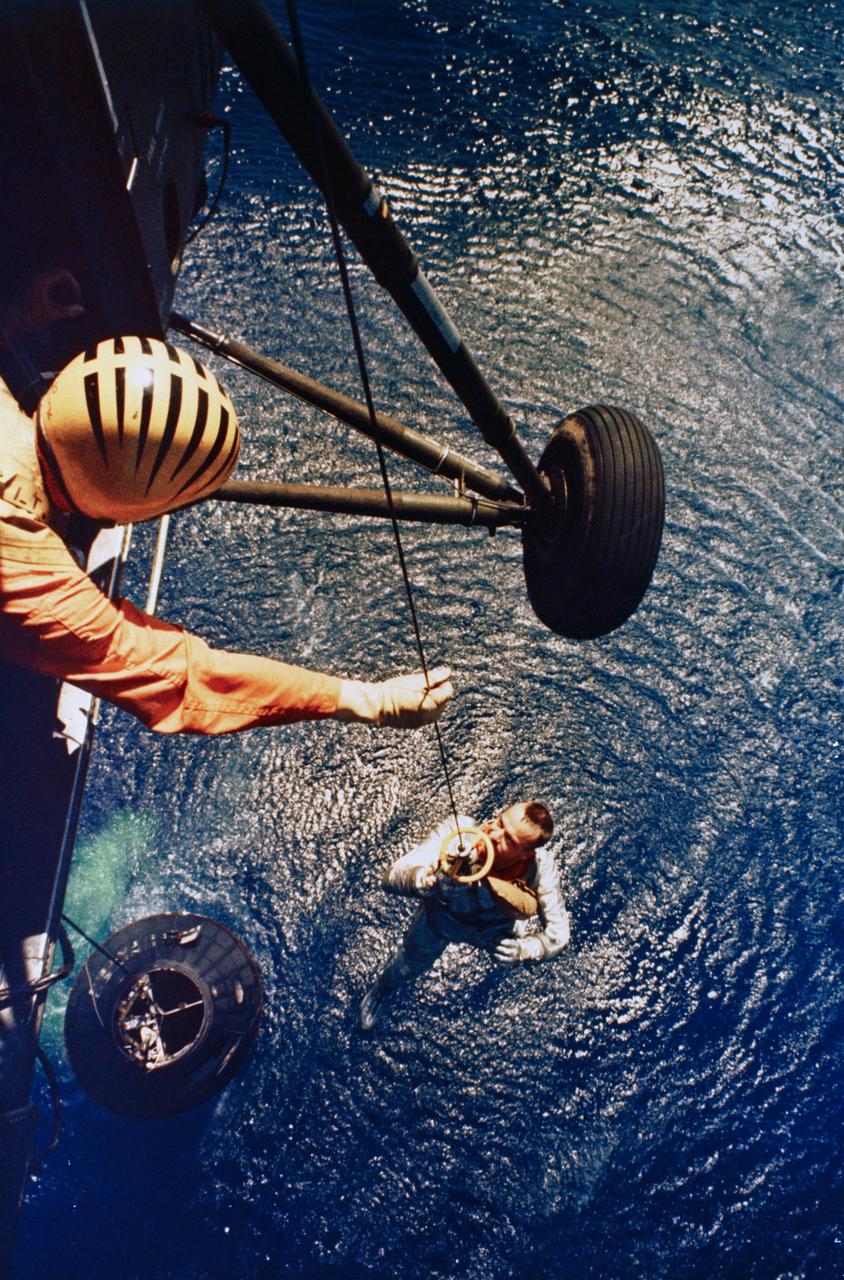
S88-31376 (5 May 1961) --- Astronaut Alan B. Shepard Jr., pilot of the Mercury-Redstone 3 (MR-3) suborbital spaceflight, is retrieved by a helicopter from the USS Lake Champlain during recovery operations in the western Atlantic Ocean. Shepard and the Mercury spacecraft designated the ?Freedom 7? (floating in water below) were flown to the deck of the recovery ship within 11 minutes of splashdown. MR-3 was the United States? first manned space mission. The spacecraft attained a maximum speed of 5,180 miles per hour, reached an altitude of 116 1/2 statute miles, and landed 302 statute miles downrange from Cape Canaveral, Florida. The suborbital mission lasted 15 minutes and 22 seconds. Photo credit: NASA or National Aeronautics and Space Administration

A C-17 Globemaster aircraft from the Alaska Air National Guard’s 249th Airlift Squadron flies overhead as pararescue specialists from the 304th Rescue Squadron, located in Portland, Oregon complete an astronaut rescue training exercise inside a covered life raft on the Atlantic Ocean. The pararescue specialists, supporting the 45th Operations Group’s Detachment 3, based out of Patrick Air Force Base, conducted the exercise in April with NASA’s Commercial Crew Program and SpaceX off of Florida’s eastern coast. The specially designed 20-person life raft is equipped with enough food, water and medical supplies to sustain both rescuers and crew for up to three days, if necessary. In this situation, the Department of Defense (DOD) would complete the rescue by enlisting help from the US Coast Guard, a DOD ship, or a nearby commercial ship of opportunity to transport the crew to safety.
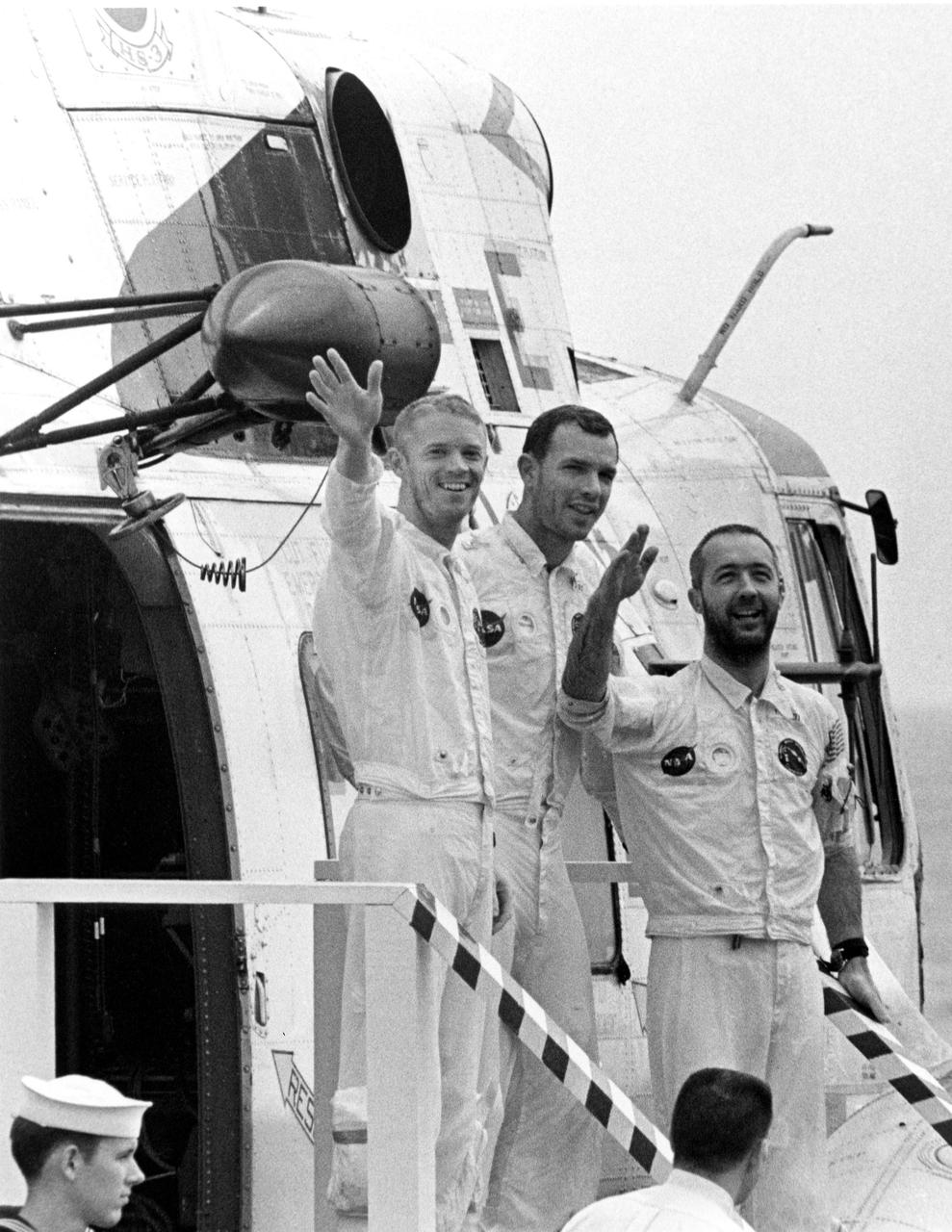
KENNEDY SPACE CENTER, FLA. -- One hour after their Apollo 9 spacecraft splashed down today in the Atlantic Ocean, waving astronauts, left to right, Russell L. Schweickart, David R. Scott and James A. McDivitt, descend stairway on to main deck of the USS Guadalcanal, prime recovery ship. The helicopter flew them from their impact point a short distance to the ship, originally positioned less than five miles from where they splashed down. The 10-day Earth orbital mission proved the feasibility of the lunar module for manned descent to the Moon's surface, scheduled to take place later this year. They wre launched March 3, 1969, from the Kennedy Space Center aboard an Apollo_Saturn V space vehicle. The National Aeronautics and Space Administration directs the Apollo program.

Pararescue specialists from the 304th Rescue Squadron, located in Portland, Oregon and supporting the 45th Operations Group’s Detachment 3, based out of Patrick Air Force Base, secure a covered life raft as the sun sets during an astronaut rescue training exercise with NASA’s Commercial Crew Program and SpaceX off of Florida’s eastern coast in April. The specially designed 20-person life raft is equipped with enough food, water and medical supplies to sustain both rescuers and crew for up to three days, if necessary. In this situation, the Department of Defense (DOD) would complete the rescue by enlisting help from the US Coast Guard, a DOD ship, or a nearby commercial ship of opportunity to transport the crew to safety.
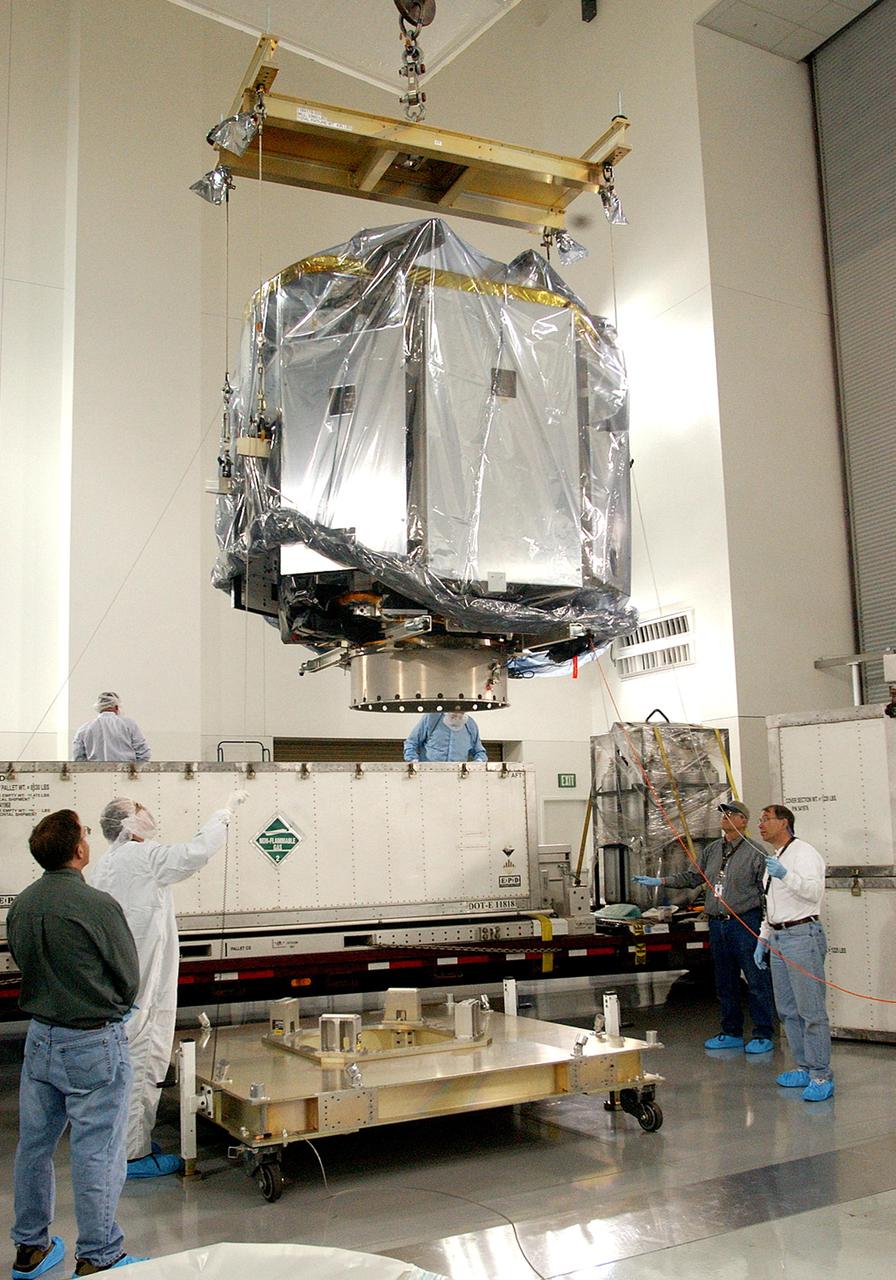
KENNEDY SPACE CENTER, FLA. - At the Astrotech Payload Processing Facility on Vandenberg Air Force Base in California, an overhead crane lifts the CloudSat spacecraft away from its shipping container. CloudSat was shipped from Ball Aerospace and Technologies Corp. in Boulder, Colo. It will be placed on the workstand, seen on the floor in the foreground, and will undergo electrical and spacecraft transmitter testing. In combination with the Cloud-Aerosol Lidar and Infrared Pathfinder Satellite Observation (CALIPSO), the spacecraft will provide never-before-seen 3-D perspectives of how clouds and aerosols form, evolve, and affect weather and climate. CALIPSO and CloudSat will fly in formation with three other satellites to enhance understanding of climate systems. The launch date for CloudSat_CALIPSO is no earlier than Aug. 22.

Ship tracks above the northern Pacific Ocean. NASA image captured July 3, 2010. Satellite: Aqua NASA/GSFC/Jeff Schmaltz/MODIS Land Rapid Response Team To learn more about MODIS go to: <a href="http://rapidfire.sci.gsfc.nasa.gov/gallery/?latest" rel="nofollow">rapidfire.sci.gsfc.nasa.gov/gallery/?latest</a> To learn more about ship tracks go to: <a href="http://visibleearth.nasa.gov/view_rec.php?id=2370" rel="nofollow">visibleearth.nasa.gov/view_rec.php?id=2370</a> To watch a video on ship tracks go to: <a href="http://www.youtube.com/watch?v=Vsri2sOAjWo&feature=player_embedded#" rel="nofollow">www.youtube.com/watch?v=Vsri2sOAjWo&feature=player_em...</a>! <b><a href="http://www.nasa.gov/centers/goddard/home/index.html" rel="nofollow">NASA Goddard Space Flight Center</a></b> is home to the nation's largest organization of combined scientists, engineers and technologists that build spacecraft, instruments and new technology to study the Earth, the sun, our solar system, and the universe.
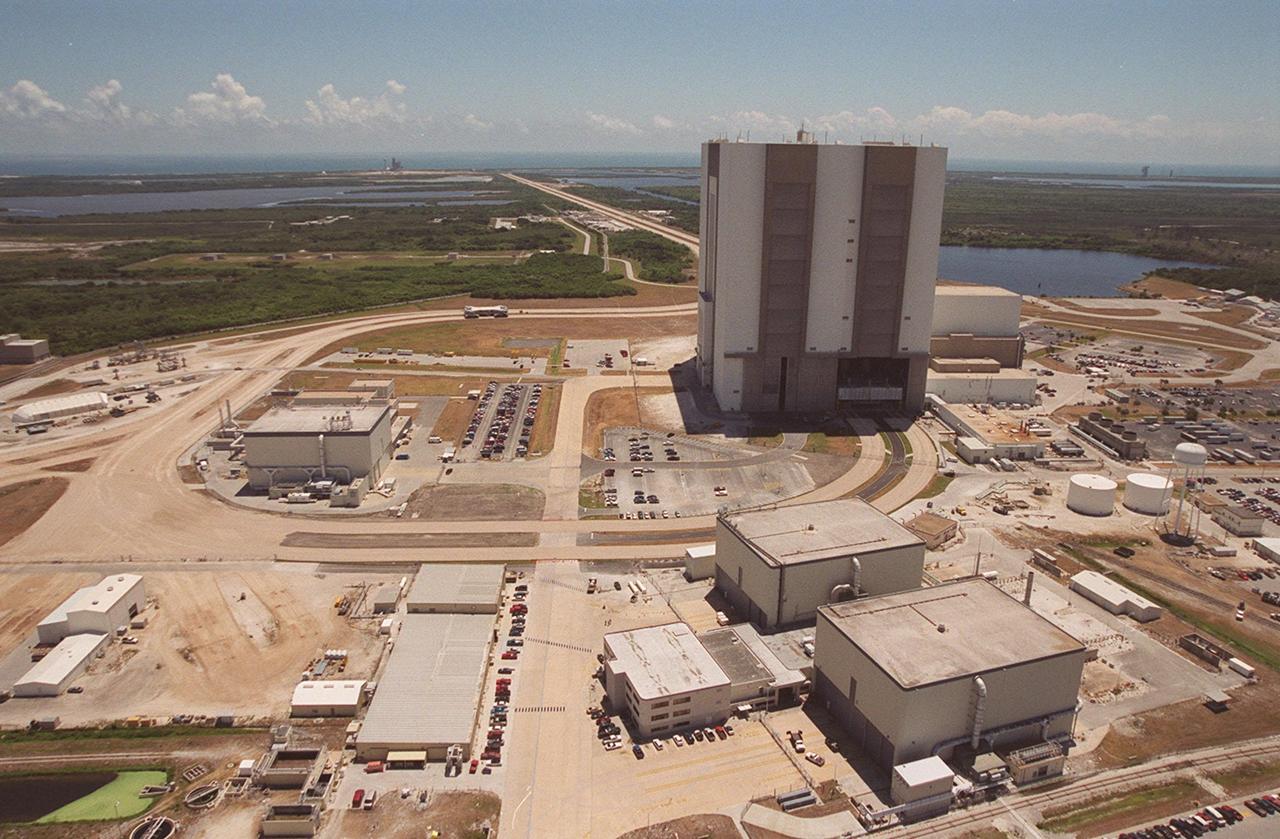
This aerial photo shows the areas recently opened as part of KSC’s Safe Haven project. The curved road in the center is the newly restored crawlerway leading around the Vehicle Assembly Building (VAB) and Orbiter Processing Facility 3 (OPF-3) into the VAB high bay 2 (open on the lower right), where a mobile launcher platform/crawler-transporter currently sits. The Safe Haven project will enable the storage of orbiters during severe weather. OPF1 and OPF-2 are at the lower right. The crawlerway also extends from the east side of the VAB out to the two launch pads. Launch Pad 39A is visible to the left of the crawlerway. In the distance is the Atlantic Ocean. To the right of the VAB is the turn basin, into which ships tow the barge for offloading new external tanks from Louisiana
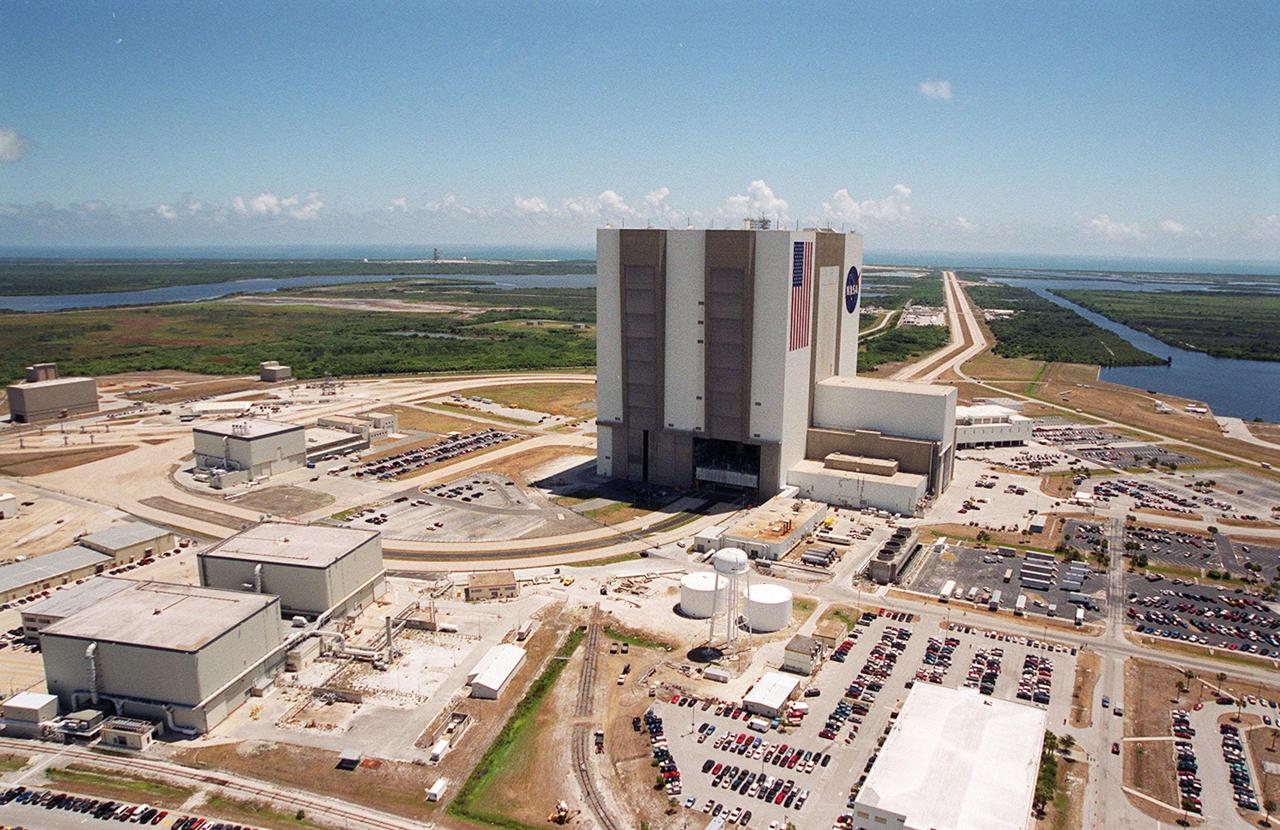
This aerial photo captures many of the facilities involved in Space Shuttle launches. At center is the Vehicle Assembly Building (VAB). The curved road on the near side is the newly restored crawlerway leading into the VAB high bay 2, where a mobile launcher platform/crawler-transporter currently sits. The road restoration and high bay 2 are part of KSC’s Safe Haven project, enabling the storage of orbiters during severe weather. The road circles around the Orbiter Processing Facility 3 (OPF-3) at left center. OPF1 and OPF-2 are just below the curving road. The crawlerway also extends from the east side of the VAB out to the two launch pads, only one visible to the left of the VAB. In the distance is the Atlantic Ocean. To the right of the far crawlerway is the turn basin, into which ships tow the barge for offloading new external tanks from Louisiana

This aerial photo captures many of the facilities involved in Space Shuttle launches. At center is the Vehicle Assembly Building (VAB). The curved road on the near side is the newly restored crawlerway leading into the VAB high bay 2, where a mobile launcher platform/crawler-transporter currently sits. The road restoration and high bay 2 are part of KSC’s Safe Haven project, enabling the storage of orbiters during severe weather. The road circles around the Orbiter Processing Facility 3 (OPF-3) at left center. OPF1 and OPF-2 are just below the curving road. The crawlerway also extends from the east side of the VAB out to the two launch pads, only one visible to the left of the VAB. In the distance is the Atlantic Ocean. To the right of the far crawlerway is the turn basin, into which ships tow the barge for offloading new external tanks from Louisiana
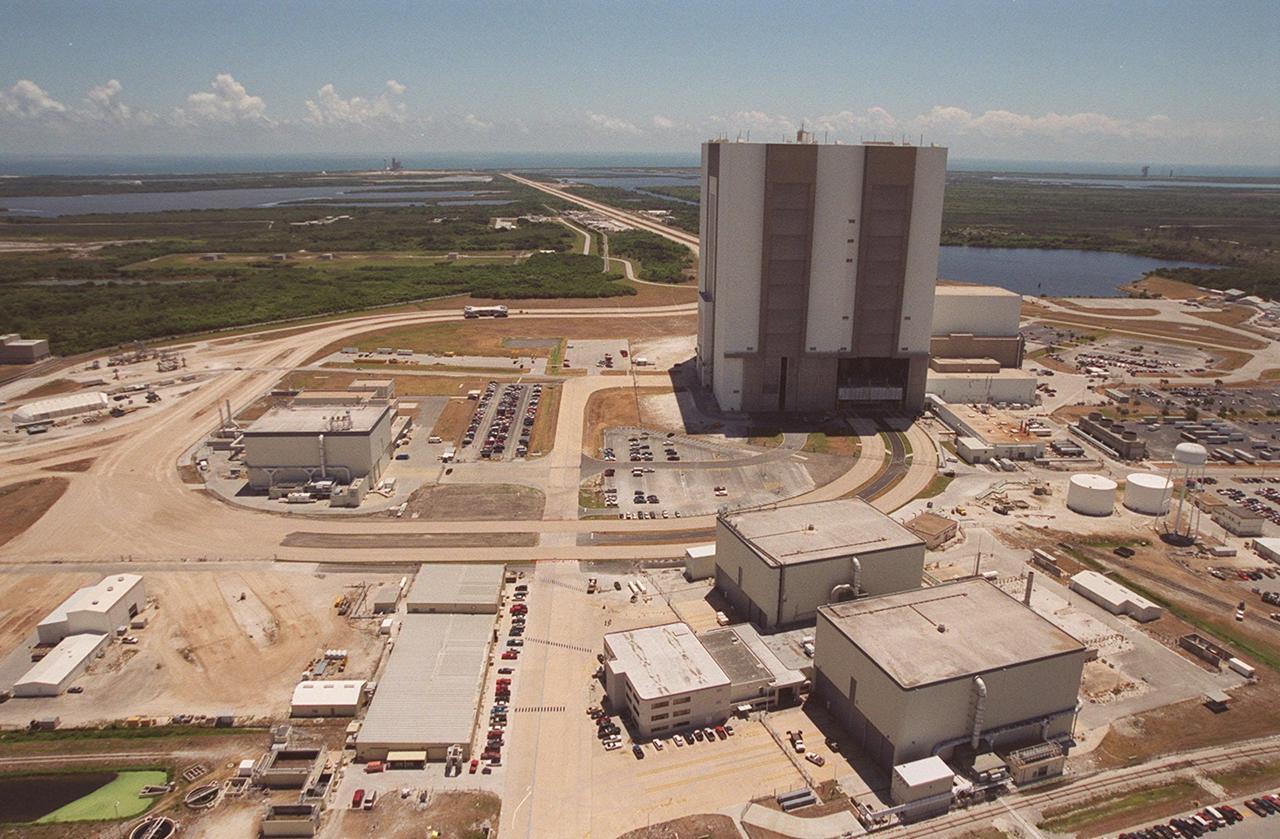
This aerial photo shows the areas recently opened as part of KSC’s Safe Haven project. The curved road in the center is the newly restored crawlerway leading around the Vehicle Assembly Building (VAB) and Orbiter Processing Facility 3 (OPF-3) into the VAB high bay 2 (open on the lower right), where a mobile launcher platform/crawler-transporter currently sits. The Safe Haven project will enable the storage of orbiters during severe weather. OPF1 and OPF-2 are at the lower right. The crawlerway also extends from the east side of the VAB out to the two launch pads. Launch Pad 39A is visible to the left of the crawlerway. In the distance is the Atlantic Ocean. To the right of the VAB is the turn basin, into which ships tow the barge for offloading new external tanks from Louisiana
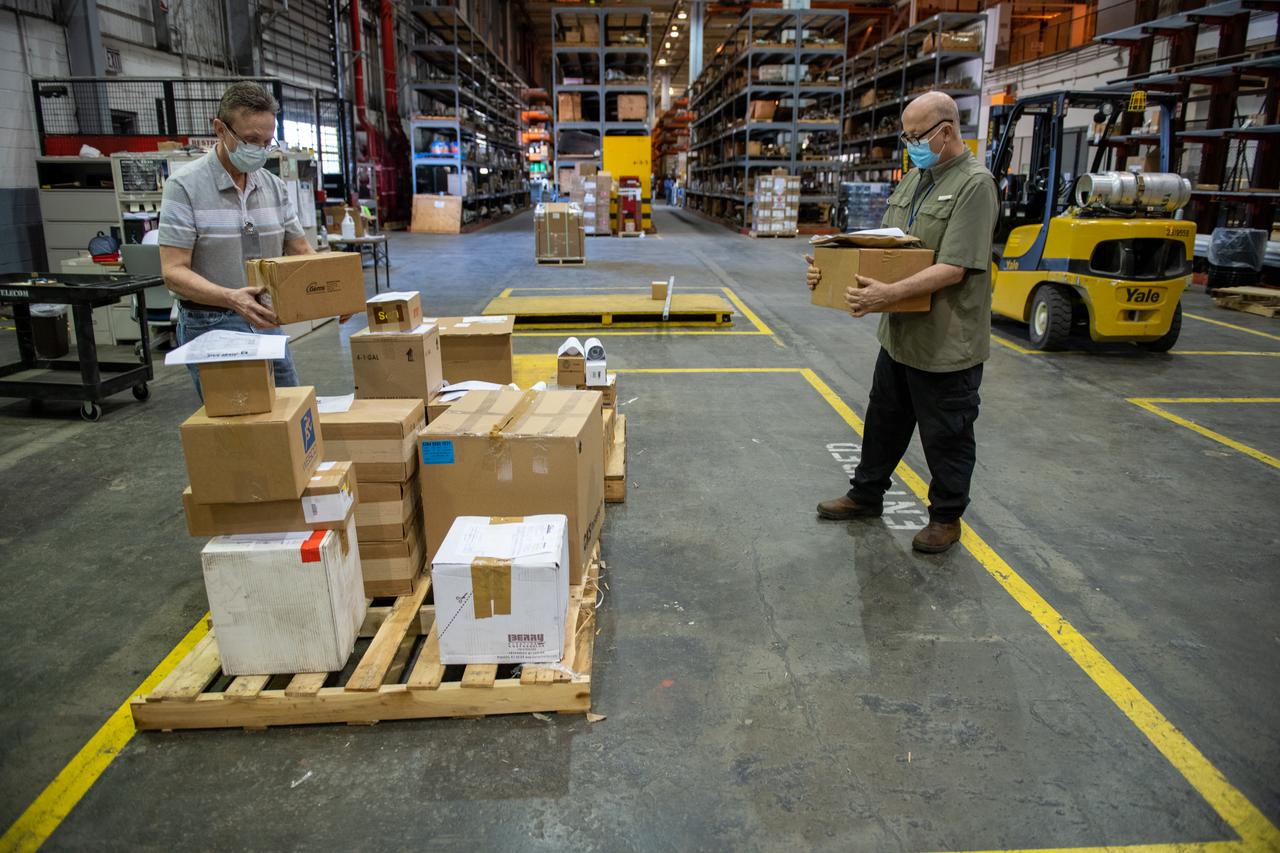
This photo includes two employees wearing personal protective gear in the shipping and receiving area of Michoud Assembly Facility during the Stage 3 transition of NASA’s Framework for Return To On-Site Work. Wearing a facemask is mandatory for common areas where social distancing is difficult to achieve. Access to the facility is limited to authorized personnel working on mission-critical tasks that must be conducted onsite. Employees at Michoud Assembly Facility in New Orleans will slowly and methodically resume Space Launch System (SLS) Core Stage and Orion Spacecraft production and assembly activities at a pace that limits personnel and follows federal guidelines for social distancing and use of personal protective equipment such as face masks. For more information about SLS, visit nasa.gov/sls.
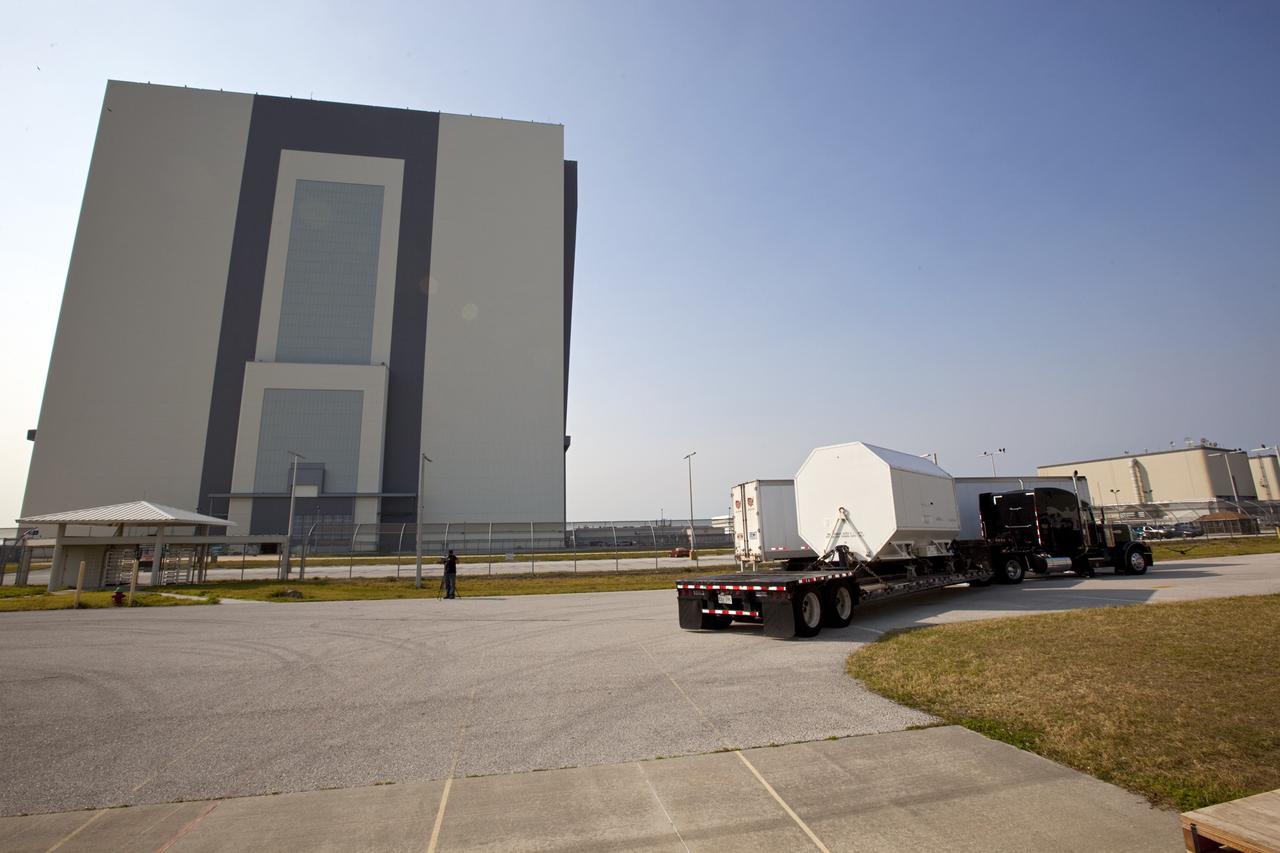
CAPE CANAVERAL, Fla. – A flatbed truck departs from the Orbiter Processing Facility-3 engine shop at NASA's Kennedy Space Center in Florida transporting the last Pratt and Whitney Rocketdyne space shuttle main engine, or SSME, to NASA's Stennis Space Center in Mississippi. The first two groups of engines were shipped from Kennedy to Stennis in November 2011 and January 2012 the remaining engines departed today. Altogether, 15 shuttle-era engines will be stored at Stennis for reuse on NASA’s Space Launch System heavy-lift rocket, under development. Photo credit: NASA/Dimitri Gerondidakis
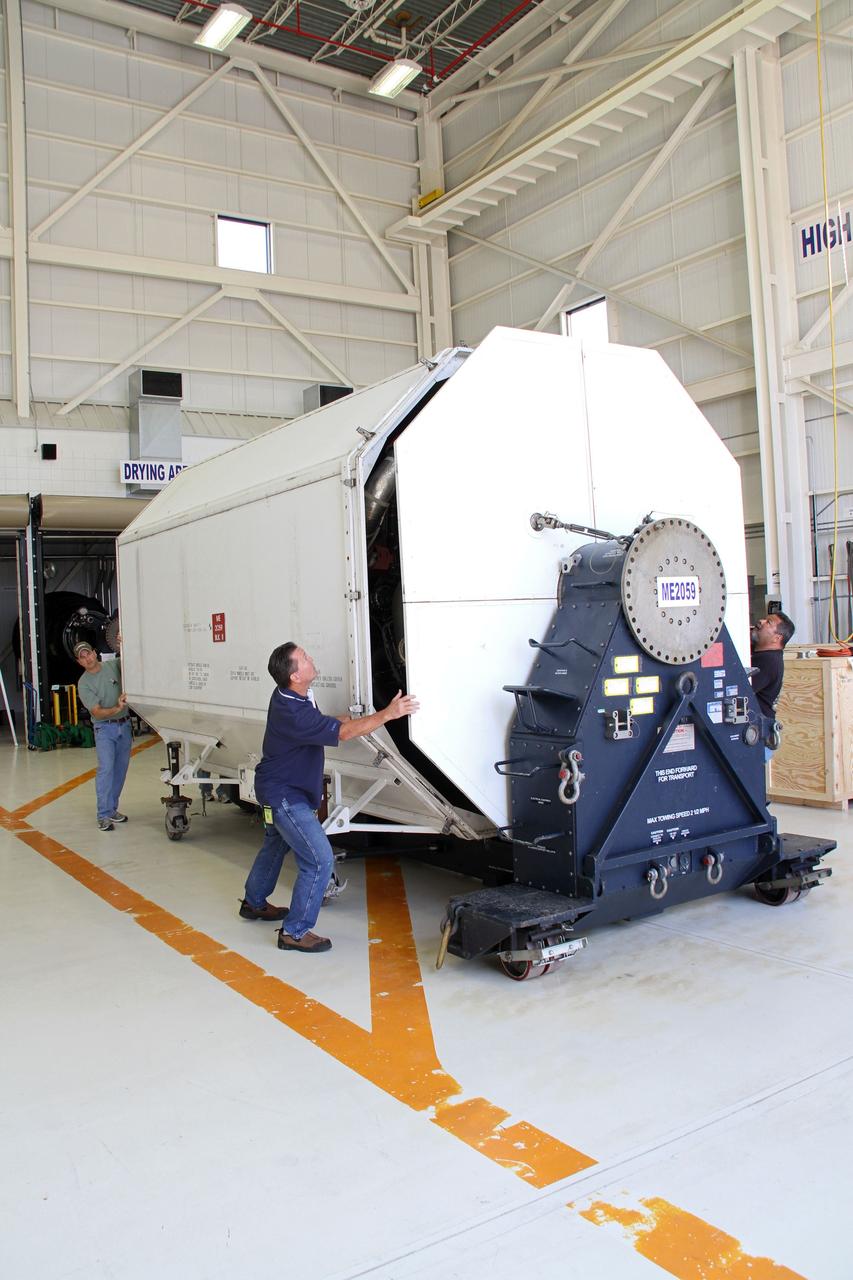
CAPE CANAVERAL, Fla. -- Jeff Huie of Pratt and Whitney Rocketdyne watches as the last of the space shuttle main engines disappears into a transportation canister in the Orbiter Processing Facility-3 engine shop at NASA's Kennedy Space Center in Florida. The engine was packed for shipment to NASA's Stennis Space Center in Mississippi. The first two groups of engines were shipped from Kennedy to Stennis in November 2011 and January 2012, and the remaining engines are scheduled to depart on April 9. Altogether, 15 shuttle-era engines will be stored at Stennis for reuse on NASA’s Space Launch System heavy-lift rocket, under development. Photo credit: NASA/Cory Huston
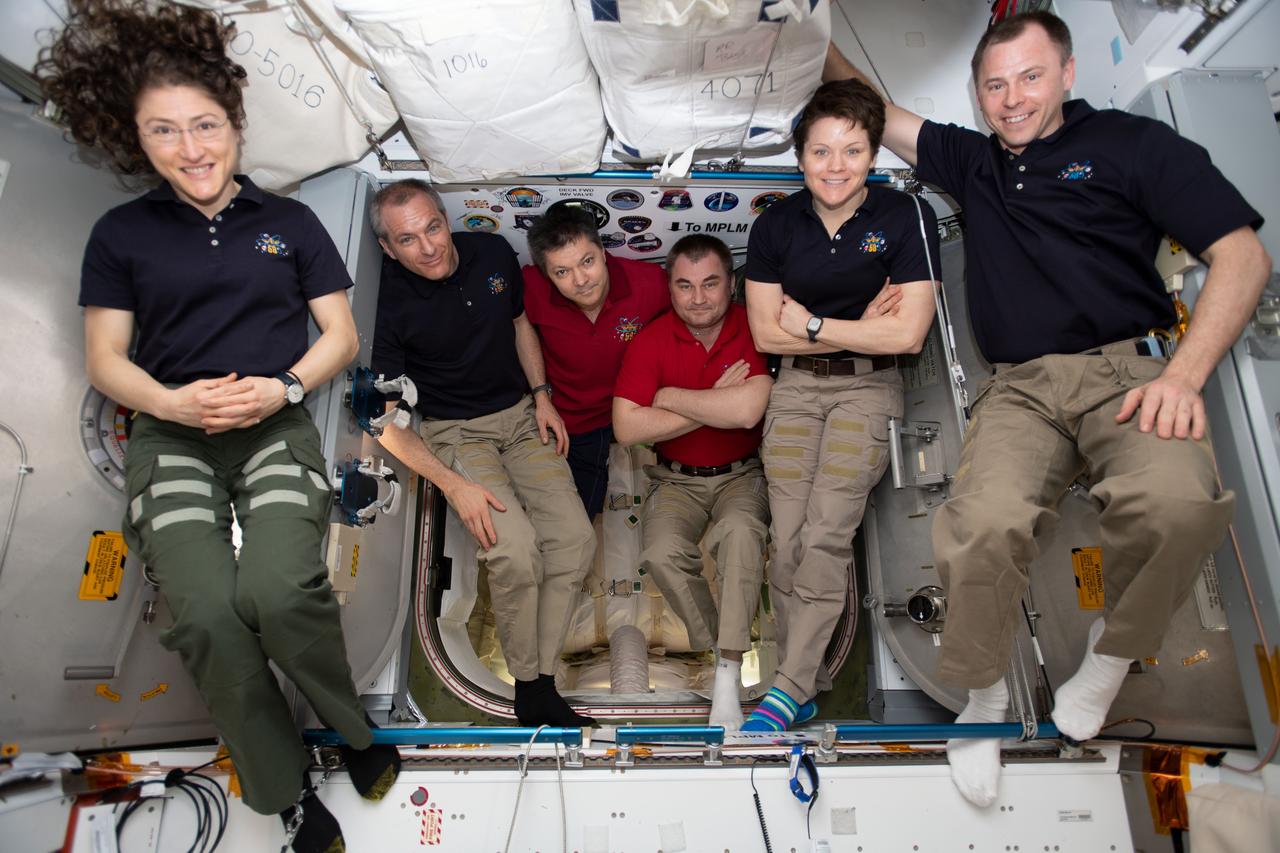
iss059e087883 (June 3, 2019) --- The six-member Expedition 59 crew gathers for a portrait inside of the vestibule between the SpaceX Dragon cargo craft and the Harmony module. The hatch to Dragon was later closed and the resupply ship detached from Harmony before it was released from the grips of the Canadarm2 robotic arm. Dragon spent nearly a month attached to the International Space Station. From left are, astronauts Christina Koch of NASA and David Saint-Jacques of the Canadian Space Agency; Commander Oleg Kononenko and Flight Engineer Alexey Ovchinin of Roscosmos; and NASA astronauts Anne McClain and Nick Hague.
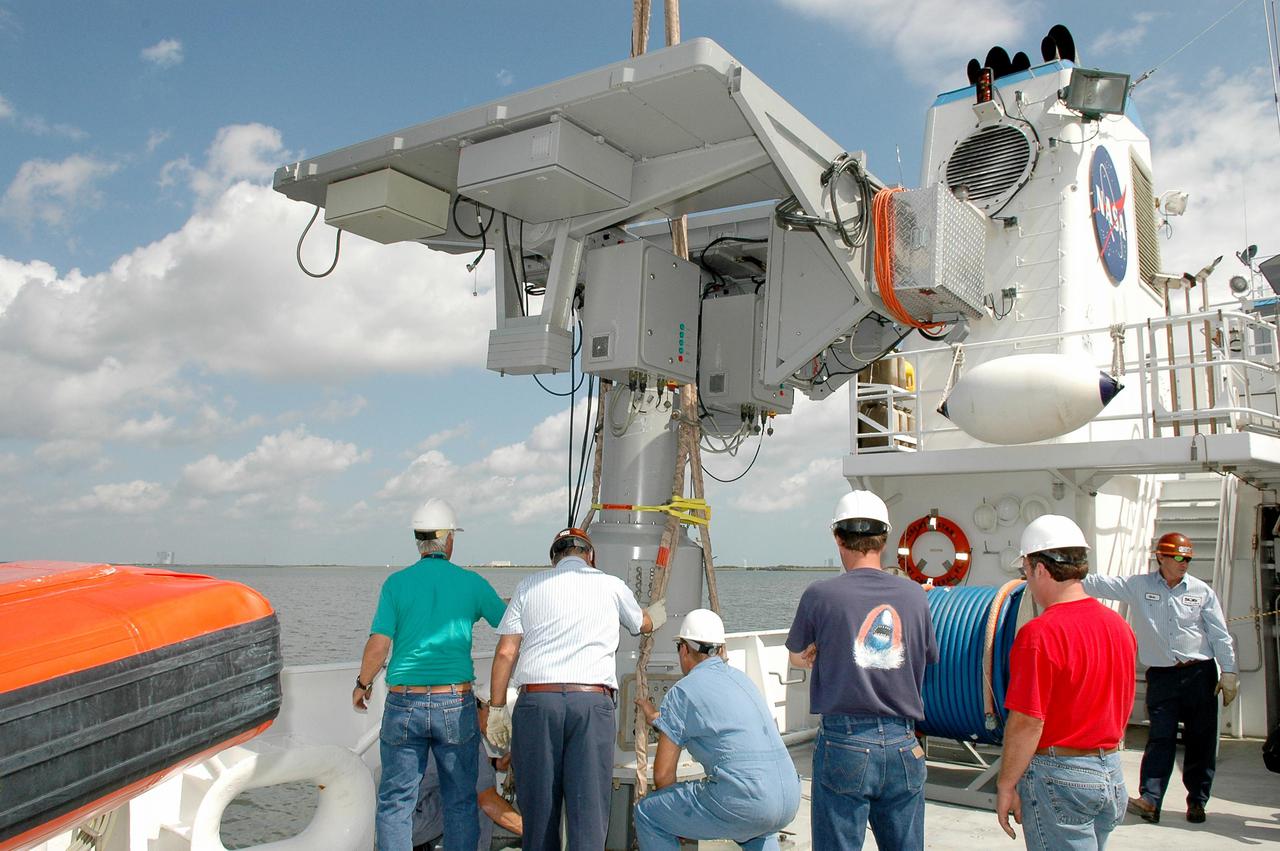
KENNEDY SPACE CENTER, FLA. - At Hangar AF at Cape Canaveral Air Force Station, workers on the Liberty Star, one of the two SRB Retrieval Ships, oversee the safe placement of an X-band Doppler radar array onto the deck. The radar will be used for tracking support on NASA’s Return to Flight mission, STS-114, on Space Shuttle Discovery. Launch is targeted for May 15 with a launch window that extends to June 3. During its 12-day mission, Discovery’s seven-member crew will test new hardware and techniques to improve Shuttle safety, as well as deliver supplies to the International Space Station.

CAPE CANAVERAL, Fla. – In the Space Station Processing Facility at NASA's Kennedy Space Center in Florida, an overhead crane is attached to the Tranquility module, or Node 3. The crane will lift the module from its shipping container and transfer Tranquility to a work stand. The module will be delivered to the International Space Station on the STS-130 mission. Tranquility will eventually house the life support equipment necessary for the space station's permanent crew of six. It will also accommodate the European Space Agency's Cupola observation module, a seven-window, dome-shaped structure. Tranquility is targeted for launch aboard space shuttle Endeavour in February 2010. Photo credit: NASA/Jim Grossmann
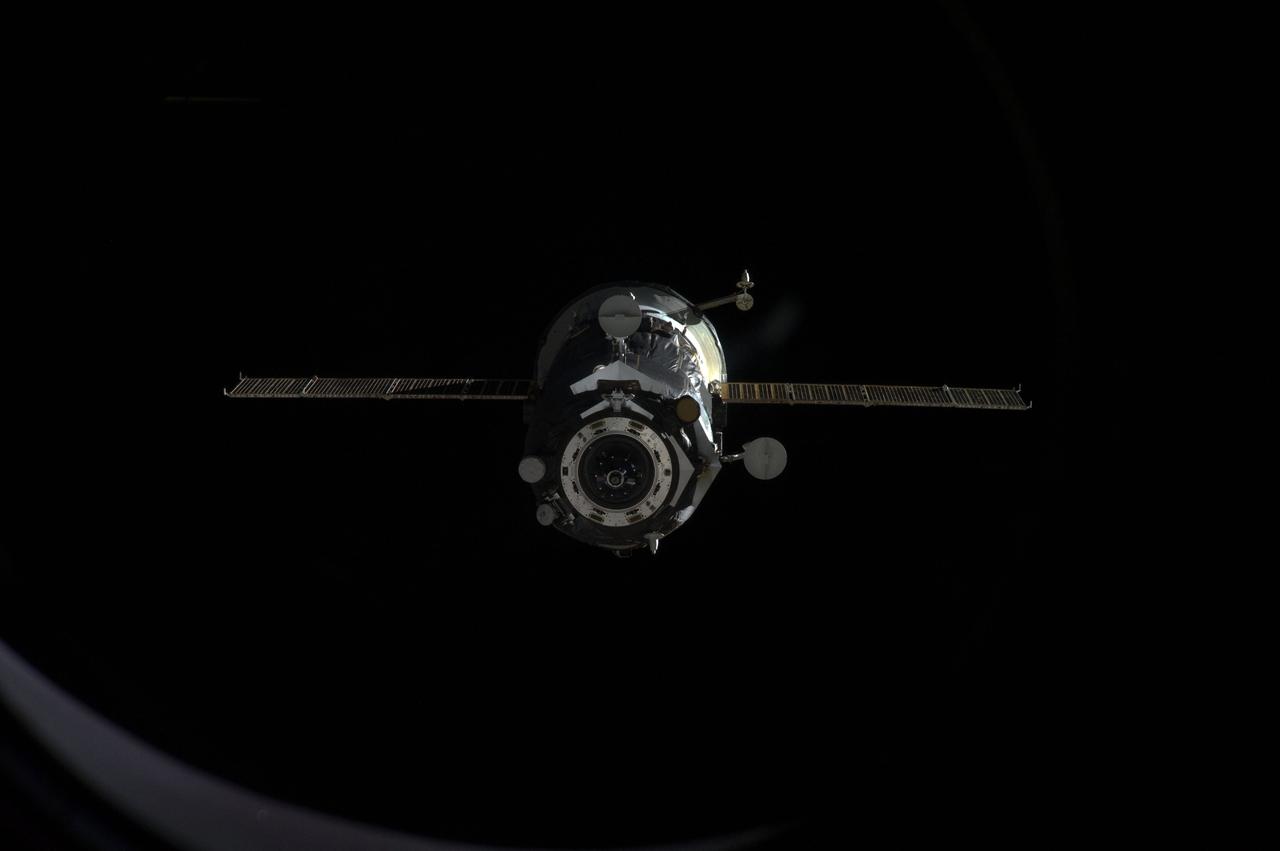
ISS032-E-011282 (30 July 2012) --- The unpiloted Russian Progress 47 supply vehicle departs from the International Space Station on July 30, 2012. The trash-filled Progress will orbit Earth for several weeks of engineering tests before re-entering the Earth’s atmosphere over the Pacific Ocean. The departure of Progress 47 clears the way for the next unpiloted supply ship, Progress 48, which is set to launch at 3:35 p.m. (EDT) on Aug. 1 from the Baikonur Cosmodrome in Kazakhstan. Docking is targeted less than six hours later at 9:24 p.m. to the station’s Pirs Docking Compartment.
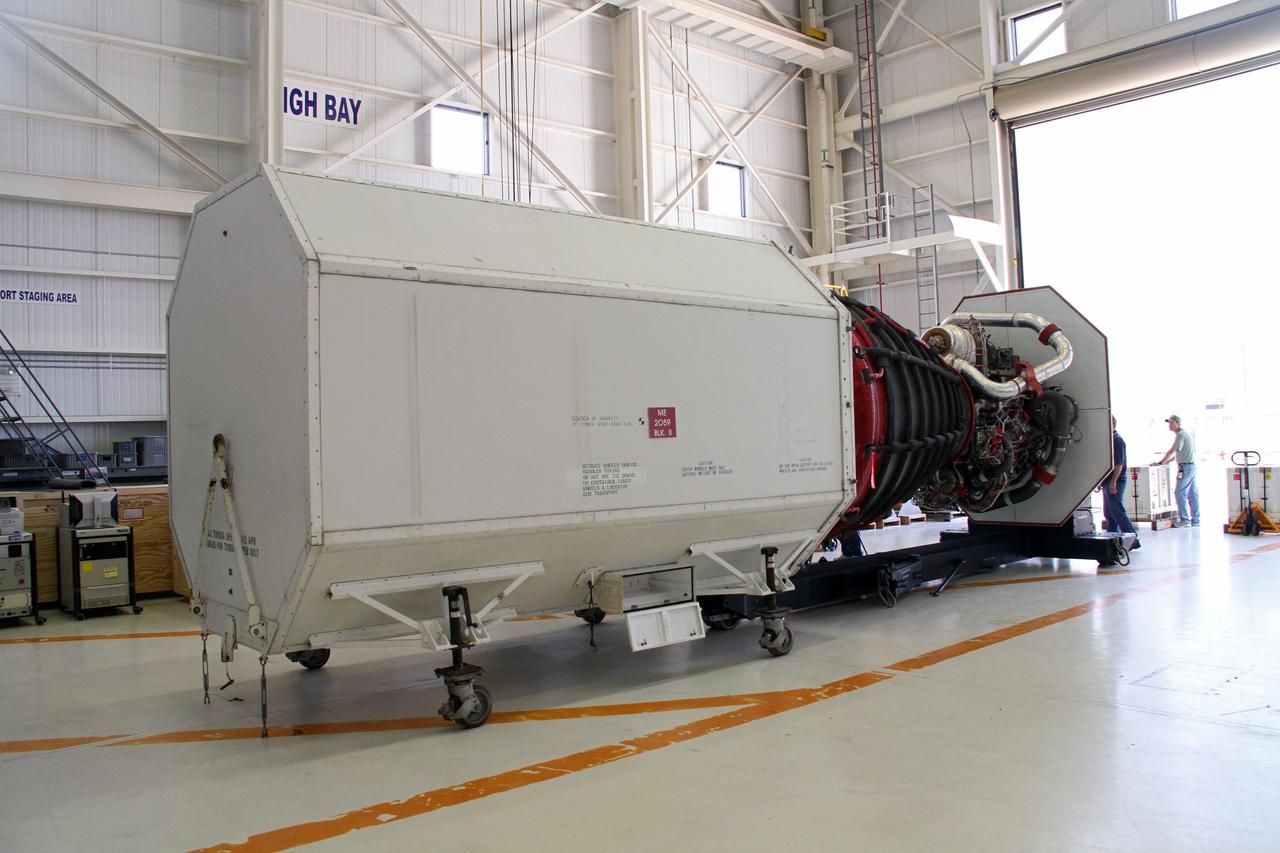
CAPE CANAVERAL, Fla. -- A Pratt and Whitney Rocketdyne space shuttle main engine, or SSME, is aligned with a transportation canister in the Orbiter Processing Facility-3 engine shop at NASA's Kennedy Space Center in Florida. The engine is the last to be packed for shipment to NASA's Stennis Space Center in Mississippi. The first two groups of engines were shipped from Kennedy to Stennis in November 2011 and January 2012, and the remaining engines are scheduled to depart on April 9. Altogether, 15 shuttle-era engines will be stored at Stennis for reuse on NASA’s Space Launch System heavy-lift rocket, under development. Photo credit: NASA/Cory Huston
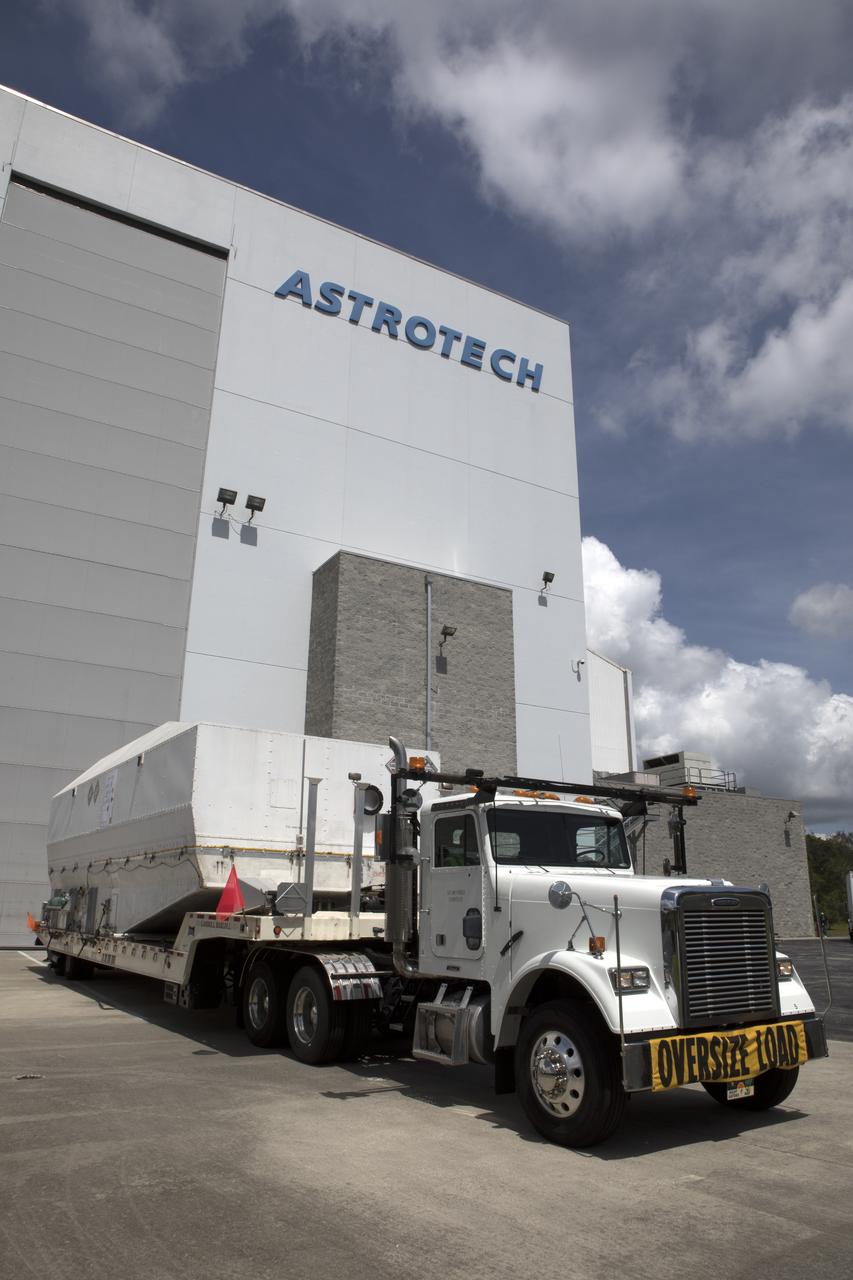
NASA's TDRS-M satellite arrives inside its shipping container at the Astrotech facility in Titusville, Florida, for preflight processing. The TDRS-M is the latest spacecraft destined for the agency's constellation of communications satellites that allows nearly continuous contact with orbiting spacecraft ranging from the International Space Station and Hubble Space Telescope to the array of scientific observatories. Liftoff atop a United Launch Alliance Atlas V rocket is scheduled to take place from Space Launch Complex 41 at Cape Canaveral Air Force Station at 9:02 a.m. EDT Aug. 3, 2017.
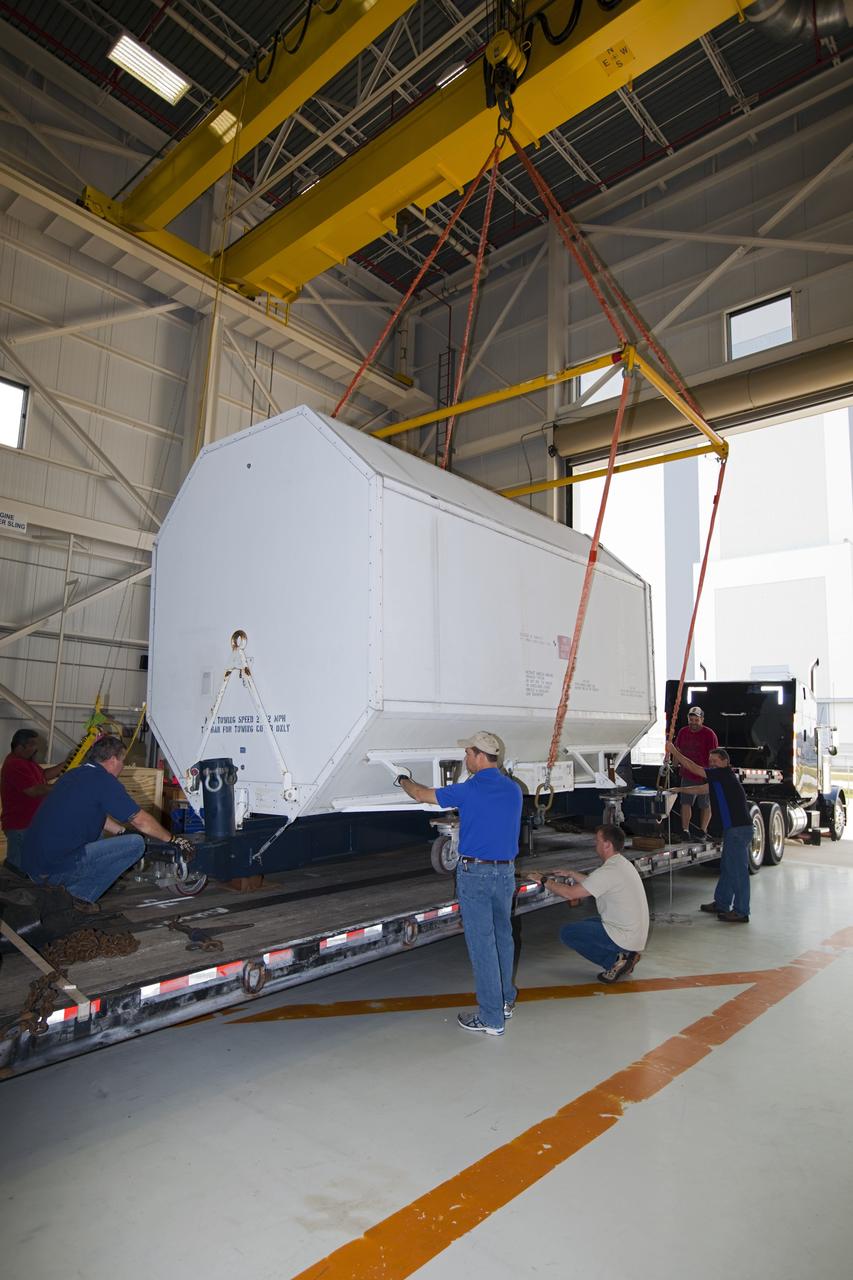
CAPE CANAVERAL, Fla. – In the Orbiter Processing Facility-3 engine shop at NASA's Kennedy Space Center in Florida, a transportation canister containing the last Pratt and Whitney Rocketdyne space shuttle main engine, or SSME, is lowered onto a flatbed truck for shipment to NASA's Stennis Space Center in Mississippi. The first two groups of engines were shipped from Kennedy to Stennis in November 2011 and January 2012 the remaining engines departed today. Altogether, 15 shuttle-era engines will be stored at Stennis for reuse on NASA’s Space Launch System heavy-lift rocket, under development. Photo credit: NASA/Dimitri Gerondidakis
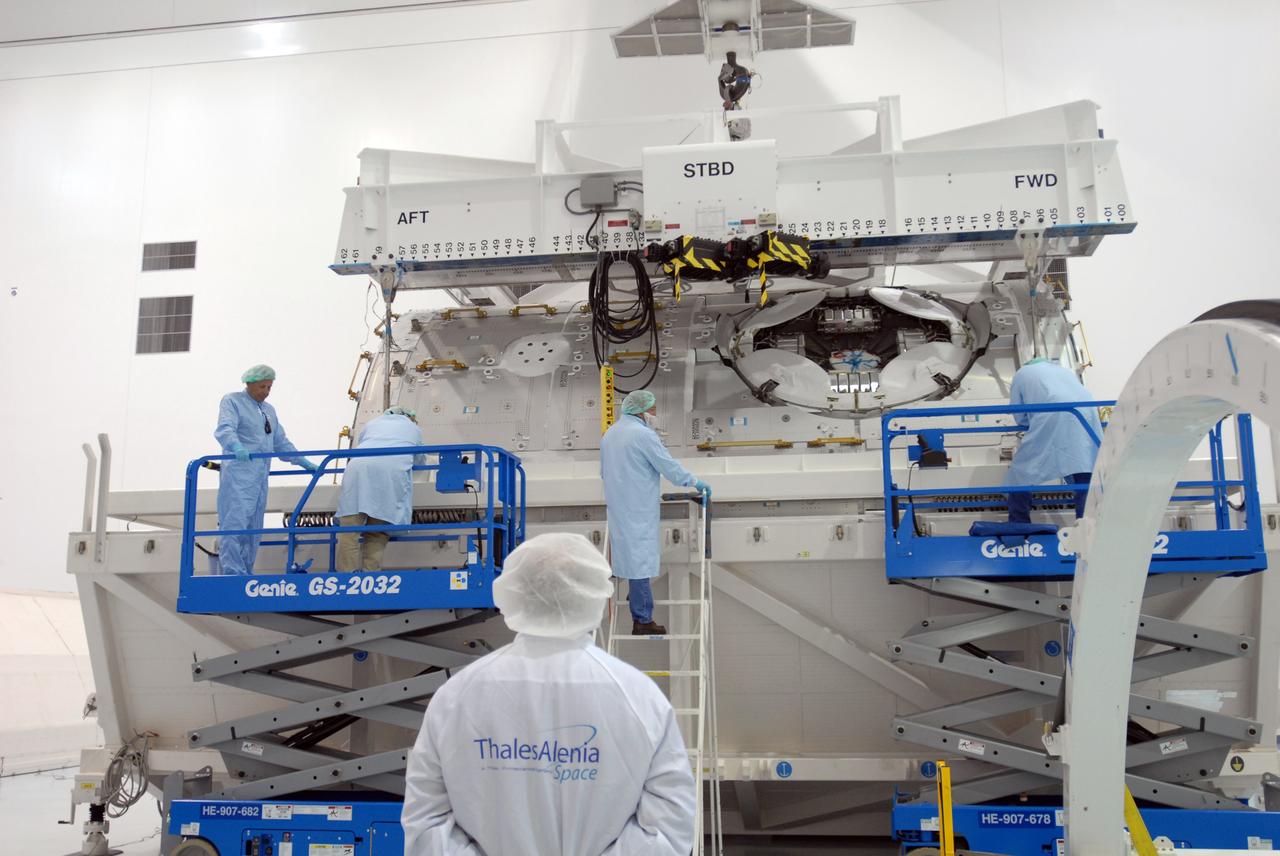
CAPE CANAVERAL, Fla. – In the Space Station Processing Facility at NASA's Kennedy Space Center in Florida, workers secure the overhead crane to the Tranquility module, or Node 3, in its shipping container. The crane will lift and transfer Tranquility to a work stand. The module will be delivered to the International Space Station on the STS-130 mission. Tranquility will eventually house the life support equipment necessary for the space station's permanent crew of six. It will also accommodate the European Space Agency's Cupola observation module, a seven-window, dome-shaped structure. Tranquility is targeted for launch aboard space shuttle Endeavour in February 2010. Photo credit: NASA/Jim Grossmann
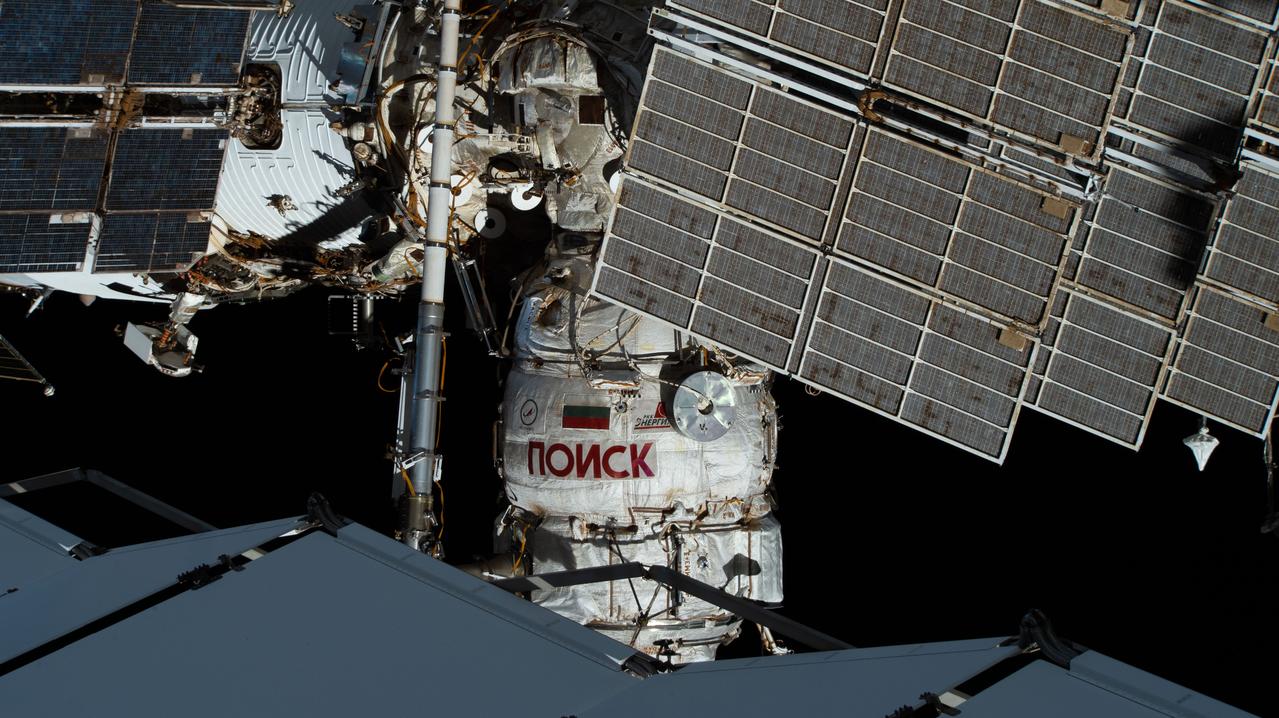
iss063e082811 (Sept. 3, 2020) --- Russia's Mini-Research Module 2, also know as the Poisk module, is pictured from an external high definition camera installed on the International Space Station. Poisk was attached to the space-facing port of the Zvezda service module in November of 2009 and has served as a docking port for Soyuz crew ships. It also provides a place to prepare for spacewalks, as well the refurbishing of the Russian Orlan spacesuits. The module from Roscosmos has the added bonus of extra space for scientific experiments, as well as power supply outlets. It is also equipped with both internal and external workstations to accommodate science payloads and make observations.
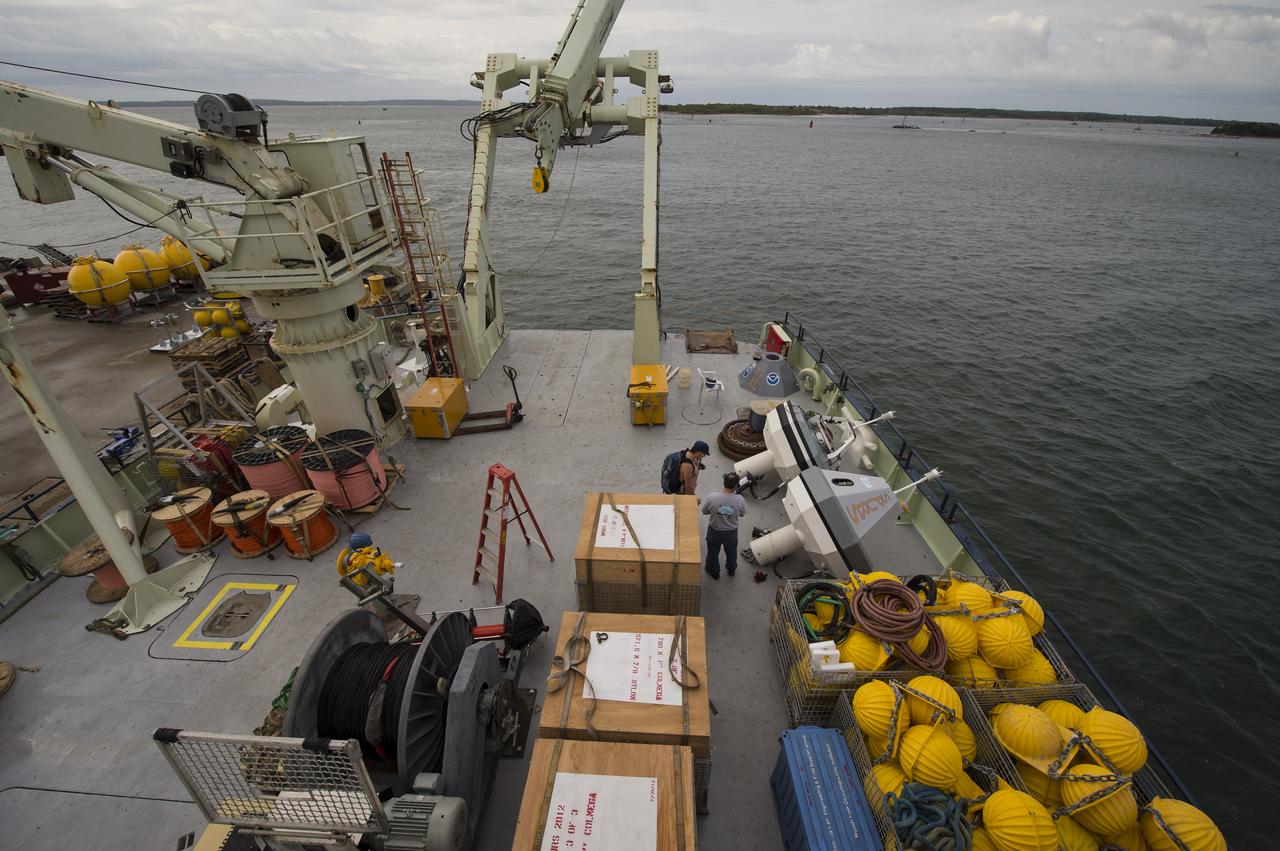
Scientific instruments, buoys, and shipping crates are seen on the stern of the Woods Hole Oceanographic Institution's research vessel Knorr on Tuesday, Sept. 4, 2012, in Woods Hole, Mass. Knorr is scheduled to depart on Sept. 6 to take part in the Salinity Processes in the Upper Ocean Regional Study (SPURS). The NASA-sponsored expedition will sail to the North Atlantic's saltiest spot to get a detailed, 3-D picture of how salt content fluctuates in the ocean's upper layers and how these variations are related to shifts in rainfall patterns around the planet. Photo Credit: (NASA/Bill Ingalls)
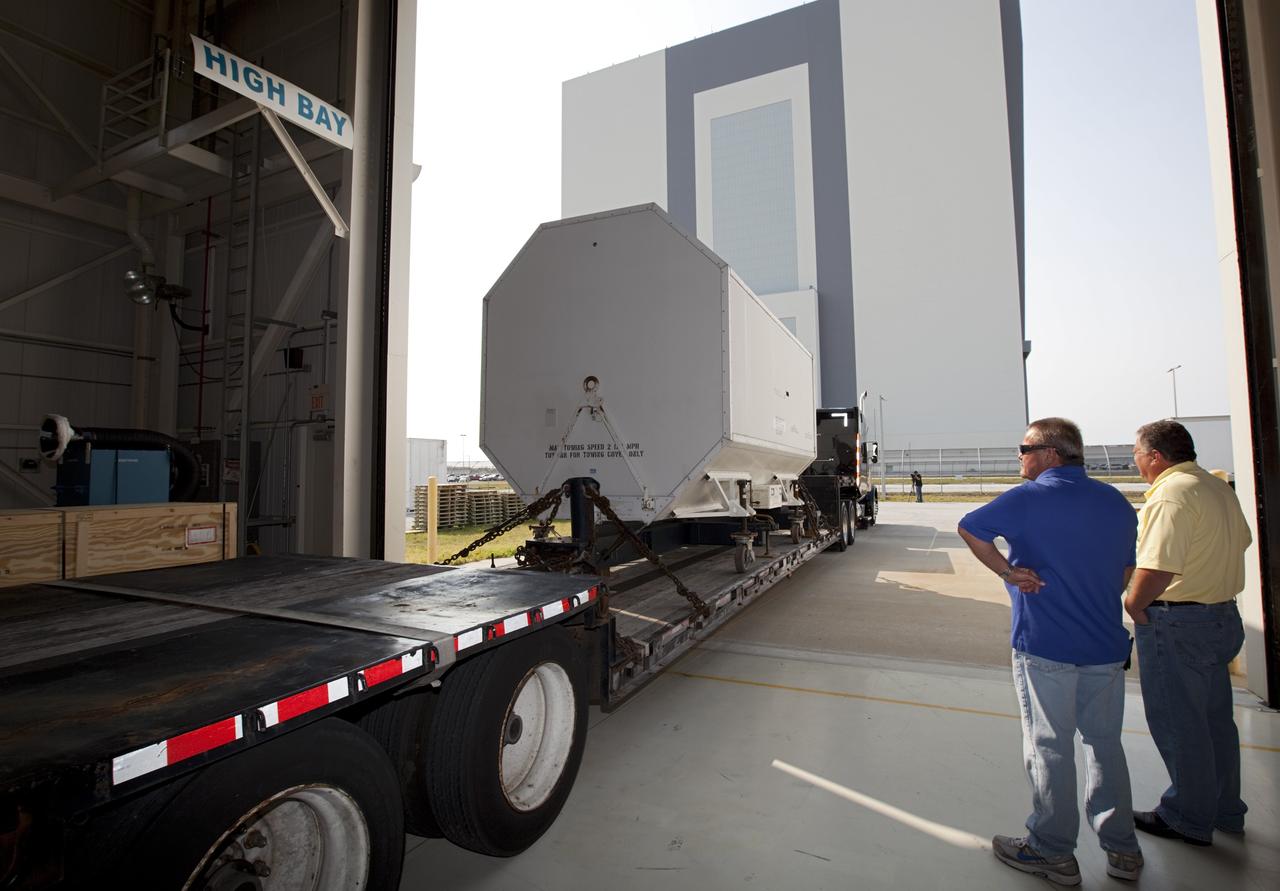
CAPE CANAVERAL, Fla. – In the Orbiter Processing Facility-3 engine shop at NASA's Kennedy Space Center in Florida, a transportation canister containing the last Pratt and Whitney Rocketdyne space shuttle main engine, or SSME, is secured on a flatbed truck and ready for departure to NASA's Stennis Space Center in Mississippi. The first two groups of engines were shipped from Kennedy to Stennis in November 2011 and January 2012 the remaining engines departed today. Altogether, 15 shuttle-era engines will be stored at Stennis for reuse on NASA’s Space Launch System heavy-lift rocket, under development. Photo credit: NASA/Dimitri Gerondidakis