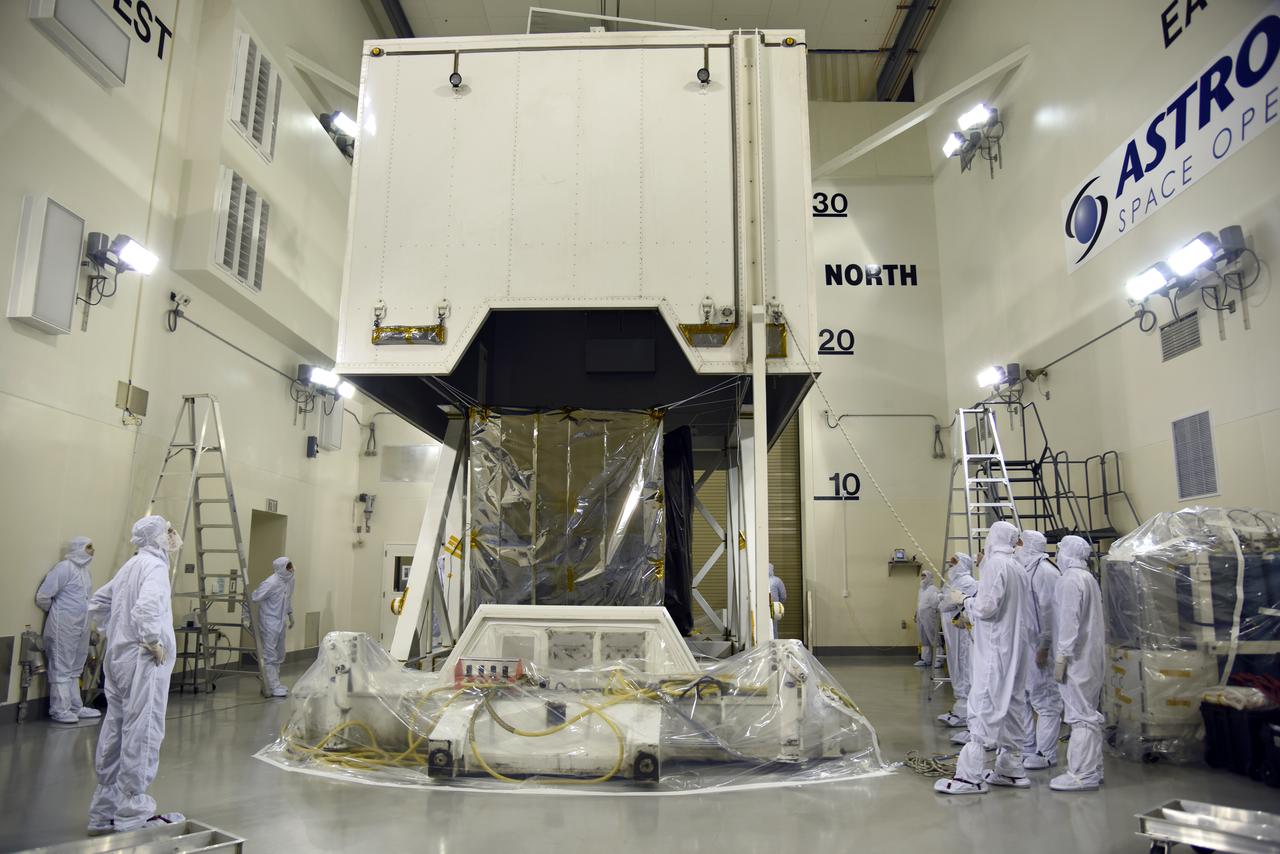
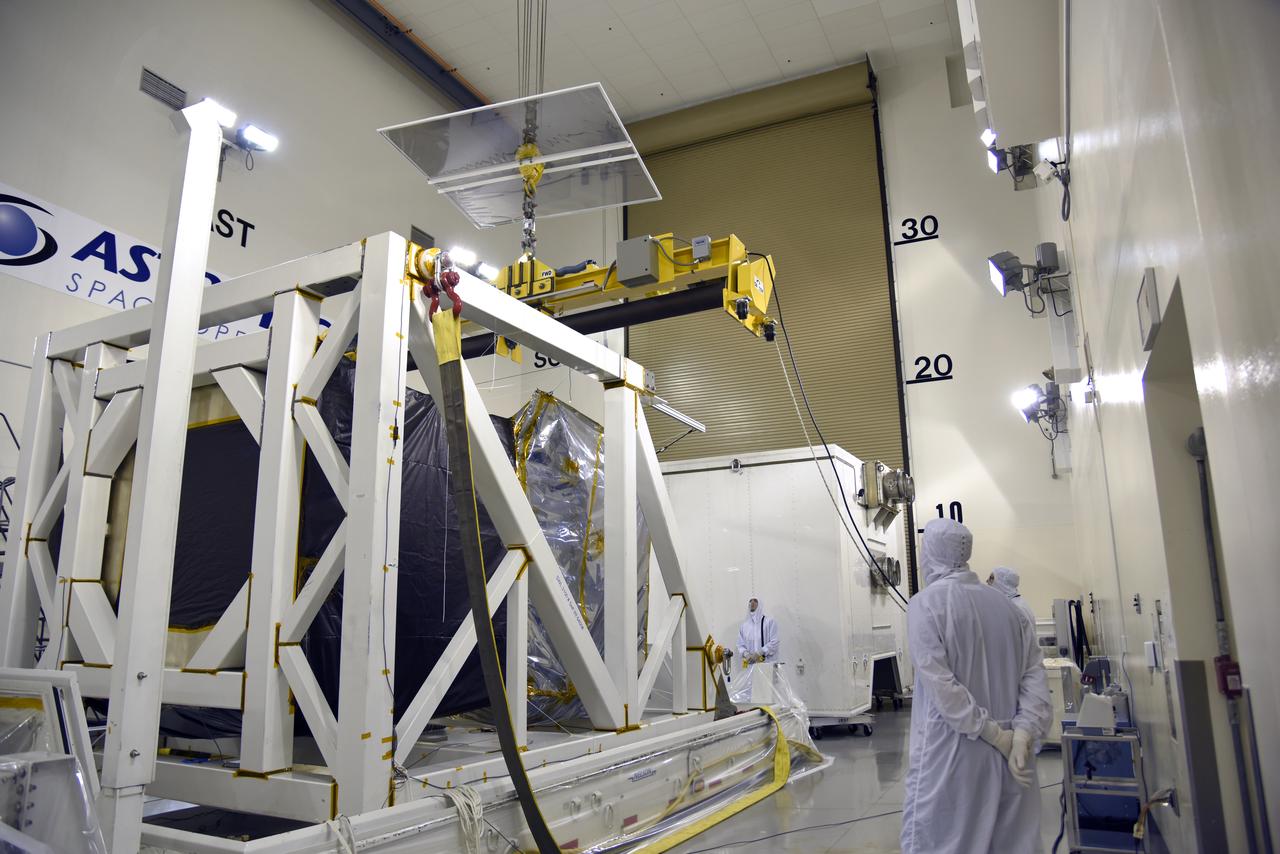
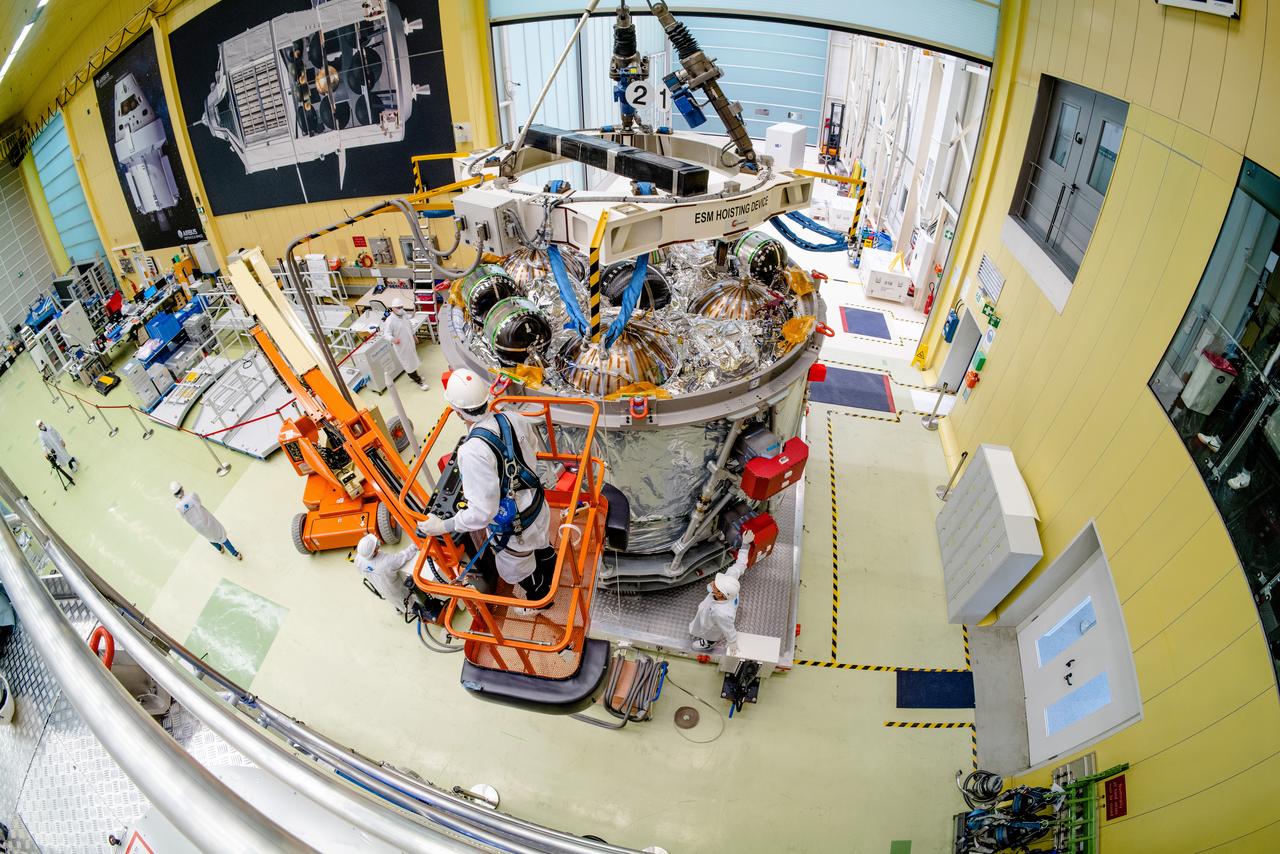
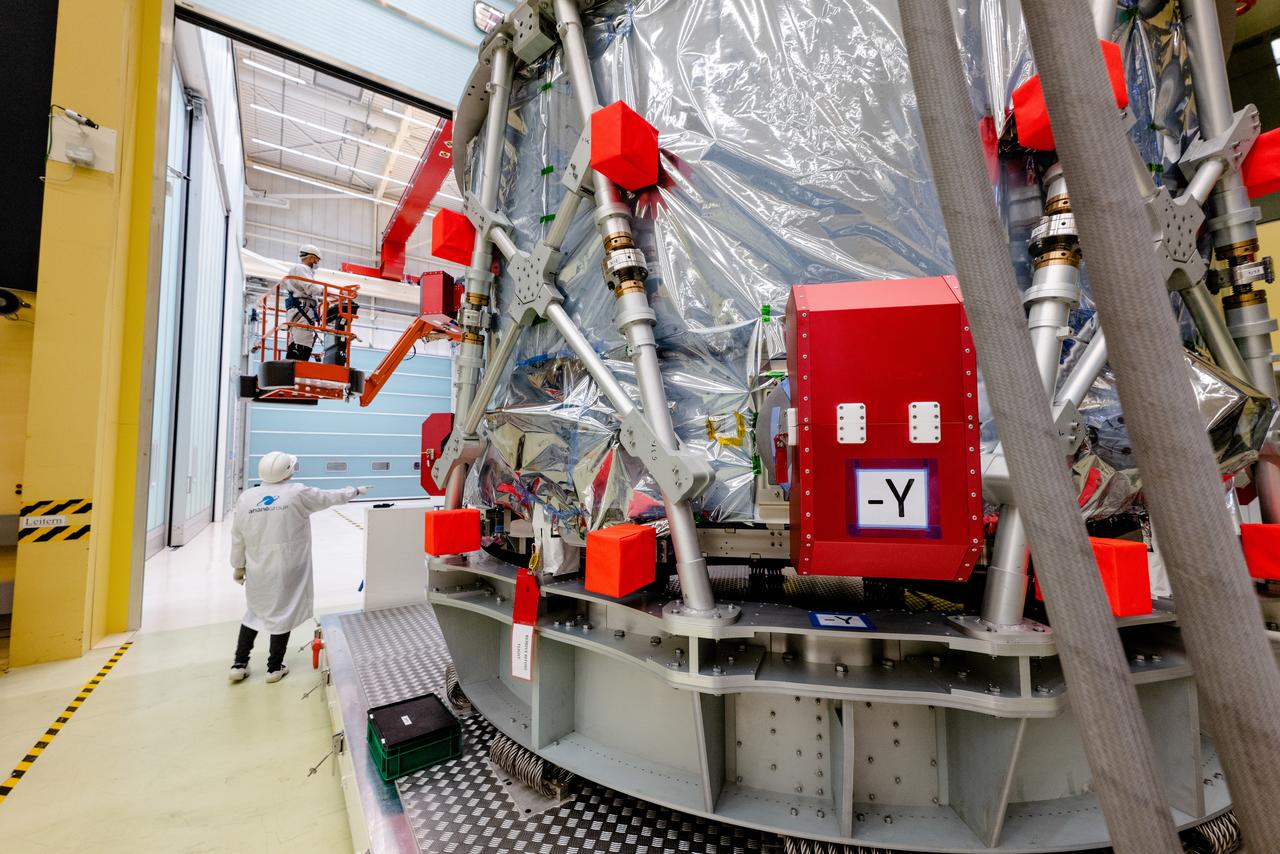
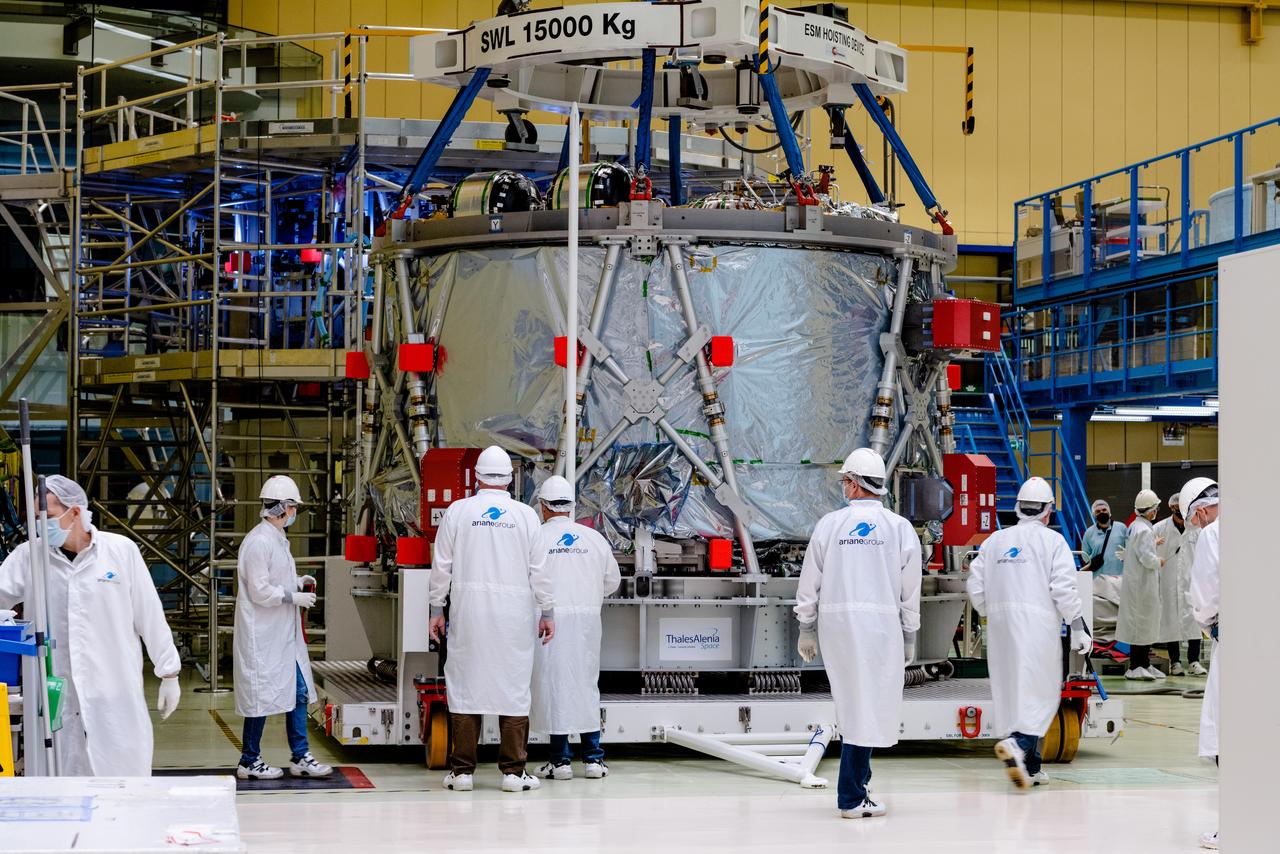
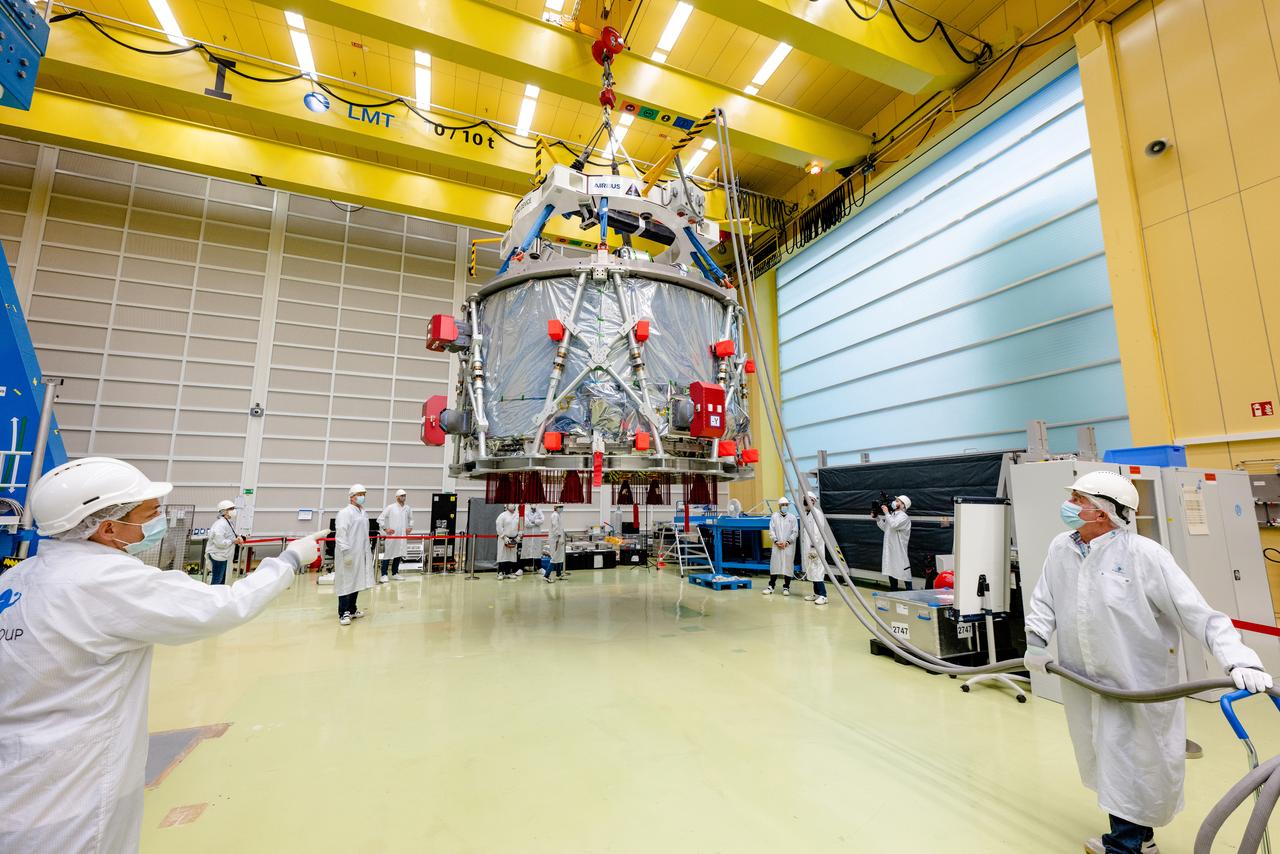
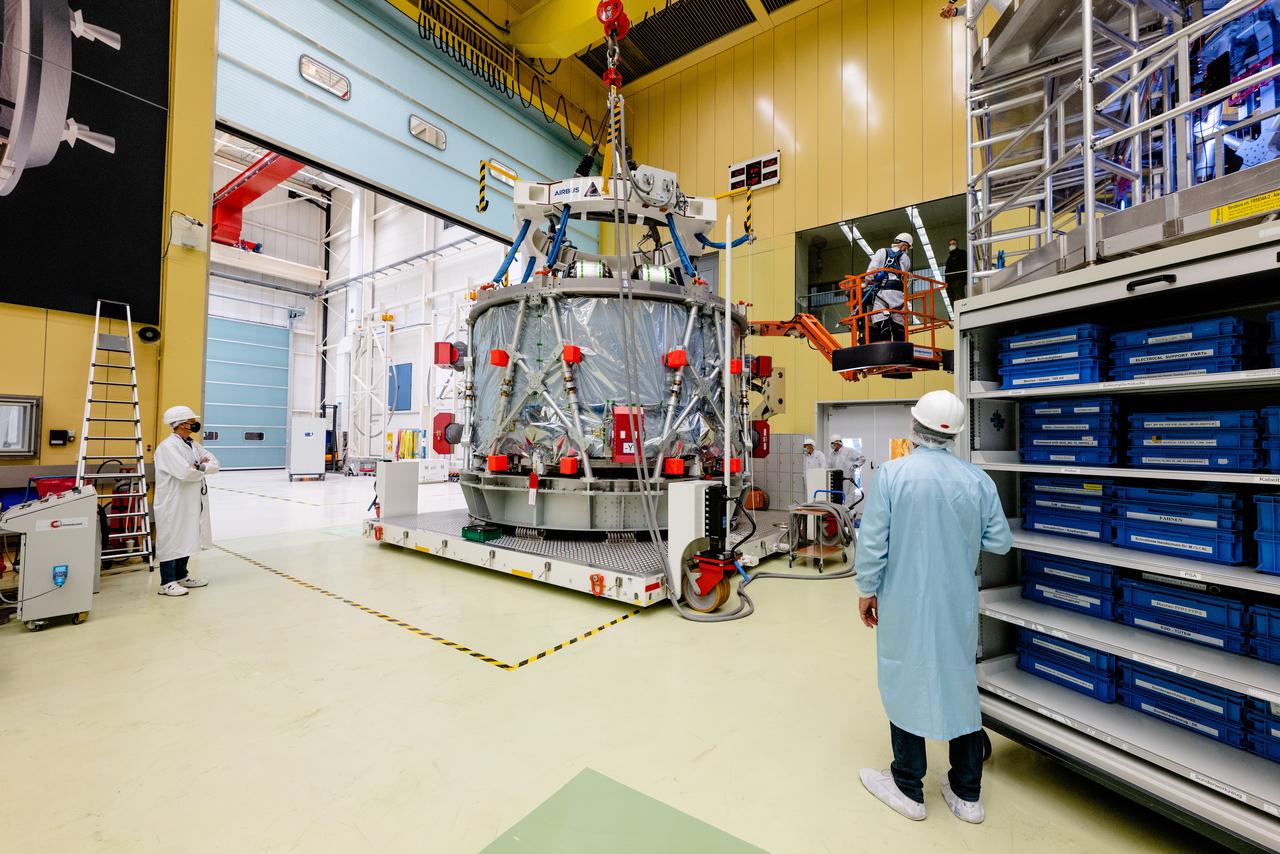
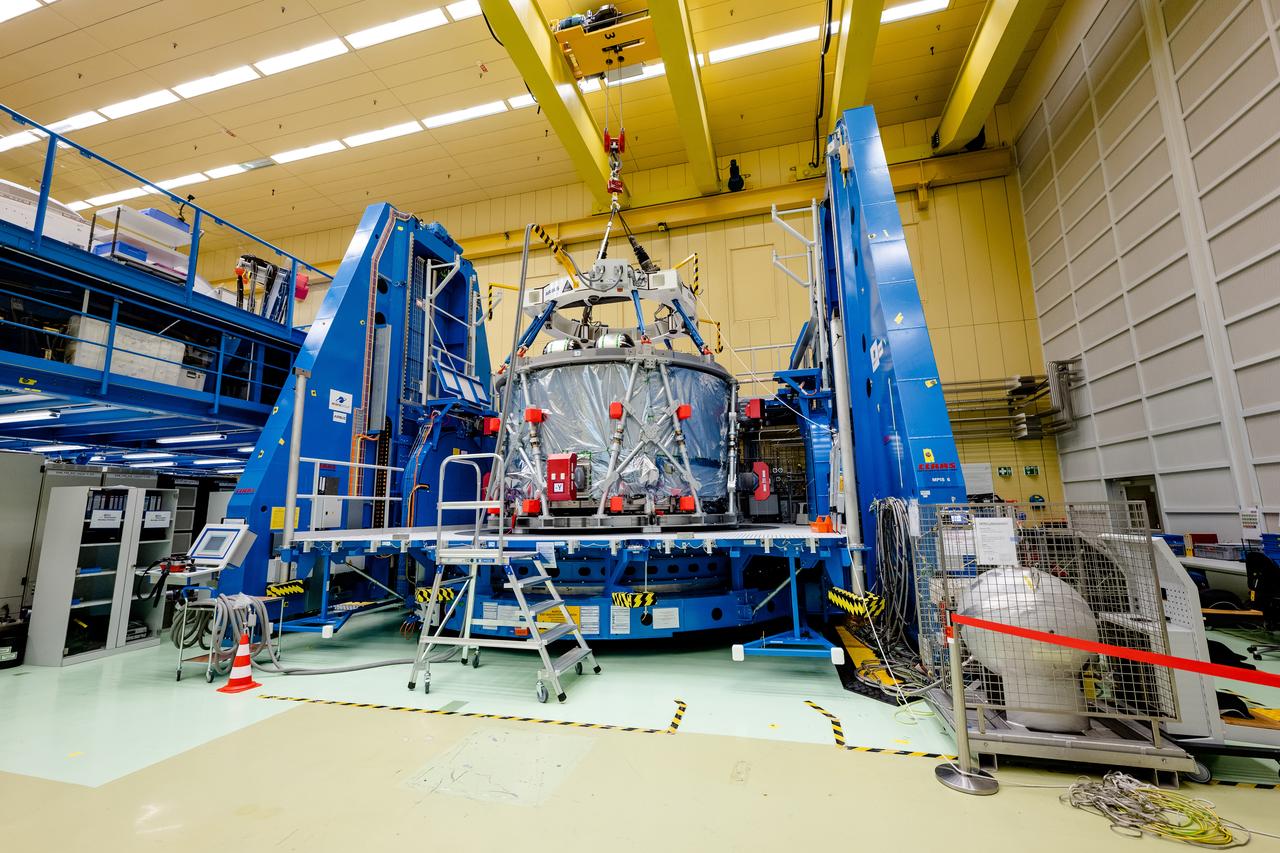
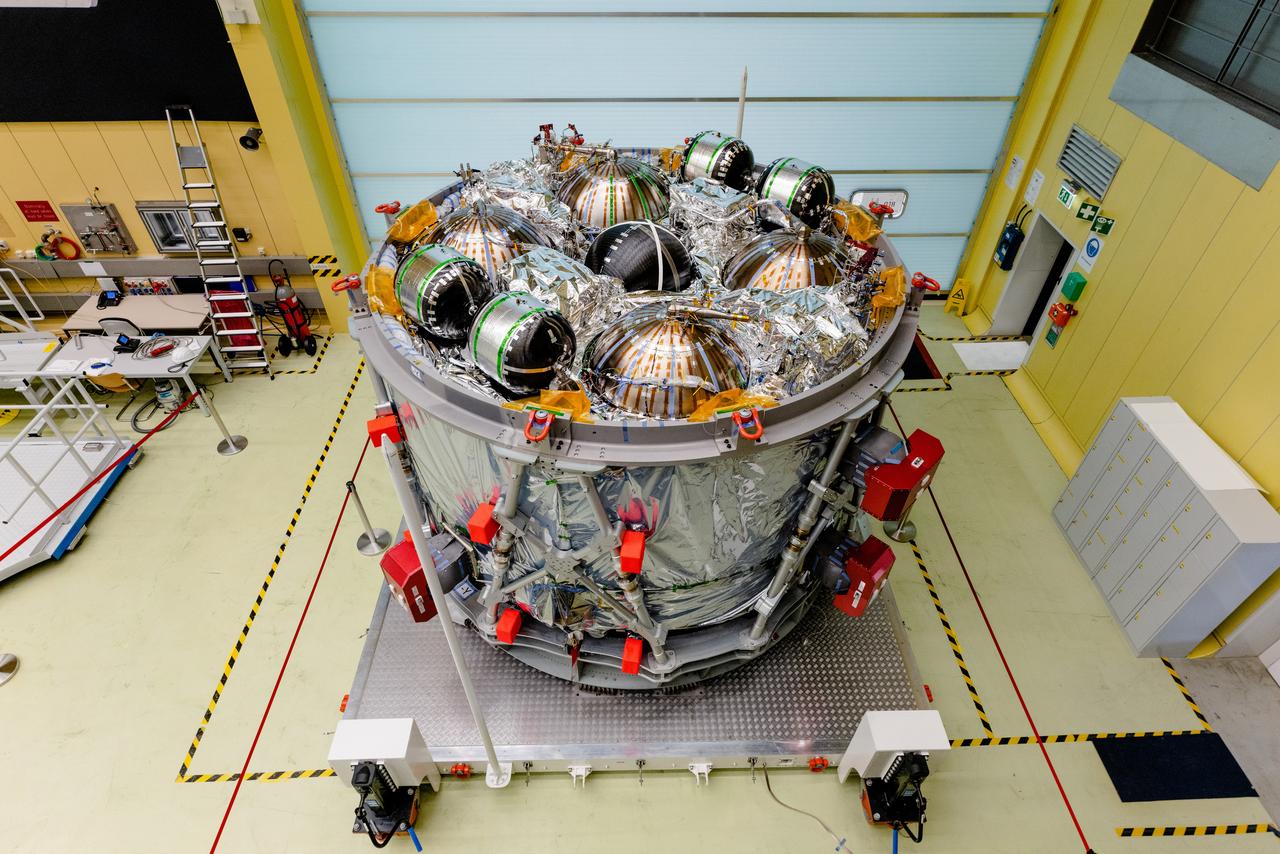
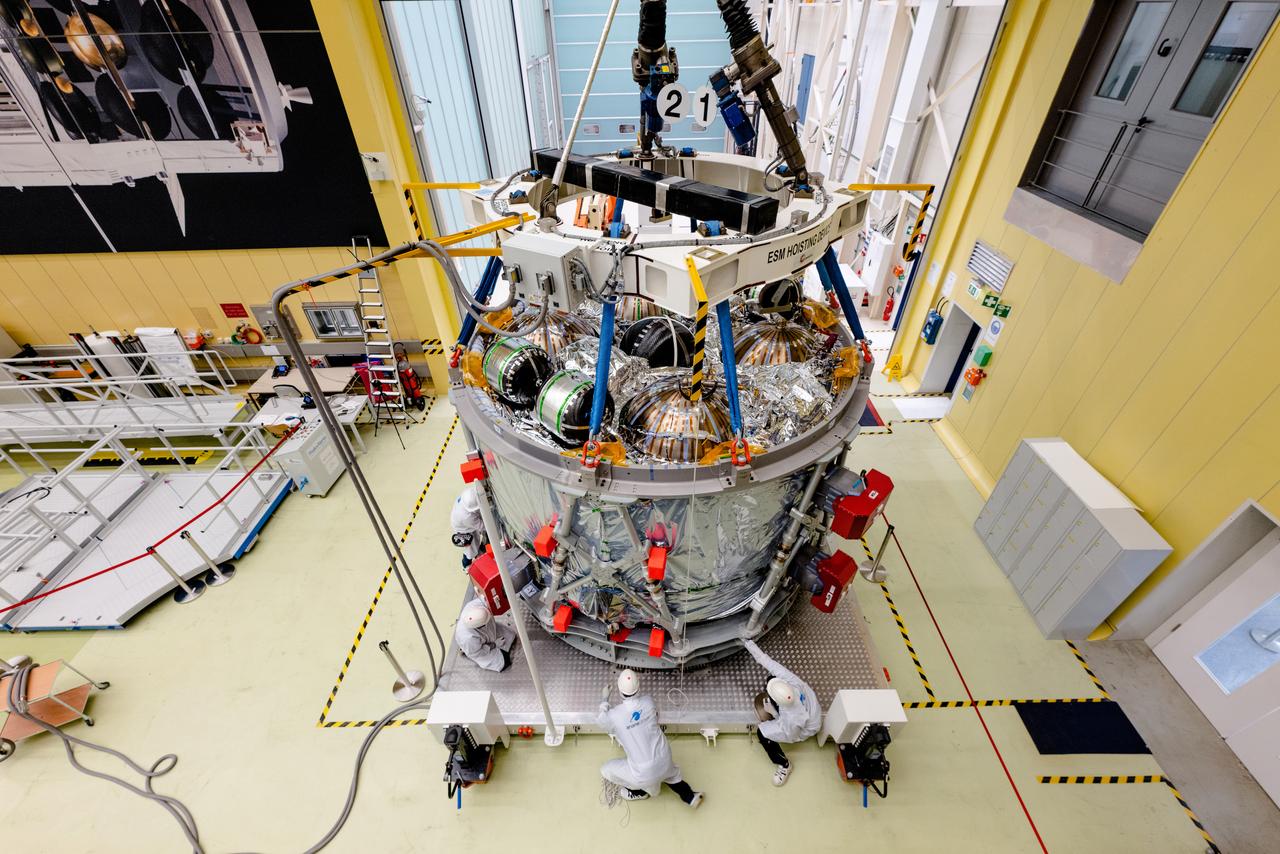
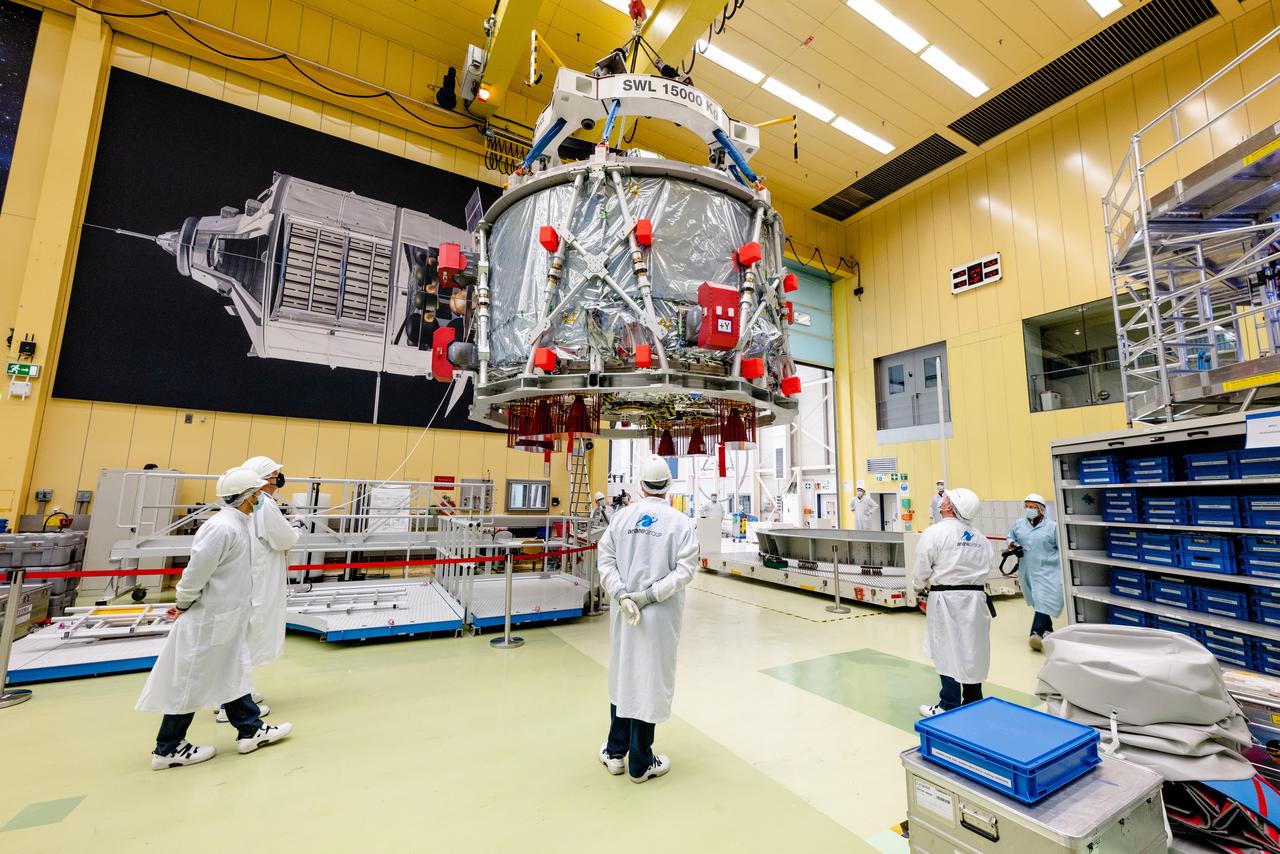
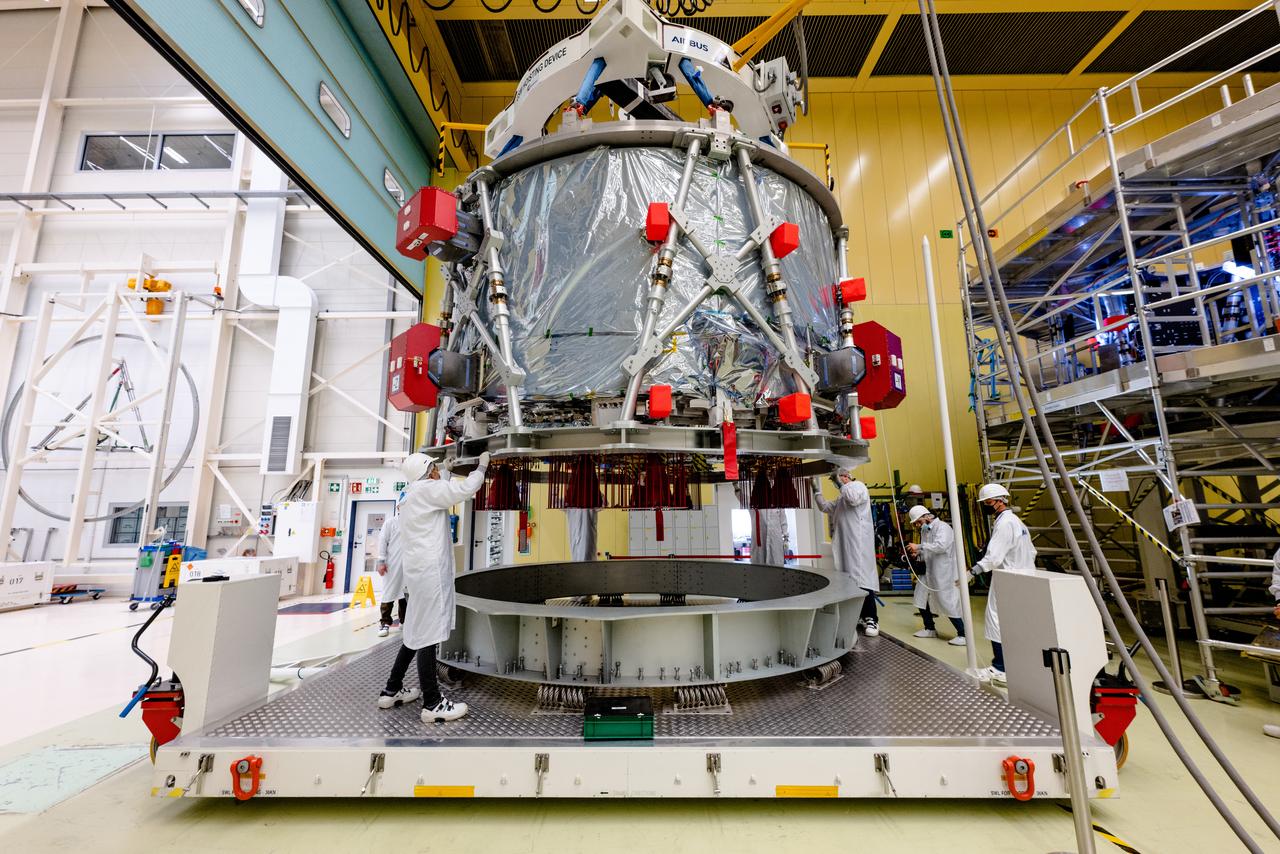
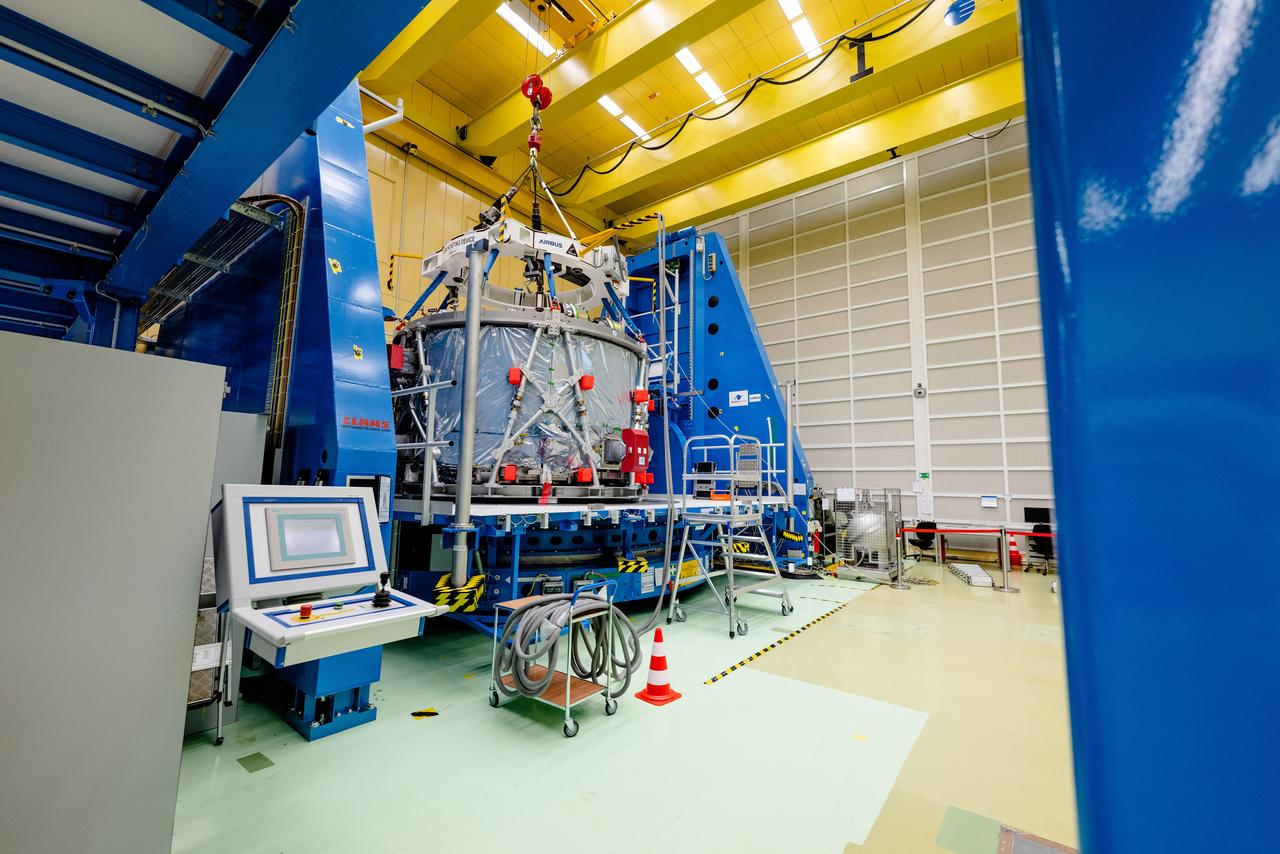
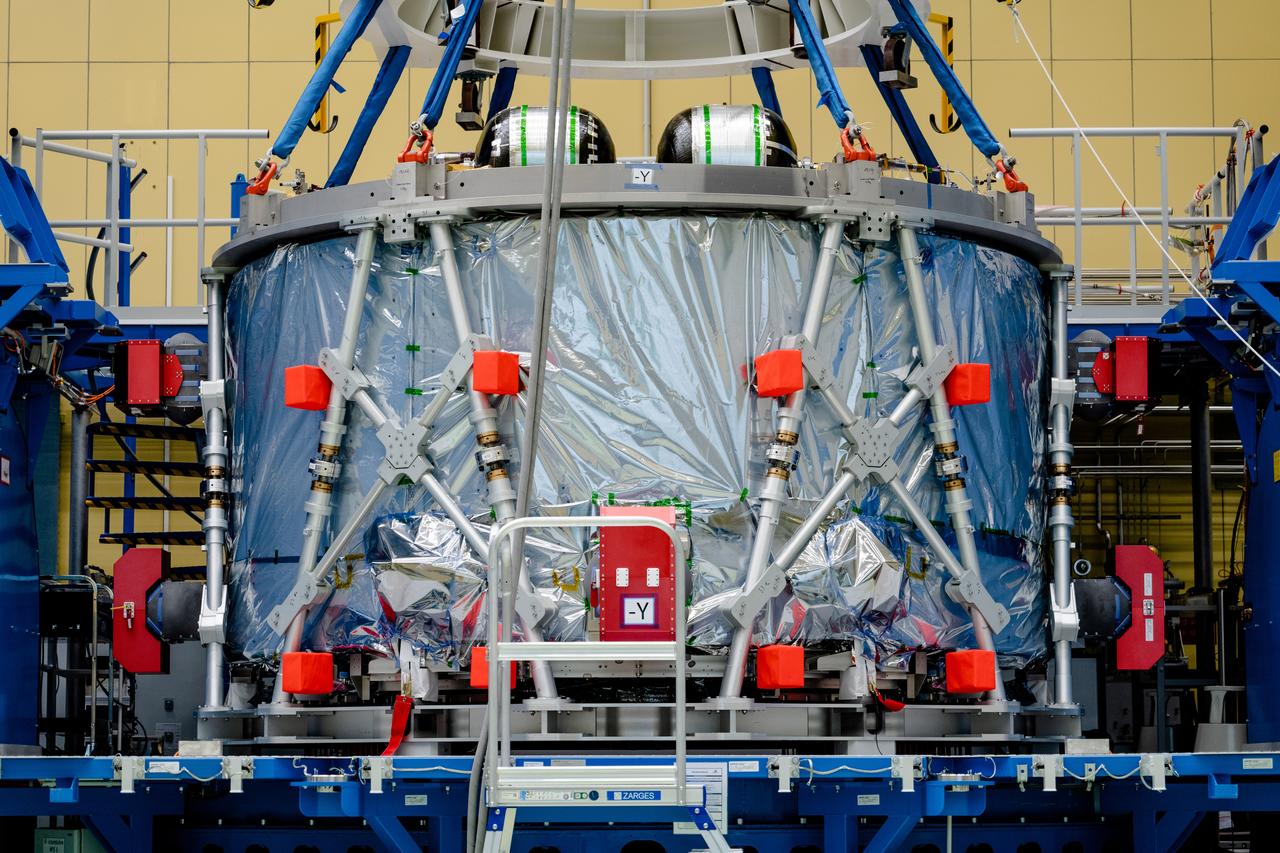
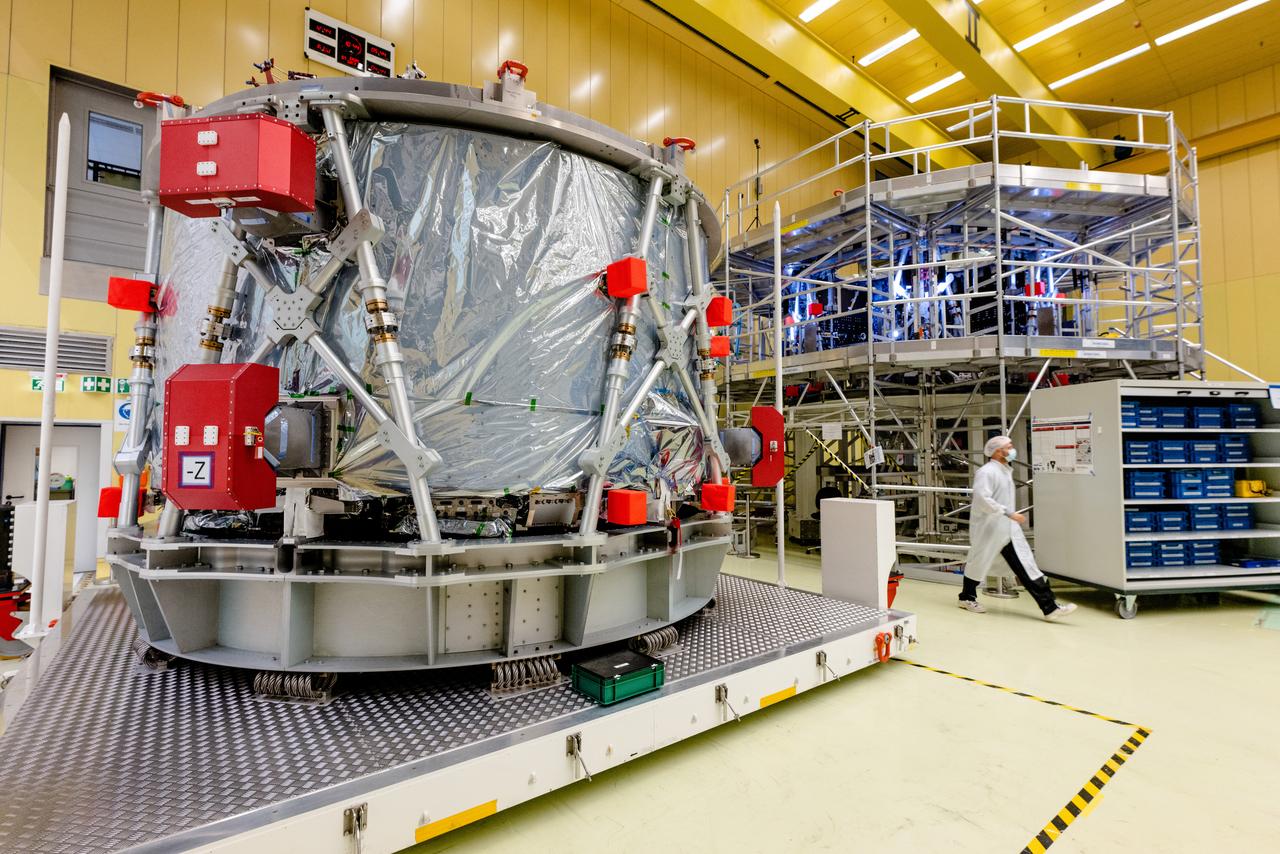
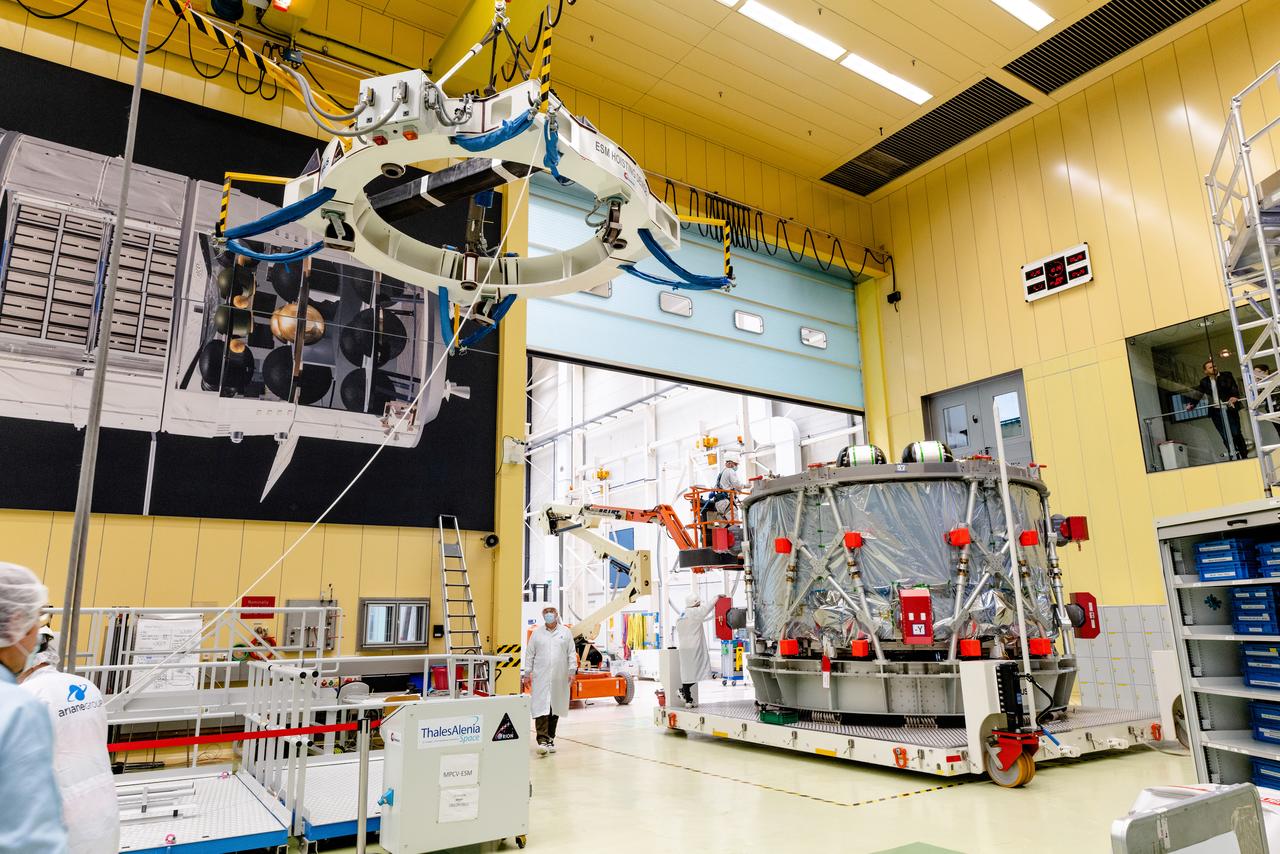
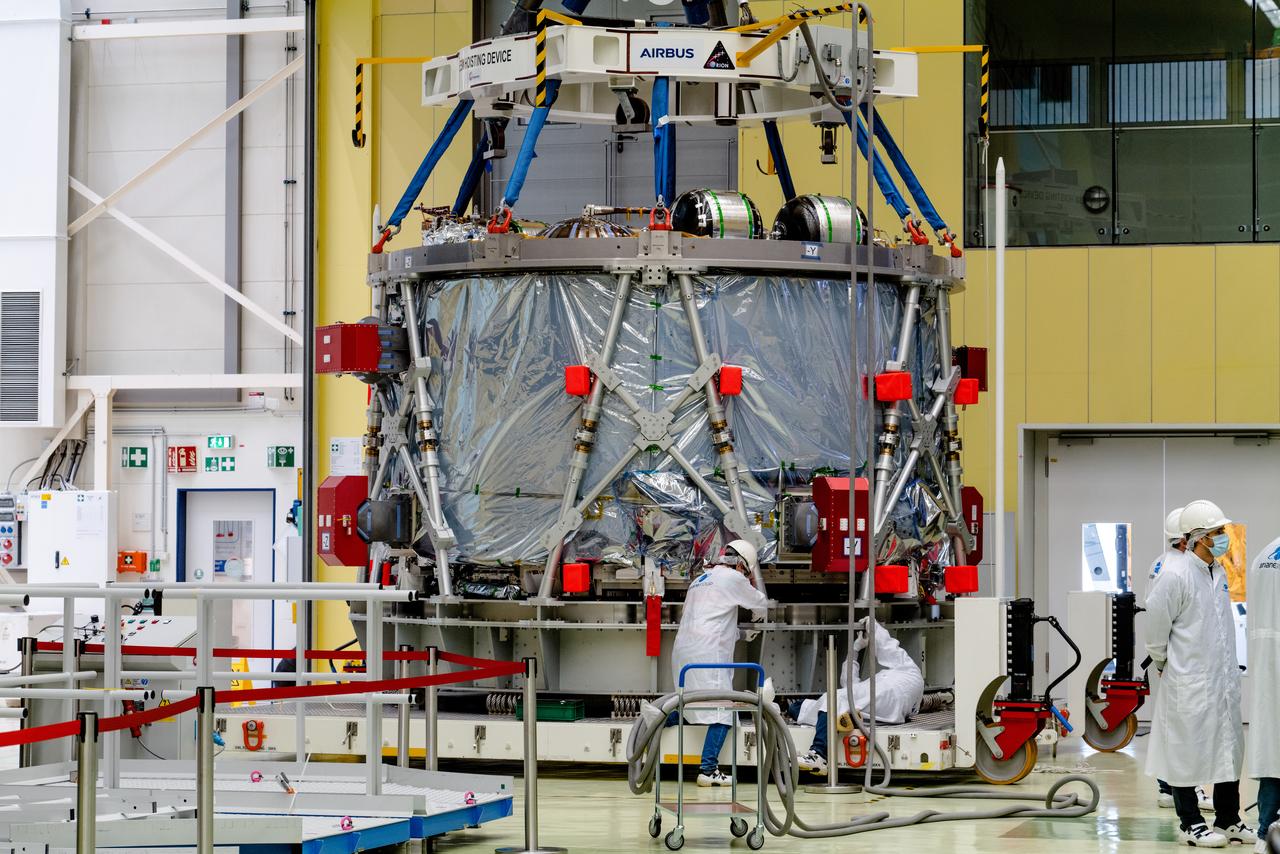
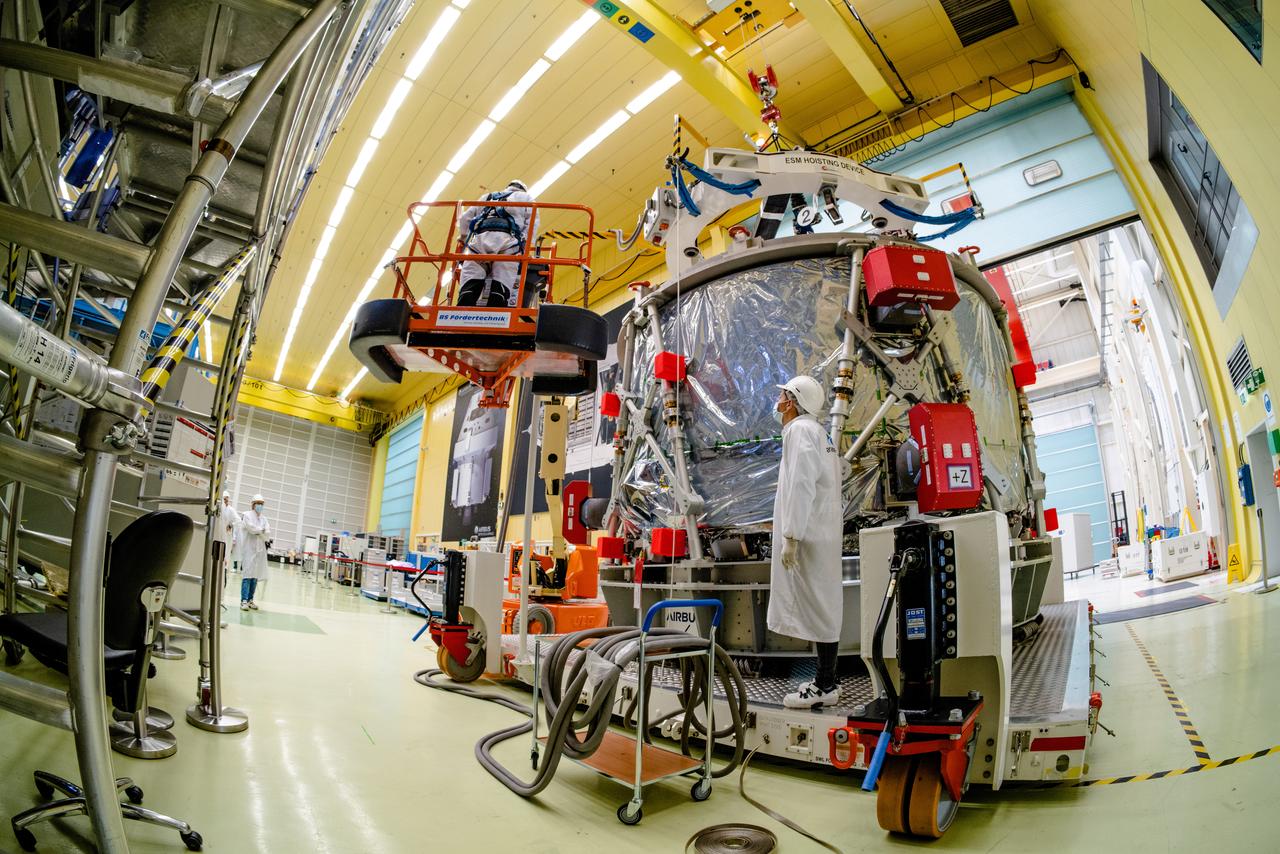
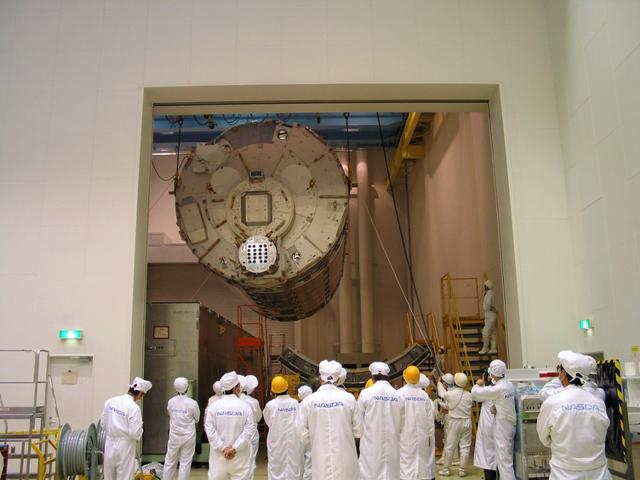
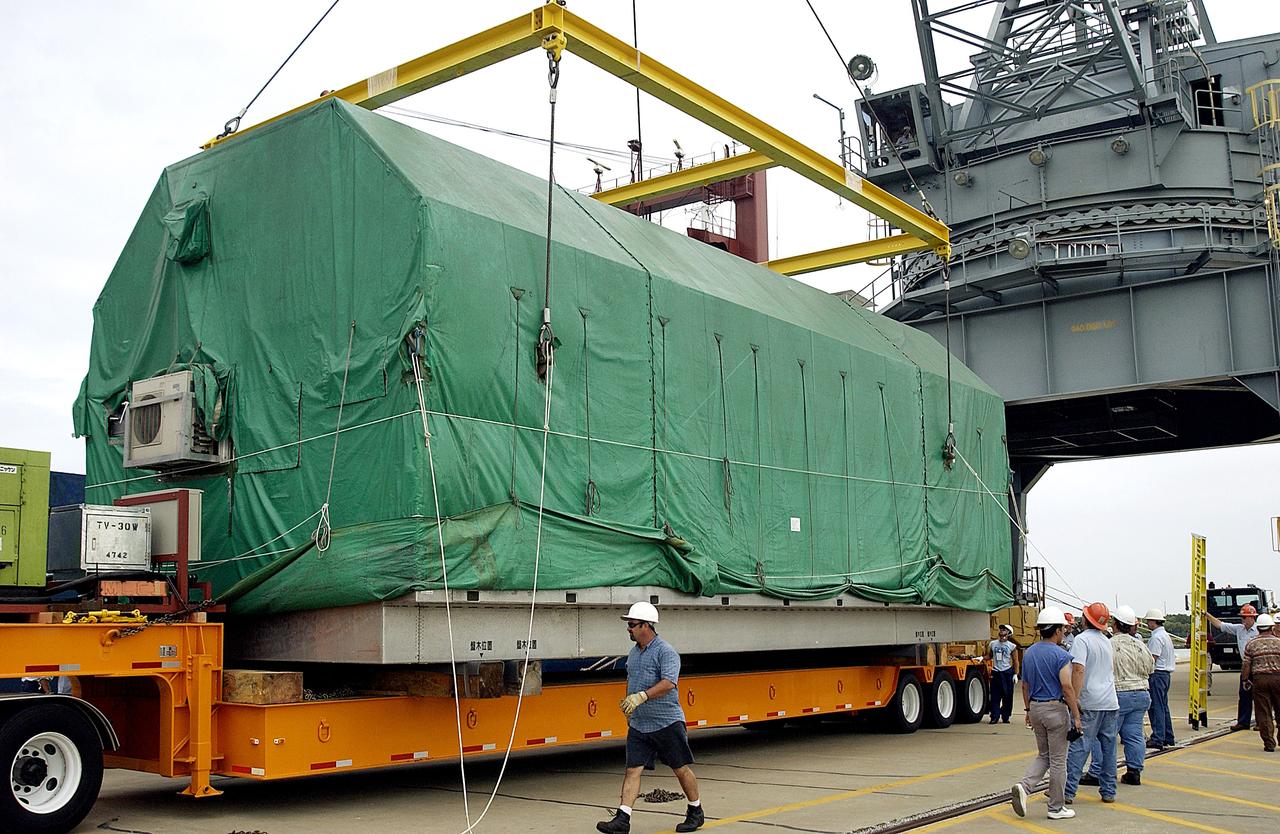
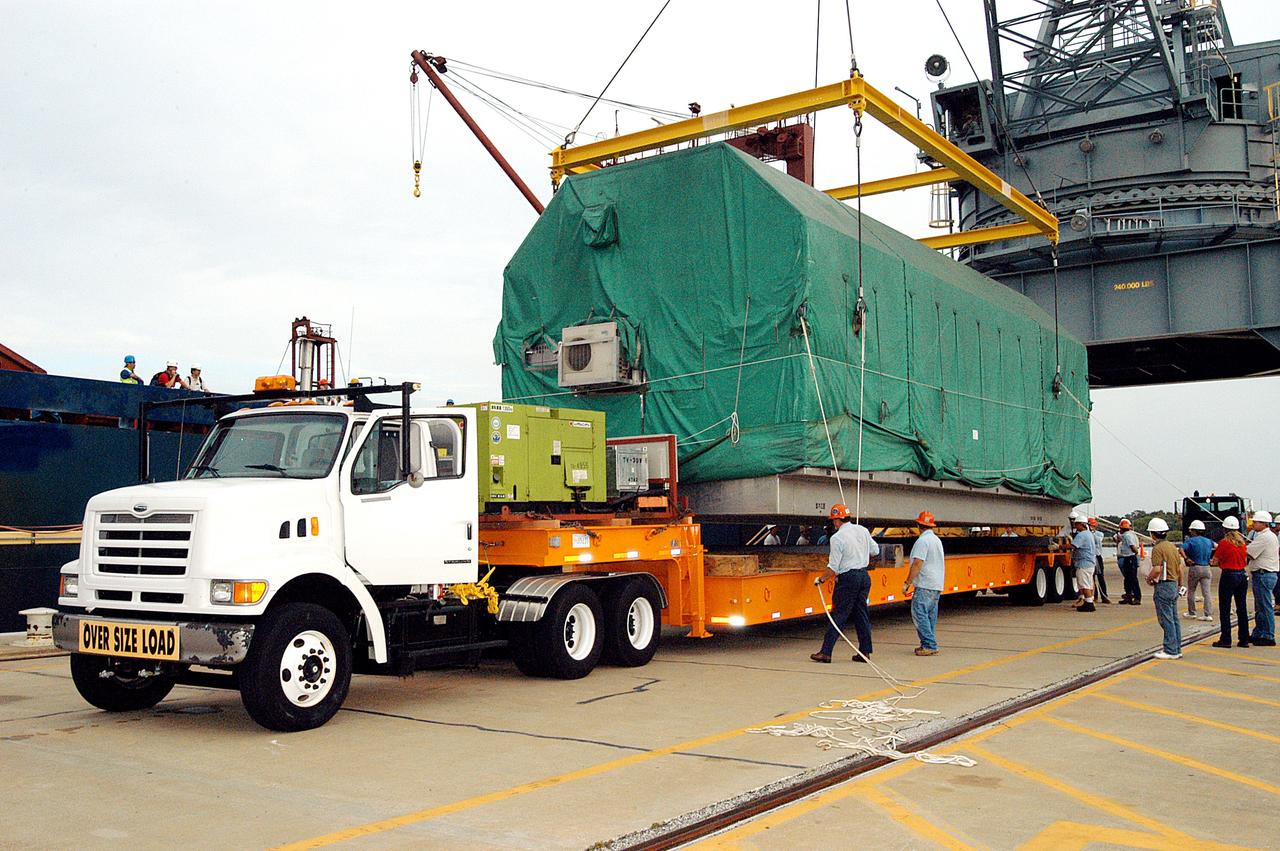
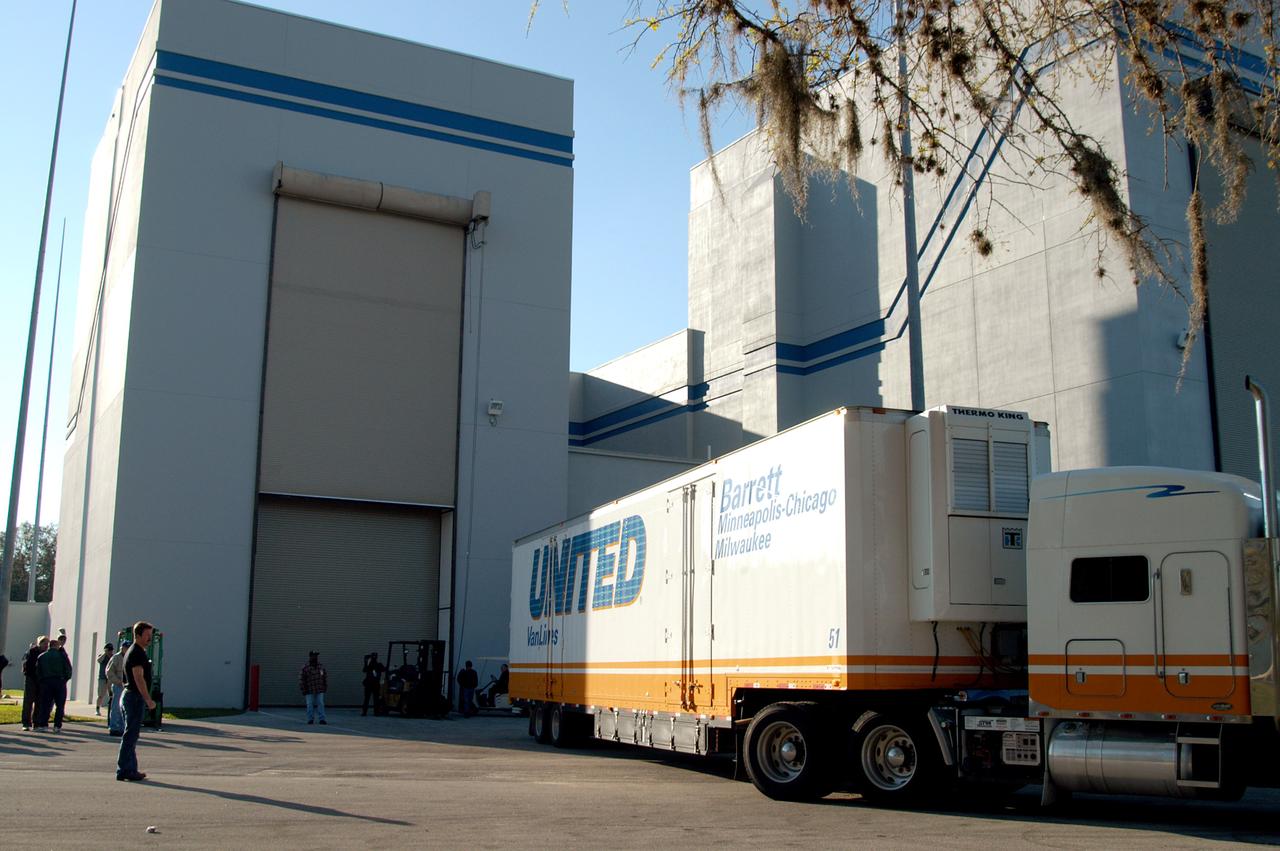
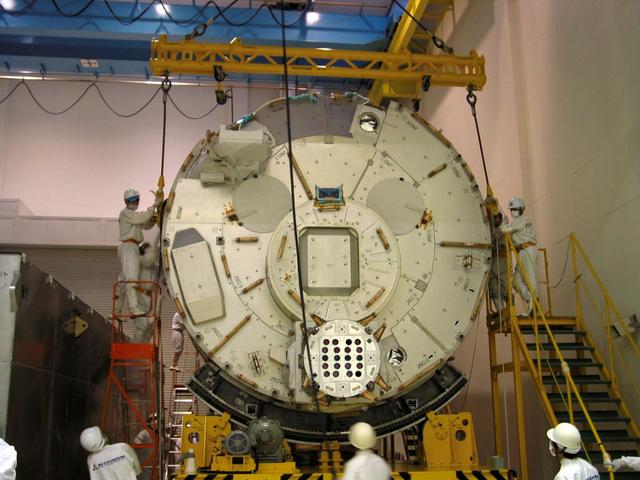
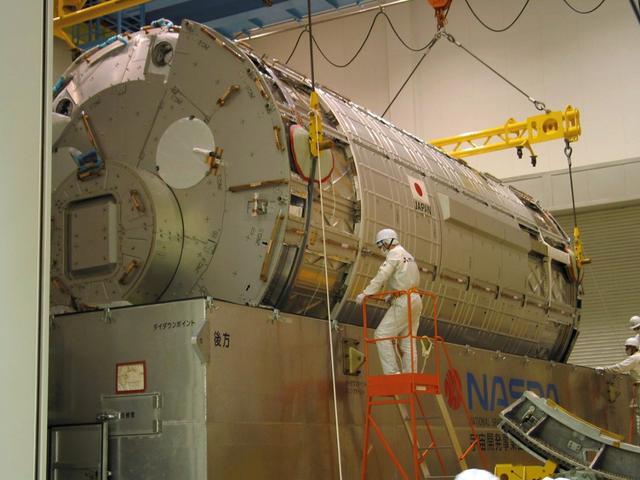
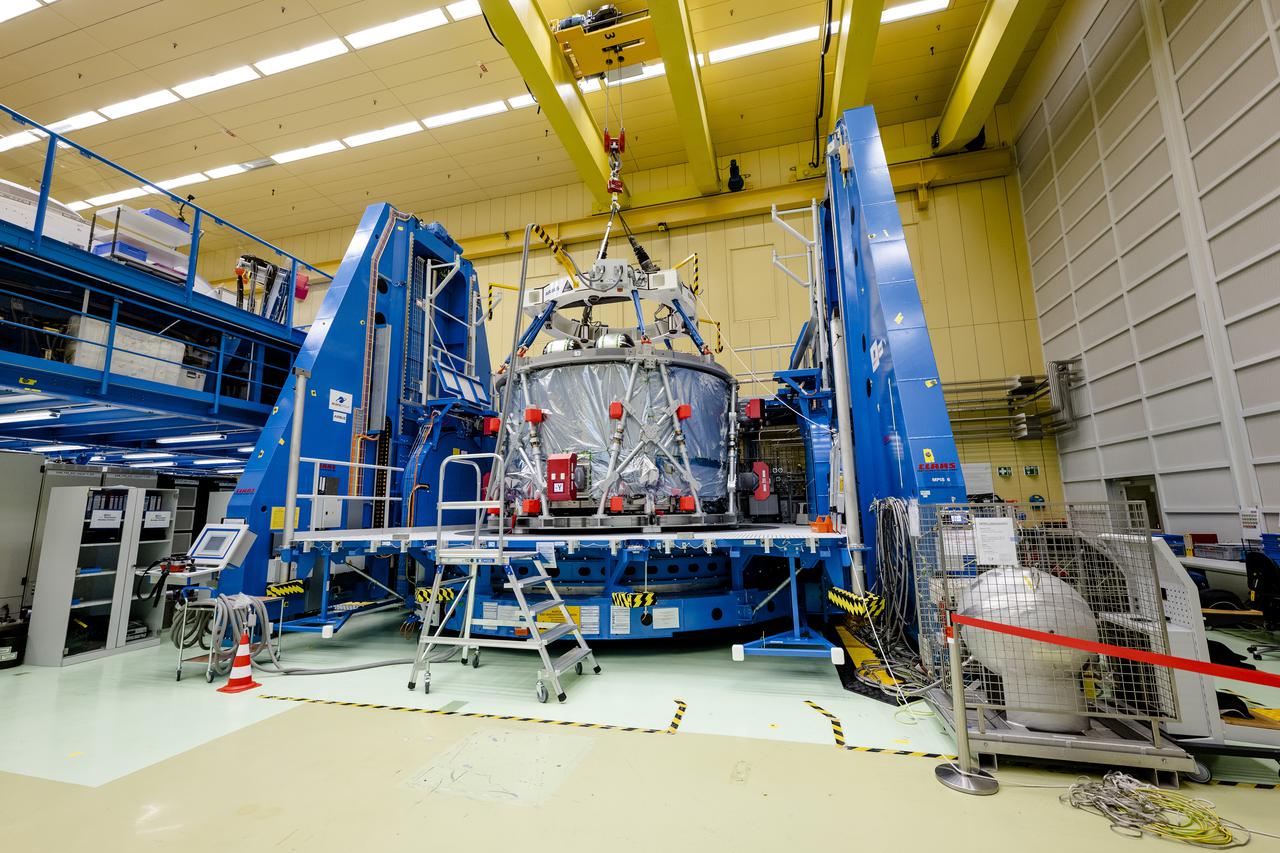
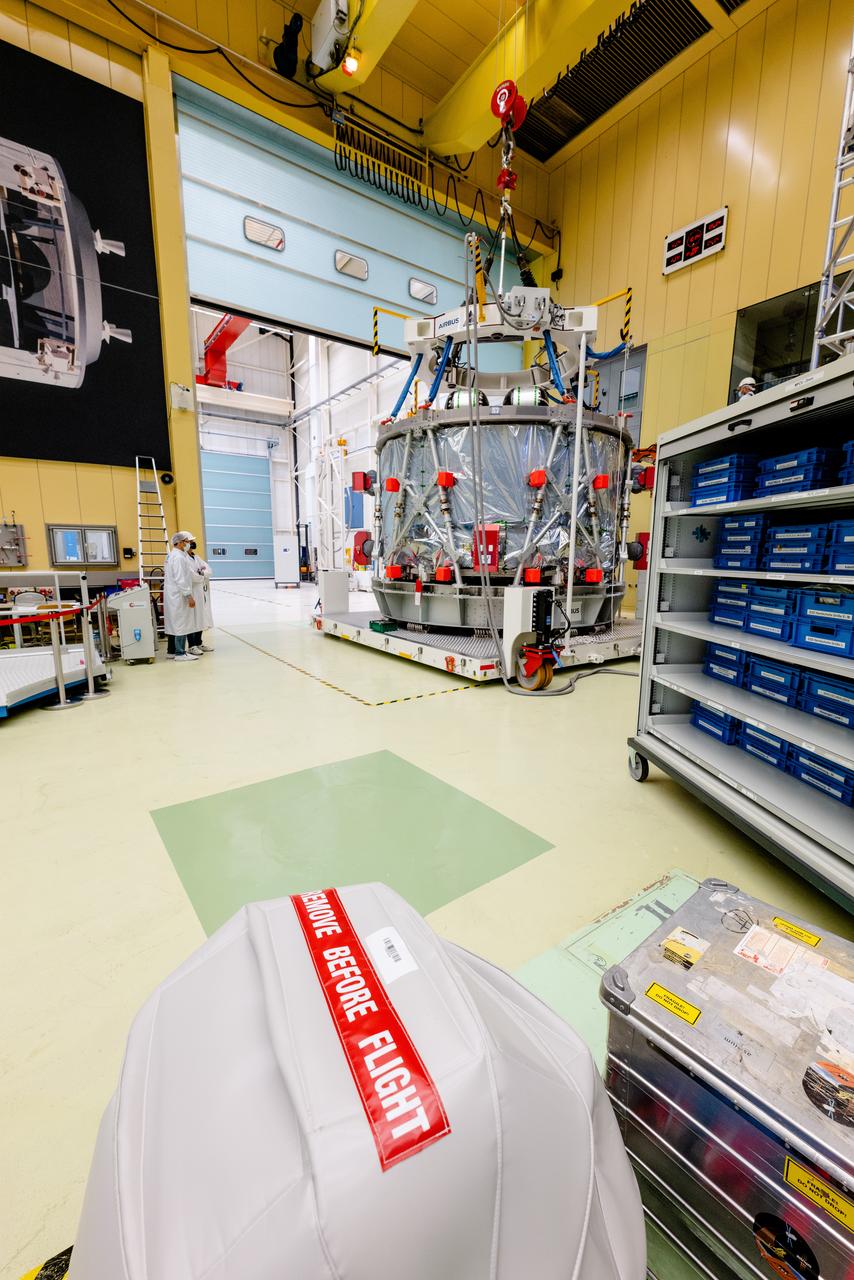
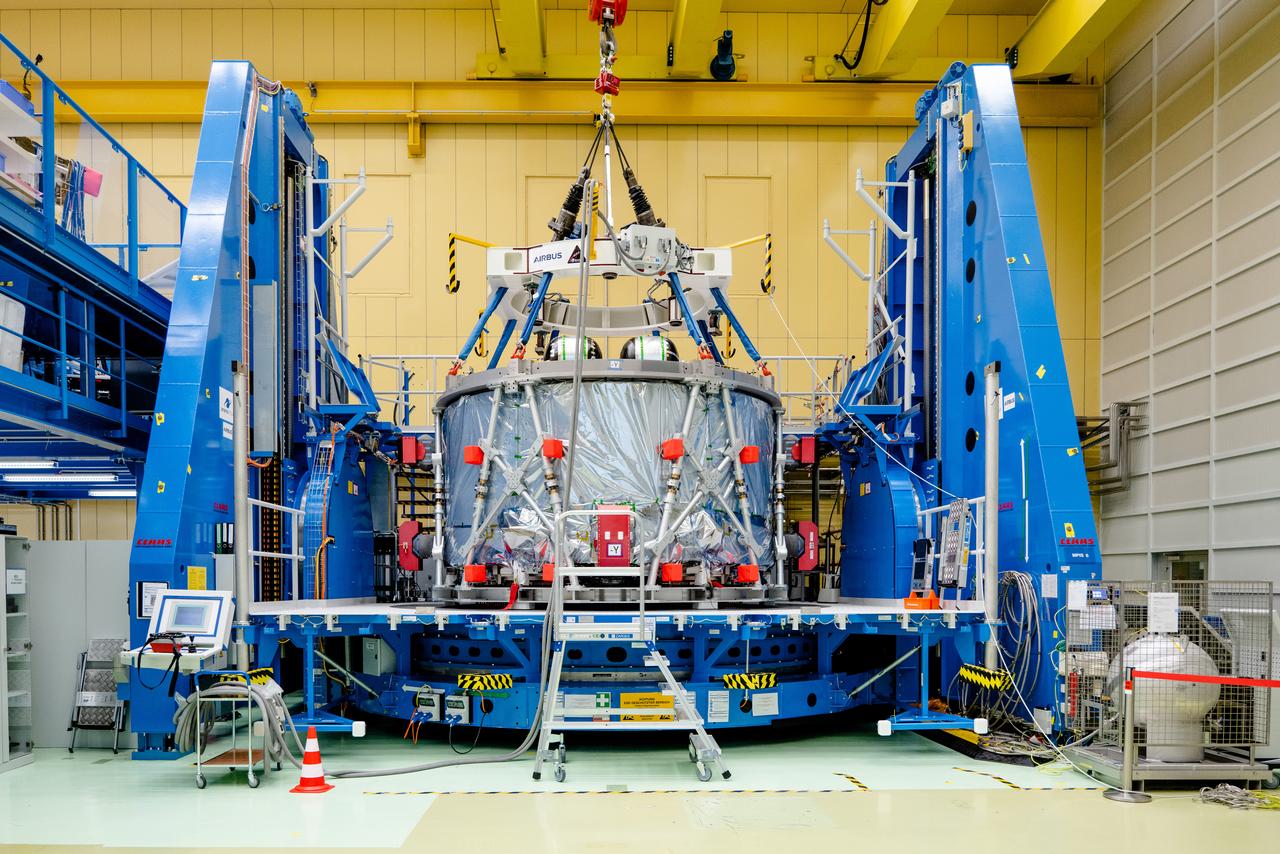
In Bremen, Germany the Airbus Space team prepares the European Service Module 2 for shipment to Kennedy Space Center. ESM2 will power Orion on Artemis II, our first flight with crew.
European Service Module 2 ready to ship
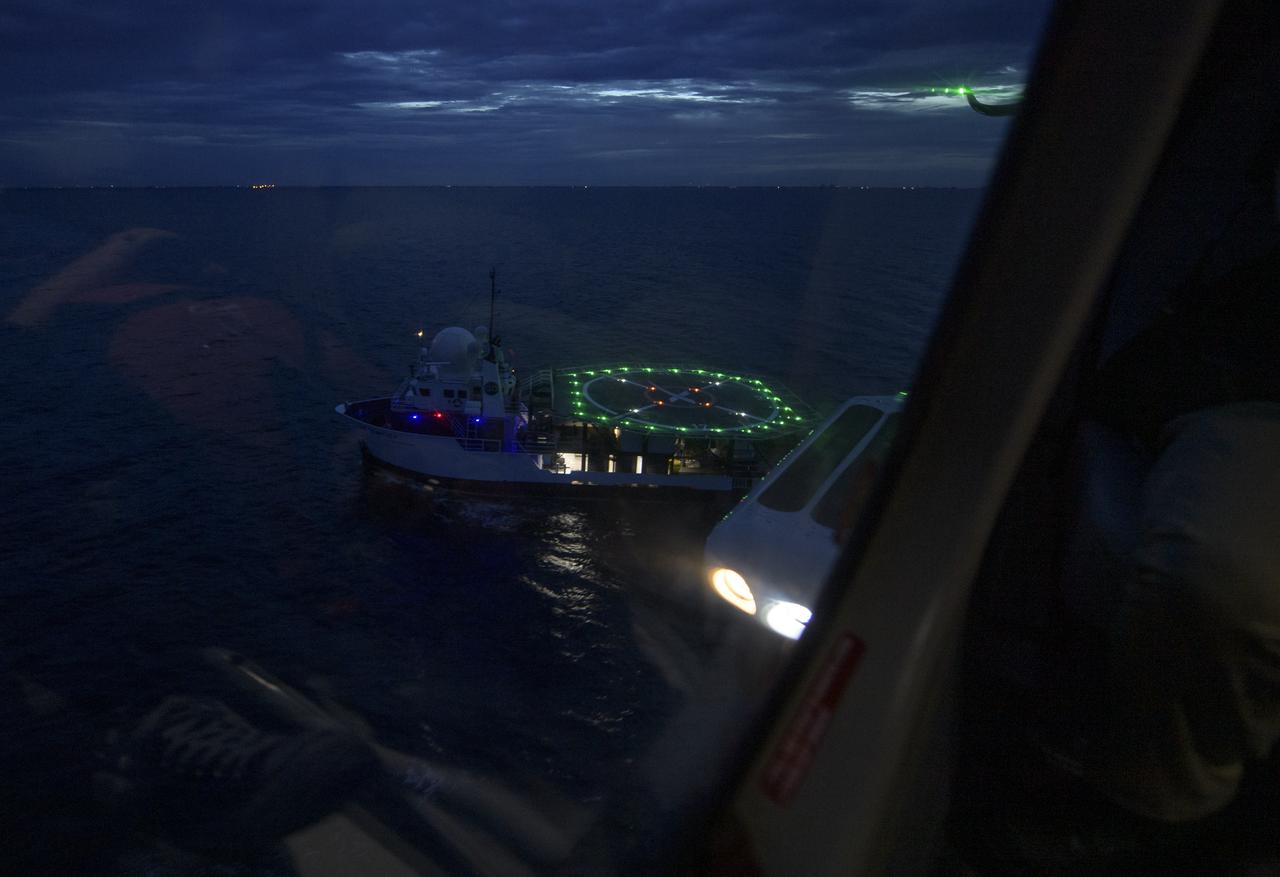
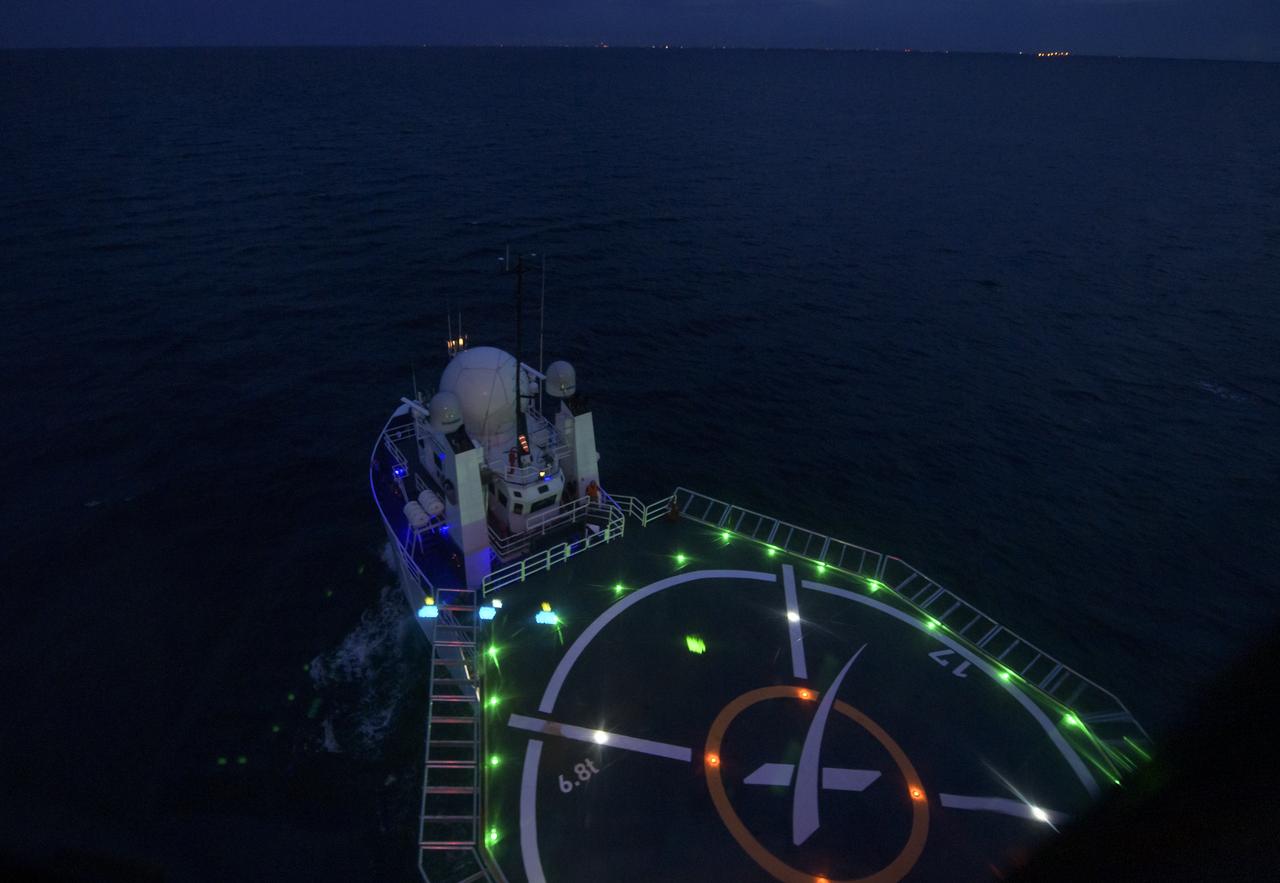
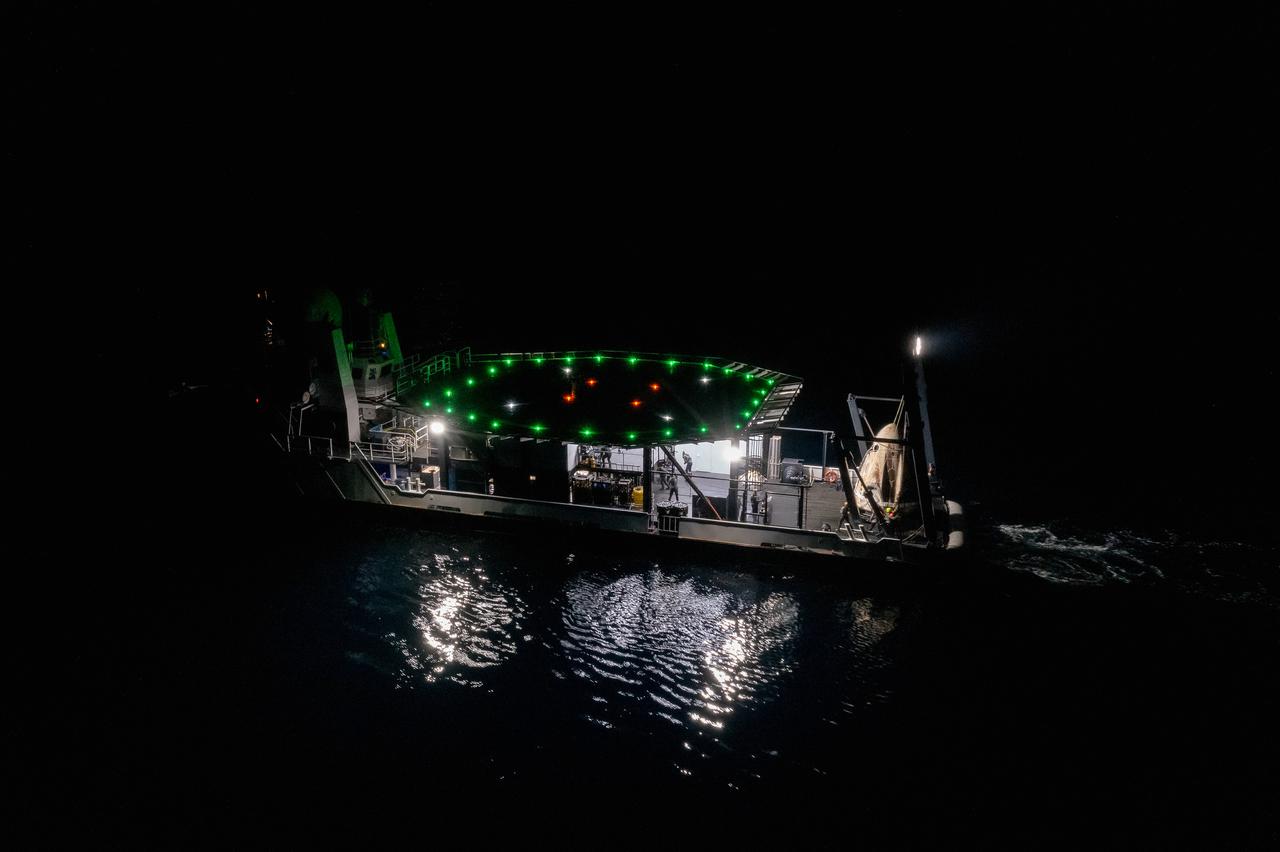
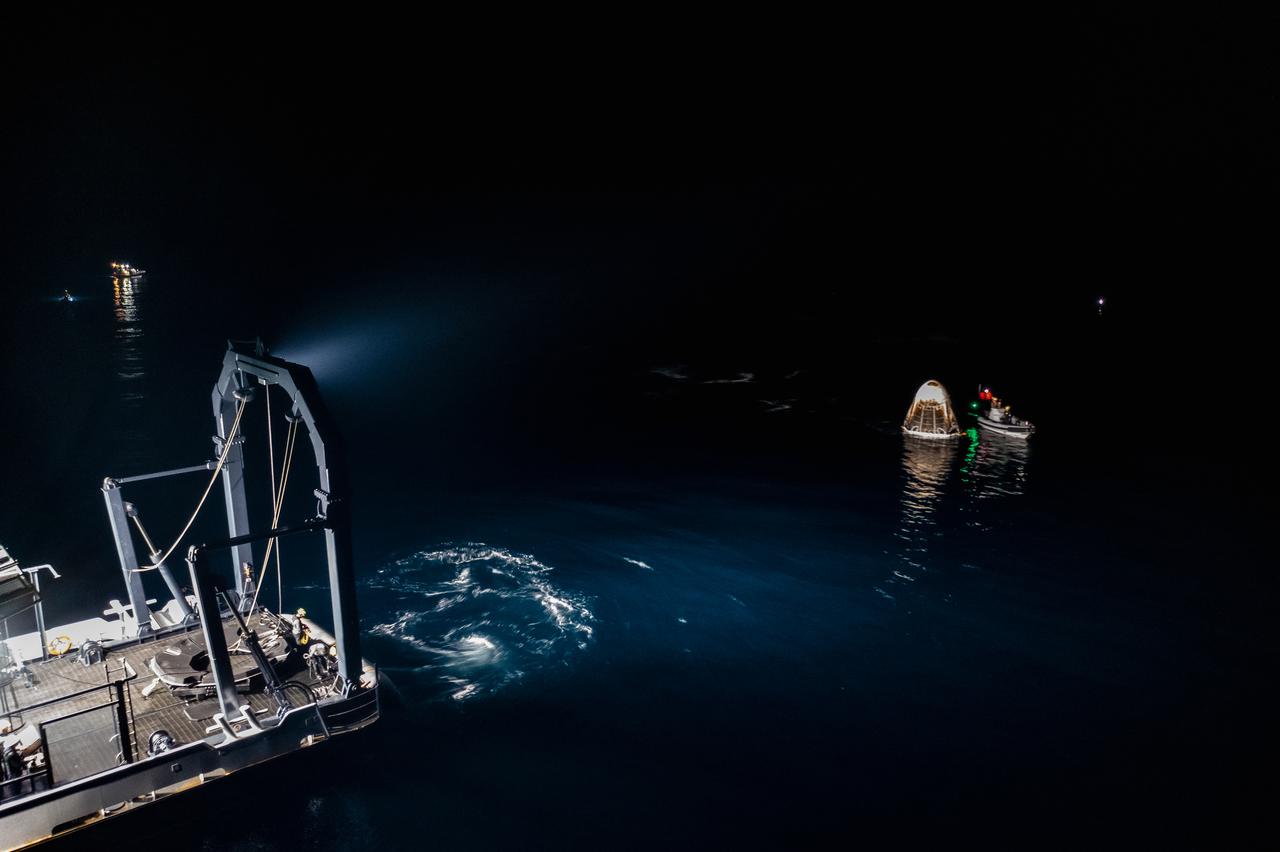
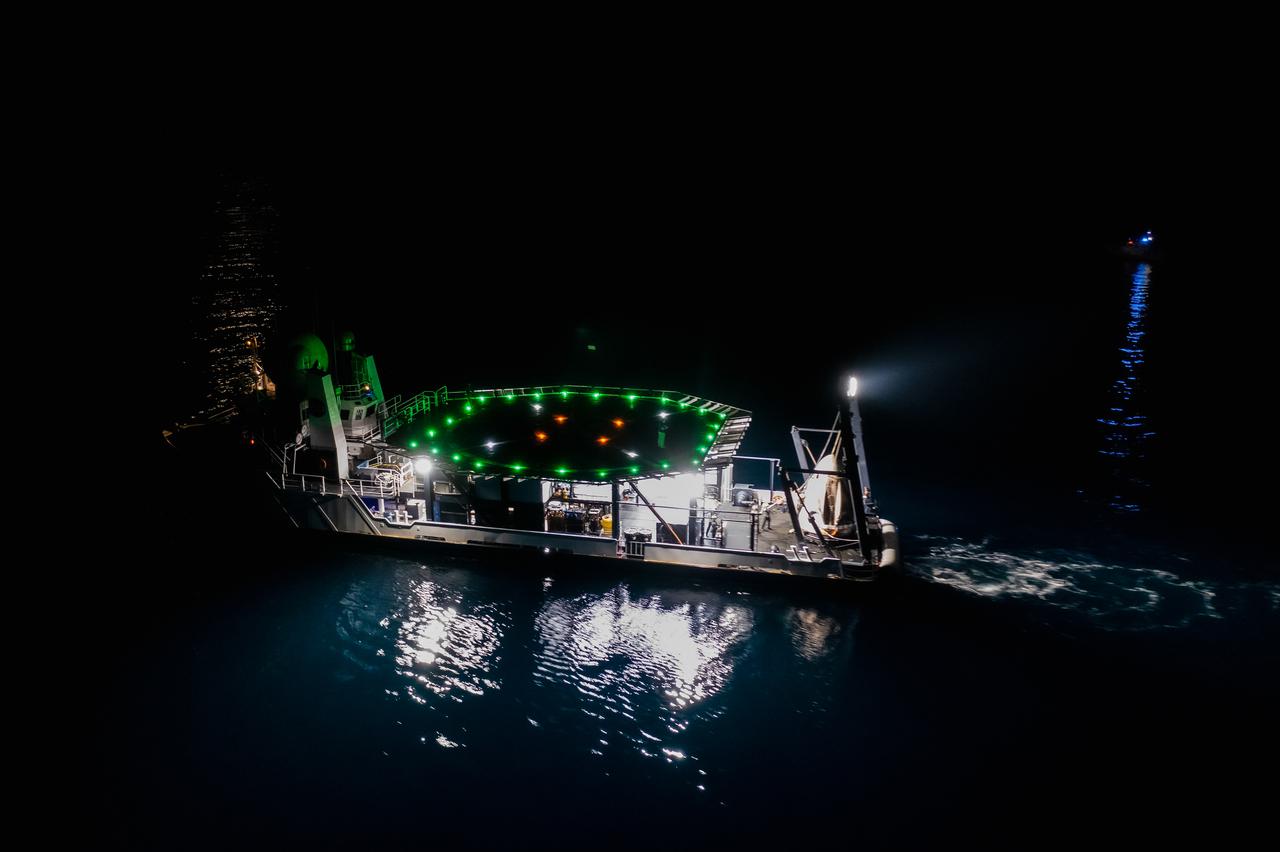
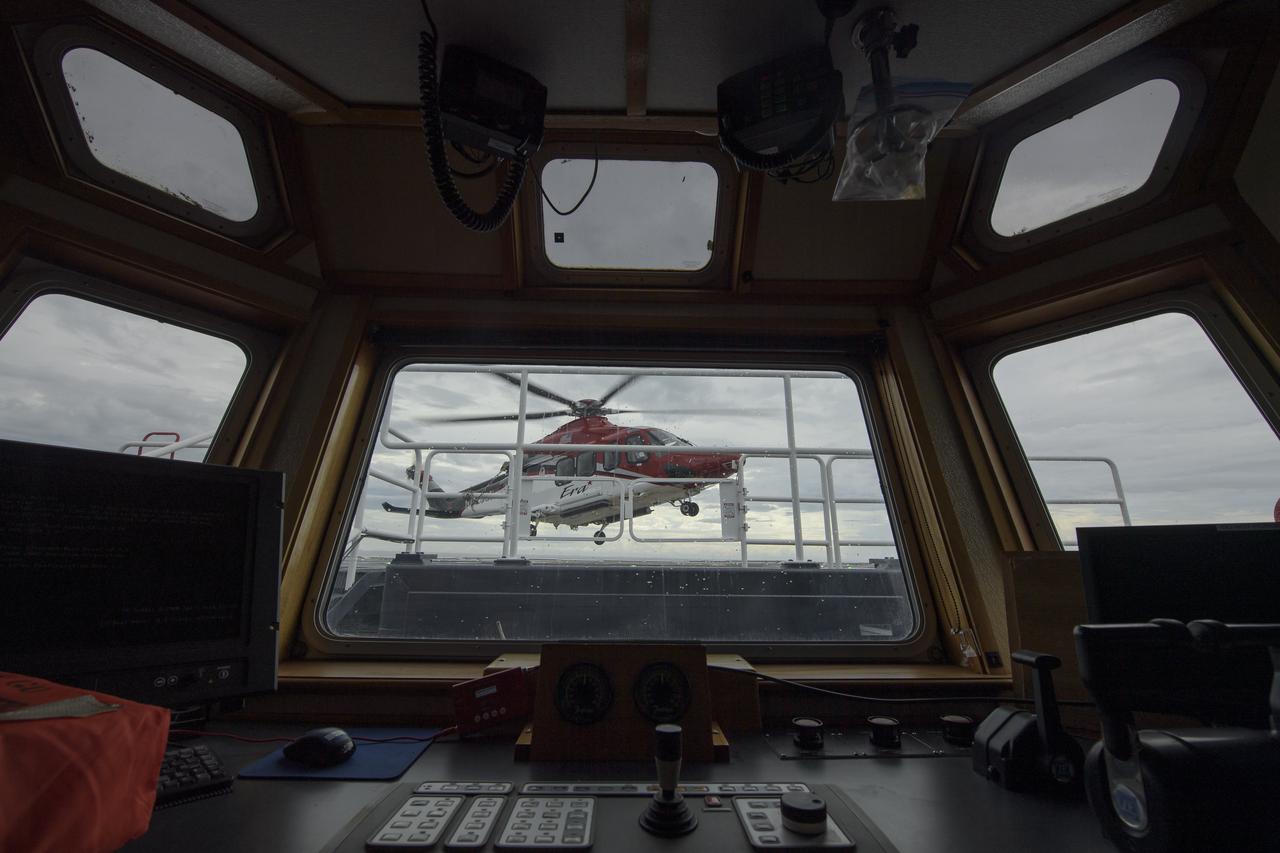
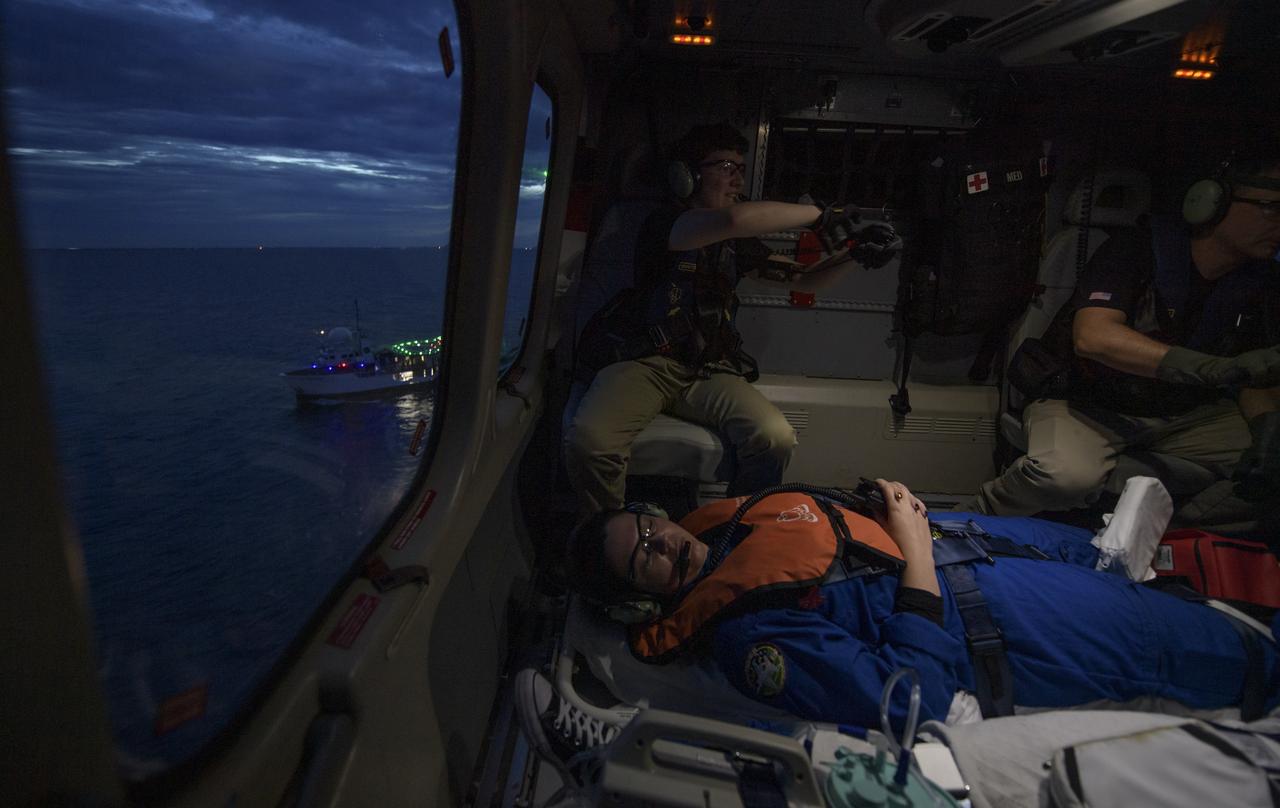
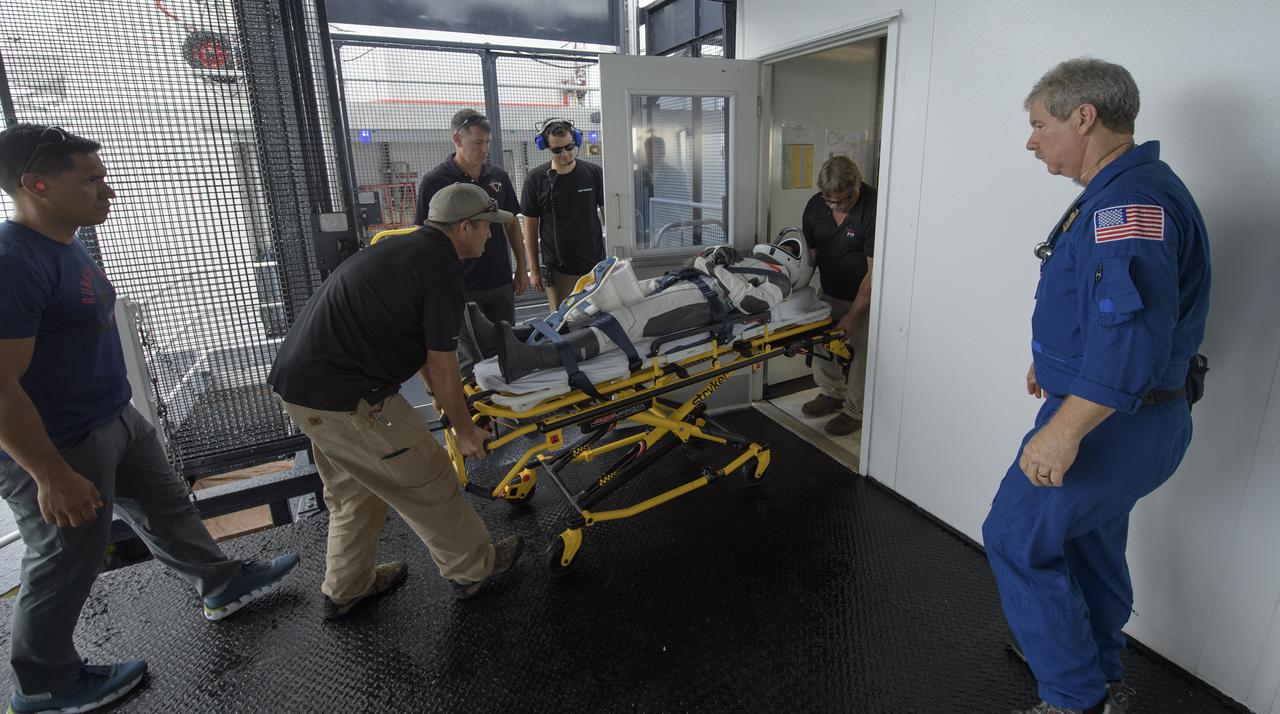
The GO Searcher ship is seen from a helicopter during practice for a medical emergency evacuation, Friday, August 15, 2019 in the Atlantic Ocean off the coast of Cape Canaveral, Florida. Teams from NASA and SpaceX gathered to refine procedures for emergency situations. SpaceX will use the GO Searcher ship during the Demo-2 mission to recover NASA astronauts returning from the International Space Station in their Crew Dragon spacecraft. Photo Credit: (NASA/Bill Ingalls)
SpaceX Dragon Crew Emergency Evacuation Rehearsal
The GO Searcher ship is seen from a helicopter during practice for a medical emergency evacuation, Friday, August 15, 2019 in the Atlantic Ocean off the coast of Cape Canaveral, Florida. Teams from NASA and SpaceX gathered to refine procedures for emergency situations. SpaceX will use the GO Searcher ship during the Demo-2 mission to recover NASA astronauts returning from the International Space Station in their Crew Dragon spacecraft. Photo Credit: (NASA/Bill Ingalls)
SpaceX Dragon Crew Emergency Evacuation Rehearsal
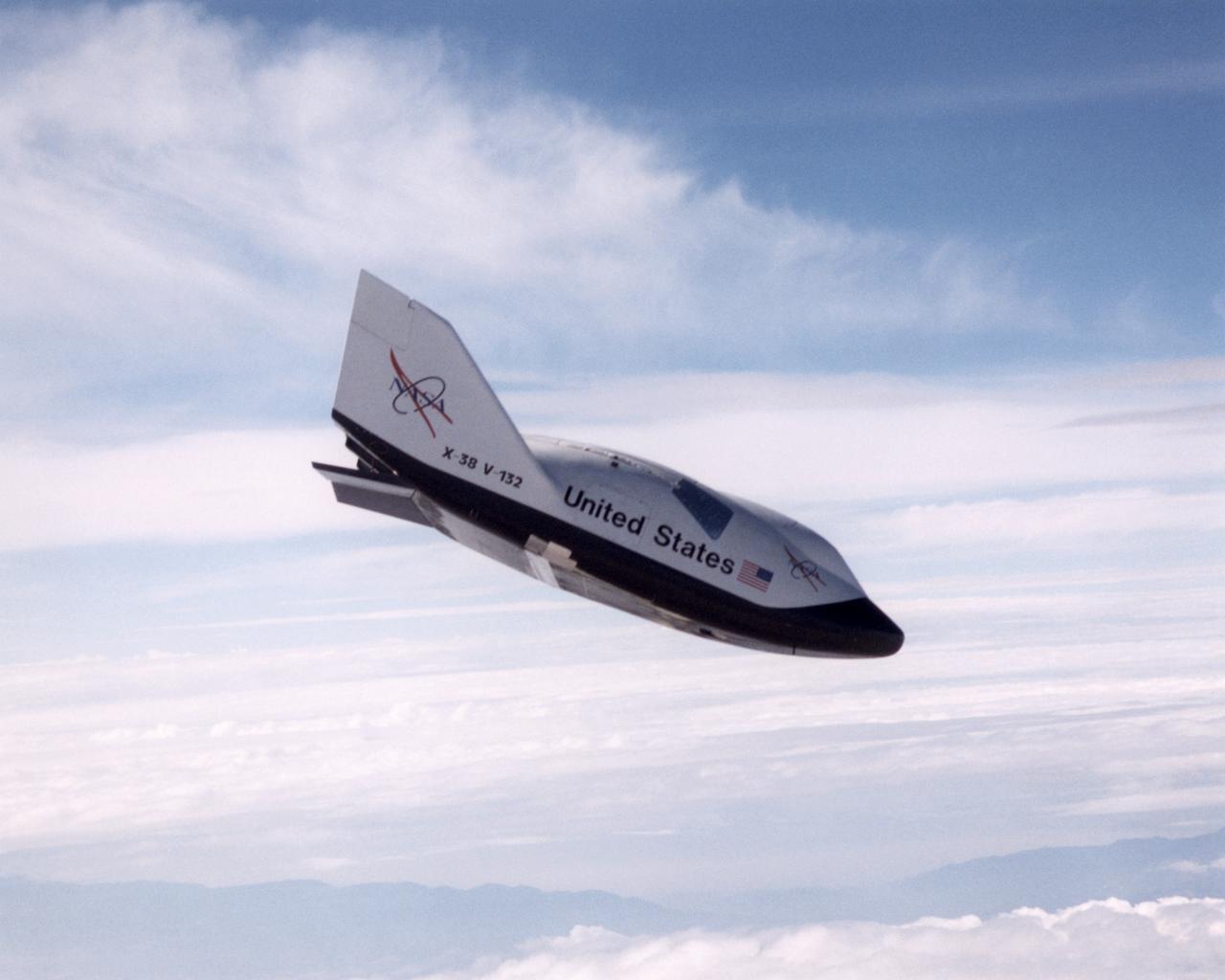
The X-38, a research vehicle built to help develop technology for an emergency Crew Return Vehicle (CRV), descends under its steerable parachute during a July 1999 test flight at the Dryden Flight Research Center, Edwards, California. It was the fourth free flight of the test vehicles in the X-38 program, and the second free flight test of Vehicle 132 or Ship 2. The goal of this flight was to release the vehicle from a higher altitude -- 31,500 feet -- and to fly the vehicle longer -- 31 seconds -- than any previous X-38 vehicle had yet flown. The project team also conducted aerodynamic verification maneuvers and checked improvements made to the drogue parachute.
X-38 Ship #2 in Free Flight
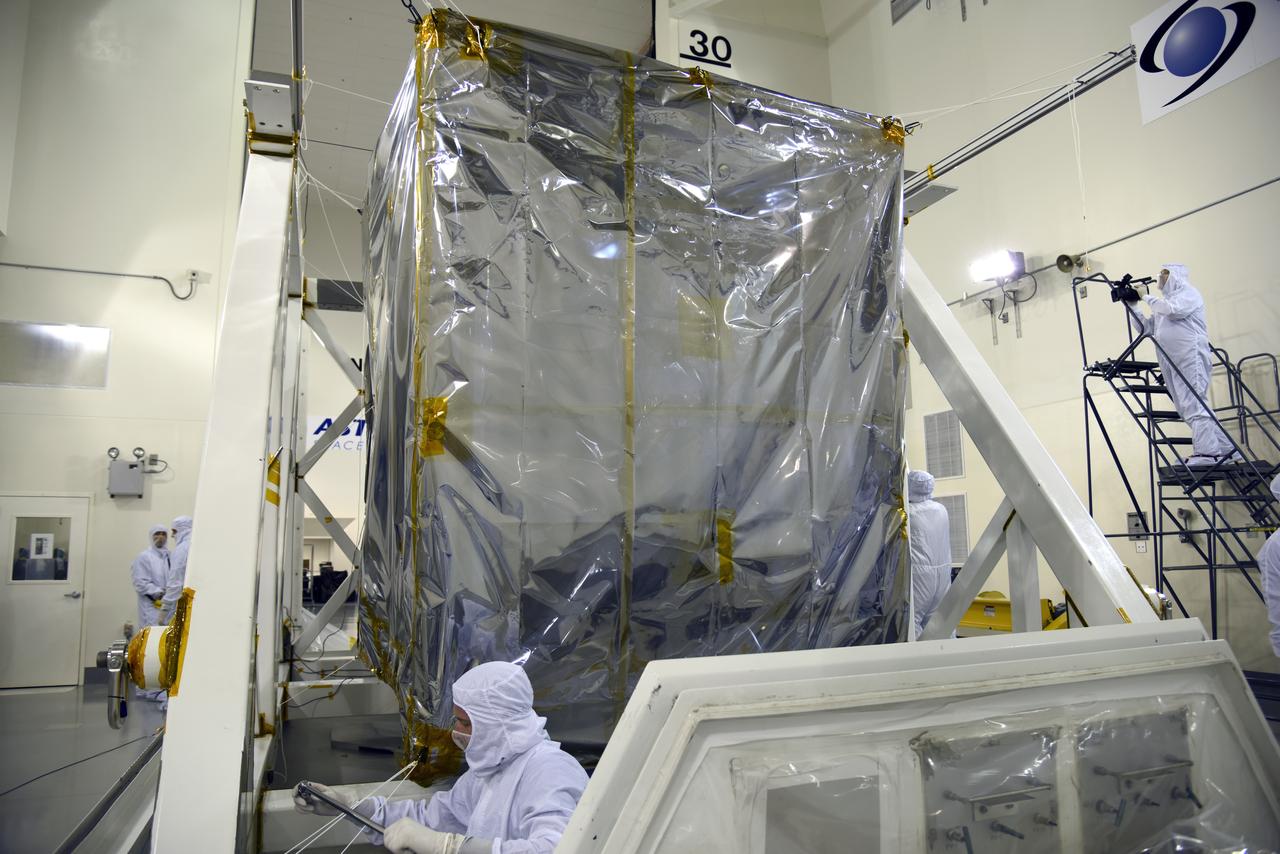
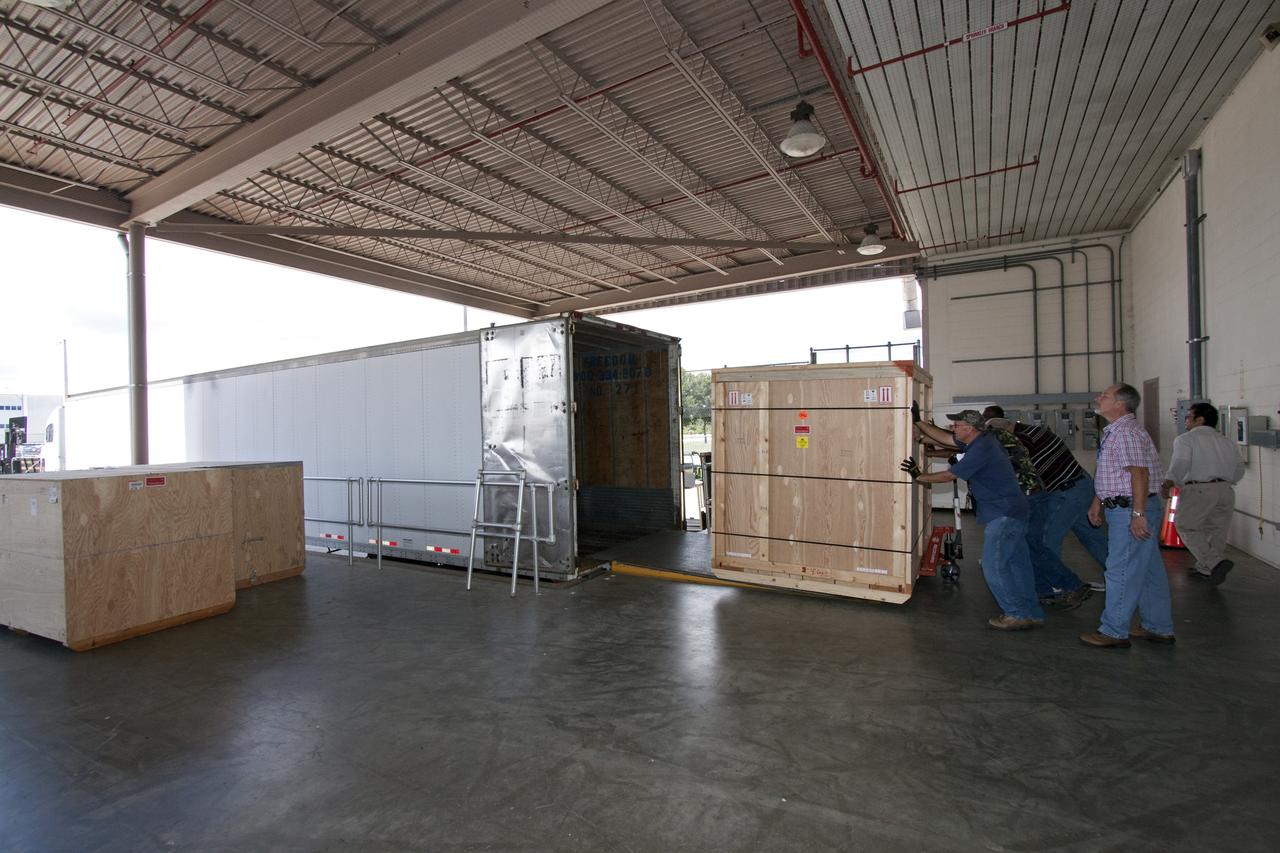
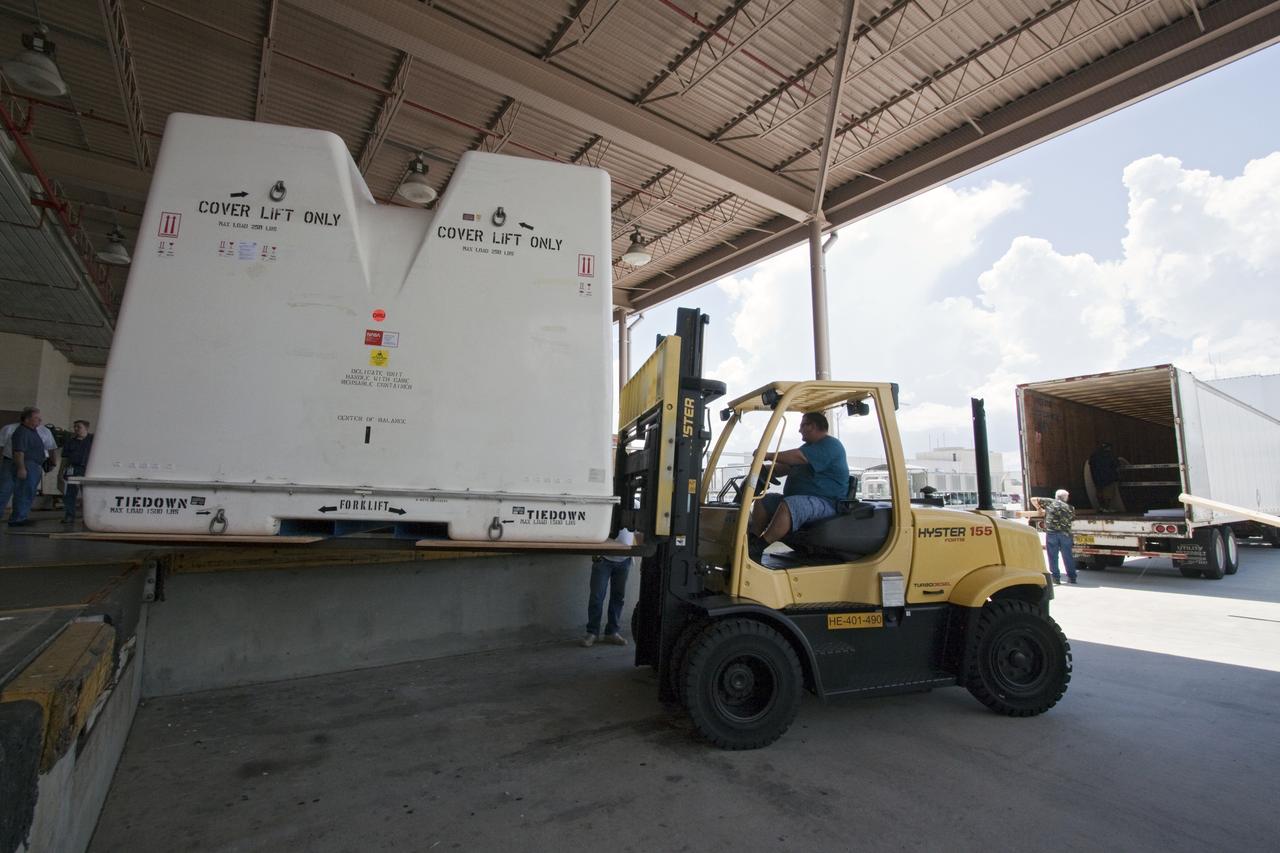
NASA's Ice, Cloud and land Elevation Satellite-2 (ICESat-2) is uncrated inside the airlock of the Astrotech processing facility on June 13, 2018, at Vandenberg Air Force Base in California. ICESat-2 was shipped from the Northrop Grumman facility in Gilbert, Arizona, where it was built and tested. The satellite is scheduled to launch from Space Launch Complex-2 at Vandenberg on the final United Launch Alliance Delta II rocket. ICESat-2 will measure the height of a changing Earth, one laser pulse at a time, 10,000 laser pulses a second. The satellite will carry the Advanced Topographic Laser Altimeter System. ICESat-2 will help scientists investigate why, and how much our planet's frozen and icy areas, called the cryosphere, is changing in a warming climate.
Delta II ICESat-2 Spacecraft Removal from Shipping Container
NASA's Ice, Cloud and land Elevation Satellite-2 (ICESat-2) is uncrated and is being prepared for its move to the high bay of the Astrotech processing facility on June 13, 2018, at Vandenberg Air Force Base in California. ICESat-2 was shipped from the Northrop Grumman facility in Gilbert, Arizona, where it was built and tested. The satellite is scheduled to launch from Space Launch Complex-2 at Vandenberg on the final United Launch Alliance Delta II rocket. ICESat-2 will measure the height of a changing Earth, one laser pulse at a time, 10,000 laser pulses a second. The satellite will carry the Advanced Topographic Laser Altimeter System. ICESat-2 will help scientists investigate why, and how much our planet's frozen and icy areas, called the cryosphere, is changing in a warming climate.
Delta II ICESat-2 Spacecraft Removal from Shipping Container
NASA's Ice, Cloud and land Elevation Satellite-2 (ICESat-2) is uncrated inside the airlock of the Astrotech processing facility on June 13, 2018, at Vandenberg Air Force Base in California. ICESat-2 was shipped from the Northrop Grumman facility in Gilbert, Arizona, where it was built and tested. The satellite is scheduled to launch from Space Launch Complex-2 at Vandenberg on the final United Launch Alliance Delta II rocket. ICESat-2 will measure the height of a changing Earth, one laser pulse at a time, 10,000 laser pulses a second. The satellite will carry the Advanced Topographic Laser Altimeter System. ICESat-2 will help scientists investigate why, and how much our planet's frozen and icy areas, called the cryosphere, is changing in a warming climate.
Delta II ICESat-2 Spacecraft Removal from Shipping Container
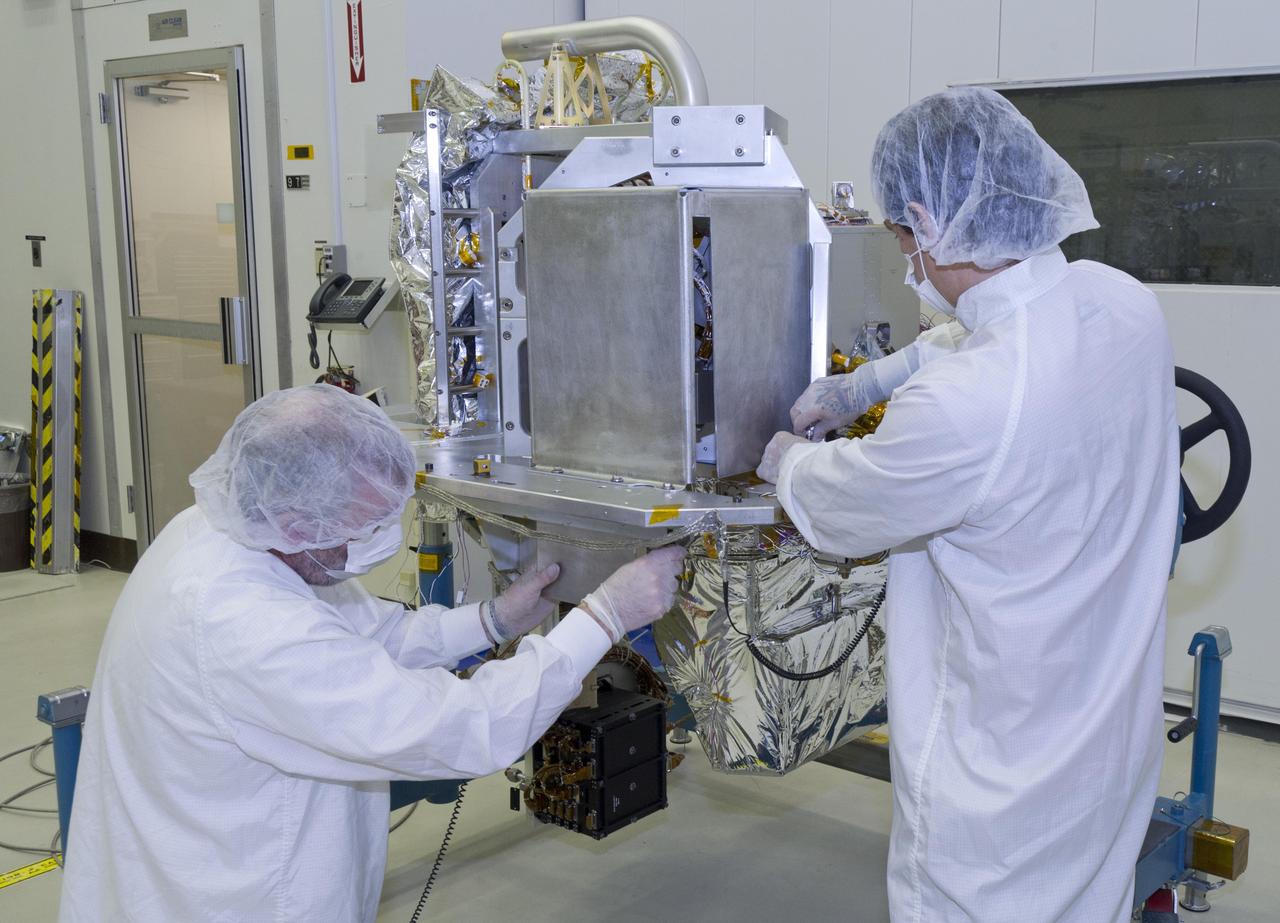
Technicians prep NASA OCO-2 instrument for shipping at Jet Propulsion Lab in Pasadena, Ca.
NASA OCO-2 Instrument Completes Construction
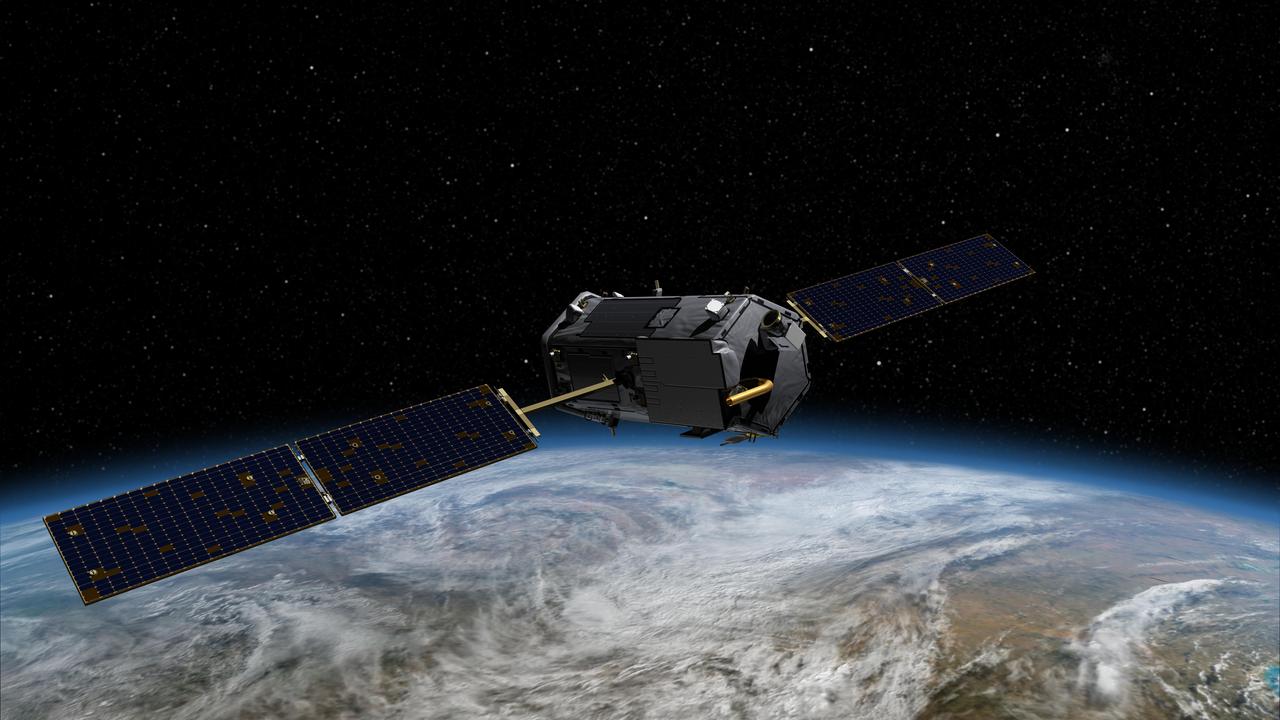
Technicians prep NASA OCO-2 instrument for shipping at Jet Propulsion Lab in Pasadena, Ca. Animation available in More Details.
NASA OCO-2 Instrument Completes Construction
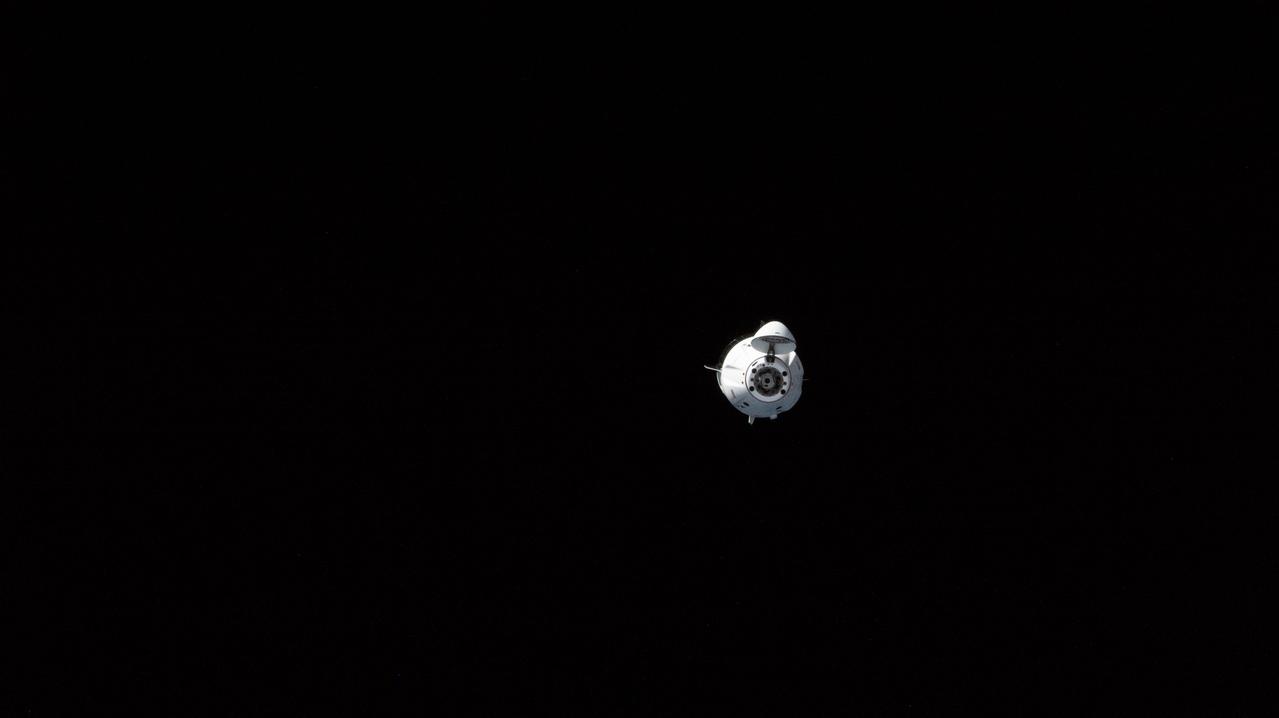
iss069e011319 (May 22, 2023) --- The SpaceX Freedom Dragon crew ship with four Axiom Mission-2 private astronauts aboard is pictured approaching the International Space Station. Freedom, commanded by former NASA astronaut Peggy Whitson, with Pilot John Shoffner and Mission Specialists Ala Alqarni and Rayyanah Barnawi, docked to the Harmony module's space-facing port at 9:12 a.m. EDT on Monday beginning eight days of docked operations with the seven-member Expedition 69 crew.
The SpaceX Freedom Dragon crew ship with the Axiom Mission-2 crew
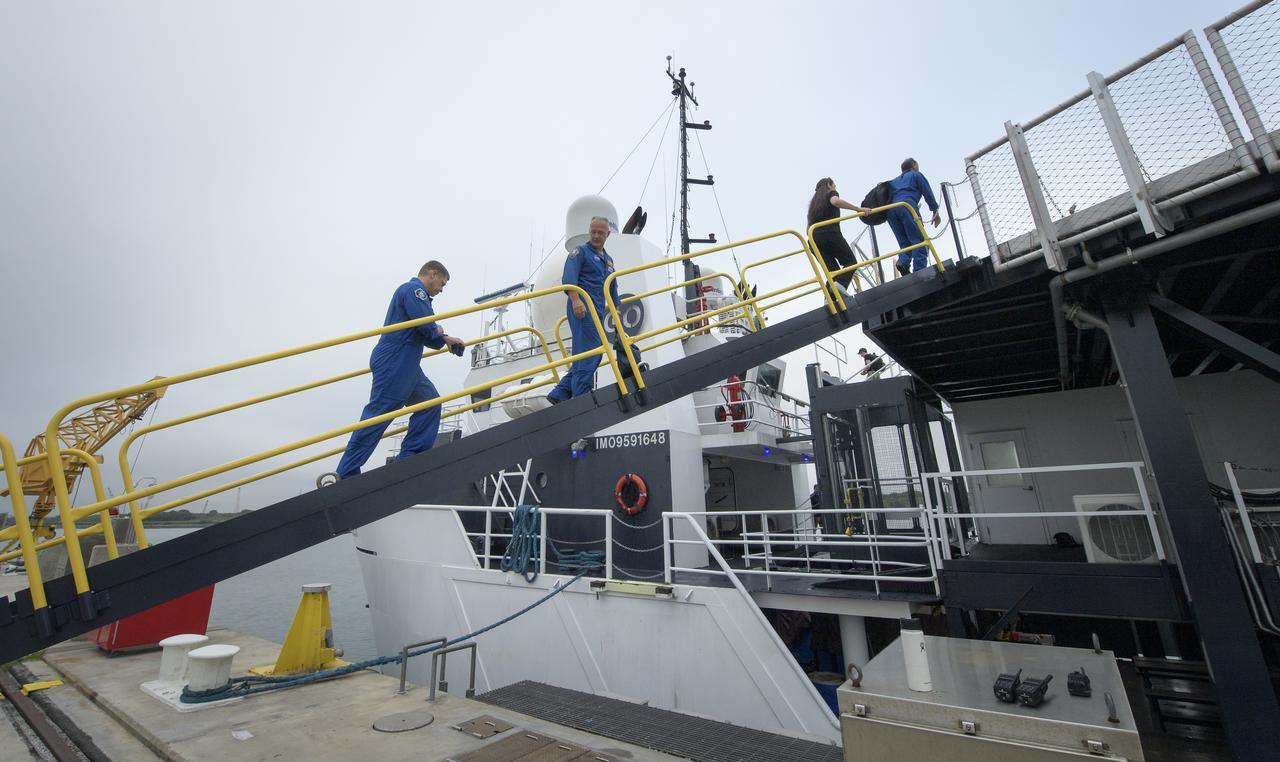
NASA astronauts Bob Behnken, left, and Doug Hurley board the SpaceX GO Searcher ship at the Trident Basin in Cape Canaveral, Florida, on August 13, 2019 to rehearse extracting astronauts from SpaceX’s Crew Dragon, which will be used to carry humans to the International Space Station. Using the Go Searcher ship SpaceX uses to recover their spacecraft after splashdown and a mock-up of the Crew Dragon, the teams worked through the steps necessary to get NASA astronauts Doug Hurley and Bob Behnken out of the Dragon and back to dry land. Hurley and Behnken will fly to the space station aboard the Crew Dragon for the SpaceX Demo-2 mission. Photo Credit: (NASA/Bill Ingalls)
SpaceX Dragon Crew Extraction Rehearsal
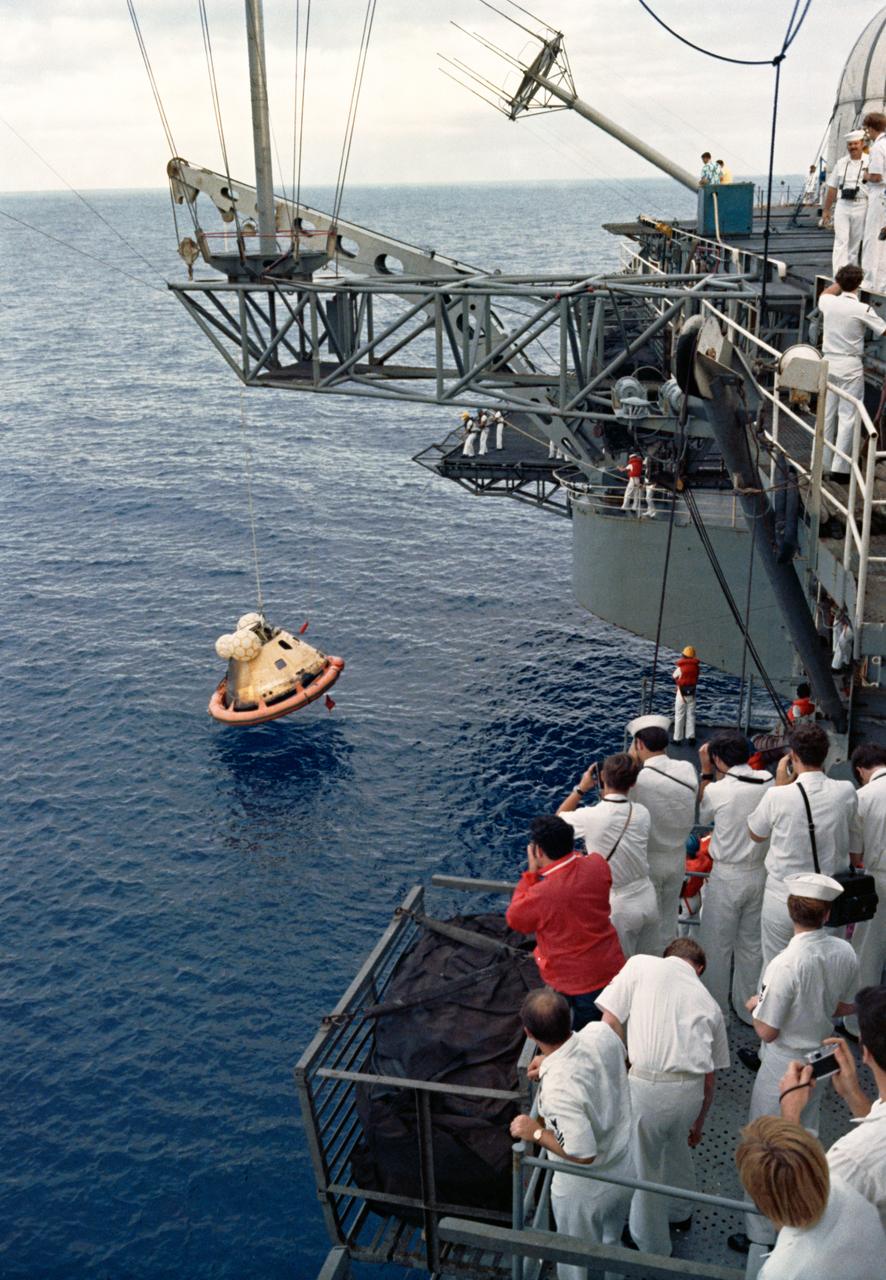
S73-29138 (22 June 1973) --- The Skylab 2 Command Module, with astronauts Charles Conrad Jr., Joseph P. Kerwin and Paul J. Weitz still inside, is hoisted aboard the prime recovery ship, USS Ticonderoga, following successful splashdown in the Pacific Ocean about 835 miles southwest of San Diego, California. The crewmen had just completed a 28-day stay with the Skylab 1 space station in Earth orbit conducting numerous medical, scientific and technological experiments. Note the inflated bags and the floatation collar on the spacecraft. Photo credit: NASA
SKYLAB (SL)-2 - RECOVERY OPERATIONS - RECOVERY SHIP - PACIFIC
This image of NASA Deep Impact impactor probe was taken by the mission mother ship, or flyby spacecraft, after the two separated at 11:07 p.m. Pacific time, July 2 2:07 a.m. Eastern time, July 3, 2005.
Separation Anxiety Over for Deep Impact
The XV-15 tilt rotor ships #1 and #2 parked on the NASA Dryden Flight Research Center ramp. The XV-15s, manufactured by Bell, were involved in limited research at Dryden in 1980 and 1981. The development of the XV-15 Tiltrotor research aircraft was initiated in 1973 with joint Army/NASA funding as a "proof of concept", or "technology demonstrator" program, with two aircraft being built by Bell Helicopter Textron (BHT) in 1977.  The aircraft are powered by twin Lycoming T-53 turboshaft engines that are connected by a cross-shaft and drive three-bladed, 25 ft diameter metal rotors (the size extensively tested in a wind tunnel). The engines and main transmissions are located in wingtip nacelles to minimize the operational loads on the cross-shaft system and, with the rotors, tilt as a single unit.  For takeoff, the proprotors and their engines are used in the straight-up position where the thrust is directed downward. The XV-15 then climbs vertically into the air like a helicopter. In this VTOL mode, the vehicle can lift off and hover for approximately one hour.  Once off the ground, the XV-15 has the ability to fly in one of two different modes. It can fly as a helicopter, in the partially converted airplane mode. The XV-15 can also then convert from the helicopter mode to the airplane mode. This is accomplished by continuous rotation of the proprotors from the helicopter rotor position to the conventional airplane propeller position. During the ten to fifteen second conversion period, the aircraft speed increases and lift is transferred from the rotors to the wing. To land, the proprotors are rotated up to the helicopter rotor position and flown as a helicopter to a vertical landing.
XV-15 tilt rotor ship #1 and #2 parked on NASA ramp
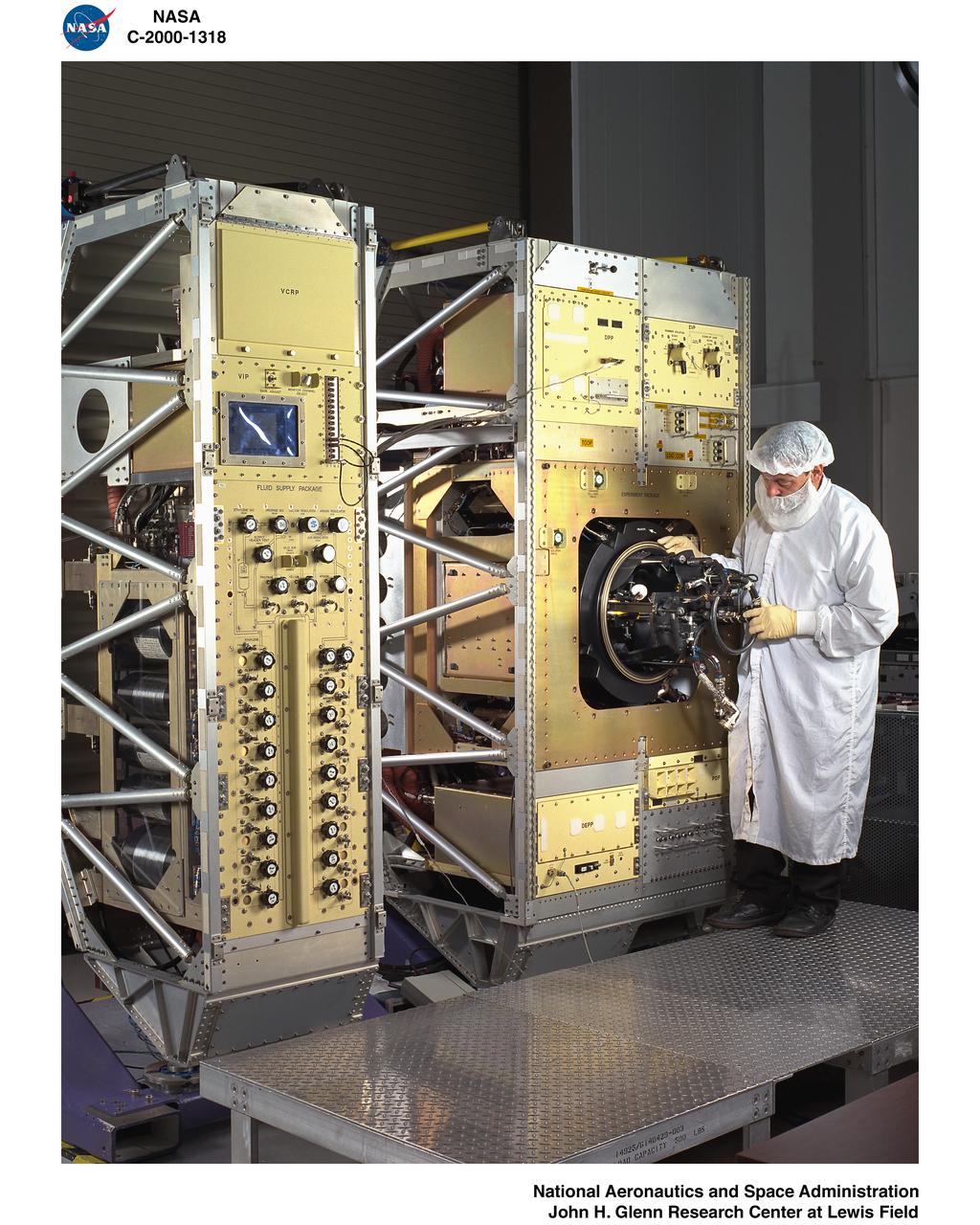
COMBUSTION MODULE 2 FLIGHT HARDWARE PRE SHIP
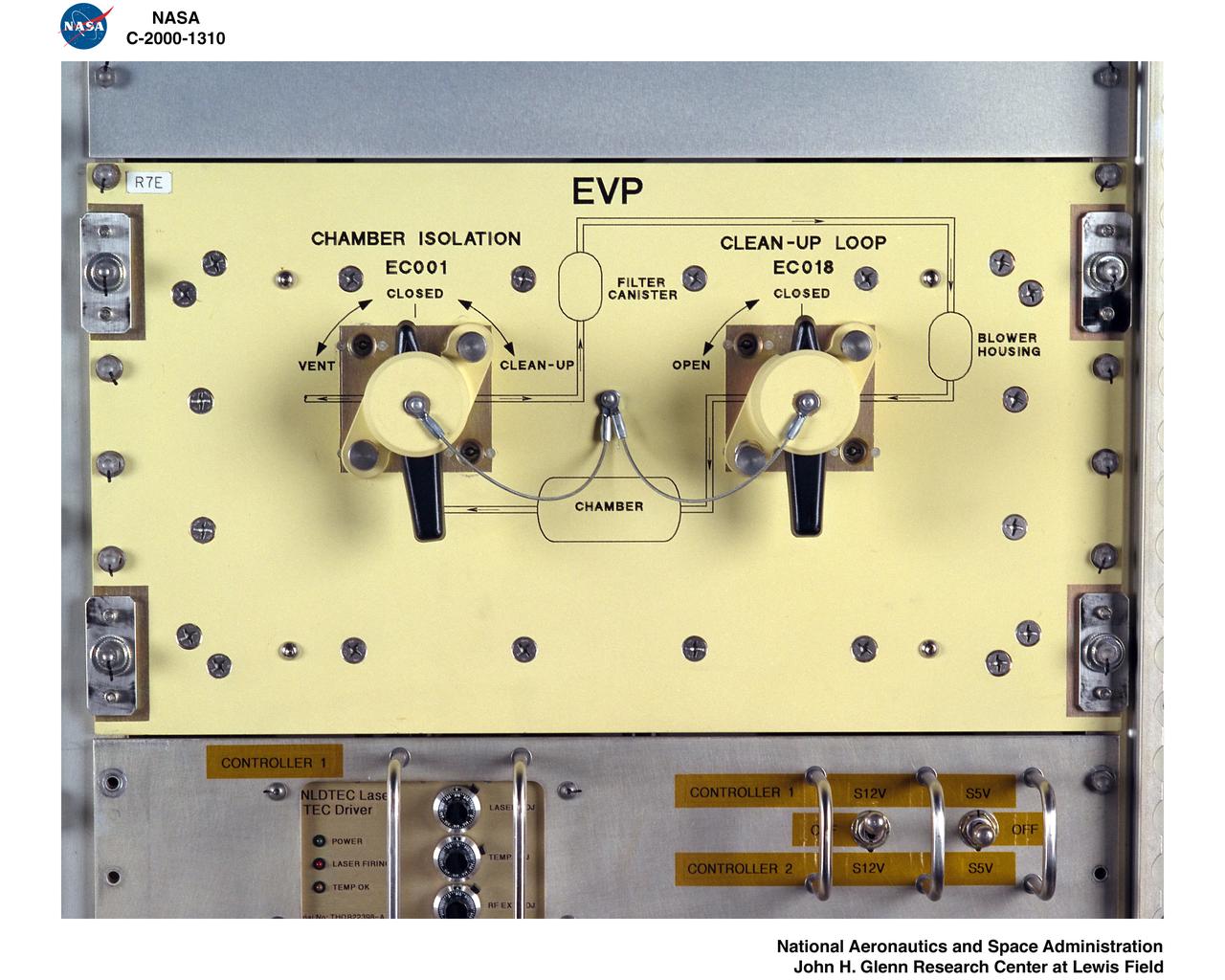
GRC-2000-C-01310
COMBUSTION MODULE 2 FLIGHT HARDWARE PRE SHIP
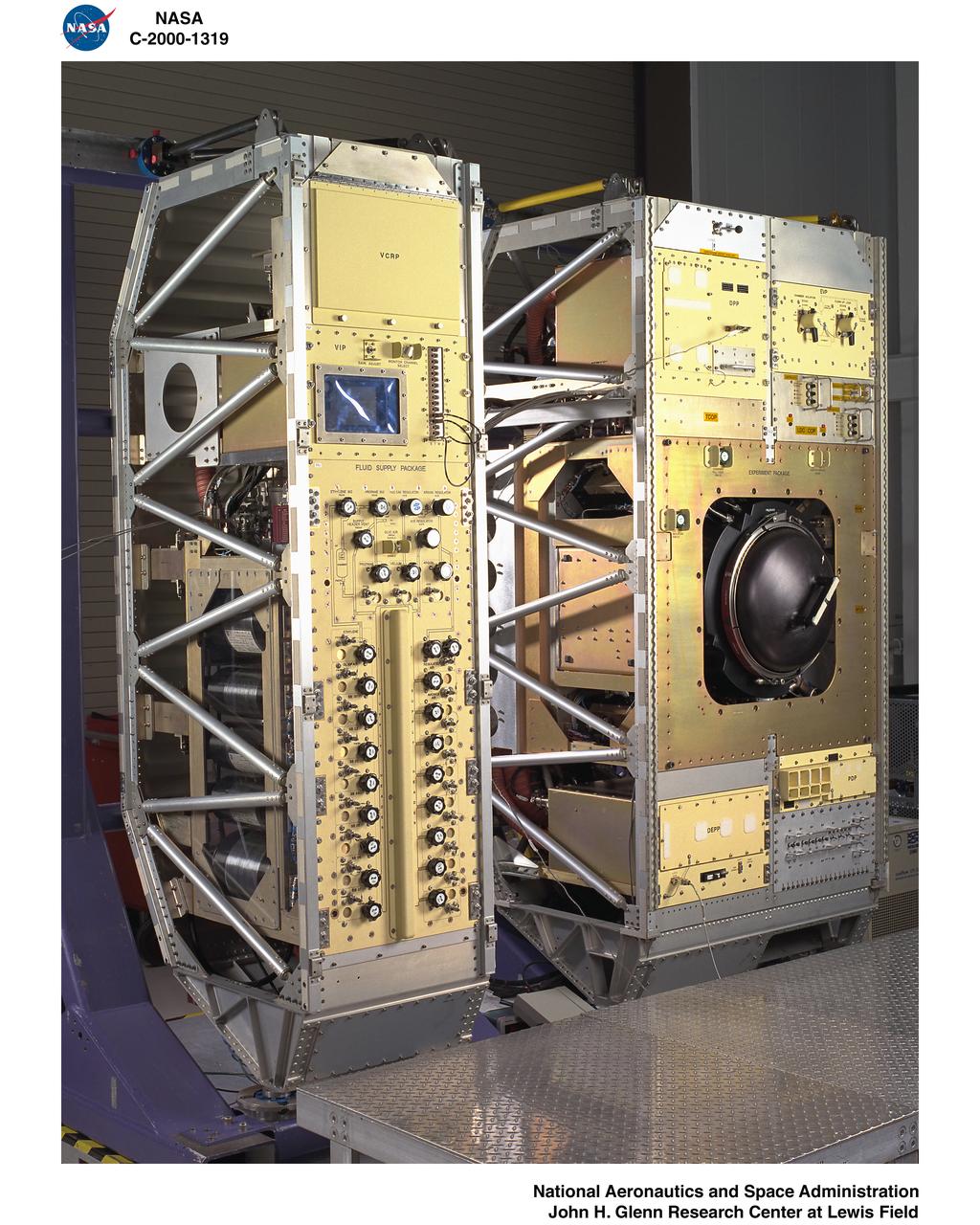
GRC-2000-C-01319
COMBUSTION MODULE 2 FLIGHT HARDWARE PRE SHIP
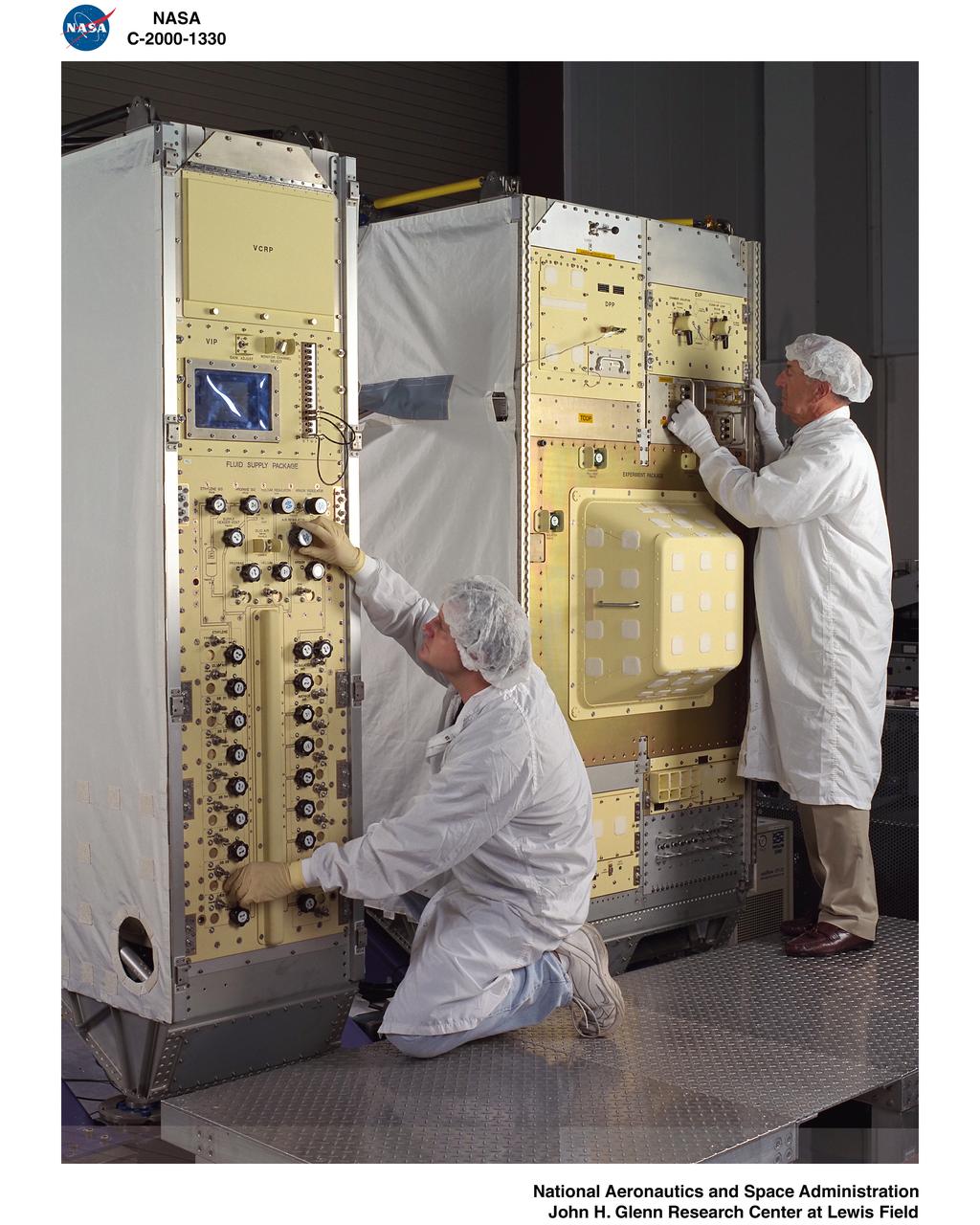
GRC-2000-C-01330
COMBUSTION MODULE 2 FLIGHT HARDWARE PRE SHIP
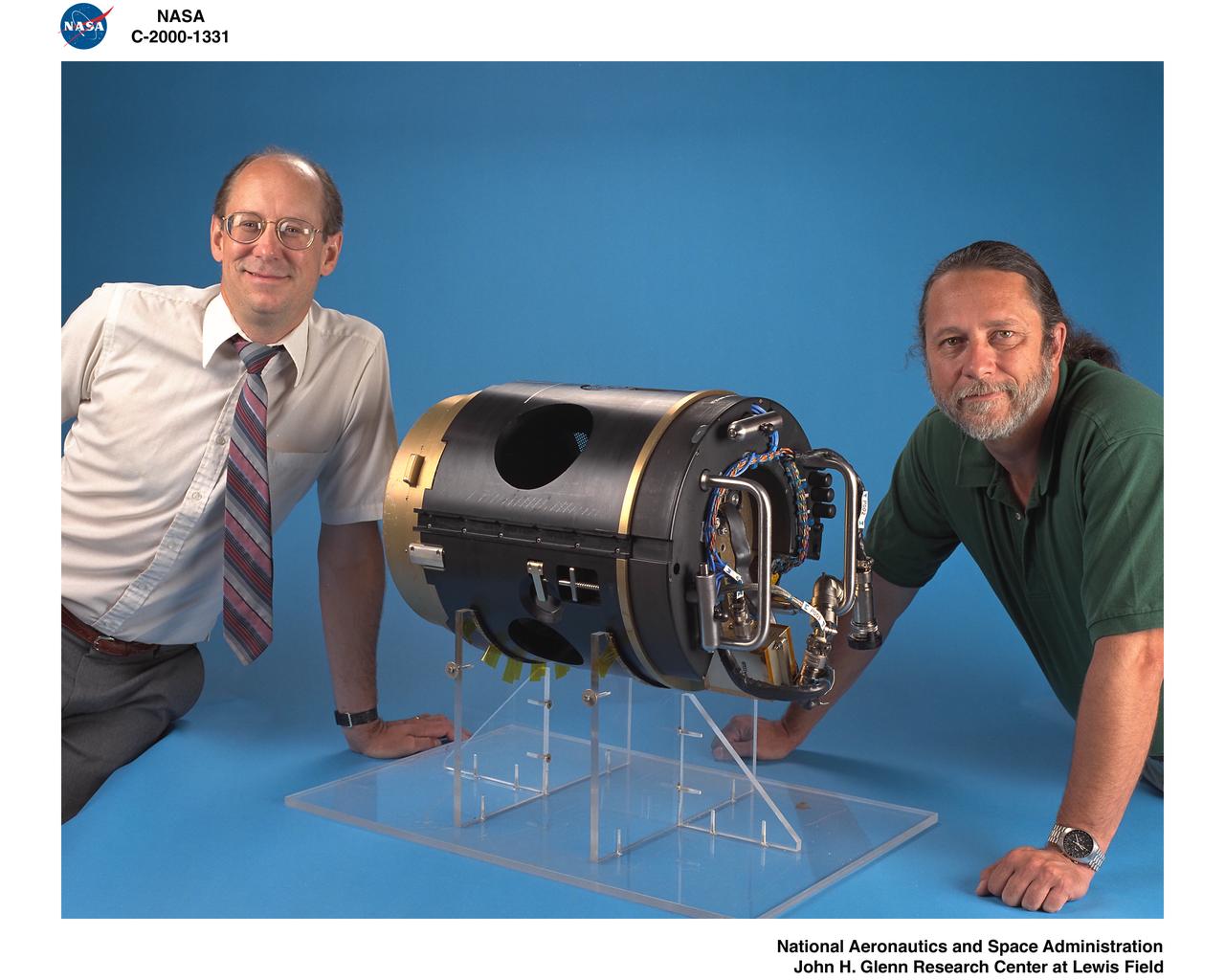
GRC-2000-C-01331
COMBUSTION MODULE 2 FLIGHT HARDWARE PRE SHIP
GRC-2000-C-01318
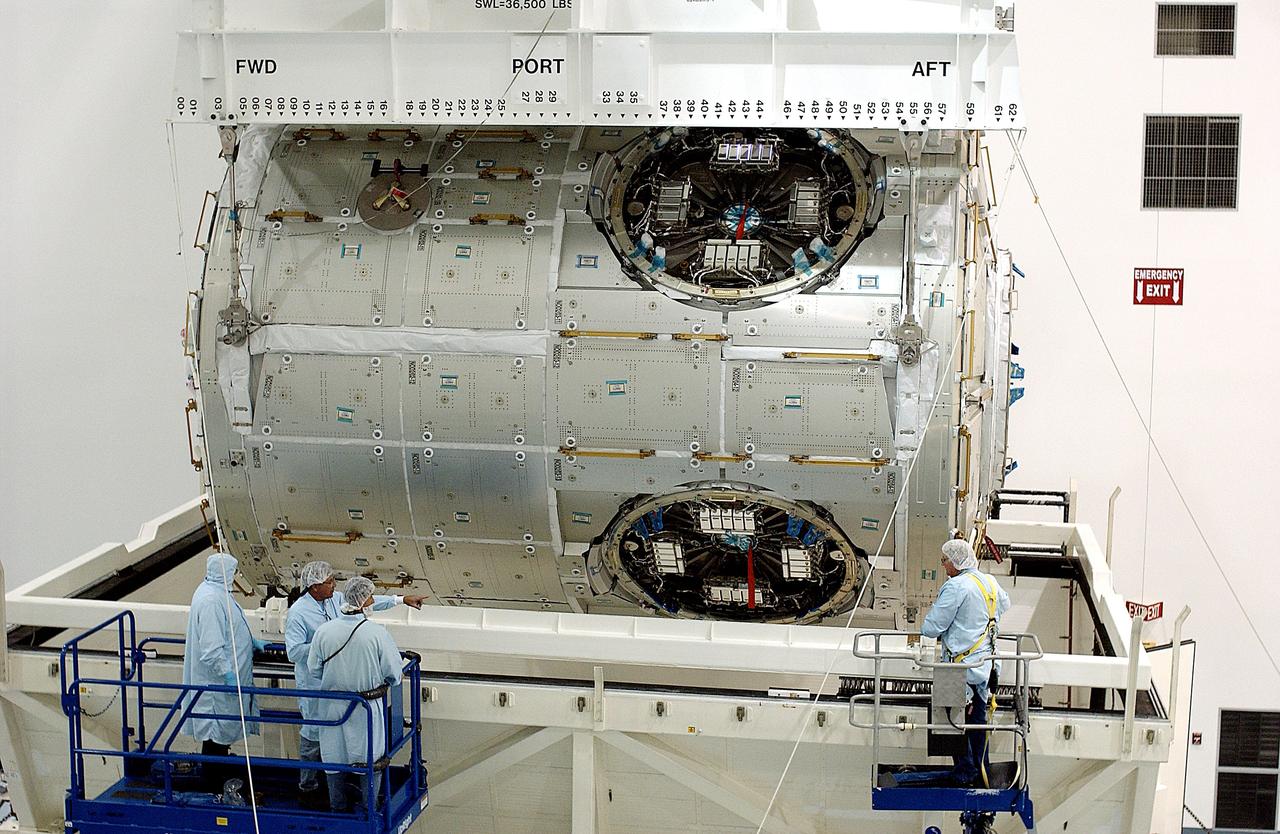
KENNEDY SPACE CENTER, FLA. - An overhead crane in the Space Station Processing Facility is attached to the U.S. Node 2 to lift it out of its shipping container.  The node will be moved to a workstand.  The second of three connecting modules on the International Space Station, the Italian-built Node 2 attaches to the end of the U.S. Lab and provides attach locations for the Japanese laboratory, European laboratory, the Centrifuge Accommodation Module and, later, Multipurpose Logistics Modules. It will provide the primary docking location for the Shuttle when a pressurized mating adapter is attached to Node 2.  Installation of the module will complete  the U.S. Core of the ISS.  Node 2 is the designated payload for mission STS-120.  No orbiter or launch date has been determined yet.
KENNEDY SPACE CENTER, FLA. - An overhead crane in the Space Station Processing Facility is attached to the U.S. Node 2 to lift it out of its shipping container. The node will be moved to a workstand. The second of three connecting modules on the International Space Station, the Italian-built Node 2 attaches to the end of the U.S. Lab and provides attach locations for the Japanese laboratory, European laboratory, the Centrifuge Accommodation Module and, later, Multipurpose Logistics Modules. It will provide the primary docking location for the Shuttle when a pressurized mating adapter is attached to Node 2. Installation of the module will complete the U.S. Core of the ISS. Node 2 is the designated payload for mission STS-120. No orbiter or launch date has been determined yet.
KENNEDY SPACE CENTER, FLA. - An overhead crane in the Space Station Processing Facility lifts the U.S. Node 2 out of its shipping container.  The node will be moved to a workstand.  The second of three connecting modules on the International Space Station, the Italian-built Node 2 attaches to the end of the U.S. Lab and provides attach locations for the Japanese laboratory, European laboratory, the Centrifuge Accommodation Module and, later, Multipurpose Logistics Modules. It will provide the primary docking location for the Shuttle when a pressurized mating adapter is attached to Node 2.  Installation of the module will complete  the U.S. Core of the ISS.  Node 2 is the designated payload for mission STS-120.  No orbiter or launch date has been determined yet.
KENNEDY SPACE CENTER, FLA. - An overhead crane in the Space Station Processing Facility lifts the U.S. Node 2 out of its shipping container. The node will be moved to a workstand. The second of three connecting modules on the International Space Station, the Italian-built Node 2 attaches to the end of the U.S. Lab and provides attach locations for the Japanese laboratory, European laboratory, the Centrifuge Accommodation Module and, later, Multipurpose Logistics Modules. It will provide the primary docking location for the Shuttle when a pressurized mating adapter is attached to Node 2. Installation of the module will complete the U.S. Core of the ISS. Node 2 is the designated payload for mission STS-120. No orbiter or launch date has been determined yet.
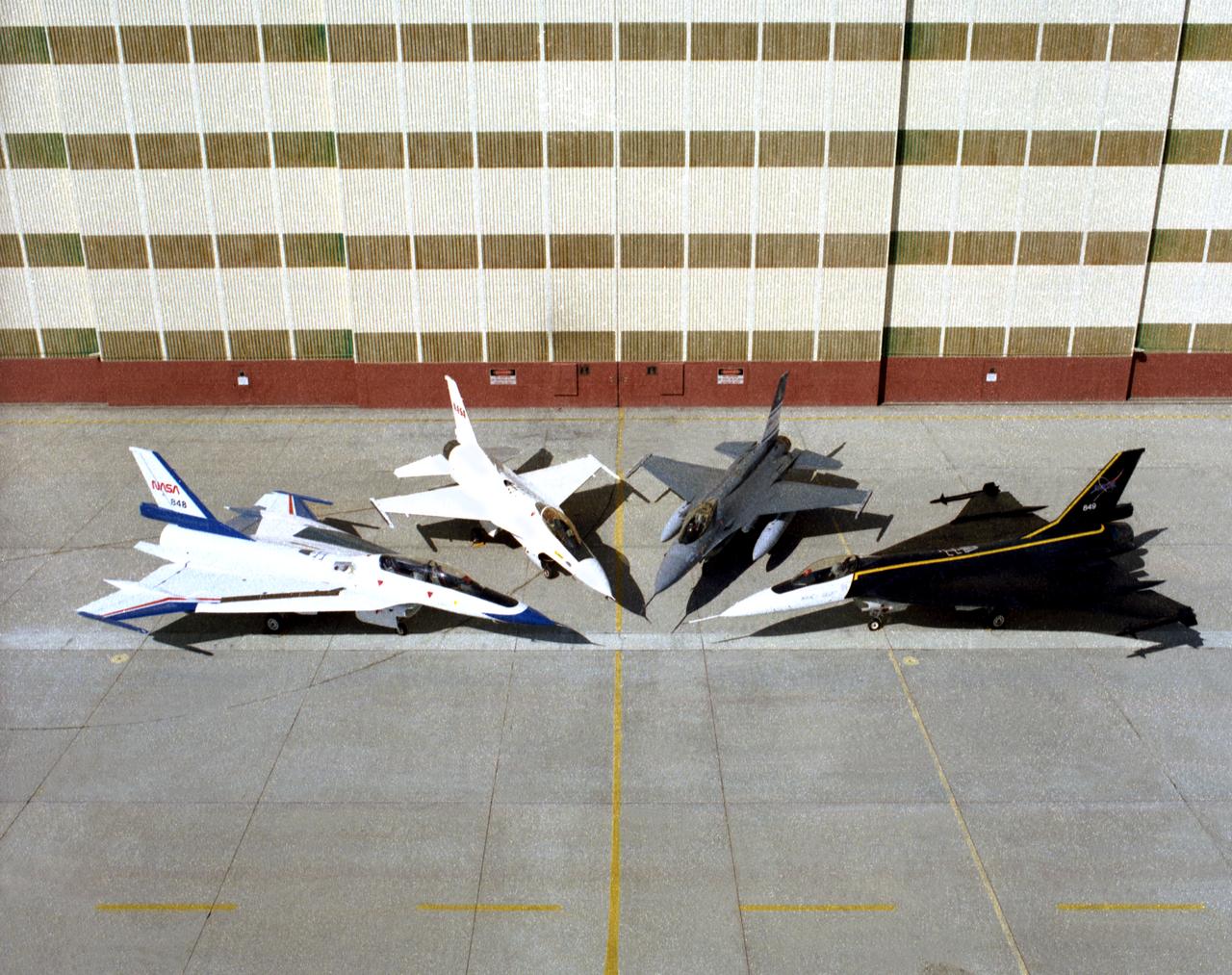
Four different versions of the F-16 were used by Dryden in the 1990s. On the left and right sides are two F-16XLs. On the left is the F-16XL #2 (NASA 848), which is the two-seat version, used for advanced laminar flow studies until late 1996. On the right is the single-seat F-16XL #1 (NASA 849), used for laminar flow research and sonic boom research. (Laminar flow refers to smooth airflow over a wing, which increases lift and reduces drag compared to turbulent airflow). Between them at center left is an F-16A (NASA 816), the only civilian operated F-16. Next to it at center right is the U.S. Air Force Advance Fighter Technology Integration (AFTI) F-16, a program to test new sensor and control technologies for future fighter aircraft. Both F-16XLs are in storage at Dryden. The F-16A was never flown at Dryden, and was parked by the entrance to the center. The AFTI F-16 is in the Air Force Museum.
EC97-44293-1
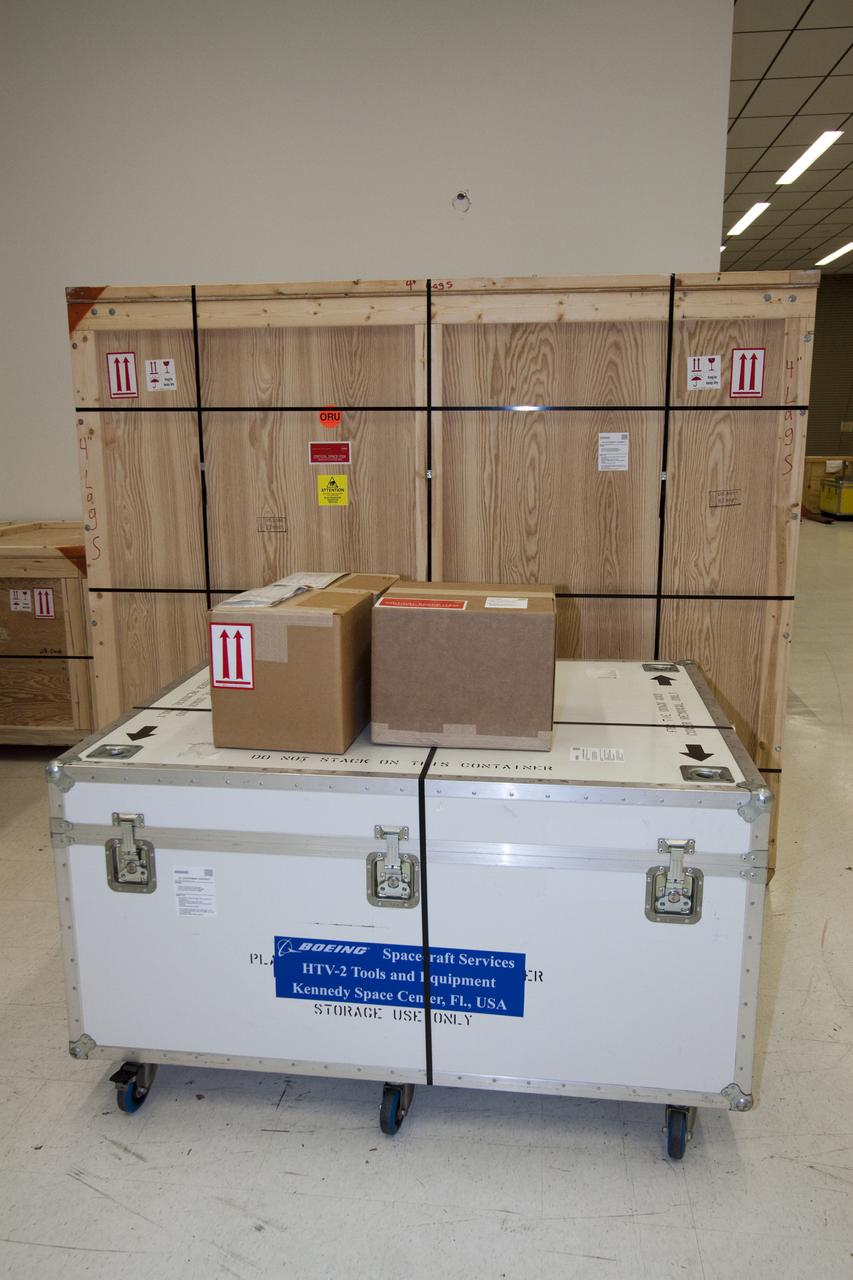
JAXA - HT-2 ORU'S SHIP TO JAPAN FROM SSPF
2010-4402
JAXA - HT-2 ORU'S SHIP TO JAPAN FROM SSPF
2010-4400
JAXA - HT-2 ORU'S SHIP TO JAPAN FROM SSPF
2010-4398
JAXA - HT-2 ORU'S SHIP TO JAPAN FROM SSPF
2010-4401
JAXA - HT-2 ORU'S SHIP TO JAPAN FROM SSPF
2010-4397
JAXA - HT-2 ORU'S SHIP TO JAPAN FROM SSPF
2010-4399
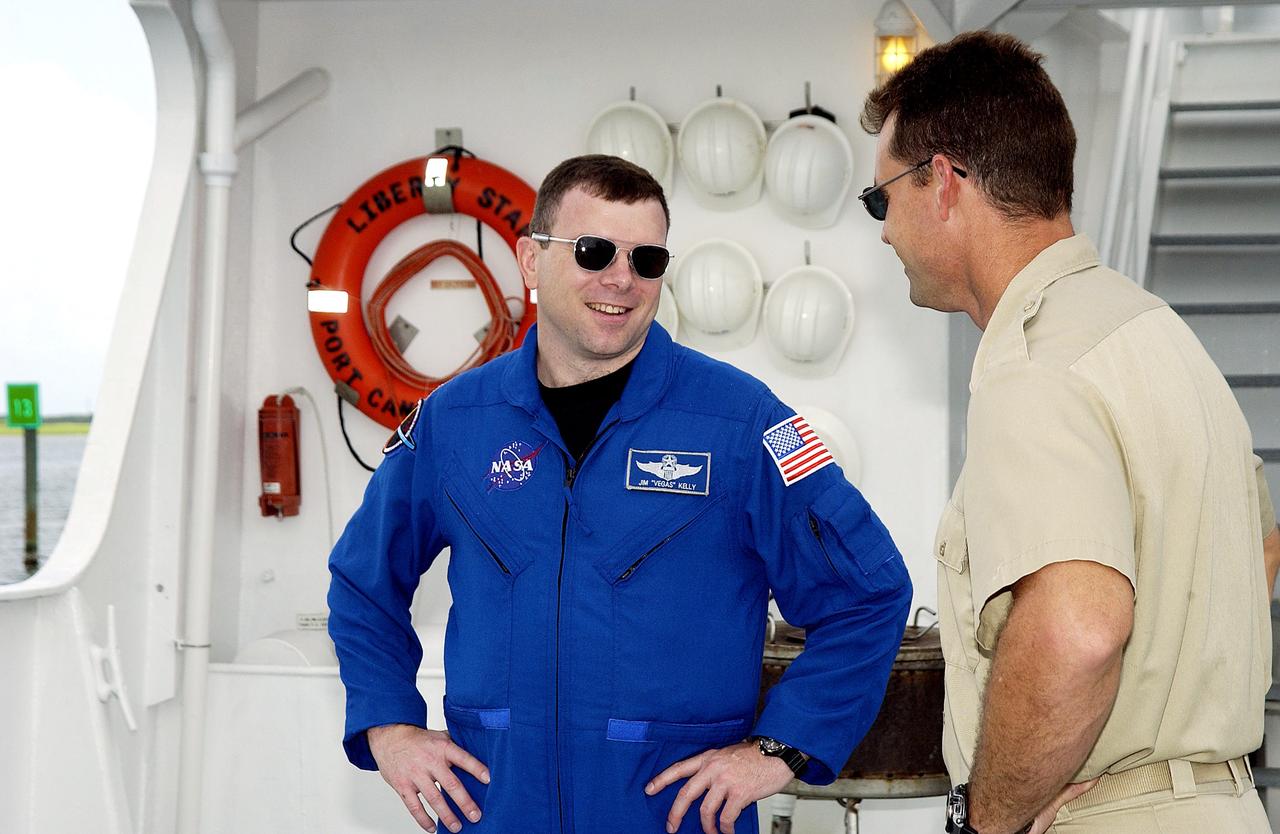
KENNEDY SPACE CENTER, FLA. -  STS-114 Pilot James Kelly talks with Bren Wade, captain of the Liberty Star, one of the SRB Retrieval Ships docked at Hangar AF on the Banana River.  Kelly and other crew members Commander Eileen Collins and Mission Specialists  Soichi Noguchi and Stephen Robinson toured the ships.  Noguchi is with the Japanese space agency NASDA.  Mission STS-114 will carry the MultiPurpose Logistics Module (MPLM) Raffaello and External Stowage Platform 2 to the International Space Station.  The MPLM will contain supplies and equipment.  Another goal of the mission is to remove and replace a Control Moment Gyro.  Launch date for mission STS-114 is under review.
KENNEDY SPACE CENTER, FLA. - STS-114 Pilot James Kelly talks with Bren Wade, captain of the Liberty Star, one of the SRB Retrieval Ships docked at Hangar AF on the Banana River. Kelly and other crew members Commander Eileen Collins and Mission Specialists Soichi Noguchi and Stephen Robinson toured the ships. Noguchi is with the Japanese space agency NASDA. Mission STS-114 will carry the MultiPurpose Logistics Module (MPLM) Raffaello and External Stowage Platform 2 to the International Space Station. The MPLM will contain supplies and equipment. Another goal of the mission is to remove and replace a Control Moment Gyro. Launch date for mission STS-114 is under review.
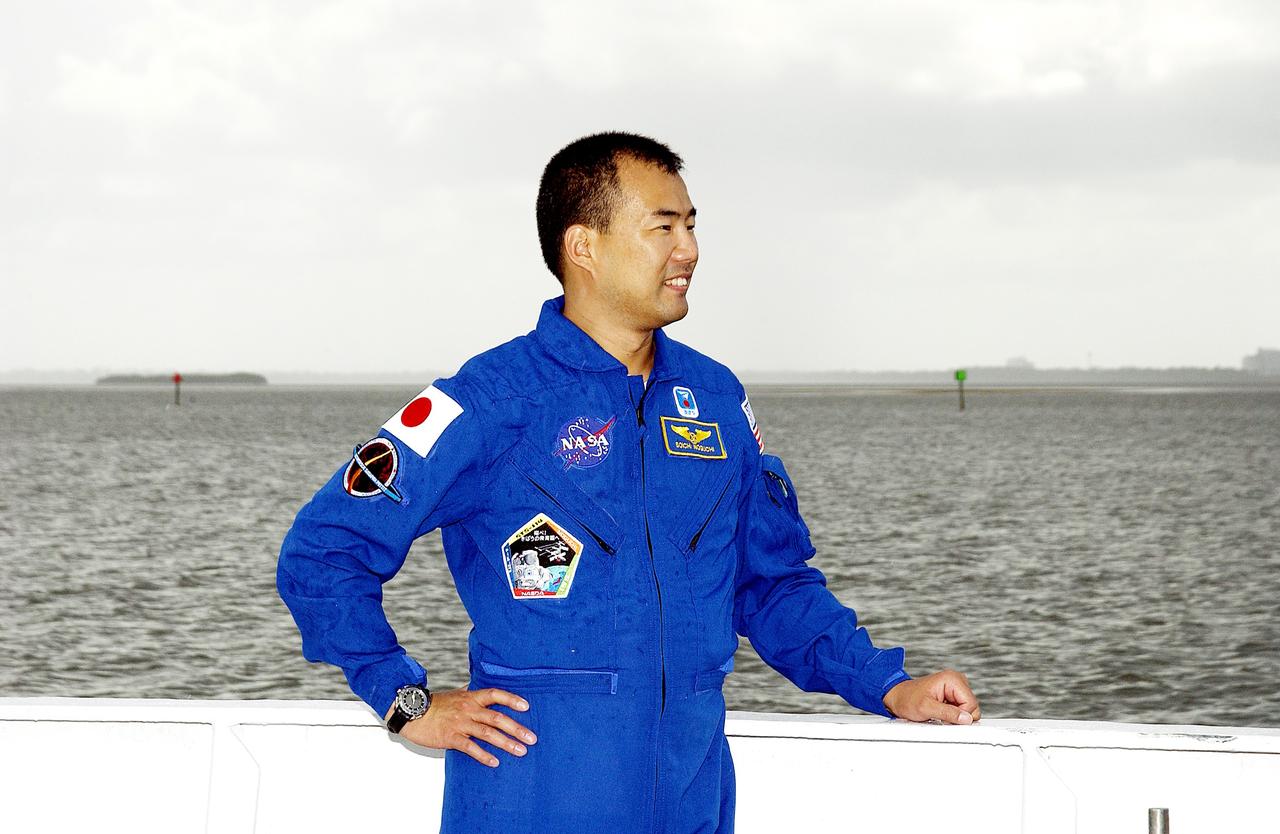
KENNEDY SPACE CENTER, FLA. -  STS-114 Mission Specialist Soichi Noguchi, who is with the Japanese space agency NASDA, poses on the deck of one of the SRB Retrieval Ships docked at Hangar AF on the Banana River.  He and other crew members Commander Eileen Collins, Pilot James Kelly and Mission Specialist Stephen Robinson toured the ships.  Mission STS-114 will carry the MultiPurpose Logistics Module (MPLM) Raffaello and External Stowage Platform 2 to the International Space Station.  The MPLM will contain supplies and equipment.  Another goal of the mission is to remove and replace a Control Moment Gyro.  Launch date for mission STS-114 is under review.
KENNEDY SPACE CENTER, FLA. - STS-114 Mission Specialist Soichi Noguchi, who is with the Japanese space agency NASDA, poses on the deck of one of the SRB Retrieval Ships docked at Hangar AF on the Banana River. He and other crew members Commander Eileen Collins, Pilot James Kelly and Mission Specialist Stephen Robinson toured the ships. Mission STS-114 will carry the MultiPurpose Logistics Module (MPLM) Raffaello and External Stowage Platform 2 to the International Space Station. The MPLM will contain supplies and equipment. Another goal of the mission is to remove and replace a Control Moment Gyro. Launch date for mission STS-114 is under review.
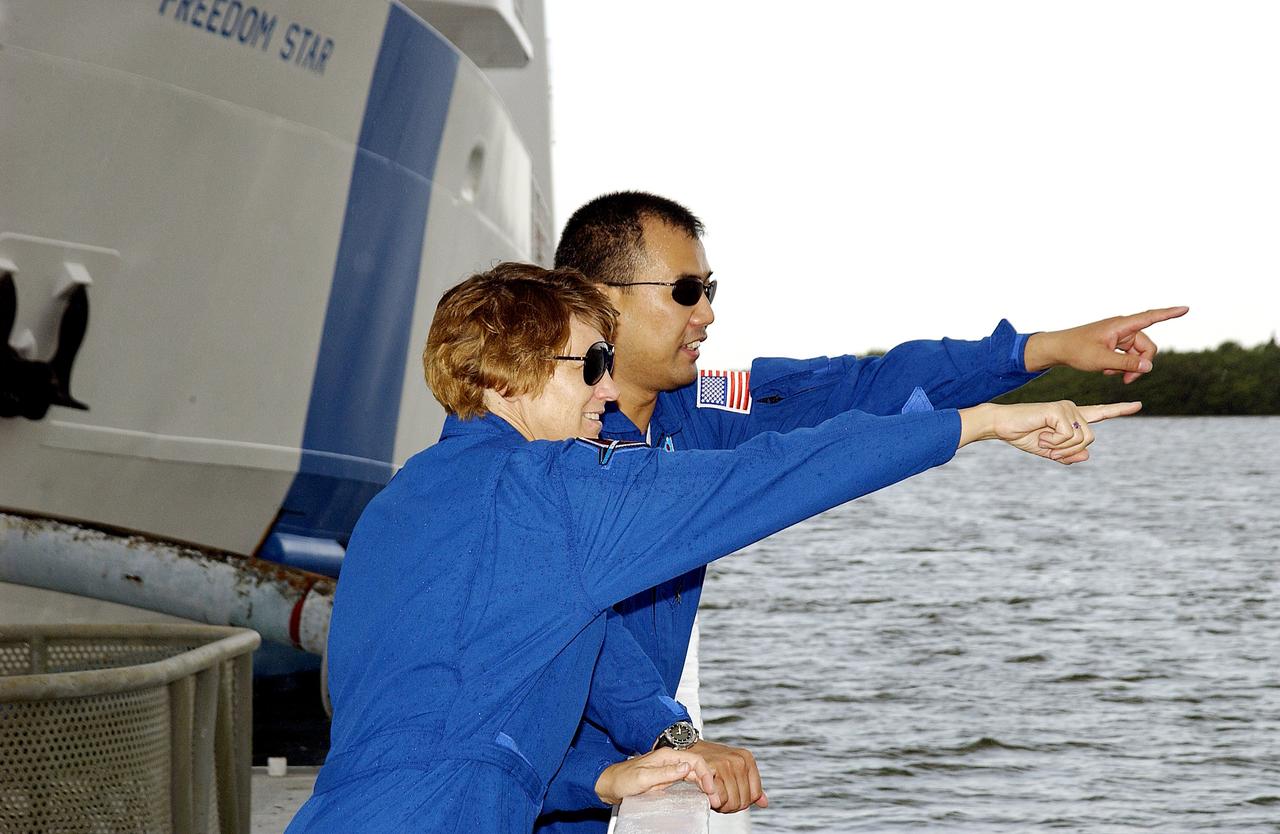
KENNEDY SPACE CENTER, FLA. -   While touring the SRB Retrieval Ship Freedom Star, STS-114 Commander Eileen Collins and Mission Specialist Soichi Noguchi point at something on the Banana River. Noguchi is with the Japanese space agency NASDA.  The ships routinely are docked at Hangar AF on the river.  On their mission, the crew - which also includes Pilot James Kelly and Mission Specialist Stephen Robinson - will carry the MultiPurpose Logistics Module (MPLM) Raffaello and External Stowage Platform 2 to the International Space Station.  The MPLM will contain supplies and equipment.  Another goal of the mission is to remove and replace a Control Moment Gyro.  Launch date for mission STS-114 is under review.
KENNEDY SPACE CENTER, FLA. - While touring the SRB Retrieval Ship Freedom Star, STS-114 Commander Eileen Collins and Mission Specialist Soichi Noguchi point at something on the Banana River. Noguchi is with the Japanese space agency NASDA. The ships routinely are docked at Hangar AF on the river. On their mission, the crew - which also includes Pilot James Kelly and Mission Specialist Stephen Robinson - will carry the MultiPurpose Logistics Module (MPLM) Raffaello and External Stowage Platform 2 to the International Space Station. The MPLM will contain supplies and equipment. Another goal of the mission is to remove and replace a Control Moment Gyro. Launch date for mission STS-114 is under review.
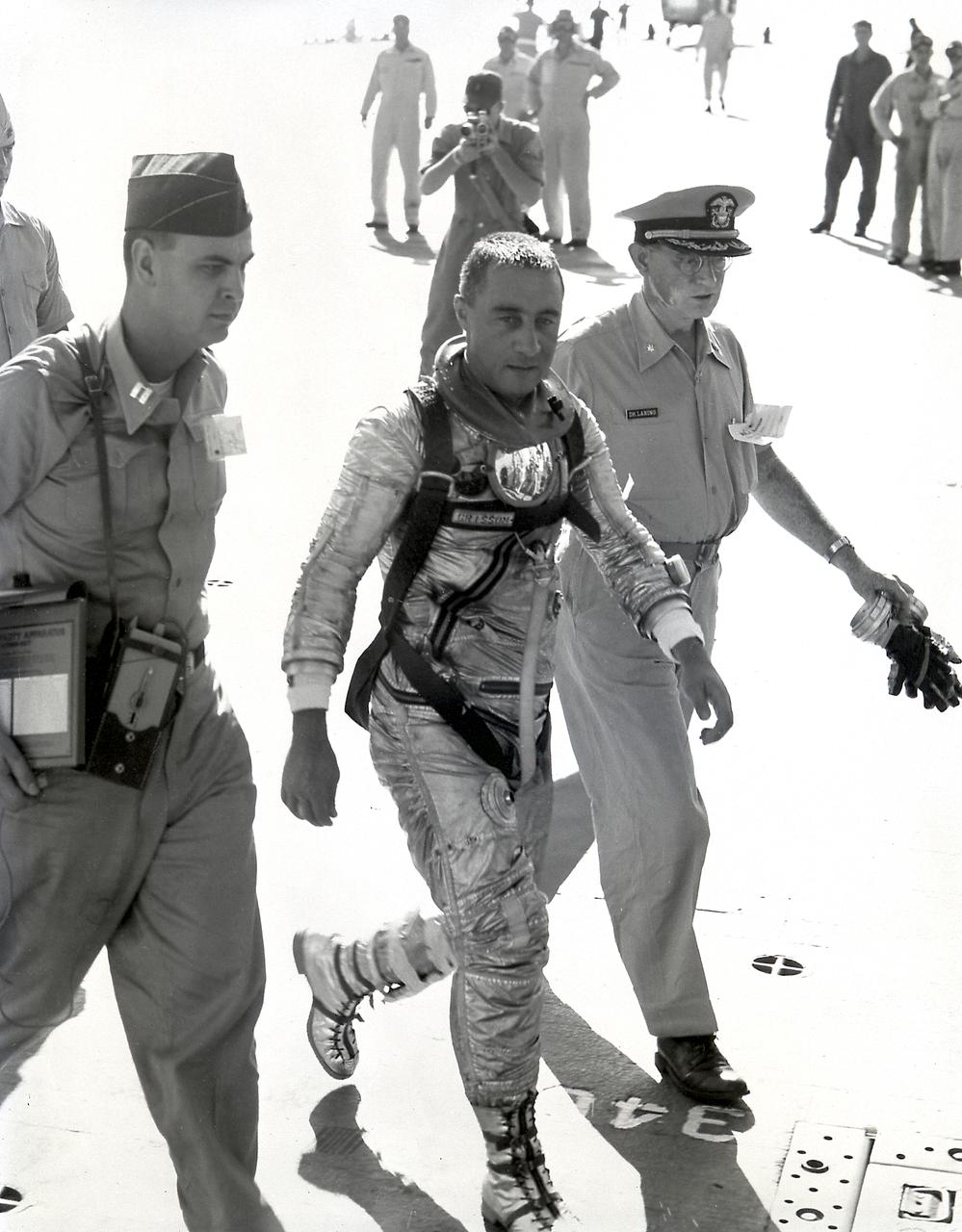
Astronaut Virgil Grissom walks on the recovery ship after completing the 15-1/2-minute suborbital MR-4 mission.
Mercury Project
In Bremen, Germany the Airbus Space team prepares the Orion European Service Module-2 for shipment to Kennedy Space Center on Oct. 7, 2021. ESM-2 will power Orion on Artemis II, Orion's first flight with crew.
European Service Module 2 Ready to Ship
In Bremen, Germany the Airbus Space team prepares the Orion European Service Module-2 for shipment to Kennedy Space Center on Oct. 7, 2021. ESM-2 will power Orion on Artemis II, Orion's first flight with crew.
European Service Module 2 Ready to Ship
In Bremen, Germany the Airbus Space team prepares the Orion European Service Module-2 for shipment to Kennedy Space Center on Oct. 7, 2021. ESM-2 will power Orion on Artemis II, Orion's first flight with crew.
European Service Module 2 Ready to Ship
In Bremen, Germany the Airbus Space team prepares the Orion European Service Module-2 for shipment to Kennedy Space Center on Oct. 7, 2021. ESM-2 will power Orion on Artemis II, Orion's first flight with crew.
European Service Module 2 Ready to Ship
In Bremen, Germany the Airbus Space team prepares the Orion European Service Module-2 for shipment to Kennedy Space Center on Oct. 7, 2021. ESM-2 will power Orion on Artemis II, Orion's first flight with crew.
European Service Module 2 Ready to Ship
In Bremen, Germany the Airbus Space team prepares the Orion European Service Module-2 for shipment to Kennedy Space Center on Oct. 7, 2021. ESM-2 will power Orion on Artemis II, Orion's first flight with crew.
European Service Module 2 Ready to Ship
In Bremen, Germany the Airbus Space team prepares the Orion European Service Module-2 for shipment to Kennedy Space Center on Oct. 7, 2021. ESM-2 will power Orion on Artemis II, Orion's first flight with crew.
European Service Module 2 Ready to Ship
In Bremen, Germany, the Airbus Space team prepares the European Service Module-2 for shipment to Kennedy Space Center on Jan. 29, 2020. ESM-2 will power Orion on Artemis II, Orion's first flight with crew.
European Service Module 2 Ready to Ship
In Bremen, Germany the Airbus Space team prepares the Orion European Service Module-2 for shipment to Kennedy Space Center on Oct. 7, 2021. ESM-2 will power Orion on Artemis II, Orion's first flight with crew.
European Service Module 2 Ready to Ship
In Bremen, Germany the Airbus Space team prepares the Orion European Service Module-2 for shipment to Kennedy Space Center on Oct. 7, 2021. ESM-2 will power Orion on Artemis II, Orion's first flight with crew.
European Service Module 2 Ready to Ship
In Bremen, Germany the Airbus Space team prepares the Orion European Service Module-2 for shipment to Kennedy Space Center on Oct. 7, 2021. ESM-2 will power Orion on Artemis II, Orion's first flight with crew.
European Service Module 2 Ready to Ship
In Bremen, Germany the Airbus Space team prepares the Orion European Service Module-2 for shipment to Kennedy Space Center on Oct. 7, 2021. ESM-2 will power Orion on Artemis II, Orion's first flight with crew.
European Service Module 2 Ready to Ship
In Bremen, Germany the Airbus Space team prepares the Orion European Service Module-2 for shipment to Kennedy Space Center on Oct. 7, 2021. ESM-2 will power Orion on Artemis II, Orion's first flight with crew.
European Service Module 2 Ready to Ship
In Bremen, Germany the Airbus Space team prepares the Orion European Service Module-2 for shipment to Kennedy Space Center on Oct. 7, 2021. ESM-2 will power Orion on Artemis II, Orion's first flight with crew.
European Service Module 2 Ready to Ship
In Bremen, Germany the Airbus Space team prepares the Orion European Service Module-2 for shipment to Kennedy Space Center on Oct. 7, 2021. ESM-2 will power Orion on Artemis II, Orion's first flight with crew.
European Service Module 2 Ready to Ship
In Bremen, Germany the Airbus Space team prepares the Orion European Service Module-2 for shipment to Kennedy Space Center on Oct. 7, 2021. ESM-2 will power Orion on Artemis II, Orion's first flight with crew.
European Service Module 2 Ready to Ship
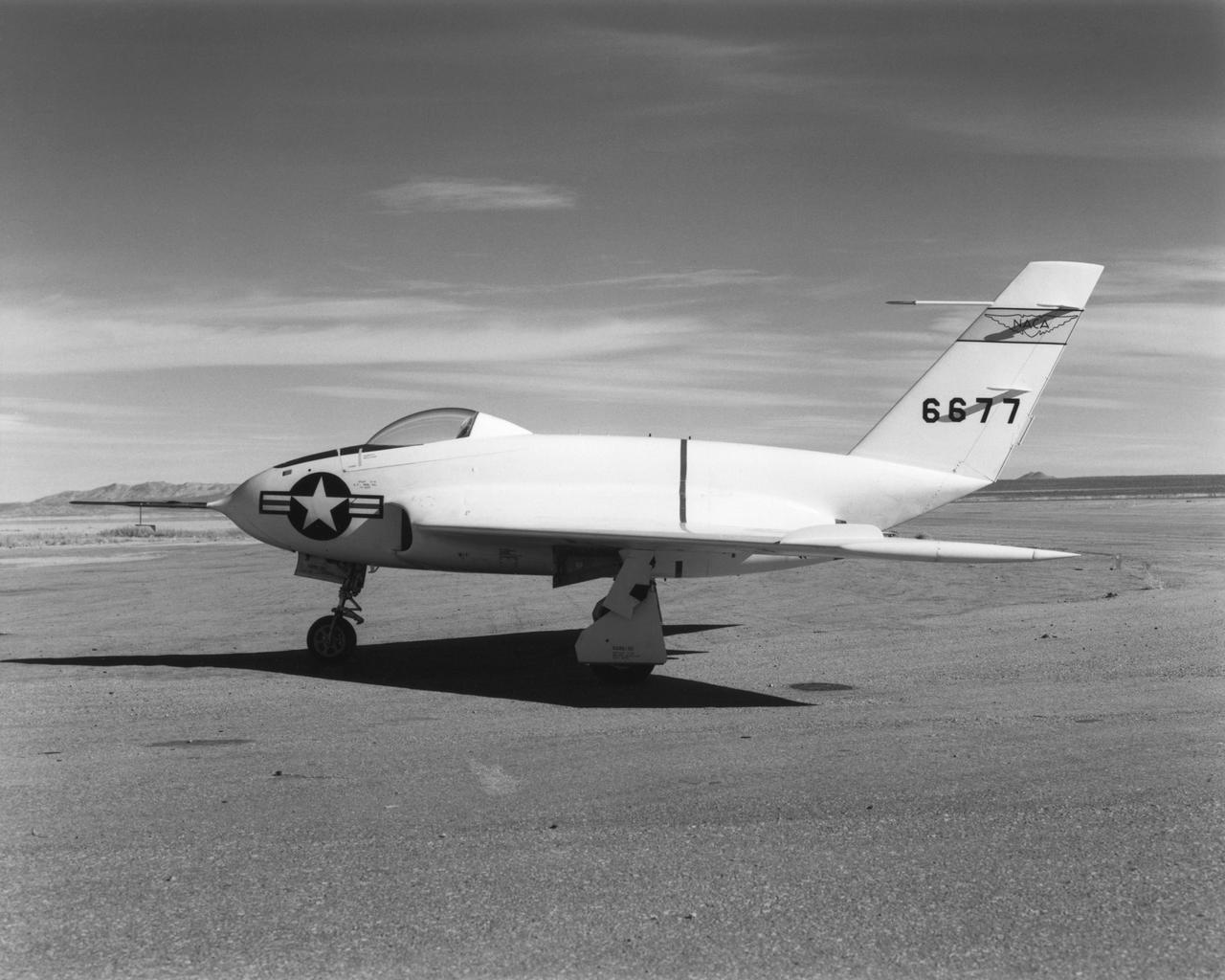
In this 1950 view of the left side of the NACA High-Speed Flight Research Station's X-4 research aircraft, the low swept wing and horizontal taillest design are seen. The X-4 Bantam, a single-place, low swept-wing, semi-tailless aircraft, was designed and built by Northrop Aircraft, Inc. It had no horizontal tail surfaces and its mission was to obtain in-flight data on the stability and control of semi-tailless aircraft at high subsonic speeds.
Side view of Northrop X-4 ship 2
In Bremen, Germany the Airbus Space team prepares the Orion European Service Module-2 for shipment to Kennedy Space Center on Oct. 7, 2021. ESM-2 will power Orion on Artemis II, Orion's first flight with crew.
European Service Module 2 Ready to Ship
In Bremen, Germany the Airbus Space team prepares the Orion European Service Module-2 for shipment to Kennedy Space Center on Oct. 7, 2021. ESM-2 will power Orion on Artemis II, Orion's first flight with crew.
European Service Module 2 Ready to Ship
In Bremen, Germany the Airbus Space team prepares the Orion European Service Module-2 for shipment to Kennedy Space Center on Oct. 7, 2021. ESM-2 will power Orion on Artemis II, Orion's first flight with crew.
European Service Module 2 Ready to Ship
In Bremen, Germany the Airbus Space team prepares the Orion European Service Module-2 for shipment to Kennedy Space Center on Oct. 7, 2021. ESM-2 will power Orion on Artemis II, Orion's first flight with crew.
European Service Module 2 Ready to Ship
In Bremen, Germany, the Airbus Space team prepares the European Service Module-2 for shipment to Kennedy Space Center on Jan. 29, 2020. ESM-2 will power Orion on Artemis II, Orion's first flight with crew.
European Service Module 2 Ready to Ship
In Bremen, Germany the Airbus Space team prepares the Orion European Service Module-2 for shipment to Kennedy Space Center on Oct. 7, 2021. ESM-2 will power Orion on Artemis II, Orion's first flight with crew.
European Service Module 2 Ready to Ship
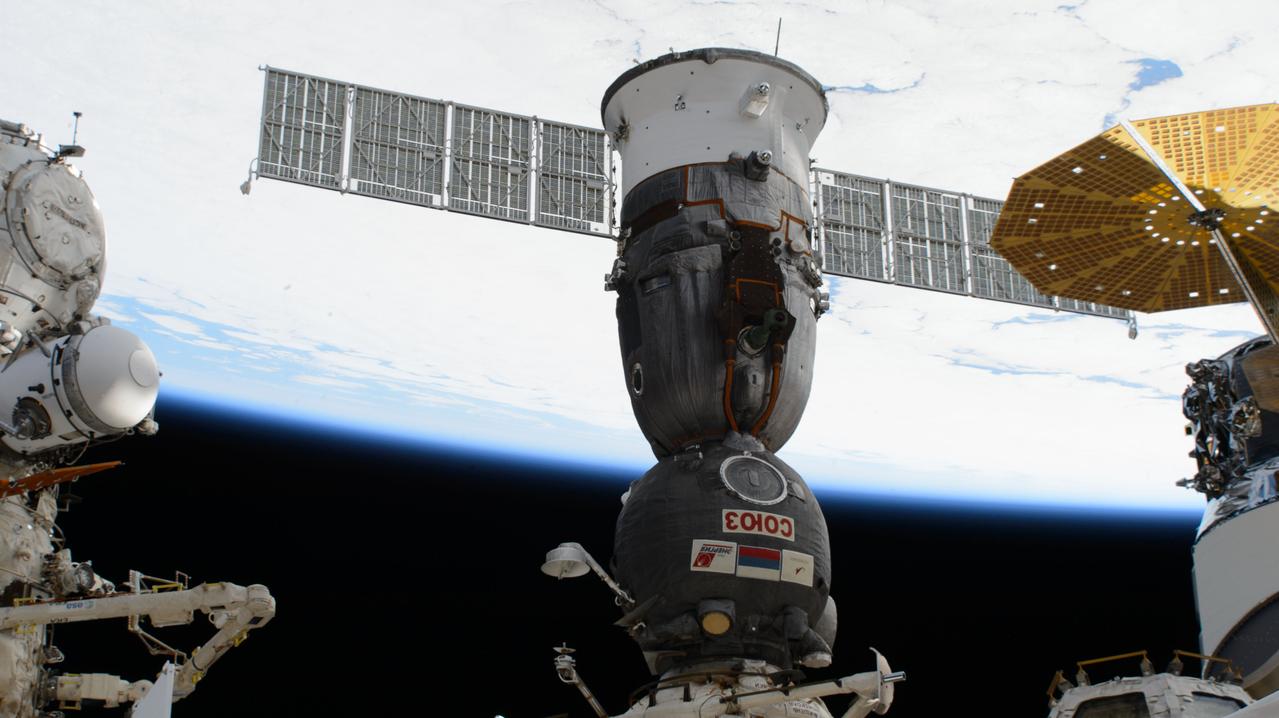
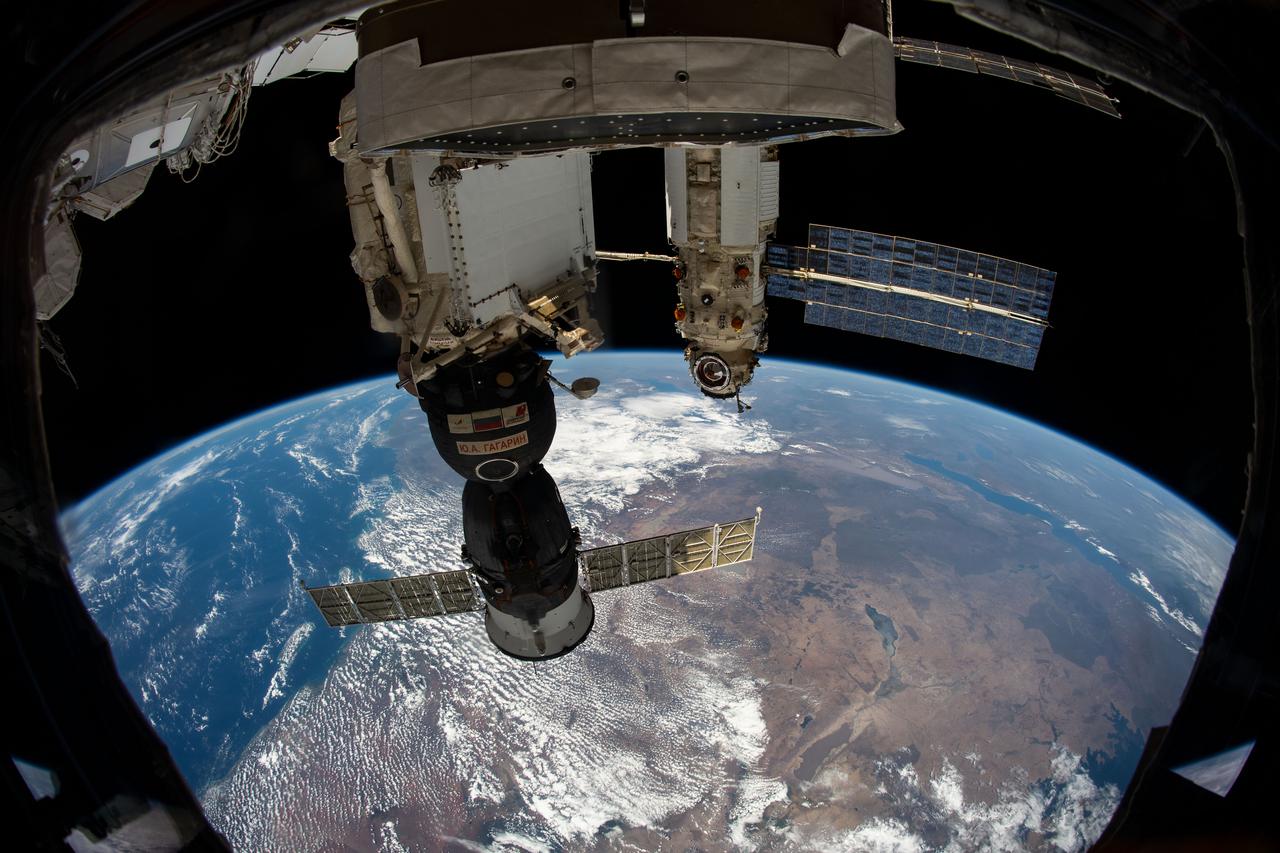
iss072e576564 (Feb. 2, 2025) --- The Soyuz MS-26 crew ship that launched NASA astronaut Don Pettit and Roscosmos cosmonauts Alexey Ovchinin and Ivan Vagner to the International Space Station is pictured docked to the Rassvet module. At right, is a portion of the Northrop Grumman Cygnus resupply ship. At left, is the partially obscured Pirs docking compartment.
The Soyuz MS-26 crew ship docked to the Rassvet module
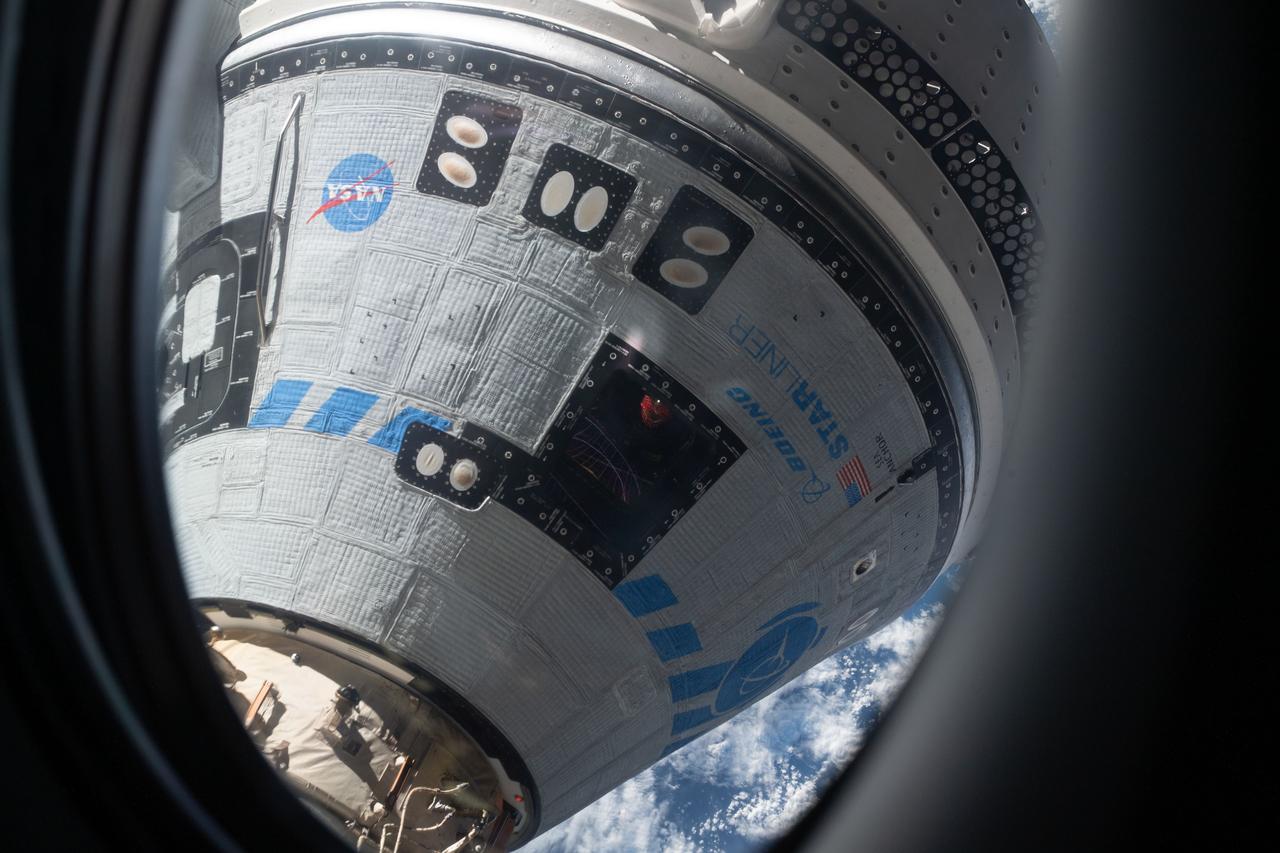
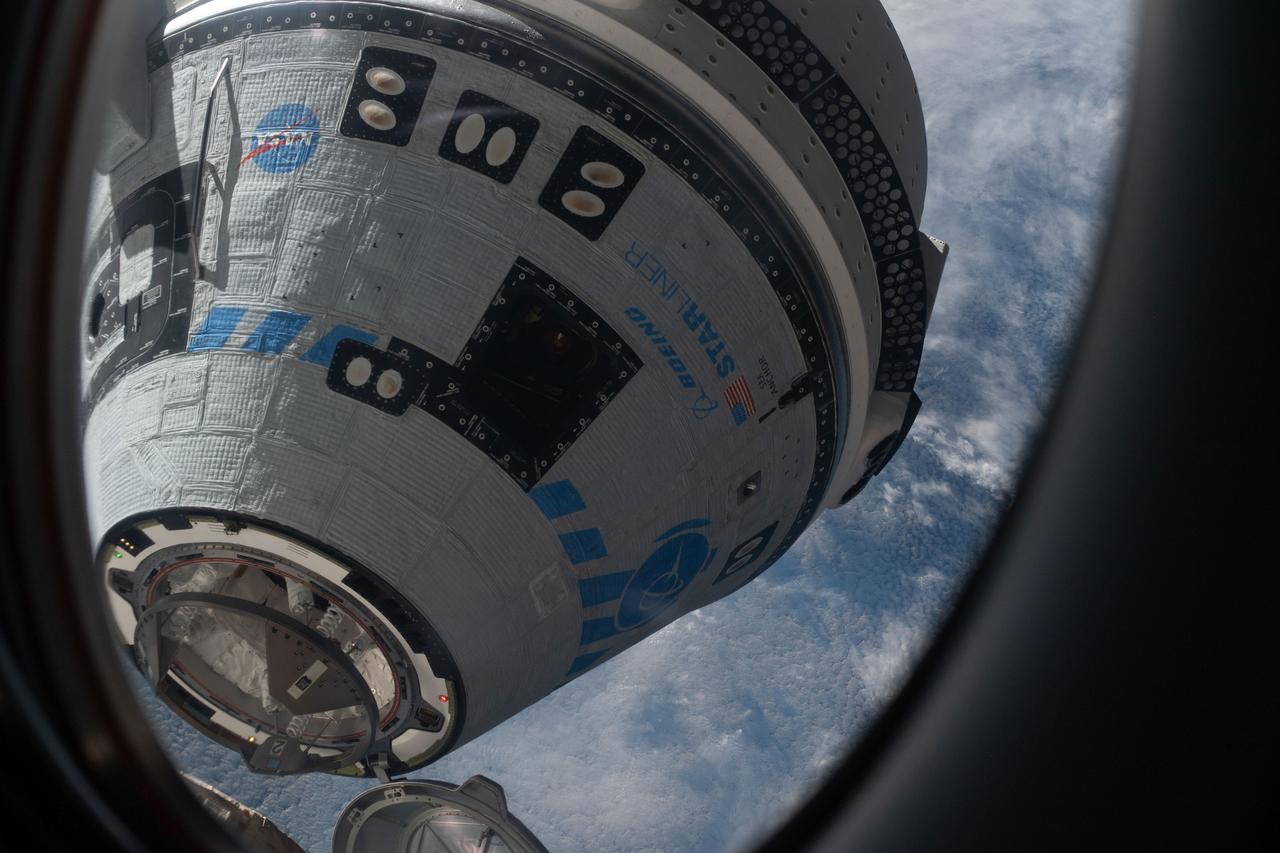
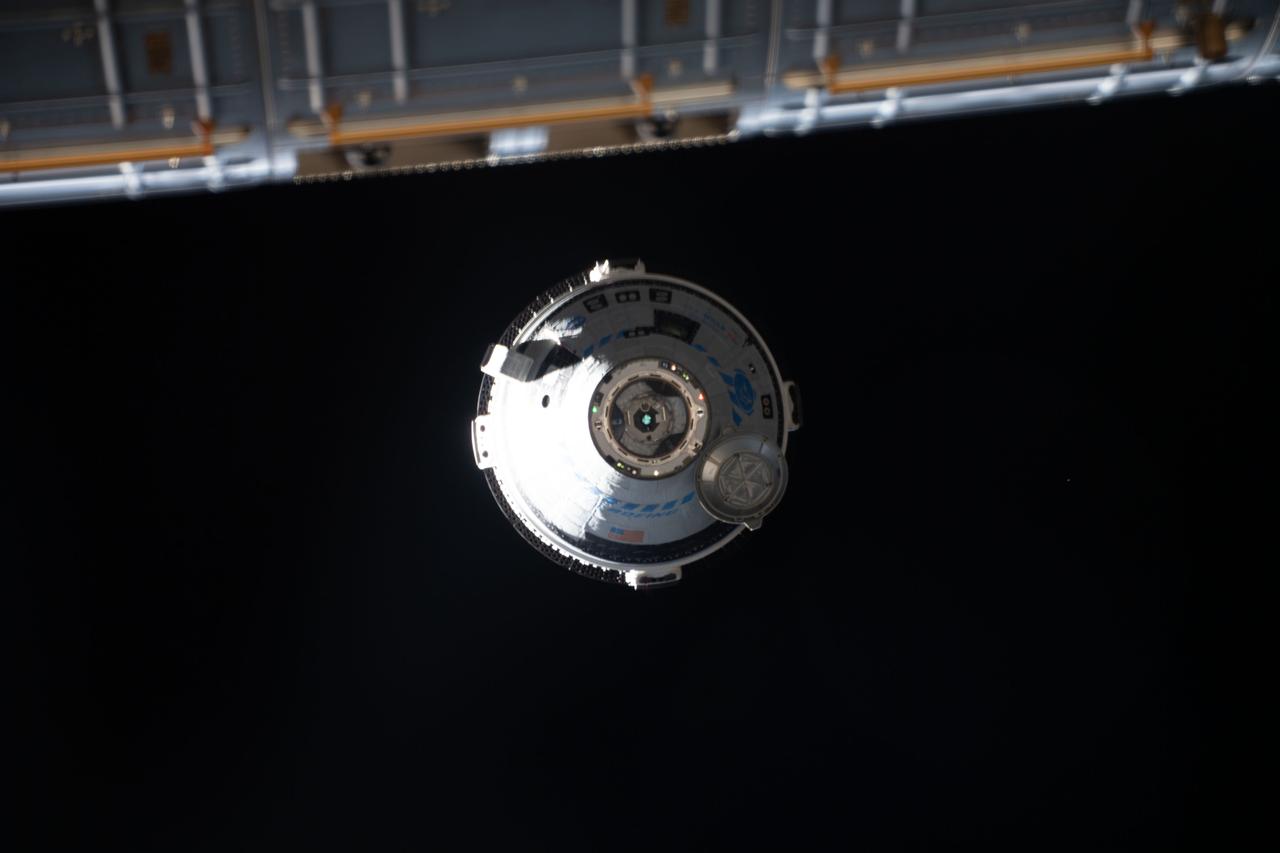
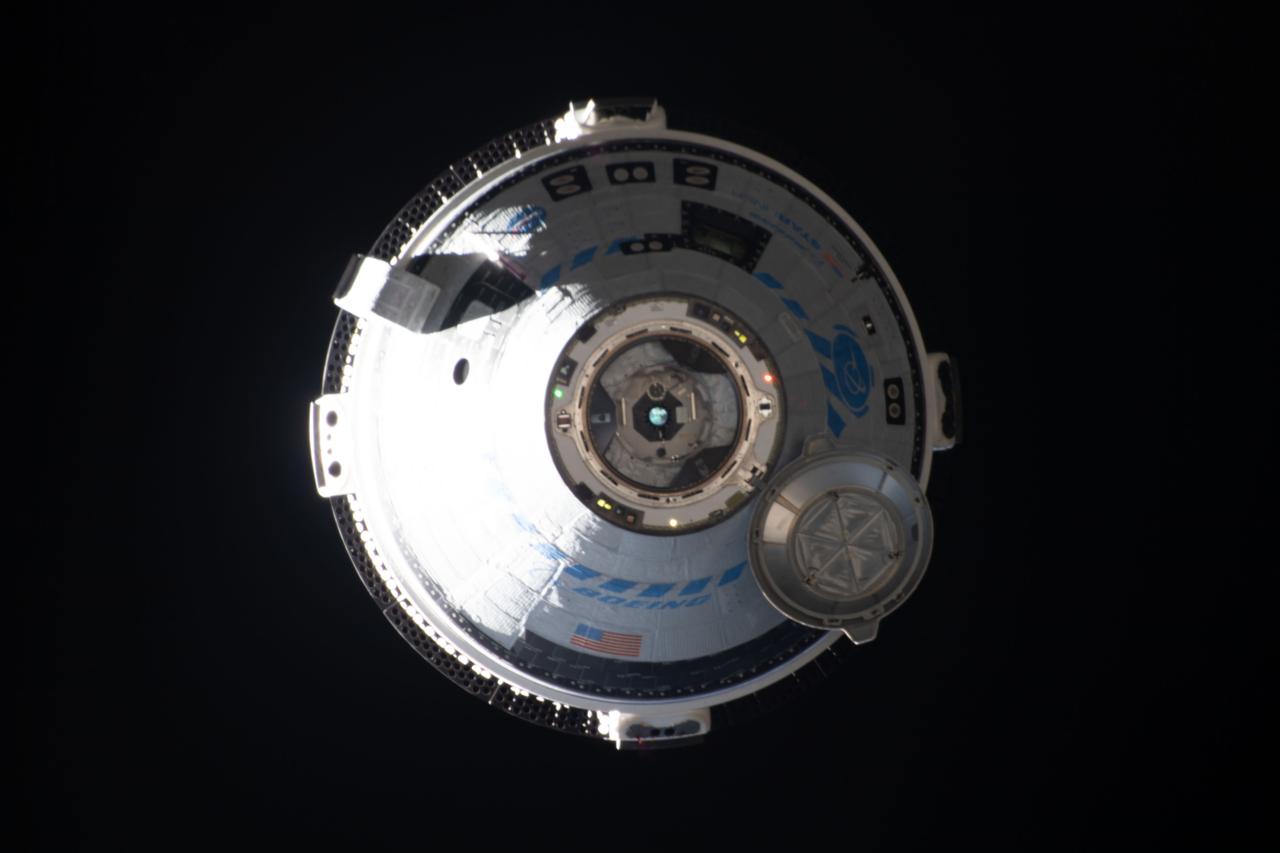
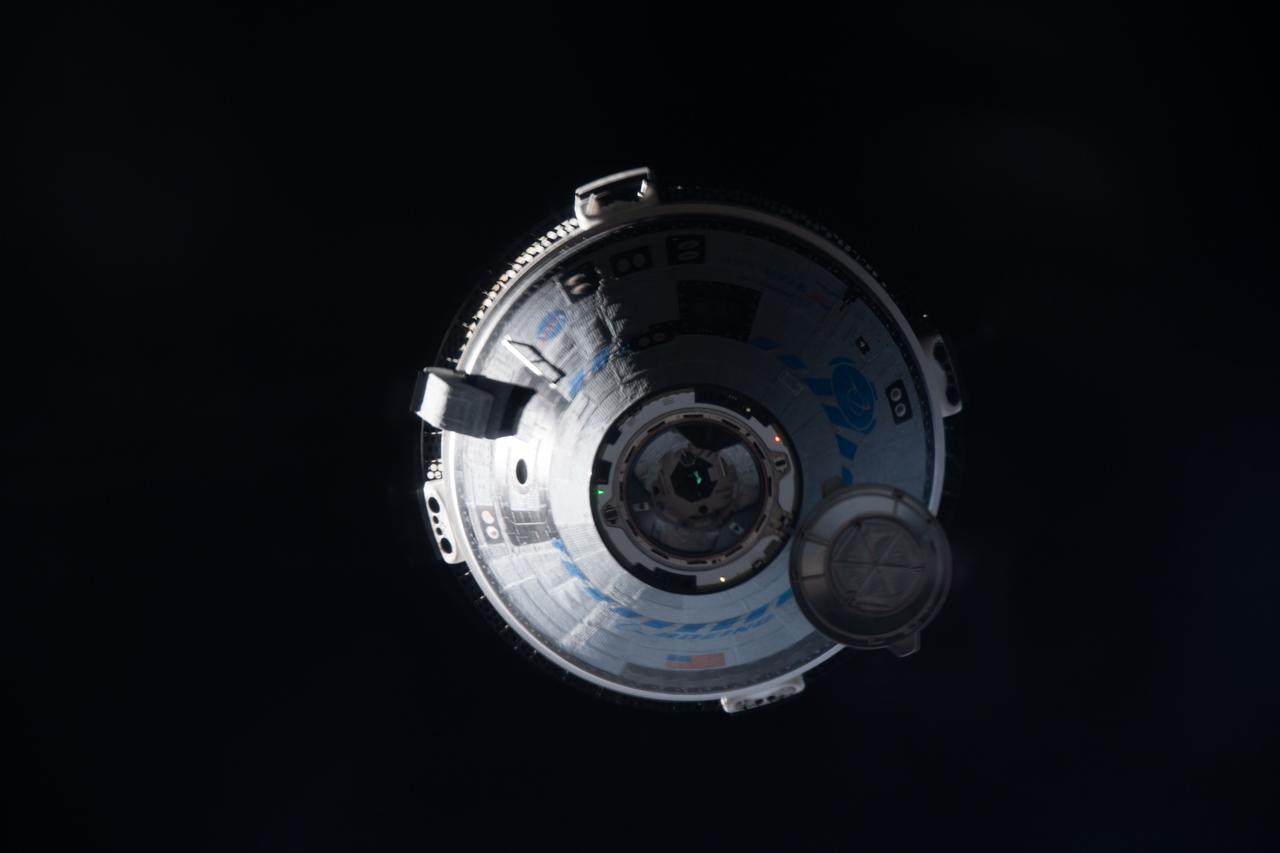
iss067e065888 (May 20, 2022) --- This view from a window on the SpaceX Crew Dragon Freedom crew ship shows Boeing's CST-100 Starliner crew ship moments away from docking to the Harmony module's forward port on the International Space Station for the company's Orbital Flight Test-2 mission.
iss067e065888
iss067e066295 (May 20, 2022) --- This view from a window on the SpaceX Crew Dragon Freedom crew ship shows Boeing's CST-100 Starliner crew ship after it had docked to the Harmony module's forward port on the International Space Station for the company's Orbital Flight Test-2 mission.
iss067e066295
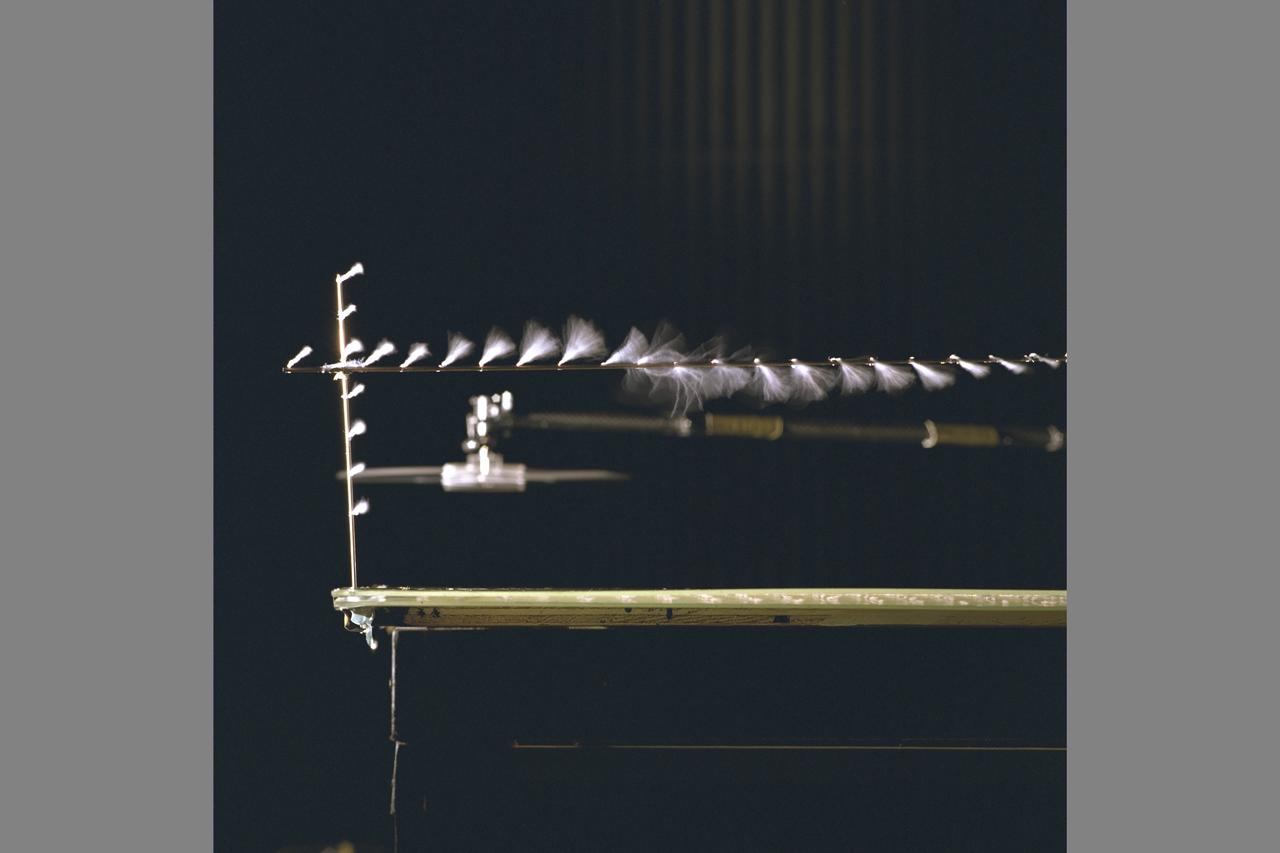
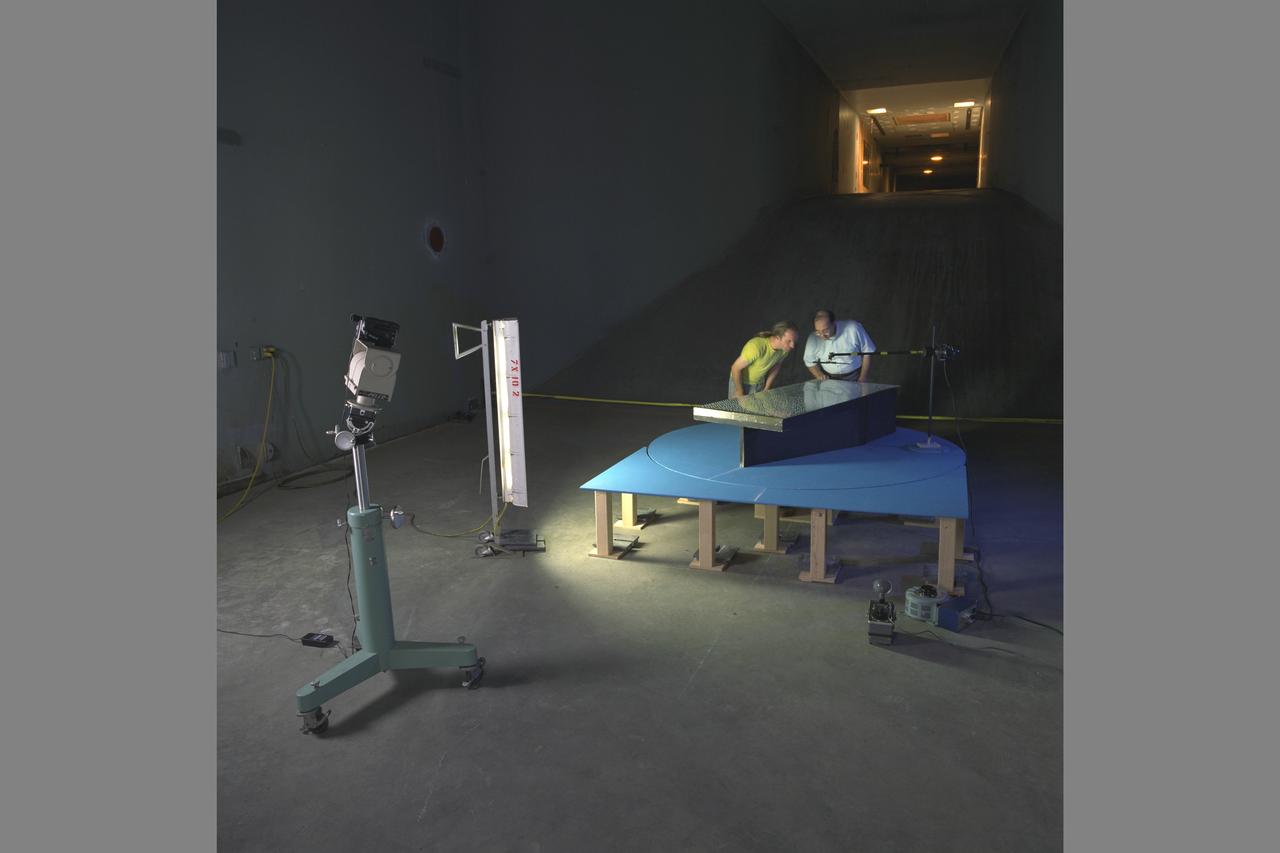
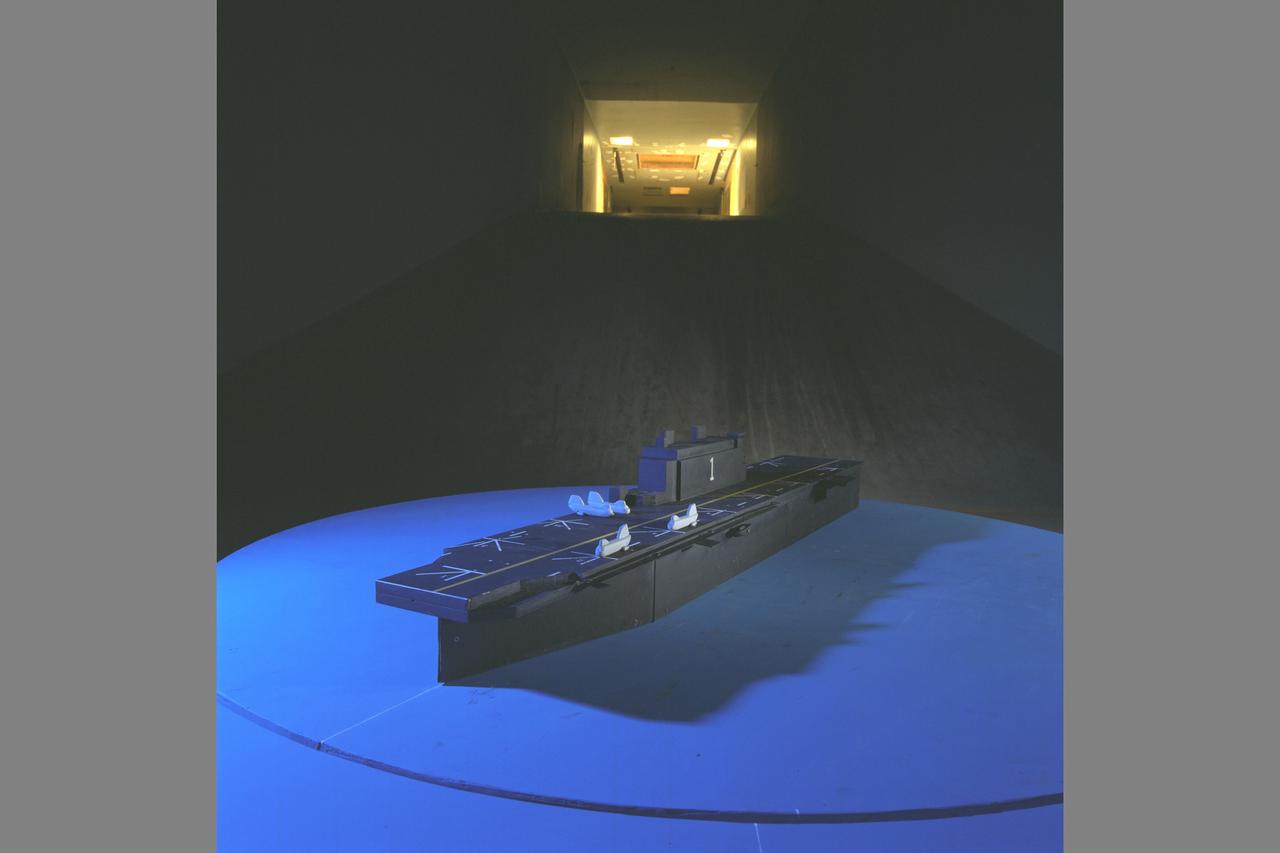
Ship Airwake investigation 7x10FT#2 W.t. settling Chamber. Shows test setup and model flow visuaization using microtufts and UV ilumination
ARC-1998-AC98-0181-15
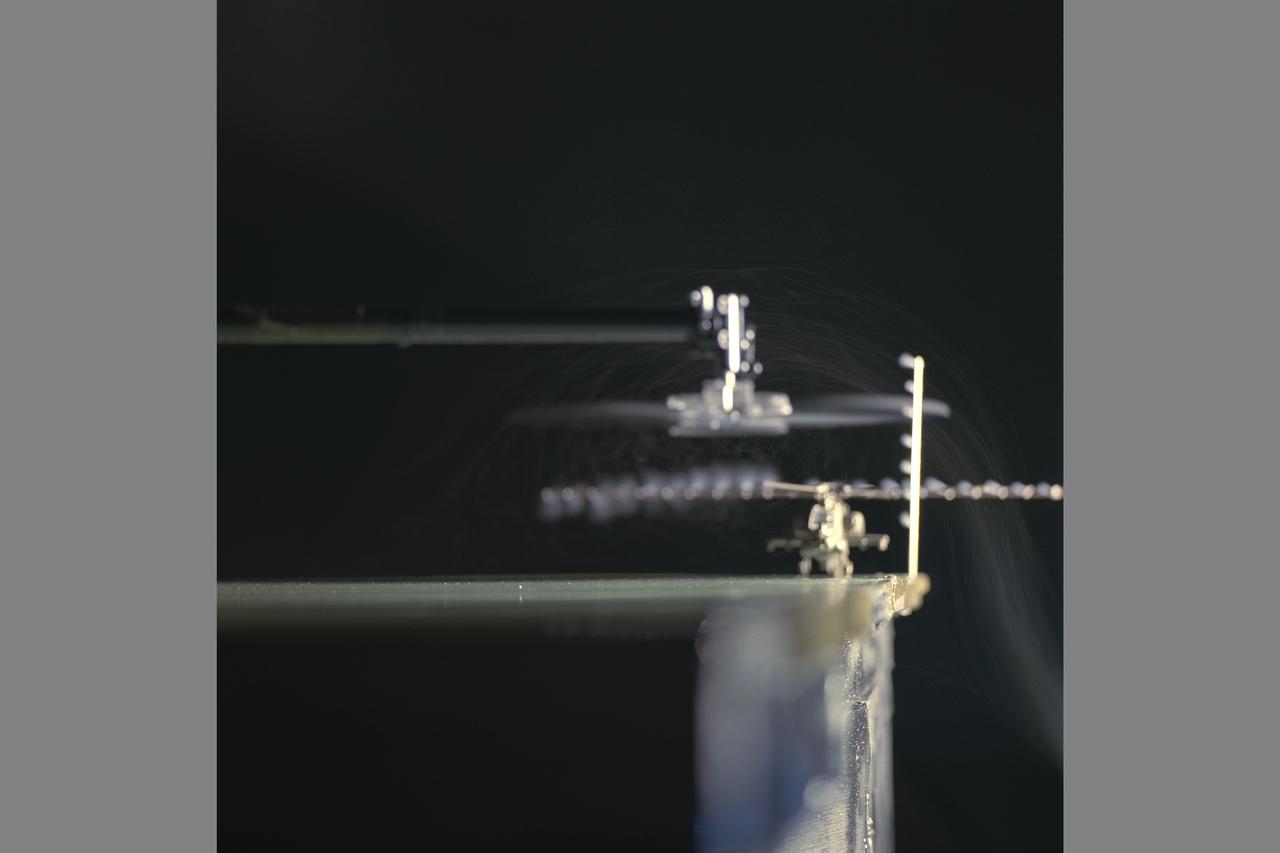
Ship Airwake investigation 7x10FT#2 W.t. settling Chamber. Shows test setup and model flow visuaization using microtufts and UV ilumination
ARC-1998-AC98-0181-19
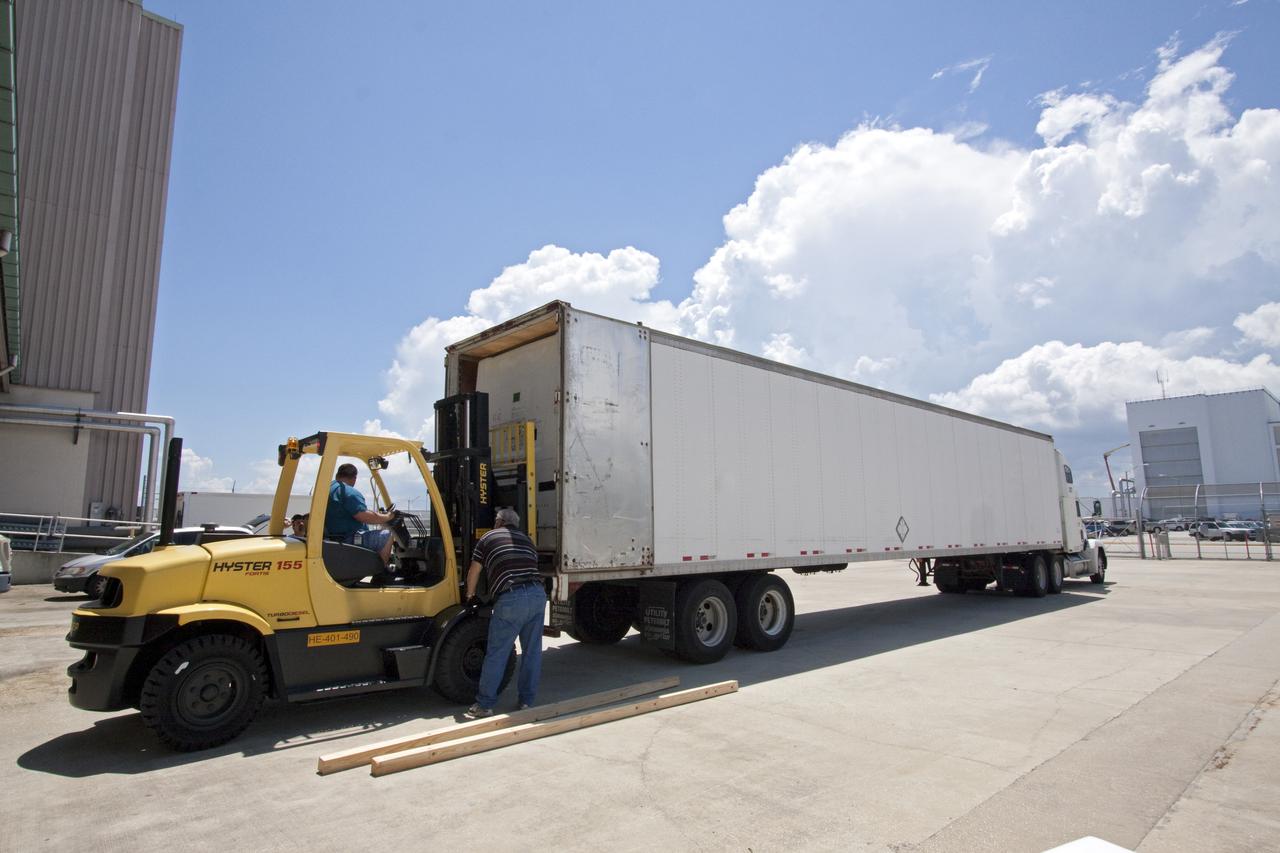
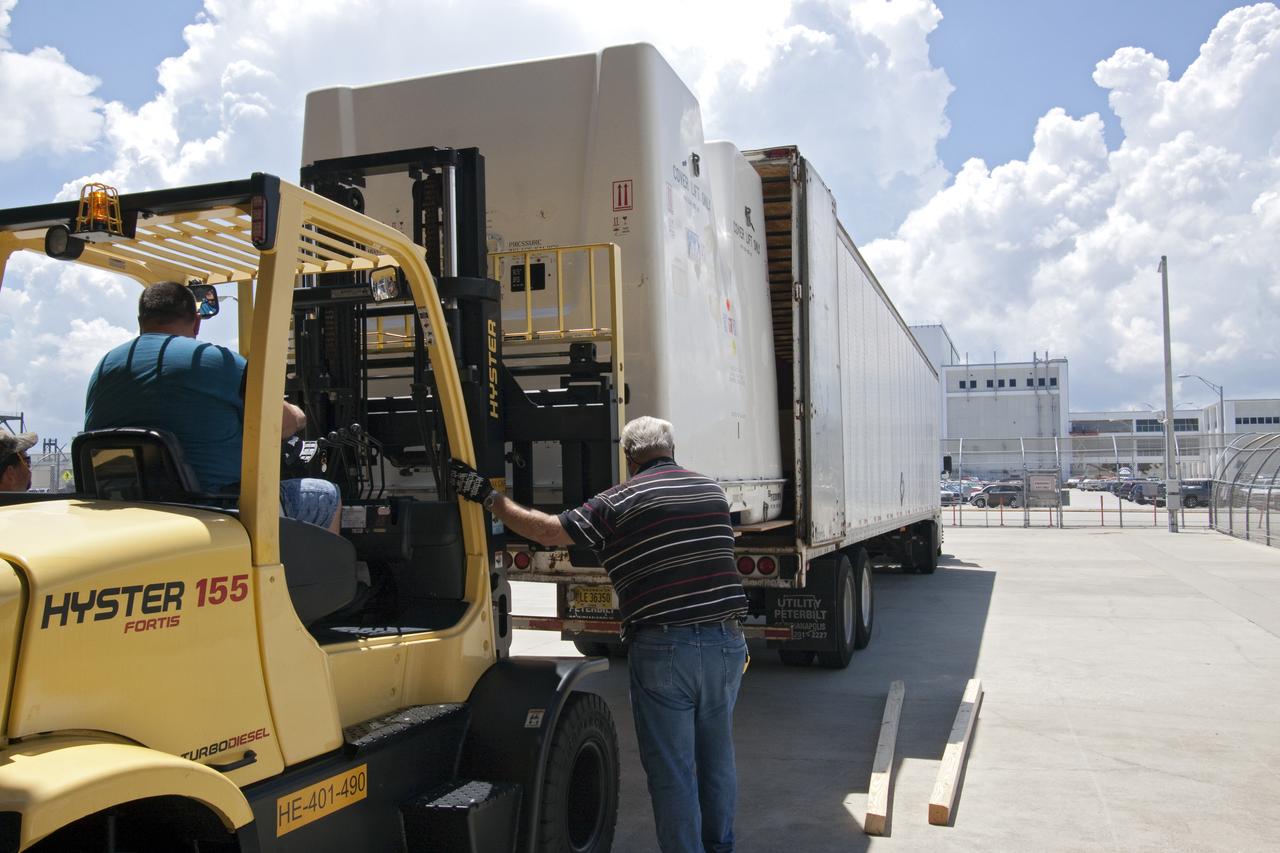
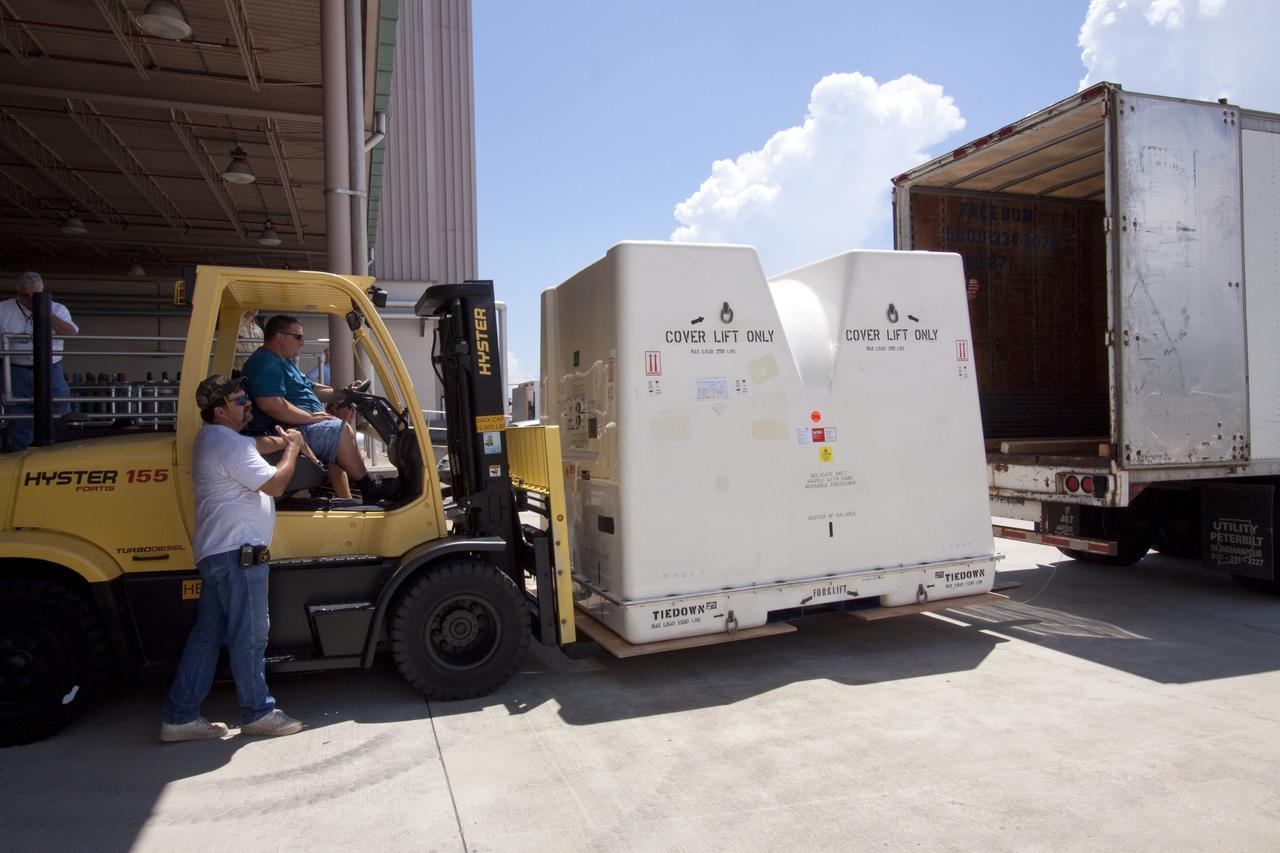
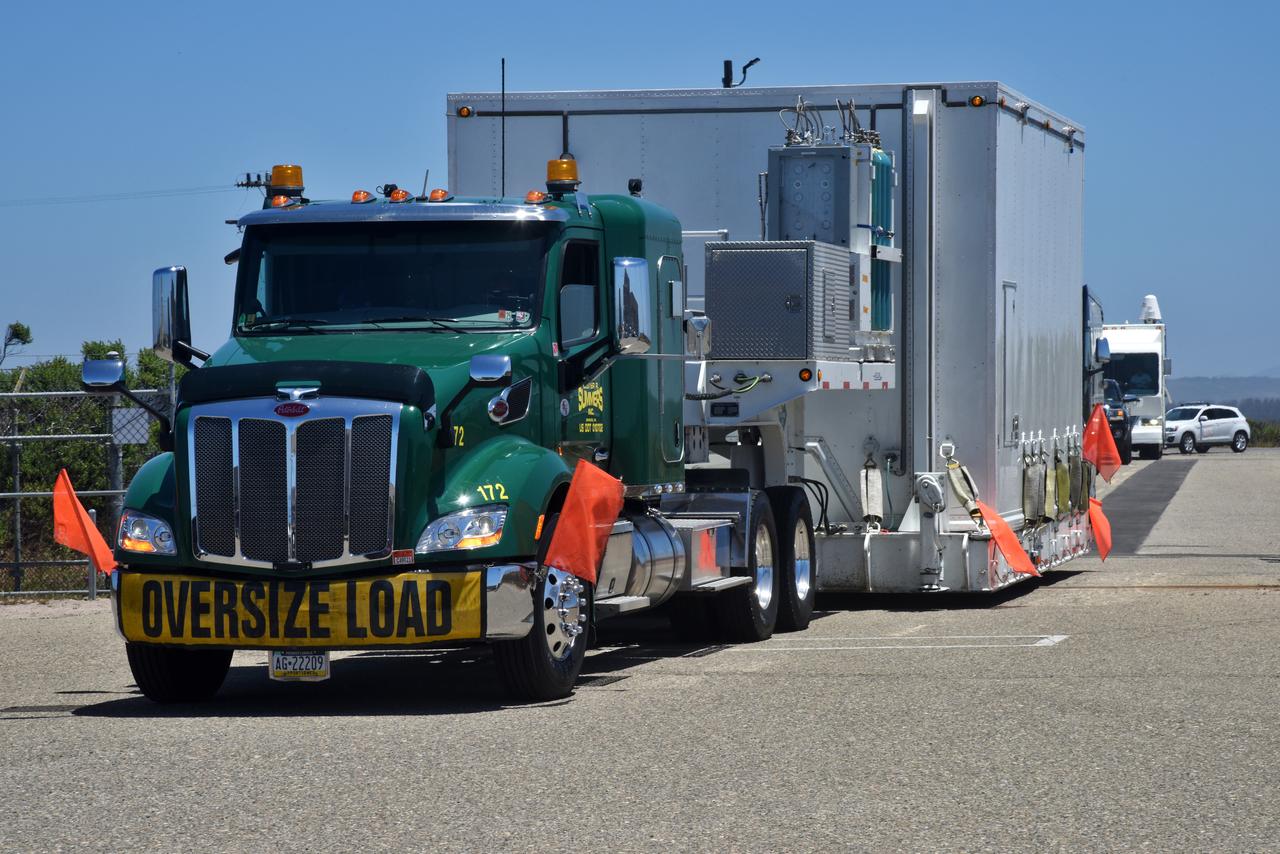
NASA's Ice, Cloud and land Elevation Satellite-2 (ICESat-2) arrives in its shipping container aboard a heavy transport truck on June 12, 2018, at Vandenberg Air Force Base in California. ICESat-2 was shipped from the Northrop Grumman facility in Gilbert, Arizona, where it was built and tested. The satellite is scheduled to launch Sept. 12, 2018, on the final United Launch Alliance Delta II rocket from Space Launch Complex-2 at Vandenberg. ICESat-2 will measure the height of a changing Earth, one laser pulse at a time, 10,000 laser pulses a second. The satellite will carry the Advanced Topographic Laser Altimeter System. ICESat-2 will help scientists investigate why, and how much our planet's frozen and icy areas, called the cryosphere, is changing in a warming climate.
ICESat-2 Spacecraft Arrival
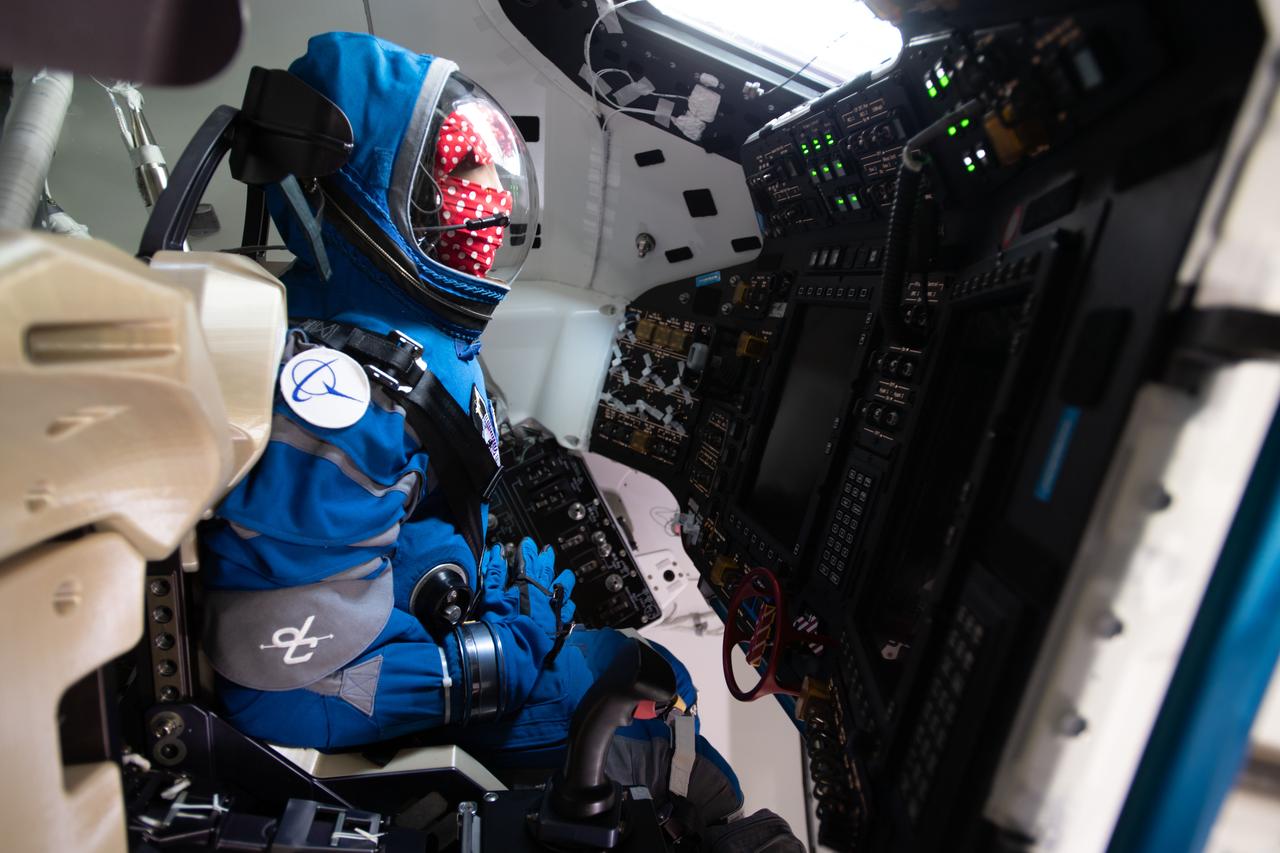
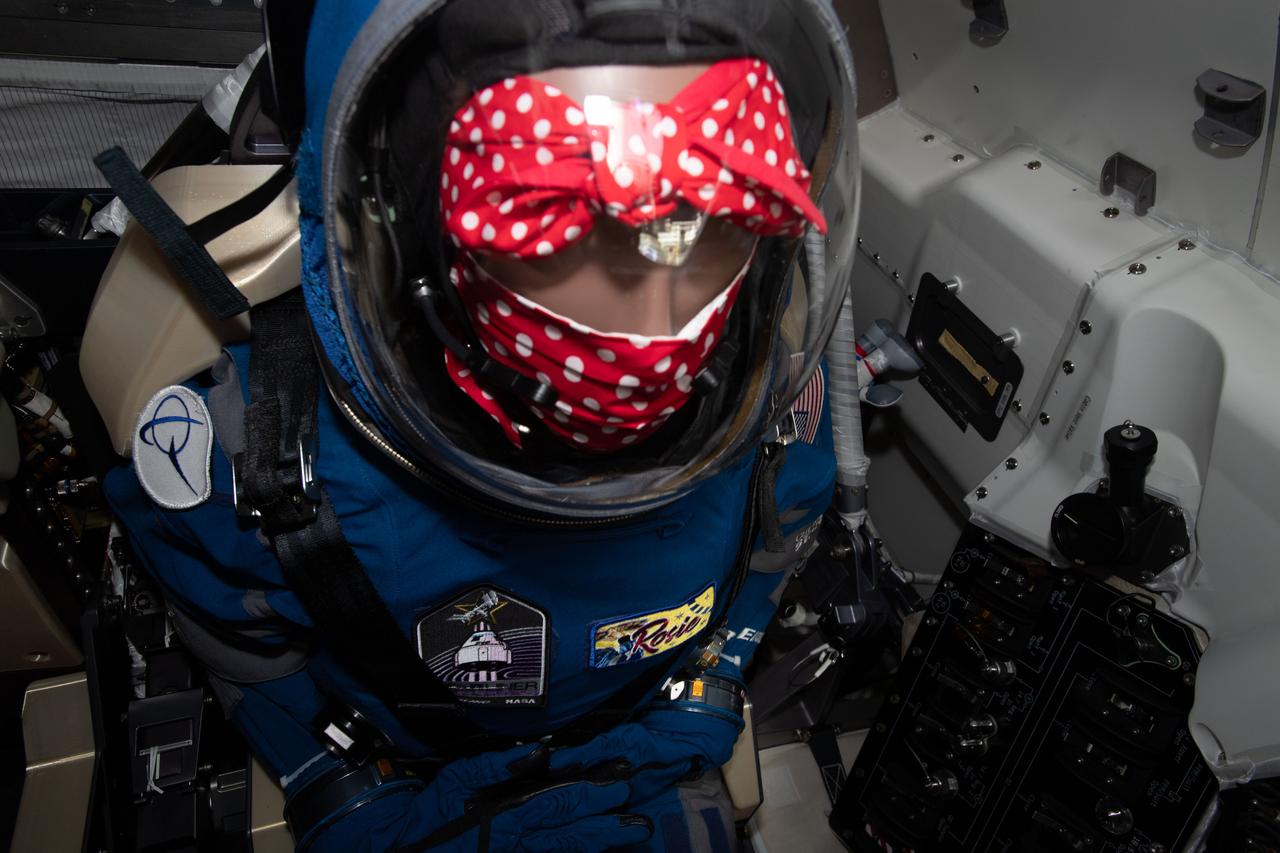
iss067e066358 (May 21, 2022) --- Rosie the Rocketeer, Boeing's anthropometric test device, is pictured in the commander's seat of the company's CST-100 Starliner crew ship for the Orbital Flight Test-2 mission at the International Space Station.
iss067e066358
Test Setup and UltraViolet (UV) Lighting and Tufts.  Ship Airwake Investigation 7 x 10 ft#2 Wind Tunnel Settling Chamber. Bridge and rotorcraft added to flight deck
ARC-1998-AC98-0181-6
iss067e065846 (May 20, 2022) --- Boeing's CST-100 Starliner crew ship approaches the International Space Station on the company's Orbital Flight Test-2 mission before automatically docking to the Harmony module's forward port.
iss067e065846
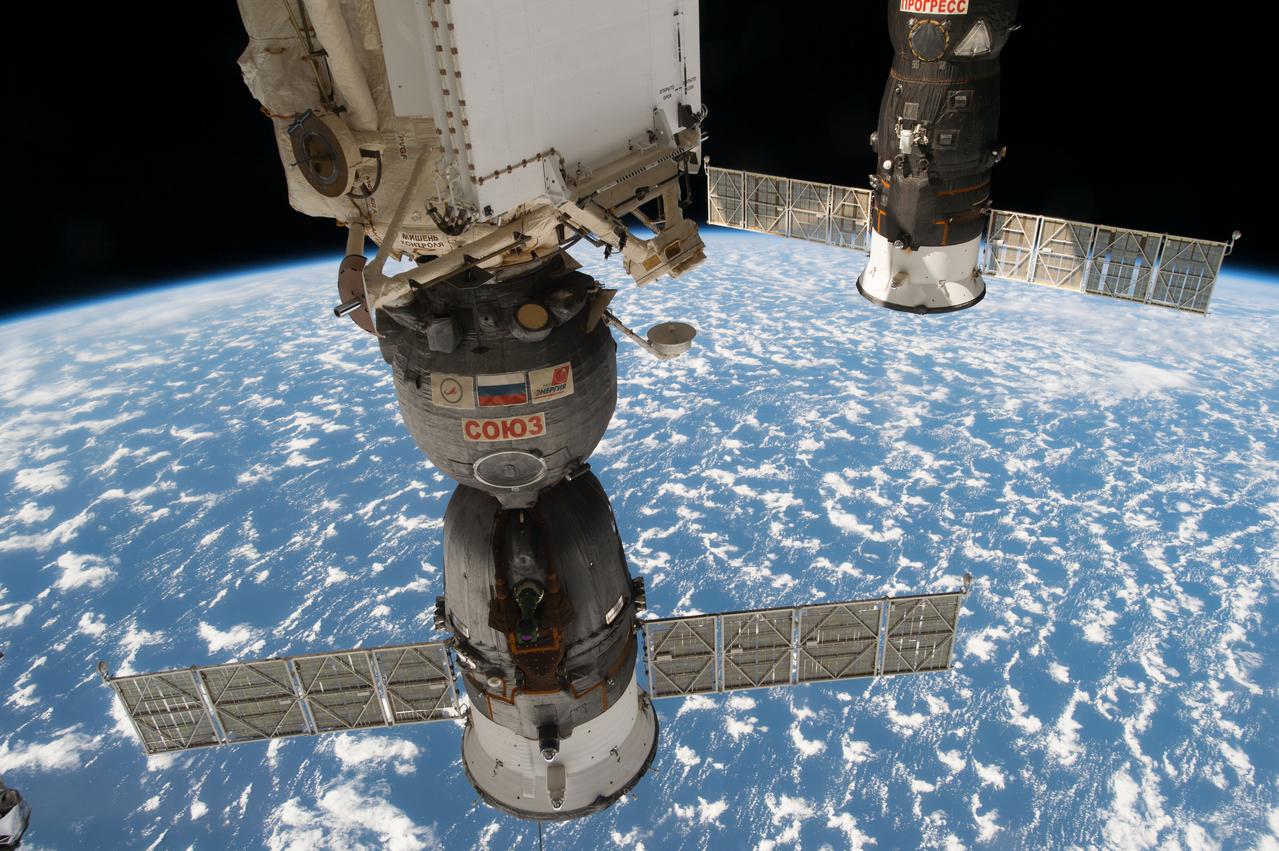
iss051e035113 (May 2, 2017) --- The Soyuz MS-03 crew ship (foreground) and the Progress 66 cargo craft are pictured as the International Space Station orbits about 250 miles above Earth.
iss051e035113
iss067e066341 (May 21, 2022) --- Rosie the Rocketeer, Boeing's anthropometric test device, is pictured in the commander's seat of the company's CST-100 Starliner crew ship for the Orbital Flight Test-2 mission at the International Space Station.
iss067e066341
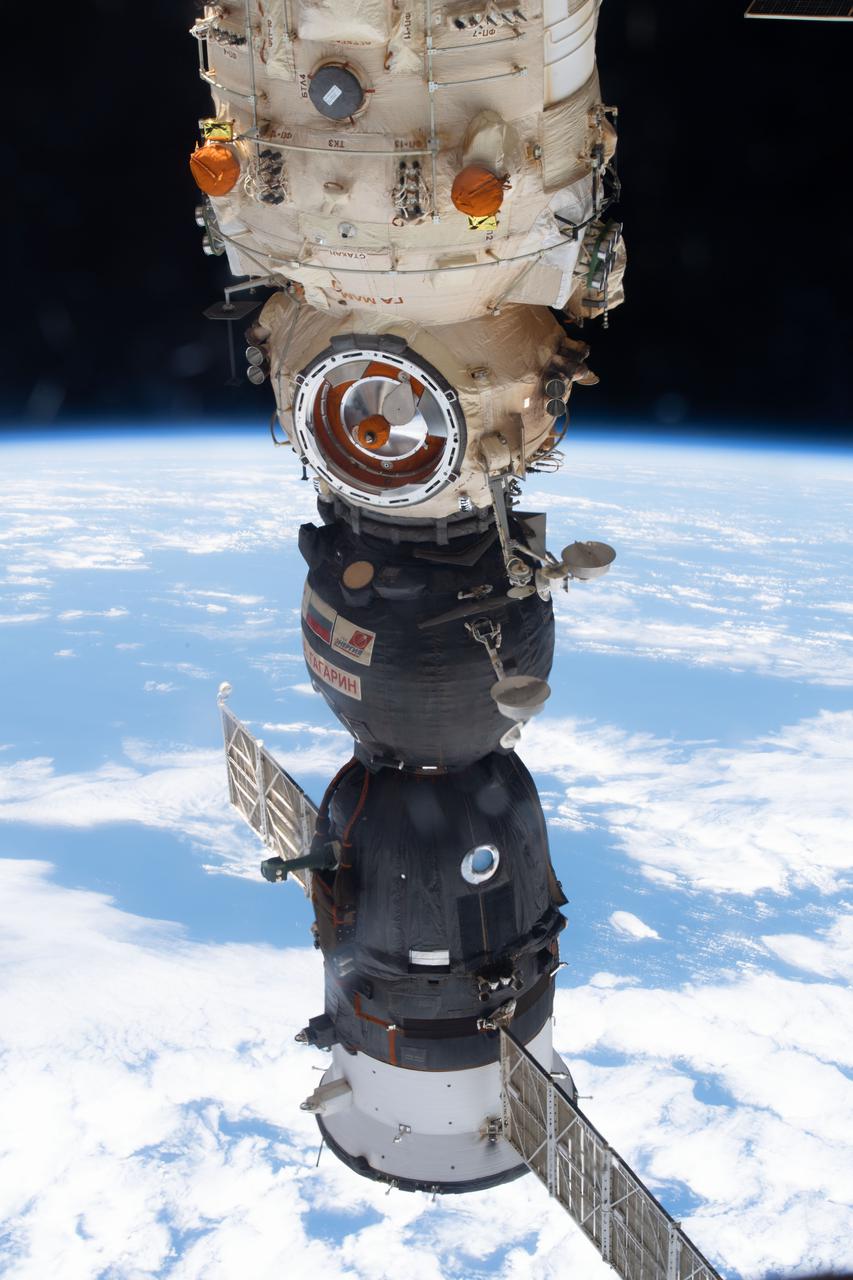
iss065e439837 (Oct. 2, 2021) --- The Soyuz MS-18 crew ship is docked to the Nauka multipurpose laboratory module in this photograph from the International Space Station as it orbited 260 miles above the Pacific Ocean off the coast of Mexico.
Earth observation taken during Expedition 65
iss067e066644 (May 20, 2022) --- Boeing's CST-100 Starliner crew ship approaches the International Space Station on the company's Orbital Flight Test-2 mission before automatically docking to the Harmony module's forward port.
iss067e066644
iss067e066717 (May 20, 2022) --- Boeing's CST-100 Starliner crew ship approaches the International Space Station on the company's Orbital Flight Test-2 mission before automatically docking to the Harmony module's forward port.
iss067e066717
iss067e066721 (May 20, 2022) --- Boeing's CST-100 Starliner crew ship approaches the International Space Station on the company's Orbital Flight Test-2 mission before automatically docking to the Harmony module's forward port.
iss067e066721
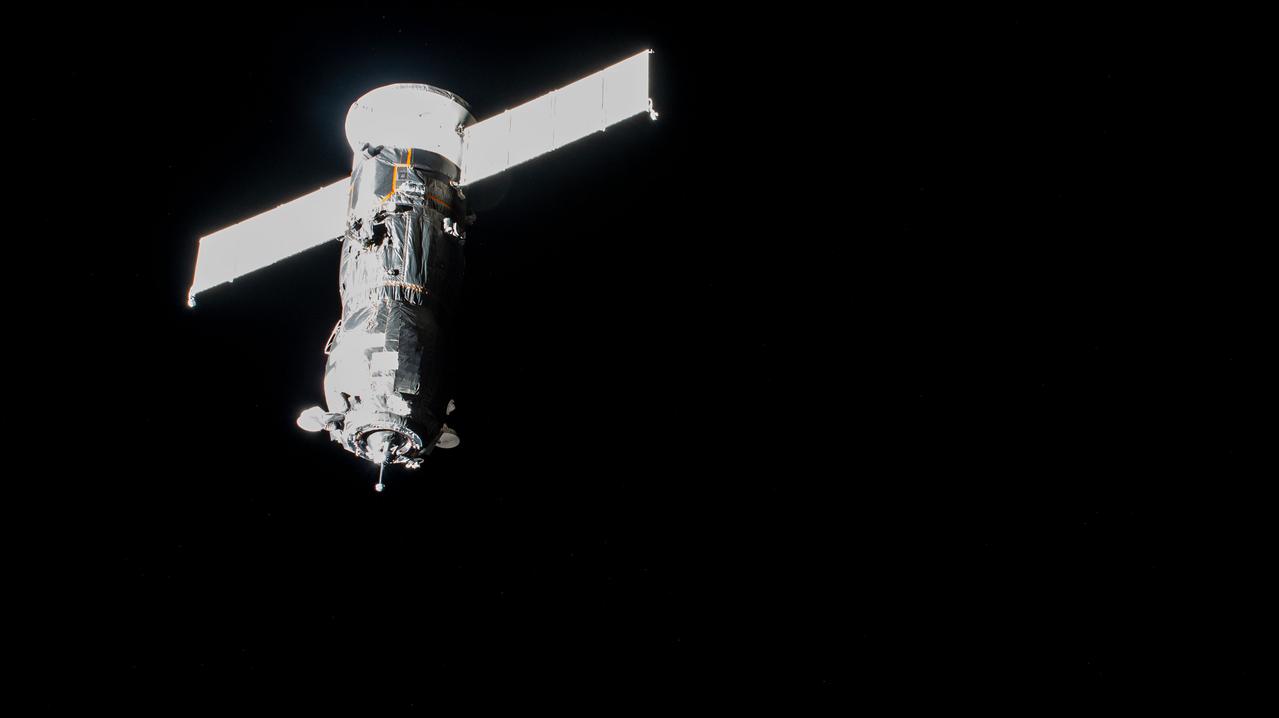
iss065e155190 (July 2, 2021) --- Russia's ISS Progress 78 resupply ship approaches the International Space Station for a docking to the Poisk module two days after lifting off from the Baikonur Cosmodrome in Kazakhstan.
iss065e155190
Test Setup and UltraViolet (UV) Lighting with Frank Caradonna, Ames and Kurtis Long, Project  Scientist.  Ship Airwake Investigation 7 x 10 ft#2 Wind Tunnel Settling Chamber.
ARC-1998-AC98-0181-3
JSC2003-E-34757 (16 April 2003) --- The Kibo Japanese Experiment Module's (JEM) Pressurized Module, a science laboratory bound for the International Space Station, is lowered into an environmentally controlled shipping container, in preparation for shipment to the Kennedy Space Center where it will be prepared for launch aboard the Space Shuttle. A container transport ship carrying Kibo left Yokohama Harbor, Japan, May 2, 2003, bound for Port Canaveral, Florida. The Kibo laboratory, built by the National Space Development Agency of Japan (NASDA), is expected to arrive at the Kennedy Space Center for module integration tests with Node 2 and pre-launch processing in early June. Photo Credit: NASA
JEM hardware delivery
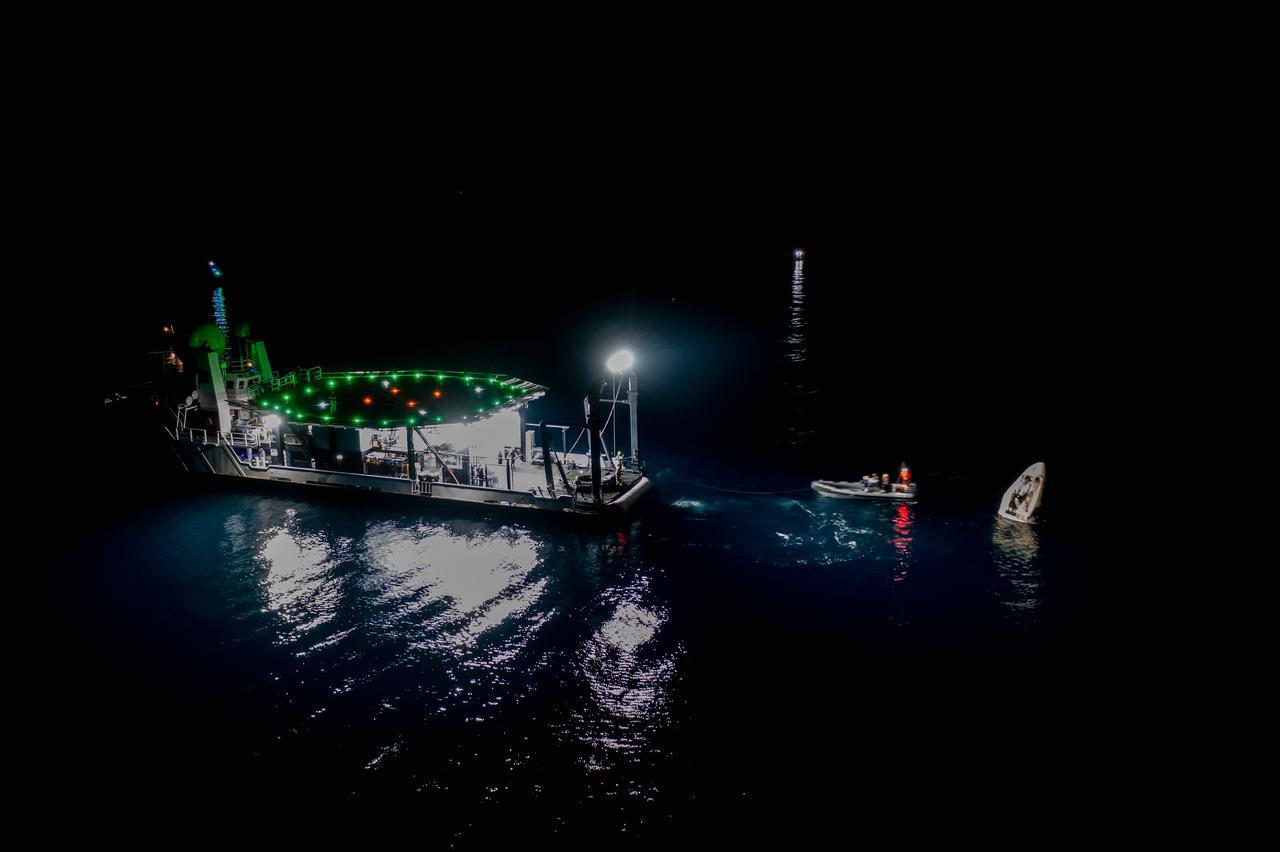
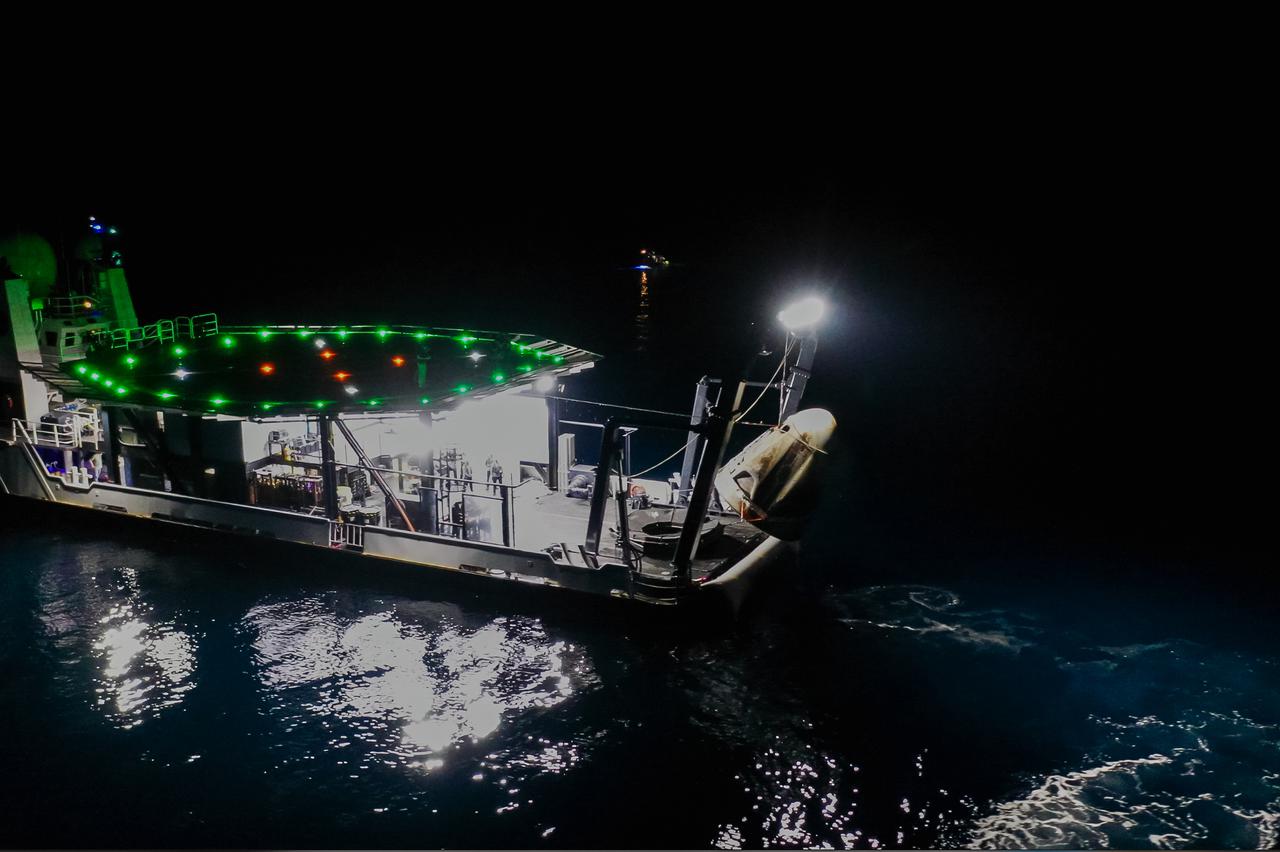
The SpaceX Crew Dragon Resilience splashed down in the Gulf of Mexico off the coast of Panama City, in Florida, at 2:56 a.m. EDT on May 2, 2021. Astronauts Michael Hopkins, Victor Glover, and Shannon Walker of NASA, and Soichi Noguchi of JAXA (Japan Aerospace Exploration Agency) completed Crew-1, the first crew rotation mission to the International Space Station in partnership with NASA as part of the agency’s Commercial Crew Program. Teams on the Go Navigator recovery ship, including two fast boats, work to secure and hoist Crew Dragon onto the main deck of the recovery ship with the astronauts inside.
SpaceX Crew-1 Splashdown Drone Imagery
The SpaceX Crew Dragon Resilience splashed down in the Gulf of Mexico off the coast of Panama City, in Florida, at 2:56 a.m. EDT on May 2, 2021. Astronauts Michael Hopkins, Victor Glover, and Shannon Walker of NASA, and Soichi Noguchi of JAXA (Japan Aerospace Exploration Agency) completed Crew-1, the first crew rotation mission to the International Space Station in partnership with NASA as part of the agency’s Commercial Crew Program. Teams on the Go Navigator recovery ship, including two fast boats, work to secure and hoist Crew Dragon onto the main deck of the recovery ship with the astronauts inside.
SpaceX Crew-1 Splashdown Drone Imagery
The SpaceX Crew Dragon Resilience splashed down in the Gulf of Mexico off the coast of Panama City, in Florida, at 2:56 a.m. EDT on May 2, 2021. Astronauts Michael Hopkins, Victor Glover, and Shannon Walker of NASA, and Soichi Noguchi of JAXA (Japan Aerospace Exploration Agency) completed Crew-1, the first crew rotation mission to the International Space Station in partnership with NASA as part of the agency’s Commercial Crew Program. Teams on the Go Navigator recovery ship, including two fast boats, work to secure and hoist Crew Dragon onto the main deck of the recovery ship with the astronauts inside.
SpaceX Crew-1 Splashdown Drone Imagery
The SpaceX Crew Dragon Resilience splashes down in the Gulf of Mexico off the coast of Panama City, in Florida, at 2:56 a.m. EDT on May 2, 2021. Astronauts Michael Hopkins, Victor Glover, and Shannon Walker of NASA, and Soichi Noguchi of JAXA (Japan Aerospace Exploration Agency) completed Crew-1, the first crew rotation mission to the International Space Station in partnership with NASA as part of the agency’s Commercial Crew Program. At left is SpaceX’s Go Navigator recovery ship. Crew Dragon will be secured and then hoisted onto the main deck of the recovery ship with the astronauts inside.
SpaceX Crew-1 Splashdown Drone Imagery
The SpaceX Crew Dragon Resilience splashes down in the Gulf of Mexico off the coast of Panama City, in Florida, at 2:56 a.m. EDT on May 2, 2021. Astronauts Michael Hopkins, Victor Glover, and Shannon Walker of NASA, and Soichi Noguchi of JAXA (Japan Aerospace Exploration Agency) completed Crew-1, the first crew rotation mission to the International Space Station in partnership with NASA as part of the agency’s Commercial Crew Program. At left is SpaceX’s Go Navigator recovery ship. Teams on two fast boats and Go Navigator will secure Crew Dragon to be hoisted onto the main deck of the recovery ship with the astronauts inside.
SpaceX Crew-1 Splashdown Drone Imagery
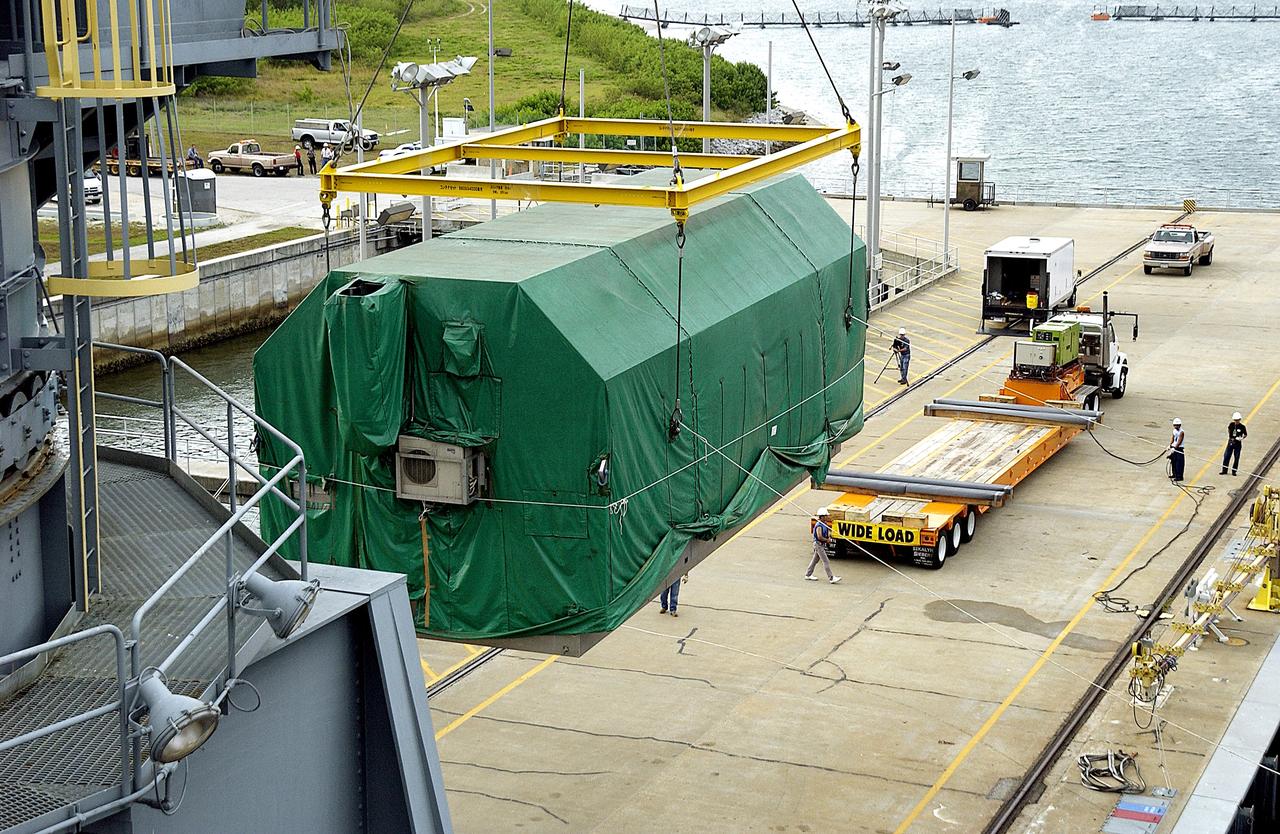
KENNEDY SPACE CENTER, FLA. - At Port Canaveral, workers release the overhead crane that lifted the Pressurized Module of the Japanese Experiment Module (JEM) from the ship onto the truck bed.  The container transport ship carrying JEM departed May 2 from Yokohama Harbor in Japan for the voyage to the United States. The National Space Development Agency of Japan (NASDA) developed the laboratory at the Tsukuba Space Center near Tokyo. The Pressurized Module is the first element of the JEM, named "Kibo" (Hope), to be delivered to KSC, and will be transferred to KSC’s Space Station Processing Facility.  The JEM is Japan's primary contribution to the Station. It will enhance the unique research capabilities of the orbiting complex by providing an additional environment for astronauts to conduct science experiments.  The JEM also includes an exposed facility (platform) for space environment experiments, a robotic manipulator system, and two logistics modules. The various JEM components will be  assembled in space over the course of three Shuttle missions.
KENNEDY SPACE CENTER, FLA. - At Port Canaveral, workers release the overhead crane that lifted the Pressurized Module of the Japanese Experiment Module (JEM) from the ship onto the truck bed. The container transport ship carrying JEM departed May 2 from Yokohama Harbor in Japan for the voyage to the United States. The National Space Development Agency of Japan (NASDA) developed the laboratory at the Tsukuba Space Center near Tokyo. The Pressurized Module is the first element of the JEM, named "Kibo" (Hope), to be delivered to KSC, and will be transferred to KSC’s Space Station Processing Facility. The JEM is Japan's primary contribution to the Station. It will enhance the unique research capabilities of the orbiting complex by providing an additional environment for astronauts to conduct science experiments. The JEM also includes an exposed facility (platform) for space environment experiments, a robotic manipulator system, and two logistics modules. The various JEM components will be assembled in space over the course of three Shuttle missions.
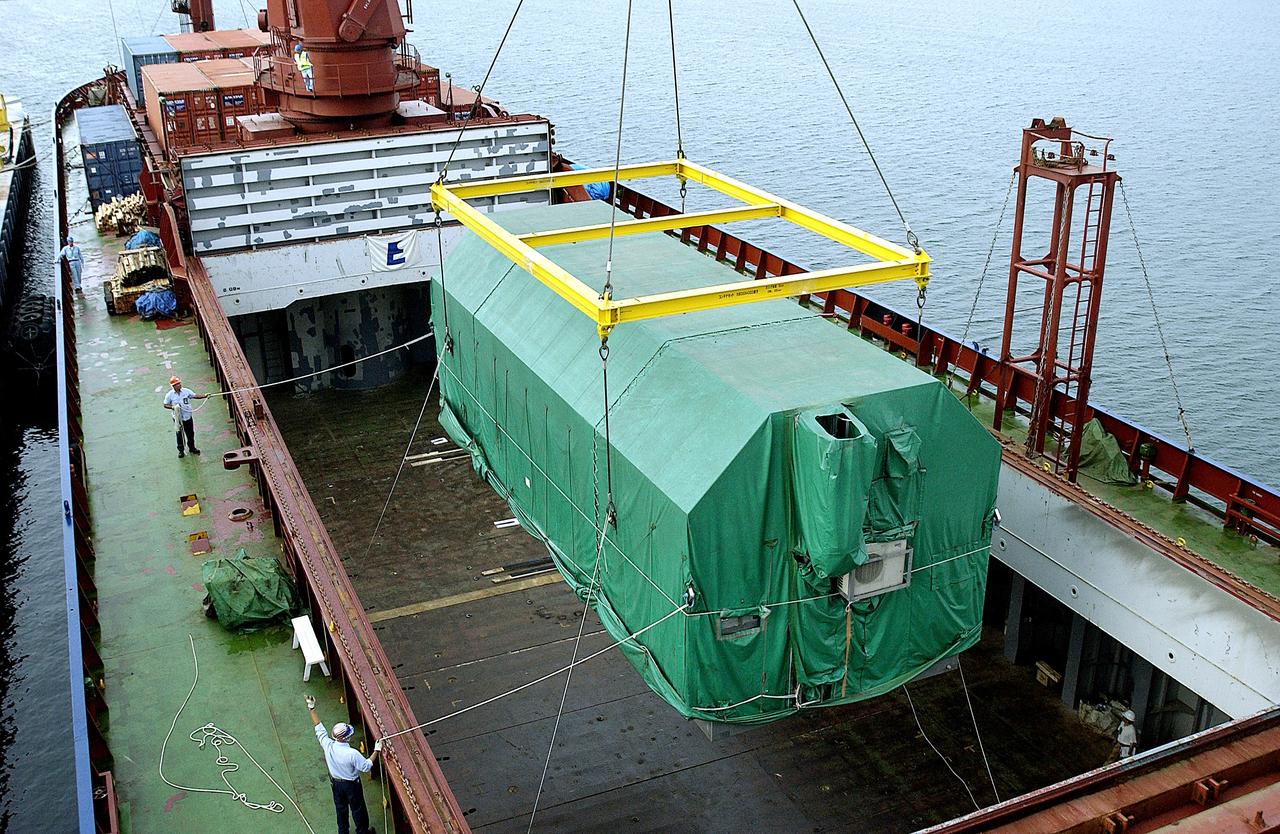
KENNEDY SPACE CENTER, FLA. - At Port Canaveral, the Pressurized Module of the Japanese Experiment Module (JEM) is lifted out of the ship’s cargo hold.  It will be loaded onto the truck bed in the background for transfer to KSC’s Space Station Processing Facility.  The container transport ship carrying JEM departed May 2 from Yokohama Harbor in Japan for the voyage to the United States. The National Space Development Agency of Japan (NASDA) developed the laboratory at the Tsukuba Space Center near Tokyo. The Pressurized Module is the first element of the JEM, named "Kibo" (Hope), to be delivered to KSC. The JEM is Japan's primary contribution to the Station. It will enhance the unique research capabilities of the orbiting complex by providing an additional environment for astronauts to conduct science experiments.  The JEM also includes an exposed facility (platform) for space environment experiments, a robotic manipulator system, and two logistics modules. The various JEM components will be  assembled in space over the course of three Shuttle missions.
KENNEDY SPACE CENTER, FLA. - At Port Canaveral, the Pressurized Module of the Japanese Experiment Module (JEM) is lifted out of the ship’s cargo hold. It will be loaded onto the truck bed in the background for transfer to KSC’s Space Station Processing Facility. The container transport ship carrying JEM departed May 2 from Yokohama Harbor in Japan for the voyage to the United States. The National Space Development Agency of Japan (NASDA) developed the laboratory at the Tsukuba Space Center near Tokyo. The Pressurized Module is the first element of the JEM, named "Kibo" (Hope), to be delivered to KSC. The JEM is Japan's primary contribution to the Station. It will enhance the unique research capabilities of the orbiting complex by providing an additional environment for astronauts to conduct science experiments. The JEM also includes an exposed facility (platform) for space environment experiments, a robotic manipulator system, and two logistics modules. The various JEM components will be assembled in space over the course of three Shuttle missions.
KENNEDY SPACE CENTER, FLA. - At Port Canaveral, the overhead crane that lifted the Pressurized Module of the Japanese Experiment Module (JEM) from the ship onto the truck bed is released.  The container transport ship carrying JEM departed May 2 from Yokohama Harbor in Japan for the voyage to the United States. The National Space Development Agency of Japan (NASDA) developed the laboratory at the Tsukuba Space Center near Tokyo. The Pressurized Module is the first element of the JEM, named "Kibo" (Hope), to be delivered to KSC, and will be transferred to KSC’s Space Station Processing Facility.  The JEM is Japan's primary contribution to the Station. It will enhance the unique research capabilities of the orbiting complex by providing an additional environment for astronauts to conduct science experiments.  The JEM also includes an exposed facility (platform) for space environment experiments, a robotic manipulator system, and two logistics modules. The various JEM components will be  assembled in space over the course of three Shuttle missions.
KENNEDY SPACE CENTER, FLA. - At Port Canaveral, the overhead crane that lifted the Pressurized Module of the Japanese Experiment Module (JEM) from the ship onto the truck bed is released. The container transport ship carrying JEM departed May 2 from Yokohama Harbor in Japan for the voyage to the United States. The National Space Development Agency of Japan (NASDA) developed the laboratory at the Tsukuba Space Center near Tokyo. The Pressurized Module is the first element of the JEM, named "Kibo" (Hope), to be delivered to KSC, and will be transferred to KSC’s Space Station Processing Facility. The JEM is Japan's primary contribution to the Station. It will enhance the unique research capabilities of the orbiting complex by providing an additional environment for astronauts to conduct science experiments. The JEM also includes an exposed facility (platform) for space environment experiments, a robotic manipulator system, and two logistics modules. The various JEM components will be assembled in space over the course of three Shuttle missions.
KENNEDY SPACE CENTER, FLA. - At Port Canaveral, the Pressurized Module of the Japanese Experiment Module (JEM) is swung away from the ship. The container transport ship carrying JEM departed May 2 from Yokohama Harbor in Japan for the voyage to the United States. The National Space Development Agency of Japan (NASDA) developed the laboratory at the Tsukuba Space Center near Tokyo.  The module will be loaded onto a truck bed and transferred to KSC’s Space Station Processing Facility.  The Pressurized Module is the first element of the JEM, named "Kibo" (Hope), to be delivered to KSC. The JEM is Japan's primary contribution to the Station. It will enhance the unique research capabilities of the orbiting complex by providing an additional environment for astronauts to conduct science experiments.  The JEM also includes an exposed facility (platform) for space environment experiments, a robotic manipulator system, and two logistics modules. The various JEM components will be  assembled in space over the course of three Shuttle missions.
KENNEDY SPACE CENTER, FLA. - At Port Canaveral, the Pressurized Module of the Japanese Experiment Module (JEM) is swung away from the ship. The container transport ship carrying JEM departed May 2 from Yokohama Harbor in Japan for the voyage to the United States. The National Space Development Agency of Japan (NASDA) developed the laboratory at the Tsukuba Space Center near Tokyo. The module will be loaded onto a truck bed and transferred to KSC’s Space Station Processing Facility. The Pressurized Module is the first element of the JEM, named "Kibo" (Hope), to be delivered to KSC. The JEM is Japan's primary contribution to the Station. It will enhance the unique research capabilities of the orbiting complex by providing an additional environment for astronauts to conduct science experiments. The JEM also includes an exposed facility (platform) for space environment experiments, a robotic manipulator system, and two logistics modules. The various JEM components will be assembled in space over the course of three Shuttle missions.
KENNEDY SPACE CENTER, FLA. - At Port Canaveral, the Pressurized Module of the Japanese Experiment Module (JEM) is lifted out of the ship’s cargo hold.  The container transport ship carrying JEM departed May 2 from Yokohama Harbor in Japan for the voyage to the United States. The National Space Development Agency of Japan (NASDA) developed the laboratory at the Tsukuba Space Center near Tokyo. The Pressurized Module is the first element of the JEM, named "Kibo" (Hope), to be delivered to KSC. The JEM is Japan's primary contribution to the Station. It will enhance the unique research capabilities of the orbiting complex by providing an additional environment for astronauts to conduct science experiments.  The JEM also includes an exposed facility (platform) for space environment experiments, a robotic manipulator system, and two logistics modules. The various JEM components will be  assembled in space over the course of three Shuttle missions.
KENNEDY SPACE CENTER, FLA. - At Port Canaveral, the Pressurized Module of the Japanese Experiment Module (JEM) is lifted out of the ship’s cargo hold. The container transport ship carrying JEM departed May 2 from Yokohama Harbor in Japan for the voyage to the United States. The National Space Development Agency of Japan (NASDA) developed the laboratory at the Tsukuba Space Center near Tokyo. The Pressurized Module is the first element of the JEM, named "Kibo" (Hope), to be delivered to KSC. The JEM is Japan's primary contribution to the Station. It will enhance the unique research capabilities of the orbiting complex by providing an additional environment for astronauts to conduct science experiments. The JEM also includes an exposed facility (platform) for space environment experiments, a robotic manipulator system, and two logistics modules. The various JEM components will be assembled in space over the course of three Shuttle missions.
KENNEDY SPACE CENTER, FLA. -  Shipped in an air-conditioned transportation van from NASA’s Goddard Space Flight Center in Greenbelt, Md., NASA’s MESSENGER spacecraft, the first Mercury orbiter, arrives at the Astrotech Space Operations processing facilities near KSC.    MESSENGER - short for MErcury Surface, Space ENvironment, GEochemistry and Ranging - will be offloaded and taken into a high bay clean room.  After the spacecraft is removed from its shipping container, employees of the Johns Hopkins University Applied Physics Laboratory, builders of the spacecraft, will perform an initial state-of-health check.  Then processing for launch can begin, including checkout of the power systems, communications systems and control systems.  The thermal blankets will also be attached for flight.  MESSENGER will be launched May 11 on a six-year mission aboard a Boeing Delta II rocket.  Liftoff is targeted for 2:26 a.m. EDT on Tuesday, May 11.
KENNEDY SPACE CENTER, FLA. - Shipped in an air-conditioned transportation van from NASA’s Goddard Space Flight Center in Greenbelt, Md., NASA’s MESSENGER spacecraft, the first Mercury orbiter, arrives at the Astrotech Space Operations processing facilities near KSC. MESSENGER - short for MErcury Surface, Space ENvironment, GEochemistry and Ranging - will be offloaded and taken into a high bay clean room. After the spacecraft is removed from its shipping container, employees of the Johns Hopkins University Applied Physics Laboratory, builders of the spacecraft, will perform an initial state-of-health check. Then processing for launch can begin, including checkout of the power systems, communications systems and control systems. The thermal blankets will also be attached for flight. MESSENGER will be launched May 11 on a six-year mission aboard a Boeing Delta II rocket. Liftoff is targeted for 2:26 a.m. EDT on Tuesday, May 11.
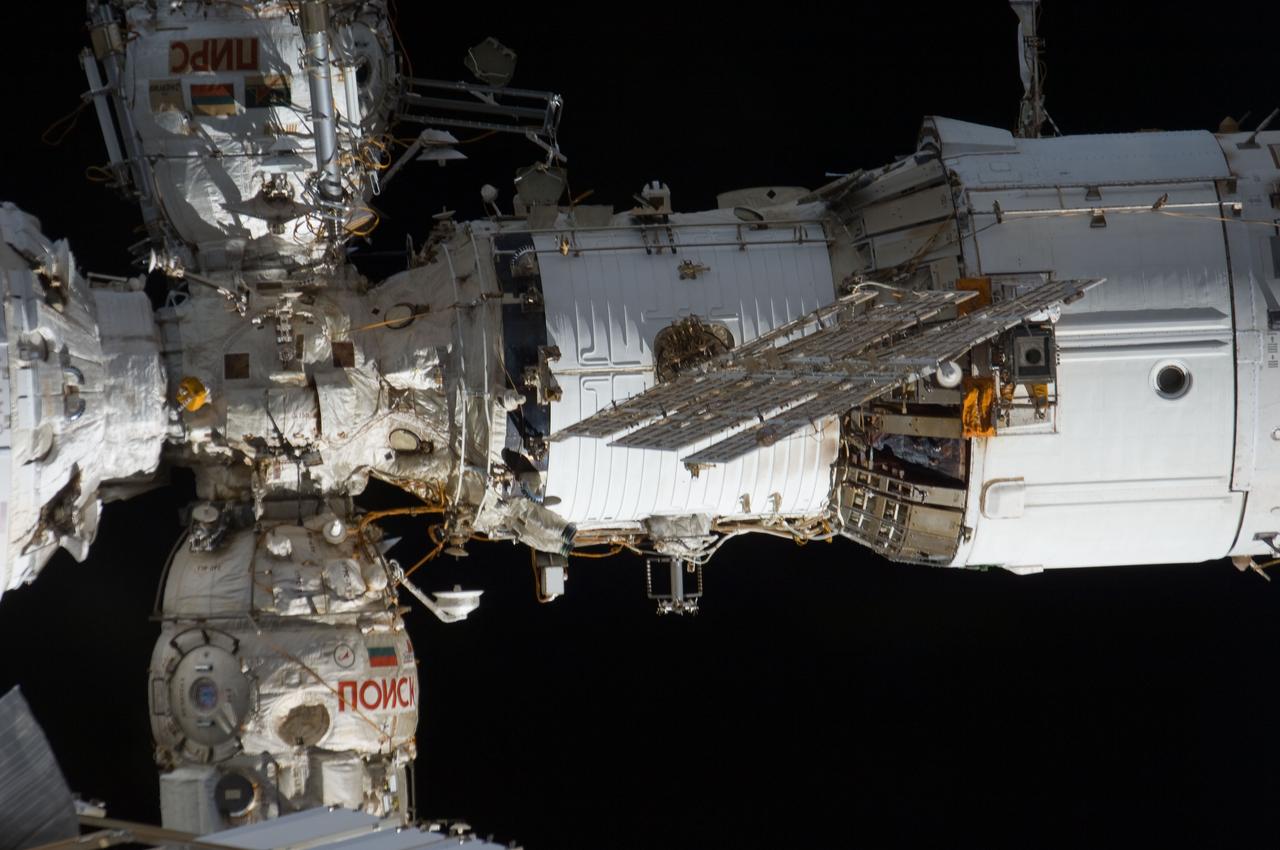
s135e011242 (July 19, 2011) --- The International Space Station's Zvezda service module is pictured with two Russian modules attached to its forward section. Both modules host docked Russian spacecraft including the Progress resupply ships and the Soyuz crew ships. At top left is the Pirs Docking Compartment where Russian spacewalks are staged. At bottom left is the Poisk Mini-Research Module-2 where Russian science experiments are conducted.
Flyaround View of the SM
Teams from NASA and SpaceX practice procedures for medical emergency evacuation onboard the GO Searcher ship, Friday, August 15, 2019 in the Atlantic Ocean off the coast of Cape Canaveral, Florida. SpaceX will use the GO Searcher ship during the Demo-2 mission to recover NASA astronauts returning from the International Space Station in their Crew Dragon spacecraft. Photo Credit: (NASA/Bill Ingalls)
SpaceX Dragon Crew Emergency Evacuation Rehearsal
JSC2003-E-34758 (16 April 2003) --- The Kibo Japanese Experiment Module's (JEM) Pressurized Module, a science laboratory bound for the International Space Station, is lowered into a shipping crate, in preparation for shipment to the Kennedy Space Center where it will be prepared for launch aboard the Space Shuttle. A container transport ship carrying Kibo left Yokohama Harbor, Japan, May 2, 2003, bound for Port Canaveral, Florida, where it is expected to arrive in early June. It will then be transported to KSC's Space Station Processing Facility.
JEM hardware delivery
JSC2003-E-34755 (16 April 2003) --- Workers at Japan's Tsukuba Space Center are shown preparing the Japanese Experiment Module (JEM), Kibo, for lifting and packaging into an environmentally controlled shipping container for its transportation to Yokohama Harbor, where it was loaded on a container ship bound for Port Canaveral, Florida. The Kibo Pressurized Module, built by the National Space Development Agency of Japan (NASDA), is expected to arrive at the Kennedy Space Center for module integration tests with Node 2 and pre-launch processing in early June. Photo Credit: NASA
JEM hardware delivery
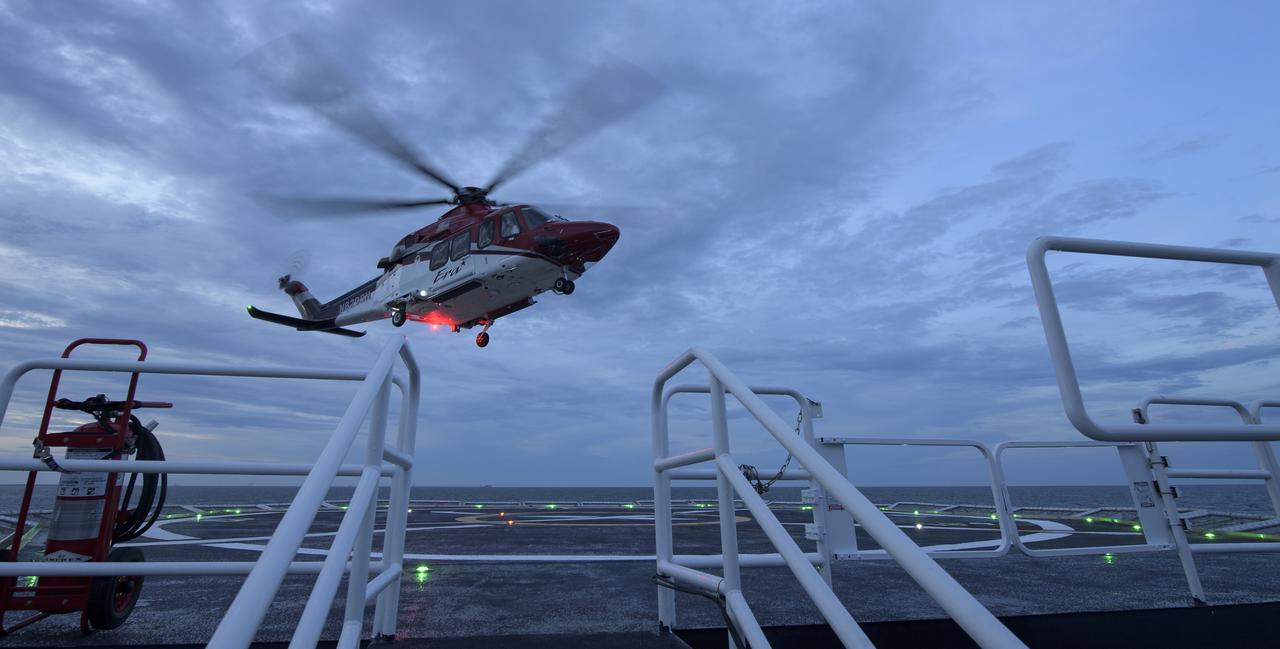
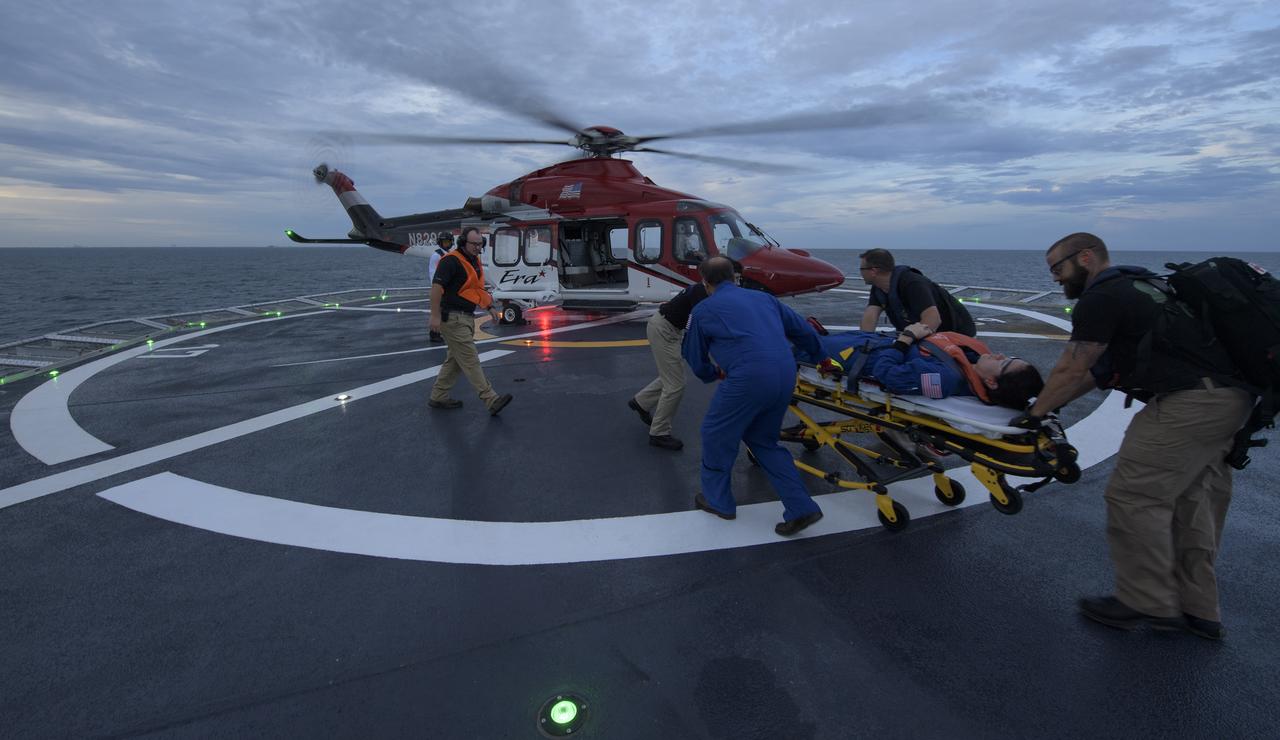
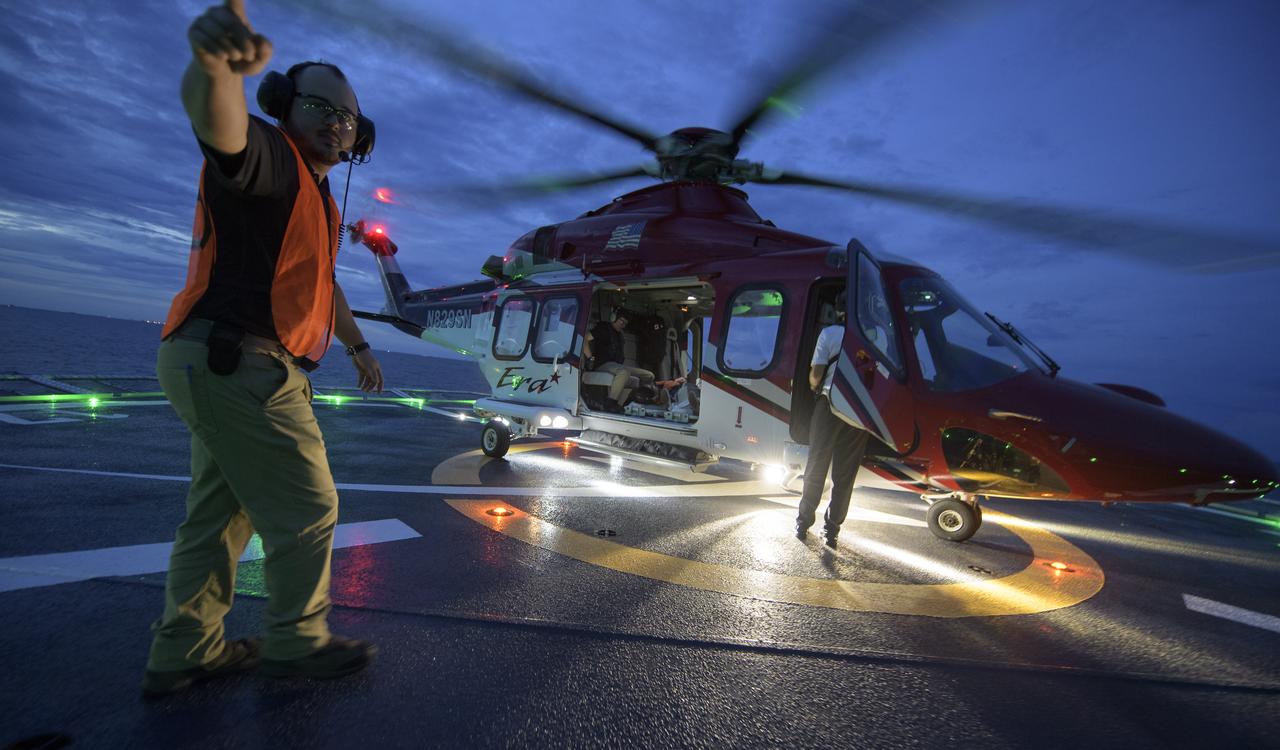
A helicopter equipped for air medical operations lands on the GO Searcher ship as teams from NASA and SpaceX practice procedures for medical emergency evacuation, Friday, August 15, 2019 in the Atlantic Ocean off the coast of Cape Canaveral, Florida. SpaceX will use the GO Searcher ship during the Demo-2 mission to recover NASA astronauts returning from the International Space Station in their Crew Dragon spacecraft. Photo Credit: (NASA/Bill Ingalls)
SpaceX Dragon Crew Emergency Evacuation Rehearsal
A helicopter equipped for air medical operations takes off from the GO Searcher ship as teams from NASA and SpaceX practice procedures for medical emergency evacuation, Friday, August 15, 2019 in the Atlantic Ocean off the coast of Cape Canaveral, Florida. SpaceX will use the GO Searcher ship during the Demo-2 mission to recover NASA astronauts returning from the International Space Station in their Crew Dragon spacecraft. Photo Credit: (NASA/Bill Ingalls)
SpaceX Dragon Crew Emergency Evacuation Rehearsal
Teams from NASA and SpaceX practice procedures for medical emergency evacuation onboard the GO Searcher ship, Friday, August 15, 2019 in the Atlantic Ocean off the coast of Cape Canaveral, Florida. SpaceX will use the GO Searcher ship during the Demo-2 mission to recover NASA astronauts returning from the International Space Station in their Crew Dragon spacecraft. Photo Credit: (NASA/Bill Ingalls)
SpaceX Dragon Crew Emergency Evacuation Rehearsal
Teams from NASA and SpaceX practice procedures for medical emergency evacuation onboard the GO Searcher ship, Friday, August 15, 2019 in the Atlantic Ocean off the coast of Cape Canaveral, Florida. SpaceX will use the GO Searcher ship during the Demo-2 mission to recover NASA astronauts returning from the International Space Station in their Crew Dragon spacecraft. Photo Credit: (NASA/Bill Ingalls)
SpaceX Dragon Crew Emergency Evacuation Rehearsal
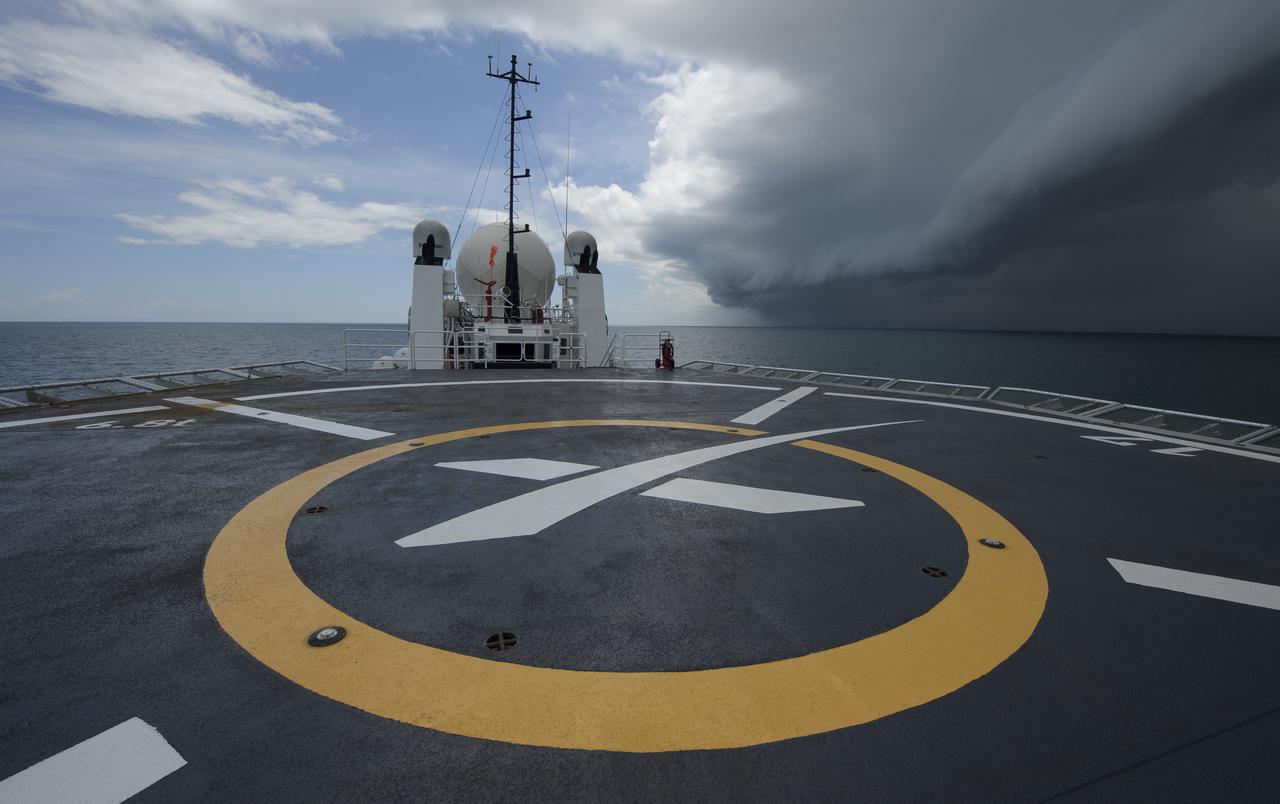
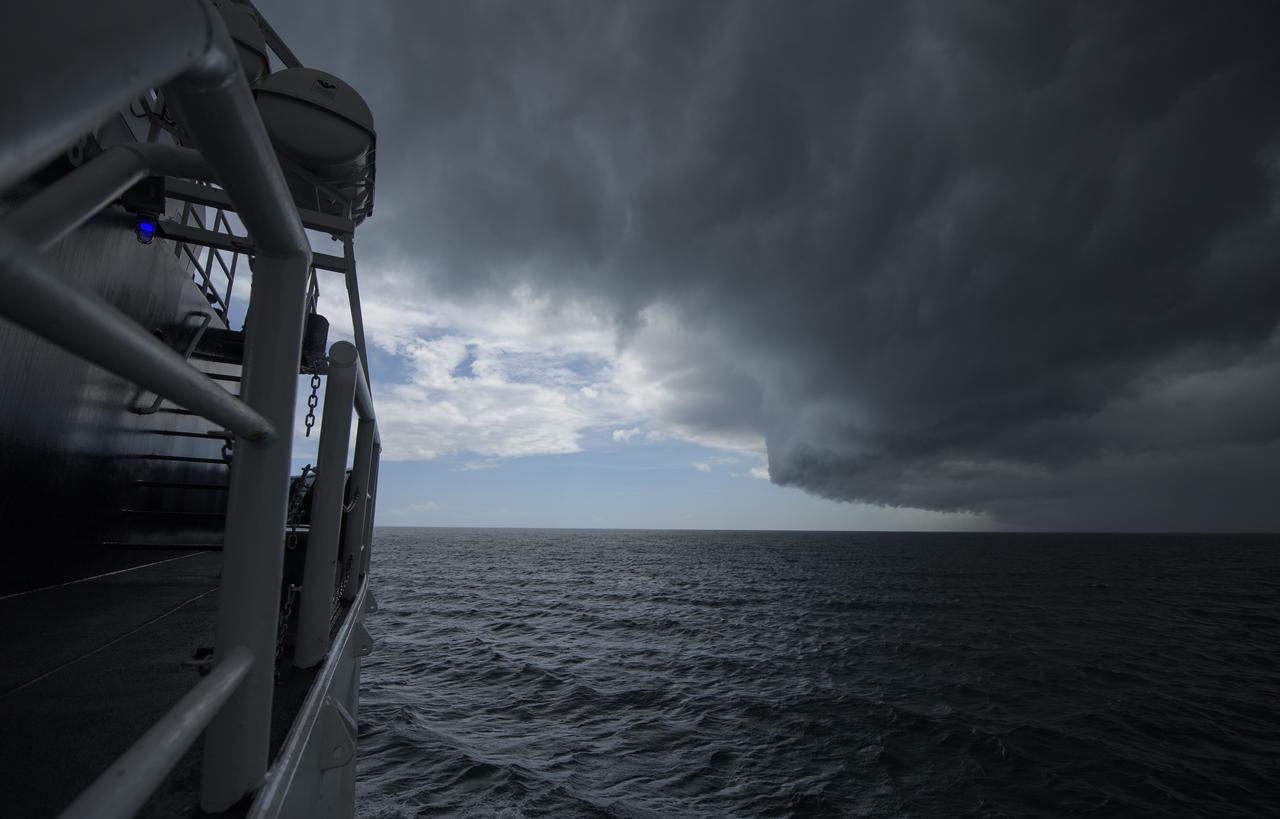
A quick moving storm passes as teams from NASA and SpaceX practice procedures for medical emergency evacuation onboard the GO Searcher ship, Friday, August 15, 2019 in the Atlantic Ocean off the coast of Cape Canaveral, Florida. SpaceX will use the GO Searcher ship during the Demo-2 mission to recover NASA astronauts returning from the International Space Station in their Crew Dragon spacecraft. Photo Credit: (NASA/Bill Ingalls)
SpaceX Dragon Crew Emergency Evacuation Rehearsal
A quick moving storm passes as teams from NASA and SpaceX practice procedures for medical emergency evacuation onboard the GO Searcher ship, Friday, August 15, 2019 in the Atlantic Ocean off the coast of Cape Canaveral, Florida. SpaceX will use the GO Searcher ship during the Demo-2 mission to recover NASA astronauts returning from the International Space Station in their Crew Dragon spacecraft. Photo Credit: (NASA/Bill Ingalls)
SpaceX Dragon Crew Emergency Evacuation Rehearsal
Teams from NASA and SpaceX practice medical emergency evacuations from the GO Searcher ship via helicopter, Friday, August 15, 2019 in the Atlantic Ocean off the coast of Cape Canaveral, Florida. The teams gathered to refine procedures for emergency situations. SpaceX will use the GO Searcher ship during the Demo-2 mission to recover NASA astronauts returning from the International Space Station in their Crew Dragon spacecraft. Photo Credit: (NASA/Bill Ingalls)
SpaceX Dragon Crew Emergency Evacuation Rehearsal
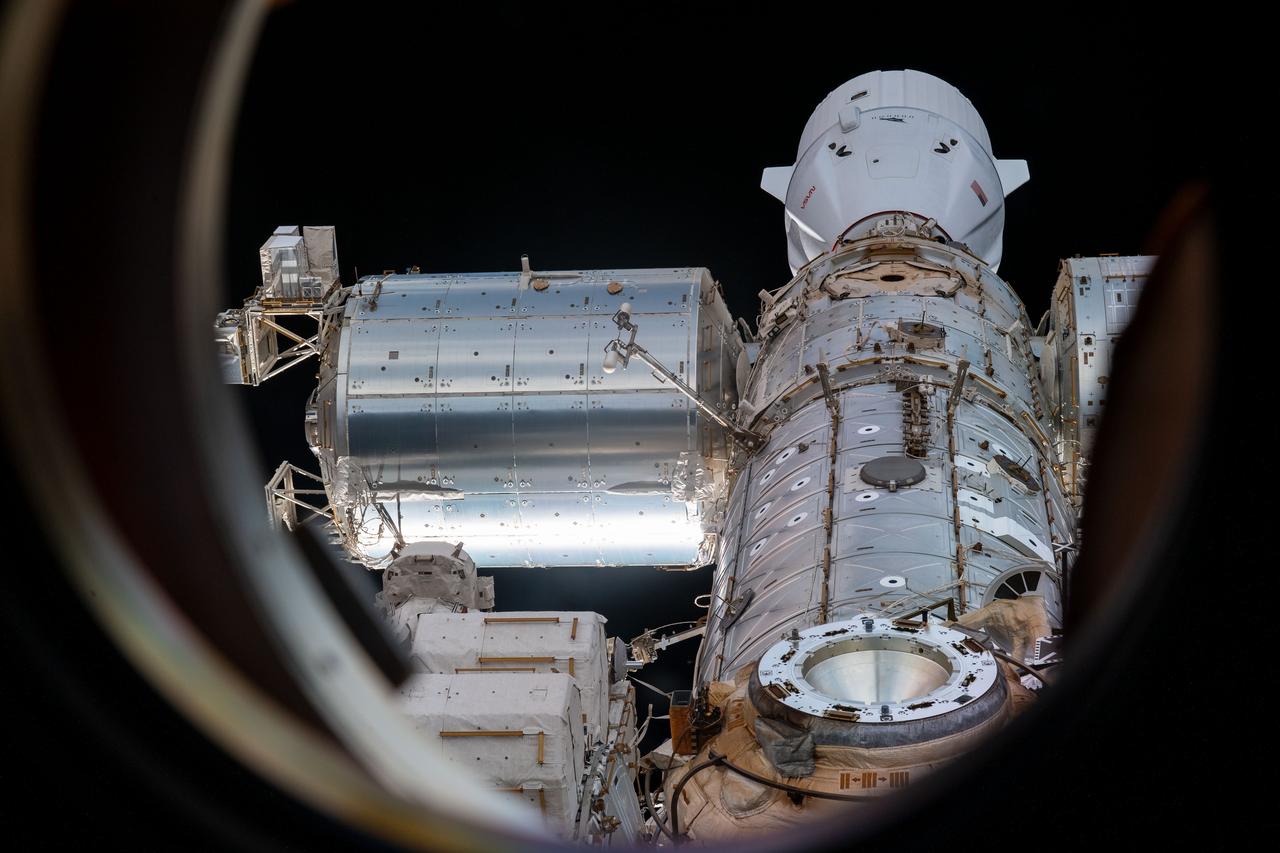
iss065e214029 (Aug. 2, 2021) --- Russia's "Nauka" Multipurpose Laboratory Module is pictured docked to the Zvezda service module's Earth-facing port as the International Space Station orbited 262 miles above the Kenya-Tanzania border on Africa's Indian Ocean coast. In the foreground, is the Soyuz MS-18 crew ship docked to the Rassvet module.
iss065e214029
iss065e431756 (Oct. 2, 2021) --- Expedition 65 Commander Thomas Pesquet of ESA (European Space Agency) collects research samples preserved in science freezers aboard the International Space Station in preparation for stowage inside the SpaceX Cargo Dragon resupply ship for return and analysis on Earth.
iss065e431756
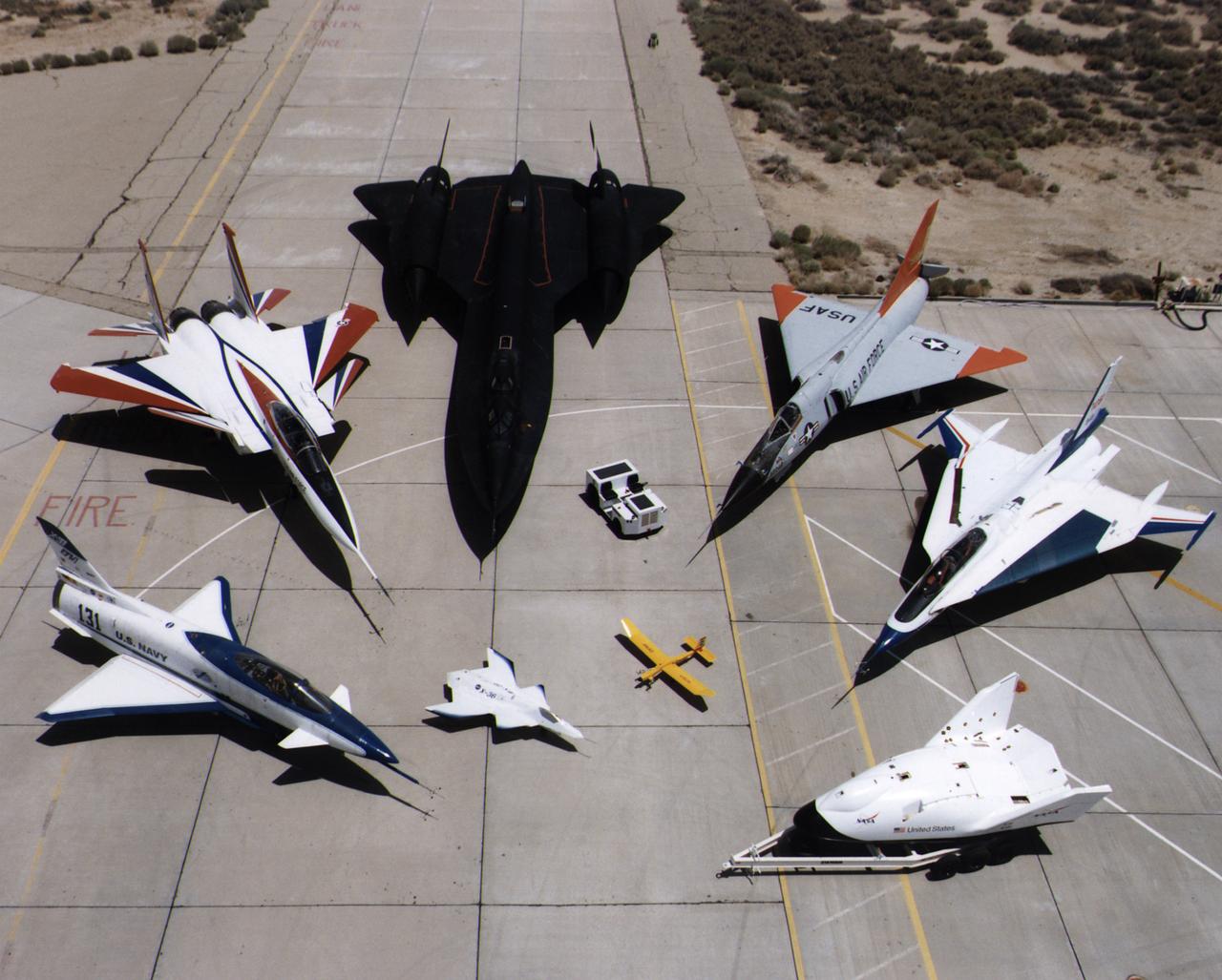
A collection of NASA's research aircraft on the ramp at the Dryden Flight Research Center in July 1997: X-31, F-15 ACTIVE, SR-71, F-106, F-16XL Ship #2, X-38, Radio Controlled Mothership and X-36.
EC97-44165-149
iss067e066735 (May 20, 2022) --- Boeing's CST-100 Starliner crew ship approaches the International Space Station on the company's Orbital Flight Test-2 mission before automatically docking to the Harmony module's forward port. The orbiting lab was flying 268 miles above the south Pacific at the time of this photograph.
iss067e066735
iss065e319503 (Aug. 28, 2021) --- Hurricane Ida is pictured as a category 2 storm from the International Space Station as it orbited 263 miles above the Gulf of Mexico. At left, from top to bottom, are the Nauka multipurpose laboratory module, the Soyuz MS-18 crew ship and the Northrop Grumman Cygnus space freighter.
iss065e319503