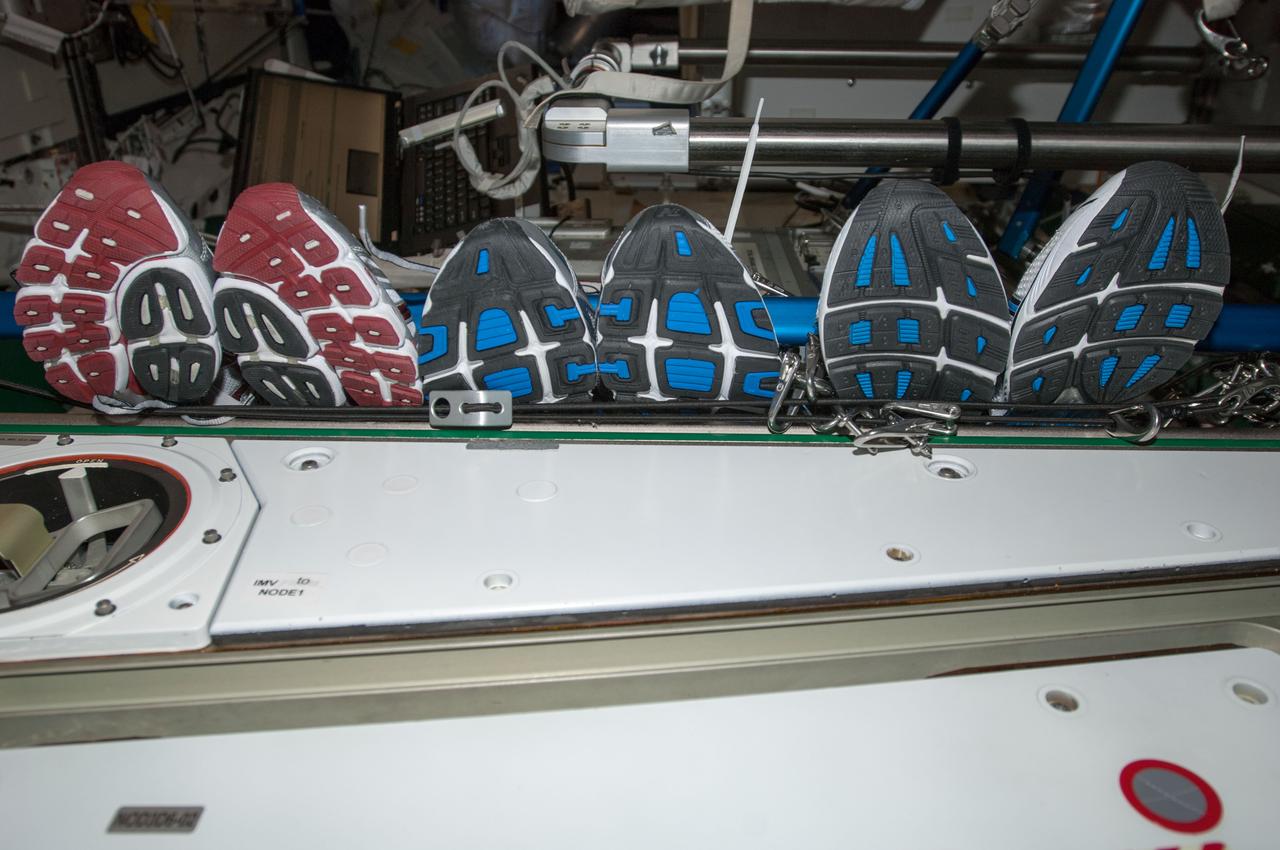
View of stowed tennis shoes,in the Node 3. Photo was taken during Expedition 34.
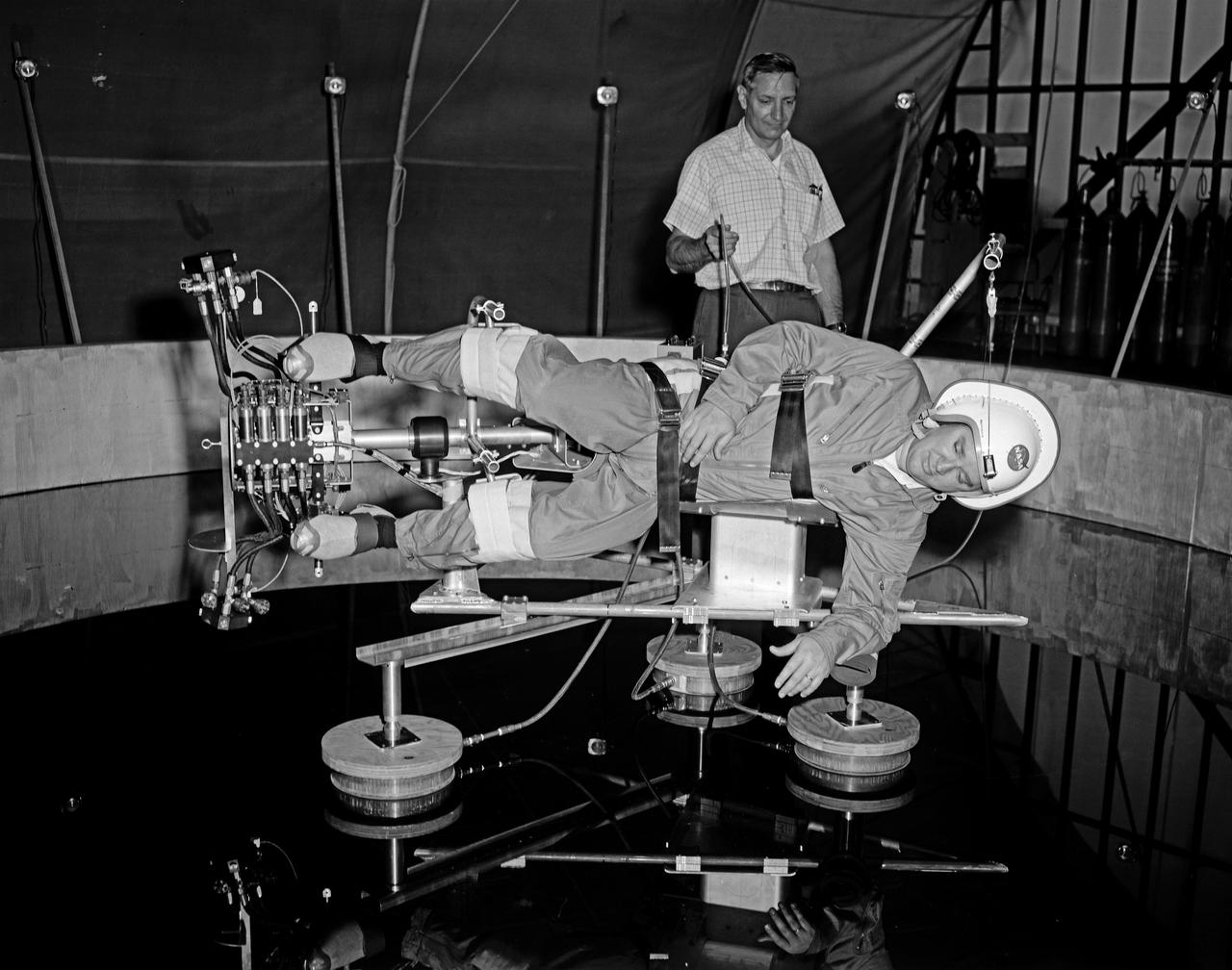
Jet Shoe Simulator
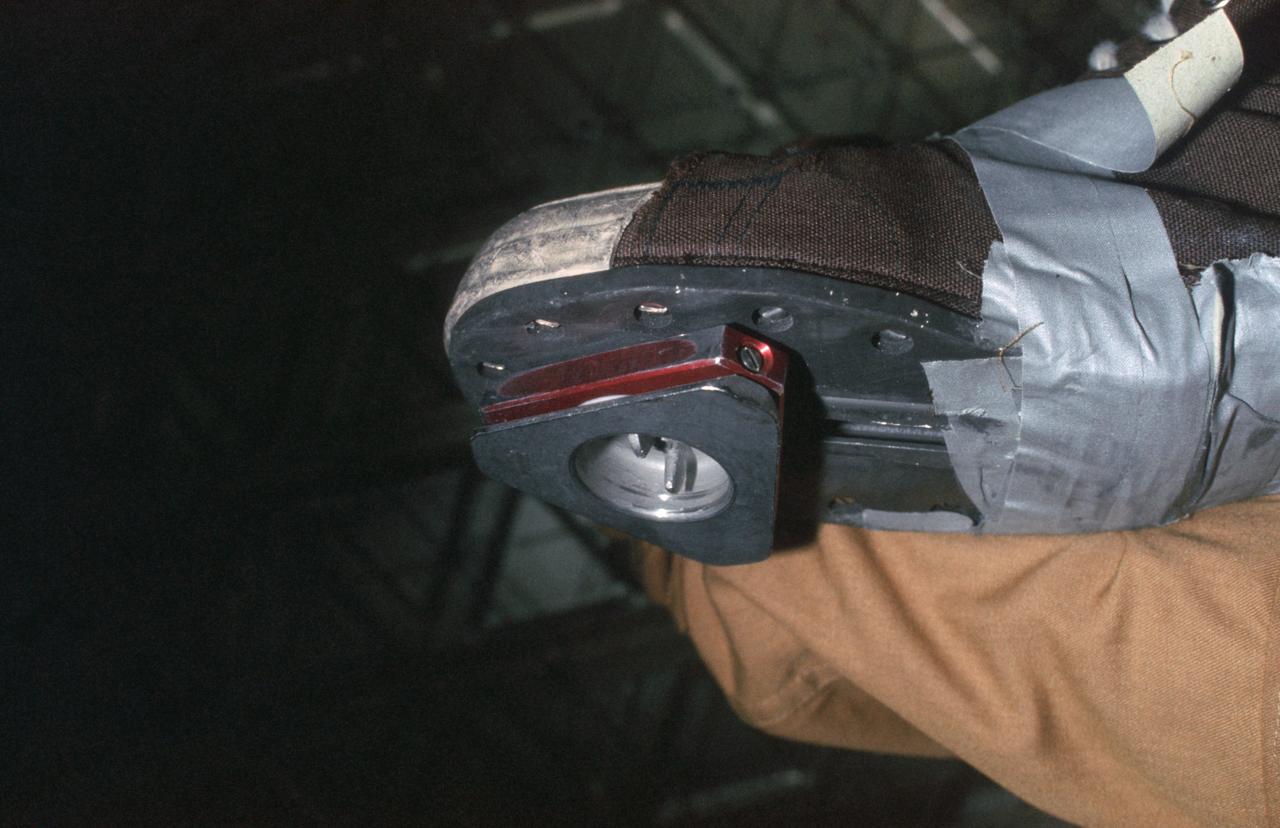
SL4-149-5036 (February 1974) --- View of triangle-shaped cleat taped on the bottom of a shoe of a Skylab 4 crew member. Photo credit: NASA
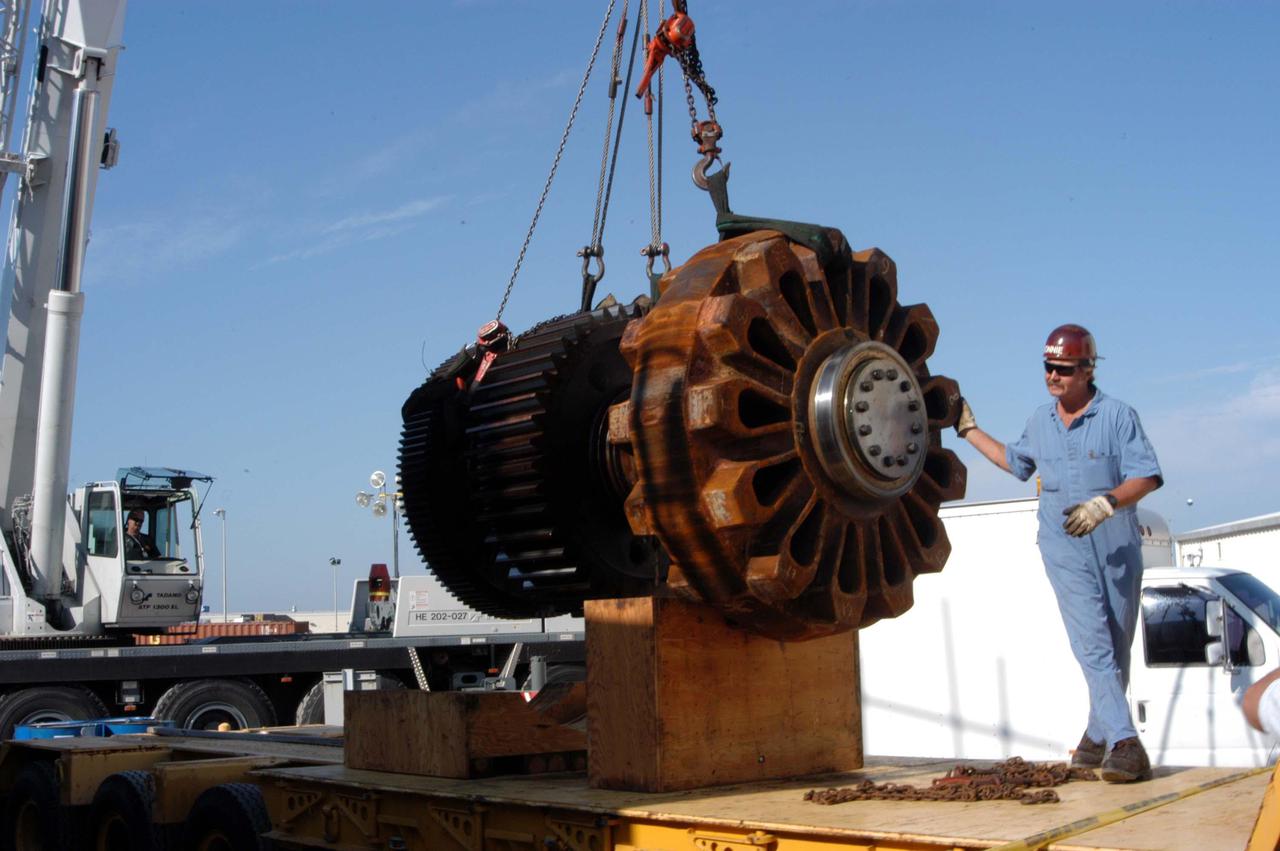
KENNEDY SPACE CENTER, FLA. - A worker watches as the giant-sized gear (left side) and sprocket (right side) is moved. It will be installed on a Crawler-Tranporter (CT). The drive sprocket turns the belt on the CT. The sprocket is mated to the gear that attaches to the drive motor. The CT travels on eight tracked tread belts, each containing 57 tread belt shoes, for a combined weight of 957,600 pounds. The CT carries the Space Shuttle atop its Mobile Launcher Platform, adding another 12 million pounds, from the Vehicle Assembly Building to the launch pad. NASA and United Space Alliance (USA) CT system engineers and USA technicians are repairing the sprockets and rollers on each belt before new shoes are installed. Replacement of the sprockets, gears and shoes is part of the most extensive maintenance work performed on the CT in its history.
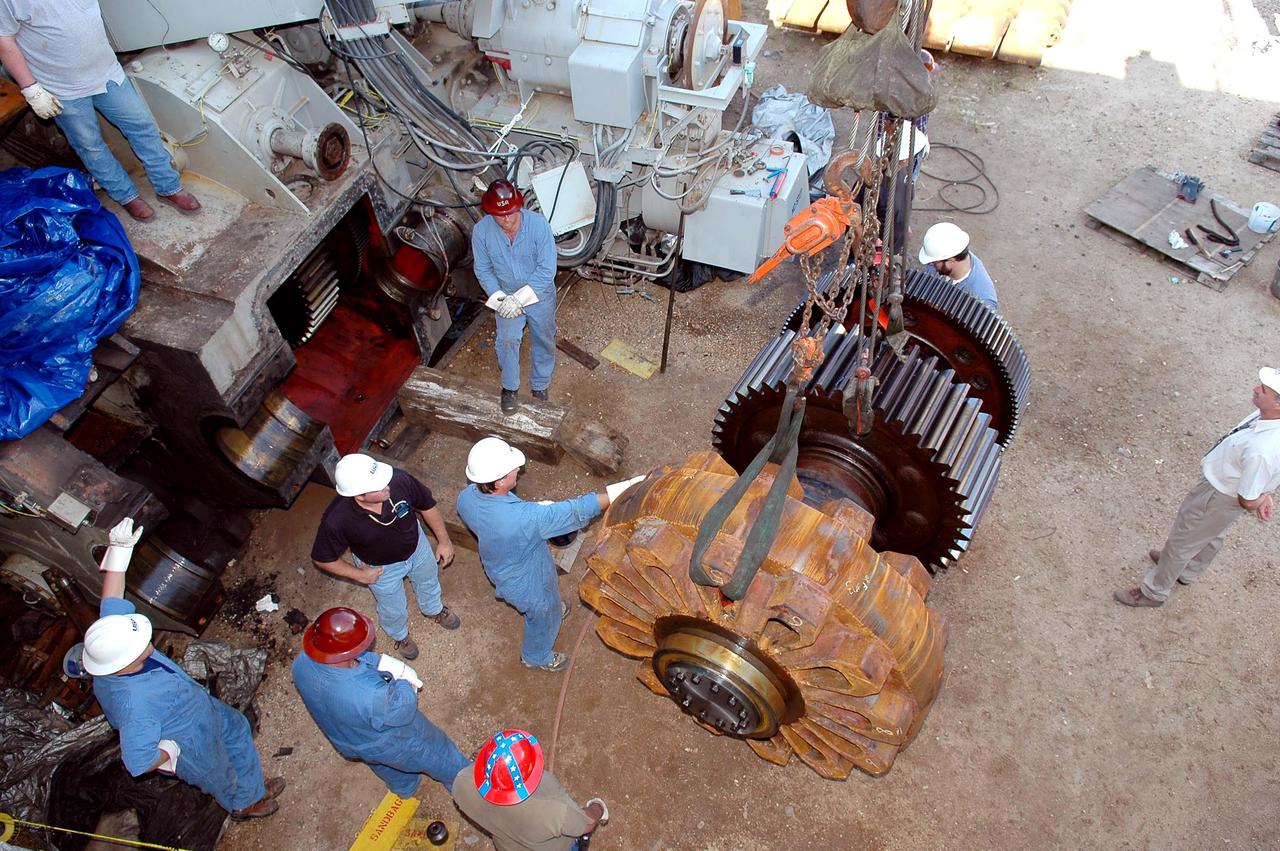
KENNEDY SPACE CENTER, FLA. - Workers get ready to install the giant-sized sprocket (left side) and gear (right side) on the Crawler-Transporter at left. The drive sprocket turns the belt on the CT. The sprocket is mated to the gear that attaches to the drive motor. The CT travels on eight tracked tread belts, each containing 57 tread belt shoes, for a combined weight of 957,600 pounds. The CT carries the Space Shuttle atop its Mobile Launcher Platform, adding another 12 million pounds, from the Vehicle Assembly Building to the launch pad. NASA and United Space Alliance (USA) CT system engineers and USA technicians are repairing the sprockets and rollers on each belt before new shoes are installed. Replacement of the sprockets, gears and shoes is part of the most extensive maintenance work performed on the CT in its history.
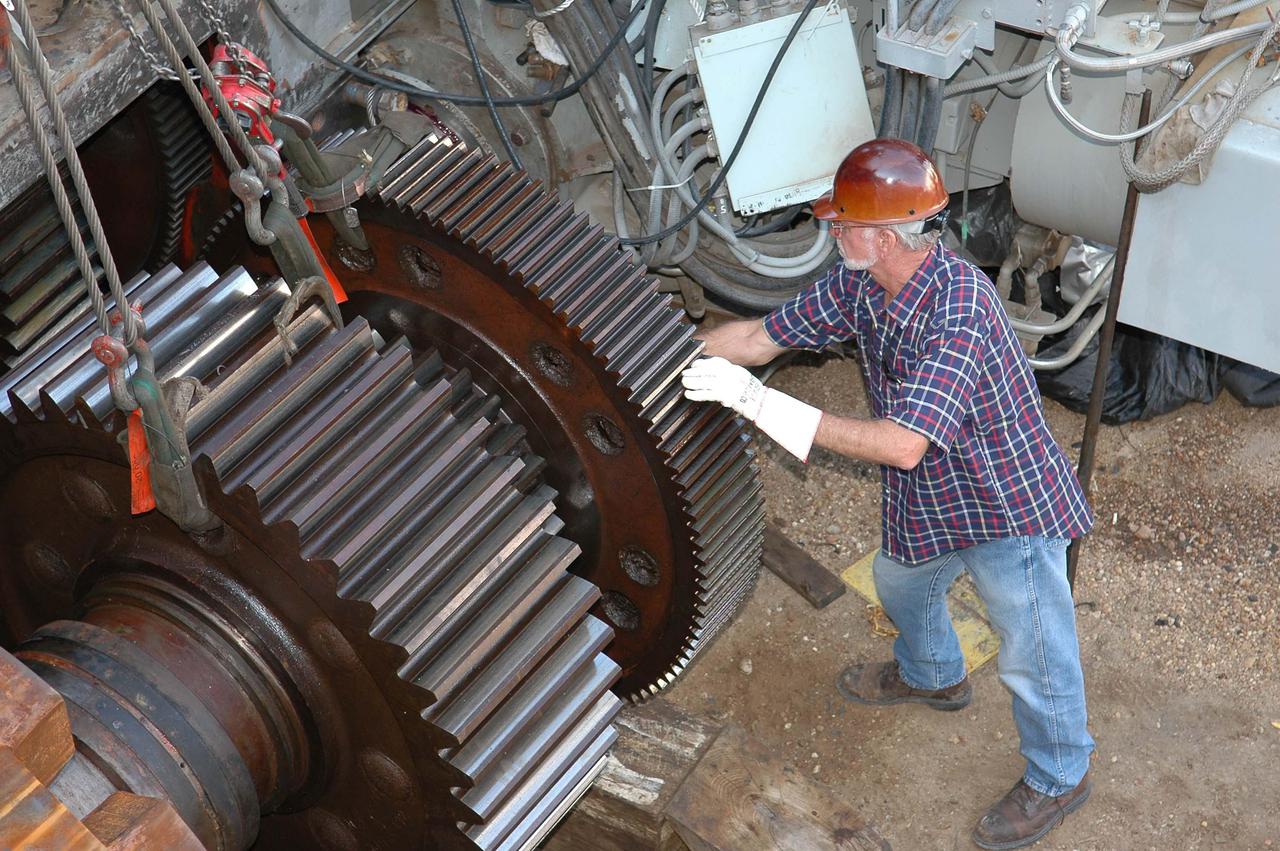
KENNEDY SPACE CENTER, FLA. - A worker maneuvers the gear into position on the Crawler-Transporter. At far left is the giant-sized sprocket. The drive sprocket turns the belt on the CT. The sprocket is mated to the gear that attaches to the drive motor. The CT travels on eight tracked tread belts, each containing 57 tread belt shoes, for a combined weight of 957,600 pounds. The CT carries the Space Shuttle atop its Mobile Launcher Platform, adding another 12 million pounds, from the Vehicle Assembly Building to the launch pad. NASA and United Space Alliance (USA) CT system engineers and USA technicians are repairing the sprockets and rollers on each belt before new shoes are installed. Replacement of the sprockets, gears and shoes is part of the most extensive maintenance work performed on the CT in its history.
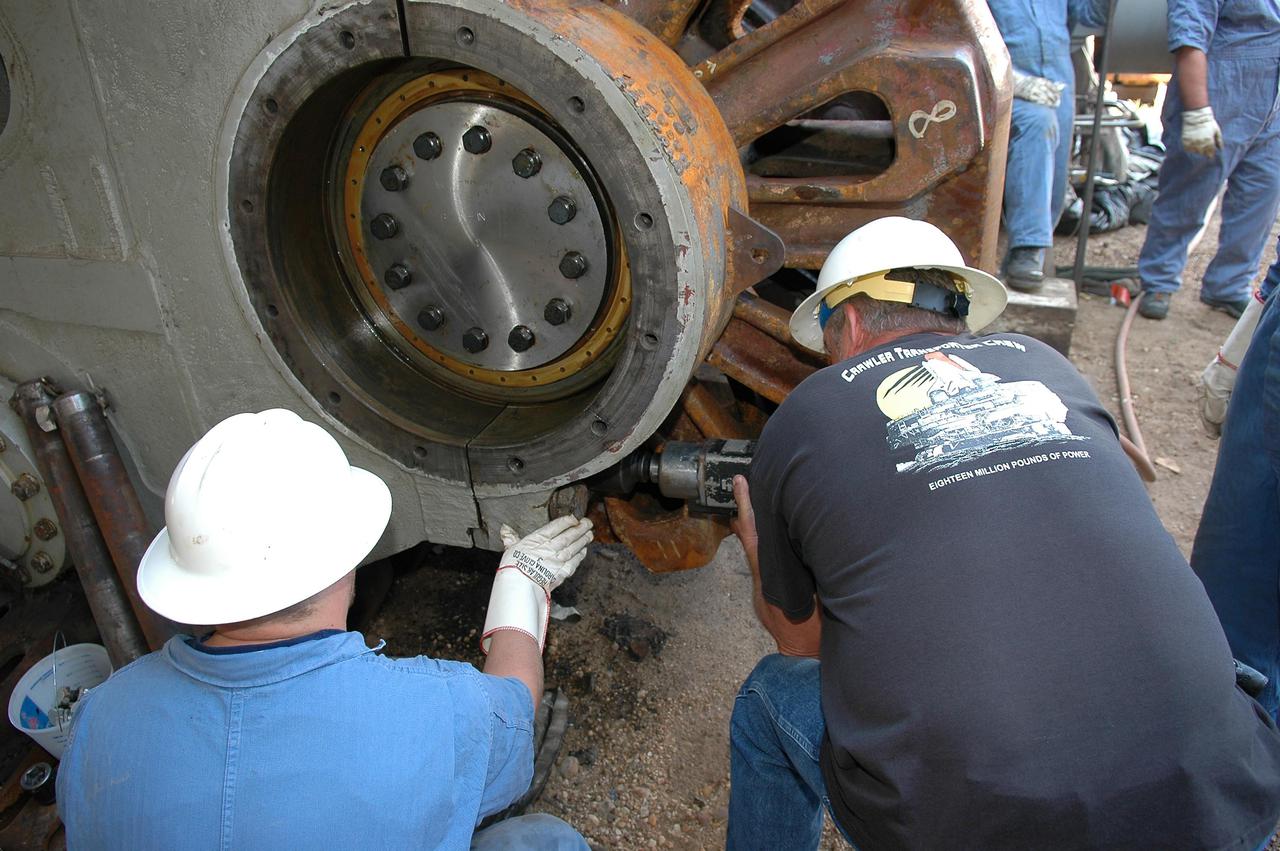
KENNEDY SPACE CENTER, FLA. - Workers attach the giant sprocket and attached gear onto the Crawler-Transporter. The drive sprocket turns the belt on the CT. The sprocket is mated to the gear that attaches to the drive motor. The CT travels on eight tracked tread belts, each containing 57 tread belt shoes, for a combined weight of 957,600 pounds. The CT carries the Space Shuttle atop its Mobile Launcher Platform, adding another 12 million pounds, from the Vehicle Assembly Building to the launch pad. NASA and United Space Alliance (USA) CT system engineers and USA technicians are repairing the sprockets and rollers on each belt before new shoes are installed. Replacement of the sprockets, gears and shoes is part of the most extensive maintenance work performed on the CT in its history.
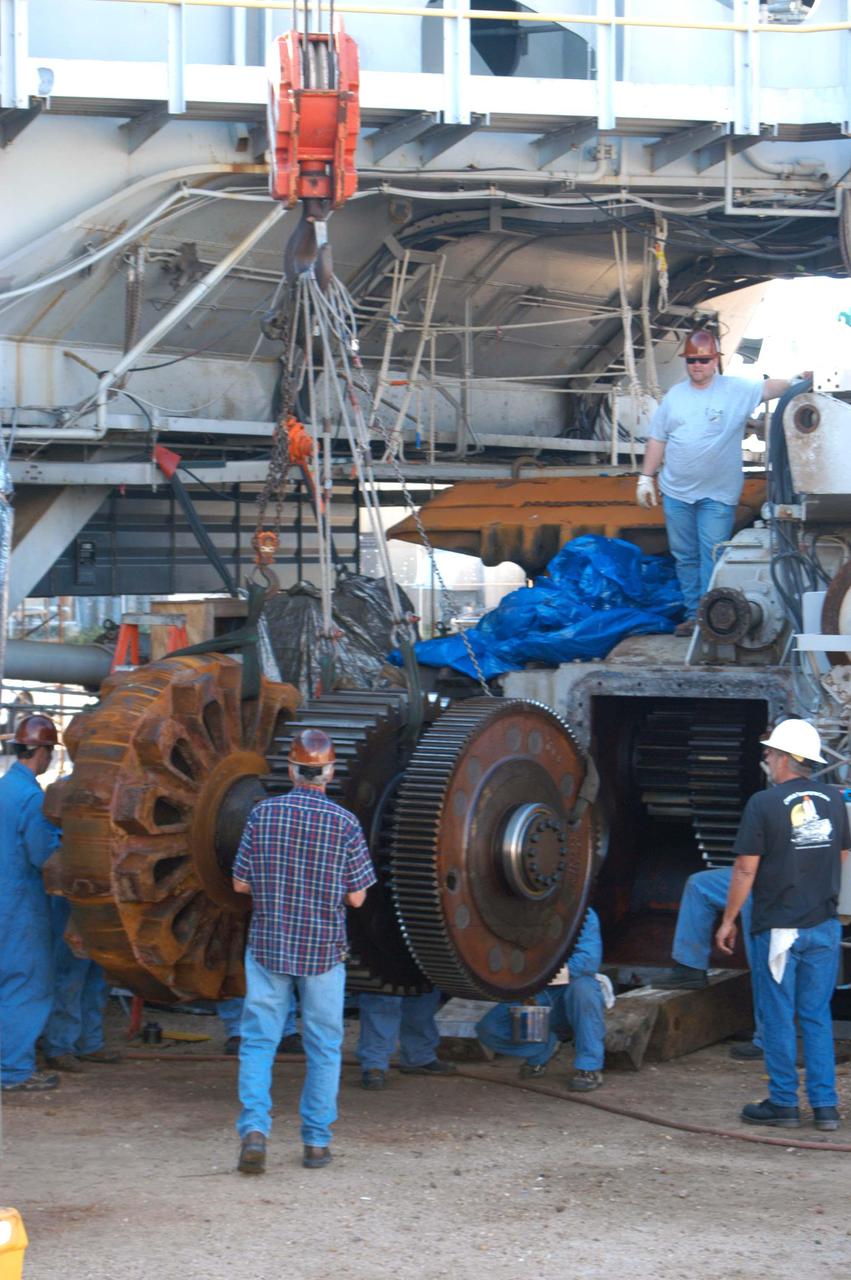
KENNEDY SPACE CENTER, FLA. - Workers get ready to install the giant-sized sprocket (left side) and gear (right side) on the Crawler-Transporter behind it.The drive sprocket turns the belt on the CT. The sprocket is mated to the gear that attaches to the drive motor. The CT travels on eight tracked tread belts, each containing 57 tread belt shoes, for a combined weight of 957,600 pounds. The CT carries the Space Shuttle atop its Mobile Launcher Platform, adding another 12 million pounds, from the Vehicle Assembly Building to the launch pad. NASA and United Space Alliance (USA) CT system engineers and USA technicians are repairing the sprockets and rollers on each belt before new shoes are installed. Replacement of the sprockets, gears and shoes is part of the most extensive maintenance work performed on the CT in its history.
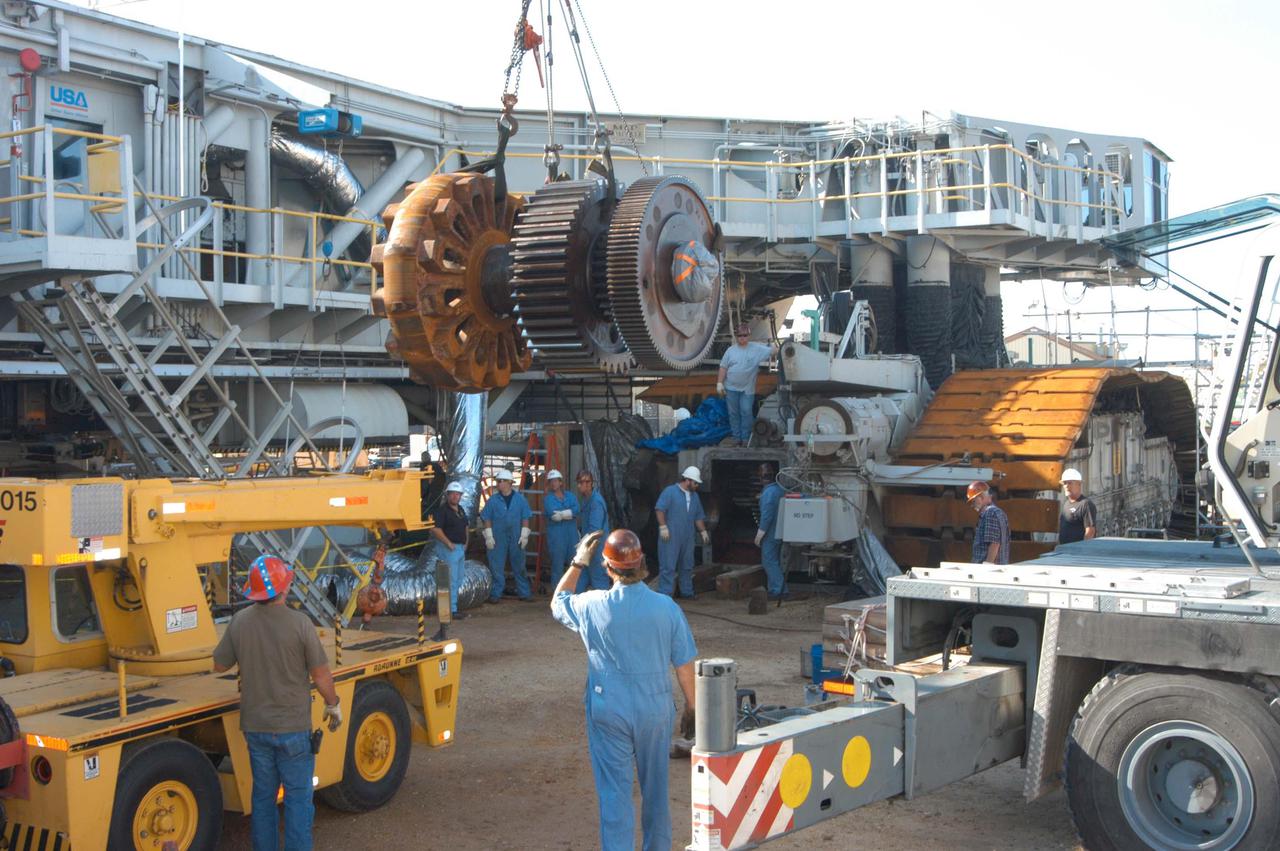
KENNEDY SPACE CENTER, FLA. - The giant-sized sprocket (left) and gear (right) is moved toward the Crawler-Transporter in the background for installation. The drive sprocket turns the belt on the CT. The sprocket is mated to the gear that attaches to the drive motor. The CT travels on eight tracked tread belts, each containing 57 tread belt shoes, for a combined weight of 957,600 pounds. The CT carries the Space Shuttle atop its Mobile Launcher Platform, adding another 12 million pounds, from the Vehicle Assembly Building to the launch pad. NASA and United Space Alliance (USA) CT system engineers and USA technicians are repairing the sprockets and rollers on each belt before new shoes are installed. Replacement of the sprockets, gears and shoes is part of the most extensive maintenance work performed on the CT in its history.
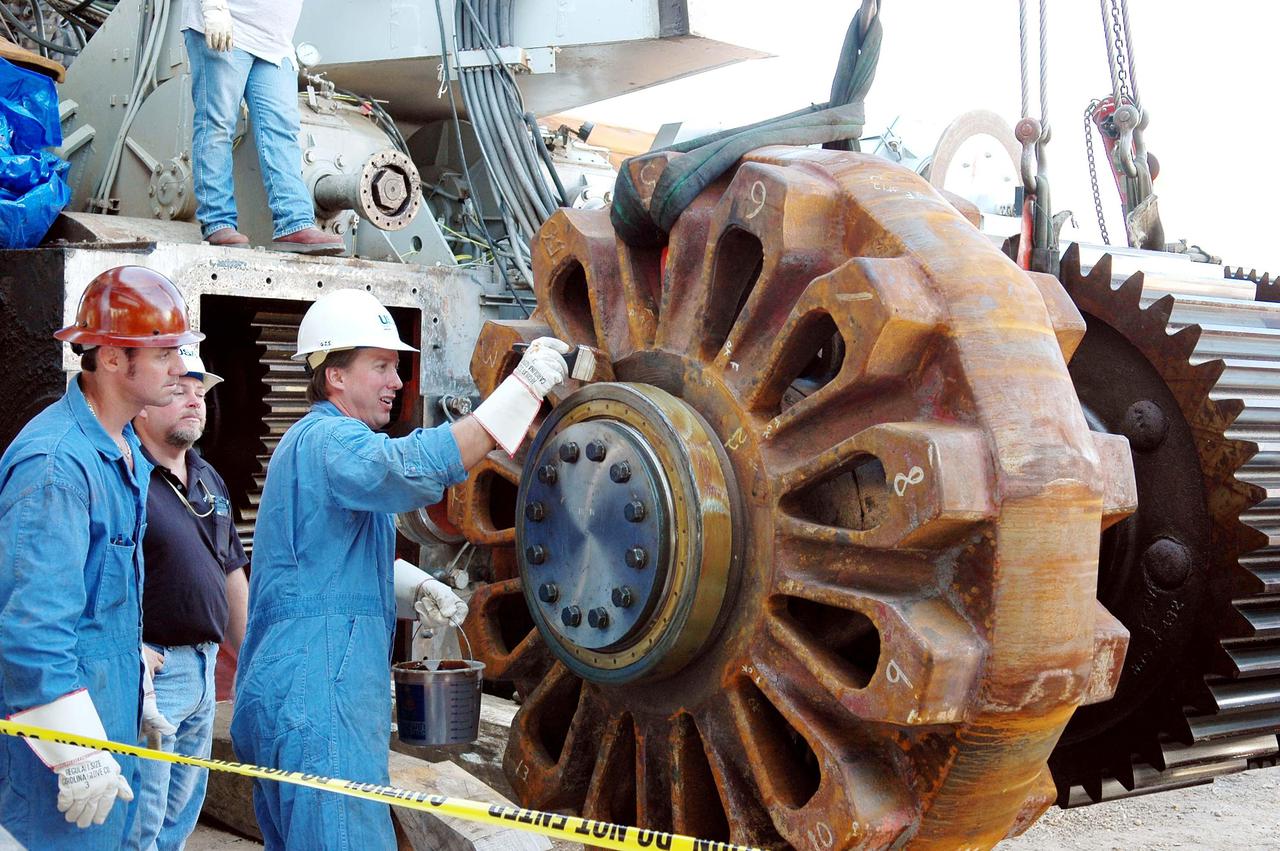
KENNEDY SPACE CENTER, FLA. - A worker greases the giant sprocket that will be installed on the Crawler-Transporter (background). The drive sprocket turns the belt on the CT. The sprocket is mated to the gear that attaches to the drive motor. The CT travels on eight tracked tread belts, each containing 57 tread belt shoes, for a combined weight of 957,600 pounds. The CT carries the Space Shuttle atop its Mobile Launcher Platform, adding another 12 million pounds, from the Vehicle Assembly Building to the launch pad. NASA and United Space Alliance (USA) CT system engineers and USA technicians are repairing the sprockets and rollers on each belt before new shoes are installed. Replacement of the sprockets, gears and shoes is part of the most extensive maintenance work performed on the CT in its history.
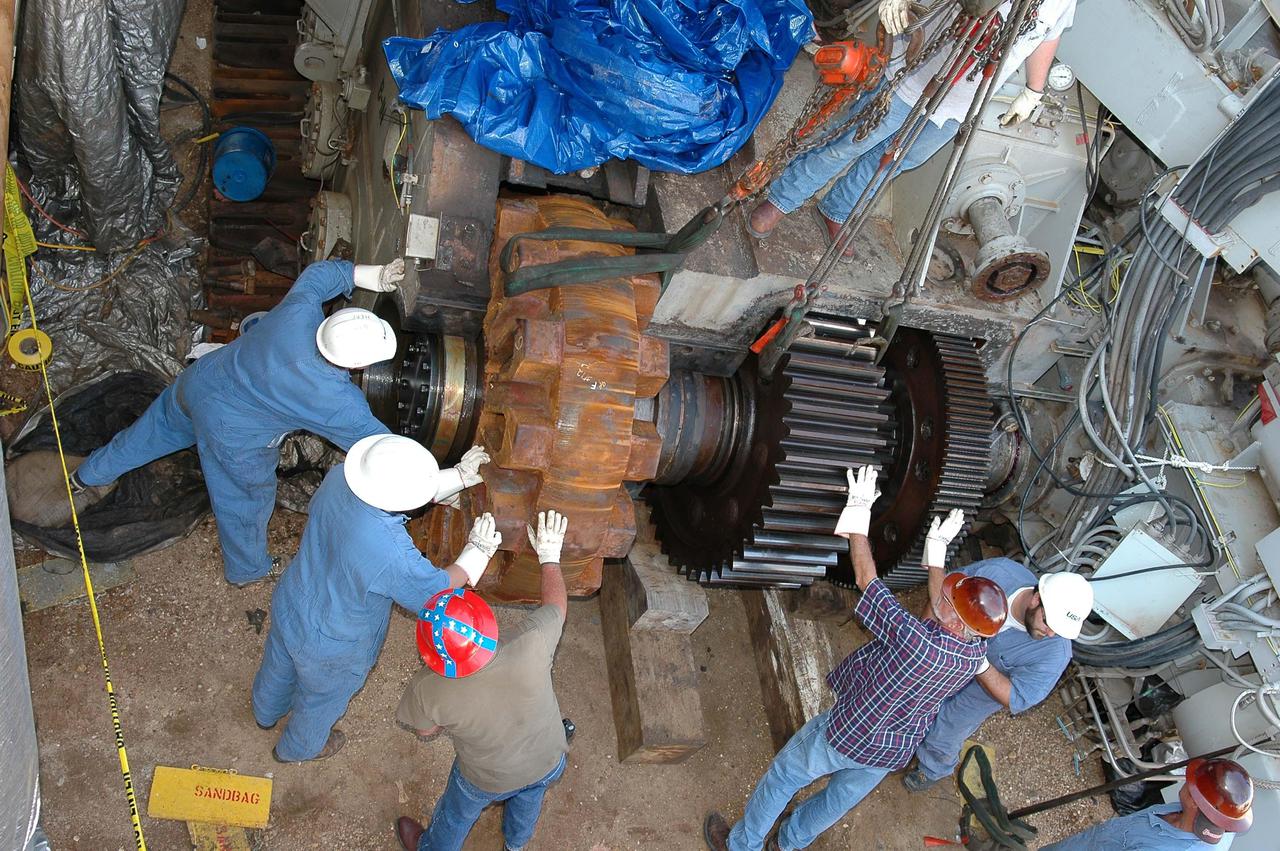
KENNEDY SPACE CENTER, FLA. - Workers maneuver the giant sprocket (left) and attached gear (right) into position on the Crawler-Transporter. The drive sprocket turns the belt on the CT. The sprocket is mated to the gear that attaches to the drive motor. The CT travels on eight tracked tread belts, each containing 57 tread belt shoes, for a combined weight of 957,600 pounds. The CT carries the Space Shuttle atop its Mobile Launcher Platform, adding another 12 million pounds, from the Vehicle Assembly Building to the launch pad. NASA and United Space Alliance (USA) CT system engineers and USA technicians are repairing the sprockets and rollers on each belt before new shoes are installed. Replacement of the sprockets, gears and shoes is part of the most extensive maintenance work performed on the CT in its history.
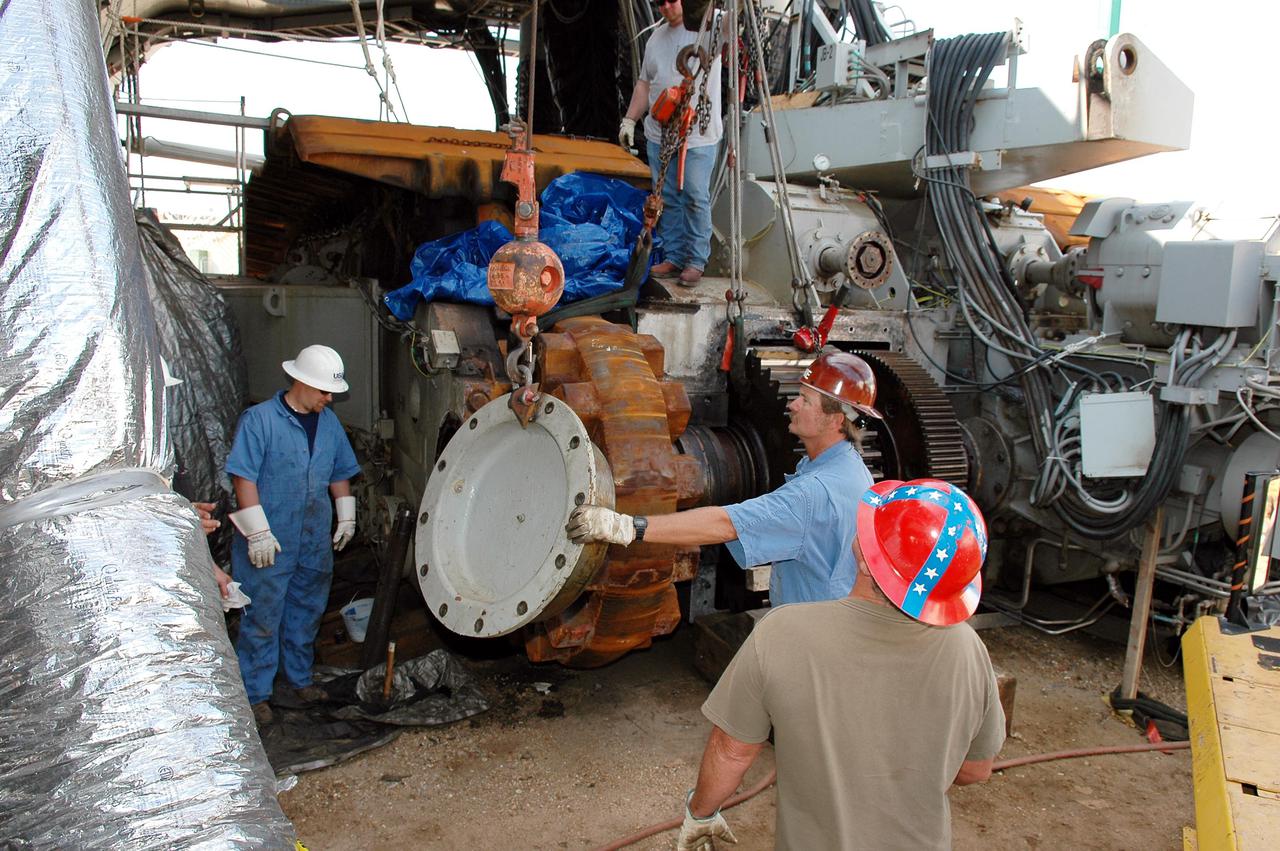
KENNEDY SPACE CENTER, FLA. - Workers move the hub toward the gear, where it will be attached, on the Crawler-Transporter. The drive sprocket turns the belt on the CT. The sprocket is mated to the gear that attaches to the drive motor. The CT travels on eight tracked tread belts, each containing 57 tread belt shoes, for a combined weight of 957,600 pounds. The CT carries the Space Shuttle atop its Mobile Launcher Platform, adding another 12 million pounds, from the Vehicle Assembly Building to the launch pad. NASA and United Space Alliance (USA) CT system engineers and USA technicians are repairing the sprockets and rollers on each belt before new shoes are installed. Replacement of the sprockets, gears and shoes is part of the most extensive maintenance work performed on the CT in its history.
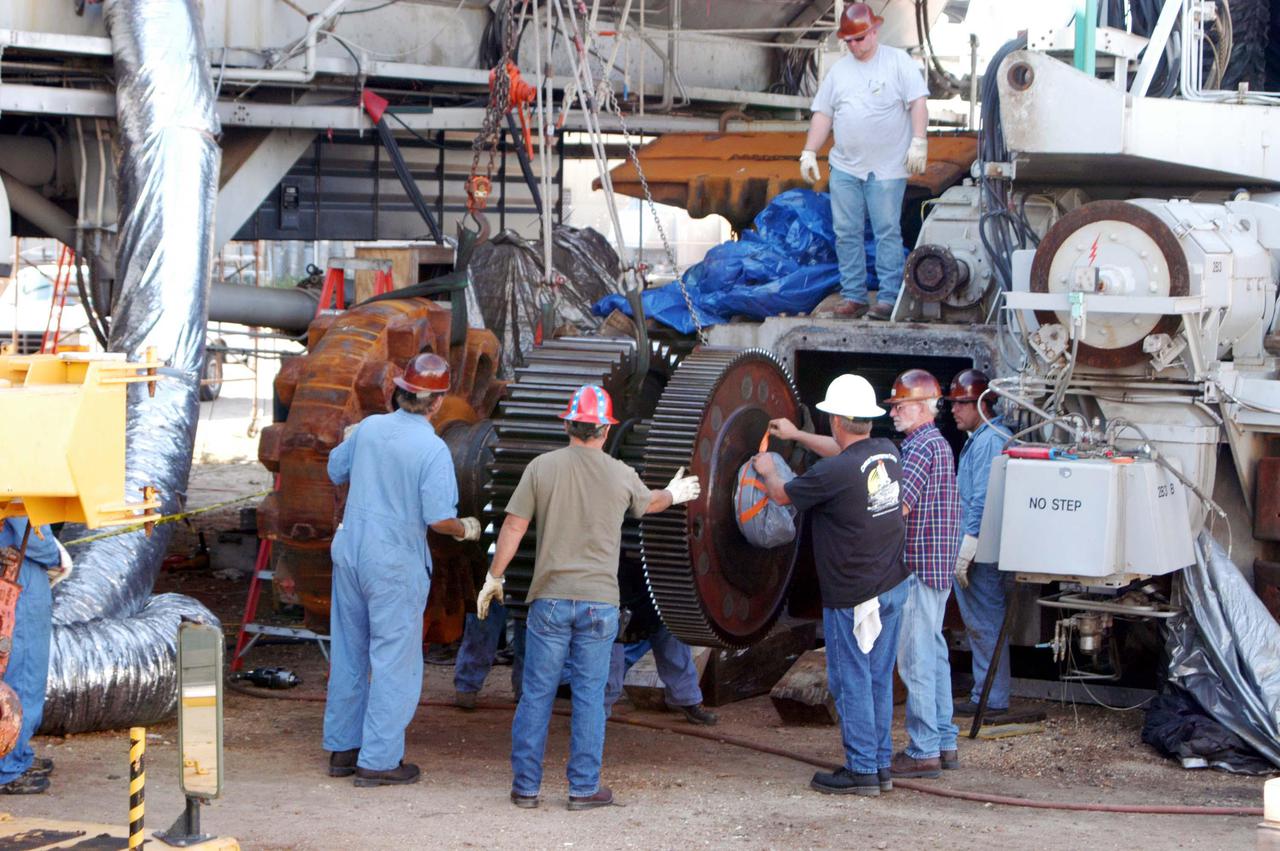
KENNEDY SPACE CENTER, FLA. - Workers maneuver the giant-sized sprocket (left side) and gear (right side) for installation on the Crawler-Transporter behind it. The drive sprocket turns the belt on the CT. The sprocket is mated to the gear that attaches to the drive motor. The CT travels on eight tracked tread belts, each containing 57 tread belt shoes, for a combined weight of 957,600 pounds. The CT carries the Space Shuttle atop its Mobile Launcher Platform, adding another 12 million pounds, from the Vehicle Assembly Building to the launch pad. NASA and United Space Alliance (USA) CT system engineers and USA technicians are repairing the sprockets and rollers on each belt before new shoes are installed. Replacement of the sprockets, gears and shoes is part of the most extensive maintenance work performed on the CT in its history.
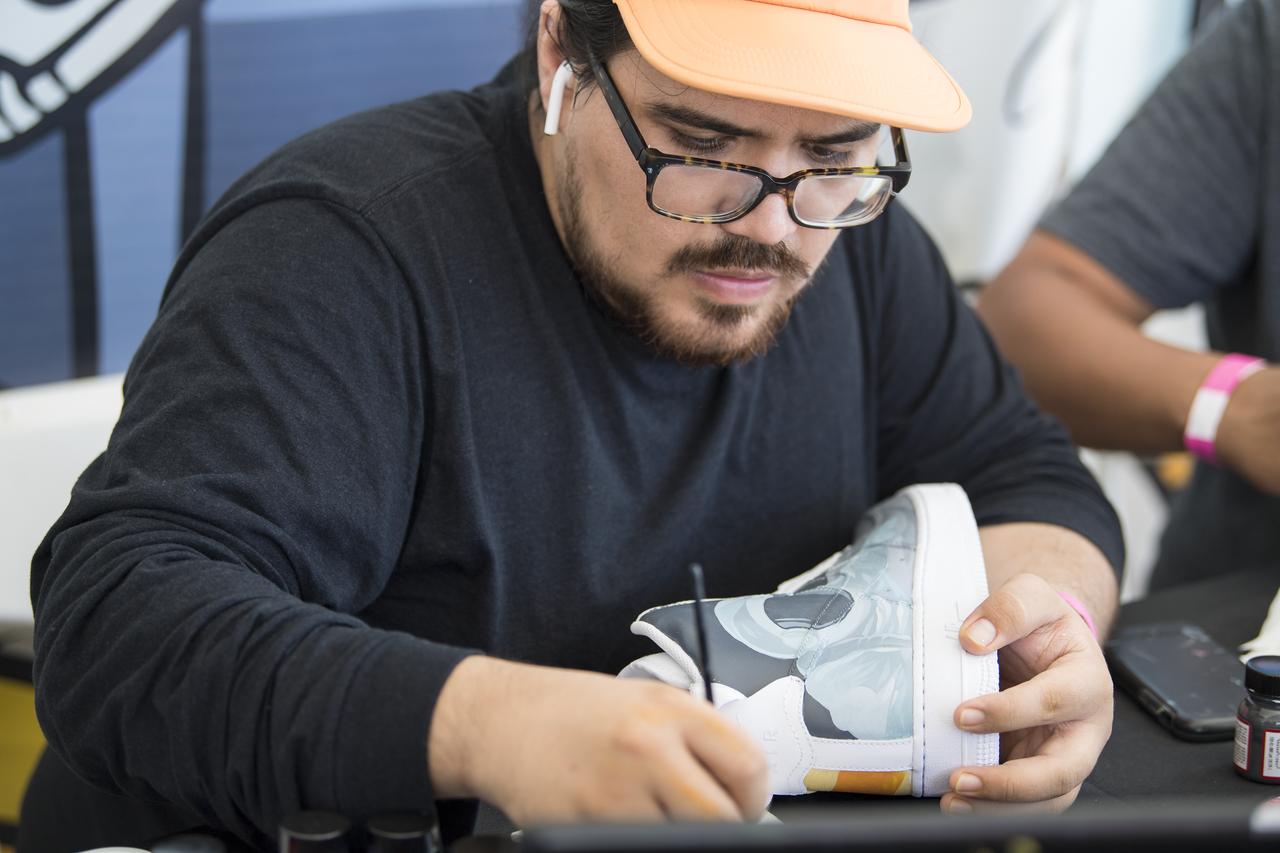
Artist David Maldonado paints a pair of high top shoes with a space themed design at the Apollo 11 50th Anniversary celebration on the National Mall, Friday, July 19, 2019 in Washington. Apollo 11 was the first mission to land astronauts on the Moon and launched on July 16, 1969 with astronauts Neil Armstrong, Michael Collins, and Buzz Aldrin. Photo Credit: (NASA/Aubrey Gemignani)

Artist David Maldonado paints a pair of high top shoes with a space themed design at the Apollo 11 50th Anniversary celebration on the National Mall, Friday, July 19, 2019 in Washington. Apollo 11 was the first mission to land astronauts on the Moon and launched on July 16, 1969 with astronauts Neil Armstrong, Michael Collins, and Buzz Aldrin. Photo Credit: (NASA/Aubrey Gemignani)
![Test subject wearing jet-shoe apparatus and resting in sling support. The cables are not attached. From A.W. Vogeley, "Piloted Space-Flight Simulation at Langley Research Center," Paper presented at the American Society of Mechanical Engineers, 1966 Winter Meeting, New York, NY, November 27 - December 1, 1966. "As mentioned previously, Langley is conducting in-house and contract studies of extra-vehicular activities wherein zero gravity is simulated by the water-immersion technique. ... Water immersion is a very useful technique where motions are slow. When more rapid motion is required, as in studying one-man propulsion systems, other approaches are required. For these studies Langley has been using the RDS [Rendezvous Docking Simulator] in a manner similar to the LLRF [Lunar Landing Research Facility] technique. The test subjects are suspended in a sling support from a single RDS cable. As they translate about, the RDS tracks them, keeping the cable vertical. The test subjects operate in an effectively zero g environment in the horizontal plane. Tracking was originally done visually using closed-circuit TV, but recently a fast-response servo system using cable angle sensors has provided better operation. Some results of tests where subjects moved about merely by jumping and also where propulsion in the form of simple "jet-shoes" was provided are given in reference 20. Both methods, within limits, appear feasible. Full six-degree-of-freedom equipment for studies of more sophisticated one-man propulsion systems is now being procured. Called OMPRA (One-Man Propulsion Research Apparatus), the device will provide a gimbal system for rotational freedom, a quick response vertical servo for this translational freedom that is not now feasible with the RDS, and a versatile maneuvering unit."](https://images-assets.nasa.gov/image/LRC-1967-B701_P-01373/LRC-1967-B701_P-01373~medium.jpg)
Test subject wearing jet-shoe apparatus and resting in sling support. The cables are not attached. From A.W. Vogeley, "Piloted Space-Flight Simulation at Langley Research Center," Paper presented at the American Society of Mechanical Engineers, 1966 Winter Meeting, New York, NY, November 27 - December 1, 1966. "As mentioned previously, Langley is conducting in-house and contract studies of extra-vehicular activities wherein zero gravity is simulated by the water-immersion technique. ... Water immersion is a very useful technique where motions are slow. When more rapid motion is required, as in studying one-man propulsion systems, other approaches are required. For these studies Langley has been using the RDS [Rendezvous Docking Simulator] in a manner similar to the LLRF [Lunar Landing Research Facility] technique. The test subjects are suspended in a sling support from a single RDS cable. As they translate about, the RDS tracks them, keeping the cable vertical. The test subjects operate in an effectively zero g environment in the horizontal plane. Tracking was originally done visually using closed-circuit TV, but recently a fast-response servo system using cable angle sensors has provided better operation. Some results of tests where subjects moved about merely by jumping and also where propulsion in the form of simple "jet-shoes" was provided are given in reference 20. Both methods, within limits, appear feasible. Full six-degree-of-freedom equipment for studies of more sophisticated one-man propulsion systems is now being procured. Called OMPRA (One-Man Propulsion Research Apparatus), the device will provide a gimbal system for rotational freedom, a quick response vertical servo for this translational freedom that is not now feasible with the RDS, and a versatile maneuvering unit."
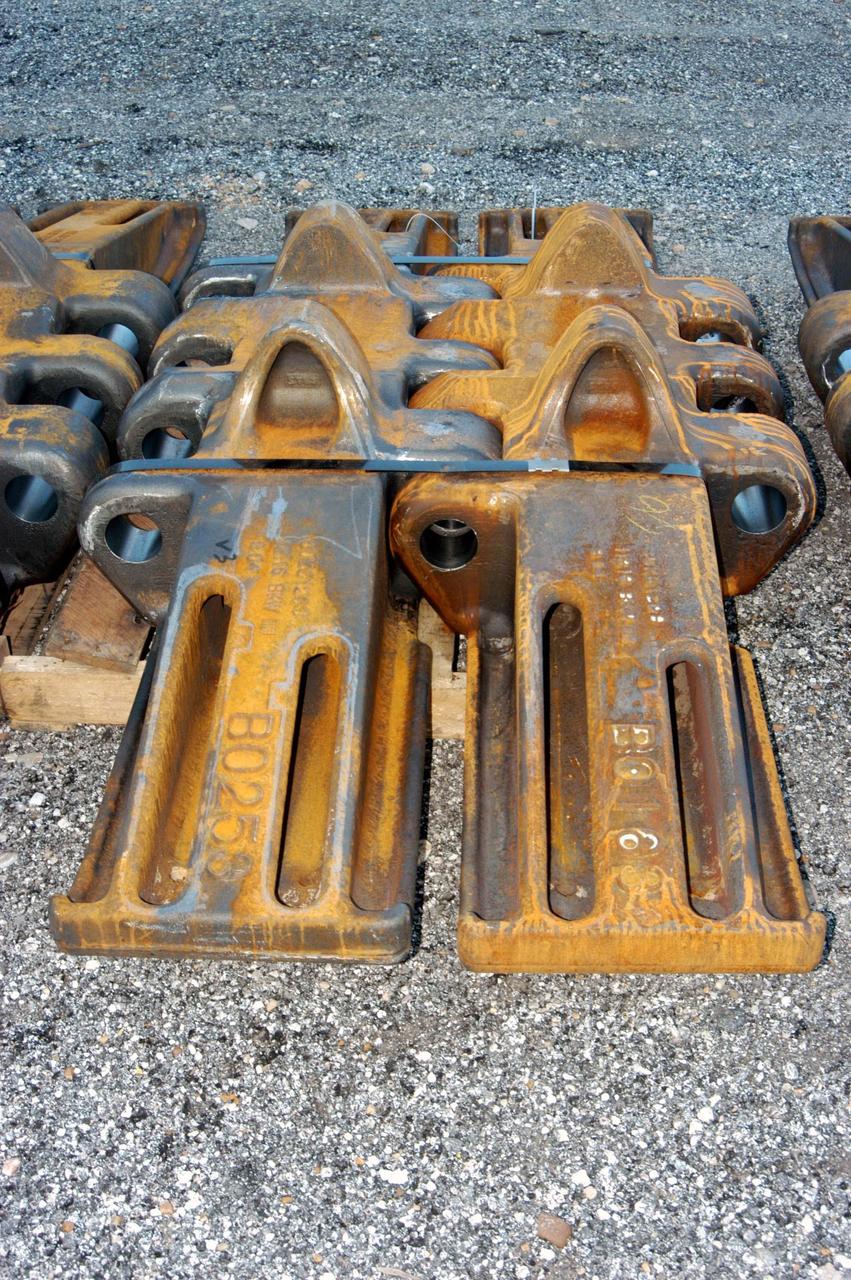
KENNEDY SPACE CENTER, FLA. - A closeup of some of the new crawler shoes that arrived from Minnesota. The new shoes were manufactured by ME Global in Duluth. The CT transports the Mobile Launcher Platform, with the assembled Space Shuttle aboard, between the refurbishment area, the VAB and Launch Complex Pads 39A and 39B. The crawlers have 456 shoes, 57 per belt (8 belts in all). Each shoe weighs 2,200 pounds. The original shoes were manufactured for the Apollo Program. Cracks appeared in the shoes in recent years spurring a need for replacement. The new manufacturer, in Duluth, Minn., has improved the design for Return to Flight and use through the balance of the Space Shuttle Program.
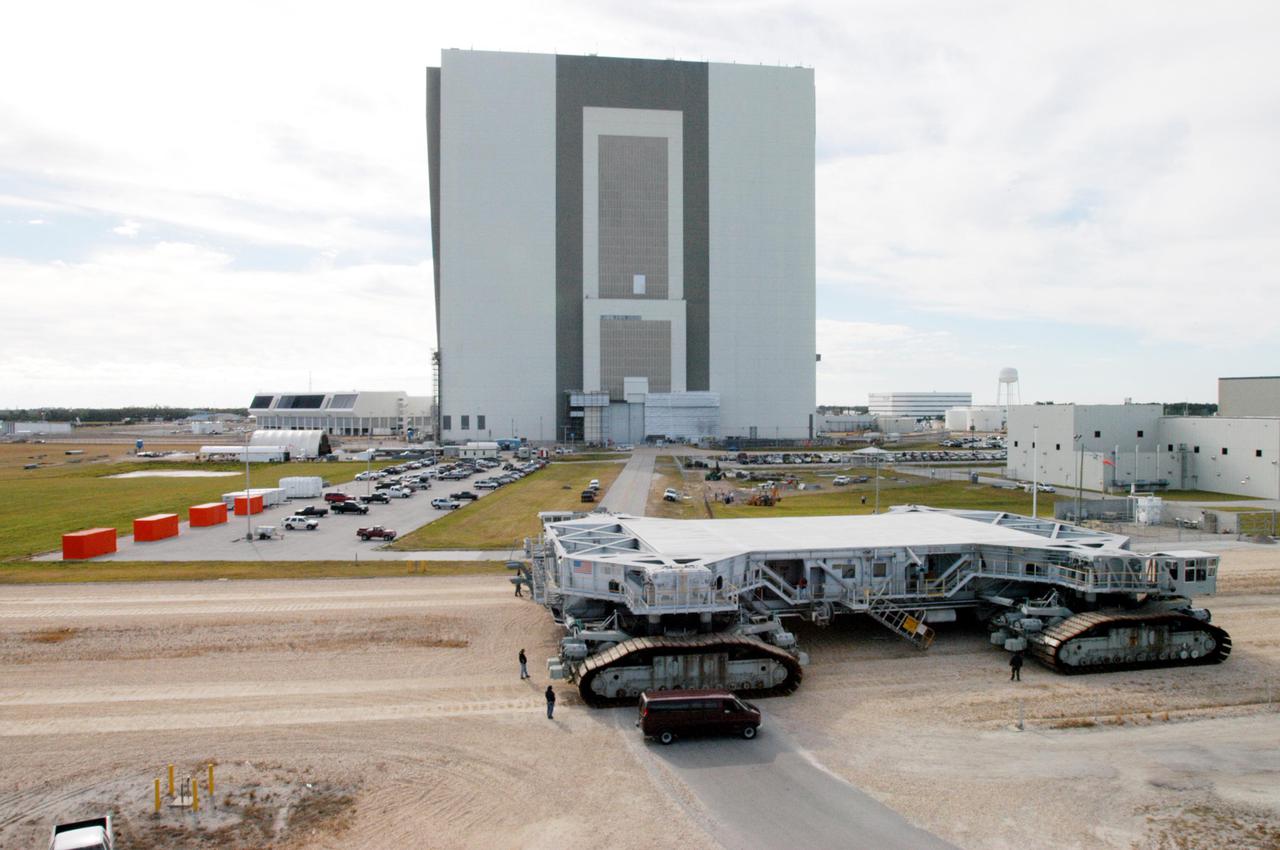
KENNEDY SPACE CENTER, FLA. - The Crawler Transporter sits behind the Vehicle Assembly Building after its road test of the new shoes. The Crawler Transporter that will move Space Shuttle Discovery to the launch pad for Return to Flight is taking its first road test following the replacement of all its shoes. The crawlers have 456 shoes, 57 per belt (8 belts in all). Each shoe weighs 2,200 pounds. Cracks appeared in the shoes in recent years, spurring a need for replacement. The new manufacturer, in Duluth, Minn., has improved the design for a safe Return to Flight and use through the balance of the Space Shuttle Program.
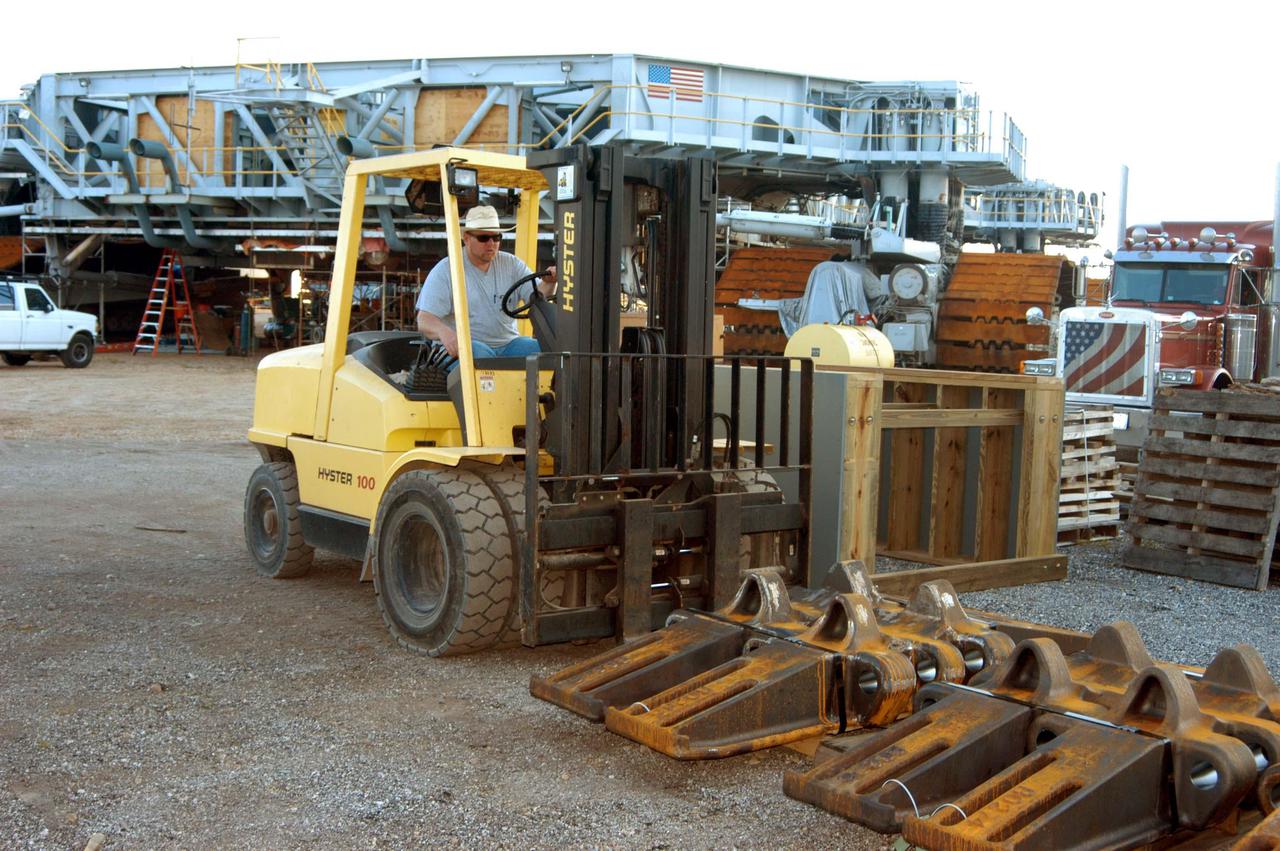
KENNEDY SPACE CENTER, FLA. - In the Crawler Transporter (CT) area, a worker offloads some of the new crawler shoes that arrived from Minnesota. In the background is one of the two CTs. The new shoes were manufactured by ME Global in Duluth, Minn. The CT transports the Mobile Launcher Platform, with the assembled Space Shuttle aboard, between the refurbishment area, the VAB and Launch Complex Pads 39A and 39B. The crawlers have 456 shoes, 57 per belt (8 belts in all). Each shoe weighs 2,200 pounds. The original shoes were manufactured for the Apollo Program. Cracks appeared in the shoes in recent years spurring a need for replacement. The new manufacturer, in Duluth, Minn., has improved the design for Return to Flight and use through the balance of the Space Shuttle Program.
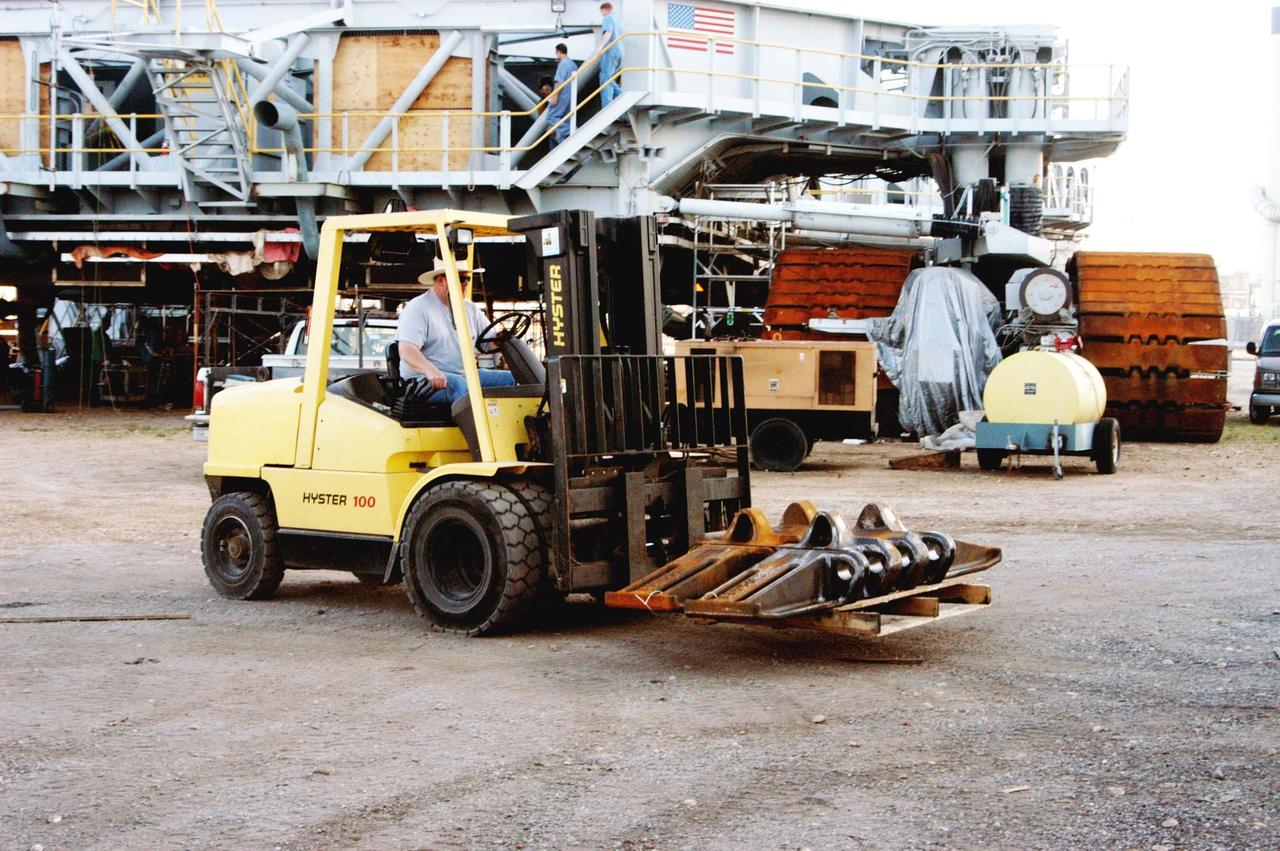
KENNEDY SPACE CENTER, FLA. - In the Crawler Transporter (CT) area, a worker offloads some of the new crawler shoes that arrived. In the background is one of the two CTs. The new shoes were manufactured by ME Global in Duluth, Minn. The CT transports the Mobile Launcher Platform, with the assembled Space Shuttle aboard, between the refurbishment area, the VAB and Launch Complex Pads 39A and 39B. The crawlers have 456 shoes, 57 per belt (8 belts in all). Each shoe weighs 2,200 pounds. The original shoes were manufactured for the Apollo Program. Cracks appeared in the shoes in recent years spurring a need for replacement. The new manufacturer, in Duluth, Minn., has improved the design for Return to Flight and use through the balance of the Space Shuttle Program.

KENNEDY SPACE CENTER, FLA. - A tractor-trailer arrives at the Crawler Transporter (CT) area with a new shipment of crawler shoes. The new shoes were manufactured by ME Global in Duluth, Minn. The CT transports the Mobile Launcher Platform, with the assembled Space Shuttle aboard, between the refurbishment area, the VAB and Launch Complex Pads 39A and 39B. The crawlers have 456 shoes, 57 per belt (8 belts in all). Each shoe weighs 2,200 pounds. The original shoes were manufactured for the Apollo Program. Cracks appeared in the shoes in recent years spurring a need for replacement. The new manufacturer, in Duluth, Minn., has improved the design for Return to Flight and use through the balance of the Space Shuttle Program.
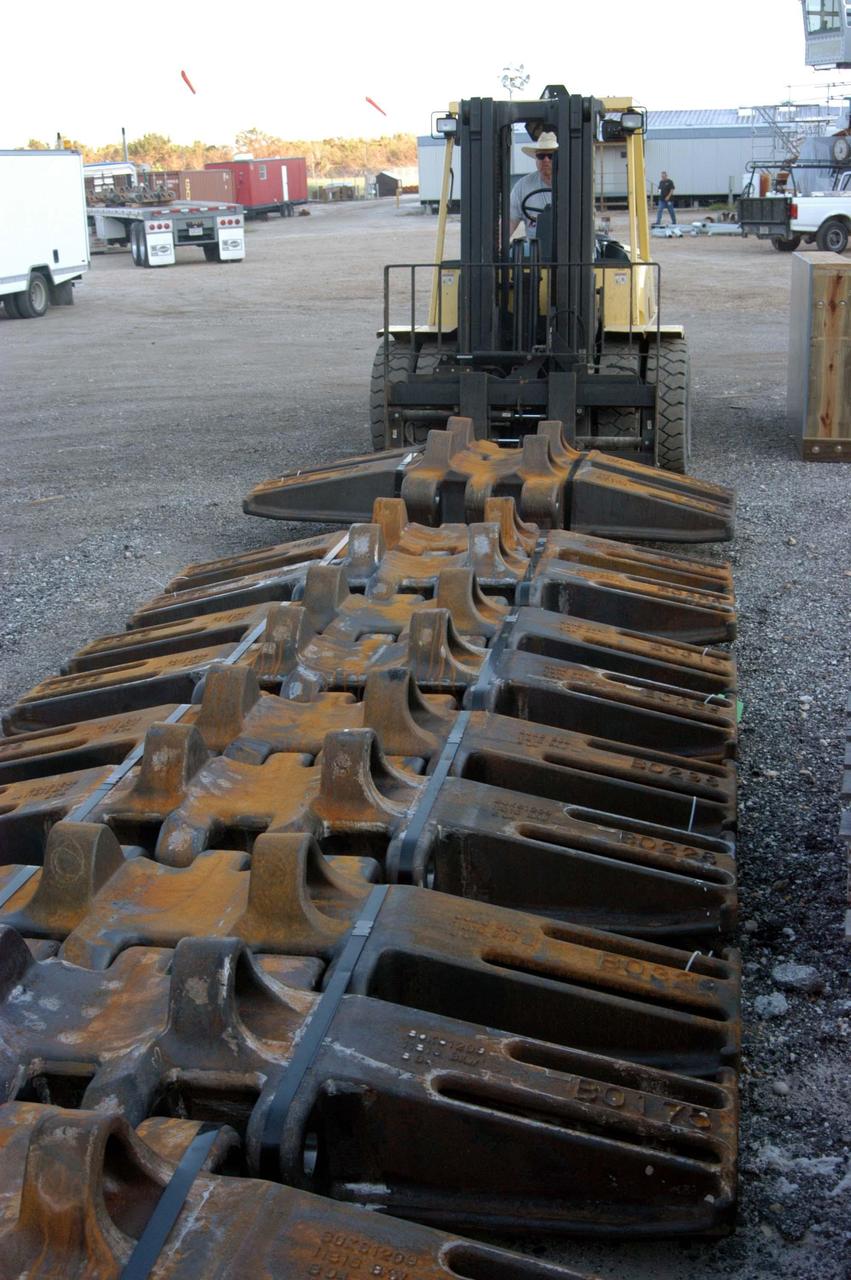
KENNEDY SPACE CENTER, FLA. - In the Crawler Transporter (CT) area, a worker places another load of new crawler shoes on the ground. The new shoes were manufactured by ME Global in Duluth, Minn. The CT transports the Mobile Launcher Platform, with the assembled Space Shuttle aboard, between the refurbishment area, the VAB and Launch Complex Pads 39A and 39B. The crawlers have 456 shoes, 57 per belt (8 belts in all). Each shoe weighs 2,200 pounds. The original shoes were manufactured for the Apollo Program. Cracks appeared in the shoes in recent years spurring a need for replacement. The new manufacturer, in Duluth, Minn., has improved the design for Return to Flight and use through the balance of the Space Shuttle Program.
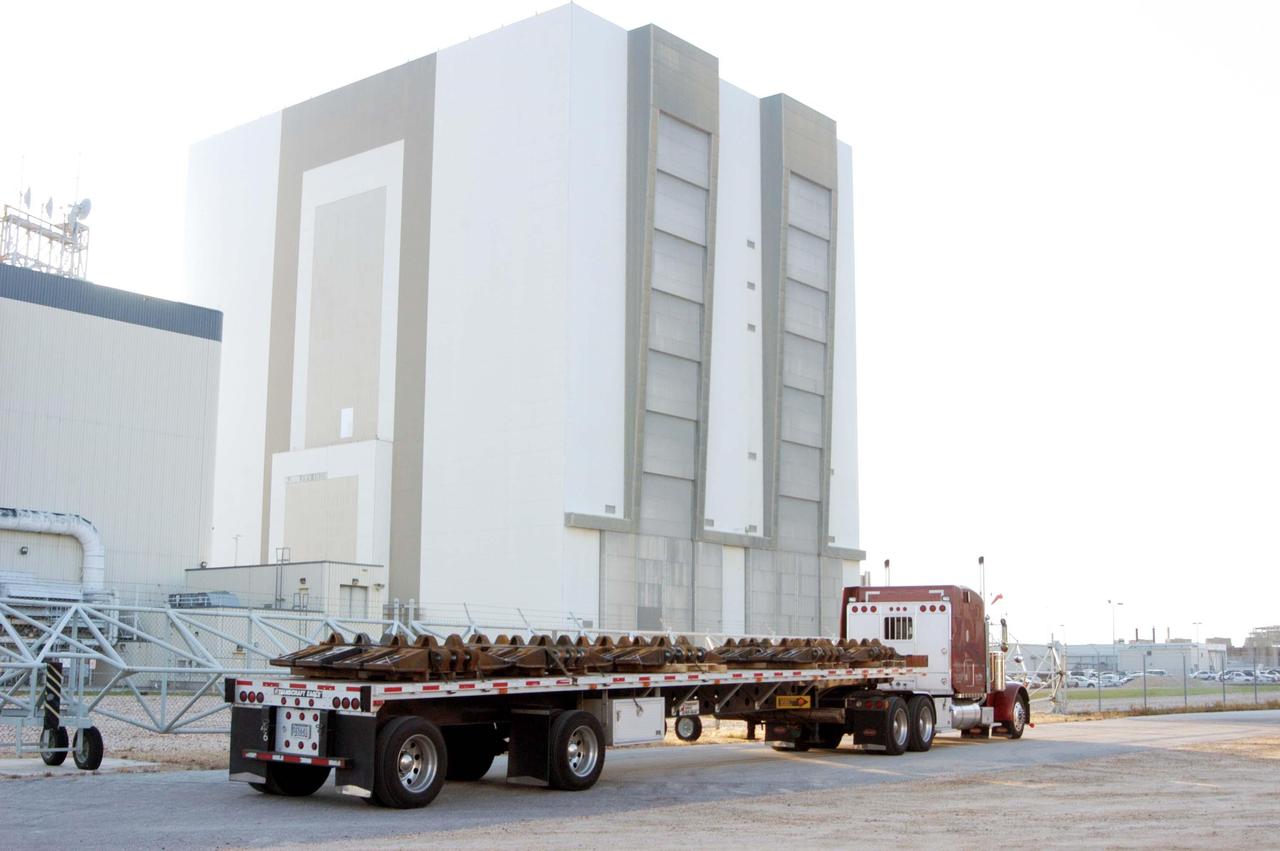
KENNEDY SPACE CENTER, FLA. - A tractor-trailer arrives at the Crawler Transporter (CT) area with a new shipment of crawler shoes. In the background is the Vehicle Assembly Building. The new shoes were manufactured by ME Global in Duluth, Minn. The CT transports the Mobile Launcher Platform, with the assembled Space Shuttle aboard, between the refurbishment area, the VAB and Launch Complex Pads 39A and 39B. The crawlers have 456 shoes, 57 per belt (8 belts in all). Each shoe weighs 2,200 pounds. The original shoes were manufactured for the Apollo Program. Cracks appeared in the shoes in recent years spurring a need for replacement. The new manufacturer, in Duluth, Minn., has improved the design for Return to Flight and use through the balance of the Space Shuttle Program.
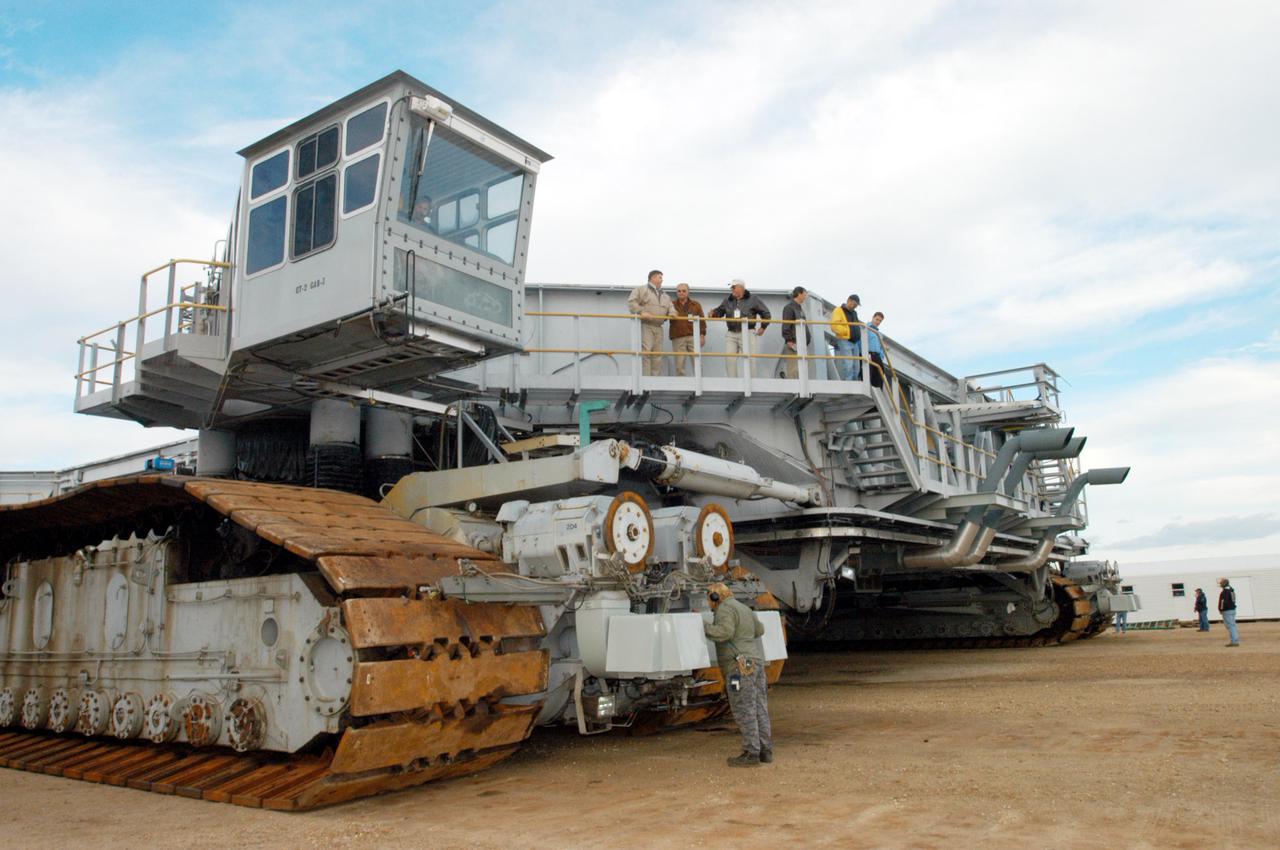
KENNEDY SPACE CENTER, FLA. - The newly shod Crawler Transporter is checked out before beginning a road test. The Crawler Transporter that will move Space Shuttle Discovery to the launch pad for Return to Flight is taking its first road test following the replacement of all its shoes. The crawlers have 456 shoes, 57 per belt (8 belts in all). Each shoe weighs 2,200 pounds. Cracks appeared in the shoes in recent years, spurring a need for replacement. The new manufacturer, in Duluth, Minn., has improved the design for a safe Return to Flight and use through the balance of the Space Shuttle Program.
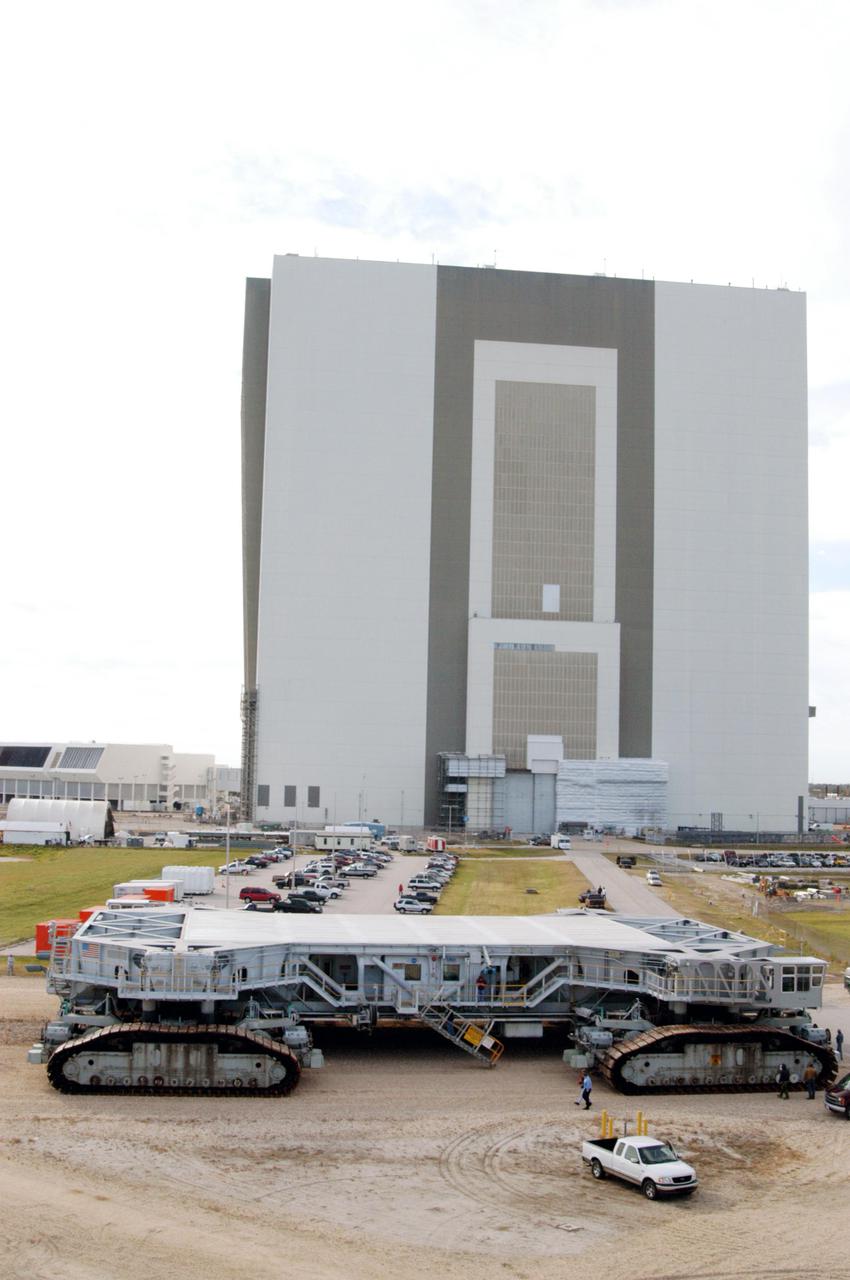
KENNEDY SPACE CENTER, FLA. - The newly shod Crawler Transporter moves forward slowly as it begins its road test. The Crawler Transporter that will move Space Shuttle Discovery to the launch pad for Return to Flight is taking its first road test following the replacement of all its shoes. The crawlers have 456 shoes, 57 per belt (8 belts in all). Each shoe weighs 2,200 pounds. Cracks appeared in the shoes in recent years, spurring a need for replacement. The new manufacturer, in Duluth, Minn., has improved the design for a safe Return to Flight and use through the balance of the Space Shuttle Program.
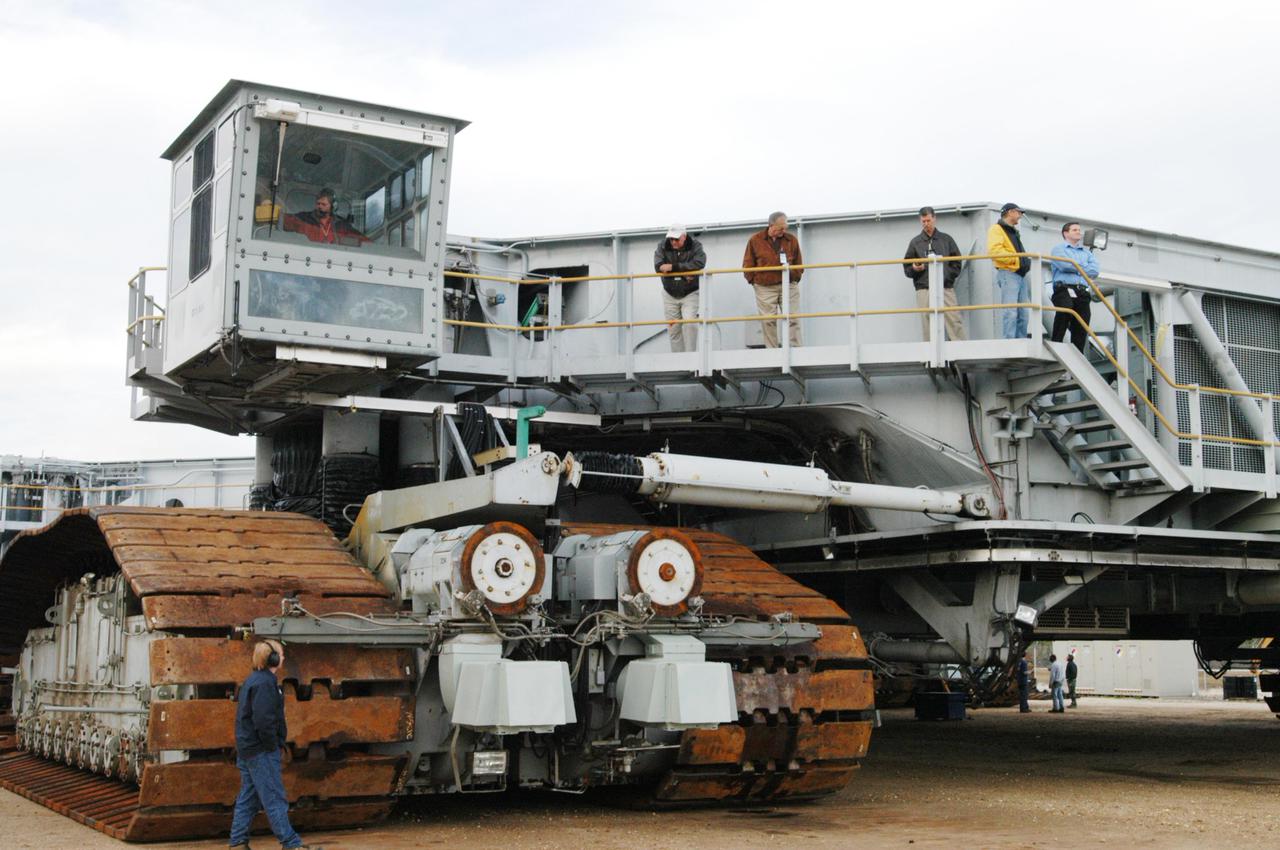
KENNEDY SPACE CENTER, FLA. - The newly shod Crawler Transporter is ready for a road test. The Crawler Transporter that will move Space Shuttle Discovery to the launch pad for Return to Flight is taking its first road test following the replacement of all its shoes. The crawlers have 456 shoes, 57 per belt (8 belts in all). Each shoe weighs 2,200 pounds. Cracks appeared in the shoes in recent years, spurring a need for replacement. The new manufacturer, in Duluth, Minn., has improved the design for a safe Return to Flight and use through the balance of the Space Shuttle Program.
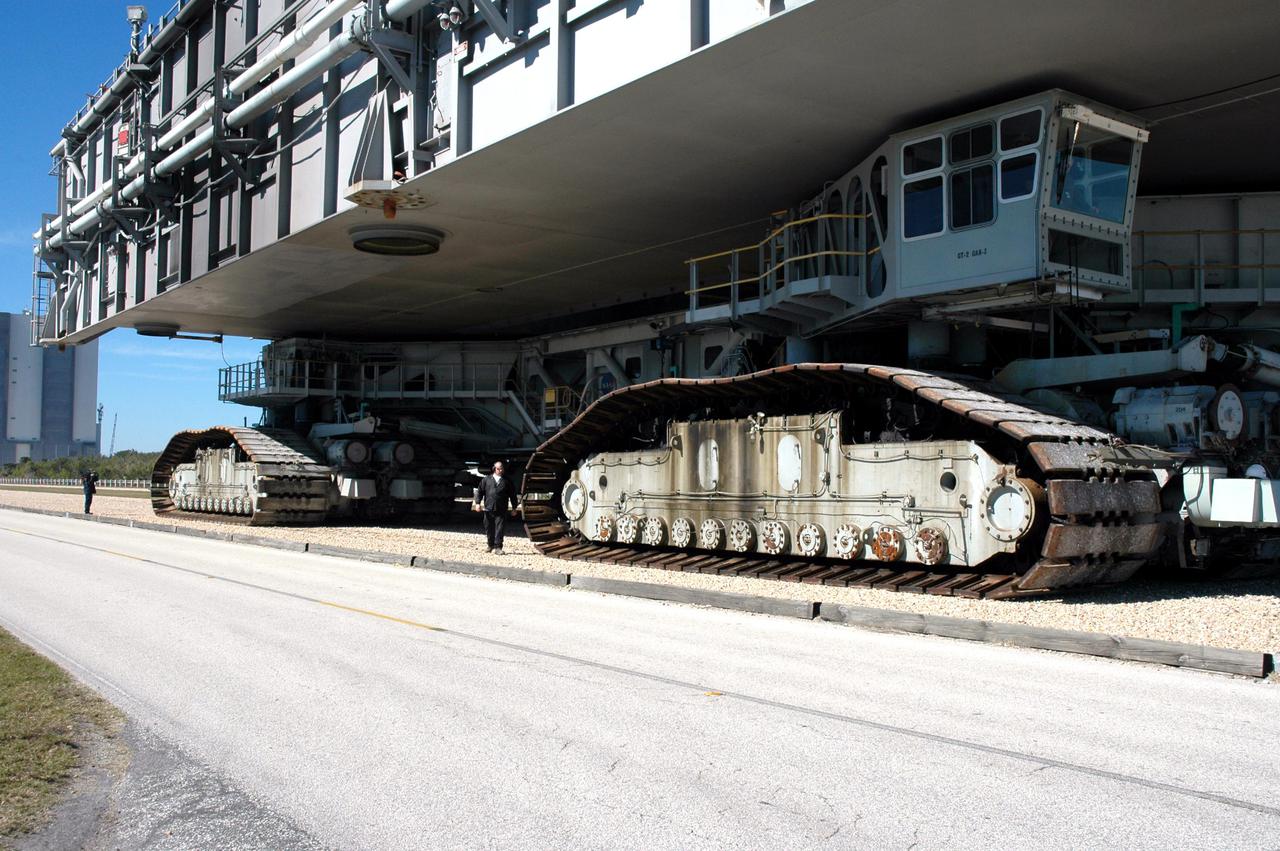
KENNEDY SPACE CENTER, FLA. - Workers accompany the Crawler Transporter that will move Space Shuttle Discovery to the launch pad for Return to Flight as it demonstrates its readiness for weight bearing by carrying an unloaded 8,230,000-pound Mobile Launch Platform along the crawlerway. Its first road test on Jan. 21, following the replacement of all its shoes, was a success. Cracks appeared in the crawlers' shoes in recent years, spurring a need for replacement. The new manufacturer, in Duluth, Minn., has improved the design for a safe Return to Flight and use through the balance of the Space Shuttle Program. Each crawler has 456 shoes, 57 per belt (8 belts in all). Each shoe weighs 2,200 pounds.
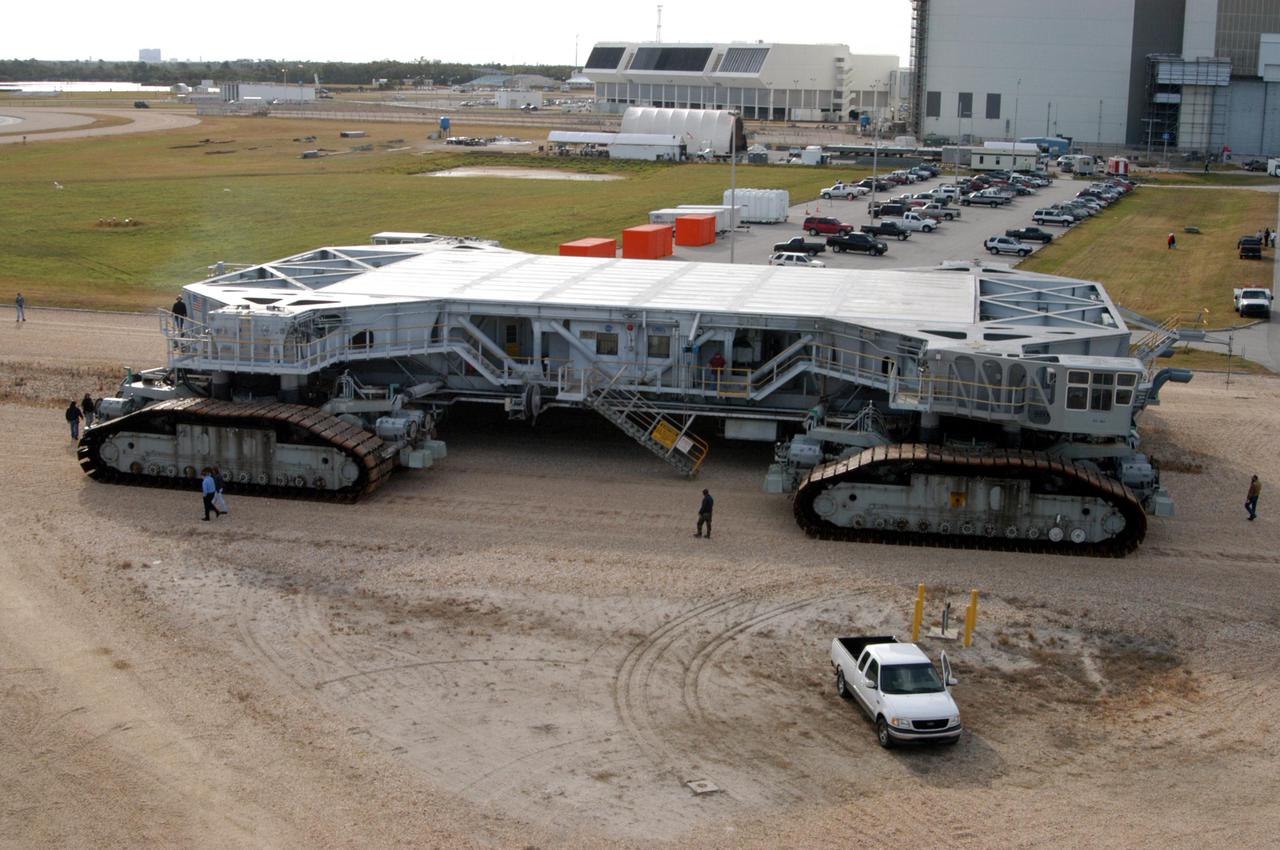
KENNEDY SPACE CENTER, FLA. - Observers walk alongside the newly shod Crawler Transporter as it moves slowly forward. The Crawler Transporter that will move Space Shuttle Discovery to the launch pad for Return to Flight is taking its first road test following the replacement of all its shoes. The crawlers have 456 shoes, 57 per belt (8 belts in all). Each shoe weighs 2,200 pounds. Cracks appeared in the shoes in recent years, spurring a need for replacement. The new manufacturer, in Duluth, Minn., has improved the design for a safe Return to Flight and use through the balance of the Space Shuttle Program.
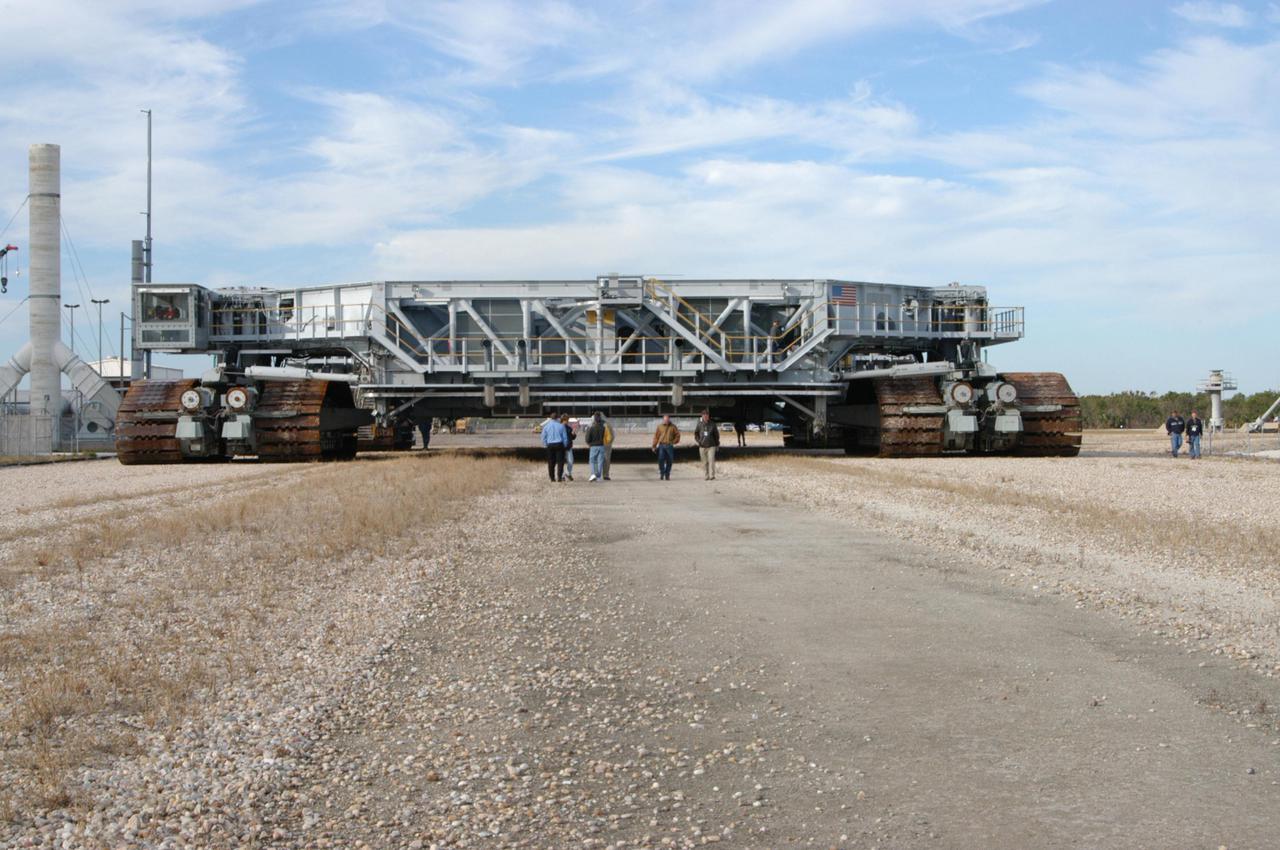
KENNEDY SPACE CENTER, FLA. - The newly shod Crawler Transporter is ready for its road test. The Crawler Transporter that will move Space Shuttle Discovery to the launch pad for Return to Flight is taking its first road test following the replacement of all its shoes. The crawlers have 456 shoes, 57 per belt (8 belts in all). Each shoe weighs 2,200 pounds. Cracks appeared in the shoes in recent years, spurring a need for replacement. The new manufacturer, in Duluth, Minn., has improved the design for a safe Return to Flight and use through the balance of the Space Shuttle Program.
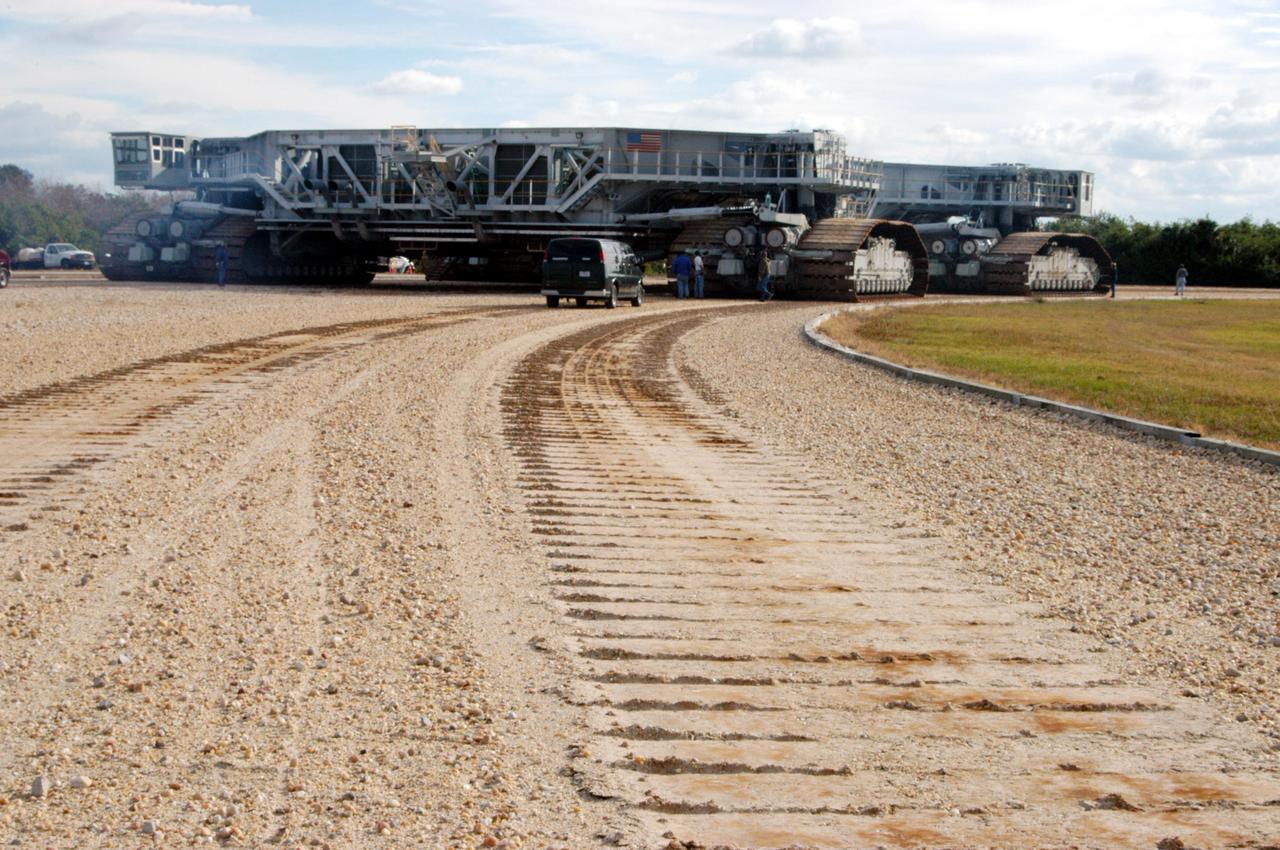
KENNEDY SPACE CENTER, FLA. - The newly shod Crawler Transporter leaves tracks in the dirt as it moves forward on its road test. The Crawler Transporter that will move Space Shuttle Discovery to the launch pad for Return to Flight is taking its first road test following the replacement of all its shoes. The crawlers have 456 shoes, 57 per belt (8 belts in all). Each shoe weighs 2,200 pounds. Cracks appeared in the shoes in recent years, spurring a need for replacement. The new manufacturer, in Duluth, Minn., has improved the design for a safe Return to Flight and use through the balance of the Space Shuttle Program.
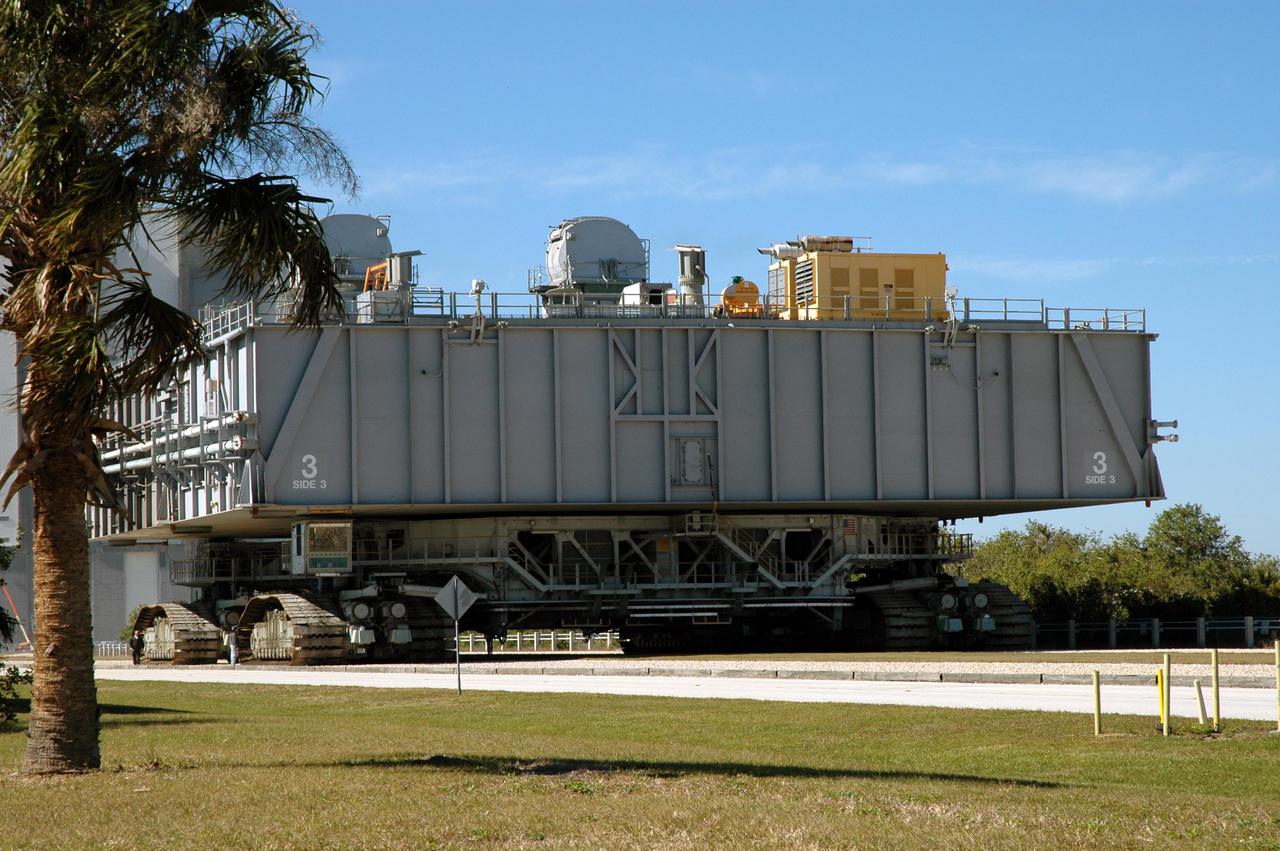
KENNEDY SPACE CENTER, FLA. - The Crawler Transporter that will move Space Shuttle Discovery to the launch pad for Return to Flight demonstrates its readiness for weight bearing by carrying an unloaded 8,230,000-pound Mobile Launch Platform along the crawlerway. Its first road test on Jan. 21, following the replacement of all its shoes, was a success. Cracks appeared in the crawlers' shoes in recent years, spurring a need for replacement. The new manufacturer, in Duluth, Minn., has improved the design for a safe Return to Flight and use through the balance of the Space Shuttle Program. Each crawler has 456 shoes, 57 per belt (8 belts in all). Each shoe weighs 2,200 pounds.
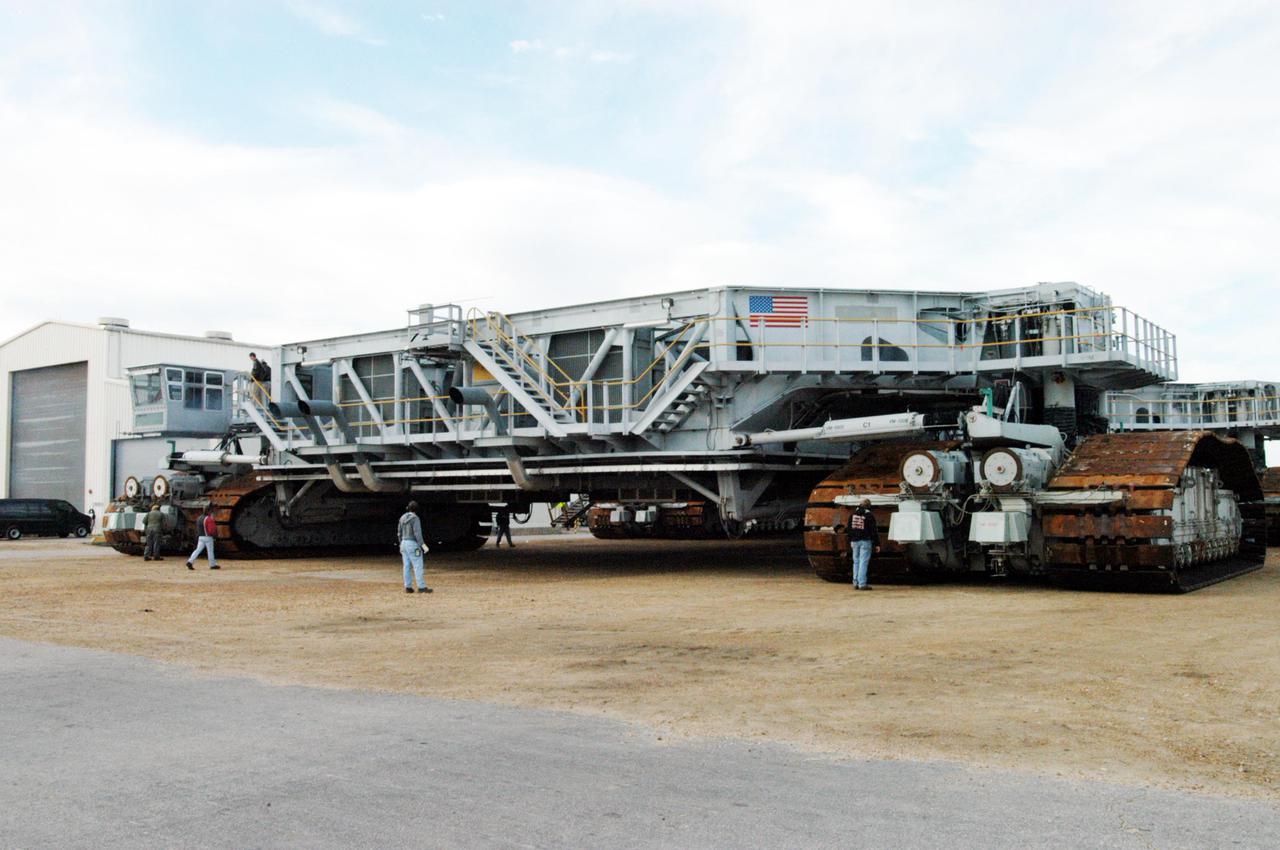
KENNEDY SPACE CENTER, FLA. - The newly shod Crawler Transporter is checked out before beginning its road test. The Crawler Transporter that will move Space Shuttle Discovery to the launch pad for Return to Flight is taking its first road test following the replacement of all its shoes. The crawlers have 456 shoes, 57 per belt (8 belts in all). Each shoe weighs 2,200 pounds. Cracks appeared in the shoes in recent years, spurring a need for replacement. The new manufacturer, in Duluth, Minn., has improved the design for a safe Return to Flight and use through the balance of the Space Shuttle Program.
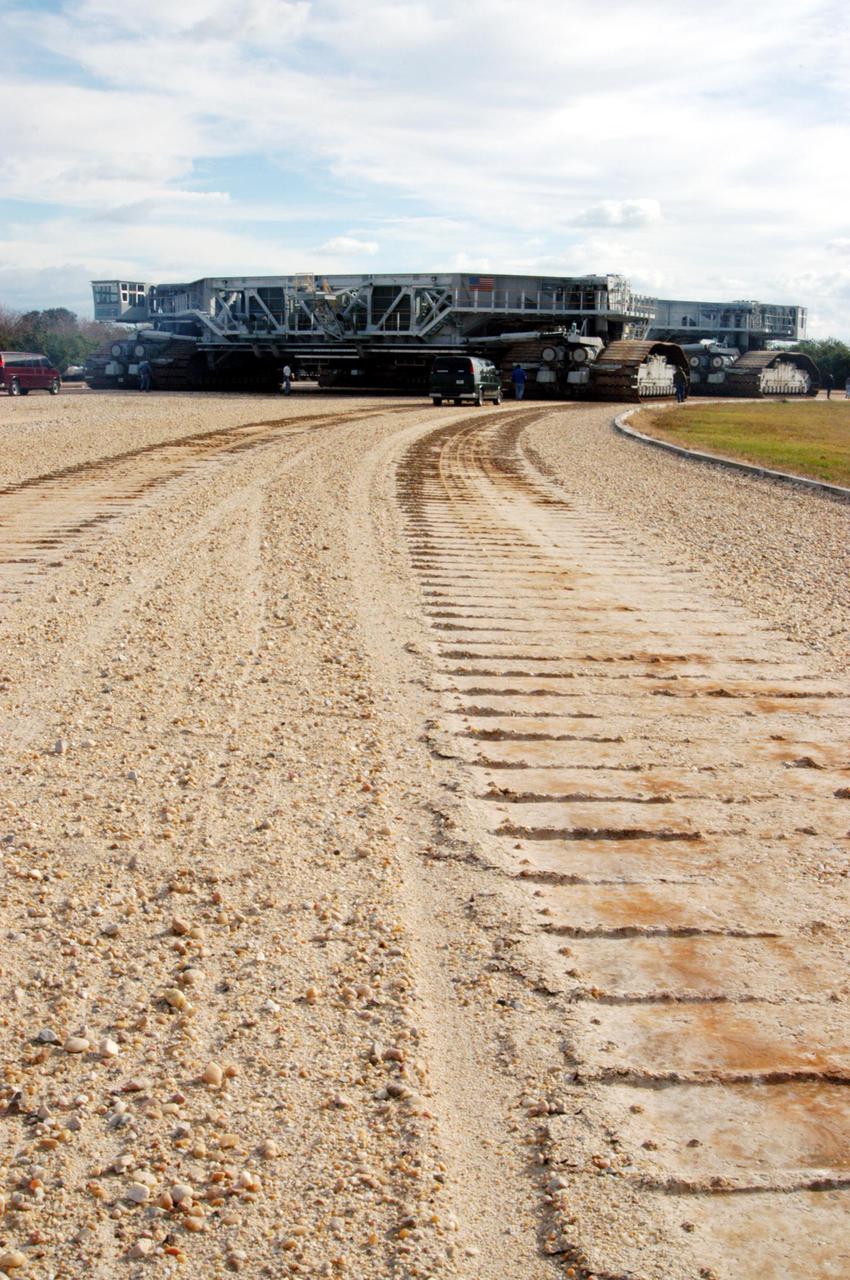
KENNEDY SPACE CENTER, FLA. - The newly shod Crawler Transporter leaves tracks in the dirt as it moves forward on its road test. The Crawler Transporter that will move Space Shuttle Discovery to the launch pad for Return to Flight is taking its first road test following the replacement of all its shoes. The crawlers have 456 shoes, 57 per belt (8 belts in all). Each shoe weighs 2,200 pounds. Cracks appeared in the shoes in recent years, spurring a need for replacement. The new manufacturer, in Duluth, Minn., has improved the design for a safe Return to Flight and use through the balance of the Space Shuttle Program.
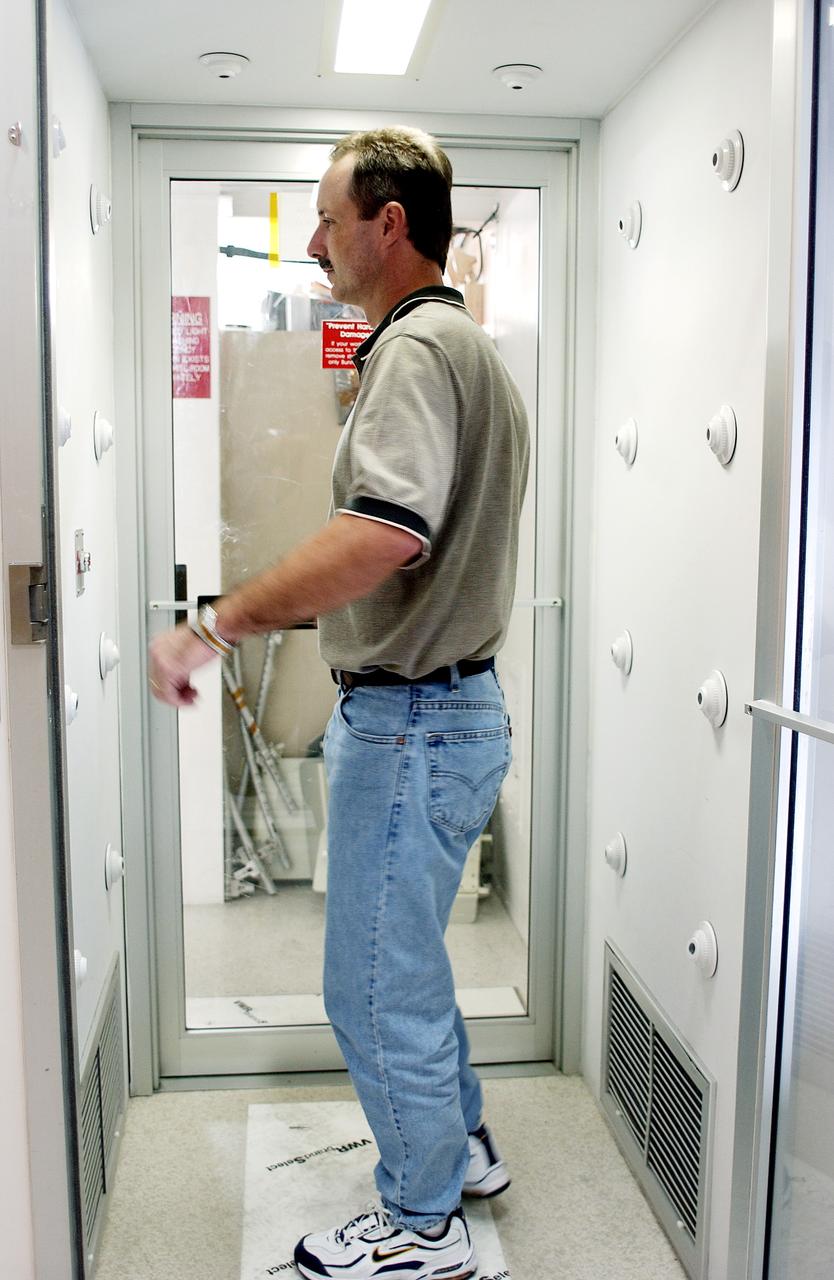
KENNEDY SPACE CENTER, FLA. - A KSC employee uses a clean-air shower before entering a clean room. Streams of pressurized air directed at the occupant from nozzles in the chamber's ceiling and walls are designed to dislodge particulate matter from hair, clothing and shoes. The adhesive mat on the floor captures soil from shoe soles, as well as particles that fall on its surface. Particulate matter has the potential to contaminate the space flight hardware being stored or processed in the clean room. The shower is part of KSC's Foreign Object Debris (FOD) control program, an important safety initiative.
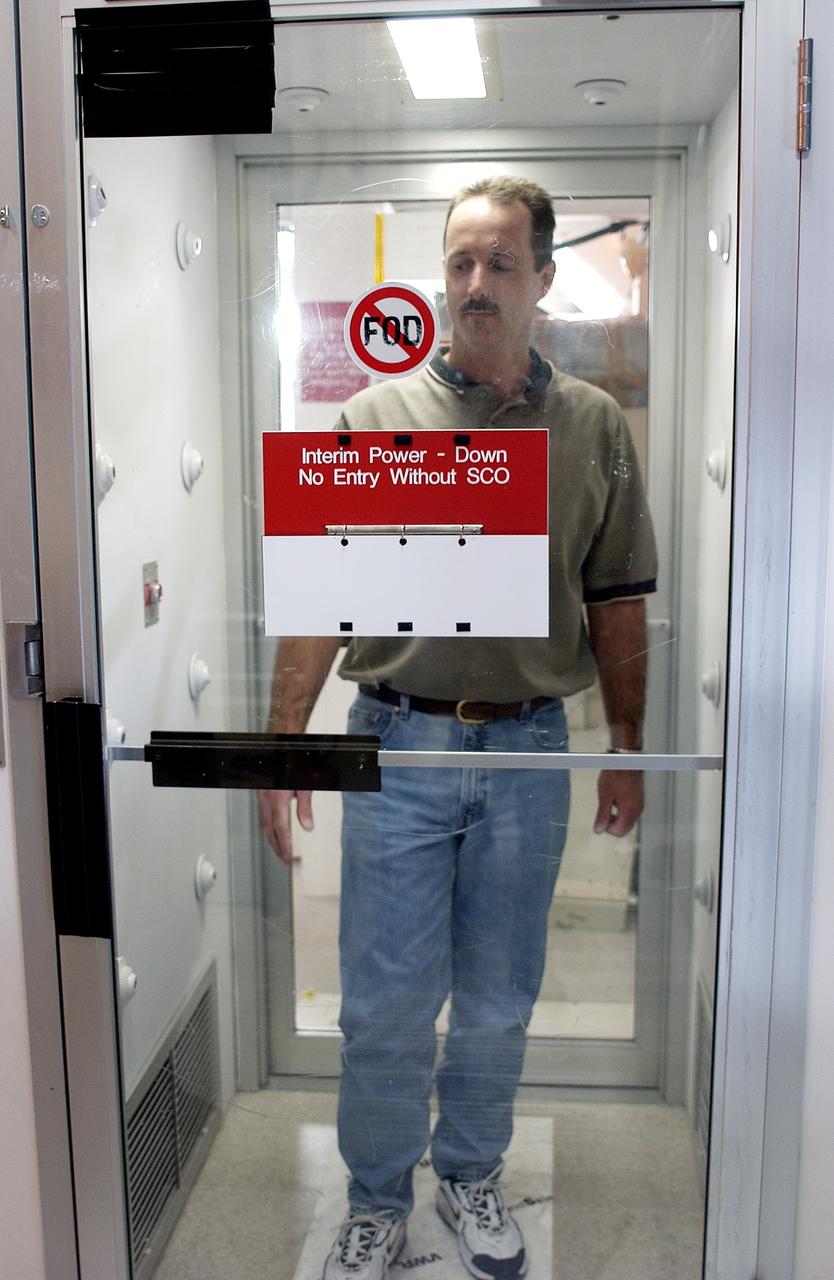
KENNEDY SPACE CENTER, FLA. - A KSC employee uses a clean-air shower before entering a clean room. Streams of pressurized air directed at the occupant from nozzles in the chamber's ceiling and walls are designed to dislodge particulate matter from hair, clothing and shoes. The adhesive mat on the floor captures soil from shoe soles, as well as particles that fall on its surface. Particulate matter has the potential to contaminate the space flight hardware being stored or processed in the clean room. The shower is part of KSC's Foreign Object Debris (FOD) control program, an important safety initiative.
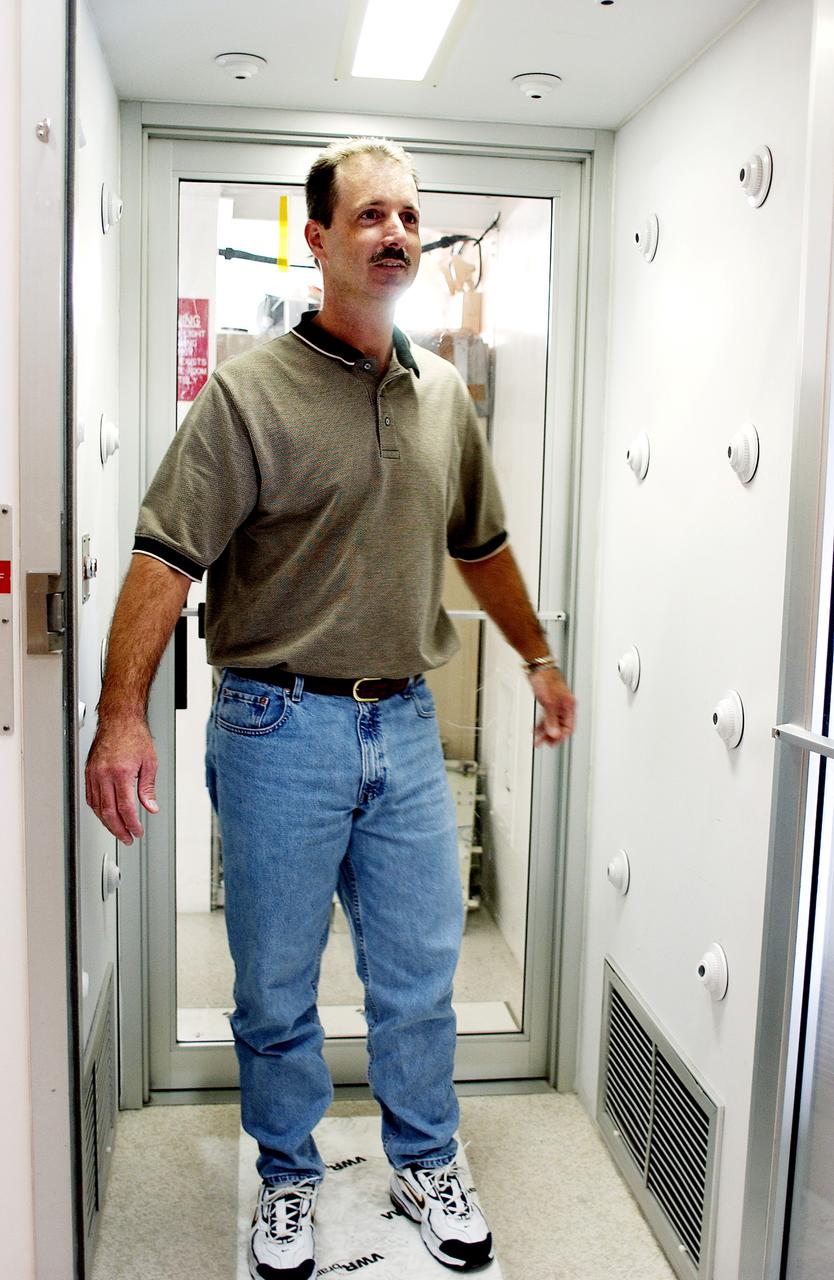
KENNEDY SPACE CENTER, FLA. - A KSC employee uses a clean-air shower before entering a clean room. Streams of pressurized air directed at the occupant from nozzles in the chamber's ceiling and walls are designed to dislodge particulate matter from hair, clothing and shoes. The adhesive mat on the floor captures soil from shoe soles, as well as particles that fall on its surface. Particulate matter has the potential to contaminate the space flight hardware being stored or processed in the clean room. The shower is part of KSC's Foreign Object Debris (FOD) control program, an important safety initiative.
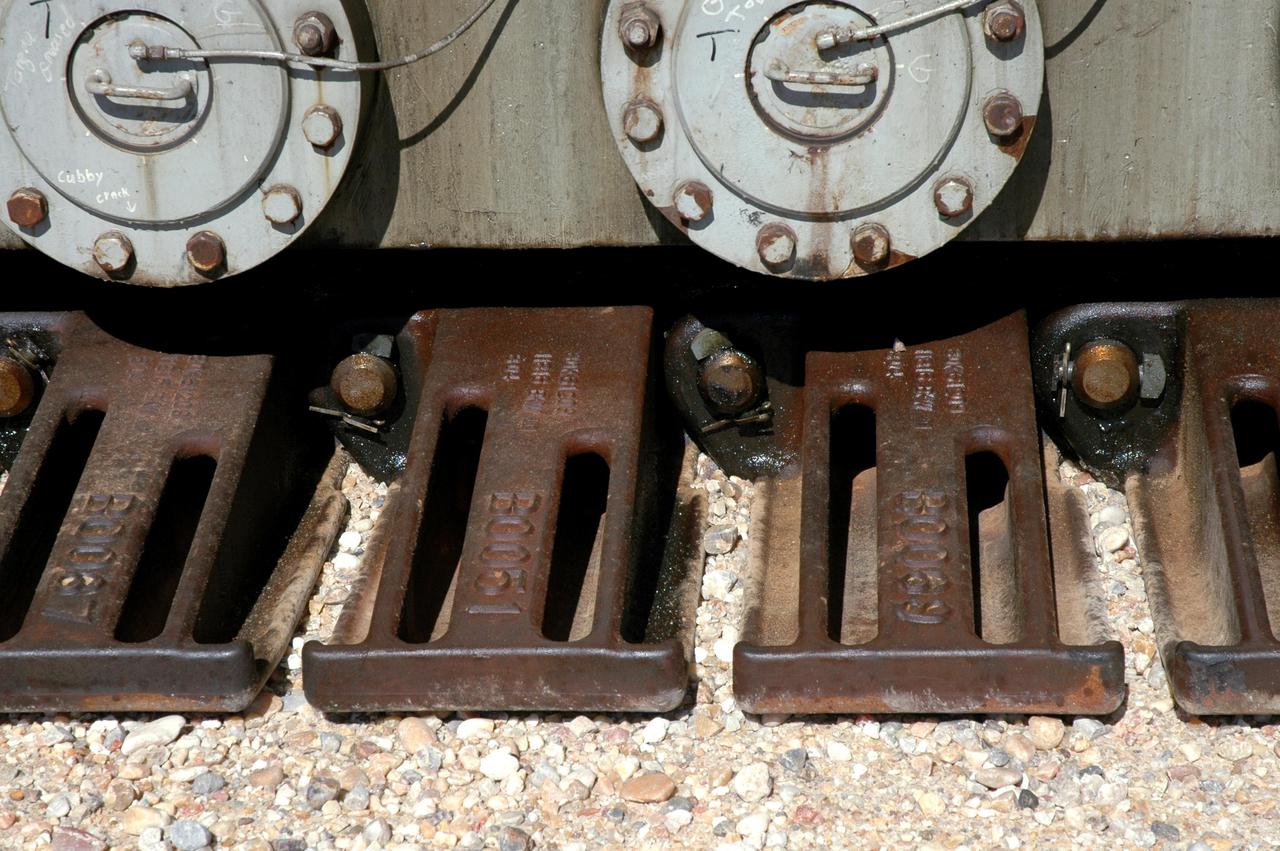
KENNEDY SPACE CENTER, FLA. - New shoes adorn the Crawler Transporter that will move Space Shuttle Discovery to the launch pad for Return to Flight as it demonstrates its readiness for weight bearing by moving an unloaded 8,230,000-pound Mobile Launch Platform along the crawlerway. Its first road test on Jan. 21, following the replacement of all its shoes, was a success. Cracks appeared in the crawlers' shoes in recent years, spurring a need for replacement. The new manufacturer, in Duluth, Minn., has improved the design for a safe Return to Flight and use through the balance of the Space Shuttle Program. Each crawler has 456 shoes, 57 per belt (8 belts in all). Each shoe weighs 2,200 pounds.
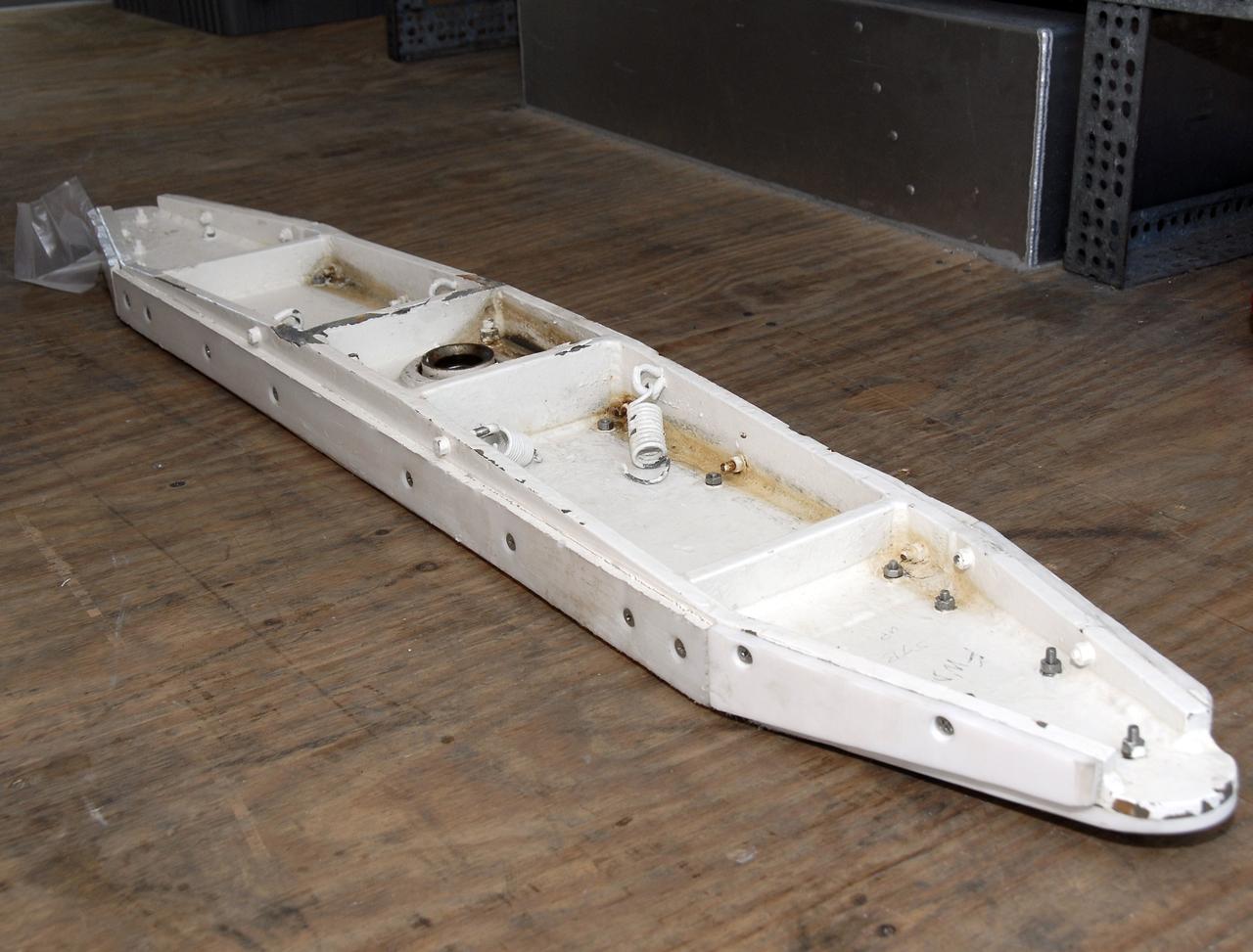
CAPE CANAVERAL, Fla. - Technicians removed a “shoe” on the Hubble payload canister at Launch pad 39A at NASA’s Kennedy Space Center in Florida. The canister arrived at the pad on Saturday evening; however, early Sunday morning technicians were unable to place the canister into the pad’s payload changeout room for space shuttle Atlantis’ STS-125 mission. Teflon pads on the “shoes” attached to the outside of the payload canister that help the canister move along the guide rails didn’t fit properly. The shoes were removed and several options were considered, including slightly shaving down the pads so the shoes will fit onto the rails. STS-125 is the fifth and final shuttle Hubble Space Telescope servicing mission. Atlantis’ launch is targeted for Oct. 10. Photo credit: NASA/Kim Shiflett.
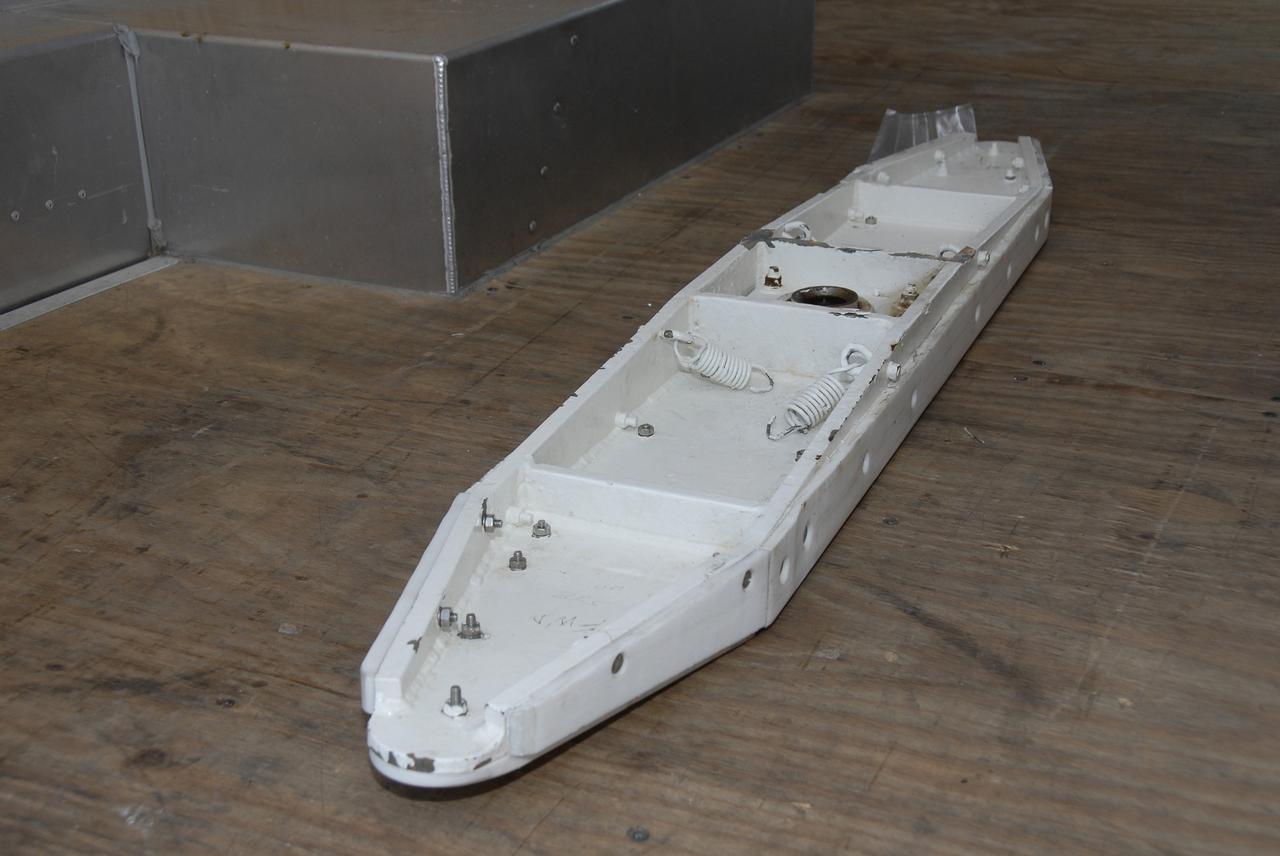
CAPE CANAVERAL, Fla. - Technicians removed a “shoe” on the Hubble payload canister at Launch pad 39A at NASA’s Kennedy Space Center in Florida. The canister arrived at the pad on Saturday evening; however, early Sunday morning technicians were unable to place the canister into the pad’s payload changeout room for space shuttle Atlantis’ STS-125 mission. Teflon pads on the “shoes” attached to the outside of the payload canister that help the canister move along the guide rails didn’t fit properly. The shoes were removed and several options were considered, including slightly shaving down the pads so the shoes will fit onto the rails. STS-125 is the fifth and final shuttle Hubble Space Telescope servicing mission. Atlantis’ launch is targeted for Oct. 10. Photo credit: NASA/Kim Shiflett.
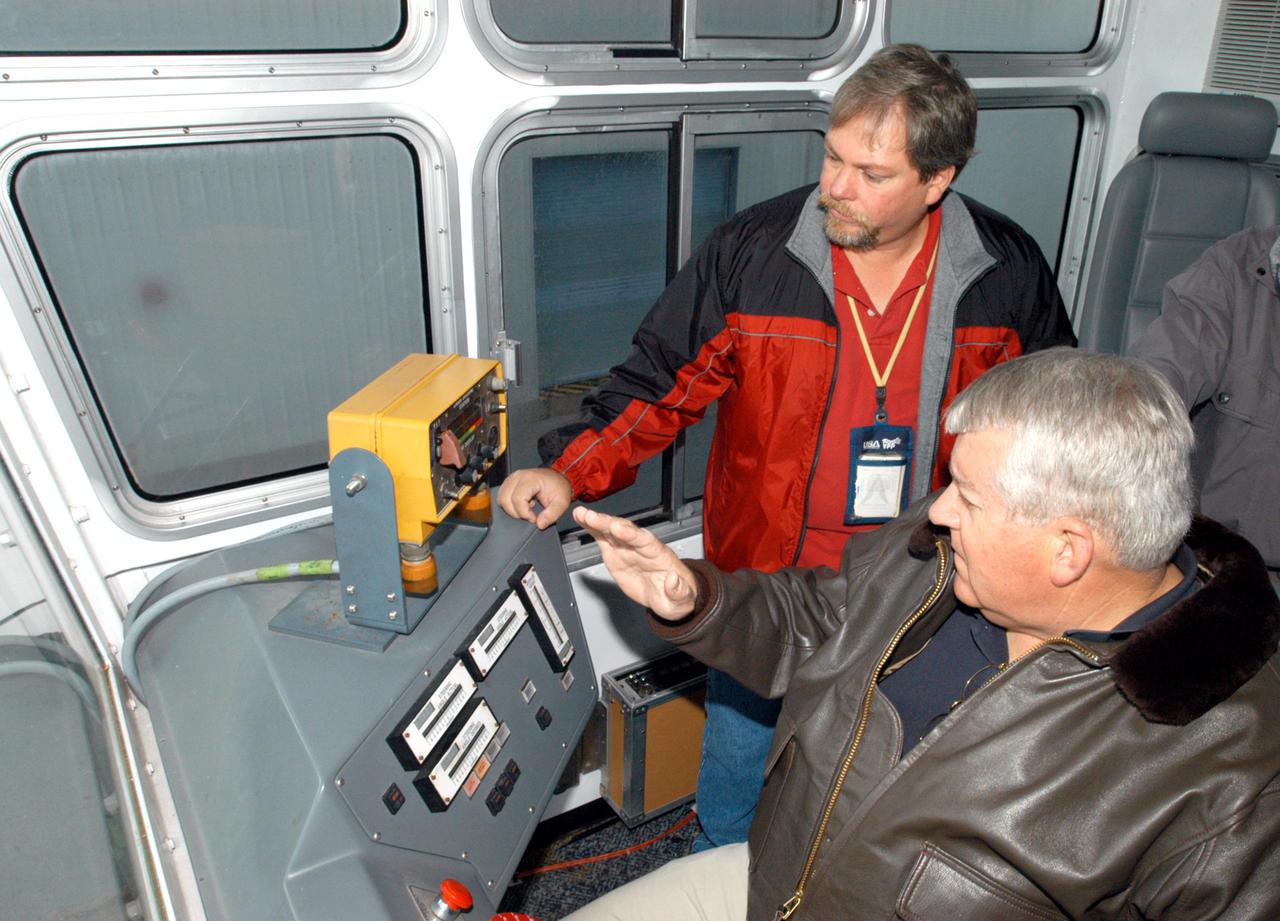
KENNEDY SPACE CENTER, FLA. - Bill Pickavance (in front), vice president, associate program manager of Florida Operations, United Space Alliance, joins workers Sam Dove, left, and Dan Drake in the cab of the Crawler Transporter before a road test. The Crawler Transporter that will move Space Shuttle Discovery to the launch pad for Return to Flight is taking its first road test following the replacement of all its shoes. The crawlers have 456 shoes, 57 per belt (8 belts in all). Each shoe weighs 2,200 pounds. Cracks appeared in the shoes in recent years, spurring a need for replacement. The new manufacturer, in Duluth, Minn., has improved the design for a safe Return to Flight and use through the balance of the Space Shuttle Program.
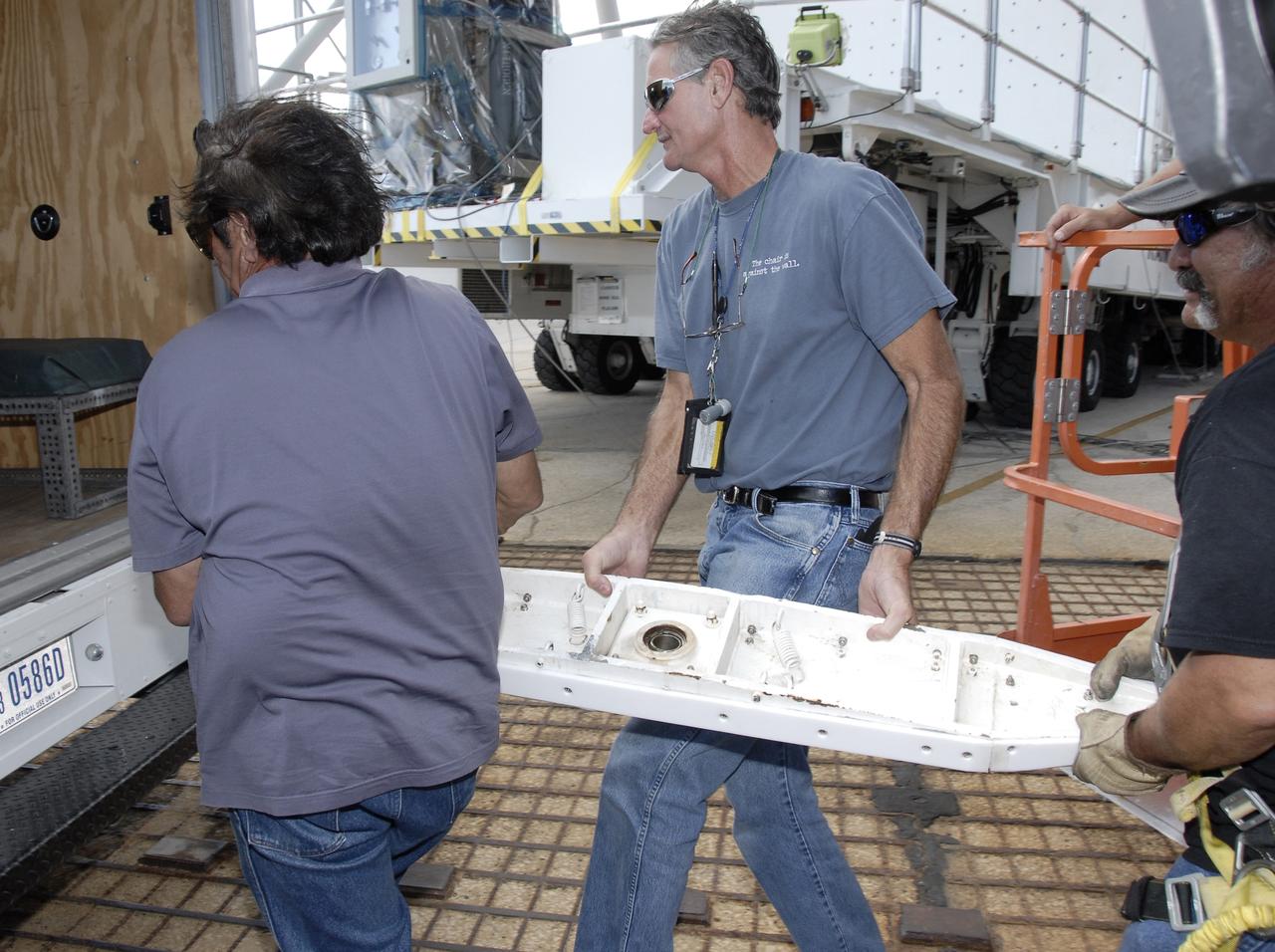
CAPE CANAVERAL, Fla. - Technicians carry a “shoe” that was removed from the Hubble payload canister at Launch Pad 39A at NASA’s Kennedy Space Center in Florida. The canister arrived at the pad on Saturday evening, however, early Sunday morning technicians were unable to place the canister into the pad’s payload changeout room for space shuttle Atlantis’ STS-125 mission. Teflon pads on “shoes” attached to the outside of the payload canister that help the canister move along the guide rails didn’t fit properly. The shoes were removed and several options were considered, including slightly shaving down the pads so the shoes will fit onto the rails. STS-125 is the fifth and final shuttle Hubble Space Telescope servicing mission. Atlantis’ launch is targeted for Oct. 10. Photo credit: NASA/Kim Shiflett.

CAPE CANAVERAL, Fla. - A close up view of one of the “shoes” removed from the Hubble payload canister at Launch Pad 39A at NASA’s Kennedy Space Center in Florida. The canister arrived at the pad on Saturday evening; however, early Sunday morning technicians were unable to place the canister into the pad’s payload changeout room for space shuttle Atlantis’ STS-125 mission. Teflon pads on “shoes” attached to the outside of the payload canister that help the canister move along the guide rails didn’t fit properly. The shoes were removed and several options were considered, including slightly shaving down the pads so the shoes will fit onto the rails. STS-125 is the fifth and final shuttle Hubble Space Telescope servicing mission. Atlantis’ launch is targeted for Oct. 10. Photo credit: NASA/Kim Shiflett.
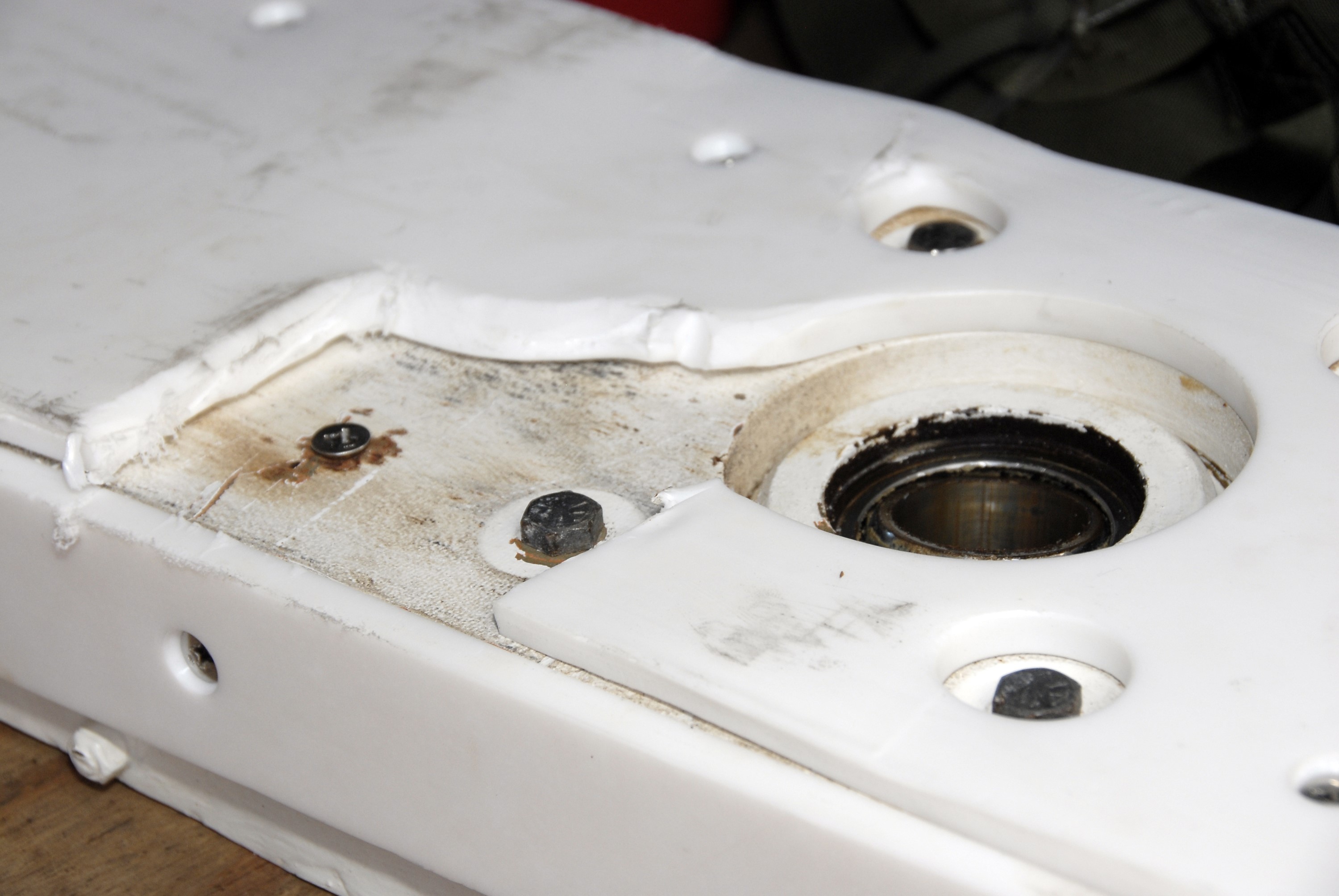
CAPE CANAVERAL, Fla. - A close up view of one of the “shoes” removed from the Hubble payload canister at Launch Pad 39A at NASA’s Kennedy Space Center in Florida. The canister arrived at the pad on Saturday evening; however, early Sunday morning technicians were unable to place the canister into the pad’s payload changeout room for space shuttle Atlantis’ STS-125 mission. Teflon pads on “shoes” attached to the outside of the payload canister that help the canister move along the guide rails didn’t fit properly. The shoes were removed and several options were considered, including slightly shaving down the pads so the shoes will fit onto the rails. STS-125 is the fifth and final shuttle Hubble Space Telescope servicing mission. Atlantis’ launch is targeted for Oct. 10. Photo credit: NASA/Kim Shiflett.
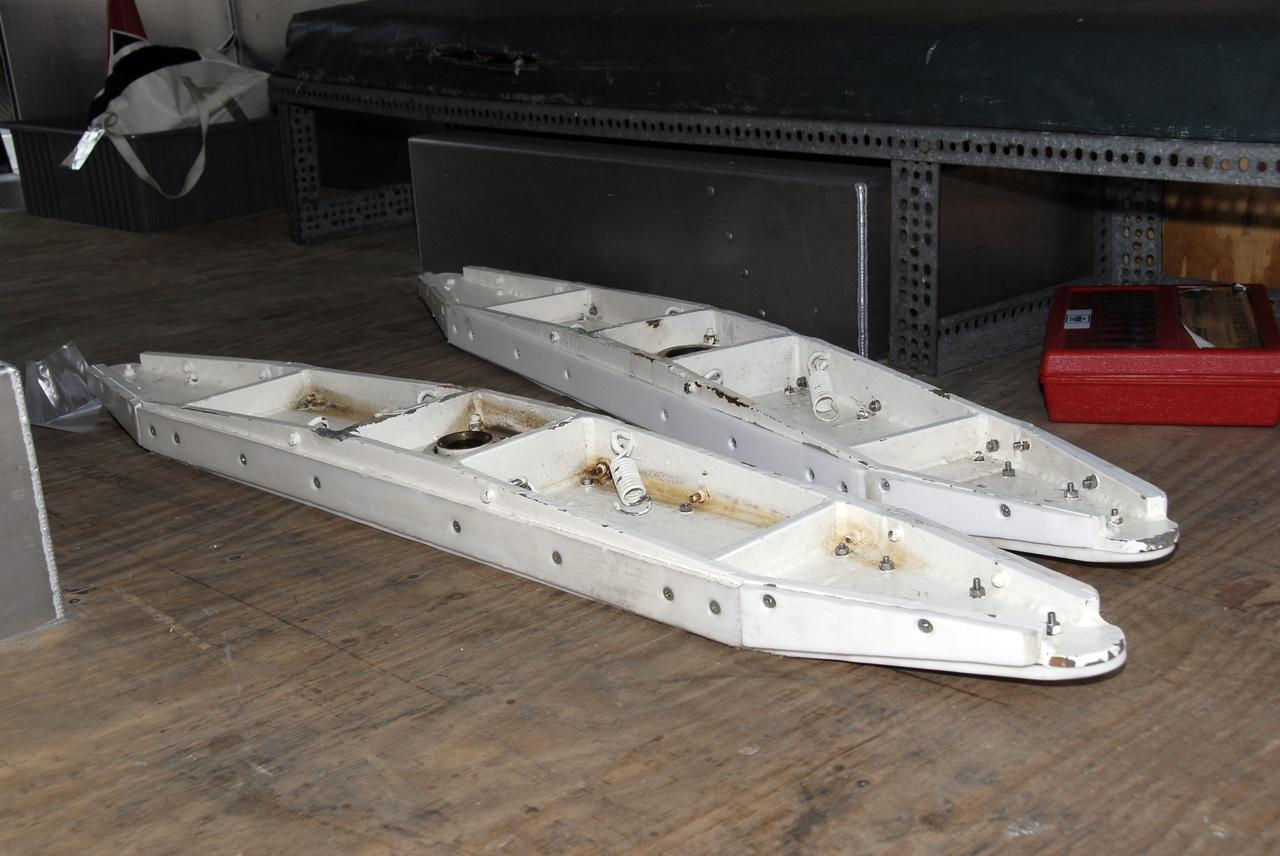
CAPE CANAVERAL, Fla. - Technicians removed two “shoes” from the Hubble payload canister at Launch Pad 39A at NASA’s Kennedy Space Center in Florida. The canister arrived at the pad on Saturday evening; however, early Sunday morning technicians were unable to place the canister into the pad’s payload changeout room for space shuttle Atlantis’ STS-125 mission. Teflon pads on “shoes” attached to the outside of the payload canister that help the canister move along the guide rails didn’t fit properly. The shoes were removed and several options were considered, including slightly shaving down the pads so the shoes will fit onto the rails. STS-125 is the fifth and final shuttle Hubble Space Telescope servicing mission. Atlantis’ launch is targeted for Oct. 10. Photo credit: NASA/Kim Shiflett.
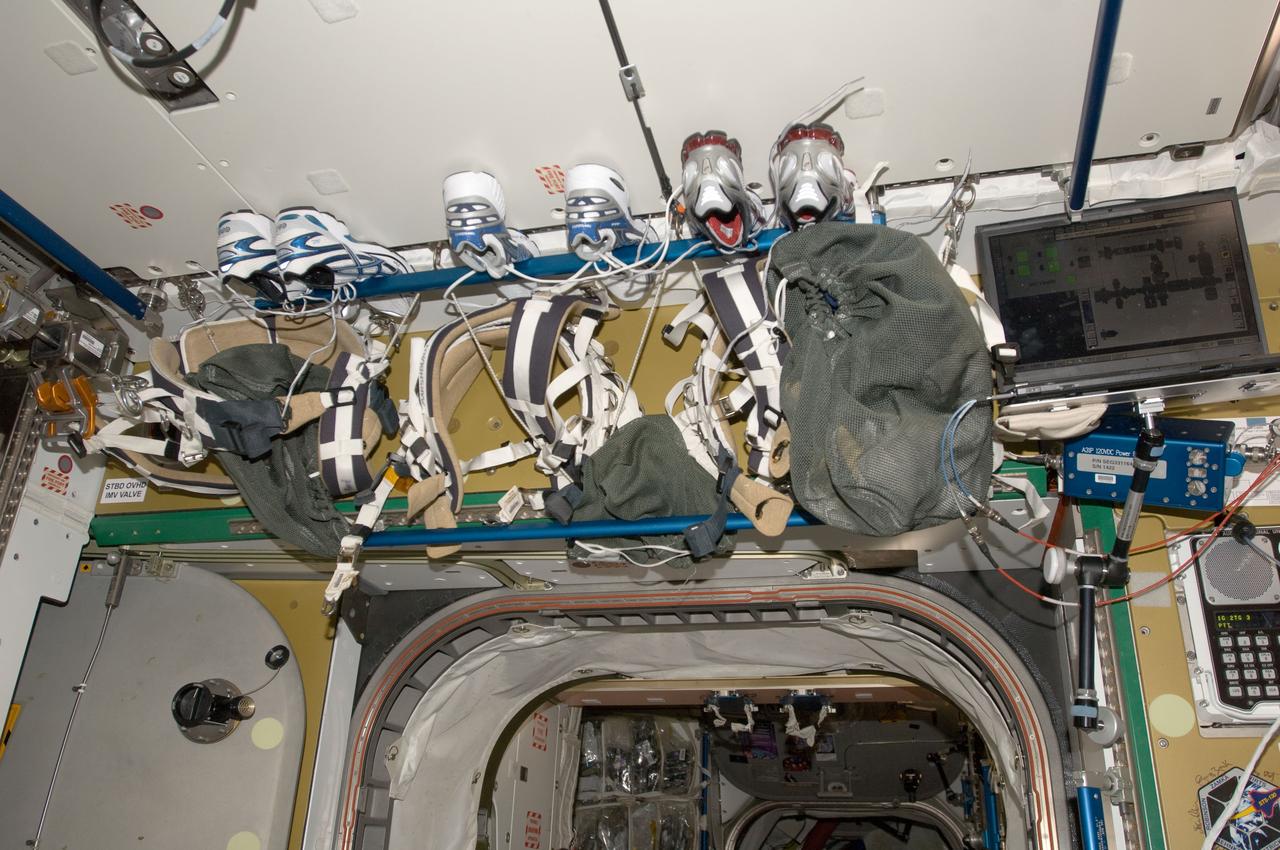
View of Avionics Rack 2 Closeout Panel with tennis shoes,in the Node 3. Photo was taken during Expedition 34.
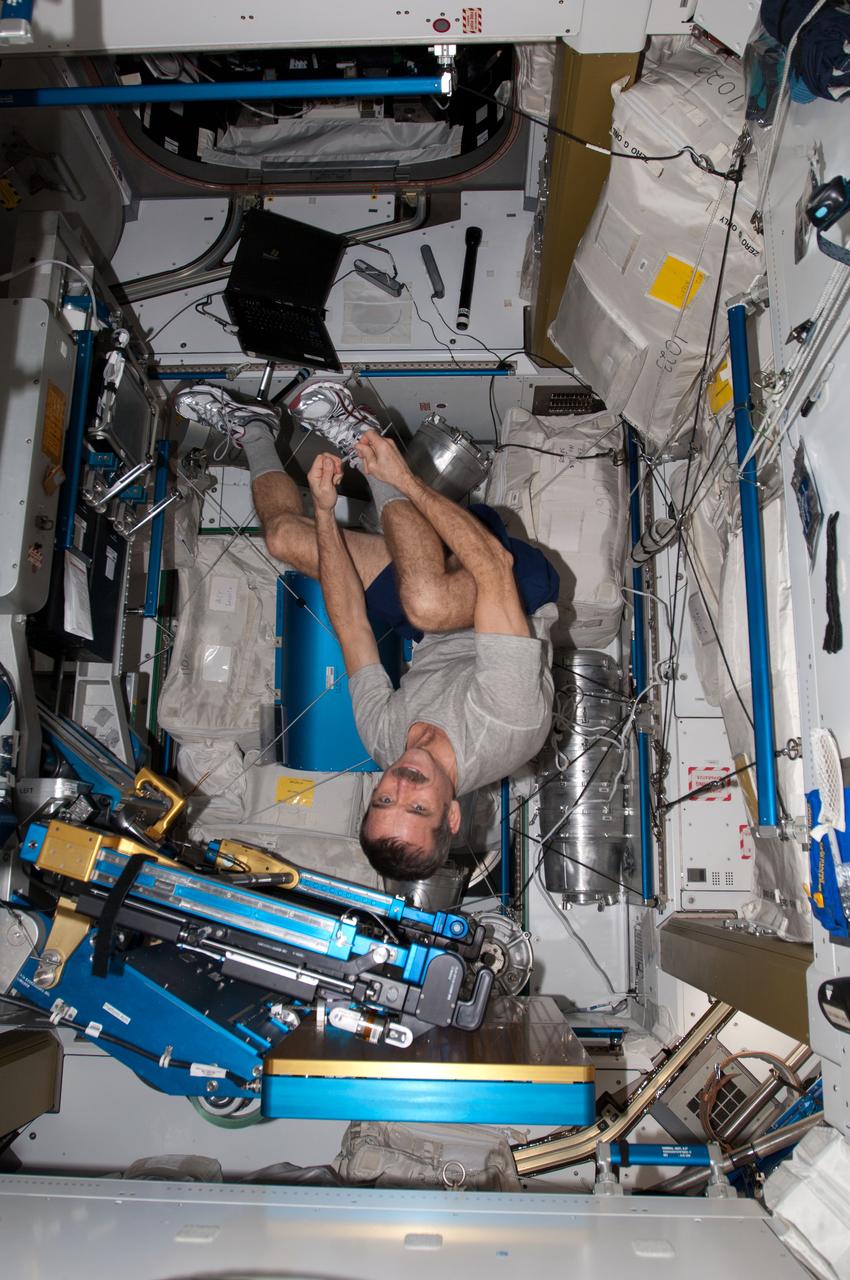
View of Canadian Space Agency (CSA) Chris Hadfield,Expedition 34 Flight Engineer (FE),putting on tennis shoes,in the Node 3.
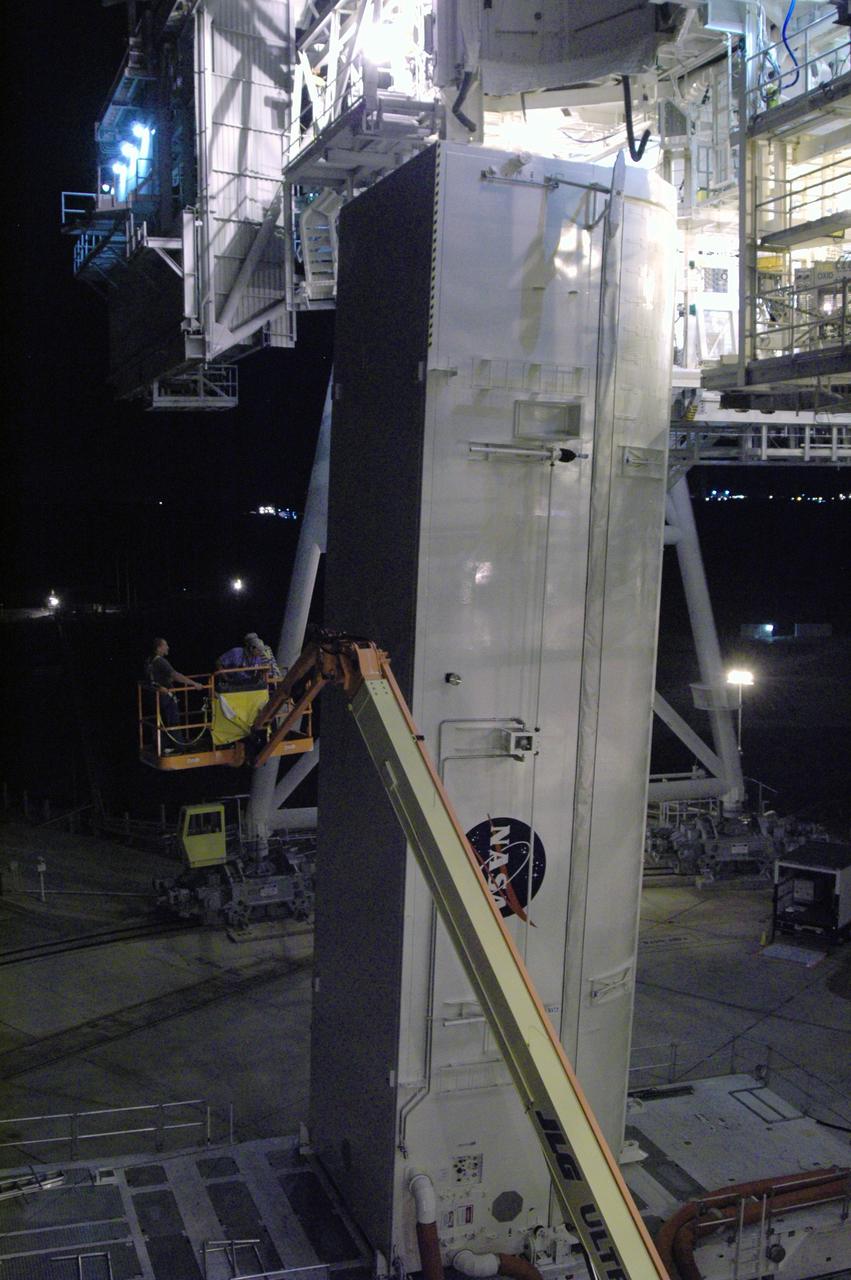
CAPE CANAVERAL, Fla. - On Launch Pad 39A at NASA's Kennedy Space Center, workers on a crane have completed attaching adjusted guide shoes onto the outside of the payload canister for attempt at a second lift into the payload changeout room. The first attempt encountered problems when Teflon pads on “shoes” attached to the outside of the canister that go onto guide rails to help the canister into the room didn’t fit properly. The two shoes were removed, slightly shaved down so that they would fit into the rails and put back on the canister. The changeout room is the enclosed, environmentally controlled portion of the rotating service structure that supports cargo delivery to the pad and subsequent vertical installation into the shuttle’s payload bay. Launch of Atlantis is targeted for Oct. 10. Photo credit: NASA/Jim Grossmann

CAPE CANAVERAL, Fla. - A view of the adjusted guide shoe attached to the outside of the payload canister on Launch Pad 39A at NASA's Kennedy Space Center. A second attempt will be made to lift the canister to the payload changeout room above. The first attempt encountered problems when Teflon pads on “shoes” attached to the outside of the canister that go onto guide rails to help the canister into the room didn’t fit properly. The two shoes were removed, slightly shaved down so that they would fit into the rails and put back on the canister. The changeout room is the enclosed, environmentally controlled portion of the rotating service structure that supports cargo delivery to the pad and subsequent vertical installation into the shuttle’s payload bay. Launch of Atlantis is targeted for Oct. 10. Photo credit: NASA/Jim Grossmann
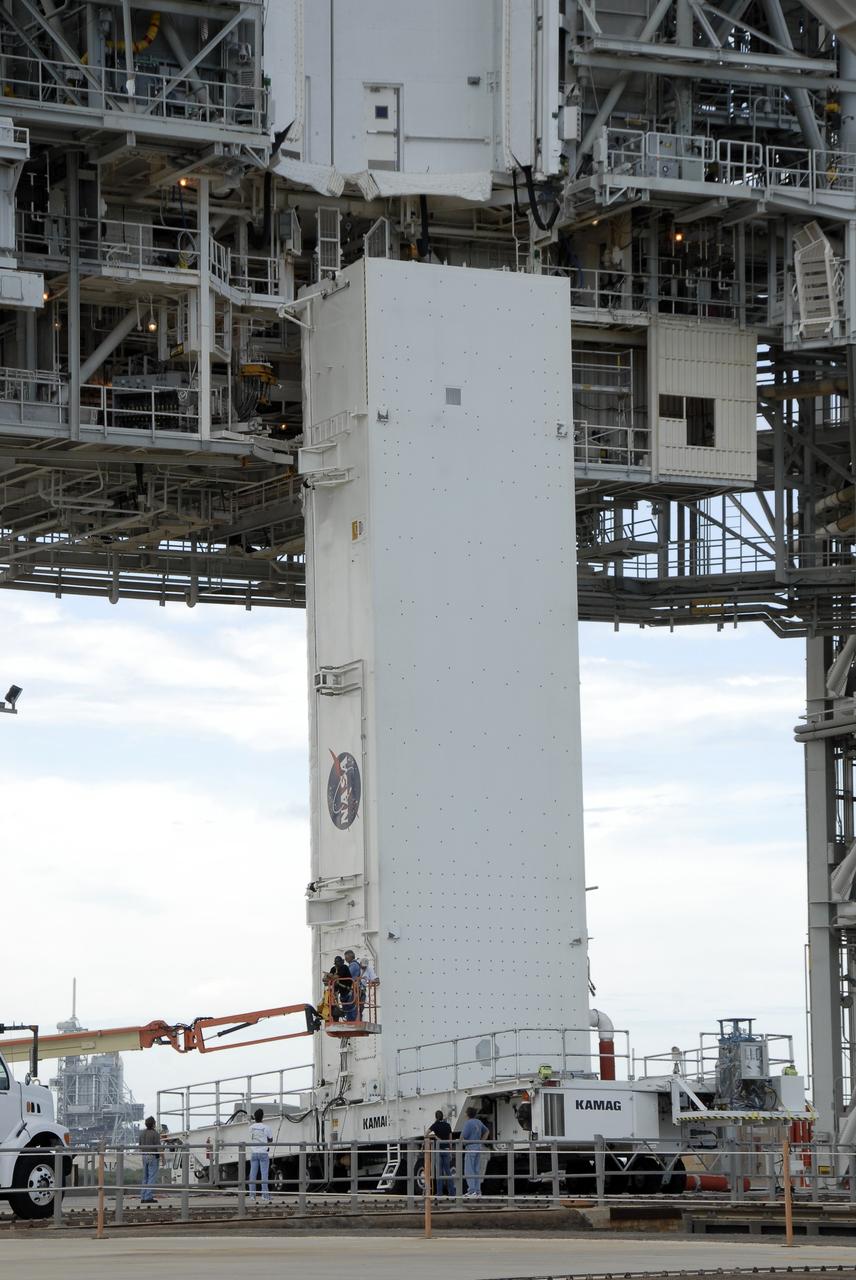
CAPE CANAVERAL, Fla. - At Launch Pad 39A at NASA’s Kennedy Space Center in Florida, technicians work to move the Hubble payload canister into the payload changeout room for space shuttle Atlantis’ STS-125 mission. The canister arrived at the pad on Saturday evening, however, early Sunday morning technicians were unable to place the canister into the pad’s payload changeout room. Teflon pads on “shoes” attached to the outside of the payload canister that help the canister move along guide rails didn’t fit properly. The shoes were removed and several options were considered, including slightly shaving down the pads so the shoes will fit onto the rails. STS-125 is the fifth and final shuttle Hubble Space Telescope servicing mission. Atlantis’ launch is targeted for Oct. 10. Photo credit: NASA/Kim Shiflett.
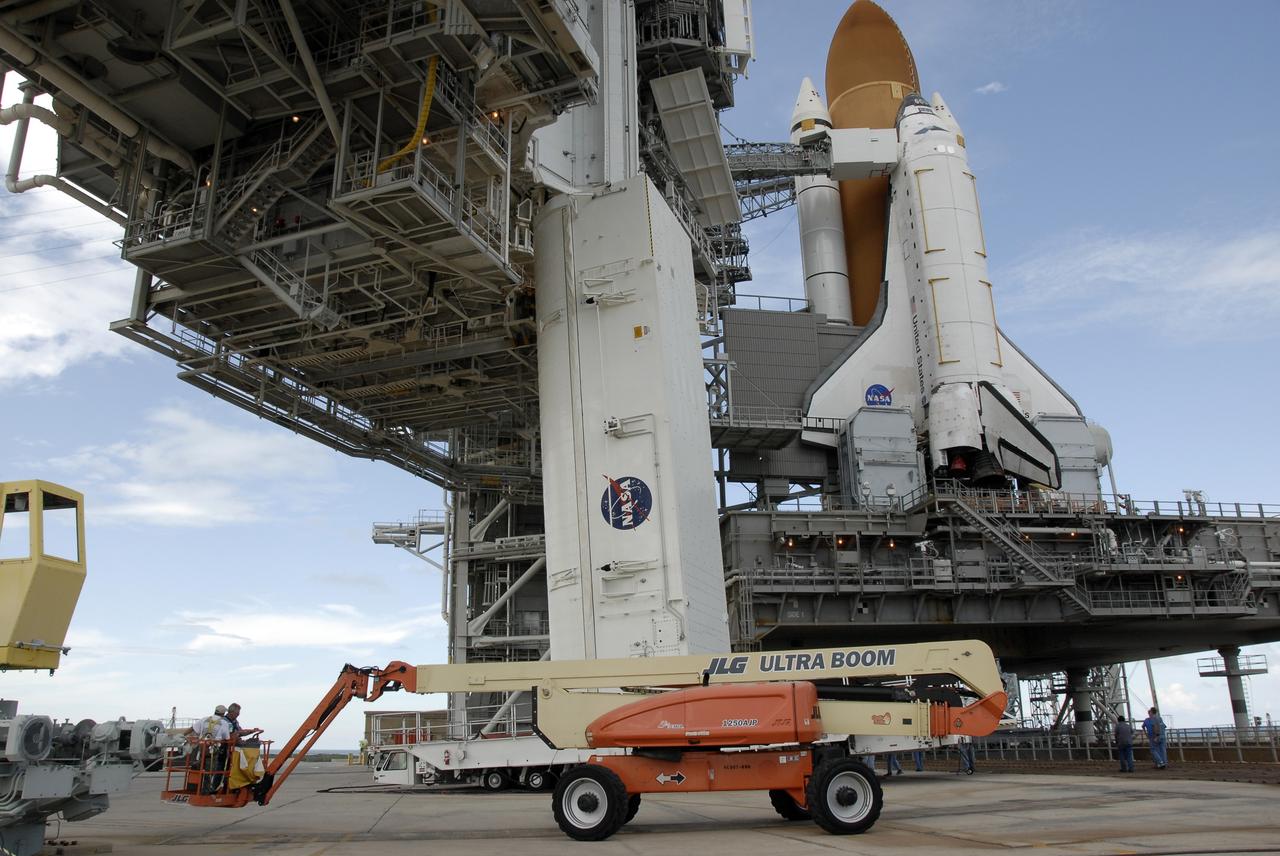
CAPE CANAVERAL, Fla. - At Launch Pad 39A at NASA’s Kennedy Space Center in Florida, technicians work to move the Hubble payload canister into the payload changeout room for space shuttle Atlantis’ STS-125 mission. The canister arrived at the pad on Saturday evening, however, early Sunday morning technicians were unable to place the canister into the pad’s payload changeout room. Teflon pads on “shoes” attached to the outside of the payload canister that help the canister move along guide rails didn’t fit properly. The shoes, one seen here, were removed and several options were considered, including slightly shaving down the pads so the shoes will fit onto the rails. STS-125 is the fifth and final shuttle Hubble Space Telescope servicing mission. Atlantis’ launch is targeted for Oct. 10. Photo credit: NASA/Kim Shiflett.
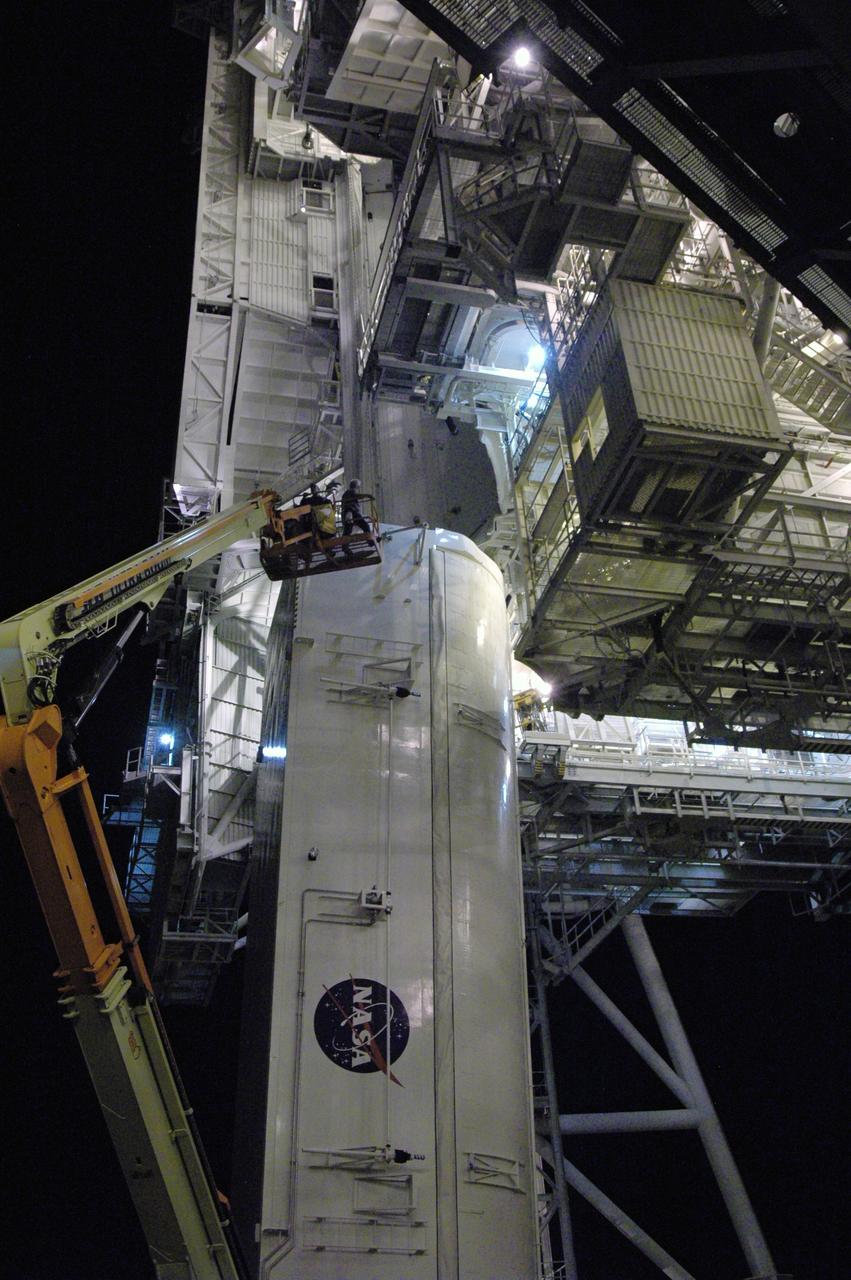
CAPE CANAVERAL, Fla. - On Launch Pad 39A at NASA's Kennedy Space Center, workers on the crane prepare to attach adjusted guide shoes onto the outside of the payload canister for a second lift to the payload changeout room. The first attempt encountered problems when Teflon pads on “shoes” attached to the outside of the canister that go onto guide rails to help the canister into the room didn’t fit properly. The two shoes were removed, slightly shaved down so that they would fit into the rails and put back on the canister. The changeout room is the enclosed, environmentally controlled portion of the rotating service structure that supports cargo delivery to the pad and subsequent vertical installation into the shuttle’s payload bay. Launch of Atlantis is targeted for Oct. 10. Photo credit: NASA/Jim Grossmann
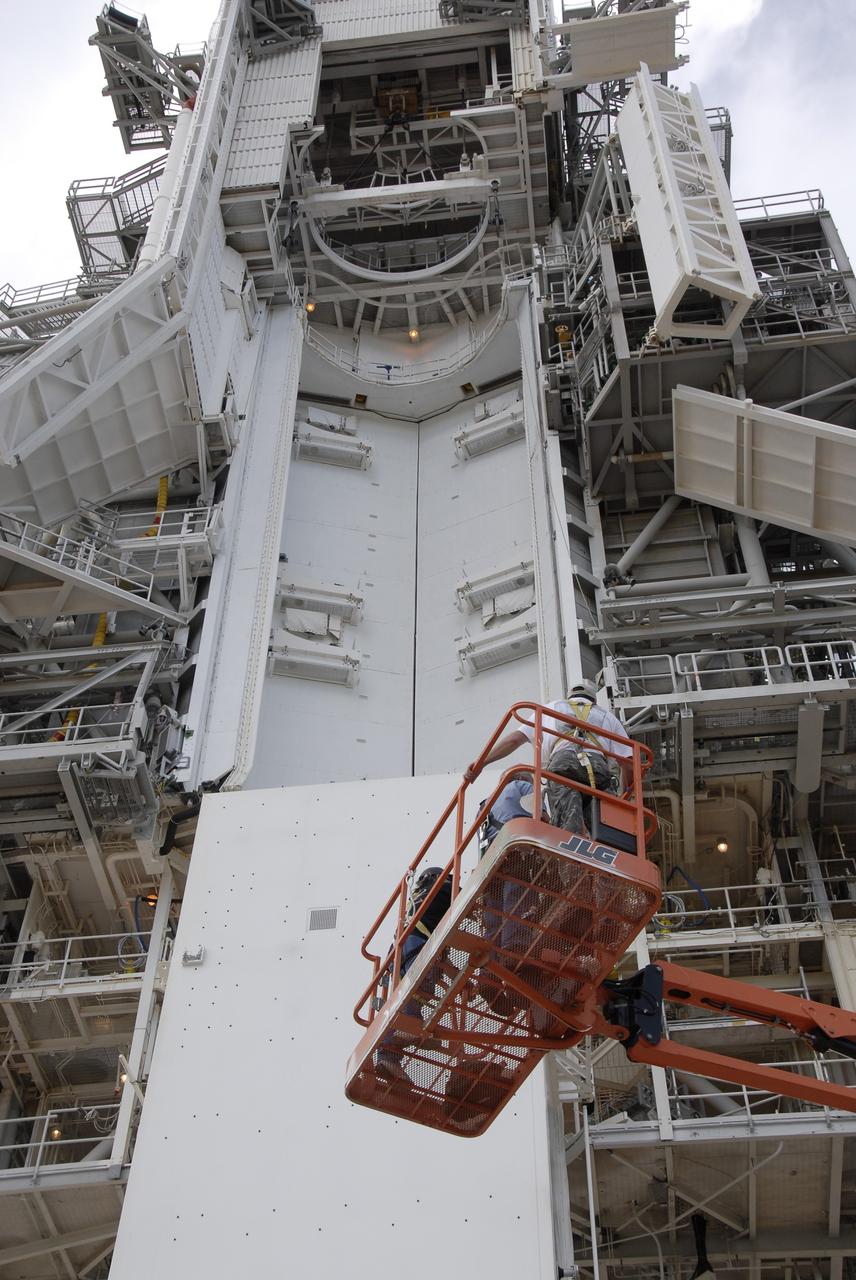
CAPE CANAVERAL, Fla. - At Launch Pad 39A at NASA’s Kennedy Space Center in Florida, technicians work to move the Hubble payload canister into the payload changeout room for space shuttle Atlantis’ STS-125 mission. The canister arrived at the pad on Saturday evening; however, early Sunday morning technicians were unable to place the canister into the pad’s payload changeout room. Teflon pads on “shoes” attached to the outside of the payload canister that help the canister move along the guide rails didn’t fit properly. The shoes were removed and several options were considered, including slightly shaving down the pads so the shoes will fit onto the rails. STS-125 is the fifth and final shuttle Hubble Space Telescope servicing mission. Atlantis’ launch is targeted for Oct. 10. Photo credit: NASA/Kim Shiflett.
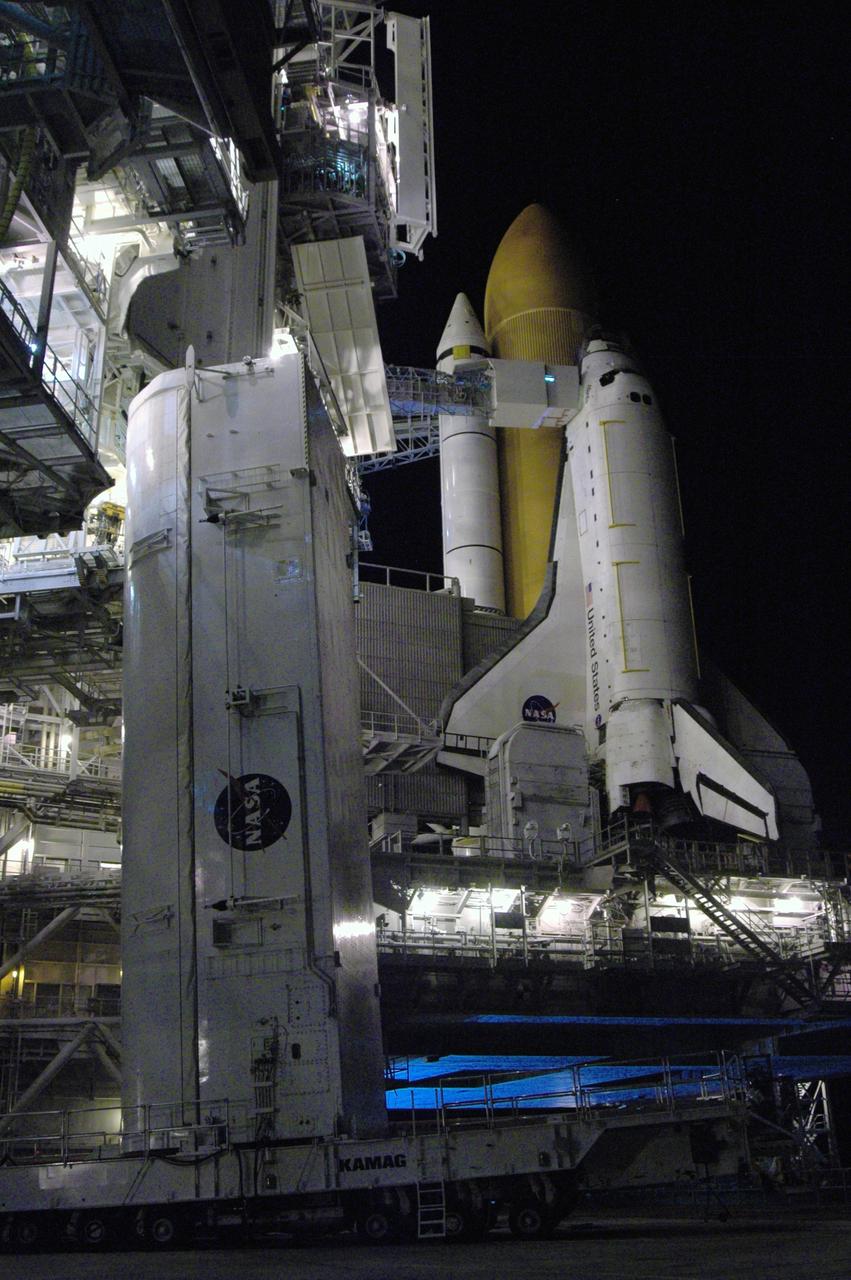
CAPE CANAVERAL, Fla. - On Launch Pad 39A at NASA's Kennedy Space Center, the payload canister waits for adjusted guide shoes to be attached before being lifted to the payload changeout room for the second time. The first attempt encountered problems when Teflon pads on “shoes” attached to the outside of the canister that go onto guide rails to help the canister into the room didn’t fit properly. The two shoes were removed, slightly shaved down so that they would fit into the rails and put back on the canister. The changeout room is the enclosed, environmentally controlled portion of the rotating service structure that supports cargo delivery to the pad and subsequent vertical installation into the shuttle’s payload bay. Launch of Atlantis is targeted for Oct. 10. Photo credit: NASA/Jim Grossmann
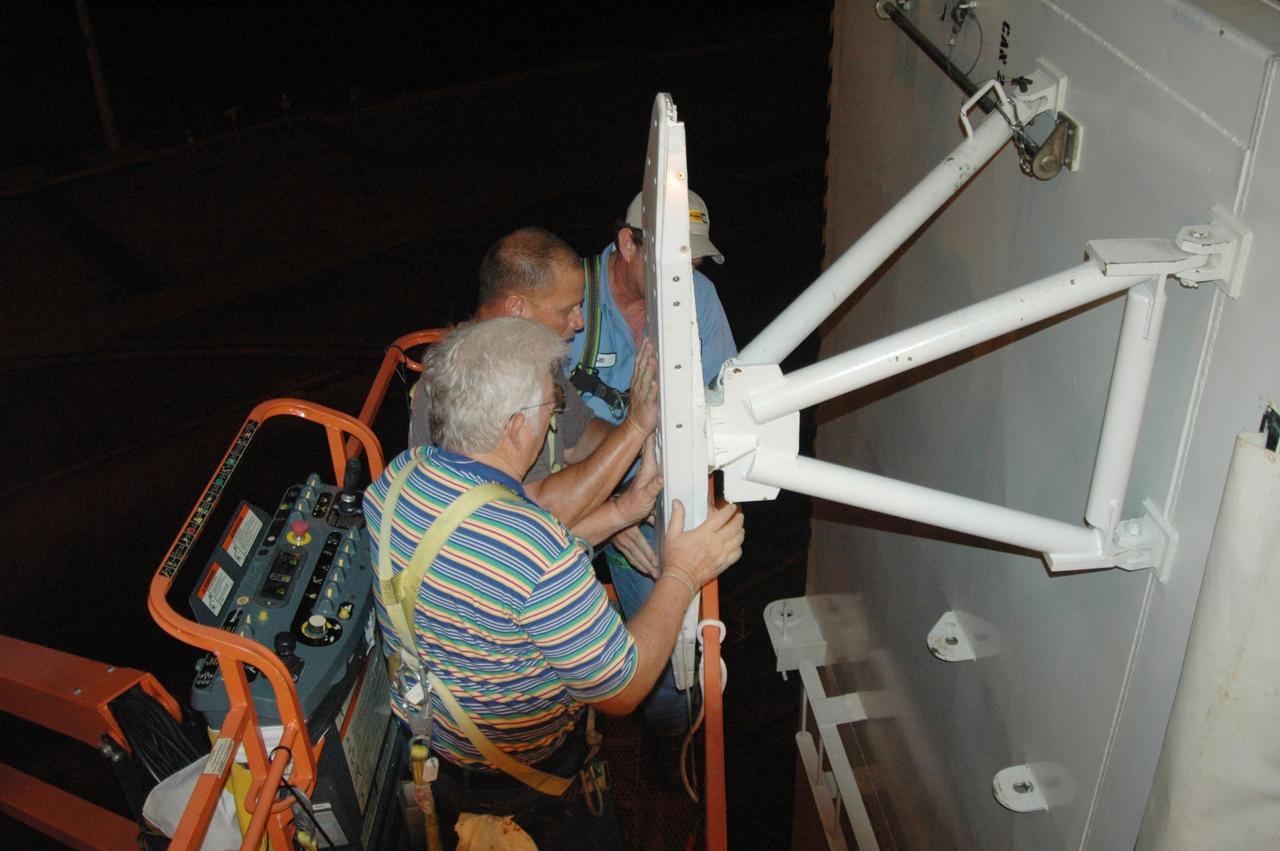
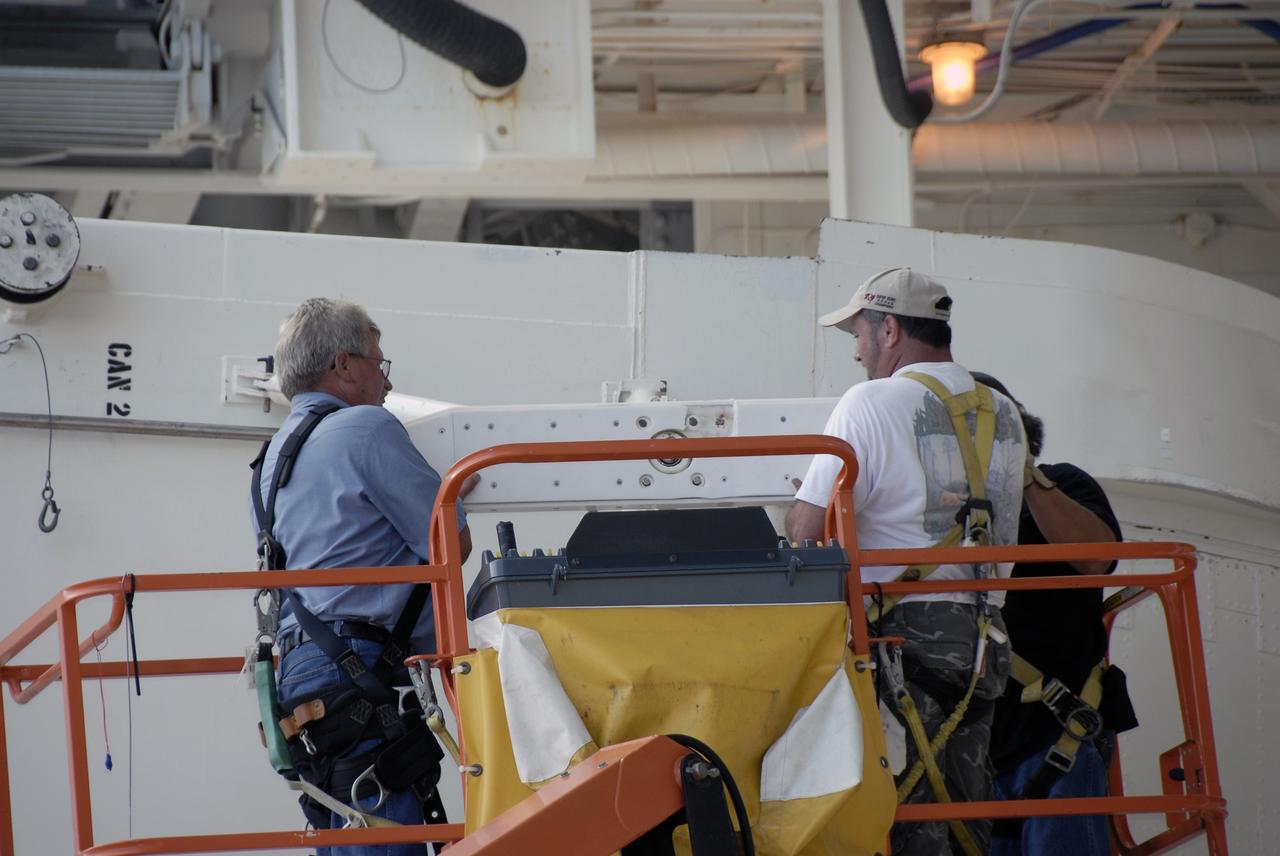
CAPE CANAVERAL, Fla. - On Launch Pad 39A at NASA's Kennedy Space Center, workers on a crane attach adjusted guide shoes onto the outside of the payload canister for attempt at a second lift to the payload changeout room. The first attempt encountered problems when Teflon pads on “shoes” attached to the outside of the canister that go onto guide rails to help the canister into the room didn’t fit properly. The two shoes were removed, slightly shaved down so that they would fit into the rails and put back on the canister. The changeout room is the enclosed, environmentally controlled portion of the rotating service structure that supports cargo delivery to the pad and subsequent vertical installation into the shuttle’s payload bay. Launch of Atlantis is targeted for Oct. 10. Photo credit: NASA/Jim Grossmann
CAPE CANAVERAL, Fla. - At Launch Pad 39A at NASA’s Kennedy Space Center in Florida, technicians work to move the Hubble payload canister into the payload changeout room for space shuttle Atlantis’ STS-125 mission. The canister arrived at the pad on Saturday evening; however, early Sunday morning technicians were unable to place the canister into the pad’s payload changeout room. Teflon pads on “shoes” attached to the outside of the payload canister that help the canister move along the guide rails didn’t fit properly. The shoes were removed and several options were considered, including slightly shaving down the pads so the shoes will fit onto the rails. STS-125 is the fifth and final shuttle Hubble Space Telescope servicing mission. Atlantis’ launch is targeted for Oct. 10. Photo credit: NASA/Kim Shiflett.
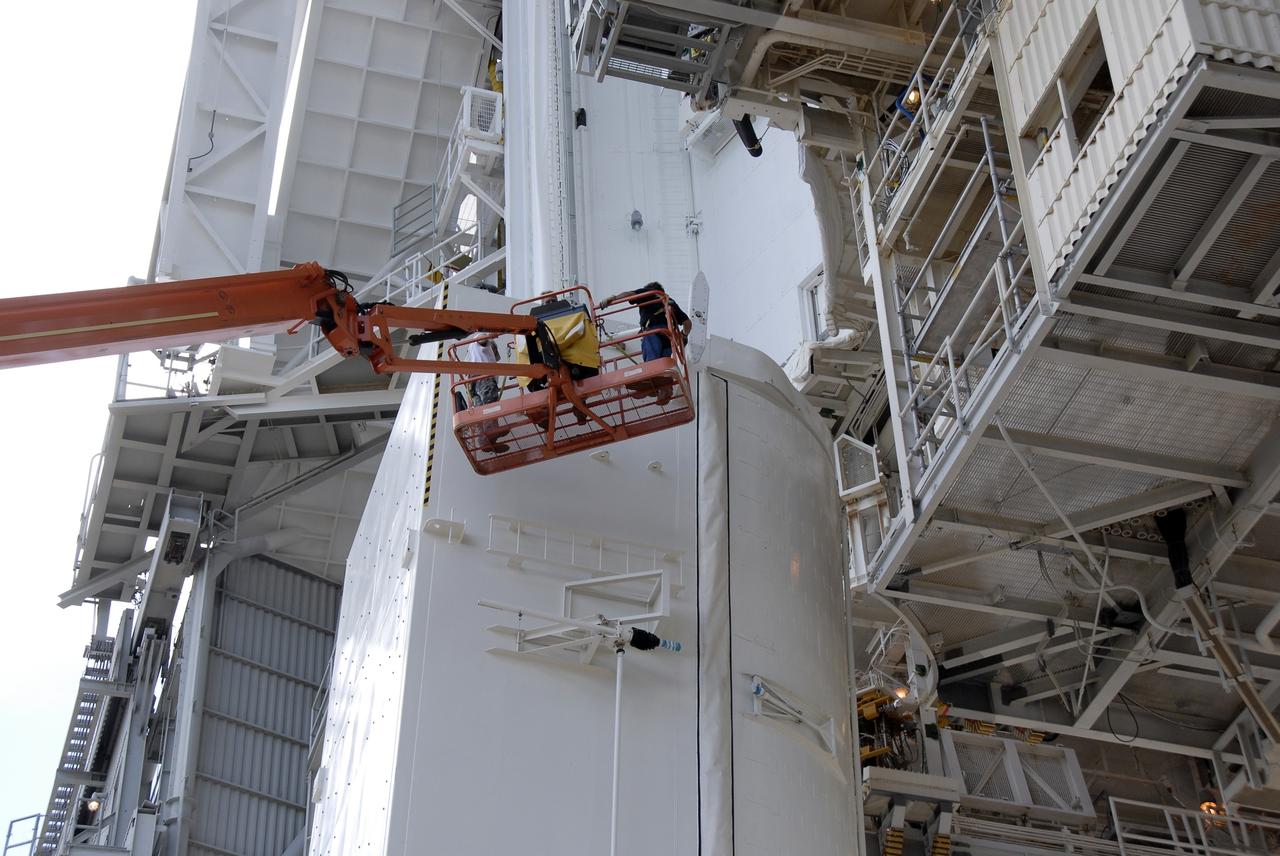
CAPE CANAVERAL, Fla. - At Launch Pad 39A at NASA’s Kennedy Space Center in Florida, technicians work to move the Hubble payload canister into the payload changeout room for space shuttle Atlantis’ STS-125 mission. The canister arrived at the pad on Saturday evening; however, early Sunday morning technicians were unable to place the canister into the pad’s payload changeout room. Teflon pads on “shoes” attached to the outside of the payload canister that help the canister move along the guide rails didn’t fit properly. The shoes were removed and several options were considered, including slightly shaving down the pads so the shoes will fit onto the rails. STS-125 is the fifth and final shuttle Hubble Space Telescope servicing mission. Atlantis’ launch is targeted for Oct. 10. Photo credit: NASA/Kim Shiflett.

CAPE CANAVERAL, Fla. - On Launch Pad 39A at NASA's Kennedy Space Center, workers on a crane attach adjusted guide shoes onto the outside of the payload canister for attempt at a second lift to the payload changeout room. The first attempt encountered problems when Teflon pads on “shoes” attached to the outside of the canister that go onto guide rails to help the canister into the room didn’t fit properly. The two shoes were removed, slightly shaved down so that they would fit into the rails and put back on the canister. The changeout room is the enclosed, environmentally controlled portion of the rotating service structure that supports cargo delivery to the pad and subsequent vertical installation into the shuttle’s payload bay. Launch of Atlantis is targeted for Oct. 10. Photo credit: NASA/Jim Grossmann
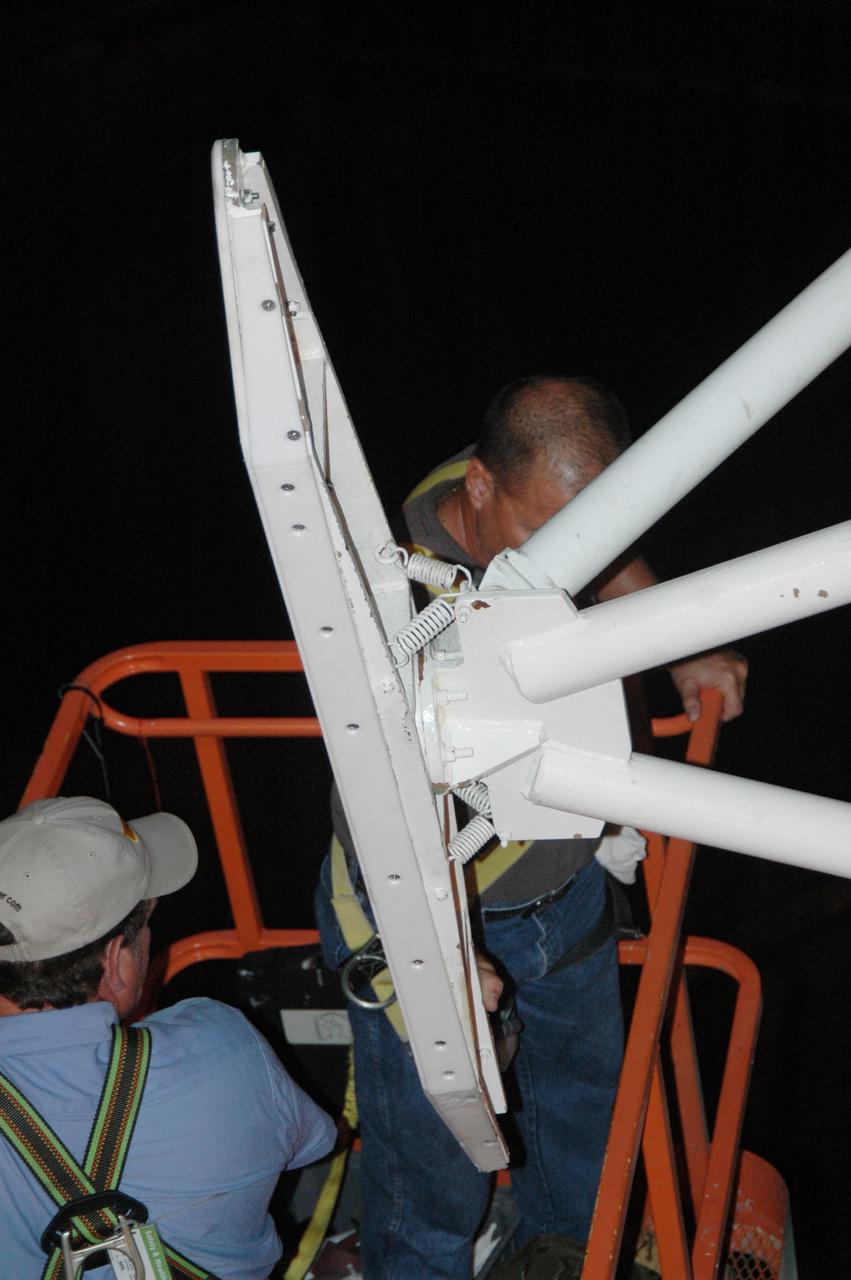
CAPE CANAVERAL, Fla. - On Launch Pad 39A at NASA's Kennedy Space Center, workers on a crane attach adjusted guide shoes onto the outside of the payload canister for attempt at a second lift into the payload changeout room. The first attempt encountered problems when Teflon pads on “shoes” attached to the outside of the canister that go onto guide rails to help the canister into the room didn’t fit properly. The two shoes were removed, slightly shaved down so that they would fit into the rails and put back on the canister. The changeout room is the enclosed, environmentally controlled portion of the rotating service structure that supports cargo delivery to the pad and subsequent vertical installation into the shuttle’s payload bay. Launch of Atlantis is targeted for Oct. 10. Photo credit: NASA/Jim Grossmann

CAPE CANAVERAL, Fla. - At Launch Pad 39A at NASA’s Kennedy Space Center in Florida, technicians work to move the Hubble payload canister into the payload changeout room for space shuttle Atlantis’ STS-125 mission. The canister arrived at the pad on Saturday evening, however, early Sunday morning technicians were unable to place the canister into the pad’s payload changeout room. Teflon pads on “shoes” attached to the outside of the payload canister that help the canister move along guide rails didn’t fit properly. The shoes were removed and several options were considered, including slightly shaving down the pads so the shoes will fit onto the rails. STS-125 is the fifth and final shuttle Hubble Space Telescope servicing mission. Atlantis’ launch is targeted for Oct. 10. Photo credit: NASA/Kim Shiflett.
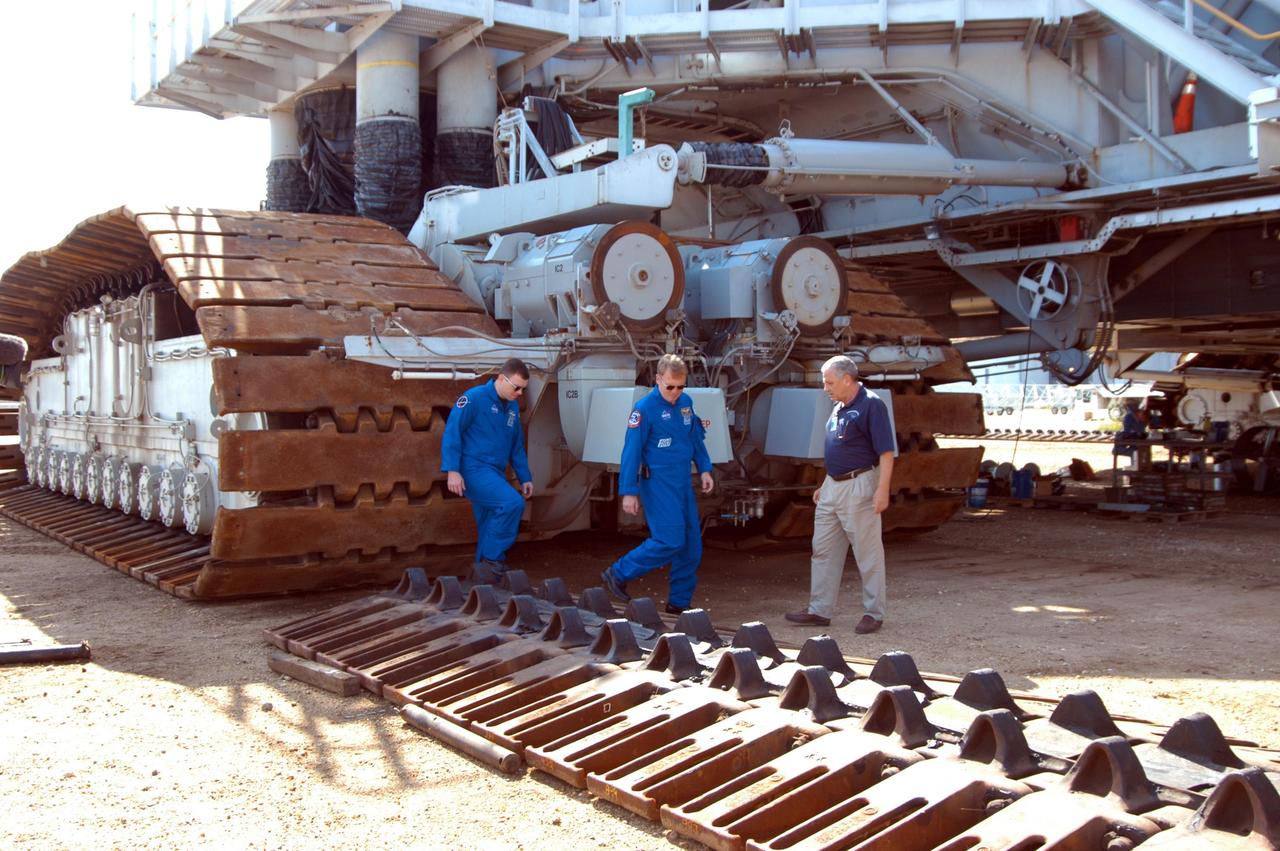
KENNEDY SPACE CENTER, FLA. -- STS-114 Pilot James Kelly (left) and Mission Specialist Andrew Thomas (center), along with NASA Systems Engineer Robert Rokobauer (right), look closely at the shoes of one of the tracks used on a Crawler-Transporter. The 10-foot-high track on a crawler contains 278 “shoes,” weighing 2,200 pounds each. The crawlers are guided by four trucks, one on each corner. The crawlers had recent modifications to the cab and muffler system. The STS-114 mission is Logistics Flight 1, which is scheduled to deliver supplies and equipment plus the external stowage platform to the International Space Station.
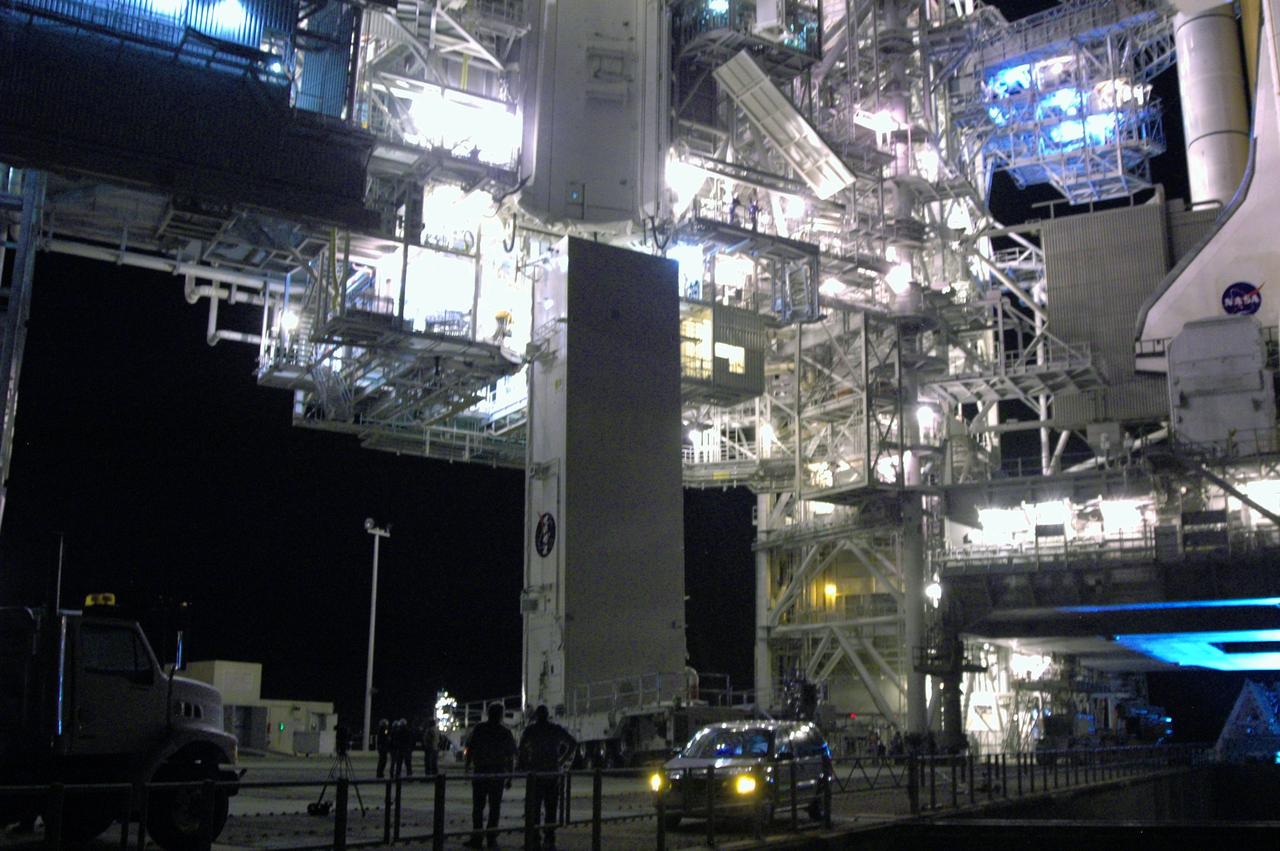
CAPE CANAVERAL, Fla. - On Launch Pad 39A at NASA's Kennedy Space Center, the payload canister is ready for another attempt to be lifted to the payload changeout room. The first attempt encountered problems when Teflon pads on “shoes” attached to the outside of the canister that go onto guide rails to help the canister into the room didn’t fit properly. The two shoes were removed, slightly shaved down so that they would fit into the rails and put back on the canister. The changeout room is the enclosed, environmentally controlled portion of the rotating service structure that supports cargo delivery to the pad and subsequent vertical installation into the shuttle’s payload bay. Launch of Atlantis is targeted for Oct. 10. Photo credit: NASA/Jim Grossmann
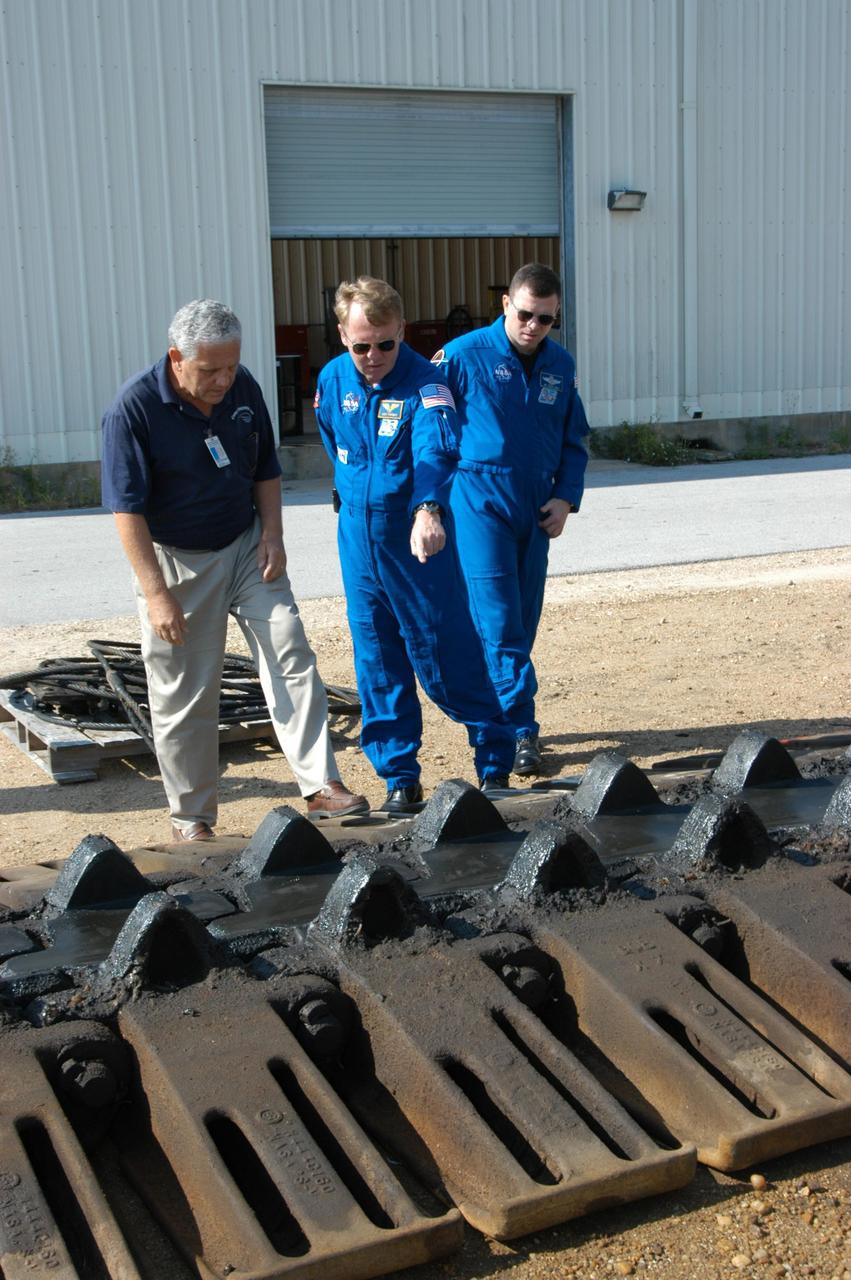
KENNEDY SPACE CENTER, FLA. -- STS-114 Mission Specialist Andrew Thomas (center) and Pilot James Kelly (right), along with NASA Systems Engineer Robert Rokobauer (left), look closely at the shoes of one of the tracks used on a Crawler-Transporter. The 10-foot-high track on a crawler contains 278 “shoes,” weighing 2,200 pounds each. The crawlers are guided by four trucks, one on each corner. The crawlers had recent modifications to the cab and muffler system. The STS-114 mission is Logistics Flight 1, which is scheduled to deliver supplies and equipment plus the external stowage platform to the International Space Station.
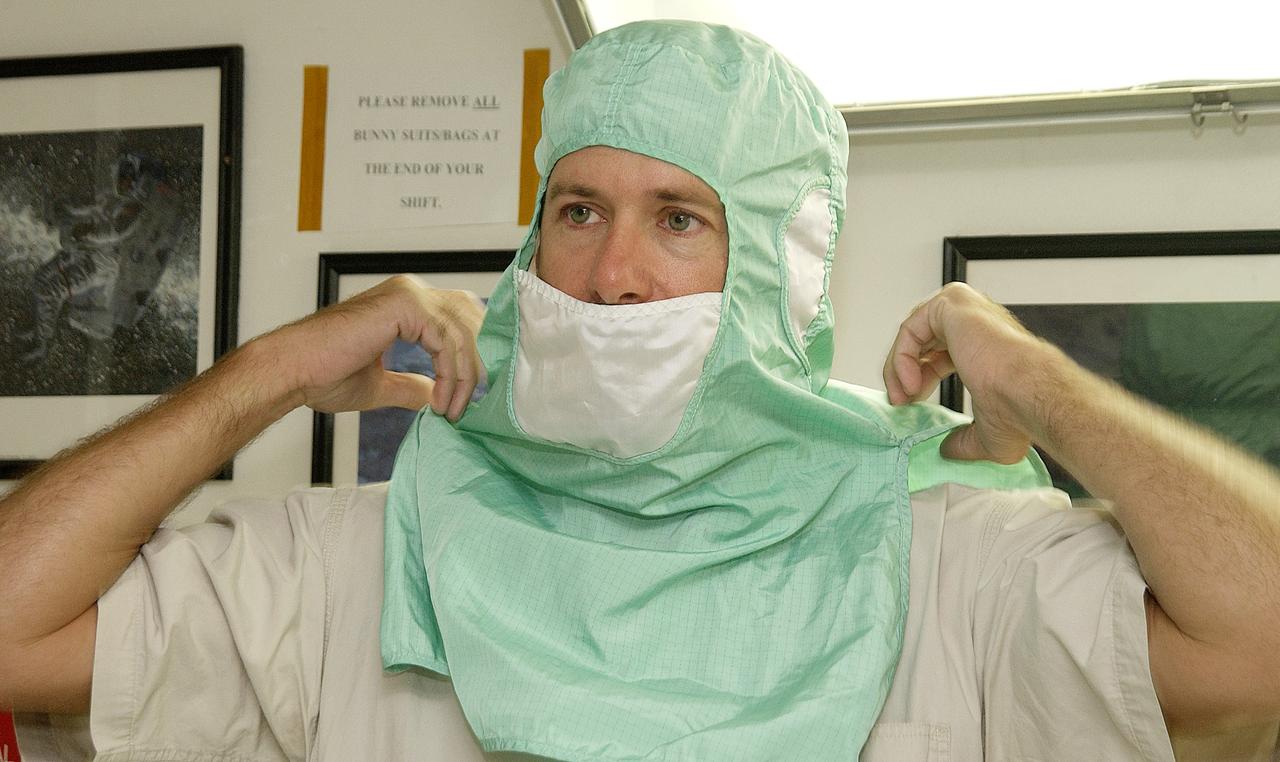
KENNEDY SPACE CENTER, FLA. - A KSC employee dons the head and face cover of a "bunny suit," part of standard clean room apparel, before entering a clean room. This apparel is designed to cover the hair, clothing and shoes of employees to prevent particulate matter from contaminating the space flight hardware being stored or processed in the clean room and is one aspect of KSC's Foreign Object Debris (FOD) control program, an important safety initiative.
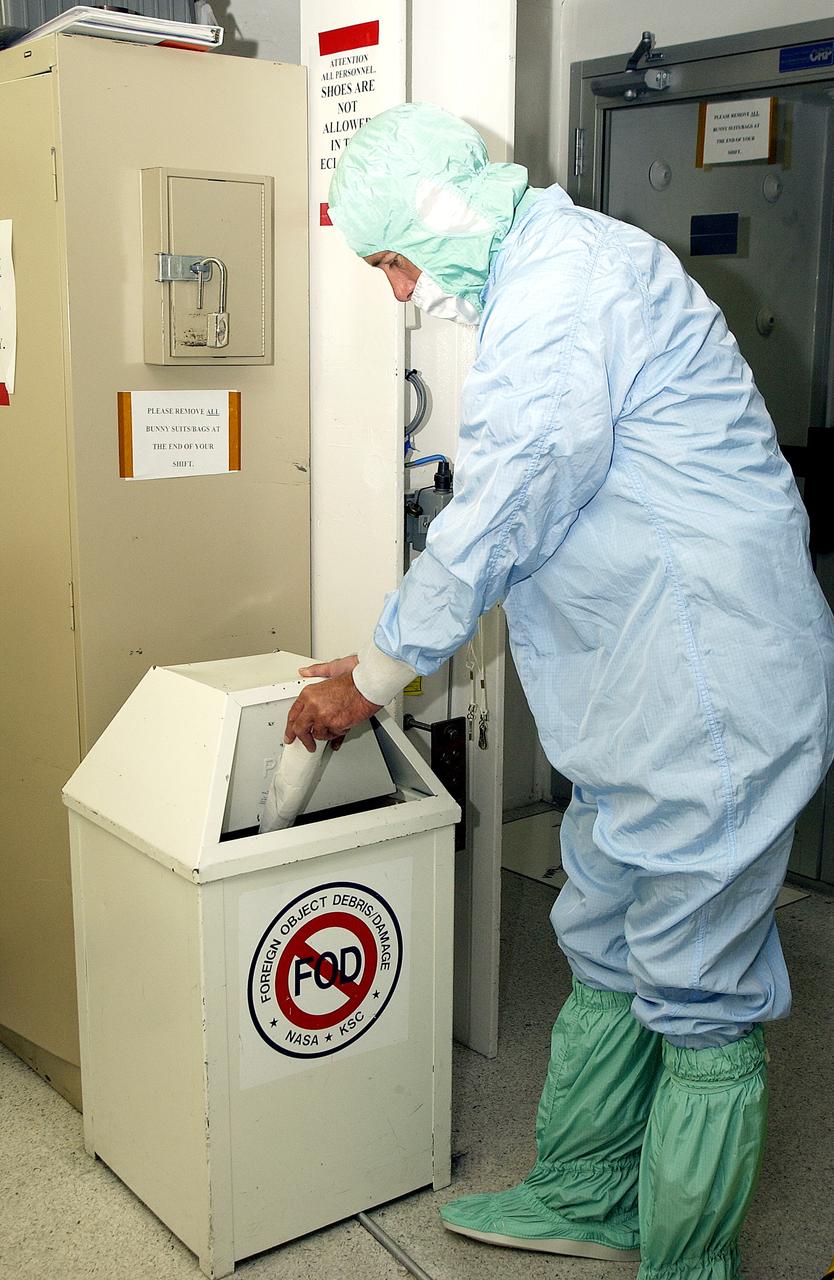
KENNEDY SPACE CENTER, FLA. - A KSC employee dressed in a "bunny suit," standard clean room apparel, disposes of some waste material into a container designated for the purpose. The apparel is designed to cover the hair, clothing and shoes of employees entering a clean room to prevent particulate matter from contaminating the space flight hardware being stored or processed in the room. The suit and container are both part of KSC's Foreign Object Debris (FOD) control program, an important safety initiative.
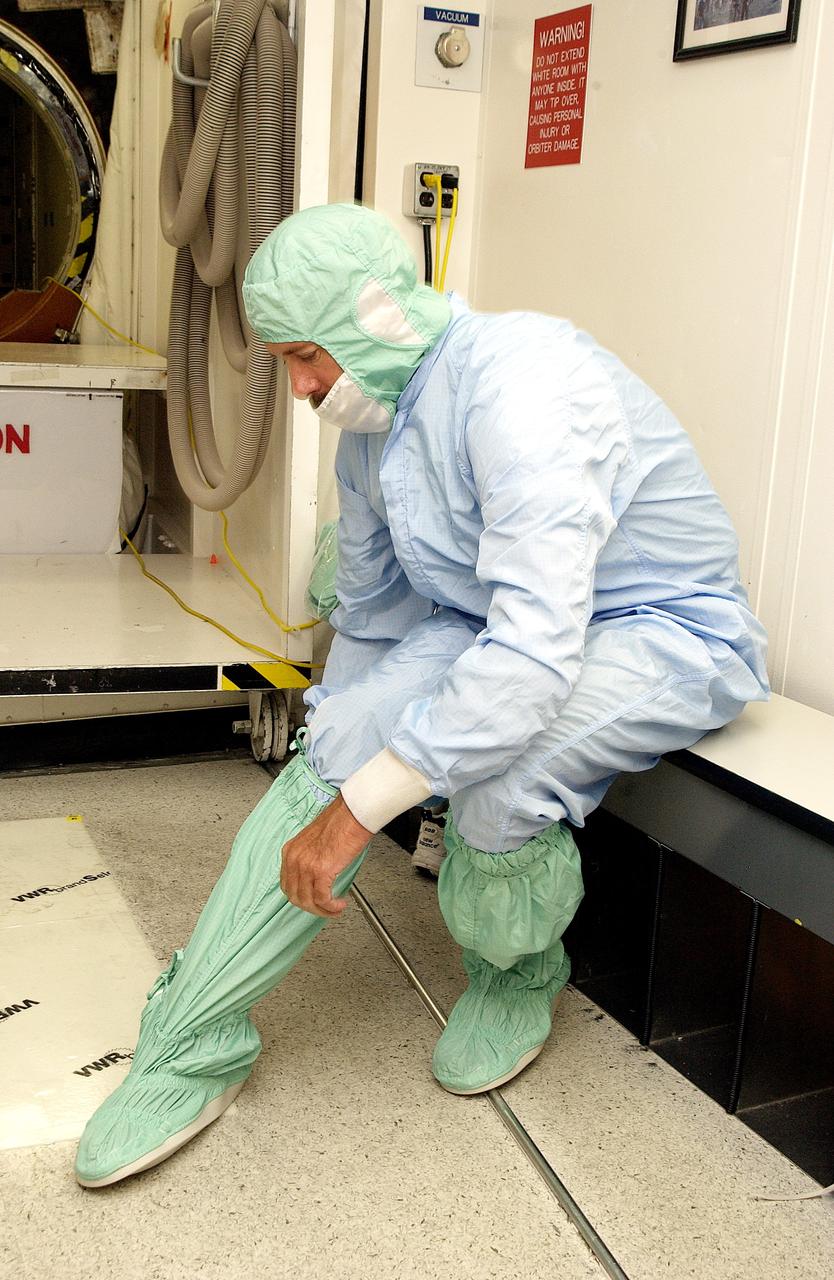
KENNEDY SPACE CENTER, FLA. - A KSC employee secures a foot and leg cover of his "bunny suit," part of standard clean room apparel, before entering a clean room. The apparel is designed to cover the hair, clothing and shoes of employees to prevent particulate matter from contaminating the space flight hardware being stored or processed in the clean room and is one aspect of KSC's Foreign Object Debris (FOD) control program, an important safety initiative.
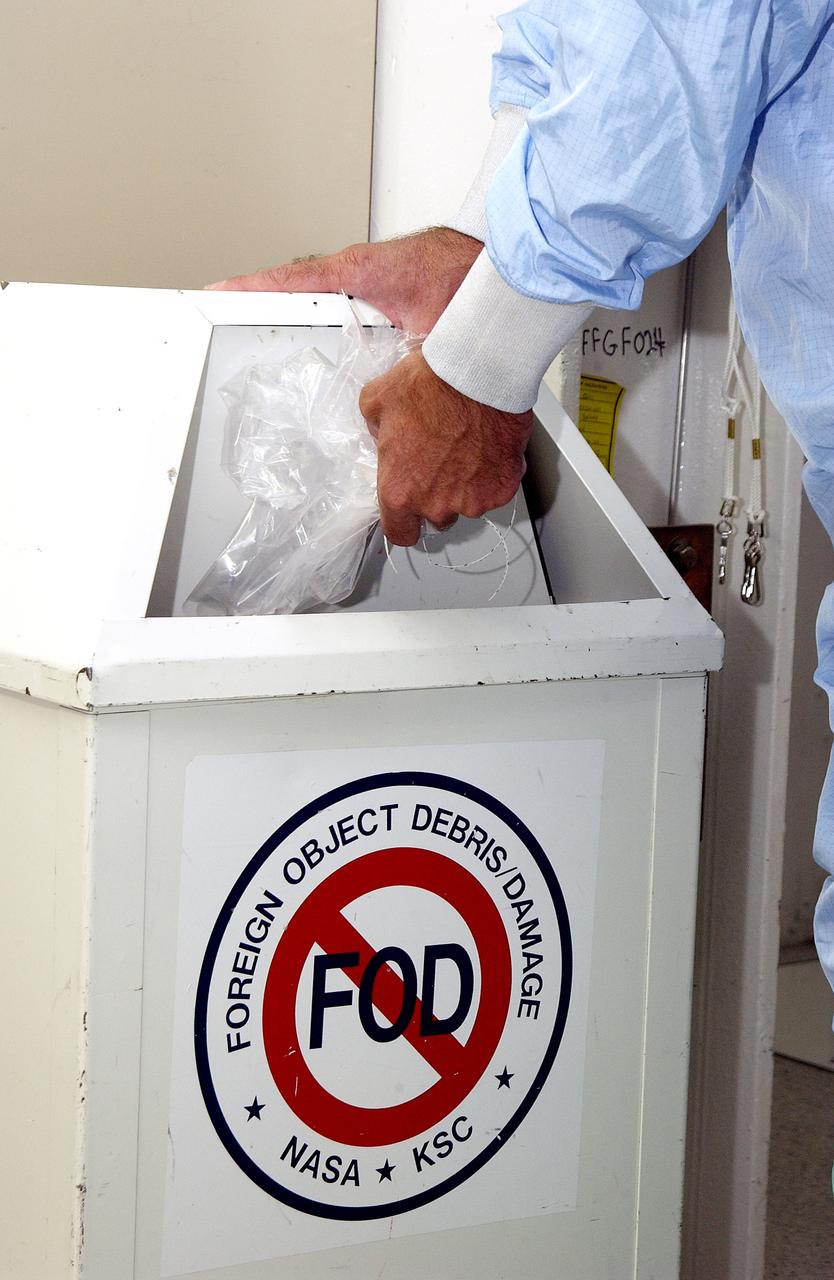
KENNEDY SPACE CENTER, FLA. - A KSC employee dressed in a "bunny suit," standard clean room apparel, disposes of some waste material into a container designated for the purpose. The apparel is designed to cover the hair, clothing and shoes of employees entering a clean room to prevent particulate matter from contaminating the space flight hardware being stored or processed in the room. The suit and container are both part of KSC's Foreign Object Debris (FOD) control program, an important safety initiative.
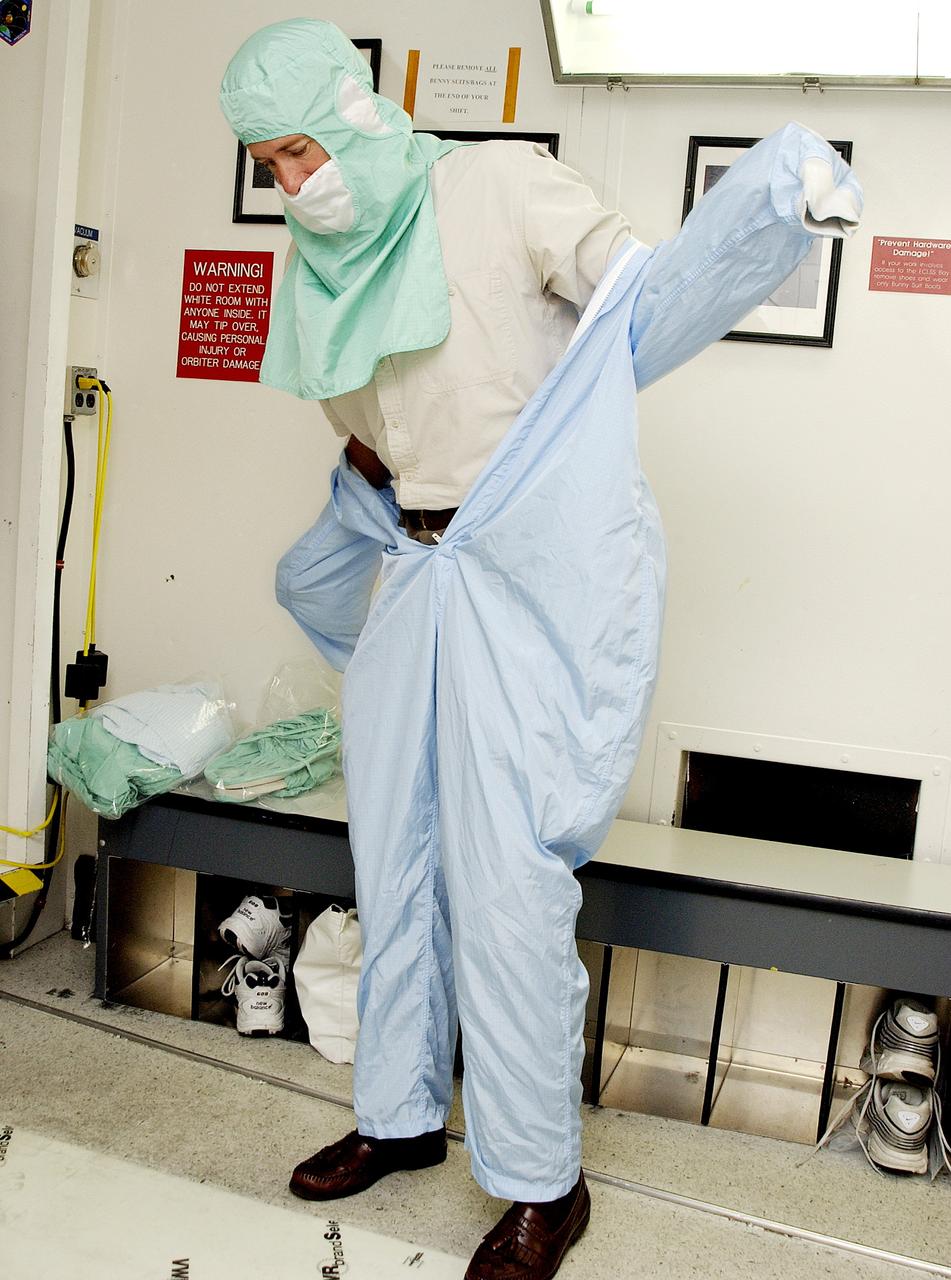
KENNEDY SPACE CENTER, FLA. - A KSC employee dons the coverall of a "bunny suit," part of standard clean room apparel, before entering a clean room. The apparel is designed to cover the hair, clothing and shoes of employees to prevent particulate matter from contaminating the space flight hardware being stored or processed in the clean room and is one aspect of KSC's Foreign Object Debris (FOD) control program, an important safety initiative.
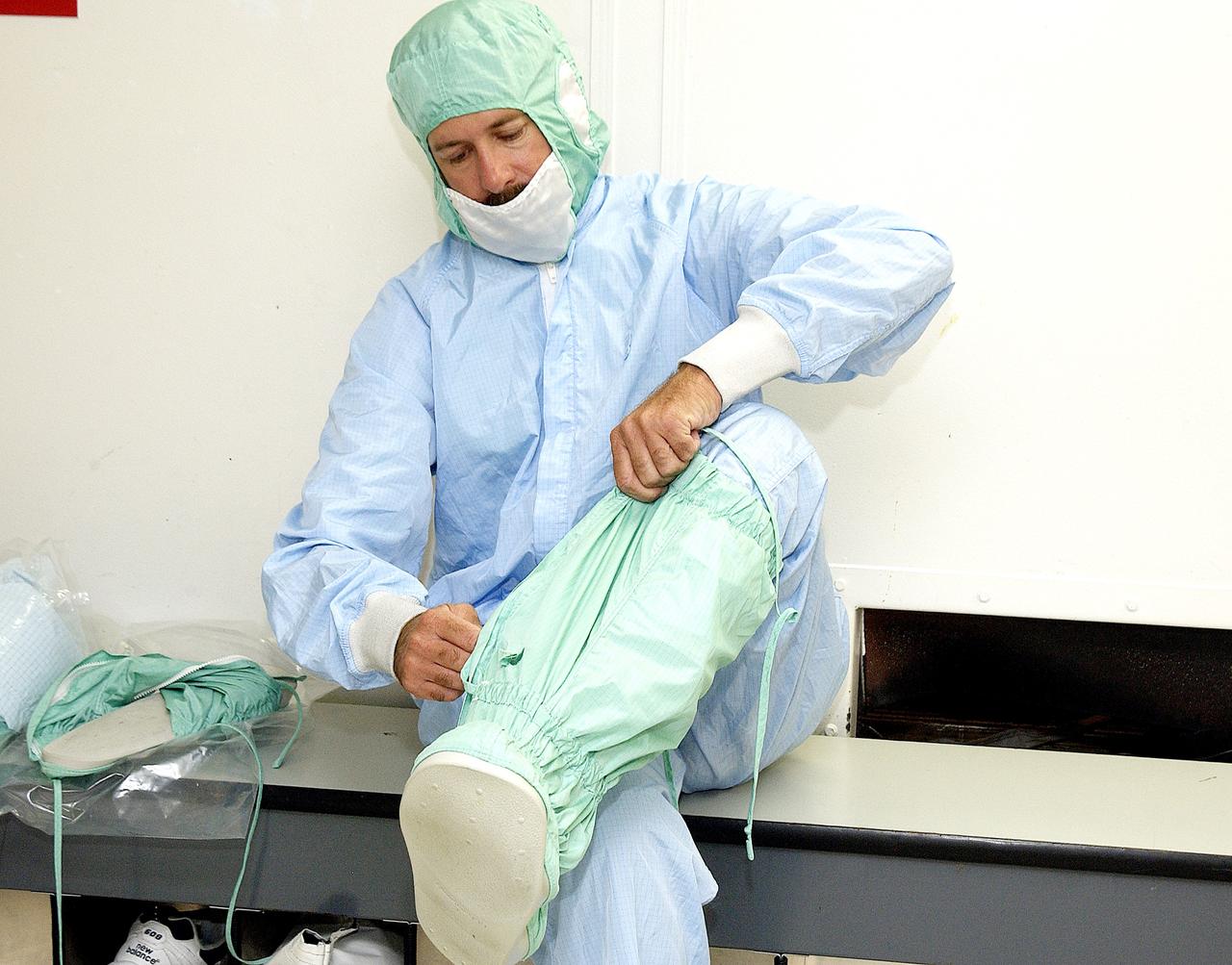
KENNEDY SPACE CENTER, FLA. - A KSC employee dons the foot and leg covers of a "bunny suit," part of standard clean room apparel, before entering a clean room. The apparel is designed to cover the hair, clothing and shoes of employees to prevent particulate matter from contaminating the space flight hardware being stored or processed in the clean room and is one aspect of KSC's Foreign Object Debris (FOD) control program, an important safety initiative.
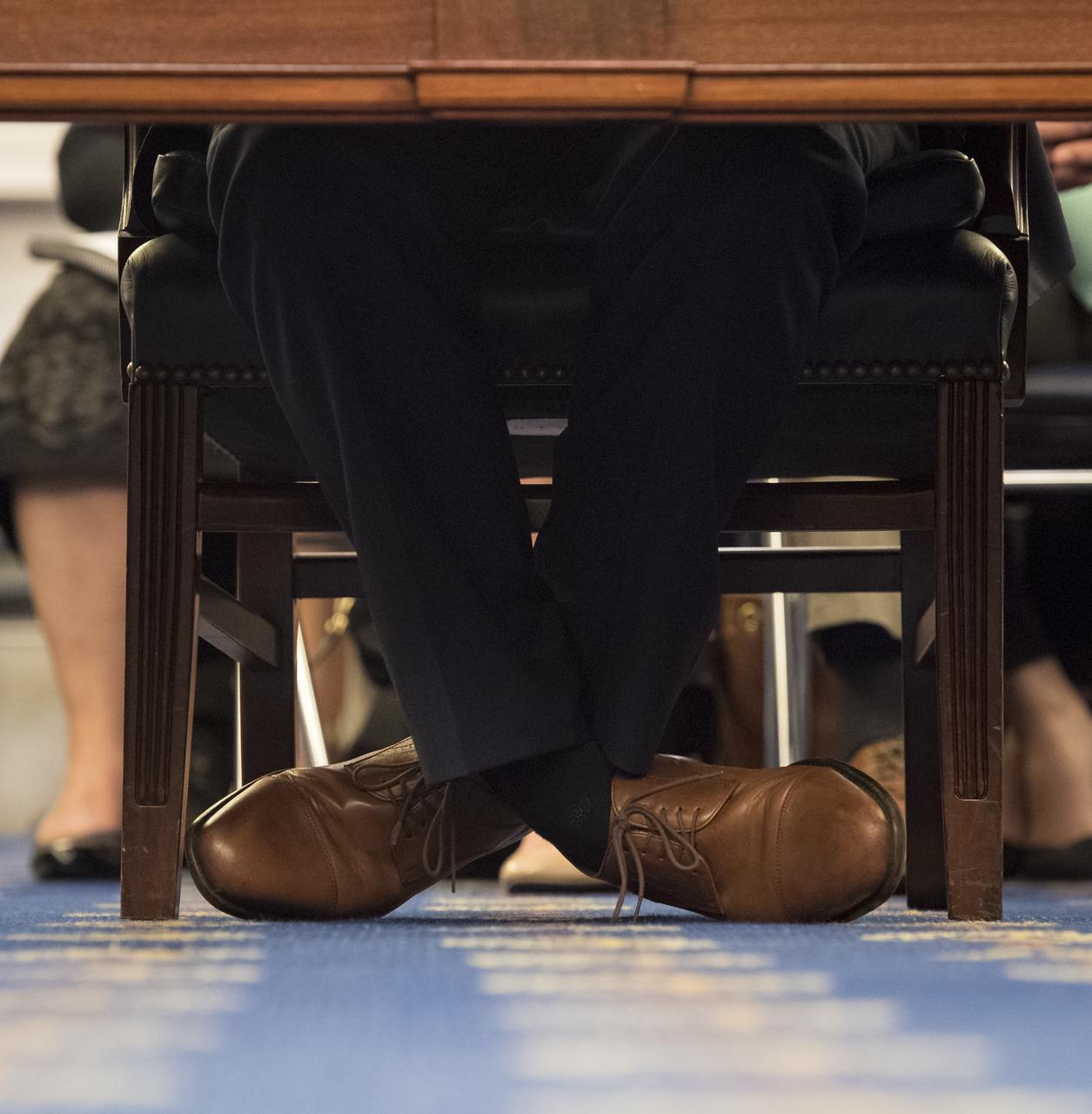
NASA Administrator Jim Bridenstine's shoes are seen while testifying during a Subcommittee on Space, Science, and Competitiveness hearing titled, "Global Space Race: Ensuring the United States Remains the Leader in Space," Wednesday, September 26, 2018 at the Russell Senate Office Building in Washington. Photo Credit: (NASA/Aubrey Gemignani)
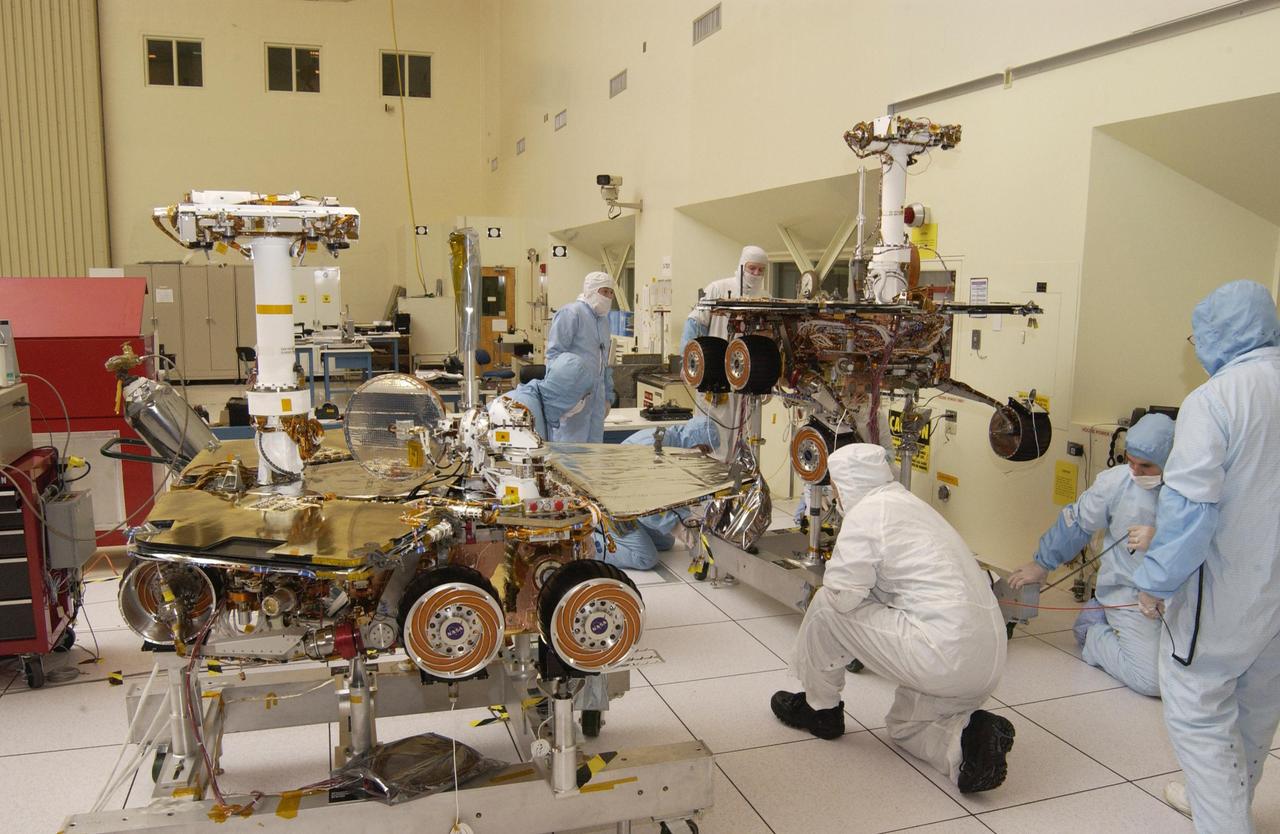
High Bay 1 looks much as it does today in this photo of NASA's Spirit and Opportunity Mars rovers being tested on Feb. 10, 2003. Some workers are wearing booties and others wear shoes that were stored in the gowning area and cleaned regularly. https://photojournal.jpl.nasa.gov/catalog/PIA23244
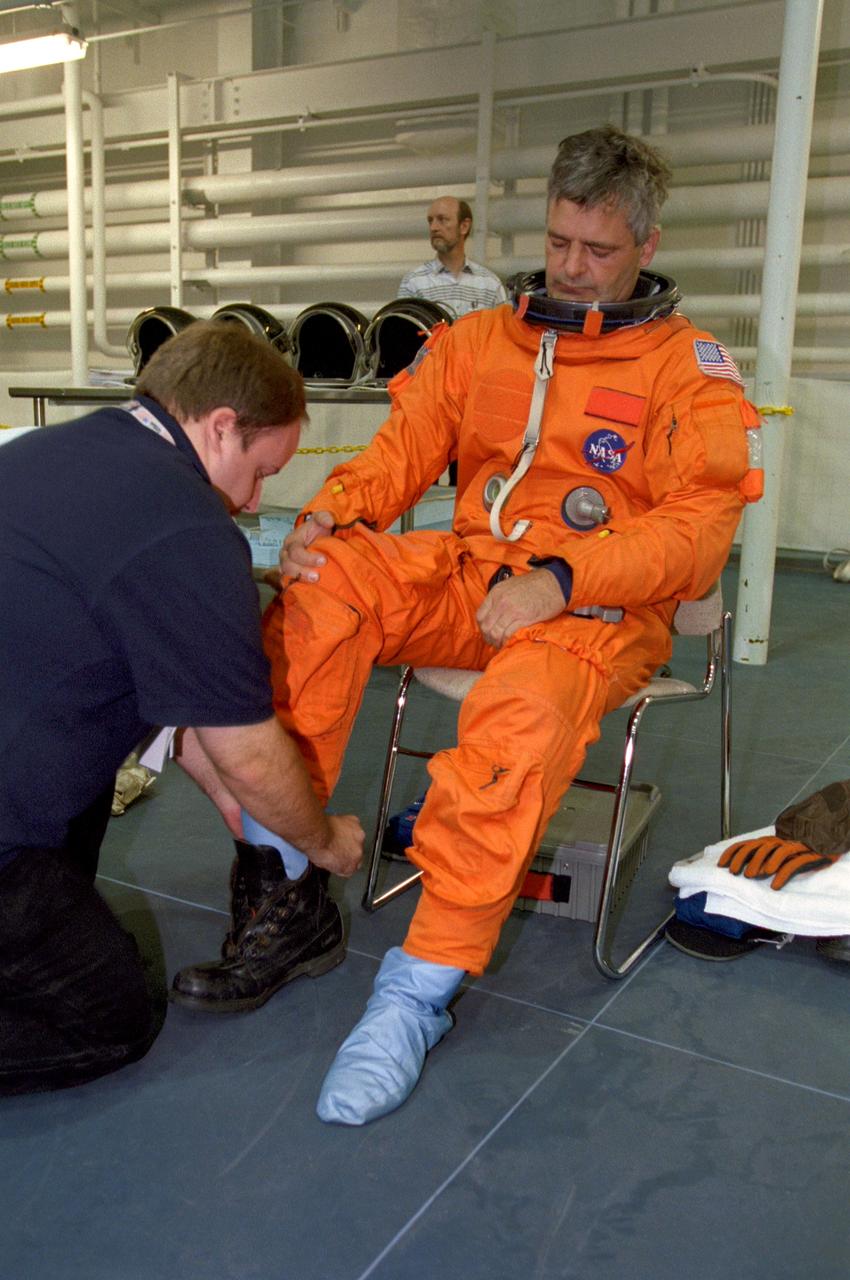
S99-07013 (9 July 1999) --- Astronaut Marc Garneau, mission specialist representing the Canadian Space Agency, with the aid of a United Space Alliance suit technician, dons his shoes while suiting up for a STS-97 training session in the Neutral Buoyancy Laboratory at the Sonny Carter Training Center.
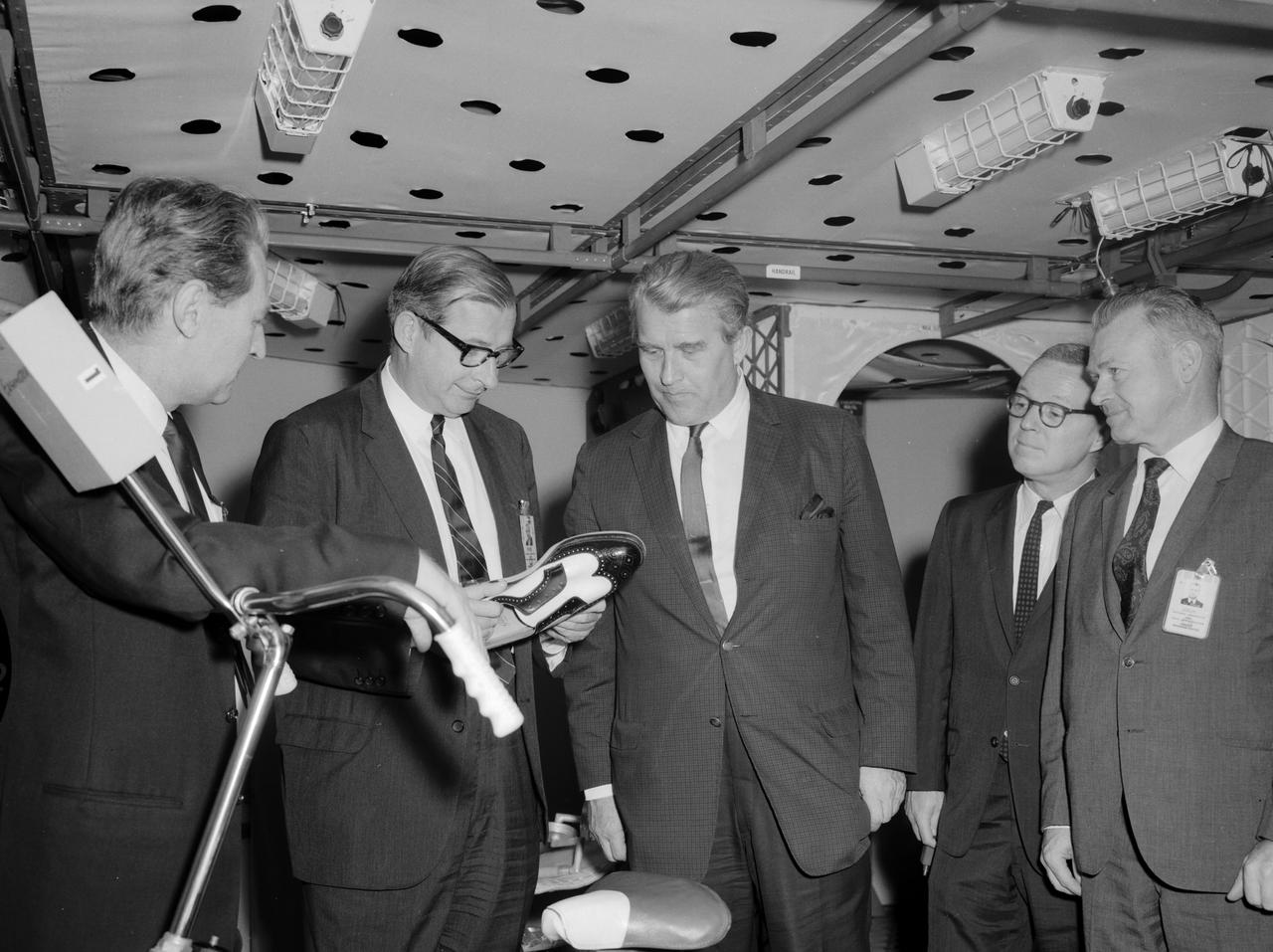
Pictured from the left, in the Saturn I mockup, are: William Brooksbank, Marshall Space Flight Center (MSFC) Propulsion and Vehicle Engineering Laboratory; Dr. Thomas O. Paine, Deputy Administrator of the National Aeronautics and Space Administration (NASA); Dr. Wernher von Braun, MSFC director; Colonel Clare F. Farley, executive officer of the Office of the Administrator; and Charles J. Donlan, newly appointed deputy associate administrator for Manned Space Flight, technical. The party examined an ordinary man’s shoe (held by Paine) outfitted for use in the Saturn I Workshop. The shoe had a unique fastener built into the sole to allow an astronaut to move about the workshop floor and to remain in one position if he desired. Dr. Paine and his party indulged in a two-day tour at the Marshall Space Flight Center getting acquainted with Marshall personnel and programs. It was Paine’s first visit to the center since assuming the NASA post on February 1, 1968.
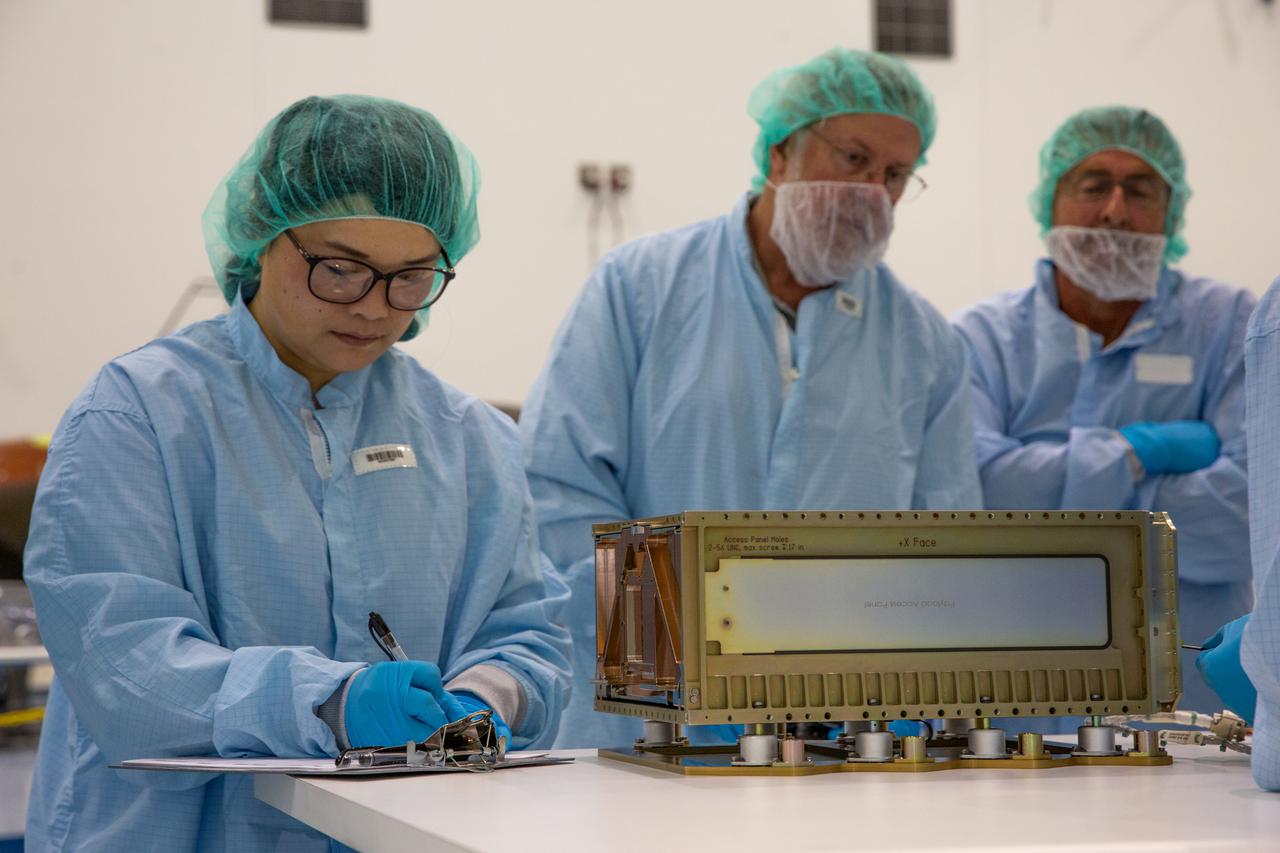
Teams worked on the final processing of their payloads that will fly aboard Artemis I. Housed within the Orion stage adapter, the satellites – called CubeSats – are roughly the size of a large shoe box and weigh no more than 30 pounds. Despite their small size, they enable science and technology experiments that may enhance our understanding of the deep space environment, expand our knowledge of the Moon, and demonstrate new technologies that could be used on future missions.
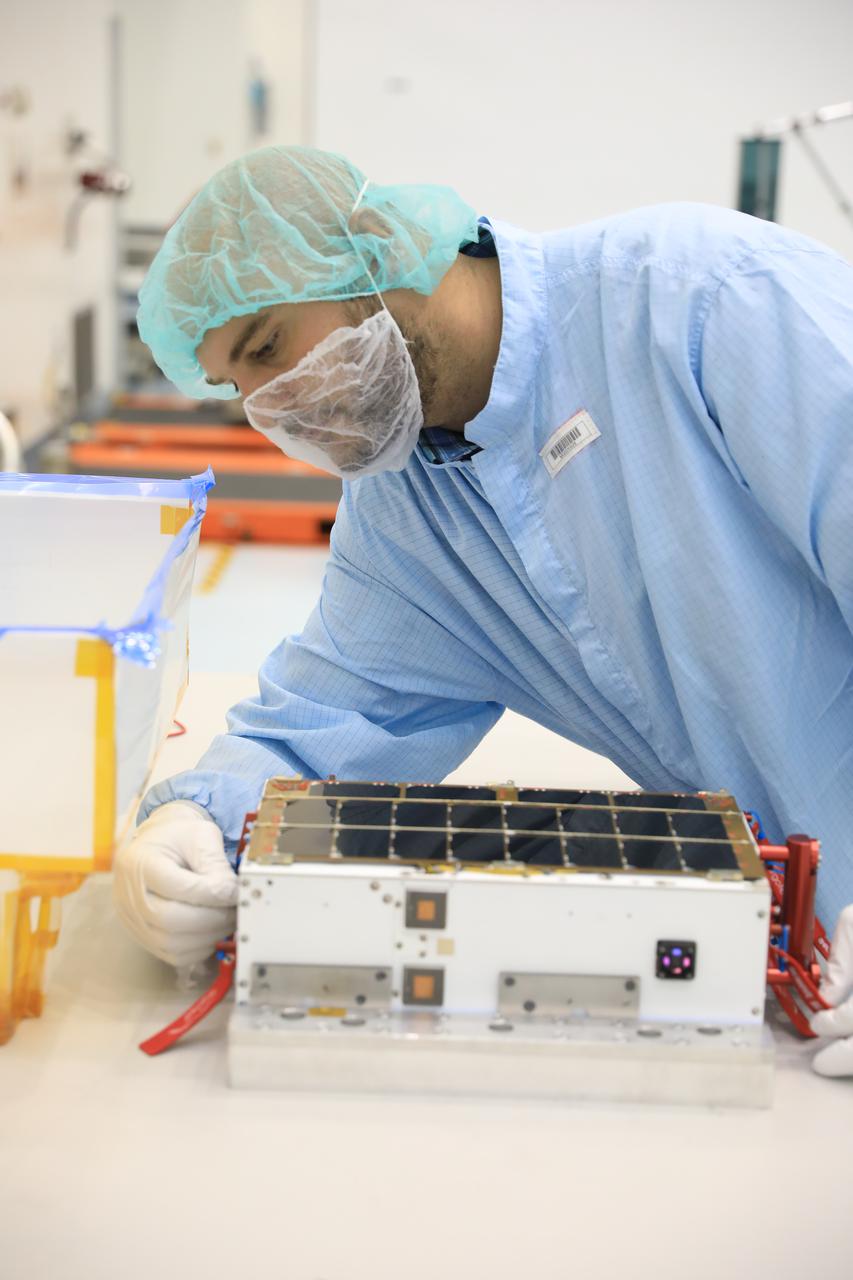
Teams worked on the final processing of their payloads that will fly aboard Artemis I. Housed within the Orion stage adapter, the satellites – called CubeSats – are roughly the size of a large shoe box and weigh no more than 30 pounds. Despite their small size, they enable science and technology experiments that may enhance our understanding of the deep space environment, expand our knowledge of the Moon, and demonstrate new technologies that could be used on future missions.
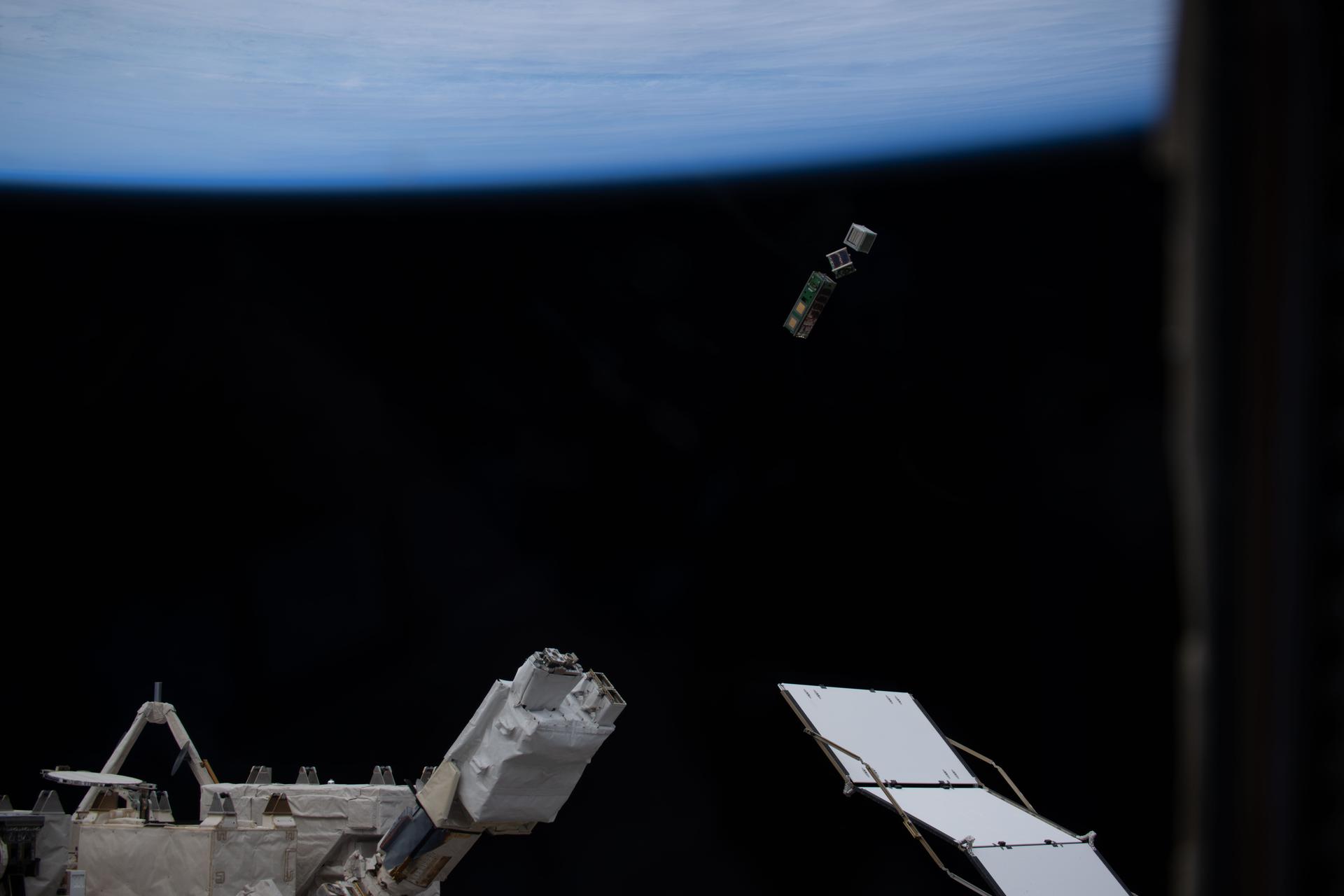
iss074e0301636 (Feb. 3, 2026) --- A trio of CubeSats designed by college students from around the world is deployed into Earth orbit from a small satellite orbital deployer on the outside of the International Space Station's Kibo laboratory module. Students from Mexico, Italy, Thailand, Malaysia, and Japan designed the shoe-boxed sized satellites for a series of Earth observations and technology demonstrations.
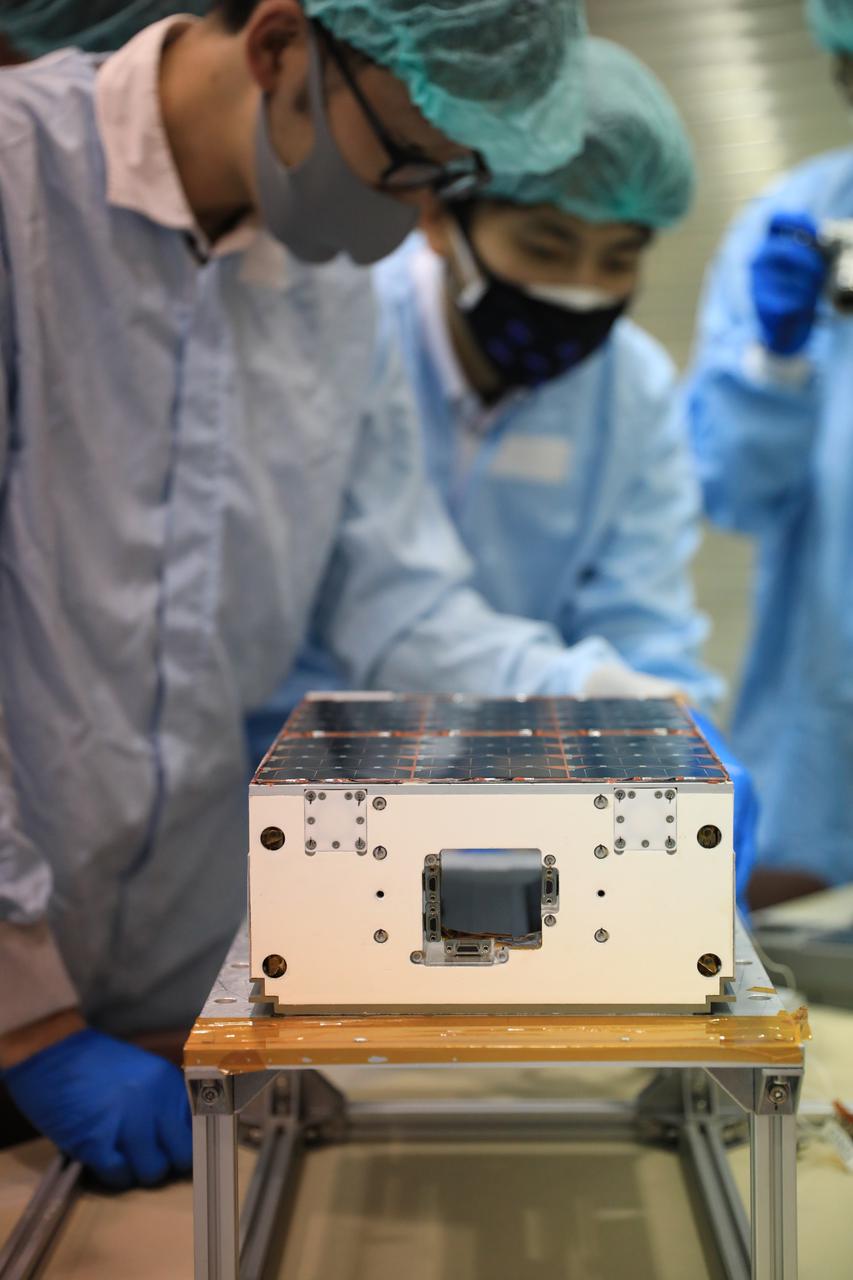
Teams worked on the final processing of their payloads that will fly aboard Artemis I. Housed within the Orion stage adapter, the satellites – called CubeSats – are roughly the size of a large shoe box and weigh no more than 30 pounds. Despite their small size, they enable science and technology experiments that may enhance our understanding of the deep space environment, expand our knowledge of the Moon, and demonstrate new technologies that could be used on future missions.
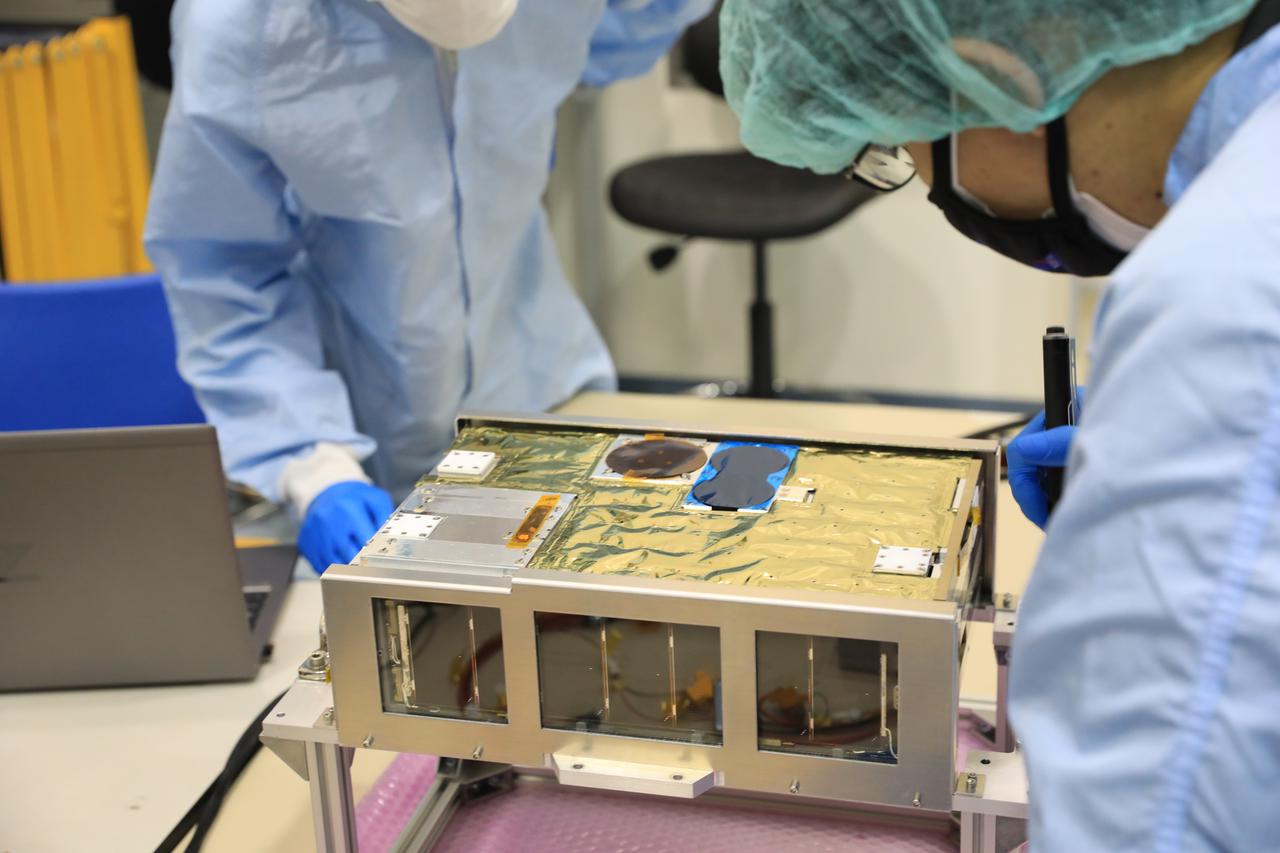
Teams worked on the final processing of their payloads that will fly aboard Artemis I. Housed within the Orion stage adapter, the satellites – called CubeSats – are roughly the size of a large shoe box and weigh no more than 30 pounds. Despite their small size, they enable science and technology experiments that may enhance our understanding of the deep space environment, expand our knowledge of the Moon, and demonstrate new technologies that could be used on future missions.
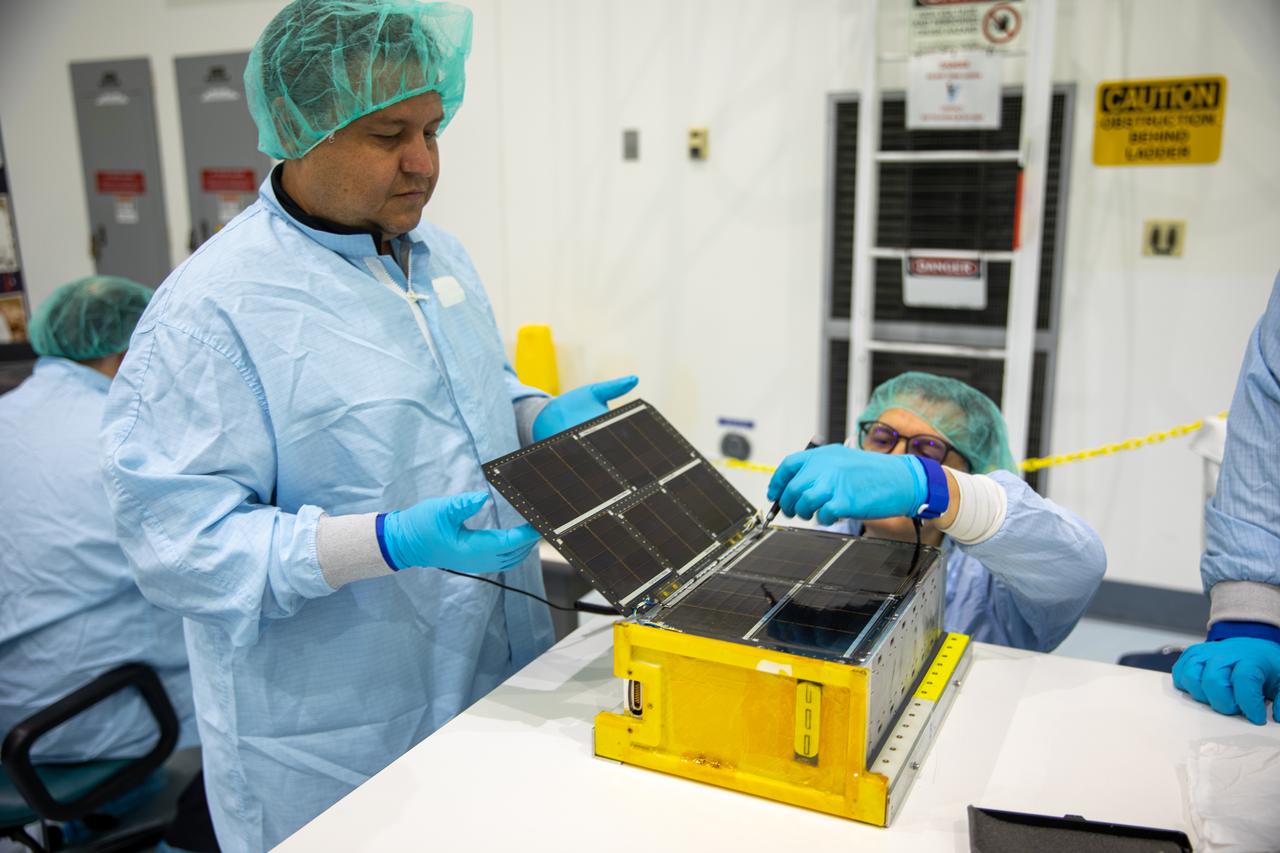
Teams worked on the final processing of their payloads that will fly aboard Artemis I. Housed within the Orion stage adapter, the satellites – called CubeSats – are roughly the size of a large shoe box and weigh no more than 30 pounds. Despite their small size, they enable science and technology experiments that may enhance our understanding of the deep space environment, expand our knowledge of the Moon, and demonstrate new technologies that could be used on future missions.
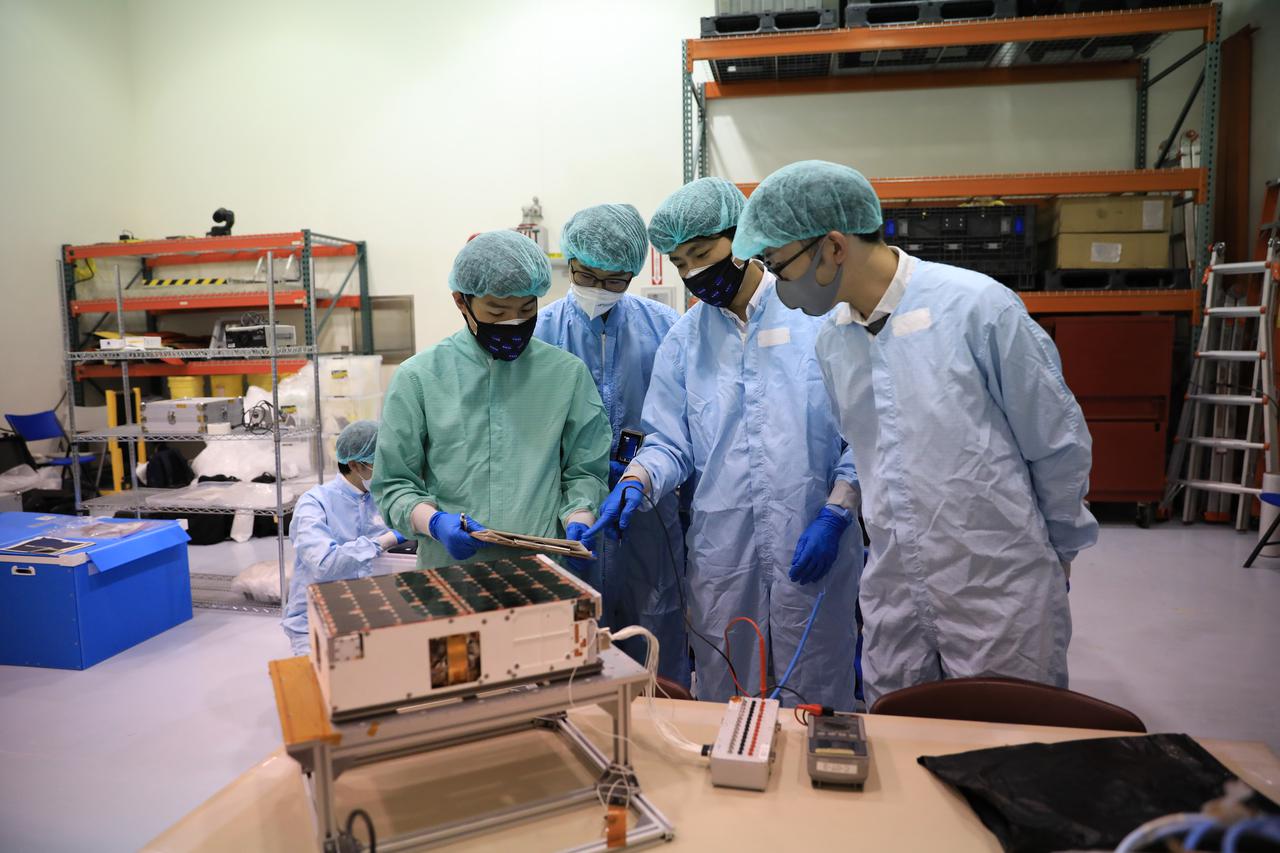
Teams worked on the final processing of their payloads that will fly aboard Artemis I. Housed within the Orion stage adapter, the satellites – called CubeSats – are roughly the size of a large shoe box and weigh no more than 30 pounds. Despite their small size, they enable science and technology experiments that may enhance our understanding of the deep space environment, expand our knowledge of the Moon, and demonstrate new technologies that could be used on future missions.
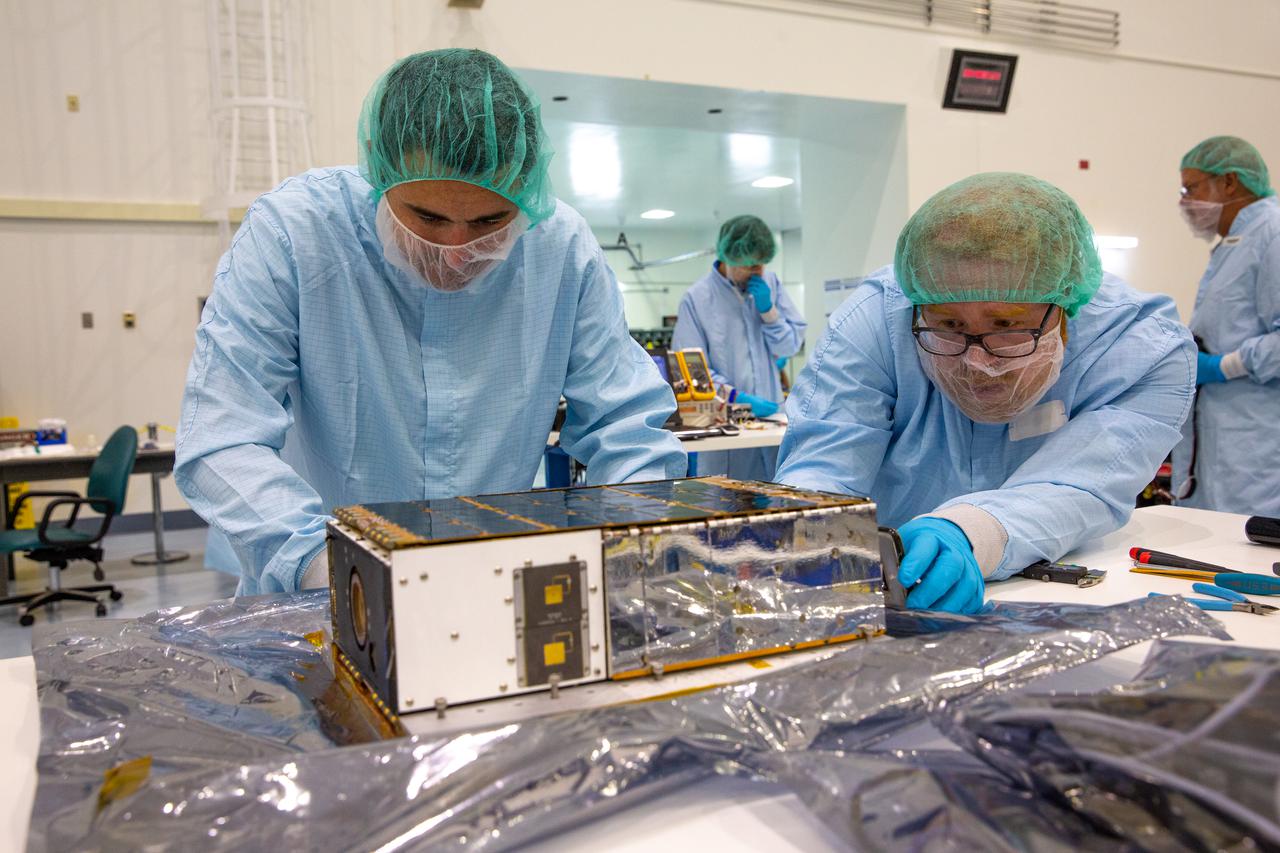
Teams worked on the final processing of their payloads that will fly aboard Artemis I. Housed within the Orion stage adapter, the satellites – called CubeSats – are roughly the size of a large shoe box and weigh no more than 30 pounds. Despite their small size, they enable science and technology experiments that may enhance our understanding of the deep space environment, expand our knowledge of the Moon, and demonstrate new technologies that could be used on future missions.
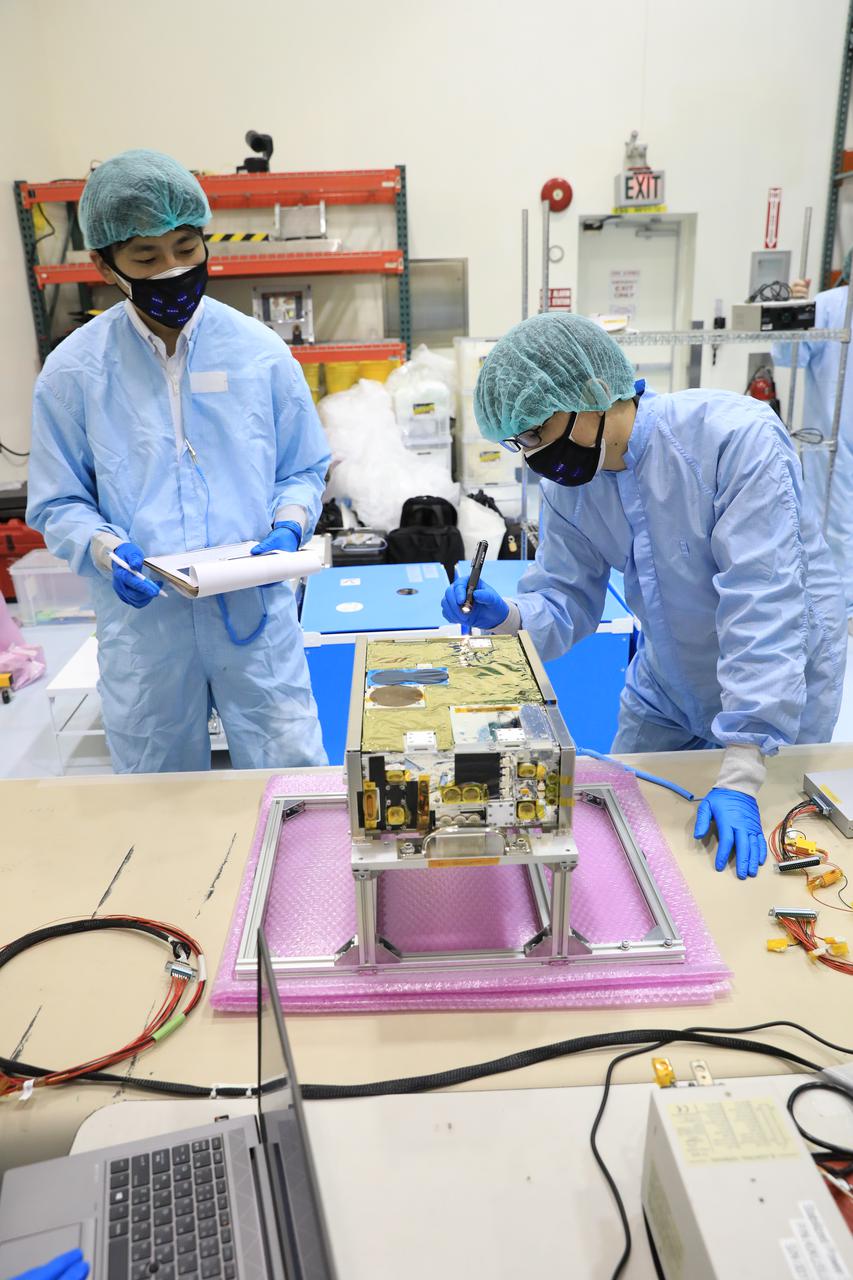
Teams worked on the final processing of their payloads that will fly aboard Artemis I. Housed within the Orion stage adapter, the satellites – called CubeSats – are roughly the size of a large shoe box and weigh no more than 30 pounds. Despite their small size, they enable science and technology experiments that may enhance our understanding of the deep space environment, expand our knowledge of the Moon, and demonstrate new technologies that could be used on future missions.
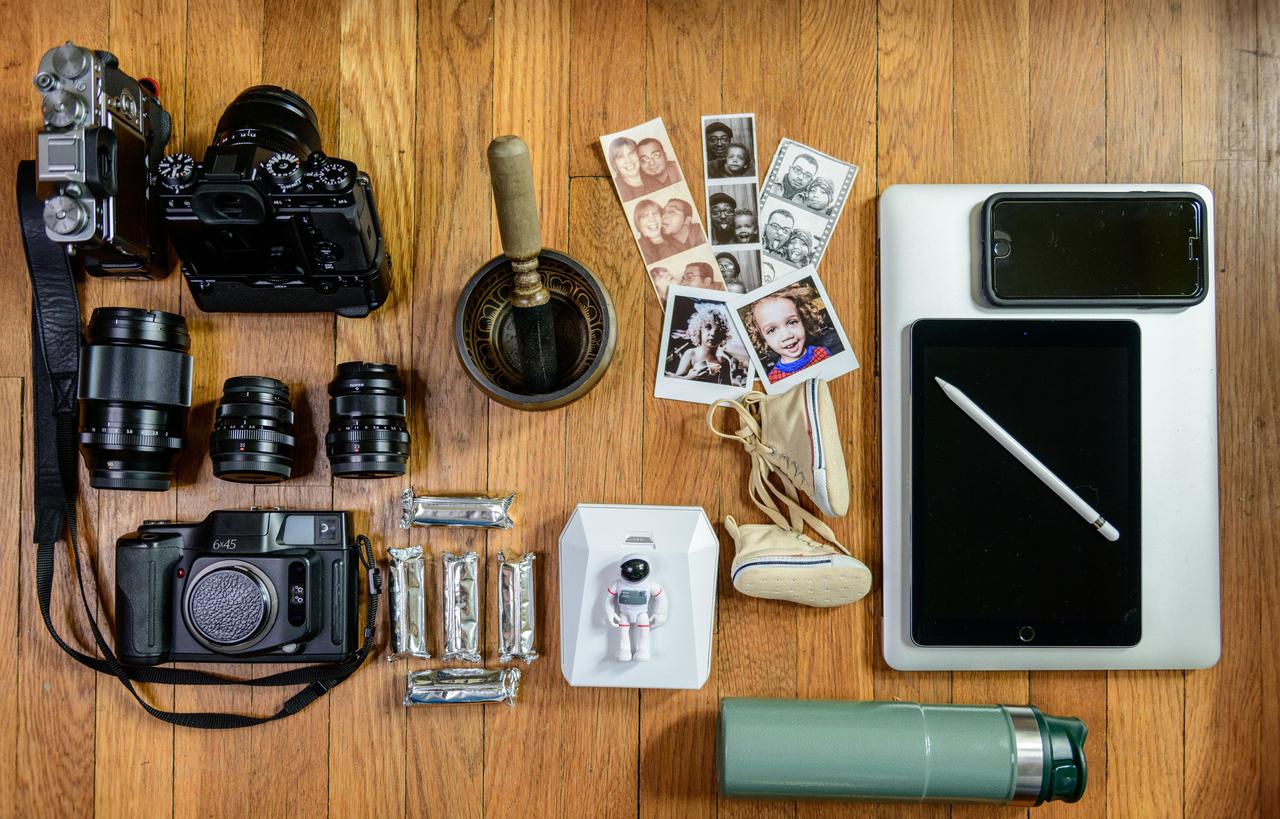
Two mirrirless Digital Camers, 56mm f1.2 lens, 90mm f2 lens, 35mm f2 lens, 23mm f2 lens, 6x4.5 Medium Format Film Camera, 120 film, Singing Bowl, wirerless instant printer, My 3yr olds Astronaut toy, family photos, Oldest Sons (27) baby shoes for luck, Laptop, Phone (for music), Tablet and Pen, Water Bottle.

Teams worked on the final processing of their payloads that will fly aboard Artemis I. Housed within the Orion stage adapter, the satellites – called CubeSats – are roughly the size of a large shoe box and weigh no more than 30 pounds. Despite their small size, they enable science and technology experiments that may enhance our understanding of the deep space environment, expand our knowledge of the Moon, and demonstrate new technologies that could be used on future missions.
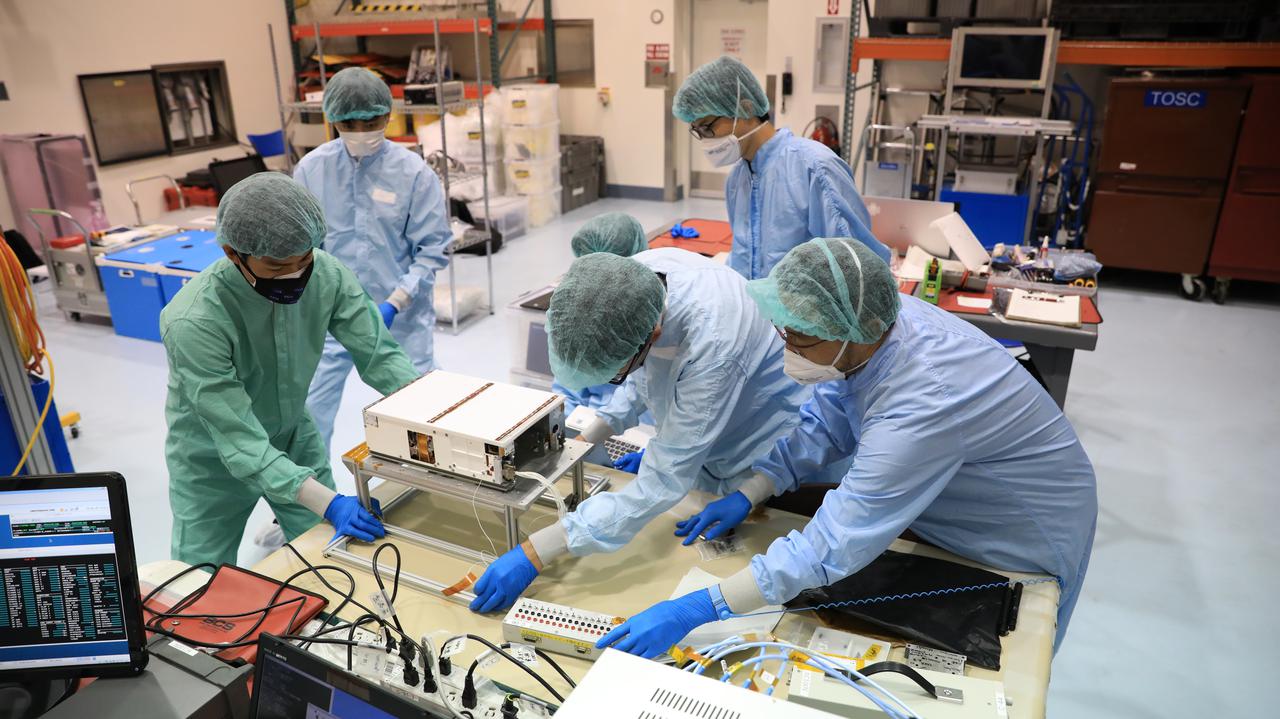
Teams worked on the final processing of their payloads that will fly aboard Artemis I. Housed within the Orion stage adapter, the satellites – called CubeSats – are roughly the size of a large shoe box and weigh no more than 30 pounds. Despite their small size, they enable science and technology experiments that may enhance our understanding of the deep space environment, expand our knowledge of the Moon, and demonstrate new technologies that could be used on future missions.
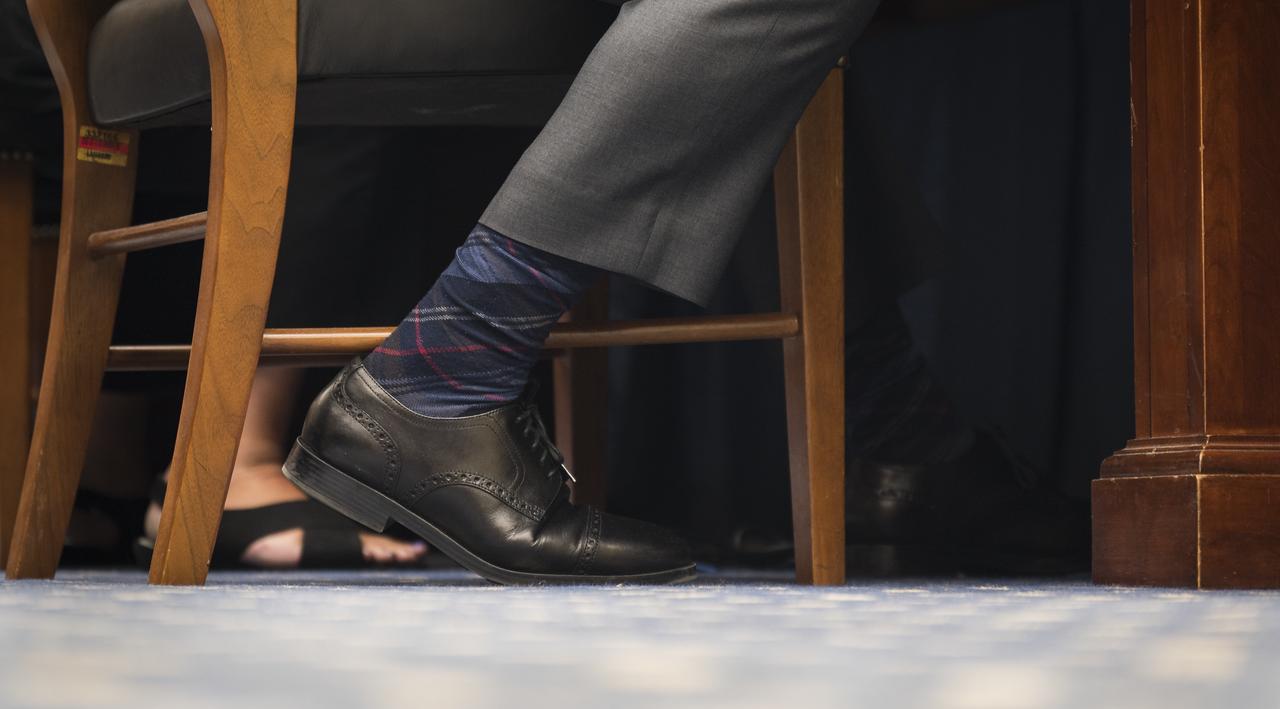
Acting NASA Associate Administrator for Human Exploration and Operations, Ken Bowersox, shoes are seen during a Space and Aeronautics Subcommittee of the House Science, Space, and Technology Committee hearing titled, “Developing Core Capabilities for Deep Space Exploration: An Update on NASA's SLS, Orion, and Exploration Ground Systems," Wednesday, September 18, 2019 at the Rayburn House Office Building in Washington. Photo Credit: (NASA/Aubrey Gemignani)
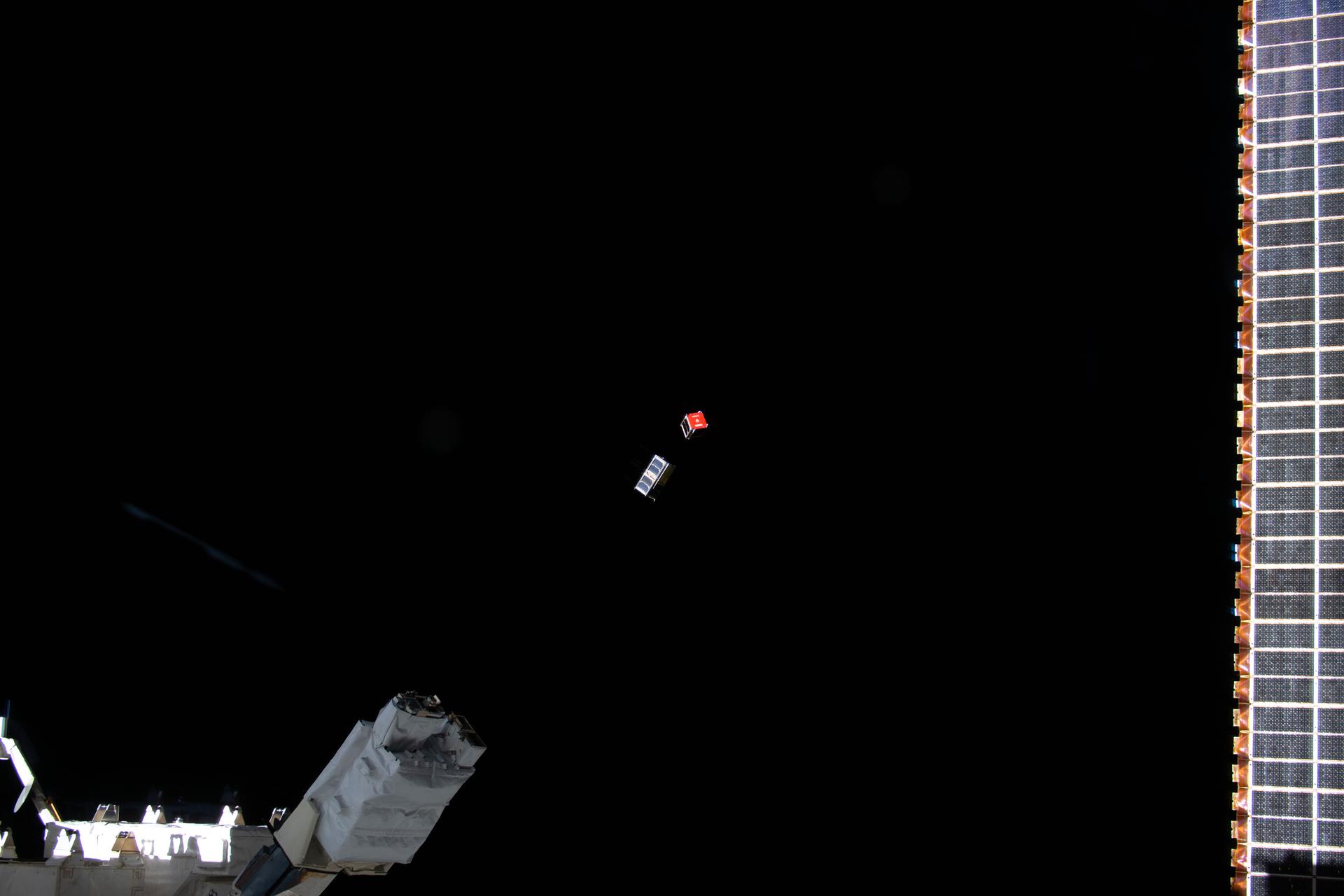
iss074e0301064 (Feb. 3, 2026) --- A pair of CubeSats designed by college students from around the world is deployed into Earth orbit from a small satellite orbital deployer on the outside of the International Space Station's Kibo laboratory module. Students from Mexico, Italy, Thailand, Malaysia, and Japan designed the shoe-boxed sized satellites for a series of Earth observations and technology demonstrations.
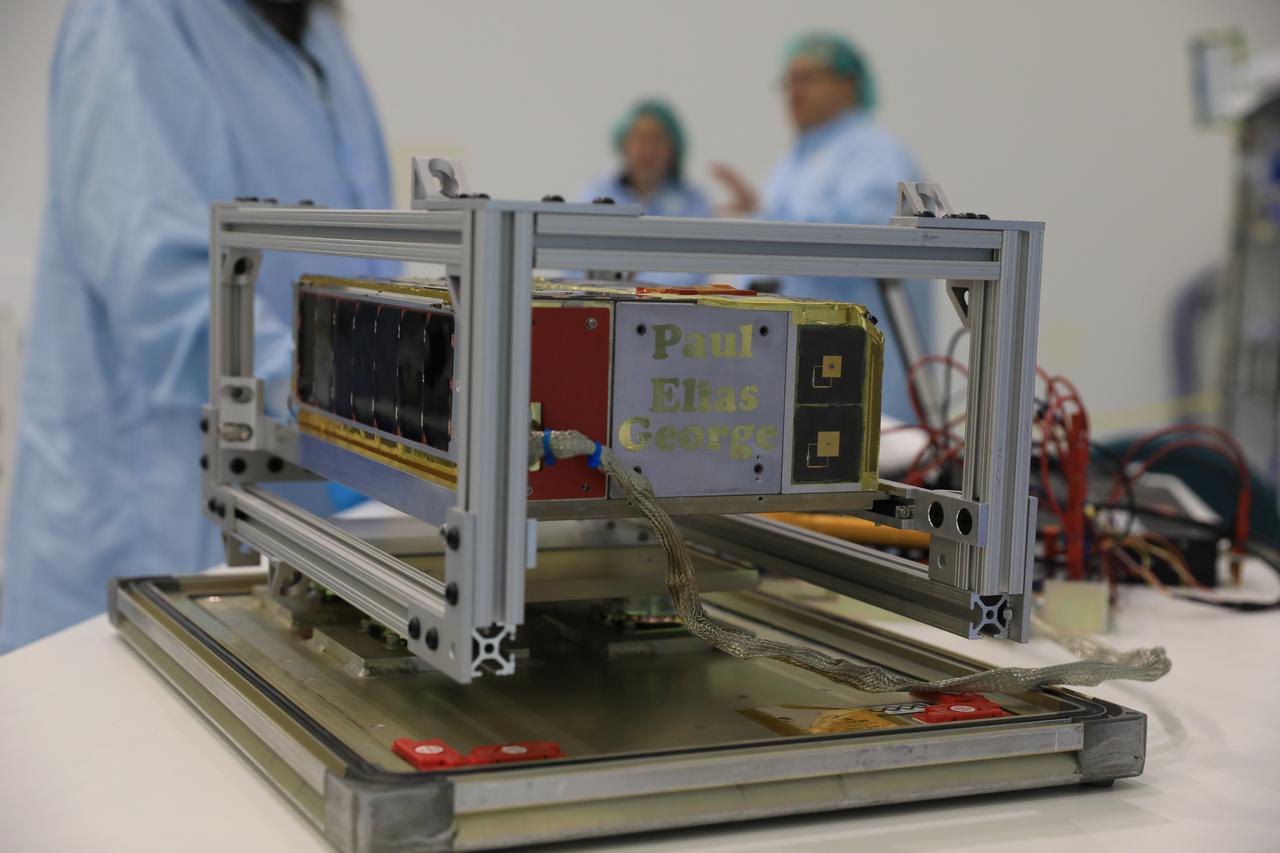
Teams worked on the final processing of their payloads that will fly aboard Artemis I. Housed within the Orion stage adapter, the satellites – called CubeSats – are roughly the size of a large shoe box and weigh no more than 30 pounds. Despite their small size, they enable science and technology experiments that may enhance our understanding of the deep space environment, expand our knowledge of the Moon, and demonstrate new technologies that could be used on future missions.
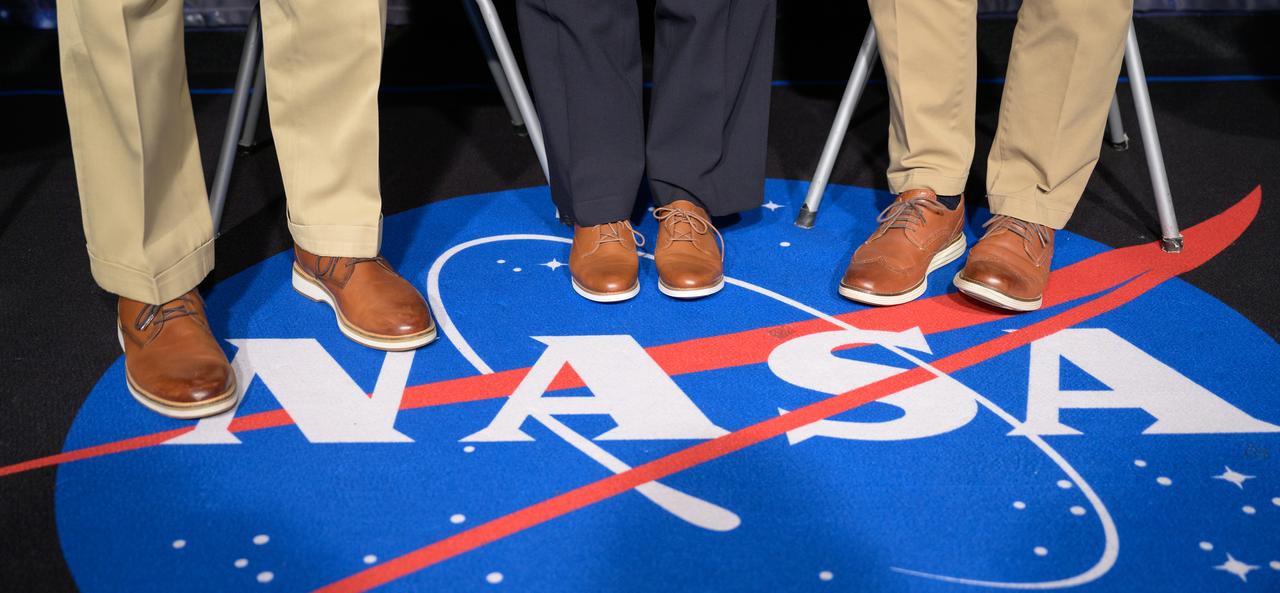
NASA Administrator Bill Nelson, left, NASA Deputy Administrator Pam Melroy, and NASA Associate Administrator Bob Cabana, right, pose for a photograph showing how they ended up wearing smilier shoes for a NASA town hall event, Wednesday, July 19, 2023, at the NASA Headquarters Mary W. Jackson Building in Washington. Photo Credit: (NASA/Bill Ingalls)
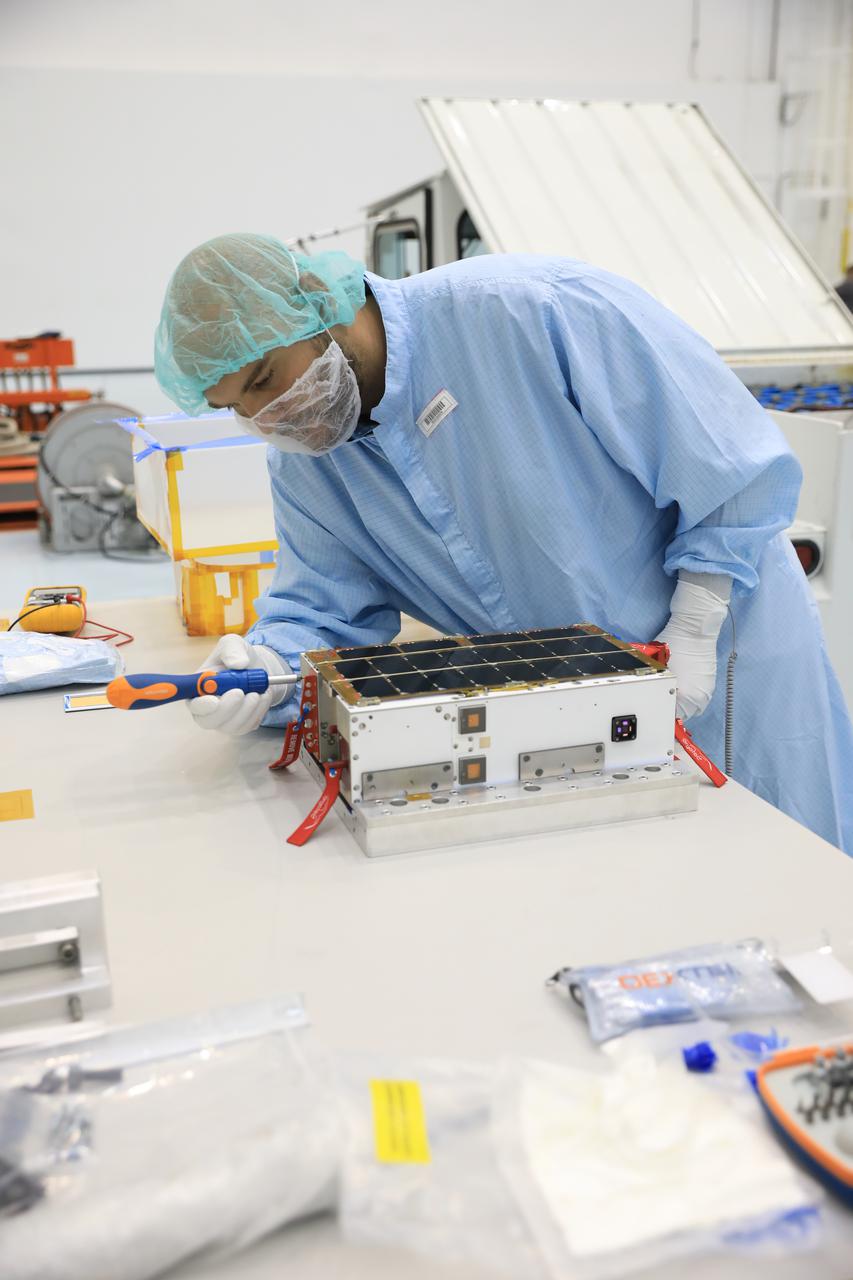
Teams worked on the final processing of their payloads that will fly aboard Artemis I. Housed within the Orion stage adapter, the satellites – called CubeSats – are roughly the size of a large shoe box and weigh no more than 30 pounds. Despite their small size, they enable science and technology experiments that may enhance our understanding of the deep space environment, expand our knowledge of the Moon, and demonstrate new technologies that could be used on future missions.
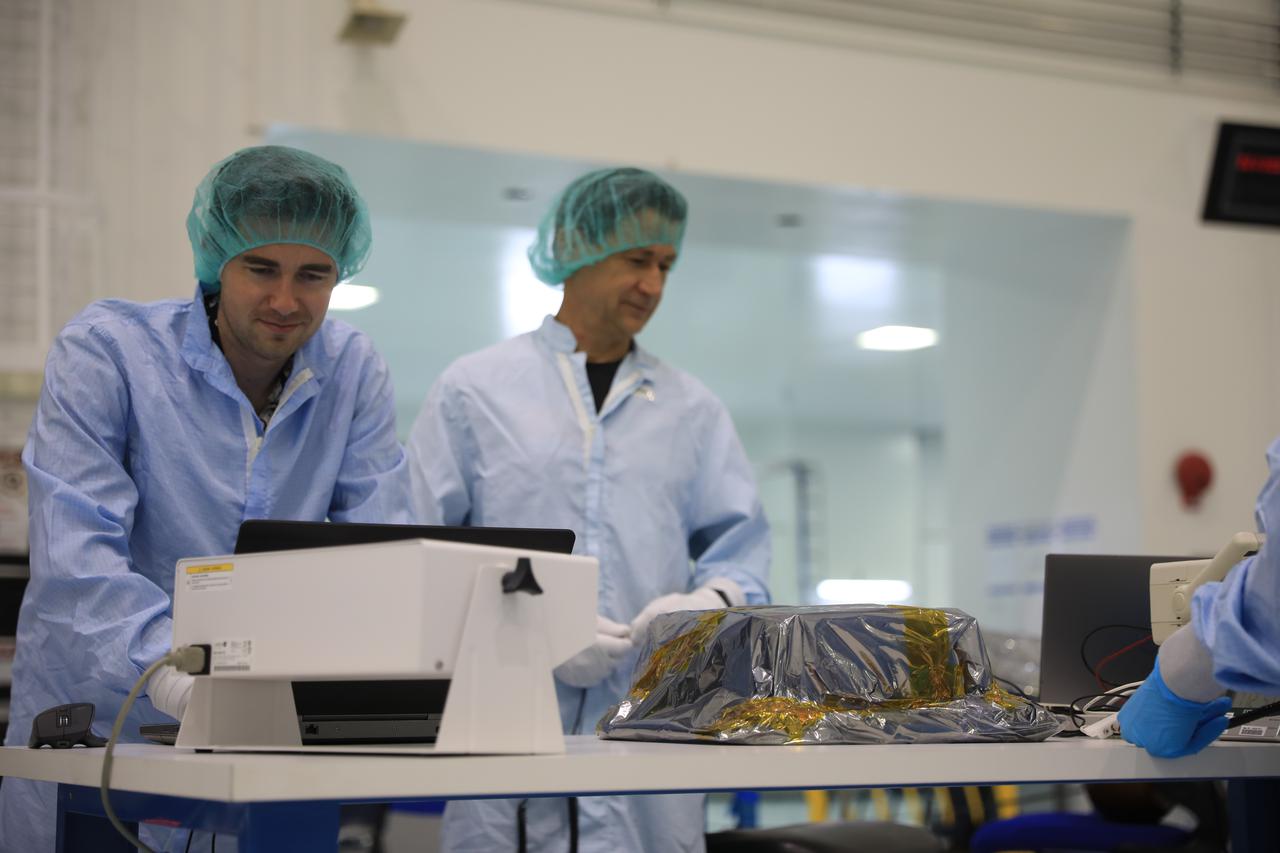
Teams worked on the final processing of their payloads that will fly aboard Artemis I. Housed within the Orion stage adapter, the satellites – called CubeSats – are roughly the size of a large shoe box and weigh no more than 30 pounds. Despite their small size, they enable science and technology experiments that may enhance our understanding of the deep space environment, expand our knowledge of the Moon, and demonstrate new technologies that could be used on future missions.
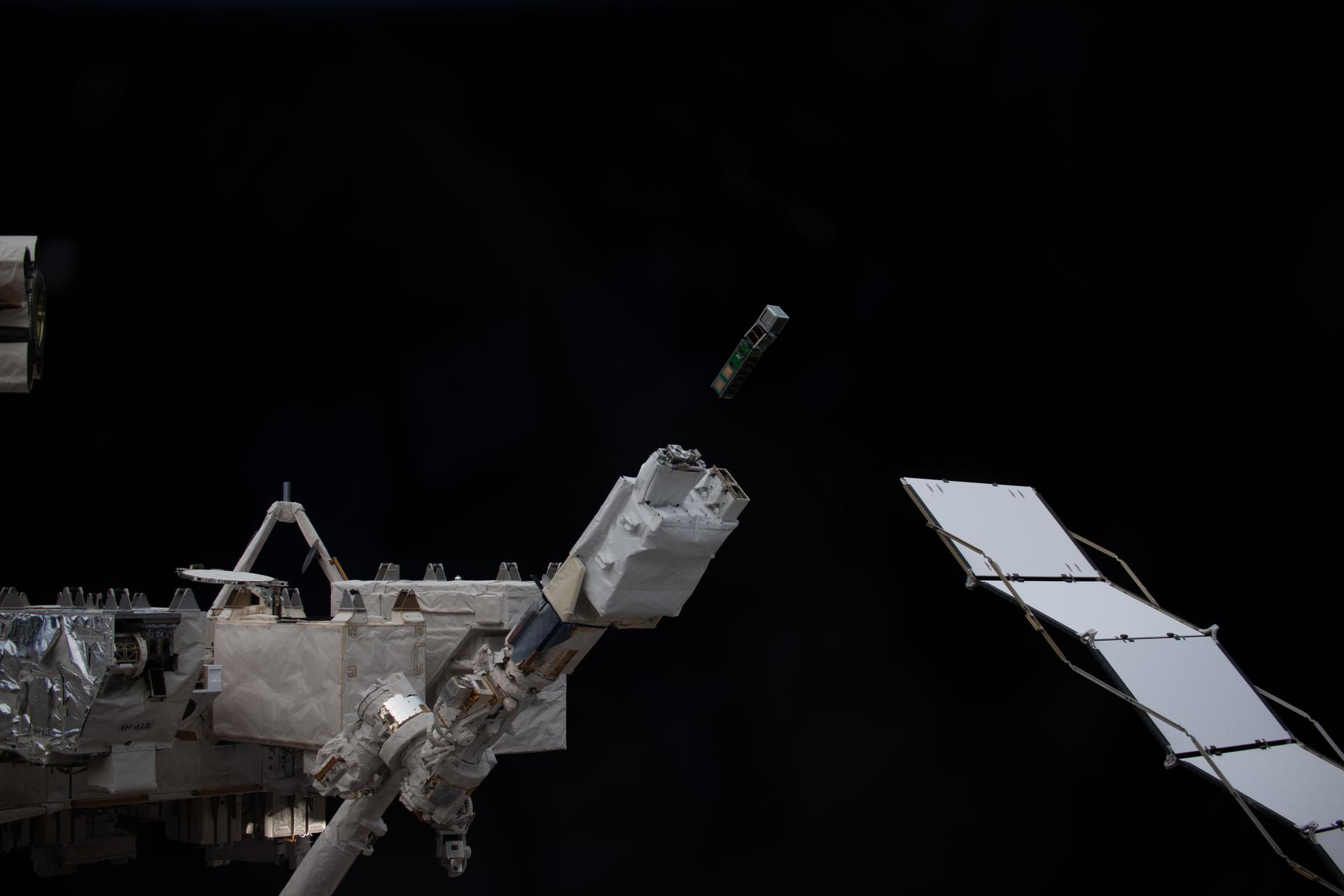
iss074e0301612 (Feb. 3, 2026) --- A trio of CubeSats designed by college students from around the world is deployed into Earth orbit from a small satellite orbital deployer on the outside of the International Space Station's Kibo laboratory module. Students from Mexico, Italy, Thailand, Malaysia, and Japan designed the shoe-boxed sized satellites for a series of Earth observations and technology demonstrations.
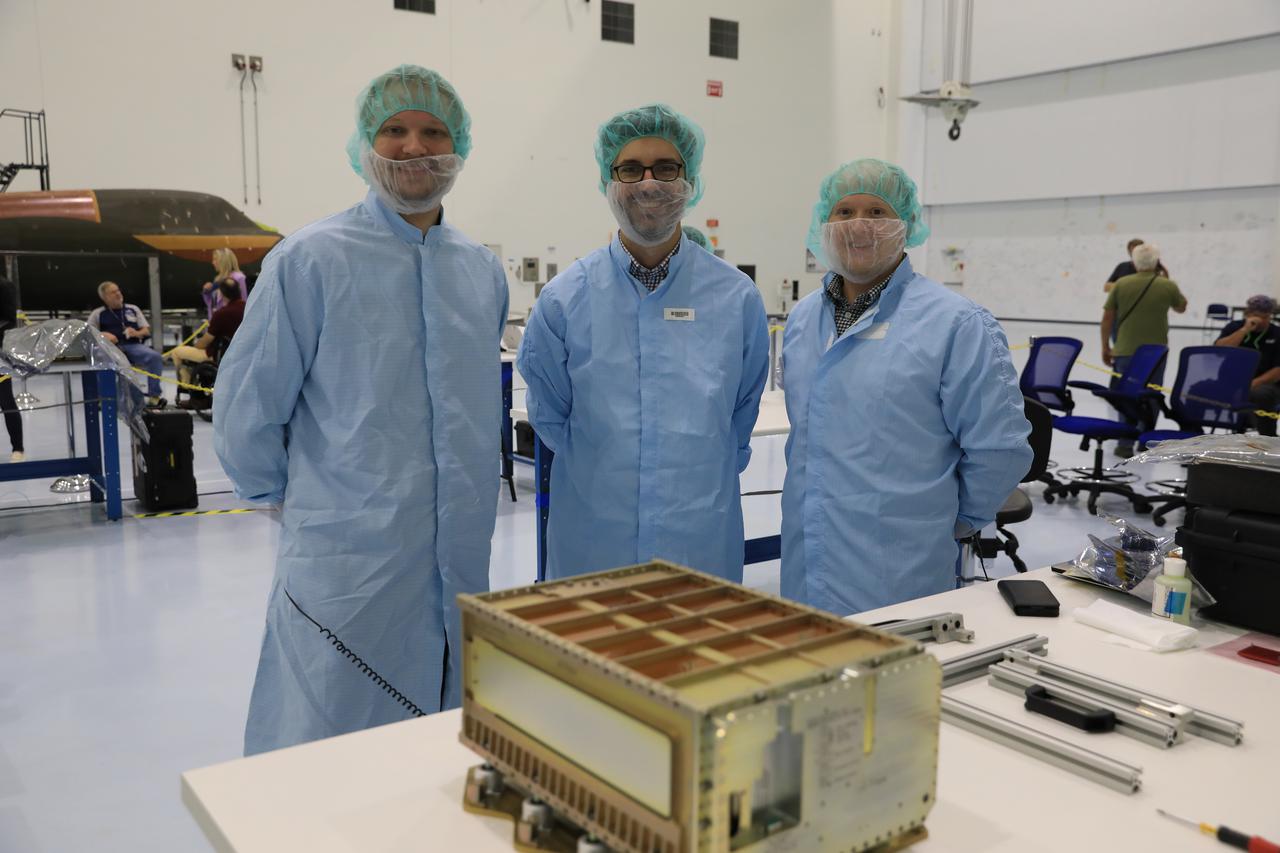
Teams worked on the final processing of their payloads that will fly aboard Artemis I. Housed within the Orion stage adapter, the satellites – called CubeSats – are roughly the size of a large shoe box and weigh no more than 30 pounds. Despite their small size, they enable science and technology experiments that may enhance our understanding of the deep space environment, expand our knowledge of the Moon, and demonstrate new technologies that could be used on future missions.
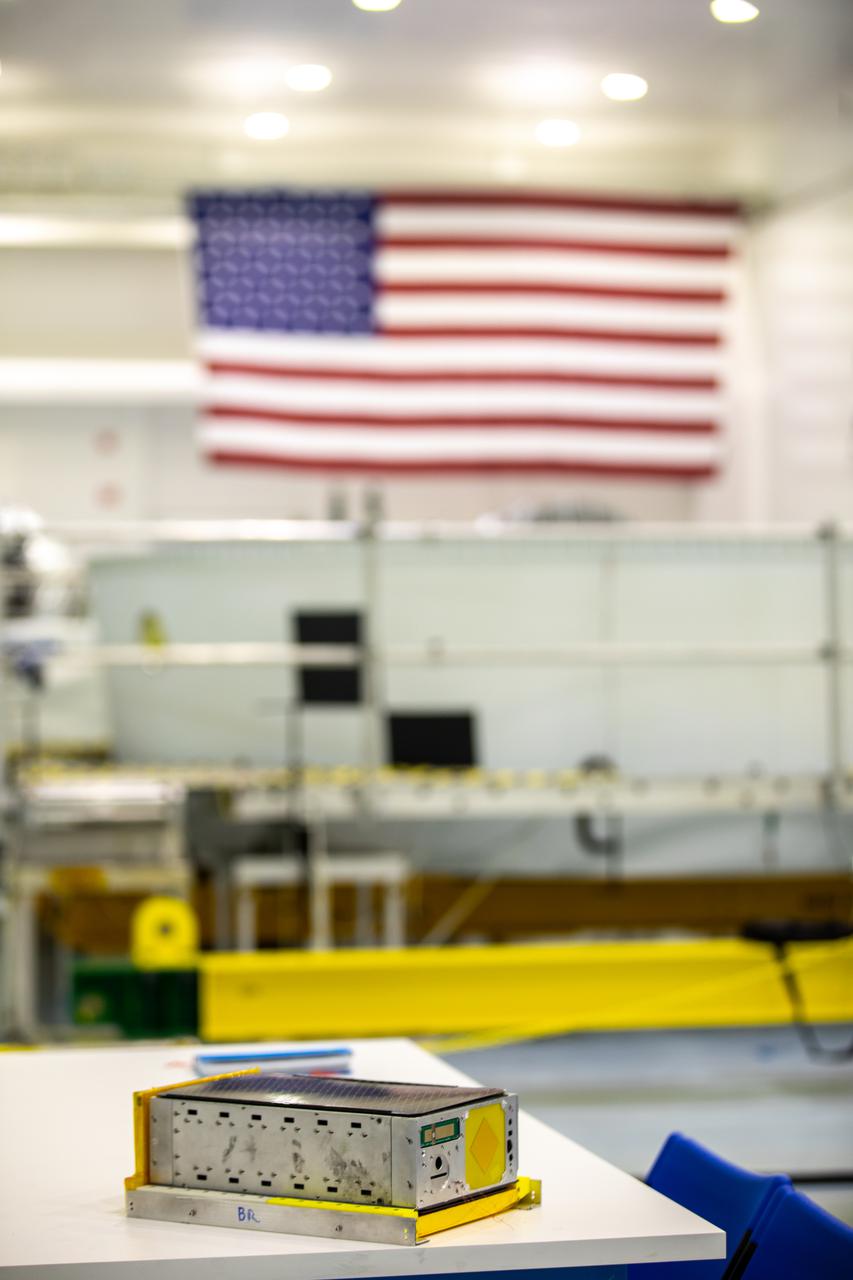
Teams worked on the final processing of their payloads that will fly aboard Artemis I. Housed within the Orion stage adapter, the satellites – called CubeSats – are roughly the size of a large shoe box and weigh no more than 30 pounds. Despite their small size, they enable science and technology experiments that may enhance our understanding of the deep space environment, expand our knowledge of the Moon, and demonstrate new technologies that could be used on future missions.
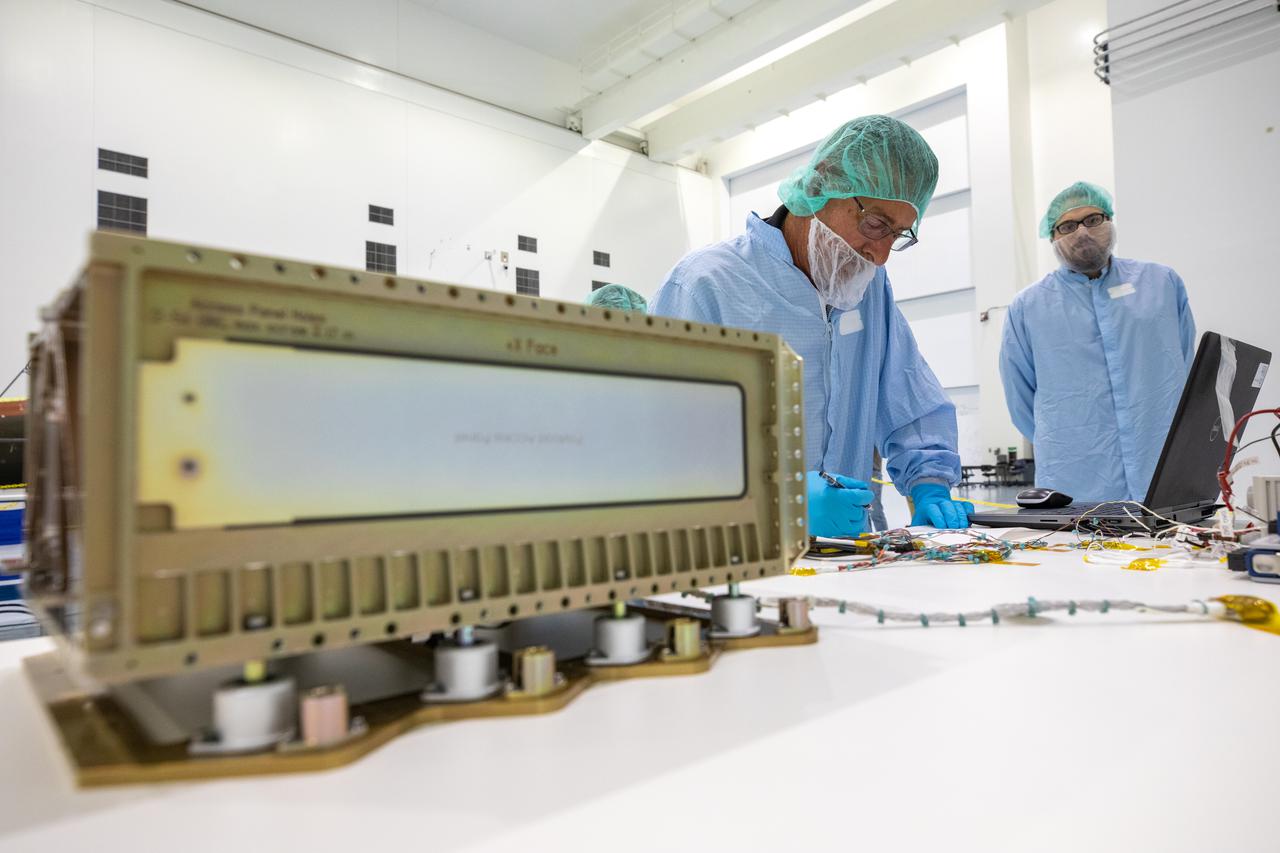
Teams worked on the final processing of their payloads that will fly aboard Artemis I. Housed within the Orion stage adapter, the satellites – called CubeSats – are roughly the size of a large shoe box and weigh no more than 30 pounds. Despite their small size, they enable science and technology experiments that may enhance our understanding of the deep space environment, expand our knowledge of the Moon, and demonstrate new technologies that could be used on future missions.
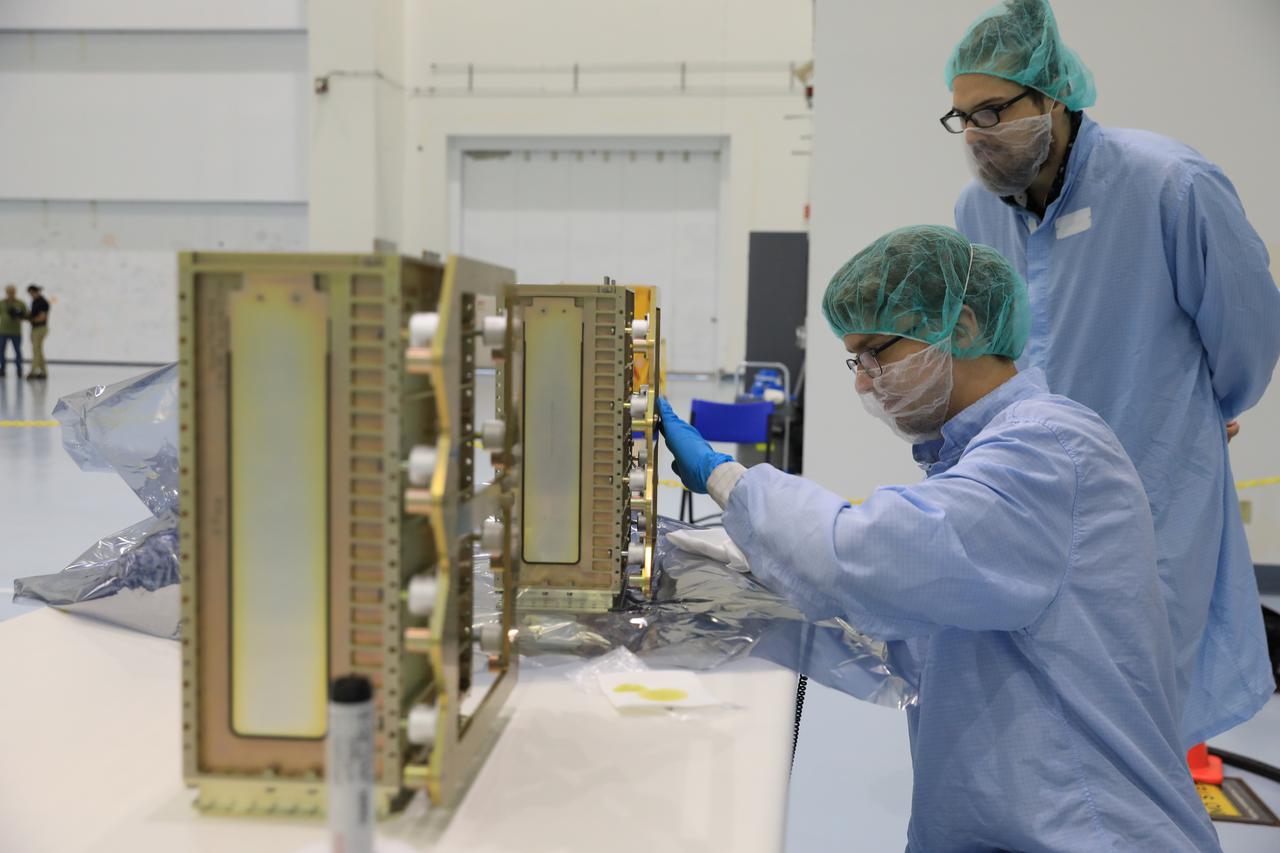
Teams worked on the final processing of their payloads that will fly aboard Artemis I. Housed within the Orion stage adapter, the satellites – called CubeSats – are roughly the size of a large shoe box and weigh no more than 30 pounds. Despite their small size, they enable science and technology experiments that may enhance our understanding of the deep space environment, expand our knowledge of the Moon, and demonstrate new technologies that could be used on future missions.
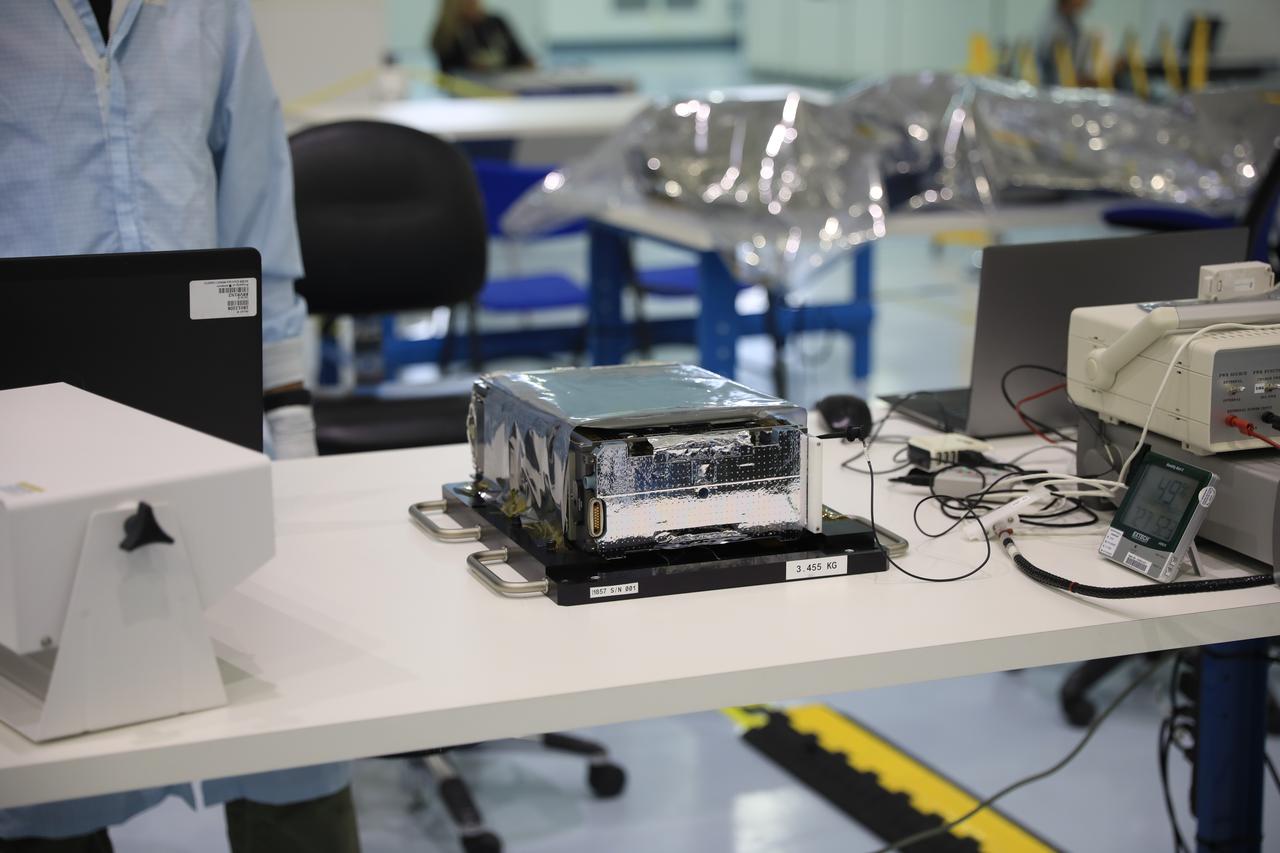
Teams worked on the final processing of their payloads that will fly aboard Artemis I. Housed within the Orion stage adapter, the satellites – called CubeSats – are roughly the size of a large shoe box and weigh no more than 30 pounds. Despite their small size, they enable science and technology experiments that may enhance our understanding of the deep space environment, expand our knowledge of the Moon, and demonstrate new technologies that could be used on future missions.
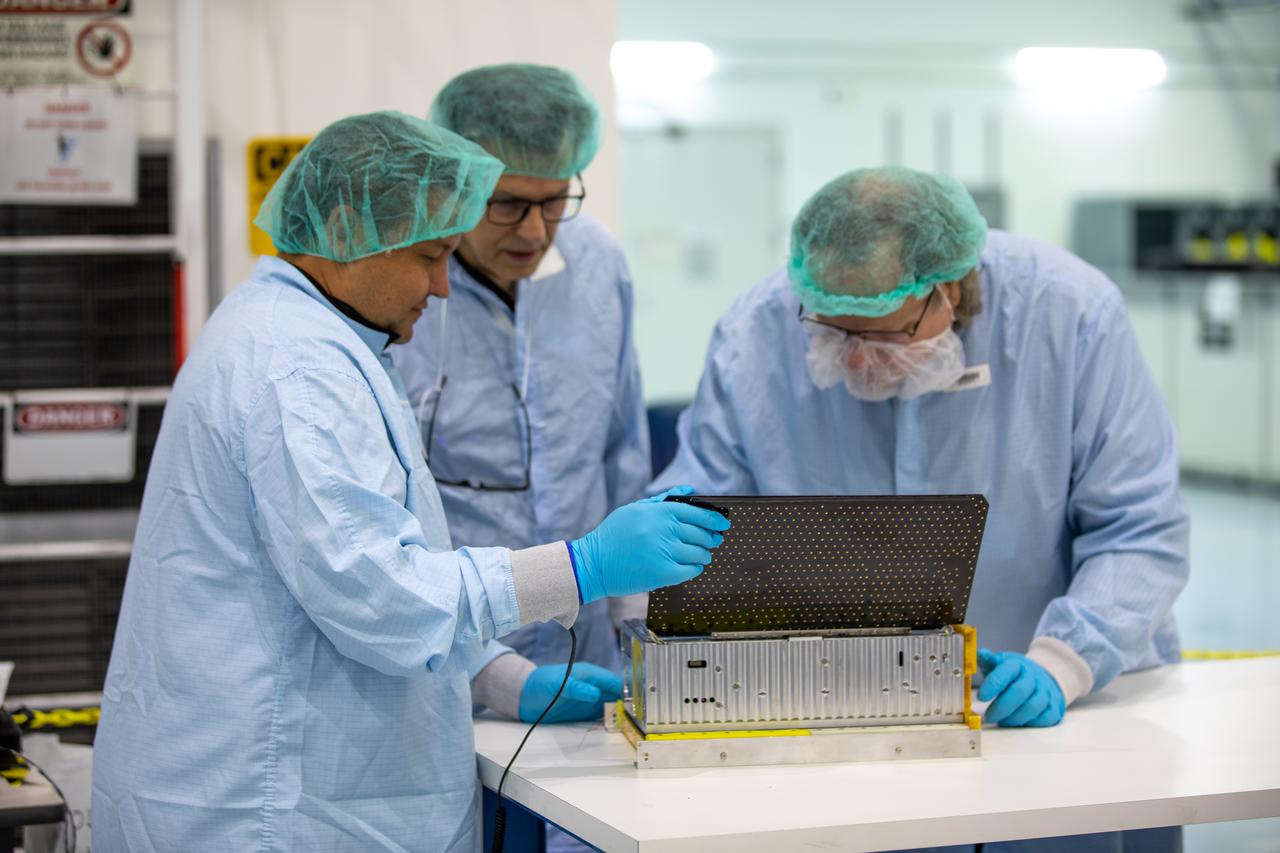
Teams worked on the final processing of their payloads that will fly aboard Artemis I. Housed within the Orion stage adapter, the satellites – called CubeSats – are roughly the size of a large shoe box and weigh no more than 30 pounds. Despite their small size, they enable science and technology experiments that may enhance our understanding of the deep space environment, expand our knowledge of the Moon, and demonstrate new technologies that could be used on future missions.
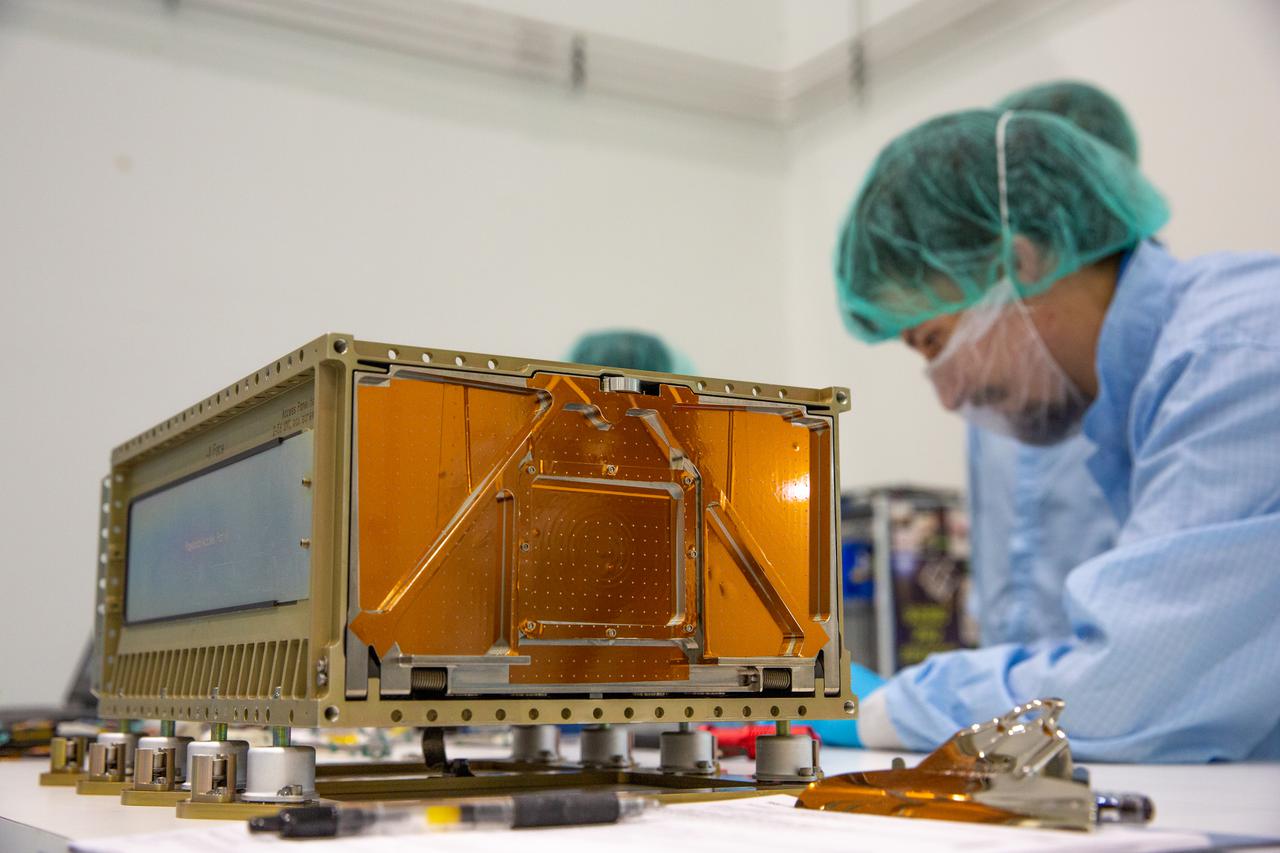
Teams worked on the final processing of their payloads that will fly aboard Artemis I. Housed within the Orion stage adapter, the satellites – called CubeSats – are roughly the size of a large shoe box and weigh no more than 30 pounds. Despite their small size, they enable science and technology experiments that may enhance our understanding of the deep space environment, expand our knowledge of the Moon, and demonstrate new technologies that could be used on future missions.
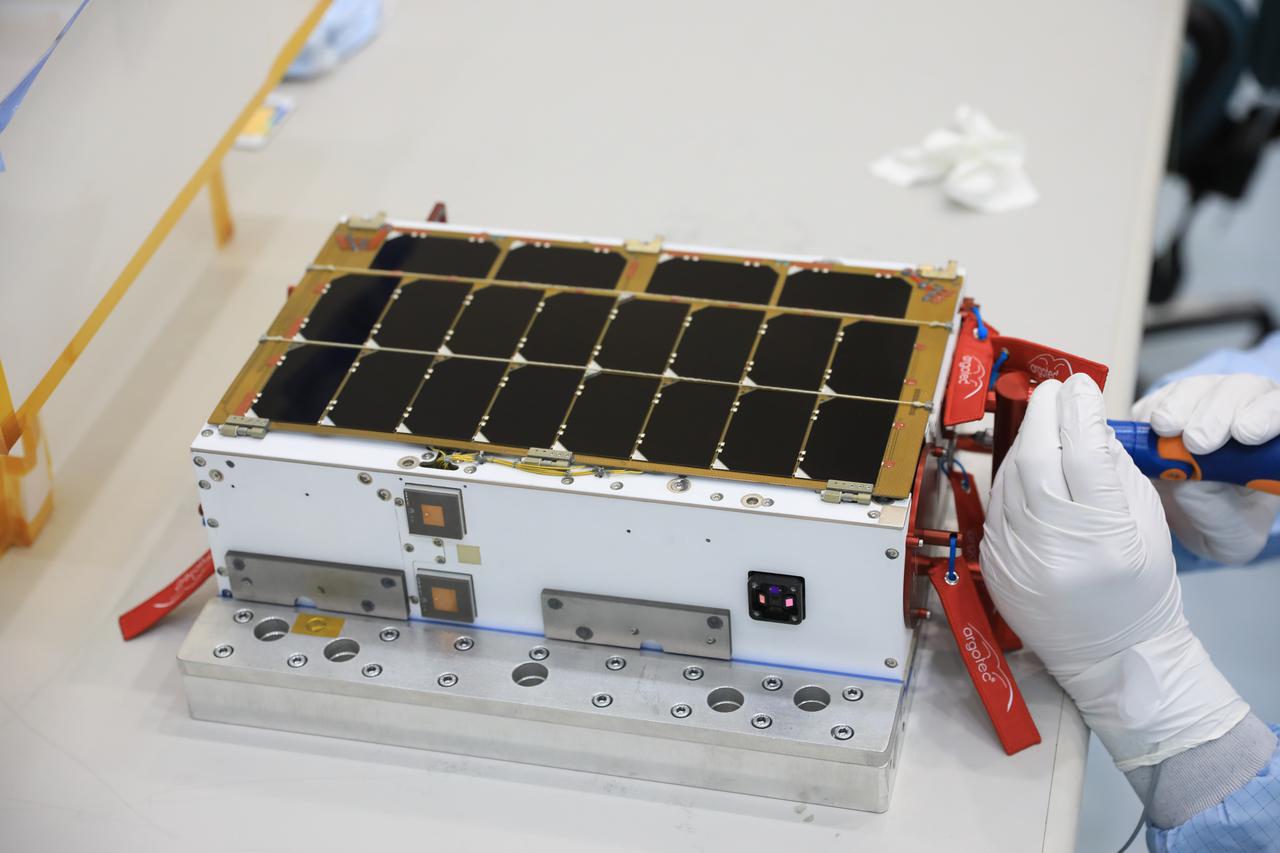
Teams worked on the final processing of their payloads that will fly aboard Artemis I. Housed within the Orion stage adapter, the satellites – called CubeSats – are roughly the size of a large shoe box and weigh no more than 30 pounds. Despite their small size, they enable science and technology experiments that may enhance our understanding of the deep space environment, expand our knowledge of the Moon, and demonstrate new technologies that could be used on future missions.
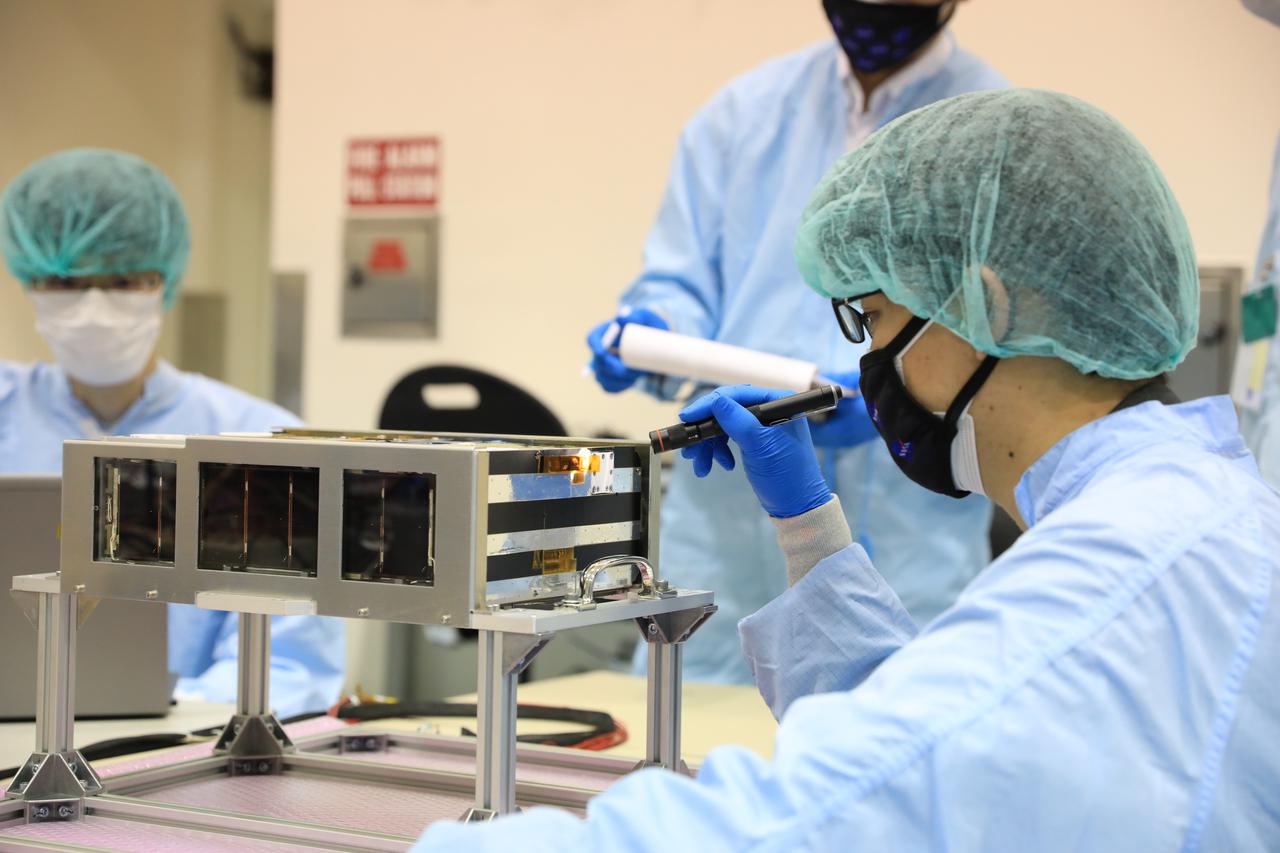
Teams worked on the final processing of their payloads that will fly aboard Artemis I. Housed within the Orion stage adapter, the satellites – called CubeSats – are roughly the size of a large shoe box and weigh no more than 30 pounds. Despite their small size, they enable science and technology experiments that may enhance our understanding of the deep space environment, expand our knowledge of the Moon, and demonstrate new technologies that could be used on future missions.