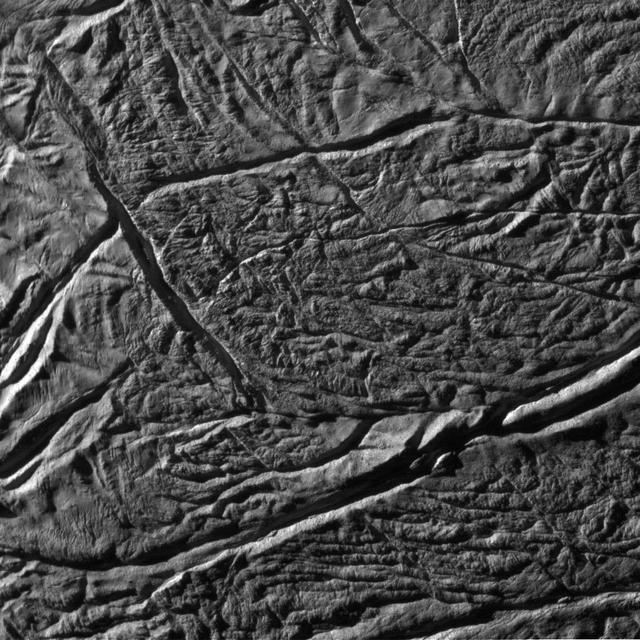
Enceladus Rev 91 Flyby - Skeet Shoot #9
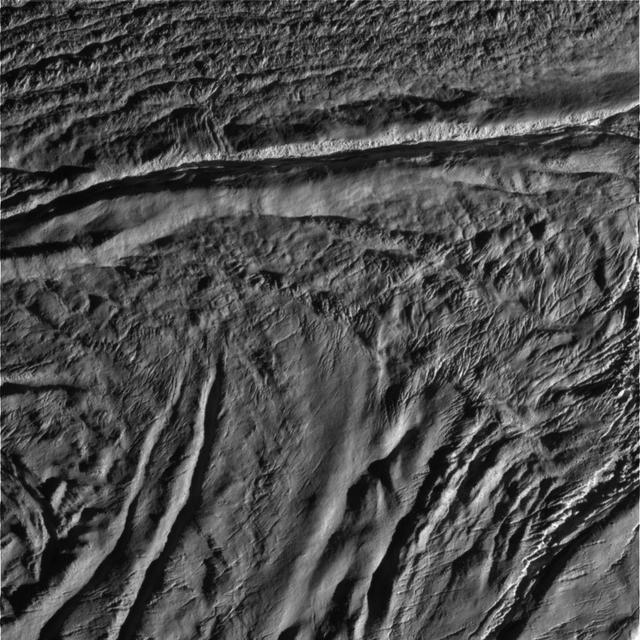
Enceladus Rev 80 Flyby Skeet Shoot #7
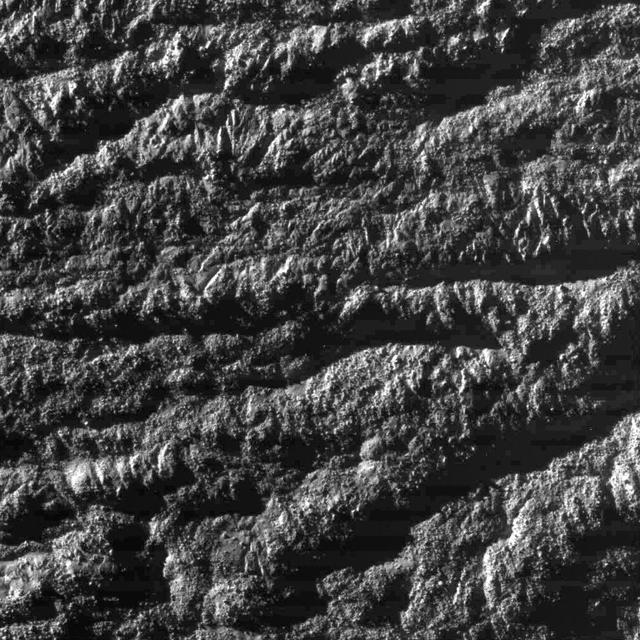
Enceladus Rev 91 Flyby - Skeet Shoot #1
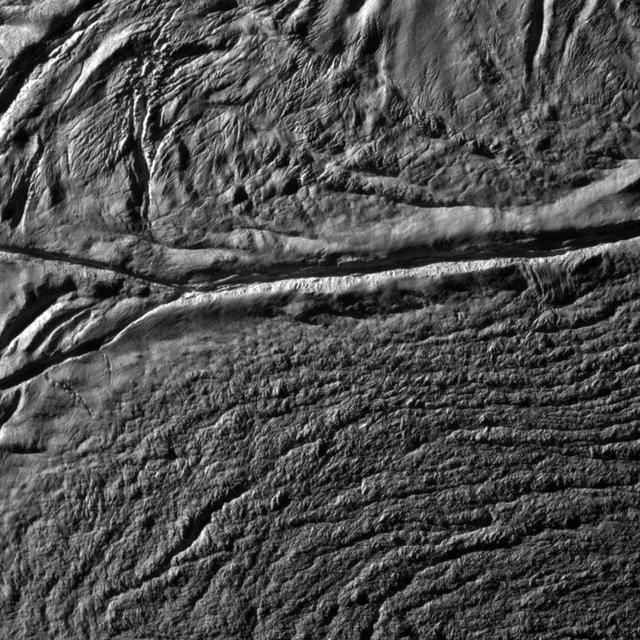
Enceladus Rev 91 Flyby - Skeet Shoot #8
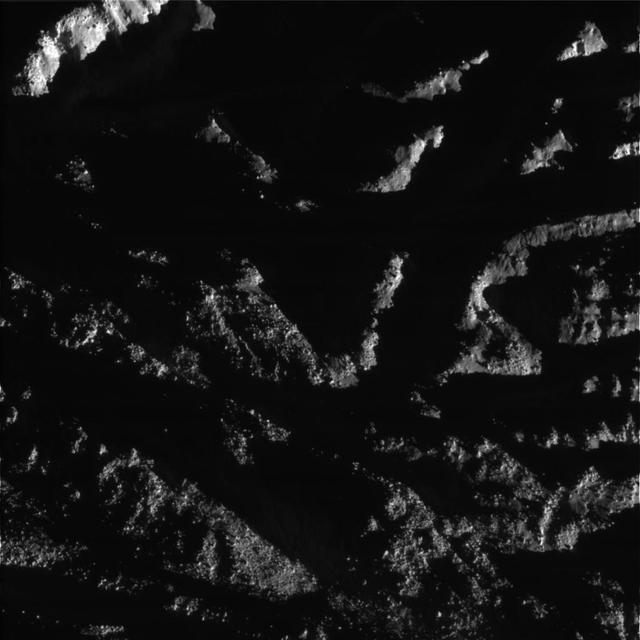
Enceladus Rev 80 Flyby Skeet Shoot #1
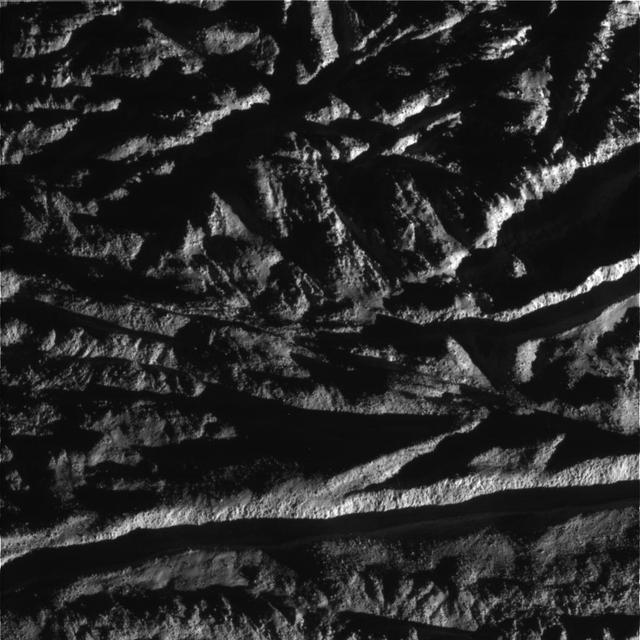
Enceladus Rev 80 Flyby Skeet Shoot #3
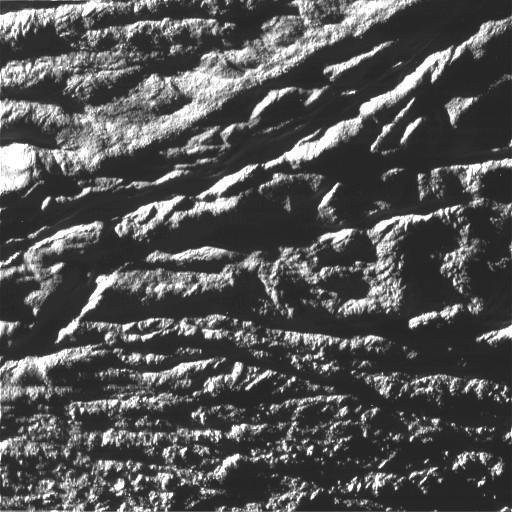
Enceladus Rev 91 Flyby - Skeet Shoot #4
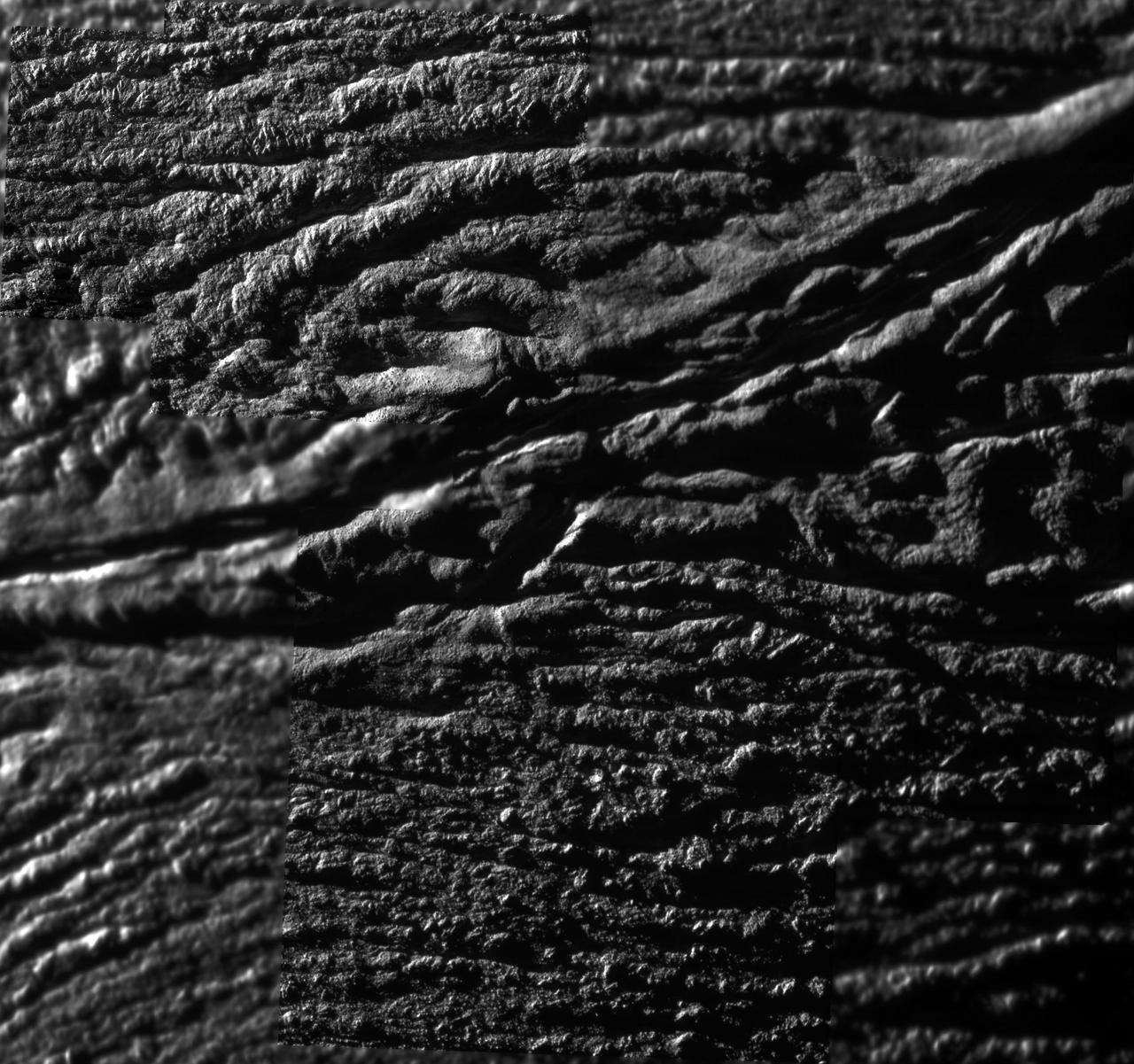
Enceladus Rev 91 Flyby - Skeet Shoot 1-4 Mosaic

This artist concept shows a galaxy with a supermassive black hole at its core. The black hole is shooting out jets of radio waves.
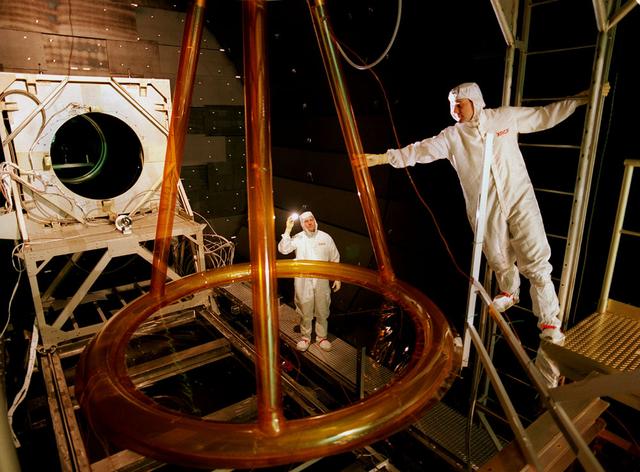
The Shooting Star Experiment (SSE) is designed to develop and demonstrate the technology required to focus the sun's energy and use the energy for inexpensive space Propulsion Research. Pictured is an engineering model (Pathfinder III) of the Shooting Star Experiment (SSE). This model was used to test and characterize the motion and deformation of the structure caused by thermal effects. In this photograph, alignment targets are being placed on the engineering model so that a theodolite (alignment telescope) could be used to accurately measure the deformation and deflections of the engineering model under extreme conditions, such as the coldness of deep space and the hotness of the sun as well as vacuum. This thermal vacuum test was performed at the X-Ray Calibration Facility because of the size of the test article and the capabilities of the facility to simulate in-orbit conditions
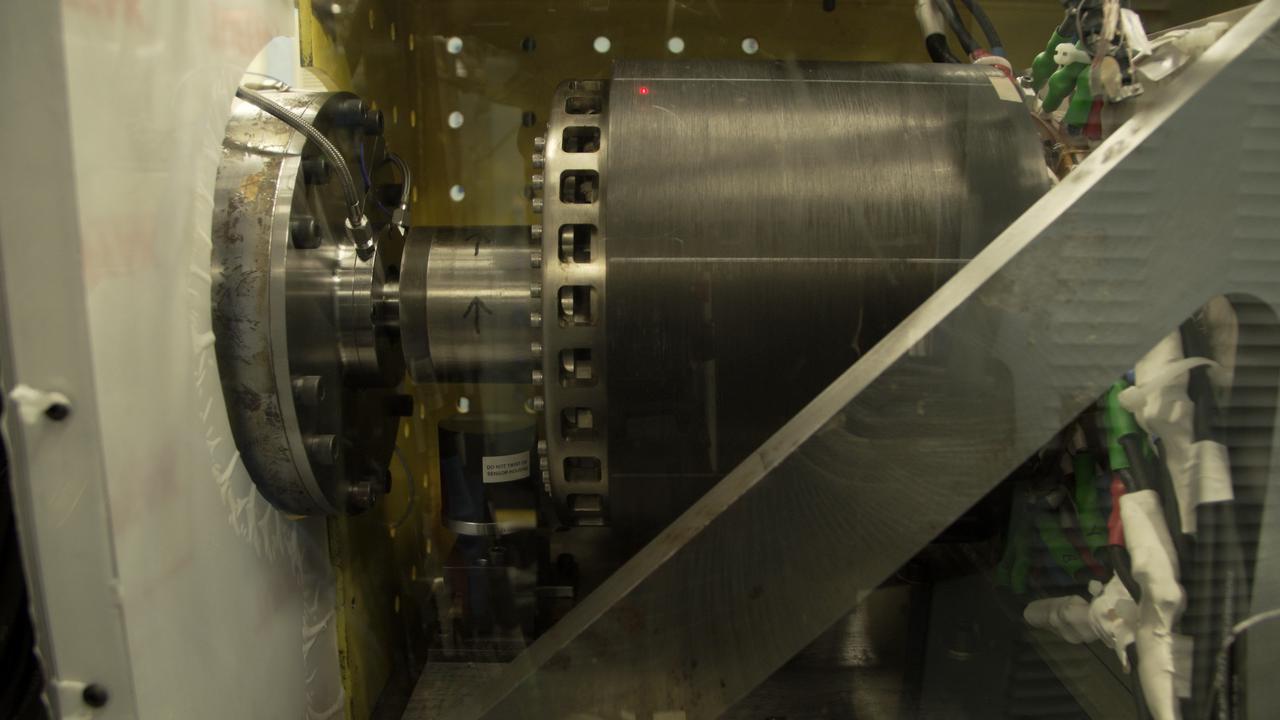
UIUC’s megawatt machine (right) was connected to a dynamometer (left) to test its effectiveness as an electric generator in a safety enclosure at a Collins Aerospace test facility in Rockford, Illinois. This unusual design has its rotating parts on the outside, so that both the cylinder on the right and the cylinder with arrows spin during operation.
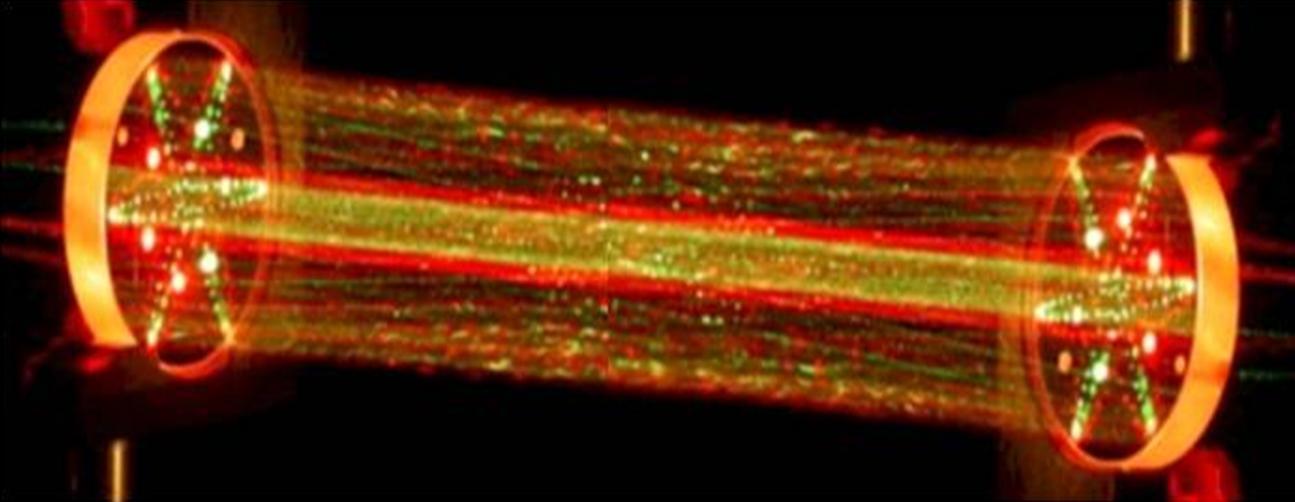
This picture shows a lab demonstration of the measurement chamber inside the Tunable Laser Spectrometer, an instrument that is part of the Sample Analysis at Mars investigation on NASA Curiosity rover.
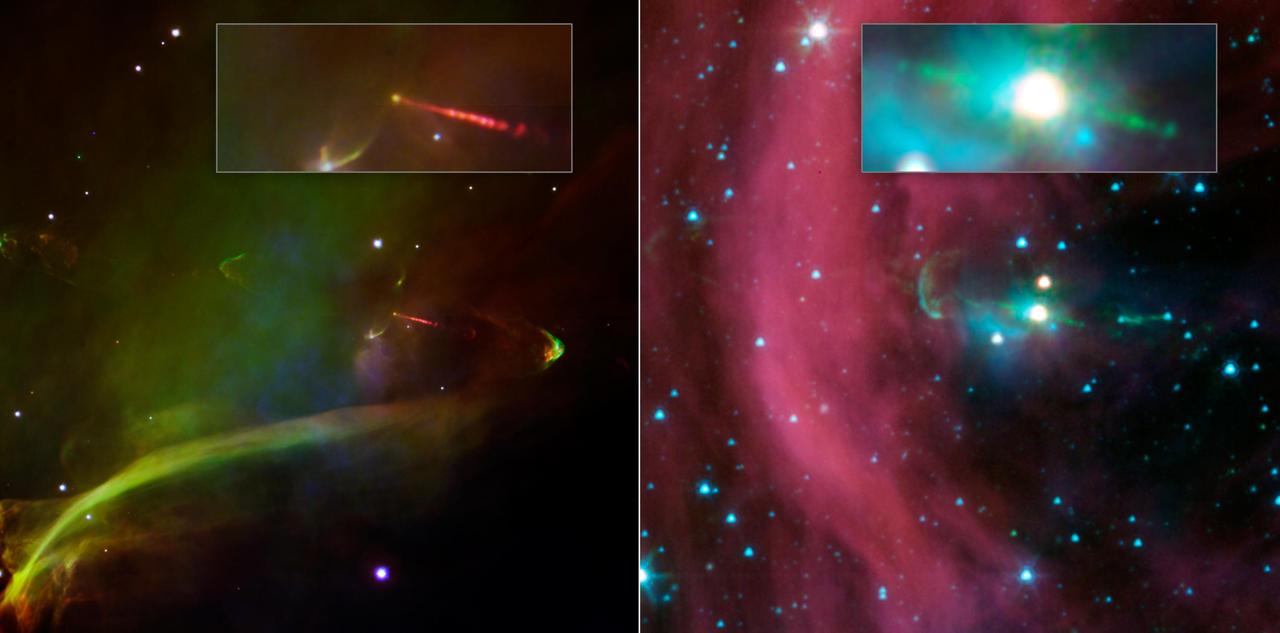
This image layout shows two views of the same baby star from NASA Spitzer Space Telescope. Spitzer view shows that this star has a second, identical jet shooting off in the opposite direction of the first.
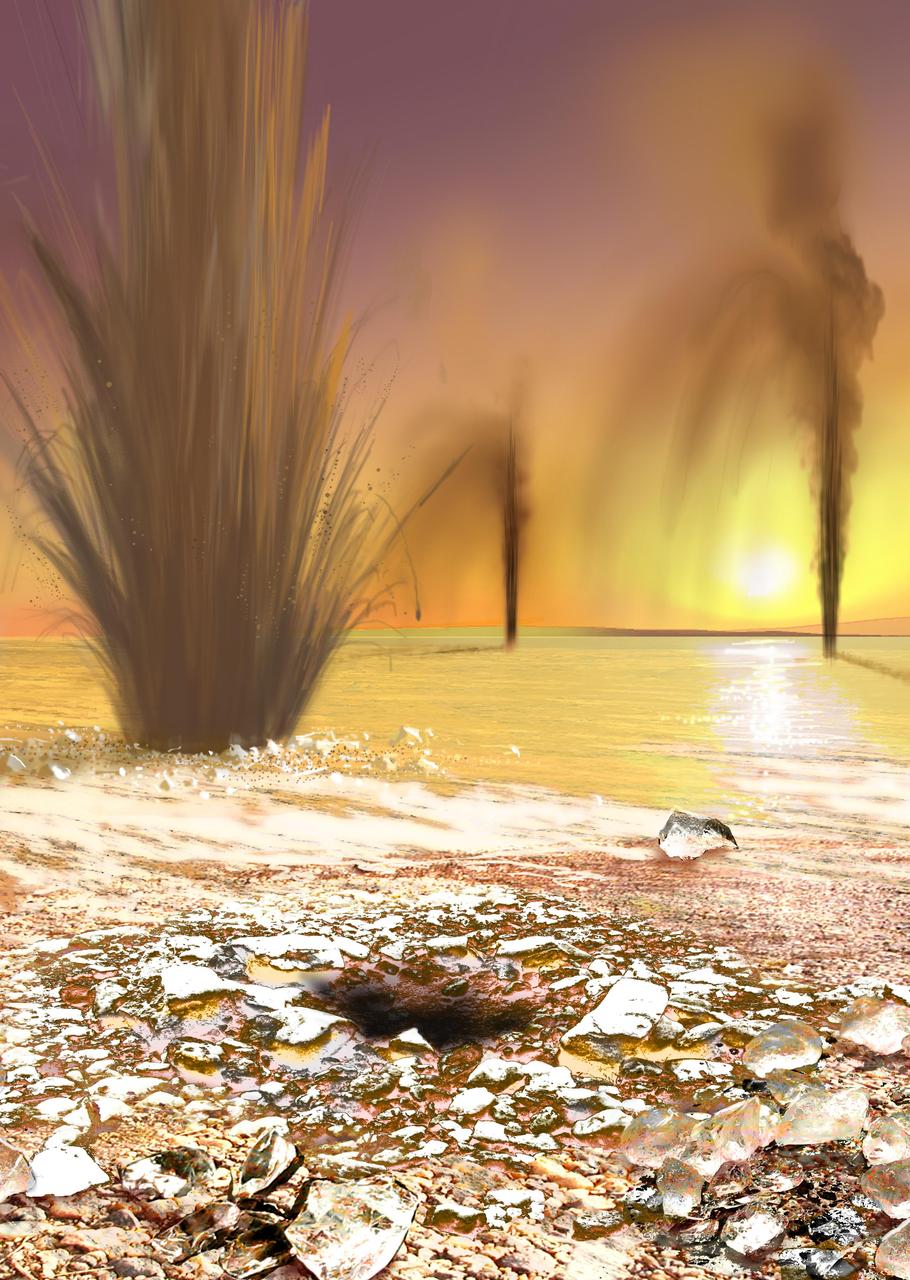
Sand-laden jets shoot into the polar sky in this view by noted space artist Ron Miller. It shows the Martian south polar ice cap as southern spring begins

In the center of this image from the Hubble Space Telescope, partially obscured by a dark cloud of dust, a newborn star shoots twin jets out into space as a sort of birth announcement to the universe.
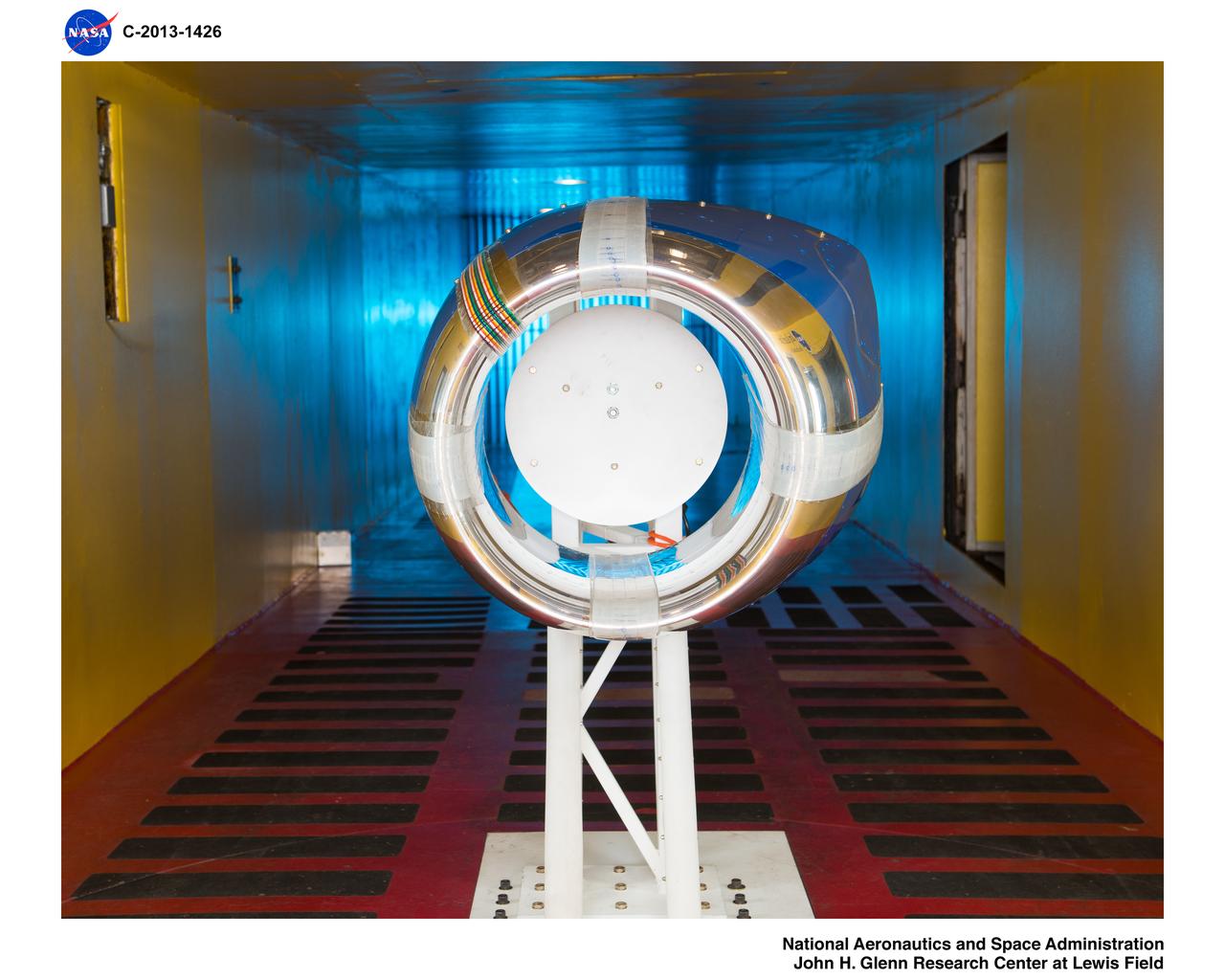
Hardware Shoot in the Icing Research Tunnel
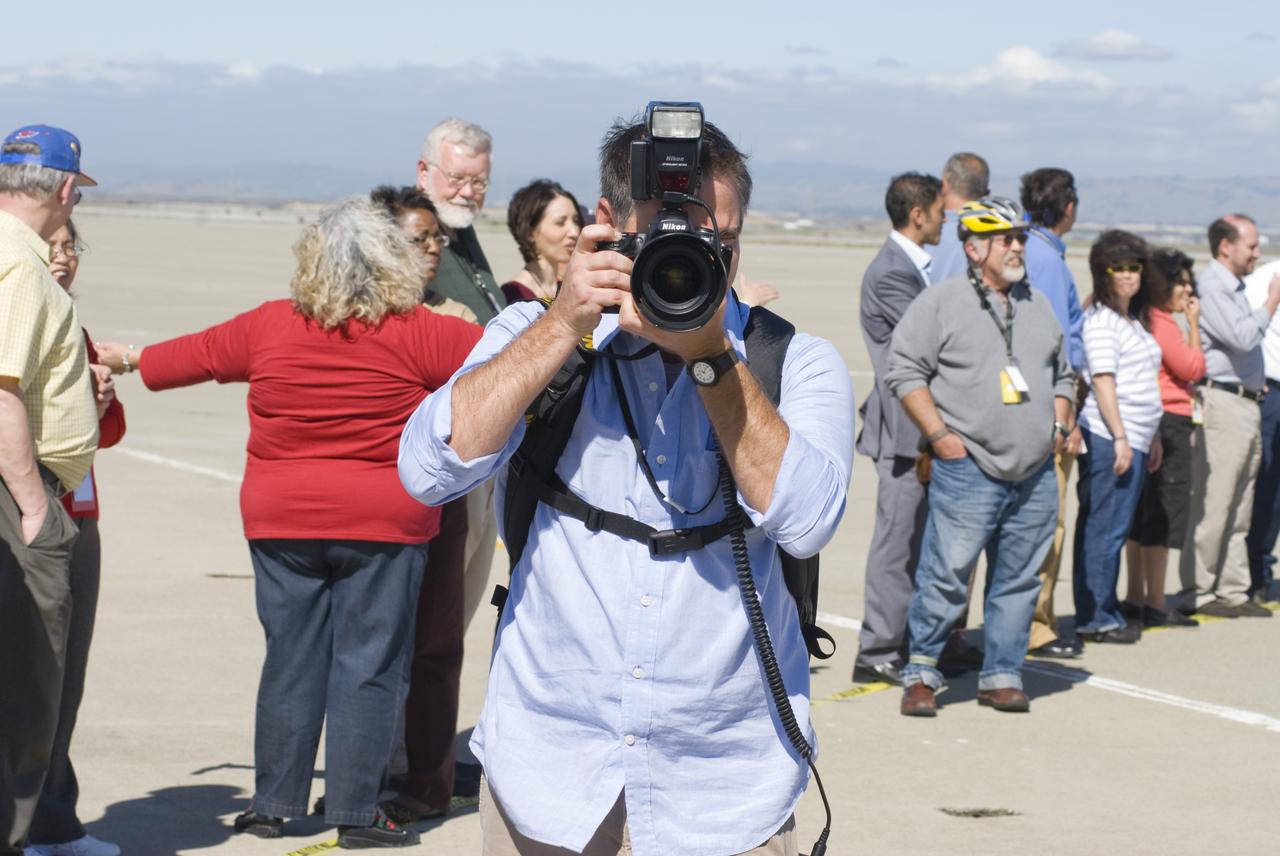
Ames 70_year picture day on Flight line. Dominic Hart shooting photo's.
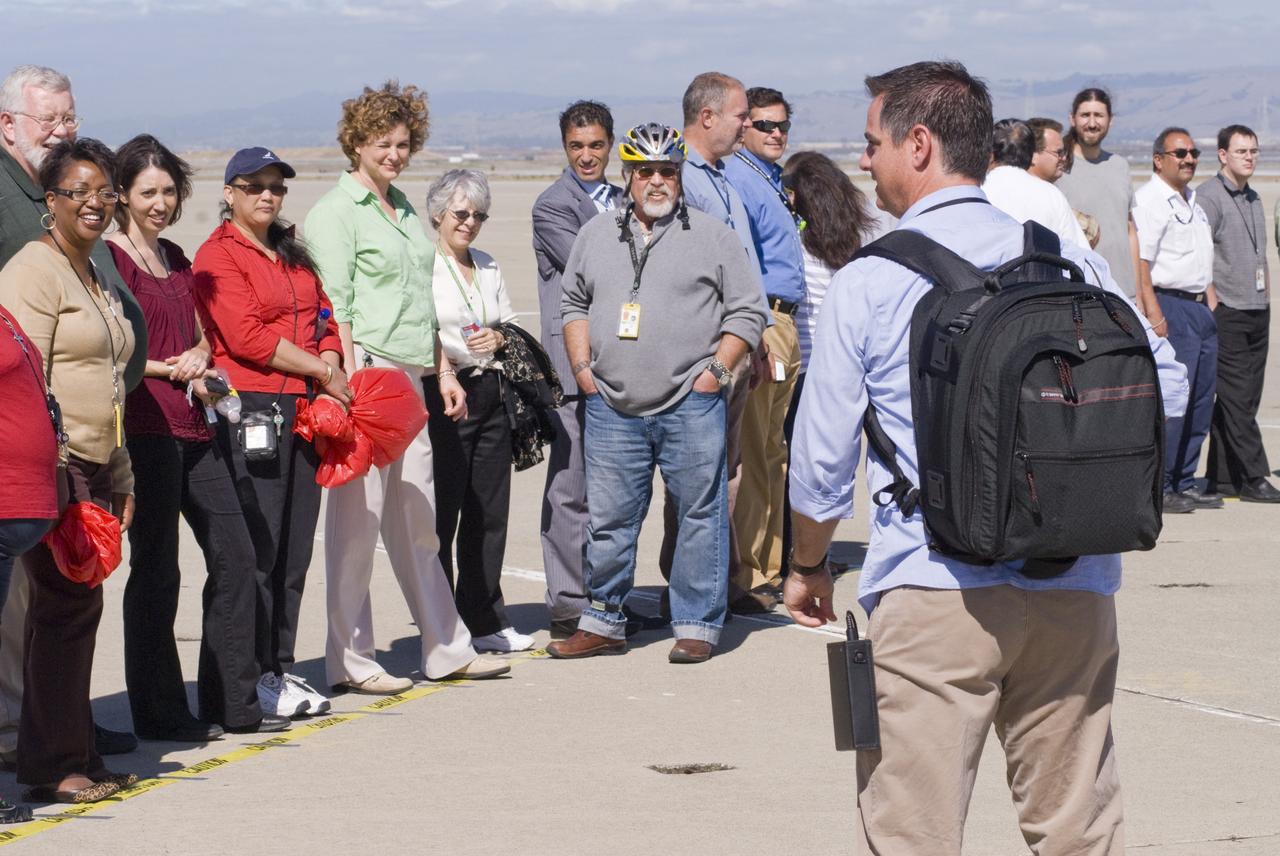
Ames 70_year picture day on Flight line. Dominic Hart shooting photo's.
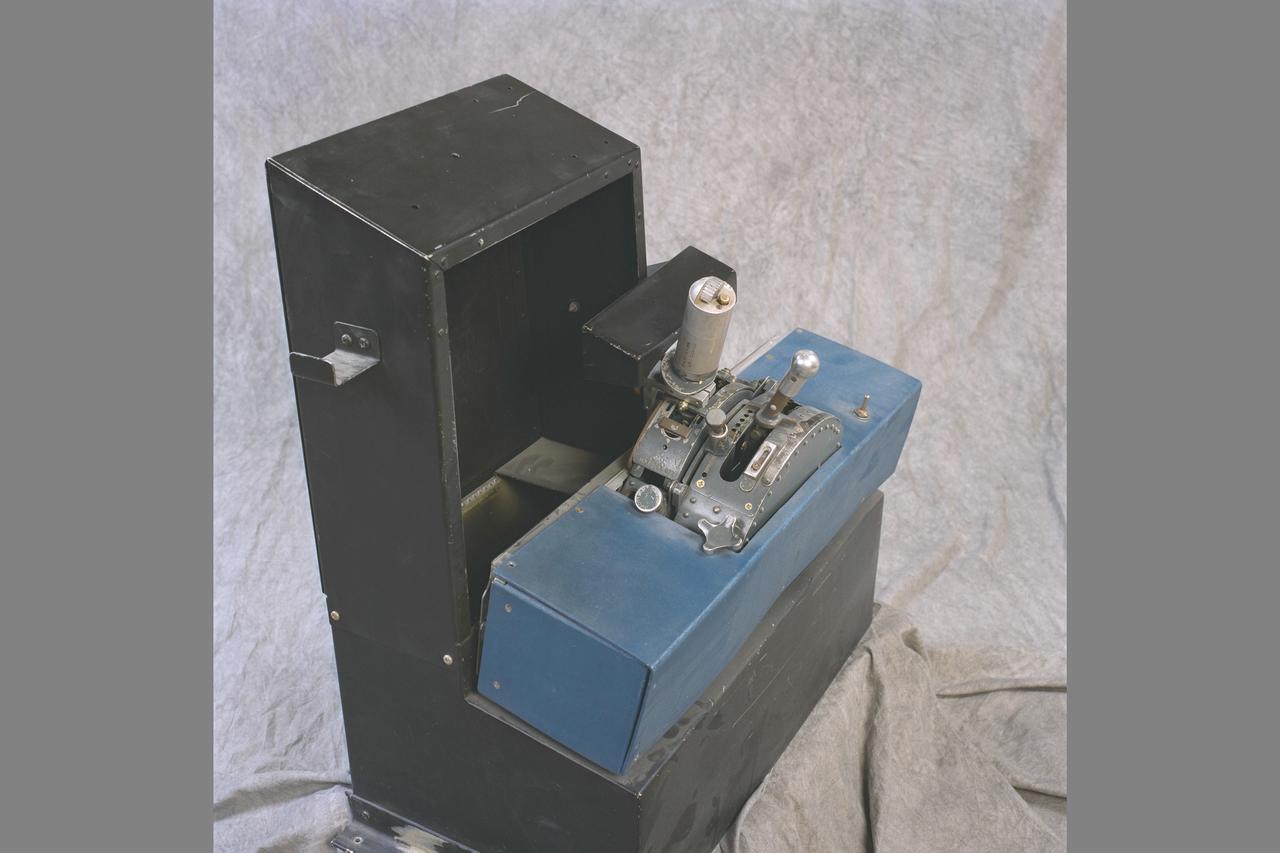
NASA Ames VMS (Vertical Motion Simulator): S-CAB, THROTTLE CONSOLE studio shoot
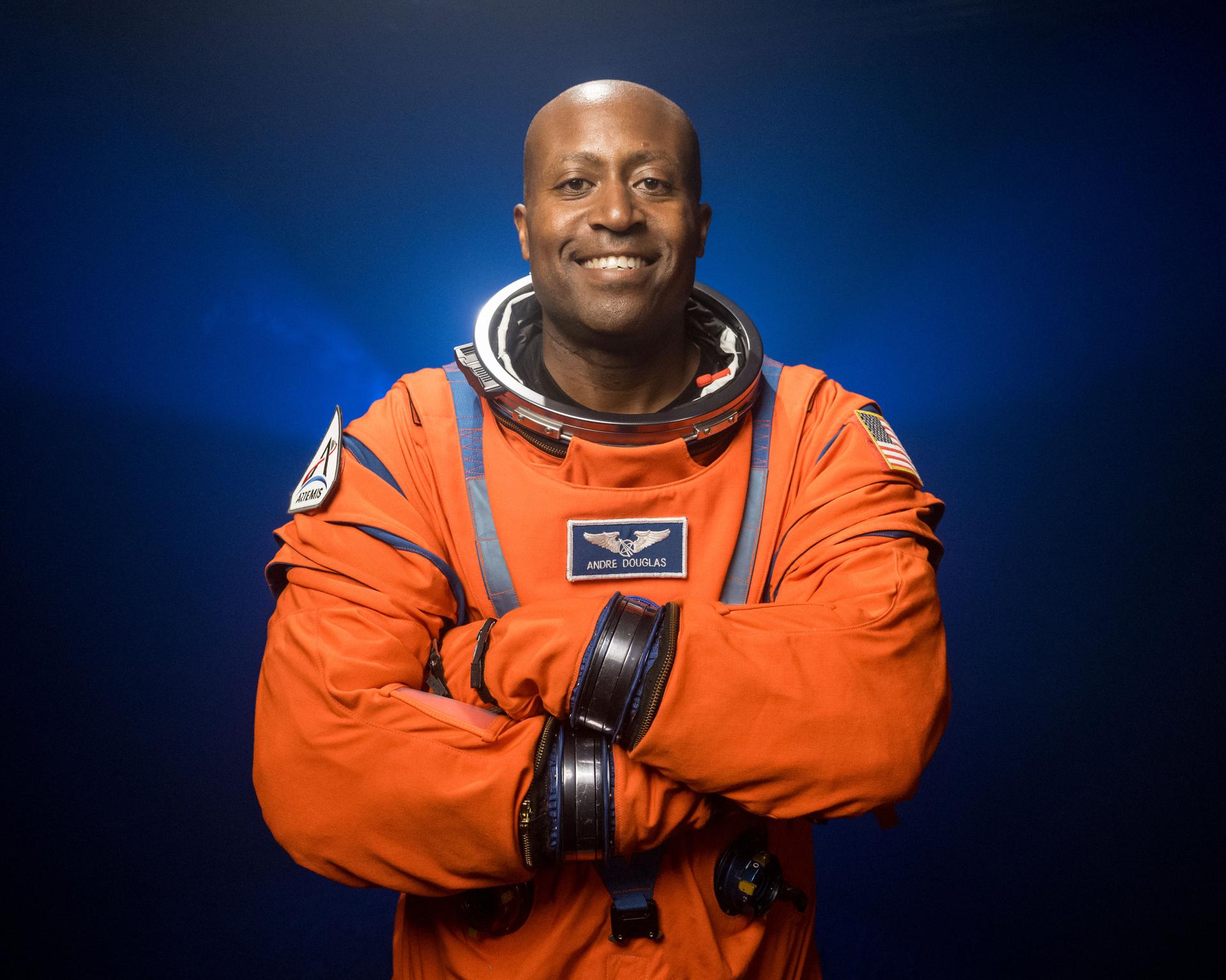
Artemis III mission specialist Andre Douglas poses for a photo during a video shoot. Credit: NASA/Luna Posadas Nava
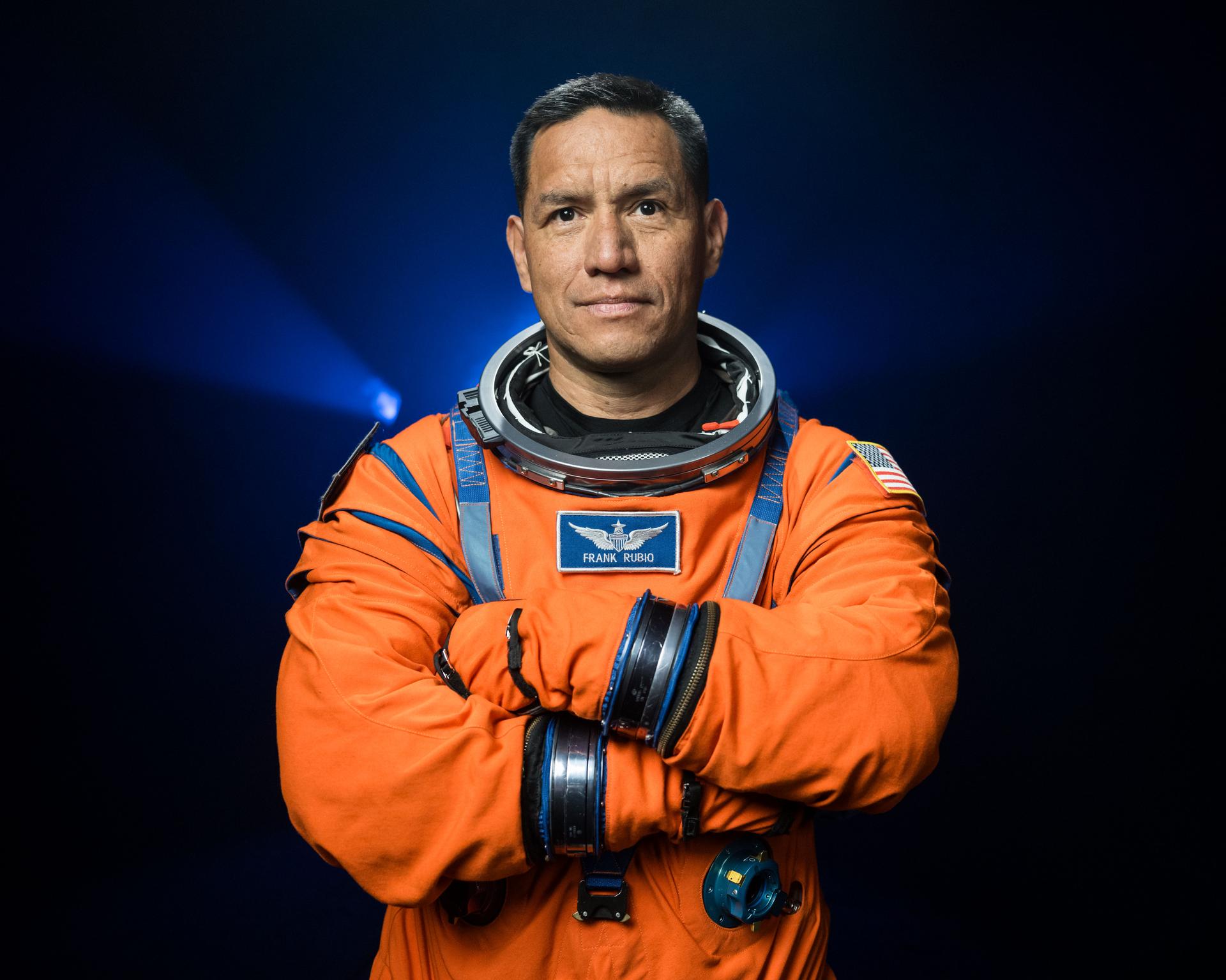
Artemis III mission specialist Frank Rubio poses for a photo during a video shoot. Credit: NASA/Luna Posadas Nava
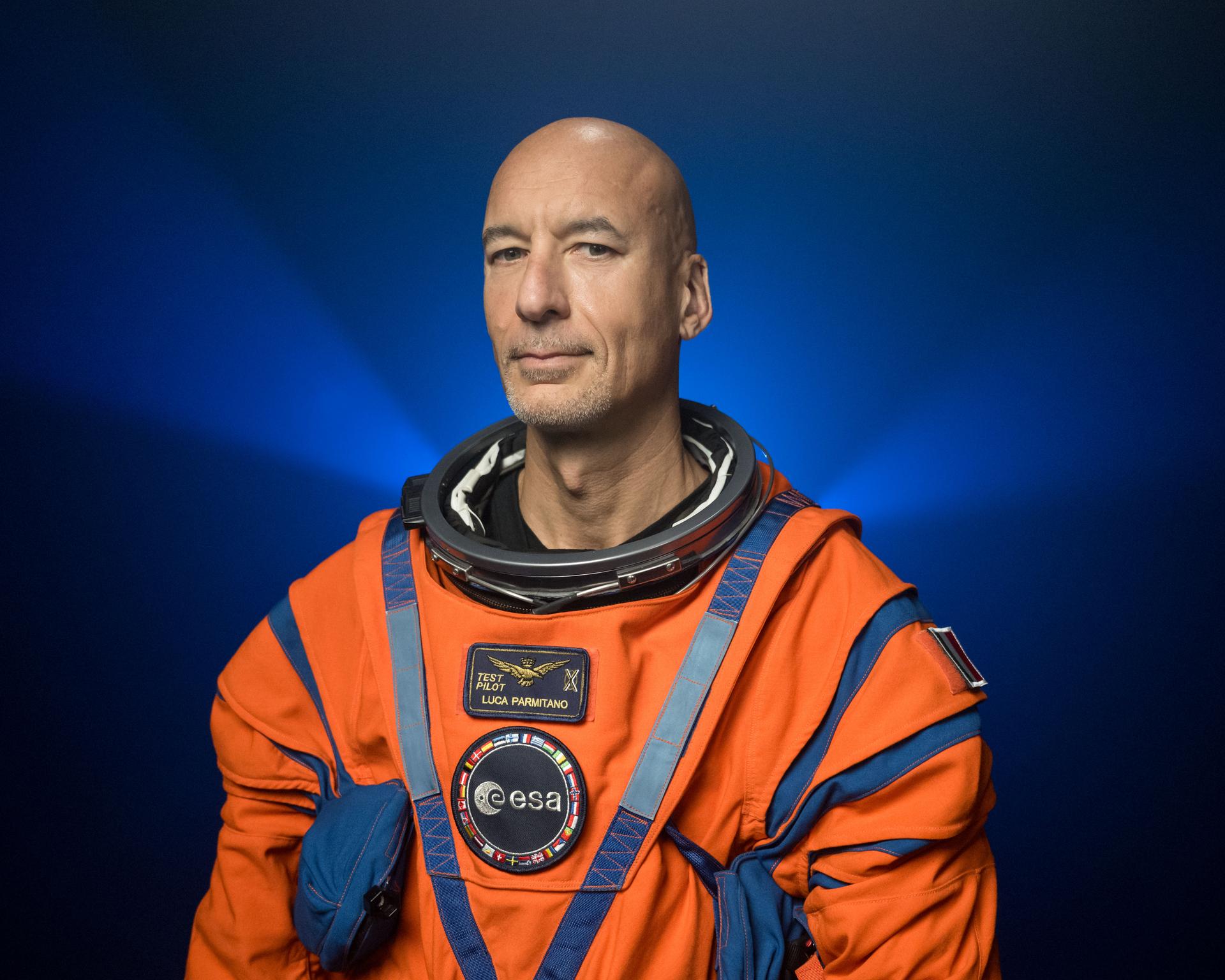
Artemis III pilot Luca Parmitano poses for a photo during a video shoot. Credit: NASA/Luna Posadas Nava
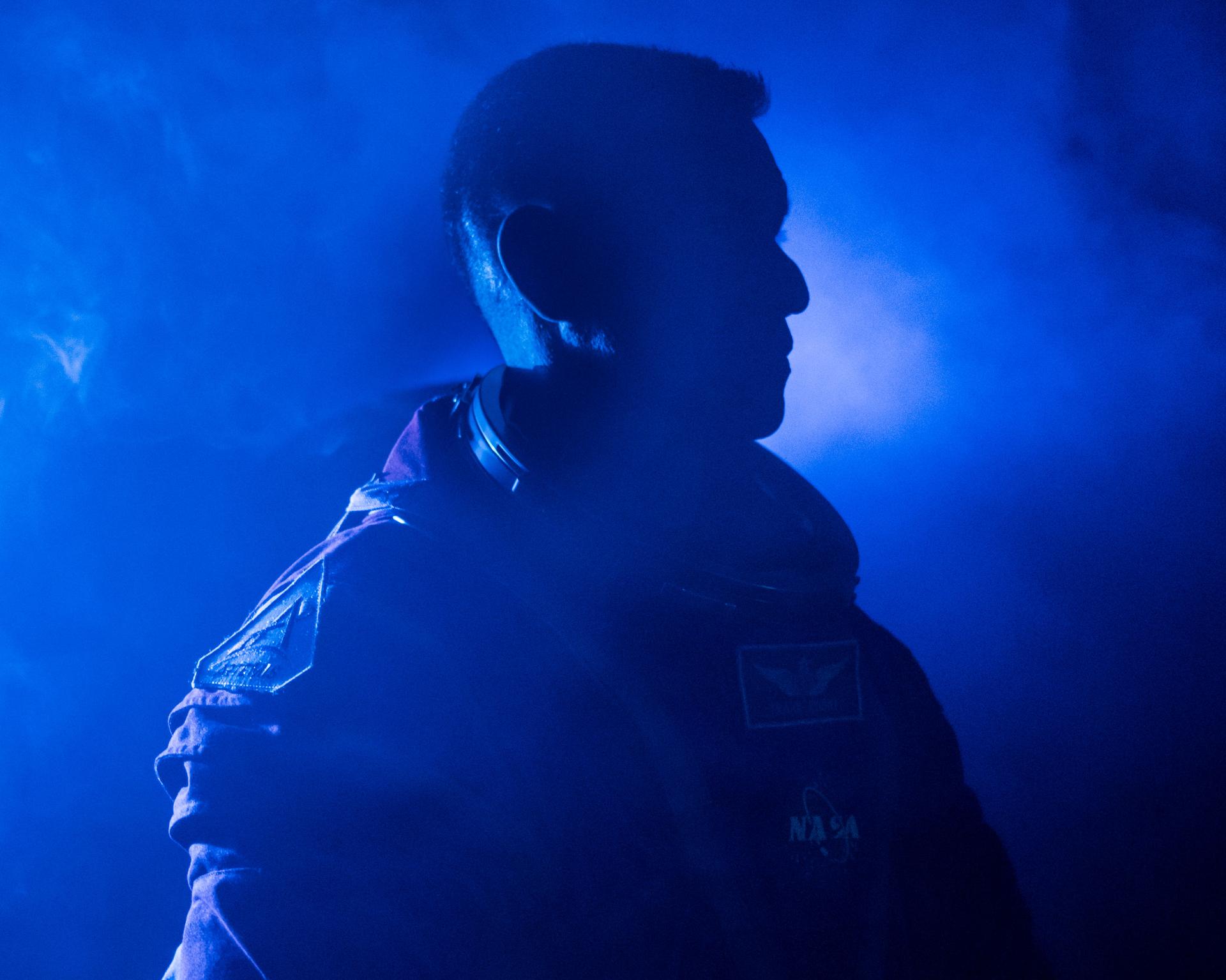
Artemis III mission specialist Frank Rubio photographed during a video shoot. Credit: NASA/Luna Posadas Nava
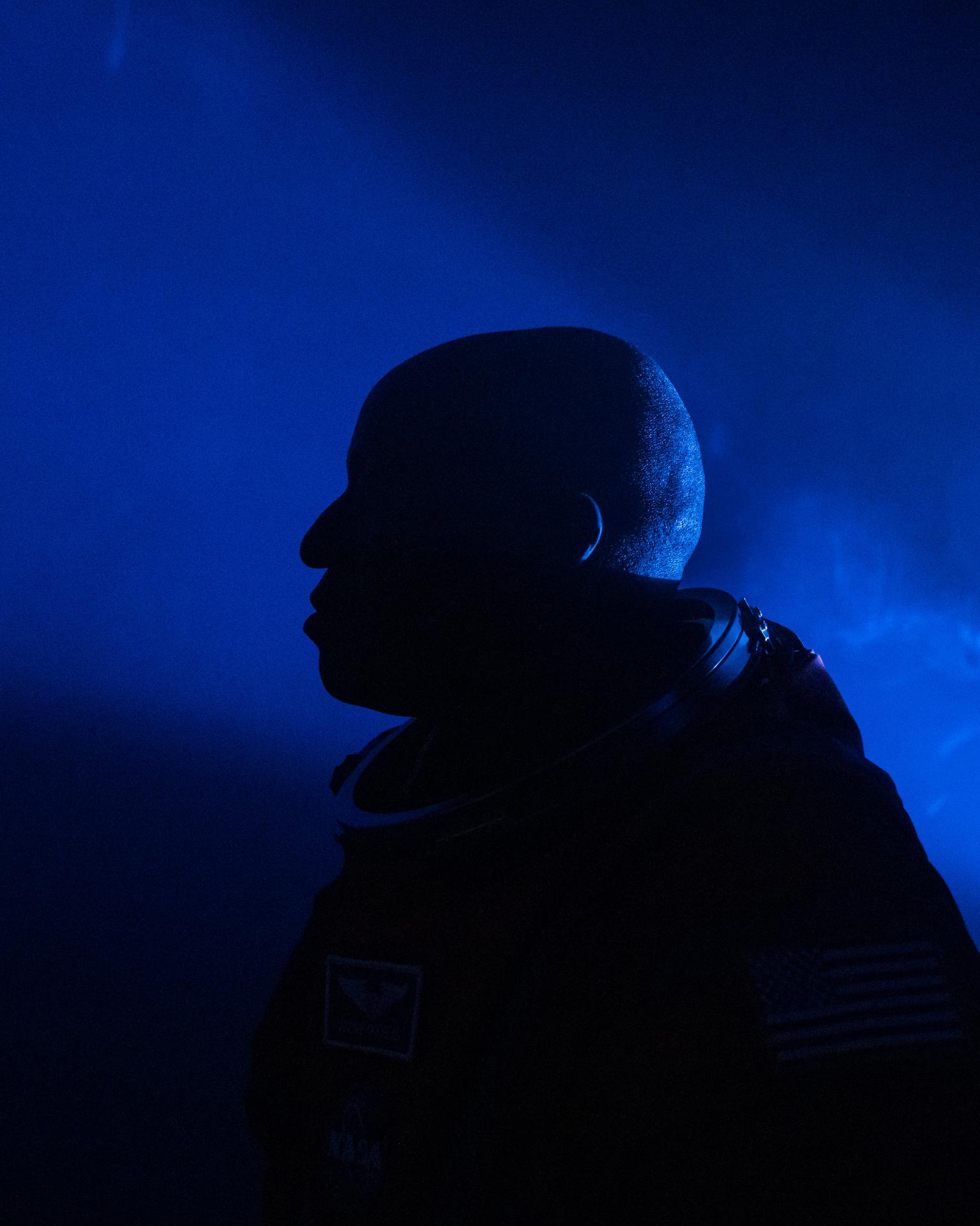
Artemis III backup crew member Bob Hines photographed during a video shoot. Credit: NASA/Luna Posadas Nava
Artemis III mission specialist Andre Douglas photographed during a video shoot. Credit: NASA/Luna Posadas Nava
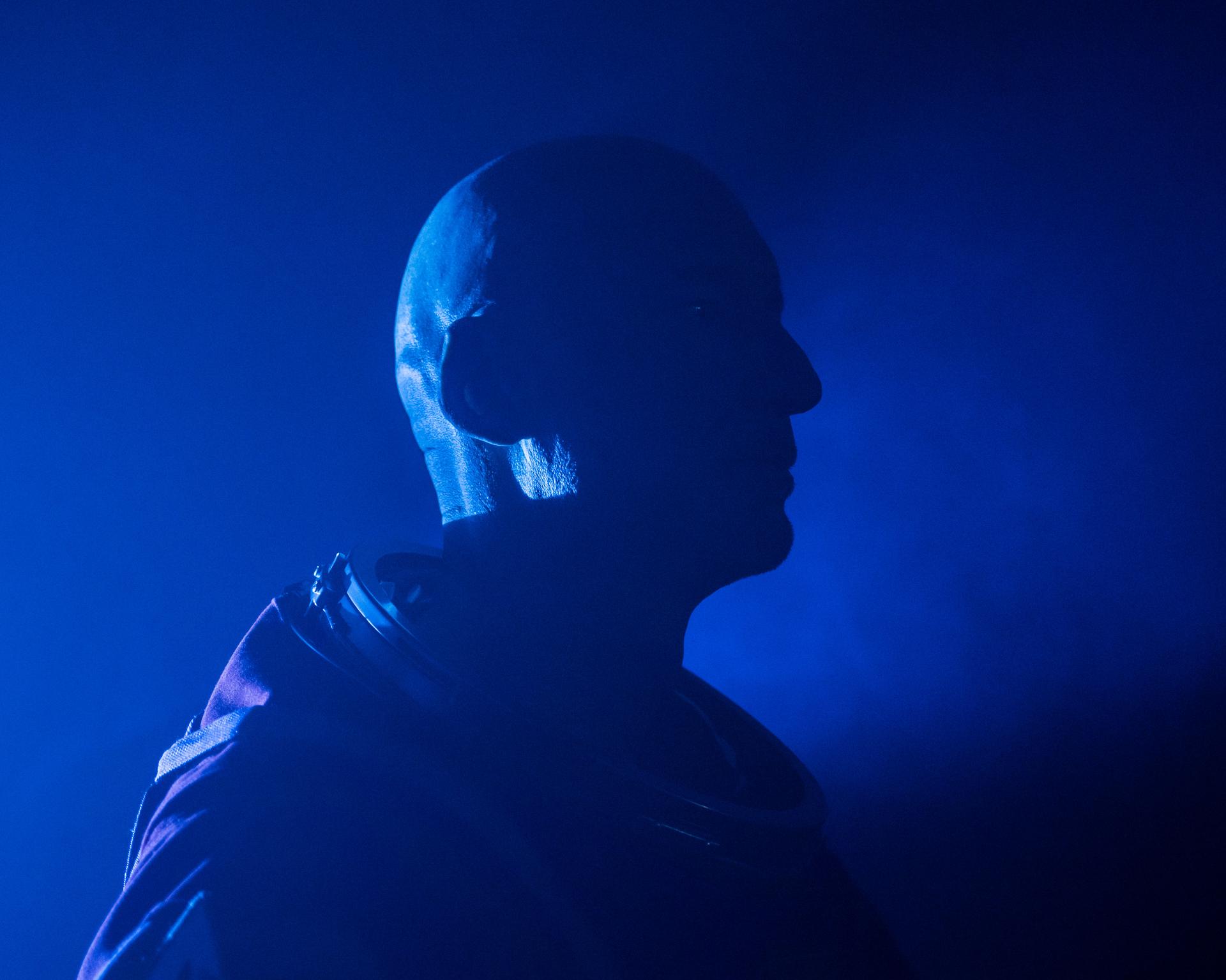
Artemis III pilot Luca Parmitano photographed during a video shoot. Credit: NASA/Luna Posadas Nava
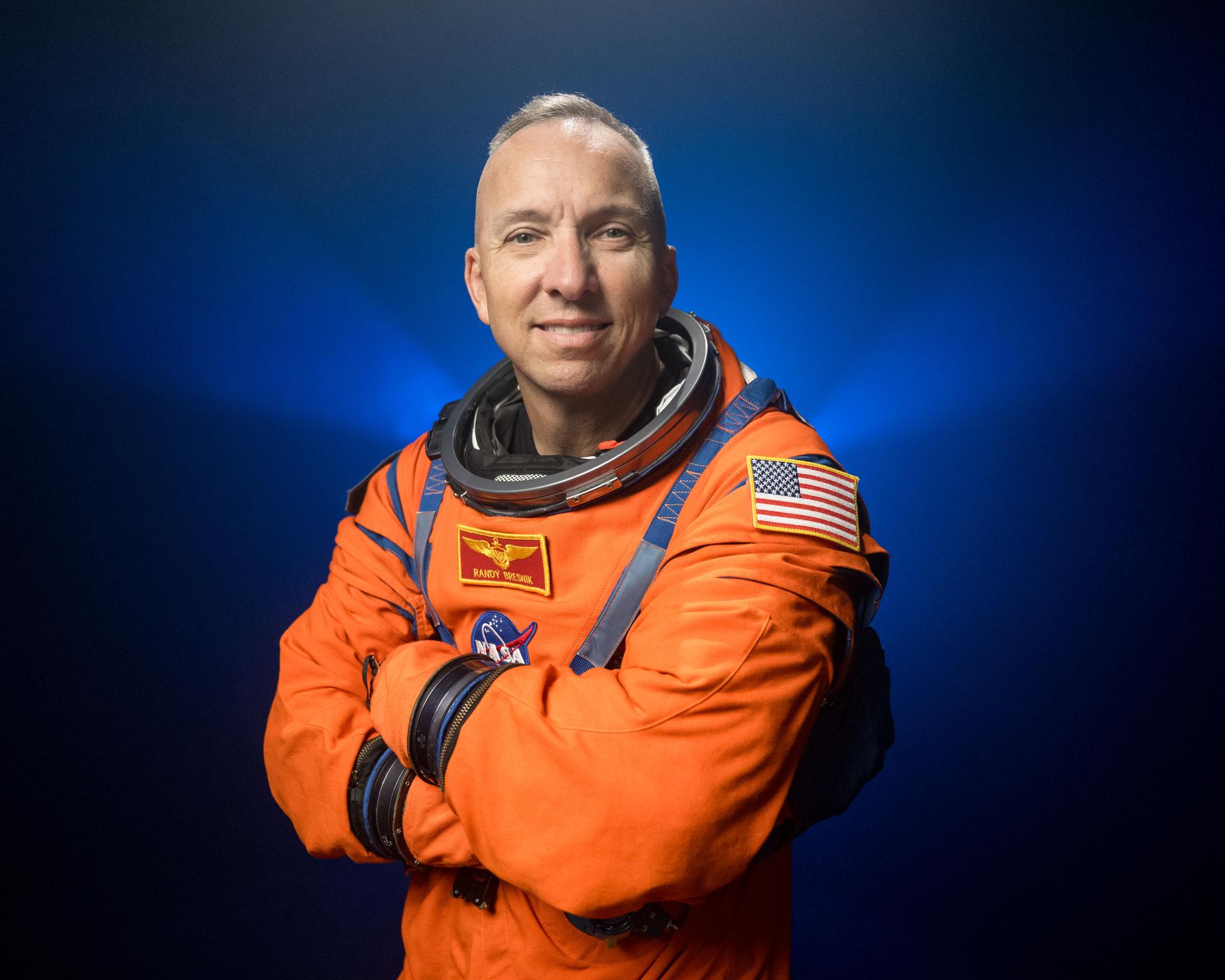
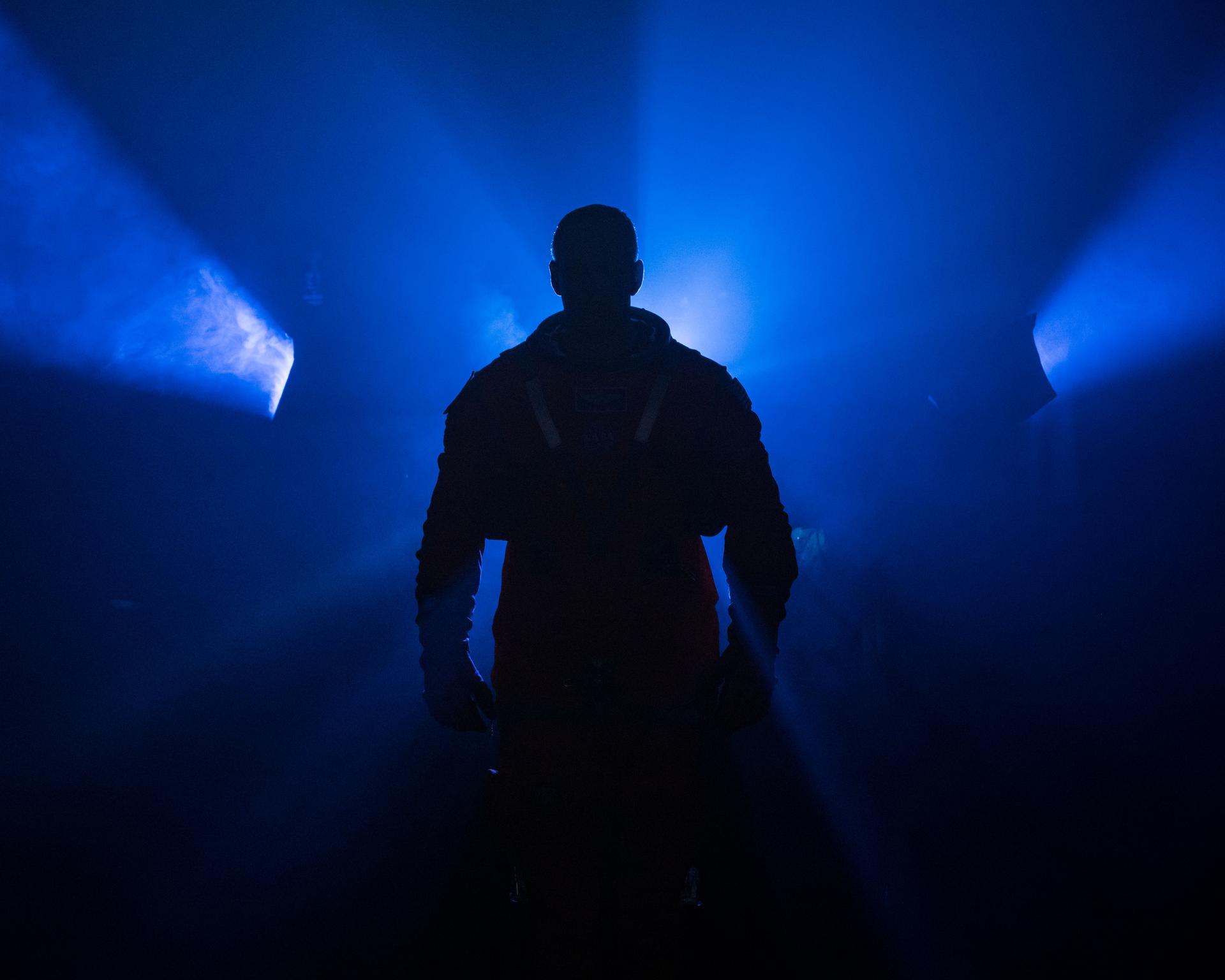
Artemis III commander Randy Bresnik poses for a photo during a video shoot. Credit: NASA/Luna Posadas Nava
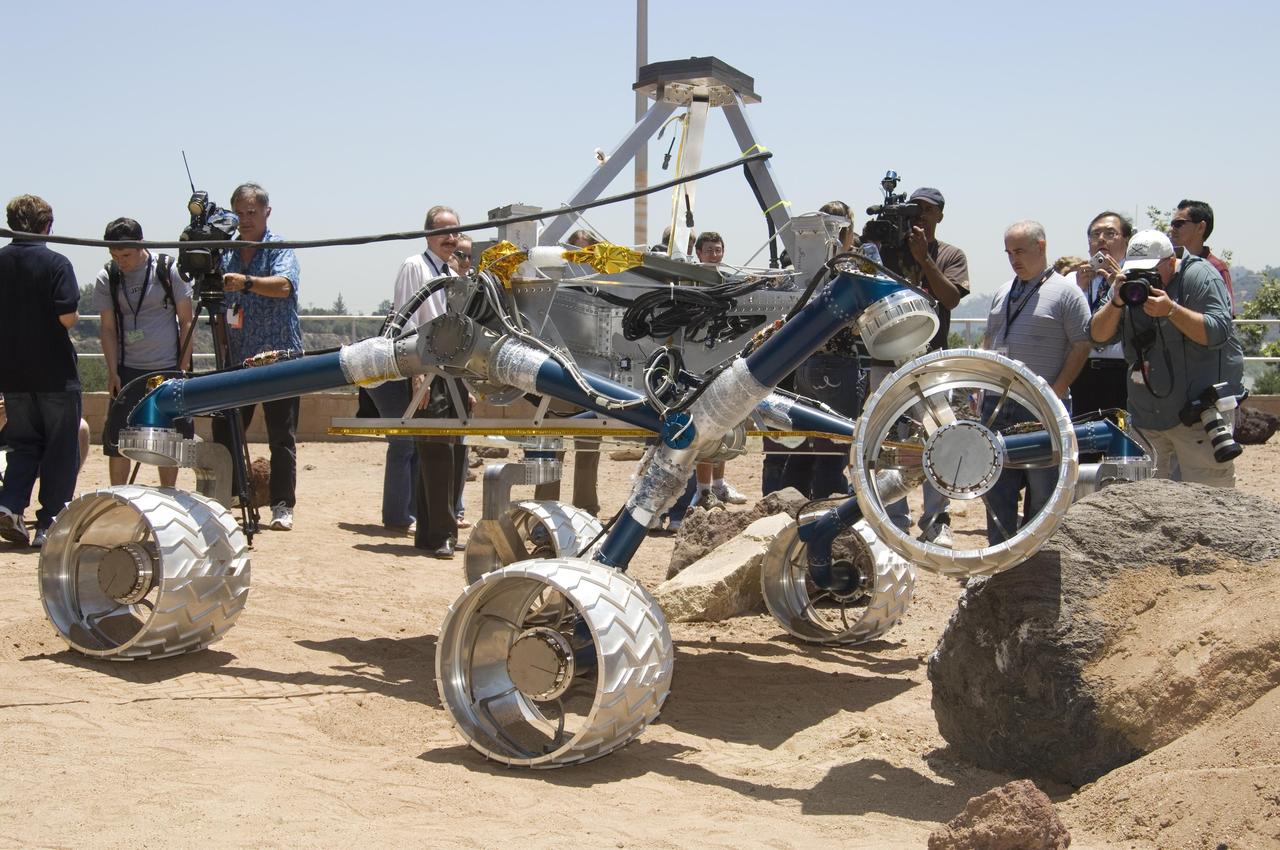
Onlookers watch as Scarecrow, a mobility-testing model for NASA Mars Science Laboratory, easily conquers boulders in the Mars Yard testing area at NASA Jet Propulsion Laboratory.
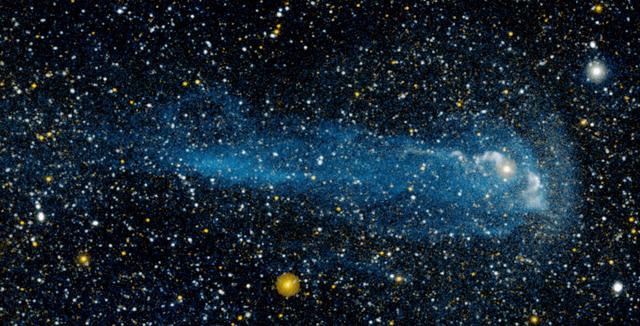
A close-up view of a star racing through space faster than a speeding bullet can be seen in this image from NASA Galaxy Evolution Explorer. The star is called Mira pronounced My-rah.
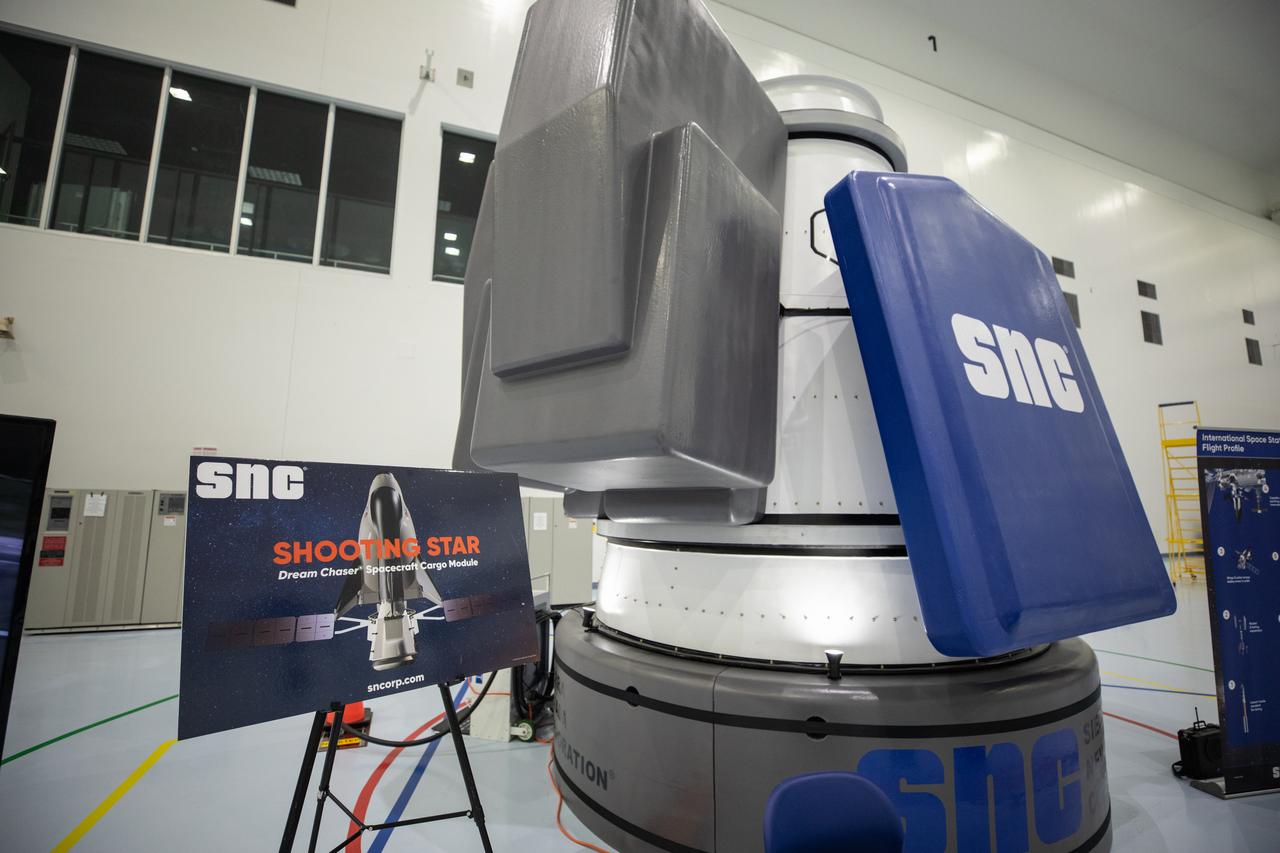
A look at a testing mockup of Sierra Nevada Corporation’s Shooting Star cargo module in the Space Station Processing Facility high bay at Kennedy Space Center on Nov. 19, 2019. Shooting Star will attach to the back of the company’s Dream Chaser spacecraft. The cargo module will deliver more than 12,000 pounds of supplies and other cargo to the International Space Station for NASA as part of the Commercial Resupply Services-2 contract.
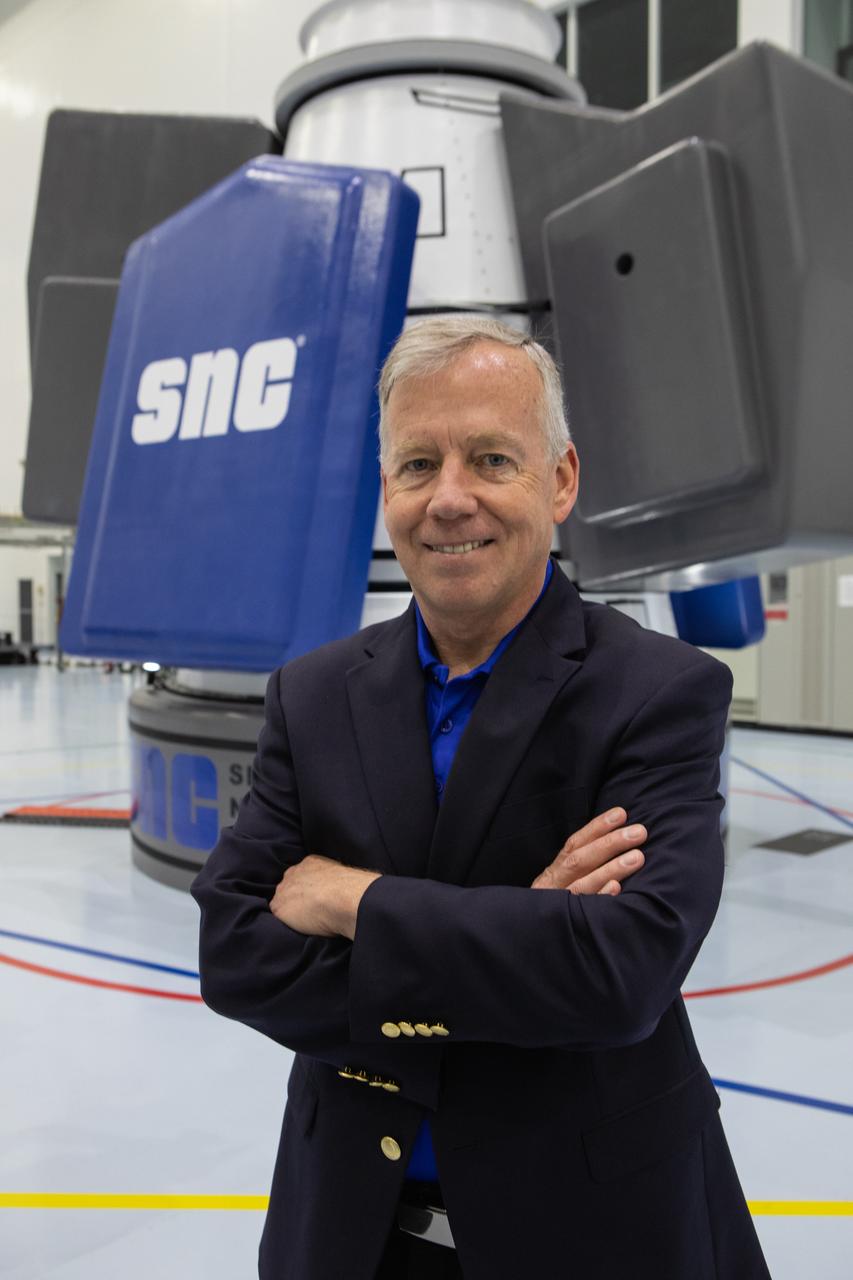
Steve Lindsey, senior vice president of strategy for Sierra Nevada Corporation Space Systems and a former NASA astronaut, poses in front of the company’s Shooting Star cargo module in the Space Station Processing Facility high bay at Kennedy Space Center on Nov. 19, 2019. Shooting Star will attach to the back of the company’s Dream Chaser spacecraft. The cargo module will deliver more than 12,000 pounds of supplies and other cargo to the International Space Station for NASA as part of the Commercial Resupply Services-2 contract.

A look at a testing mockup of Sierra Nevada Corporation’s Shooting Star cargo module in the Space Station Processing Facility high bay at Kennedy Space Center on Nov. 19, 2019. Shooting Star will attach to the back of the company’s Dream Chaser spacecraft. The cargo module will deliver more than 12,000 pounds of supplies and other cargo to the International Space Station for NASA as part of the Commercial Resupply Services-2 contract.
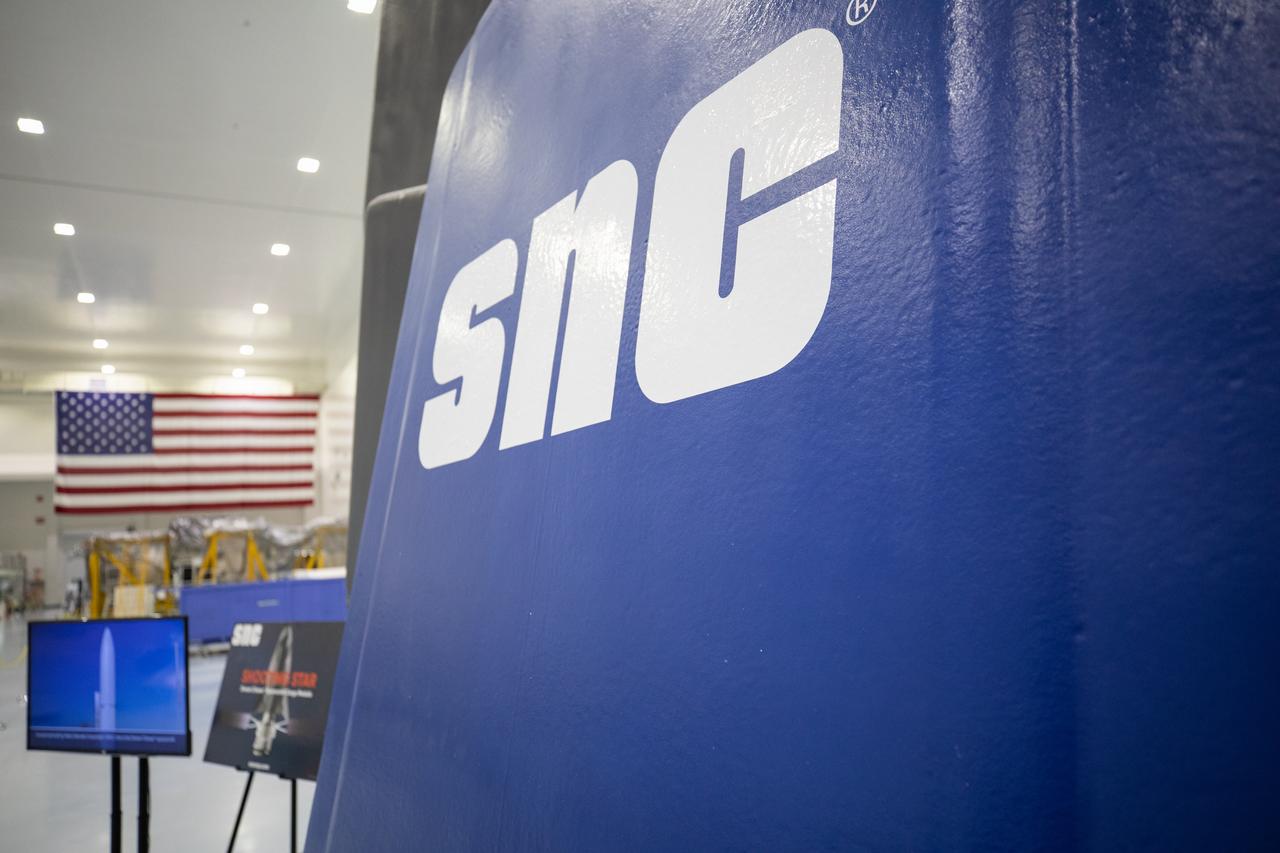
A look at a testing mockup of Sierra Nevada Corporation’s Shooting Star cargo module in the Space Station Processing Facility high bay at Kennedy Space Center on Nov. 19, 2019. Shooting Star will attach to the back of the company’s Dream Chaser spacecraft. The cargo module will deliver more than 12,000 pounds of supplies and other cargo to the International Space Station for NASA as part of the Commercial Resupply Services-2 contract.
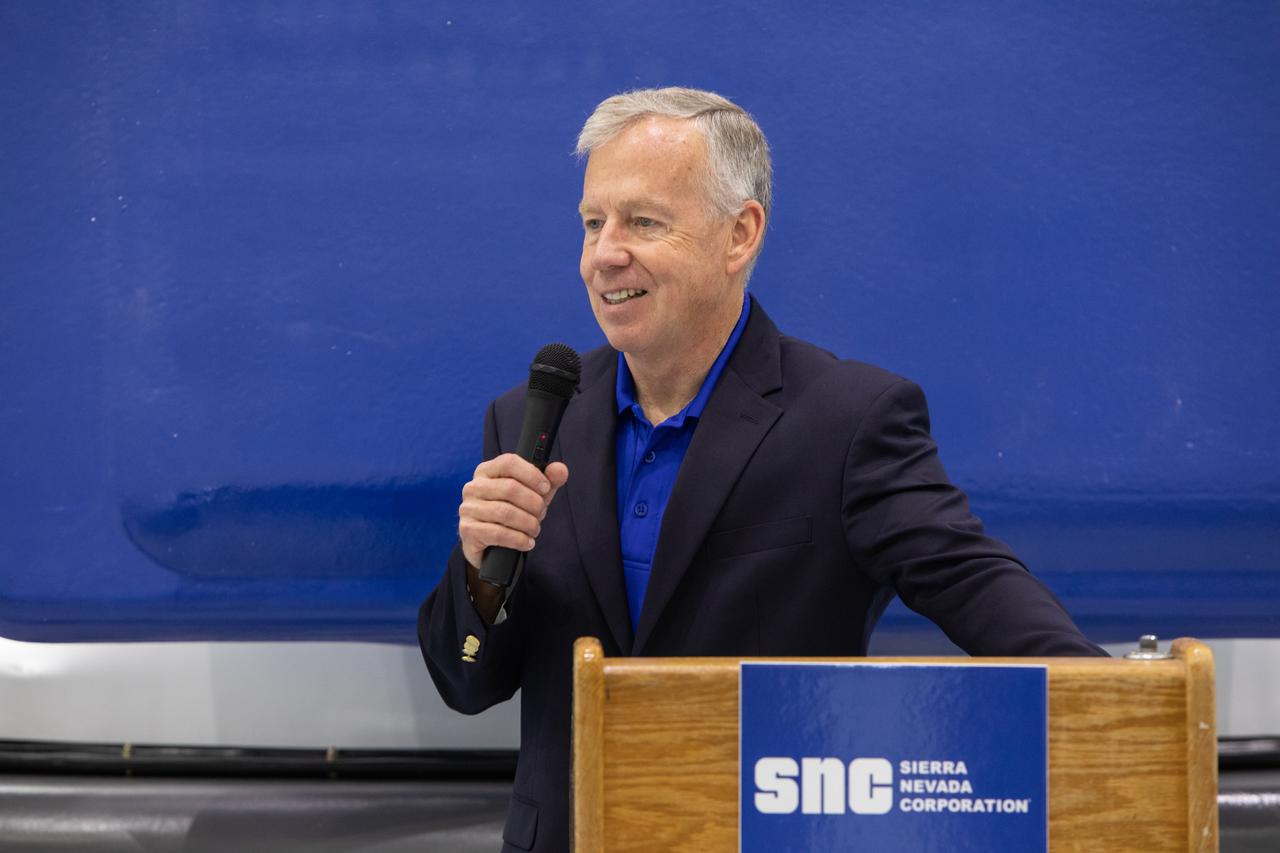
Steve Lindsey, senior vice president of strategy for Sierra Nevada Corporation Space Systems and a former NASA astronaut, discusses the capabilities of the company’s Shooting Star cargo module in the Space Station Processing Facility high bay at Kennedy Space Center on Nov. 19, 2019. Shooting Star will attach to the back of the company’s Dream Chaser spacecraft. The cargo module will deliver more than 12,000 pounds of supplies and other cargo to the International Space Station for NASA as part of the Commercial Resupply Services-2 contract.

A Lockheed P-80 Shooting Star jet aircraft on the tarmac at the National Advisory Committee for Aeronautics (NACA) NACA Lewis Flight Propulsion Laboratory in Cleveland, Ohio. The Air Force aircraft was participating in the 1946 National Air Races over Labor Day weekend. The air races were held at the Cleveland Municipal Airport seven times between 1929 and 1939. The events included long distance, sprint, and circuit competitions, as well as aeronautical displays, demonstrations, and celebrities. The air races were suspended indefinitely in 1940 for a variety of reasons, including the start of World War II in Europe. The nature of the National Air Races changed dramatically when the event resumed in 1946. The introduction of jet aircraft, primarily the Lockheed P-80 seen here, required an entire separate division for each event. Since military pilots were the only ones with any jet aircraft experience, only they could participate in those divisions. In addition, the performance and quantity of commercially manufactured piston aircraft had increased dramatically during the war. By 1946, the custom-built racing aircraft that made the pre-war races so interesting were no longer present. The P-80 was the first US-designed and US-manufactured jet aircraft. Early models were tested during the war in NACA Lewis’ Altitude Wind Tunnel. A modified P-80 set the world’s speed record at the 1947 air races by achieving 620 miles per hour.
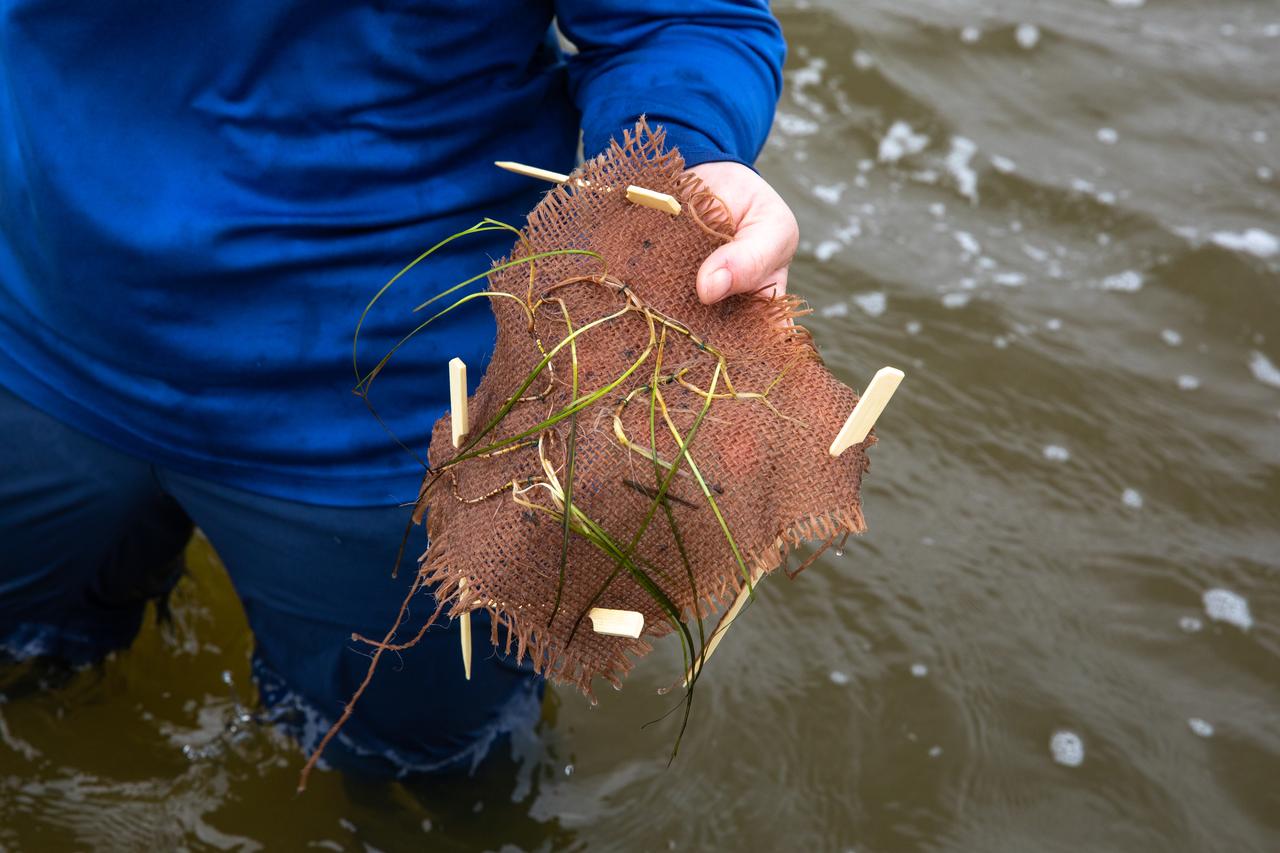
Seen here is a close-up view of one “plot” of seagrass being planted in the Banana River – one of three bodies of water that make up the Indian River Lagoon (IRL) – at NASA’s Kennedy Space Center in Florida on March 29, 2023. Kennedy’s Environmental Management Branch is working to plant a minimum of 28,000 shoots of seagrass divided into 18 sites across three areas at the Florida spaceport as part of a pilot project for seagrass restoration efforts. Each “plot” of seagrass contains 16 shoots tied to a burlap mesh square with floral ties and has bamboo skewers at each corner that are staked into the sediment. The project, which involves using all biodegradable materials, will look at the feasibility of replanting seagrass in Kennedy waters and, if successful, could lead to the spaceport becoming a donor site where shoots of grass can be broken off and relocated to other areas within Kennedy or along the Indian River Lagoon to promote growth.

Seen here is a close-up view of one “plot” of seagrass being planted in the Banana River – one of three bodies of water that make up the Indian River Lagoon (IRL) – at NASA’s Kennedy Space Center in Florida on March 29, 2023. Kennedy’s Environmental Management Branch is working to plant a minimum of 28,000 shoots of seagrass divided into 18 sites across three areas at the Florida spaceport as part of a pilot project for seagrass restoration efforts. Each “plot” of seagrass contains 16 shoots tied to a burlap mesh square with floral ties and has bamboo skewers at each corner that are staked into the sediment. The project, which involves using all biodegradable materials, will look at the feasibility of replanting seagrass in Kennedy waters and, if successful, could lead to the spaceport becoming a donor site where shoots of grass can be broken off and relocated to other areas within Kennedy or along the Indian River Lagoon to promote growth.
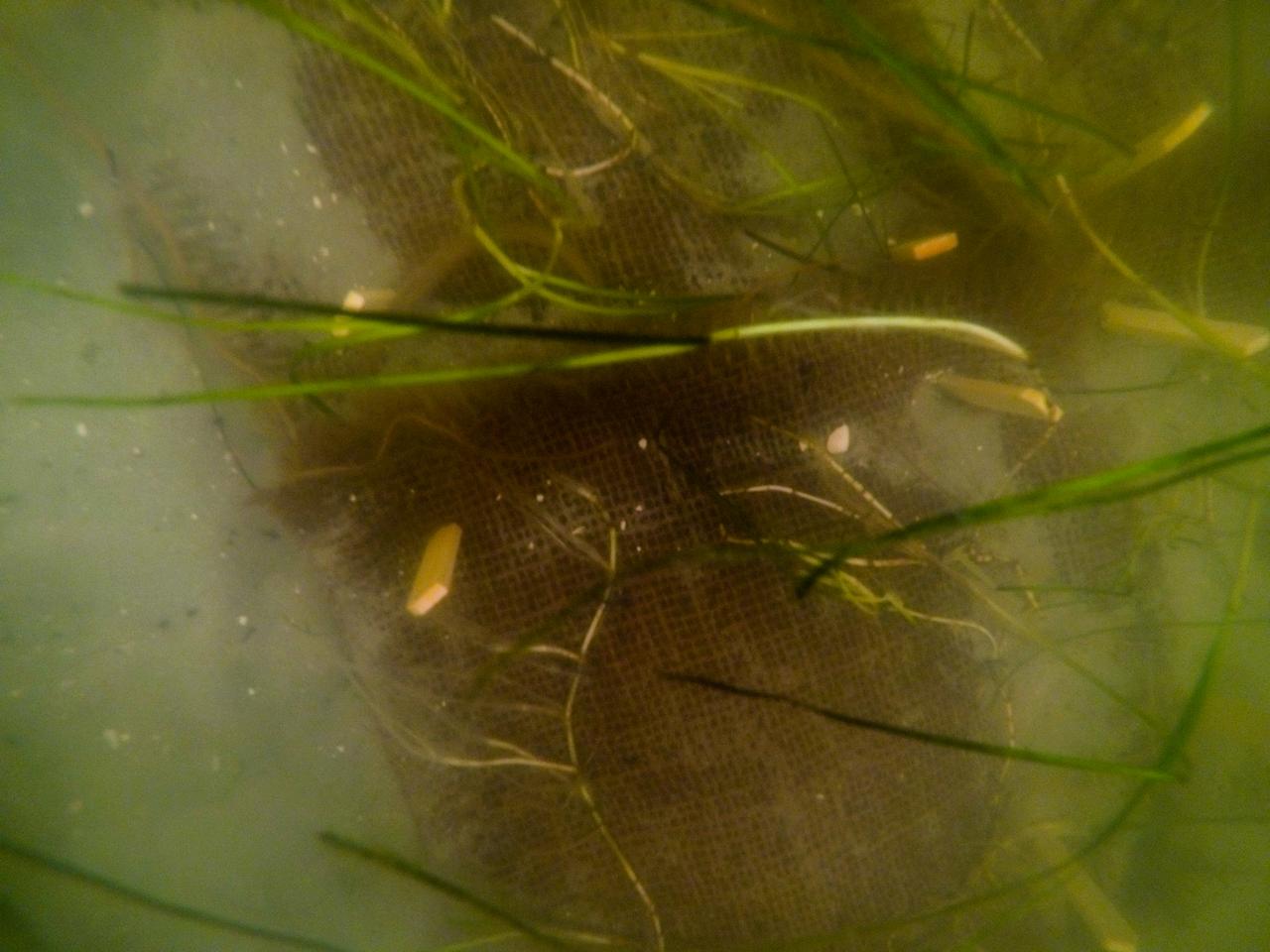
Seen here is a close-up view of newly planted seagrass in the Banana River – one of three bodies of water that make up the Indian River Lagoon (IRL) – at NASA’s Kennedy Space Center in Florida on March 29, 2023. Kennedy’s Environmental Management Branch is working to plant a minimum of 28,000 shoots of seagrass divided into 18 sites across three areas at the Florida spaceport as part of a pilot project for seagrass restoration efforts. Each “plot” of seagrass contains 16 shoots tied to a burlap mesh square with floral ties and has bamboo skewers at each corner that are staked into the sediment. The project, which involves using all biodegradable materials, will look at the feasibility of replanting seagrass in Kennedy waters and, if successful, could lead to the spaceport becoming a donor site where shoots of grass can be broken off and relocated to other areas within Kennedy or along the Indian River Lagoon to promote growth.
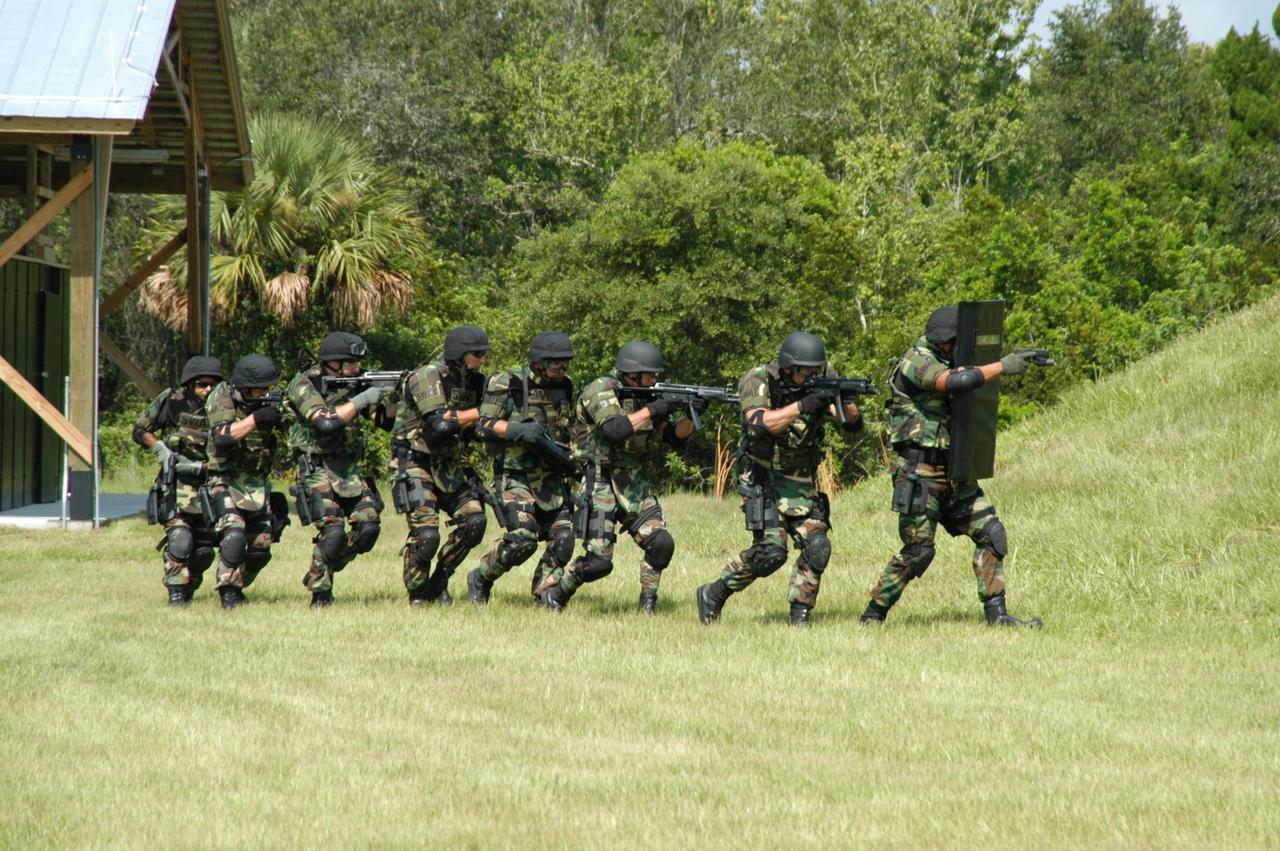
KENNEDY SPACE CENTER, FLA. - At the ribbon cutting for the Enhanced Firing Range on Schwartz Rd. at Kennedy Space Center, a SWAT team demonstrates use of the facility. NASA’s Federal Law Enforcement Training Academy’s firing range has been upgraded to include a “rifle-grade” shoot house, a portable, tactical “shoot-back” trailer for cover and concealment drills, automated running targets and a new classroom. They are added to the existing three firearms ranges, “pistol-grade” shoot house, obstacle course and rappel tower. NASA’s Security Management and Safeguards Office funded the enhancements in order to improve ability to train the KSC security force and to support local, state and federal law enforcement agencies in Homeland Security.
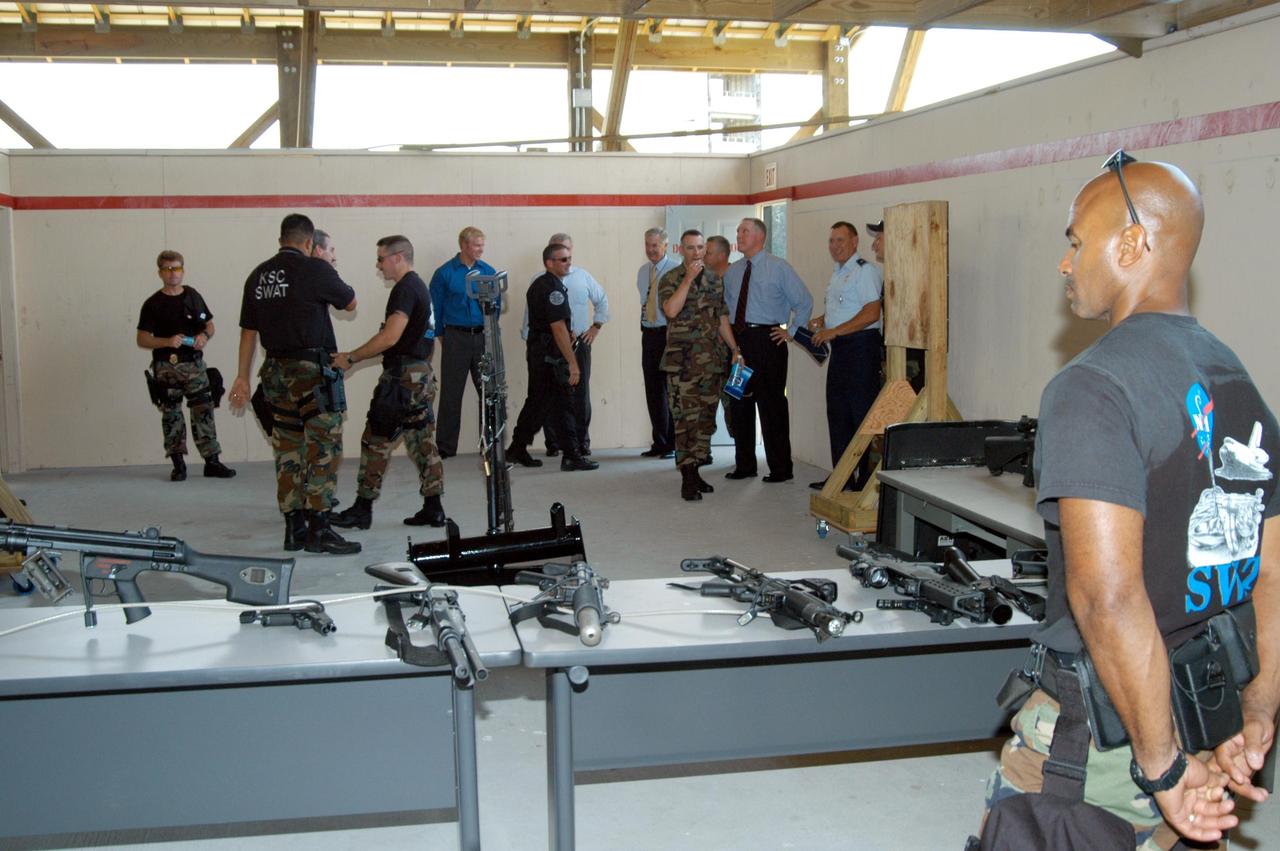
KENNEDY SPACE CENTER, FLA. - After the ribbon cutting for the Enhanced Firing Range on Schwartz Rd. at Kennedy Space Center, guests get a close look at the new “rifle-grade” shoot house. NASA’s Federal Law Enforcement Training Academy’s firing range upgrades also include a portable, tactical “shoot-back” trailer for cover and concealment drills, automated running targets and a new classroom. They are added to the existing three firearms ranges, “pistol-grade” shoot house, obstacle course and rappel tower. NASA’s Security Management and Safeguards Office funded the enhancements in order to improve ability to train the KSC security force and to support local, state and federal law enforcement agencies in Homeland Security.

Lorae Simpson, director of research and conservation with the Florida Oceanographic Society, prepares to plant seagrass in the Banana River – one of three bodies of water that make up the Indian River Lagoon (IRL) – at NASA’s Kennedy Space Center in Florida on March 29, 2023. Kennedy’s Environmental Management Branch is working to plant a minimum of 28,000 shoots of seagrass divided into 18 sites across three areas at the Florida spaceport as part of a pilot project for seagrass restoration efforts. Each “plot” of seagrass contains 16 shoots tied to a burlap mesh square with floral ties and has bamboo skewers at each corner that are staked into the sediment. The project, which involves using all biodegradable materials, will look at the feasibility of replanting seagrass in Kennedy waters and, if successful, could lead to the spaceport becoming a donor site where shoots of grass can be broken off and relocated to other areas within Kennedy or along the Indian River Lagoon to promote growth.
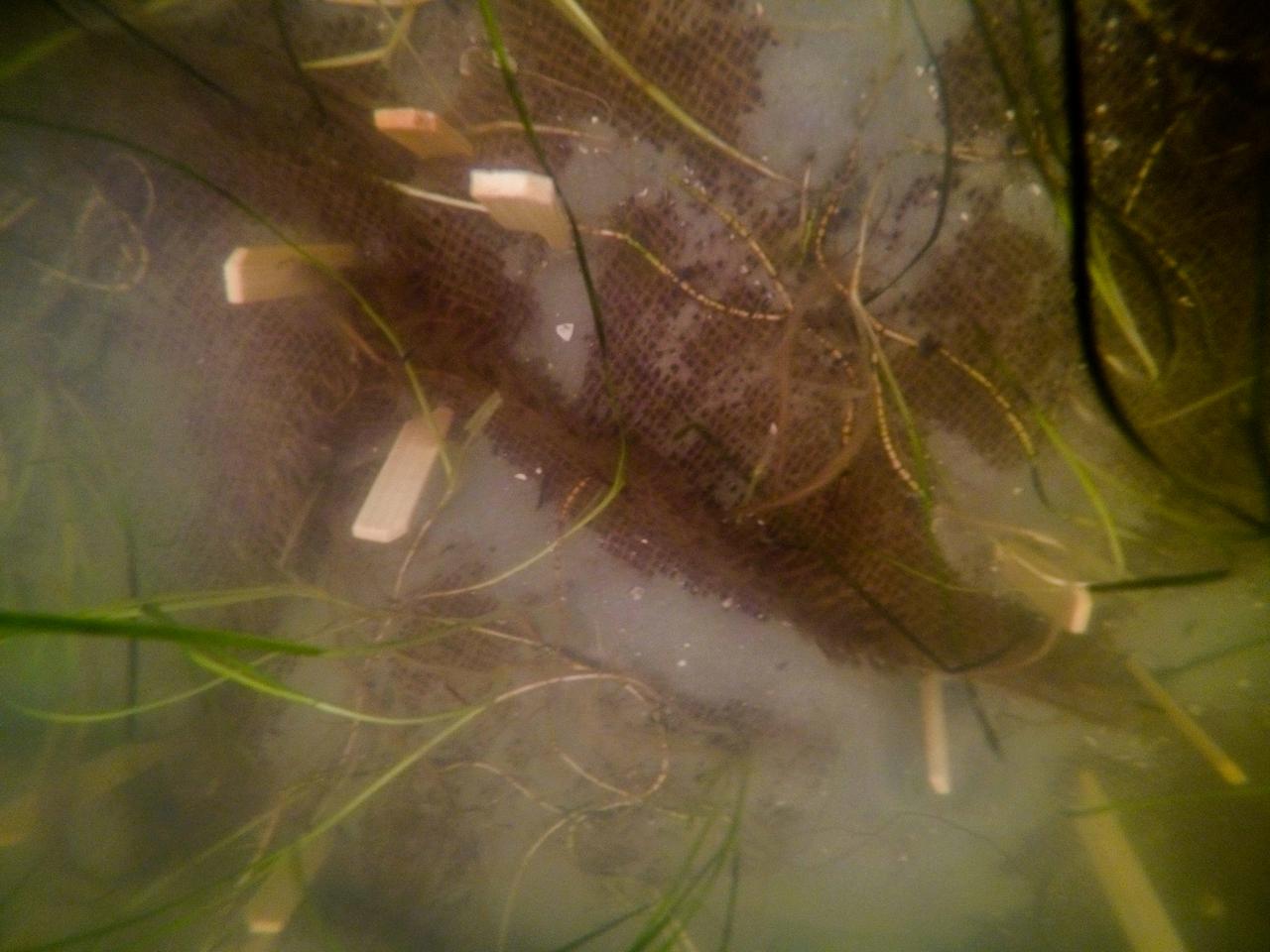
Seen here is a close-up view of newly planted seagrass in the Banana River – one of three bodies of water that make up the Indian River Lagoon (IRL) – at NASA’s Kennedy Space Center in Florida on March 29, 2023. Kennedy’s Environmental Management Branch is working to plant a minimum of 28,000 shoots of seagrass divided into 18 sites across three areas at the Florida spaceport as part of a pilot project for seagrass restoration efforts. Each “plot” of seagrass contains 16 shoots tied to a burlap mesh square with floral ties and has bamboo skewers at each corner that are staked into the sediment. The project, which involves using all biodegradable materials, will look at the feasibility of replanting seagrass in Kennedy waters and, if successful, could lead to the spaceport becoming a donor site where shoots of grass can be broken off and relocated to other areas within Kennedy or along the Indian River Lagoon to promote growth.
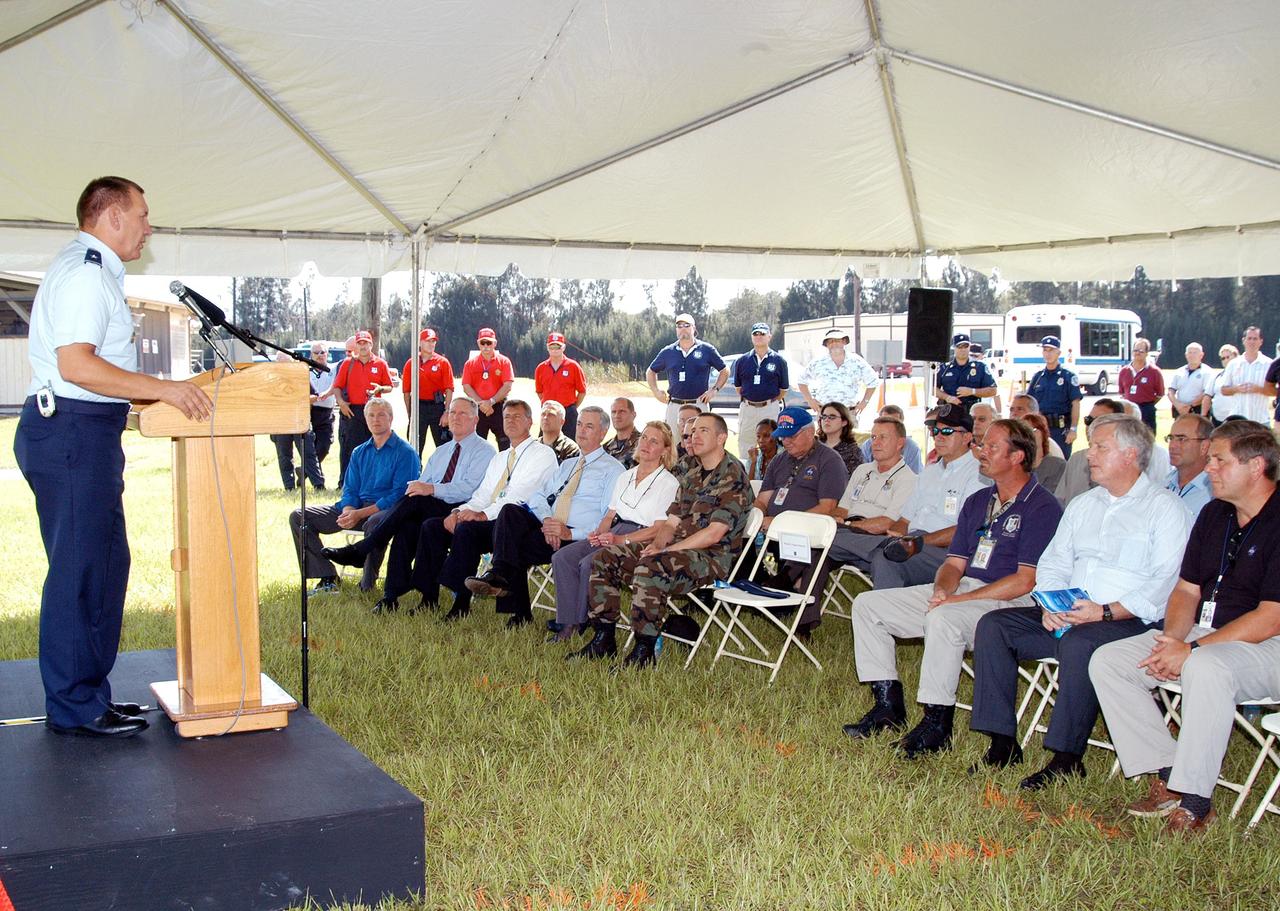
KENNEDY SPACE CENTER, FLA. - Brig. Gen. J. Gregory Pavlovich, 45th Space Wing, addresses guests at the ribbon cutting for the Enhanced Firing Range on Schwartz Rd. at Kennedy Space Center. NASA’s Federal Law Enforcement Training Academy’s firing range has been upgraded to include a “rifle-grade” shoot house, a portable, tactical “shoot-back” trailer for cover and concealment drills, automated running targets and a new classroom facility. They are added to the existing three firearms ranges, “pistol-grade” shoot house, obstacle course and rappel tower. NASA’s Security Management and Safeguards Office funded the enhancements in order to improve ability to train the KSC security force and to support local, state and federal law enforcement agencies in Homeland Security.
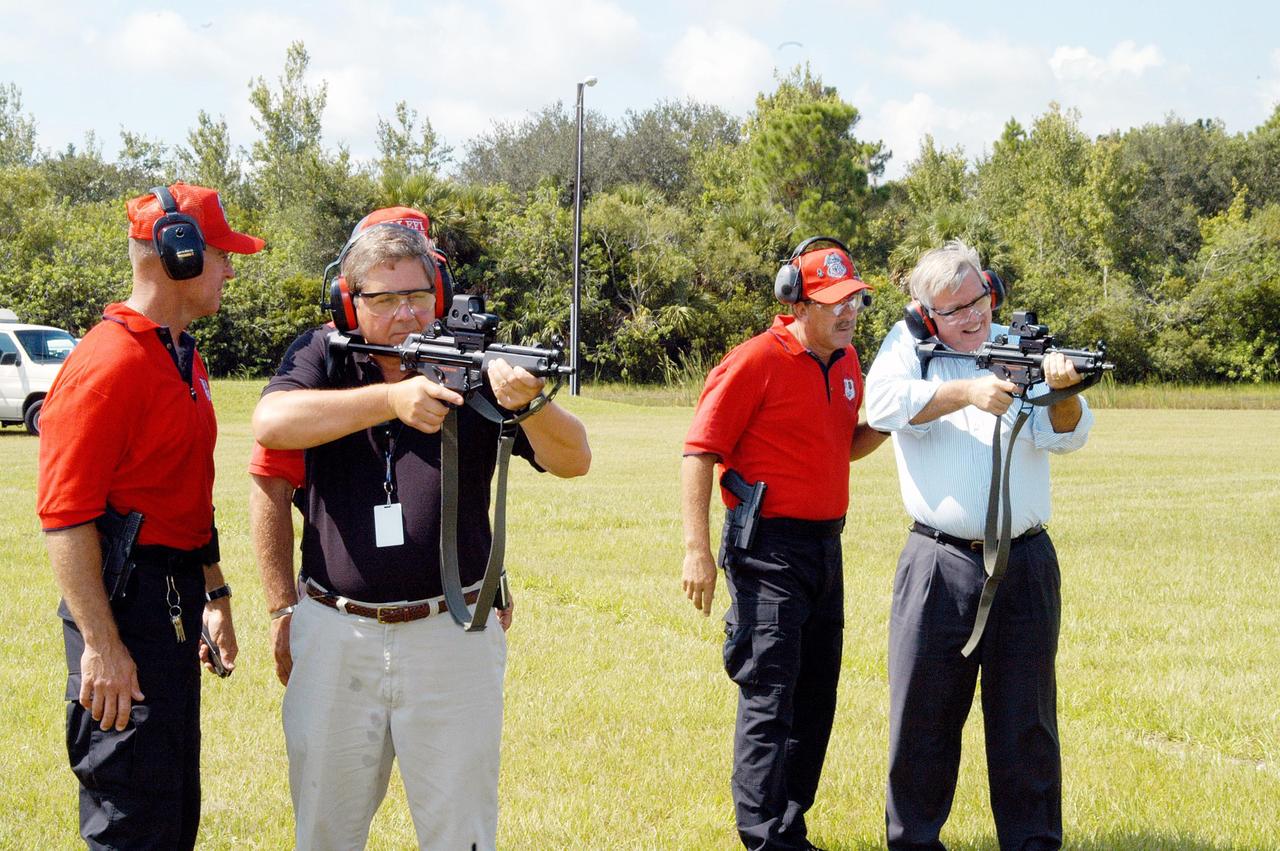
KENNEDY SPACE CENTER, FLA. - At the ribbon cutting for the Enhanced Firing Range on Schwartz Rd. at Kennedy Space Center, Dave Saleeba (left with weapon) and Center Director Jim Kennedy (right, with weapon) practice firing on the new range. Saleeba is assistant administrator with the Office of Security Management and Safeguards at NASA Headquarters and was a guest speaker at the ceremony. NASA’s Federal Law Enforcement Training Academy’s firing range has been upgraded to include a “rifle-grade” shoot house, a portable, tactical “shoot-back” trailer for cover and concealment drills, automated running targets and a new classroom facility. They are added to the existing three firearms ranges, “pistol-grade” shoot house, obstacle course and rappel tower. NASA’s Security Management and Safeguards Office funded the enhancements in order to improve ability to train the KSC security force and to support local, state and federal law enforcement agencies in Homeland Security.
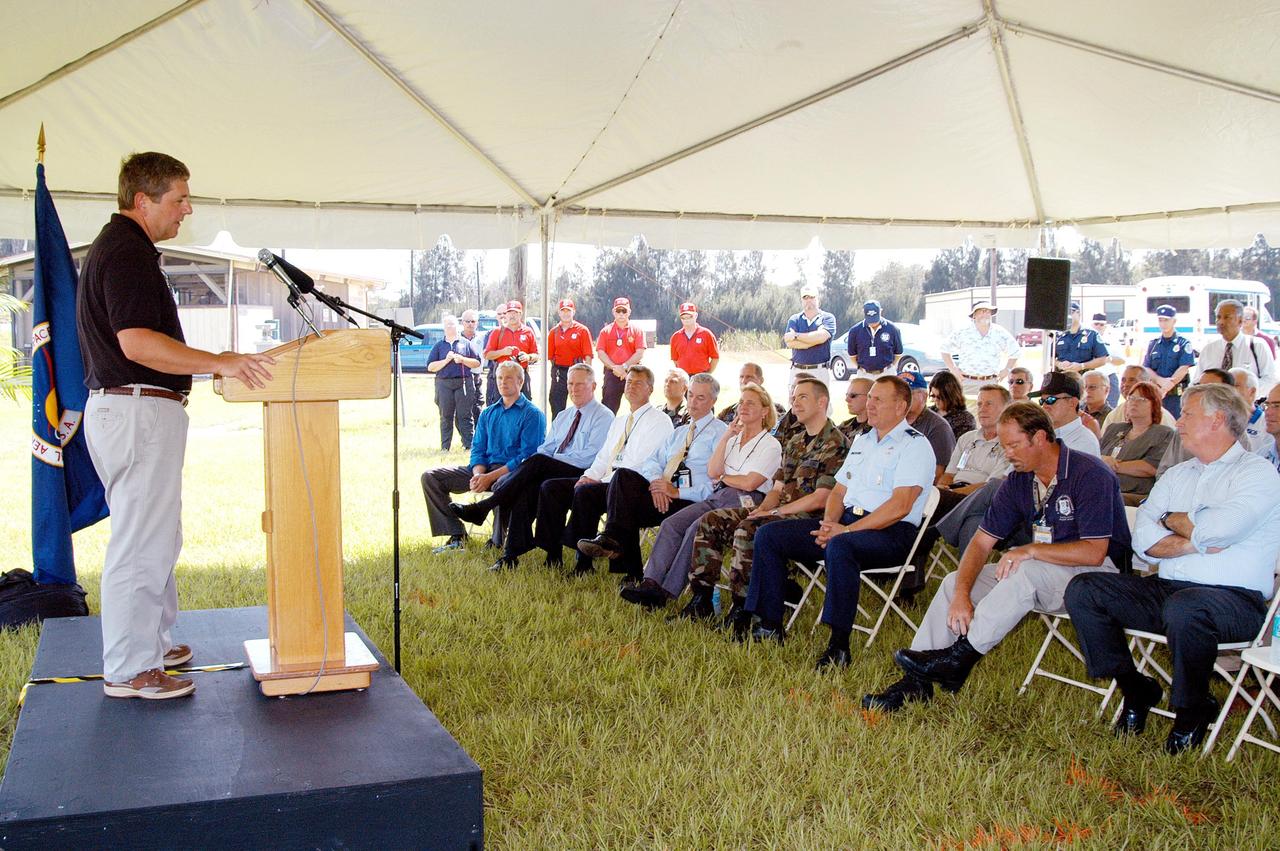
KENNEDY SPACE CENTER, FLA. - Center Director Jim Kennedy addresses guests at the ribbon cutting for the Enhanced Firing Range on Schwartz Rd. at Kennedy Space Center. NASA’s Federal Law Enforcement Training Academy’s firing range has been upgraded to include a “rifle-grade” shoot house, a portable, tactical “shoot-back” trailer for cover and concealment drills, automated running targets and a new classroom facility. They are added to the existing three firearms ranges, “pistol-grade” shoot house, obstacle course and rappel tower. NASA’s Security Management and Safeguards Office funded the enhancements in order to improve ability to train the KSC security force and to support local, state and federal law enforcement agencies in Homeland Security.
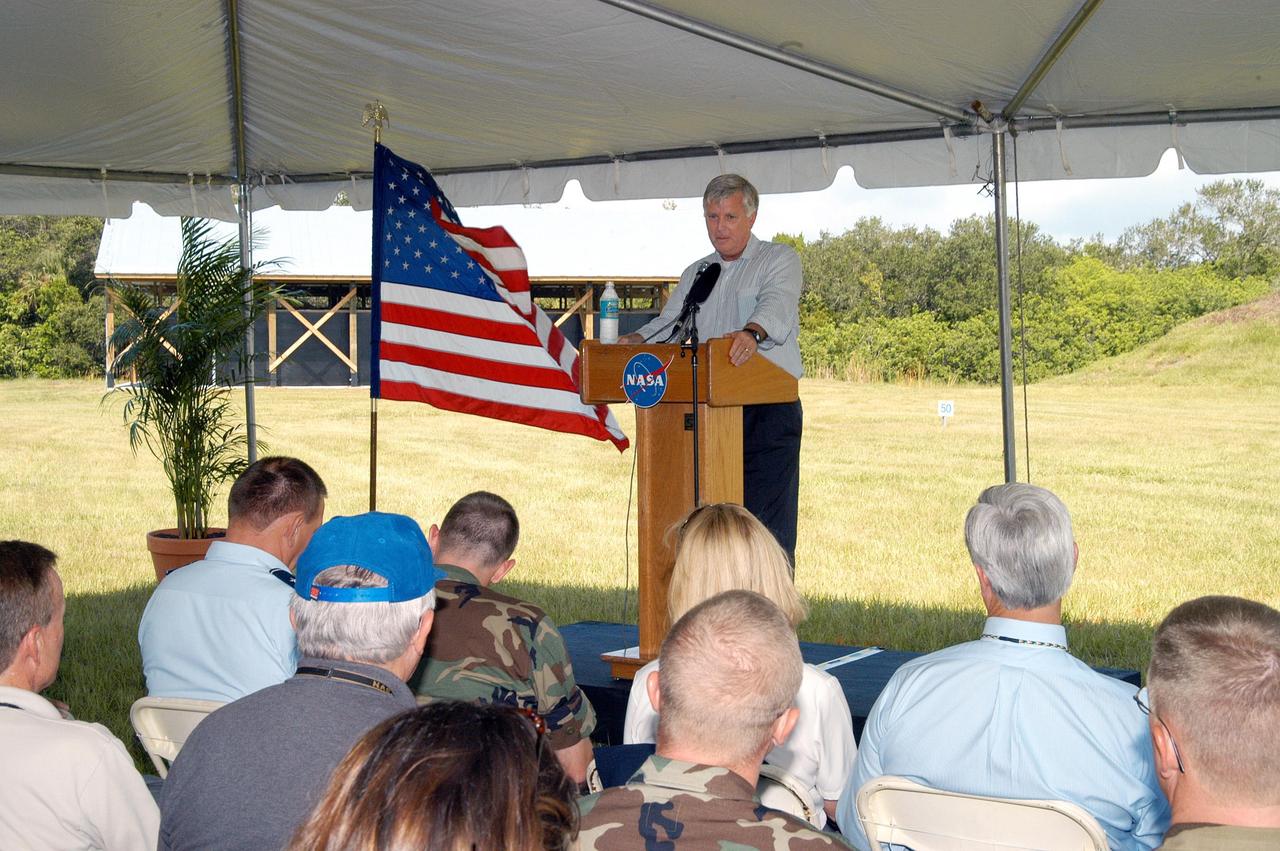
KENNEDY SPACE CENTER, FLA. - Dave Saleeba, assistant administrator with the Office of Security Management and Safeguards at NASA Headquarters, speaks to guests at the ribbon cutting for the Enhanced Firing Range on Schwartz Rd. at Kennedy Space Center. NASA’s Federal Law Enforcement Training Academy’s firing range has been upgraded to include a “rifle-grade” shoot house, a portable, tactical “shoot-back” trailer for cover and concealment drills, automated running targets and a new classroom facility. They are added to the existing three firearms ranges, “pistol-grade” shoot house, obstacle course and rappel tower. NASA’s Security Management and Safeguards Office funded the enhancements in order to improve ability to train the KSC security force and to support local, state and federal law enforcement agencies in Homeland Security.
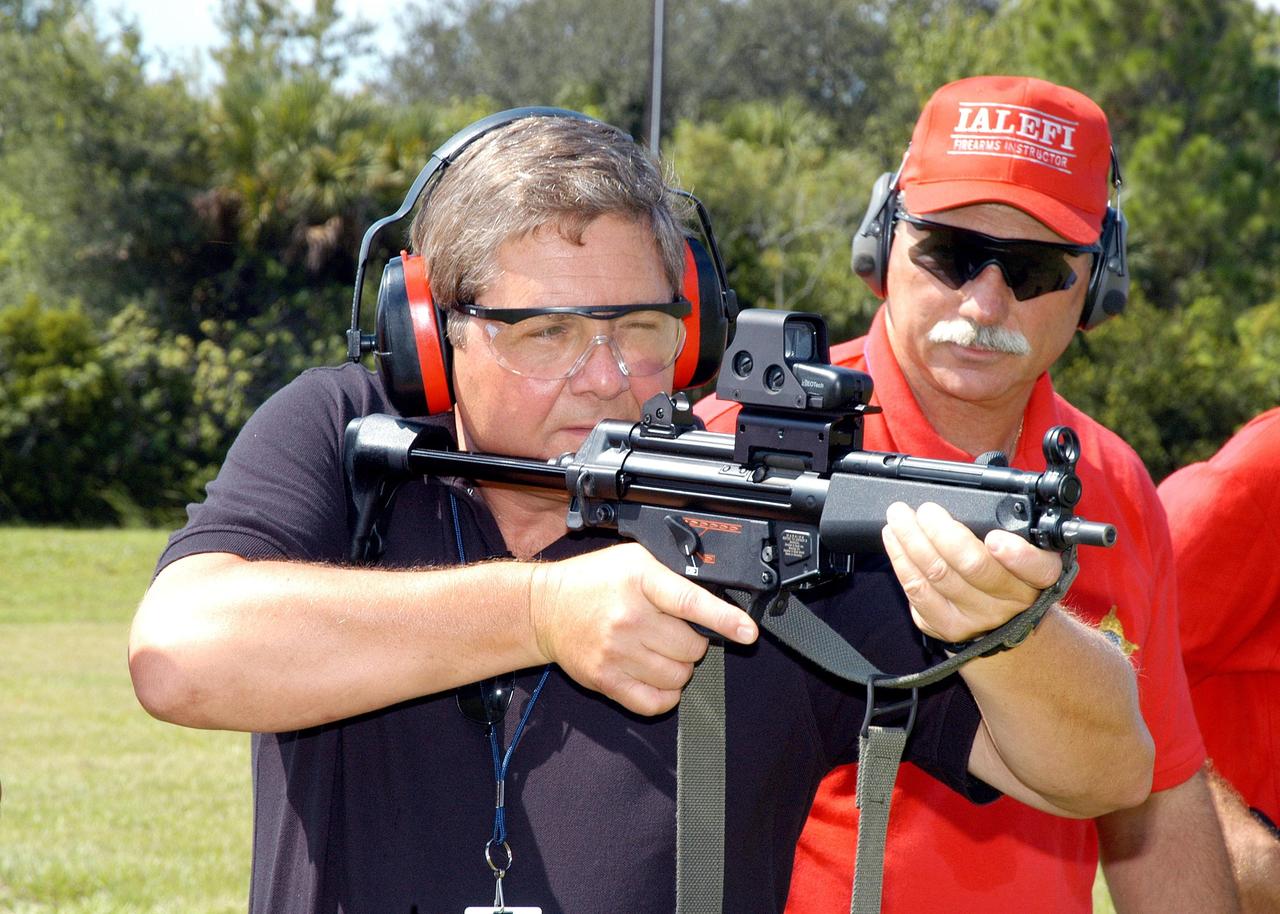
KENNEDY SPACE CENTER, FLA. - At the ribbon cutting for the Enhanced Firing Range on Schwartz Rd. at Kennedy Space Center, Dave Saleeba practices firing on the new range. Saleeba is assistant administrator with the Office of Security Management and Safeguards at NASA Headquarters and was a guest speaker at the ceremony. NASA’s Federal Law Enforcement Training Academy’s firing range has been upgraded to include a “rifle-grade” shoot house, a portable, tactical “shoot-back” trailer for cover and concealment drills, automated running targets and a new classroom facility. They are added to the existing three firearms ranges, “pistol-grade” shoot house, obstacle course and rappel tower. NASA’s Security Management and Safeguards Office funded the enhancements in order to improve ability to train the KSC security force and to support local, state and federal law enforcement agencies in Homeland Security.
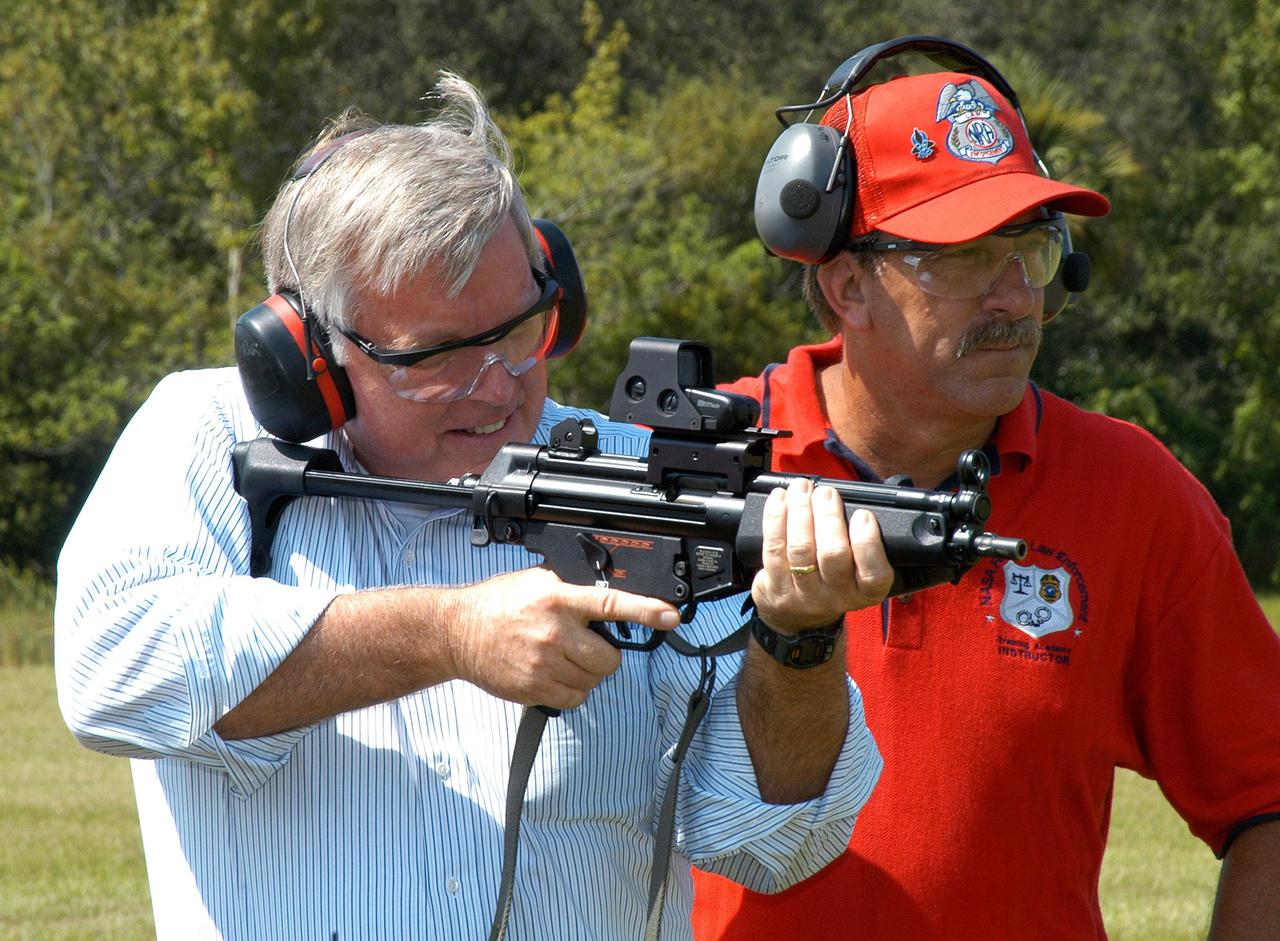
KENNEDY SPACE CENTER, FLA. - At the ribbon cutting for the Enhanced Firing Range on Schwartz Rd. at Kennedy Space Center, Center Director Jim Kennedy practices firing on the new range. NASA’s Federal Law Enforcement Training Academy’s firing range has been upgraded to include a “rifle-grade” shoot house, a portable, tactical “shoot-back” trailer for cover and concealment drills, automated running targets and a new classroom facility. They are added to the existing three firearms ranges, “pistol-grade” shoot house, obstacle course and rappel tower. NASA’s Security Management and Safeguards Office funded the enhancements in order to improve ability to train the KSC security force and to support local, state and federal law enforcement agencies in Homeland Security.
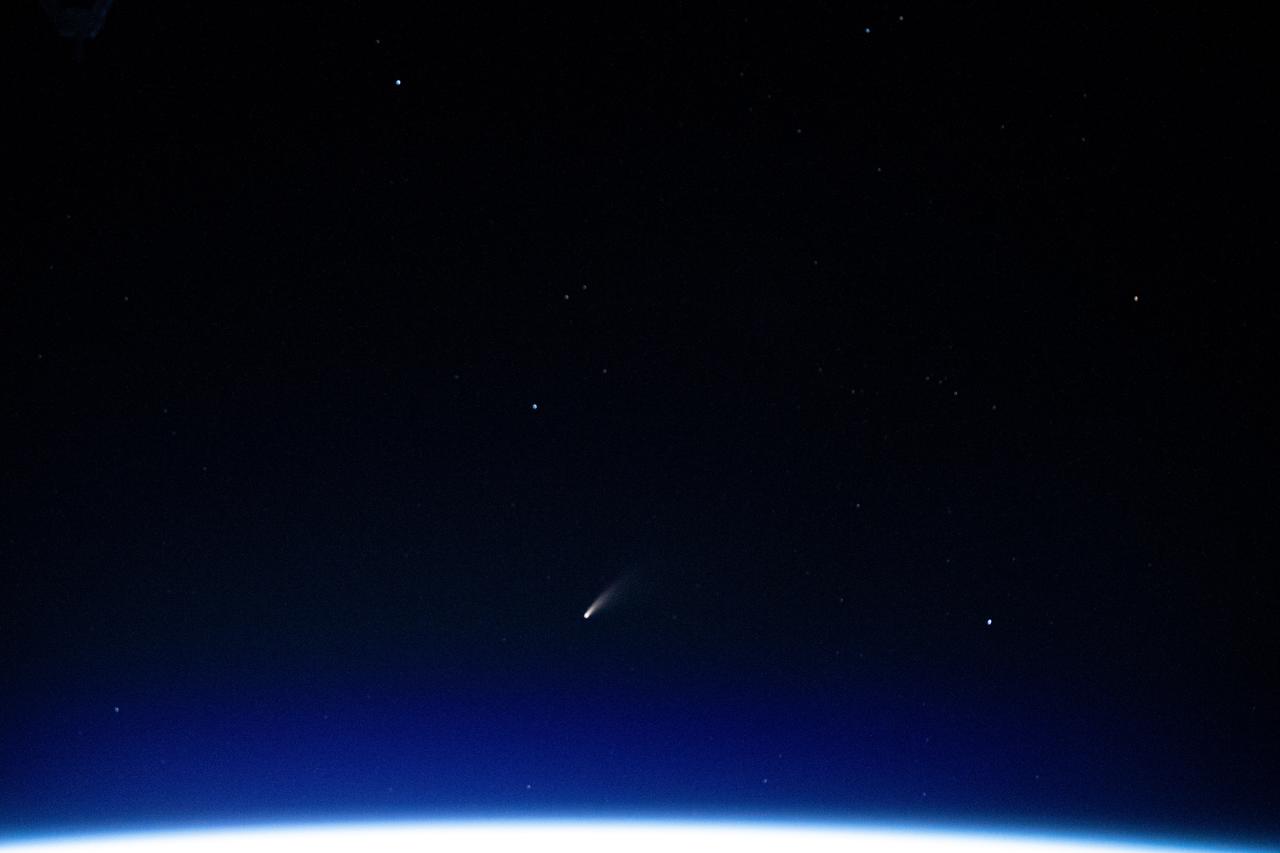
iss063e040067 (July 5, 2020) --- The tiny shooting star in the lower center of this image is Comet Neowise pictured from the International Space Station as it orbited above the Mediterranean Sea in between Tunisia and Italy.

PHOTO DATE: 5-10-13 LOCATION: NBL - Pool Topside SUBJECT: NBL EVA dive with Terry Virts and Samantha Cristoforetti in support of ISS ammonia leak trouble-shooting. PHOTOGRAPHER: Lauren Harnett
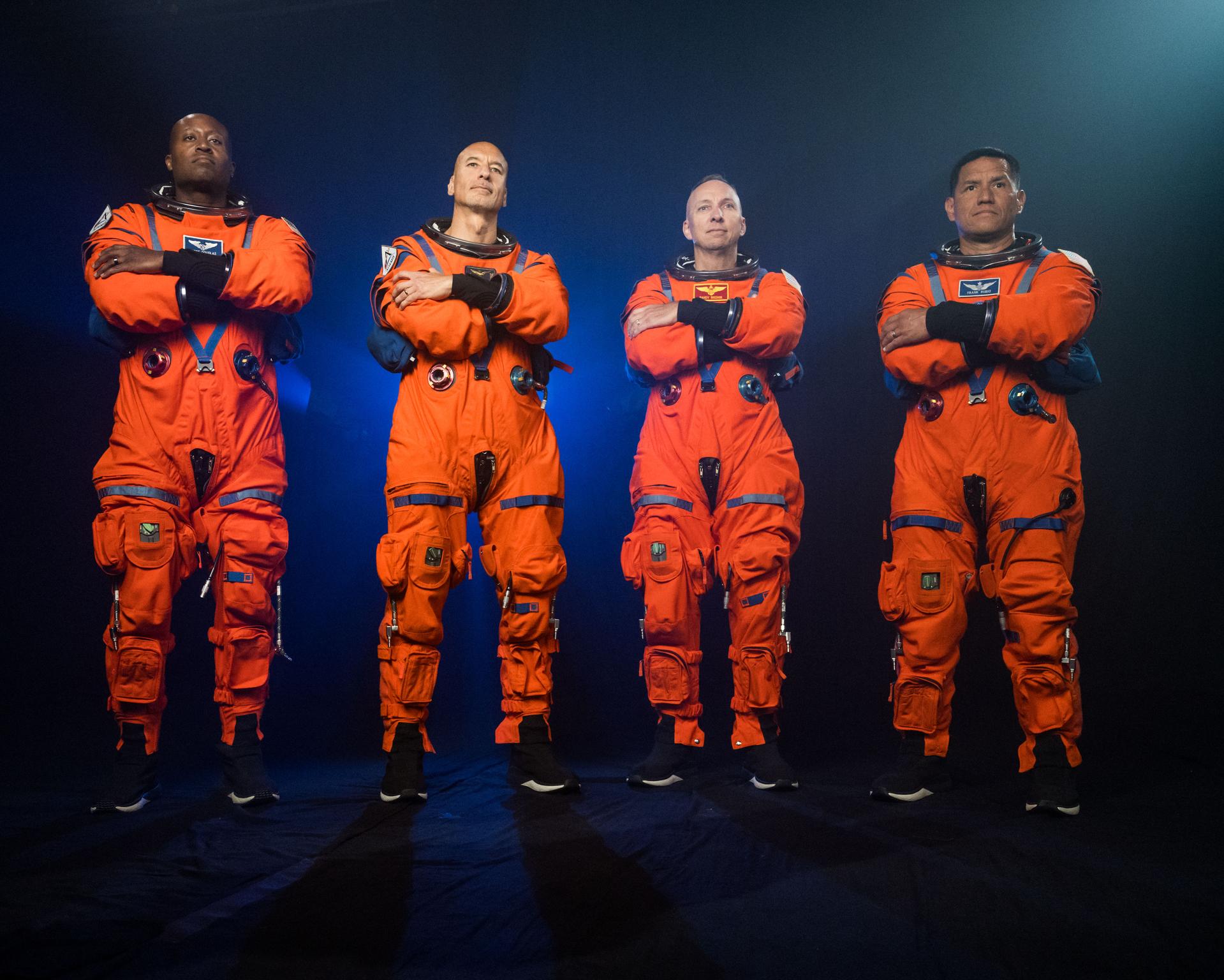
The Artemis III crew photographed during a video shoot (from left: Andre Douglas, Luca Parmitano, Randy Bresnik, Frank Rubio). Credit: NASA/Luna Posadas Nava
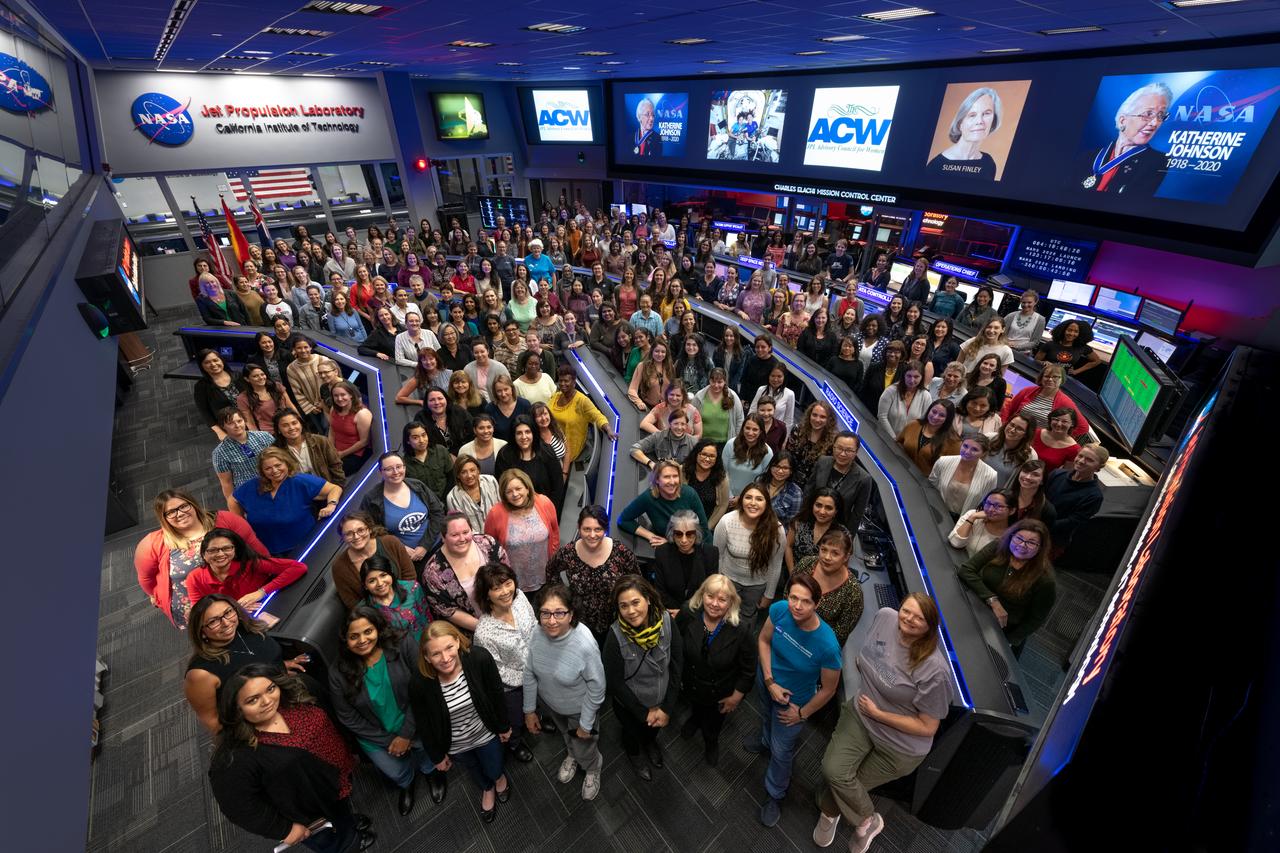
In honor of Women’s History Month, the Advisory Council for Women (ACW) organized a "Women of JPL" group photo shoot in the Space Flight Operations Facility on March 4, 2020. Credit: NASA-JPL/Caltech
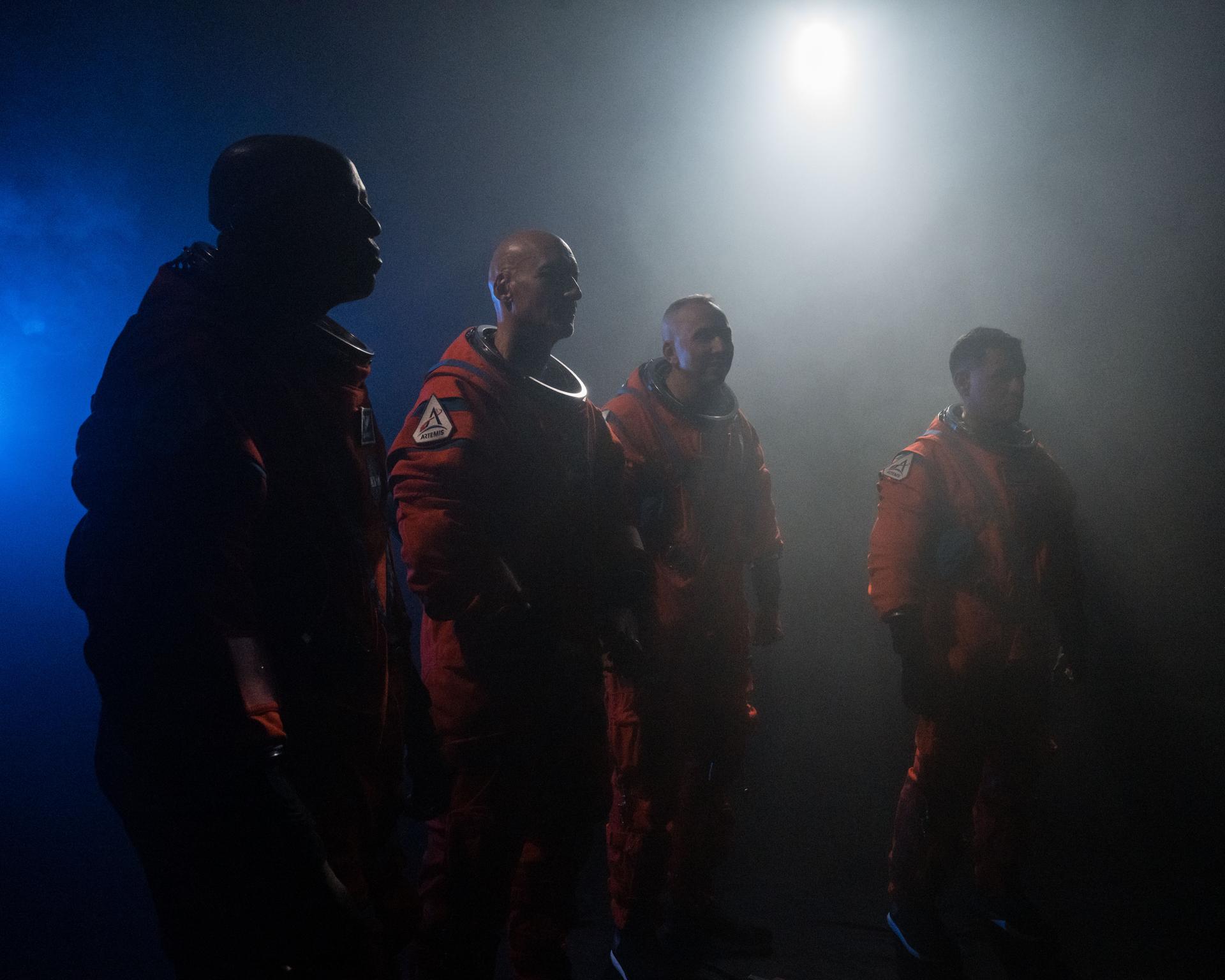
The Artemis III crew photographed during a video shoot (from left: Andre Douglas, Luca Parmitano, Randy Bresnik, Frank Rubio). Credit: NASA/Luna Posadas Nava
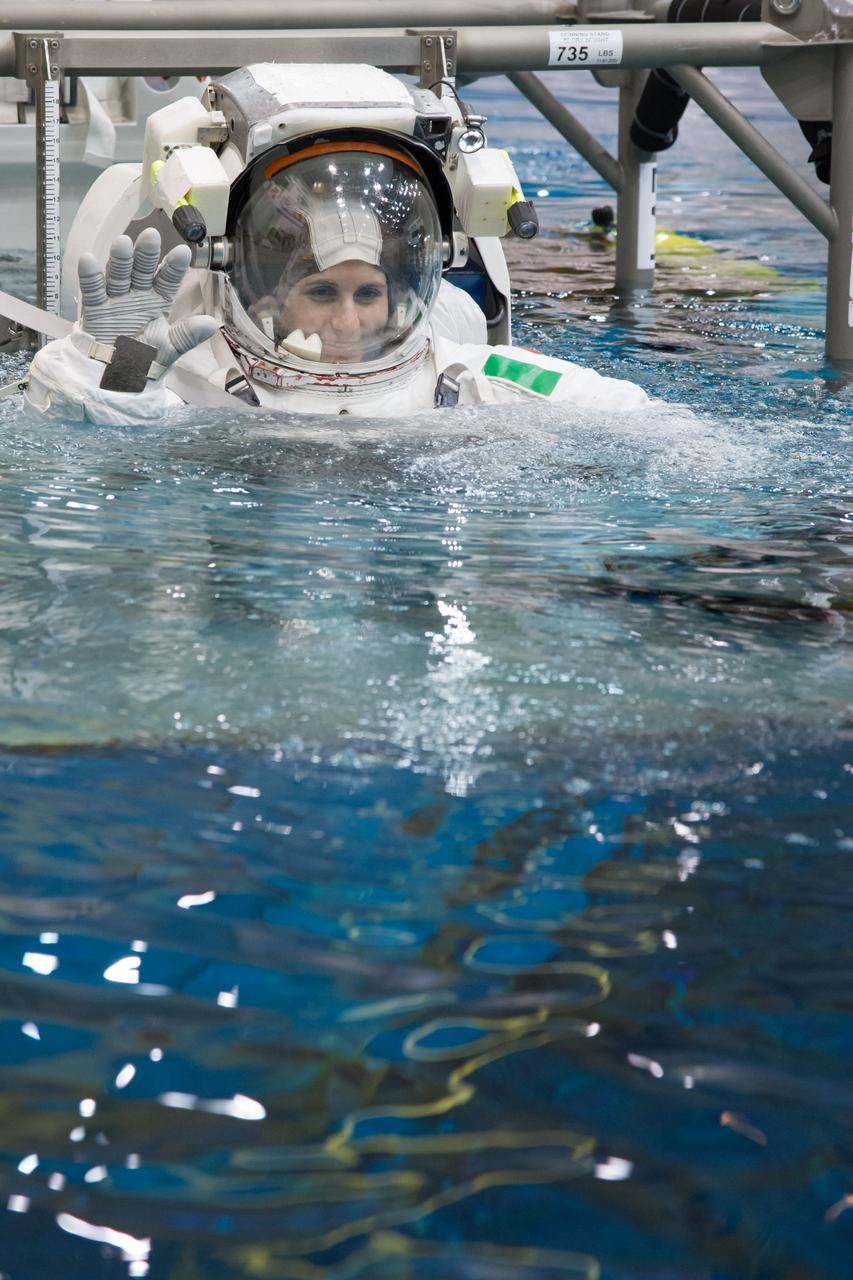
PHOTO DATE: 5-10-13 LOCATION: NBL - Pool Topside SUBJECT: NBL EVA dive with Terry Virts and Samantha Cristoforetti in support of ISS ammonia leak trouble-shooting. PHOTOGRAPHER: Lauren Harnett
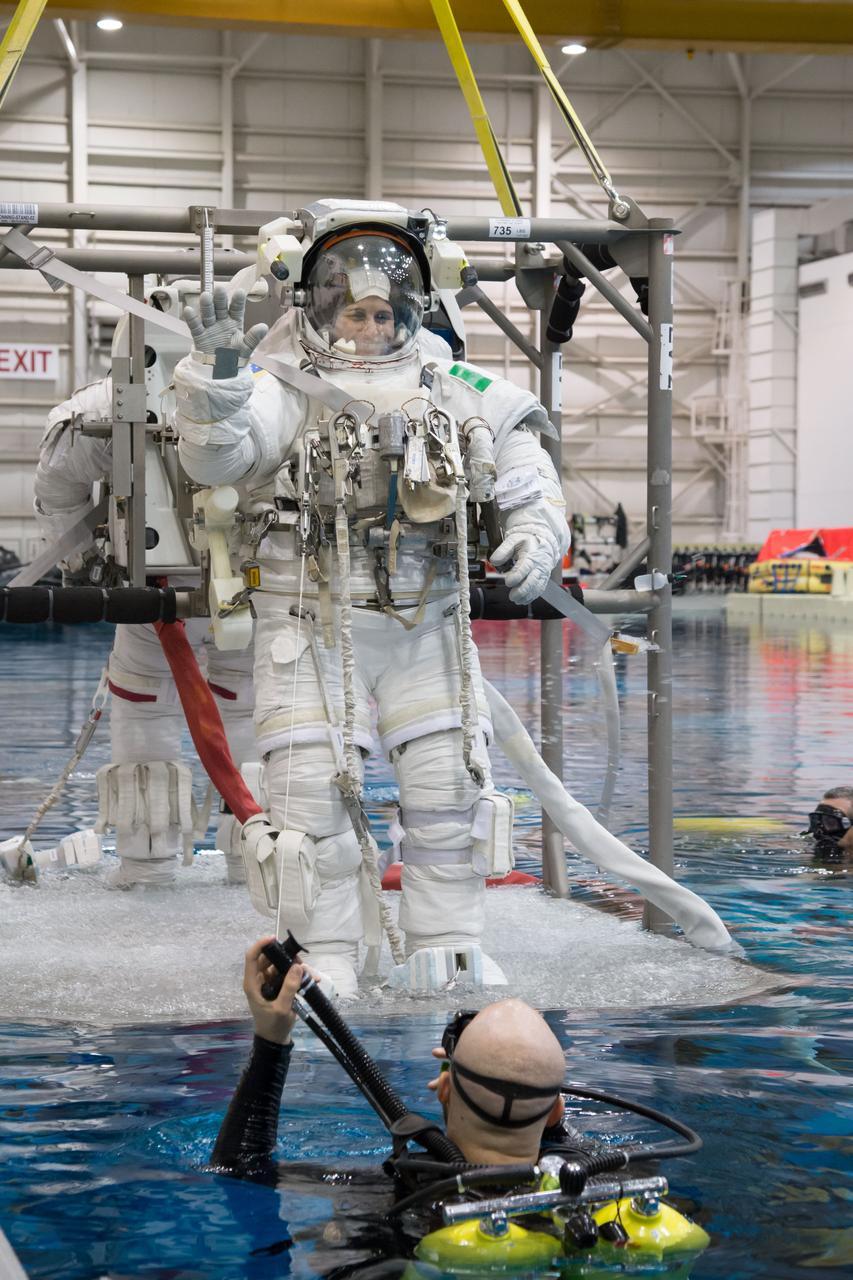
PHOTO DATE: 5-10-13 LOCATION: NBL - Pool Topside SUBJECT: NBL EVA dive with Terry Virts and Samantha Cristoforetti in support of ISS ammonia leak trouble-shooting. PHOTOGRAPHER: Lauren Harnett
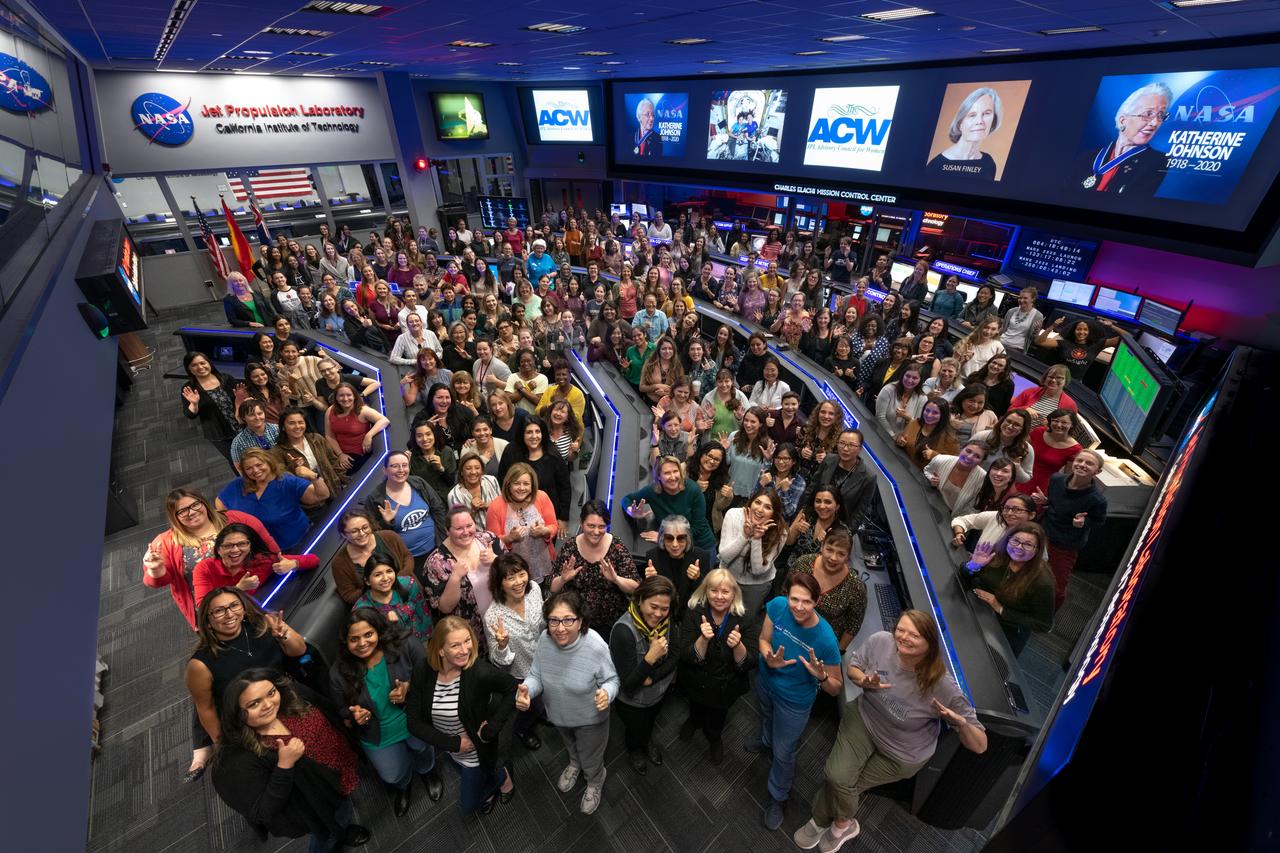
In honor of Women’s History Month, the Advisory Council for Women (ACW) organized a "Women of JPL" group photo shoot in the Space Flight Operations Facility on March 4, 2020. Credit: NASA-JPL/Caltech

iss063e040072 (July 5, 2020) --- The tiny shooting star in the lower center of this image is Comet Neowise pictured from the International Space Station as it orbited above the Mediterranean Sea in between Tunisia and Italy.
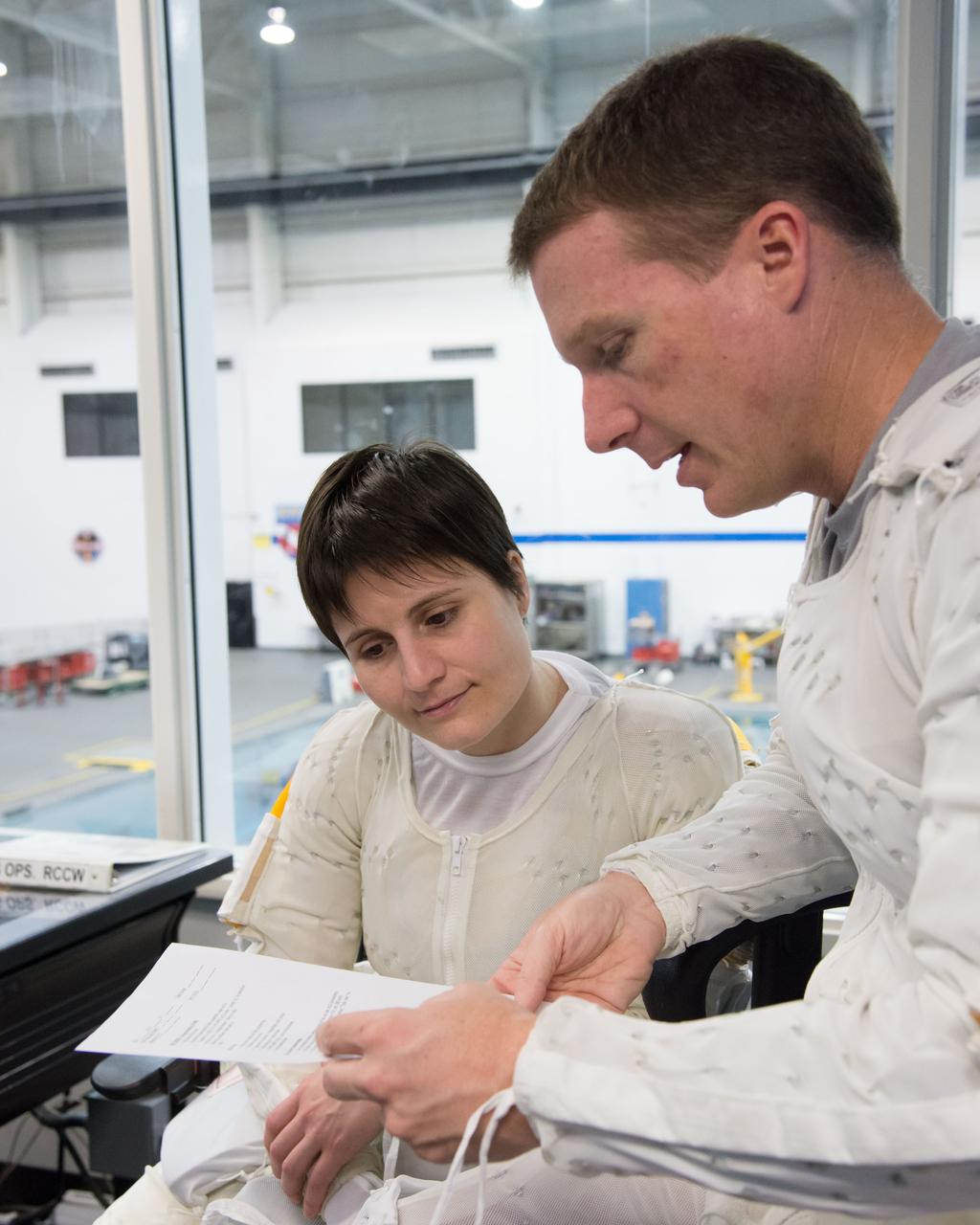
PHOTO DATE: 5-10-13 LOCATION: NBL - Pool Topside SUBJECT: NBL EVA dive with Terry Virts and Samantha Cristoforetti in support of ISS ammonia leak trouble-shooting. PHOTOGRAPHER: Lauren Harnett
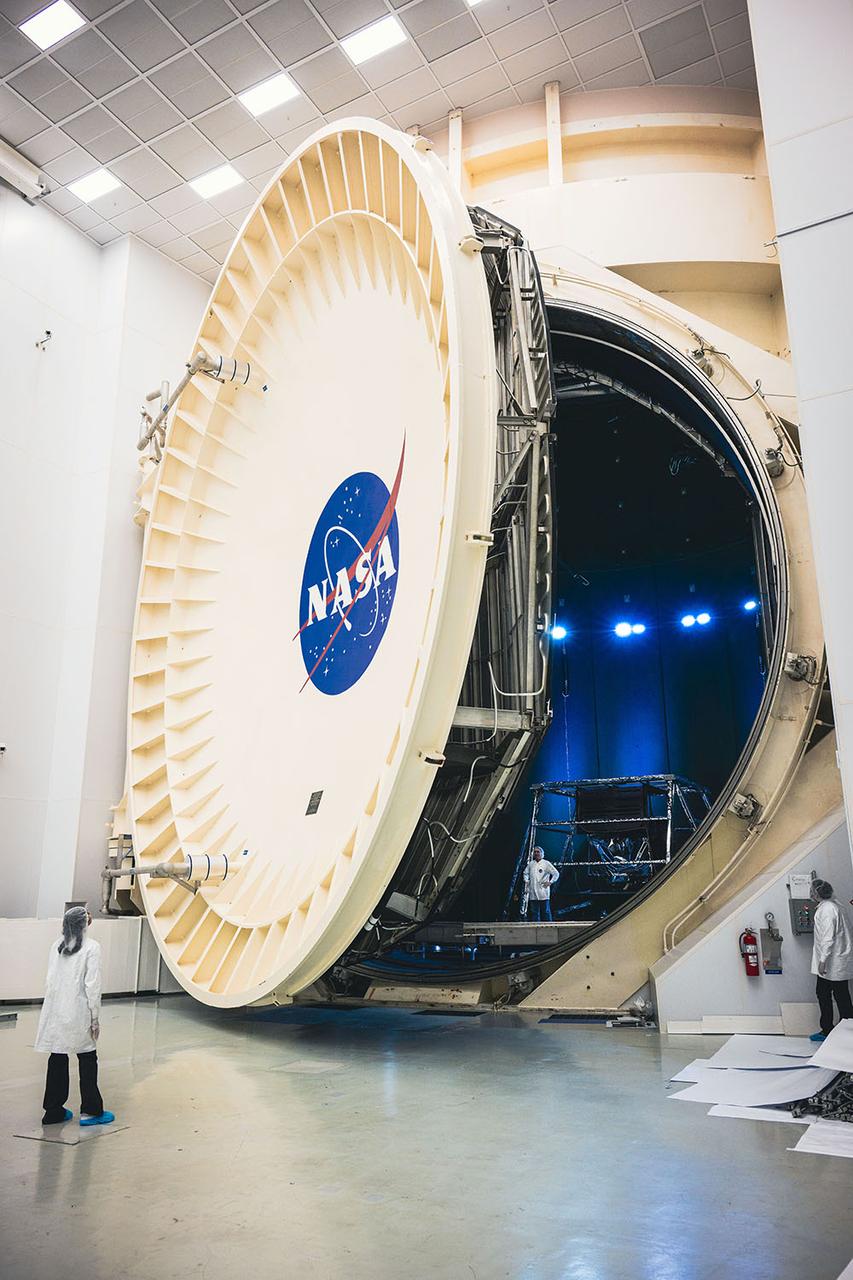
Behind the Scenes photography of Video Production Shoot for "What's Behind This Door". Photo Date: August 7, 2023. Location: Building 32, Chamber A. Photographer: Robert Markowitz
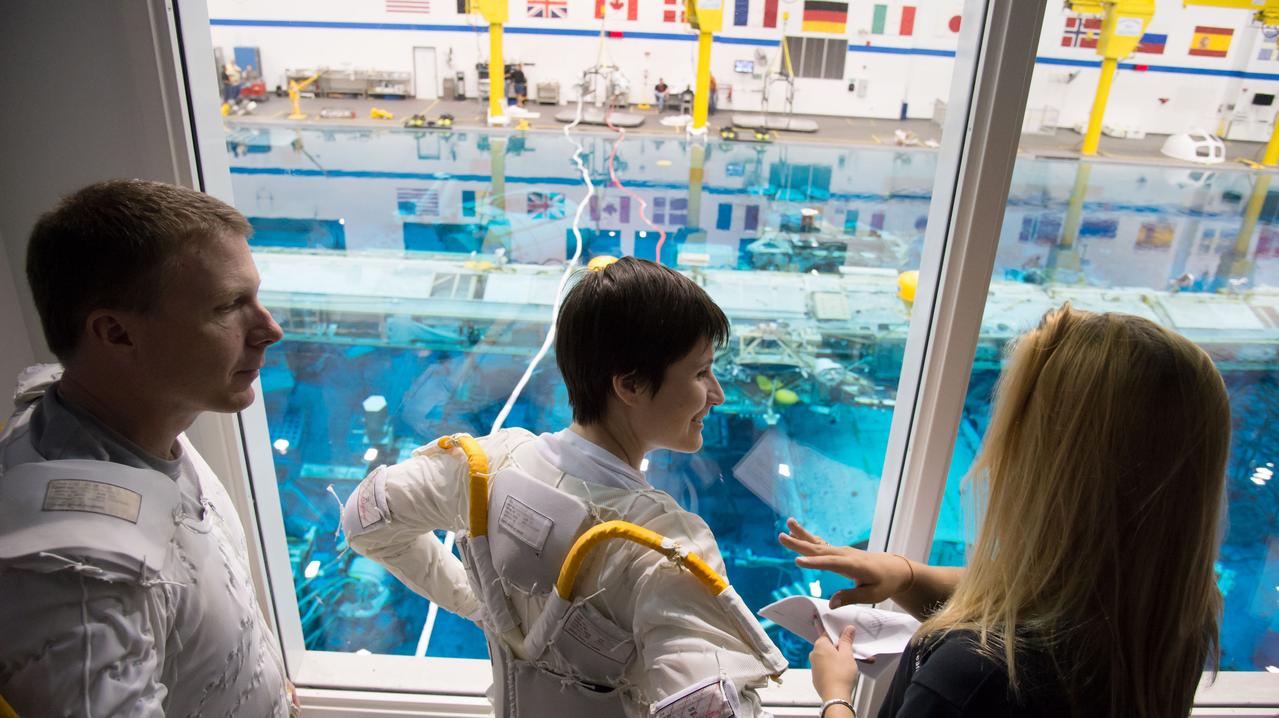
PHOTO DATE: 5-10-13 LOCATION: NBL - Pool Topside SUBJECT: NBL EVA dive with Terry Virts and Samantha Cristoforetti in support of ISS ammonia leak trouble-shooting. PHOTOGRAPHER: Lauren Harnett
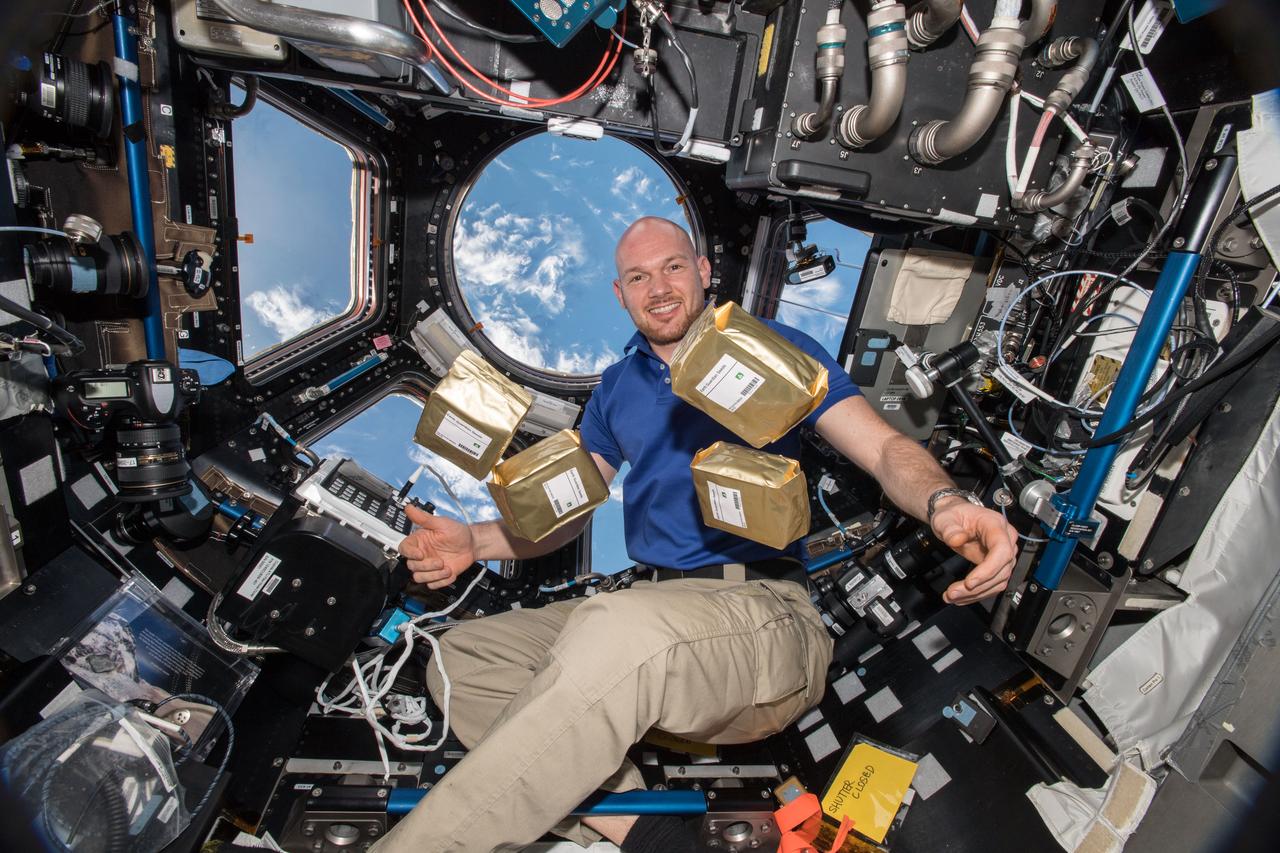
iss056e181703 (9/21/2018) --- European Space Agency (ESA) astronaut Alexander Gerst holding Earth Guardian Seeds, in the Cupola Module aboard the International Space Station (ISS). ESA-EPO-Gerst Earth Guardian Seeds (Earth Guardian Seeds) experiment is intended to teach students the importance of biodiversity and the protection of species, as well as, inspire curiosity for the natural and environmental sciences. Wildflower seeds are flown to the International Space Station (ISS), returned to Earth, and distributed to schools in Germany. The seeds are grown and their development is compared to grown seeds that remained on Earth.
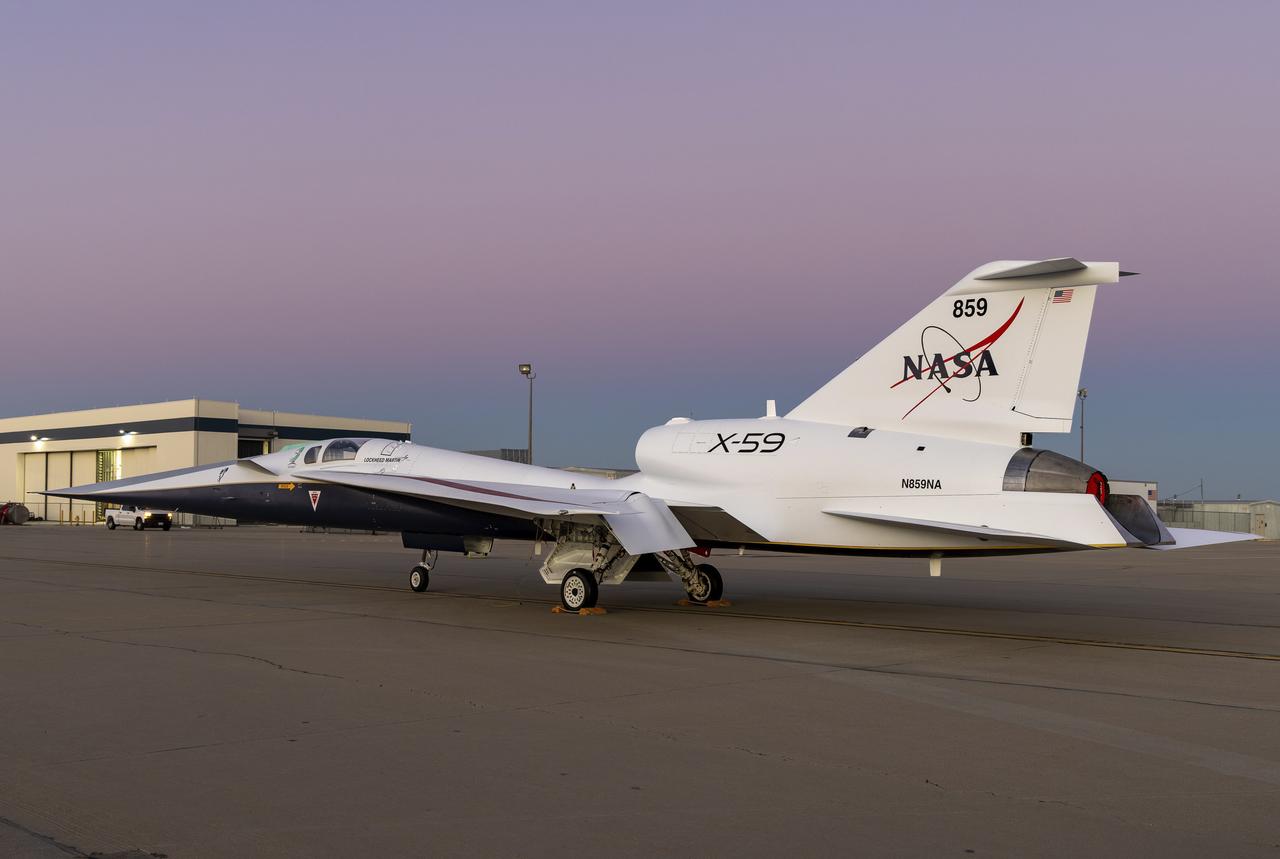
NASA’s X-59 quiet supersonic research aircraft sits on a ramp at Lockheed Martin Skunk Works in Palmdale, California, during sunset. The one-of-a-kind aircraft is powered by a General Electric F414 engine, a variant of the engines used on F/A-18 fighter jets. The engine is mounted above the fuselage to reduce the number of shockwaves that reach the ground. The X-59 is the centerpiece of NASA's Quesst mission, which aims to demonstrate quiet supersonic flight and enable future commercial travel over land – faster than the speed of sound.
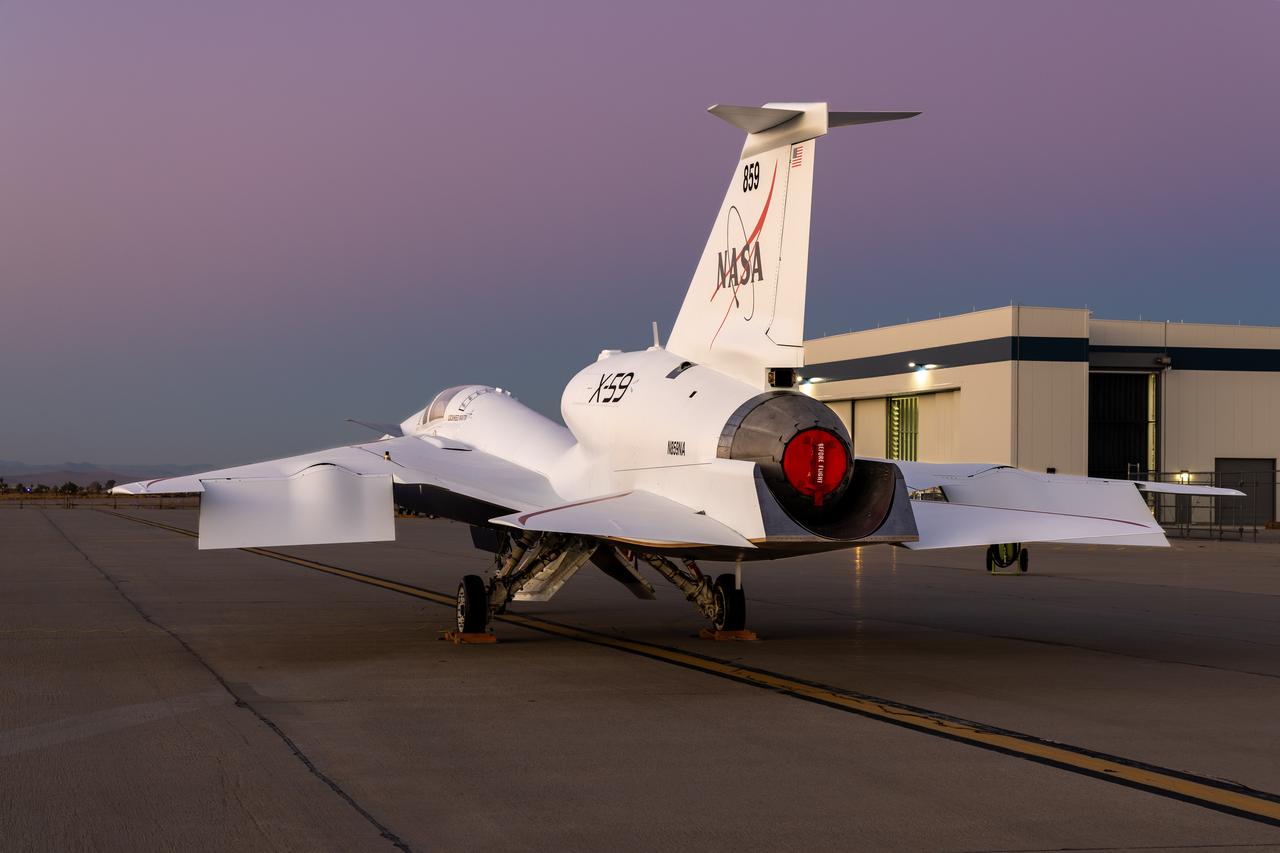
NASA’s X-59 quiet supersonic research aircraft sits on a ramp at Lockheed Martin Skunk Works in Palmdale, California, during sunset. The one-of-a-kind aircraft is powered by a General Electric F414 engine, a variant of the engines used on F/A-18 fighter jets. The engine is mounted above the fuselage to reduce the number of shockwaves that reach the ground. The X-59 is the centerpiece of NASA's Quesst mission, which aims to demonstrate quiet supersonic flight and enable future commercial travel over land – faster than the speed of sound.
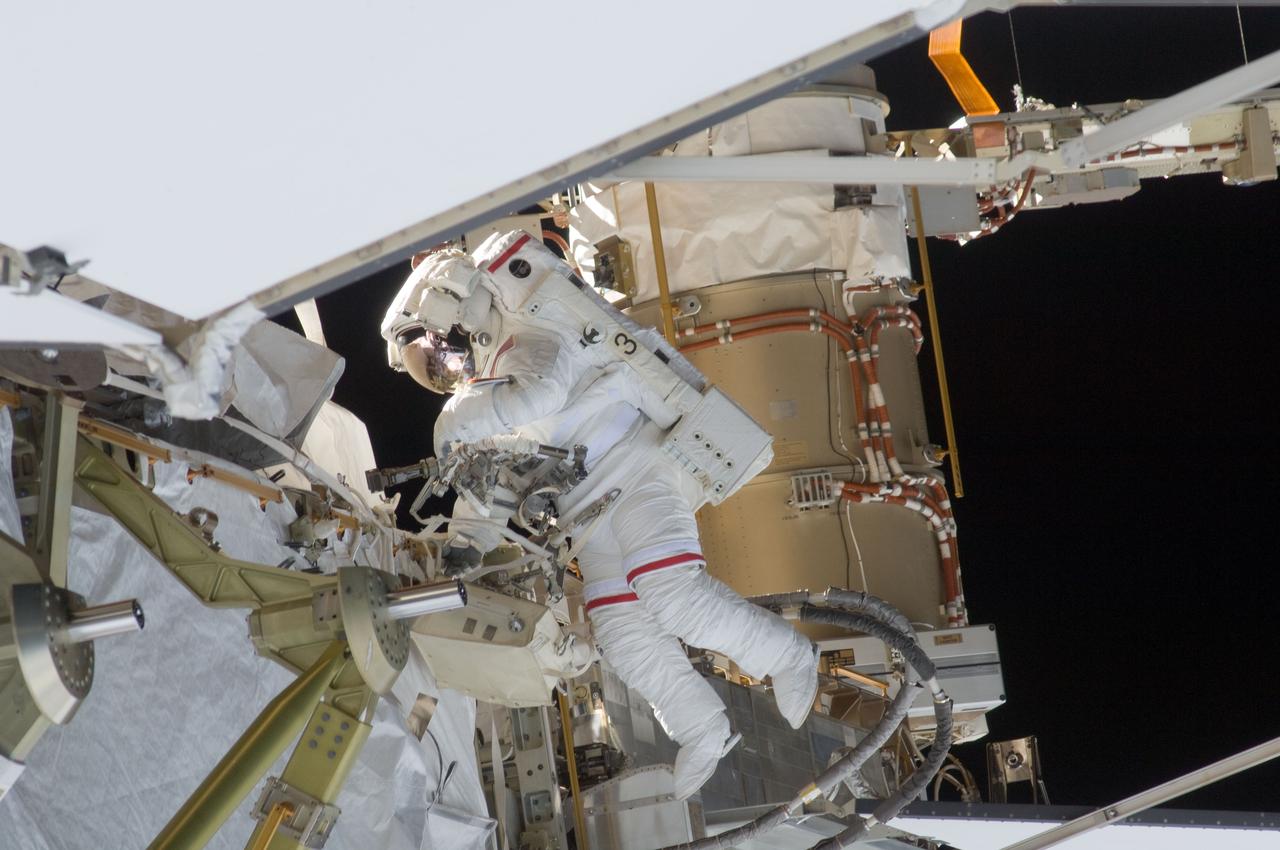
ISS033-E-017337 (1 Nov. 2012) --- NASA astronaut Sunita Williams, Expedition 33 commander, participates in a session of extravehicular activity (EVA) outside the International Space Station on Nov. 1, 2012. During the six-hour, 38-minute spacewalk, Williams and Japan Aerospace Exploration Agency astronaut Aki Hoshide (out of frame), flight engineer, ventured outside the orbital outpost to perform work and to support ground-based troubleshooting of an ammonia leak.
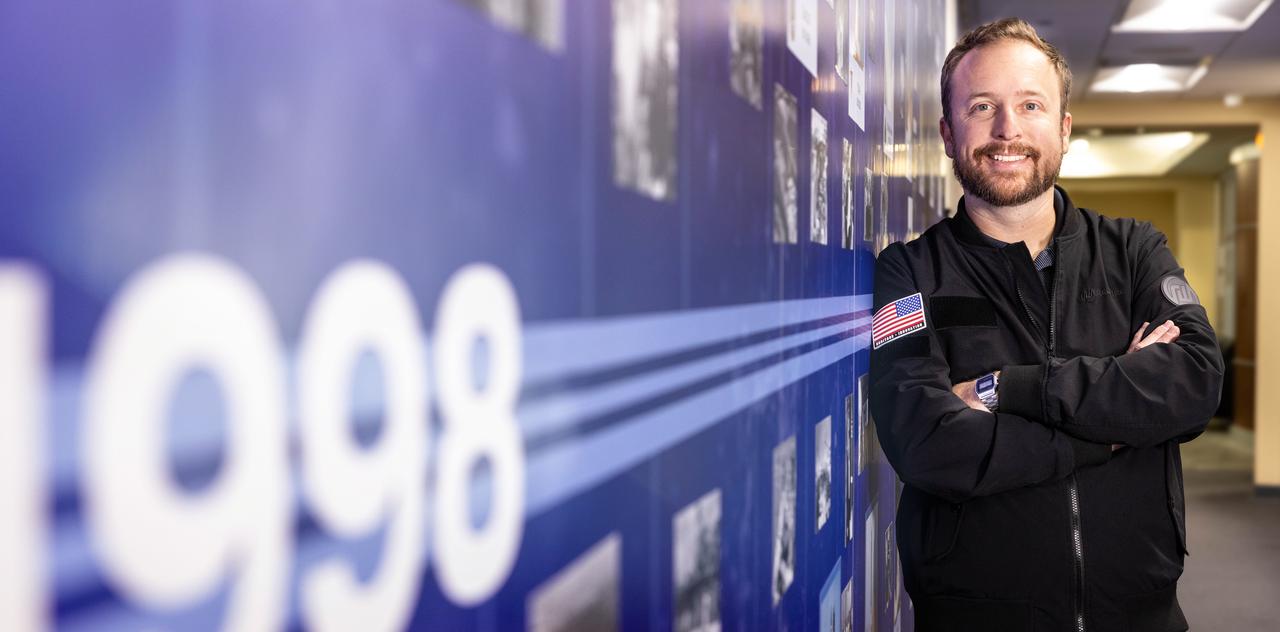
Brandon Marsell, deputy technical fellow for Cryogenics in NASA’s Engineering and Safety Center Technical Discipline Team at Kennedy Space Center in Florida, poses for a photograph on Wednesday, Aug. 20, 2025.
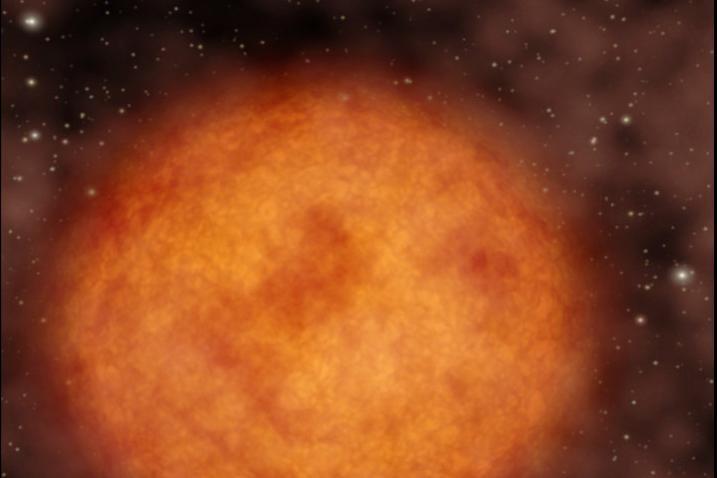
This artist concept illustrates a star flying through our galaxy at supersonic speeds, leaving a 13-light-year-long trail of glowing material in its wake. The star, named Mira pronounced my-rah after the latin word for wonderful.
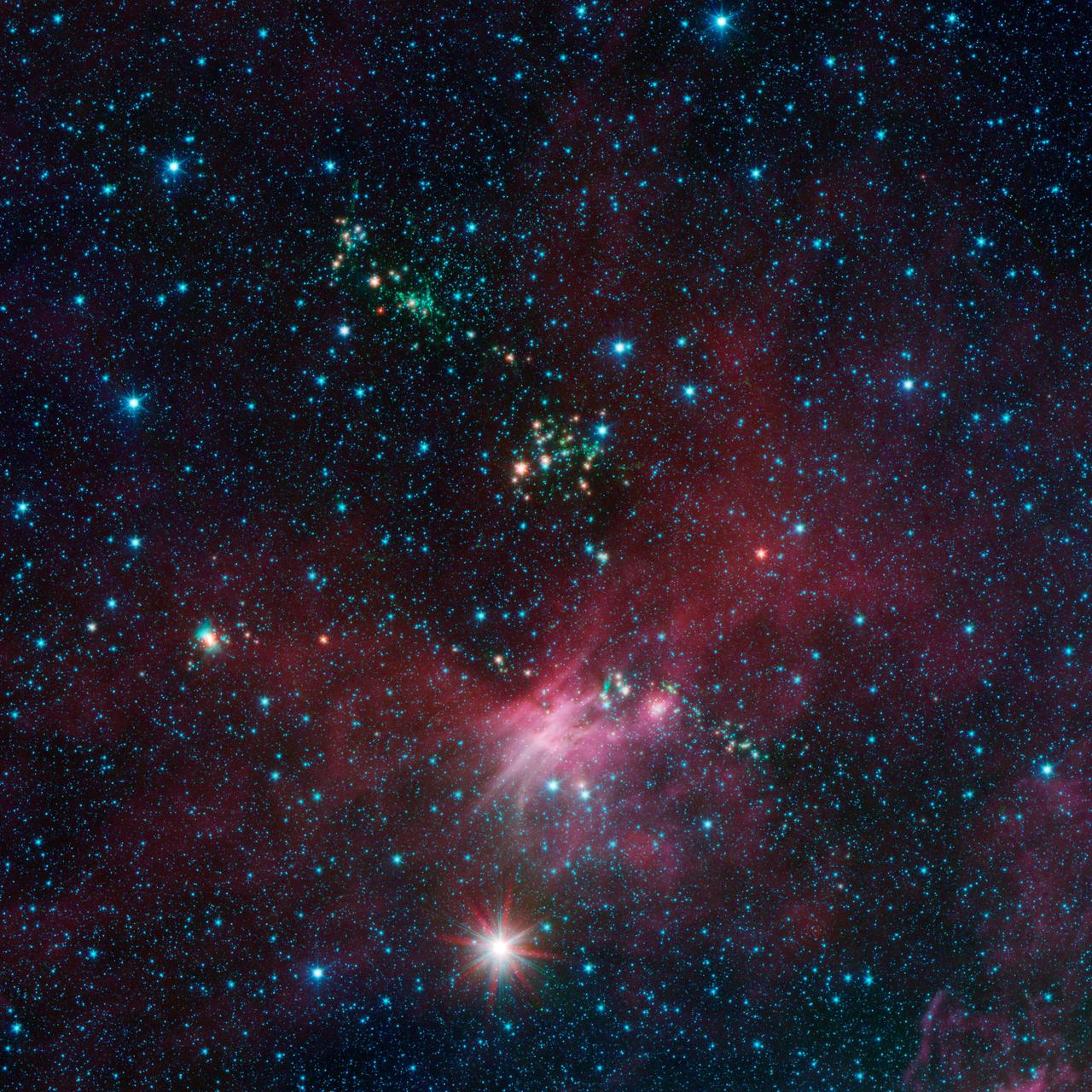
Dozens of newborn stars sprouting jets from their dusty cocoons have been spotted in images from NASA Spitzer Space Telescope. This view shows a portion of sky near Canis Major.
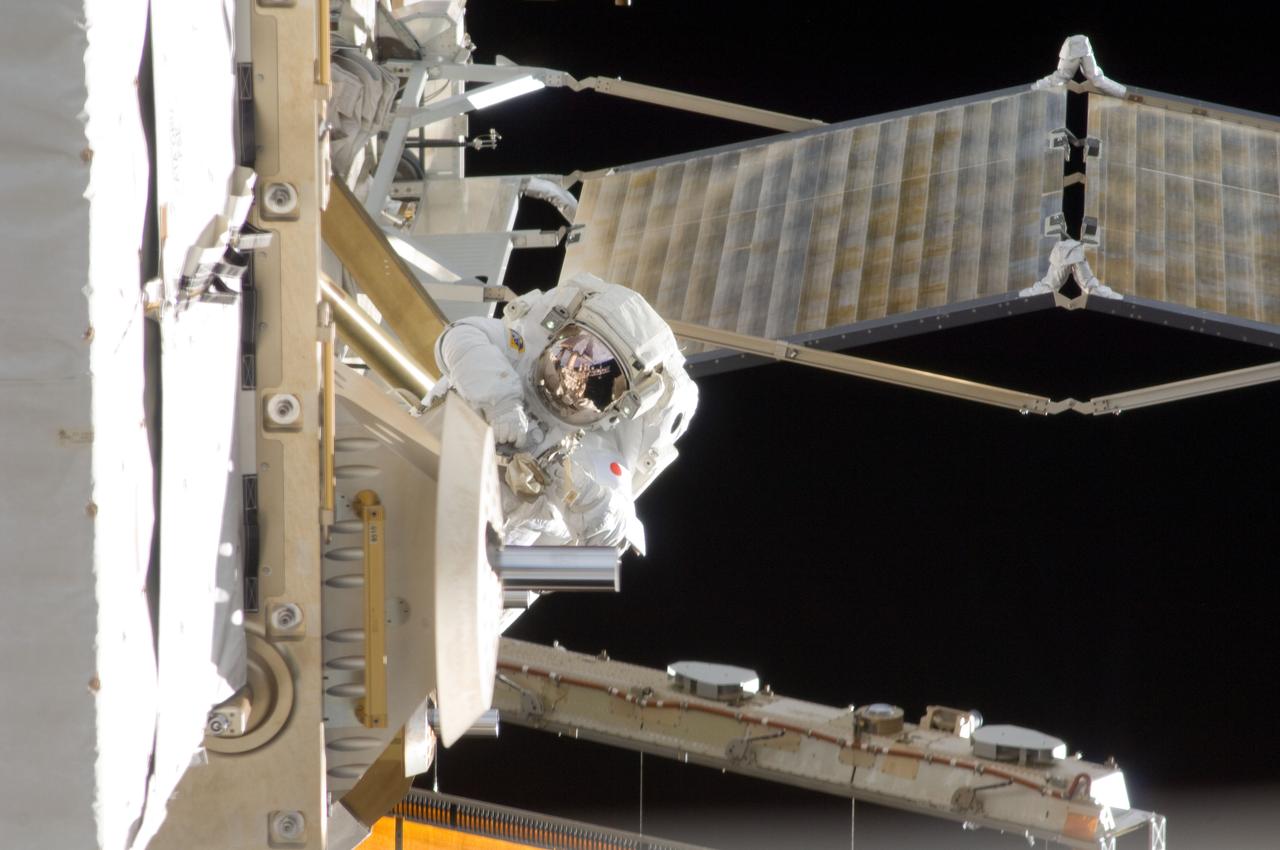
ISS033-E-017373 (1 Nov. 2012) --- Japan Aerospace Exploration Agency astronaut Aki Hoshide, Expedition 33 flight engineer, participates in a session of extravehicular activity (EVA) outside the International Space Station on Nov. 1, 2012. During the six-hour, 38-minute spacewalk, Hoshide and NASA astronaut Sunita Williams (out of frame), commander, ventured outside the orbital outpost to perform work and to support ground-based troubleshooting of an ammonia leak.
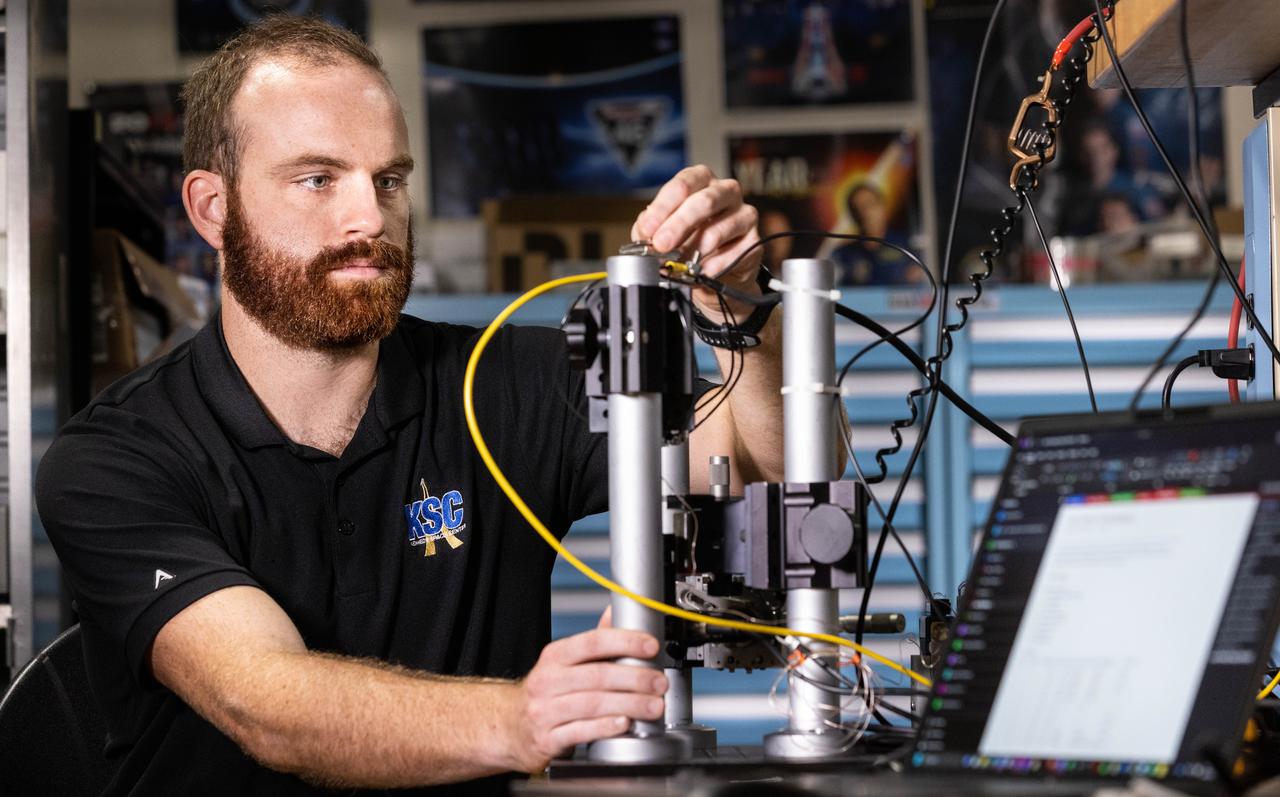
Stefan Tomovic from the Engineering Directorate at NASA’s Kennedy Space Center in Florida evaluates pressure transducers for NASA’s Engineering and Safety Center on Wednesday, Aug. 20, 2025. This probe is designed to improve the detection of thruster pressure sensor anomalies for the agency’s Commercial Crew Program.
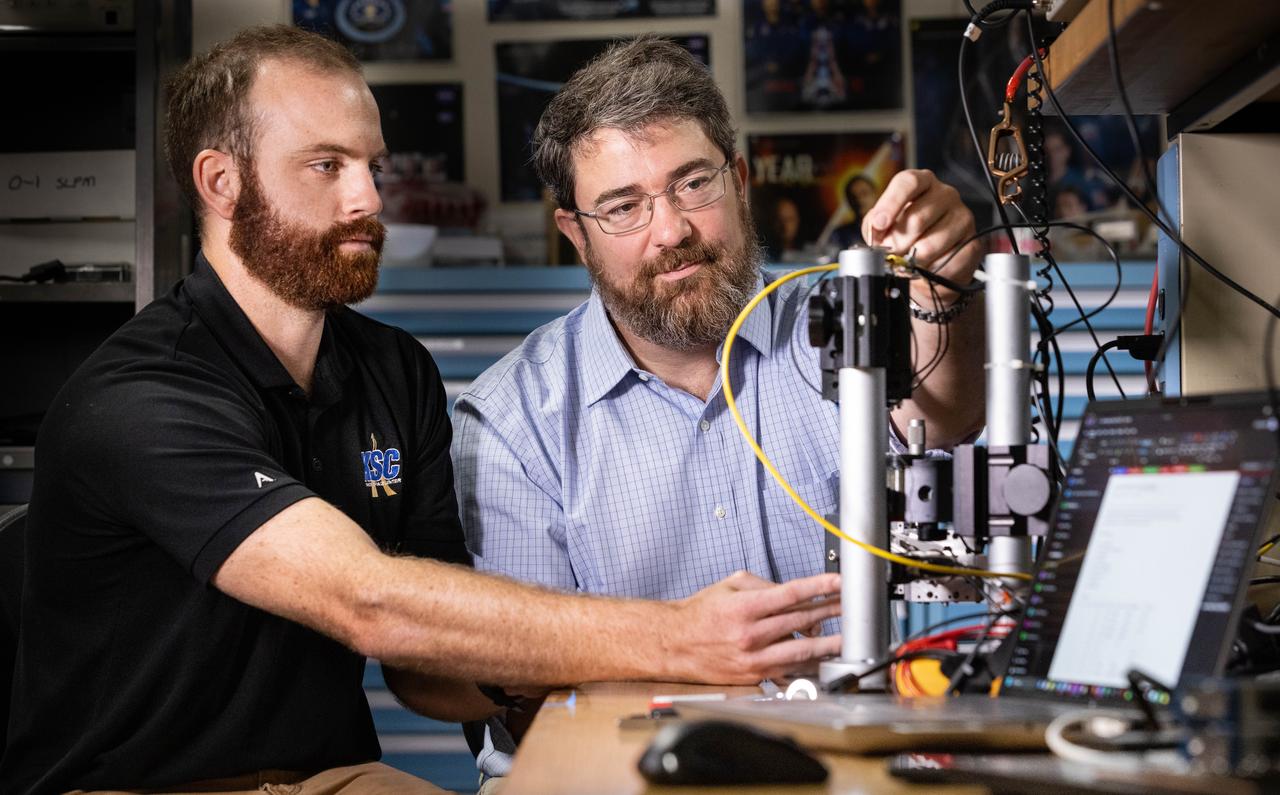
Left to right, Stefan Tomovic from the Engineering Directorate at NASA’s Kennedy Space Center in Florida and Christopher Biagi from the agency’s Exploration Research & Technology Program evaluate pressure transducers for NASA’s Engineering and Safety Center on Wednesday, Aug. 20, 2025. This probe is designed to improve the detection of thruster pressure sensor anomalies for the agency’s Commercial Crew Program.
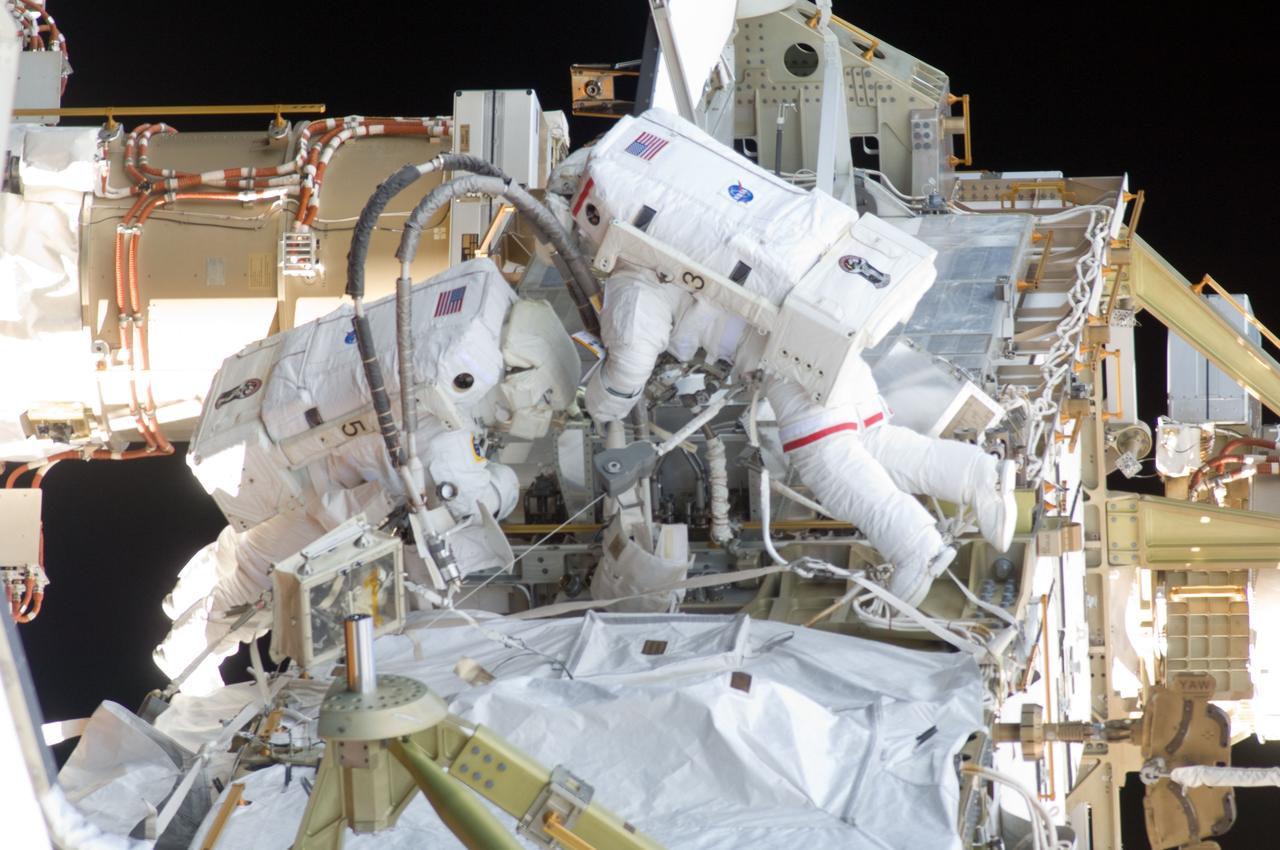
ISS033-E-017354 (1 Nov. 2012) --- NASA astronaut Sunita Williams (right), Expedition 33 commander; and Japan Aerospace Exploration Agency astronaut Aki Hoshide, flight engineer, participate in a session of extravehicular activity (EVA) outside the International Space Station on Nov. 1, 2012. During the six-hour, 38-minute spacewalk, Williams and Hoshide ventured outside the orbital outpost to perform work and to support ground-based troubleshooting of an ammonia leak.
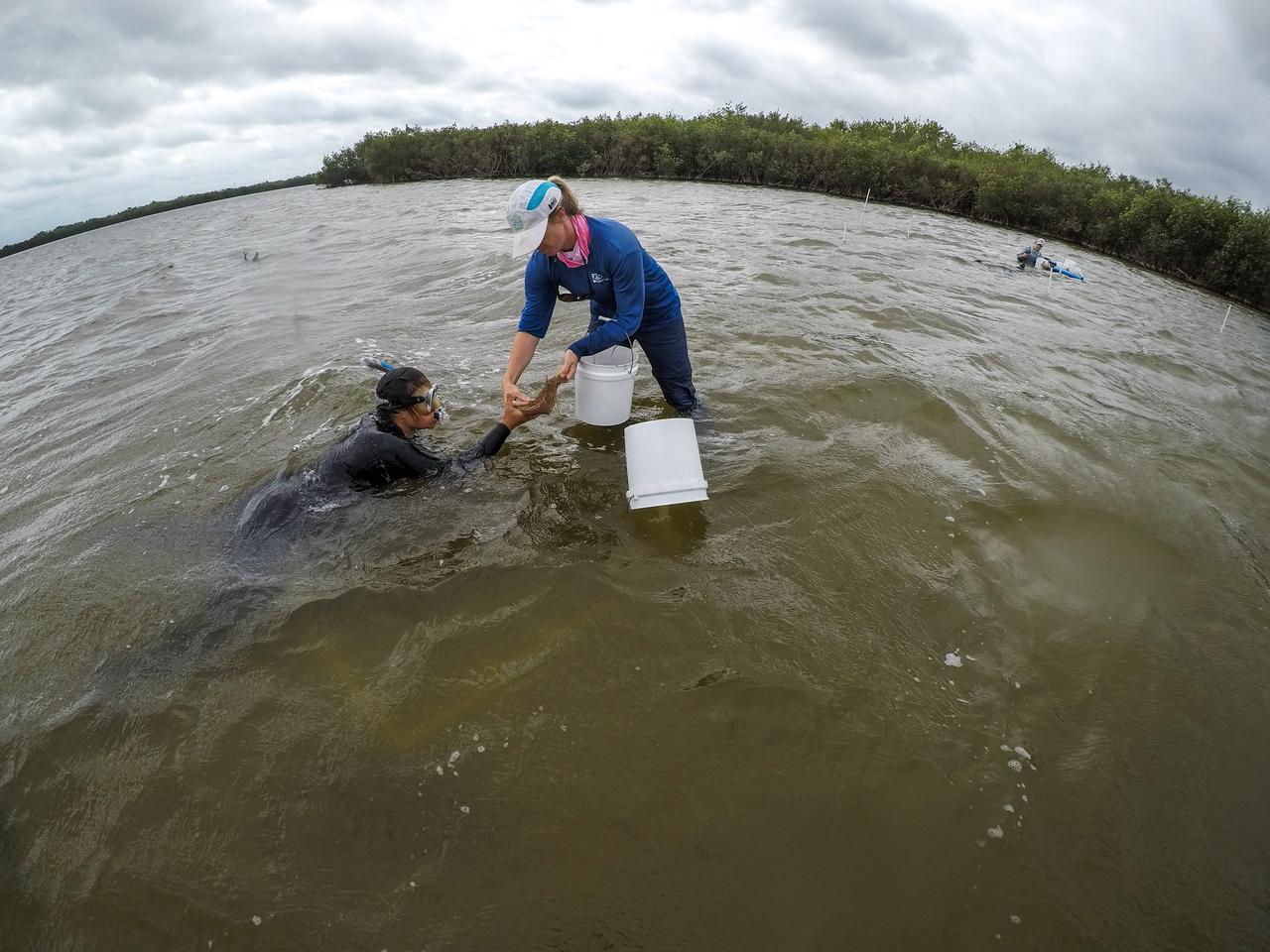
Members of the Florida Oceanographic Society plant seagrass in the Banana River – one of three bodies of water that make up the Indian River Lagoon (IRL) – at NASA’s Kennedy Space Center in Florida on March 29, 2023. Kennedy’s Environmental Management Branch is working to plant a minimum of 28,000 shoots of seagrass divided into 18 sites across three areas at the Florida spaceport as part of a pilot project for seagrass restoration efforts. The project will look at the feasibility of replanting seagrass in Kennedy waters and, if successful, could lead to the spaceport becoming a donor site where shoots of grass can be broken off and relocated to other areas within Kennedy or along the IRL to promote growth.
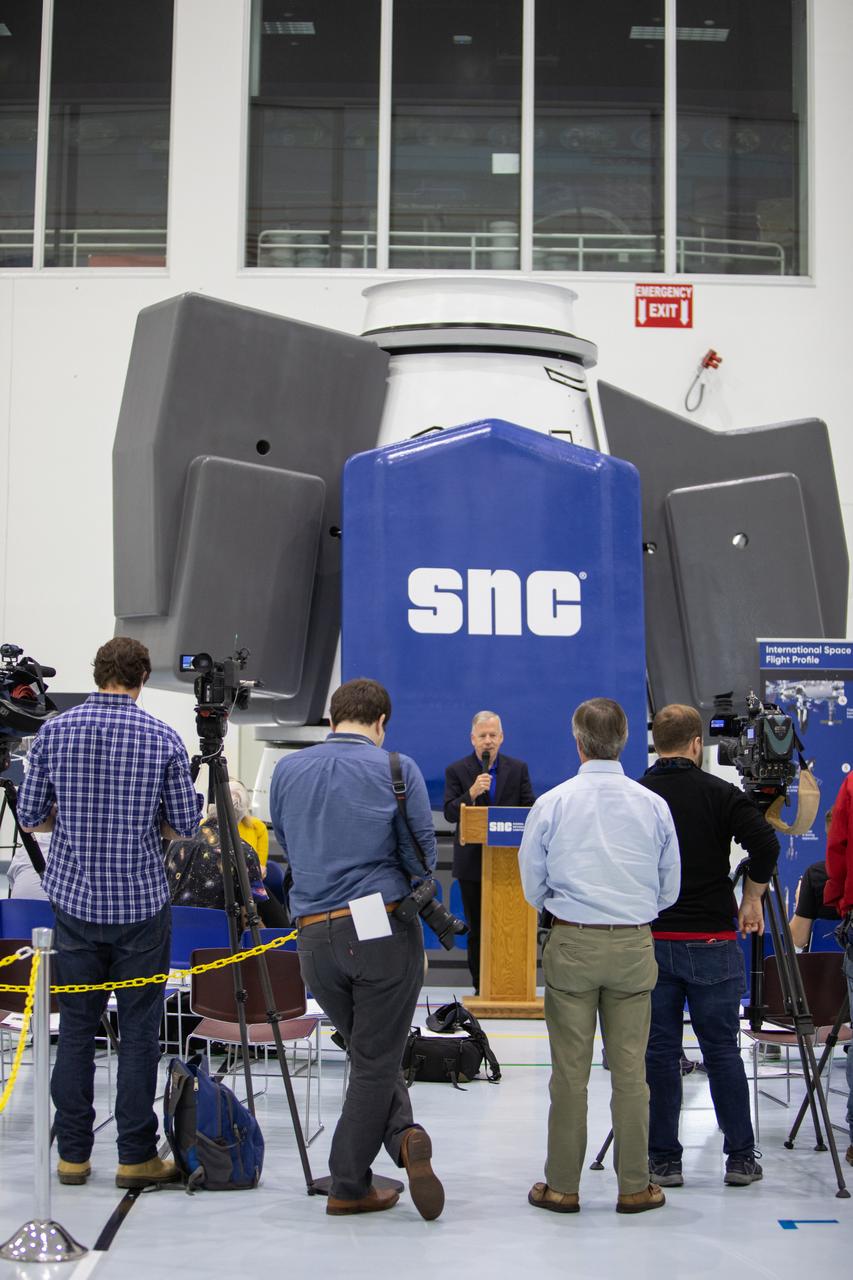
Steve Lindsey, senior vice president of strategy for Sierra Nevada Corporation Space Systems and a former NASA astronaut, discusses the capabilities of the company’s Shooting Star cargo module during a media day event in the Space Station Processing Facility high bay at Kennedy Space Center on Nov. 19, 2019. Shooting Star will attach to the back of the company’s Dream Chaser spacecraft. The cargo module will deliver more than 12,000 pounds of supplies and other cargo to the International Space Station for NASA as part of the Commercial Resupply Services-2 contract.
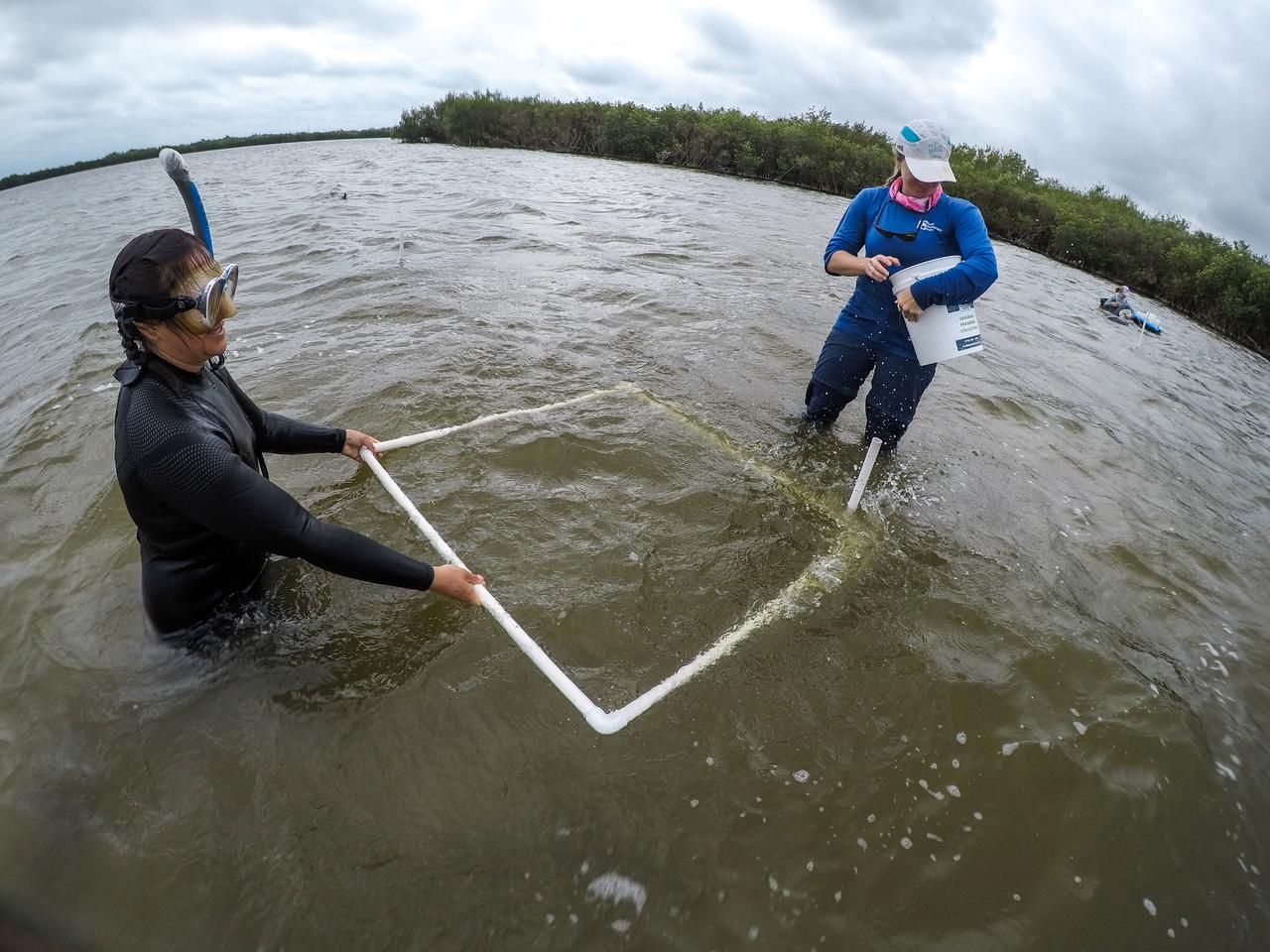
Members of the Florida Oceanographic Society prepare to plant seagrass in the Banana River – one of three bodies of water that make up the Indian River Lagoon (IRL) – at NASA’s Kennedy Space Center in Florida on March 29, 2023. Kennedy’s Environmental Management Branch is working to plant a minimum of 28,000 shoots of seagrass divided into 18 sites across three areas at the Florida spaceport as part of a pilot project for seagrass restoration efforts. The project will look at the feasibility of replanting seagrass in Kennedy waters and, if successful, could lead to the spaceport becoming a donor site where shoots of grass can be broken off and relocated to other areas within Kennedy or along the IRL to promote growth.
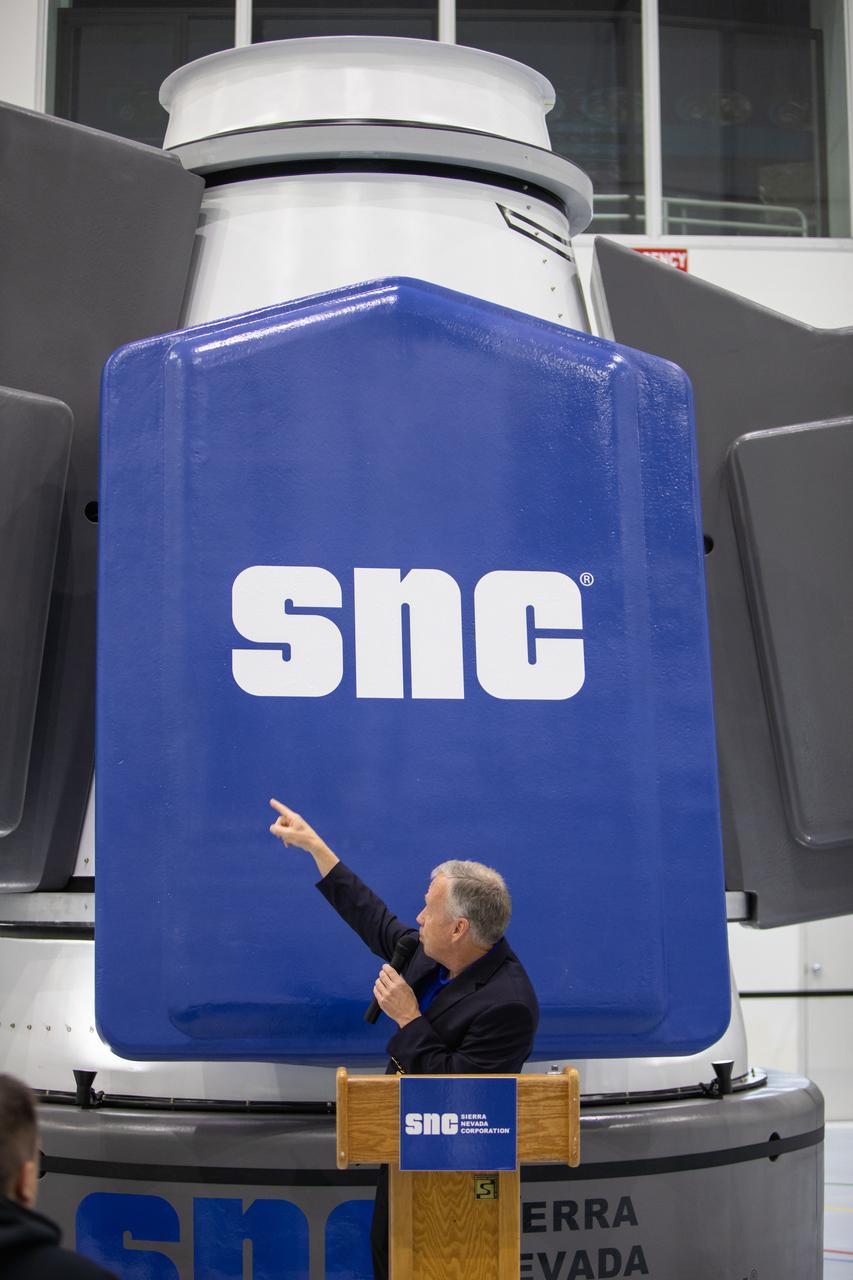
Steve Lindsey, senior vice president of strategy for Sierra Nevada Corporation Space Systems and a former NASA astronaut, discusses the capabilities of the company’s Shooting Star cargo module during a media day event in the Space Station Processing Facility high bay at Kennedy Space Center on Nov. 19, 2019. Shooting Star will attach to the back of the company’s Dream Chaser spacecraft. The cargo module will deliver more than 12,000 pounds of supplies and other cargo to the International Space Station for NASA as part of the Commercial Resupply Services-2 contract.
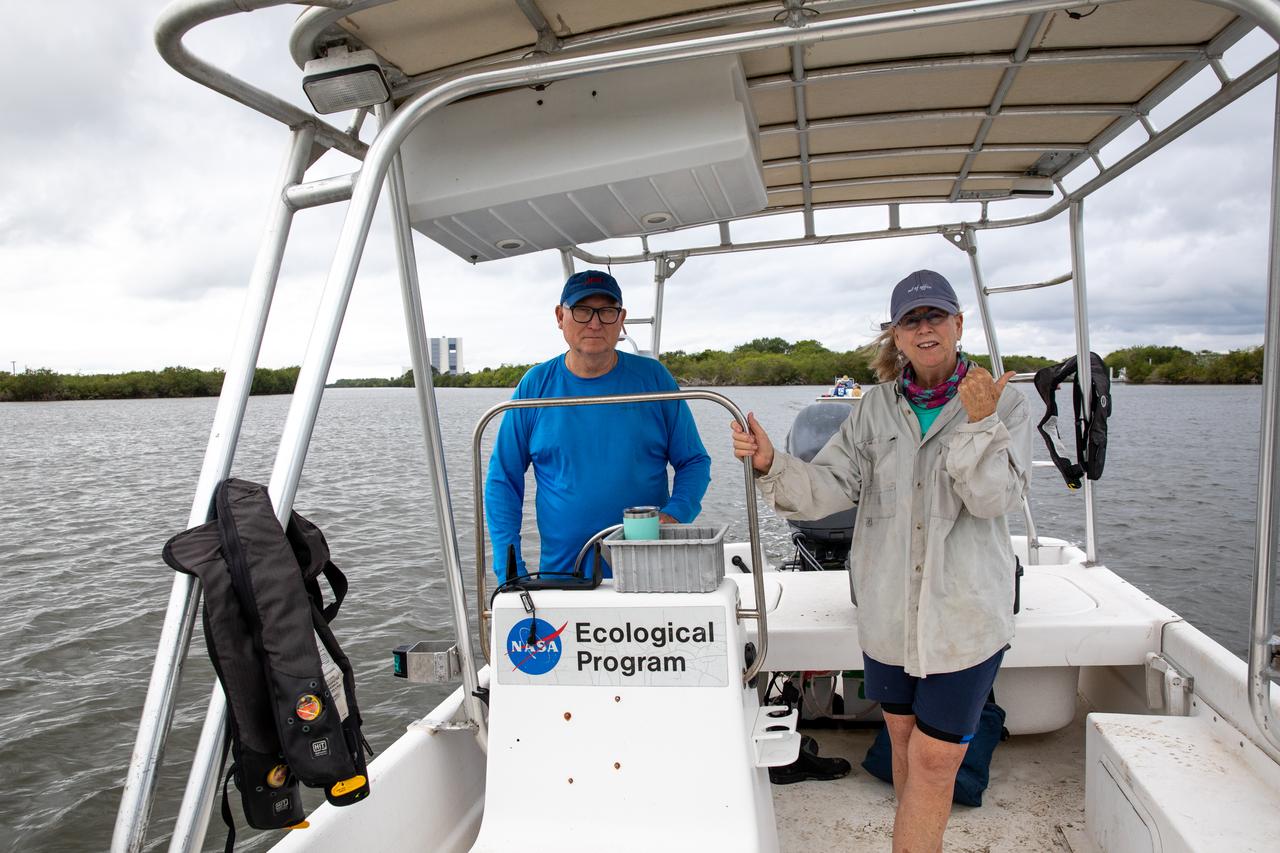
Kennedy Space Center’s Doug Scheidt (left), an ecologist working on NASA’s Environmental and Medical Contract (NEMCON), and Jane Provancha, manager of the ecological group for NEMCON, oversee seagrass restoration efforts at the Florida spaceport on March 29, 2023. Kennedy’s Environmental Management Branch is working to plant a minimum of 28,000 shoots of seagrass divided into 18 sites across three areas at the Florida spaceport as part of a pilot project for seagrass restoration efforts. The project will look at the feasibility of replanting seagrass in Kennedy waters and, if successful, could lead to the spaceport becoming a donor site where shoots of grass can be broken off and relocated to other areas within Kennedy or along the Indian River Lagoon to promote growth.
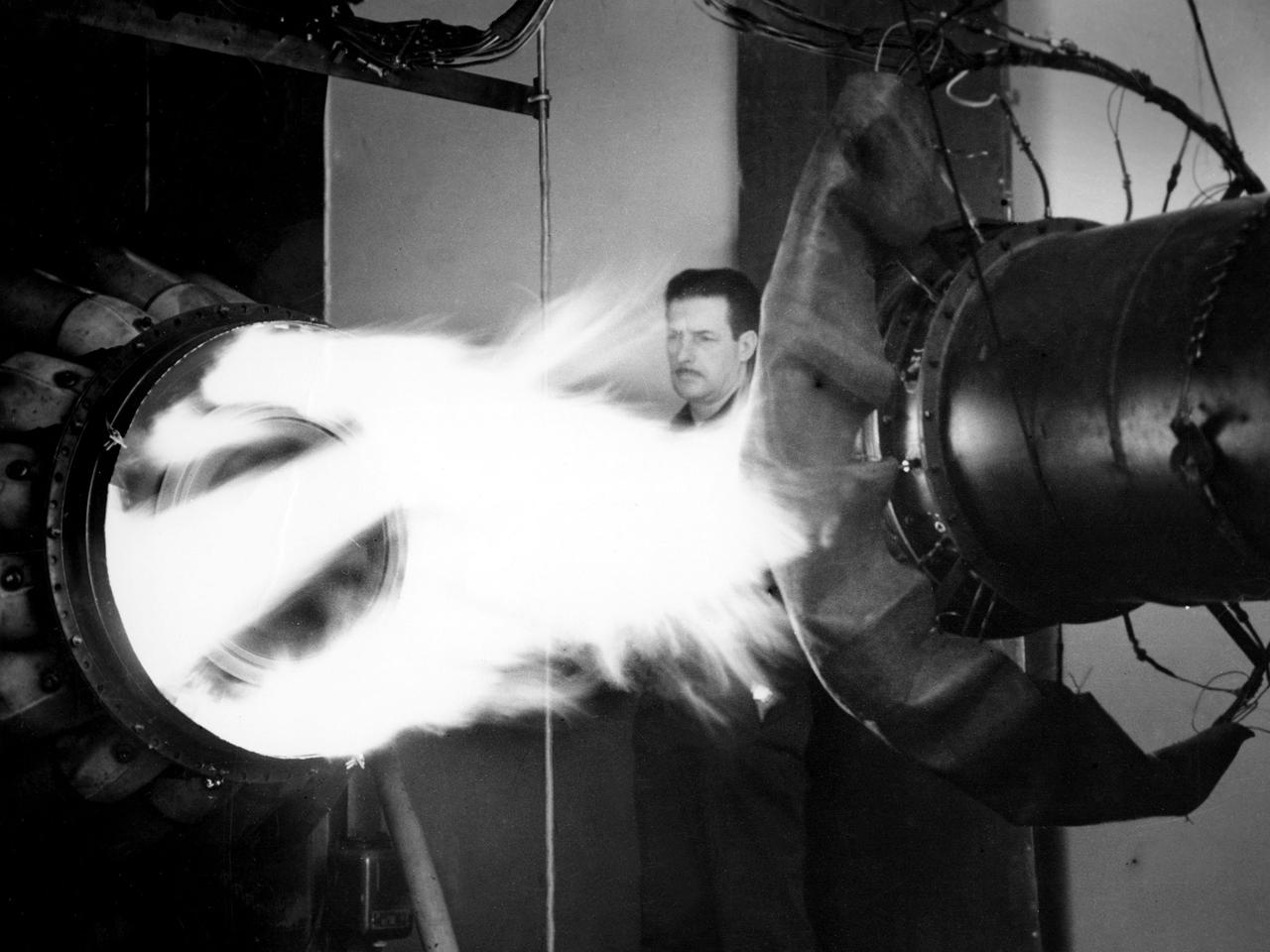
A mechanic watches the firing of a General Electric I-40 turbojet at the National Advisory Committee for Aeronautics (NACA) Lewis Flight Propulsion Laboratory. The military selected General Electric’s West Lynn facility in 1941 to secretly replicate the centrifugal turbojet engine designed by British engineer Frank Whittle. General Electric’s first attempt, the I-A, was fraught with problems. The design was improved somewhat with the subsequent I-16 engine. It was not until the engine's next reincarnation as the I-40 in 1943 that General Electric’s efforts paid off. The 4000-pound thrust I-40 was incorporated into the Lockheed Shooting Star airframe and successfully flown in June 1944. The Shooting Star became the US’s first successful jet aircraft and the first US aircraft to reach 500 miles per hour. NACA Lewis studied all of General Electric’s centrifugal turbojet models during the 1940s. In 1945 the entire Shooting Star aircraft was investigated in the Altitude Wind Tunnel. Engine compressor performance and augmentation by water injection; comparison of different fuel blends in a single combustor; and air-cooled rotors were studied. The mechanic in this photograph watches the firing of a full-scale I-40 in the Jet Propulsion Static Laboratory. The facility was quickly built in 1943 specifically in order to test the early General Electric turbojets. The I-A was secretly analyzed in the facility during the fall of 1943.
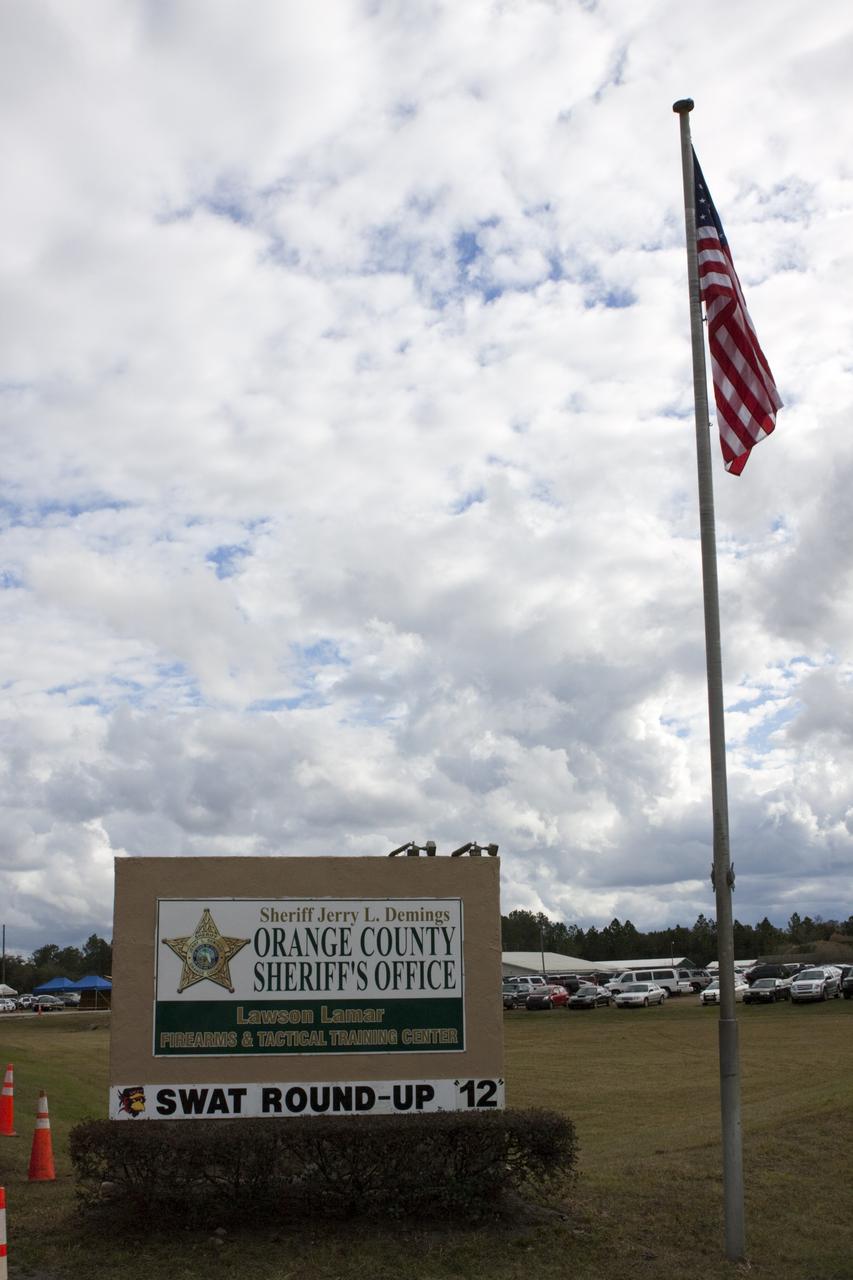
ORLANDO, Fla. – The 30th Annual SWAT Round-Up International took place at the Orange County Sheriff's Office in Orlando, Florida. The competition pits special operations squads from law enforcement agencies around the world in races against time through obstacle courses and shooting ranges. Photo credit: NASA/Jim Grossmann
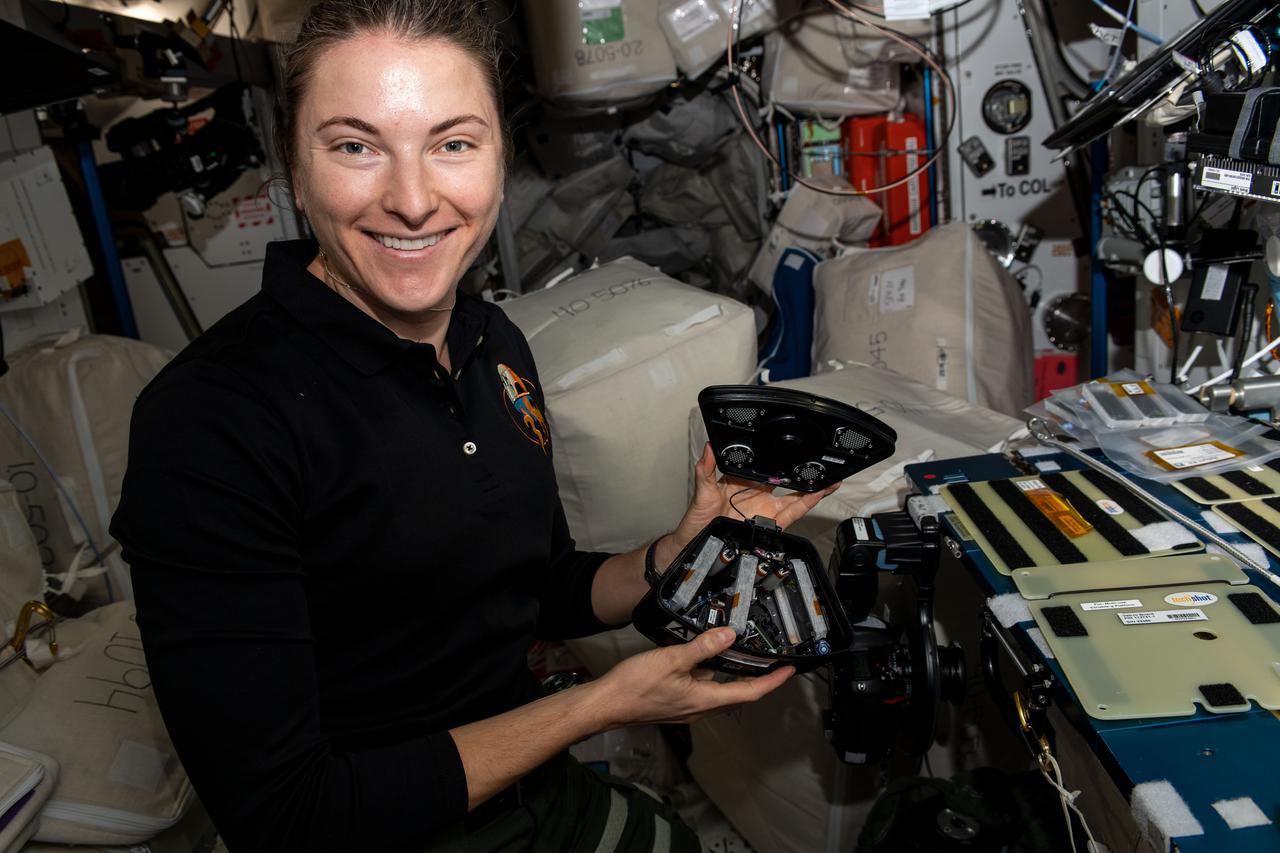
iss066e110795 (Jan. 11, 2022) --- NASA astronaut and Expedition 66 Flight Engineer Kayla Barron performs research operations for the MVP-Plant-01 (Multi-use Variable-gravity Platform) space botany study that monitors shoot and root development in Arabidopsis plants in microgravity.
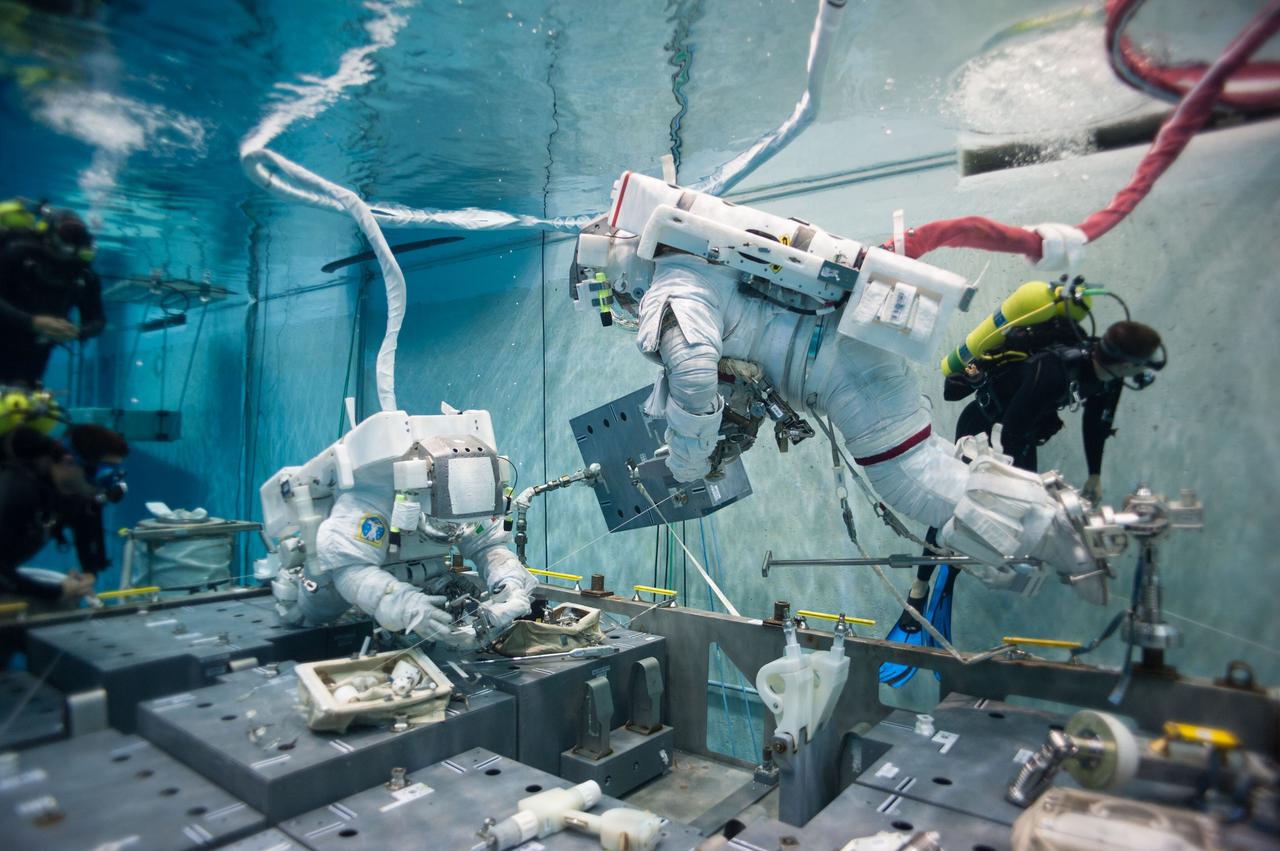
PHOTO DATE: 10 MAY 2013 LOCATION: Neutral Buoyancy Lab - Underwater SUBJECT: NBL EVA dive with Terry Virts and Samantha Cristoforetti in support of ISS ammonia leak trouble-shooting. PHOTOGRAPHER: NBL/Bill Brassard/Kelly Rives/Lauren Hansen
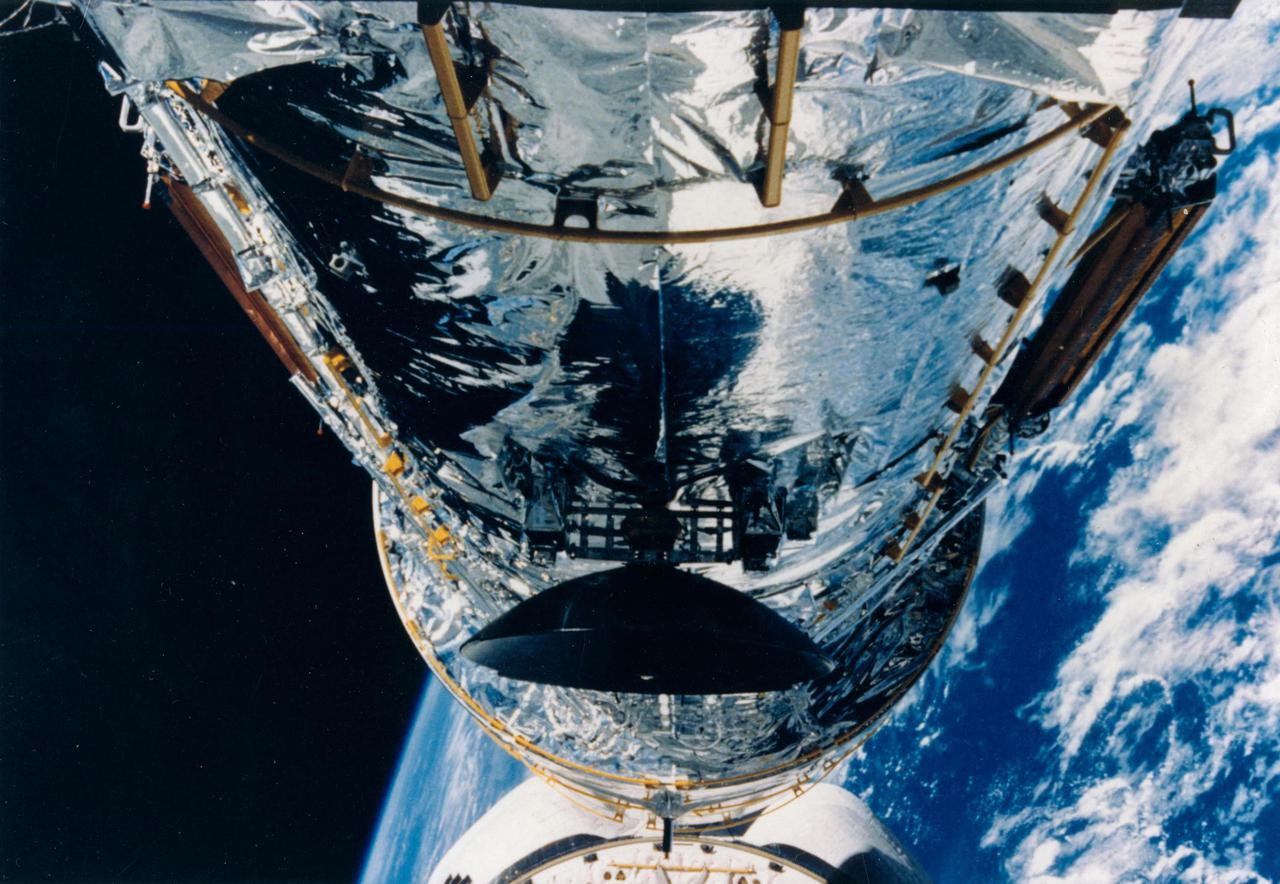
JOHNSON SPACE CENTER, HOUSTON, TEXAS-- STS-31 ONBOARD SCENE -- A medium closeup view photographed with fish-eye lens on a 35mm camera shooting the Hubble Space Telescope (HST) held above Discovery's cargo bay by the remote manipulator system prior to solar array and antennae deployment.

ORLANDO, Fla. – A team nears the finish line of an event during the 30th Annual SWAT Round-Up International in Orlando, Florida. The competition pits special operations squads from law enforcement agencies around the world in races against time through obstacle courses and shooting ranges. Photo credit: NASA/Jim Grossmann
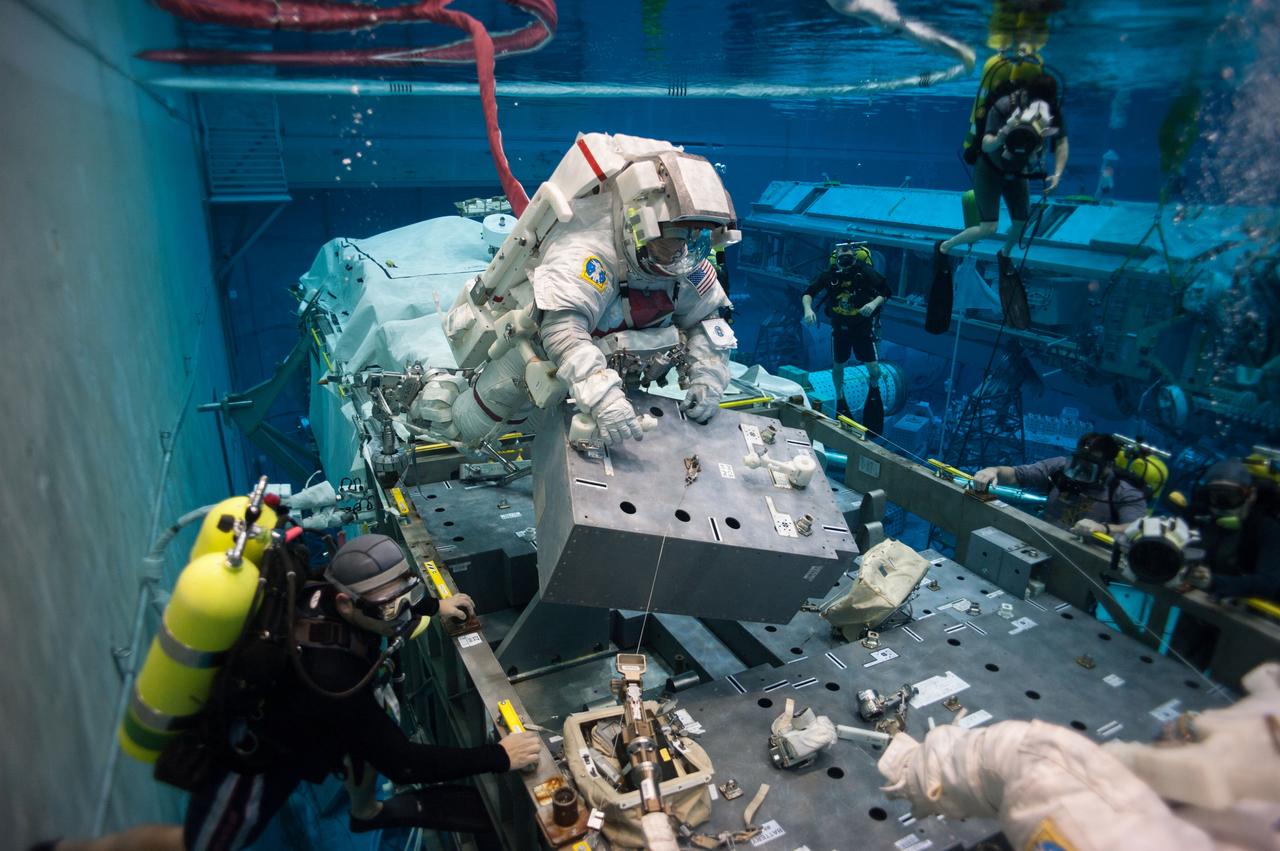
PHOTO DATE: 10 MAY 2013 LOCATION: Neutral Buoyancy Lab - Underwater SUBJECT: NBL EVA dive with Terry Virts and Samantha Cristoforetti in support of ISS ammonia leak trouble-shooting. PHOTOGRAPHER: NBL/Bill Brassard/Kelly Rives/Lauren Hansen
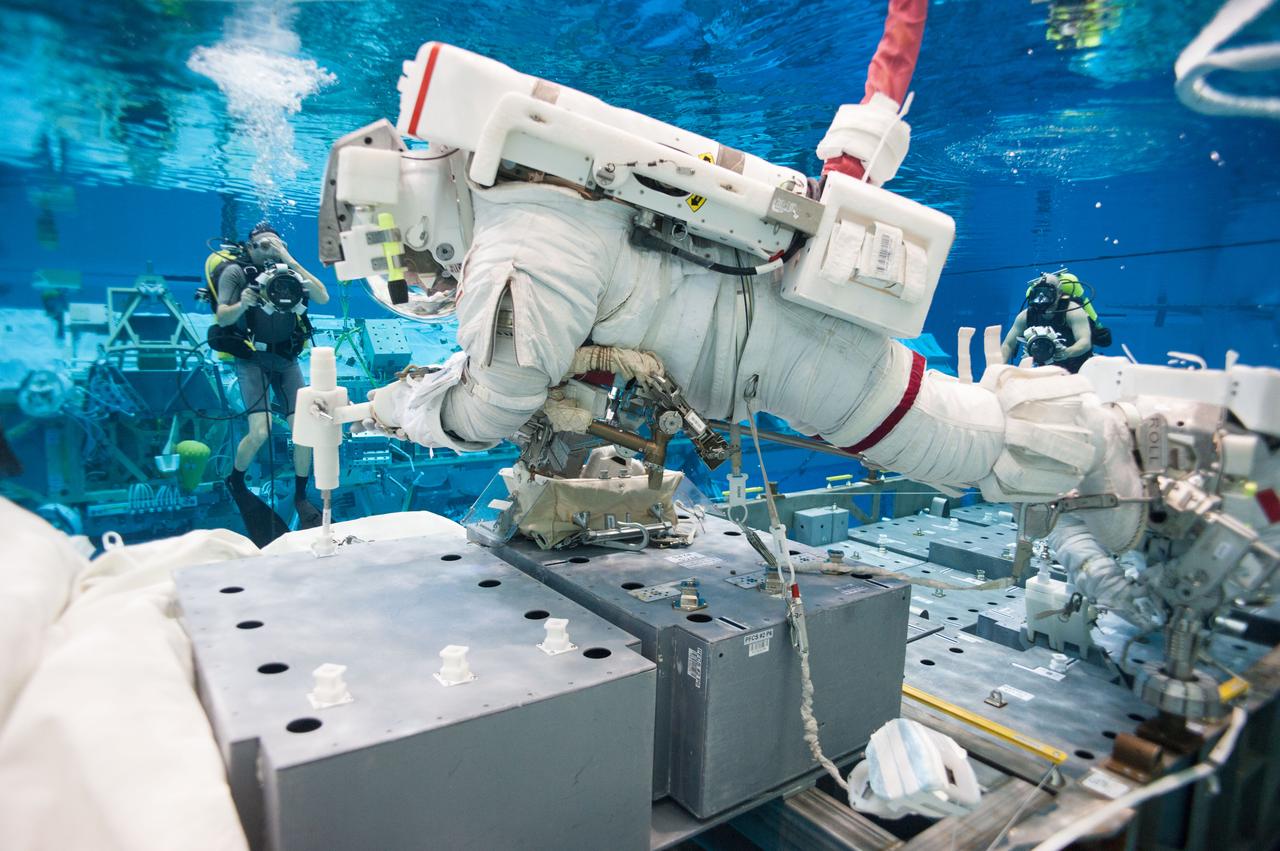
PHOTO DATE: 10 MAY 2013 LOCATION: Neutral Buoyancy Lab - Underwater SUBJECT: NBL EVA dive with Terry Virts and Samantha Cristoforetti in support of ISS ammonia leak trouble-shooting. PHOTOGRAPHER: NBL/Bill Brassard/Kelly Rives/Lauren Hansen
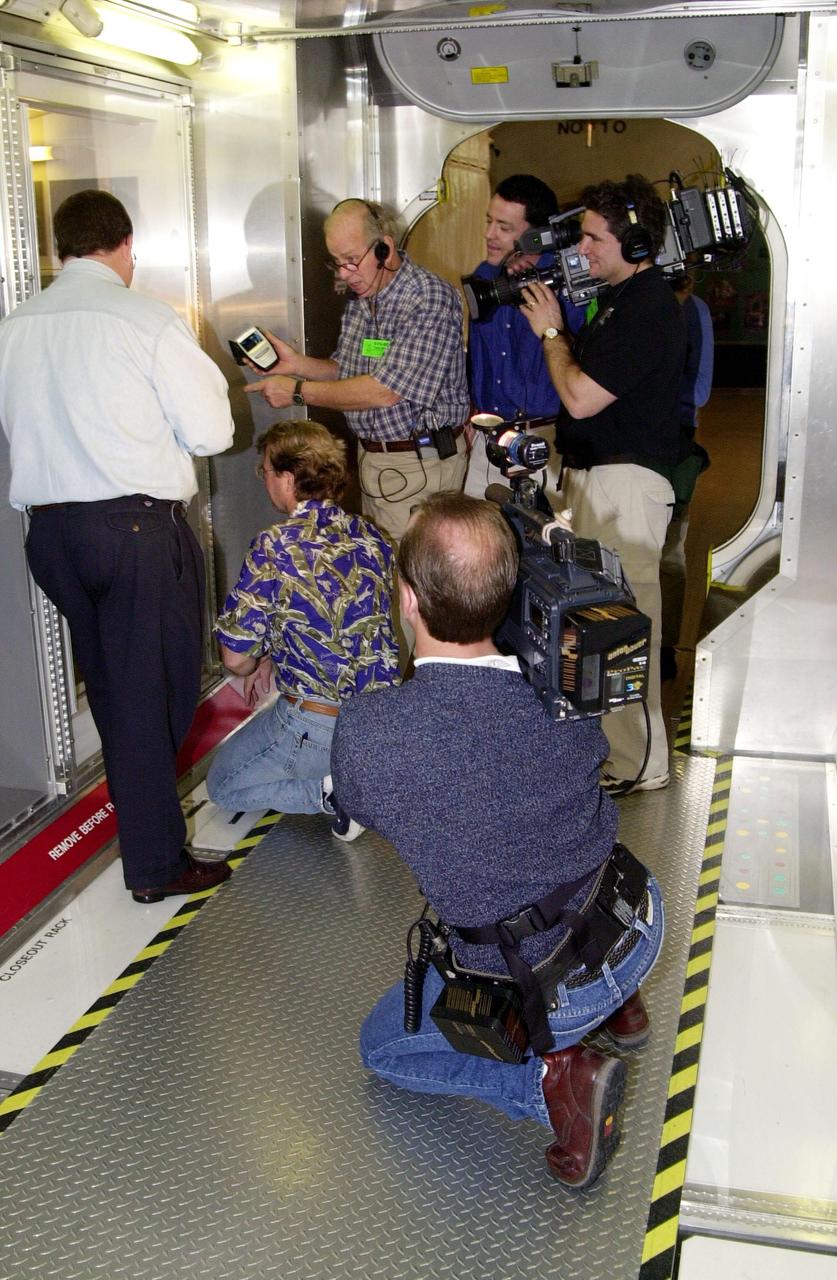
KENNEDY SPACE CENTER, FLA. -- A film crew gather around Steve Thomas (kneeling) as they shoot inside a mockup of the U.S. Lab, located in the International Space Station Center, a tour facility. Thomas and Norm Abram, host and master carpenter, respectively, of television’s "This Old House," are at KSC to film an episode of the series
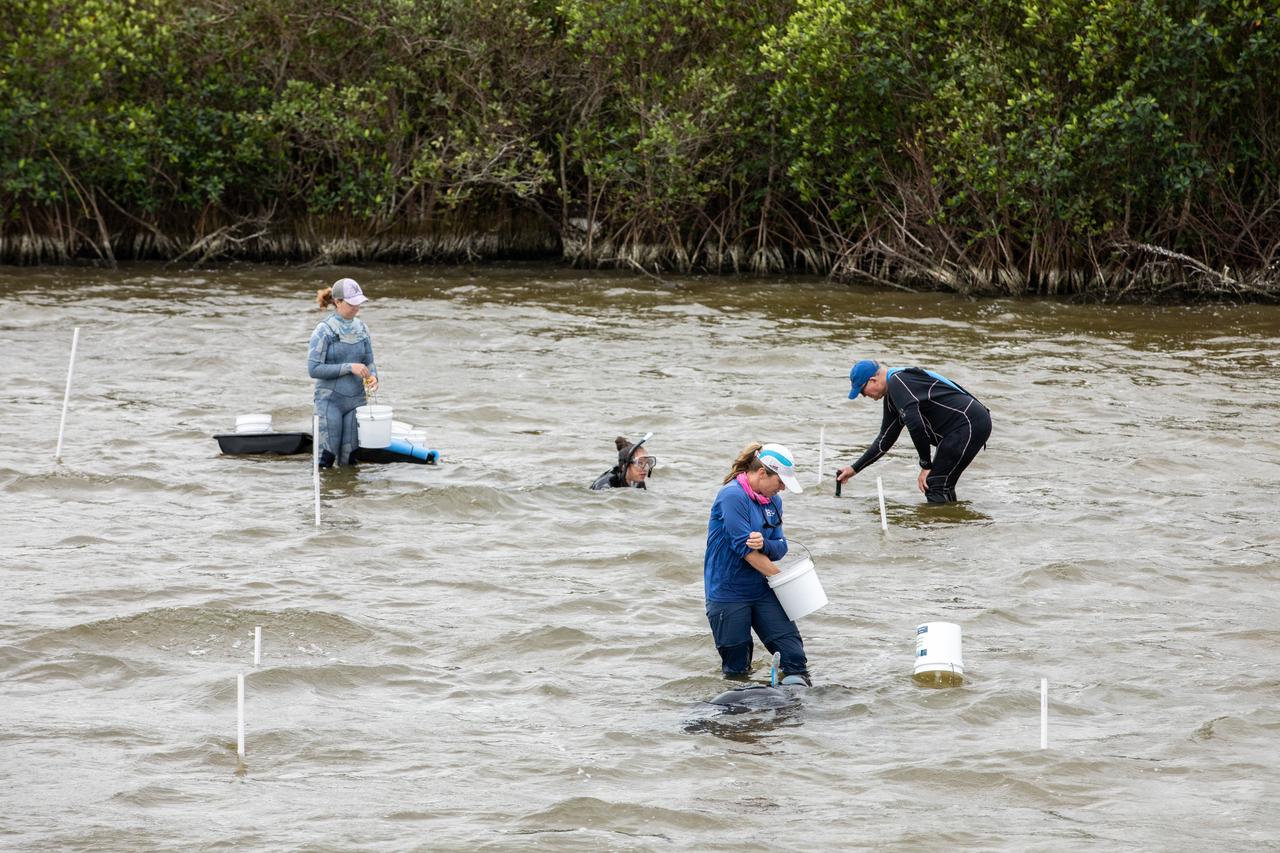
Members of the Florida Oceanographic Society begin planting seagrass in the Banana River – one of three bodies of water that make up the Indian River Lagoon (IRL) – at NASA’s Kennedy Space Center in Florida on March 29, 2023. At the top right is Doug Scheidt, an ecologist working on NASA’s Environmental and Medical Contract at Kennedy. Kennedy’s Environmental Management Branch is working to plant a minimum of 28,000 shoots of seagrass divided into 18 sites across three areas at the Florida spaceport as part of a pilot project for seagrass restoration efforts. The project will look at the feasibility of replanting seagrass in Kennedy waters and, if successful, could lead to the spaceport becoming a donor site where shoots of grass can be broken off and relocated to other areas within Kennedy or along the IRL to promote growth.
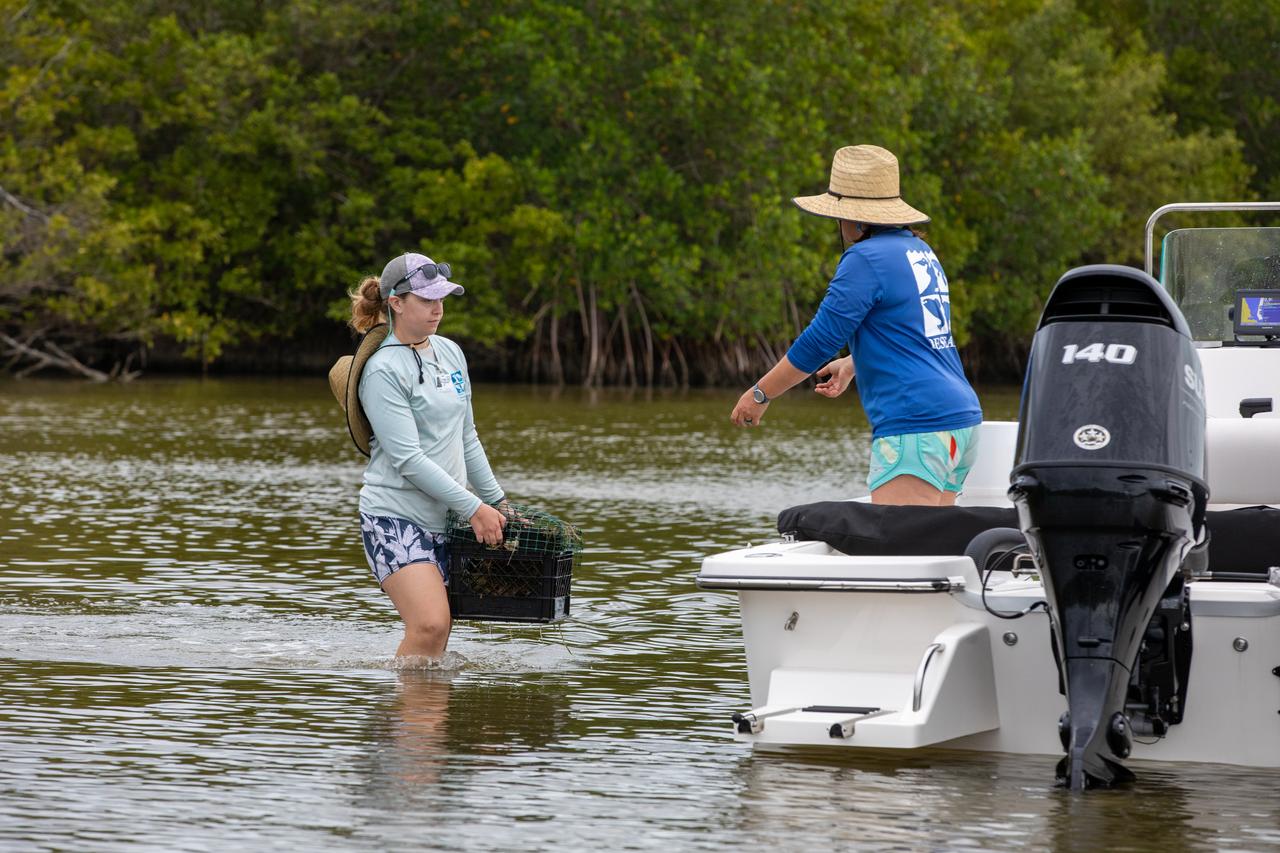
Members of the Florida Oceanographic Society collect mats of seagrass from their storage site at NASA’s Kennedy Space Center in Florida as they prepare to plant them in the Banana River – one of three bodies of water that make up the Indian River Lagoon (IRL) – on March 29, 2023. Kennedy’s Environmental Management Branch is working to plant a minimum of 28,000 shoots of seagrass divided into 18 sites across three areas at the Florida spaceport as part of a pilot project for seagrass restoration efforts. The project will look at the feasibility of replanting seagrass in Kennedy waters and, if successful, could lead to the spaceport becoming a donor site where shoots of grass can be broken off and relocated to other areas within Kennedy or along the IRL to promote growth.
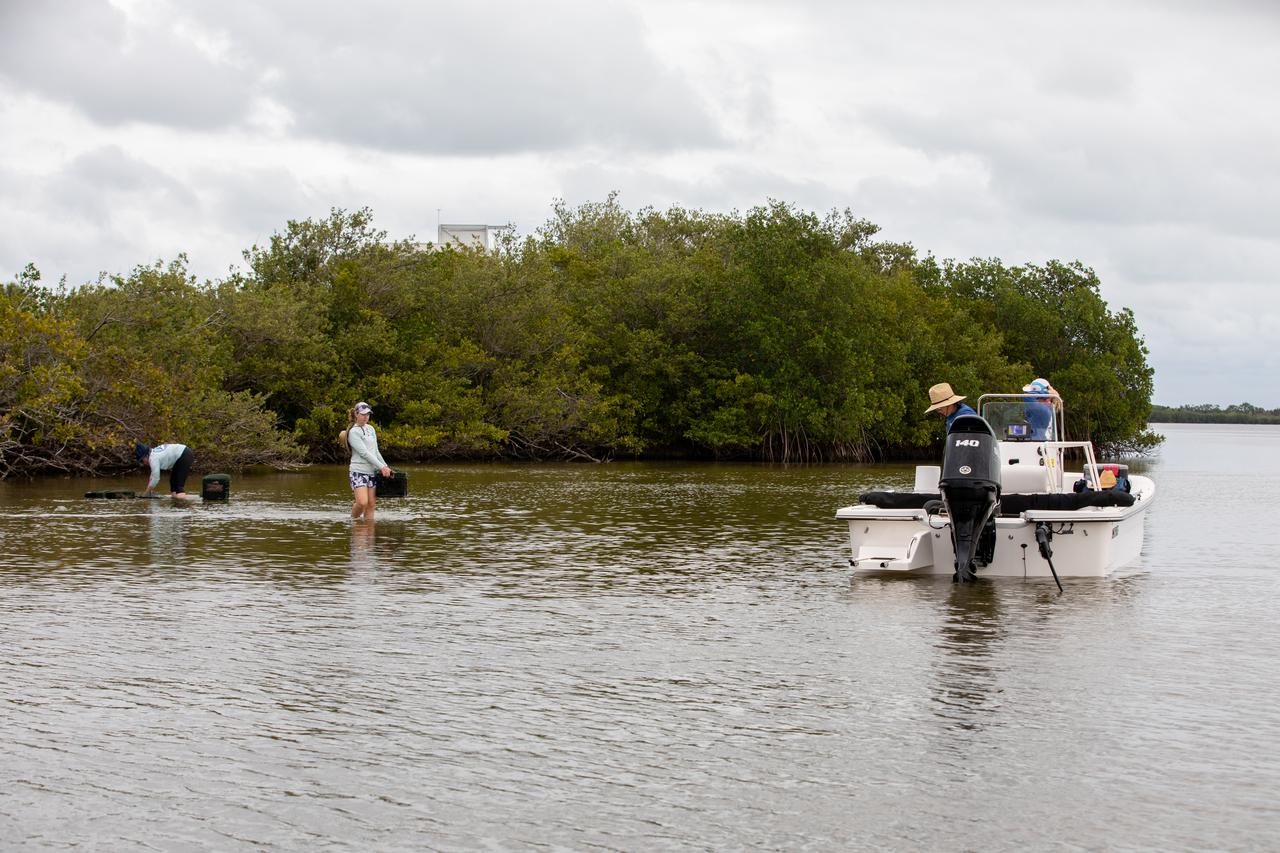
Members of the Florida Oceanographic Society collect mats of seagrass from their storage site at NASA’s Kennedy Space Center in Florida as they prepare to plant them in the Banana River – one of three bodies of water that make up the Indian River Lagoon (IRL) – on March 29, 2023. Kennedy’s Environmental Management Branch is working to plant a minimum of 28,000 shoots of seagrass divided into 18 sites across three areas at the Florida spaceport as part of a pilot project for seagrass restoration efforts. The project will look at the feasibility of replanting seagrass in Kennedy waters and, if successful, could lead to the spaceport becoming a donor site where shoots of grass can be broken off and relocated to other areas within Kennedy or along the IRL to promote growth.
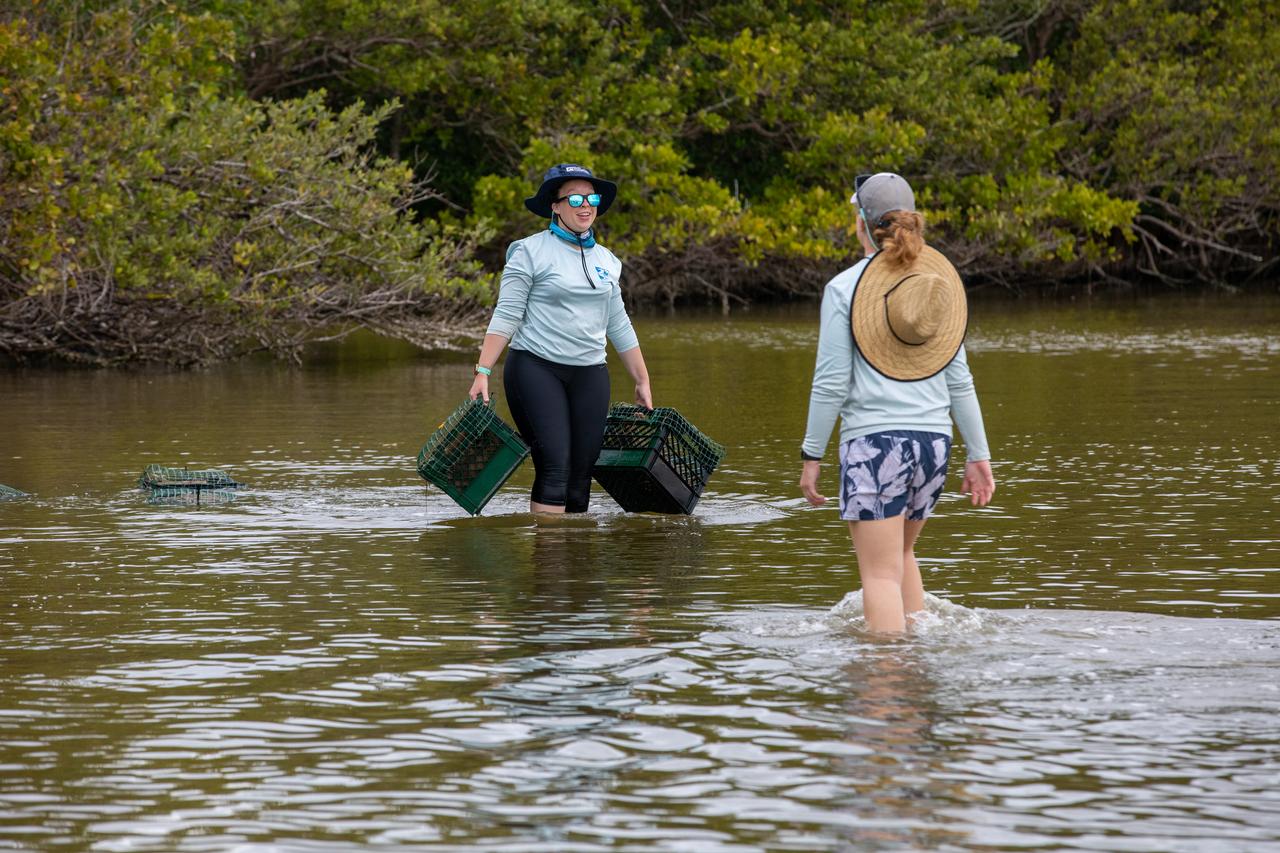
Members of the Florida Oceanographic Society collect mats of seagrass from their storage site at NASA’s Kennedy Space Center in Florida as they prepare to plant them in the Banana River – one of three bodies of water that make up the Indian River Lagoon (IRL) – on March 29, 2023. Kennedy’s Environmental Management Branch is working to plant a minimum of 28,000 shoots of seagrass divided into 18 sites across three areas at the Florida spaceport as part of a pilot project for seagrass restoration efforts. The project will look at the feasibility of replanting seagrass in Kennedy waters and, if successful, could lead to the spaceport becoming a donor site where shoots of grass can be broken off and relocated to other areas within Kennedy or along the IRL to promote growth.
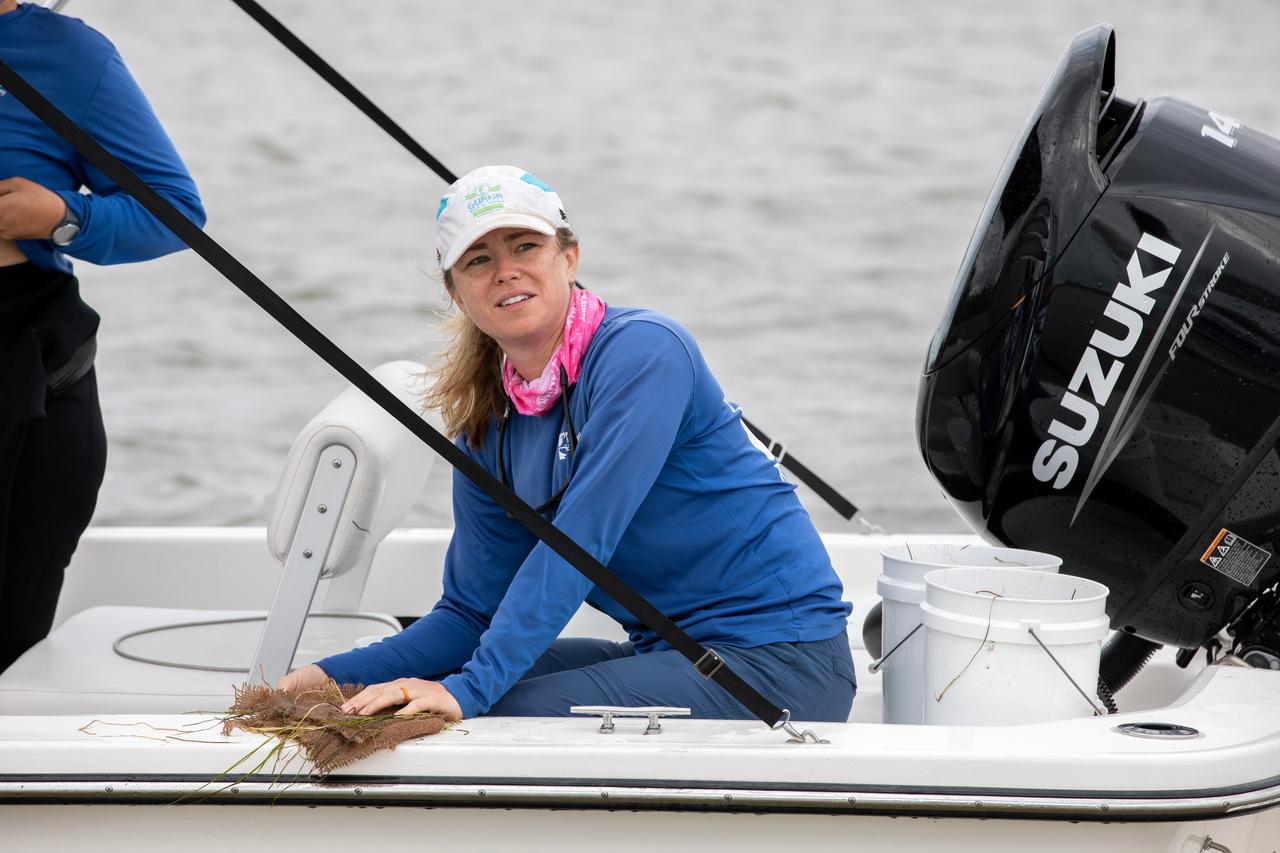
Lorae Simpson, director of research and conservation with the Florida Oceanographic Society, gathers “plots” of seagrass as her team prepares to plant them in the Banana River – one of three bodies of water that make up the Indian River Lagoon (IRL) – at NASA’s Kennedy Space Center in Florida on March 29, 2023. Kennedy’s Environmental Management Branch is working to plant a minimum of 28,000 shoots of seagrass divided into 18 sites across three areas at the Florida spaceport as part of a pilot project for seagrass restoration efforts. The project will look at the feasibility of replanting seagrass in Kennedy waters and, if successful, could lead to the spaceport becoming a donor site where shoots of grass can be broken off and relocated to other areas within Kennedy or along the IRL to promote growth.
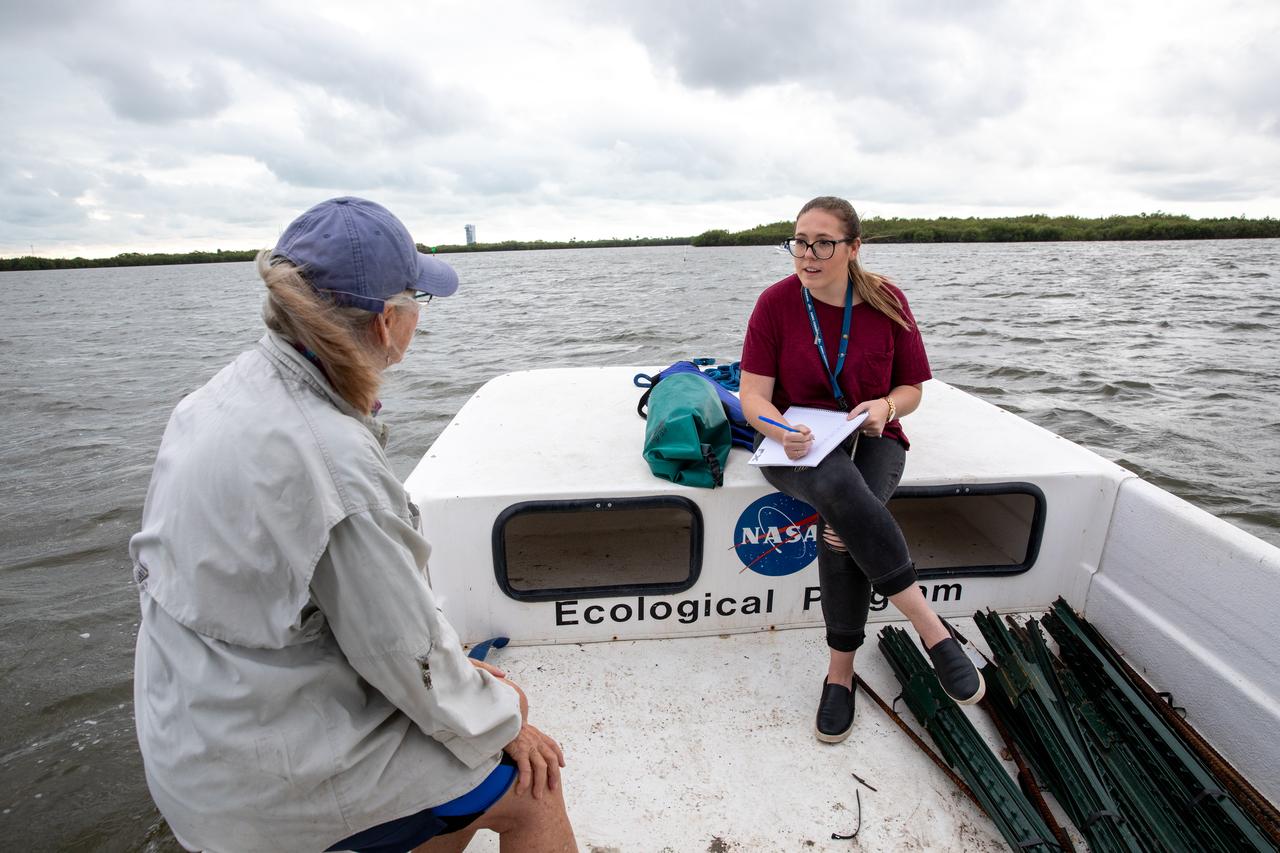
Kennedy Space Center Public Affairs Writer Danielle Sempsrott (right) interviews Jane Provancha, manager of the ecological group for NASA’s Environmental and Medical Contract (NEMCON) at Kennedy, for a web feature highlighting seagrass restoration efforts taking place at the Florida spaceport on March 29, 2023. Kennedy’s Environmental Management Branch is working to plant a minimum of 28,000 shoots of seagrass divided into 18 sites across three areas at the Florida spaceport as part of a pilot project for seagrass restoration efforts. The project will look at the feasibility of replanting seagrass in Kennedy waters and, if successful, could lead to the spaceport becoming a donor site where shoots of grass can be broken off and relocated to other areas within Kennedy or along the Indian River Lagoon to promote growth.
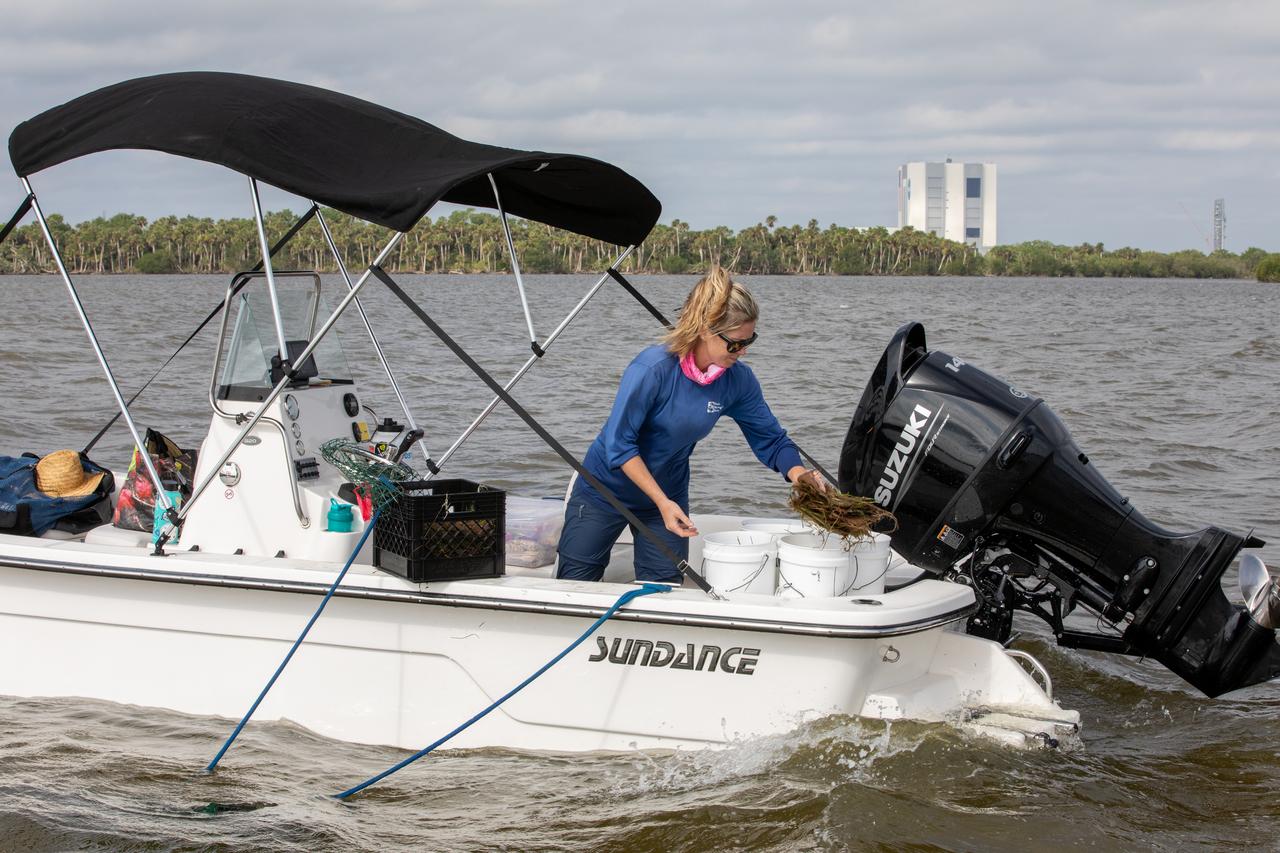
Lorae Simpson, director of research and conservation with the Florida Oceanographic Society, gathers “plots” of seagrass as her team prepares to plant them in the Banana River – one of three bodies of water that make up the Indian River Lagoon (IRL) – at NASA’s Kennedy Space Center in Florida on March 29, 2023. Kennedy’s Environmental Management Branch is working to plant a minimum of 28,000 shoots of seagrass divided into 18 sites across three areas at the Florida spaceport as part of a pilot project for seagrass restoration efforts. The project will look at the feasibility of replanting seagrass in Kennedy waters and, if successful, could lead to the spaceport becoming a donor site where shoots of grass can be broken off and relocated to other areas within Kennedy or along the IRL to promote growth.
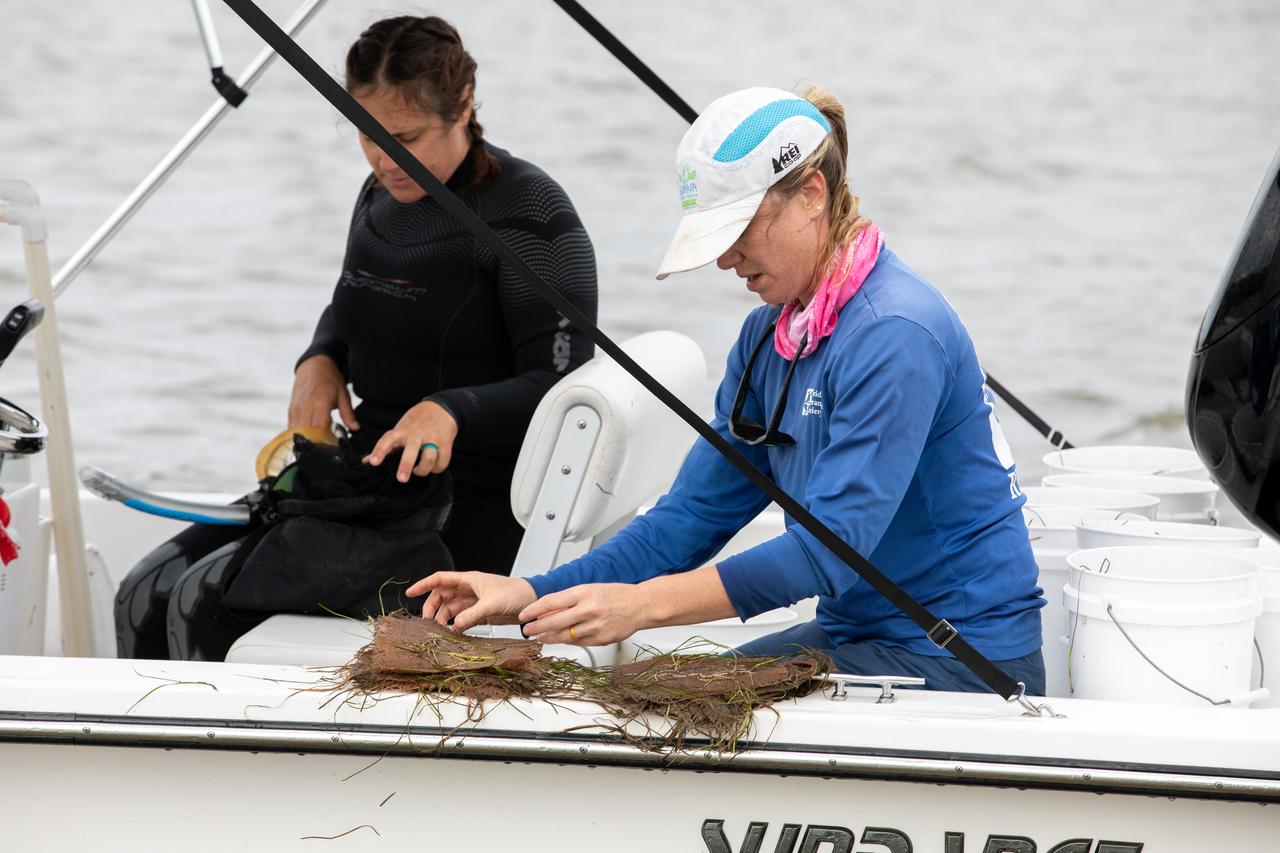
Lorae Simpson, director of research and conservation with the Florida Oceanographic Society, gathers “plots” of seagrass as her team prepares to plant them in the Banana River – one of three bodies of water that make up the Indian River Lagoon (IRL) – at NASA’s Kennedy Space Center in Florida on March 29, 2023. Kennedy’s Environmental Management Branch is working to plant a minimum of 28,000 shoots of seagrass divided into 18 sites across three areas at the Florida spaceport as part of a pilot project for seagrass restoration efforts. The project will look at the feasibility of replanting seagrass in Kennedy waters and, if successful, could lead to the spaceport becoming a donor site where shoots of grass can be broken off and relocated to other areas within Kennedy or along the IRL to promote growth.
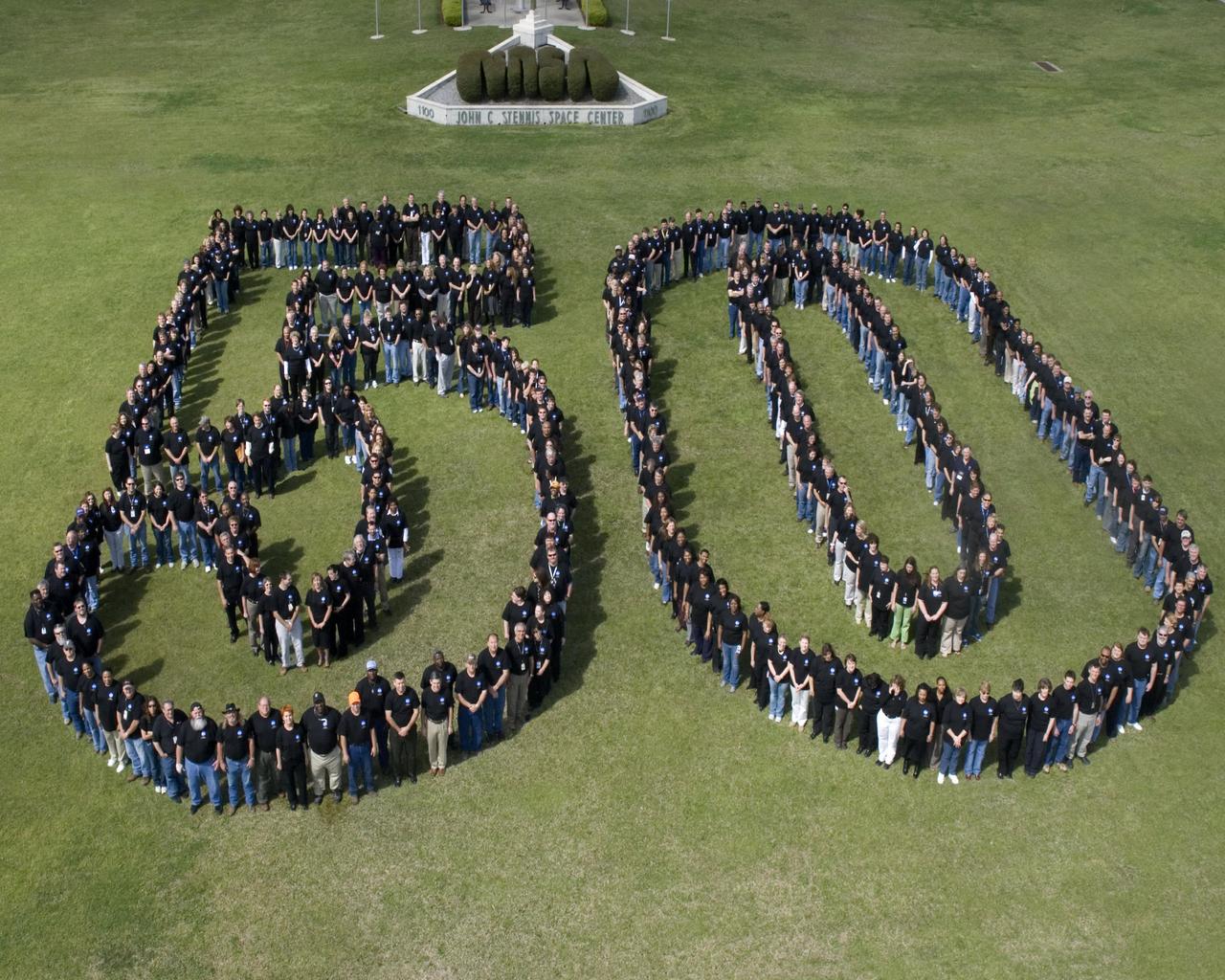
On March 19, employees of Stennis Space Center formed the number 50 to celebrate NASA's 50th anniversary, October 2008. Employees wore their NASA 50th anniversary T-shirts for the photo.

NASA's Kennedy Space Center in Florida observes U.S. Constitution Day, the official birthday of our U.S. government, with the theme "Freedom Needs Space." A remembrance poster made appearances in various locations around the multi-user spaceport, including at the new Headquarters Campus Building. Constitution Day is an American federal observance. It recognizes the adoption of the U.S. Constitution and those who have become U.S. citizens. Constitution Day is observed on Sept. 17, the day in 1787 that delegates to the Constitutional Convention signed the document in Philadelphia.

This four-panel graphic illustrates how the binary-star system V Hydrae is launching balls of plasma into space. Panel 1 shows the two stars orbiting each other. One of the stars is nearing the end of its life and has swelled in size, becoming a red giant. In panel 2, the smaller star's orbit carries the star into the red giant's expanded atmosphere. As the star moves through the atmosphere, it gobbles up material from the red giant that settles into a disk around the star. The buildup of material reaches a tipping point and is eventually ejected as blobs of hot plasma along the star's spin axis, as shown in panel 3. This ejection process is repeated every eight years, which is the time it takes for the orbiting star to make another pass through the bloated red giant's envelope, as shown in panel 4. http://photojournal.jpl.nasa.gov/catalog/PIA21071

NASA's Kennedy Space Center in Florida observes U.S. Constitution Day, the official birthday of our U.S. government, with the theme "Freedom Needs Space." A remembrance poster made appearances in various locations around the multi-user spaceport, including on the crawlerway, as the mobile launcher, atop crawler-transporter 2, in the background, slowly moves off of Launch Pad 39B for its trip to the Vehicle Assembly Building. Constitution Day is an American federal observance. It recognizes the adoption of the U.S. Constitution and those who have become U.S. citizens. Constitution Day is observed on Sept. 17, the day in 1787 that delegates to the Constitutional Convention signed the document in Philadelphia.

NASA's Kennedy Space Center in Florida observes U.S. Constitution Day, the official birthday of our U.S. government, with the theme "Freedom Needs Space." A remembrance poster made appearances in various locations around the multi-user spaceport, including near the iconic Vehicle Assembly Building. Constitution Day is an American federal observance. It recognizes the adoption of the U.S. Constitution and those who have become U.S. citizens. Constitution Day is observed on Sept. 17, the day in 1787 that delegates to the Constitutional Convention signed the document in Philadelphia.
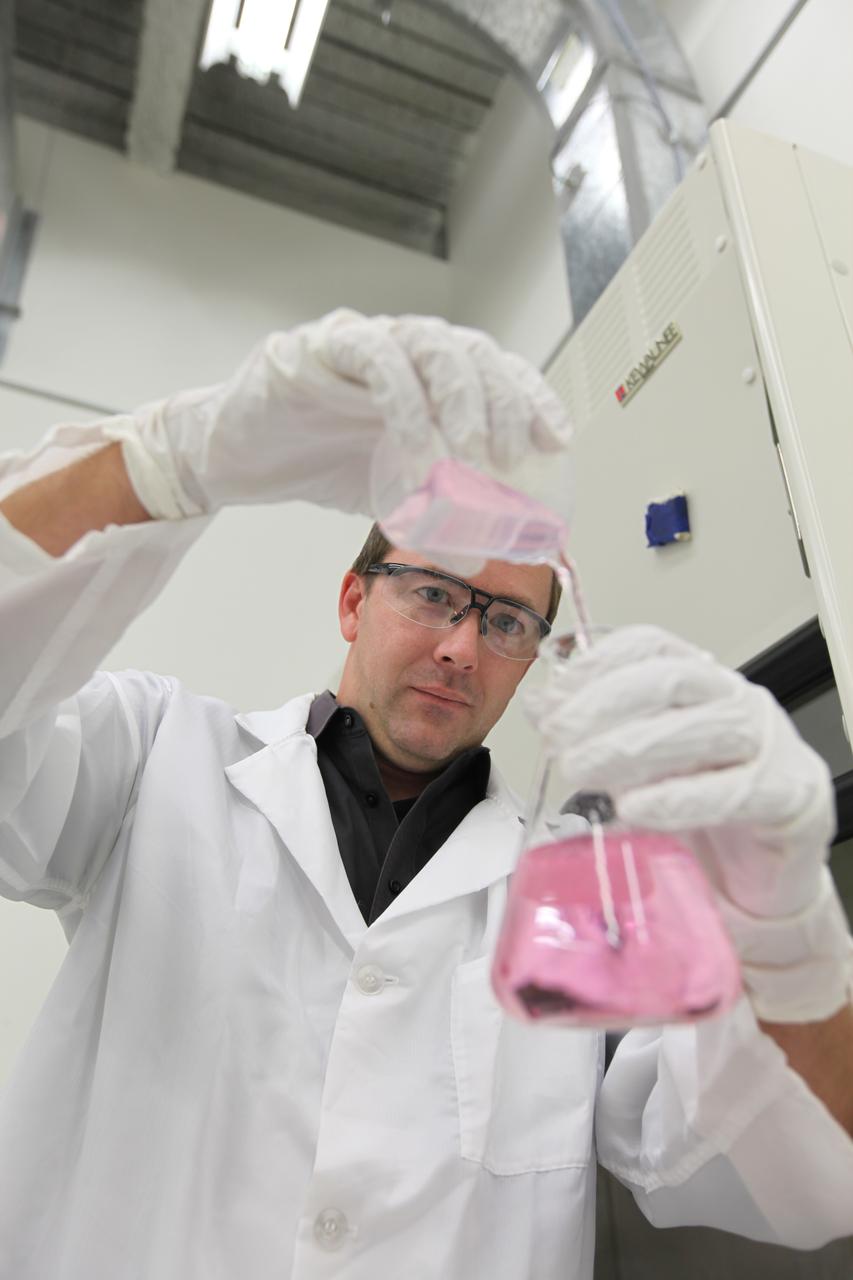
Dr. Luke Roberson, NASA scientist in the Exploration Research and Technology Programs, works in a laboratory in the Space Station Processing Facility at NASA's Kennedy Space Center in Florida.
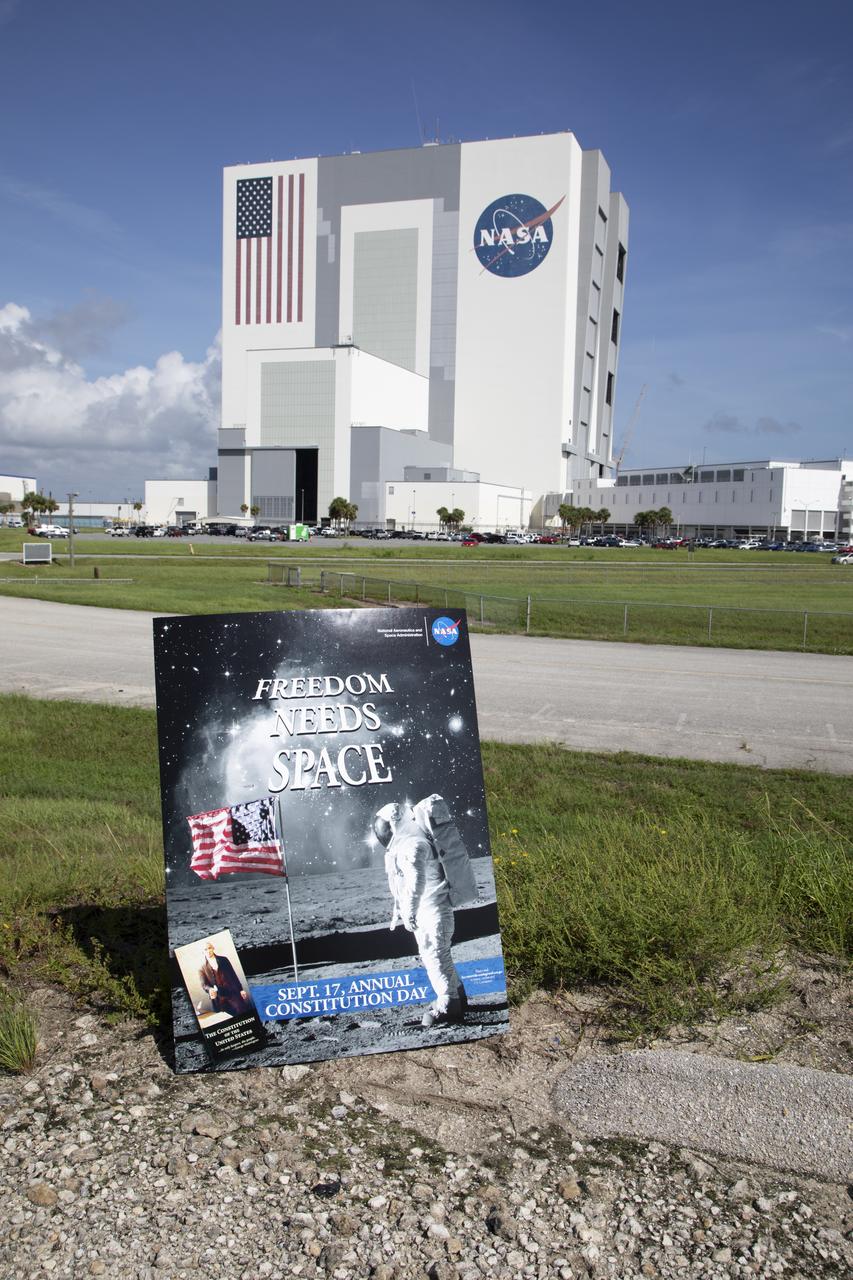
NASA's Kennedy Space Center in Florida observes U.S. Constitution Day, the official birthday of our U.S. government, with the theme "Freedom Needs Space." A remembrance poster made appearances in various locations around the multi-user spaceport, including near the iconic Vehicle Assembly Building. Constitution Day is an American federal observance. It recognizes the adoption of the U.S. Constitution and those who have become U.S. citizens. Constitution Day is observed on Sept. 17, the day in 1787 that delegates to the Constitutional Convention signed the document in Philadelphia.