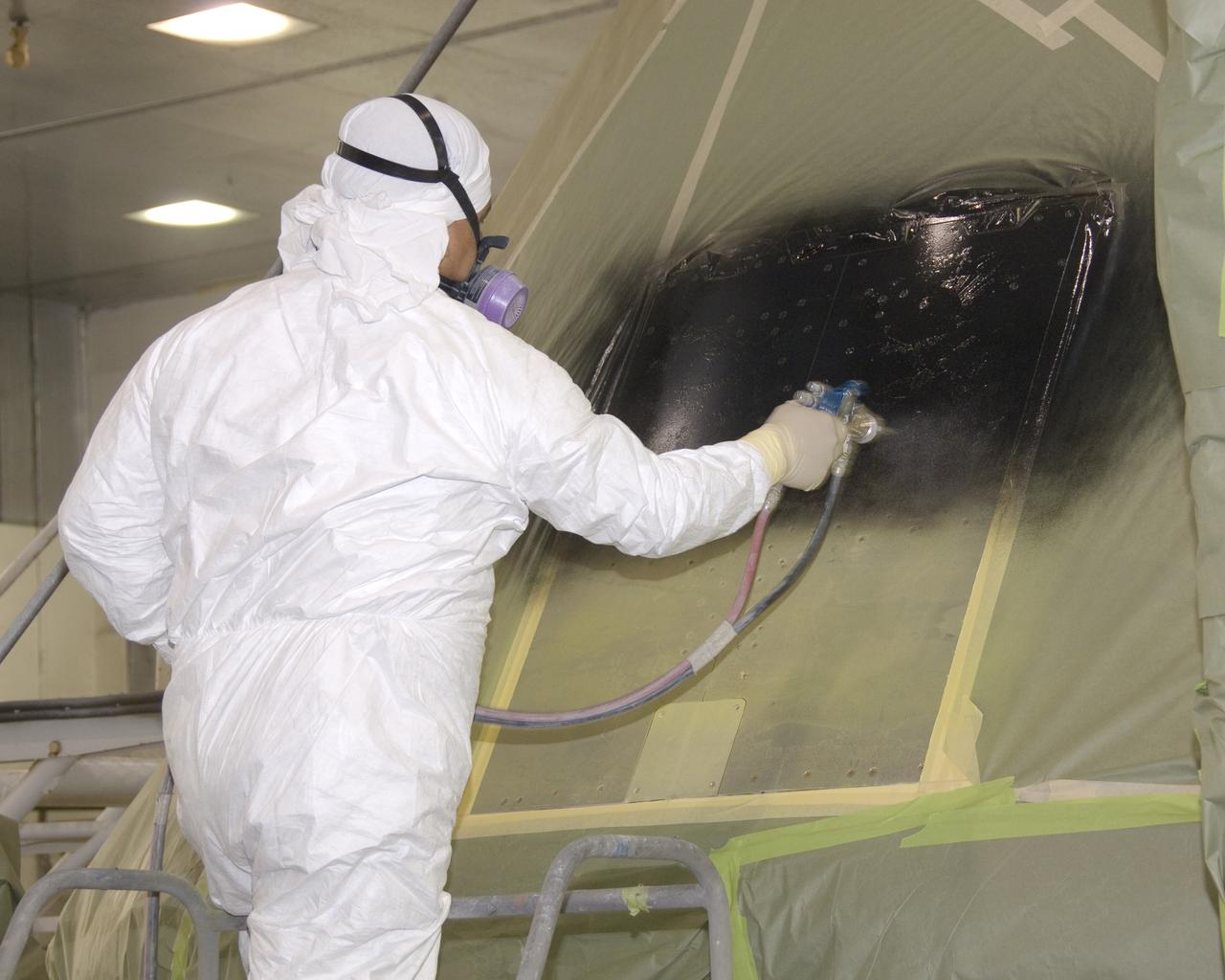
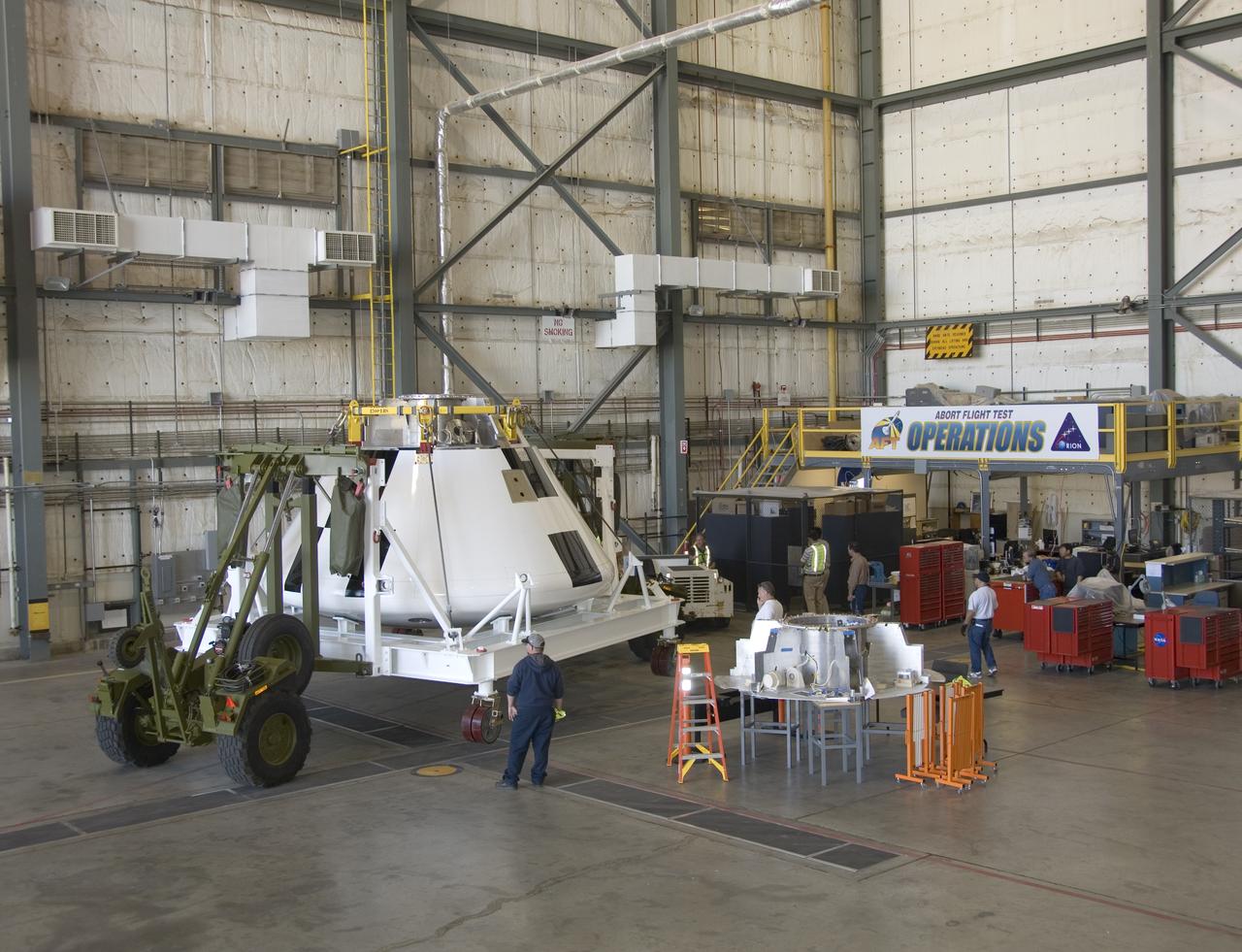
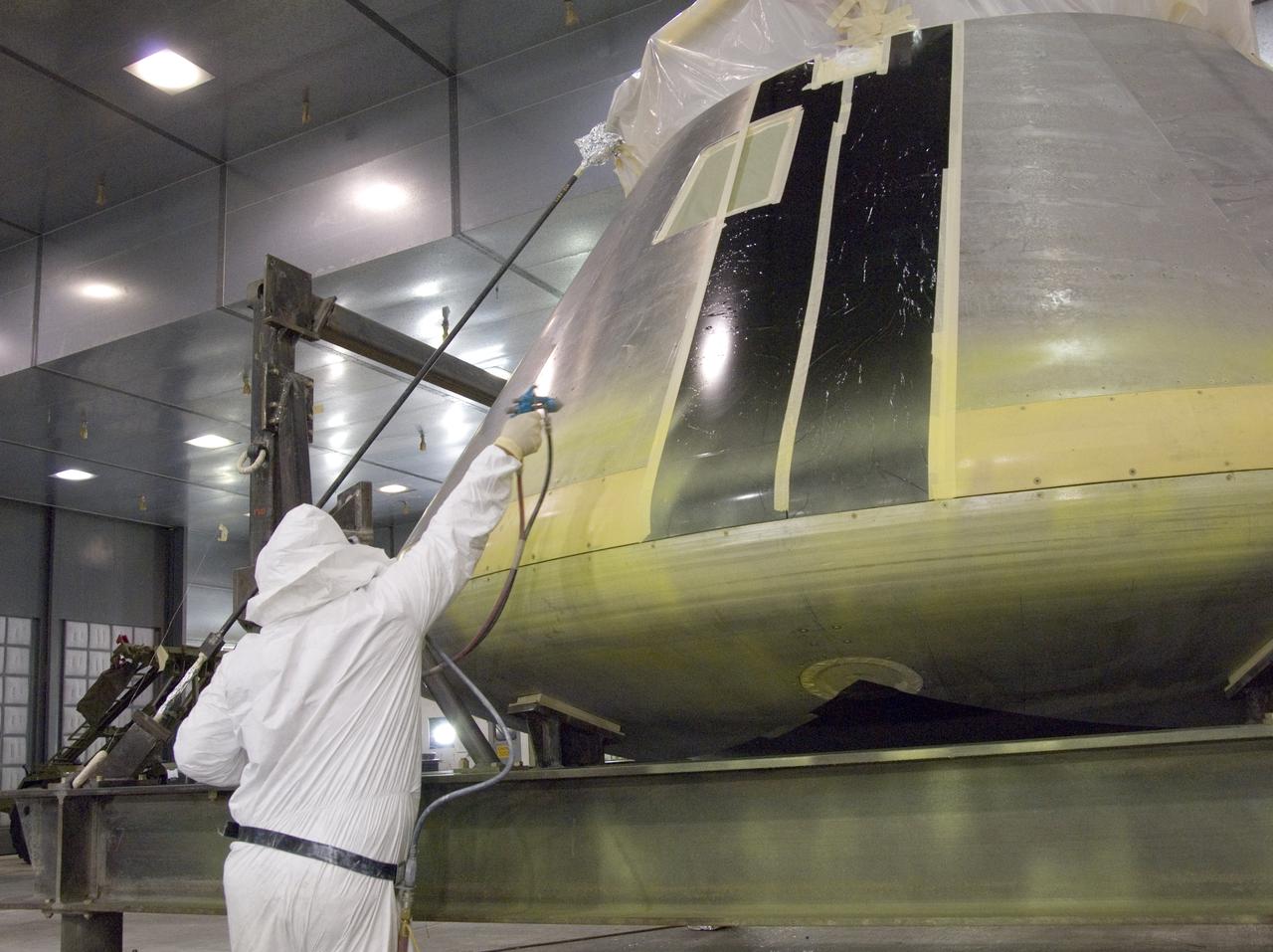
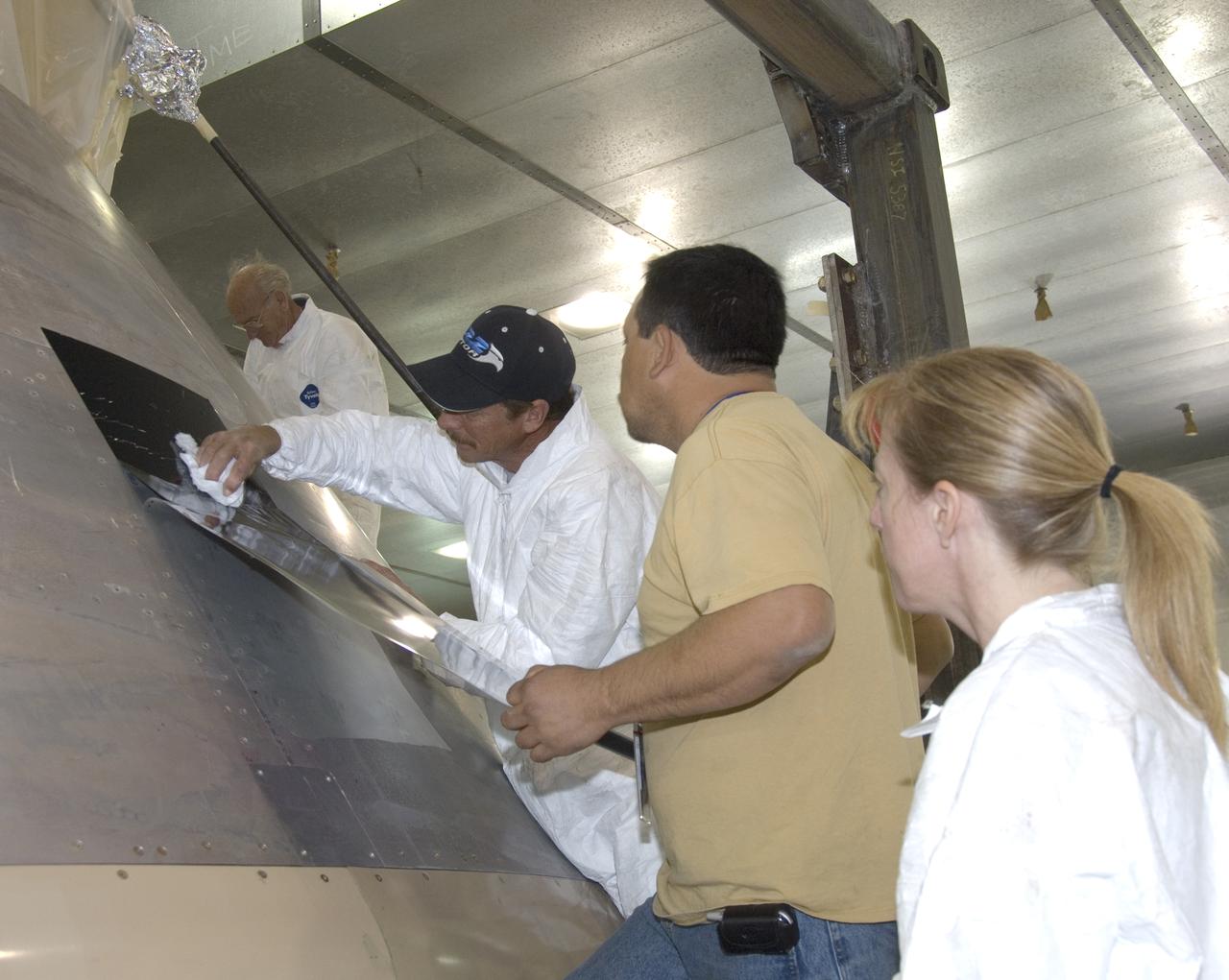
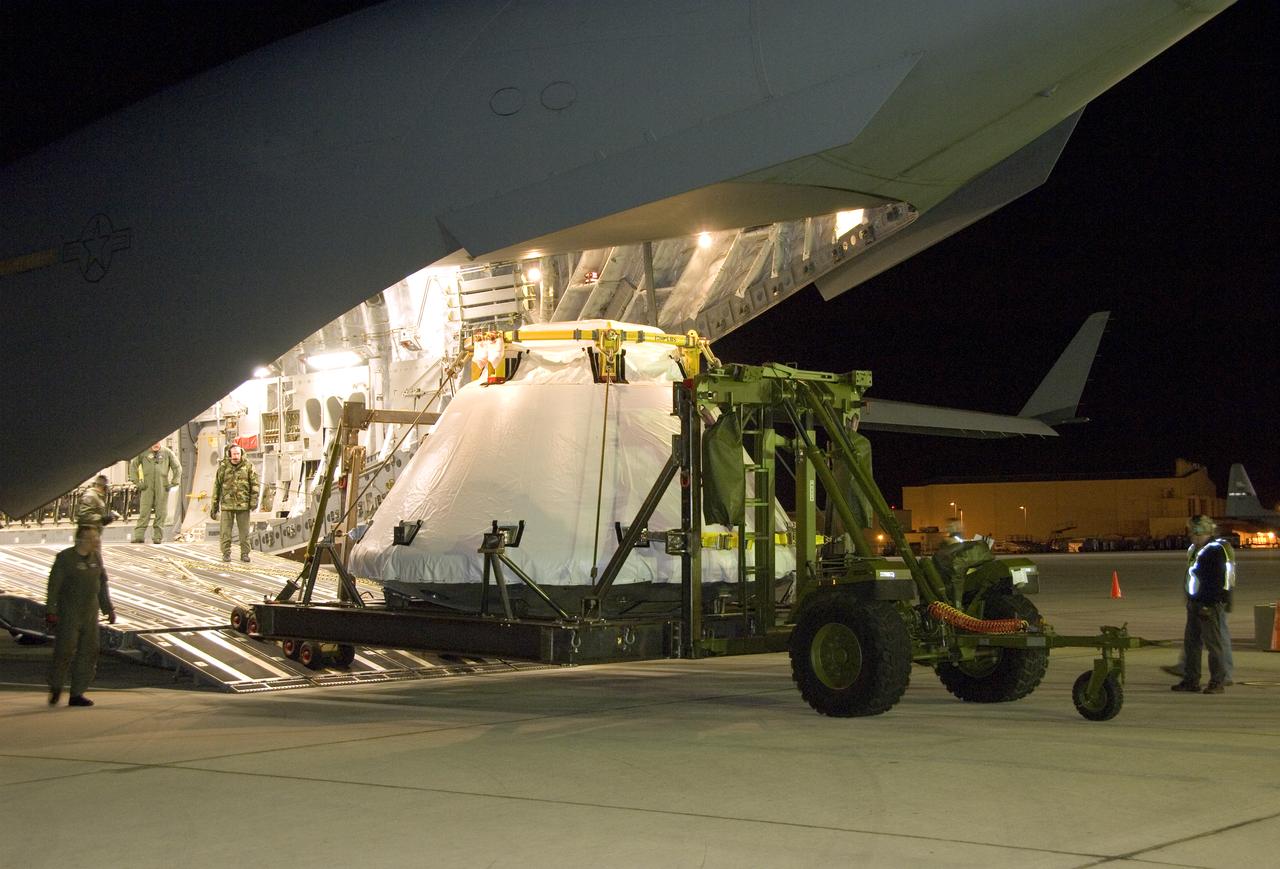
A full-scale flight-test mockup of the Constellation program's Orion crew vehicle arrived at NASA's Dryden Flight Research Center in late March 2008 to undergo preparations for the first short-range flight test of the spacecraft's astronaut escape system later that year. Engineers and technicians at NASA's Langley Research Center fabricated the structure, which precisely represents the size, outer shape and mass characteristics of the Orion space capsule. The Orion crew module mockup was ferried to NASA Dryden on an Air Force C-17. After painting in the Edwards Air Force Base paint hangar, the conical capsule was taken to Dryden for installation of flight computers, instrumentation and other electronics prior to being sent to the U.S. Army's White Sands Missile Range in New Mexico for integration with the escape system and the first abort flight test in late 2008. The tests were designed to ensure a safe, reliable method of escape for astronauts in case of an emergency.
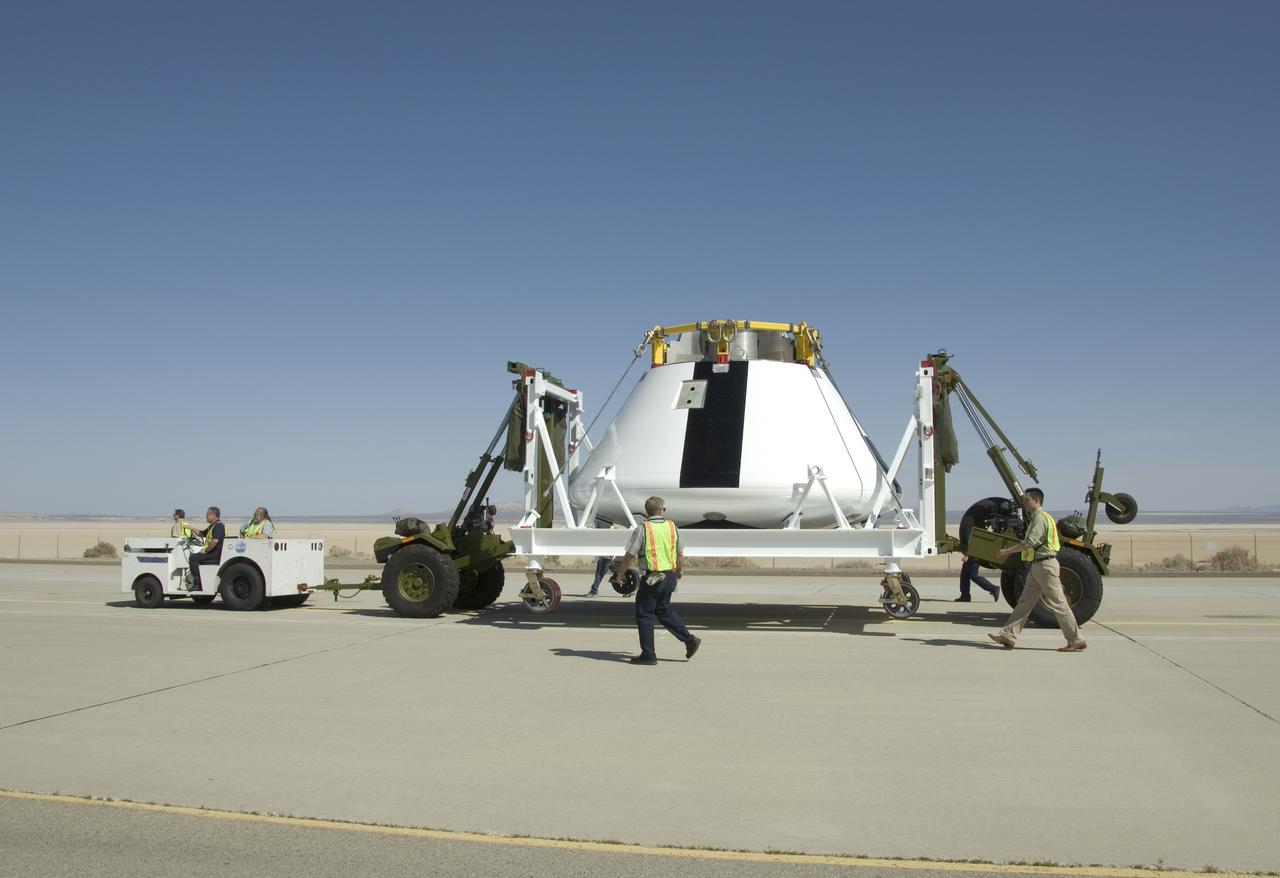
A full-scale flight-test mockup of the Constellation program's Orion crew vehicle arrived at NASA's Dryden Flight Research Center in late March 2008 to undergo preparations for the first short-range flight test of the spacecraft's astronaut escape system later that year. Engineers and technicians at NASA's Langley Research Center fabricated the structure, which precisely represents the size, outer shape and mass characteristics of the Orion space capsule. The Orion crew module mockup was ferried to NASA Dryden on an Air Force C-17. After painting in the Edwards Air Force Base paint hangar, the conical capsule was taken to Dryden for installation of flight computers, instrumentation and other electronics prior to being sent to the U.S. Army's White Sands Missile Range in New Mexico for integration with the escape system and the first abort flight test in late 2008. The tests were designed to ensure a safe, reliable method of escape for astronauts in case of an emergency.
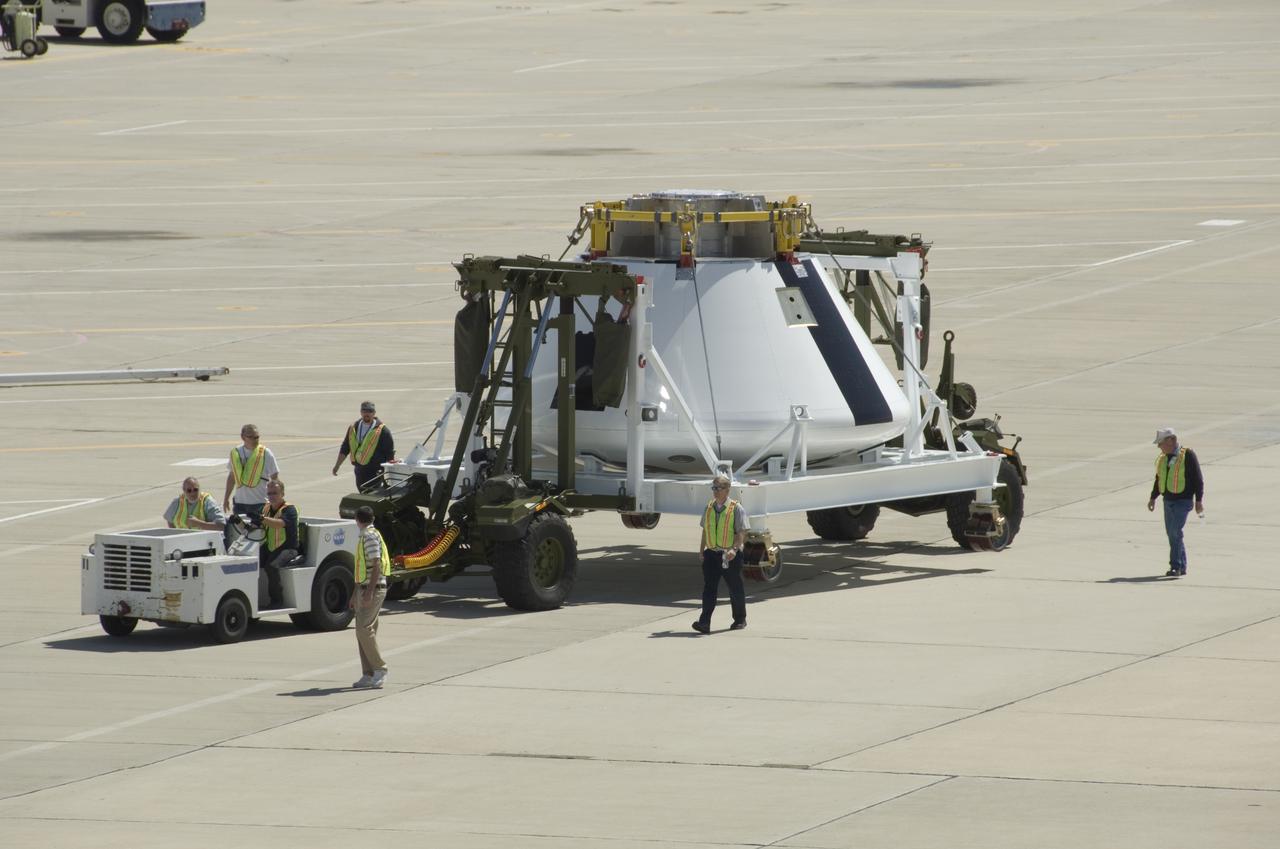
A full-scale flight-test mockup of the Constellation program's Orion crew vehicle arrived at NASA's Dryden Flight Research Center in late March 2008 to undergo preparations for the first short-range flight test of the spacecraft's astronaut escape system later that year. Engineers and technicians at NASA's Langley Research Center fabricated the structure, which precisely represents the size, outer shape and mass characteristics of the Orion space capsule. The Orion crew module mockup was ferried to NASA Dryden on an Air Force C-17. After painting in the Edwards Air Force Base paint hangar, the conical capsule was taken to Dryden for installation of flight computers, instrumentation and other electronics prior to being sent to the U.S. Army's White Sands Missile Range in New Mexico for integration with the escape system and the first abort flight test in late 2008. The tests were designed to ensure a safe, reliable method of escape for astronauts in case of an emergency.
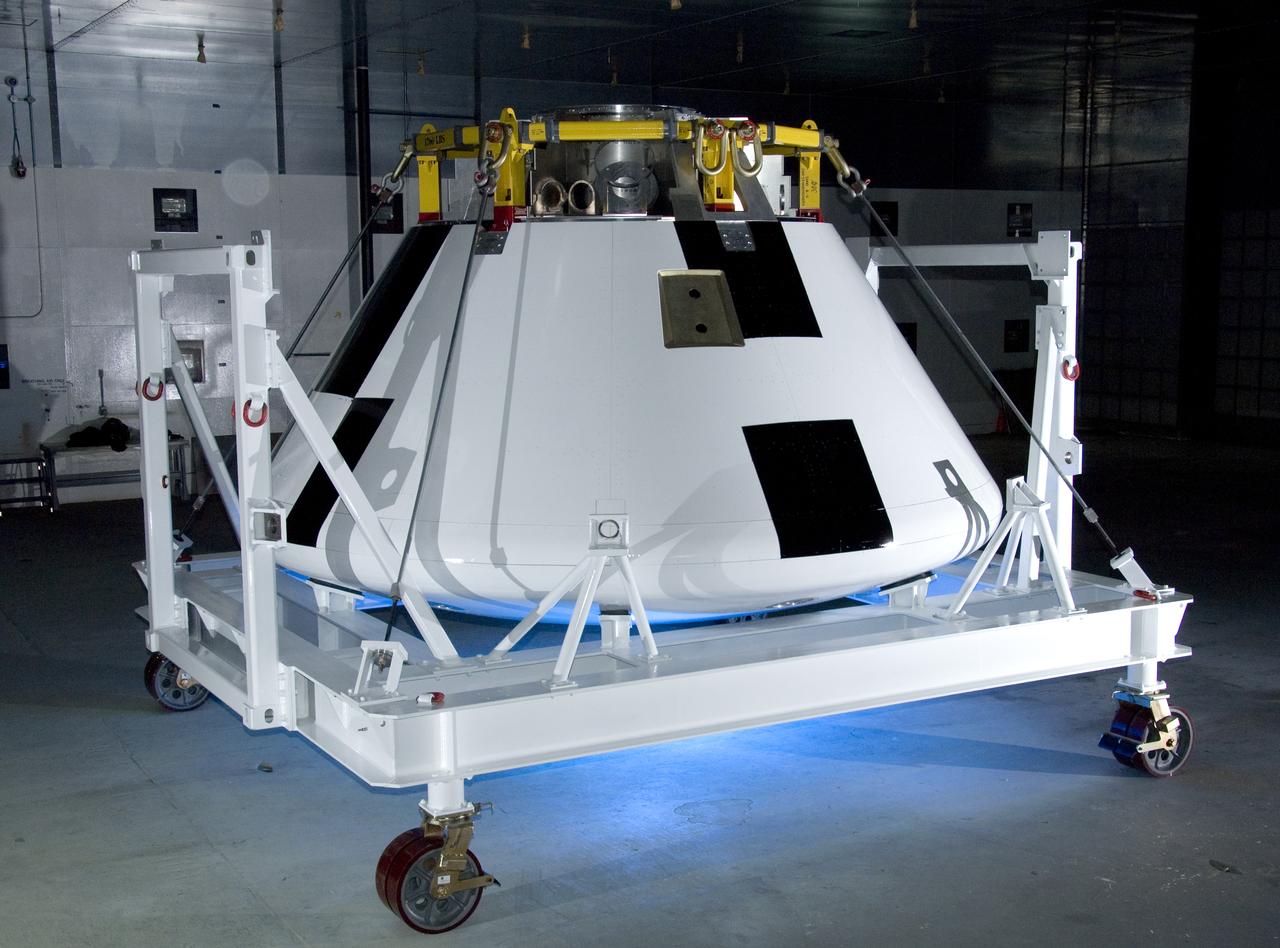
A full-scale flight-test mockup of the Constellation program's Orion crew vehicle arrived at NASA's Dryden Flight Research Center in late March 2008 to undergo preparations for the first short-range flight test of the spacecraft's astronaut escape system later that year. Engineers and technicians at NASA's Langley Research Center fabricated the structure, which precisely represents the size, outer shape and mass characteristics of the Orion space capsule. The Orion crew module mockup was ferried to NASA Dryden on an Air Force C-17. After painting in the Edwards Air Force Base paint hangar, the conical capsule was taken to Dryden for installation of flight computers, instrumentation and other electronics prior to being sent to the U.S. Army's White Sands Missile Range in New Mexico for integration with the escape system and the first abort flight test in late 2008. The tests were designed to ensure a safe, reliable method of escape for astronauts in case of an emergency.
A full-scale flight-test mockup of the Constellation program's Orion crew vehicle arrived at NASA's Dryden Flight Research Center in late March 2008 to undergo preparations for the first short-range flight test of the spacecraft's astronaut escape system later that year. Engineers and technicians at NASA's Langley Research Center fabricated the structure, which precisely represents the size, outer shape and mass characteristics of the Orion space capsule. The Orion crew module mockup was ferried to NASA Dryden on an Air Force C-17. After painting in the Edwards Air Force Base paint hangar, the conical capsule was taken to Dryden for installation of flight computers, instrumentation and other electronics prior to being sent to the U.S. Army's White Sands Missile Range in New Mexico for integration with the escape system and the first abort flight test in late 2008. The tests were designed to ensure a safe, reliable method of escape for astronauts in case of an emergency.
A full-scale flight-test mockup of the Constellation program's Orion crew vehicle arrived at NASA's Dryden Flight Research Center in late March 2008 to undergo preparations for the first short-range flight test of the spacecraft's astronaut escape system later that year. Engineers and technicians at NASA's Langley Research Center fabricated the structure, which precisely represents the size, outer shape and mass characteristics of the Orion space capsule. The Orion crew module mockup was ferried to NASA Dryden on an Air Force C-17. After painting in the Edwards Air Force Base paint hangar, the conical capsule was taken to Dryden for installation of flight computers, instrumentation and other electronics prior to being sent to the U.S. Army's White Sands Missile Range in New Mexico for integration with the escape system and the first abort flight test in late 2008. The tests were designed to ensure a safe, reliable method of escape for astronauts in case of an emergency.
A full-scale flight-test mockup of the Constellation program's Orion crew vehicle arrived at NASA's Dryden Flight Research Center in late March 2008 to undergo preparations for the first short-range flight test of the spacecraft's astronaut escape system later that year. Engineers and technicians at NASA's Langley Research Center fabricated the structure, which precisely represents the size, outer shape and mass characteristics of the Orion space capsule. The Orion crew module mockup was ferried to NASA Dryden on an Air Force C-17. After painting in the Edwards Air Force Base paint hangar, the conical capsule was taken to Dryden for installation of flight computers, instrumentation and other electronics prior to being sent to the U.S. Army's White Sands Missile Range in New Mexico for integration with the escape system and the first abort flight test in late 2008. The tests were designed to ensure a safe, reliable method of escape for astronauts in case of an emergency.
A full-scale flight-test mockup of the Constellation program's Orion crew vehicle arrived at NASA's Dryden Flight Research Center in late March 2008 to undergo preparations for the first short-range flight test of the spacecraft's astronaut escape system later that year. Engineers and technicians at NASA's Langley Research Center fabricated the structure, which precisely represents the size, outer shape and mass characteristics of the Orion space capsule. The Orion crew module mockup was ferried to NASA Dryden on an Air Force C-17. After painting in the Edwards Air Force Base paint hangar, the conical capsule was taken to Dryden for installation of flight computers, instrumentation and other electronics prior to being sent to the U.S. Army's White Sands Missile Range in New Mexico for integration with the escape system and the first abort flight test in late 2008. The tests were designed to ensure a safe, reliable method of escape for astronauts in case of an emergency.
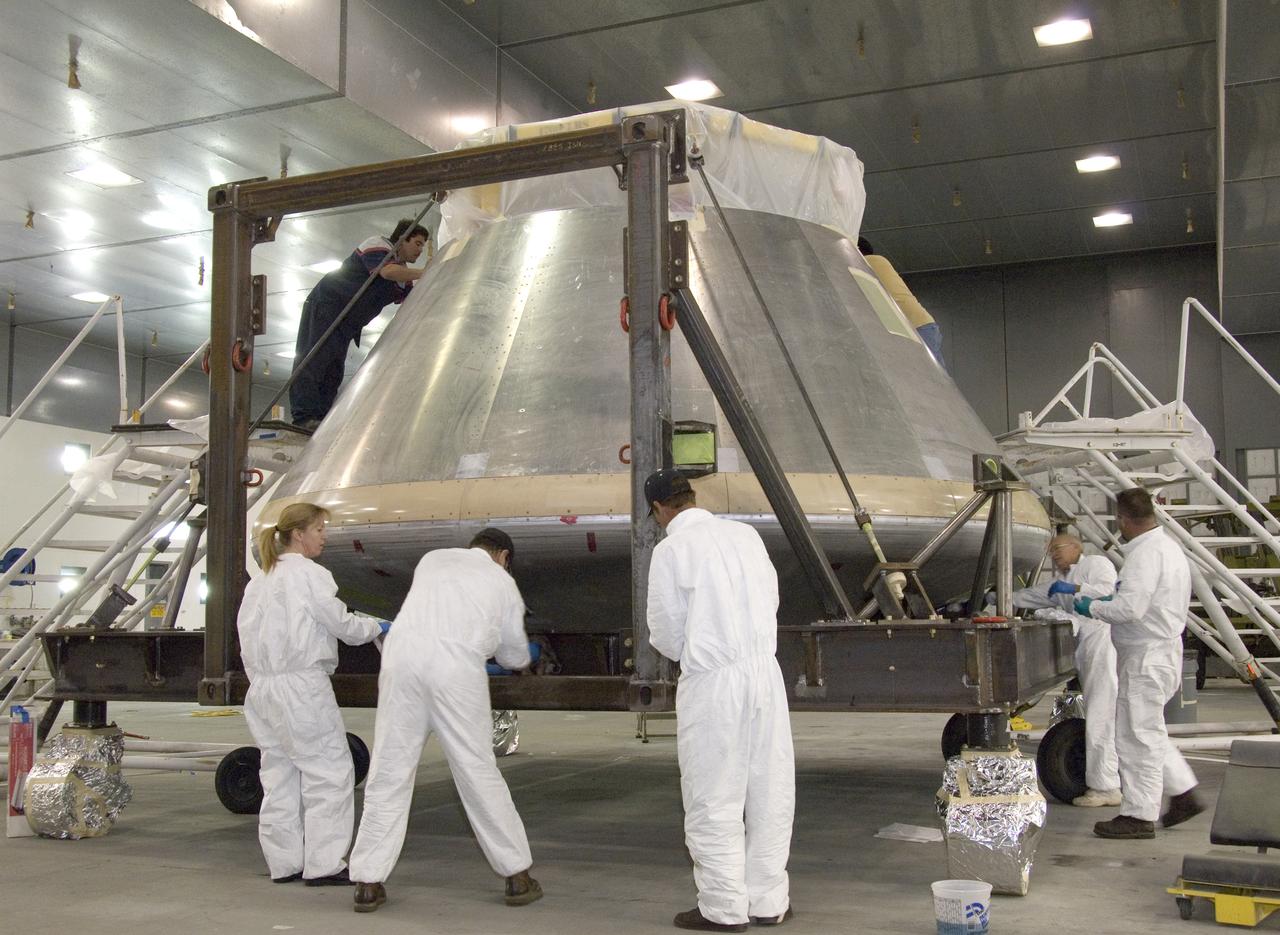
A full-scale flight-test mockup of the Constellation program's Orion crew vehicle arrived at NASA's Dryden Flight Research Center in late March 2008 to undergo preparations for the first short-range flight test of the spacecraft's astronaut escape system later that year. Engineers and technicians at NASA's Langley Research Center fabricated the structure, which precisely represents the size, outer shape and mass characteristics of the Orion space capsule. The Orion crew module mockup was ferried to NASA Dryden on an Air Force C-17. After painting in the Edwards Air Force Base paint hangar, the conical capsule was taken to Dryden for installation of flight computers, instrumentation and other electronics prior to being sent to the U.S. Army's White Sands Missile Range in New Mexico for integration with the escape system and the first abort flight test in late 2008. The tests were designed to ensure a safe, reliable method of escape for astronauts in case of an emergency.
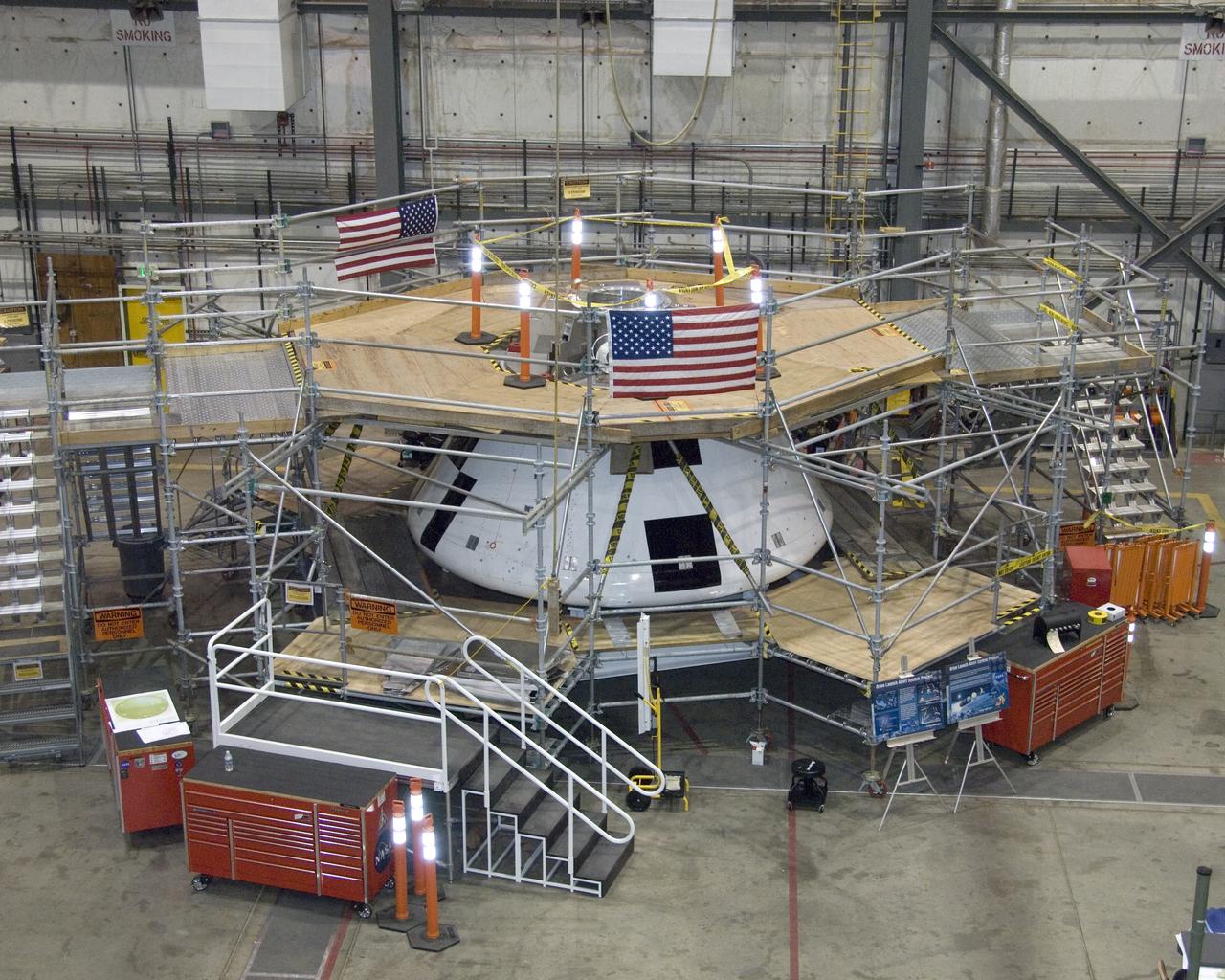
Surrounded by work platforms, NASA's first full-scale Orion abort flight test (AFT) crew module (center) is undergoing preparations at the NASA Dryden Flight Research Center in California for the first flight test of Orion's launch abort system.
Surrounded by work platforms, NASA's first full-scale Orion abort flight test (AFT) crew module (center) is undergoing preparations at the NASA Dryden Flight Research Center in California for the first flight test of Orion's launch abort system. To the left is a space shuttle orbiter purge vehicle sharing the hangar.
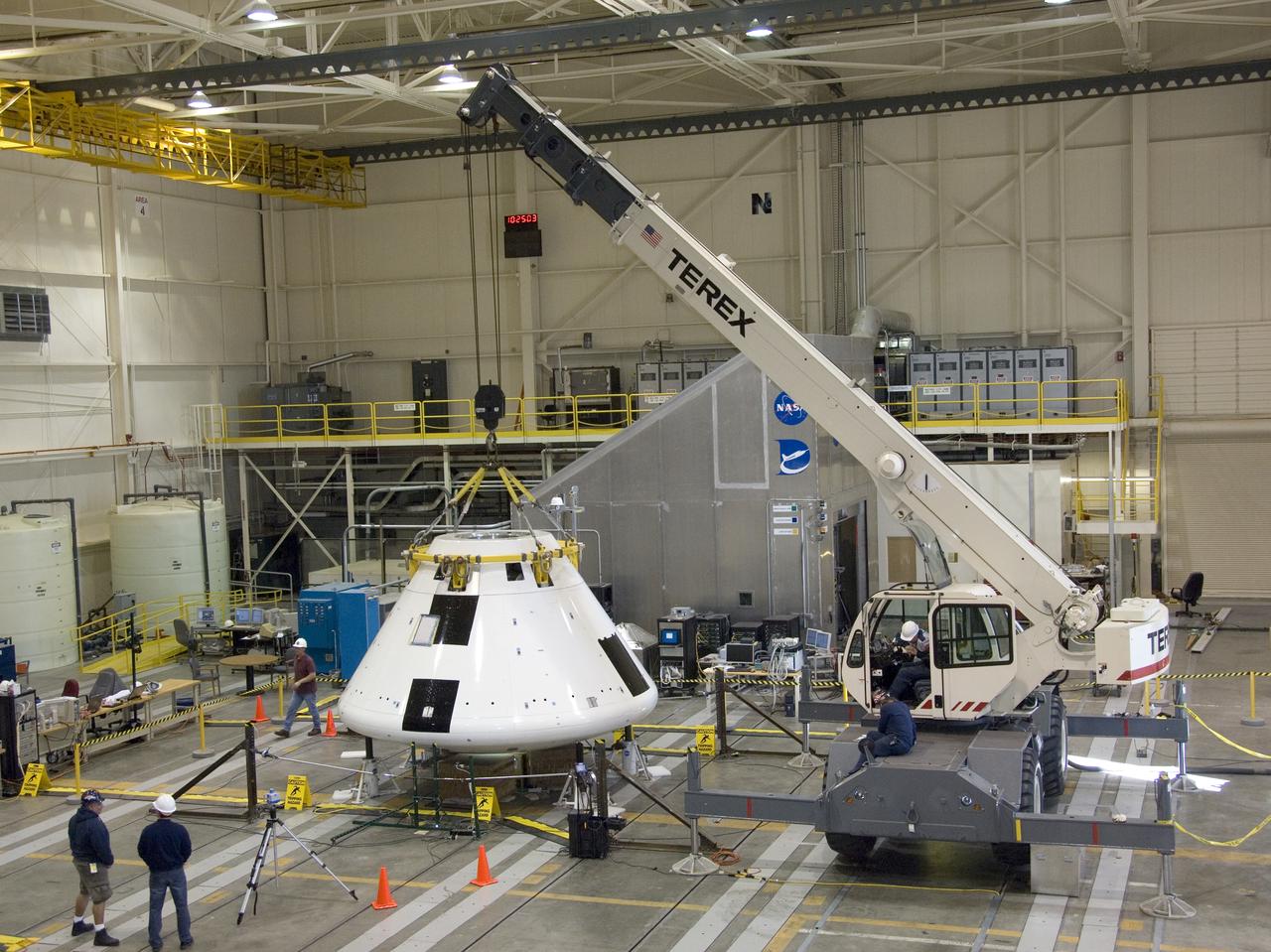
Under the watchful eyes of technicians, a crane positions the Orion PA-1 Abort Flight Test module for mass properties testing in NASA Dryden's Flight Loads Lab.
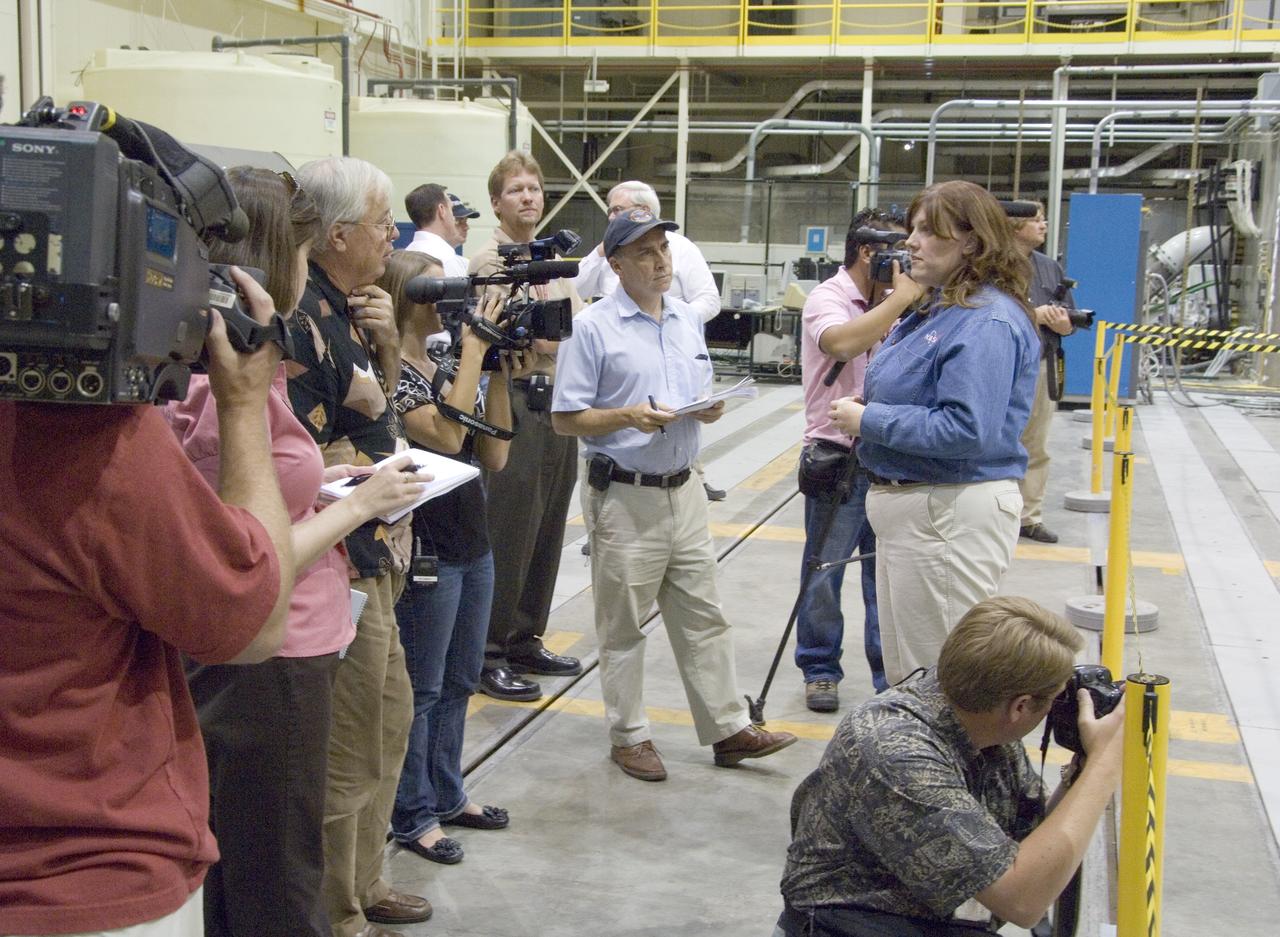
Cathy Bahm, Orion Abort Flight Test integration deputy project manager, briefs news media on the progress of testing in NASA Dryden's Flight Loads Laboratory.
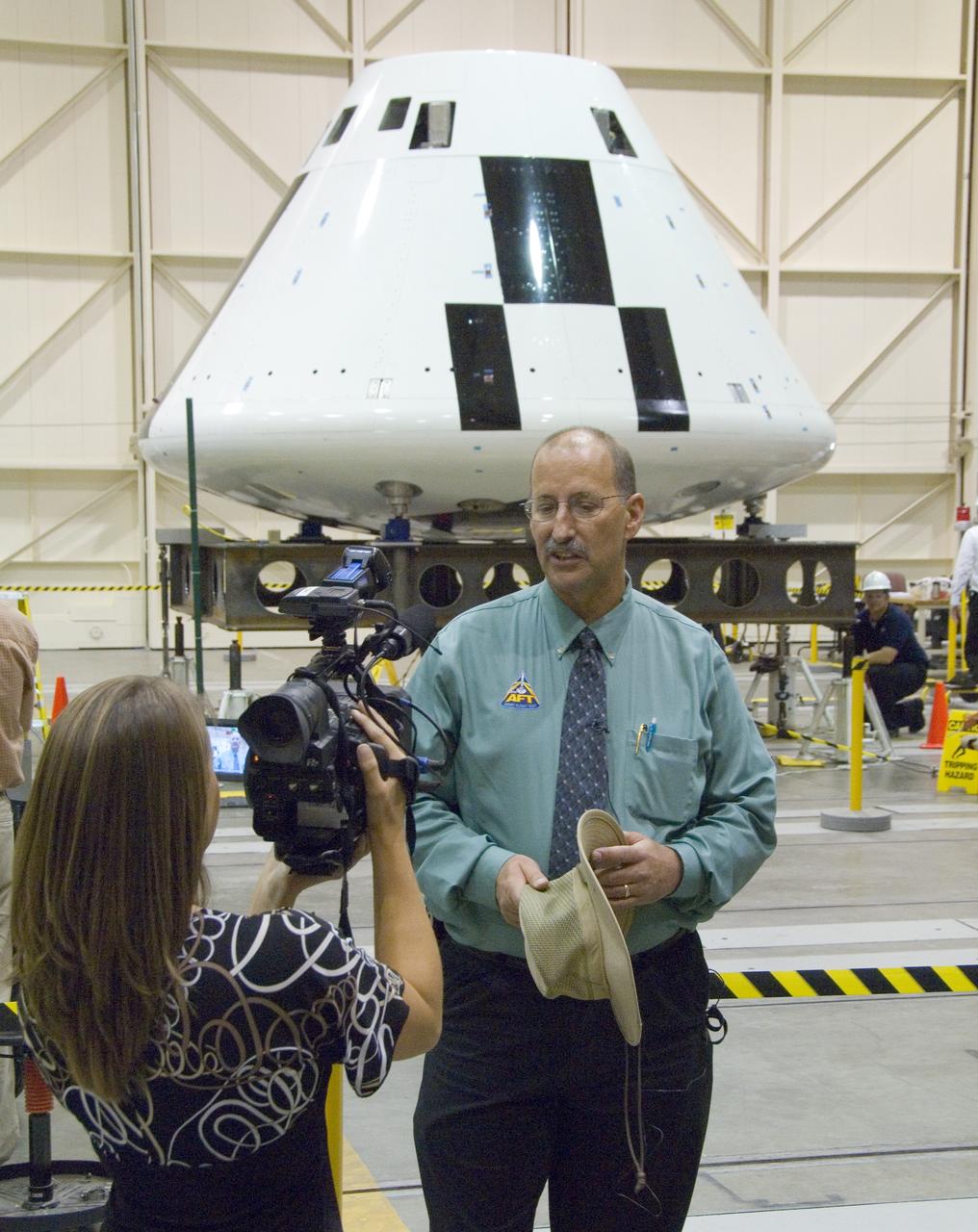
Reporter Julie Flannery of KERO-TV, Bakersfield, interviews NASA Dryden's Orion Abort Flight Test project manager Gary Martin in front of the Orion PA-1 crew module.
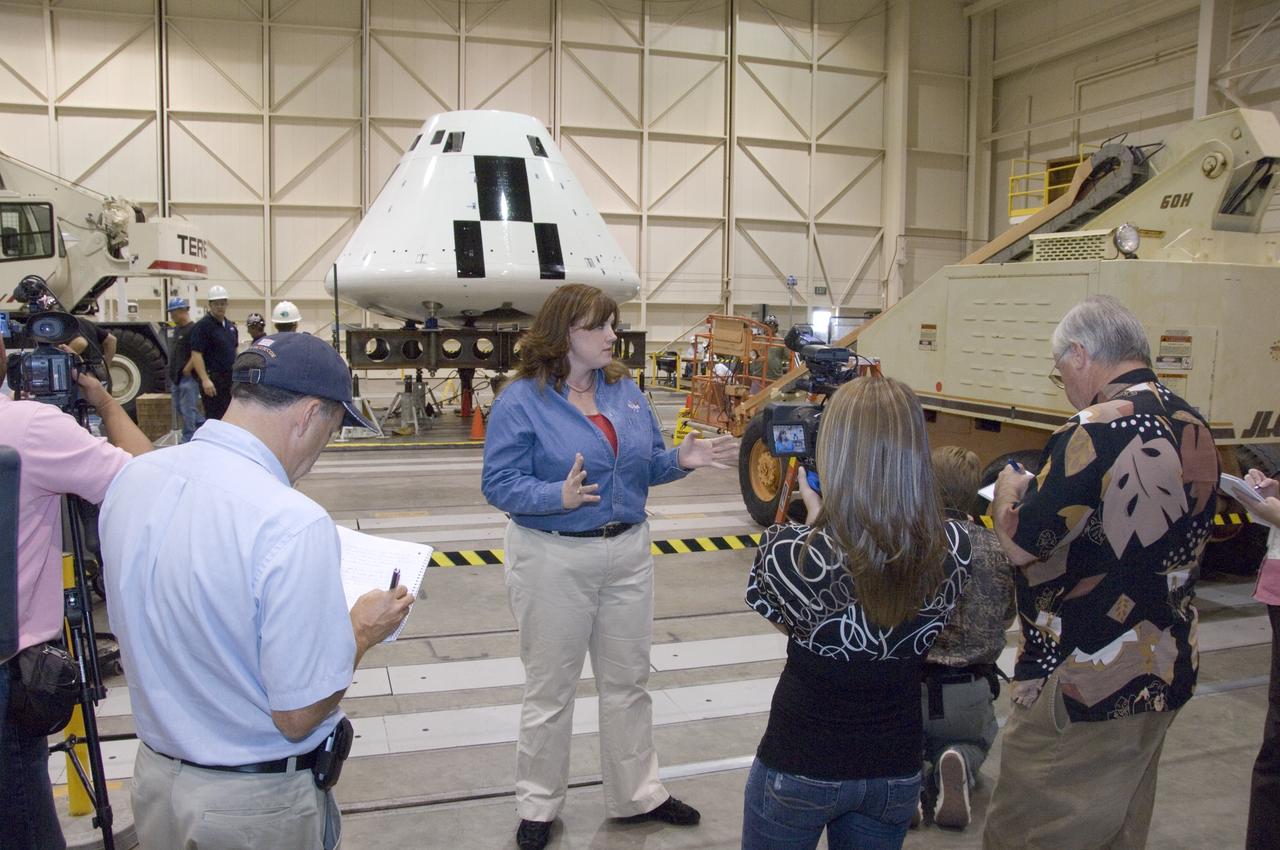
Cathy Bahm, Orion Abort Flight Test integration deputy project manager, briefs news media on the progress of testing in NASA Dryden's Flight Loads Laboratory.
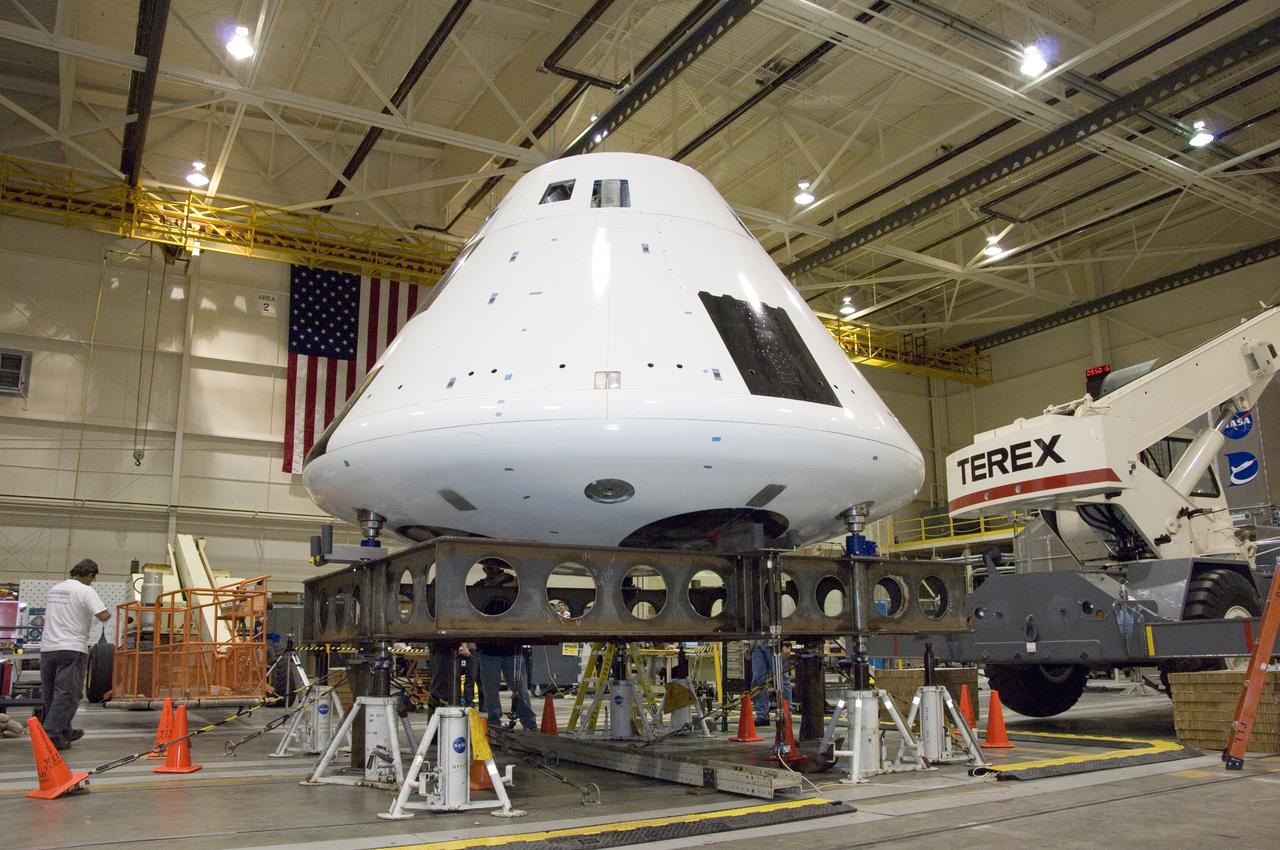
The boilerplate Orion crew module for the Orion Launch Abort System Pad Abort-1 flight test undergoes moment-of-inertia testing at NASA Dryden's Flight Loads Lab.
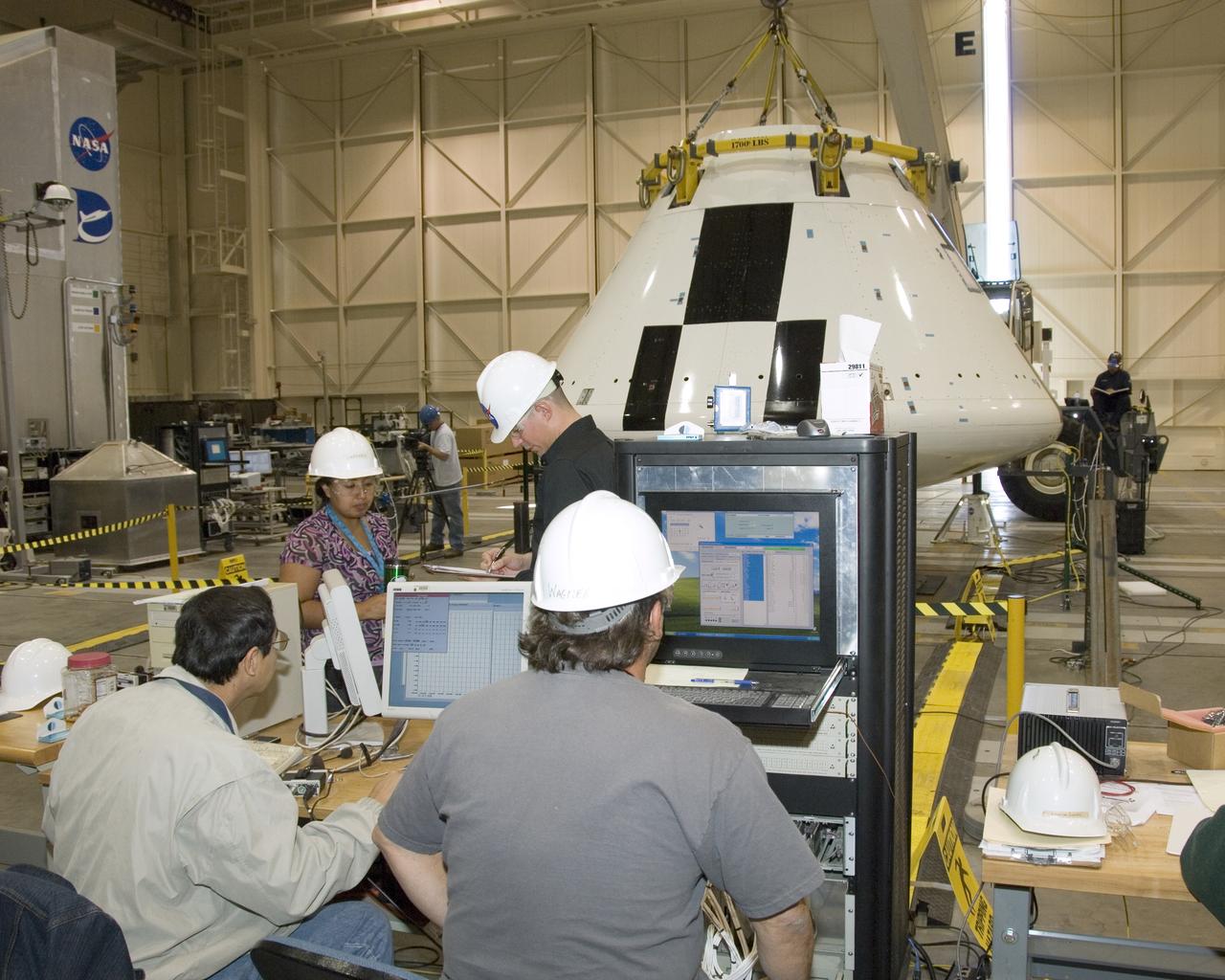
Engineers and technicians pore over data during moment-of-inertia testing on the Orion PA-1 Abort Flight Test module in the NASA Dryden Flight Loads Laboratory.
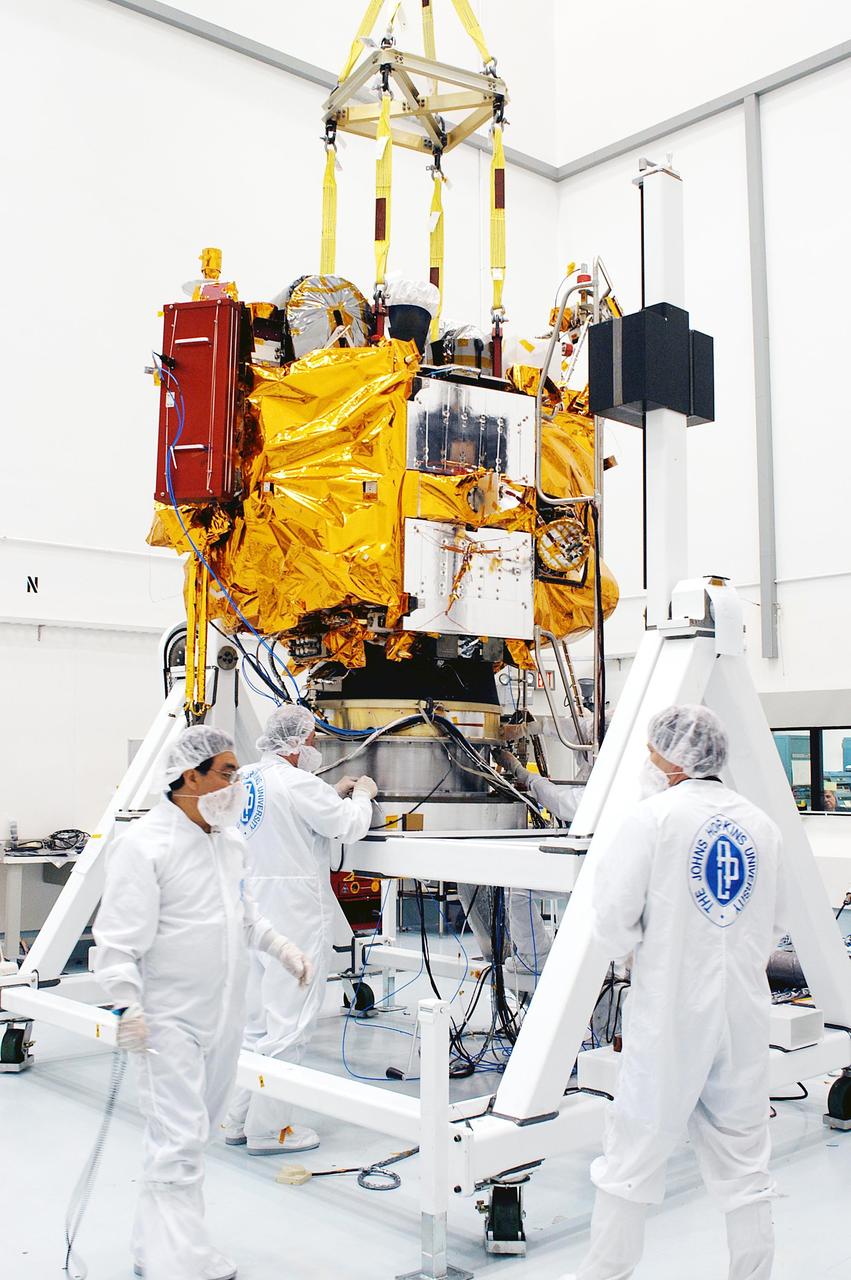
KENNEDY SPACE CENTER, FLA. -- At the Astrotech Space Operations processing facilities, workers prepare to move NASA’s MESSENGER spacecraft onto a test stand using an overhead crane. There, employees of the Johns Hopkins University Applied Physics Laboratory, builders of the spacecraft, will begin final processing for launch, including checkout of the power systems, communications systems and control systems. The thermal blankets will also be attached for flight. MESSENGER - short for MErcury Surface, Space ENvironment, GEochemistry and Ranging - will be launched aboard a Boeing Delta II rocket no earlier than July 30 on a six-year mission to study the planet Mercury.
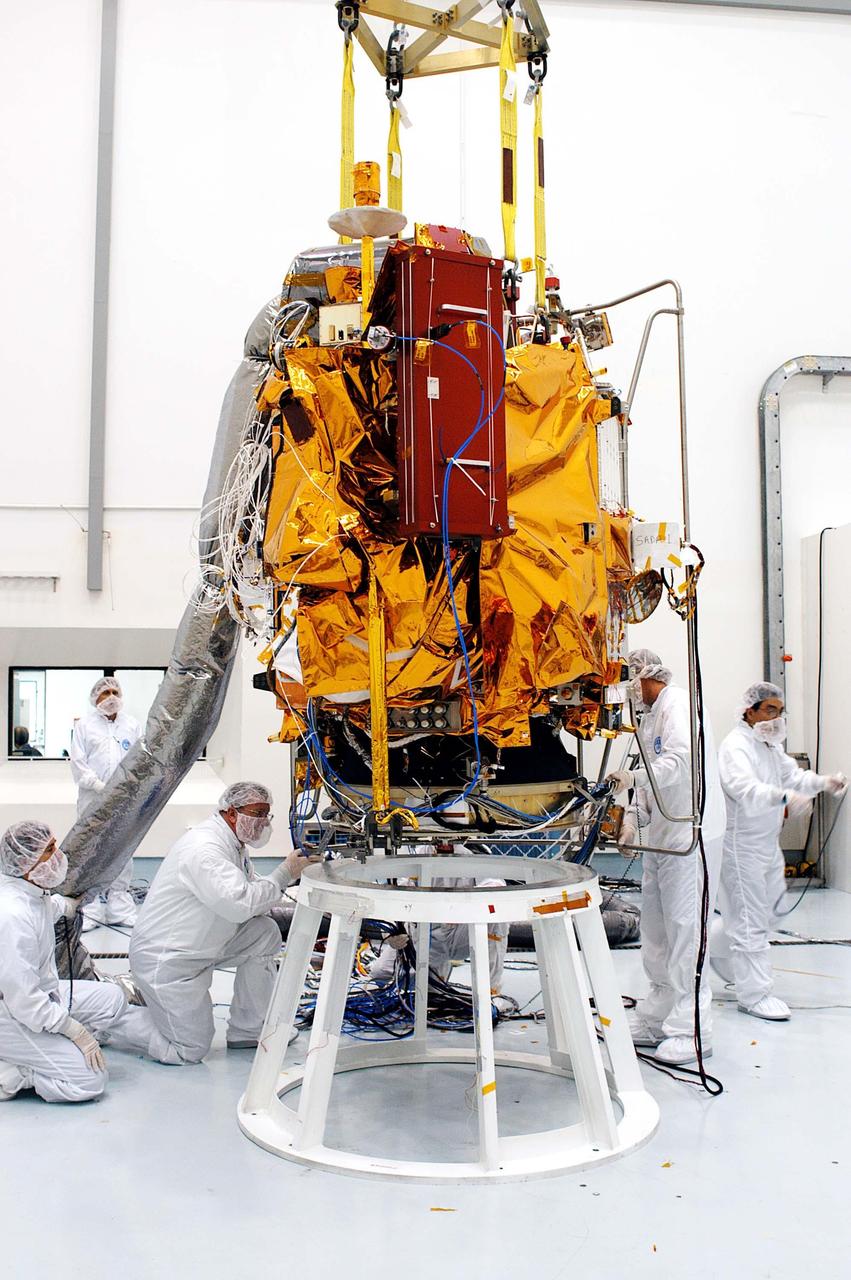
KENNEDY SPACE CENTER, FLA. -- At the Astrotech Space Operations processing facilities, workers prepare for contact of NASA’s MESSENGER spacecraft with a test stand. Once in place, employees of the Johns Hopkins University Applied Physics Laboratory, builders of the spacecraft, will begin final processing for launch, including checkout of the power systems, communications systems and control systems. The thermal blankets will also be attached for flight. MESSENGER - short for MErcury Surface, Space ENvironment, GEochemistry and Ranging - will be launched aboard a Boeing Delta II rocket no earlier than July 30 on a six-year mission to study the planet Mercury.
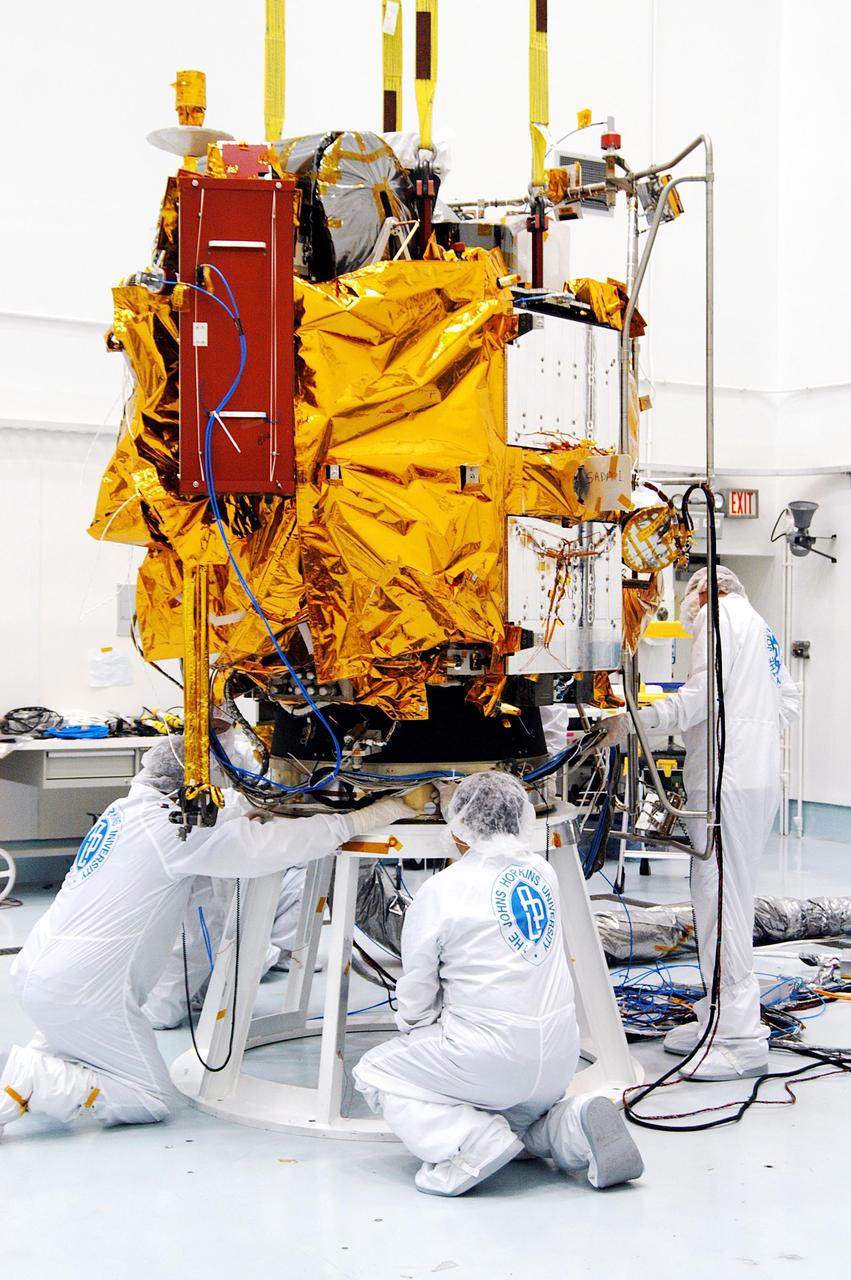
KENNEDY SPACE CENTER, FLA. -- At the Astrotech Space Operations processing facilities, workers verify the correct placement of NASA’s MESSENGER spacecraft on a test stand. Once in place, employees of the Johns Hopkins University Applied Physics Laboratory, builders of the spacecraft, will begin final processing for launch, including checkout of the power systems, communications systems and control systems. The thermal blankets will also be attached for flight. MESSENGER - short for MErcury Surface, Space ENvironment, GEochemistry and Ranging - will be launched aboard a Boeing Delta II rocket no earlier than July 30 on a six-year mission to study the planet Mercury.
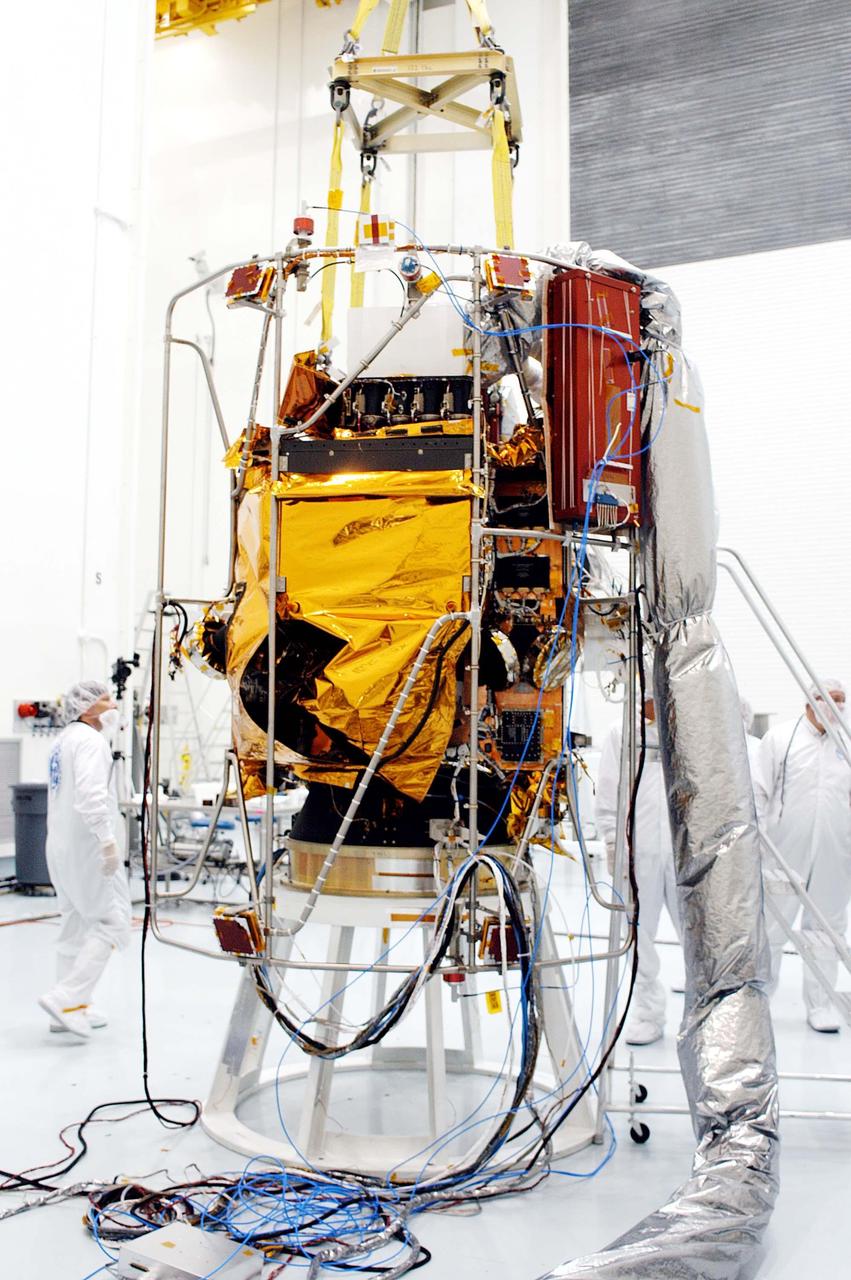
KENNEDY SPACE CENTER, FLA. -- At the Astrotech Space Operations processing facilities, the attachment of NASA’s MESSENGER spacecraft to a test stand is complete. The spacecraft is now ready for employees of the Johns Hopkins University Applied Physics Laboratory, builders of the spacecraft, to begin final processing for launch, including checkout of the power systems, communications systems and control systems. The thermal blankets will also be attached for flight. MESSENGER - short for MErcury Surface, Space ENvironment, GEochemistry and Ranging - will be launched aboard a Boeing Delta II rocket no earlier than July 30 on a six-year mission to study the planet Mercury.
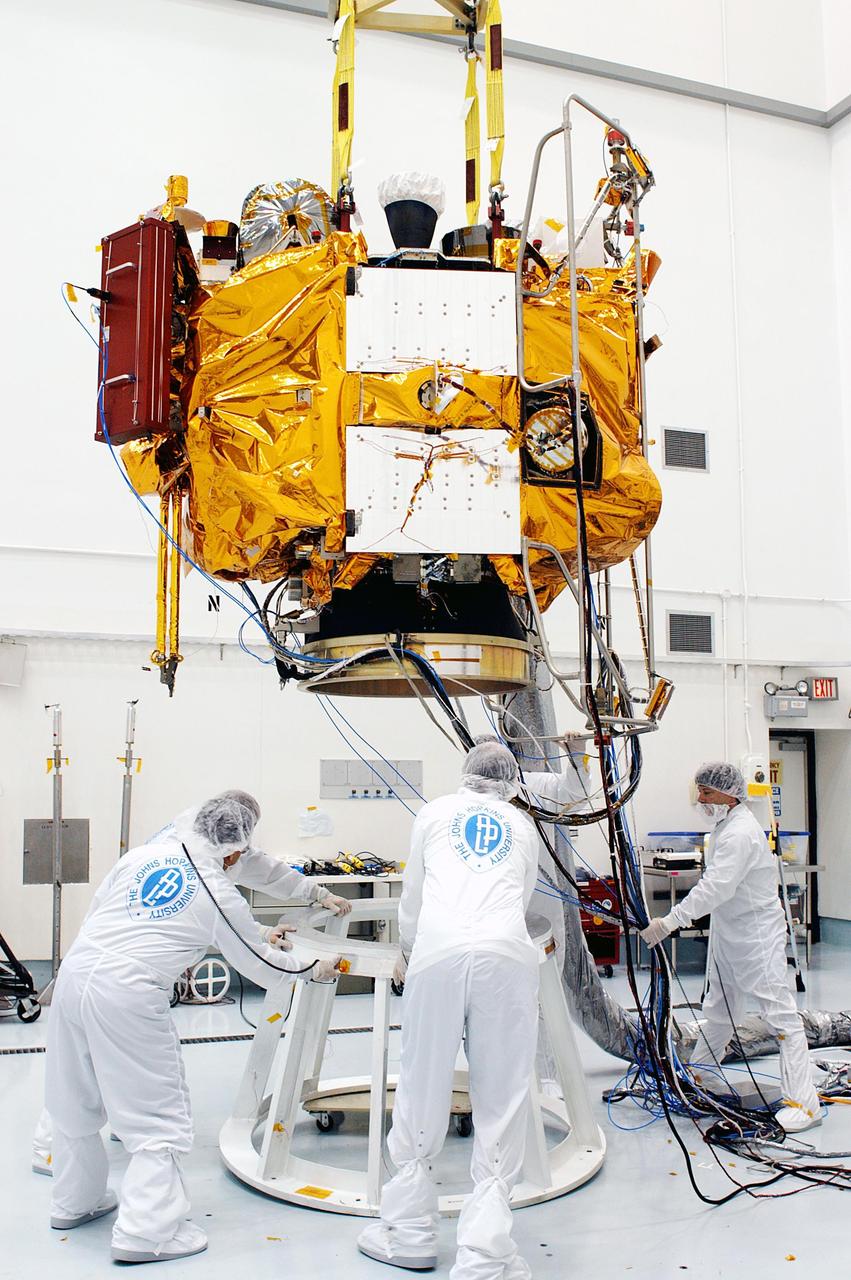
KENNEDY SPACE CENTER, FLA. -- At the Astrotech Space Operations processing facilities, workers lower NASA’s MESSENGER spacecraft onto a test stand using an overhead crane. Once in place, employees of the Johns Hopkins University Applied Physics Laboratory, builders of the spacecraft, will begin final processing for launch, including checkout of the power systems, communications systems and control systems. The thermal blankets will also be attached for flight. MESSENGER - short for MErcury Surface, Space ENvironment, GEochemistry and Ranging - will be launched aboard a Boeing Delta II rocket no earlier than July 30 on a six-year mission to study the planet Mercury.
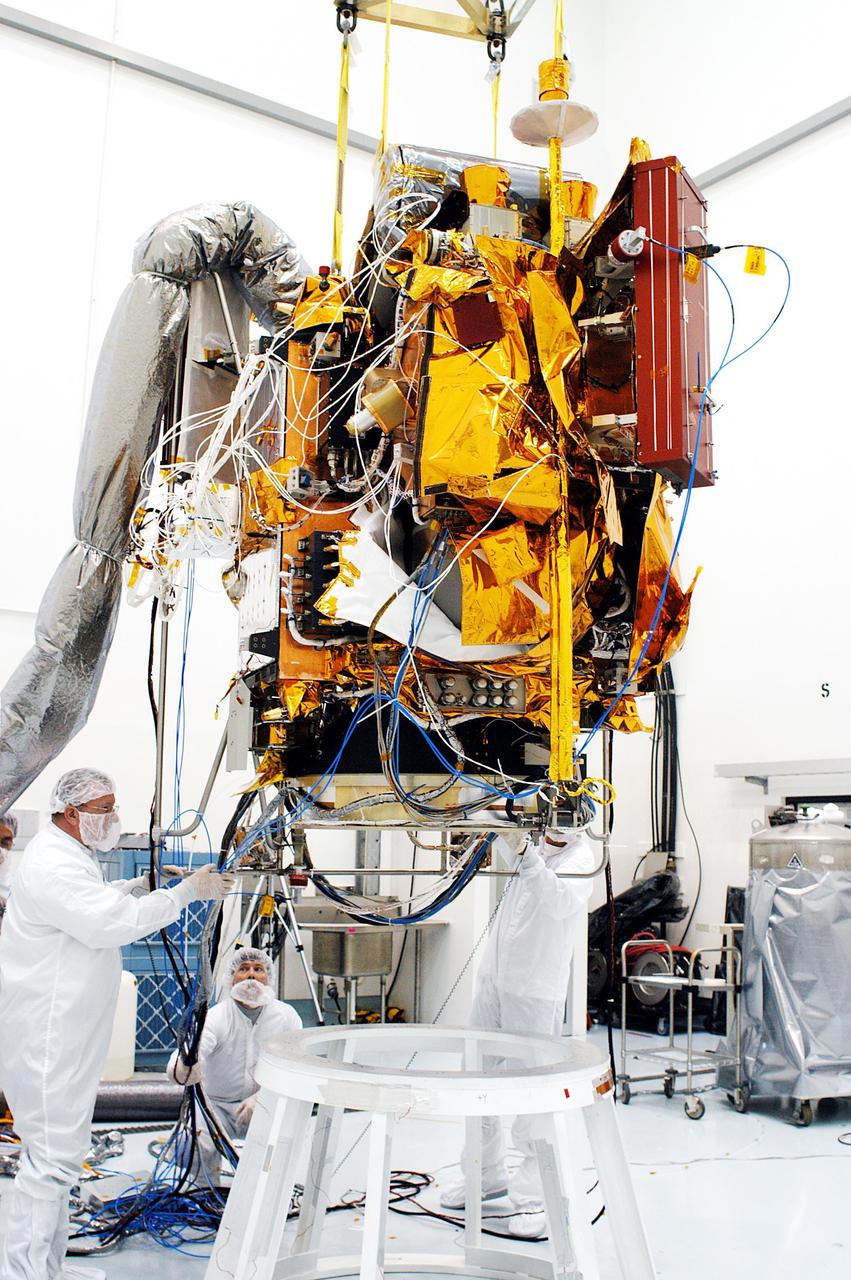
KENNEDY SPACE CENTER, FLA. -- At the Astrotech Space Operations processing facilities, workers monitor NASA’s MESSENGER spacecraft as it is lowered onto a test stand by an overhead crane. Once in place, employees of the Johns Hopkins University Applied Physics Laboratory, builders of the spacecraft, will begin final processing for launch, including checkout of the power systems, communications systems and control systems. The thermal blankets will also be attached for flight. MESSENGER - short for MErcury Surface, Space ENvironment, GEochemistry and Ranging - will be launched aboard a Boeing Delta II rocket no earlier than July 30 on a six-year mission to study the planet Mercury.
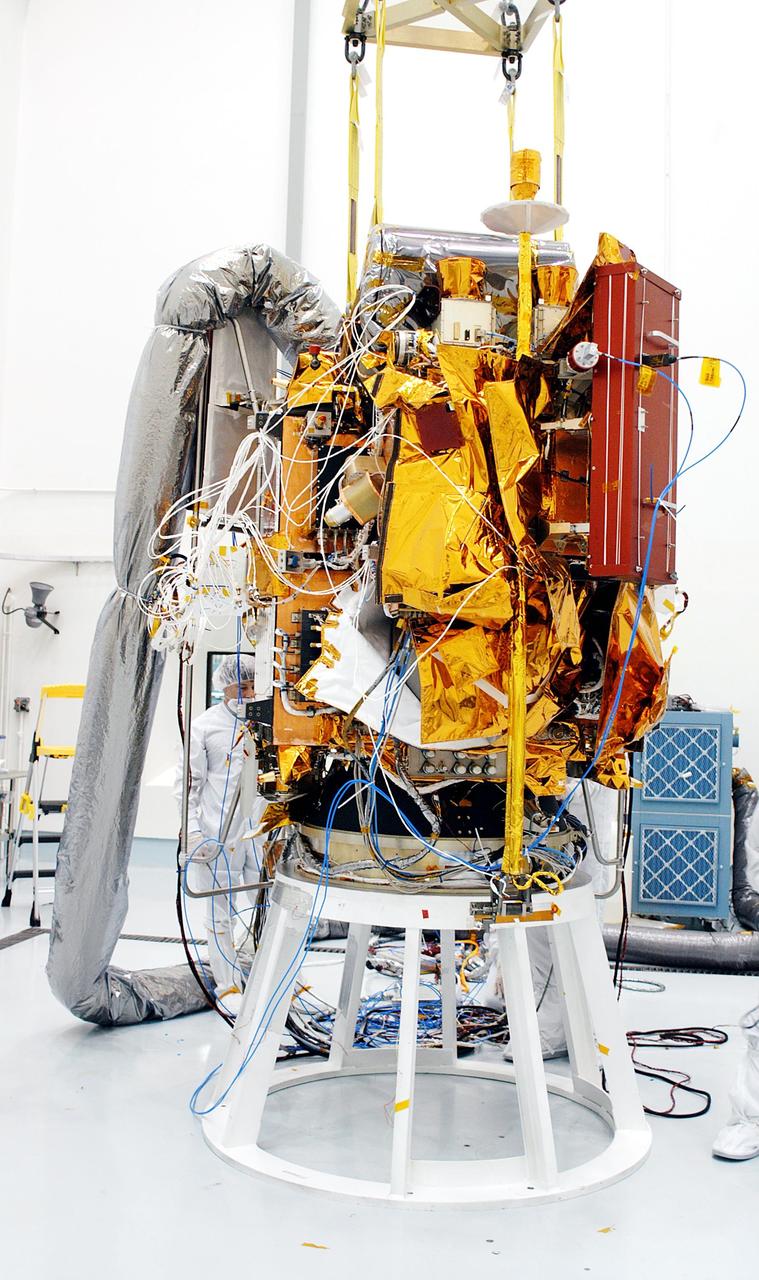
KENNEDY SPACE CENTER, FLA. -- At the Astrotech Space Operations processing facilities, workers secure NASA’s MESSENGER spacecraft on a test stand. Once in place, employees of the Johns Hopkins University Applied Physics Laboratory, builders of the spacecraft, will begin final processing for launch, including checkout of the power systems, communications systems and control systems. The thermal blankets will also be attached for flight. MESSENGER - short for MErcury Surface, Space ENvironment, GEochemistry and Ranging - will be launched aboard a Boeing Delta II rocket no earlier than July 30 on a six-year mission to study the planet Mercury.
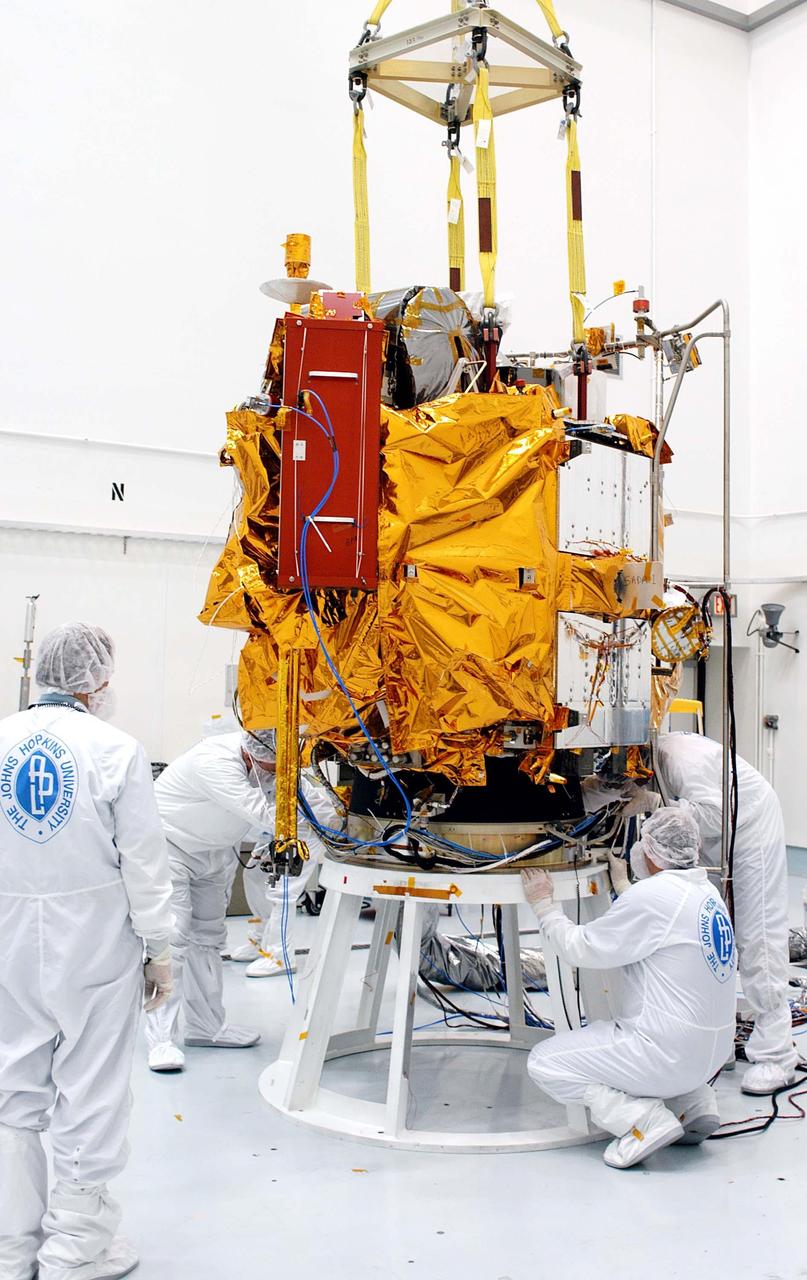
KENNEDY SPACE CENTER, FLA. -- At the Astrotech Space Operations processing facilities, workers secure NASA’s MESSENGER spacecraft on a test stand. Once in place, employees of the Johns Hopkins University Applied Physics Laboratory, builders of the spacecraft, will begin final processing for launch, including checkout of the power systems, communications systems and control systems. The thermal blankets will also be attached for flight. MESSENGER - short for MErcury Surface, Space ENvironment, GEochemistry and Ranging - will be launched aboard a Boeing Delta II rocket no earlier than July 30 on a six-year mission to study the planet Mercury.
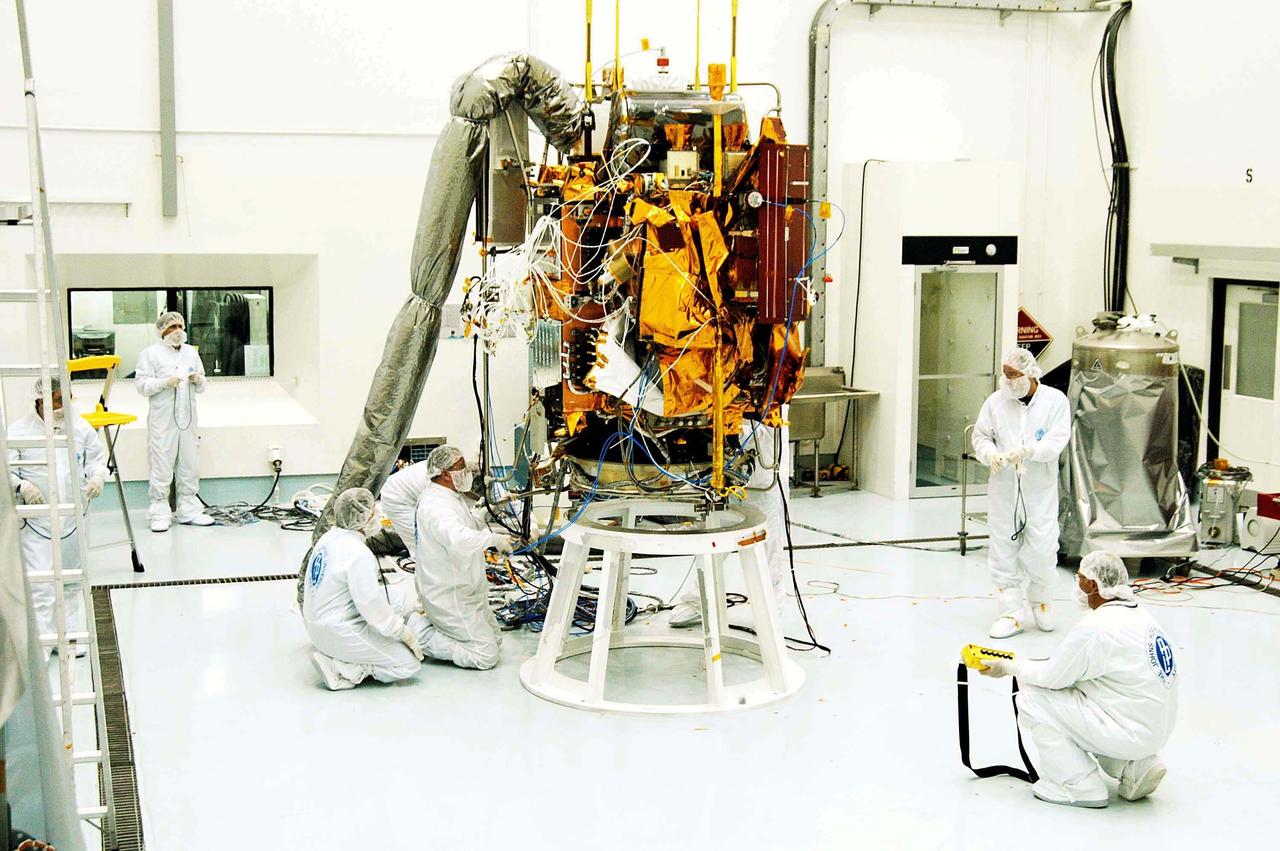
KENNEDY SPACE CENTER, FLA. -- At the Astrotech Space Operations processing facilities, workers check for the correct alignment of NASA’s MESSENGER spacecraft as it is lowered onto a test stand. Once in place, employees of the Johns Hopkins University Applied Physics Laboratory, builders of the spacecraft, will begin final processing for launch, including checkout of the power systems, communications systems and control systems. The thermal blankets will also be attached for flight. MESSENGER - short for MErcury Surface, Space ENvironment, GEochemistry and Ranging - will be launched aboard a Boeing Delta II rocket no earlier than July 30 on a six-year mission to study the planet Mercury.
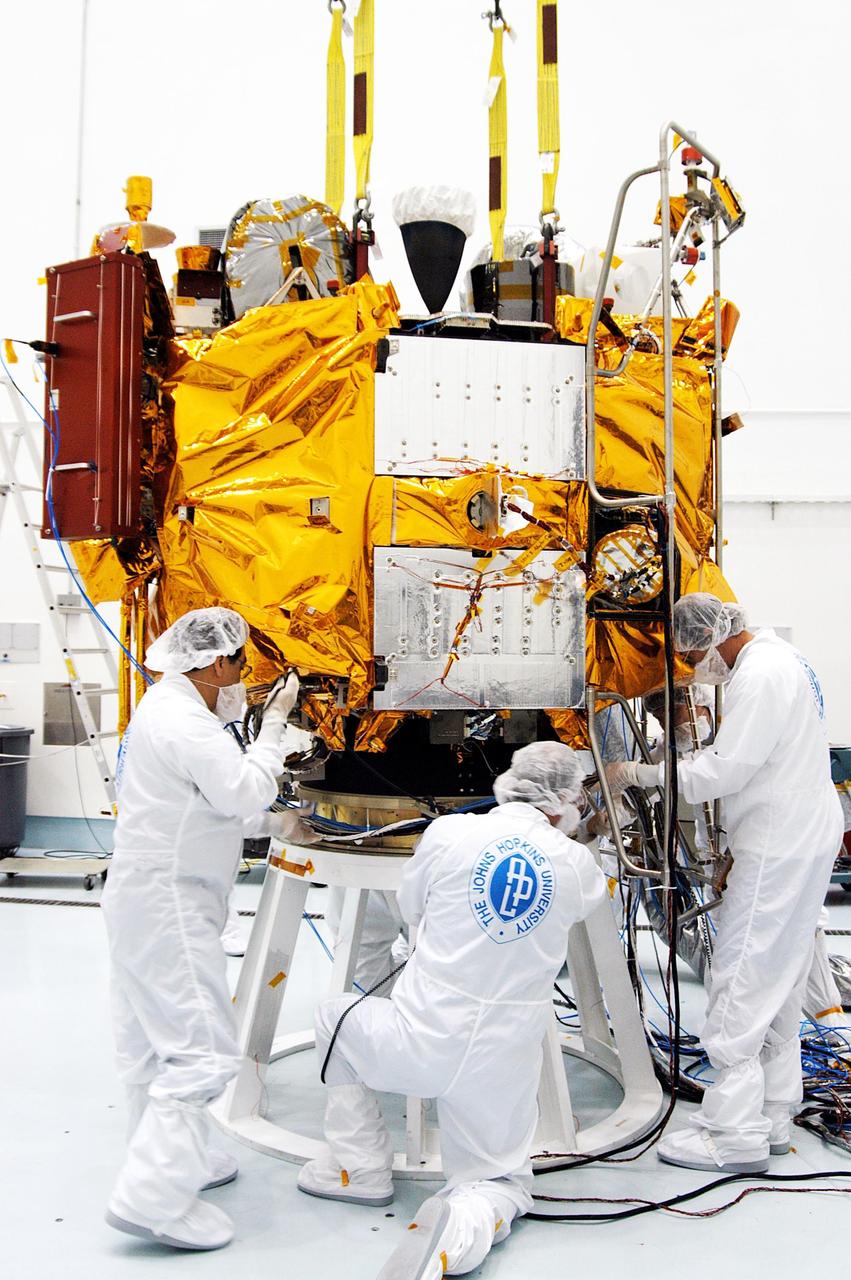
KENNEDY SPACE CENTER, FLA. -- At the Astrotech Space Operations processing facilities, workers secure NASA’s MESSENGER spacecraft on a test stand. Once in place, employees of the Johns Hopkins University Applied Physics Laboratory, builders of the spacecraft, will begin final processing for launch, including checkout of the power systems, communications systems and control systems. The thermal blankets will also be attached for flight. MESSENGER - short for MErcury Surface, Space ENvironment, GEochemistry and Ranging - will be launched aboard a Boeing Delta II rocket no earlier than July 30 on a six-year mission to study the planet Mercury.