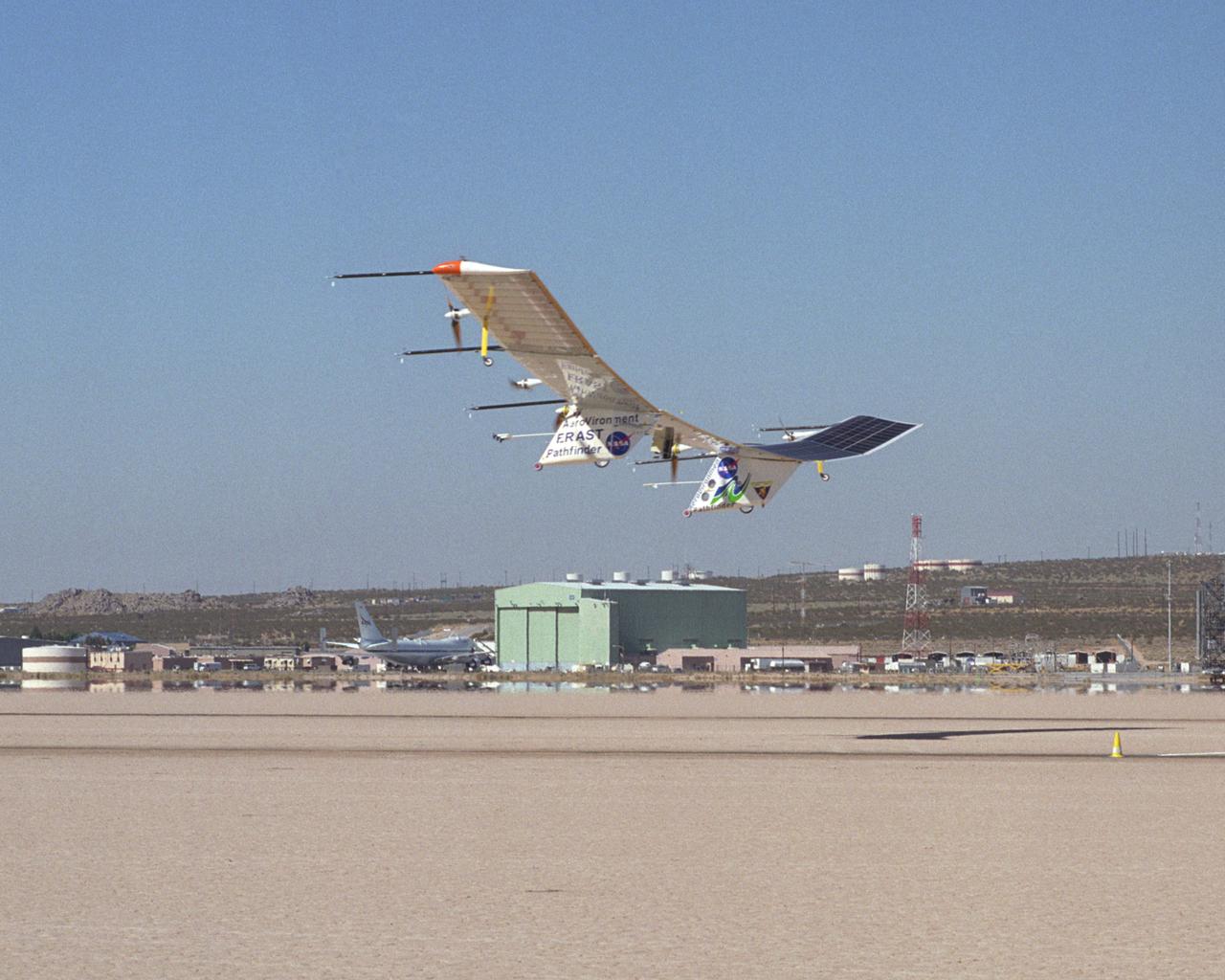
The Pathfinder-Plus solar aircraft flies past NASA Dryden's space shuttle hangar and shuttle carrier aircraft as it descends for landing on Rogers Dry Lake.
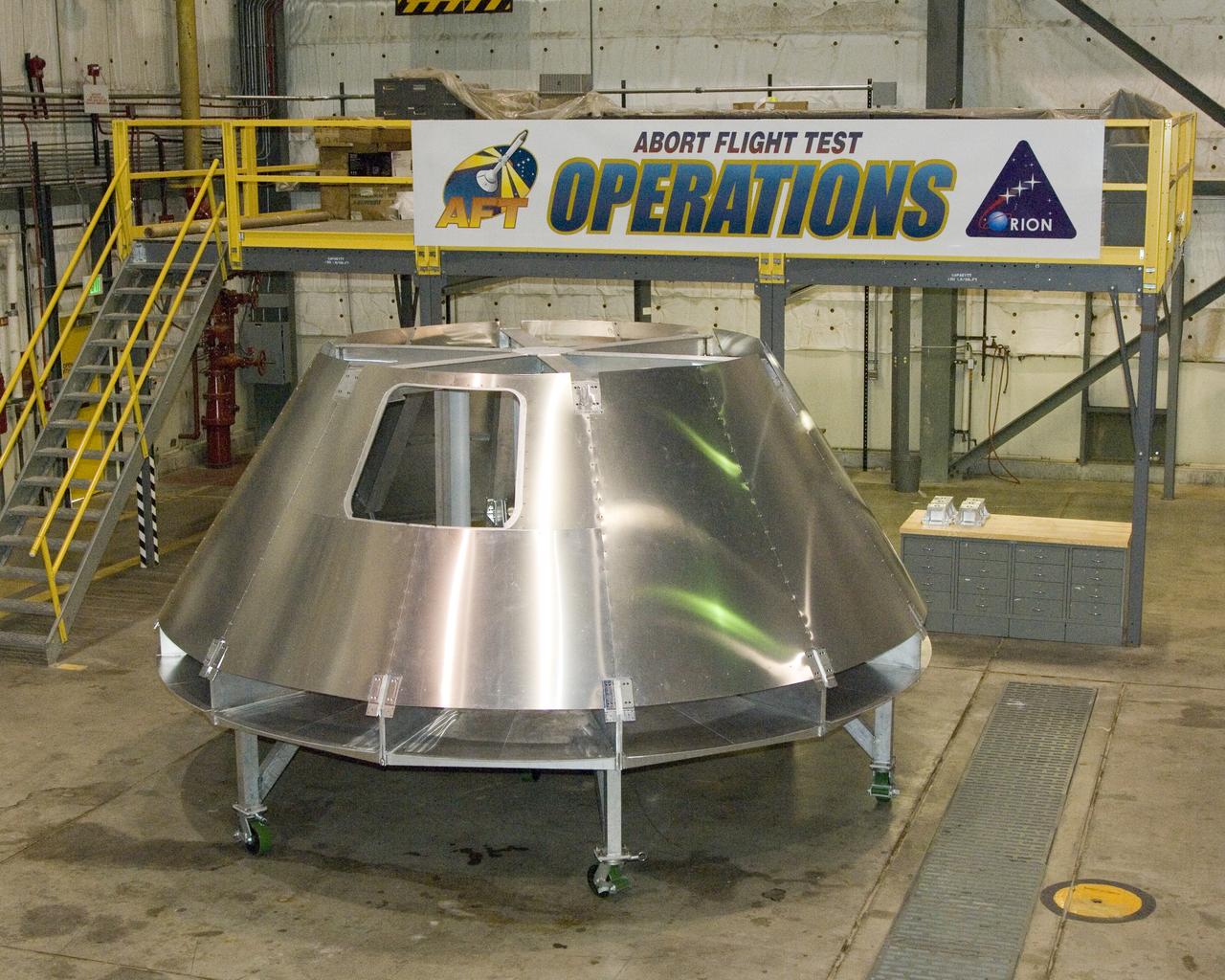
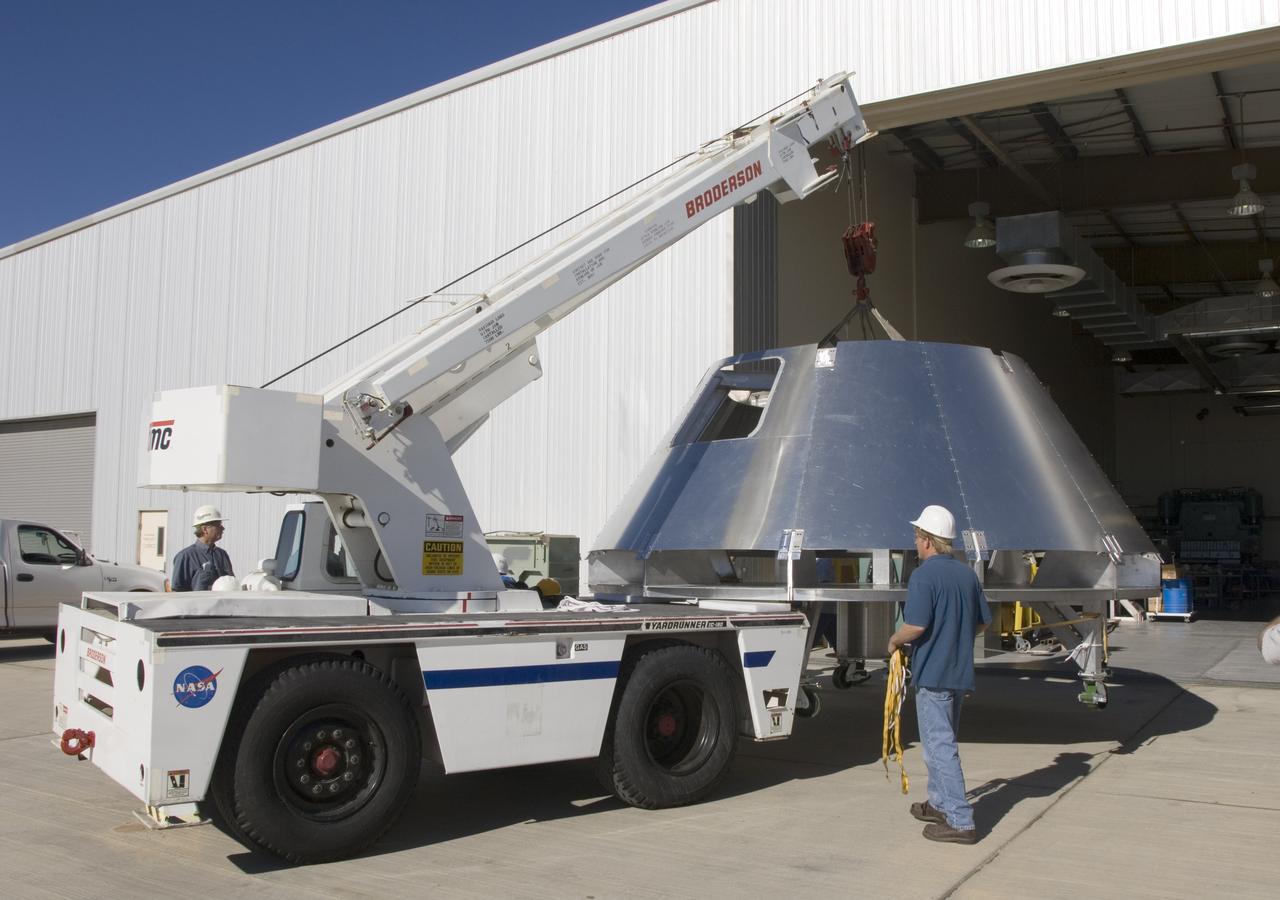
NASA Dryden's mockup Orion crew module is located in Dryden's Shuttle hangar, where abort flight test equipment is being positioned.
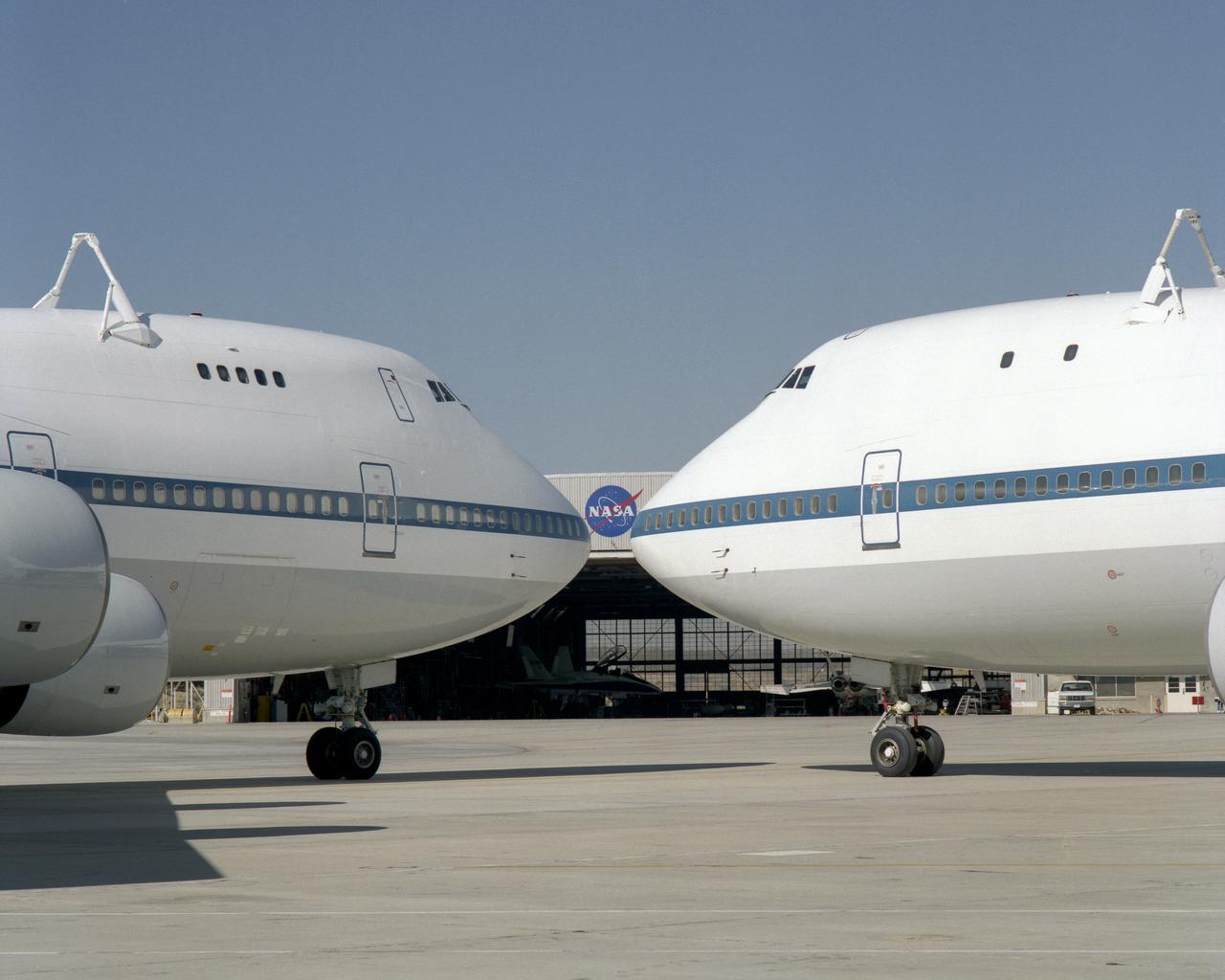
The NASA logo on a hangar is framed by the noses of NASA's two modified 747 Shuttle Carrier Aircraft on the ramp at NASA Dryden in this 1995 photo.
The NASA logo on a hangar is framed by the noses of NASA's two modified 747 Shuttle Carrier Aircraft on the ramp at NASA Dryden in this 1995 photo
Rogers Dry Lake serves as a backdrop for a mockup Orion crew module built by NASA Dryden Flight Research Center's Fabrication Branch. The module was relocated to Dryden's Shuttle hangar on Sept. 25, 2007.
Rogers Dry Lake served as a backdrop for a mockup Orion crew module built by NASA Dryden's Fabrication Branch as it was relocated to Dryden's Shuttle hangar.
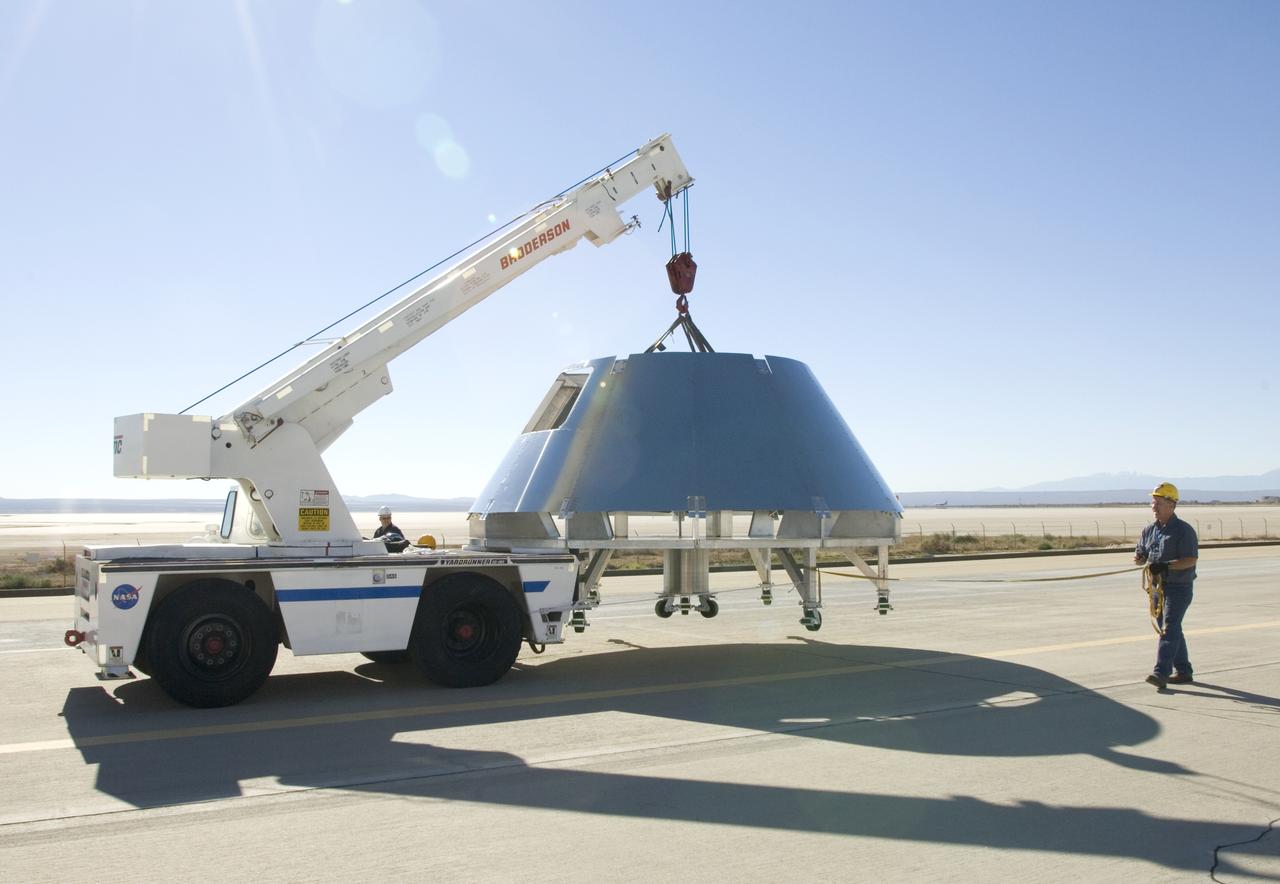
A mockup Orion crew module built by NASA Dryden Flight Research Center's Fabrication Branch gets a lift from its construction site to its new home in Dryden's Shuttle hangar.
A mockup Orion crew module built by NASA Dryden's Fabrication Branch gets a lift from its construction site to its new home in Dryden's Shuttle hangar.
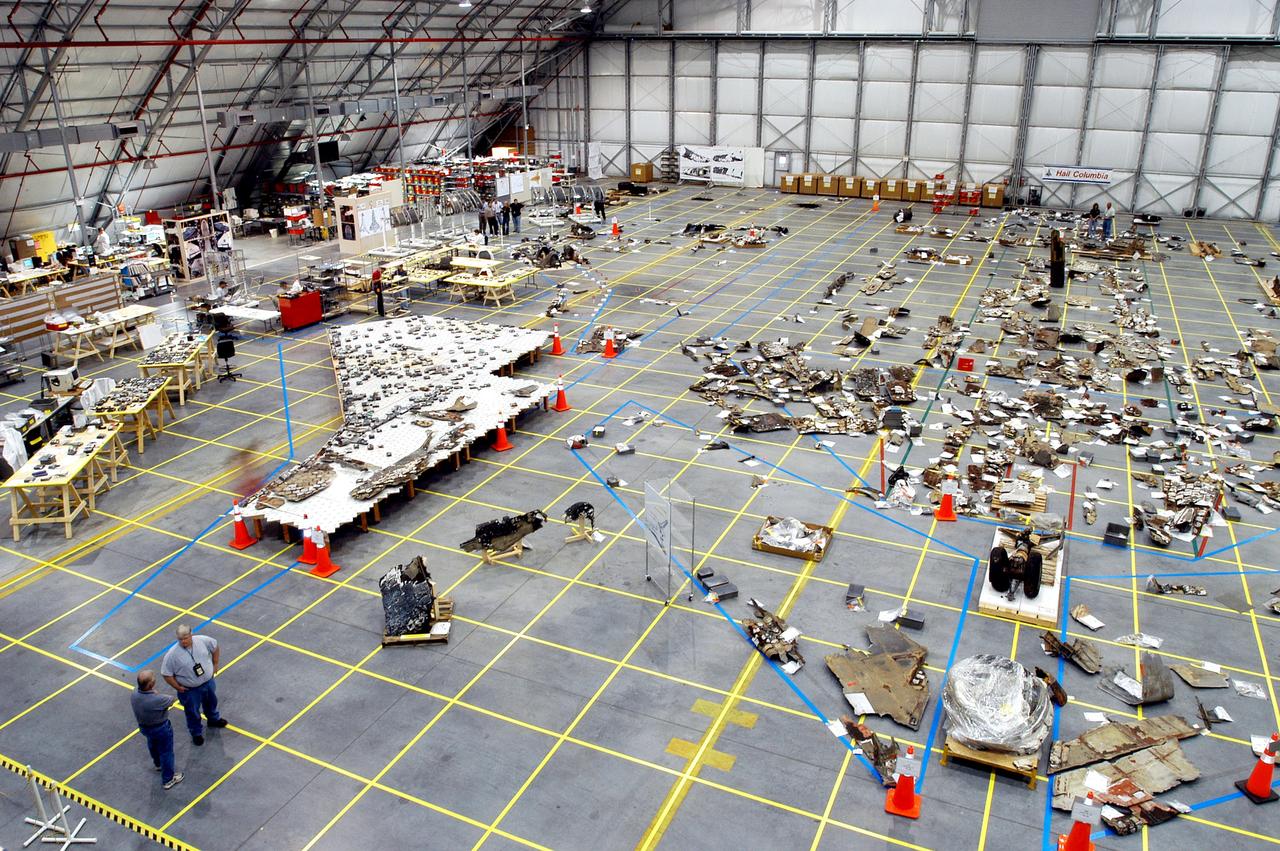
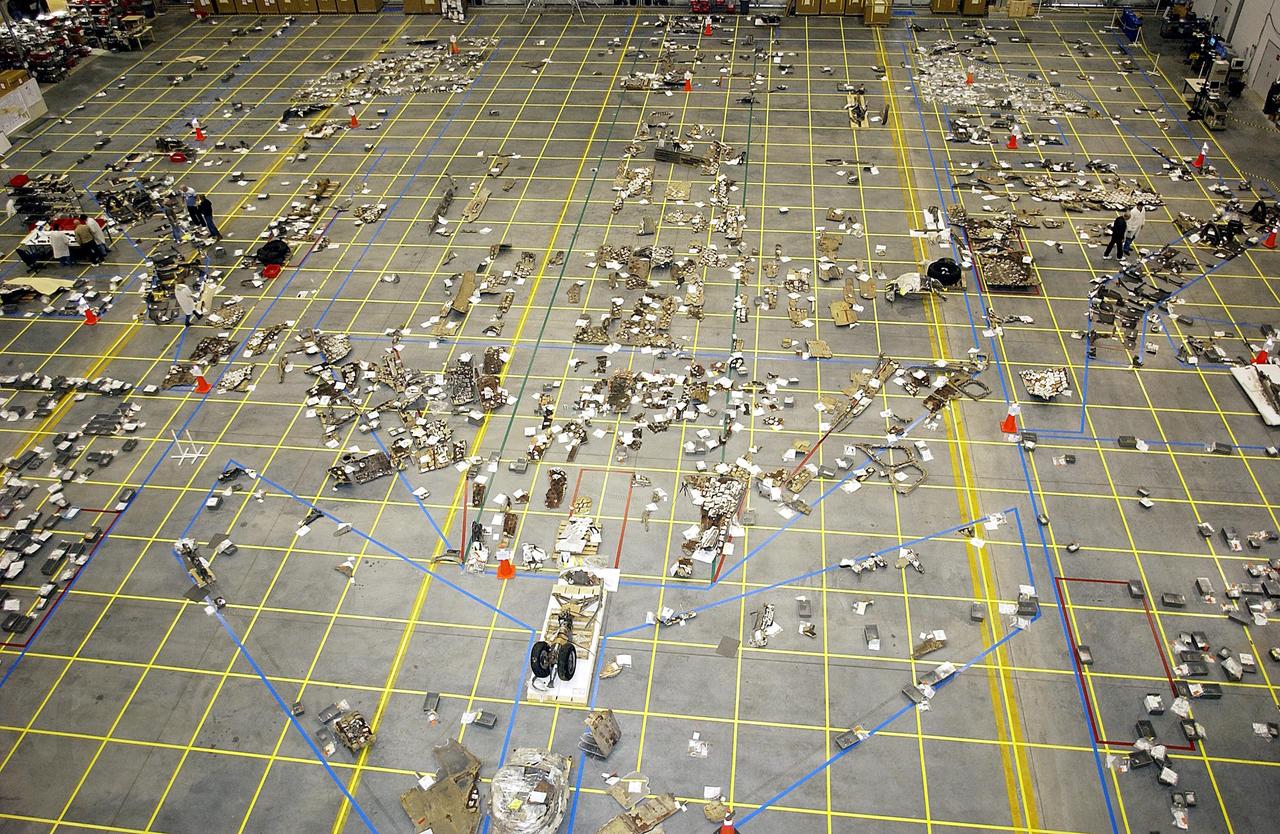
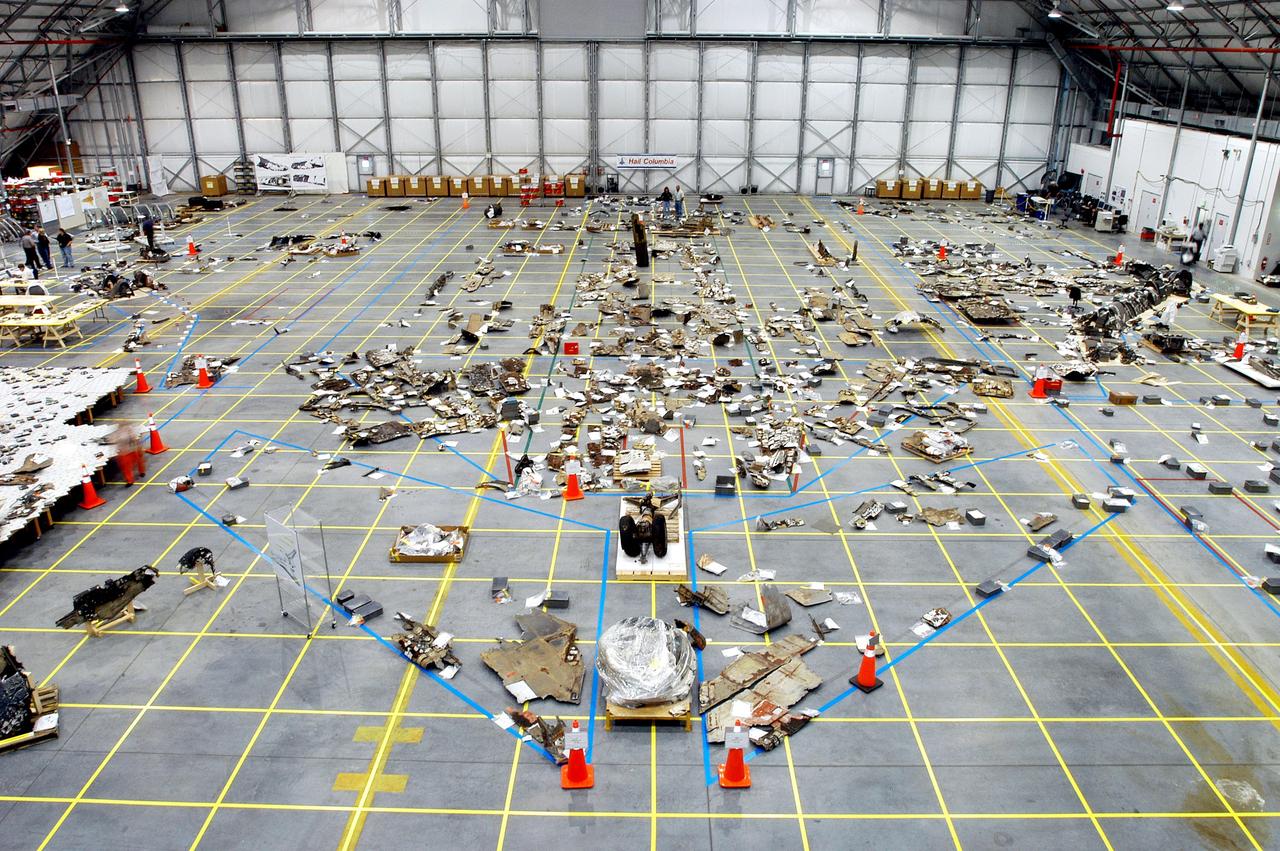
KENNEDY SPACE CENTER, FLA. - An overview of the Columbia debris hangar shows the orbiter outline on the floor with some of the 78,760 pieces identified to date.  More than 82,500 pieces of shuttle debris have been rcovered.
KENNEDY SPACE CENTER, FLA. - An overview of the Columbia debris hangar shows the orbiter outline on the floor with some of the 78,760 pieces identified to date. More than 82,500 pieces of shuttle debris have been rcovered.
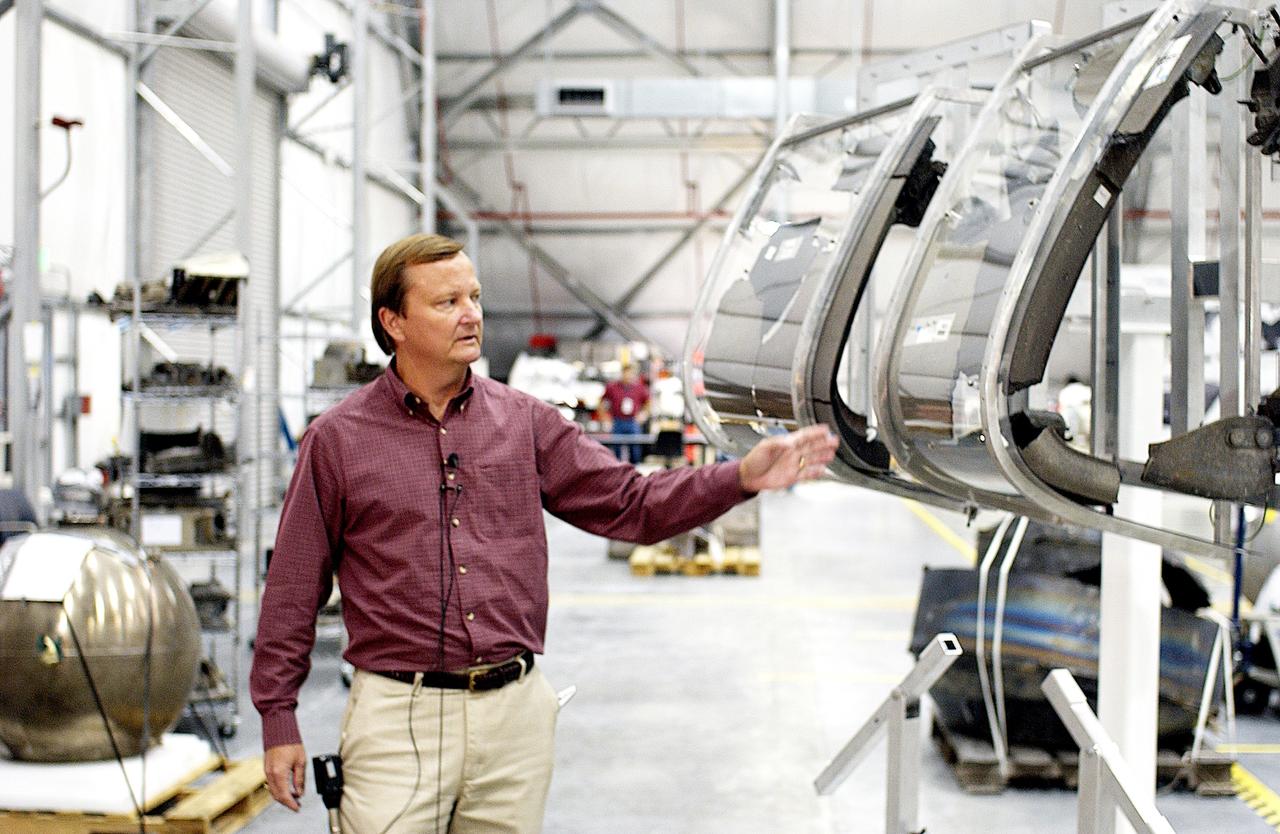
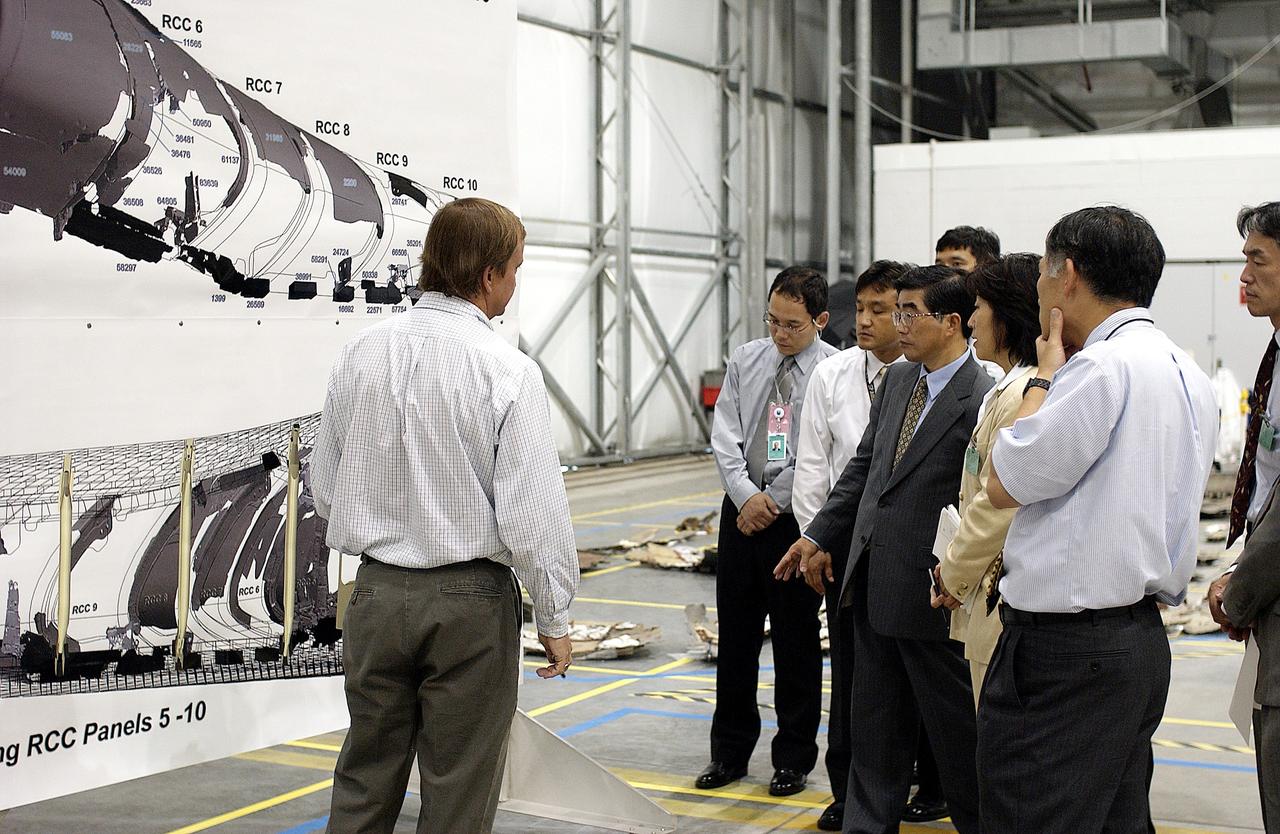
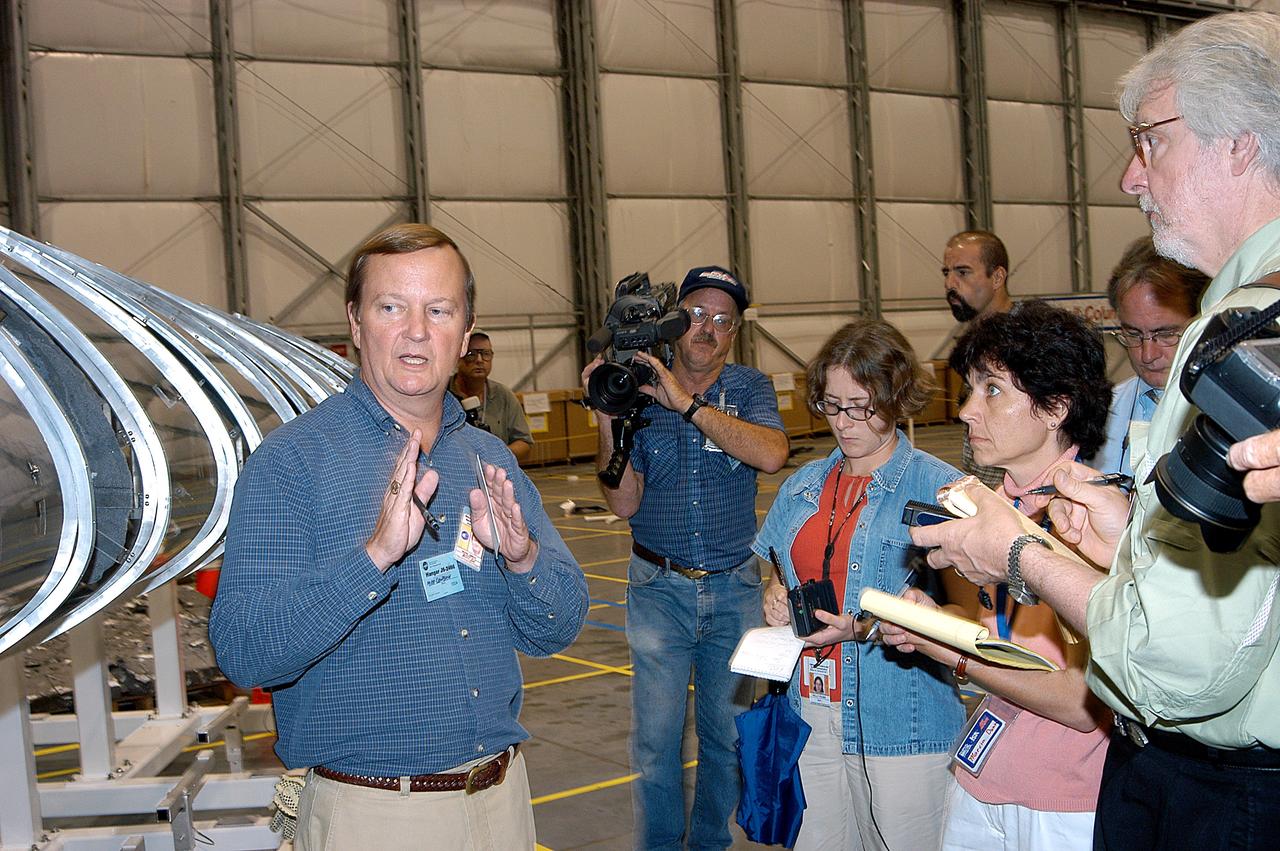
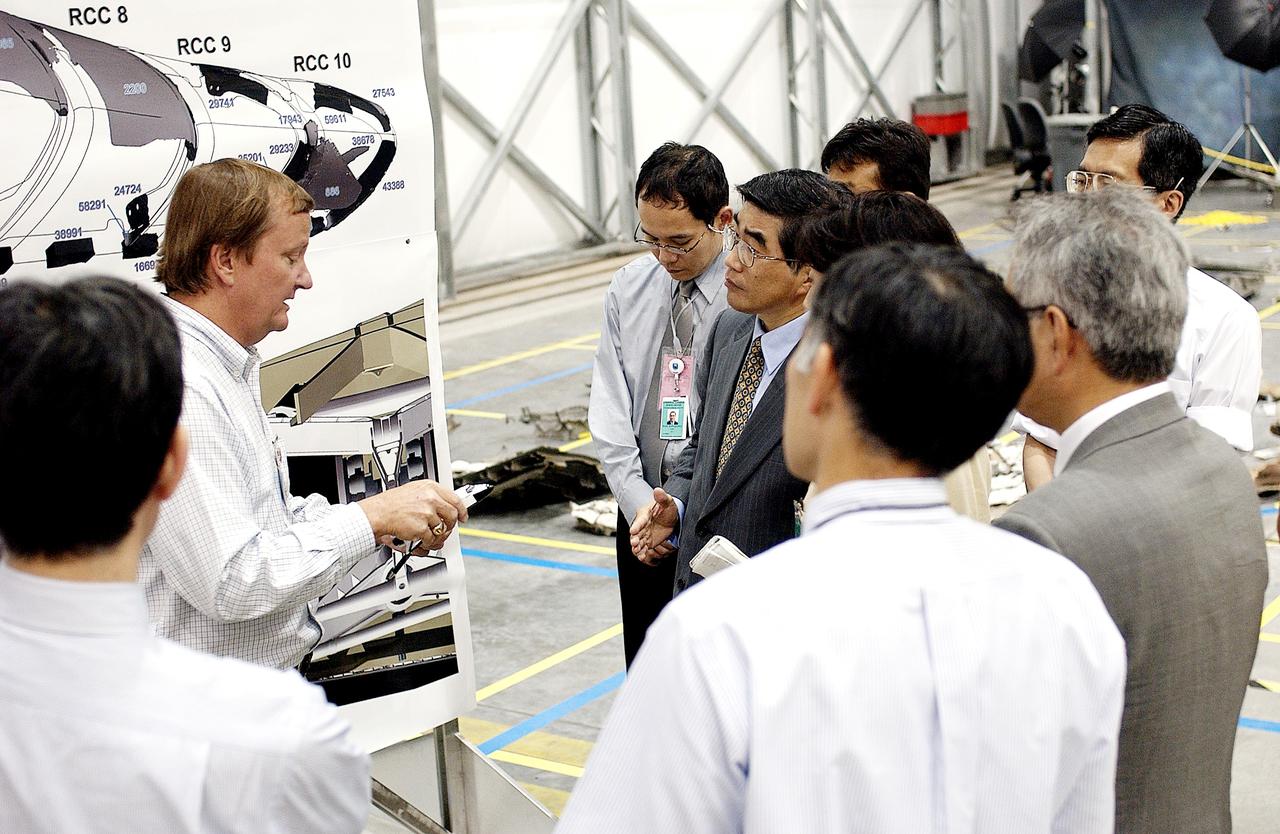
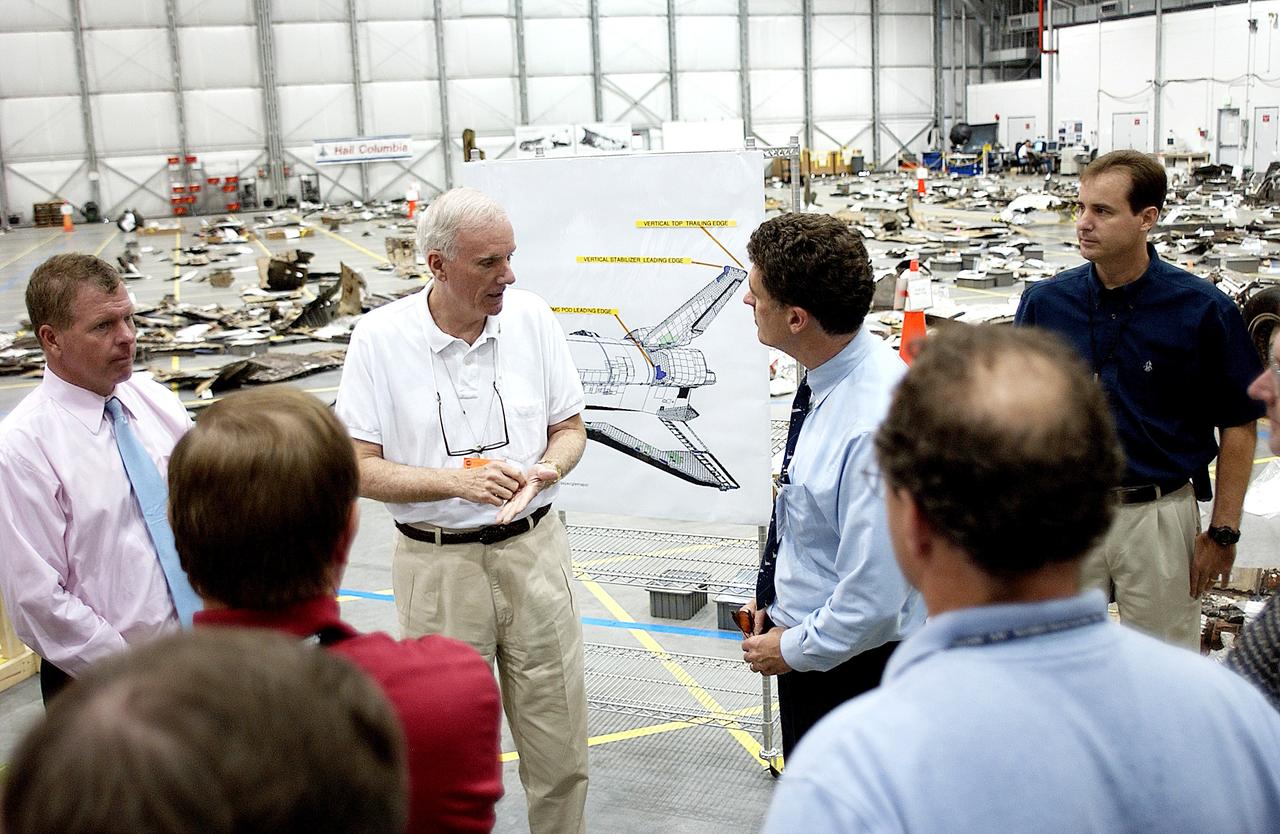
KENNEDY SPACE CENTER, FLA. - While talking to the media in the RLV Hangar, Shuttle Launch Director Mike Leinbach points to the model of the leading edge of an orbiter’s left wing that is being used to reconstruct Columbia’s wing with the recovered debris.  The items shipped to KSC number more than 82,000 and weigh 84,800 pounds or 38 percent of the total dry weight of Columbia.  Of those items, 78,760 have been identified, with 753 placed on the left wing grid in the Hangar.
KENNEDY SPACE CENTER, FLA. - While talking to the media in the RLV Hangar, Shuttle Launch Director Mike Leinbach points to the model of the leading edge of an orbiter’s left wing that is being used to reconstruct Columbia’s wing with the recovered debris. The items shipped to KSC number more than 82,000 and weigh 84,800 pounds or 38 percent of the total dry weight of Columbia. Of those items, 78,760 have been identified, with 753 placed on the left wing grid in the Hangar.
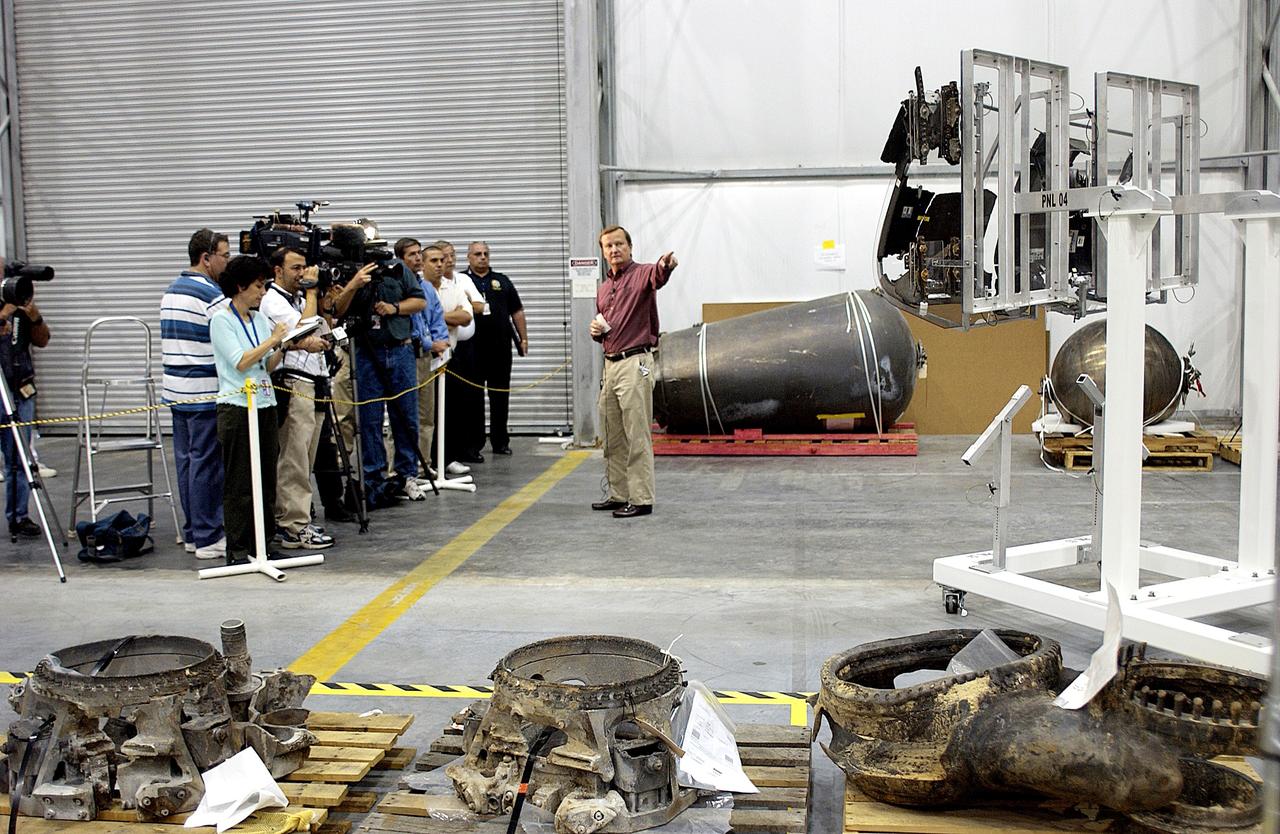
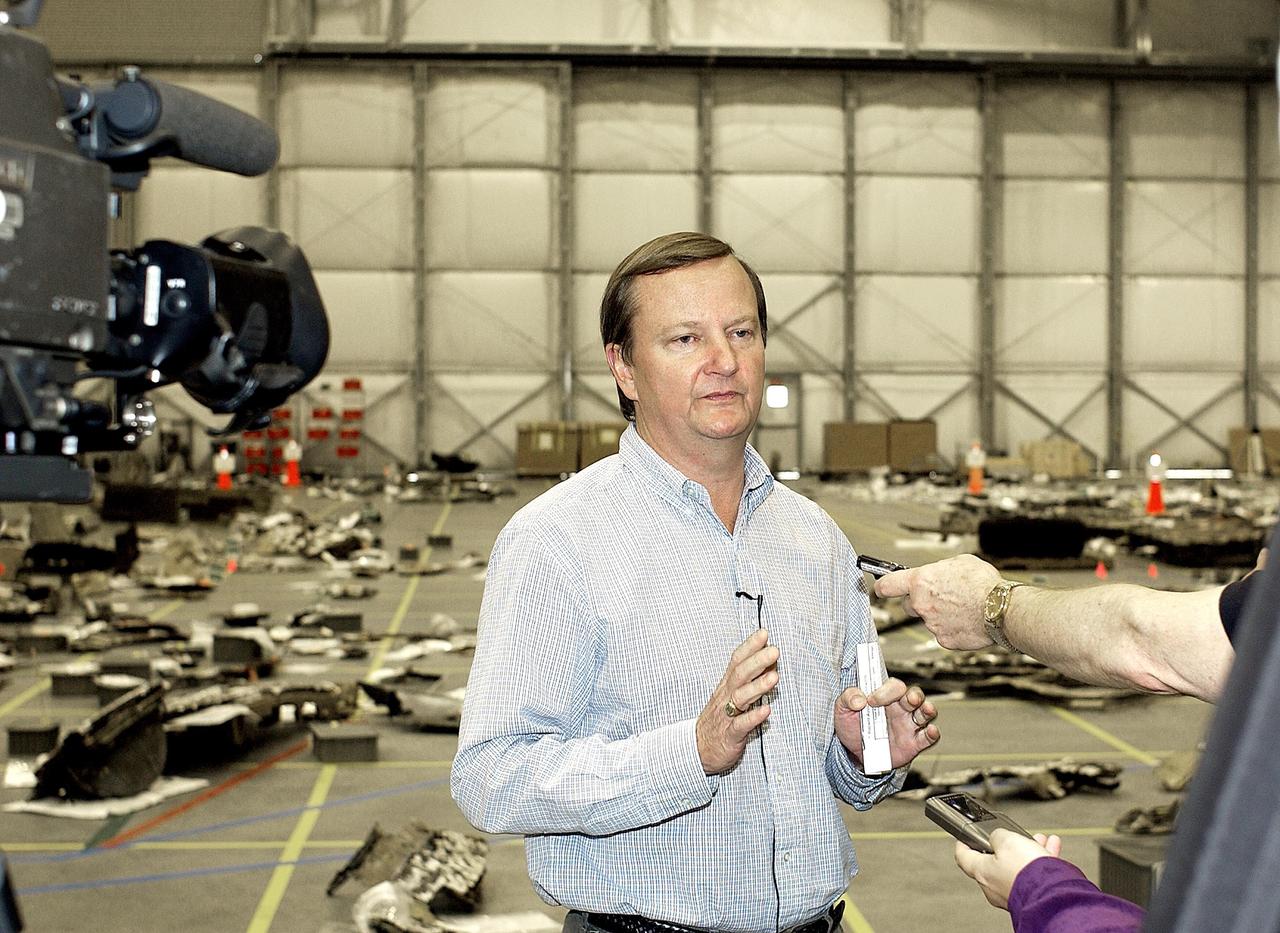
KENNEDY SPACE CENTER, FLA. - While talking to the media, Shuttle Launch Director Mike Leinbach points to some of the investigative tools in the RLV Hangar, where Columbia debris is being examined.  The items shipped to KSC number more than 82,000 and weigh 84,800 pounds or 38 percent of the total dry weight of Columbia.  Of those items, 78,760 have been identified, with 753 placed on the left wing grid in the Hangar.
KENNEDY SPACE CENTER, FLA. - While talking to the media, Shuttle Launch Director Mike Leinbach points to some of the investigative tools in the RLV Hangar, where Columbia debris is being examined. The items shipped to KSC number more than 82,000 and weigh 84,800 pounds or 38 percent of the total dry weight of Columbia. Of those items, 78,760 have been identified, with 753 placed on the left wing grid in the Hangar.
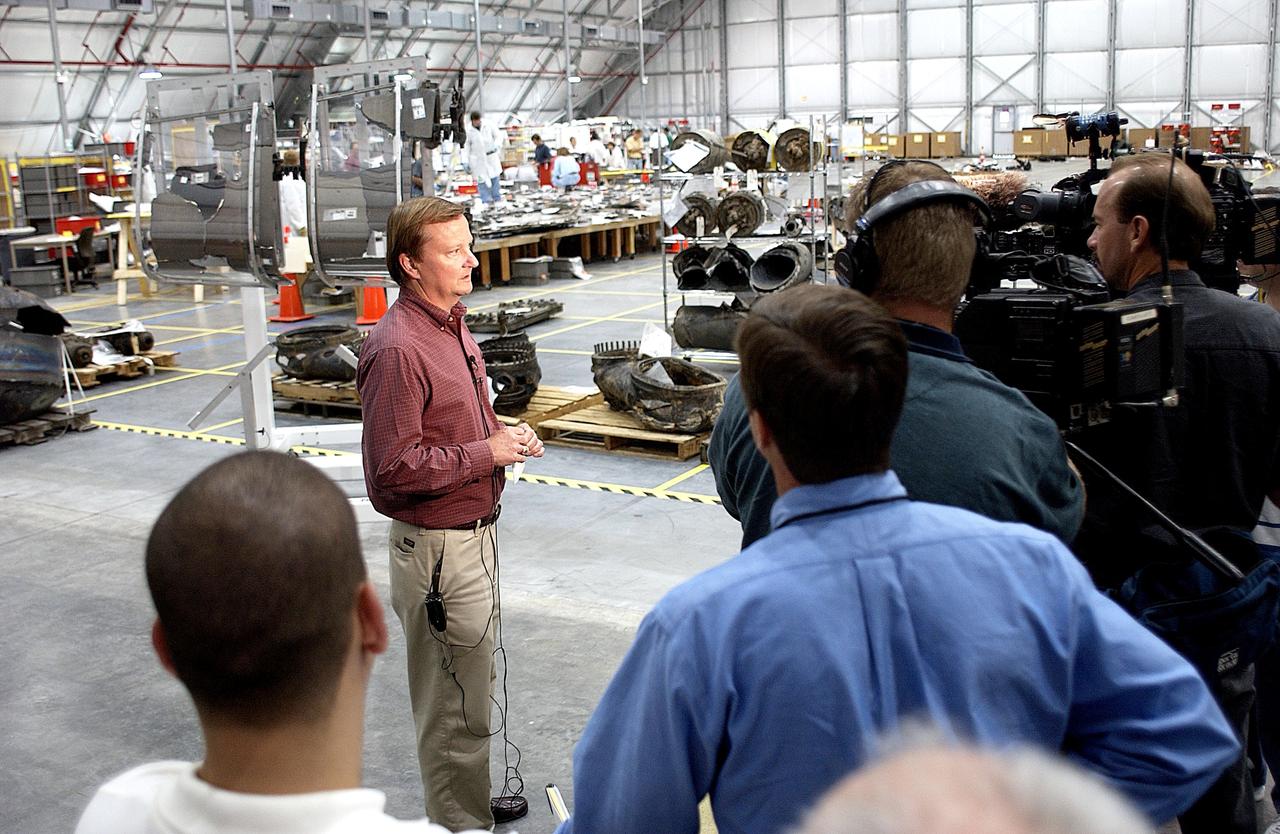
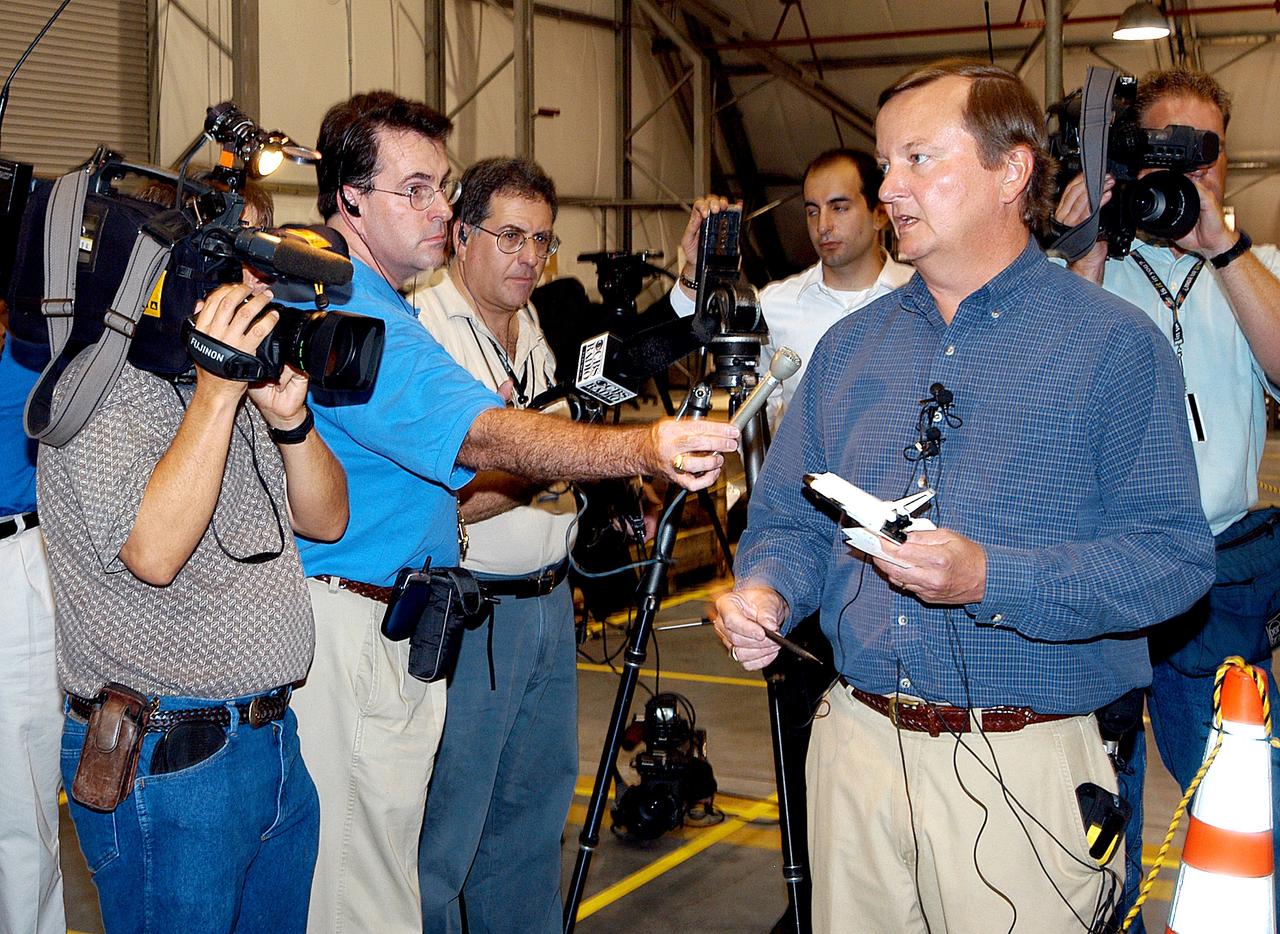
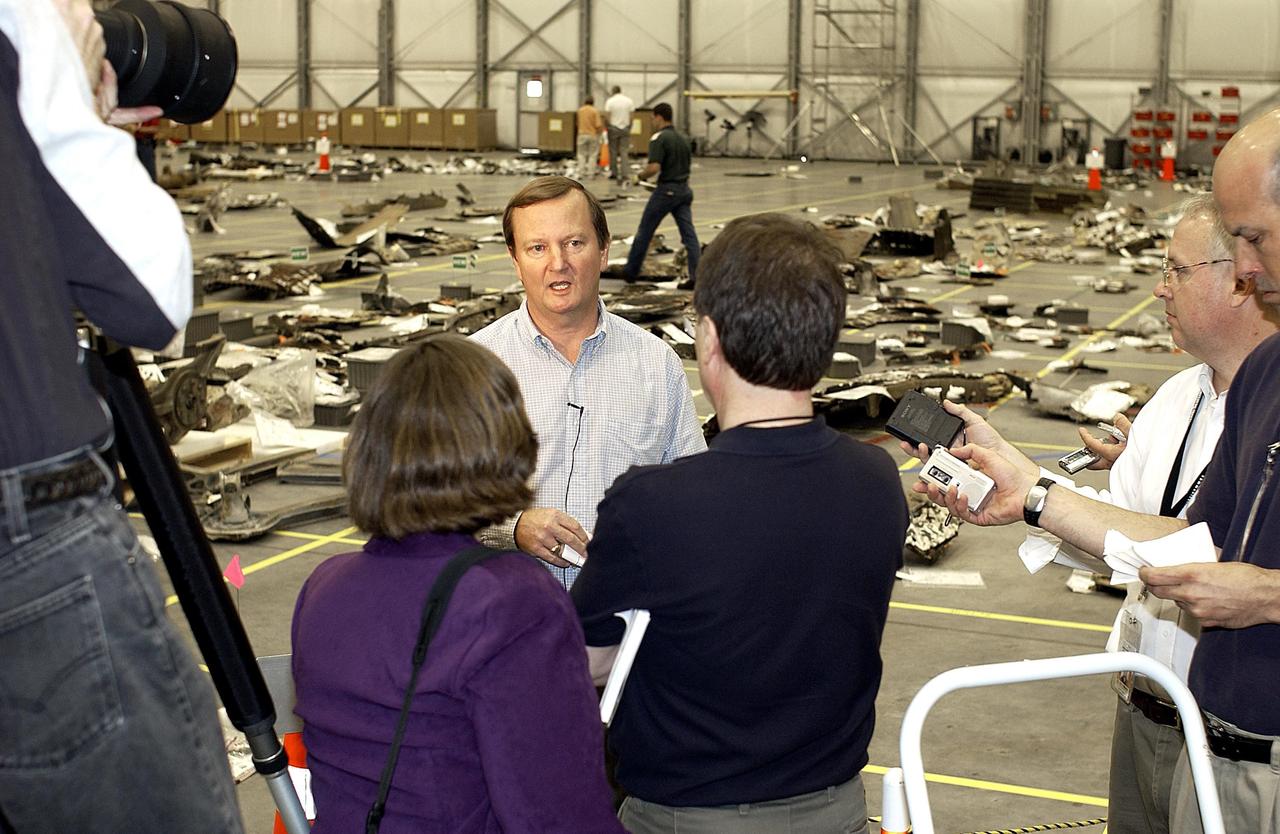
KENNEDY SPACE CENTER, FLA. - Shuttle Launch Director Mike Leinbach talks to the media in the RLV Hangar, site of the collection of Columbia debris undergoing examination.  The items shipped to KSC number more than 82,000 and weigh 84,800 pounds or 38 percent of the total dry weight of Columbia.  Of those items, 78,760 have been identified, with 753 placed on the left wing grid in the Hangar.
KENNEDY SPACE CENTER, FLA. - Shuttle Launch Director Mike Leinbach talks to the media in the RLV Hangar, site of the collection of Columbia debris undergoing examination. The items shipped to KSC number more than 82,000 and weigh 84,800 pounds or 38 percent of the total dry weight of Columbia. Of those items, 78,760 have been identified, with 753 placed on the left wing grid in the Hangar.
KENNEDY SPACE CENTER, FLA. - Shuttle Launch Director Mike Leinbach talks to the media in the RLV Hangar, site of the collection of Columbia debris undergoing examination.  The items shipped to KSC number more than 82,000 and weigh 84,800 pounds or 38 percent of the total dry weight of Columbia.  Of those items, 78,760 have been identified, with 753 placed on the left wing grid in the Hangar.
KENNEDY SPACE CENTER, FLA. - Shuttle Launch Director Mike Leinbach talks to the media in the RLV Hangar, site of the collection of Columbia debris undergoing examination. The items shipped to KSC number more than 82,000 and weigh 84,800 pounds or 38 percent of the total dry weight of Columbia. Of those items, 78,760 have been identified, with 753 placed on the left wing grid in the Hangar.
KENNEDY SPACE CENTER, FLA. - An overview of the Columbia debris hangar shows the orbiter outline on the floor with some of the 78,760 pieces identified to date, as well as tables on the left that hold tiles.  More than 82,500 pieces of shuttle debris have been rcovered.
KENNEDY SPACE CENTER, FLA. - An overview of the Columbia debris hangar shows the orbiter outline on the floor with some of the 78,760 pieces identified to date, as well as tables on the left that hold tiles. More than 82,500 pieces of shuttle debris have been rcovered.
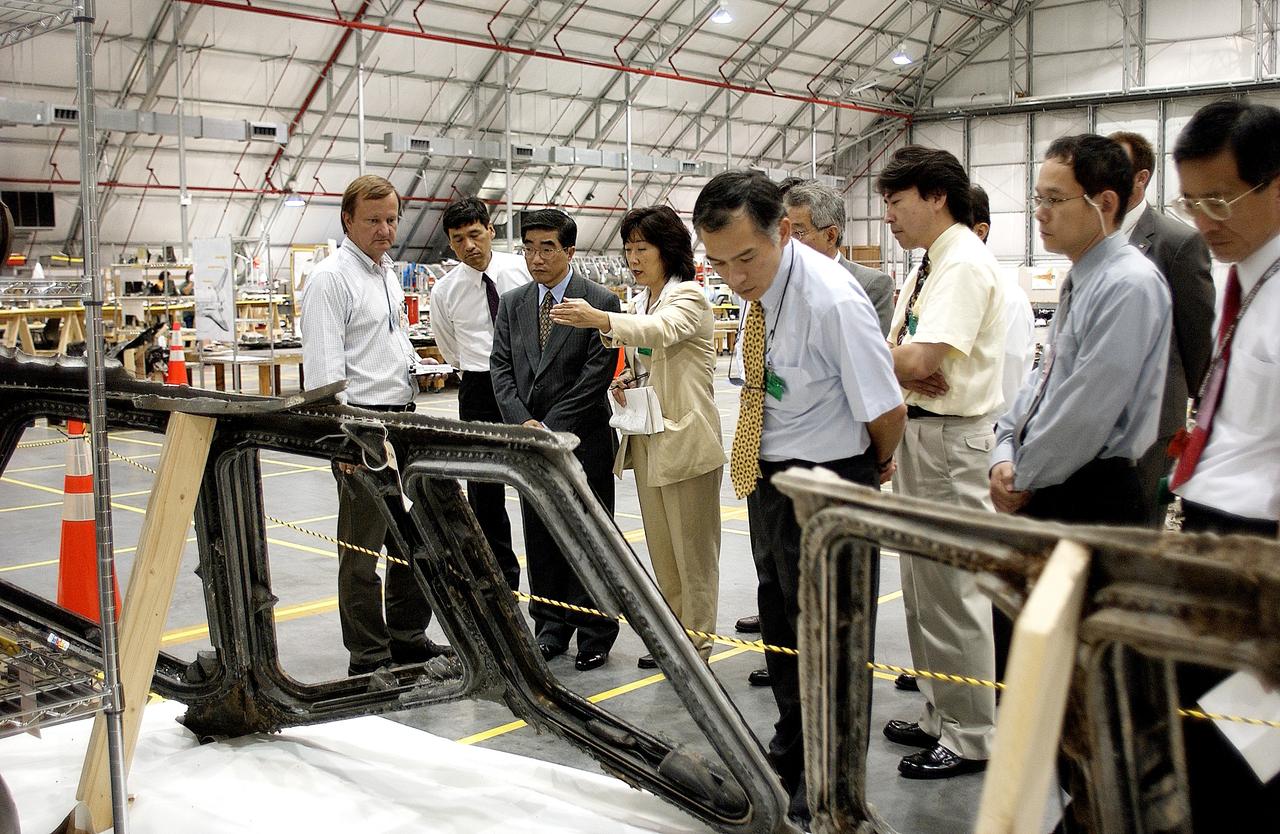
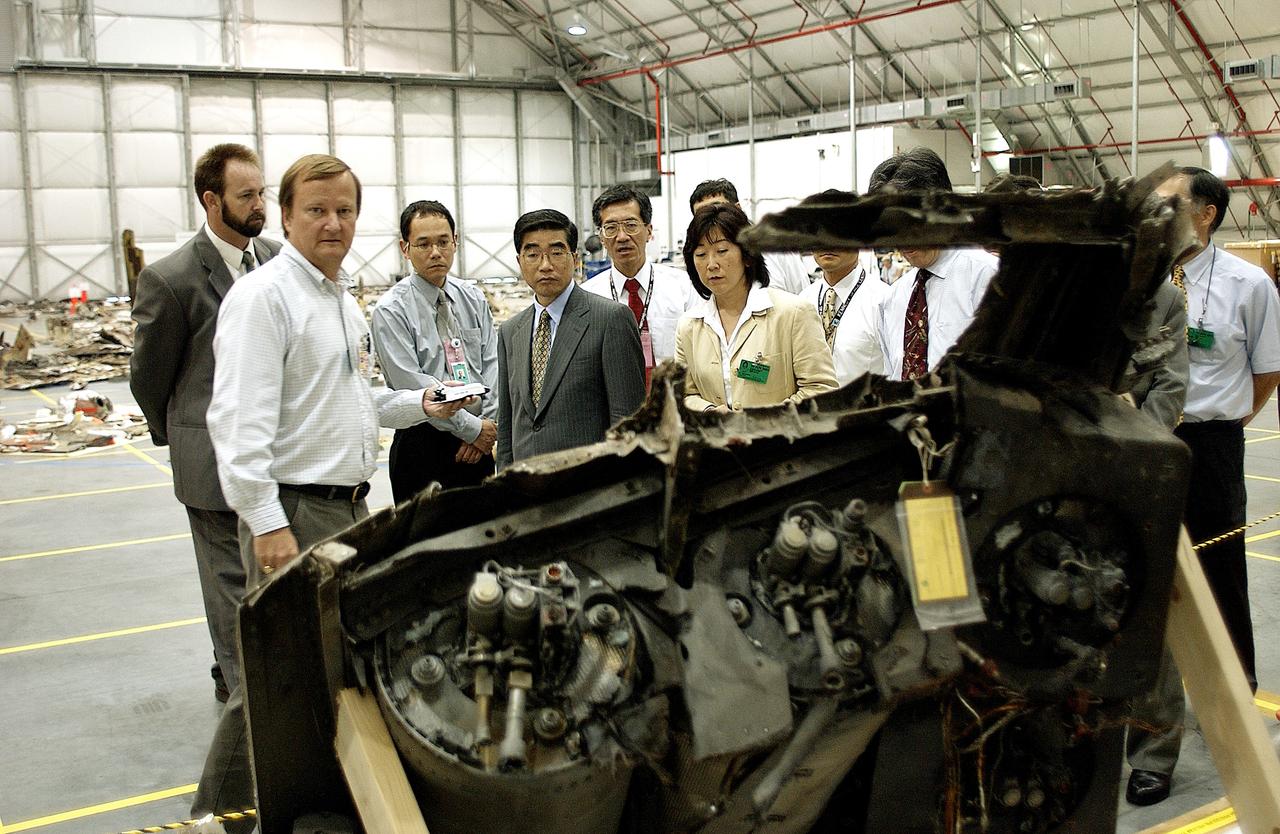
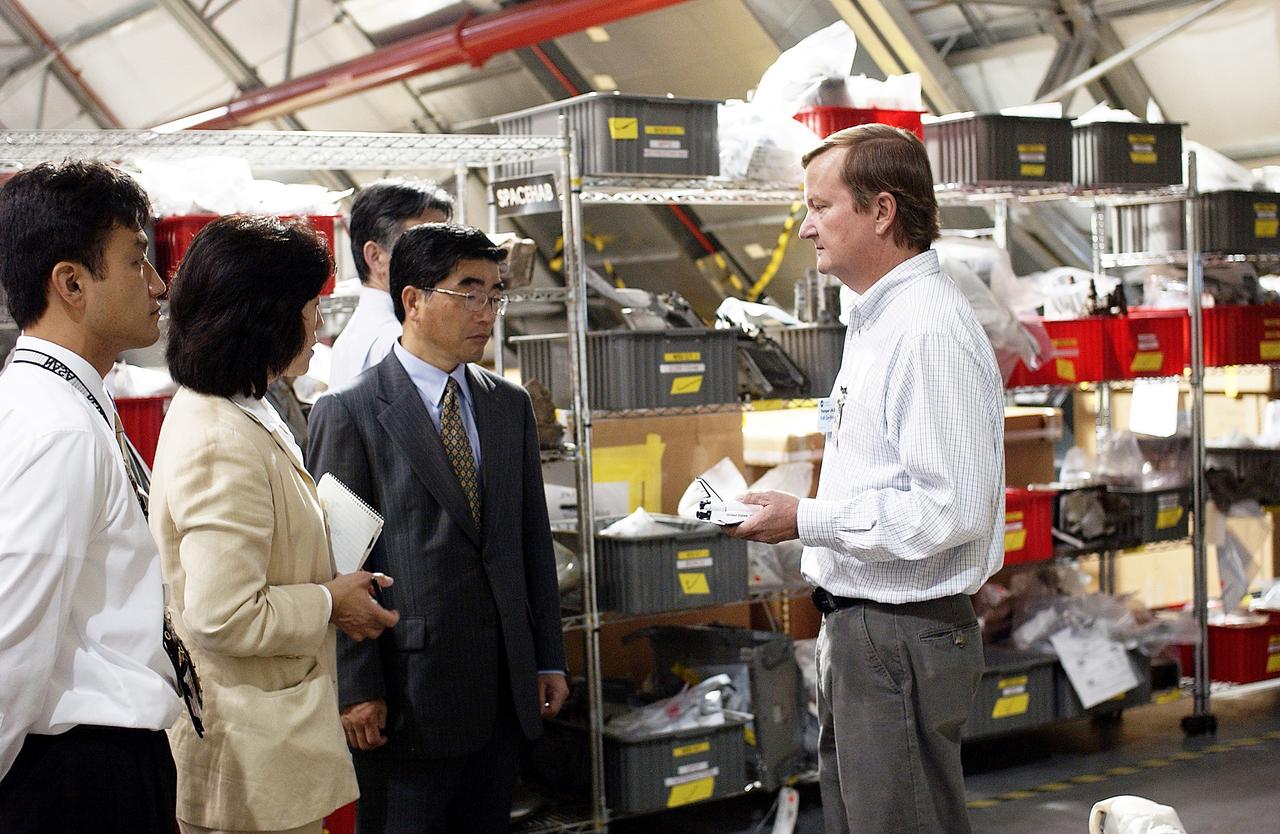
KENNEDY SPACE CENTER, FLA. -  Shuttle Launch Director Mike Leinbach (left) accompanies Executive Director of NASDA Koji Yamamoto (third from left) and others visiting the Columbia Debris Hangar.  Mr. Yamamoto is at KSC for a welcome ceremony involving the arrival of the newest Space Station module, the Japanese Experiment Module/pressurized module.
KENNEDY SPACE CENTER, FLA. - Shuttle Launch Director Mike Leinbach (left) accompanies Executive Director of NASDA Koji Yamamoto (third from left) and others visiting the Columbia Debris Hangar. Mr. Yamamoto is at KSC for a welcome ceremony involving the arrival of the newest Space Station module, the Japanese Experiment Module/pressurized module.
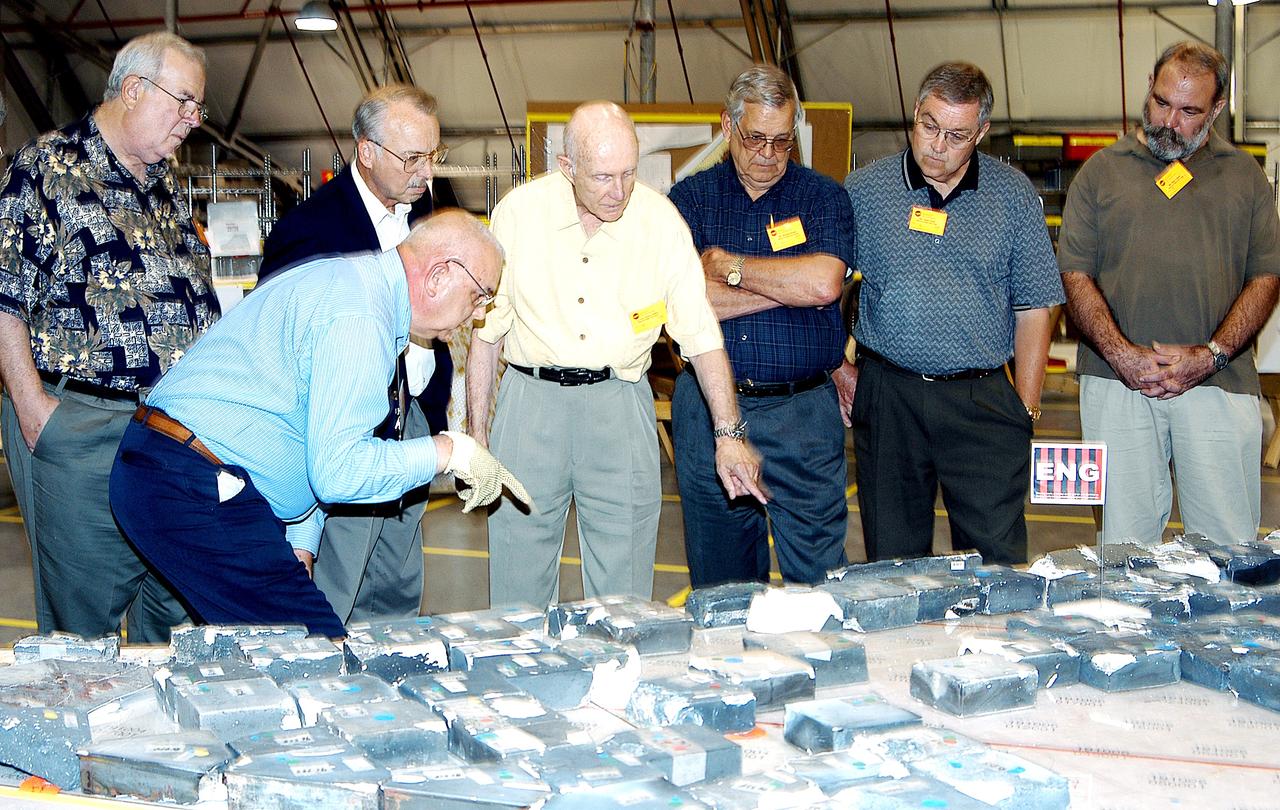
KENNEDY SPACE CENTER, FLA.  -  In the Columbia Debris Hangar, Shuttle Launch Director Mike Leinbach (left) talks to members of the  Stafford-Covey Return to Flight Task Group (SCTG) about reconstruction efforts.   Chairing the task group are Richard O. Covey (second from right), former Space Shuttle commander, and Thomas P. Stafford, Apollo commander.  Chartered by NASA Administrator Sean O’Keefe, the task group will perform an independent assessment of NASA’s implementation of the final recommendations by the Columbia Accident Investigation Board.
KENNEDY SPACE CENTER, FLA. - In the Columbia Debris Hangar, Shuttle Launch Director Mike Leinbach (left) talks to members of the Stafford-Covey Return to Flight Task Group (SCTG) about reconstruction efforts. Chairing the task group are Richard O. Covey (second from right), former Space Shuttle commander, and Thomas P. Stafford, Apollo commander. Chartered by NASA Administrator Sean O’Keefe, the task group will perform an independent assessment of NASA’s implementation of the final recommendations by the Columbia Accident Investigation Board.
KENNEDY SPACE CENTER, FLA.  - In the Columbia Debris Hangar, Shuttle Launch Director Mike Leinbach answers questions from the Stafford-Covey Return to Flight Task Group (SCTG).  Chairing the task group are Richard O. Covey (fifth from left), former Space Shuttle commander, and Thomas P. Stafford, Apollo commander.  Chartered by NASA Administrator Sean O’Keefe, the task group will perform an independent assessment of NASA’s implementation of the final recommendations by the Columbia Accident Investigation Board.
KENNEDY SPACE CENTER, FLA. - In the Columbia Debris Hangar, Shuttle Launch Director Mike Leinbach answers questions from the Stafford-Covey Return to Flight Task Group (SCTG). Chairing the task group are Richard O. Covey (fifth from left), former Space Shuttle commander, and Thomas P. Stafford, Apollo commander. Chartered by NASA Administrator Sean O’Keefe, the task group will perform an independent assessment of NASA’s implementation of the final recommendations by the Columbia Accident Investigation Board.
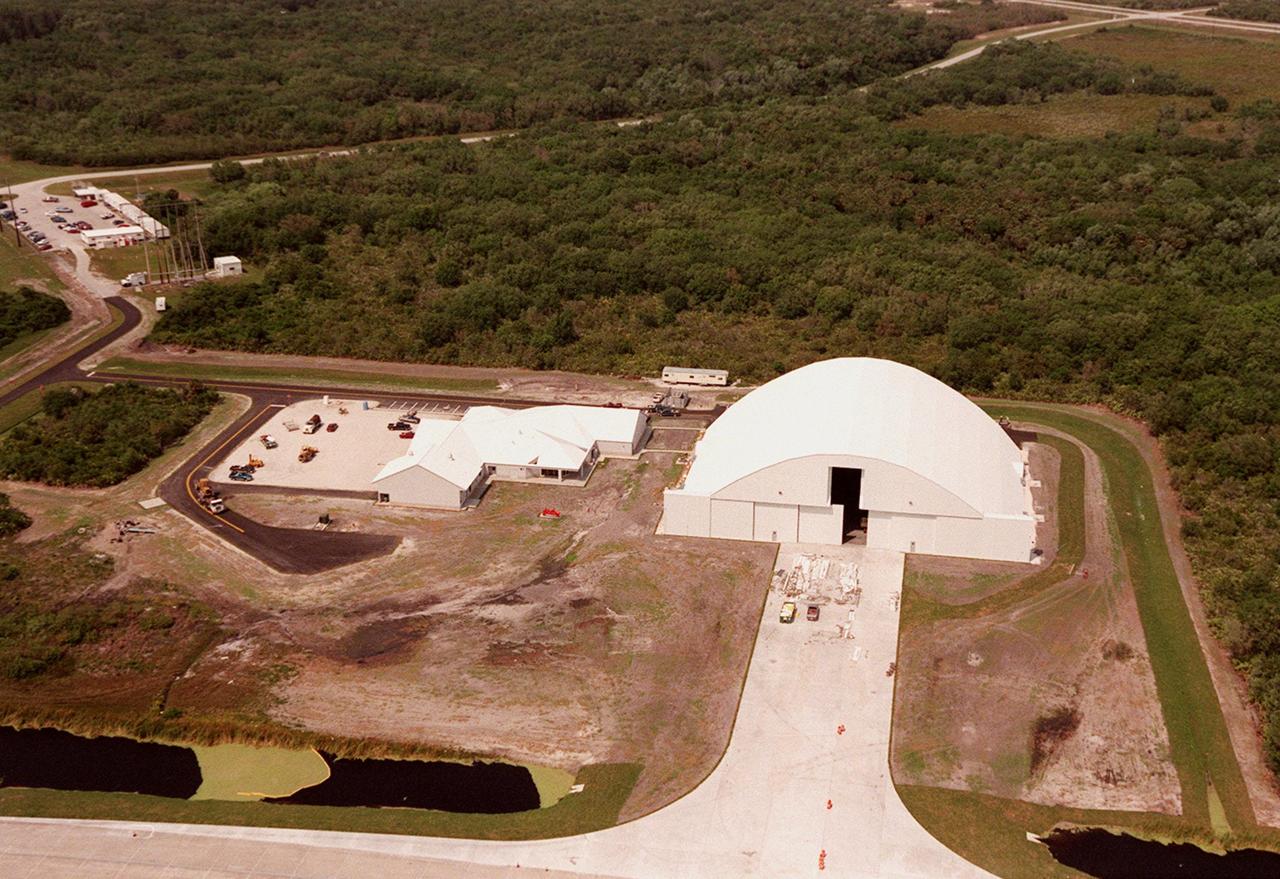
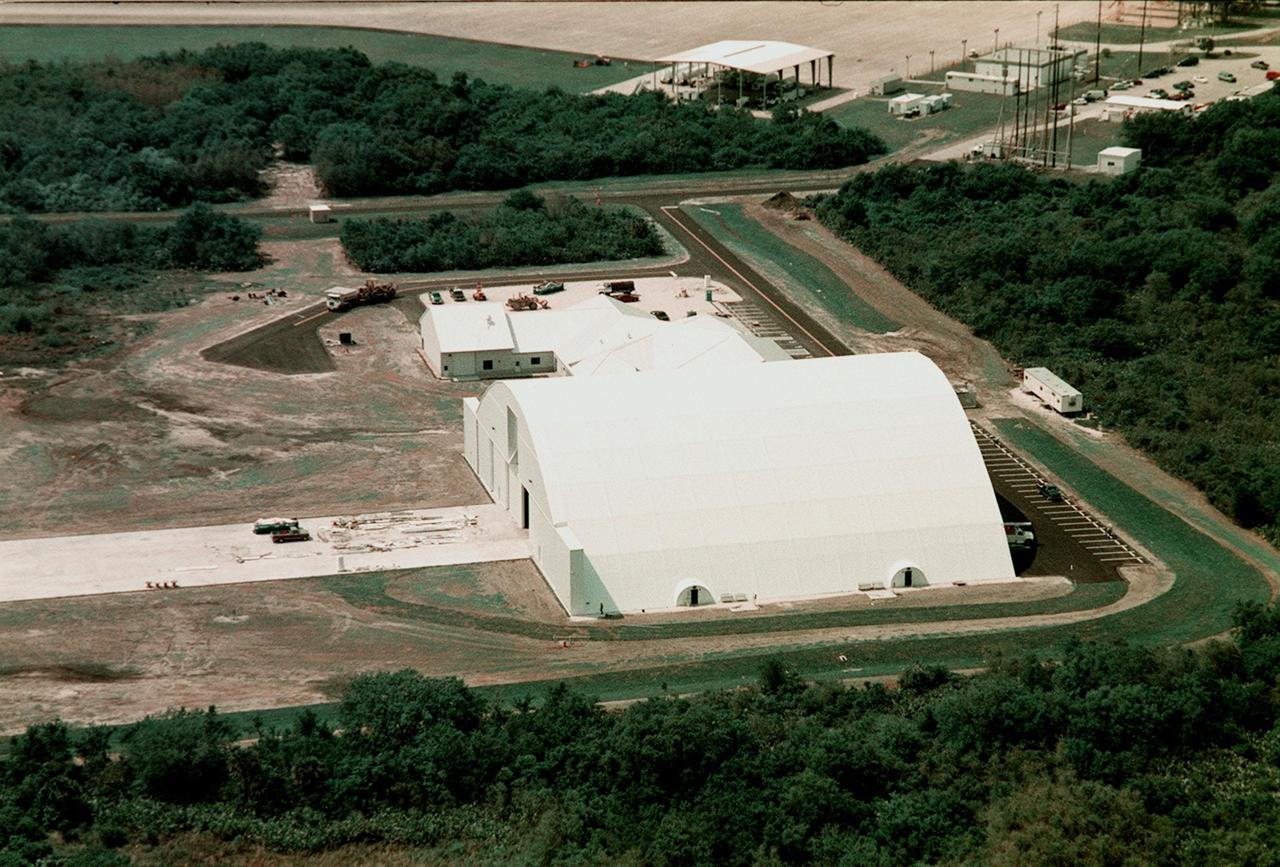
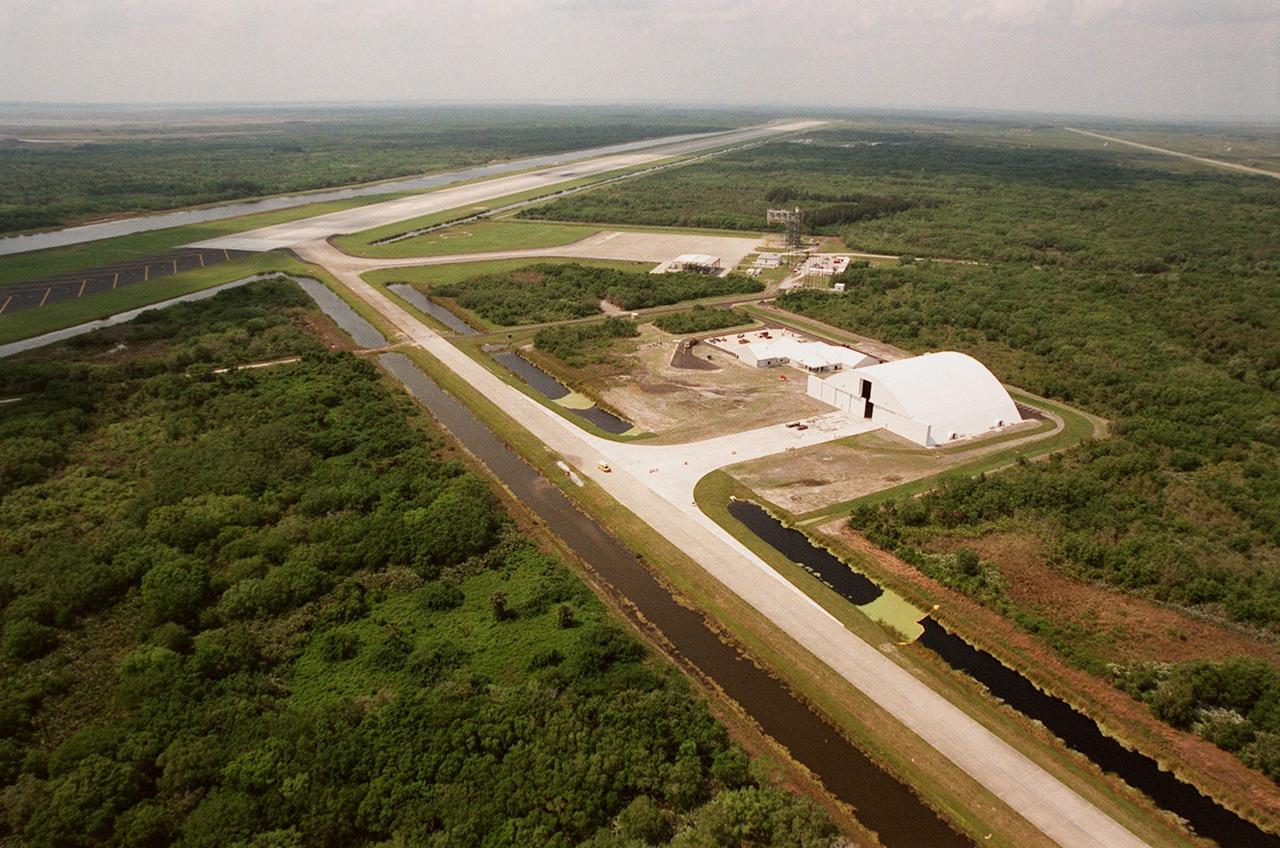
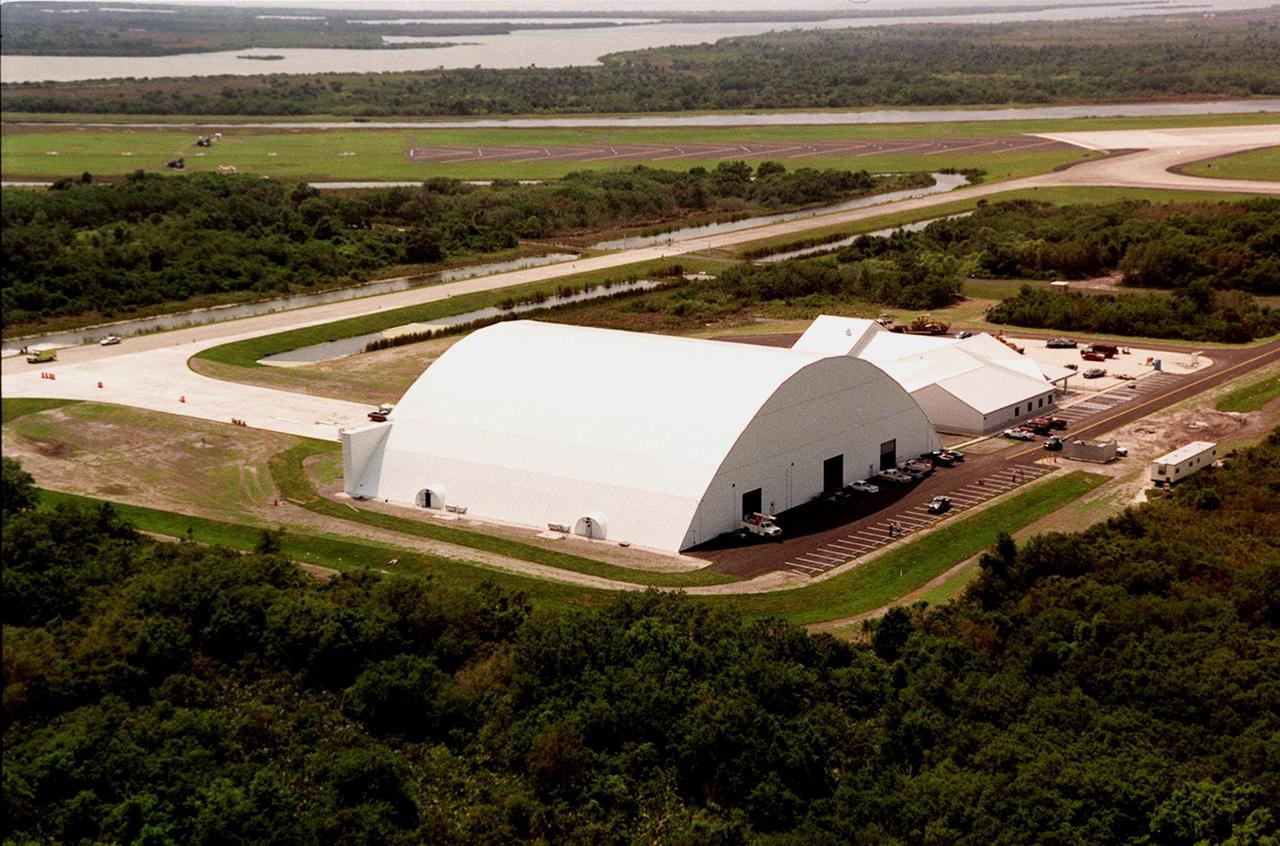
Construction of the new remote launch vehicle hangar (right) is closer to completion. It is at the south end of the Shuttle Landing Facility at KSC. Next to the multi-purpose RLV hangar are facilities for related ground support equipment and administrative/technical support. Astronaut Road is seen near the top of the photo
KSC00pp0434
This aerial photo focuses on the remote launch vehicle (RLV) hangar, still under construction. It sits at the south end of the Shuttle Landing Facility. Adjacent to the multi-purpose RLV hangar (above it) are facilities for related ground support equipment and administrative/technical support. The top of the photo captures a portion of the parking tarmac near the runway
KSC-00pp0441
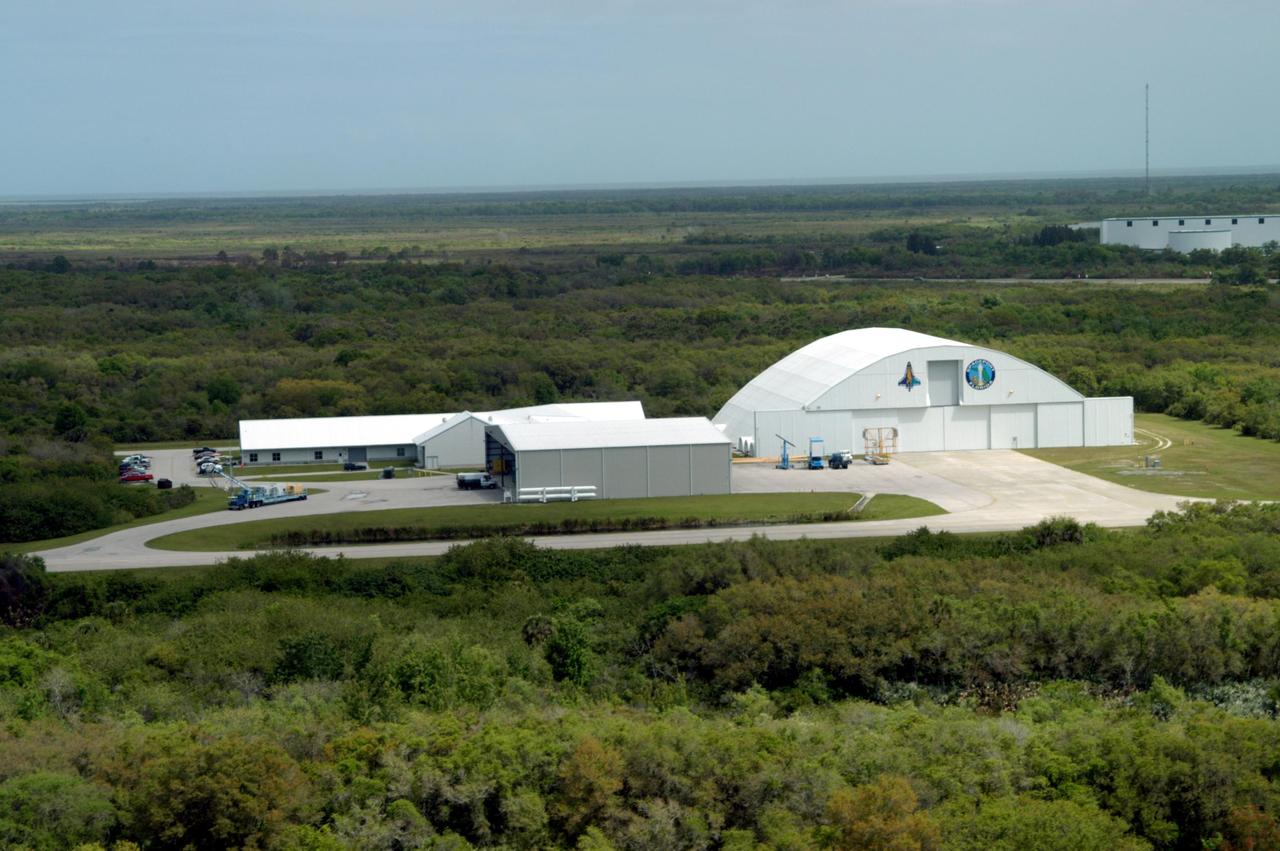
KENNEDY SPACE CENTER, FLA. -- An aerial photo of the hangar and storage facility near the KSC Shuttle Landing Facility.  The hangar was used to collect and evaluate the pieces of Columbia debris before they were moved to permanent storage in the Vehicle Assembly Building.
KSC-04pd0643
Construction of the new remote launch vehicle hangar (right) is closer to completion. It is at the south end of the Shuttle Landing Facility at KSC. Next to the multi-purpose RLV hangar are facilities for related ground support equipment and administrative/technical support. Astronaut Road is seen near the top of the photo
KSC-00pp0434
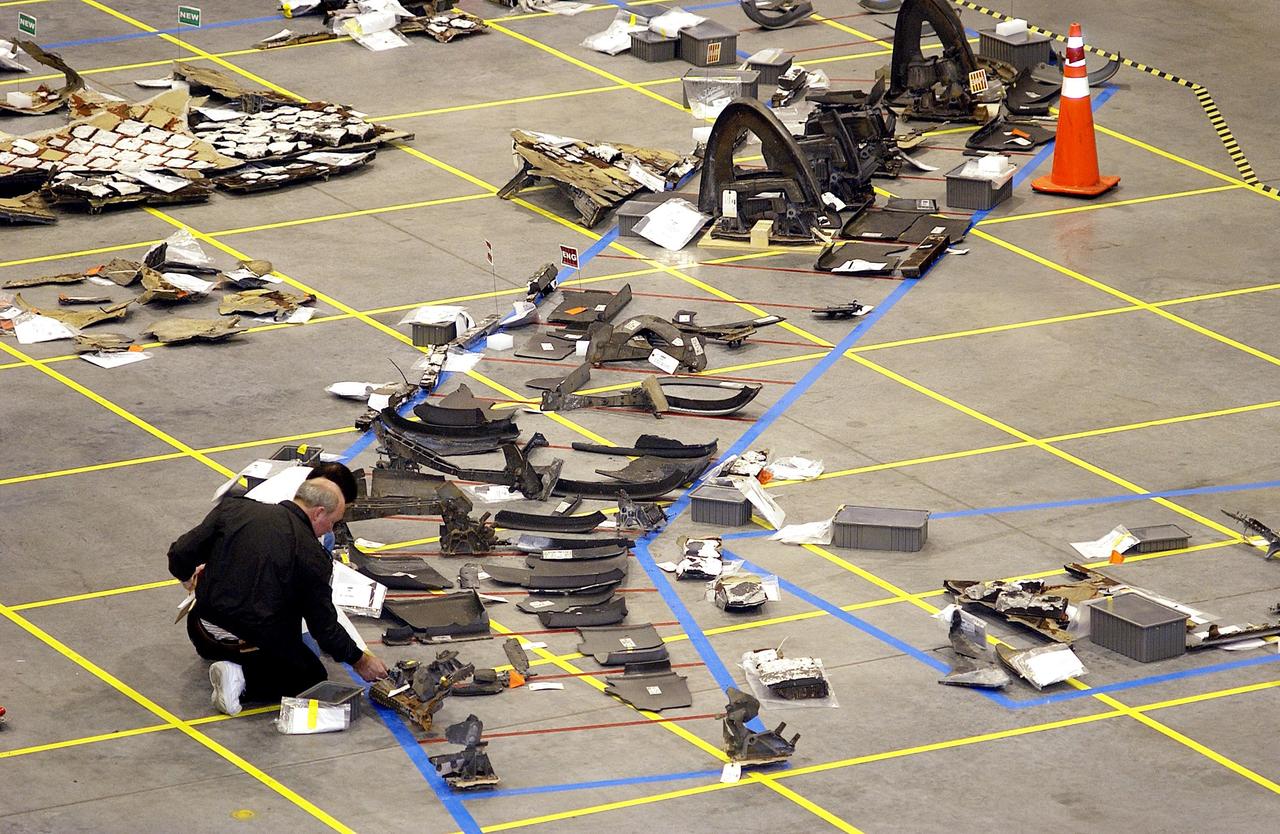
KENNEDY SPACE CENTER, FLA. -  An overview of the floor of the RLV Hangar shows some of the Columbia debris collected and identified. Approximately 4,500 ground searchers have covered approximately 56 percent of the planned 555,000-acre search area. About 28 percent of the Shuttle Columbia, by weight, has been delivered to the RLV Hangar to date.
KSC-03pd0901
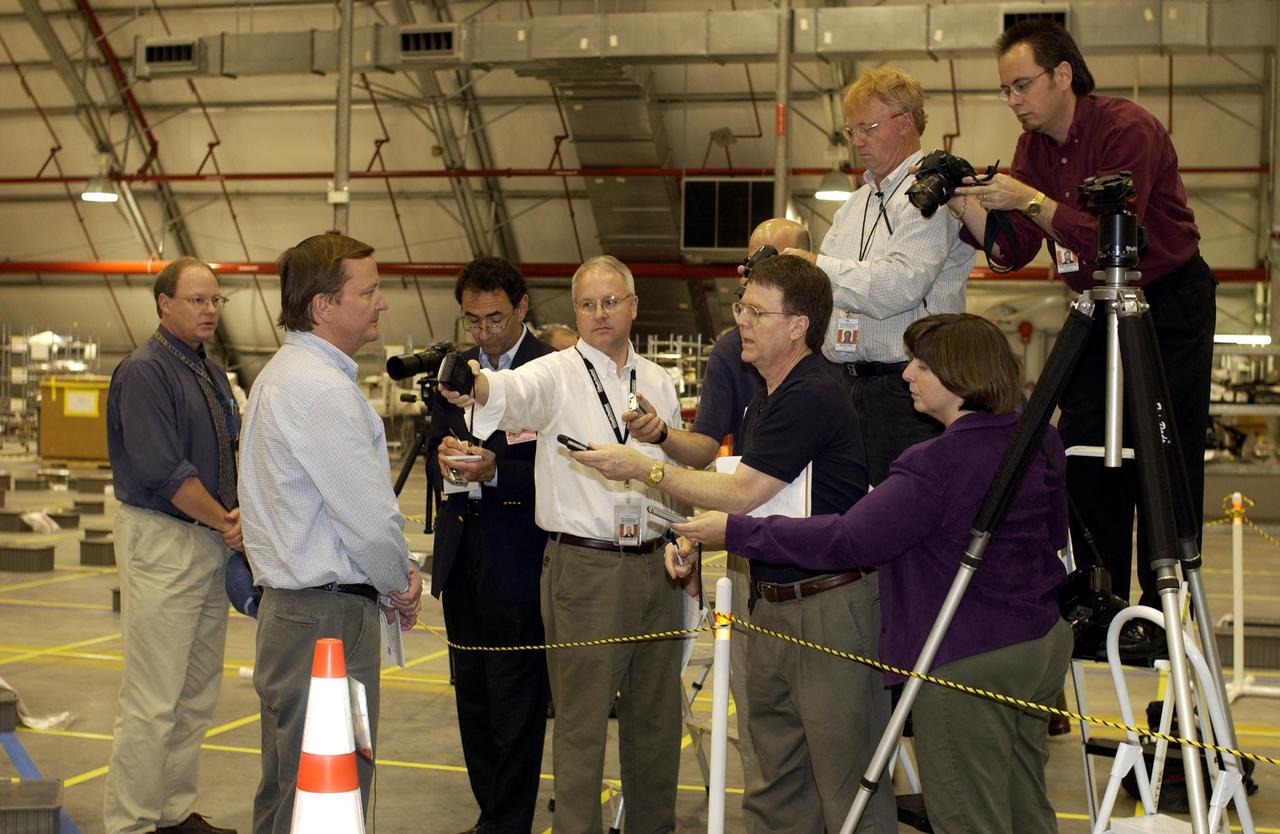
KENNEDY SPACE CENTER, FLA. -  Shuttle Launch Director Mike Leinbach answers reporters' questions in the RLV Hangar.   Leinbach is overseeing assessment of the debris as it is delivered to KSC.  The Columbia Reconstruction Project team is identifying pieces and placing them on a grid approximating the shape of the orbiter.  About 25 percent of the orbiter has been delivered to the hangar.
KSC-03pd0851
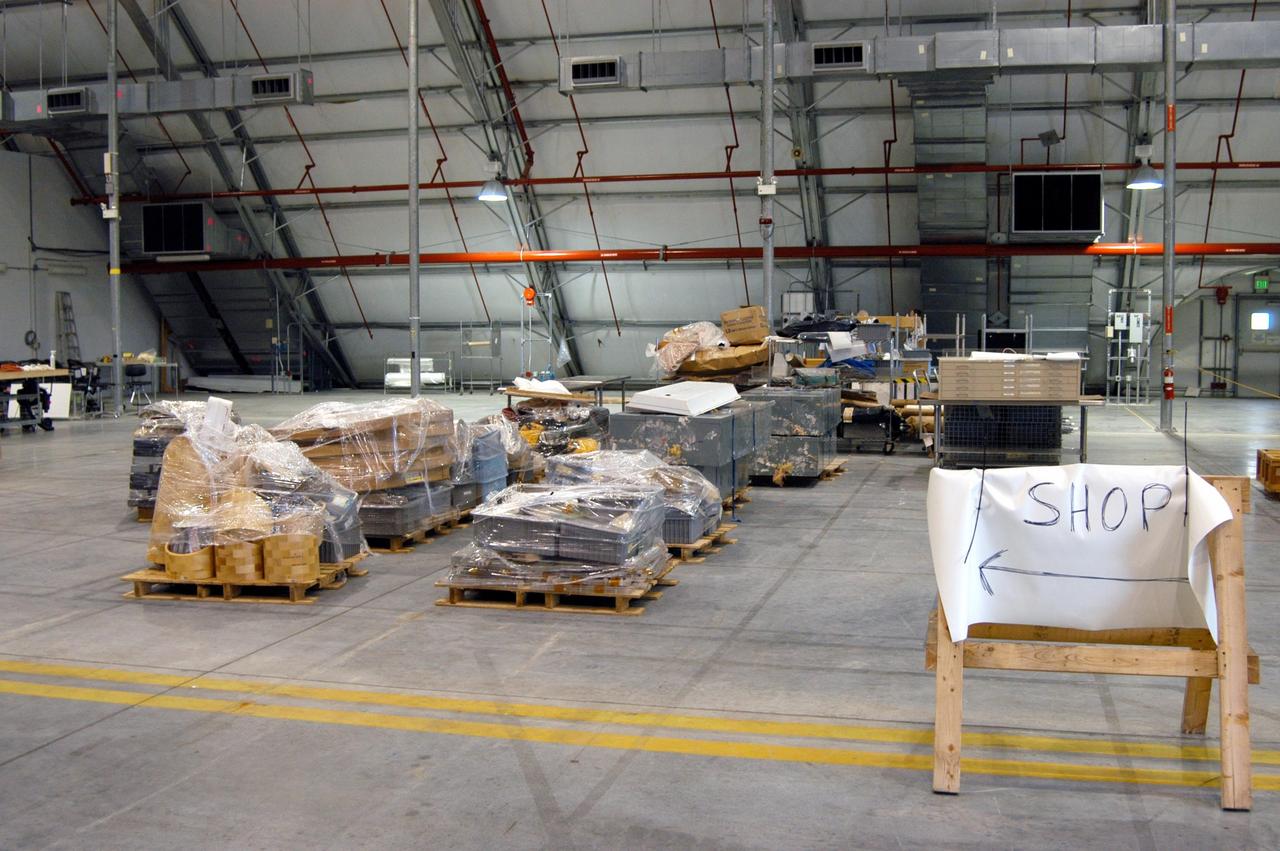
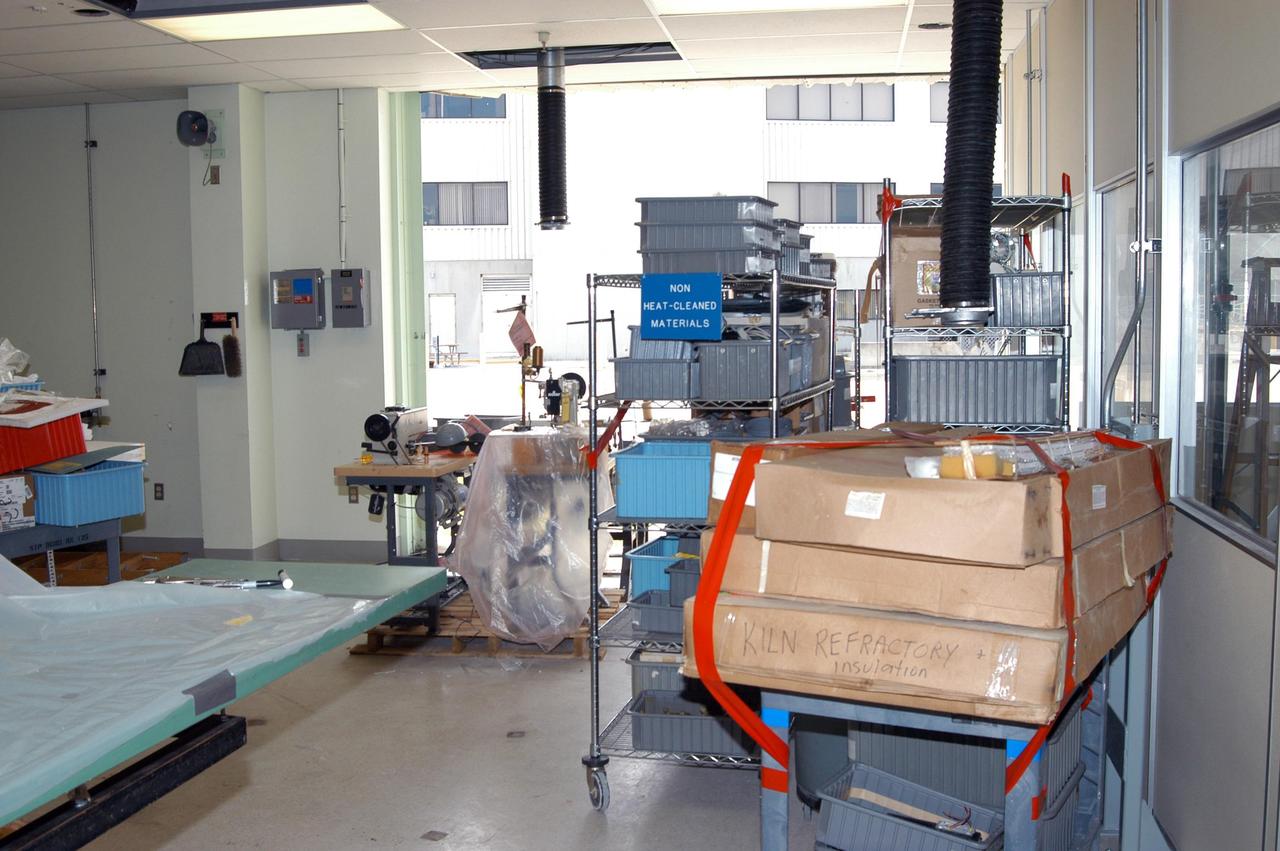
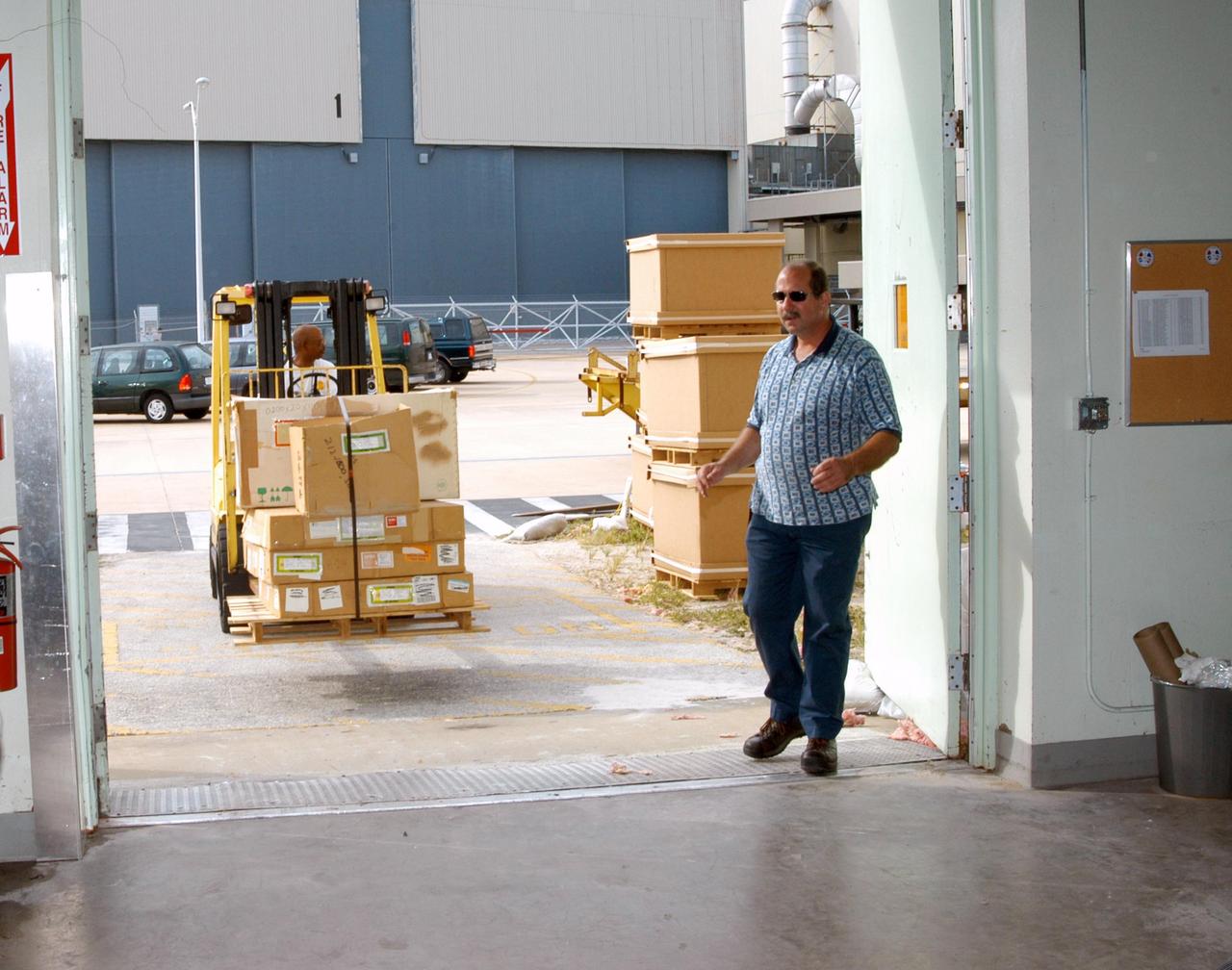
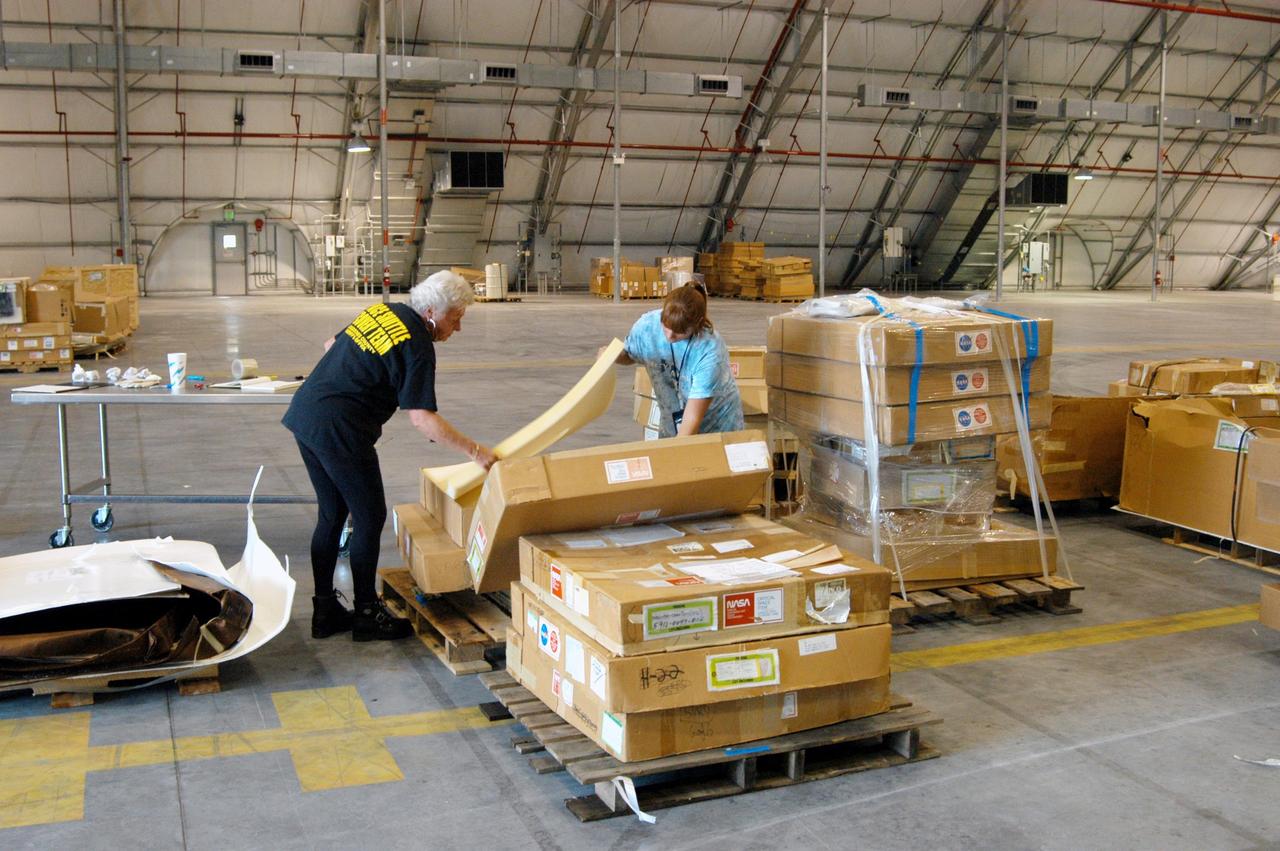
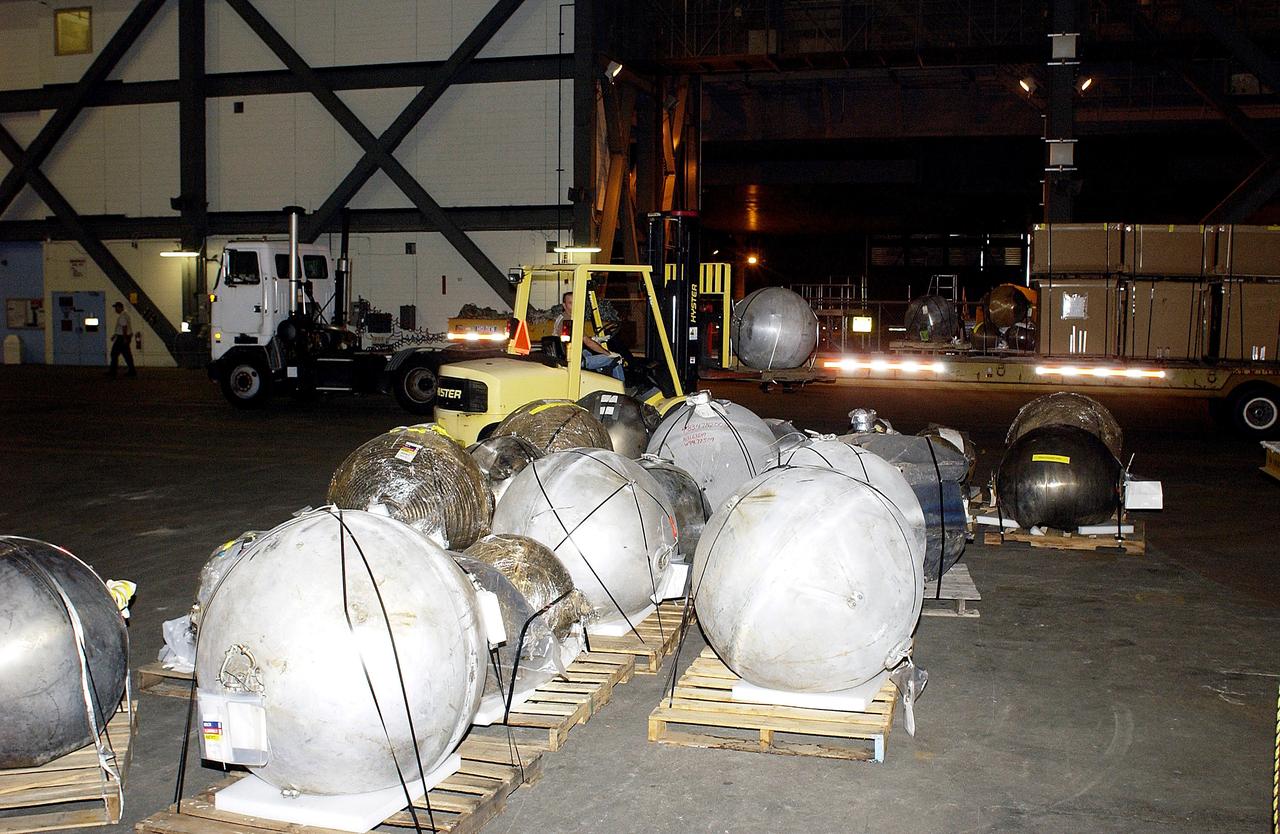
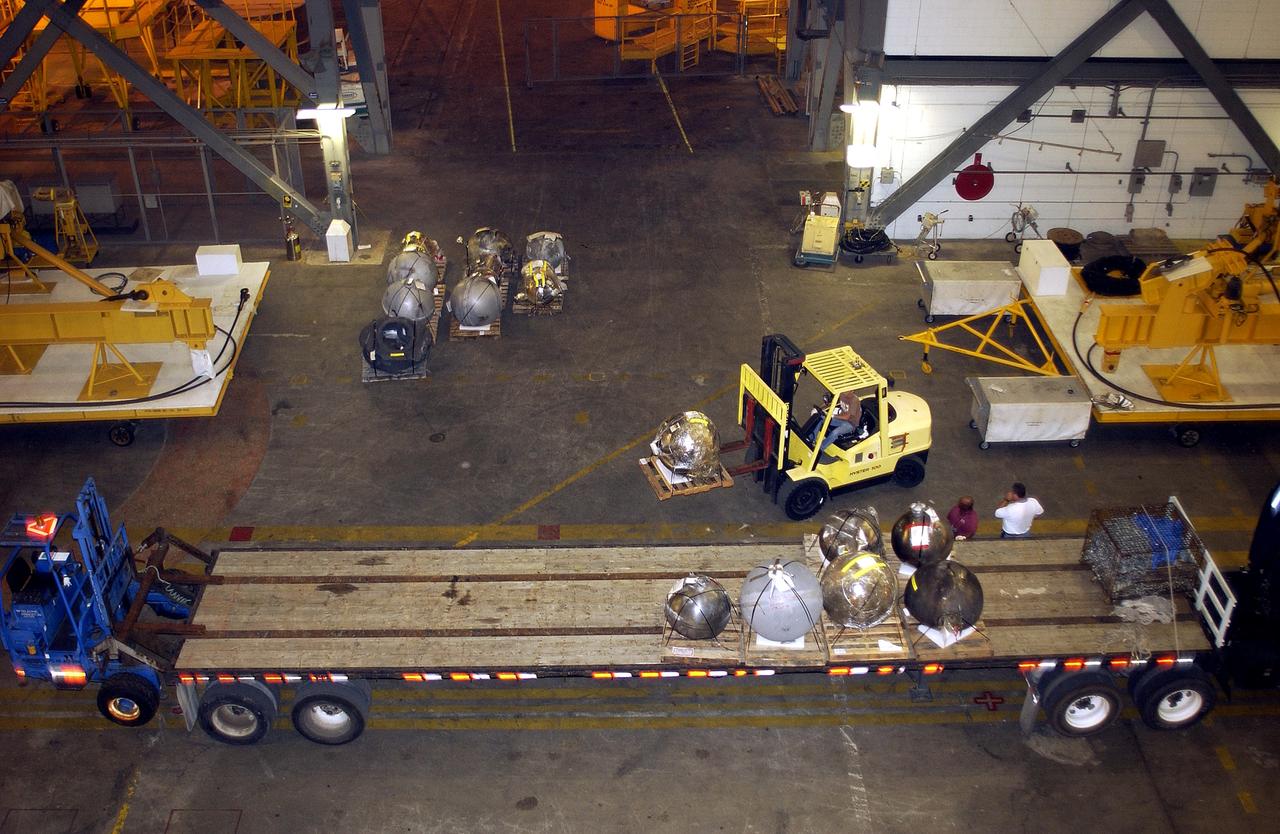
KENNEDY SPACE CENTER, FLA. -   Equipment from the Thermal Protection System Facility (TPSF), damaged by Hurricane Frances, is moved into a hangar and storage facility near the KSC Shuttle Landing Facility. Previously, this hangar was used to house the Space Shuttle Columbia debris. Located in Launch Complex 39, the TPSF is used to manufacture both internal and external insulation products for the Space Shuttle orbiters.  The storm's path over Florida took it through Cape Canaveral and KSC property during Labor Day weekend.
KSC-04pd1732
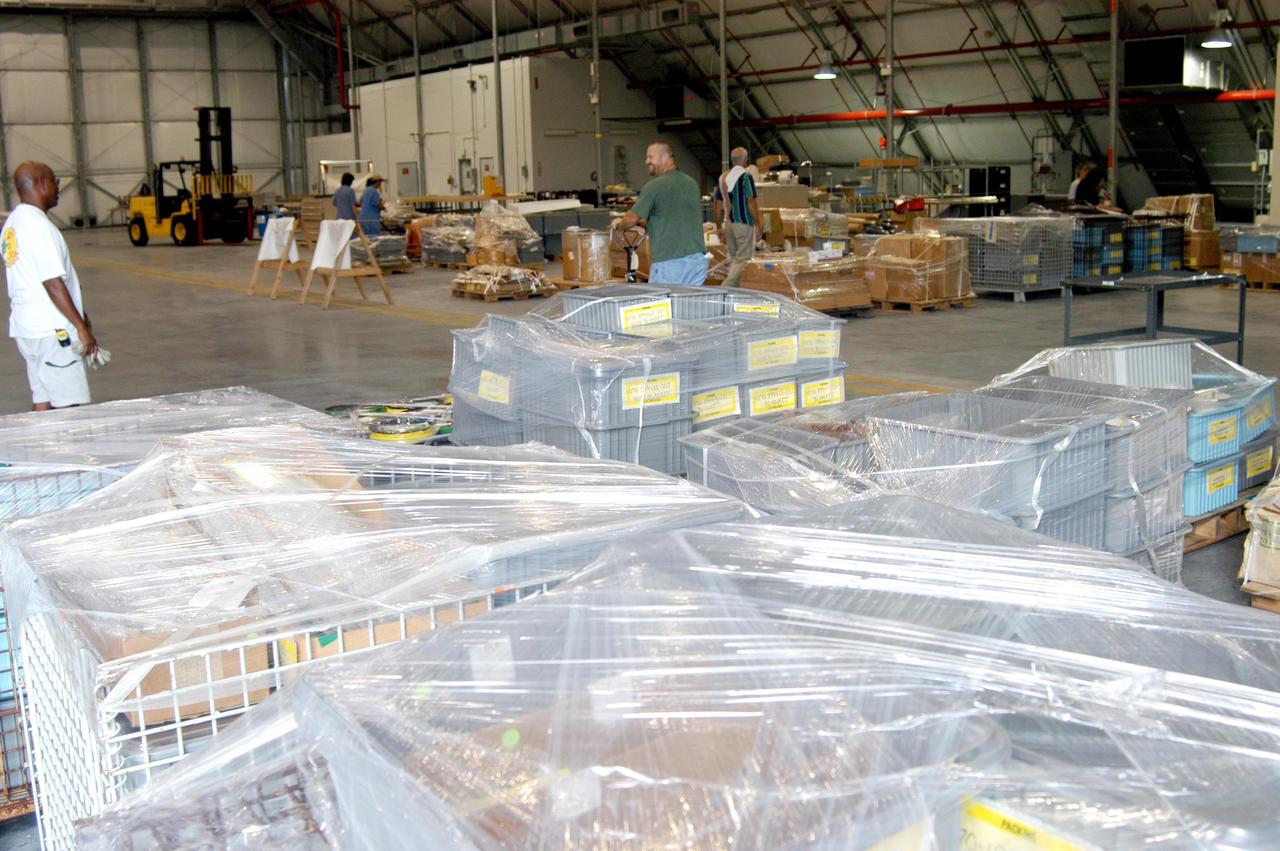
KENNEDY SPACE CENTER, FLA. -   KSC employees move equipment from the Thermal Protection System Facility (TPSF), damaged by Hurricane Frances, into a hangar and storage facility near the KSC Shuttle Landing Facility. Previously, this hangar was used to house the Space Shuttle Columbia debris. Located in Launch Complex 39, the TPSF is used to manufacture both internal and external insulation products for the Space Shuttle orbiters.  The storm's path over Florida took it through Cape Canaveral and KSC property during Labor Day weekend.
KSC-04pd1737
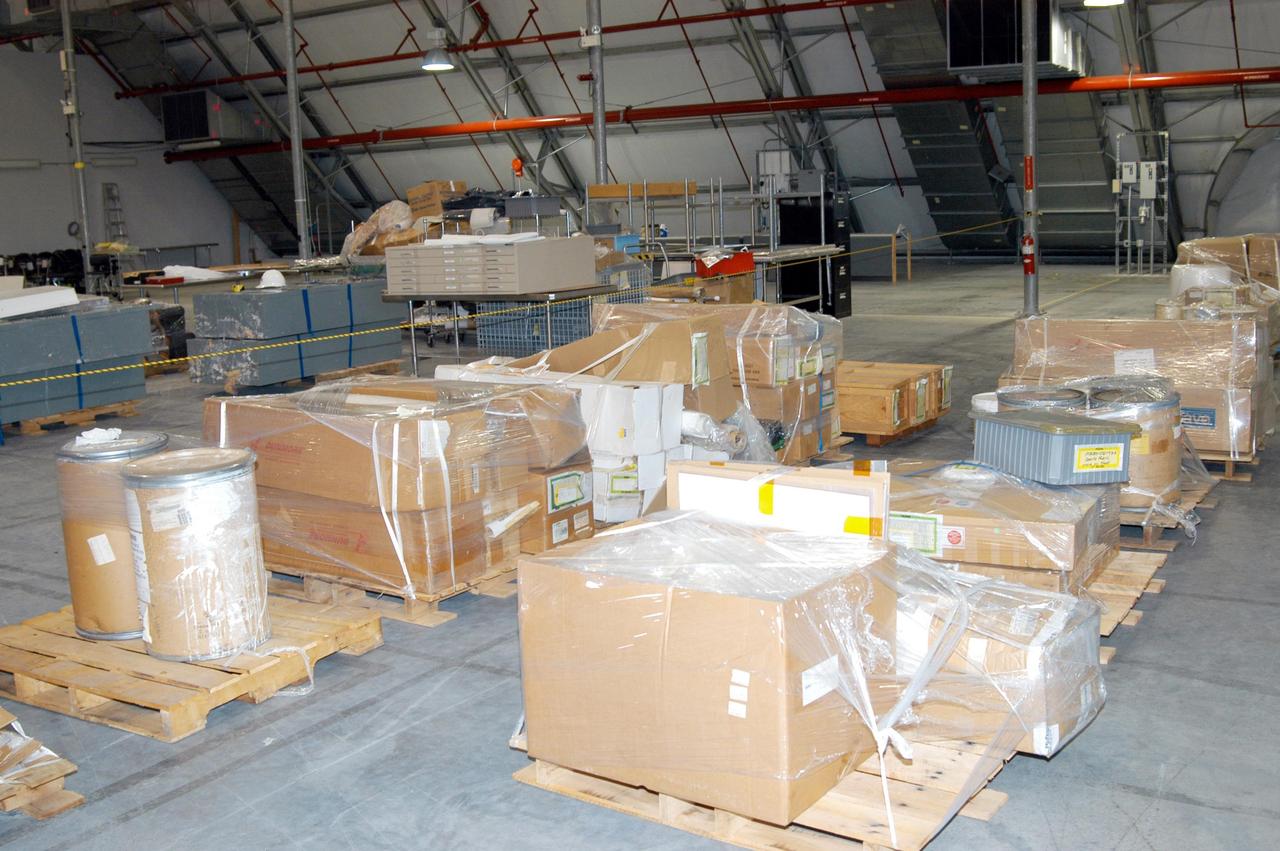
KENNEDY SPACE CENTER, FLA. -   Equipment from the Thermal Protection System Facility (TPSF), damaged by Hurricane Frances, is moved into a hangar and storage facility near the KSC Shuttle Landing Facility. Previously, this hangar was used to house the Space Shuttle Columbia debris. Located in Launch Complex 39, the TPSF is used to manufacture both internal and external insulation products for the Space Shuttle orbiters.  The storm's path over Florida took it through Cape Canaveral and KSC property during Labor Day weekend.
KSC-04pd1739
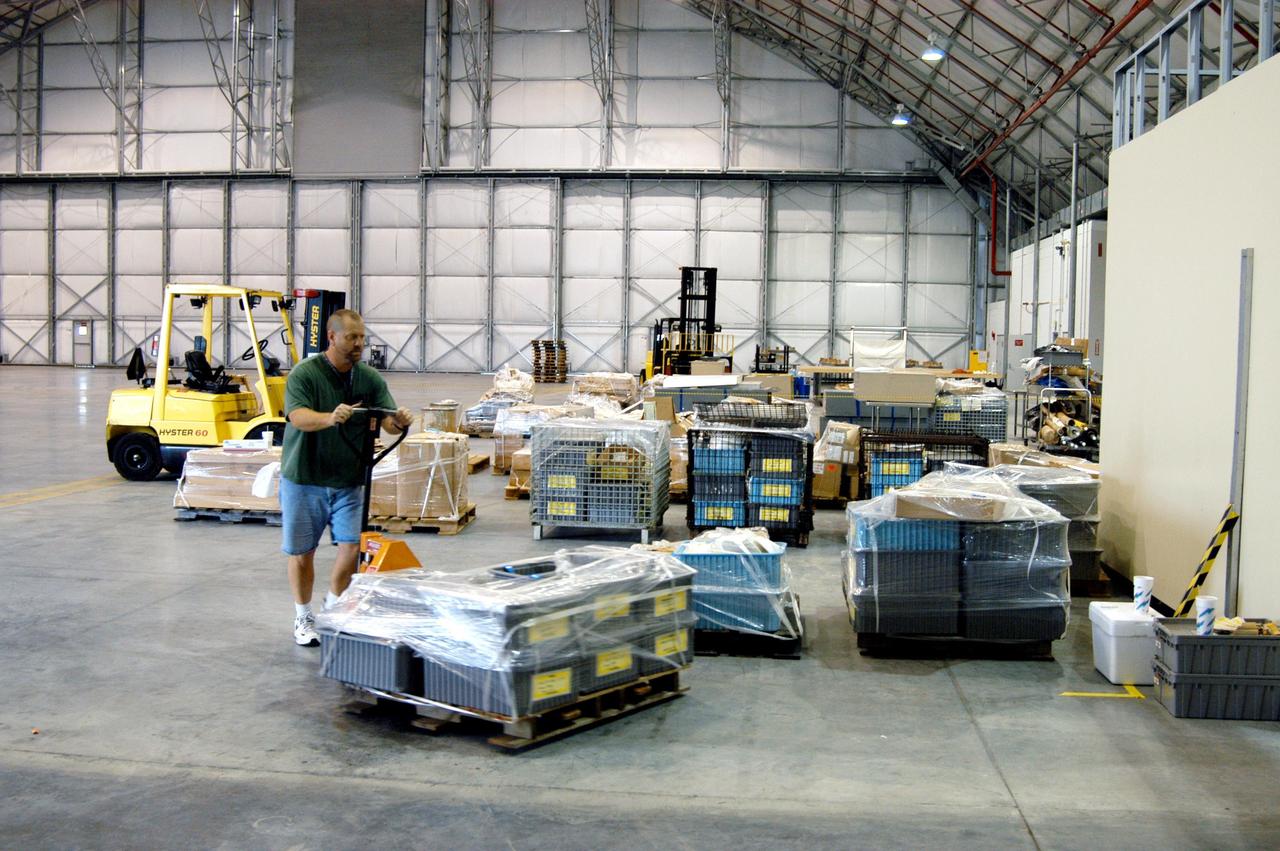
KENNEDY SPACE CENTER, FLA. -   A KSC employee moves equipment from the Thermal Protection System Facility (TPSF), damaged by Hurricane Frances, into a hangar and storage facility near the KSC Shuttle Landing Facility. Previously, this hangar was used to house the Space Shuttle Columbia debris. Located in Launch Complex 39, the TPSF is used to manufacture both internal and external insulation products for the Space Shuttle orbiters.  The storm's path over Florida took it through Cape Canaveral and KSC property during Labor Day weekend.
KSC-04pd1738
KENNEDY SPACE CENTER, FLA. -   Equipment from the Thermal Protection System Facility (TPSF), damaged by Hurricane Frances, is relocated to a hangar and storage facility near the KSC Shuttle Landing Facility. Previously, this hangar was used to house the Space Shuttle Columbia debris. Located in Launch Complex 39, the TPSF is used to manufacture both internal and external insulation products for the Space Shuttle orbiters.  The storm's path over Florida took it through Cape Canaveral and KSC property during Labor Day weekend.
KSC-04pd1733
KENNEDY SPACE CENTER, FLA. -   KSC employees move equipment from the Thermal Protection System Facility (TPSF), damaged by Hurricane Frances, into a hangar and storage facility near the KSC Shuttle Landing Facility. Previously, this hangar was used to house the Space Shuttle Columbia debris. Located in Launch Complex 39, the TPSF is used to manufacture both internal and external insulation products for the Space Shuttle orbiters.  The storm's path over Florida took it through Cape Canaveral and KSC property during Labor Day weekend.
KSC-04pd1746
KENNEDY SPACE CENTER, FLA. -   KSC employees move equipment from the Thermal Protection System Facility (TPSF), damaged by Hurricane Frances, into a hangar and storage facility near the KSC Shuttle Landing Facility. Previously, this hangar was used to house the Space Shuttle Columbia debris. Located in Launch Complex 39, the TPSF is used to manufacture both internal and external insulation products for the Space Shuttle orbiters.  The storm's path over Florida took it through Cape Canaveral and KSC property during Labor Day weekend.
KSC-04pd1744
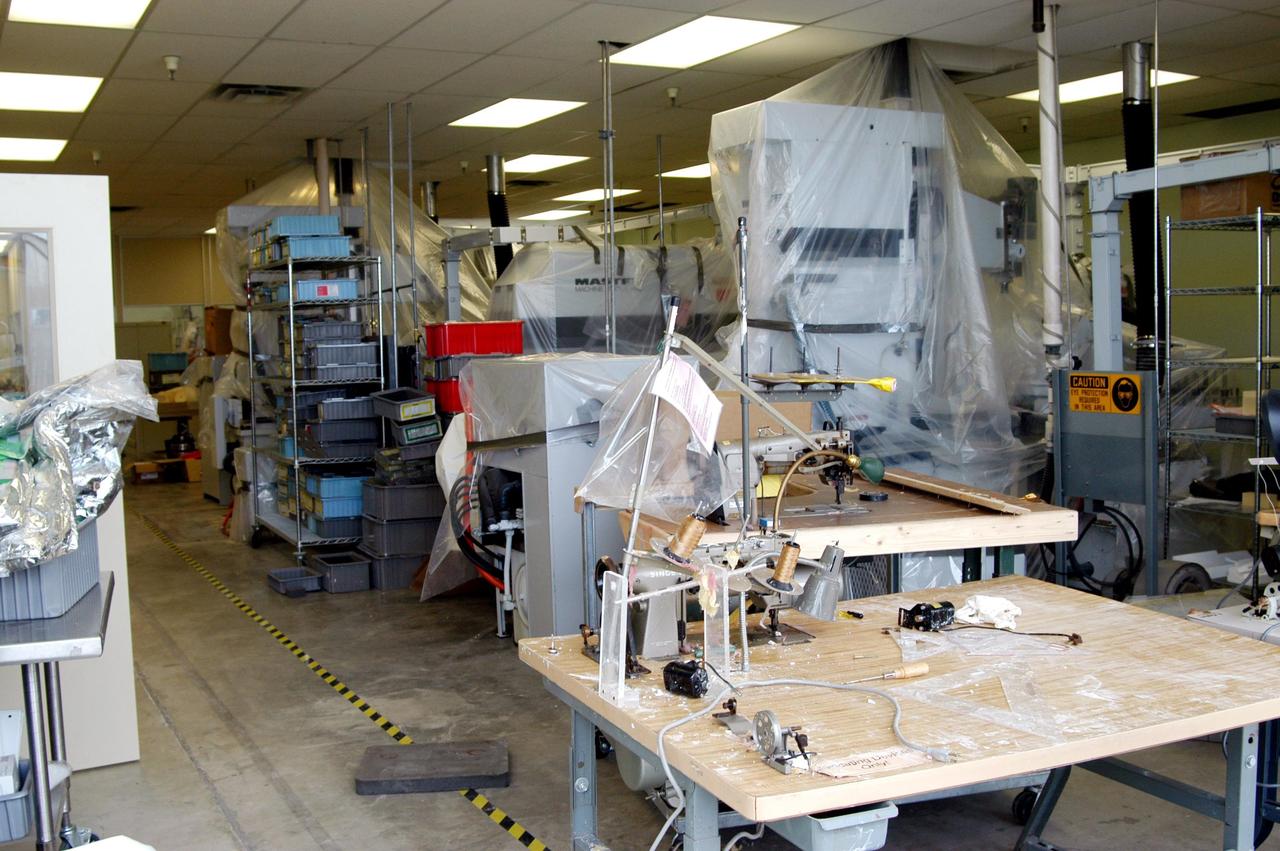
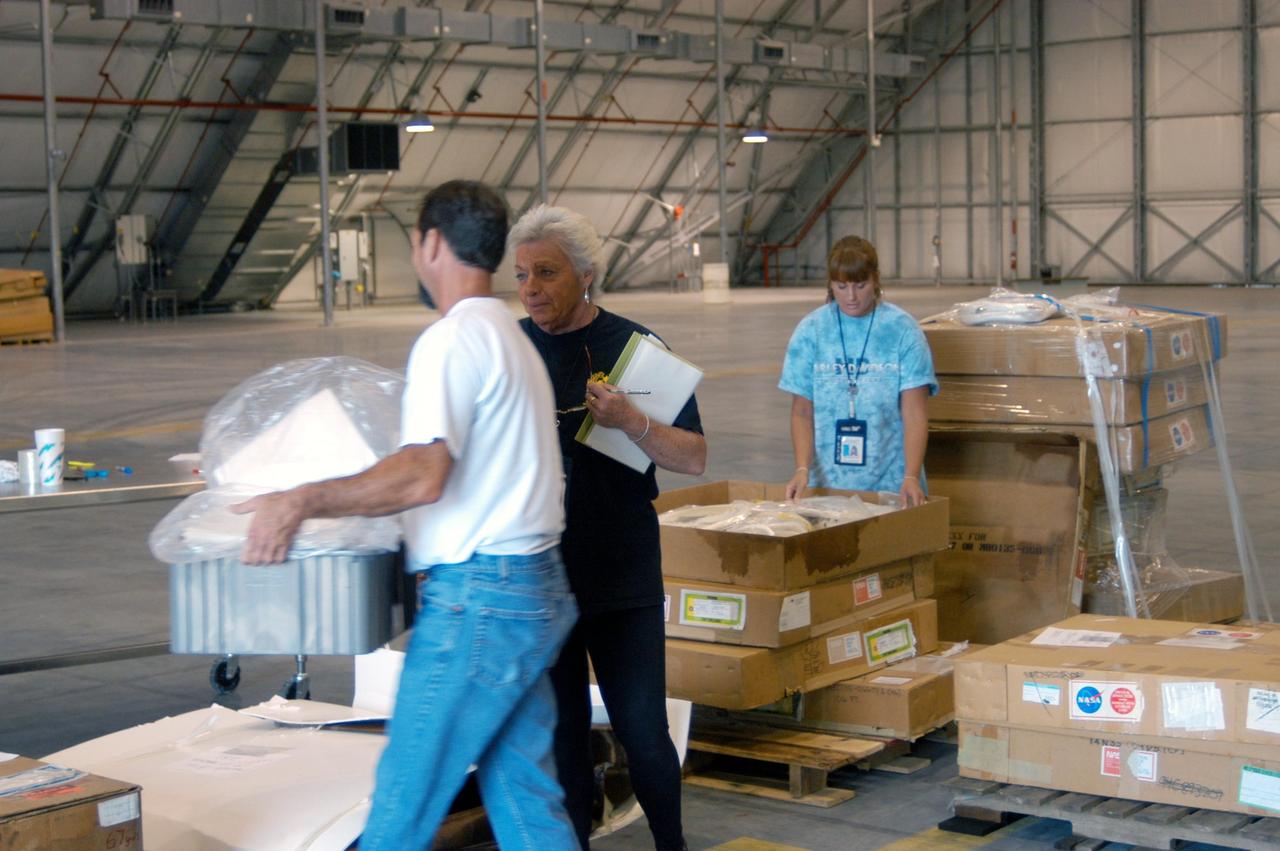
KENNEDY SPACE CENTER, FLA. -   KSC employees check out equipment moved from the Thermal Protection System Facility (TPSF), damaged by Hurricane Frances, to a hangar and storage facility near the KSC Shuttle Landing Facility. Previously, this hangar was used to house the Space Shuttle Columbia debris. Located in Launch Complex 39, the TPSF is used to manufacture both internal and external insulation products for the Space Shuttle orbiters.  The storm's path over Florida took it through Cape Canaveral and KSC property during Labor Day weekend.
KSC-04pd1740
KENNEDY SPACE CENTER, FLA. -   Equipment from the Thermal Protection System Facility (TPSF), damaged by Hurricane Frances, is moved into a hangar and storage facility near the KSC Shuttle Landing Facility. Previously, this hangar was used to house the Space Shuttle Columbia debris. Located in Launch Complex 39, the TPSF is used to manufacture both internal and external insulation products for the Space Shuttle orbiters.  The storm's path over Florida took it through Cape Canaveral and KSC property during Labor Day weekend.
KSC-04pd1734
KENNEDY SPACE CENTER, FLA. -   Equipment from the Thermal Protection System Facility (TPSF), damaged by Hurricane Frances, is moved into a hangar and storage facility near the KSC Shuttle Landing Facility. Previously, this hangar was used to house the Space Shuttle Columbia debris. Located in Launch Complex 39, the TPSF is used to manufacture both internal and external insulation products for the Space Shuttle orbiters.  The storm's path over Florida took it through Cape Canaveral and KSC property during Labor Day weekend.
KSC-04pd1736
KENNEDY SPACE CENTER, FLA. -   Equipment from the Thermal Protection System Facility (TPSF), damaged by Hurricane Frances, is moved into a hangar and storage facility near the KSC Shuttle Landing Facility. Previously, this hangar was used to house the Space Shuttle Columbia debris. Located in Launch Complex 39, the TPSF is used to manufacture both internal and external insulation products for the Space Shuttle orbiters.  The storm's path over Florida took it through Cape Canaveral and KSC property during Labor Day weekend.
KSC-04pd1735
KENNEDY SPACE CENTER, FLA. -   KSC employees move equipment from the Thermal Protection System Facility (TPSF), damaged by Hurricane Frances, into a hangar and storage facility near the KSC Shuttle Landing Facility. Previously, this hangar was used to house the Space Shuttle Columbia debris. Located in Launch Complex 39, the TPSF is used to manufacture both internal and external insulation products for the Space Shuttle orbiters.  The storm's path over Florida took it through Cape Canaveral and KSC property during Labor Day weekend.
KSC-04pd1747
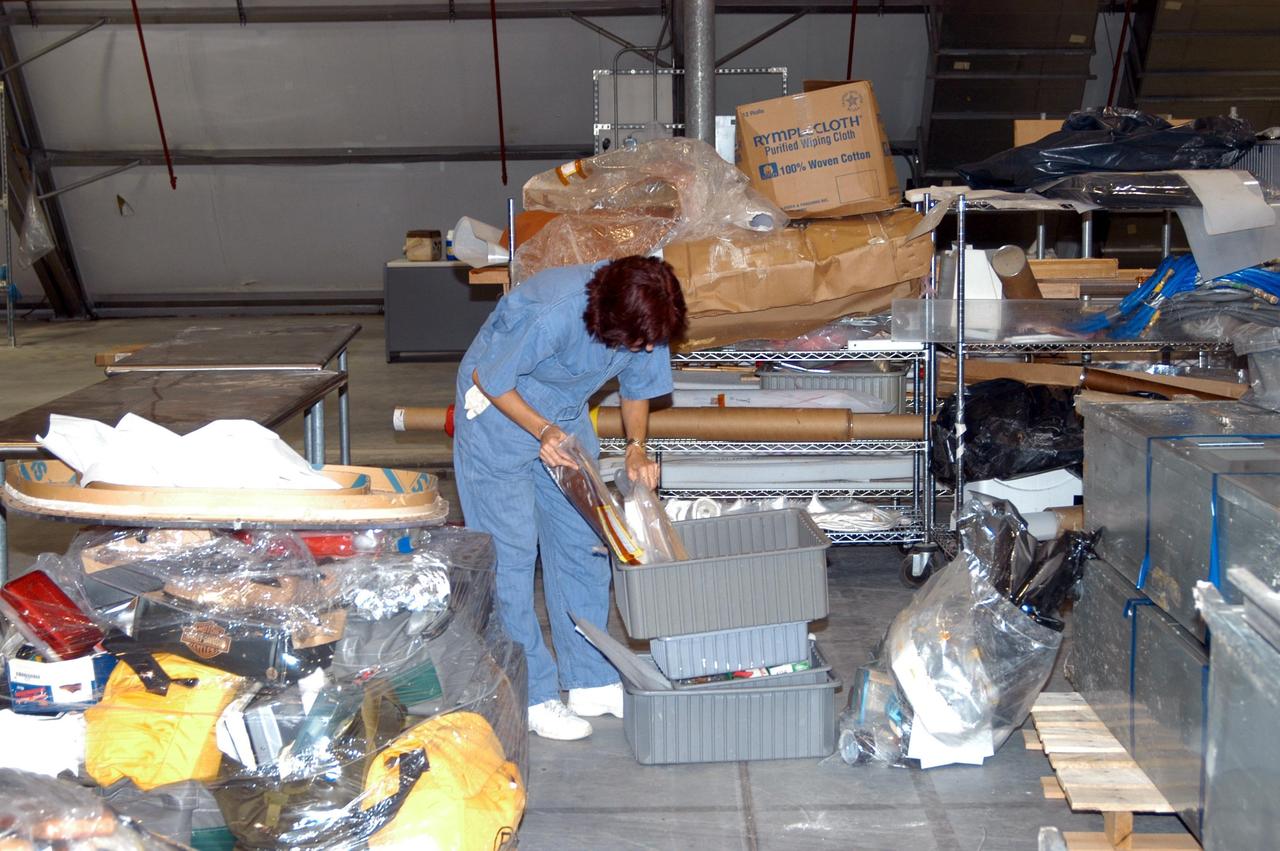
KENNEDY SPACE CENTER, FLA. -   A KSC employee unpacks and sorts equipment moved from the Thermal Protection System Facility (TPSF), damaged by Hurricane Frances, to a hangar and storage facility near the KSC Shuttle Landing Facility. Previously, this hangar was used to house the Space Shuttle Columbia debris. Located in Launch Complex 39, the TPSF is used to manufacture both internal and external insulation products for the Space Shuttle orbiters.  The storm's path over Florida took it through Cape Canaveral and KSC property during Labor Day weekend.
KSC-04pd1742
KENNEDY SPACE CENTER, FLA. -   Equipment from the Thermal Protection System Facility (TPSF), damaged by Hurricane Frances, is relocated to a hangar and storage facility near the KSC Shuttle Landing Facility. Previously, this hangar was used to house the Space Shuttle Columbia debris. Located in Launch Complex 39, the TPSF is used to manufacture both internal and external insulation products for the Space Shuttle orbiters.  The storm's path over Florida took it through Cape Canaveral and KSC property during Labor Day weekend.
KSC-04pd1745
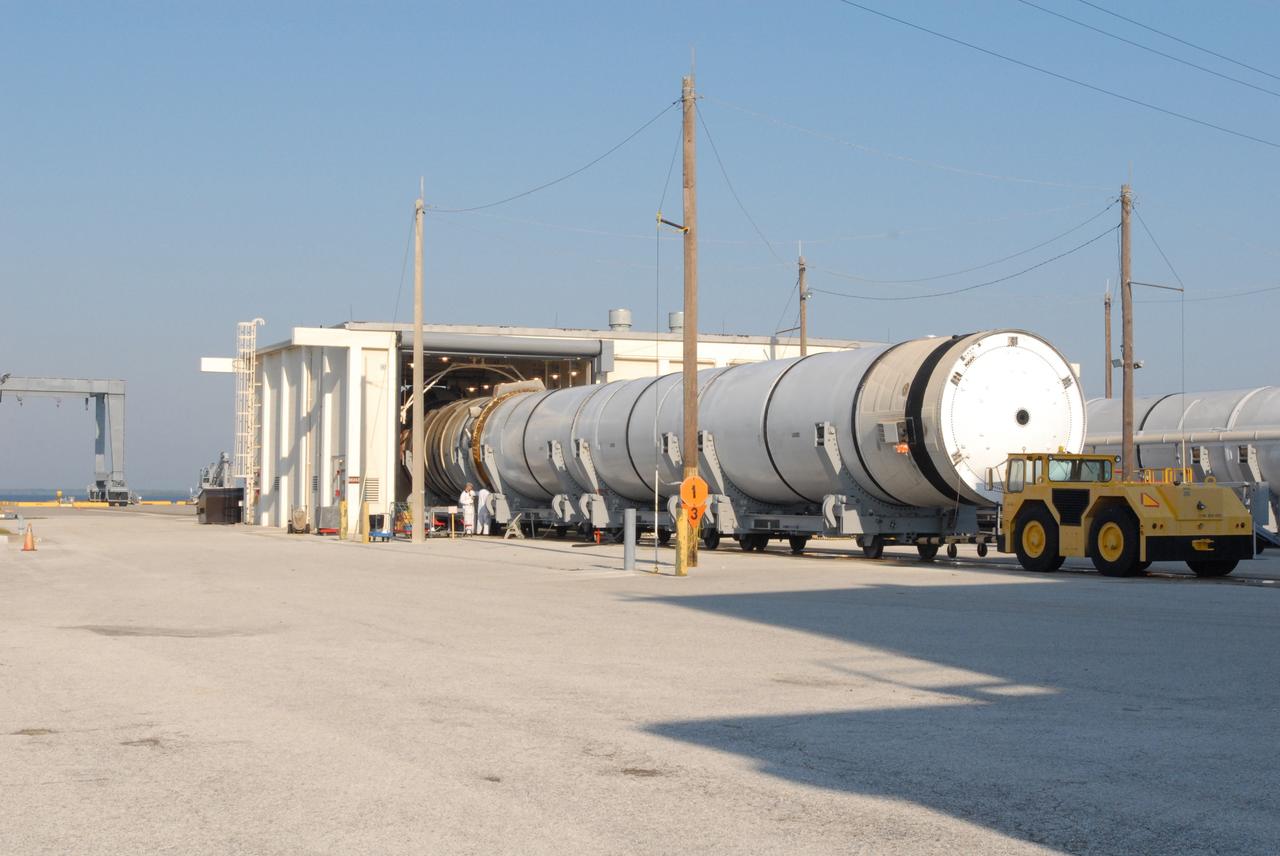
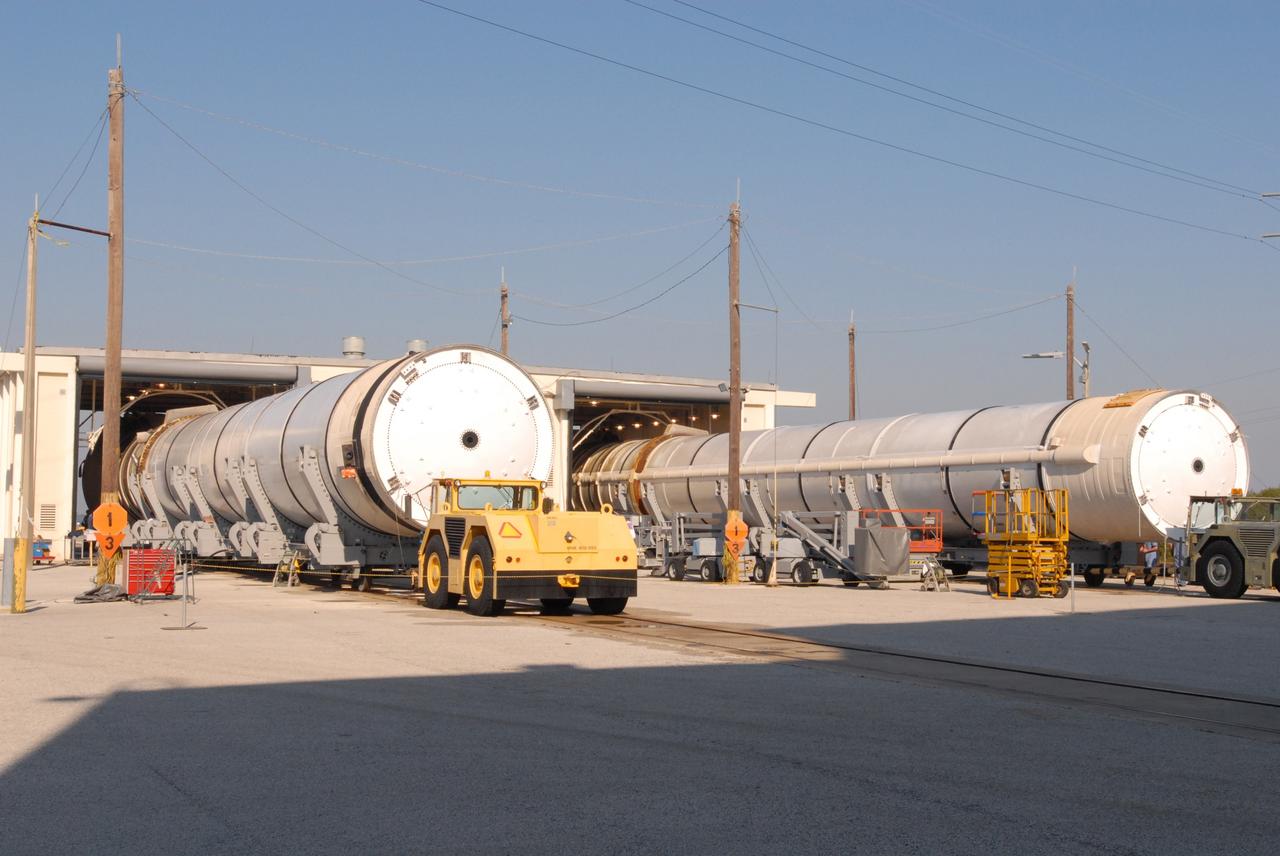
CAPE CANAVERAL, Fla. –  At Hangar AF at Cape Canaveral Air Force Station in Florida, two spent solid rocket boosters from space shuttle Endeavour, which launched Nov. 14 on the STS-126 mission, move into the hangar for inspection. The space shuttle’s solid rocket booster casings and associated flight hardware are recovered at sea after being jettisoned. The boosters impact the Atlantic Ocean approximately seven minutes after liftoff. After their recovery and transport to Hangar AF, the boosters are cleaned, inspected, disassembled, refurbished and reloaded with solid propellant for reuse.  Photo credit: NASA/Jim Grossmann
KSC-08pd3763
The remote launch vehicle (RLV) hangar, still under construction, is seen here. It sits at the south end of the Shuttle Landing Facility. Adjacent to the multi-purpose RLV hangar (right) are facilities for related ground support equipment and administrative/technical support. Next to the hangar is the tow-way road leading to the runway, which starts on the right of the photo. The top of the photo shows the Indian River, part of the Intracoastal Waterway in Florida
KSC-00pp0440
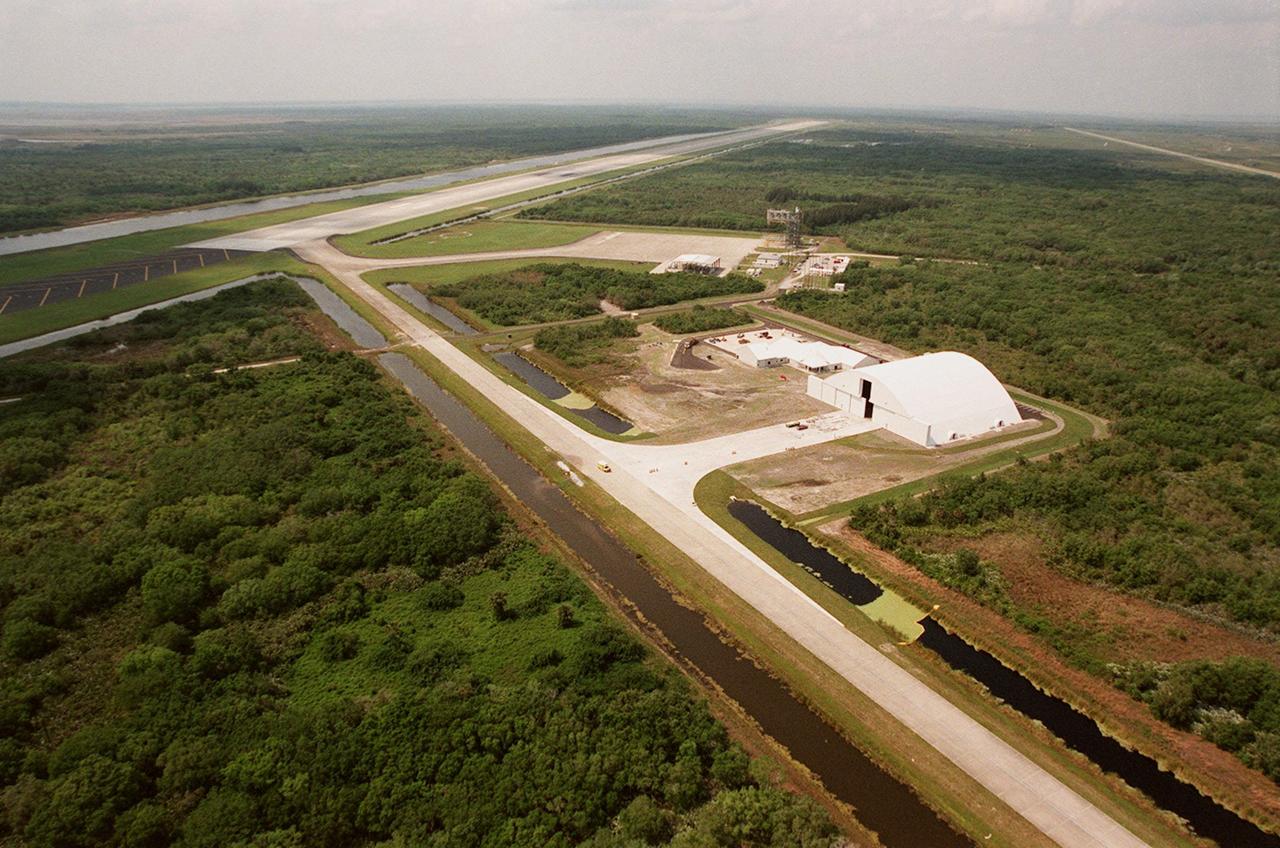
This broad aerial view shows the runway at KSC (top), the parking facility with the mate/demate device (center), and the remote launch vehicle (RLV) hangar, at right, still under construction at the south end of the Shuttle Landing Facility. Next to the multi-purpose RLV hangar are facilities for related ground support equipment and administrative/technical support. The tow-way stretches from the runway past the hangar to lower right in the photo. Stretching toward the horizon are the grounds of the Merritt island National Wildlife Refuge, which shares a boundary with KSC
KSC00pp0435
This broad aerial view shows the runway at KSC (top), the parking facility with the mate/demate device (center), and the remote launch vehicle (RLV) hangar, at right, still under construction at the south end of the Shuttle Landing Facility. Next to the multi-purpose RLV hangar are facilities for related ground support equipment and administrative/technical support. The tow-way stretches from the runway past the hangar to lower right in the photo. Stretching toward the horizon are the grounds of the Merritt island National Wildlife Refuge, which shares a boundary with KSC
KSC-00pp0435
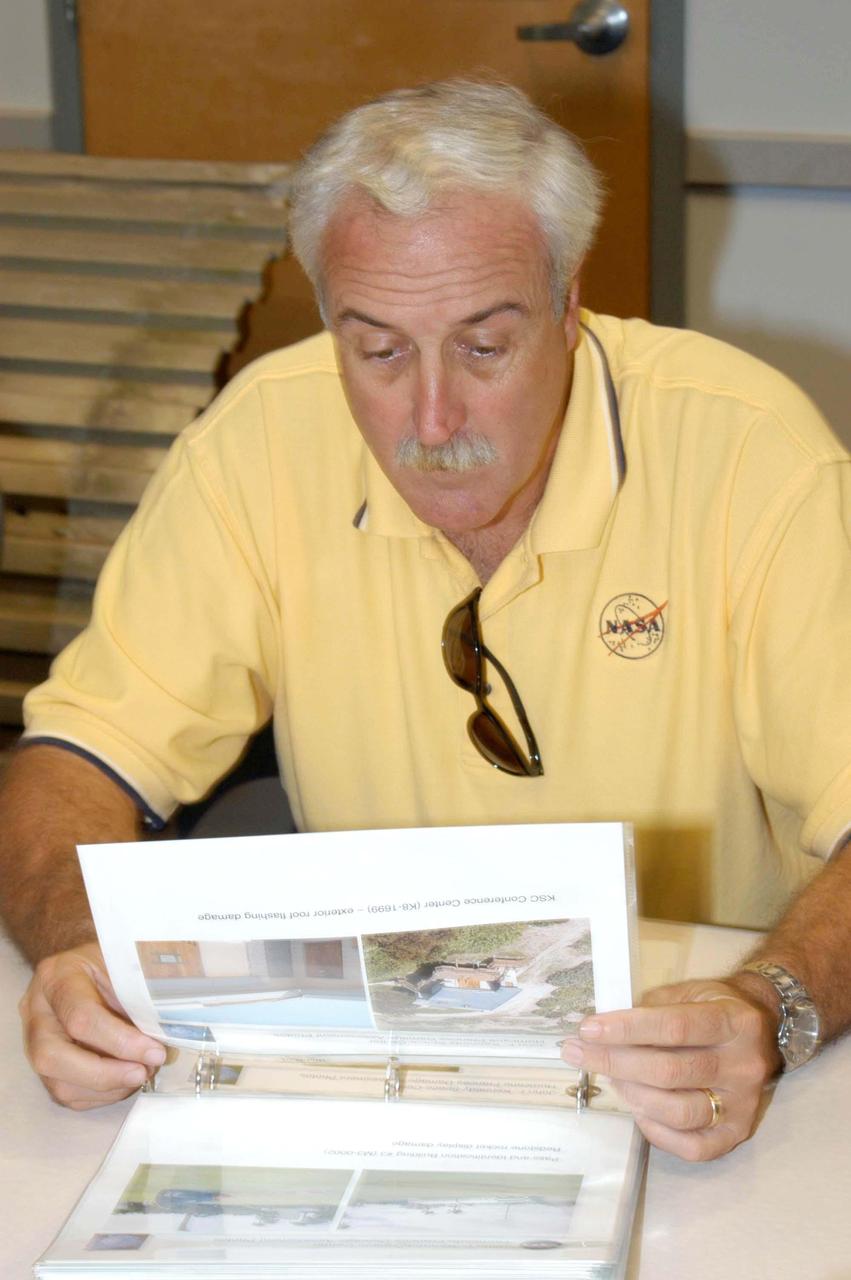
KENNEDY SPACE CENTER, FLA. -  NASA Administrator Sean O’Keefe looks at images of damaged KSC facilities in the RLV Hangar before surveying the damage sustained by KSC facilities from Hurricane Frances over Labor Day weekend.  The Vehicle Assembly Building, Thermal Protection System Facility, and Processing Control Center all received significant damage from the storm.  Additionally, the Operations and Checkout Building, Vertical Processing Facility, Hangar AE, Hangar S and Hangar AF Small Parts Facility each received substantial damage. NASA’s three Space Shuttle orbiters -- Discovery, Atlantis and Endeavour - along with the Shuttle launch pads, all of the critical flight hardware for the orbiters and the International Space Station, and NASA’s Swift spacecraft, awaiting launch in October, were well protected and unharmed.
KSC-04pd1834
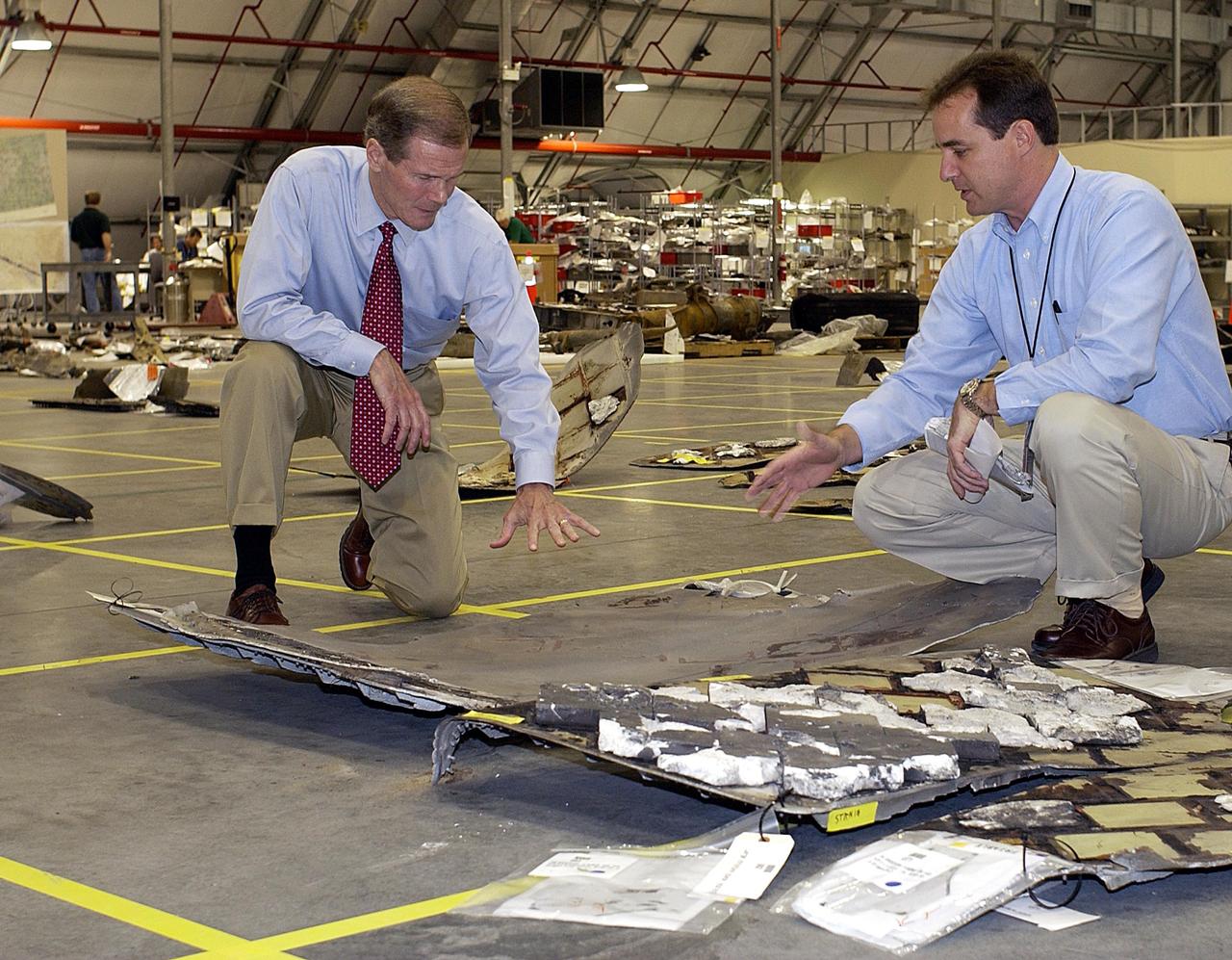
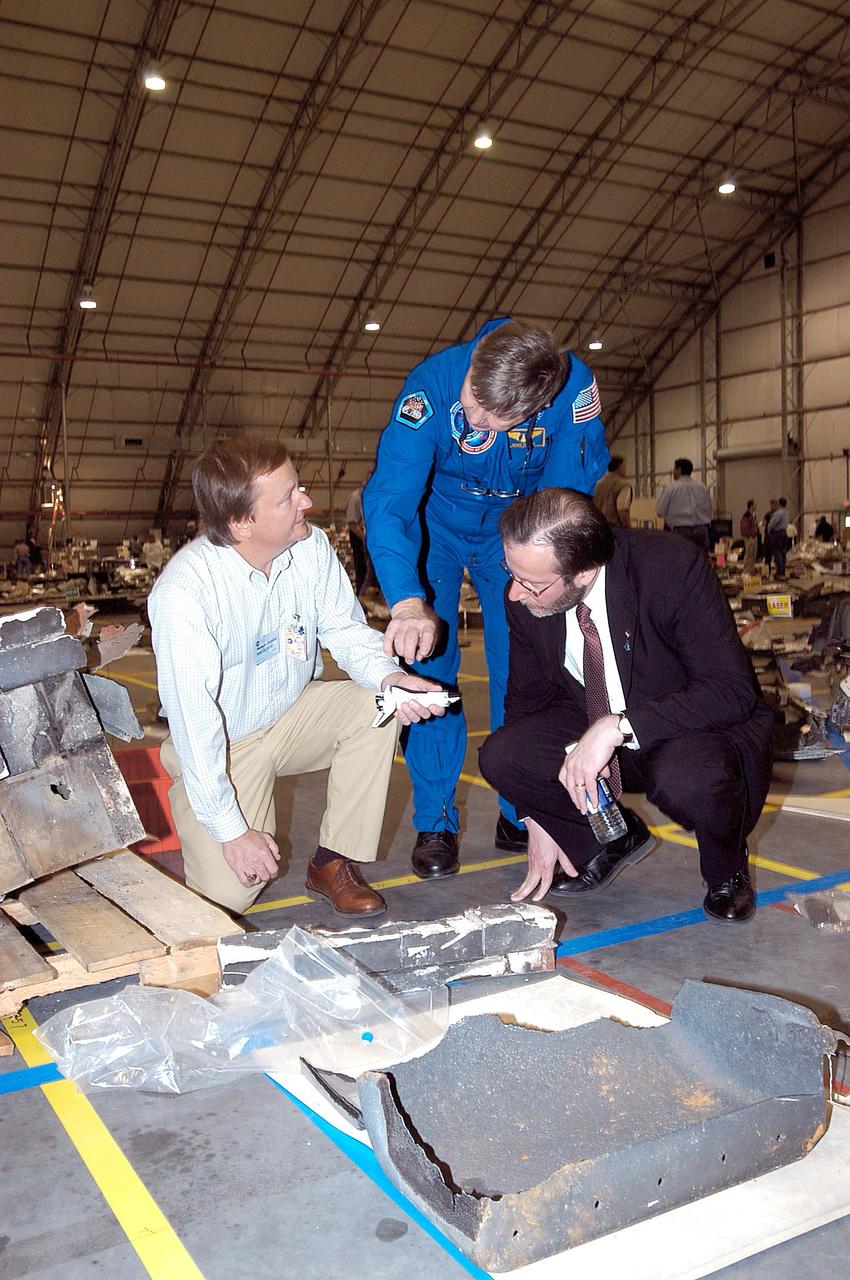
KENNEDY SPACE CENTER, FLA. --  U.S. Senator Bill Nelson and Space Shuttle Test Director Steve Altemus look at Columbia debris in KSC's RLV Hangar.
KSC-03pd0707
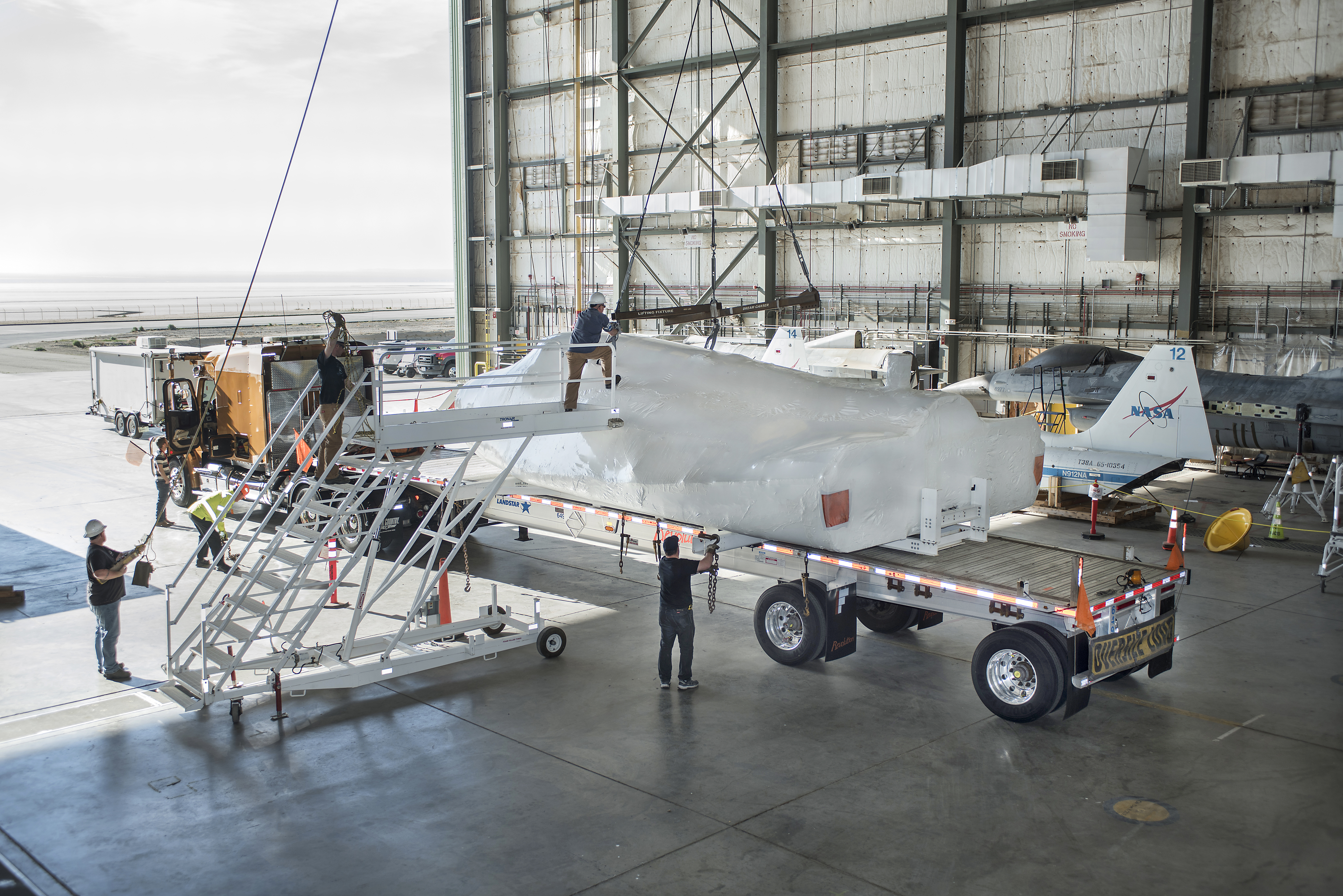
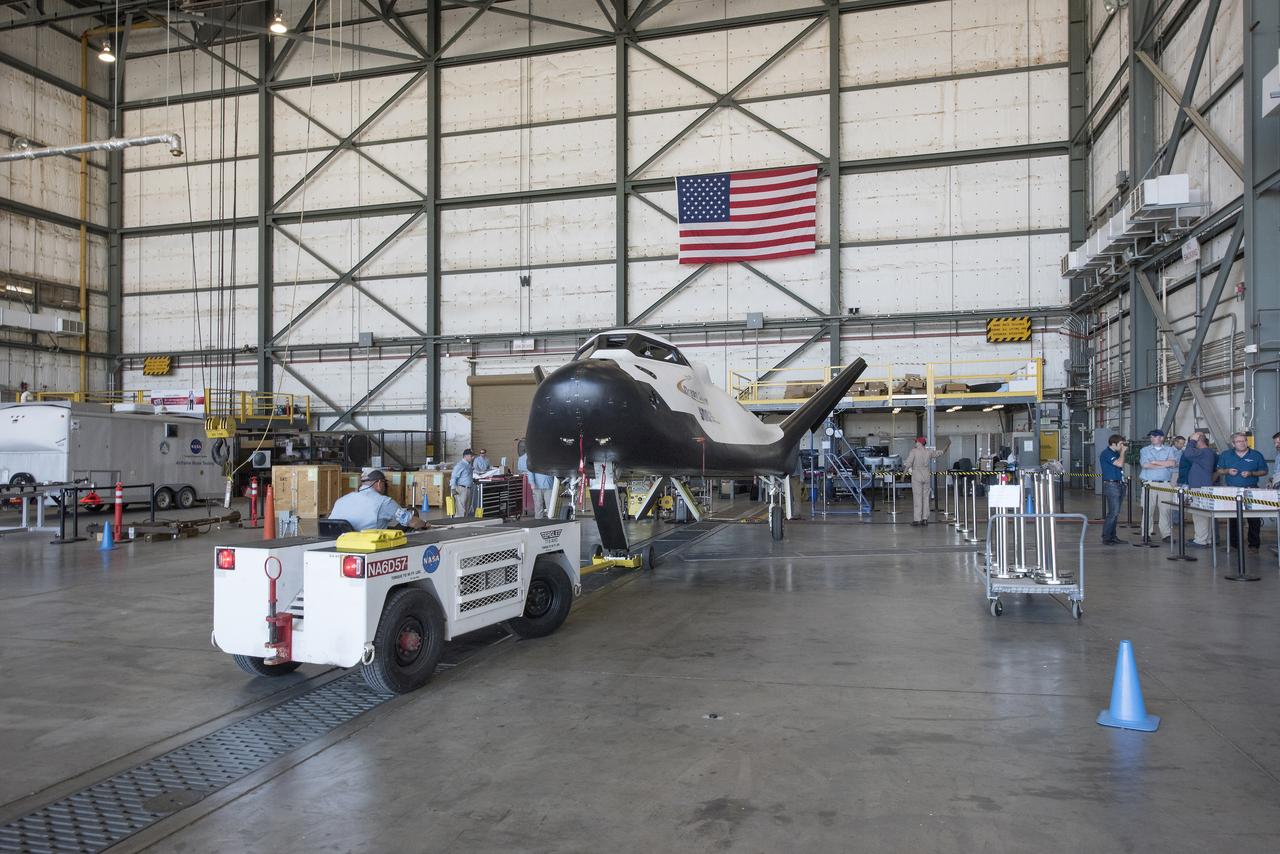
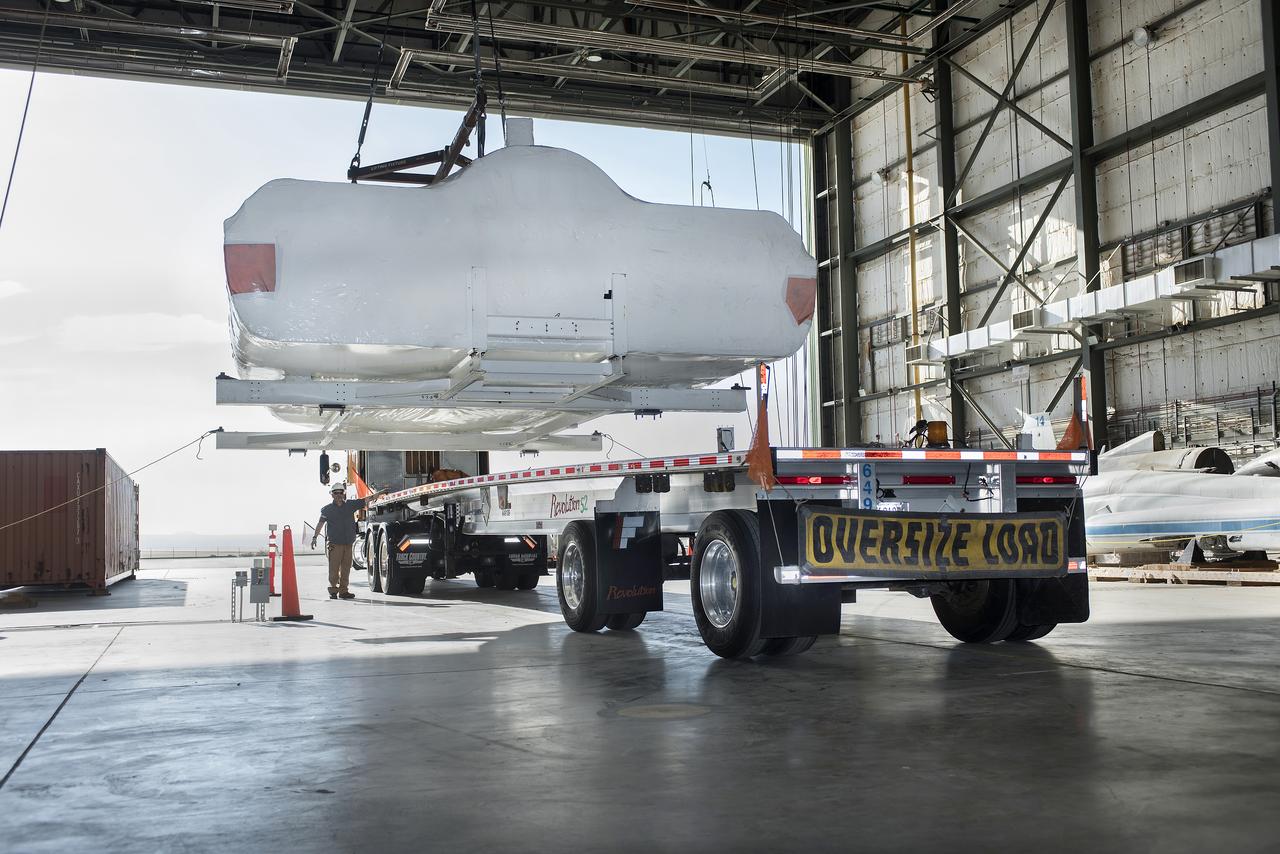
SNC Dream Chaser is in NASA Armstrong, previously known as space shuttle, hangar being loaded on truck for its departure from the center heading to SNC in Colorado.
Dream Chaser Departs NASA Armstrong
KENNEDY SPACE CENTER, FLA. -   Pieces of Columbia debris are beginning to fill one area of the Shuttle painted on the floor of the RLV Hangar.  Approximately 4,500 ground searchers have covered approximately 56 percent of the planned 555,000-acre search area. About 28 percent of the Shuttle Columbia, by weight, has been delivered to the RLV Hangar to date.
KSC-03pd0900
KENNEDY SPACE CENTER, FLA. - In the RLV Hangar at KSC, Shuttle Launch Director Mike Leinbach (left) shows some of the debris from Space Shuttle Columbia to former payload specialist Dr. Roger Crouch (center) and NASA Chief of Staff and White House liaison Courtney Stadd.  The search of more than 500,000 acres of primary recovery area for Columbia material has passed the halfway mark.  To date about 28 percent of Columbia, by weight, has been delivered to the hangar.
KSC-03pd0924
KENNEDY SPACE CENTER, Fla. -  In the RLV Hangar, Mike Leinbach, Shuttle launch director, describes some of the debris to U.S. Representative Tom Feeney (second from left), who is visiting KSC to see the Columbia debris collected in the hangar.  At right, from KSC, are JoAnn Morgan, director of External Relations and Business Development; Greg Katnik, technical manager, Space Shuttle Program Launch Integration Office; and John Halsema, Chief/Federal & International Liaison, Government Relations Office.
KSC-03pd0705
KENNEDY SPACE CENTER, FLA. -  In the RLV Hangar at KSC, Shuttle Launch Director Mike Leinbach (left) shows some of the debris from Space Shuttle Columbia to former payload specialist Dr. Roger Crouch (center) and NASA Chief of Staff and White House liaison Courtney Stadd.  The search of more than 500,000 acres of primary recovery area for Columbia material has passed the halfway mark.  To date about 28 percent of Columbia, by weight, has been delivered to the hangar.
KSC-03pd0925
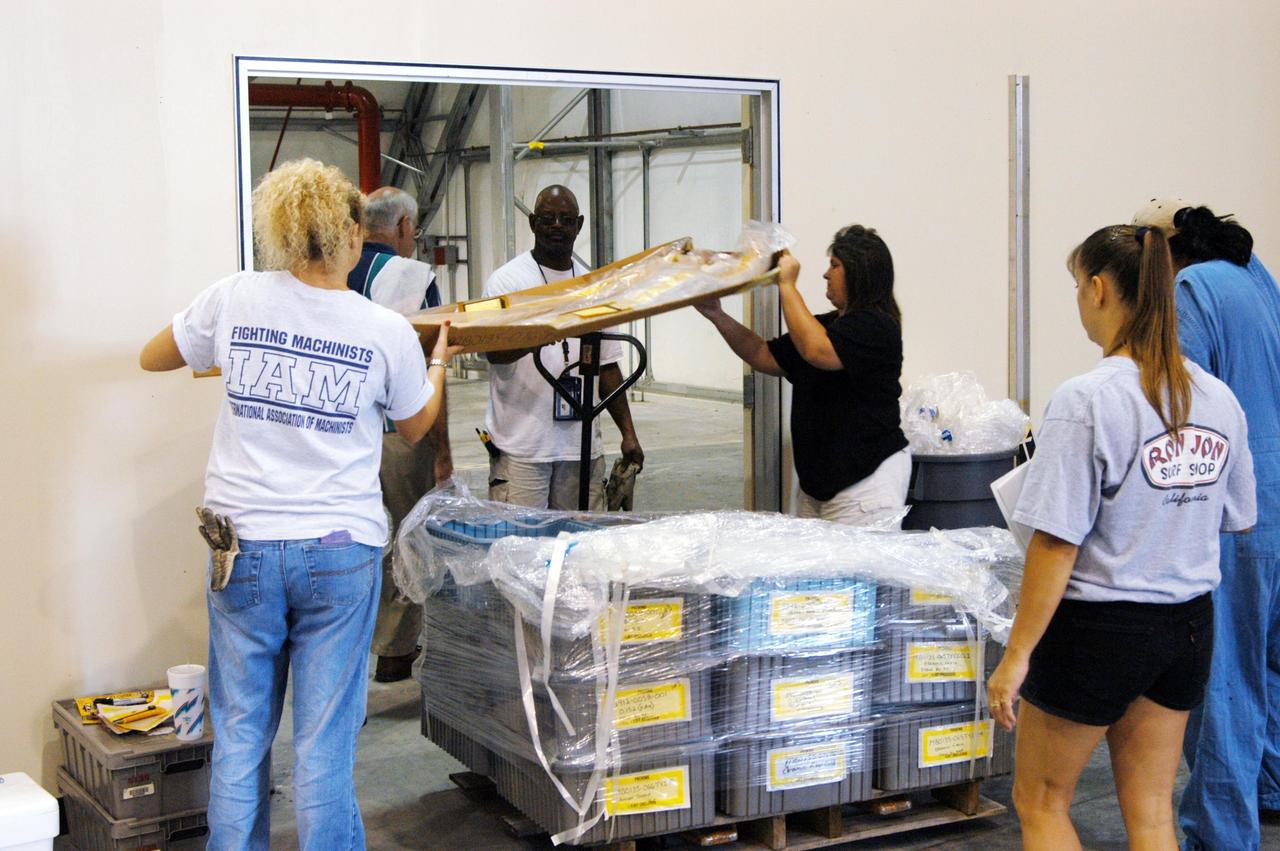
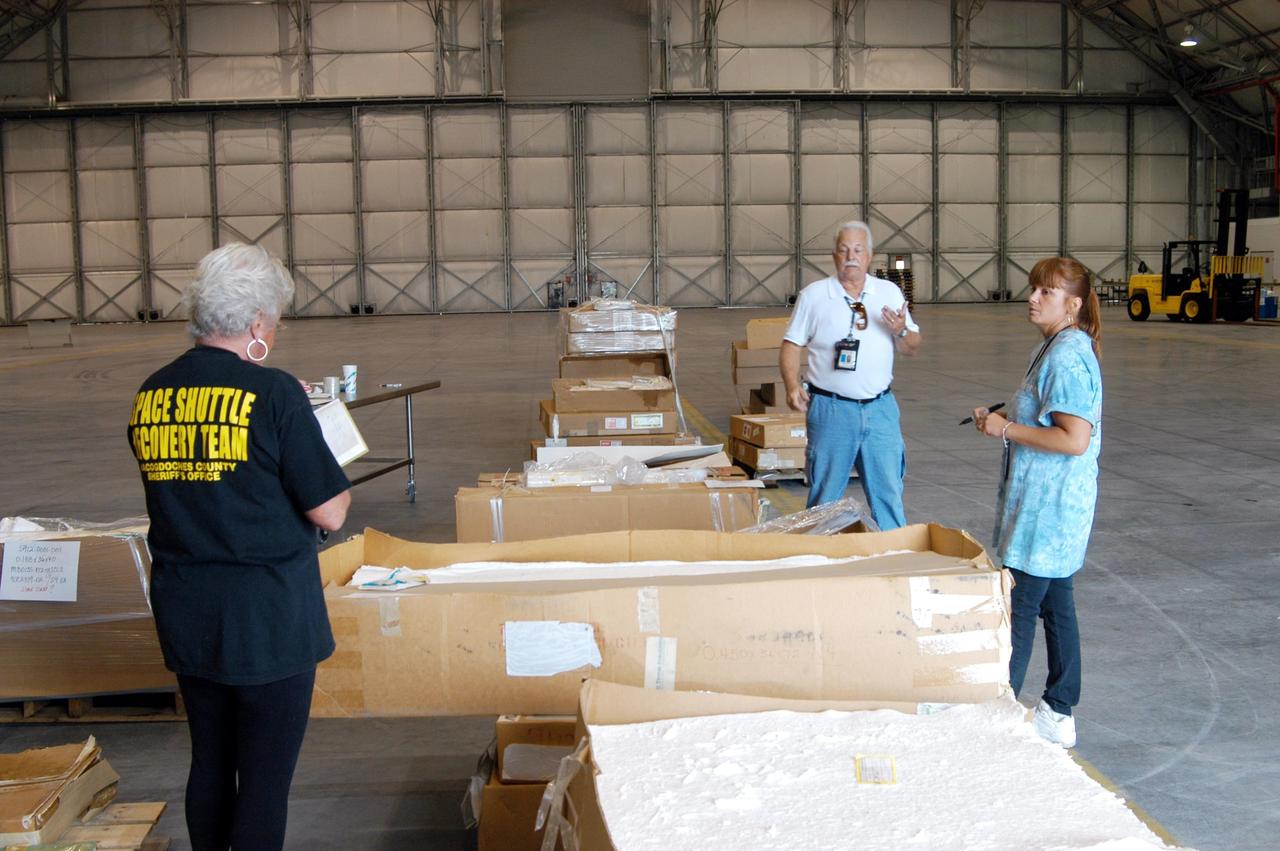
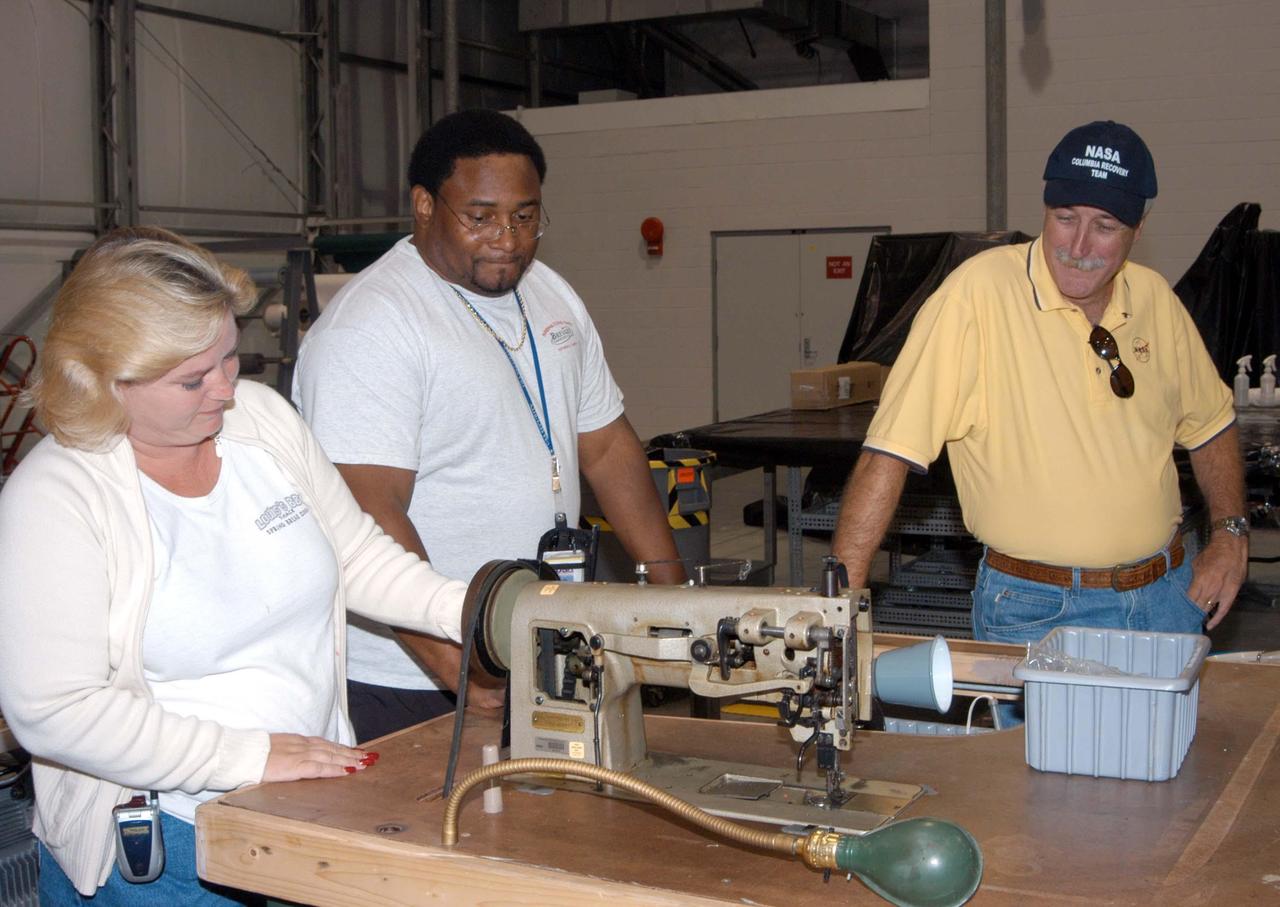
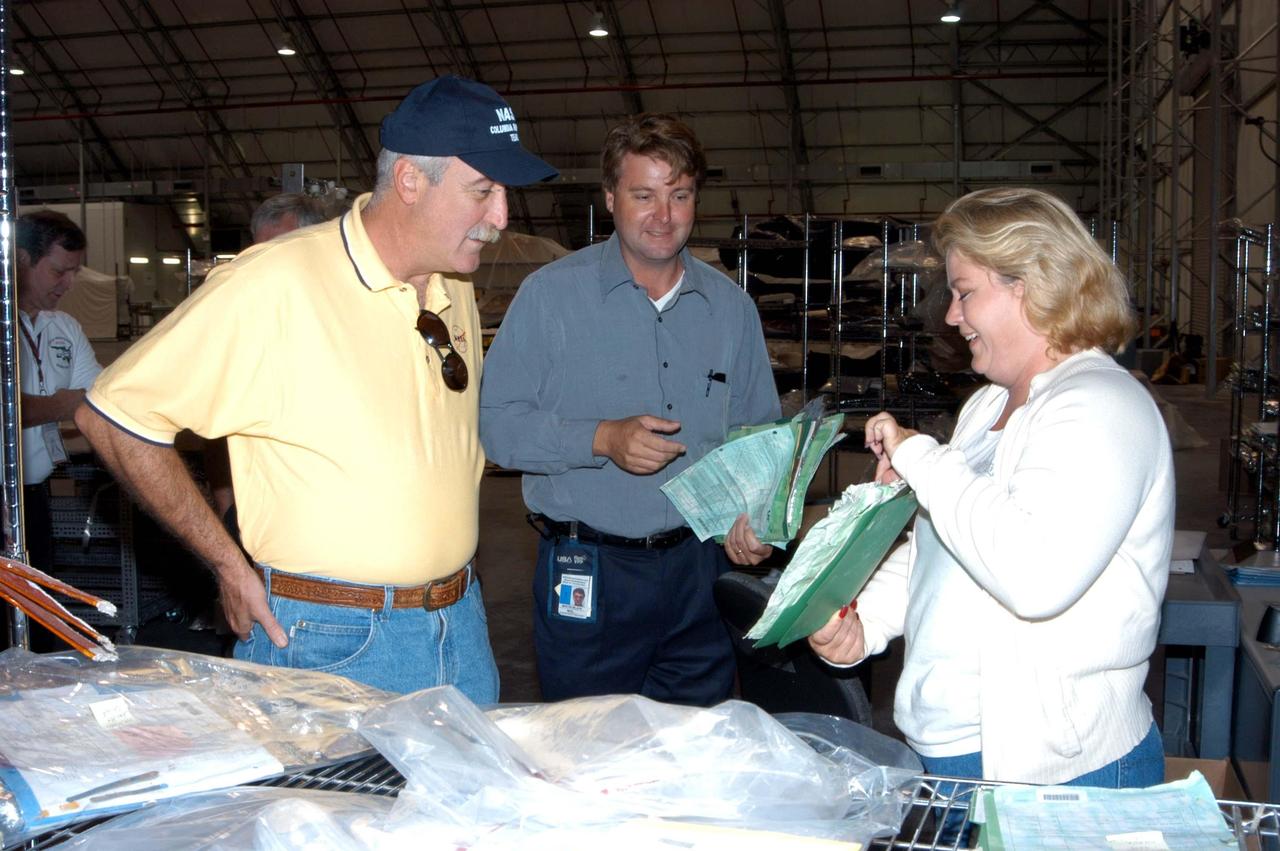
KENNEDY SPACE CENTER, FLA. -  -  NASA Administrator Sean O’Keefe (right) looks at equipment moved from the Thermal Protection System Facility to the RLV Hangar.  At left are United Space Alliance technicians Shelly Kipp and Eric Moss.  O’Keefe and NASA Associate Administrator of  Space Operations Mission Directorate William Readdy are visiting KSC to survey the damage sustained by KSC facilities from Hurricane Frances. The Thermal Protection System Facility (TPSF), which creates the TPS tiles, blankets and all the internal thermal control systems for the Space Shuttles, is almost totally unserviceable at this time after losing approximately 35 percent of its roof in the storm, which blew across Central Florida Sept. 4-5. Undamaged equipment was removed from the TPSF and stored in the hangar. The Labor Day storm also caused significant damage to the Vehicle Assembly Building and Processing Control Center.  Additionally, the Operations and Checkout Building, Vertical Processing Facility, Hangar AE, Hangar S and Hangar AF Small Parts Facility each received substantial damage. However, well-protected and unharmed were NASA’s three Space Shuttle orbiters - Discovery, Atlantis and Endeavour - along with the Shuttle launch pads, all of the critical flight hardware for the orbiters and the International Space Station, and NASA’s Swift spacecraft that is awaiting launch in October.
KSC-04pd1843
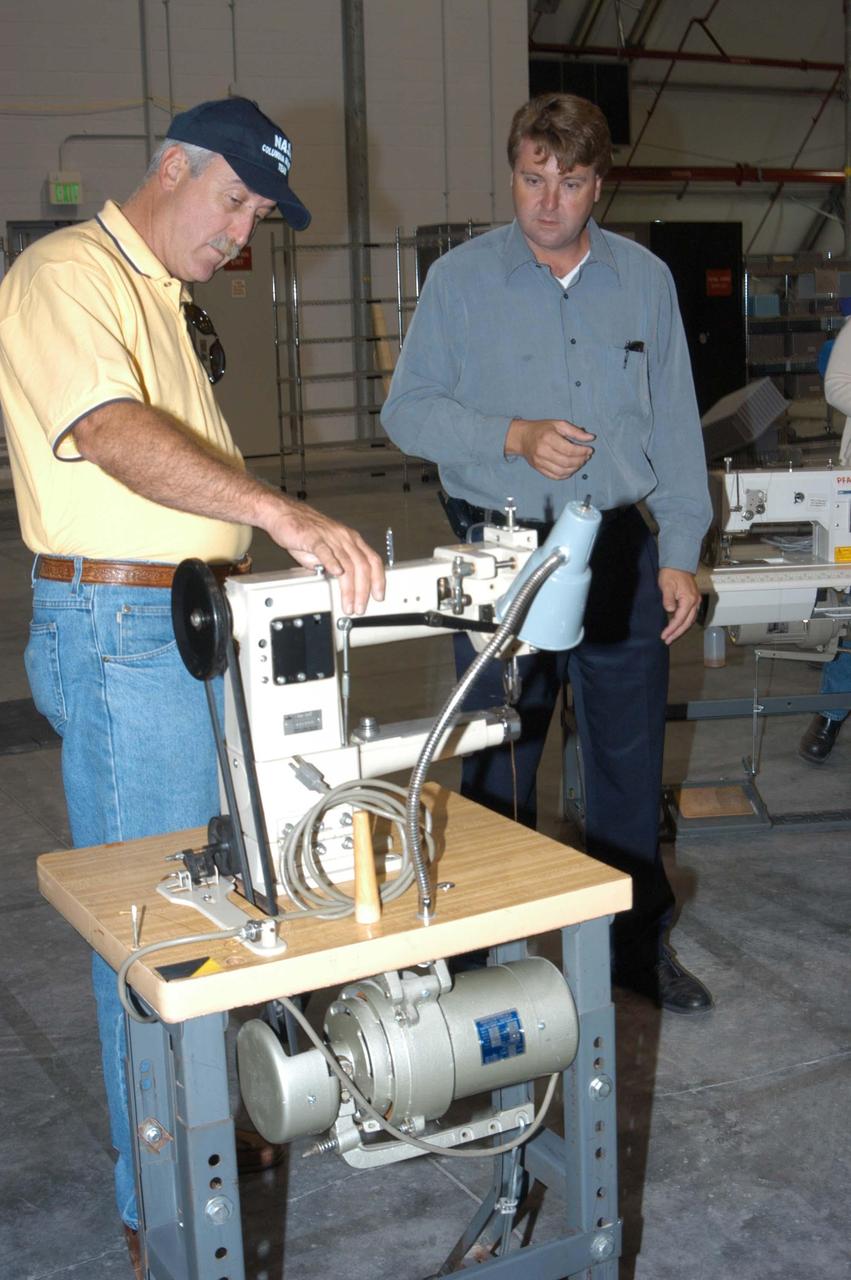
KENNEDY SPACE CENTER, FLA. -  NASA Administrator Sean O’Keefe looks at equipment moved from the Thermal Protection System Facility to the RLV Hangar.  AT right is Martin Wilson, manager of TPS operations for United Space Alliance.  O’Keefe and NASA Associate Administrator of  Space Operations Mission Directorate William Readdy are visiting KSC to survey the damage sustained by KSC facilities from Hurricane Frances. The Thermal Protection System Facility (TPSF), which creates the TPS tiles, blankets and all the internal thermal control systems for the Space Shuttles, is almost totally unserviceable at this time after losing approximately 35 percent of its roof in the storm, which blew across Central Florida Sept. 4-5. Undamaged equipment was removed from the TPSF and stored in the hangar. The Labor Day storm also caused significant damage to the Vehicle Assembly Building and Processing Control Center.  Additionally, the Operations and Checkout Building, Vertical Processing Facility, Hangar AE, Hangar S and Hangar AF Small Parts Facility each received substantial damage.  However, well-protected and unharmed were NASA’s three Space Shuttle orbiters -- Discovery, Atlantis and Endeavour - along with the Shuttle launch pads, all of the critical flight hardware for the orbiters and the International Space Station, and NASA’s Swift spacecraft that is awaiting launch in October.
KSC-04pd1842
KENNEDY SPACE CENTER, FLA. -  KSC Director of Spaceport Services Scott Kerr (left) talks to NASA Associate Administrator of the Space Operations Mission Directorate William Readdy at the Shuttle Landing Facility.  NASA Administrator Sean O’Keefe and Readdy are visiting KSC to survey the damage sustained by KSC facilities from Hurricane Frances over Labor Day weekend. The Vehicle Assembly Building, Thermal Protection System Facility, and Processing Control Center all received significant damage from the storm.  Additionally, the Operations and Checkout Building, Vertical Processing Facility, Hangar AE, Hangar S and Hangar AF Small Parts Facility each received substantial damage. However, well-protected and unharmed were NASA’s three Space Shuttle orbiters -- Discovery, Atlantis and Endeavour - along with the Shuttle launch pads, all of the critical flight hardware for the orbiters and the International Space Station, and NASA’s Swift spacecraft that is awaiting launch in October.
KSC-04pd1832
KENNEDY SPACE CENTER, FLA. -  Reporters at the dedication ceremony of a NASA hangar at the San Jose, Costa Rica, airport observe the WB-57f takeoff for its sixth Costa Rican flight.  KSC and NASA researchers are testing the Aircraft-based Volcanic Emission Mass Spectrometer (AVEMS) that determines the presence and concentration of various chemicals.  It is being tested in flights over the Turrialba volcano in Costa Rica, and in the crater, sampling and analyzing fresh volcanic gases in their natural chemical state.  The AVEMS system has been developed for use in the Space Shuttle program, to detect toxic gas leaks and emissions in the Shuttle’s aft compartment and the crew compartment.
KENNEDY SPACE CENTER, FLA. - Reporters at the dedication ceremony of a NASA hangar at the San Jose, Costa Rica, airport observe the WB-57f takeoff for its sixth Costa Rican flight. KSC and NASA researchers are testing the Aircraft-based Volcanic Emission Mass Spectrometer (AVEMS) that determines the presence and concentration of various chemicals. It is being tested in flights over the Turrialba volcano in Costa Rica, and in the crater, sampling and analyzing fresh volcanic gases in their natural chemical state. The AVEMS system has been developed for use in the Space Shuttle program, to detect toxic gas leaks and emissions in the Shuttle’s aft compartment and the crew compartment.
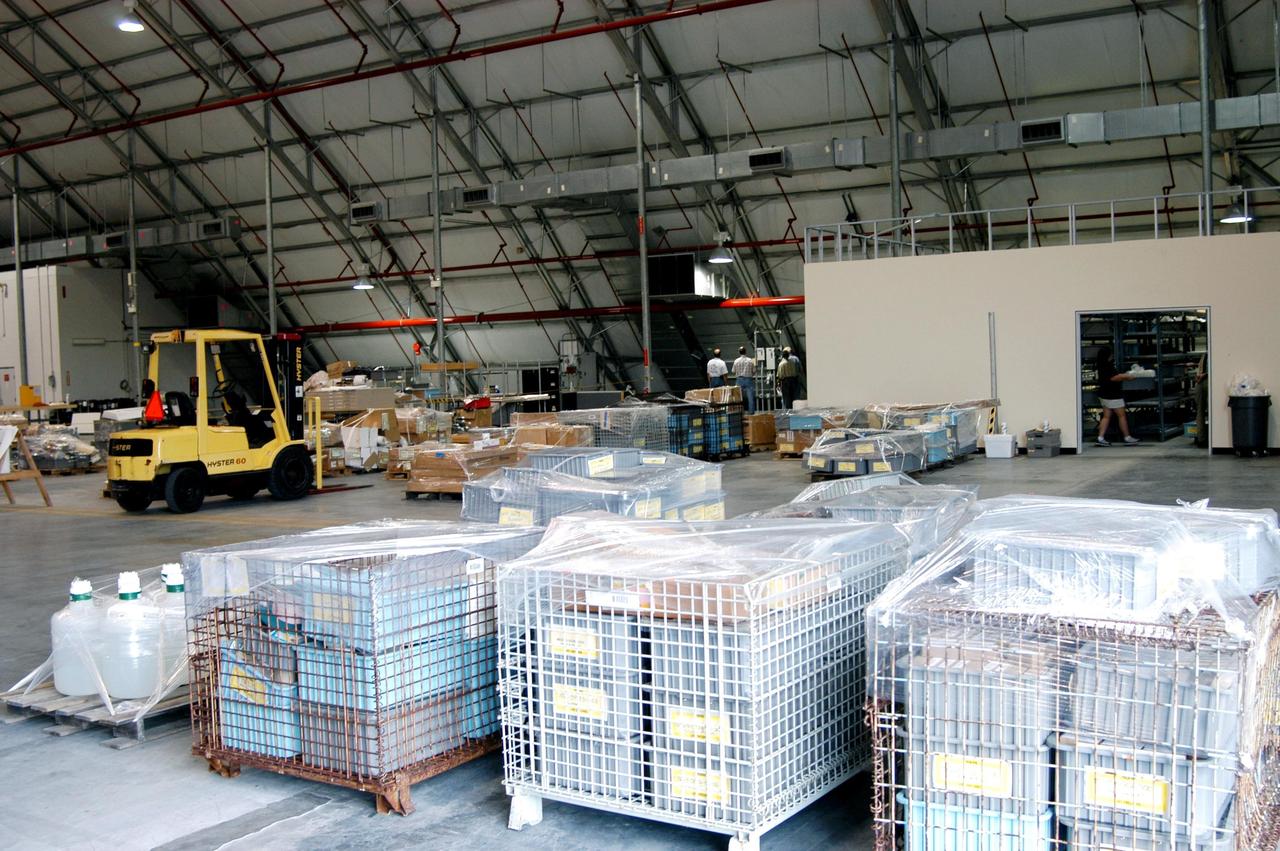
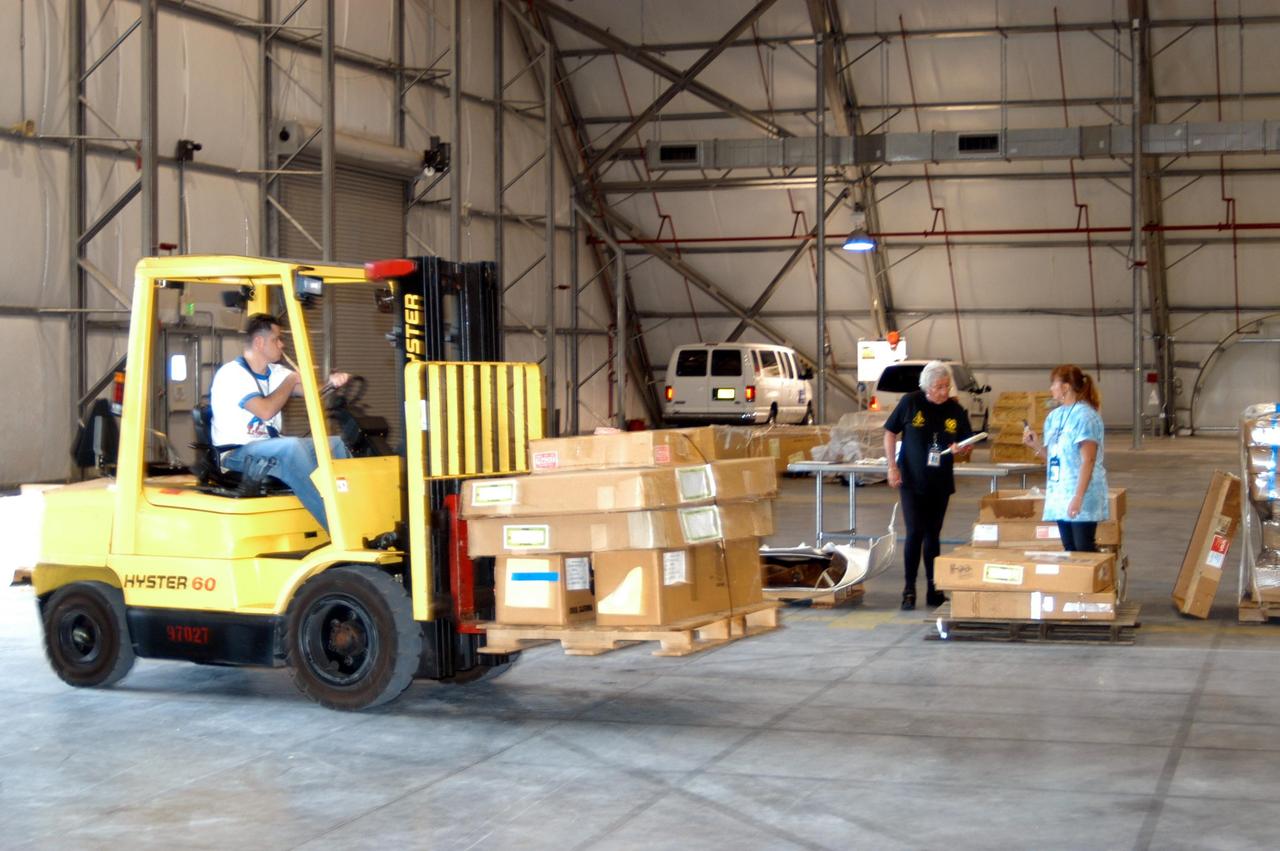
KENNEDY SPACE CENTER, FLA. -   A KSC employee uses a fork lift to move equipment relocated from the Thermal Protection System Facility (TPSF), damaged by Hurricane Frances, inside a hangar and storage facility near the KSC Shuttle Landing Facility. Previously, this hangar was used to house the Space Shuttle Columbia debris. Located in Launch Complex 39, the TPSF is used to manufacture both internal and external insulation products for the Space Shuttle orbiters.  The storm's path over Florida took it through Cape Canaveral and KSC property during Labor Day weekend.
KSC-04pd1741
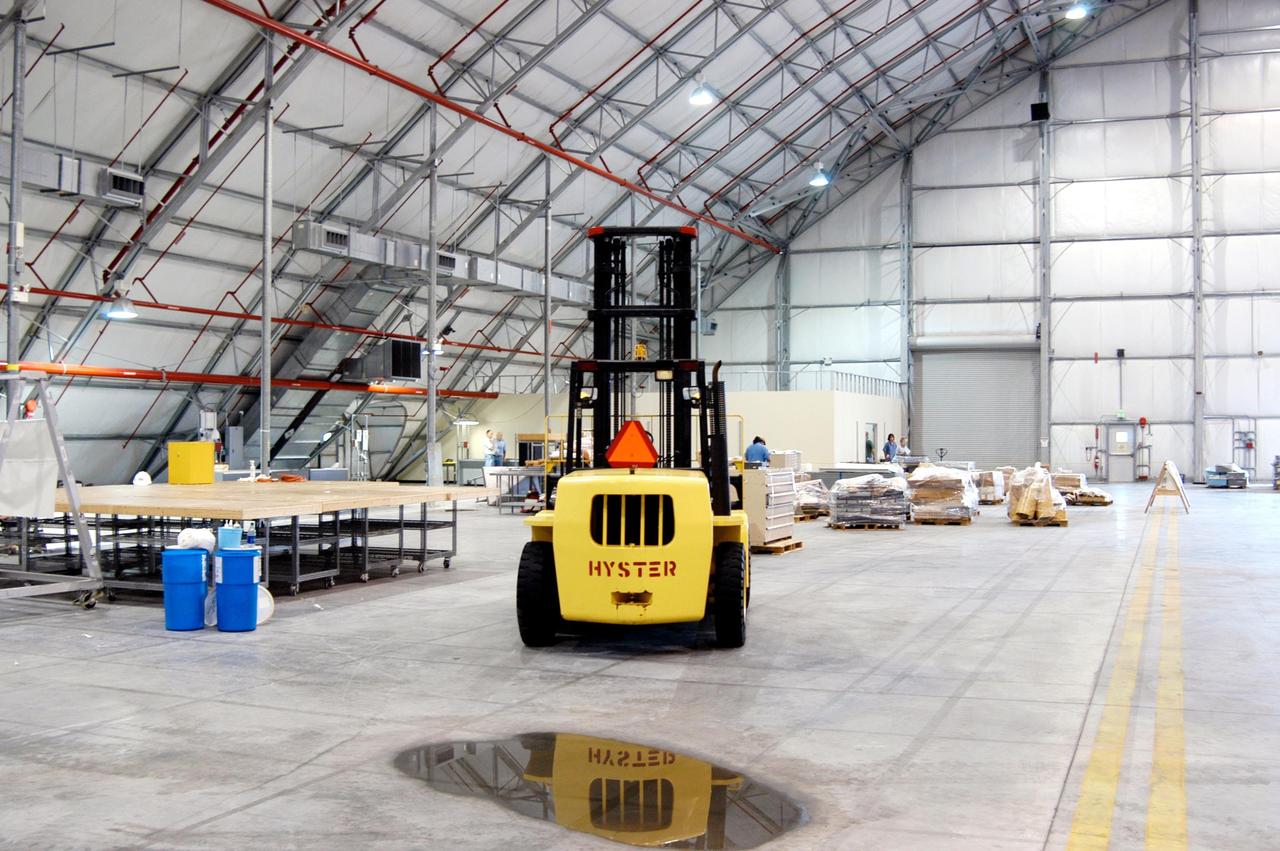
KENNEDY SPACE CENTER, FLA. -   A fork lift is available to move equipment relocated from the Thermal Protection System Facility (TPSF), damaged by Hurricane Frances, inside a hangar and storage facility near the KSC Shuttle Landing Facility. Previously, this hangar was used to house the Space Shuttle Columbia debris. Located in Launch Complex 39, the TPSF is used to manufacture both internal and external insulation products for the Space Shuttle orbiters.  The storm's path over Florida took it through Cape Canaveral and KSC property during Labor Day weekend.
KSC-04pd1743
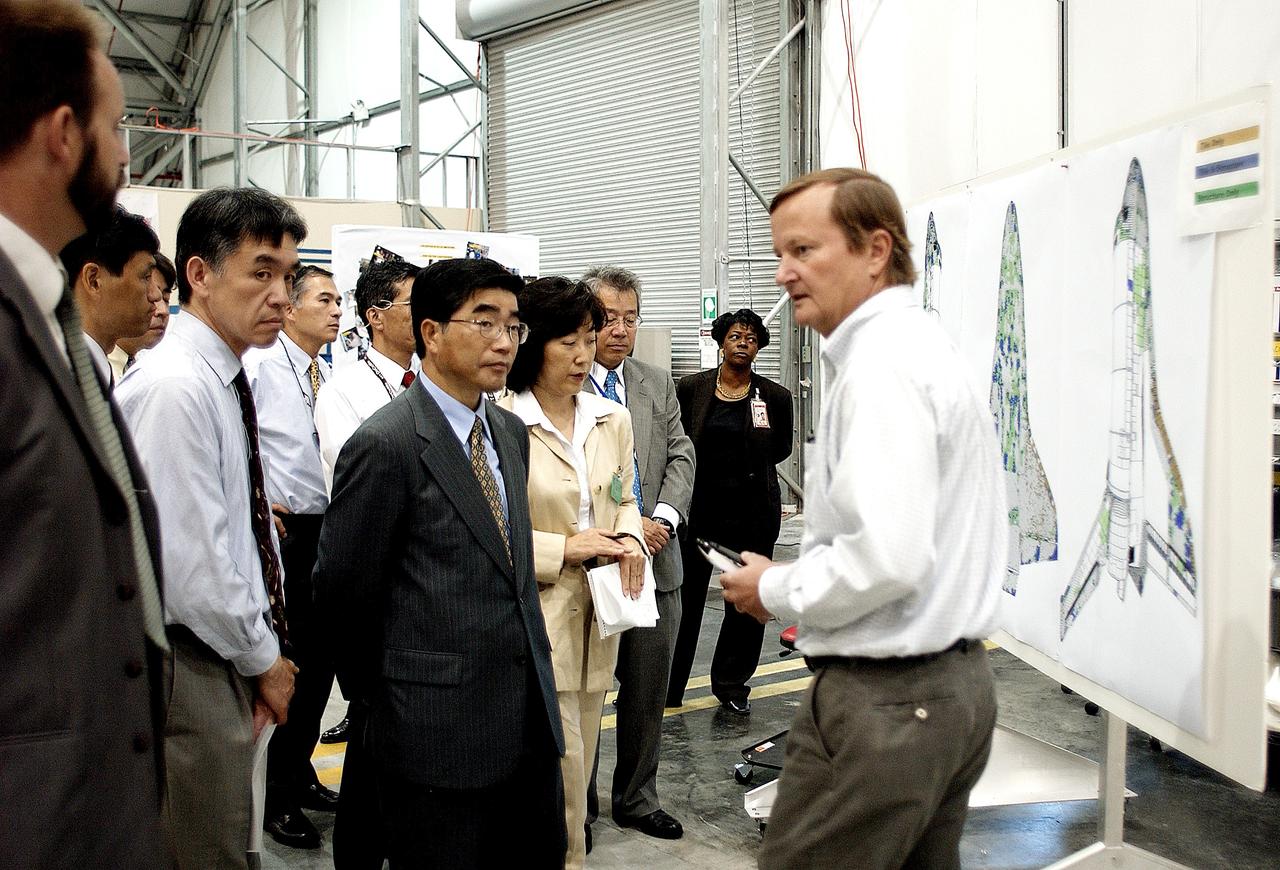
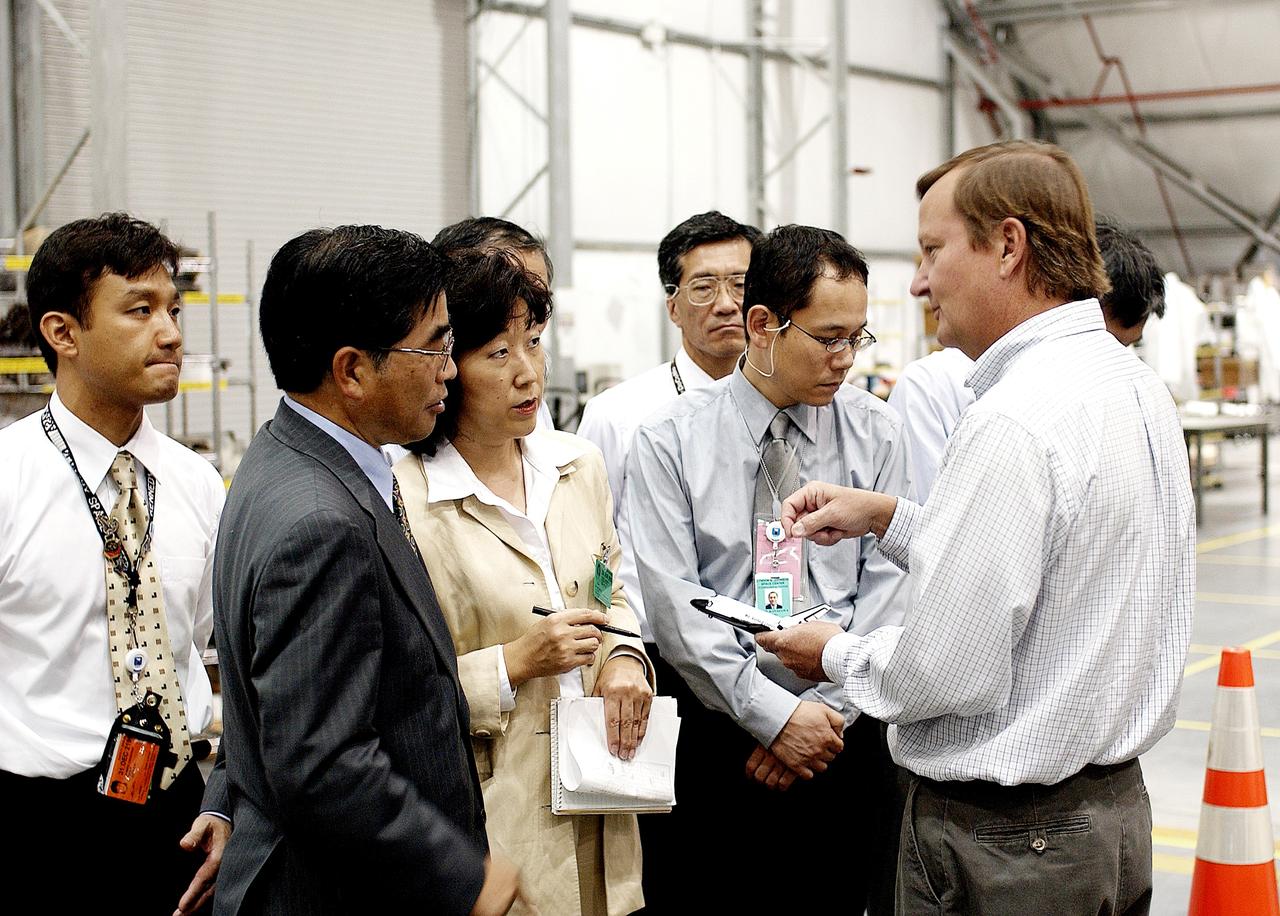
KENNEDY SPACE CENTER, FLA. -  Shuttle Launch Director Mike Leinbach (second from left) explains recovery and reconstruction efforts of Columbia to the Executive Director of NASDA Koji Yamamoto (fourth from left) and others visiting the Columbia Debris Hangar.   Mr. Yamamoto is at KSC for a welcome ceremony involving the arrival of the newest Space Station module, the Japanese Experiment Module/pressurized module.
KENNEDY SPACE CENTER, FLA. - Shuttle Launch Director Mike Leinbach (second from left) explains recovery and reconstruction efforts of Columbia to the Executive Director of NASDA Koji Yamamoto (fourth from left) and others visiting the Columbia Debris Hangar. Mr. Yamamoto is at KSC for a welcome ceremony involving the arrival of the newest Space Station module, the Japanese Experiment Module/pressurized module.
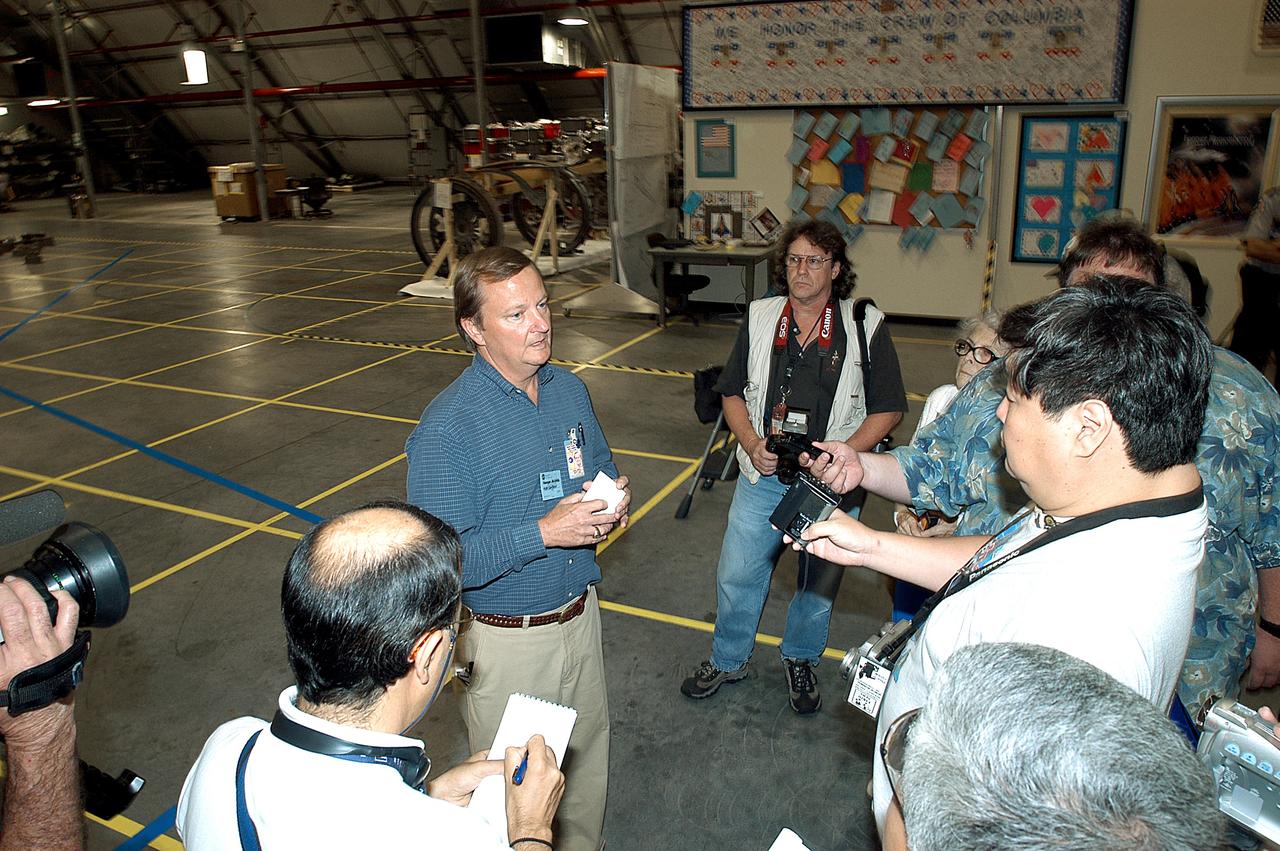
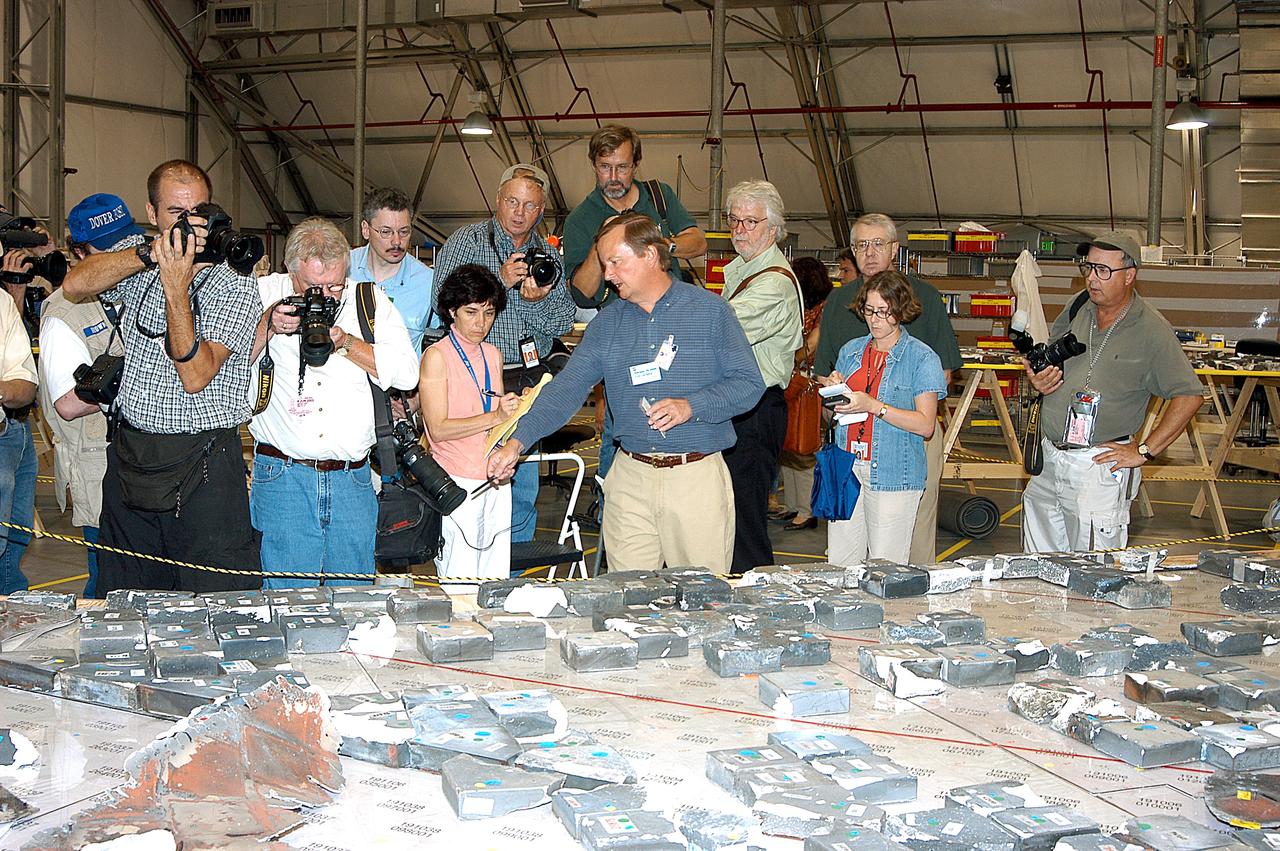
KENNEDY SPACE CENTER, FLA. -  In the Columbia Debris Hangar,  Shuttle Launch Director Mike Leinbach  (left) talks to the media about activities that have taken place since the Columbia accident on Feb. 1, 2003.  Behind him is a model of the left wing of the orbiter.  STS-107 debris recovery and reconstruction operations are winding down.  To date, nearly 84,000 pieces of debris have been recovered and sent to KSC. That represents about 38 percent of the dry weight of Columbia, equaling almost 85,000 pounds.
KENNEDY SPACE CENTER, FLA. - In the Columbia Debris Hangar, Shuttle Launch Director Mike Leinbach (left) talks to the media about activities that have taken place since the Columbia accident on Feb. 1, 2003. Behind him is a model of the left wing of the orbiter. STS-107 debris recovery and reconstruction operations are winding down. To date, nearly 84,000 pieces of debris have been recovered and sent to KSC. That represents about 38 percent of the dry weight of Columbia, equaling almost 85,000 pounds.
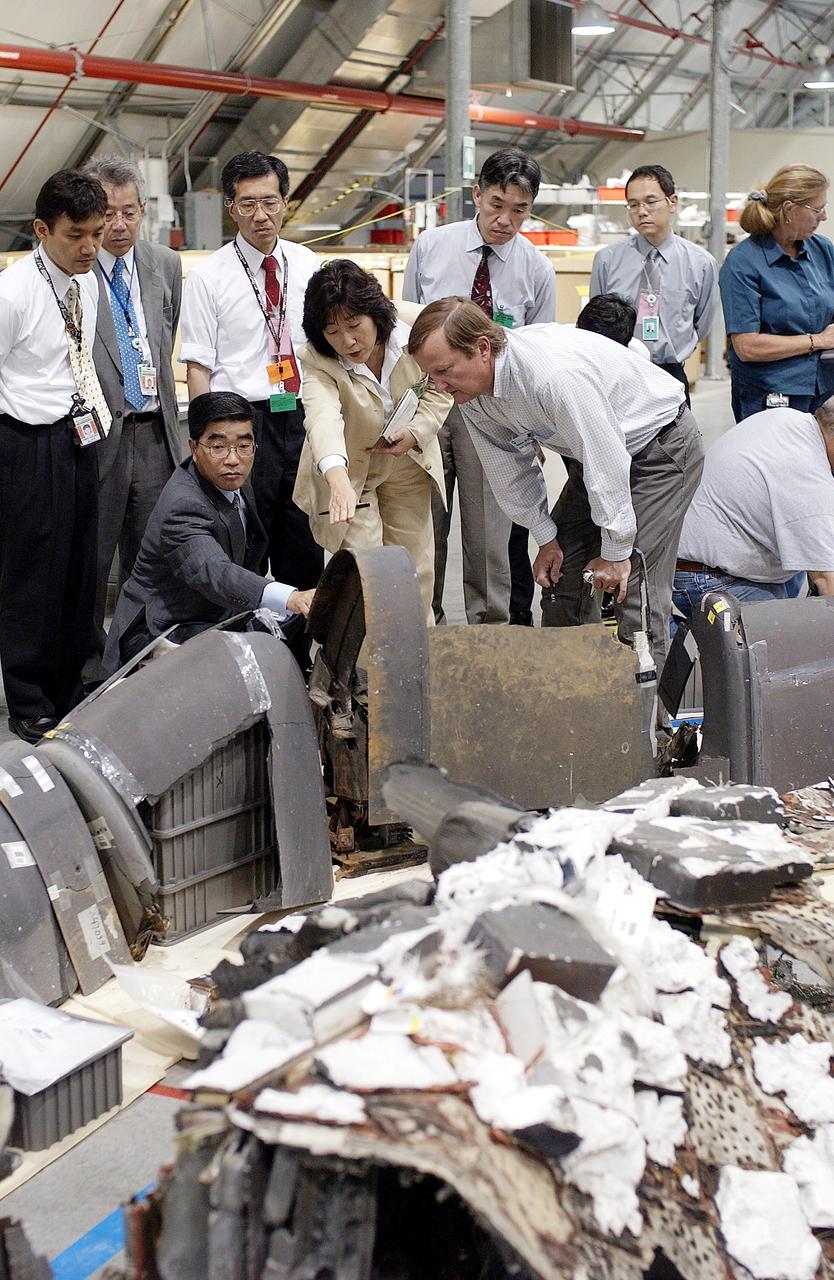
KENNEDY SPACE CENTER, FLA. -  On a KSC visit, Executive Director of NASDA Koji Yamamoto (kneeling, left) reaches out to a piece of Columbia debris in the Columbia Debris Hangar.  At right is Shuttle Launch Director Mike Leinbach, who is explaining recovery and reconstruction efforts.  Mr. Yamamoto is at KSC for a welcome ceremony involving the arrival of the newest Space Station module, the Japanese Experiment Module/pressurized module.
KENNEDY SPACE CENTER, FLA. - On a KSC visit, Executive Director of NASDA Koji Yamamoto (kneeling, left) reaches out to a piece of Columbia debris in the Columbia Debris Hangar. At right is Shuttle Launch Director Mike Leinbach, who is explaining recovery and reconstruction efforts. Mr. Yamamoto is at KSC for a welcome ceremony involving the arrival of the newest Space Station module, the Japanese Experiment Module/pressurized module.
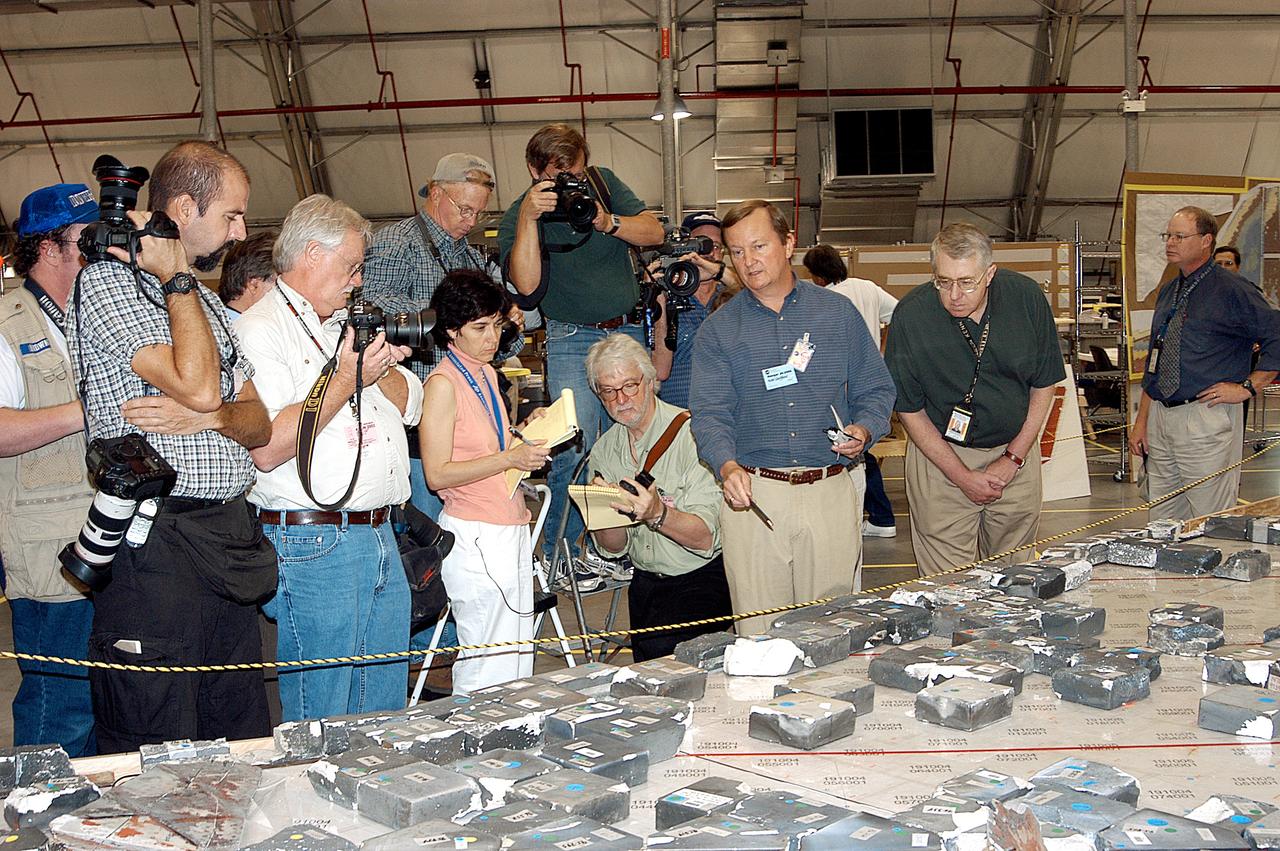
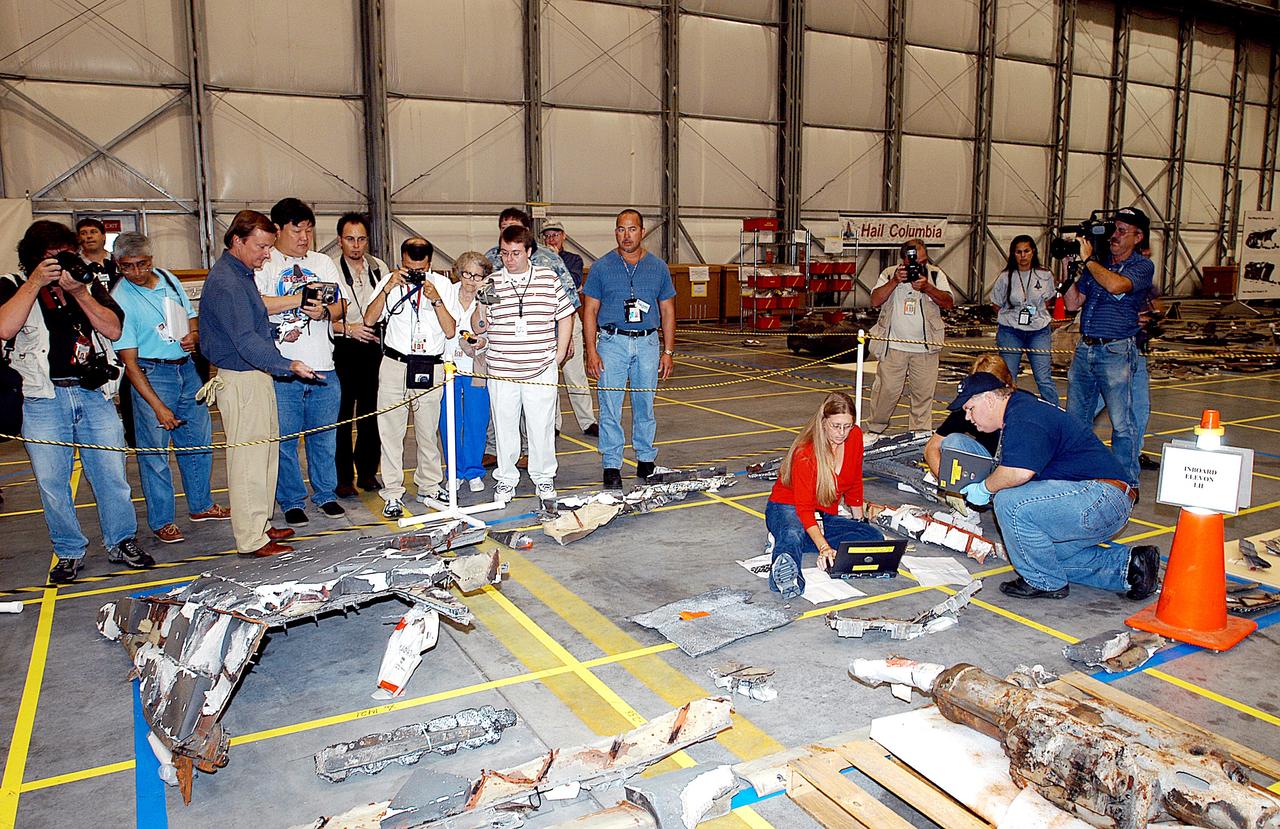
KENNEDY SPACE CENTER, FLA. - The media get a guided tour of the Columbia Debris Hangar.  Shuttle Launch Director Mike Leinbach discussed activities that have taken place since the Columbia accident on Feb. 1, 2003.  STS-107 debris recovery and reconstruction operations are winding down.  To date, nearly 84,000 pieces of debris have been recovered and sent to KSC. That represents about 38 percent of the dry weight of Columbia, equaling almost 85,000 pounds.
KENNEDY SPACE CENTER, FLA. - The media get a guided tour of the Columbia Debris Hangar. Shuttle Launch Director Mike Leinbach discussed activities that have taken place since the Columbia accident on Feb. 1, 2003. STS-107 debris recovery and reconstruction operations are winding down. To date, nearly 84,000 pieces of debris have been recovered and sent to KSC. That represents about 38 percent of the dry weight of Columbia, equaling almost 85,000 pounds.
KENNEDY SPACE CENTER, FLA. -  Shuttle Launch Director Mike Leinbach (right) explains recovery and reconstruction efforts of Columbia to the Executive Director of NASDA Koji Yamamoto (center, foreground) and others visiting the Columbia Debris Hangar.   Mr. Yamamoto is at KSC for a welcome ceremony involving the arrival of the newest Space Station module, the Japanese Experiment Module/pressurized module.
KENNEDY SPACE CENTER, FLA. - Shuttle Launch Director Mike Leinbach (right) explains recovery and reconstruction efforts of Columbia to the Executive Director of NASDA Koji Yamamoto (center, foreground) and others visiting the Columbia Debris Hangar. Mr. Yamamoto is at KSC for a welcome ceremony involving the arrival of the newest Space Station module, the Japanese Experiment Module/pressurized module.
KENNEDY SPACE CENTER, FLA. -  In the Columbia Debris Hangar,  Shuttle Launch Director Mike Leinbach  (right) talks to the media about activities that have taken place since the Columbia accident on Feb. 1, 2003.  STS-107 debris recovery and reconstruction operations are winding down.  To date, nearly 84,000 pieces of debris have been recovered and sent to KSC. That represents about 38 percent of the dry weight of Columbia, equaling almost 85,000 pounds.
KENNEDY SPACE CENTER, FLA. - In the Columbia Debris Hangar, Shuttle Launch Director Mike Leinbach (right) talks to the media about activities that have taken place since the Columbia accident on Feb. 1, 2003. STS-107 debris recovery and reconstruction operations are winding down. To date, nearly 84,000 pieces of debris have been recovered and sent to KSC. That represents about 38 percent of the dry weight of Columbia, equaling almost 85,000 pounds.
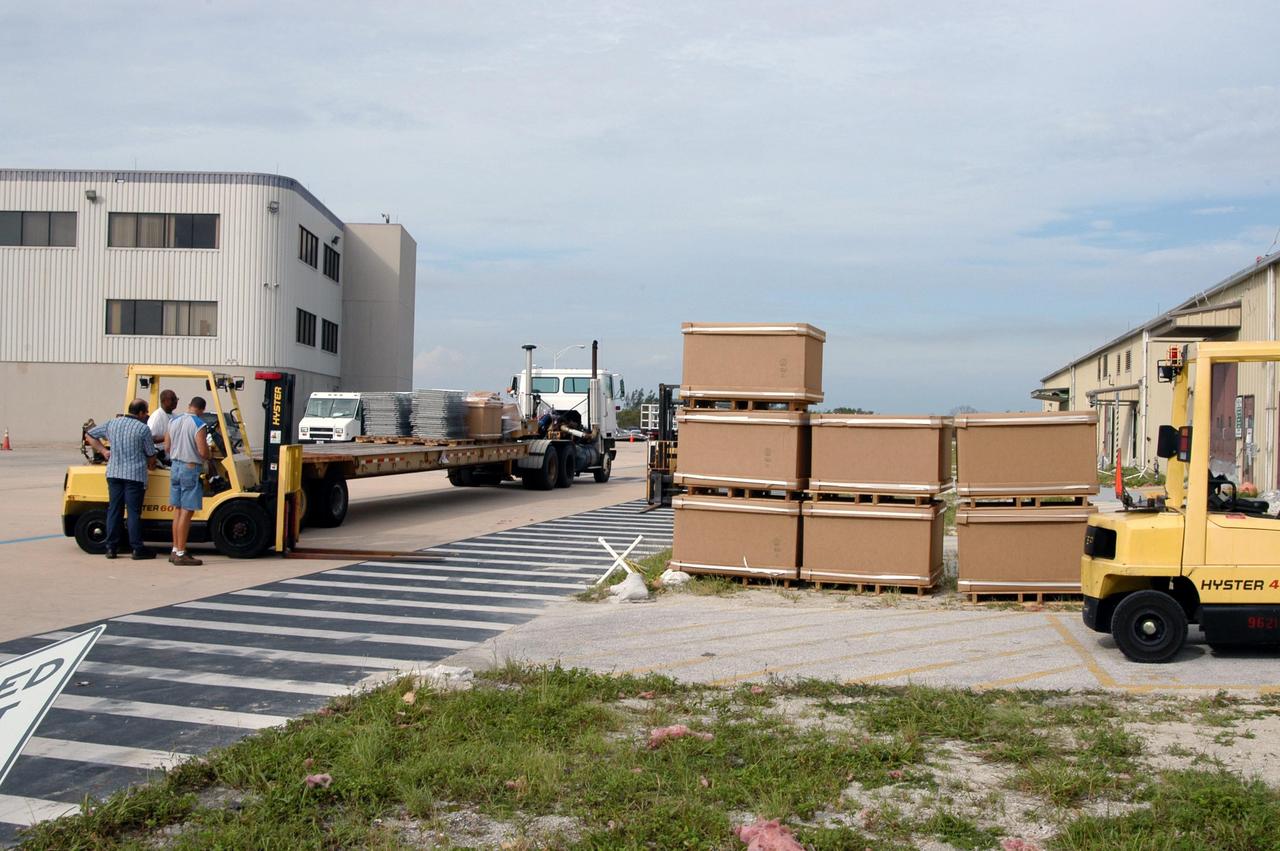
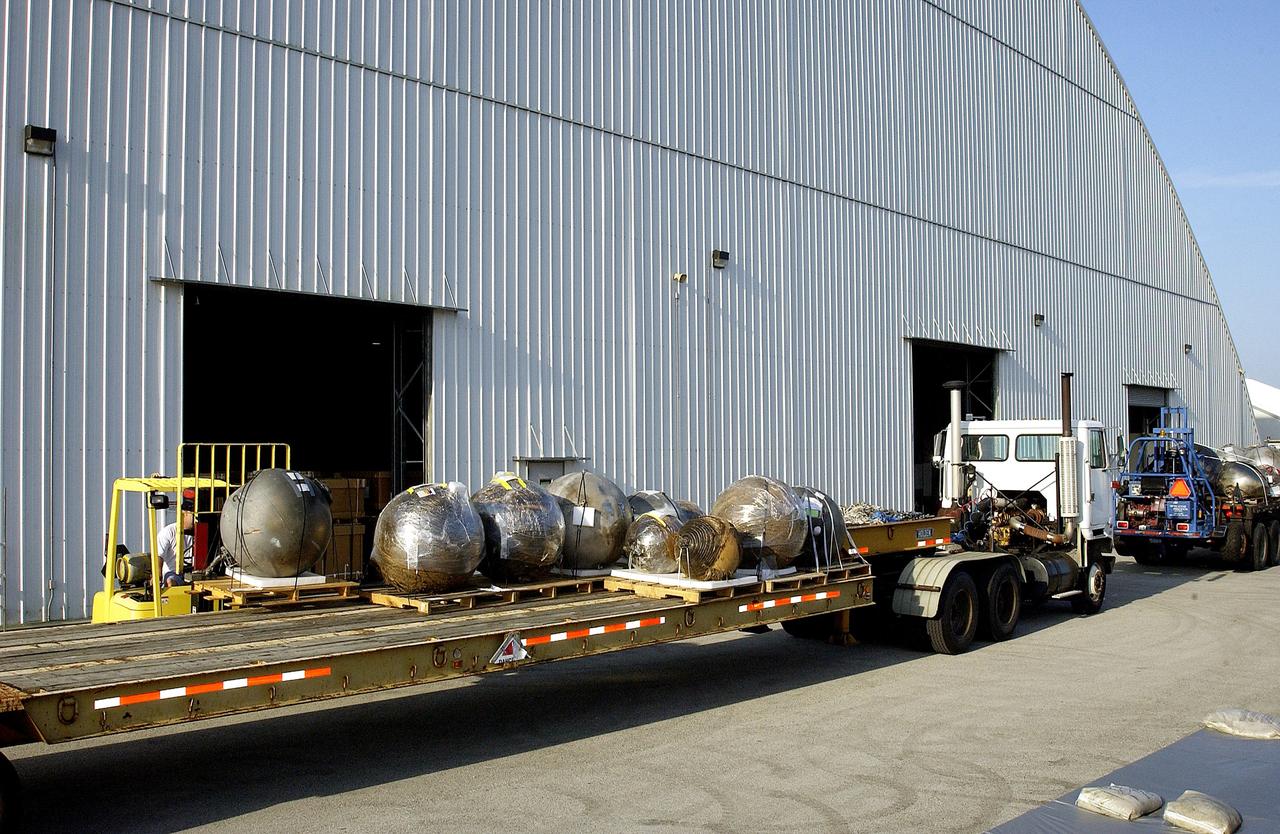
KENNEDY SPACE CENTER, FLA. -  Pieces of debris of Space Shuttle Columbia are offloaded from a flatbed truck in the transfer aisle of the Vehicle Assembly Building (VAB).  The debris is being moved from the Columbia Debris Hangar to the VAB for permanent storage.  More than 83,000 pieces of debris were shipped to KSC during search and recovery efforts in East Texas. That represents about 38 percent of the dry weight of Columbia, equaling almost 85,000 pounds.
KENNEDY SPACE CENTER, FLA. - Pieces of debris of Space Shuttle Columbia are offloaded from a flatbed truck in the transfer aisle of the Vehicle Assembly Building (VAB). The debris is being moved from the Columbia Debris Hangar to the VAB for permanent storage. More than 83,000 pieces of debris were shipped to KSC during search and recovery efforts in East Texas. That represents about 38 percent of the dry weight of Columbia, equaling almost 85,000 pounds.
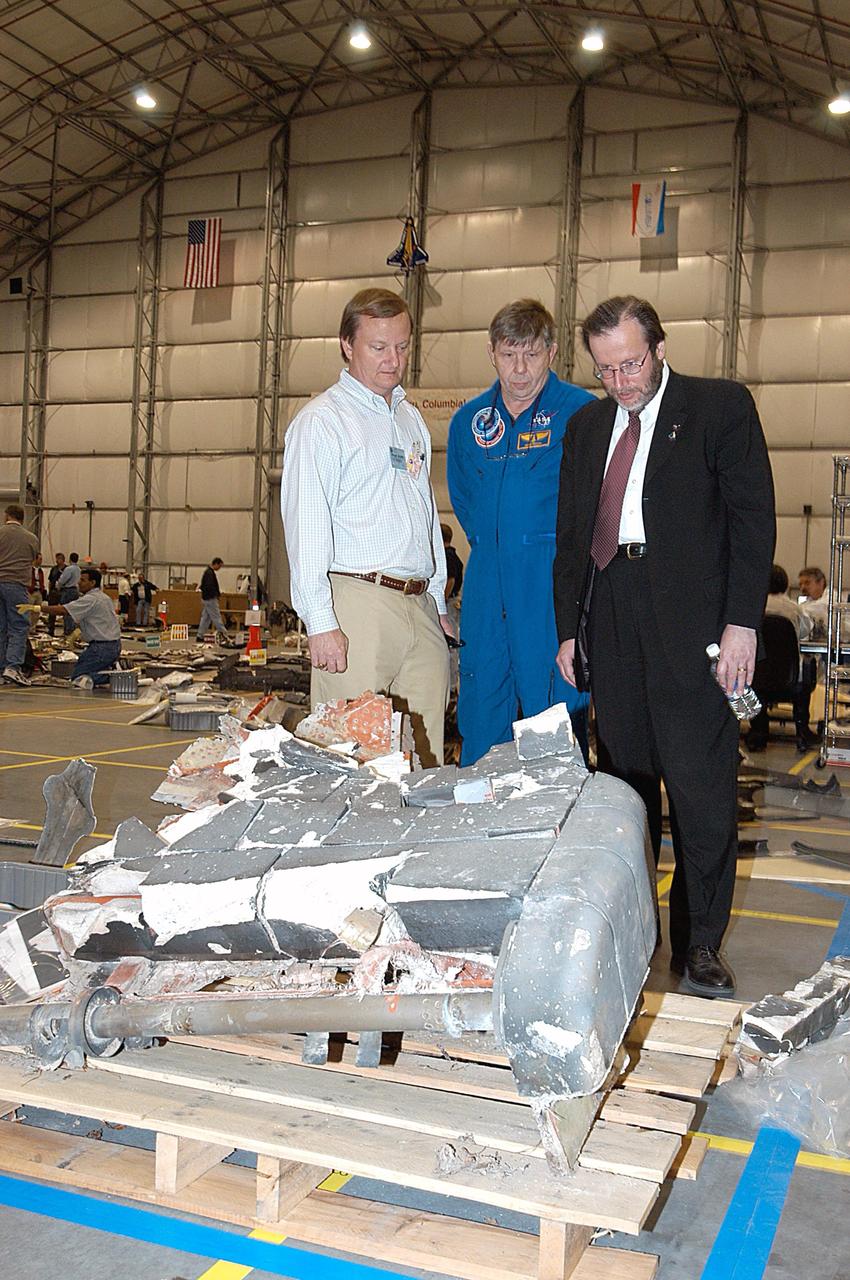
KENNEDY SPACE CENTER, FLA.  -  The Stafford-Covey Return to Flight Task Group (SCTG) inspects debris in the Columbia Debris Hangar.   At right is the model of the left wing that has been used during recovery operations.  Chairing the task group are Richard O. Covey, former Space Shuttle commander, and Thomas P. Stafford (third from right, foreground), Apollo commander.  Chartered by NASA Administrator Sean O’Keefe, the task group will perform an independent assessment of NASA’s implementation of the final recommendations by the Columbia Accident Investigation Board.
KENNEDY SPACE CENTER, FLA. - The Stafford-Covey Return to Flight Task Group (SCTG) inspects debris in the Columbia Debris Hangar. At right is the model of the left wing that has been used during recovery operations. Chairing the task group are Richard O. Covey, former Space Shuttle commander, and Thomas P. Stafford (third from right, foreground), Apollo commander. Chartered by NASA Administrator Sean O’Keefe, the task group will perform an independent assessment of NASA’s implementation of the final recommendations by the Columbia Accident Investigation Board.
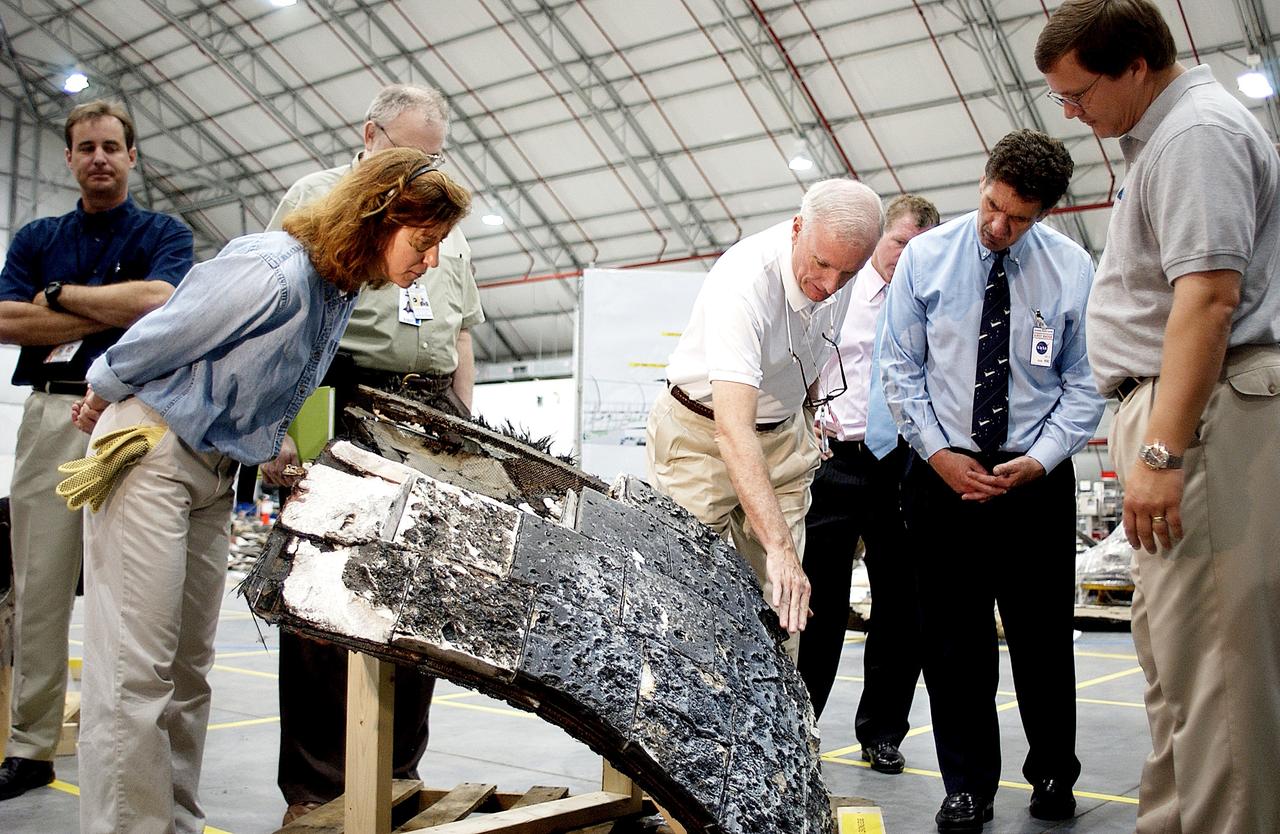
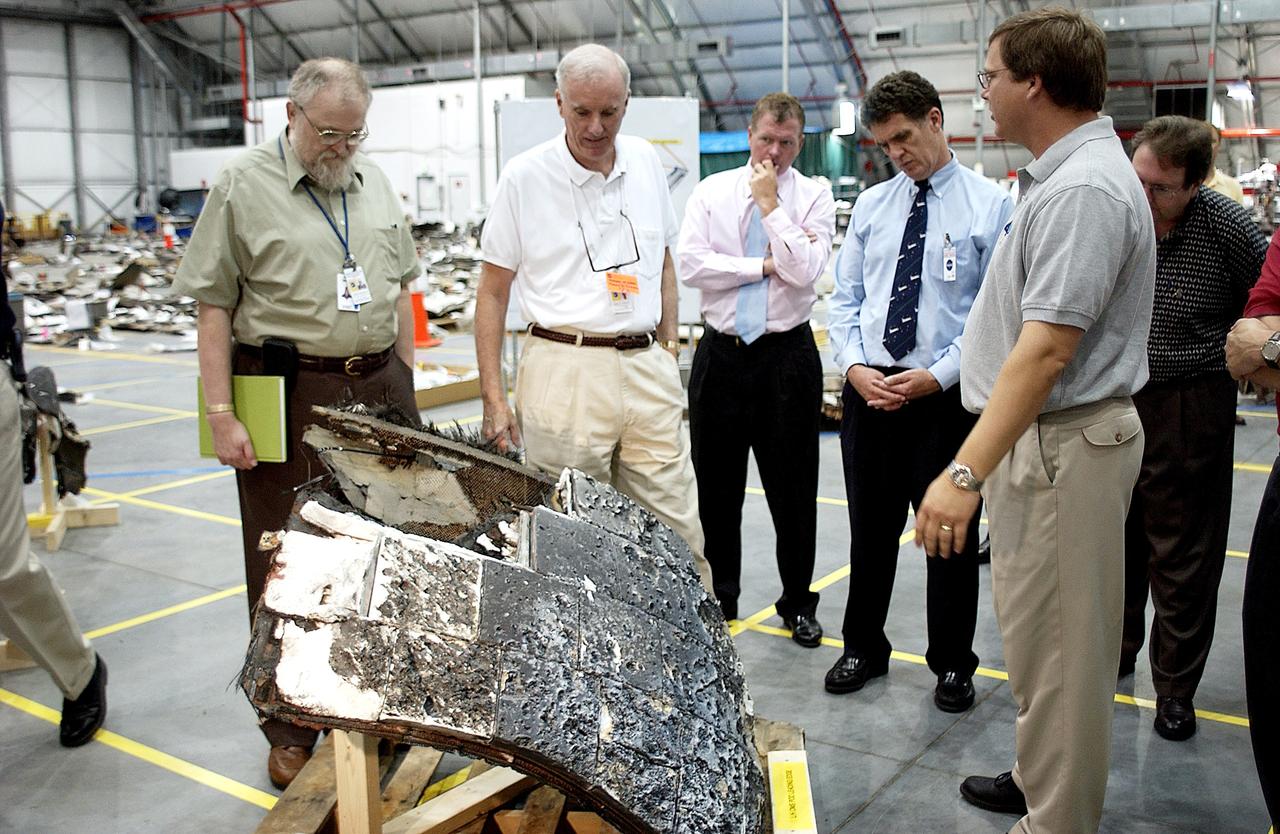
KENNEDY SPACE CENTER, FLA.  -  In the Columbia Debris Hangar, members of the  Stafford-Covey Return to Flight Task Group (SCTG) look at tiles recovered.  Chairing the task group are Richard O. Covey, former Space Shuttle commander, and Thomas P. Stafford (center), Apollo commander.  Chartered by NASA Administrator Sean O’Keefe, the task group will perform an independent assessment of NASA’s implementation of the final recommendations by the Columbia Accident Investigation Board.
KENNEDY SPACE CENTER, FLA. - In the Columbia Debris Hangar, members of the Stafford-Covey Return to Flight Task Group (SCTG) look at tiles recovered. Chairing the task group are Richard O. Covey, former Space Shuttle commander, and Thomas P. Stafford (center), Apollo commander. Chartered by NASA Administrator Sean O’Keefe, the task group will perform an independent assessment of NASA’s implementation of the final recommendations by the Columbia Accident Investigation Board.
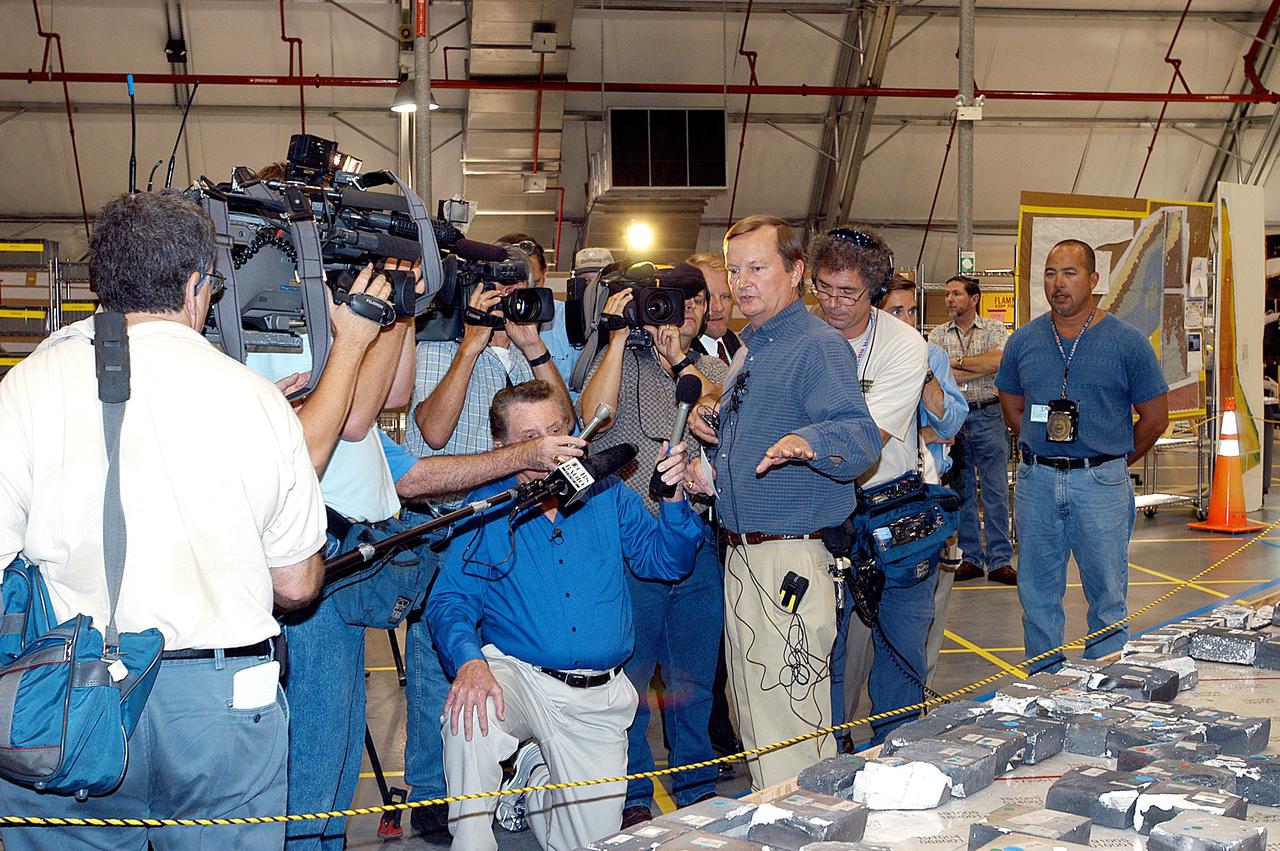
KENNEDY SPACE CENTER, FLA. - In the Columbia Debris Hangar,  Shuttle Launch Director Mike Leinbach  points to some of the tiles recovered from the orbiter as he explains to the media about activities that have taken place since the Columbia accident on Feb. 1, 2003.  STS-107 debris recovery and reconstruction operations are winding down.  To date, nearly 84,000 pieces of debris have been recovered and sent to KSC. That represents about 38 percent of the dry weight of Columbia, equaling almost 85,000 pounds.
KENNEDY SPACE CENTER, FLA. - In the Columbia Debris Hangar, Shuttle Launch Director Mike Leinbach points to some of the tiles recovered from the orbiter as he explains to the media about activities that have taken place since the Columbia accident on Feb. 1, 2003. STS-107 debris recovery and reconstruction operations are winding down. To date, nearly 84,000 pieces of debris have been recovered and sent to KSC. That represents about 38 percent of the dry weight of Columbia, equaling almost 85,000 pounds.
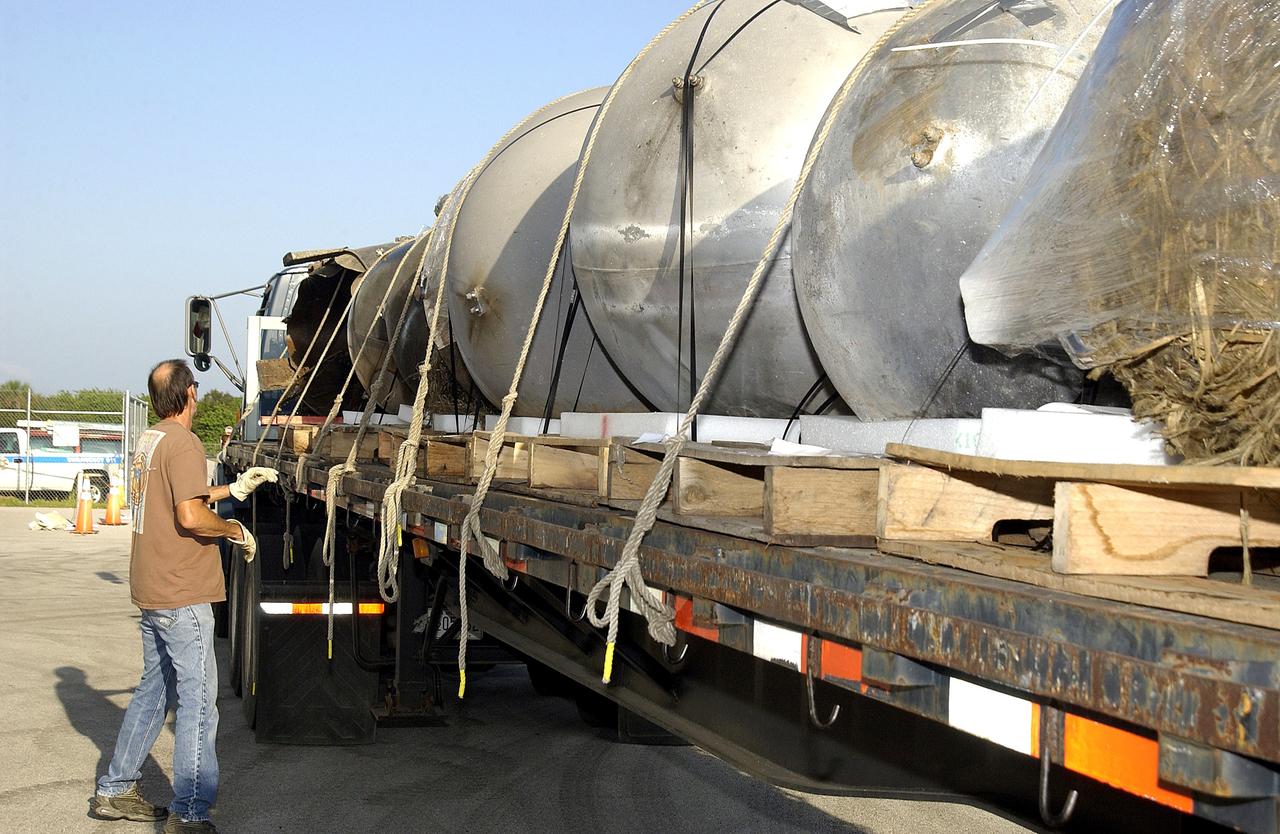
KENNEDY SPACE CENTER, FLA. -  At the Columbia Debris Hangar, some of the debris of Space Shuttle Columbia is moved onto a flatbed truck for transfer to the Vehicle Assembly Building for permanent storage.  More than 83,000 pieces of debris were shipped to KSC during search and recovery efforts in East Texas. That represents about 38 percent of the dry weight of Columbia, equaling almost 85,000 pounds.
KENNEDY SPACE CENTER, FLA. - At the Columbia Debris Hangar, some of the debris of Space Shuttle Columbia is moved onto a flatbed truck for transfer to the Vehicle Assembly Building for permanent storage. More than 83,000 pieces of debris were shipped to KSC during search and recovery efforts in East Texas. That represents about 38 percent of the dry weight of Columbia, equaling almost 85,000 pounds.
KENNEDY SPACE CENTER, FLA. - In the Columbia Debris Hangar,  Shuttle Launch Director Mike Leinbach  points to some of the debris as he explains to the media about activities that have taken place since the Columbia accident on Feb. 1, 2003.  STS-107 debris recovery and reconstruction operations are winding down.  To date, nearly 84,000 pieces of debris have been recovered and sent to KSC. That represents about 38 percent of the dry weight of Columbia, equaling almost 85,000 pounds.
KENNEDY SPACE CENTER, FLA. - In the Columbia Debris Hangar, Shuttle Launch Director Mike Leinbach points to some of the debris as he explains to the media about activities that have taken place since the Columbia accident on Feb. 1, 2003. STS-107 debris recovery and reconstruction operations are winding down. To date, nearly 84,000 pieces of debris have been recovered and sent to KSC. That represents about 38 percent of the dry weight of Columbia, equaling almost 85,000 pounds.
KENNEDY SPACE CENTER, FLA. -  In the Columbia Debris Hangar,  Shuttle Launch Director Mike Leinbach  (center) points to some of the tiles recovered from the orbiter as he explains to the media about activities that have taken place since the Columbia accident on Feb. 1, 2003.  STS-107 debris recovery and reconstruction operations are winding down.  To date, nearly 84,000 pieces of debris have been recovered and sent to KSC. That represents about 38 percent of the dry weight of Columbia, equaling almost 85,000 pounds.
KENNEDY SPACE CENTER, FLA. - In the Columbia Debris Hangar, Shuttle Launch Director Mike Leinbach (center) points to some of the tiles recovered from the orbiter as he explains to the media about activities that have taken place since the Columbia accident on Feb. 1, 2003. STS-107 debris recovery and reconstruction operations are winding down. To date, nearly 84,000 pieces of debris have been recovered and sent to KSC. That represents about 38 percent of the dry weight of Columbia, equaling almost 85,000 pounds.
KENNEDY SPACE CENTER, FLA. -    Shuttle Launch Director Mike Leinbach (left) explains recovery and reconstruction efforts of Columbia to the Executive Director of NASDA Koji Yamamoto (second from left) and others visiting the Columbia Debris Hangar.   Mr. Yamamoto is at KSC for a welcome ceremony involving the arrival of the newest Space Station module, the Japanese Experiment Module/pressurized module.
KENNEDY SPACE CENTER, FLA. - Shuttle Launch Director Mike Leinbach (left) explains recovery and reconstruction efforts of Columbia to the Executive Director of NASDA Koji Yamamoto (second from left) and others visiting the Columbia Debris Hangar. Mr. Yamamoto is at KSC for a welcome ceremony involving the arrival of the newest Space Station module, the Japanese Experiment Module/pressurized module.
KENNEDY SPACE CENTER, FLA. -  In the Columbia Debris Hangar,  Shuttle Launch Director Mike Leinbach  talks to the media about activities that have taken place since the Columbia accident on Feb. 1, 2003.  Behind him is a model of the left wing of the orbiter.  STS-107 debris recovery and reconstruction operations are winding down.  To date, nearly 84,000 pieces of debris have been recovered and sent to KSC. That represents about 38 percent of the dry weight of Columbia, equaling almost 85,000 pounds.
KENNEDY SPACE CENTER, FLA. - In the Columbia Debris Hangar, Shuttle Launch Director Mike Leinbach talks to the media about activities that have taken place since the Columbia accident on Feb. 1, 2003. Behind him is a model of the left wing of the orbiter. STS-107 debris recovery and reconstruction operations are winding down. To date, nearly 84,000 pieces of debris have been recovered and sent to KSC. That represents about 38 percent of the dry weight of Columbia, equaling almost 85,000 pounds.
KENNEDY SPACE CENTER, FLA.  -   The Stafford-Covey Return to Flight Task Group (SCTG) visits the Columbia Debris Hangar .  Chairing the task group are Richard O. Covey (third from right), former Space Shuttle commander, and Thomas P. Stafford (fourth from right), Apollo commander.  Chartered by NASA Administrator Sean O’Keefe, the task group will perform an independent assessment of NASA’s implementation of the final recommendations by the Columbia Accident Investigation Board.
KENNEDY SPACE CENTER, FLA. - The Stafford-Covey Return to Flight Task Group (SCTG) visits the Columbia Debris Hangar . Chairing the task group are Richard O. Covey (third from right), former Space Shuttle commander, and Thomas P. Stafford (fourth from right), Apollo commander. Chartered by NASA Administrator Sean O’Keefe, the task group will perform an independent assessment of NASA’s implementation of the final recommendations by the Columbia Accident Investigation Board.
KENNEDY SPACE CENTER, FLA. -  In the Columbia Debris Hangar,  Shuttle Launch Director Mike Leinbach  points to some of the tiles recovered from the orbiter as he explains to the media about activities that have taken place since the Columbia accident on Feb. 1, 2003.  STS-107 debris recovery and reconstruction operations are winding down.  To date, nearly 84,000 pieces of debris have been recovered and sent to KSC. That represents about 38 percent of the dry weight of Columbia, equaling almost 85,000 pounds.
KENNEDY SPACE CENTER, FLA. - In the Columbia Debris Hangar, Shuttle Launch Director Mike Leinbach points to some of the tiles recovered from the orbiter as he explains to the media about activities that have taken place since the Columbia accident on Feb. 1, 2003. STS-107 debris recovery and reconstruction operations are winding down. To date, nearly 84,000 pieces of debris have been recovered and sent to KSC. That represents about 38 percent of the dry weight of Columbia, equaling almost 85,000 pounds.
KENNEDY SPACE CENTER, FLA. - In the Columbia Debris Hangar,  Shuttle Launch Director Mike Leinbach  (right) talks to the media about activities that have taken place since the Columbia accident on Feb. 1, 2003.  STS-107 debris recovery and reconstruction operations are winding down.  To date, nearly 84,000 pieces of debris have been recovered and sent to KSC. That represents about 38 percent of the dry weight of Columbia, equaling almost 85,000 pounds.
KENNEDY SPACE CENTER, FLA. - In the Columbia Debris Hangar, Shuttle Launch Director Mike Leinbach (right) talks to the media about activities that have taken place since the Columbia accident on Feb. 1, 2003. STS-107 debris recovery and reconstruction operations are winding down. To date, nearly 84,000 pieces of debris have been recovered and sent to KSC. That represents about 38 percent of the dry weight of Columbia, equaling almost 85,000 pounds.
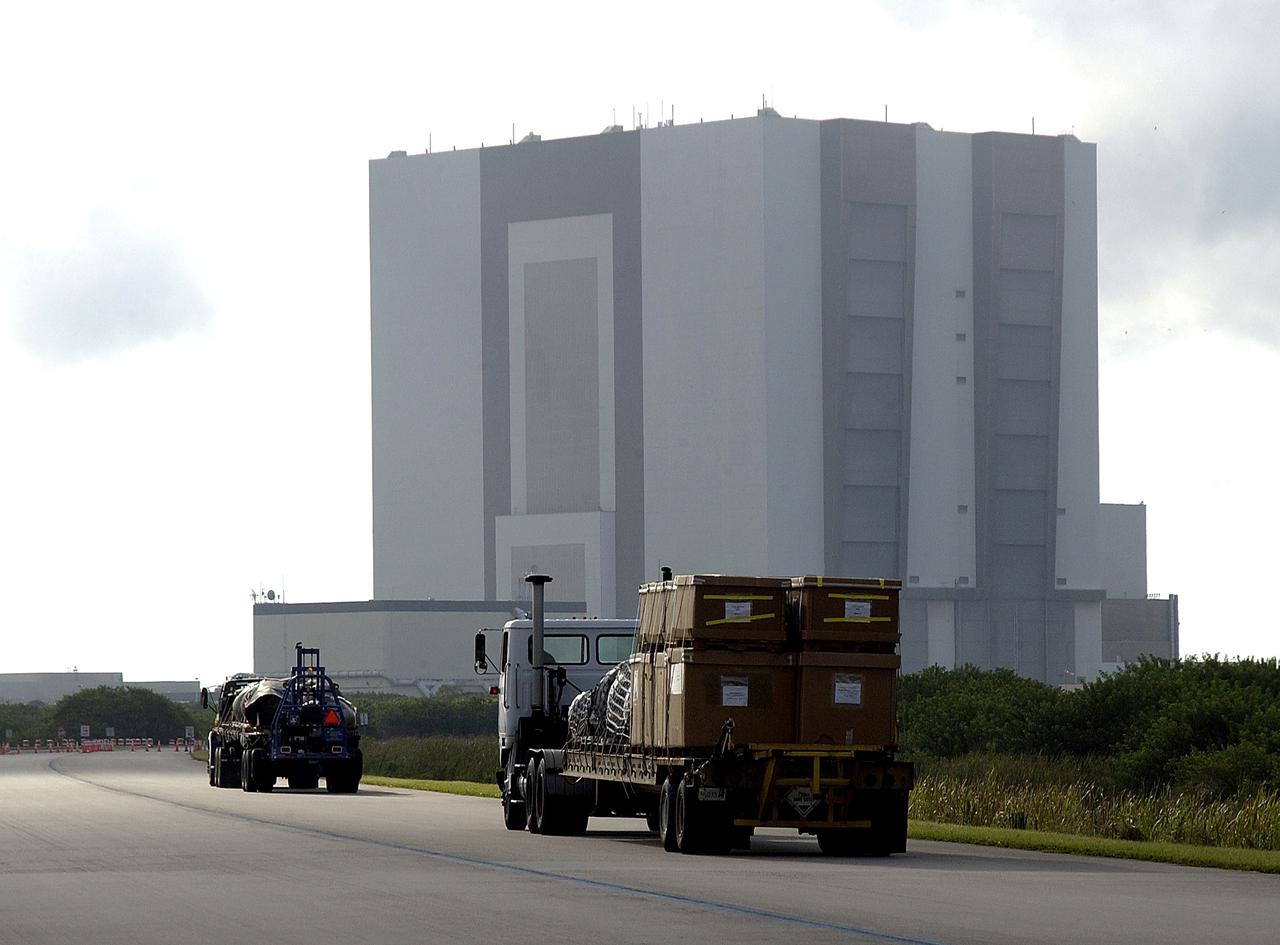
KENNEDY SPACE CENTER, FLA. -  Flatbed trucks carrying some of the debris of Space Shuttle Columbia approach the Vehicle Assembly Building (VAB).  The debris is being transferred from the Columbia Debris Hangar to the VAB for permanent storage.  More than 83,000 pieces of debris were shipped to KSC during search and recovery efforts in East Texas. That represents about 38 percent of the dry weight of Columbia, equaling almost 85,000 pounds.
KENNEDY SPACE CENTER, FLA. - Flatbed trucks carrying some of the debris of Space Shuttle Columbia approach the Vehicle Assembly Building (VAB). The debris is being transferred from the Columbia Debris Hangar to the VAB for permanent storage. More than 83,000 pieces of debris were shipped to KSC during search and recovery efforts in East Texas. That represents about 38 percent of the dry weight of Columbia, equaling almost 85,000 pounds.
KENNEDY SPACE CENTER, FLA. - In the Columbia Debris Hangar,  Shuttle Launch Director Mike Leinbach  points to some of the debris as he explains to the media about activities that have taken place since the Columbia accident on Feb. 1, 2003.  STS-107 debris recovery and reconstruction operations are winding down.  To date, nearly 84,000 pieces of debris have been recovered and sent to KSC. That represents about 38 percent of the dry weight of Columbia, equaling almost 85,000 pounds.
KENNEDY SPACE CENTER, FLA. - In the Columbia Debris Hangar, Shuttle Launch Director Mike Leinbach points to some of the debris as he explains to the media about activities that have taken place since the Columbia accident on Feb. 1, 2003. STS-107 debris recovery and reconstruction operations are winding down. To date, nearly 84,000 pieces of debris have been recovered and sent to KSC. That represents about 38 percent of the dry weight of Columbia, equaling almost 85,000 pounds.
KENNEDY SPACE CENTER, FLA. - In the Columbia Debris Hangar,  Shuttle Launch Director Mike Leinbach  (right) talks to the media about activities that have taken place since the Columbia accident on Feb. 1, 2003.  STS-107 debris recovery and reconstruction operations are winding down.  To date, nearly 84,000 pieces of debris have been recovered and sent to KSC. That represents about 38 percent of the dry weight of Columbia, equaling almost 85,000 pounds.
KENNEDY SPACE CENTER, FLA. - In the Columbia Debris Hangar, Shuttle Launch Director Mike Leinbach (right) talks to the media about activities that have taken place since the Columbia accident on Feb. 1, 2003. STS-107 debris recovery and reconstruction operations are winding down. To date, nearly 84,000 pieces of debris have been recovered and sent to KSC. That represents about 38 percent of the dry weight of Columbia, equaling almost 85,000 pounds.
KENNEDY SPACE CENTER, FLA. -  Shuttle Launch Director Mike Leinbach (right) explains recovery and reconstruction efforts of Columbia to the Executive Director of NASDA Koji Yamamoto (third from left) and others visiting the Columbia Debris Hangar.   Mr. Yamamoto is at KSC for a welcome ceremony involving the arrival of the newest Space Station module, the Japanese Experiment Module/pressurized module.
KENNEDY SPACE CENTER, FLA. - Shuttle Launch Director Mike Leinbach (right) explains recovery and reconstruction efforts of Columbia to the Executive Director of NASDA Koji Yamamoto (third from left) and others visiting the Columbia Debris Hangar. Mr. Yamamoto is at KSC for a welcome ceremony involving the arrival of the newest Space Station module, the Japanese Experiment Module/pressurized module.
KENNEDY SPACE CENTER, FLA. -   Shuttle Launch Director Mike Leinbach (right) explains recovery and reconstruction efforts of Columbia to the Executive Director of NASDA Koji Yamamoto (second from left) and others visiting the Columbia Debris Hangar.   Mr. Yamamoto is at KSC for a welcome ceremony involving the arrival of the newest Space Station module, the Japanese Experiment Module/pressurized module.
KENNEDY SPACE CENTER, FLA. - Shuttle Launch Director Mike Leinbach (right) explains recovery and reconstruction efforts of Columbia to the Executive Director of NASDA Koji Yamamoto (second from left) and others visiting the Columbia Debris Hangar. Mr. Yamamoto is at KSC for a welcome ceremony involving the arrival of the newest Space Station module, the Japanese Experiment Module/pressurized module.
KENNEDY SPACE CENTER, FLA. -  Pieces of debris of Space Shuttle Columbia are offloaded from a flatbed truck in the transfer aisle of the Vehicle Assembly Building (VAB).  The debris is being moved from the Columbia Debris Hangar to the VAB for permanent storage.  More than 83,000 pieces of debris were shipped to KSC during search and recovery efforts in East Texas. That represents about 38 percent of the dry weight of Columbia, equaling almost 85,000 pounds.
KENNEDY SPACE CENTER, FLA. - Pieces of debris of Space Shuttle Columbia are offloaded from a flatbed truck in the transfer aisle of the Vehicle Assembly Building (VAB). The debris is being moved from the Columbia Debris Hangar to the VAB for permanent storage. More than 83,000 pieces of debris were shipped to KSC during search and recovery efforts in East Texas. That represents about 38 percent of the dry weight of Columbia, equaling almost 85,000 pounds.
KENNEDY SPACE CENTER, FLA. -  At the Columbia Debris Hangar, some of the debris of Space Shuttle Columbia is secured onto a flatbed truck for transfer to the Vehicle Assembly Building for permanent storage.  More than 83,000  pieces of debris were shipped to KSC during search and recovery efforts in East Texas. That represents about 38 percent of the dry weight of Columbia, equaling almost 85,000 pounds.
KENNEDY SPACE CENTER, FLA. - At the Columbia Debris Hangar, some of the debris of Space Shuttle Columbia is secured onto a flatbed truck for transfer to the Vehicle Assembly Building for permanent storage. More than 83,000 pieces of debris were shipped to KSC during search and recovery efforts in East Texas. That represents about 38 percent of the dry weight of Columbia, equaling almost 85,000 pounds.
KENNEDY SPACE CENTER, FLA. -  Shuttle Launch Director Mike Leinbach (second from left) accompanies Executive Director of NASDA Koji Yamamoto (fourth from left) and others visiting the Columbia Debris Hangar.  Mr. Yamamoto is at KSC for a welcome ceremony involving the arrival of the newest Space Station module, the Japanese Experiment Module/pressurized module.
KENNEDY SPACE CENTER, FLA. - Shuttle Launch Director Mike Leinbach (second from left) accompanies Executive Director of NASDA Koji Yamamoto (fourth from left) and others visiting the Columbia Debris Hangar. Mr. Yamamoto is at KSC for a welcome ceremony involving the arrival of the newest Space Station module, the Japanese Experiment Module/pressurized module.
KENNEDY SPACE CENTER, FLA.  -  In the Columbia Debris Hangar, members of the  Stafford-Covey Return to Flight Task Group (SCTG) inspect some of the debris.   Chairing the task group are Richard O. Covey, former Space Shuttle commander, and Thomas P. Stafford (fourth from left), Apollo commander.  Chartered by NASA Administrator Sean O’Keefe, the task group will perform an independent assessment of NASA’s implementation of the final recommendations by the Columbia Accident Investigation Board.
KENNEDY SPACE CENTER, FLA. - In the Columbia Debris Hangar, members of the Stafford-Covey Return to Flight Task Group (SCTG) inspect some of the debris. Chairing the task group are Richard O. Covey, former Space Shuttle commander, and Thomas P. Stafford (fourth from left), Apollo commander. Chartered by NASA Administrator Sean O’Keefe, the task group will perform an independent assessment of NASA’s implementation of the final recommendations by the Columbia Accident Investigation Board.
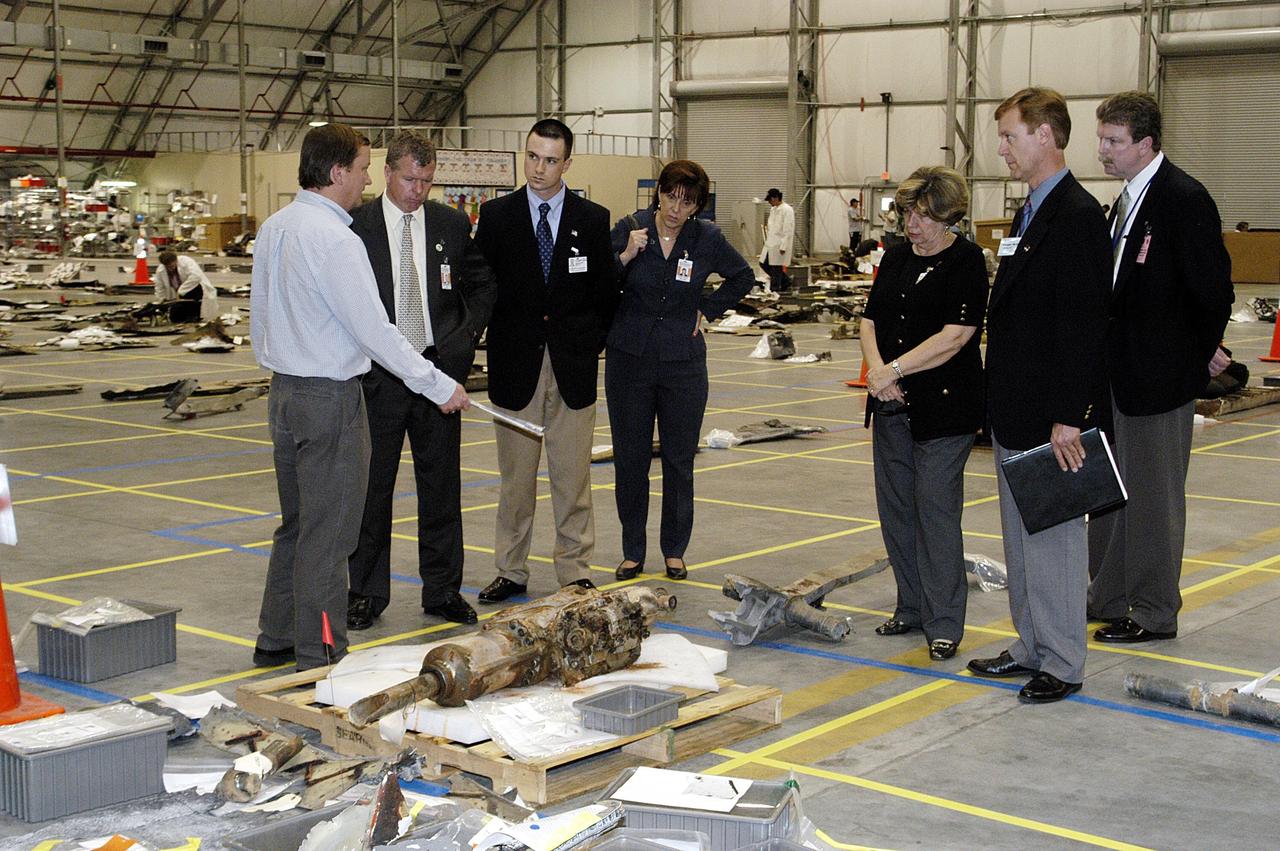
KENNEDY SPACE CENTER, FLA. - Adm. Harold Gehman, center, chairman of the Columbia Investigation Accident Board,  talks to U.S. Representative Dave Weldon (right) during the CAIB’s visit to the KSC RLV Hangar.  Left of Gehman is U.S. Representative Tom Feeney.  Gehman and the board visited the Hangar as part of the ongoing investigation.  Recovery efforts as of May 5 included 82,500 pieces of debris weighing 84,800 pounds, almost 40 percent of the total dry weight of the shuttle.  About 25,000 personnel took part, utilizing almost 1.5 million total man-hours in the recovery effort and involving more than 130 federal, state and local agencies.  The operation was also supported by more than 270 organizations that included businesses and volunteer groups.
KENNEDY SPACE CENTER, FLA. - Adm. Harold Gehman, center, chairman of the Columbia Investigation Accident Board, talks to U.S. Representative Dave Weldon (right) during the CAIB’s visit to the KSC RLV Hangar. Left of Gehman is U.S. Representative Tom Feeney. Gehman and the board visited the Hangar as part of the ongoing investigation. Recovery efforts as of May 5 included 82,500 pieces of debris weighing 84,800 pounds, almost 40 percent of the total dry weight of the shuttle. About 25,000 personnel took part, utilizing almost 1.5 million total man-hours in the recovery effort and involving more than 130 federal, state and local agencies. The operation was also supported by more than 270 organizations that included businesses and volunteer groups.
KENNEDY SPACE CENTER, FLA. - In the RLV Hangar, Adm. Harold Gehman, center, chairman of the Columbia Investigation Accident Board, gestures toward a large piece of Columbia debris.  He and other board members are visiting the Hangar as part of the ongoing investigation.  At right is U.S. Representative Dave Weldon; behind him is U.S. Representative Tom Feeney.  Recovery efforts as of May 5 included 82,500 pieces of debris weighing 84,800 pounds, almost 40 percent of the total dry weight of the shuttle.  About 25,000 personnel took part, utilizing almost 1.5 million total man-hours in the recovery effort and involving more than 130 federal, state and local agencies.  The operation was also supported by more than 270 organizations that included businesses and volunteer groups.
KENNEDY SPACE CENTER, FLA. - In the RLV Hangar, Adm. Harold Gehman, center, chairman of the Columbia Investigation Accident Board, gestures toward a large piece of Columbia debris. He and other board members are visiting the Hangar as part of the ongoing investigation. At right is U.S. Representative Dave Weldon; behind him is U.S. Representative Tom Feeney. Recovery efforts as of May 5 included 82,500 pieces of debris weighing 84,800 pounds, almost 40 percent of the total dry weight of the shuttle. About 25,000 personnel took part, utilizing almost 1.5 million total man-hours in the recovery effort and involving more than 130 federal, state and local agencies. The operation was also supported by more than 270 organizations that included businesses and volunteer groups.
KENNEDY SPACE CENTER, FLA. - Adm. Harold Gehman, center, chairman of the Columbia Investigation Accident Board,  looks at a large piece of Columbia debris in the RLV Hangar.  He and other board members are visiting the Hangar as part of the ongoing investigation.  To the right of Gehman are U.S. Representatives Tom Feeney and Dave Weldon.  Recovery efforts as of May 5 included 82,500 pieces of debris weighing 84,800 pounds, almost 40 percent of the total dry weight of the shuttle.  About 25,000 personnel took part, utilizing almost 1.5 million total man-hours in the recovery effort and involving more than 130 federal, state and local agencies.  The operation was also supported by more than 270 organizations that included businesses and volunteer groups.
KENNEDY SPACE CENTER, FLA. - Adm. Harold Gehman, center, chairman of the Columbia Investigation Accident Board, looks at a large piece of Columbia debris in the RLV Hangar. He and other board members are visiting the Hangar as part of the ongoing investigation. To the right of Gehman are U.S. Representatives Tom Feeney and Dave Weldon. Recovery efforts as of May 5 included 82,500 pieces of debris weighing 84,800 pounds, almost 40 percent of the total dry weight of the shuttle. About 25,000 personnel took part, utilizing almost 1.5 million total man-hours in the recovery effort and involving more than 130 federal, state and local agencies. The operation was also supported by more than 270 organizations that included businesses and volunteer groups.
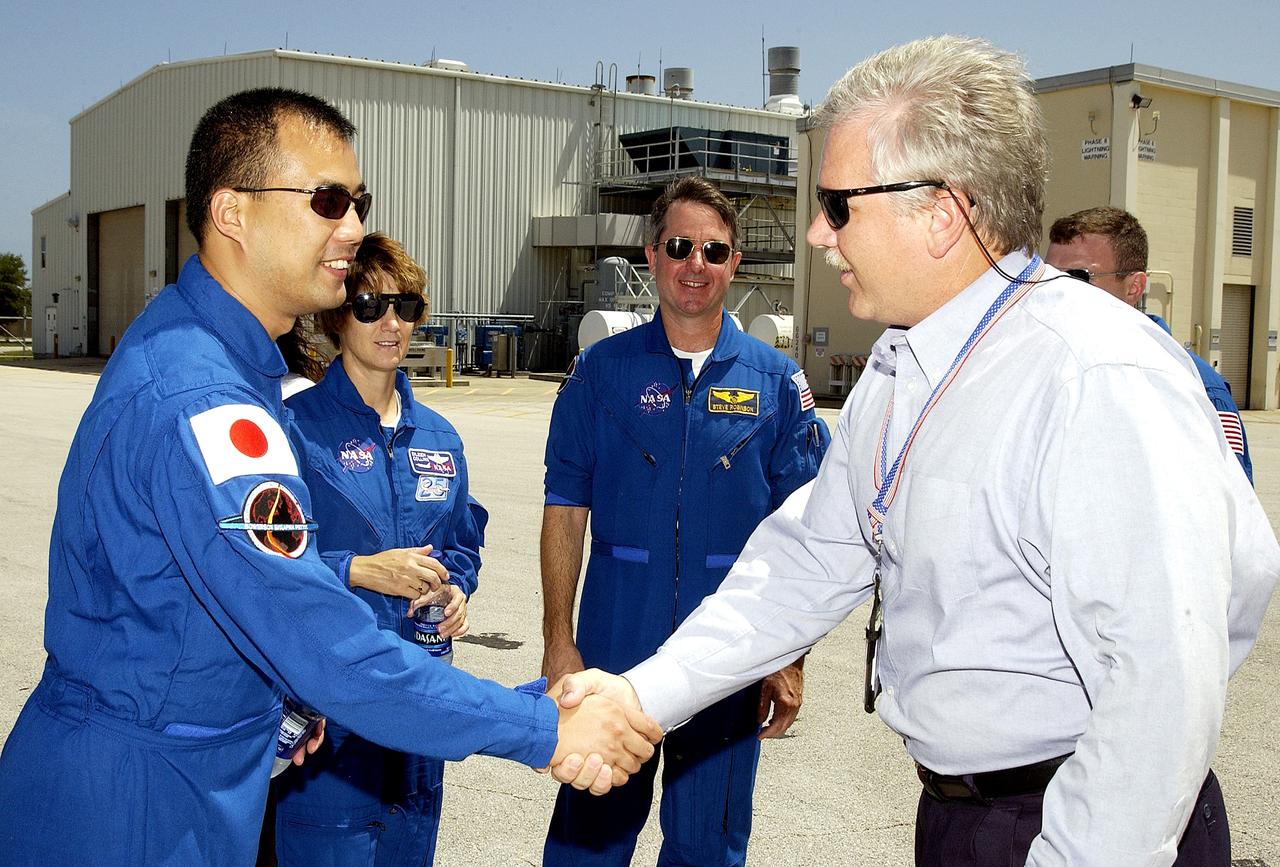
KENNEDY SPACE CENTER, FLA. -   The STS-114 crew is welcomed to Hangar AF, Cape Canaveral Air Force Station, by Joseph Chaput, with United Space Alliance. The crew, from left, are Mission Specialist Soichi Noguchi, Commander Eileen Collins, Mission Specialist Stephen Robinson and (partially hidden) Pilot James Kelly.  Noguchi is with the Japanese space agency NASDA.  On the mission, the crew will carry the MultiPurpose Logistics Module (MPLM) Raffaello and External Stowage Platform 2 to the International Space Station.  The MPLM will contain supplies and equipment.  Another goal of the mission is to remove and replace a Control Moment Gyro.  Launch date for mission STS-114 is under review.  Hangar AF is the site where SRB Retrieval Ships return the spent solid rocket boosters after a Shuttle launch.  The SRBs are lifted from the water and placed on rail cars to begin the disassembly and refurbishment process.
KENNEDY SPACE CENTER, FLA. - The STS-114 crew is welcomed to Hangar AF, Cape Canaveral Air Force Station, by Joseph Chaput, with United Space Alliance. The crew, from left, are Mission Specialist Soichi Noguchi, Commander Eileen Collins, Mission Specialist Stephen Robinson and (partially hidden) Pilot James Kelly. Noguchi is with the Japanese space agency NASDA. On the mission, the crew will carry the MultiPurpose Logistics Module (MPLM) Raffaello and External Stowage Platform 2 to the International Space Station. The MPLM will contain supplies and equipment. Another goal of the mission is to remove and replace a Control Moment Gyro. Launch date for mission STS-114 is under review. Hangar AF is the site where SRB Retrieval Ships return the spent solid rocket boosters after a Shuttle launch. The SRBs are lifted from the water and placed on rail cars to begin the disassembly and refurbishment process.
After a successful approach and landing flight test on Nov. 11, 2017, Sierra Nevada Corp’s Dream Chaser was towed back to NASA Armstrong Flight Research Center in California, and placed in the former space shuttle hangar.
Dream Chaser ALT-2 Free Flight
SNC Dream Chaser is lifted on to a truck in NASA Armstrong’s historic space shuttle hangar where the spacecraft stayed as it was being prepared for testing and flights. Dream Chaser is in Colorado at a SNC facility.
Dream Chaser Departs NASA Armstrong
KENNEDY SPACE CENTER, FLA. -  -  United Space Alliance technician Shelly Kipp (right) shows some of the material salvaged from the storm-ravaged Thermal Protection System Facility (TPSF) to NASA Administrator Sean O’Keefe (left).  Martin Wilson (center), manager of TPS operations for USA, looks on.  The TPSF, which creates the TPS tiles, blankets and all the internal thermal control systems for the Space Shuttles, is almost totally unserviceable at this time after losing approximately 35 percent of its roof during Hurricane Frances, which blew across Central Florida Sept. 4-5. O’Keefe and NASA Associate Administrator of  Space Operations Mission Directorate William Readdy are visiting KSC to survey the damage sustained by KSC facilities from the hurricane.  Undamaged equipment was removed from the TPSF and stored in the RLV hangar. The Labor Day storm also caused significant damage to the Vehicle Assembly Building and Processing Control Center.  Additionally, the Operations and Checkout Building, Vertical Processing Facility, Hangar AE, Hangar S and Hangar AF Small Parts Facility each received substantial damage. However, well-protected and unharmed were NASA’s three Space Shuttle orbiters -- Discovery, Atlantis and Endeavour - along with the Shuttle launch pads, all of the critical flight hardware for the orbiters and the International Space Station, and NASA’s Swift spacecraft that is awaiting launch in October.
KSC-04pd1845
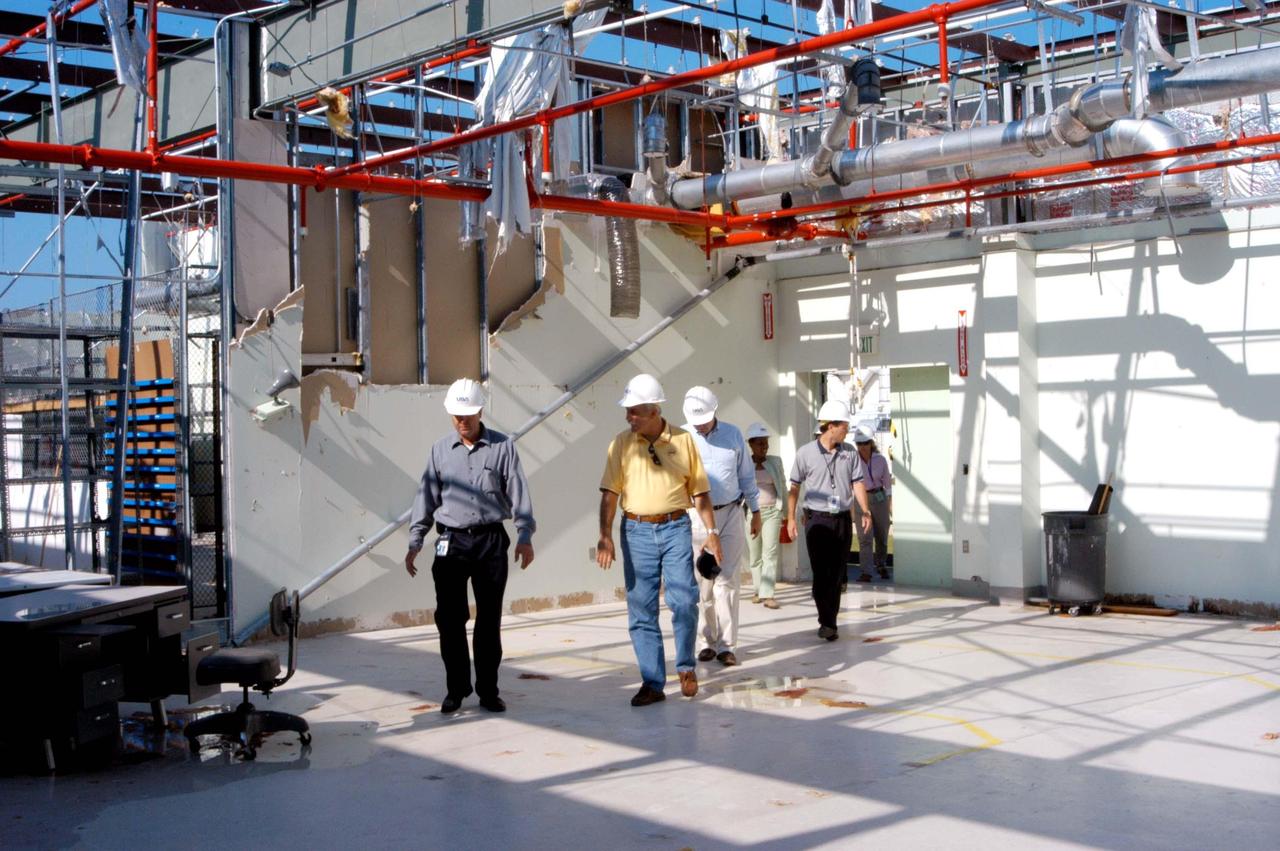
KENNEDY SPACE CENTER, FLA. -  Martin Wilson (far left), manager of Thermal Protection System (TPS) operations for United Space Alliance (USA), leads NASA Administrator Sean O’Keefe (second from left) on a tour of the hurricane-ravaged Thermal Protection System Facility.  The TPSF, which creates the TPS tiles, blankets and all the internal thermal control systems for the Space Shuttles, is almost totally unserviceable at this time after losing approximately 35 percent of its roof in the storm, which blew across Central Florida Sept. 4-5. Undamaged equipment was removed from the TPSF and stored in the RLV hangar. O’Keefe and NASA Associate Administrator of  Space Operations Mission Directorate William Readdy are visiting KSC to survey the damage sustained by KSC facilities from the hurricane.  The Labor Day storm also caused significant damage to the Vehicle Assembly Building and Processing Control Center.  Additionally, the Operations and Checkout Building, Vertical Processing Facility, Hangar AE, Hangar S and Hangar AF Small Parts Facility each received substantial damage. However, well-protected and unharmed were NASA’s three Space Shuttle orbiters - Discovery, Atlantis and Endeavour - along with the Shuttle launch pads, all of the critical flight hardware for the orbiters and the International Space Station, and NASA’s Swift spacecraft that is awaiting launch in October.
KSC-04pd1849
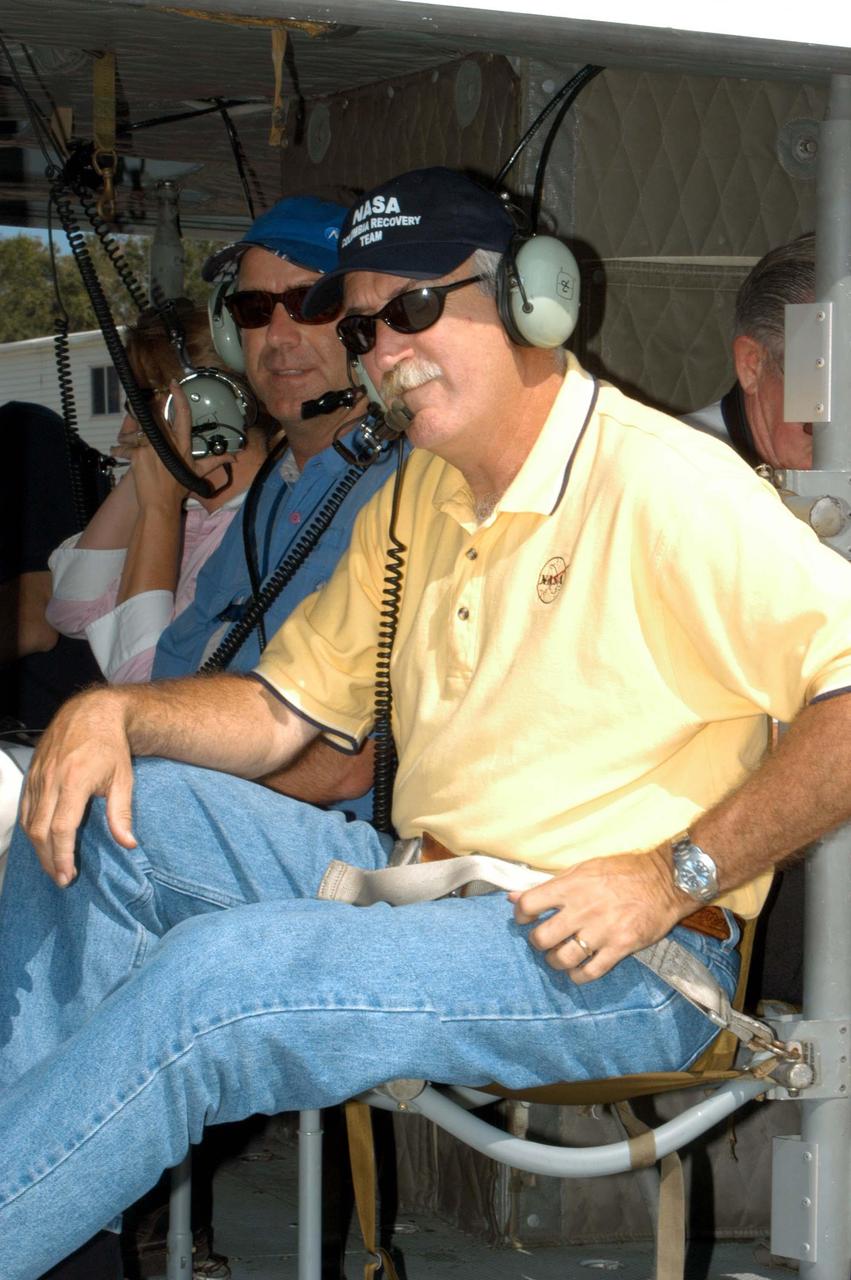
KENNEDY SPACE CENTER, FLA. -  NASA Administrator Sean O’Keefe (right) sits next to KSC Director of Spaceport Services Scott Kerr in the helicopter from which they will observe overall damage at the Center from Hurricane Frances. O’Keefe and NASA Associate Administrator of  Space Operations Mission Directorate William Readdy are visiting KSC to survey the damage sustained by KSC facilities from the hurricane. The Labor Day storm caused significant damage to the Vehicle Assembly Building, Thermal Protection System Facility, and Processing Control Center.  Additionally, the Operations and Checkout Building, Vertical Processing Facility, Hangar AE, Hangar S and Hangar AF Small Parts Facility each received substantial damage. However, well-protected and unharmed were NASA’s three Space Shuttle orbiters -- Discovery, Atlantis and Endeavour - along with the Shuttle launch pads, all of the critical flight hardware for the orbiters and the International Space Station, and NASA’s Swift spacecraft that is awaiting launch in October.
KSC-04pd1846
KENNEDY SPACE CENTER, FLA. -  NASA Administrator Sean O’Keefe examines one of the panels that was blown off the Vehicle Assembly Building.  O’Keefe is visiting KSC to survey the damage sustained by KSC facilities from Hurricane Frances over Labor Day weekend. The Vehicle Assembly Building, Thermal Protection System Facility, and Processing Control Center all received significant damage from the storm.  Additionally, the Operations and Checkout Building, Vertical Processing Facility, Hangar AE, Hangar S and Hangar AF Small Parts Facility each received substantial damage. NASA’s three Space Shuttle orbiters -- Discovery, Atlantis and Endeavour - along with the Shuttle launch pads, all of the critical flight hardware for the orbiters and the International Space Station, and NASA’s Swift spacecraft, awaiting launch in October, were well protected and unharmed.
KSC-04pd1838
KENNEDY SPACE CENTER, FLA. -  KSC Director of the Spaceport Services Scott Kerr (left) and NASA Associate Administrator of the Space Operations Mission Directorate William Readdy examine one of the panels that was blown off the Vehicle Assembly Building.  NASA Administrator Sean O’Keefe and Readdy are visiting KSC to survey the damage sustained by KSC facilities from Hurricane Frances over Labor Day weekend. The Vehicle Assembly Building, Thermal Protection System Facility, and Processing Control Center all received significant damage from the storm.  Additionally, the Operations and Checkout Building, Vertical Processing Facility, Hangar AE, Hangar S and Hangar AF Small Parts Facility each received substantial damage. NASA’s three Space Shuttle orbiters -- Discovery, Atlantis and Endeavour - along with the Shuttle launch pads, all of the critical flight hardware for the orbiters and the International Space Station, and NASA’s Swift spacecraft, awaiting launch in October, were well protected and unharmed.
KSC-04pd1837
CAPE CANAVERAL, Fla. –    After inspection, the two spent solid rocket boosters from space shuttle Endeavour, which launched Nov. 14 on the STS-126 mission, leave Hangar AF at Cape Canaveral Air Force Station in Florida. The SRBs will be rinsed one more time and then moved inside the hangar, where they remain for the rest of the disassembly operations.  The space shuttle’s solid rocket booster casings and associated flight hardware are recovered at sea after being jettisoned. The boosters impact the Atlantic Ocean approximately seven minutes after liftoff. After their recovery and transport to Hangar AF, the boosters are cleaned, inspected, disassembled, refurbished and reloaded with solid propellant for reuse.  Photo credit: NASA/Jim Grossmann
KSC-08pd3767
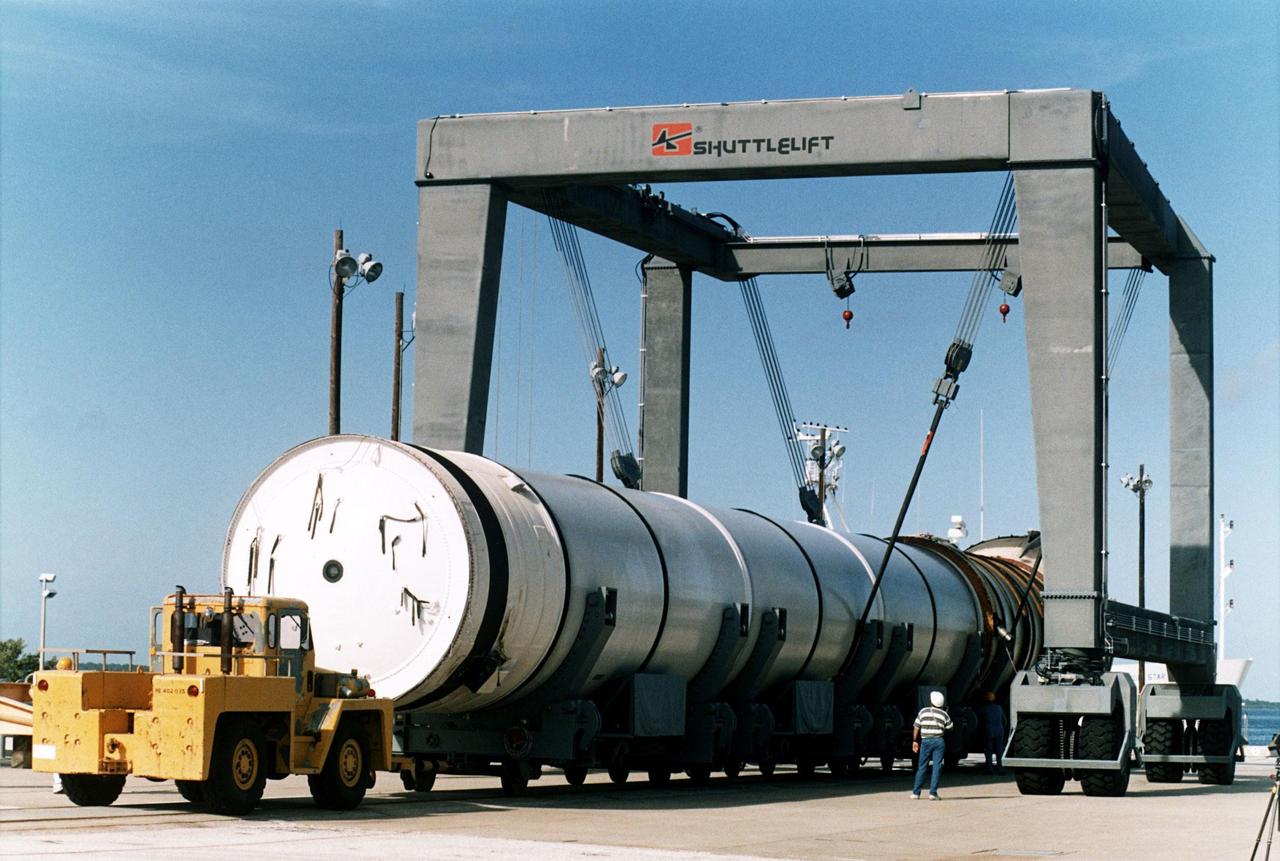
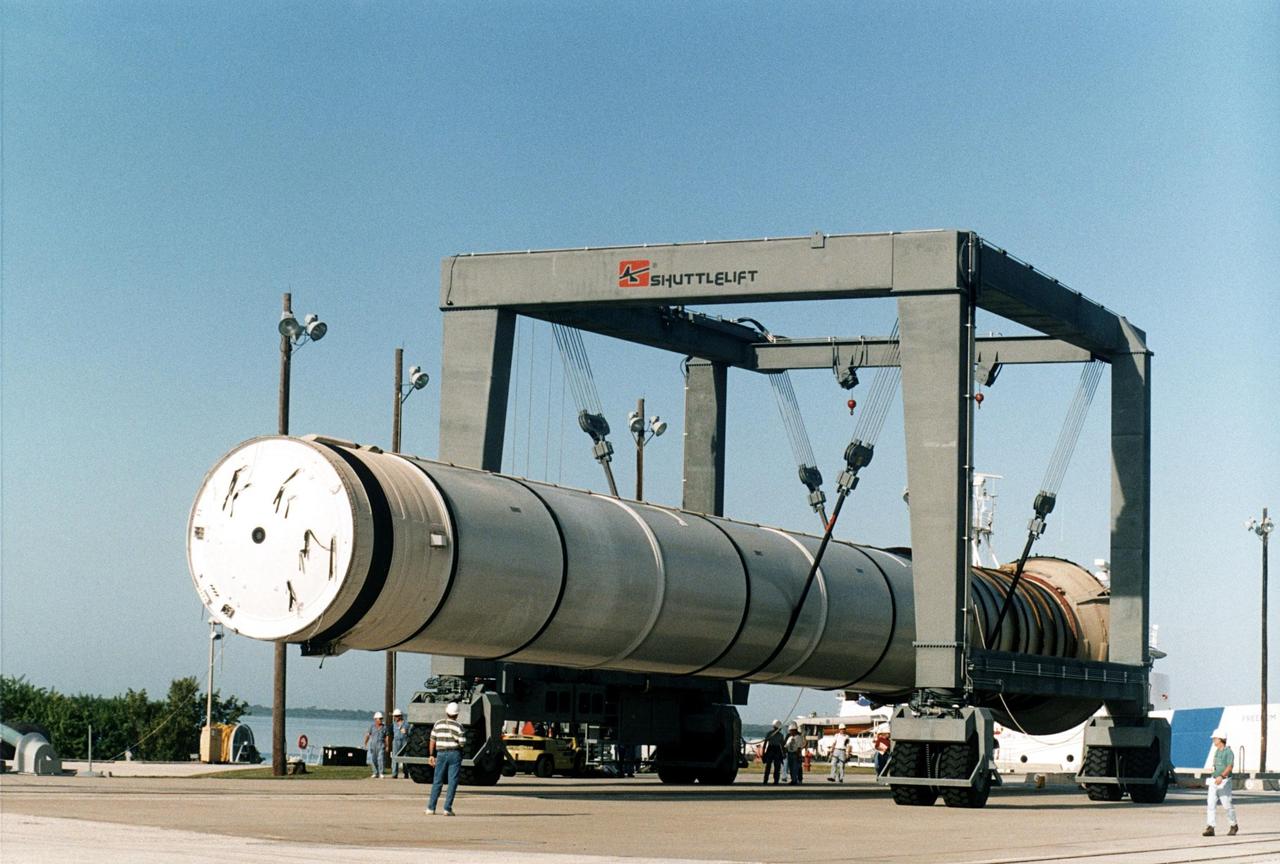
A spent solid rocket booster (SRB) from the STS-87 launch on Nov. 19 is lifted in a hoisting slip in the Hangar AF area at Cape Canaveral Air Station. Hangar AF is a building originally used for Project Mercury, the first U.S. manned space program. The SRBs are the largest solid propellant motors ever flown and the first designed for reuse. After a Shuttle is launched, the SRBs are jettisoned at two minutes, seven seconds into the flight. At six minutes and 44 seconds after liftoff, the spent SRBs, weighing about 165,000 lb., have slowed their descent speed to about 62 mph and splashdown takes place in a predetermined area. They are retrieved from the Atlantic Ocean by special recovery vessels and returned for refurbishment and eventual reuse on future Shuttle flights. Once at Hangar AF, the SRBs are unloaded onto a hoisting slip and mobile gantry cranes lift them onto tracked dollies where they are safed and undergo their first washing
KSC-97PC1726
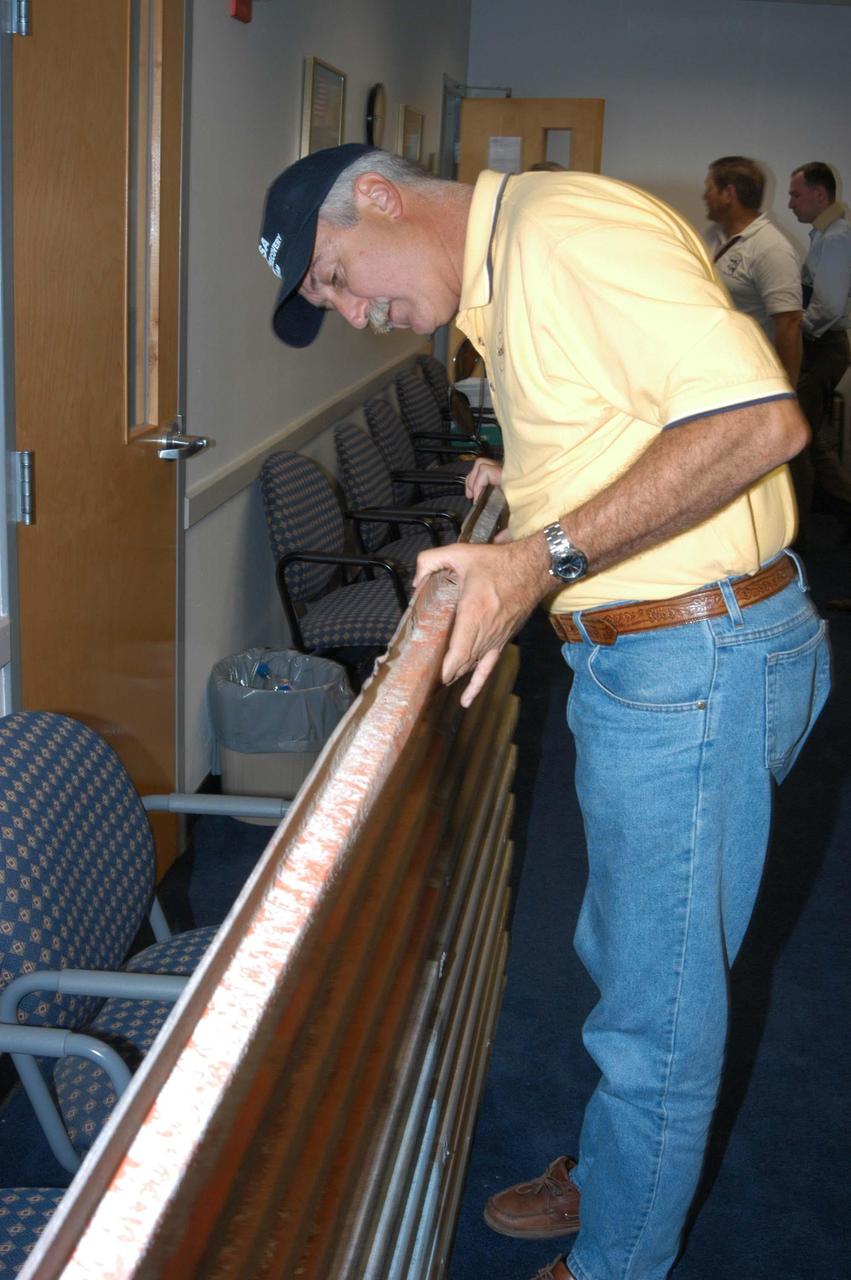
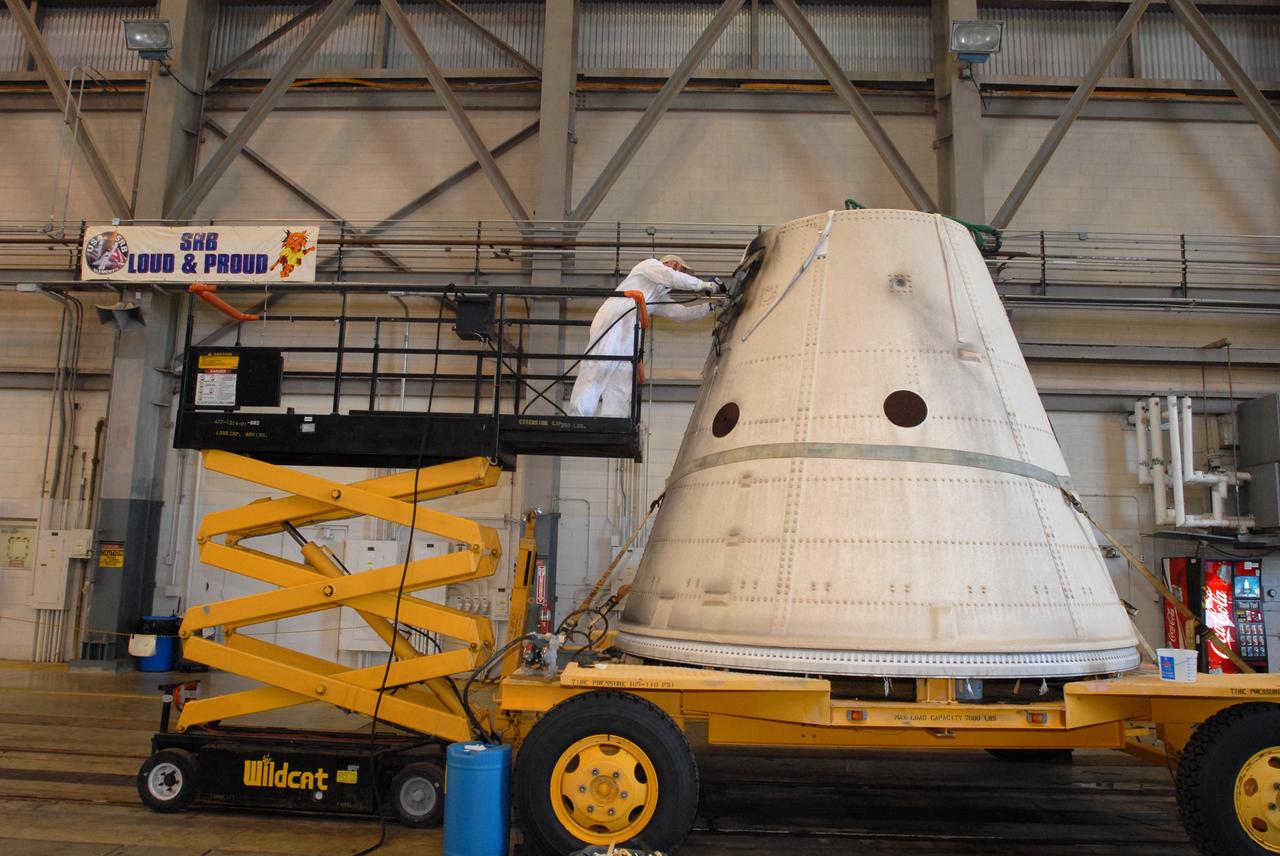
CAPE CANAVERAL, Fla. –   At Hangar AF at Cape Canaveral Air Force Station in Florida, a worker examines one of the frustums from two spent solid rocket boosters from space shuttle Endeavour, which launched Nov. 14 on the STS-126 mission. The frustum was offloaded from the solid rocket booster retrieval ship Freedom Star and moved inside the Hangar AF High Bay for disassembly. The space shuttle’s solid rocket booster casings and associated flight hardware are recovered at sea after being jettisoned. The boosters impact the Atlantic Ocean approximately seven minutes after liftoff. After their recovery and transport to Hangar AF, the boosters are cleaned, inspected, disassembled, refurbished and reloaded with solid propellant for reuse.  Photo credit: NASA/Jim Grossmann
KSC-08pd3766
A spent solid rocket booster (SRB) from the STS-87 launch on Nov. 19 is lifted in a hoisting slip in the Hangar AF area at Cape Canaveral Air Station. Hangar AF is a building originally used for Project Mercury, the first U.S. manned space program. The SRBs are the largest solid propellant motors ever flown and the first designed for reuse. After a Shuttle is launched, the SRBs are jettisoned at two minutes, seven seconds into the flight. At six minutes and 44 seconds after liftoff, the spent SRBs, weighing about 165,000 lb., have slowed their descent speed to about 62 mph and splashdown takes place in a predetermined area. They are retrieved from the Atlantic Ocean by special recovery vessels and returned for refurbishment and eventual reuse on future Shuttle flights. Once at Hangar AF, the SRBs are unloaded onto a hoisting slip and mobile gantry cranes lift them onto tracked dollies where they are safed and undergo their first washing
KSC-97PC1728
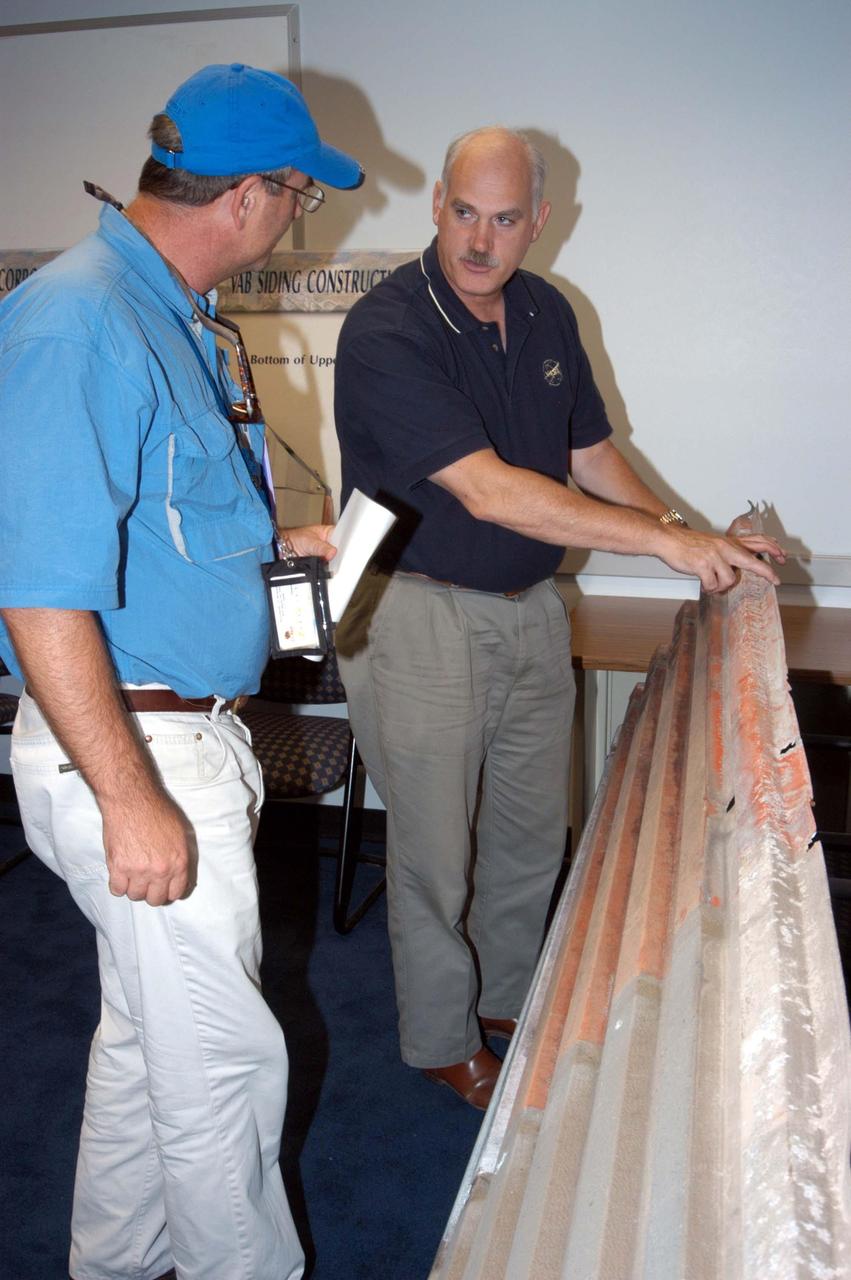
Columbia Reconstruction Project Team members study diagrams to aid in the placement of debris from the Space Shuttle Columbia in the RLV Hangar. The debris is being shipped to KSC from the collection point at Barksdale Air Force Base, Shreveport, La. As part of the ongoing investigation into the tragic accident that claimed Columbia and her crew of seven, workers will attempt to reconstruct the orbiter inside the hangar.
Columbia Reconstruction Project Team
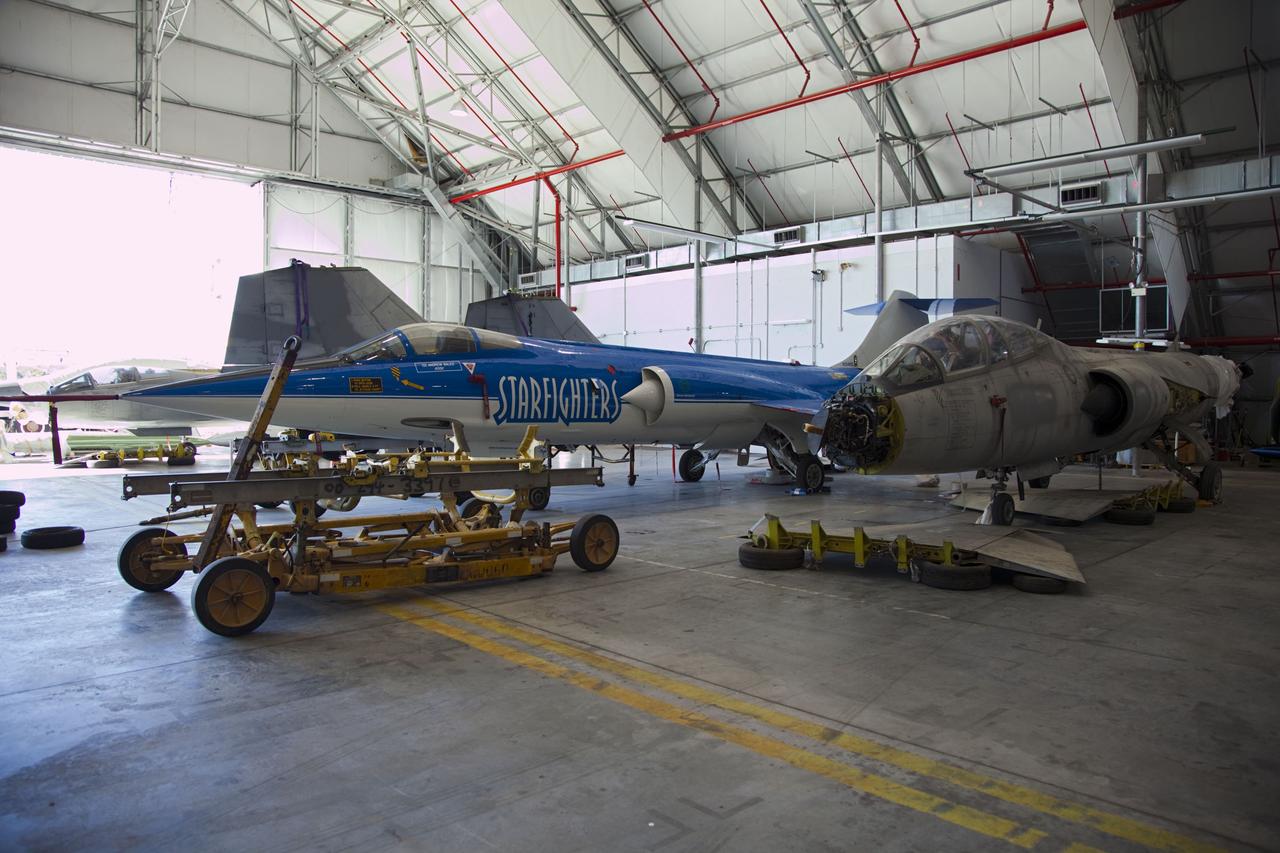
CAPE CANAVERAL, Fla. -- A hangar at NASA's Kennedy Space Center in Florida fills up with new aircraft for the company Starfighters Inc. The blue and white aircraft is part of the company's original fleet of supersonic aircraft. The gray aircraft is one of five delivered to the company recently. They will be reassembled to fly research and development and other missions. They have been used to fly research and development and other missions. Starfighters operates out of a hangar at the Shuttle Landing Facility at Kennedy under an agreement with Kennedy. Photo credit: NASA/Frankie Martin
KSC-2012-1074
KENNEDY SPACE CENTER, FLA. -  Members of the Columbia Reconstruction Project Team look over pieces of Columbia debris on the floor of the RLV Hangar.  Approximately 4,500 ground searchers have covered approximately 56 percent of the planned 555,000-acre search area. About 28 percent of the Shuttle Columbia, by weight, has been delivered to the RLV Hangar to date.
KSC-03pd0898
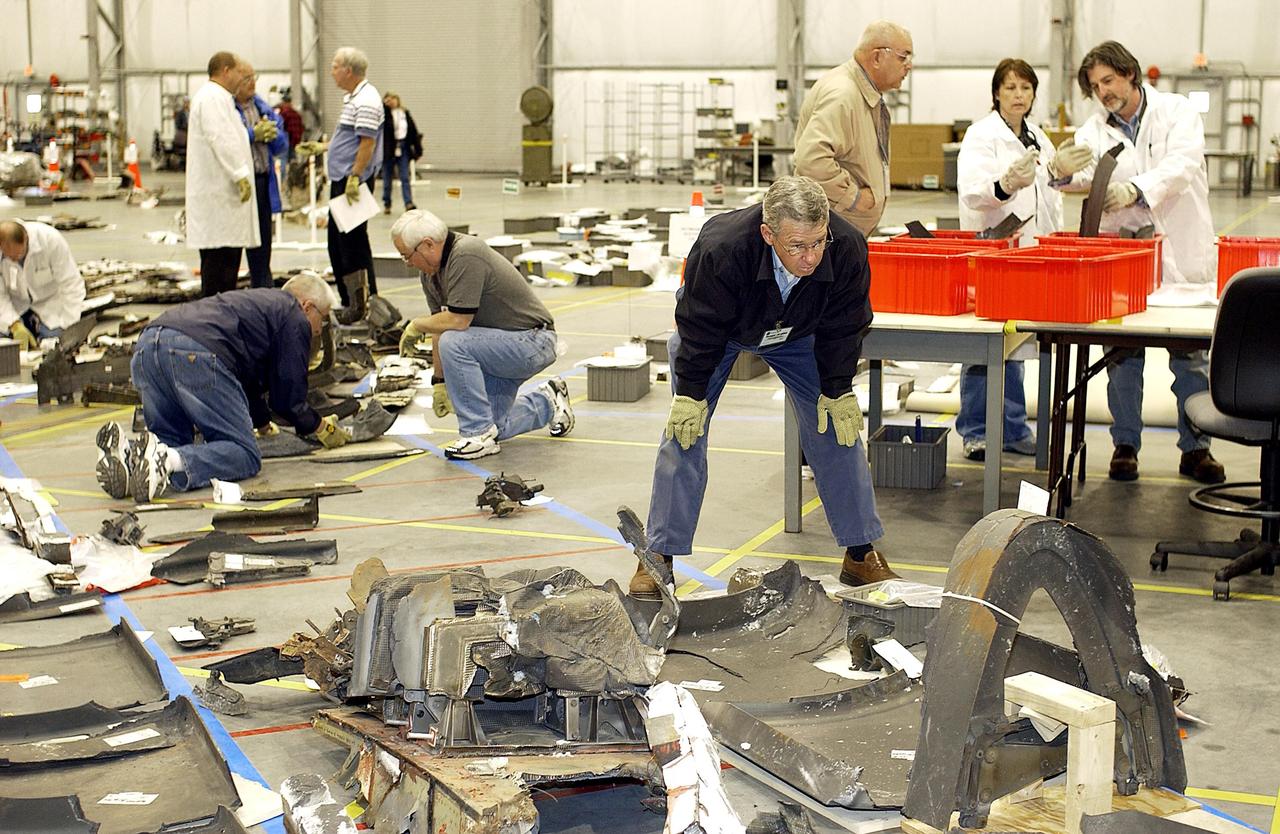
KENNEDY SPACE CENTER, FLA. -- Columbia Reconstruction Project Team members examine pieces of debris from the Space Shuttle Columbia for cataloging in the RLV Hangar. The debris is being shipped to KSC from the collection point at Barksdale Air Force Base, Shreveport, La. As part of the ongoing investigation into the tragic accident that claimed Columbia and her crew of seven, workers will attempt to reconstruct the orbiter inside the hangar.
KSC-03pd0429
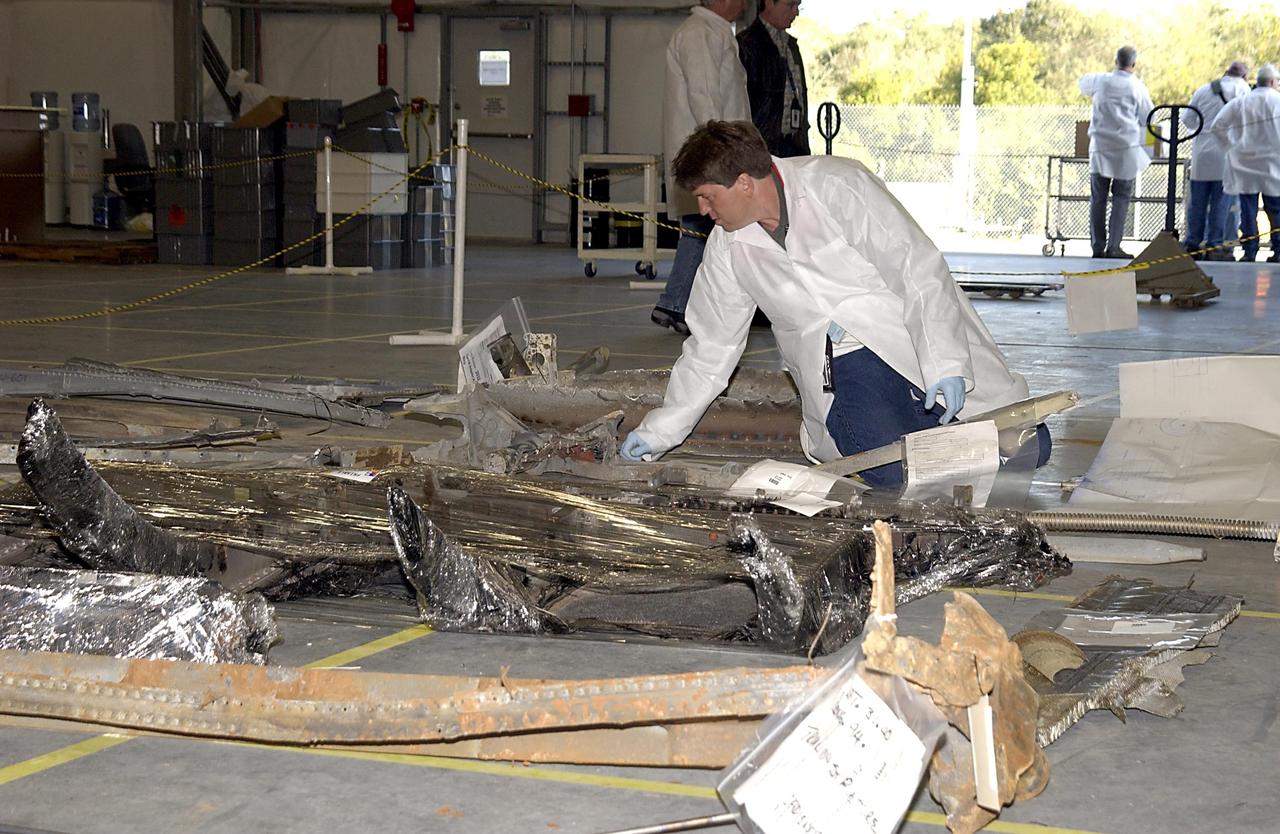
Columbia Reconstruction Project Team members cautiously examine potentially hazardous debris from the Space Shuttle Columbia in the RLV Hangar. The debris is being shipped to KSC from the collection point at Barksdale Air Force Base, Shreveport, La. As part of the ongoing investigation into the tragic accident that claimed Columbia and her crew of seven, workers will attempt to reconstruct the orbiter inside the hangar.
Columbia Reconstruction Project Team
CAPE CANAVERAL, Fla. – In the Mission Director Center in Cape Canaveral Air Force Station's Hangar AE, mission engineers take part in a countdown simulation for the upcoming Ares I-X flight test.  Ares I-X is targeted for the  test on Oct. 31.  The Hangar AE control rooms provide real-time voice, data and video information for ex¬pendable vehicle checkout and launch operations, similar to that provided by the space shuttle control rooms.  Photo credit: NASA/Kim Shiflett
KSC-2009-4986
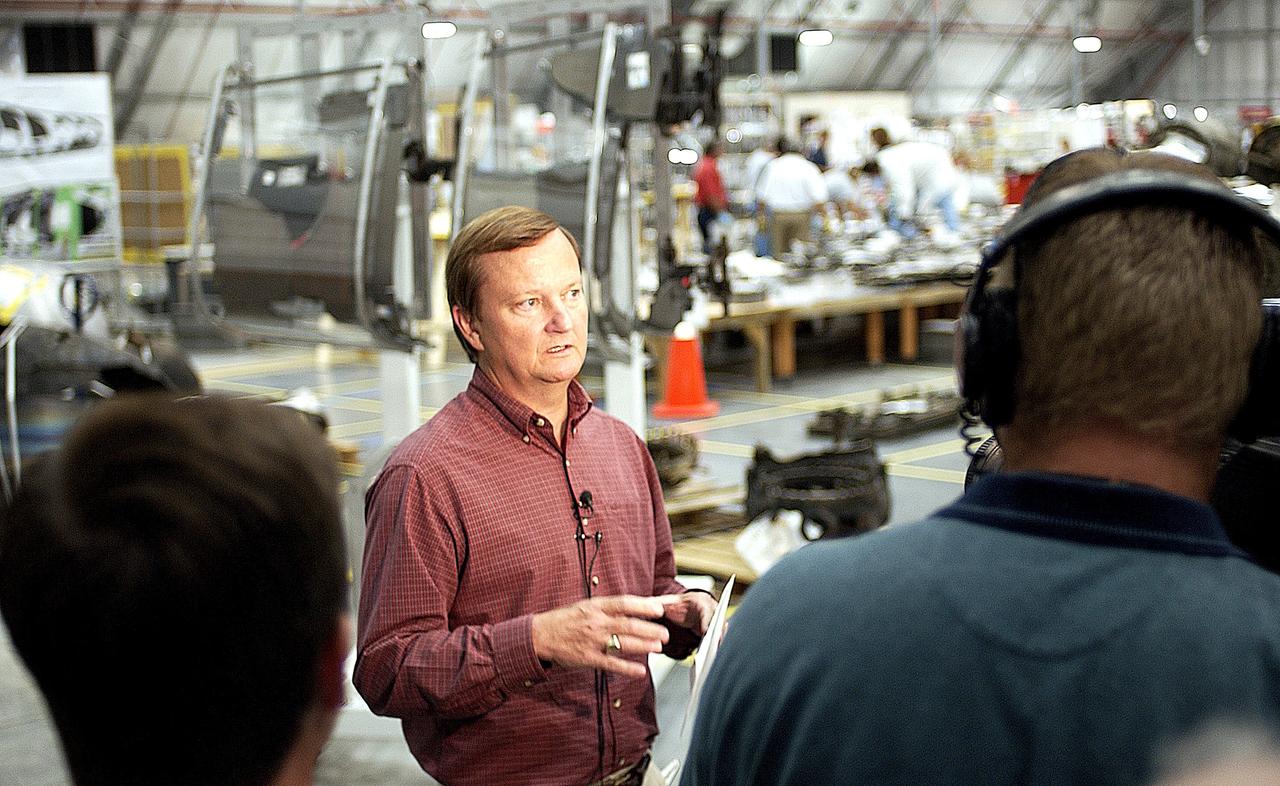
KENNEDY SPACE CENTER, FLA. -  Shuttle Launch Director Mike Leinbach answers reporters' questions in the RLV Hangar.   Leinbach is overseeing assessment of the debris, seen in the background, as it is delivered to KSC.  The Columbia Reconstruction Project team is identifying pieces and placing them on a grid approximating the shape of the orbiter.  About 25 percent of the orbiter has been delivered to the hangar.
KSC-03pd0853