Titan Sierras
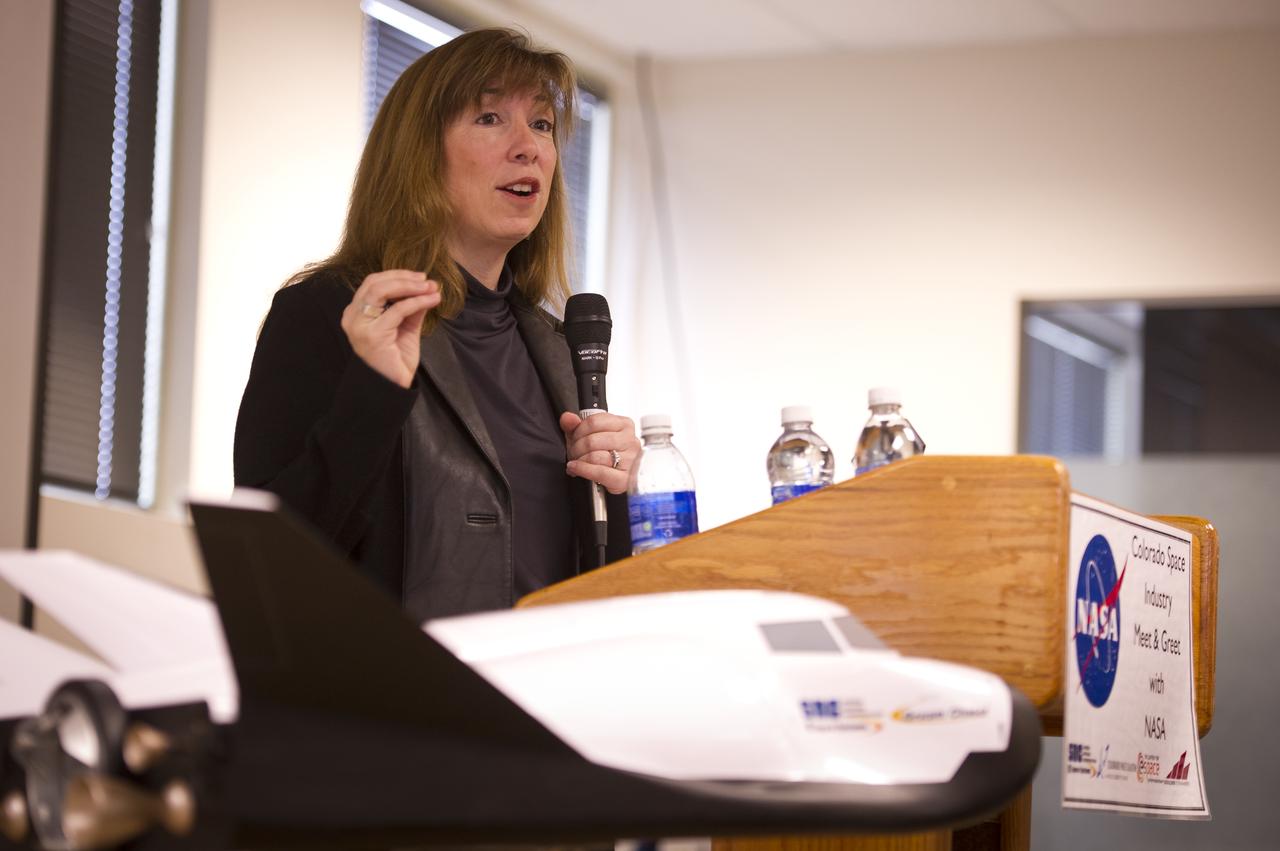
NASA Deputy Administrator Lori Garver speaks at Sierra Nevada Space Systems, on Saturday, Feb. 5, 2011, in Louisville, Colo. Sierra Nevada's Dream Chaser spacecraft is under development with support from NASA's Commercial Crew Development Program to provide crew transportation to and from low Earth orbit. NASA is helping private companies develop innovative technologies to ensure that the U.S. remains competitive in future space endeavors. Photo Credit: (NASA/Bill Ingalls)
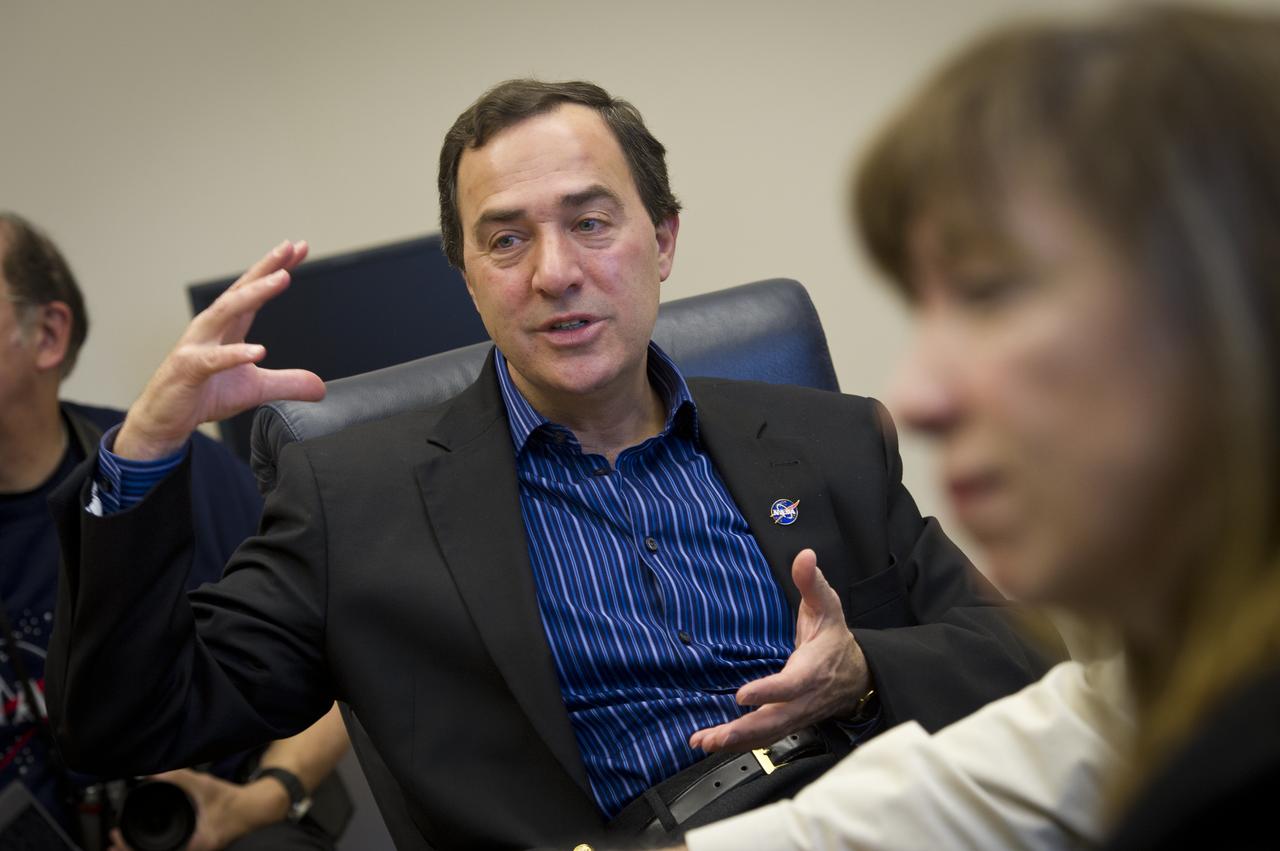
Sierra Nevada Space Systems chairman Mark Sirangello talks to NASA Deputy Administrator Lori Garver, on Saturday, Feb. 5, 2011, in Louisville, Colo. Sierra Nevada's Dream Chaser spacecraft is under development with support from NASA's Commercial Crew Development Program to provide crew transportation to and from low Earth orbit. NASA is helping private companies develop innovative technologies to ensure that the U.S. remains competitive in future space endeavors. Photo Credit: (NASA/Bill Ingalls)
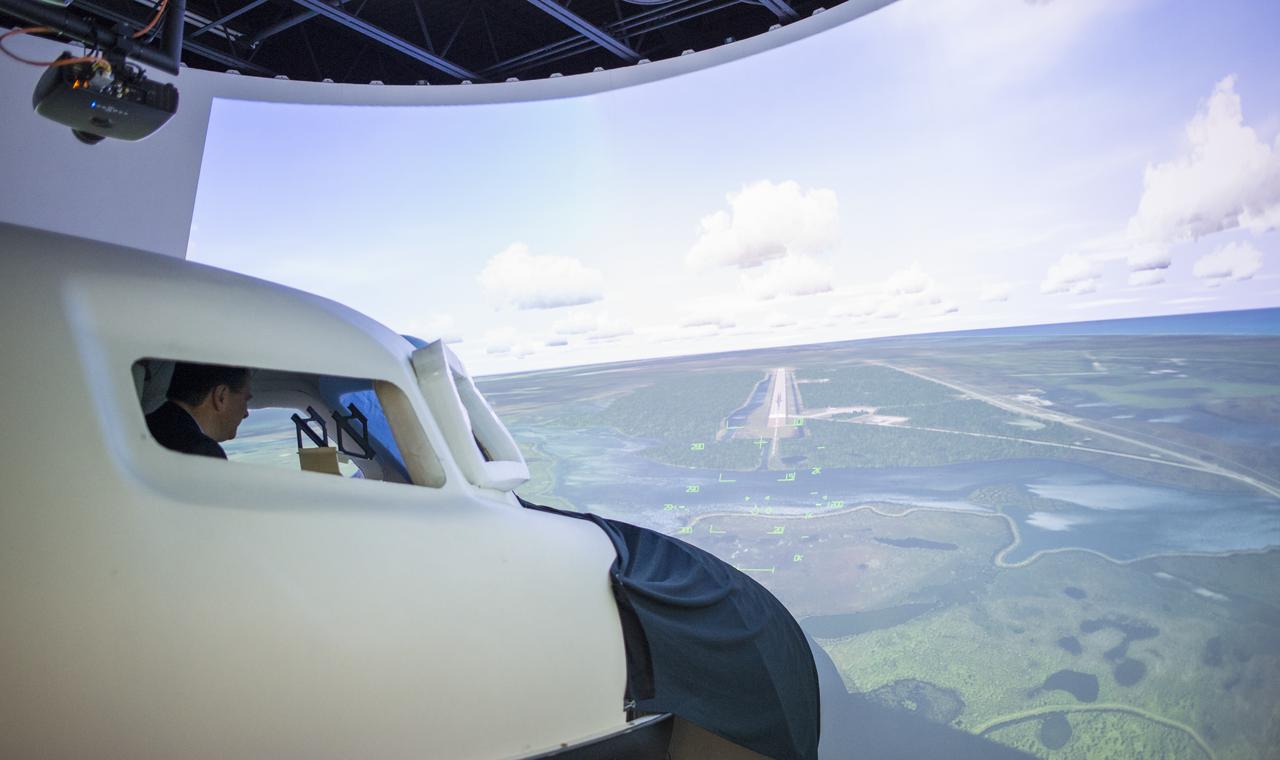
Acting NASA Administrator Robert Lightfoot is seen as he flies the Dream Chaser Space System simulator, Thursday, April 6, 2017 during a visit to Sierra Nevada Corporation in Louisville, Colo. Photo Credit: (NASA/Joel Kowsky)
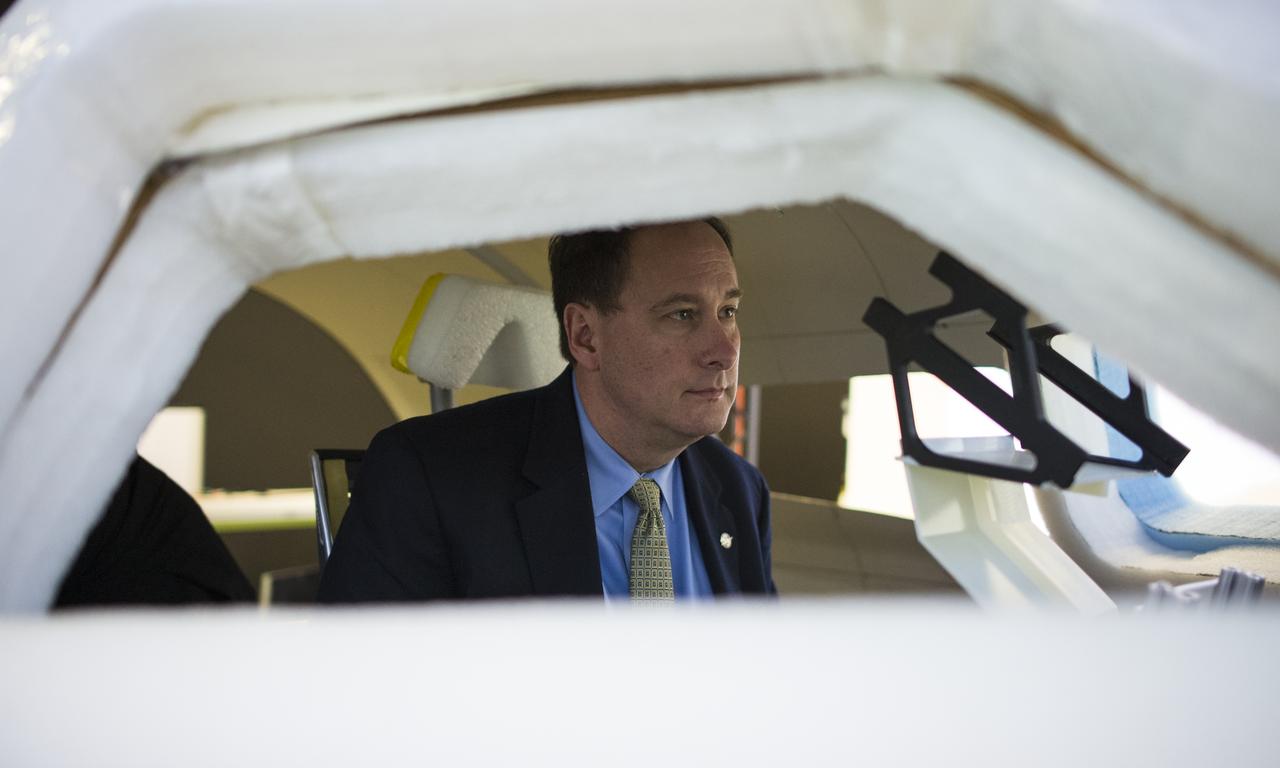
Acting NASA Administrator Robert Lightfoot is seen as he flies the Dream Chaser Space System simulator, Thursday, April 6, 2017 during a visit to Sierra Nevada Corporation in Louisville, Colo. Photo Credit: (NASA/Joel Kowsky)

Acting NASA Deputy Administrator Lesa Roe, left, and acting NASA Administrator Robert Lightfoot, right, listen as Alec Devereaux, a systems engineer with Sierra Nevada Corporation, right, discusses the Flight Control Integration Lab (FCIL), Thursday, April 6, 2017 during a visit to Sierra Nevada Corporation in Louisville, Colo. Sierra Nevada Corporation, with their Dream Chaser Cargo System, was one of three companies to be awarded Commercial Resupply Services (CRS-2) contracts designed to obtain cargo delivery services to the space station, disposal of unneeded cargo, and the return of research samples and other cargo from the station back to NASA. Photo Credit: (NASA/Joel Kowsky)
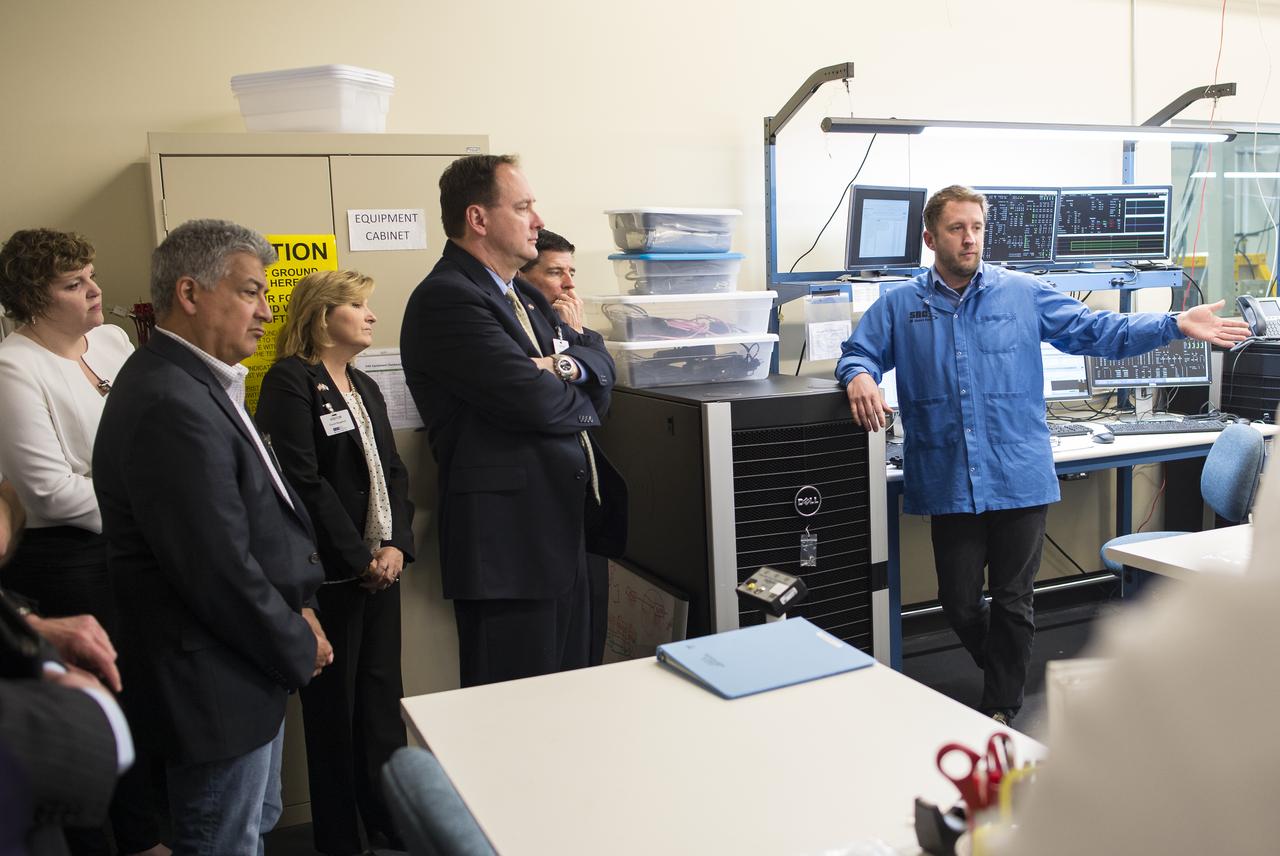
Associate administrator of NASA's Office of International and Interagency Relations Al Condes, left, acting NASA Deputy Administrator Lesa Roe, second from left, and acting NASA Administrator Robert Lightfoot, center, listen as Jude Vrazel, a senior systems engineer at Sierra Nevada Corporation, right, discusses the Vehicle Avionics Integration Lab (VAIL), Thursday, April 6, 2017 during a visit to Sierra Nevada Corporation in Louisville, Colo. Sierra Nevada Corporation, with their Dream Chaser Cargo System, was one of three companies to be awarded Commercial Resupply Services (CRS-2) contracts designed to obtain cargo delivery services to the space station, disposal of unneeded cargo, and the return of research samples and other cargo from the station back to NASA. Photo Credit: (NASA/Joel Kowsky)
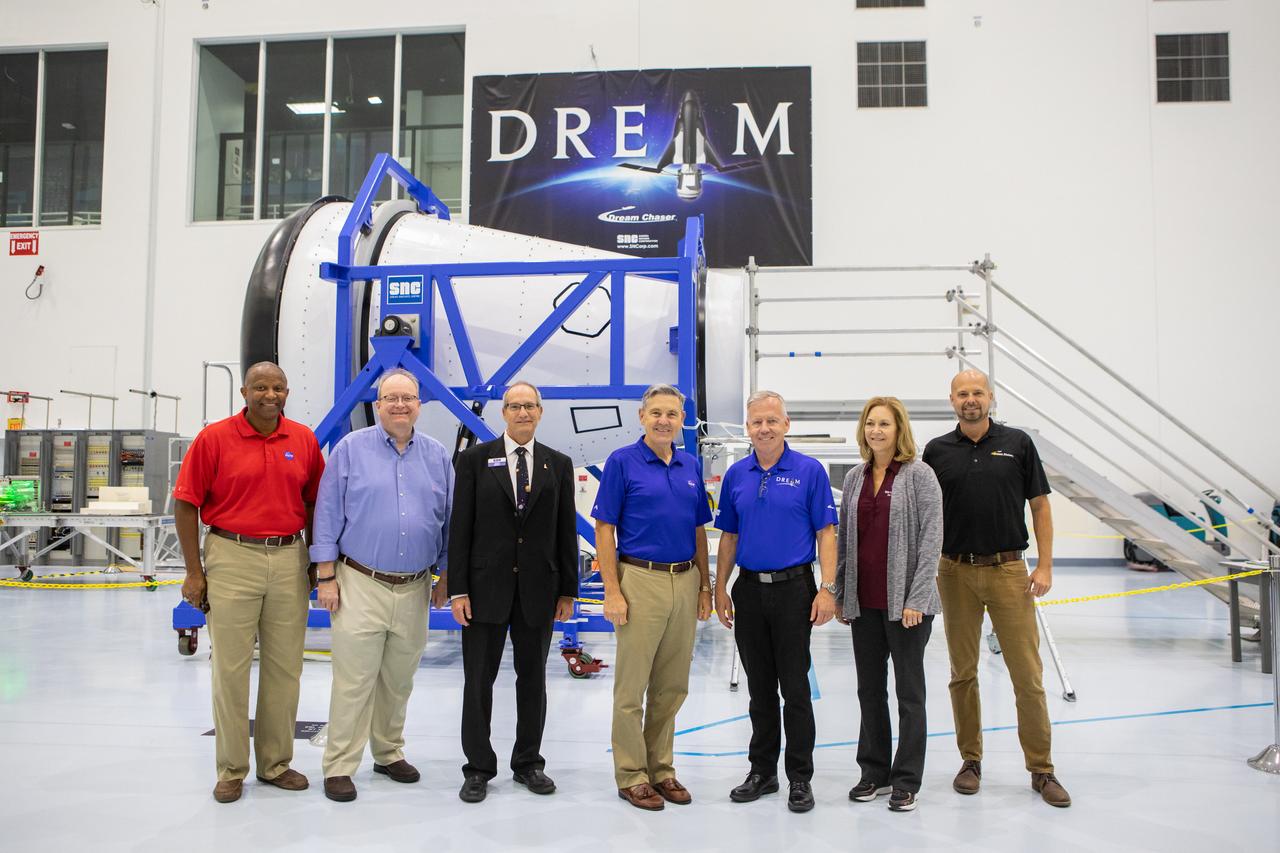
A mockup of the cargo logistics module for Sierra Nevada Corporation’s Dream Chaser, the company’s reusable spaceplane, arrived at the Space Station Processing Facility (SSPF) at NASA’s Kennedy Space Center in Florida in August. On Sept. 20, 2019, senior leadership had the opportunity to view the cargo module in the SSPF high bay. From left are Kelvin Manning, Kennedy associate director, technical; Burt Summerfield, associate director, management; John Roth, vice president, Business Development Space Systems, Sierra Nevada Corporation; Kennedy Center Director Bob Cabana; Steve Lindsey, vice president, Space Exploration Systems, Sierra Nevada Corporation; Kennedy Deputy Director Janet Petro; and Nate Wood, Sierra Nevada Corporation. The SSPF is providing support for current and future NASA and commercial provider programs, including Commercial Resupply Services, Artemis 1, sending the first woman and next man to the Moon, and deep space destinations including Mars.
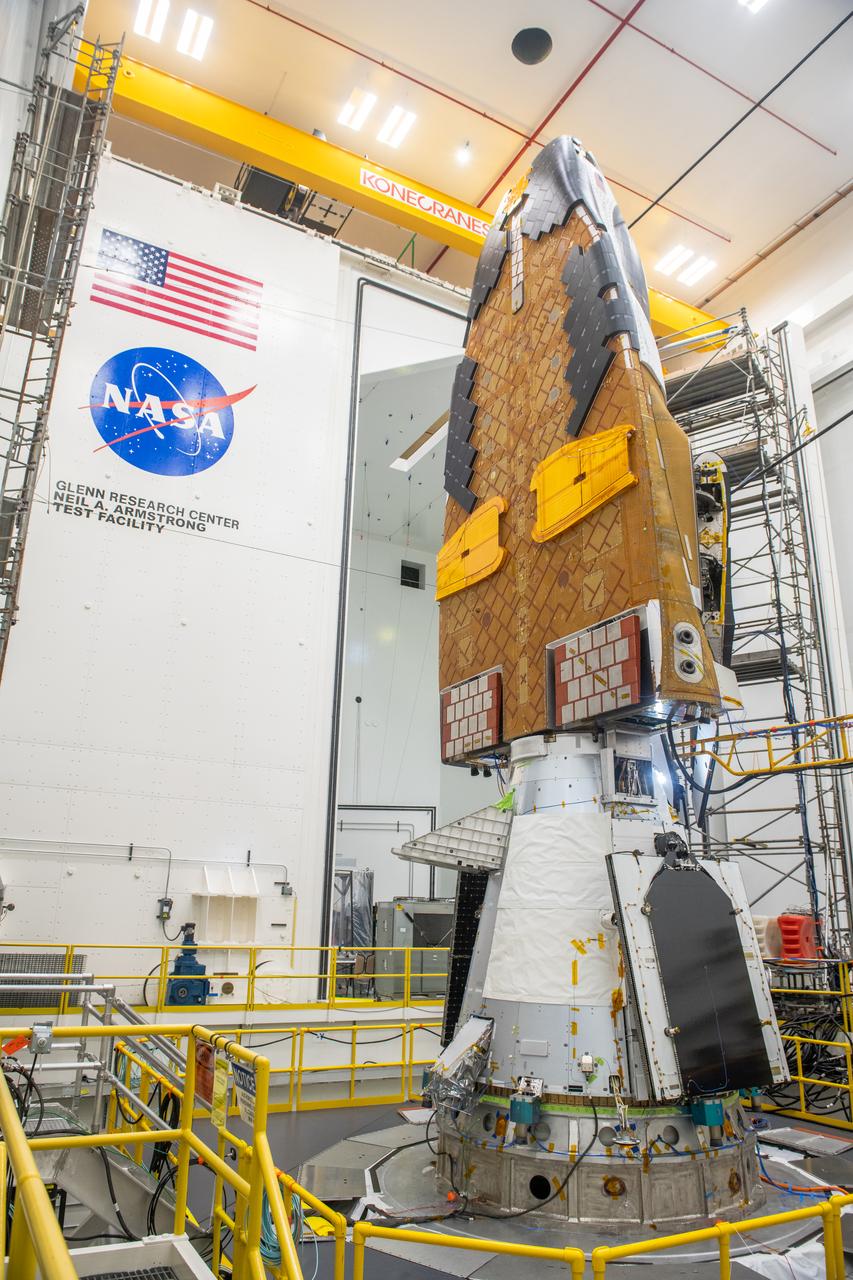
Sierra Space Dream Chaser Spaceplane Documentation Photographs
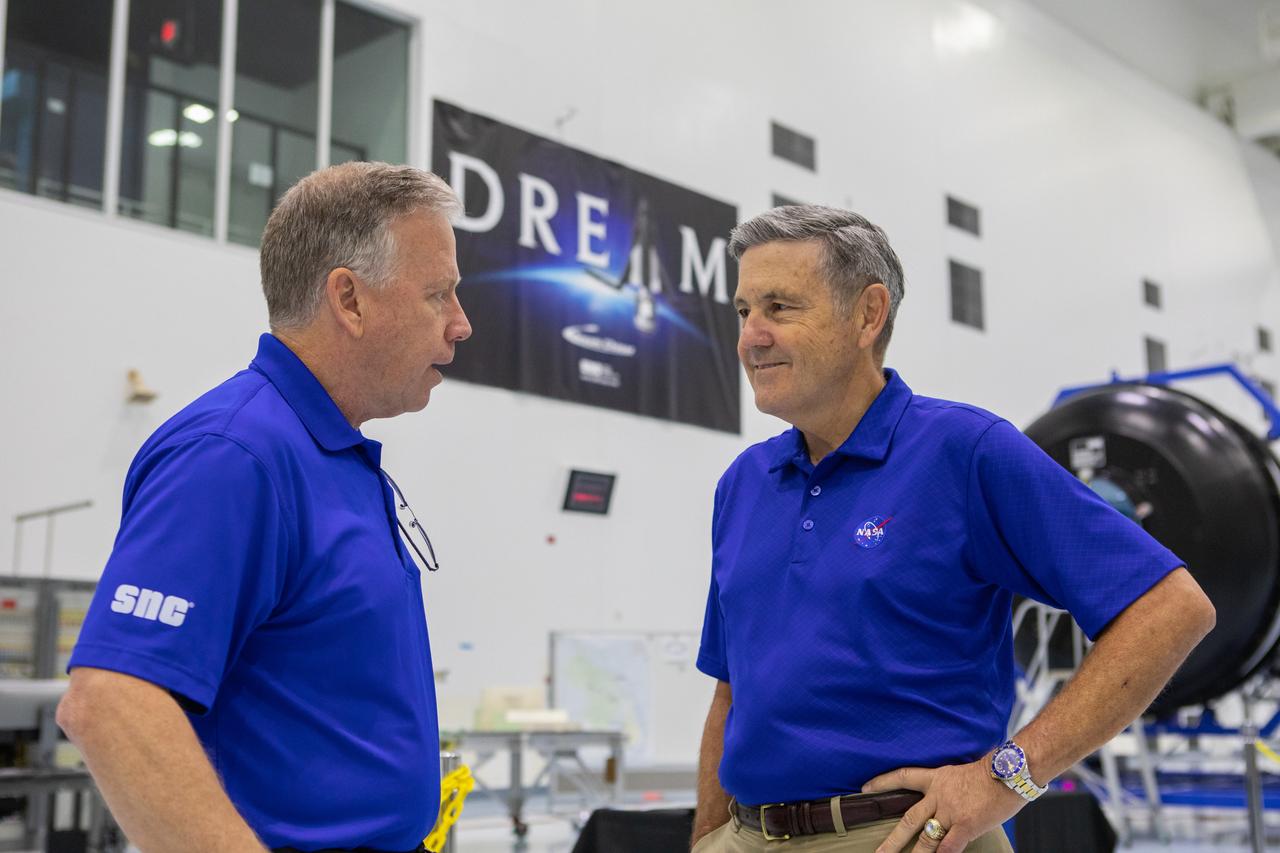
A mockup of the cargo logistics module for Sierra Nevada Corporation’s Dream Chaser, the company’s reusable spaceplane, arrived at the Space Station Processing Facility (SSPF) at NASA’s Kennedy Space Center in Florida in August. On Sept. 20, 2019, senior leadership had the opportunity to view the cargo module in the SSPF high bay. Kennedy Center Director Bob Cabana, at right, speaks with Steve Lindsey, vice president, Space Exploration Systems, Sierra Nevada Corporation. The SSPF is providing support for current and future NASA and commercial provider programs, including Commercial Resupply Services, Artemis 1, sending the first woman and next man to the Moon, and deep space destinations including Mars.
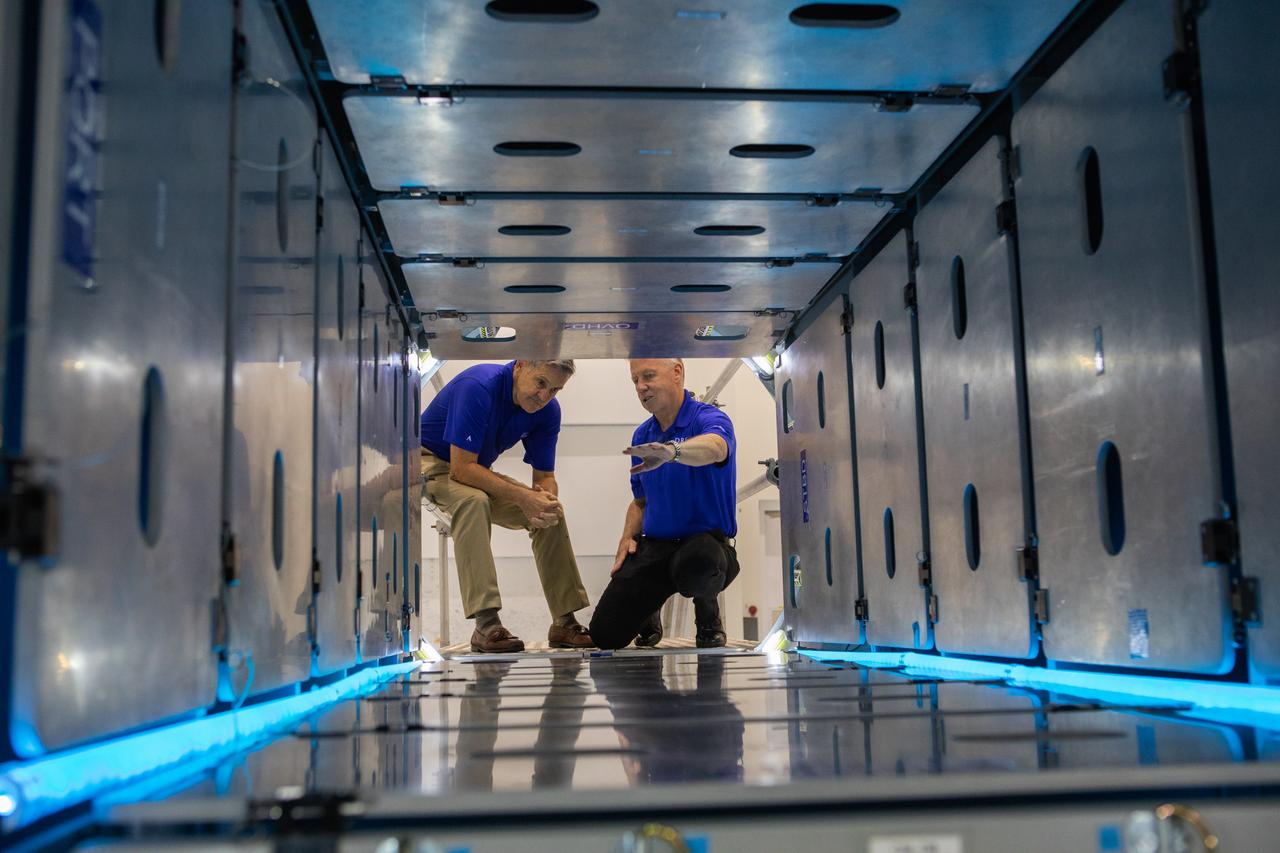
A mockup of the cargo logistics module for Sierra Nevada Corporation’s Dream Chaser, the company’s reusable spaceplane, arrived at the Space Station Processing Facility (SSPF) at NASA’s Kennedy Space Center in Florida in August. On Sept. 20, 2019, senior leadership had the opportunity to view the cargo module in the SSPF high bay. Kennedy Center Director Bob Cabana, views the interior of the cargo module with Steve Lindsey, vice president, Space Exploration Systems, Sierra Nevada Corporation. The SSPF is providing support for current and future NASA and commercial provider programs, including Commercial Resupply Services, Artemis 1, sending the first woman and next man to the Moon, and deep space destinations including Mars.
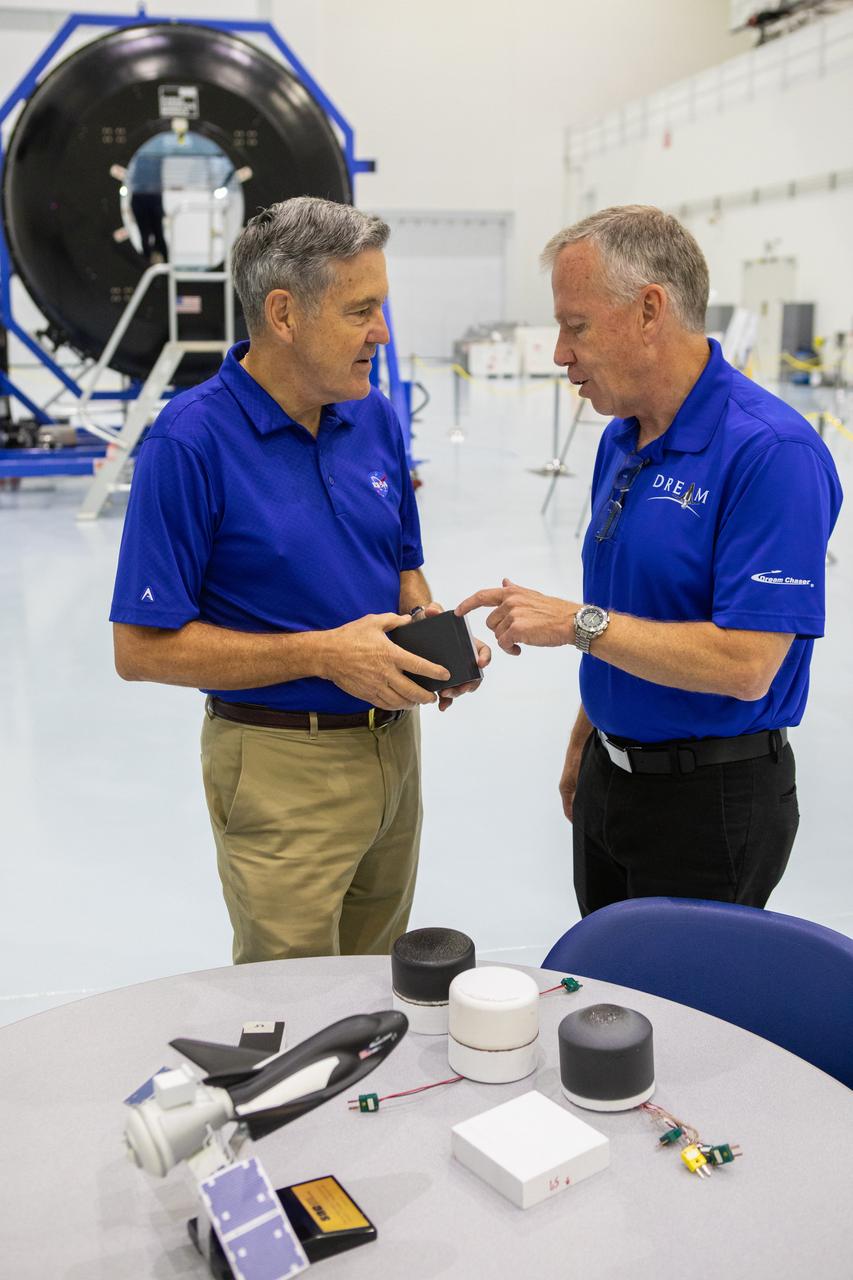
A mockup of the cargo logistics module for Sierra Nevada Corporation’s Dream Chaser, the company’s reusable spaceplane, arrived at the Space Station Processing Facility (SSPF) at NASA’s Kennedy Space Center in Florida in August. On Sept. 20, 2019, senior leadership had the opportunity to view the cargo module in the SSPF high bay. Kennedy Center Director Bob Cabana, left, speaks to Steve Lindsey, vice president, Space Exploration Systems, Sierra Nevada Corporation. The SSPF is providing support for current and future NASA and commercial provider programs, including Commercial Resupply Services, Artemis 1, sending the first woman and next man to the Moon, and deep space destinations including Mars.
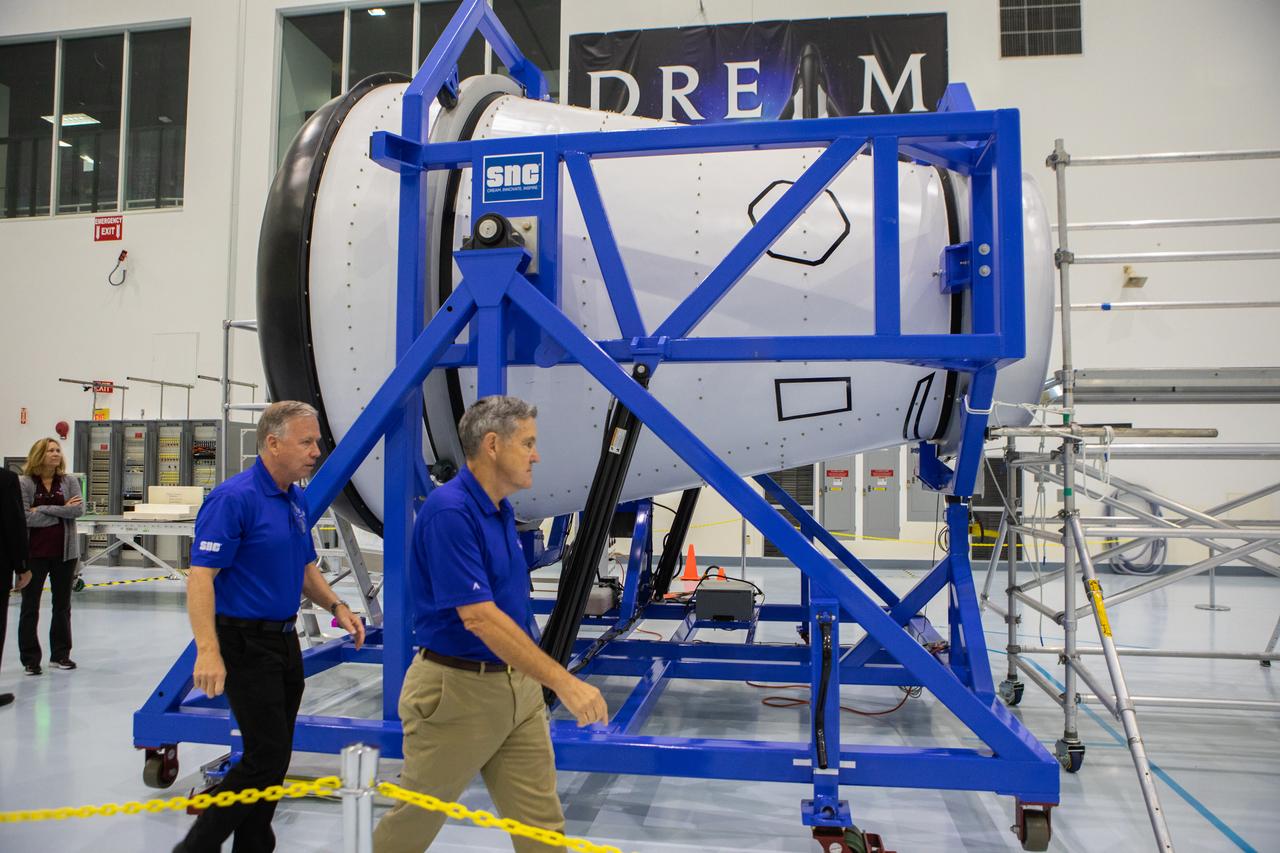
A mockup of the cargo logistics module for Sierra Nevada Corporation’s Dream Chaser, the company’s reusable spaceplane, arrived at the Space Station Processing Facility (SSPF) at NASA’s Kennedy Space Center in Florida in August. On Sept. 20, 2019, senior leadership had the opportunity to view the cargo module in the SSPF high bay. Kennedy Center Director Bob Cabana, at right, views the cargo module with Steve Lindsey, vice president, Space Exploration Systems, Sierra Nevada Corporation. The SSPF is providing support for current and future NASA and commercial provider programs, including Commercial Resupply Services, Artemis 1, sending the first woman and next man to the Moon, and deep space destinations including Mars.
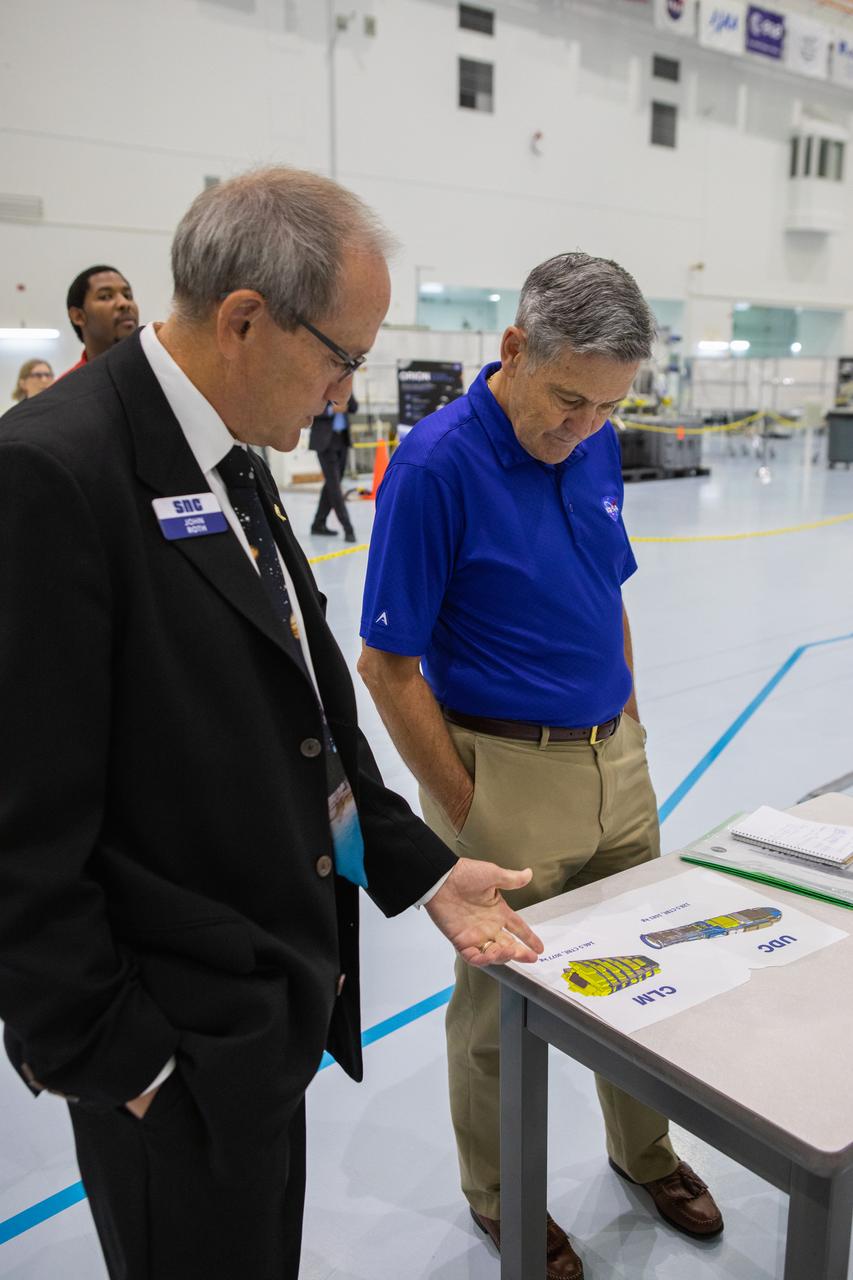
A mockup of the cargo logistics module for Sierra Nevada Corporation’s Dream Chaser, the company’s reusable spaceplane, arrived at the Space Station Processing Facility (SSPF) at NASA’s Kennedy Space Center in Florida in August. On Sept. 20, 2019, senior leadership had the opportunity to view the cargo module in the SSPF high bay. Kennedy Center Director Bob Cabana, at right, listens to John Roth, vice president, Business Development Space Systems, Sierra Nevada Corporation. The SSPF is providing support for current and future NASA and commercial provider programs, including Commercial Resupply Services, Artemis 1, sending the first woman and next man to the Moon, and deep space destinations including Mars.
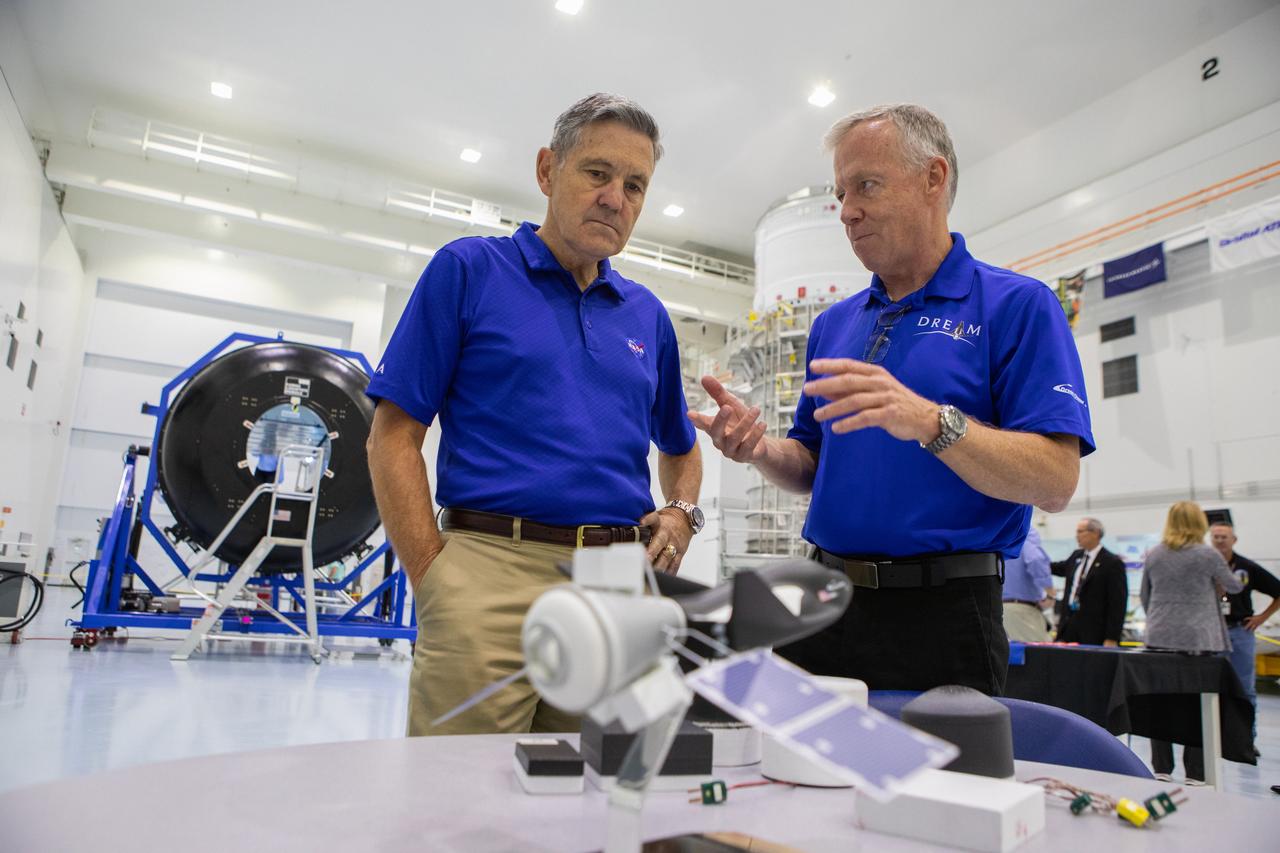
A mockup of the cargo logistics module for Sierra Nevada Corporation’s Dream Chaser, the company’s reusable spaceplane, arrived at the Space Station Processing Facility (SSPF) at NASA’s Kennedy Space Center in Florida in August. On Sept. 20, 2019, senior leadership had the opportunity to view the cargo module in the SSPF high bay. Kennedy Center Director Bob Cabana, left, speaks to Steve Lindsey, vice president, Space Exploration Systems, Sierra Nevada Corporation. The SSPF is providing support for current and future NASA and commercial provider programs, including Commercial Resupply Services, Artemis 1, sending the first woman and next man to the Moon, and deep space destinations including Mars.
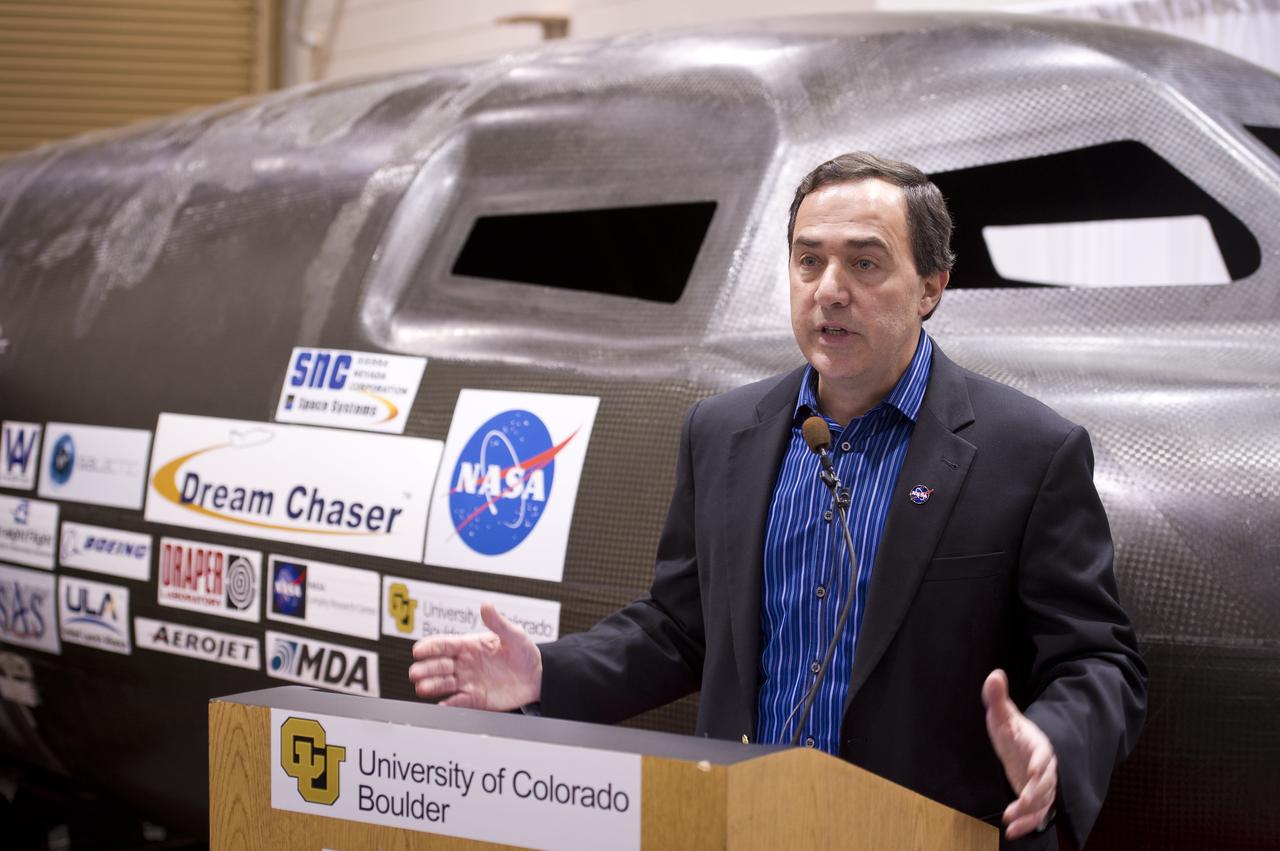
Sierra Nevada Space Systems chairman Mark Sirangello talks during a press conference with Sierra Nevada's Dream Chaser spacecraft in the background on Saturday, Feb. 5, 2011, at the University of Colorado at Boulder. Sierra Nevada's Dream Chaser spacecraft is under development with support from NASA's Commercial Crew Development Program to provide crew transportation to and from low Earth orbit. NASA is helping private companies develop innovative technologies to ensure that the U.S. remains competitive in future space endeavors. Photo Credit: (NASA/Bill Ingalls)
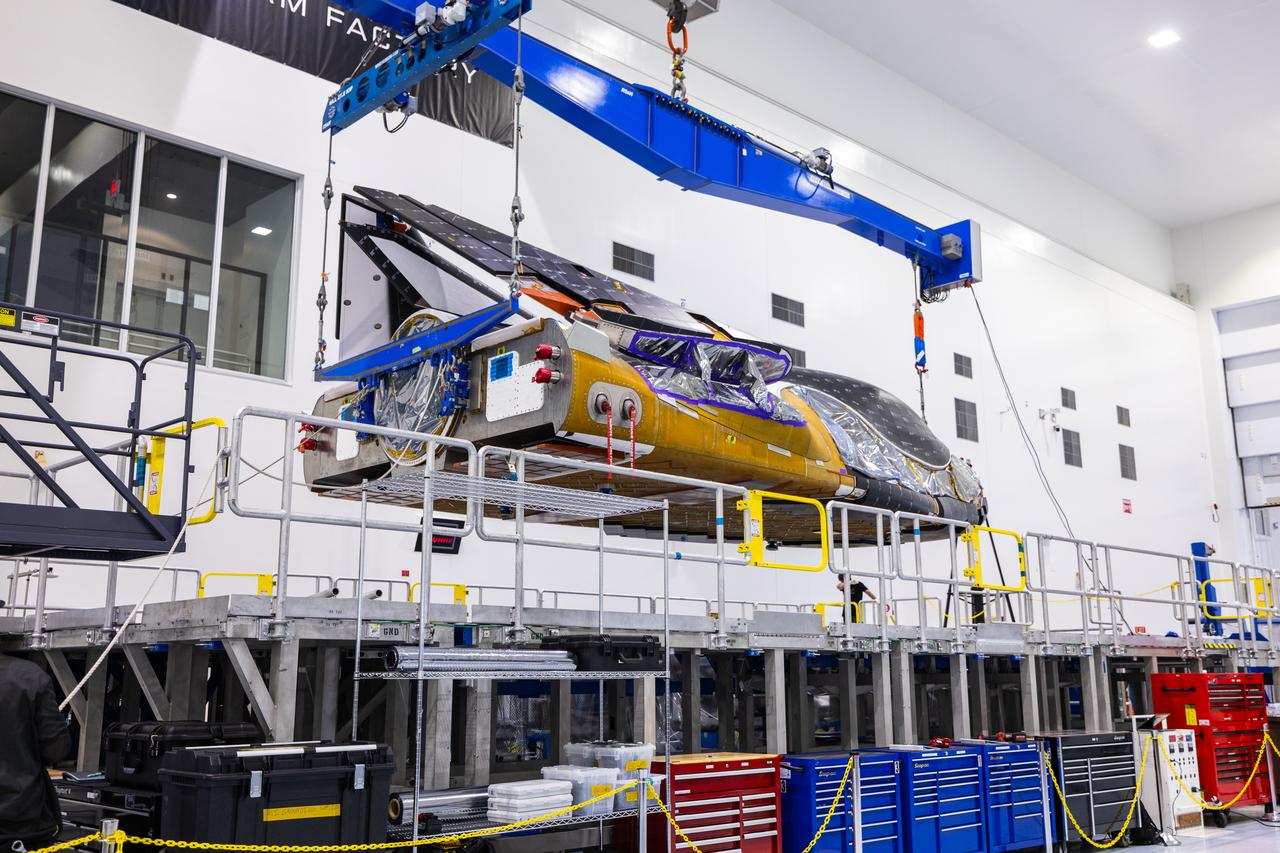
Dream Chaser Tenacity, Sierra Space's uncrewed cargo spaceplane is lifted and moved by crane inside the Space Systems Processing Facility (SSPF) at NASA’s Kennedy Space Center in Florida on Monday, May 20, 2024. Dream Chaser Tenacity will undergo final testing and prelaunch processing inside the high bay of the SSPF ahead of its inaugural launch atop a ULA (United Launch Alliance) Vulcan rocket from nearby Cape Canaveral Space Force Station. The reusable transportation system is contracted to perform a minimum of seven cargo missions to the International Space Station as part of the agency’s efforts to expand commercial resupply services to low Earth orbit.
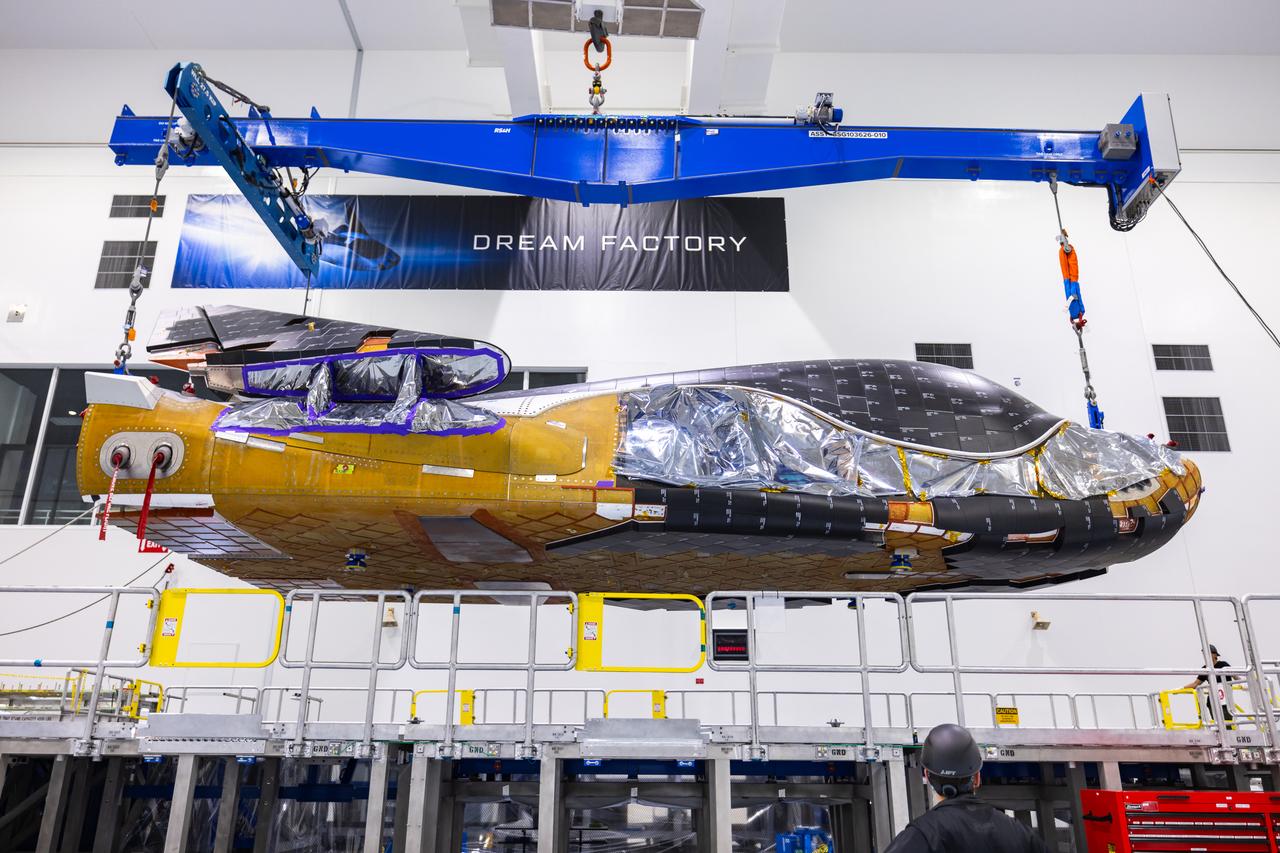
Dream Chaser Tenacity, Sierra Space's uncrewed cargo spaceplane is lifted and moved by crane inside the Space Systems Processing Facility (SSPF) at NASA’s Kennedy Space Center in Florida on Monday, May 20, 2024. Dream Chaser Tenacity will undergo final testing and prelaunch processing inside the high bay of the SSPF ahead of its inaugural launch atop a ULA (United Launch Alliance) Vulcan rocket from nearby Cape Canaveral Space Force Station. The reusable transportation system is contracted to perform a minimum of seven cargo missions to the International Space Station as part of the agency’s efforts to expand commercial resupply services to low Earth orbit.
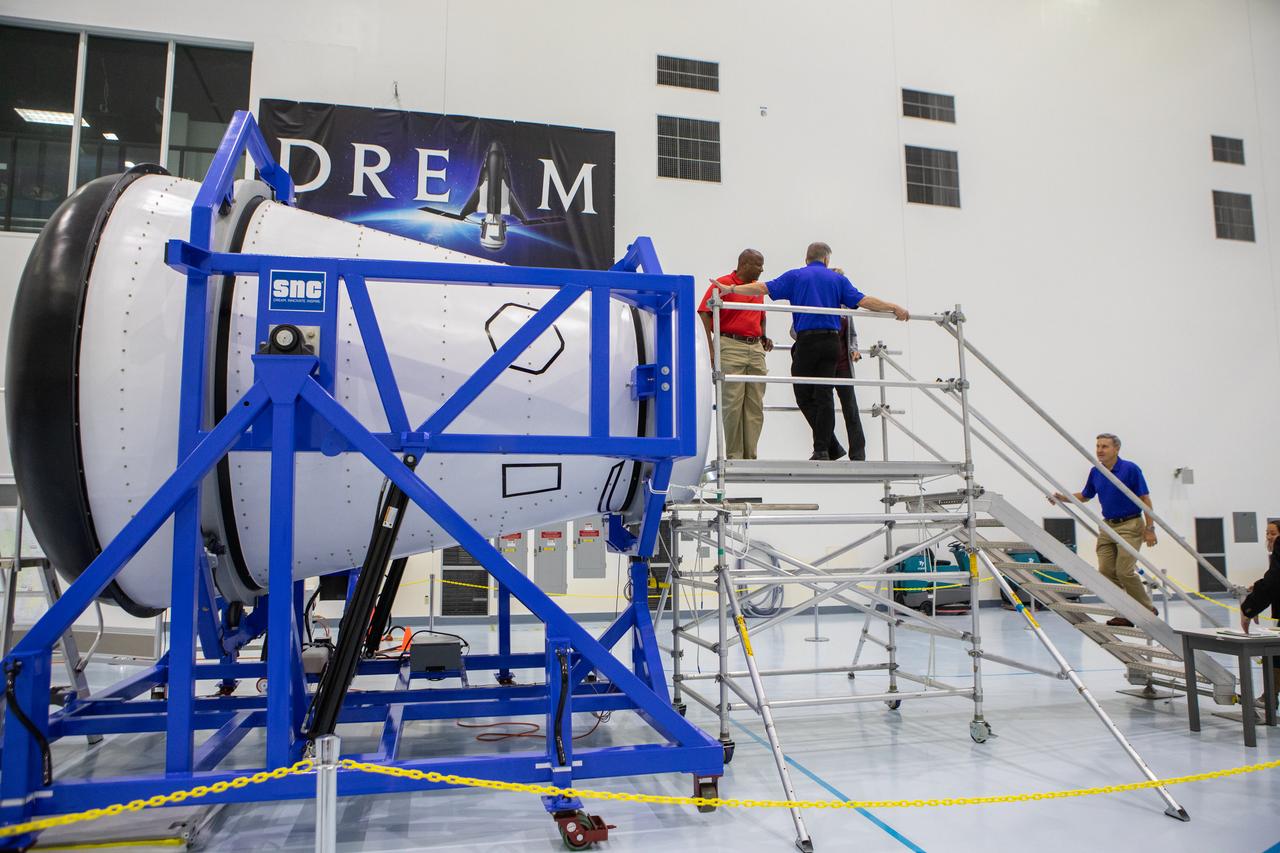
A mockup of the cargo logistics module for Sierra Nevada Corporation’s Dream Chaser, the company’s reusable spaceplane, arrived at the Space Station Processing Facility (SSPF) at NASA’s Kennedy Space Center in Florida in August. On Sept. 20, 2019, senior leadership had the opportunity to view the cargo module in the SSPF high bay. From left are Kelvin Manning, Kennedy associate director, technical; Steve Lindsey, vice president, Space Exploration Systems, Sierra Nevada Corporation; behind Lindsey is Kennedy Deputy Director Janet Petro; and ascending the stairs is Kennedy Center Director Bob Cabana. The SSPF is providing support for current and future NASA and commercial provider programs, including Commercial Resupply Services, Artemis 1, sending the first woman and next man to the Moon, and deep space destinations including Mars.

A mockup of the cargo logistics module for Sierra Nevada Corporation’s Dream Chaser, the company’s reusable spaceplane, arrived at the Space Station Processing Facility (SSPF) at NASA’s Kennedy Space Center in Florida in August. On Sept. 20, 2019, senior leadership had the opportunity to view the cargo module in the SSPF high bay. From left are Kelvin Manning, Kennedy associate director, technical; Steve Lindsey, vice president, Space Exploration Systems, Sierra Nevada Corporation; Kennedy Deputy Director Janet Petro; and Kennedy Center Director Bob Cabana. The SSPF is providing support for current and future NASA and commercial provider programs, including Commercial Resupply Services, Artemis 1, sending the first woman and next man to the Moon, and deep space destinations including Mars.
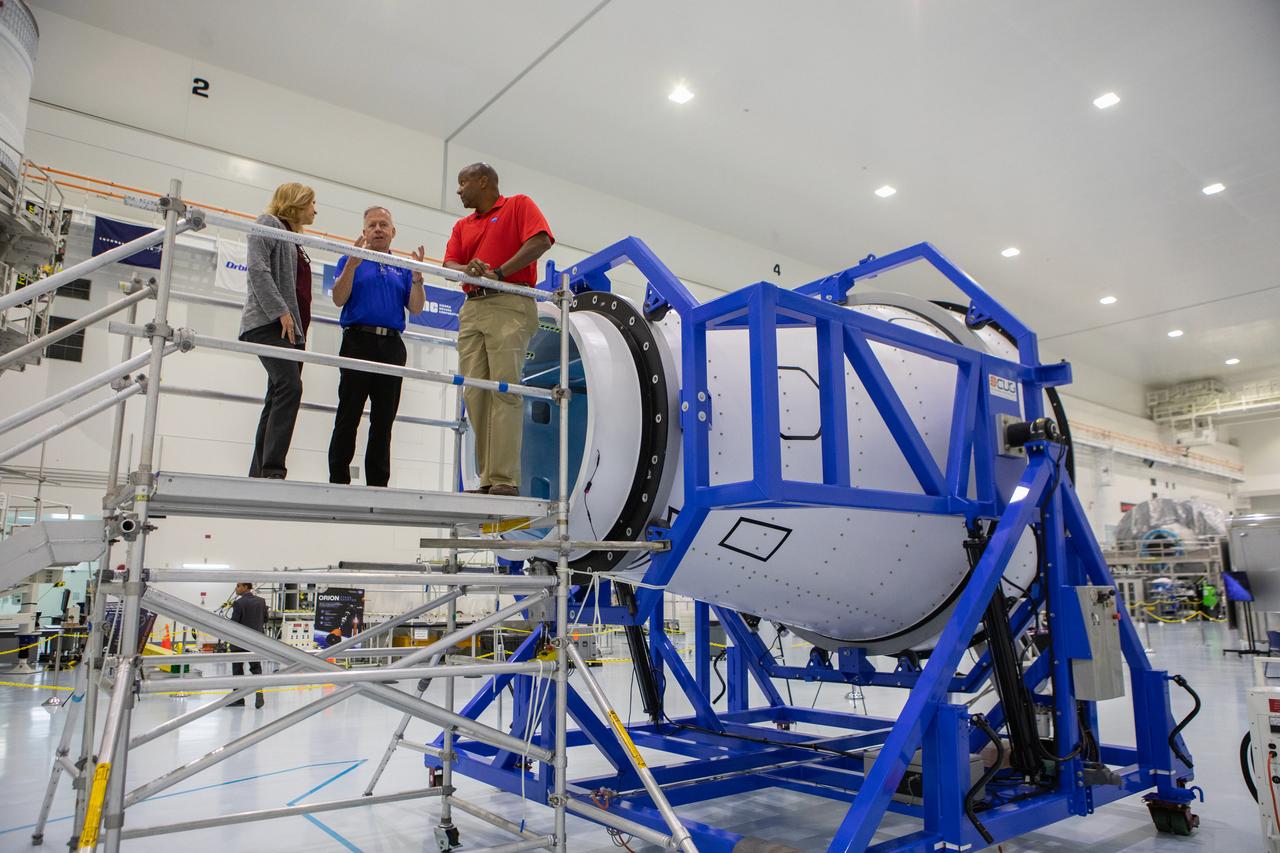
A mockup of the cargo logistics module for Sierra Nevada Corporation’s Dream Chaser, the company’s reusable spaceplane, arrived at the Space Station Processing Facility (SSPF) at NASA’s Kennedy Space Center in Florida in August. On Sept. 20, 2019, senior leadership had the opportunity to view the cargo module in the SSPF high bay. From left are Kennedy Deputy Director Janet Petro; Steve Lindsey, vice president, Space Exploration Systems, Sierra Nevada Corporation; and Kelvin Manning, Kennedy associate director, technical. The SSPF is providing support for current and future NASA and commercial provider programs, including Commercial Resupply Services, Artemis 1, sending the first woman and next man to the Moon, and deep space destinations including Mars.
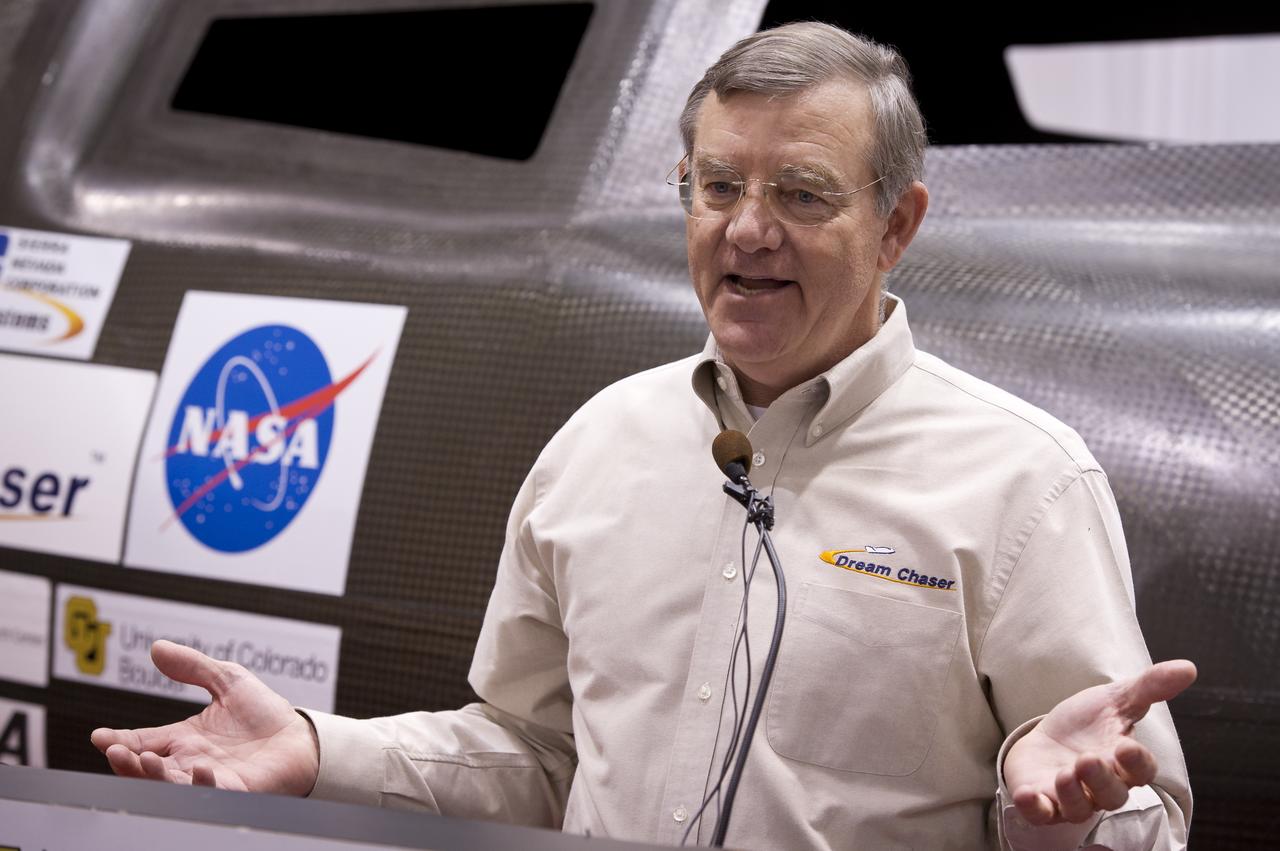
Director of Advanced Programs, Sierra Nevada Corporation, Jim Voss talks during a press conference with Sierra Nevada's Dream Chaser spacecraft in the background on Saturday, Feb. 5, 2011, at the University of Colorado at Boulder. Sierra Nevada's Dream Chaser spacecraft is under development with support from NASA's Commercial Crew Development Program to provide crew transportation to and from low Earth orbit. NASA is helping private companies develop innovative technologies to ensure that the U.S. remains competitive in future space endeavors. Photo Credit: (NASA/Bill Ingalls)
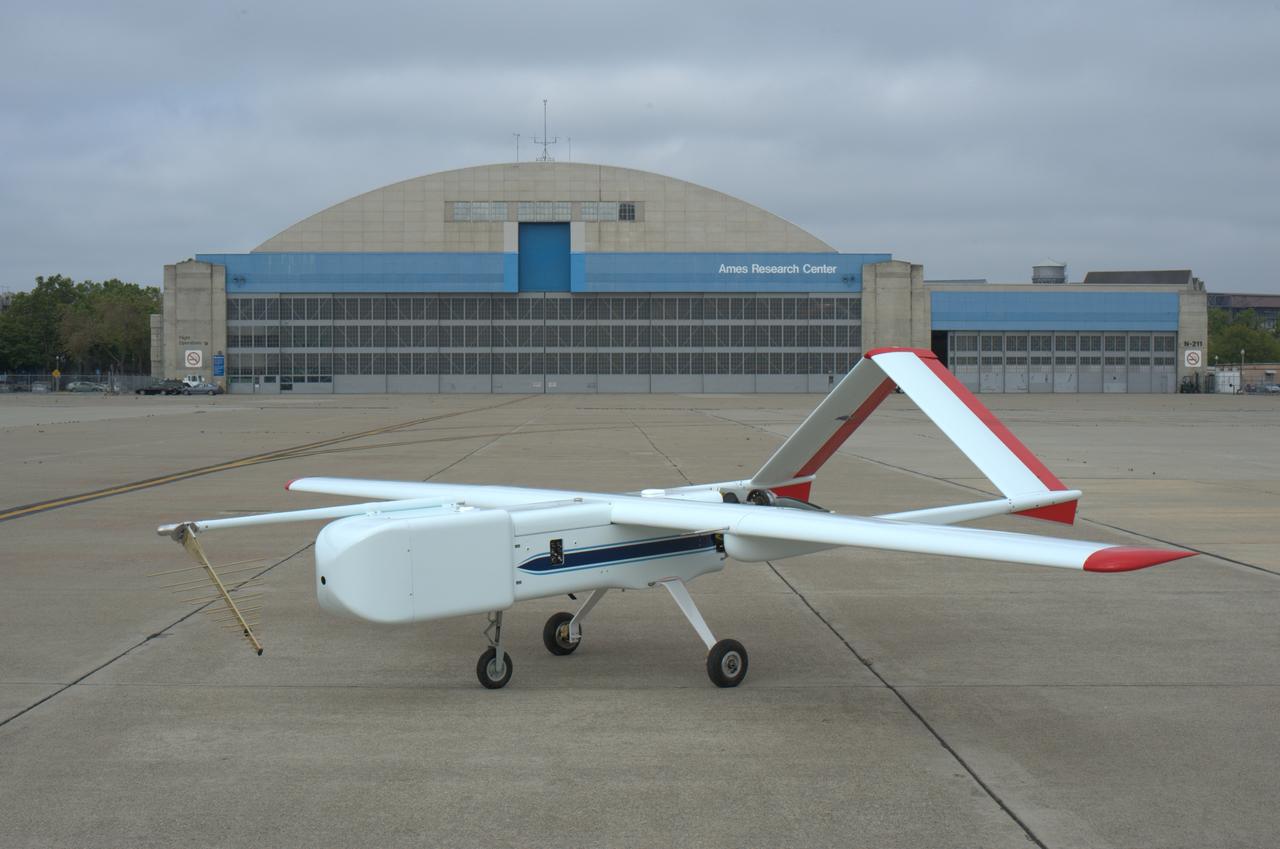
SIERRA (Systems Integration Evaluation Remote Research Aircraft) Uninhabited Aerial System (UAV plane) on the Ames flightline (aka; Sierra Unpiloted Aerial system (UAS))
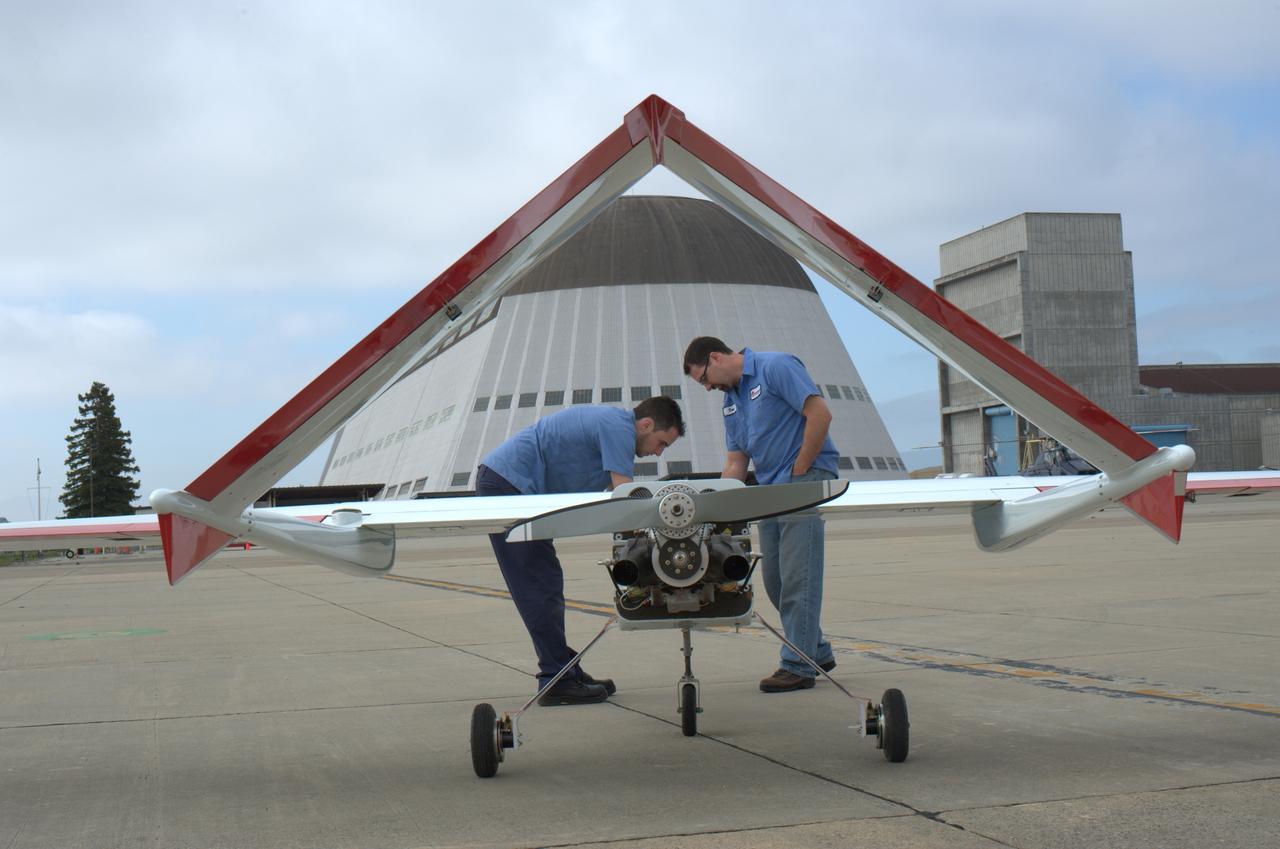
SIERRA (Systems Integration Evaluation Remote Research Aircraft) Uninhabited Aerial System (UAV plane) on the Ames flightline (aka; Sierra Unpiloted Aerial system (UAS))
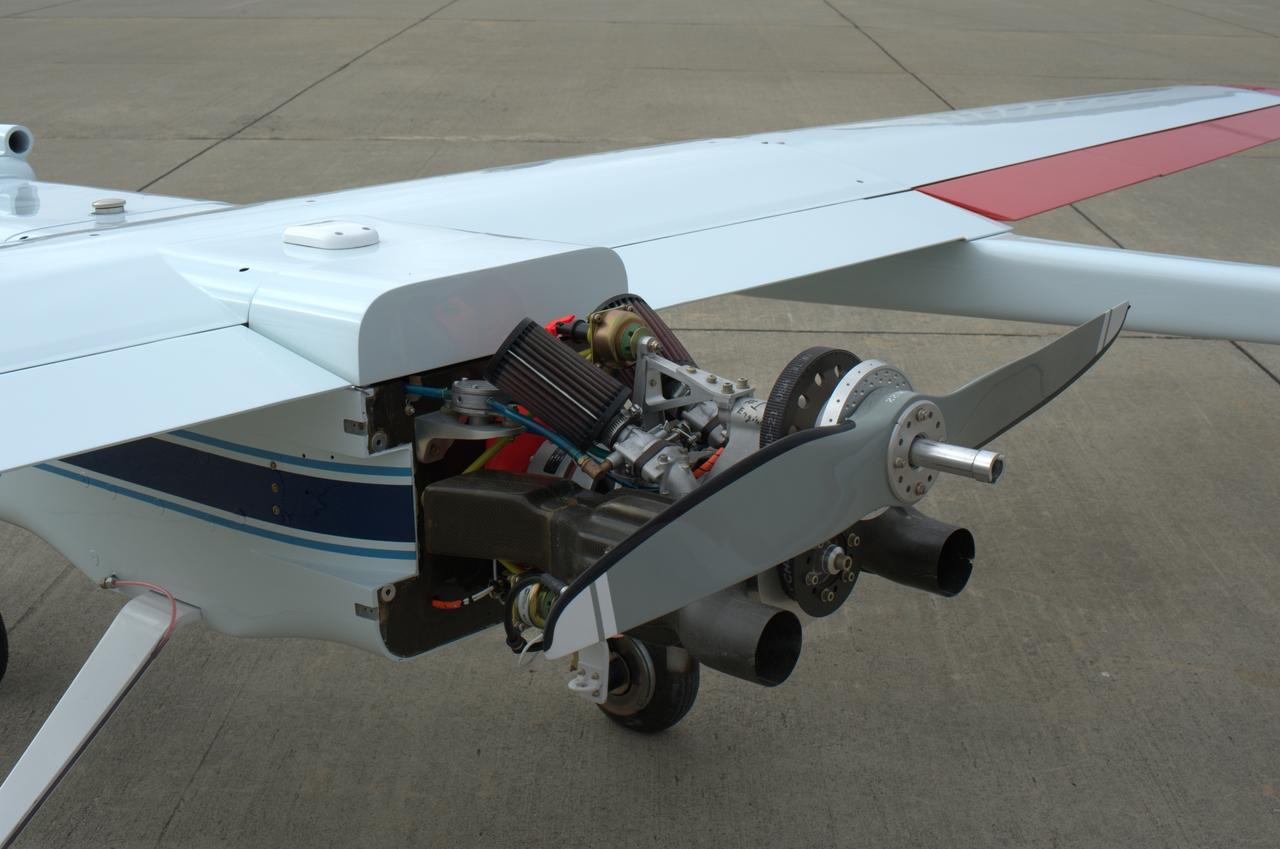
SIERRA (Systems Integration Evaluation Remote Research Aircraft) Uninhabited Aerial System (UAV plane) on the Ames flightline (aka; Sierra Unpiloted Aerial system (UAS))
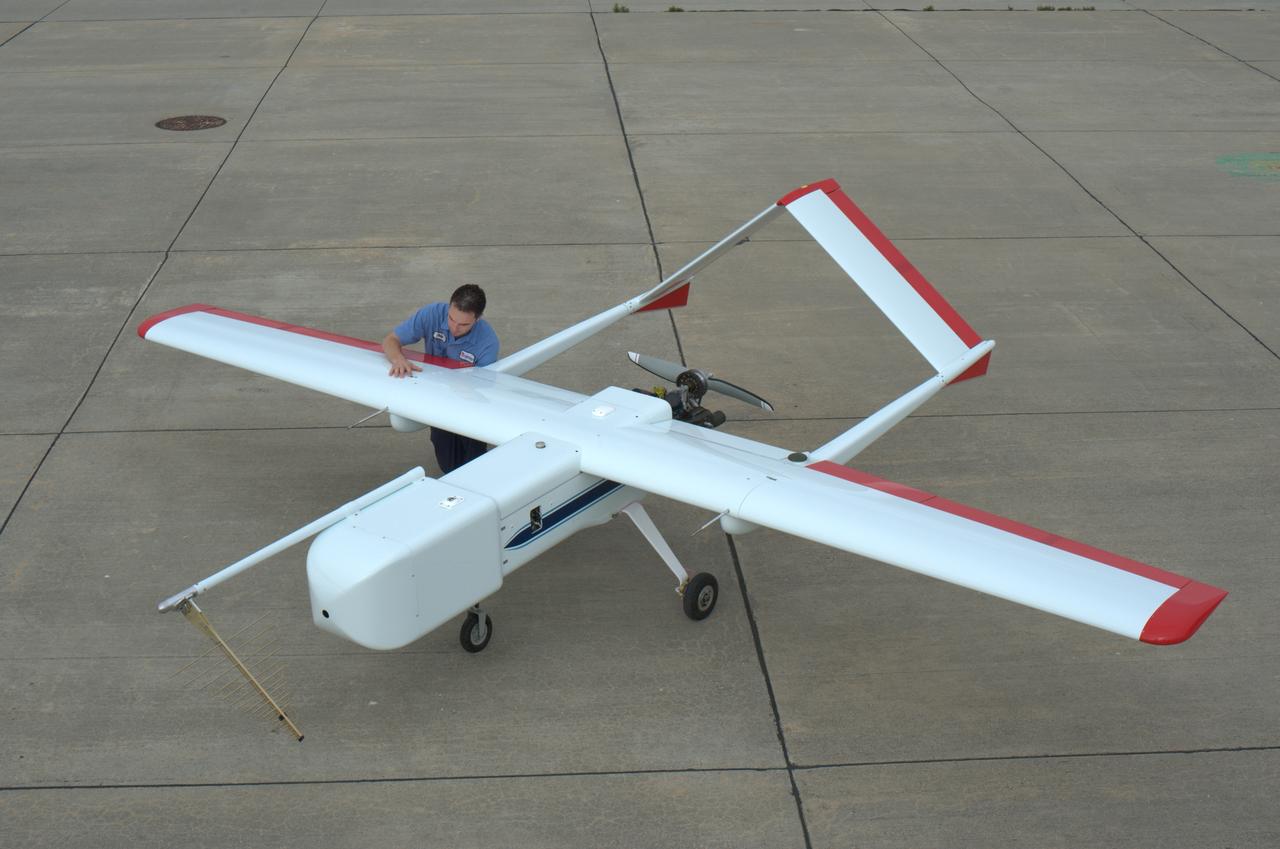
SIERRA (Systems Integration Evaluation Remote Research Aircraft) Uninhabited Aerial System (UAV plane) on the Ames flightline (aka; Sierra Unpiloted Aerial system (UAS))
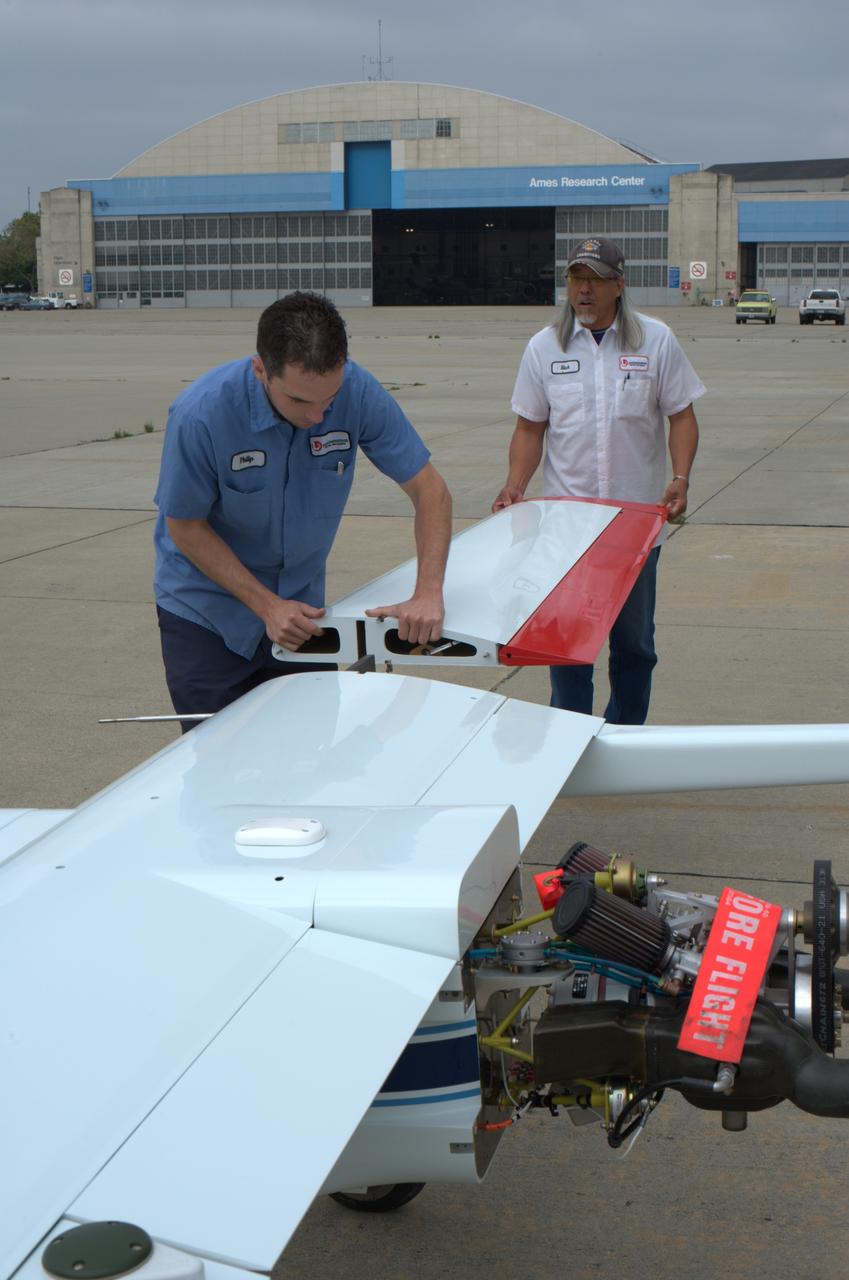
SIERRA (Systems Integration Evaluation Remote Research Aircraft) Uninhabited Aerial System (UAV plane) on the Ames flightline (aka; Sierra Unpiloted Aerial system (UAS))
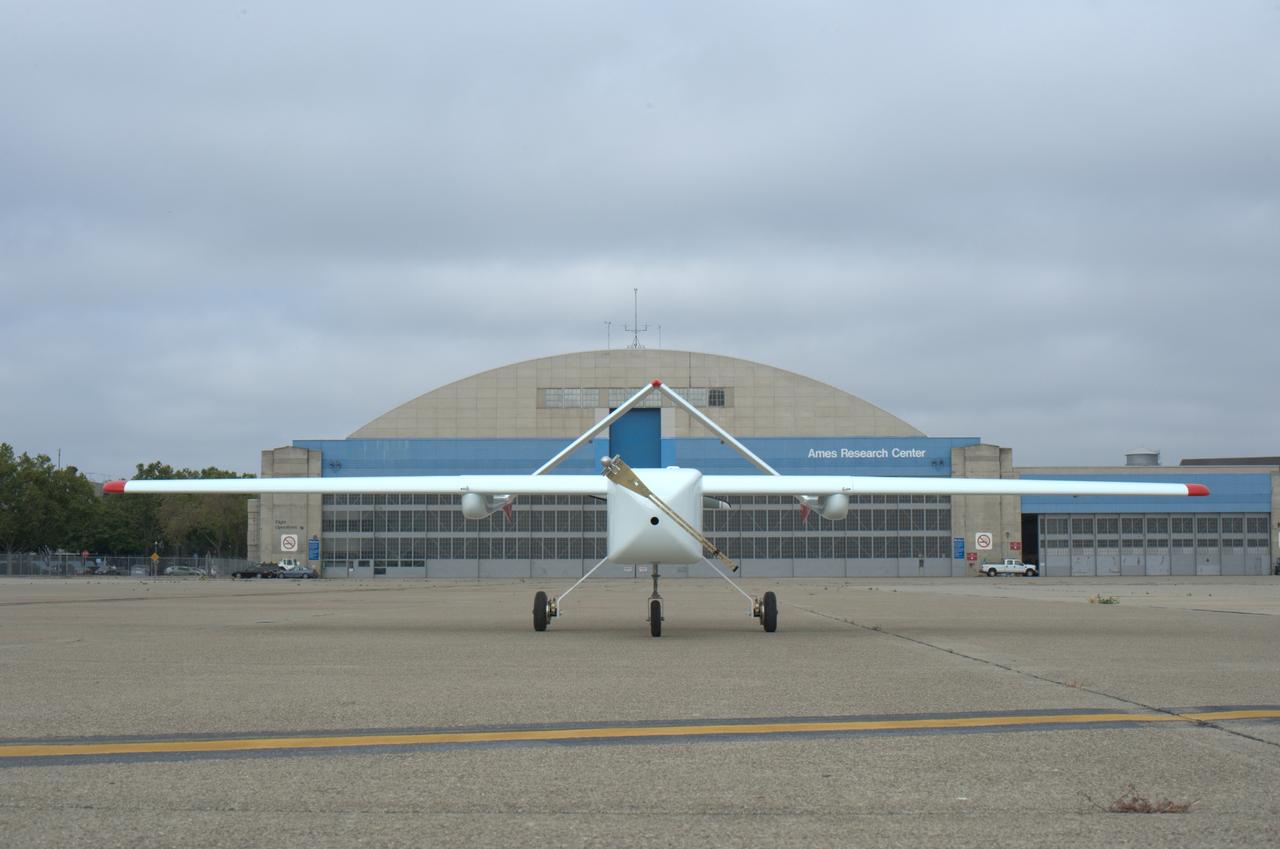
SIERRA (Systems Integration Evaluation Remote Research Aircraft) Uninhabited Aerial System (UAV plane) on the Ames flightline (aka; Sierra Unpiloted Aerial system (UAS))
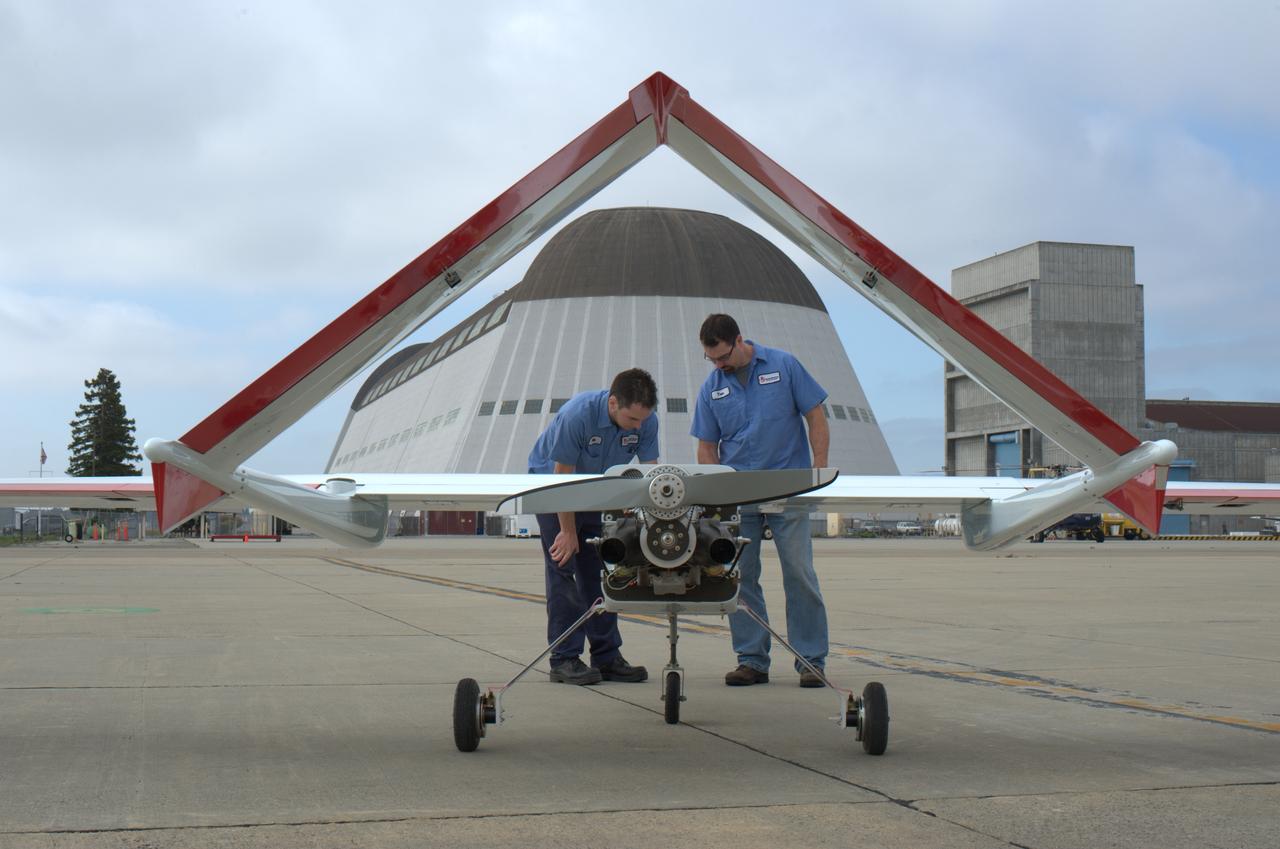
SIERRA (Systems Integration Evaluation Remote Research Aircraft) Uninhabited Aerial System (UAV plane) on the Ames flightline (aka; Sierra Unpiloted Aerial system (UAS))
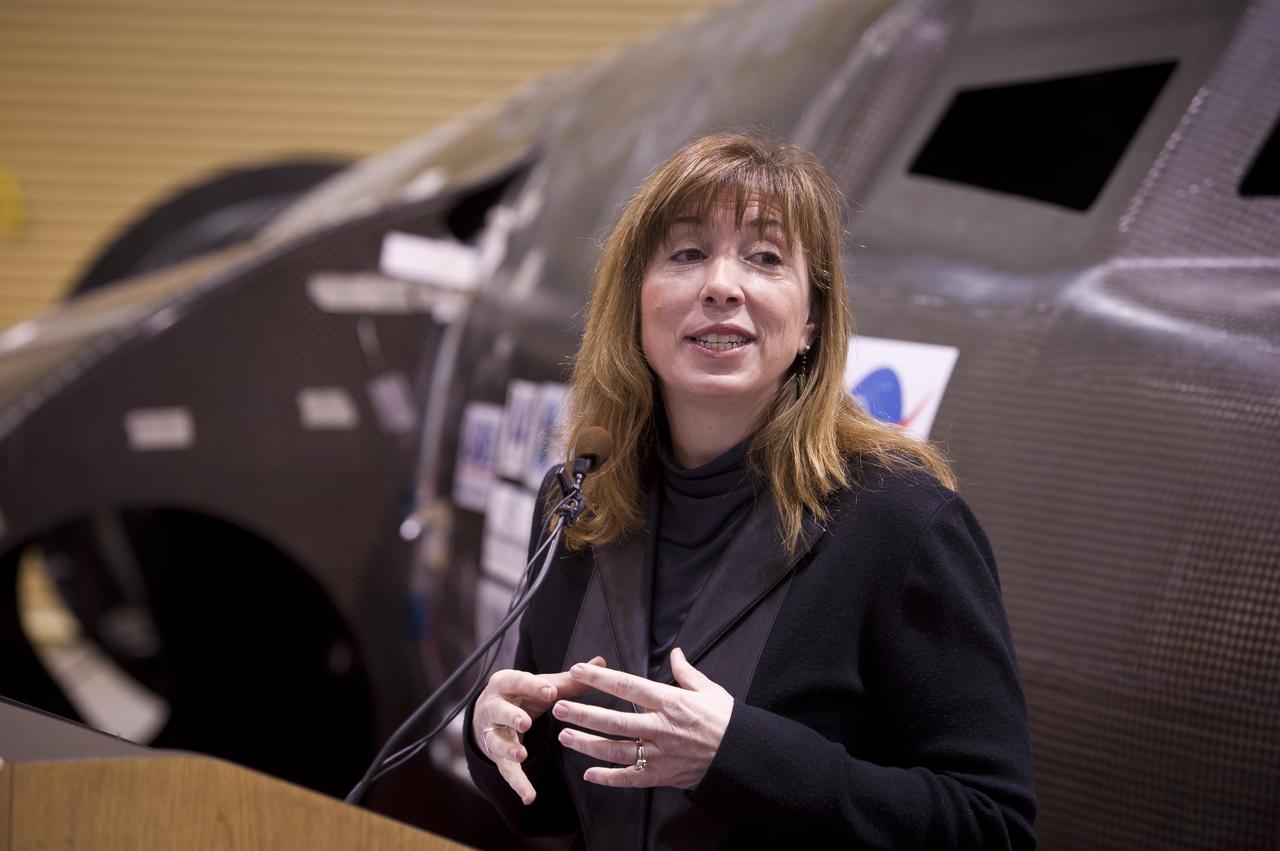
NASA Deputy Administrator Lori Garver talks during a press conference with Sierra Nevada's Dream Chaser spacecraft in the background on Saturday, Feb. 5, 2011, at the University of Colorado at Boulder. Sierra Nevada's Dream Chaser spacecraft is under development with support from NASA's Commercial Crew Development Program to provide crew transportation to and from low Earth orbit. NASA is helping private companies develop innovative technologies to ensure that the U.S. remains competitive in future space endeavors. Photo Credit: (NASA/Bill Ingalls)
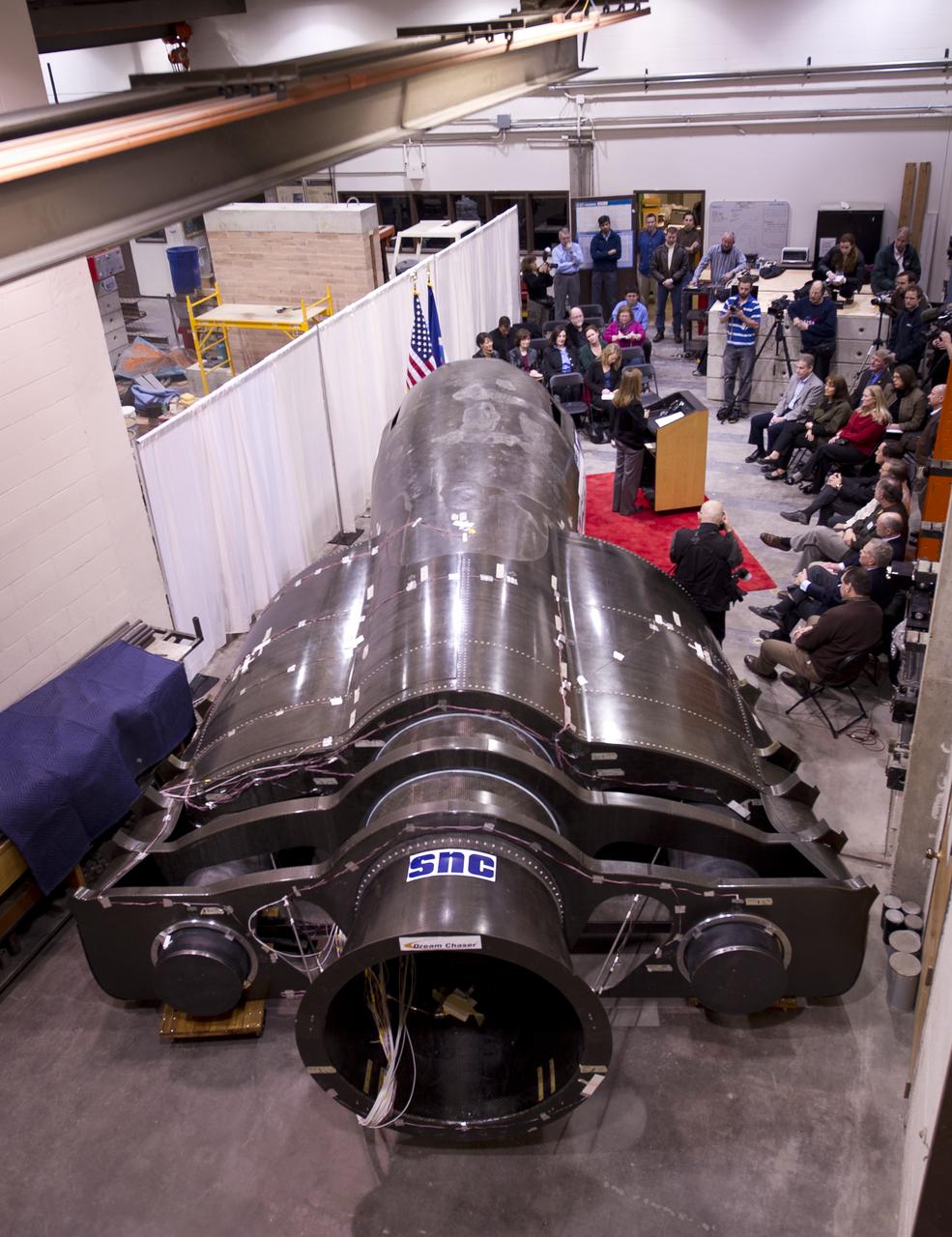
Sierra Nevada's Dream Chaser spacecraft is seen as NASA Deputy Administrator Lori Garver talks during a press conference on Saturday, Feb. 5, 2011, at the University of Colorado at Boulder. Sierra Nevada's Dream Chaser spacecraft is under development with support from NASA's Commercial Crew Development Program to provide crew transportation to and from low Earth orbit. NASA is helping private companies develop innovative technologies to ensure that the U.S. remains competitive in future space endeavors. Photo Credit: (NASA/Bill Ingalls)
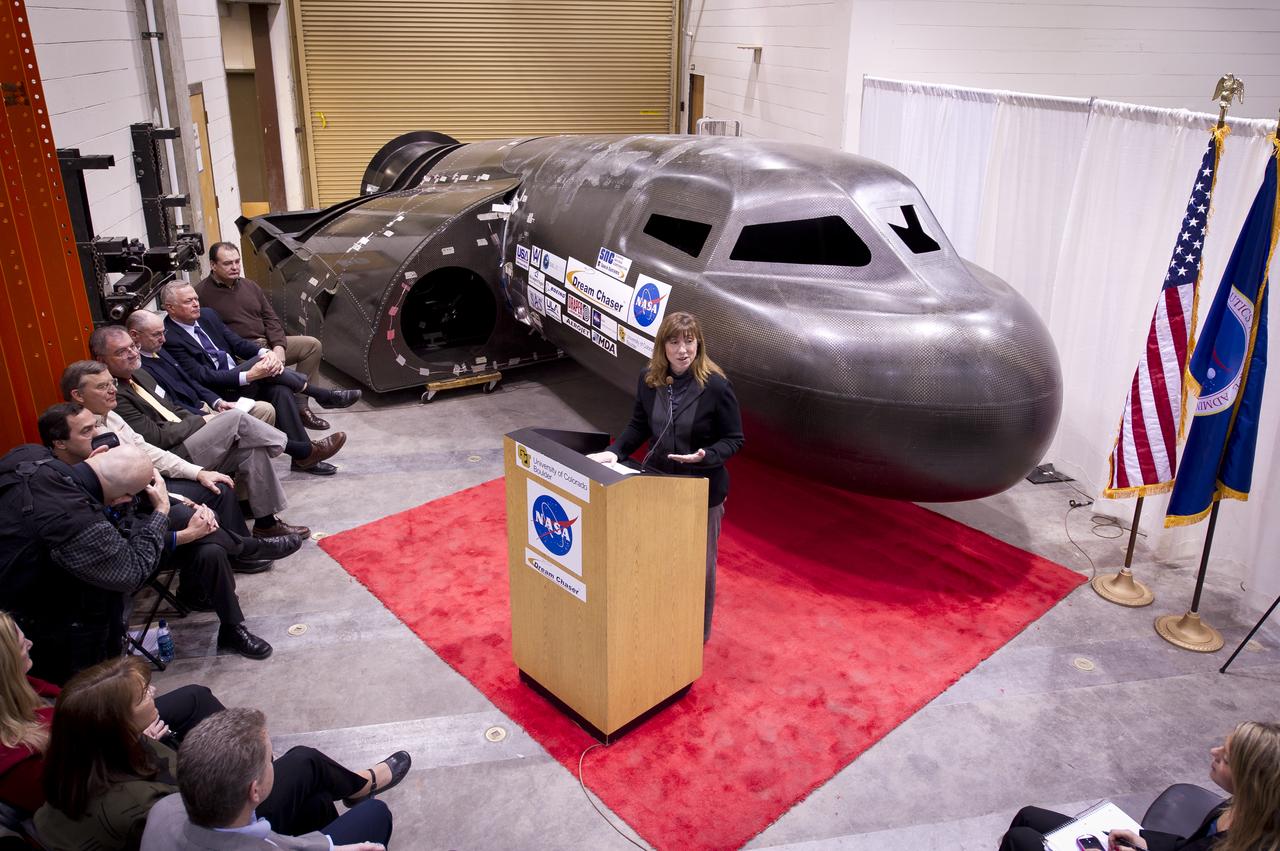
NASA Deputy Administrator Lori Garver talks during a press conference with Sierra Nevada's Dream Chaser spacecraft in the background on Saturday, Feb. 5, 2011, at the University of Colorado at Boulder. Sierra Nevada's Dream Chaser spacecraft is under development with support from NASA's Commercial Crew Development Program to provide crew transportation to and from low Earth orbit. NASA is helping private companies develop innovative technologies to ensure that the U.S. remains competitive in future space endeavors. Photo Credit: (NASA/Bill Ingalls)
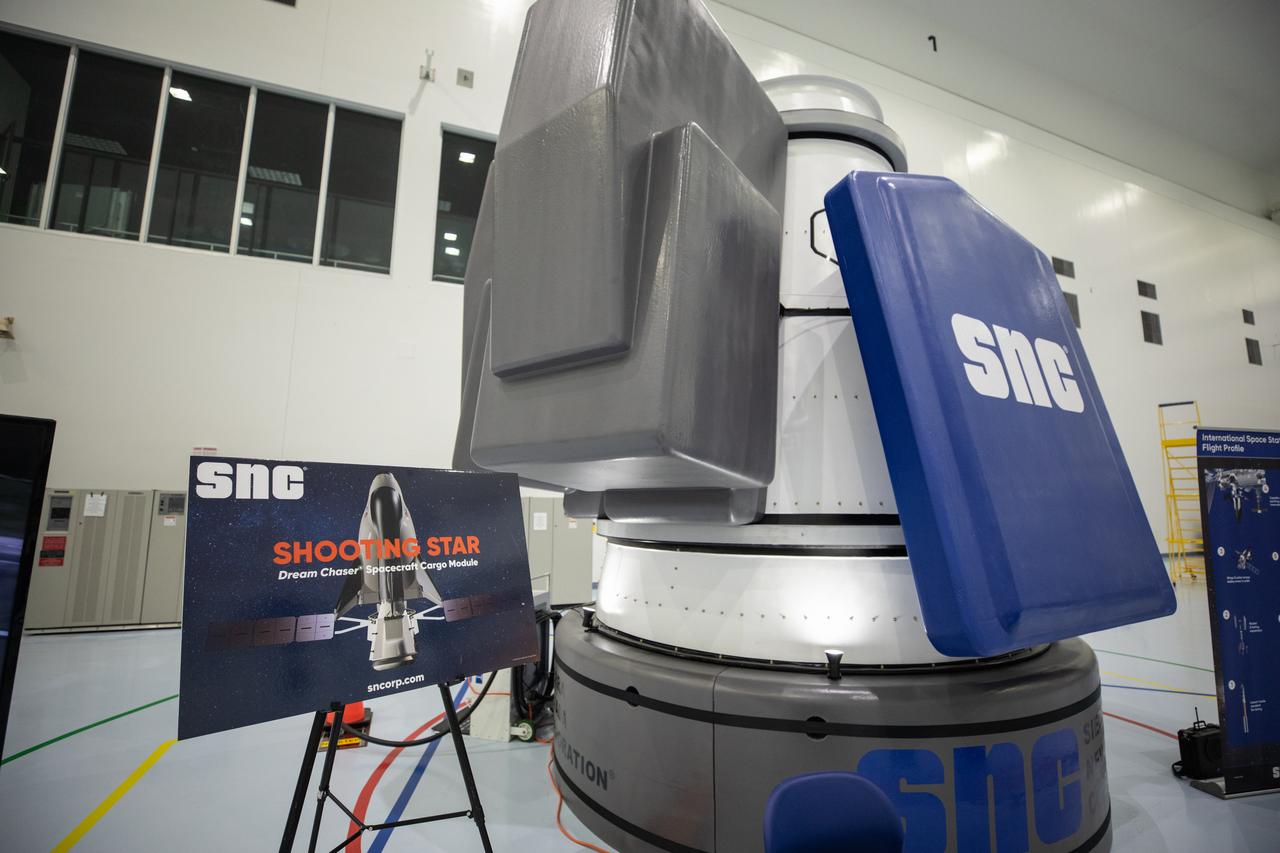
A look at a testing mockup of Sierra Nevada Corporation’s Shooting Star cargo module in the Space Station Processing Facility high bay at Kennedy Space Center on Nov. 19, 2019. Shooting Star will attach to the back of the company’s Dream Chaser spacecraft. The cargo module will deliver more than 12,000 pounds of supplies and other cargo to the International Space Station for NASA as part of the Commercial Resupply Services-2 contract.
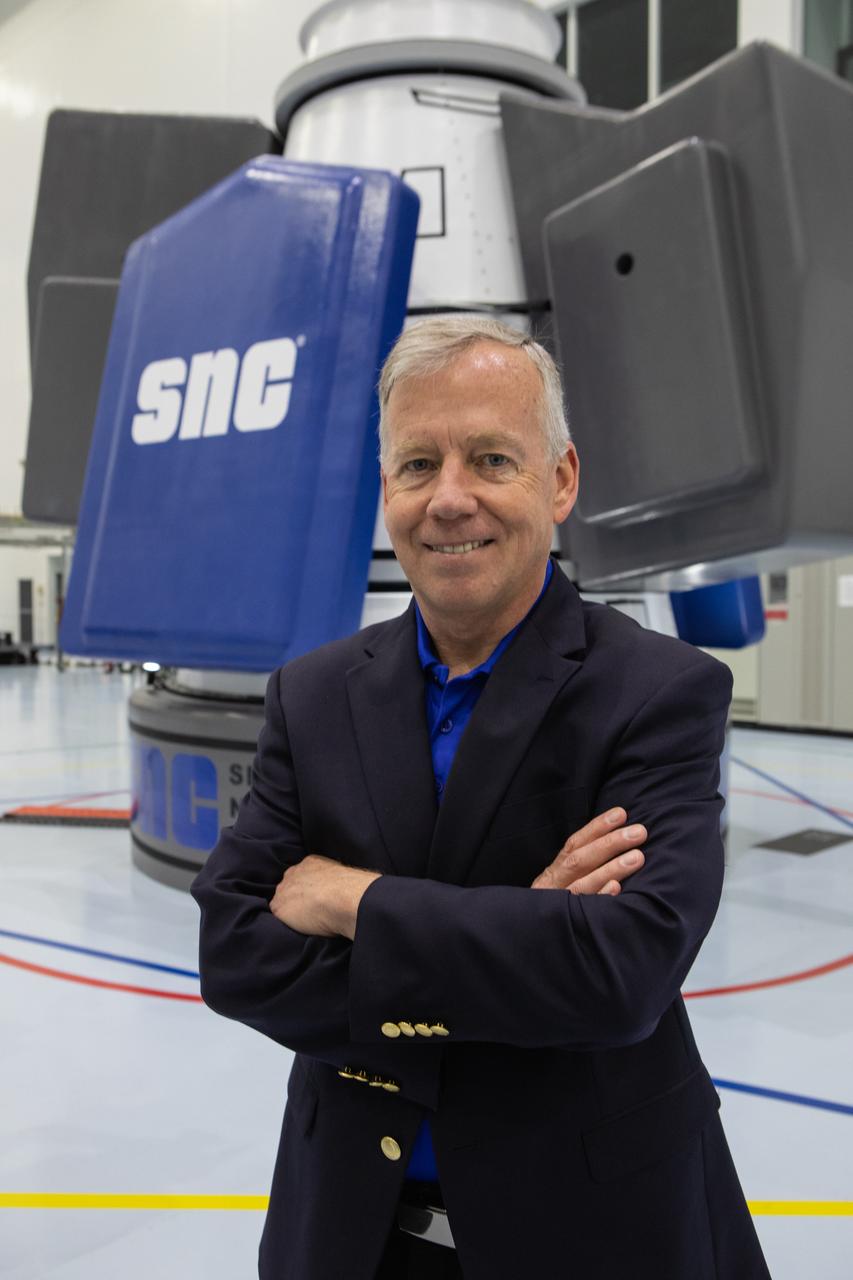
Steve Lindsey, senior vice president of strategy for Sierra Nevada Corporation Space Systems and a former NASA astronaut, poses in front of the company’s Shooting Star cargo module in the Space Station Processing Facility high bay at Kennedy Space Center on Nov. 19, 2019. Shooting Star will attach to the back of the company’s Dream Chaser spacecraft. The cargo module will deliver more than 12,000 pounds of supplies and other cargo to the International Space Station for NASA as part of the Commercial Resupply Services-2 contract.

A look at a testing mockup of Sierra Nevada Corporation’s Shooting Star cargo module in the Space Station Processing Facility high bay at Kennedy Space Center on Nov. 19, 2019. Shooting Star will attach to the back of the company’s Dream Chaser spacecraft. The cargo module will deliver more than 12,000 pounds of supplies and other cargo to the International Space Station for NASA as part of the Commercial Resupply Services-2 contract.
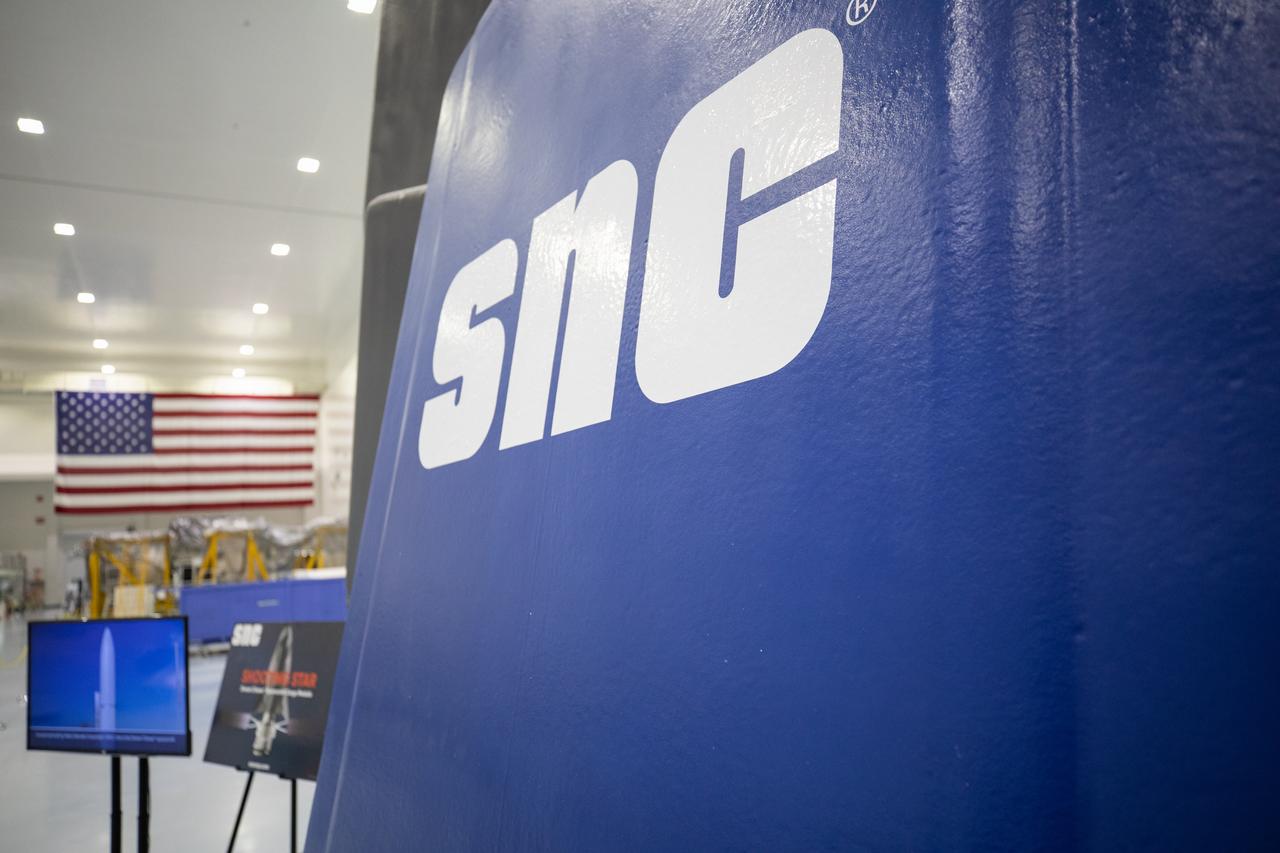
A look at a testing mockup of Sierra Nevada Corporation’s Shooting Star cargo module in the Space Station Processing Facility high bay at Kennedy Space Center on Nov. 19, 2019. Shooting Star will attach to the back of the company’s Dream Chaser spacecraft. The cargo module will deliver more than 12,000 pounds of supplies and other cargo to the International Space Station for NASA as part of the Commercial Resupply Services-2 contract.
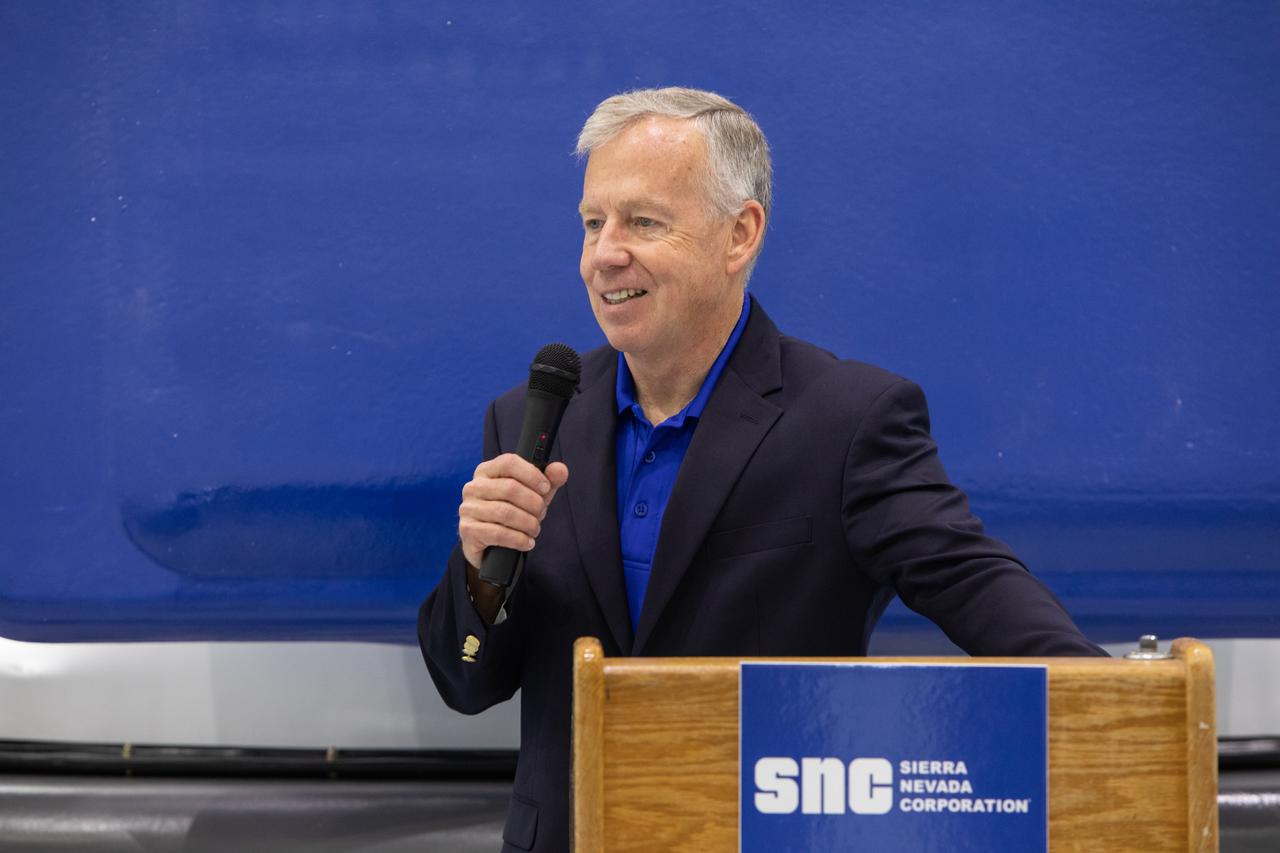
Steve Lindsey, senior vice president of strategy for Sierra Nevada Corporation Space Systems and a former NASA astronaut, discusses the capabilities of the company’s Shooting Star cargo module in the Space Station Processing Facility high bay at Kennedy Space Center on Nov. 19, 2019. Shooting Star will attach to the back of the company’s Dream Chaser spacecraft. The cargo module will deliver more than 12,000 pounds of supplies and other cargo to the International Space Station for NASA as part of the Commercial Resupply Services-2 contract.
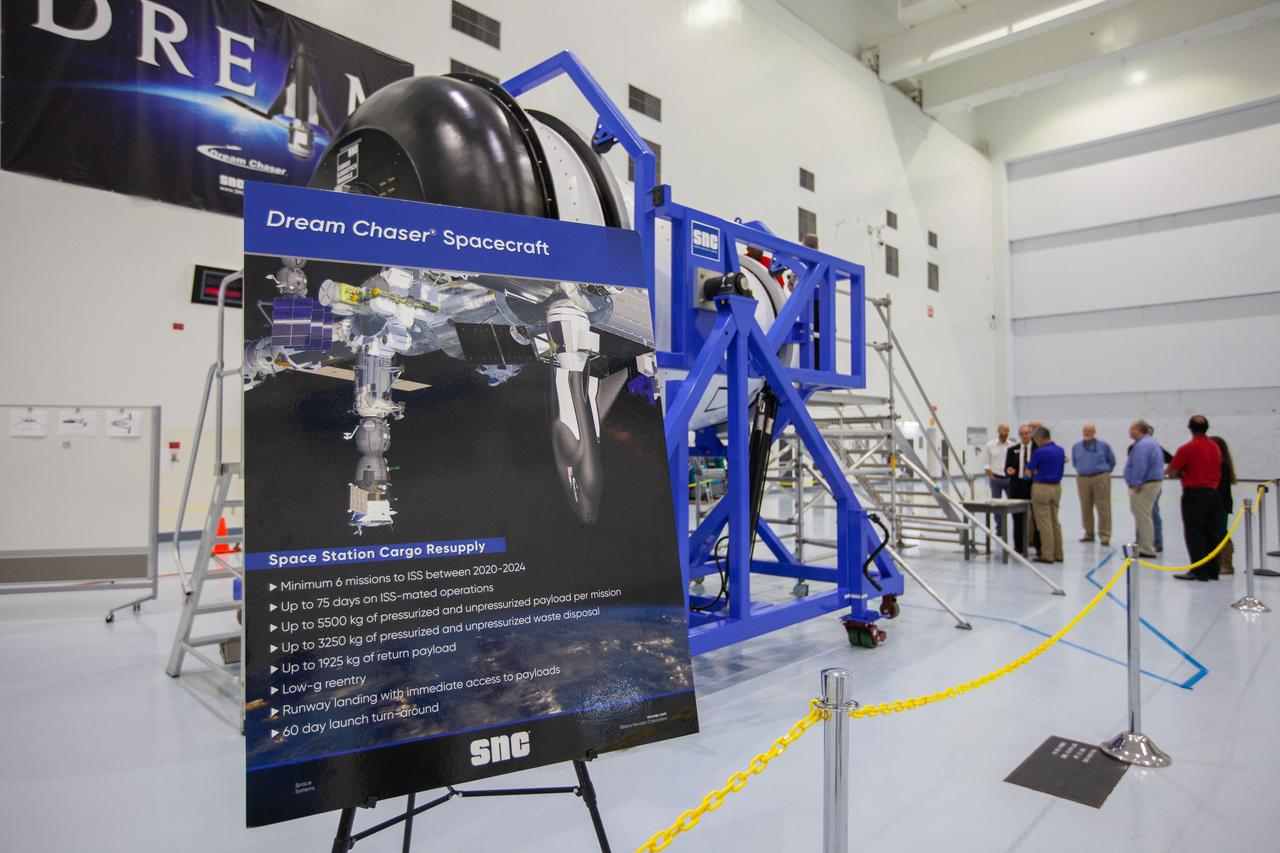
A mockup of the cargo logistics module for Sierra Nevada Corporation’s Dream Chaser, the company’s reusable spaceplane, arrived at the Space Station Processing Facility (SSPF) at NASA’s Kennedy Space Center in Florida in August. On Sept. 20, 2019, senior leadership had the opportunity to view the cargo module in the SSPF high bay. The SSPF is providing support for current and future NASA and commercial provider programs, including Commercial Resupply Services, Artemis 1, sending the first woman and next man to the Moon, and deep space destinations including Mars.
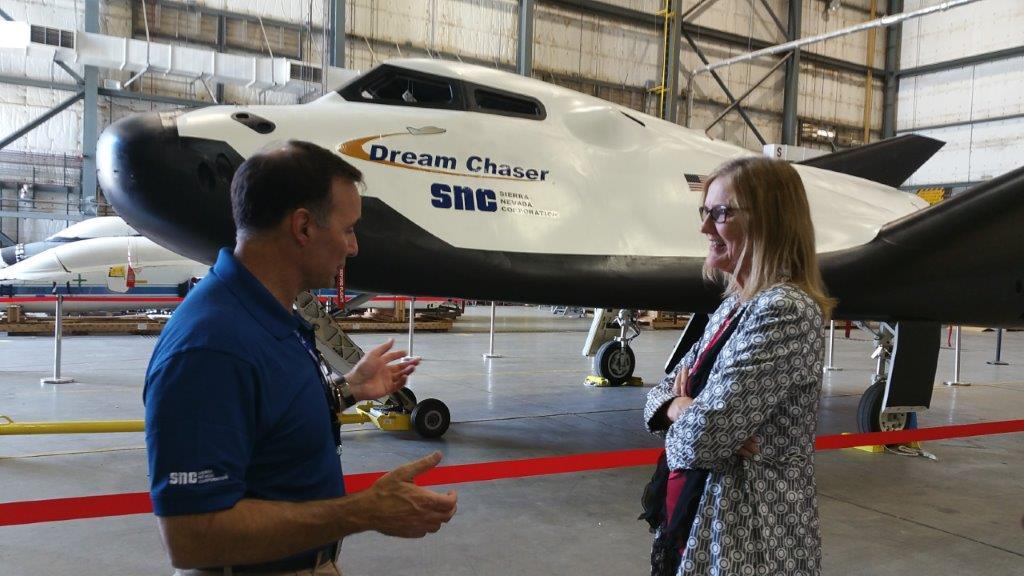
NASA Acting Deputy Chief Technologist Vicki Crisp discusses Sierra Nevada Corporation’s Dream Chaser captive carry flight and future tests with former Astronaut Lee "Bru" Archambault, who is now a test pilot for the American company. The Dream Chaser completed a successful captive carry flight at NASA’s Armstrong Flight Research Center at Edwards, California, on Aug. 30, 2017.

This image acquired by NASA Terra spacecraft is of the Sierra Leone estuary, which became a focal point for trade and interaction between Africans and Europeans because of its exceptional harbor, starting in the mid-15th century.
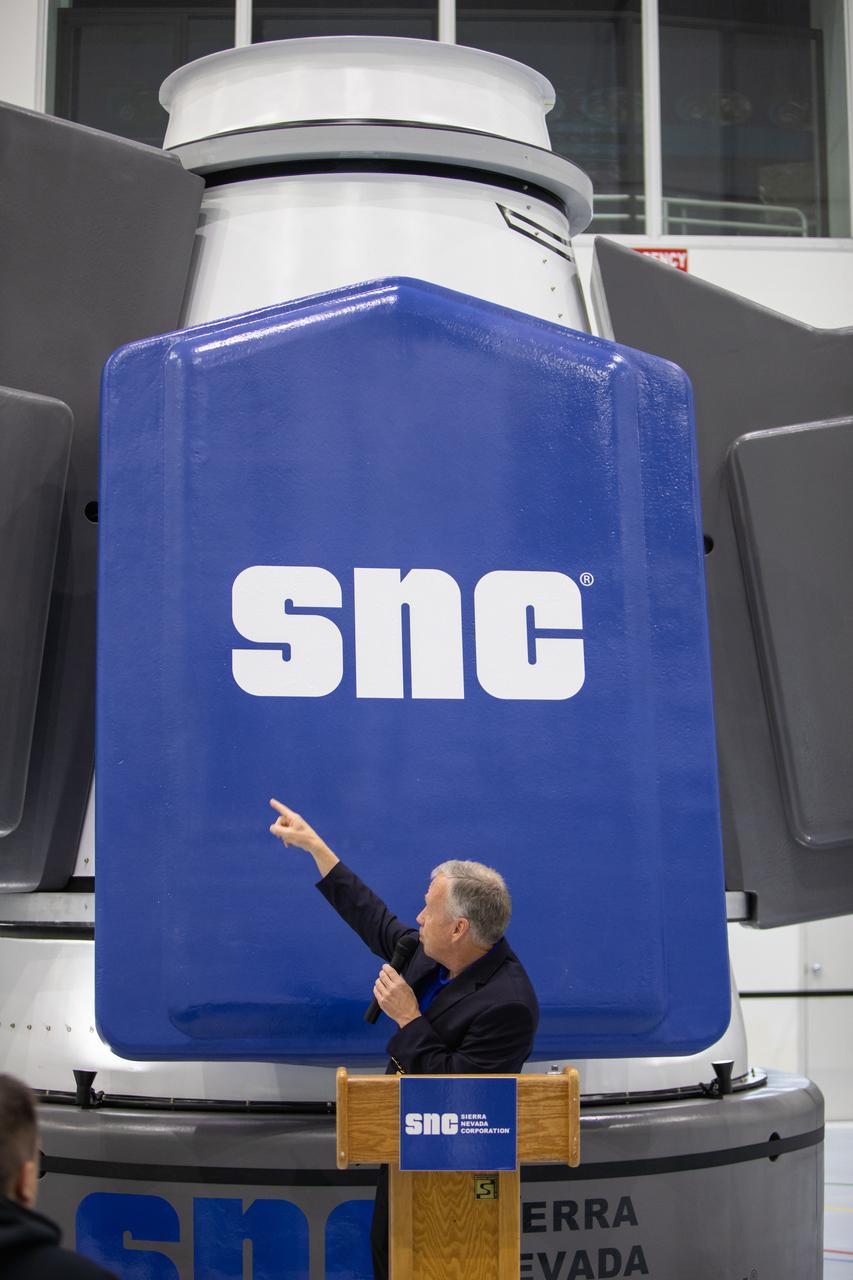
Steve Lindsey, senior vice president of strategy for Sierra Nevada Corporation Space Systems and a former NASA astronaut, discusses the capabilities of the company’s Shooting Star cargo module during a media day event in the Space Station Processing Facility high bay at Kennedy Space Center on Nov. 19, 2019. Shooting Star will attach to the back of the company’s Dream Chaser spacecraft. The cargo module will deliver more than 12,000 pounds of supplies and other cargo to the International Space Station for NASA as part of the Commercial Resupply Services-2 contract.
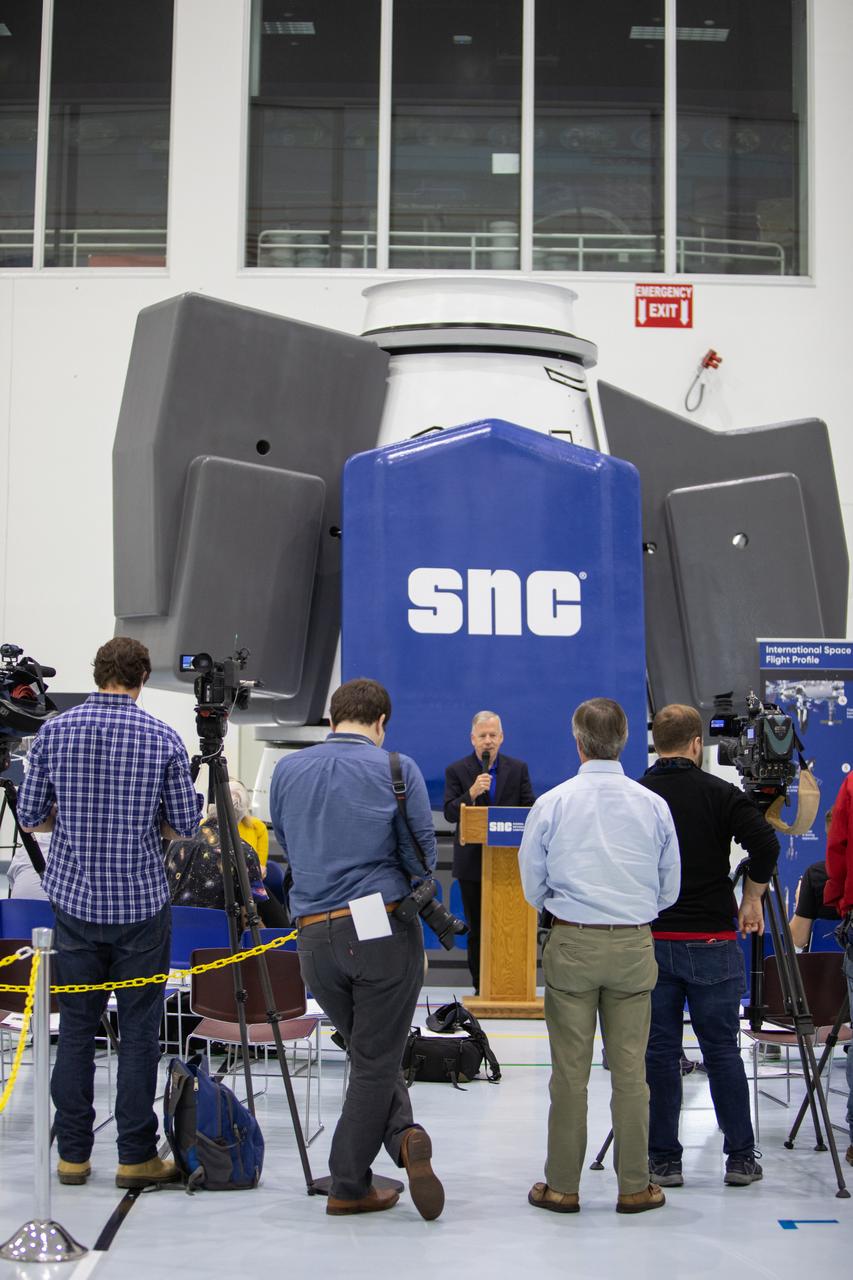
Steve Lindsey, senior vice president of strategy for Sierra Nevada Corporation Space Systems and a former NASA astronaut, discusses the capabilities of the company’s Shooting Star cargo module during a media day event in the Space Station Processing Facility high bay at Kennedy Space Center on Nov. 19, 2019. Shooting Star will attach to the back of the company’s Dream Chaser spacecraft. The cargo module will deliver more than 12,000 pounds of supplies and other cargo to the International Space Station for NASA as part of the Commercial Resupply Services-2 contract.
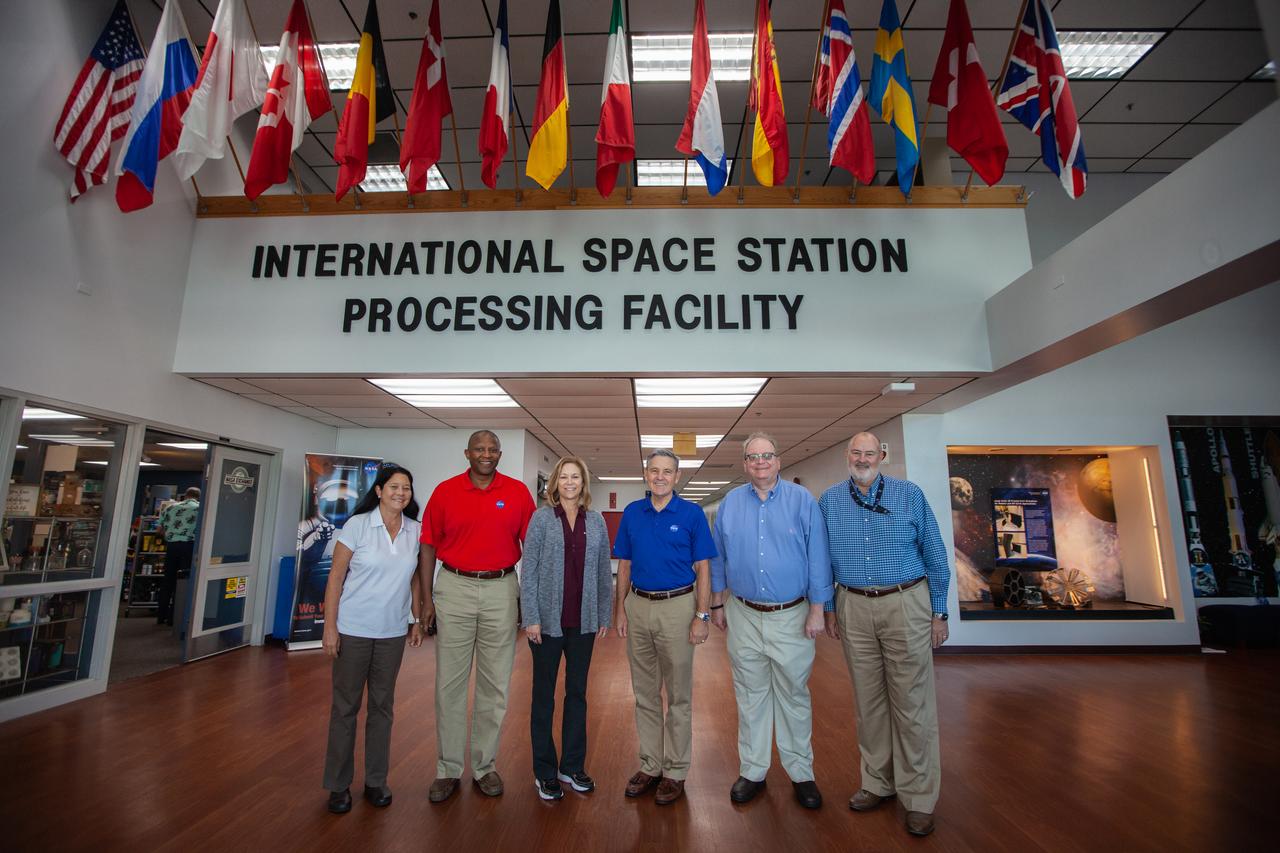
A mockup of the cargo logistics module for Sierra Nevada Corporation’s Dream Chaser, the company’s reusable spaceplane, arrived at the Space Station Processing Facility (SSPF) at NASA’s Kennedy Space Center in Florida in August. On Sept. 20, 2019, senior leadership had the opportunity to view the cargo module in the SSPF high bay. From left, are Josie Burnett, director of Exploration Research and Technology Programs; Kelvin Manning, Kennedy associate director, technical; Kennedy Deputy Director Janet Petro; Kennedy Center Director Bob Cabana; Burt Summerfield, Kennedy associate director, management; and Ronnie Lawson, deputy director of Exploration Research and Technology Programs. The SSPF is providing support for current and future NASA and commercial provider programs, including Commercial Resupply Services, Artemis 1, sending the first woman and next man to the Moon, and deep space destinations including Mars.
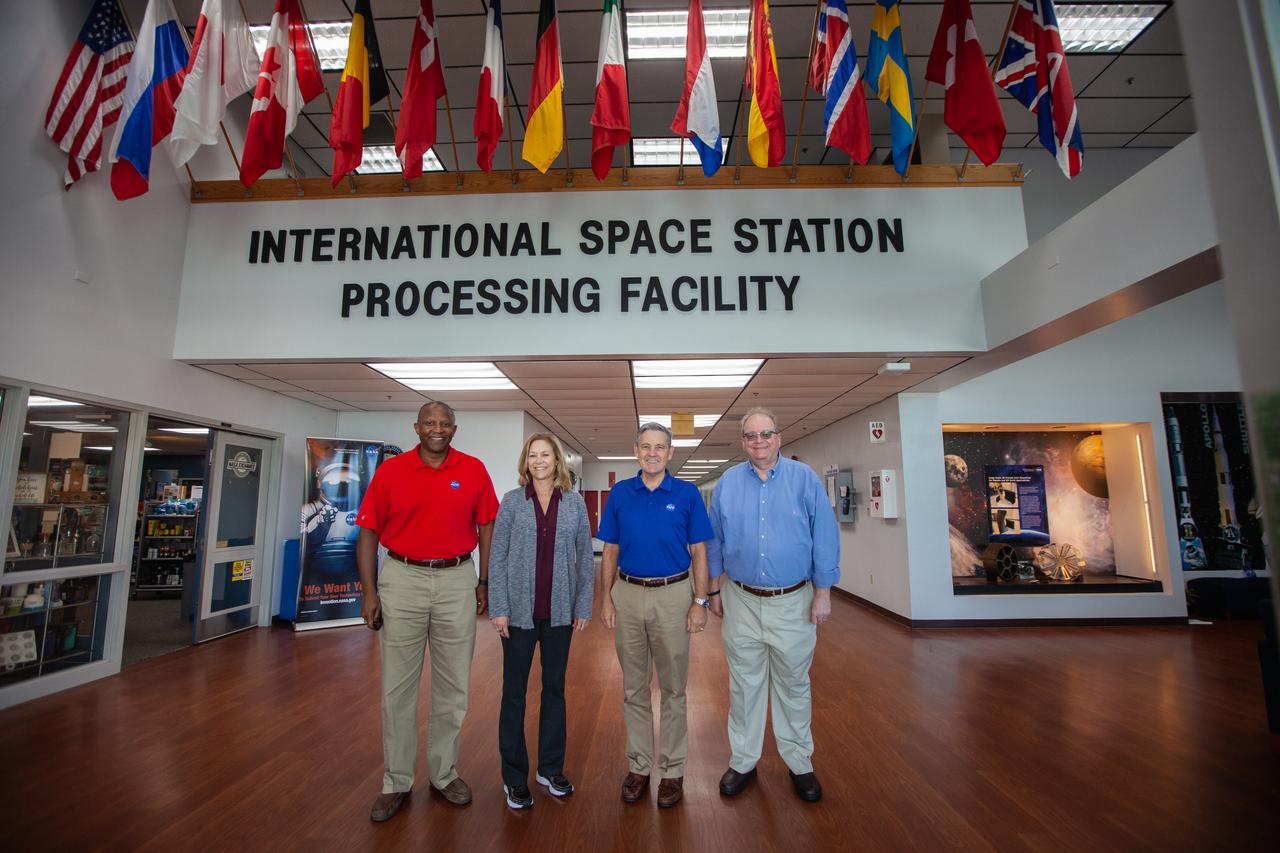
A mockup of the cargo logistics module for Sierra Nevada Corporation’s Dream Chaser, the company’s reusable spaceplane, arrived at the Space Station Processing Facility (SSPF) at NASA’s Kennedy Space Center in Florida in August. On Sept. 20, 2019, senior leadership had the opportunity to view the cargo module in the SSPF high bay. From left, are Kelvin Manning, Kennedy associate director, technical; Kennedy Deputy Director Janet Petro; Kennedy Center Director Bob Cabana; and Burt Summerfield, Kennedy associate director, management. The SSPF is providing support for current and future NASA and commercial provider programs, including Commercial Resupply Services, Artemis 1, sending the first woman and next man to the Moon, and deep space destinations including Mars.
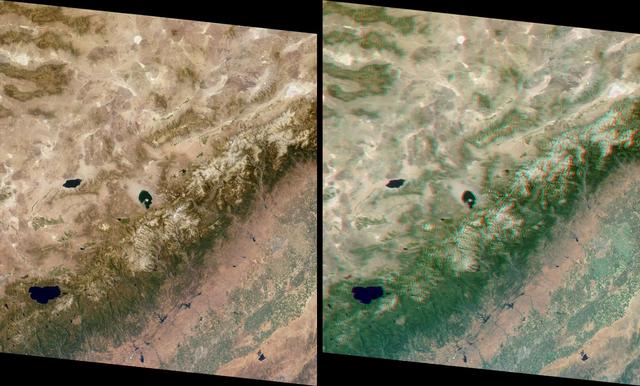
This stereo view of the Sierra Nevada mountains near the California-Nevada border was acquired on August 12, 2000 by NASA Terra satellite. 3D glasses are necessary to view this image.

The Sierra Space Plane, Dream Chaser, suspended by a crane sits just inside the overhead door of the ISP (In Space Propulsion) test facility at NASA GRC-ATF. Once lifted and lowered into the test chamber, it will be exposed to the harsh cold conditions of space for testing in extended periods of time.
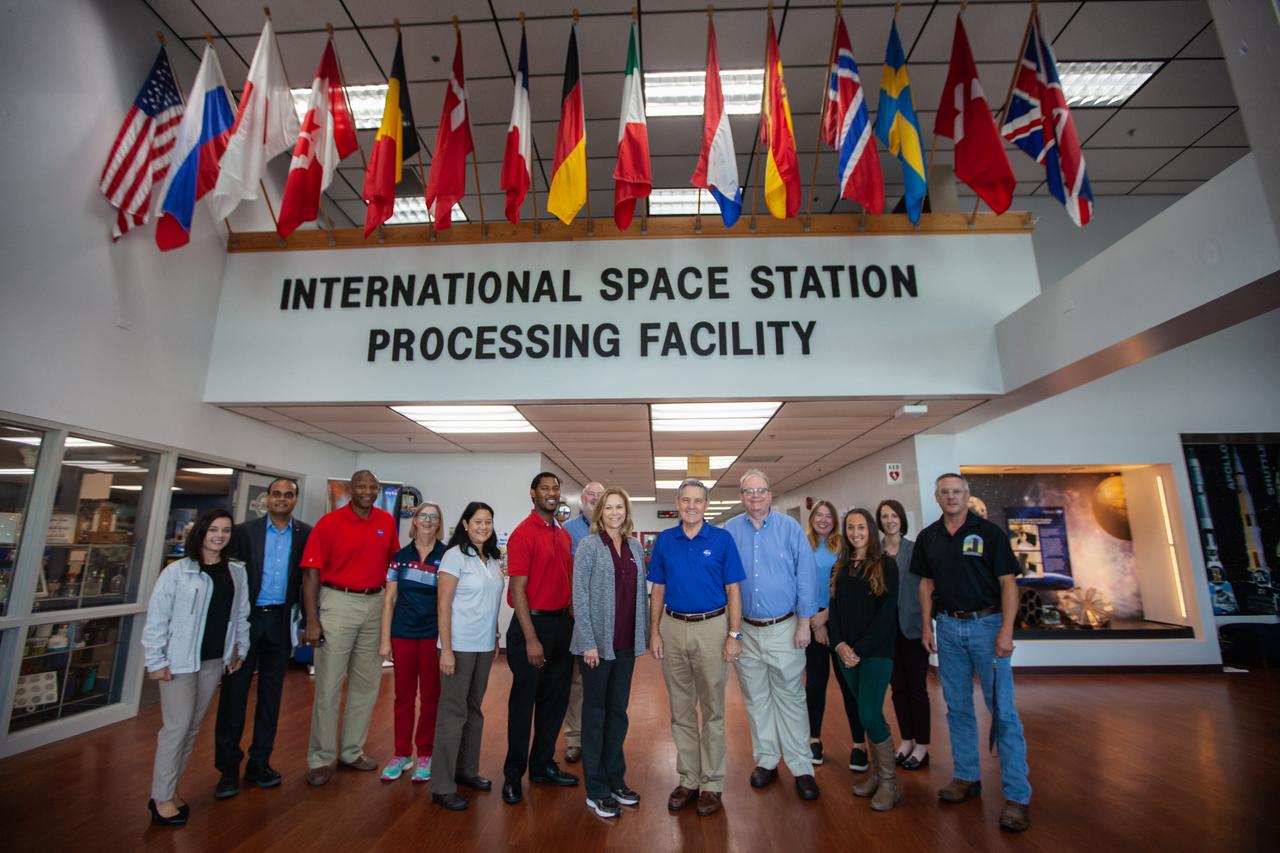
A mockup of the cargo logistics module for Sierra Nevada Corporation’s Dream Chaser, the company’s reusable spaceplane, arrived at the Space Station Processing Facility (SSPF) at NASA’s Kennedy Space Center in Florida in August. On Sept. 20, 2019, senior leadership had the opportunity to view the cargo module in the SSPF high bay. Third from left is Kelvin Manning, Kennedy associate director, technical; fifth from left is Josie Burnett, director of Exploration Research and Technology Programs. In the center are Kennedy Deputy Director Janet Petro and Kennedy Center Director Bob Cabana. Behind Petro is Ronnie Lawson, deputy director of Exploration Research and Technology Programs. To Cabana’s right is Burt Summerfield, associate director, management. At far right is James Wood, chief engineer for the Launch Services Program with the Engineering Directorate. The SSPF is providing support for current and future NASA and commercial provider programs, including Commercial Resupply Services, Artemis 1, sending the first woman and next man to the Moon, and deep space destinations including Mars.

An ER-2 high-altitude Earth science aircraft banks away during a flight over the southern Sierra Nevada. NASA’s Armstrong Flight Research Center operates two of the Lockheed-built aircraft on a wide variety of environmental science, atmospheric sampling, and satellite data verification missions.
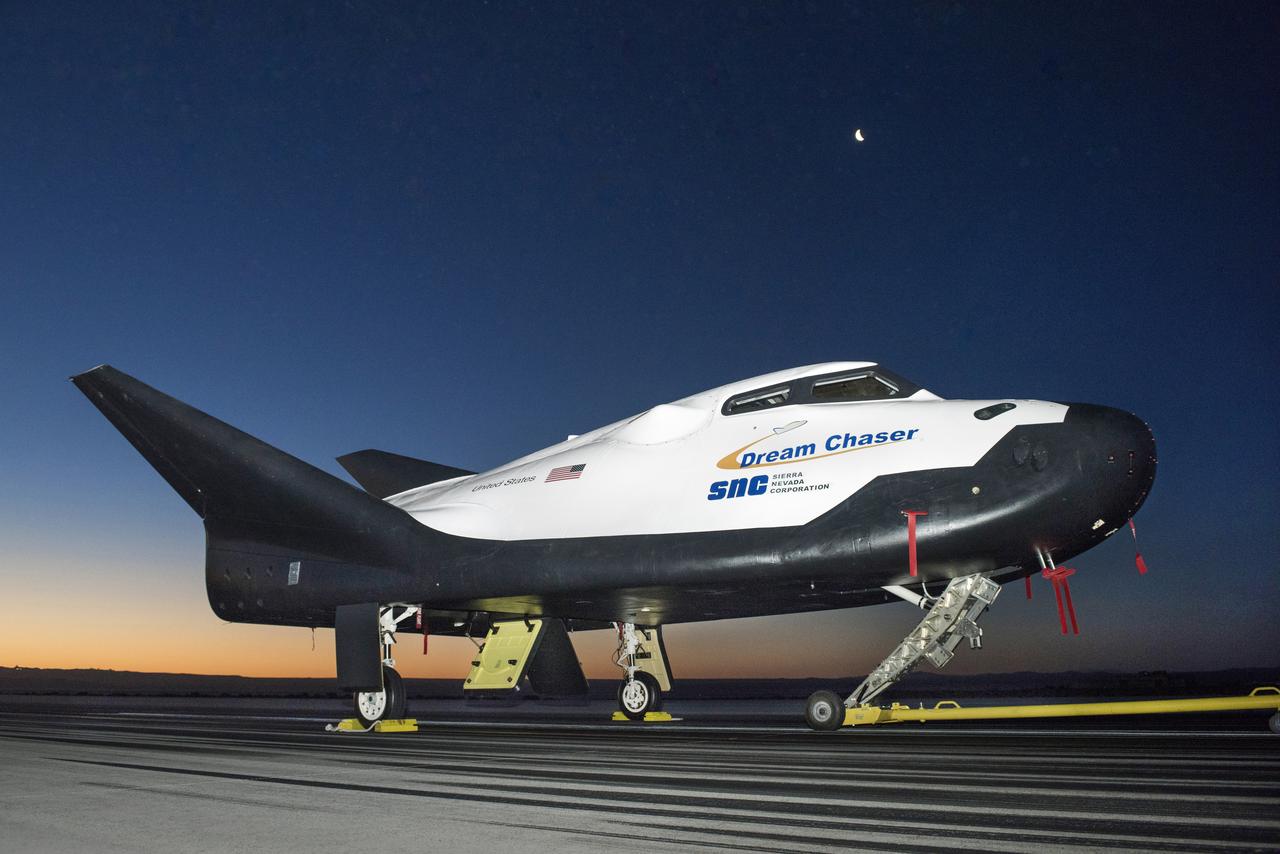
Sierra Nevada Corporation's (SNC) Dream Chaser® spacecraft shown on the runway at NASA's Armstrong Flight Research Center on May 20 preparing for a tow-test. The spacecraft is undergoing ground tests leading up to a free flight test later this year.
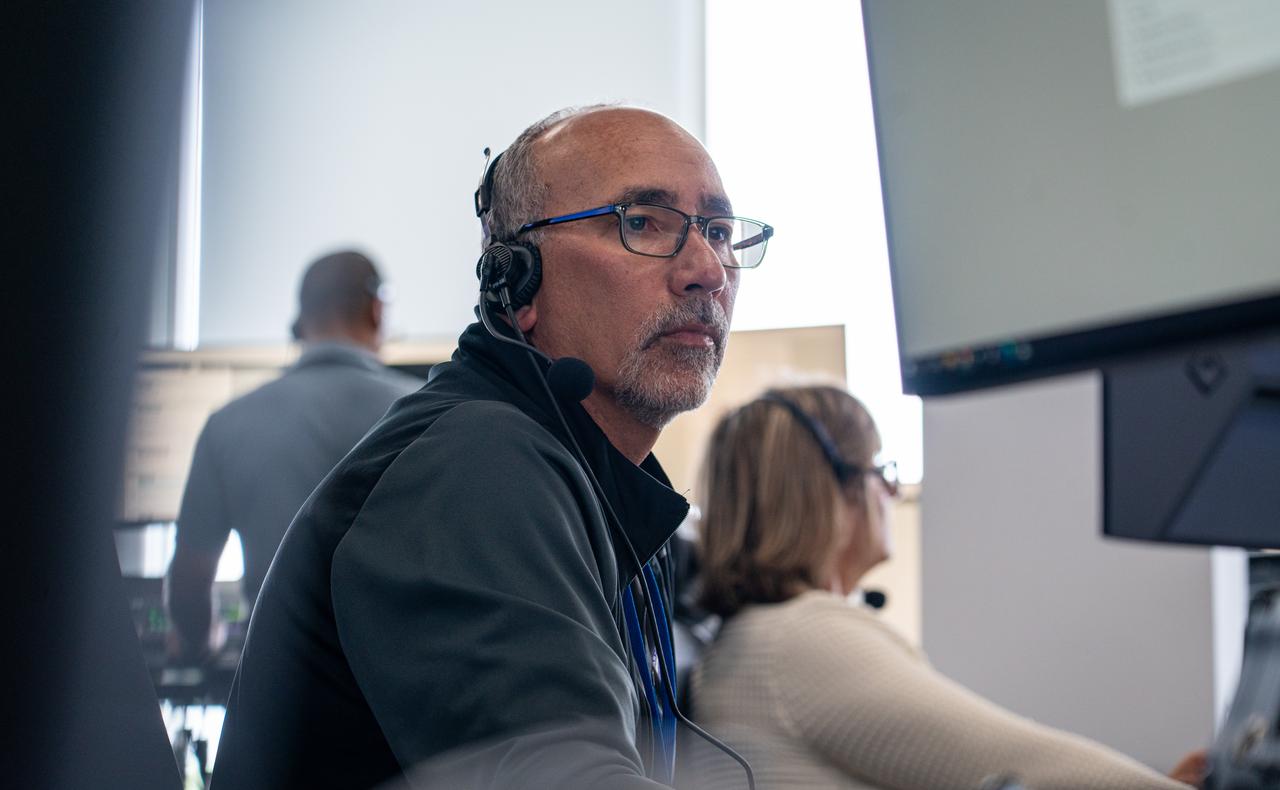
Albert Sierra, program manager for NASA’s Launch Services Program, participates in rehearsal launch operations for the National Oceanic and Atmospheric Administration (NOAA) GOES-U (Geostationary Operational Environmental Satellite U) mission inside Hangar X at NASA’s Kennedy Space Center in Florida on Monday, June 17, 2024. The GOES-U satellite, the final addition to GOES-R series, serves a critical role in providing continuous coverage of the Western Hemisphere, including monitoring tropical systems in the eastern Pacific and Atlantic oceans.
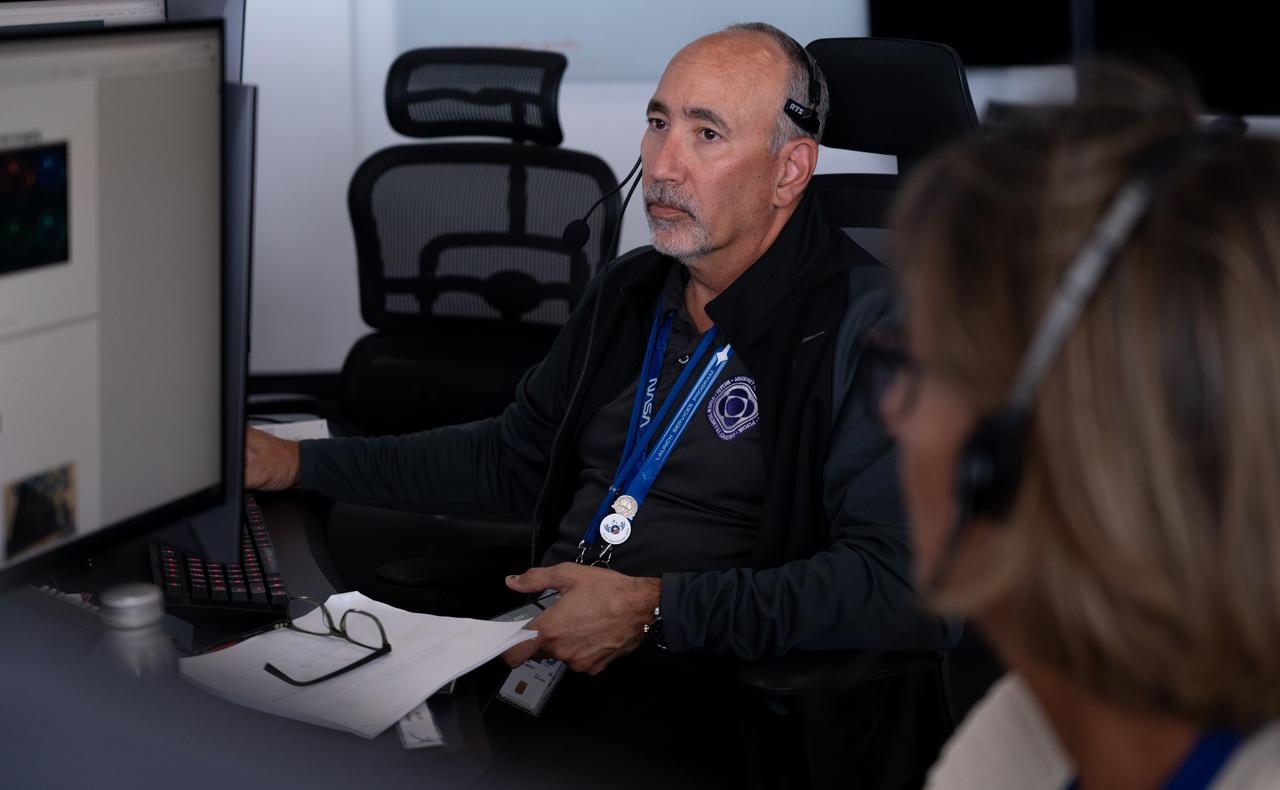
Albert Sierra, program manager for NASA’s Launch Services Program, participates in rehearsal launch operations for the National Oceanic and Atmospheric Administration (NOAA) GOES-U (Geostationary Operational Environmental Satellite U) mission inside Hangar X at NASA’s Kennedy Space Center in Florida on Monday, June 17, 2024. The GOES-U satellite, the final addition to GOES-R series, serves a critical role in providing continuous coverage of the Western Hemisphere, including monitoring tropical systems in the eastern Pacific and Atlantic oceans.
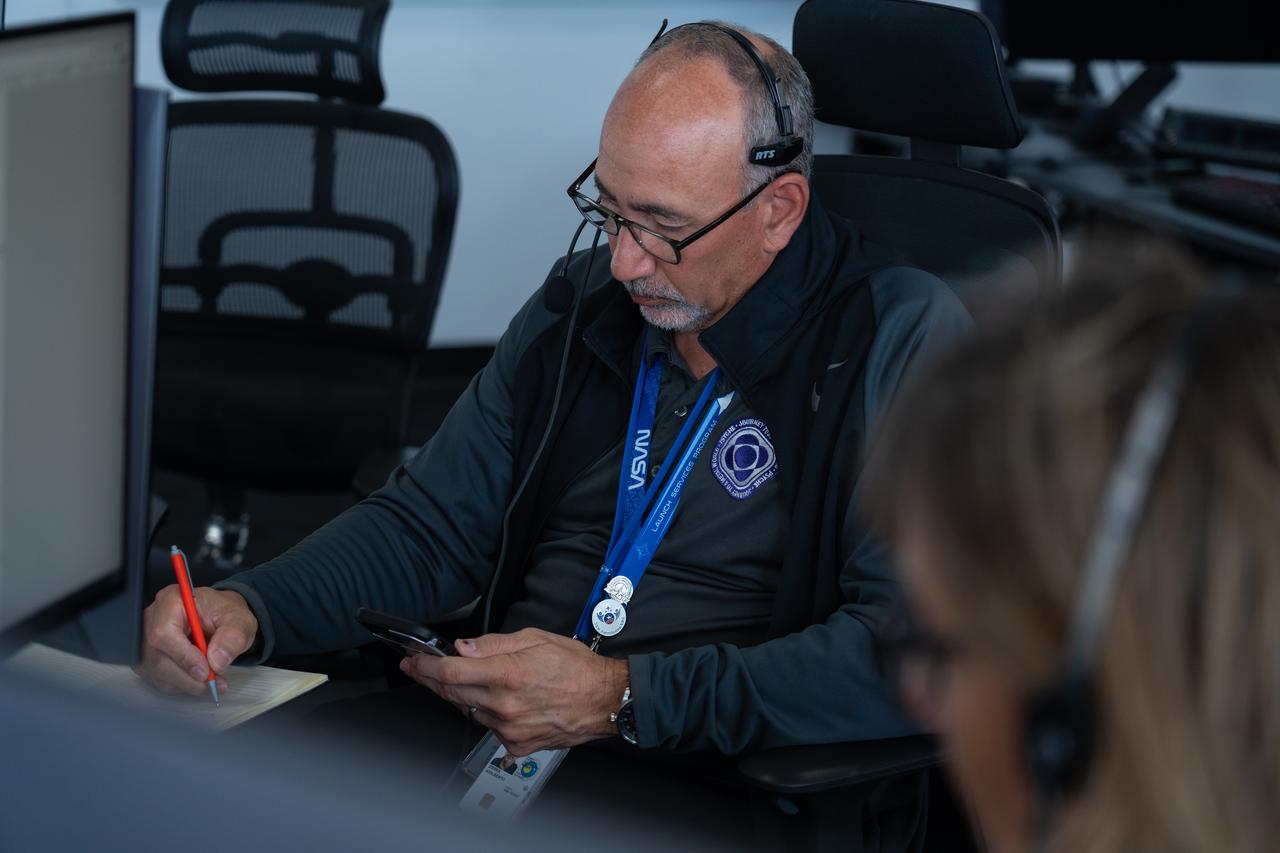
Albert Sierra, program manager for NASA’s Launch Services Program, participates in rehearsal launch operations for the National Oceanic and Atmospheric Administration (NOAA) GOES-U (Geostationary Operational Environmental Satellite U) mission inside Hangar X at NASA’s Kennedy Space Center in Florida on Monday, June 17, 2024. The GOES-U satellite, the final addition to GOES-R series, serves a critical role in providing continuous coverage of the Western Hemisphere, including monitoring tropical systems in the eastern Pacific and Atlantic oceans.

A technician in shown inside Sierra Space’s Dream Chaser spaceplane preparing for vibration testing at the Neil Armstrong Test Facility’s Mechanical Vibration Facility. Using the world’s most powerful spacecraft shaker system in February 2024, NASA exposed Dream Chaser and its Shooting Star cargo module to vibrations like those it will experience during launch and re-entry into the atmosphere. Photo Credit: (NASA/Jordan Salkin)
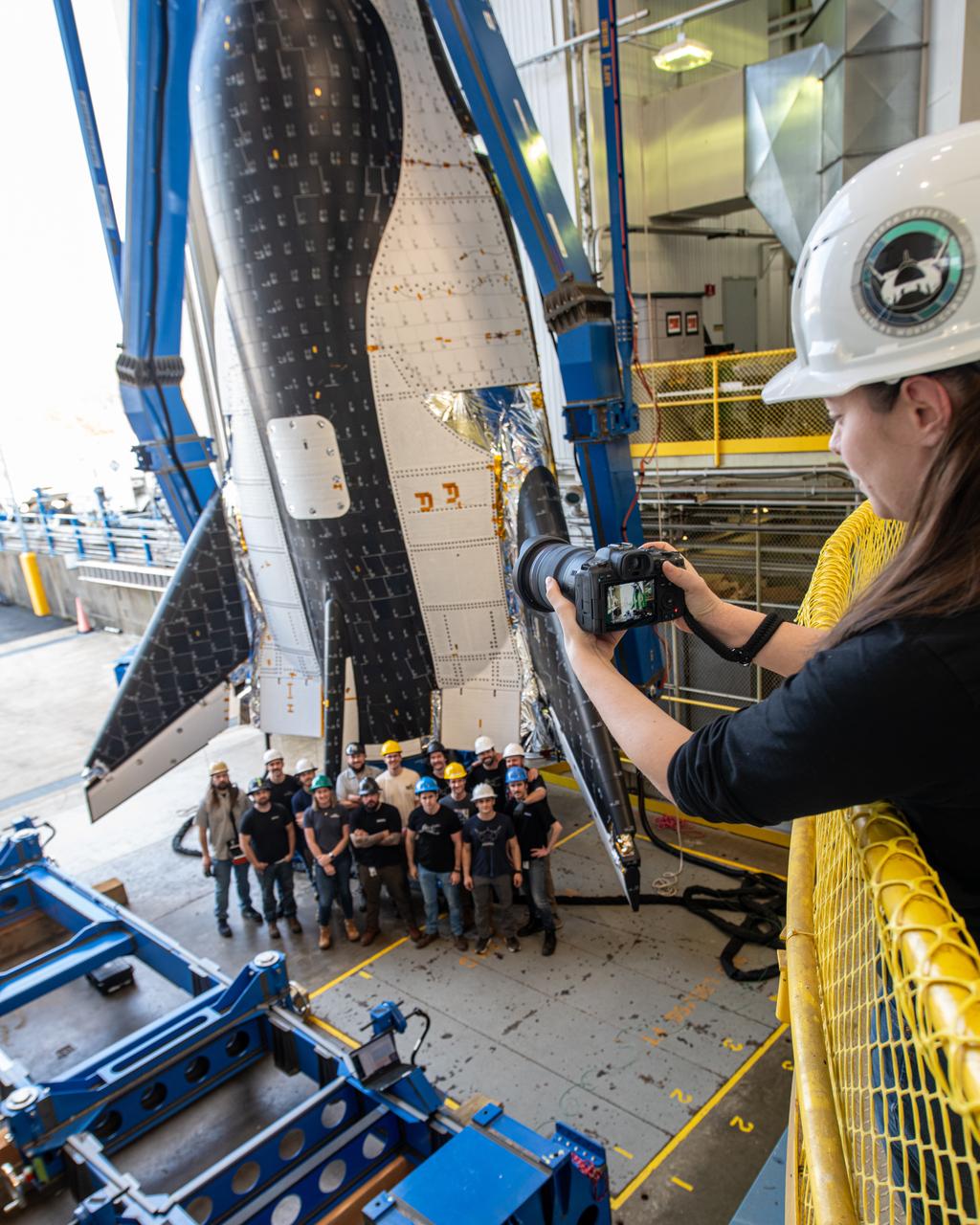
Sierra Space photographer, Shay Saldana is photographed taking a group photo of the crew just before the critical lift of Dream Chaser into the chamber at ISP (In Space Propulsion) NASA GRC-ATF. Once lifted and lowered into the test chamber, it will be exposed to the harsh cold conditions of space for extended periods of time
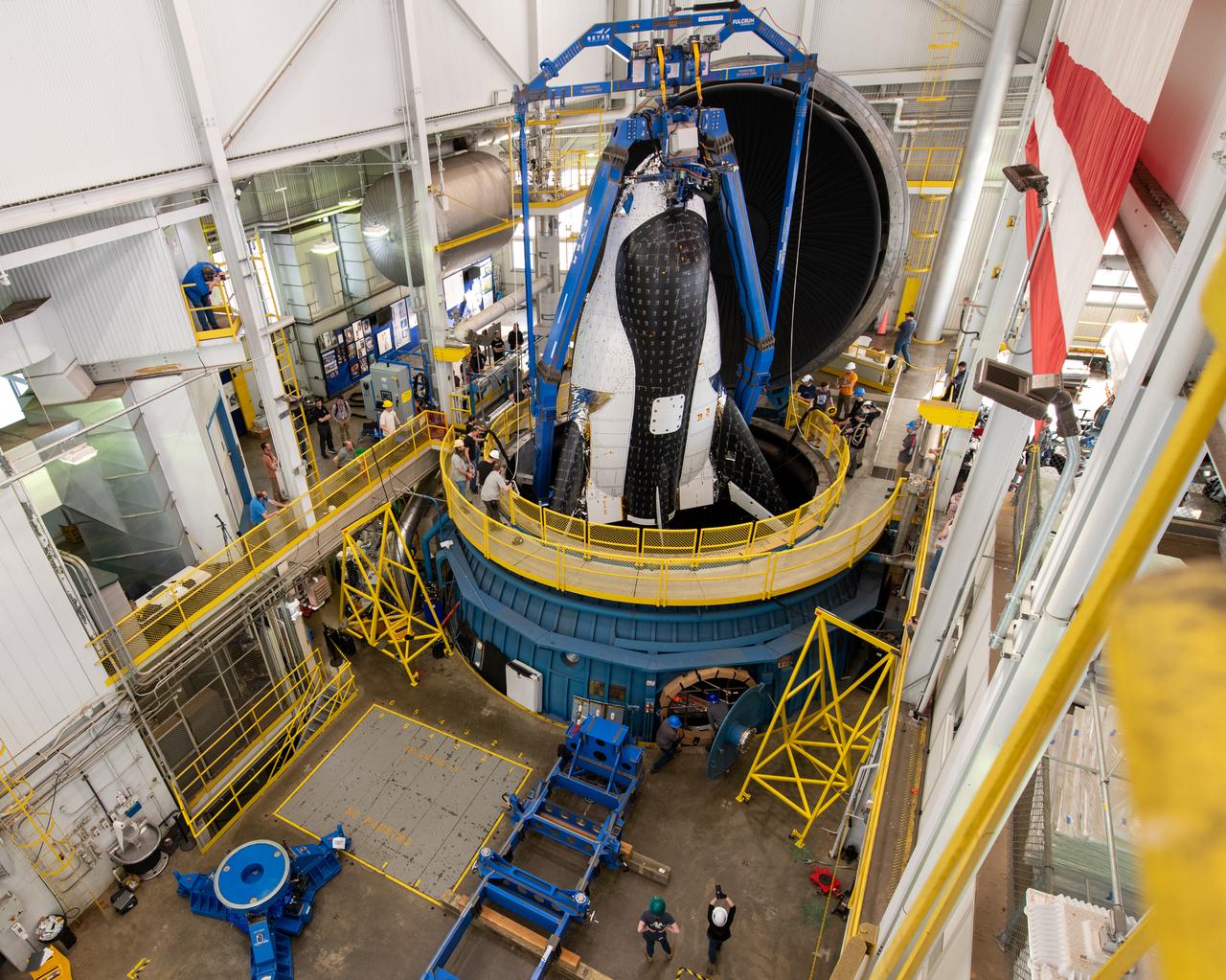
Sierra Space Dream Chaser space plane is lifted into the chamber at ISP (In Space Propulsion) facility, building 3211 at ATF (Armstrong Test Facility) for environmental testing. Once lowered into the test chamber, it will be exposed to the harsh cold conditions of space for extended periods of time.
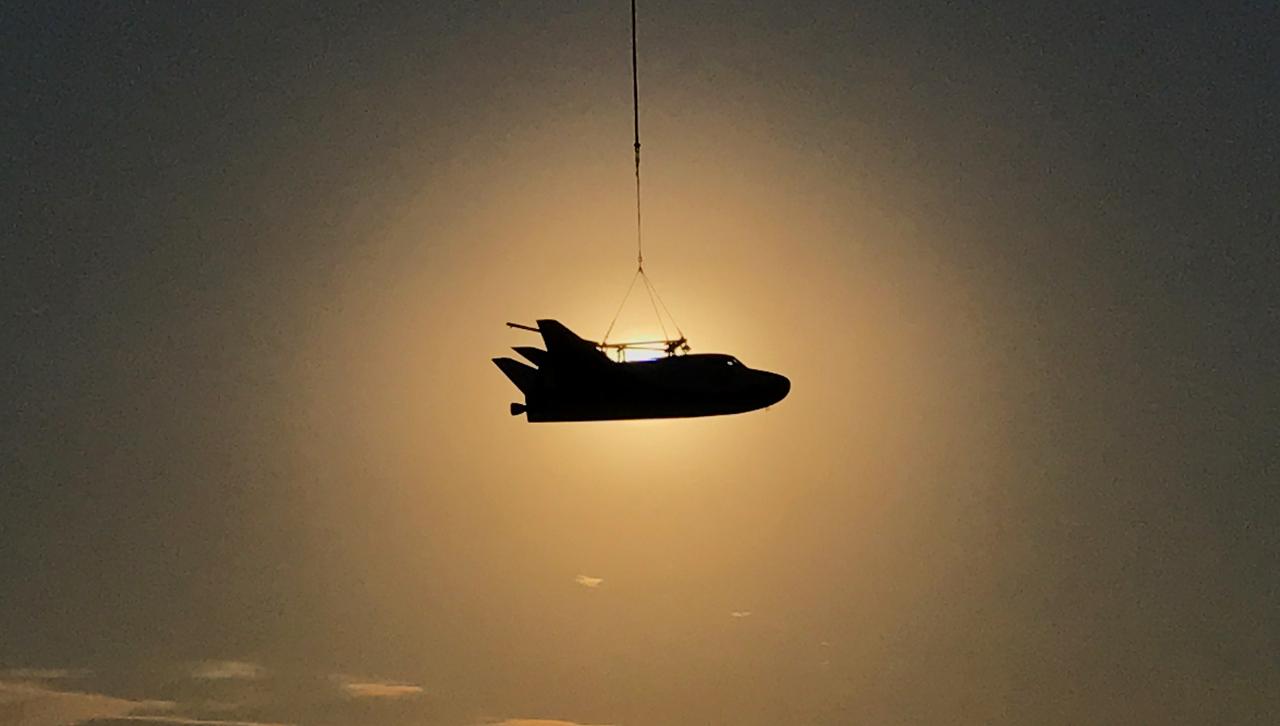
Sierra Nevada Corporation’s Dream Chaser completed an important step toward orbital flight with a successful captive carry test at NASA’s Armstrong Flight Research Center in California, located on Edwards Air Force Base. A helicopter successfully carried a Dream Chaser test article, which has the same specifications as a flight-ready spacecraft, to the same altitude and flight conditions of an upcoming free flight test. The Dream Chaser is a lifting-body, winged spacecraft that will fly back to Earth in a manner similar to NASA’s space shuttles. The successful captive carry test clears the way for a free flight test of the spacecraft later this year in which the uncrewed Dream Chaser will be released to glide on its own and land.
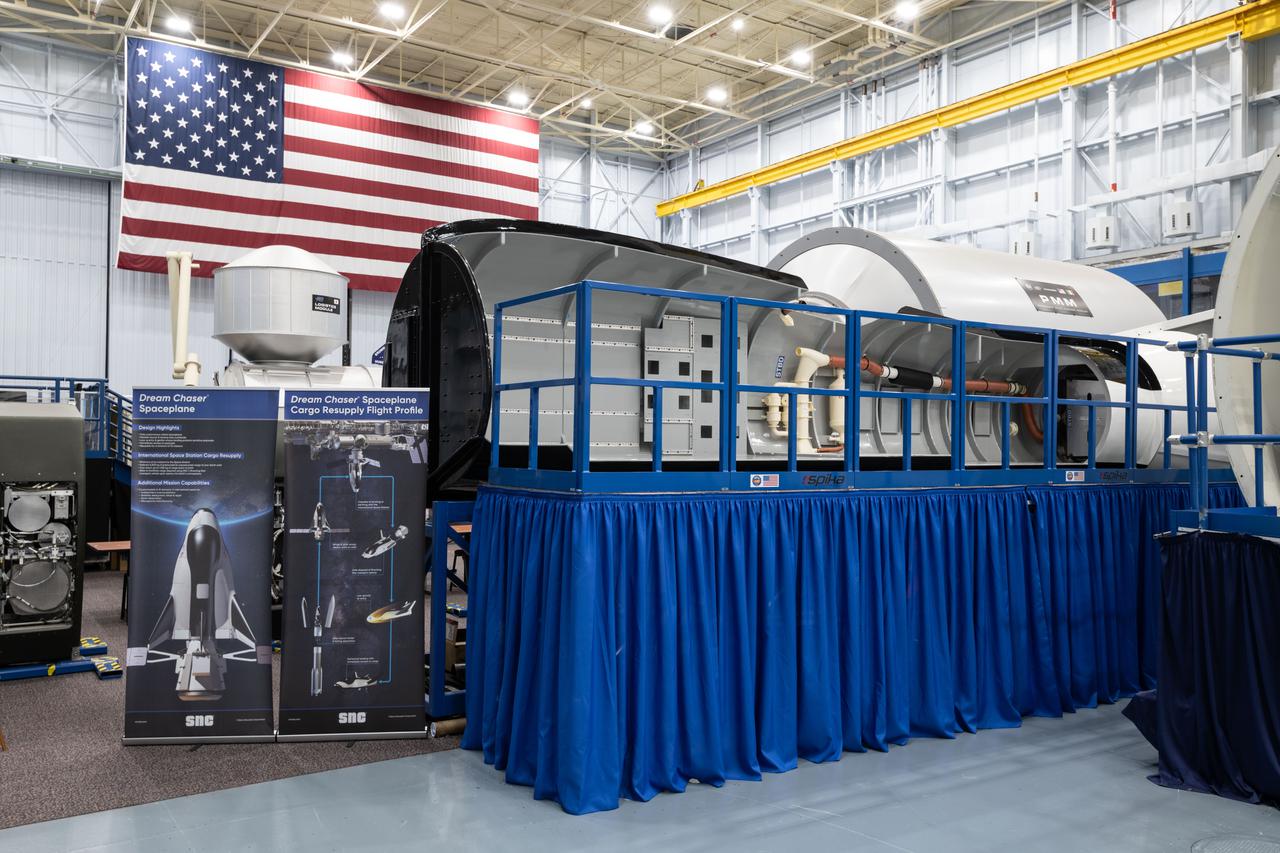
jsc2021e004389 (Jan. 21, 2021) --- External view of the Sierra Nevada Dream Chaser mockup located in Building 9N, Space Vehicle Mockup Facility (SVMF) at the NASA Johnson Space Center.
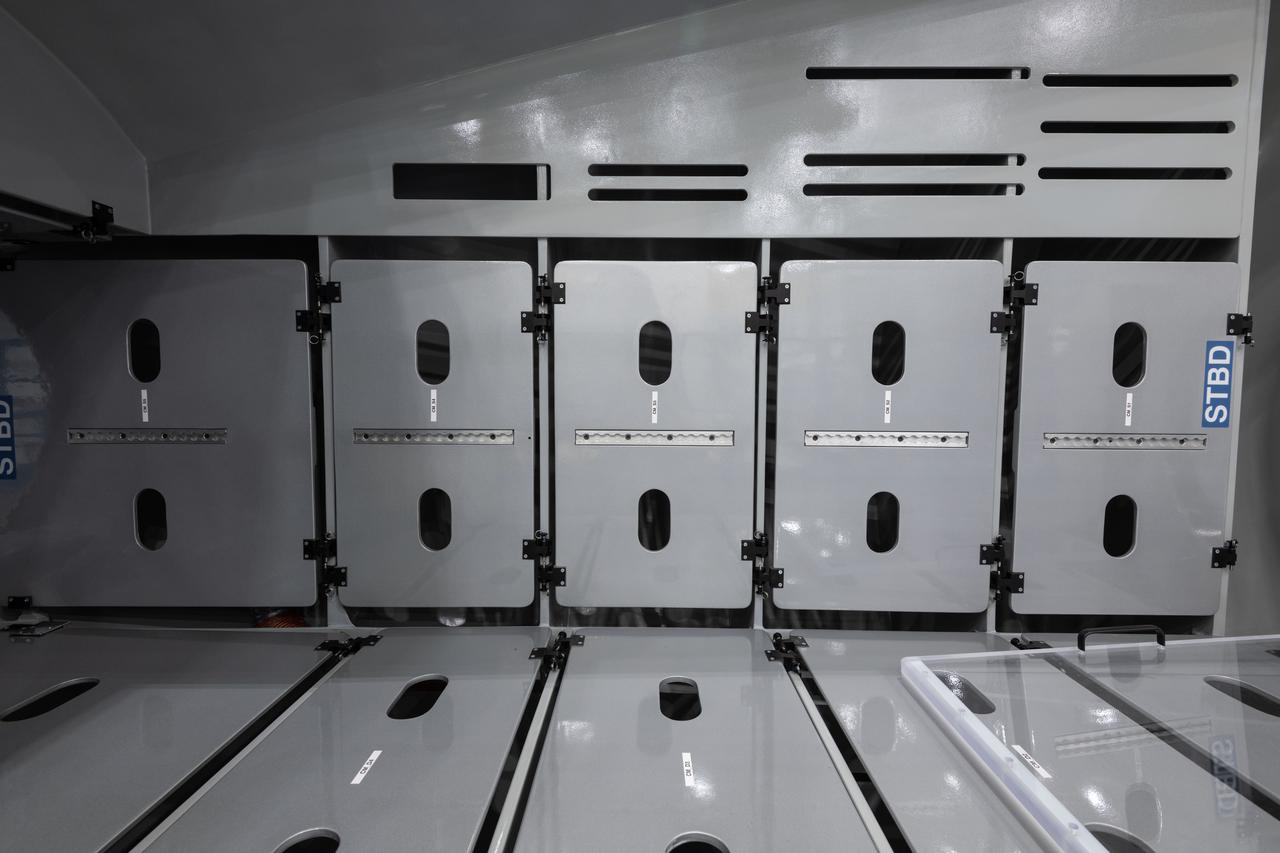
jsc2021e004396 (Jan. 21, 2021) --- Internal view of the Sierra Nevada Dream Chaser mockup located in Building 9N, Space Vehicle Mockup Facility (SVMF) at the NASA Johnson Space Center.
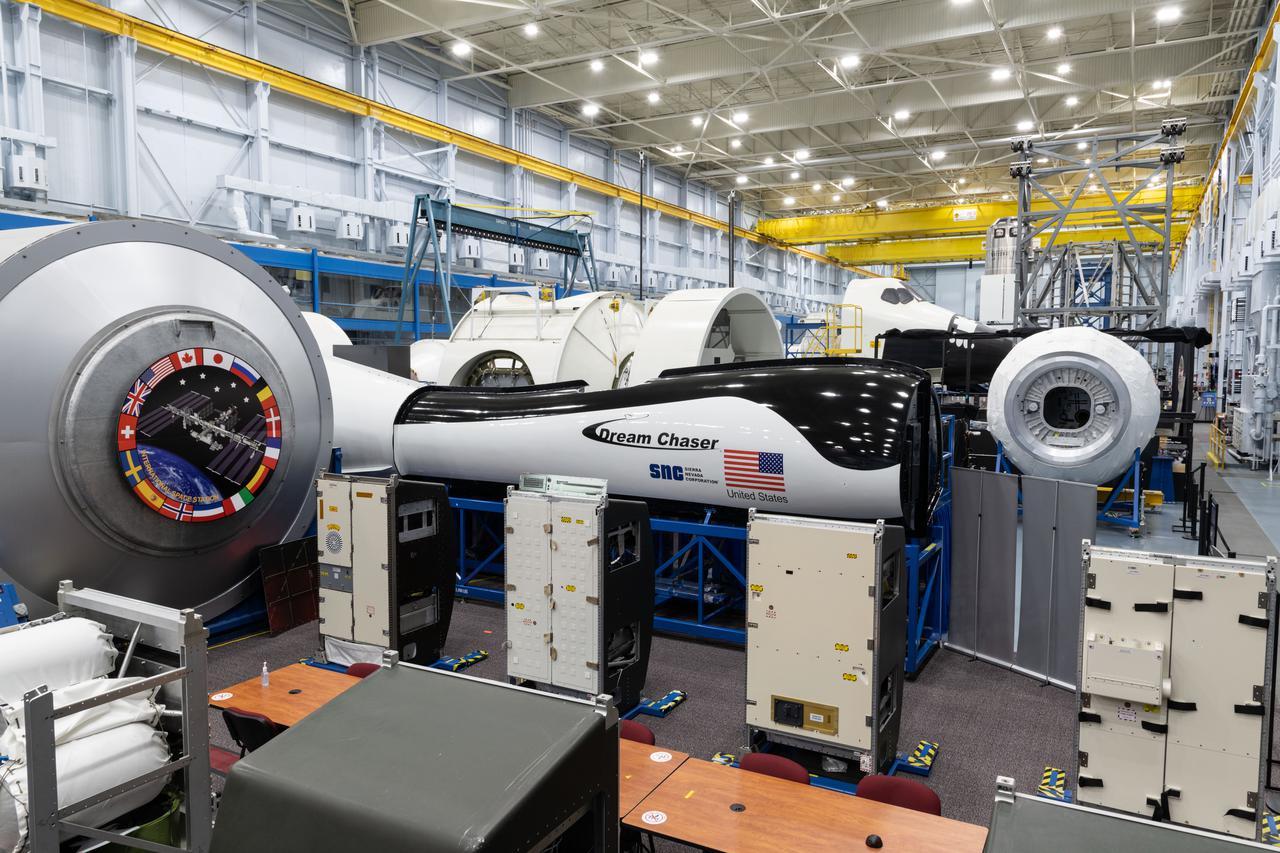
jsc2021e004391 (Jan. 21, 2021) --- External view of the Sierra Nevada Dream Chaser mockup located in Building 9N, Space Vehicle Mockup Facility (SVMF) at the NASA Johnson Space Center.
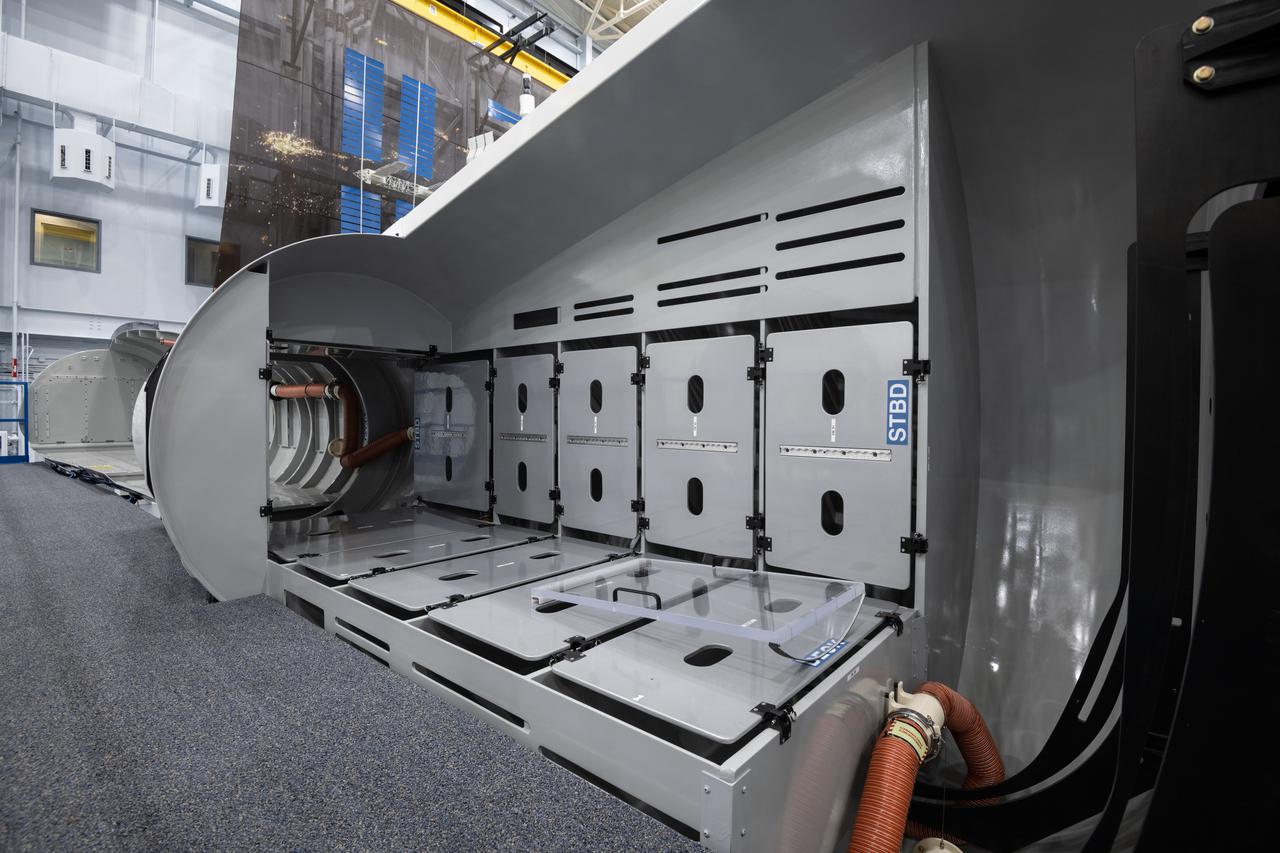
jsc2021e004395 (Jan. 21, 2021) --- Internal view of the Sierra Nevada Dream Chaser mockup located in Building 9N, Space Vehicle Mockup Facility (SVMF) at the NASA Johnson Space Center.

jsc2021e004394 (Jan. 21, 2021) --- Internal view of the Sierra Nevada Dream Chaser mockup located in Building 9N, Space Vehicle Mockup Facility (SVMF) at the NASA Johnson Space Center.
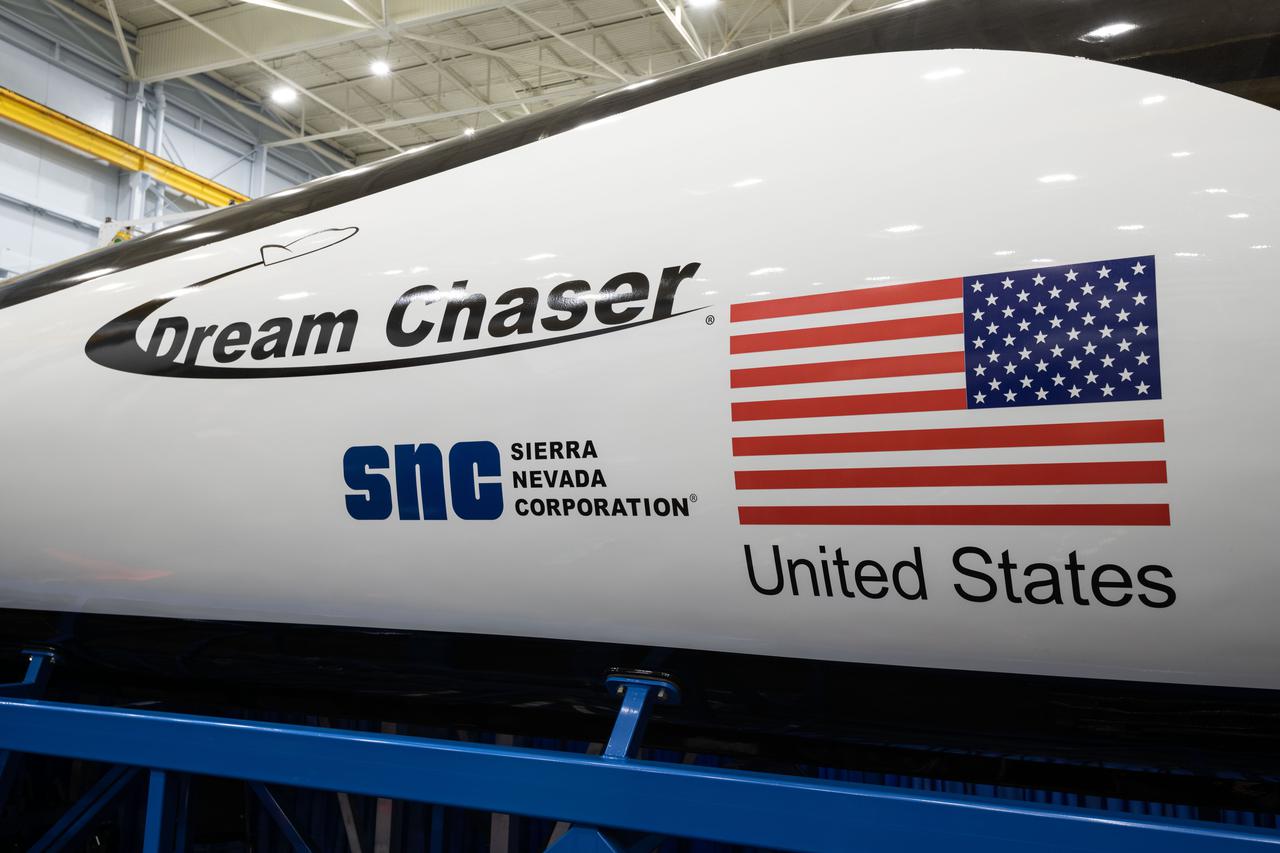
jsc2021e004388 (Jan. 21, 2021) --- External view of the Sierra Nevada Dream Chaser mockup located in Building 9N, Space Vehicle Mockup Facility (SVMF) at the NASA Johnson Space Center.
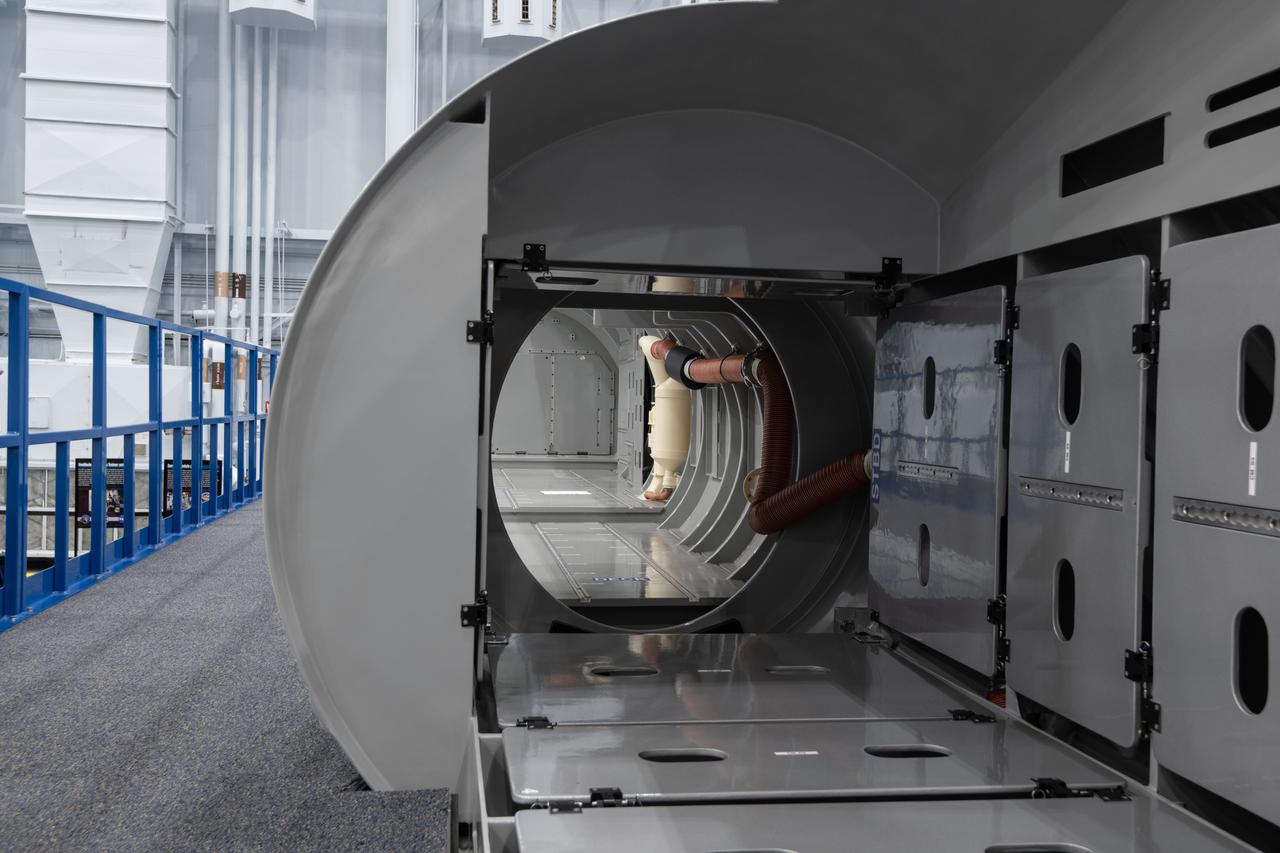
jsc2021e004397 (Jan. 21, 2021) --- Internal view of the Sierra Nevada Dream Chaser mockup located in Building 9N, Space Vehicle Mockup Facility (SVMF) at the NASA Johnson Space Center.
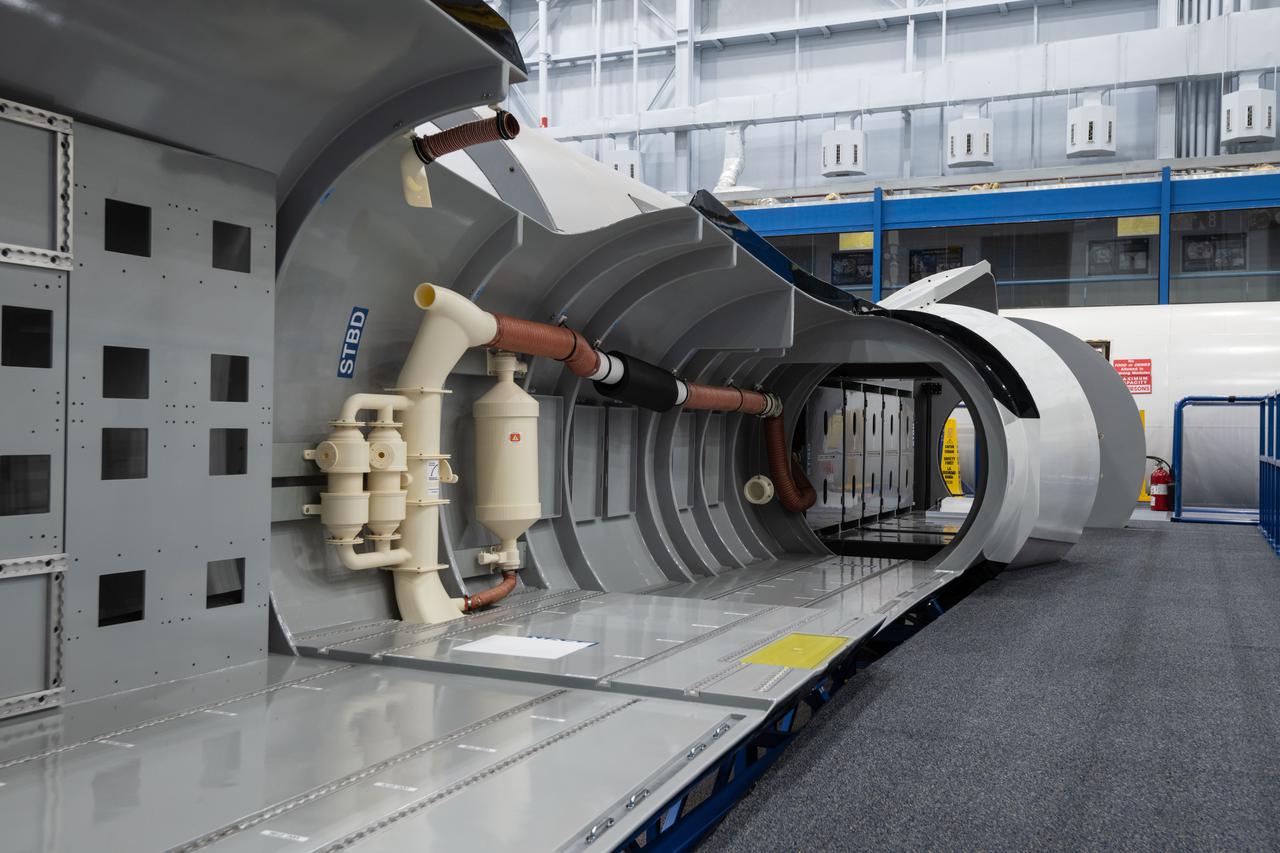
jsc2021e004398 (Jan. 21, 2021) --- Internal view of the Sierra Nevada Dream Chaser mockup located in Building 9N, Space Vehicle Mockup Facility (SVMF) at the NASA Johnson Space Center.
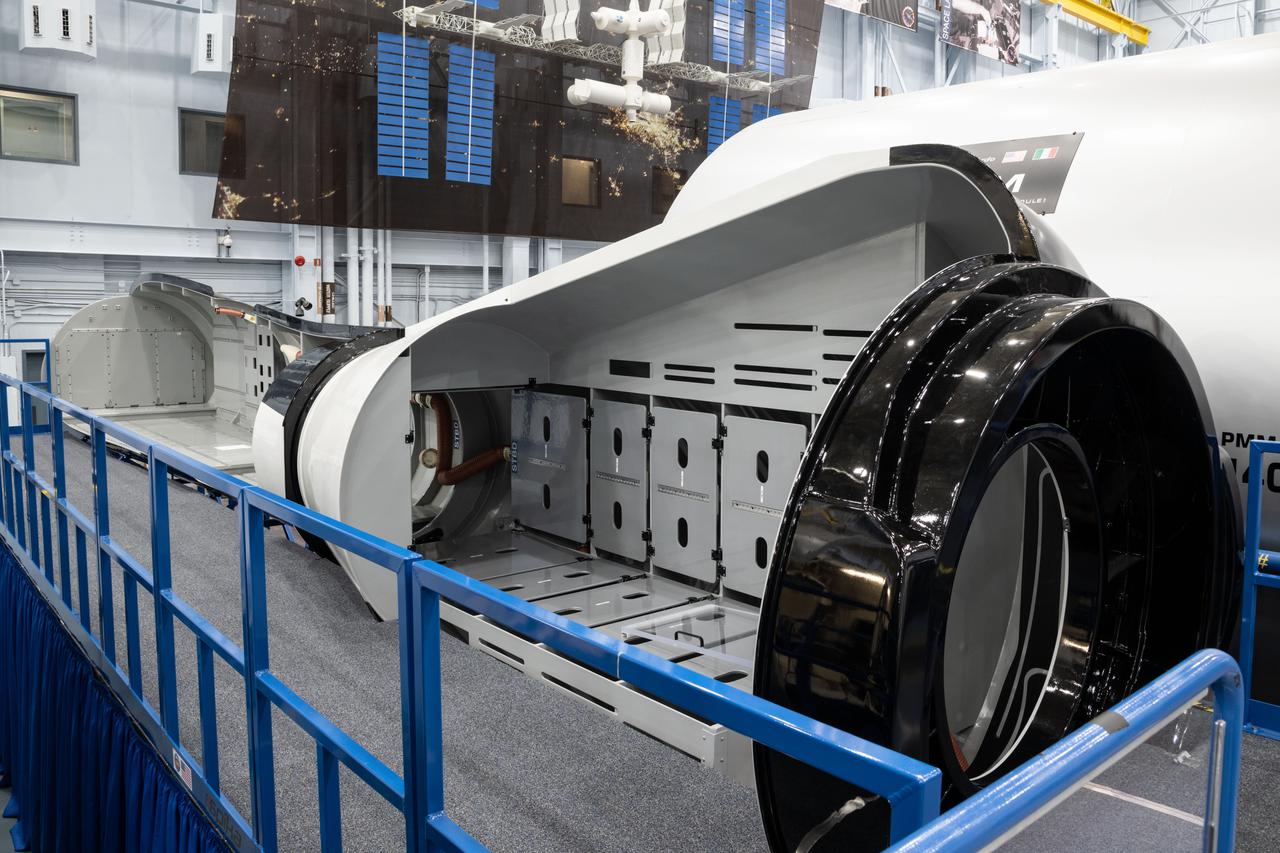
jsc2021e004392 (Jan. 21, 2021) --- Internal view of the Sierra Nevada Dream Chaser mockup located in Building 9N, Space Vehicle Mockup Facility (SVMF) at the NASA Johnson Space Center.
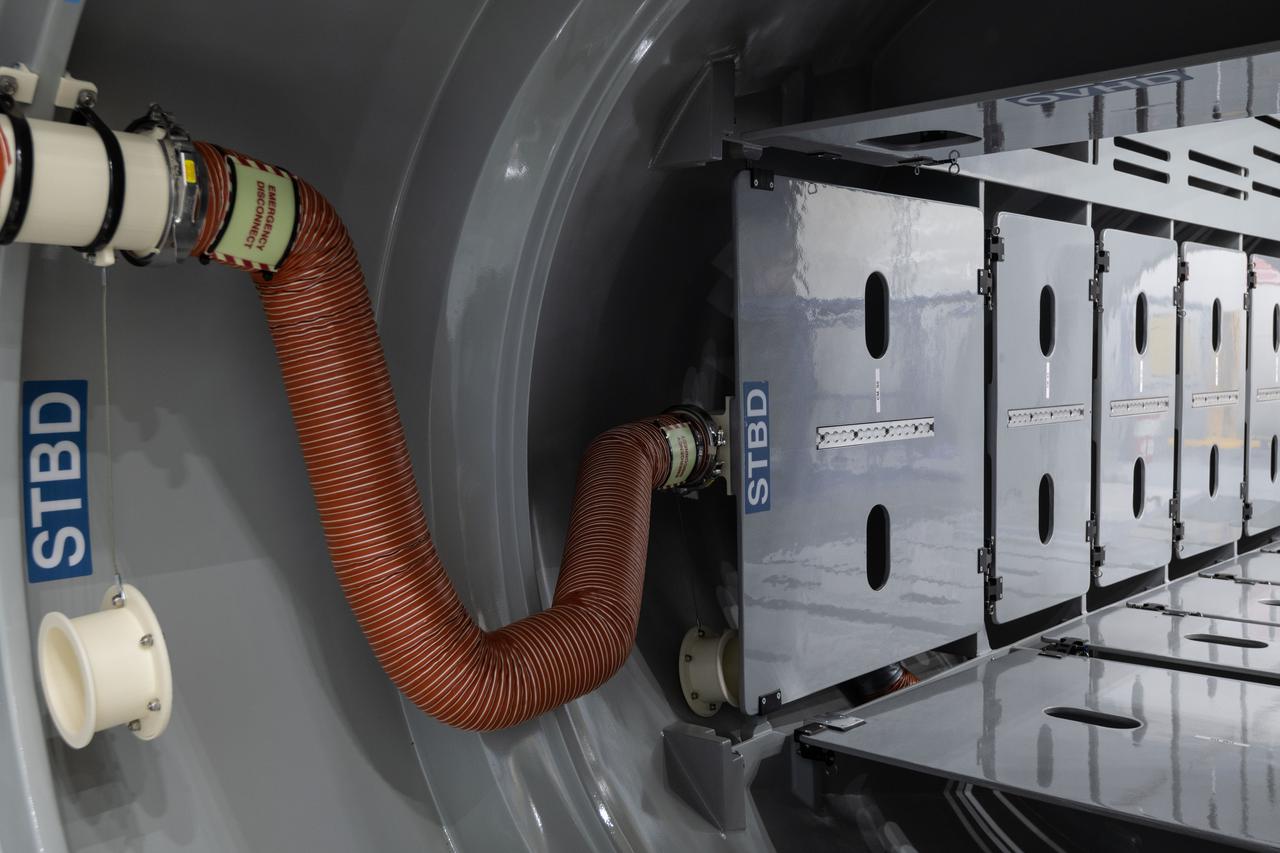
jsc2021e00439 (Jan. 21, 2021) --- Internal view of the Sierra Nevada Dream Chaser mockup located in Building 9N, Space Vehicle Mockup Facility (SVMF) at the NASA Johnson Space Center.
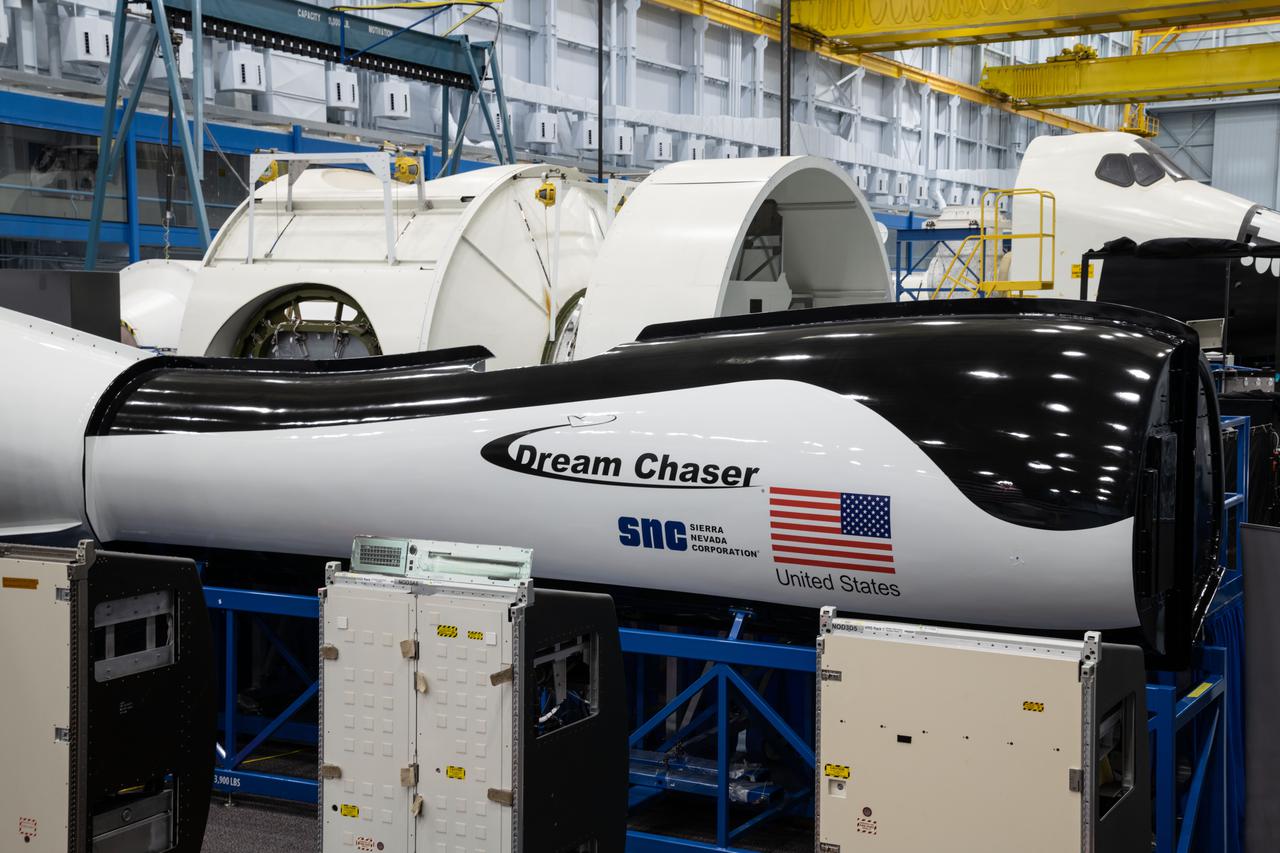
jsc2021e004390 (Jan. 21, 2021) --- External view of the Sierra Nevada Dream Chaser mockup located in Building 9N, Space Vehicle Mockup Facility (SVMF) at the NASA Johnson Space Center.
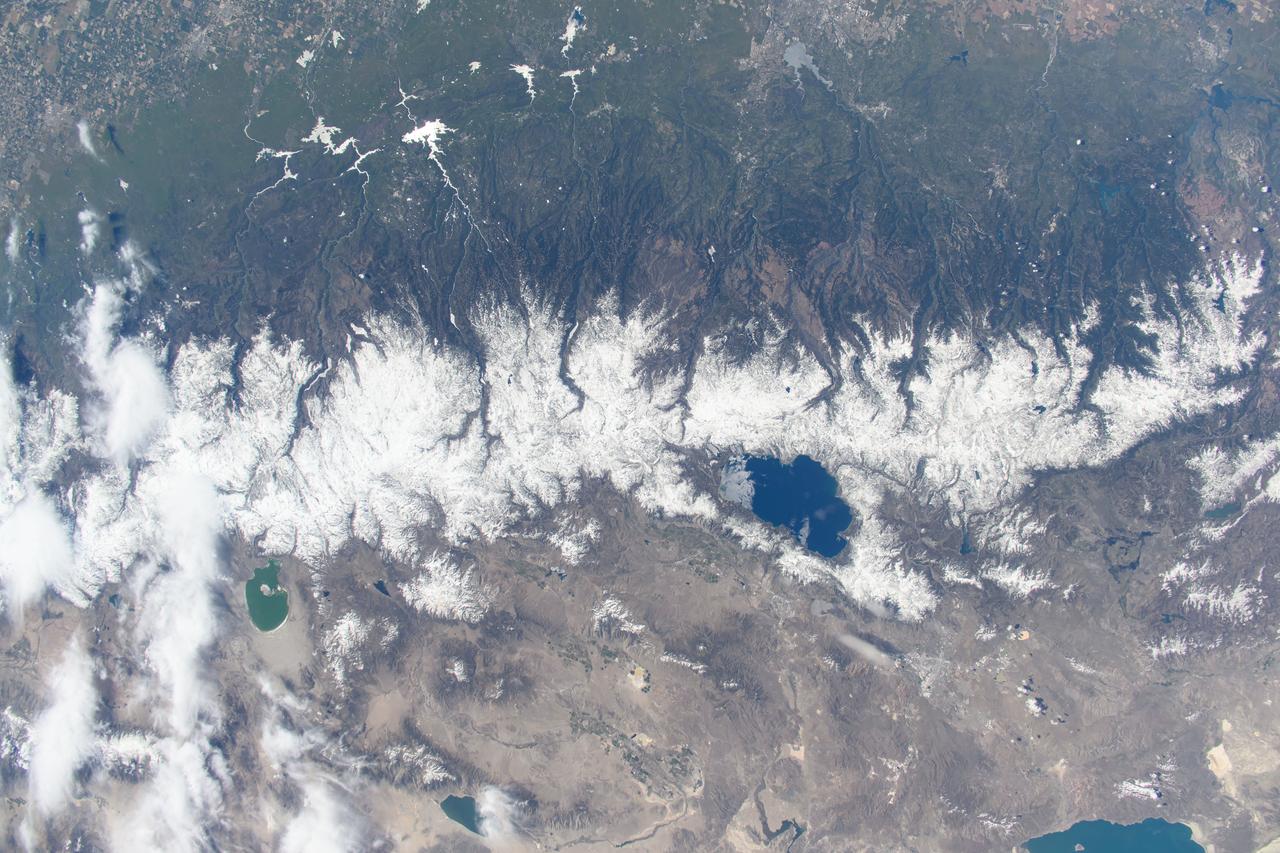
iss071e014284 (April 20, 2024) -- Lake Tahoe, situated in the Sierra Nevada Mountains and straddling the border of California and Nevada, was photographed as the International Space Station orbited 258 miles above.
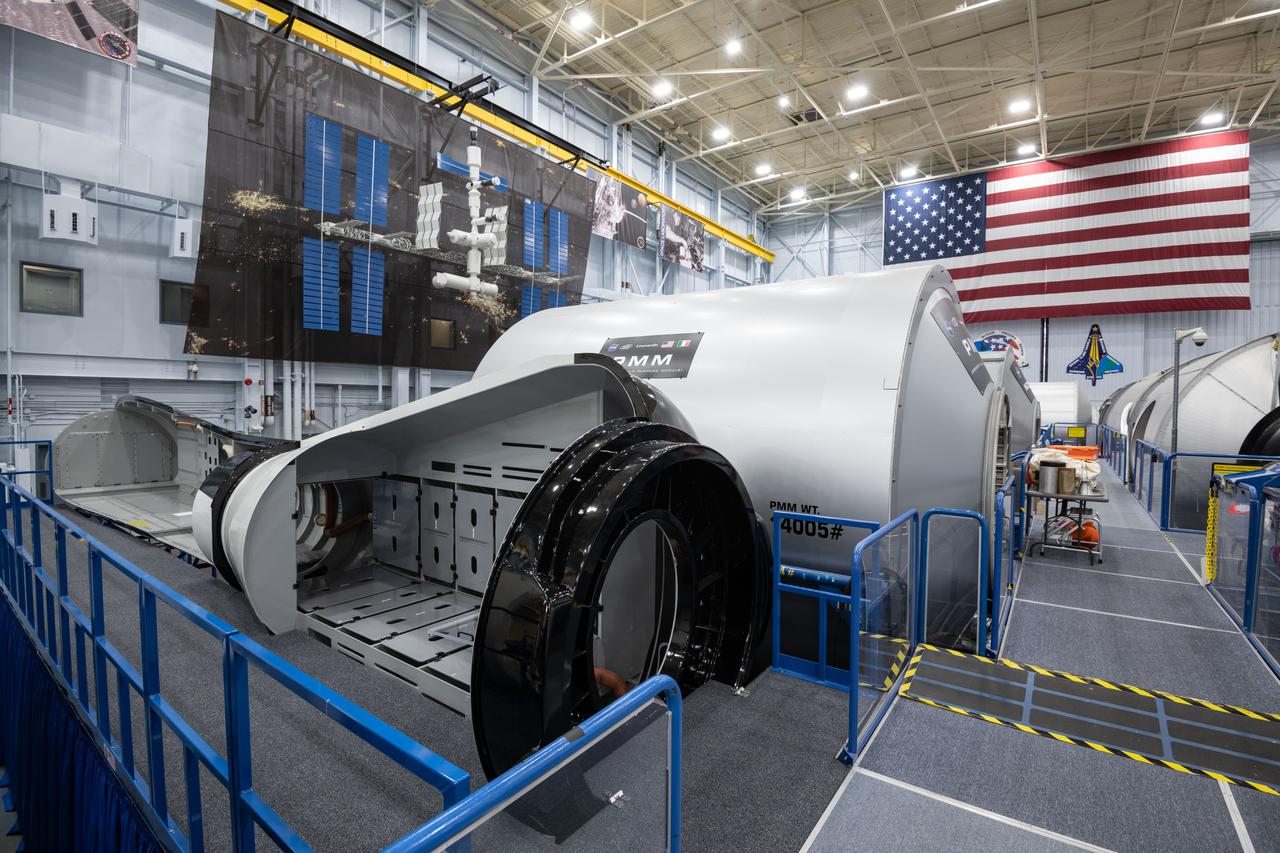
jsc2021e004393 (Jan. 21, 2021) --- Internal view of the Sierra Nevada Dream Chaser mockup located in Building 9N, Space Vehicle Mockup Facility (SVMF) at the NASA Johnson Space Center.
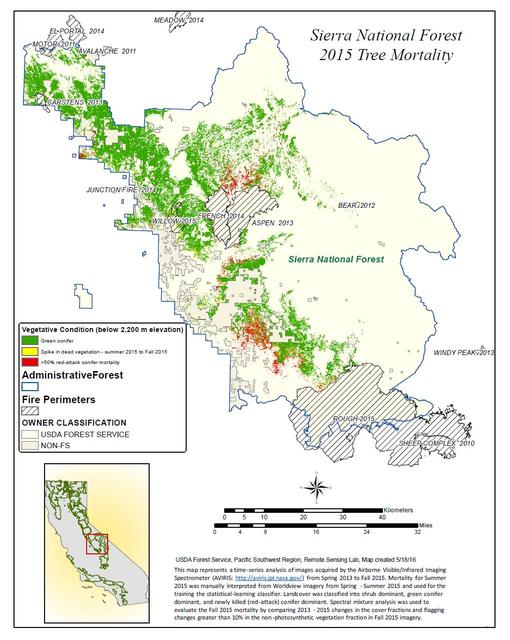
California, reveals the devastating effect of California's ongoing drought on Sierra Nevada conifer forests. The map will be used to help the U.S. Forest Service assess and respond to the impacts of increased tree mortality caused by the drought, particularly where wildlands meet urban areas within the Sierra National Forest. After several years of extreme drought, the highly stressed conifers (trees or bushes that produce cones and are usually green year-round) of the Sierra Nevada are now more susceptible to bark beetles (Dendroctonus spp.). While bark beetles killing trees in the Sierra Nevada is a natural phenomenon, the scale of mortality in the last couple of years is far greater than previously observed. The U.S. Forest Service is using recent airborne spectroscopic measurements from NASA's Airborne Visible/Infrared Imaging Spectrometer (AVIRIS) instrument aboard NASA's ER-2 aircraft, together with new advanced algorithms, to quantify this impact over this large region of rugged terrain. The high-altitude ER-2 aircraft is based at NASA's Armstrong Flight Research Center, Edwards, California. The image was created by scientists at the USFS's Pacific Southwest Region Remote Sensing Lab, McClellan, California, by performing a time series analysis of AVIRIS images. Scientists evaluated baseline tree mortality on public lands in the summer of 2015 using a machine learning algorithm called "random forest." This algorithm classifies the AVIRIS measurements as dominated by either shrubs, healthy trees or newly dead conifer trees. To quantify how much the amount of dead vegetation increased during the fall of 2015, the Forest Service scientists conducted an advanced spectral mixture analysis. This analysis evaluates each spectrum to determine the fraction of green vegetation, dead vegetation and soil. The full spectral range of AVIRIS is important to separate the signatures of soil and dead vegetation. To produce this comprehensive Sierra National Forest tree mortality map, the result from the summer of 2015 was evaluated to look for increases of more than 10 percent in dead vegetation during the fall of 2015. AVIRIS measures spectra of the Earth system to conduct advanced science research. These western U.S. AVIRIS measurements were acquired as part of NASA's Hyperspectral Infrared Imager (HyspIRI) preparatory airborne campaign. HyspIRI was one of the space missions suggested to NASA by the National Academy of Sciences in its 2007 decadal survey for Earth Science. In the future, HyspIRI could provide spectral and thermal measurements of this type globally for ecosystem research and additional science objectives. http://photojournal.jpl.nasa.gov/catalog/PIA20717
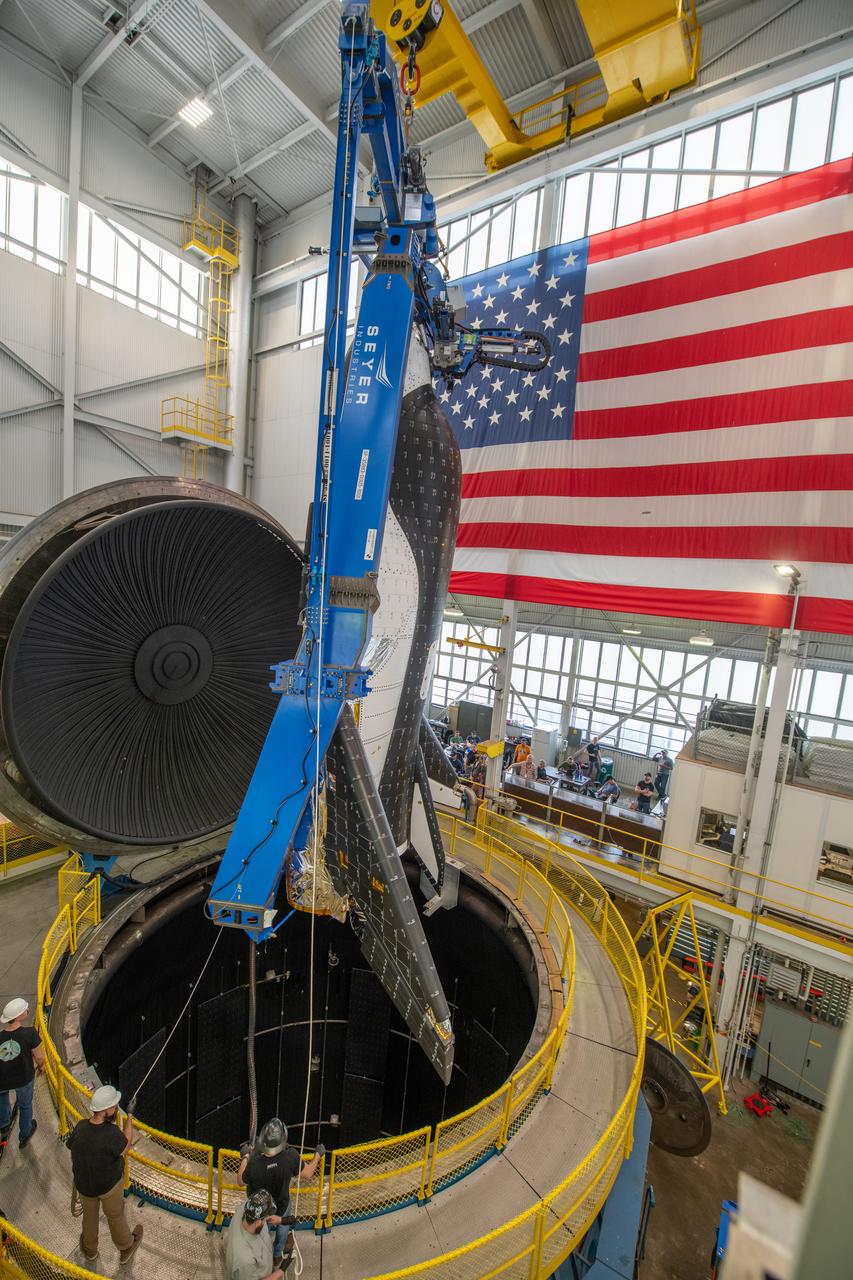
Sierra Space Dream Chaser space plane is lifted into the chamber at ISP (In Space Propulsion) facility, building 3211 at ATF (Armstrong Test Facility) for environmental testing. Once lowered into the test chamber, it will be exposed to the harsh cold conditions of space for extended periods of time.
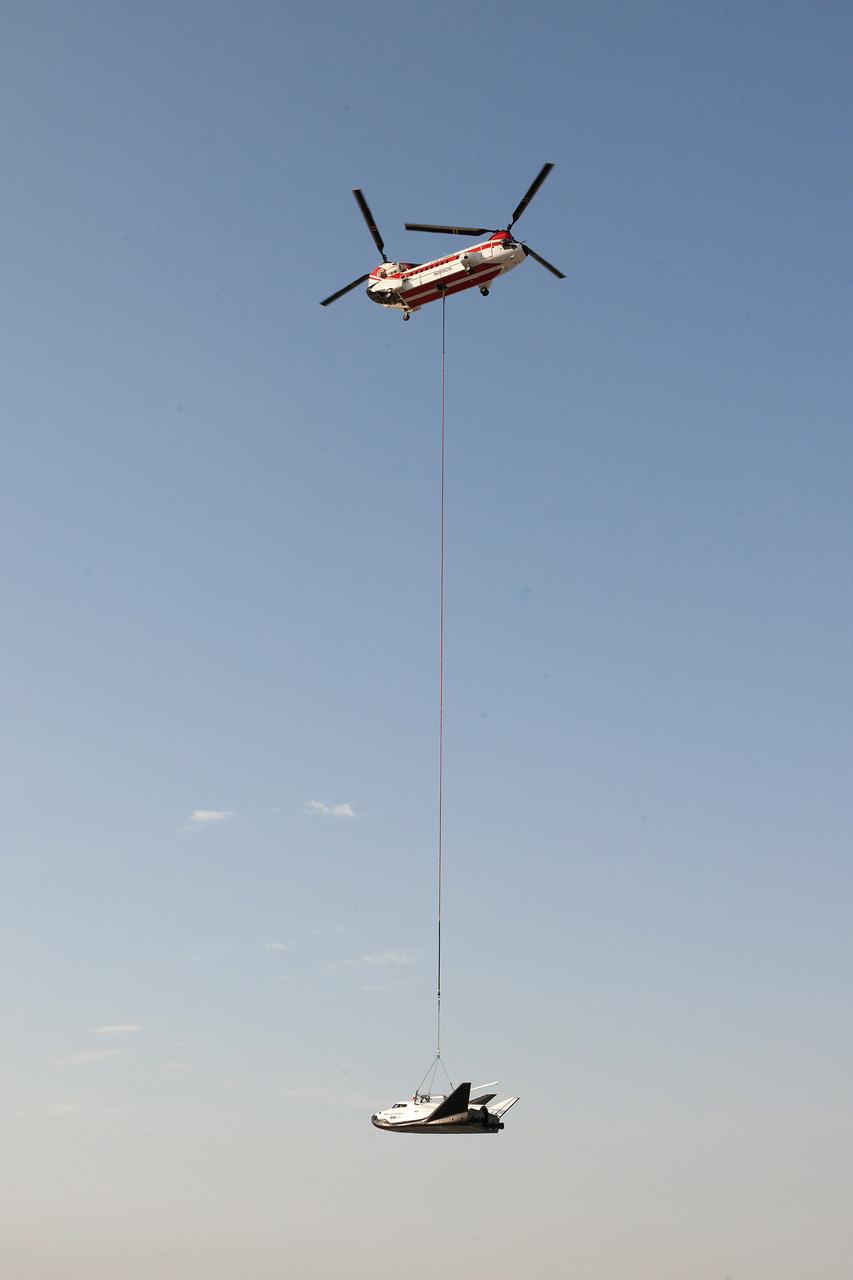
Sierra Nevada's Dream Chaser lifted off ramp on Wednesday, Aug. 30 at NASA Armstrong Flight Research Center by Columbia 234 UT helicopter for captive carry flight.
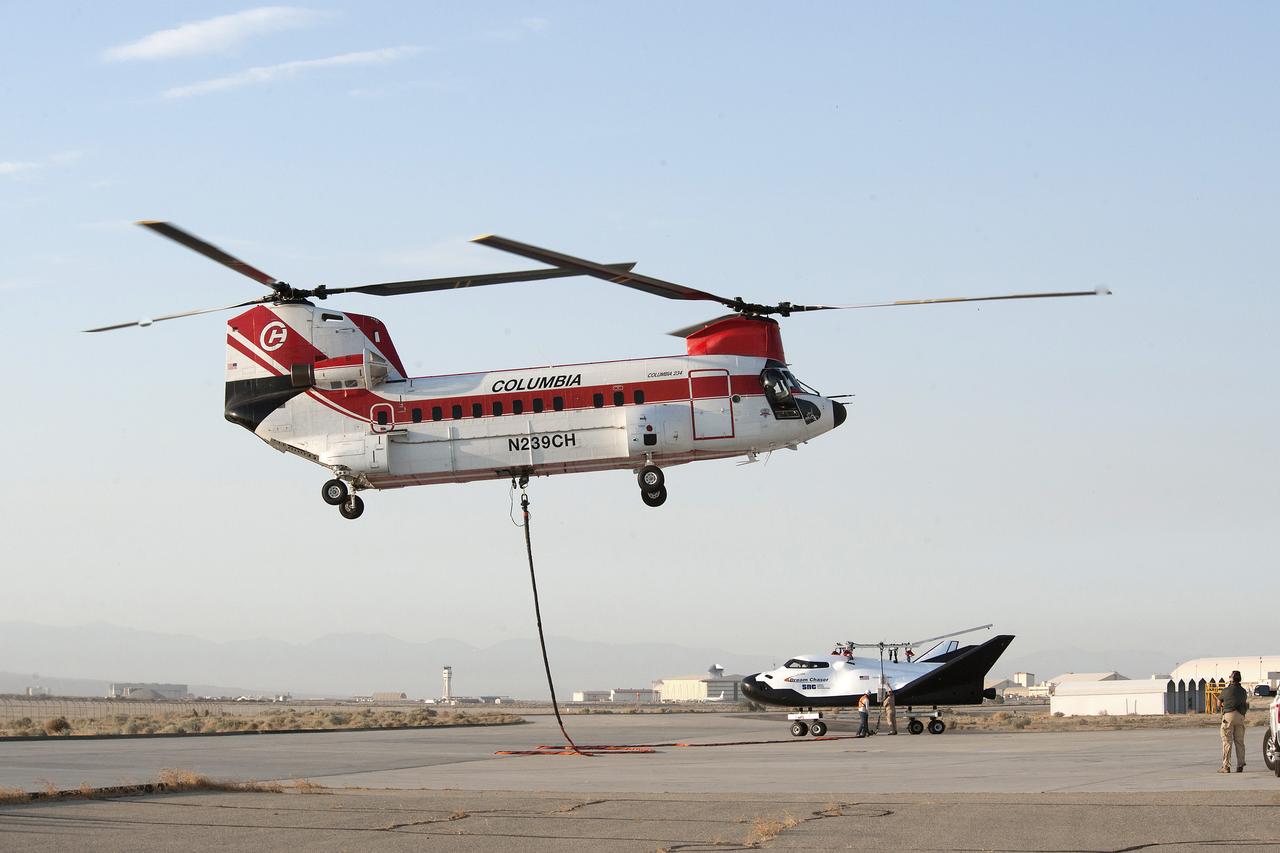
Sierra Nevada Corporation's (SNC) Dream Chaser® being lifted by Columbia 234 UT helicopter for a captive carry flight test on Wednesday, Aug. 30 at NASA Armstrong Flight Research Center.
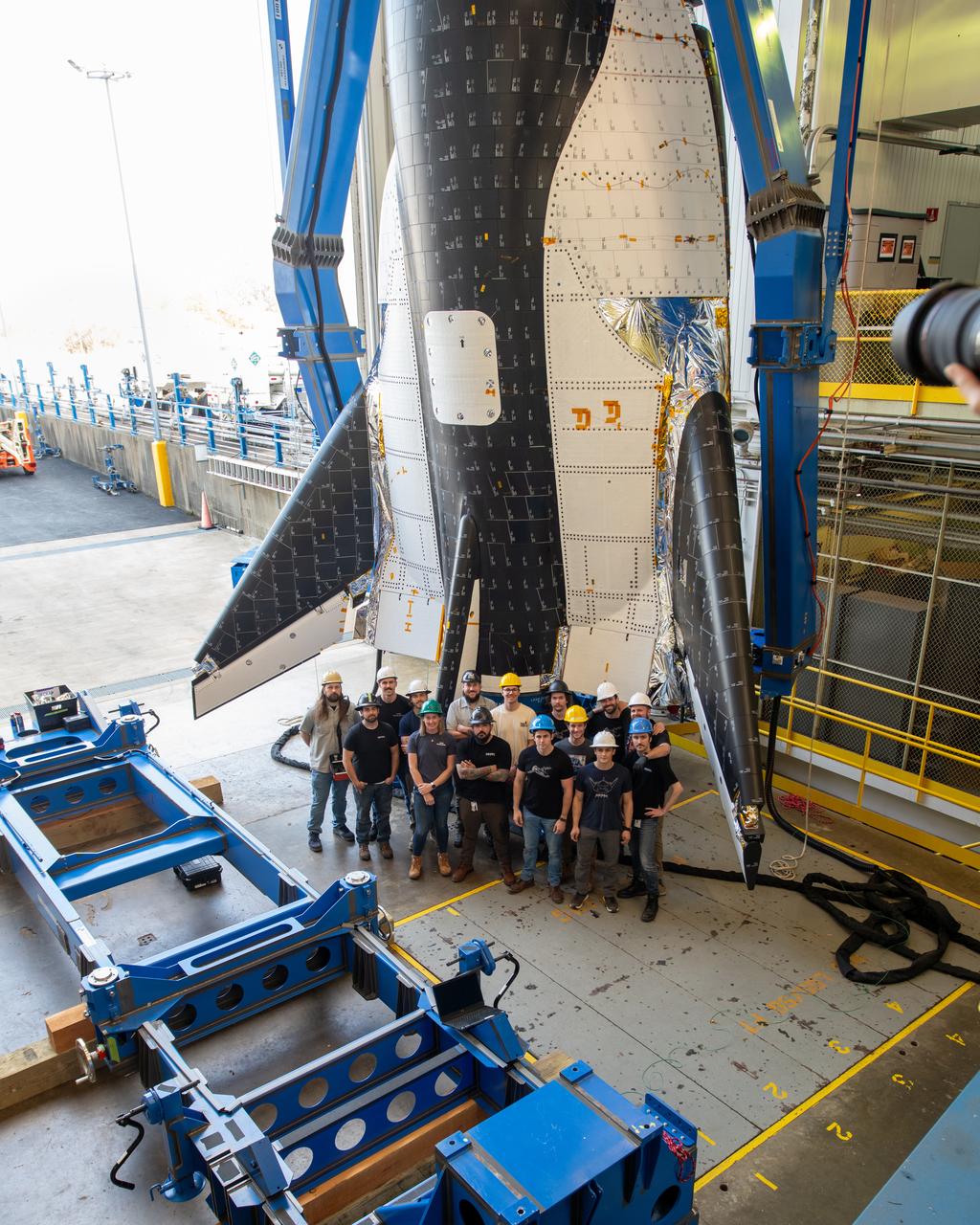
Group photo of the crew just before the critical lift of Dream Chaser into the chamber at ISP (In Space Propulsion) NASA GRC-ATF. Once lifted and lowered into the test chamber, it will be exposed to the harsh cold conditions of space for extended periods of time. Sierra Space Dream Chaser space plane will be lifted into the chamber at ISP (In Space Propulsion) facility, building 3211 at ATF (Armstrong Test Facility) for environmental testing
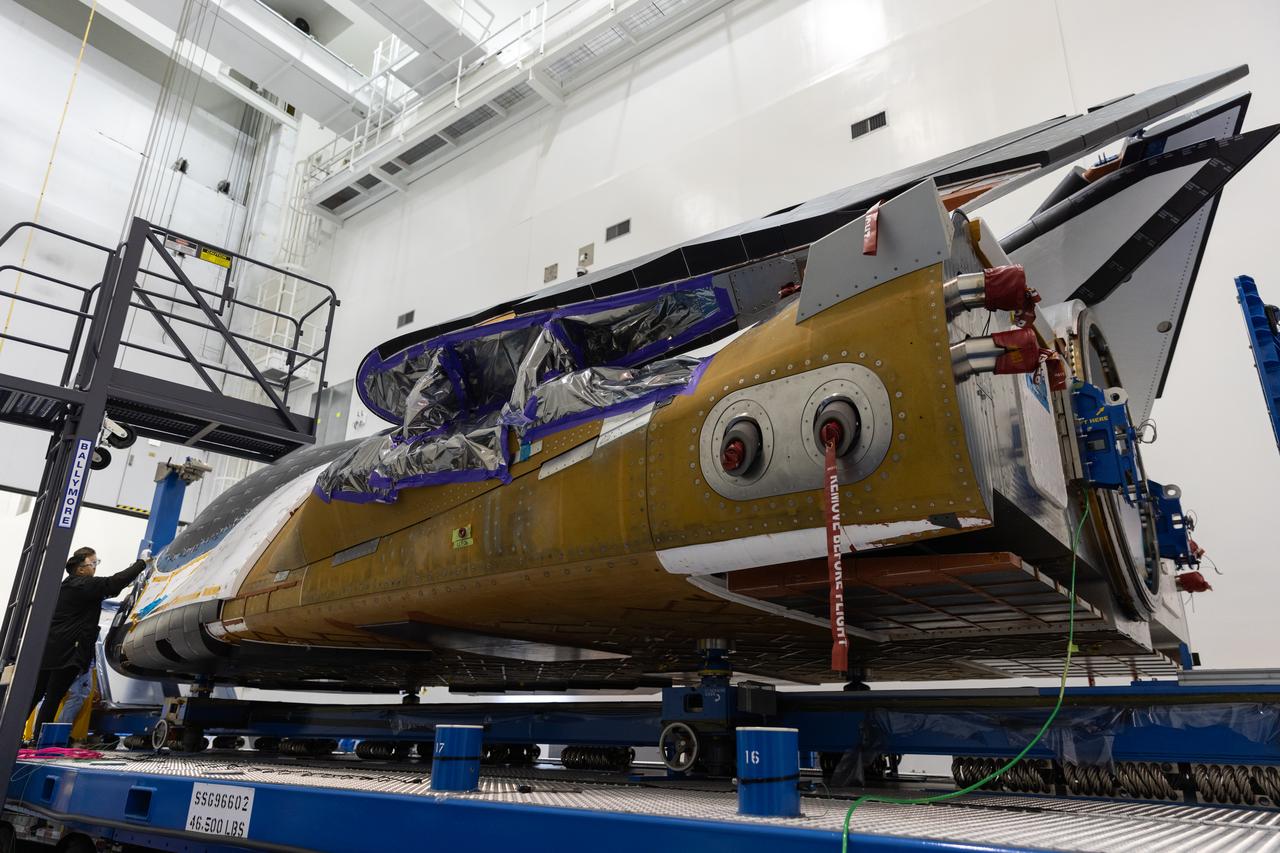
Teams process Dream Chaser Tenacity, Sierra Space's uncrewed cargo spaceplane, inside the Space Systems Processing Facility (SSPF) at NASA’s Kennedy Space Center in Florida on Monday, May 20, 2024, following its arrival from the agency's Neil Armstrong Test Facility in Ohio. Dream Chaser Tenacity will undergo final testing and prelaunch processing inside the high bay of the SSPF ahead of its inaugural launch atop a ULA (United Launch Alliance) Vulcan rocket from nearby Cape Canaveral Space Force Station. The reusable transportation system is contracted to perform a minimum of seven cargo missions to the International Space Station as part of the agency’s efforts to expand commercial resupply services to low Earth orbit.
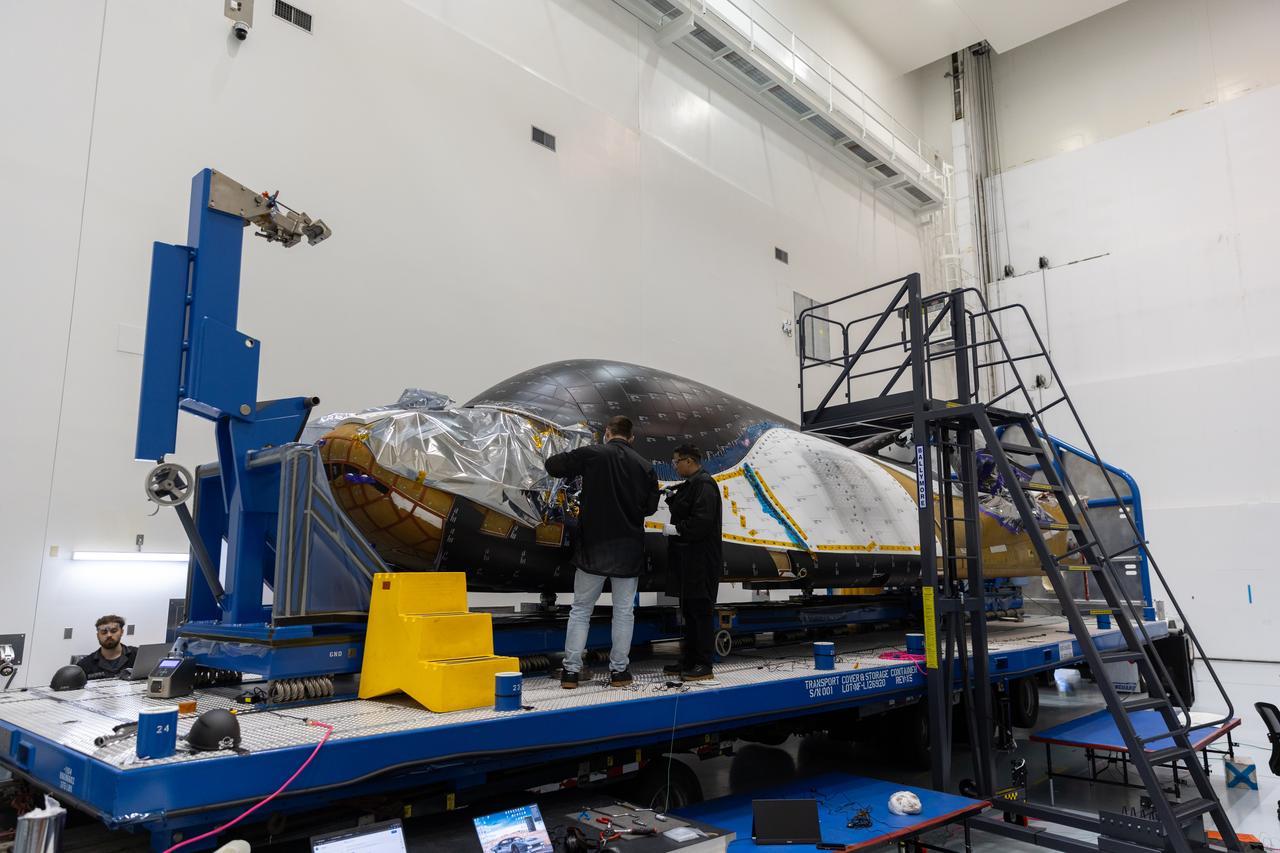
Teams process Dream Chaser Tenacity, Sierra Space's uncrewed cargo spaceplane, inside the Space Systems Processing Facility (SSPF) at NASA’s Kennedy Space Center in Florida on Monday, May 20, 2024, following its arrival from the agency's Neil Armstrong Test Facility in Ohio. Dream Chaser Tenacity will undergo final testing and prelaunch processing inside the high bay of the SSPF ahead of its inaugural launch atop a ULA (United Launch Alliance) Vulcan rocket from nearby Cape Canaveral Space Force Station. The reusable transportation system is contracted to perform a minimum of seven cargo missions to the International Space Station as part of the agency’s efforts to expand commercial resupply services to low Earth orbit.
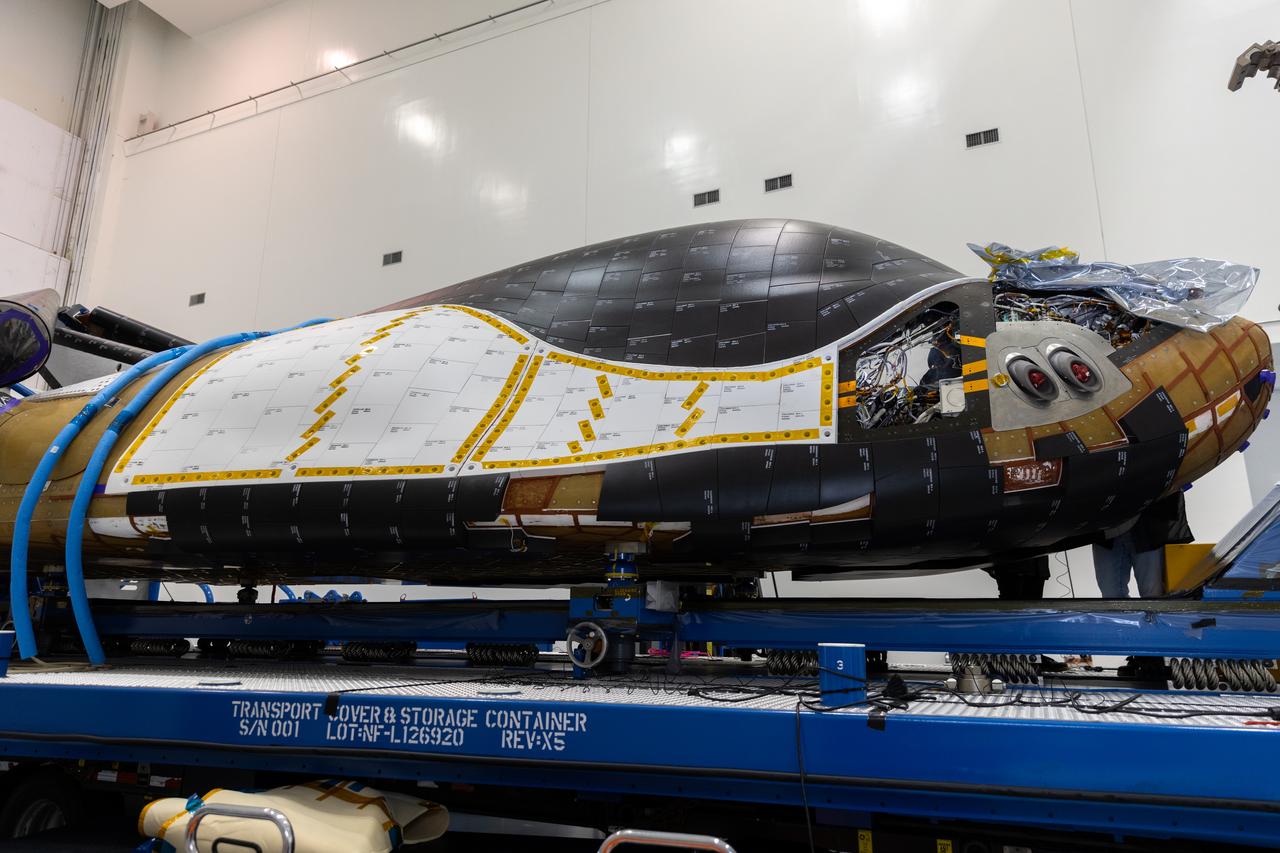
Dream Chaser Tenacity, Sierra Space's uncrewed cargo spaceplane is processed inside the Space Systems Processing Facility (SSPF) at NASA’s Kennedy Space Center in Florida on Monday, May 20, 2024, after arriving by truck inside a climate-controlled transportation container, completing the journey from the agency's Neil Armstrong Test Facility in Ohio. Dream Chaser Tenacity will undergo final testing and prelaunch processing inside the high bay of the SSPF ahead of its inaugural launch atop a ULA (United Launch Alliance) Vulcan rocket from nearby Cape Canaveral Space Force Station. The reusable transportation system is contracted to perform a minimum of seven cargo missions to the International Space Station as part of the agency’s efforts to expand commercial resupply services to low Earth orbit.
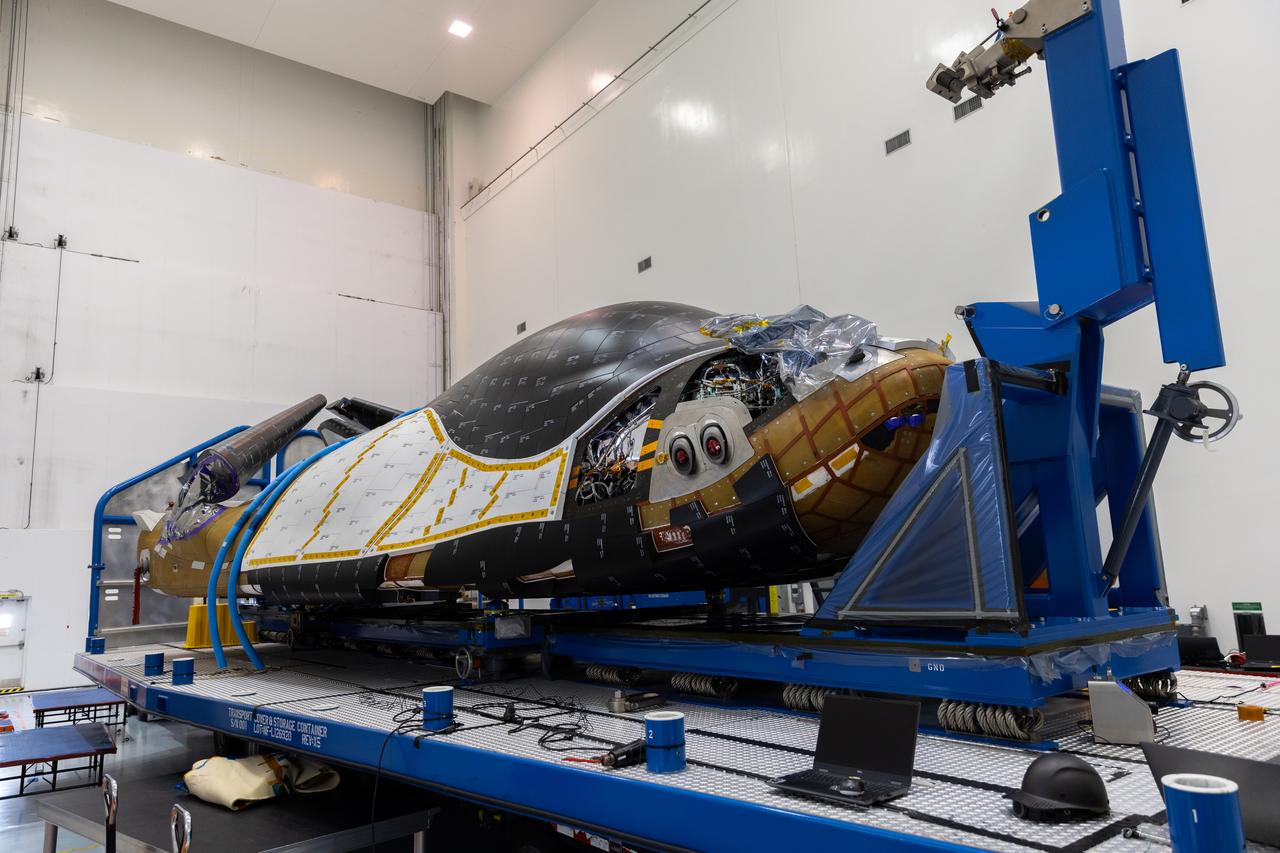
Dream Chaser Tenacity, Sierra Space's uncrewed cargo spaceplane is processed inside the Space Systems Processing Facility (SSPF) at NASA’s Kennedy Space Center in Florida on Monday, May 20, 2024, after arriving by truck inside a climate-controlled transportation container, completing the journey from the agency's Neil Armstrong Test Facility in Ohio. Dream Chaser Tenacity will undergo final testing and prelaunch processing inside the high bay of the SSPF ahead of its inaugural launch atop a ULA (United Launch Alliance) Vulcan rocket from nearby Cape Canaveral Space Force Station. The reusable transportation system is contracted to perform a minimum of seven cargo missions to the International Space Station as part of the agency’s efforts to expand commercial resupply services to low Earth orbit.
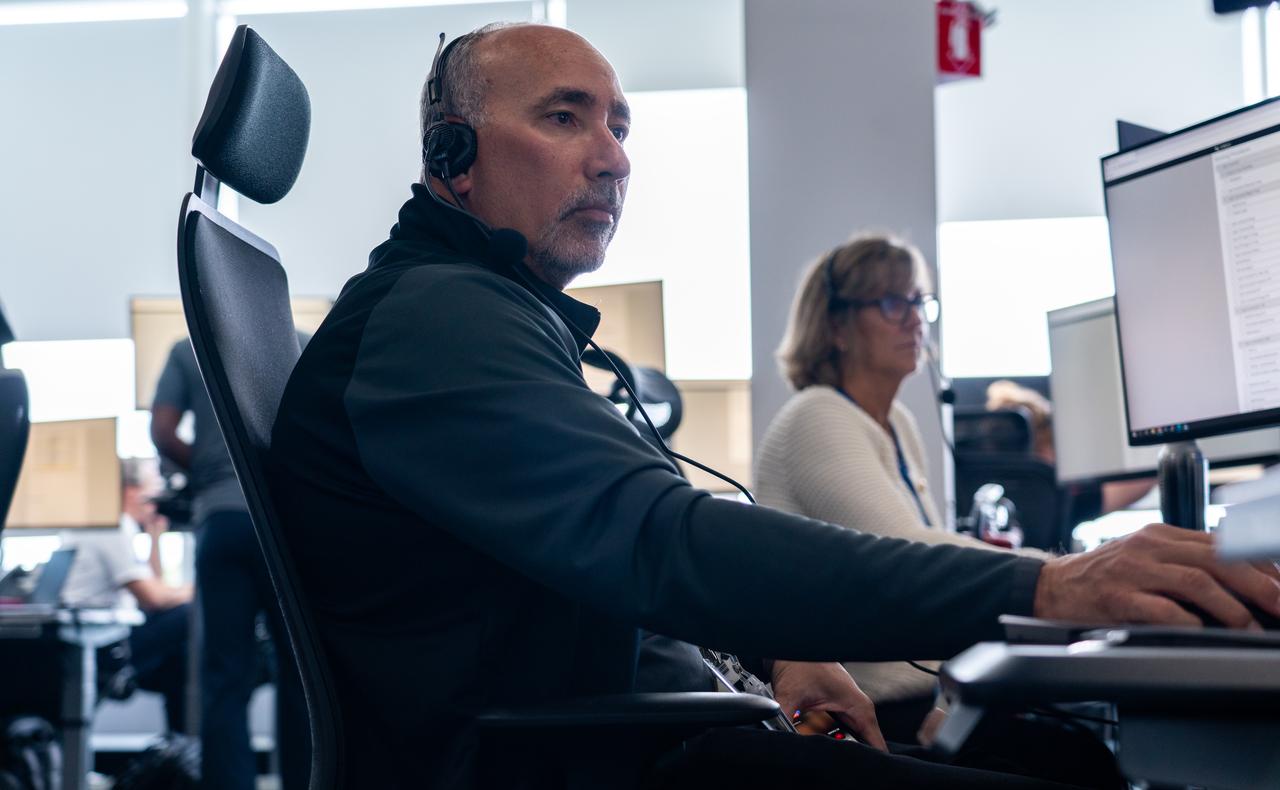
From left, Albert Sierra and Jenny Lyons, program and deputy program managers for NASA’s Launch Services Program, participate in rehearsal launch operations for the National Oceanic and Atmospheric Administration (NOAA) GOES-U (Geostationary Operational Environmental Satellite U) mission inside Hangar X at NASA’s Kennedy Space Center in Florida on Monday, June 17, 2024. The GOES-U satellite, the final addition to GOES-R series, serves a critical role in providing continuous coverage of the Western Hemisphere, including monitoring tropical systems in the eastern Pacific and Atlantic oceans.
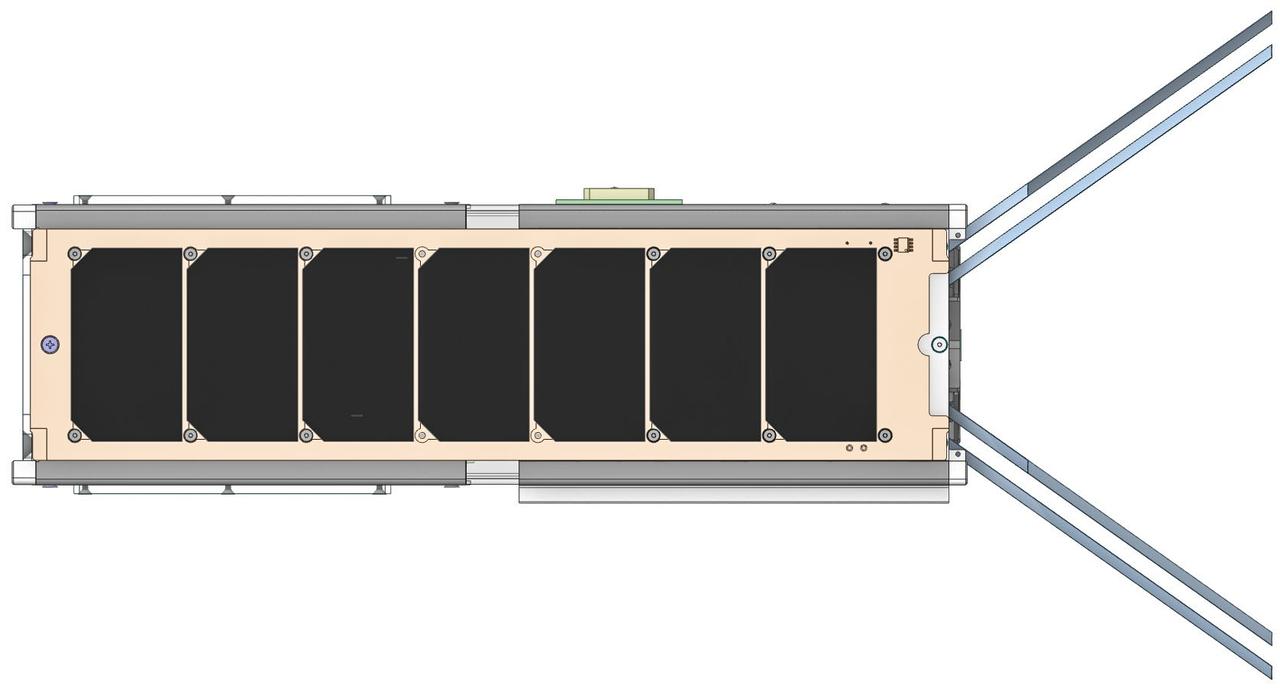
jsc2025e039325 (4/17/2025) --- Graphic of the Foras Promineo CubeSat exterior is shown. The Foras Promineo CubeSat engages the public with space technology by allowing individuals to control a robot arm to grasp free-floating objects inside the satellite. Image courtesy of Sierra Lobo.
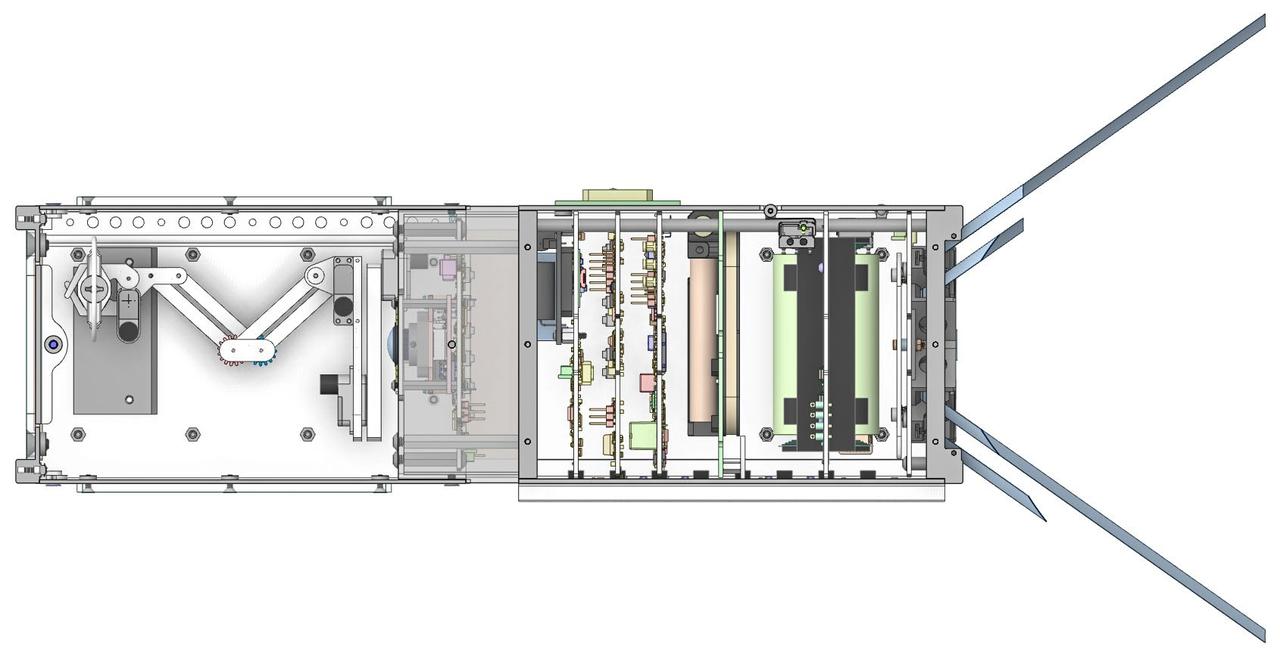
jsc2025e039324 (4/17/2025) --- Graphic of the Foras Promineo CubeSat cutaway view is seen. The Foras Promineo CubeSat engages the public with space technology by allowing individuals to control a robot arm to grasp free-floating objects inside the satellite. Image courtesy of Sierra Lobo.
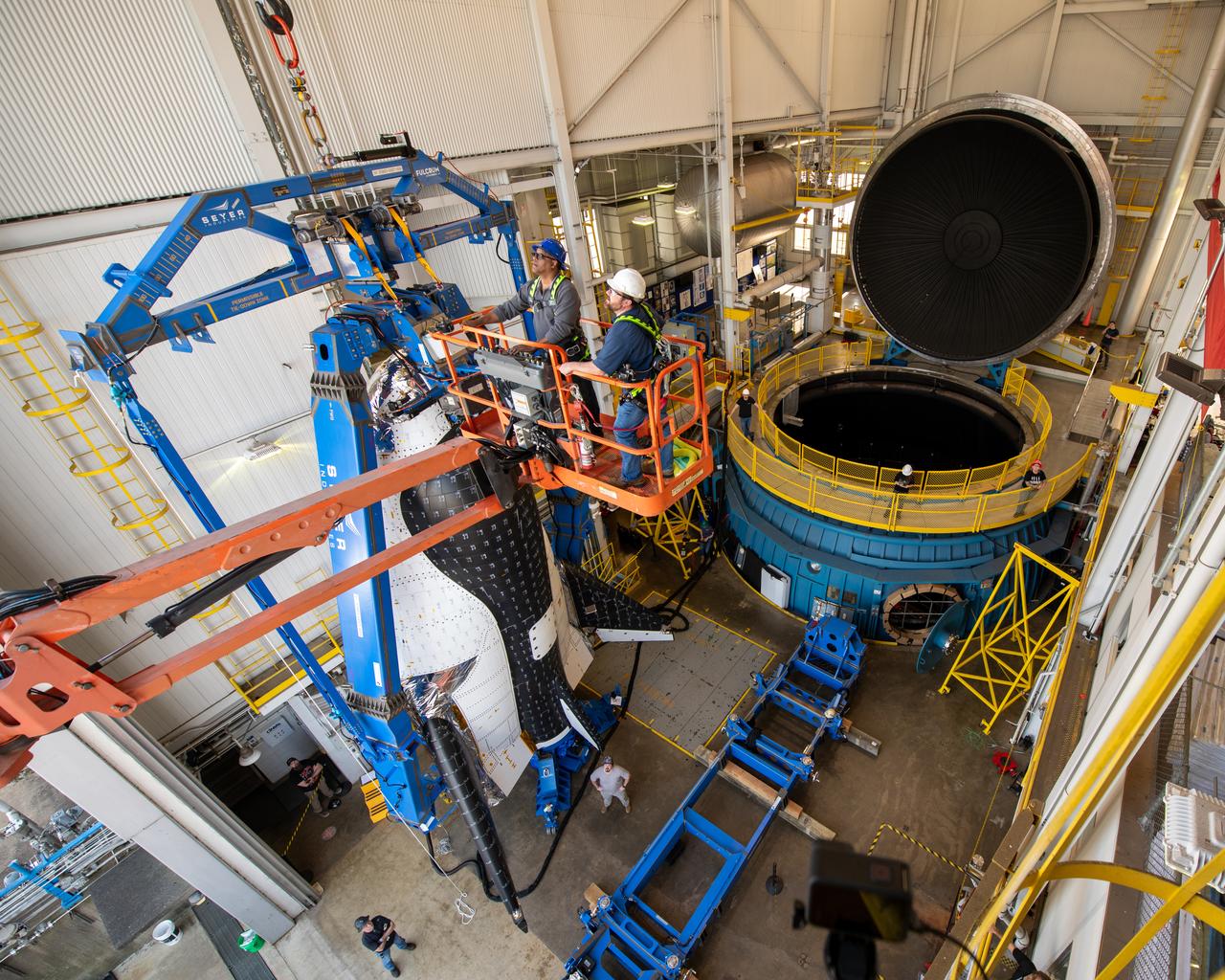
Final inspection of the crane operation just before the critical lift of the Sierra Space Plane, Dream Chaser. It will go into the chamber at ISP (In Space Propulsion) NASA GRC-ATF. Once lowered into the test chamber, it will be exposed to the harsh cold conditions of space for extended periods of time at building 3211 at ATF (Armstrong Test Facility) for environmental testing.
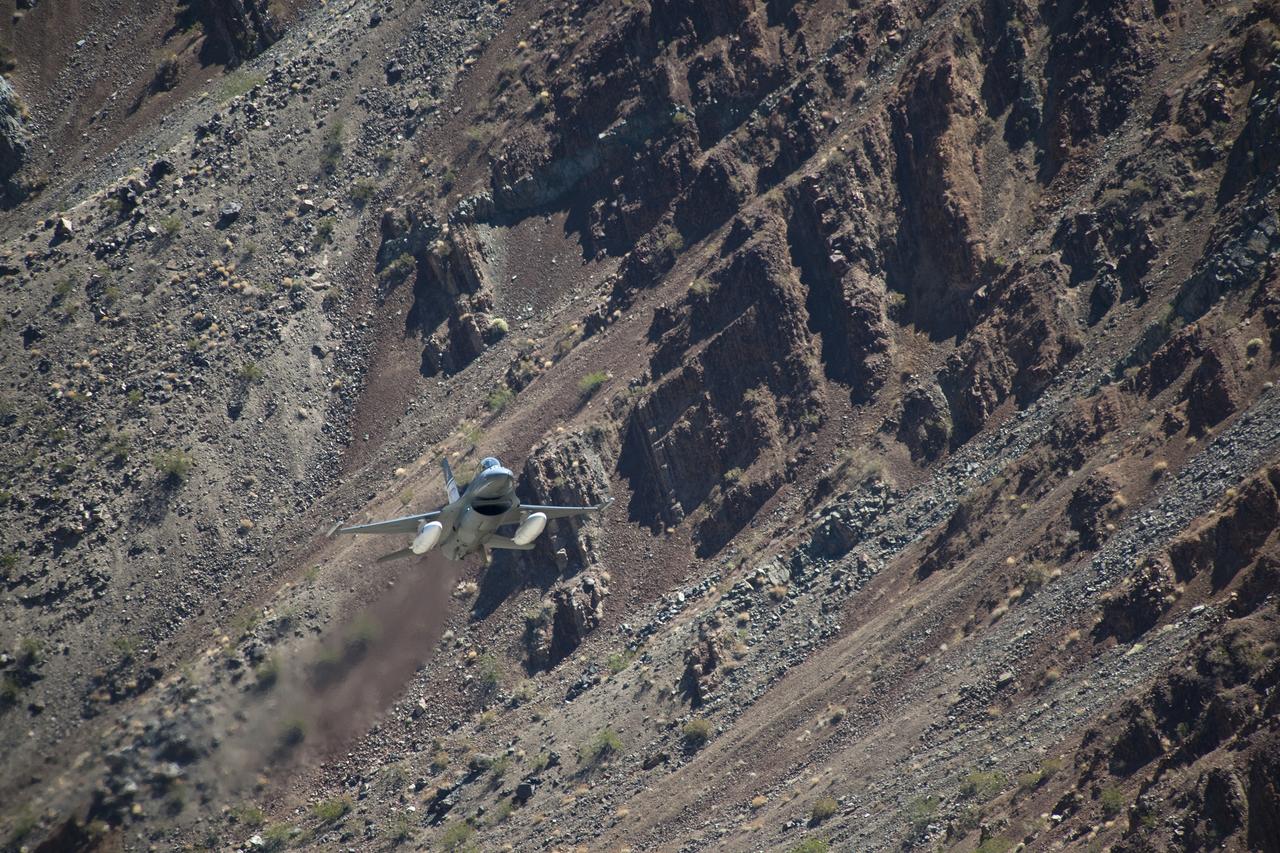
The Air Force F-16D Automatic Collision Avoidance Technology aircraft flew at low levels above the Sierra Nevada Mountains to test the ACAT Fighter Risk Reduction Project to develop collision avoidance technologies for aircraft, to reduce the risk of ground collisions.
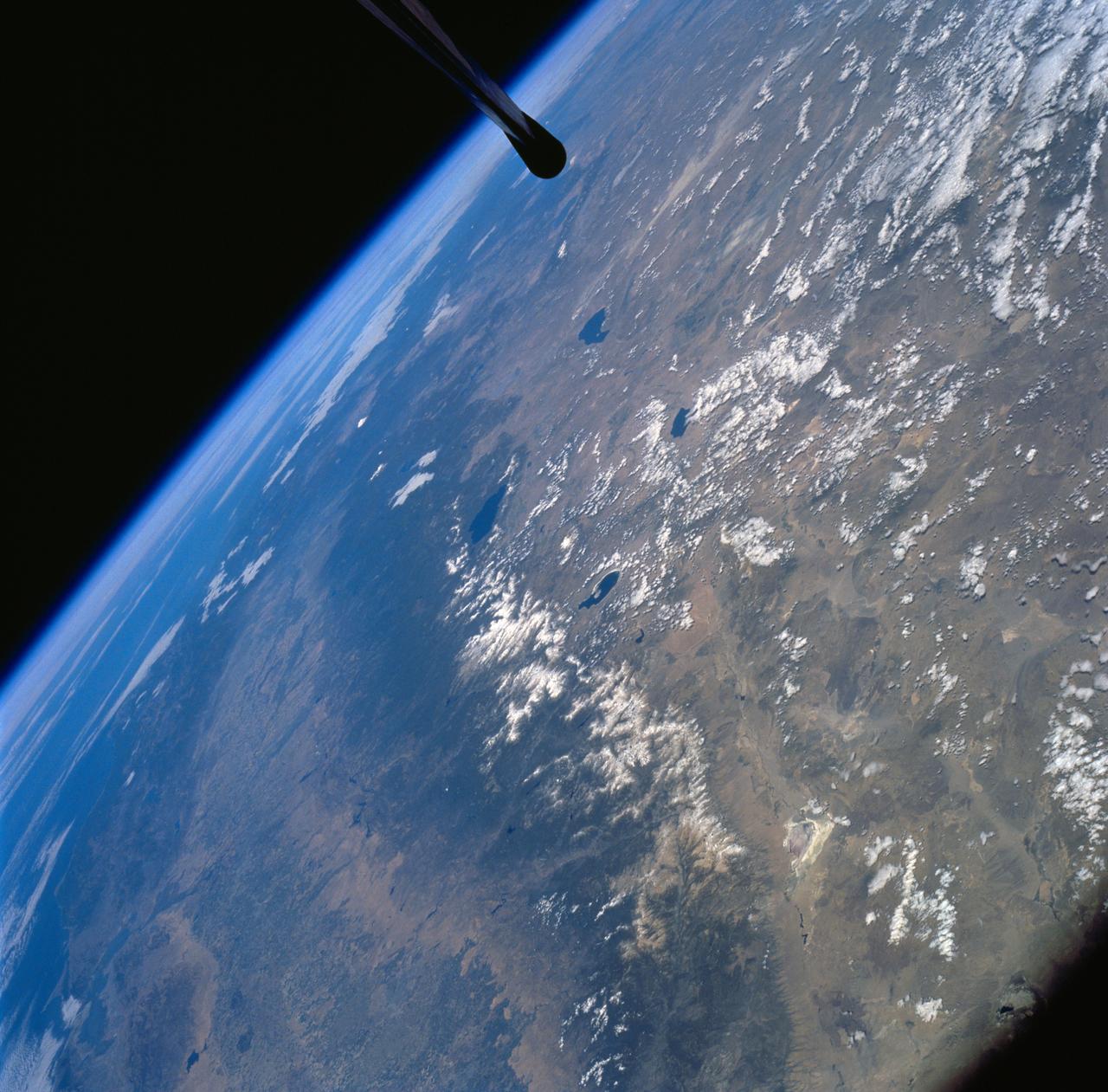
STS058-72-004 (18 Oct-1 Nov 1993) --- The Sierra Nevada Mountain Range can be seen in this north-looking high oblique view taken in October, 1993, by the STS-58 crew. Visible in the view to the west of the Sierra Nevada are the San Joaquin and Sacramento Valleys of central California. The San Francisco/Oakland Bay Area can be seen to the west of the valley at the extreme left of the photograph. To the east or right of the Sierra Nevada, the basin and Range Region of central and northern Nevada is visible. Mono Lake, Lake Tahoe and Pyramid Lake are also visible in this scene. The long northwest/southeast trending Walker Lane Shear Zone, which lies just to the east (right) of the Sierra Nevada is also visible. Near the top of the view (near the horizon), the snow covered volcanic peak Mount Shasta can be seen. Over 645 kilometers (400 miles) long and from 65 to 130 kilometers (40 to 80 miles) wide, the Sierra Nevada have many peaks in excess of 3,300 meters (11,000 feet) above sea level. A titled fault block in structure (the largest in the United States) and shaped by glaciers during the last ice age over 12,000 years ago, the Sierra Nevada eastern front rises sharply from the Great Basin of Nevada, while its western slope descends gradually to the hills bordering the Central Valley of California. Snow-fed streams supply much of the irrigation water to the Central Valley and to western Nevada and also generate hydroelectricity. Recent above normal precipitation (snowfall) of the last two years has helped in alleviating the drought conditions that had prevailed throughout most of California in the mid and late 1980's and early 1990's.
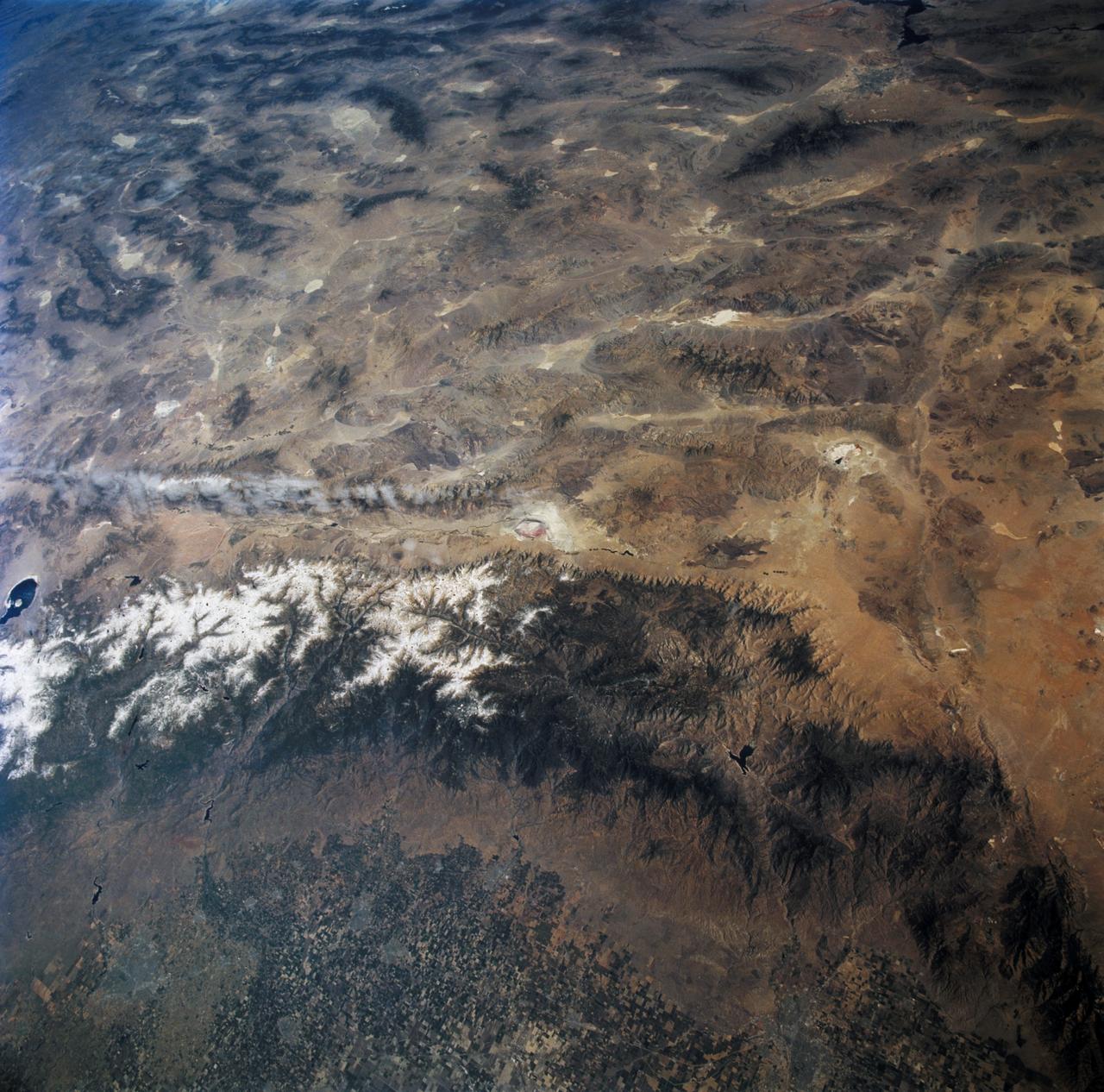
STS068-267-097 (30 September-11 October 1994) --- An extensive view eastward from the irrigated San Joaquin Valley in the foreground, across the Sierra Nevada (living up to its name in early October), into the desert of eastern California and Nevada (which has no snow, despite the name). Mono Lake is just visible at the left edge of the frame; Owens Valley extends southward to Owens Lake, the next valley is Panamint Valley, and then Death Valley. Las Vegas and Lake Mead are visible at the upper right of the frame. The Space Radar Laboratory 2 (SRL-2) obtained extensive, multiple-pass data from many test sites within the region displayed, including Mammoth Mountain ski area south of Mono Lake, and in Death Valley.
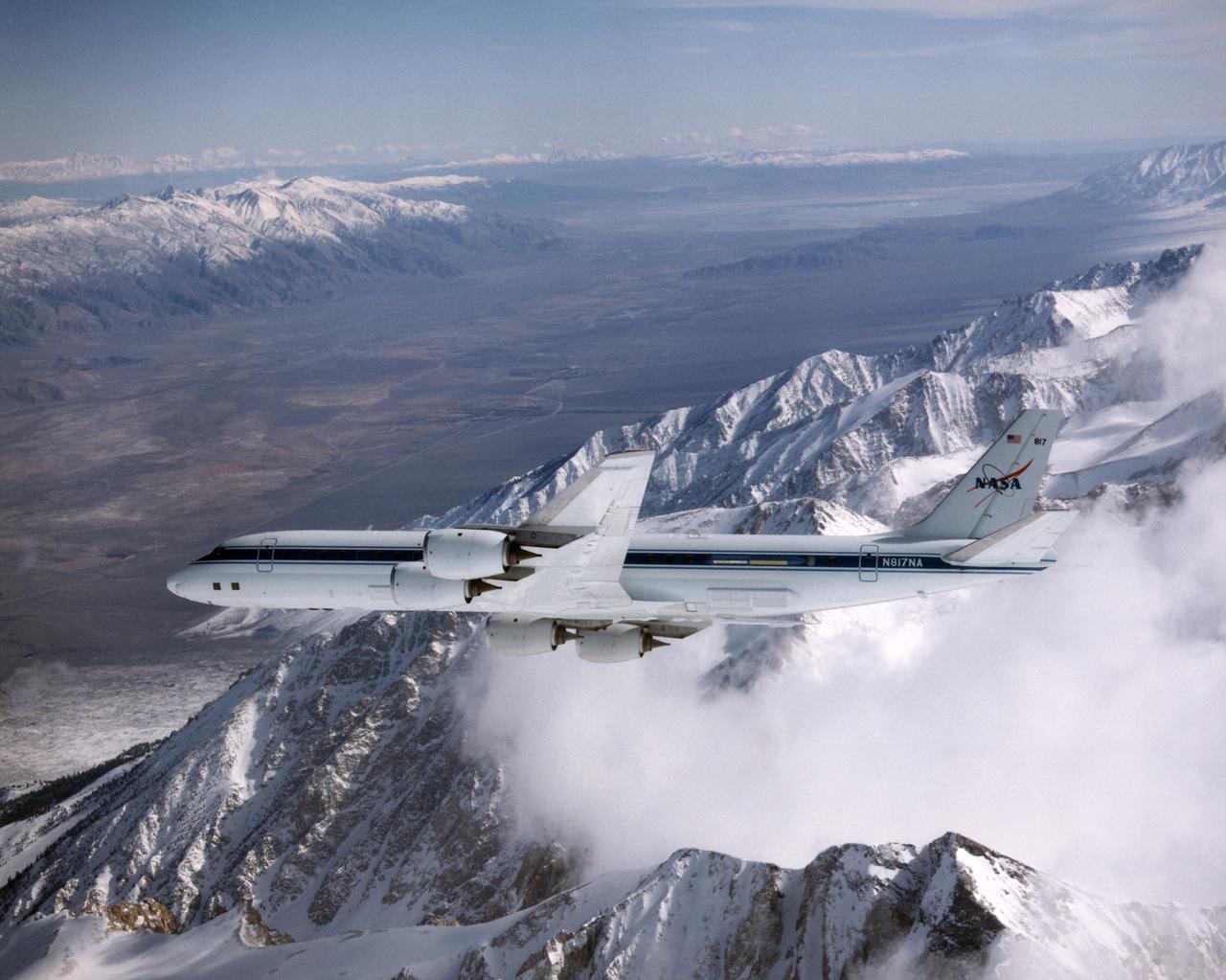
DC-8 Airborne Laboratory in banked flight over snow-capped Sierra Nevada mountain range
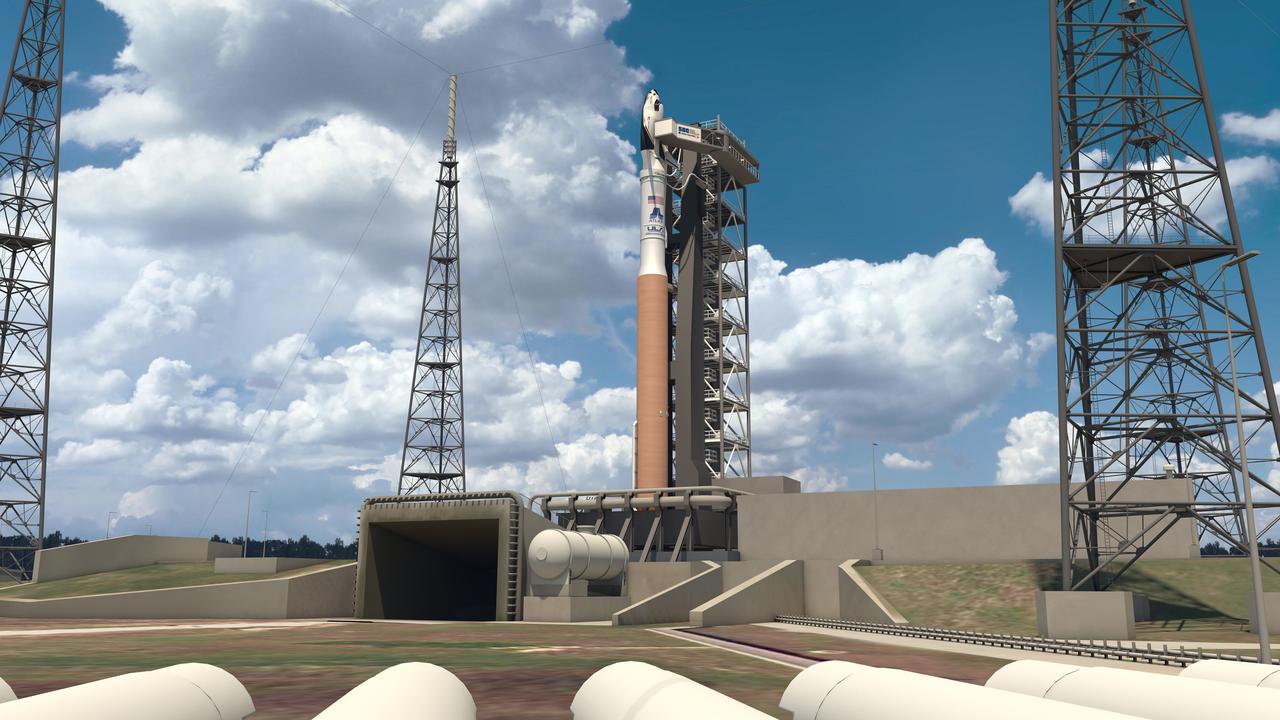
CAPE CANAVERAL, Fla. -- This is an artist's conception of Sierra Nevada Corp. SNC Space System's Dream Chaser spacecraft atop a United Launch Alliance ULA Atlas V rocket under development for NASA's Commercial Crew Program, or CCP. The integrated system was selected for CCP's Commercial Crew Integrated Capability, or CCiCap, initiative to propel America's next human space transportation system to low Earth orbit forward. Operating under a funded Space Act Agreement, or SAA, SNC will spend the next 21 months completing its design, conducting critical risk reduction testing on its spacecraft and launch vehicle, and showcasing how it would operate and manage missions from launch through orbit and landing, setting the stage for a future demonstration mission. To learn more about CCP, which is based at NASA's Kennedy Space Center in Florida and supported by NASA's Johnson Space Center in Houston, visit www.nasa.gov/commercialcrew. Image credit: SNC
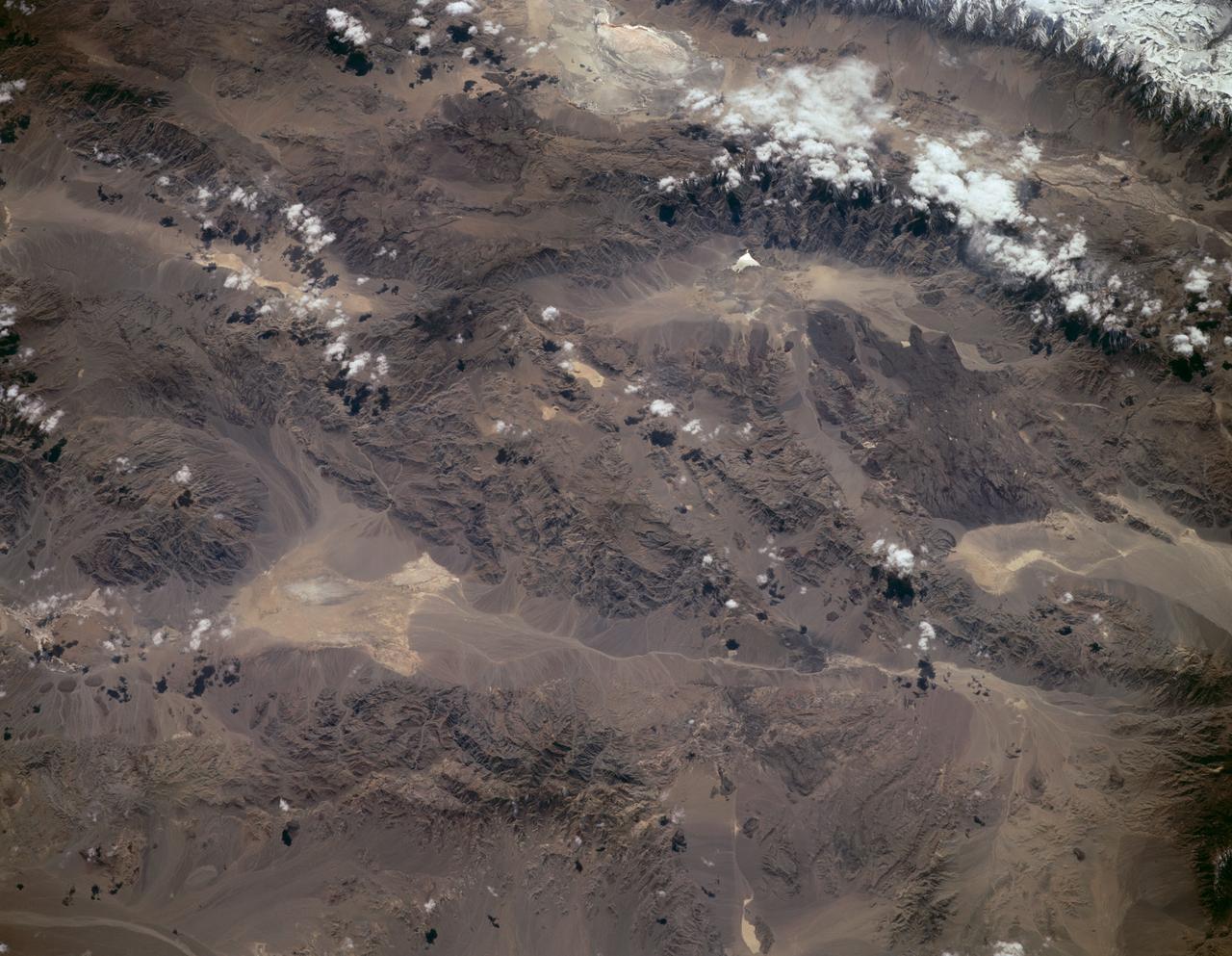
STS059-L09-162 (9-20 April 1994) --- Orient with the snow-covered mountains (Sierra Nevada of California) in the upper right corner. Then Owens Valley runs along the top of the photograph to Owens Lake playa at top center. The upper end of Death Valley extends from right to left in the foreground, with the drainage running down to a playa at Stovepipe Wells in the left foreground. Geologists are studying microwave signatures of the different playa surfaces, and the coatings on alluvial fans that extend from mountain masses, to try to sort out the history of different climates in this formerly wet but now hyperarid region.
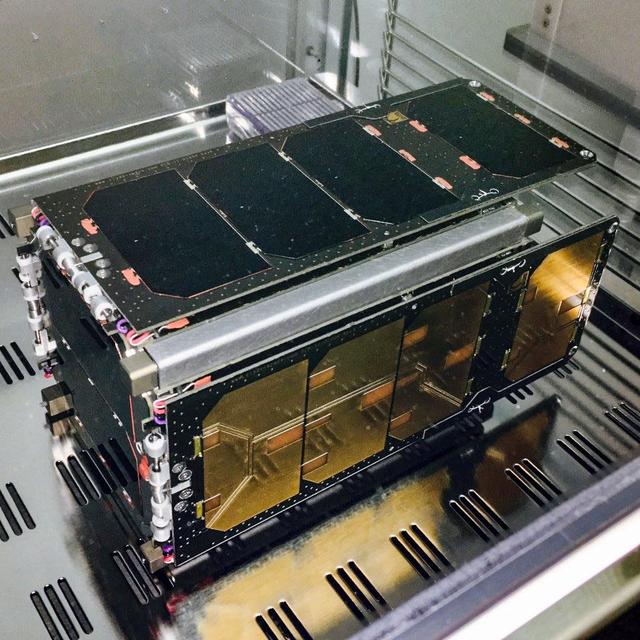
Jsc2020e004942(2/7/2020) — A preflight view of the CryoCube BUS. CryoCube demonstrates on-orbit thermal management technology. Such technology has a variety of potential applications, including storing rocket propellants in space, cooling instruments to improve their signal-to-noise ratios, and supporting future cryogenic experiments in microgravity. The small satellite uses a deployable shield to block radiation from the Sun and Earth and an attitude control system to point its experiment into deep space. Image courtesy of: Sierra Lobo Inc.
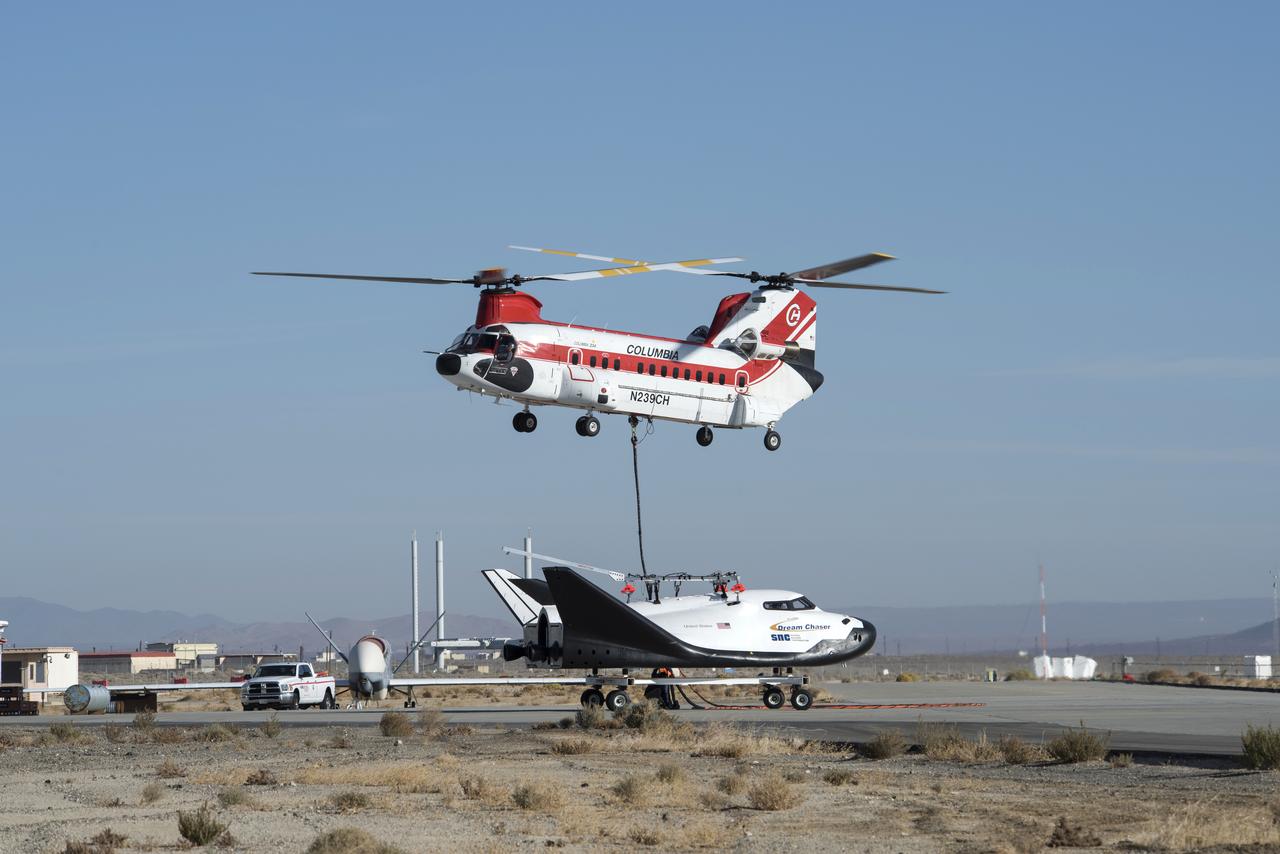
Sierra Nevada Corp’s Dream Chaser was lifted by helicopter from the ramp at NASA’s Armstrong Flight Research Center in Edwards, California, before its successful approach and landing flight test on Nov. 11, 2017.
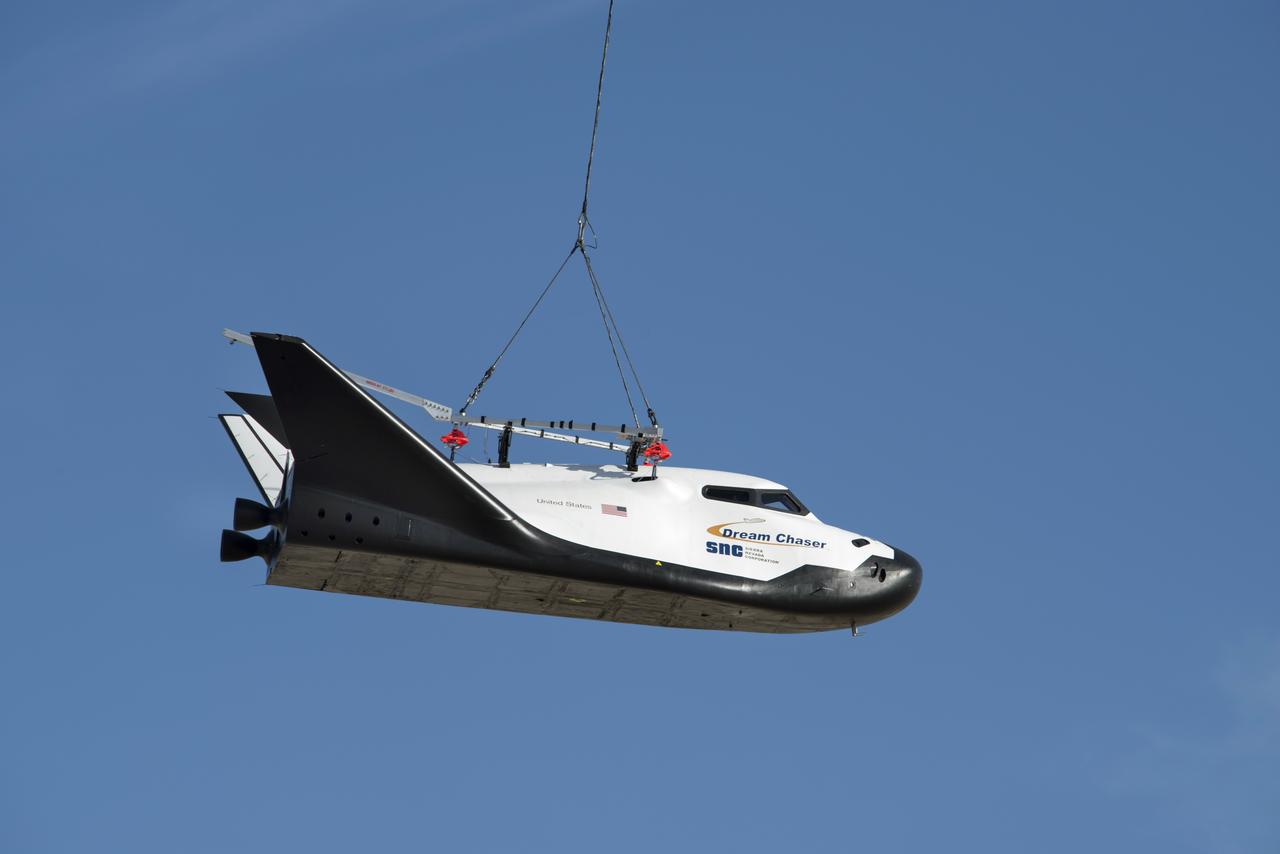
Sierra Nevada Corp’s Dream Chaser was lifted by helicopter from the ramp at NASA’s Armstrong Flight Research Center in Edwards, California, before its successful approach and landing flight test on Nov. 11, 2017.
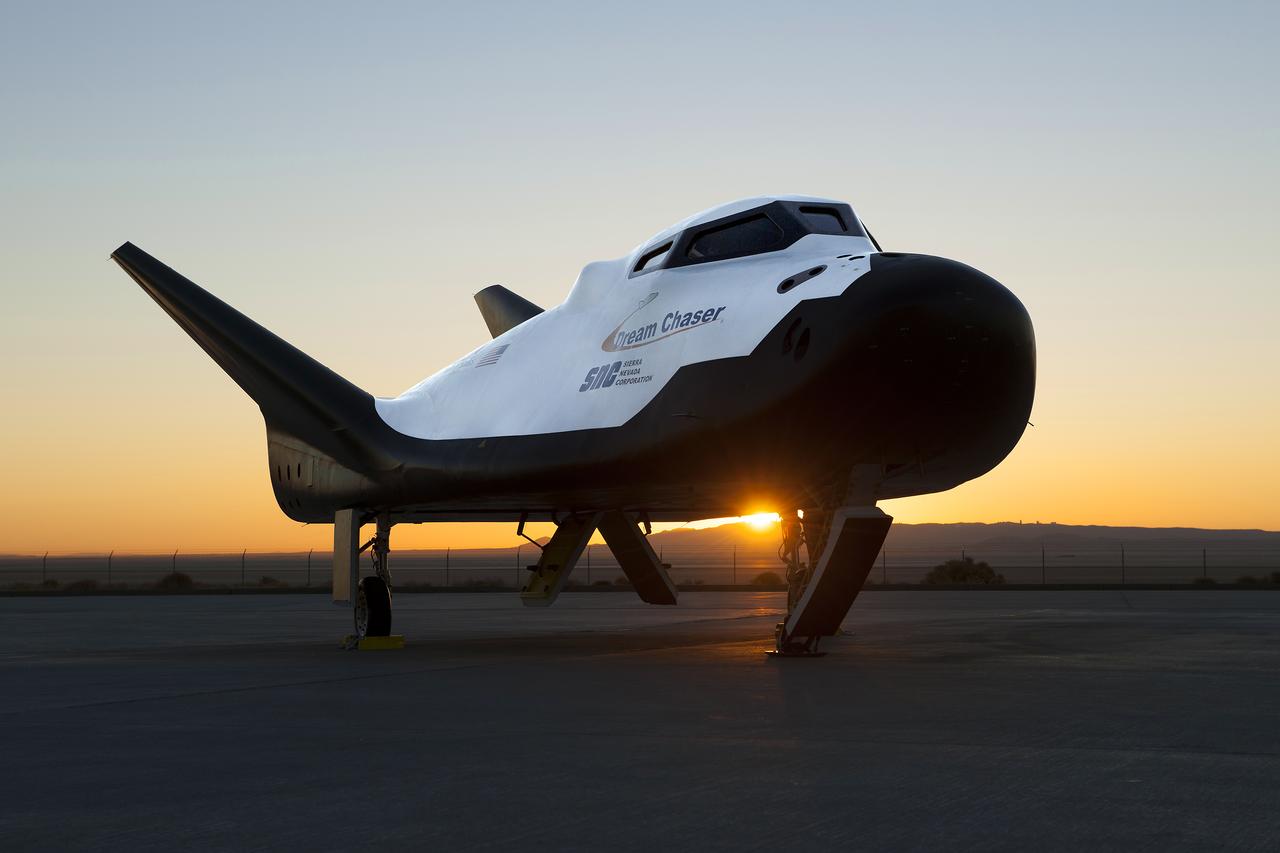
Sierra Nevada Corp’s Dream Chaser posed on ramp at sunrise at NASA Armstrong Flight Research Center in California where the aircraft has gone through a series of tests in preparation for flight.

Sierra Nevada Corp’s Dream Chaser crew prepared for helicopter lift off ramp at NASA’s Armstrong Flight Research Center in California, for its successful approach and landing flight test on Nov. 11, 2017.
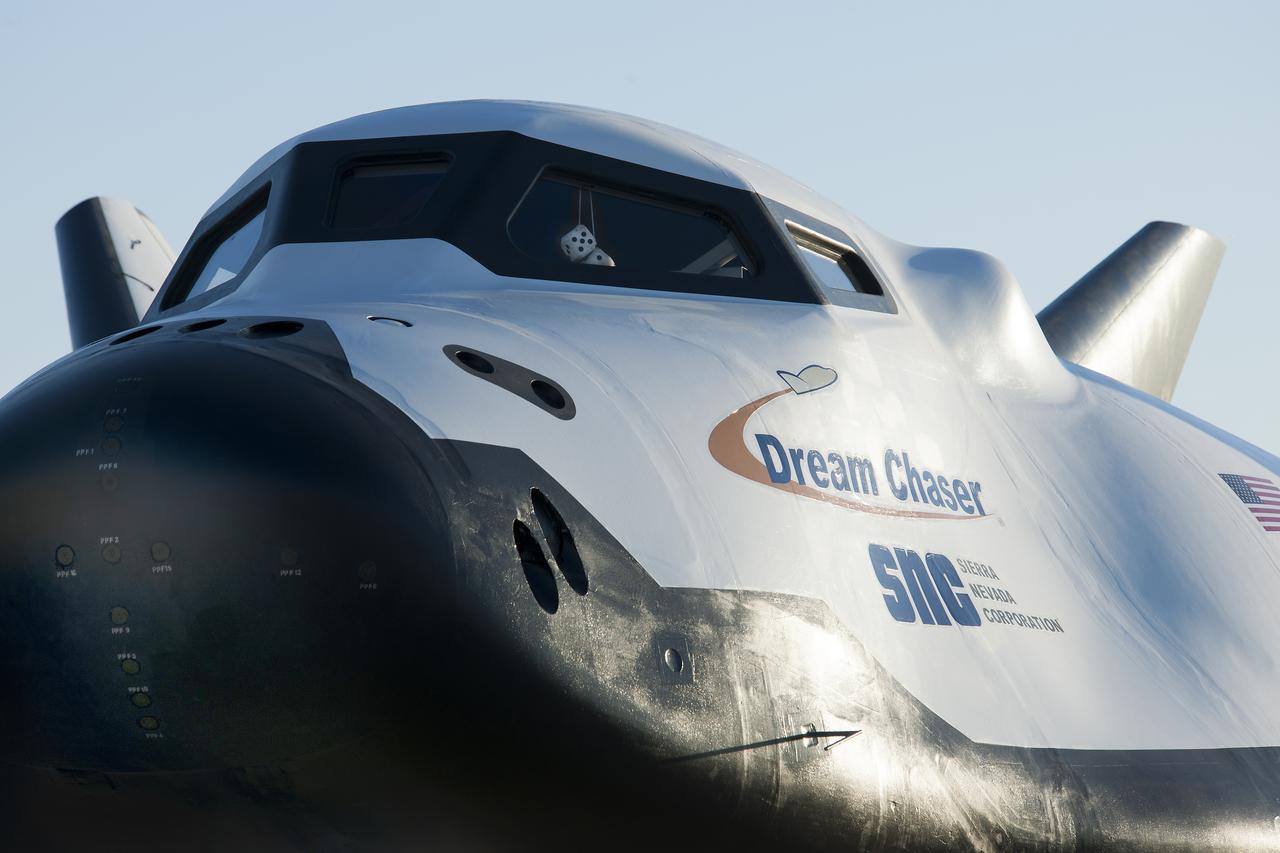
Sierra Nevada Corp’s Dream Chaser posed on ramp at sunrise at NASA Armstrong Flight Research Center in California where the aircraft has gone through a series of tests in preparation for flight.
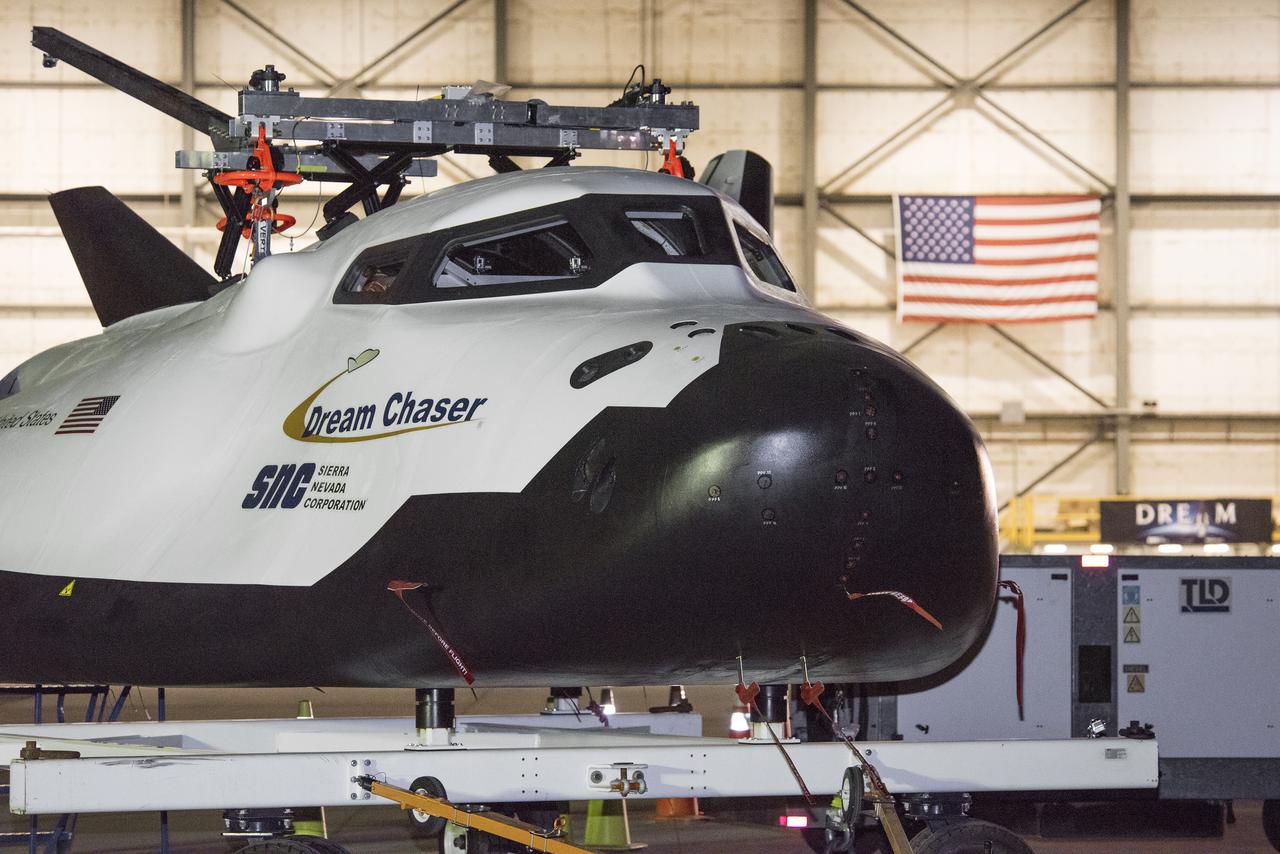
A lift device was attached to Sierra Nevada Corp’s Dream Chaser for a helicopter to pick it up to drop for its successful approach and landing test at NASA’s Armstrong Flight Research Center in California on Nov. 11, 2017.
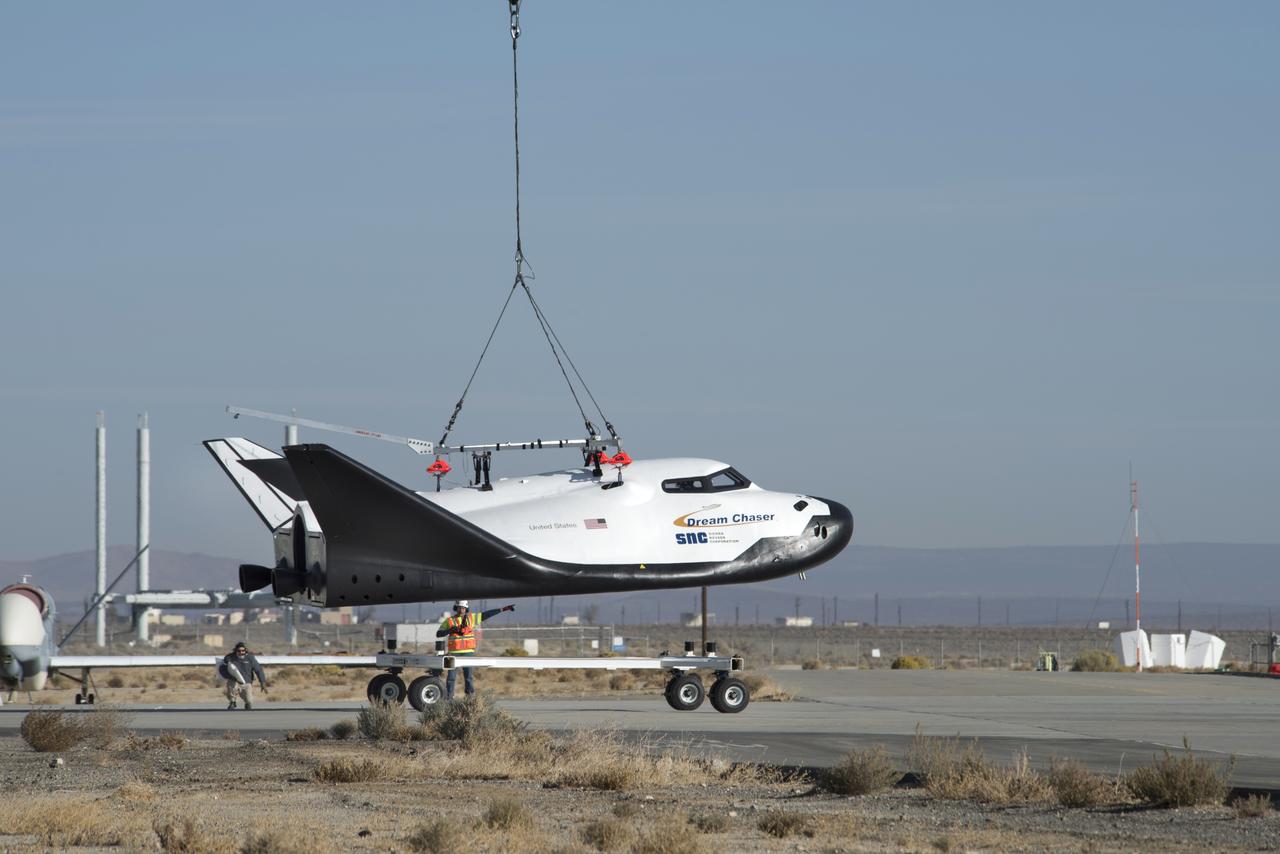
Sierra Nevada Corp’s Dream Chaser was lifted by helicopter from the ramp at NASA’s Armstrong Flight Research Center in Edwards, California, before its successful approach and landing flight test on Nov. 11, 2017.
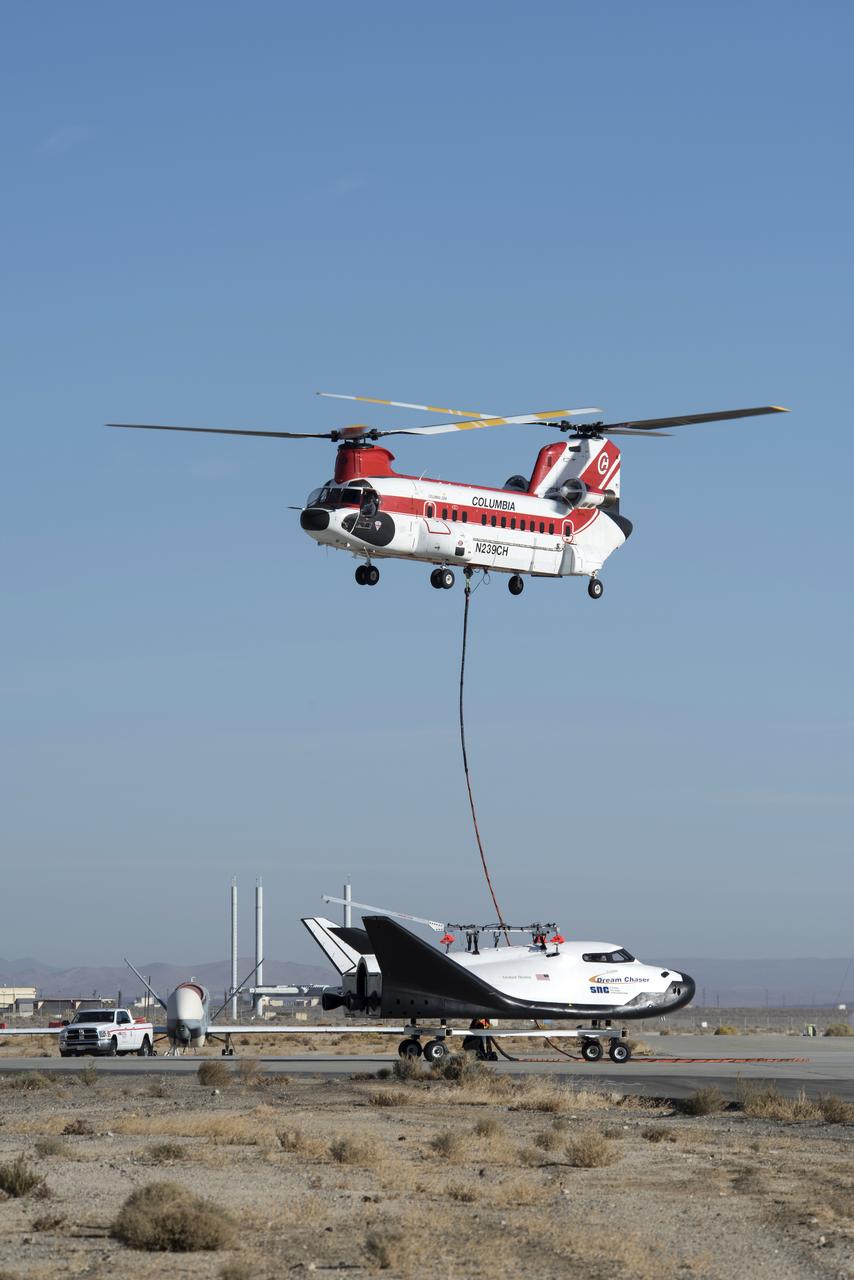
Sierra Nevada Corp’s Dream Chaser was lifted by helicopter from the ramp at NASA’s Armstrong Flight Research Center in Edwards, California, before its successful approach and landing flight test on Nov. 11, 2017.
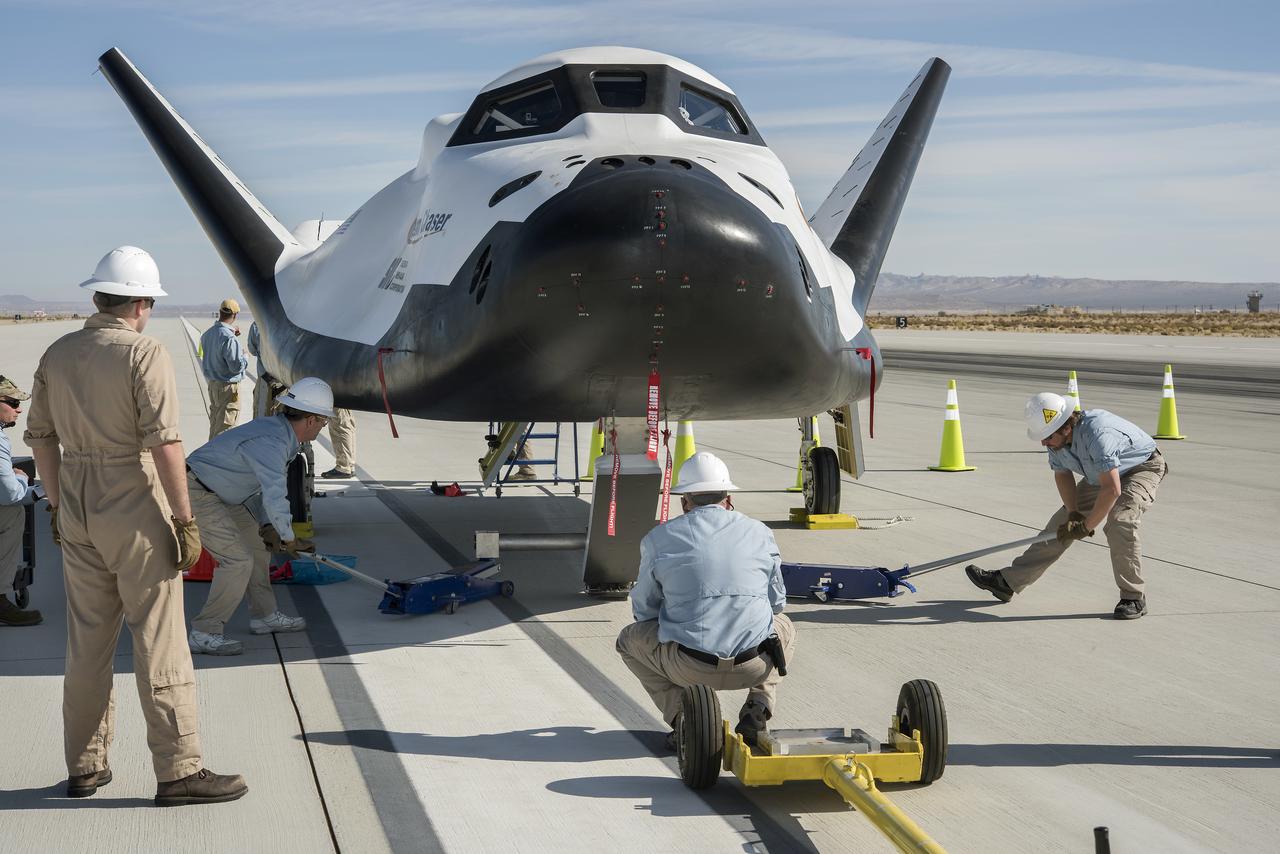
After successfully landing on an Edwards Air Force Base runway on Nov. 11, 2017, Sierra Nevada Corp’s Dream Chaser was prepared for its tow back to NASA Armstrong Flight Research Center in California.
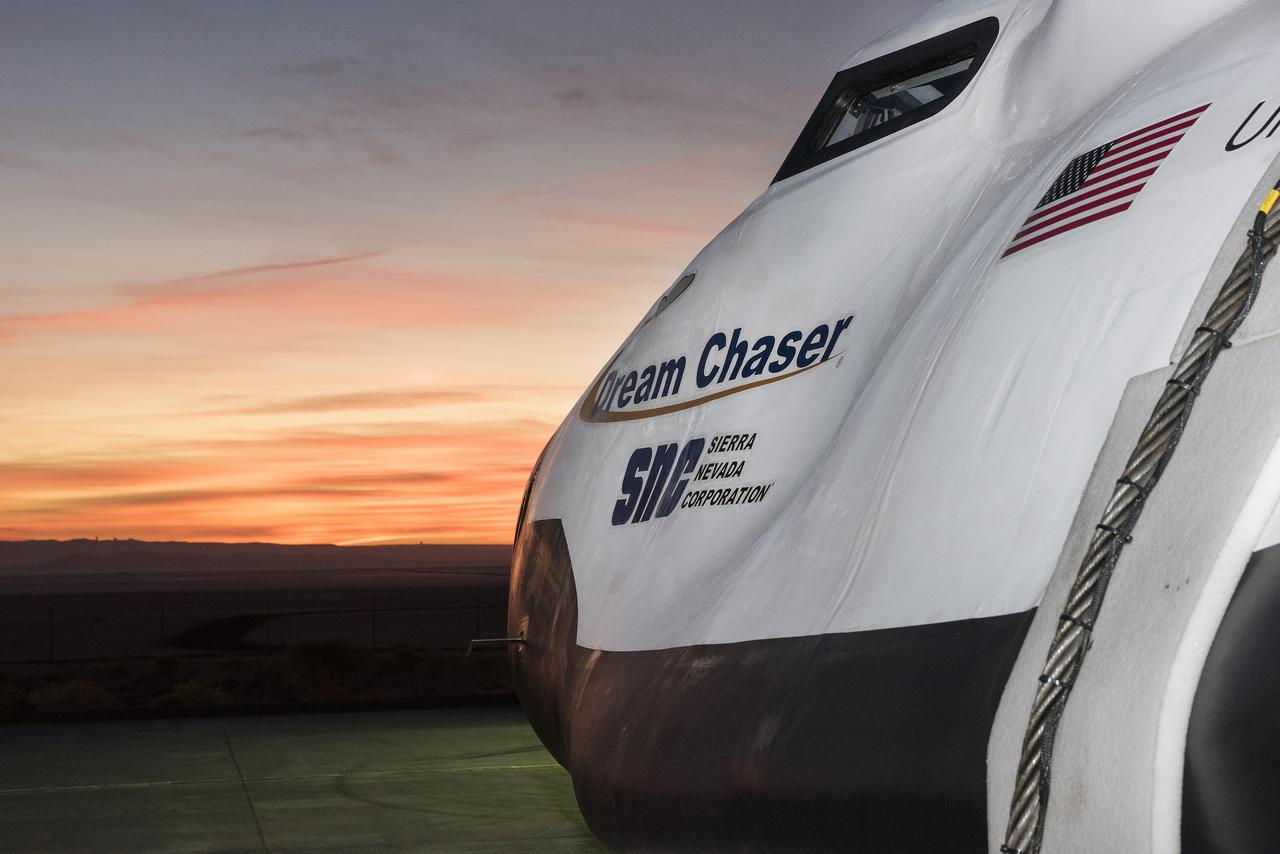
Sierra Nevada Corp’s Dream Chaser facing sunrise over Rogers Dry Lake by NASA Armstrong Flight Research Center in California where it was being prepared for a successful approach and landing test Nov. 11, 2017.
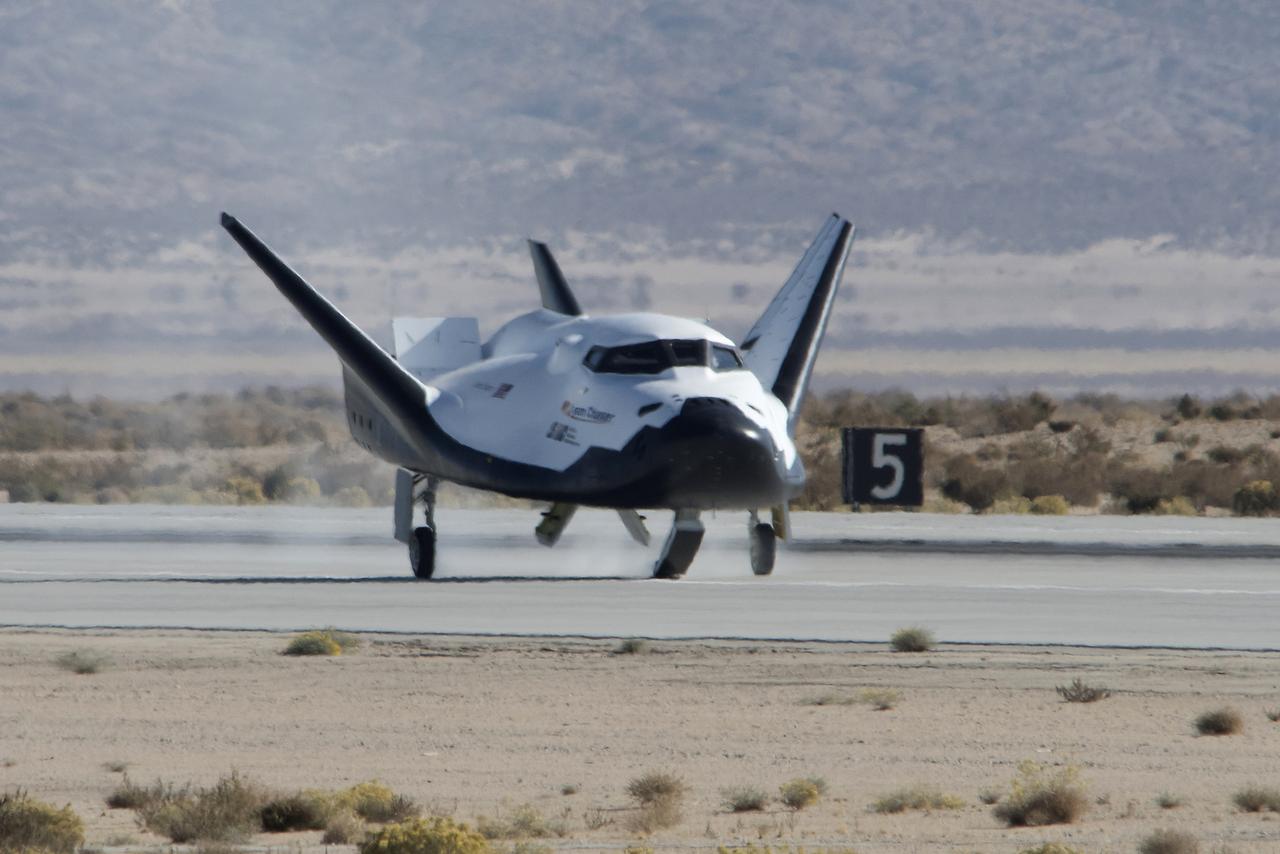
Sierra Nevada Corp’s Dream Chaser successfully landed on an Edwards Air Force Base runway on Nov. 11, 2017, after being lifted from the ramp at NASA Armstrong Flight Research Center in California.