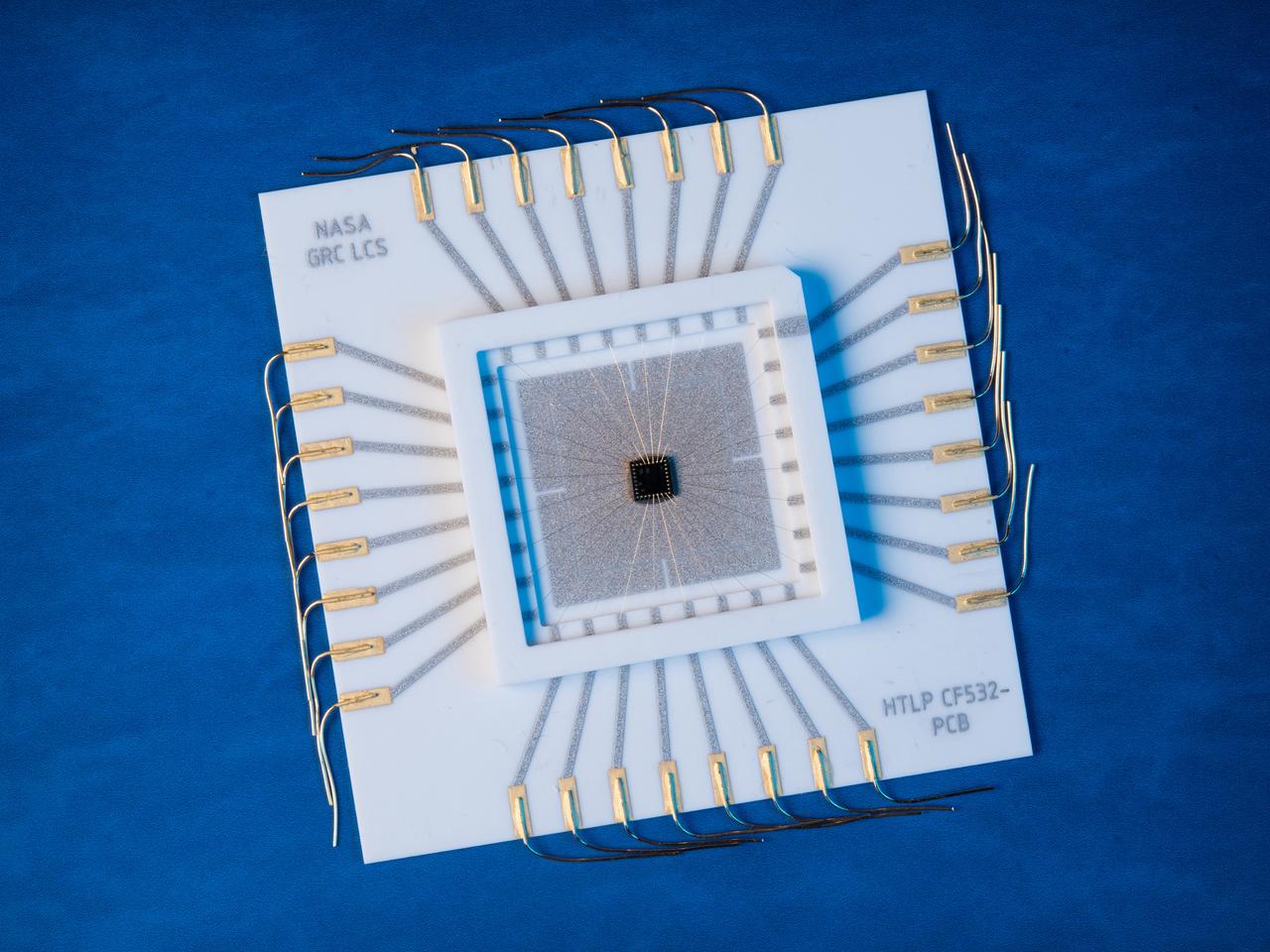
A multilevel interconnect silicon carbide integrated circuit chip with co-fired ceramic package and circuit board recently developed at the NASA GRC Smart Sensors and Electronics Systems Branch for high temperature applications. High temperature silicon carbide electronics and compatible packaging technologies are elements of instrumentation for aerospace engine control and long term inner-solar planet explorations.
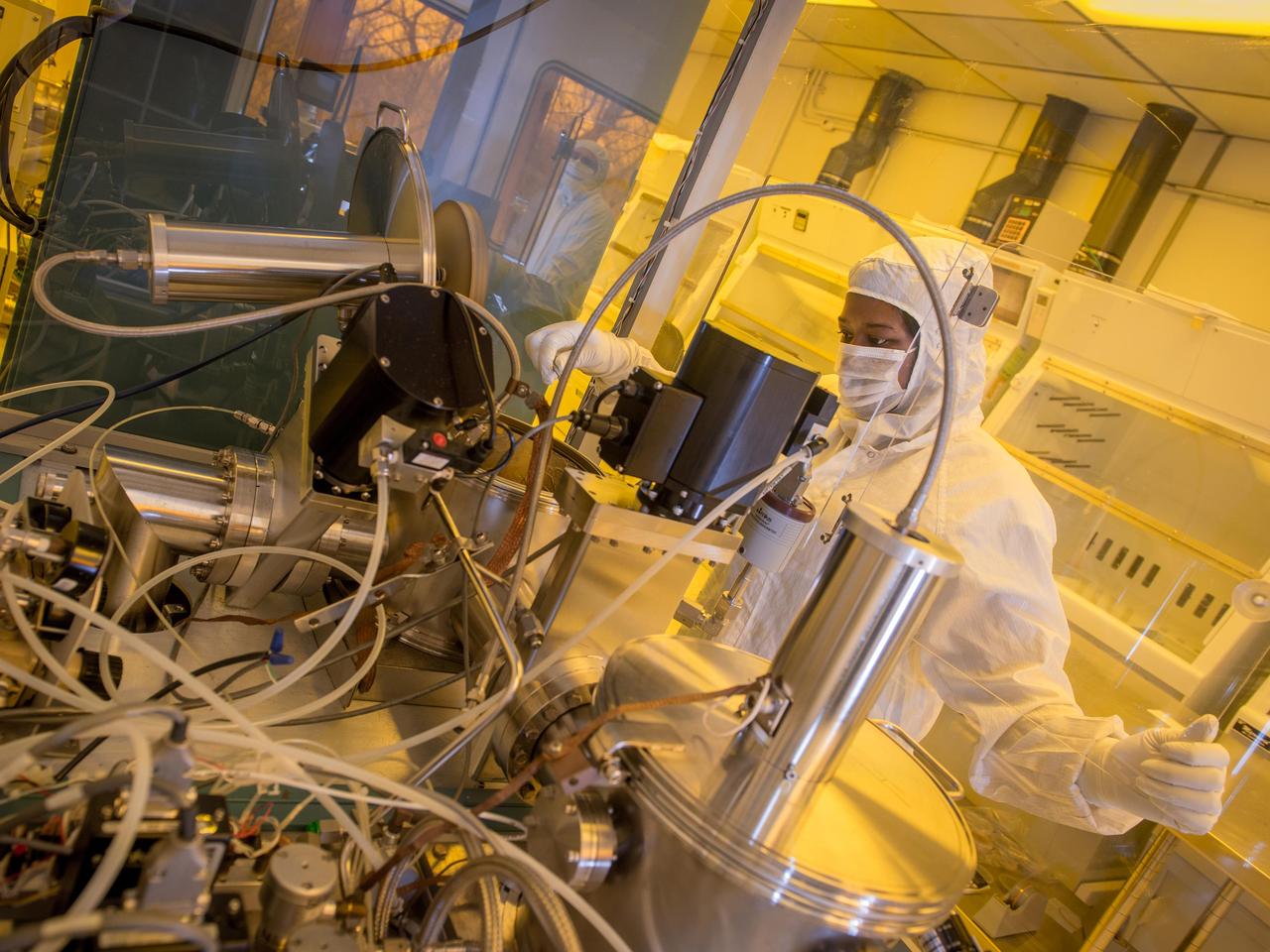
NASA Glenn technician Ariana Miller prepares an ultrahigh vacuum chamber used to test the materials used in silicon carbide based sensors and electronics that can operate at extremely high temperatures (500 degrees Celsius and higher) for applications such as sensor systems for aircraft engines and Venus exploration.
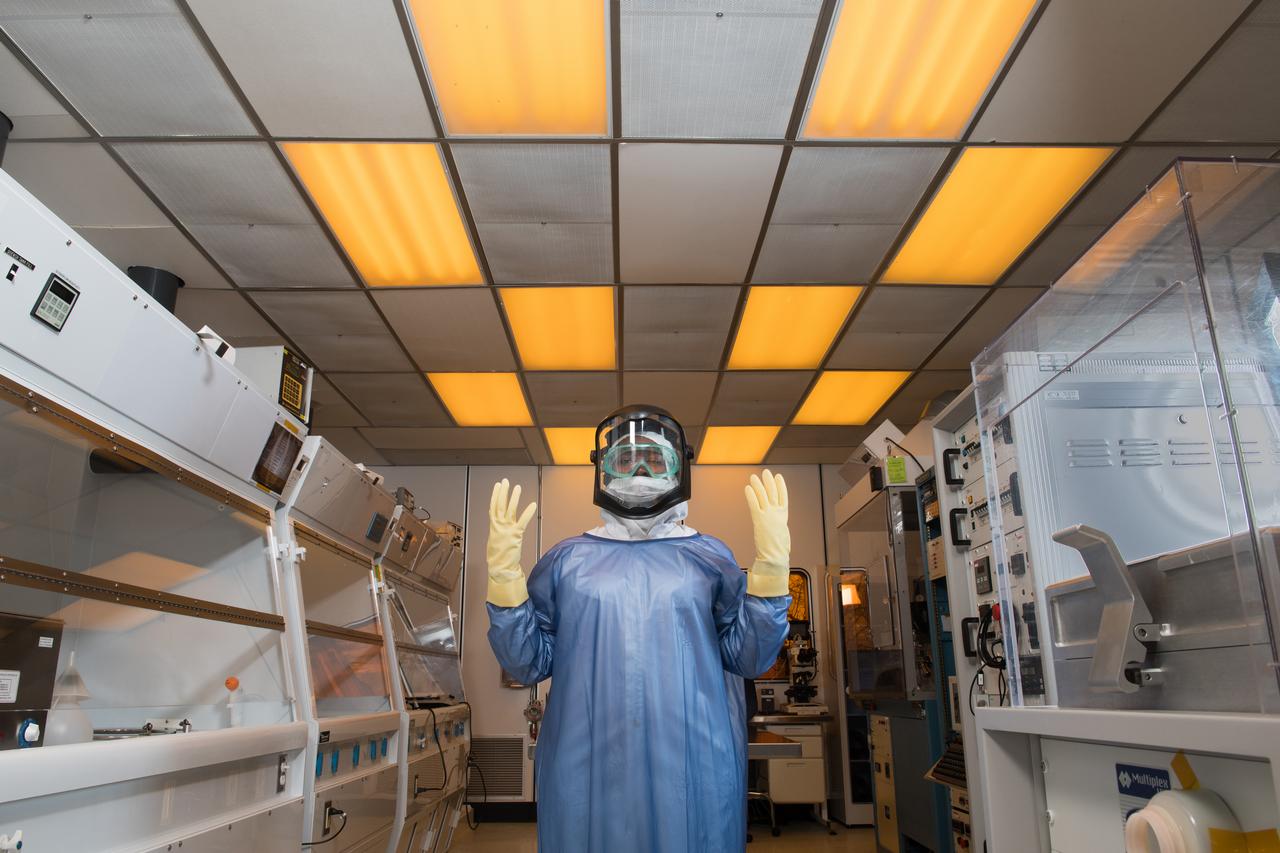
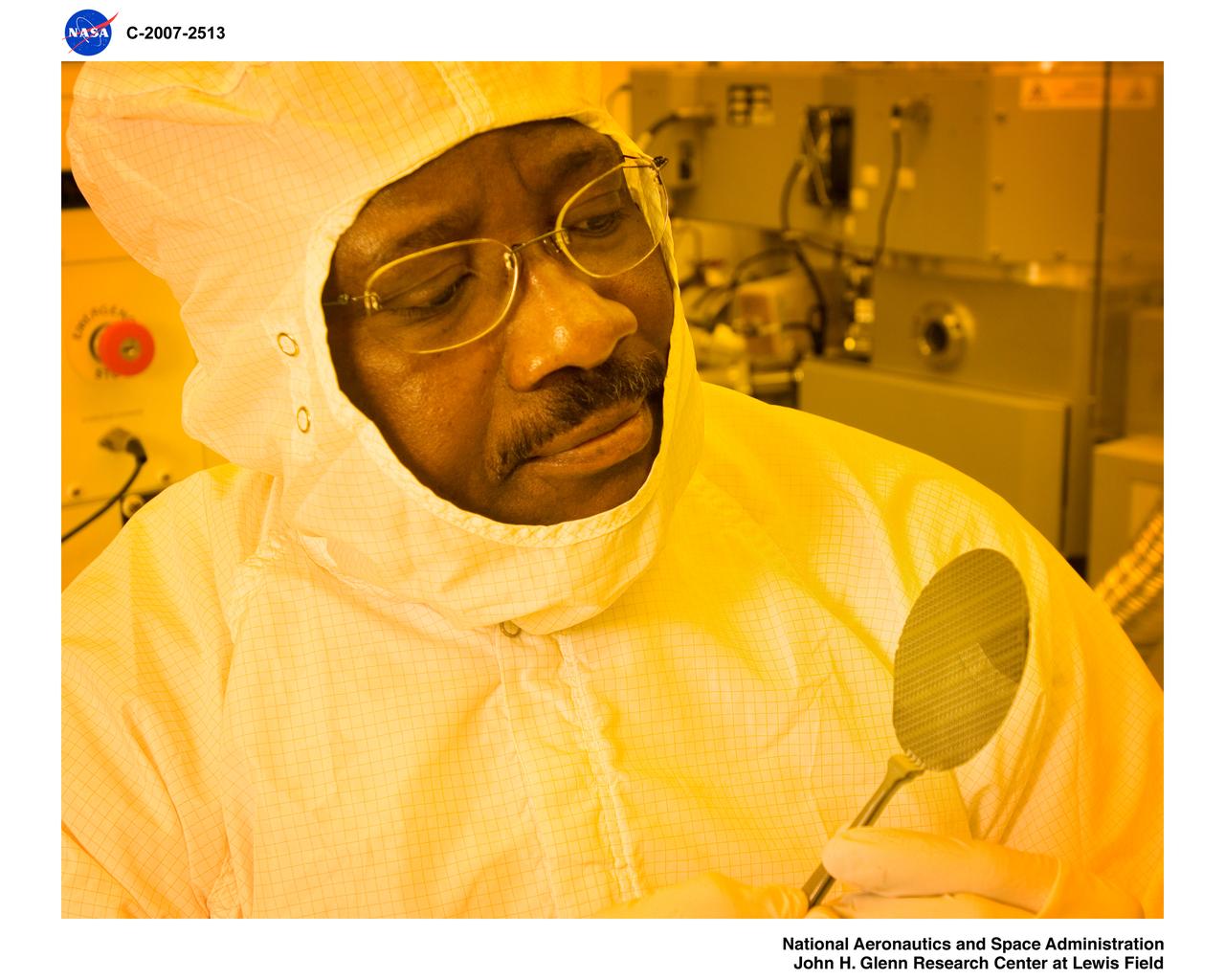
Laboratory Researcher suits up for work in a research clean room. Personal Protective Equipment, PPE, Portait Series
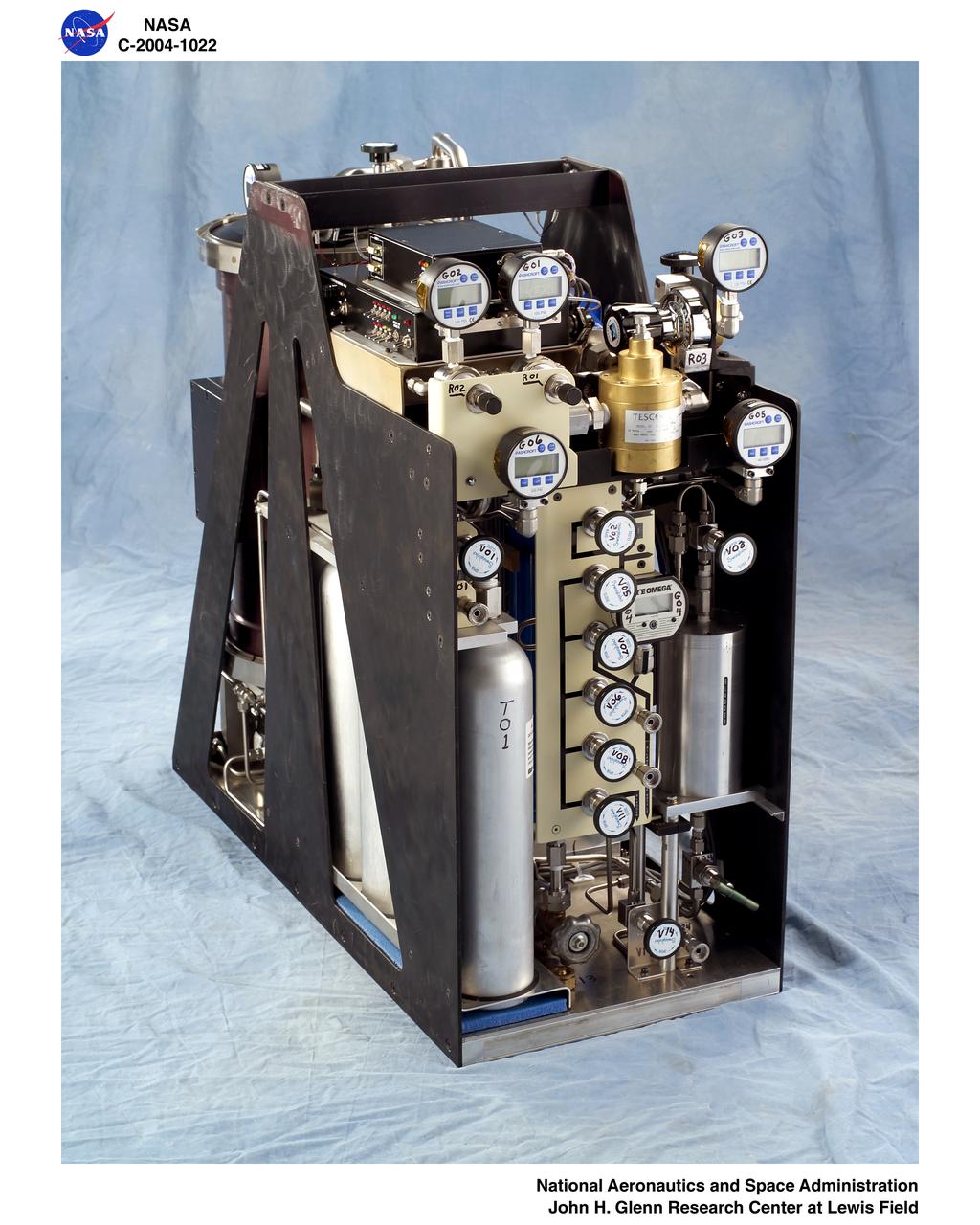
CP-SiCS Constant Pressure - Silicon Carbide Combustion Synthesis
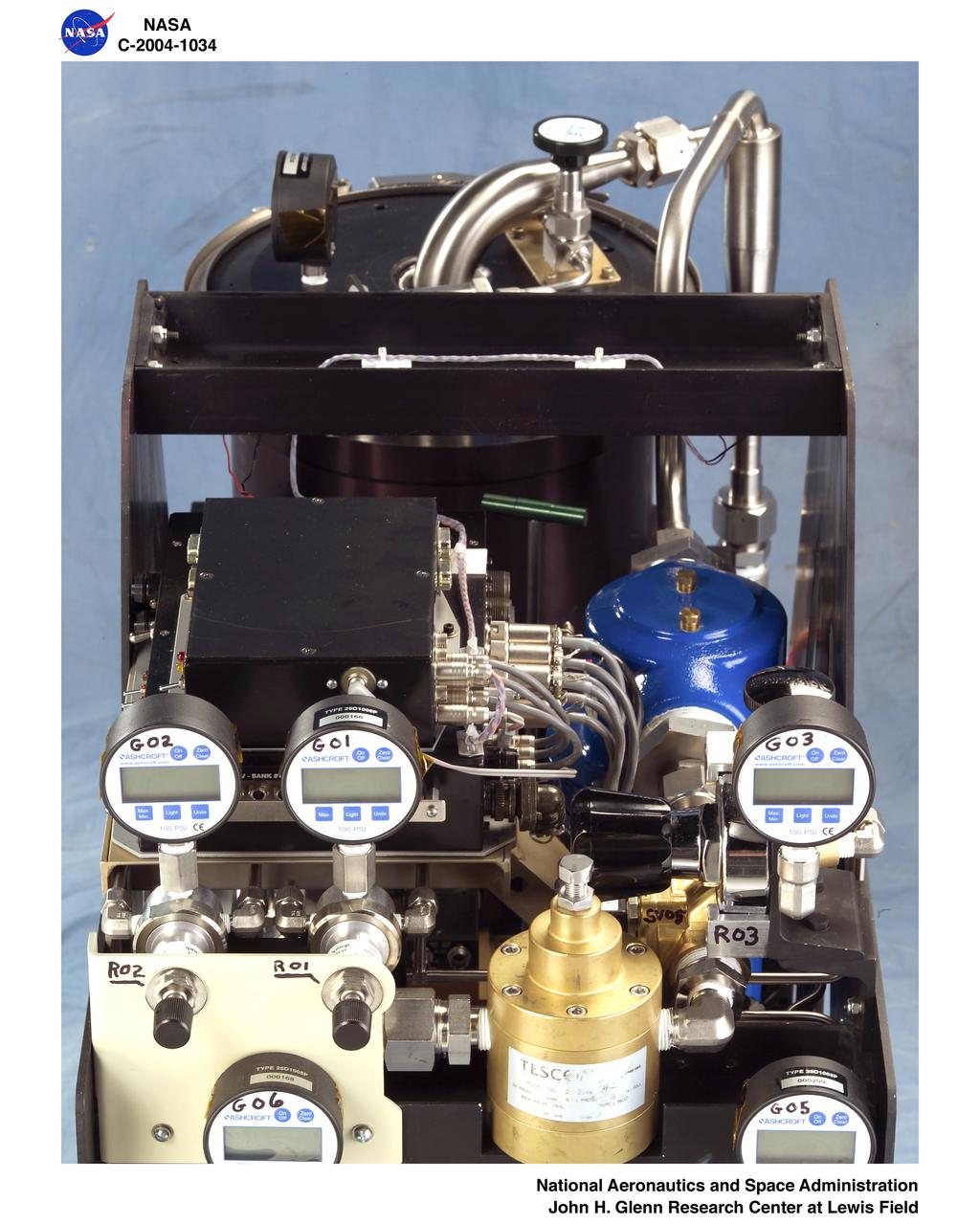
CP-SiCS Constant Pressure - Silicon Carbide Combustion Synthesis
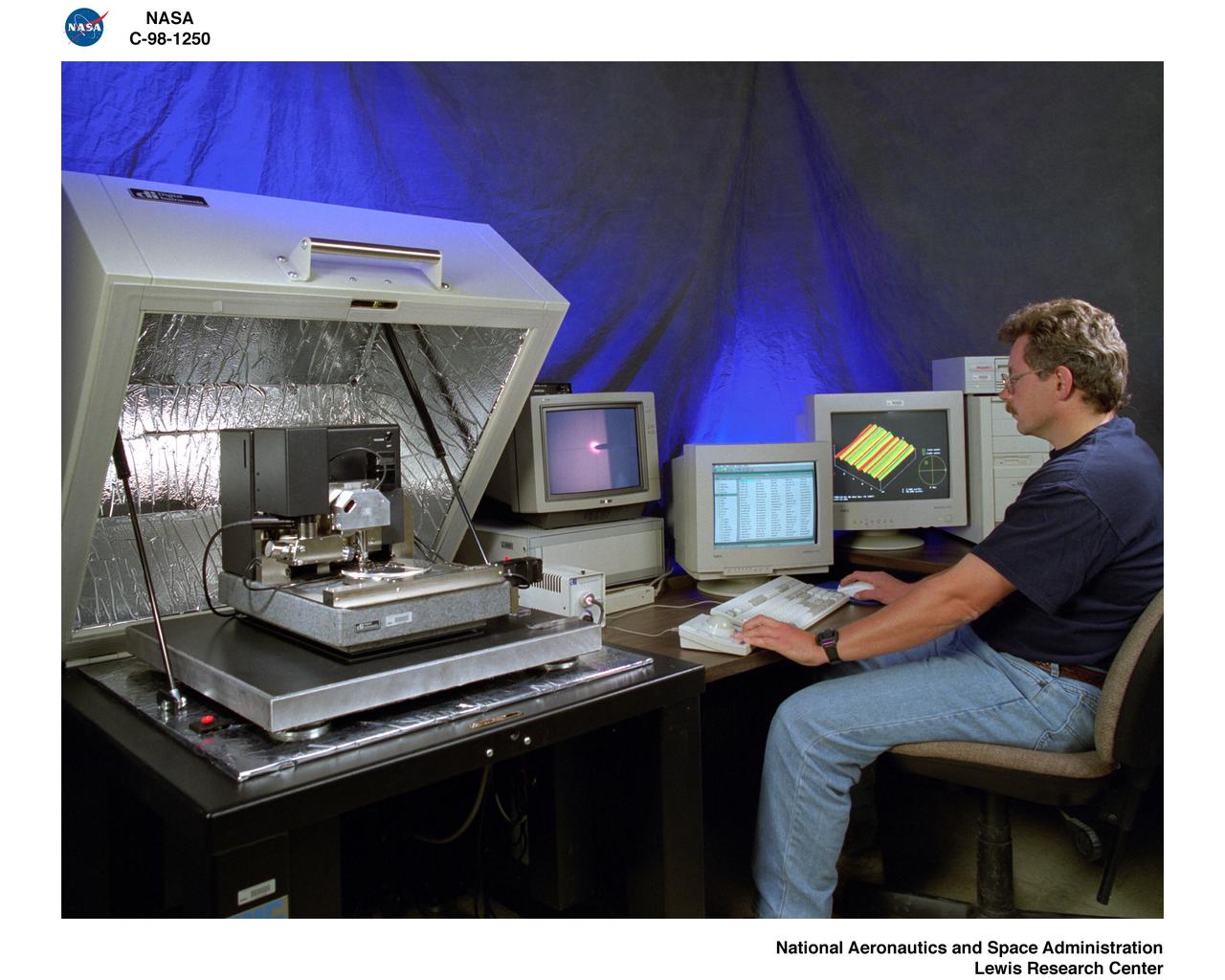
SILICON CARBIDE GROWTH FACILITY - CLEAN ROOM FACILITY AND SURFACE ANALYTICAL LABS
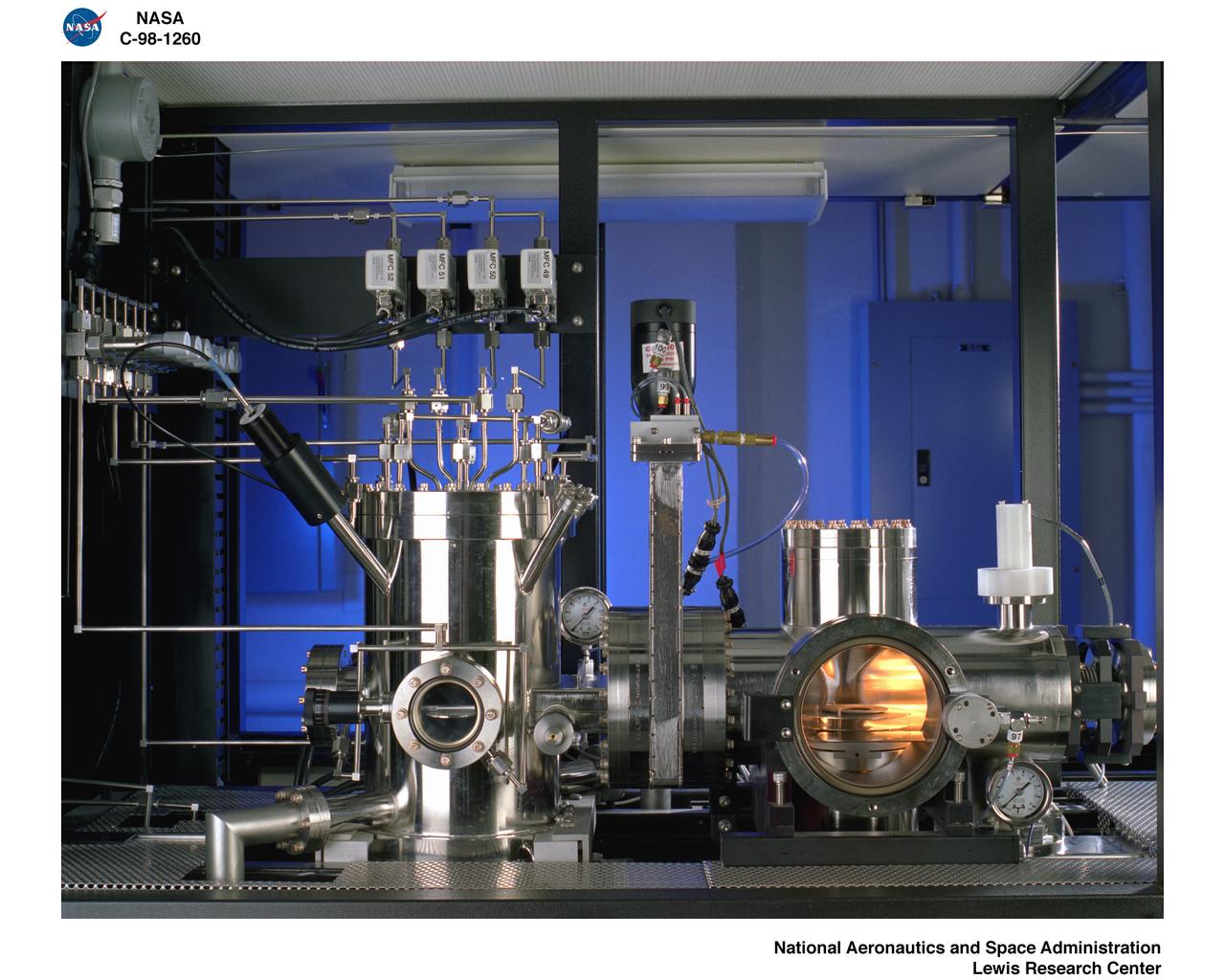
SILICON CARBIDE GROWTH FACILITY - CLEAN ROOM FACILITY AND SURFACE ANALYTICAL LABS
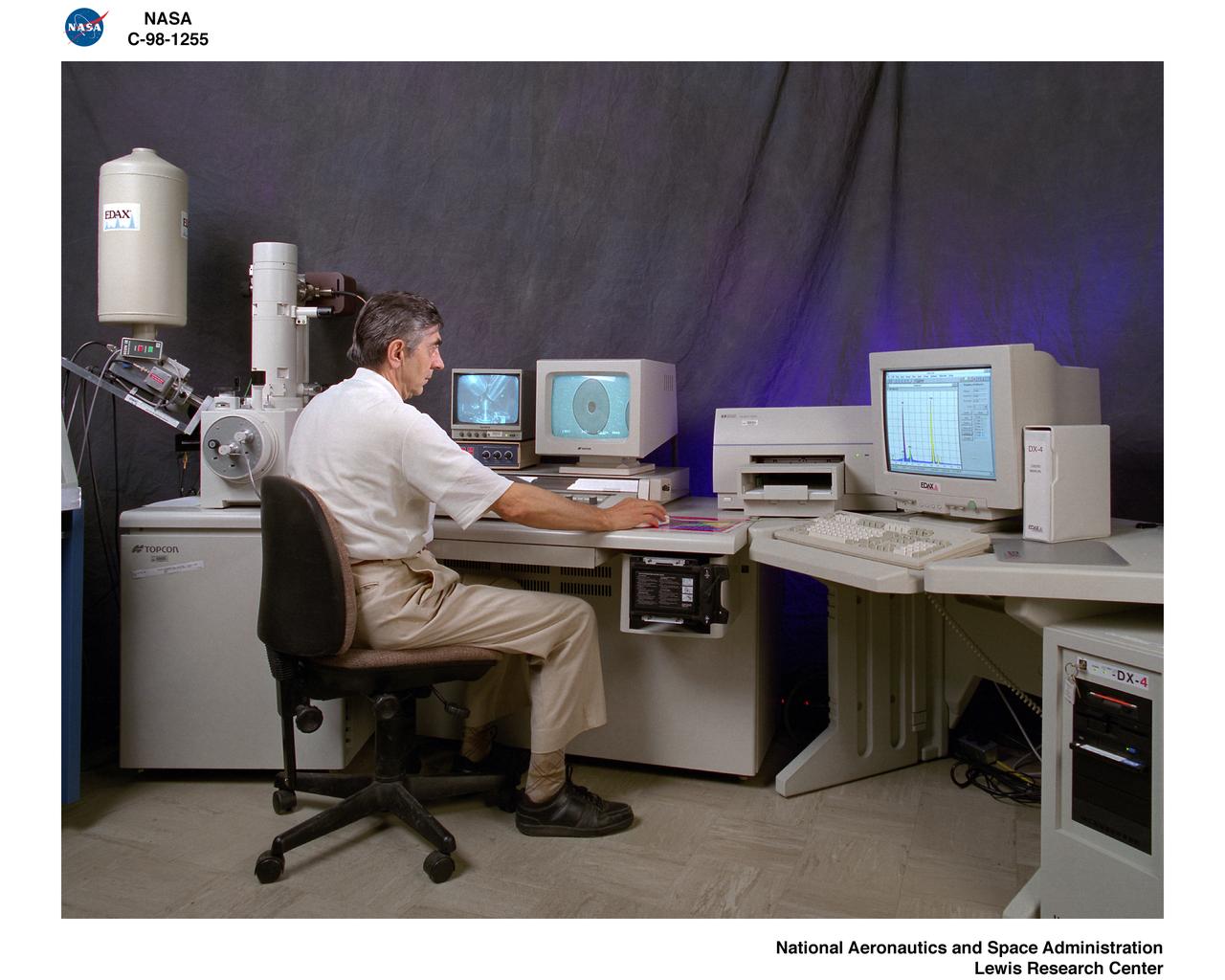
SILICON CARBIDE GROWTH FACILITY - CLEAN ROOM FACILITY AND SURFACE ANALYTICAL LABS
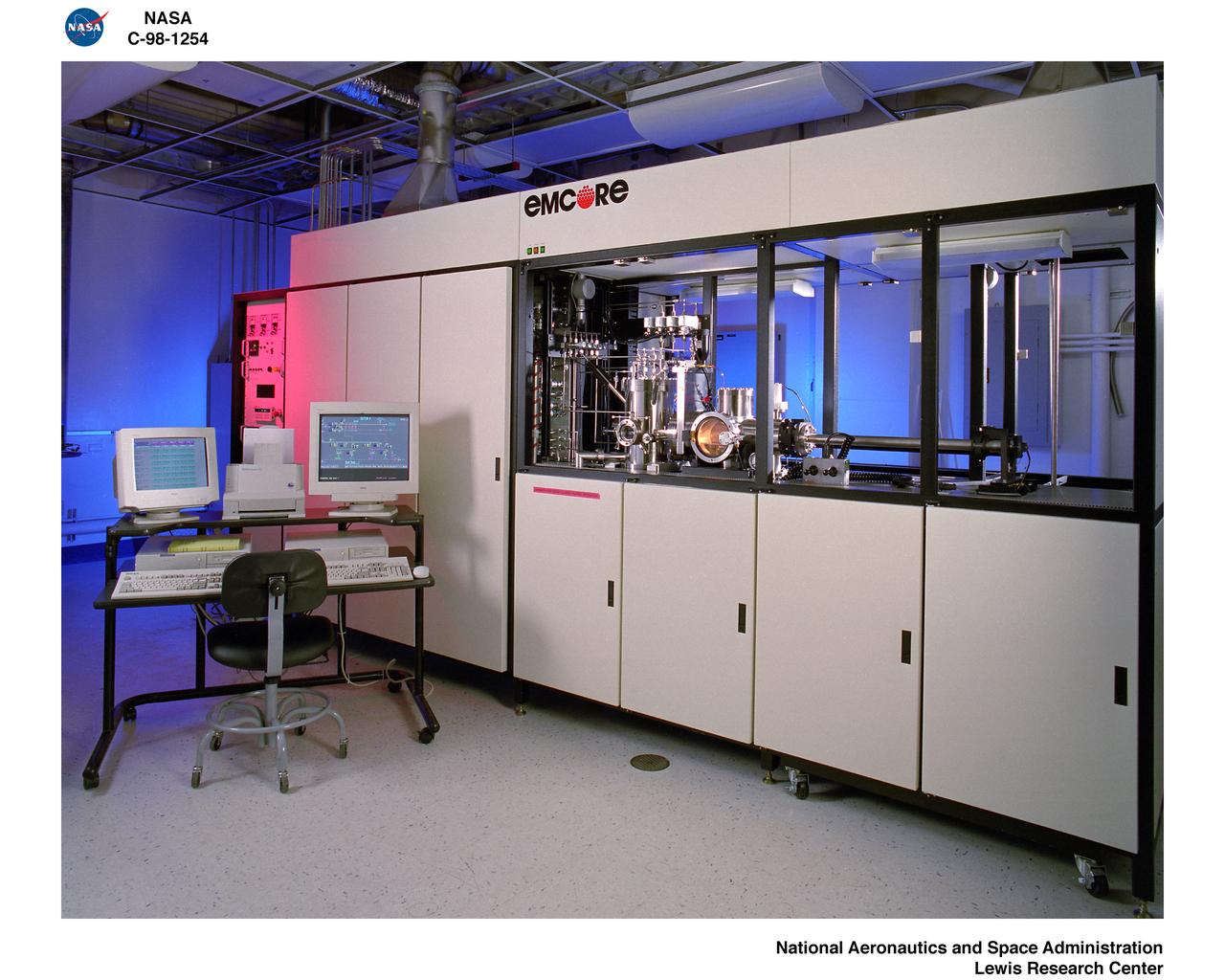
SILICON CARBIDE GROWTH FACILITY - CLEAN ROOM FACILITY AND SURFACE ANALYTICAL LABS
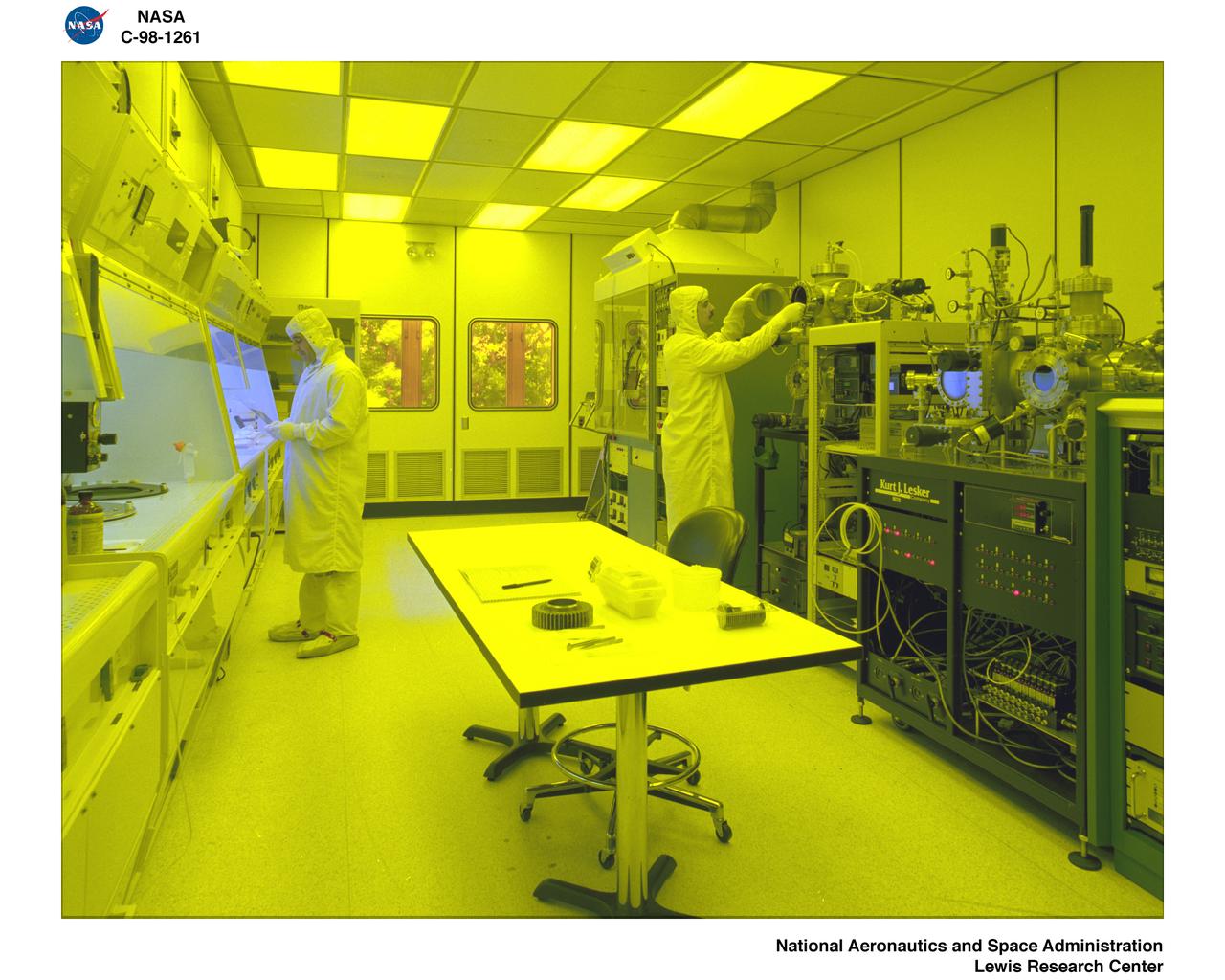
SILICON CARBIDE GROWTH FACILITY - CLEAN ROOM FACILITY AND SURFACE ANALYTICAL LABS

SILICON CARBIDE GROWTH FACILITY - CLEAN ROOM FACILITY AND SURFACE ANALYTICAL LABS
Fully Packaged Silicon Carbide Piezoresistive Pressure Transducer that measures pressures at temperature as high as 600 degrees Celsius
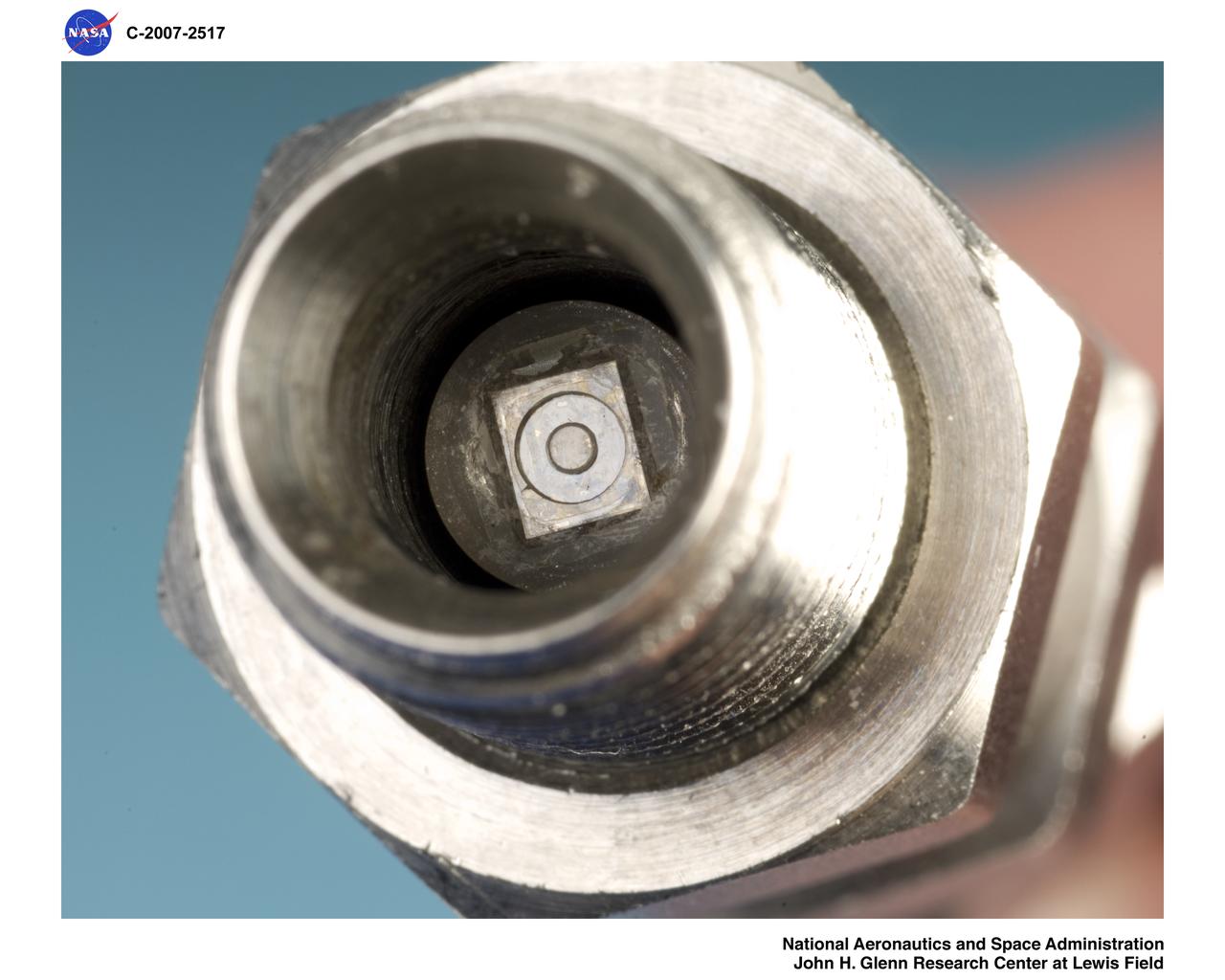
Fully Packaged Silicon Carbide Piezoresistive Pressure Transducer that measures pressures at temperature as high as 600 degrees Celsius
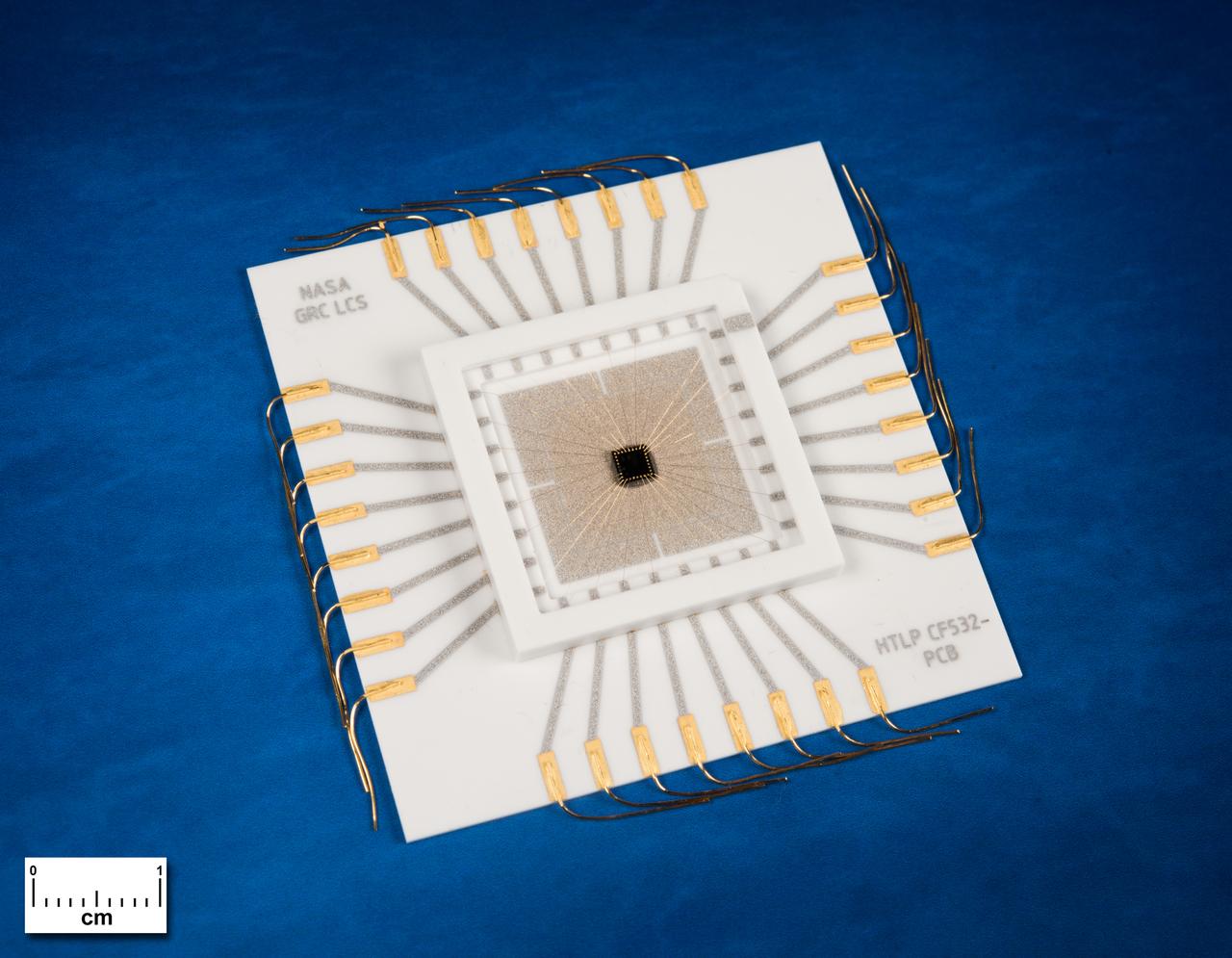
Silicon Carbide, SiC wafer v8.1 OpAmp Chip in Co-fired Alumina Package for High-temperature Application
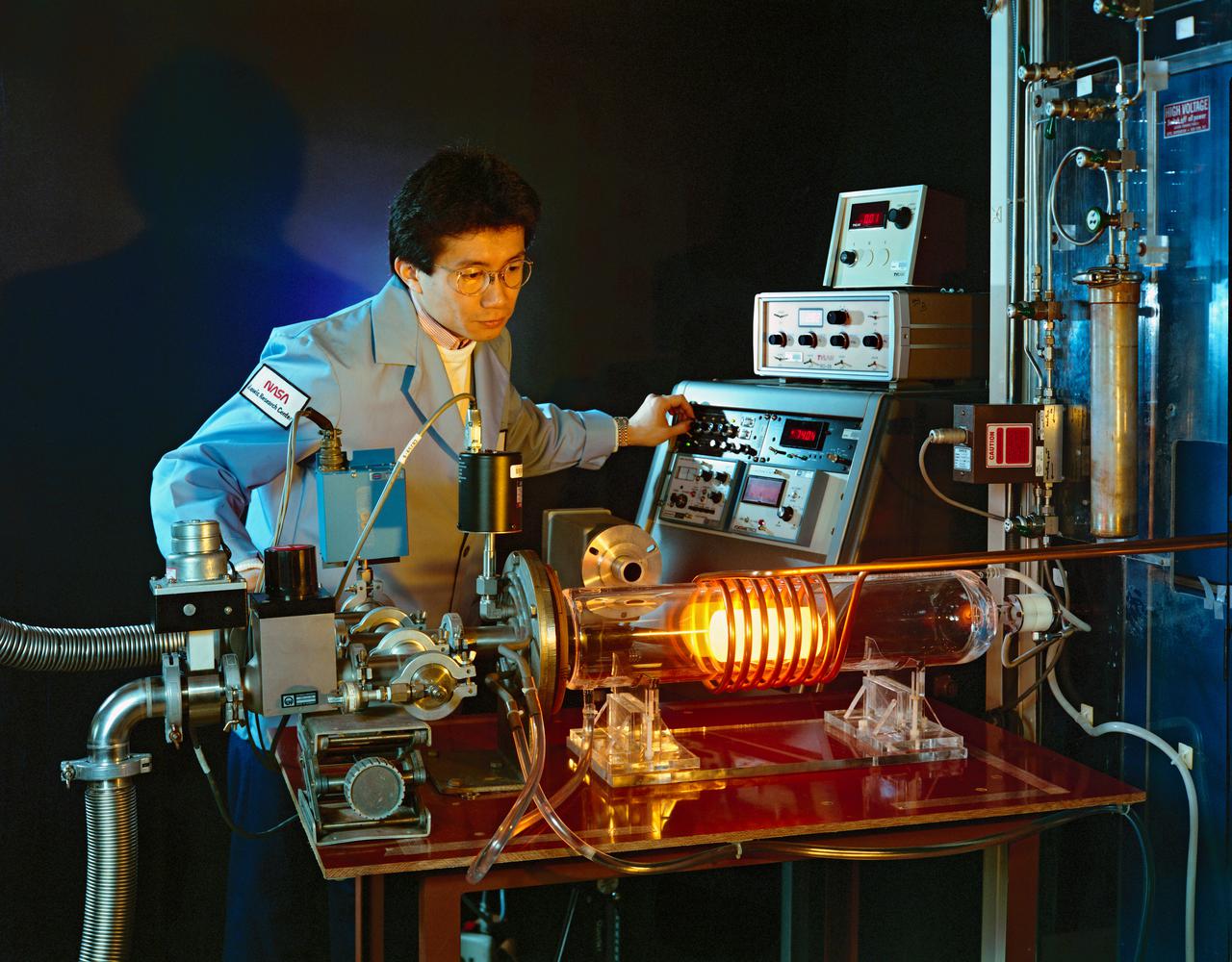
Shigehiro Nishino -- Visiting faculty fellow Dr. Shigehiro Nishino introduced the Lewis team to a unique chemical vapor deposition (CVD) strategy to grow silicon carbide crystals on silicon wafers.
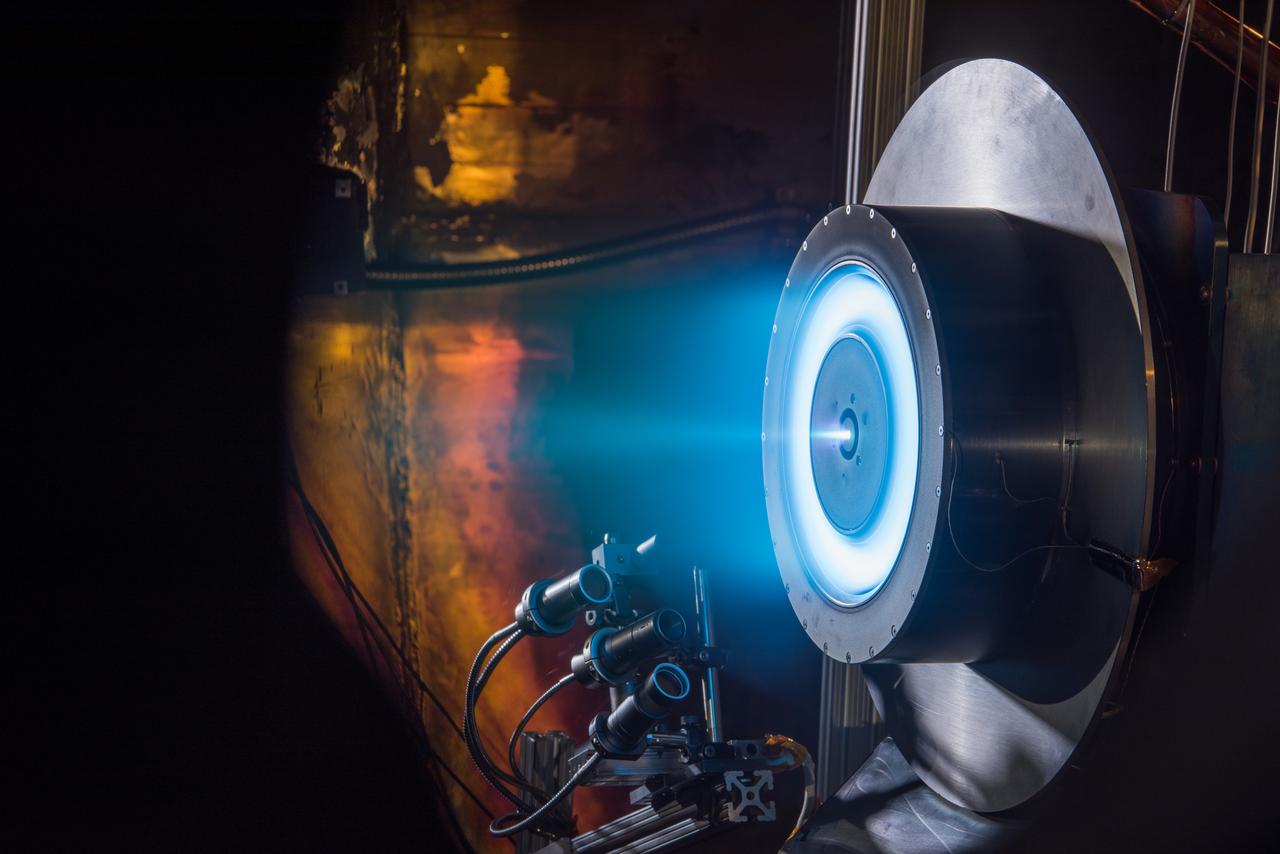
Hall Effect Rocket with Magnetic Shielding Technology Development Unit 1 with Large Radiator working in conjunction with High Power 300 volt Silicon Carbide Power Processing Unit
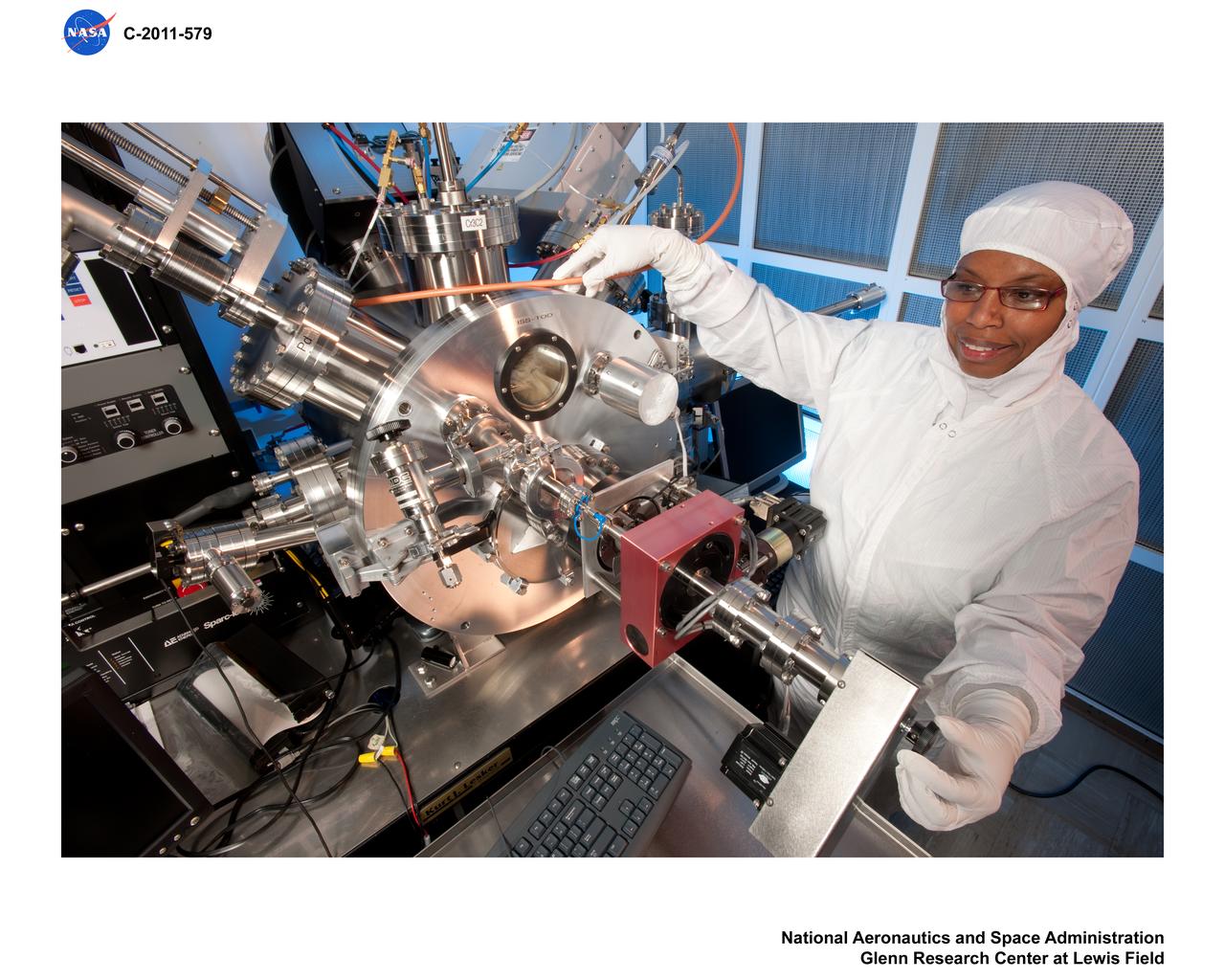
Photos for Web Feature by Victoria (Tori) Woods; Micro-Electro Mechanical Systems (MEMS) using vacuum technology; fabricating High Temperature Electronics for Harsh Environments using silicon carbide substrates
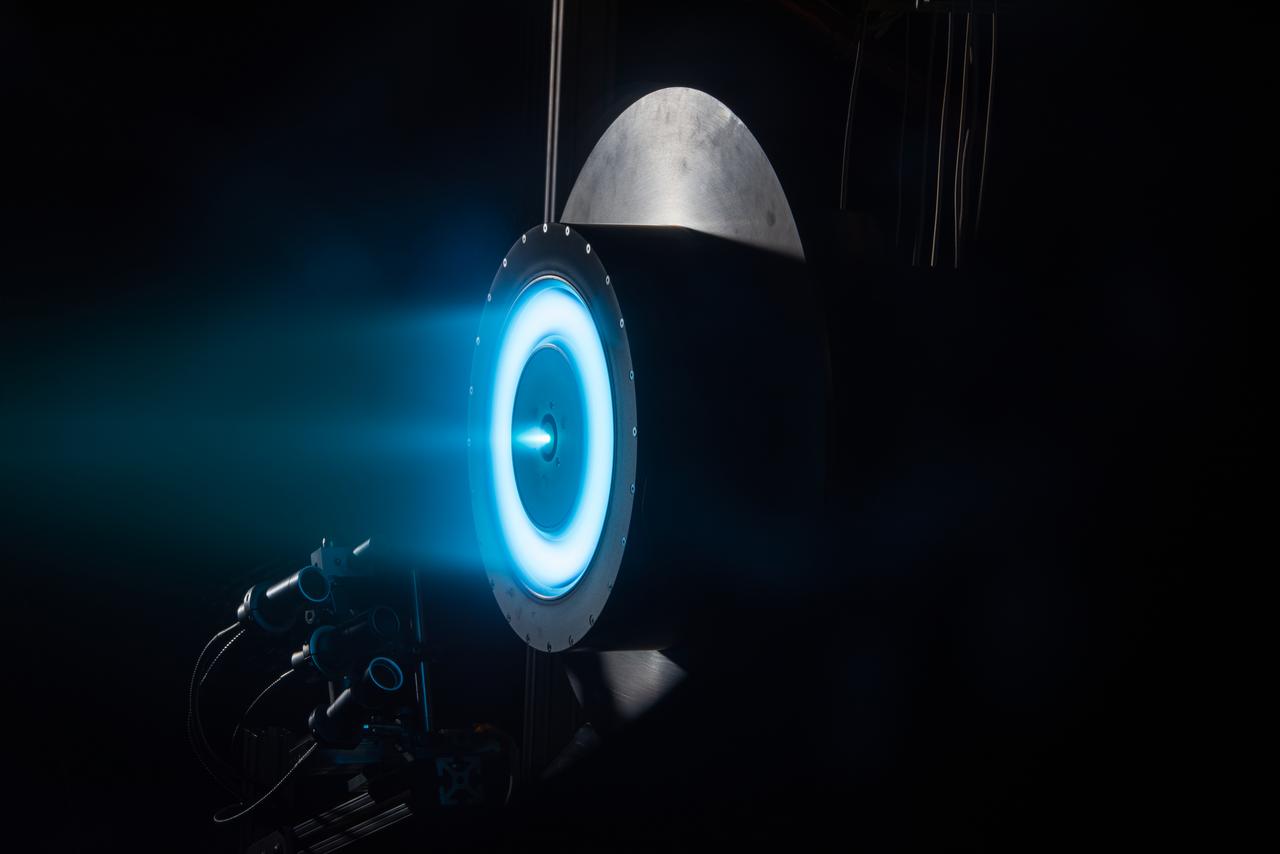
Hall Effect Rocket with Magnetic Shielding Technology Development Unit 1 with Large Radiator working in conjunction with High Power 300 Volt Silicon Carbide Power Processing Unit
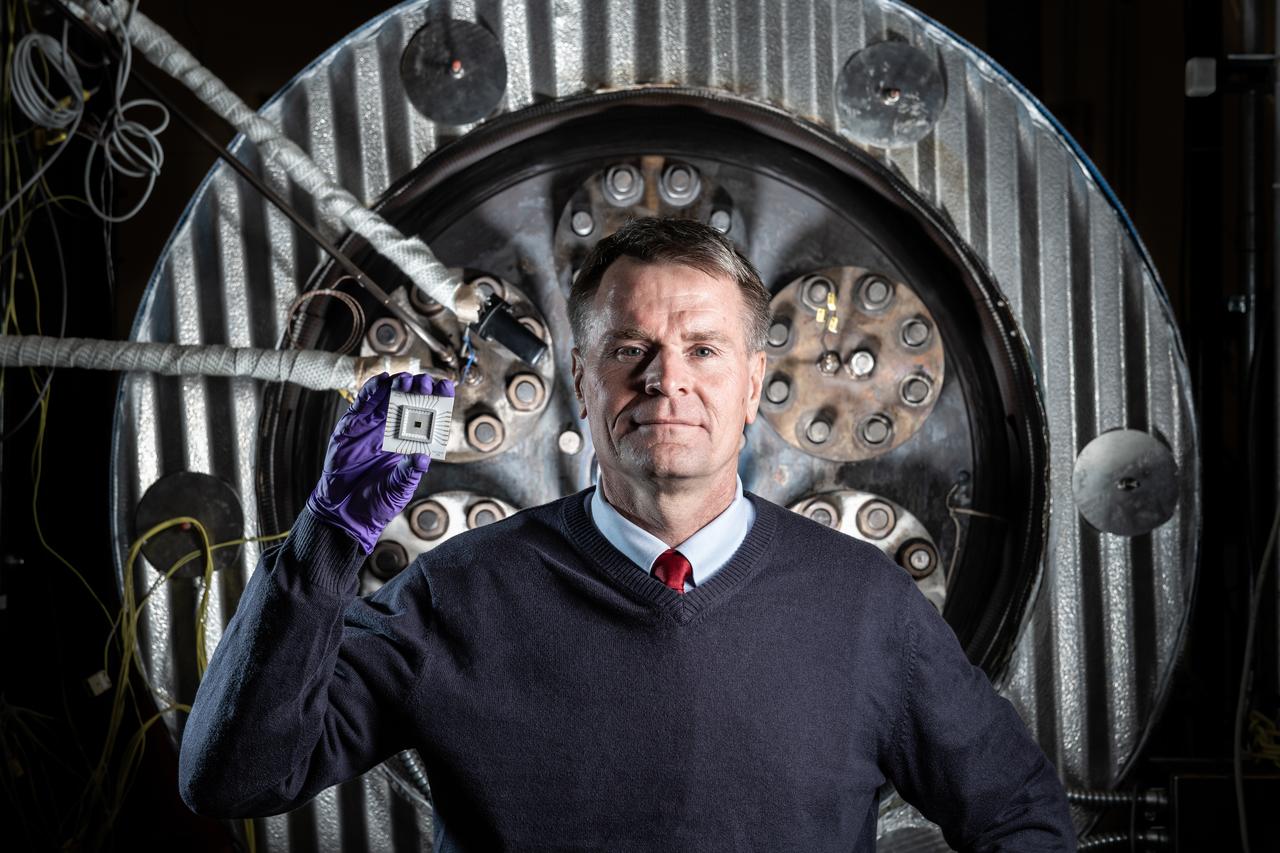
Phil Neudeck- Can Take the Heat When it comes to the heat of extreme environments like Venus, electronics can get fried within a few minutes of arrival. But NASA Researcher Phil Neudeck and his team have developed extremely durable silicon carbide semiconductor integrated circuits to survive those harsh conditions. After successfully testing the electronics in our high-pressure, high-temperature extreme environments chamber, there is now a path forward for Venus landers to survive and operate scientific experiments on the planet’s surface for longer durations.