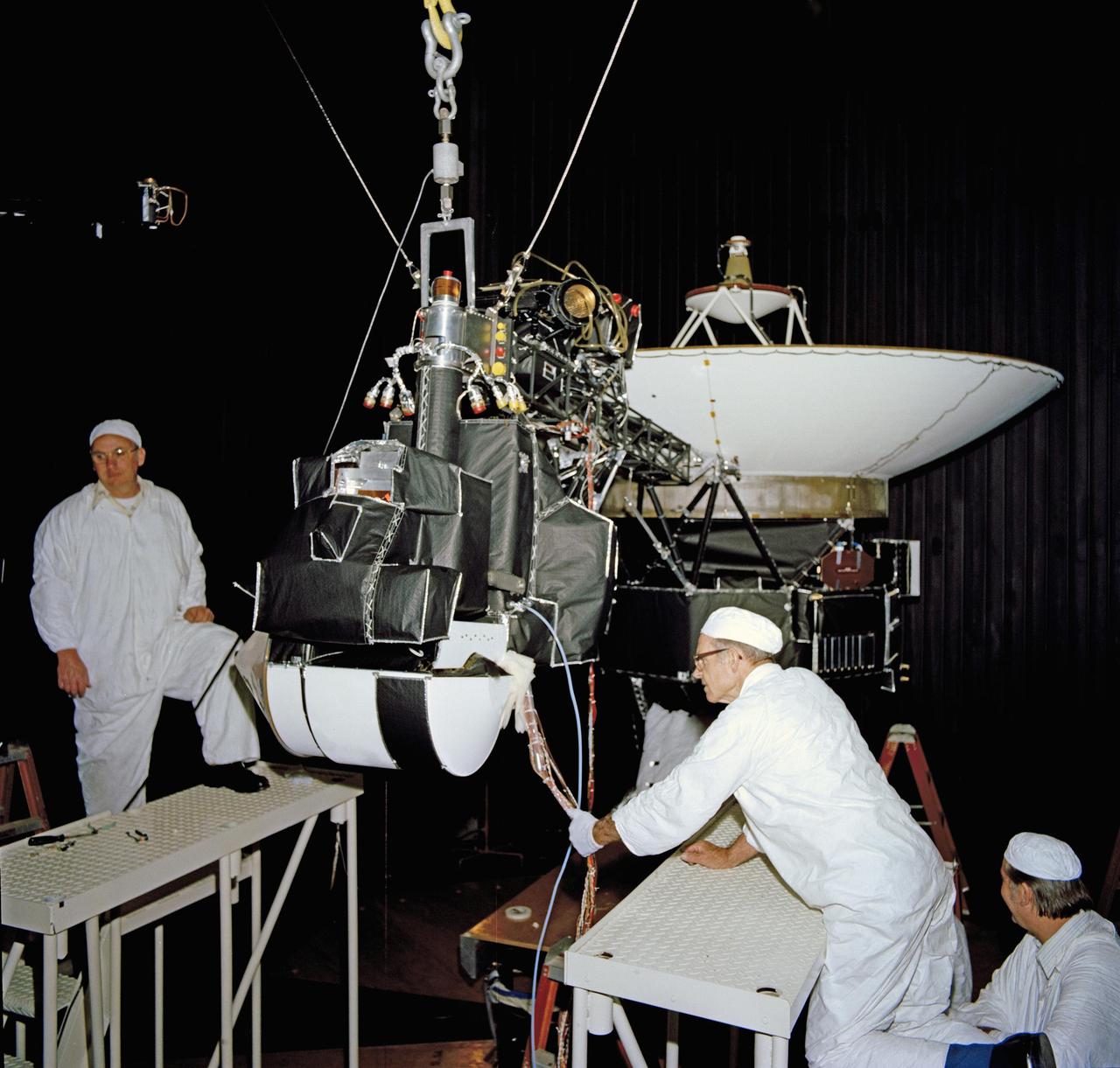
This image shows one of the Voyagers in the 25-foot space simulator chamber at NASA's Jet Propulsion Laboratory, Pasadena, California. The photo is dated April 27, 1977. https://photojournal.jpl.nasa.gov/catalog/PIA21737
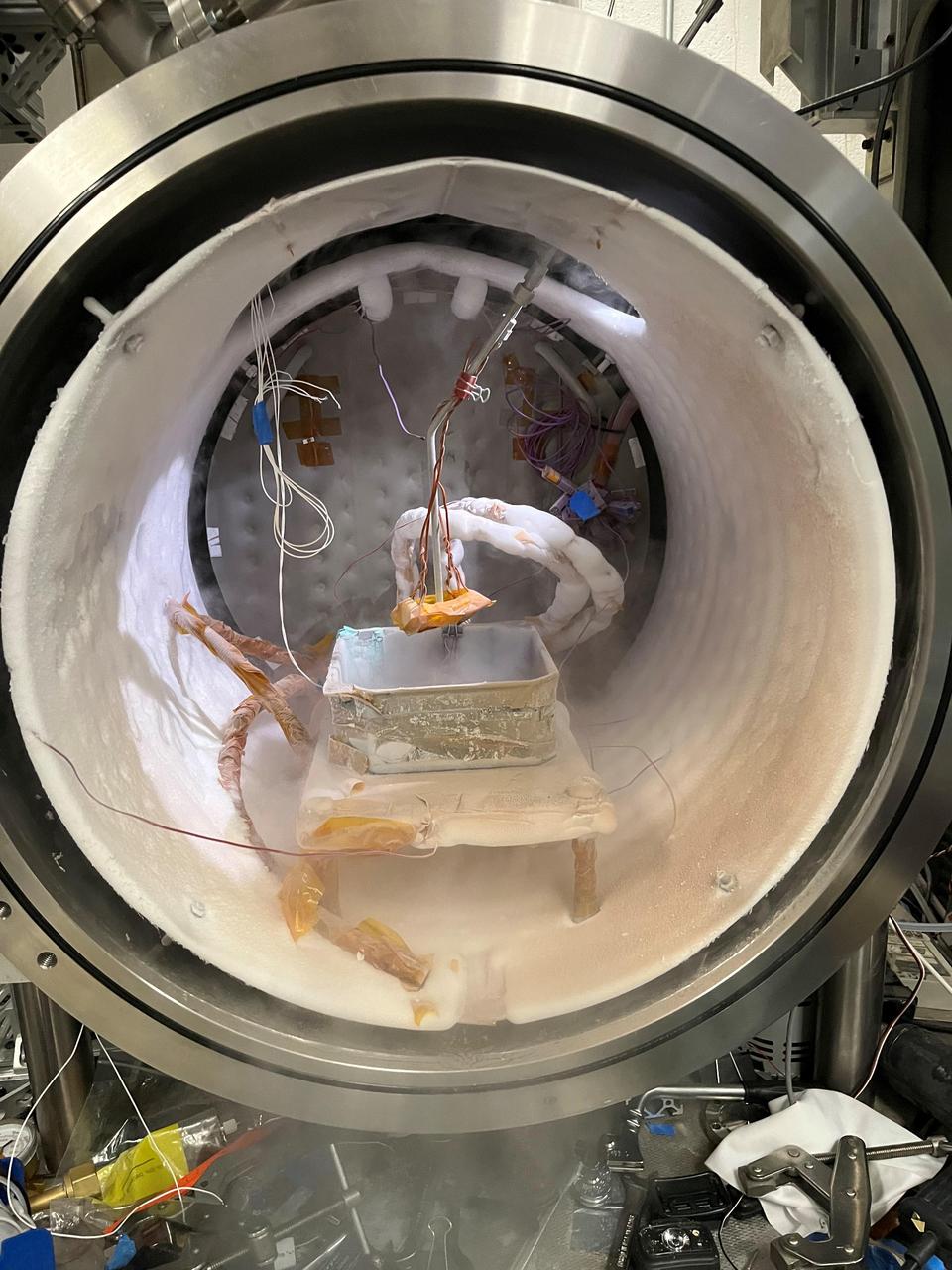
This wine barrel-size chamber at NASA's Jet Propulsion Laboratory in Southern California is used to simulate the temperatures and air pressure of other planets – in this case, the carbon dioxide ice found on the southern hemisphere of Mars. The experiment shown here simulated how Martian spider-like formations called araneiform terrain are created. Called the Dirty Under-vacuum Simulation Testbed for Icy Environments, or DUSTIE, the chamber was used to test a prototype of a rasping tool designed for NASA's Phoenix lander, which touched down on Mars' northern hemisphere in 2008. https://photojournal.jpl.nasa.gov/catalog/PIA26405
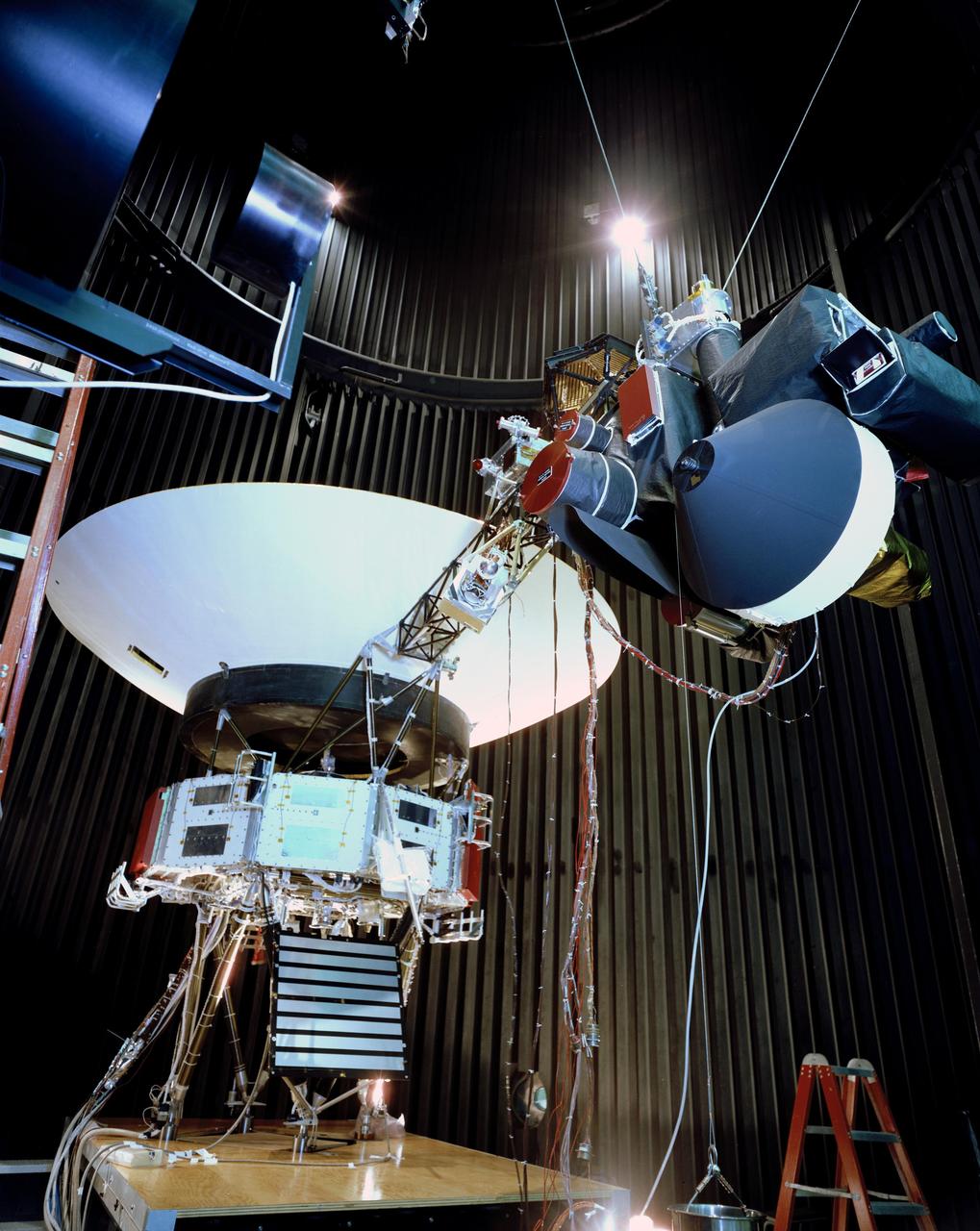
This archival photo shows the Voyager proof test model, which did not fly in space, in the 25-foot space simulator chamber at NASA's Jet Propulsion Laboratory, Pasadena, California, on December 3, 1976. The spacecraft is seen here with its scan platform, which holds several of its science instruments, in the deployed position. https://photojournal.jpl.nasa.gov/catalog/PIA21734
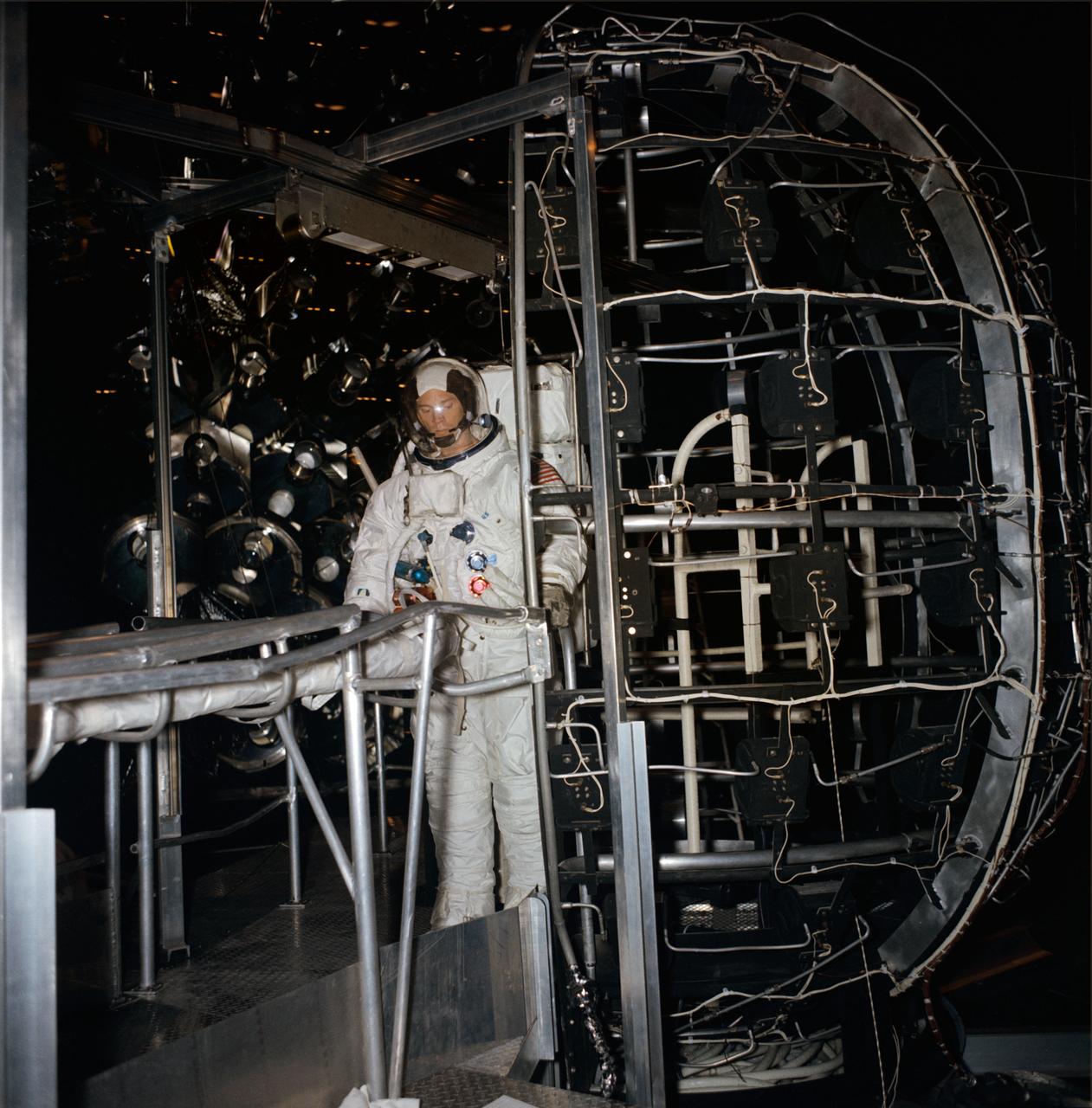
S68-55391 (11 Dec. 1968) --- Astronaut Russell L. Schweickart, lunar module pilot of the Apollo 9 (Spacecraft 104/Lunar Module 3/Saturn 504) space mission, is seen inside Chamber "A," Space Environment Simulation Laboratory, Building 32, participating in dry run activity in preparation for extravehicular activity which is scheduled in Chamber "A." The purpose of the scheduled training is to familiarize the crewmen with the operation of EVA equipment in a simulated space environment. In addition, metabolic and workload profiles will be simulated on each crewman. Astronauts Schweickart and Alan L. Bean, backup lunar module pilot, are scheduled to receive thermal-vacuum training simulating Earth-orbital EVA.
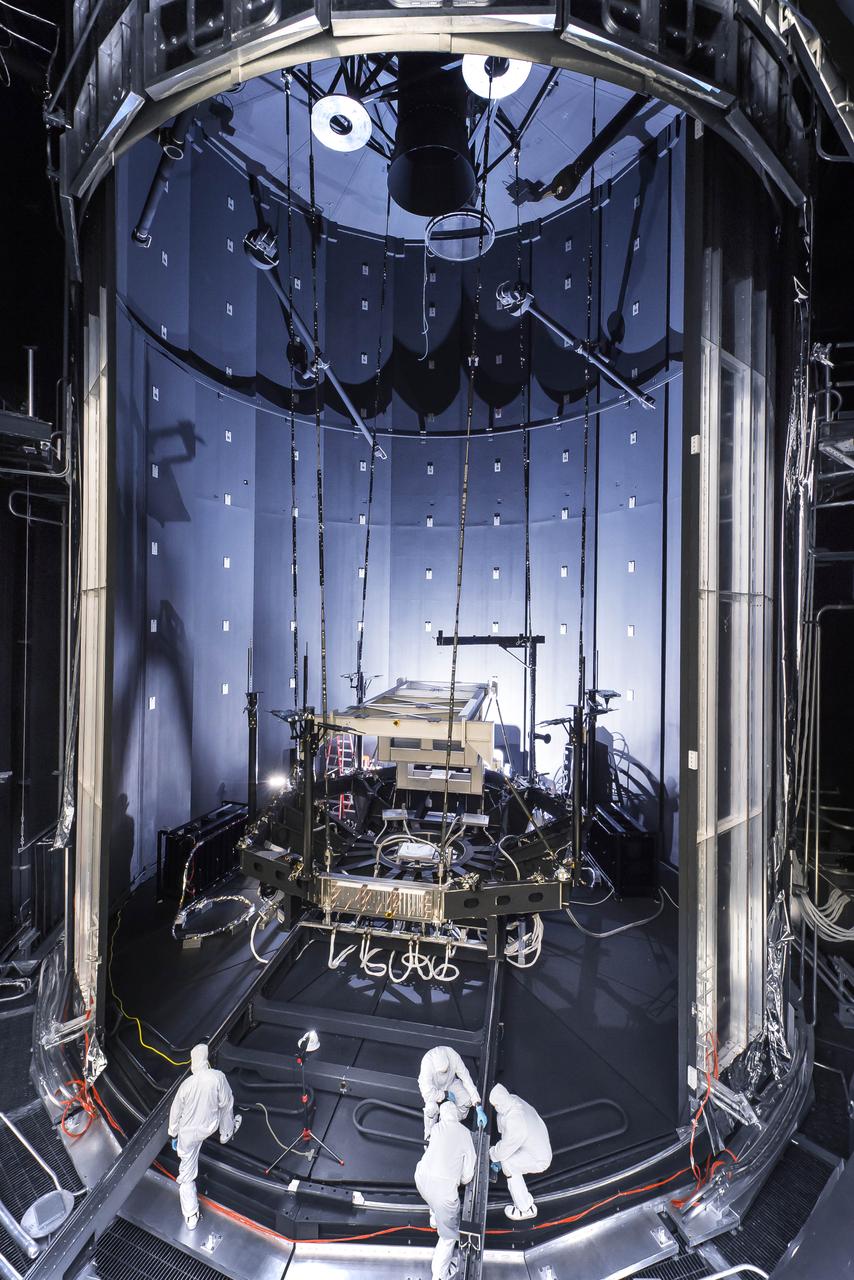
This photo was captured from outside the enormous mouth of NASA's giant thermal vacuum chamber, called Chamber A, at Johnson Space Center in Houston. Previously used for manned spaceflight missions, this historic chamber is now filled with engineers and technicians preparing a lift system that will be used to hold the James Webb Space Telescope during testing. The James Webb Space Telescope is the scientific successor to NASA's Hubble Space Telescope. It will be the most powerful space telescope ever built. Webb is an international project led by NASA with its partners, the European Space Agency and the Canadian Space Agency. Credit: NASA/Goddard/Chris Gunn <b><a href="http://www.nasa.gov/audience/formedia/features/MP_Photo_Guidelines.html" rel="nofollow">NASA image use policy.</a></b> <b><a href="http://www.nasa.gov/centers/goddard/home/index.html" rel="nofollow">NASA Goddard Space Flight Center</a></b> enables NASA’s mission through four scientific endeavors: Earth Science, Heliophysics, Solar System Exploration, and Astrophysics. Goddard plays a leading role in NASA’s accomplishments by contributing compelling scientific knowledge to advance the Agency’s mission. <b>Follow us on <a href="http://twitter.com/NASAGoddardPix" rel="nofollow">Twitter</a></b> <b>Like us on <a href="http://www.facebook.com/pages/Greenbelt-MD/NASA-Goddard/395013845897?ref=tsd" rel="nofollow">Facebook</a></b> <b>Find us on <a href="http://instagrid.me/nasagoddard/?vm=grid" rel="nofollow">Instagram</a></b>
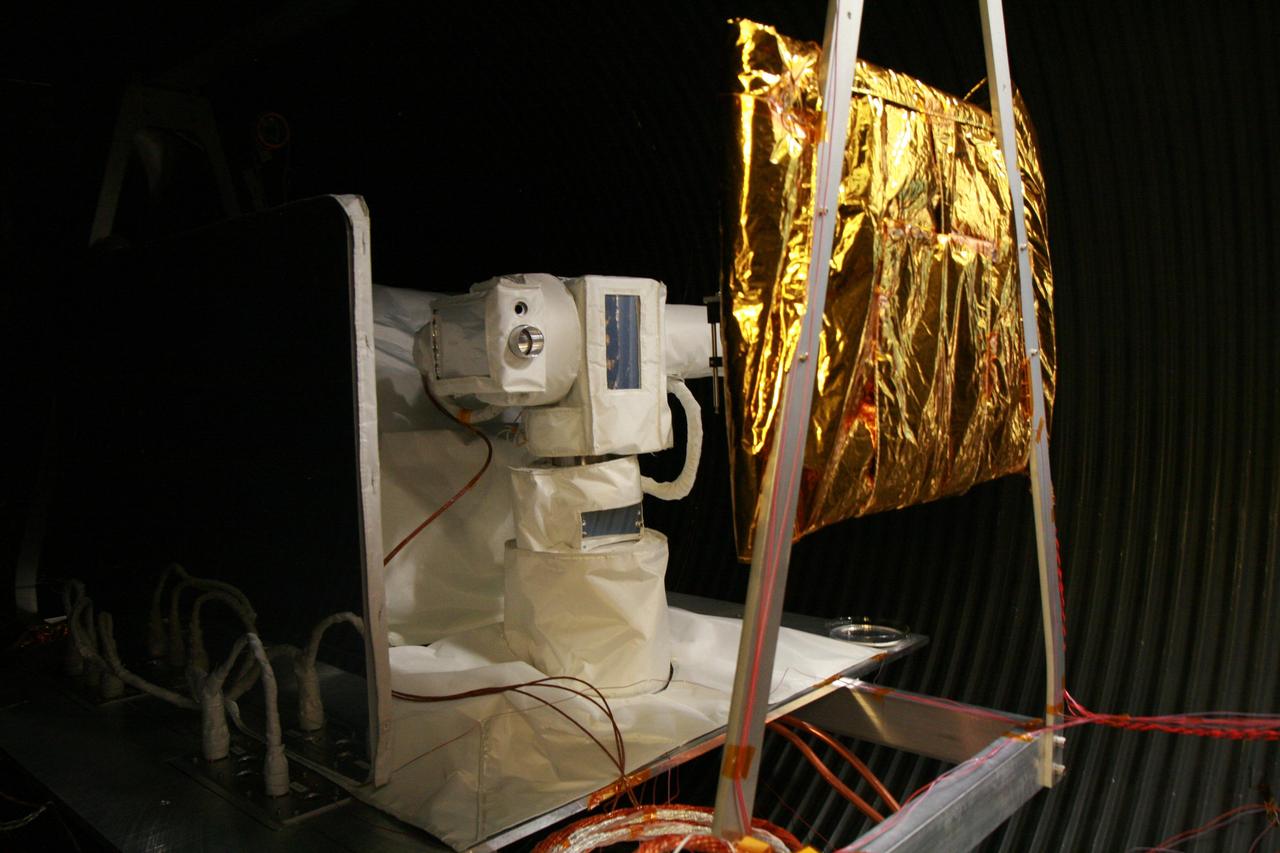
The Optical PAyload for Lasercomm Science OPALS flight terminal undergoes testing in a thermal vacuum chamber at NASA Jet Propulsion Laboratory to simulate the space environment.
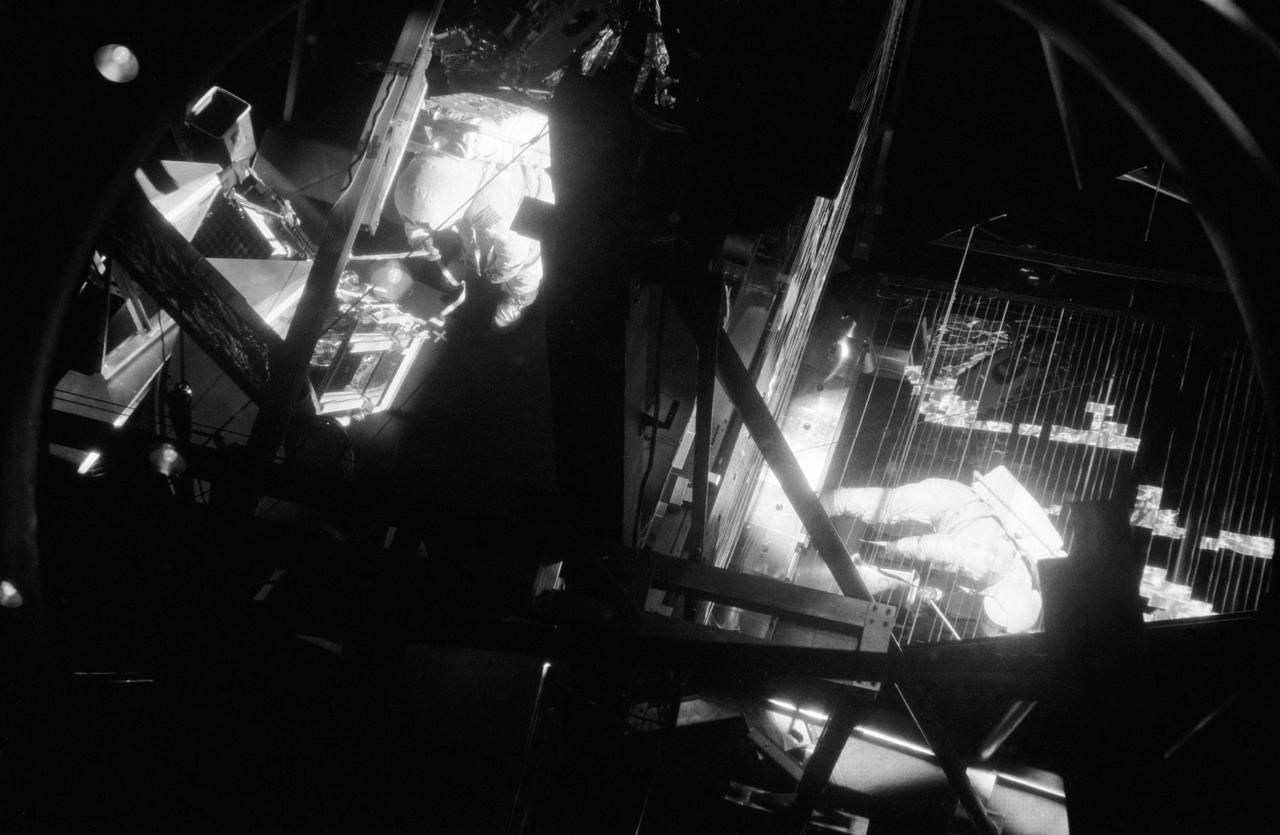
Astronaut Neil A. Armstrong, commander of the Apollo 11 lunar landing mission, is photographed during thermovacuum training in Chamber B of the Space Environment Simulation Laboratory, Building 32, Manned Spacecraft Center. He is wearing an Extravehicular Mobility Unit. The training simulated lunar surface vacuum and thermal conditions during astronaut operations outside the Lunar Module on the moon's surface. The mirror was used to reflect solar light.
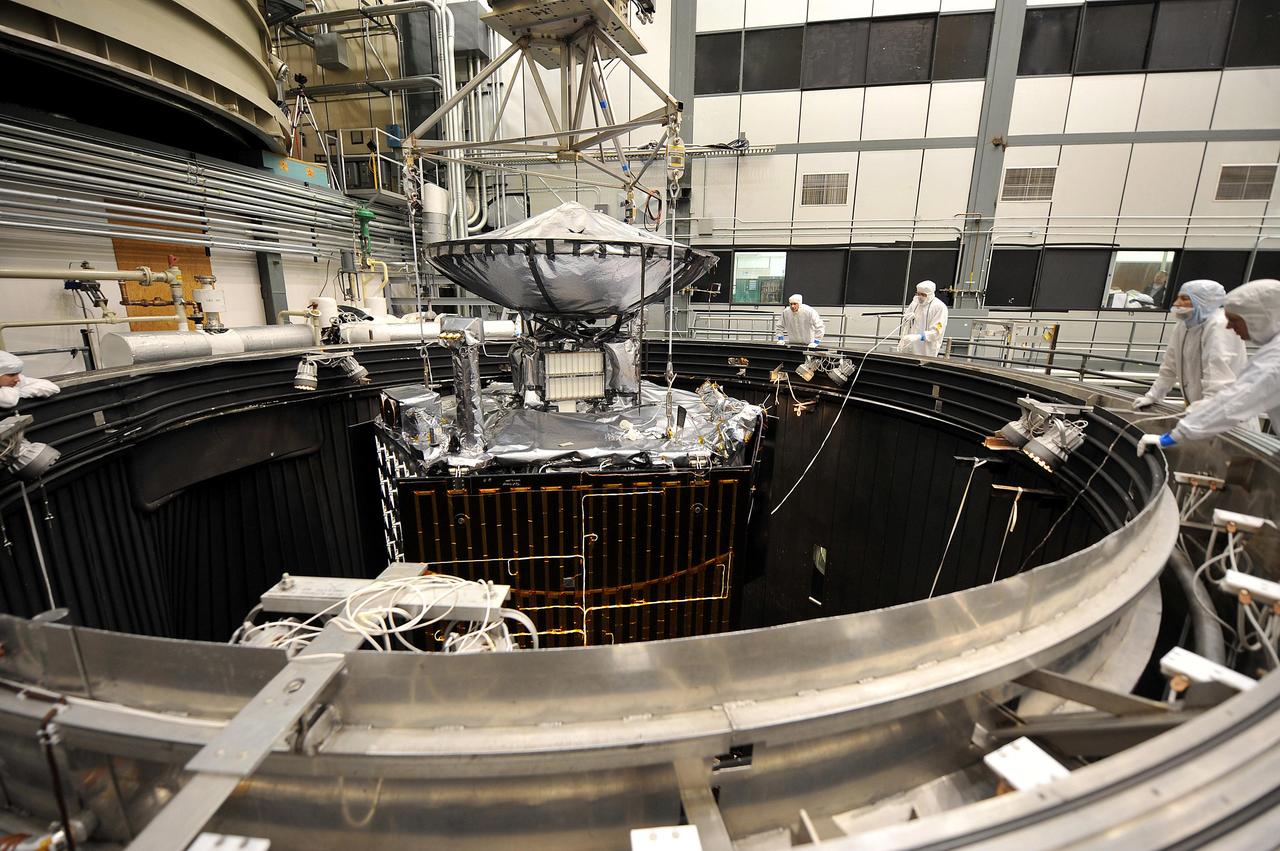
NASA Juno spacecraft is raised out of a thermal vacuum chamber following tests that simulated the environment of space over the range of conditions the probe will encounter during its mission.
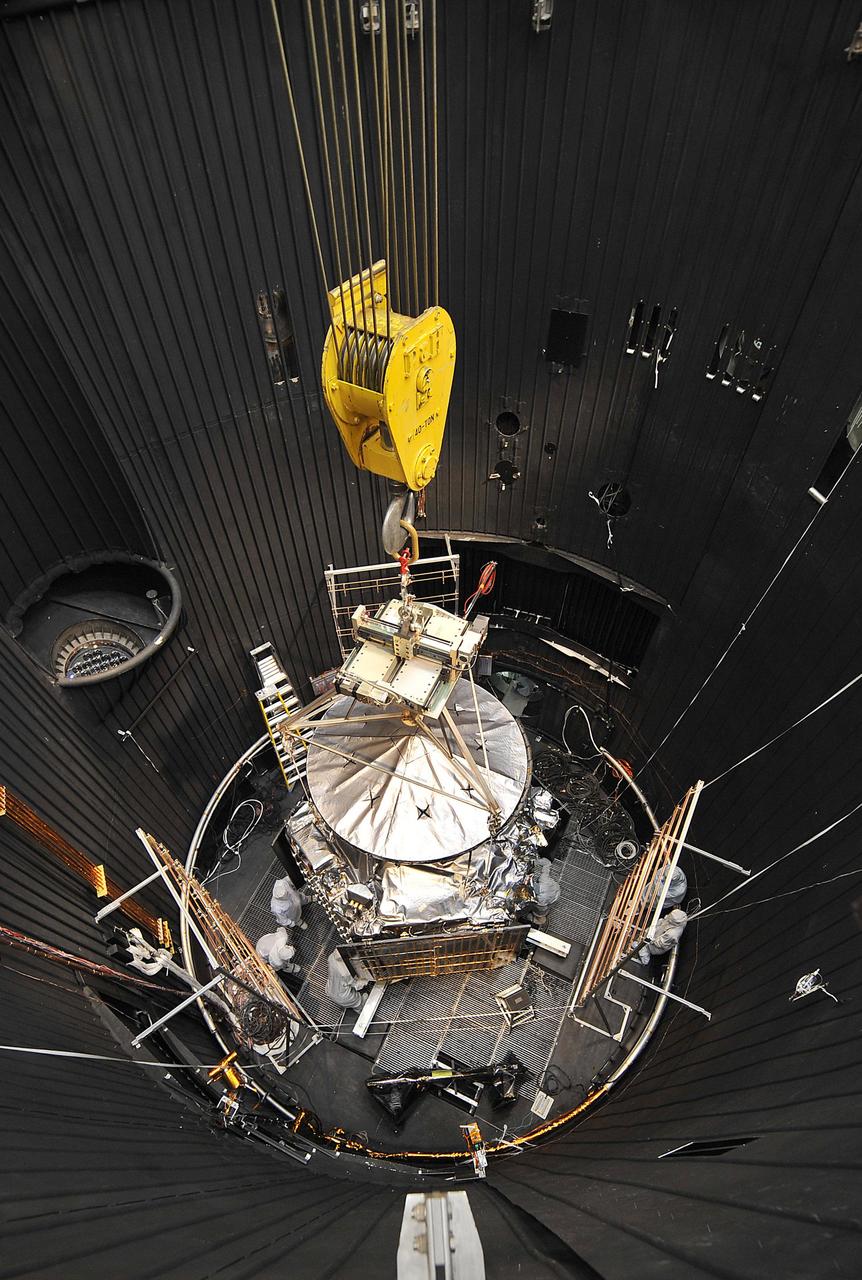
NASA Juno spacecraft is readied for lifting out of a thermal vacuum chamber following testing to simulate the environment of space over the range of conditions the probe will encounter during its mission.
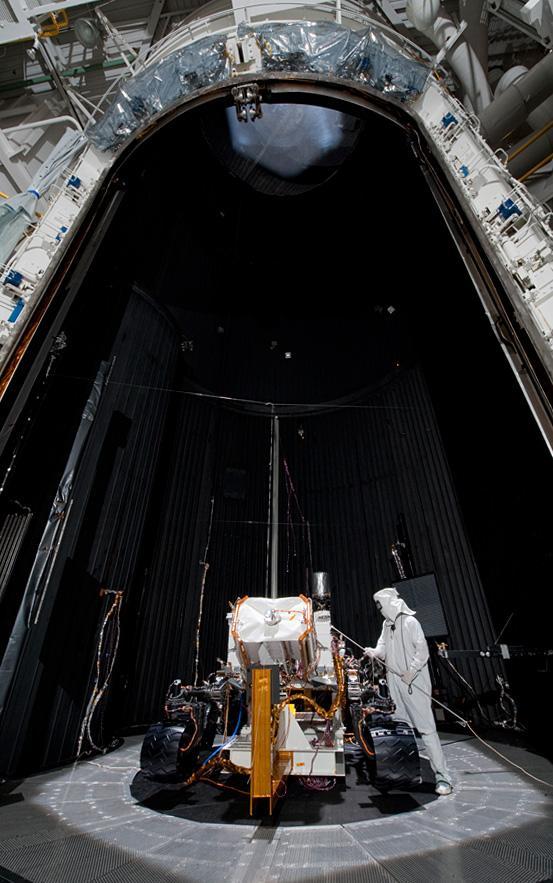
This image shows preparation for March 2011 testing of the Mars Science Laboratory rover, Curiosity, in a space-simulation chamber; the rover will go through operational sequences in environmental conditions similar to what it will experience on Mars.
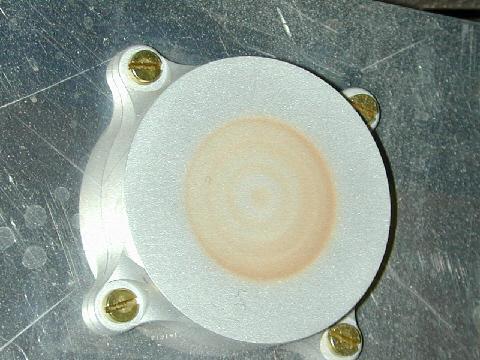
This image of a model capture magnet was taken after an experiment in a Mars simulation chamber at the University of Aarhus, Denmark. It has some dust on it, but not as much as that on the Mars Exploration Rover Spirit capture magnet.
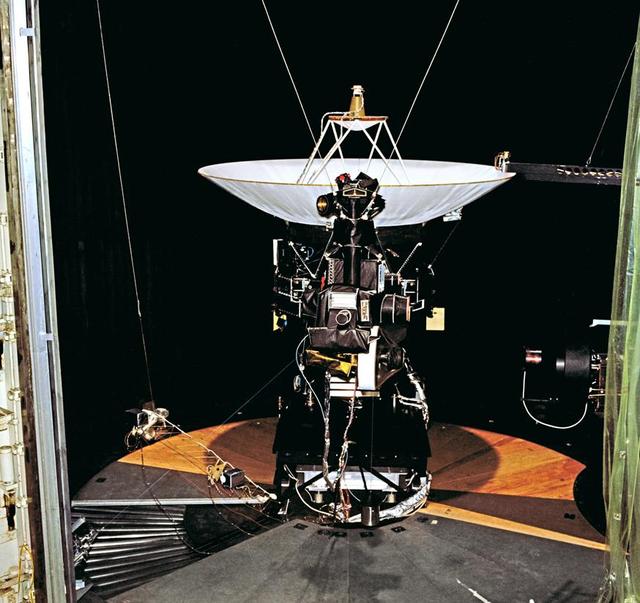
This archival photo shows the Voyager proof test model, which did not fly in space, in the 25-foot space simulator chamber at NASA's Jet Propulsion Laboratory, Pasadena, California. https://photojournal.jpl.nasa.gov/catalog/PIA21726
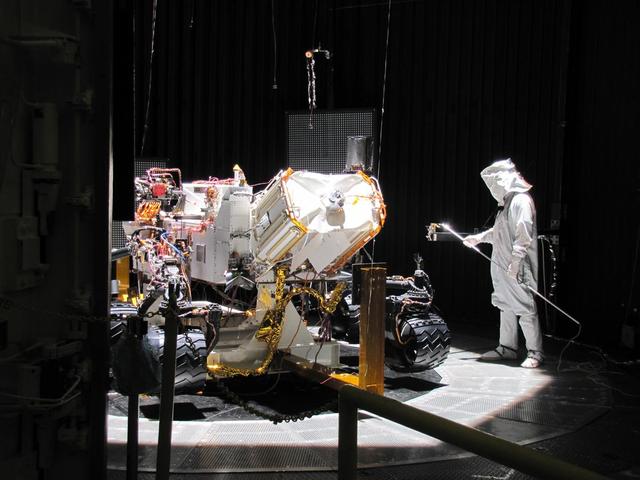
This image shows preparation for March 2011 testing of the Mars Science Laboratory rover, Curiosity, in a space-simulation chamber; the rover will go through operational sequences in environmental conditions similar to what it will experience on Mars.

This archival photo shows the Voyager proof test model, which did not fly in space, in the 25-foot space simulator chamber at NASA's Jet Propulsion Laboratory on December 3, 1976. https://photojournal.jpl.nasa.gov/catalog/PIA21735
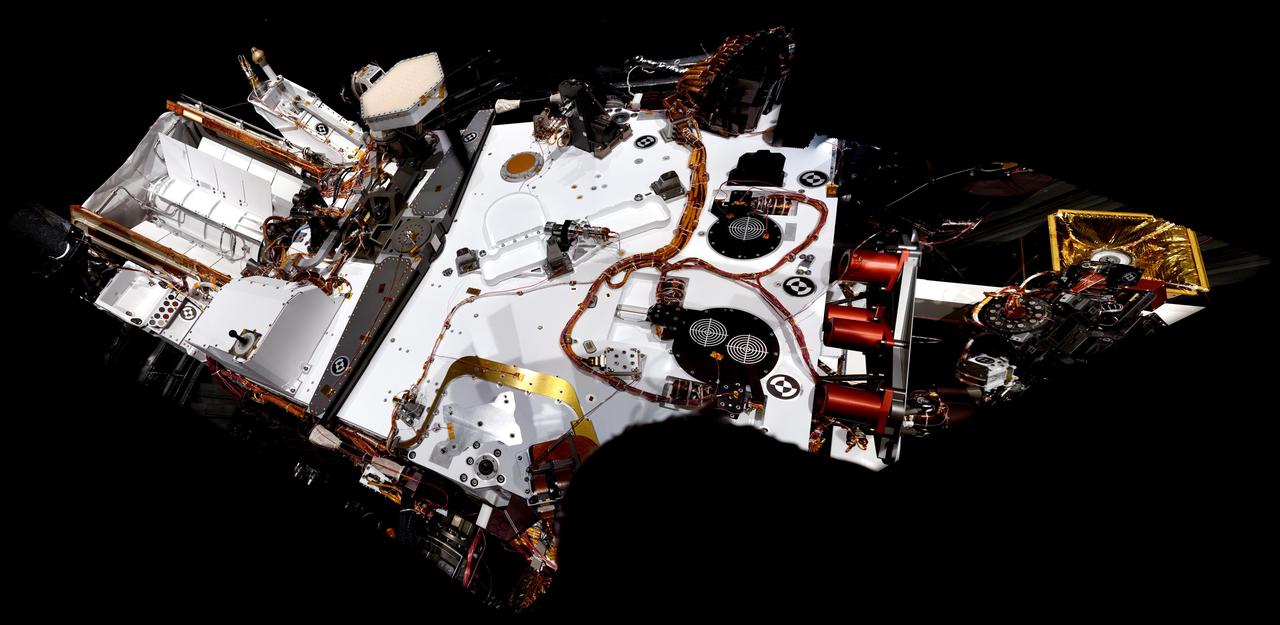
NASA Mars rover Curiosity took the images combined into this mosaic of the rover upper deck. The images were taken in March 2011. At the time, Curiosity was inside a space simulation chamber at NASA Jet Propulsion Laboratory, Pasadena, Calif.
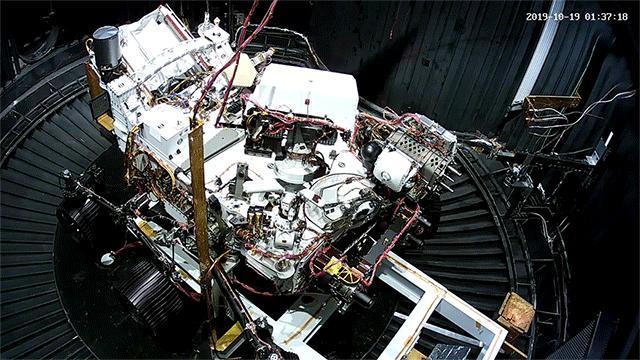
This animated GIF shows the deployment of the Perseverance rover's remote sensing mast during a cold test in a space simulation chamber at NASA's Jet Propulsion Laboratory. The test took place in October 2019. Movie available at https://photojournal.jpl.nasa.gov/catalog/PIA23889
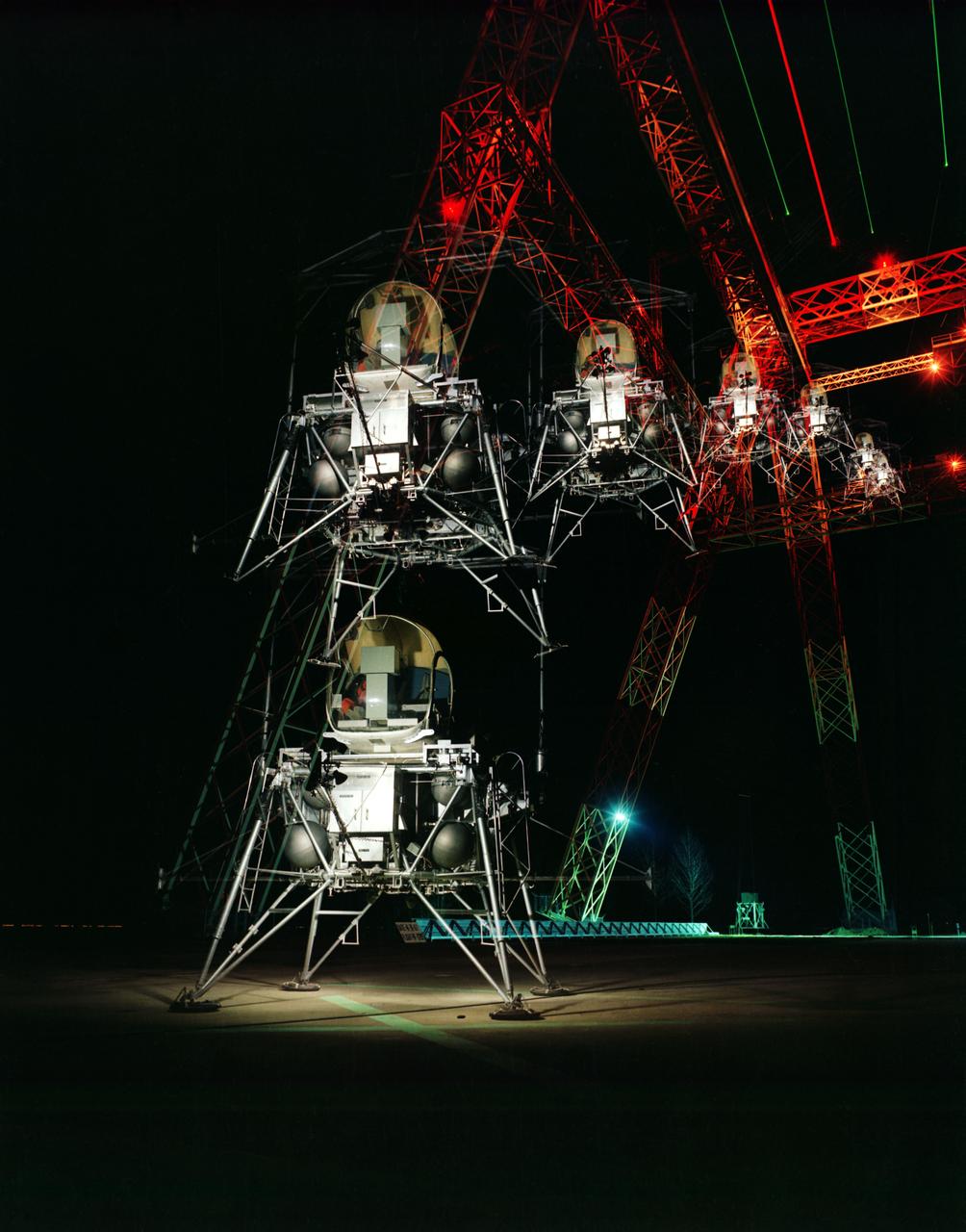
During a nighttime training session, a multiple exposure captures the movement of the Lunar Excursion Module Simulator (LEMS). The LEMS was a manned vehicle used to familiarize the Apollo astronauts with the handling characteristics of lunar-landing type vehicle. The Apollo Program is best known for the astronaut Neal Armstrong s first step on the Moon July 20, 1969. In its earliest test period, the LEMS featured a helicopter crew cabin atop the lunar landing module. Later, the helicopter crew cabin was replaced with a stand-up rectangular cabin which was more efficient for controlling maneuvers and for better viewing by the pilot. The vehicle was designed at Langley Research Center in Hampton, VA. This multiple exposure shows a simulated Moon landing of the (LEMS) trainer at Langley s Lunar Landing Research Facility. -- Photograph published in Winds of Change, 75th Anniversary NASA publication (page 70), by James Shultz. Also published in " A Century at Langley" by Joseph Chambers, pg. 93.
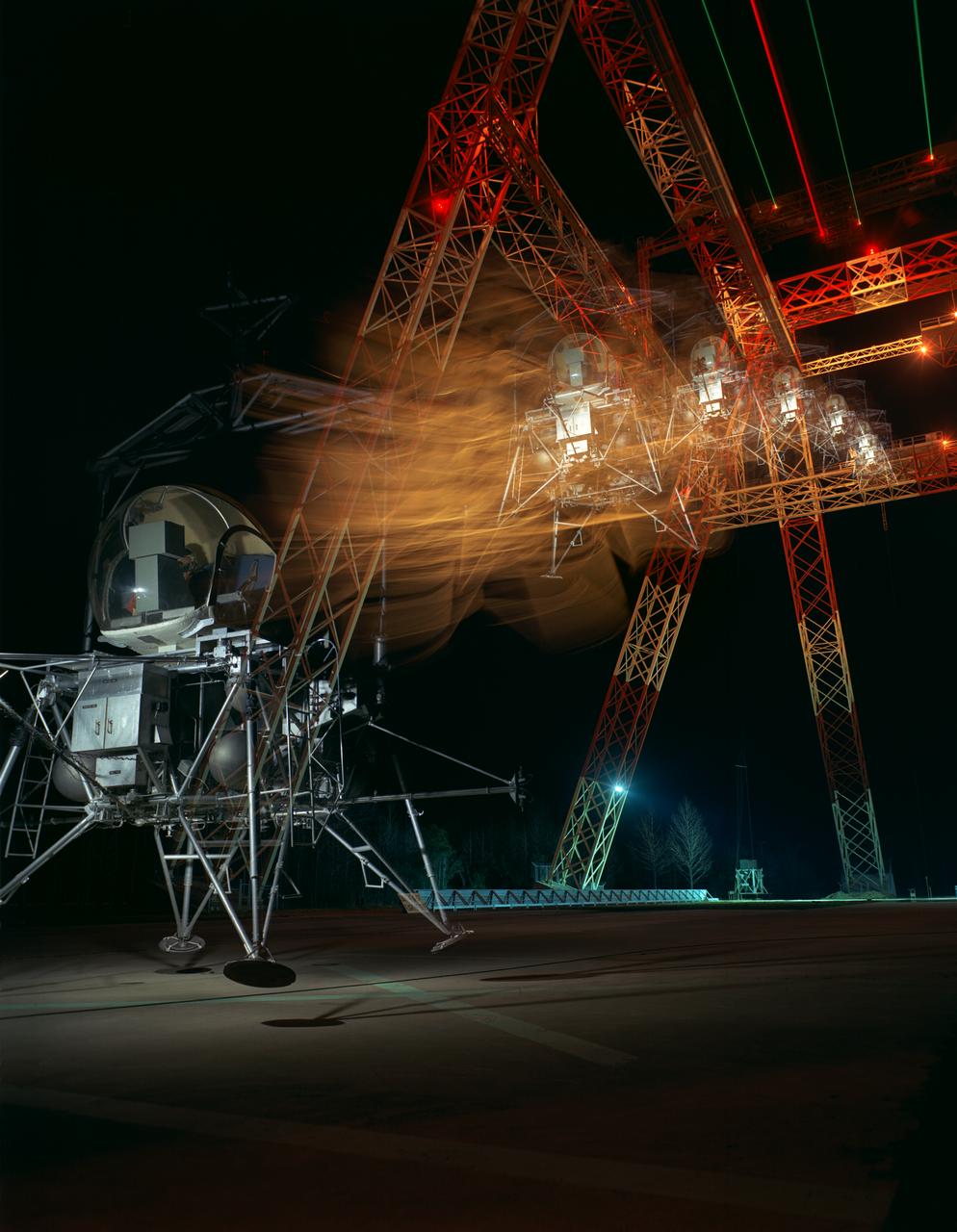
During a nighttime training session, a multiple exposure captures the movement of the Lunar Excursion Module Simulator (LEMS). The LEMS was a manned vehicle used to familiarize the Apollo astronauts with the handling characteristics of lunar-landing type vehicle. The Apollo Program is best known for the astronaut Neal Armstrong s first step on the Moon July 20, 1969. In its earliest test period, the LEMS featured a helicopter crew cabin atop the lunar landing module. Later, the helicopter crew cabin was replaced with a stand-up rectangular cabin which was more efficient for controlling maneuvers and for better viewing by the pilot. The vehicle was designed at Langley Research Center in Hampton, VA. This multiple exposure shows a simulated Moon landing of the (LEMS) trainer at Langley s Lunar Landing Research Facility. -- Photograph published in Winds of Change, 75th Anniversary NASA publication (page 70), by James Shultz. Also published in " A Century at Langley" by Joseph Chambers, pg. 93.
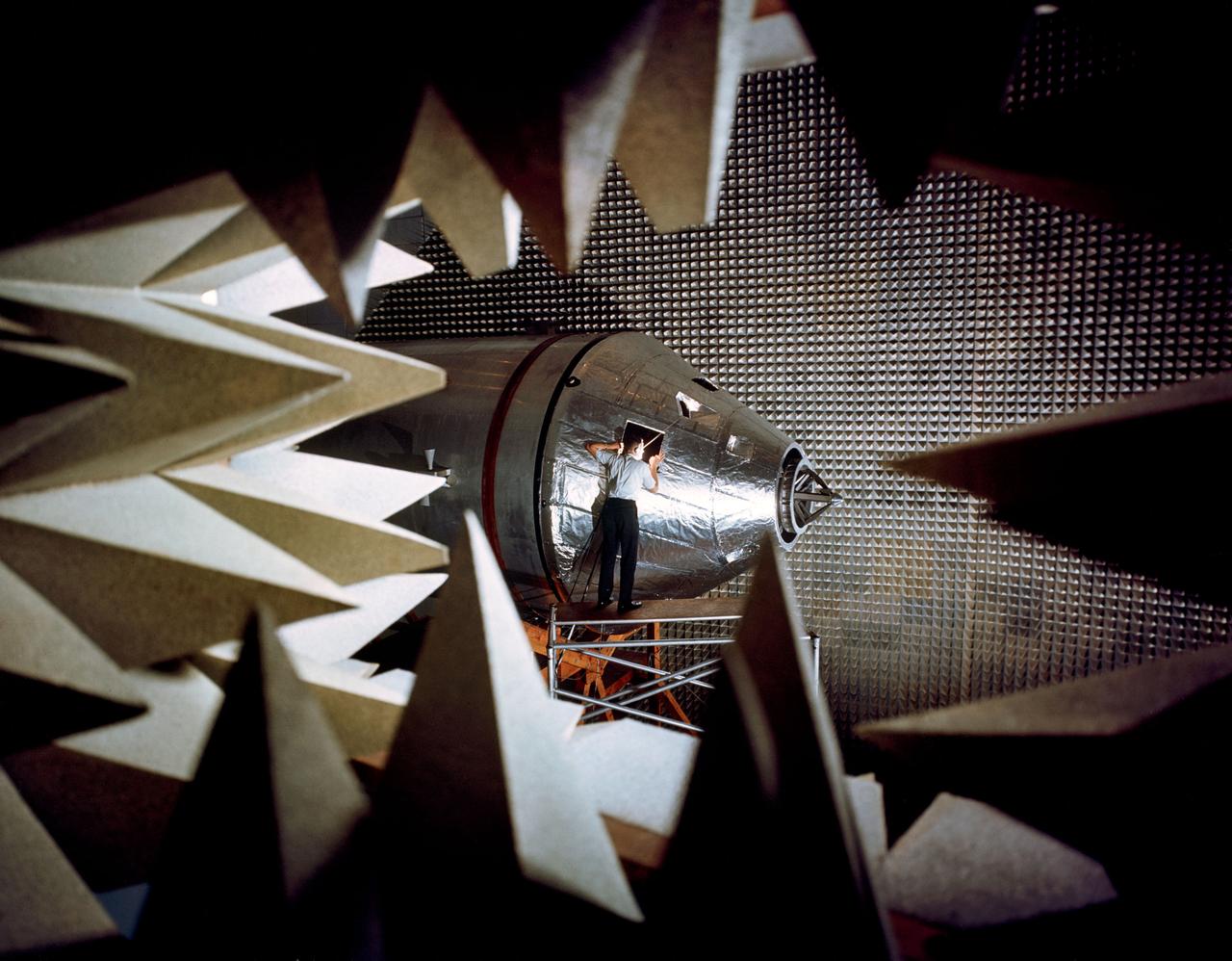
ASTRONAUT TRAINING APOLLO - LEM APOLLO MISSION SIMULATOR; NEUTRAL BOUYANCY FACILITY TANK; DYNAMIC CREW SIMULATOR; LUNAR MODULE SIMULATOR; CM PROCEDURES SIMULATOR; ANECHOIC CHAMBER;
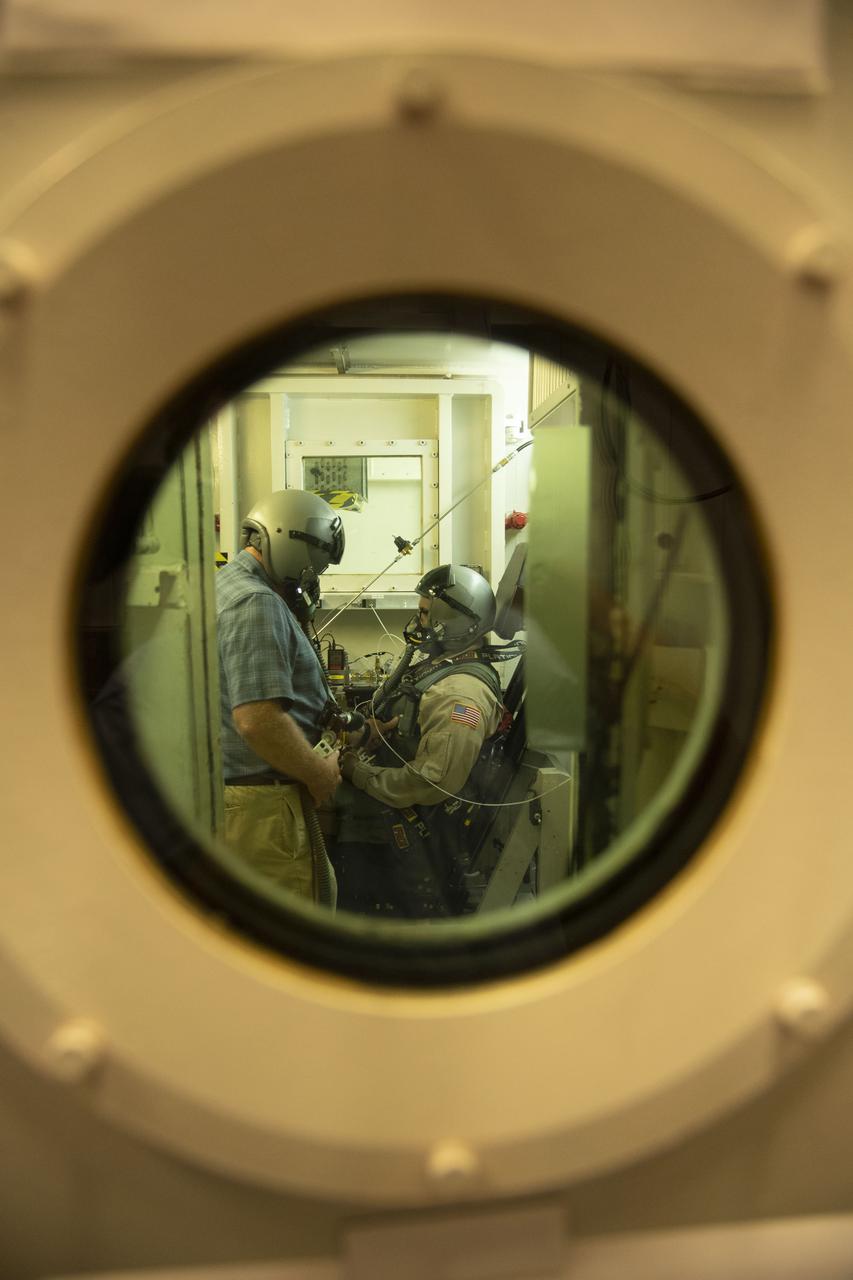
The low pressure (hypobaric) chamber at KBR’s facility in San Antonio, Texas, simulates very high altitudes by reducing the air pressure inside of the chamber. The subject inside the chamber experiences the reduced pressure conditions that exist at higher altitudes, in this case altitudes up to 60,000 feet.
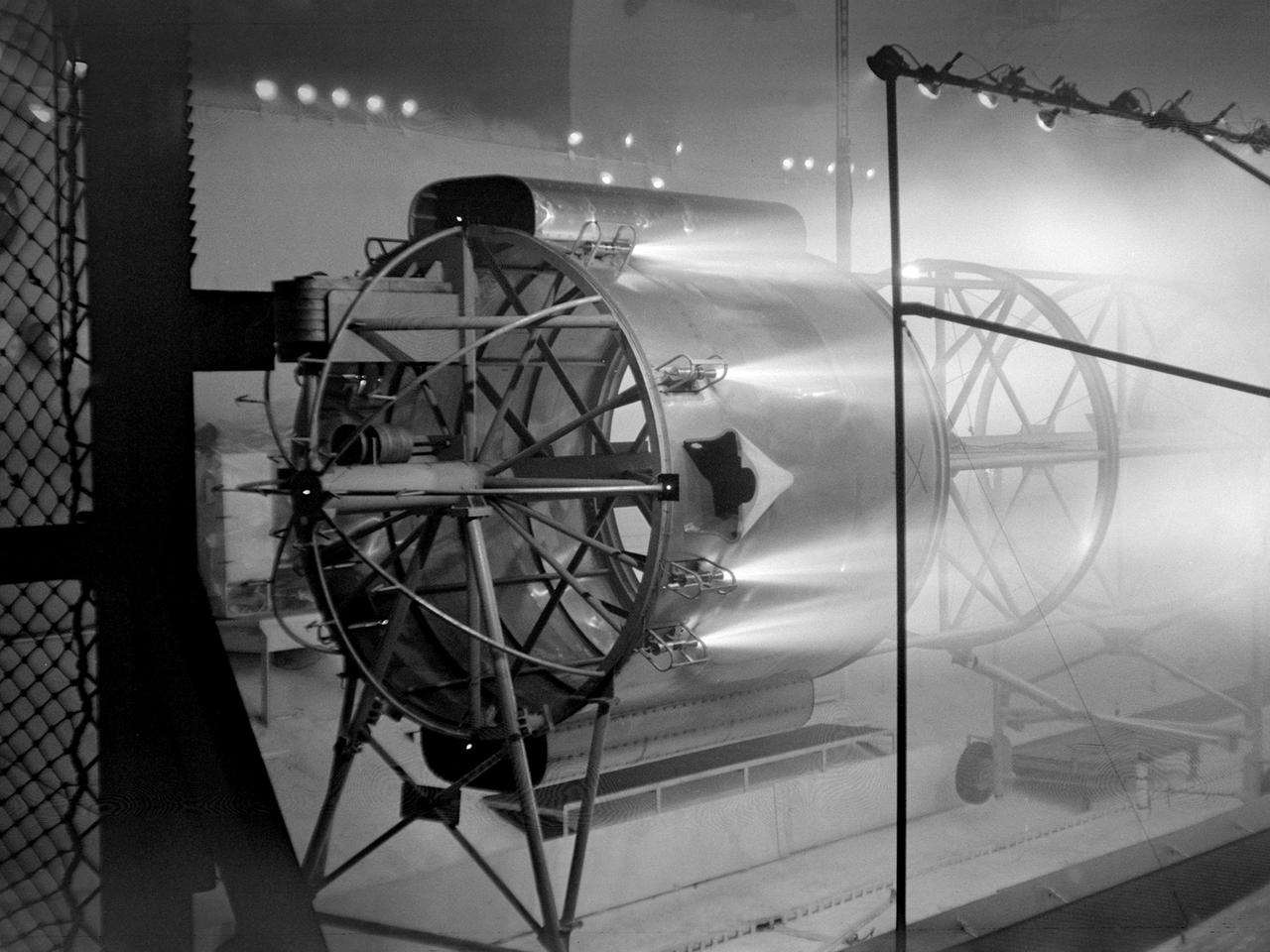
An Atlas/Centaur mass model undergoes a separation test inside the Space Power Chambers at NASA Lewis Research Center. Lewis was in the midst of an extensive effort to prepare the Centaur second-stage rocket for its missions to send the Surveyor spacecraft to the moon as a precursor to the Apollo missions. As part of these preparations, Lewis management decided to convert its Altitude Wind Tunnel into two large test chambers—the Space Power Chambers. The conversion included the removal of the tunnel’s internal components and the insertion of bulkheads to seal off the new chambers within the tunnel. One chamber could simulate conditions found at 100 miles altitude, while this larger chamber simulated the upper atmosphere. In this test series, researchers wanted to verify that the vehicle’s retrorockets would properly separate the Centaur from the Atlas. The model was suspended horizontally on a trolley system inside chamber. A net was hung at one end to catch the jettisoned Atlas model. The chamber atmosphere was reduced to a pressure altitude of 100,000 feet, and high-speed cameras were synchronized to the ignition of the retrorockets. The simulated Centaur is seen here jettisoning from the Atlas out of view to the right. The study resulted in a new jettison method that would significantly reduce the separation time and thus minimize the danger of collision between the two stages during separation.

Water and nutrients are being added to plants in the Veggie hardware in NASA Kennedy Space Center's ISS environment simulator chamber. Mizuna mustard, Outredgeous lettuce and Waldmann's green lettuce are growing in Veggie. Growth in the chamber mimics the growth of plant experiments in the Veggie plant growth system on the International Space Station.

Outredgeous red leaf lettuce, Mizuna mustard and Waldmann's green lettuce are growing in the Veggie control system in the ISS environment simulator chamber in the Space Station Processing Facility at NASA's Kennedy Space Center in Florida. Growth in the chamber mimics the growth of plant experiments in the Veggie plant growth system on the International Space Station.
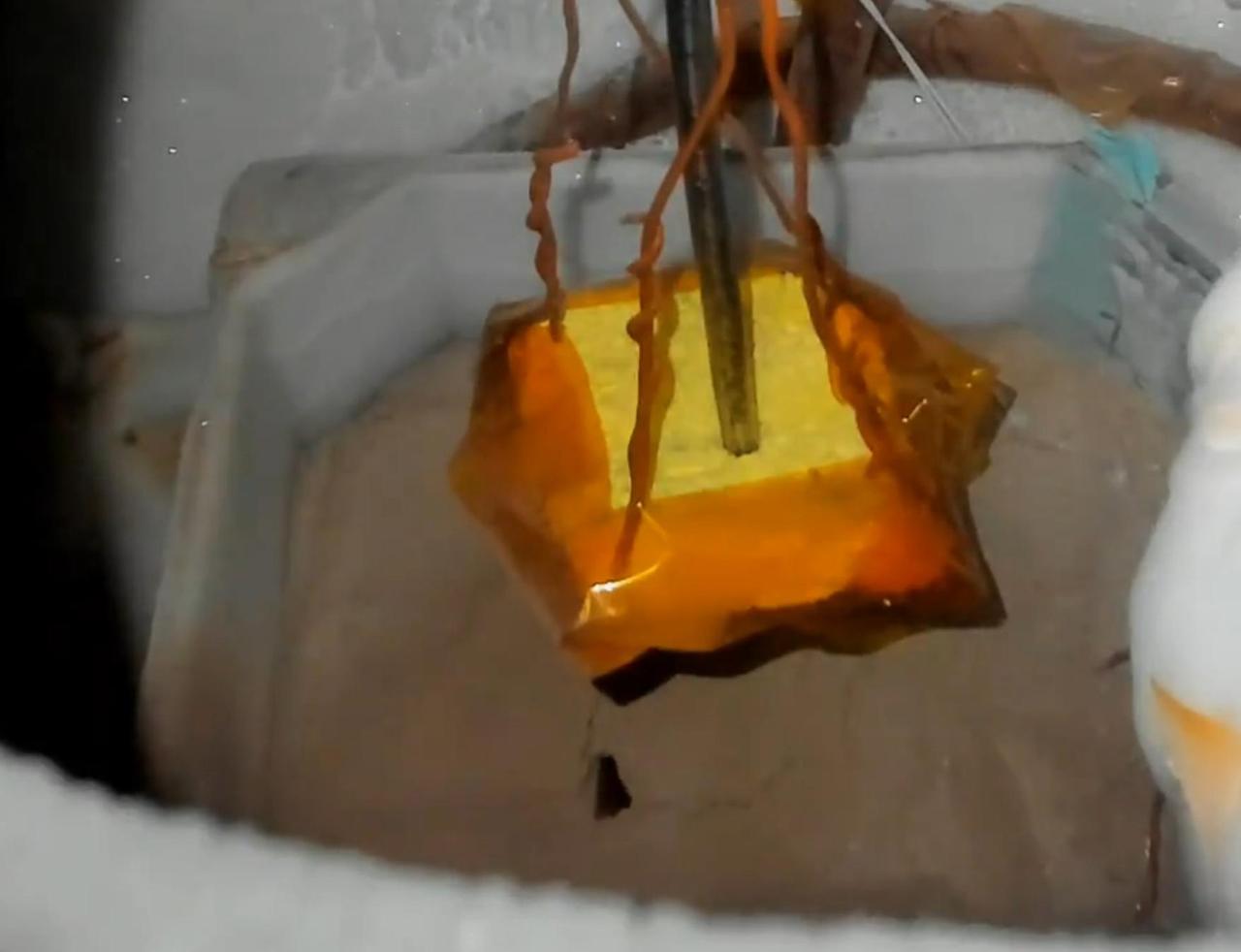
This image shows Martian soil simulant erupting in a plume during a lab experiment at NASA's Jet Propulsion Laboratory in Southern California that was designed to replicate the process believed to form Martian features called "spiders." In the experiment, researchers chilled Martian soil simulant in a container submerged within a liquid nitrogen bath. They placed it in JPL's Dirty Under-vacuum Simulation Testbed for Icy Environments (DUSTIE), where the air pressure was reduced to be similar to that of Mars' southern hemisphere. Carbon dioxide gas flowed into the chamber – diffused through the bright yellow sponge seen suspended over the simulant here – and condensed from gas to ice over the course of three to five hours. A heater inside the chamber then warmed the simulant from below, cracking the ice. After many tries, researchers saw a plume of carbon dioxide gas erupting from within the powdery simulant, as seen here. Video available at https://photojournal.jpl.nasa.gov/catalog/PIA26404
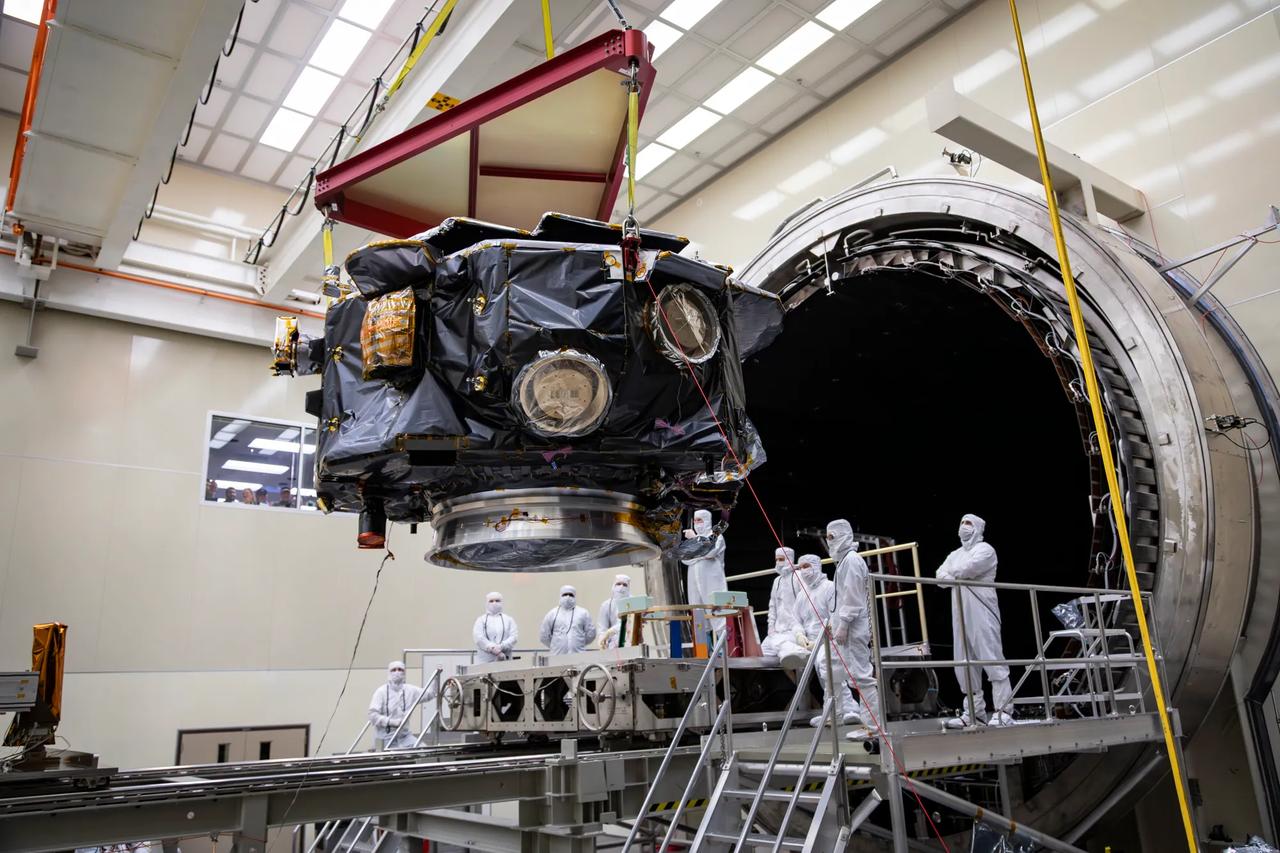
These photos and timelapse show NASA’s IMAP mission being loaded into the thermal vacuum chamber of NASA Marshall Space Flight Center’s X-Ray and Cryogenic Facility (XRCF) in Huntsville, Alabama. IMAP arrived at Marshall March 18 and was loaded into the chamber March 19. IMAP will undergo testing such as dramatic temperature changes to simulate the harsh environment of space. The XRCF’s vacuum chamber is is 20 feet in diameter and 60 feet long making it one of the largest across NASA. The IMAP mission is a modern-day celestial cartographer that will map the solar system by studying the heliosphere, a giant bubble created by the Sun’s solar wind that surrounds our solar system and protects it from harmful interstellar radiation. Photos and video courtesy of Ed Whitman from Johns Hopkins University’s Applied Physics Laboratory. For more information, contact NASA Marshall’s Office of Communications at 256-544-0034.
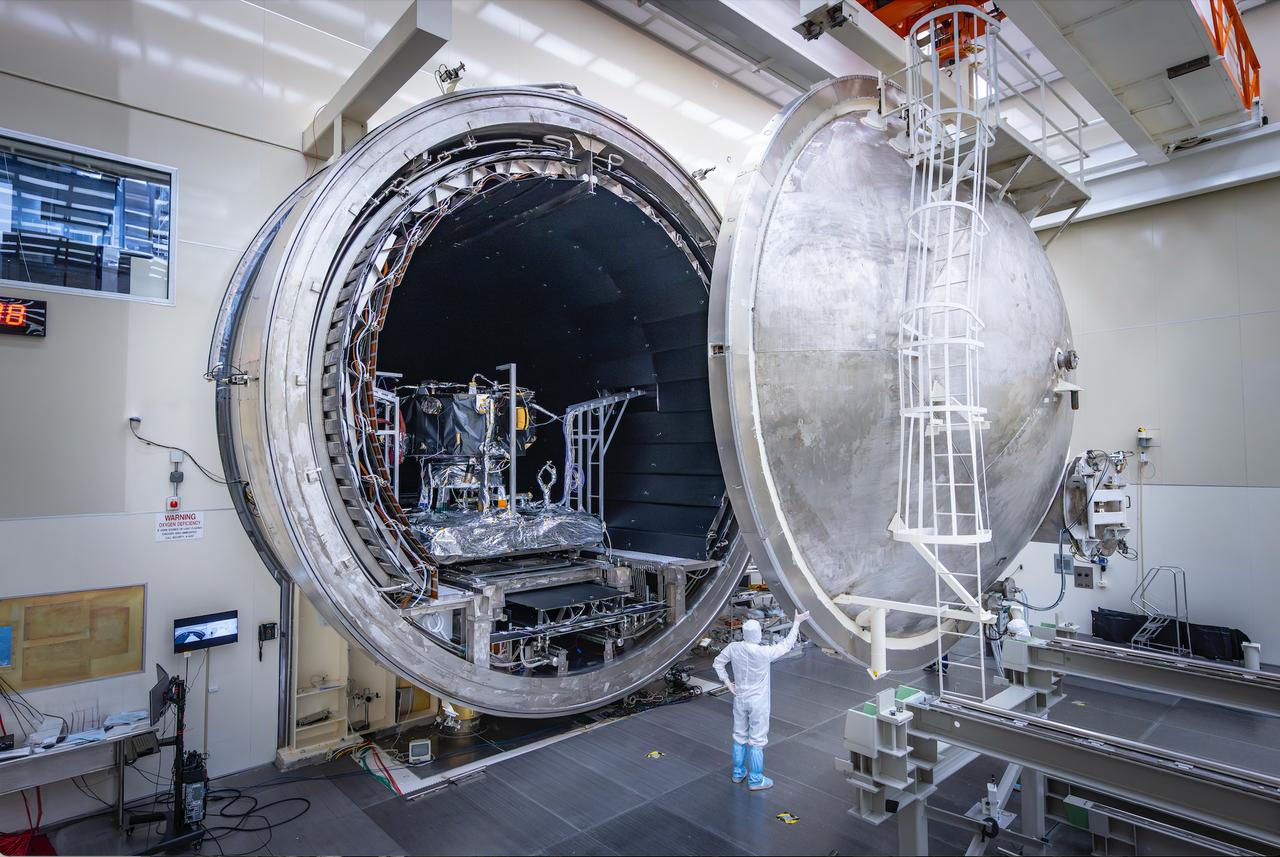
These photos and timelapse show NASA’s IMAP mission being loaded into the thermal vacuum chamber of NASA Marshall Space Flight Center’s X-Ray and Cryogenic Facility (XRCF) in Huntsville, Alabama. IMAP arrived at Marshall March 18 and was loaded into the chamber March 19. IMAP will undergo testing such as dramatic temperature changes to simulate the harsh environment of space. The XRCF’s vacuum chamber is is 20 feet in diameter and 60 feet long making it one of the largest across NASA. The IMAP mission is a modern-day celestial cartographer that will map the solar system by studying the heliosphere, a giant bubble created by the Sun’s solar wind that surrounds our solar system and protects it from harmful interstellar radiation. Photos and video courtesy of Ed Whitman from Johns Hopkins University’s Applied Physics Laboratory. For more information, contact NASA Marshall’s Office of Communications at 256-544-0034.
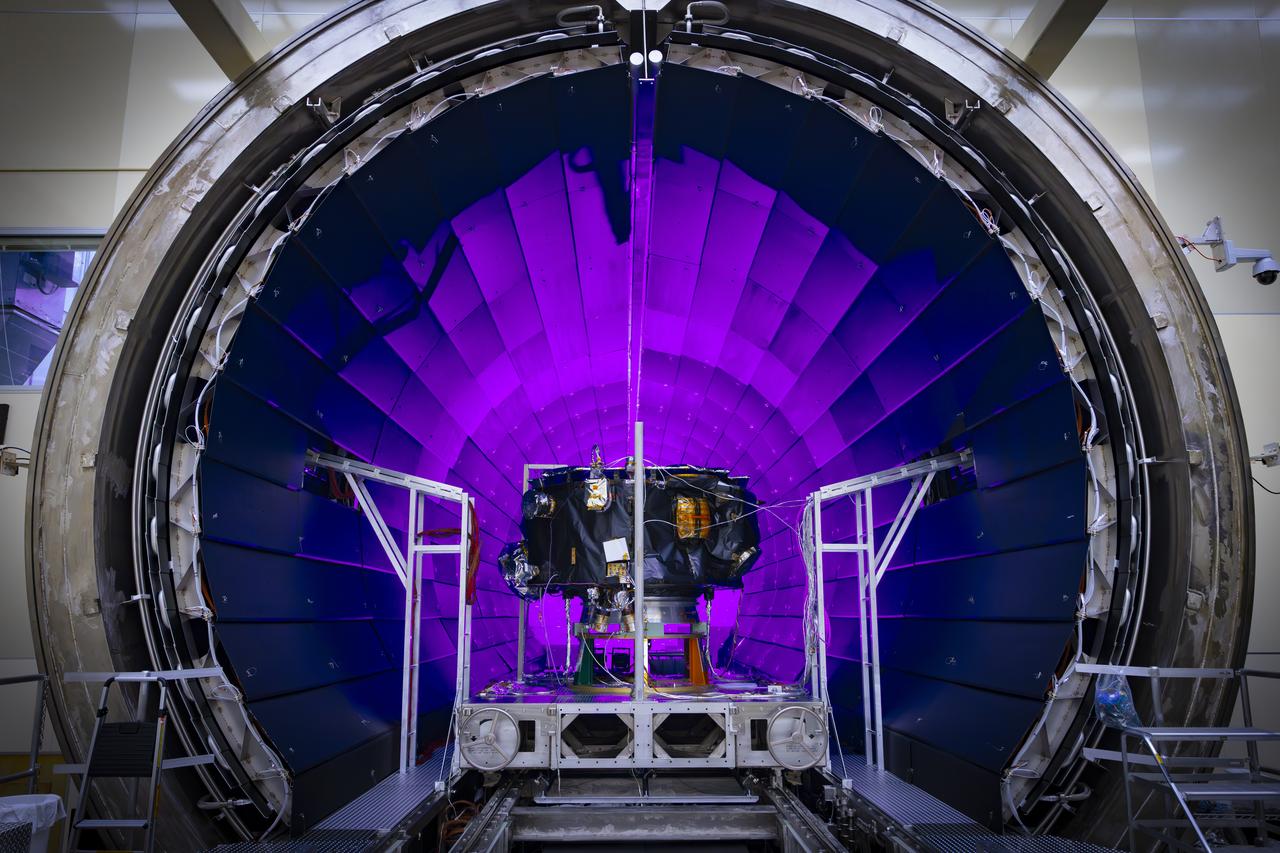
These photos and timelapse show NASA’s IMAP mission being loaded into the thermal vacuum chamber of NASA Marshall Space Flight Center’s X-Ray and Cryogenic Facility (XRCF) in Huntsville, Alabama. IMAP arrived at Marshall March 18 and was loaded into the chamber March 19. IMAP will undergo testing such as dramatic temperature changes to simulate the harsh environment of space. The XRCF’s vacuum chamber is is 20 feet in diameter and 60 feet long making it one of the largest across NASA. The IMAP mission is a modern-day celestial cartographer that will map the solar system by studying the heliosphere, a giant bubble created by the Sun’s solar wind that surrounds our solar system and protects it from harmful interstellar radiation. Photos and video courtesy of Ed Whitman from Johns Hopkins University’s Applied Physics Laboratory. For more information, contact NASA Marshall’s Office of Communications at 256-544-0034.
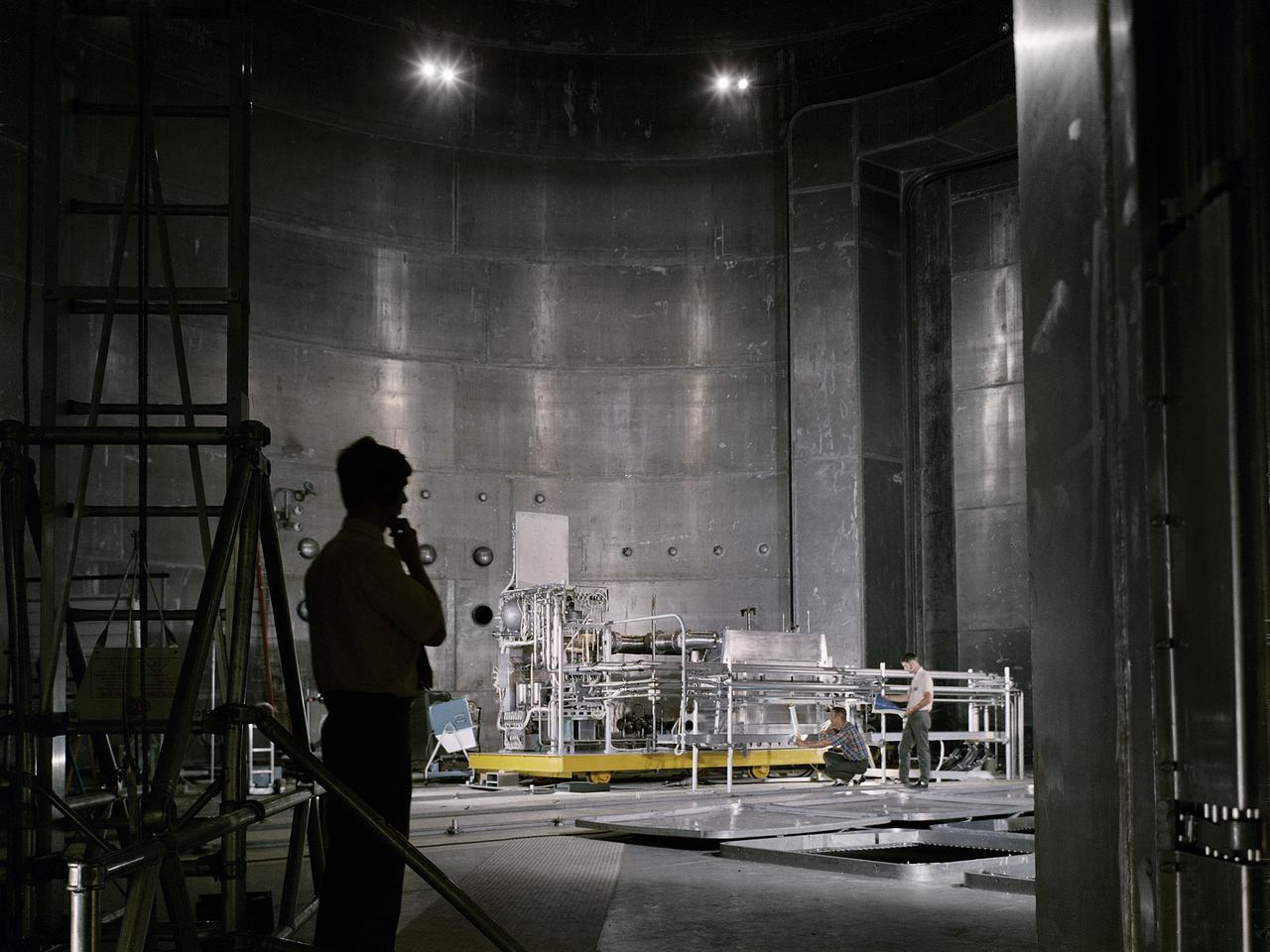
Set up of a Brayton Cycle Power System test in the Space Power Facility’s massive vacuum chamber at the National Aeronautics and Space Administration’s (NASA) Plum Brook Station in Sandusky, Ohio. The $28.4-million facility, which began operations in 1969, is the largest high vacuum chamber ever built. The chamber is 100 feet in diameter and 120 feet high. It can produce a vacuum deep enough to simulate the conditions at 300 miles altitude. The Space Power Facility was originally designed to test nuclear-power sources for spacecraft, but it was never used for that purpose. The Space Power Facility was first used to test a 15 to 20-kilowatt Brayton Cycle Power System for space applications. Three different methods of simulating solar heat were employed during the tests. Lewis researchers studied the Brayton power system extensively in the 1960s and 1970s. The Brayton engine converted solar thermal energy into electrical power. The system operated on a closed-loop Brayton thermodynamic cycle with a helium-xenon gas mixture as its working fluid. A space radiator was designed to serve as the system’s waste heat rejecter. The radiator was later installed in the vacuum chamber and tested in a simulated space environment to determine its effect on the power conversion system. The Brayton system was subjected to simulated orbits with 62 minutes of sun and 34 minutes of shade.
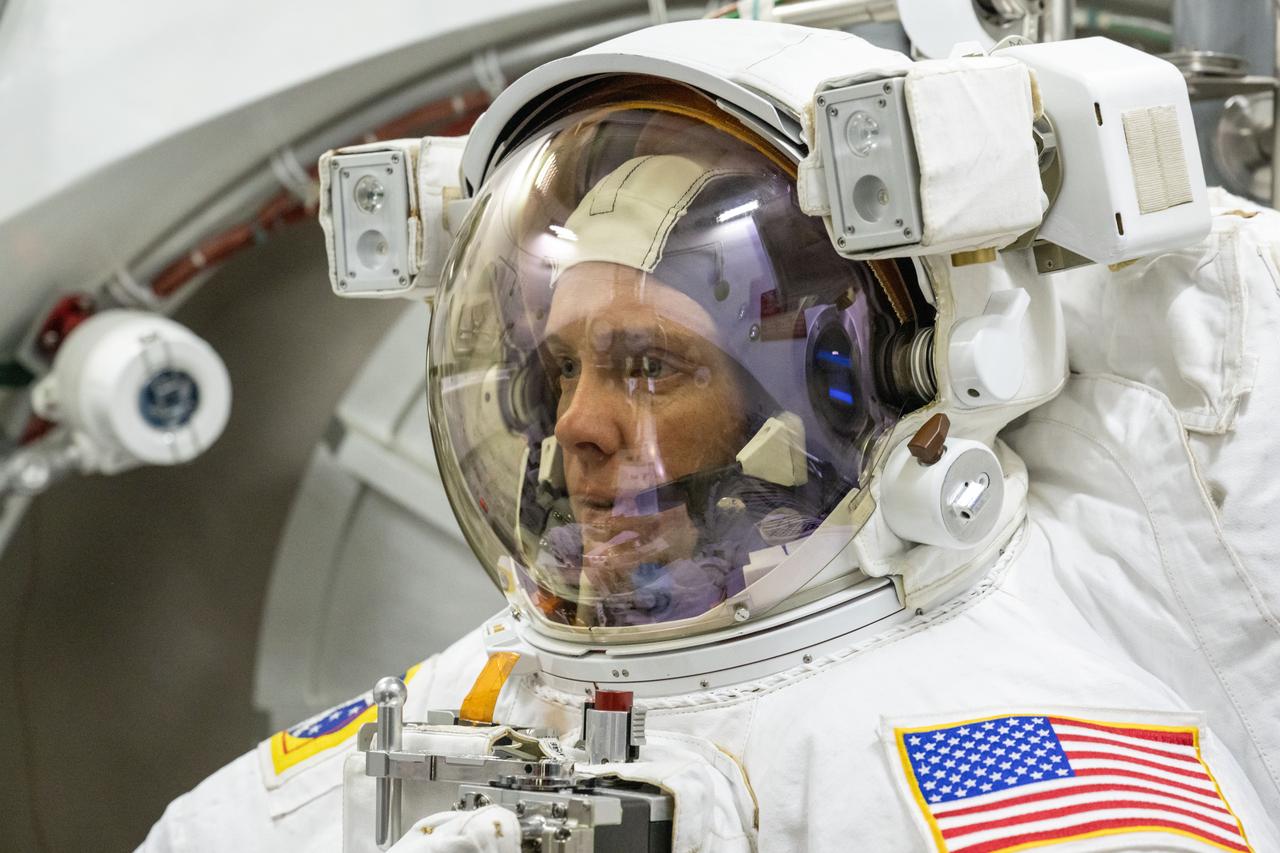
jsc2023e054224 (Aug. 12, 2024) --- NASA astronaut and SpaceX Crew-10 Pilot Nichole Ayers conducts spacewalk training in the Space Station Airlock Test Article, a vacuum chamber that simulates simulation of airlock and spacewalk operations in pressures ranging from vacuum to 1 atmosphere, at NASA's Johnson Space Center.
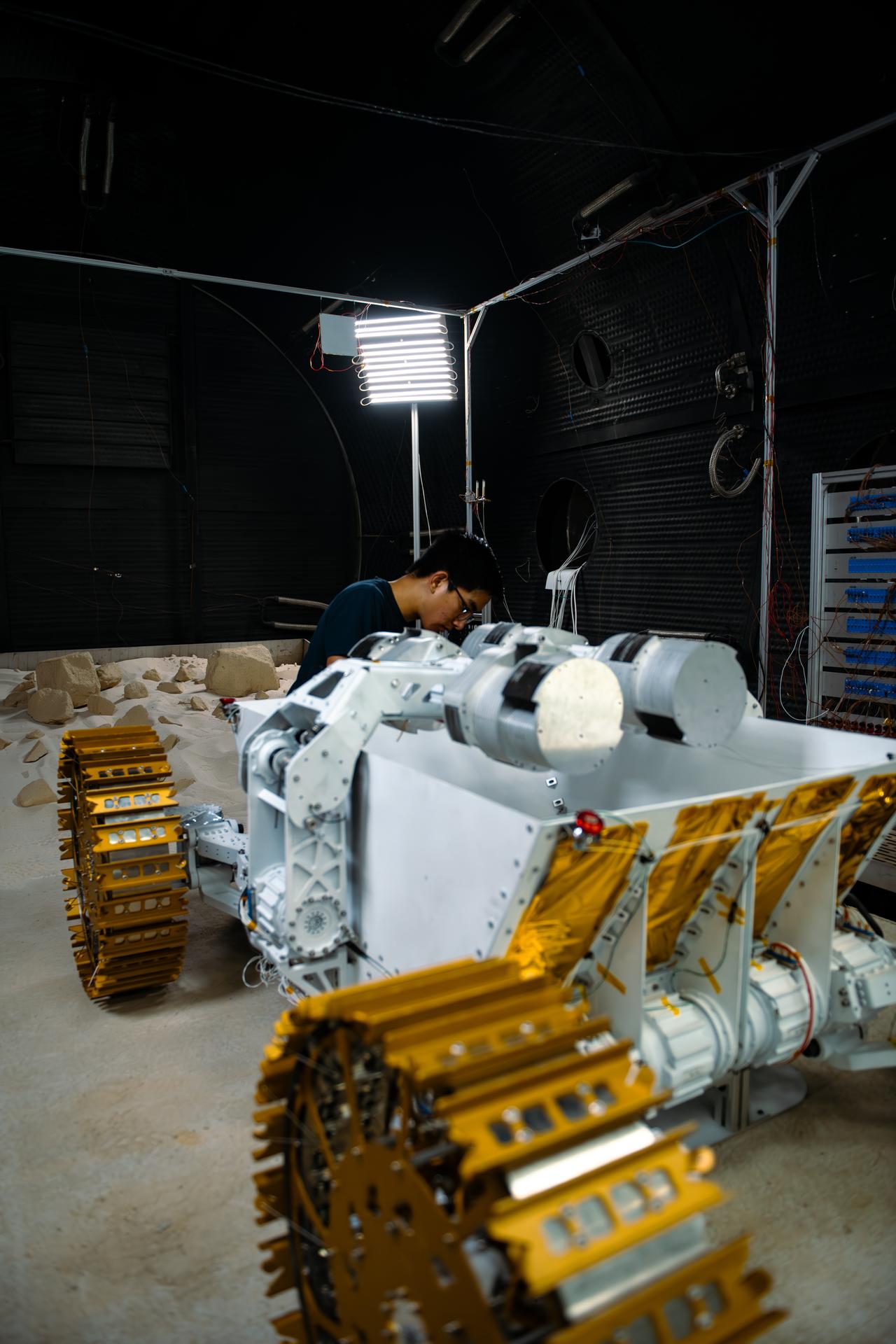
Starpath’s rover sits on a concrete slab that will be used to mimic the rugged lunar surface within a vacuum chamber at NASA’s Marshall Space Flight Center in Huntsville, Alabama, on July 30, 2025. The slab features a sandy, rocky terrain, and lamps within the chamber will turn on and off to simulate sunlight. The technology startup headquartered in Hawthorne, California, won second place overall at the agency’s Break the Ice Lunar Challenge’s live demonstration and finale in June 2024. This competition, one of NASA’s Centennial Challenges, tasked competitors to design, build, and demonstrate robotic technologies that could excavate and transport the icy, rocky dirt – otherwise known as regolith – found on the Moon. Starpath’s visit to NASA Marshall was part of their prize opportunity to test their upgraded lunar regolith excavation and transportation rover in the center’s 20-foot thermal vacuum chamber. For more information, contact NASA Marshall’s Office of Communications at 256-544-0034
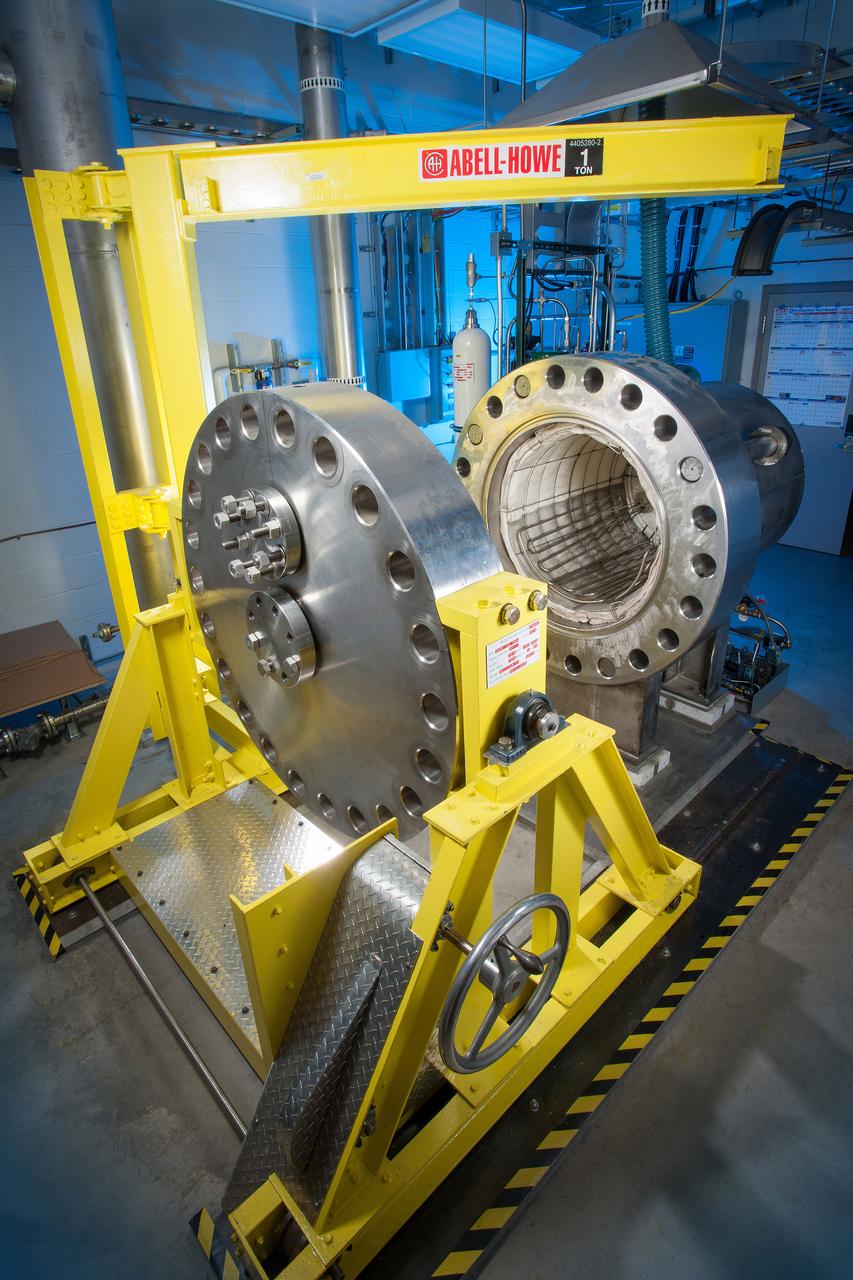
The Glenn Extreme Environment Chamber (GEER) simulates the extreme conditions found in space and tests many devices that will explore Venus to see if they can withstand the punishing environment and temperatures over 800 degrees F.

KENNEDY SPACE CENTER, FLA. -- CHAMBER TEST - Project Mercury astronaut Virgil I. 'Gus' Grissom, assisted by McDonnell technicians, leaves Mercury spacecraft, dubbed Liberty Bell 7, following simulated flight.
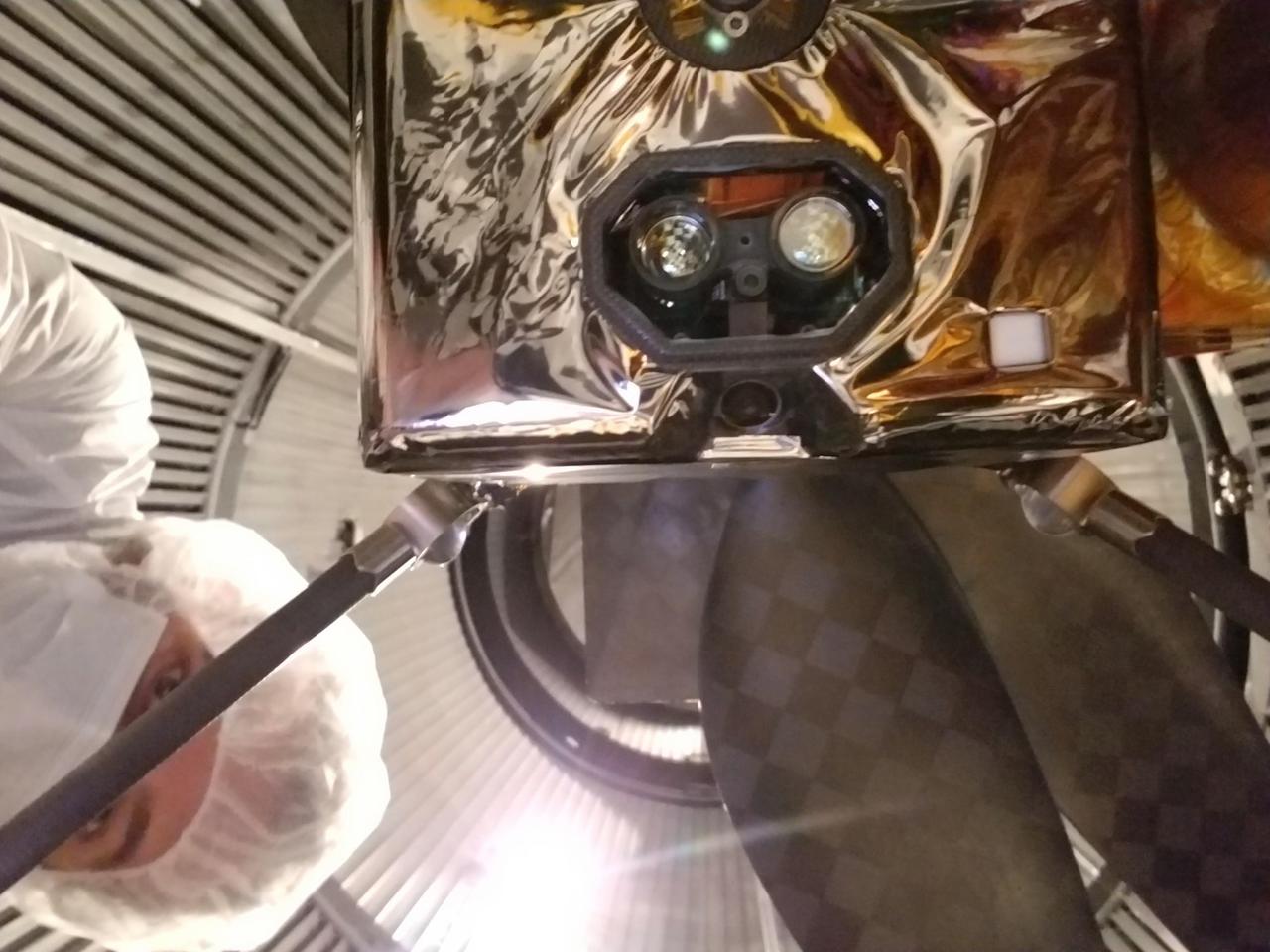
An Ingenuity team member inspects NASA's Ingenuity Mars Helicopter in one of the space simulation chambers at the agency's Jet Propulsion Laboratory in Southern California. The helicopter's two cameras are visible in this view of the underside of Ingenuity: one looking straight down and the other at an oblique angle. In the octagonal black frame, the black-and-white navigation camera is the thick circle appearing between and just below the two larger lenses (parts of the laser altimeter that measures the helicopter's height above the ground). The color camera is the circle that is inset from the edge of the fuselage, appearing below the octagonal frame. (An annotated version of the image points out the cameras.) To protect against dust, a clear borosilicate window covers the altimeter and navigation camera, and a clear sapphire window covers the color camera. Ingenuity will attempt the first powered, controlled flight at Mars. https://photojournal.jpl.nasa.gov/catalog/PIA23969
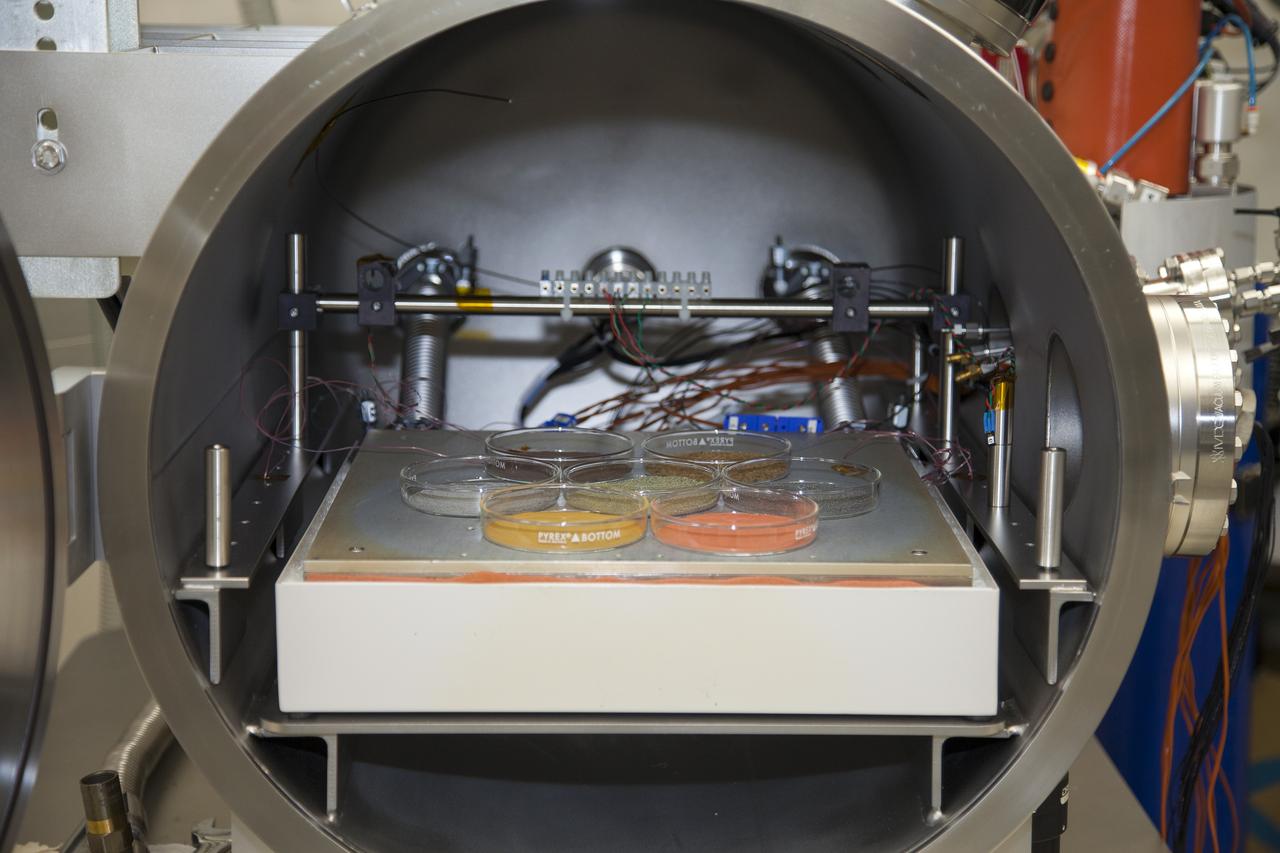
CAPE CANAVERAL, Fla. -- Inside the Space Life Sciences Laboratory near NASA’s Kennedy Space Center in Florida, the Mars Simulation Chamber is being prepared for the Microorganisms in the Stratosphere, or MIST, mission support. The chamber allows MIST scientists and engineers to simulate the stratosphere prior to high altitude flight experiments. The MIST mission will fly a small biological payload aboard a blimp in July to measure microbial survival and cellular responses to exposure in the upper atmosphere. Later in the year, the MIST mission will deploy samples at even higher altitudes in the stratosphere using scientific balloons. Photo credit: NASA/Daniel Casper
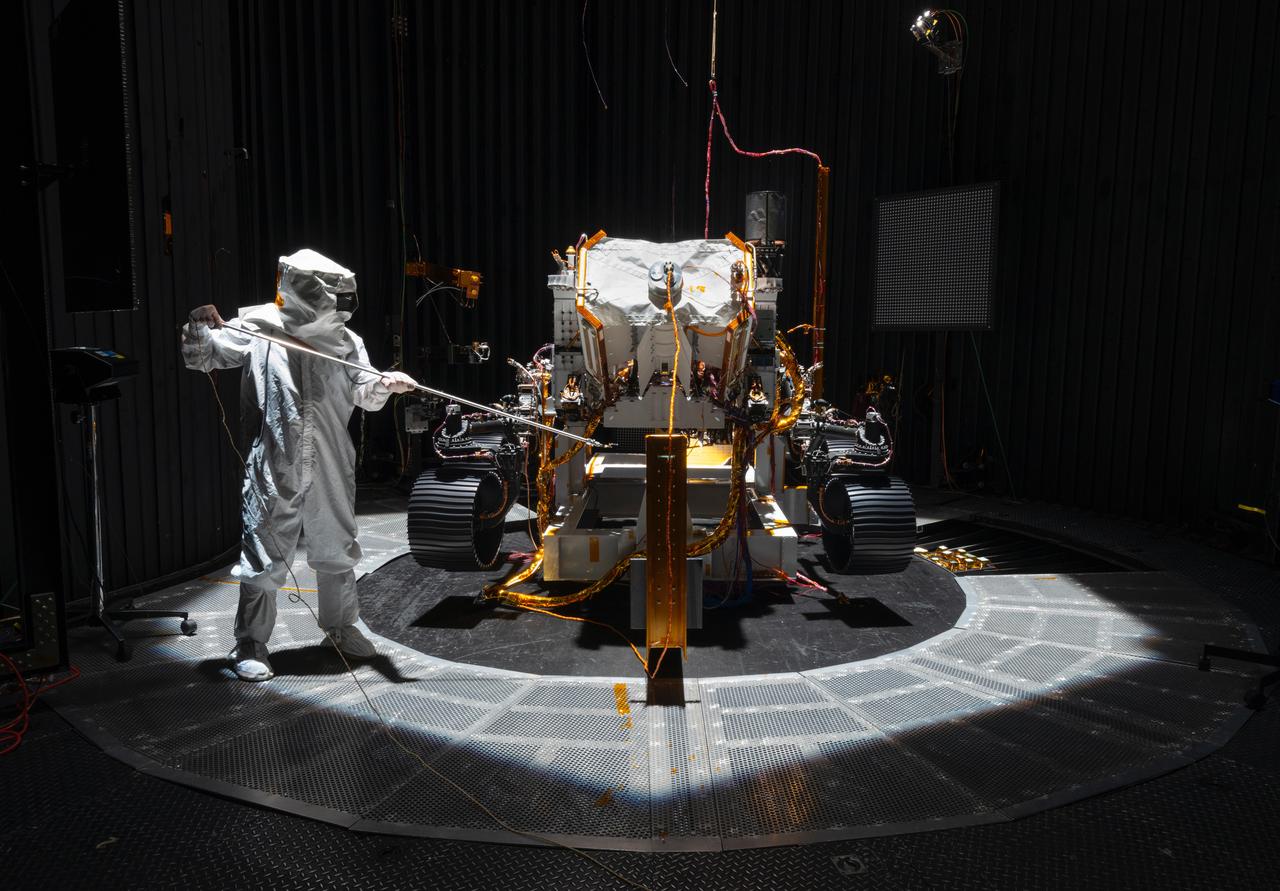
An engineer working on NASA's Mars 2020 mission uses a solar intensity probe to measure and compare the amount of artificial sunlight that reaches different portions of the rover. To simulate the Sun's rays for the test, powerful xenon lamps several floors below the chamber were illuminated, their light directed onto a mirror at the top of the chamber and reflected down on the spacecraft. The data collected during this test will be used to confirm thermal models the team has generated regarding how the Sun's rays will interact with the 2020 rover while on the surface of Mars. The image was taken on Oct. 14, 2019, in the Space Simulator Facility at NASA's Jet Propulsion Laboratory in Pasadena, California. https://photojournal.jpl.nasa.gov/catalog/PIA23469

CAPE CANAVERAL, Fla. -- Inside the Space Life Sciences Laboratory near NASA’s Kennedy Space Center in Florida, the Mars Simulation Chamber is being prepared for the Microorganisms in the Stratosphere, or MIST, mission support. The chamber allows MIST scientists and engineers to simulate the stratosphere prior to high altitude flight experiments. The MIST mission will fly a small biological payload in low altitudes aboard a blimp in July to measure microbial survival and cellular responses to exposure in the upper atmosphere. Later in the year, the MIST mission will deploy samples at even high altitudes in the stratosphere using scientific balloons. Photo credit: NASA/Daniel Casper
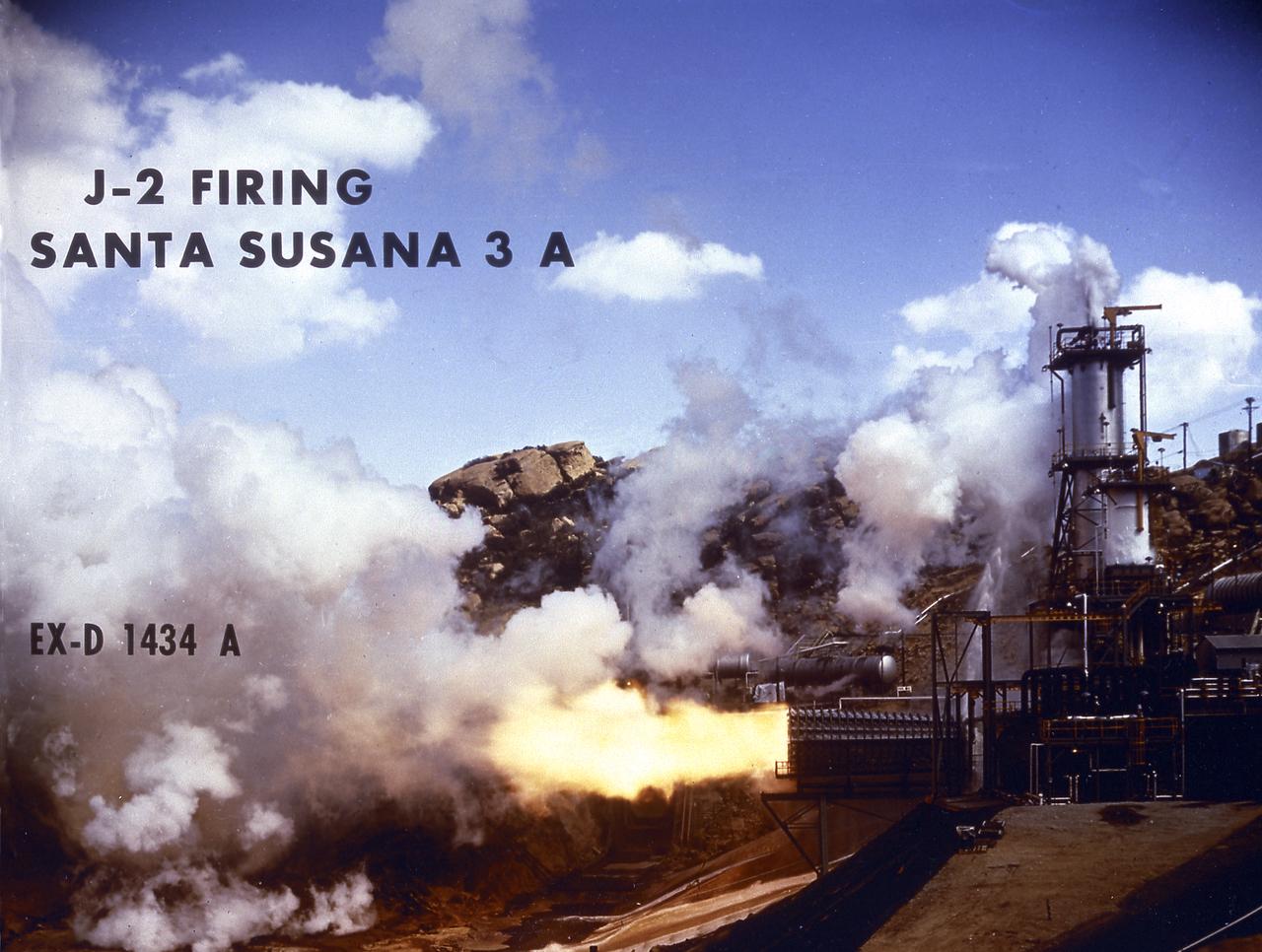
Smokeless flame juts from the diffuser of a unique vacuum chamber in which the upper stage rocket engine, the hydrogen fueled J-2, was tested at a simulated space altitude in excess of 60,000 feet. The smoke you see is actually steam. In operation, vacuum is established by injecting steam into the chamber and is maintained by the thrust of the engine firing through the diffuser. The engine was tested in this environment for start, stop, coast, restart, and full-duration operations. The chamber was located at Rocketdyne's Propulsion Field Laboratory, in the Santa Susana Mountains, near Canoga Park, California. The J-2 engine was developed by Rocketdyne for the Marshall Space Flight Center.
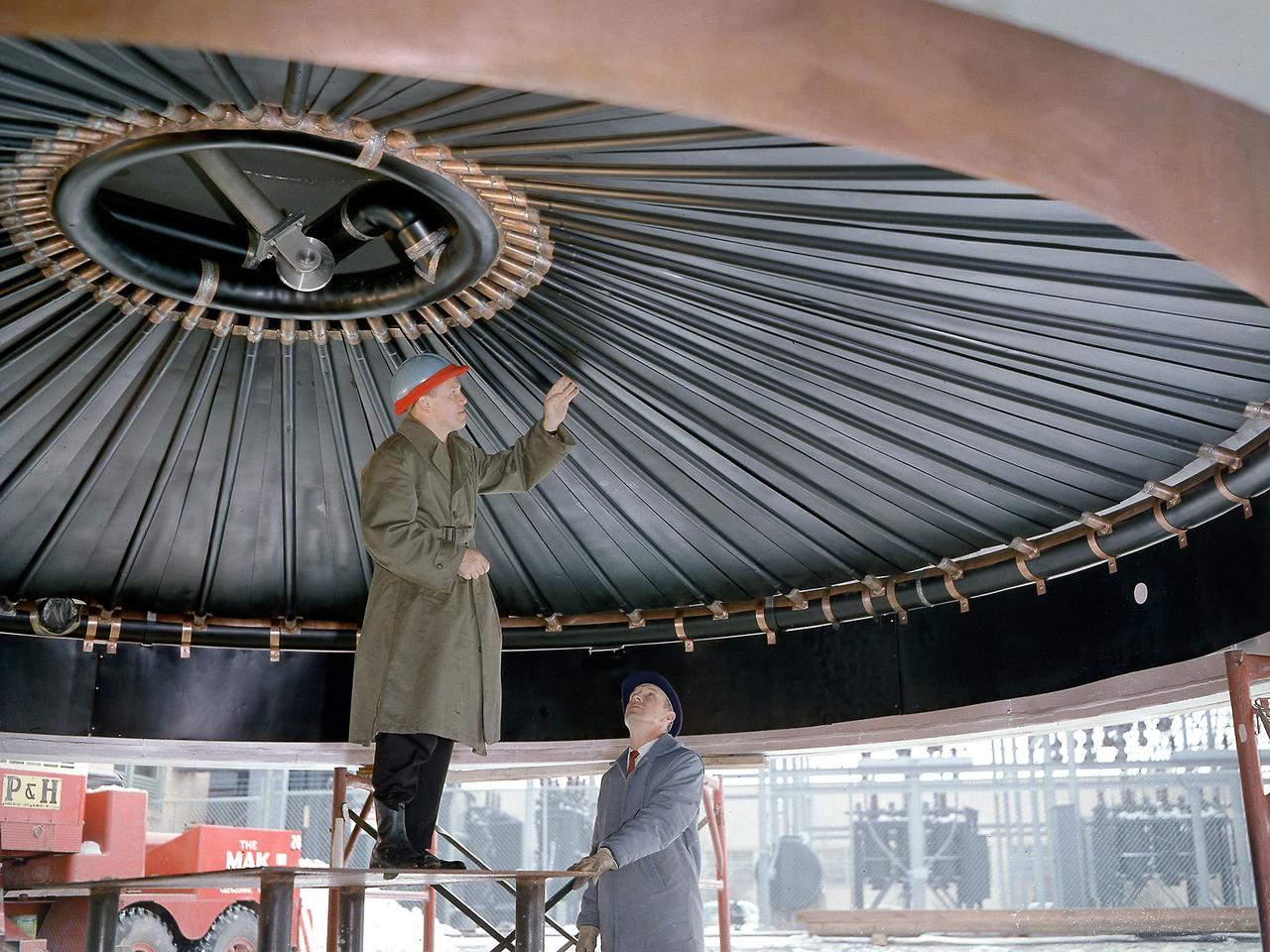
Engineers at the National Aeronautics and Space Administration (NASA) Lewis Research Center inspect the nitrogen baffle in the interior of the 22.5-foot diameter dome at the Space Power Chambers. In 1961 NASA Lewis management decided to convert the Altitude Wind Tunnel into two large test chambers and renamed the facility the Space Power Chambers. The conversion, which took over two years, included removing the tunnel’s drive fan, exhaust scoop, and turning vanes from the east end and inserting bulkheads to seal off the new chambers within the tunnel. The eastern section of the tunnel became a vacuum chamber capable of simulating 100 miles altitude. In 1962 NASA management decided to use the new vacuum chamber exclusively to study the second-stage rocket. This required significant modifications to the new tank and extensive test equipment to create a space environment. The Lewis test engineers sought to subject the Centaur to long durations in conditions that would replicate those encountered during its missions in space. The chamber was already capable of creating the vacuum of space, but the test engineers also wanted to simulate the cryogenic temperatures and solar radiation found in space. Six panels of 500-watt tungsten-iodine lamps were arranged around the Centaur to simulate the effect of the Sun’s heat. A large copper cold wall with its interior coated with heat-absorbing black paint was created specifically for these tests and assembled around the Centaur. The 42-foot-high wall had vertical ribs filled with liquid nitrogen which produced the low temperatures.

NASA interns Jessica Scotten, left, and Ayla Grandpre water plants in the Veggie hardware in NASA Kennedy Space Center's ISS environment simulator chamber. Mizuna mustard, Outredgeous lettuce and Waldmann's green lettuce are growing in Veggie. Growth in the chamber mimics the growth of plant experiments in the Veggie plant growth system on the International Space Station.
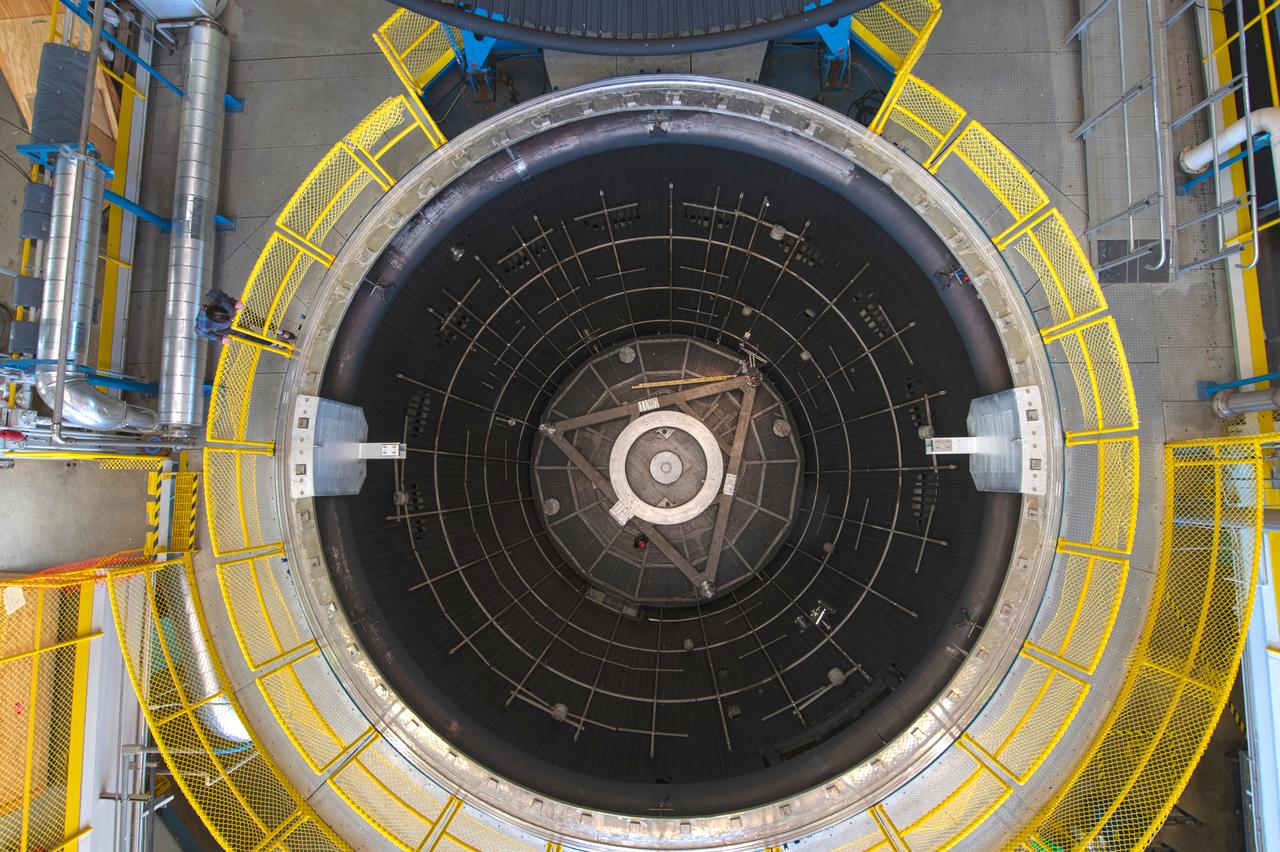
The test chamber is 38 ft in diameter by 62 ft deep amd made of stainless steel. It is vacuum rated at 10-7 torr long duration (Local atmospheric pressure to 100 statute miles altitude). The vacuum chamber surfaces are lined with a liquid nitrogen cold wall, capable of maintaining -320 °F. A quartz infrared heating system can be programmed to radiate a sinusoidal distribution, simulating rotational solar heating. Photo Credit: (NASA/Quentin Schwinn)
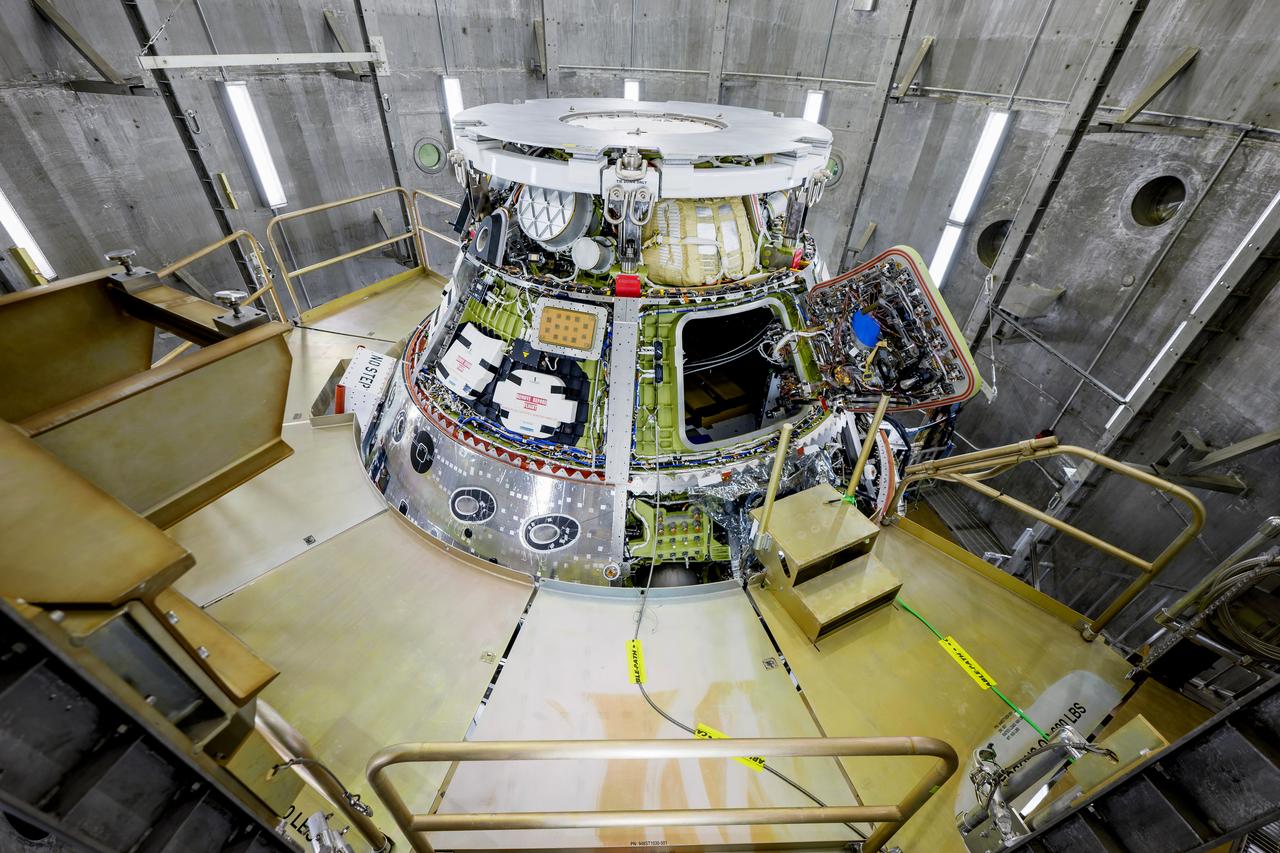
The Artemis II Orion spacecraft is lifted from the Final Assembly and Testing (FAST) Cell and placed in the west altitude chamber inside the Operations and Checkout Building at NASA’S Kennedy Space Center in Florida on June 28, 2024. Inside the altitude chamber, the spacecraft underwent a series of tests simulating deep space vacuum conditions. Photo Credit: NASA / Rad Sinyak
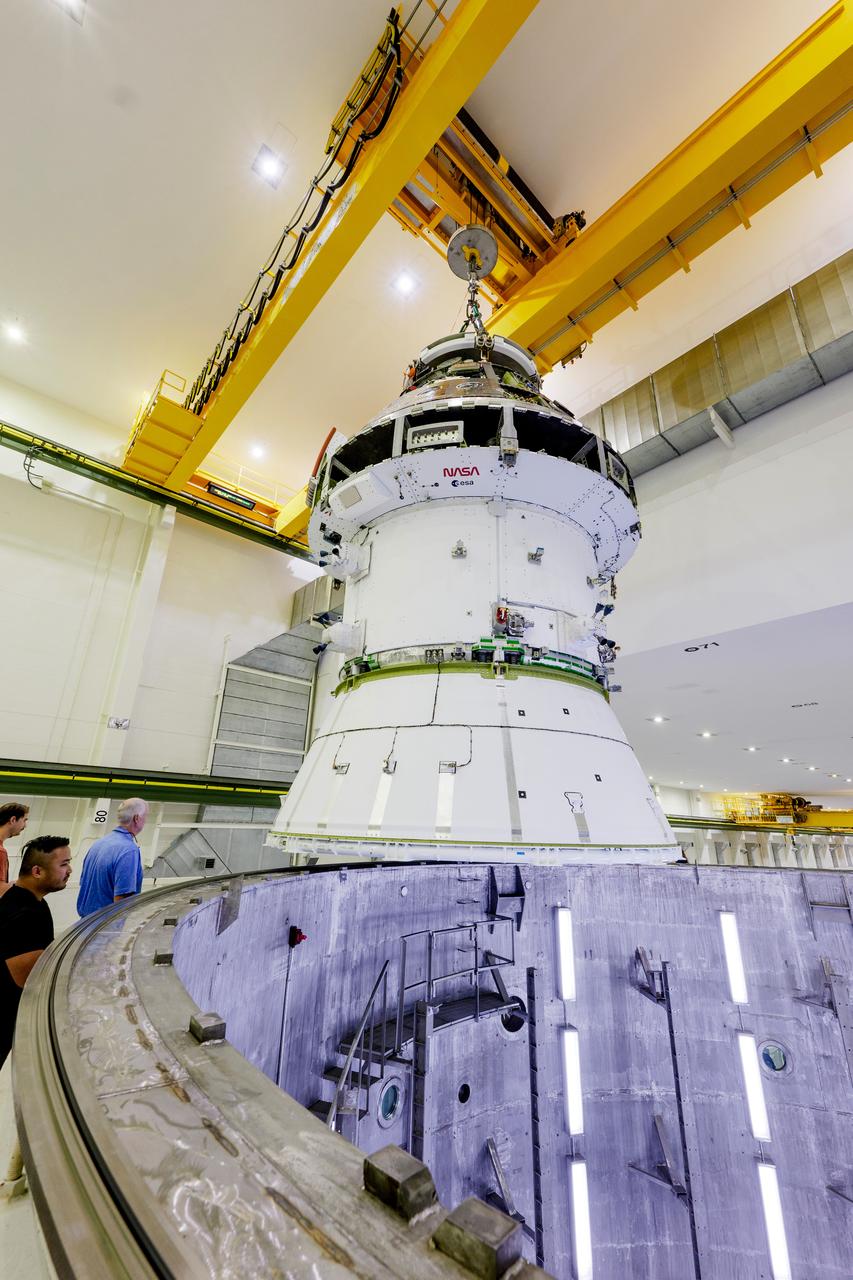
The Artemis II Orion spacecraft is lifted from the Final Assembly and Testing (FAST) Cell and placed in the west altitude chamber inside the Operations and Checkout Building at NASA’S Kennedy Space Center in Florida on June 28, 2024. Inside the altitude chamber, the spacecraft underwent a series of tests simulating deep space vacuum conditions. Photo Credit: NASA / Rad Sinyak
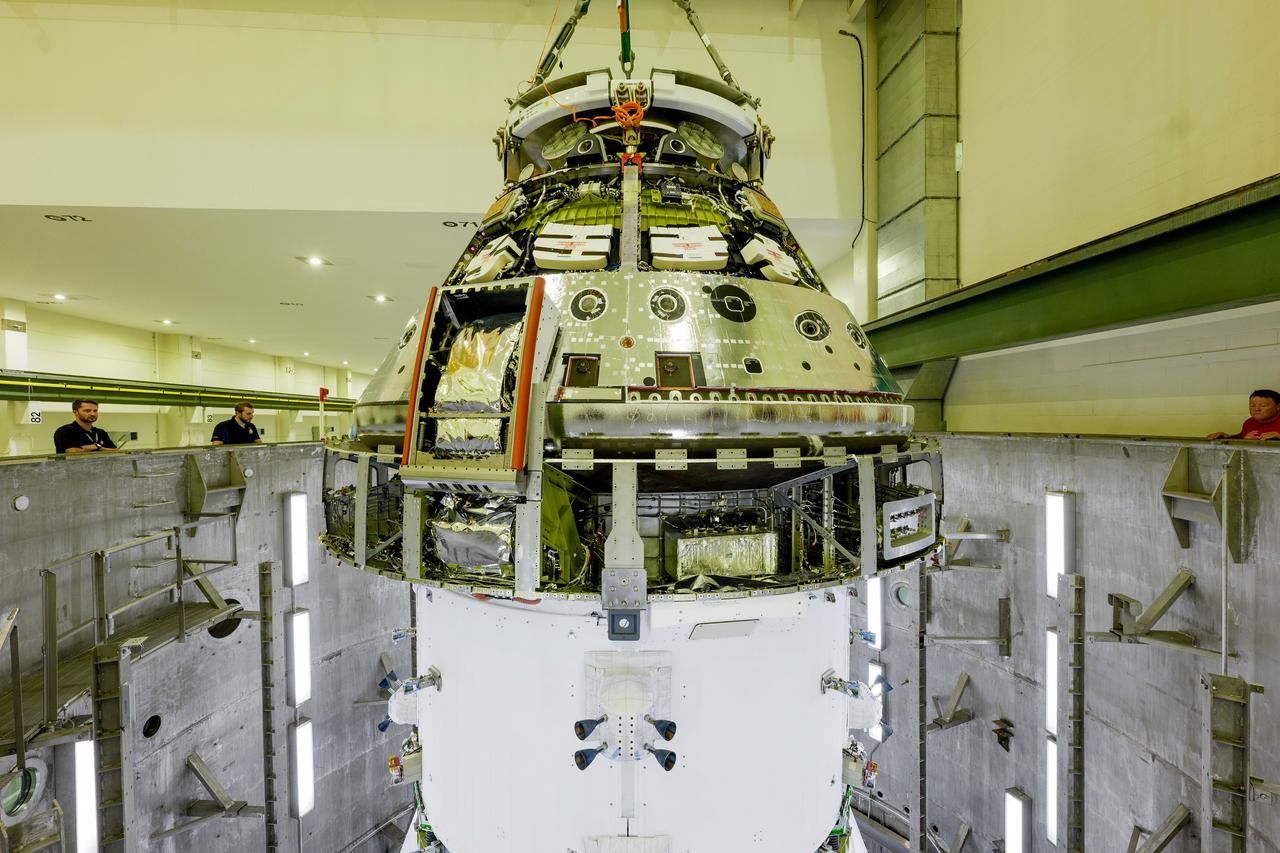
The Artemis II Orion spacecraft is lifted from the Final Assembly and Testing (FAST) Cell and placed in the west altitude chamber inside the Operations and Checkout Building at NASA’S Kennedy Space Center in Florida on June 28, 2024. Inside the altitude chamber, the spacecraft underwent a series of tests simulating deep space vacuum conditions. Photo Credit: NASA / Rad Sinyak
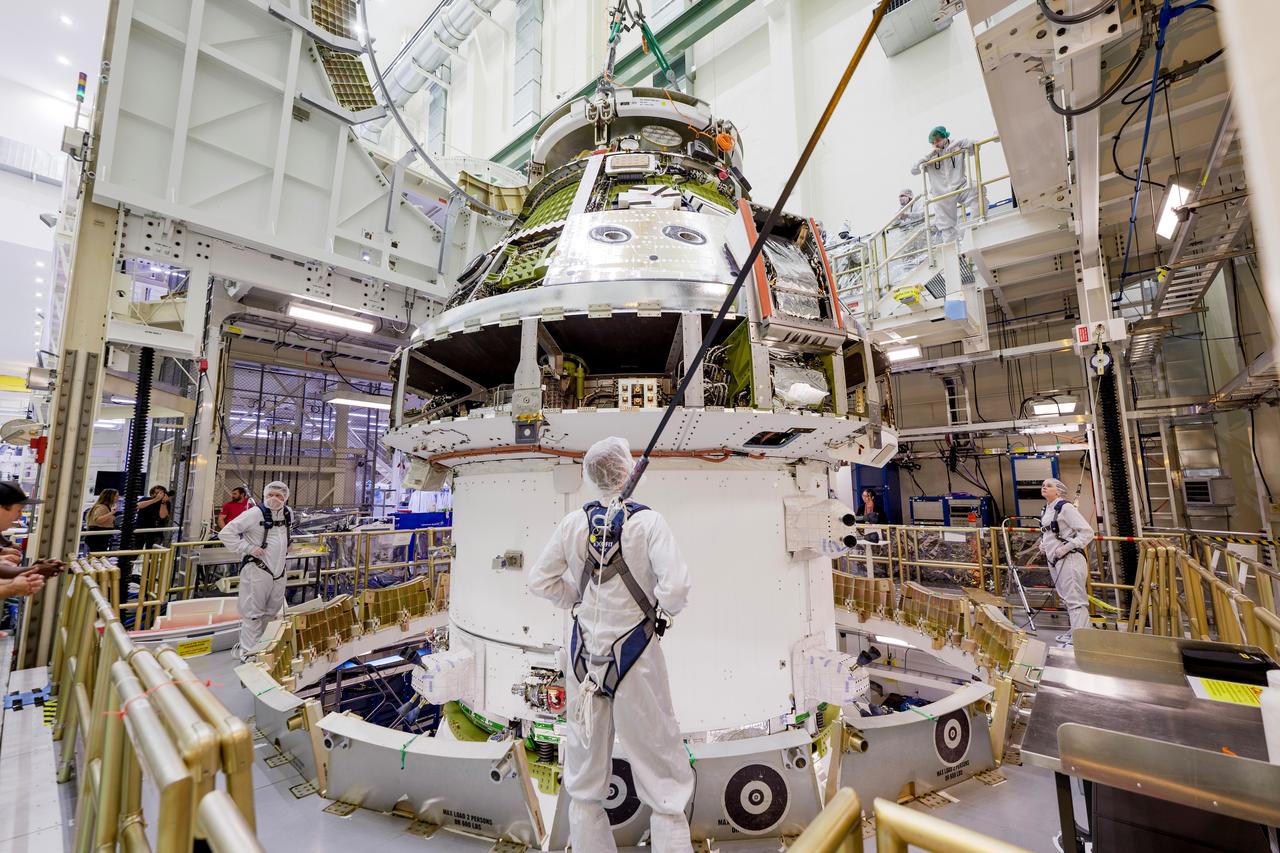
The Artemis II Orion spacecraft is lifted from the Final Assembly and Testing (FAST) Cell and placed in the west altitude chamber inside the Operations and Checkout Building at NASA’S Kennedy Space Center in Florida on June 28, 2024. Inside the altitude chamber, the spacecraft underwent a series of tests simulating deep space vacuum conditions. Photo Credit: NASA / Rad Sinyak
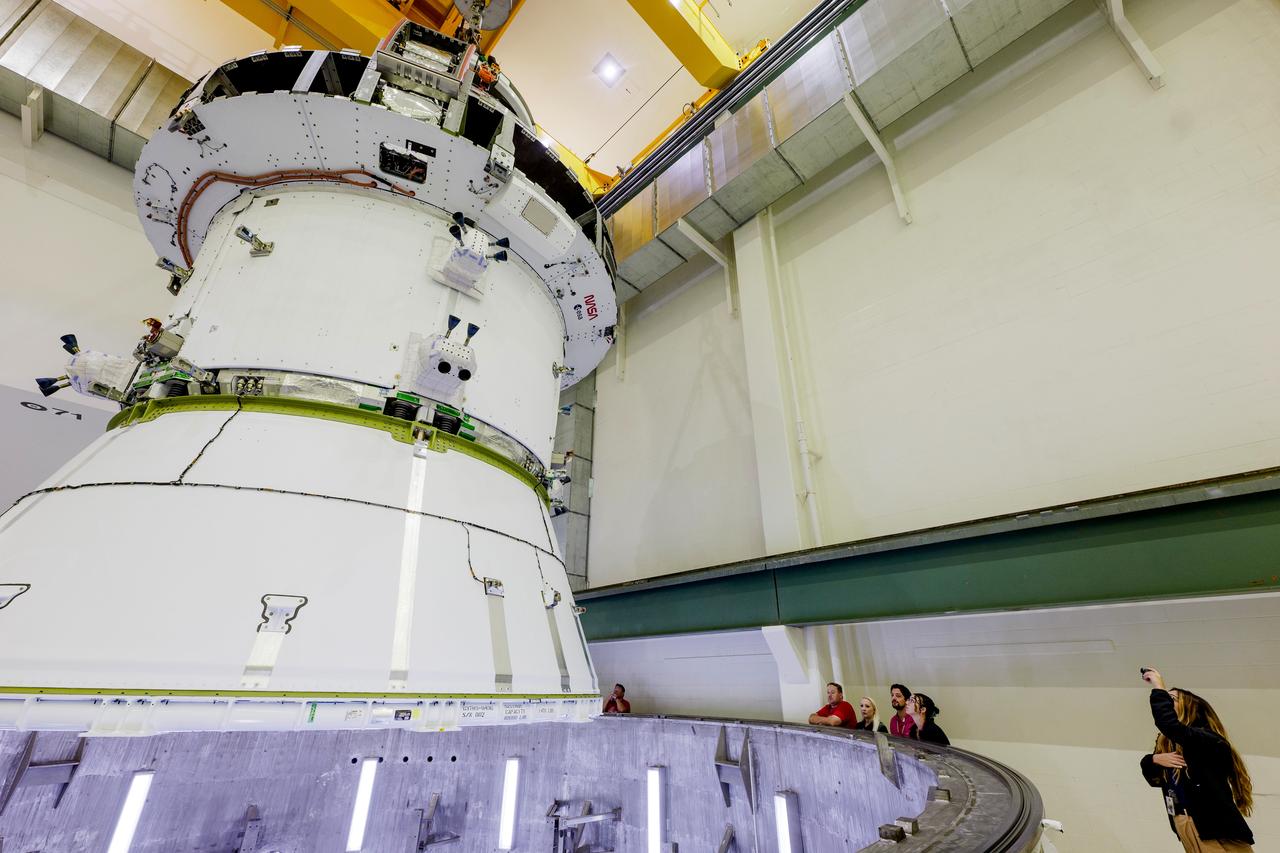
The Artemis II Orion spacecraft is lifted from the Final Assembly and Testing (FAST) Cell and placed in the west altitude chamber inside the Operations and Checkout Building at NASA’S Kennedy Space Center in Florida on June 28, 2024. Inside the altitude chamber, the spacecraft underwent a series of tests simulating deep space vacuum conditions. Photo Credit: NASA / Rad Sinyak
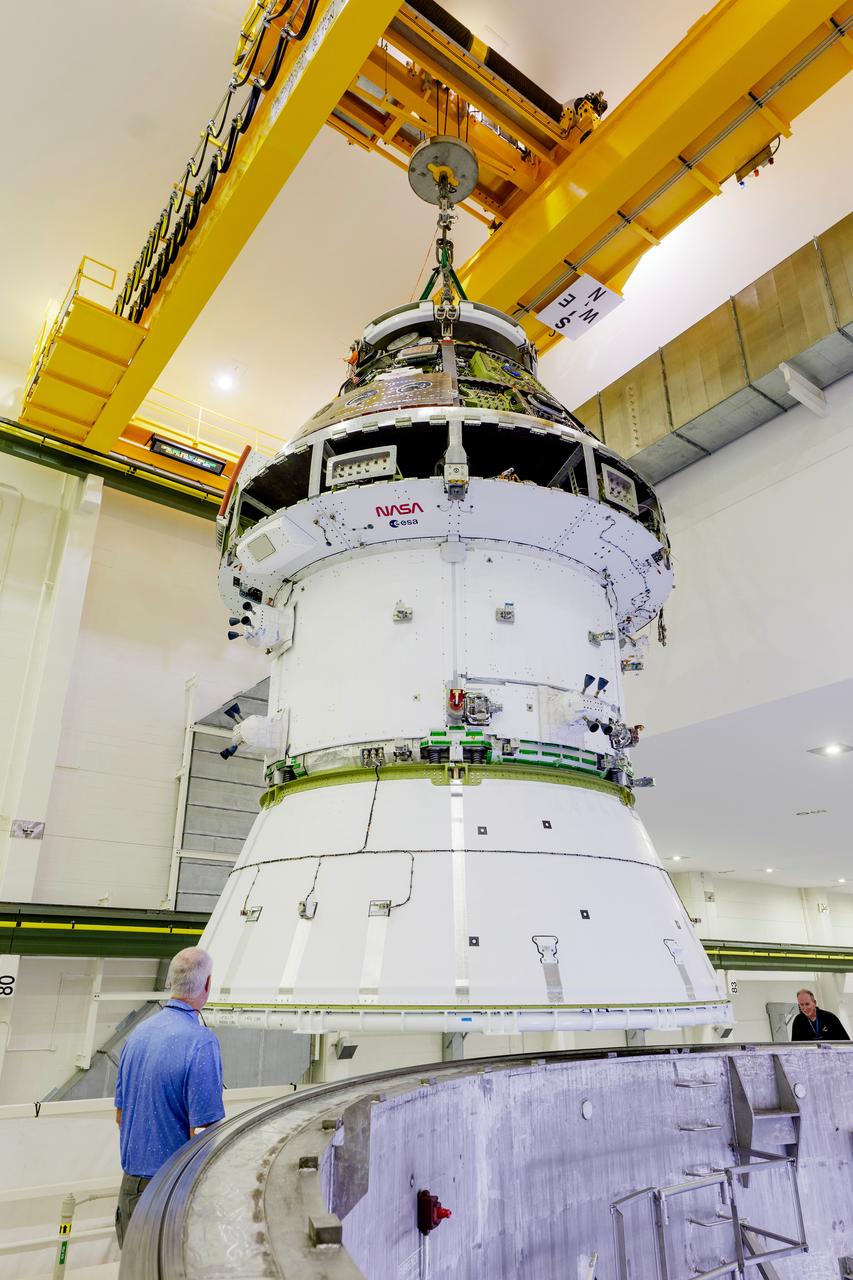
The Artemis II Orion spacecraft is lifted from the Final Assembly and Testing (FAST) Cell and placed in the west altitude chamber inside the Operations and Checkout Building at NASA’S Kennedy Space Center in Florida on June 28, 2024. Inside the altitude chamber, the spacecraft underwent a series of tests simulating deep space vacuum conditions. Photo Credit: NASA / Rad Sinyak

The Artemis II Orion spacecraft is lifted from the Final Assembly and Testing (FAST) Cell and placed in the west altitude chamber inside the Operations and Checkout Building at NASA’S Kennedy Space Center in Florida on June 28, 2024. Inside the altitude chamber, the spacecraft underwent a series of tests simulating deep space vacuum conditions. Photo Credit: NASA / Rad Sinyak
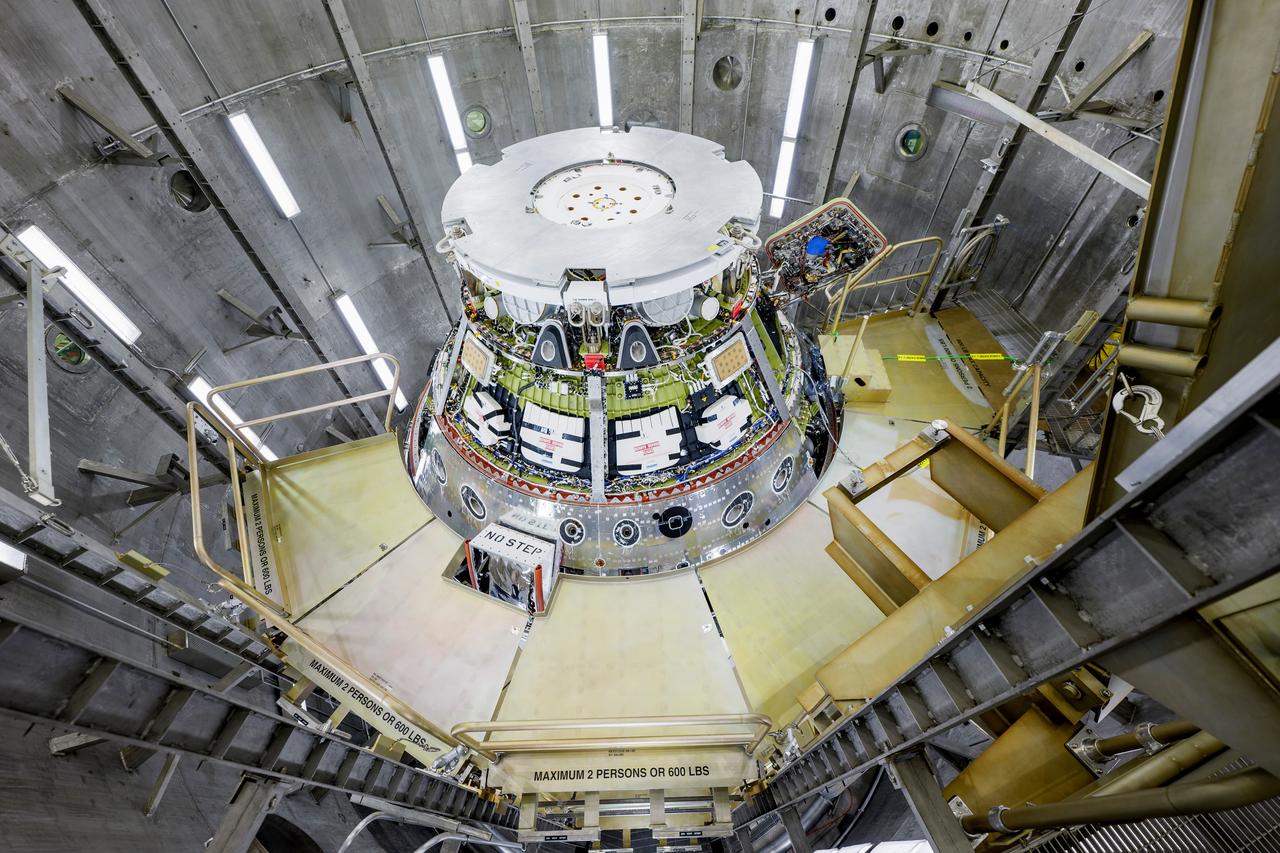
The Artemis II Orion spacecraft is lifted from the Final Assembly and System Testing (FAST) Cell and placed in the west altitude chamber inside the Operations and Checkout Building at NASA’S Kennedy Space Center in Florida on June 28, 2024. Inside the altitude chamber, the spacecraft underwent a series of tests simulating deep space vacuum conditions. Photo Credit: NASA / Rad Sinyak
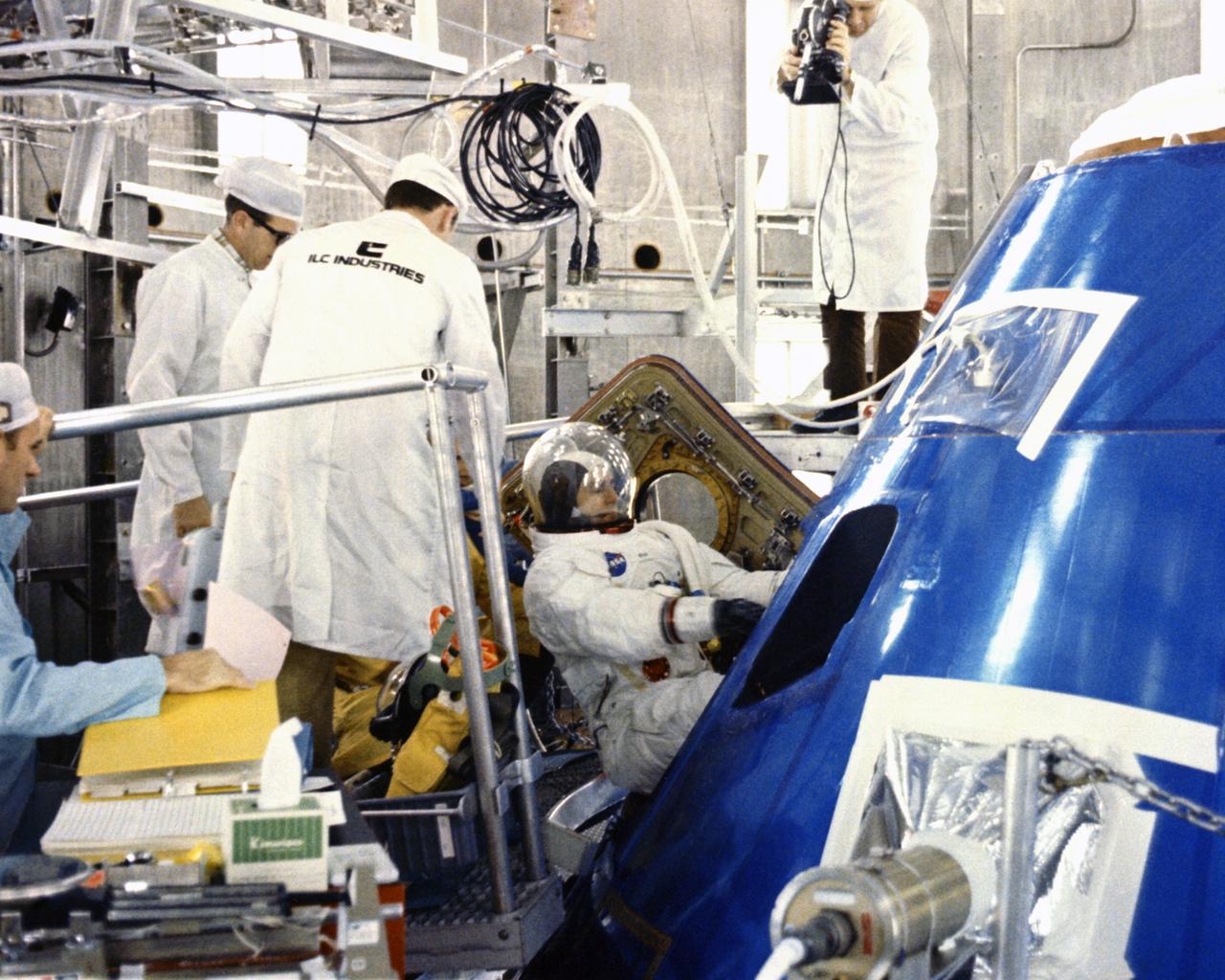
CAPE CANAVERAL, Fla. -- Apollo 12 Lunar Module pilot Alan L. Bean enters spacecraft in preparation for altitude chamber test with mission commander Charles Conrad Jr. and Richard F. Gordon Jr., command module pilot. Air was pumped out of the chamber to simulate a space environment. The Apollo 12 astronauts are scheduled to perform the nation’s second manned lunar landing. Photo credit: NASA
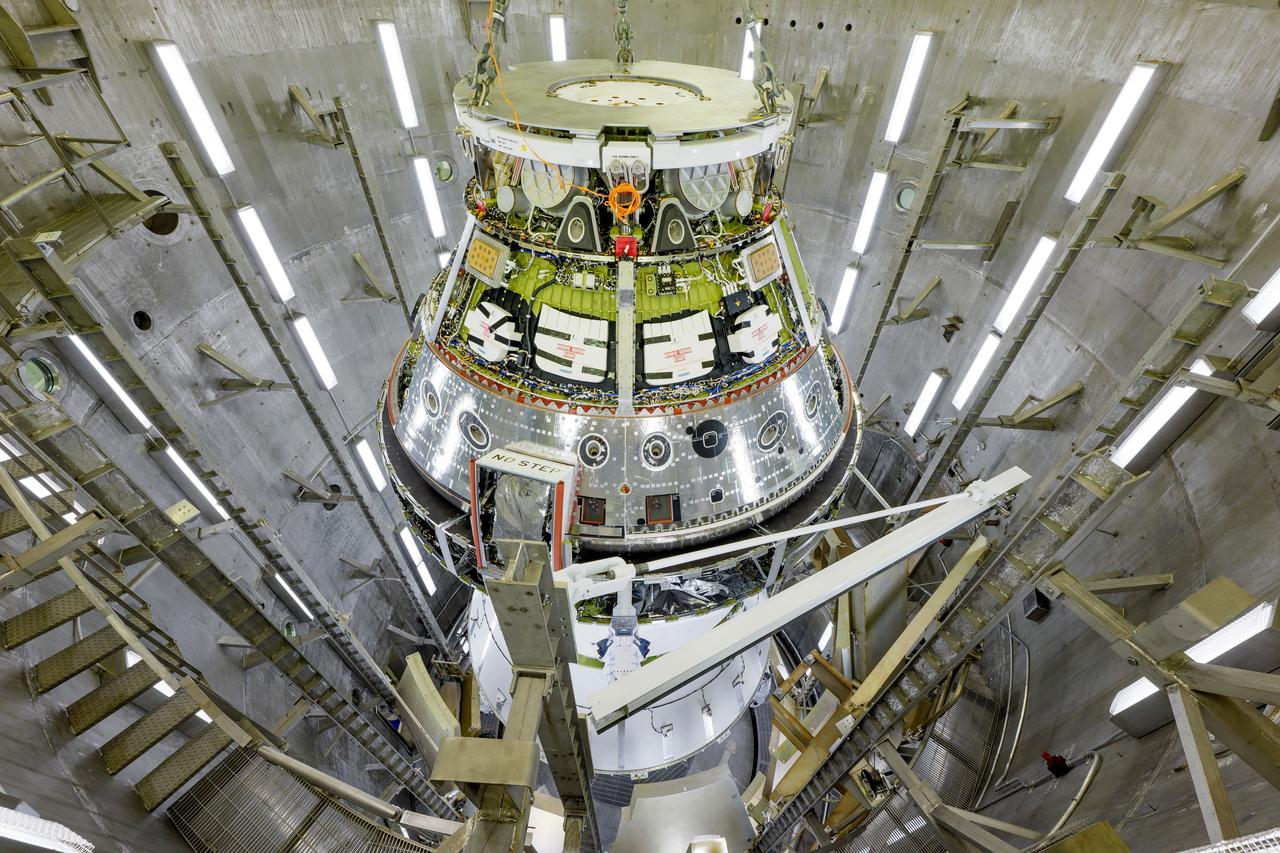
The Artemis II Orion spacecraft is lifted from the Final Assembly and System Testing (FAST) Cell and placed in the west altitude chamber inside the Operations and Checkout Building at NASA’S Kennedy Space Center in Florida on June 28, 2024. Inside the altitude chamber, the spacecraft underwent a series of tests simulating deep space vacuum conditions. Photo Credit: NASA / Rad Sinyak
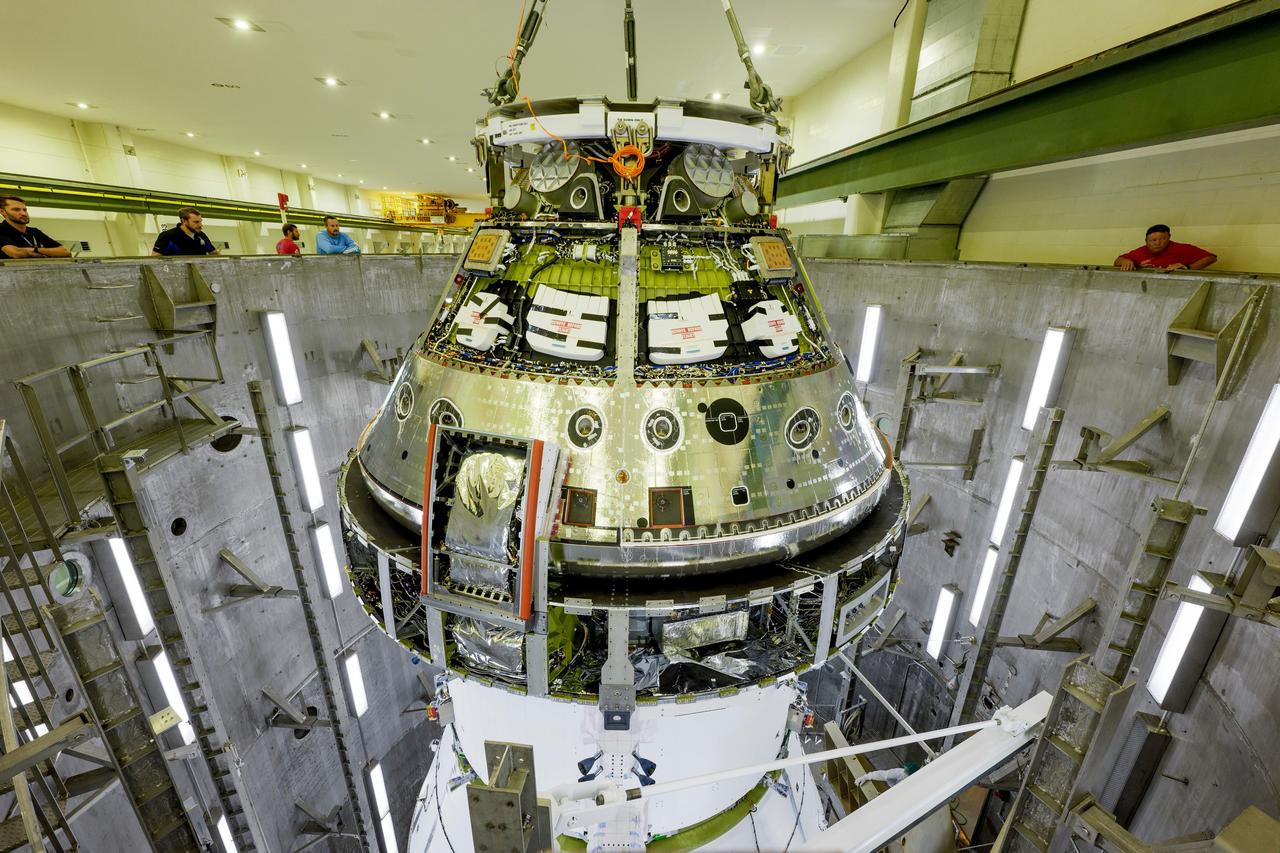
The Artemis II Orion spacecraft is lifted from the Final Assembly and Testing (FAST) Cell and placed in the west altitude chamber inside the Operations and Checkout Building at NASA’S Kennedy Space Center in Florida on June 28, 2024. Inside the altitude chamber, the spacecraft underwent a series of tests simulating deep space vacuum conditions. Photo Credit: NASA / Rad Sinyak
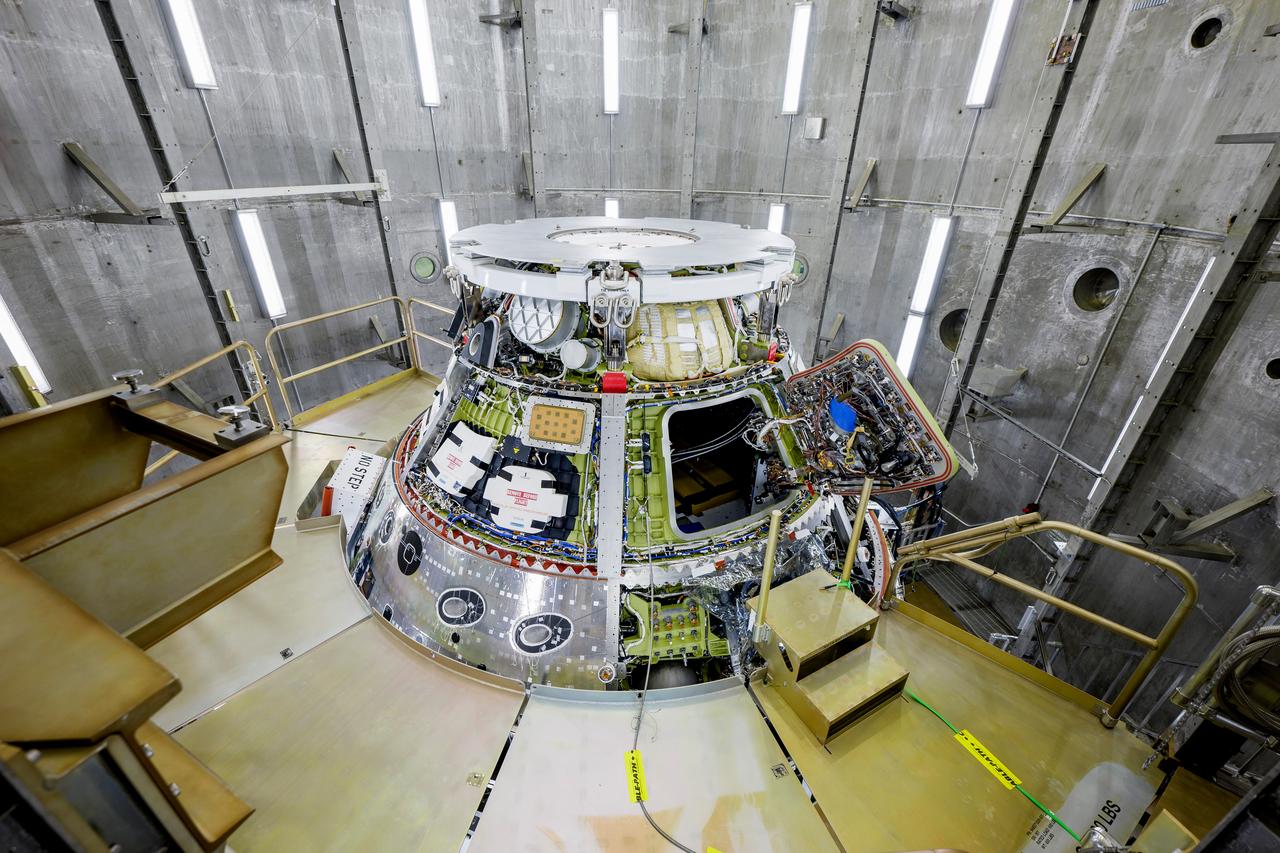
The Artemis II Orion spacecraft is lifted from the Final Assembly and Testing (FAST) Cell and placed in the west altitude chamber inside the Operations and Checkout Building at NASA’S Kennedy Space Center in Florida on June 28, 2024. Inside the altitude chamber, the spacecraft underwent a series of tests simulating deep space vacuum conditions. Photo Credit: NASA / Rad Sinyak
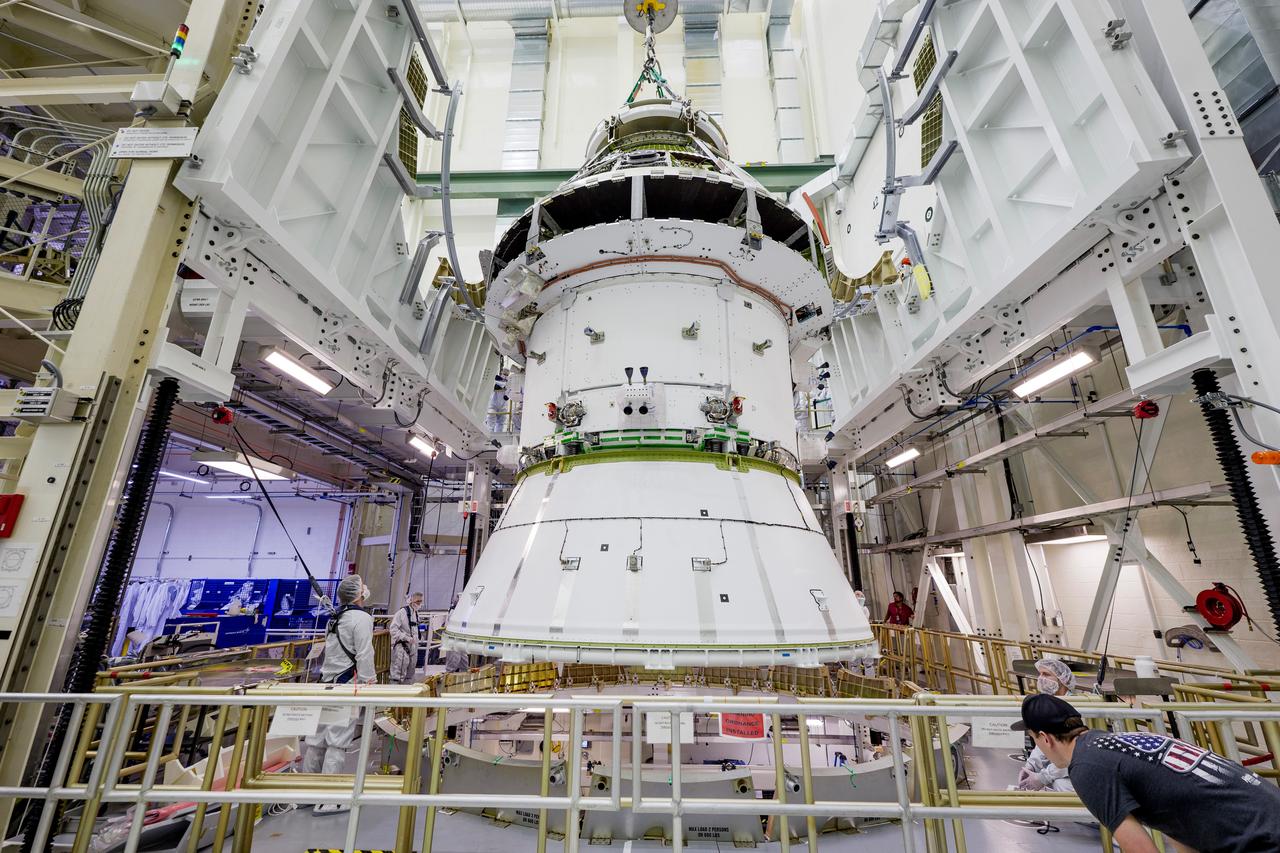
The Artemis II Orion spacecraft is lifted from the Final Assembly and Testing (FAST) Cell and placed in the west altitude chamber inside the Operations and Checkout Building at NASA’S Kennedy Space Center in Florida on June 28, 2024. Inside the altitude chamber, the spacecraft underwent a series of tests simulating deep space vacuum conditions. Photo Credit: NASA / Rad Sinyak

The Artemis II Orion spacecraft is lifted from the Final Assembly and System Testing (FAST) Cell and placed in the west altitude chamber inside the Operations and Checkout Building at NASA’S Kennedy Space Center in Florida on June 28, 2024. Inside the altitude chamber, the spacecraft underwent a series of tests simulating deep space vacuum conditions. Photo Credit: NASA / Rad Sinyak
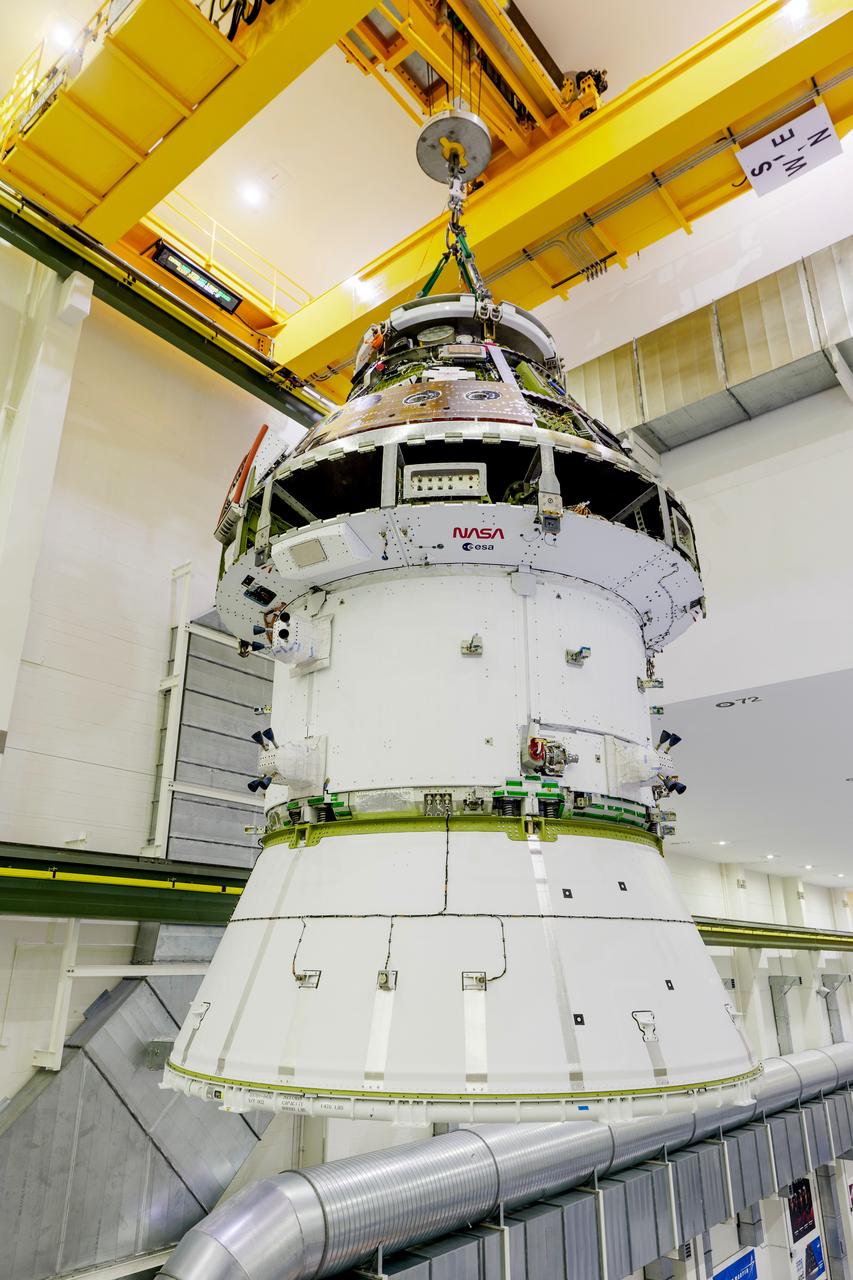
The Artemis II Orion spacecraft is lifted from the Final Assembly and Testing (FAST) Cell and placed in the west altitude chamber inside the Operations and Checkout Building at NASA’S Kennedy Space Center in Florida on June 28, 2024. Inside the altitude chamber, the spacecraft underwent a series of tests simulating deep space vacuum conditions. Photo Credit: NASA / Rad Sinyak
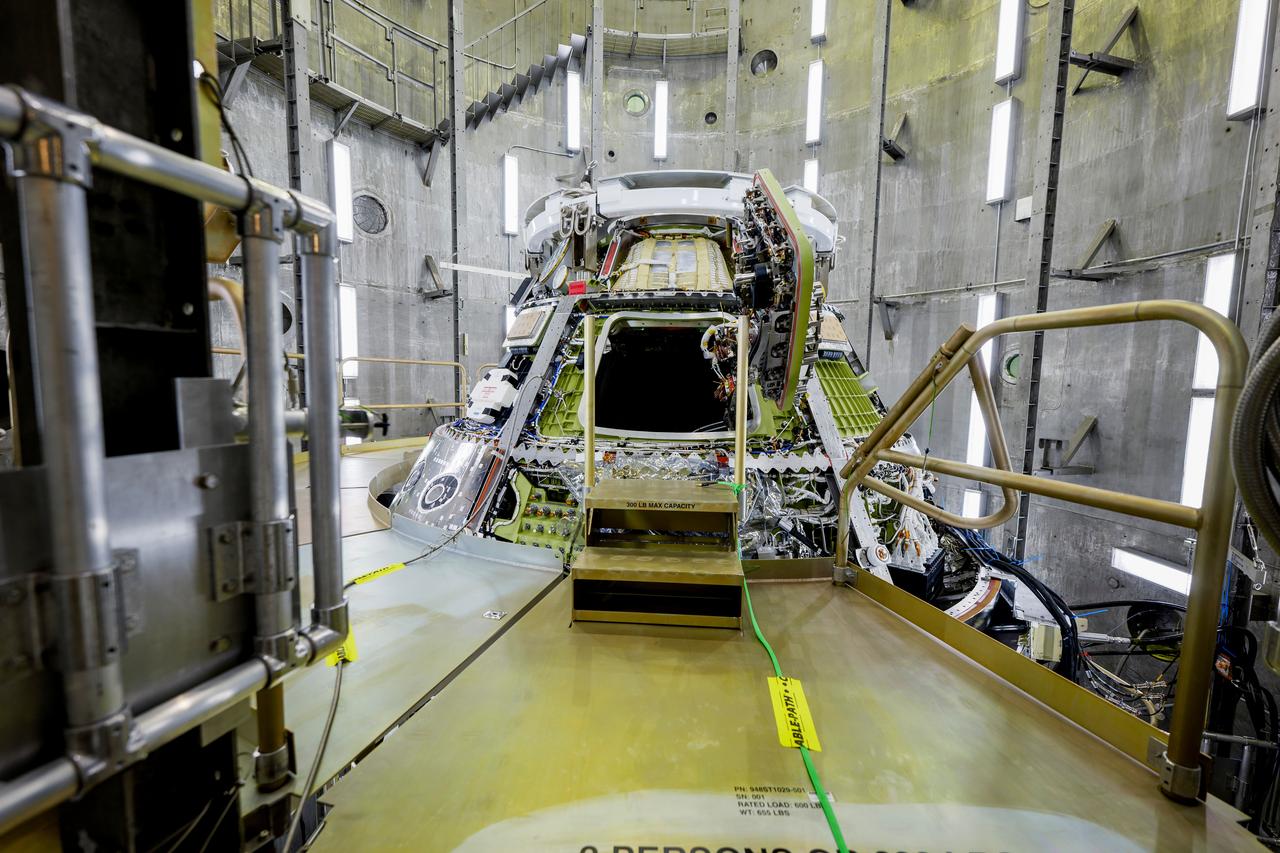
The Artemis II Orion spacecraft is lifted from the Final Assembly and System Testing (FAST) Cell and placed in the west altitude chamber inside the Operations and Checkout Building at NASA’S Kennedy Space Center in Florida on June 28, 2024. Inside the altitude chamber, the spacecraft underwent a series of tests simulating deep space vacuum conditions. Photo Credit: NASA / Rad Sinyak
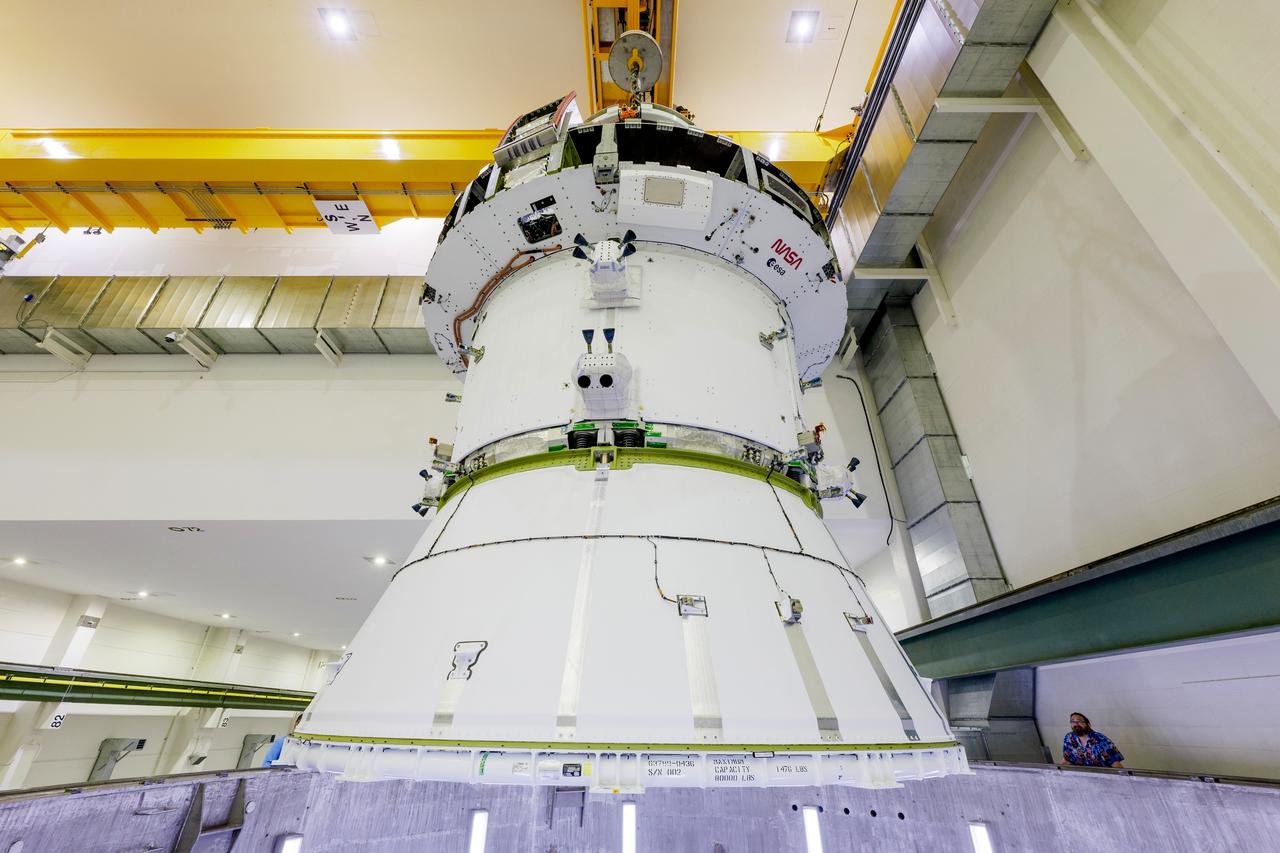
The Artemis II Orion spacecraft is lifted from the Final Assembly and Testing (FAST) Cell and placed in the west altitude chamber inside the Operations and Checkout Building at NASA’S Kennedy Space Center in Florida on June 28, 2024. Inside the altitude chamber, the spacecraft underwent a series of tests simulating deep space vacuum conditions. Photo Credit: NASA / Rad Sinyak
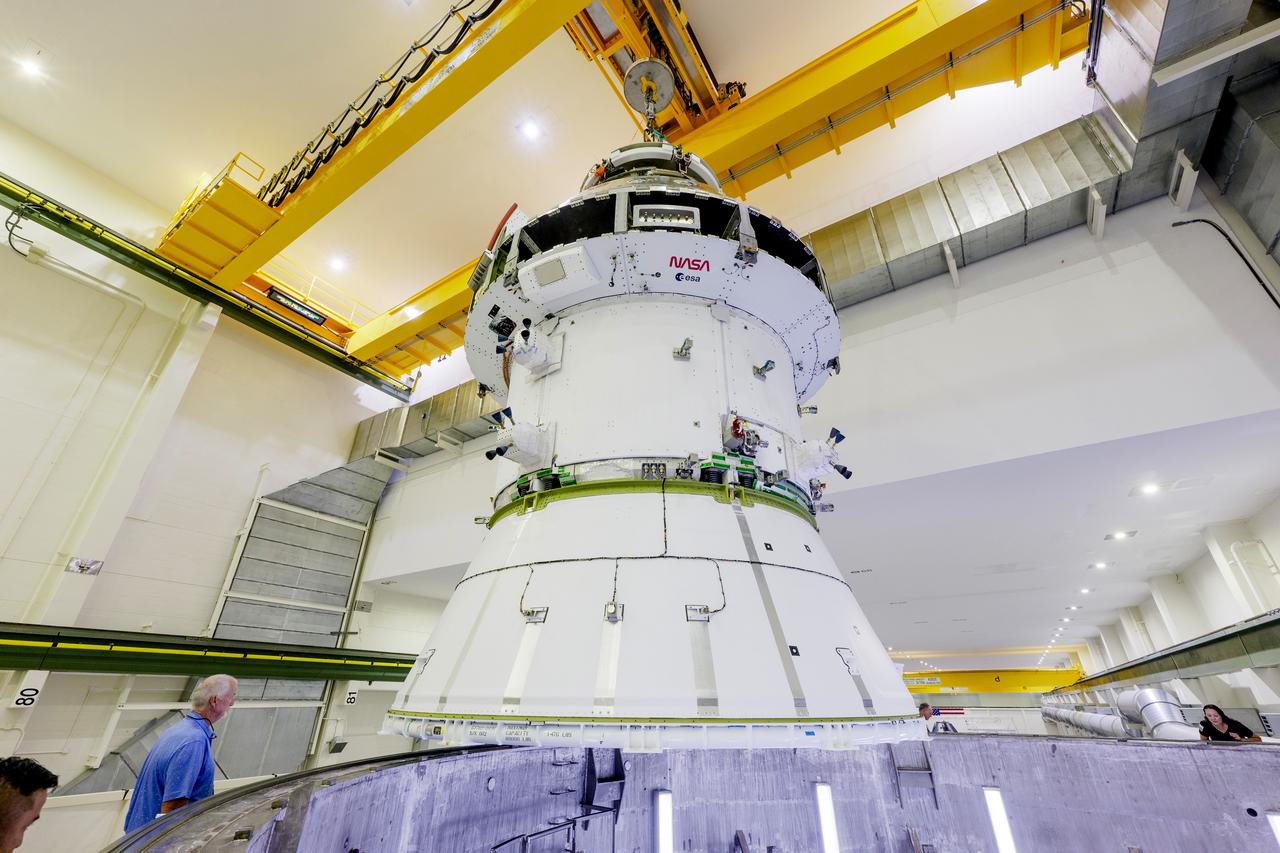
The Artemis II Orion spacecraft is lifted from the Final Assembly and Testing (FAST) Cell and placed in the west altitude chamber inside the Operations and Checkout Building at NASA’S Kennedy Space Center in Florida on June 28, 2024. Inside the altitude chamber, the spacecraft underwent a series of tests simulating deep space vacuum conditions. Photo Credit: NASA / Rad Sinyak
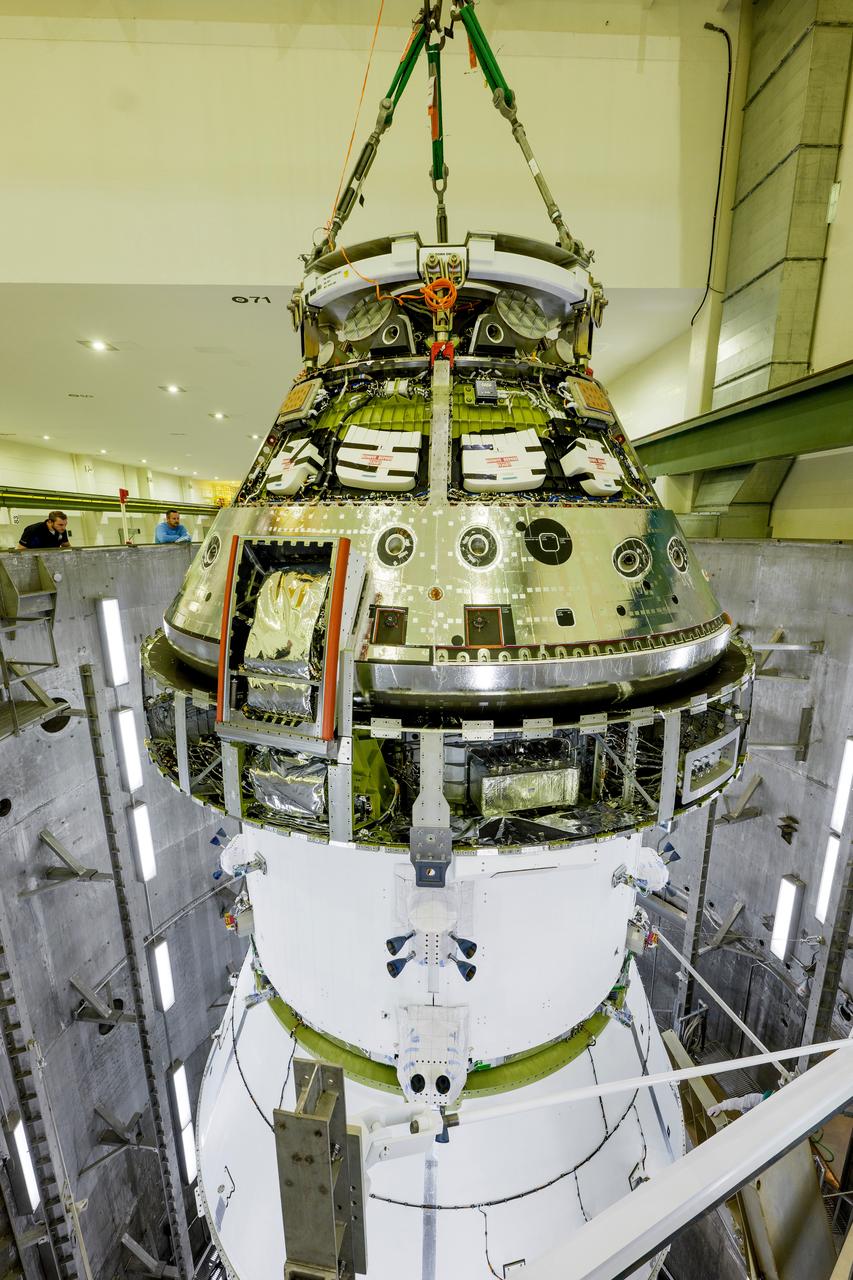
The Artemis II Orion spacecraft is lifted from the Final Assembly and Testing (FAST) Cell and placed in the west altitude chamber inside the Operations and Checkout Building at NASA’S Kennedy Space Center in Florida on June 28, 2024. Inside the altitude chamber, the spacecraft underwent a series of tests simulating deep space vacuum conditions. Photo Credit: NASA / Rad Sinyak
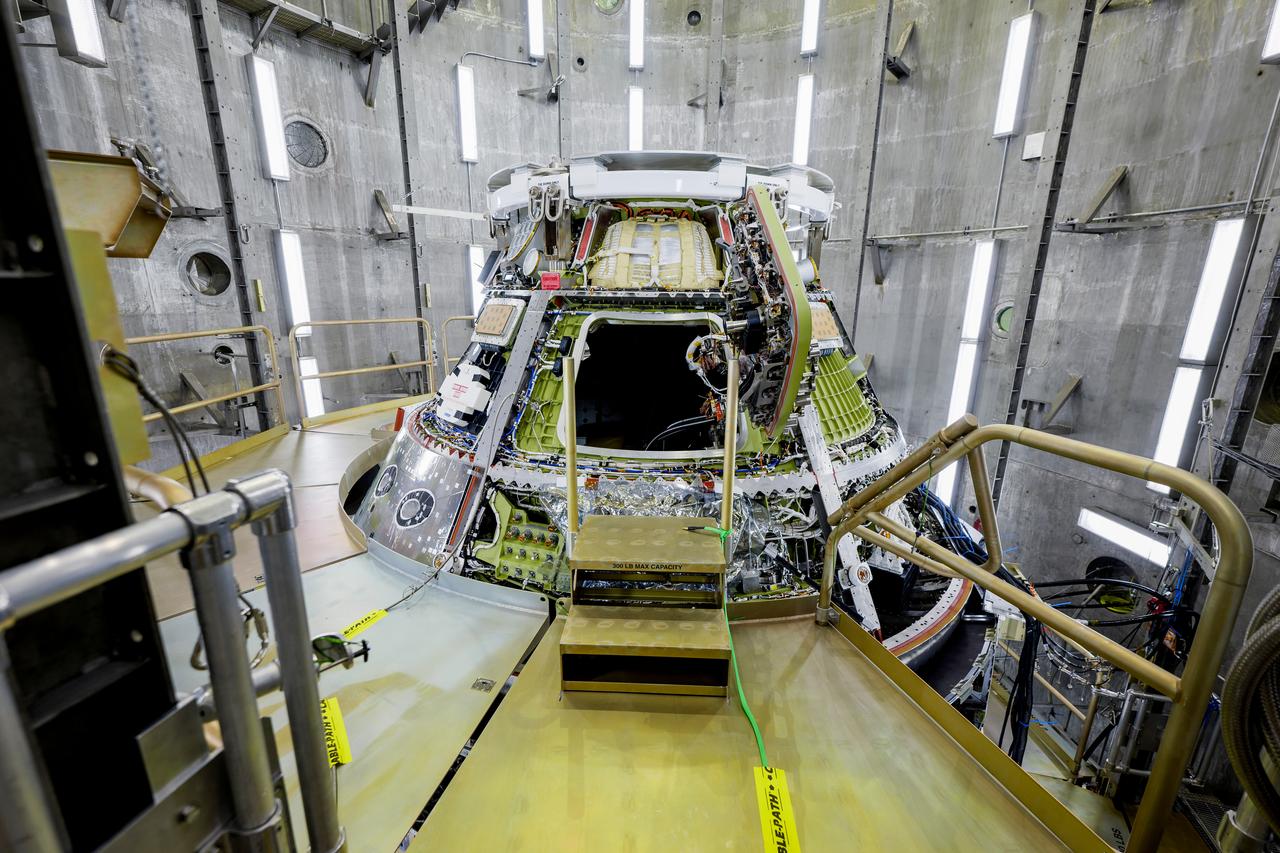
The Artemis II Orion spacecraft is lifted from the Final Assembly and Testing (FAST) Cell and placed in the west altitude chamber inside the Operations and Checkout Building at NASA’S Kennedy Space Center in Florida on June 28, 2024. Inside the altitude chamber, the spacecraft underwent a series of tests simulating deep space vacuum conditions. Photo Credit: NASA / Rad Sinyak
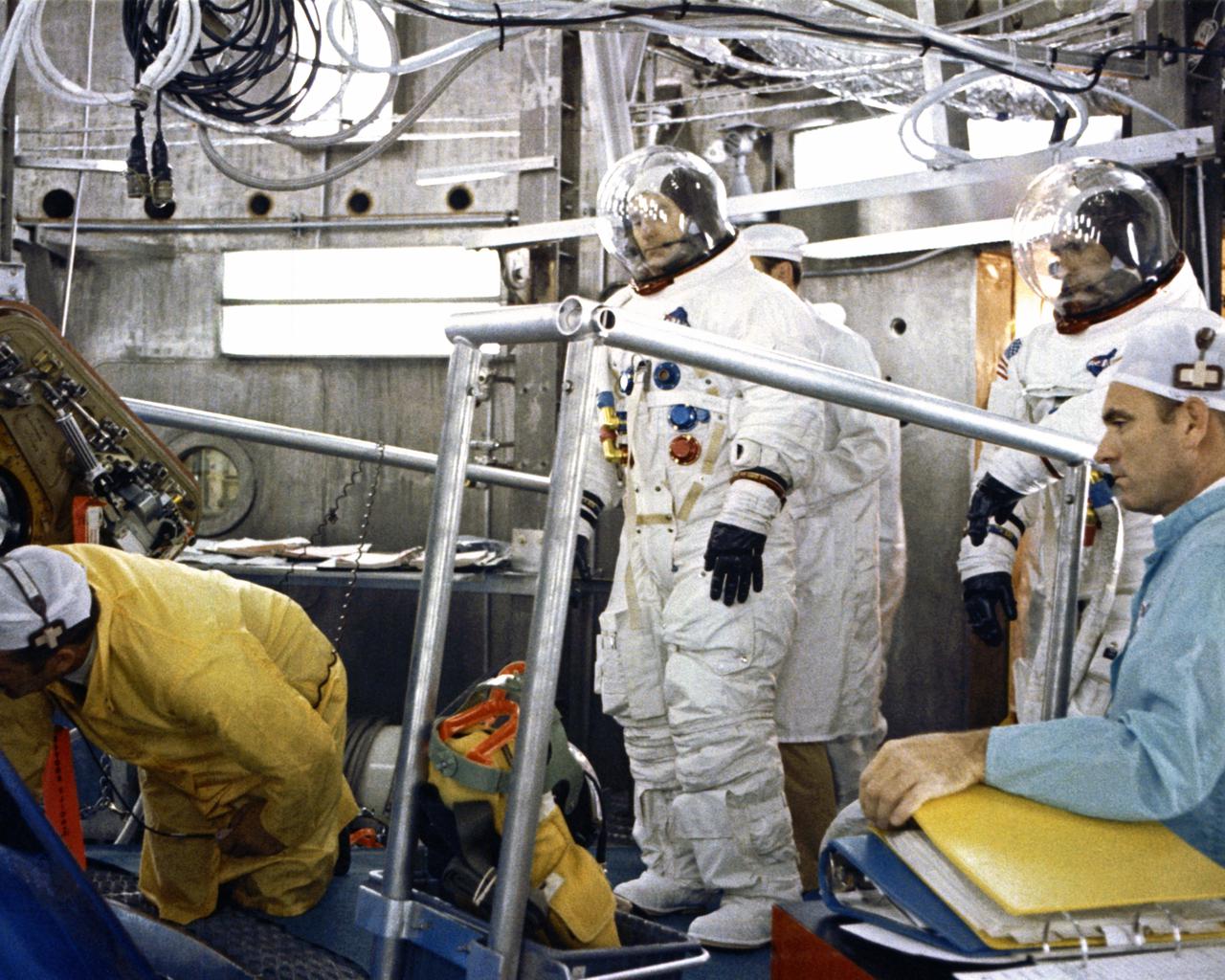
CAPE CANAVERAL, Fla. -- Apollo 12 lunar module pilot Alan L. Bean enters spacecraft in preparation for altitude chamber test with mission commander Charles Conrad Jr. and Richard F. Gordon Jr., command module pilot. Air was pumped out of the chamber to simulate a space environment. The Apollo 12 astronauts are scheduled to perform the nation’s second manned lunar landing. Photo credit: NASA
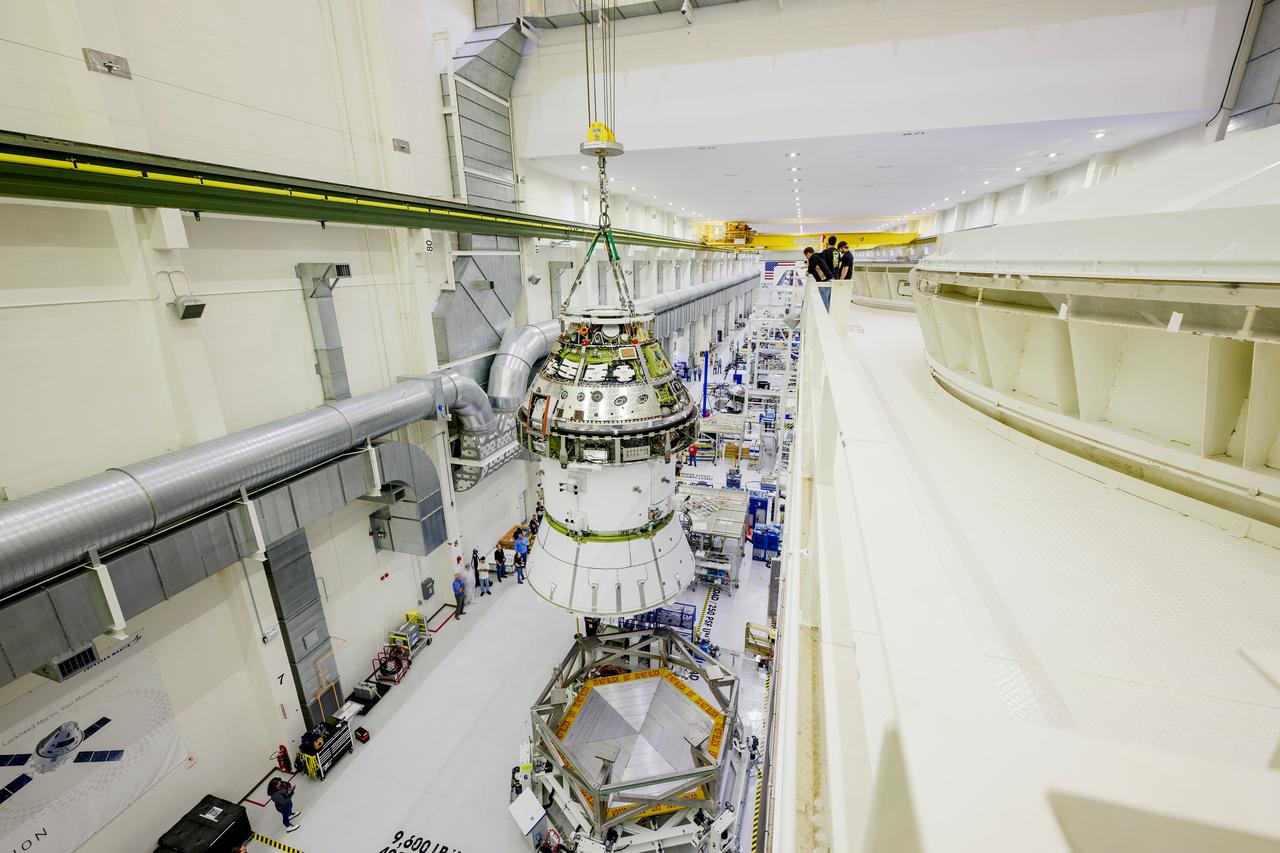
The Artemis II Orion spacecraft is lifted from the Final Assembly and System Testing (FAST) Cell and placed in the west altitude chamber inside the Operations and Checkout Building at NASA’S Kennedy Space Center in Florida on June 28, 2024. Inside the altitude chamber, the spacecraft underwent a series of tests simulating deep space vacuum conditions. Photo Credit: NASA / Rad Sinyak
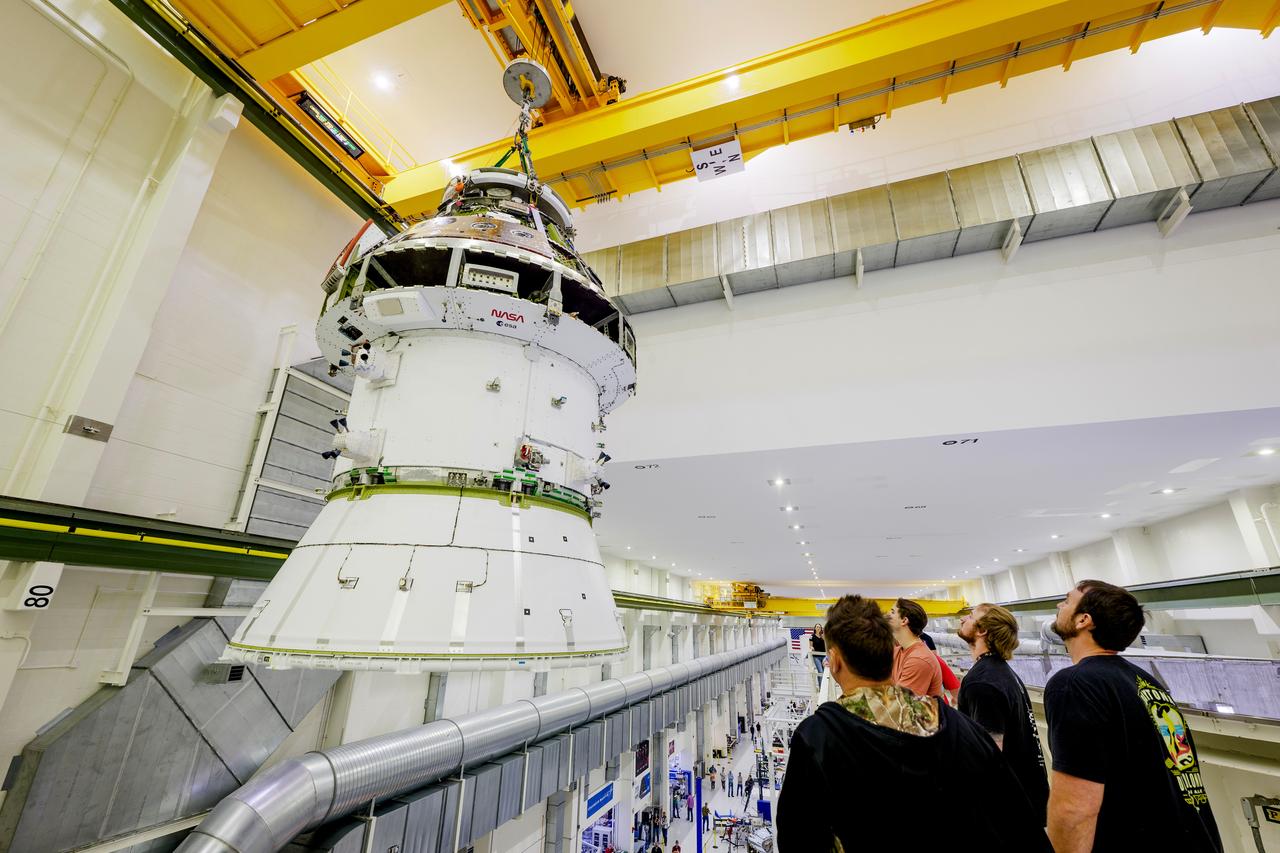
The Artemis II Orion spacecraft is lifted from the Final Assembly and Testing (FAST) Cell and placed in the west altitude chamber inside the Operations and Checkout Building at NASA’S Kennedy Space Center in Florida on June 28, 2024. Inside the altitude chamber, the spacecraft underwent a series of tests simulating deep space vacuum conditions. Photo Credit: NASA / Rad Sinyak
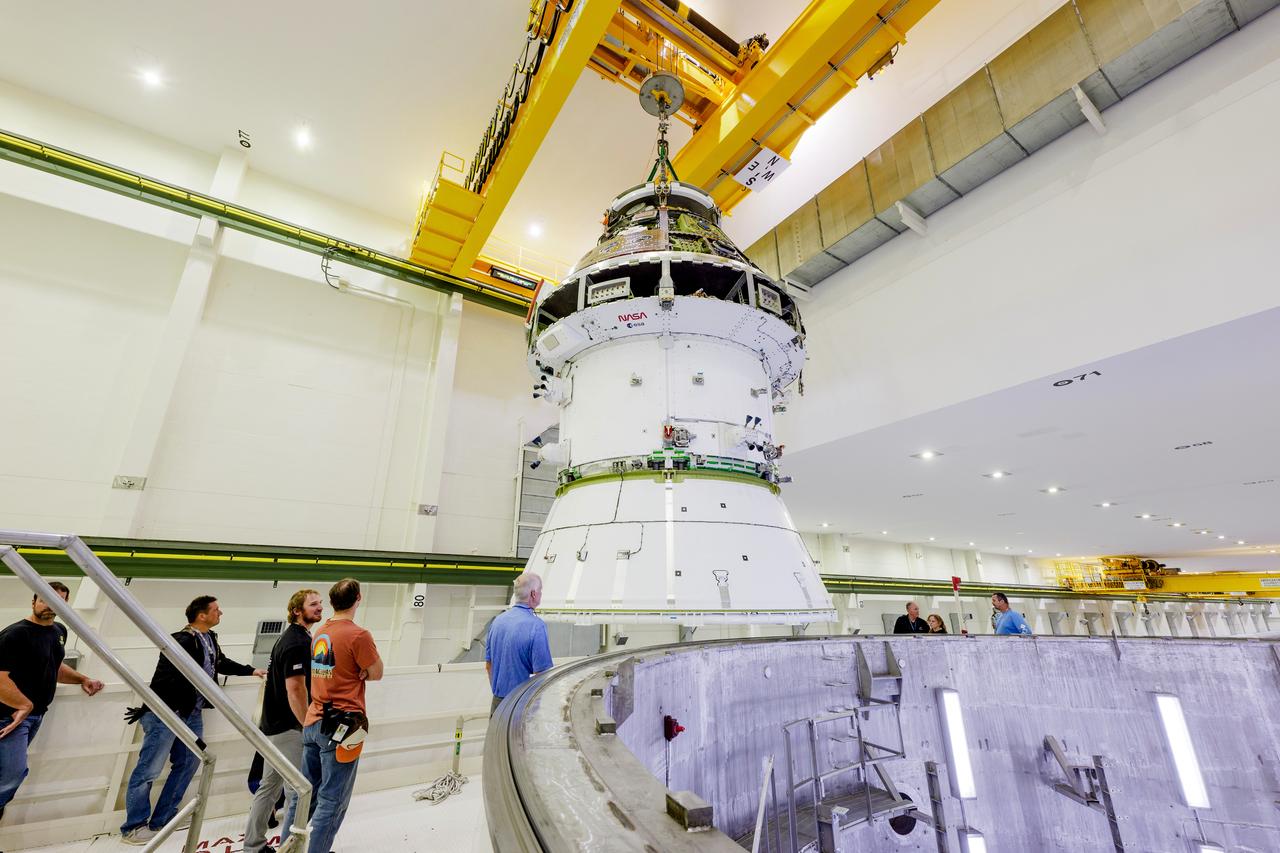
The Artemis II Orion spacecraft is lifted from the Final Assembly and Testing (FAST) Cell and placed in the west altitude chamber inside the Operations and Checkout Building at NASA’S Kennedy Space Center in Florida on June 28, 2024. Inside the altitude chamber, the spacecraft underwent a series of tests simulating deep space vacuum conditions. Photo Credit: NASA / Rad Sinyak
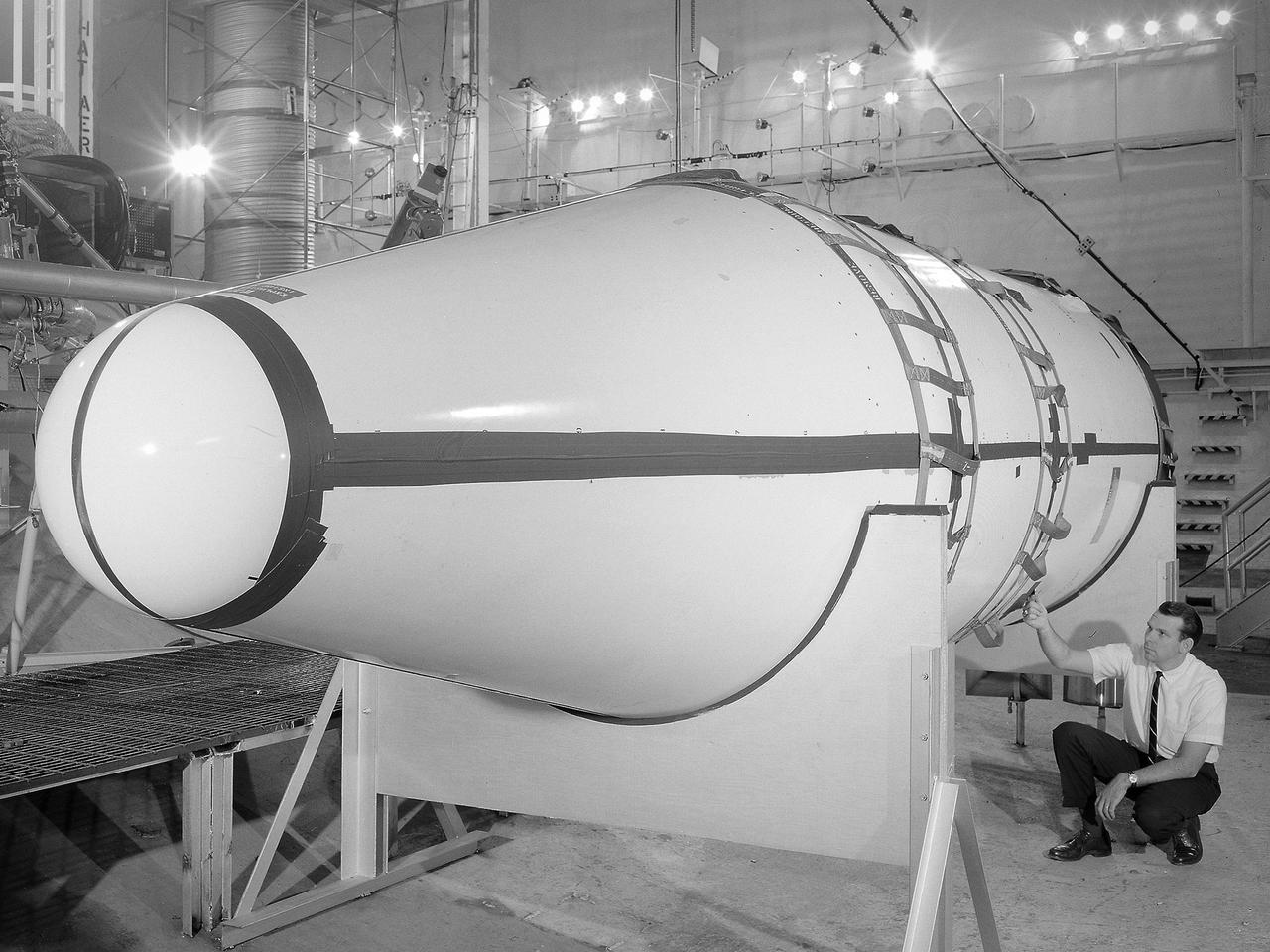
Setup of a Surveyor/Atlas/Centaur shroud in the Space Power Chambers for a leak test at the National Aeronautics and Space Administration (NASA) Lewis Research Center. Centaur was a 15,000-pound thrust second-stage rocket designed for the military in 1957 and 1958 by General Dynamics. It was the first major rocket to use the liquid hydrogen technology developed by Lewis in the 1950s. The Centaur Program suffered numerous problems before being transferred to Lewis in 1962. Several test facilities at Lewis’ main campus and Plum Brook Station were built or modified specifically for Centaur, including the Space Power Chambers. In 1961, NASA Lewis management decided to convert its Altitude Wind Tunnel into two large test chambers and later renamed it the Space Power Chambers. The conversion, which took over 2 years, included the removal of the tunnel’s internal components and insertion of bulkheads to seal off the new chambers. The larger chamber, seen here, could simulate altitudes of 100,000 feet. It was used for Centaur shroud separation and propellant management studies until the early 1970s. The leak test in this photograph was likely an attempt to verify that the shroud’s honeycomb shell did not seep any of its internal air when the chamber was evacuated to pressures similar to those found in the upper atmosphere.
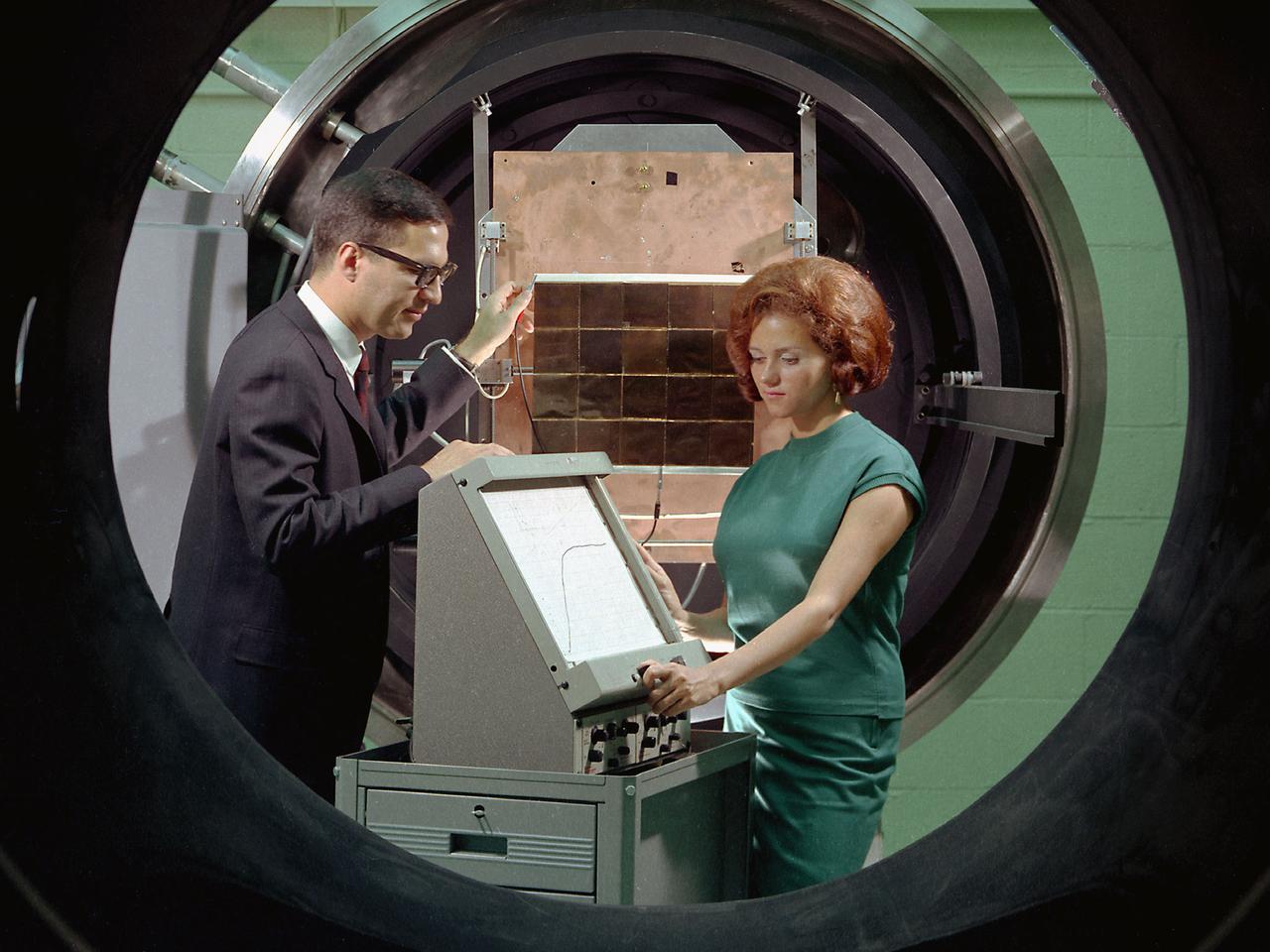
George Mazaris, works with an assistant to obtain the preliminary measurements of cadmium sulfide thin-film solar cells being tested in the Space Environmental Chamber at the National Aeronautics and Space Administration (NASA) Lewis Research Center. Lewis’ Photovoltaic Fundamentals Section was investigating thin-film alternatives to the standard rigid and fragile solar cells. The cadmium sulfide semiconductors were placed in a light, metallized substrate that could be rolled or furled during launch. The main advantage of the thin-film solar cells was their reduced weight. Lewis researchers, however, were still working on improving the performance of the semiconductor. The new thin-film solar cells were tested in a space simulation chamber in the CW-6 test cell in the Engine Research Building. The chamber created a simulated altitude of 200 miles. Sunlight was simulated by a 5000-watt xenon light. Some two dozen cells were exposed to 15 minutes of light followed by 15 minutes of darkness to test their durability in the constantly changing illumination of Earth orbit. This photograph was taken for use in a NASA recruiting publication.
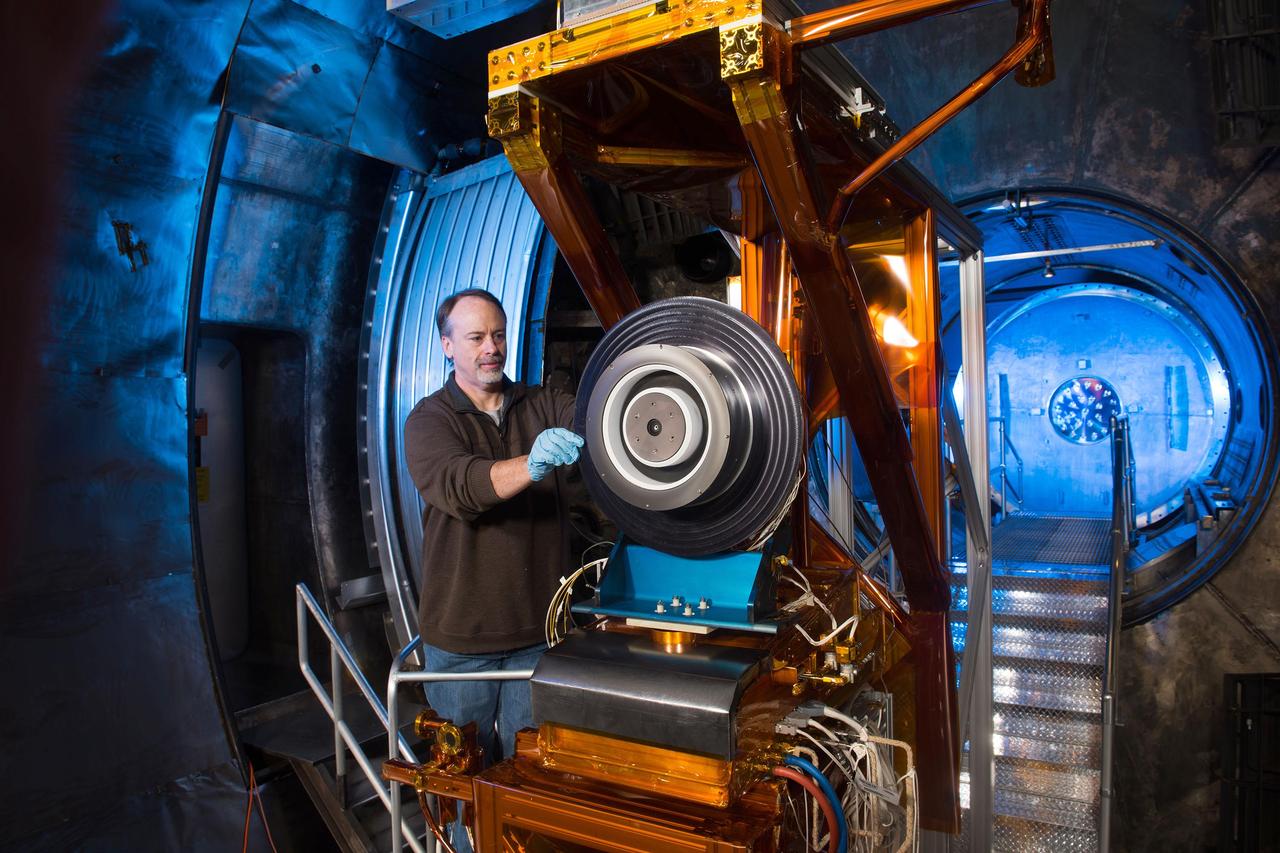
NASA Glenn engineer Dr. Peter Peterson prepares a high-power Hall thruster for ground testing in a vacuum chamber that simulates the environment in space. This high-powered solar electric propulsion thruster has been identified as a critical part of NASA’s future deep space exploration plans.
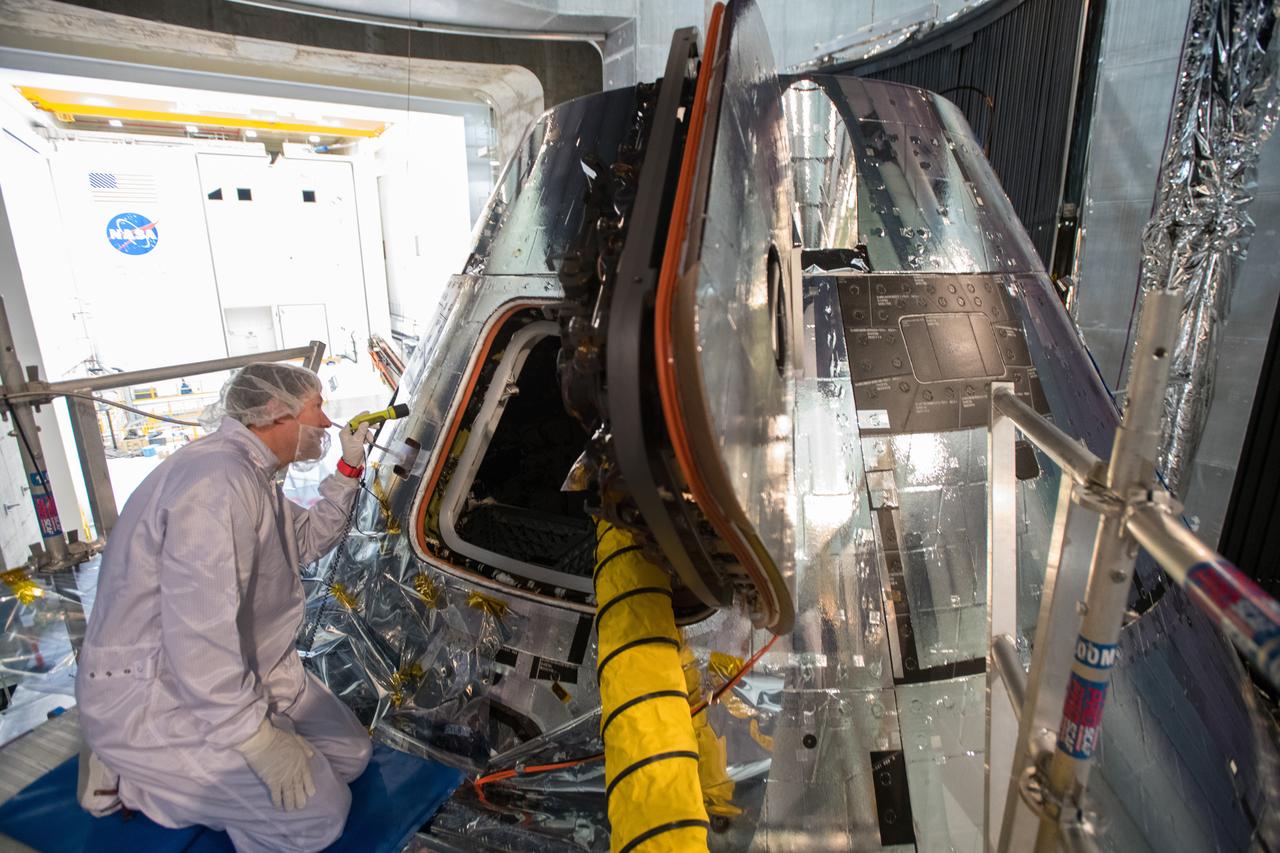
Glenn Research Center's Neil A. Armstrong Test Facility (formerly Plum Brook Station) in Ohio houses the world’s largest space simulation vacuum chamber where the Orion spacecraft, shown here on March 11, 2020, was rigorously tested for Artemis missions to the Moon.
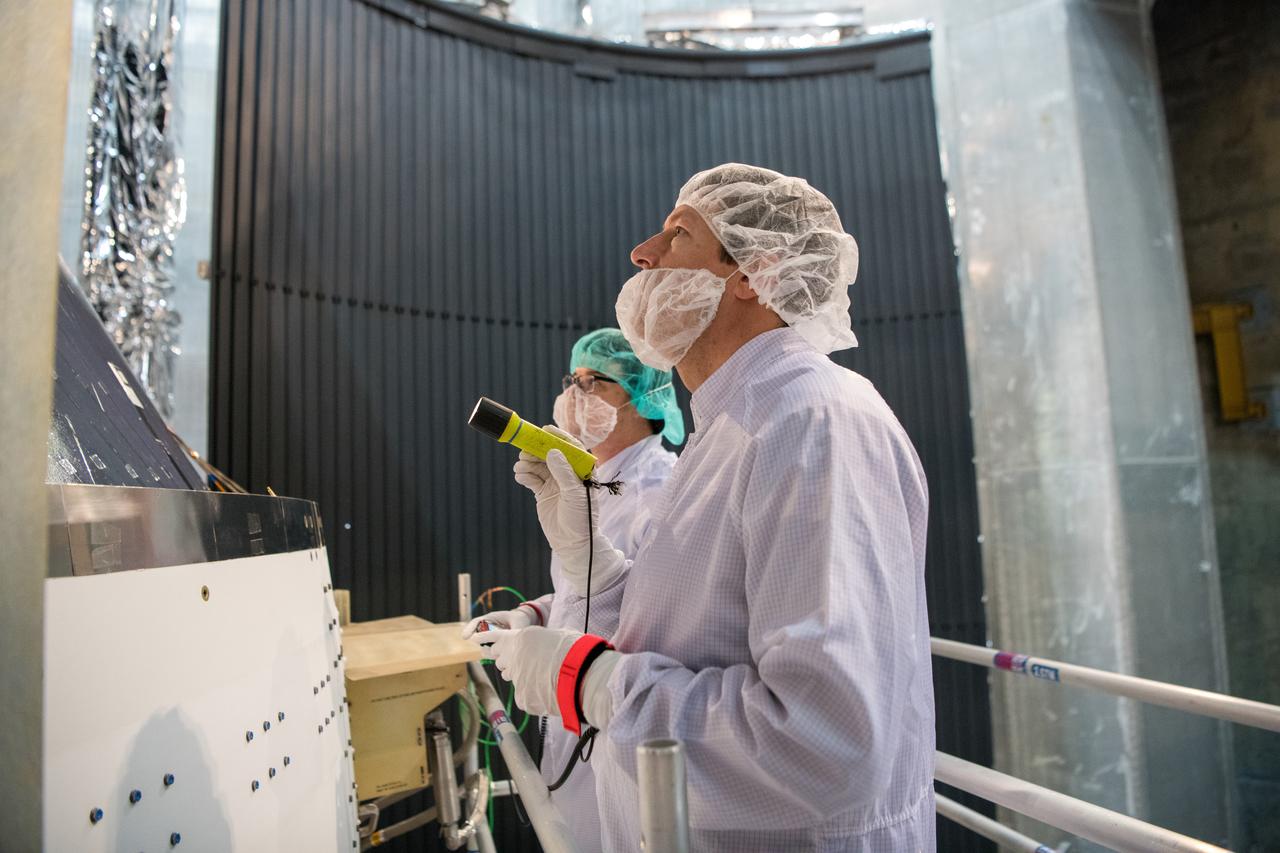
Glenn Research Center's Neil A. Armstrong Test Facility (formerly Plum Brook Station) in Ohio houses the world’s largest space simulation vacuum chamber where the Orion spacecraft, shown here on March 11, 2020, was rigorously tested for Artemis missions to the Moon.
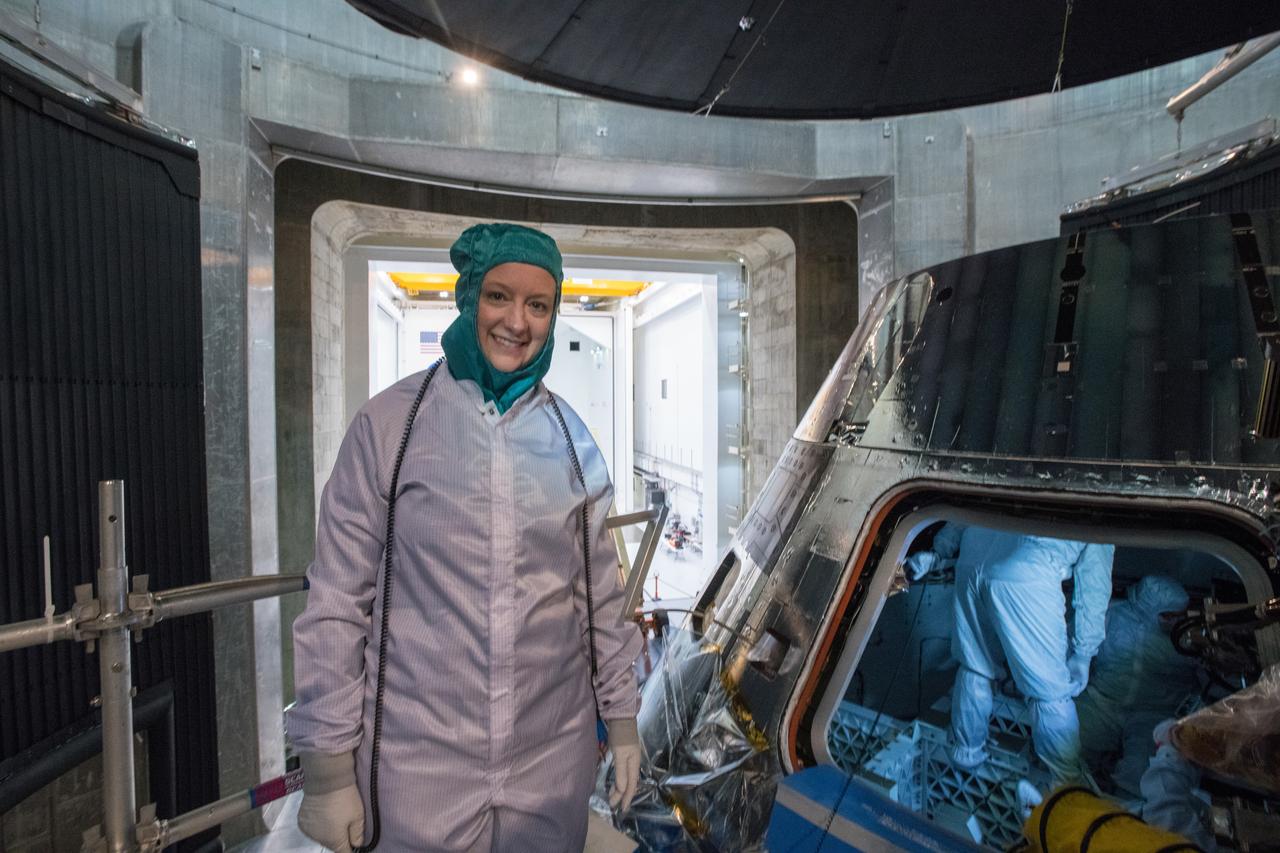
Glenn Research Center's Neil A. Armstrong Test Facility (formerly Plum Brook Station) in Ohio houses the world’s largest space simulation vacuum chamber where the Orion spacecraft, shown here on March 12, 2020, was rigorously tested for Artemis missions to the Moon.
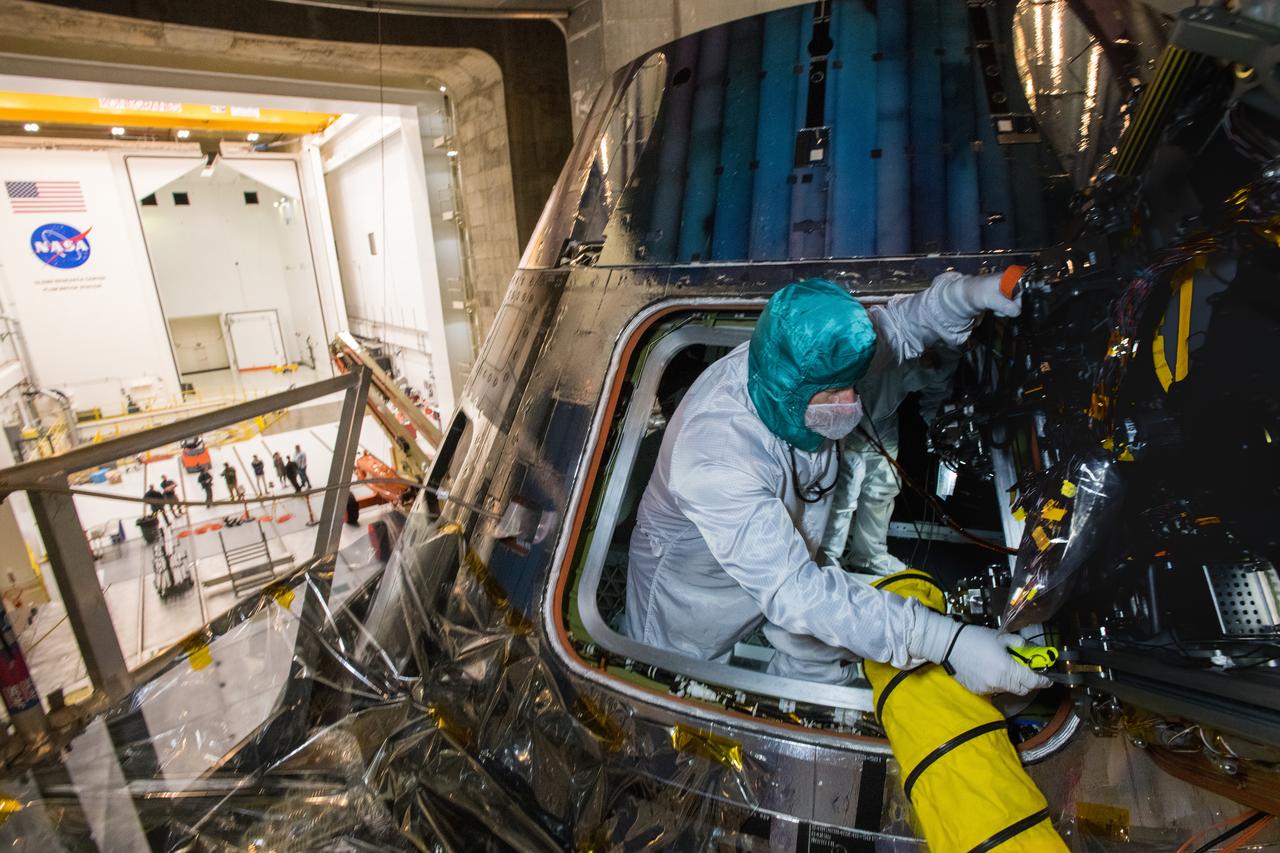
Glenn Research Center's Neil A. Armstrong Test Facility (formerly Plum Brook Station) in Ohio houses the world’s largest space simulation vacuum chamber where the Orion spacecraft, shown here on March 11, 2020, was rigorously tested for Artemis missions to the Moon.
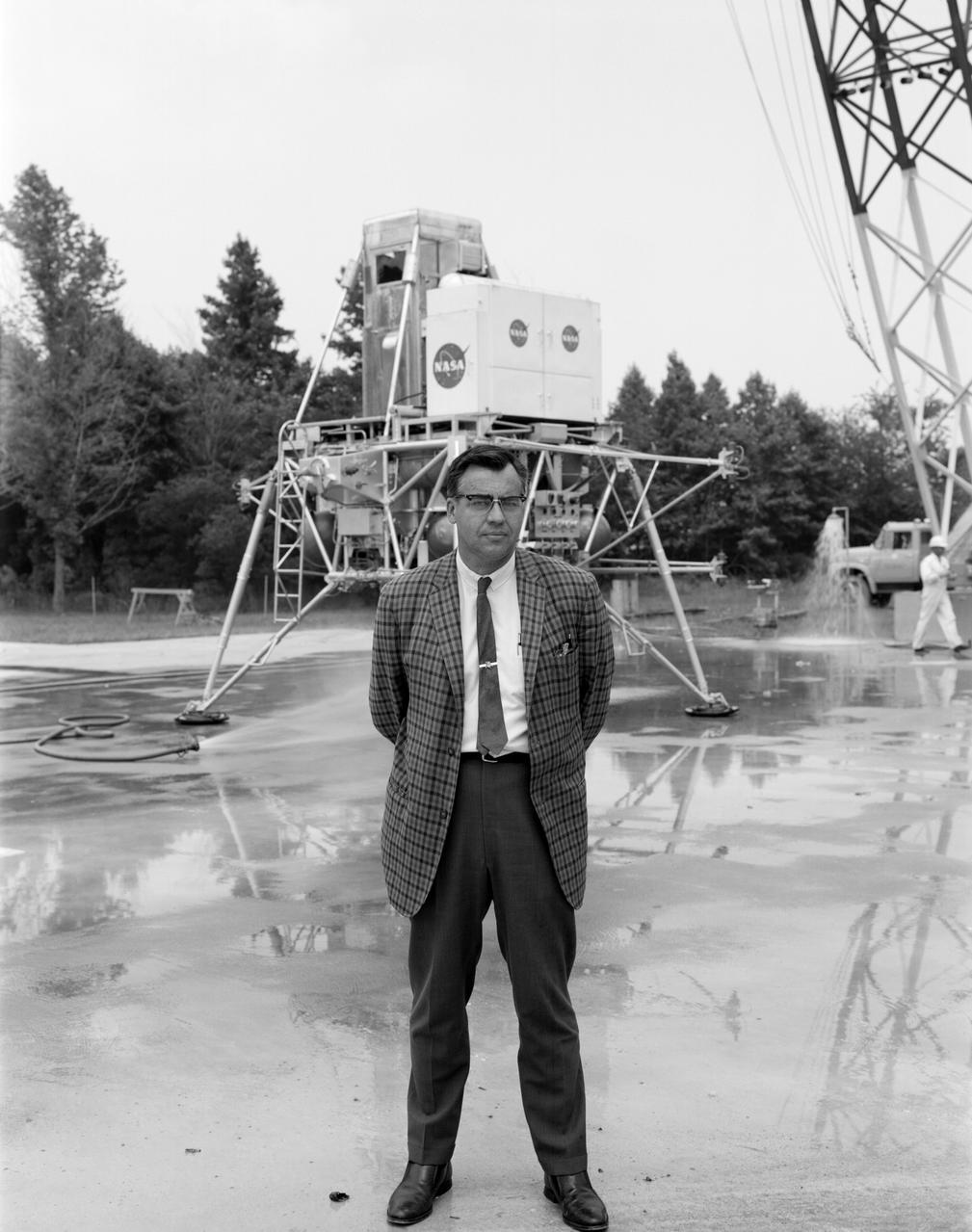
Donald Hewes at Lunar Landing Research Facility (LLRF). Donald Hewes, head of the Spacecraft Research Branch, managed the facility. Piles of cinders simulated the lunar craters and terrain features. Published in the book " A Century at Langley" by Joseph Chambers. pg. 97
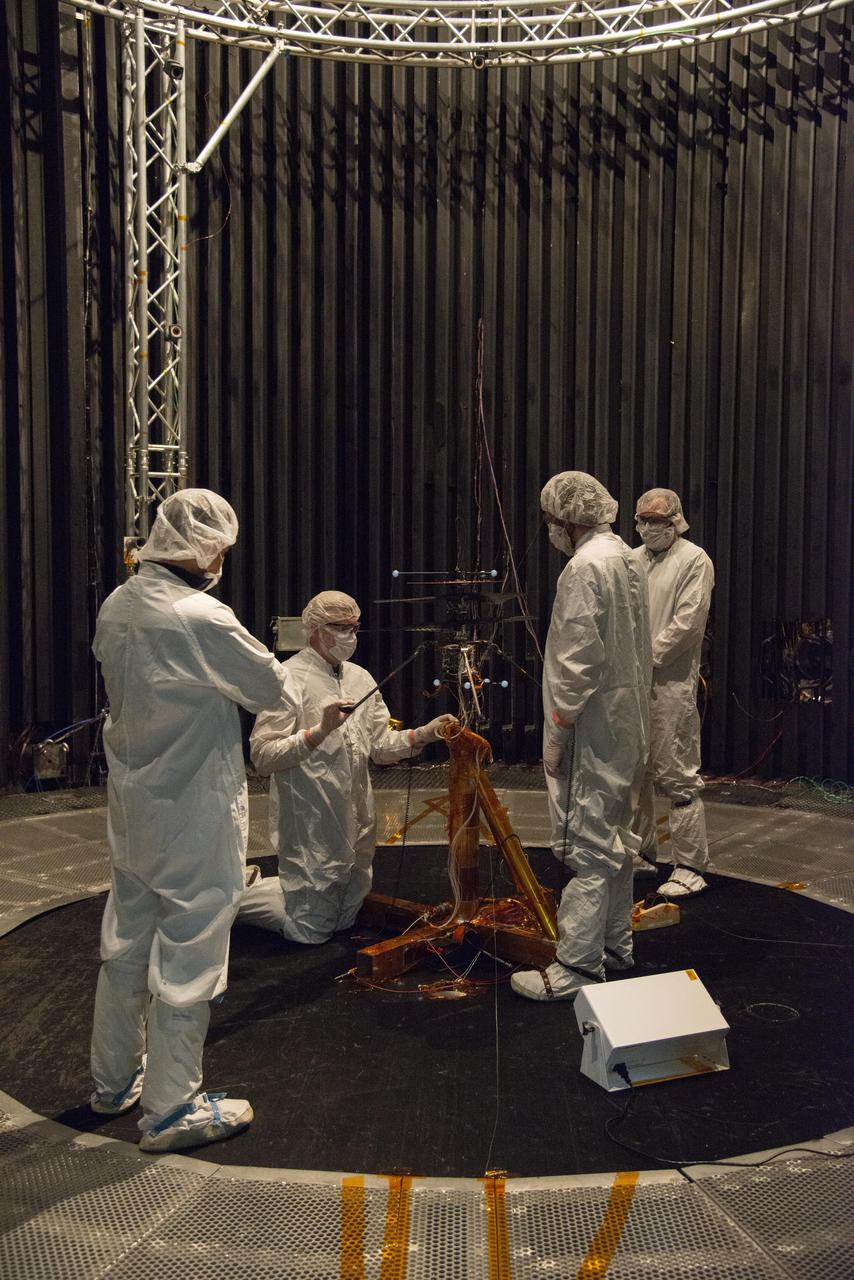
Members of NASA's Mars Helicopter team prepare the flight model (vehicle going to Mars) for a test in the Space Simulator, a 25-foot-wide (7.62-meter-wide) vacuum chamber at NASA's Jet Propulsion Laboratory in Pasadena, California. The image was taken on Jan. 18, 2019. https://photojournal.jpl.nasa.gov/catalog/PIA23156
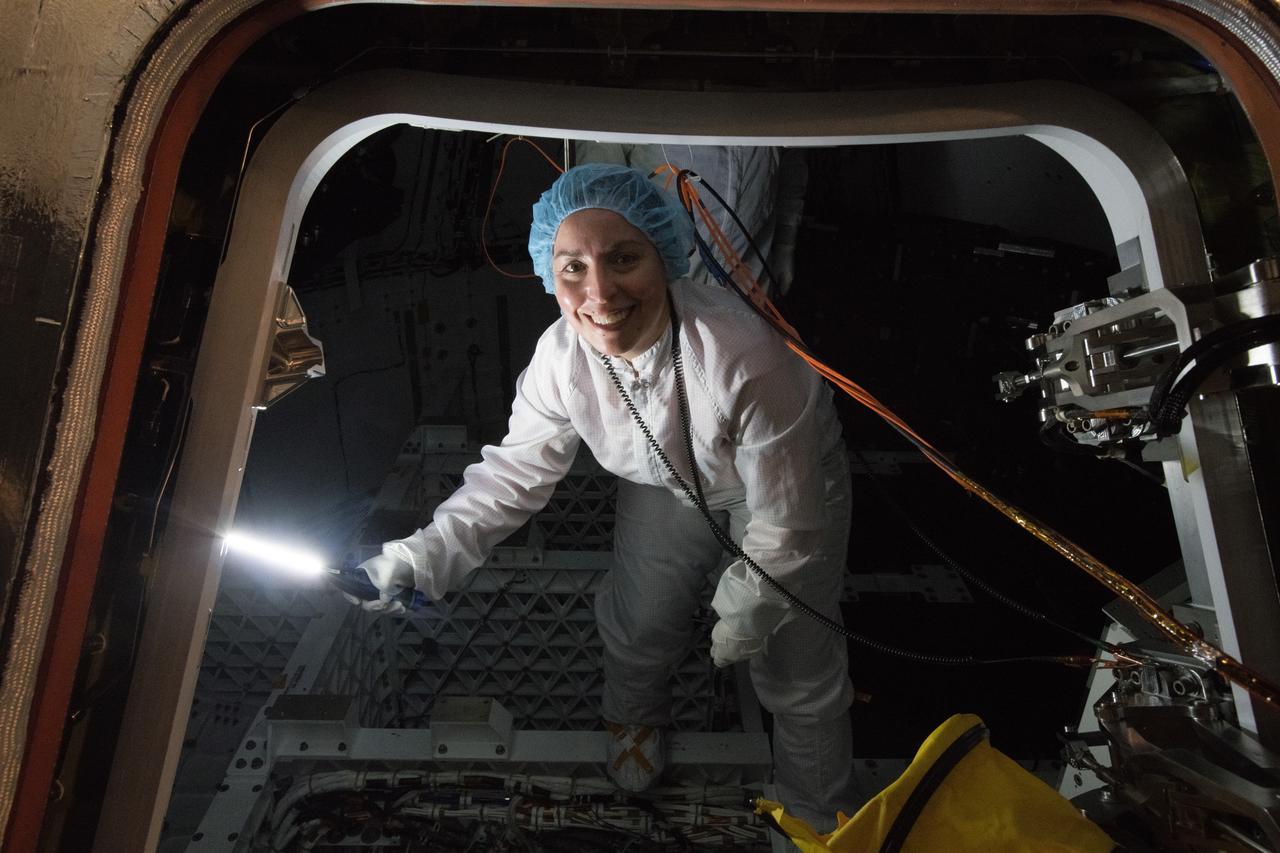
Glenn Research Center's Neil A. Armstrong Test Facility (formerly Plum Brook Station) in Ohio houses the world’s largest space simulation vacuum chamber where the Orion spacecraft, shown here on March 11, 2020, was rigorously tested for Artemis missions to the Moon.
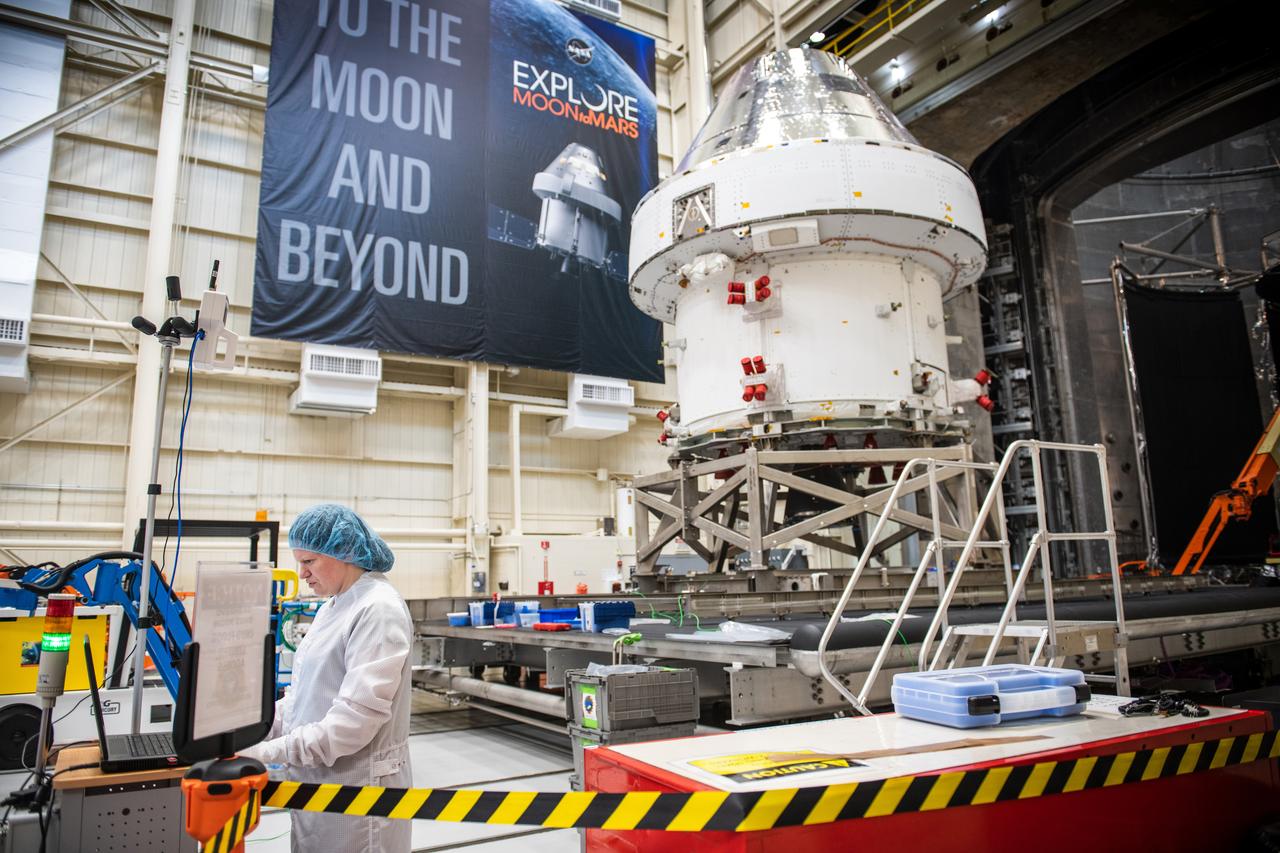
Glenn Research Center's Neil A. Armstrong Test Facility (formerly Plum Brook Station) in Ohio houses the world’s largest space simulation vacuum chamber where the Orion spacecraft, shown here on March 12, 2020, was rigorously tested for Artemis missions to the Moon.
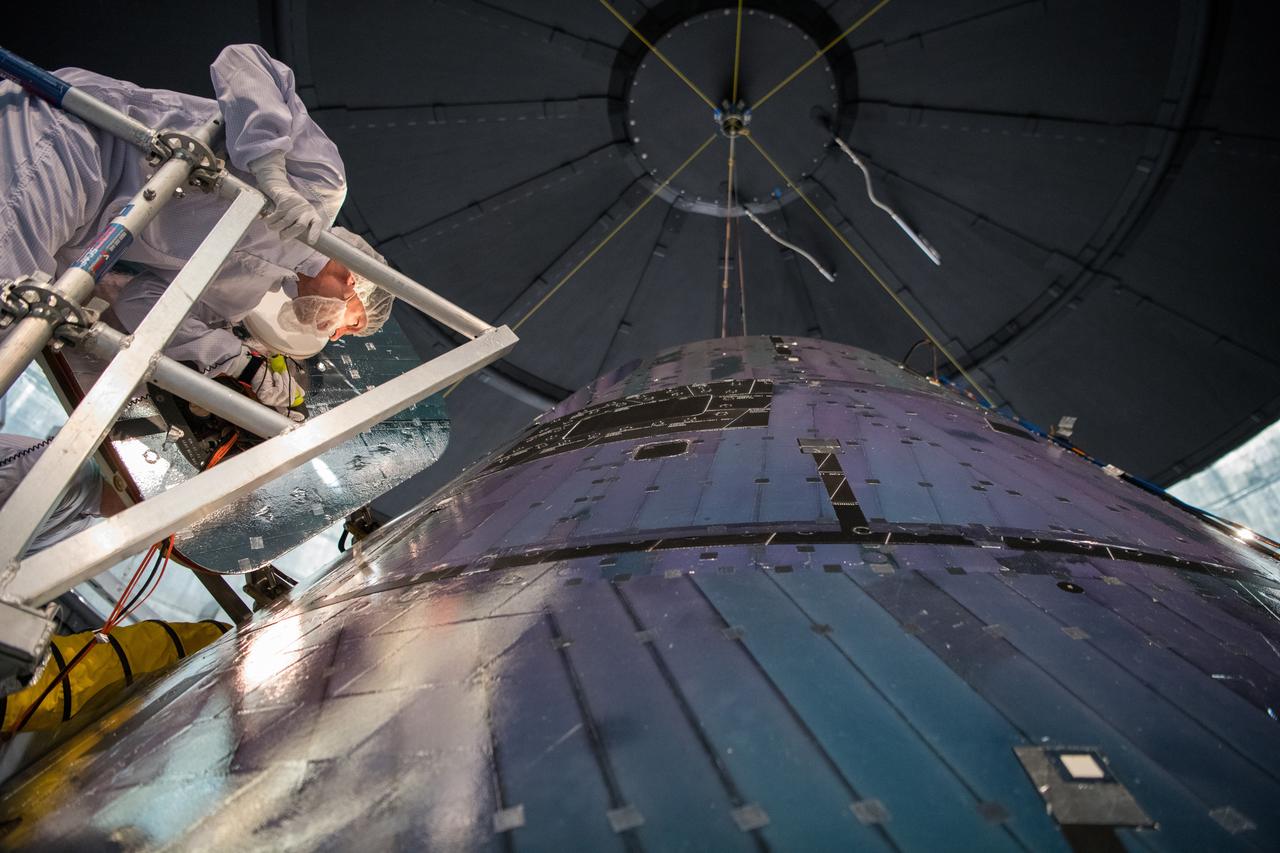
Glenn Research Center's Neil A. Armstrong Test Facility (formerly Plum Brook Station) in Ohio houses the world’s largest space simulation vacuum chamber where the Orion spacecraft, shown here on March 11, 2020, was rigorously tested for Artemis missions to the Moon.
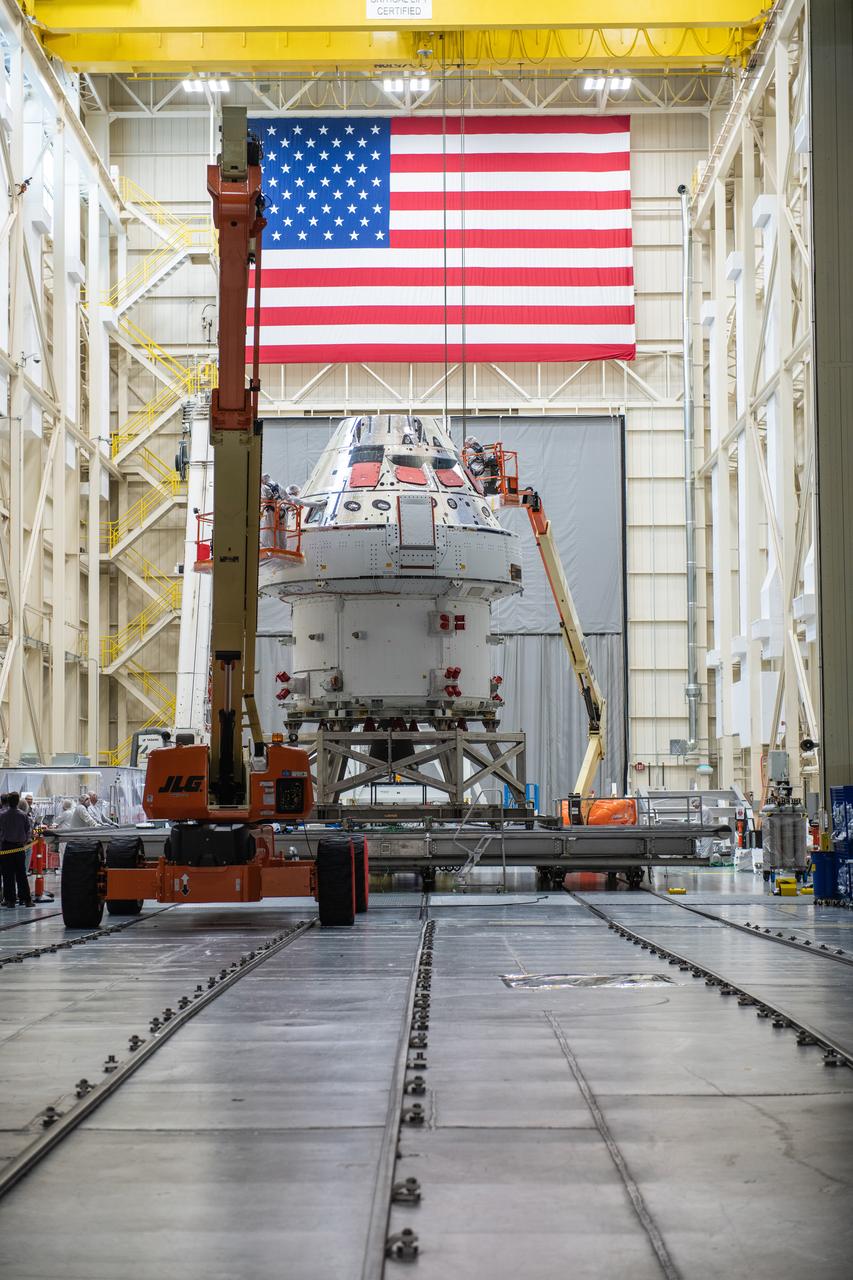
Glenn Research Center's Neil A. Armstrong Test Facility (formerly Plum Brook Station) in Ohio houses the world’s largest space simulation vacuum chamber where the Orion spacecraft, shown here on March 12, 2020, was rigorously tested for Artemis missions to the Moon.
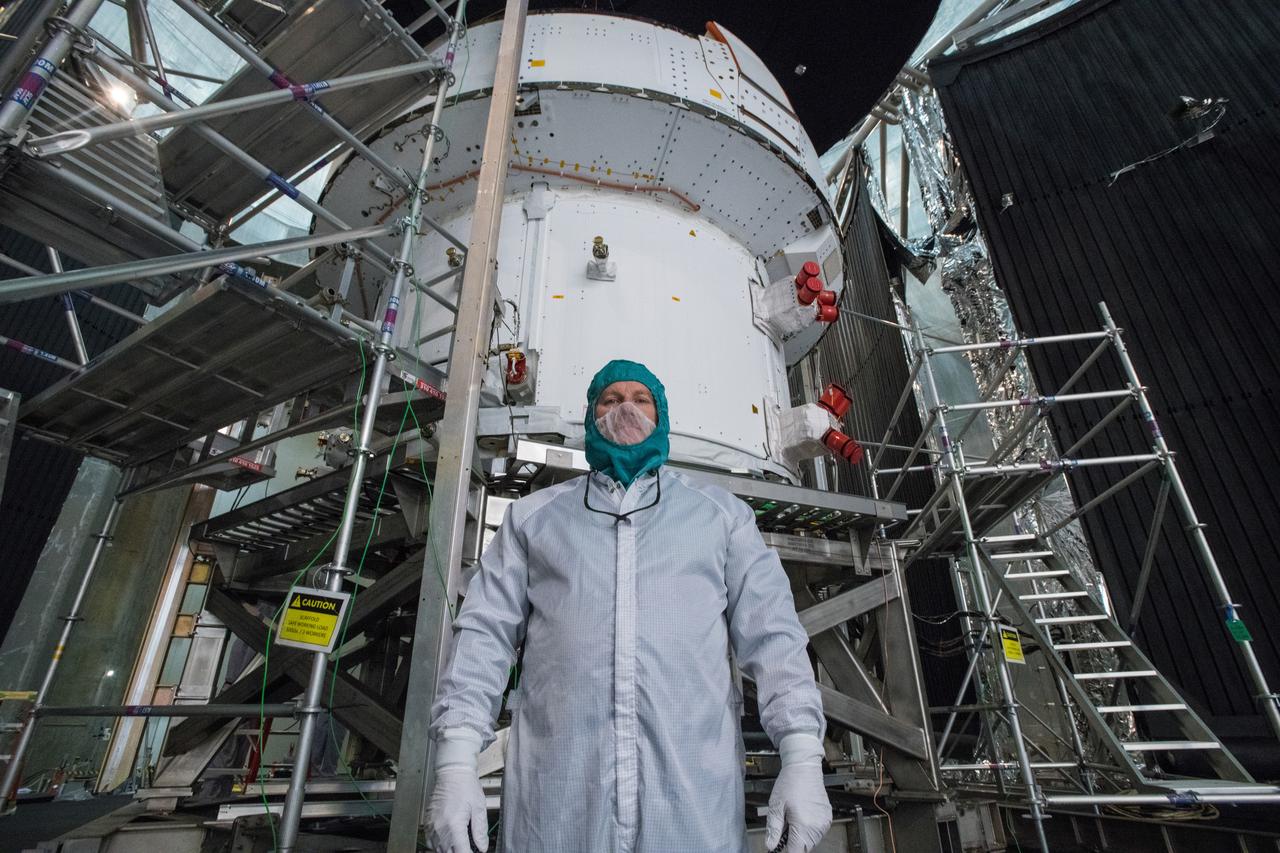
Glenn Research Center's Neil A. Armstrong Test Facility (formerly Plum Brook Station) in Ohio houses the world’s largest space simulation vacuum chamber where the Orion spacecraft, shown here on March 11, 2020, was rigorously tested for Artemis missions to the Moon.
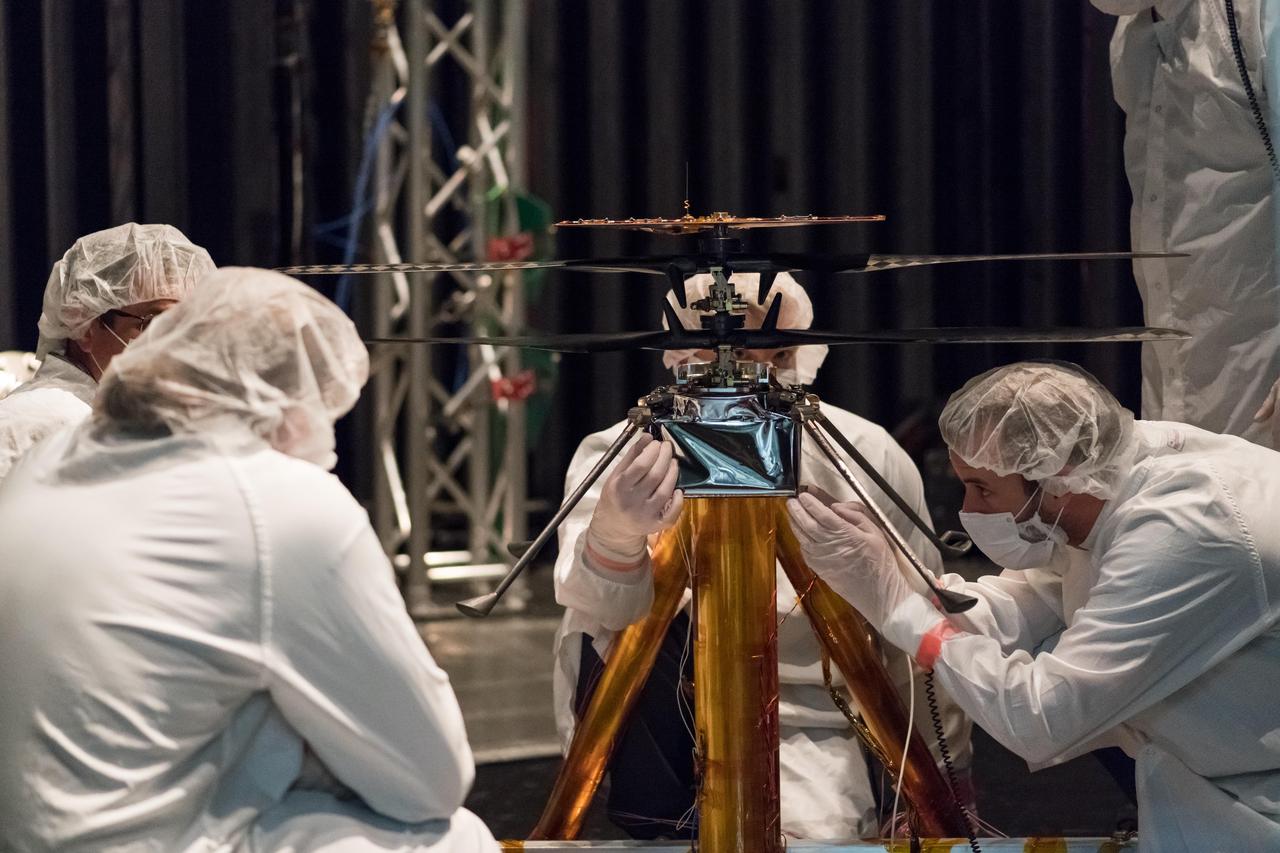
NASA Mars Helicopter team members work the flight model (the vehicle going to Mars) in the Space Simulator, a 25-foot-wide (7.62-meter-wide) vacuum chamber, at NASA's Jet Propulsion Laboratory in Pasadena, California. The image was taken on Feb. 1, 2019. https://photojournal.jpl.nasa.gov/catalog/PIA23152
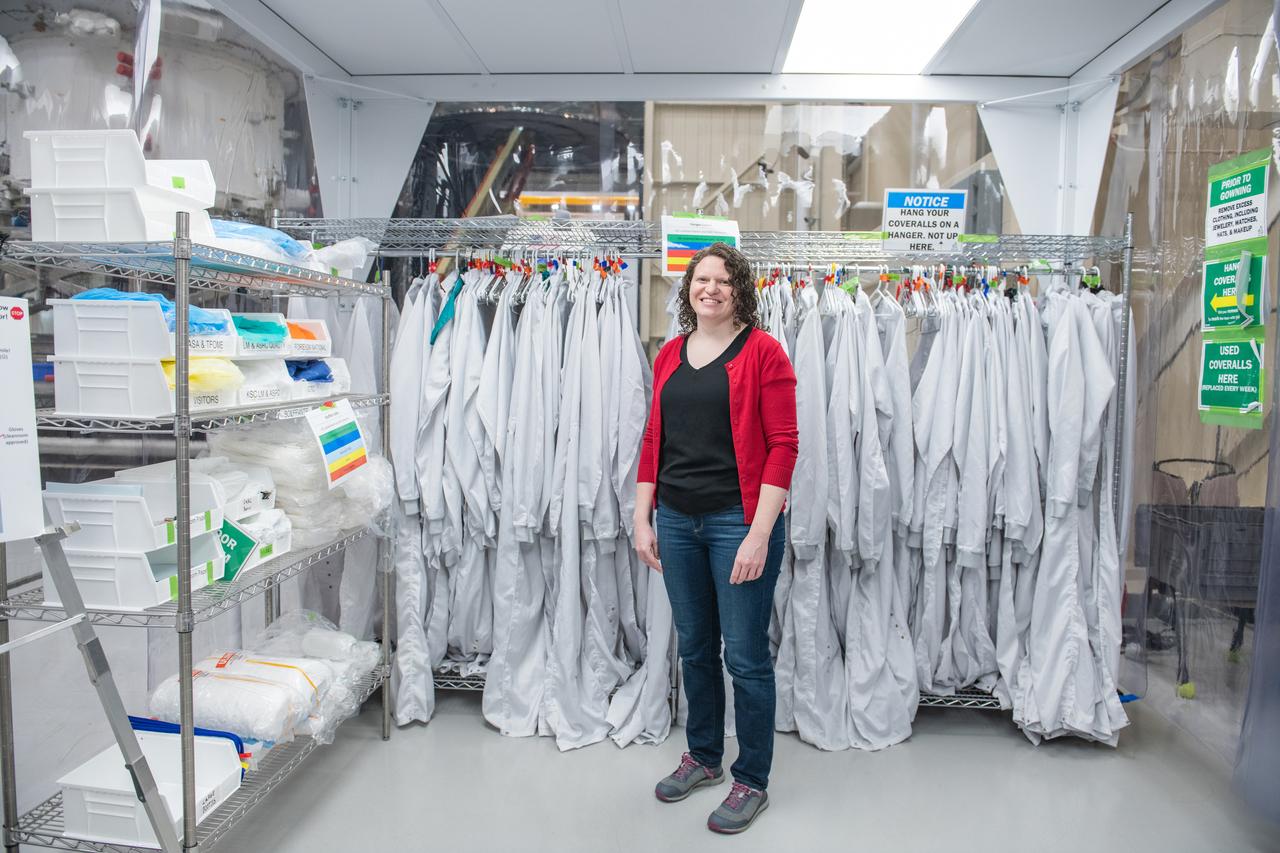
Glenn Research Center's Neil A. Armstrong Test Facility (formerly Plum Brook Station) in Ohio houses the world’s largest space simulation vacuum chamber where the Orion spacecraft, shown here on March 12, 2020, was rigorously tested for Artemis missions to the Moon.
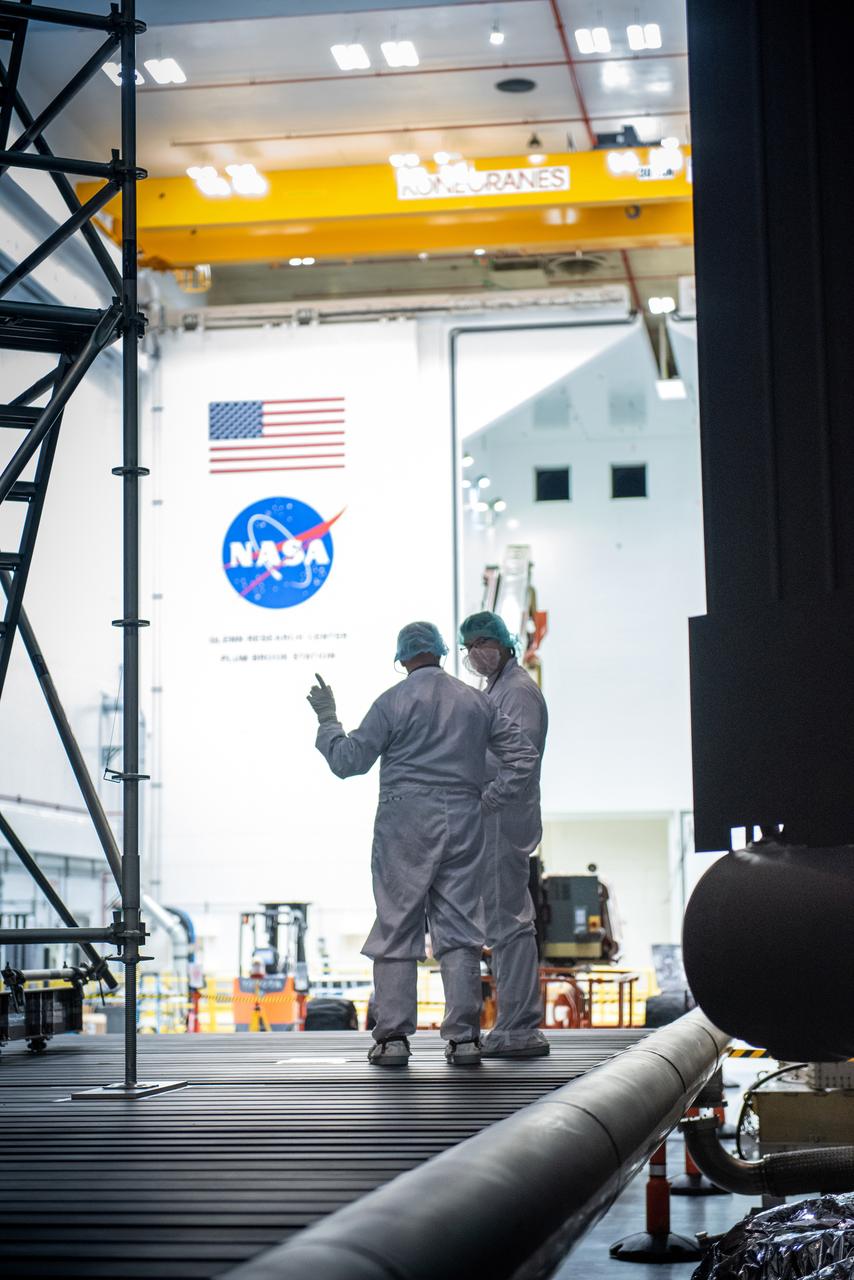
Glenn Research Center's Neil A. Armstrong Test Facility (formerly Plum Brook Station) in Ohio houses the world’s largest space simulation vacuum chamber where the Orion spacecraft, shown here on March 11, 2020, was rigorously tested for Artemis missions to the Moon.
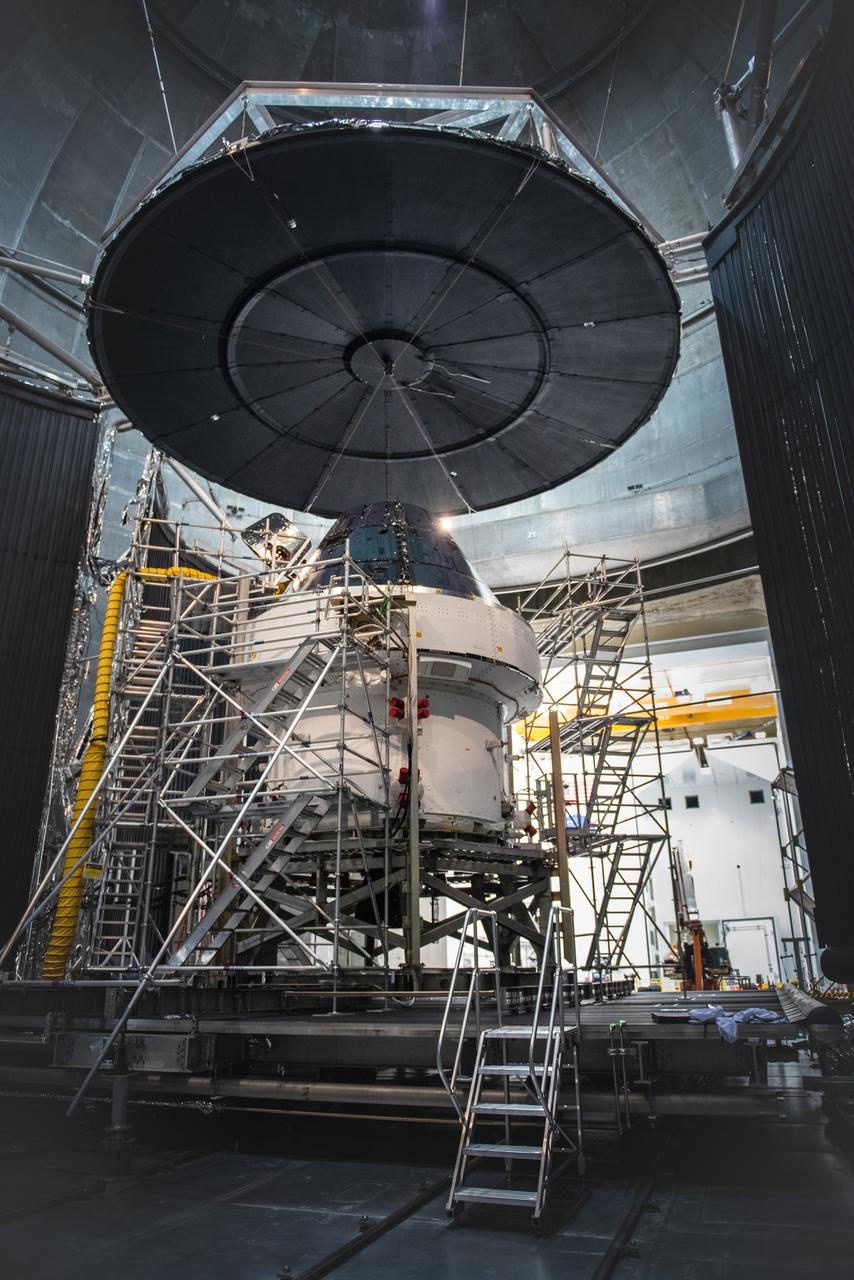
Glenn Research Center's Neil A. Armstrong Test Facility (formerly Plum Brook Station) in Ohio houses the world’s largest space simulation vacuum chamber where the Orion spacecraft, shown here on March 11, 2020, was rigorously tested for Artemis missions to the Moon.
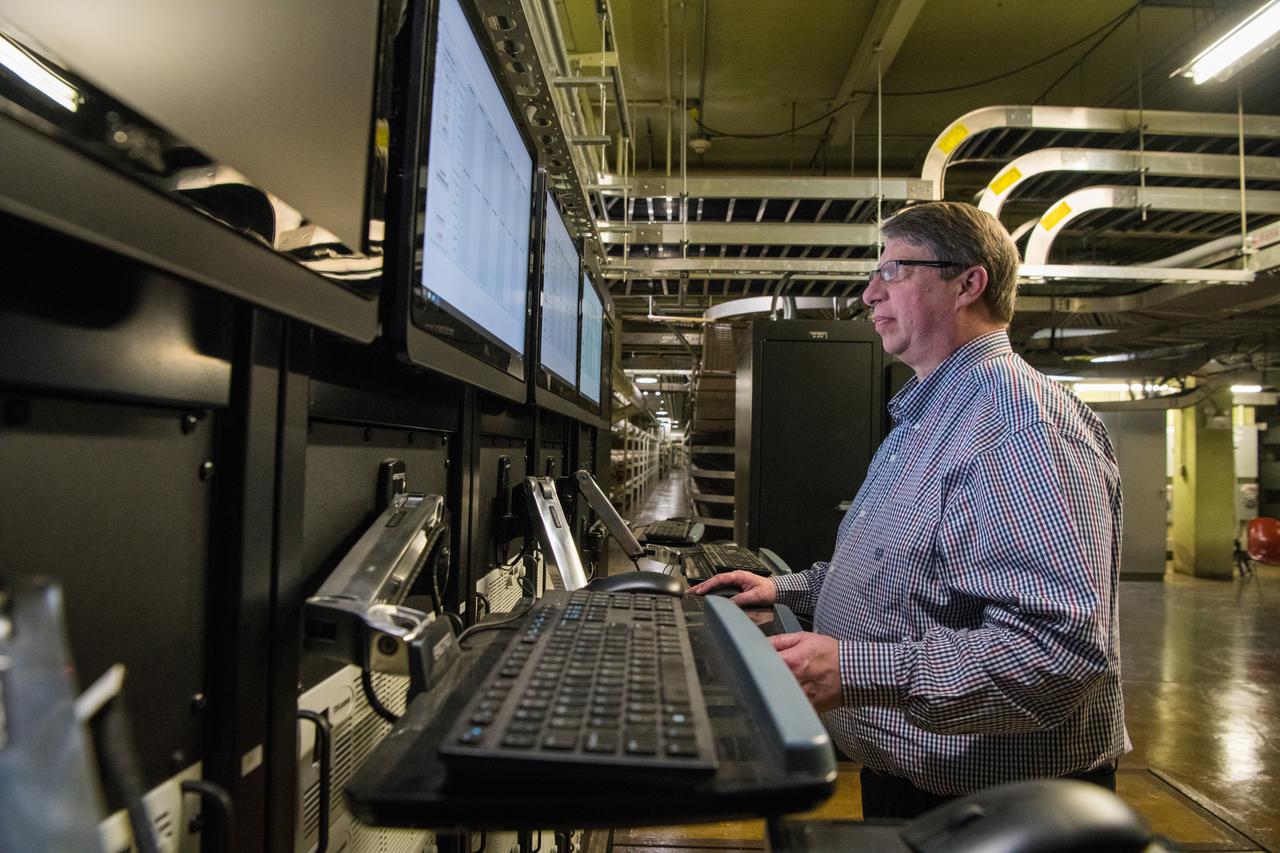
Glenn Research Center's Neil A. Armstrong Test Facility (formerly Plum Brook Station) in Ohio houses the world’s largest space simulation vacuum chamber where the Orion spacecraft, shown here on March 12, 2020, was rigorously tested for Artemis missions to the Moon.
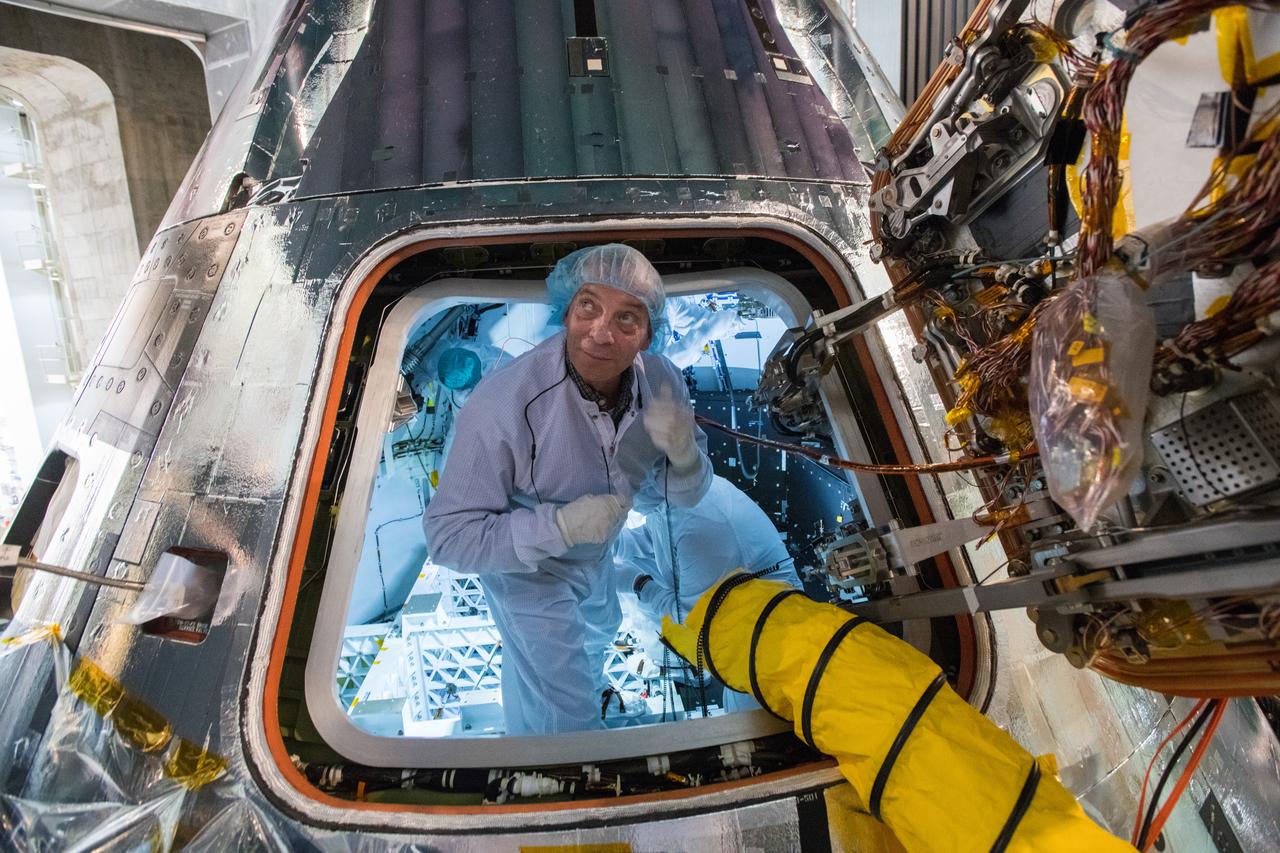
Glenn Research Center's Neil A. Armstrong Test Facility (formerly Plum Brook Station) in Ohio houses the world’s largest space simulation vacuum chamber where the Orion spacecraft, shown here on March 11, 2020, was rigorously tested for Artemis missions to the Moon.
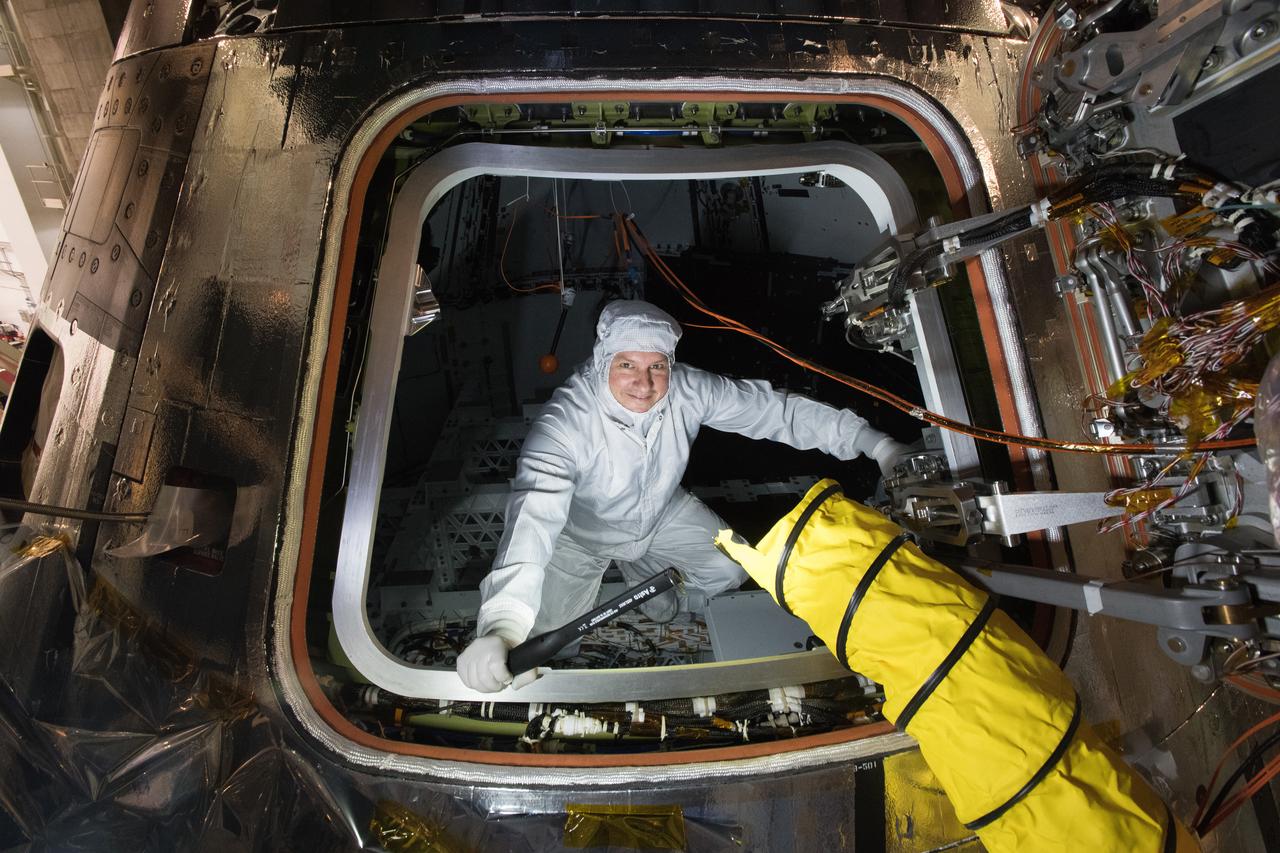
Glenn Research Center's Neil A. Armstrong Test Facility (formerly Plum Brook Station) in Ohio houses the world’s largest space simulation vacuum chamber where the Orion spacecraft, shown here on March 11, 2020, was rigorously tested for Artemis missions to the Moon.
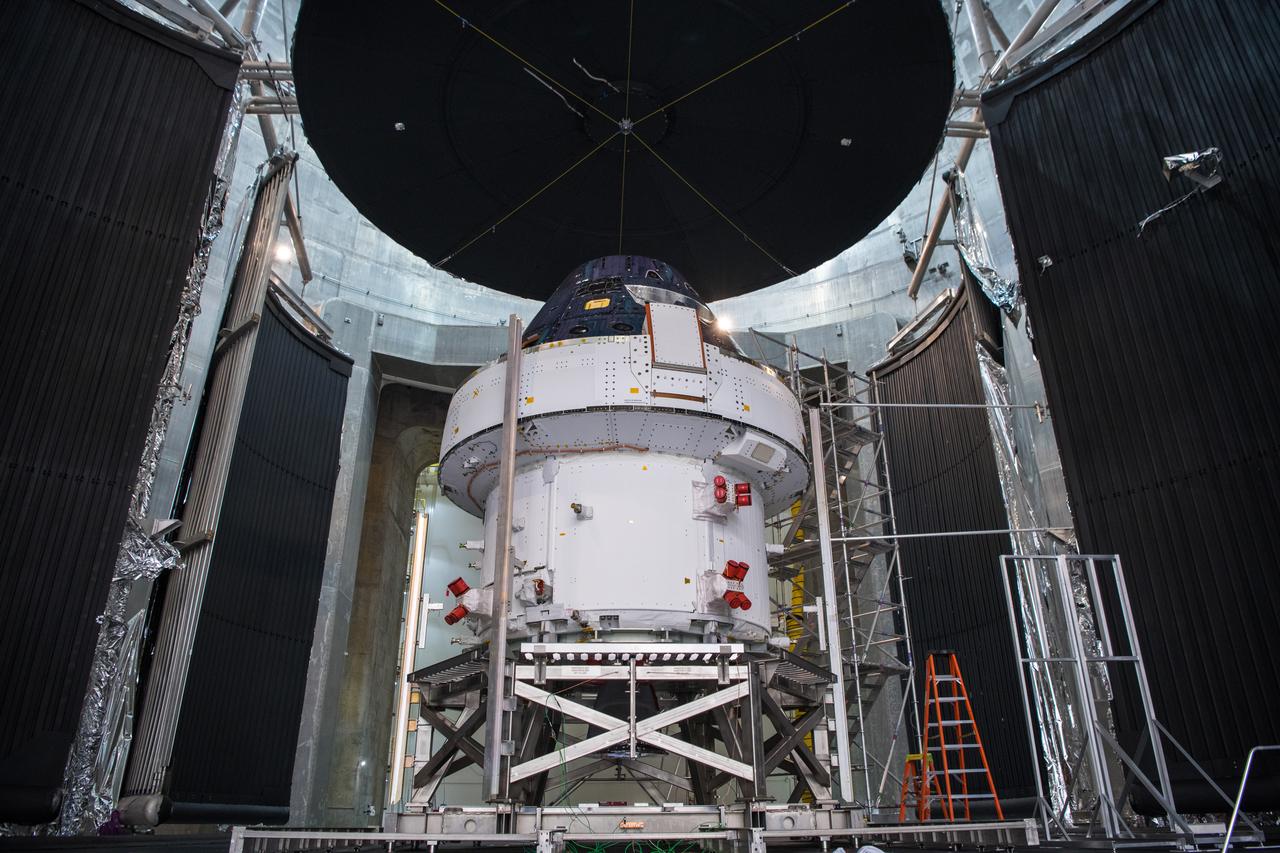
Glenn Research Center's Neil A. Armstrong Test Facility (formerly Plum Brook Station) in Ohio houses the world’s largest space simulation vacuum chamber where the Orion spacecraft, shown here on March 12, 2020, was rigorously tested for Artemis missions to the Moon.
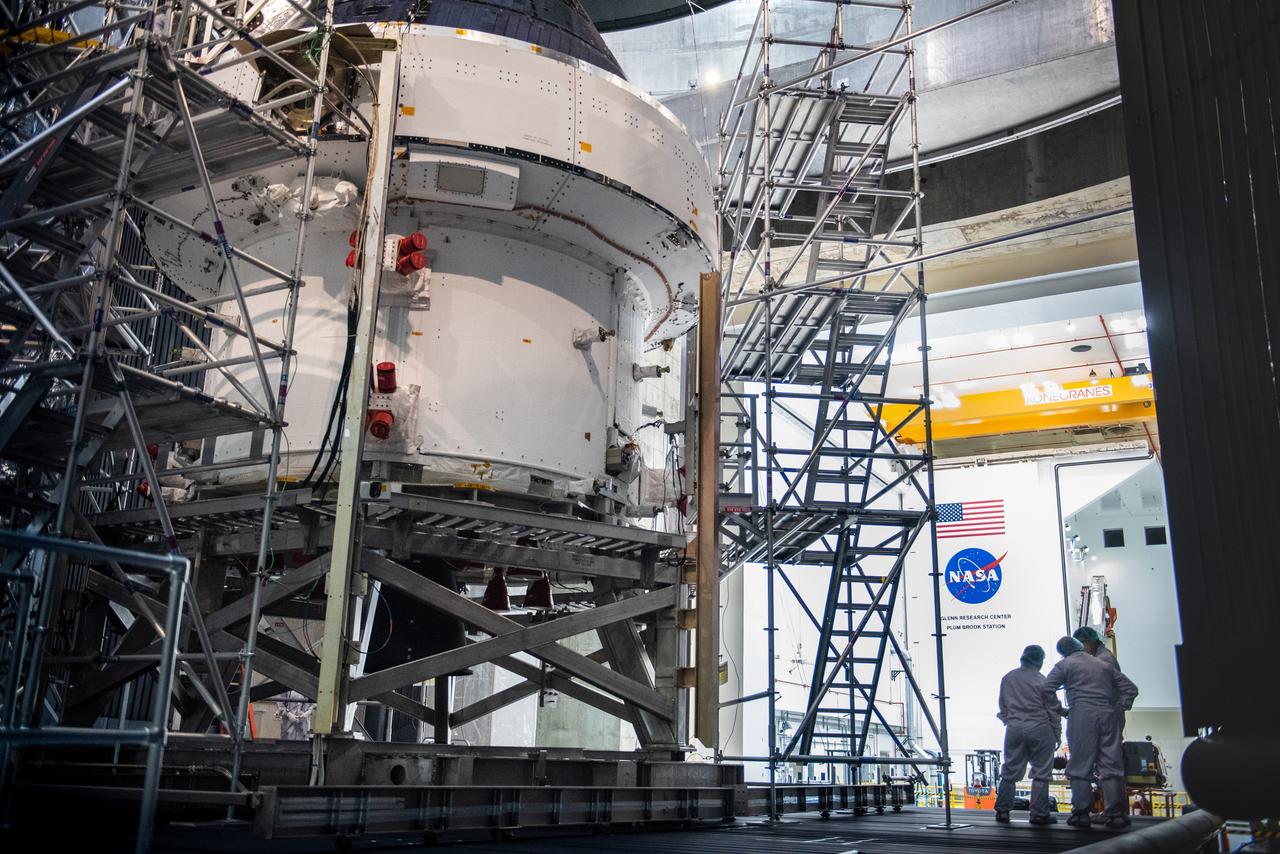
Glenn Research Center's Neil A. Armstrong Test Facility (formerly Plum Brook Station) in Ohio houses the world’s largest space simulation vacuum chamber where the Orion spacecraft, shown here on March 11, 2020, was rigorously tested for Artemis missions to the Moon.
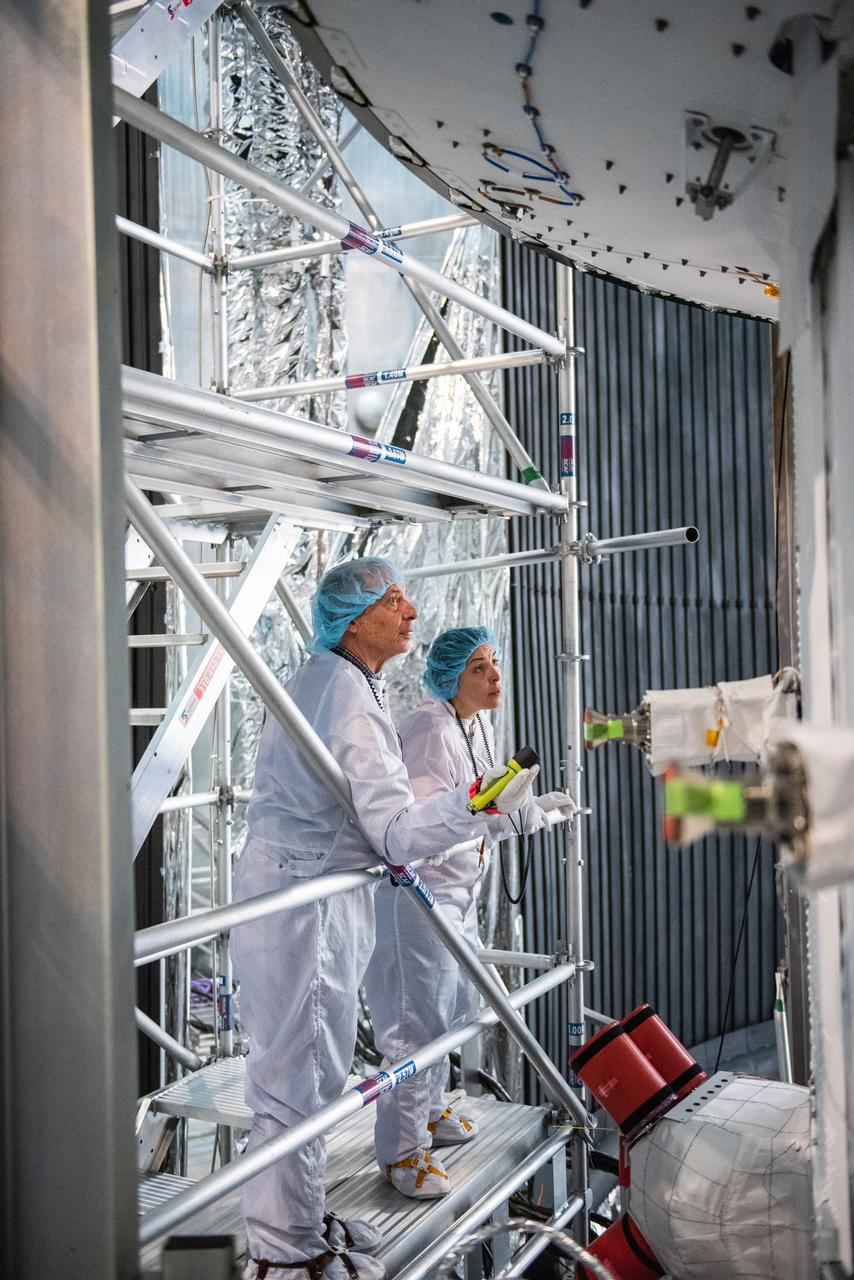
Glenn Research Center's Neil A. Armstrong Test Facility (formerly Plum Brook Station) in Ohio houses the world’s largest space simulation vacuum chamber where the Orion spacecraft, shown here on March 11, 2020, was rigorously tested for Artemis missions to the Moon.
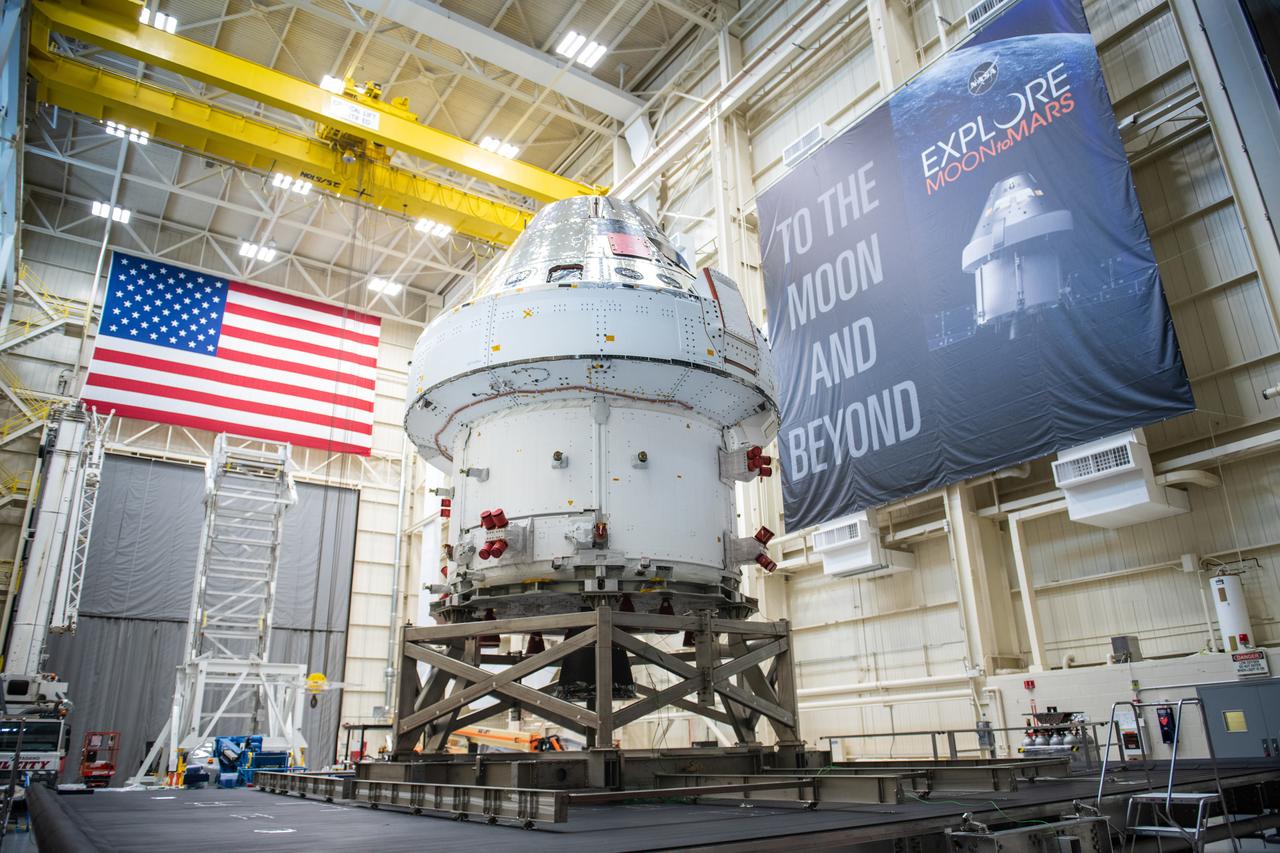
Glenn Research Center's Neil A. Armstrong Test Facility (formerly Plum Brook Station) in Ohio houses the world’s largest space simulation vacuum chamber where the Orion spacecraft, shown here on March 12, 2020, was rigorously tested for Artemis missions to the Moon.
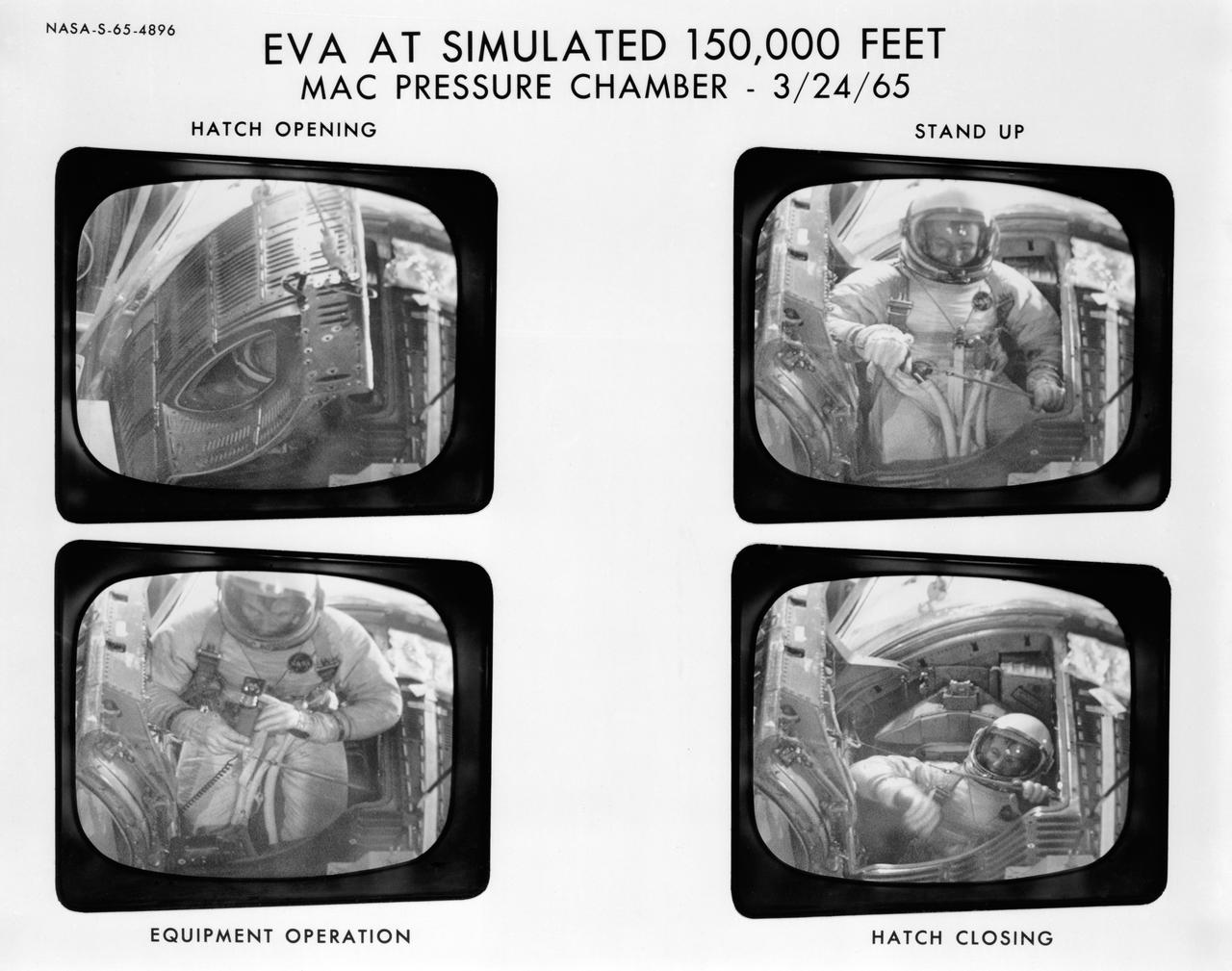
S65-04896 (24 March 1965) --- Astronaut Edward H. White II, pilot of the Gemini-Titan 4 prime crew, is shown in the pressure chamber at McDonnell Aircraft Corp, St. Louis, Mo. during the simulation of extravehicular activity (EVA) at an altitude of 150,000 feet.
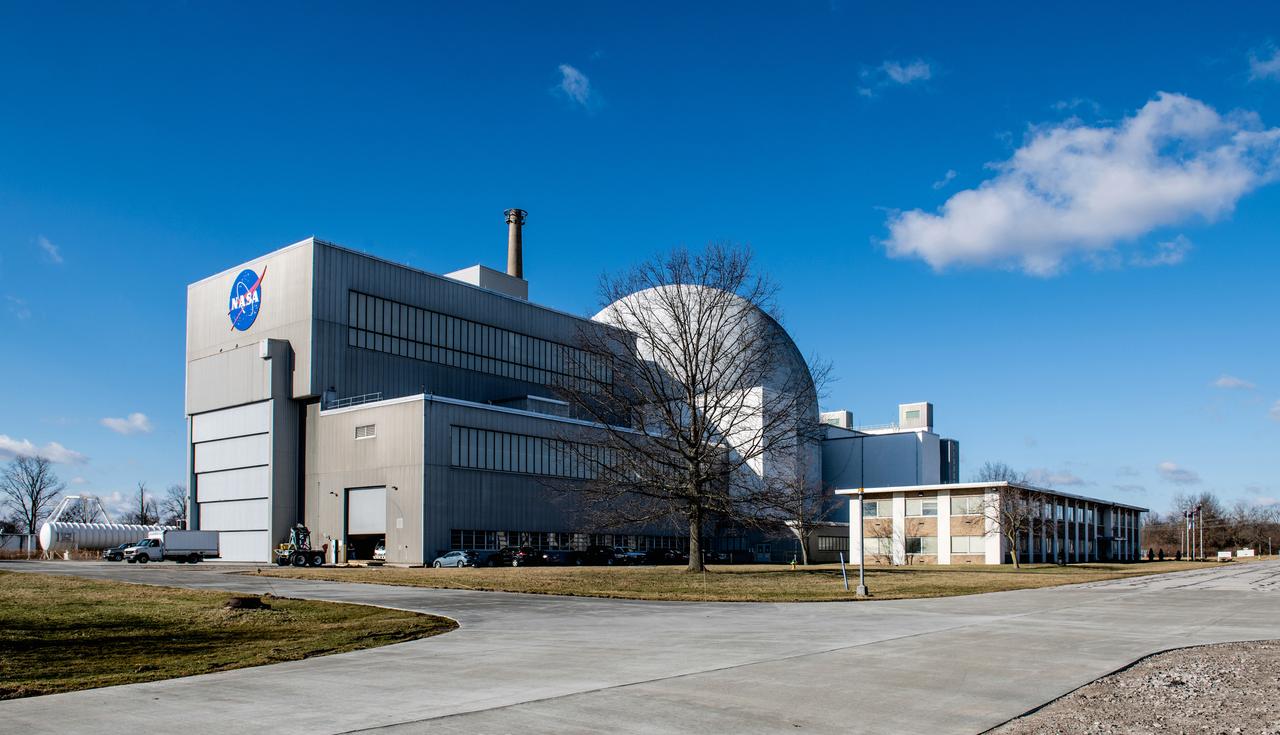
Glenn Research Center's Neil A. Armstrong Test Facility (formerly Plum Brook Station) in Ohio houses the world’s largest space simulation vacuum chamber where the Orion spacecraft, shown here on March 12, 2020, was rigorously tested for Artemis missions to the Moon.
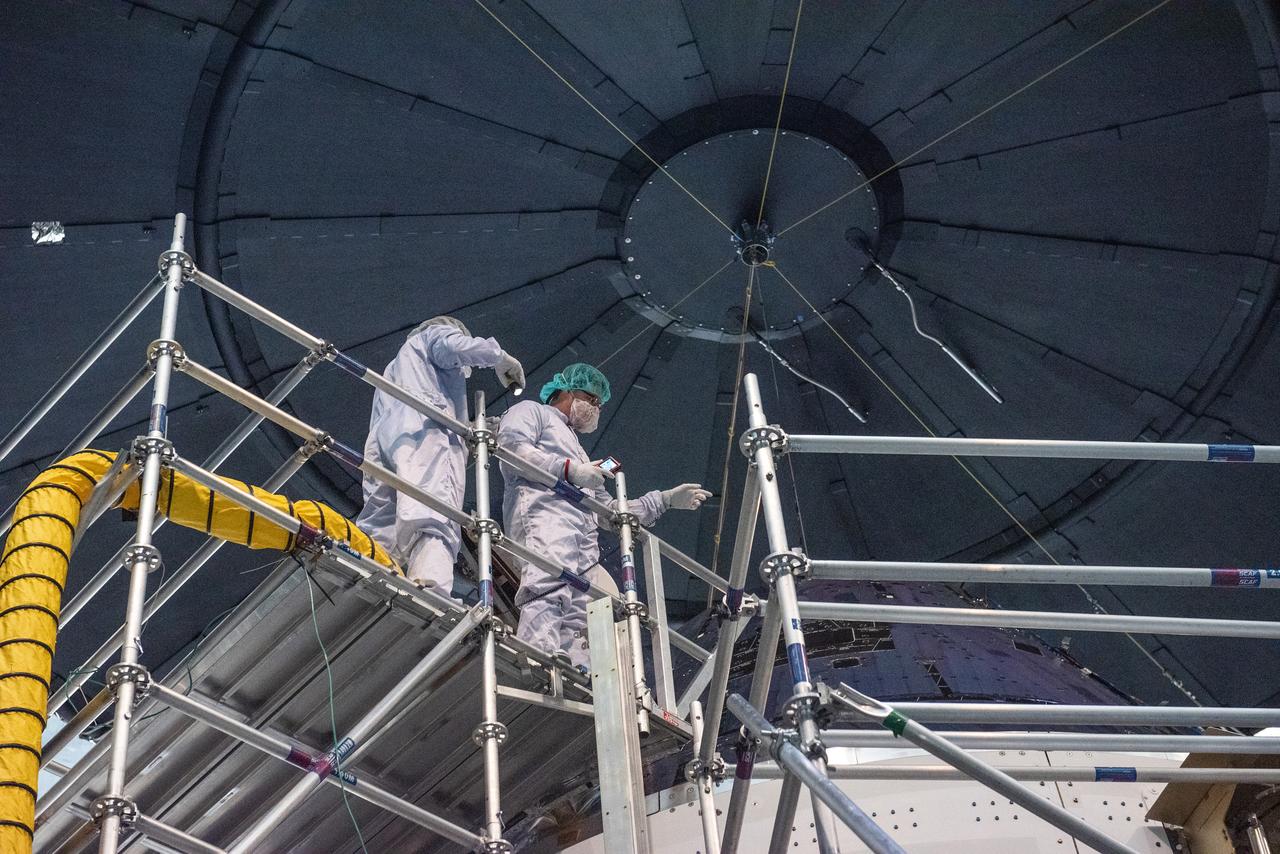
Glenn Research Center's Neil A. Armstrong Test Facility (formerly Plum Brook Station) in Ohio houses the world’s largest space simulation vacuum chamber where the Orion spacecraft, shown here on March 11, 2020, was rigorously tested for Artemis missions to the Moon.
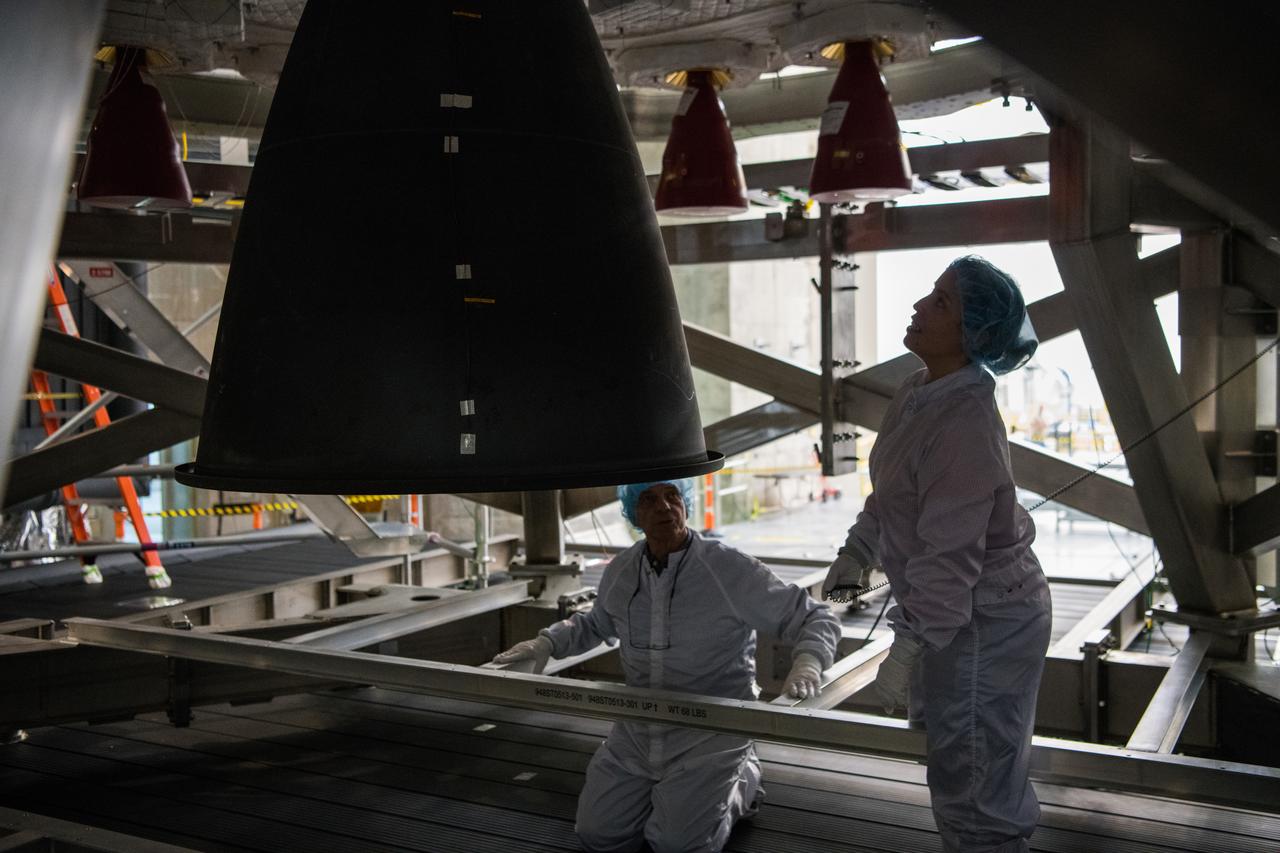
Glenn Research Center's Neil A. Armstrong Test Facility (formerly Plum Brook Station) in Ohio houses the world’s largest space simulation vacuum chamber where the Orion spacecraft, shown here on March 11, 2020, was rigorously tested for Artemis missions to the Moon.
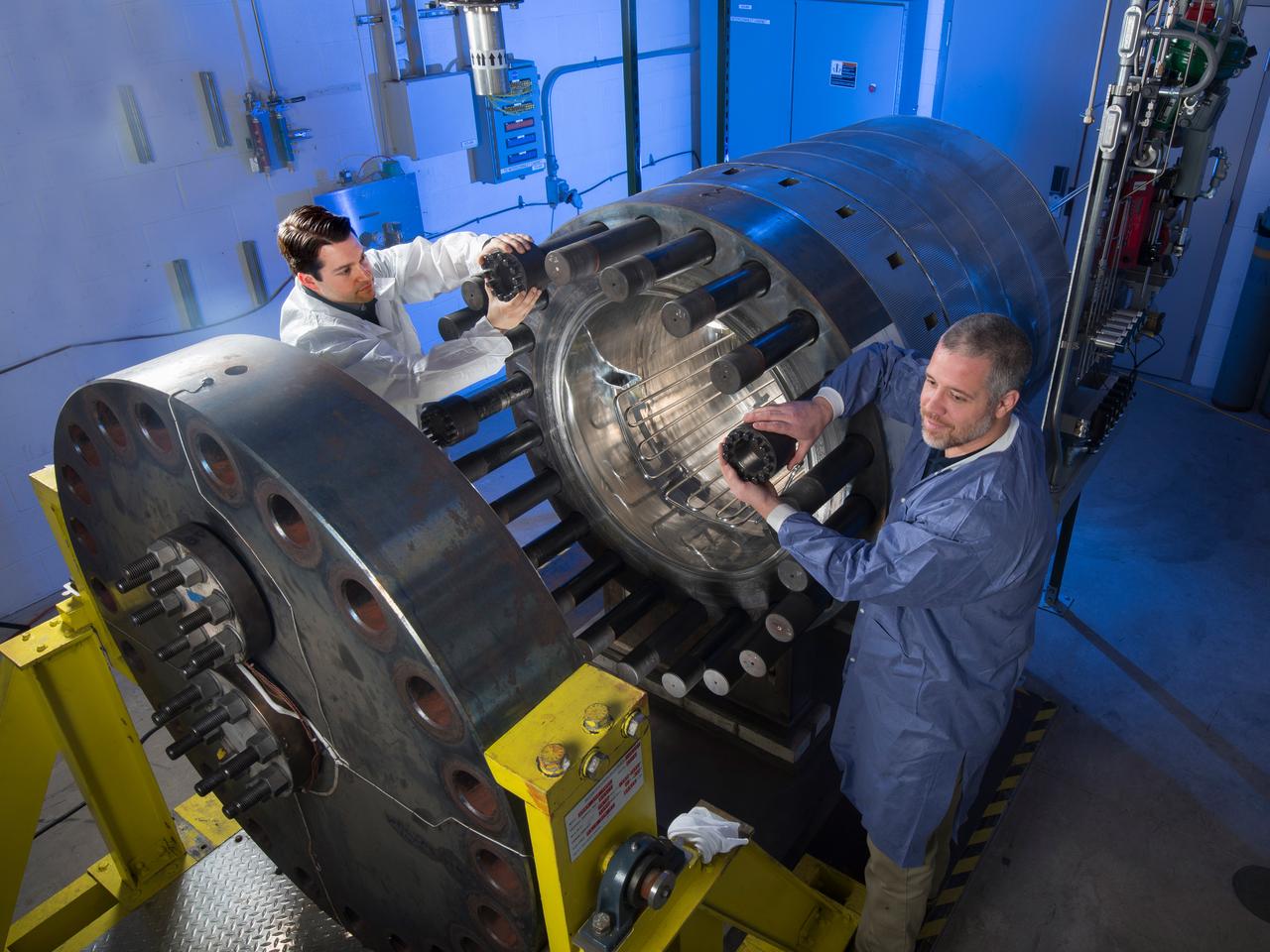
NASA Glenn research engineers prepare our extreme environments chamber (GEER) for a test. GEER, which simulates the extreme conditions found in space, tests many devices that will explore Venus to see if they can withstand the punishing environment and temperatures over 800˚F.
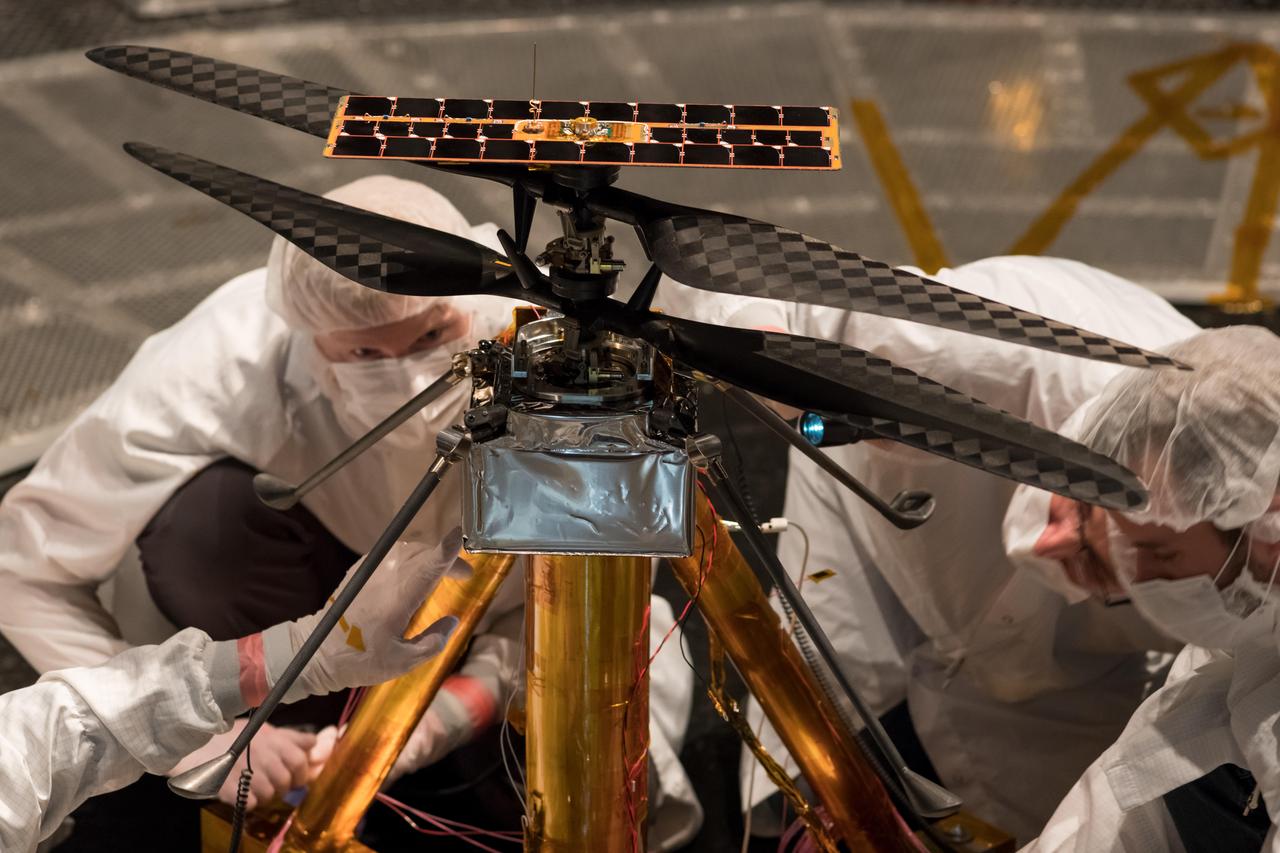
Members of the NASA Mars Helicopter team inspect the flight model (the actual vehicle going to the Red Planet), inside the Space Simulator, a 25-foot-wide (7.62-meter-wide) vacuum chamber at NASA's Jet Propulsion Laboratory in Pasadena, California, on Feb. 1, 2019. https://photojournal.jpl.nasa.gov/catalog/PIA23155
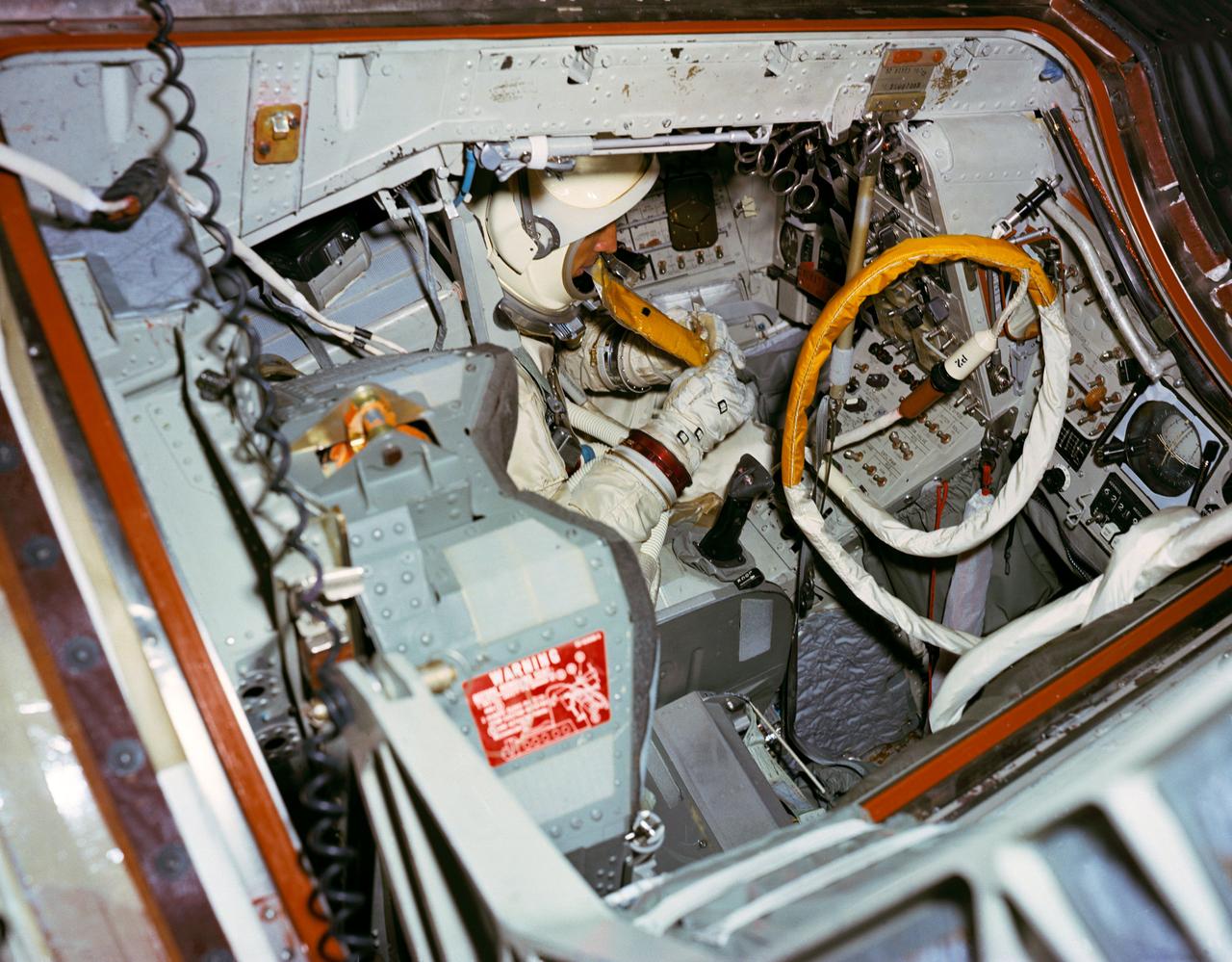
S66-51054 (15 Aug. 1966) --- Astronaut James A. Lovell Jr., prime crew command pilot of the Gemini-12 space mission, simulates using space food packet while seated in the Gemini-12 spacecraft in the 30-feet Altitude Chamber at McDonnell Aircraft Corporation, St. Louis, Missouri. Photo credit: NASA
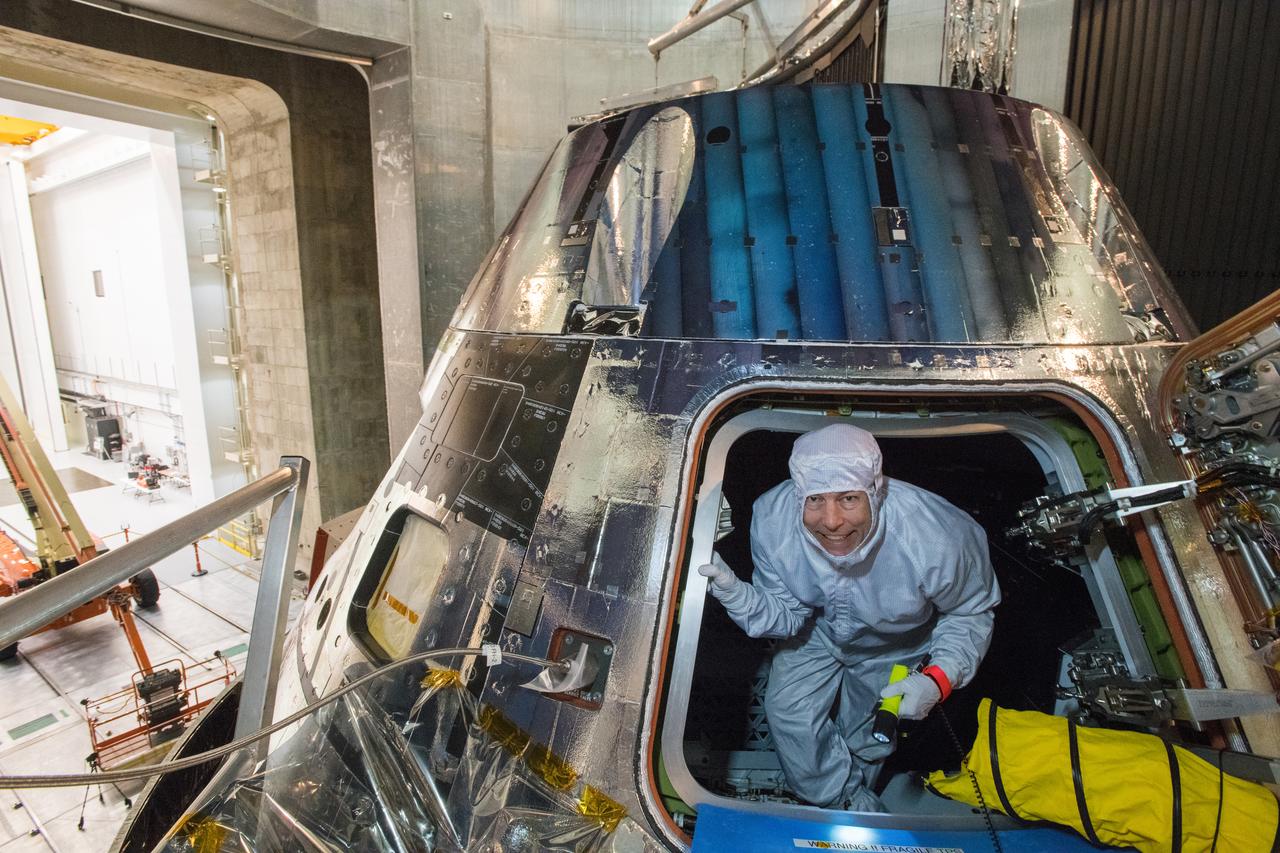
Glenn Research Center's Neil A. Armstrong Test Facility (formerly Plum Brook Station) in Ohio houses the world’s largest space simulation vacuum chamber where the Orion spacecraft, shown here on March 12, 2020, was rigorously tested for Artemis missions to the Moon.
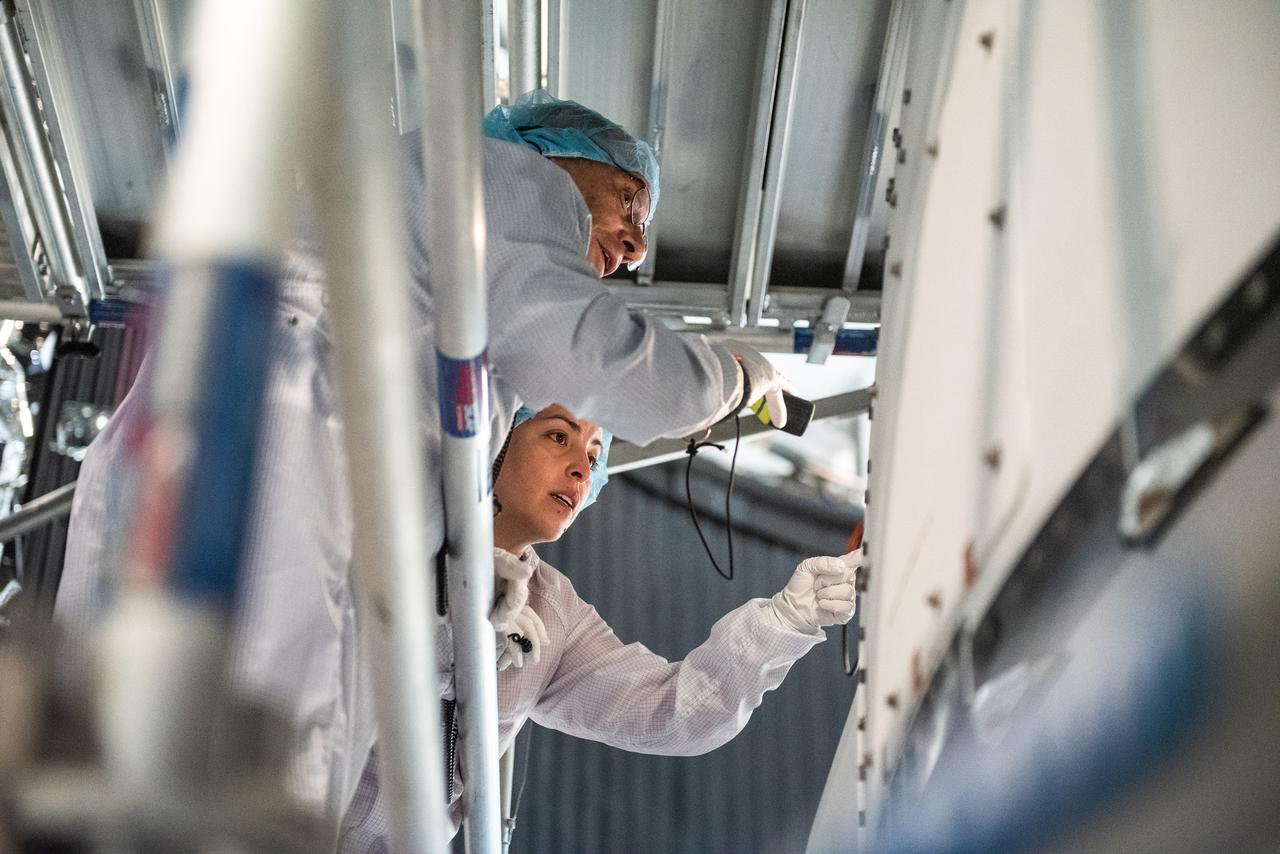
Glenn Research Center's Neil A. Armstrong Test Facility (formerly Plum Brook Station) in Ohio houses the world’s largest space simulation vacuum chamber where the Orion spacecraft, shown here on March 11, 2020, was rigorously tested for Artemis missions to the Moon.
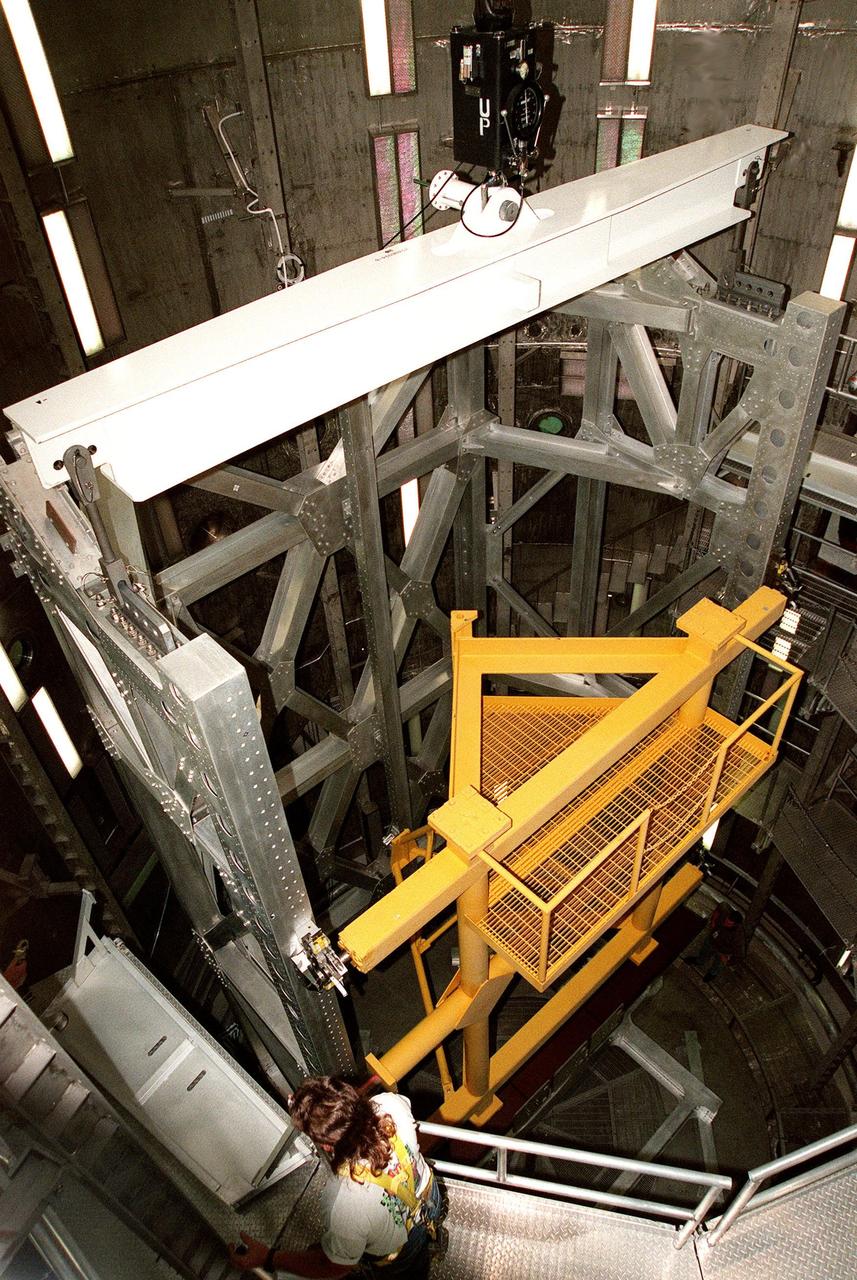
KENNEDY SPACE CENTER, FLA. -- In the Operations and Checkout Building's high bay, the Rotation Handling Fixture (RHF), with a simulated module attached, is viewed from above the altitude chamber into which it was lowered during a test. Under normal operation, the RHF will hold a pressurized module intended for the International Space Station, depositing it into the altitude chamber for leak testing. The chamber was recently reactivated after a 20-year hiatus. Originally, two chambers were built to test Apollo Program flight hardware. They were last used in 1975 during the Apollo-Soyuz Test Project. In 1997, in order to increase the probability of successful missions aboard the ISS, NASA decided to perform leak tests on ISS pressurized modules at the launch site. After installation of new vacuum pumping equipment and controls, a new control room, and a new rotation and handling fixture, the chamber again became operational in February 1999. The chamber, which is 33 feet in diameter and 50 feet tall, is constructed of stainless steel. The rotation handling fixture is aluminum. The first module that will be tested for leaks is the U.S. Laboratory. No date has been determined for the test
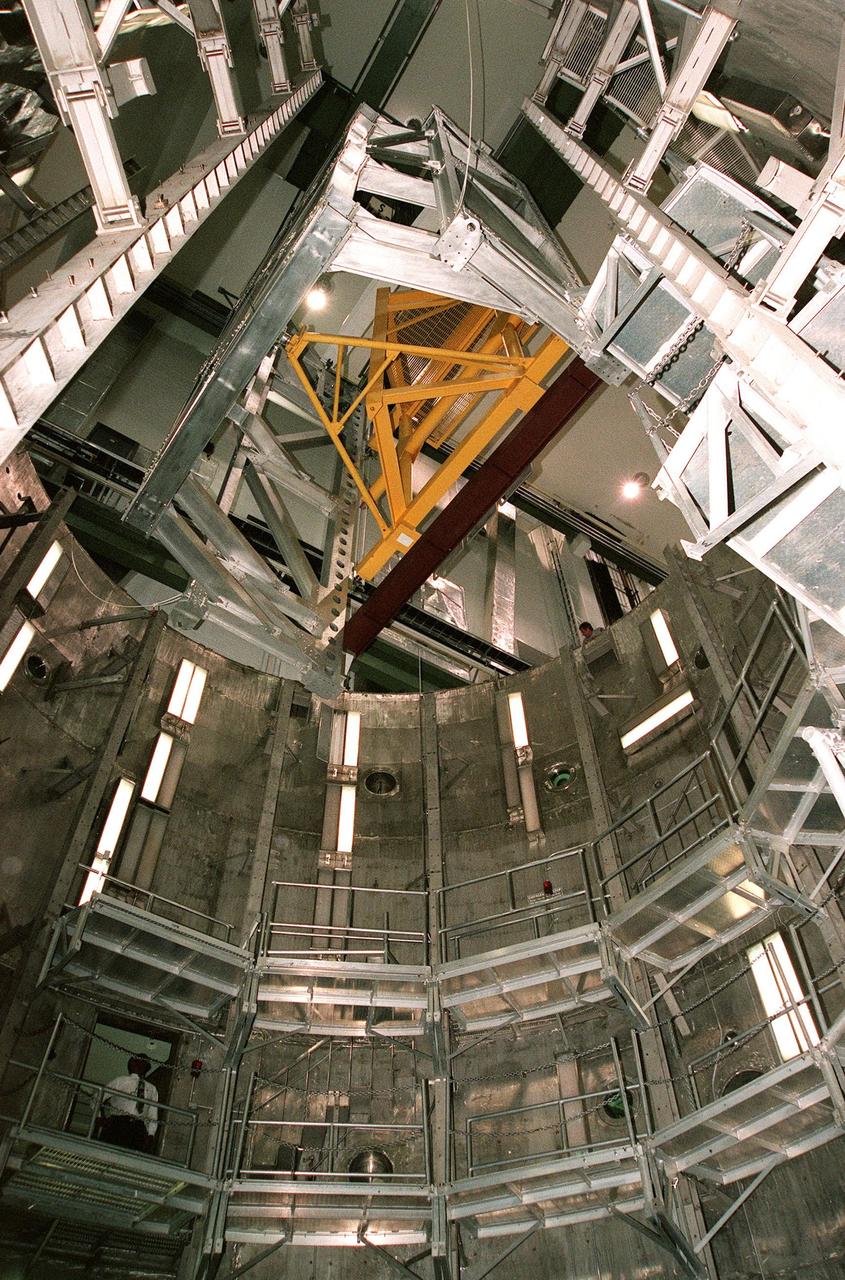
KENNEDY SPACE CENTER, FLA. -- Viewed from inside the altitude chamber in the Operations and Checkout Building's high bay, the Rotation Handling Fixture (RHF), with a simulated module attached, is lowered during a test. Under normal operation, the RHF will hold a pressurized module intended for the International Space Station, depositing it into the altitude chamber for leak testing. The chamber was recently reactivated after a 24-year hiatus. Originally, two chambers were built to test Apollo Program flight hardware. They were last used in 1975 during the Apollo-Soyuz Test Project. In 1997, in order to increase the probability of successful missions aboard the ISS, NASA decided to perform leak tests on ISS pressurized modules at the launch site. After installation of new vacuum pumping equipment and controls, a new control room, and a new rotation and handling fixture, the chamber again became operational in February 1999. The chamber, which is 33 feet in diameter and 50 feet tall, is constructed of stainless steel. The rotation handling fixture is aluminum. The first module that will be tested for leaks is the U.S. Laboratory. No date has been determined for the test