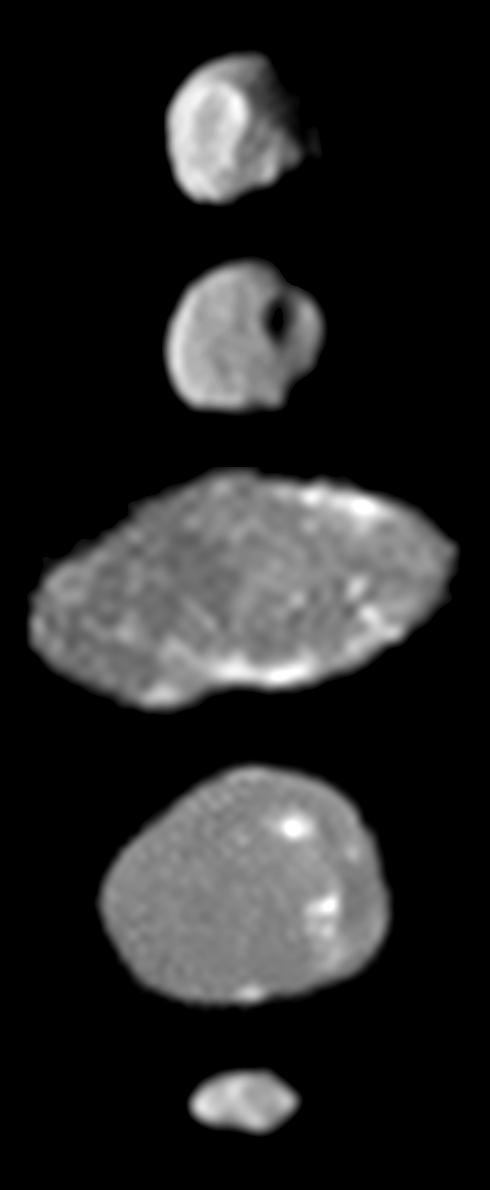
Jupiter Small Satellite Montage
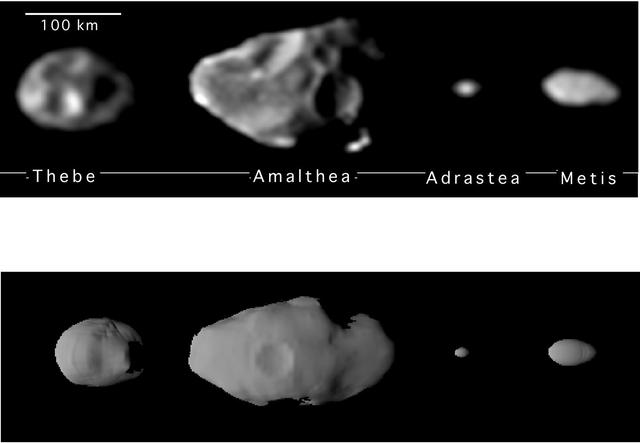
Shapes of the Small Inner Satellites of Jupiter
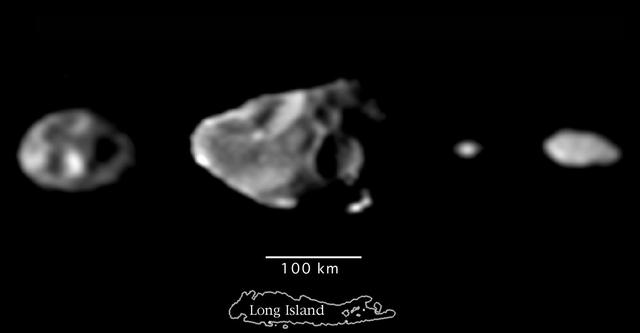
Scale Comparison of the Inner Small Satellites of Jupiter
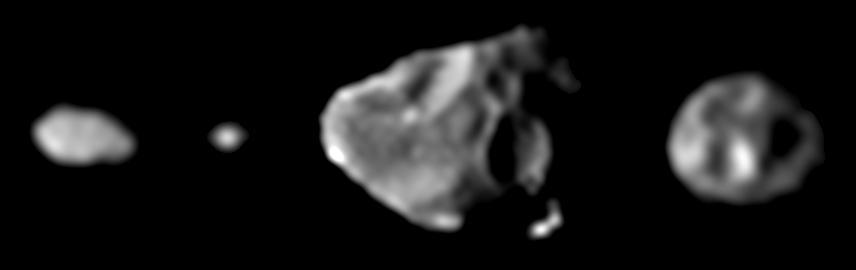
Family Portrait of the Small Inner Satellites of Jupiter
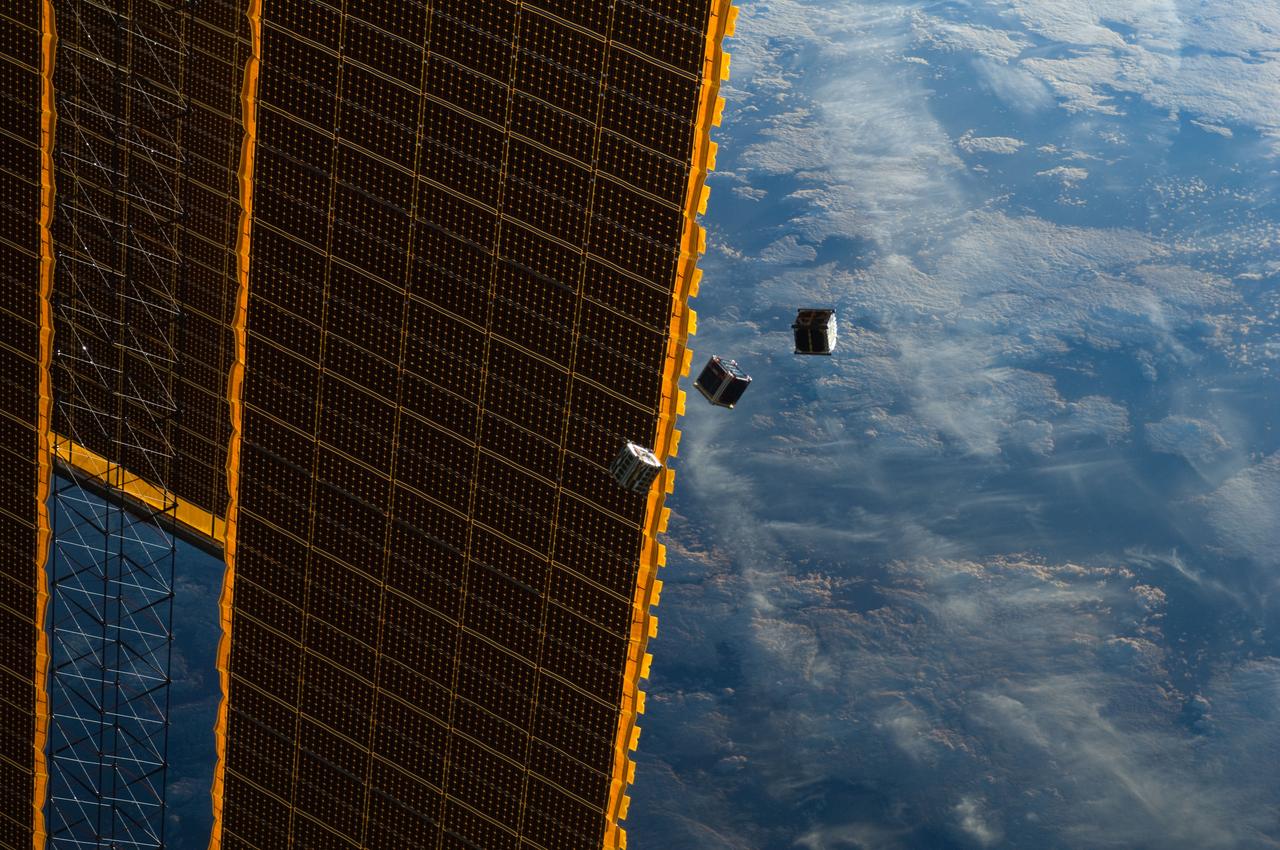
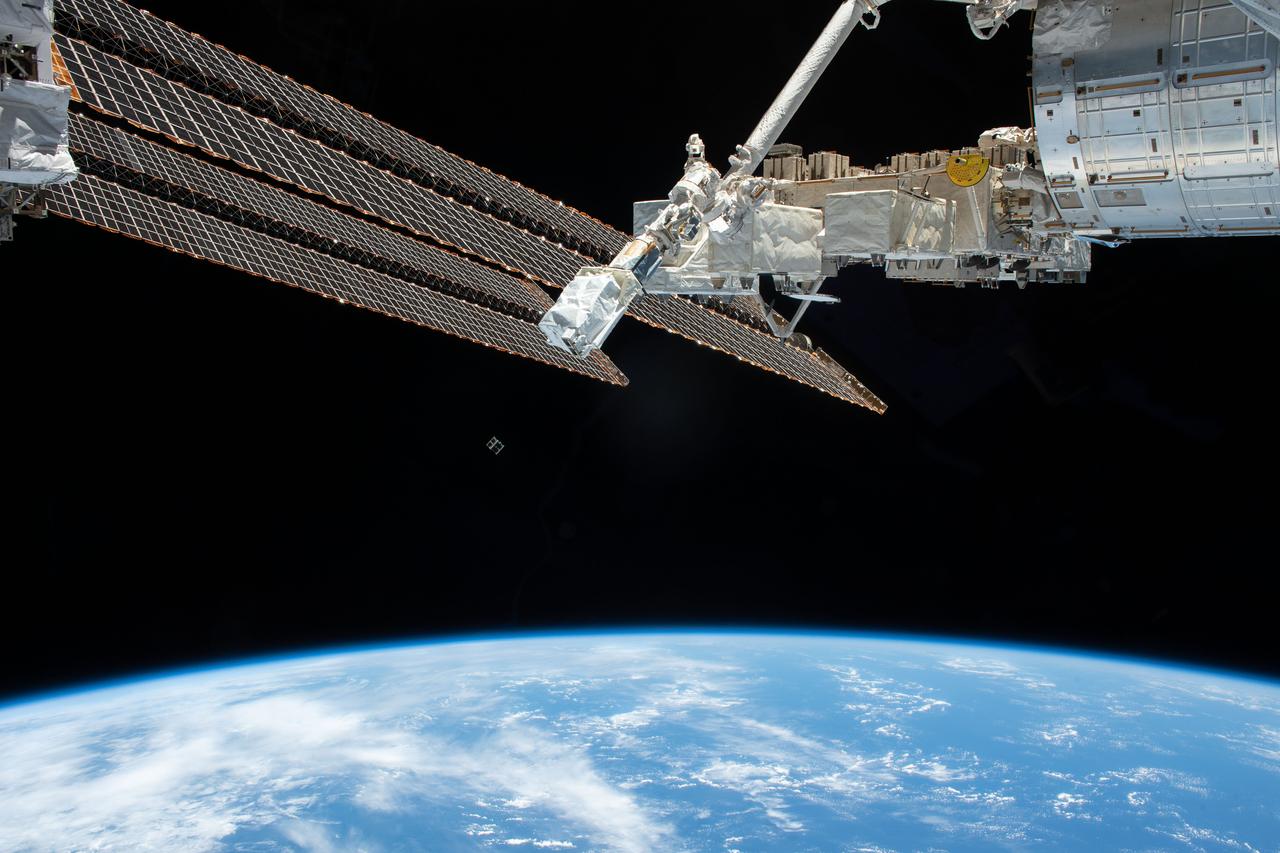
ISS033-E-009285 (4 Oct. 2012) --- Several tiny satellites are featured in this image photographed by an Expedition 33 crew member on the International Space Station. The satellites were released outside the Kibo laboratory using a Small Satellite Orbital Deployer attached to the Japanese module’s robotic arm on Oct. 4, 2012. Japan Aerospace Exploration Agency astronaut Aki Hoshide, flight engineer, set up the satellite deployment gear inside the lab and placed it in the Kibo airlock. The Japanese robotic arm then grappled the deployment system and its satellites from the airlock for deployment. A portion of the station’s solar array panels and a blue and white part of Earth provide the backdrop for the scene.
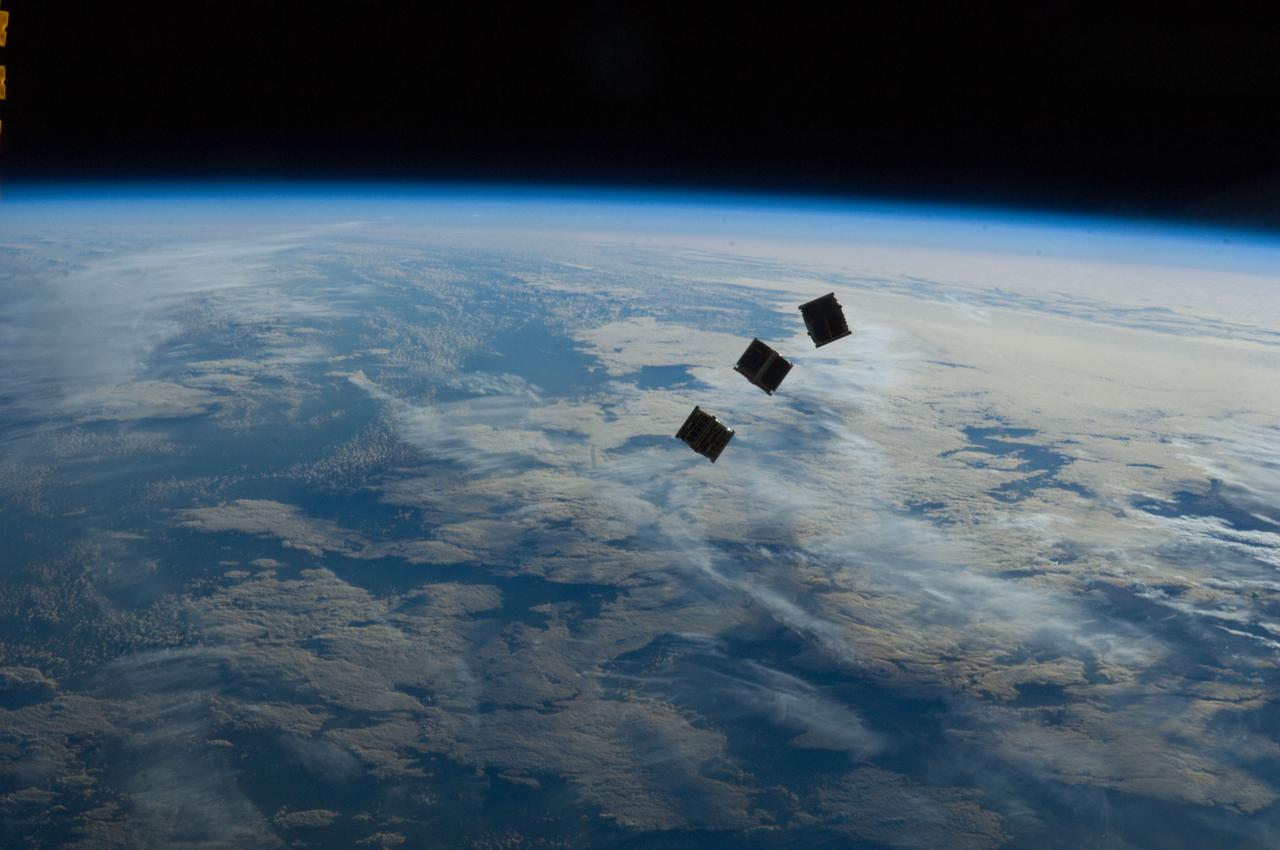
ISS033-E-009282 (4 Oct. 2012) --- Several tiny satellites are featured in this image photographed by an Expedition 33 crew member on the International Space Station. The satellites were released outside the Kibo laboratory using a Small Satellite Orbital Deployer attached to the Japanese module’s robotic arm on Oct. 4, 2012. Japan Aerospace Exploration Agency astronaut Aki Hoshide, flight engineer, set up the satellite deployment gear inside the lab and placed it in the Kibo airlock. The Japanese robotic arm then grappled the deployment system and its satellites from the airlock for deployment. Earth’s horizon and the blackness of space provide the backdrop for the scene.
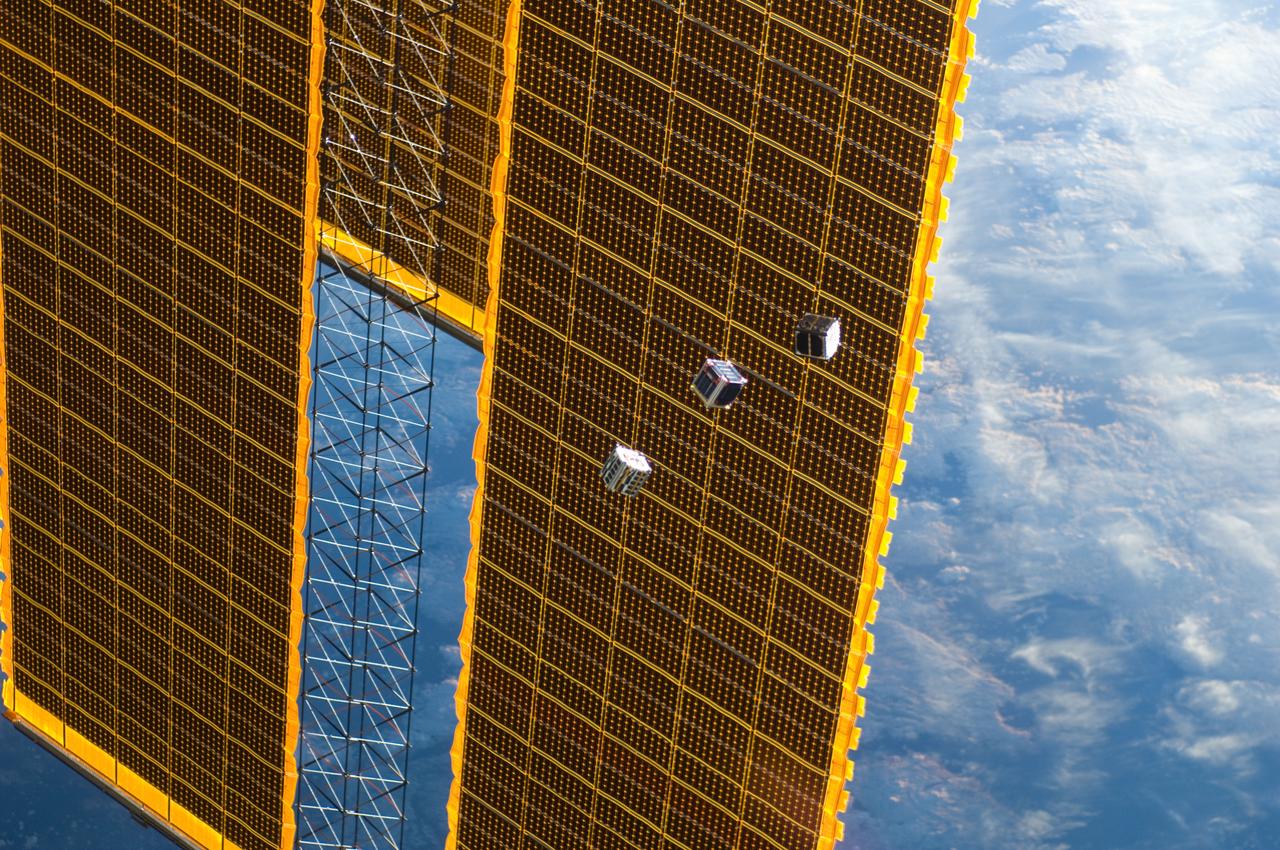
ISS033-E-009286 (4 Oct. 2012) --- Several tiny satellites are featured in this image photographed by an Expedition 33 crew member on the International Space Station. The satellites were released outside the Kibo laboratory using a Small Satellite Orbital Deployer attached to the Japanese module’s robotic arm on Oct. 4, 2012. Japan Aerospace Exploration Agency astronaut Aki Hoshide, flight engineer, set up the satellite deployment gear inside the lab and placed it in the Kibo airlock. The Japanese robotic arm then grappled the deployment system and its satellites from the airlock for deployment. A portion of the station’s solar array panels and a blue and white part of Earth provide the backdrop for the scene.
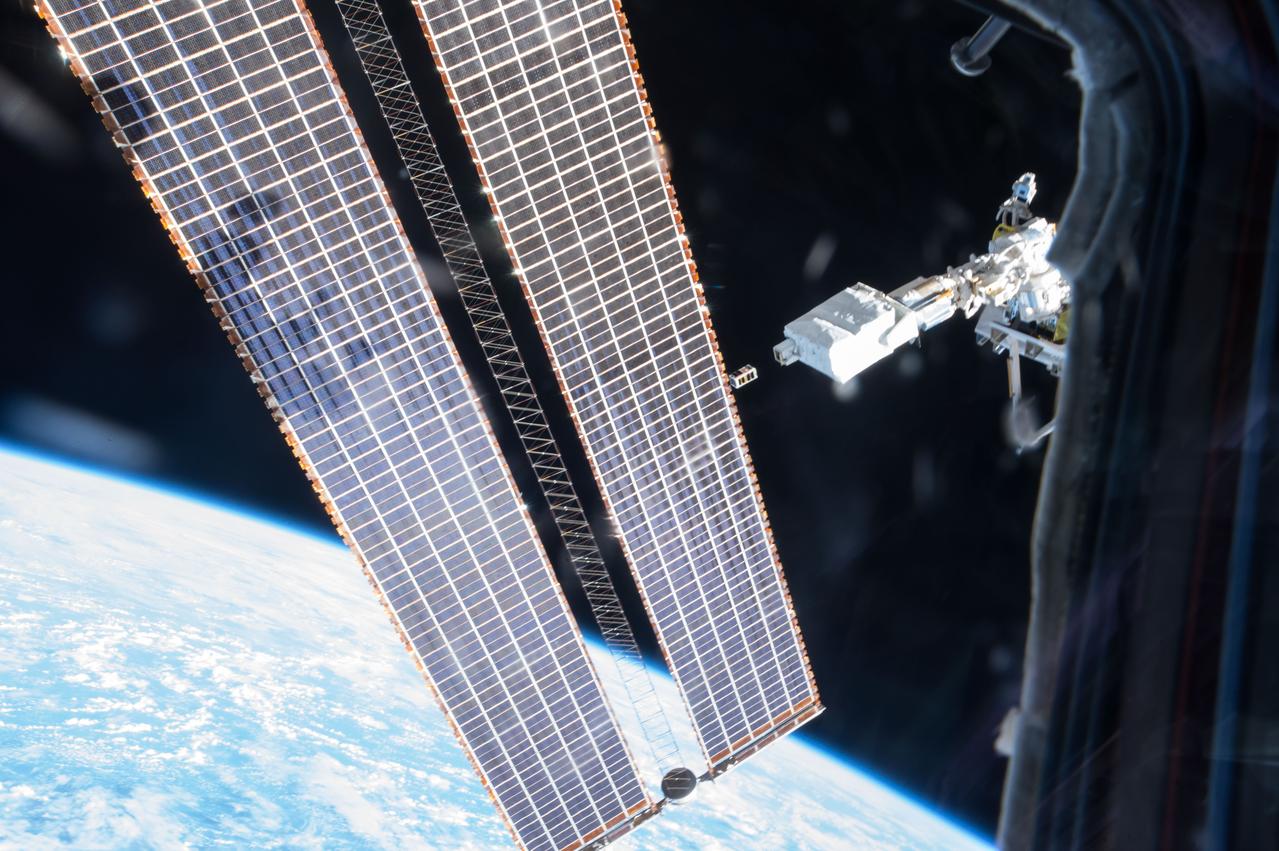
iss050e017076 (12/19/2016) --- A view after Japanese Experiment Module Remote Manipulator System (JEMRMS) Small Satellite Deployment called Space Tethered Autonomous Robotic satellite (STARS-C).
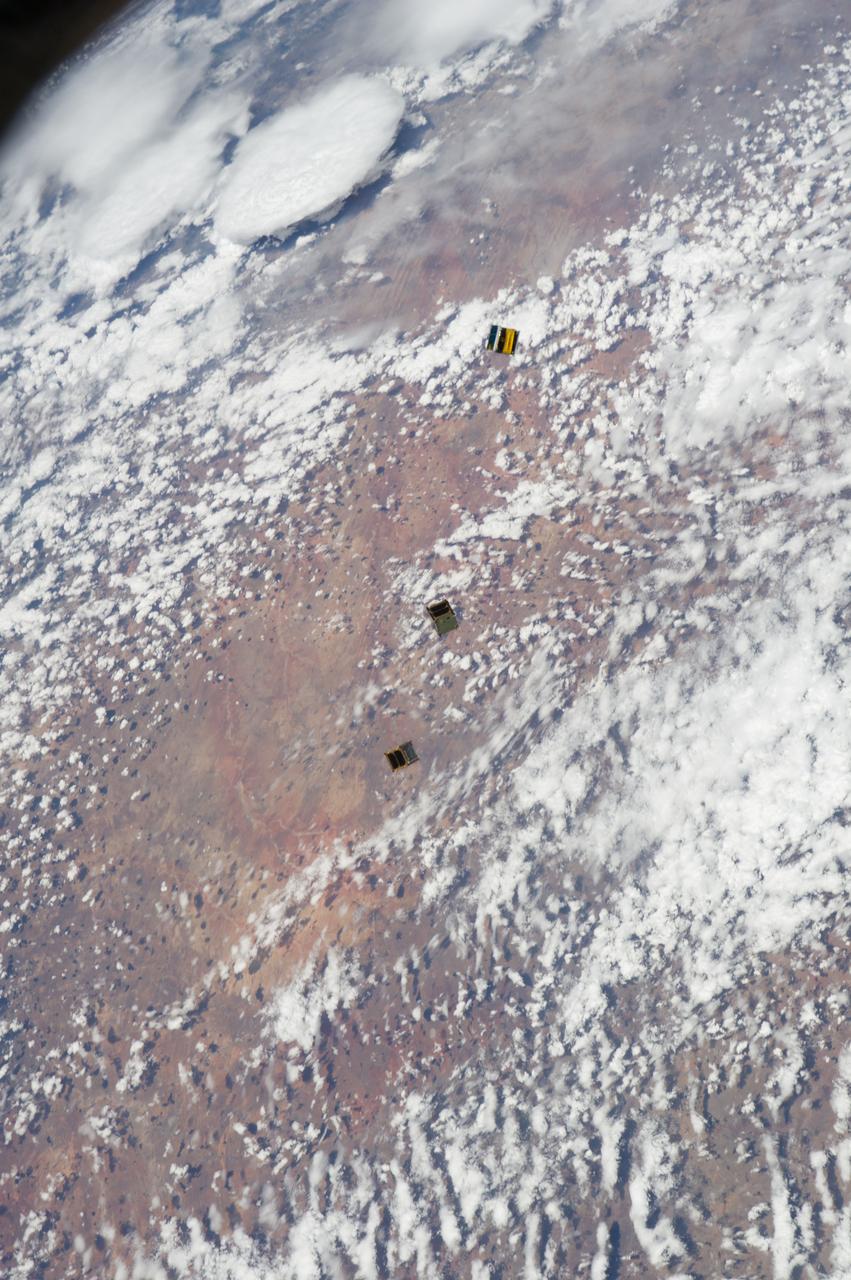
ISS038-E-003876 (19 Nov. 2013) --- Three nanosatellites, known as Cubesats, are featured in this image photographed by an Expedition 38 crew member on the International Space Station. The satellites were released outside the Kibo laboratory using a Small Satellite Orbital Deployer attached to the Japanese module's robotic arm on Nov. 19, 2013. Japan Aerospace Exploration Agency astronaut Koichi Wakata, flight engineer, monitored the satellite deployment while operating the Japanese robotic arm from inside Kibo. The Cubesats were delivered to the International Space Station Aug. 9, aboard Japan’s fourth H-II Transfer Vehicle, Kounotori-4.
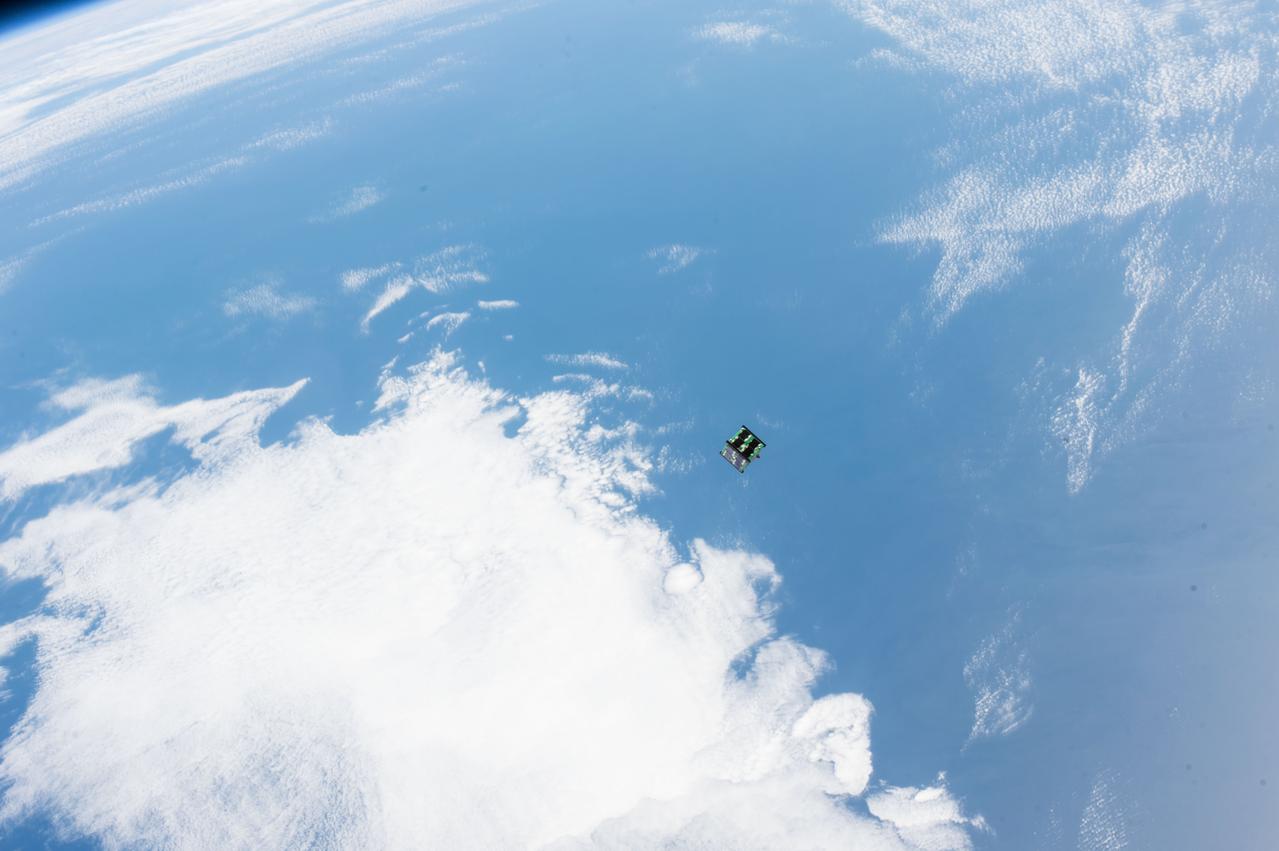
iss042e222241 (2/5/2015) --- Photographic documentation of the JEM Small Satellite Orbital Deployer-3 (J-SSOD-3) mission deploy of the CubeSat AESP-14 from Kibo. The satellite was developed by the Technological Institute of Aeronautics (ITA), with support from the Brazilian Space Agency (AEB), and the National Institute for Space Research (INPE).
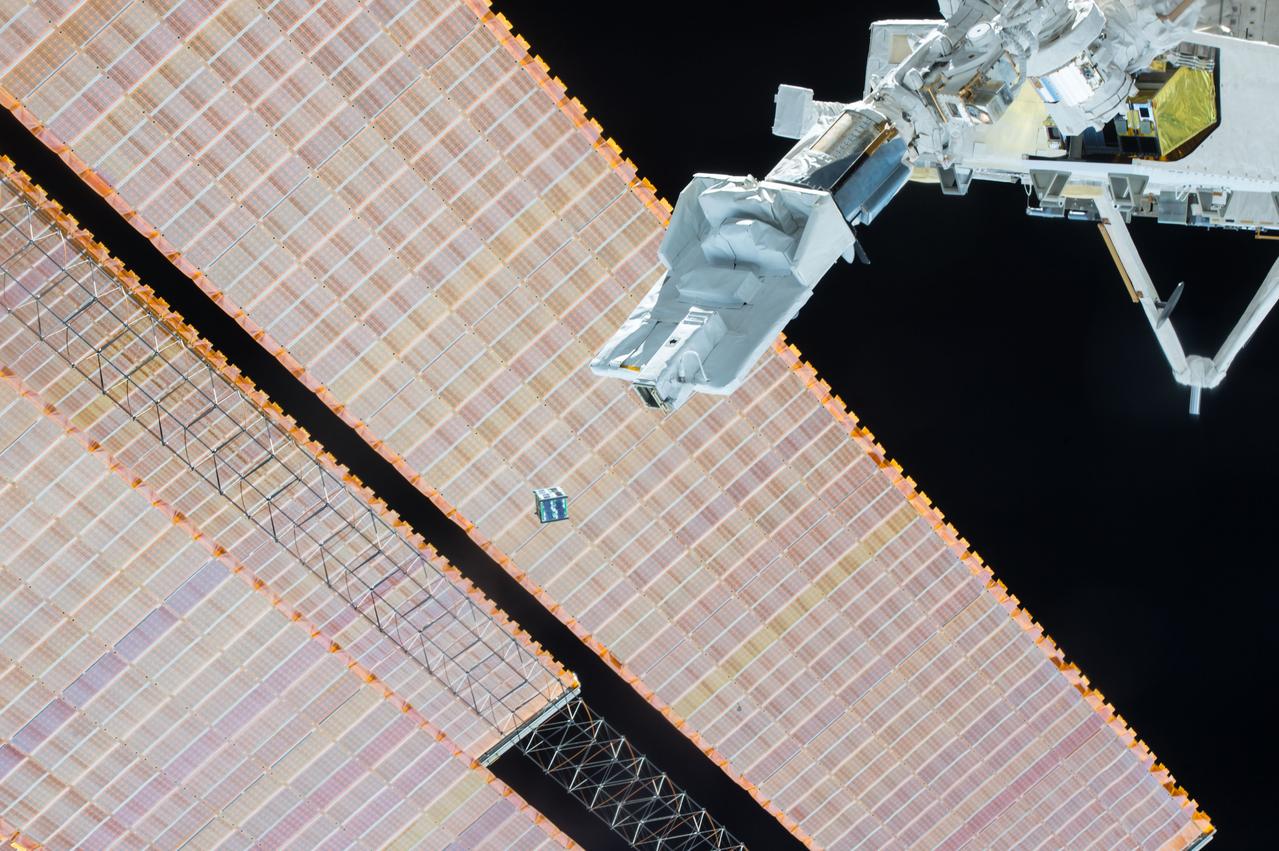
iss042e222236 (2/5/2015) --- Photographic documentation of the JEM Small Satellite Orbital Deployer-3 (J-SSOD-3) mission deploy of the CubeSat AESP-14 from Kibo. The satellite was developed by the Technological Institute of Aeronautics (ITA), with support from the Brazilian Space Agency (AEB), and the National Institute for Space Research (INPE).

ISS038-E-003872 (19 Nov. 2013) --- Three nanosatellites, known as Cubesats, are deployed from a Small Satellite Orbital Deployer (SSOD) attached to the Kibo laboratory’s robotic arm at 7:10 a.m. (EST) on Nov. 19, 2013. Japan Aerospace Exploration Agency astronaut Koichi Wakata, Expedition 38 flight engineer, monitored the satellite deployment while operating the Japanese robotic arm from inside Kibo. The Cubesats were delivered to the International Space Station Aug. 9, aboard Japan’s fourth H-II Transfer Vehicle, Kounotori-4.
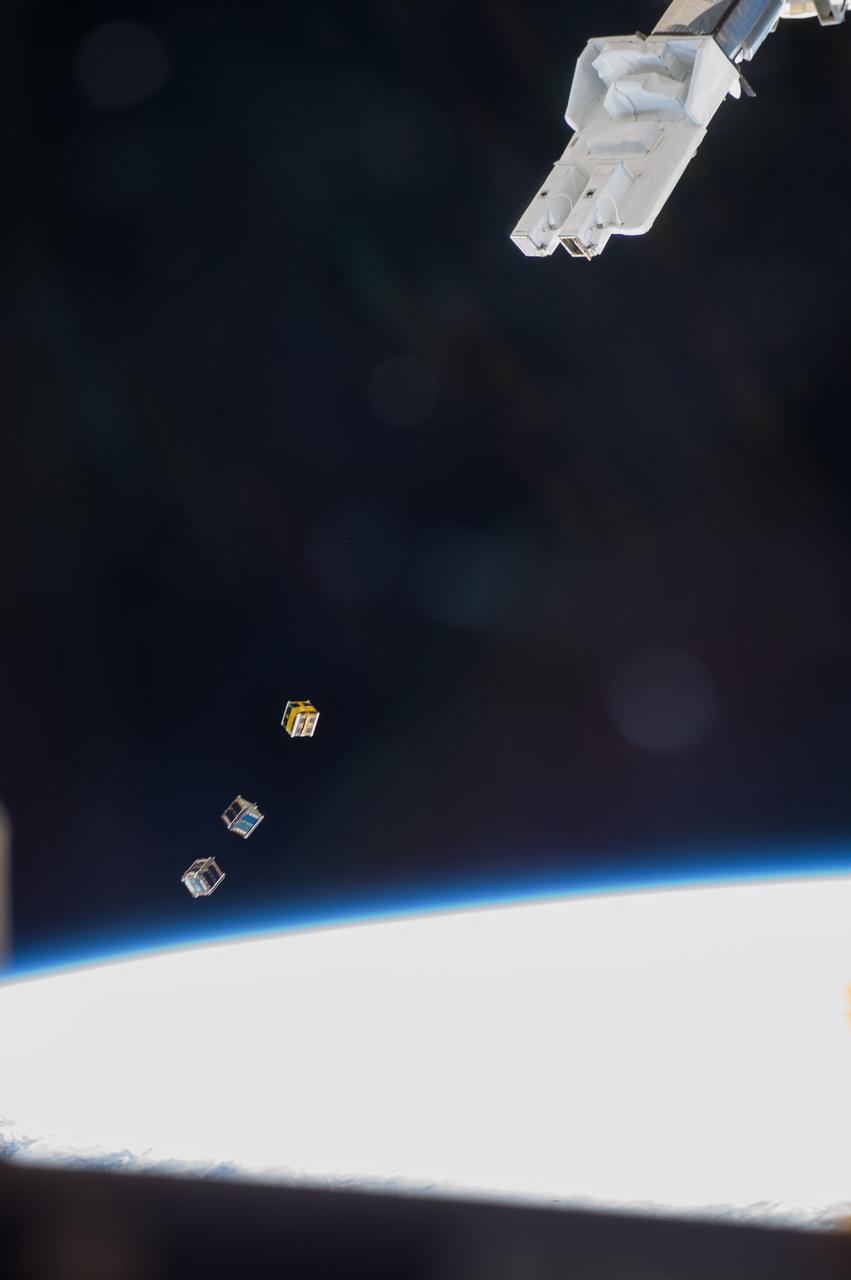
ISS038-E-003874 (19 Nov. 2013) --- Three nanosatellites, known as Cubesats, are deployed from a Small Satellite Orbital Deployer (SSOD) attached to the Kibo laboratory's robotic arm at 7:10 a.m. (EST) on Nov. 19, 2013. Japan Aerospace Exploration Agency astronaut Koichi Wakata, Expedition 38 flight engineer, monitored the satellite deployment while operating the Japanese robotic arm from inside Kibo. The Cubesats were delivered to the International Space Station Aug. 9, aboard Japan's fourth H-II Transfer Vehicle, Kounotori-4.
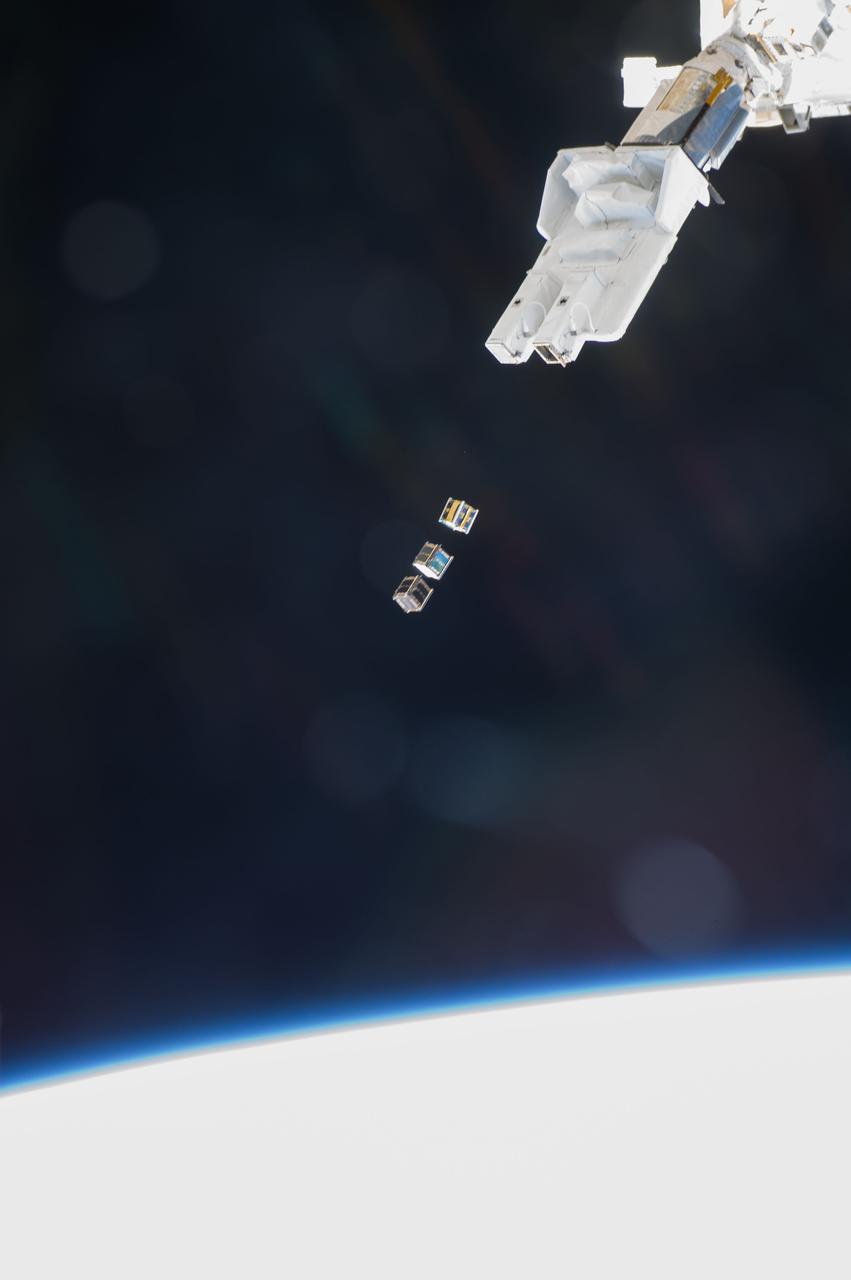
ISS038-E-003870 (19 Nov. 2013) --- Three nanosatellites, known as Cubesats, are deployed from a Small Satellite Orbital Deployer (SSOD) attached to the Kibo laboratory’s robotic arm at 7:10 a.m. (EST) on Nov. 19, 2013. Japan Aerospace Exploration Agency astronaut Koichi Wakata, Expedition 38 flight engineer, monitored the satellite deployment while operating the Japanese robotic arm from inside Kibo. The Cubesats were delivered to the International Space Station Aug. 9, aboard Japan’s fourth H-II Transfer Vehicle, Kounotori-4.
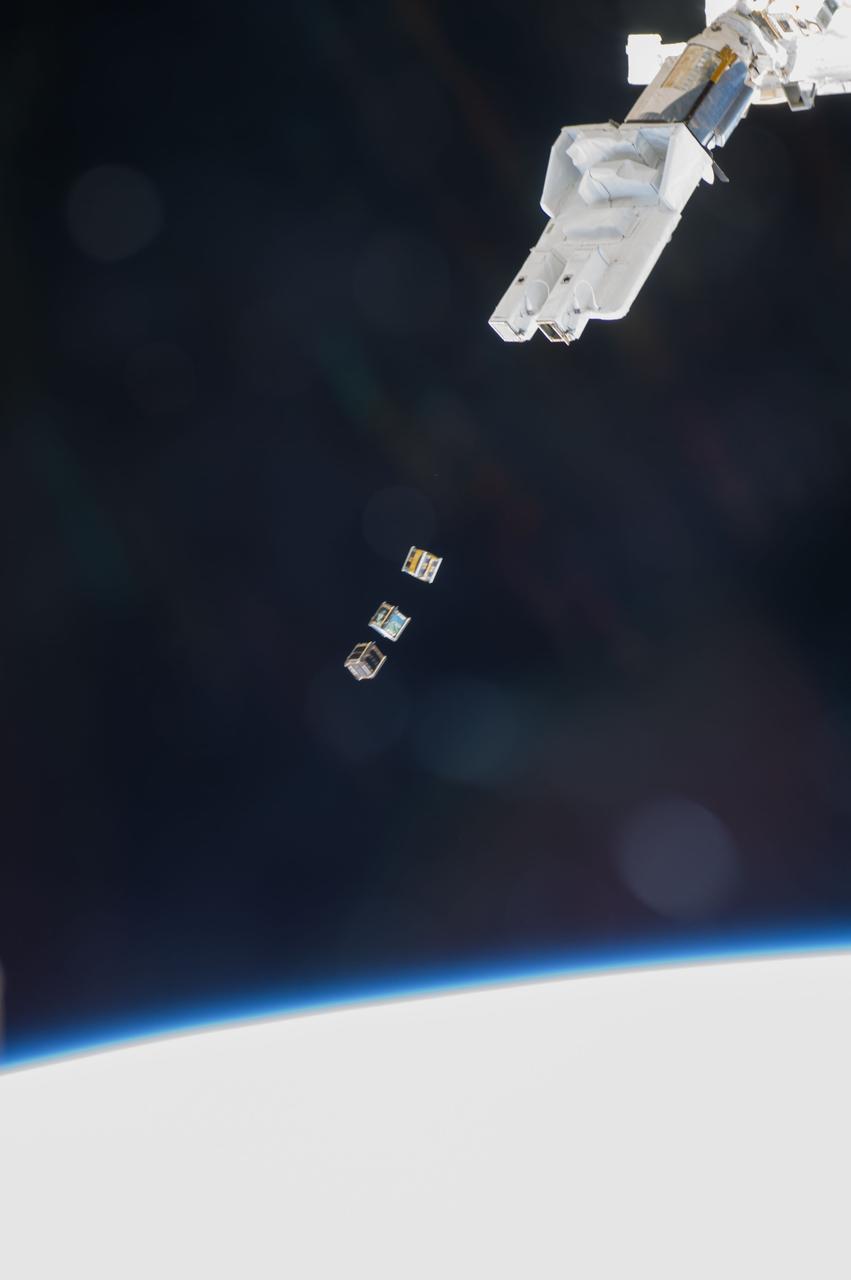
ISS038-E-003871 (19 Nov. 2013) --- Three nanosatellites, known as Cubesats, are deployed from a Small Satellite Orbital Deployer (SSOD) attached to the Kibo laboratory’s robotic arm at 7:10 a.m. (EST) on Nov. 19, 2013. Japan Aerospace Exploration Agency astronaut Koichi Wakata, Expedition 38 flight engineer, monitored the satellite deployment while operating the Japanese robotic arm from inside Kibo. The Cubesats were delivered to the International Space Station Aug. 9, aboard Japan’s fourth H-II Transfer Vehicle, Kounotori-4.
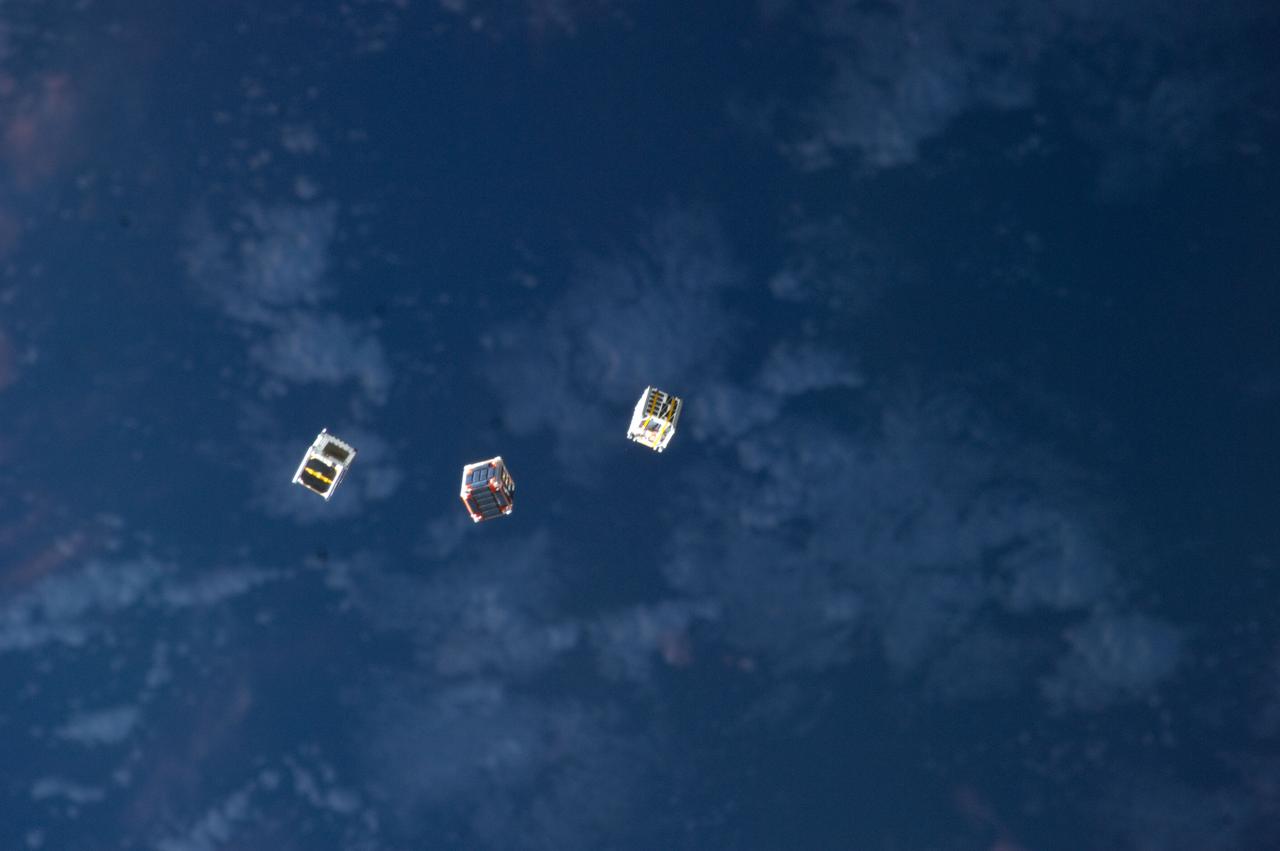
ISS033-E-009458 (4 Oct. 2012) --- Several tiny satellites are featured in this image photographed by an Expedition 33 crew member on the International Space Station. The satellites were released outside the Kibo laboratory using a Small Satellite Orbital Deployer attached to the Japanese module’s robotic arm on Oct. 4, 2012. Japan Aerospace Exploration Agency astronaut Aki Hoshide, flight engineer, set up the satellite deployment gear inside the lab and placed it in the Kibo airlock. The Japanese robotic arm then grappled the deployment system and its satellites from the airlock for deployment.
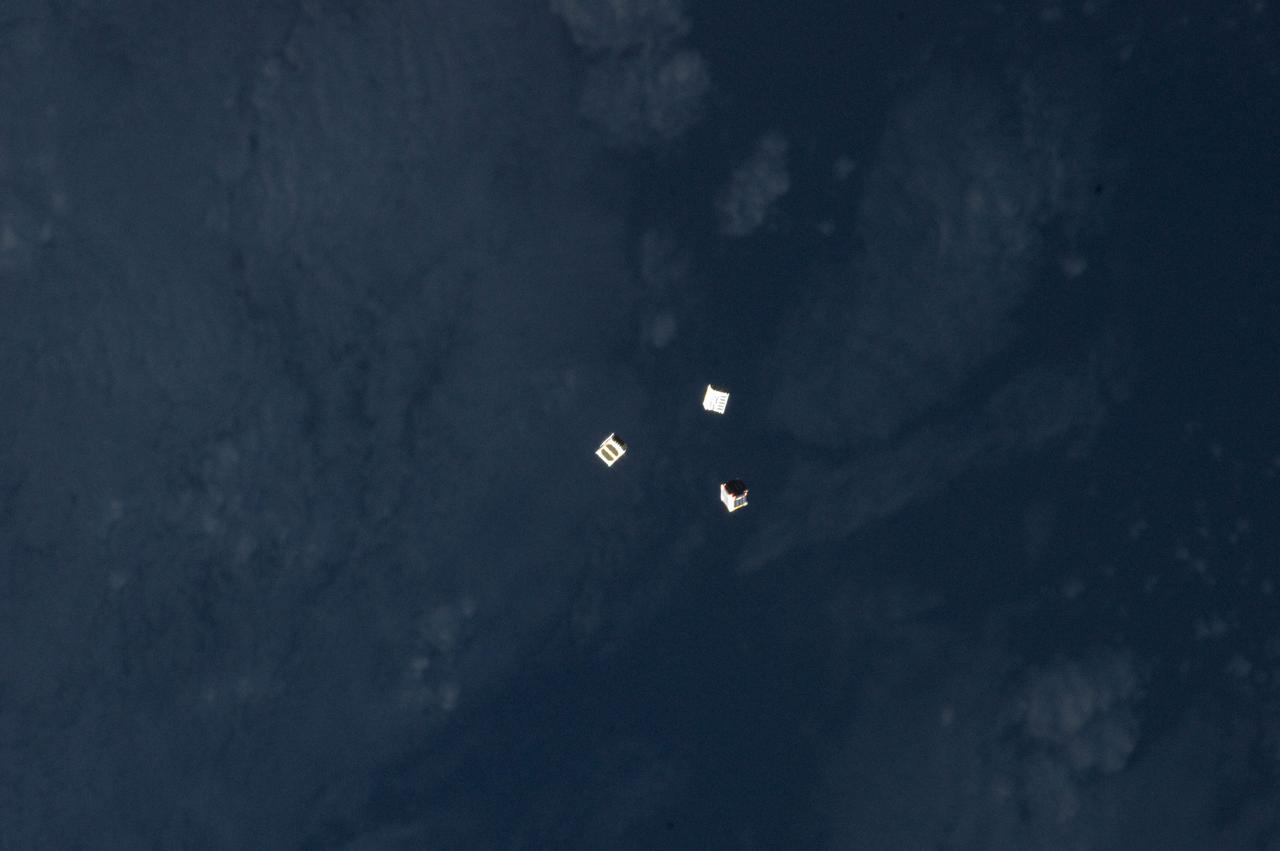
ISS033-E-009334 (4 Oct. 2012) --- Several tiny satellites are featured in this image photographed by an Expedition 33 crew member on the International Space Station. The satellites were released outside the Kibo laboratory using a Small Satellite Orbital Deployer attached to the Japanese module’s robotic arm on Oct. 4, 2012. Japan Aerospace Exploration Agency astronaut Aki Hoshide, flight engineer, set up the satellite deployment gear inside the lab and placed it in the Kibo airlock. The Japanese robotic arm then grappled the deployment system and its satellites from the airlock for deployment.
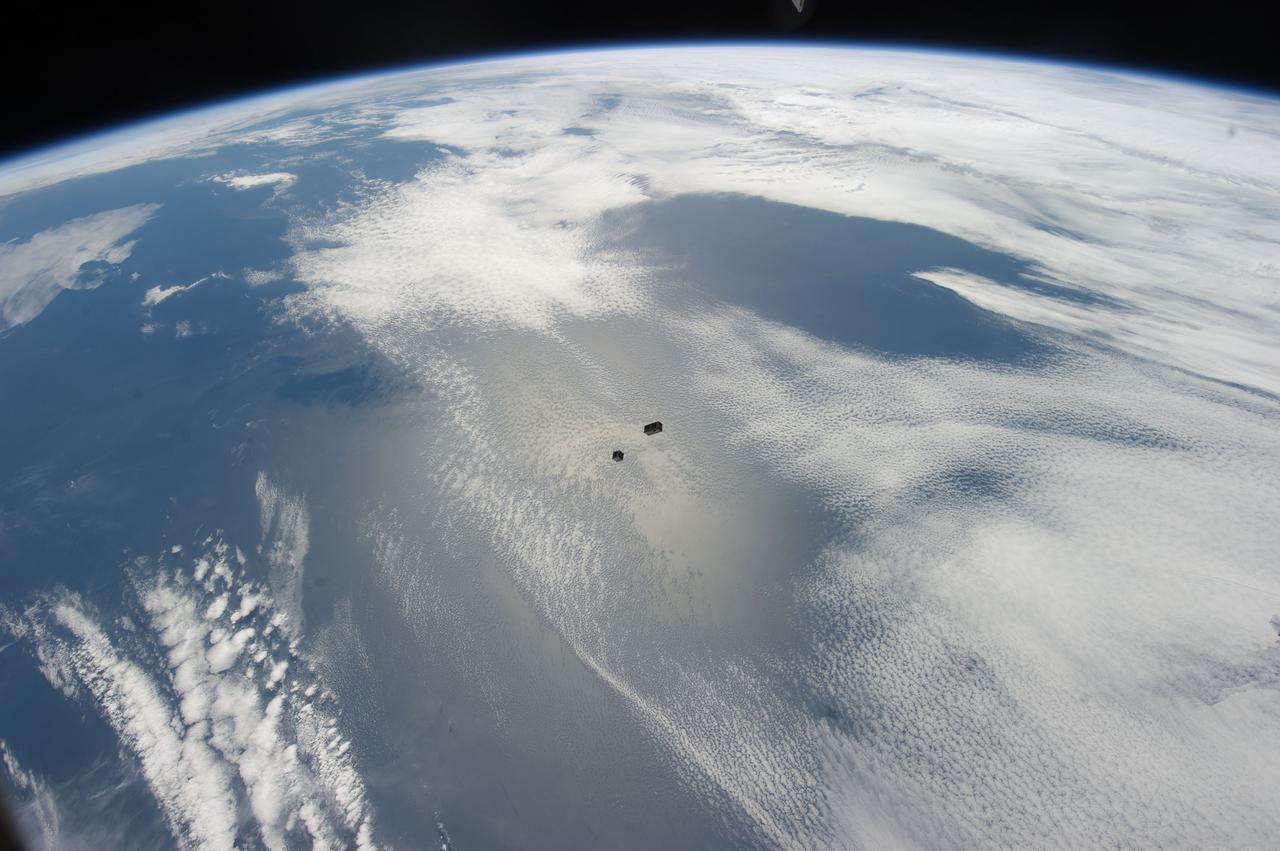
ISS033-E-009315 (4 Oct. 2012) --- Several tiny satellites are featured in this image photographed by an Expedition 33 crew member on the International Space Station. The satellites were released outside the Kibo laboratory using a Small Satellite Orbital Deployer attached to the Japanese module’s robotic arm on Oct. 4, 2012. Japan Aerospace Exploration Agency astronaut Aki Hoshide, flight engineer, set up the satellite deployment gear inside the lab and placed it in the Kibo airlock. The Japanese robotic arm then grappled the deployment system and its satellites from the airlock for deployment. A blue and white part of Earth provides the backdrop for the scene.
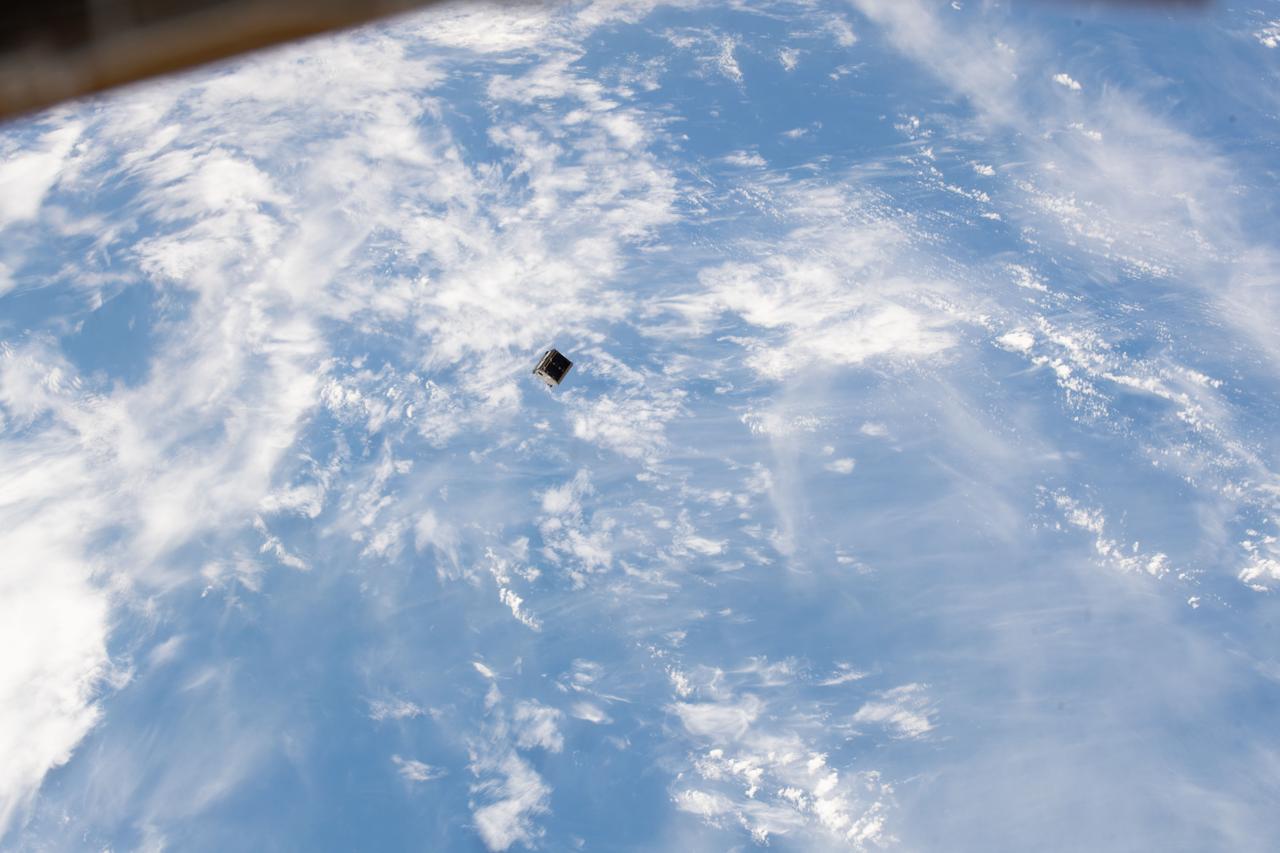
iss063e003547 (4/28/2020) --- The Quetzal-1 CubeSat is seen as it deploys from the JEM Small Satellite Orbital Deployer aboard the International Space Station. Quetzal-1 is Guatemala’s first satellite. It was developed in-house at Universidad del Valle de Guatemala (UVG) and tests a multispectral remote sensor prototype composed of a camera, a piezoelectric motor, and a filter carousel designed to acquire images at different wavelengths.
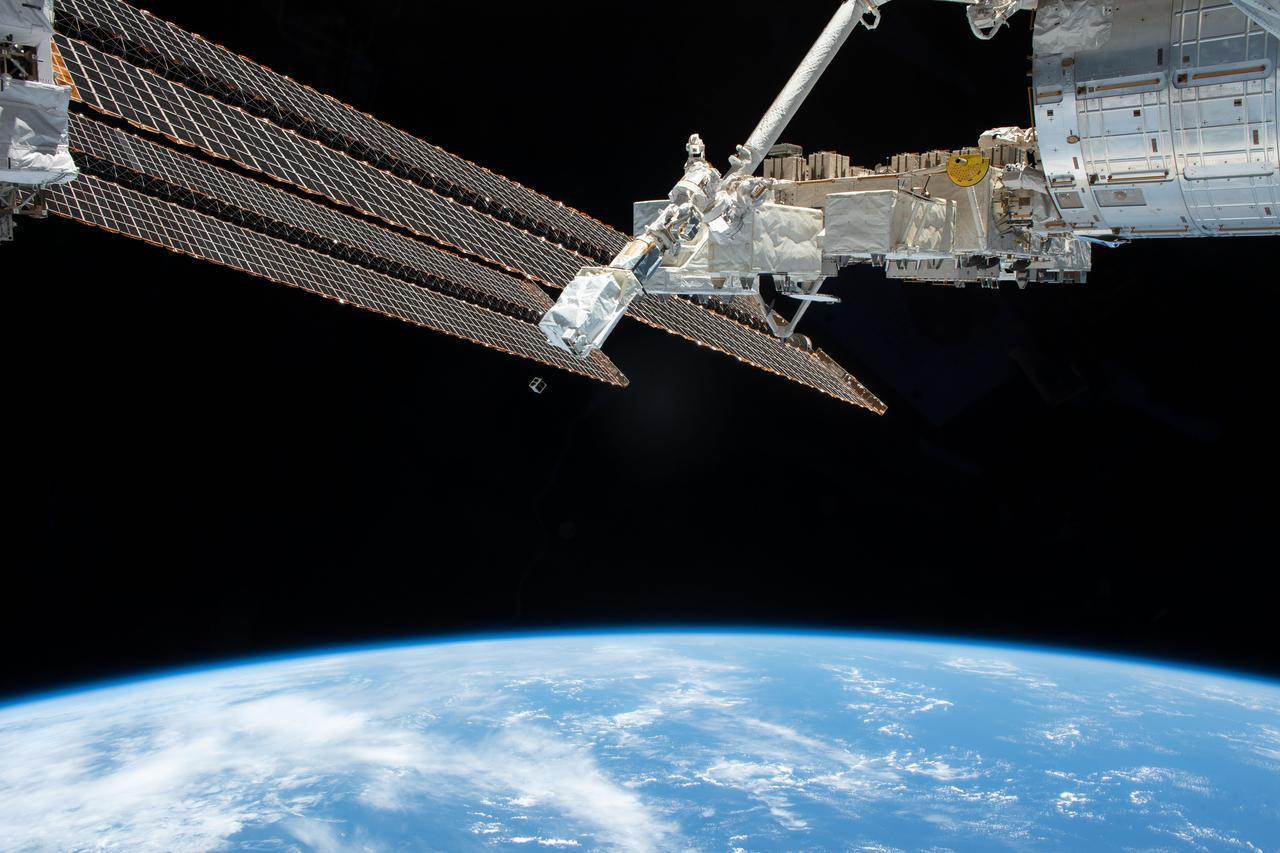
iss063e003633 (4/28/2020) --- The Quetzal-1 CubeSat is seen as it deploys from the JEM Small Satellite Orbital Deployer aboard the International Space Station. Quetzal-1 is Guatemala’s first satellite. It was developed in-house at Universidad del Valle de Guatemala (UVG) and tests a multispectral remote sensor prototype composed of a camera, a piezoelectric motor, and a filter carousel designed to acquire images at different wavelengths.
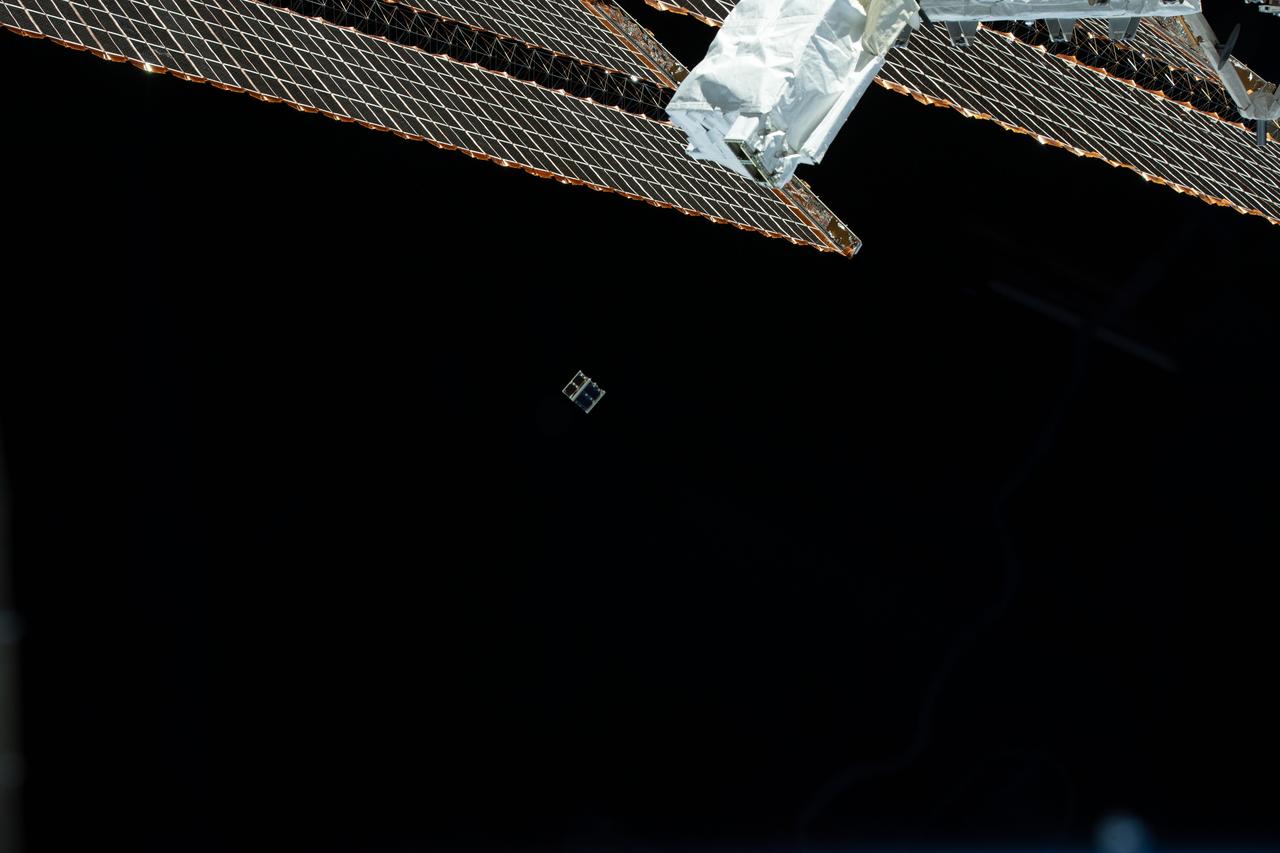
iss063e003541 (4/28/2020) --- The Quetzal-1 CubeSat is seen as it deploys from the JEM Small Satellite Orbital Deployer aboard the International Space Station. Quetzal-1 is Guatemala’s first satellite. It was developed in-house at Universidad del Valle de Guatemala (UVG) and tests a multispectral remote sensor prototype composed of a camera, a piezoelectric motor, and a filter carousel designed to acquire images at different wavelengths.
iss063e003542 (4/28/2020) --- The Quetzal-1 CubeSat is seen as it deploys from the JEM Small Satellite Orbital Deployer aboard the International Space Station. Quetzal-1 is Guatemala’s first satellite. It was developed in-house at Universidad del Valle de Guatemala (UVG) and tests a multispectral remote sensor prototype composed of a camera, a piezoelectric motor, and a filter carousel designed to acquire images at different wavelengths.
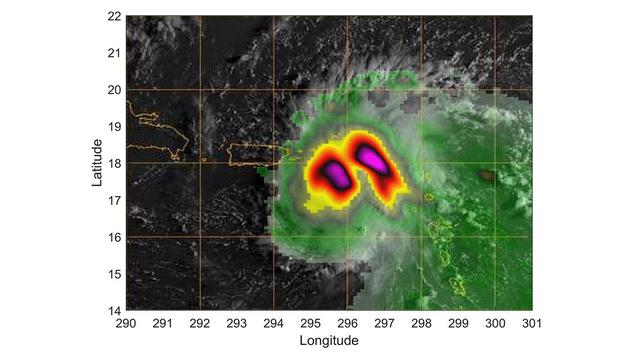
TEMPEST-D — a weather-observing satellite the size of a cereal box — captured imagery of Hurricane Dorian off the coast of Puerto Rico in the early morning hours (local time) of Aug. 28, 2019. At a vantage point 250 miles (400 kilometers) above the storm, the CubeSat used its miniaturized radio-wave-based instrument to see through the clouds, revealing areas with strong rain and moisture being pulled into the storm. The green colors show moisture spiraling into the storm's center, and the yellow to pink colors correspond to the most intense rainfall. TEMPEST-D — short for Temporal Experiment for Storms and Tropical Systems Demonstration — is an experiment in shrinking weather satellites to a size that makes them inexpensive enough to produce in multiples. The goal is eventual real-time storm coverage with many small satellites that can track storms around the world. https://photojournal.jpl.nasa.gov/catalog/PIA23414

iss059e103862 (6/17/2019) --- Photo documentation taken of the JEM Small Satellite Orbital Deployer #11 (J-SSOD #11) micro-satellite deployment mission. SpooQy-1 is a 3-Unit (3U) CubeSat deployed during the J-SSOD #11 mission. SpooQy-1 was developed by the National University of Singapore (NUS).

iss059e104863 (6/17/2019) --- Photo documentation taken of the JEM Small Satellite Orbital Deployer #11 (J-SSOD #11) micro-satellite deployment mission. SpooQy-1 is a 3-Unit (3U) CubeSat deployed during the J-SSOD #11 mission. SpooQy-1 was developed by the National University of Singapore (NUS).

iss059e104298 (6/17/2019) --- Photo documentation taken of the JEM Small Satellite Orbital Deployer #11 (J-SSOD #11) micro-satellite deployment mission. J-SSOD#11 deploys the Joint Global Multi Nation Birds, known as the BIRDS-3 Project, which is a constellation of three 1U CubeSats developed by Japan, Nepal and Sri Lanka . The satellites, named Uguisu, Raavana-1, and NepaliSat-1, were released into Earth orbit for technology demonstrations.

iss059e104771 (6/17/2019) --- Photo documentation taken of the JEM Small Satellite Orbital Deployer #11 (J-SSOD #11) micro-satellite deployment mission. J-SSOD#11 deploys the Joint Global Multi Nation Birds, known as the BIRDS-3 Project, which is a constellation of three 1U CubeSats developed by Japan, Nepal and Sri Lanka . The satellites, named Uguisu, Raavana-1, and NepaliSat-1, were released into Earth orbit for technology demonstrations.
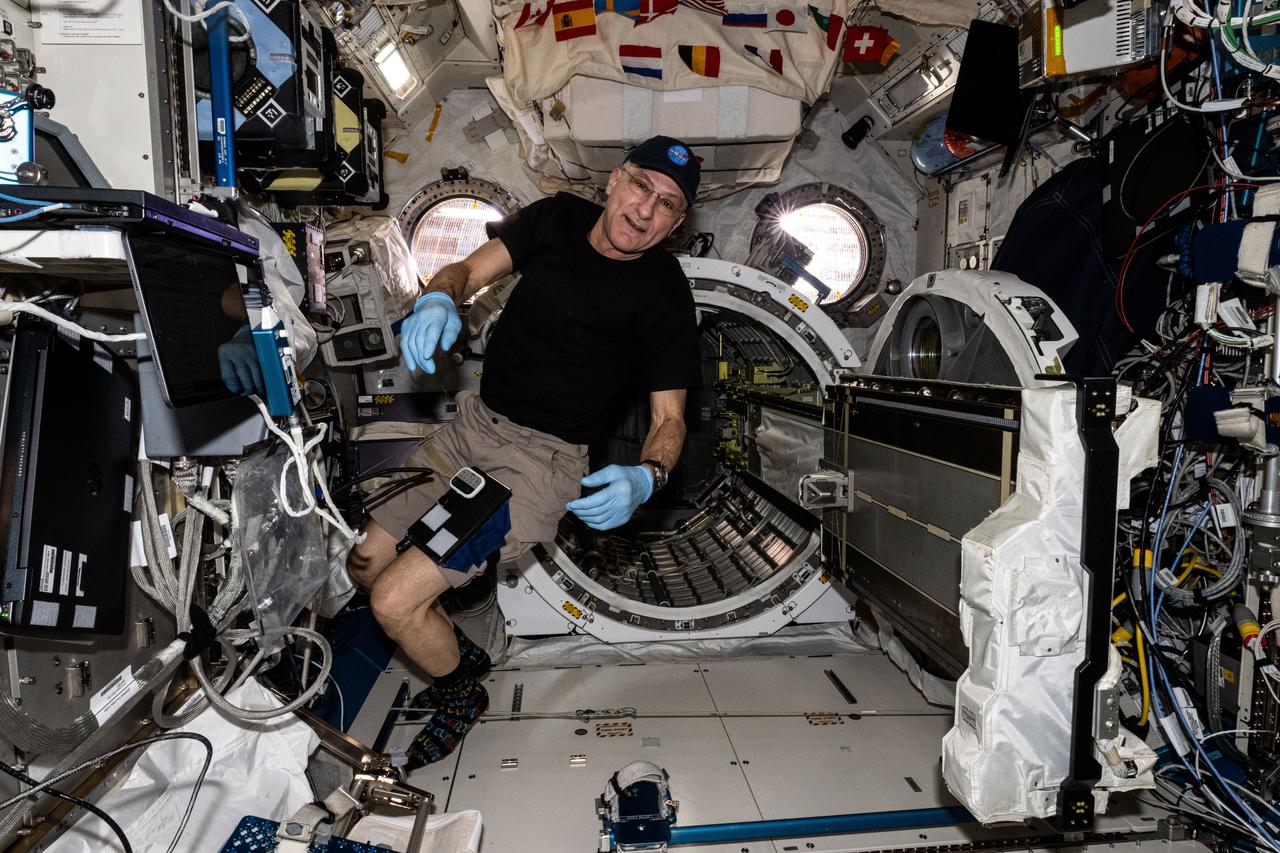
iss072e403381 (Dec. 24, 2024) --- NASA astronaut and Expedition 72 Flight Engineer Don Pettit removes the small satellite orbital deployer from the Kibo laboratory module's airlock after several CubeSats were deployed outside the International Space Station into Earth orbit for educational research.
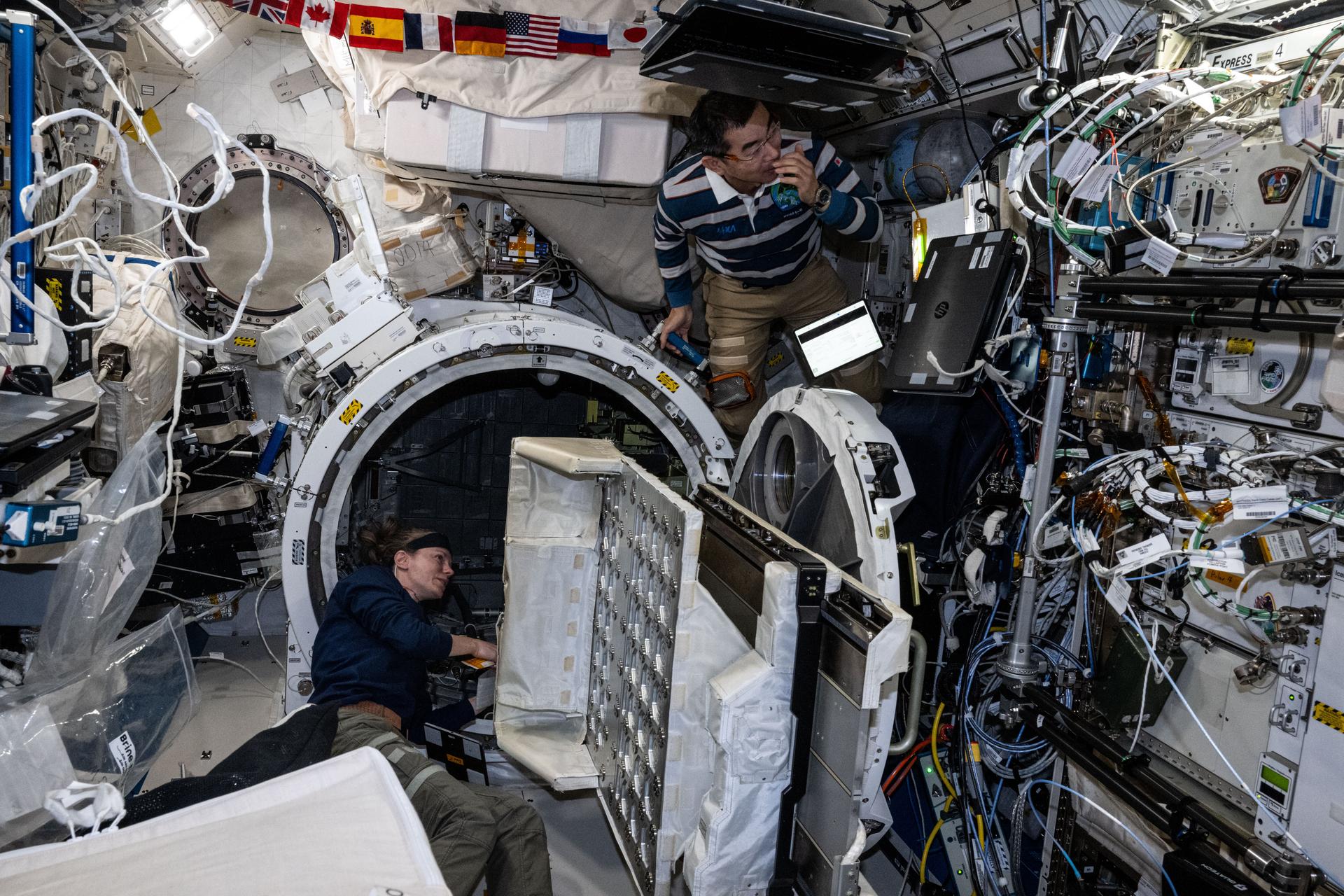
iss073e0768346 (Sept. 25, 2025) --- Expedition 73 Flight Engineers Zena Cardman of NASA and Kimiya Yui of JAXA (Japan Aerospace Exploration Agency) partner together inside the International Space Station's Kibo laboratory module removing a small satellite orbital deployer from inside Kibo's airlock
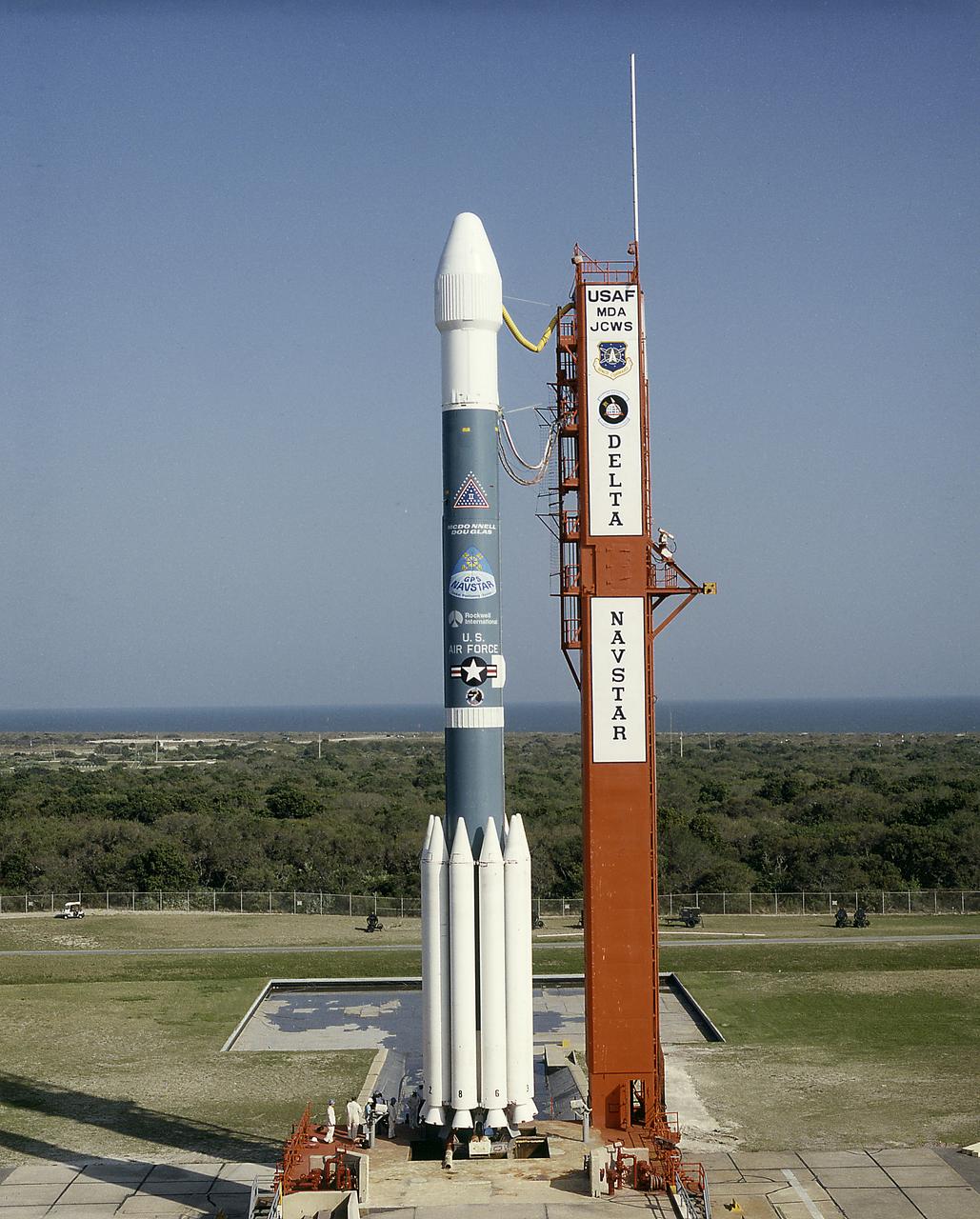
The Air Force Delta II vehicle sits poised on Complex 17A at the Cape Canaveral Air Station, ready to carry the 19th NAVSTAR Global Positioning System Satellite into orbit. A secondary NASA experiment, the Small Expendable Deployer System (SEDS), will also be deployed.
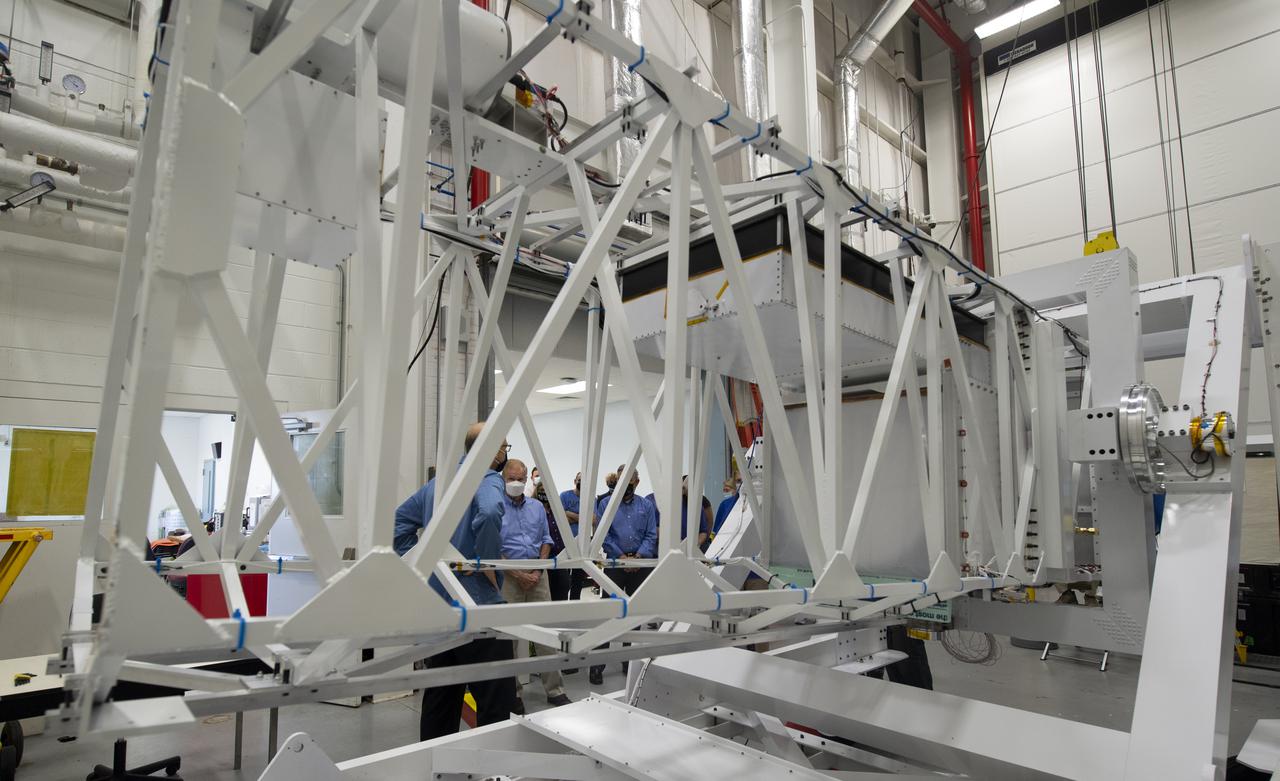
NASA Administrator Bill Nelson is seen through the structure of the Wallops Arc Second Pointer balloon payload being assembled in the Small Satellites, Balloon Research and Development Lab, Tuesday, Aug. 10, 2021, at NASA’s Wallops Flight Facility in Virginia. Photo Credit: (NASA/Joel Kowsky)
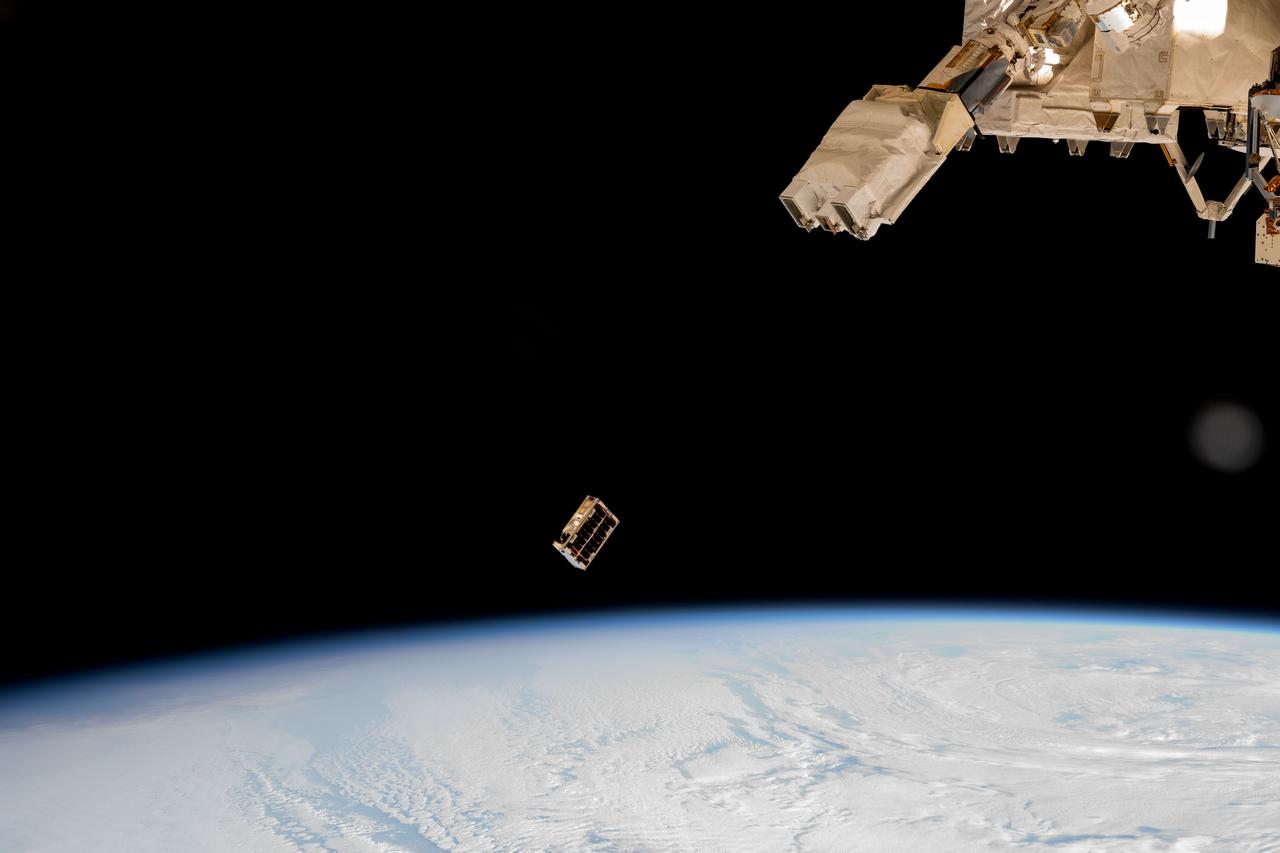
iss072e352225 (Dec. 9, 2024) --- A CubeSat is ejected into Earth orbit from a small satellite orbital deployer attached to the International Space Station's Kibo laboratory module. A series of CubeSats were deployed into Earth orbit on Dec. 9, 2024, for educational research missions designed by Japanese high school and college students. Credit: NASA/Butch Wilmore
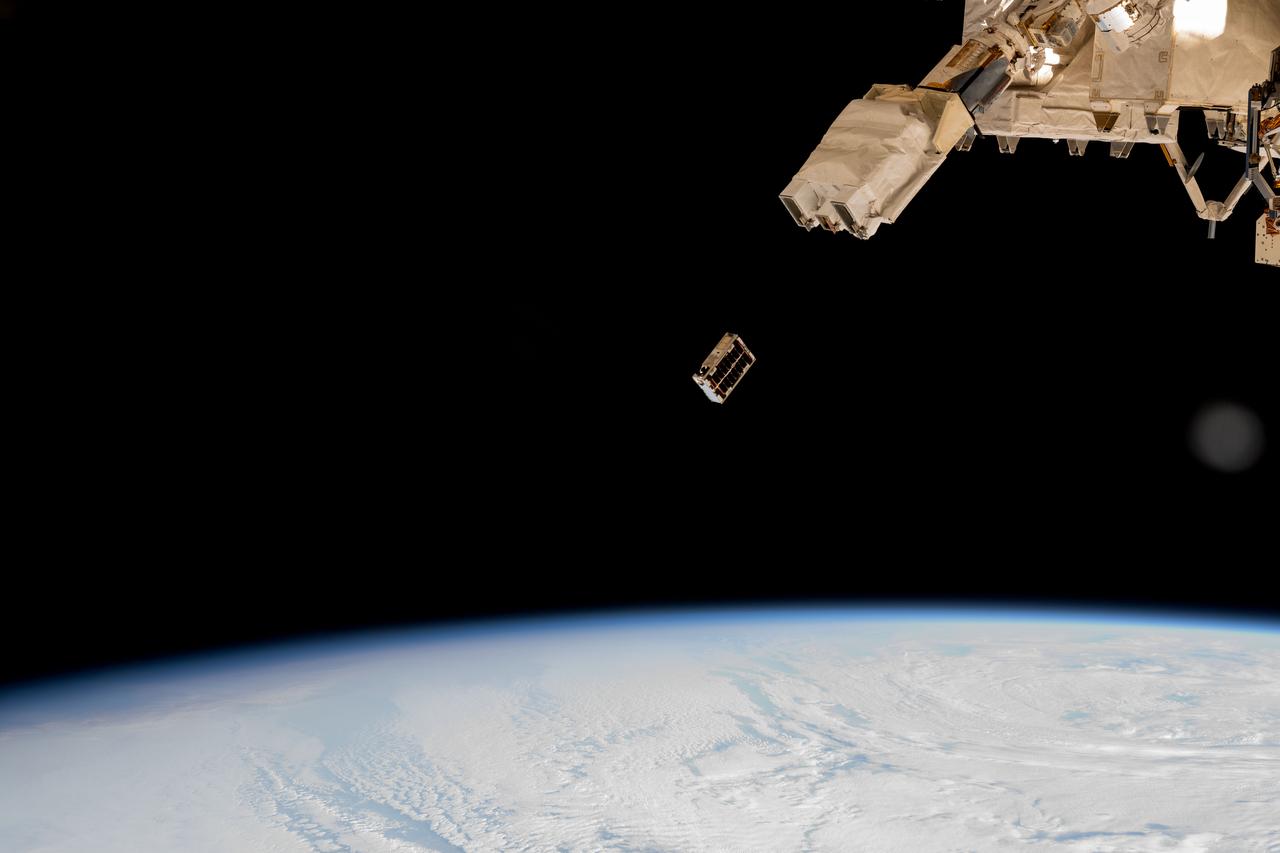
iss072e352235 (Dec. 9, 2024) --- A CubeSat is ejected into Earth orbit from a small satellite orbital deployer attached to the International Space Station's Kibo laboratory module. A series of CubeSats were deployed into Earth orbit on Dec. 9, 2024, for educational research missions designed by Japanese high school and college students. Credit: NASA/Butch Wilmore
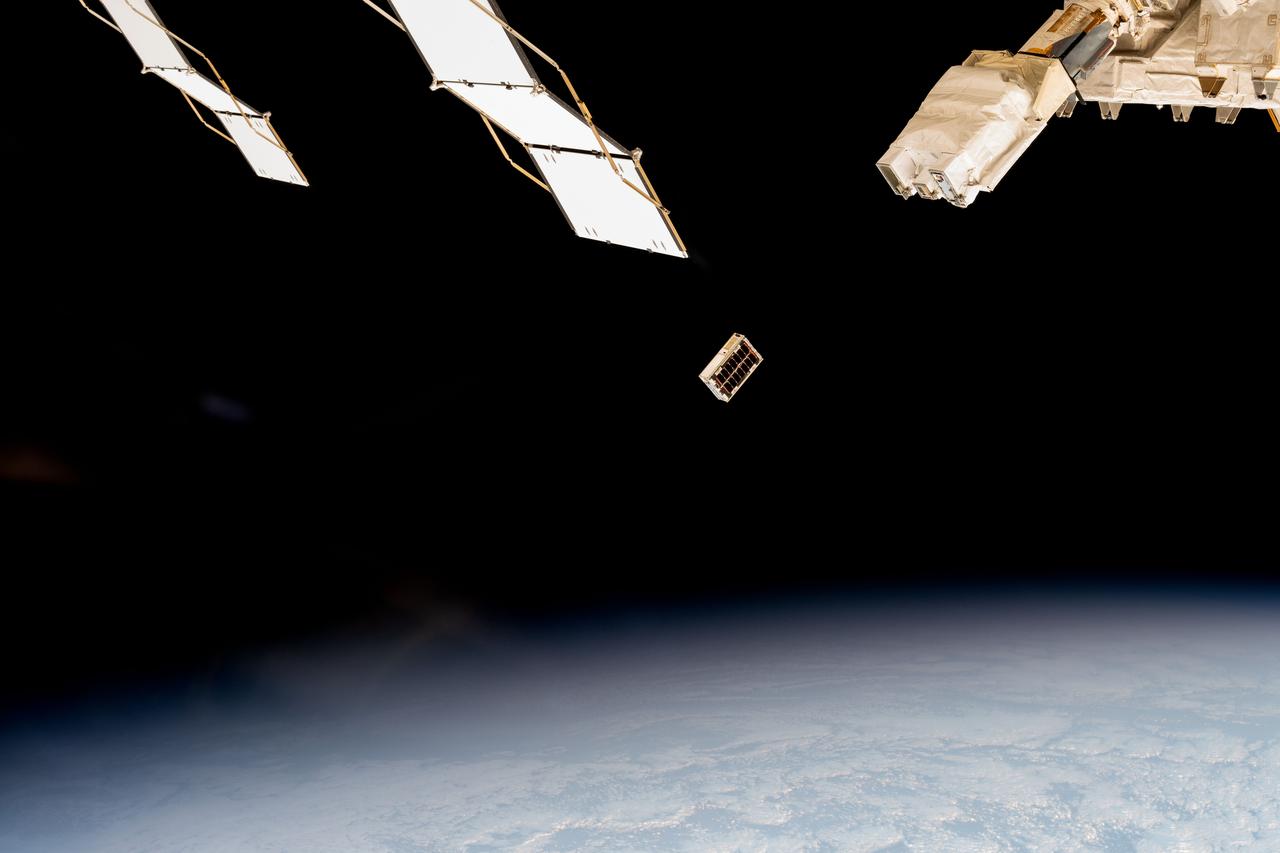
iss072e351959 (Dec. 9, 2024) --- A CubeSat is ejected into Earth orbit from a small satellite orbital deployer attached to the International Space Station's Kibo laboratory module. A series of CubeSats were deployed into Earth orbit on Dec. 9, 2024, for educational research missions designed by Japanese high school and college students. Credit: NASA/Butch Wilmore
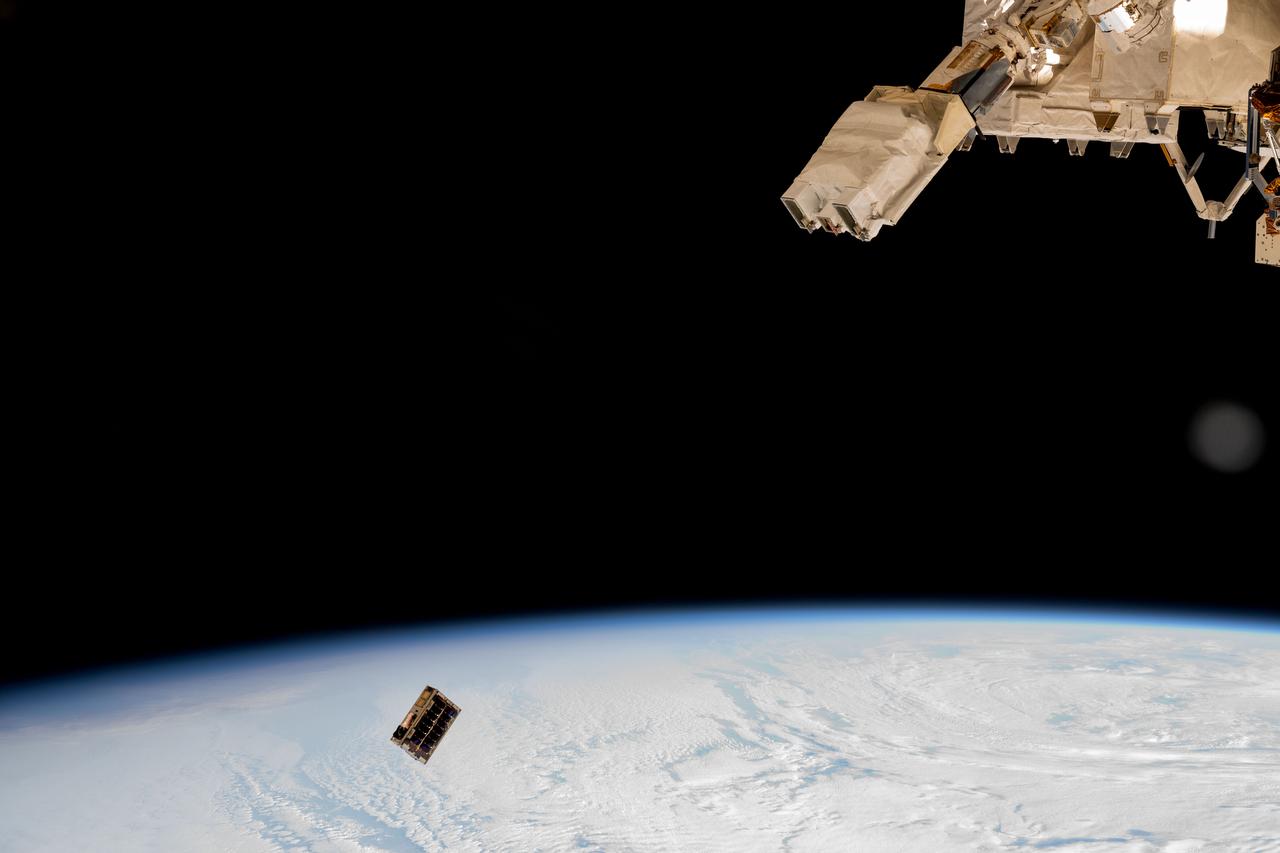
iss072e352275 (Dec. 9, 2024) --- A CubeSat is ejected into Earth orbit from a small satellite orbital deployer attached to the International Space Station's Kibo laboratory module. A series of CubeSats were deployed into Earth orbit on Dec. 9, 2024, for educational research missions designed by Japanese high school and college students. Credit: NASA/Butch Wilmore
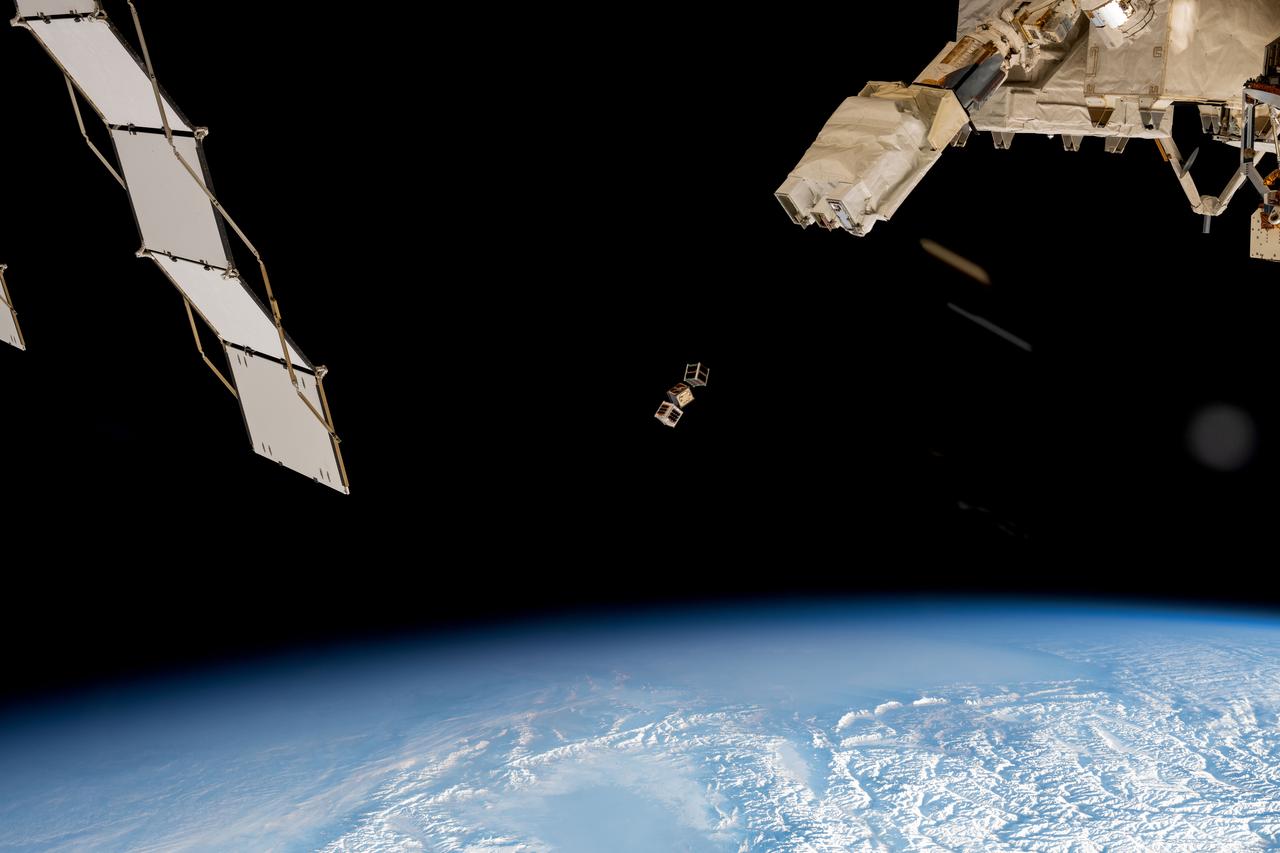
iss072e352045 (Dec. 9, 2024) --- A trio of CubeSats is ejected into Earth orbit from a small satellite orbital deployer attached to the International Space Station's Kibo laboratory module. A series of CubeSats were deployed into Earth orbit on Dec. 9, 2024, for educational research missions designed by Japanese high school and college students. Credit: NASA/Butch Wilmore
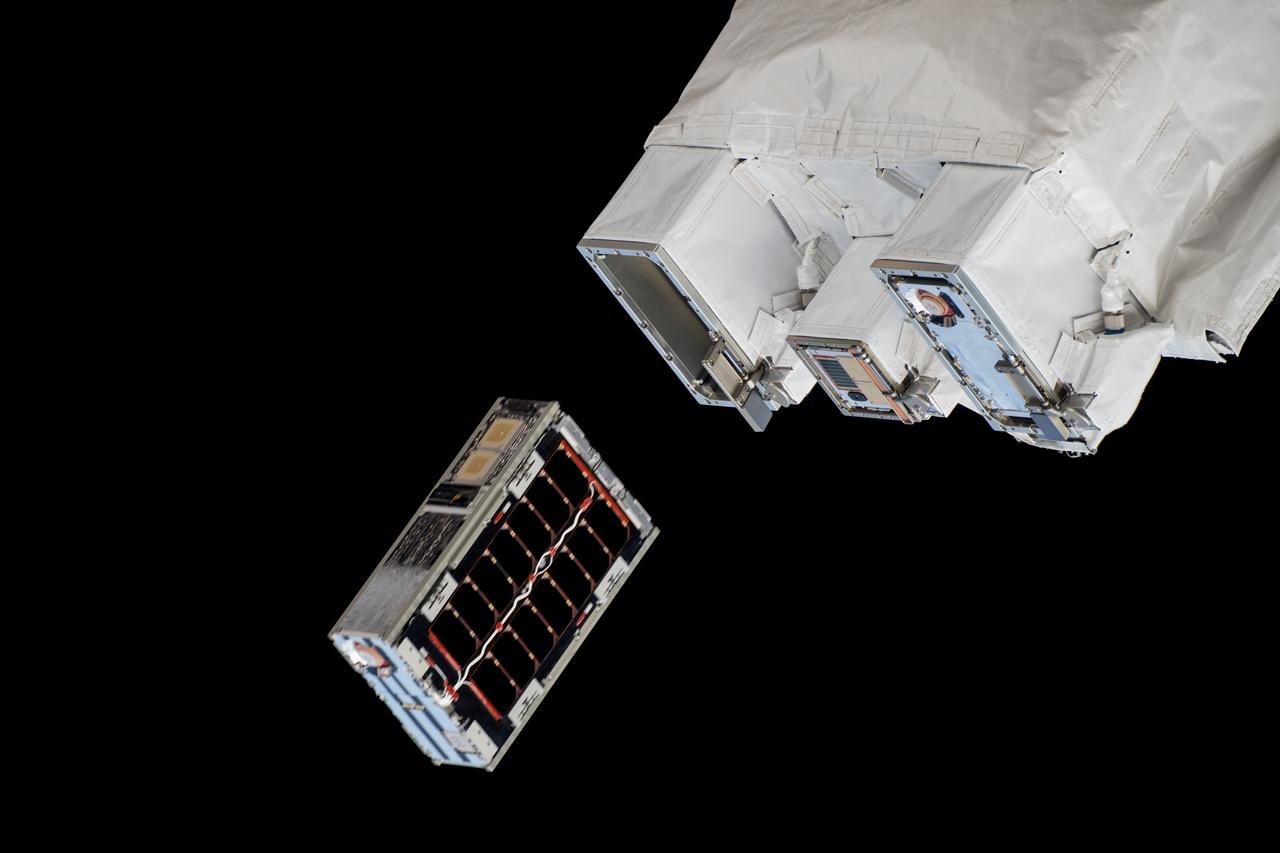
iss072e351732 (Dec. 9, 2024) --- A CubeSat is ejected into Earth orbit from a small satellite orbital deployer attached to the International Space Station's Kibo laboratory module. A series of CubeSats were deployed into Earth orbit on Dec. 9, 2024, for educational research missions designed by Japanese high school and college students. Credit: NASA/Butch Wilmore
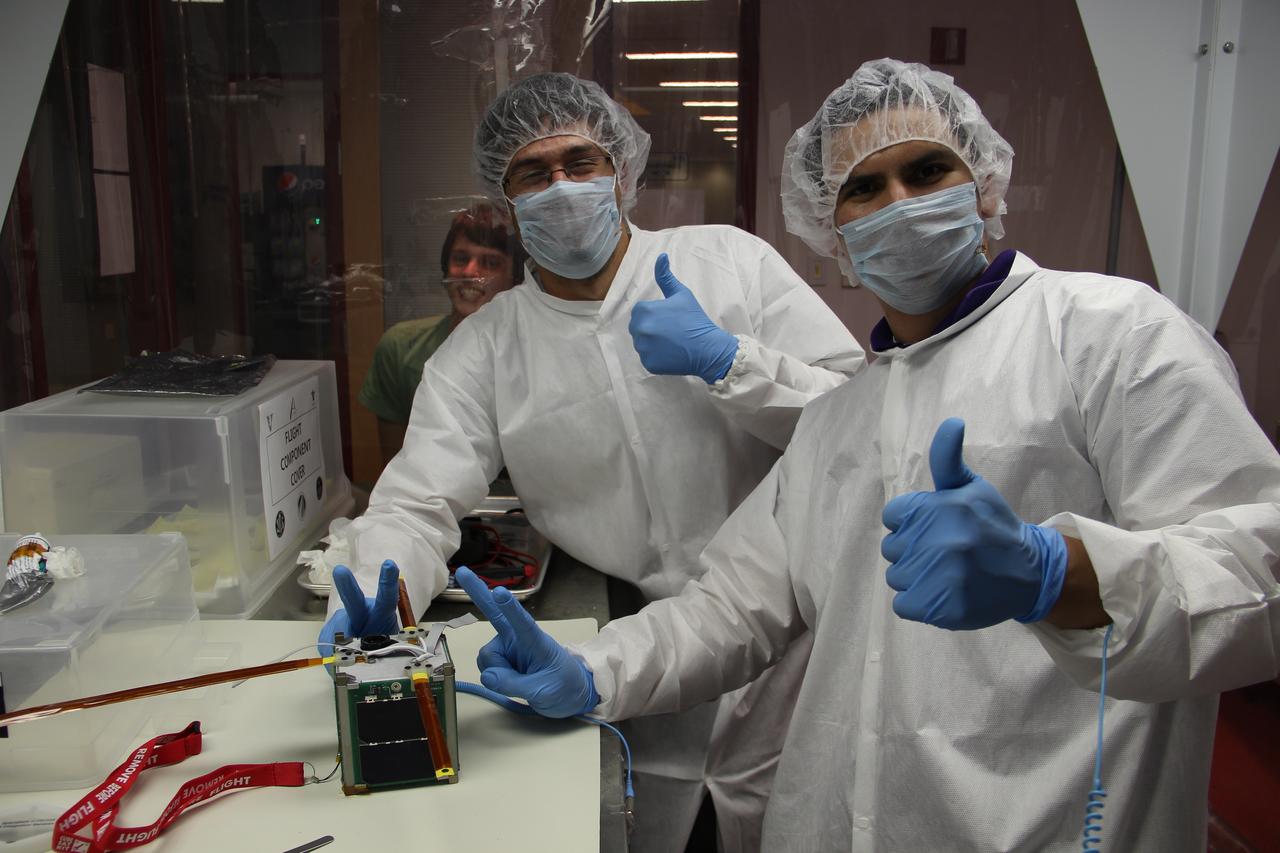
The Close Orbiting Propellant Plume Elemental Recognition (COPPER) was developed by students from St. Louis University as a technology demonstration mission whose objective is to test the suitability of a commercially-available compact uncooled microbolometer (tiny infrared camera) array for scientific imagery of Earth in the long-wave infrared range (LWIR, 7-13 microns). Launched by NASA’s CubeSat Launch Initiative on the ELaNa IV mission as an auxiliary payload aboard the U.S. Air Force-led Operationally Responsive Space (ORS-3) Mission on November 19, 2013.
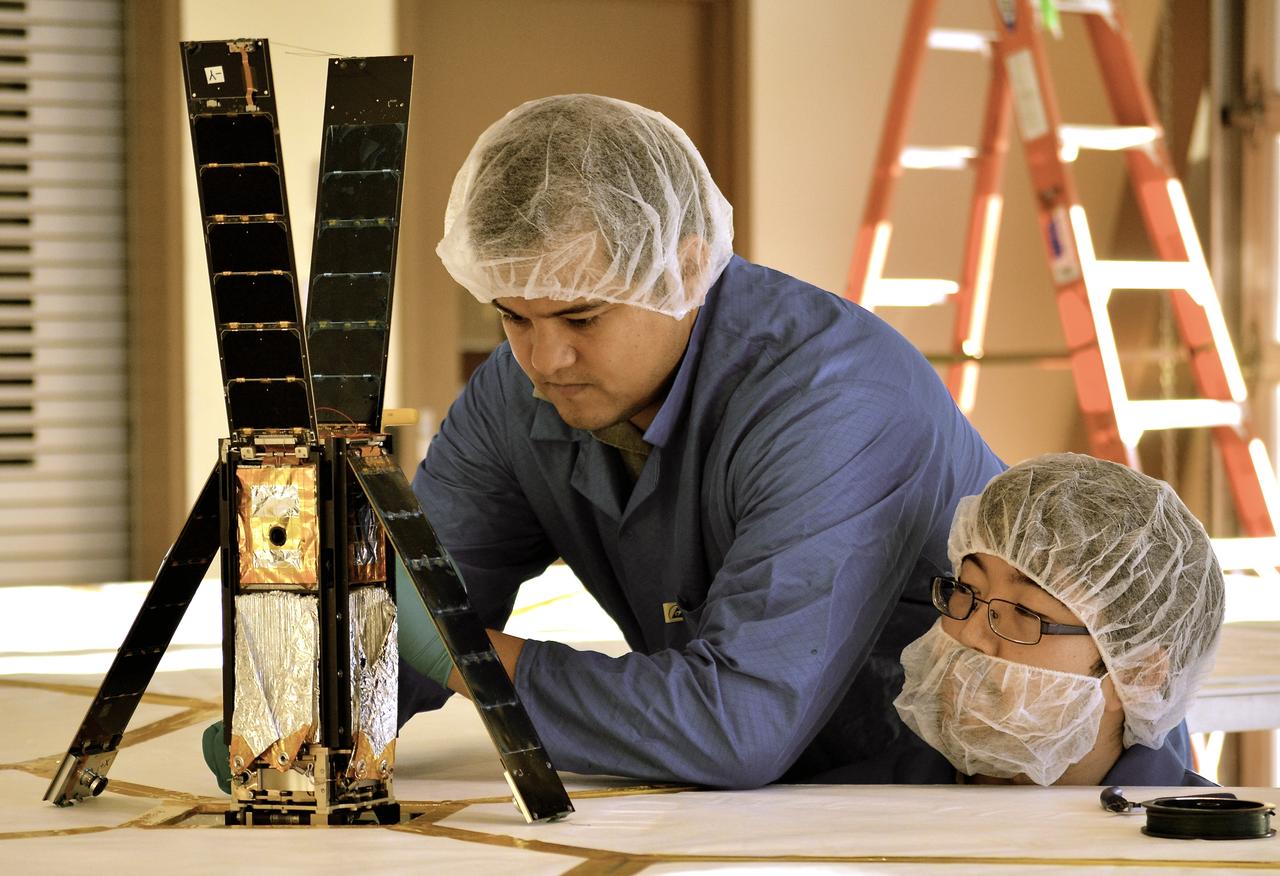
Students Alex Diaz and Riki Munakata of California Polytechnic State University testing the LightSail CubeSat. LightSail is a citizen-funded technology demonstration mission sponsored by the Planetary Society using solar propulsion for CubeSats. The spacecraft is designed to “sail” on the energy of solar photons striking the thin, reflective sail material. The first LightSail mission is designed to test the spacecraft’s critical systems, including the sequence to autonomously deploy a Mylar solar sail with an area of 32 square meters (344 square feet). The Planetary Society is planning a second, full solar sailing demonstration flight for 2016. Light is made of packets of energy called photons. While photons have no mass, they have energy and momentum. Solar sails use this momentum as a method of propulsion, creating flight by light. LightSail’s solar sail is packaged into a three-unit CubeSat about the size of a loaf of bread. Launched by NASA’s CubeSat Launch Initiative on the ELaNa XI mission as an auxiliary payload aboard the U.S. Air Force X-37B space plane mission on May 20, 2015.
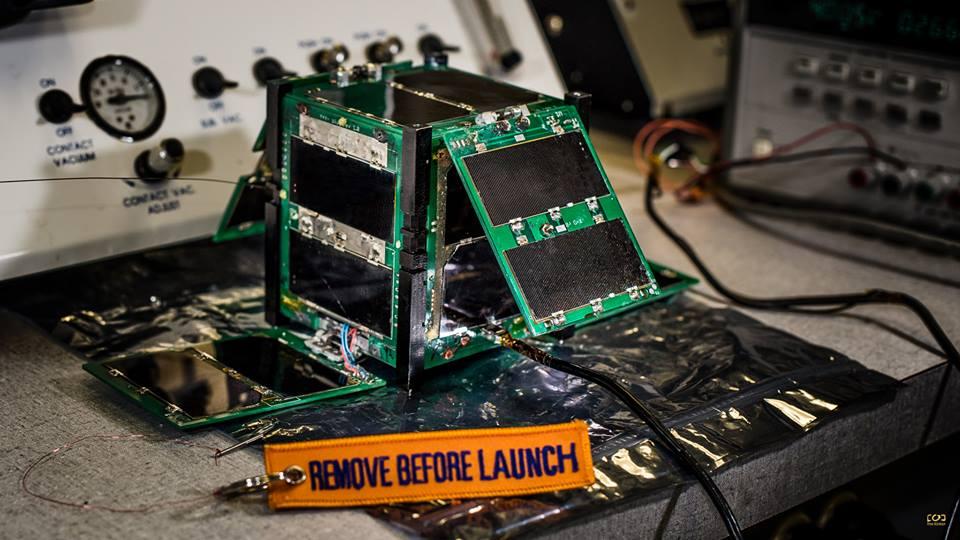
CAPE-2: Cajun Advanced Picosatellite Experiment – ELaNa IV CAPE-2 was developed by students from the University of Louisiana Lafayette to engage, inspire and educate K-12 students to encourage them to pursue STEM careers. The secondary focus is the technology demonstration of deployed solar panels to support the following payloads: text to speech, voice repeater, tweeting, email, file transfer and data collection from buoys. Launched by NASA’s CubeSat Launch Initiative on the ELaNa IV mission as an auxiliary payload aboard the U.S. Air Force-led Operationally Responsive Space (ORS-3) Mission on November 19, 2013.
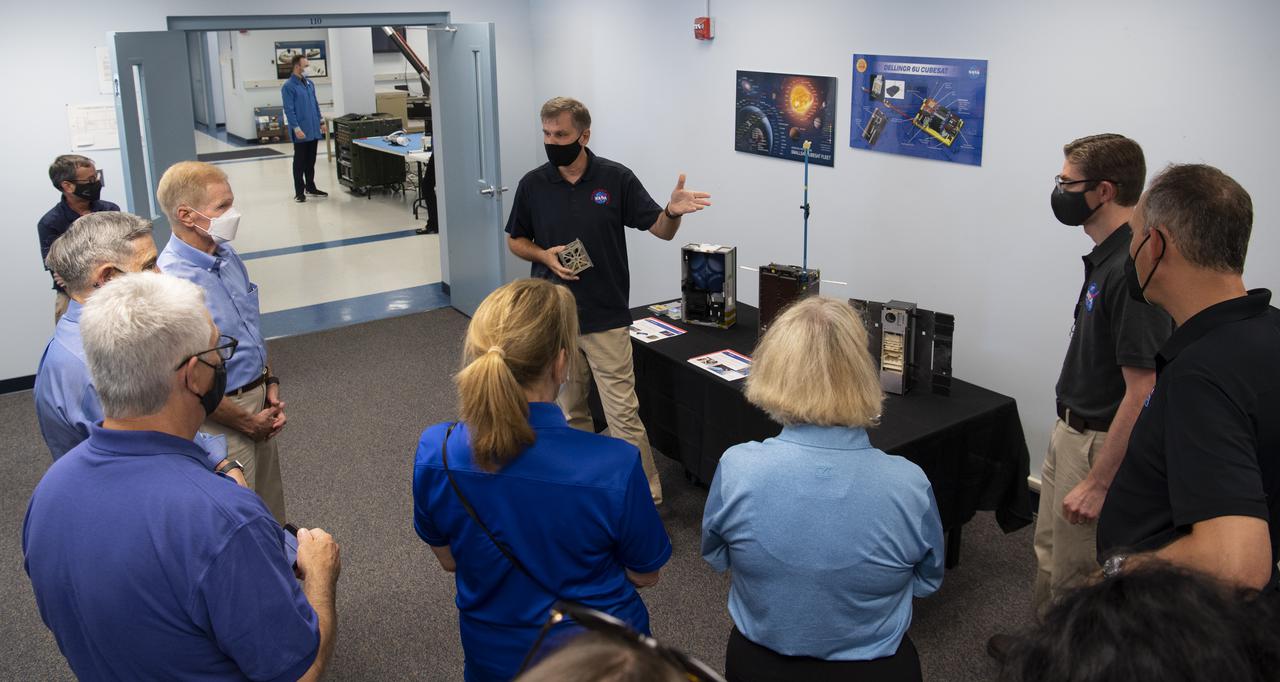
Dave Wilcox, chief of the Small Satellite Project Office at NASA's Wallops Flight Facility, center, speaks about cubesats with NASA Administrator Bill Nelson, Bob Cabana, NASA associate administrator, Dave Pierce, director of NASA's Wallops Flight Facility, NASA Deputy Administrator Pam Melroy, and Thomas Zurbuchen, associate administrator for NASA's Science Mission Directorate during tour of the Small Satellites, Balloon Research and Development Lab, Tuesday, Aug. 10, 2021, at NASA’s Wallops Flight Facility in Virginia. Photo Credit: (NASA/Joel Kowsky)
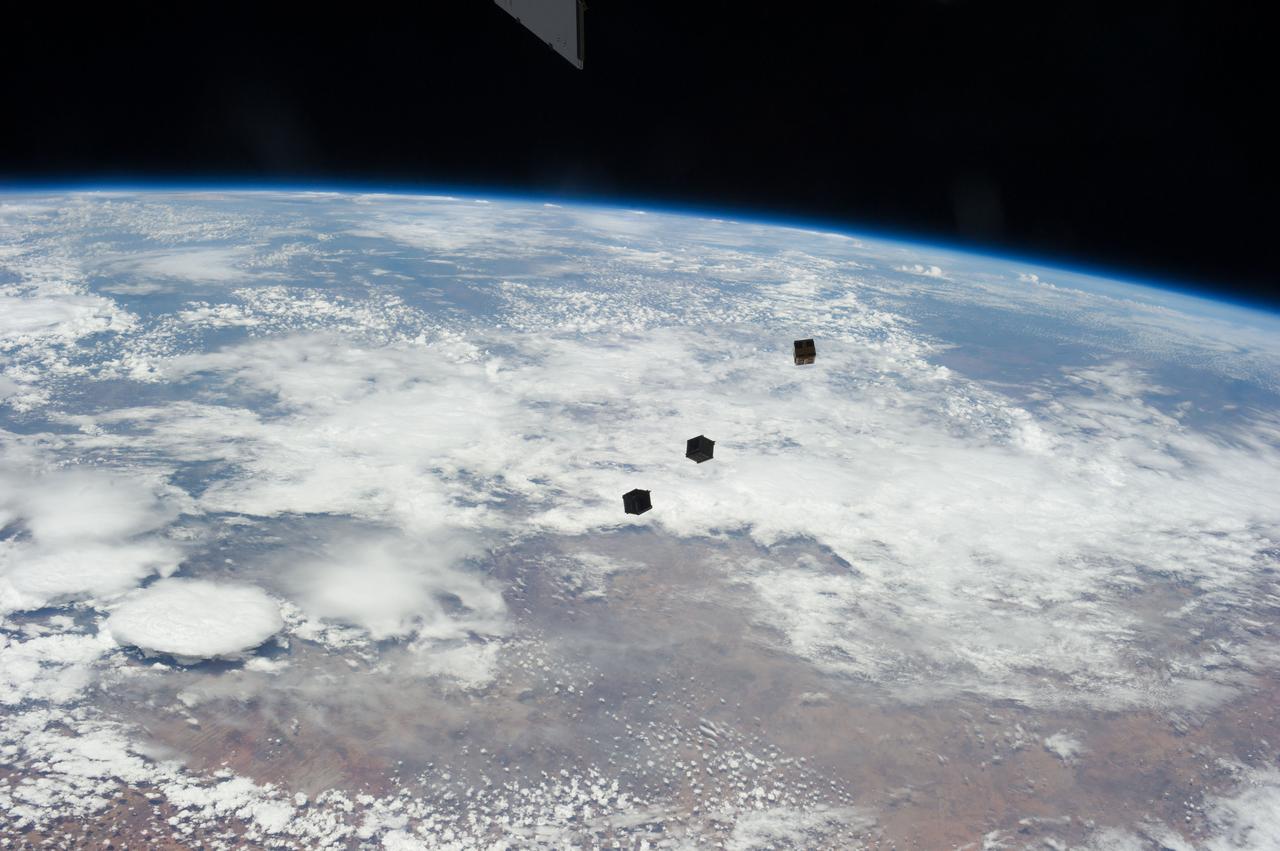
View of three cube satellites (Cubesats), or nanosatellites, shortly after deployment. Image was released by astronaut on Twitter.
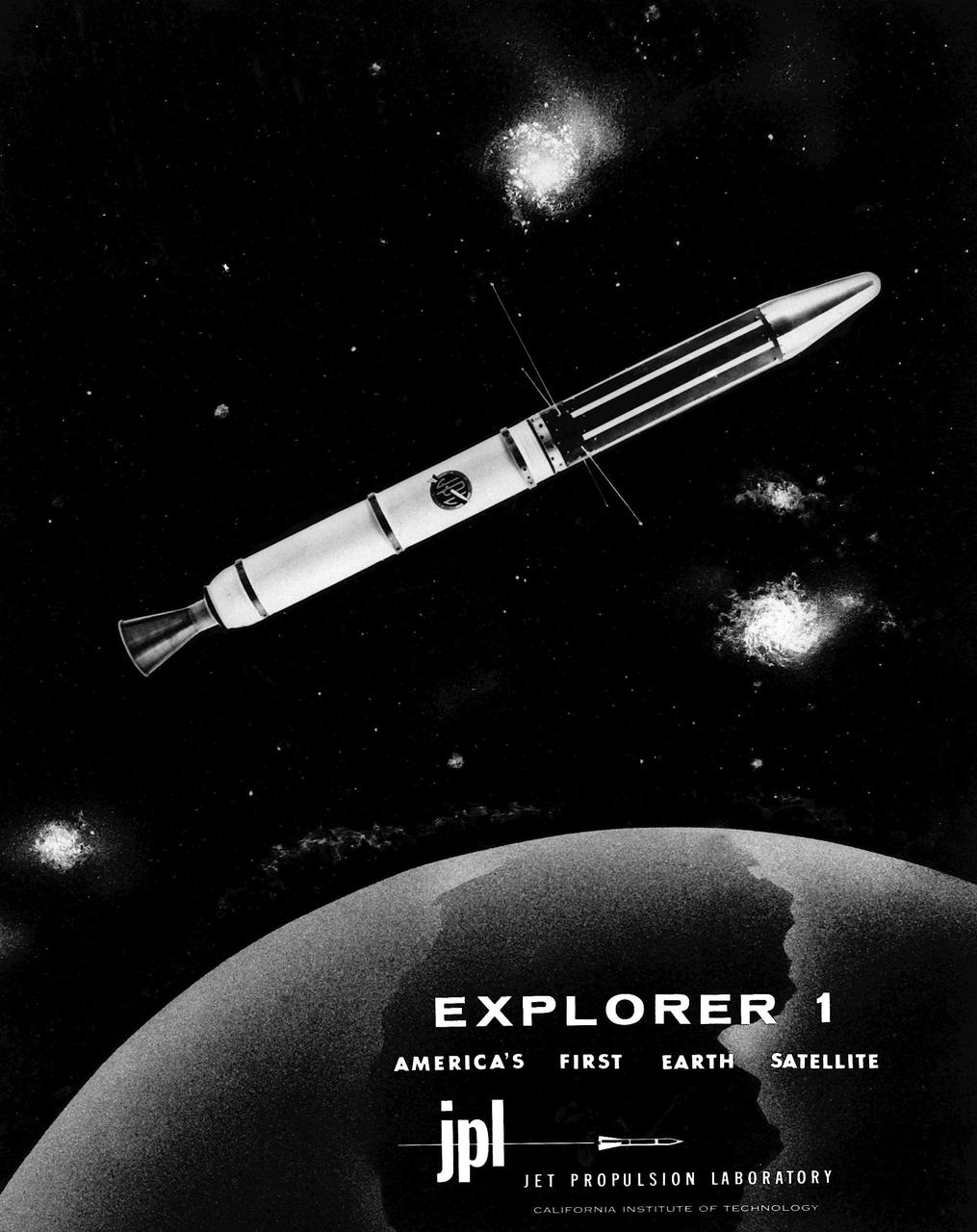
America first satellite, Explorer 1. America joined the space race with the launch of this small, but important spacecraft. http://photojournal.jpl.nasa.gov/catalog/PIA04601
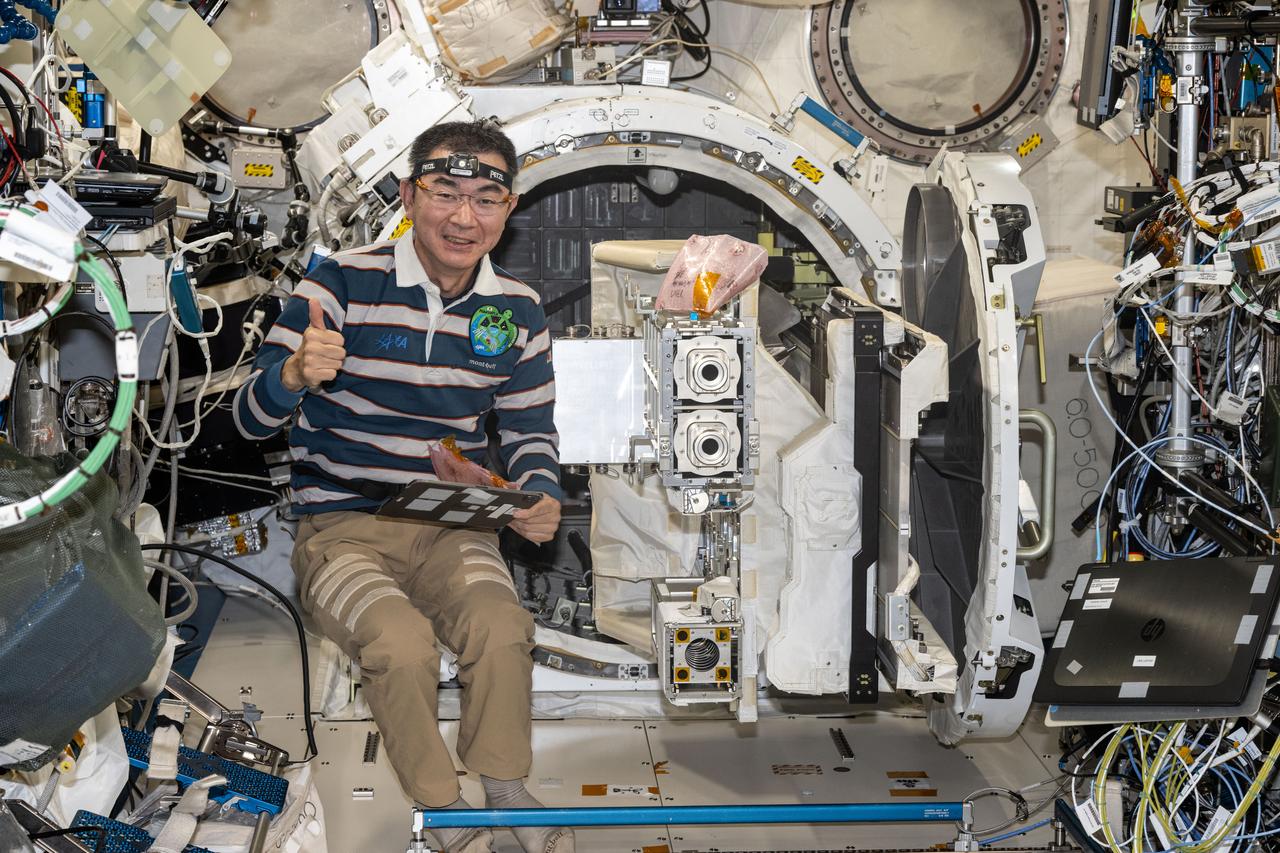
iss073e0917008 (Oct. 21, 2025) --- JAXA (Japan Aerospace Exploration Agency) astronaut and Expedition 73 Flight Engineer Kimiya Yui removes a small satellite orbital deployer from the airlock of the Kibo laboratory module. The deployer houses CubeSats, which are released into Earth orbit after the mechanism is transferred to the external microgravity environment outside the International Space Station.
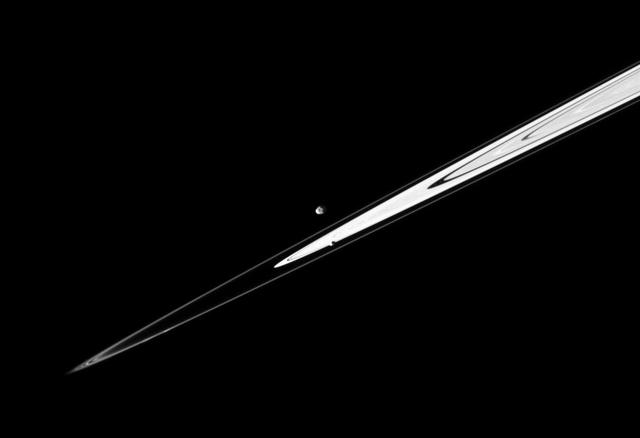
A pair of Saturn small satellites, Janus and Pandora, accompany the planet rings in this image from NASA Cassini spacecraft presenting the view in dramatic diagonal fashion.

This poster highlights the JPL cubesat missions. NASA CubeSat Programs provide opportunities for small satellite systems to fly as auxiliary payloads on planned missions.
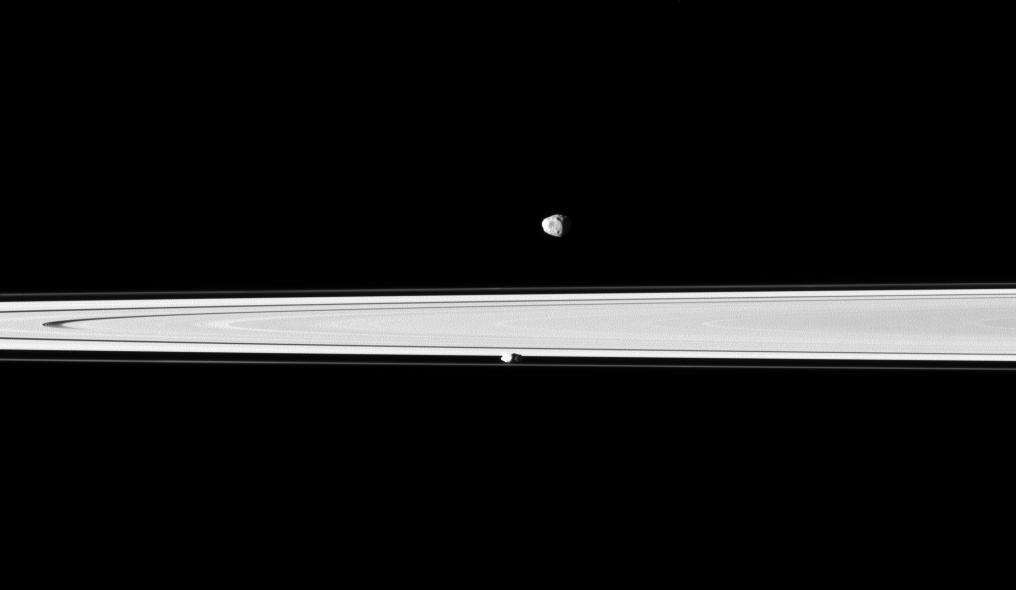
A pair of Saturn small, icy satellites accompany the planet rings in snapshot from NASA Cassini spacecraft. The rings are between Janus and Prometheus.
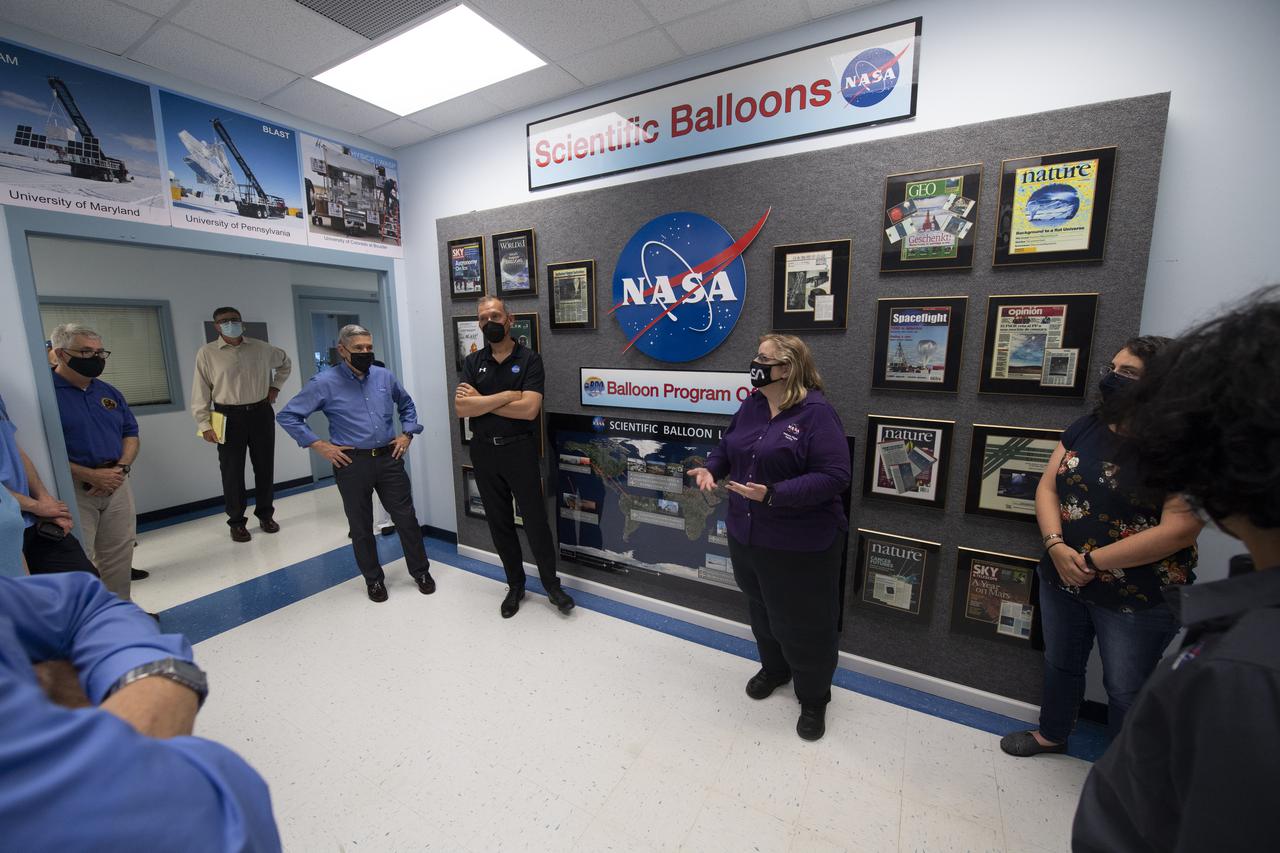
Debbie Fairbrother, chief of the Balloon Program Office at NASA's Wallops Flight Facility, center, speaks with Thomas Zurbuchen, associate administrator for NASA's Science Mission Directorate, Bob Cabana, NASA associate administrator, Dave Pierce, director of NASA's Wallops Flight Facility, NASA Administrator Bill Nelson, NASA Deputy Administrator Pam Melroy, and Dennis Andrucyk, director of NASA's Goddard Space Flight Center during a tour the Small Satellites, Balloon Research and Development Lab, Tuesday, Aug. 10, 2021, NASA’s Wallops Flight Facility in Virginia. Photo Credit: (NASA/Joel Kowsky)
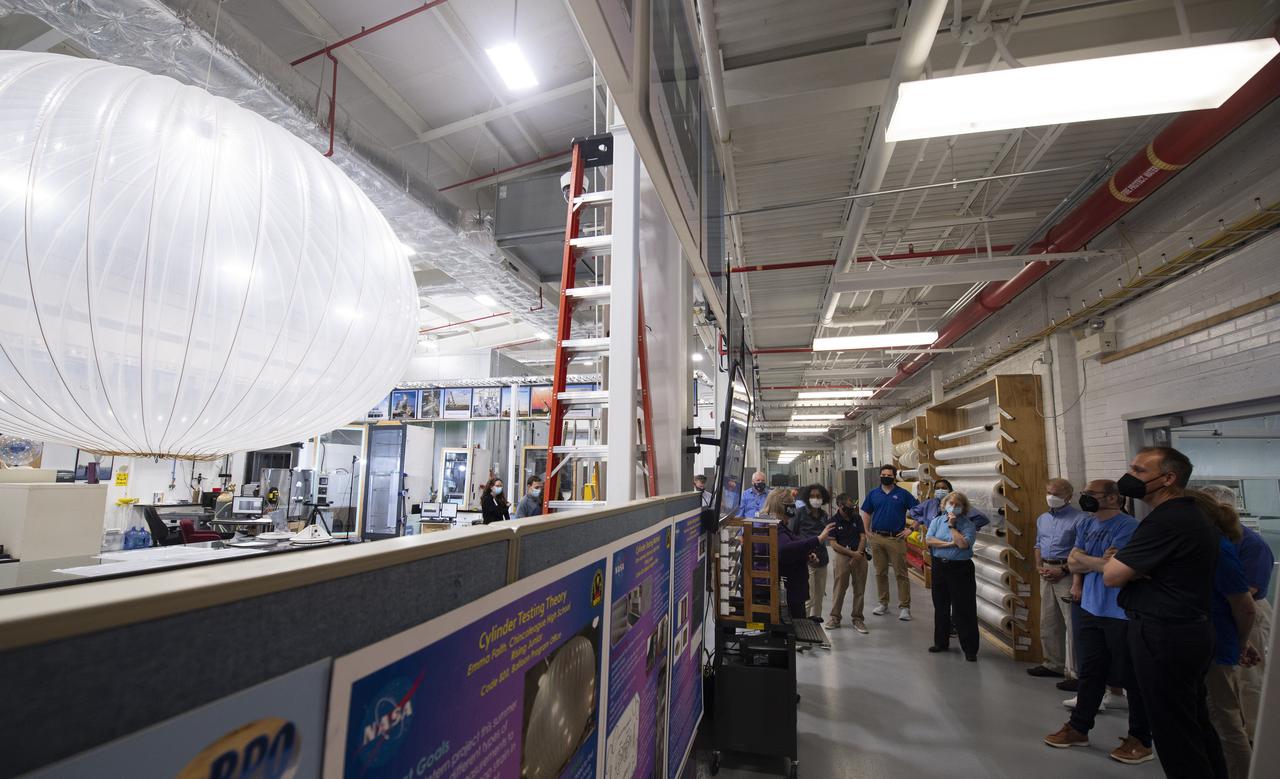
Debbie Fairbrother, chief of the Balloon Program Office at NASA's Wallops Flight Facility, center, speaks with Thomas Zurbuchen, associate administrator for NASA's Science Mission Directorate, Bob Cabana, NASA associate administrator, Dave Pierce, director of NASA's Wallops Flight Facility, NASA Administrator Bill Nelson, NASA Deputy Administrator Pam Melroy, and Dennis Andrucyk, director of NASA's Goddard Space Flight Center during a tour the Small Satellites, Balloon Research and Development Lab, Tuesday, Aug. 10, 2021, at NASA’s Wallops Flight Facility in Virginia. Photo Credit: (NASA/Joel Kowsky)
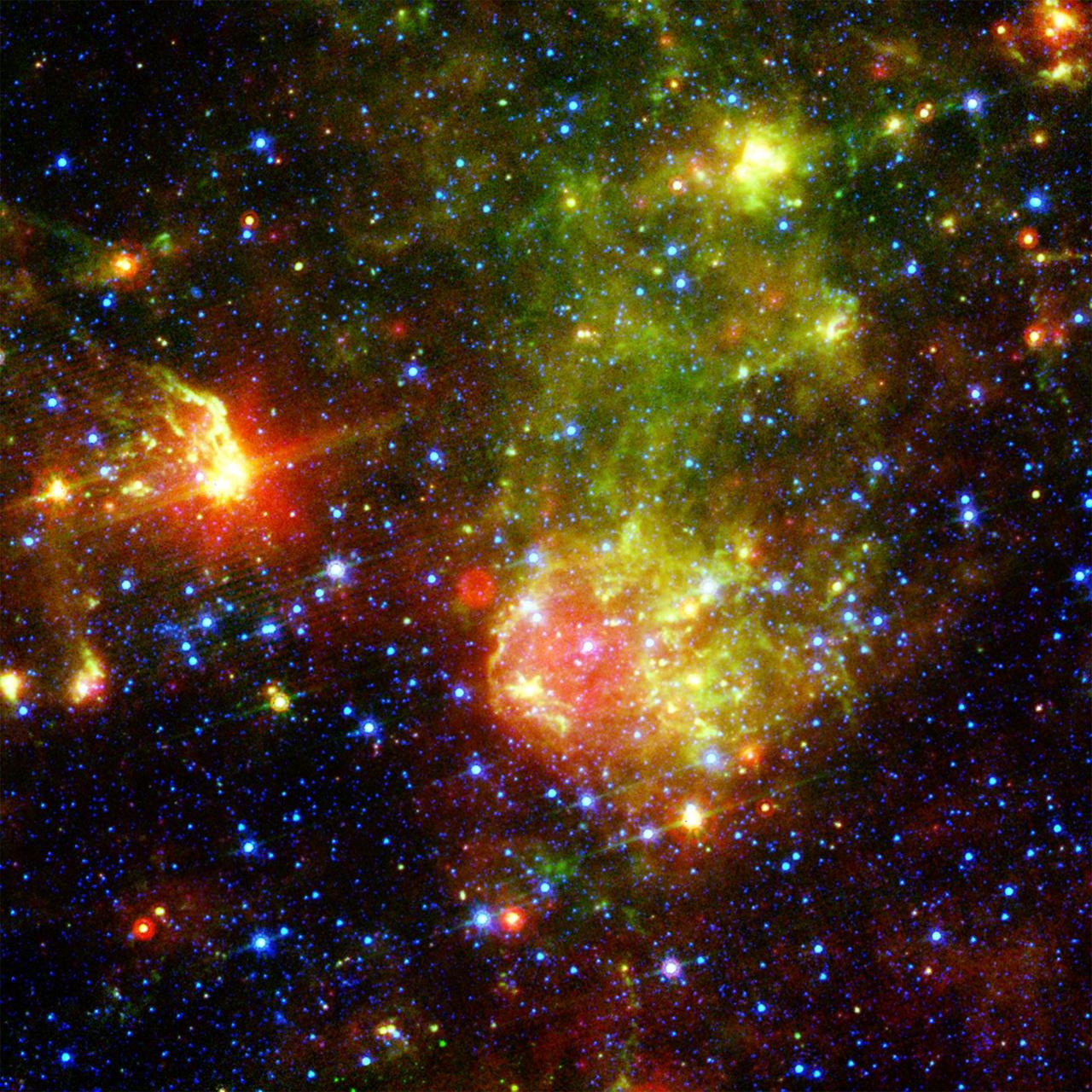
NASA Spitzer Space Telescope shows the supernova remnant 1E0102.2-7219 sits next to the nebula N76 in a bright, star-forming region of the Small Magellanic Cloud, a satellite galaxy to our Milky Way galaxy.

NASA Galileo spacecraft, which was used to map the mineral and ice properties over the surfaces of the Jovian moons, producing global spectral images for small selected regions on the satellites in 1996-97.
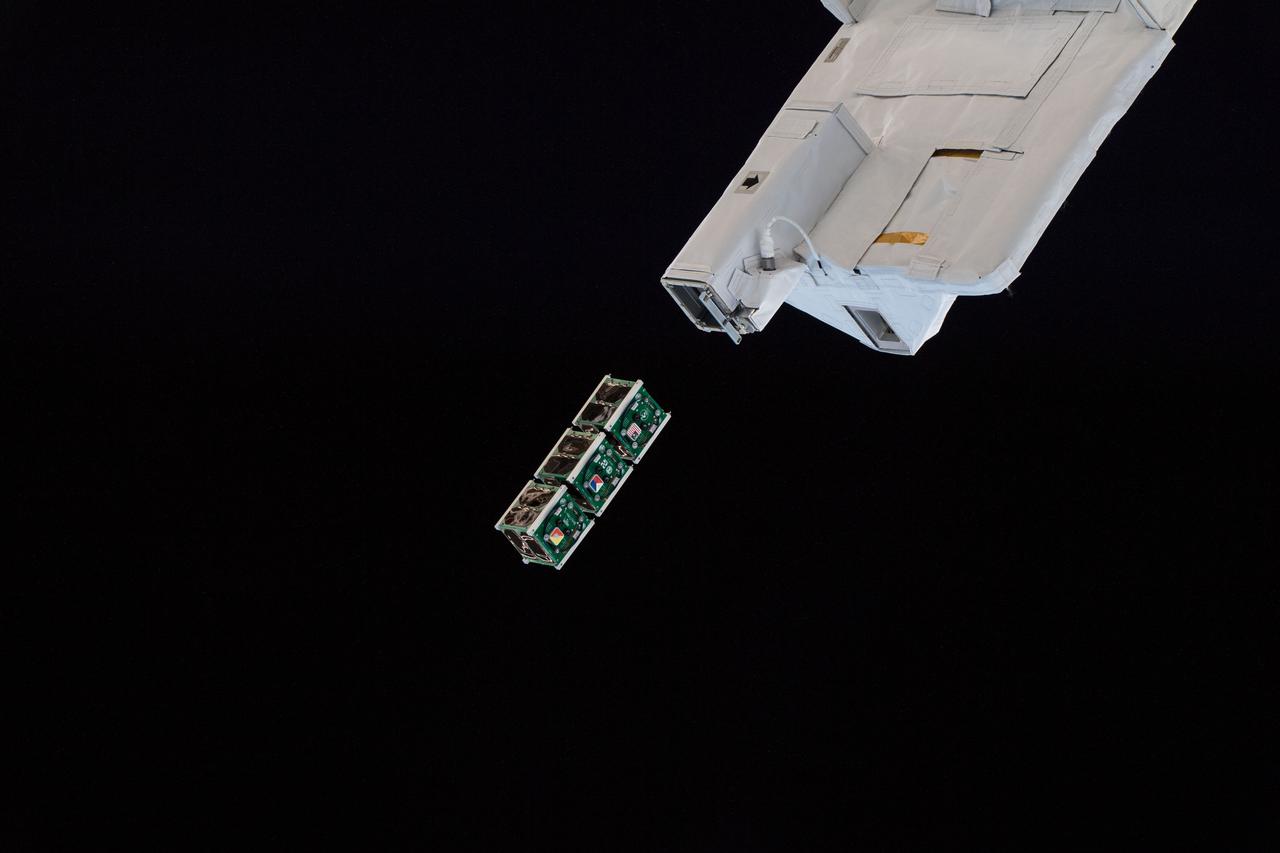
iss056e130478 (8/10/2018) --- A view of the BIRDS-2 Satellite Deployment during JSSOD-9 operations. The JEM Small Satellite Orbital Deployer (J-SSOD) provides a novel, safe, small satellite launching capability to the International Space Station (ISS). Once the J-SSOD including satellite install cases with small satellites are installed on the Multi-Purpose Experiment Platform (MPEP) by crewmembers, it is passed through the JEM airlock for retrieval, positioning and deployment by the JEMRMS.

Two small spacecrafts satellites that make up NASA’s ESCAPADE (Escape and Plasma Acceleration and Dynamics Explorers) mission to Mars arrived at Astrotech Space Operations in Titusville, near NASA’s Kennedy Space Center in Florida on Sunday, Aug. 19, 2024. Set to launch from Blue Origin’s New Glenn rocket, the Rocket Lab spacecraft will study the solar wind and how the solar wind interacts with Mars’ magnetic environment and how this interaction drives the planet’s atmospheric escape.

Two small spacecrafts satellites that make up NASA’s ESCAPADE (Escape and Plasma Acceleration and Dynamics Explorers) mission to Mars arrived at Astrotech Space Operations in Titusville, near NASA’s Kennedy Space Center in Florida on Sunday, Aug. 19, 2024. Set to launch from Blue Origin’s New Glenn rocket, the Rocket Lab spacecraft will study the solar wind and how the solar wind interacts with Mars’ magnetic environment and how this interaction drives the planet’s atmospheric escape.

Two small spacecrafts satellites that make up NASA’s ESCAPADE (Escape and Plasma Acceleration and Dynamics Explorers) mission to Mars arrived at Astrotech Space Operations in Titusville, near NASA’s Kennedy Space Center in Florida on Sunday, Aug. 19, 2024. Set to launch from Blue Origin’s New Glenn rocket, the Rocket Lab spacecraft will study the solar wind and how the solar wind interacts with Mars’ magnetic environment and how this interaction drives the planet’s atmospheric escape.
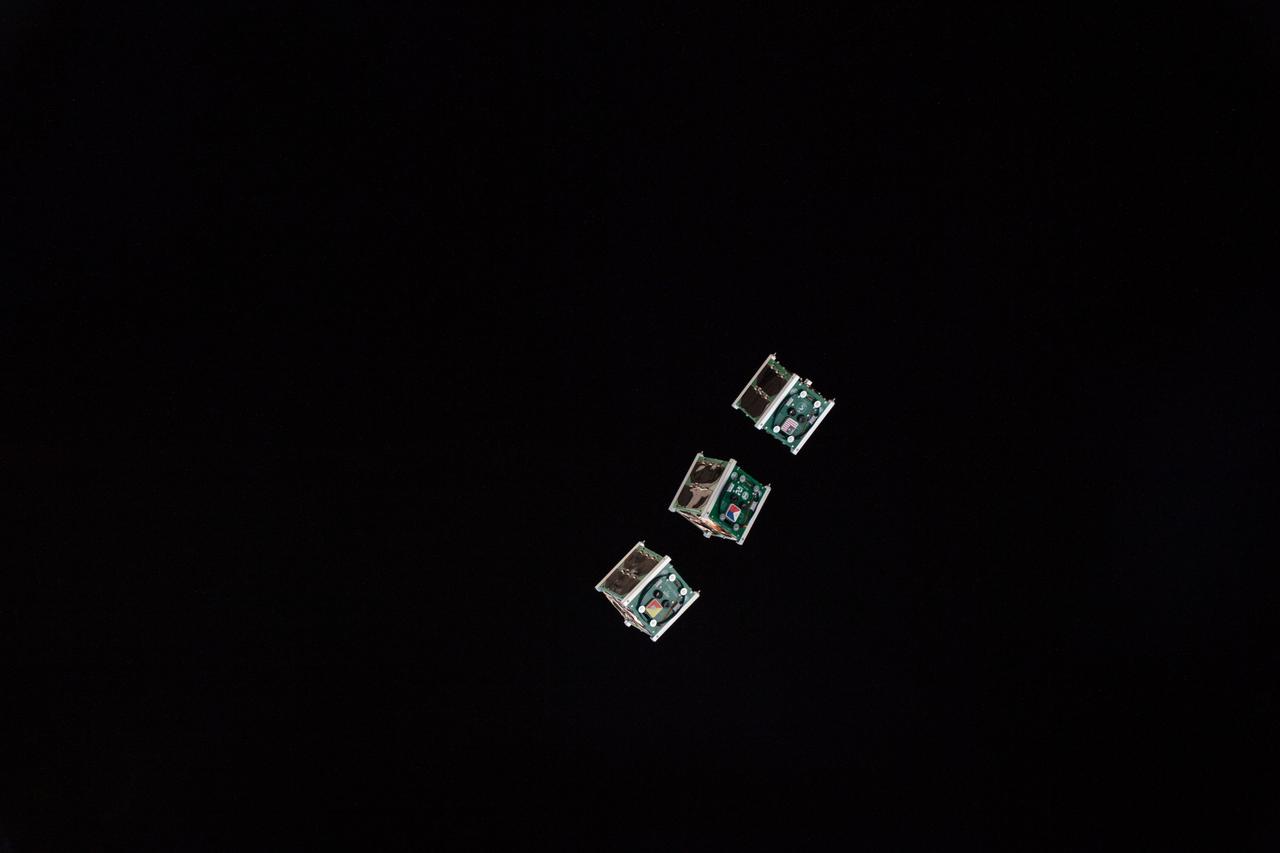
iss056e130490(8/10/2018) --- A view of the BIRDS-2 Satellite Deployment during JSSOD-9 operations. The JEM Small Satellite Orbital Deployer (J-SSOD) provides a novel, safe, small satellite launching capability to the International Space Station (ISS).
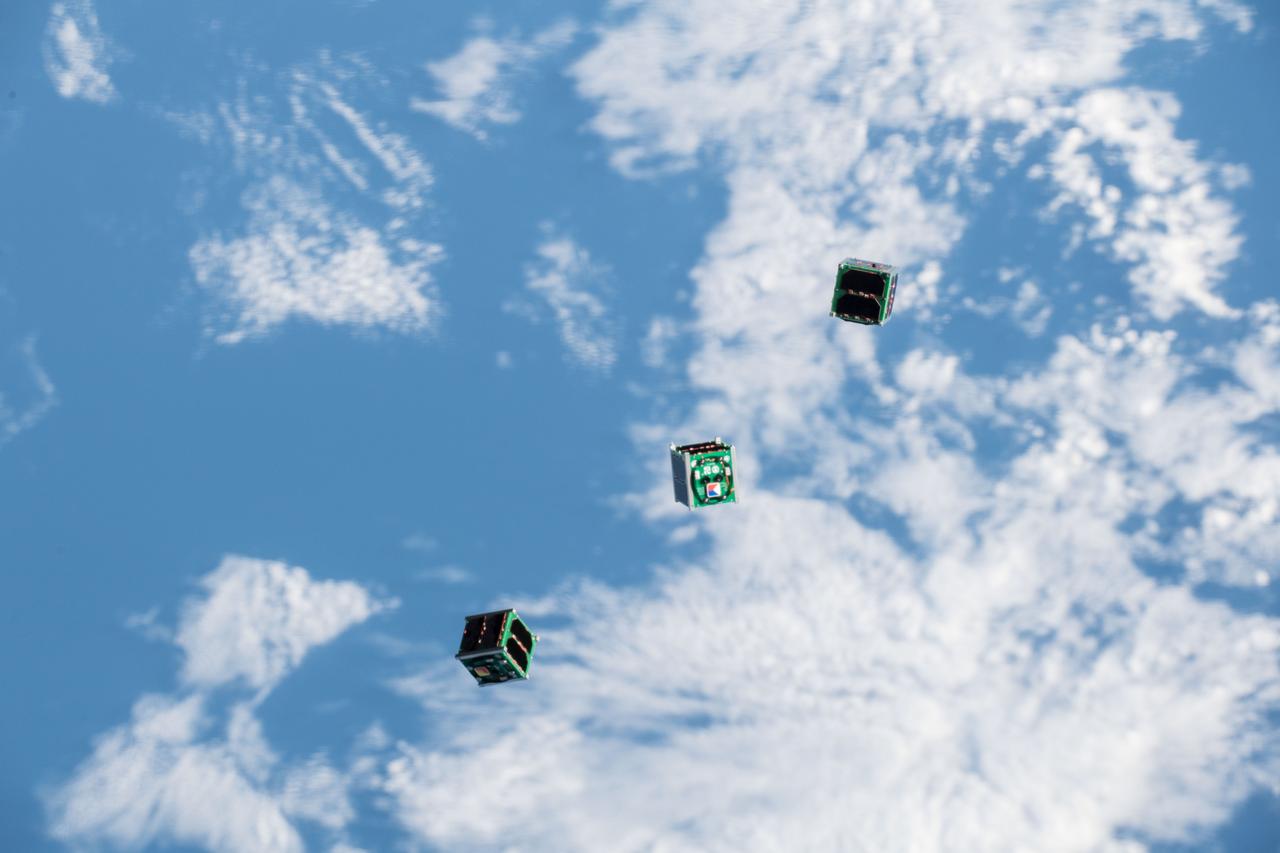
iss056e130515 (8/10/2018) --- A view of the BIRDS-2 Satellite Deployment during JSSOD-9 operations. The JEM Small Satellite Orbital Deployer (J-SSOD) provides a novel, safe, small satellite launching capability to the International Space Station (ISS).
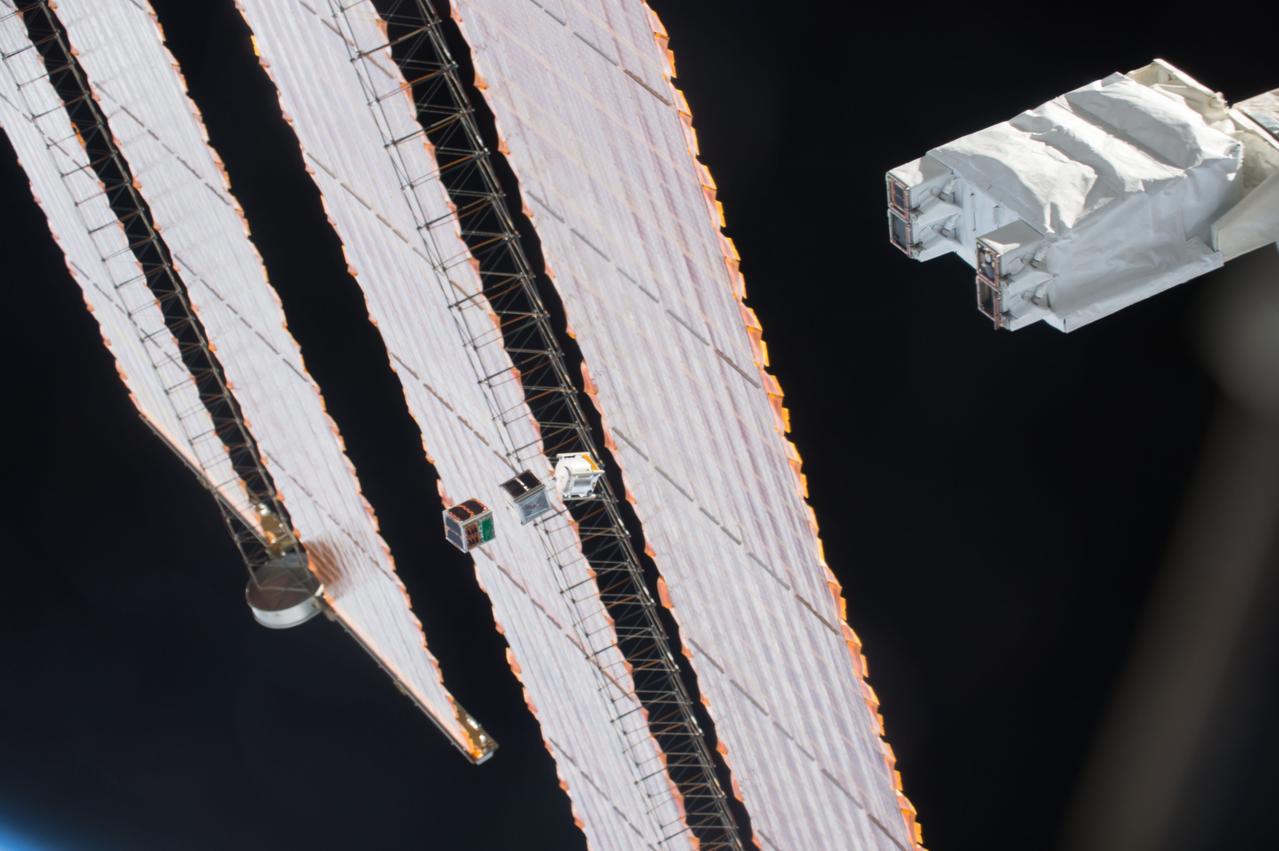
iss050e031207 (1/6/2017) --- A view during the Japanese-Small Satellite Orbital Deployer-6 (J-SSOD-6) deployment of the following satellites: Freedom (1U), Waseda-SAT3, ITF-2 (1U), Egg (3U), AOBA-Velox-III (U), TuPOD (3U). J-SSOD is a unique satellite launcher, handled by the Japanese Experiment Module Remote Manipulator System (JEMRMS), which provides containment and deployment mechanisms for several individual small satellites. Once the J-SSOD including satellite install cases with small satellites are installed on the Multi-Purpose Experiment Platform (MPEP) by crewmembers, it is passed through the JEM airlock for retrieval, positioning and deployment by the JEMRMS.
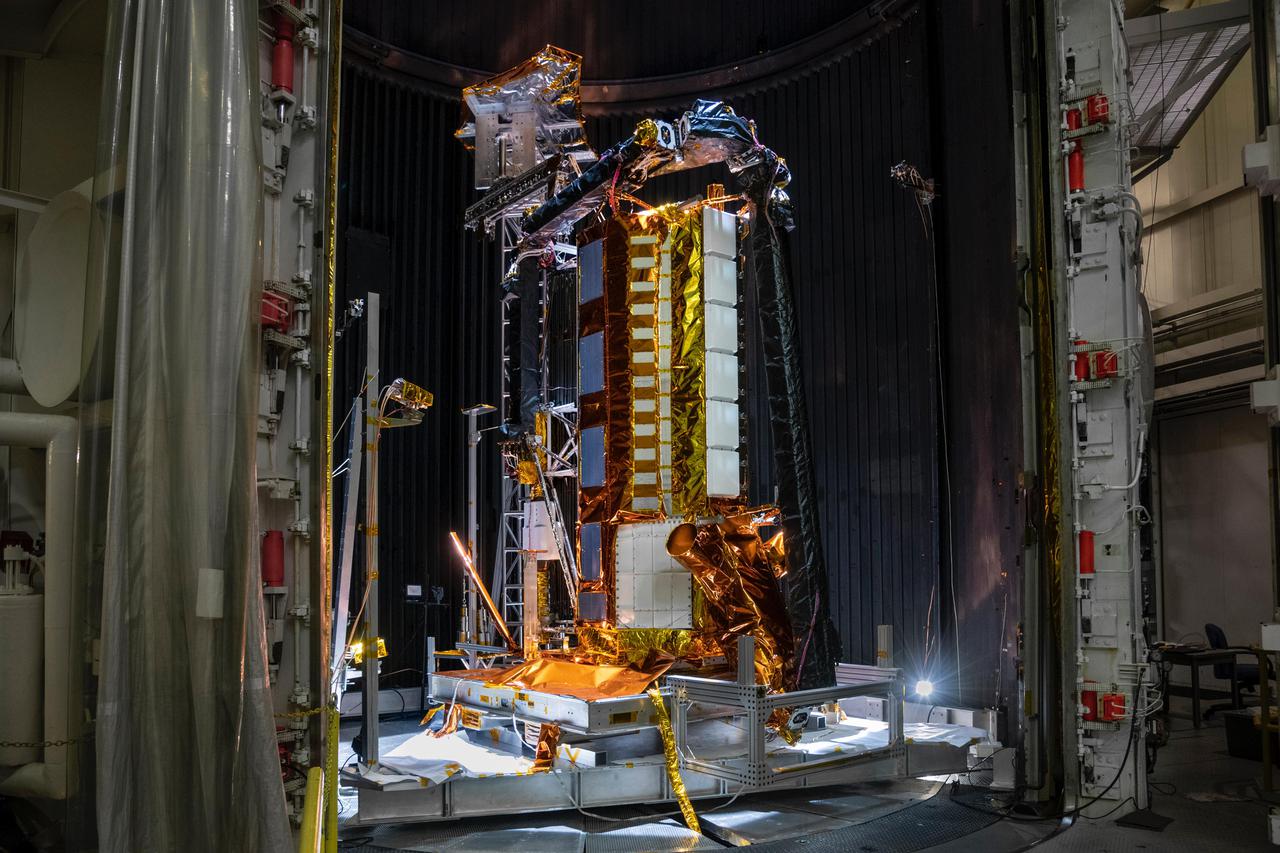
Part of the NASA-ISRO Synthetic Aperture Radar (NISAR) satellite rests in a thermal vacuum chamber – meant to mimic the conditions found in space – at NASA's Jet Propulsion Laboratory in August 2020. Engineers tested the hardware in conditions similar to the ones NISAR will experience in space to see how it will hold up. The SUV-size Earth satellite will track subtle changes in the planet's surface as small as 0.4 inches (a centimeter) over areas about the size of half a tennis court. NISAR will spot warning signs of imminent volcanic eruptions, help to monitor groundwater supplies, track the melt rate of ice sheets, and observe shifts in the distribution of vegetation around the world. https://photojournal.jpl.nasa.gov/catalog/PIA24539

ISS045E014236 (09/17/2015) – A Japanese Small Satellite is deployed from outside the Japanese Experiment Module on Sept. 17, 2015. Two satellites were sent into Earth orbit by the Small Satellite Orbital Deployer. The first satellite is designed to observe the Ultraviolet (UV) spectrum during the Orionid meteor shower in October. The second satellite, sponsored by the University of Brasilia and the Brazilian government, focuses on meteorological data collection.
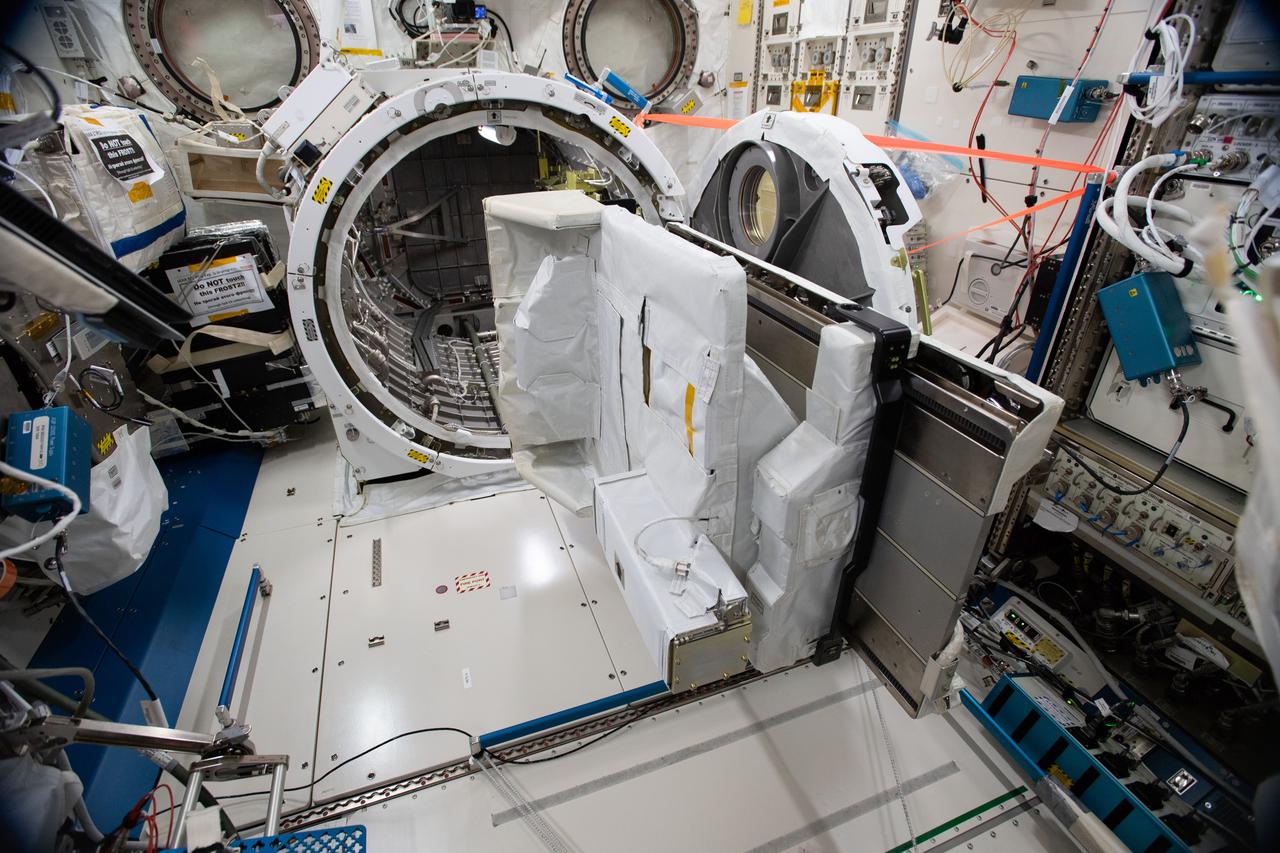
iss056e100542 (7/3/2018) --- A view of the Japanese Experiment Module (JEM) Airlock (AL) slide table retraction from Japanese Experiment Module (JPM) Side during JSSOD-9 operations. The JEM Small Satellite Orbital Deployer (J-SSOD) provides a novel, safe, small satellite launching capability to the International Space Station (ISS). Once the J-SSOD including satellite install cases with small satellites are installed on the Multi-Purpose Experiment Platform (MPEP) by crewmembers, it is passed through the JEM airlock for retrieval, positioning and deployment by the JEMRMS.
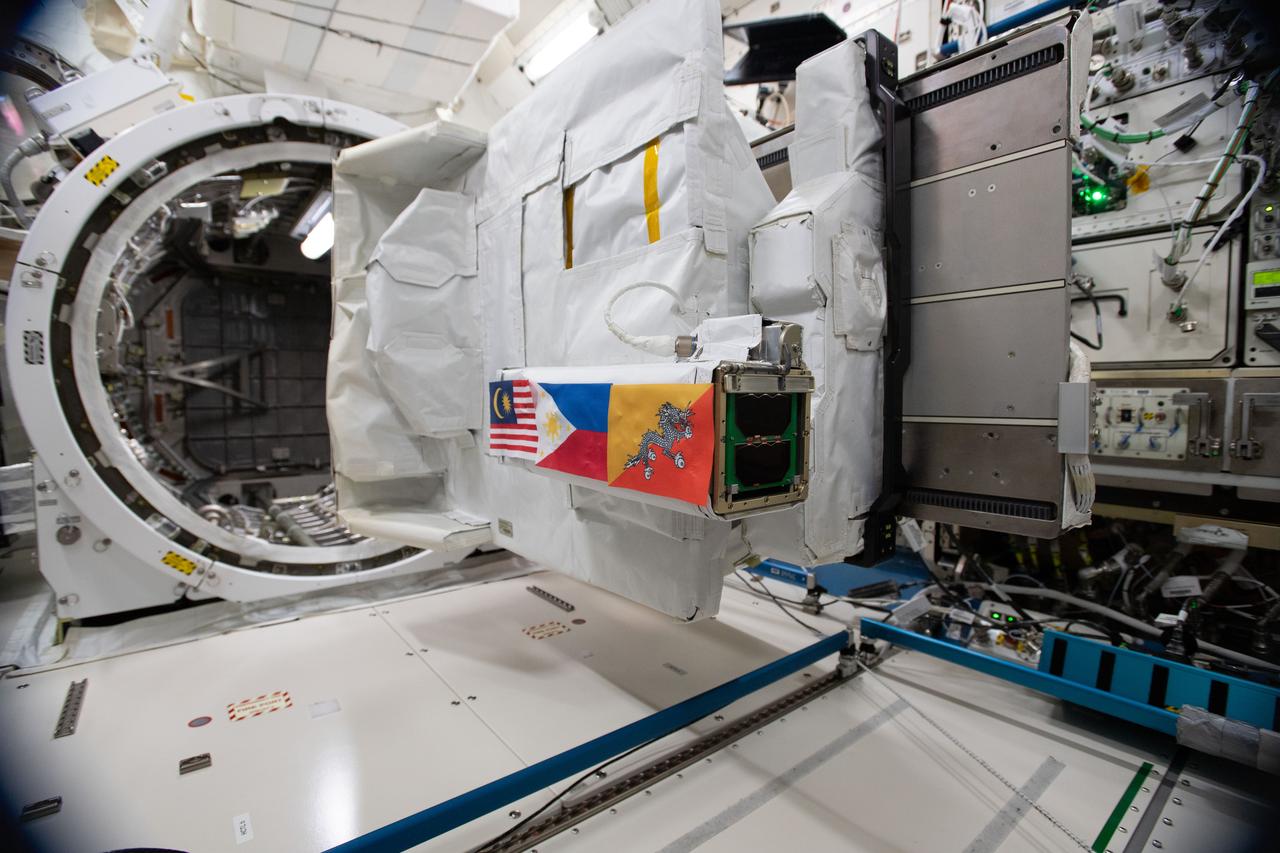
iss056e100586 (7/30/2018) --- A view of the Japanese Experiment Module (JEM) Airlock (AL) slide table retraction from Japanese Experiment Module (JPM) during JSSOD-9 operations. The JEM Small Satellite Orbital Deployer (J-SSOD) provides a novel, safe, small satellite launching capability to the International Space Station (ISS). Once the J-SSOD including satellite install cases with small satellites are installed on the Multi-Purpose Experiment Platform (MPEP) by crewmembers, it is passed through the JEM airlock for retrieval, positioning and deployment by the JEMRMS.
![iss045e014085 (9/17/2015) --- View of the Japan Aerospace Exploration Agency (JAXA) Small Satellite S-CUBE deployed from JEM [Japanese Experiment Module]-Small Satellite Orbital Deployer 4 (J-SSOD 4) equipment on the Multi-Purpose Experiment Platform (MPEP).](https://images-assets.nasa.gov/image/iss045e014085/iss045e014085~medium.jpg)
iss045e014085 (9/17/2015) --- View of the Japan Aerospace Exploration Agency (JAXA) Small Satellite S-CUBE deployed from JEM [Japanese Experiment Module]-Small Satellite Orbital Deployer 4 (J-SSOD 4) equipment on the Multi-Purpose Experiment Platform (MPEP).
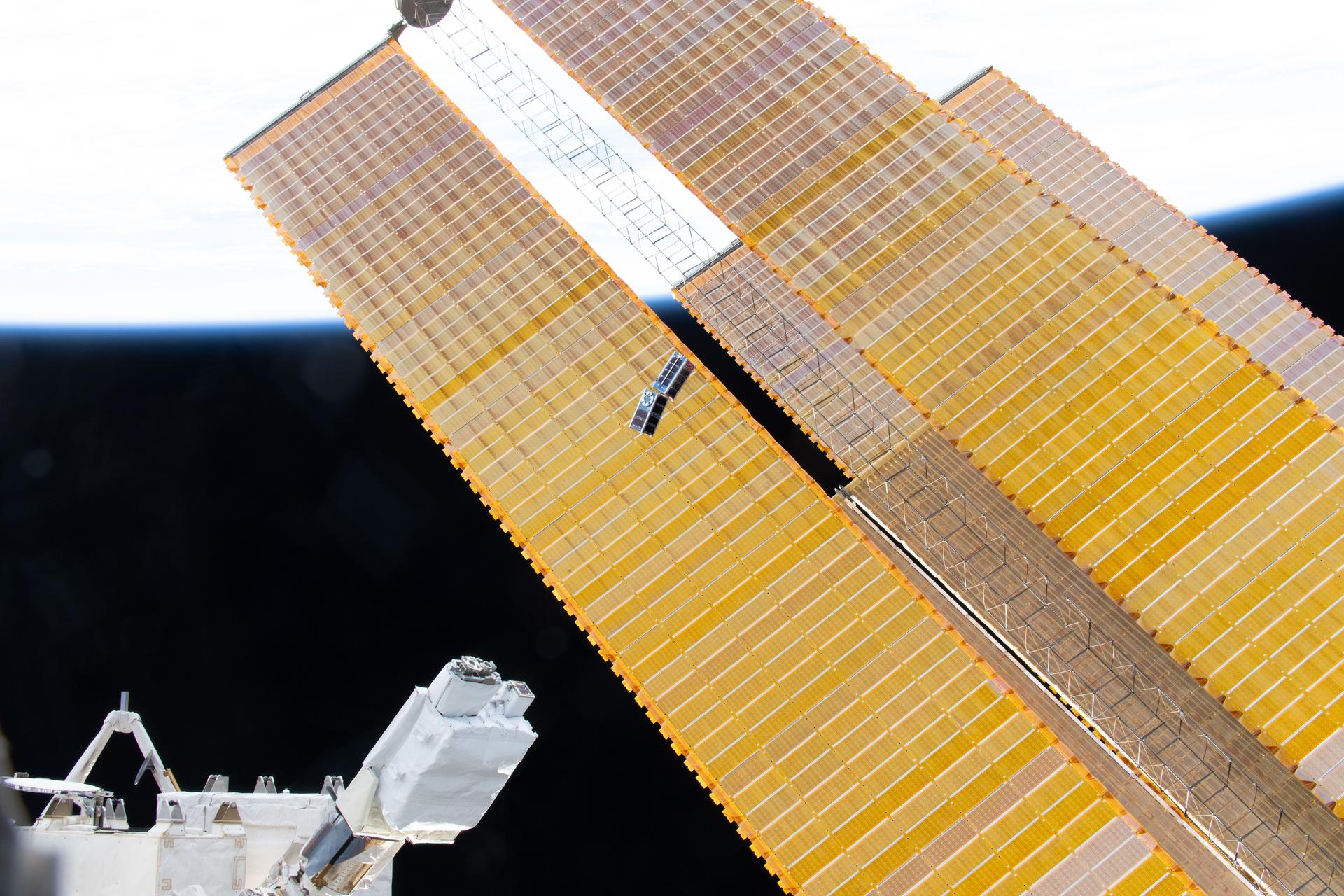
iss073e0860130 (Sept. 19, 2025) --- Two CubeSats are shown deploying from JAXA’s (Japan Aerospace Exploration Agency) Small Satellite Orbital Deployer (J-SSOD) system. The J-SSOD provides a standardized, efficient way to deploy CubeSats and other small satellites into low Earth orbit for various technological, educational, and scientific use.

The BioSentinel spacecraft enters a heliocentric orbit. BioSentinel will detect and measure the impact of space radiation on living organisms over long durations beyond low-Earth orbit (LEO). Illustration by Daniel Rutter.
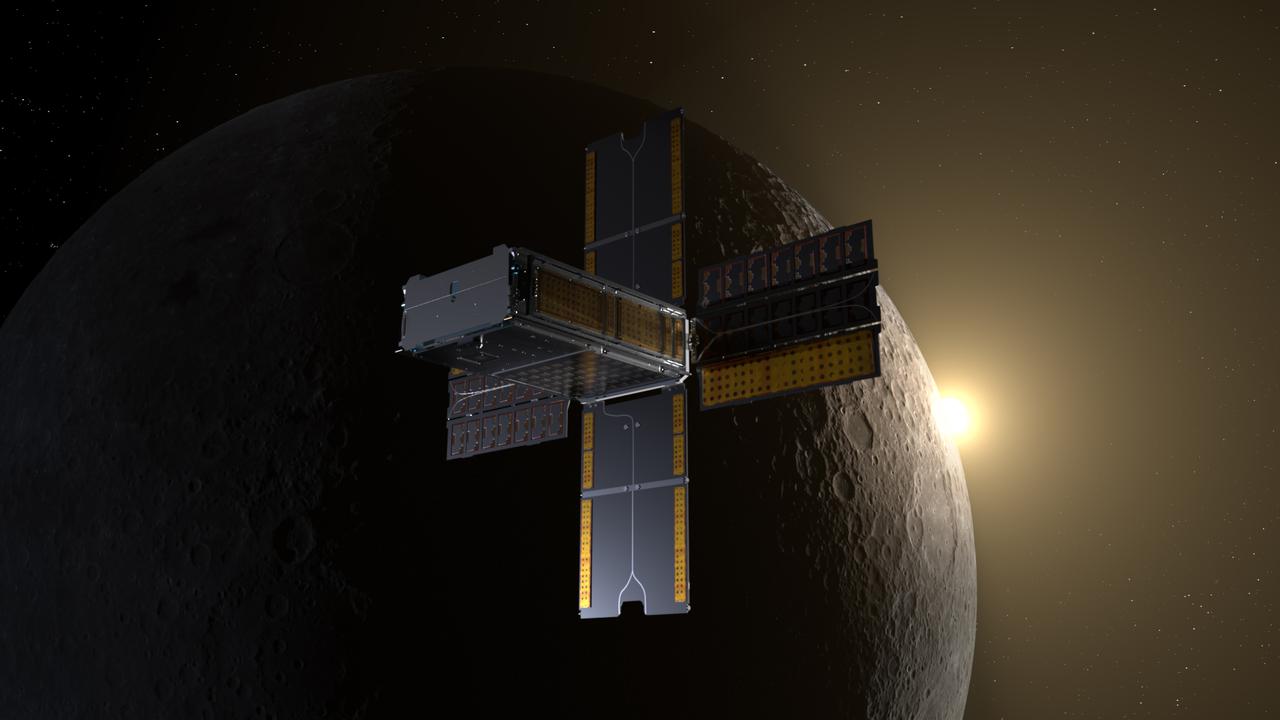
BioSentinel spacecraft enters a lunar flyby trajectory into a heliocentric orbit. BioSentinel will detect and measure the impact of space radiation on living organisms over long durations beyond low-Earth orbit (LEO). Illustration by Daniel Rutter.

BioSentinel spacecraft enters a lunar flyby trajectory into a heliocentric orbit. BioSentinel will detect and measure the impact of space radiation on living organisms over long durations beyond low-Earth orbit (LEO). Illustration by Daniel Rutter.
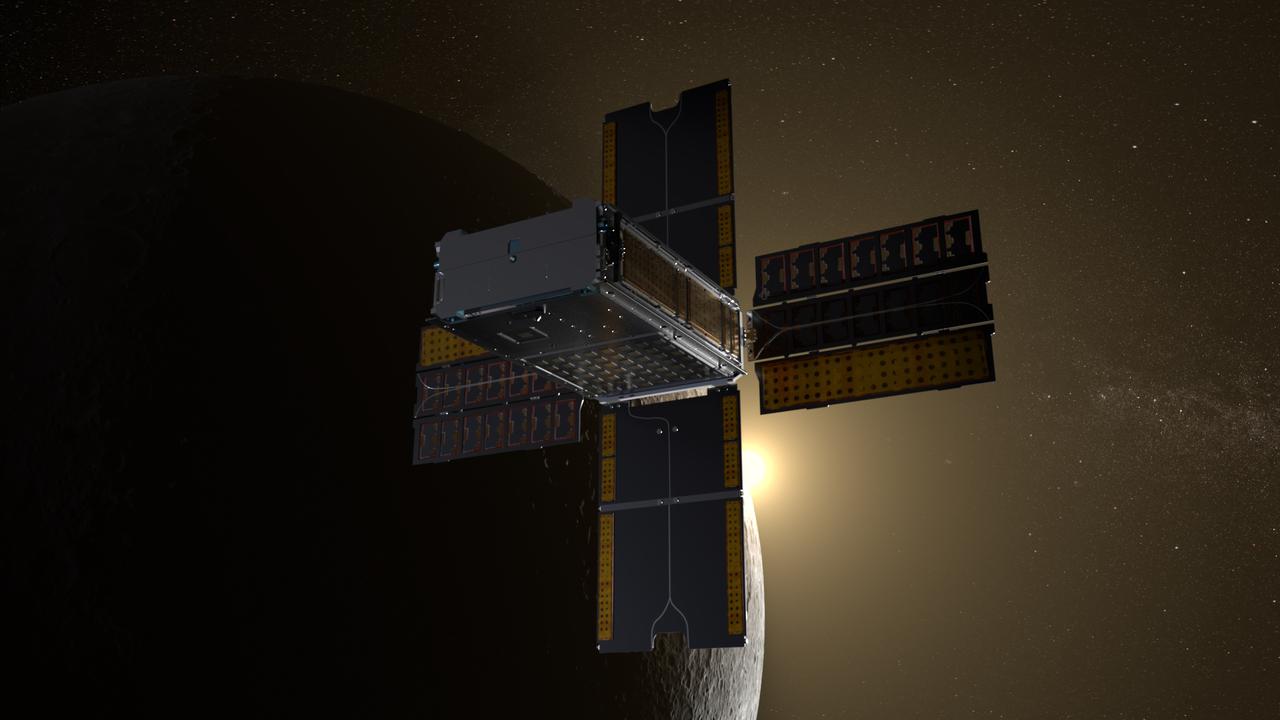
BioSentinel spacecraft enters a lunar flyby trajectory into a heliocentric orbit. BioSentinel will detect and measure the impact of space radiation on living organisms over long durations beyond low-Earth orbit (LEO). Illustration by Daniel Rutter.
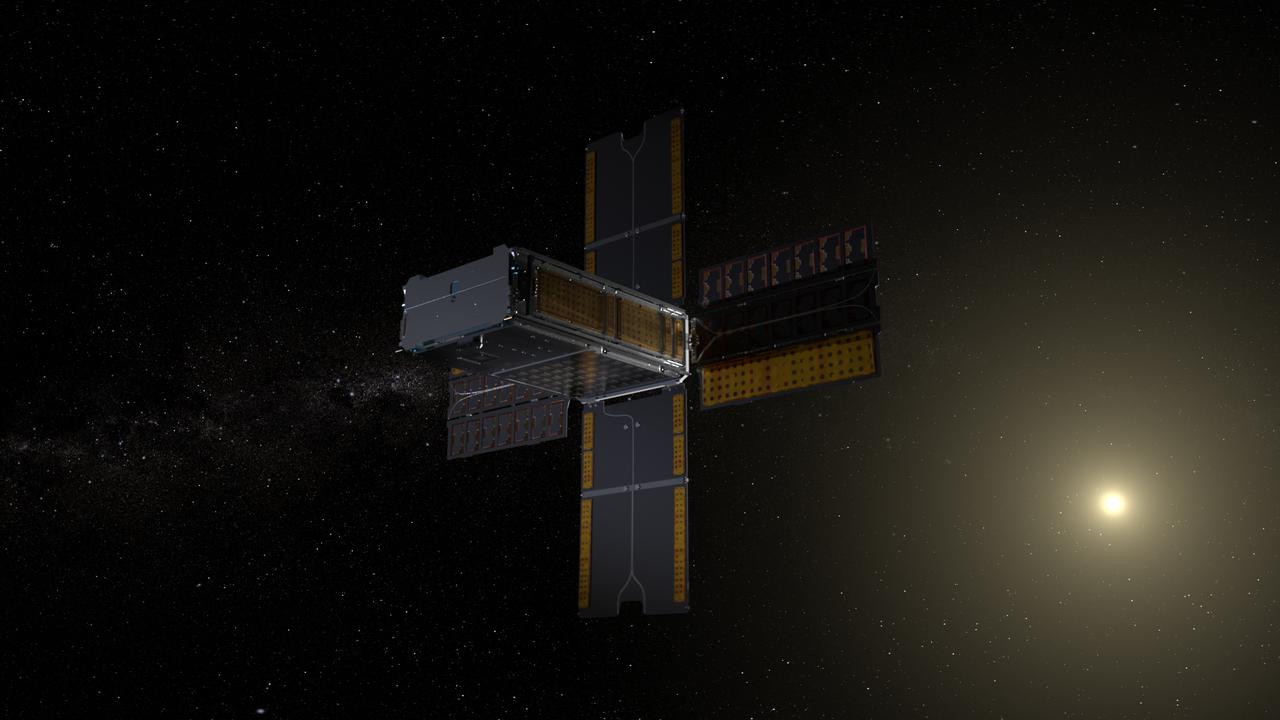
The BioSentinel spacecraft enters a heliocentric orbit. BioSentinel will detect and measure the impact of space radiation on living organisms over long durations beyond low-Earth orbit (LEO). Illustration by Daniel Rutter.
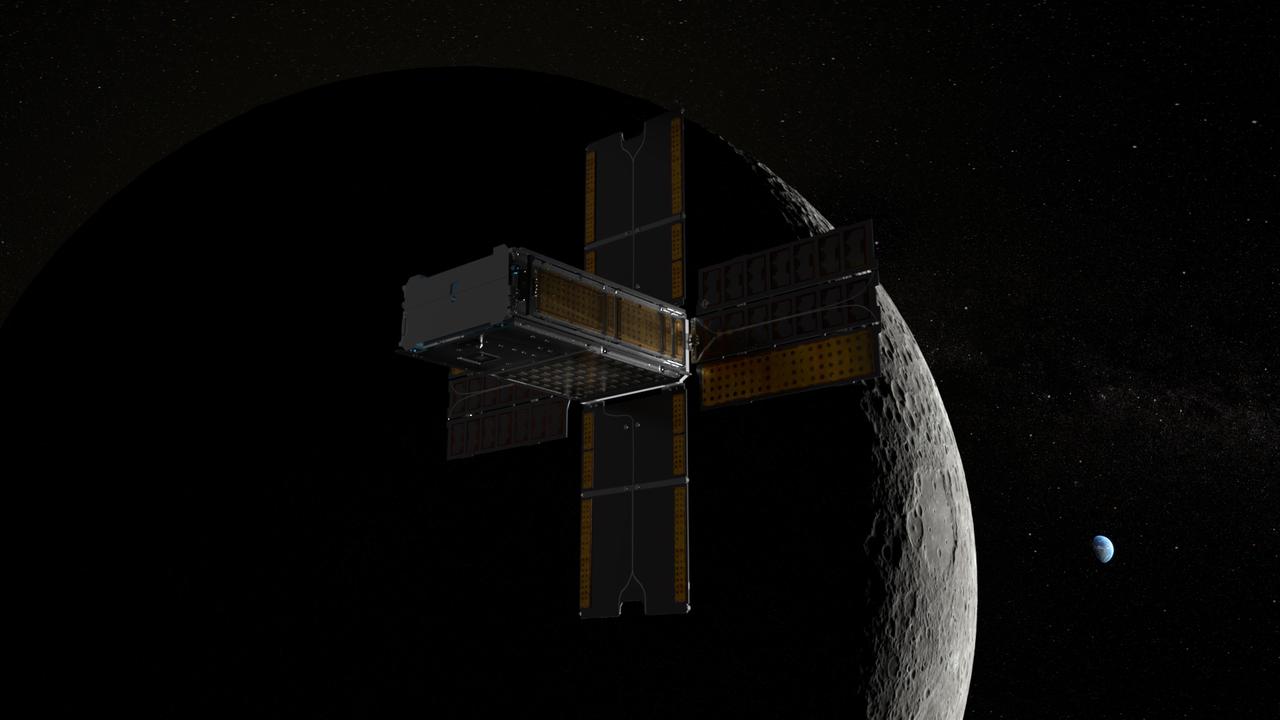
BioSentinel spacecraft leaves Earth and enters a lunar flyby trajectory into a heliocentric orbit. BioSentinel will detect and measure the impact of space radiation on living organisms over long durations beyond low-Earth orbit (LEO). Illustration by Daniel Rutter.
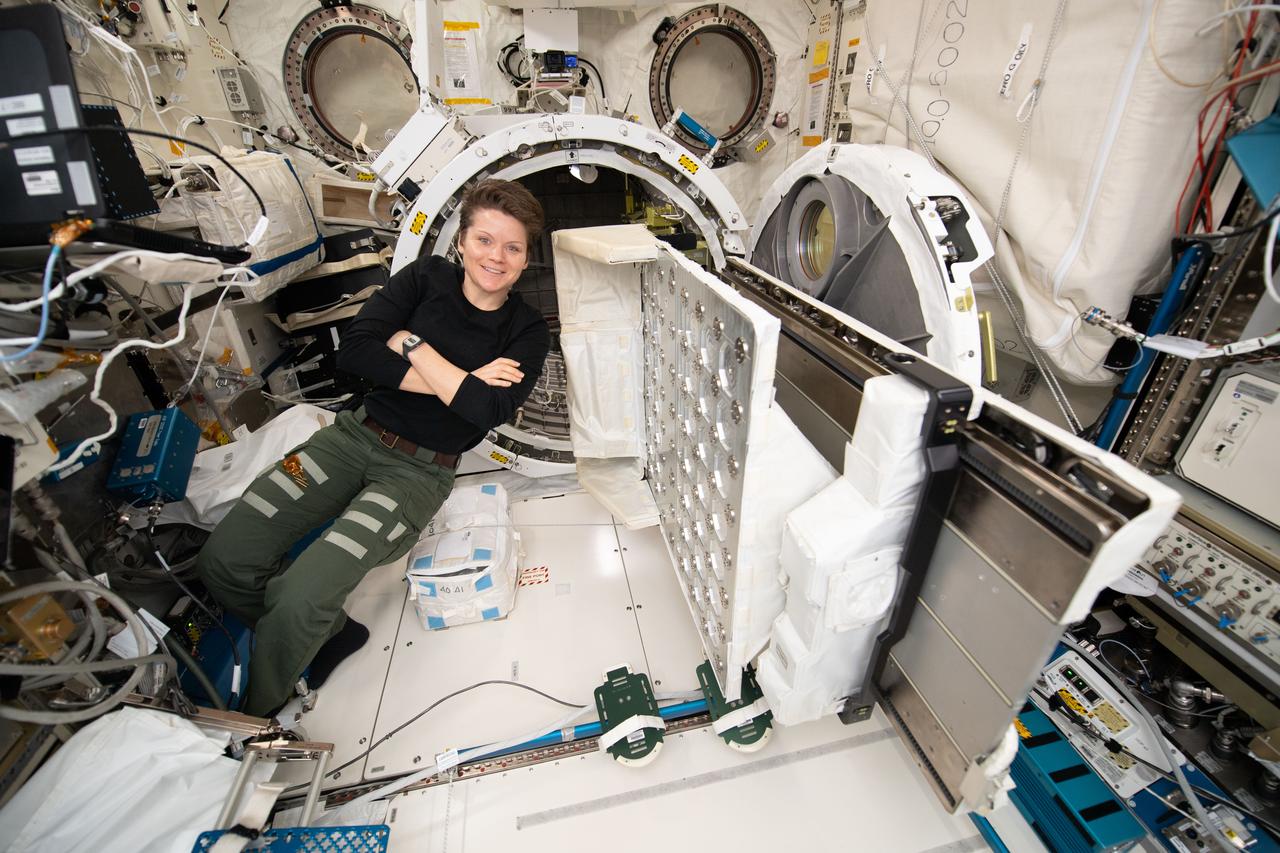
iss058e007370 (Jan. 29, 2019) --- NASA astronaut and Expedition 58 Flight Engineer Anne McClain works inside Japan's Kibo laboratory module. She was setting up and installing small satellite deployment hardware inside Kibo's airlock to eject a set of CubeSats outside the Japanese module.
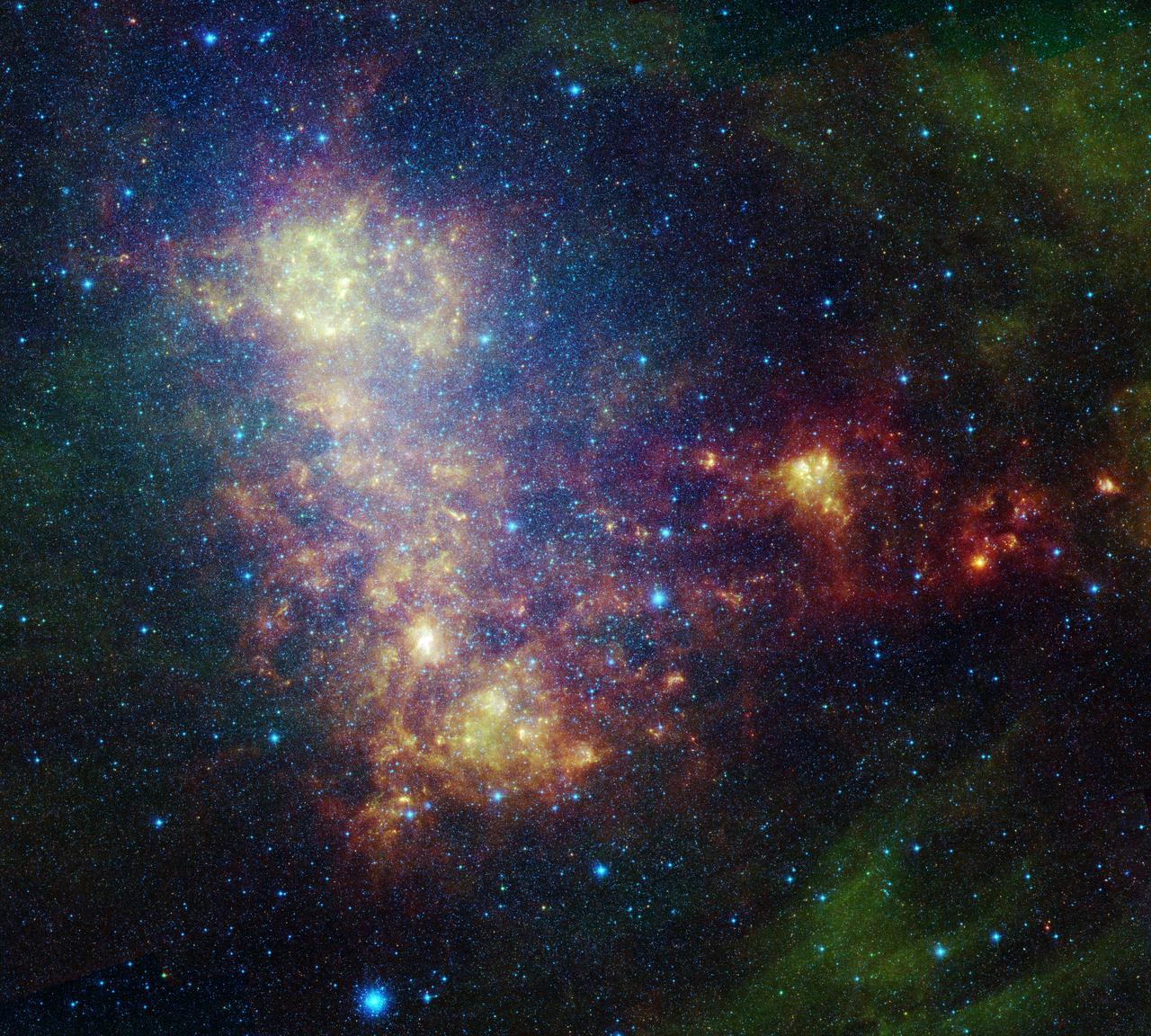
This infrared portrait of the Small Magellanic Cloud, taken by NASA Spitzer Space Telescope, reveals the stars and dust in this galaxy as never seen before. This nearby satellite galaxy to our Milky Way galaxy is some 200,000 light-years away.

Features as small as 100 km 62 miles across can be seen in this color image of Neptune satellite Triton, photographed by NASA Voyager 2 on Aug. 20, 1989, while it was still 5.4 million km 3.3 million miles from Neptune.
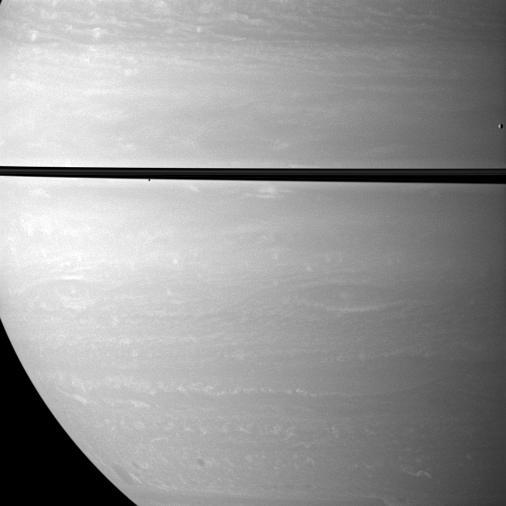
While studying Saturn atmosphere, NASA Cassini spacecraft happens to catch a view of two small, icy satellites. Mimas drifts past on the far right of the image. Janus appears as a black dot just below the rings near the center of the image.
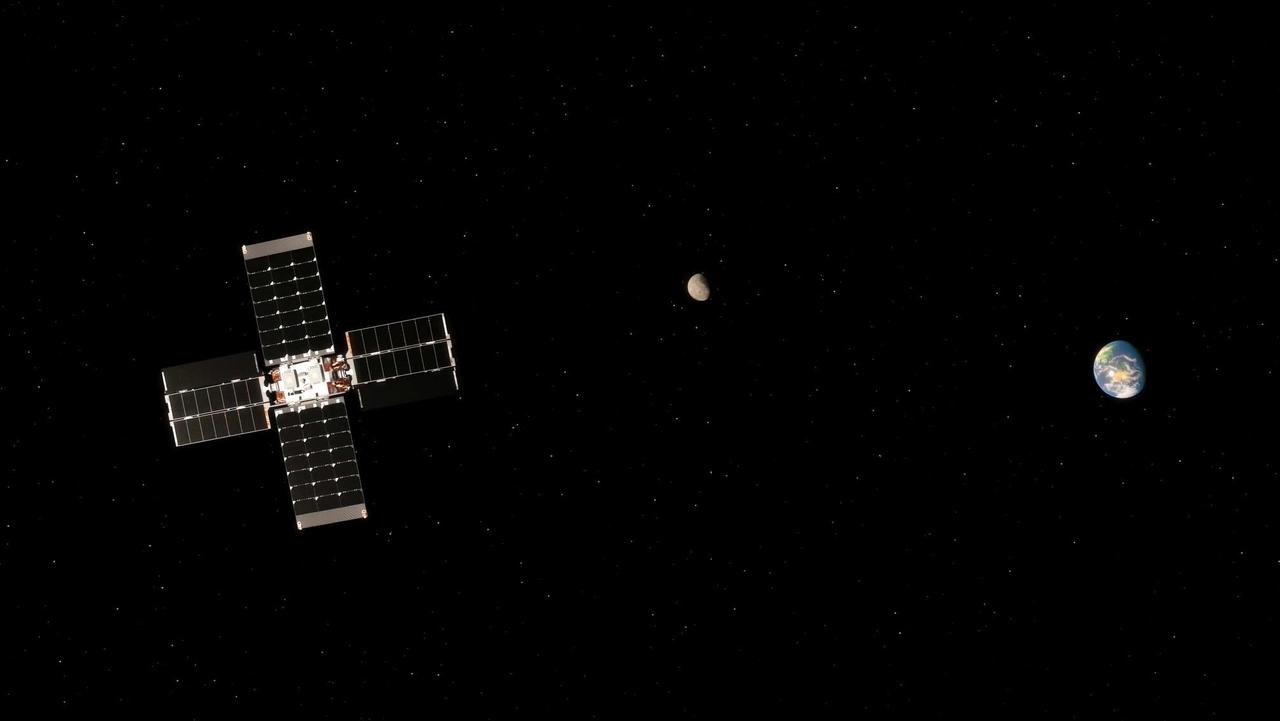
This illustration shows NASA's Lunar Flashlight carrying out a trajectory correction maneuver with the Moon and Earth in the background. Powered by the small satellite's four thrusters, the maneuver is needed to reach lunar orbit. Lunar Flashlight launched Nov. 30, 2022, and will take about four months to reach its science orbit to seek out surface water ice in the darkest craters of the Moon's South Pole. A technology demonstration, the small satellite, or SmallSat, will use a reflectometer equipped with four lasers that emit near-infrared light in wavelengths readily absorbed by surface water ice. To achieve the mission's goals with the satellite's limited amount of propellent, Lunar Flashlight will employ an energy-efficient near-rectilinear halo orbit, taking it within 9 miles (15 kilometers) of the lunar South Pole and 43,000 miles (70,000 kilometers) away at its farthest point. Only one other spacecraft has employed this type of orbit: NASA's Cislunar Autonomous Positioning System Technology Operations and Navigation Experiment (CAPSTONE) mission, which launched in June 2022. https://photojournal.jpl.nasa.gov/catalog/PIA25258
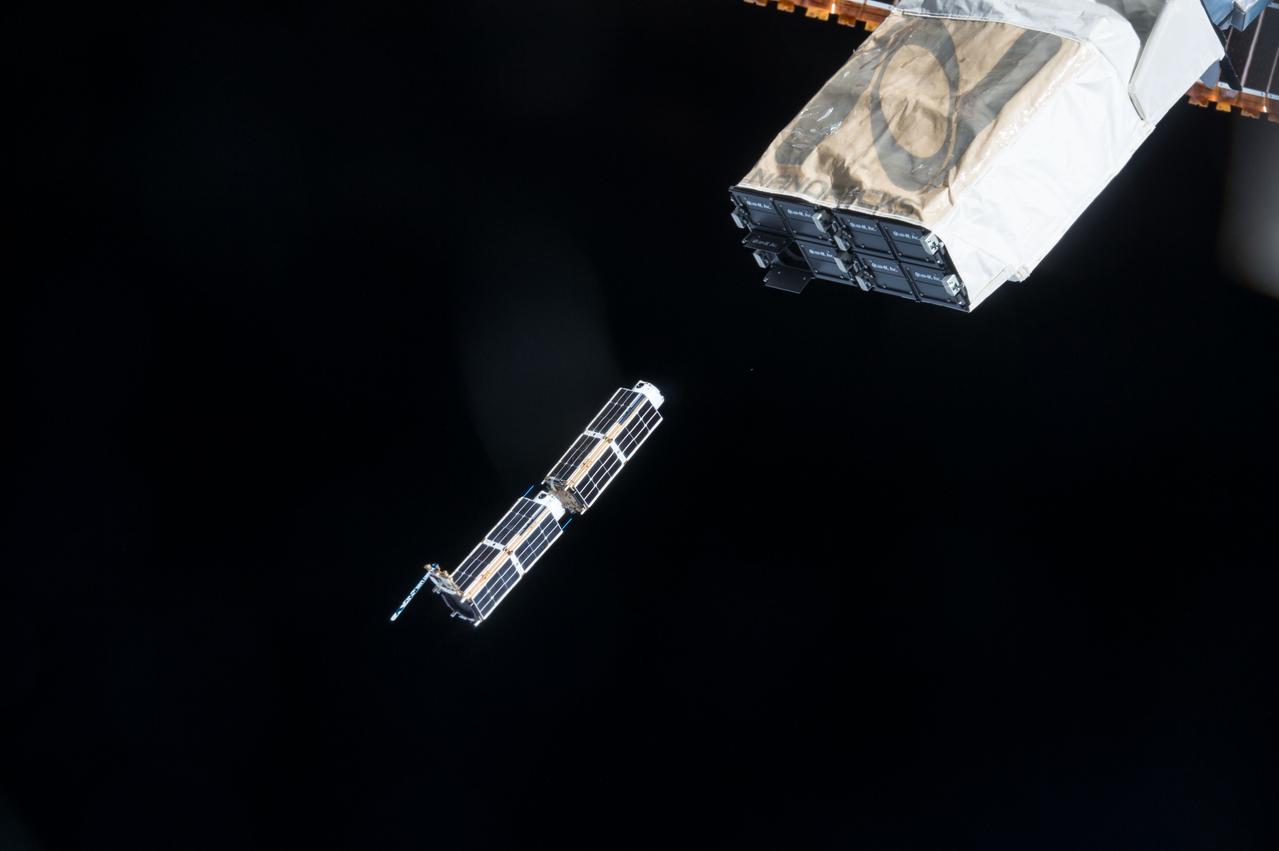
ISS042E290579 (02/27/2015) --- On Feb. 27 2015, a series of CubeSats, small experimental satellites, were deployed via a special device mounted on the Japanese Experiment Module (JEM) Remote Manipulator System (JEMRMS). Deployed satellites included twelve Dove sats, one TechEdSat-4, one GEARRSat, one LambdaSat, one MicroMas. These satellites perform a variety of functions from capturing new Earth imagery, to using microwave scanners to create 3D images of hurricanes, to even developing new methods for returning science samples back to Earth from space. The small satellites were deployed through the first week in March.
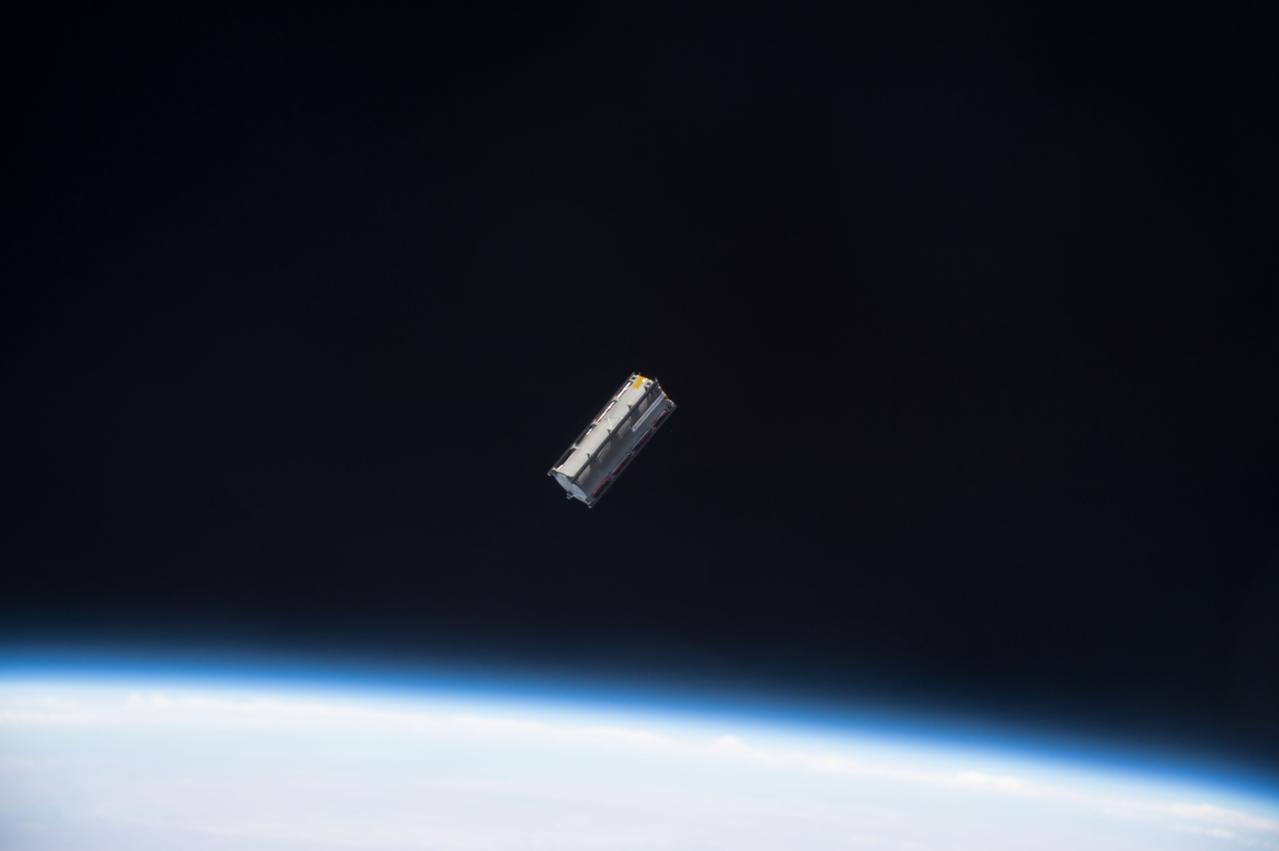
iss050e031664 (1/16/2017) --- Photo documentation of the Japanese-Small Satellite Orbital Deployer-6 (J-SSOD-6) deployment of the TuPOD Cubesat. TuPOD is a 3Unit micro-satellite that is entirely a 3D printed structure designed to launch the first Tubesats into space. The mission of TuPOD is to confirm that satellite deployment is feasible from CubeSat.

iss050e031653 (1/16/2017) --- Photo documentation of the Japanese-Small Satellite Orbital Deployer-6 (J-SSOD-6) deployment of the TuPOD Cubesat. TuPOD is a 3Unit micro-satellite that is entirely a 3D printed structure designed to launch the first Tubesats into space. The mission of TuPOD is to confirm that satellite deployment is feasible from CubeSat.
![iss056e200730 (10/3/2018) --- Photo documentation of the JEM Small Satellite Orbital Deployer (SSOD) on the Multi-Purpose Experiment Platform (MPEP) installation in preparation of the [Japanese Experiment Module]-Small Satellite Orbital Deployer 10 (J-SSOD 10) mission. J-SSOD-10 deploys the cubesats SPATIUM-I from Nanyang Technological University, Singapore, and the Kyushu Institute of Technology, Japan, RSP-00 from Ryman Sat Spaces General Incorporated Association, Japan, and STARS-Me from Shizuoka University, Japan.](https://images-assets.nasa.gov/image/iss056e200730/iss056e200730~medium.jpg)
iss056e200730 (10/3/2018) --- Photo documentation of the JEM Small Satellite Orbital Deployer (SSOD) on the Multi-Purpose Experiment Platform (MPEP) installation in preparation of the [Japanese Experiment Module]-Small Satellite Orbital Deployer 10 (J-SSOD 10) mission. J-SSOD-10 deploys the cubesats SPATIUM-I from Nanyang Technological University, Singapore, and the Kyushu Institute of Technology, Japan, RSP-00 from Ryman Sat Spaces General Incorporated Association, Japan, and STARS-Me from Shizuoka University, Japan.

Andres Martinez, program executive for small spacecraft in NASA’s Exploration Systems Development Mission Directorate speaks at “Small Satellites, Big Missions: Pathfinding CubeSats Exploring the Moon and Beyond,” a news conference during the 37th Space Symposium, Wednesday, April 6, 2022, in Colorado Springs, Colorado. Photo Credit: (NASA/Bill Ingalls)
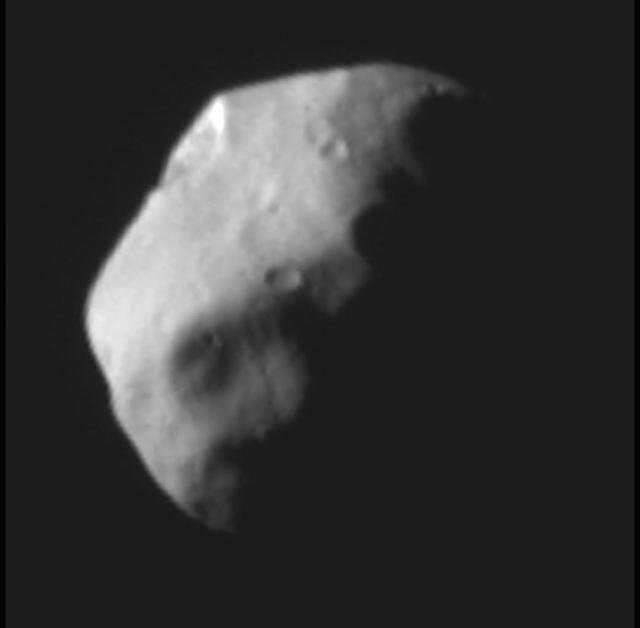
This recently received panchromatic image of Pluto's small satellite Nix taken by the Multispectral Visible Imaging Camera (MVIC) aboard New Horizons is one of the best images of Pluto's third-largest moon generated by the NASA mission. Taken on July 14, 2015, at a range of about 14,000 miles (23,000 kilometers) from Nix, the illuminated surface is about 12 miles (19 kilometers) by 29 miles (47 kilometers). The unique perspective of this image provides new details about Nix's geologic history and impact record. http://photojournal.jpl.nasa.gov/catalog/PIA20287
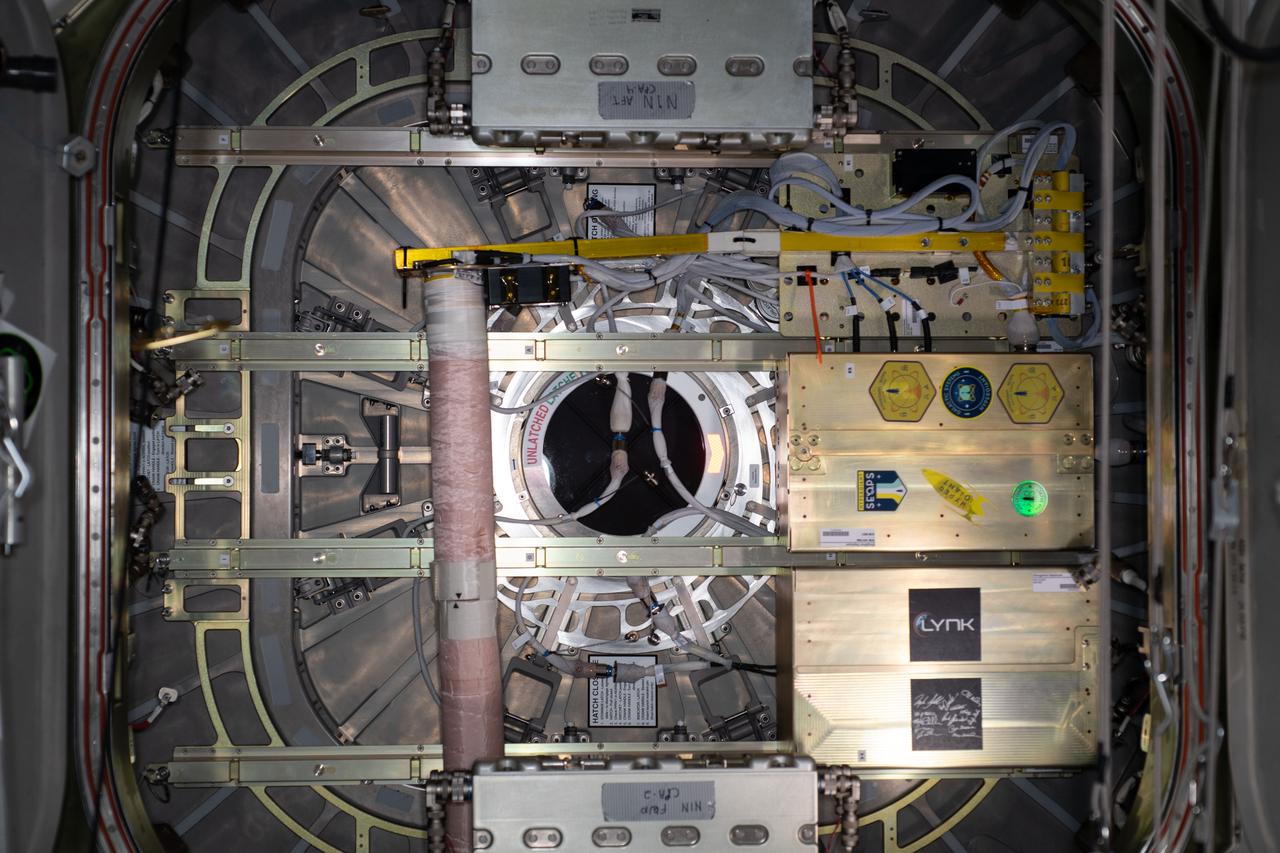
iss063e010534 (5/10/2020) --- A view from the Unity module aboard the International Space Station (ISS) of the Northrop Grumman NG-13 hatch. Attached to the hatch is the SlingShot small satellite deployer loaded with two CubeSats that will be deployed into Earth orbit after Cygnus departs the orbiting lab on May 11, 2020. The SEOPS-UbiquitiLink investigation furthers demonstrates the premise that small satellites/nano satellites can perform vital communications missions and provide valuable communications services. The SEOPS-WIDAR investigation demonstrates technologies that increase the utility of low-cost microsatellites, contributing to the increased commercialization of the International Space Station and low-Earth orbit.

At Vandenberg Air Force Base in California, a Poly Picosatellite Orbital Deployer, or P-POD, container is installed on the Joint Polar Satellite System-1, or JPSS-1, spacecraft. P-PODS are auxiliary payloads launched aboard NASA expendable launch vehicles carrying up to three small CubeSats. The small cube-shaped satellites are part of NASA’s Educational Launch of Nanosatellite, or ELaNa, missions. The small payloads are designed and built by students from high school-level classes up to college and university students. JPSS is the first in a series of four next-generation environmental satellites in a collaborative program between the NOAA and NASA. Liftoff from Vandenberg's Space Launch Compex-2 atop a United Launch Alliance Delta II rocket is scheduled for 1:47 a.m. PST (4:47 a.m. EST), on Nov. 14, 2017.
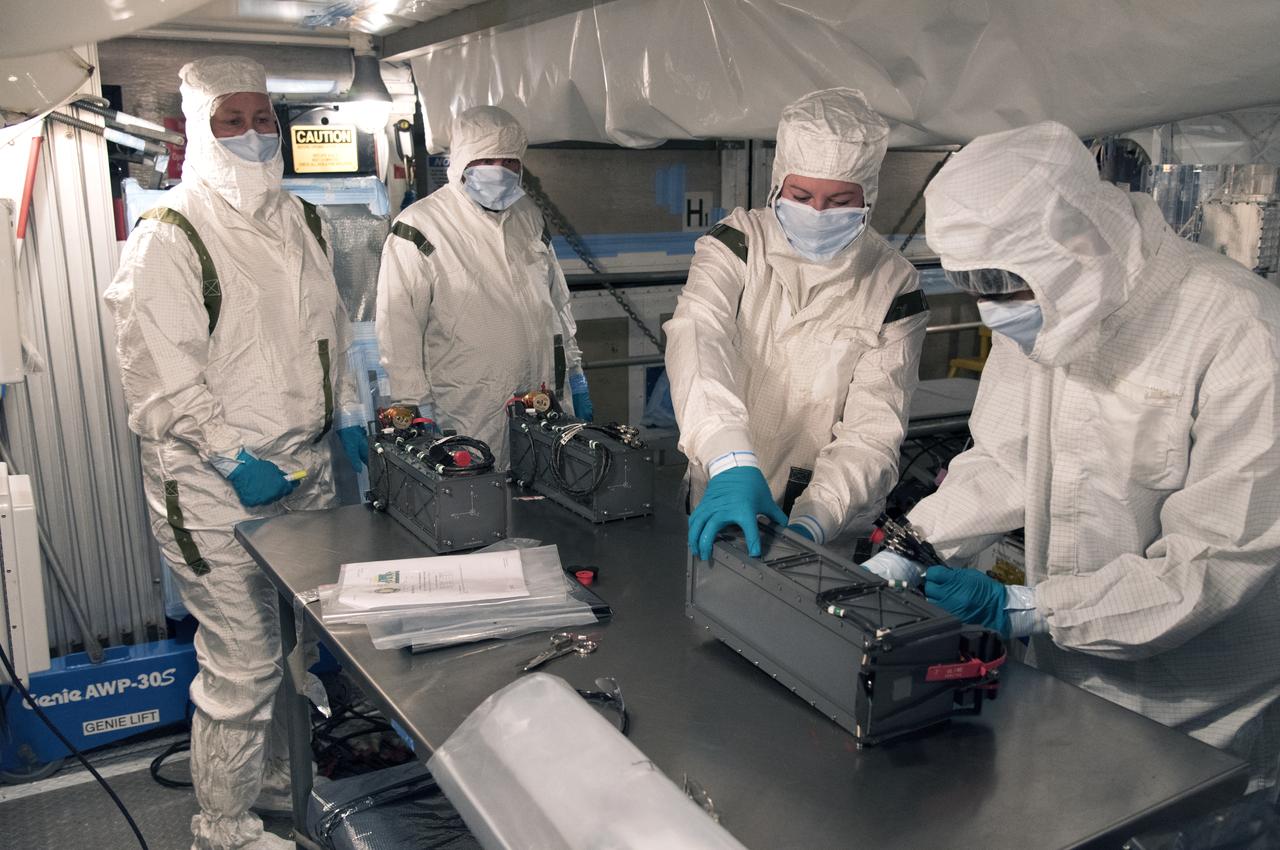
At Vandenberg Air Force Base in California, technicians and engineers prepare a Poly Picosatellite Orbital Deployer, or P-POD, container for installation on the Joint Polar Satellite System-1, or JPSS-1, spacecraft. P-PODS are auxiliary payloads launched aboard NASA expendable launch vehicles carrying up to three small CubeSats. The small cube-shaped satellites are part of NASA’s Educational Launch of Nanosatellite, or ELaNa, missions. The small payloads are designed and built by students from high school-level classes up to college and university students. JPSS is the first in a series of four next-generation environmental satellites in a collaborative program between the NOAA and NASA. Liftoff from Vandenberg's Space Launch Compex-2 atop a United Launch Alliance Delta II rocket is scheduled for 1:47 a.m. PST (4:47 a.m. EST), on Nov. 14, 2017.

At Vandenberg Air Force Base in California, technicians and engineers prepare to install a Poly Picosatellite Orbital Deployer, or P-POD, container on the Joint Polar Satellite System-1, or JPSS-1, spacecraft. P-PODS are auxiliary payloads launched aboard NASA expendable launch vehicles carrying up to three small CubeSats. The small cube-shaped satellites are part of NASA’s Educational Launch of Nanosatellite, or ELaNa, missions. The small payloads are designed and built by students from high school-level classes up to college and university students. JPSS is the first in a series of four next-generation environmental satellites in a collaborative program between the NOAA and NASA. Liftoff from Vandenberg's Space Launch Compex-2 atop a United Launch Alliance Delta II rocket is scheduled for 1:47 a.m. PST (4:47 a.m. EST), on Nov. 14, 2017.
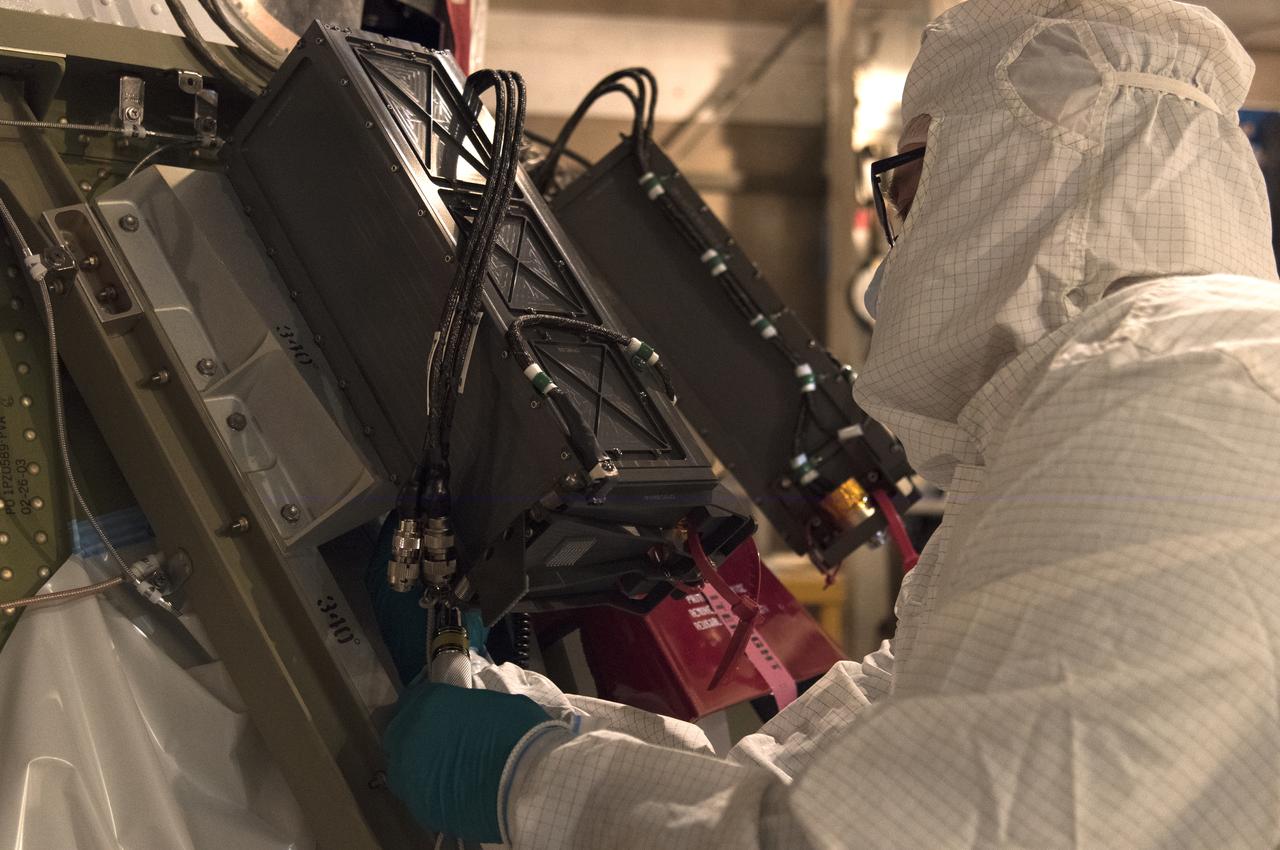
At Vandenberg Air Force Base in California, a Poly Picosatellite Orbital Deployer, or P-POD, container is installed on the Joint Polar Satellite System-1, or JPSS-1, spacecraft. P-PODS are auxiliary payloads launched aboard NASA expendable launch vehicles carrying up to three small CubeSats. The small cube-shaped satellites are part of NASA’s Educational Launch of Nanosatellite, or ELaNa, missions. The small payloads are designed and built by students from high school-level classes up to college and university students. JPSS is the first in a series of four next-generation environmental satellites in a collaborative program between the NOAA and NASA. Liftoff from Vandenberg's Space Launch Compex-2 atop a United Launch Alliance Delta II rocket is scheduled for 1:47 a.m. PST (4:47 a.m. EST), on Nov. 14, 2017.
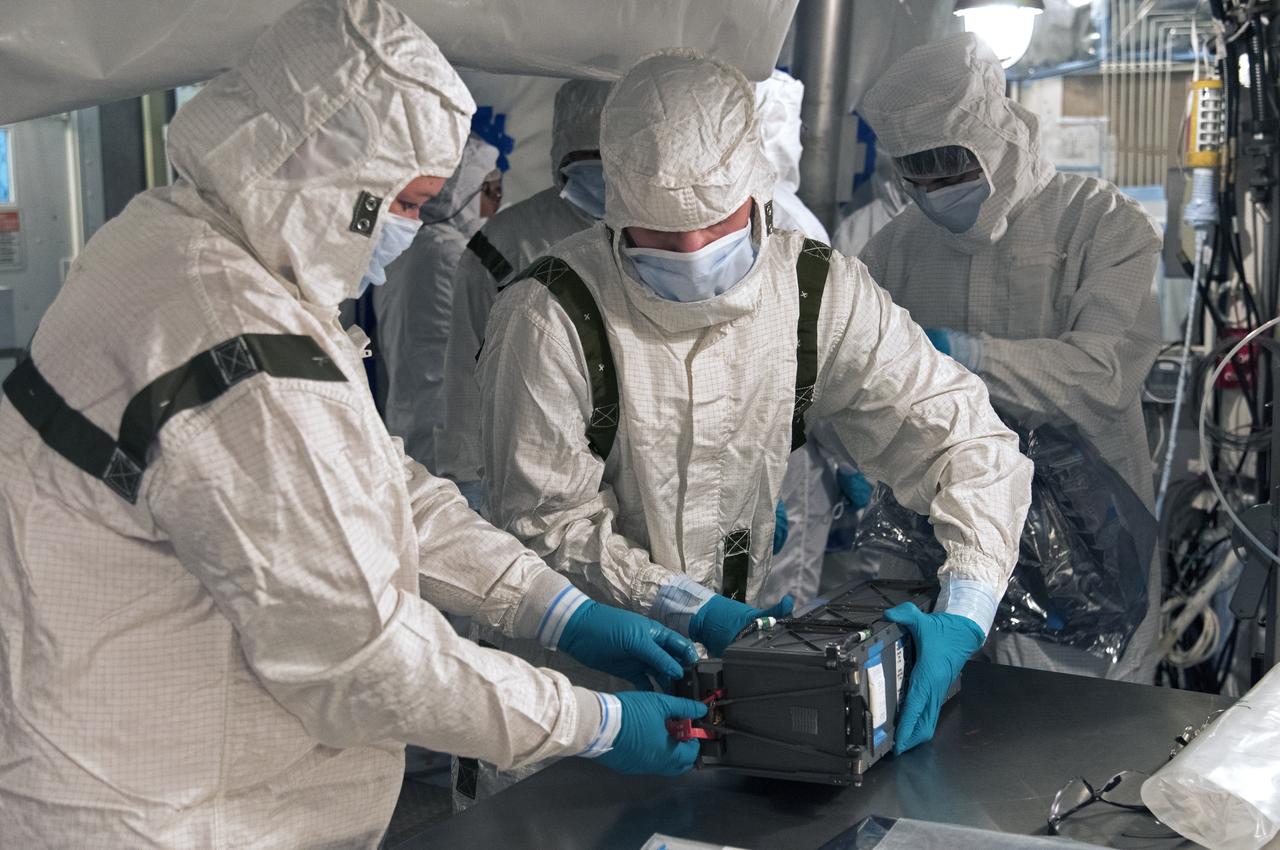
At Vandenberg Air Force Base in California, technicians and engineers prepare a Poly Picosatellite Orbital Deployer, or P-POD, container for installation on the Joint Polar Satellite System-1, or JPSS-1, spacecraft. P-PODS are auxiliary payloads launched aboard NASA expendable launch vehicles carrying up to three small CubeSats. The small cube-shaped satellites are part of NASA’s Educational Launch of Nanosatellite, or ELaNa, missions. The small payloads are designed and built by students from high school-level classes up to college and university students. JPSS is the first in a series of four next-generation environmental satellites in a collaborative program between the NOAA and NASA. Liftoff from Vandenberg's Space Launch Compex-2 atop a United Launch Alliance Delta II rocket is scheduled for 1:47 a.m. PST (4:47 a.m. EST), on Nov. 14, 2017.

At Vandenberg Air Force Base in California, a Poly Picosatellite Orbital Deployer, or P-POD, container is installed on the Joint Polar Satellite System-1, or JPSS-1, spacecraft. P-PODS are auxiliary payloads launched aboard NASA expendable launch vehicles carrying up to three small CubeSats. The small cube-shaped satellites are part of NASA’s Educational Launch of Nanosatellite, or ELaNa, missions. The small payloads are designed and built by students from high school-level classes up to college and university students. JPSS is the first in a series of four next-generation environmental satellites in a collaborative program between the NOAA and NASA. Liftoff from Vandenberg's Space Launch Compex-2 atop a United Launch Alliance Delta II rocket is scheduled for 1:47 a.m. PST (4:47 a.m. EST), on Nov. 14, 2017.
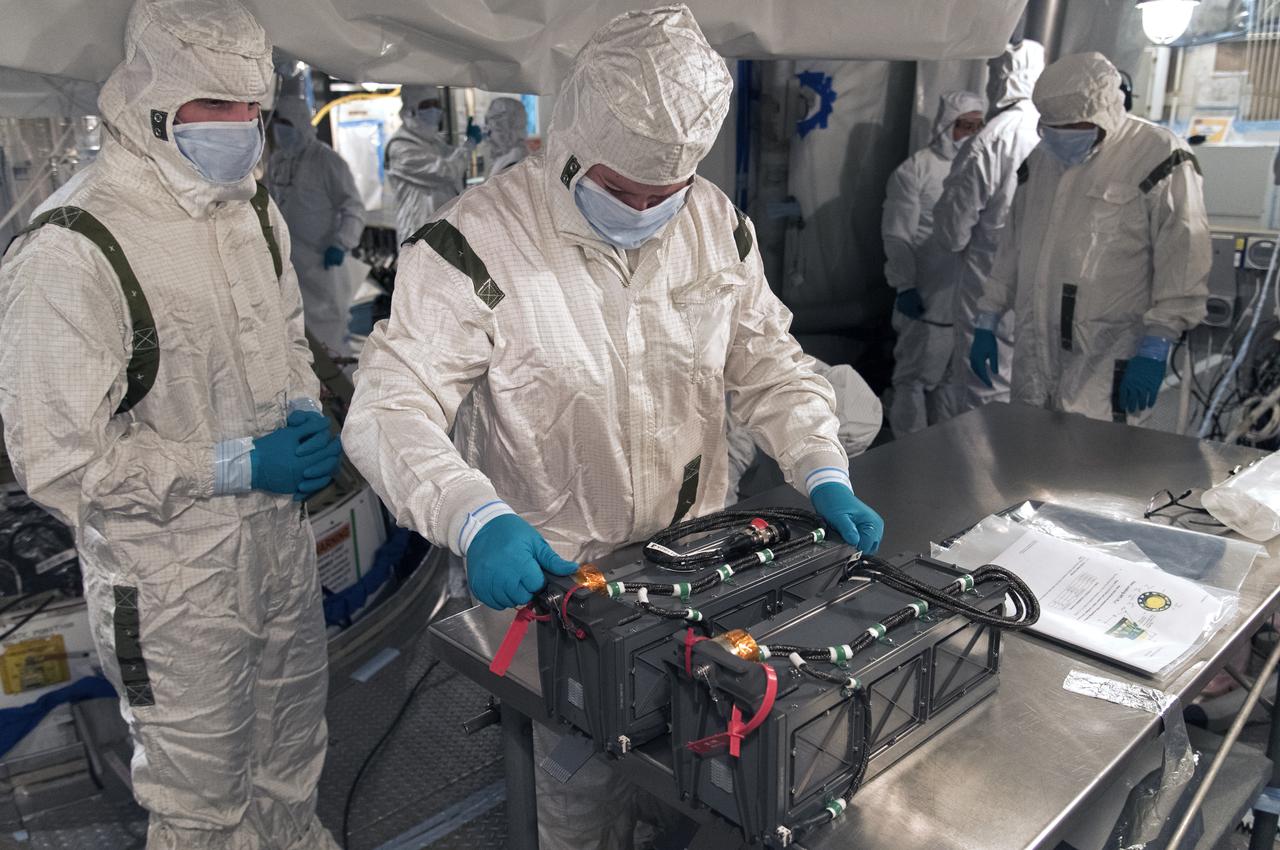
At Vandenberg Air Force Base in California, technicians and engineers prepare a Poly Picosatellite Orbital Deployer, or P-POD, container for installation on the Joint Polar Satellite System-1, or JPSS-1, spacecraft. P-PODS are auxiliary payloads launched aboard NASA expendable launch vehicles carrying up to three small CubeSats. The small cube-shaped satellites are part of NASA’s Educational Launch of Nanosatellite, or ELaNa, missions. The small payloads are designed and built by students from high school-level classes up to college and university students. JPSS is the first in a series of four next-generation environmental satellites in a collaborative program between the NOAA and NASA. Liftoff from Vandenberg's Space Launch Compex-2 atop a United Launch Alliance Delta II rocket is scheduled for 1:47 a.m. PST (4:47 a.m. EST), on Nov. 14, 2017.
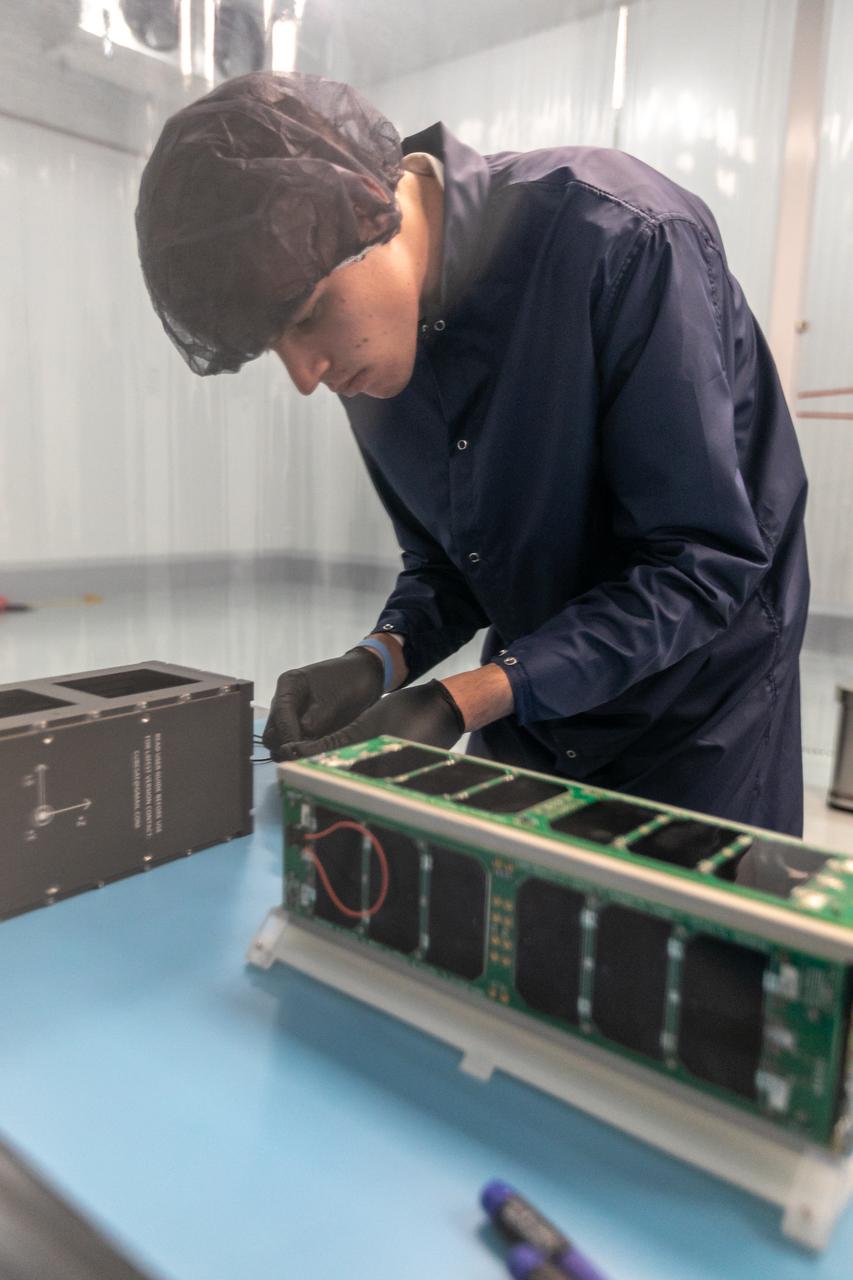
RSat is a 3U CubeSat with two seven degree of freedom robotic arms designed to latch onto a host satellite and maneuver around to image and potentially repair malfunctioning components. RSat is part of the AMODS research project developed by a team of Midshipmen from the United States Naval Academy. The three-year-old program aims to employ a small satellite platform to provide both new and legacy spacecraft with cost-effective on-orbit assessments and repair services. Currently, if a satellite makes it to orbit, there is no guarantee it will work as intended. In these cases, not only is the spacecraft lost, but invaluable experience vanishes with it. RSat takes advantage of cost and profile efficiencies of the small satellite platform to offer satellite developers and operators a fundamentally new way to reduce risk, protect investment and effect design improvements correlated against observed space environment experience. RSat-P is launching as part of ELaNa XIX as a free-flying unit intended to validate the on-orbit effectiveness of compact robotic manipulators.

RSat is a 3U CubeSat with two seven degree of freedom robotic arms designed to latch onto a host satellite and maneuver around to image and potentially repair malfunctioning components. RSat is part of the AMODS research project developed by a team of Midshipmen from the United States Naval Academy. The three-year-old program aims to employ a small satellite platform to provide both new and legacy spacecraft with cost-effective on-orbit assessments and repair services. Currently, if a satellite makes it to orbit, there is no guarantee it will work as intended. In these cases, not only is the spacecraft lost, but invaluable experience vanishes with it. RSat takes advantage of cost and profile efficiencies of the small satellite platform to offer satellite developers and operators a fundamentally new way to reduce risk, protect investment and effect design improvements correlated against observed space environment experience. RSat-P is launching as part of ELaNa XIX as a free-flying unit intended to validate the on-orbit effectiveness of compact robotic manipulators.
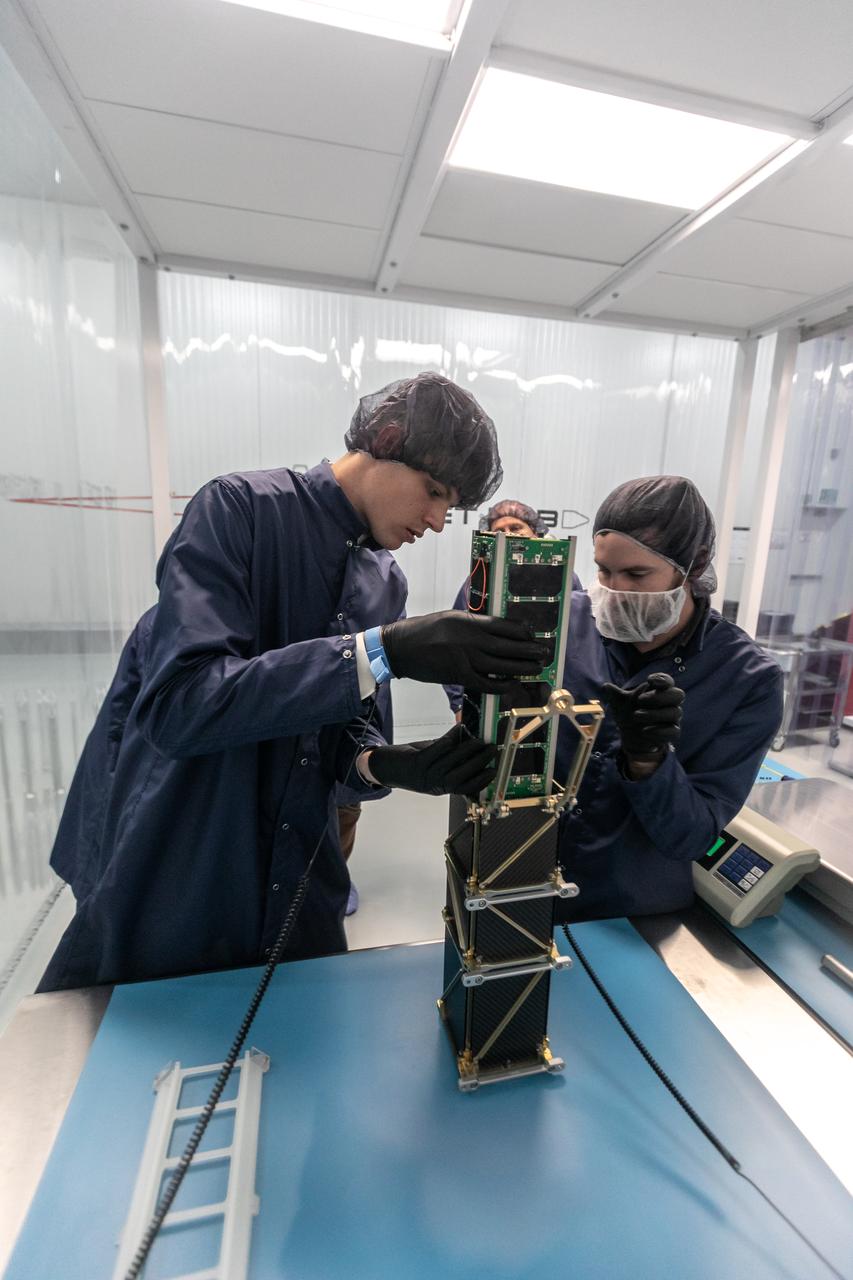
RSat is a 3U CubeSat with two seven degree of freedom robotic arms designed to latch onto a host satellite and maneuver around to image and potentially repair malfunctioning components. RSat is part of the AMODS research project developed by a team of Midshipmen from the United States Naval Academy. The three-year-old program aims to employ a small satellite platform to provide both new and legacy spacecraft with cost-effective on-orbit assessments and repair services. Currently, if a satellite makes it to orbit, there is no guarantee it will work as intended. In these cases, not only is the spacecraft lost, but invaluable experience vanishes with it. RSat takes advantage of cost and profile efficiencies of the small satellite platform to offer satellite developers and operators a fundamentally new way to reduce risk, protect investment and effect design improvements correlated against observed space environment experience. RSat-P is launching as part of ELaNa XIX as a free-flying unit intended to validate the on-orbit effectiveness of compact robotic manipulators.

iss067e188778 (July 16, 2022) --- NASA astronaut and Expedition 67 Flight Engineer Bob Hines activates a CubeLab Satellite to validate a new attitude control technology for small satellites. The experimental device, designed by the University of Kentucky in partnership with TangoLab, was launched to the International Space Station aboard Northrop Grumman's Cygnus space freighter.
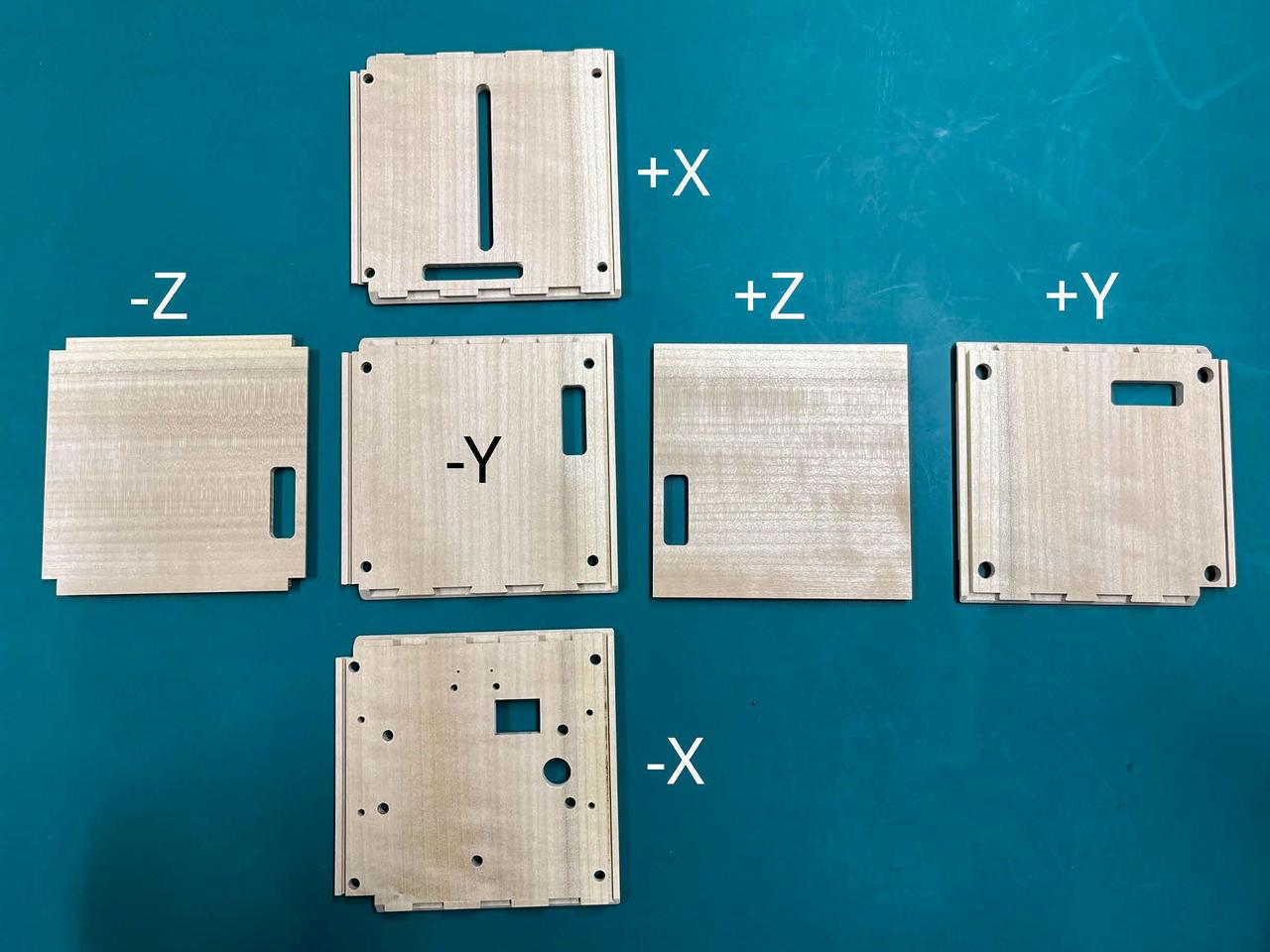
jsc2024e081747 (12/17/2024) --- Six wooden panels of the LignoSat are shown with their coordinate marks. LignoSat is the world’s first wooden satellite to demonstrate whether wood can be used in space and is deployed as part of the JEM Small Satellite Orbital Deployer-30 (J-SSOD-30) CubeSat deployment mission. Image courtesy of Kyoto University.
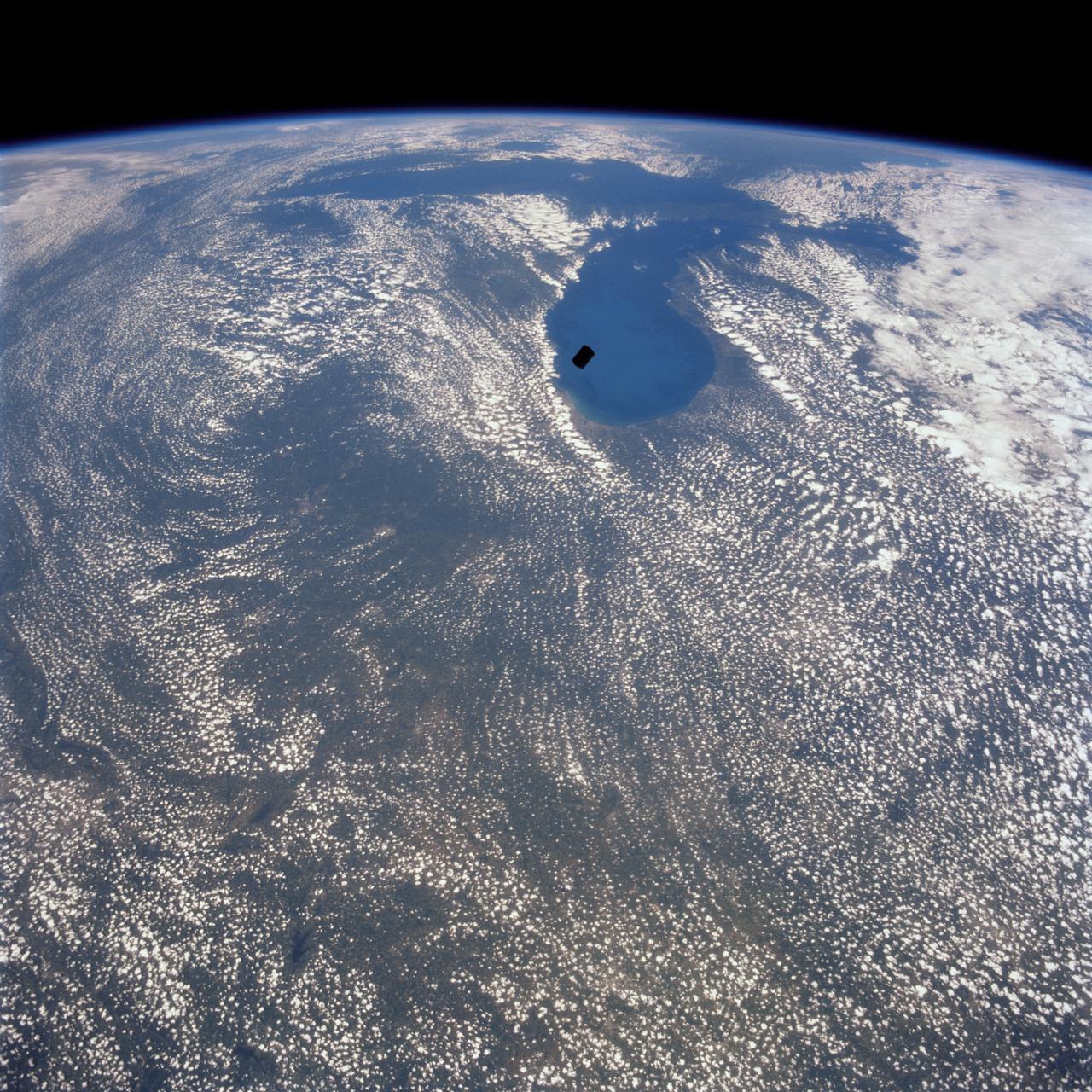
STS105-714-028 (20 August 2001) --- Backdropped by Lake Michigan, this distant view shows the recently deployed small science satellite called Simplesat, which is an engineering satellite, designed to evaluate the use of inexpensive commercial hardware for spacecraft. It was spring-ejected from a canister at the rear of the Shuttle's cargo bay.
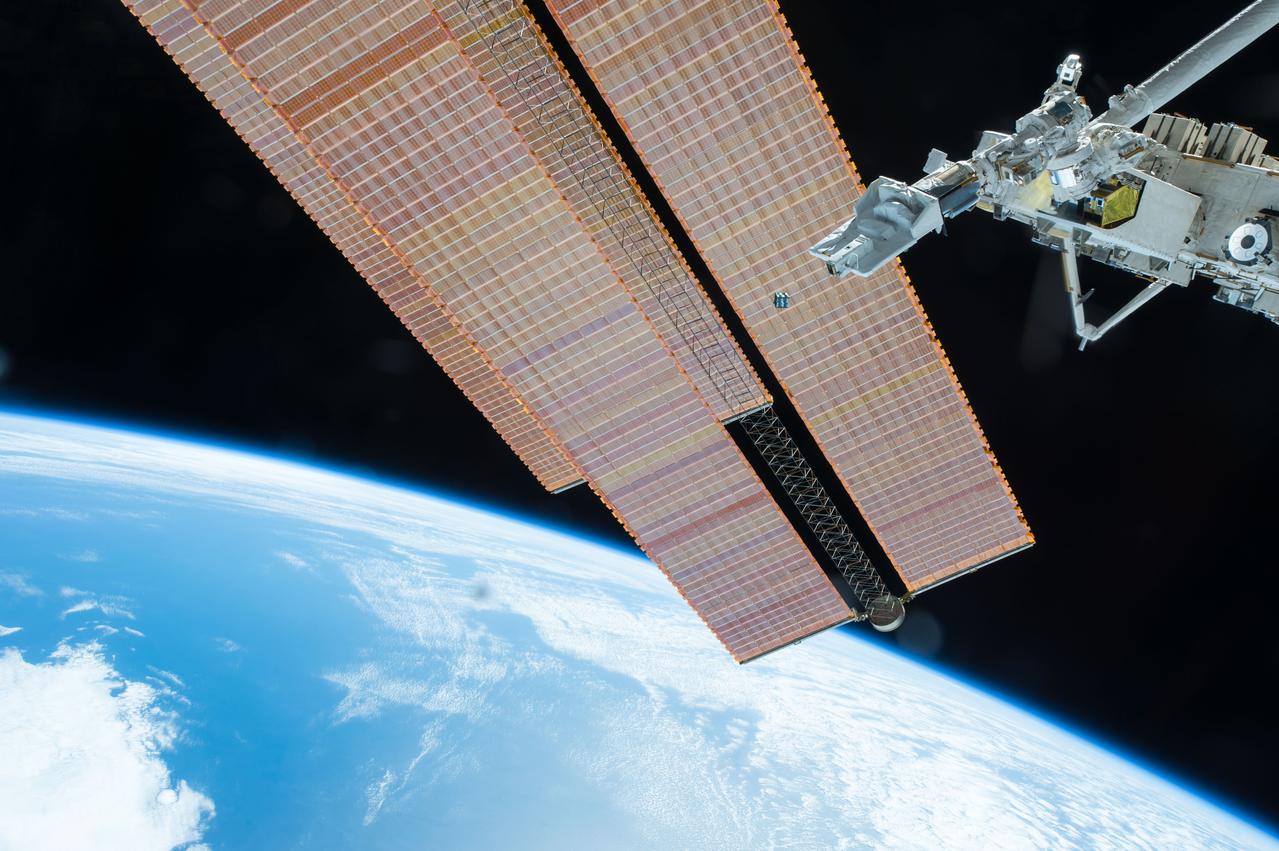
iss042e224107 (2/5/2015) --- Photographic documentation of the JEM Small Satellite Orbital Deployer-3 (J-SSOD-3) mission deploy of the CubeSat AESP-14 from Kibo. The satellite was developed by the Technological Institute of Aeronautics (ITA), with support from the Brazilian Space Agency (AEB), and the National Institute for Space Research (INPE).
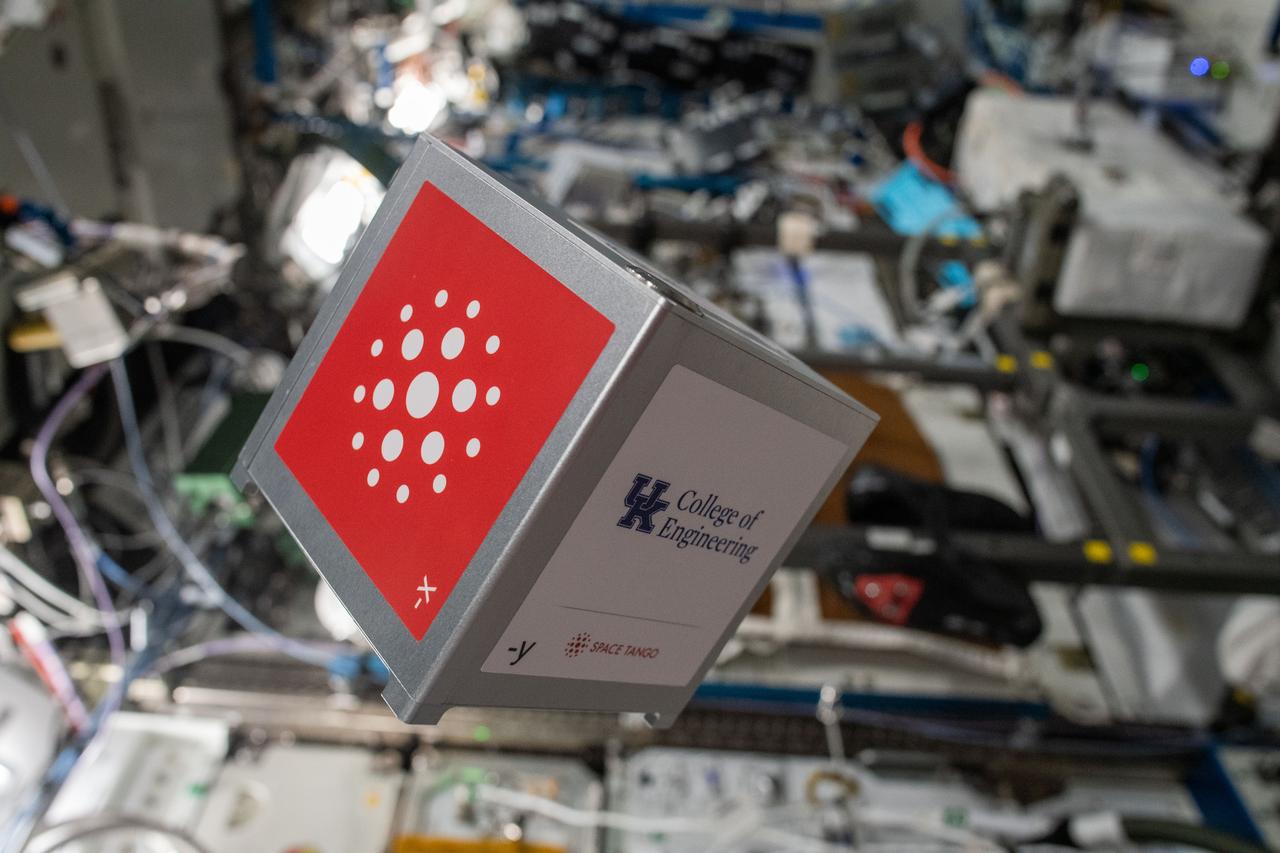
iss067e000403 (3/31/2022) --- A view of a Cube containing Space Tango - Cubelab Satellite Demonstrator, part of TangoLab Mission-25 aboard the International Space Station (ISS). Space Tango - University of Kentucky Cubelab Satellite Demonstrator (Space Tango - Cubelab Satellite Demonstrator) tests a new attitude-control technology for small satellites, which is an integral part of future space missions.

Small Expendable Deployer System (SEDS) is a tethered date collecting satellite and is intended to demonstrate a versatile and economical way of delivering smaller payloads to higher orbits or downward toward Earth's atmosphere. 19th Navstar Global Positioning System Satellite mission joined with previously launched satellites used for navigational purposes and geodite studies. These satellites are used commercially as well as by the military.
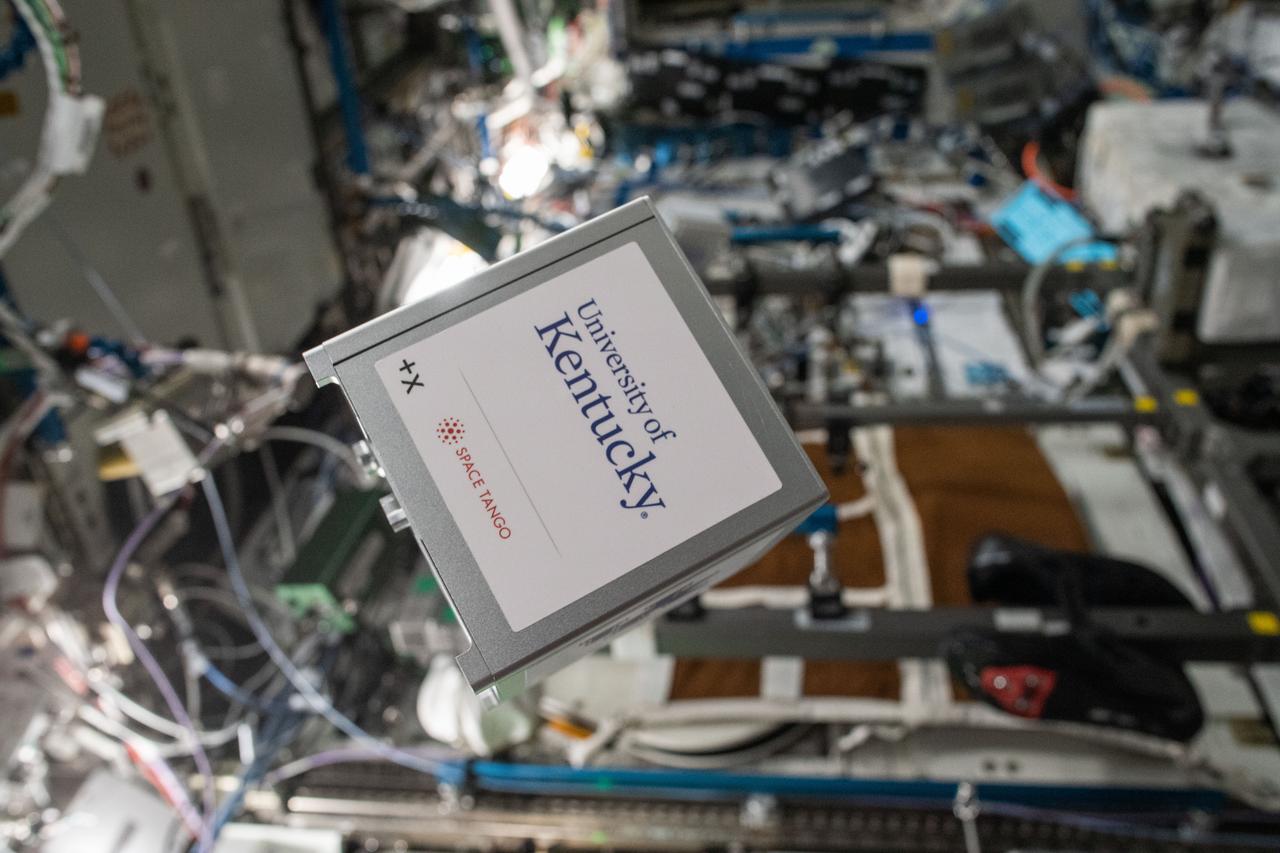
iss067e000411 (3/31/2022) --- A view of a Cube containing Space Tango - Cubelab Satellite Demonstrator, part of TangoLab Mission-25 aboard the International Space Station (ISS). Space Tango - University of Kentucky Cubelab Satellite Demonstrator (Space Tango - Cubelab Satellite Demonstrator) tests a new attitude-control technology for small satellites, which is an integral part of future space missions.
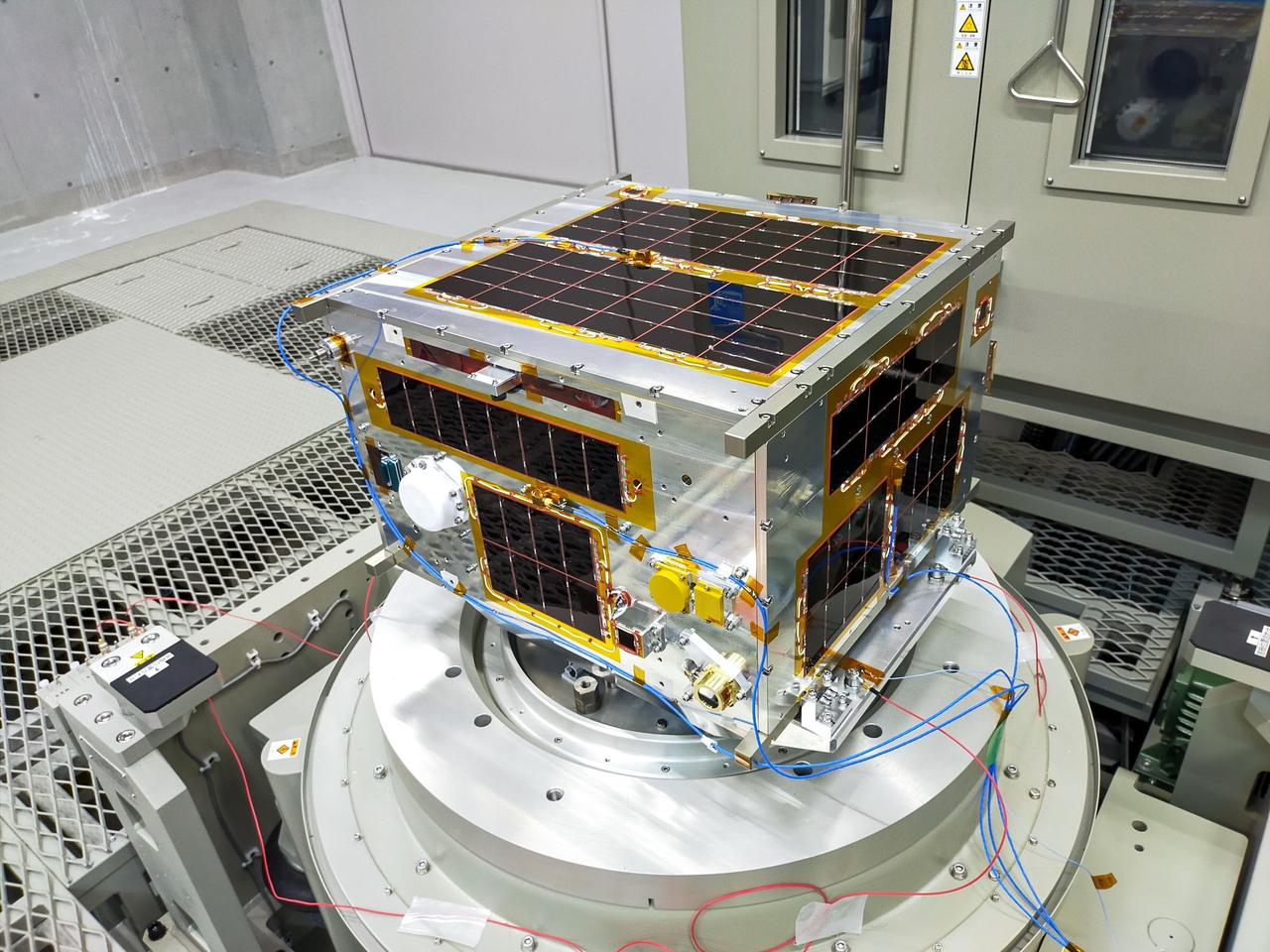
jsc2020e049614 (8/7/2020) --- A preflight view of the MMSAT-1 flight unit. MMSAT-1 is Myanmar’s first 50 kg-class MicroSat, that deploys during the JEM Small Satellite Orbital Deployer-M2 (J-SSOD-M2) micro-satellite deployment mission. The satellite mission aims to help provide information to implement more efficient and systematic agricultural practices in Myanmar and monitor natural disasters through the provision of satellite imagery. Photo courtesy of: TohokuHokkaido University