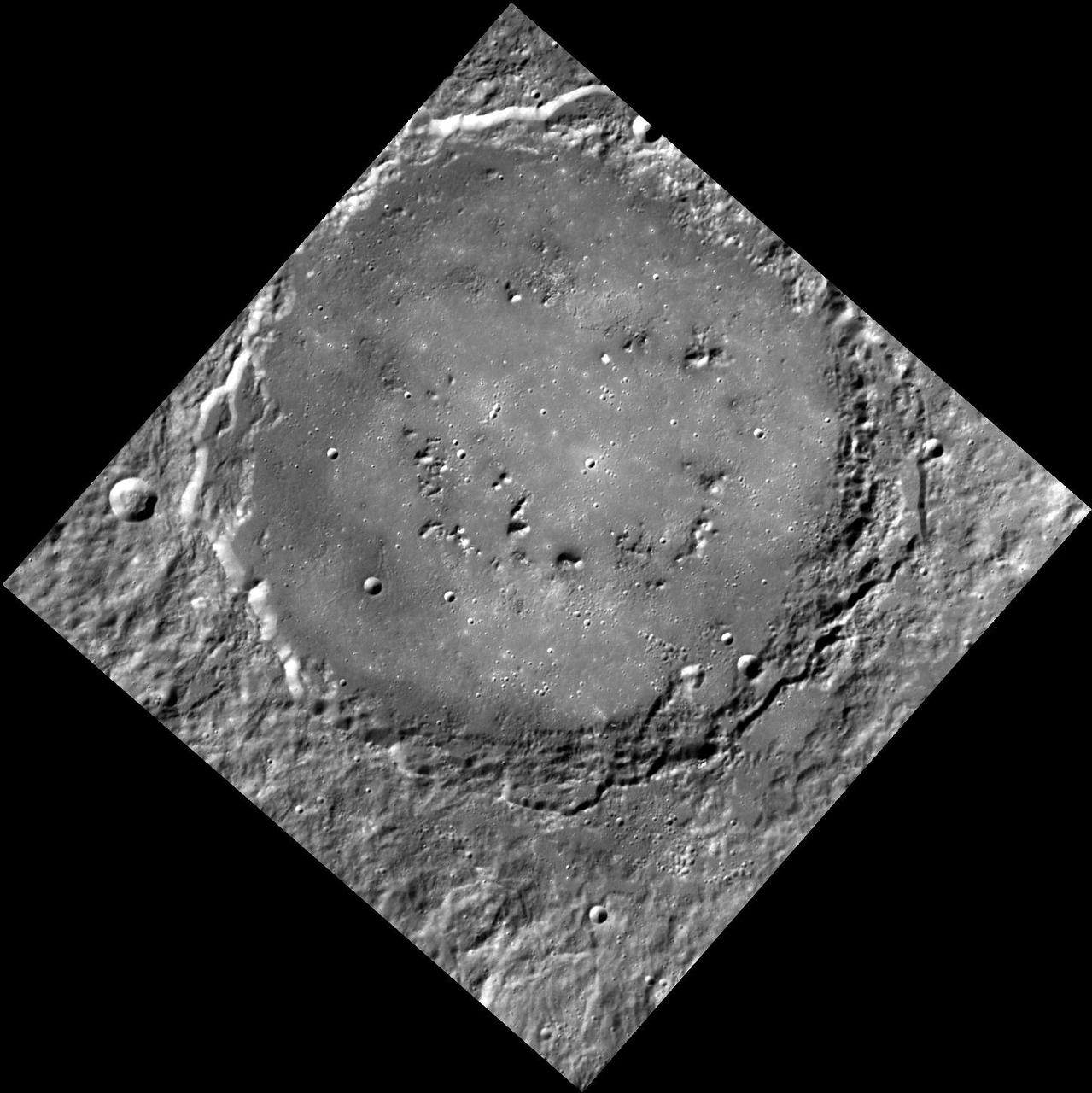
Mercury Smile
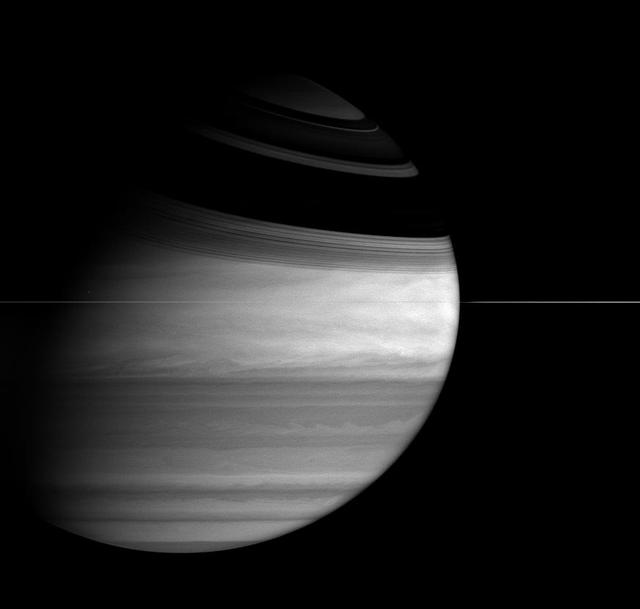
Saturn Smile
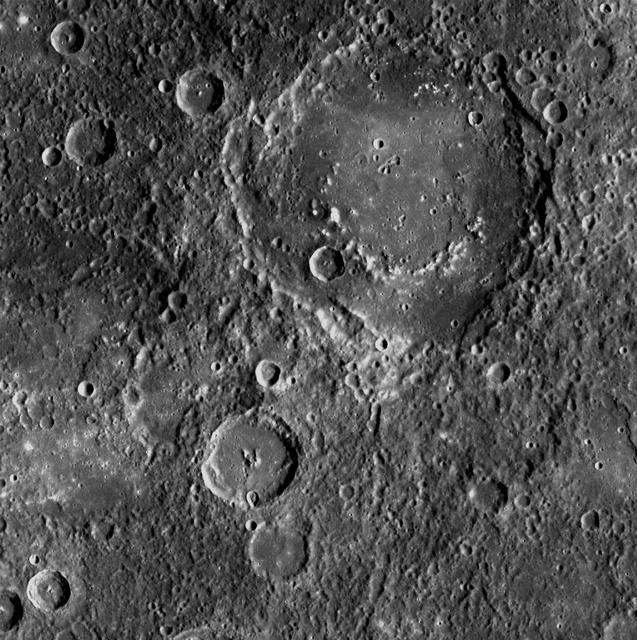
Smile for the Camera

In the center of this image, taken with the NASA/ESA Hubble Space Telescope, is the galaxy cluster SDSS J1038+4849 — and it seems to be smiling. You can make out its two orange eyes and white button nose. In the case of this “happy face”, the two eyes are very bright galaxies and the misleading smile lines are actually arcs caused by an effect known as strong gravitational lensing. Galaxy clusters are the most massive structures in the Universe and exert such a powerful gravitational pull that they warp the spacetime around them and act as cosmic lenses which can magnify, distort and bend the light behind them. This phenomenon, crucial to many of Hubble’s discoveries, can be explained by Einstein’s theory of general relativity. In this special case of gravitational lensing, a ring — known as an Einstein Ring — is produced from this bending of light, a consequence of the exact and symmetrical alignment of the source, lens and observer and resulting in the ring-like structure we see here. Hubble has provided astronomers with the tools to probe these massive galaxies and model their lensing effects, allowing us to peer further into the early Universe than ever before. This object was studied by Hubble’s Wide Field and Planetary Camera 2 (WFPC2) and Wide Field Camera 3 (WFC3) as part of a survey of strong lenses. A version of this image was entered into the Hubble’s Hidden Treasures image processing competition by contestant Judy Schmidt. Image Credit: NASA/ESA
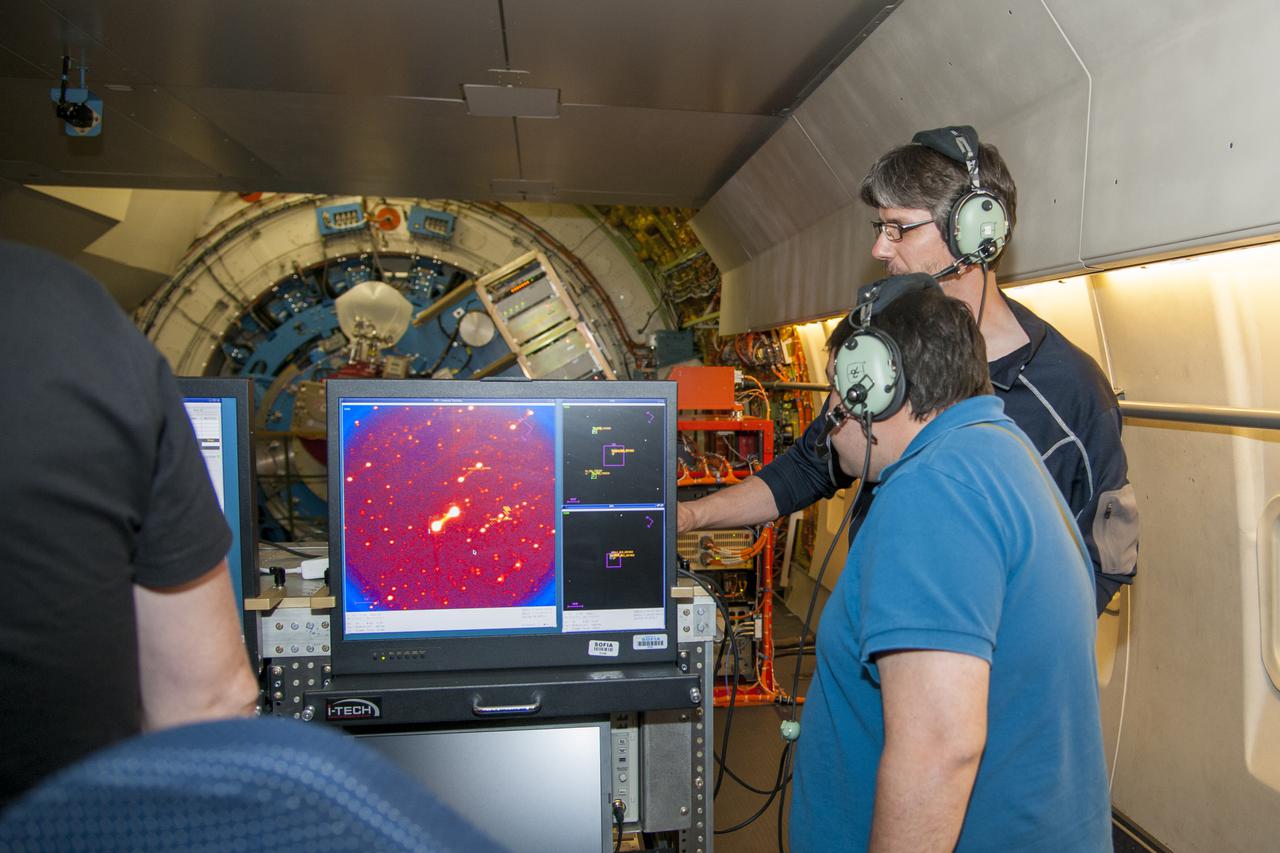
Astronomers smile while looking at data from SOFIA’s telescope.
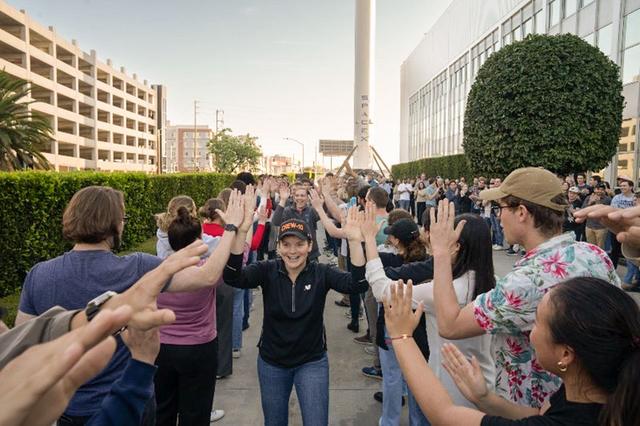
jsc2025e011329 (Feb. 24, 2025) --- NASA astronaut and commander of NASA's SpaceX Crew-10 mission Anne McClain smiles and high fives SpaceX employees during a sendoff at the company’s facility in Hawthorne, California. Credit: SpaceX
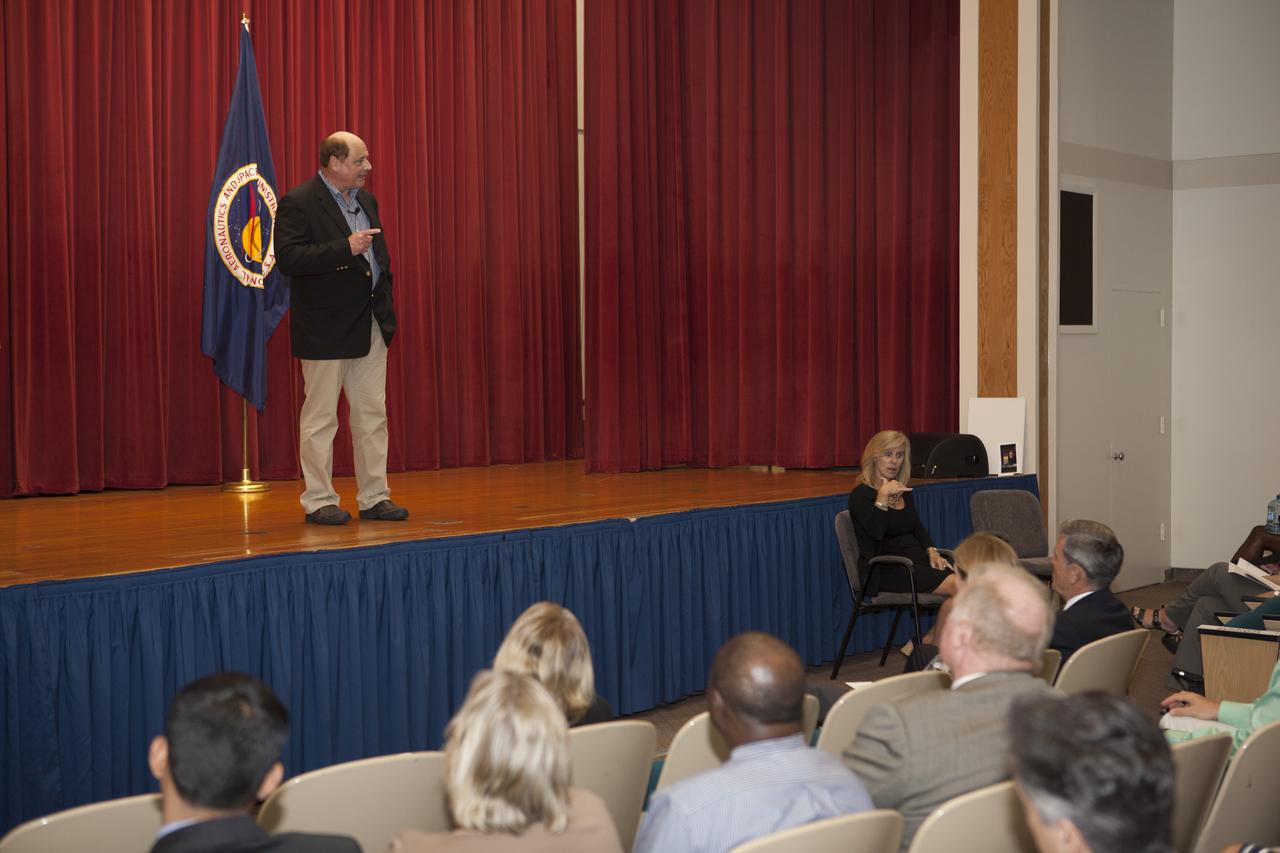
Michael Kersjes, author and former special education teacher and football coach from Michigan, speaks to workers during the Disability Awareness and Action Working Group, or DAAWG, event at NASA's Kennedy Space Center in Florida. The theme of his presentation was "Power of the Human Spirit." Kersjes is the author of the book, "A Smile as Big as the Moon," which told the true story of how he worked to get special education students into Space Camp, a competitive education program at the U.S. Space and Rocket Center in Huntsville, Alabama. His book was made into a movie in 2012.
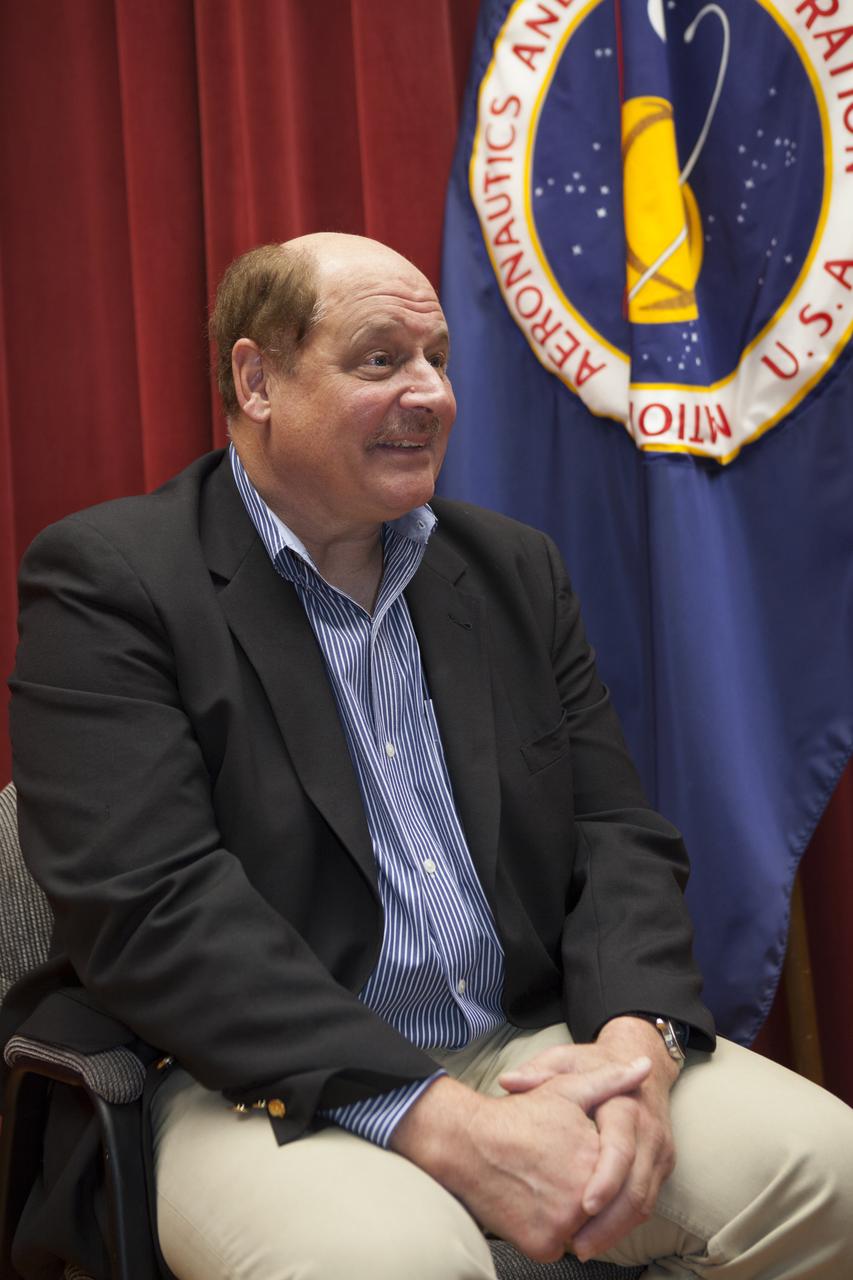
Michael Kersjes, author and former special education teacher and football coach from Michigan, speaks to workers during the Disability Awareness and Action Working Group, or DAAWG, event at NASA's Kennedy Space Center in Florida. The theme of his presentation was "Power of the Human Spirit." Kersjes is the author of the book, "A Smile as Big as the Moon," which told the true story of how he worked to get special education students into Space Camp, a competitive education program at the U.S. Space and Rocket Center in Huntsville, Alabama. His book was made into a movie in 2012.
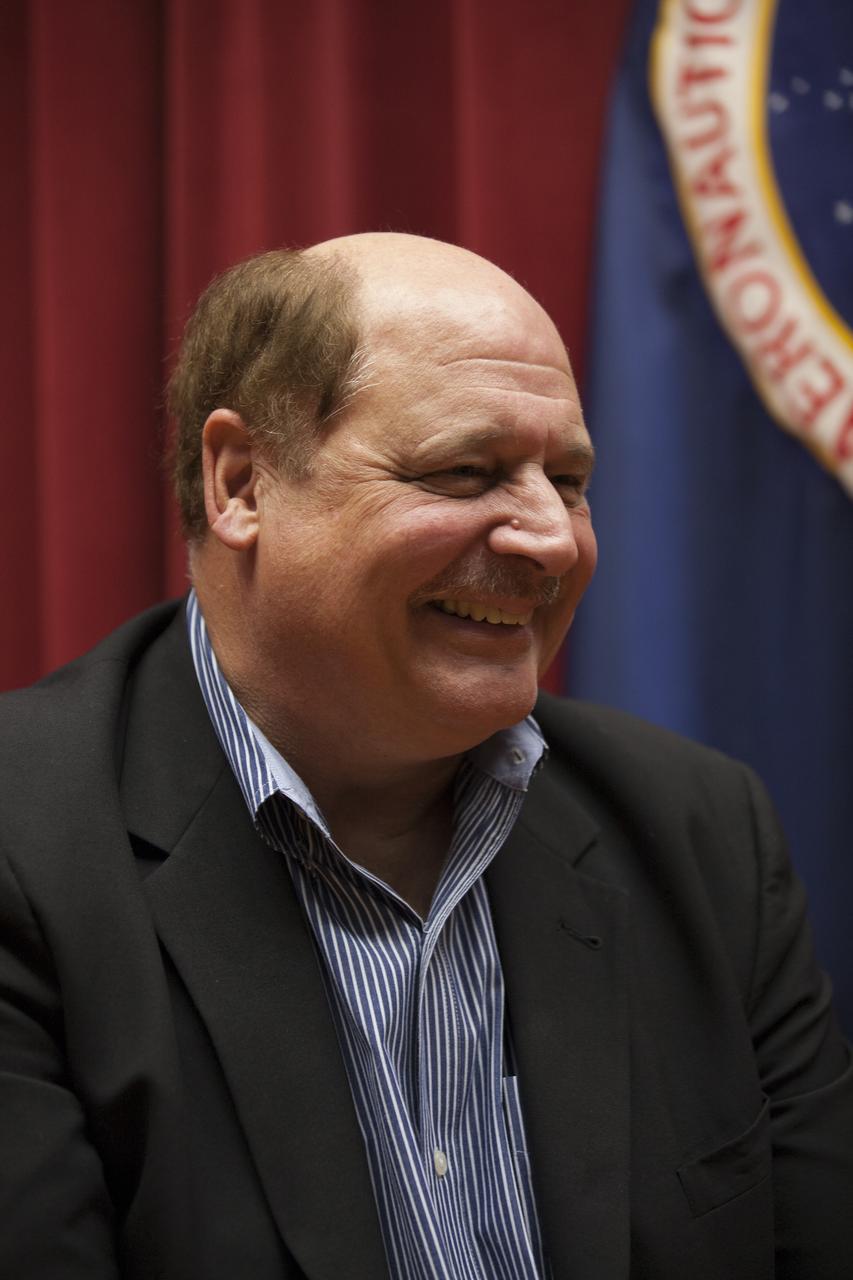
Michael Kersjes, author and former special education teacher and football coach from Michigan, speaks to workers during the Disability Awareness and Action Working Group, or DAAWG, event at NASA's Kennedy Space Center in Florida. The theme of his presentation was "Power of the Human Spirit." Kersjes is the author of the book, "A Smile as Big as the Moon," which told the true story of how he worked to get special education students into Space Camp, a competitive education program at the U.S. Space and Rocket Center in Huntsville, Alabama. His book was made into a movie in 2012.
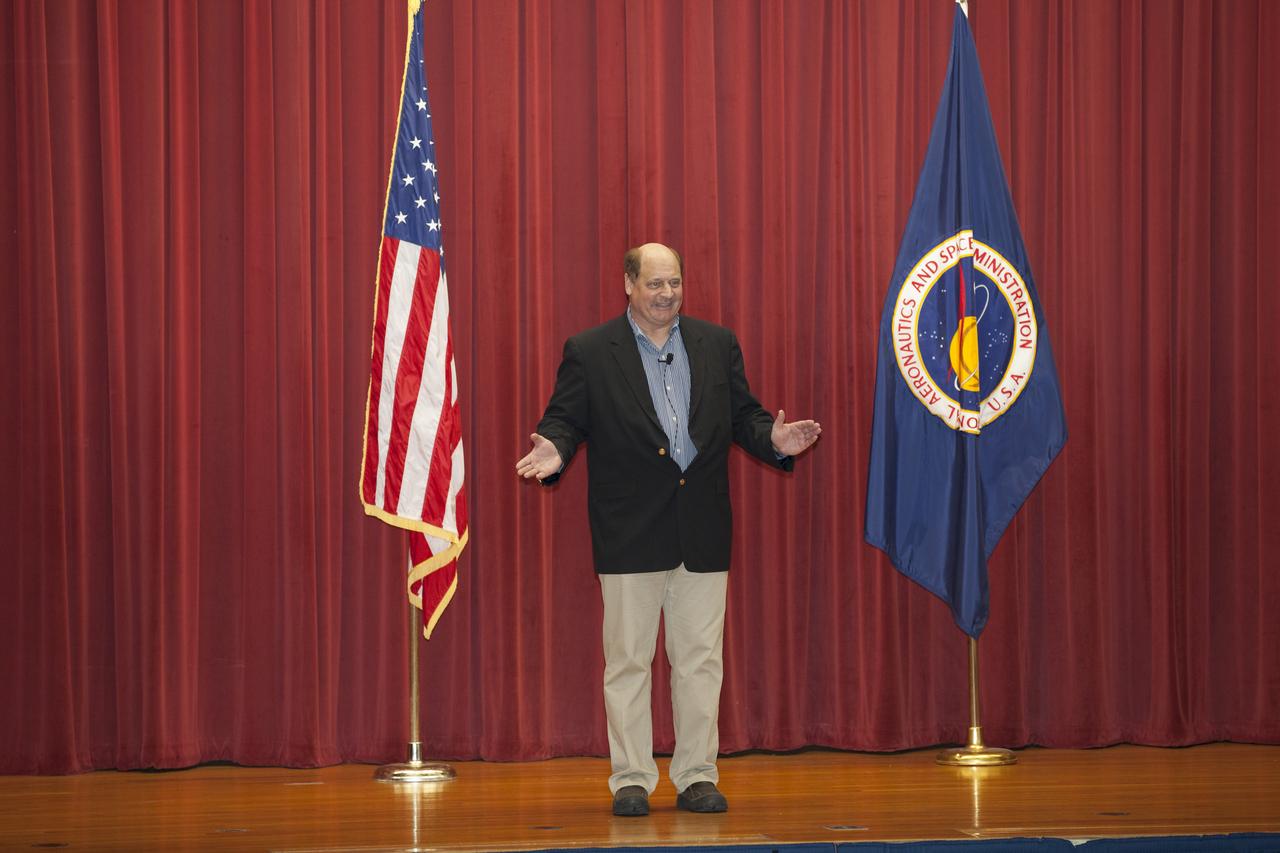
Michael Kersjes, author and former special education teacher and football coach from Michigan, speaks to workers during the Disability Awareness and Action Working Group, or DAAWG, event at NASA's Kennedy Space Center in Florida. The theme of his presentation was "Power of the Human Spirit." Kersjes is the author of the book, "A Smile as Big as the Moon," which told the true story of how he worked to get special education students into Space Camp, a competitive education program at the U.S. Space and Rocket Center in Huntsville, Alabama. His book was made into a movie in 2012.
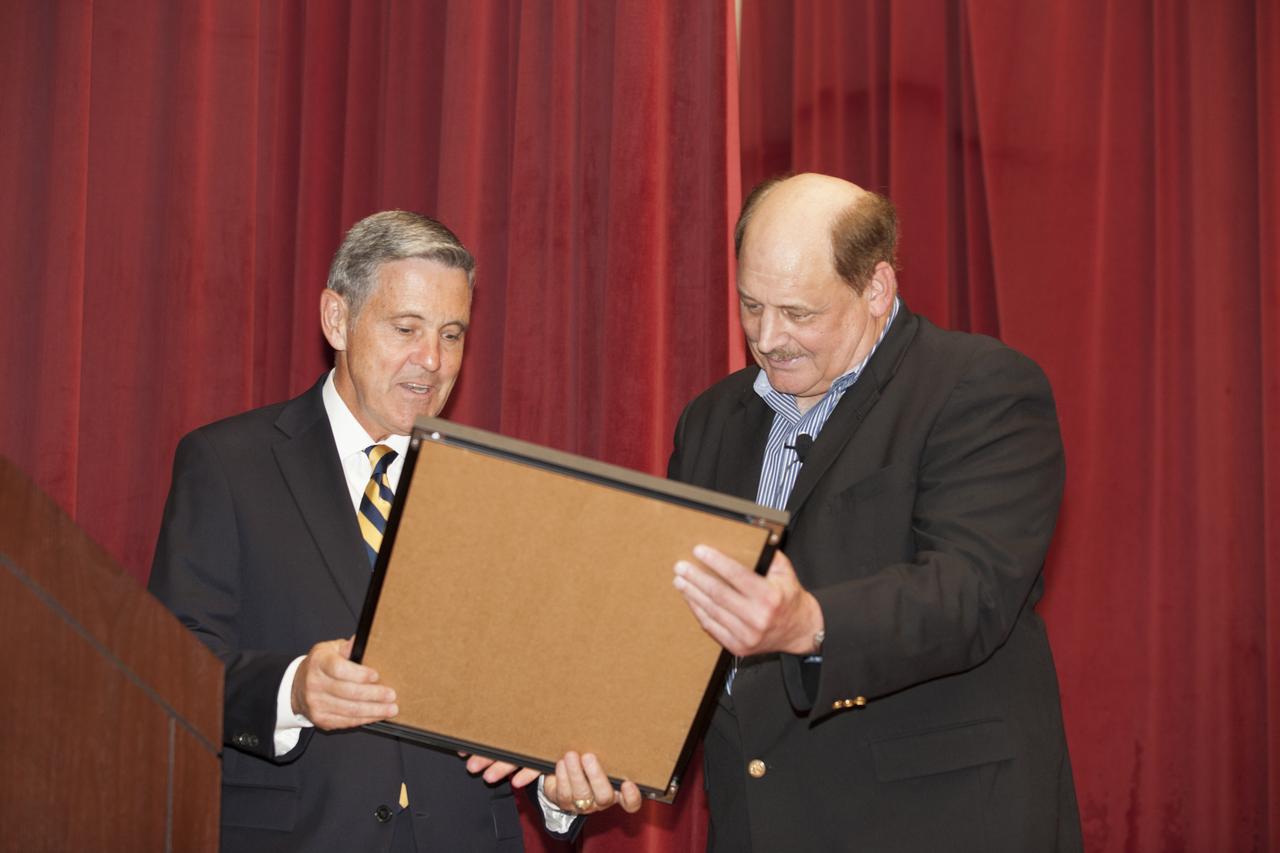
NASA Kennedy Space Center Director Bob Cabana, left, presents a special plaque to Michael Kersjes, author and former special education teacher and football coach from Michigan, after his presentation to workers during the Disability Awareness and Action Working Group, or DAAWG, event. The theme of Kersjes' presentation was "Power of the Human Spirit." Kersjes is the author of the book, "A Smile as Big as the Moon," which told the true story of how he worked to get special education students into Space Camp, a competitive education program at the U.S. Space and Rocket Center in Huntsville, Alabama. His book was made into a movie in 2012.
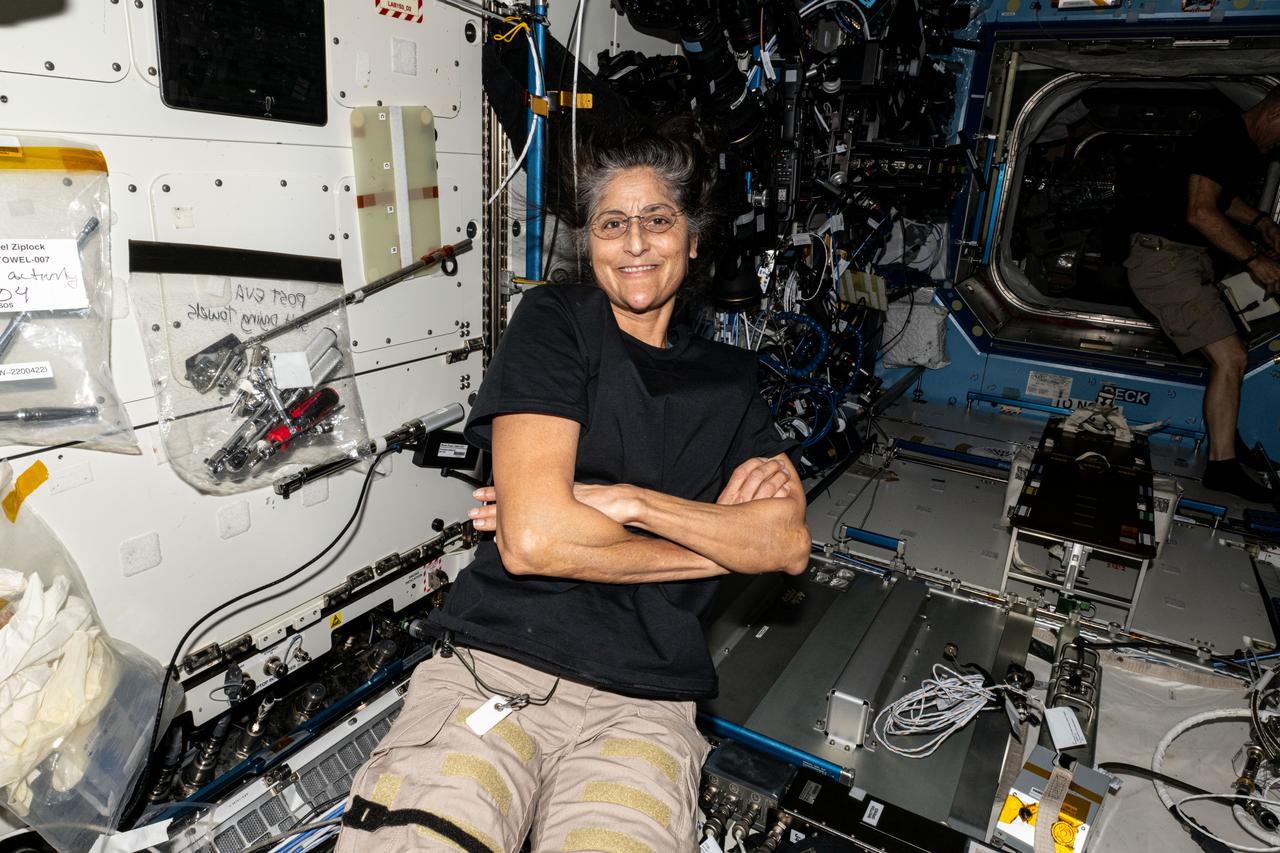
iss071e673574 (Sept. 17, 2024) -- NASA astronaut and Expedition 71 Flight Engineer Suni Williams smiles for a photo aboard the International Space Station.
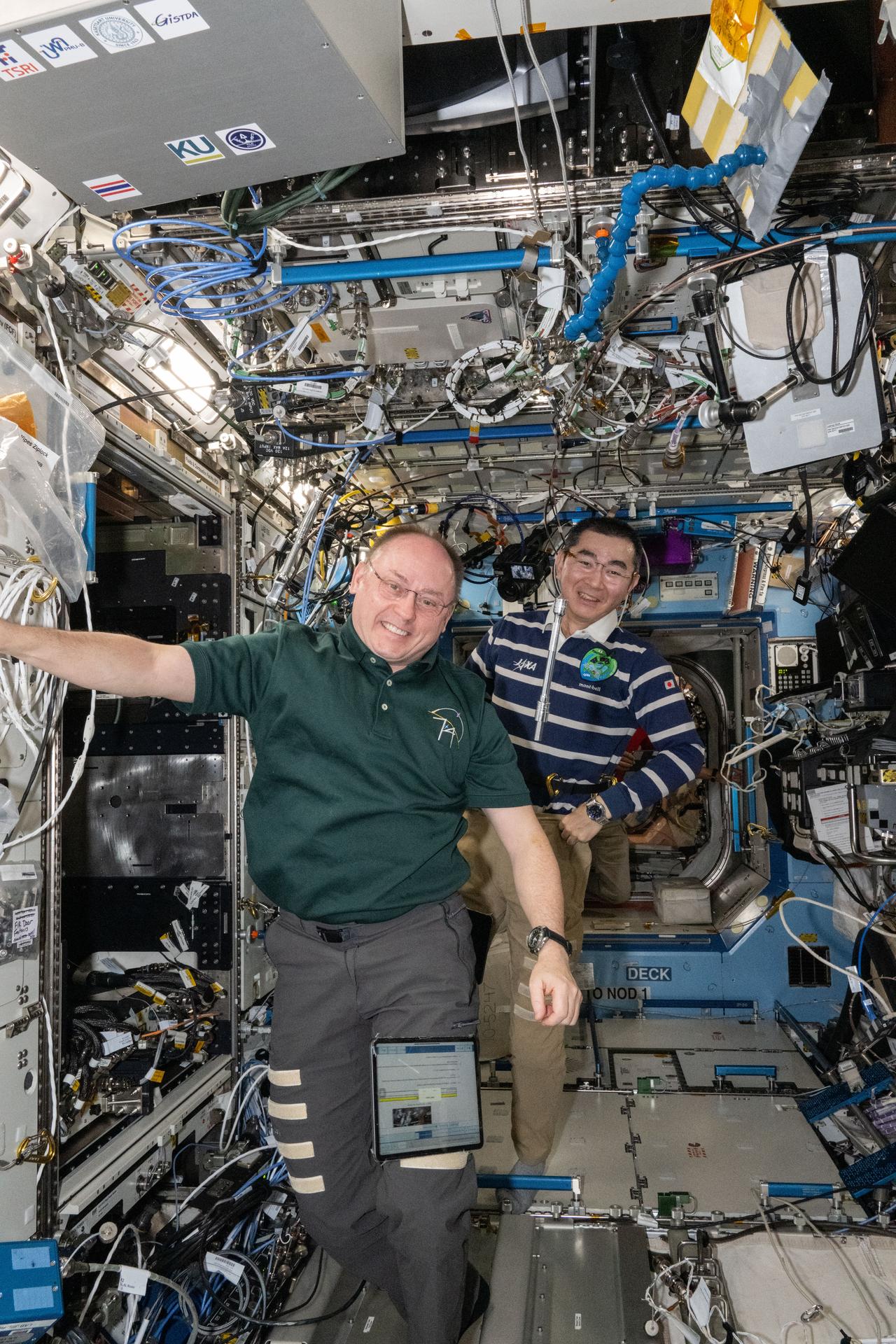
iss074e0000932 (Dec. 16, 2025) --- Astronauts Mike Fincke of NASA and Kimiya Yui of JAXA (Japan Aerospace Exploration Agency)—Expedition 74 Commander and Flight Engineer, respectively—smile for a portrait during maintenance activities inside the International Space Station's Destiny laboratory module.
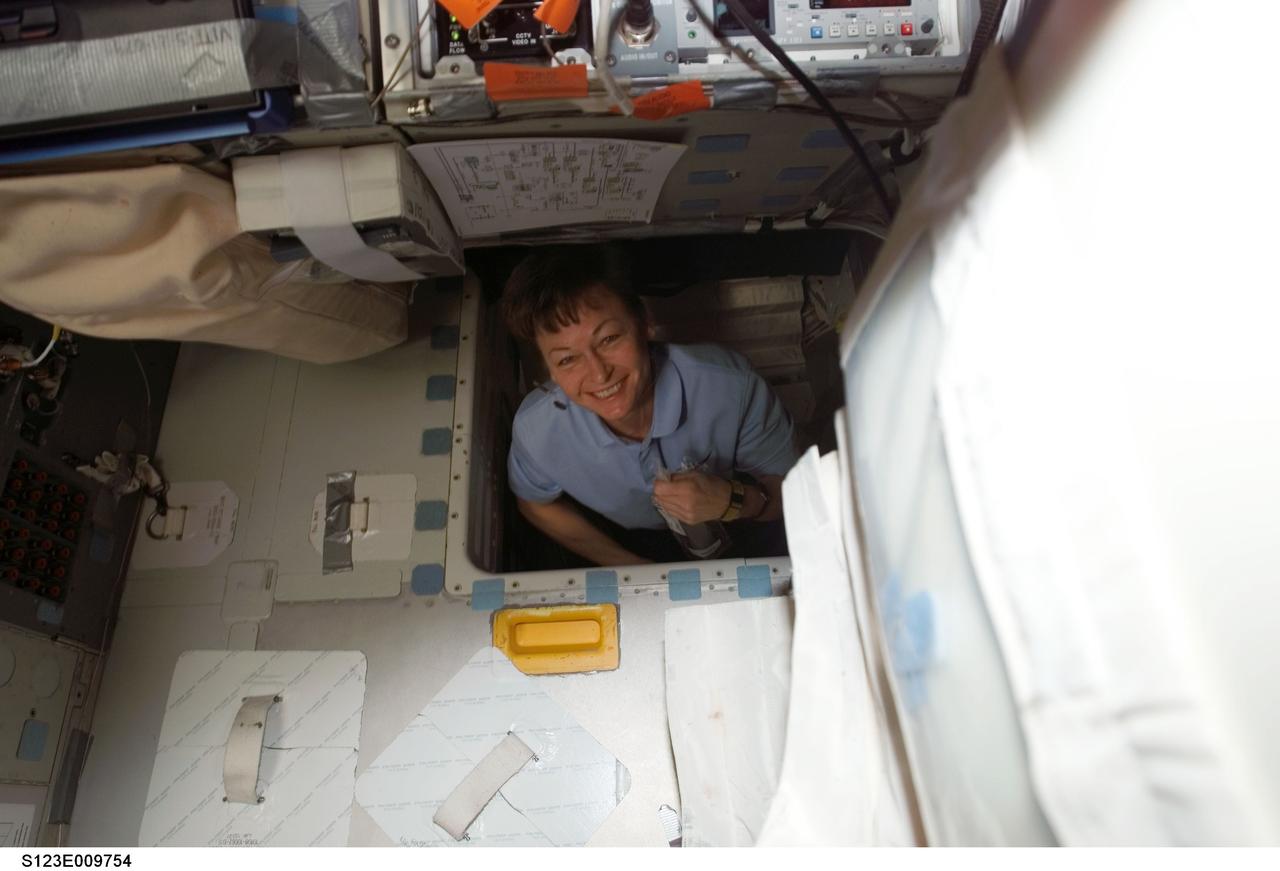
S123-E-009754 (24 March 2008) --- Astronaut Peggy Whitson, Expedition 16 commander, smiles for the camera while in the hatch which connects the flight deck and middeck of Space Shuttle Endeavour while docked with the International Space Station.
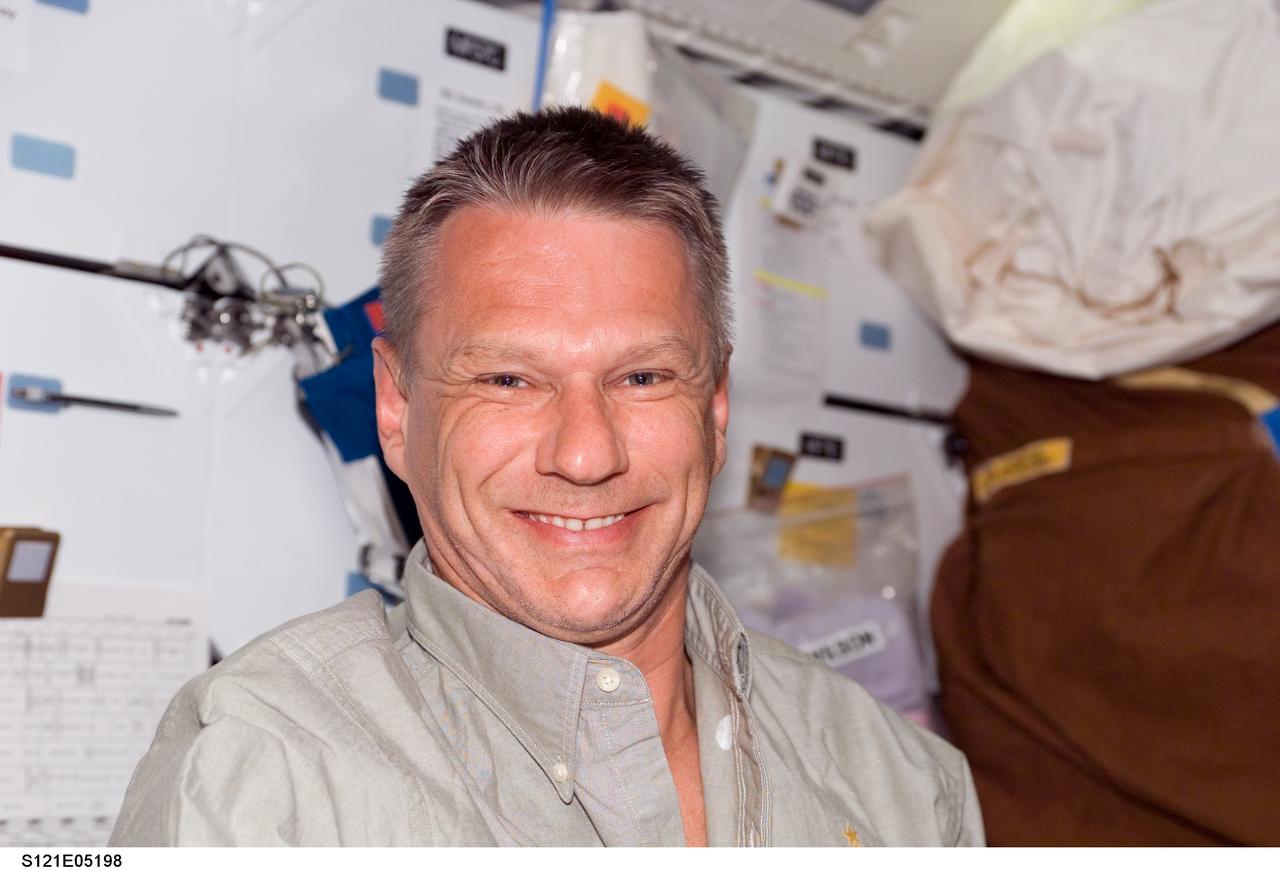
S121-E-05198 (5 July 2006) --- Astronaut Piers J. Sellers, STS-121 mission specialist, smiles for the camera as a crewmate photographs him on the middeck of the Space Shuttle Discovery. This was among the first group of digital still images showing the crewmembers onboard during their first full day in space.
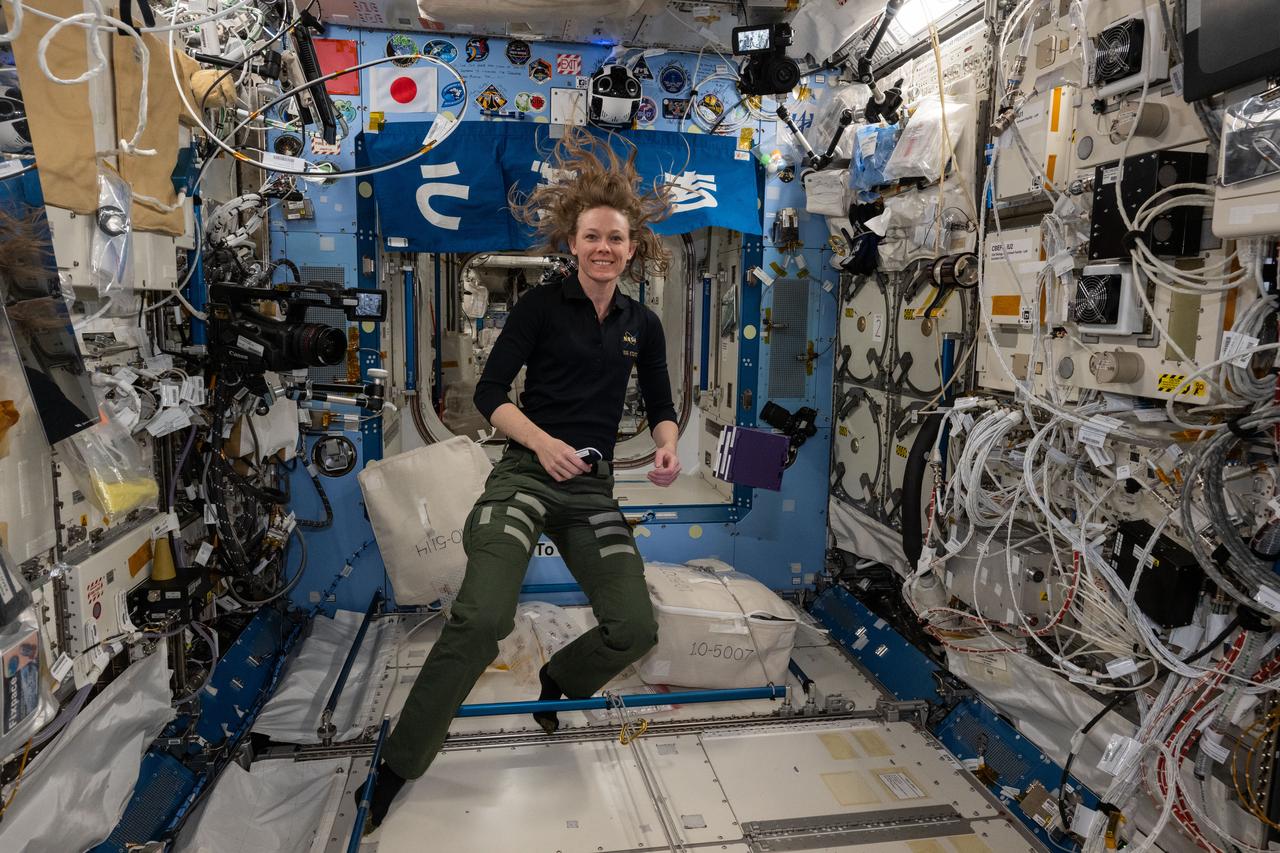
iss073e0420809 (Aug. 3, 2025) --- NASA astronaut and Expedition 73 Flight Engineer Nichole Ayers smiles for a portrait during scientific operations inside the Intenational Space Station's Kibo laboratory module.

iss074e0402922 (March 18, 2026) -- NASA astronaut Chris Williams smiles at the camera while conducting a spacewalk outside the International Space Station. Credit: NASA/Jessica Meir
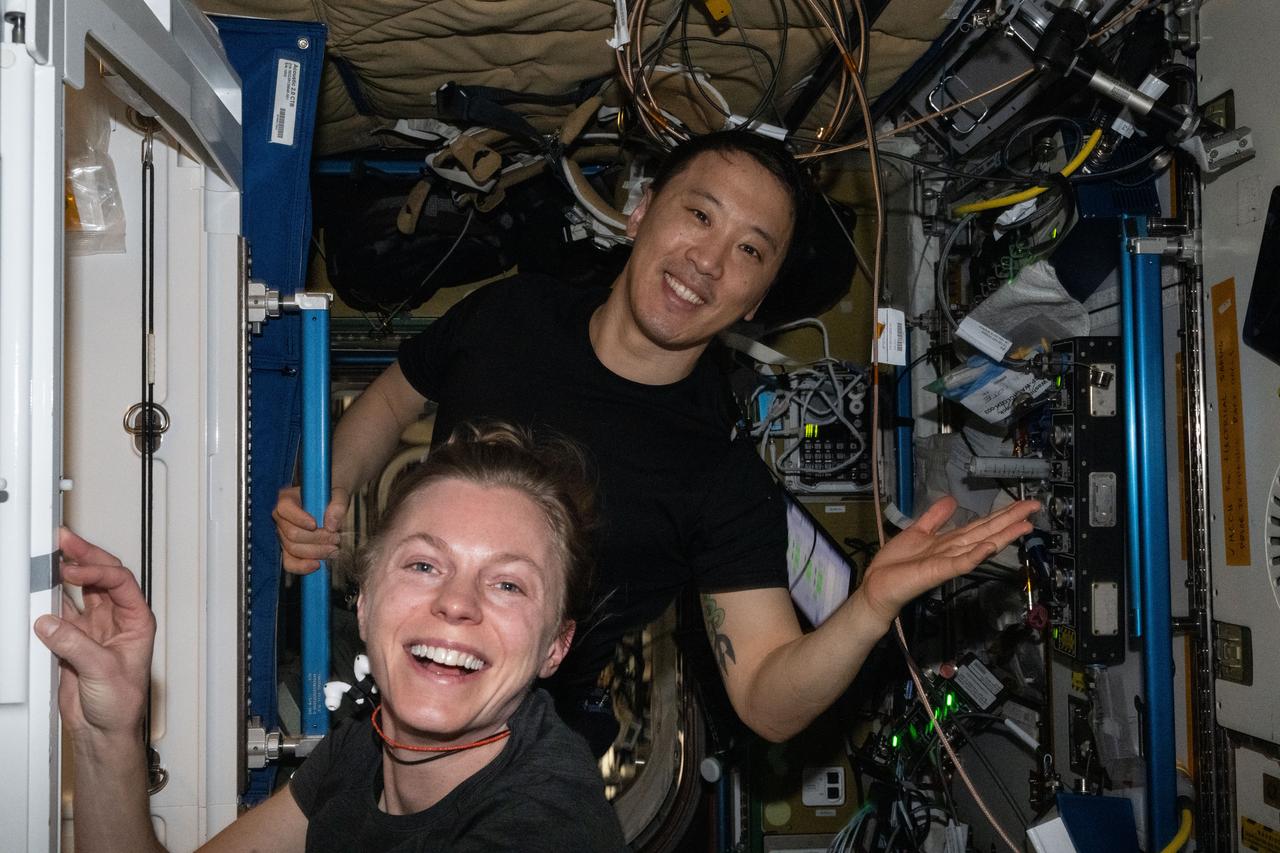
iss073e0658307 (Sept. 10, 2025) --- Expedition 73 Flight Engineers Zena Cardman and Jonny Kim, both NASA astronauts, smile for a portrait during a break in thier research duties duties aboard the International Space Station.
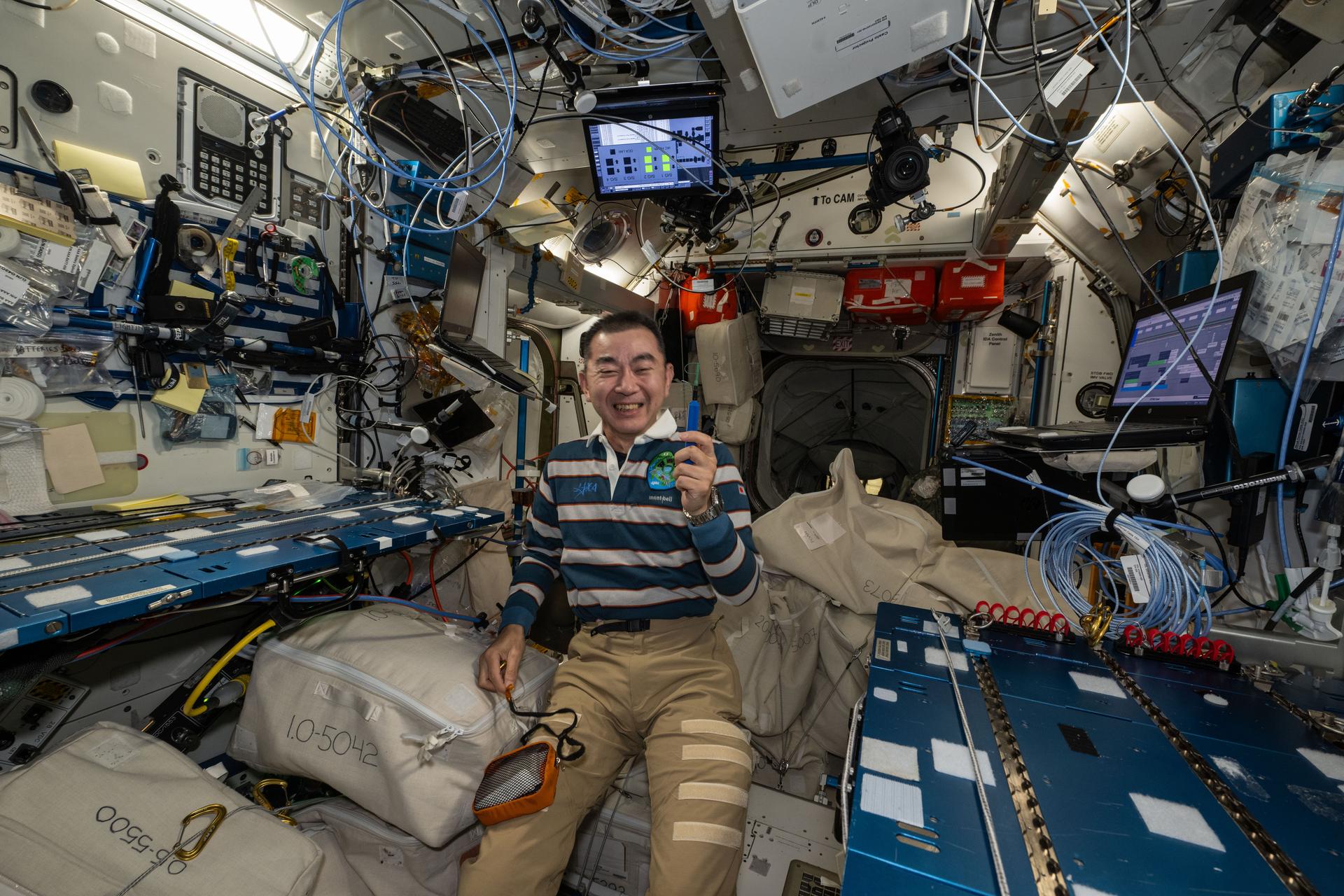
iss073e0814551 (Sept. 27, 2025) --- JAXA (Japan Aerospace Exploration Agency) astronaut and Expedition 73 Flight Engineer Kimiya Yui smiles for a portrait during weekend housecleaning activities inside the International Space Station's Harmony module.
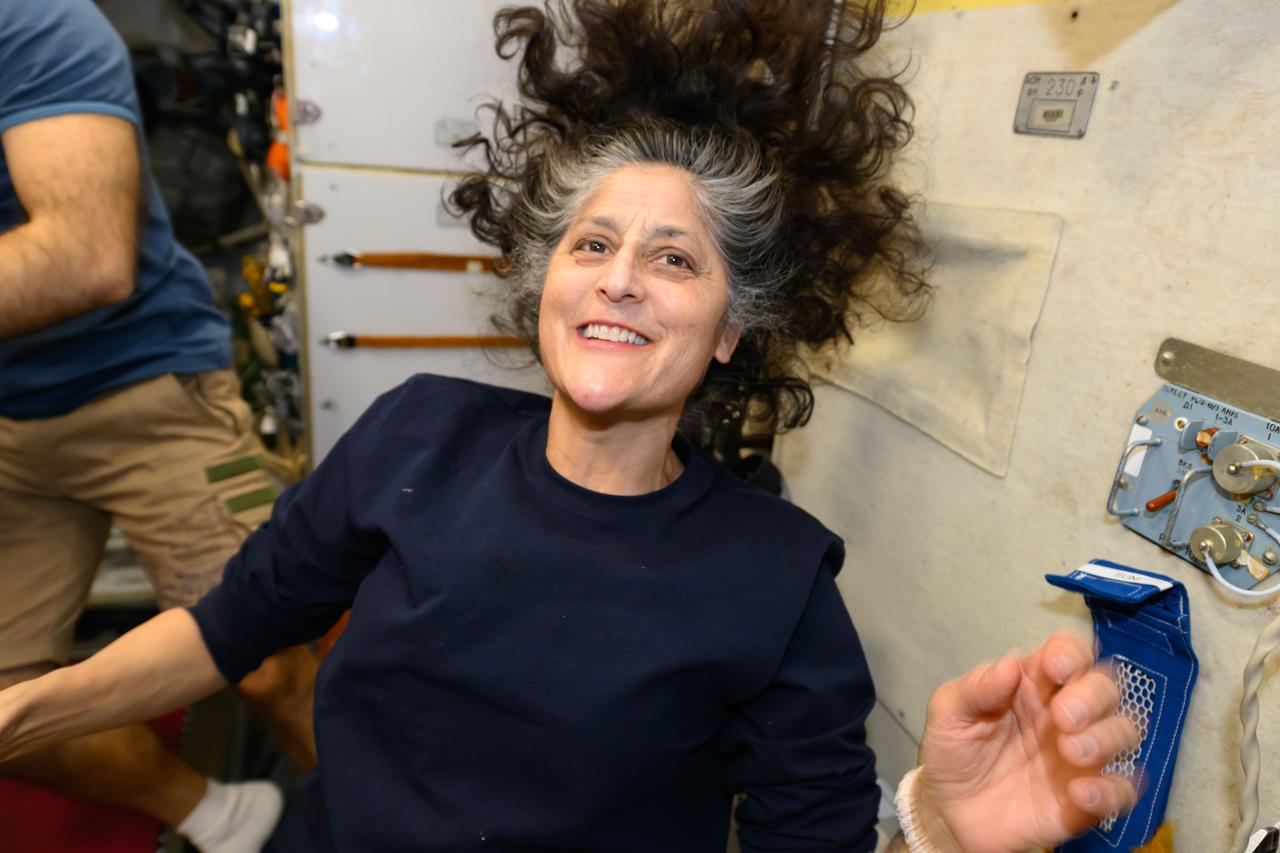
iss072e189112 (Nov. 15, 2024) --- NASA astronaut and Expedition 72 Commander Suni Williams smiles for a portrait inside the International Space Station's Zvezda service module during dinner time.
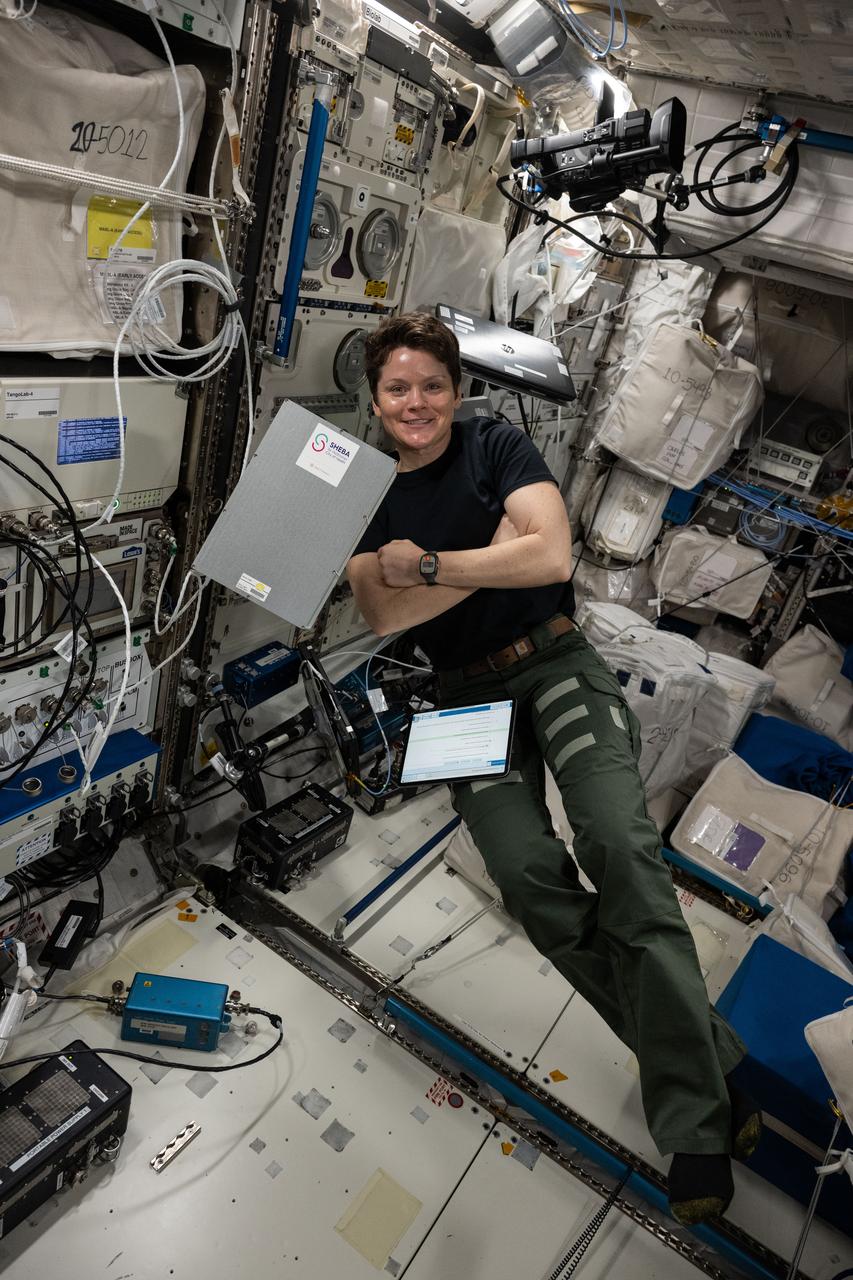
iss073e0420808 (Aug. 3, 2025) --- NASA astronaut and Expedition 73 Flight Engineer Anne McClain smiles for a portrait during scientific operations inside the International Space Station's Columbus laboratory module.

iss073e0979461 (Oct. 27, 2025) --- NASA astronaut and Expedition 73 Flight Engineer Jonny Kim smiles for a portrait whle organizing cargo inside the International Space Station's Harmony module.
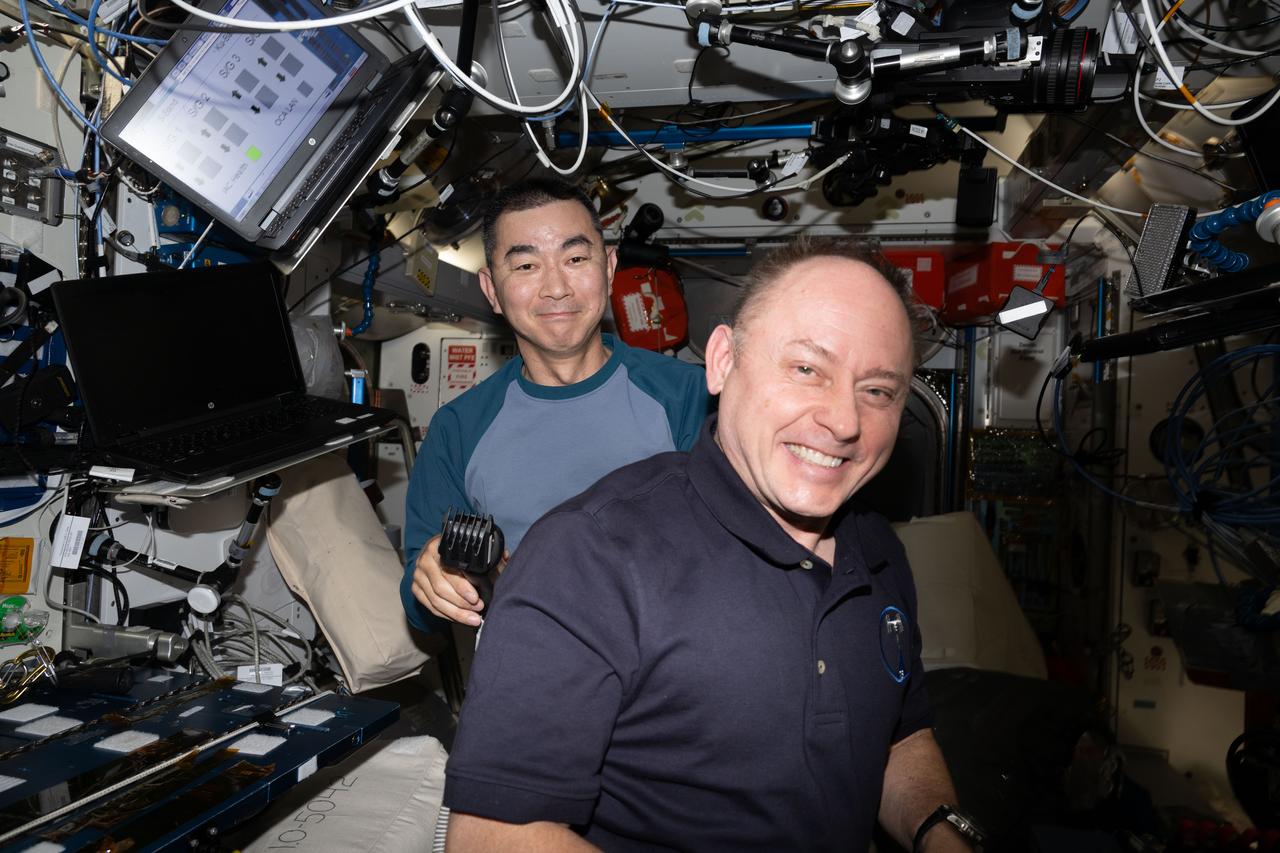
iss073e0603004 (Aug. 30, 2025) --- JAXA (Japan Aerospace Exploration Agency) astronaut Kimiya Yui smiles for a portrait after trimming NASA astronaut Mike Fincke's hair aboard the International Space Station.
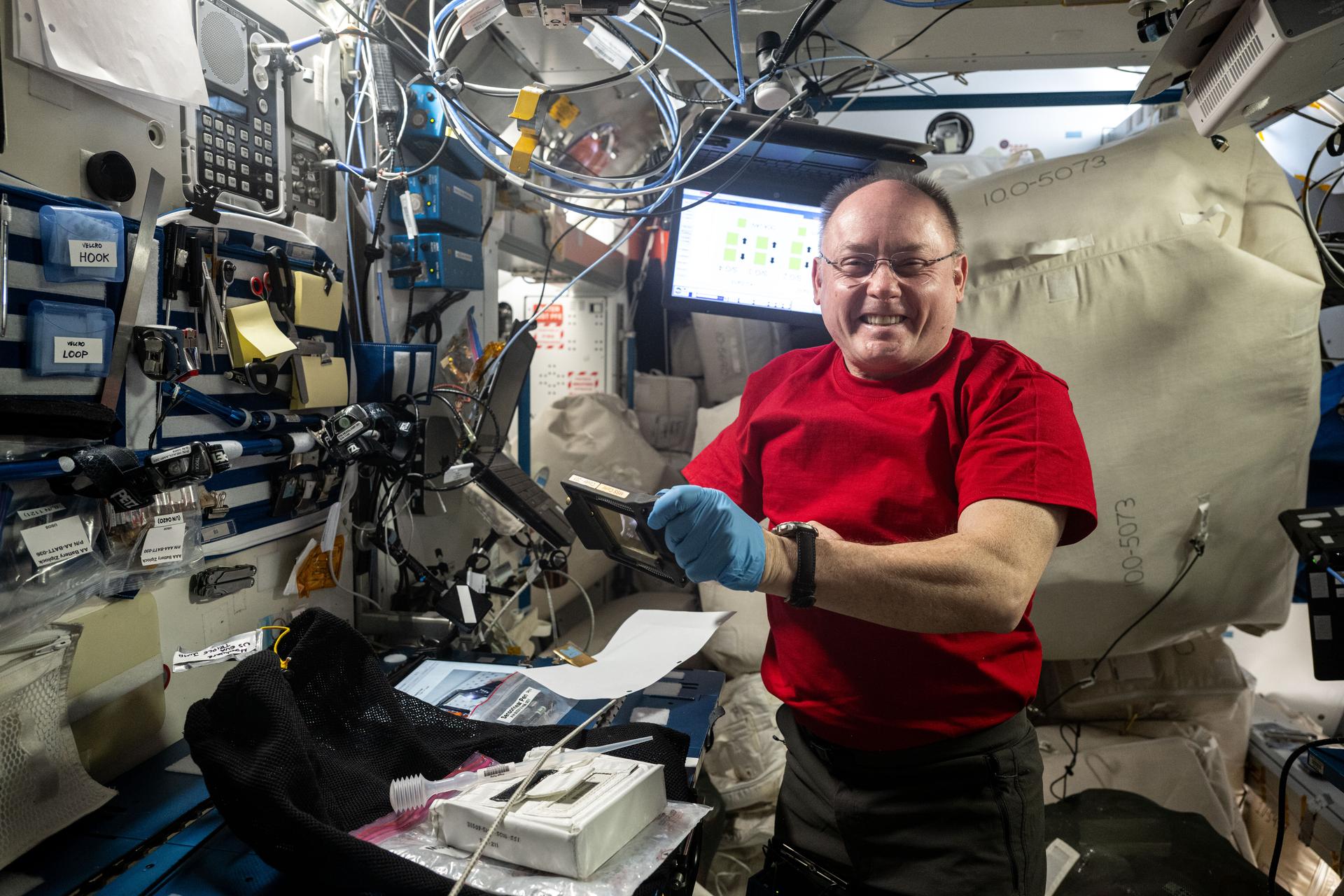
iss073e0917875 (Oct. 23, 2025) --- NASA astronaut and Expedition 73 Flight Engineer Mike Fincke smiles for a portrait while organizing cargo inside the International Space Station's Harmony module.
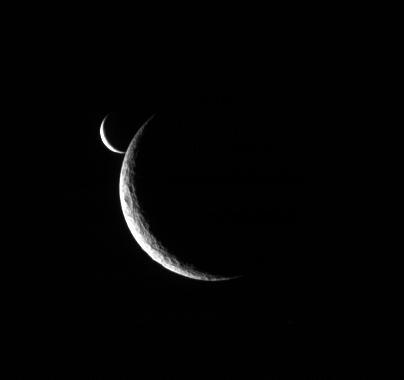
Two slim crescents smile toward the Cassini spacecraft following an occultation event
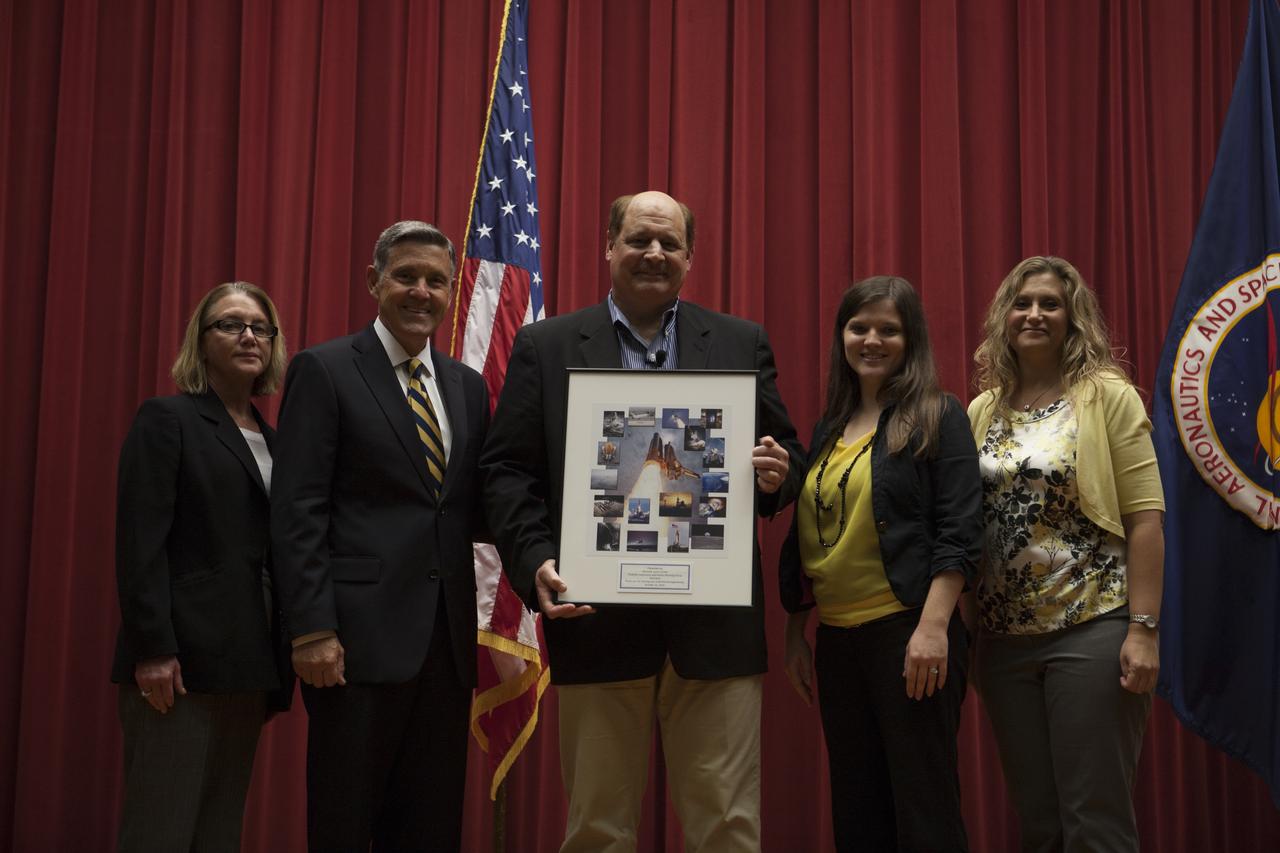
Michael Kersjes, center, author and former special education teacher and football coach from Michigan, accepts a special plaque after his presentation to workers during the Disability Awareness and Action Working Group, or DAAWG, event at NASA's Kennedy Space Center in Florida. From left, are Susan Kroskey, Kennedy's chief financial officer and executive champion of DAAWG, Center Director Bob Cabana, and Jessica Conner and Nicole DelVesco, DAAWG co-chairpersons. The theme of Kersjes' presentation was "Power of the Human Spirit." Kersjes is the author of the book, "A Smile as Big as the Moon," which told the true story of how he worked to get special education students into Space Camp, a competitive education program at the U.S. Space and Rocket Center in Huntsville, Alabama. His book was made into a movie in 2012.
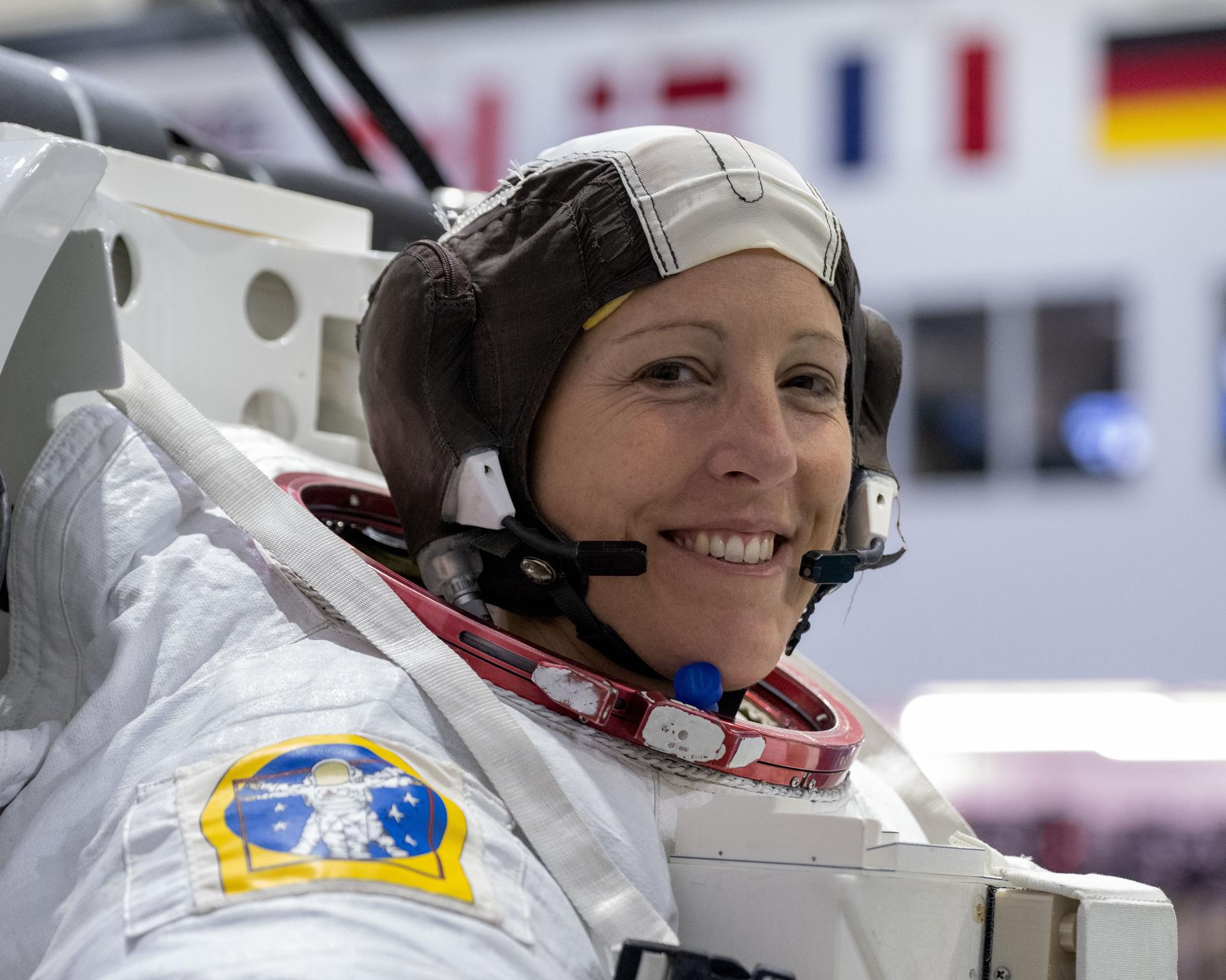
jsc2024e062537 (Sept. 20, 2024) --- ESA (European Space Agency) astronaut Sophie Adenot smiles for a portrait as she gets suited up for a spacewalk training session at Johnson Space Center's Neutral Buoyancy Laboratory in Houston, Texas. Credit: NASA/Bill Stafford
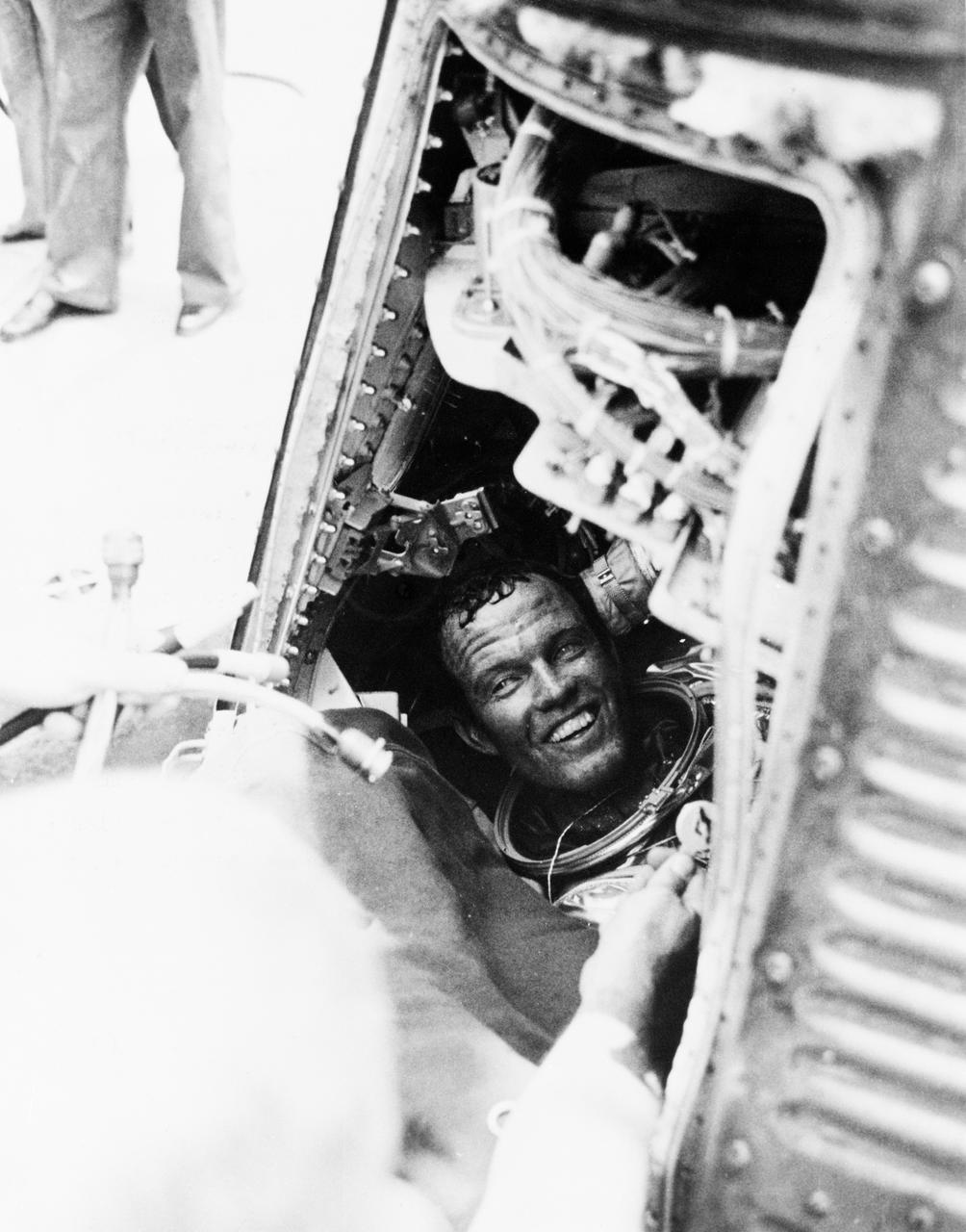
S63-07852 (16 May 1963)--- Astronaut L. Gordon Cooper Jr., pilot of the Mercury-Atlas 9 (MA-9) mission, has a smile for the recovery crew of the USS Kearsarge, after he is onboard from a successful 22-orbit mission of Earth in his spacecraft "Faith 7". Cooper is still sitting in his capsule, with his helmet off. Photo credit: NASA
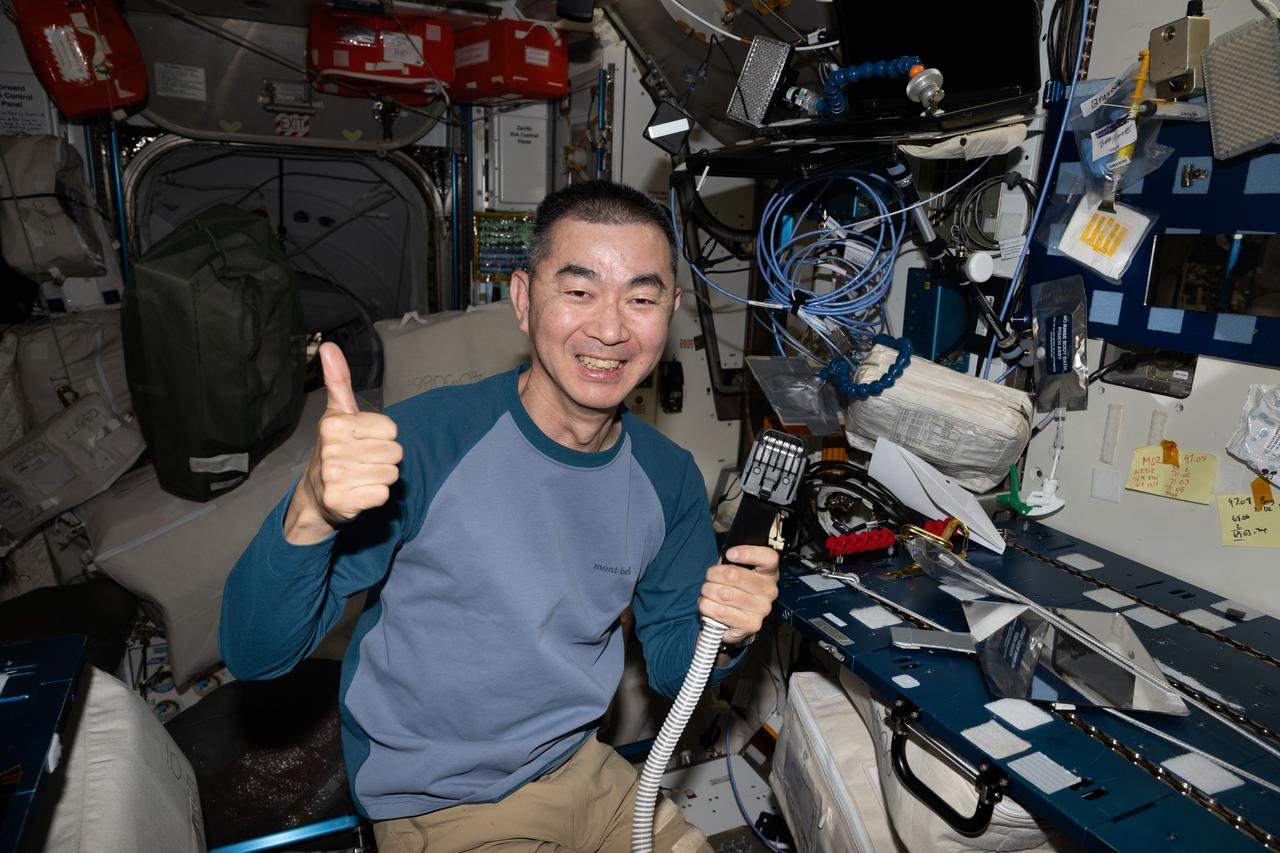
iss073e0602989 (Aug. 30, 2025) --- Astronaut Kimiya Yui of JAXA (Japan Aerospace Exploration Agency) smiles for a portrait after trimming his own hair aboard the International Space Station. Attached to the electric razor is a vacuum that collects the loose hair safeguarding the station's atmosphere in the microgravity environment.
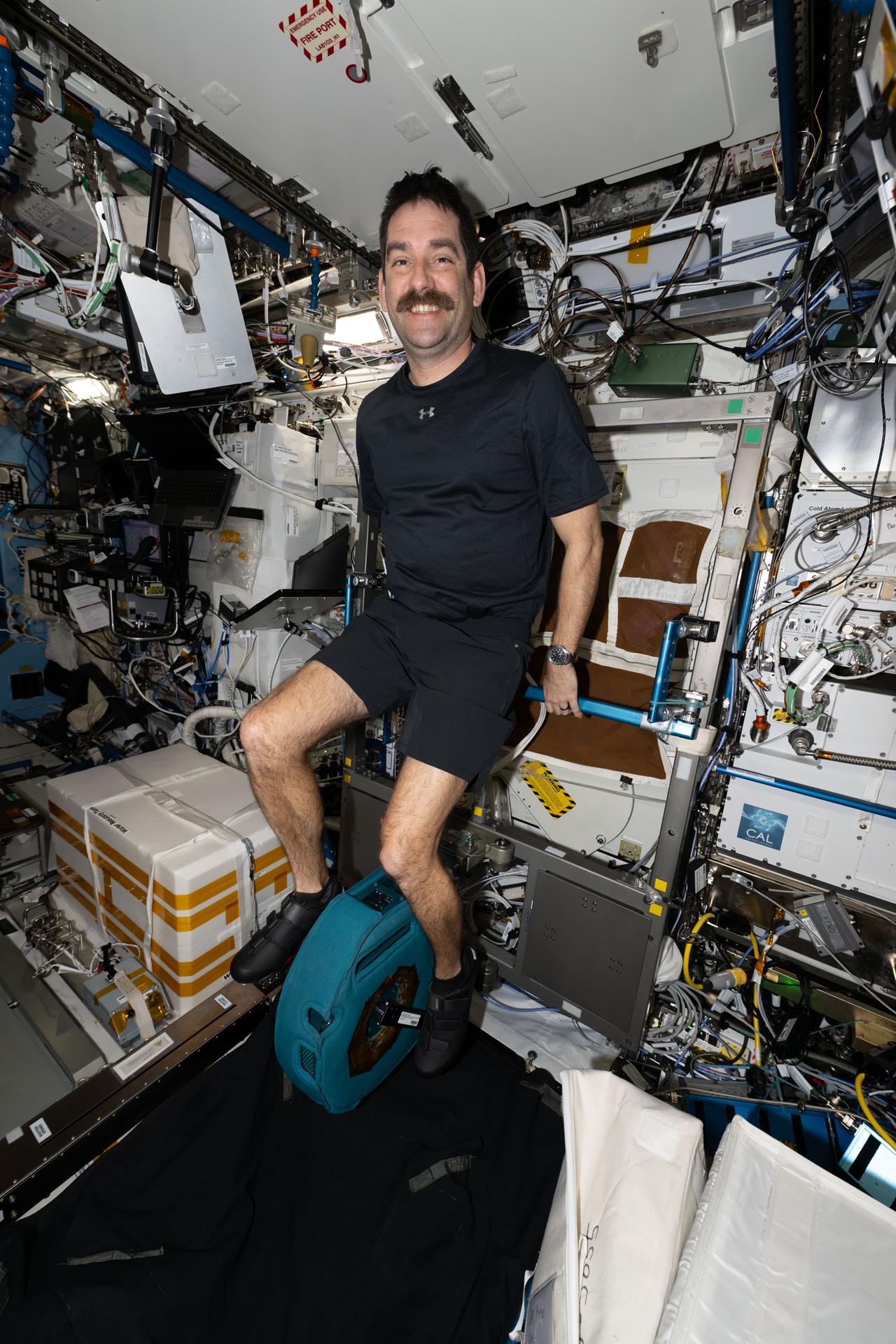
iss074e0316041 (Feb. 18, 2026) --- NASA astronaut and Expedition 74 Flight Engineer Jack Hathaway smiles for a portrait while pedaling on the exercise cycle inside the International Space Station’s Destiny laboratory module. Credit: NASA/Jessica Meir
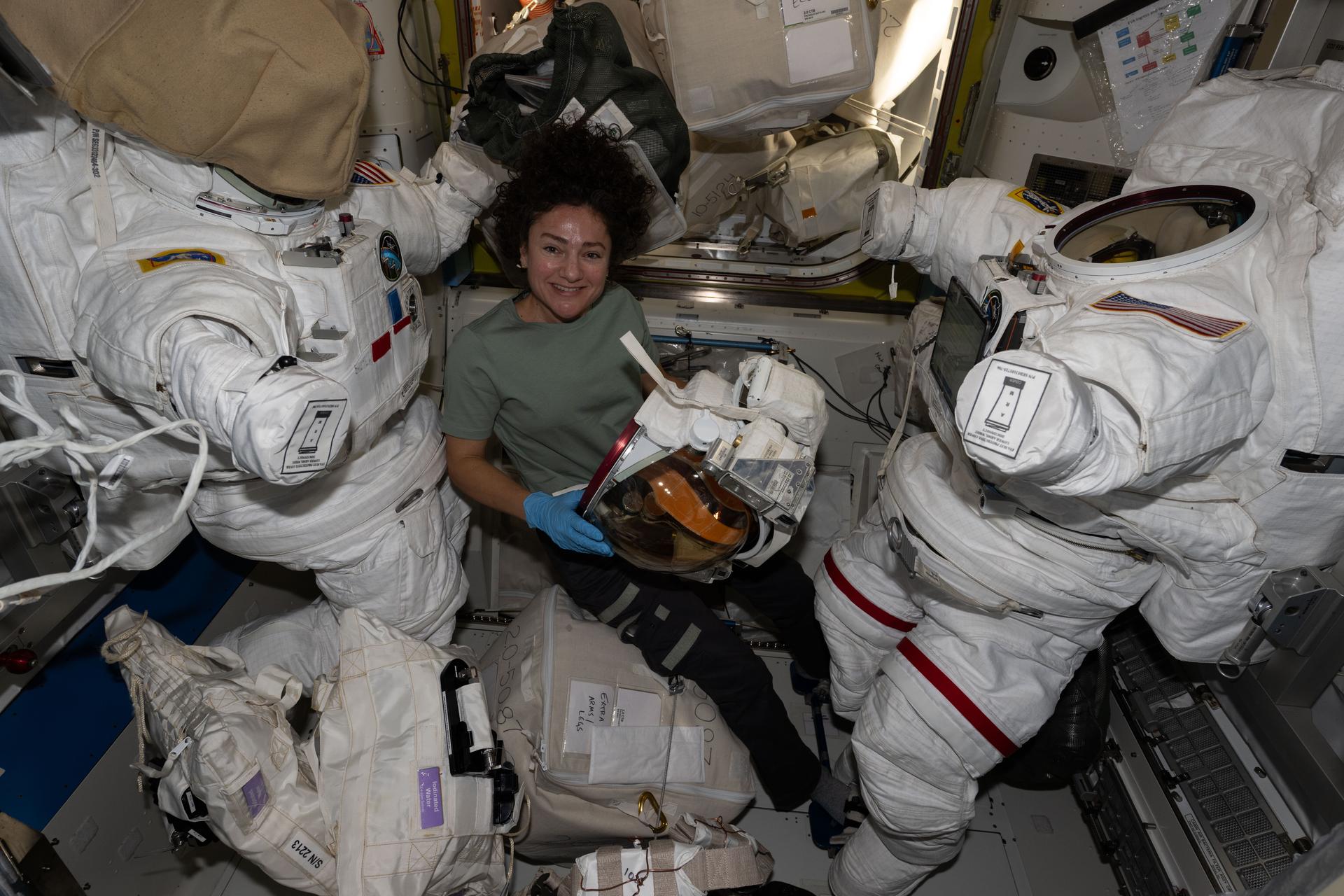
iss074e0365172 (March 9, 2026) --- NASA astronaut and Expedition 74 flight engineer Jessica Meir smiles for a portrait while preparing a helmet for installation on a spacesuit inside the International Space Station's Quest airlock. Credit: NASA/Jessica Meir
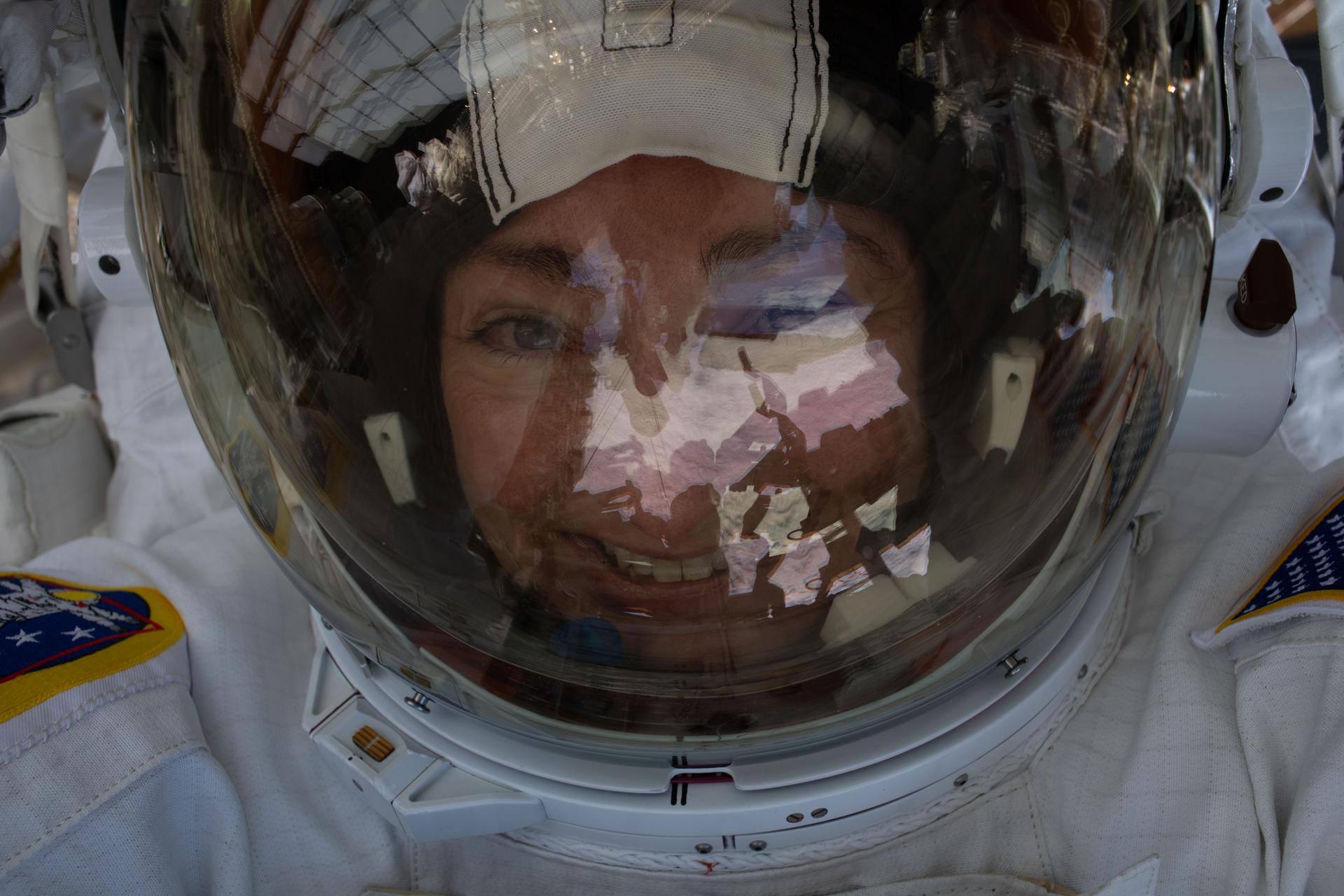
iss074e0789734 (June 30, 2026) --- NASA astronaut and Expedition 74 flight engineer Jessica Meir smiles for an out-of-this-world "space-selfie" during a seven-hour-and-20-minute spacewalk to replace a malfunctioning wrist joint on the International Space Station's Canadarm2 robotic arm. Credit: NASA/Jessica Meir
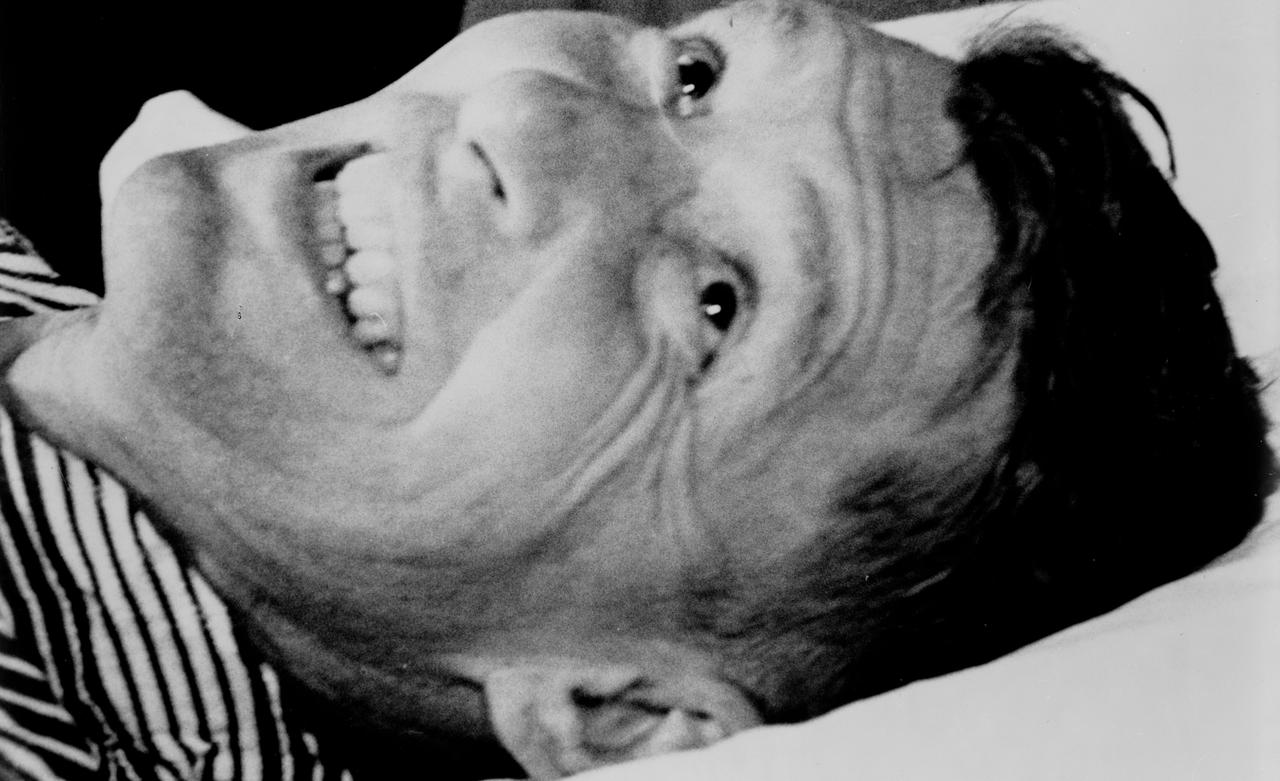
S62-06163 (3 Oct. 1962) --- Astronaut Walter M. Schirra Jr. smiles at medical personnel (out of frame) during a postflight physcial aboard the USS Kearsage, prime recovery vessel for Mercury-Atlas 8 (MA-8) upon which Schirra served as pilot earlier today. Photo credit: NASA
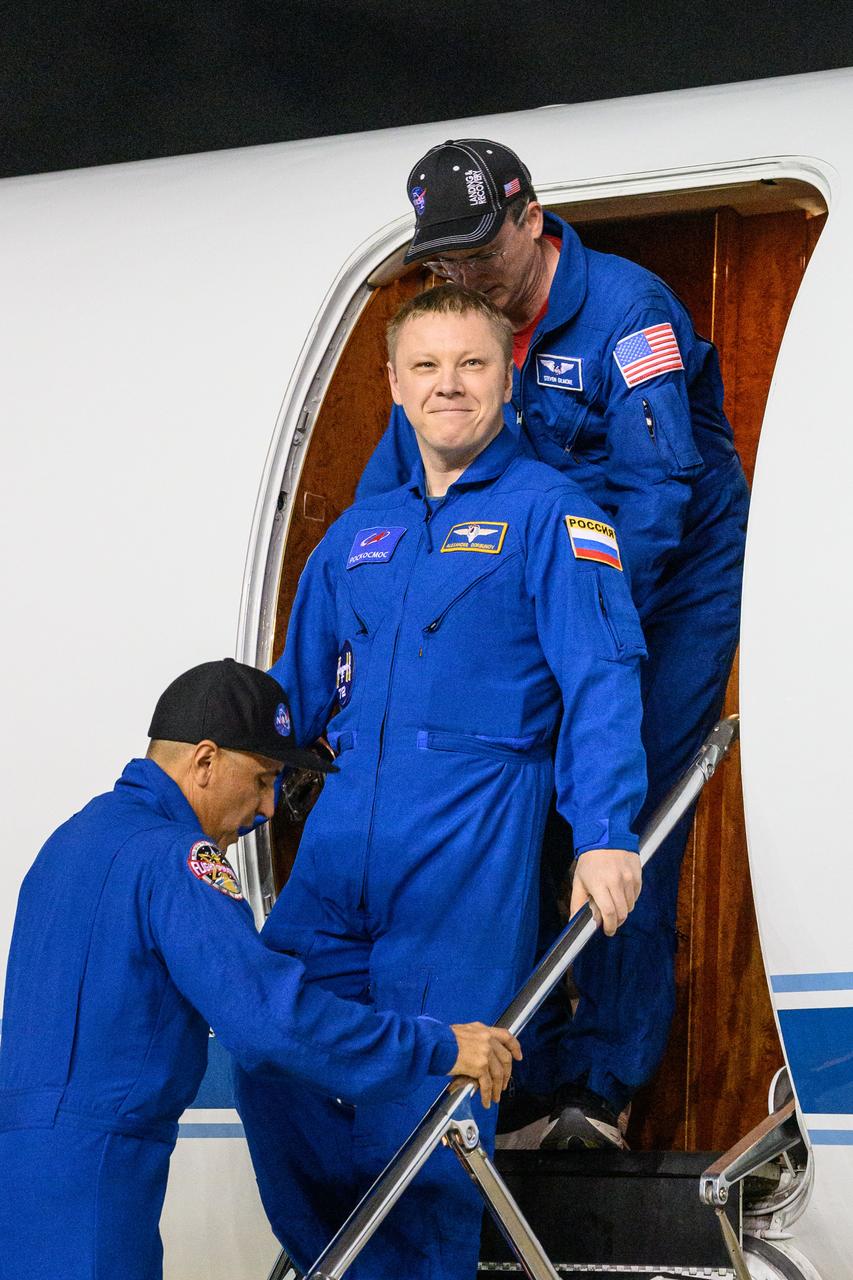
jsc2025e032668 (March 18, 2025) --- Roscosmos cosmonaut Aleksandr Gorbunov smiles as he returns to Johnson Space Center's Ellington Field in Houston after completing a long-duration science mission aboard the International Space Station. After undocking from the orbiting laboratory, NASA’s SpaceX Crew-9 splashed down at 5:57 p.m. EDT on Tuesday, March 18, in the Gulf of America near Tallahassee, Florida.
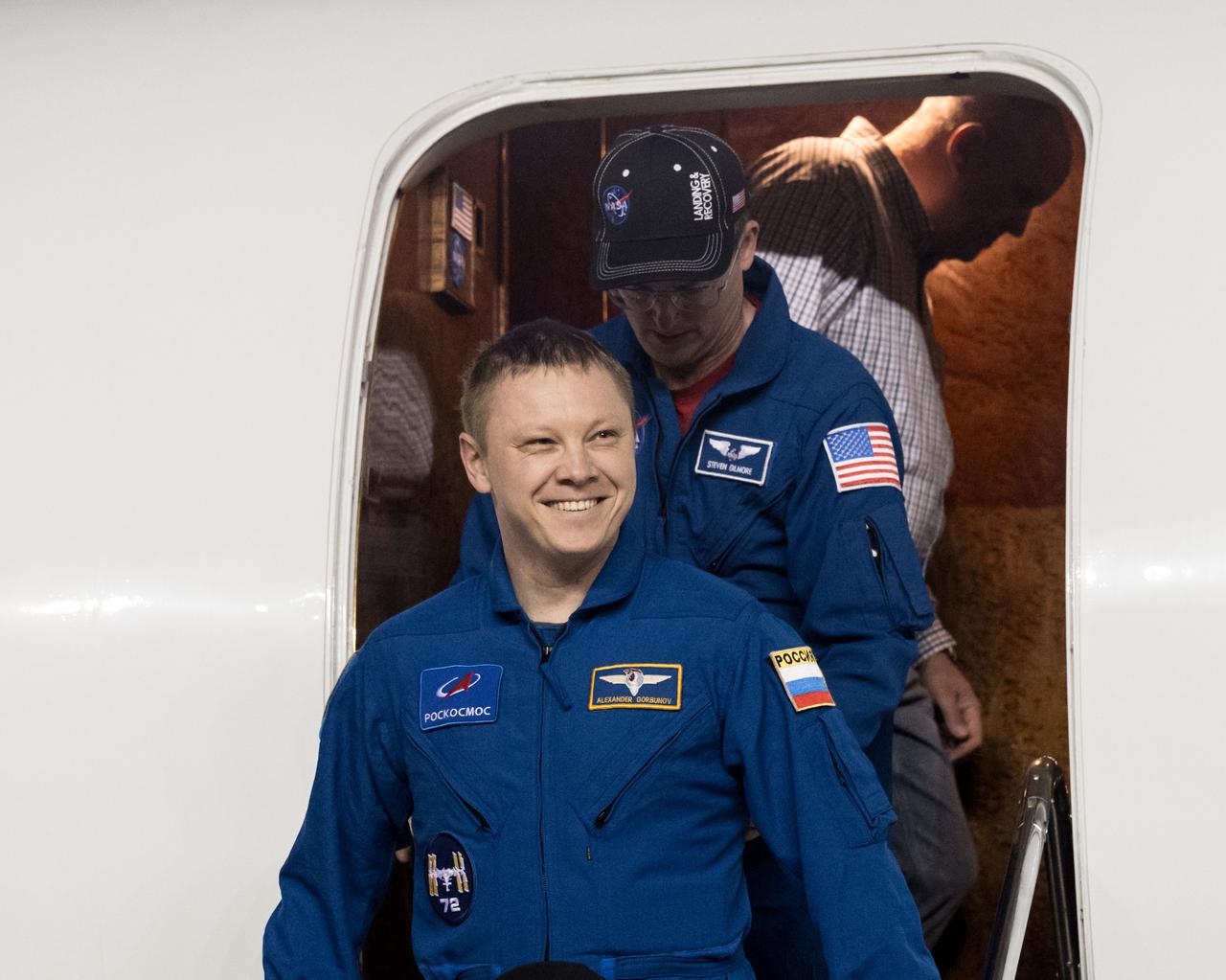
jsc2025e032537 (March 18, 2025) --- Roscosmos cosmonaut Aleksandr Gorbunov smiles as he returns to Johnson Space Center's Ellington Field in Houston after completing a long-duration science mission aboard the International Space Station. After undocking from the orbiting laboratory, NASA’s SpaceX Crew-9 splashed down at 5:57 p.m. EDT on Tuesday, March 18, in the Gulf of America near Tallahassee, Florida.
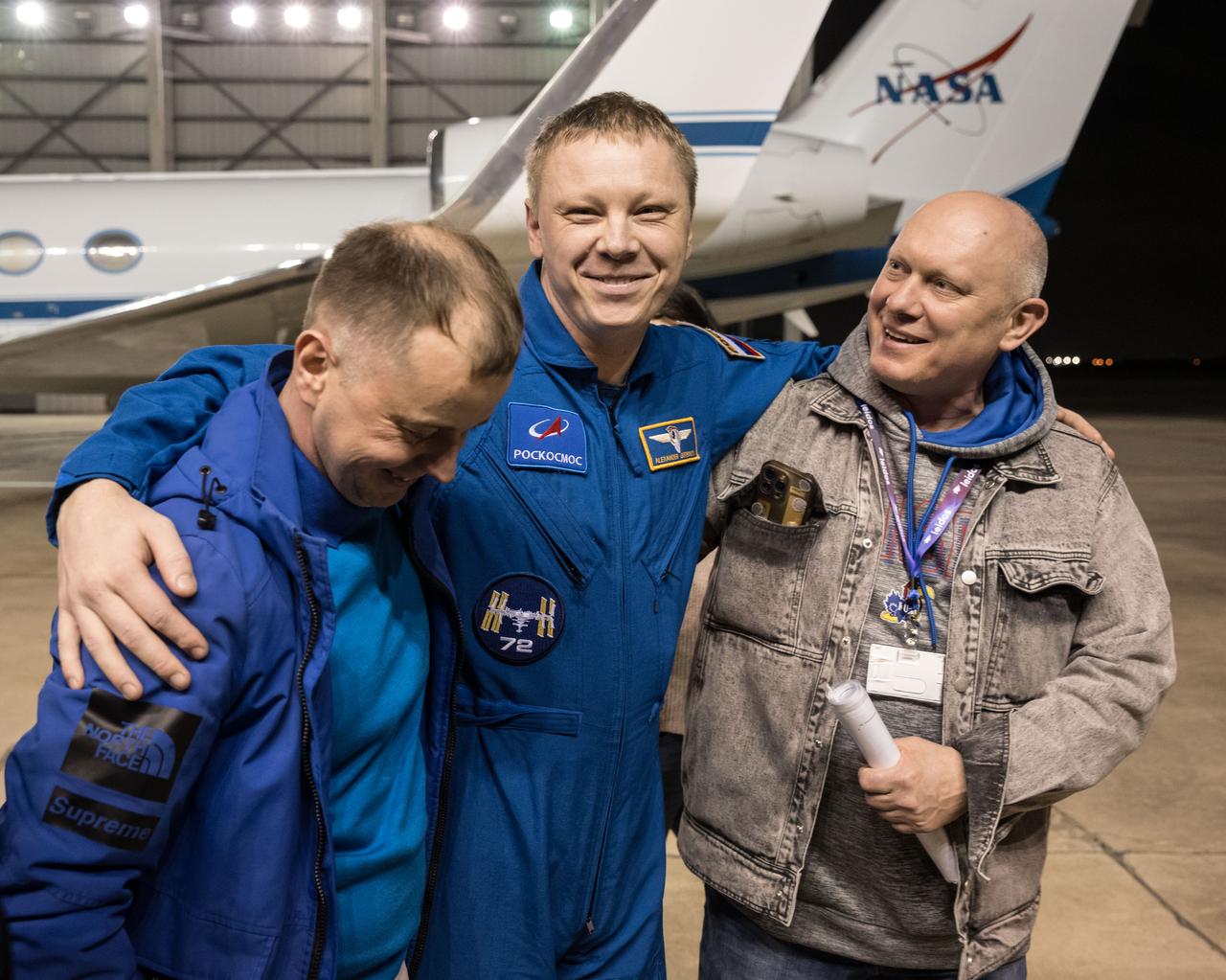
jsc2025e032538 (March 18, 2025) --- Roscosmos cosmonaut Aleksandr Gorbunov smiles as he returns to Johnson Space Center's Ellington Field in Houston after completing a long-duration science mission aboard the International Space Station. After undocking from the orbiting laboratory, NASA’s SpaceX Crew-9 splashed down at 5:57 p.m. EDT on Tuesday, March 18, in the Gulf of America near Tallahassee, Florida.
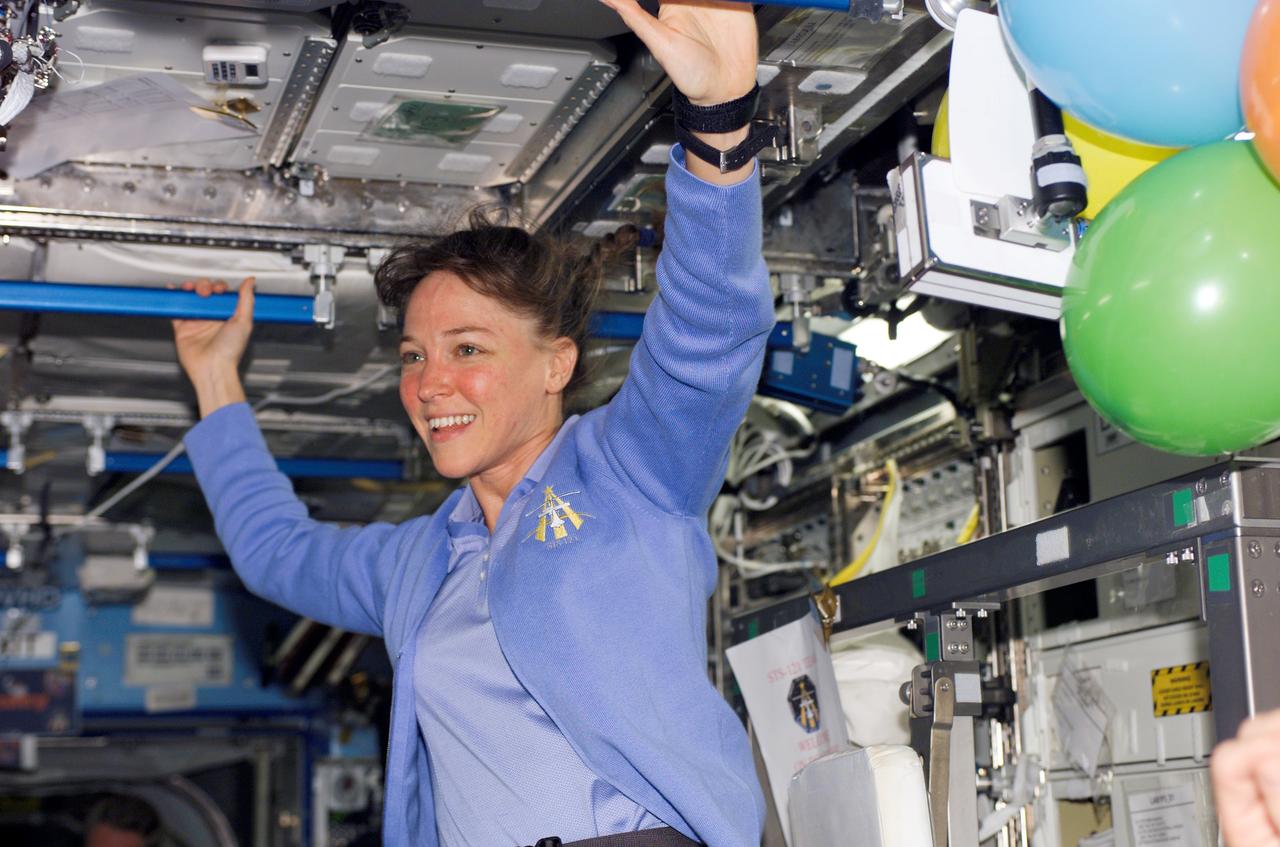
S121-E-05881 (6 July 2006) --- Astronaut Lisa M. Nowak, STS-121 mission specialist, smiles at a crewmate in the Destiny laboratory of the International Space Station.
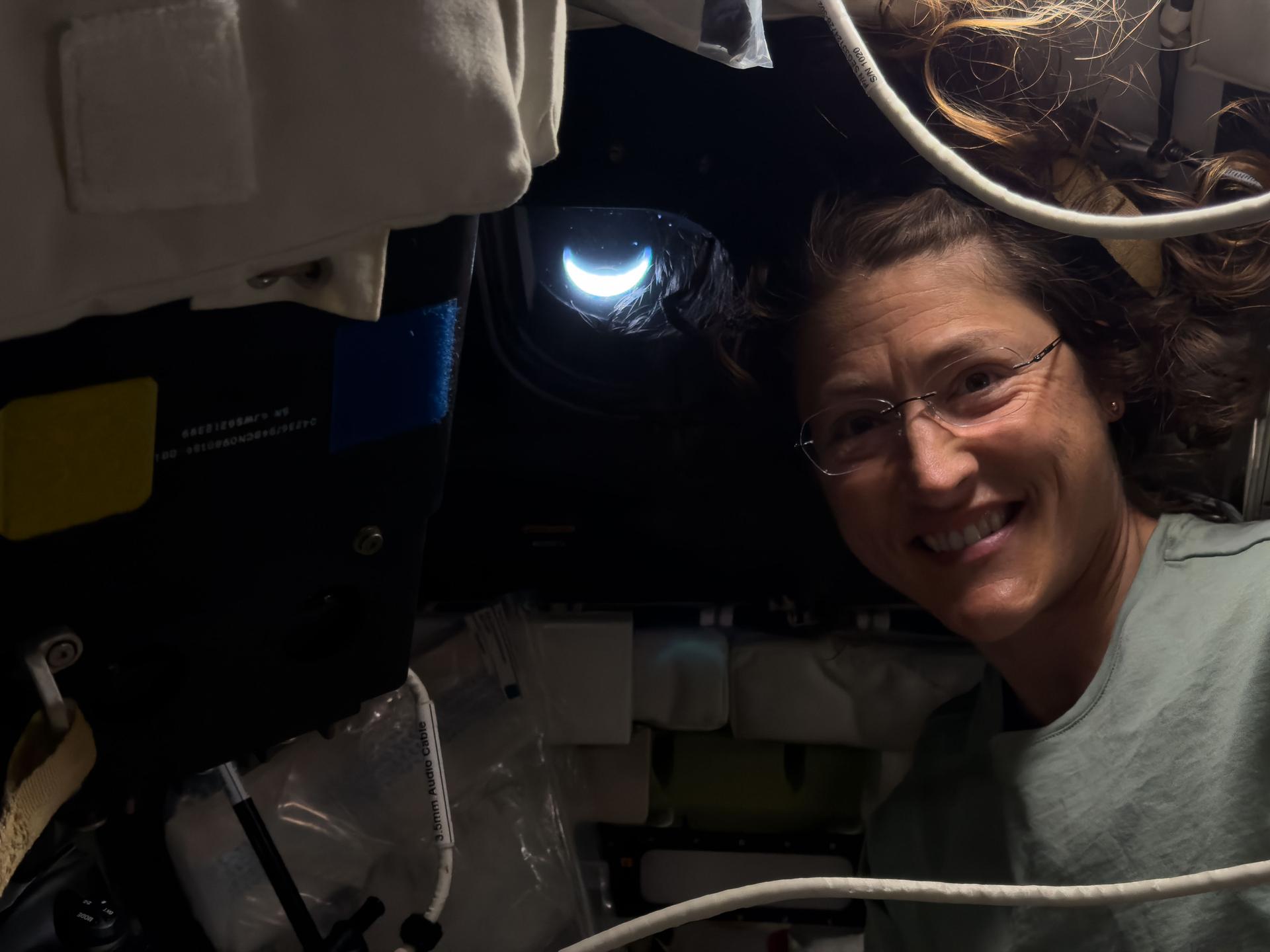
art002e041711 (April 8, 2026) - NASA astronaut Christina Koch pictured inside the Orion spacecraft with the crescent Earth pictured through the window behind her. This picture was captured after the Artemis II crew completed their lunar flyby and were on their way back to Earth. Credit: NASA
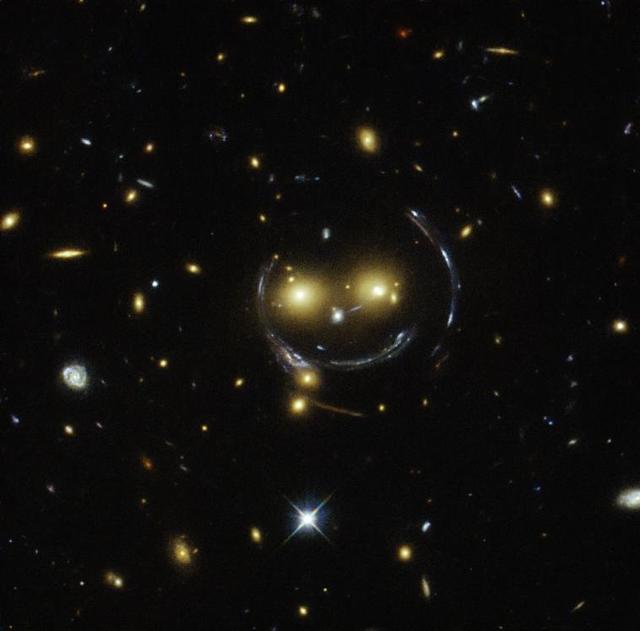
This image from the NASA/ESA Hubble Space Telescope shows a galaxy cluster, SDSS J1038+4849, that appears to have two eyes and a nose as part of a happy face. The face is the result of gravitational lensing.
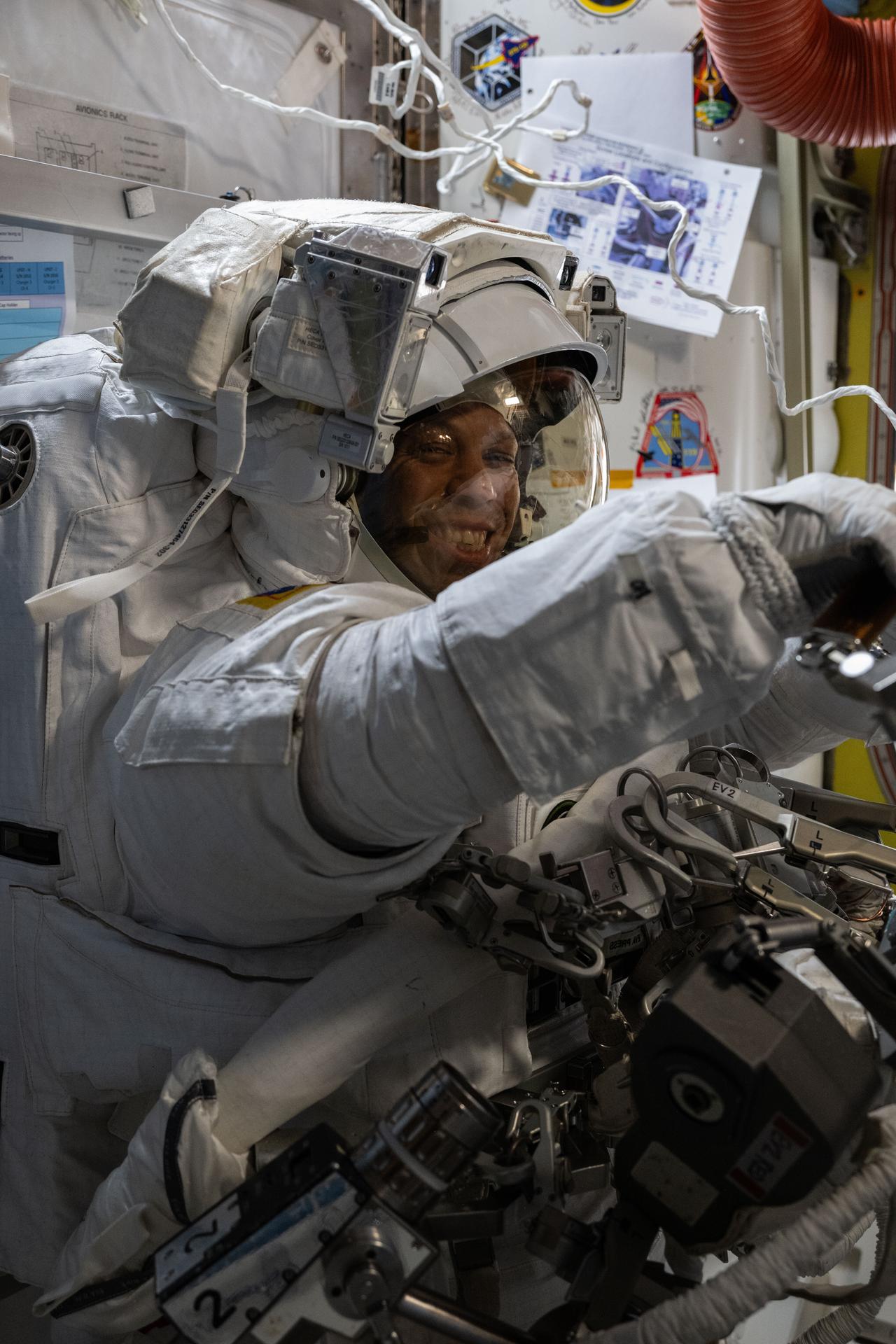
iss074e0009033 (Jan. 2, 2025) --- NASA astronaut and Expedition 74 crew member Chris Williams smiles for the camera during a spacesuit fit verification inside the International Space Station’s Quest airlock. Officially called the On-Orbit Fit Verification, this procedure confirms that the spacesuit is airtight and properly configured, assesses comfort and mobility, and helps prevent potential safety risks. Credit: NASA/Zena Cardman
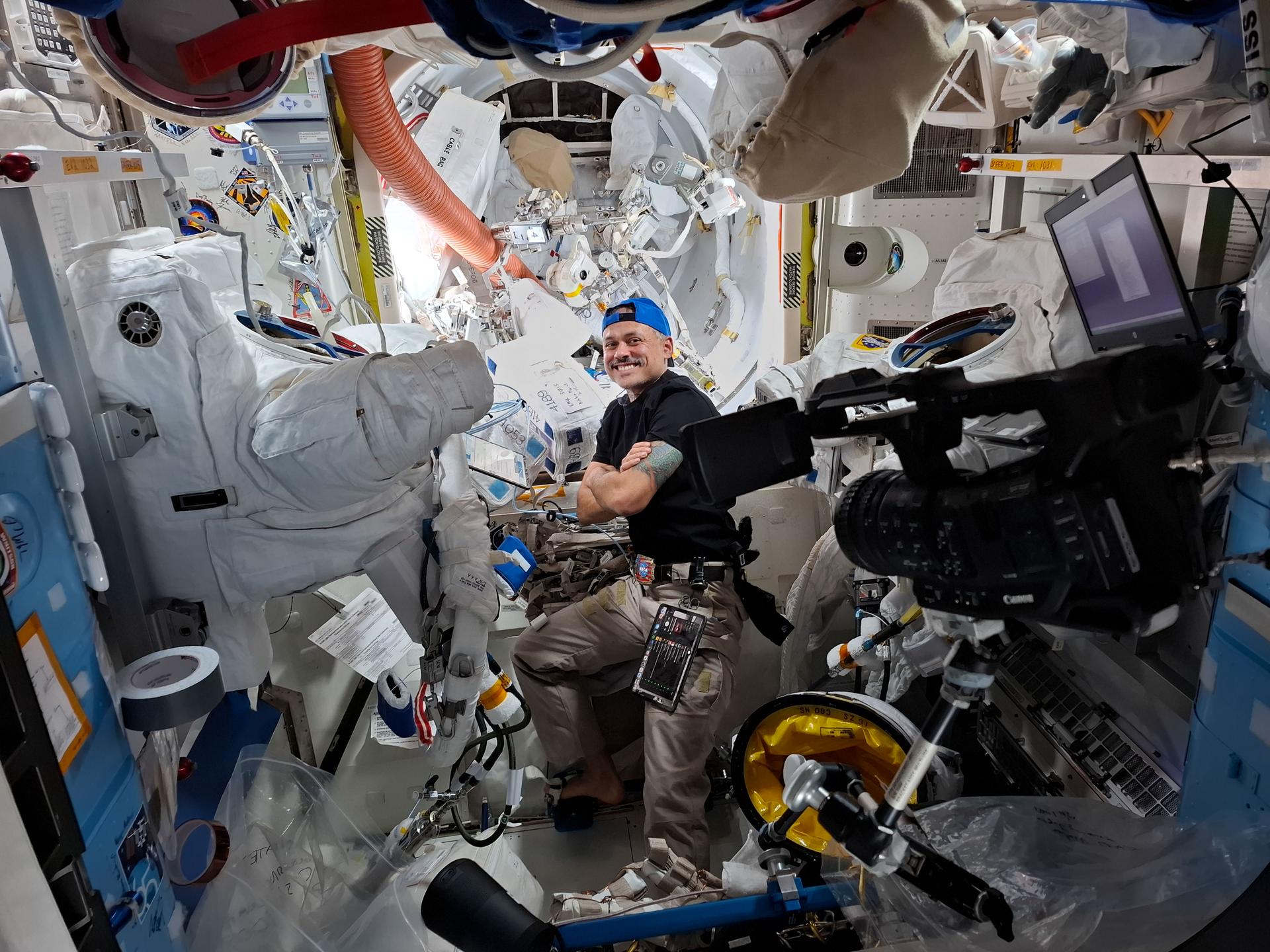
iss075e0103073 (July m31, 2026) --- NASA astronaut and Expedition 75 flight engineer Anil Menon smiles for a portrait while conducting spacesuit maintenance inside the International Space Station's Quest airlock. Menon cleaned the spacesuit’s water-cooling loops that keep a spacewalker comfortable while working in the extreme environment of space. Credit: Roscosmos/Anna Kikina
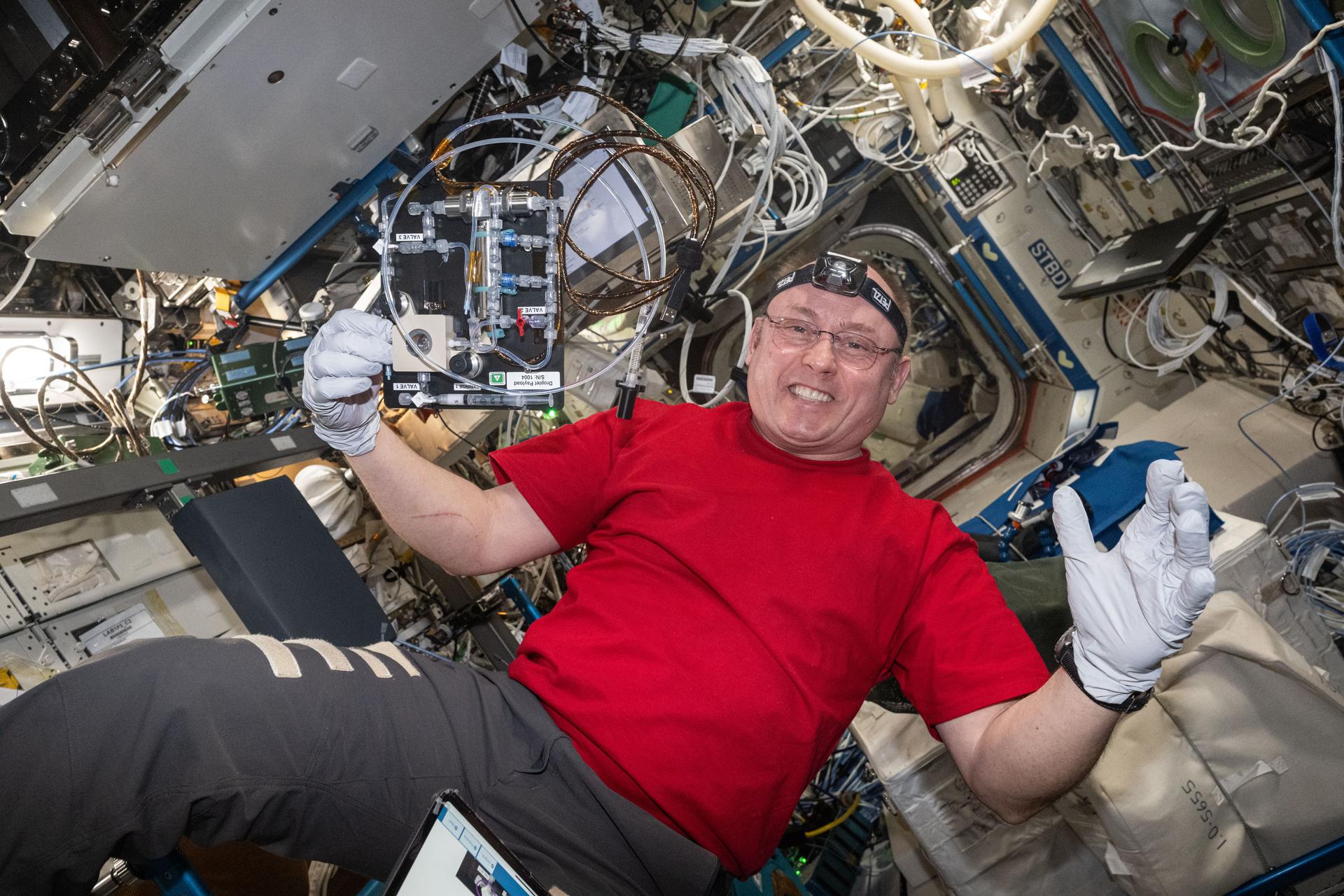
iss073e1193970 (Nov. 25, 2025) --- NASA astronaut and Expedition 73 Flight Engineer Mike Fincke smiles for a portrait during research operations for the Droplets fluid physics investigation. Fincke was inside the International Space Station's Destiny laboratory module exploring how particles behave inside fluids. The microgravity study may inform commercial in-space manufacturing techniques and improve optical materials and pollution removal operations.
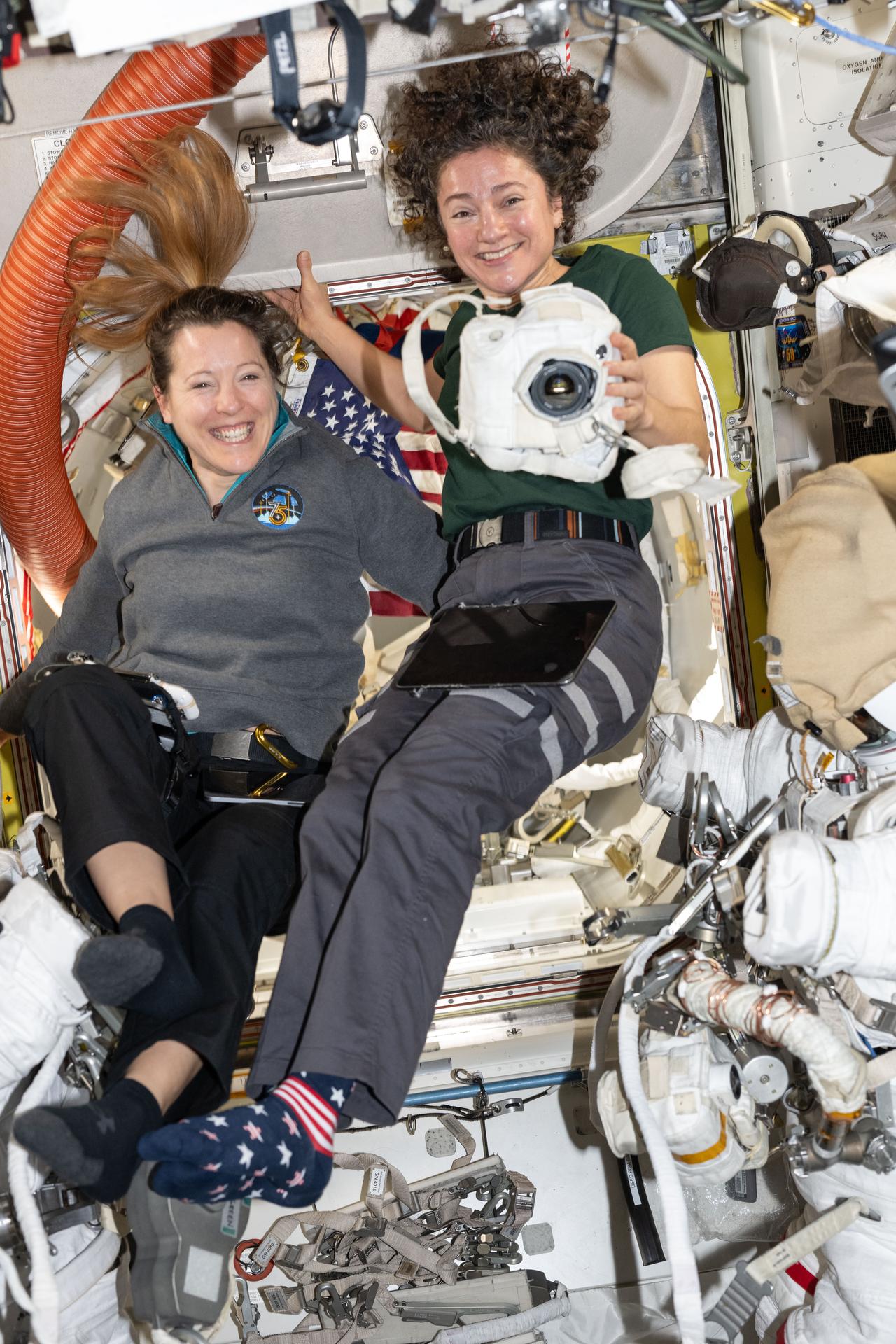
iss075e0085375 (Aug. 28, 2026) --- From left, Expedition 75 crewmates Sophie Adenot of ESA (European Space Agency) and Jessica Meir of NASA, flight engineer and station commander respectively, smile for a portrait while working together inside the International Space Station’s Quest airlock. Meir is holding a camera covered in a protective thermal blanket that shields it from space radiation, as the two astronauts prepare spacesuits and tools for a spacewalk they conducted together on Sept. 1. Credit: NASA/Anil Menon
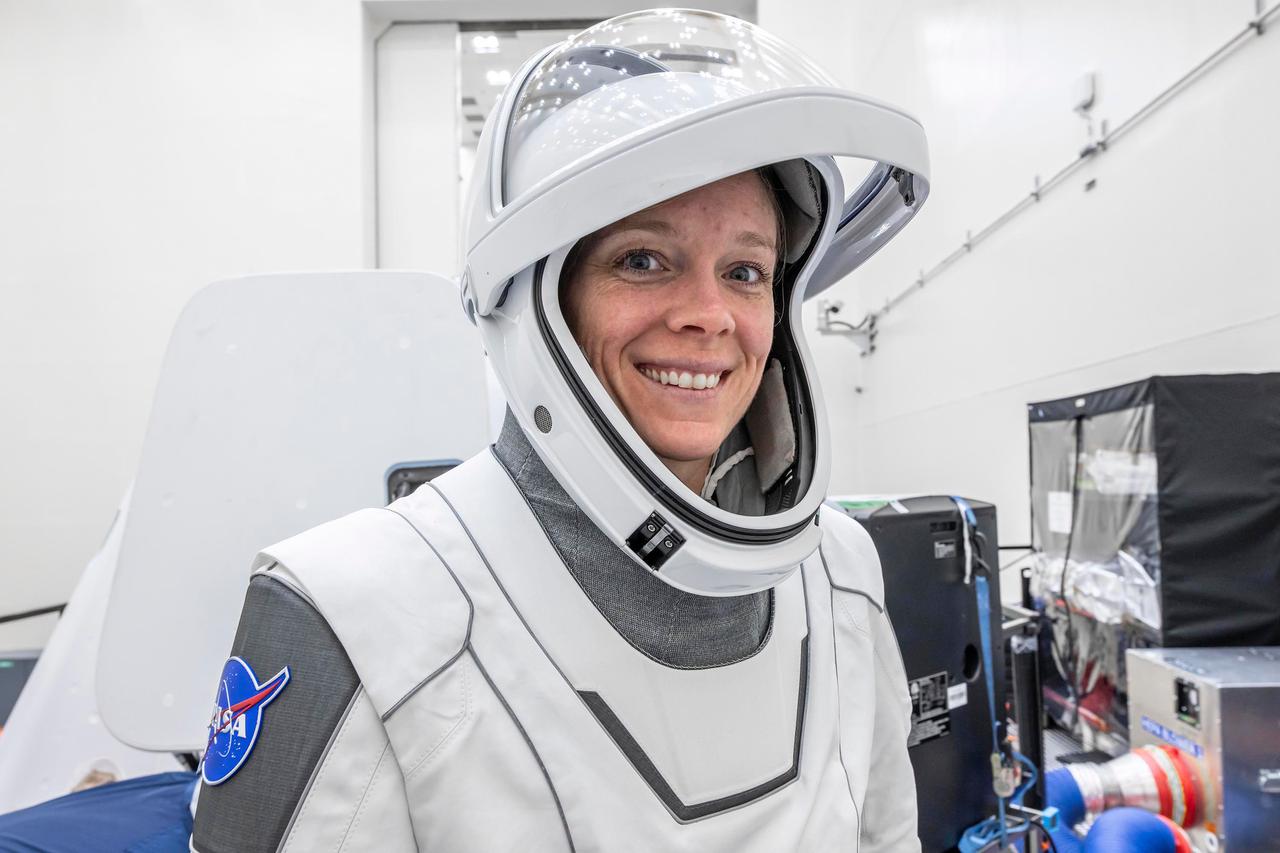
jsc2025e012272 - (February 17, 2025) --- NASA’s SpaceX Crew-10 Pilot Nichole Ayers smiles in her flight suit at NASA's Kennedy Space Center in Florida.
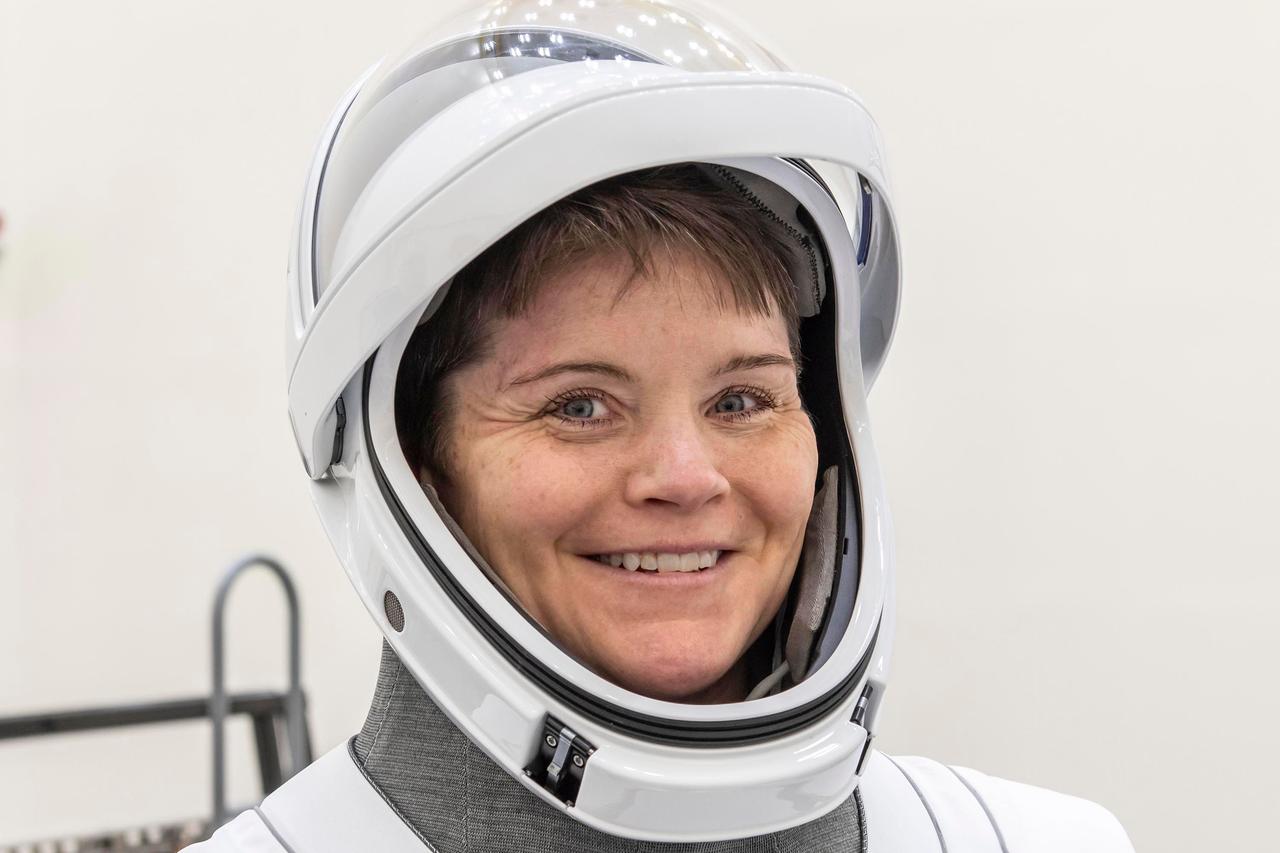
jsc2025e012271 - (February 17, 2025) --- NASA’s SpaceX Crew-10 Commander Anne McClain smiles in her flight suit at NASA's Kennedy Space Center in Florida.
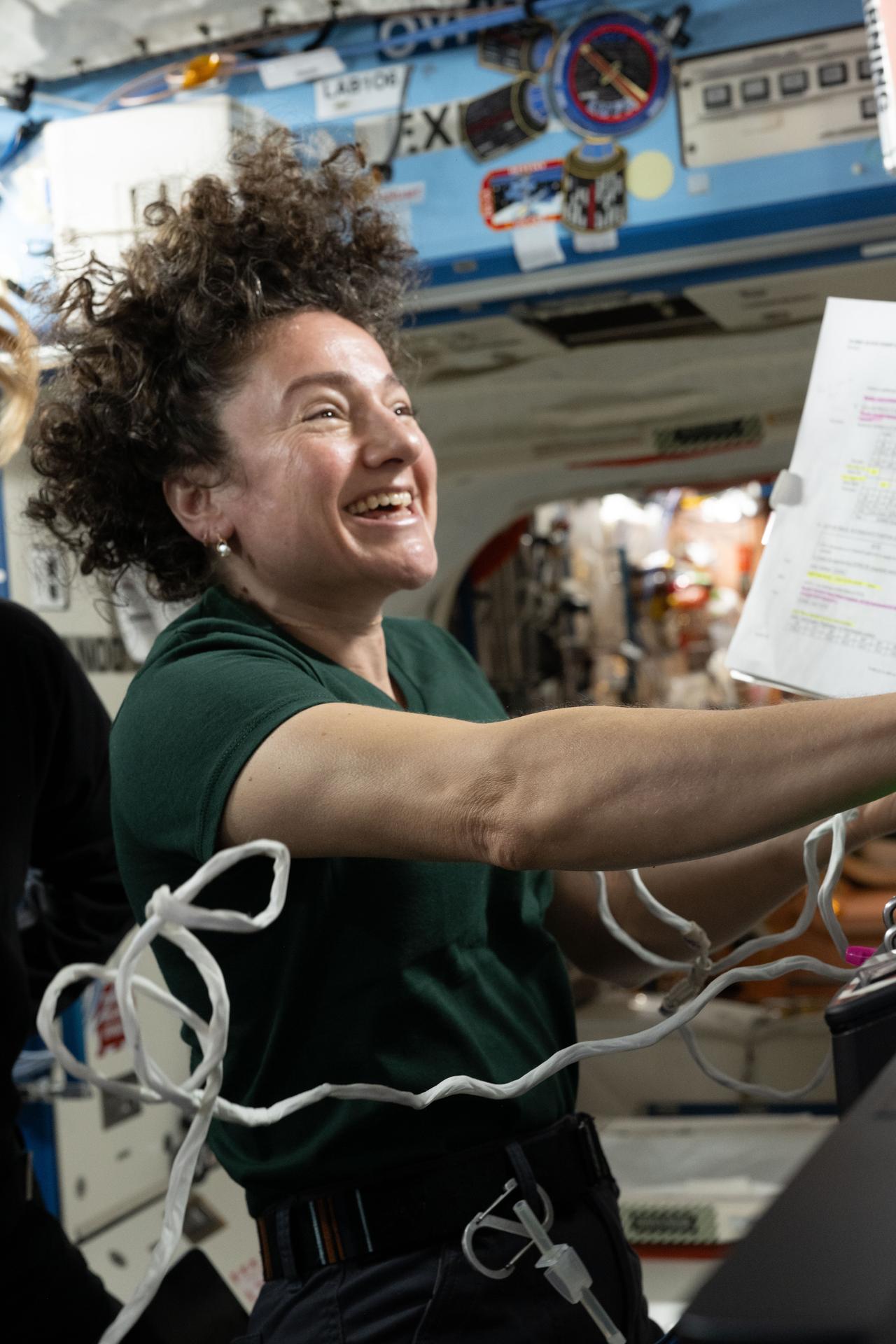
iss075e0039589 (Aug. 17, 2026) --- Expedition 75 commander Jessica Meir smiles during a light moment while studying Canadarm2 robotic arm procedures to support spacewalk operations to replace a space‑to‑ground antenna outside the International Space Station. Credit: NASA/Anil Menon
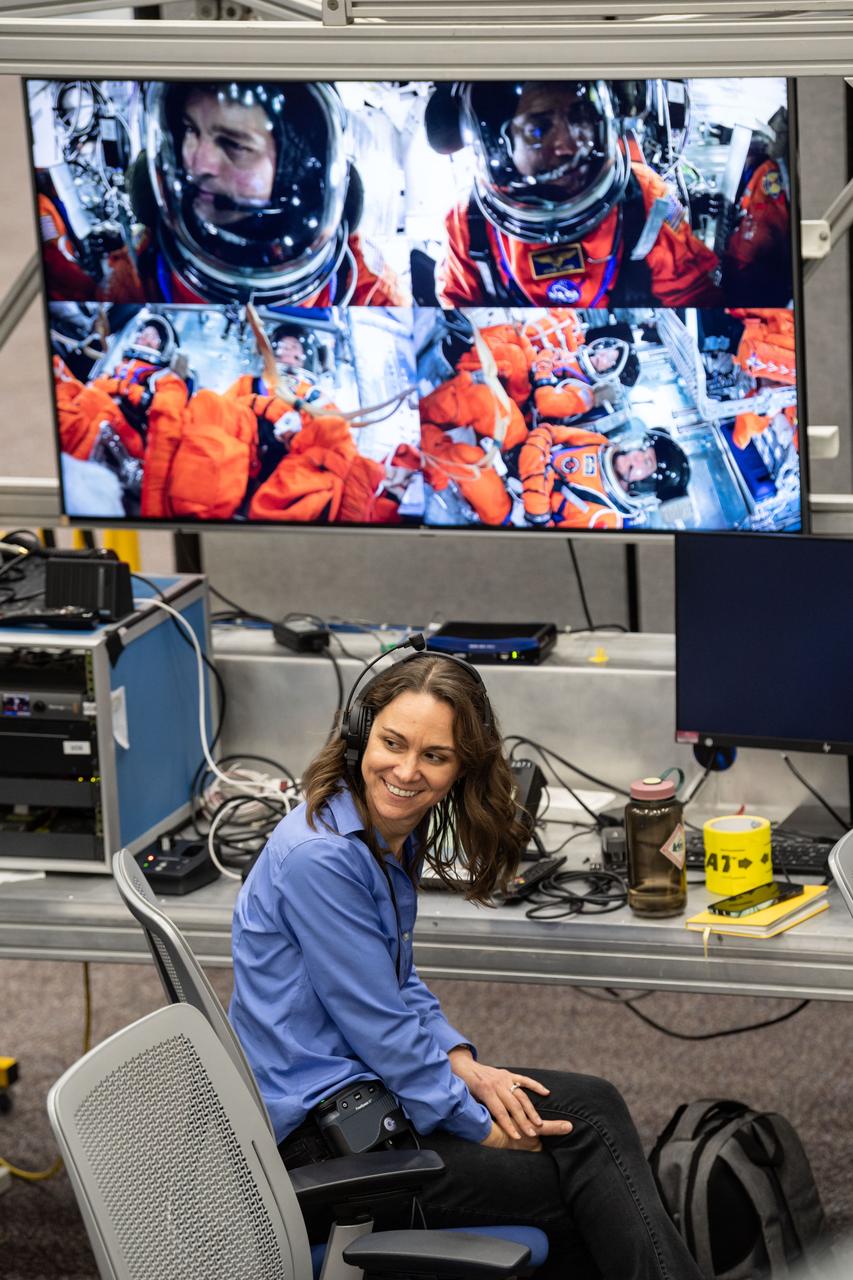
jsc2025e004084 (Jan. 30, 2025) --- The Artemis II crew’s Chief Training Officer Jacki Mahaffey smiles during Post Insertion and Deorbit Preparation training at the Space Vehicle Mockup Facility in Houston, Texas. The crew practiced getting the Orion spacecraft configured once in orbit, how to make it habitable, and suited up in their entry pressure suits to prepare for their return from the Moon. Credit: NASA/Mark Sowa

The NASA Engineering & Safety Center recently presented its Group Achievement Award to a Stennis team in recognition of technical excellence in evaluating the operational anomalies and reliability improvements associated with the space shuttle engine cut-off system. Stennis employees receiving the award were: (standing, l to r) Freddie Douglas (NASA), George Drouant (Jacobs Technology Inc.), Fred Abell (Jacobs), Robert Drackett (Jacobs) and Mike Smiles (NASA); (seated, l to r): Binh Nguyen (Jacobs), Stennis Director Gene Goldman and Joseph Lacker (NASA). Phillip Hebert of NASA is not pictured.
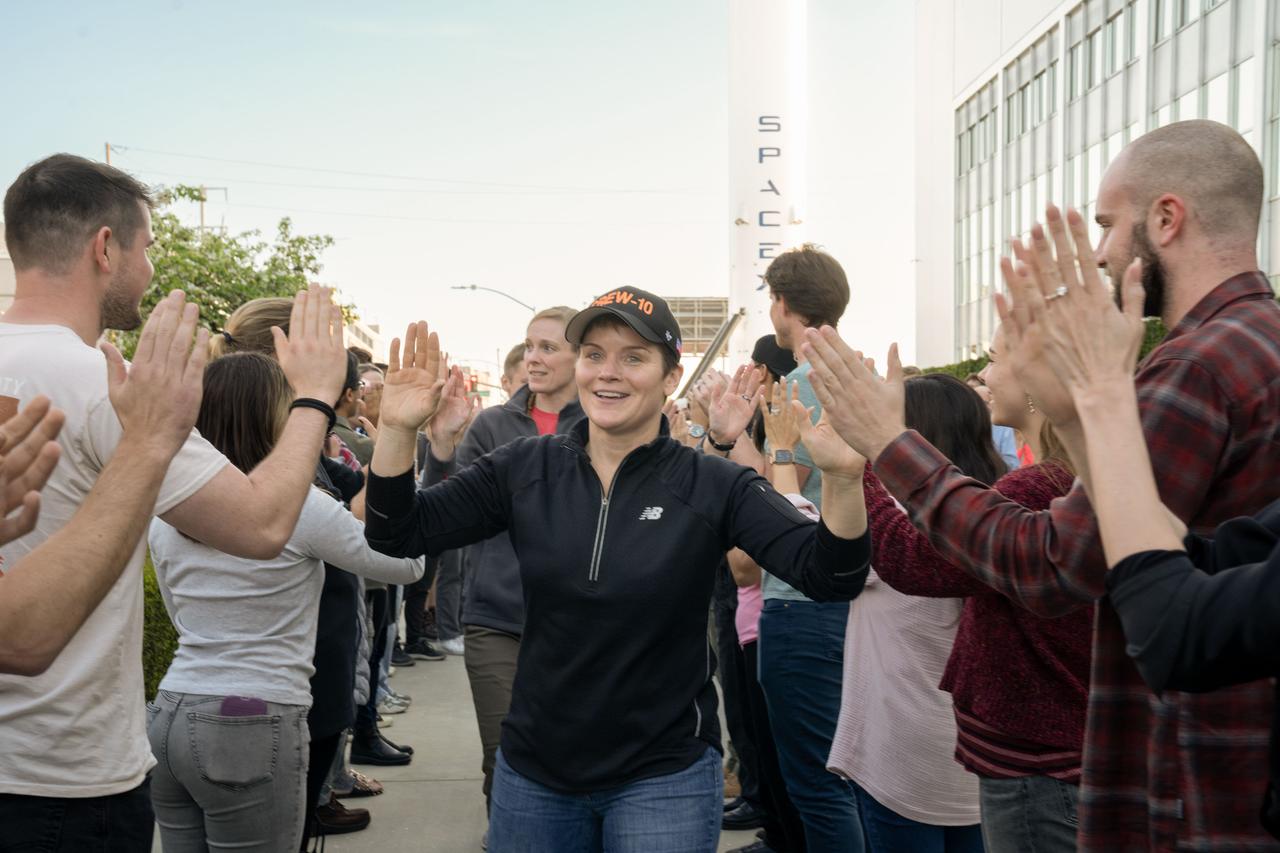
NASA astronaut and commander of NASA's SpaceX Crew-10 mission Anne McClain smiles and high fives SpaceX employees during a sendoff at the company’s facility in Hawthorne, California. Credit: SpaceX
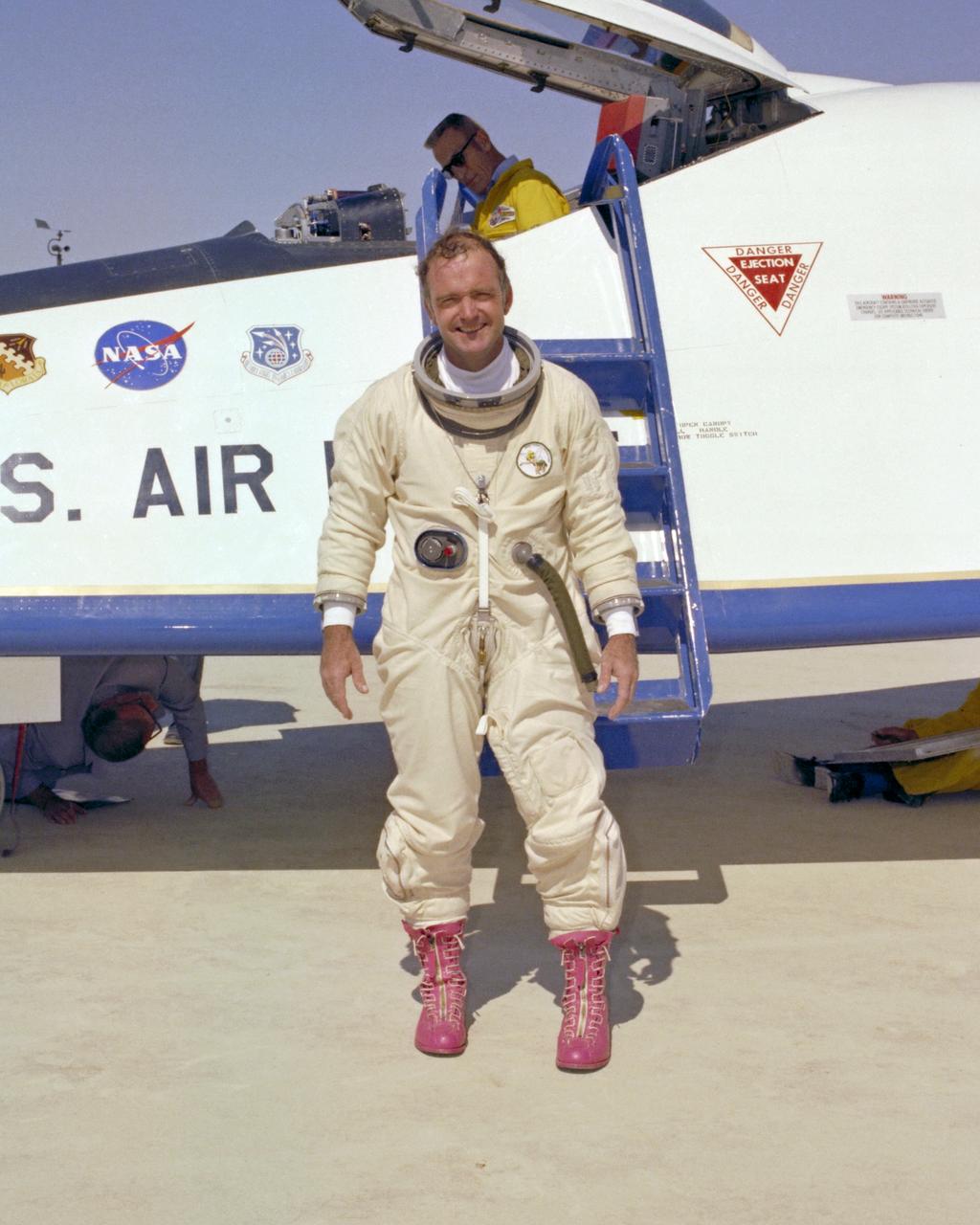
NASA test pilot Bill Dana, resplendent in pink boots and pressure suit, was all smiles following the last powered flight of the X-24B on Sept. 23, 1975.
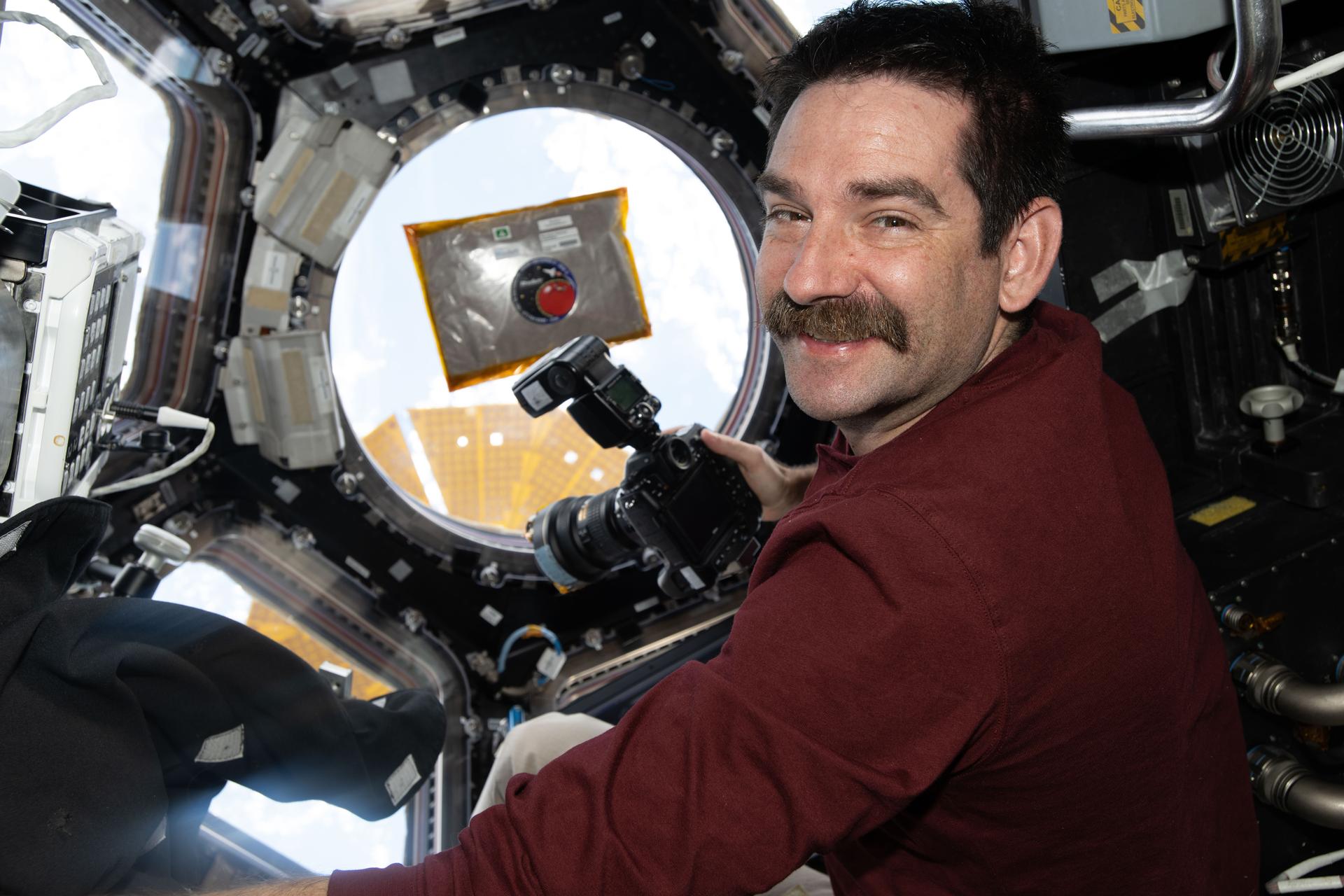
iss074e0325621 (Feb. 25, 2026) --- NASA astronaut and Expedition 74 flight engineer Jack Hathaway smiles for a portrait inside the International Space Station’s cupola while photographing a sample chamber for the Rhodium Biomanufacturing 03 biotechnology experiment. The investigation uses living systems such as microorganisms and cell cultures to produce materials and biomolecules on a commercial scale. Results may support the production of food, pharmaceuticals, and other materials during long‑duration spaceflight. Credit: NASA/Jack Hathaway
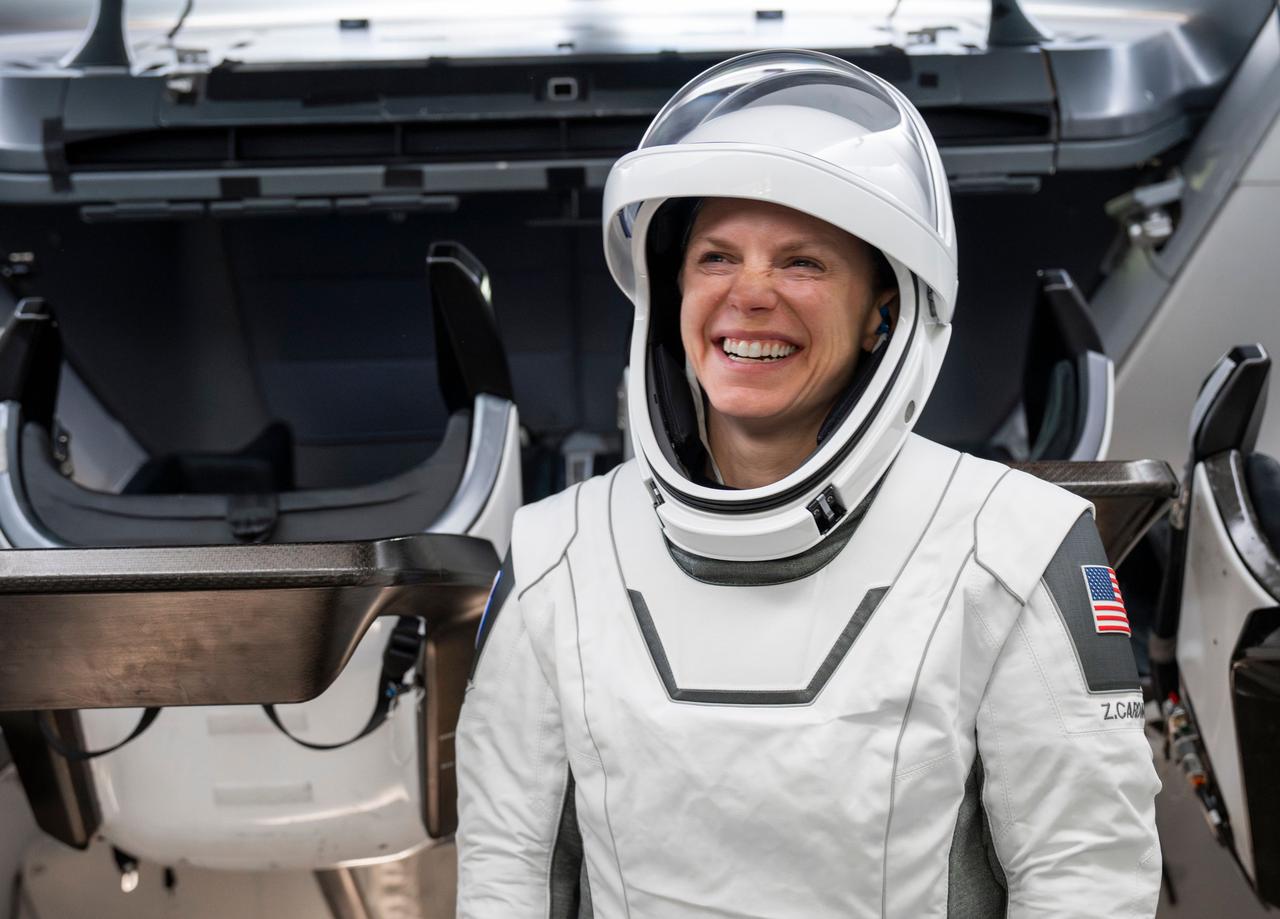
jsc2024e050130 (June 23, 2024) --- NASA’s SpaceX Crew-9 Commander Zena Cardman is pictured smiling in her flight suit during training at SpaceX headquarters in Hawthorne, California. Credit: SpaceX
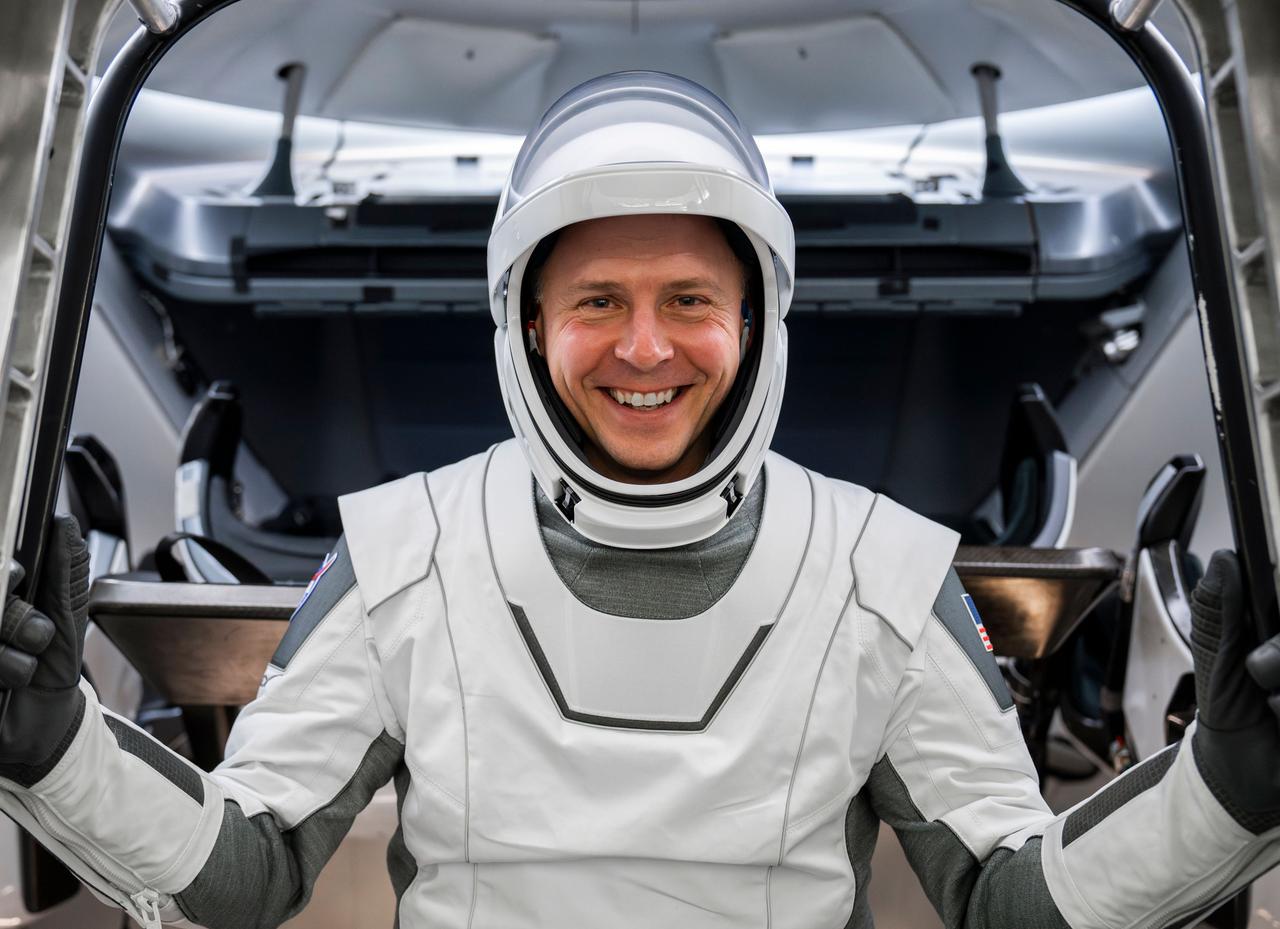
jsc2024e050135 (June 23, 2024) --- NASA’s SpaceX Crew-9 Pilot Nick Hague is pictured smiling in his flight suit during training at SpaceX headquarters in Hawthorne, California. Credit: SpaceX
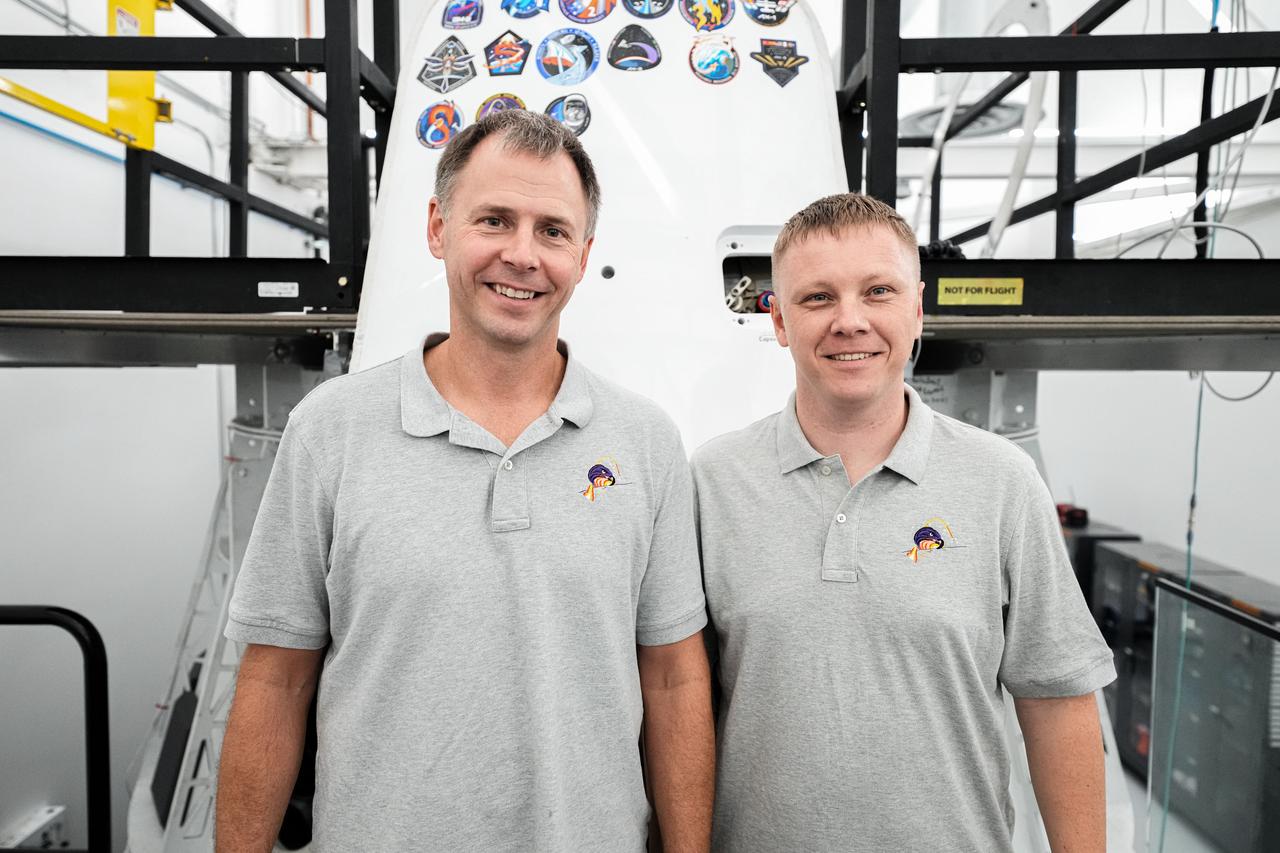
jsc2024e062797 (Jan. 14, 2024) --- NASA's SpaceX Crew-9 crew members Nick Hague and cosmonaut Aleksandr Gorbunov smile for a photo ahead of their launch to the International Space Station. Credit: SpaceX

NASA Astronaut Frank Rubio smiles during a spacewalk robotics training on May 11, 2022 in Building 9 of NASA's Johnson Space Center in Houston, Texas.
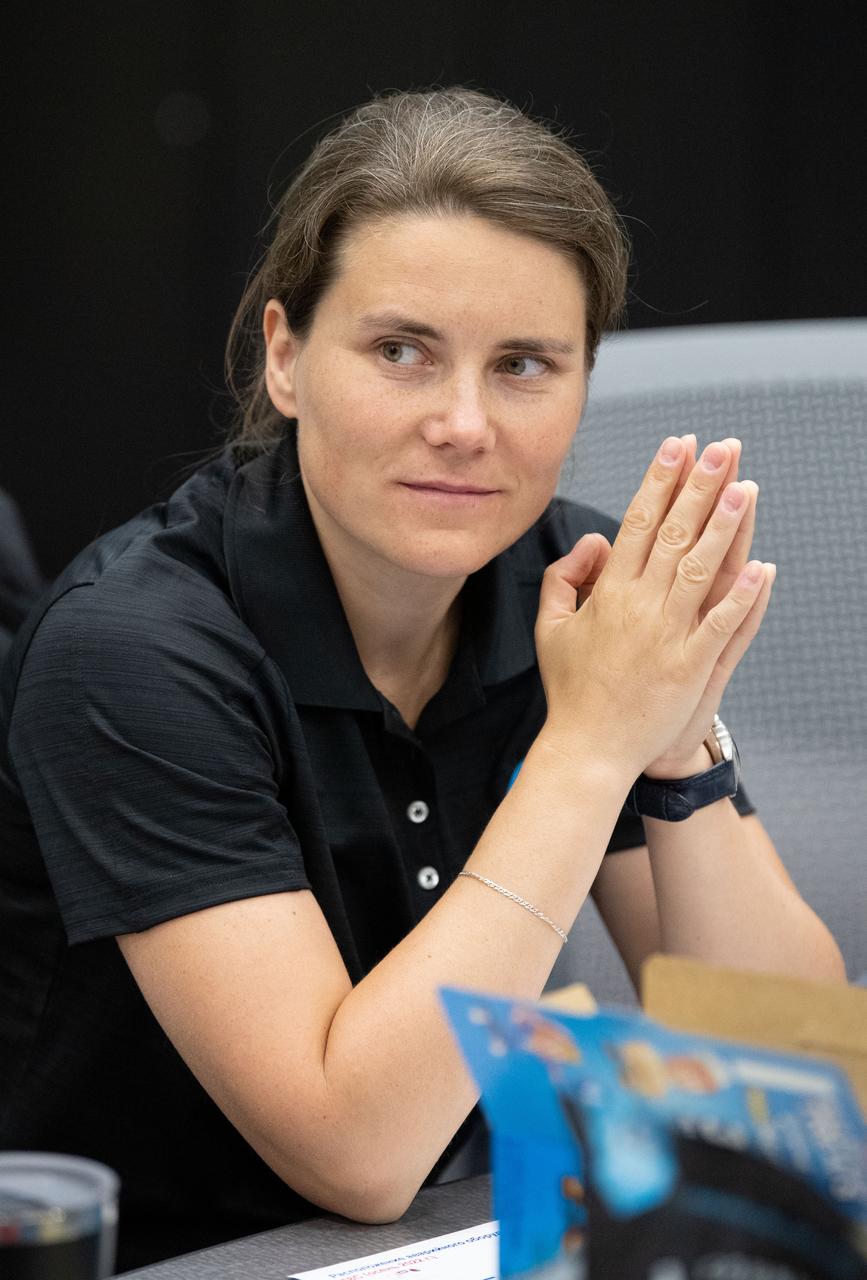
Roscosmos Cosmonaut Anna Kikina smiles during a training inside the Space Vehicle Mockup Facility to prepare for her upcoming journey to the International Space Station as part of NASA's SpaceX Crew-5 mission. Credit: NASA/James Blair
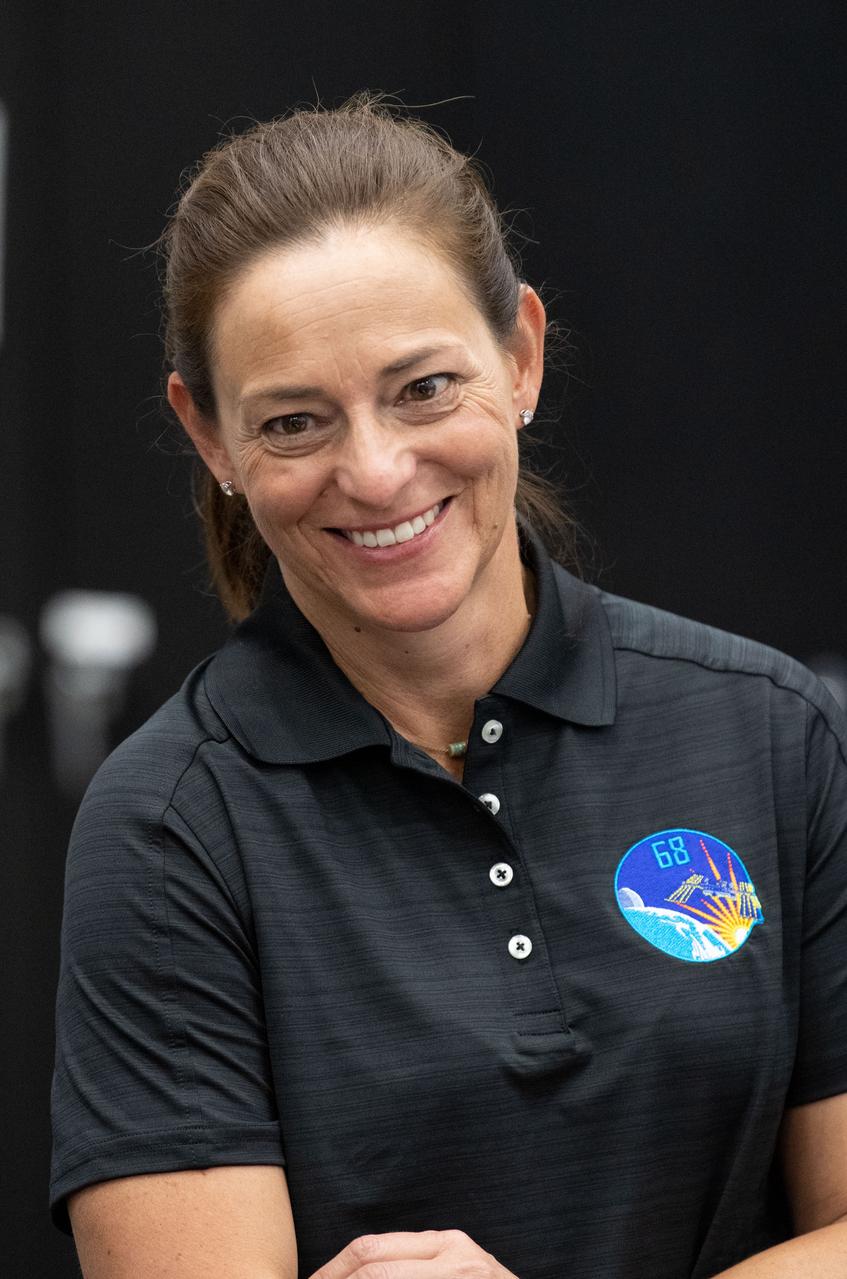
NASA Astronaut Nicole Mann smiles during a training inside the Space Vehicle Mockup Facility to prepare for her upcoming journey to the International Space Station as part of NASA's SpaceX Crew-5 mission. Credit: NASA/James Blair

NASA's 2001 Mars Odyssey spies what looks like someone smiling back at the spacecraft. Orbit Number: 56966 Latitude: -26.7035 Longitude: 314.5 Instrument: IR Captured: 2014-10-17 07:05 https://photojournal.jpl.nasa.gov/catalog/PIA21689
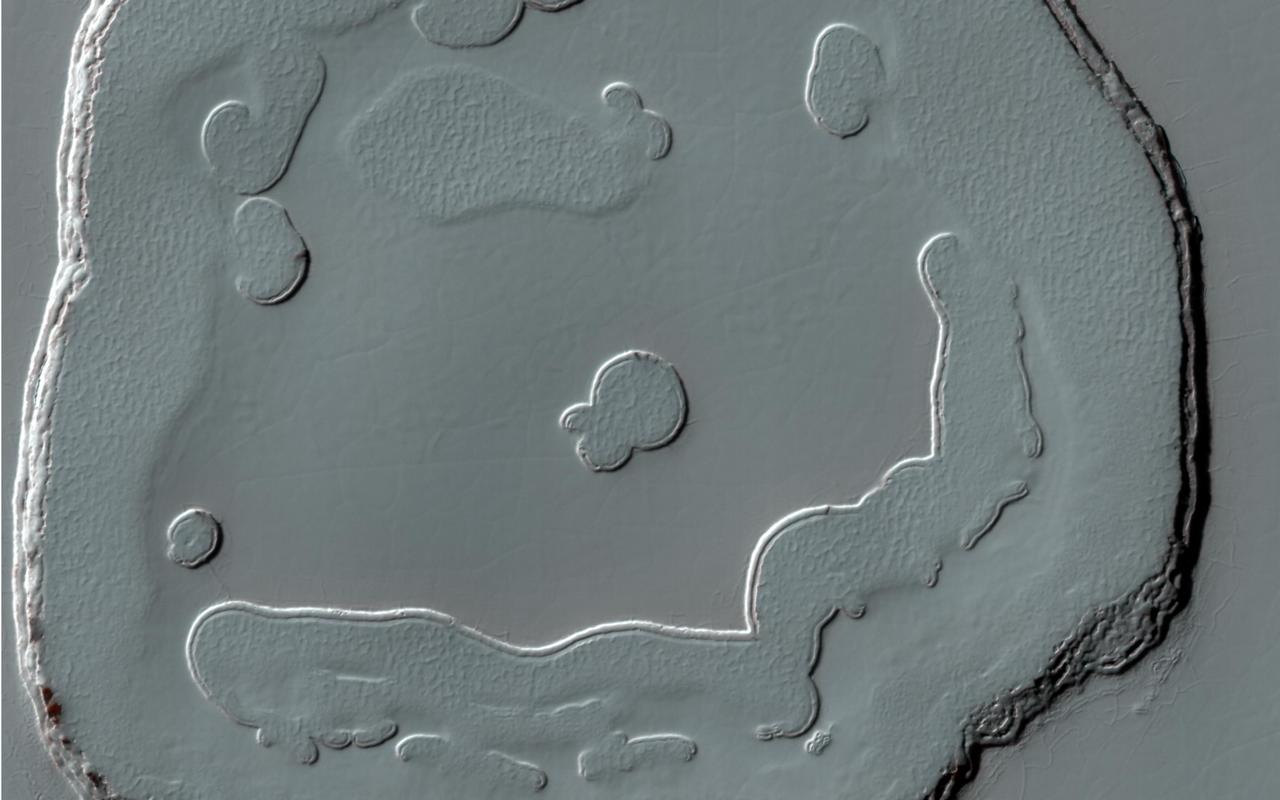
This image from NASA Mars Reconnaissance Orbiter is of an approximately 5 kilometer approx. 3.1 mile diameter crater that is one of the rare examples of a fresh lunar-like crater on Mars.
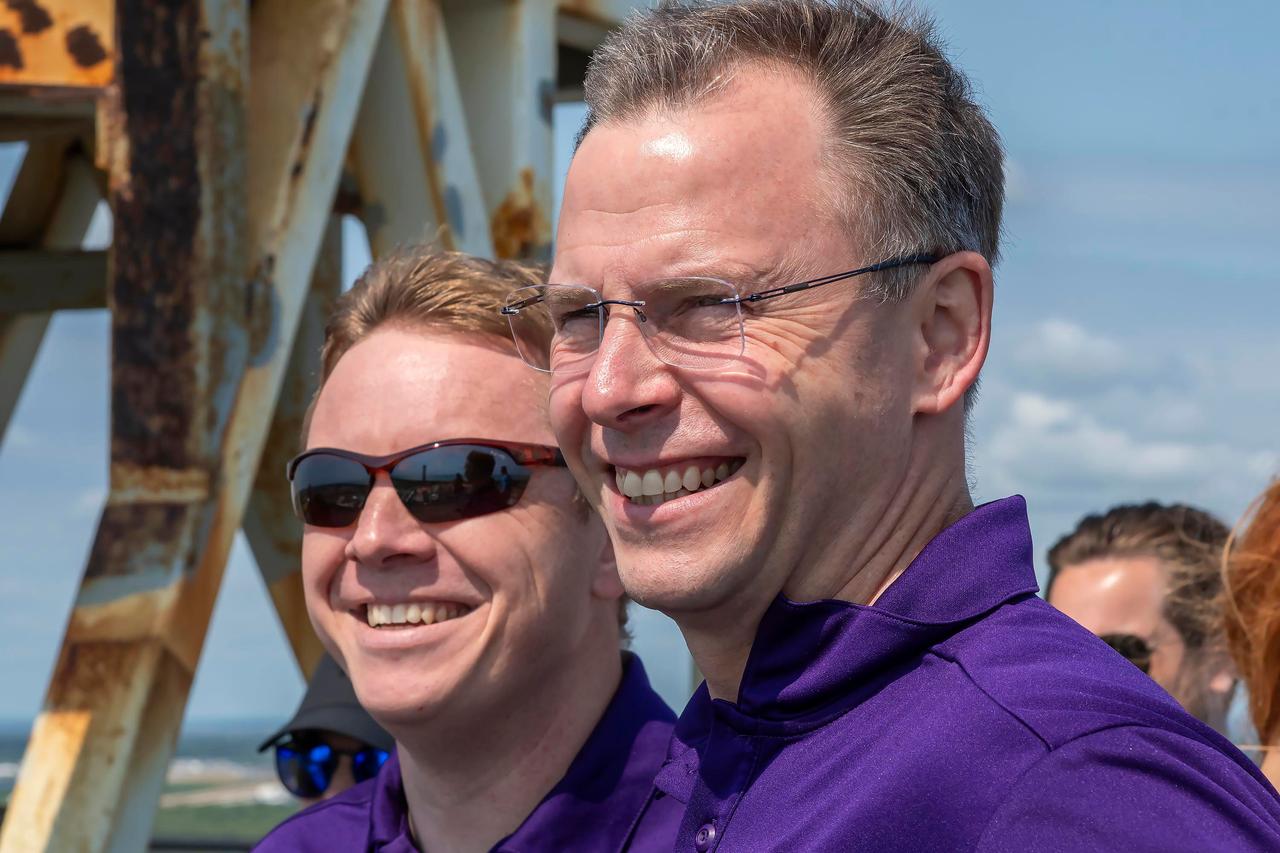
jsc2024e050150 (May 13, 2024) --- (From left) NASA’s SpaceX Crew-9 Mission Specialist Aleksandr Gorbunov and Pilot Nick Hague smile during a visit to NASA's Kennedy Space Center in Florida for training. Credit: SpaceX
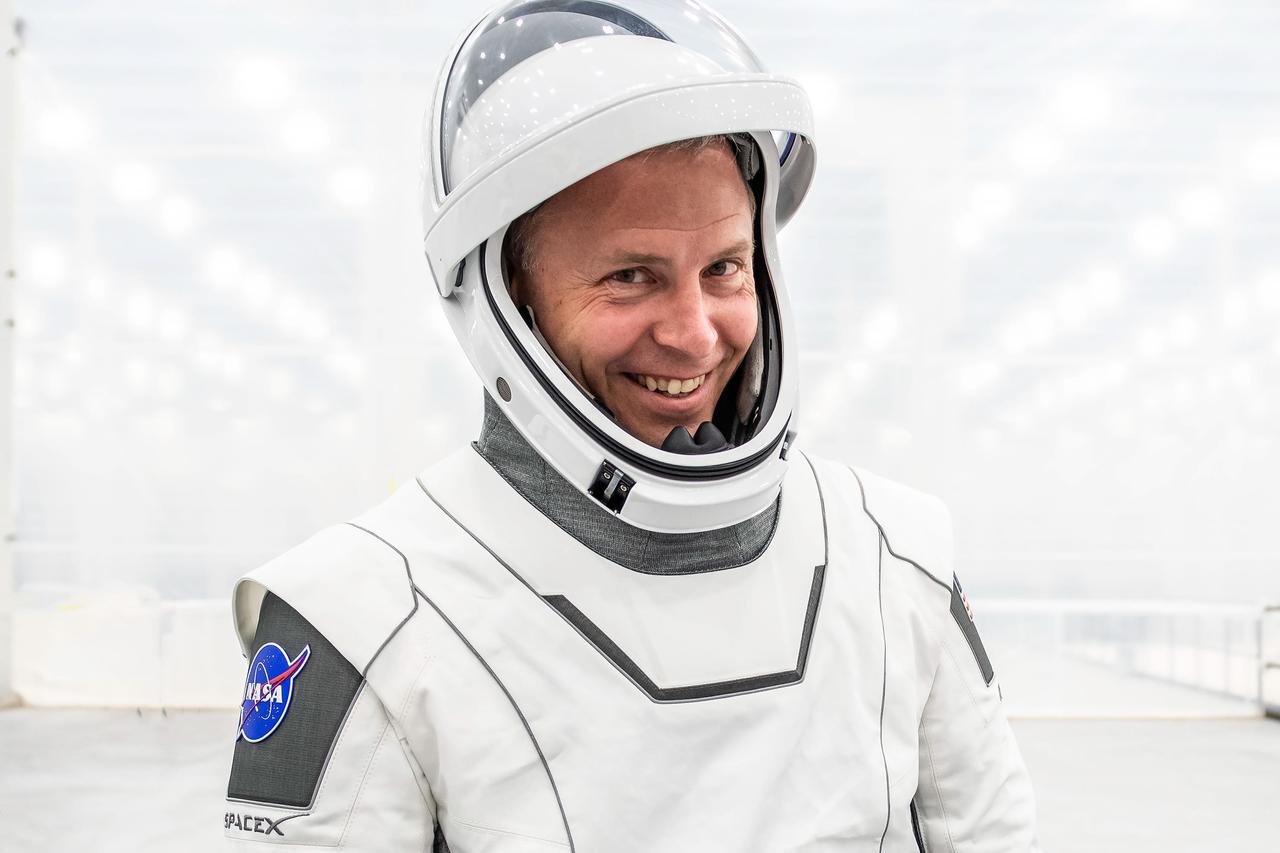
jsc2024e052326 (July 22, 2024) --- NASA’s SpaceX Crew-9 Pilot Nick Hague smiles in his flight suit at SpaceX’s new Dragon refurbishing facility at Kennedy Space Center in Florida. Credit: SpaceX
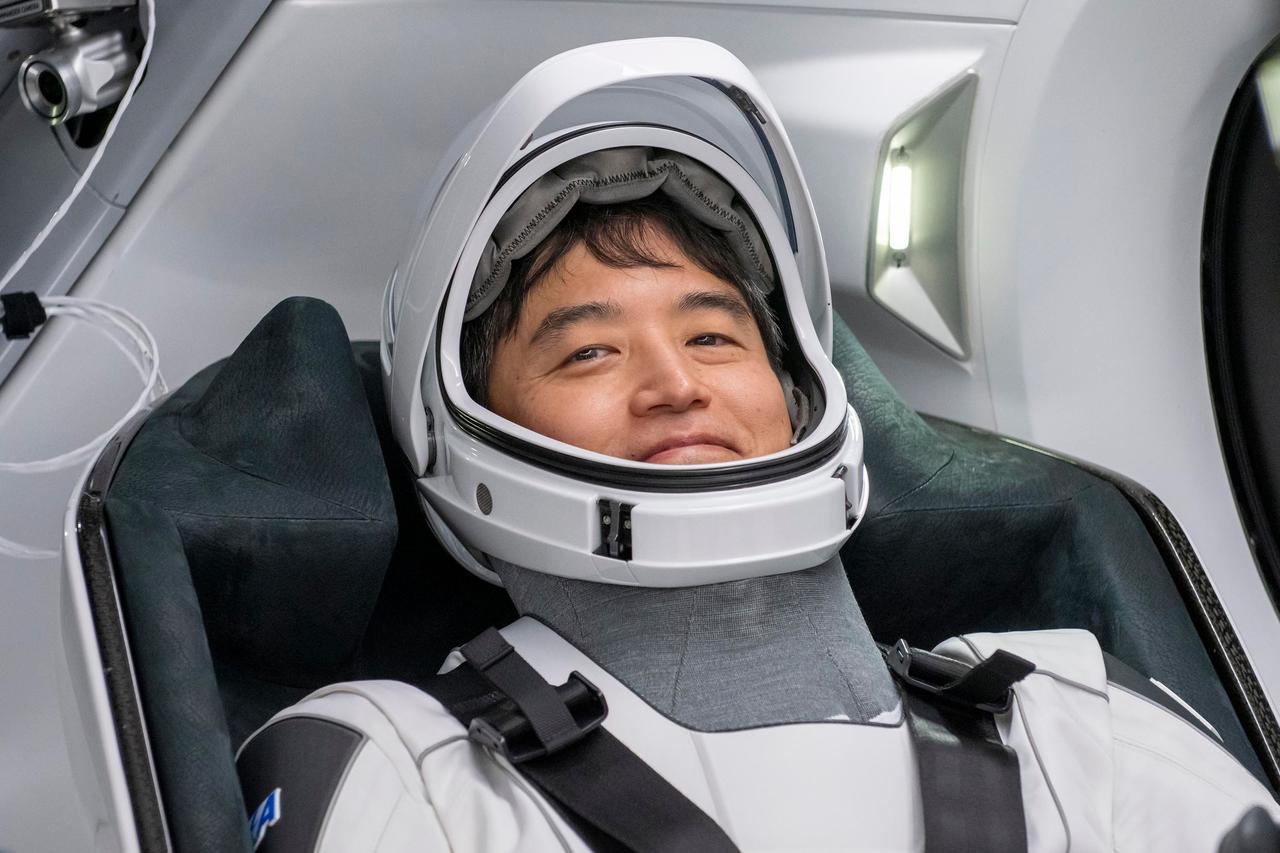
jsc2025e012274 - (February 17, 2025) --- SpaceX Crew-10 Mission Specialist Takuya Onishi of JAXA (Japan Aerospace Exploration Agency) smiles in his flight suit at NASA's Kennedy Space Center in Florida.

NASA’s Armstrong Flight Research Center Director Brad Flick smiles as members of the DC-8 team gather and exchange congratulations after the aircraft and crew return to NASA Armstrong’s Building 703 in Palmdale, California, on April 1, 2024, following the aircraft’s final mission in support of the Airborne and Satellite Investigation of Asian Air Quality (ASIA-AQ).

NASA DC-8 crew members Nickelle “Nicki” Reid, operations engineer, left, and Isac Mata, engineer technician, exchange in a heartfelt hug after the DC-8 aircraft and crew return to NASA Armstrong’s Building 703 in Palmdale, California, on April 1, 2024, following the aircraft’s final mission in support of the Airborne and Satellite Investigation of Asian Air Quality (ASIA-AQ). Smiling in the background is Michael Thomson, director of NASA Armstrong’s Science Mission Directorate.

jsc2024e052323 (July 22, 2024) --- NASA’s SpaceX Crew-9 Commander Zena Cardman smiles as she gets better acquainted with the Dragon spacecraft, which will take them to the International Space Station no earlier than mid-August. Credit: SpaceX
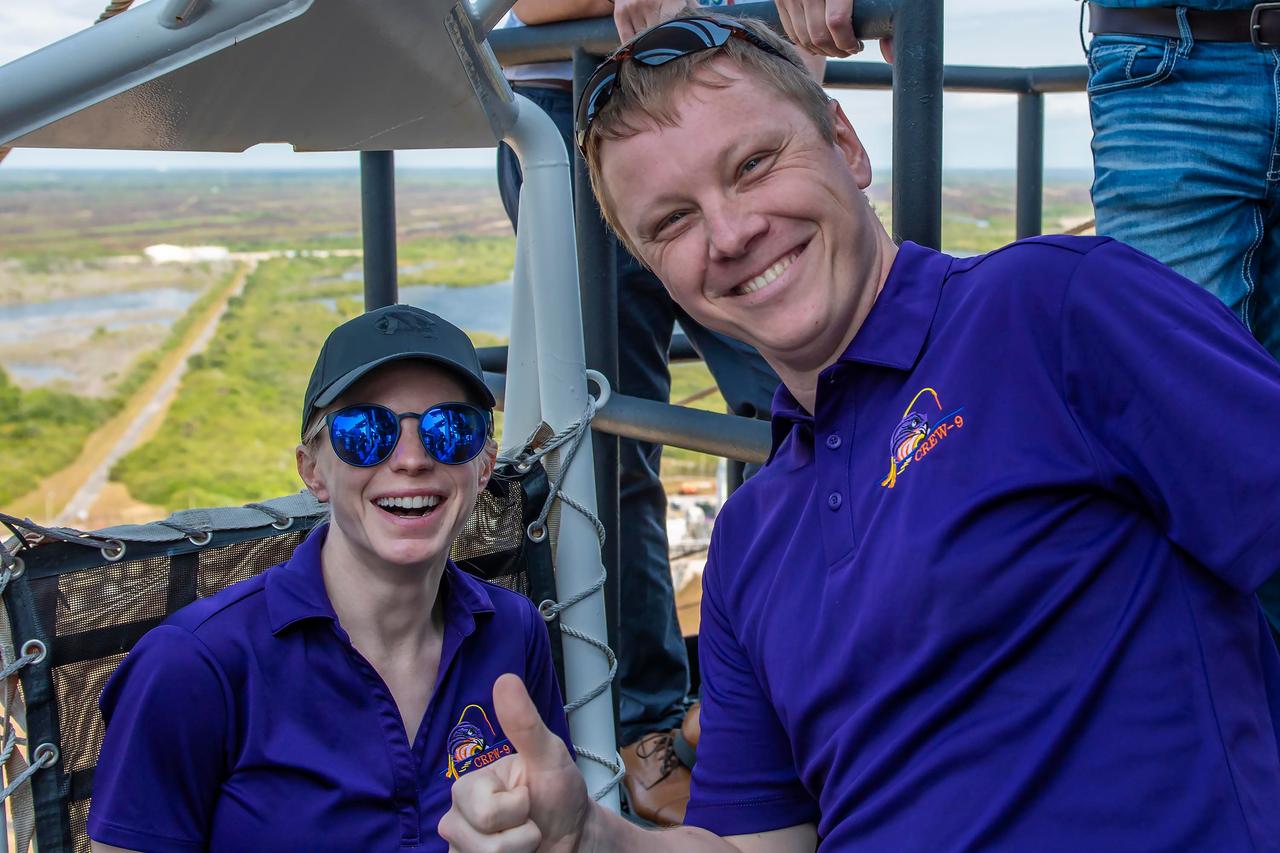
jsc2024e050147 (May 13, 2024) --- SpaceX Crew-9 Commander Zena Cardman from NASA and Mission Specialist Aleksandr Gorbunov from Roscosmos are all smiles from the launch tower at Launch Complex 39A at NASA's Kennedy Space Center in Florida. Credit: SpaceX
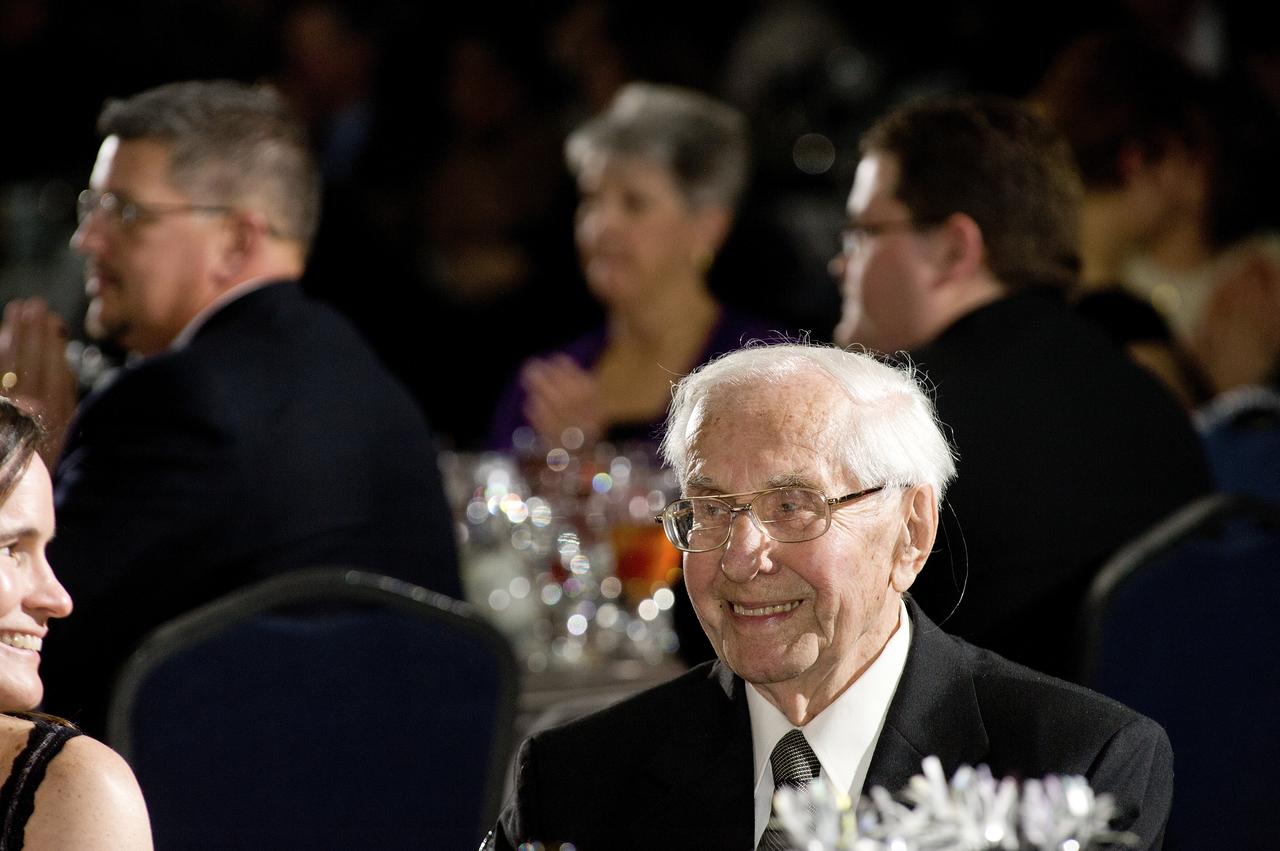
DR. GEORG (SP CORRECT) VON TIESENHAUSEN SMILES WHILE WATCHING A VIDEO PRODUCED ABOUT HIM.

NASA Mars Reconnaissance Orbiter acquired this color image on March 9, 2011, of Santa Maria crater, showing NASA Mars Exploration Rover Opportunity perched on the southeast rim. The rover is the bluish speck on the crater rim arrow.
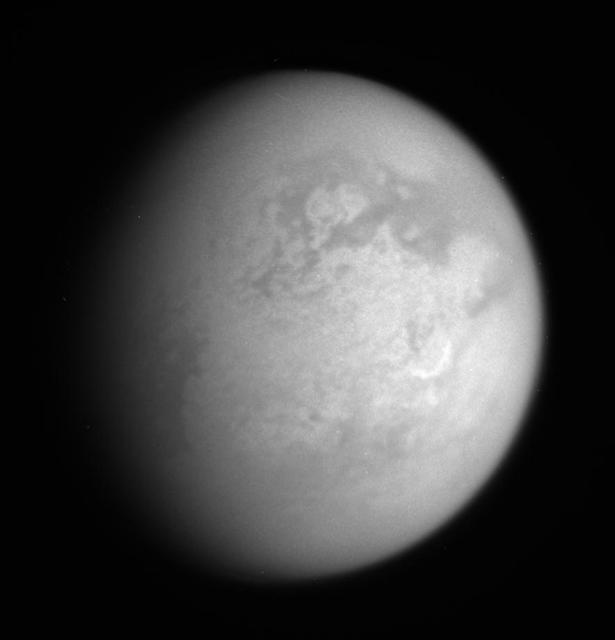
he view is centered on the bright region called Xanadu. Above center is the large crater Menrva, which is surrounded by darker materia
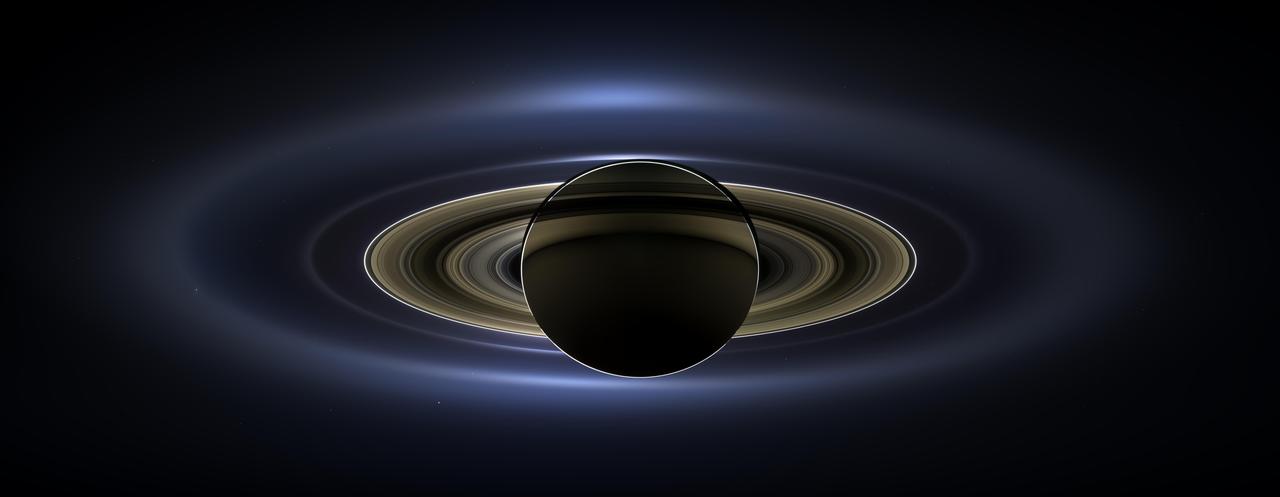
On July 19, 2013, in an event celebrated the world over, NASA's Cassini spacecraft slipped into Saturn's shadow and turned to image the planet, seven of its moons, its inner rings -- and, in the background, our home planet, Earth. With the sun's powerful and potentially damaging rays eclipsed by Saturn itself, Cassini's onboard cameras were able to take advantage of this unique viewing geometry. They acquired a panoramic mosaic of the Saturn system that allows scientists to see details in the rings and throughout the system as they are backlit by the sun. This mosaic is special as it marks the third time our home planet was imaged from the outer solar system; the second time it was imaged by Cassini from Saturn's orbit; and the first time ever that inhabitants of Earth were made aware in advance that their photo would be taken from such a great distance. With both Cassini's wide-angle and narrow-angle cameras aimed at Saturn, Cassini was able to capture 323 images in just over four hours. This final mosaic uses 141 of those wide-angle images. Images taken using the red, green and blue spectral filters of the wide-angle camera were combined and mosaicked together to create this natural-color view. A brightened version with contrast and color enhanced (Figure 1), a version with just the planets annotated (Figure 2), and an annotated version (Figure 3) are shown above. This image spans about 404,880 miles (651,591 kilometers) across. The outermost ring shown here is Saturn's E ring, the core of which is situated about 149,000 miles (240,000 kilometers) from Saturn. The geysers erupting from the south polar terrain of the moon Enceladus supply the fine icy particles that comprise the E ring; diffraction by sunlight gives the ring its blue color. Enceladus (313 miles, or 504 kilometers, across) and the extended plume formed by its jets are visible, embedded in the E ring on the left side of the mosaic. At the 12 o'clock position and a bit inward from the E ring lies the barely discernible ring created by the tiny, Cassini-discovered moon, Pallene (3 miles, or 4 kilometers, across). (For more on structures like Pallene's ring, see PIA08328). The next narrow and easily seen ring inward is the G ring. Interior to the G ring, near the 11 o'clock position, one can barely see the more diffuse ring created by the co-orbital moons, Janus (111 miles, or 179 kilometers, across) and Epimetheus (70 miles, or 113 kilometers, across). Farther inward, we see the very bright F ring closely encircling the main rings of Saturn. Following the outermost E ring counter-clockwise from Enceladus, the moon Tethys (662 miles, or 1,066 kilometers, across) appears as a large yellow orb just outside of the E ring. Tethys is positioned on the illuminated side of Saturn; its icy surface is shining brightly from yellow sunlight reflected by Saturn. Continuing to about the 2 o'clock position is a dark pixel just outside of the G ring; this dark pixel is Saturn's Death Star moon, Mimas (246 miles, or 396 kilometers, across). Mimas appears, upon close inspection, as a very thin crescent because Cassini is looking mostly at its non-illuminated face. The moons Prometheus, Pandora, Janus and Epimetheus are also visible in the mosaic near Saturn's bright narrow F ring. Prometheus (53 miles, or 86 kilometers, across) is visible as a faint black dot just inside the F ring and at the 9 o'clock position. On the opposite side of the rings, just outside the F ring, Pandora (50 miles, or 81 kilometers, across) can be seen as a bright white dot. Pandora and Prometheus are shepherd moons and gravitational interactions between the ring and the moons keep the F ring narrowly confined. At the 11 o'clock position in between the F ring and the G ring, Janus (111 miles, or 179 kilometers, across) appears as a faint black dot. Janus and Prometheus are dark for the same reason Mimas is mostly dark: we are looking at their non-illuminated sides in this mosaic. Midway between the F ring and the G ring, at about the 8 o'clock position, is a single bright pixel, Epimetheus. Looking more closely at Enceladus, Mimas and Tethys, especially in the brightened version of the mosaic, one can see these moons casting shadows through the E ring like a telephone pole might cast a shadow through a fog. In the non-brightened version of the mosaic, one can see bright clumps of ring material orbiting within the Encke gap near the outer edge of the main rings and immediately to the lower left of the globe of Saturn. Also, in the dark B ring within the main rings, at the 9 o'clock position, one can see the faint outlines of two spoke features, first sighted by NASA's Voyager spacecraft in the early 1980s and extensively studied by Cassini. Finally, in the lower right of the mosaic, in between the bright blue E ring and the faint but defined G ring, is the pale blue dot of our planet, Earth. Look closely and you can see the moon protruding from the Earth's lower right. (For a higher resolution view of the Earth and moon taken during this campaign, see PIA14949.) Earth's twin, Venus, appears as a bright white dot in the upper left quadrant of the mosaic, also between the G and E rings. Mars also appears as a faint red dot embedded in the outer edge of the E ring, above and to the left of Venus. For ease of visibility, Earth, Venus, Mars, Enceladus, Epimetheus and Pandora were all brightened by a factor of eight and a half relative to Saturn. Tethys was brightened by a factor of four. In total, 809 background stars are visible and were brightened by a factor ranging from six, for the brightest stars, to 16, for the faintest. The faint outer rings (from the G ring to the E ring) were also brightened relative to the already bright main rings by factors ranging from two to eight, with the lower-phase-angle (and therefore fainter) regions of these rings brightened the most. The brightened version of the mosaic was further brightened and contrast-enhanced all over to accommodate print applications and a wide range of computer-screen viewing conditions. Some ring features -- such as full rings traced out by tiny moons -- do not appear in this version of the mosaic because they require extreme computer enhancement, which would adversely affect the rest of the mosaic. This version was processed for balance and beauty. This view looks toward the unlit side of the rings from about 17 degrees below the ring plane. Cassini was approximately 746,000 miles (1.2 million kilometers) from Saturn when the images in this mosaic were taken. Image scale on Saturn is about 45 miles (72 kilometers) per pixel. This mosaic was made from pictures taken over a span of more than four hours while the planets, moons and stars were all moving relative to Cassini. Thus, due to spacecraft motion, these objects in the locations shown here were not in these specific places over the entire duration of the imaging campaign. Note also that Venus appears far from Earth, as does Mars, because they were on the opposite side of the sun from Earth. http://photojournal.jpl.nasa.gov/catalog/PIA17172
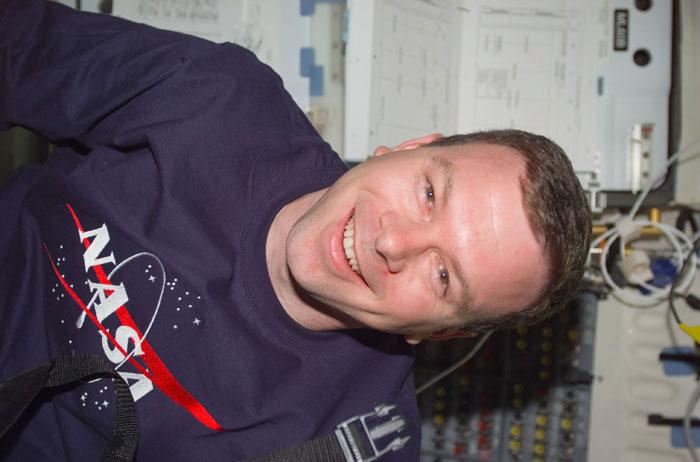
STS102-E-5287 (17 March 2001) --- Astronaut James M. Kelly, pilot, takes a brief pause on the flight deck of the Space Shuttle Discovery as he and his STS-102 crew mates move toward the end of joint activities with the crew of the International Space Station (ISS). The image was recorded with a digital still camera.
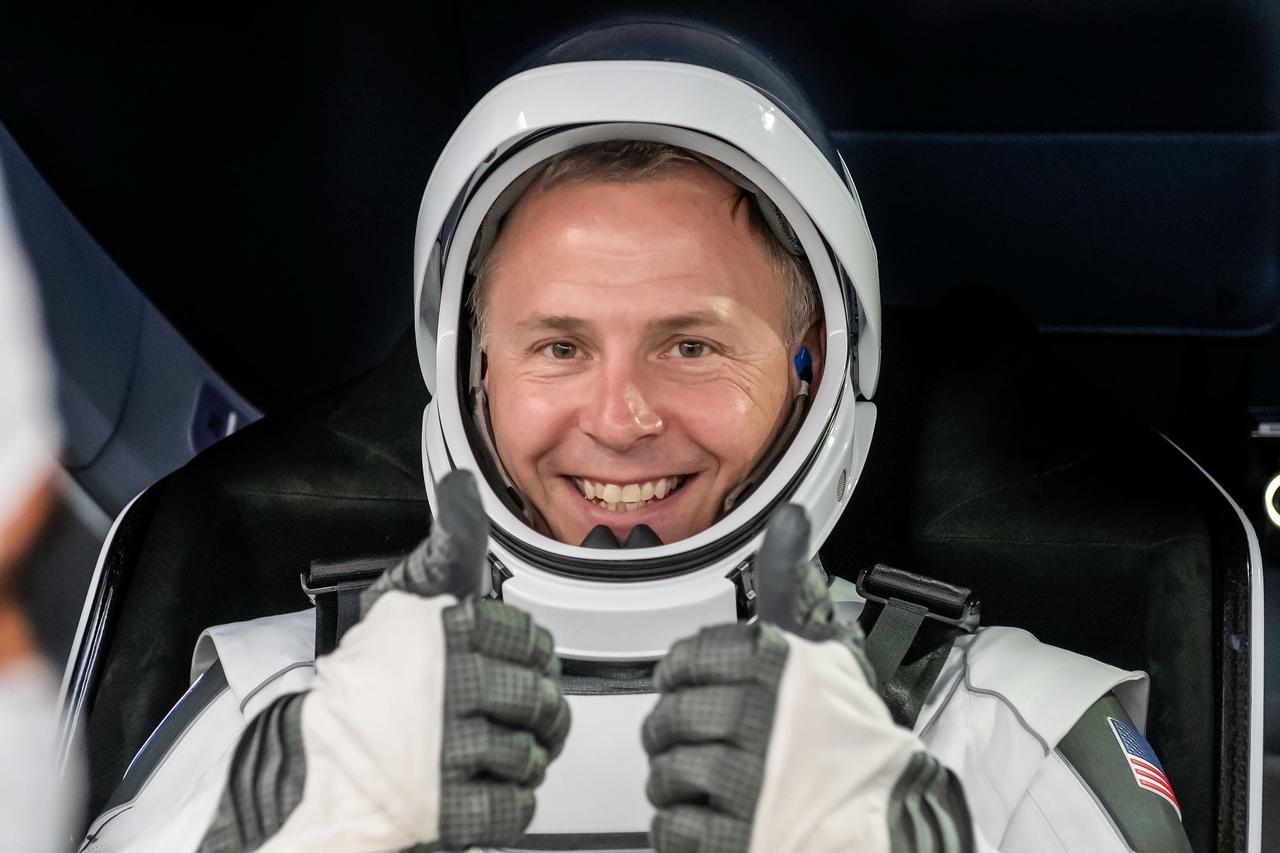
jsc2024e052329 (July 22, 2024) --- NASA’s SpaceX Crew-9 Pilot Nick Hague smiles and gives two thumbs up during the crew equipment interface test (CEIT) at SpaceX’s new Dragon refurbishing facility at Kennedy Space Center in Florida. This will be his second mission to the orbiting laboratory. Credit: SpaceX

NASA's SpaceX Crew-7 in training at SpaceX in Hawthorne, California before their mission to the International Space Station. Jasmin Moghbeli smiles for a photograph. Imagery provided by SpaceX
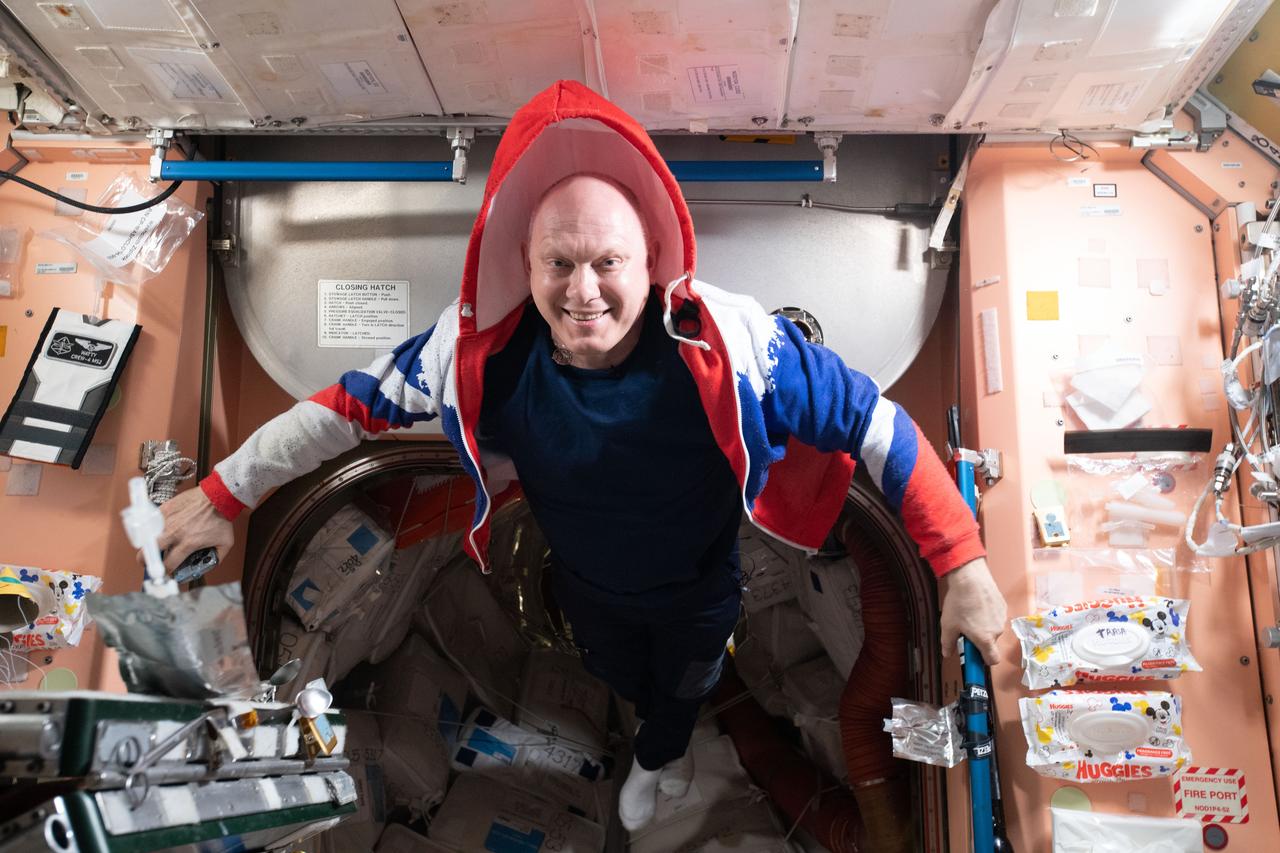
iss067e043378 (May 14, 2022) --- Roscosmos cosmonaut and Expedition 67 Commander Oleg Artemyev smiles for a portrait inside the International Space Station's Unity module.
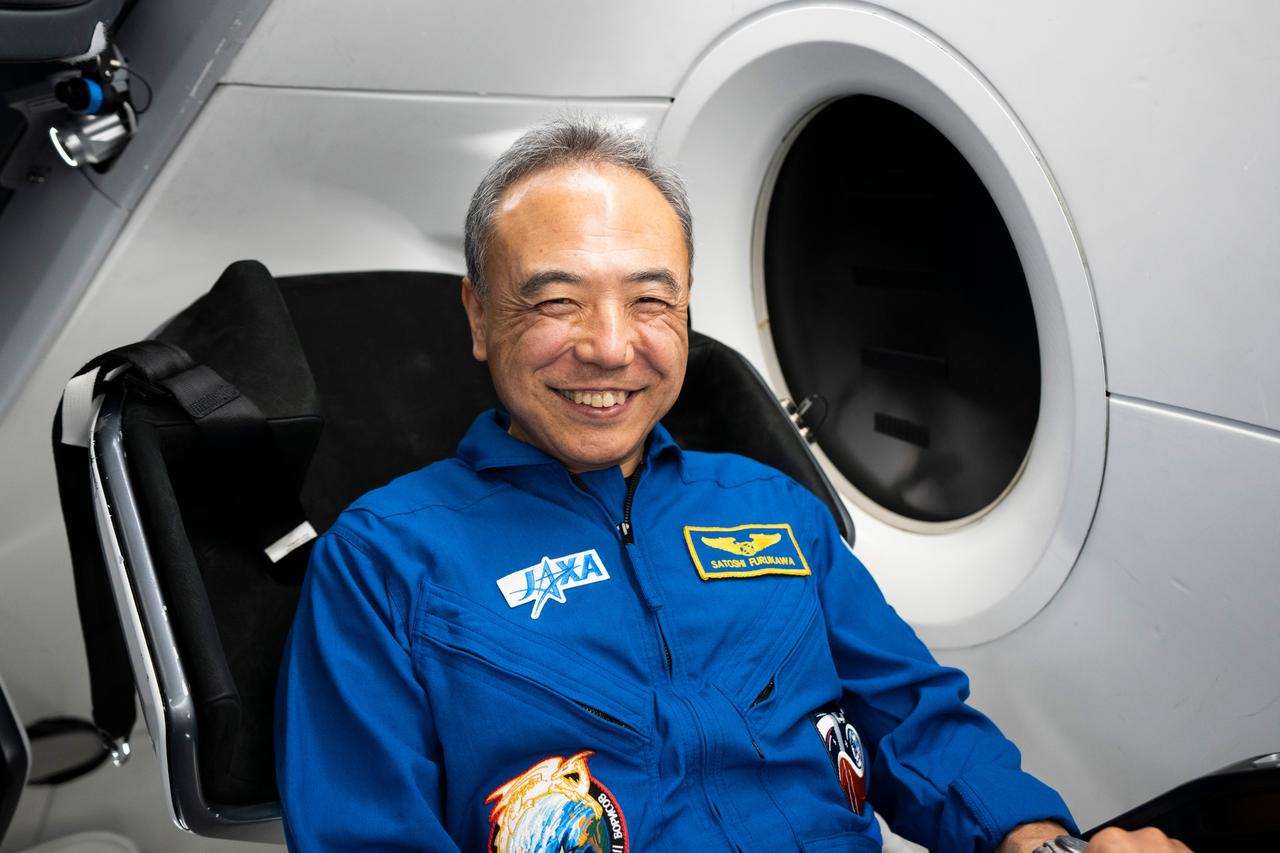
NASA's SpaceX Crew-7 in training at SpaceX in Hawthorne, California before their mission to the International Space Station. Satoshi Furukawa smiles for a photograph. Imagery provided by SpaceX
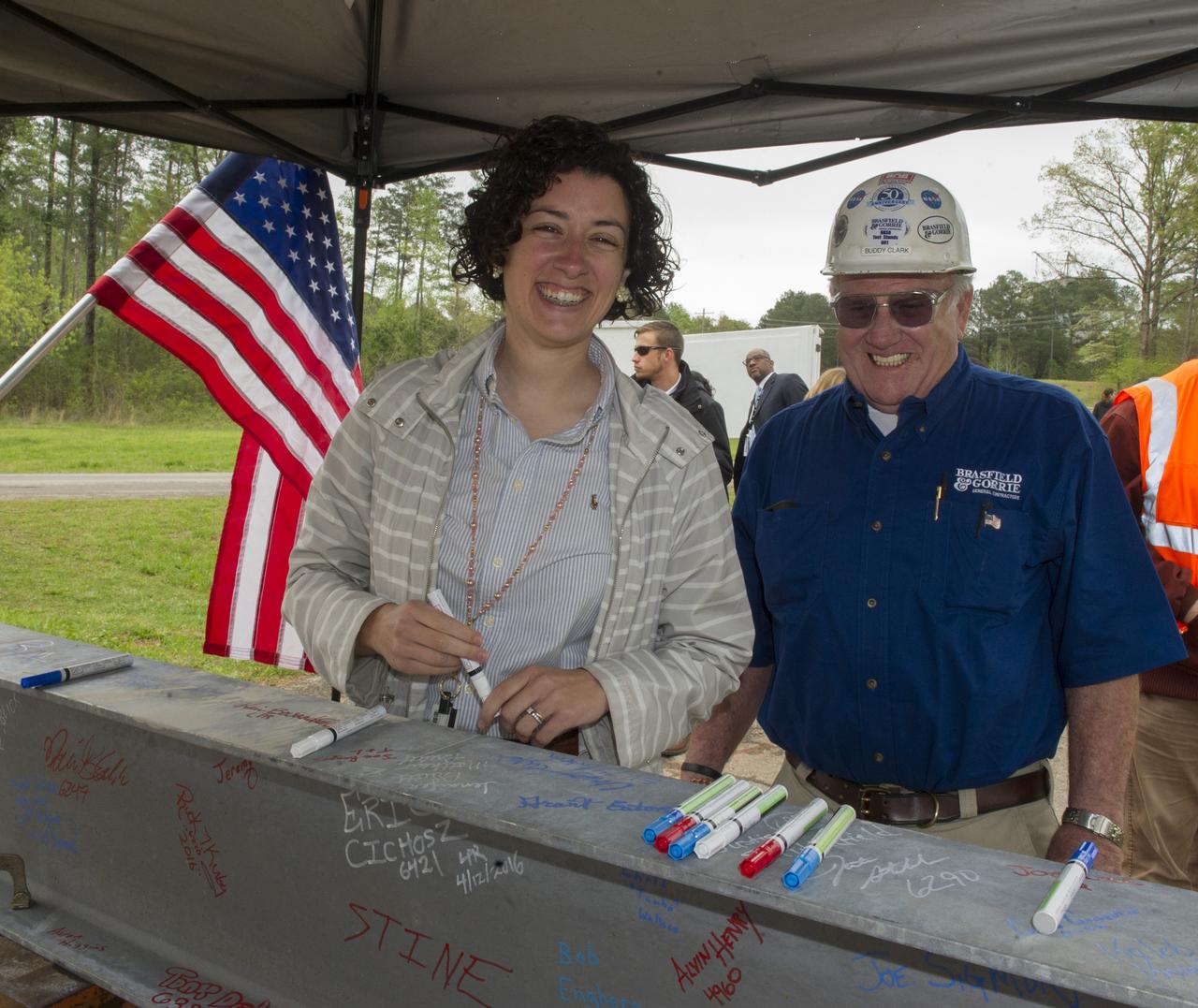
JENNIFER PRUITT AND BUDDY CLARK SMILE FOR THE CAMERA BEFORE SIGNING THE FINAL BEAM TO BE PLACED ATOP TEST STAND 4693 DURING THE STRUCTURE'S TOPPING OUT CEREMONY
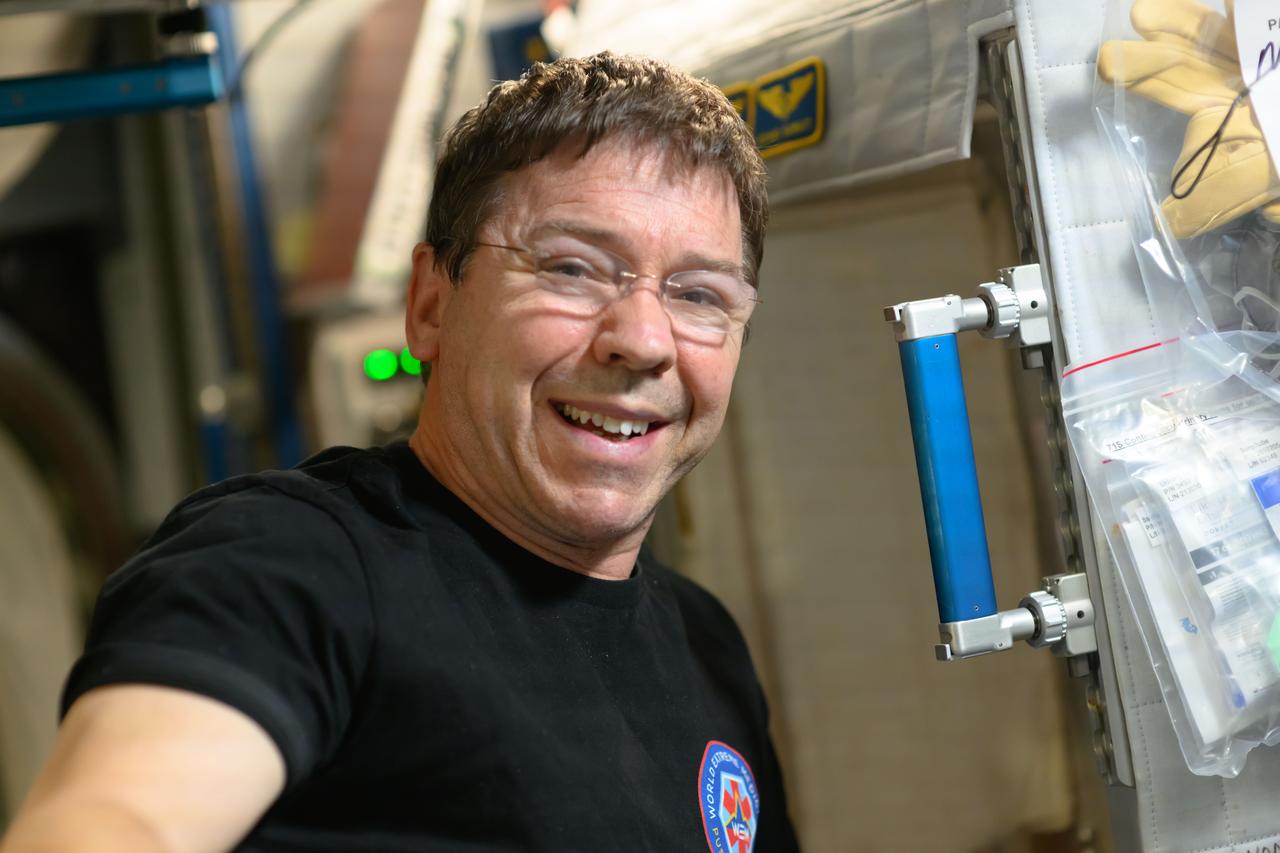
iss071e244324 (June 26, 2024) --- NASA astronaut and Expedition 71 Flight Engineer Mike Barratt smiles for a portrait aboard the International Space Station.

Artemis Launch Director Charlie Blackwell-Thompson smiles for a photograph inside Firing Room 1 of the Rocco A. Petrone Launch Control Center at NASA’s Kennedy Space Center in Florida on Thursday, June 11, 2026, during a terminal countdown simulation for the Artemis III mission. The terminal count simulation conducted by NASA’s Exploration Ground Systems team runs through the final five hours of launch countdown, including terminal count - the remaining 10 minutes of the countdown. Artemis III will carry out a series of objectives in low Earth orbit designed to demonstrate critical systems needed for future lunar landings, beginning with Artemis IV.
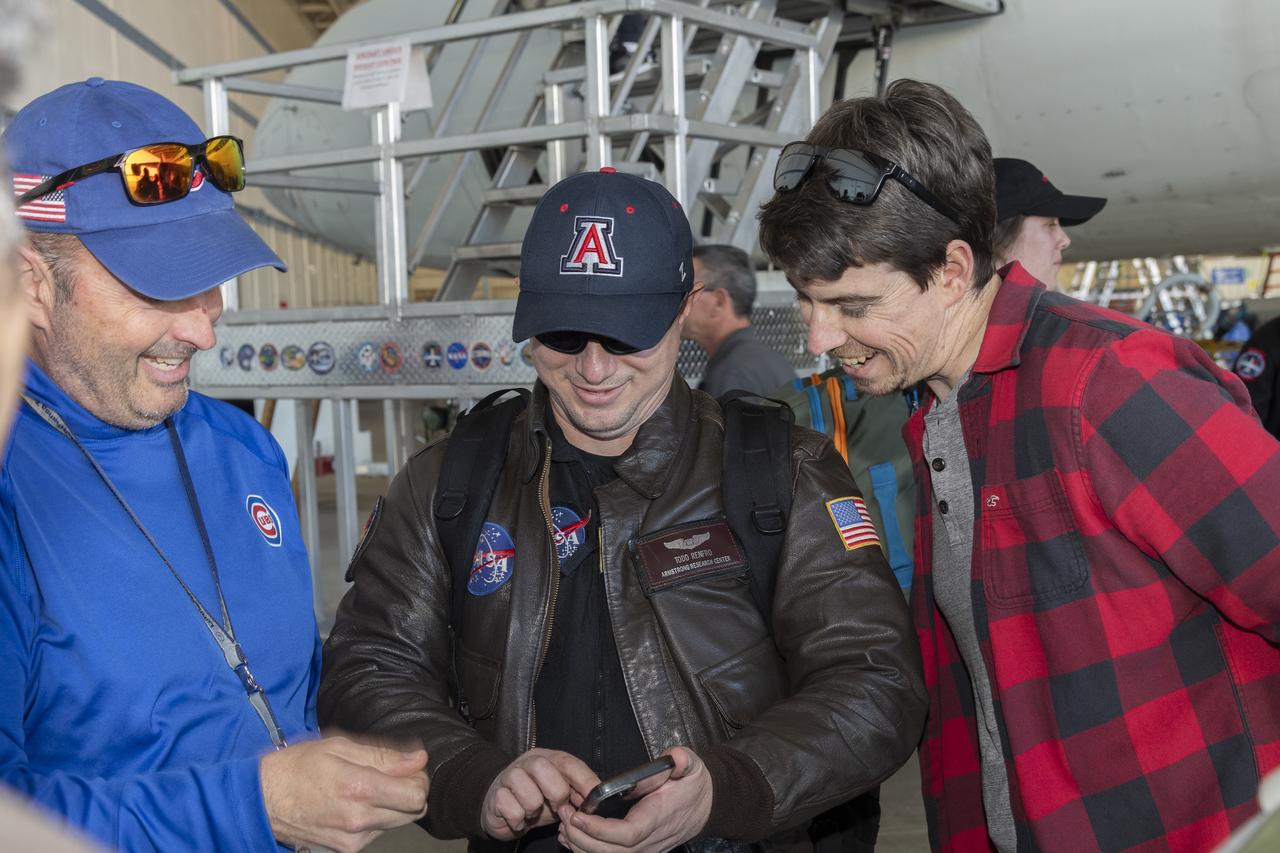
From left, Andy Barry, DC-8 pilot; Todd Renfro, flight navigator; and Adam Devalon, flight engineer, share smiles after the DC-8 aircraft and crew return to NASA’s Armstrong Flight Research Center Building 703 in Palmdale, California, on April 1, 2024, following the aircraft’s final mission in support of the Airborne and Satellite Investigation of Asian Air Quality (ASIA-AQ).

In this rare image taken on July 19, 2013, the wide-angle camera on NASA's Cassini spacecraft has captured Saturn's rings and our planet Earth and its moon in the same frame. It is only one footprint in a mosaic of 33 footprints covering the entire Saturn ring system (including Saturn itself). At each footprint, images were taken in different spectral filters for a total of 323 images: some were taken for scientific purposes and some to produce a natural color mosaic. This is the only wide-angle footprint that has the Earth-moon system in it. The dark side of Saturn, its bright limb, the main rings, the F ring, and the G and E rings are clearly seen; the limb of Saturn and the F ring are overexposed. The "breaks" in the brightness of Saturn's limb are due to the shadows of the rings on the globe of Saturn, preventing sunlight from shining through the atmosphere in those regions. The E and G rings have been brightened for better visibility. Earth, which is 898 million miles (1.44 billion kilometers) away in this image, appears as a blue dot at center right; the moon can be seen as a fainter protrusion off its right side. An arrow indicates their location in the annotated version. (The two are clearly seen as separate objects in the accompanying composite image PIA14949.) The other bright dots nearby are stars. This is only the third time ever that Earth has been imaged from the outer solar system. The acquisition of this image, along with the accompanying composite narrow- and wide-angle image of Earth and the moon and the full mosaic from which both are taken, marked the first time that inhabitants of Earth knew in advance that their planet was being imaged. That opportunity allowed people around the world to join together in social events to celebrate the occasion. This view looks toward the unilluminated side of the rings from about 20 degrees below the ring plane. Images taken using red, green and blue spectral filters were combined to create this natural color view. The images were obtained with the Cassini spacecraft wide-angle camera on July 19, 2013 at a distance of approximately 753,000 miles (1.212 million kilometers) from Saturn, and approximately 898.414 million miles (1.445858 billion kilometers) from Earth. Image scale on Saturn is 43 miles (69 kilometers) per pixel; image scale on the Earth is 53,820 miles (86,620 kilometers) per pixel. The illuminated areas of neither Earth nor the Moon are resolved here. Consequently, the size of each "dot" is the same size that a point of light of comparable brightness would have in the wide-angle camera. http://photojournal.jpl.nasa.gov/catalog/PIA17171
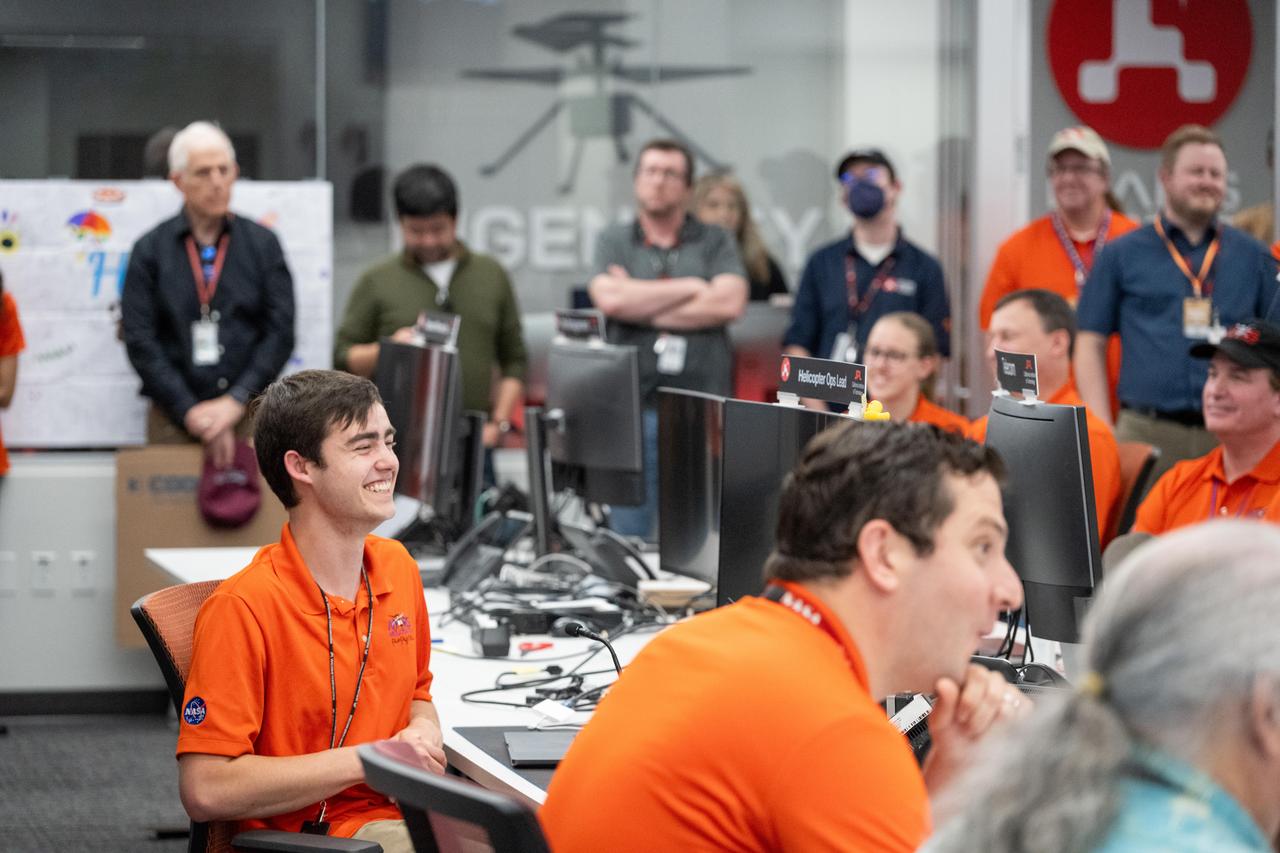
Ingenuity team lead Josh Anderson (seated left) and project manager Teddy Tzanetos (seated center) react during during the final shift for engineers working on NASA's Ingenuity Mars Helicopter at the agency's Jet Propulsion Laboratory on April 16, 2024. The team gathered to review a transmission from the helicopter that confirmed the operation of a software patch allowing Ingenuity to act as a stationary testbed and collect data that could benefit future explorers of the Red Planet. Originally designed as short-lived technology demonstration mission that would perform up to five experimental test flights over 30 days, the first aircraft on another world operated from the Martian surface for almost three years, flew more than 14 times farther than planned, and logged more than two hours of total flight time. Its 72nd and final flight was Jan. 18, 2024. https://photojournal.jpl.nasa.gov/catalog/PIA26315
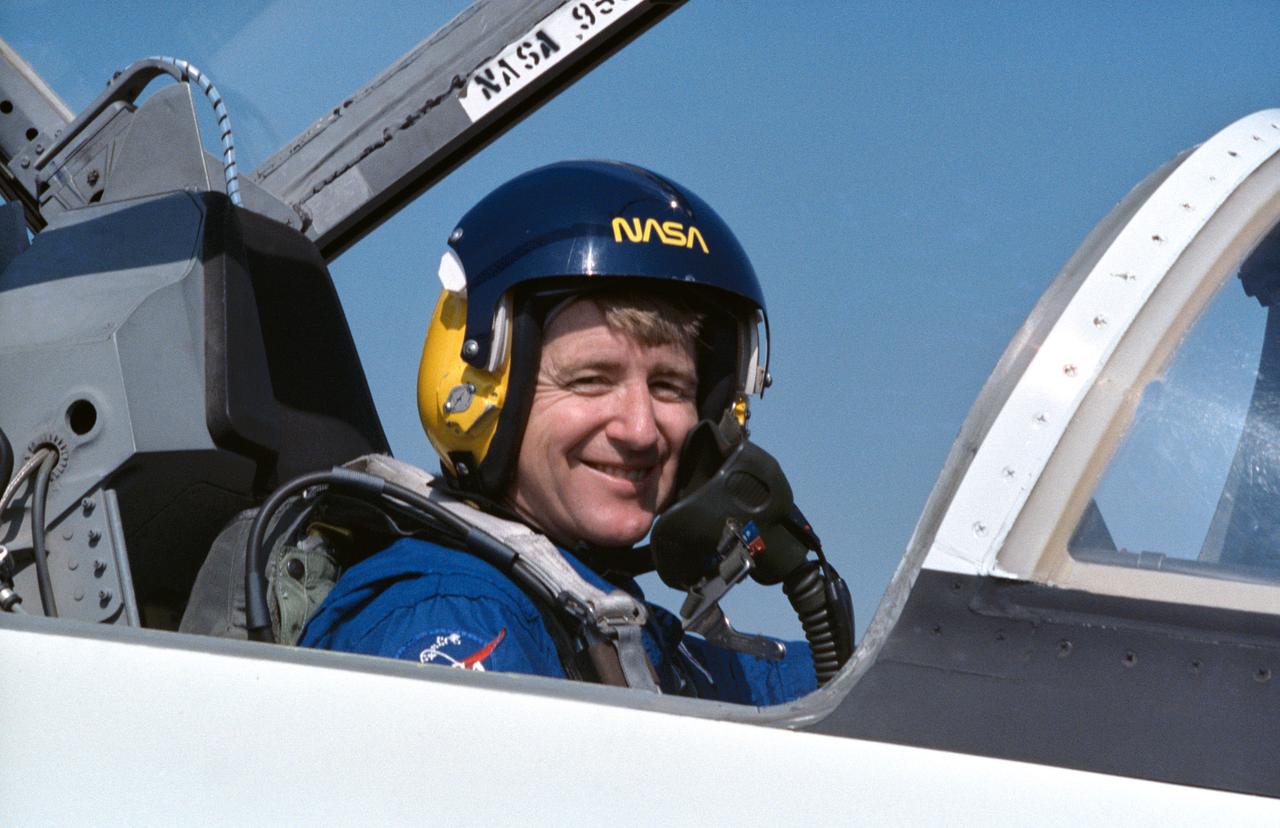
STS-38 Pilot Frank L. Culberston, smiling and wearing his helmet with breathing apparatus attached, sits in T-38A NASA 955 forward cockpit at Ellington Field and prepares for departure.
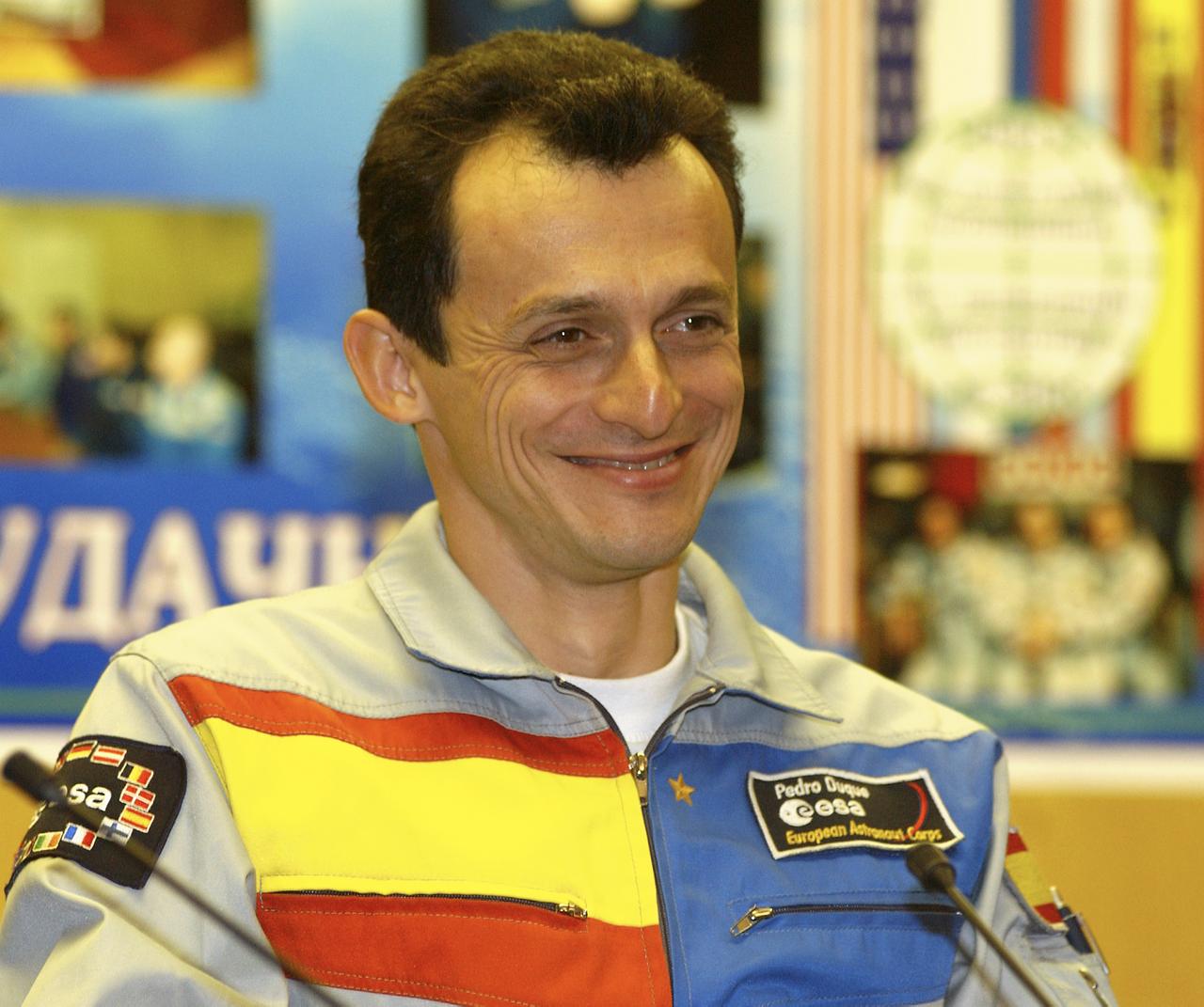
European Space Agency astronaut Pedro Duque of Spain, smiles at a reporter's question during a prelaunch news conference, Friday, Oct. 17, 2003, in Baikonur, Kazakhstan. Photo Credit (NASA/Bill Ingalls)

NASA's SpaceX Crew-7 crew traveled to SpaceX in Hawthorne, California during a trip to train for their International Space Station mission. Konstantin Borisov smiles for a photograph. Imagery provided by SpaceX
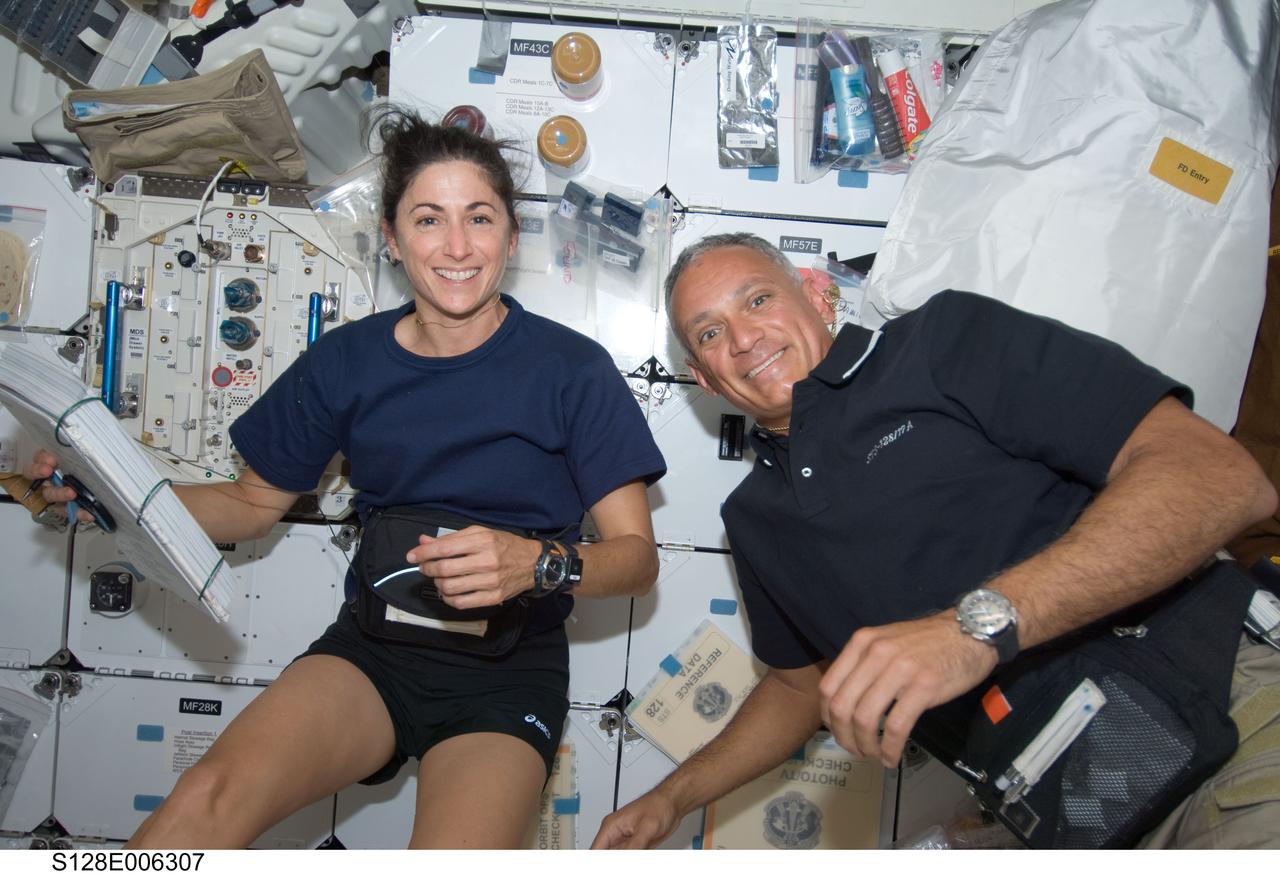
S128-E-006307 (29 Aug. 2009) --- Astronaut Nicole Stott and John “Danny” Olivas, both STS-128 mission specialists, smile for a photo on Space Shuttle Discovery’s middeck during flight day two activities.
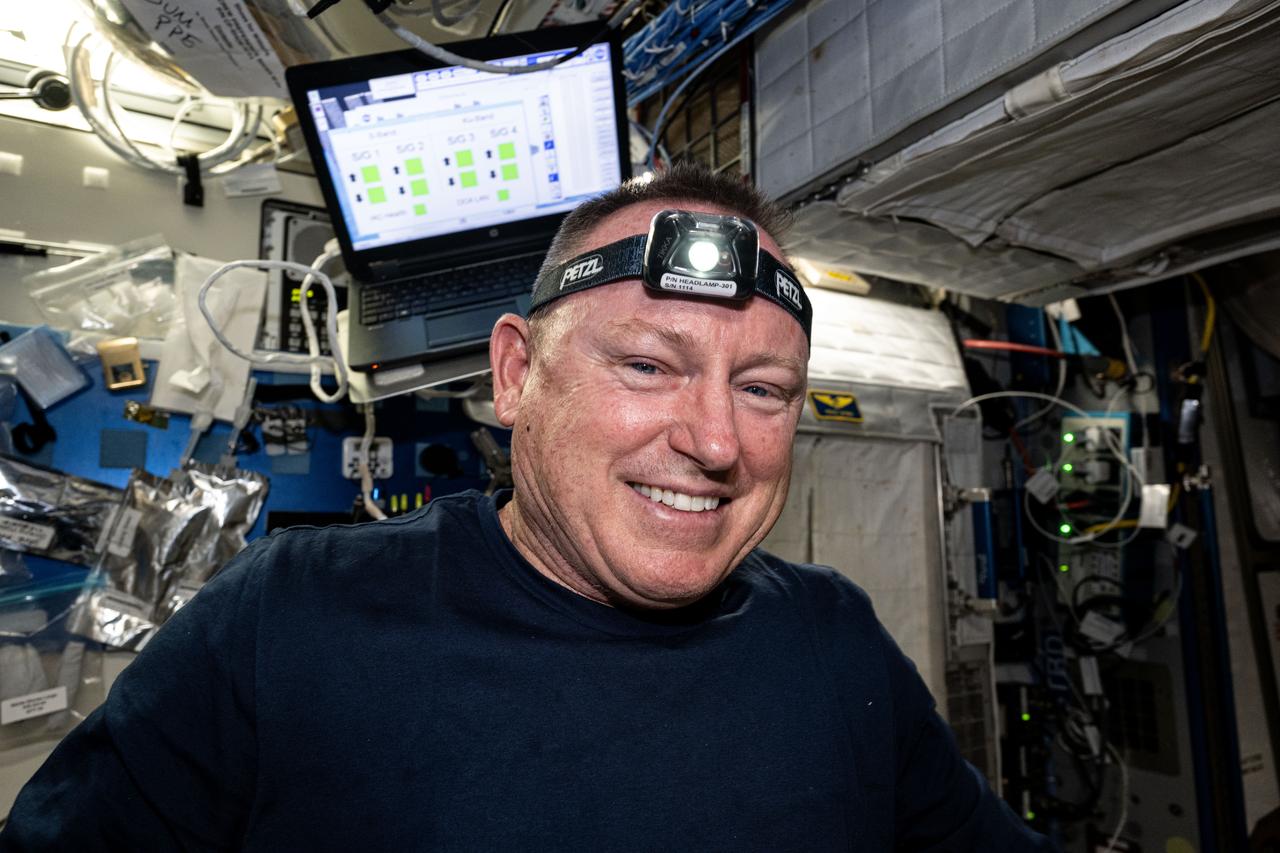
iss071e235668 (June 27, 2024) --- NASA astronaut and Boeing Crew Flight Test Commander Butch Wilmore smiles for a portrait in the middle of orbital maintenance duties aboard the International Space Station's Harmony module.
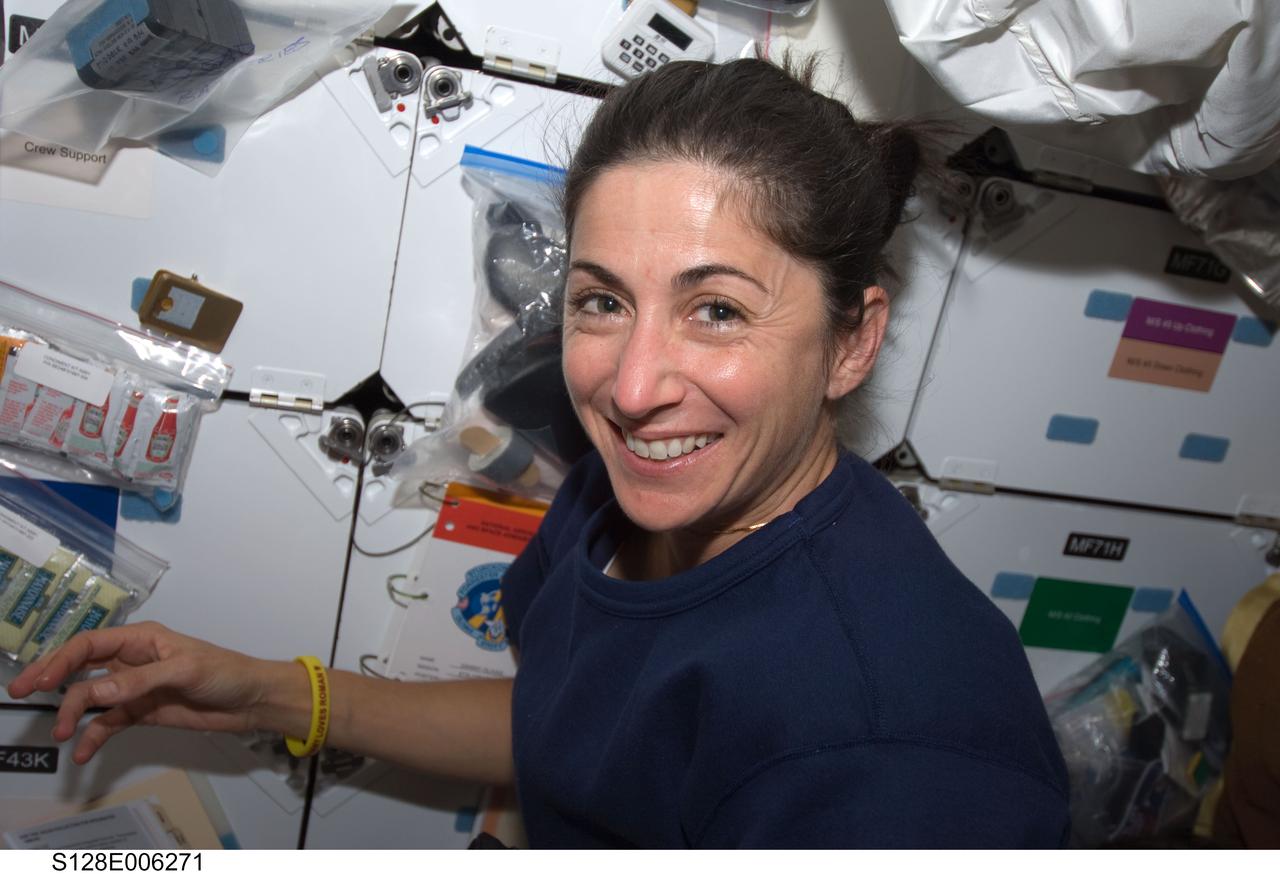
S128-E-006271 (29 Aug. 2009) --- Astronaut Nicole Stott, STS-128 mission specialist, smiles for a photo on the middeck of Space Shuttle Discovery during flight day two activities.
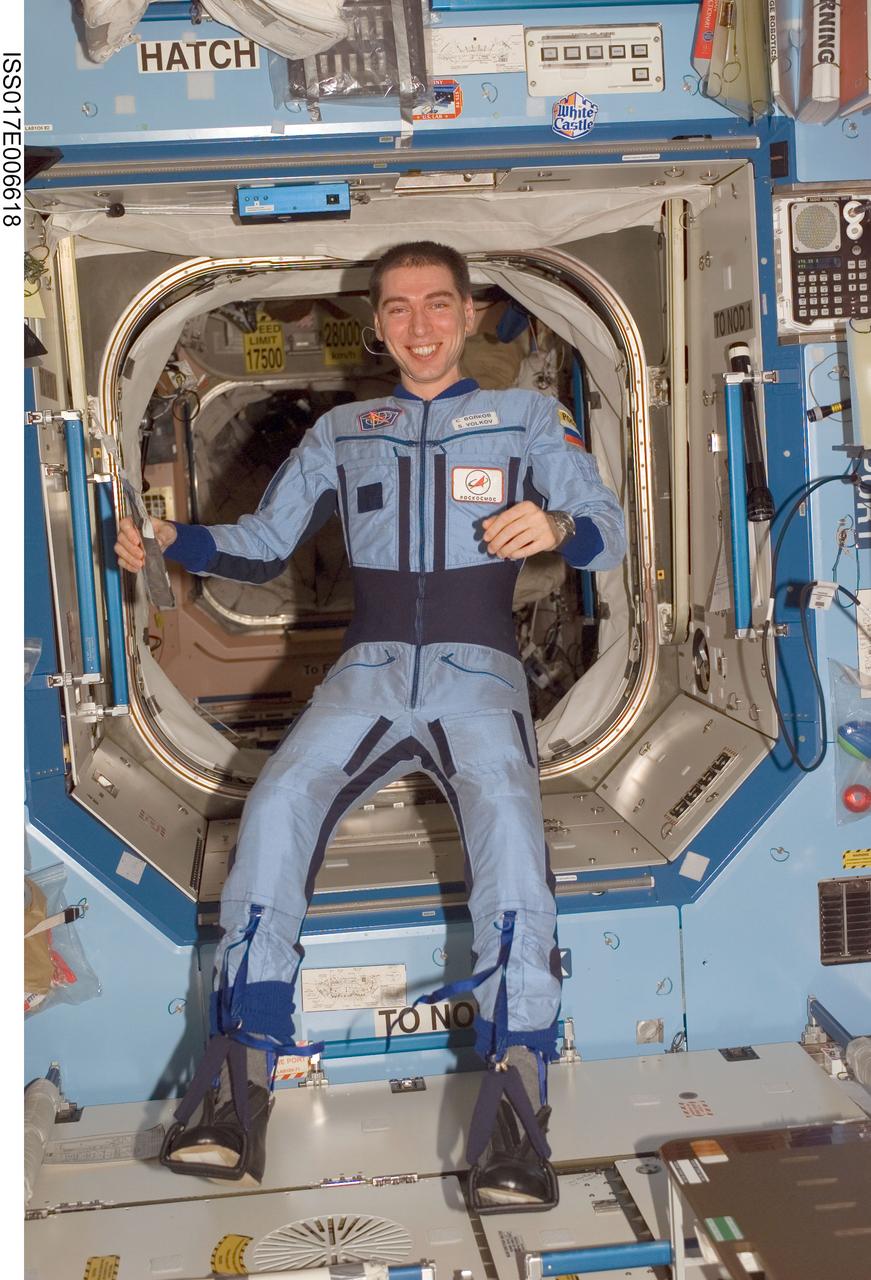
ISS017-E-006618 (9 May 2008) --- Russian Federal Space Agency cosmonaut Sergei Volkov, Expedition 17 commander, smiles for a photo while floating in the Destiny laboratory of the International Space Station.
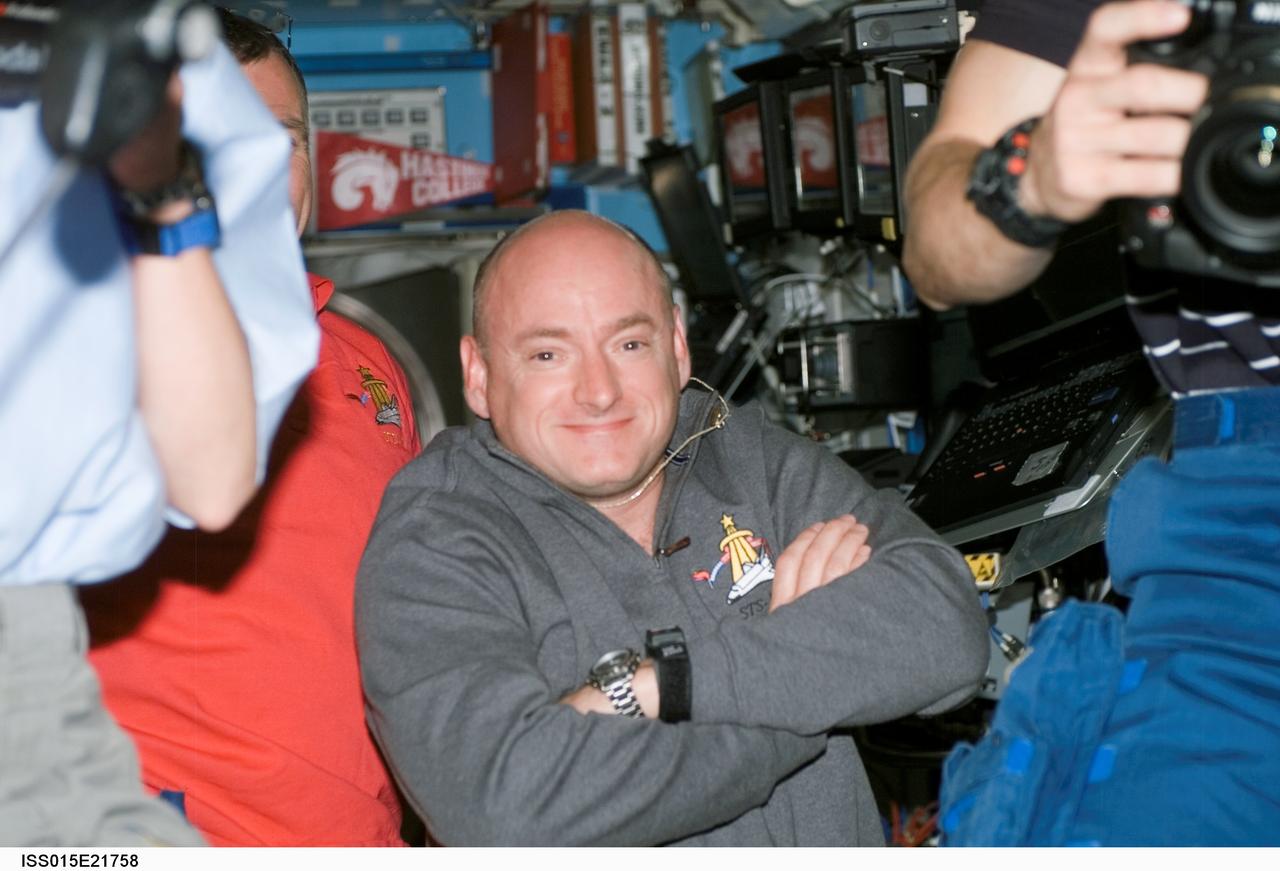
ISS015-E-21758 (10 Aug. 2007) --- Astronaut Scott Kelly, STS-118 commander, smiles for a photo in the Destiny laboratory of the International Space Station following the docking with the Space Shuttle Endeavour.
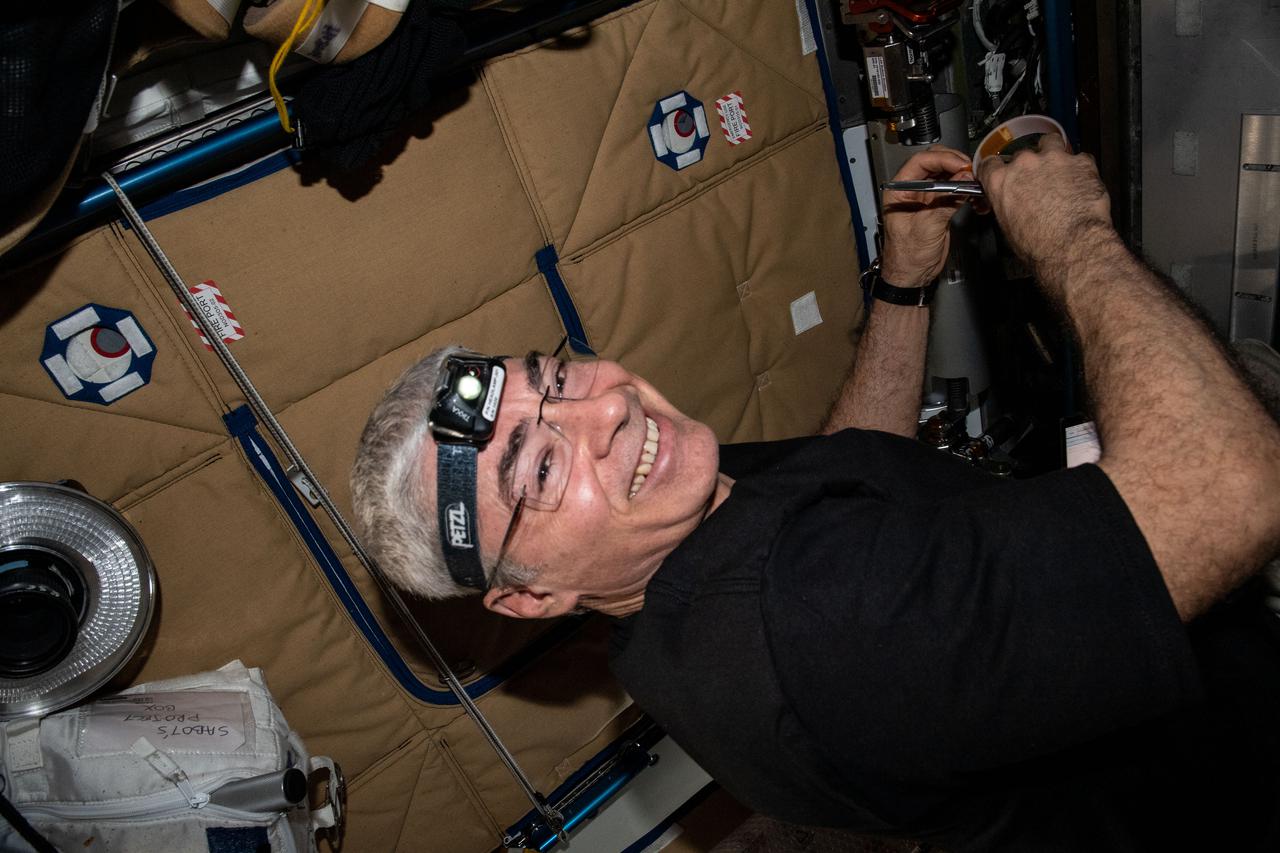
iss065e440489 (Oct. 4, 2021) --- NASA astronaut and Expedition 65 Flight Engineer Mark Vande Hei smiles for the camera while working on maintenance activities inside the International Space Station's Tranquility module.
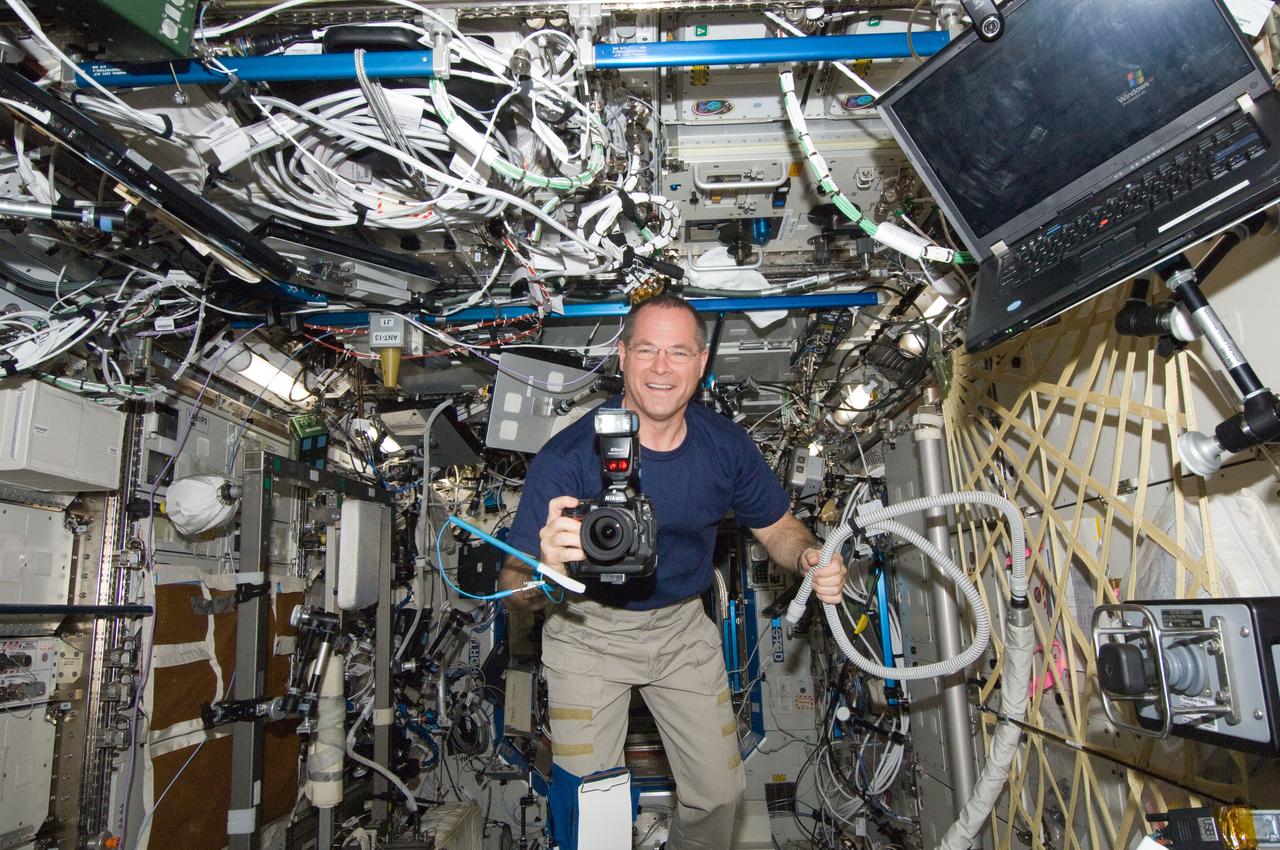
ISS033-E-016147 (26 Oct. 2012) --- NASA astronaut Kevin Ford, Expedition 33 flight engineer, smiles for a photo while holding a still camera in the Destiny laboratory of the International Space Station.
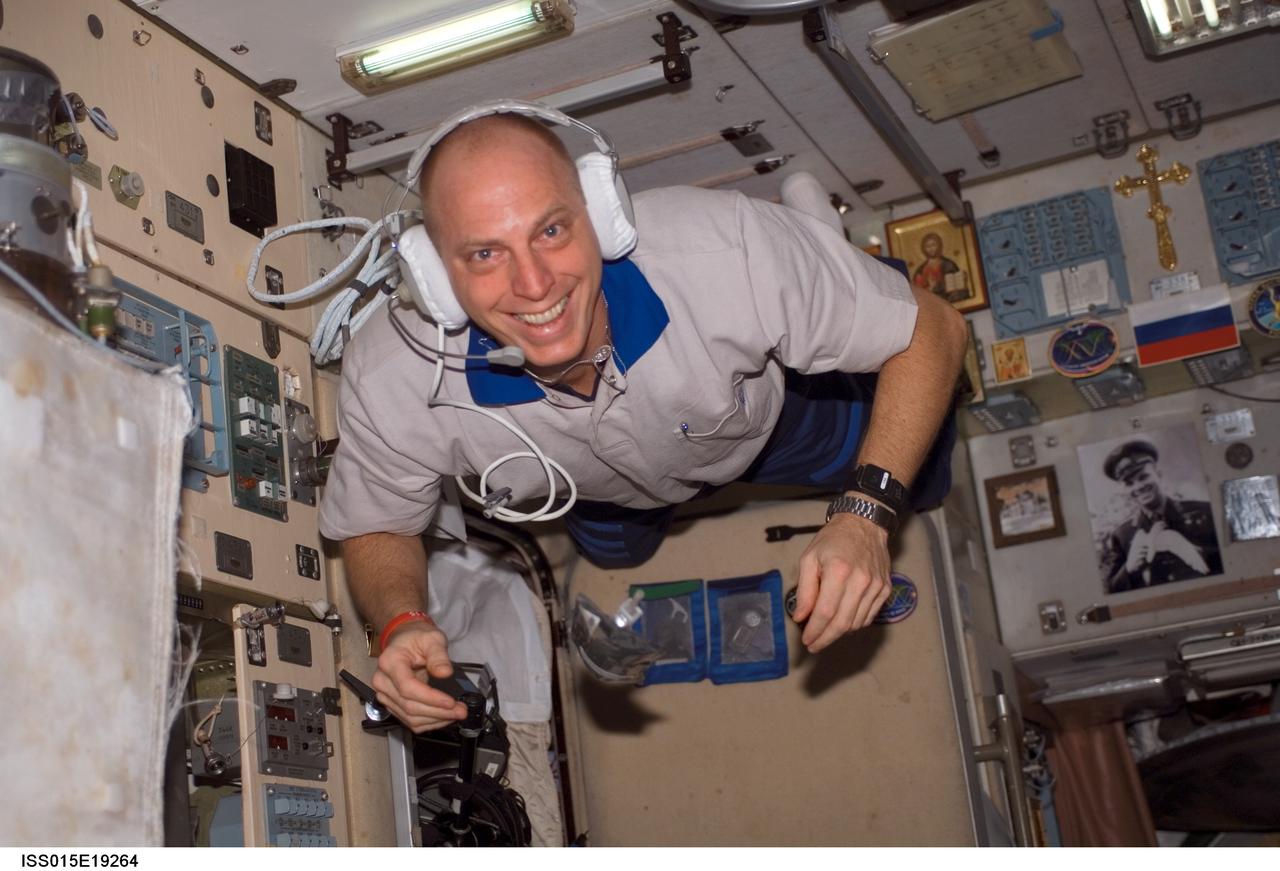
ISS015-E-19264 (24 July 2007) --- Astronaut Clay Anderson, Expedition 15 flight engineer, wearing communication headgear, smiles for the camera as he floats in the Zvezda Service Module of the International Space Station.
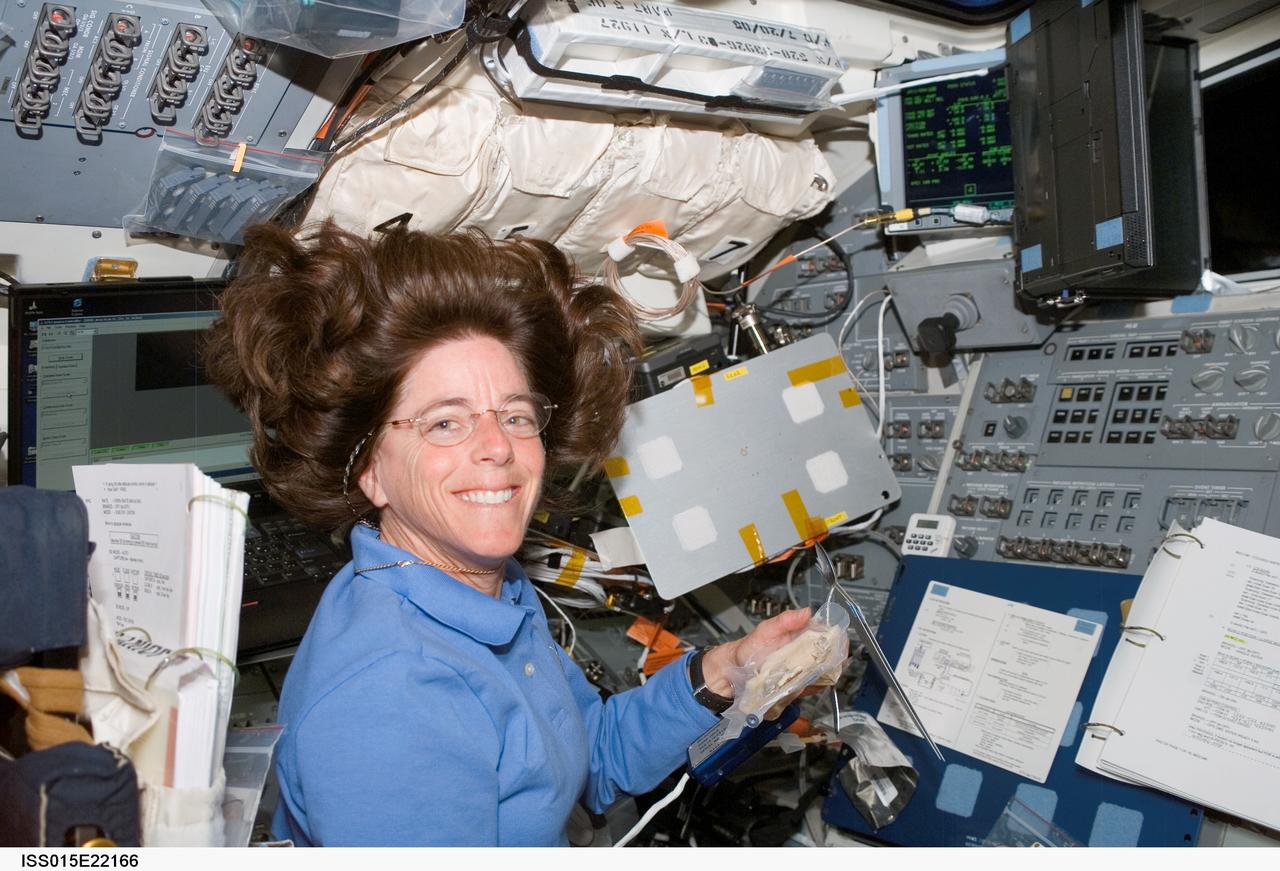
ISS015-E-22166 (12 Aug. 2007) --- Astronaut Barbara R. Morgan, STS-118 mission specialist, smiles for a photo near the aft flight deck of Space Shuttle Endeavour while docked with the International Space Station.
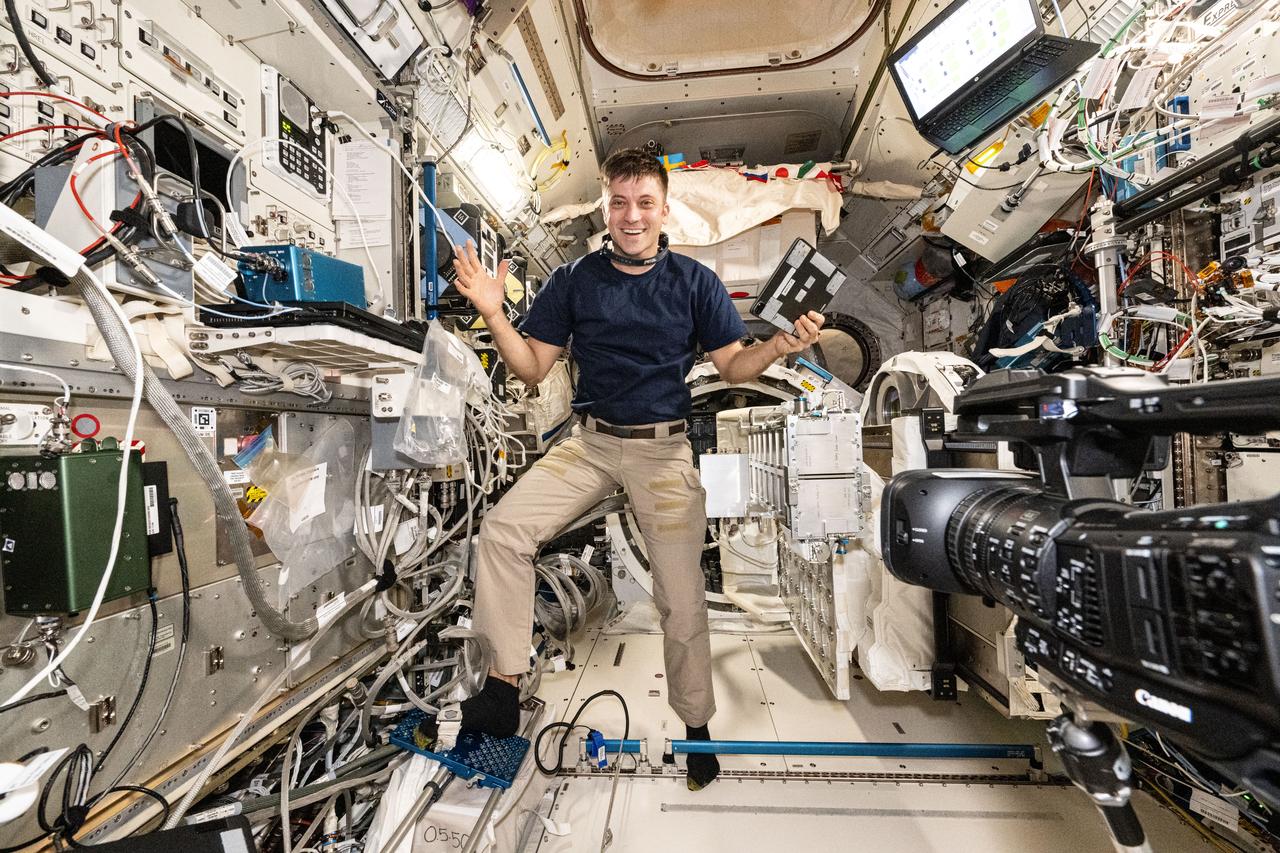
iss071e547031 (Aug. 23, 2024) --- NASA astronaut and Expedition 71 Flight Engineer Matthew Dominick smiles for a portrait in the middle of maintenance work aboard the International Space Station's Kibo laboratory module.
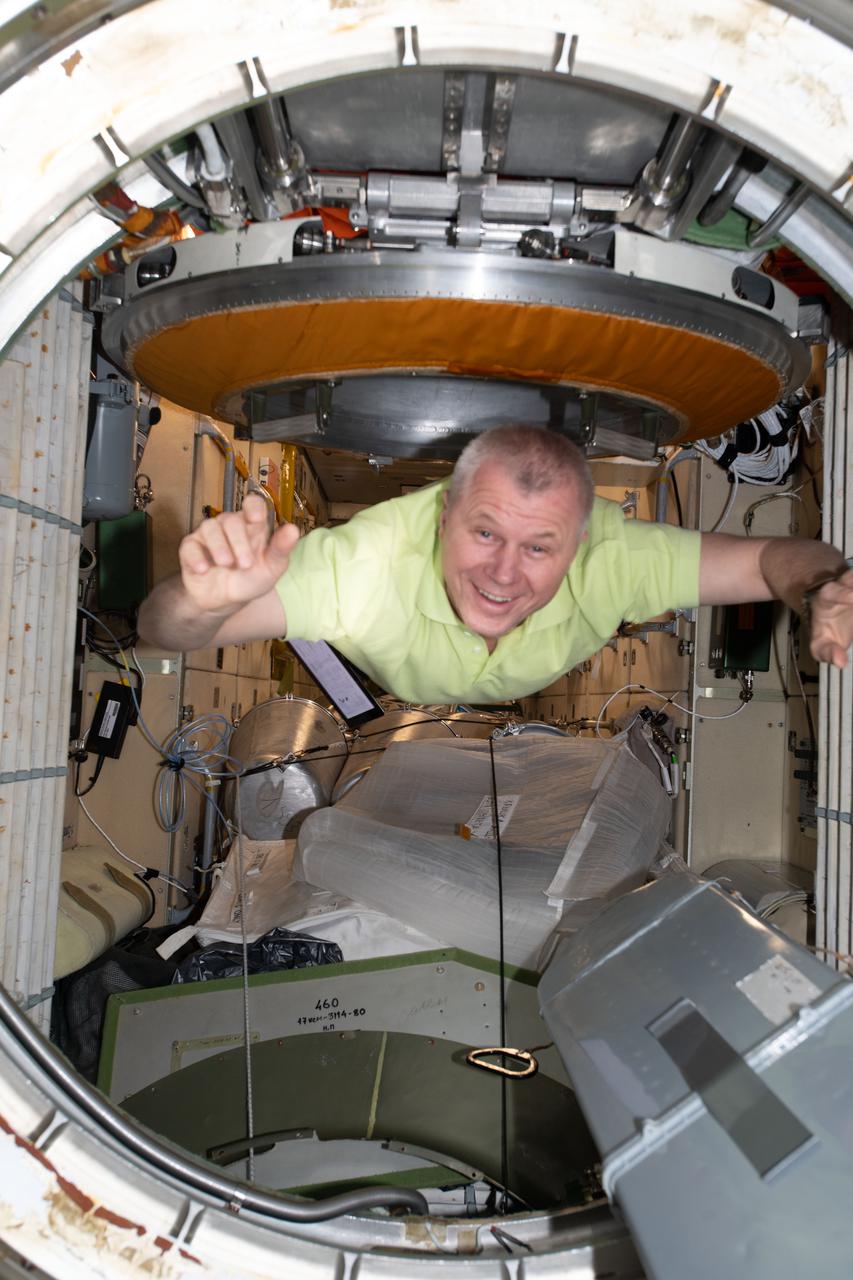
iss065e033978 (May 12, 2021) --- Roscosmos cosmonaut and Expedition 65 Flight Engineer Oleg Novitskiy smiles for a picture as he maneuvers through the International Space Station's Russian segment.
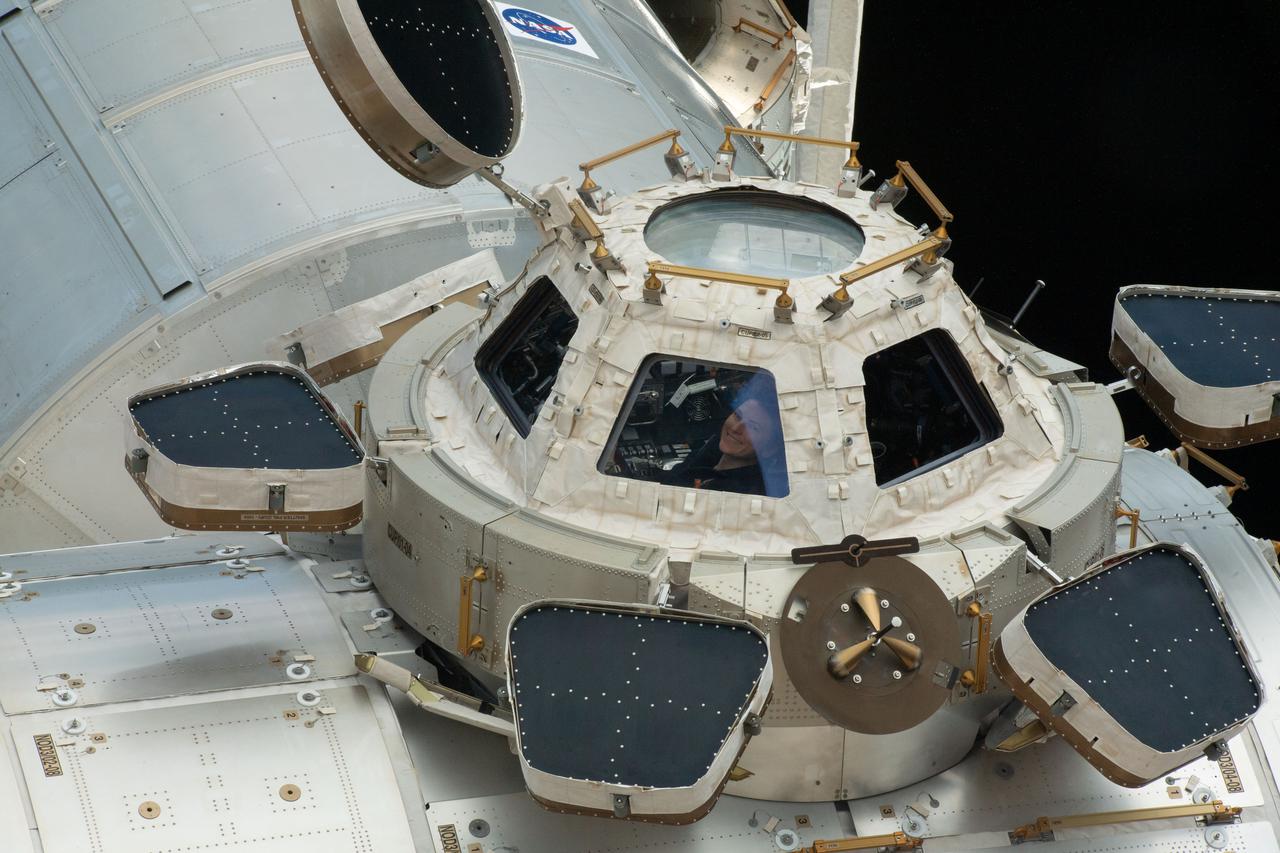
iss066e113975 (Jan. 16, 2022) --- NASA astronaut and Expedition 66 Flight Engineer Kayla Barron smiles while peering out from a window inside the cupola, the International Space Station's "window to the world."
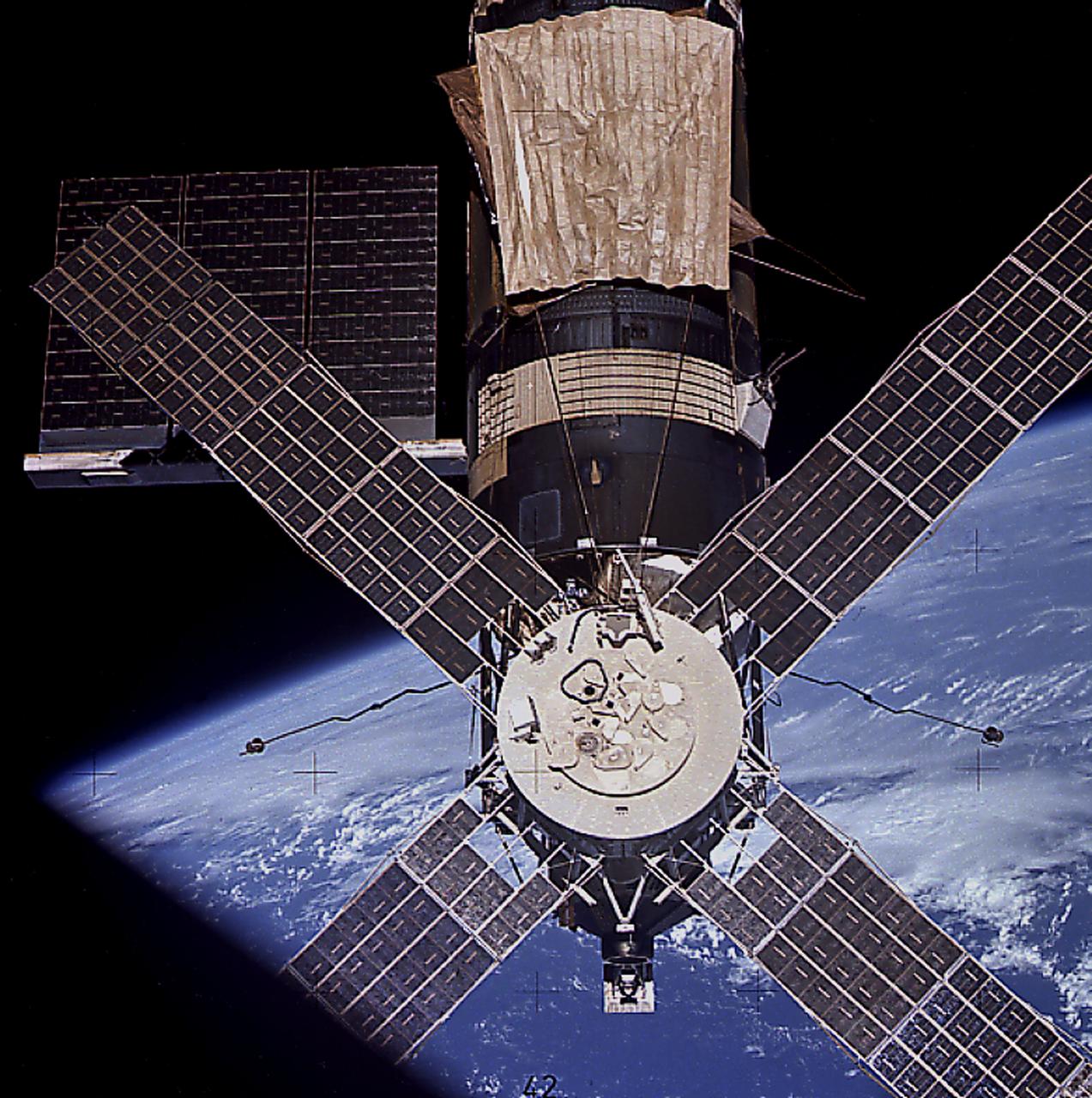
This image of Skylab in orbit was taken as the third crew (Skylab-4) departed the space station after 84 days in the orbiting laboratory. A smiling Skylab seemed to wink good-bye for the job well done.
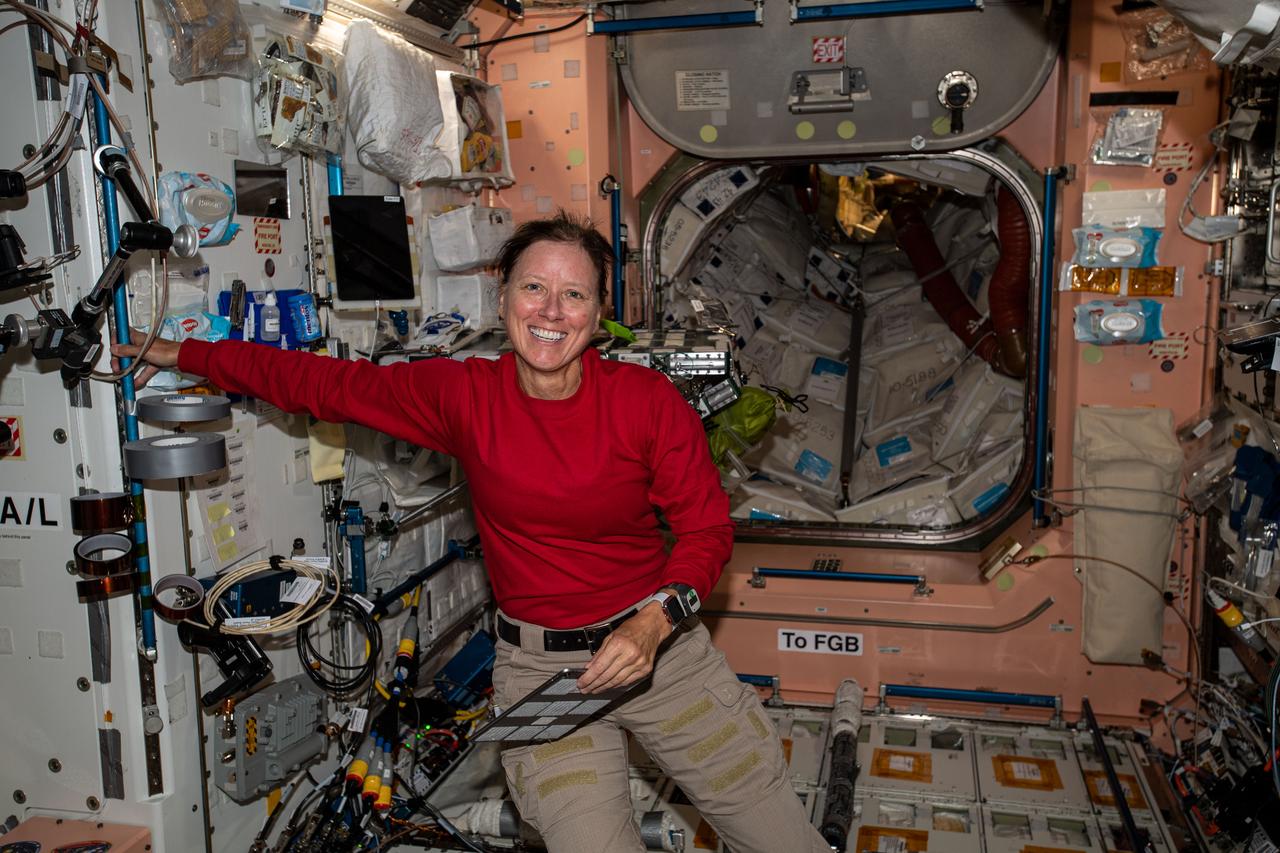
iss064e005612 (Nov. 24, 2020) --- NASA astronaut and Expedition 64 Flight Engineer Shannon Walker pauses during maintenance work and smiles for a portrait inside the Unity module.
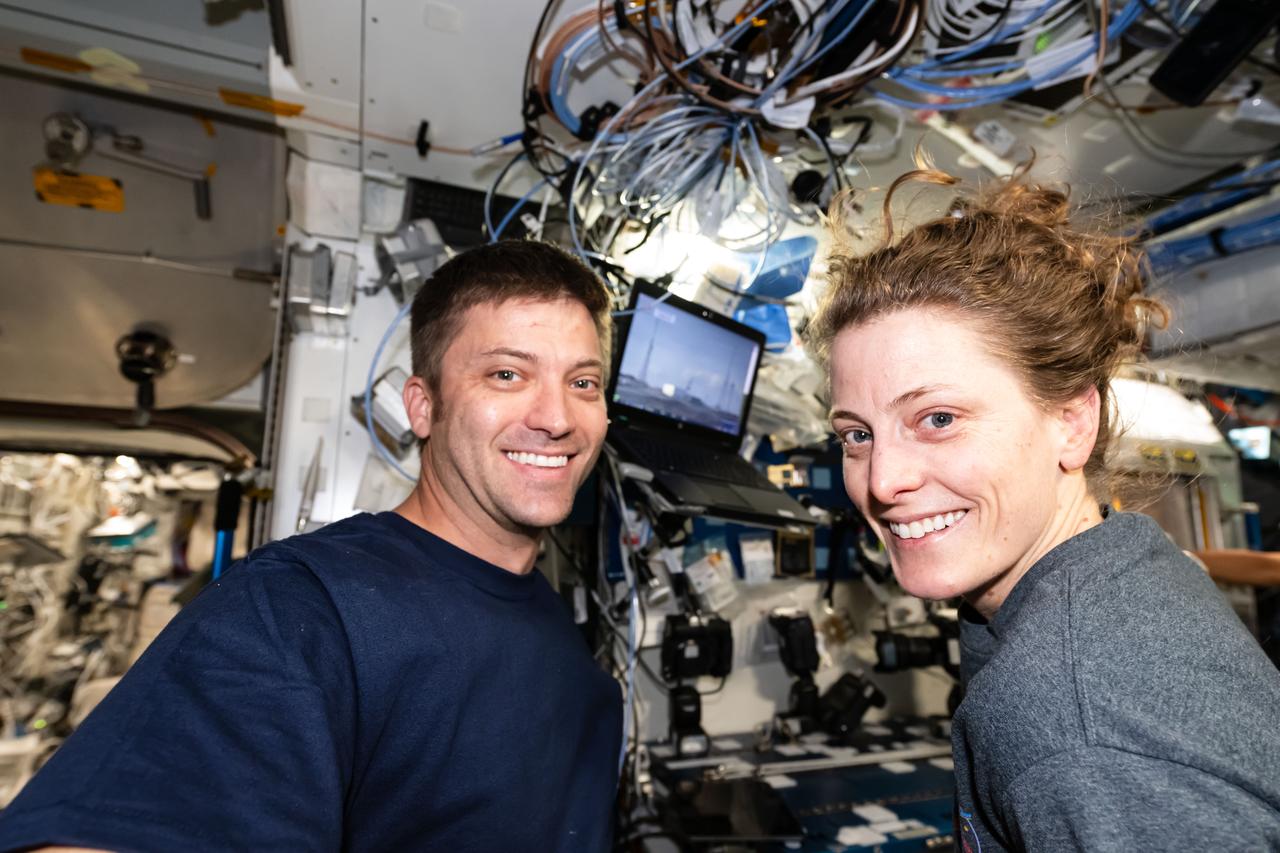
iss070e128430 (March 23, 2024) --- Expedition 70 Flight Engineers Matthew Dominick and Loral O'Hara, both NASA astronauts, smile for a portrait shortly after the SpaceX Dragon cargo craft docked to the International Space Station.
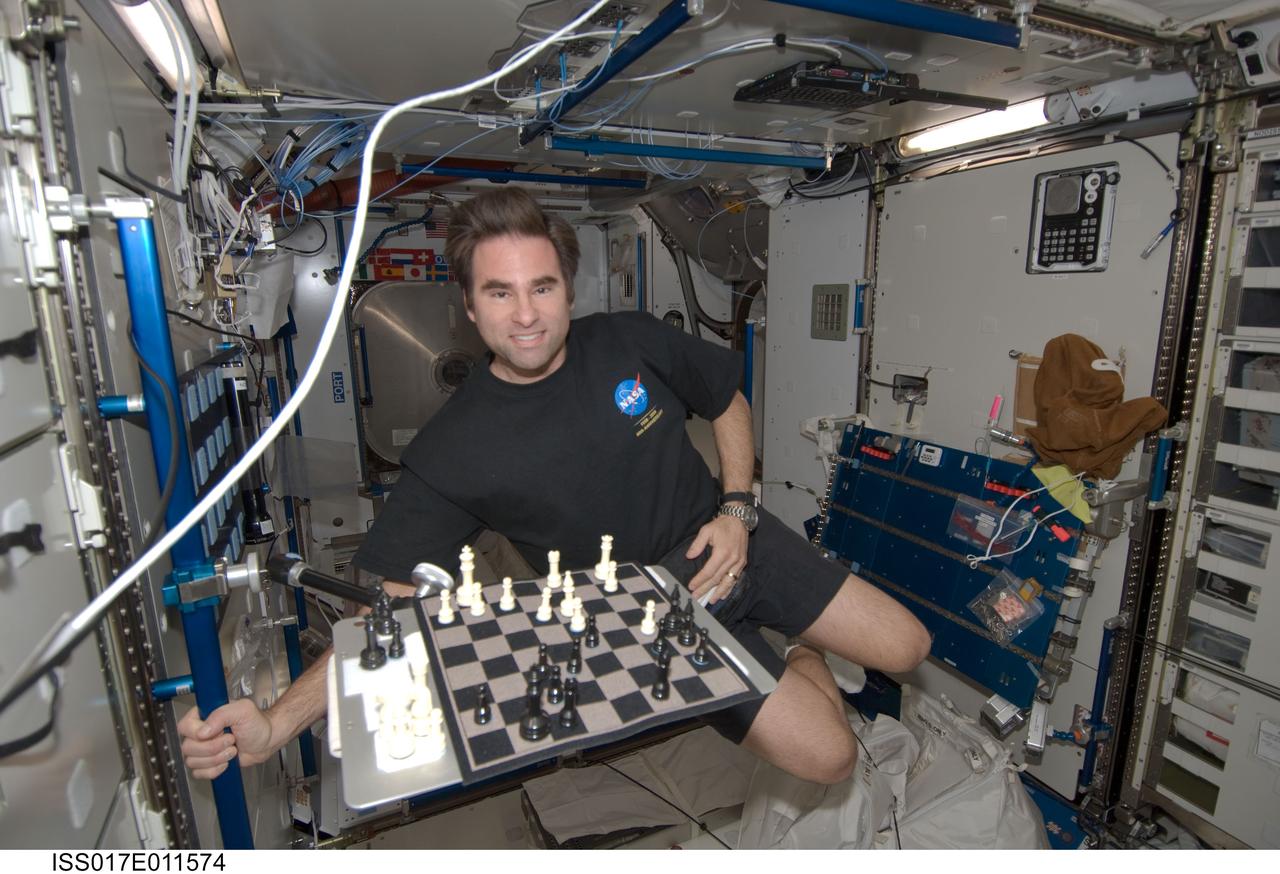
ISS017-E-011574 (19 July 2008) --- NASA astronaut Greg Chamitoff, Expedition 17 flight engineer, smiles for a photo near a chess board in the Harmony node of the International Space Station.