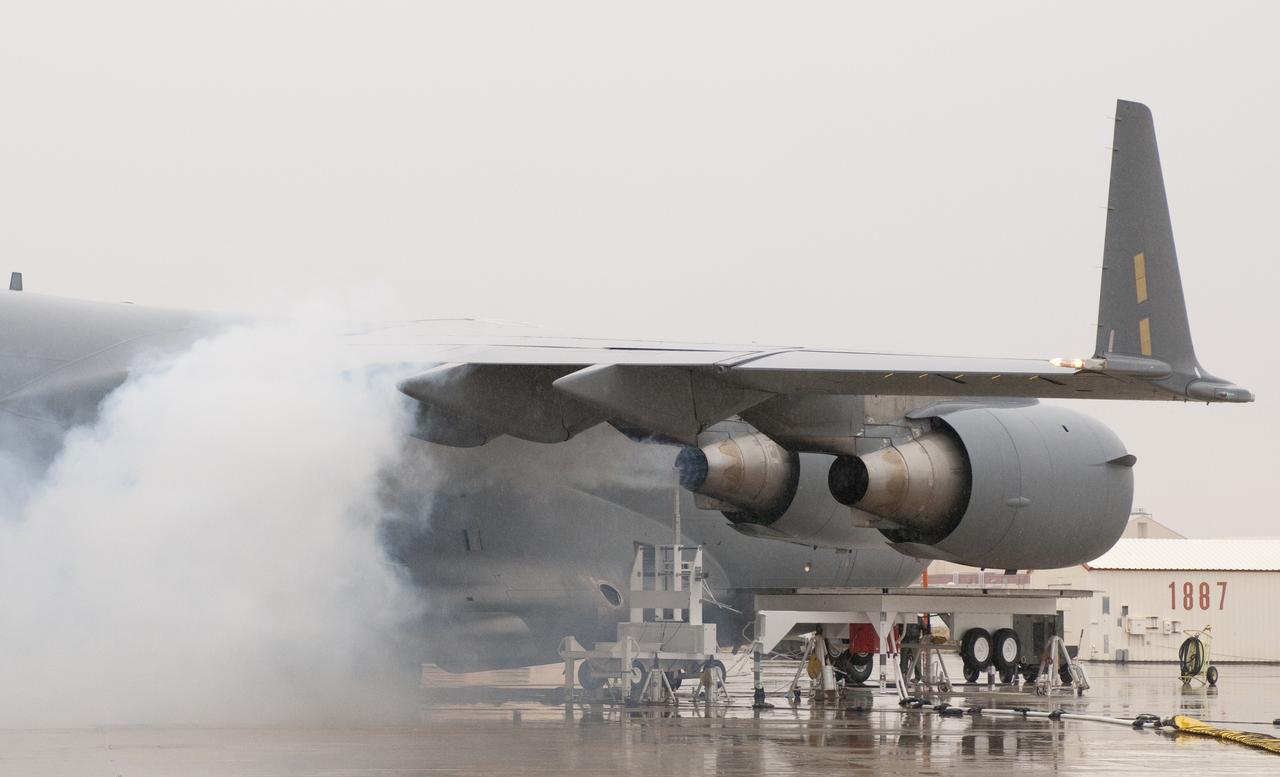
Oil smoke billows from the right inboard engine of the C-17 while a probe collects emissions data during 2011 VIPR engine health monitoring tests.
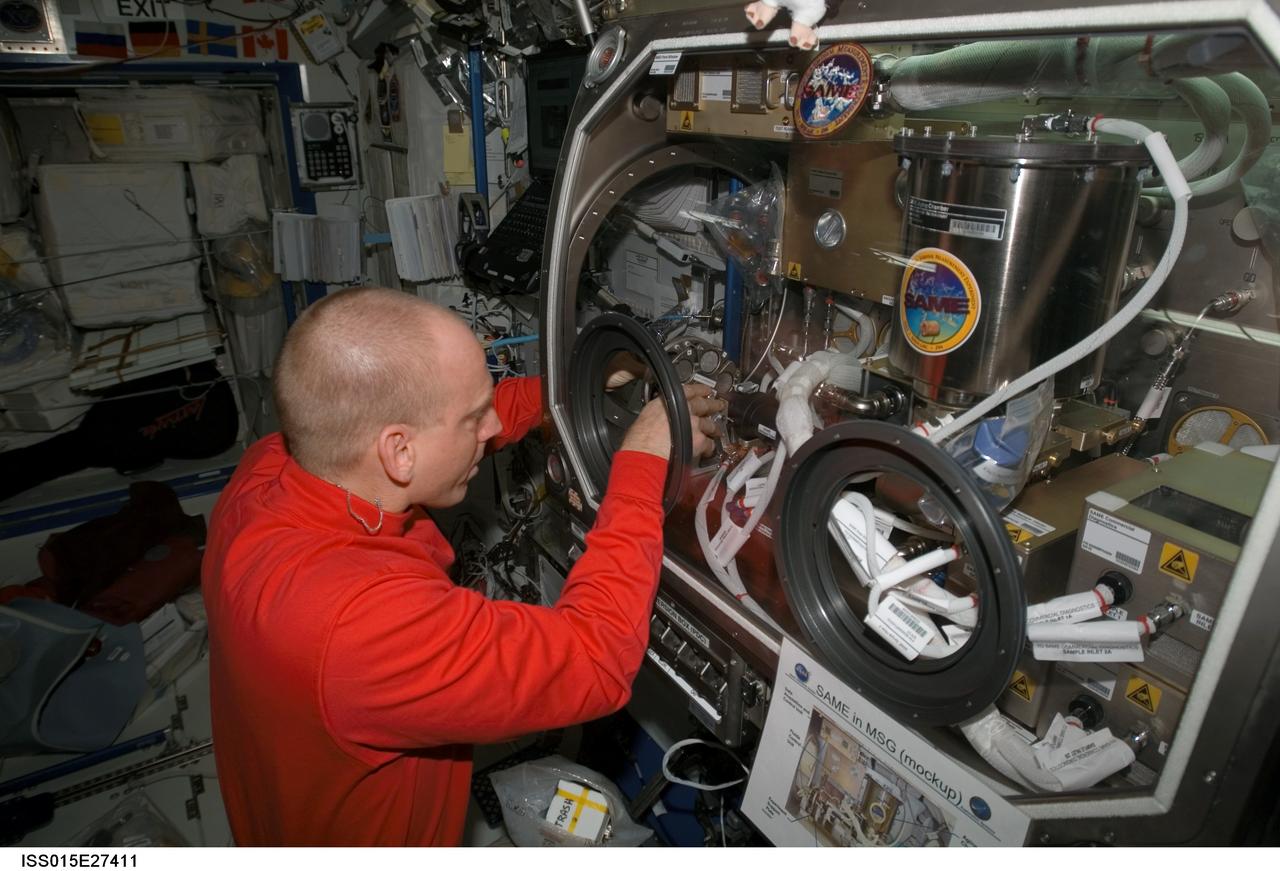
ISS015-E-27411 (8 Sept. 2007) --- NASA astronaut Clay Anderson, Expedition 15 flight engineer, works on the Smoke and Aerosol Measurement Experiment (SAME) hardware located in the Microgravity Science Glovebox (MSG) in the Destiny laboratory of the International Space Station. SAME will measure the smoke properties, or particle size distribution, of typical particles that are produced from different materials that can be found onboard station and other spacecrafts. SAME aims to test the performance of ionization smoke detectors and evaluate the performance of the photoelectric smoke detectors. The data will be used to develop a model that can predict smoke droplet growth that will be used to evaluate future smoke detection devices.
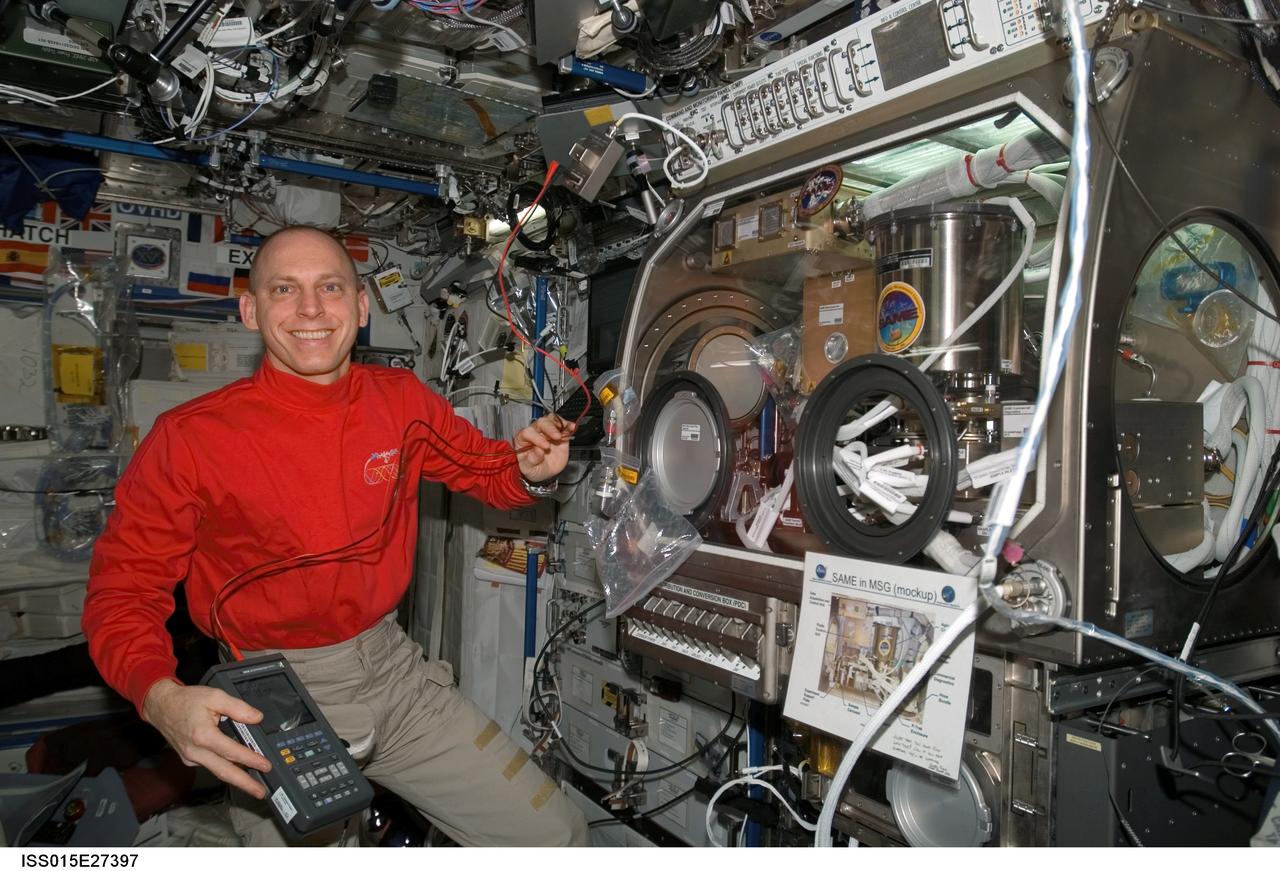
ISS015-E-27397 (8 Sept. 2007) --- NASA astronaut Clay Anderson, Expedition 15 flight engineer, pauses for a photo while working on the Smoke and Aerosol Measurement Experiment (SAME) hardware located in the Microgravity Science Glovebox (MSG) in the Destiny laboratory of the International Space Station. SAME will measure the smoke properties, or particle size distribution, of typical particles that are produced from different materials that can be found onboard station and other spacecrafts. SAME aims to test the performance of ionization smoke detectors and evaluate the performance of the photoelectric smoke detectors. The data will be used to develop a model that can predict smoke droplet growth that will be used to evaluate future smoke detection devices.
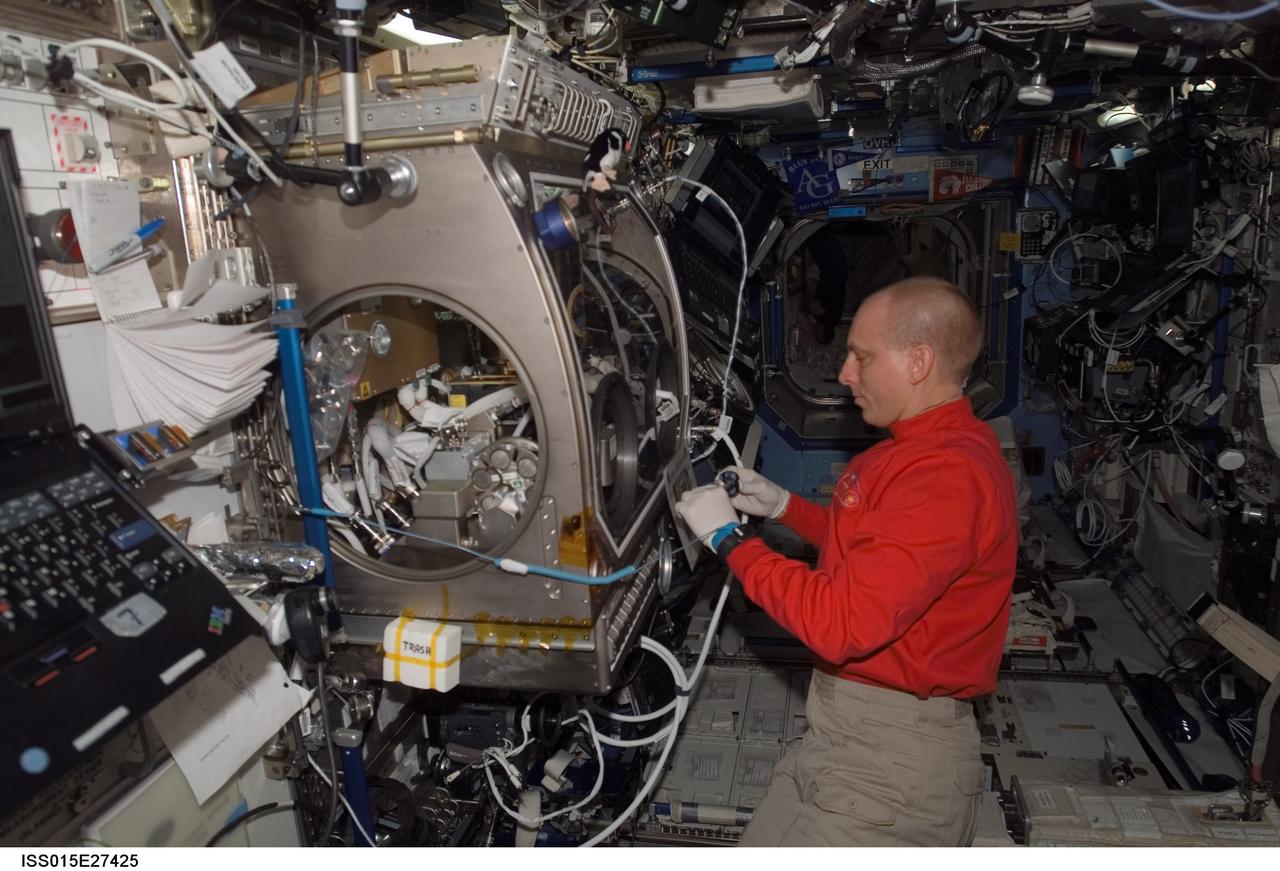
ISS015-E-27425 (8 Sept. 2007) --- NASA astronaut Clay Anderson, Expedition 15 flight engineer, works on the Smoke and Aerosol Measurement Experiment (SAME) hardware located in the Microgravity Science Glovebox (MSG) in the Destiny laboratory of the International Space Station. SAME will measure the smoke properties, or particle size distribution, of typical particles that are produced from different materials that can be found onboard station and other spacecrafts. SAME aims to test the performance of ionization smoke detectors and evaluate the performance of the photoelectric smoke detectors. The data will be used to develop a model that can predict smoke droplet growth that will be used to evaluate future smoke detection devices.
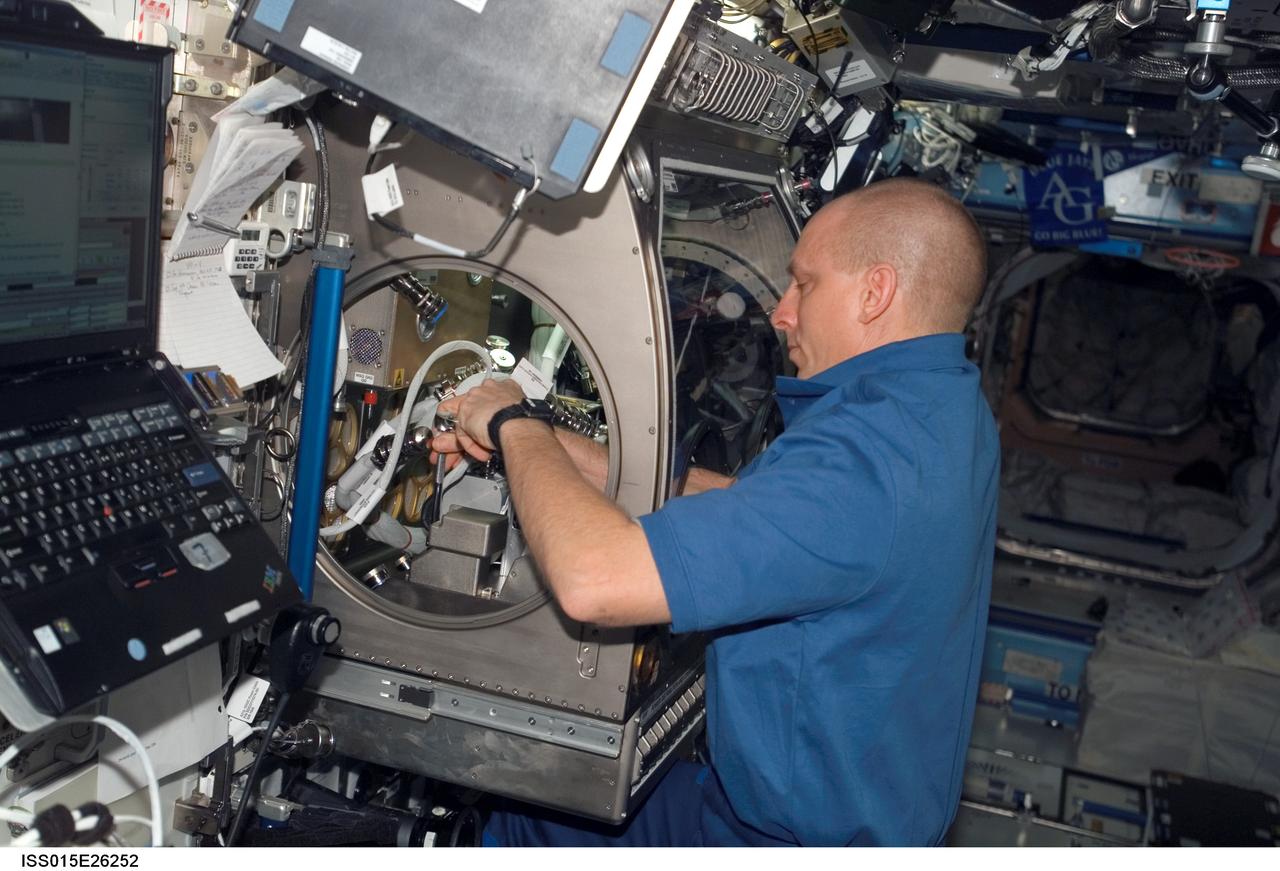
ISS015-E-26252 (1 Sept. 2007) --- Astronaut Clay Anderson, Expedition 15 flight engineer, works on the Smoke and Aerosol Measurement Experiment (SAME) hardware setup located in the Microgravity Science Glovebox (MSG) in the Destiny laboratory of the International Space Station. SAME will measure the smoke properties, or particle size distribution, of typical particles that are produced from different materials that can be found onboard station and other spacecrafts. SAME aims to test the performance of ionization smoke detectors and evaluate the performance of the photoelectric smoke detectors. The data will be used to develop a model that can predict smoke droplet growth that will be used to evaluate future smoke detection devices.
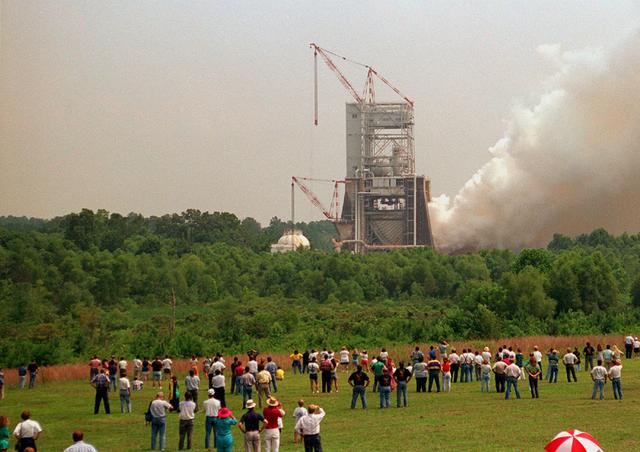
On the 25th Anniversary of the Apollo-11 space launch, Marshall celebrated with a test firing of the Space Shuttle Main Engine at the Technology Test Bed (SSME-TTB). This drew a large crowd who stood in the fields around the test site and watched as plumes of white smoke verified ignition.
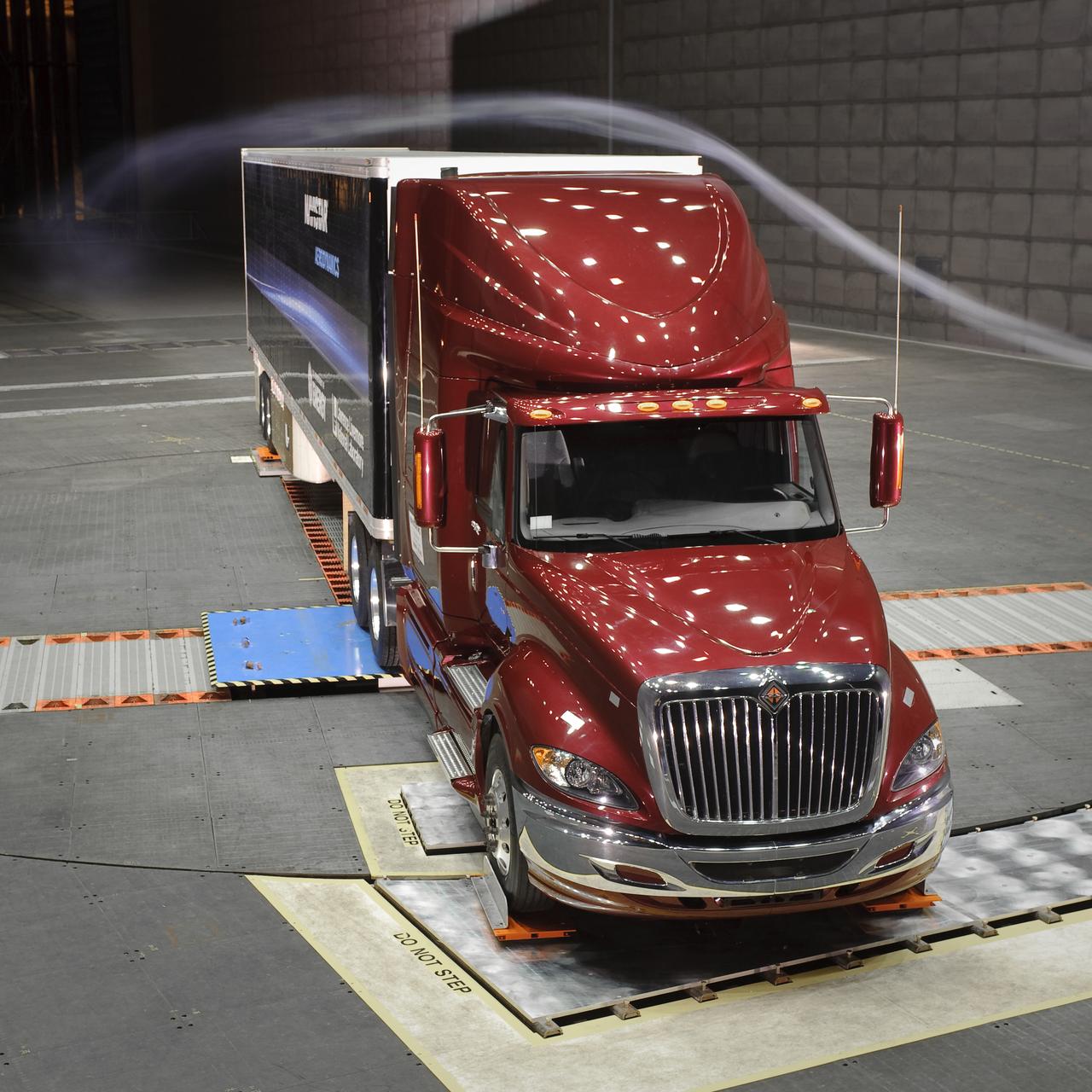
Lawrence Livermore National Labs (LLNL), Navistar and the Department of Energy conduct tests in the NASA Ames National Full-scale Aerodynamic Complex 80x120_foot wind tunnel. The LLNL project is aimed at aerodynamic truck and trailer devices that can reduce fuel consumption at highway speed by 10 percent. Smoke test demo.
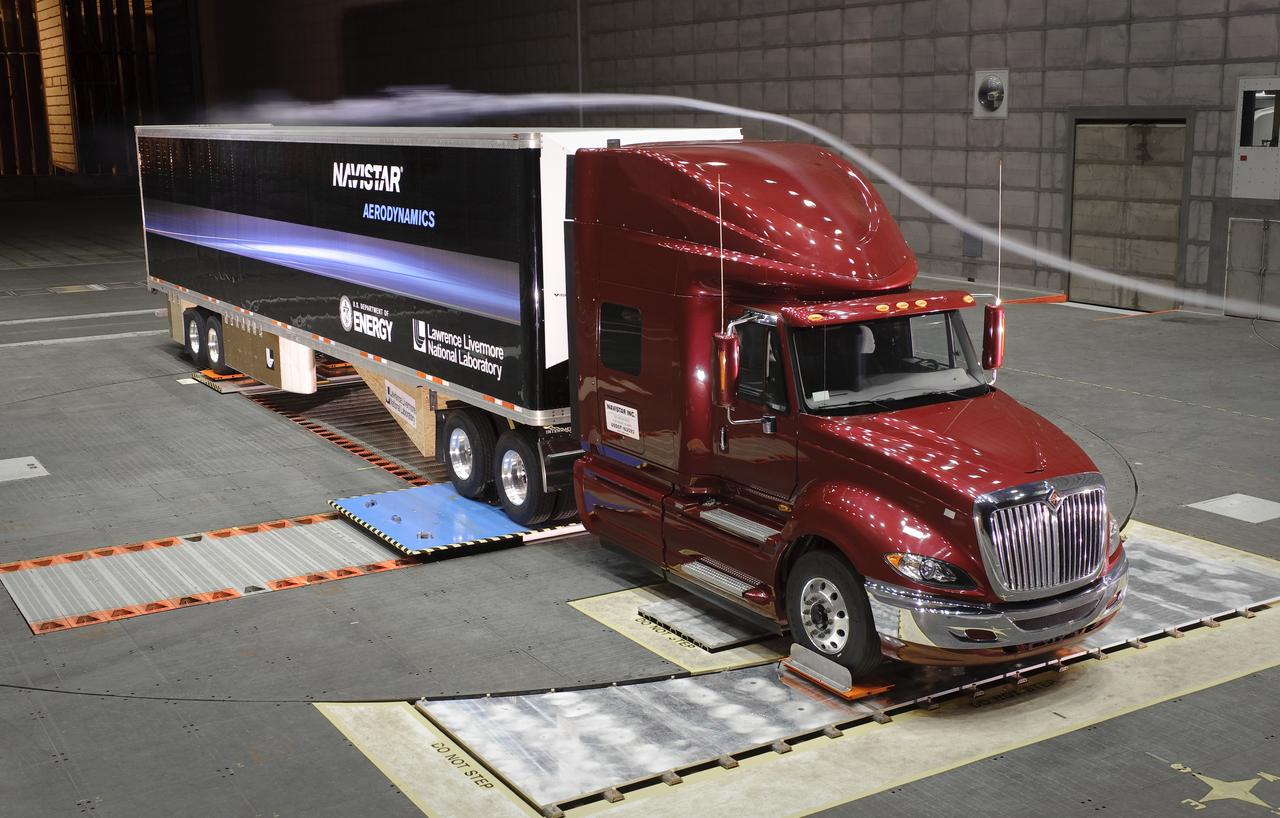
Lawrence Livermore National Labs (LLNL), Navistar and the Department of Energy conduct tests in the NASA Ames National Full-scale Aerodynamic Complex 80x120_foot wind tunnel. The LLNL project is aimed at aerodynamic truck and trailer devices that can reduce fuel consumption at highway speed by 10 percent. Smoke test demo.
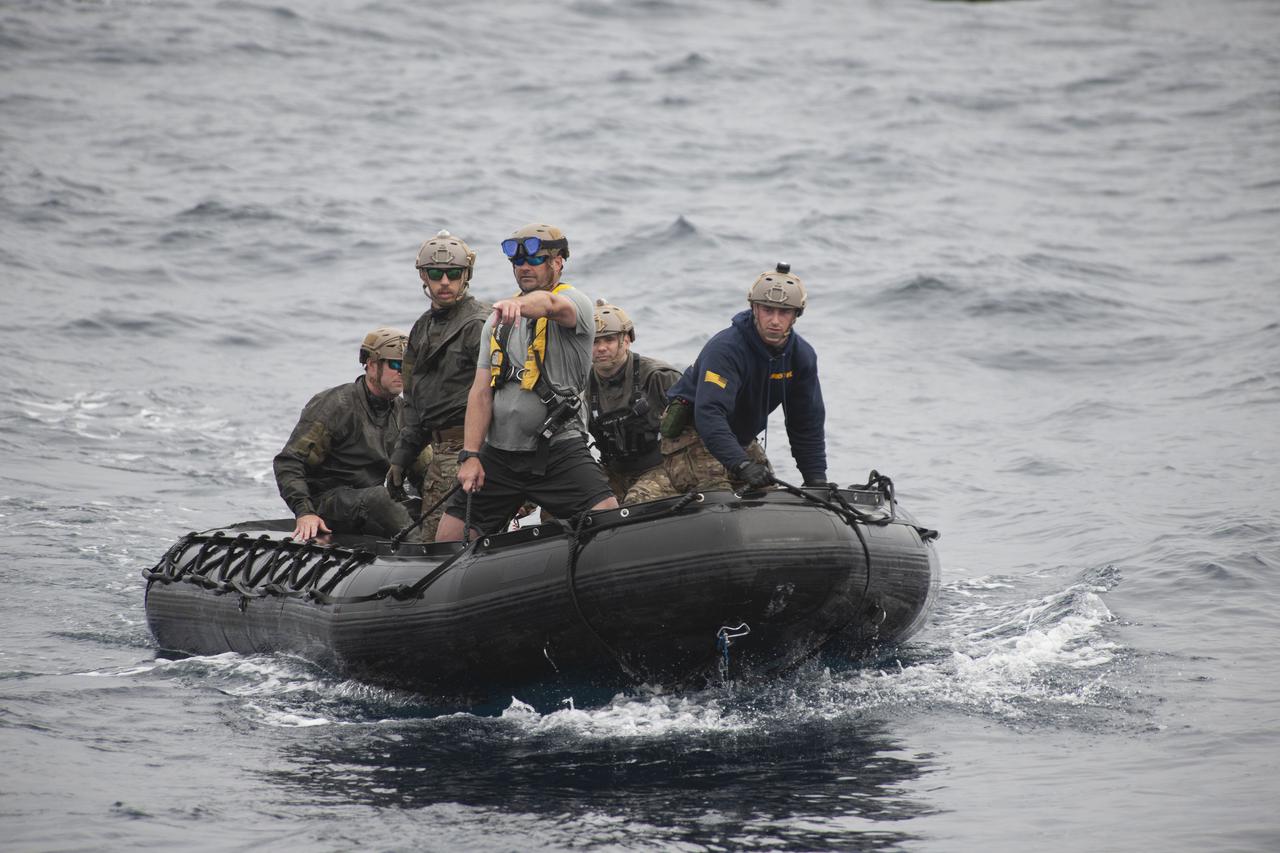
Open Water Lead Tim Goddard points the way to the smoke the helicopter dropped in the water, indicating the location of the mock Orion capsule during Underway Recovery Test 9 (URT-9). During the weeklong test, NASA’s Landing and Recovery team is performing their final mission certification ahead of Artemis I.
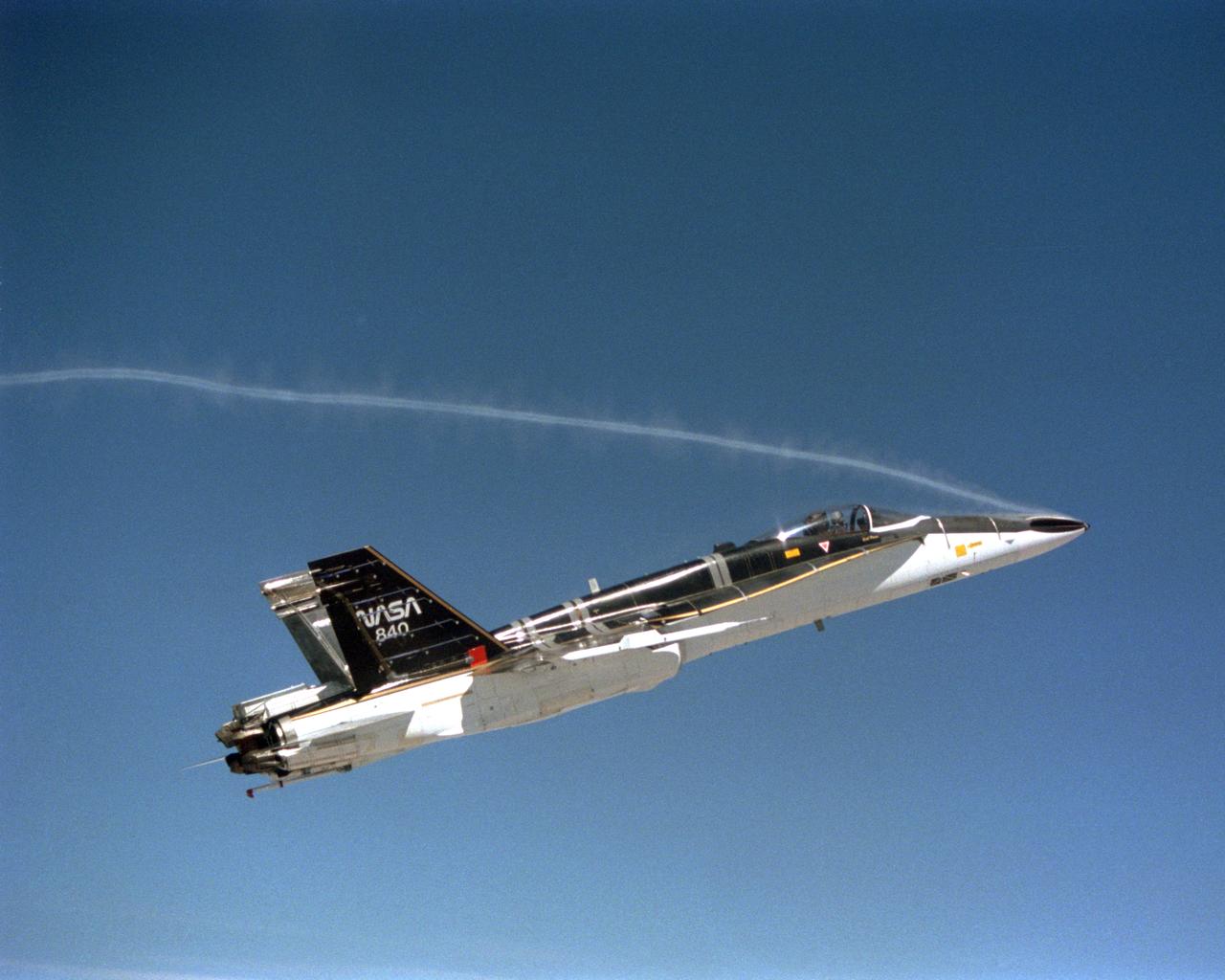
During the final phase of tests with the HARV, Dryden technicians installed nose strakes, which were panels that fitted flush against the sides of the forward nose. When the HARV was at a high alpha, the aerodynamics of the nose caused a loss of directional stability. Extending one or both of the strakes results in strong side forces that, in turn, generated yaw control. This approach, along with the aircraft's Thrust Vectoring Control system, proved to be stability under flight conditions in which conventional surfaces, such as the vertical tails, were ineffective.

SPARKY THE FIRE DOG, MASCOT FOR THE NATIONAL FIRE PROTECTION ASSOCIATION, TEAMS UP WITH PATRICK SCHEUERMANN AT THE MARSHALL CENTER SEPT. 26 TO PROMOTE THE NATIONWIDE FIRE PREVENTION WEEK CAMPAIGN, “WORKING SMOKE ALARMS SAVE LIVES: TEST YOURS EVERY MONTH!”-
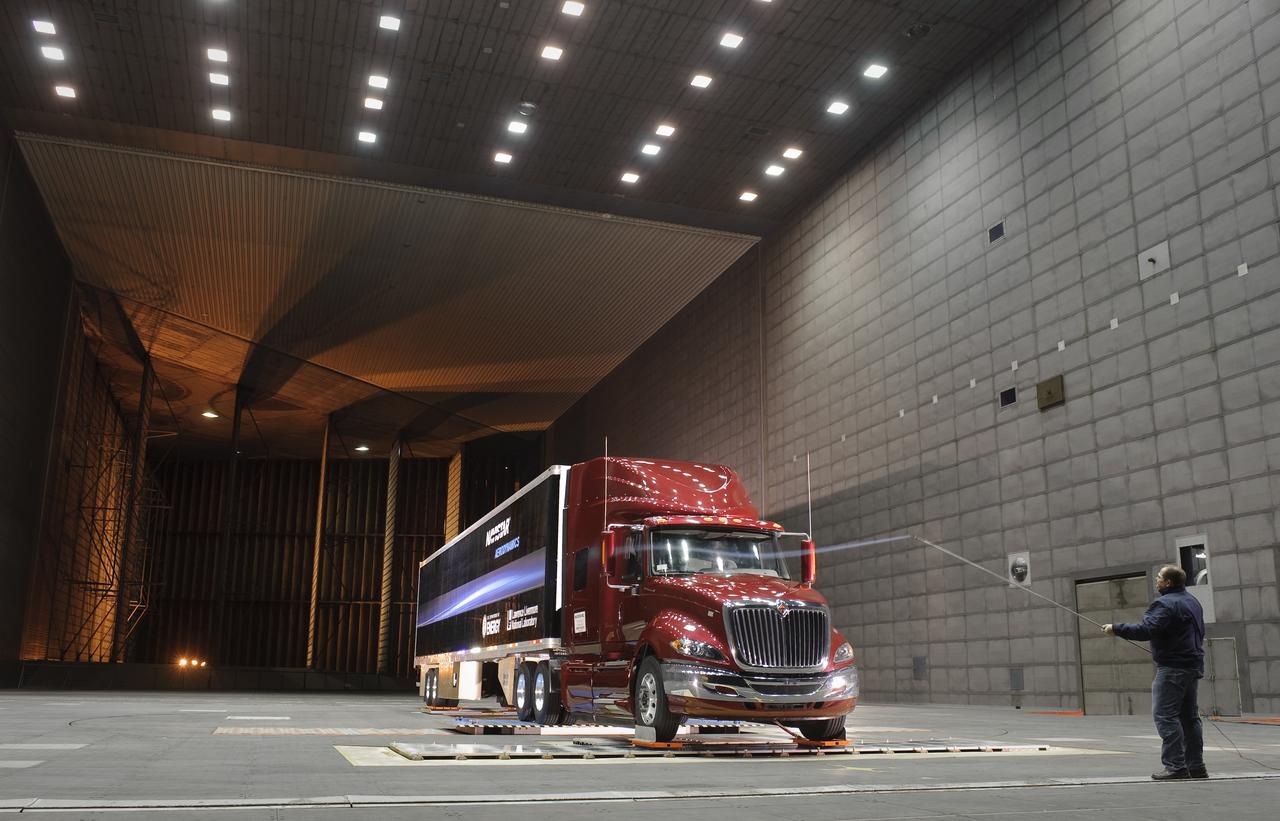
Lawrence Livermore National Labs (LLNL), Navistar and the Department of Energy conduct tests in the NASA Ames National Full-scale Aerodynamic Complex 80x120_foot wind tunnel. The LLNL project is aimed at aerodynamic truck and trailer devices that can reduce fuel consumption at highway speed by 10 percent. Smoke test demo with Ron Schoon, Navistar.
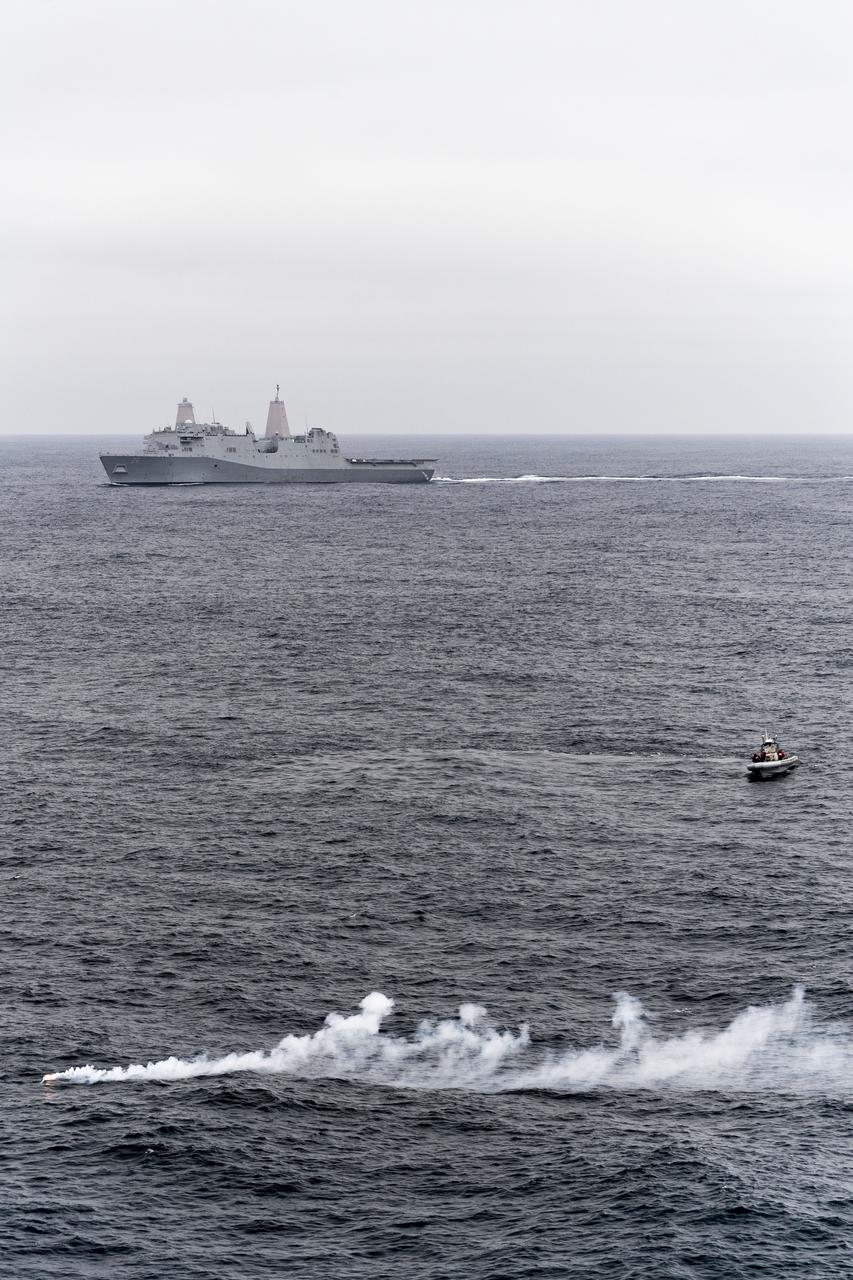
Small boats deployed from amphibious transport dock ship USS John P. Murtha (LPD 26) motor toward a smoke marker released by an MH-60S Seahawk helicopter to indicate the location of a mock Orion capsule during Underway Recovery Test 9 (URT-9). During the weeklong test, NASA’s Landing and Recovery Team conducted a full mission profile simulation to certify the team for Artemis I.
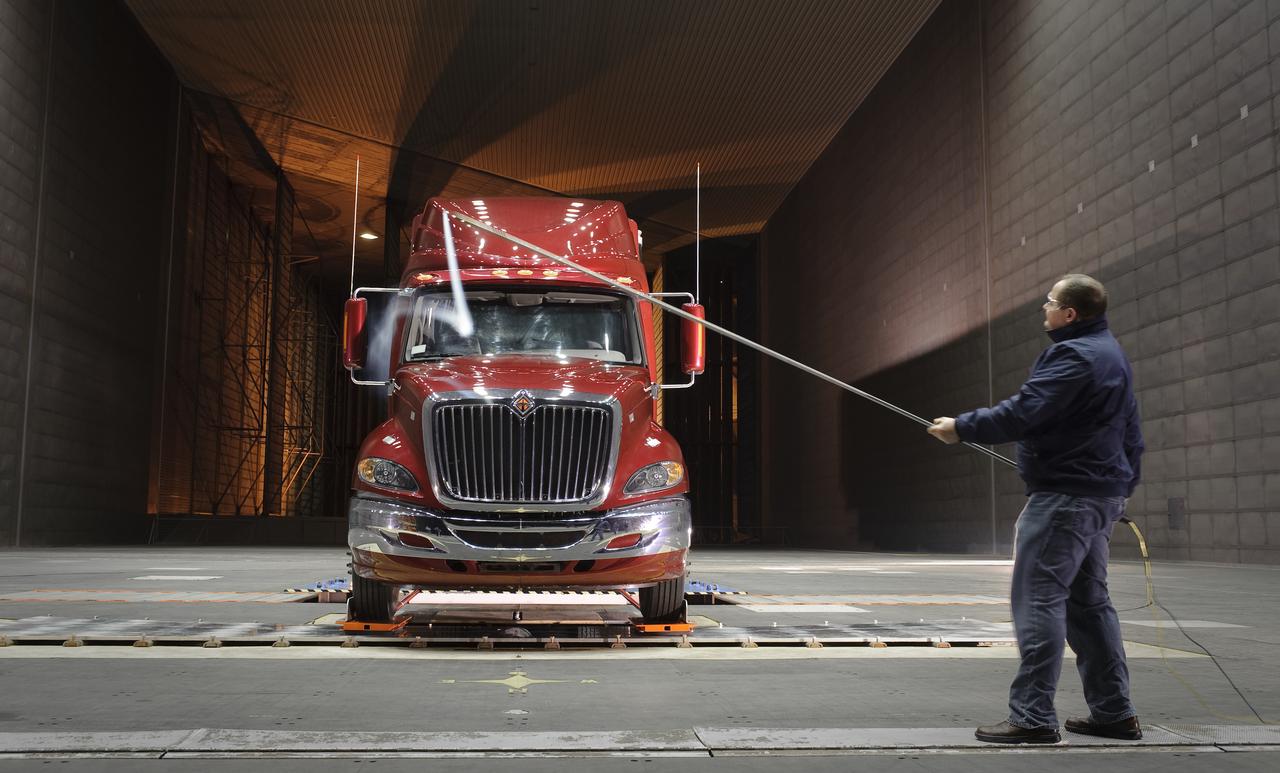
Lawrence Livermore National Labs (LLNL), Navistar and the Department of Energy conduct tests in the NASA Ames National Full-scale Aerodynamic Complex 80x120_foot wind tunnel. The LLNL project is aimed at aerodynamic truck and trailer devices that can reduce fuel consumption at highway speed by 10 percent. Smoke test demo with Ron Schoon, Navistar.
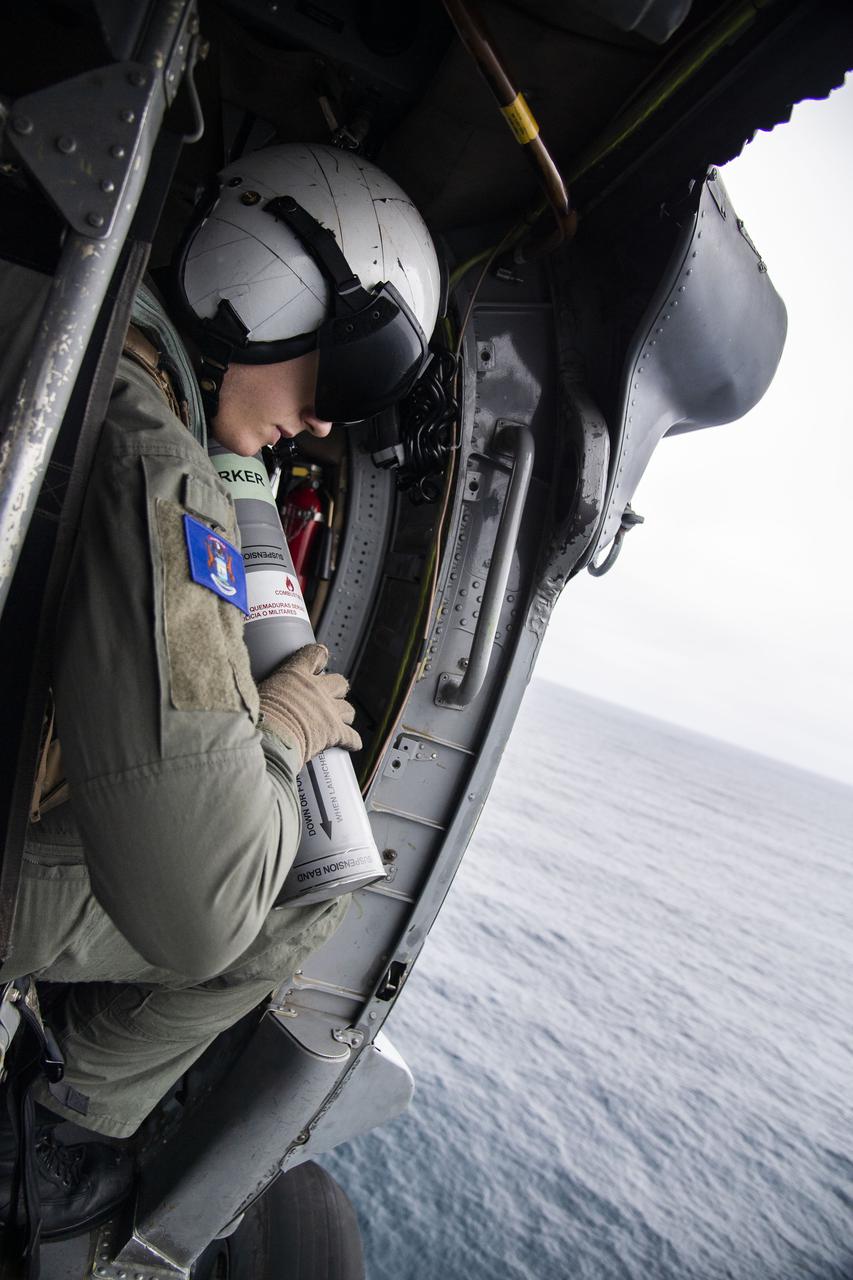
Naval Aircrewman 2nd Class Kanon Brooks, assigned to the “Wild Cards” of Helicopter Sea Combat Squadron (HSC) 23, prepares to drop a smoke canister from an MH-60S Seahawk helicopter near a mock Orion capsule to indicate the spacecraft’s location. During Underway Recovery Test 9 (URT-9) aboard amphibious transport dock ship USS John P. Murtha (LPD 26), NASA’s Landing and Recovery Team conducted a full mission profile simulation to certify the team for Artemis I.
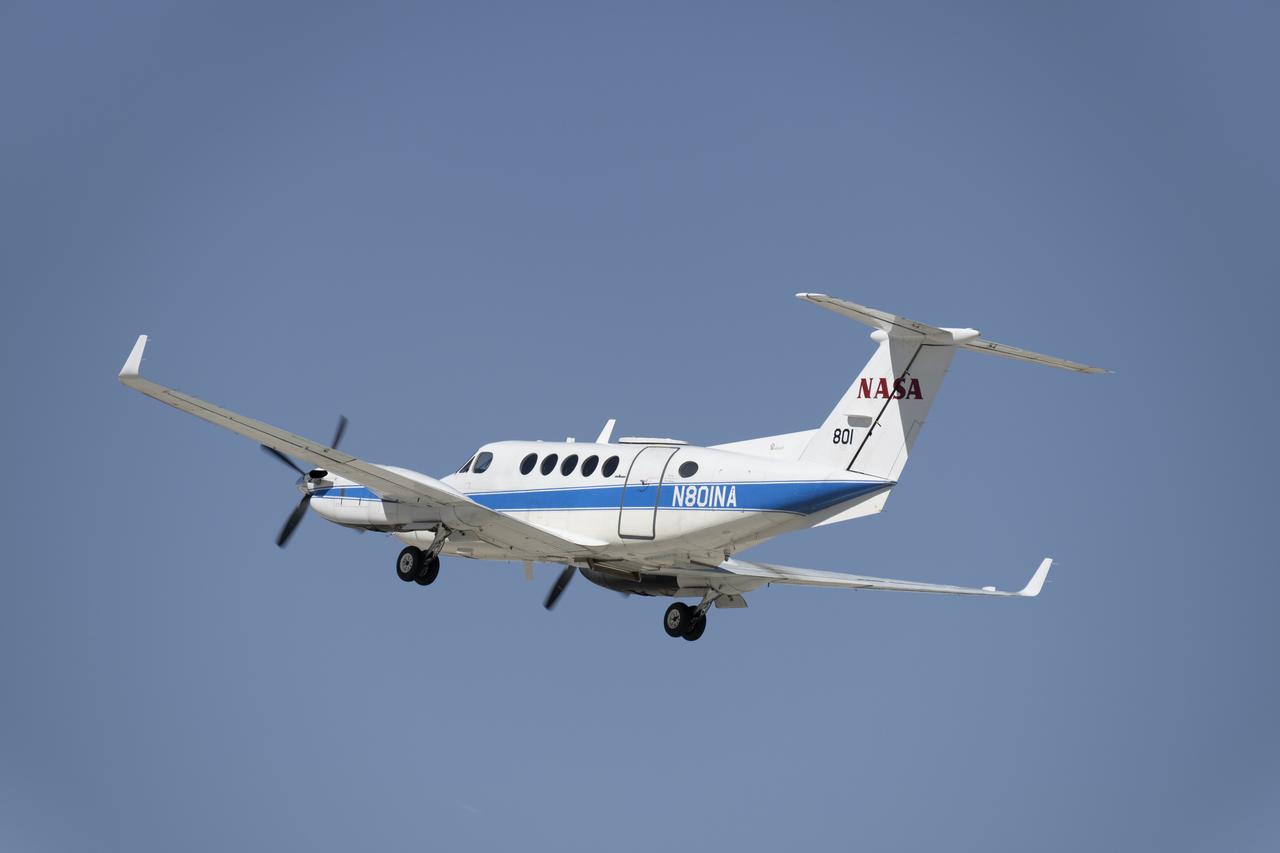
NASA’s B200 King Air aircraft – based at NASA’s Armstrong Flight Research Center in Edwards, California – ascends to support a prescribed burn in Geneva State Forest, about 100 miles south of Montgomery, Alabama, on March 17, 2025. The effort is part of NASA’s multi-year FireSense project, which aims to test technology that predicts fire and smoke behavior. This data could eventually benefit the U.S. Forest Service as well as local, state, and other federal wildland fire agencies.
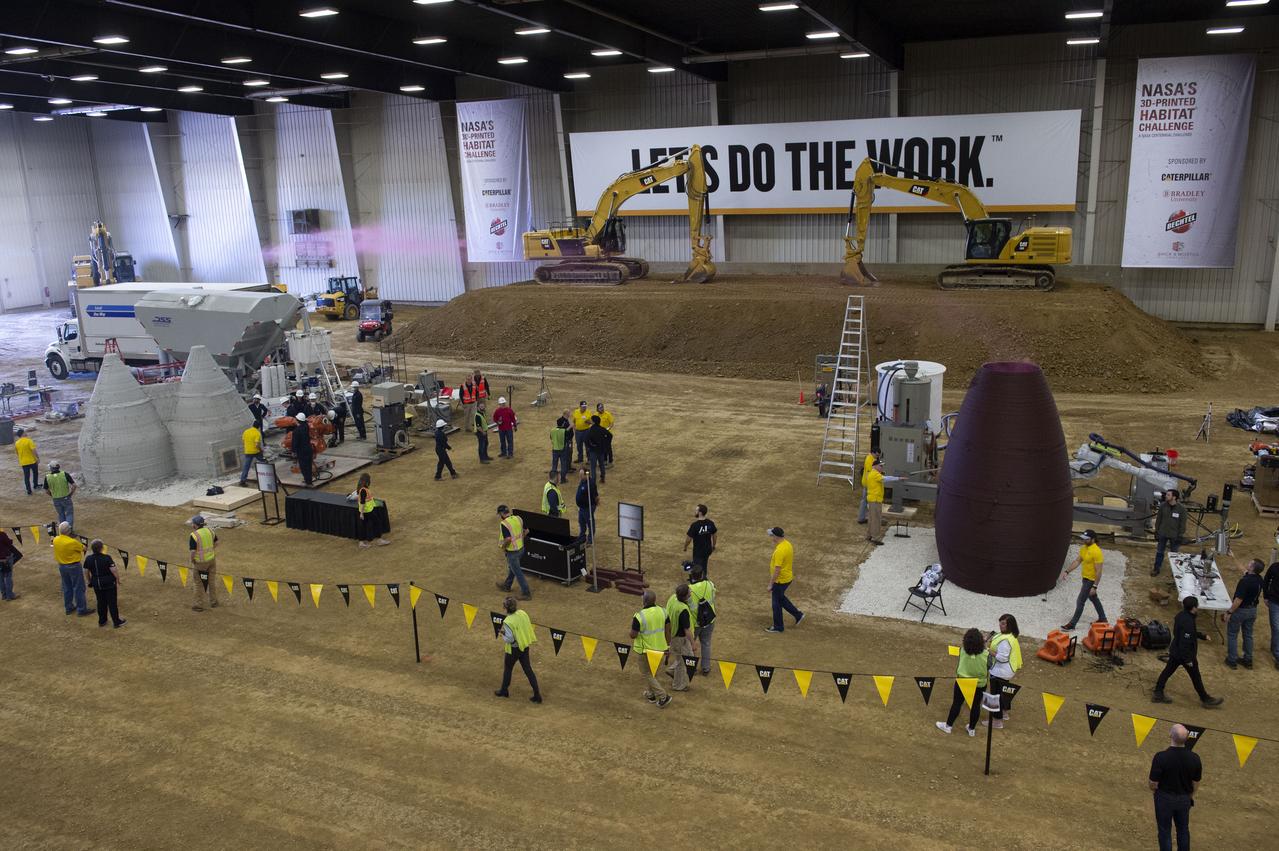
AI. SpaceFactory of New York and Pennsylvania State University of College Park print subscale habitat structures at NASA's 3D-Printed Habitat Challenge, held at the Caterpillar Edwards Demonstration & Learning Center in Edwards, Illinois, May 1-4, 2019. The habitat print is the final level of the multi-phase competition, which began in in 2015. The challenge is managed by NASA's Centennial Challenges program, and partner Bradley University of Peoria, Illinois. Overview of arena and both 3D printed habitats during smoke test
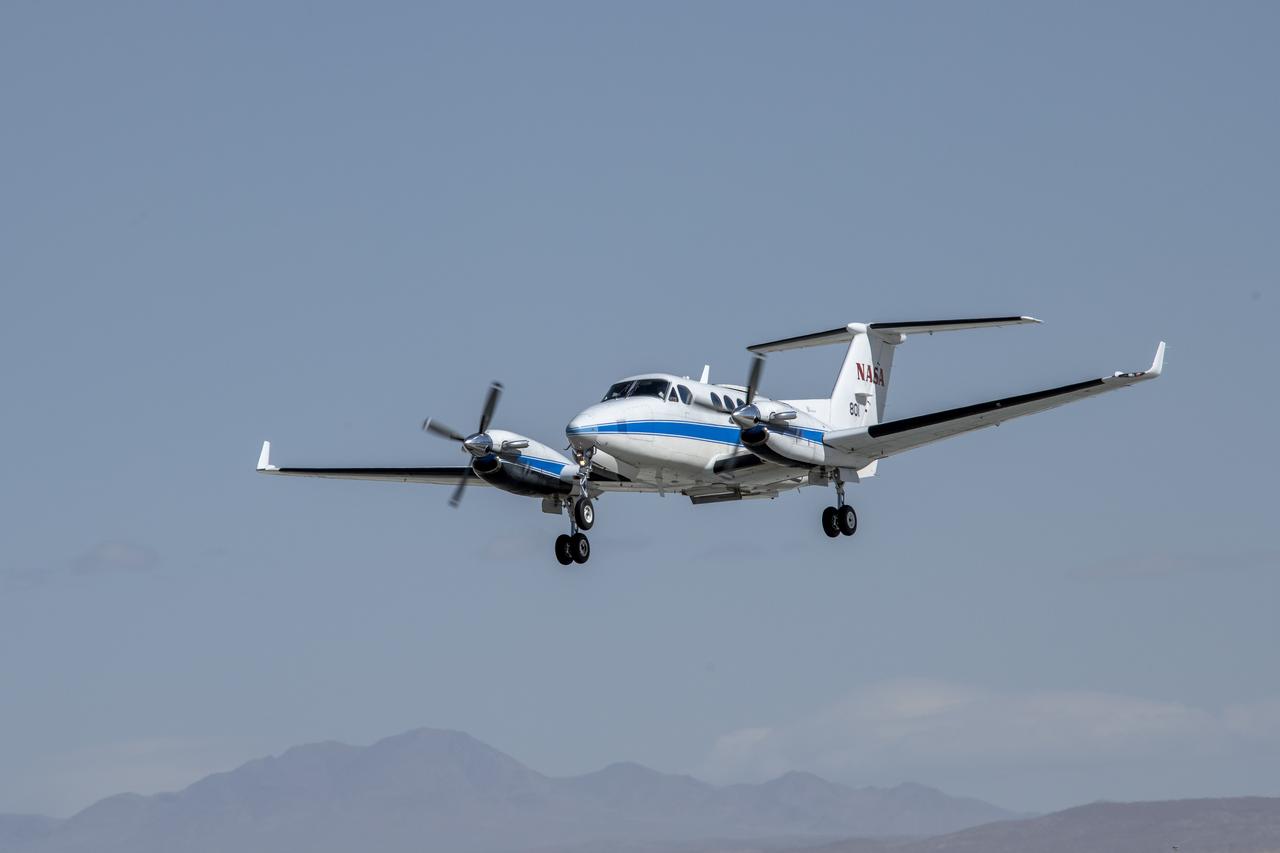
NASA’s B200 King Air aircraft – based at NASA’s Armstrong Flight Research Center in Edwards, California – ascends to support a prescribed burn in Geneva State Forest, about 100 miles south of Montgomery, Alabama, on March 17, 2025. The effort is part of NASA’s multi-year FireSense project, which aims to test technology that predicts fire and smoke behavior. This data could eventually benefit the U.S. Forest Service as well as local, state, and other federal wildland fire agencies.

AI. SpaceFactory of New York and Pennsylvania State University of College Park print subscale habitat structures at NASA's 3D-Printed Habitat Challenge, held at the Caterpillar Edwards Demonstration & Learning Center in Edwards, Illinois, May 1-4, 2019. The habitat print is the final level of the multi-phase competition, which began in in 2015. The challenge is managed by NASA's Centennial Challenges program, and partner Bradley University of Peoria, Illinois. Smoke test of AI Spacefactory habitat
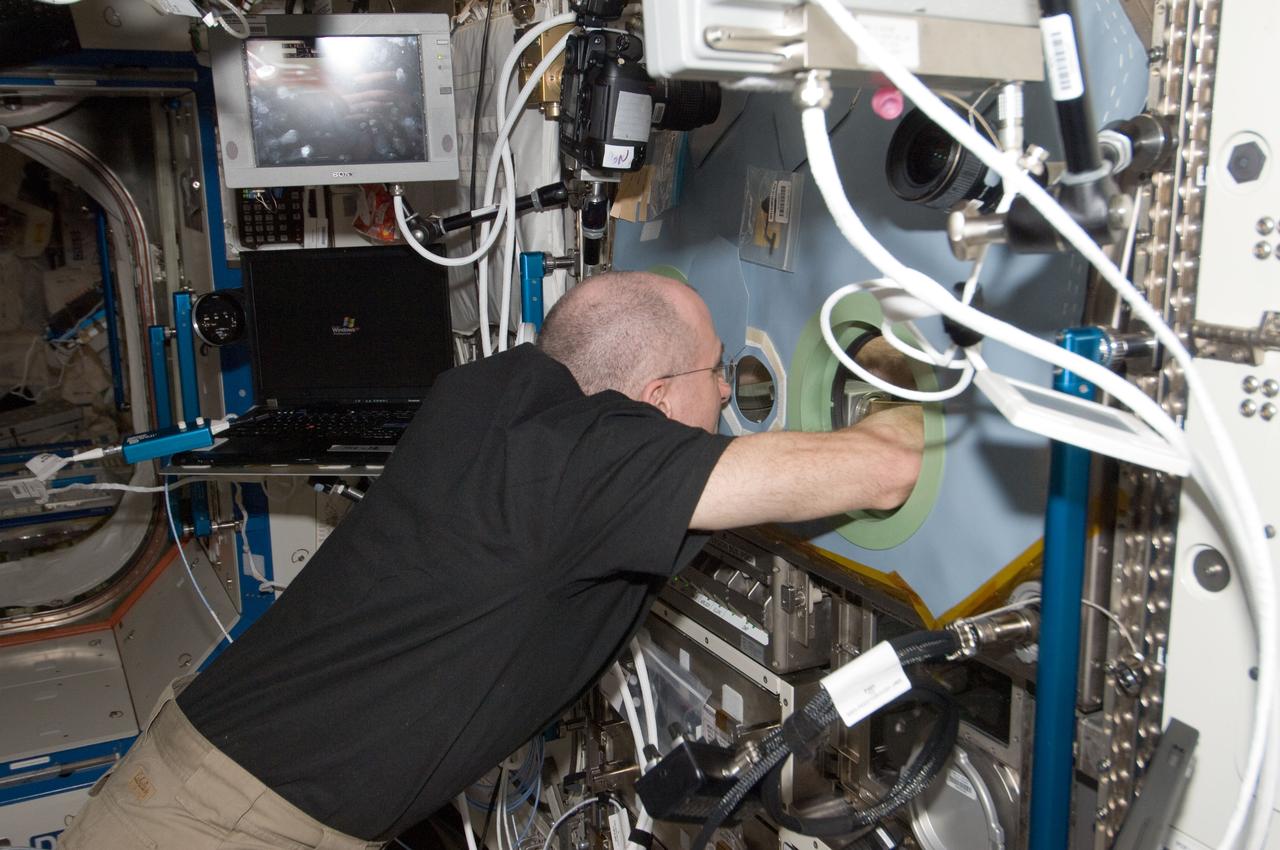
ISS030-E-178648 (30 March 2012) --- NASA astronaut Don Pettit, Expedition 30 flight engineer, performs a session of Burning and Suppression of Solids (BASS) fire safety tests at the Microgravity Sciences Glovebox (MSG) in the International Space Station?s Destiny laboratory. BASS uses Smoke Point in Coflow Experiment (SPICE) equipment but burns solid fuel samples instead of gaseous jets.
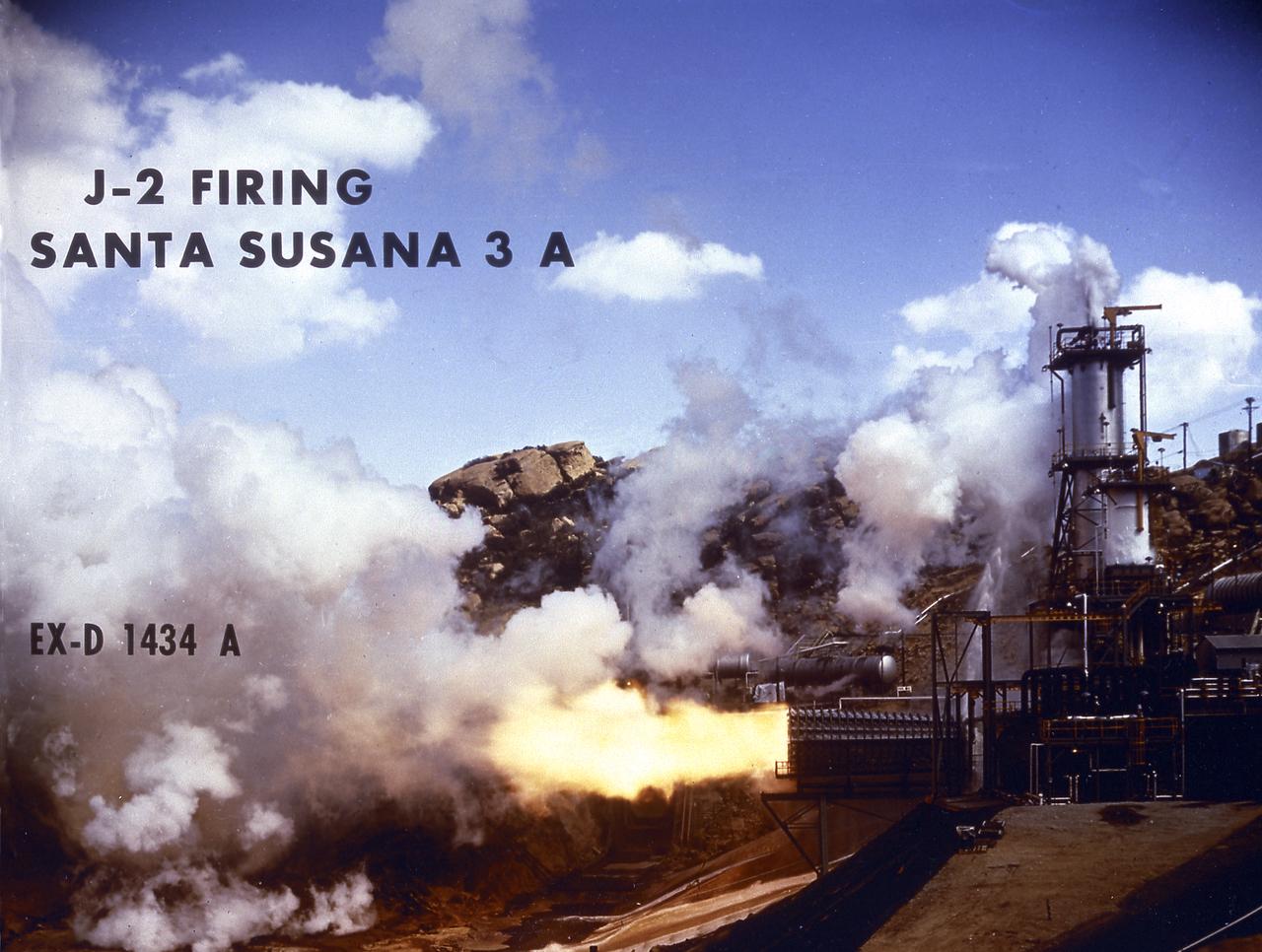
Smokeless flame juts from the diffuser of a unique vacuum chamber in which the upper stage rocket engine, the hydrogen fueled J-2, was tested at a simulated space altitude in excess of 60,000 feet. The smoke you see is actually steam. In operation, vacuum is established by injecting steam into the chamber and is maintained by the thrust of the engine firing through the diffuser. The engine was tested in this environment for start, stop, coast, restart, and full-duration operations. The chamber was located at Rocketdyne's Propulsion Field Laboratory, in the Santa Susana Mountains, near Canoga Park, California. The J-2 engine was developed by Rocketdyne for the Marshall Space Flight Center.
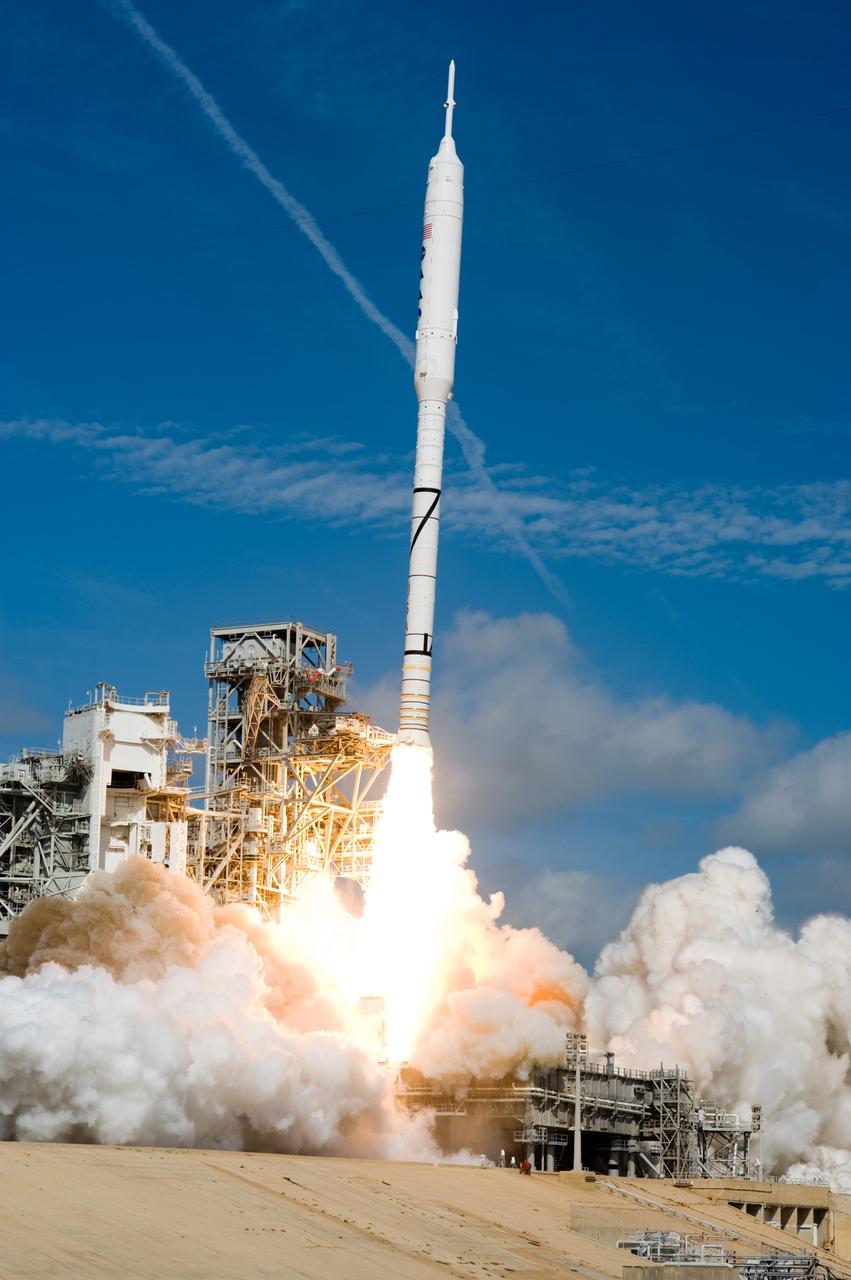
CAPE CANAVERAL, Fla. – Billowing clouds of smoke and steam rise as the Ares I-X test rocket launches from Launch Pad 39B at NASA's Kennedy Space Center in Florida at 11:30 a.m. EDT Oct. 28. NASA’s Constellation Program's 327-foot-tall rocket produces 2.96 million pounds of thrust at liftoff and reaches a speed of 100 mph in eight seconds. This was the first launch from Kennedy's pads of a vehicle other than the space shuttle since the Apollo Program's Saturn rockets were retired. The parts used to make the Ares I-X booster flew on 30 different shuttle missions ranging from STS-29 in 1989 to STS-106 in 2000. The data returned from more than 700 sensors throughout the rocket will be used to refine the design of future launch vehicles and bring NASA one step closer to reaching its exploration goals. For information on the Ares I-X vehicle and flight test, visit http://www.nasa.gov/aresIX. A Delta II rocket appears to erupt from the undulating clouds of smoke below Photo credit: NASA/Tony Gray and Tom Farrar
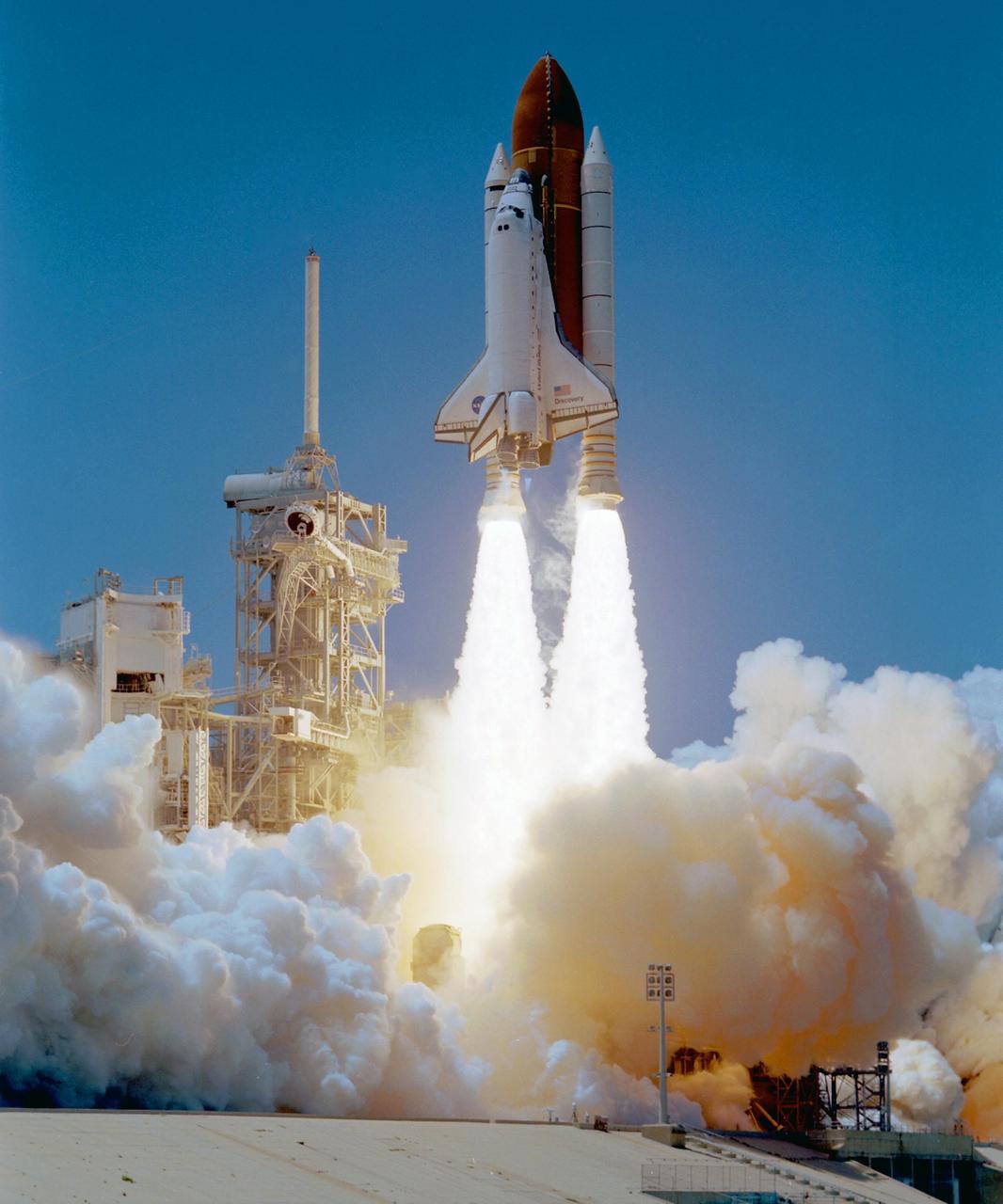
KENNEDY SPACE CENTER, FLA. - Smoke and steam billow across Launch Pad 39B as the launch of Space Shuttle Discovery on mission STS-121 kicks off the fireworks for the U.S. holiday and makes history as the first time a shuttle has launched on Independence Day. Liftoff was on-time at 2:38 p.m. EDT. During the 12-day mission, the STS-121 crew of seven will test new equipment and procedures to improve shuttle safety, as well as deliver supplies and make repairs to the International Space Station. Landing is scheduled for July 16 or 17 at Kennedy's Shuttle Landing Facility. Photo credit: NASA/Tony Gray & Tim Powers
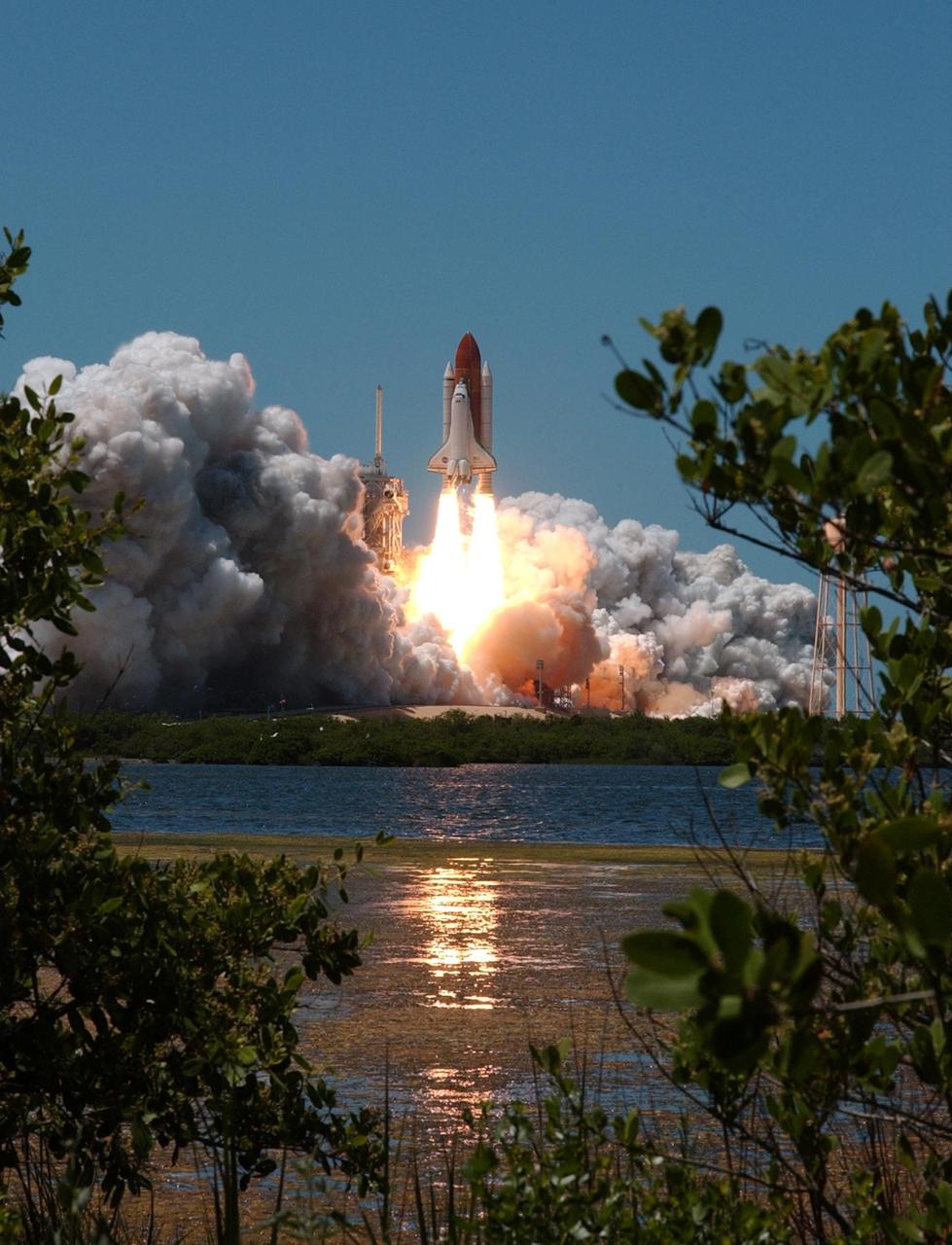
KENNEDY SPACE CENTER, FLA. - Space Shuttle Discovery kicks off the Fourth of July fireworks with its own fiery display as it rockets into the blue sky, spewing foam and smoke over the ground, on mission STS-121. It was the third launch attempt in four days; the others were scrubbed due to weather concerns. Liftoff was on-time at 2:38 p.m. EDT. During the 12-day mission, the STS-121 crew of seven will test new equipment and procedures to improve shuttle safety, as well as deliver supplies and make repairs to the International Space Station. Landing is scheduled for July 16 or 17 at Kennedy's Shuttle Landing Facility. Photo credit: NASA/Sandy Joseph, Robert Murray
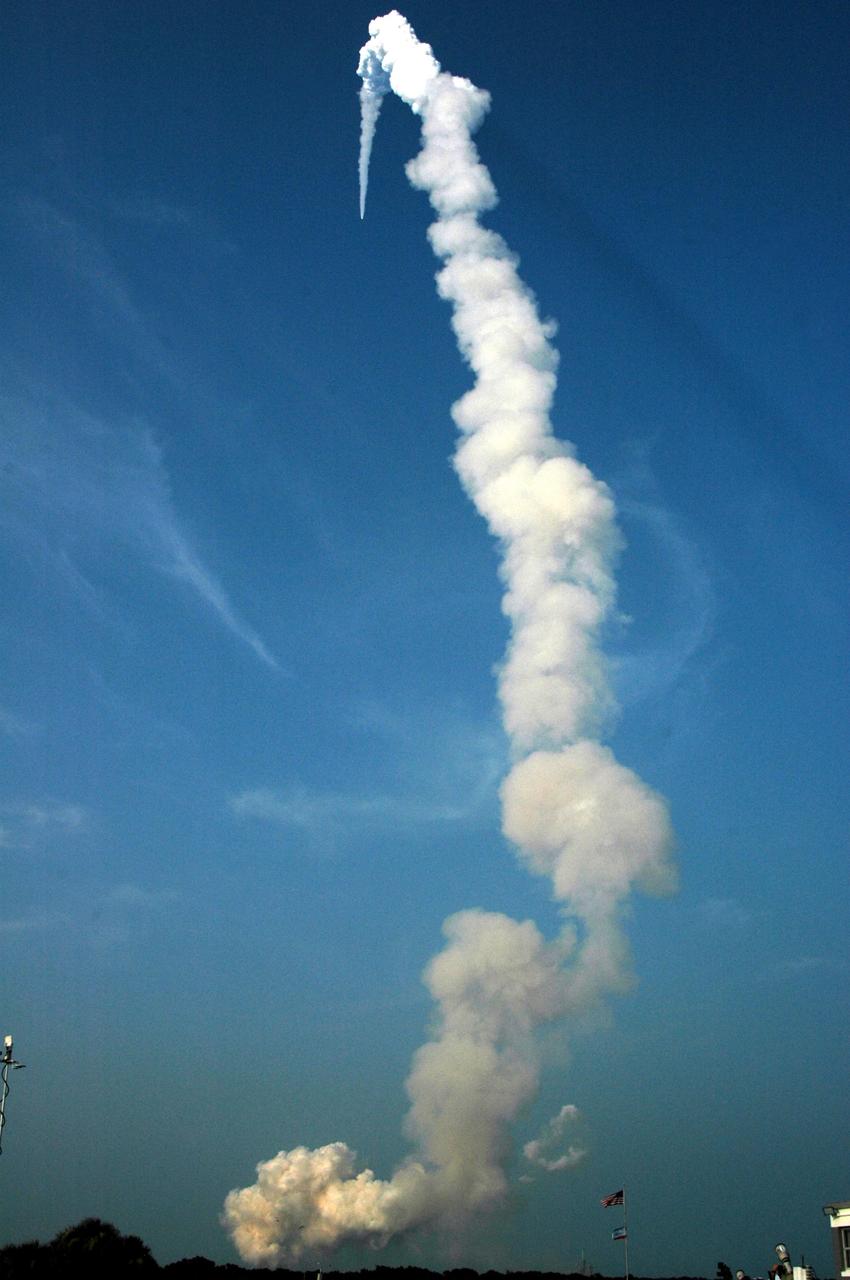
KENNEDY SPACE CENTER, FLA. -- The trail of smoke from Space Shuttle Endeavour curves as the shuttle hurtles into space on mission STS-118. Liftoff from Launch Pad 39A was on time at 6:36 p.m. EDT. The mission is the 22nd shuttle flight to the International Space Station. It will continue space station construction by delivering a third starboard truss segment, S5, and other payloads such as the SPACEHAB module and the external stowage platform 3. The 11-day mission may be extended to as many as 14 depending on the test of the Station-to-Shuttle Power Transfer System that will allow the docked shuttle to draw electrical power from the station and extend its visits to the orbiting lab. NASA/Ken Thornsley
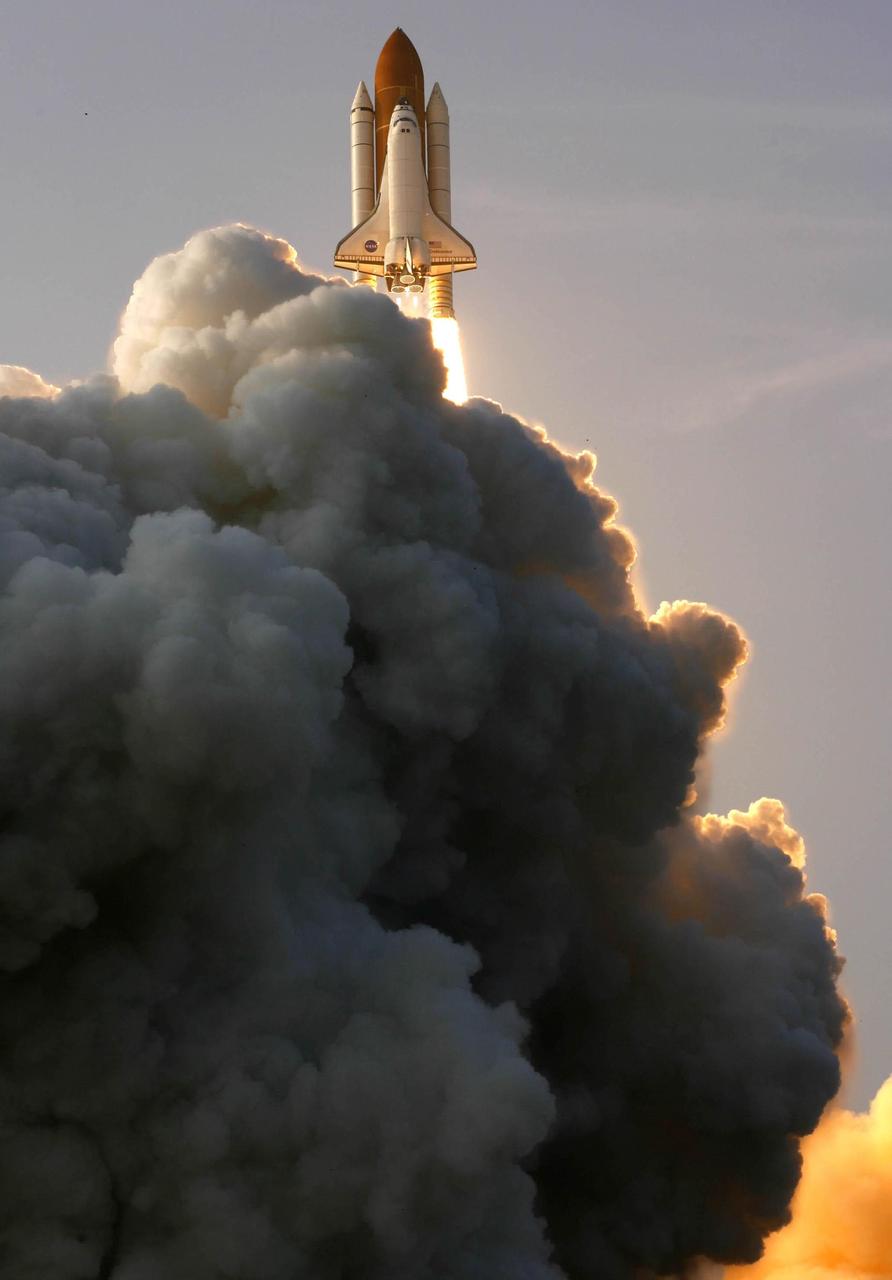
KENNEDY SPACE CENTER, FLA. -- Emerging from the billows of smoke below, Space Shuttle Endeavour hurtles into the sky on mission STS-118. Liftoff from Launch Pad 39A was on time at 6:36 p.m. EDT. The mission is the 22nd shuttle flight to the International Space Station. It will continue space station construction by delivering a third starboard truss segment, S5, and other payloads such as the SPACEHAB module and the external stowage platform 3. The 11-day mission may be extended to as many as 14 depending on the test of the Station-to-Shuttle Power Transfer System that will allow the docked shuttle to draw electrical power from the station and extend its visits to the orbiting lab. Photo courtesy of Reuters.
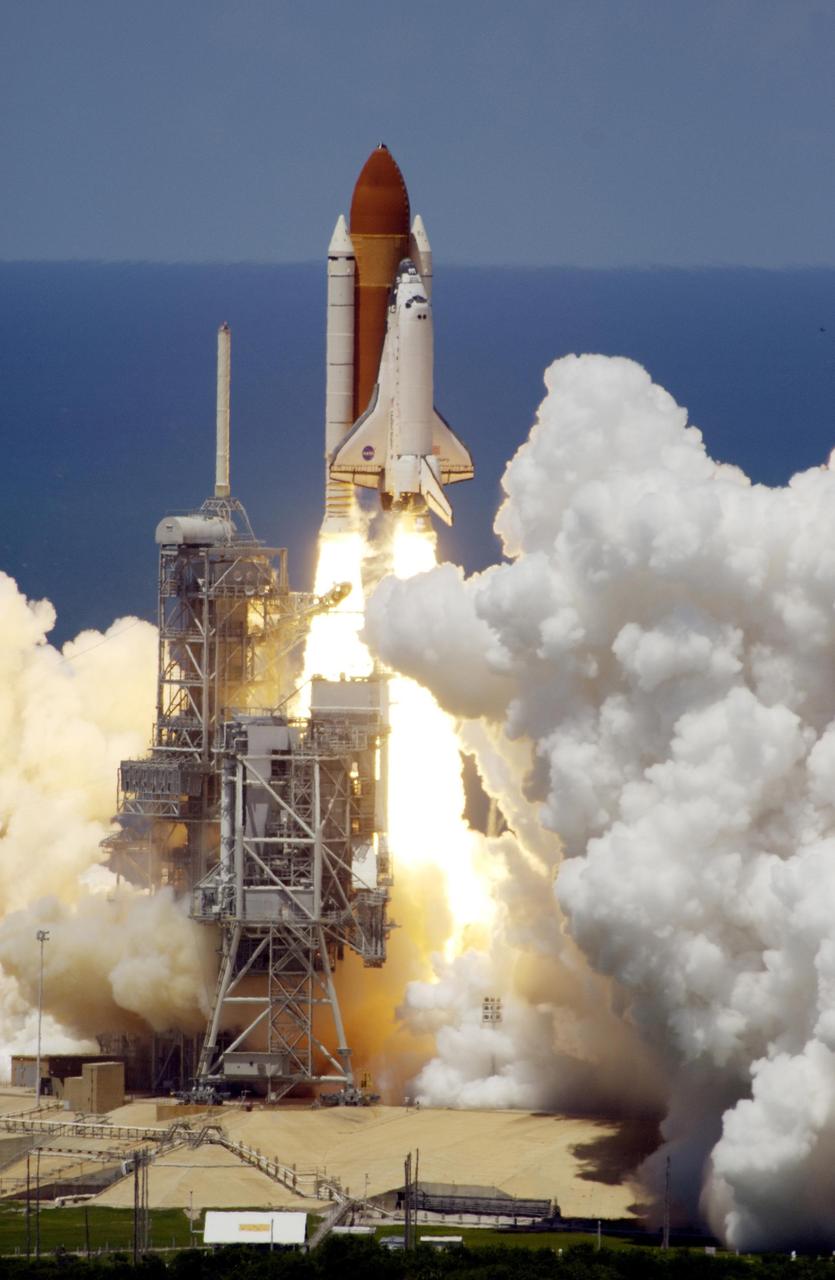
KENNEDY SPACE CENTER, FLA. - As the ground fills with smoke and steam, Space Shuttle Discovery creates its own fireworks display, fitting for the first ever launch to be made on Independence Day. It was the third launch attempt in four days; the others were scrubbed due to weather concerns. Liftoff on mission STS-121 was on-time at 2:38 p.m. EDT. During the 12-day mission, the STS-121 crew of seven will test new equipment and procedures to improve shuttle safety, as well as deliver supplies and make repairs to the International Space Station. Landing is scheduled for July 16 or 17 at Kennedy's Shuttle Landing Facility. Photo courtesy of Nikon/Scott Andrews

KENNEDY SPACE CENTER, FLA. - Space Shuttle Discovery kicks off the Fourth of July fireworks with its own fiery display as it rockets into the blue sky, spewing foam and smoke over the ground, on mission STS-121. It was the third launch attempt in four days; the others were scrubbed due to weather concerns. Liftoff was on-time at 2:38 p.m. EDT. During the 12-day mission, the STS-121 crew of seven will test new equipment and procedures to improve shuttle safety, as well as deliver supplies and make repairs to the International Space Station. Landing is scheduled for July 16 or 17 at Kennedy's Shuttle Landing Facility. Photo credit:NASA/Sandy Joseph, Robert Murray
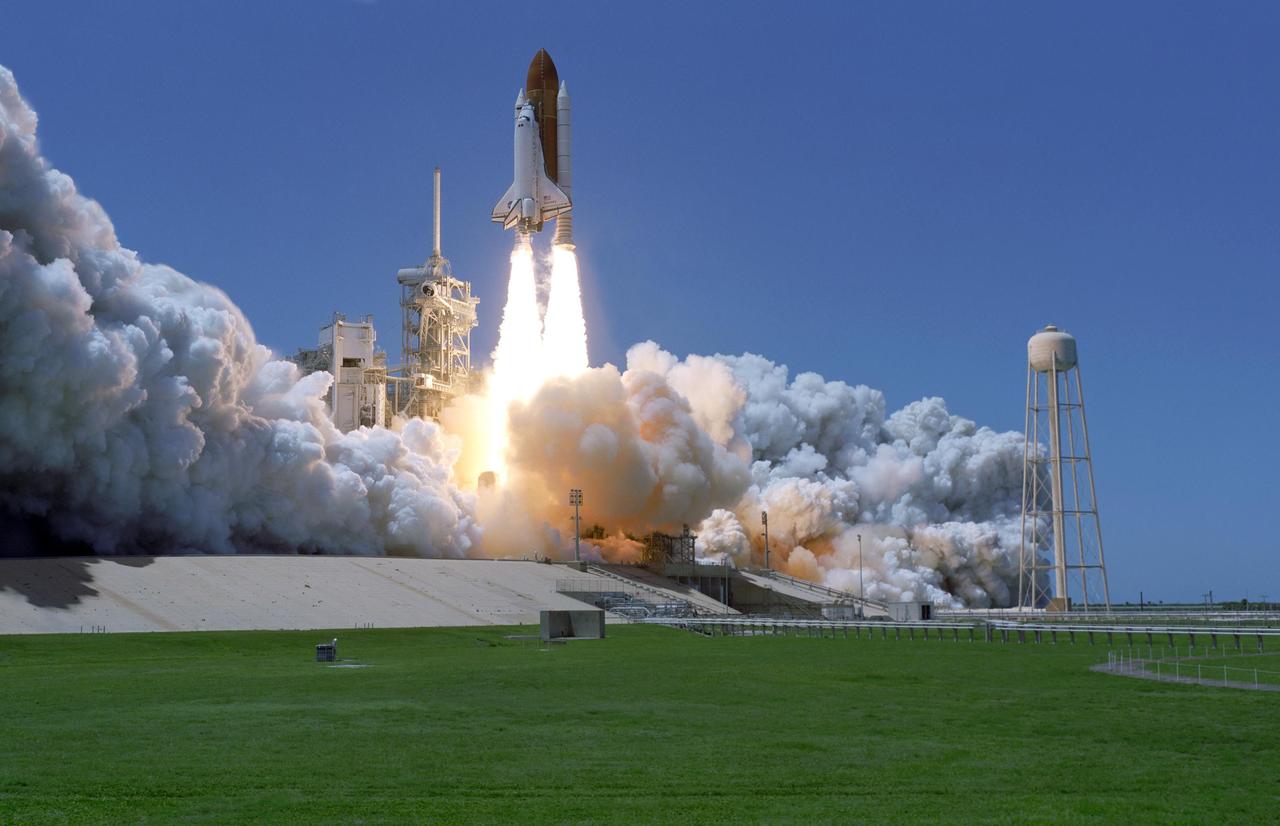
KENNEDY SPACE CENTER, FLA. - As smoke and team billow across Launch Pad 39B, Space Shuttle Discovery on mission STS-121 kicks off the fireworks for the U.S. holiday and makes history as the first time a shuttle has launched on Independence Day. Liftoff was on-time at 2:38 p.m. EDT. During the 12-day mission, the STS-121 crew of seven will test new equipment and procedures to improve shuttle safety, as well as deliver supplies and make repairs to the International Space Station. Landing is scheduled for July 16 or 17 at Kennedy's Shuttle Landing Facility. Photo credit: NASA/Tony Gray
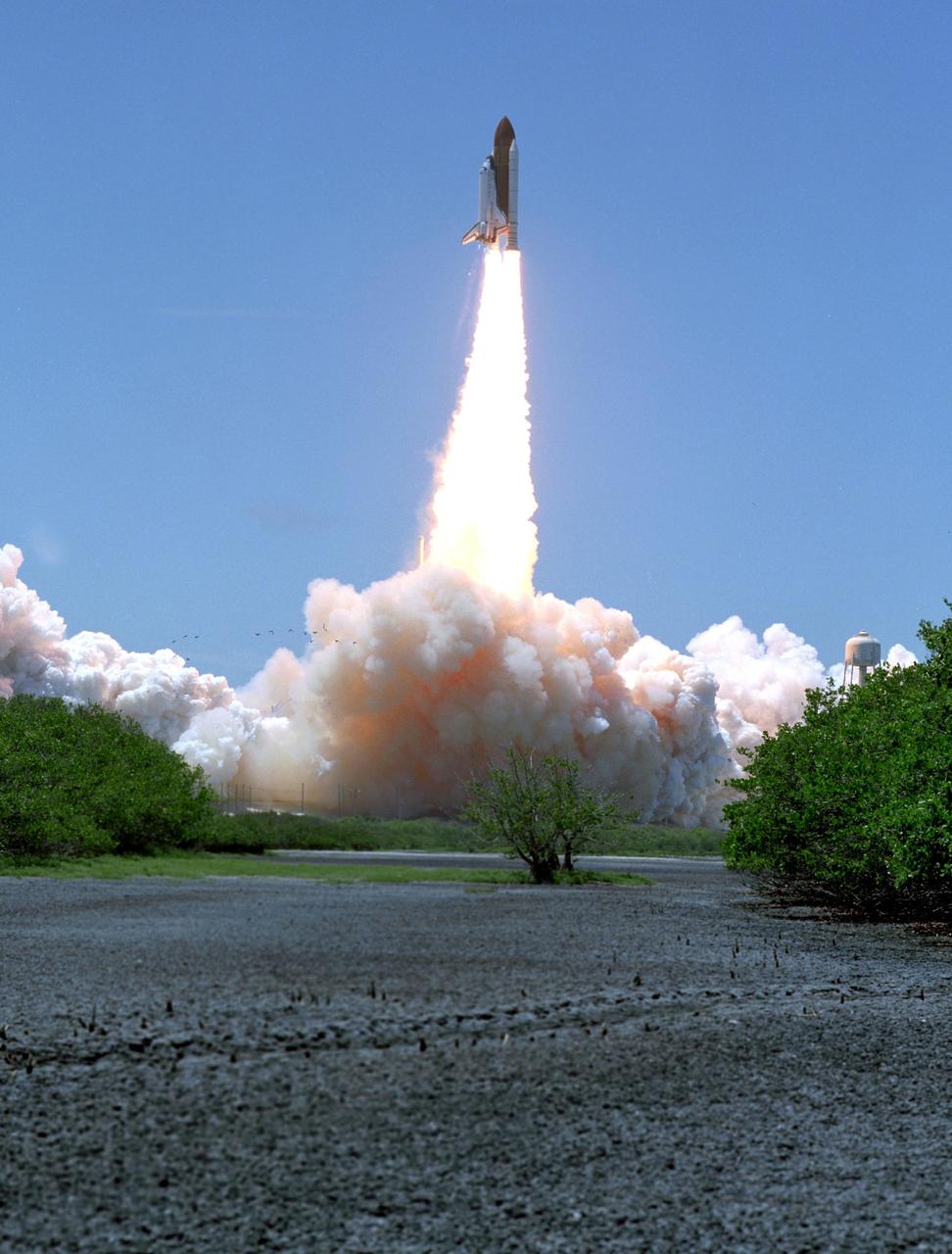
KENNEDY SPACE CENTER, FLA. - As if erupting from the earth and smoke, Space Shuttle Discovery vaults into the clear blue sky, trailing a fiery plume, on mission STS-121. The launch was the first ever made on Independence Day. Liftoff was on-time at 2:38 p.m. EDT. During the 12-day mission, the STS-121 crew of seven will test new equipment and procedures to improve shuttle safety, as well as deliver supplies and make repairs to the International Space Station. Landing is scheduled for July 16 or 17 at Kennedy's Shuttle Landing Facility. Photo credit: NASA/Sandy Joseph & Robert Murray

KENNEDY SPACE CENTER, FLA. -- Framed by amber clouds of smoke, Space Shuttle Endeavour rises above Launch Pad 39A as it lifts on time at 6:36 p.m. EDT on mission STS-118. The mission is the 22nd shuttle flight to the International Space Station. It will continue space station construction by delivering a third starboard truss segment, S5, and other payloads such as the SPACEHAB module and the external stowage platform 3. The 11-day mission may be extended to as many as 14 depending on the test of the Station-to-Shuttle Power Transfer System that will allow the docked shuttle to draw electrical power from the station and extend its visits to the orbiting lab. NASA/Ken Thornsley
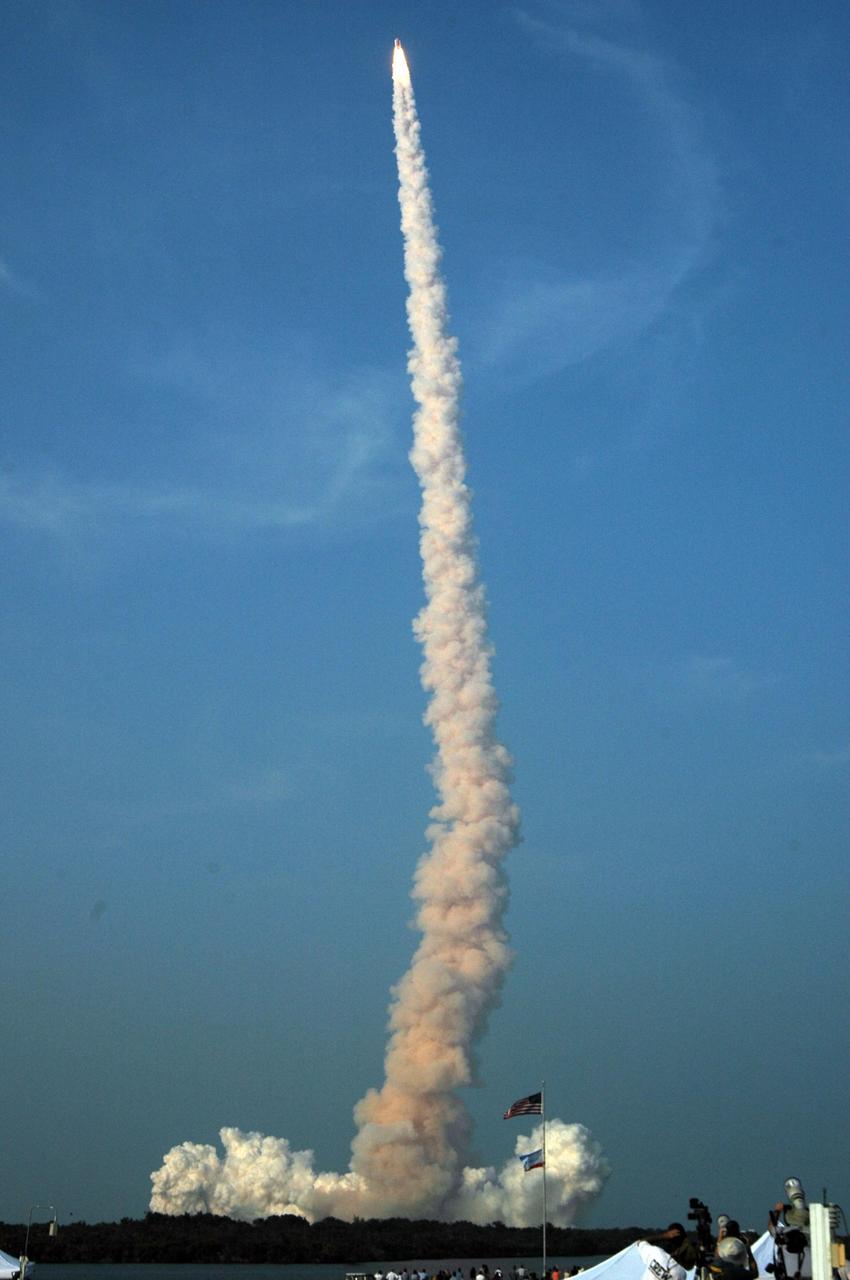
KENNEDY SPACE CENTER, FLA. -- Space Shuttle Endeavour appears to sit atop a long column of smoke as it hurtles into space on mission STS-118. Liftoff from Launch Pad 39A was on time at 6:36 p.m. EDT. The mission is the 22nd shuttle flight to the International Space Station. It will continue space station construction by delivering a third starboard truss segment, S5, and other payloads such as the SPACEHAB module and the external stowage platform 3. The 11-day mission may be extended to as many as 14 depending on the test of the Station-to-Shuttle Power Transfer System that will allow the docked shuttle to draw electrical power from the station and extend its visits to the orbiting lab. NASA/Ken Thornsley

KENNEDY SPACE CENTER, FLA. - Smoke and steam billow across Launch Complex 39B as the launch of Space Shuttle Discovery on mission STS-121 kicks off the fireworks for the U.S. holiday and making history as the first time a shuttle has launched on Independence Day. Liftoff was on-time at 2:38 p.m. EDT. During the 12-day mission, the STS-121 crew of seven will test new equipment and procedures to improve shuttle safety, as well as deliver supplies and make repairs to the International Space Station. Landing is scheduled for July 16 or 17 at Kennedy's Shuttle Landing Facility. Photo credit: NASA/Sandy Joseph & Robert Murray
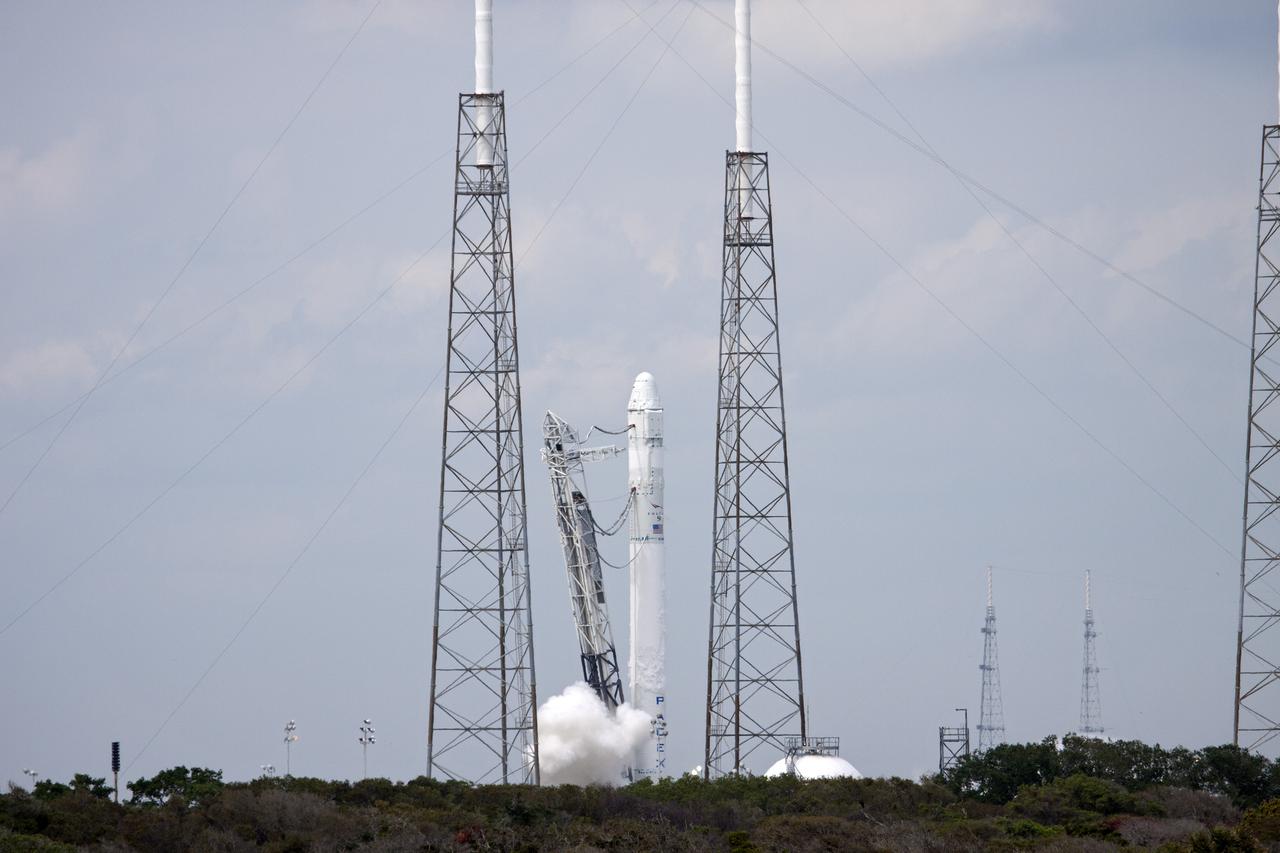
CAPE CANAVERAL, Fla. - Smoke billows from the SpaceX Falcon 9 rocket's nine first-stage Merlin engines during a test firing at Launch Complex 40 at Cape Canaveral Air Force Station in Florida. The test is part of SpaceX 2 prelaunch preparations. Liftoff of the SpaceX Falcon 9 rocket and Dragon spacecraft is planned for March 1, 2013, at 10:10 a.m. EST, from Space Launch Complex-40 at Cape Canaveral Air Force Station, Fla. Dragon will be making its third trip to the space station. It will carry supplies and experiments to the orbiting laboratory. The mission is the second of 12 SpaceX flights contracted by NASA to resupply the space station. For more information, visit http:__www.nasa.gov_mission_pages_station_structure_launch_spacex2-feature.html Photo credit: NASA_Jim Grossmann
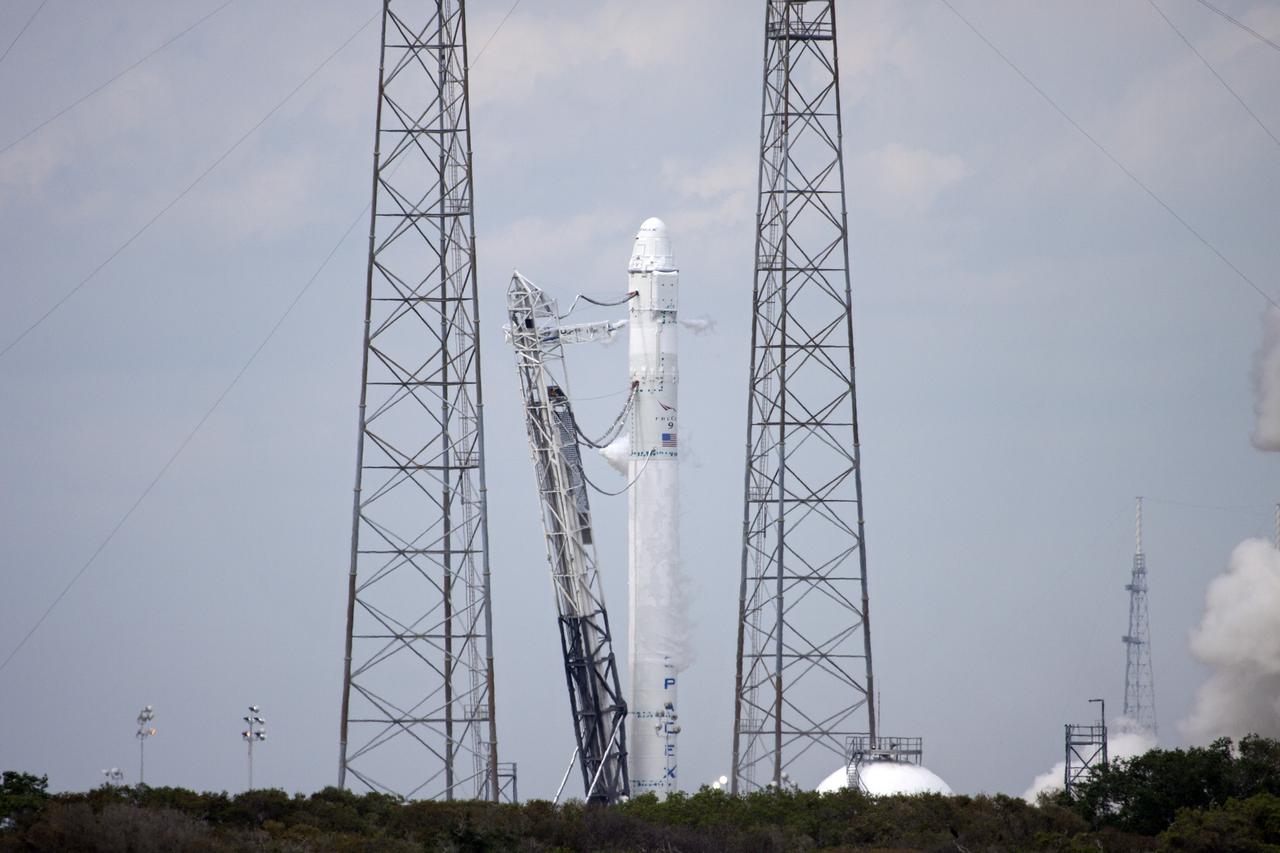
CAPE CANAVERAL, Fla. - Smoke billows from the SpaceX Falcon 9 rocket's nine first-stage Merlin engines during a test firing at Launch Complex 40 at Cape Canaveral Air Force Station in Florida. The test is part of SpaceX 2 prelaunch preparations. Liftoff of the SpaceX Falcon 9 rocket and Dragon spacecraft is planned for March 1, 2013, at 10:10 a.m. EST, from Space Launch Complex-40 at Cape Canaveral Air Force Station, Fla. Dragon will be making its third trip to the space station. It will carry supplies and experiments to the orbiting laboratory. The mission is the second of 12 SpaceX flights contracted by NASA to resupply the space station. For more information, visit http:__www.nasa.gov_mission_pages_station_structure_launch_spacex2-feature.html Photo credit: NASA_Jim Grossmann
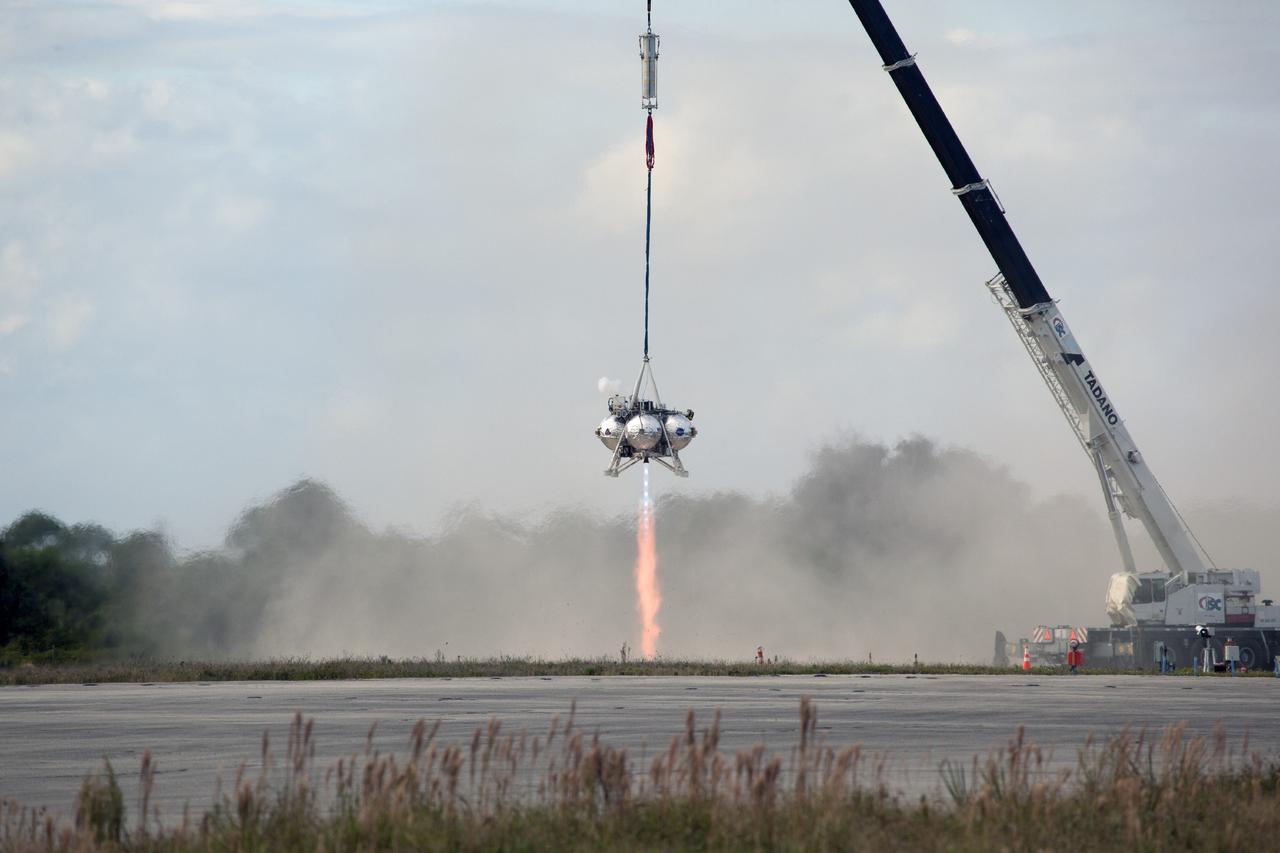
CAPE CANAVERAL, Fla. – At NASA’s Kennedy Space Center in Florida, smoke fills the air as the Project Morpheus prototype lander’s engine fires during a tether test at the north end of the Shuttle Landing Facility. During the test, the lander was lifted 20 feet by crane, and then ascended another 10 feet, maneuvered backwards 10 feet, and then flew forward. It will descend to its original position, landing at the end of the tether onto a transportable launch platform. Testing of the prototype lander was performed at NASA’s Johnson Space Center in Houston in preparation for tethered and free flight testing at Kennedy. The landing facility will provide the lander with the kind of field necessary for realistic testing, complete with rocks, craters and hazards to avoid. Morpheus utilizes an autonomous landing and hazard avoidance technology, or ALHAT, payload that will allow it to navigate to clear landing sites amidst rocks, craters and other hazards during its descent. Project Morpheus is being managed under the Advanced Exploration Systems, or AES, Division in NASA’s Human Exploration and Operations Mission Directorate. The efforts in AES pioneer new approaches for rapidly developing prototype systems, demonstrating key capabilities and validating operational concepts for future human missions beyond Earth orbit. For more information on Project Morpheus, visit http://morpheuslander.jsc.nasa.gov. Photo credit: NASA/Daniel Casper
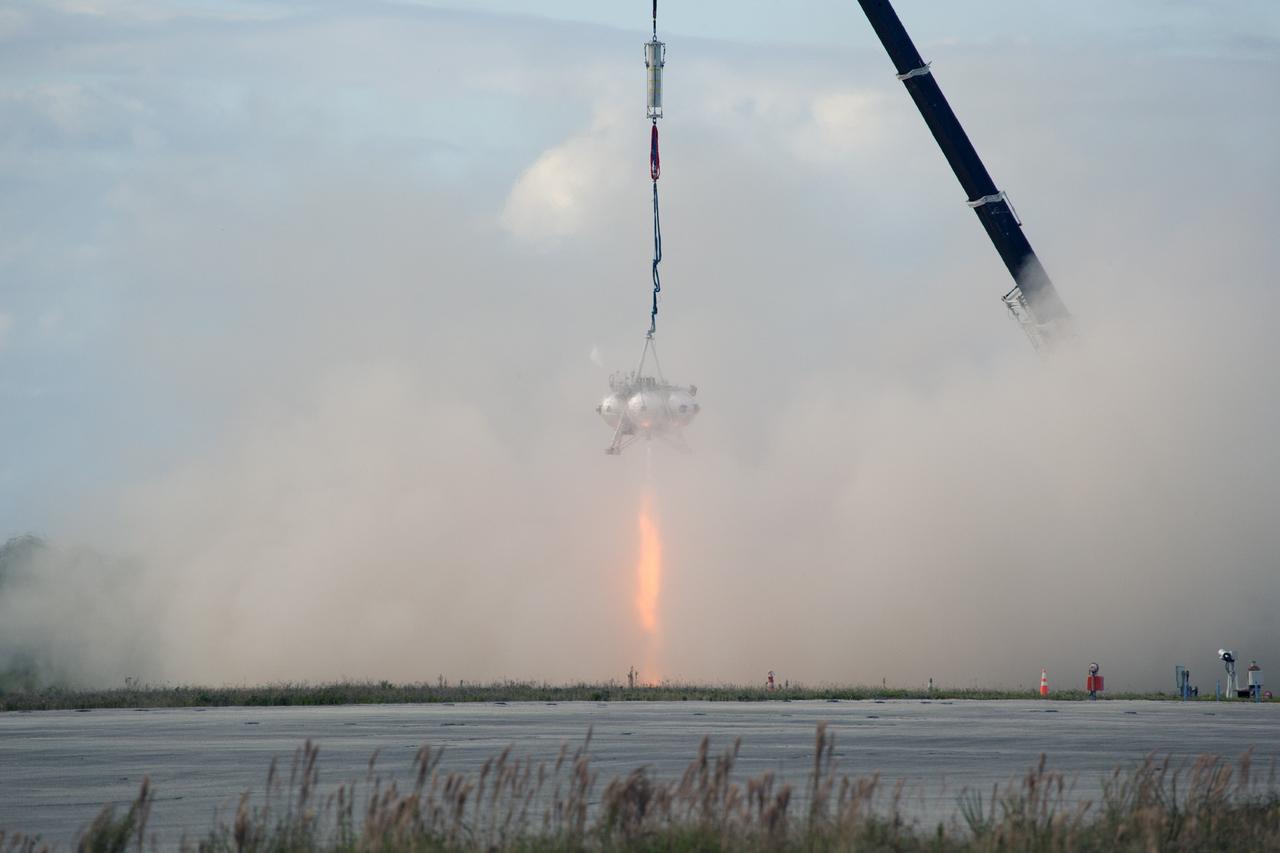
CAPE CANAVERAL, Fla. – At NASA’s Kennedy Space Center in Florida, smoke fills the air as the Project Morpheus prototype lander’s engine fires during a tether test at the north end of the Shuttle Landing Facility. During the test, the lander was lifted 20 feet by crane, and then ascended another 10 feet. The lander will maneuver backwards 10 feet, and then fly forward and descend to its original position, landing at the end of the tether onto a transportable launch platform. Testing of the prototype lander was performed at NASA’s Johnson Space Center in Houston in preparation for tethered and free flight testing at Kennedy. The landing facility will provide the lander with the kind of field necessary for realistic testing, complete with rocks, craters and hazards to avoid. Morpheus utilizes an autonomous landing and hazard avoidance technology, or ALHAT, payload that will allow it to navigate to clear landing sites amidst rocks, craters and other hazards during its descent. Project Morpheus is being managed under the Advanced Exploration Systems, or AES, Division in NASA’s Human Exploration and Operations Mission Directorate. The efforts in AES pioneer new approaches for rapidly developing prototype systems, demonstrating key capabilities and validating operational concepts for future human missions beyond Earth orbit. For more information on Project Morpheus, visit http://morpheuslander.jsc.nasa.gov. Photo credit: NASA/Daniel Casper
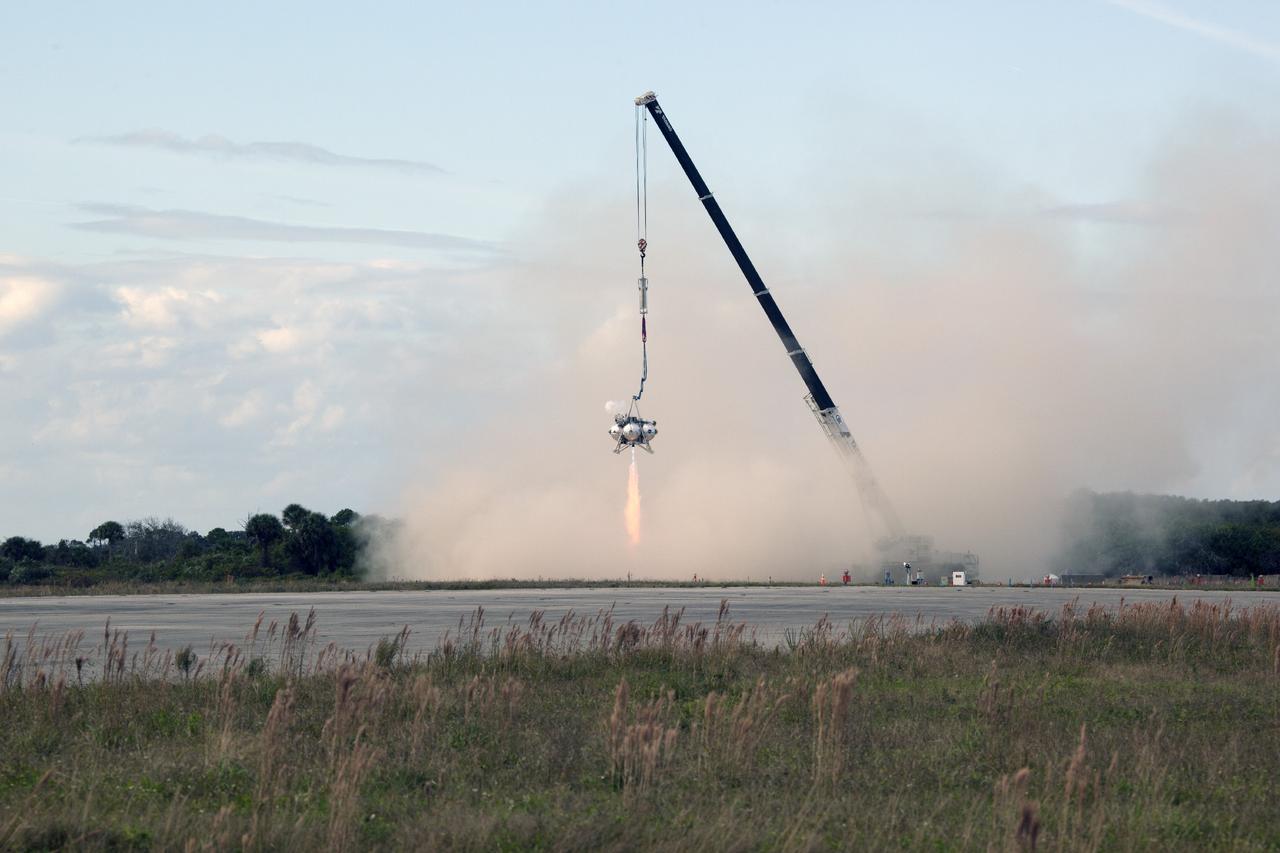
CAPE CANAVERAL, Fla. – At NASA’s Kennedy Space Center in Florida, smoke fills the air as the Project Morpheus prototype lander’s engine fires during a tether test at the north end of the Shuttle Landing Facility. During the test, the lander was lifted 20 feet by crane, and then ascended another 10 feet, maneuvered backwards 10 feet, and then flew forward. It will descend to its original position, landing at the end of the tether onto a transportable launch platform. Testing of the prototype lander was performed at NASA’s Johnson Space Center in Houston in preparation for tethered and free flight testing at Kennedy. The landing facility will provide the lander with the kind of field necessary for realistic testing, complete with rocks, craters and hazards to avoid. Morpheus utilizes an autonomous landing and hazard avoidance technology, or ALHAT, payload that will allow it to navigate to clear landing sites amidst rocks, craters and other hazards during its descent. Project Morpheus is being managed under the Advanced Exploration Systems, or AES, Division in NASA’s Human Exploration and Operations Mission Directorate. The efforts in AES pioneer new approaches for rapidly developing prototype systems, demonstrating key capabilities and validating operational concepts for future human missions beyond Earth orbit. For more information on Project Morpheus, visit http://morpheuslander.jsc.nasa.gov. Photo credit: NASA/Daniel Casper
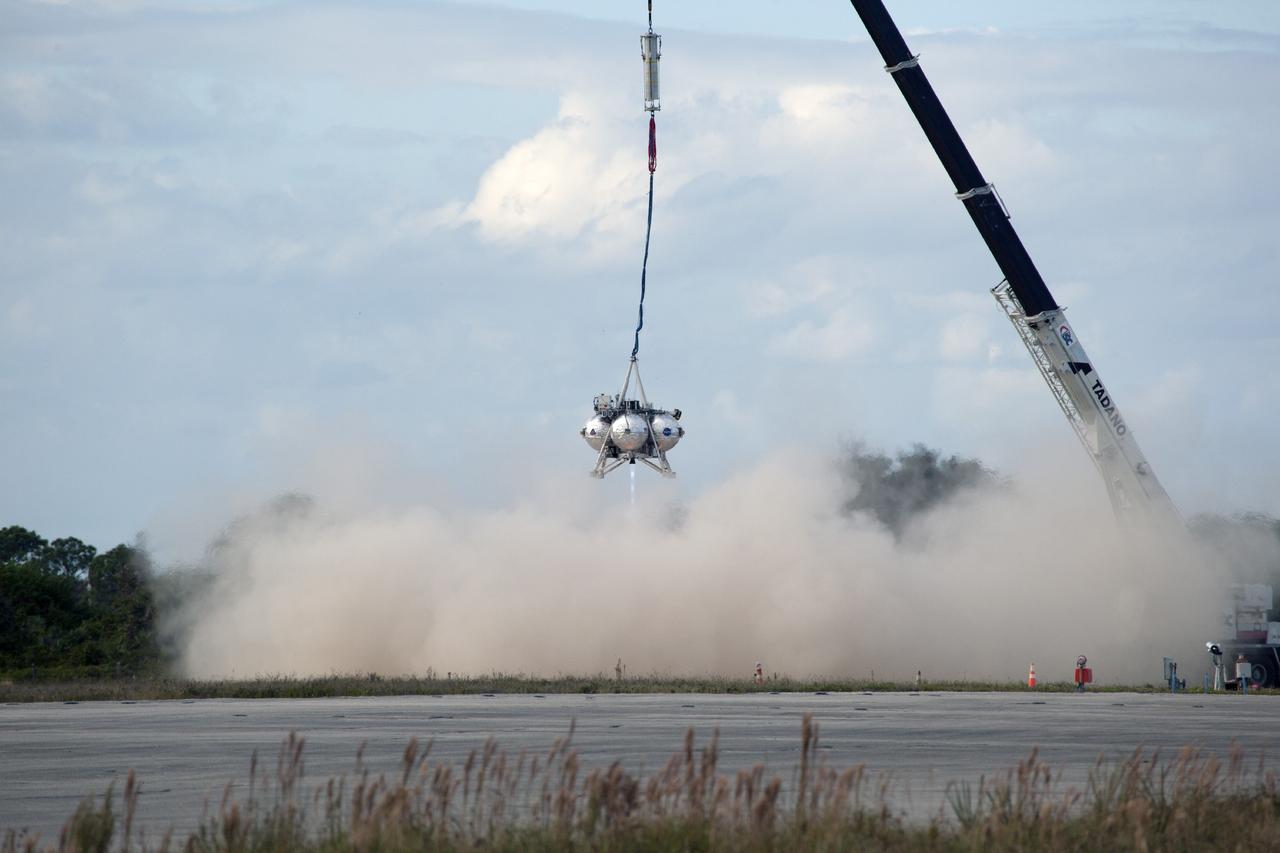
CAPE CANAVERAL, Fla. – At NASA’s Kennedy Space Center in Florida, smoke fills the air as the Project Morpheus prototype lander’s engine fires during a tether test at the north end of the Shuttle Landing Facility. During the test, the lander is lifted 20 feet by crane, and will ascend another 10 feet, maneuver backwards 10 feet, and then fly forward and descend to its original position, landing at the end of the tether onto a transportable launch platform. Testing of the prototype lander was performed at NASA’s Johnson Space Center in Houston in preparation for tethered and free flight testing at Kennedy. The landing facility will provide the lander with the kind of field necessary for realistic testing, complete with rocks, craters and hazards to avoid. Morpheus utilizes an autonomous landing and hazard avoidance technology, or ALHAT, payload that will allow it to navigate to clear landing sites amidst rocks, craters and other hazards during its descent. Project Morpheus is being managed under the Advanced Exploration Systems, or AES, Division in NASA’s Human Exploration and Operations Mission Directorate. The efforts in AES pioneer new approaches for rapidly developing prototype systems, demonstrating key capabilities and validating operational concepts for future human missions beyond Earth orbit. For more information on Project Morpheus, visit http://morpheuslander.jsc.nasa.gov. Photo credit: NASA/Daniel Casper
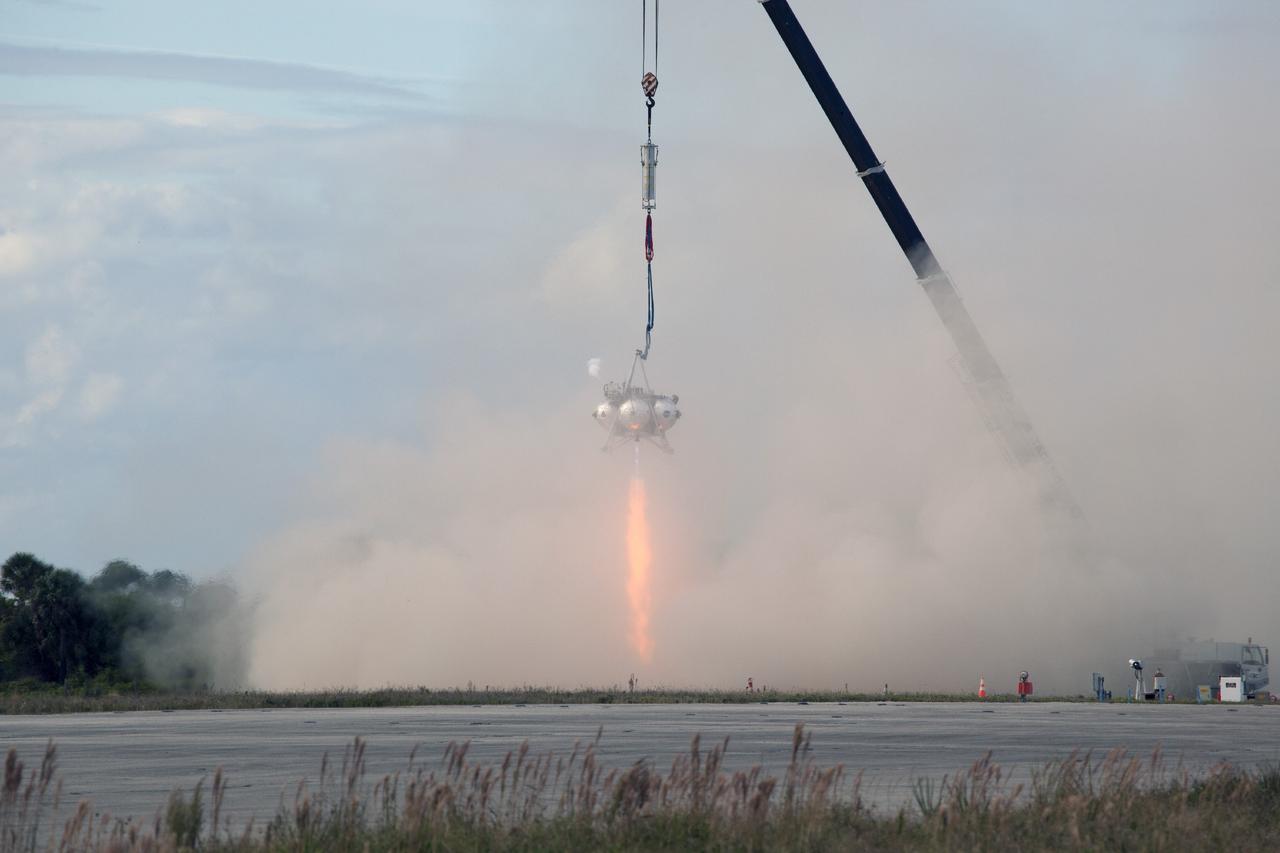
CAPE CANAVERAL, Fla. – At NASA’s Kennedy Space Center in Florida, smoke fills the air as the Project Morpheus prototype lander’s engine fires during a tether test at the north end of the Shuttle Landing Facility. During the test, the lander was lifted 20 feet by crane, and then ascended another 10 feet, maneuvered backwards 10 feet, and then flew forward. It will descend to its original position, landing at the end of the tether onto a transportable launch platform. Testing of the prototype lander was performed at NASA’s Johnson Space Center in Houston in preparation for tethered and free flight testing at Kennedy. The landing facility will provide the lander with the kind of field necessary for realistic testing, complete with rocks, craters and hazards to avoid. Morpheus utilizes an autonomous landing and hazard avoidance technology, or ALHAT, payload that will allow it to navigate to clear landing sites amidst rocks, craters and other hazards during its descent. Project Morpheus is being managed under the Advanced Exploration Systems, or AES, Division in NASA’s Human Exploration and Operations Mission Directorate. The efforts in AES pioneer new approaches for rapidly developing prototype systems, demonstrating key capabilities and validating operational concepts for future human missions beyond Earth orbit. For more information on Project Morpheus, visit http://morpheuslander.jsc.nasa.gov. Photo credit: NASA/Daniel Casper
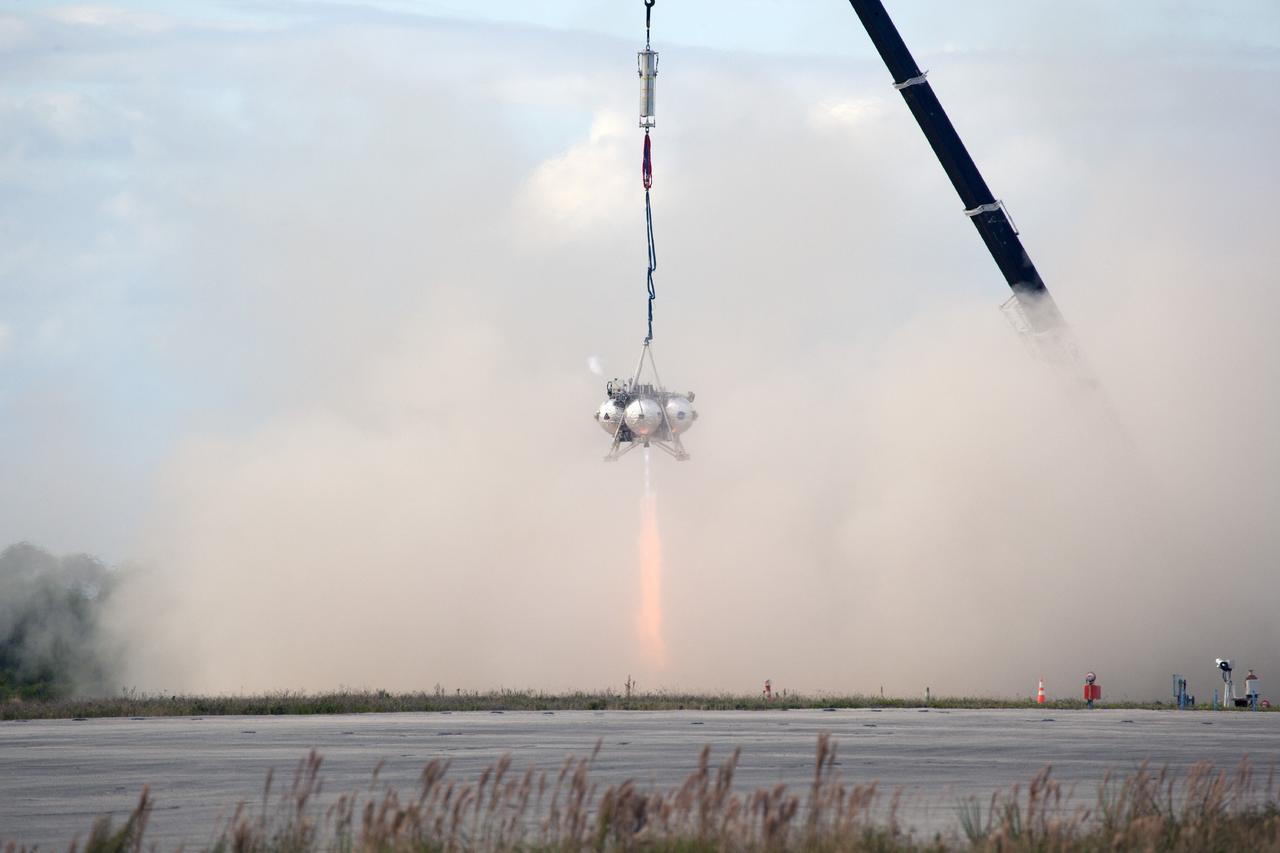
CAPE CANAVERAL, Fla. – At NASA’s Kennedy Space Center in Florida, smoke fills the air as the Project Morpheus prototype lander’s engine fires during a tether test at the north end of the Shuttle Landing Facility. During the test, the lander was lifted 20 feet by crane, and then ascended another 10 feet, maneuvered backwards 10 feet, and then flew forward. It will descend to its original position, landing at the end of the tether onto a transportable launch platform. Testing of the prototype lander was performed at NASA’s Johnson Space Center in Houston in preparation for tethered and free flight testing at Kennedy. The landing facility will provide the lander with the kind of field necessary for realistic testing, complete with rocks, craters and hazards to avoid. Morpheus utilizes an autonomous landing and hazard avoidance technology, or ALHAT, payload that will allow it to navigate to clear landing sites amidst rocks, craters and other hazards during its descent. Project Morpheus is being managed under the Advanced Exploration Systems, or AES, Division in NASA’s Human Exploration and Operations Mission Directorate. The efforts in AES pioneer new approaches for rapidly developing prototype systems, demonstrating key capabilities and validating operational concepts for future human missions beyond Earth orbit. For more information on Project Morpheus, visit http://morpheuslander.jsc.nasa.gov. Photo credit: NASA/Daniel Casper
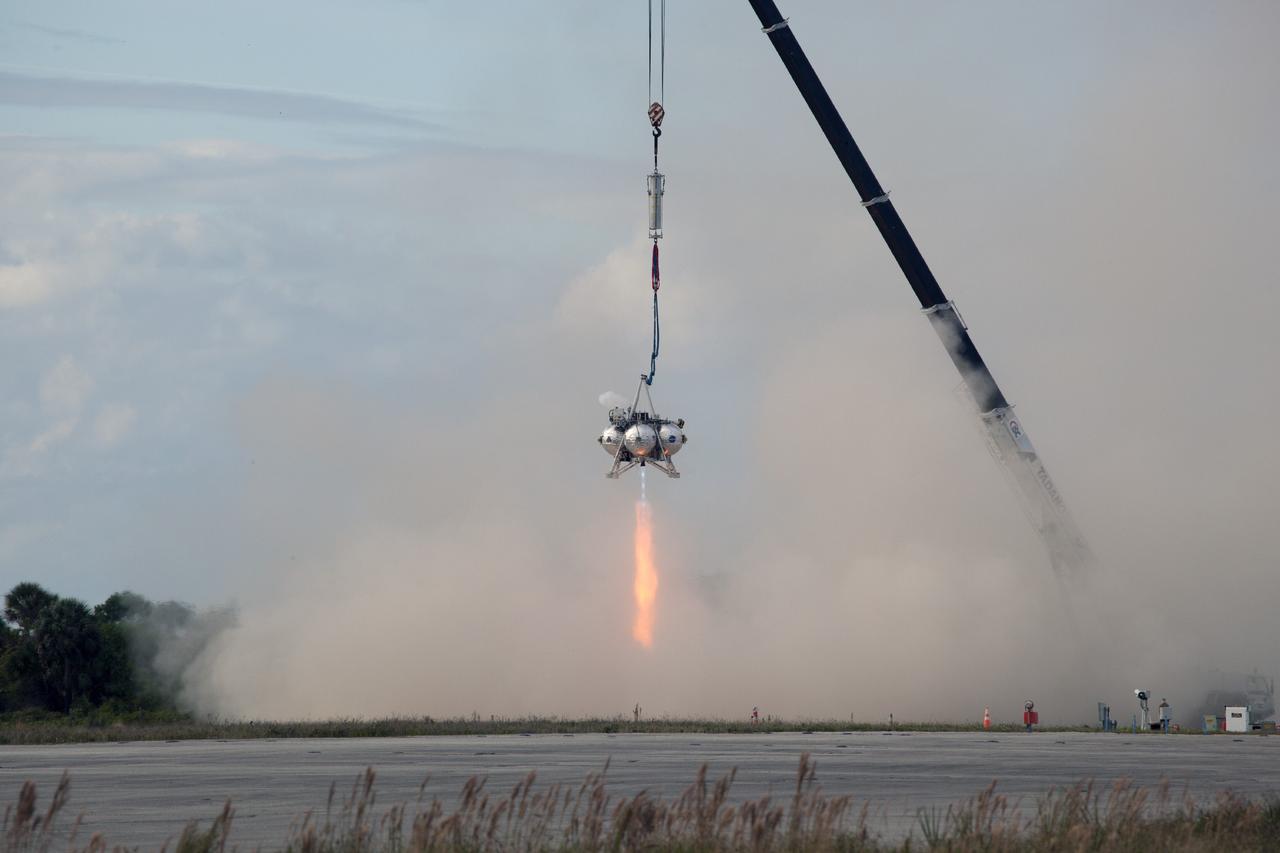
CAPE CANAVERAL, Fla. – At NASA’s Kennedy Space Center in Florida, smoke fills the air as the Project Morpheus prototype lander’s engine fires during a tether test at the north end of the Shuttle Landing Facility. During the test, the lander was lifted 20 feet by crane, and then ascended another 10 feet, maneuvered backwards 10 feet, and then flew forward. It will descend to its original position, landing at the end of the tether onto a transportable launch platform. Testing of the prototype lander was performed at NASA’s Johnson Space Center in Houston in preparation for tethered and free flight testing at Kennedy. The landing facility will provide the lander with the kind of field necessary for realistic testing, complete with rocks, craters and hazards to avoid. Morpheus utilizes an autonomous landing and hazard avoidance technology, or ALHAT, payload that will allow it to navigate to clear landing sites amidst rocks, craters and other hazards during its descent. Project Morpheus is being managed under the Advanced Exploration Systems, or AES, Division in NASA’s Human Exploration and Operations Mission Directorate. The efforts in AES pioneer new approaches for rapidly developing prototype systems, demonstrating key capabilities and validating operational concepts for future human missions beyond Earth orbit. For more information on Project Morpheus, visit http://morpheuslander.jsc.nasa.gov. Photo credit: NASA/Daniel Casper
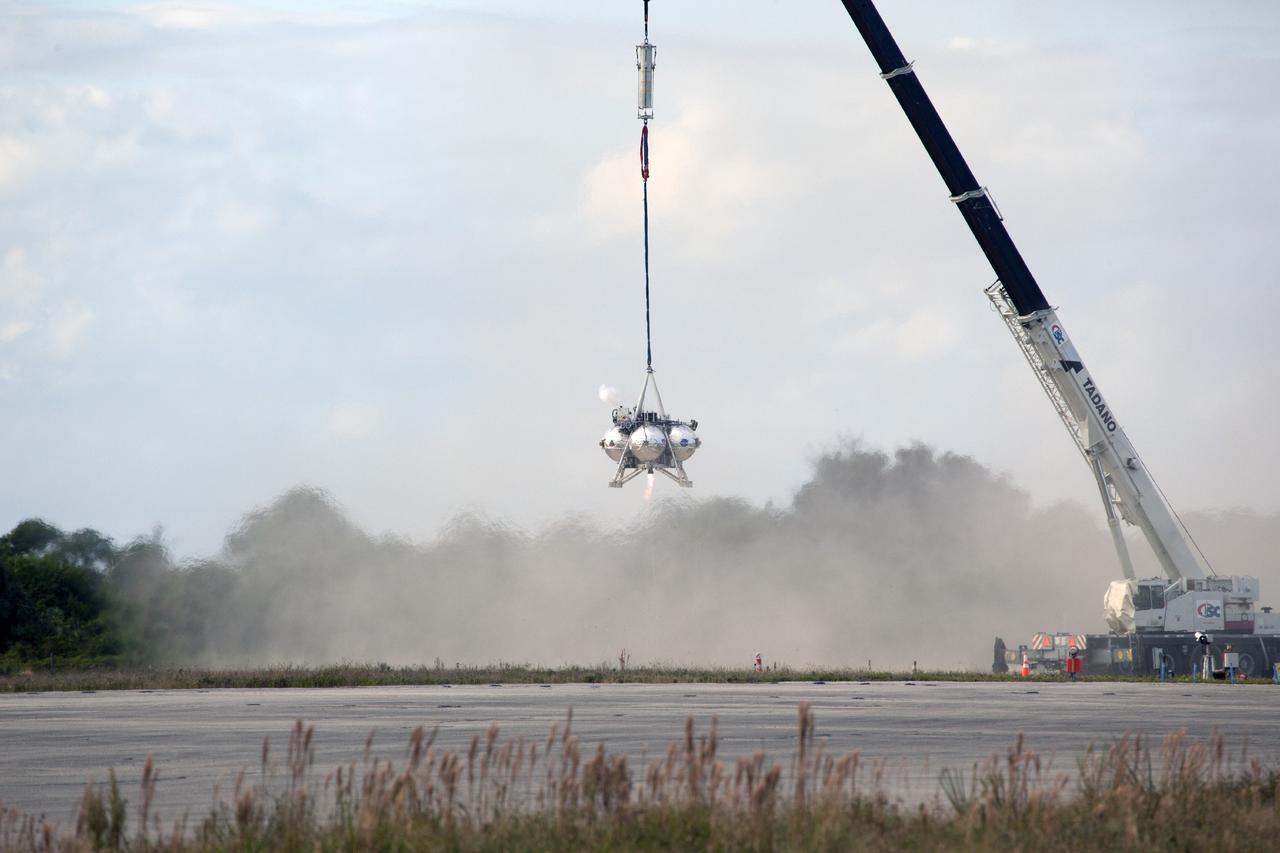
CAPE CANAVERAL, Fla. – At NASA’s Kennedy Space Center in Florida, smoke fills the air as the Project Morpheus prototype lander’s engine fires during a tether test at the north end of the Shuttle Landing Facility. During the test, the lander was lifted 20 feet by crane, and then ascended another 10 feet, maneuvered backwards 10 feet, and then flew forward. It will descend to its original position, landing at the end of the tether onto a transportable launch platform. Testing of the prototype lander was performed at NASA’s Johnson Space Center in Houston in preparation for tethered and free flight testing at Kennedy. The landing facility will provide the lander with the kind of field necessary for realistic testing, complete with rocks, craters and hazards to avoid. Morpheus utilizes an autonomous landing and hazard avoidance technology, or ALHAT, payload that will allow it to navigate to clear landing sites amidst rocks, craters and other hazards during its descent. Project Morpheus is being managed under the Advanced Exploration Systems, or AES, Division in NASA’s Human Exploration and Operations Mission Directorate. The efforts in AES pioneer new approaches for rapidly developing prototype systems, demonstrating key capabilities and validating operational concepts for future human missions beyond Earth orbit. For more information on Project Morpheus, visit http://morpheuslander.jsc.nasa.gov. Photo credit: NASA/Daniel Casper

A Mercury capsule is mounted inside the Altitude Wind Tunnel for a test of its escape tower rockets at the National Aeronautics and Space Administration (NASA) Lewis Research Center. In October 1959 NASA’s Space Task Group allocated several Project Mercury assignments to Lewis. The Altitude Wind Tunnel was quickly modified so that its 51-foot diameter western leg could be used as a test chamber. The final round of tests in the Altitude Wind Tunnel sought to determine if the smoke plume from the capsule’s escape tower rockets would shroud or compromise the spacecraft. The escape tower, a 10-foot steel rig with three small rockets, was attached to the nose of the Mercury capsule. It could be used to jettison the astronaut and capsule to safety in the event of a launch vehicle malfunction on the pad or at any point prior to separation from the booster. Once actuated, the escape rockets would fire, and the capsule would be ejected away from the booster. After the capsule reached its apex of about 2,500 feet, the tower, heatshield, retropackage, and antenna would be ejected and a drogue parachute would be released. Flight tests of the escape system were performed at Wallops Island as part of the series of Little Joe launches. Although the escape rockets fired prematurely on Little Joe’s first attempt in August 1959, the January 1960 follow-up was successful.
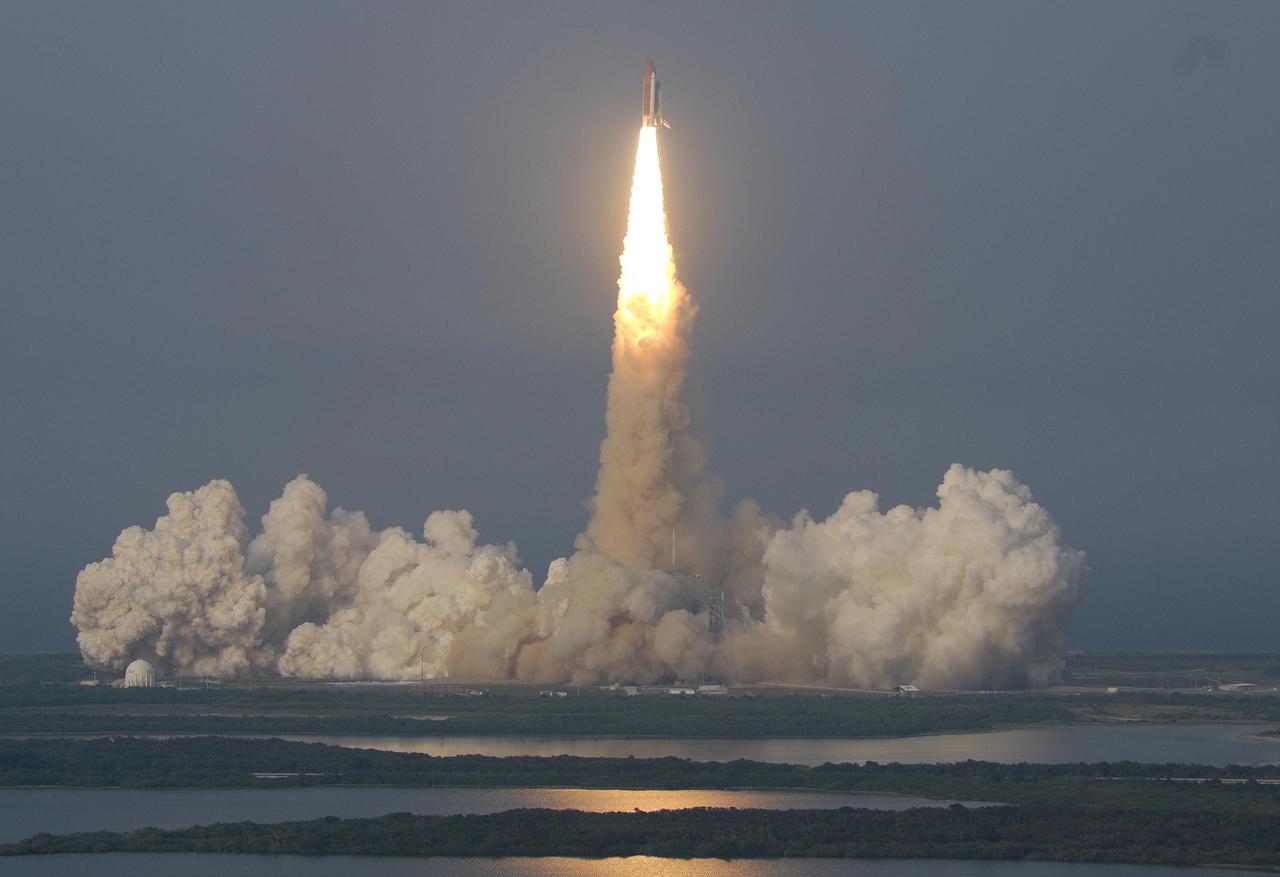
KENNEDY SPACE CENTER, FLA. -- Emerging from the billows of smoke below, Space Shuttle Endeavour hurtles into the sky on mission STS-118. Liftoff from Launch Pad 39A was on time at 6:36 p.m. EDT. Liftoff from Launch Pad 39A was on time at 6:36 p.m. EDT. The mission is the 22nd shuttle flight to the International Space Station. It will continue space station construction by delivering a third starboard truss segment, S5, and other payloads such as the SPACEHAB module and the external stowage platform 3. The 11-day mission may be extended to as many as 14 depending on the test of the Station-to-Shuttle Power Transfer System that will allow the docked shuttle to draw electrical power from the station and extend its visits to the orbiting lab. Photo courtesy of Nikon/Scott Andrews
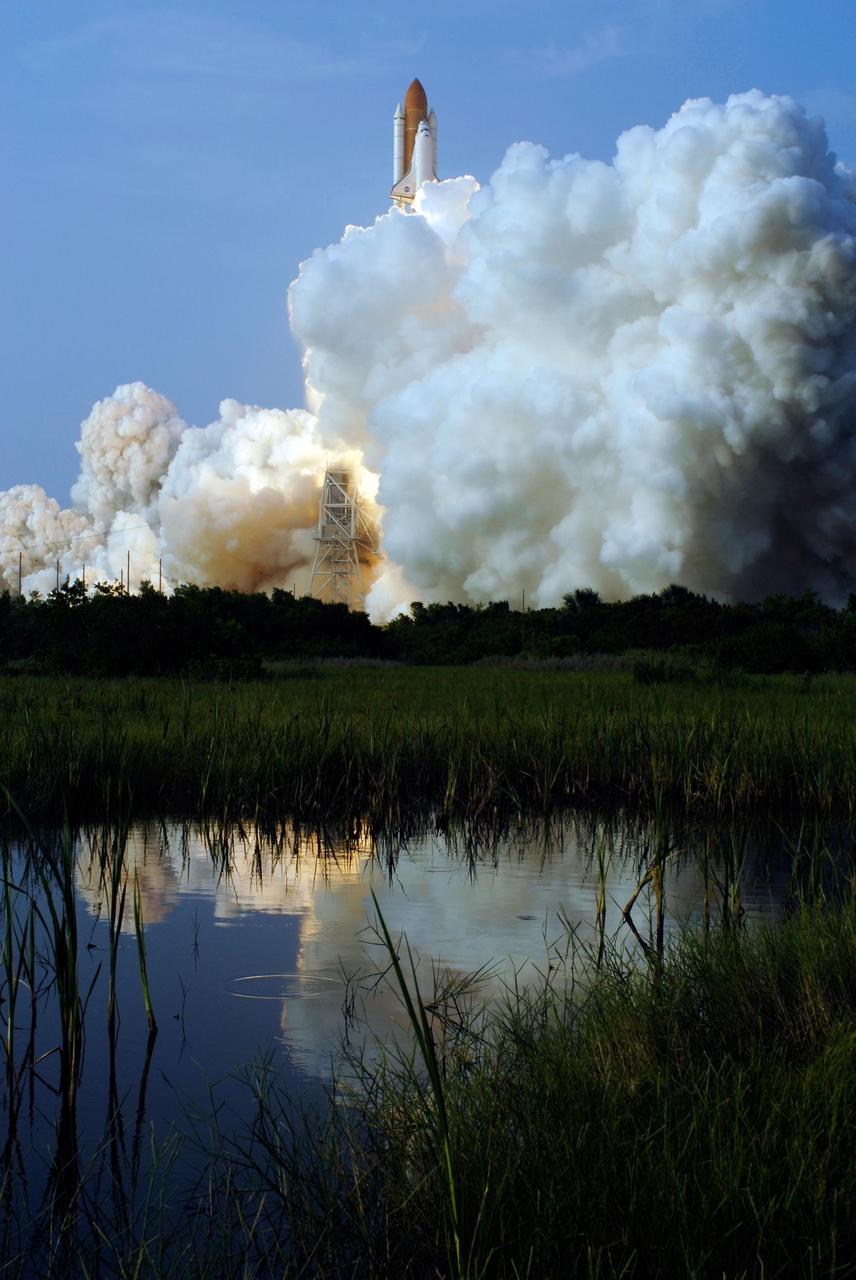
KENNEDY SPACE CENTER, FLA. -- Clouds of smoke and steam roll across Launch Pad 39A as Space Shuttle Endeavour leaps free above them, beginning its journey on mission STS-118. Liftoff of Endeavour was on time at 6:36 p.m. EDT. The mission is the 22nd shuttle flight to the International Space Station. It will continue space station construction by delivering a third starboard truss segment, S5, and other payloads such as the SPACEHAB module and the external stowage platform 3. The 11-day mission may be extended to as many as 14 depending on the test of the Station-to-Shuttle Power Transfer System that will allow the docked shuttle to draw electrical power from the station and extend its visits to the orbiting lab. Photo credit: NASA/Sandra Joseph, Tony Gray, Robert Murray
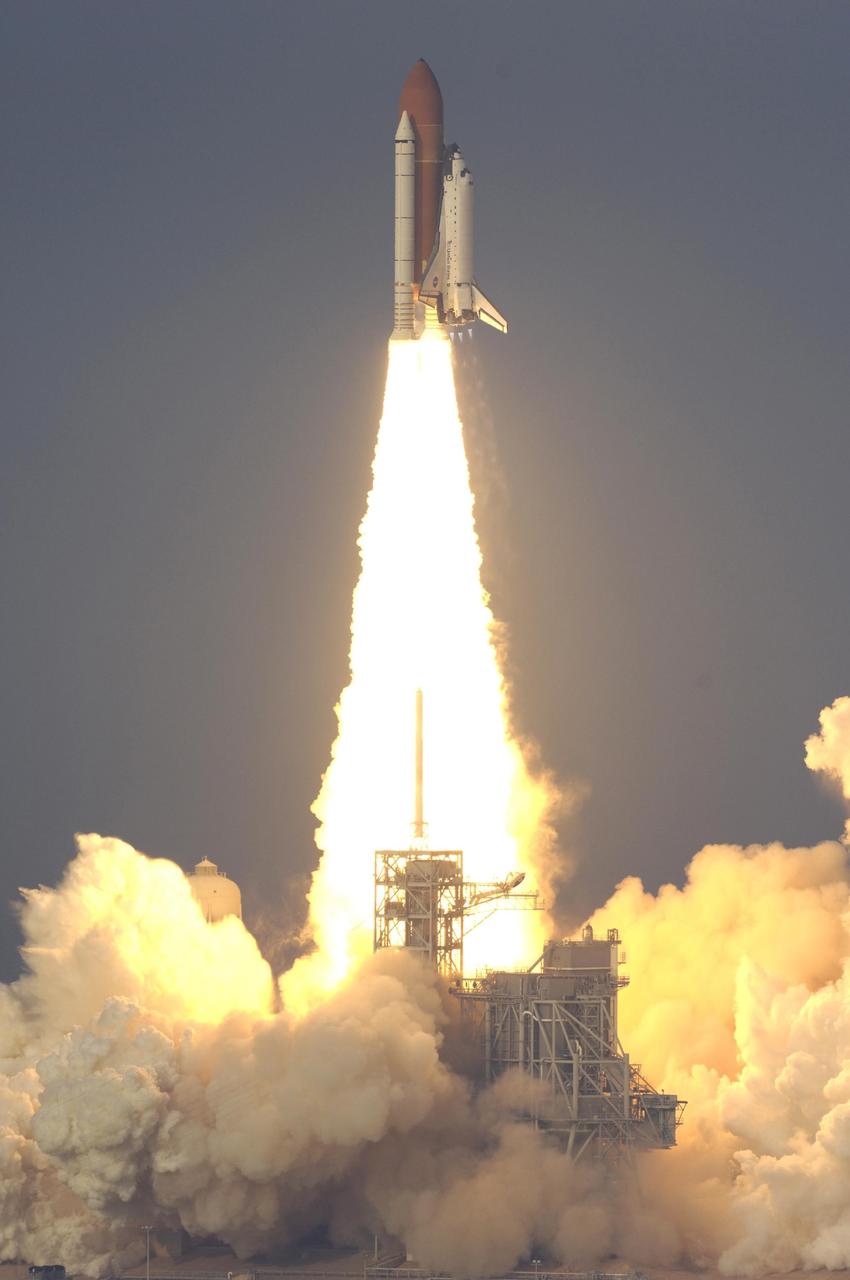
KENNEDY SPACE CENTER, FLA. -- Fiery clouds of smoke stream across Launch Pad 39A as Space Shuttle Endeavour lifts off on mission STS-118. The liftoff was on time at 6:36 p.m. EDT. The mission is the 22nd shuttle flight to the International Space Station. It will continue space station construction by delivering a third starboard truss segment, S5, and other payloads such as the SPACEHAB module and the external stowage platform 3. The 11-day mission may be extended to as many as 14 depending on the test of the Station-to-Shuttle Power Transfer System that will allow the docked shuttle to draw electrical power from the station and extend its visits to the orbiting lab. Photo credit: Jerry Cannon, Mike Kerley
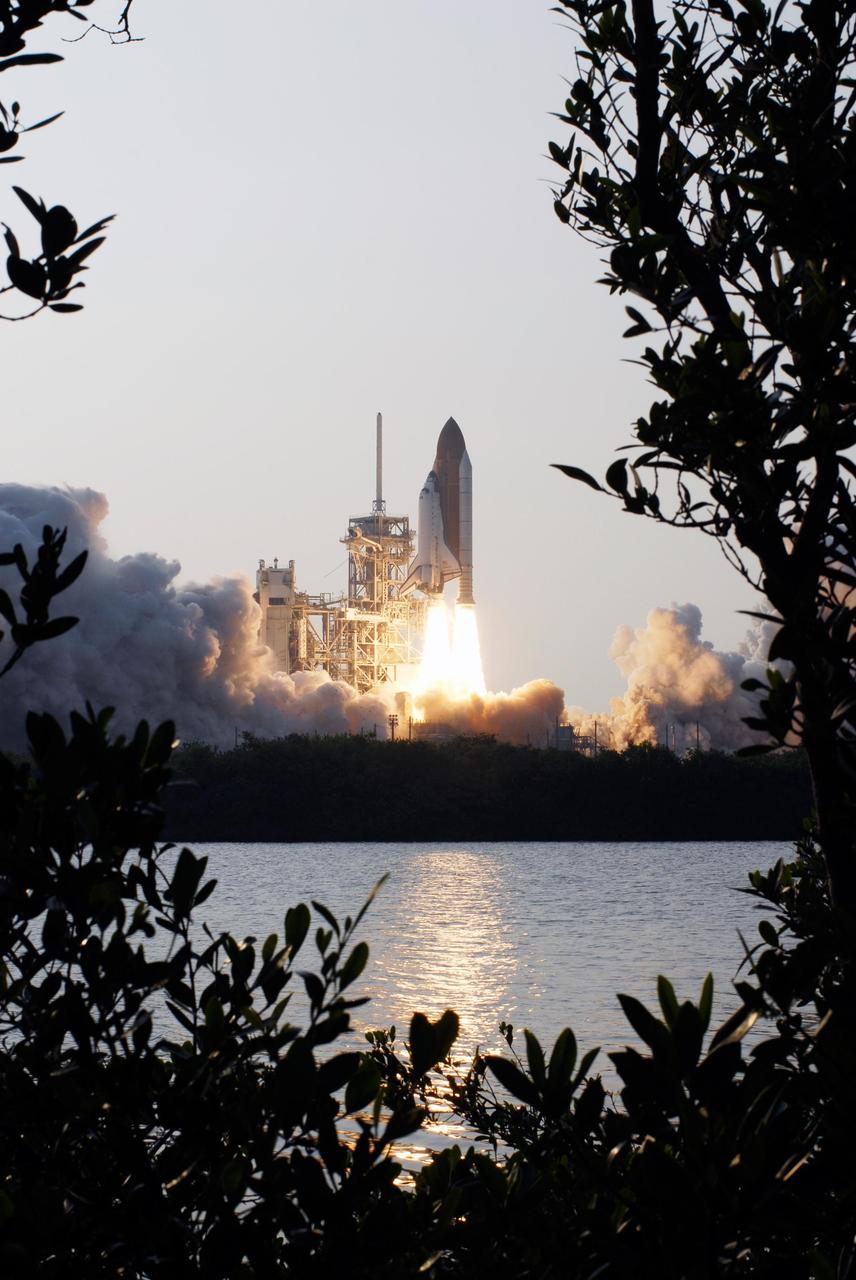
KENNEDY SPACE CENTER, FLA. -- Framed by the trees across the water, Space Shuttle Endeavour roars into the sky as it rises from clouds of smoke and steam billowing across Launch Pad 39A. Liftoff of Endeavour from Launch Pad 39A on mission STS-118 was on time at 6:36 p.m. EDT. The mission is the 22nd shuttle flight to the International Space Station. It will continue space station construction by delivering a third starboard truss segment, S5, and other payloads such as the SPACEHAB module and the external stowage platform 3. The 11-day mission may be extended to as many as 14 depending on the test of the Station-to-Shuttle Power Transfer System that will allow the docked shuttle to draw electrical power from the station and extend its visits to the orbiting lab. Photo credit: NASA/Sandra Joseph, Tony Gray, Robert Murray
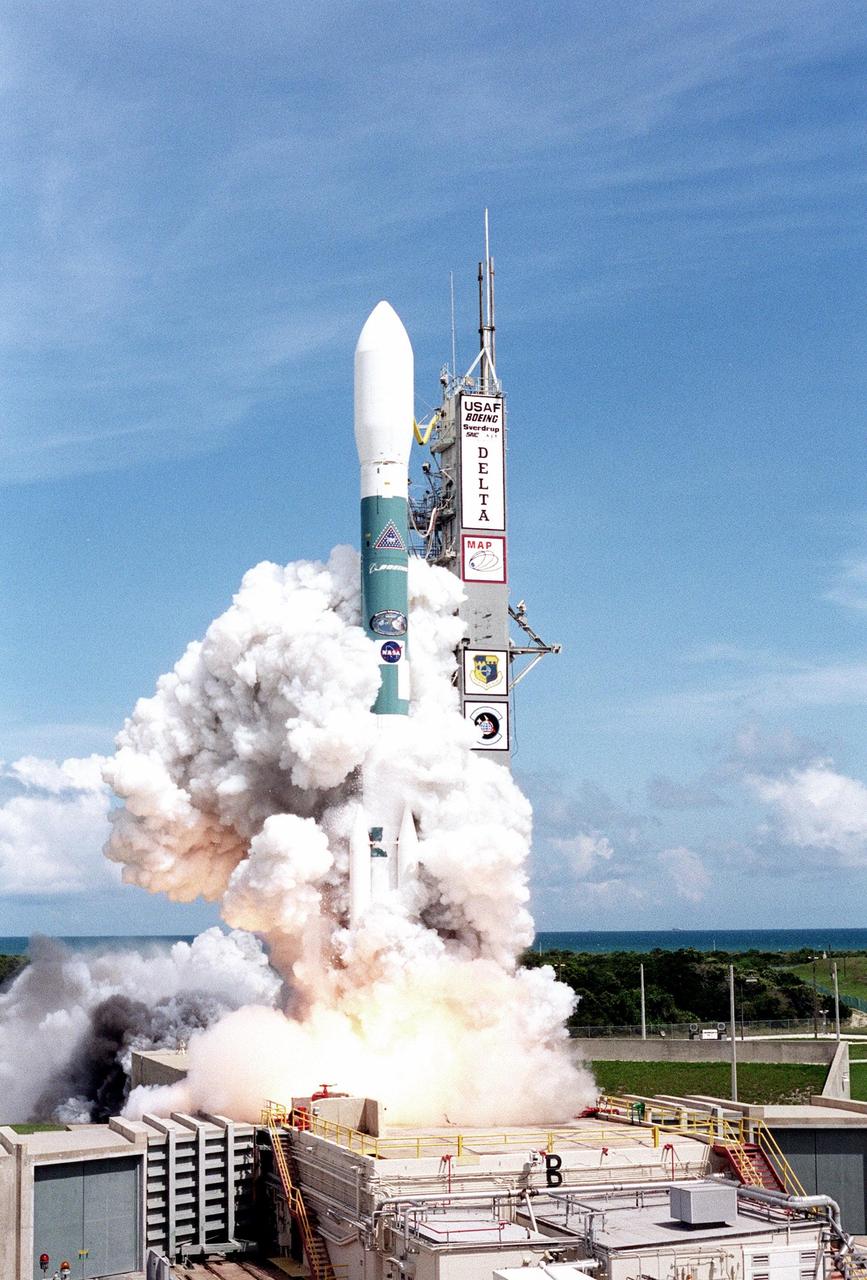
KENNEDY SPACE CENTER, Fla. -- Wrapped in billows of smoke and steam, the Boeing Delta II rocket lifts off Launch Complex 17-A, Cape Canaveral Air Force Station, carrying the Microwave Anisotropy Probe (MAP) spacecraft. The successful launch occurred at 3:46:46 p.m. EDT. The launch will place MAP into a lunar-assisted trajectory to the Sun-Earth for a 27-month mission. The probe will measure small fluctuations in the temperature of the cosmic microwave background radiation to an accuracy of one millionth of a degree. These measurements should reveal the size, matter content, age, geometry and fate of the universe. They will also reveal the primordial structure that grew to form galaxies and will test ideas about the origins of these primordial structures. The MAP instrument will be continuously shaded from the Sun, Earth, and Moon by the spacecraft. The probe is a product of Goddard Space Flight Center in partnership with Princeton University
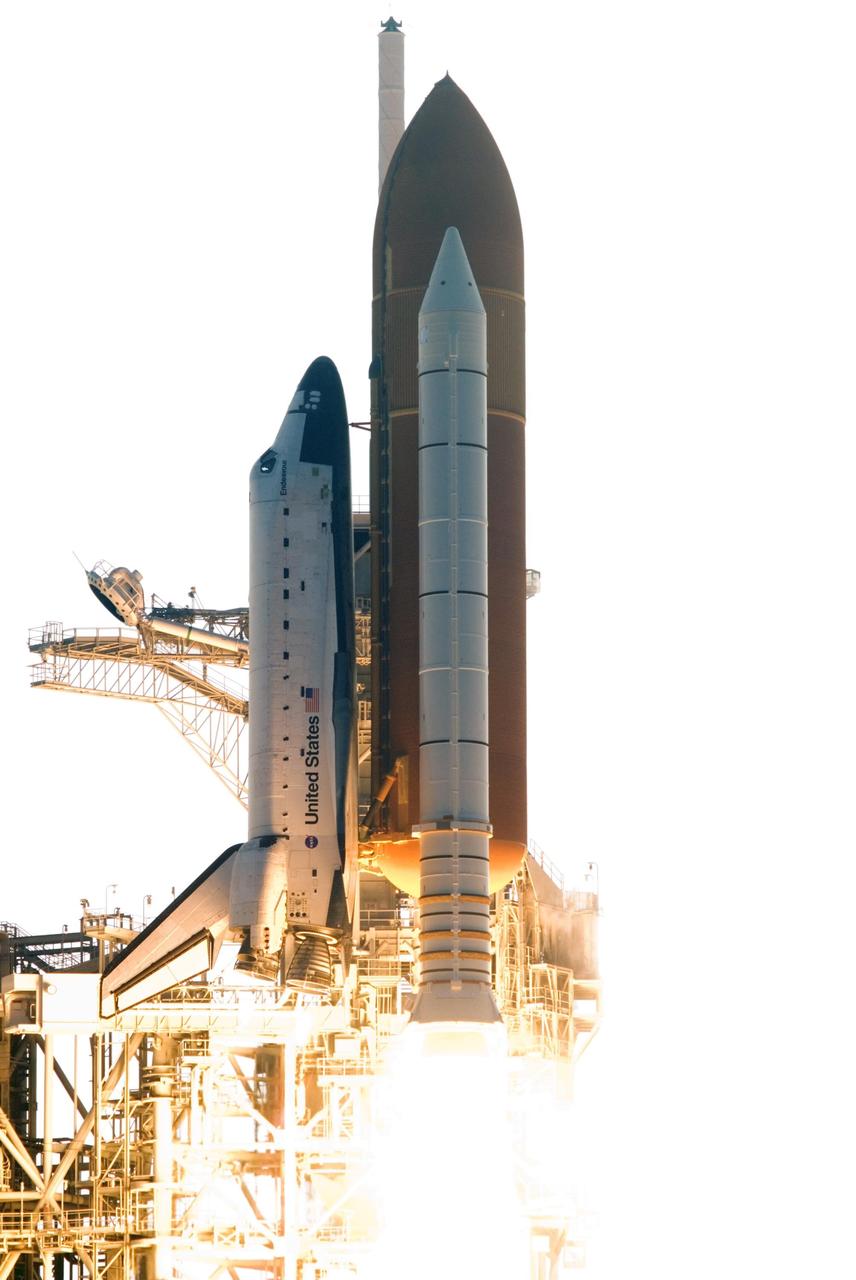
KENNEDY SPACE CENTER, FLA. -- Emerging from the billows of smoke below, Space Shuttle Endeavour clears the lightning mast on the fixed service structure below to begin its journey on mission STS-118. Liftoff from Launch Pad 39A was on time at 6:36 p.m. EDT. The mission is the 22nd shuttle flight to the International Space Station. It will continue space station construction by delivering a third starboard truss segment, S5, and other payloads such as the SPACEHAB module and the external stowage platform 3. The 11-day mission may be extended to as many as 14 depending on the test of the Station-to-Shuttle Power Transfer System that will allow the docked shuttle to draw electrical power from the station and extend its visits to the orbiting lab. Photo courtesy of Nikon/Scott Andrews
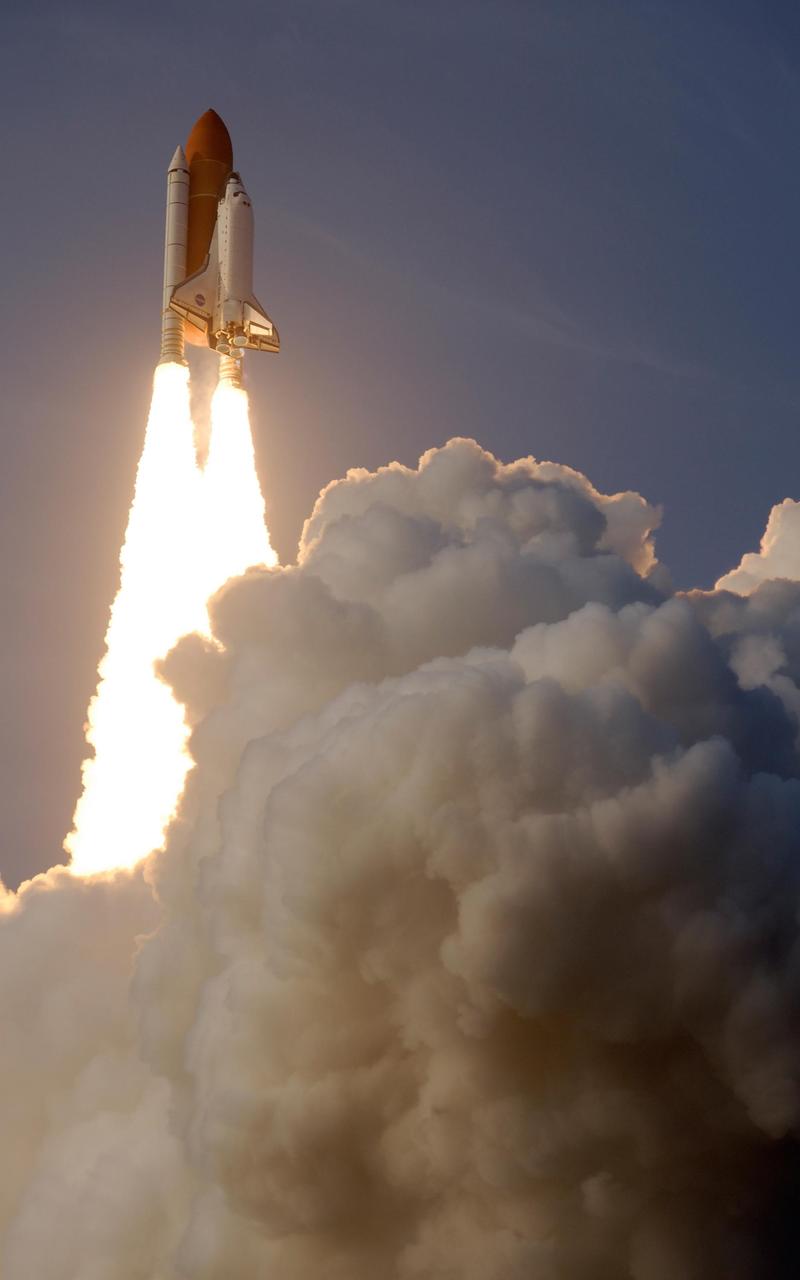
KENNEDY SPACE CENTER, FLA. -- Space Shuttle Endeavour breaks free from the clouds of smoke after liftoff from Launch Pad 39A on mission STS-118. The liftoff was on time at 6:36 p.m. EDT. The mission is the 22nd shuttle flight to the International Space Station. It will continue space station construction by delivering a third starboard truss segment, S5, and other payloads such as the SPACEHAB module and the external stowage platform 3. The 11-day mission may be extended to as many as 14 depending on the test of the Station-to-Shuttle Power Transfer System that will allow the docked shuttle to draw electrical power from the station and extend its visits to the orbiting lab. Photo courtesy of Nikon/Scott Andrews
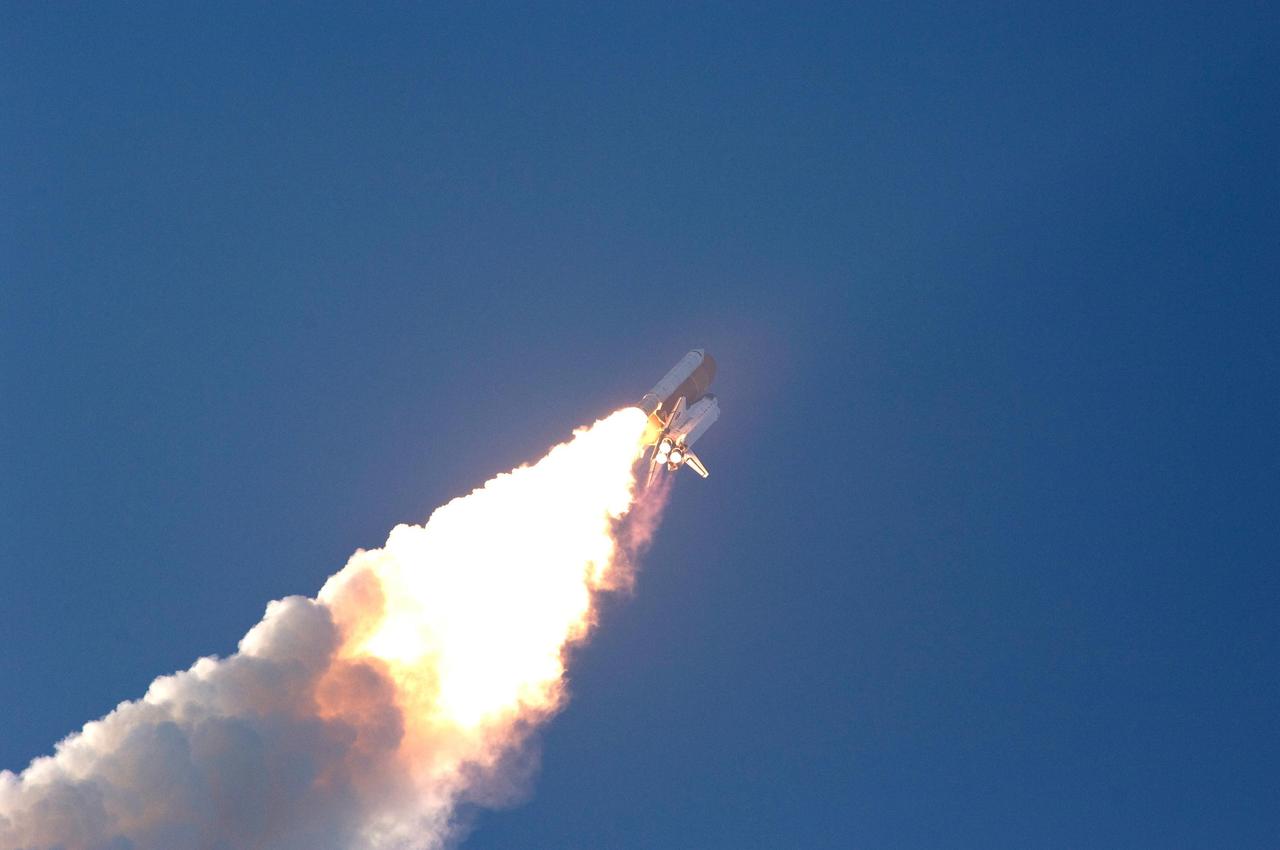
KENNEDY SPACE CENTER, FLA. -- Spewing smoke from the solid rocket boosters, Space Shuttle Endeavour roars into the sky on mission STS-118. The liftoff from Launch Pad 39A was on time at 6:36 p.m. EDT. The mission is the 22nd shuttle flight to the International Space Station. It will continue space station construction by delivering a third starboard truss segment, S5, and other payloads such as the SPACEHAB module and the external stowage platform 3. The 11-day mission may be extended to as many as 14 depending on the test of the Station-to-Shuttle Power Transfer System that will allow the docked shuttle to draw electrical power from the station and extend its visits to the orbiting lab. Photo credit: NASA/Jerry Cannon, Mike Kerley
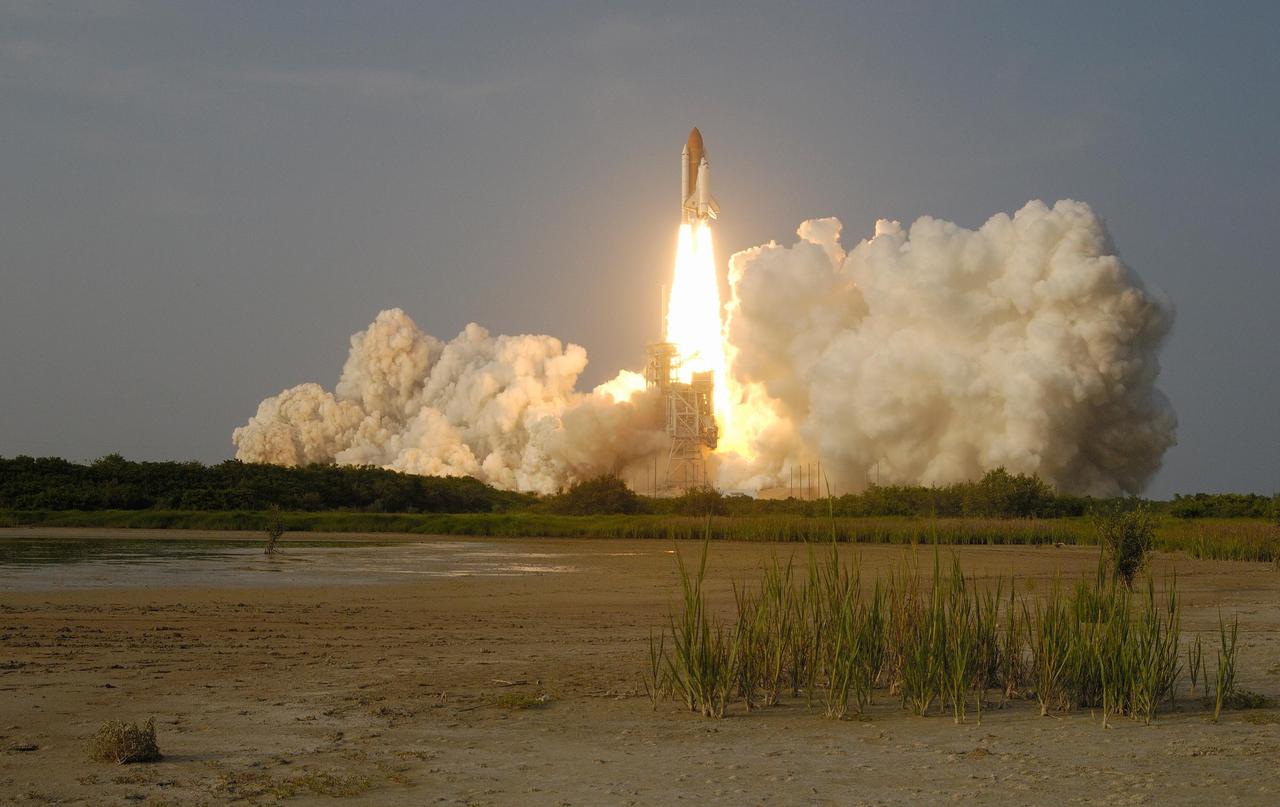
KENNEDY SPACE CENTER, FLA. -- Space Shuttle Endeavour leaps free from the clouds of smoke and steam across Launch Pad 39A after liftoff on mission STS-118. The liftoff was on time at 6:36 p.m. EDT. The mission is the 22nd shuttle flight to the International Space Station. It will continue space station construction by delivering a third starboard truss segment, S5, and other payloads such as the SPACEHAB module and the external stowage platform 3. The 11-day mission may be extended to as many as 14 depending on the test of the Station-to-Shuttle Power Transfer System that will allow the docked shuttle to draw electrical power from the station and extend its visits to the orbiting lab. Photo courtesy of Nikon/Scott Andrews
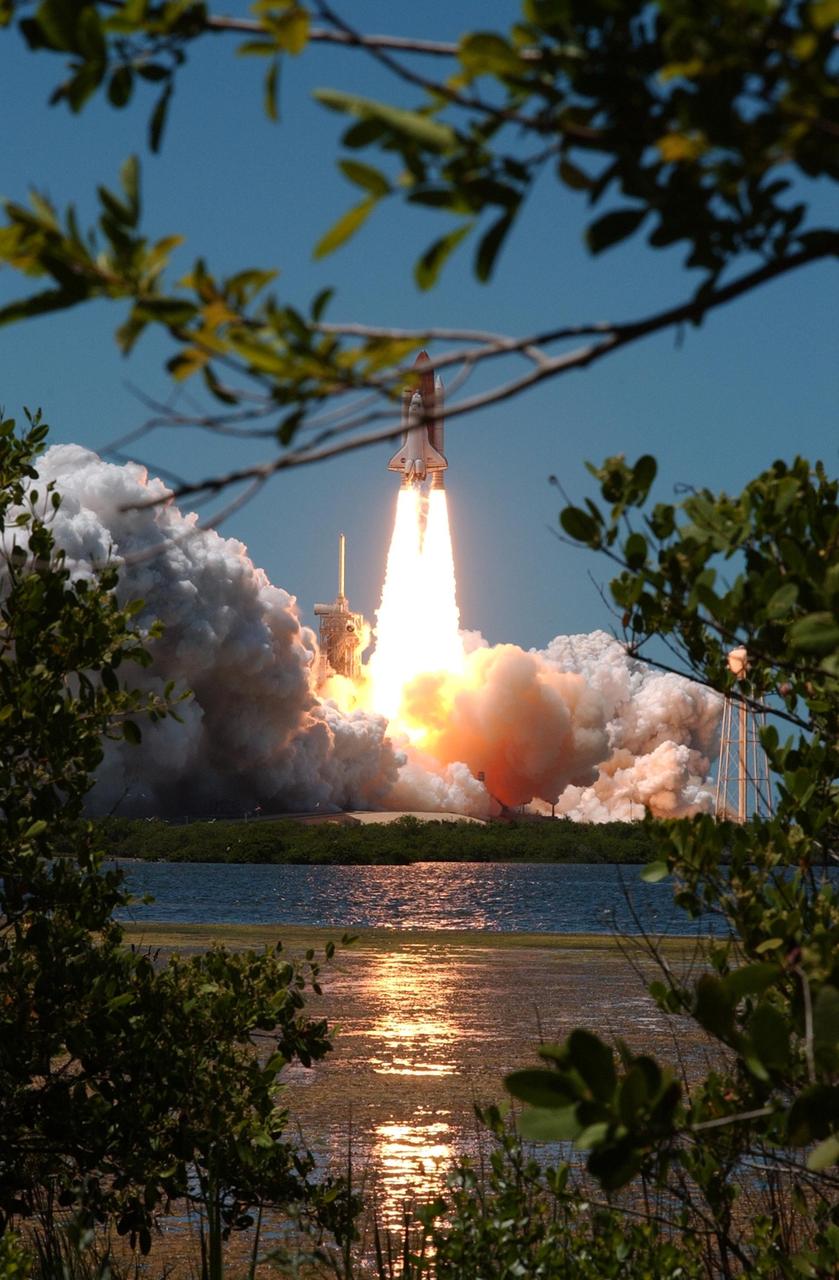
KENNEDY SPACE CENTER, FLA. - Framed by the woods across the pond, Space Shuttle Discovery kicks off the Fourth of July fireworks with its own fiery display as it rockets into the blue sky, spewing foam and smoke over the ground, on mission STS-121. It was the third launch attempt in four days; the others were scrubbed due to weather concerns. Liftoff was on-time at 2:38 p.m. EDT. During the 12-day mission, the STS-121 crew of seven will test new equipment and procedures to improve shuttle safety, as well as deliver supplies and make repairs to the International Space Station. Landing is scheduled for July 16 or 17 at Kennedy's Shuttle Landing Facility. Photo credit: NASA/Sandy Joseph, Robert Murray

KENNEDY SPACE CENTER, FLA. - Making history with the first-ever launch on Independence Day, Space Shuttle Discovery rockets off the mobile launcher platform on Launch Pad 39B on mission STS-121. Despite the billowing clouds of smoke and steam, the tail masts can still be seen. To the left is the White Room at the end of the orbiter access arm, which is moved away from the orbiter 7 minutes, 24 seconds before launch. During the 12-day mission, the STS-121 crew of seven will test new equipment and procedures to improve shuttle safety, as well as deliver supplies and make repairs to the International Space Station. Landing is scheduled for July 16 or 17 at Kennedy's Shuttle Landing Facility. Photo credit: NASA/Regina Mitchell-Ryall & Don Kight
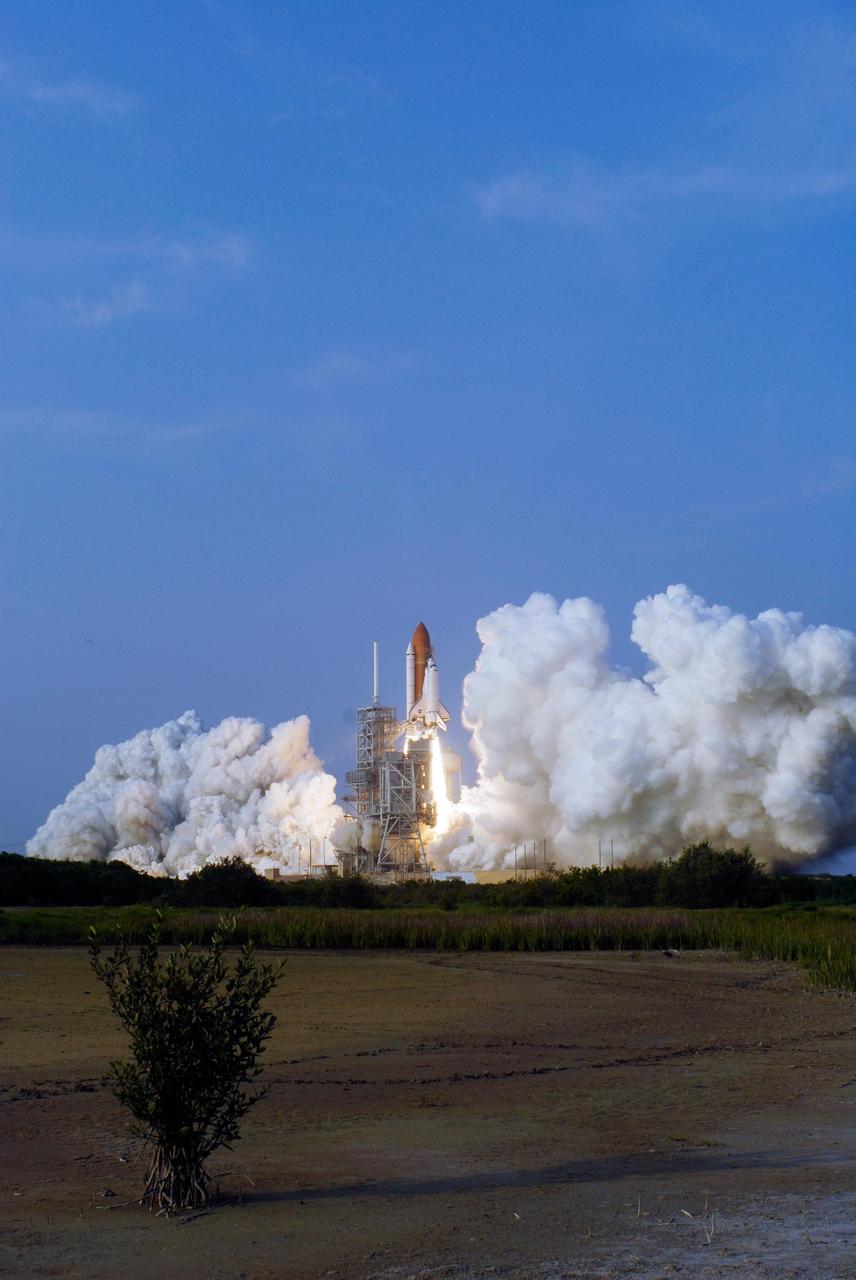
KENNEDY SPACE CENTER, FLA. -- As billows of smoke spread across Launch Pad 39A, Space Shuttle Endeavour climbs into the sky on mission STS-118. Liftoff was on time at 6:36 p.m. EDT. The mission is the 22nd shuttle flight to the International Space Station. It will continue space station construction by delivering a third starboard truss segment, S5, and other payloads such as the SPACEHAB module and the external stowage platform 3. The 11-day mission may be extended to as many as 14 depending on the test of the Station-to-Shuttle Power Transfer System that will allow the docked shuttle to draw electrical power from the station and extend its visits to the orbiting lab. Photo credit: NASA/Sandra Joseph, Tony Gray, Robert Murray
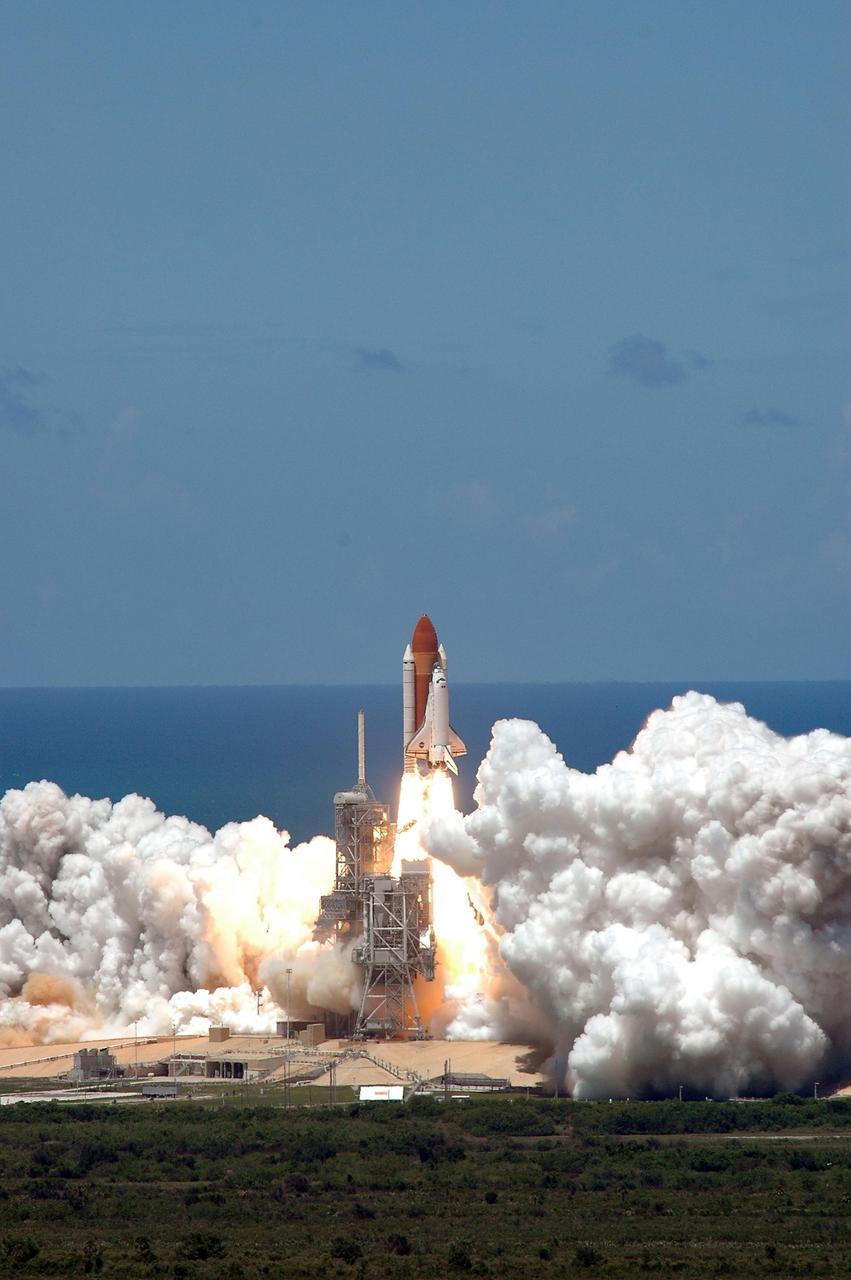
KENNEDY SPACE CENTER, FLA. - Viewed from the top of the Vehicle Assembly Building at NASA's Kennedy Space Center, Space Shuttle Discovery kicks off the Fourth of July fireworks with its own fiery display as it rockets over the blue Atlantic Ocean and into the blue sky, spewing foam and smoke over the ground, on mission STS-121. It was the third launch attempt in four days; the others were scrubbed due to weather concerns. Liftoff was on-time at 2:38 p.m. EDT. During the 12-day mission, the STS-121 crew of seven will test new equipment and procedures to improve shuttle safety, as well as deliver supplies and make repairs to the International Space Station. Landing is scheduled for July 16 or 17 at Kennedy's Shuttle Landing Facility. Photo credit: NASA/Gianni Woods
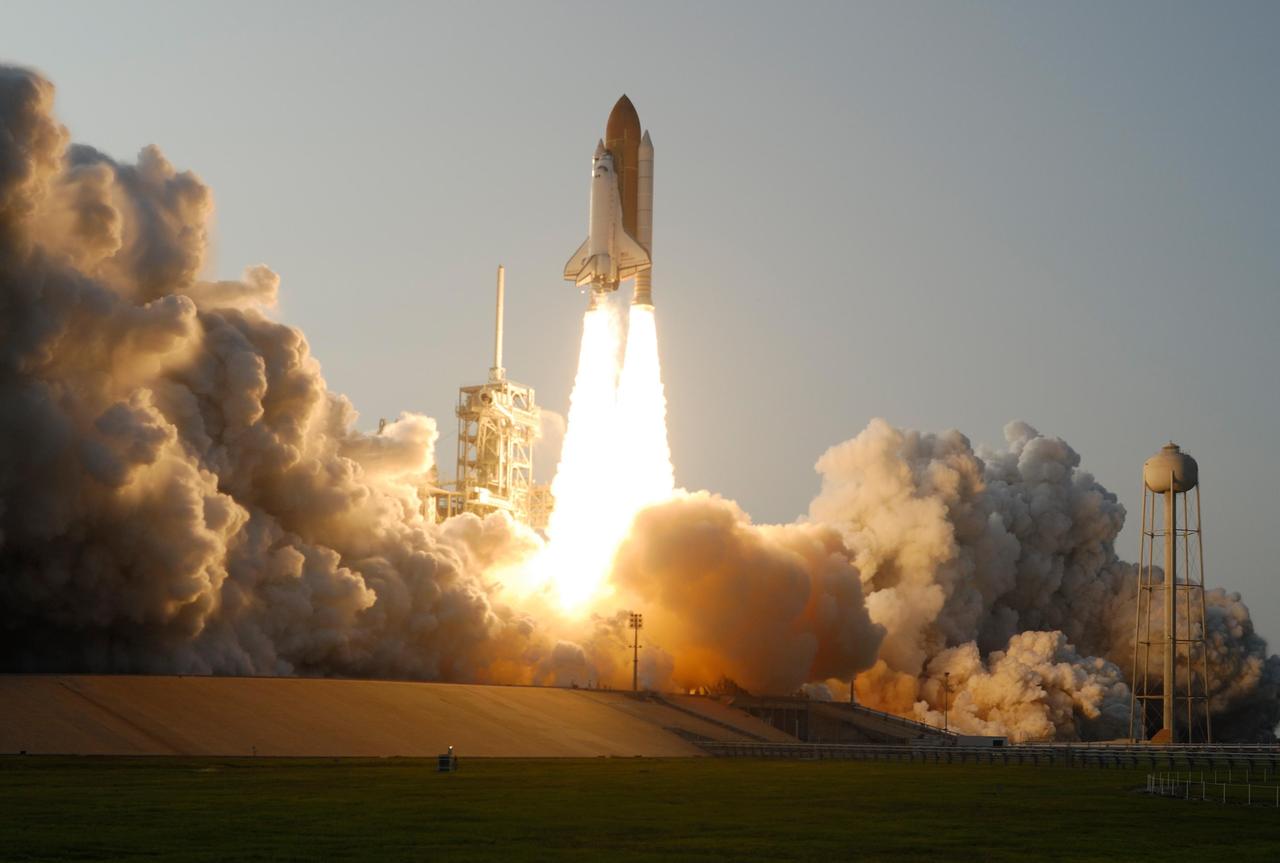
KENNEDY SPACE CENTER, FLA. -- Clouds of smoke and steam roil across Launch Pad 39A as Space Shuttle Endeavour hurtles into the early evening sky on mission STS-118. The liftoff was on time at 6:36 p.m. EDT. The mission is the 22nd shuttle flight to the International Space Station. It will continue space station construction by delivering a third starboard truss segment, S5, and other payloads such as the SPACEHAB module and the external stowage platform 3. The 11-day mission may be extended to as many as 14 depending on the test of the Station-to-Shuttle Power Transfer System that will allow the docked shuttle to draw electrical power from the station and extend its visits to the orbiting lab. Photo courtesy of Nikon/Scott Andrews
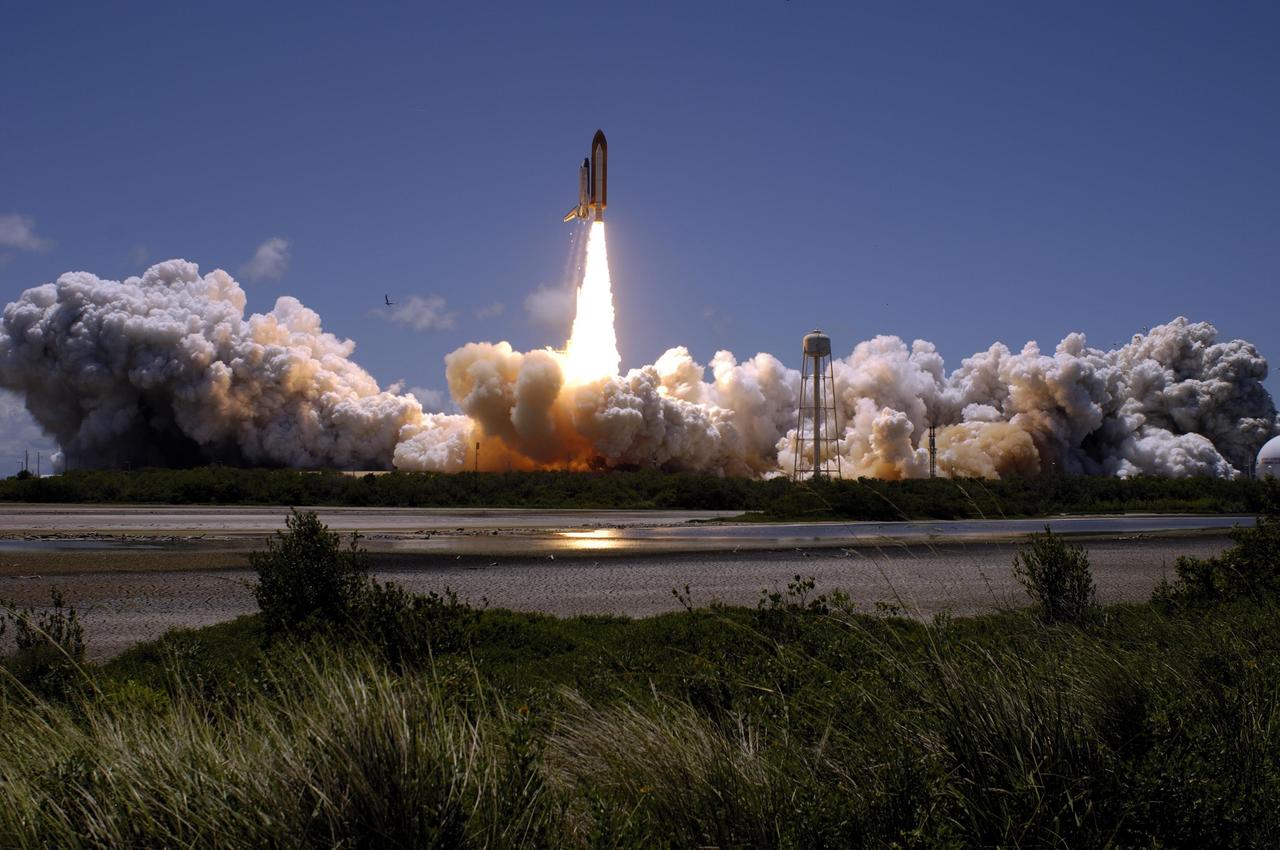
KENNEDY SPACE CENTER, FLA. - As smoke and steam billows across the ground, Space Shuttle Discovery leaps free and rockets into the clear blue sky, creating its own fireworks display. History was made with the first ever launch on Independence Day. It was the third launch attempt in four days; the others were scrubbed due to weather concerns. Liftoff was on-time at 2:38 p.m. EDT. During the 12-day mission, the STS-121 crew of seven will test new equipment and procedures to improve shuttle safety, as well as deliver supplies and make repairs to the International Space Station. Landing is scheduled for July 16 or 17 at Kennedy's Shuttle Landing Facility. Photo courtesy of Nikon/Scott Andrews
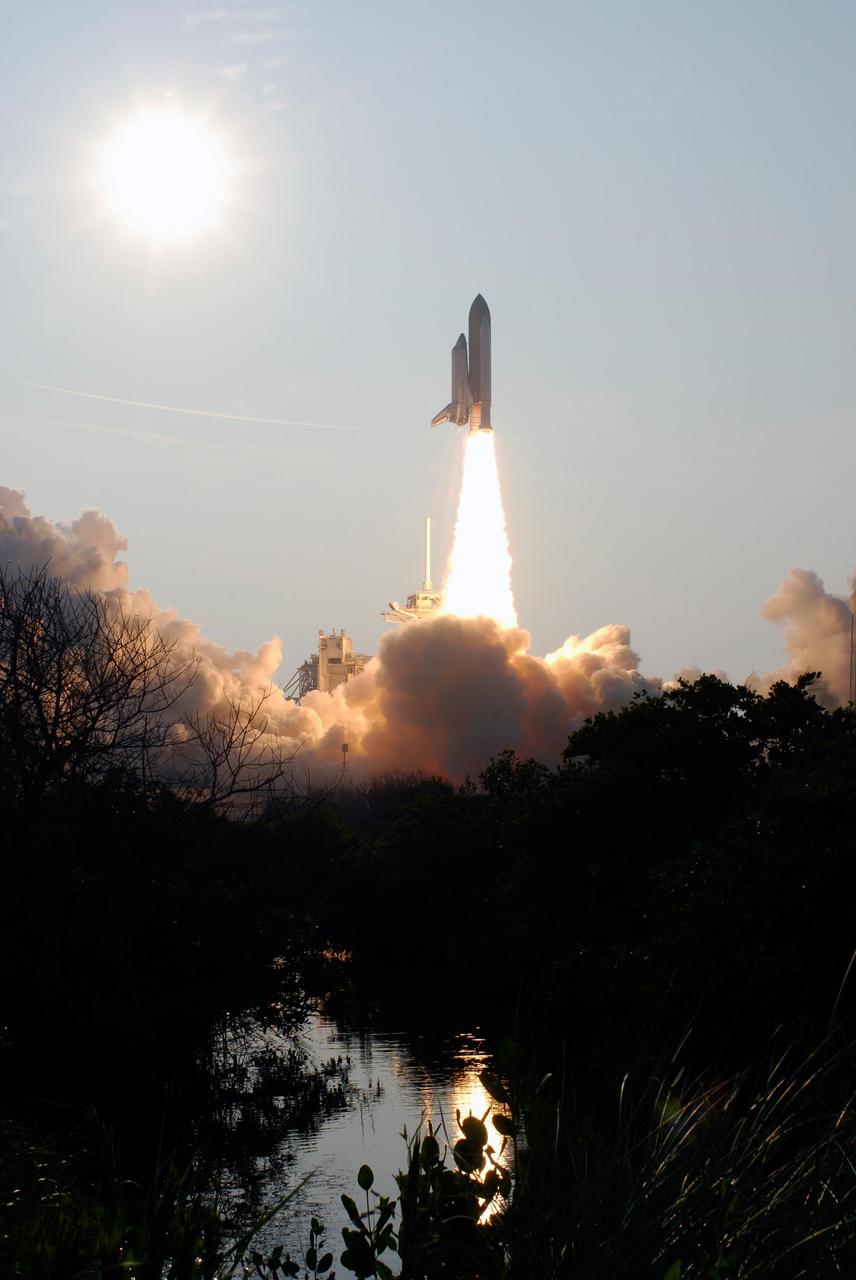
KENNEDY SPACE CENTER, FLA. -- The nearby waters catch the fiery trail from Space Shuttle Endeavour as it roars into the sky on mission STS-118. Smoke and steam billow across Launch Pad 39A after liftoff. The liftoff was on time at 6:36 p.m. EDT. The mission is the 22nd shuttle flight to the International Space Station. It will continue space station construction by delivering a third starboard truss segment, S5, and other payloads such as the SPACEHAB module and the external stowage platform 3. The 11-day mission may be extended to as many as 14 depending on the test of the Station-to-Shuttle Power Transfer System that will allow the docked shuttle to draw electrical power from the station and extend its visits to the orbiting lab. Photo credit: NASA/Sandra Joseph, Tony Gray, Robert Murray
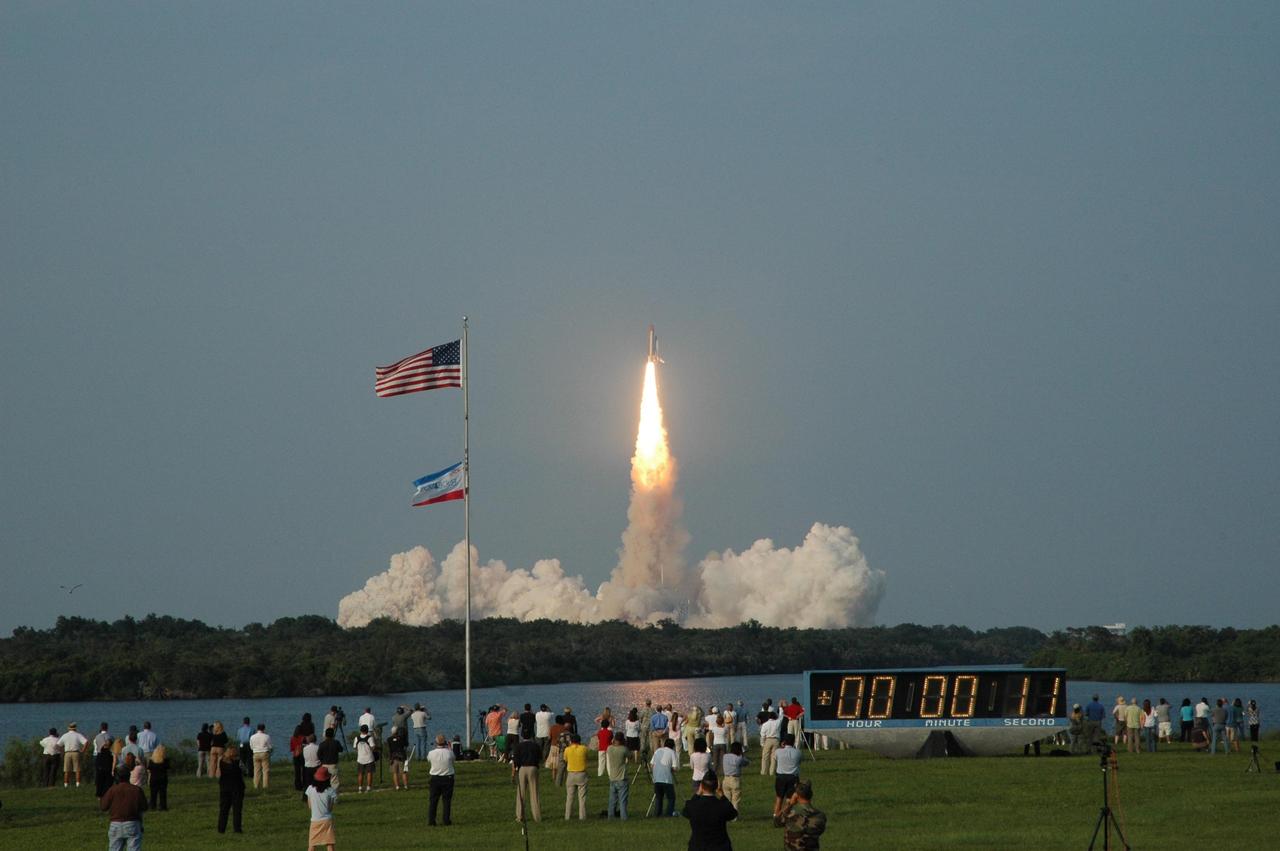
KENNEDY SPACE CENTER, FLA. -- Rising from clouds of smoke and steam, Space Shuttle Endeavour roars into the early evening sky as it lifts off Launch Pad 39A on time at 6:36 p.m. EDT on mission STS-118. The mission is the 22nd shuttle flight to the International Space Station. It will continue space station construction by delivering a third starboard truss segment, S5, and other payloads such as the SPACEHAB module and the external stowage platform 3. The 11-day mission may be extended to as many as 14 depending on the test of the Station-to-Shuttle Power Transfer System that will allow the docked shuttle to draw electrical power from the station and extend its visits to the orbiting lab. NASA/Todd Prough
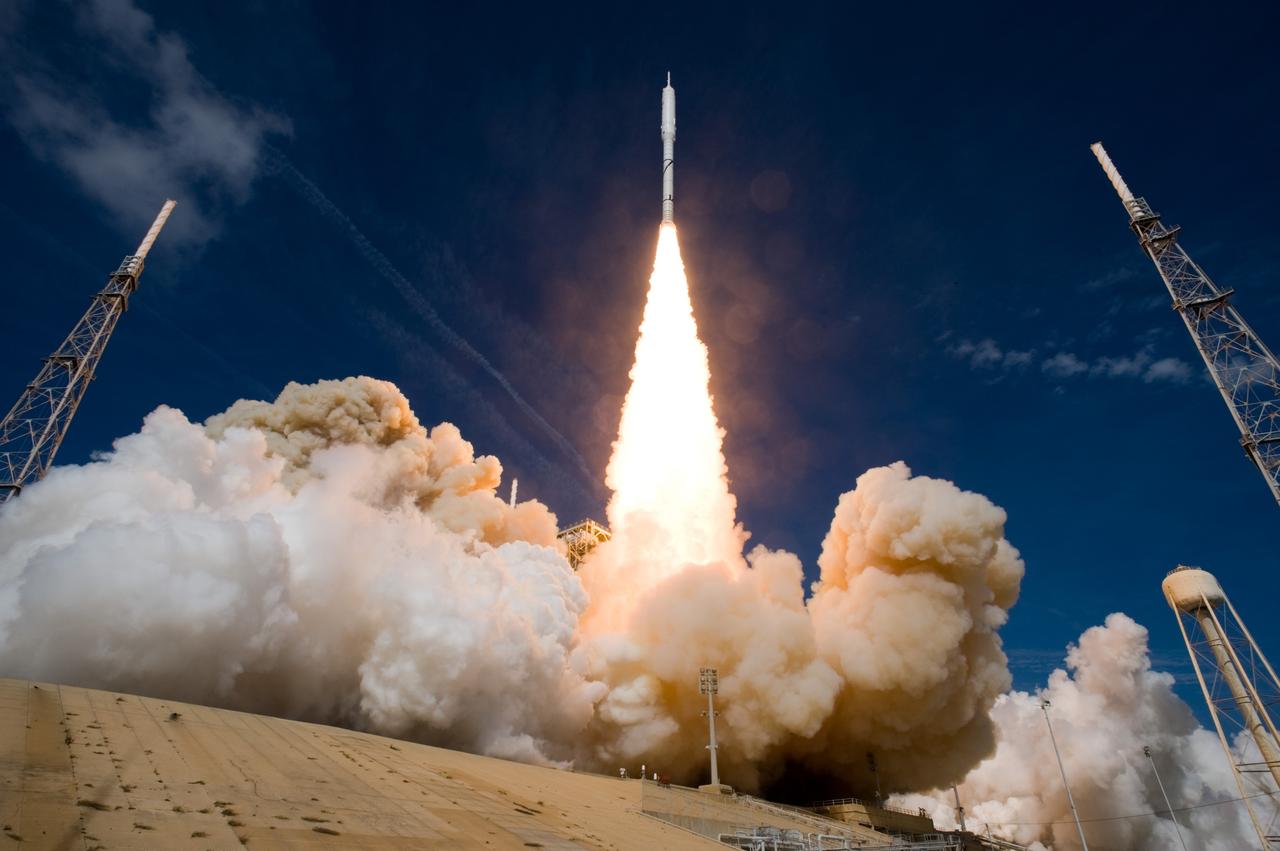
CAPE CANAVERAL, Fla. – Smoke engulfs Launch Pad 39B as the Ares I-X test rocket as it takes off from NASA's Kennedy Space Center in Florida at 11:30 a.m. EDT Oct. 28. NASA’s Constellation Program's 327-foot-tall rocket produces 2.96 million pounds of thrust at liftoff and reaches a speed of 100 mph in eight seconds. This was the first launch from Kennedy's pads of a vehicle other than the space shuttle since the Apollo Program's Saturn rockets were retired. The parts used to make the Ares I-X booster flew on 30 different shuttle missions ranging from STS-29 in 1989 to STS-106 in 2000. The data returned from more than 700 sensors throughout the rocket will be used to refine the design of future launch vehicles and bring NASA one step closer to reaching its exploration goals. For information on the Ares I-X vehicle and flight test, visit http://www.nasa.gov/aresIX.Photo credit: NASA/ Sandra Joseph and Kevin O'Connell
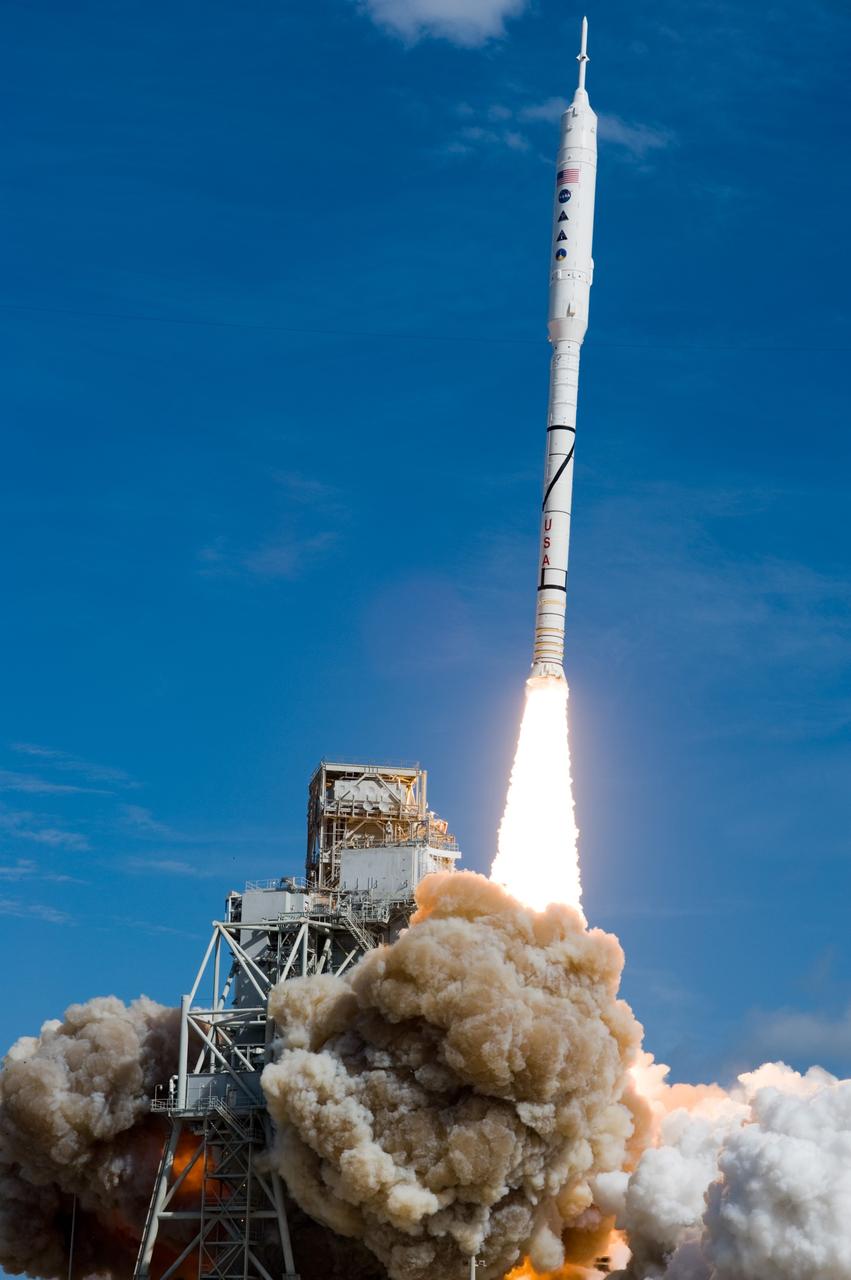
CAPE CANAVERAL, Fla. – Smoke and steam shoot from Launch Pad 39B at NASA's Kennedy Space Center in Florida as NASA’s Constellation Program's 327-foot-tall Ares I-X test rocket launches at 11:30 a.m. EDT Oct. 28. The rocket produces 2.96 million pounds of thrust at liftoff and reaches a speed of 100 mph in eight seconds. This was the first launch from Kennedy's pads of a vehicle other than the space shuttle since the Apollo Program's Saturn rockets were retired. The parts used to make the Ares I-X booster flew on 30 different shuttle missions ranging from STS-29 in 1989 to STS-106 in 2000. The data returned from more than 700 sensors throughout the rocket will be used to refine the design of future launch vehicles and bring NASA one step closer to reaching its exploration goals. For information on the Ares I-X vehicle and flight test, visit http://www.nasa.gov/aresIX. Photo credit: NASA/ Sandra Joseph and Kevin O'Connell
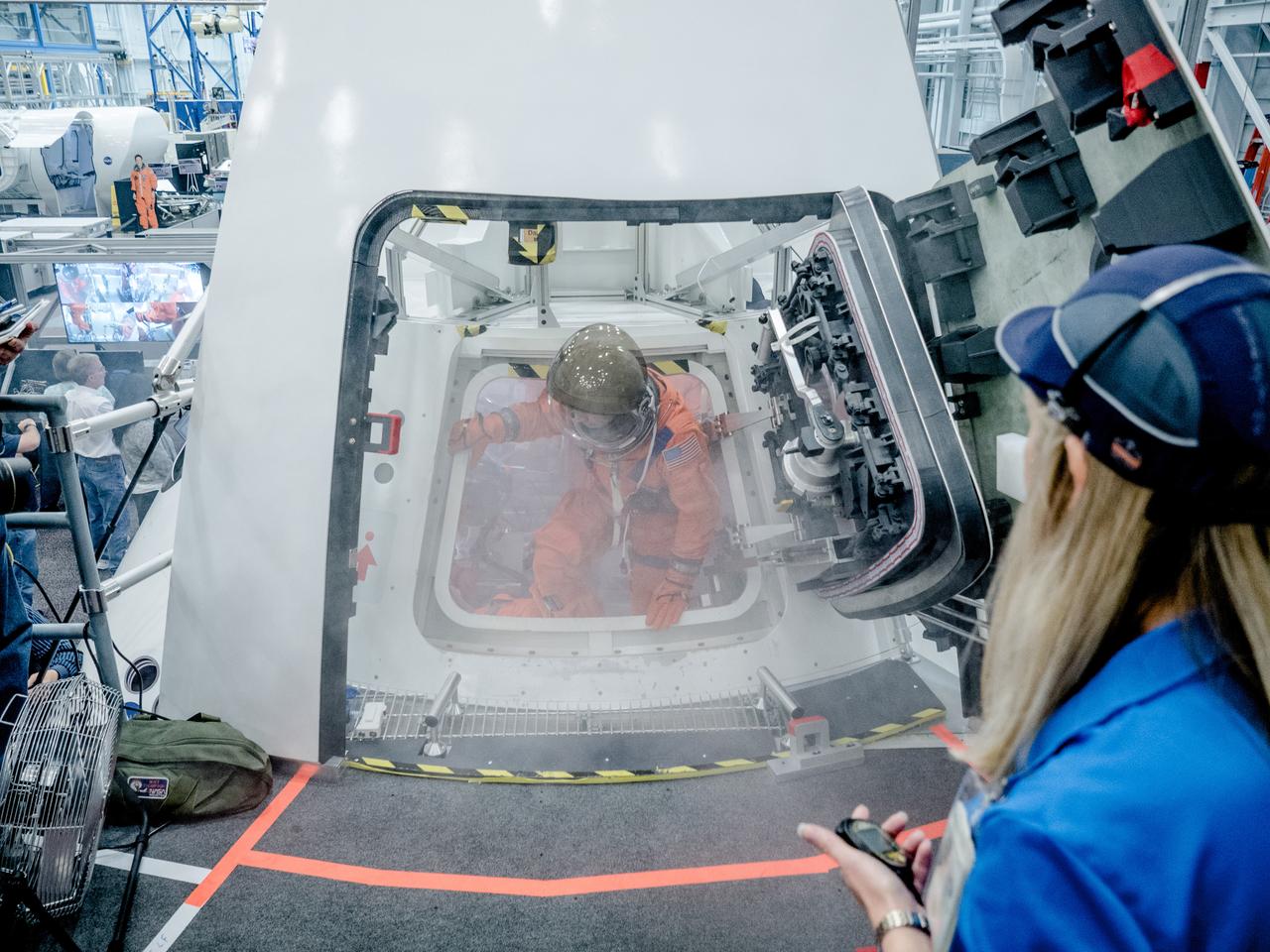
NASA is performing a series of tests to evaluate how astronauts and ground crew involved in final preparations before Orion missions will quickly get out of the spacecraft if an emergency were to occur on the pad prior to launch. In the hours before astronauts launch to space in Orion from NASA’s modernized spaceport in Florida in on the agency’s Space Launch System rocket, they will cross the Crew Access Arm 300 feet above the ground and climb inside the crew module with the assistance of ground personnel trained to help them strap into their seats and take care of last-minute needs. The testing is helping engineers evaluate hardware designs and establish procedures that would be used to get astronauts and ground crew out of the capsule as quickly as possible. Flight and ground crew are required to get out of Orion within two minutes to protect for a variety of failure scenarios that do not require the launch abort system to be activated, such as crew incapacitation, fire or the presence of toxins in the cabin. This testing took place the week of Oct. 30, 2017 using the Orion mockup in the Space Vehicle Mockup Facility at NASA’s Johnson Space Center in Houston. In this photo, engineers used fake smoke to imitate a scenario in which astronauts must exit the capsule when their vision is obscured. Markings on the ground indicate where the Crew Access Arm would be located and help guide the crew. This testing is a collaborative effort between the Orion and Ground Systems Development and Operations programs. Previous egress testing at Johnson and in the Gulf of Mexico has evaluated how crew will exit the spacecraft at the end of their missions..

NASA is performing a series of tests to evaluate how astronauts and ground crew involved in final preparations before Orion missions will quickly get out of the spacecraft if an emergency were to occur on the pad prior to launch. In the hours before astronauts launch to space in Orion from NASA’s modernized spaceport in Florida in on the agency’s Space Launch System rocket, they will cross the Crew Access Arm 300 feet above the ground and climb inside the crew module with the assistance of ground personnel trained to help them strap into their seats and take care of last-minute needs. The testing is helping engineers evaluate hardware designs and establish procedures that would be used to get astronauts and ground crew out of the capsule as quickly as possible. Flight and ground crew are required to get out of Orion within two minutes to protect for a variety of failure scenarios that do not require the launch abort system to be activated, such as crew incapacitation, fire or the presence of toxins in the cabin. This testing took place the week of Oct. 30, 2017 using the Orion mockup in the Space Vehicle Mockup Facility at NASA’s Johnson Space Center in Houston. In this photo, engineers used fake smoke to imitate a scenario in which astronauts must exit the capsule when their vision is obscured. Markings on the ground indicate where the Crew Access Arm would be located and help guide the crew. This testing is a collaborative effort between the Orion and Ground Systems Development and Operations programs. Previous egress testing at Johnson and in the Gulf of Mexico has evaluated how crew will exit the spacecraft at the end of their missions..
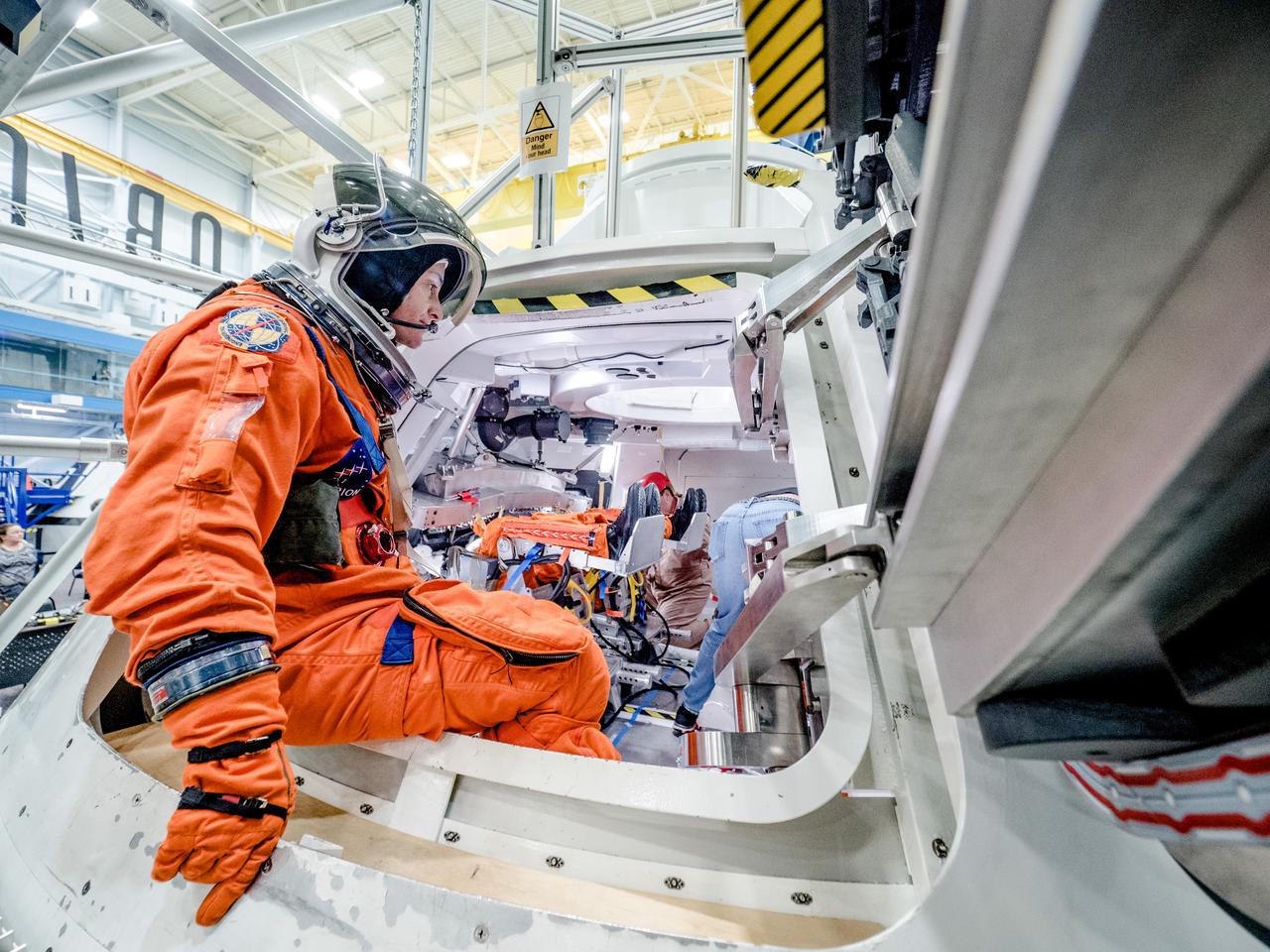
NASA is performing a series of tests to evaluate how astronauts and ground crew involved in final preparations before Orion missions will quickly get out of the spacecraft if an emergency were to occur on the pad prior to launch. In the hours before astronauts launch to space in Orion from NASA’s modernized spaceport in Florida in on the agency’s Space Launch System rocket, they will cross the Crew Access Arm 300 feet above the ground and climb inside the crew module with the assistance of ground personnel trained to help them strap into their seats and take care of last-minute needs. The testing is helping engineers evaluate hardware designs and establish procedures that would be used to get astronauts and ground crew out of the capsule as quickly as possible. Flight and ground crew are required to get out of Orion within two minutes to protect for a variety of failure scenarios that do not require the launch abort system to be activated, such as crew incapacitation, fire or the presence of toxins in the cabin. This testing took place the week of Oct. 30, 2017 using the Orion mockup in the Space Vehicle Mockup Facility at NASA’s Johnson Space Center in Houston. In this photo, engineers used fake smoke to imitate a scenario in which astronauts must exit the capsule when their vision is obscured. Markings on the ground indicate where the Crew Access Arm would be located and help guide the crew. This testing is a collaborative effort between the Orion and Ground Systems Development and Operations programs. Previous egress testing at Johnson and in the Gulf of Mexico has evaluated how crew will exit the spacecraft at the end of their missions..
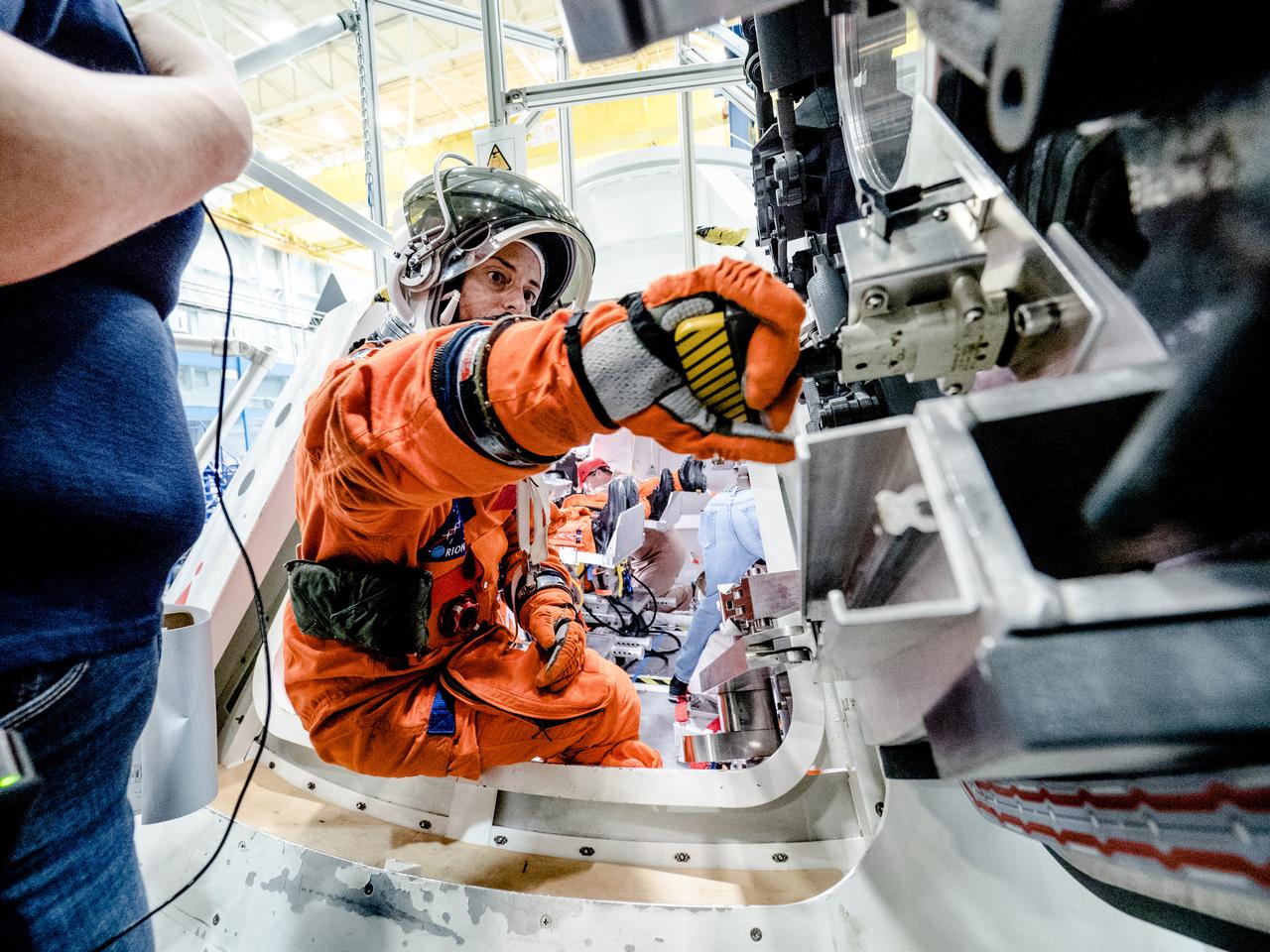
NASA is performing a series of tests to evaluate how astronauts and ground crew involved in final preparations before Orion missions will quickly get out of the spacecraft if an emergency were to occur on the pad prior to launch. In the hours before astronauts launch to space in Orion from NASA’s modernized spaceport in Florida in on the agency’s Space Launch System rocket, they will cross the Crew Access Arm 300 feet above the ground and climb inside the crew module with the assistance of ground personnel trained to help them strap into their seats and take care of last-minute needs. The testing is helping engineers evaluate hardware designs and establish procedures that would be used to get astronauts and ground crew out of the capsule as quickly as possible. Flight and ground crew are required to get out of Orion within two minutes to protect for a variety of failure scenarios that do not require the launch abort system to be activated, such as crew incapacitation, fire or the presence of toxins in the cabin. This testing took place the week of Oct. 30, 2017 using the Orion mockup in the Space Vehicle Mockup Facility at NASA’s Johnson Space Center in Houston. In this photo, engineers used fake smoke to imitate a scenario in which astronauts must exit the capsule when their vision is obscured. Markings on the ground indicate where the Crew Access Arm would be located and help guide the crew. This testing is a collaborative effort between the Orion and Ground Systems Development and Operations programs. Previous egress testing at Johnson and in the Gulf of Mexico has evaluated how crew will exit the spacecraft at the end of their missions..

NASA is performing a series of tests to evaluate how astronauts and ground crew involved in final preparations before Orion missions will quickly get out of the spacecraft if an emergency were to occur on the pad prior to launch. In the hours before astronauts launch to space in Orion from NASA’s modernized spaceport in Florida in on the agency’s Space Launch System rocket, they will cross the Crew Access Arm 300 feet above the ground and climb inside the crew module with the assistance of ground personnel trained to help them strap into their seats and take care of last-minute needs. The testing is helping engineers evaluate hardware designs and establish procedures that would be used to get astronauts and ground crew out of the capsule as quickly as possible. Flight and ground crew are required to get out of Orion within two minutes to protect for a variety of failure scenarios that do not require the launch abort system to be activated, such as crew incapacitation, fire or the presence of toxins in the cabin. This testing took place the week of Oct. 30, 2017 using the Orion mockup in the Space Vehicle Mockup Facility at NASA’s Johnson Space Center in Houston. In this photo, engineers used fake smoke to imitate a scenario in which astronauts must exit the capsule when their vision is obscured. Markings on the ground indicate where the Crew Access Arm would be located and help guide the crew. This testing is a collaborative effort between the Orion and Ground Systems Development and Operations programs. Previous egress testing at Johnson and in the Gulf of Mexico has evaluated how crew will exit the spacecraft at the end of their missions..
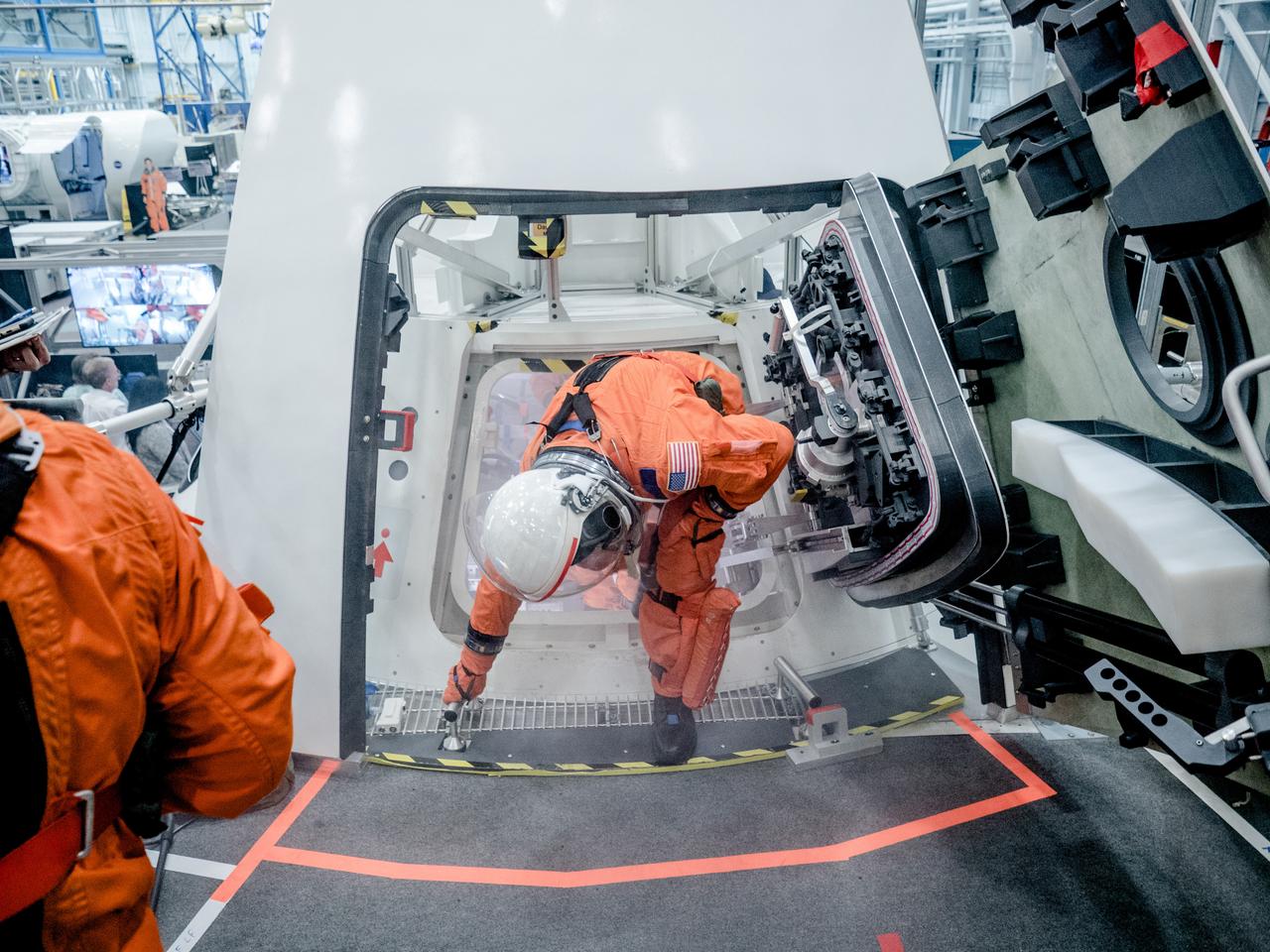
NASA is performing a series of tests to evaluate how astronauts and ground crew involved in final preparations before Orion missions will quickly get out of the spacecraft if an emergency were to occur on the pad prior to launch. In the hours before astronauts launch to space in Orion from NASA’s modernized spaceport in Florida in on the agency’s Space Launch System rocket, they will cross the Crew Access Arm 300 feet above the ground and climb inside the crew module with the assistance of ground personnel trained to help them strap into their seats and take care of last-minute needs. The testing is helping engineers evaluate hardware designs and establish procedures that would be used to get astronauts and ground crew out of the capsule as quickly as possible. Flight and ground crew are required to get out of Orion within two minutes to protect for a variety of failure scenarios that do not require the launch abort system to be activated, such as crew incapacitation, fire or the presence of toxins in the cabin. This testing took place the week of Oct. 30, 2017 using the Orion mockup in the Space Vehicle Mockup Facility at NASA’s Johnson Space Center in Houston. In this photo, engineers used fake smoke to imitate a scenario in which astronauts must exit the capsule when their vision is obscured. Markings on the ground indicate where the Crew Access Arm would be located and help guide the crew. This testing is a collaborative effort between the Orion and Ground Systems Development and Operations programs. Previous egress testing at Johnson and in the Gulf of Mexico has evaluated how crew will exit the spacecraft at the end of their missions..
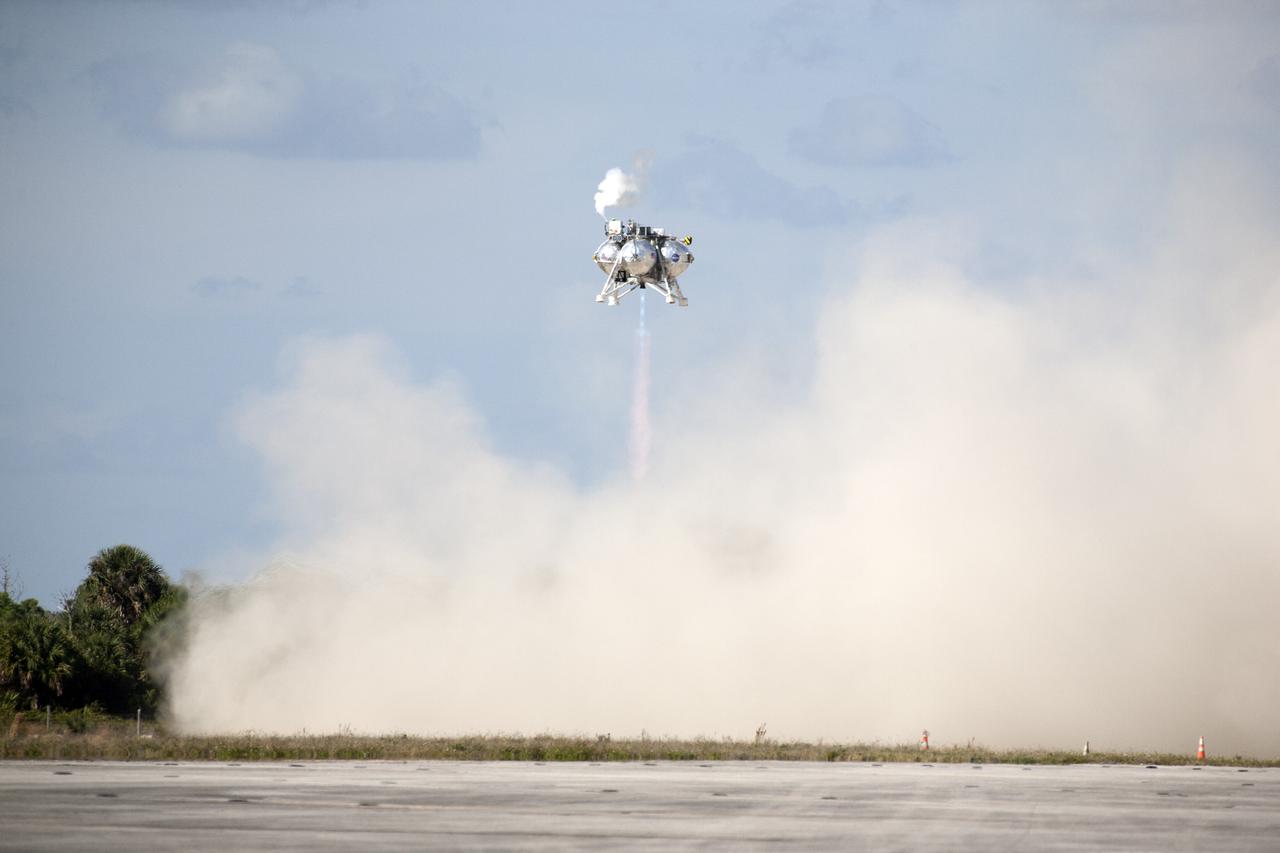
CAPE CANAVERAL, Fla. – The first free flight of the Project Morpheus prototype lander was conducted at the Shuttle Landing Facility at NASA’s Kennedy Space Center in Florida. Smoke fills the air as the engine fires and the Morpheus lander launched from the ground over a flame trench. During the 54-second test, it ascended approximately 50 feet, and hovered for about 15 seconds. The lander then flew forward and landed on its pad about 23 feet from the launch point. Testing of the prototype lander was performed at NASA’s Johnson Space Center in Houston in preparation for tethered and free flight testing at Kennedy. Project Morpheus integrates NASA’s automated landing and hazard avoidance technology, or ALHAT, with an engine that runs on liquid oxygen and methane, or green propellants, into a fully-operational lander that could deliver cargo to asteroids and other planetary surfaces. The landing facility will provide the lander with the kind of field necessary for realistic testing, complete with rocks, craters and hazards to avoid. Morpheus’ ALHAT payload allows it to navigate to clear landing sites amidst rocks, craters and other hazards during its descent. Project Morpheus is being managed under the Advanced Exploration Systems, or AES, Division in NASA’s Human Exploration and Operations Mission Directorate. The efforts in AES pioneer new approaches for rapidly developing prototype systems, demonstrating key capabilities and validating operational concepts for future human missions beyond Earth orbit. For more information on Project Morpheus, visit http://morpheuslander.jsc.nasa.gov. Photo credit: NASA/Kim Shiflett
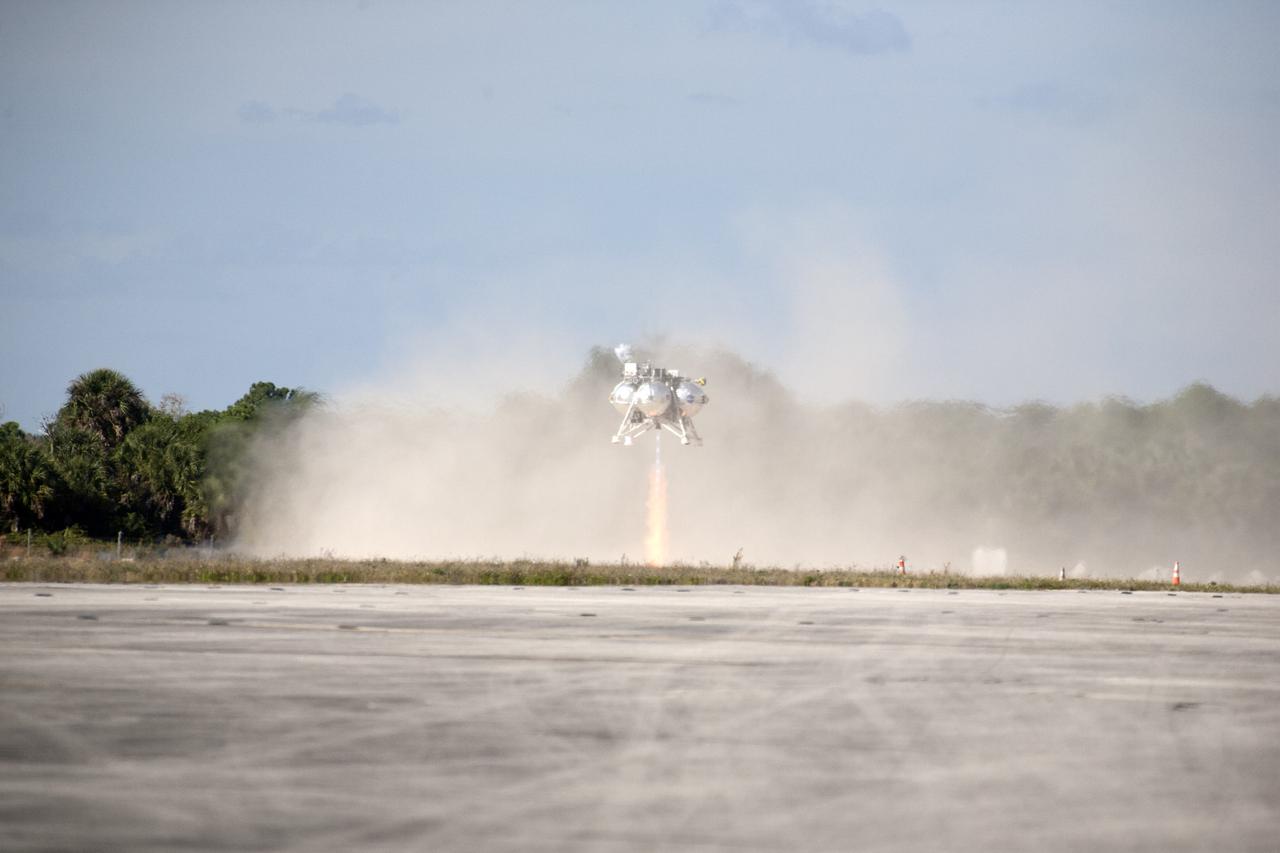
CAPE CANAVERAL, Fla. – The first free flight of the Project Morpheus prototype lander was conducted at the Shuttle Landing Facility at NASA’s Kennedy Space Center in Florida. Smoke filled the air as the engine fired and the Morpheus lander launched from the ground over a flame trench. During the 54-second test, it ascended approximately 50 feet, and hovered for about 15 seconds. The lander then flew forward and landed on its pad about 23 feet from the launch point. Testing of the prototype lander was performed at NASA’s Johnson Space Center in Houston in preparation for tethered and free flight testing at Kennedy. Project Morpheus integrates NASA’s automated landing and hazard avoidance technology, or ALHAT, with an engine that runs on liquid oxygen and methane, or green propellants, into a fully-operational lander that could deliver cargo to asteroids and other planetary surfaces. The landing facility will provide the lander with the kind of field necessary for realistic testing, complete with rocks, craters and hazards to avoid. Morpheus’ ALHAT payload allows it to navigate to clear landing sites amidst rocks, craters and other hazards during its descent. Project Morpheus is being managed under the Advanced Exploration Systems, or AES, Division in NASA’s Human Exploration and Operations Mission Directorate. The efforts in AES pioneer new approaches for rapidly developing prototype systems, demonstrating key capabilities and validating operational concepts for future human missions beyond Earth orbit. For more information on Project Morpheus, visit http://morpheuslander.jsc.nasa.gov. Photo credit: NASA/Kim Shiflett

CAPE CANAVERAL, Fla. – The first free flight of the Project Morpheus prototype lander was conducted at the Shuttle Landing Facility at NASA’s Kennedy Space Center in Florida. Smoke fills the air as the engine fires and the Morpheus lander launched from the ground over a flame trench. During the 54-second test, it ascended approximately 50 feet, and hovered for about 15 seconds. The lander then flew forward and landed on its pad about 23 feet from the launch point. Testing of the prototype lander was performed at NASA’s Johnson Space Center in Houston in preparation for tethered and free flight testing at Kennedy. Project Morpheus integrates NASA’s automated landing and hazard avoidance technology, or ALHAT, with an engine that runs on liquid oxygen and methane, or green propellants, into a fully-operational lander that could deliver cargo to asteroids and other planetary surfaces. The landing facility will provide the lander with the kind of field necessary for realistic testing, complete with rocks, craters and hazards to avoid. Morpheus’ ALHAT payload allows it to navigate to clear landing sites amidst rocks, craters and other hazards during its descent. Project Morpheus is being managed under the Advanced Exploration Systems, or AES, Division in NASA’s Human Exploration and Operations Mission Directorate. The efforts in AES pioneer new approaches for rapidly developing prototype systems, demonstrating key capabilities and validating operational concepts for future human missions beyond Earth orbit. For more information on Project Morpheus, visit http://morpheuslander.jsc.nasa.gov. Photo credit: NASA/Kim Shiflett
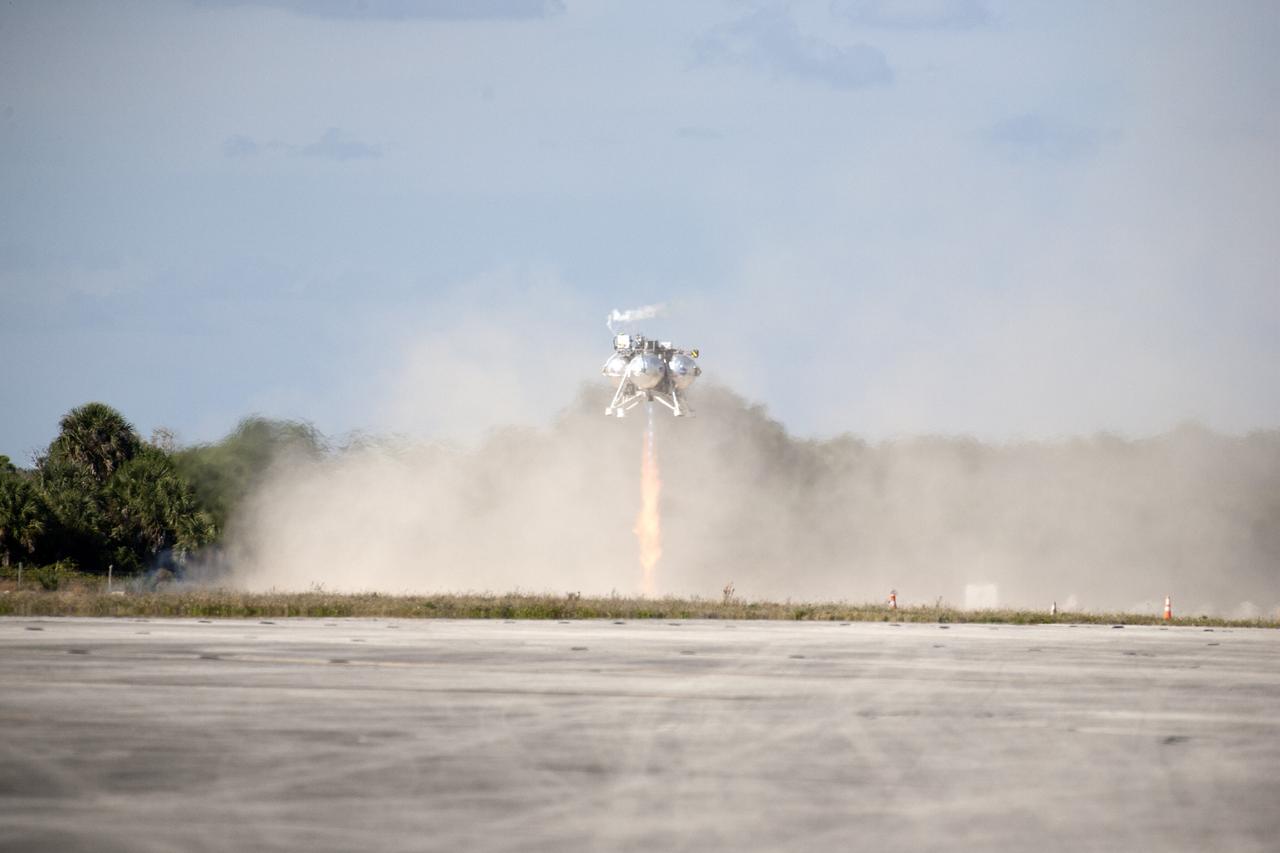
CAPE CANAVERAL, Fla. – The first free flight of the Project Morpheus prototype lander was conducted at the Shuttle Landing Facility at NASA’s Kennedy Space Center in Florida. Smoke filled the air as the engine fired and the Morpheus lander launched from the ground over a flame trench. During the 54-second test, it ascended approximately 50 feet, and hovered for about 15 seconds. The lander then flew forward and landed on its pad about 23 feet from the launch point. Testing of the prototype lander was performed at NASA’s Johnson Space Center in Houston in preparation for tethered and free flight testing at Kennedy. Project Morpheus integrates NASA’s automated landing and hazard avoidance technology, or ALHAT, with an engine that runs on liquid oxygen and methane, or green propellants, into a fully-operational lander that could deliver cargo to asteroids and other planetary surfaces. The landing facility will provide the lander with the kind of field necessary for realistic testing, complete with rocks, craters and hazards to avoid. Morpheus’ ALHAT payload allows it to navigate to clear landing sites amidst rocks, craters and other hazards during its descent. Project Morpheus is being managed under the Advanced Exploration Systems, or AES, Division in NASA’s Human Exploration and Operations Mission Directorate. The efforts in AES pioneer new approaches for rapidly developing prototype systems, demonstrating key capabilities and validating operational concepts for future human missions beyond Earth orbit. For more information on Project Morpheus, visit http://morpheuslander.jsc.nasa.gov. Photo credit: NASA/Kim Shiflett
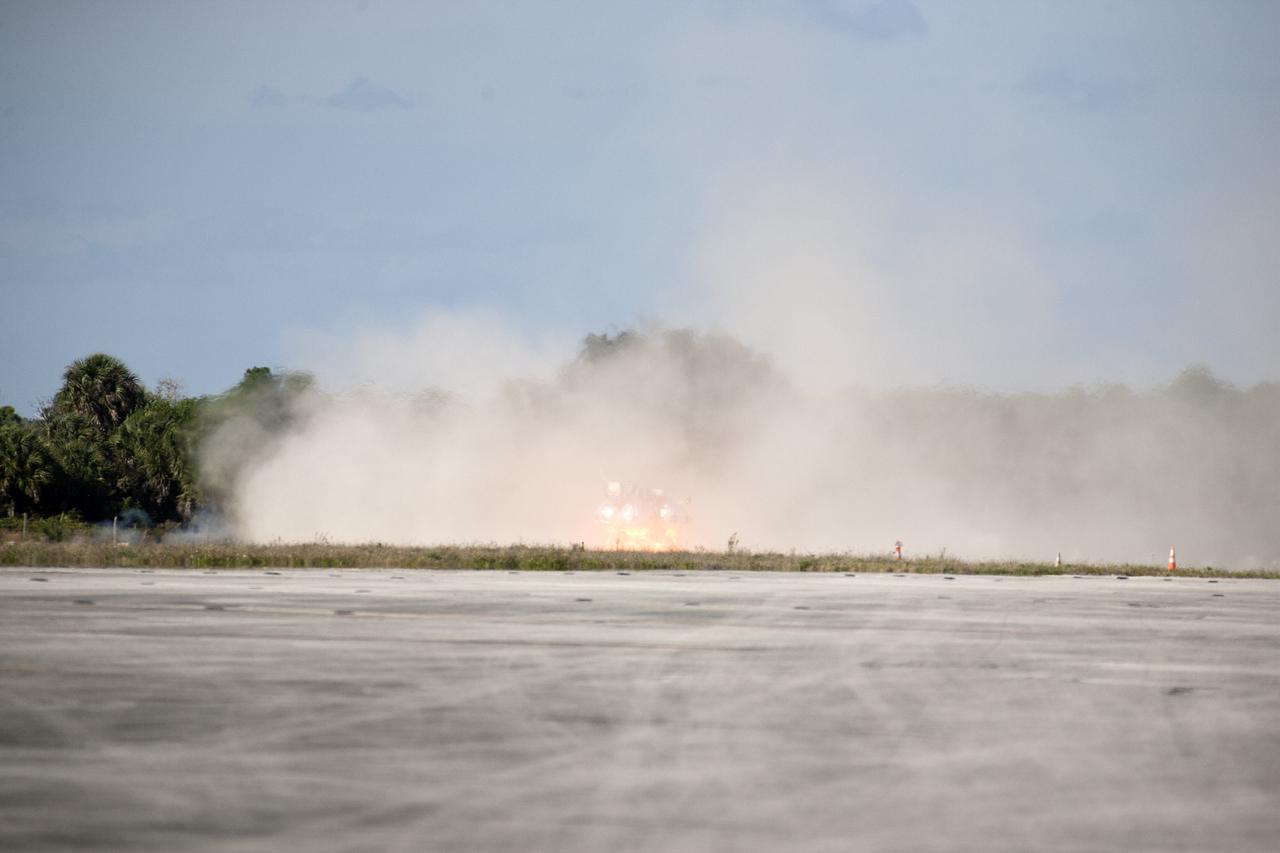
CAPE CANAVERAL, Fla. – The first free flight of the Project Morpheus prototype lander was conducted at the Shuttle Landing Facility at NASA’s Kennedy Space Center in Florida. Smoke filled the air as the engine fired and the Morpheus lander launched from the ground over a flame trench. During the 54-second test, it ascended approximately 50 feet, and hovered for about 15 seconds. The lander then flew forward and landed on its pad about 23 feet from the launch point. Testing of the prototype lander was performed at NASA’s Johnson Space Center in Houston in preparation for tethered and free flight testing at Kennedy. Project Morpheus integrates NASA’s automated landing and hazard avoidance technology, or ALHAT, with an engine that runs on liquid oxygen and methane, or green propellants, into a fully-operational lander that could deliver cargo to asteroids and other planetary surfaces. The landing facility will provide the lander with the kind of field necessary for realistic testing, complete with rocks, craters and hazards to avoid. Morpheus’ ALHAT payload allows it to navigate to clear landing sites amidst rocks, craters and other hazards during its descent. Project Morpheus is being managed under the Advanced Exploration Systems, or AES, Division in NASA’s Human Exploration and Operations Mission Directorate. The efforts in AES pioneer new approaches for rapidly developing prototype systems, demonstrating key capabilities and validating operational concepts for future human missions beyond Earth orbit. For more information on Project Morpheus, visit http://morpheuslander.jsc.nasa.gov. Photo credit: NASA/Kim Shiflett
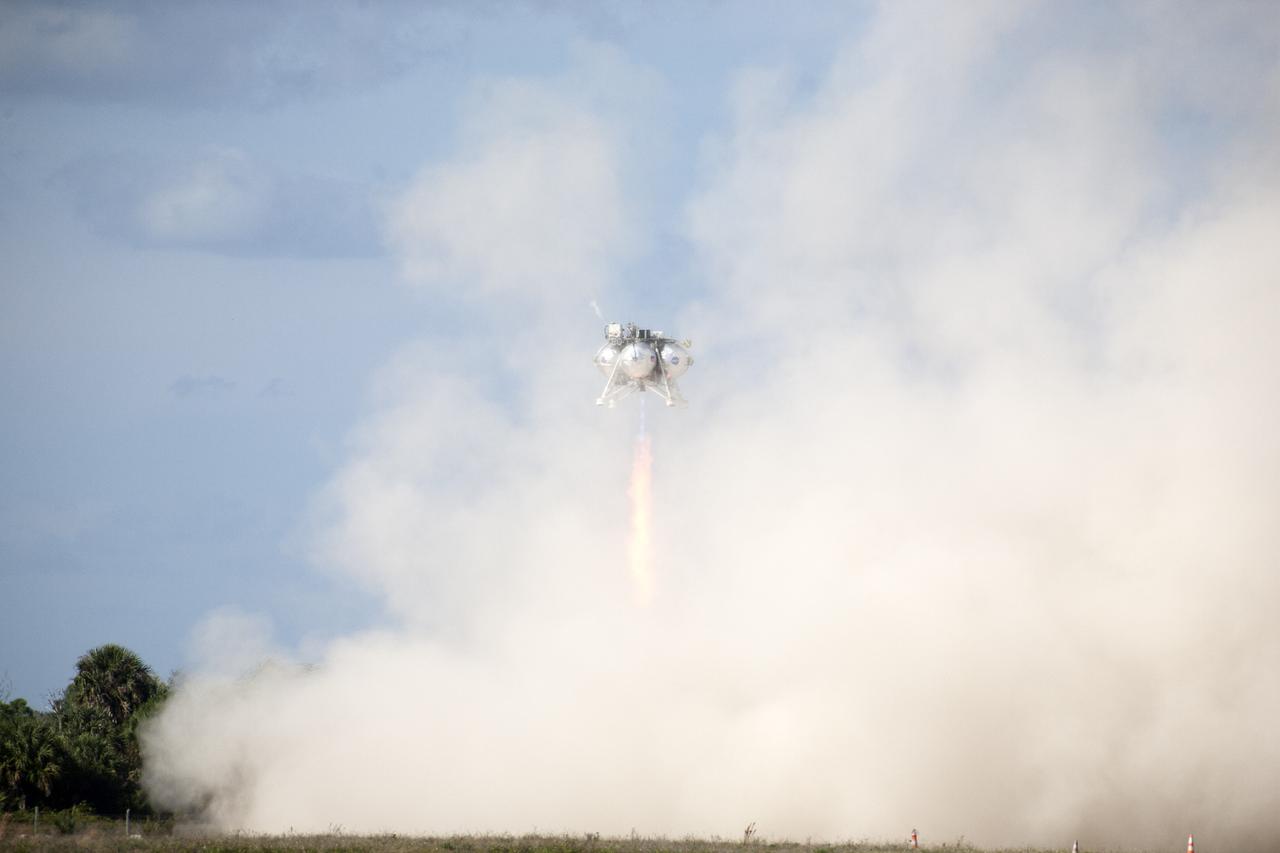
CAPE CANAVERAL, Fla. – The first free flight of the Project Morpheus prototype lander was conducted at the Shuttle Landing Facility at NASA’s Kennedy Space Center in Florida. Smoke fills the air as the engine fires and the Morpheus lander launched from the ground over a flame trench. During the 54-second test, it ascended approximately 50 feet, and hovered for about 15 seconds. The lander then flew forward and landed on its pad about 23 feet from the launch point. Testing of the prototype lander was performed at NASA’s Johnson Space Center in Houston in preparation for tethered and free flight testing at Kennedy. Project Morpheus integrates NASA’s automated landing and hazard avoidance technology, or ALHAT, with an engine that runs on liquid oxygen and methane, or green propellants, into a fully-operational lander that could deliver cargo to asteroids and other planetary surfaces. The landing facility will provide the lander with the kind of field necessary for realistic testing, complete with rocks, craters and hazards to avoid. Morpheus’ ALHAT payload allows it to navigate to clear landing sites amidst rocks, craters and other hazards during its descent. Project Morpheus is being managed under the Advanced Exploration Systems, or AES, Division in NASA’s Human Exploration and Operations Mission Directorate. The efforts in AES pioneer new approaches for rapidly developing prototype systems, demonstrating key capabilities and validating operational concepts for future human missions beyond Earth orbit. For more information on Project Morpheus, visit http://morpheuslander.jsc.nasa.gov. Photo credit: NASA/Kim Shiflett
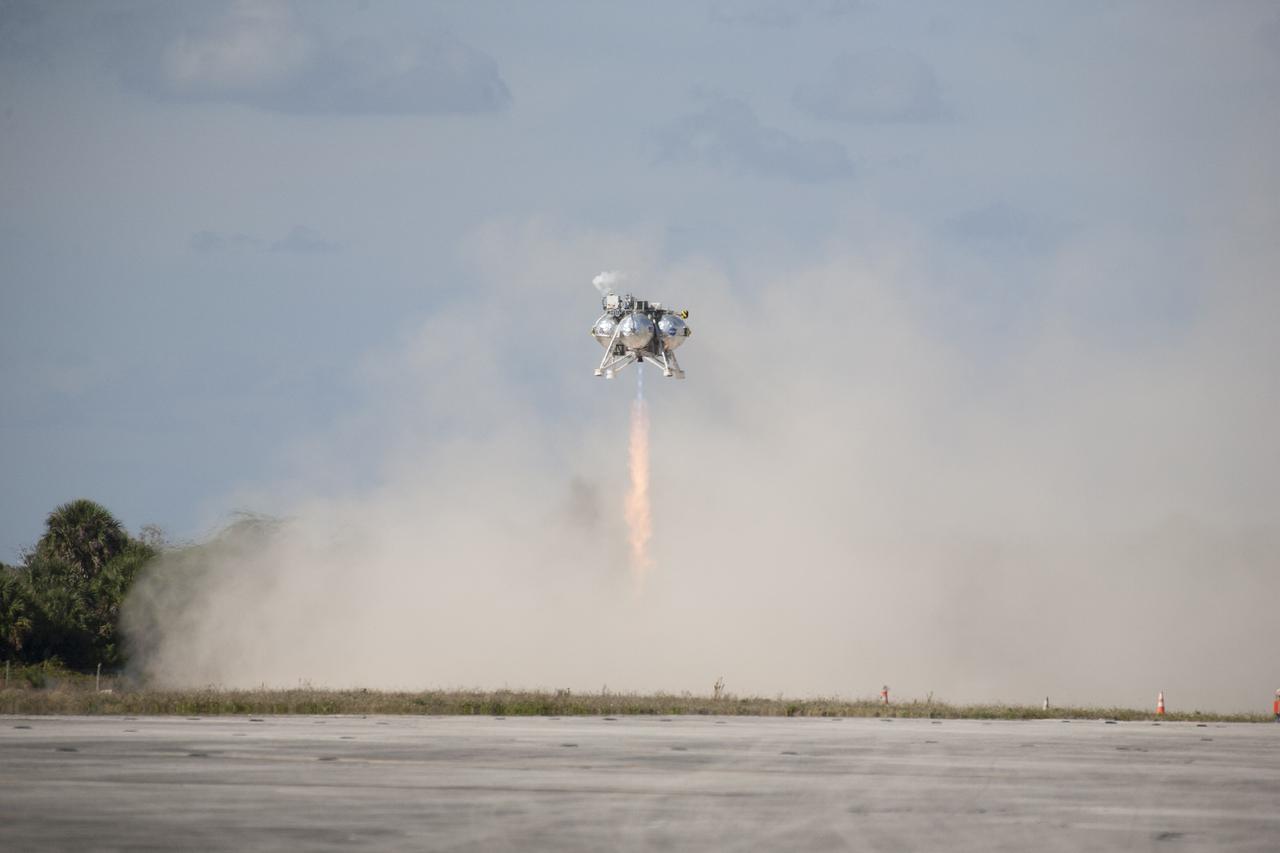
CAPE CANAVERAL, Fla. – The first free flight of the Project Morpheus prototype lander was conducted at the Shuttle Landing Facility at NASA’s Kennedy Space Center in Florida. Smoke fills the air as the engine fires and the Morpheus lander launched from the ground over a flame trench. During the 54-second test, it ascended approximately 50 feet, and hovered for about 15 seconds. The lander then flew forward and landed on its pad about 23 feet from the launch point. Testing of the prototype lander was performed at NASA’s Johnson Space Center in Houston in preparation for tethered and free flight testing at Kennedy. Project Morpheus integrates NASA’s automated landing and hazard avoidance technology, or ALHAT, with an engine that runs on liquid oxygen and methane, or green propellants, into a fully-operational lander that could deliver cargo to asteroids and other planetary surfaces. The landing facility will provide the lander with the kind of field necessary for realistic testing, complete with rocks, craters and hazards to avoid. Morpheus’ ALHAT payload allows it to navigate to clear landing sites amidst rocks, craters and other hazards during its descent. Project Morpheus is being managed under the Advanced Exploration Systems, or AES, Division in NASA’s Human Exploration and Operations Mission Directorate. The efforts in AES pioneer new approaches for rapidly developing prototype systems, demonstrating key capabilities and validating operational concepts for future human missions beyond Earth orbit. For more information on Project Morpheus, visit http://morpheuslander.jsc.nasa.gov. Photo credit: NASA/Kim Shiflett

(Nikon camera D1 test)With smoke and steam billowing around it, Space Shuttle Discovery hurtles into the clear night sky in a blaze of light. The successful liftoff occurred on time at 7:50:00.069 EST from Launch Pad 39B on mission STS-103. On board are Commander Curtis L. Brown Jr., Pilot Scott J. Kelly and Mission Specialists Steven L. Smith, C. Michael Foale (Ph.D.), John M. Grunsfeld (Ph.D.), Claude Nicollier of Switzerland and Jean-François Clervoy of France. Nicollier and Clervoy are with the European Space Agency. STS-103 is a Hubble Servicing Mission, with three planned space walks designed to install new equipment and replace old. The primary objective is to replace the gyroscopes that make up the three Rate Sensor Units. Extravehicular activities include installing a new computer, changing out one of the Fine Guidance Sensors, replacing a tape recorder with a new solid state recorder, and installing a voltage/temperature improvement kit, and begin repairing the insulation on the telescope's outer surface. After the 7-day, 21-hour mission, Discovery is expected to land at KSC Monday, Dec. 27, at about 5:24 p.m. EST. This is the 27th flight of Discovery and the 96th mission in the Space Shuttle Program. It is the third launch at Kennedy Space Center in 1999
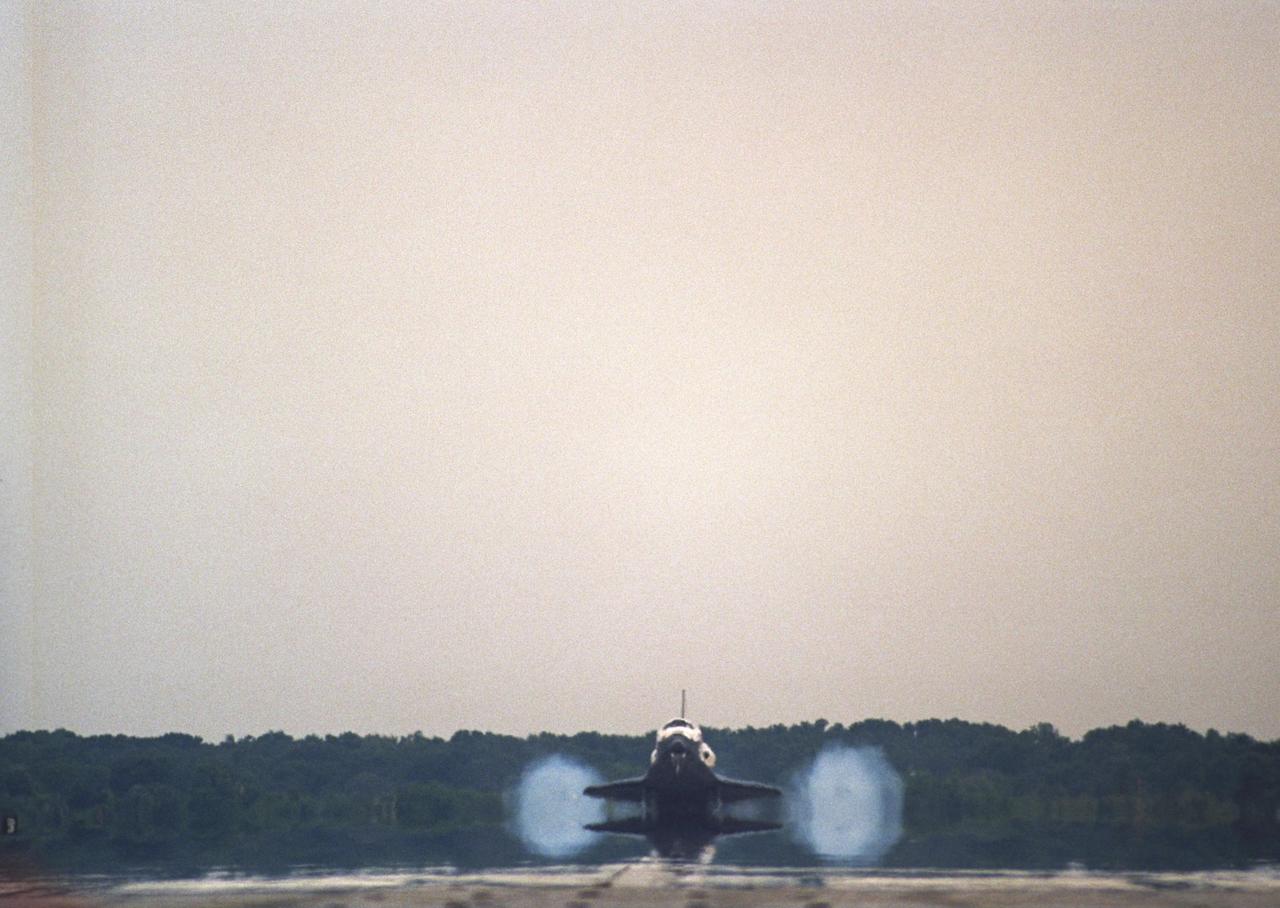
KENNEDY SPACE CENTER, FLA. - Vapor trails from Discovery's wing tips look like balls of smoke as the orbiter touches down on Runway 15 at NASA's Shuttle Landing Facility, completing mission STS-121 to the International Space Station. At touchdown -- nominally about 2,500 ft. beyond the runway threshold -- the orbiter is traveling at a speed ranging from 213 to 226 mph. Discovery traveled 5.3 million miles, landing on orbit 202. Mission elapsed time was 12 days, 18 hours, 37 minutes and 54 seconds. Main gear touchdown occurred on time at 9:14:43 EDT. Wheel stop was at 9:15:49 EDT. The returning crew members aboard are Commander Steven Lindsey, Pilot Mark Kelly and Mission Specialists Piers Sellers, Michael Fossum, Lisa Nowak and Stephanie Wilson. Mission Specialist Thomas Reiter, who launched with the crew on July 4, remained on the station to join the Expedition 13 crew there. The landing is the 62nd at Kennedy Space Center and the 32nd for Discovery. During the mission, the STS-121 crew tested new equipment and procedures to improve shuttle safety, and delivered supplies and made repairs to the International Space Station. Photo credit: NASA/Tony Gray & Tim Powers

(Nikon camera D1 test)Amid billows of smoke and steam, Space Shuttle Discovery lights up the clear night sky as it lifts off on time at 7:50:00.069 EST from Launch Pad 39B on mission STS-103. On board are Commander Curtis L. Brown Jr., Pilot Scott J. Kelly and Mission Specialists Steven L. Smith, C. Michael Foale (Ph.D.), John M. Grunsfeld (Ph.D.), Claude Nicollier of Switzerland and Jean-François Clervoy of France. Nicollier and Clervoy are with the European Space Agency. STS-103 is a Hubble Servicing Mission, with three planned space walks designed to install new equipment and replace old. The primary objective is to replace the gyroscopes that make up the three Rate Sensor Units. Extravehicular activities include installing a new computer, changing out one of the Fine Guidance Sensors, replacing a tape recorder with a new solid state recorder, and installing a voltage/temperature improvement kit, and begin repairing the insulation on the telescope's outer surface. After the 7-day, 21-hour mission, Discovery is expected to land at KSC Monday, Dec. 27, at about 5:24 p.m. EST. This is the 27th flight of Discovery and the 96th mission in the Space Shuttle Program. It is the third launch at Kennedy Space Center in 1999
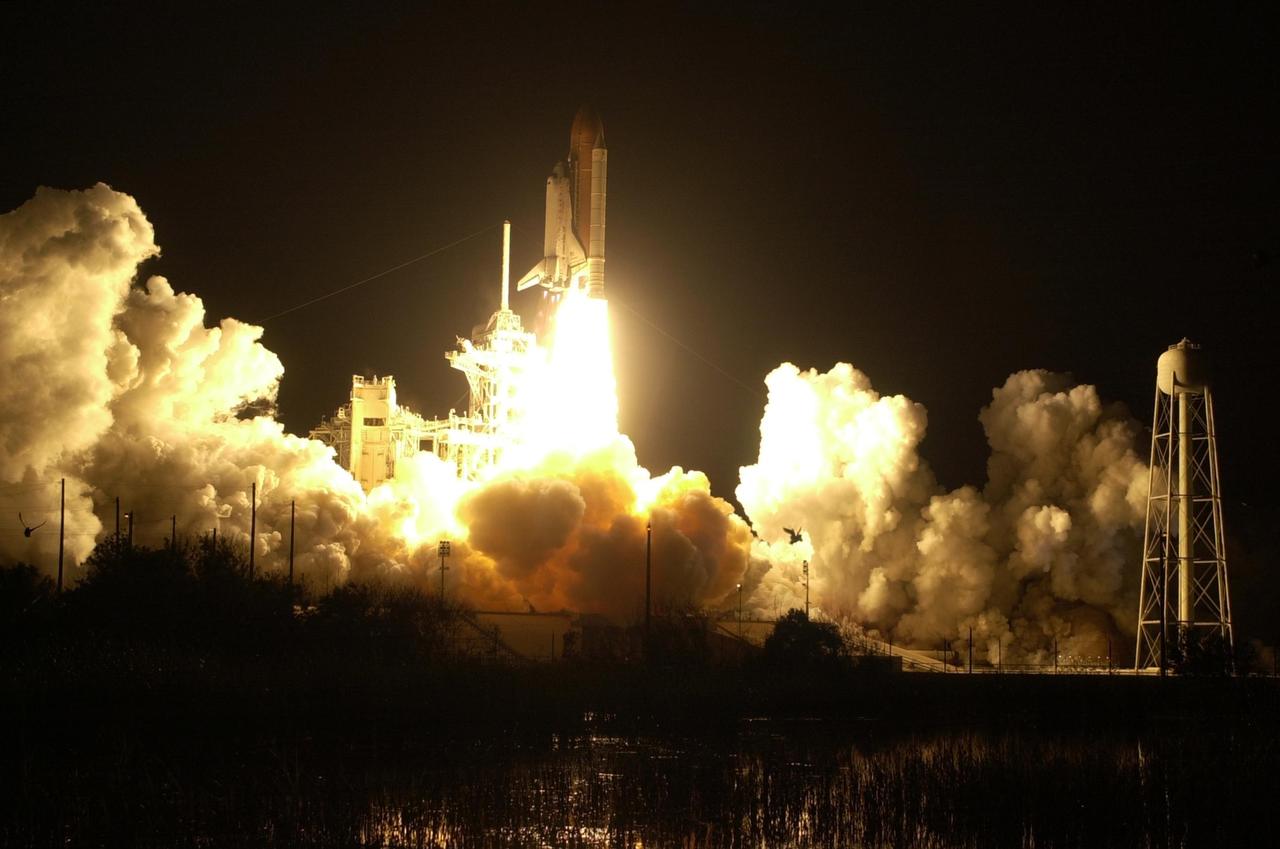
(Nikon camera D1 test)The blazing light of Space Shuttle Discovery's launch turns night into day at Launch Pad 39B as billows of smoke and steam rise behind it. The successful liftoff occurred on time at 7:50:00.069 EST from Launch Pad 39B on mission STS-103. On board are Commander Curtis L. Brown Jr., Pilot Scott J. Kelly and Mission Specialists Steven L. Smith, C. Michael Foale (Ph.D.), John M. Grunsfeld (Ph.D.), Claude Nicollier of Switzerland and Jean-François Clervoy of France. Nicollier and Clervoy are with the European Space Agency. STS-103 is a Hubble Servicing Mission, with three planned space walks designed to install new equipment and replace old. The primary objective is to replace the gyroscopes that make up the three Rate Sensor Units. Extravehicular activities include installing a new computer, changing out one of the Fine Guidance Sensors, replacing a tape recorder with a new solid state recorder, and installing a voltage/temperature improvement kit, and begin repairing the insulation on the telescope's outer surface. After the 7-day, 21-hour mission, Discovery is expected to land at KSC Monday, Dec. 27, at about 5:24 p.m. EST. This is the 27th flight of Discovery and the 96th mission in the Space Shuttle Program. It is the third launch at Kennedy Space Center in 1999
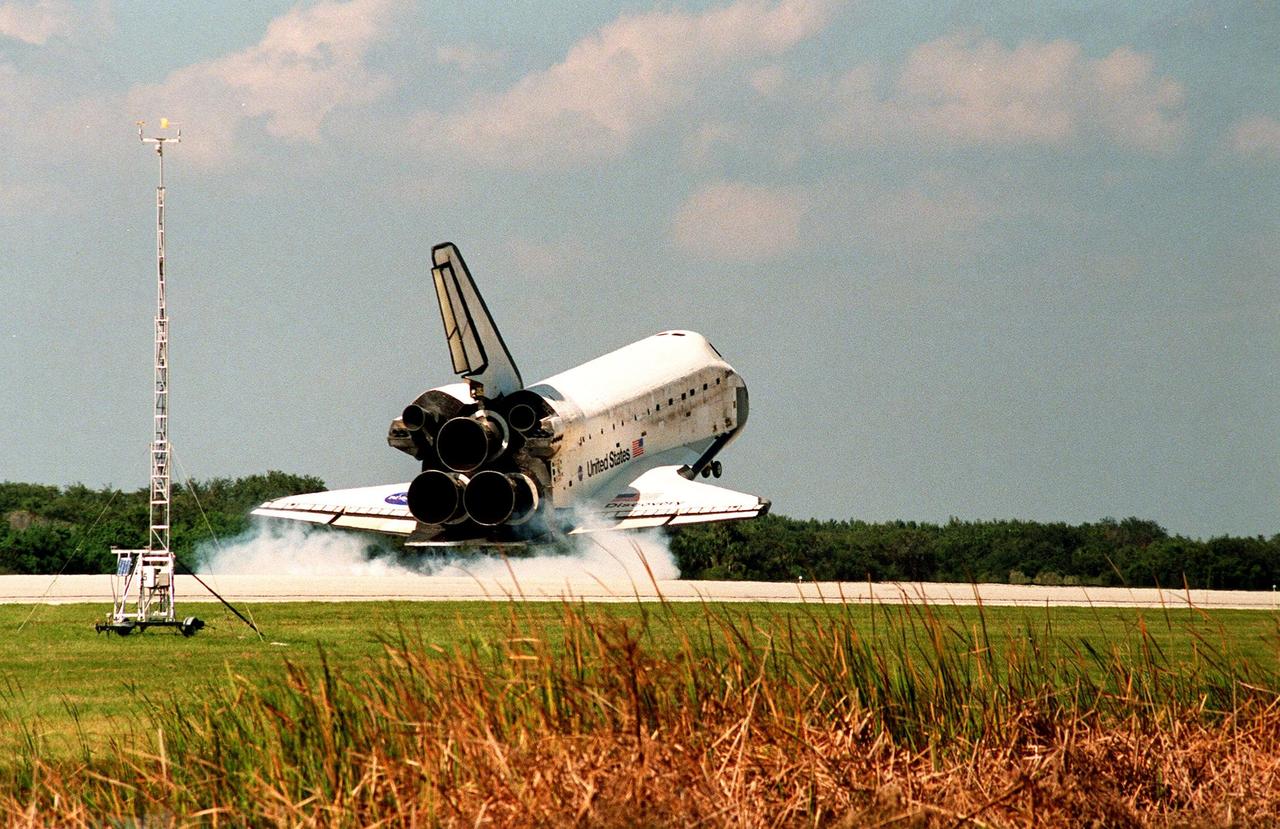
Orbiter Discovery touches down in a cloud of smoke on runway 33 at the Shuttle Landing Facility. Main gear touchdown was at 12:04 p.m. EST, landing on orbit 135. Discovery returns to Earth with its crew of seven after successfully completing mission STS-95, lasting nearly nine days and 3.6 million miles. The crew members are Mission Commander Curtis L. Brown Jr.; Pilot Steven W. Lindsey; Mission Specialist Scott E. Parazynski; Mission Specialist Stephen K. Robinson; Payload Specialist John H. Glenn Jr., a senator from Ohio; Mission Specialist Pedro Duque of Spain, with the European Space Agency (ESA); and Payload Specialist Chiaki Mukai, M.D., with the National Space Development Agency of Japan (NASDA). The mission included research payloads such as the Spartan solar-observing deployable spacecraft, the Hubble Space Telescope Orbital Systems Test Platform, the International Extreme Ultraviolet Hitchhiker, as well as the SPACEHAB single module with experiments on space flight and the aging process
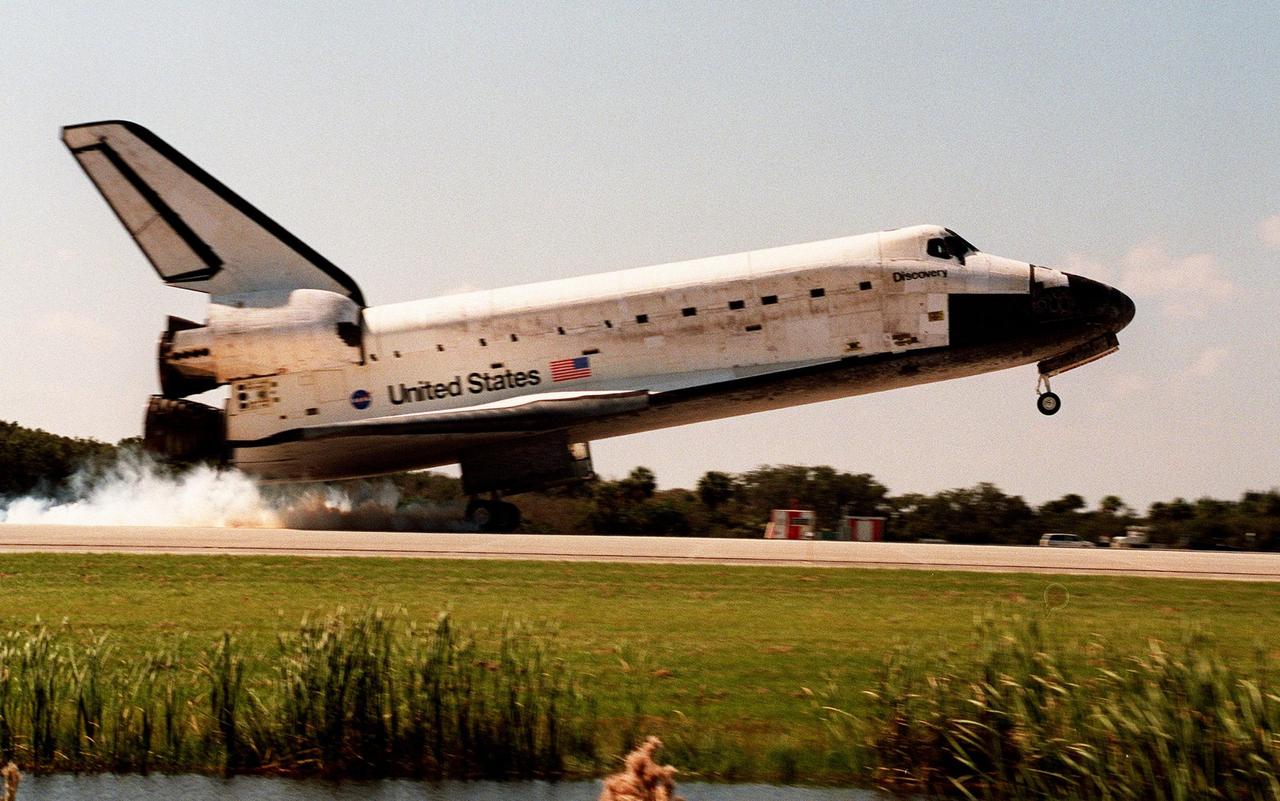
Orbiter Discovery smokes its tires as it touches down on runway 33 at the Shuttle Landing Facility. Main gear touchdown was at 12:04 p.m. EST, landing on orbit 135. Discovery returns to Earth with its crew of seven after successfully completing mission STS-95, lasting nearly nine days and 3.6 million miles. The crew consists of Mission Commander Curtis L. Brown Jr.; Pilot Steven W. Lindsey; Mission Specialist Scott E. Parazynski; Mission Specialist Stephen K. Robinson; Payload Specialist John H. Glenn Jr., senator from Ohio; Mission Specialist Pedro Duque of Spain, with the European Space Agency (ESA); and Payload Specialist Chiaki Mukai,M.D., with the National Space Development Agency of Japan (NASDA). The mission included research payloads such as the Spartan solar-observing deployable spacecraft, the Hubble Space Telescope Orbital Systems Test Platform, the International Extreme Ultraviolet Hitchhiker, as well as the SPACEHAB single module with experiments on space flight and the aging process

CAPE CANAVERAL, Fla. -- In Firing Room 4 of the Launch Control Center at NASA's Kennedy Space Center in Florida, NASA's Discovery Flow Director Stephanie Stilson, left, STS-133 Assistant Shuttle Launch Director and lead NASA Test Director Charlie Blackwell-Thompson and Shuttle Launch Director Mike Leinbach watch space shuttle Discovery blaze a trail of smoke and steam as it heads toward orbit on the STS-133 mission to the International Space Station. Discovery and its six-member crew are on a mission to deliver the Permanent Multipurpose Module, packed with supplies and critical spare parts, as well as Robonaut 2, the dexterous humanoid astronaut helper, to the orbiting outpost. Discovery is making its 39th mission and is scheduled to be retired following STS-133. This is the 133rd Space Shuttle Program mission and the 35th shuttle voyage to the space station. For more information on the STS-133 mission, visit www.nasa.gov/mission_pages/shuttle/shuttlemissions/sts133/. Photo credit: NASA/Kim Shiflett
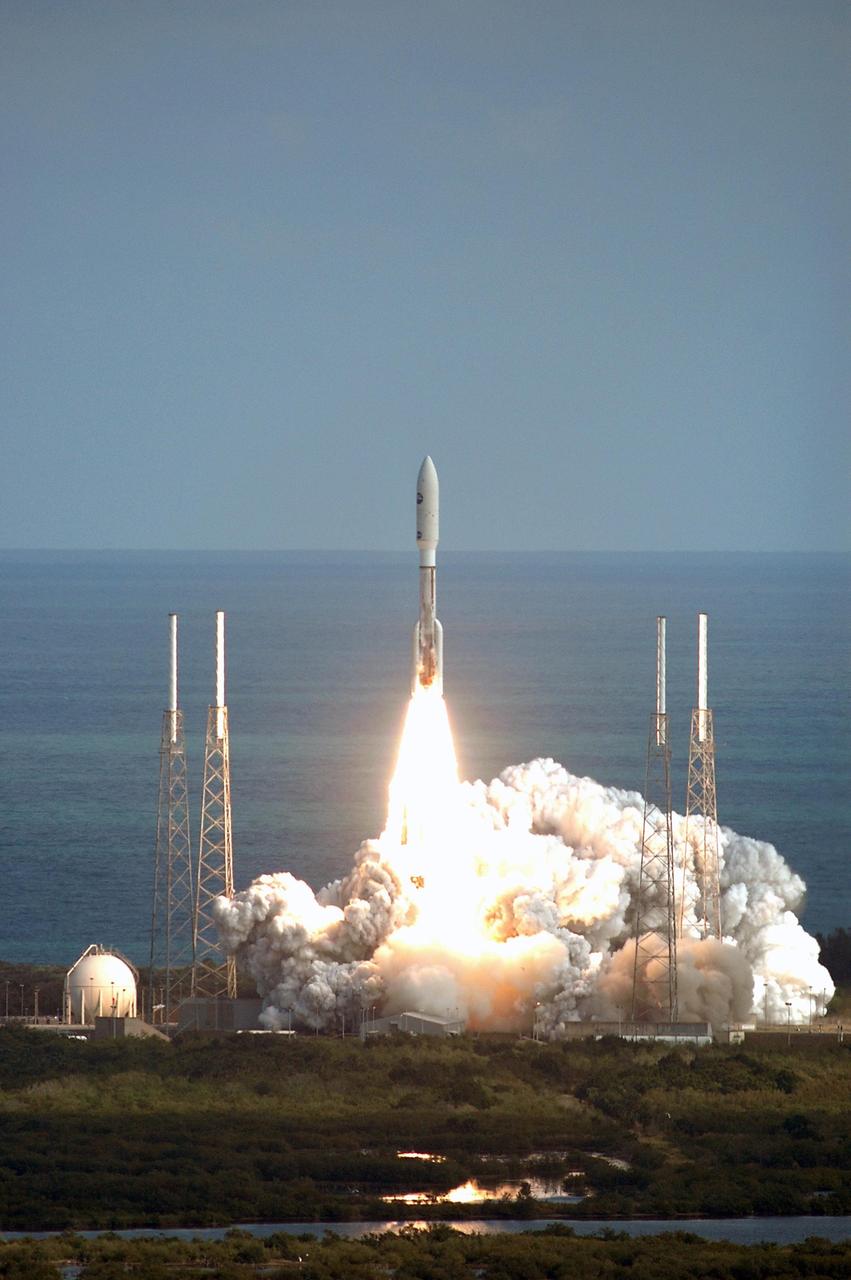
KENNEDY SPACE CENTER, FLA. — Viewed from the top of the Vehicle Assembly Building at Kennedy Space Center, NASA’s New Horizons spacecraft roars off the launch pad aboard an Atlas V rocket spewing flames and smoke. Liftoff was on time at 2 p.m. EST from Complex 41 on Cape Canaveral Air Force Station in Florida. This was the third launch attempt in as many days after scrubs due to weather concerns. The compact, 1,050-pound piano-sized probe will get a boost from a kick-stage solid propellant motor for its journey to Pluto. New Horizons will be the fastest spacecraft ever launched, reaching lunar orbit distance in just nine hours and passing Jupiter 13 months later. The New Horizons science payload, developed under direction of Southwest Research Institute, includes imaging infrared and ultraviolet spectrometers, a multi-color camera, a long-range telescopic camera, two particle spectrometers, a space-dust detector and a radio science experiment. The dust counter was designed and built by students at the University of Colorado, Boulder. The launch at this time allows New Horizons to fly past Jupiter in early 2007 and use the planet’s gravity as a slingshot toward Pluto. The Jupiter flyby trims the trip to Pluto by as many as five years and provides opportunities to test the spacecraft’s instruments and flyby capabilities on the Jupiter system. New Horizons could reach the Pluto system as early as mid-2015, conducting a five-month-long study possible only from the close-up vantage of a spacecraft. Photo credit: NASA/Kim Shiflett
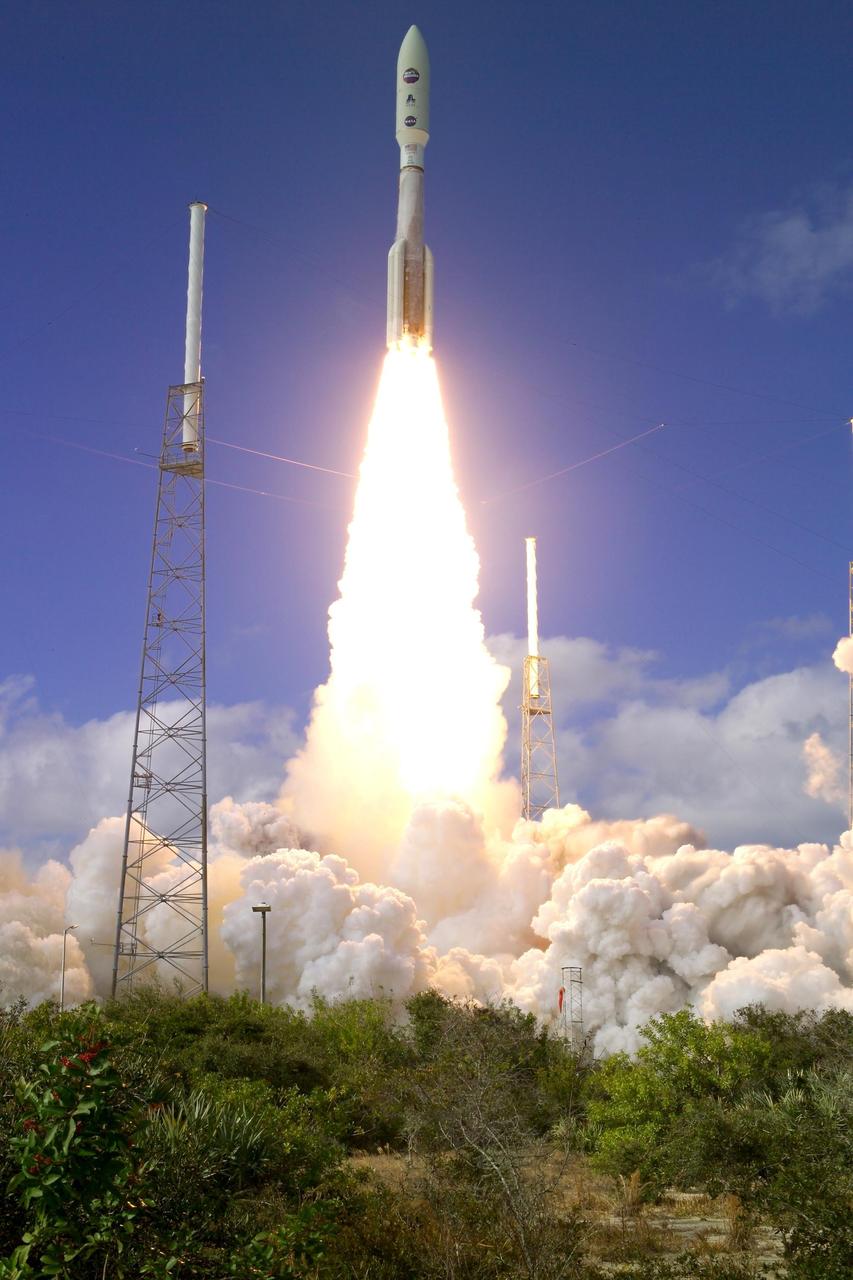
KENNEDY SPACE CENTER, FLA. — From between lightning masts surrounding the launch pad, NASA’s New Horizons spacecraft roars into the blue sky aboard an Atlas V rocket spewing flames and smoke. Liftoff was on time at 2 p.m. EST from Complex 41 on Cape Canaveral Air Force Station in Florida. This was the third launch attempt in as many days after scrubs due to weather concerns. The compact, 1,050-pound piano-sized probe will get a boost from a kick-stage solid propellant motor for its journey to Pluto. New Horizons will be the fastest spacecraft ever launched, reaching lunar orbit distance in just nine hours and passing Jupiter 13 months later. The New Horizons science payload, developed under direction of Southwest Research Institute, includes imaging infrared and ultraviolet spectrometers, a multi-color camera, a long-range telescopic camera, two particle spectrometers, a space-dust detector and a radio science experiment. The dust counter was designed and built by students at the University of Colorado, Boulder. The launch at this time allows New Horizons to fly past Jupiter in early 2007 and use the planet’s gravity as a slingshot toward Pluto. The Jupiter flyby trims the trip to Pluto by as many as five years and provides opportunities to test the spacecraft’s instruments and flyby capabilities on the Jupiter system. New Horizons could reach the Pluto system as early as mid-2015, conducting a five-month-long study possible only from the close-up vantage of a spacecraft.
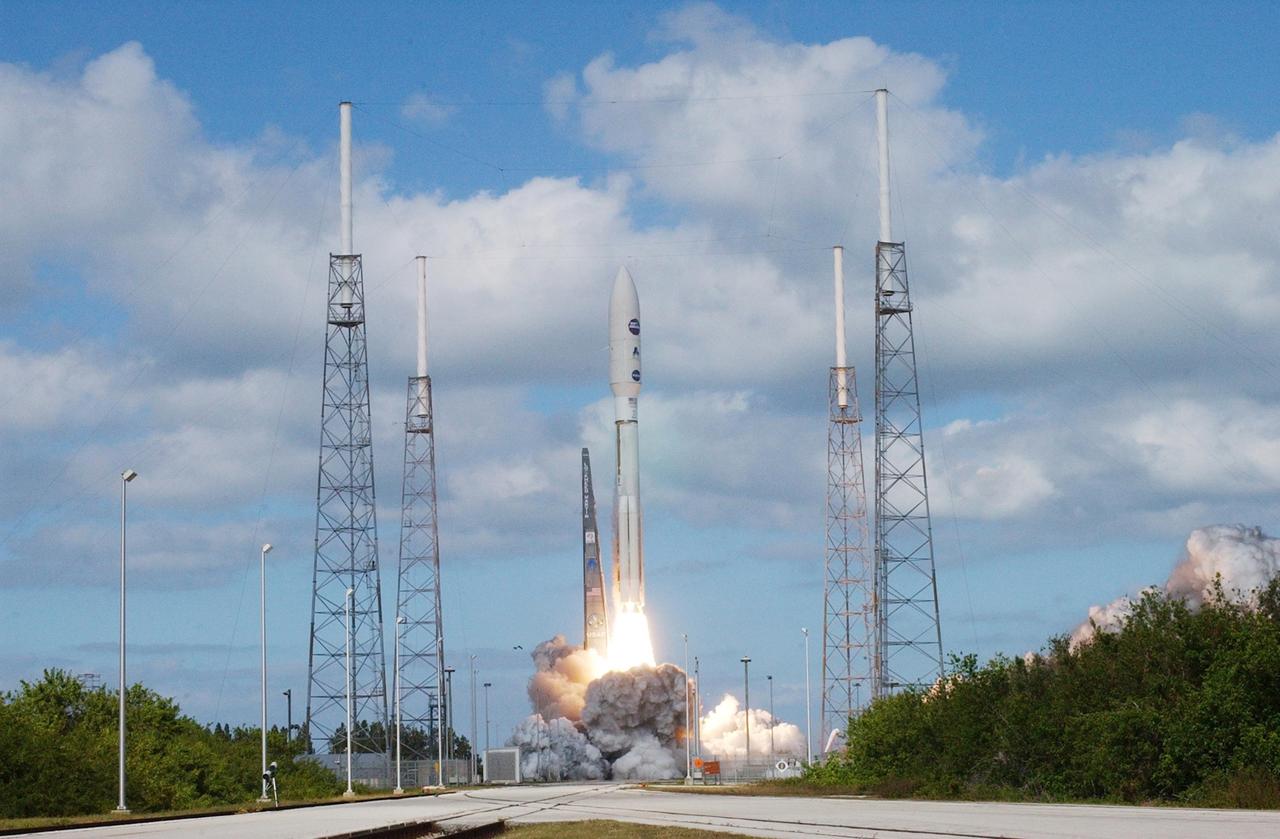
KENNEDY SPACE CENTER, FLA. — From among four lightning masts surrounding the launch pad, NASA’s New Horizons spacecraft lifts off the launch pad aboard an Atlas V rocket spewing flames and smoke. Liftoff was on time at 2 p.m. EST from Complex 41 on Cape Canaveral Air Force Station in Florida. This was the third launch attempt in as many days after scrubs due to weather concerns. The compact, 1,050-pound piano-sized probe will get a boost from a kick-stage solid propellant motor for its journey to Pluto. New Horizons will be the fastest spacecraft ever launched, reaching lunar orbit distance in just nine hours and passing Jupiter 13 months later. The New Horizons science payload, developed under direction of Southwest Research Institute, includes imaging infrared and ultraviolet spectrometers, a multi-color camera, a long-range telescopic camera, two particle spectrometers, a space-dust detector and a radio science experiment. The dust counter was designed and built by students at the University of Colorado, Boulder. The launch at this time allows New Horizons to fly past Jupiter in early 2007 and use the planet’s gravity as a slingshot toward Pluto. The Jupiter flyby trims the trip to Pluto by as many as five years and provides opportunities to test the spacecraft’s instruments and flyby capabilities on the Jupiter system. New Horizons could reach the Pluto system as early as mid-2015, conducting a five-month-long study possible only from the close-up vantage of a spacecraft.
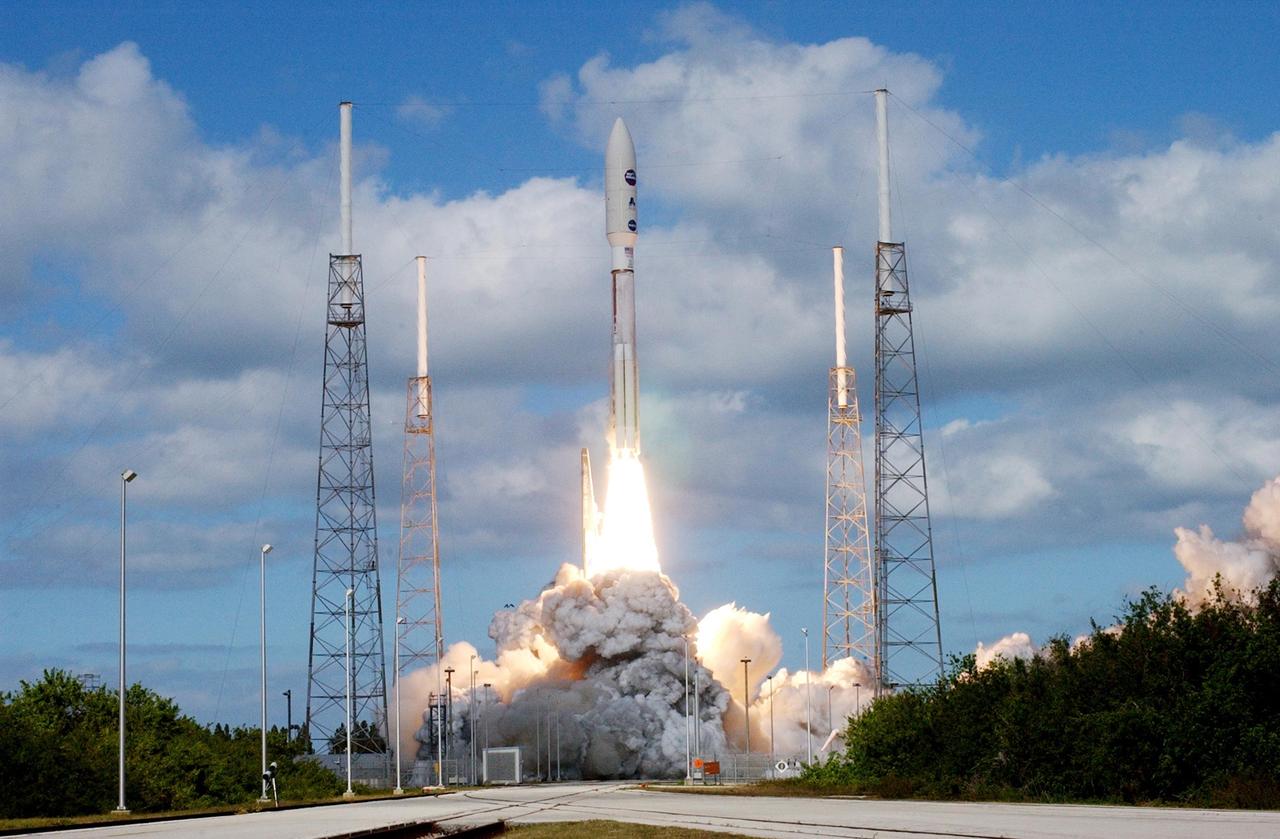
KENNEDY SPACE CENTER, FLA. — Into a cloud-scattered blue sky, NASA’s New Horizons spacecraft roars off the launch pad aboard an Atlas V rocket spewing flames and smoke. Liftoff was on time at 2 p.m. EST from Complex 41 on Cape Canaveral Air Force Station in Florida. This was the third launch attempt in as many days after scrubs due to weather concerns. The compact, 1,050-pound piano-sized probe will get a boost from a kick-stage solid propellant motor for its journey to Pluto. New Horizons will be the fastest spacecraft ever launched, reaching lunar orbit distance in just nine hours and passing Jupiter 13 months later. The New Horizons science payload, developed under direction of Southwest Research Institute, includes imaging infrared and ultraviolet spectrometers, a multi-color camera, a long-range telescopic camera, two particle spectrometers, a space-dust detector and a radio science experiment. The dust counter was designed and built by students at the University of Colorado, Boulder. The launch at this time allows New Horizons to fly past Jupiter in early 2007 and use the planet’s gravity as a slingshot toward Pluto. The Jupiter flyby trims the trip to Pluto by as many as five years and provides opportunities to test the spacecraft’s instruments and flyby capabilities on the Jupiter system. New Horizons could reach the Pluto system as early as mid-2015, conducting a five-month-long study possible only from the close-up vantage of a spacecraft.
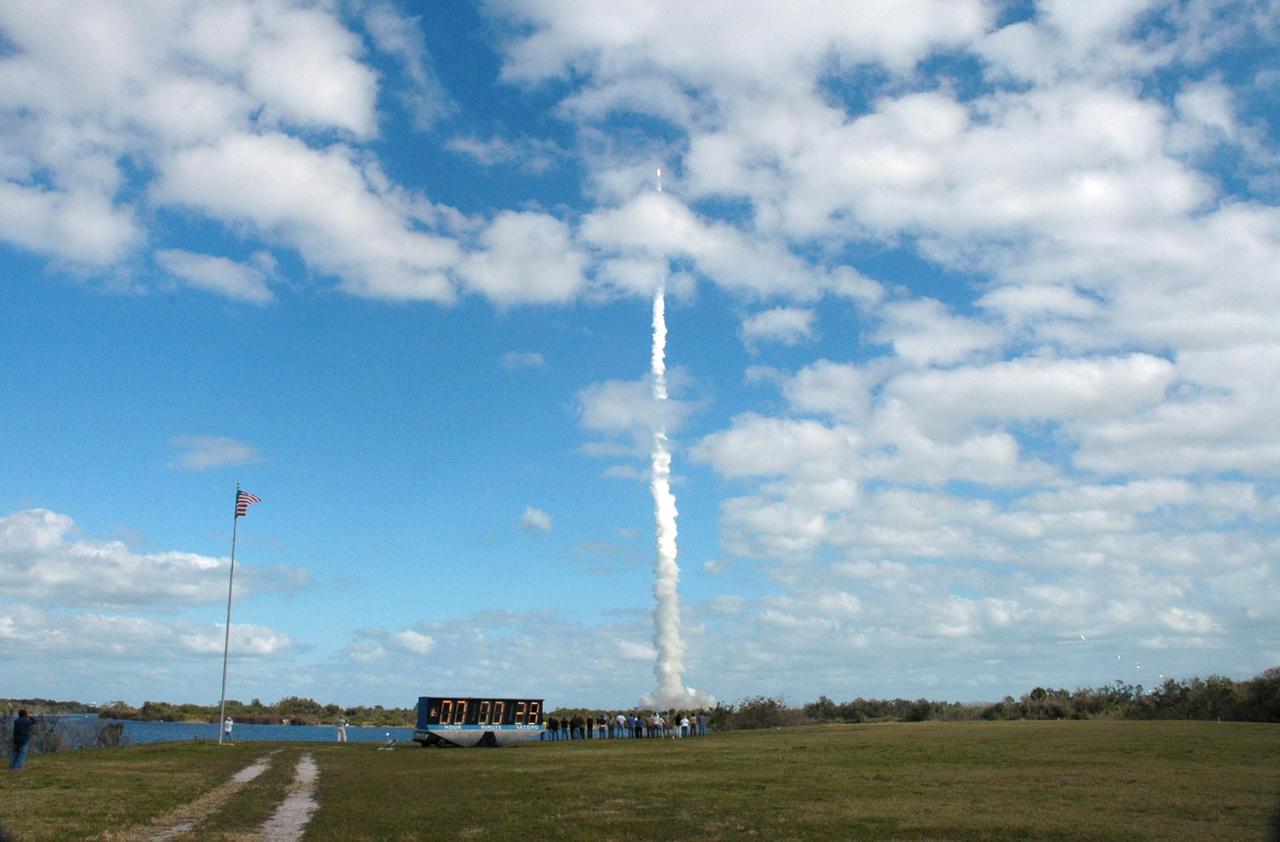
KENNEDY SPACE CENTER, FLA. — Viewed from the NASA News Center, NASA’s New Horizons spacecraft roars into the cloud-scattered sky trailing fire and smoke from the Atlas V rocket that propels it. Liftoff was on time at 2 p.m. EST from Complex 41 on Cape Canaveral Air Force Station in Florida. This was the third launch attempt in as many days after scrubs due to weather concerns. The compact, 1,050-pound piano-sized probe will get a boost from a kick-stage solid propellant motor for its journey to Pluto. New Horizons will be the fastest spacecraft ever launched, reaching lunar orbit distance in just nine hours and passing Jupiter 13 months later. The New Horizons science payload, developed under direction of Southwest Research Institute, includes imaging infrared and ultraviolet spectrometers, a multi-color camera, a long-range telescopic camera, two particle spectrometers, a space-dust detector and a radio science experiment. The dust counter was designed and built by students at the University of Colorado, Boulder. The launch at this time allows New Horizons to fly past Jupiter in early 2007 and use the planet’s gravity as a slingshot toward Pluto. The Jupiter flyby trims the trip to Pluto by as many as five years and provides opportunities to test the spacecraft’s instruments and flyby capabilities on the Jupiter system. New Horizons could reach the Pluto system as early as mid-2015, conducting a five-month-long study possible only from the close-up vantage of a spacecraft. Photo credit: NASA/Fletch Hildreth
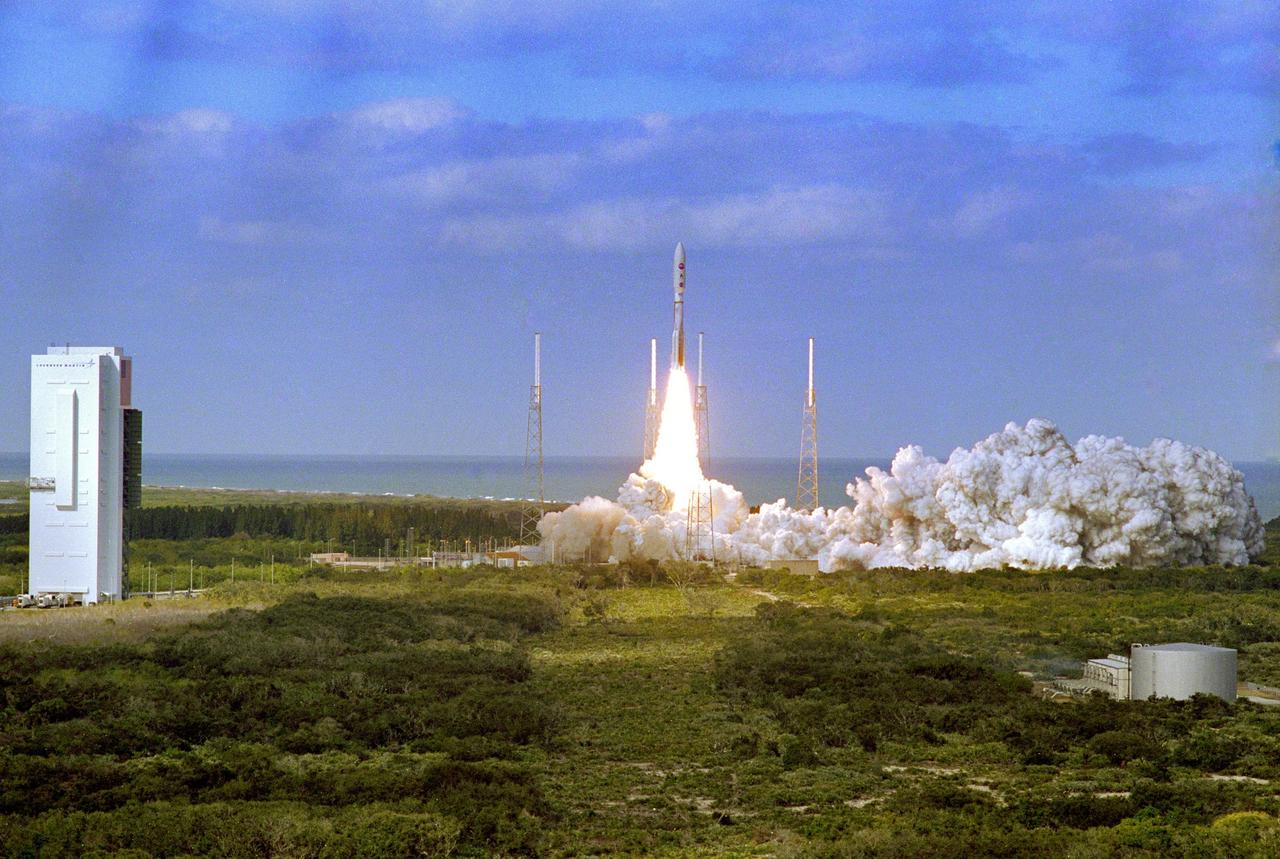
KENNEDY SPACE CENTER, FLA. — With the blue Atlantic Ocean as backdrop, smoke and steam fill the launch pad, at right, as NASA’s New Horizons spacecraft roars into the sky aboard an Atlas V rocket. Liftoff was on time at 2 p.m. EST from Complex 41 on Cape Canaveral Air Force Station in Florida. This was the third launch attempt in as many days after scrubs due to weather concerns. The compact, 1,050-pound piano-sized probe will get a boost from a kick-stage solid propellant motor for its journey to Pluto. New Horizons will be the fastest spacecraft ever launched, reaching lunar orbit distance in just nine hours and passing Jupiter 13 months later. The New Horizons science payload, developed under direction of Southwest Research Institute, includes imaging infrared and ultraviolet spectrometers, a multi-color camera, a long-range telescopic camera, two particle spectrometers, a space-dust detector and a radio science experiment. The dust counter was designed and built by students at the University of Colorado, Boulder. The launch at this time allows New Horizons to fly past Jupiter in early 2007 and use the planet’s gravity as a slingshot toward Pluto. The Jupiter flyby trims the trip to Pluto by as many as five years and provides opportunities to test the spacecraft’s instruments and flyby capabilities on the Jupiter system. New Horizons could reach the Pluto system as early as mid-2015, conducting a five-month-long study possible only from the close-up vantage of a spacecraft.
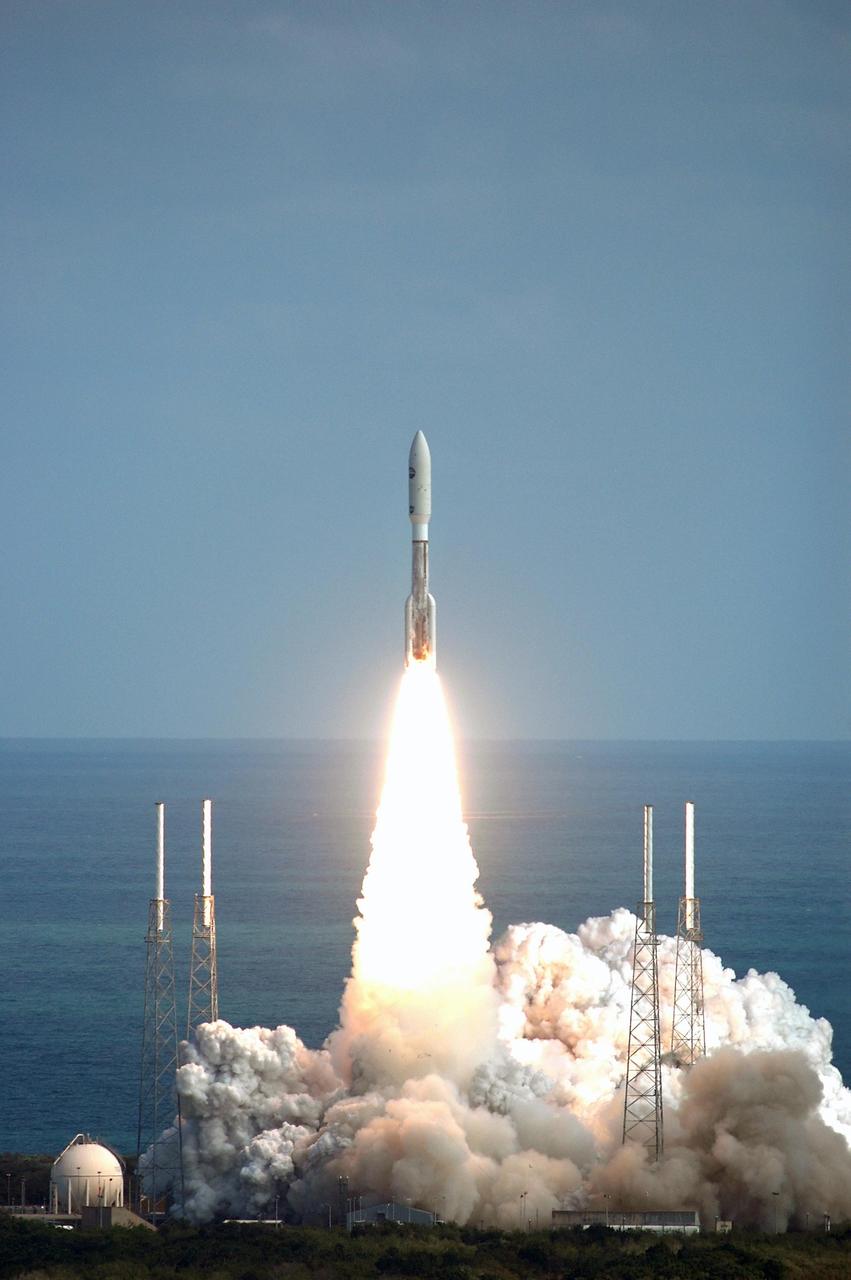
KENNEDY SPACE CENTER, FLA. — Viewed from the top of the Vehicle Assembly Building at Kennedy Space Center, NASA’s New Horizons spacecraft roars off the launch pad aboard an Atlas V rocket spewing flames and smoke. Liftoff was on time at 2 p.m. EST from Complex 41 on Cape Canaveral Air Force Station in Florida. This was the third launch attempt in as many days after scrubs due to weather concerns. The compact, 1,050-pound piano-sized probe will get a boost from a kick-stage solid propellant motor for its journey to Pluto. New Horizons will be the fastest spacecraft ever launched, reaching lunar orbit distance in just nine hours and passing Jupiter 13 months later. The New Horizons science payload, developed under direction of Southwest Research Institute, includes imaging infrared and ultraviolet spectrometers, a multi-color camera, a long-range telescopic camera, two particle spectrometers, a space-dust detector and a radio science experiment. The dust counter was designed and built by students at the University of Colorado, Boulder. The launch at this time allows New Horizons to fly past Jupiter in early 2007 and use the planet’s gravity as a slingshot toward Pluto. The Jupiter flyby trims the trip to Pluto by as many as five years and provides opportunities to test the spacecraft’s instruments and flyby capabilities on the Jupiter system. New Horizons could reach the Pluto system as early as mid-2015, conducting a five-month-long study possible only from the close-up vantage of a spacecraft. Photo credit: NASA/Kim Shiflett
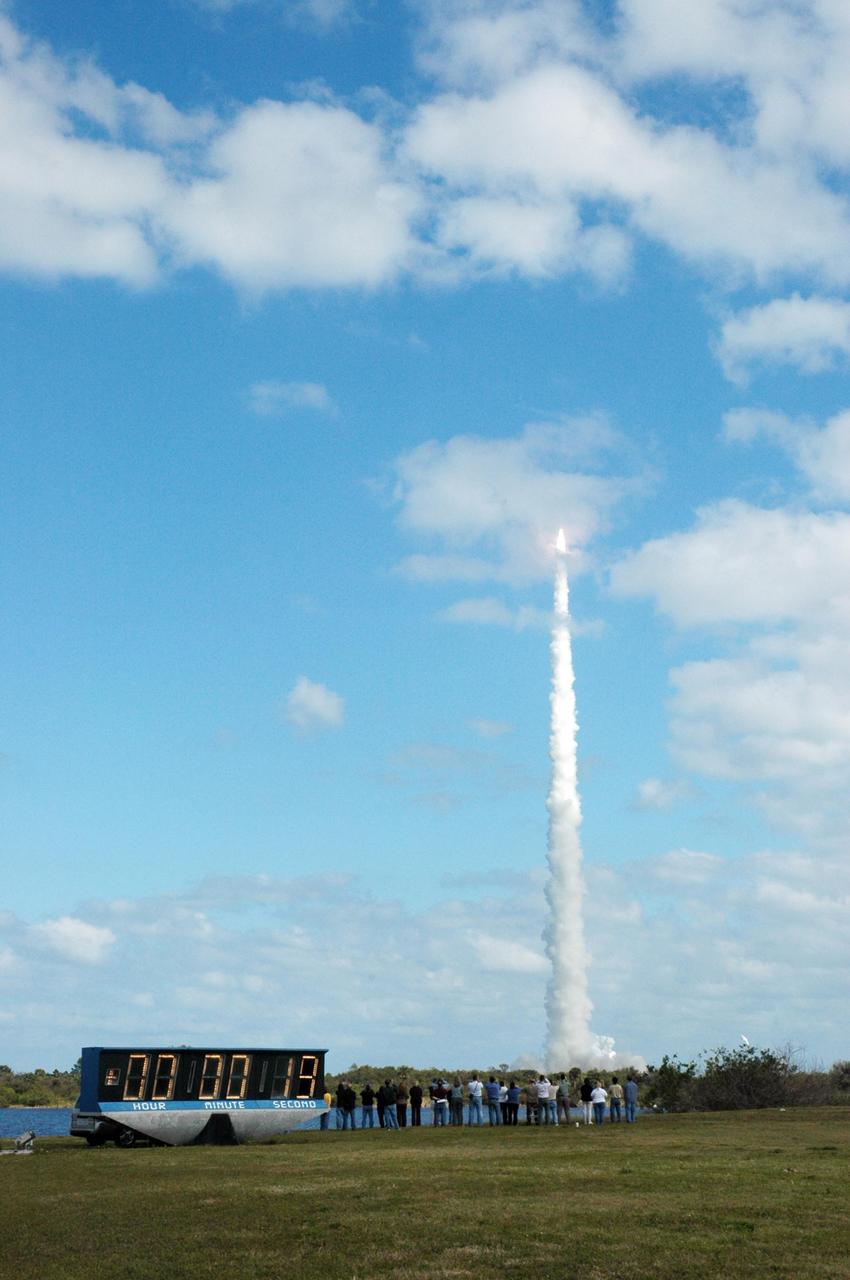
KENNEDY SPACE CENTER, FLA. — Viewed from the NASA News Center, NASA’s New Horizons spacecraft roars into the cloud-scattered sky trailing fire and smoke from the Atlas V rocket that propels it. Liftoff was on time at 2 p.m. EST from Complex 41 on Cape Canaveral Air Force Station in Florida. This was the third launch attempt in as many days after scrubs due to weather concerns. The compact, 1,050-pound piano-sized probe will get a boost from a kick-stage solid propellant motor for its journey to Pluto. New Horizons will be the fastest spacecraft ever launched, reaching lunar orbit distance in just nine hours and passing Jupiter 13 months later. The New Horizons science payload, developed under direction of Southwest Research Institute, includes imaging infrared and ultraviolet spectrometers, a multi-color camera, a long-range telescopic camera, two particle spectrometers, a space-dust detector and a radio science experiment. The dust counter was designed and built by students at the University of Colorado, Boulder. The launch at this time allows New Horizons to fly past Jupiter in early 2007 and use the planet’s gravity as a slingshot toward Pluto. The Jupiter flyby trims the trip to Pluto by as many as five years and provides opportunities to test the spacecraft’s instruments and flyby capabilities on the Jupiter system. New Horizons could reach the Pluto system as early as mid-2015, conducting a five-month-long study possible only from the close-up vantage of a spacecraft. Photo credit: NASA/Fletch Hildreth
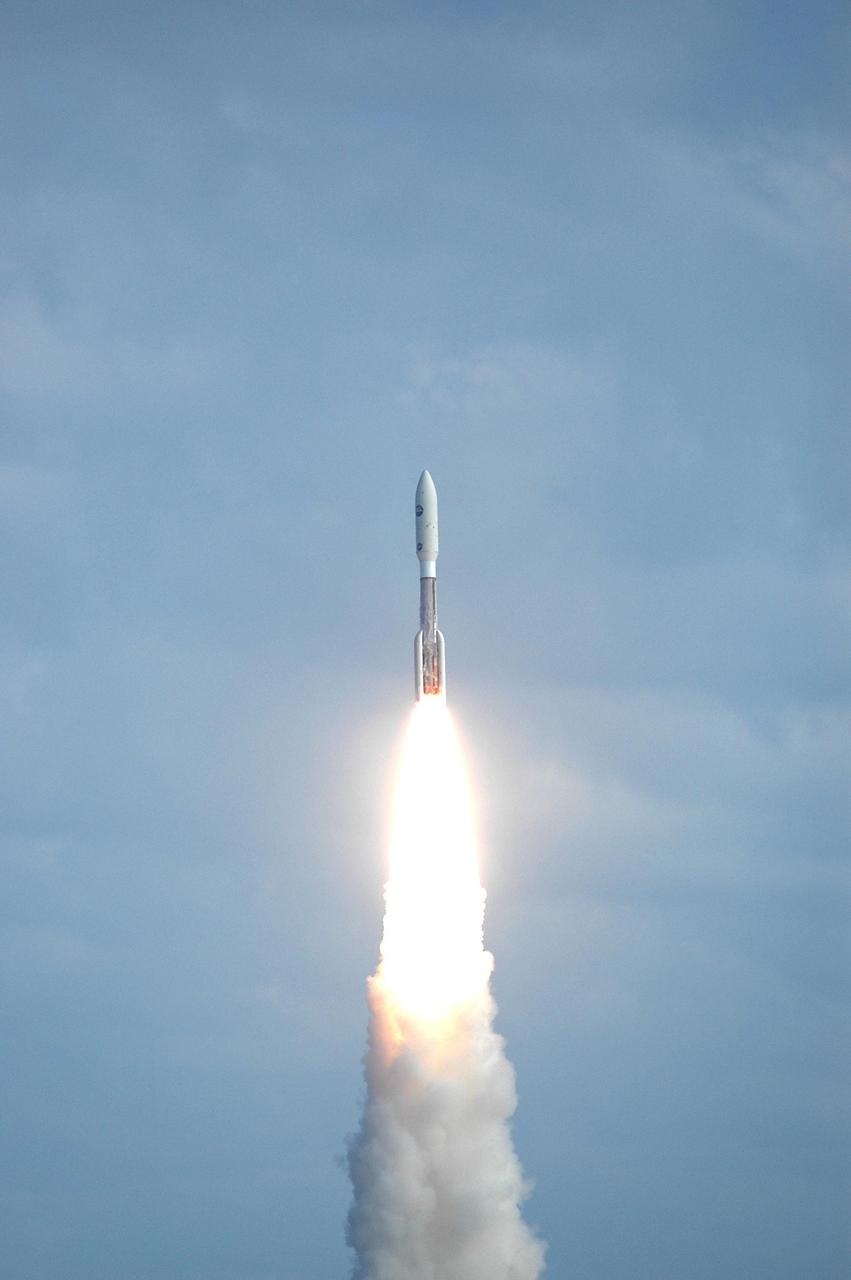
KENNEDY SPACE CENTER, FLA. — NASA’s New Horizons spacecraft roars into the cloud-scattered sky trailing fire and smoke from the Atlas V rocket that propels it. Liftoff was on time at 2 p.m. EST from Complex 41 on Cape Canaveral Air Force Station in Florida. This was the third launch attempt in as many days after scrubs due to weather concerns. The compact, 1,050-pound piano-sized probe will get a boost from a kick-stage solid propellant motor for its journey to Pluto. New Horizons will be the fastest spacecraft ever launched, reaching lunar orbit distance in just nine hours and passing Jupiter 13 months later. The New Horizons science payload, developed under direction of Southwest Research Institute, includes imaging infrared and ultraviolet spectrometers, a multi-color camera, a long-range telescopic camera, two particle spectrometers, a space-dust detector and a radio science experiment. The dust counter was designed and built by students at the University of Colorado, Boulder. The launch at this time allows New Horizons to fly past Jupiter in early 2007 and use the planet’s gravity as a slingshot toward Pluto. The Jupiter flyby trims the trip to Pluto by as many as five years and provides opportunities to test the spacecraft’s instruments and flyby capabilities on the Jupiter system. New Horizons could reach the Pluto system as early as mid-2015, conducting a five-month-long study possible only from the close-up vantage of a spacecraft. Photo credit: NASA/Kim Shiflett
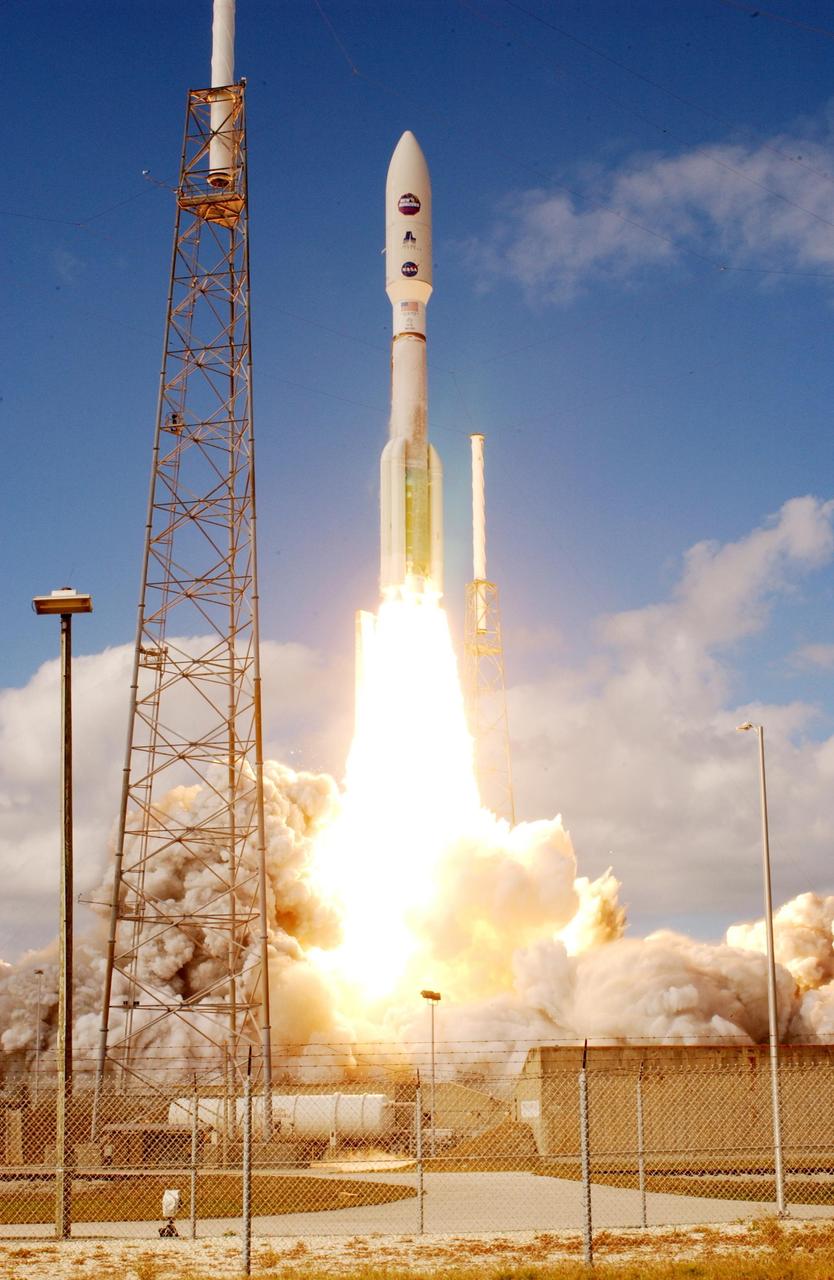
KENNEDY SPACE CENTER, FLA. — From between lightning masts surrounding the launch pad, NASA’s New Horizons spacecraft roars into the blue sky aboard an Atlas V rocket spewing flames and smoke. Liftoff was on time at 2 p.m. EST from Complex 41 on Cape Canaveral Air Force Station in Florida. This was the third launch attempt in as many days after scrubs due to weather concerns. The compact, 1,050-pound piano-sized probe will get a boost from a kick-stage solid propellant motor for its journey to Pluto. New Horizons will be the fastest spacecraft ever launched, reaching lunar orbit distance in just nine hours and passing Jupiter 13 months later. The New Horizons science payload, developed under direction of Southwest Research Institute, includes imaging infrared and ultraviolet spectrometers, a multi-color camera, a long-range telescopic camera, two particle spectrometers, a space-dust detector and a radio science experiment. The dust counter was designed and built by students at the University of Colorado, Boulder. The launch at this time allows New Horizons to fly past Jupiter in early 2007 and use the planet’s gravity as a slingshot toward Pluto. The Jupiter flyby trims the trip to Pluto by as many as five years and provides opportunities to test the spacecraft’s instruments and flyby capabilities on the Jupiter system. New Horizons could reach the Pluto system as early as mid-2015, conducting a five-month-long study possible only from the close-up vantage of a spacecraft.
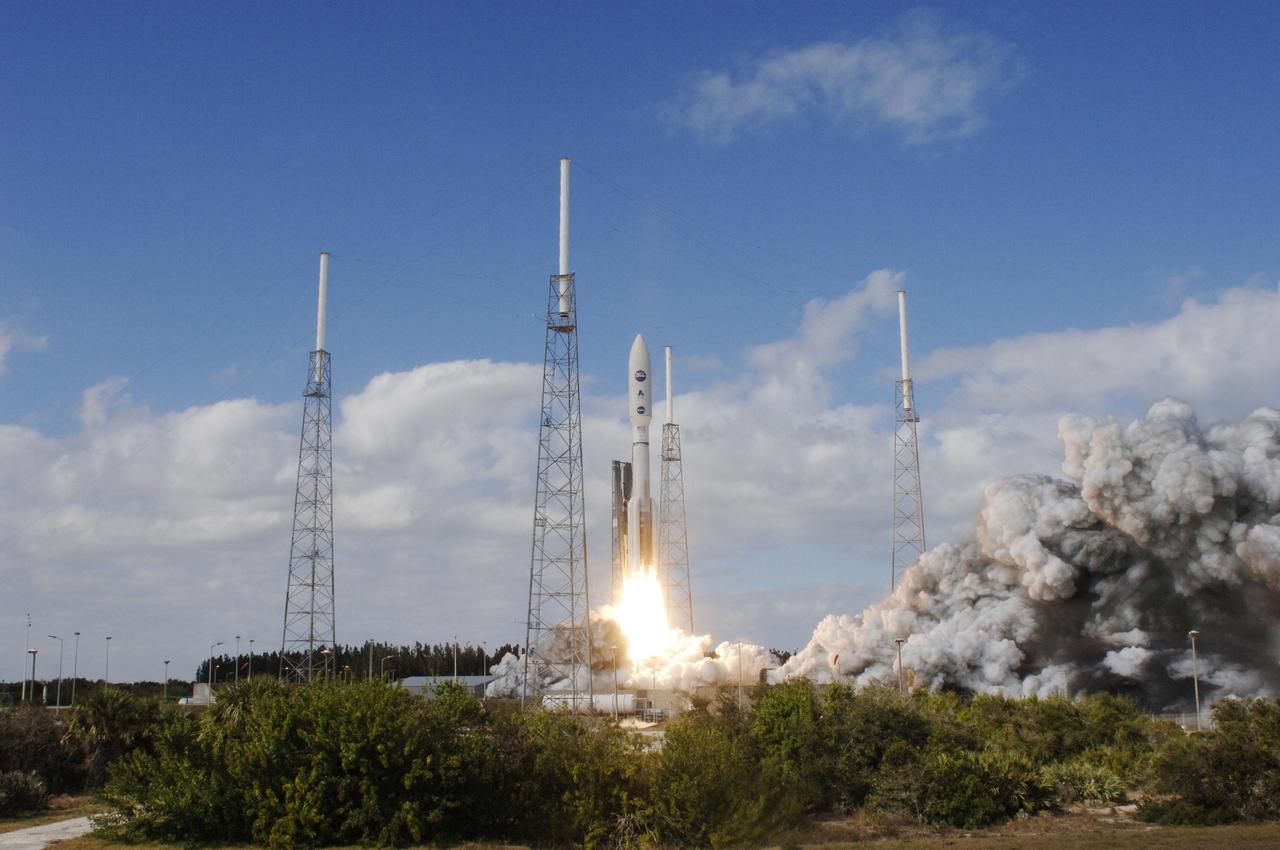
KENNEDY SPACE CENTER, FLA. — Into a cloud-scattered blue sky, NASA’s New Horizons spacecraft roars off the launch pad aboard an Atlas V rocket spewing flames and smoke. Liftoff was on time at 2 p.m. EST from Complex 41 on Cape Canaveral Air Force Station in Florida. This was the third launch attempt in as many days after scrubs due to weather concerns. The compact, 1,050-pound piano-sized probe will get a boost from a kick-stage solid propellant motor for its journey to Pluto. New Horizons will be the fastest spacecraft ever launched, reaching lunar orbit distance in just nine hours and passing Jupiter 13 months later. The New Horizons science payload, developed under direction of Southwest Research Institute, includes imaging infrared and ultraviolet spectrometers, a multi-color camera, a long-range telescopic camera, two particle spectrometers, a space-dust detector and a radio science experiment. The dust counter was designed and built by students at the University of Colorado, Boulder. The launch at this time allows New Horizons to fly past Jupiter in early 2007 and use the planet’s gravity as a slingshot toward Pluto. The Jupiter flyby trims the trip to Pluto by as many as five years and provides opportunities to test the spacecraft’s instruments and flyby capabilities on the Jupiter system. New Horizons could reach the Pluto system as early as mid-2015, conducting a five-month-long study possible only from the close-up vantage of a spacecraft.
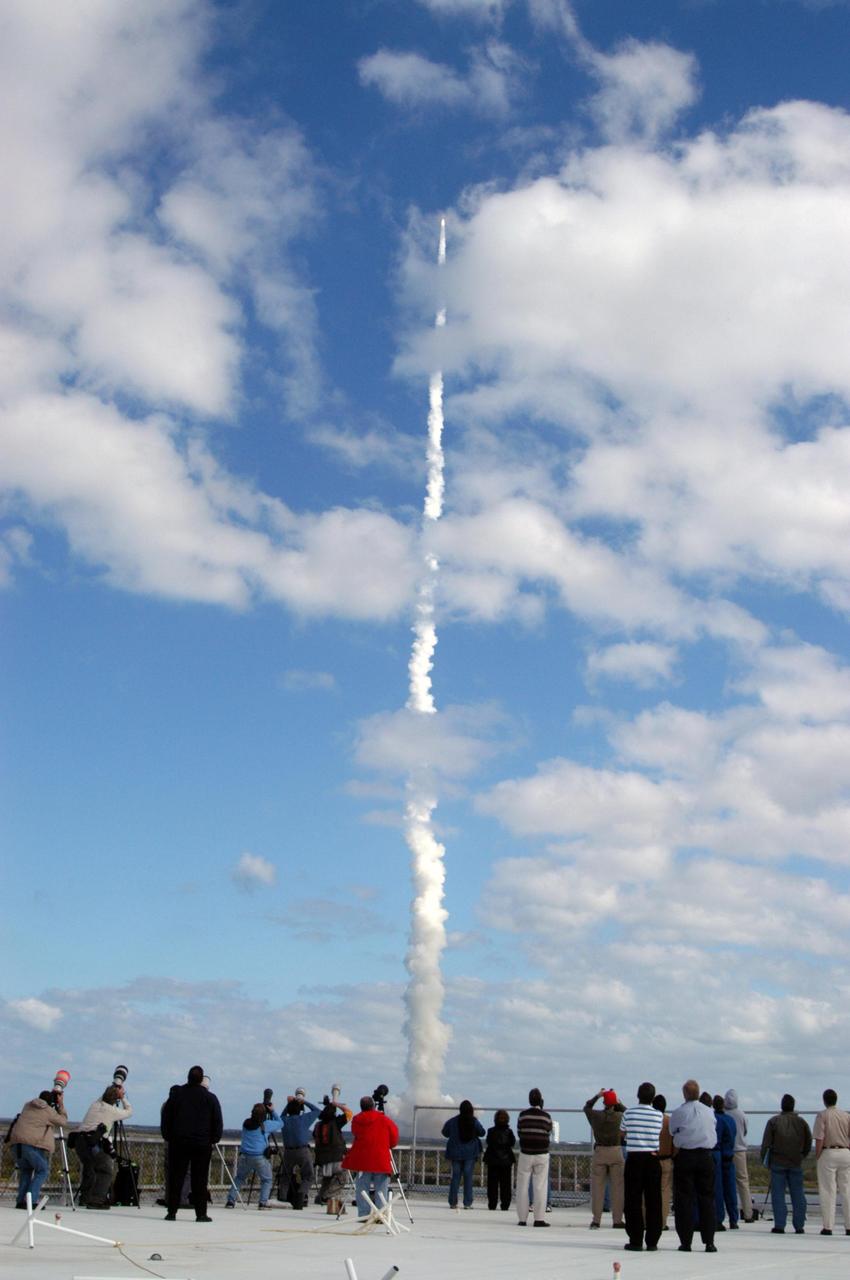
KENNEDY SPACE CENTER, FLA. — Photographers and spectators watch NASA’s New Horizons spacecraft, trailing fire and smoke from the Atlas V rocket that propels it, as it roars into the cloud-scattered sky. Liftoff was on time at 2 p.m. EST from Complex 41 on Cape Canaveral Air Force Station in Florida. This was the third launch attempt in as many days after scrubs due to weather concerns. The compact, 1,050-pound piano-sized probe will get a boost from a kick-stage solid propellant motor for its journey to Pluto. New Horizons will be the fastest spacecraft ever launched, reaching lunar orbit distance in just nine hours and passing Jupiter 13 months later. The New Horizons science payload, developed under direction of Southwest Research Institute, includes imaging infrared and ultraviolet spectrometers, a multi-color camera, a long-range telescopic camera, two particle spectrometers, a space-dust detector and a radio science experiment. The dust counter was designed and built by students at the University of Colorado, Boulder. The launch at this time allows New Horizons to fly past Jupiter in early 2007 and use the planet’s gravity as a slingshot toward Pluto. The Jupiter flyby trims the trip to Pluto by as many as five years and provides opportunities to test the spacecraft’s instruments and flyby capabilities on the Jupiter system. New Horizons could reach the Pluto system as early as mid-2015, conducting a five-month-long study possible only from the close-up vantage of a spacecraft. Photo credit: NASA/George Shelton
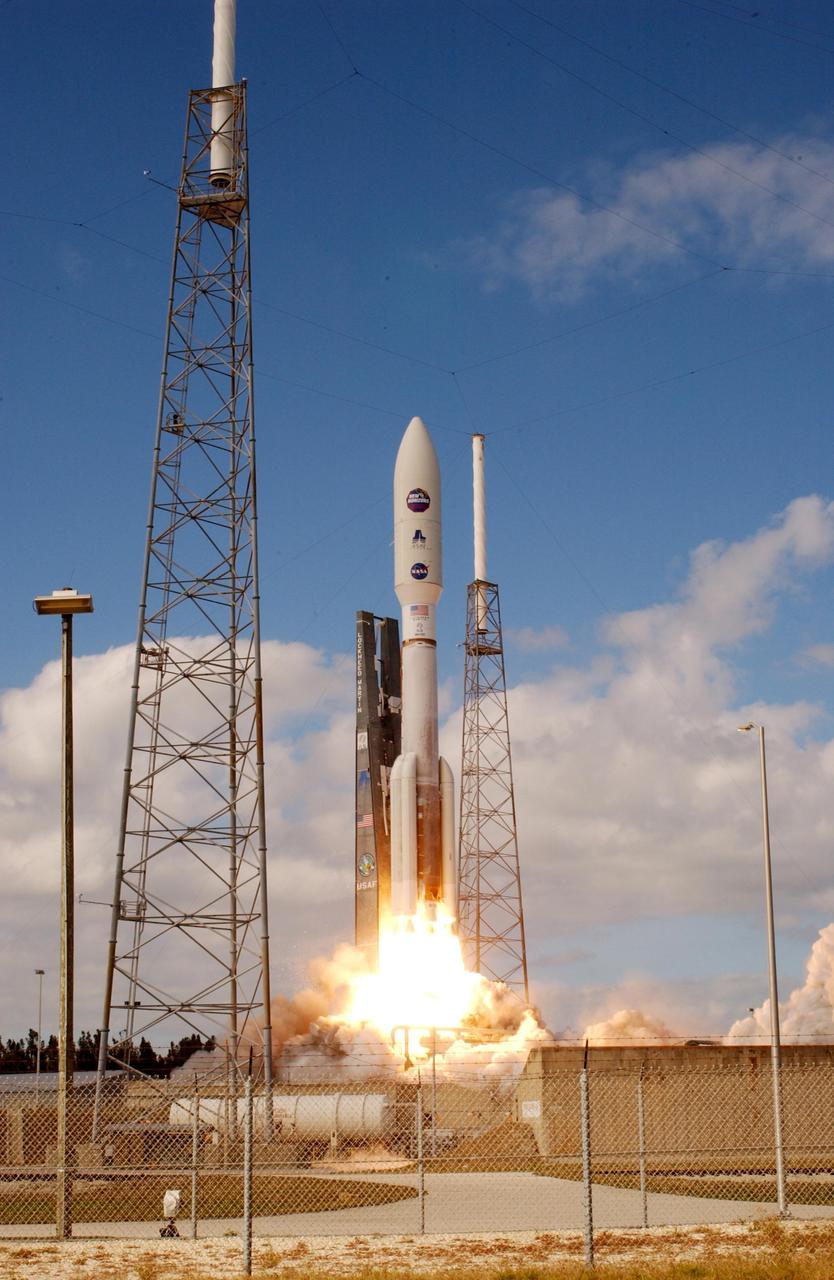
KENNEDY SPACE CENTER, FLA. — From between lightning masts surrounding the launch pad, NASA’s New Horizons spacecraft roars into the blue sky aboard an Atlas V rocket spewing flames and smoke. Liftoff was on time at 2 p.m. EST from Complex 41 on Cape Canaveral Air Force Station in Florida. This was the third launch attempt in as many days after scrubs due to weather concerns. The compact, 1,050-pound piano-sized probe will get a boost from a kick-stage solid propellant motor for its journey to Pluto. New Horizons will be the fastest spacecraft ever launched, reaching lunar orbit distance in just nine hours and passing Jupiter 13 months later. The New Horizons science payload, developed under direction of Southwest Research Institute, includes imaging infrared and ultraviolet spectrometers, a multi-color camera, a long-range telescopic camera, two particle spectrometers, a space-dust detector and a radio science experiment. The dust counter was designed and built by students at the University of Colorado, Boulder. The launch at this time allows New Horizons to fly past Jupiter in early 2007 and use the planet’s gravity as a slingshot toward Pluto. The Jupiter flyby trims the trip to Pluto by as many as five years and provides opportunities to test the spacecraft’s instruments and flyby capabilities on the Jupiter system. New Horizons could reach the Pluto system as early as mid-2015, conducting a five-month-long study possible only from the close-up vantage of a spacecraft.
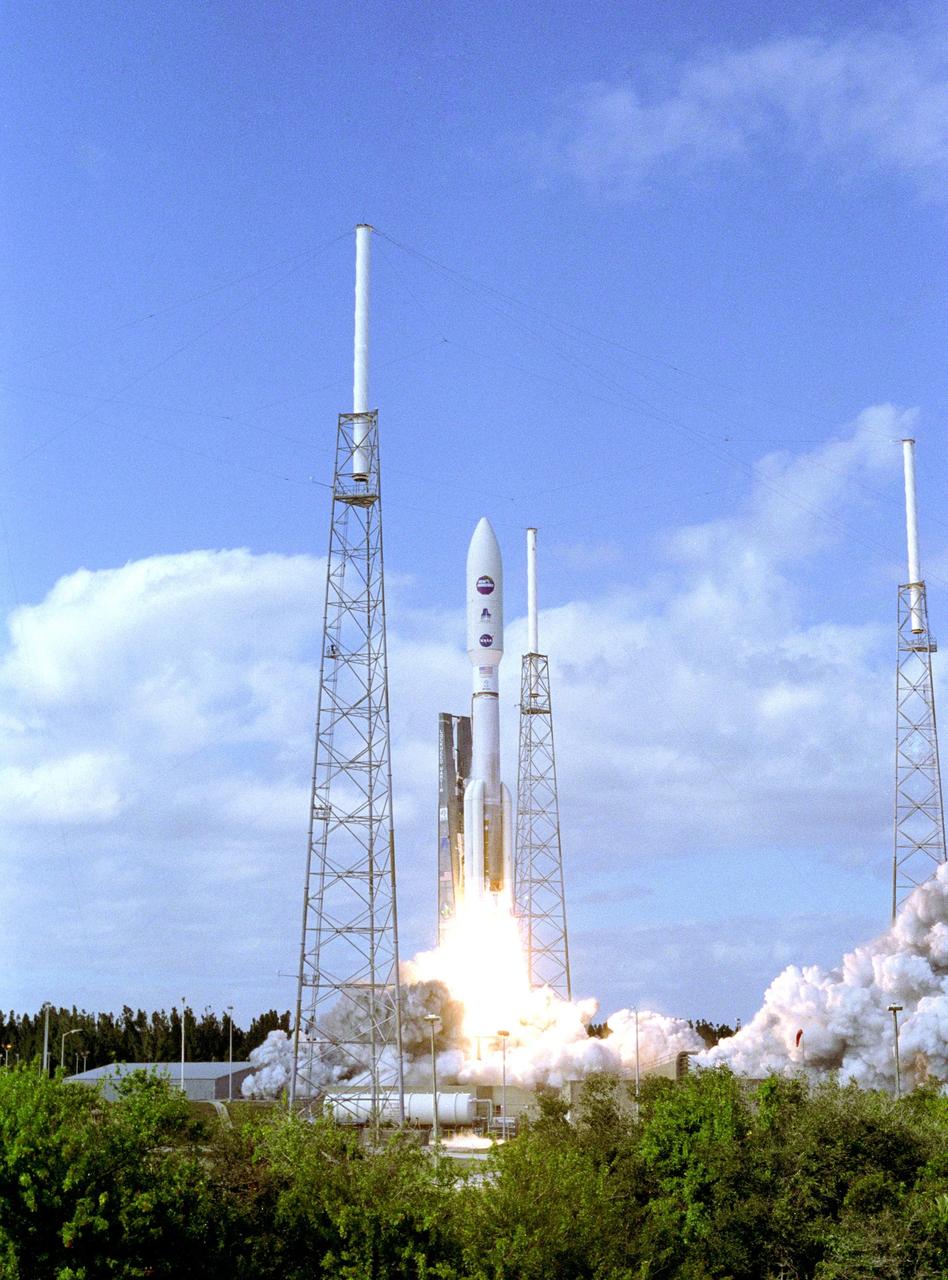
KENNEDY SPACE CENTER, FLA. — From between lightning masts surrounding the launch pad, NASA’s New Horizons spacecraft roars into the blue sky aboard an Atlas V rocket spewing flames and smoke. Liftoff was on time at 2 p.m. EST from Complex 41 on Cape Canaveral Air Force Station in Florida. This was the third launch attempt in as many days after scrubs due to weather concerns. The compact, 1,050-pound piano-sized probe will get a boost from a kick-stage solid propellant motor for its journey to Pluto. New Horizons will be the fastest spacecraft ever launched, reaching lunar orbit distance in just nine hours and passing Jupiter 13 months later. The New Horizons science payload, developed under direction of Southwest Research Institute, includes imaging infrared and ultraviolet spectrometers, a multi-color camera, a long-range telescopic camera, two particle spectrometers, a space-dust detector and a radio science experiment. The dust counter was designed and built by students at the University of Colorado, Boulder. The launch at this time allows New Horizons to fly past Jupiter in early 2007 and use the planet’s gravity as a slingshot toward Pluto. The Jupiter flyby trims the trip to Pluto by as many as five years and provides opportunities to test the spacecraft’s instruments and flyby capabilities on the Jupiter system. New Horizons could reach the Pluto system as early as mid-2015, conducting a five-month-long study possible only from the close-up vantage of a spacecraft.
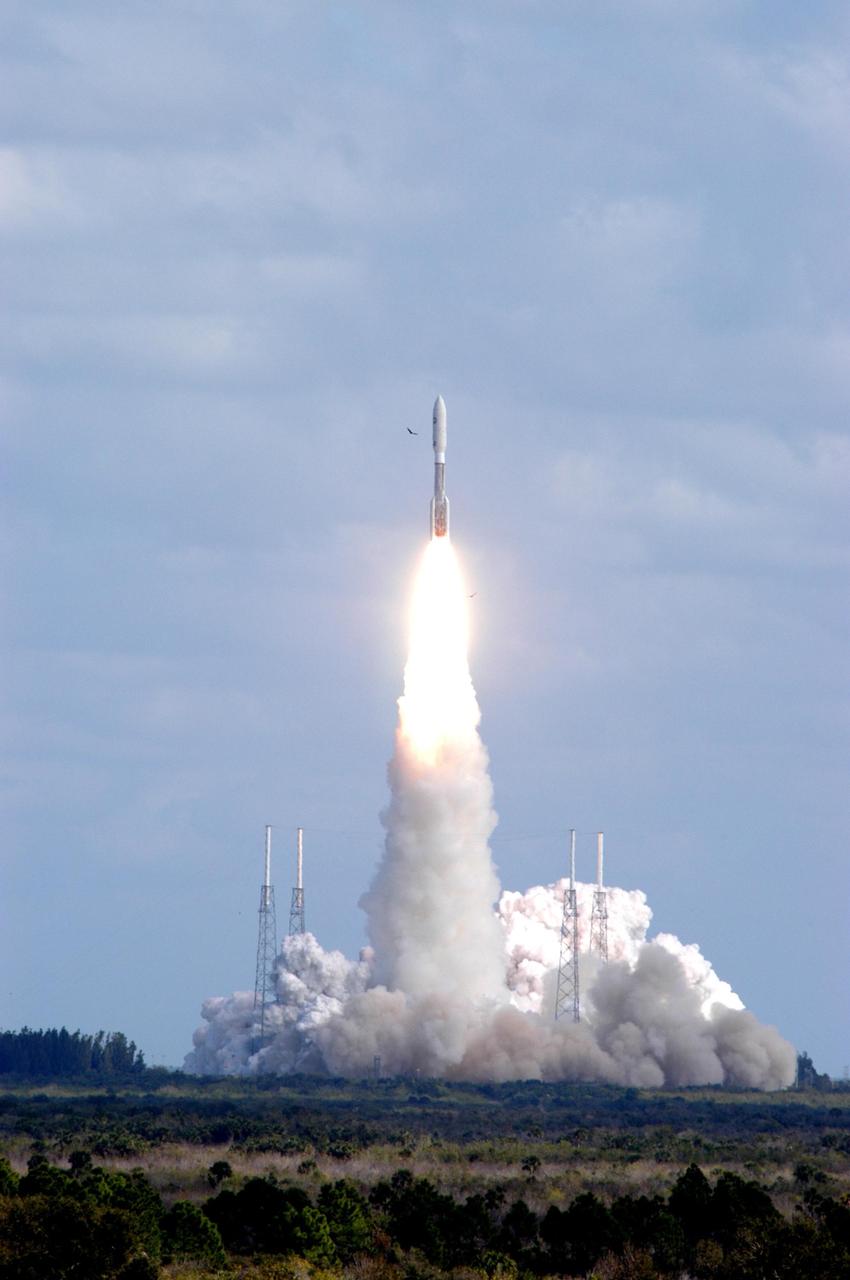
KENNEDY SPACE CENTER, FLA. — Viewed from a nearby vantage point, NASA’s New Horizons spacecraft roars into the cloud-scattered sky trailing fire and smoke from the Atlas V rocket that propels it. Liftoff was on time at 2 p.m. EST from Complex 41 on Cape Canaveral Air Force Station in Florida. This was the third launch attempt in as many days after scrubs due to weather concerns. The compact, 1,050-pound piano-sized probe will get a boost from a kick-stage solid propellant motor for its journey to Pluto. New Horizons will be the fastest spacecraft ever launched, reaching lunar orbit distance in just nine hours and passing Jupiter 13 months later. The New Horizons science payload, developed under direction of Southwest Research Institute, includes imaging infrared and ultraviolet spectrometers, a multi-color camera, a long-range telescopic camera, two particle spectrometers, a space-dust detector and a radio science experiment. The dust counter was designed and built by students at the University of Colorado, Boulder. The launch at this time allows New Horizons to fly past Jupiter in early 2007 and use the planet’s gravity as a slingshot toward Pluto. The Jupiter flyby trims the trip to Pluto by as many as five years and provides opportunities to test the spacecraft’s instruments and flyby capabilities on the Jupiter system. New Horizons could reach the Pluto system as early as mid-2015, conducting a five-month-long study possible only from the close-up vantage of a spacecraft. Photo credit: NASA/George Shelton

KENNEDY SPACE CENTER, FLA. — Smoke and steam fill the launch pad as NASA’s New Horizons spacecraft roars into the blue sky aboard an Atlas V rocket. Liftoff was on time at 2 p.m. EST from Complex 41 on Cape Canaveral Air Force Station in Florida. This was the third launch attempt in as many days after scrubs due to weather concerns. The compact, 1,050-pound piano-sized probe will get a boost from a kick-stage solid propellant motor for its journey to Pluto. New Horizons will be the fastest spacecraft ever launched, reaching lunar orbit distance in just nine hours and passing Jupiter 13 months later. The New Horizons science payload, developed under direction of Southwest Research Institute, includes imaging infrared and ultraviolet spectrometers, a multi-color camera, a long-range telescopic camera, two particle spectrometers, a space-dust detector and a radio science experiment. The dust counter was designed and built by students at the University of Colorado, Boulder. The launch at this time allows New Horizons to fly past Jupiter in early 2007 and use the planet’s gravity as a slingshot toward Pluto. The Jupiter flyby trims the trip to Pluto by as many as five years and provides opportunities to test the spacecraft’s instruments and flyby capabilities on the Jupiter system. New Horizons could reach the Pluto system as early as mid-2015, conducting a five-month-long study possible only from the close-up vantage of a spacecraft.