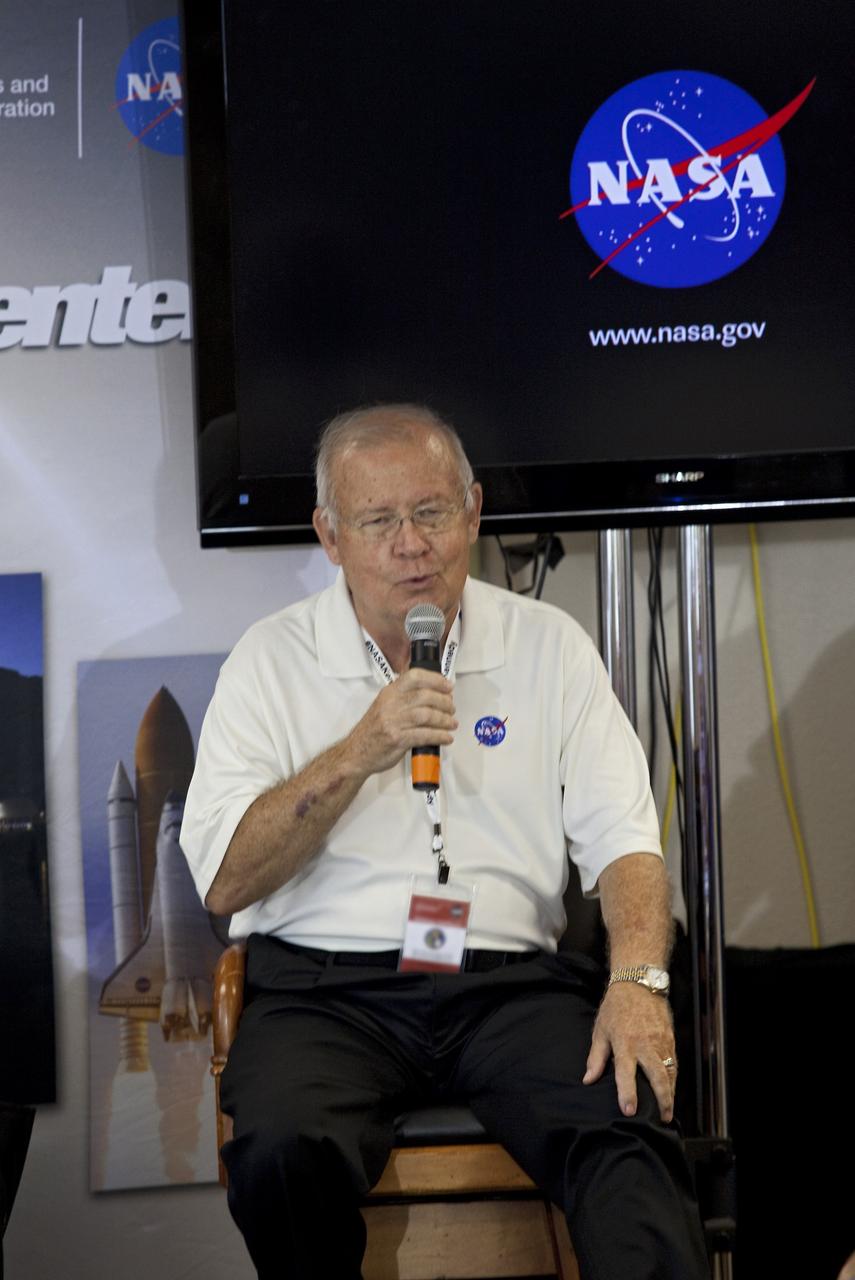
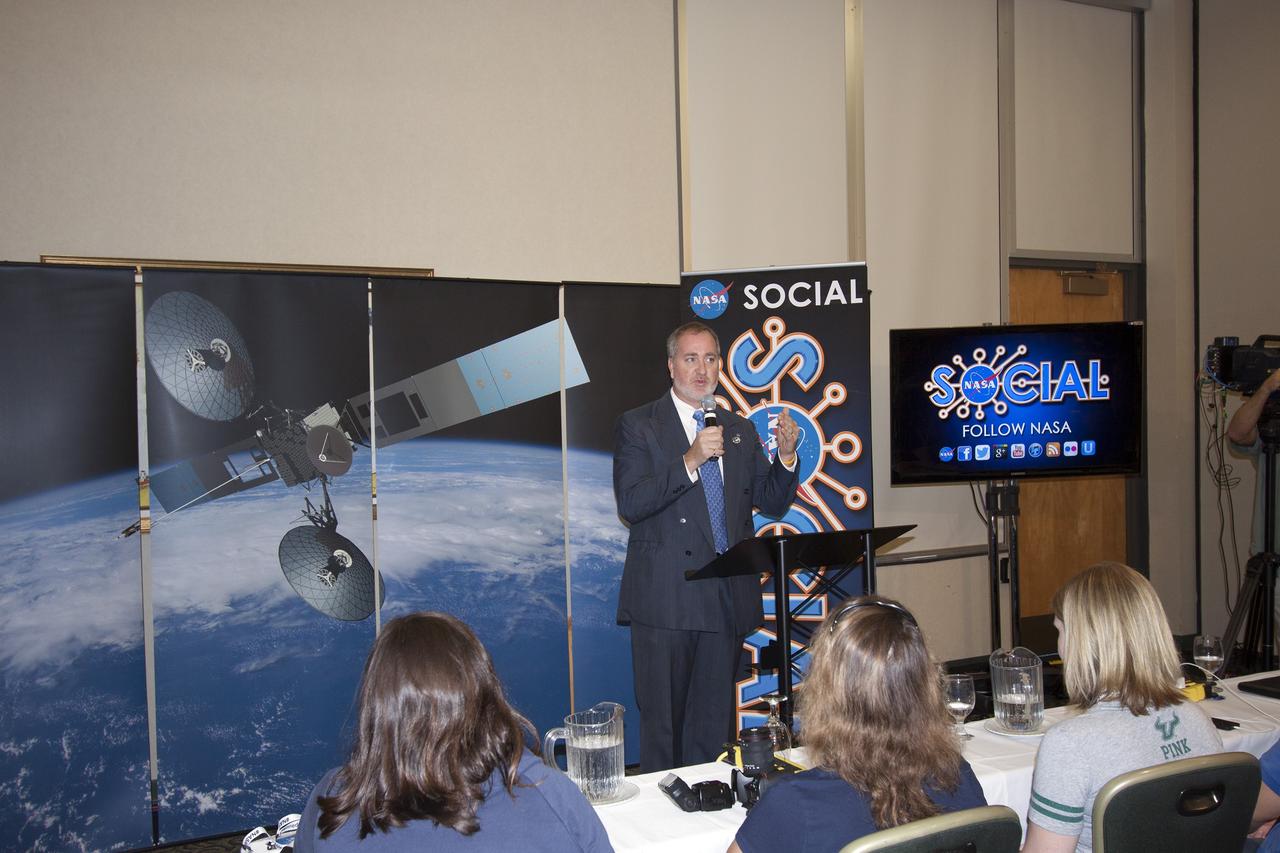
CAPE CANAVERAL, Fla. -- Former Kennedy Space Center Director Jay Honeycutt speaks to about 45 of NASA’s social media followers for two days of presentations on the Kennedy Space Center's past, present and future. The social media participants gathered at the Florida spaceport on Aug. 2 and 3, 2012 to hear from key former and current leaders who related stories of the space agency's efforts to explore the unknown. It was the first social media event totally run by Kennedy. Photo credit: NASA/ Gianni Woods
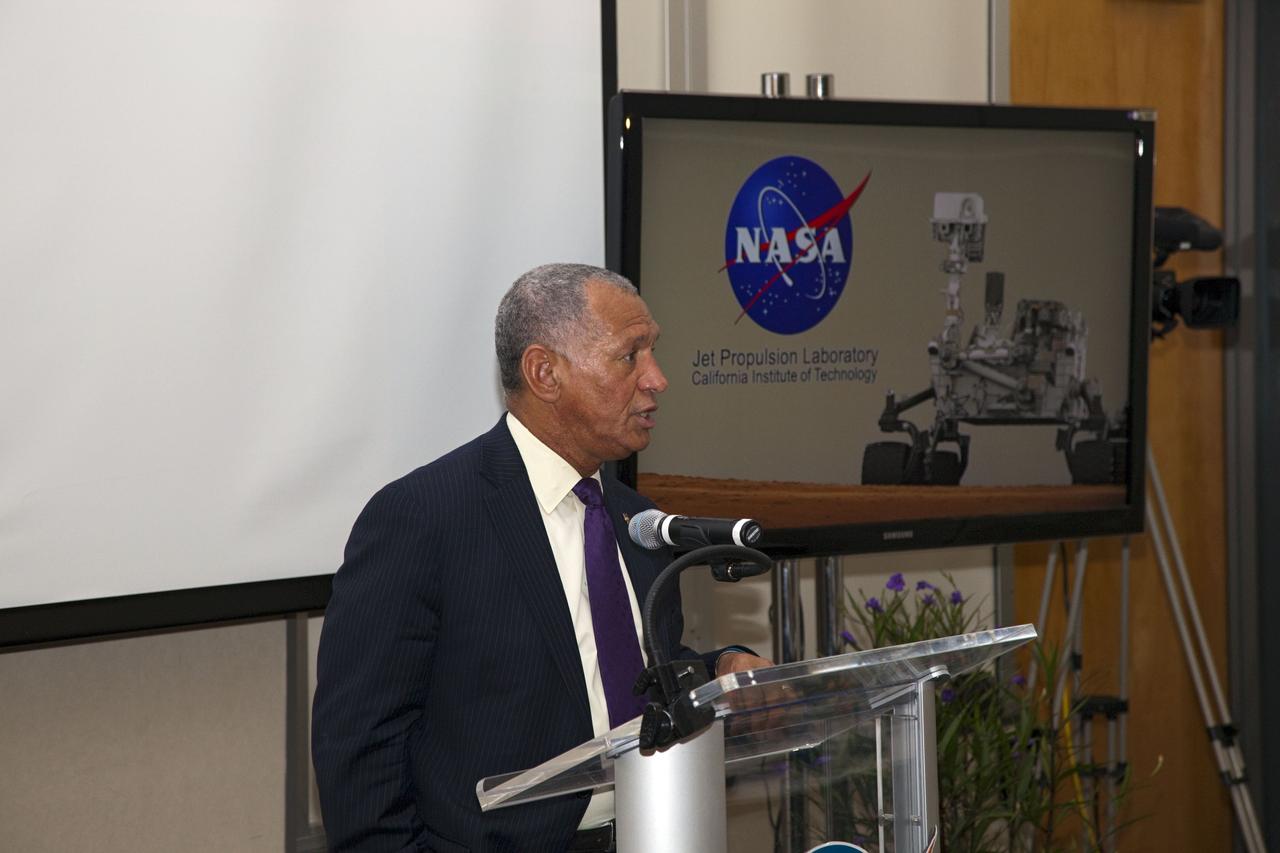
CAPE CANAVERAL, Fla. -- NASA Administrator Charles Bolden speaks to about 45 of NASA’s social media followers during two days of presentations on the Kennedy's past, present and future. The social media participants gathered at the Florida spaceport on Aug. 2 and 3, 2012 to hear from key former and current leaders who related stories of the space agency's efforts to explore the unknown. It was the first social media event totally run by Kennedy. Photo credit: NASA/ Gianni Woods
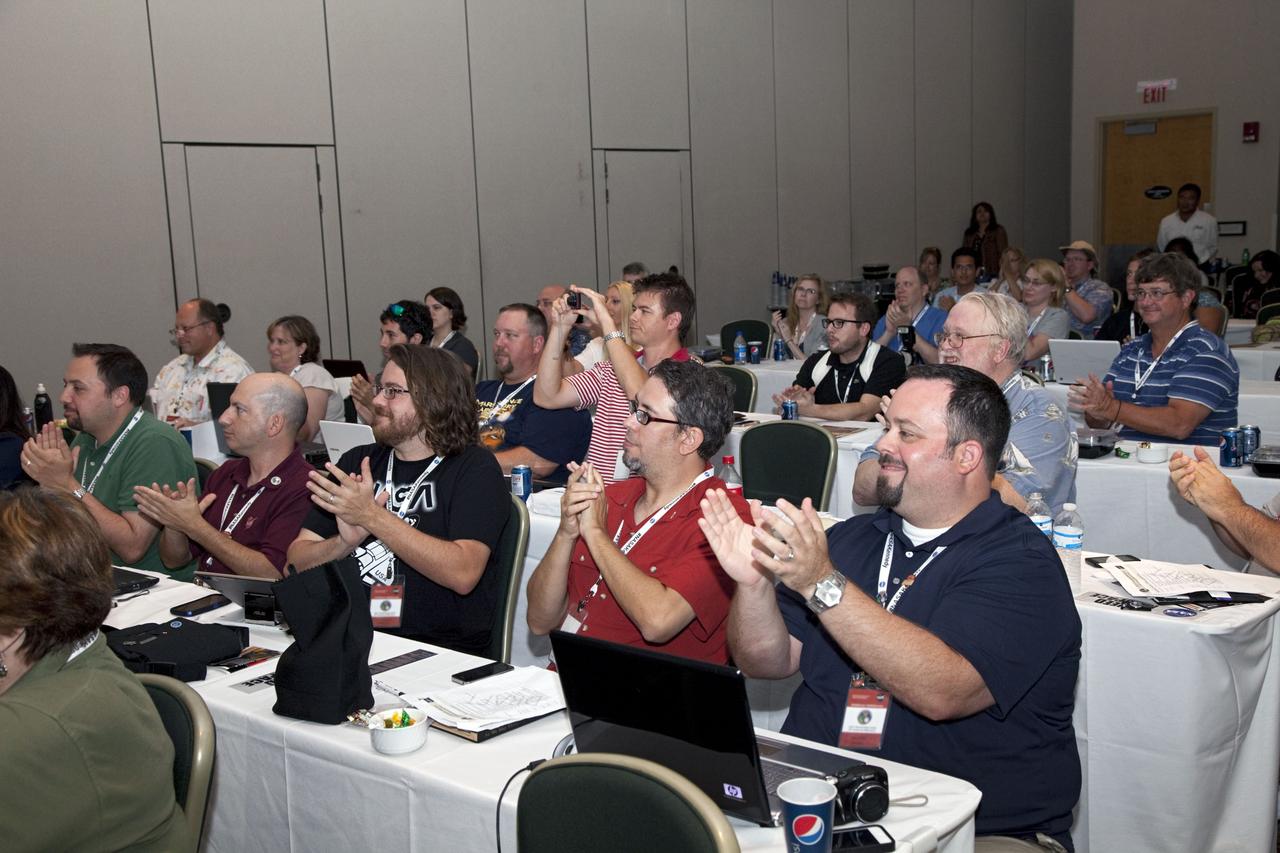
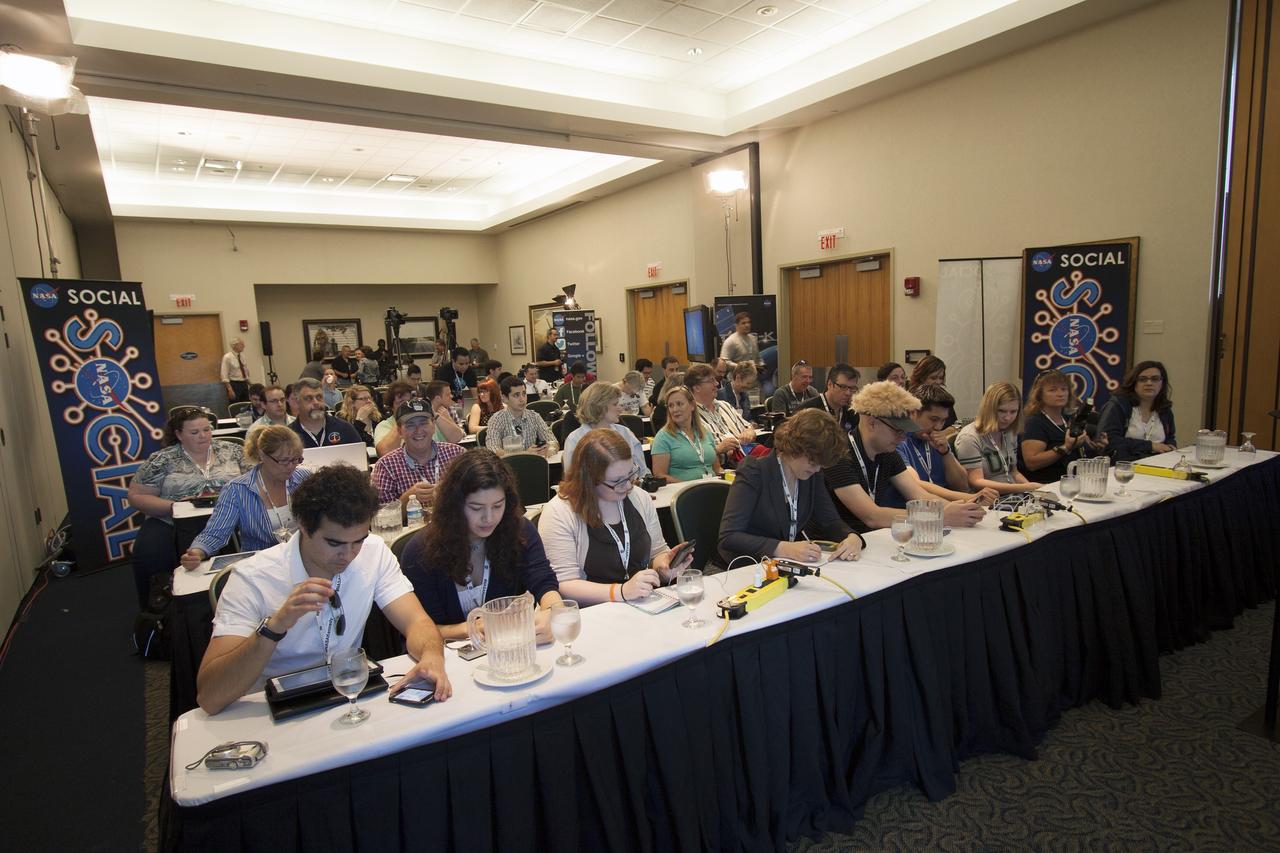
CAPE CANAVERAL, Fla. -- About 45 of NASA’s social media followers respond to remarks by NASA Administrator Charles Bolden during two days of presentations on the Kennedy's past, present and future. The social media participants gathered at the Florida spaceport on Aug. 2 and 3, 2012 to hear from key former and current leaders who related stories of the space agency's efforts to explore the unknown. It was the first social media event totally run by Kennedy. Photo credit: NASA/ Gianni Woods
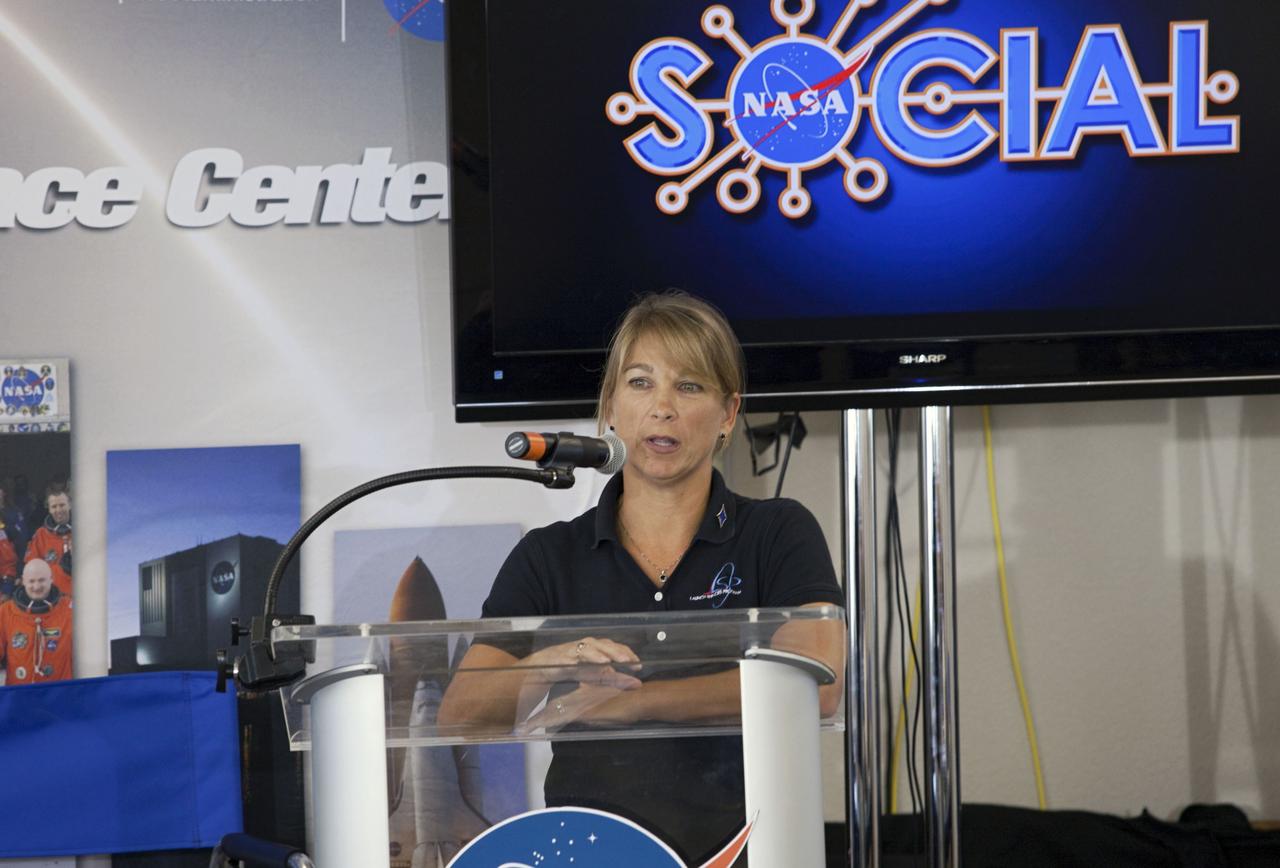
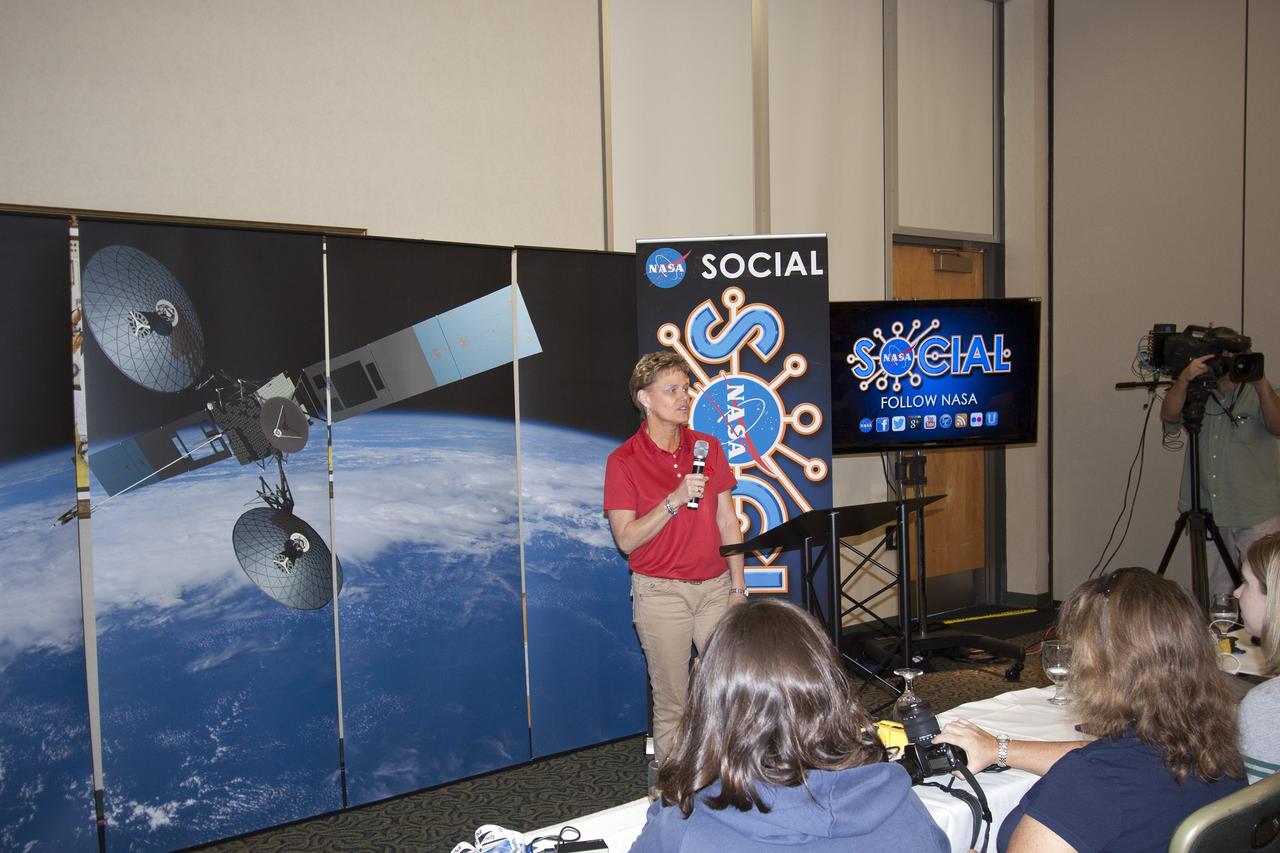
CAPE CANAVERAL, Fla. -- Amanda Mitskevich, program manager for NASA's Launch Services Program, speaks to about 45 of NASA’s social media followers during two days of presentations on the Kennedy's past, present and future. The social media participants gathered at the Florida spaceport on Aug. 2 and 3, 2012 to hear from key former and current leaders who related stories of the space agency's efforts to explore the unknown. It was the first social media event totally run by Kennedy. Photo credit: NASA/ Gianni Woods
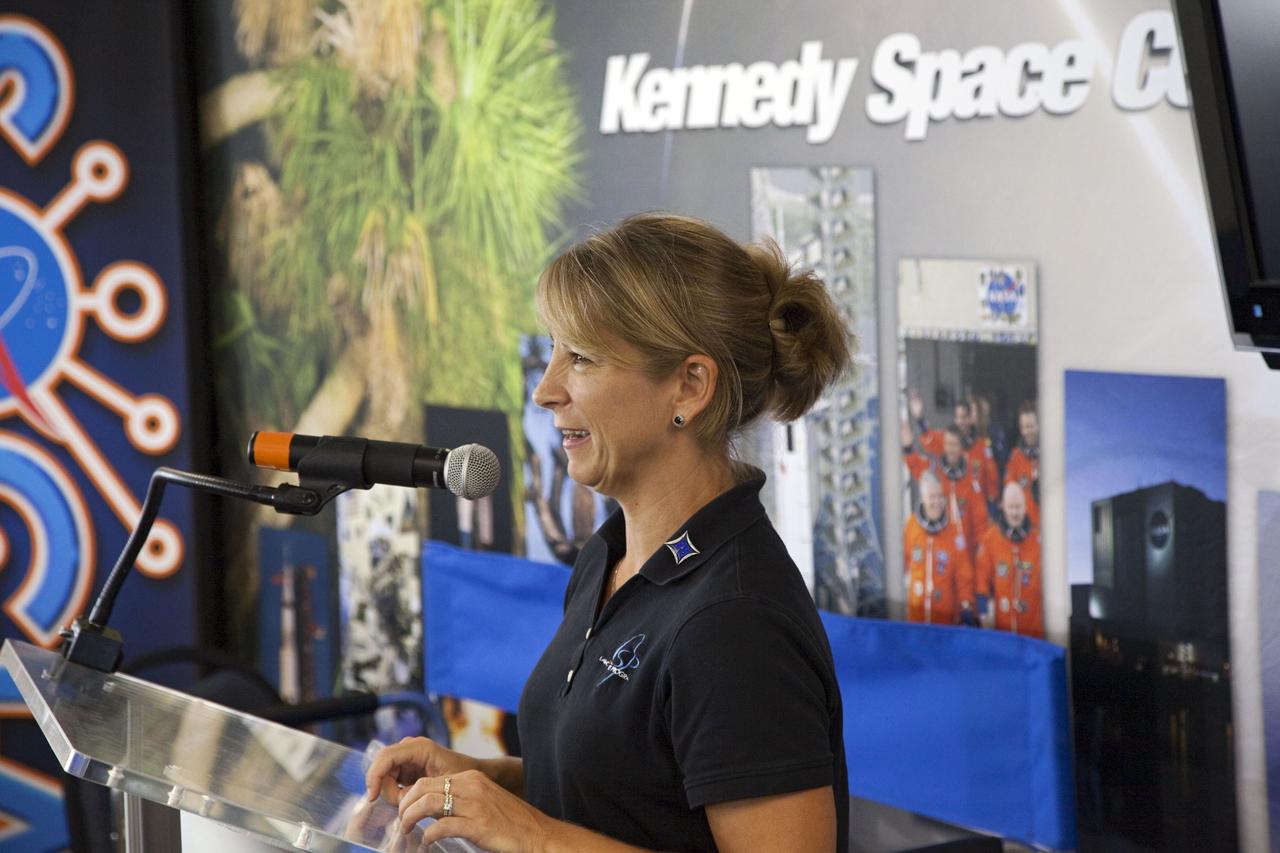
CAPE CANAVERAL, Fla. -- Amanda Mitskevich, program manager for NASA's Launch Services Program, speaks to about 45 of NASA’s social media followers during two days of presentations on the Kennedy's past, present and future. The social media participants gathered at the Florida spaceport on Aug. 2 and 3, 2012 to hear from key former and current leaders who related stories of the space agency's efforts to explore the unknown. It was the first social media event totally run by Kennedy. Photo credit: NASA/ Gianni Woods
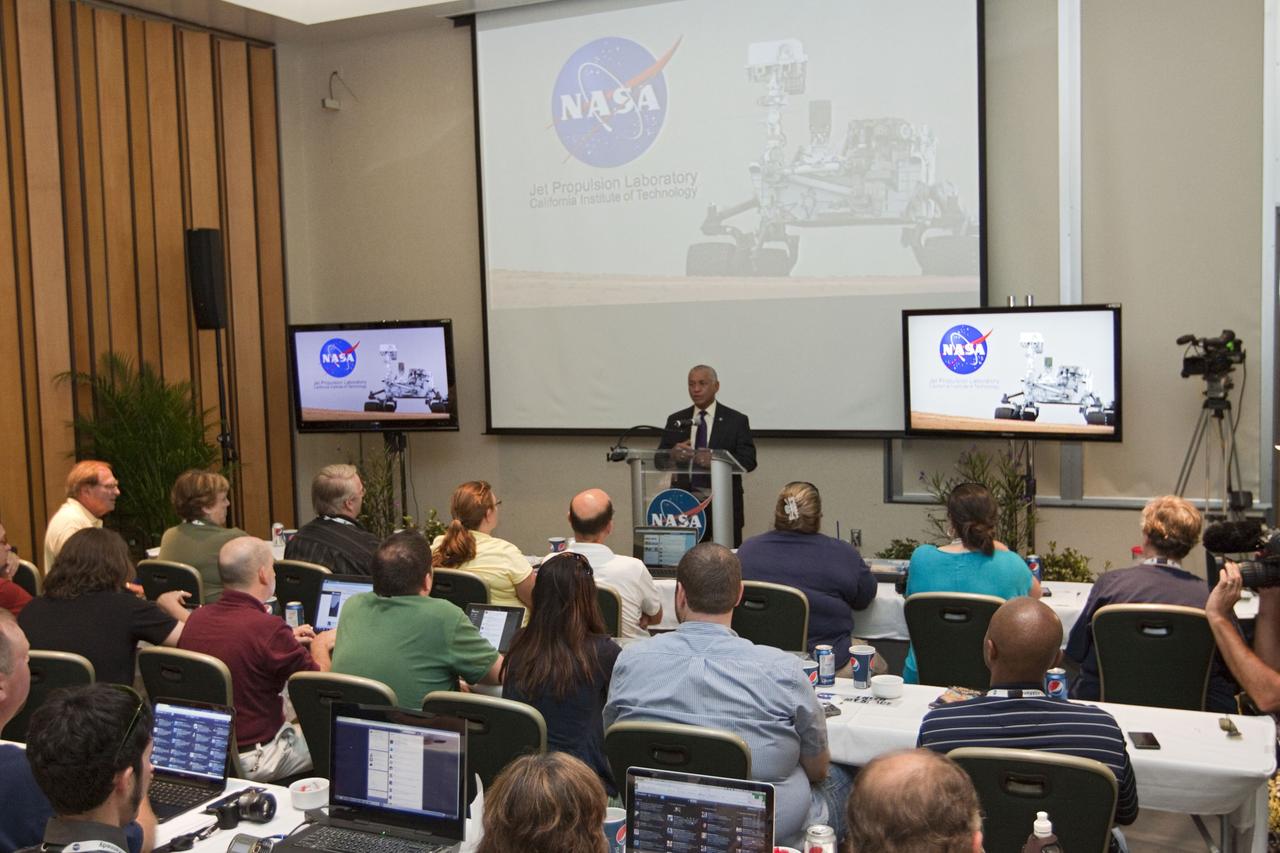
CAPE CANAVERAL, Fla. -- NASA Administrator Charles Bolden speaks to about 45 of NASA’s social media followers during two days of presentations on the Kennedy's past, present and future. The social media participants gathered at the Florida spaceport on Aug. 2 and 3, 2012 to hear from key former and current leaders who related stories of the space agency's efforts to explore the unknown. It was the first social media event totally run by Kennedy. Photo credit: NASA/ Kim Shiflett
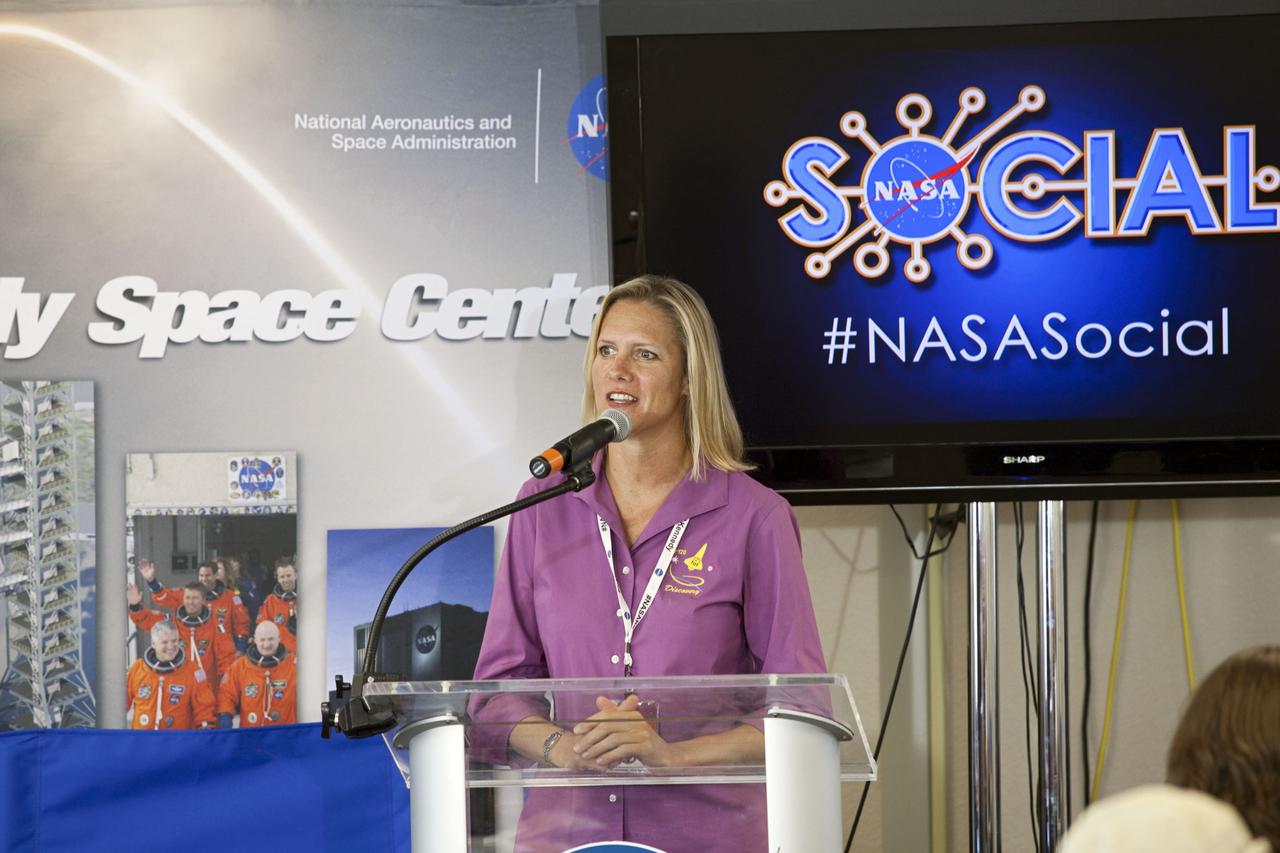
CAPE CANAVERAL, Fla. -- Stephanie Stilson, NASA flow director for Orbiter Transition and Retirement, speaks to about 45 of NASA’s social media followers during two days of presentations on the Kennedy Space Center's past, present and future. The social media participants gathered at the Florida spaceport on Aug. 2 and 3, 2012 to hear from key former and current leaders who related stories of the space agency's efforts to explore the unknown. It was the first social media event totally run by Kennedy. Photo credit: NASA/ Gianni Woods
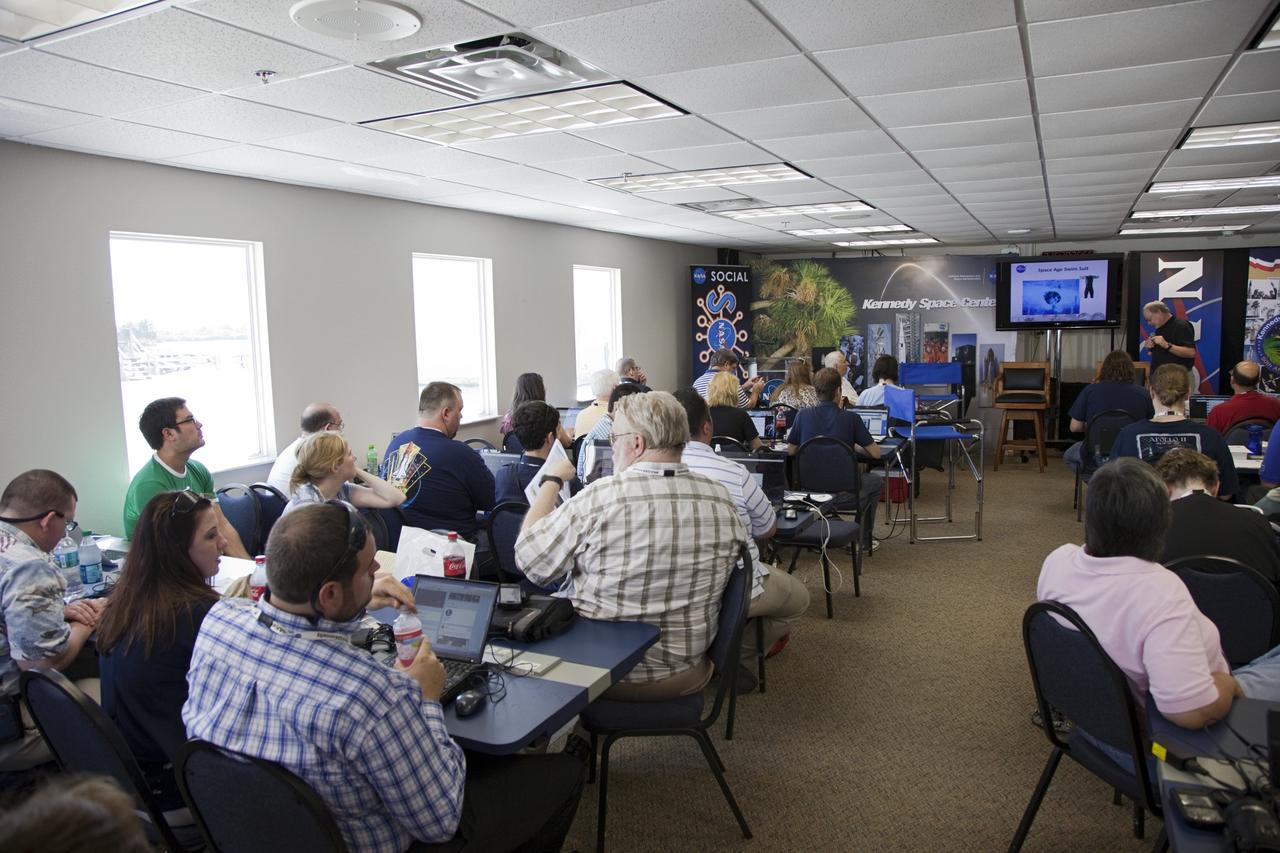
CAPE CANAVERAL, Fla. -- About 45 of NASA’s social media followers listen to a speaker during two days of presentations on the Kennedy Space Center's past, present and future. The social media participants gathered at the Florida spaceport on Aug. 2 and 3, 2012 to hear from key former and current leaders who related stories of the space agency's efforts to explore the unknown. It was the first social media event totally run by Kennedy. Photo credit: NASA/ Gianni Woods
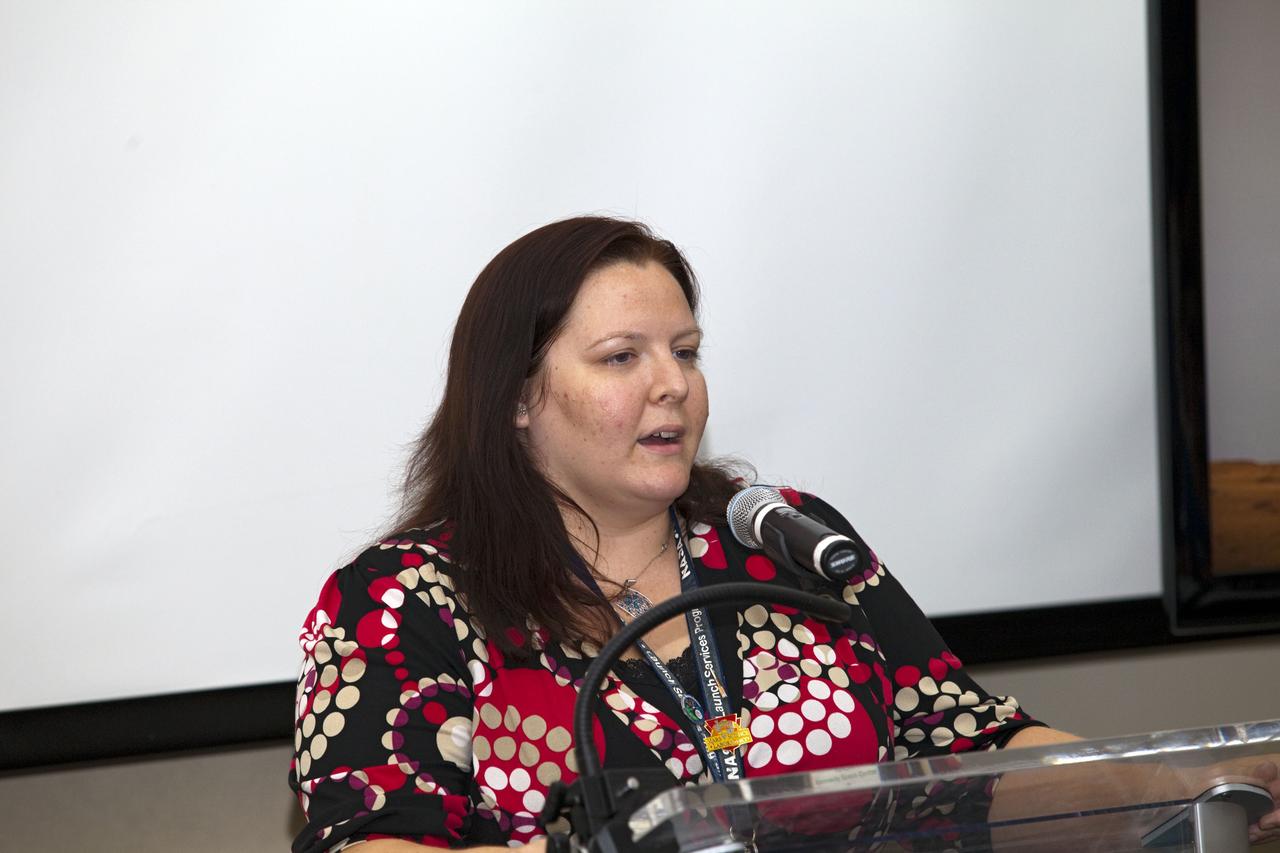
CAPE CANAVERAL, Fla. -- Caley Burke, NASA Flight Design and Flight Controls engineer, speaks to about 45 of NASA’s social media followers for two days of presentations on the Kennedy Space Center's past, present and future. The social media participants gathered at the Florida spaceport on Aug. 2 and 3, 2012 to hear from key former and current leaders who related stories of the space agency's efforts to explore the unknown. It was the first social media event totally run by Kennedy. Photo credit: NASA/ Gianni Woods
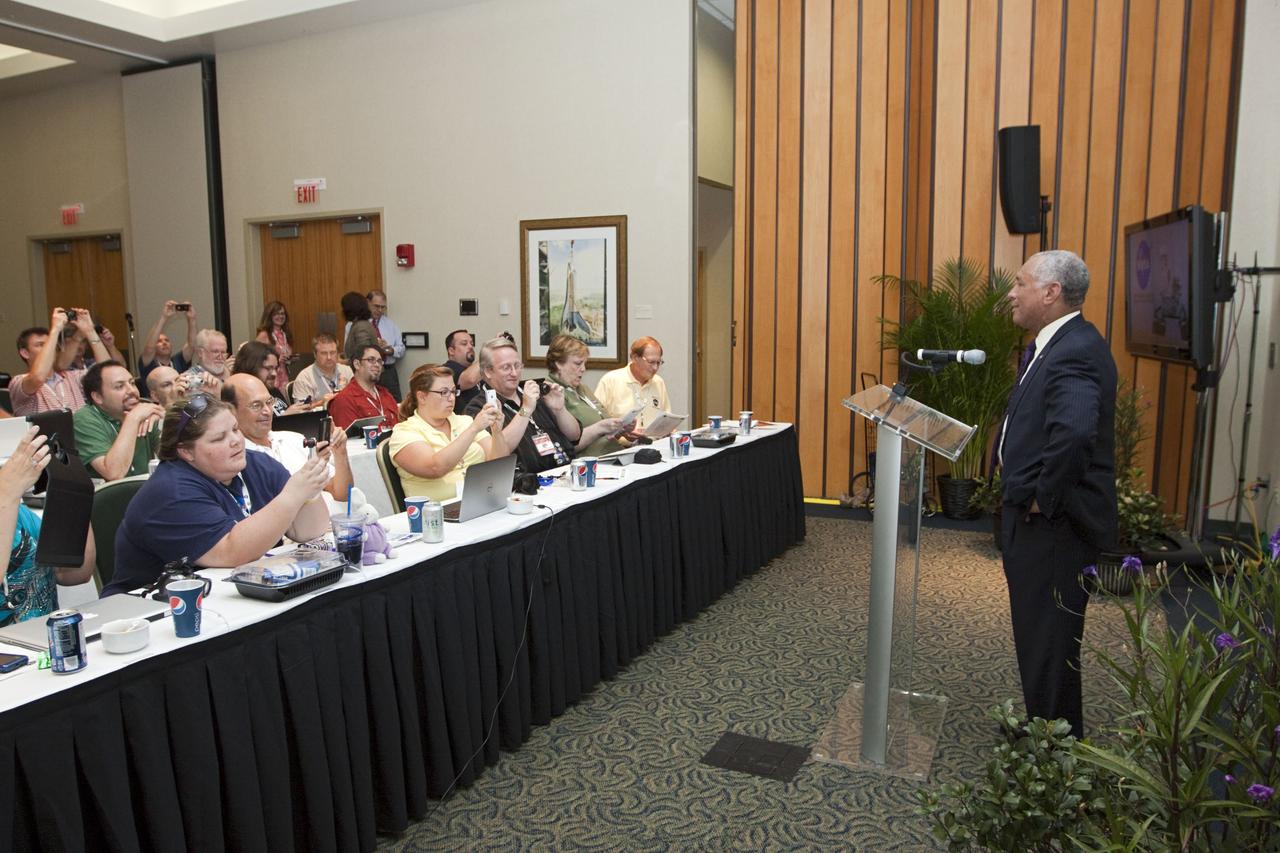
CAPE CANAVERAL, Fla. -- NASA Administrator Charles Bolden speaks to about 45 of NASA’s social media followers during two days of presentations on the Kennedy's past, present and future. The social media participants gathered at the Florida spaceport on Aug. 2 and 3, 2012 to hear from key former and current leaders who related stories of the space agency's efforts to explore the unknown. It was the first social media event totally run by Kennedy. Photo credit: NASA/ Kim Shiflett
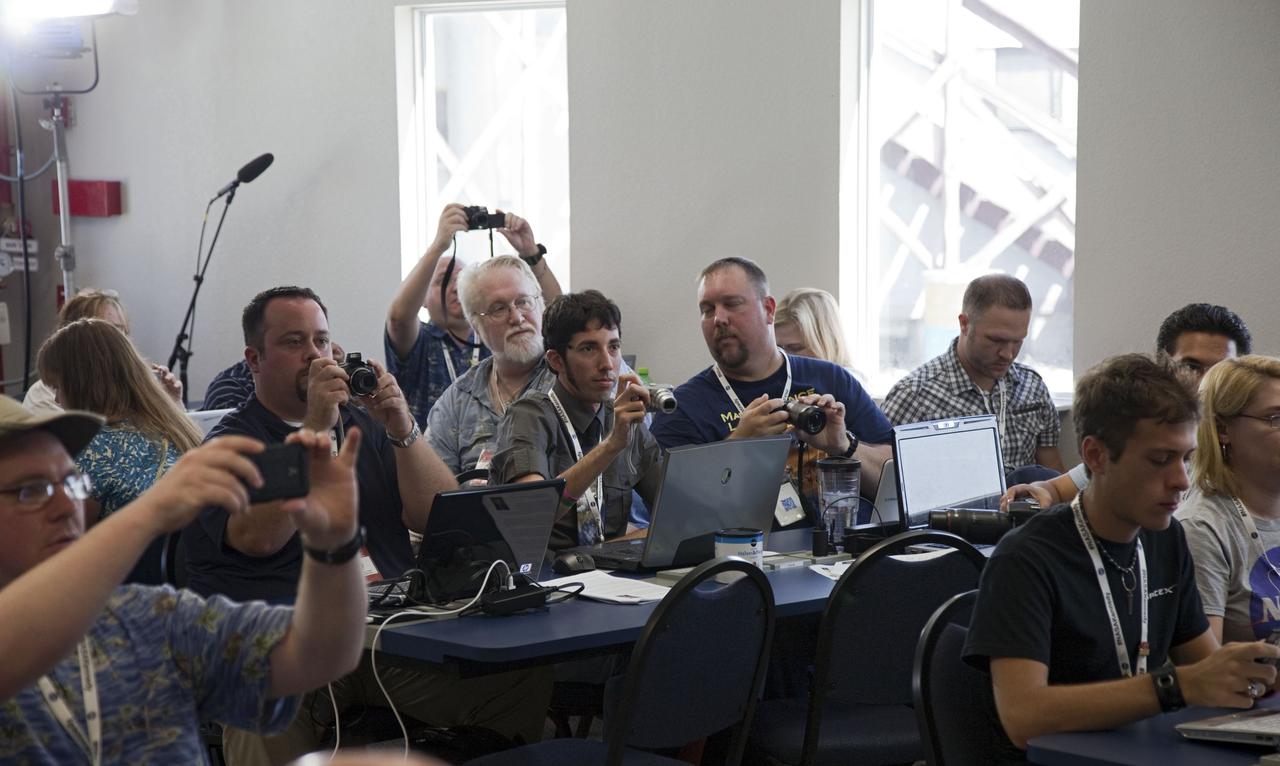
CAPE CANAVERAL, Fla. -- Several of the 45 of NASA social media followers photograph a speaker during two days of presentations on the Kennedy Space Center's past, present and future. The social media participants gathered at the Florida spaceport on Aug. 2 and 3, 2012 to hear from key former and current leaders who related stories of the space agency's efforts to explore the unknown. It was the first social media event totally run by Kennedy. Photo credit: NASA/ Gianni Woods
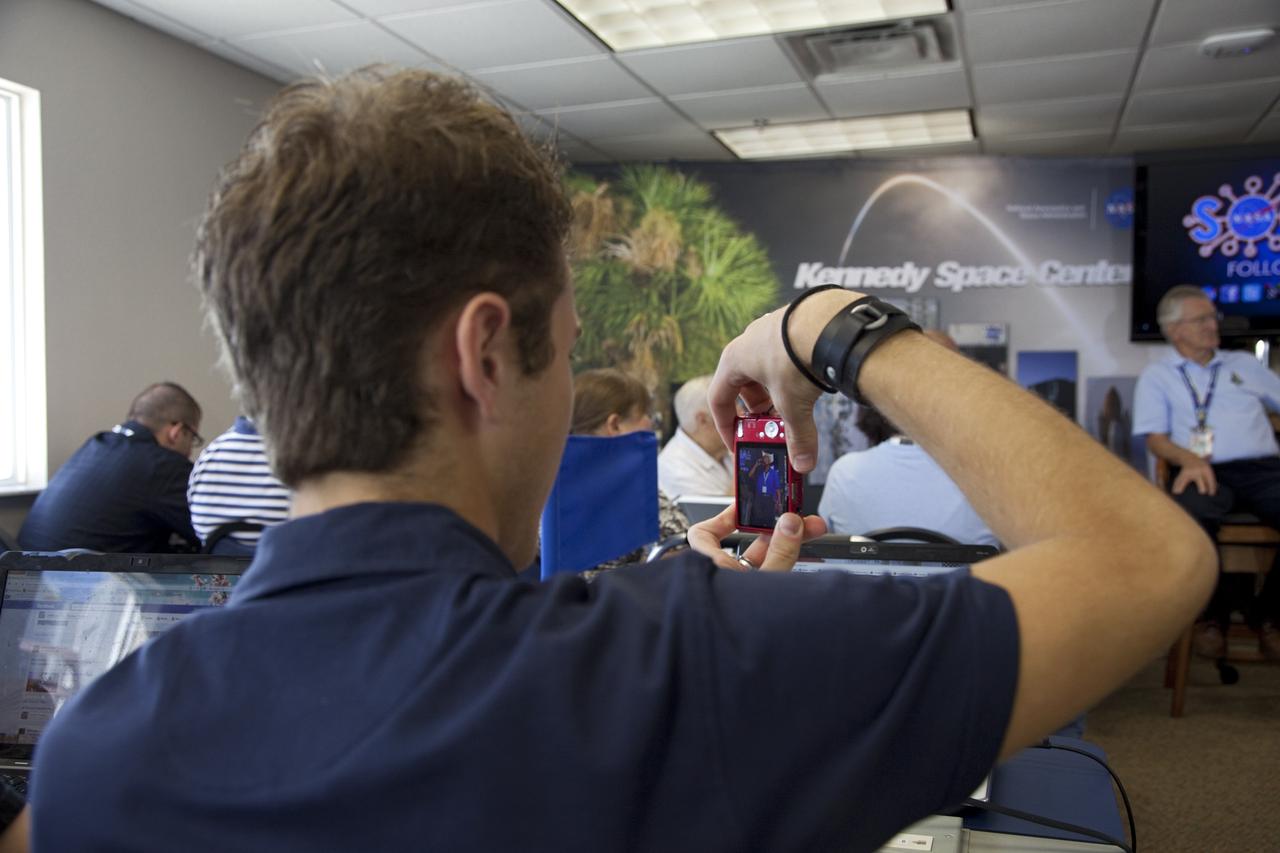
CAPE CANAVERAL, Fla. -- One of about 45 of NASA’s social media followers photographs a speaker during two days of presentations on the Kennedy Space Center's past, present and future. The social media participants gathered at the Florida spaceport on Aug. 2 and 3, 2012 to hear from key former and current leaders who related stories of the space agency's efforts to explore the unknown. It was the first social media event totally run by Kennedy. Photo credit: NASA/ Gianni Woods

CAPE CANAVERAL, Fla. -- Dr. Lesley Fletcher, Kennedy Space Center deputy division chief for Education Programs, speaks to about 45 of NASA’s social media followers for two days of presentations on the Kennedy's past, present and future. The social media participants gathered at the Florida spaceport on Aug. 2 and 3, 2012 to hear from key former and current leaders who related stories of the space agency's efforts to explore the unknown. It was the first social media event totally run by Kennedy. Photo credit: NASA/ Gianni Woods
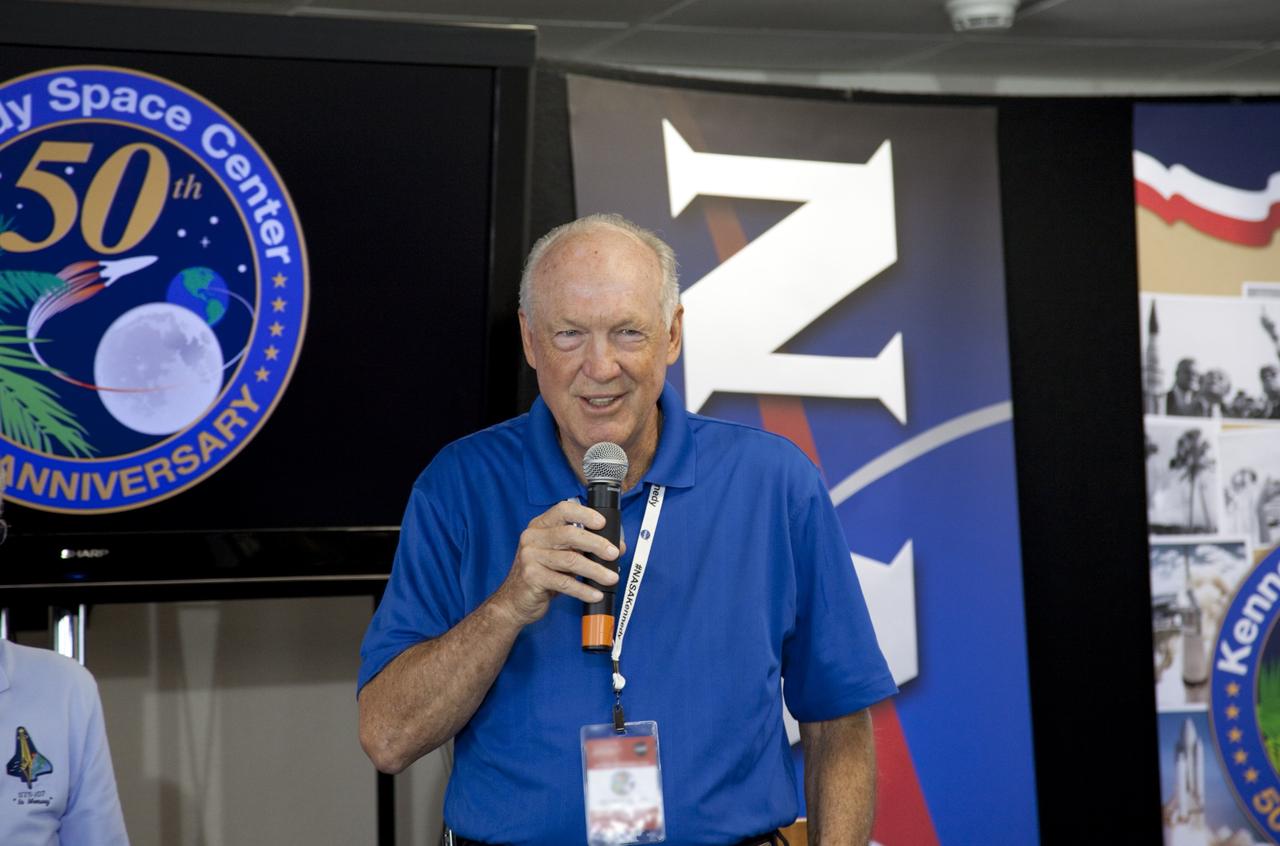
CAPE CANAVERAL, Fla. -- Roy Tharpe, president of Space Gateway Support, speaks to about 45 of NASA’s social media followers for two days of presentations on the Kennedy Space Center's past, present and future. The social media participants gathered at the Florida spaceport on Aug. 2 and 3, 2012 to hear from key former and current leaders who related stories of the space agency's efforts to explore the unknown. It was the first social media event totally run by Kennedy. Photo credit: NASA/ Gianni Woods
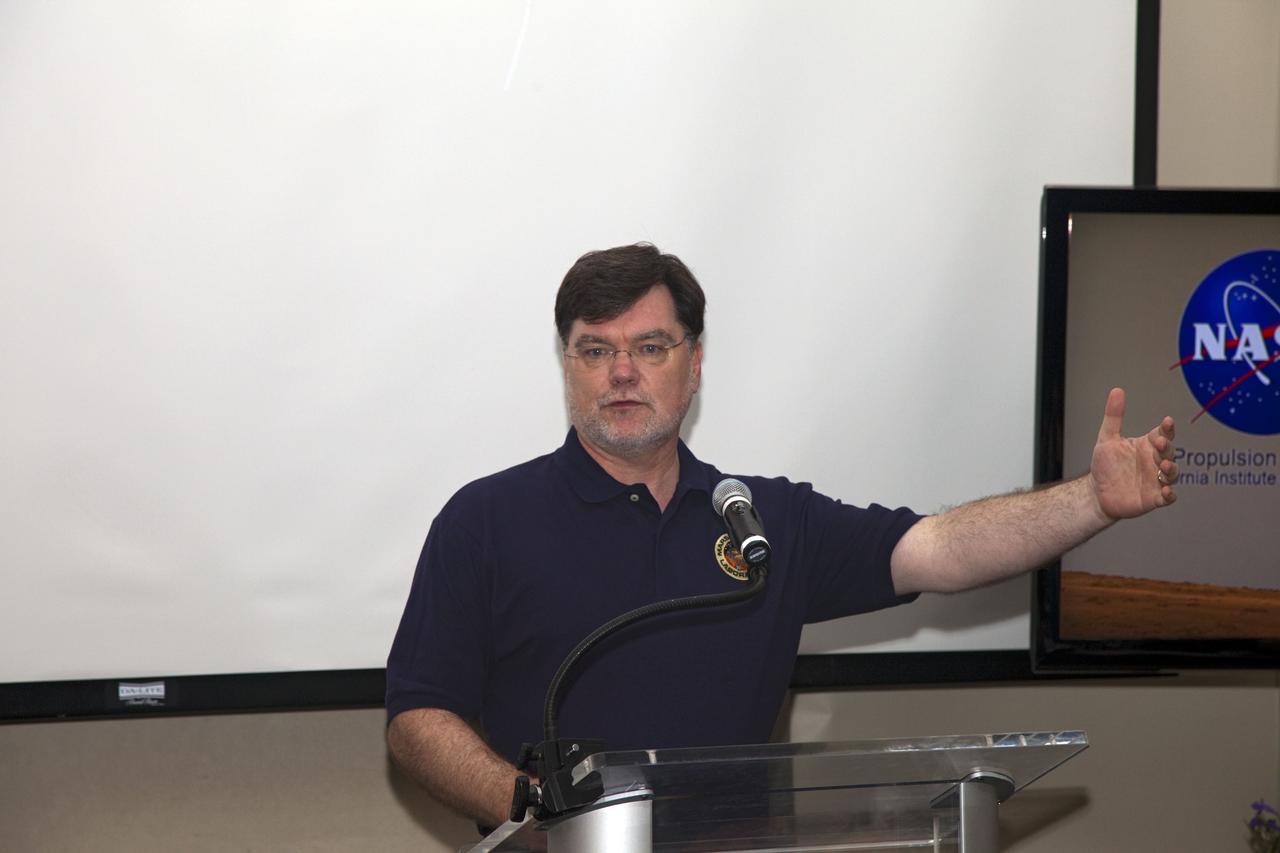
CAPE CANAVERAL, Fla. -- Jim Adams, NASA deputy chief technologist, speaks to about 45 of NASA’s social media followers for two days of presentations on the Kennedy's past, present and future. The social media participants gathered at the Florida spaceport on Aug. 2 and 3, 2012 to hear from key former and current leaders who related stories of the space agency's efforts to explore the unknown. It was the first social media event totally run by Kennedy. Photo credit: NASA/ Gianni Woods
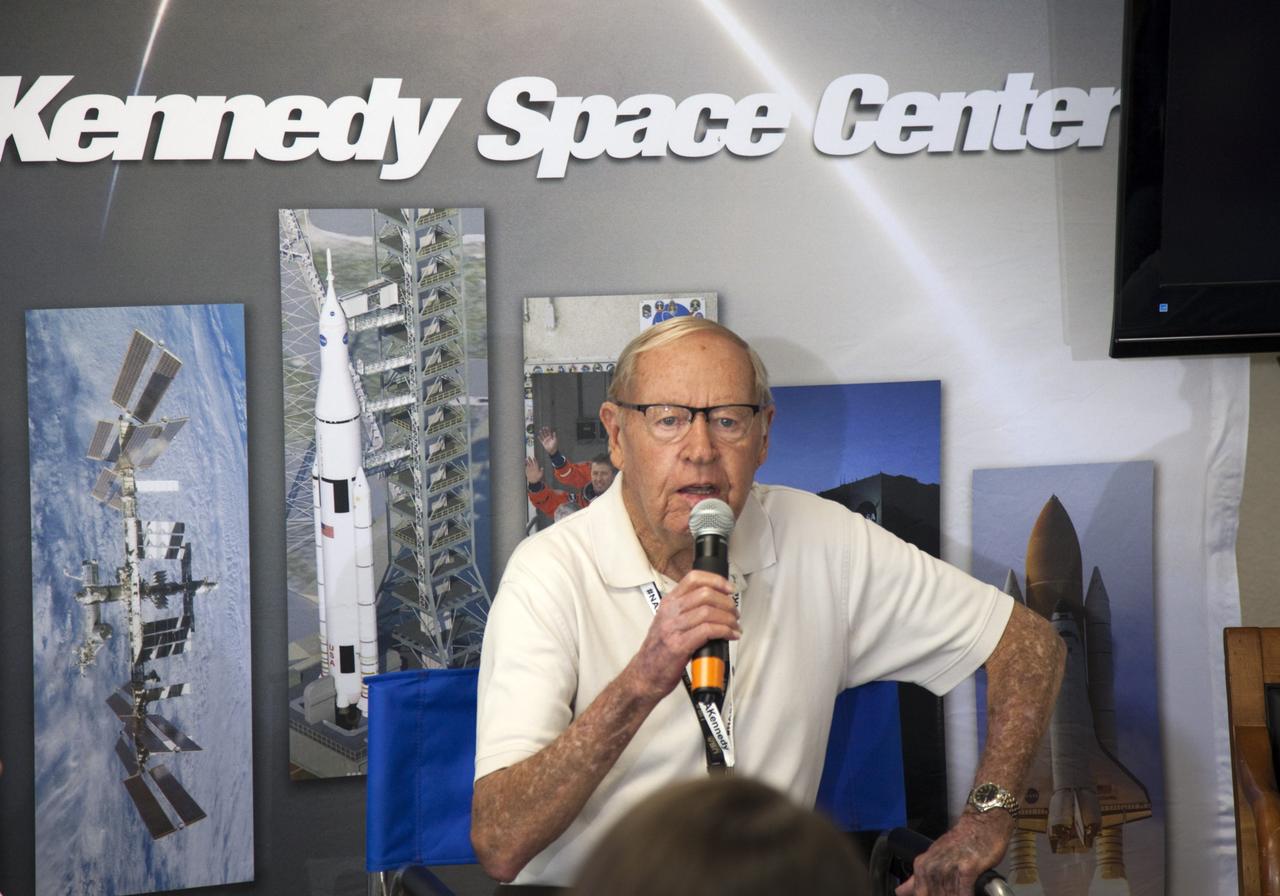
CAPE CANAVERAL, Fla. -- Jack King, former NASA chief of Public Information, speaks to about 45 of NASA’s social media followers for two days of presentations on the Kennedy Space Center's past, present and future. The social media participants gathered at the Florida spaceport on Aug. 2 and 3, 2012 to hear from key former and current leaders who related stories of the space agency's efforts to explore the unknown. It was the first social media event totally run by Kennedy. Photo credit: NASA/ Gianni Woods
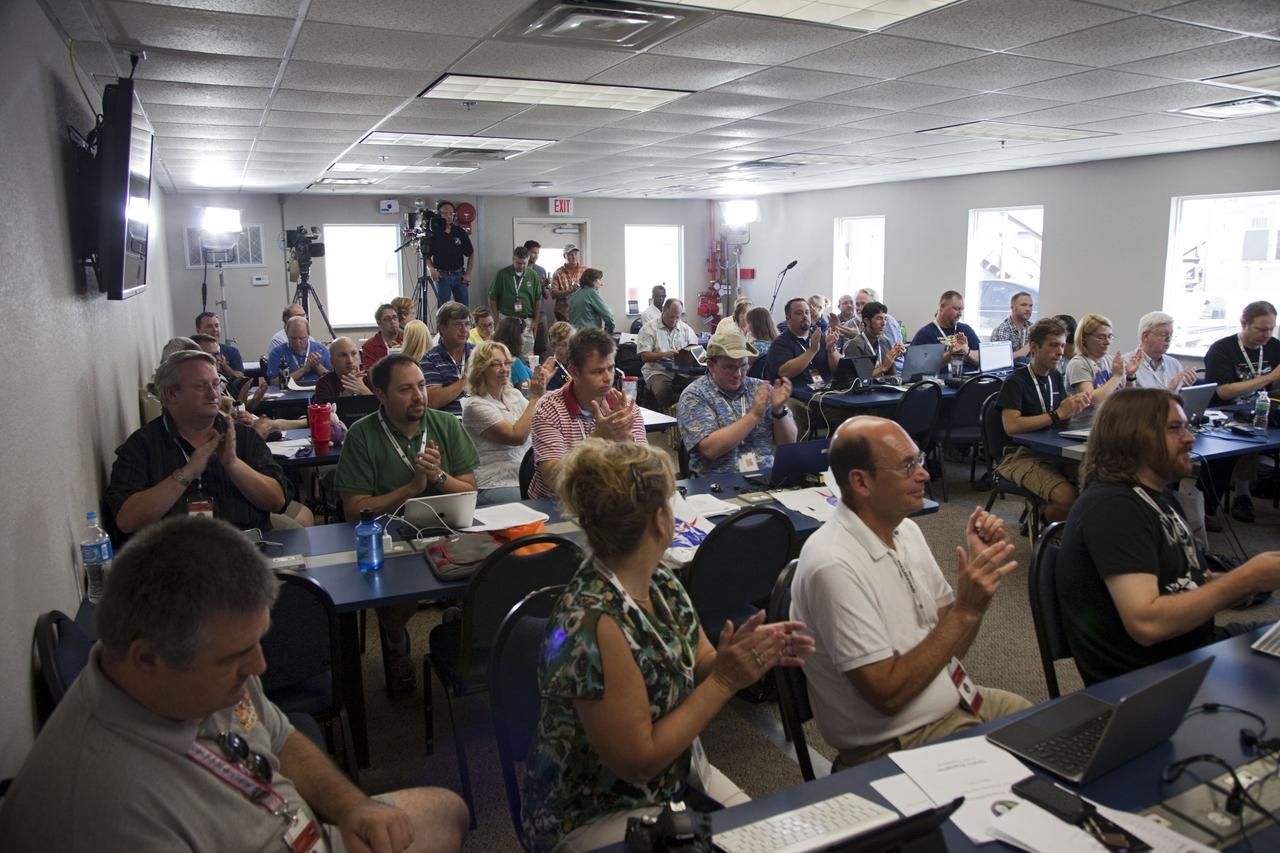
CAPE CANAVERAL, Fla. -- About 45 of NASA’s social media followers respond to a speaker during two days of presentations on the Kennedy Space Center's past, present and future. The social media participants gathered at the Florida spaceport on Aug. 2 and 3, 2012 to hear from key former and current leaders who related stories of the space agency's efforts to explore the unknown. It was the first social media event totally run by Kennedy. Photo credit: NASA/ Gianni Woods
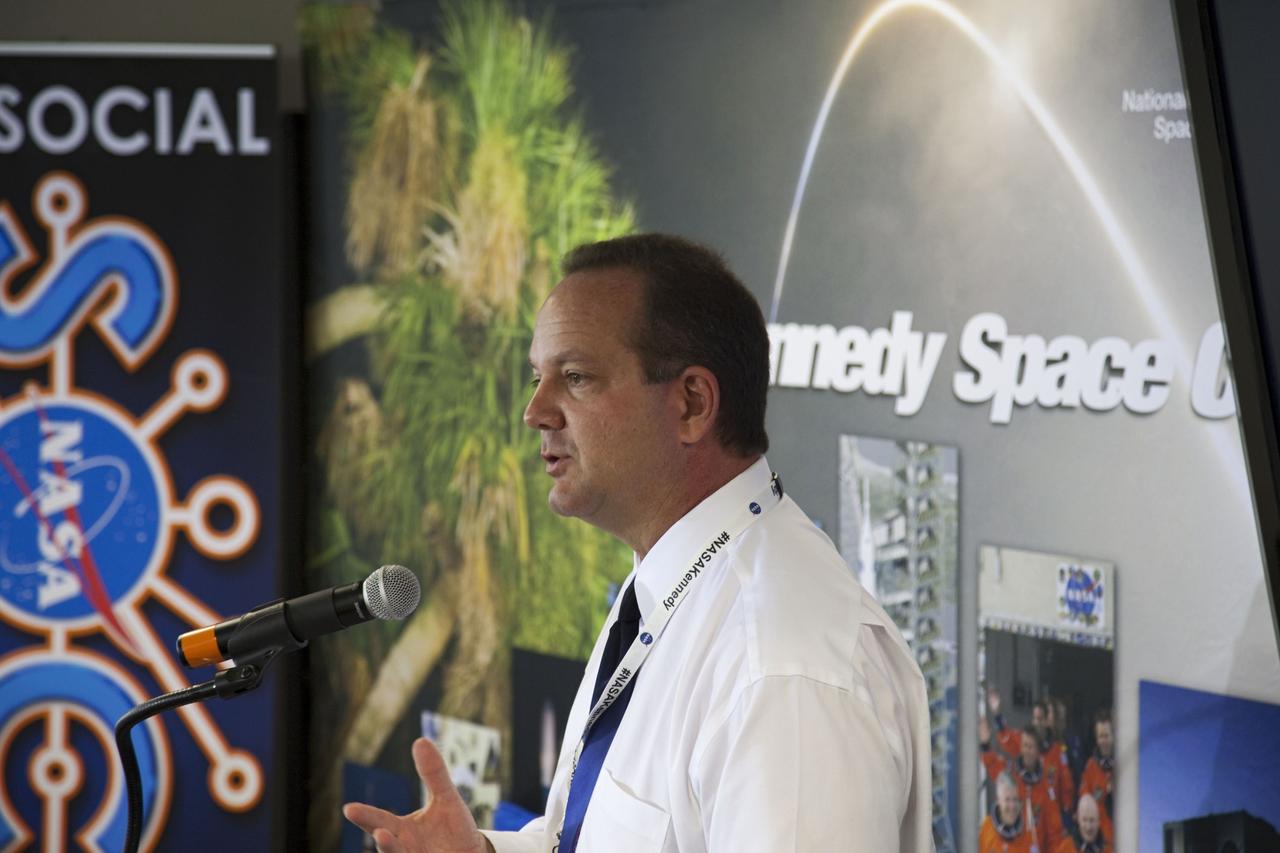
CAPE CANAVERAL, Fla. -- Thomas Engler, deputy manager of the Kennedy Space Center Planning and Development Office, speaks to about 45 of NASA’s social media followers during two days of presentations on the Kennedy's past, present and future. The social media participants gathered at the Florida spaceport on Aug. 2 and 3, 2012 to hear from key former and current leaders who related stories of the space agency's efforts to explore the unknown. It was the first social media event totally run by Kennedy. Photo credit: NASA/ Gianni Woods
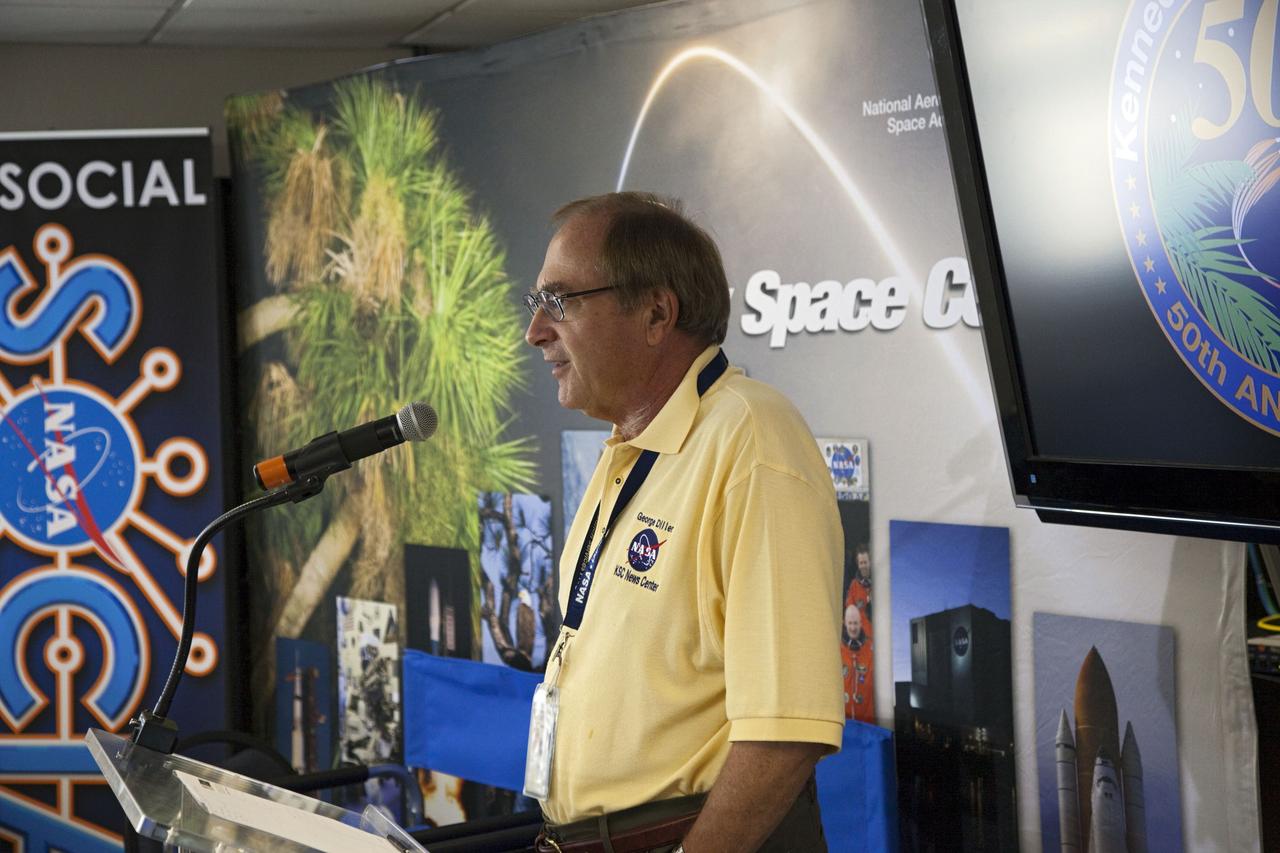
CAPE CANAVERAL, Fla. -- NASA Public Affairs Officer George Diller speaks to about 45 of NASA’s social media followers during two days of presentations on the Kennedy's past, present and future. The social media participants gathered at the Florida spaceport on Aug. 2 and 3, 2012 to hear from key former and current leaders who related stories of the space agency's efforts to explore the unknown. It was the first social media event totally run by Kennedy. Photo credit: NASA/ Gianni Woods
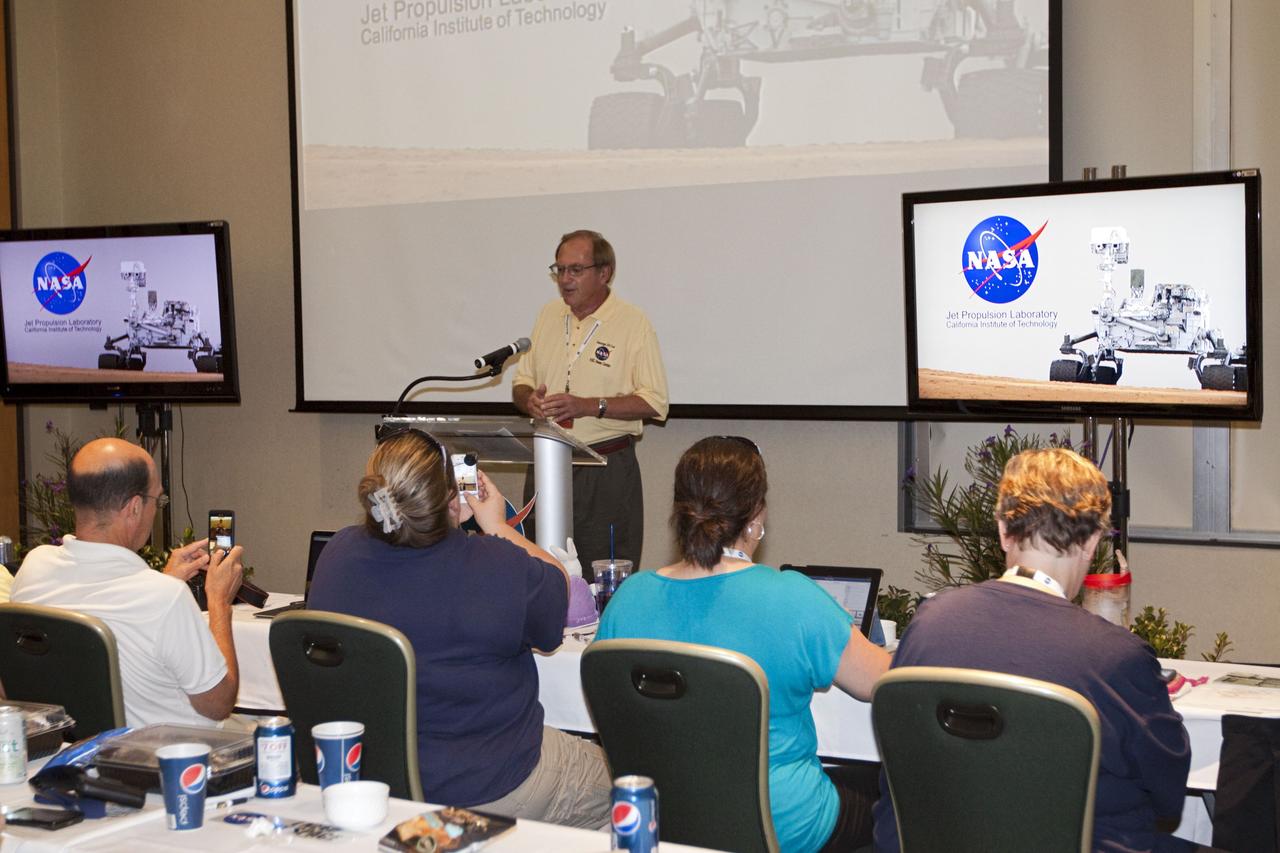
CAPE CANAVERAL, Fla. -- NASA Public Affairs Officer George Diller speaks to about 45 of NASA’s social media followers during two days of presentations on the Kennedy's past, present and future. The social media participants gathered at the Florida spaceport on Aug. 2 and 3, 2012 to hear from key former and current leaders who related stories of the space agency's efforts to explore the unknown. It was the first social media event totally run by Kennedy. Photo credit: NASA/ Kim Shiflett
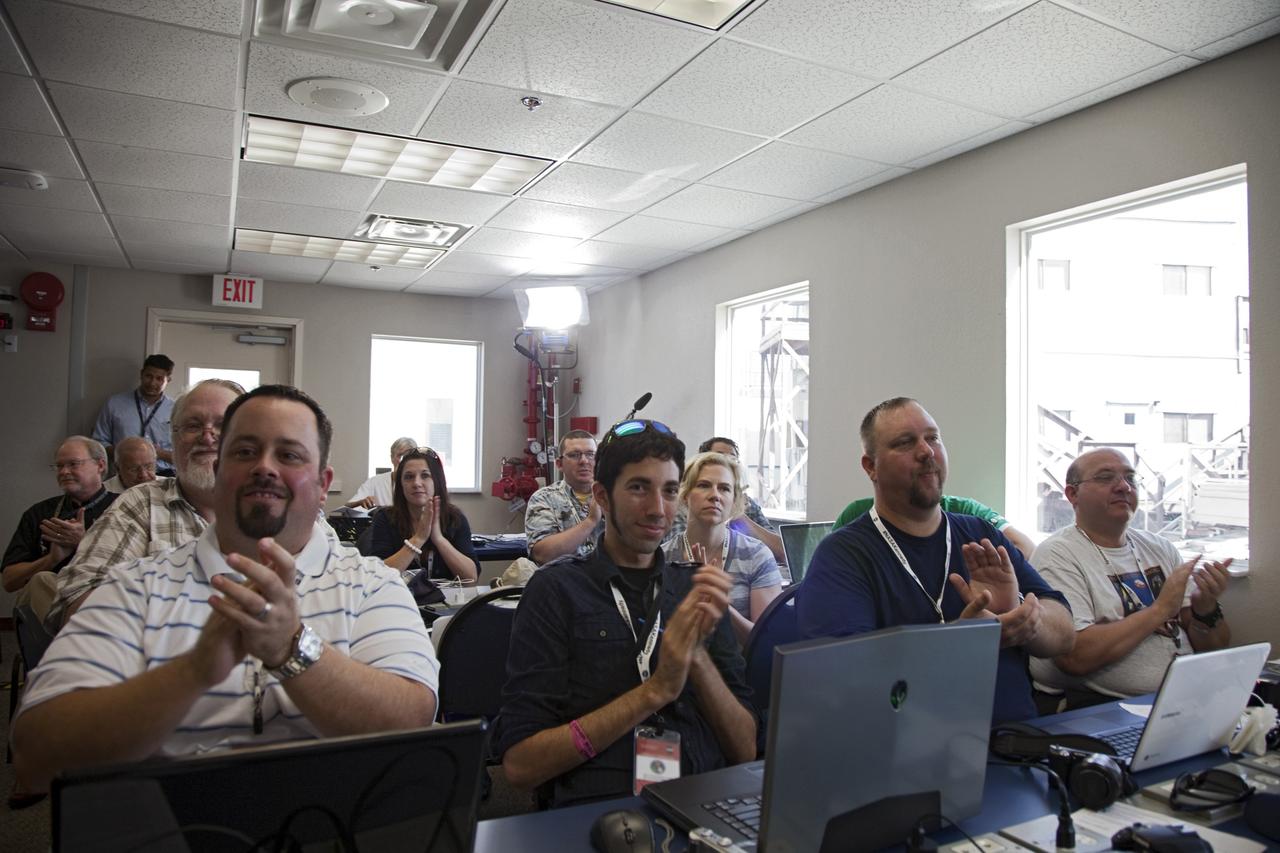
CAPE CANAVERAL, Fla. -- About 45 of NASA’s social media followers respond to a speaker during two days of presentations on the Kennedy Space Center's past, present and future. The social media participants gathered at the Florida spaceport on Aug. 2 and 3, 2012 to hear from key former and current leaders who related stories of the space agency's efforts to explore the unknown. It was the first social media event totally run by Kennedy. Photo credit: NASA/ Gianni Woods
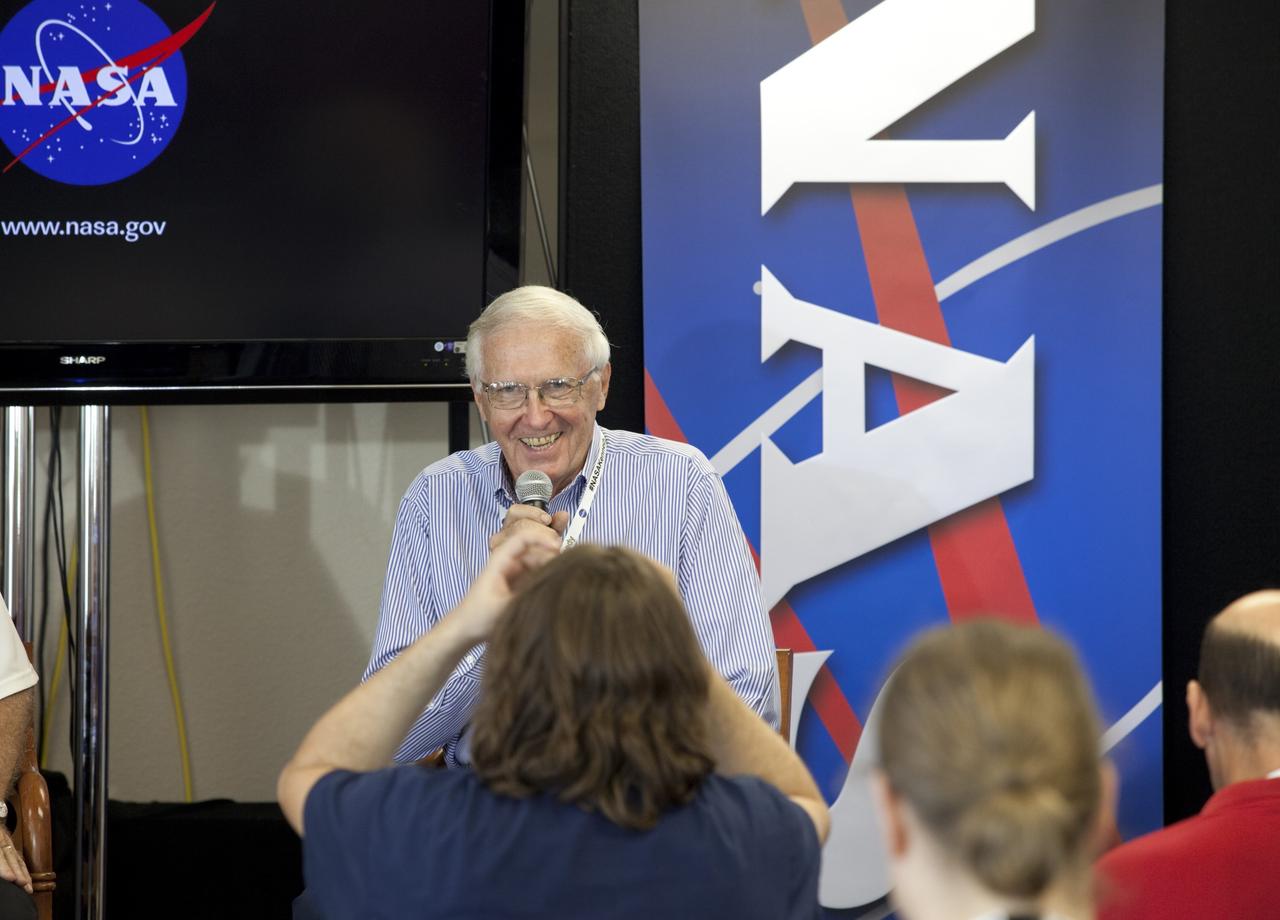
CAPE CANAVERAL, Fla. -- Lee Solid, a retired senior executive with Rockwell and Boeing, speaks to about 45 of NASA’s social media followers for two days of presentations on the Kennedy Space Center's past, present and future. The social media participants gathered at the Florida spaceport on Aug. 2 and 3, 2012 to hear from key former and current leaders who related stories of the space agency's efforts to explore the unknown. It was the first social media event totally run by Kennedy. Photo credit: NASA/ Gianni Woods
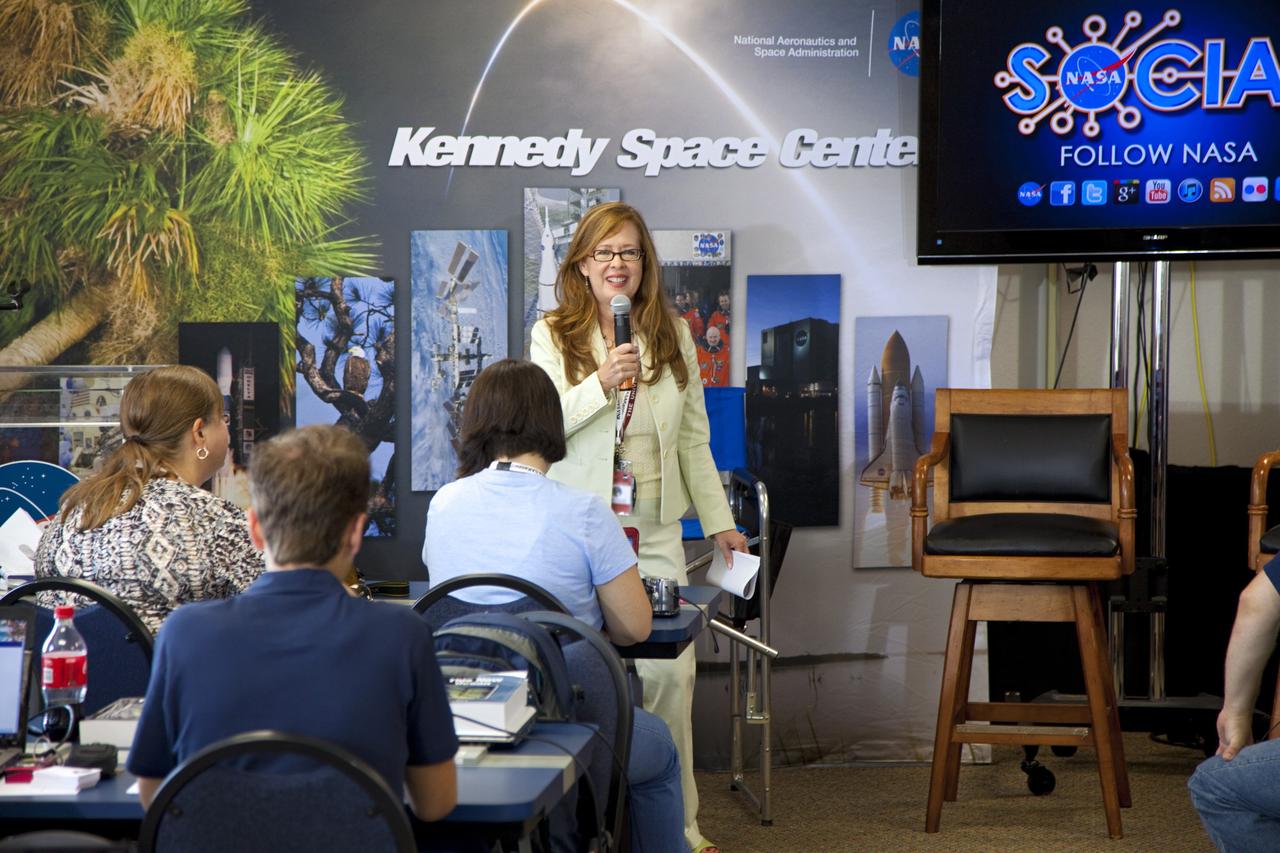
CAPE CANAVERAL, Fla. -- NASA Director of Public Affairs Lisa Malone welcomes about 45 of NASA’s social media followers for two days of presentations on the Kennedy Space Center's past, present and future. The social media participants gathered at the Florida spaceport on Aug. 2 and 3, 2012 to hear from key former and current leaders who related stories of the space agency's efforts to explore the unknown. It was the first social media event totally run by Kennedy. Photo credit: NASA/ Gianni Woods
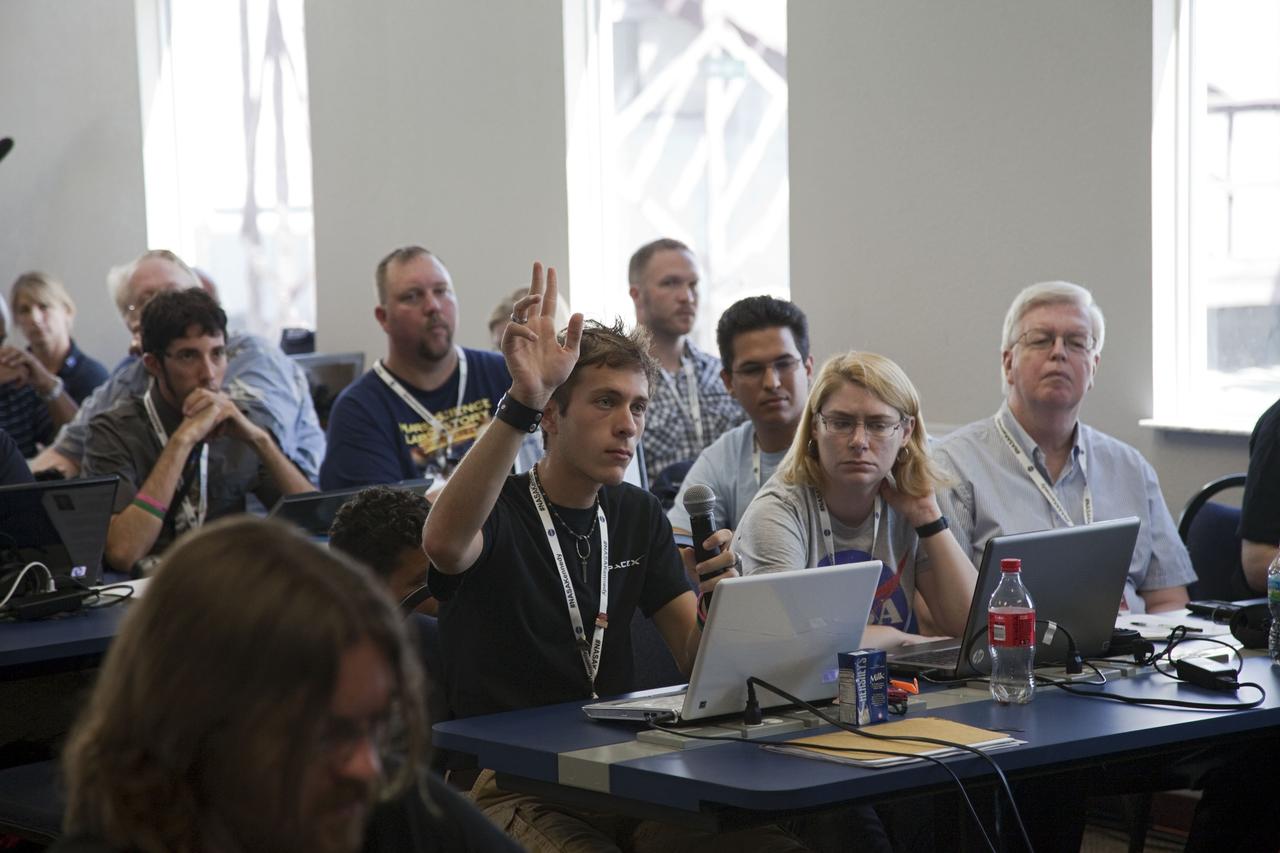
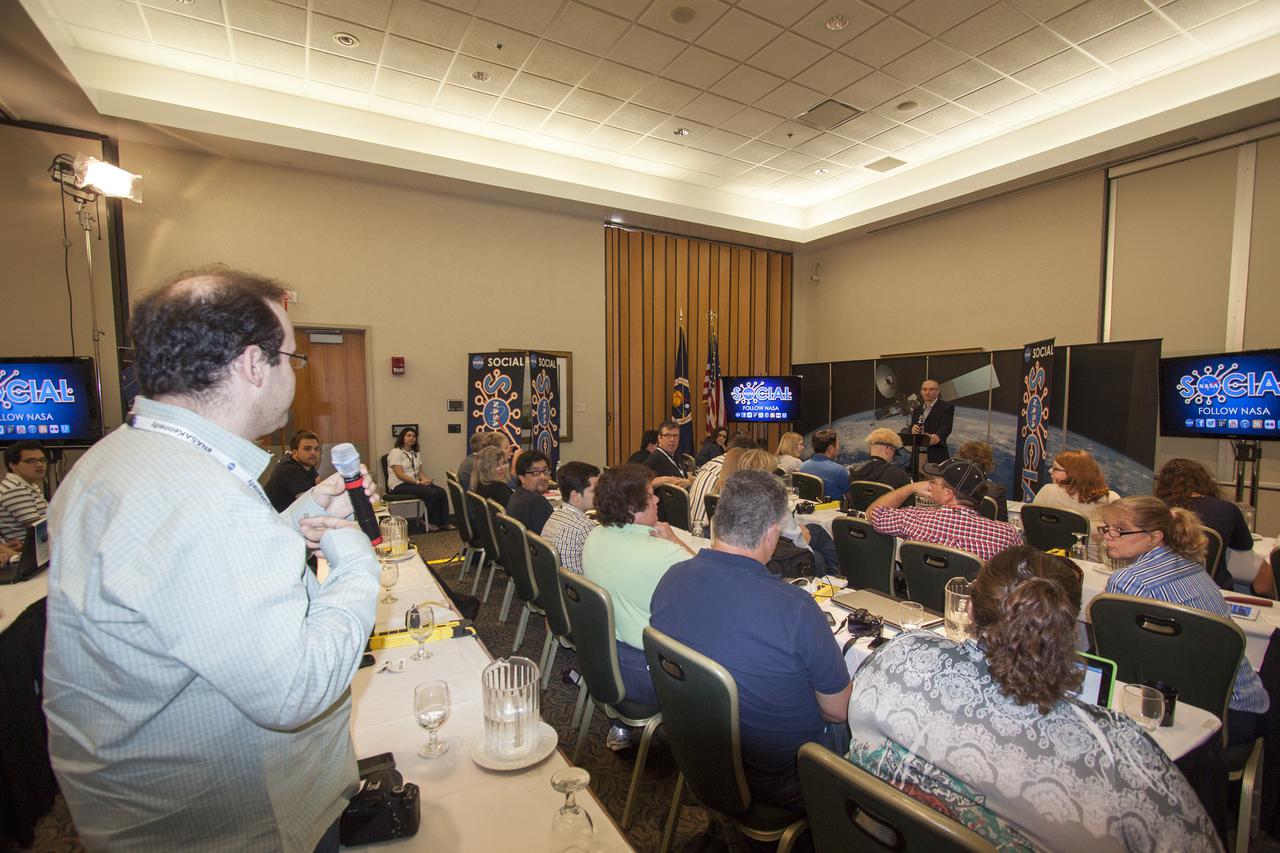
CAPE CANAVERAL, Fla. -- One of about 45 of NASA’s social media followers asks a question during two days of presentations on the Kennedy Space Center's past, present and future. The social media participants gathered at the Florida spaceport on Aug. 2 and 3, 2012 to hear from key former and current leaders who related stories of the space agency's efforts to explore the unknown. It was the first social media event totally run by Kennedy. Photo credit: NASA/ Gianni Woods
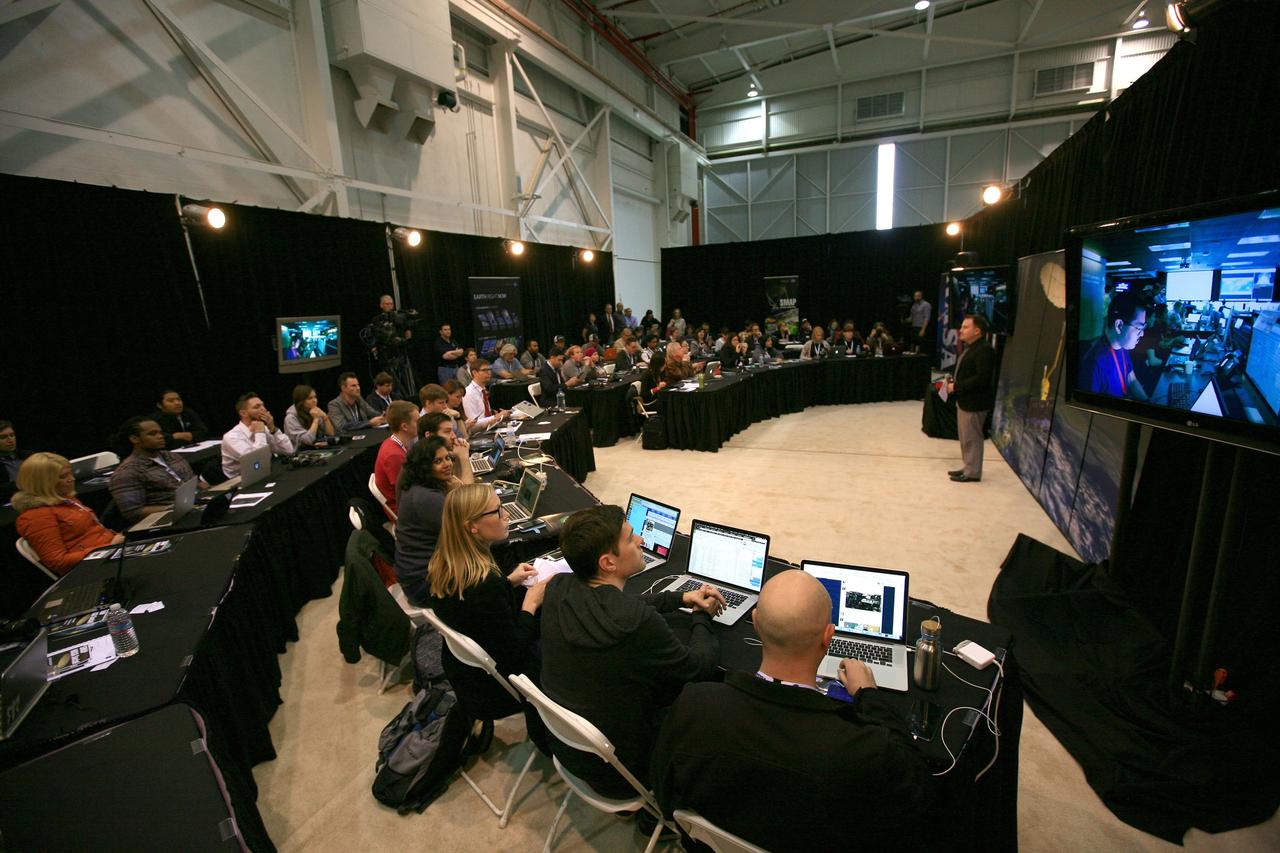
VANDENBERG AIR FORCE BASE, Calif. – Jason Townsend, NASA's deputy social media manager, addresses the audience of a NASA Social held at Vandenberg Air Force Base in California. This NASA Social brought together mission scientists and engineers with an audience of 70 students, educators, social media managers, bloggers, photographers and videographers who were selected from a pool of 325 applicants from 45 countries to participate in launch activities and communicate their experience with social media followers. The SMAP mission is scheduled to launch from Vandenberg on Jan. 29. To learn more about SMAP, visit http://www.nasa.gov/smap. Photo credit: NASA/Kim Shiflett
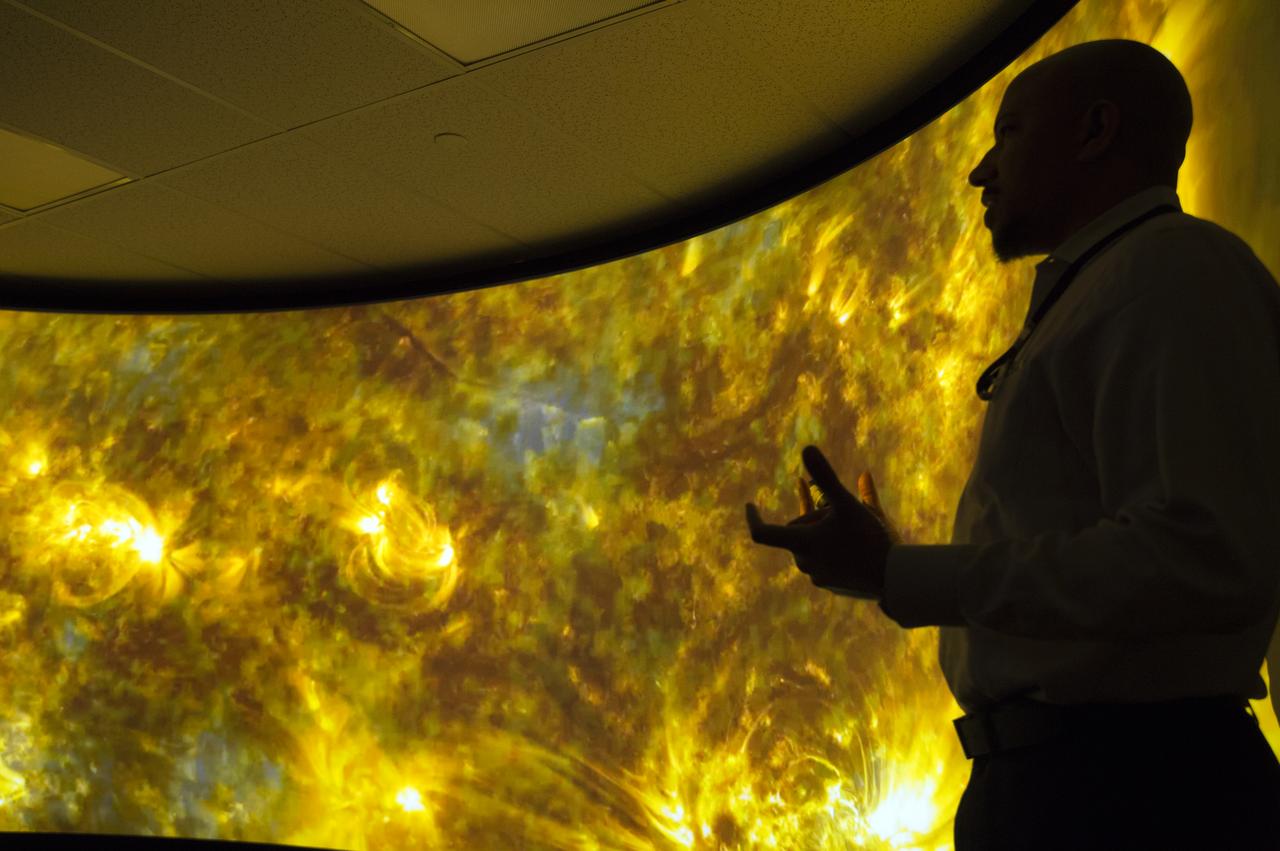
Social media followers visited GSFC Feb 10, 2020 Here they visit WOW solar lab in B21 Maddox They also heard State of NASA address
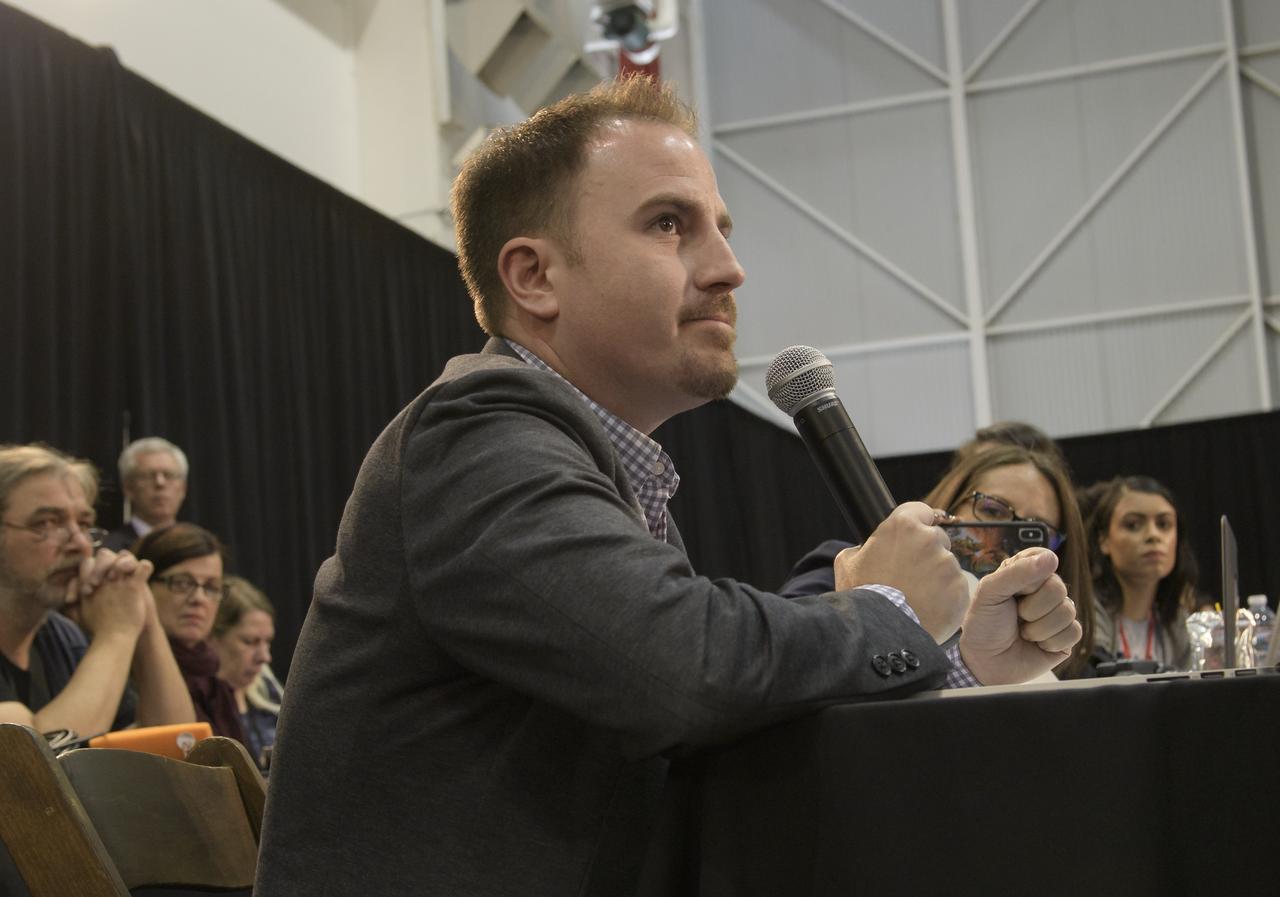
Jason Townsend, NASA's Deputy Social Media Manager, reads questions submitted by online social media followers during a prelaunch media briefing for NASA's InSight mission, Thursday, May 3, 2018, at Vandenberg Air Force Base in California. InSight, short for Interior Exploration using Seismic Investigations, Geodesy and Heat Transport, is a Mars lander designed to study the "inner space" of Mars: its crust, mantle, and core. Photo Credit: (NASA/Bill Ingalls)
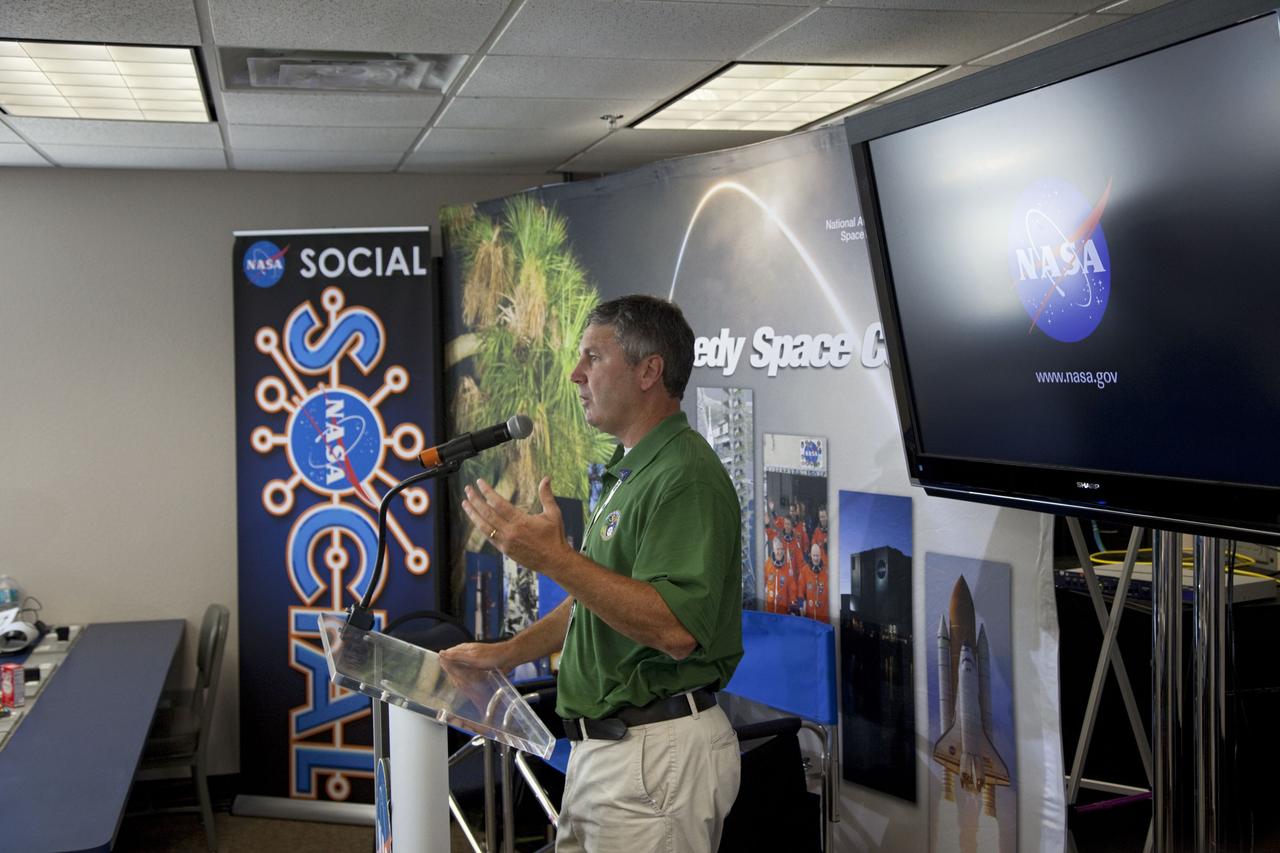
CAPE CANAVERAL, Fla. -- Scott Colloredo, chief architect for the Kennedy Space Center's Ground System Development and Operations Program, speaks to about 45 of NASA’s social media followers during two days of presentations on the Kennedy's past, present and future. The social media participants gathered at the Florida spaceport on Aug. 2 and 3, 2012 to hear from key former and current leaders who related stories of the space agency's efforts to explore the unknown. It was the first social media event totally run by Kennedy. Photo credit: NASA/ Gianni Woods
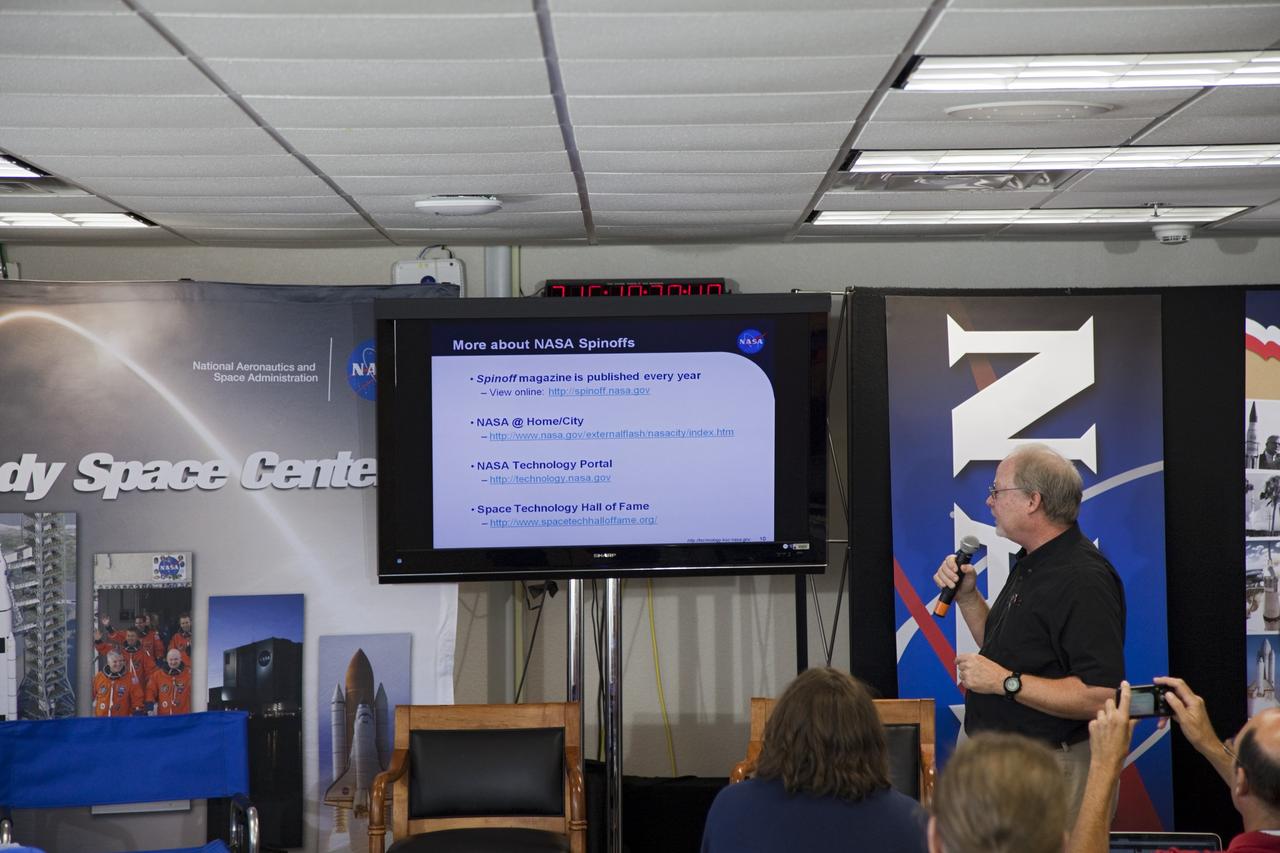
CAPE CANAVERAL, Fla. -- NASA's Bruce Buckingham, of the Kennedy Space Center's Technology Integration Office, speaks to about 45 of social media followers about advances in technology made possible by space research and development. He was one of several speakers to address the participants during two days of presentations on the Kennedy Space Center's past, present and future. The social media participants gathered at the Florida spaceport on Aug. 2 and 3, 2012 to hear from key former and current leaders who related stories of the space agency's efforts to explore the unknown. It was the first social media event totally run by Kennedy. Photo credit: NASA/ Gianni Woods
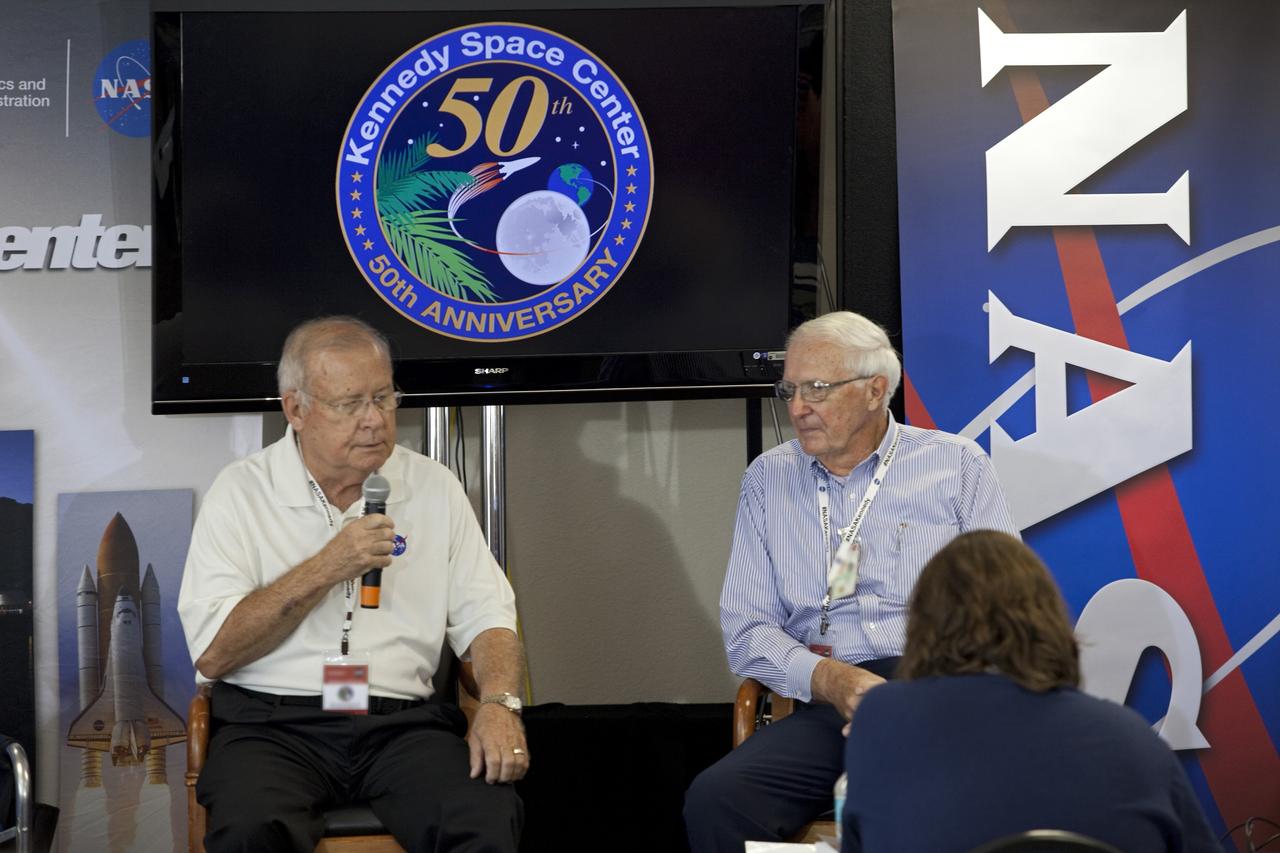
CAPE CANAVERAL, Fla. -- Former Kennedy Space Center Director Jay Honeycutt, left, is joined by Lee Solid, a retired senior executive with Rockwell and Boeing, in speaking to about 45 of NASA’s social media followers for two days of presentations on the Kennedy Space Center's past, present and future. The social media participants gathered at the Florida spaceport on Aug. 2 and 3, 2012 to hear from key former and current leaders who related stories of the space agency's efforts to explore the unknown. It was the first social media event totally run by Kennedy. Photo credit: NASA/ Gianni Woods
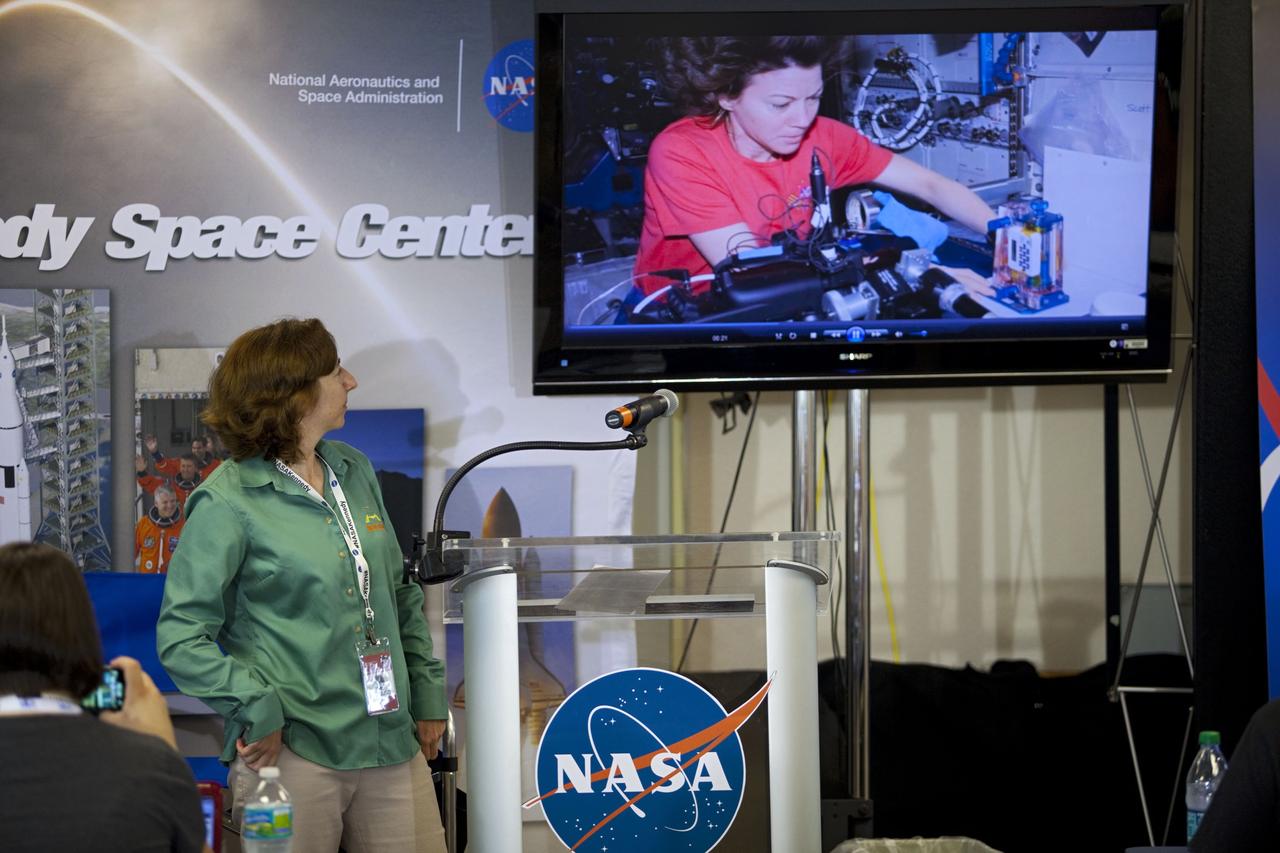
CAPE CANAVERAL, Fla. -- Dr. Liz Warren, communications coordinator for the International Space Station program Science office, speaks to about 45 of NASA’s social media followers for two days of presentations on the Kennedy Space Center's past, present and future. The social media participants gathered at the Florida spaceport on Aug. 2 and 3, 2012 to hear from key former and current leaders who related stories of the space agency's efforts to explore the unknown. It was the first social media event totally run by Kennedy. Photo credit: NASA/ Gianni Woods
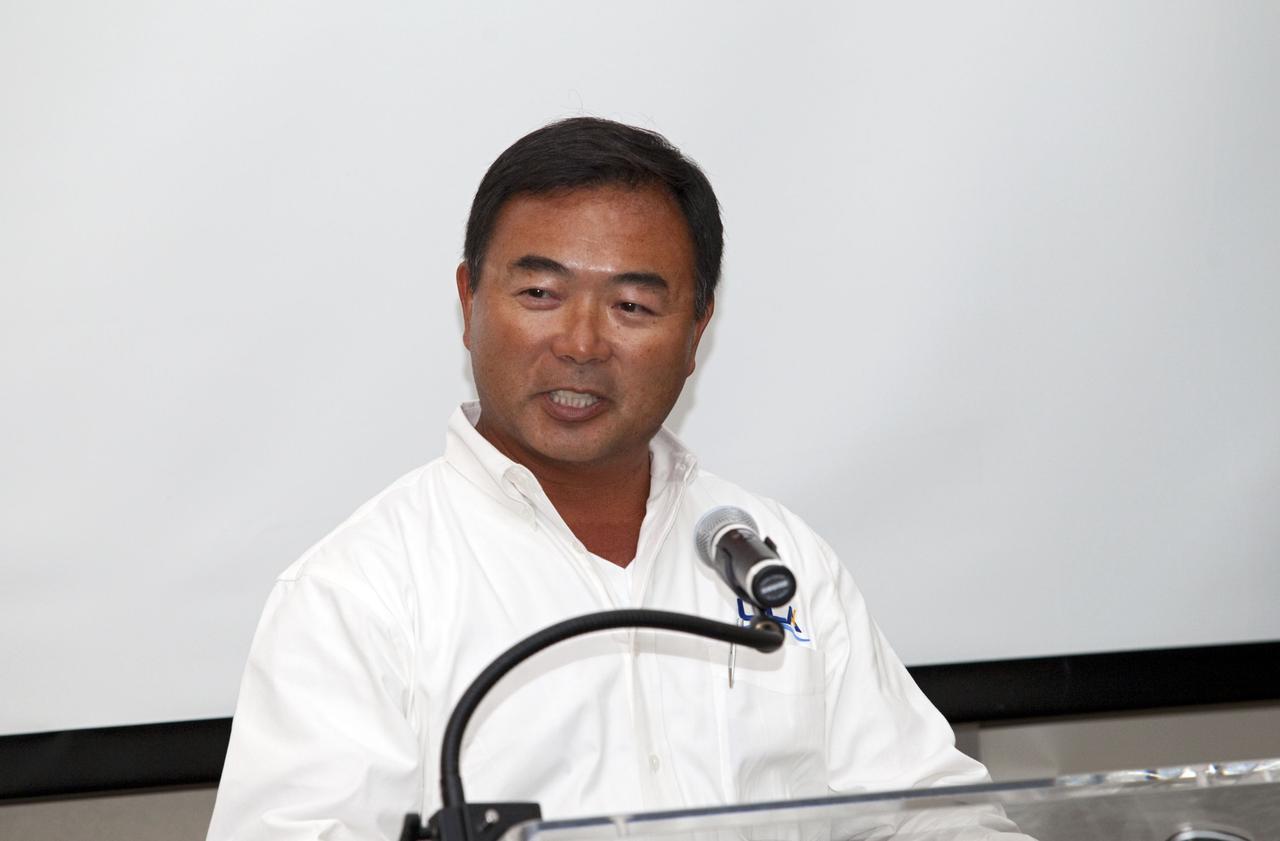
CAPE CANAVERAL, Fla. -- Si Song, East Coast Spacecraft Integration Lead for United Launch Alliance, speaks to about 45 of NASA’s social media followers for two days of presentations on the Kennedy Space Center's past, present and future. The social media participants gathered at the Florida spaceport on Aug. 2 and 3, 2012 to hear from key former and current leaders who related stories of the space agency's efforts to explore the unknown. It was the first social media event totally run by Kennedy. Photo credit: NASA/ Gianni Woods
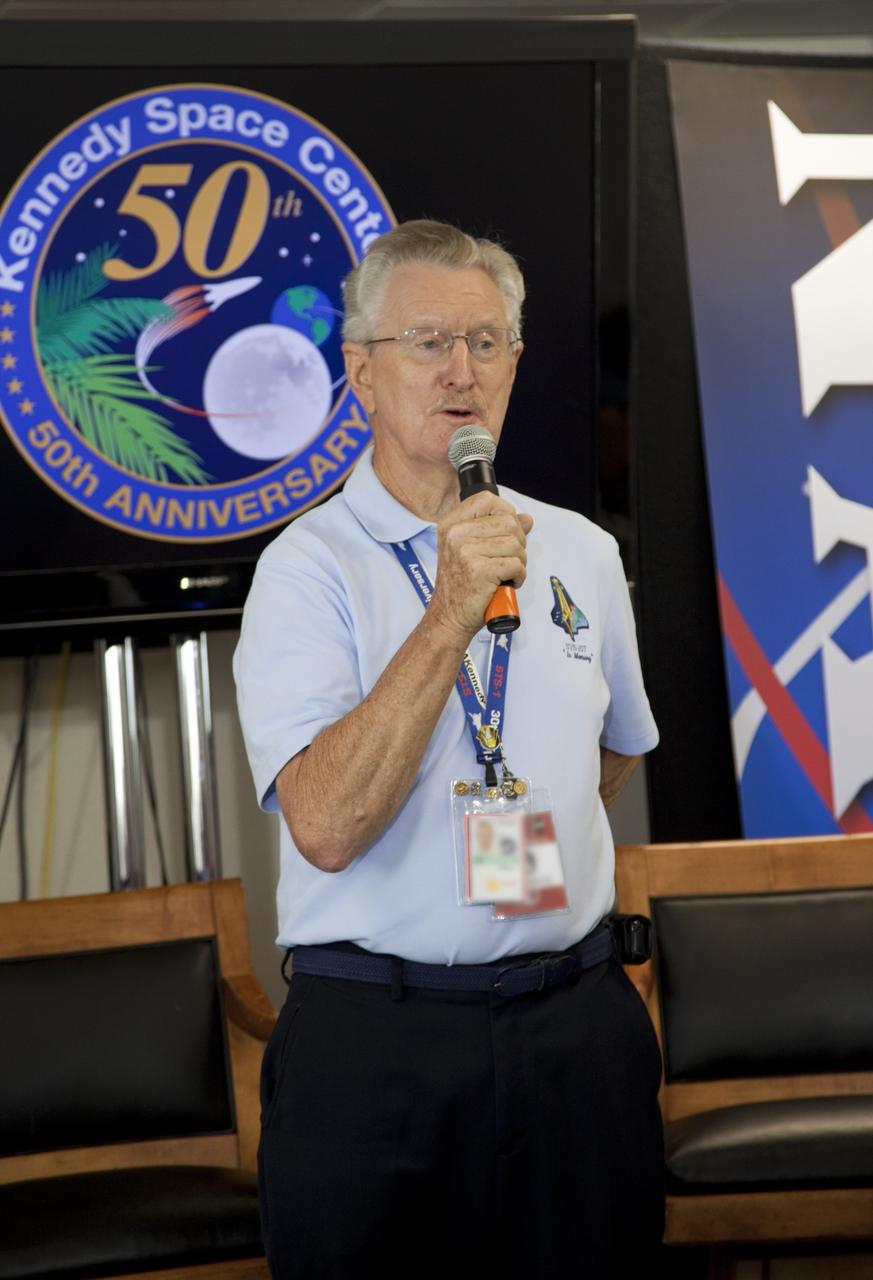
CAPE CANAVERAL, Fla. -- John Tribe, retired chief engineer for Boeing/Rockwell Launch Support Services, speaks to about 45 of NASA’s social media followers for two days of presentations on the Kennedy Space Center's past, present and future. The social media participants gathered at the Florida spaceport on Aug. 2 and 3, 2012 to hear from key former and current leaders who related stories of the space agency's efforts to explore the unknown. It was the first social media event totally run by Kennedy. Photo credit: NASA/ Gianni Woods
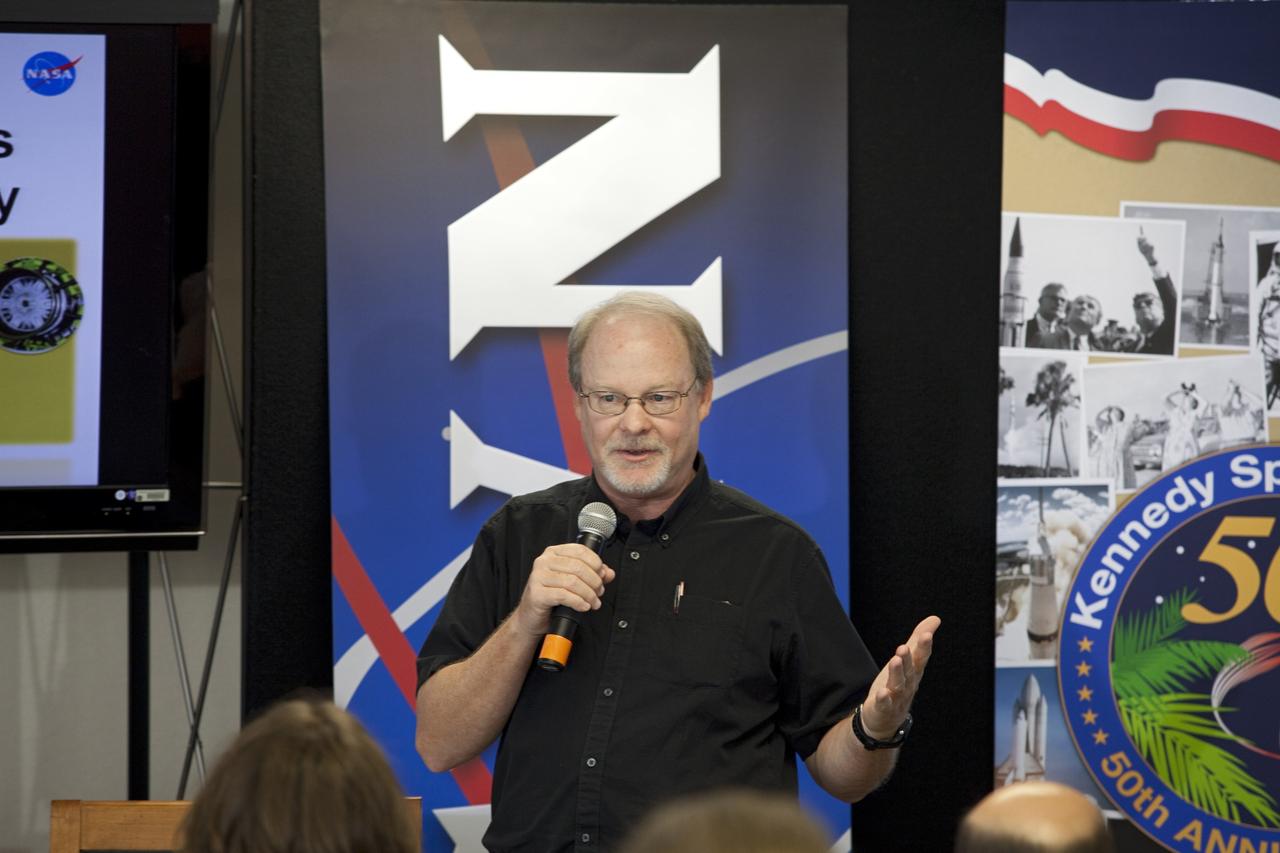
CAPE CANAVERAL, Fla. -- NASA's Bruce Buckingham, of the Kennedy Space Center's Technology Integration Office, speaks to about 45 of social media followers about advances in technology made possible by space research and development. He was one of several speakers to address the participants during two days of presentations on the Kennedy Space Center's past, present and future. The social media participants gathered at the Florida spaceport on Aug. 2 and 3, 2012 to hear from key former and current leaders who related stories of the space agency's efforts to explore the unknown. It was the first social media event totally run by Kennedy. Photo credit: NASA/ Gianni Woods
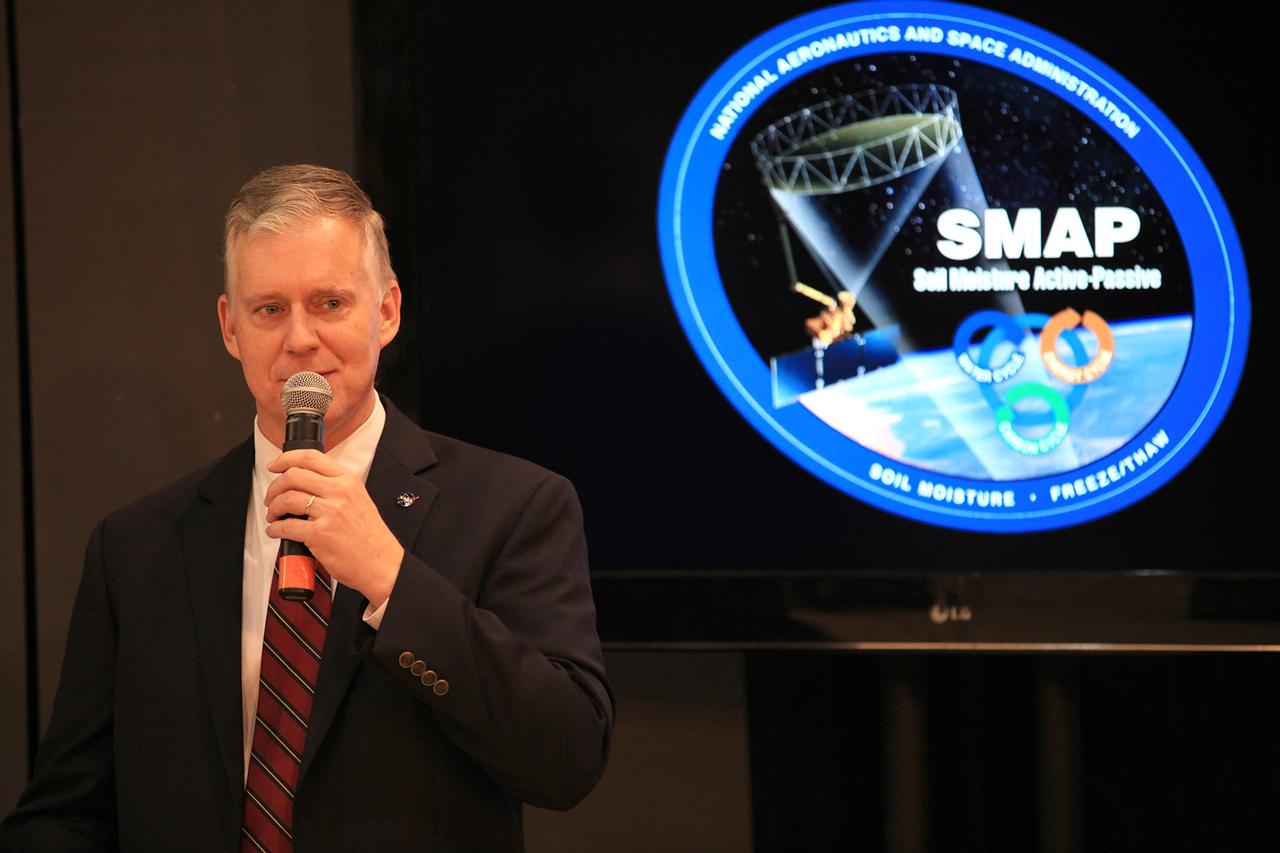
VANDENBERG AIR FORCE BASE, Calif. – Sam Thurman, deputy project manager for NASA's Soil Moisture Active Passive mission, or SMAP, addresses the audience of a NASA Social held at Vandenberg Air Force Base in California. This NASA Social brought together mission scientists and engineers with an audience of 70 students, educators, social media managers, bloggers, photographers and videographers who were selected from a pool of 325 applicants from 45 countries to participate in launch activities and communicate their experience with social media followers. The SMAP mission is scheduled to launch from Vandenberg on Jan. 29. To learn more about SMAP, visit http://www.nasa.gov/smap. Photo credit: NASA/Kim Shiflett
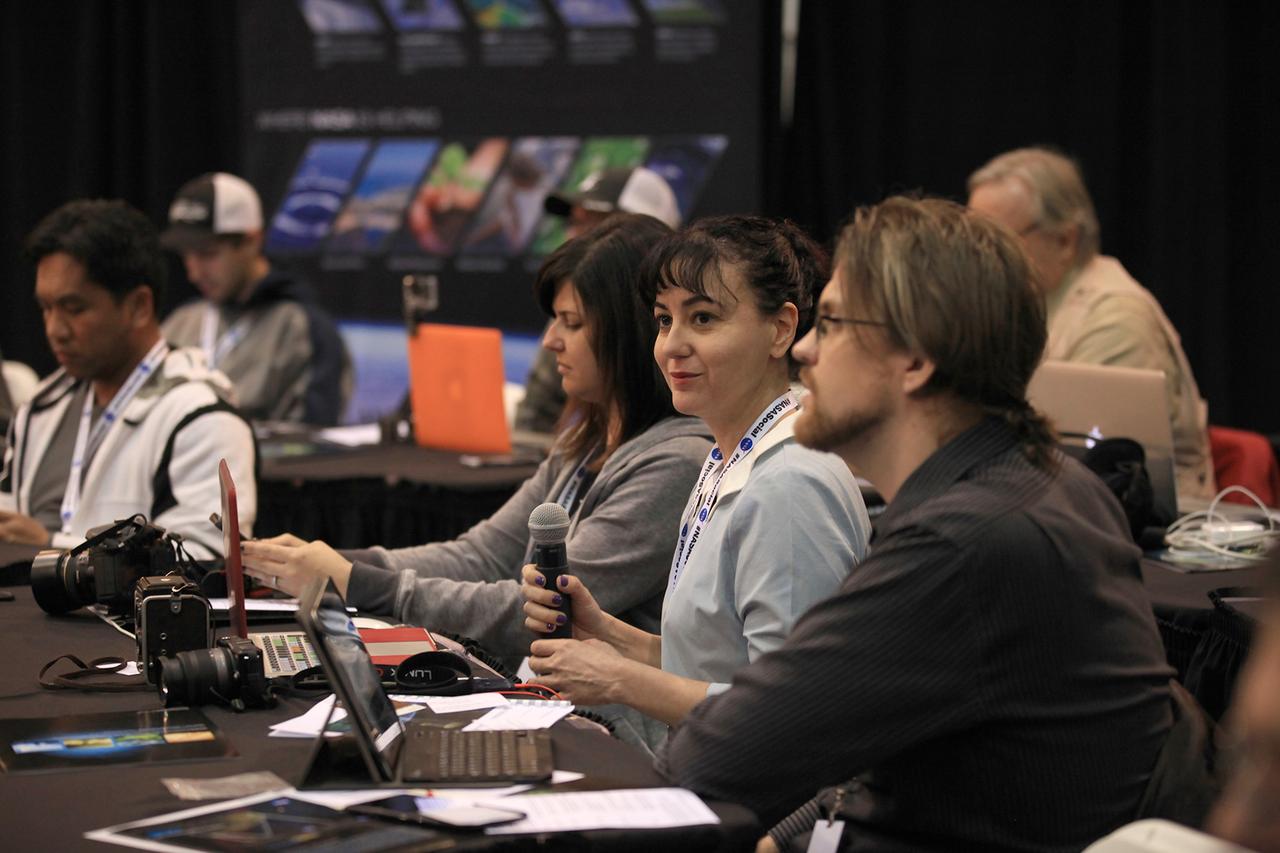
VANDENBERG AIR FORCE BASE, Calif. – Representatives of the social media were given the opportunity to ask questions from the experts of NASA's Soil Moisture Active Passive mission, or SMAP, at the NASA Social held at Vandenberg Air Force Base in California. This NASA Social brought together mission scientists and engineers with an audience of 70 students, educators, social media managers, bloggers, photographers and videographers who were selected from a pool of 325 applicants from 45 countries to participate in launch activities and communicate their experience with social media followers. The SMAP mission is scheduled to launch from Vandenberg on Jan. 29. To learn more about SMAP, visit http://www.nasa.gov/smap. Photo credit: NASA/Kim Shiflett

Social media followers visited GSFC Feb 10, 2020 learning role of Artemis program, LRO Lunar Reconnaissance Orbiter and spoke with science experts while touring center HST control Rm B3
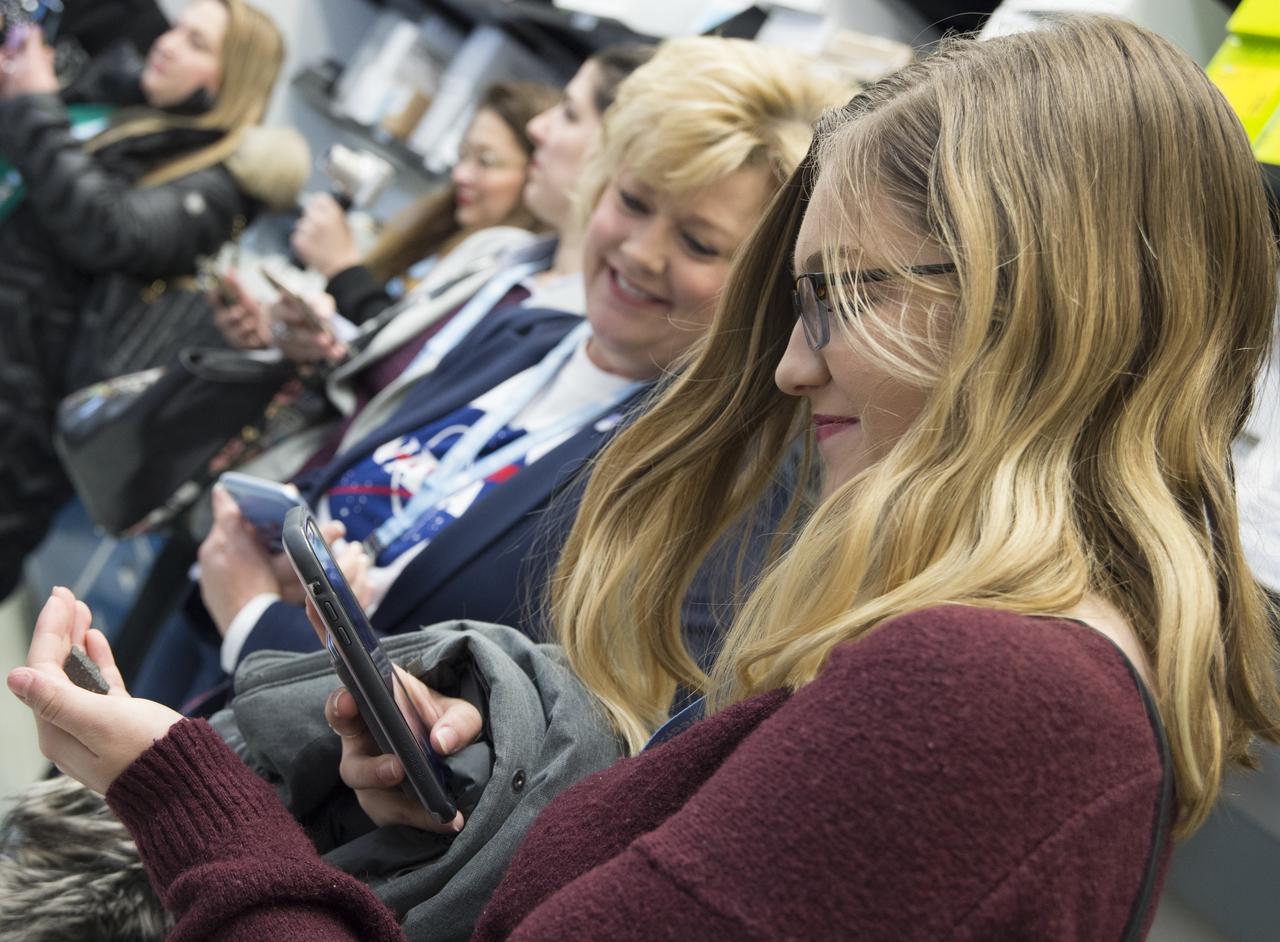
Social media followers visited GSFC Feb 10, 2020 learning role of Artemis program, LRO Lunar Reconnaissance Orbiter and spoke with science experts while touring the center.
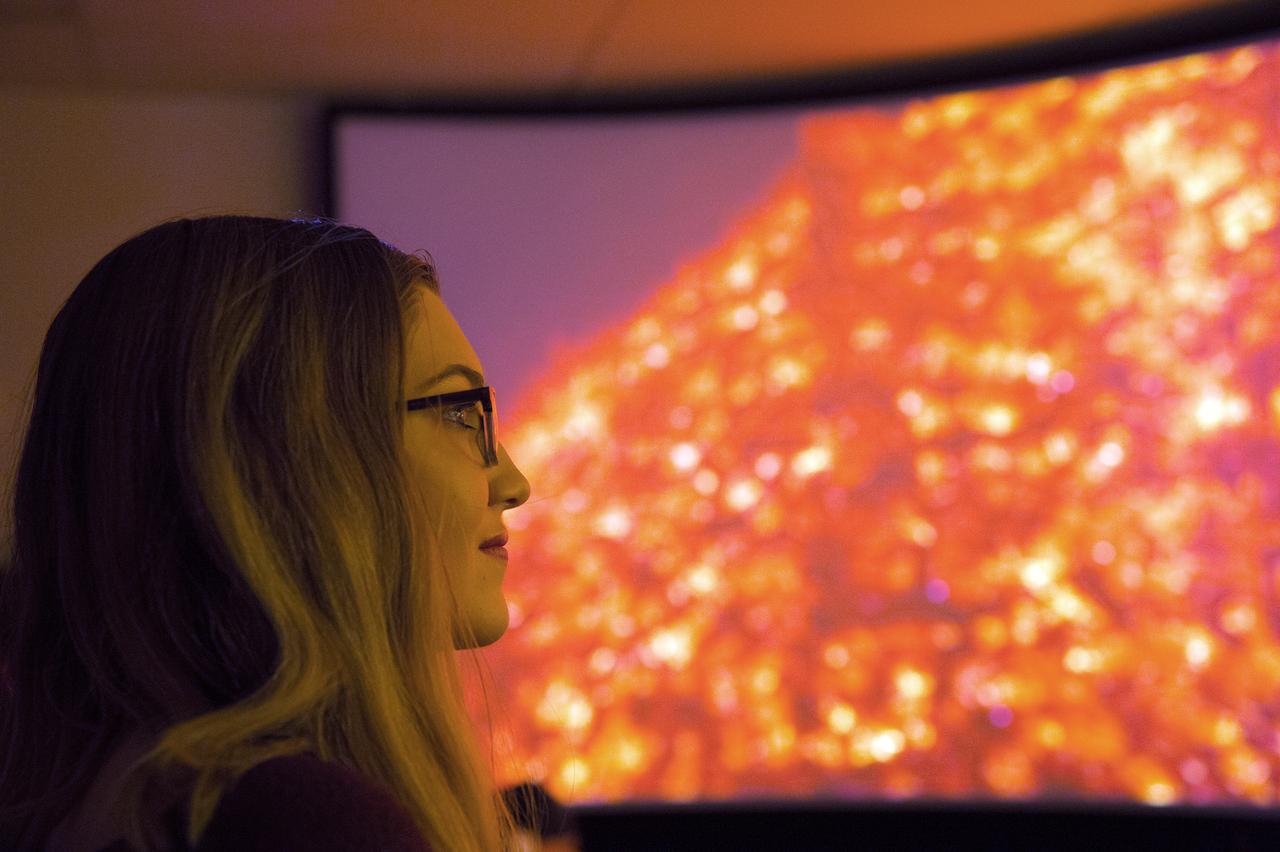
Social media followers visited GSFC Feb 10, 2020 learning role of Artemis program, LRO Lunar Reconnaissance Orbiter and spoke with science experts while touring center WOW lab B21
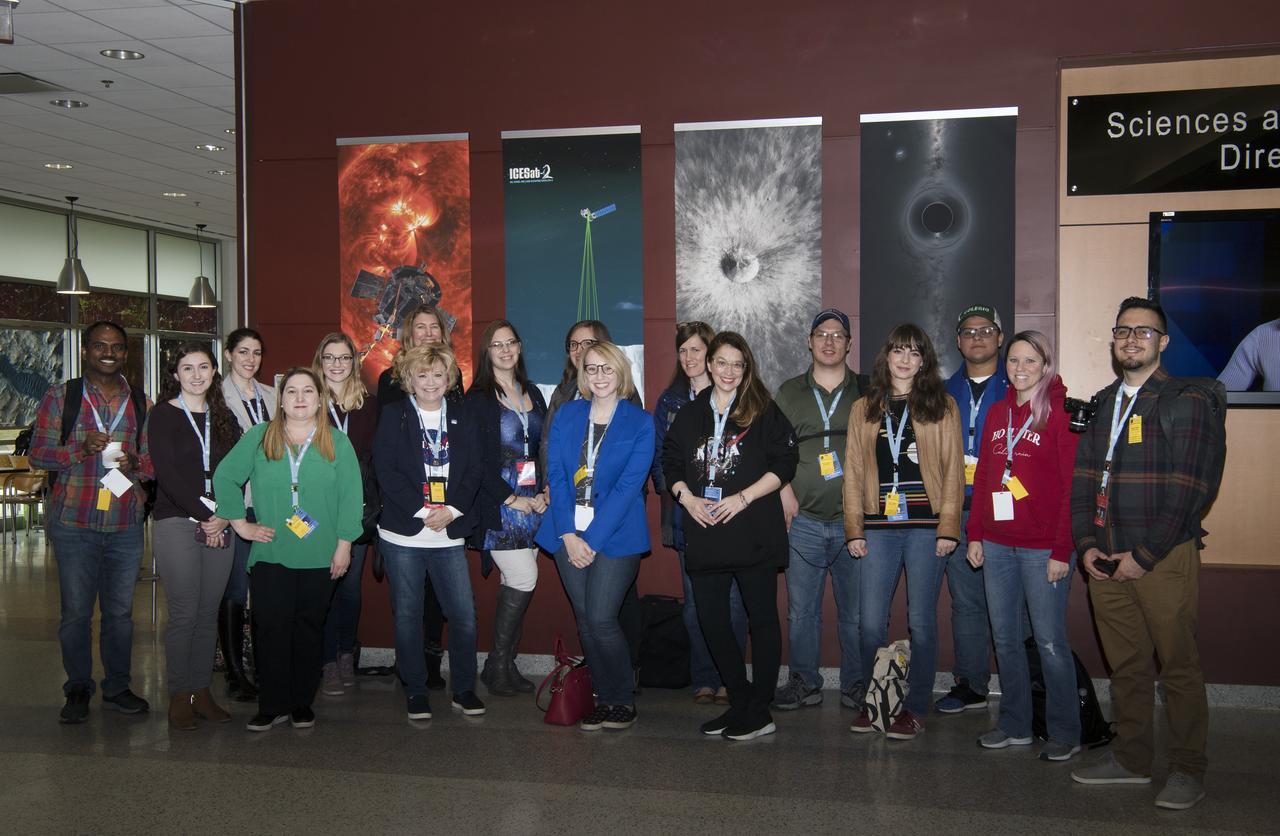
Social media followers visited GSFC Feb 10, 2020 learning role of Artemis, LRO Lunar Reconnaissance Orbiter, spoke with science experts while touring center Sciences B34
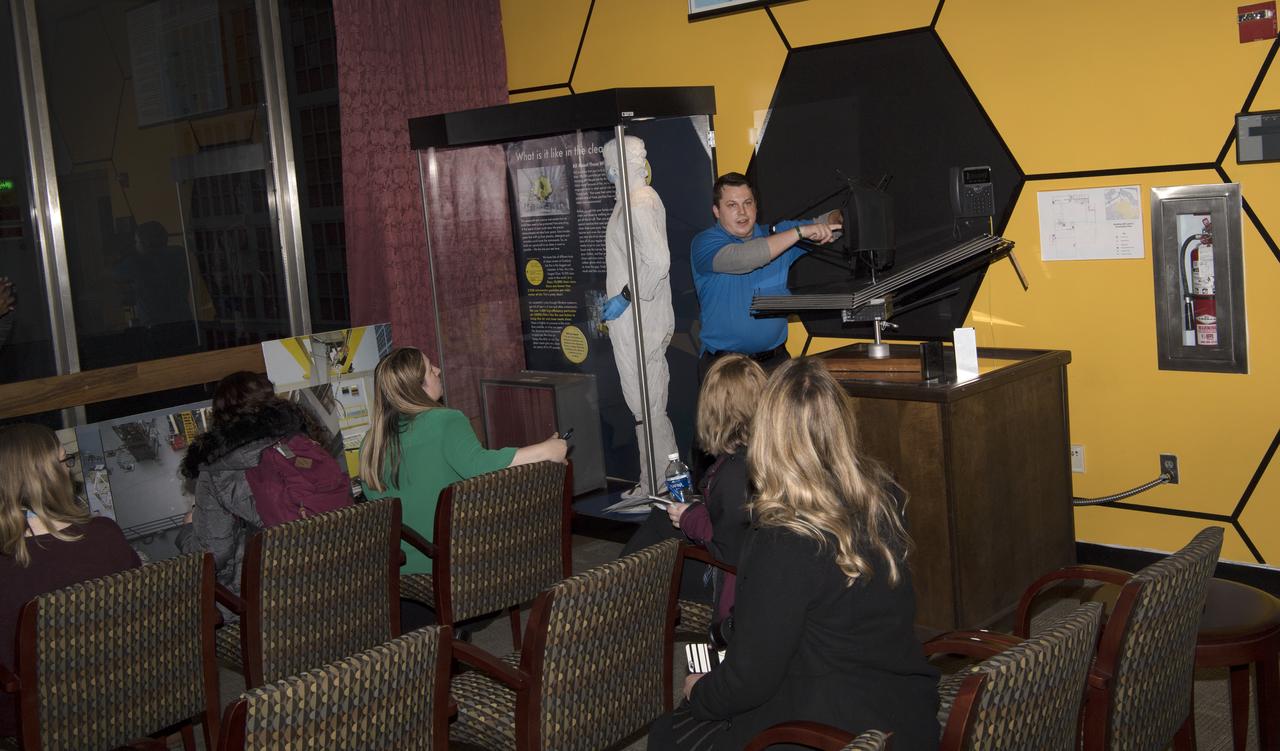
Social media followers visited GSFC Feb 10, 2020 learning role of Artemis, LRO Lunar Reconnaissance Orbiter, and spoke with science experts while touring center Talk about JWST B29
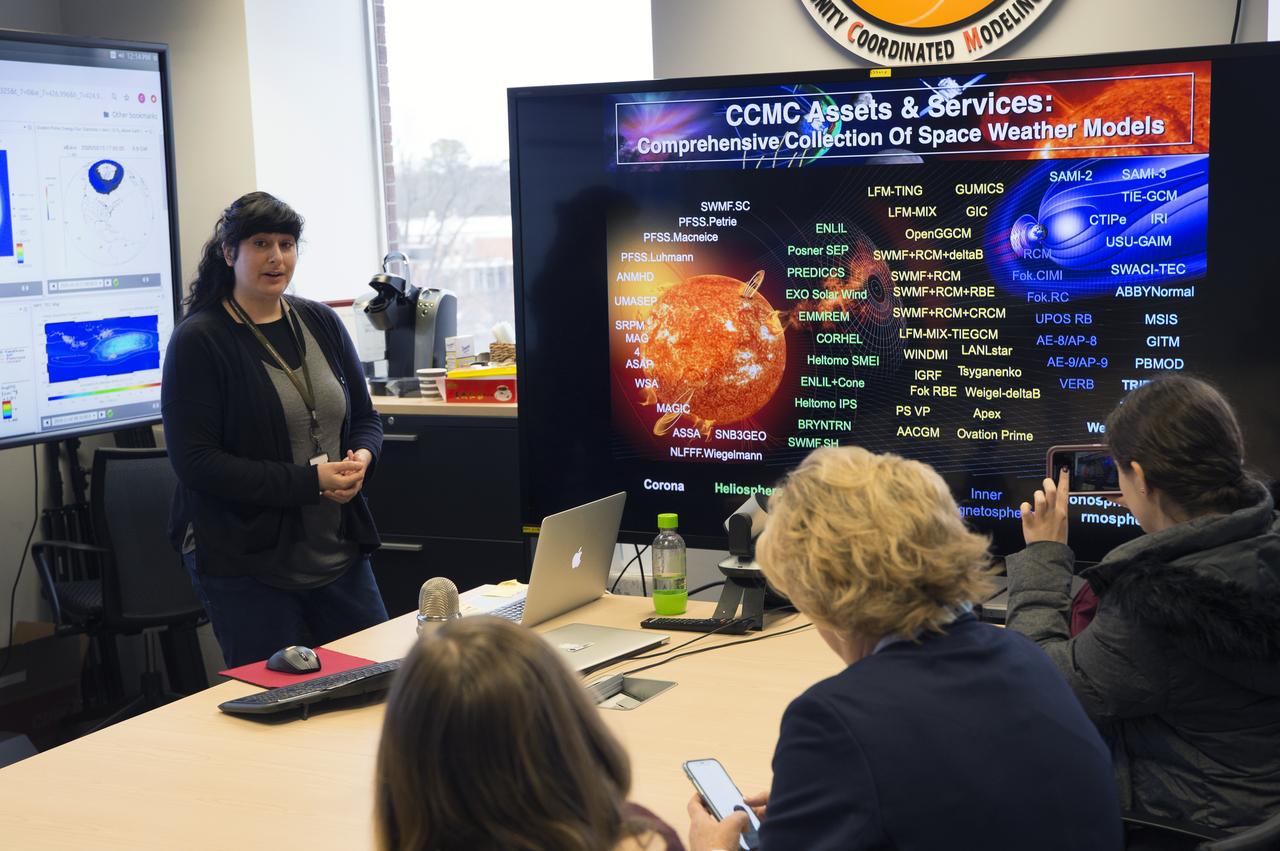
Social media followers visited GSFC Feb 10, 2020 Here they visit Community Coordinate Modeling Center B21 as Leila Mays gives a talk on solar weather
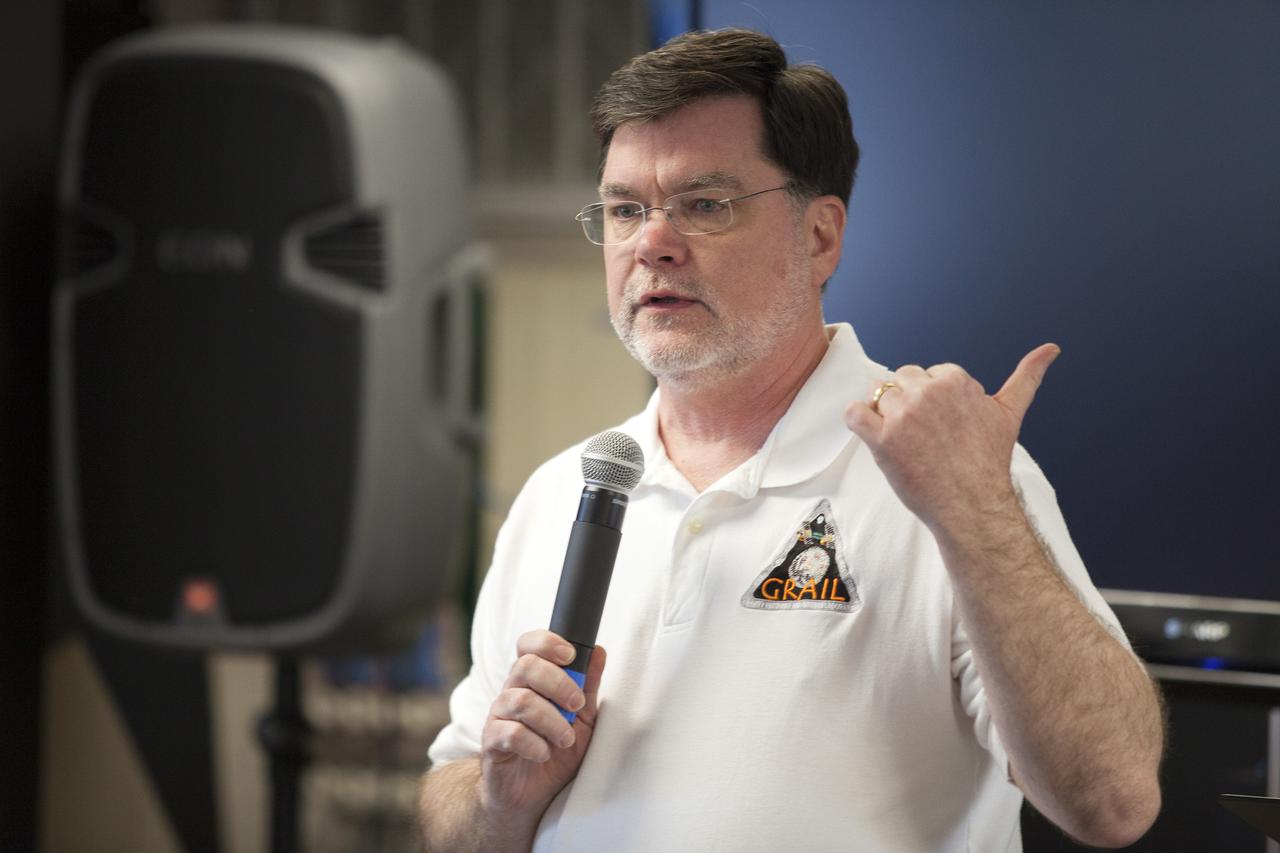
CAPE CANAVERAL, Fla. -- NASA Deputy Chief Technologist James Adams speaks to some of the agency's social media followers during two days of presentations on the launch of SpaceX-2. The social media participants gathered at the Florida spaceport on Feb. 28 and March 1, to hear from key leaders who updated the space agency's current efforts. Photo credit: NASA_Frankie Martin
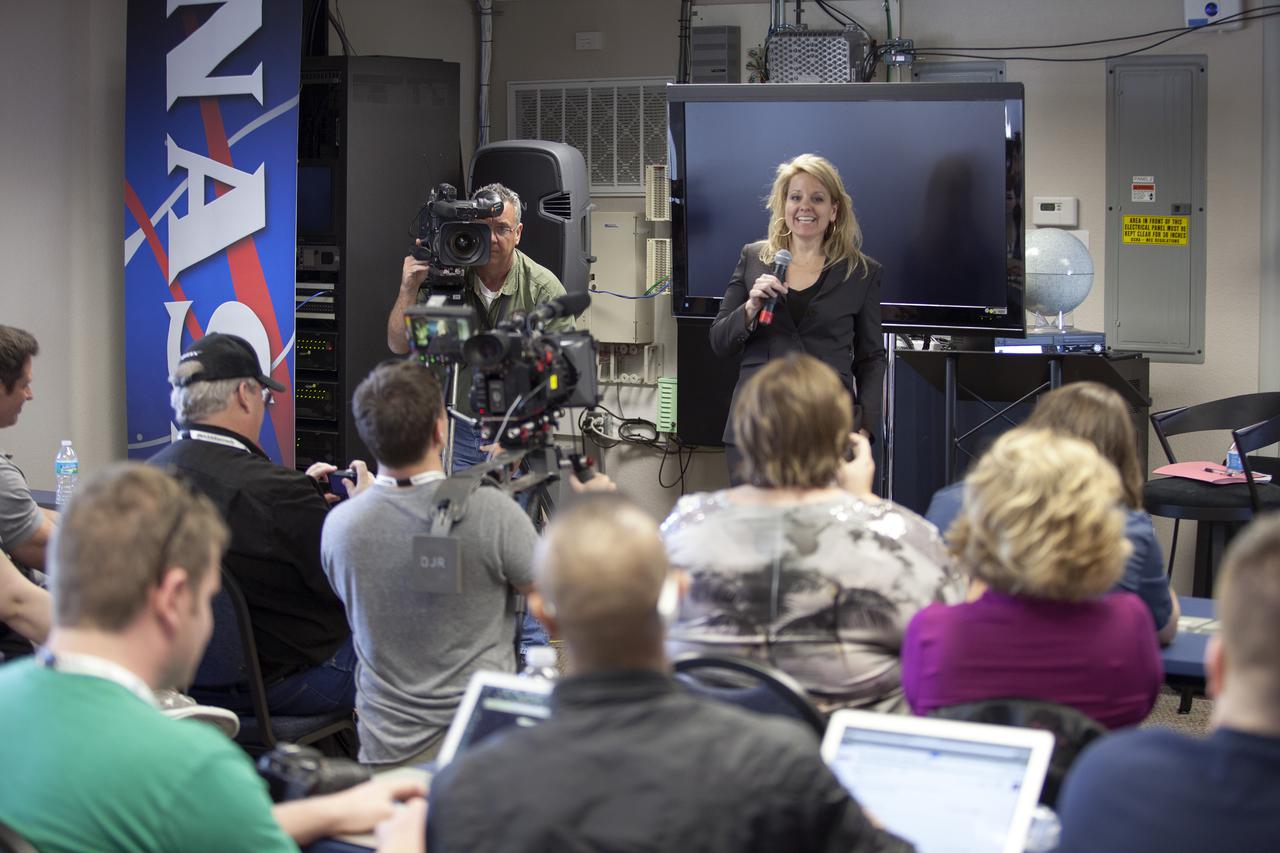
CAPE CANAVERAL, Fla. -- SpaceX President Gwynne Shotwell speaks to NASA’s social media followers during two days of presentations on the launch of SpaceX-2. The social media participants gathered at the Florida spaceport on Feb. 28 and March 1, to hear from key leaders who updated the space agency's current efforts. Photo credit: NASA_Frankie Martin
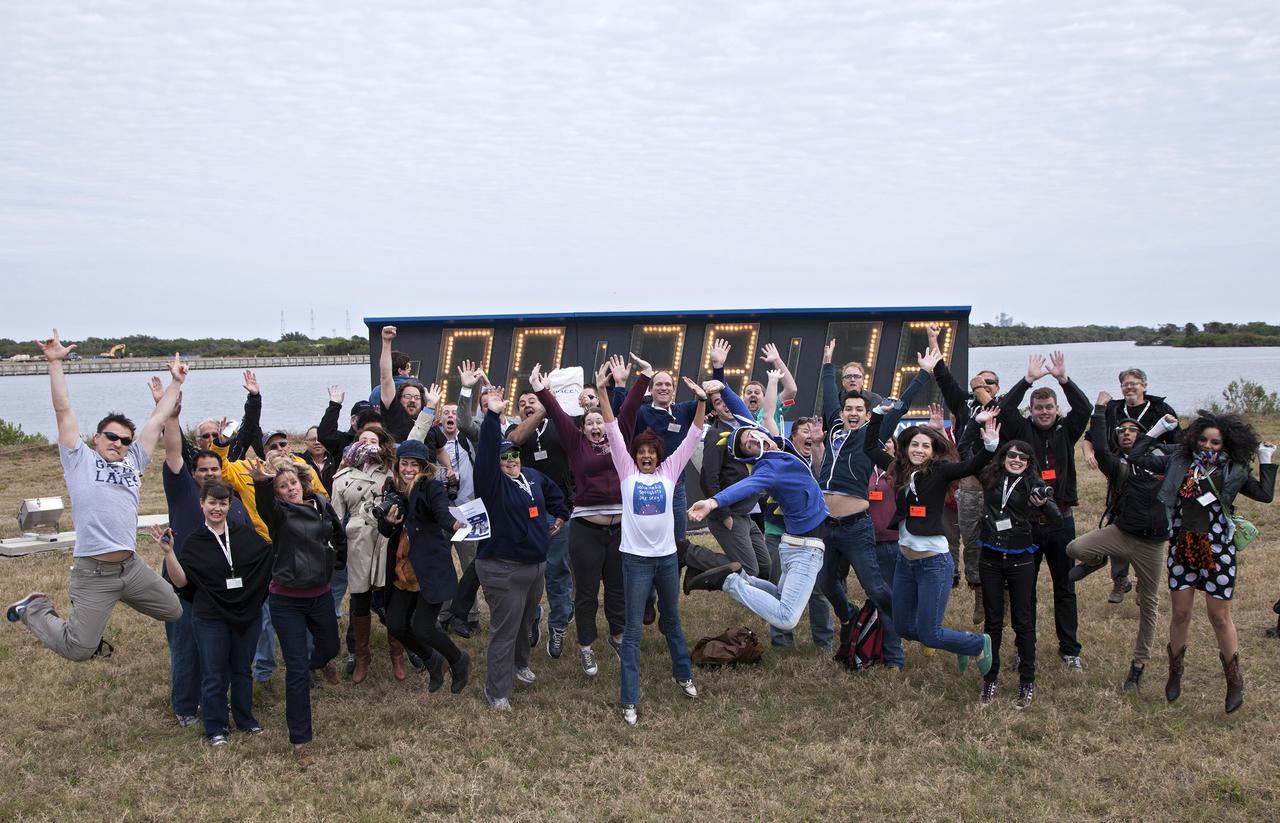
CAPE CANAVERAL, Fla. -- NASA social media followers pose for a group photo during two days of presentations on the launch of SpaceX-2. The social media participants gathered at the Florida spaceport on Feb. 28 and March 1, to hear from key leaders who updated the space agency's current efforts. Photo credit: NASA_Kim Shiflett
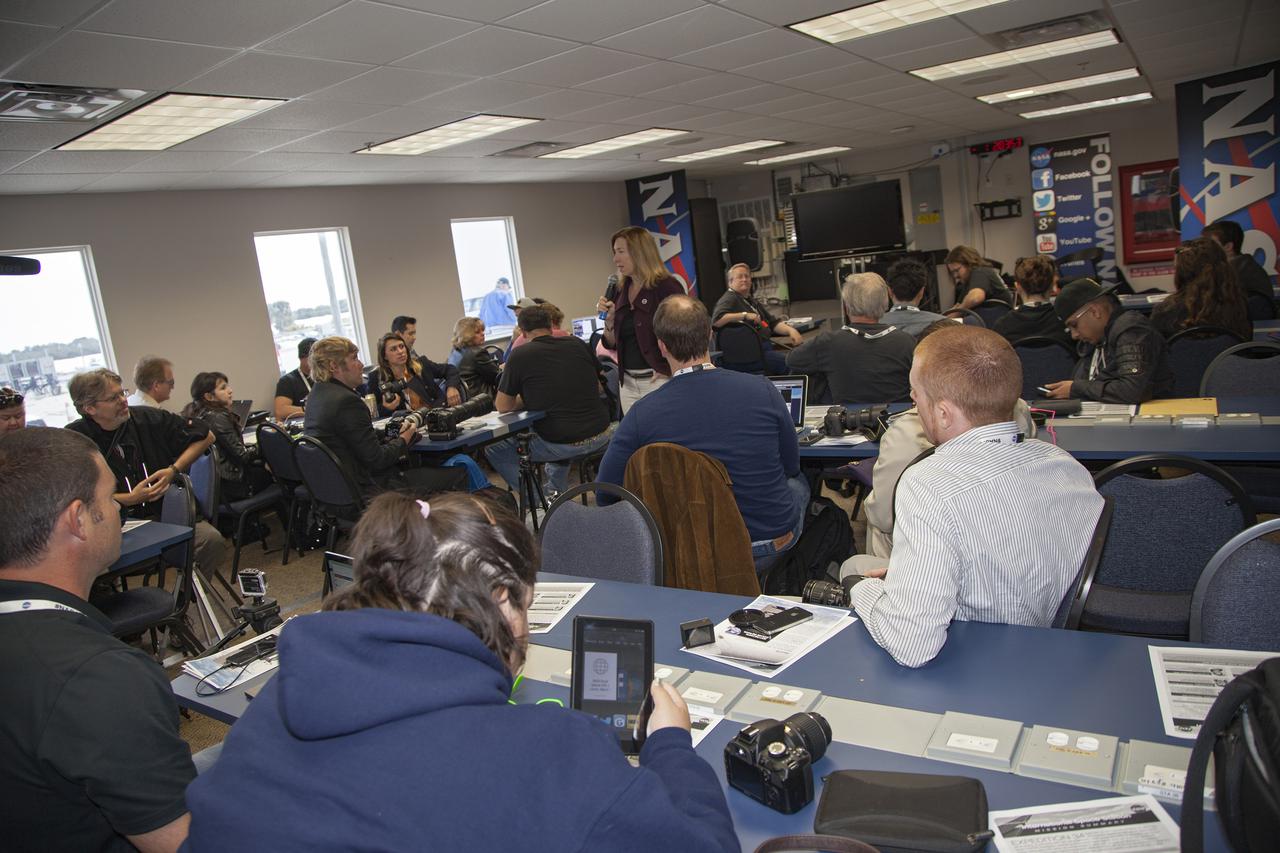
CAPE CANAVERAL, Fla. -- NASA Deputy Administrator Lori Garver speaks to some of the agency's social media followers during two days of presentations on the launch of SpaceX 2. The social media participants gathered at the Florida spaceport on Feb. 28 and March 1, to hear from key leaders who updated the space agency's current efforts. Photo credit: NASA_Lorne Mathre
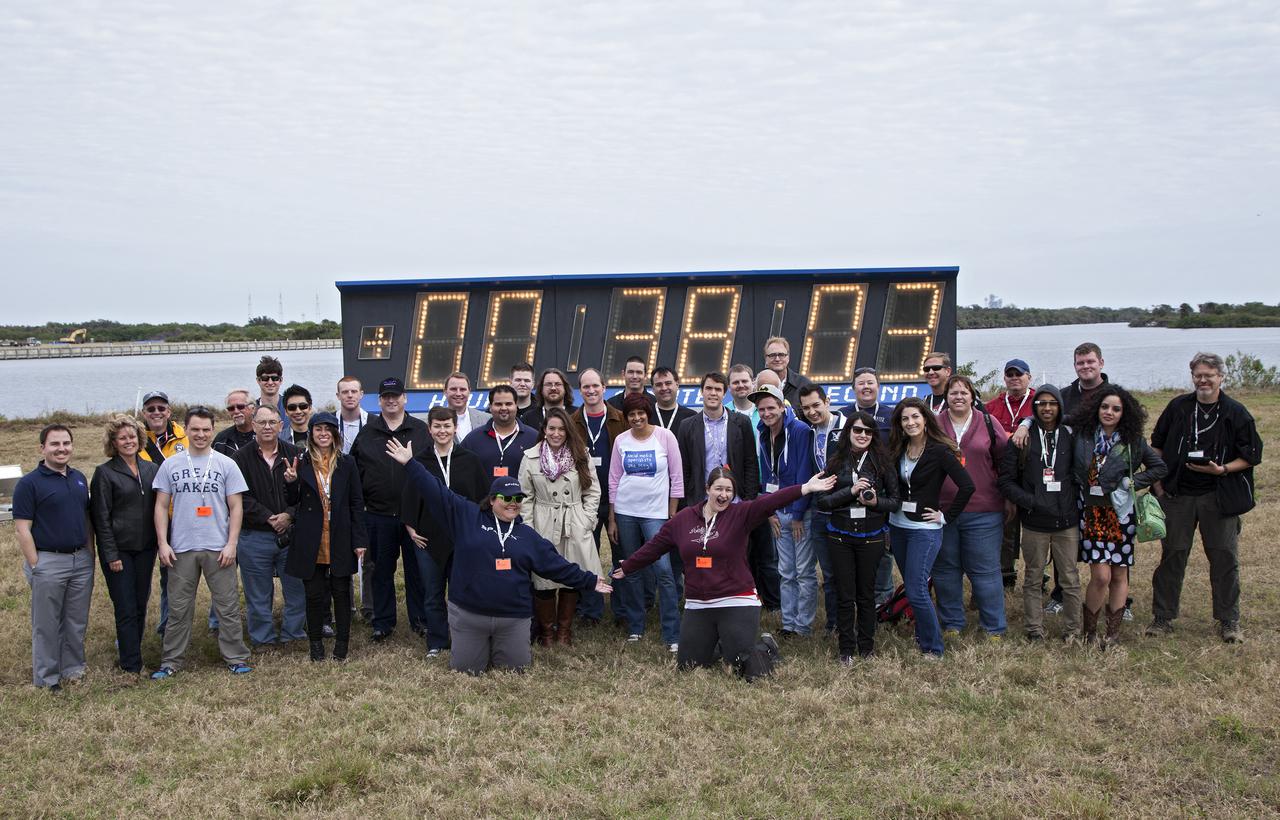
CAPE CANAVERAL, Fla. -- NASA social media followers pose for a group photo during two days of presentations on the launch of SpaceX-2. The social media participants gathered at the Florida spaceport on Feb. 28 and March 1, to hear from key leaders who updated the space agency's current efforts. Photo credit: NASA_Kim Shiflett
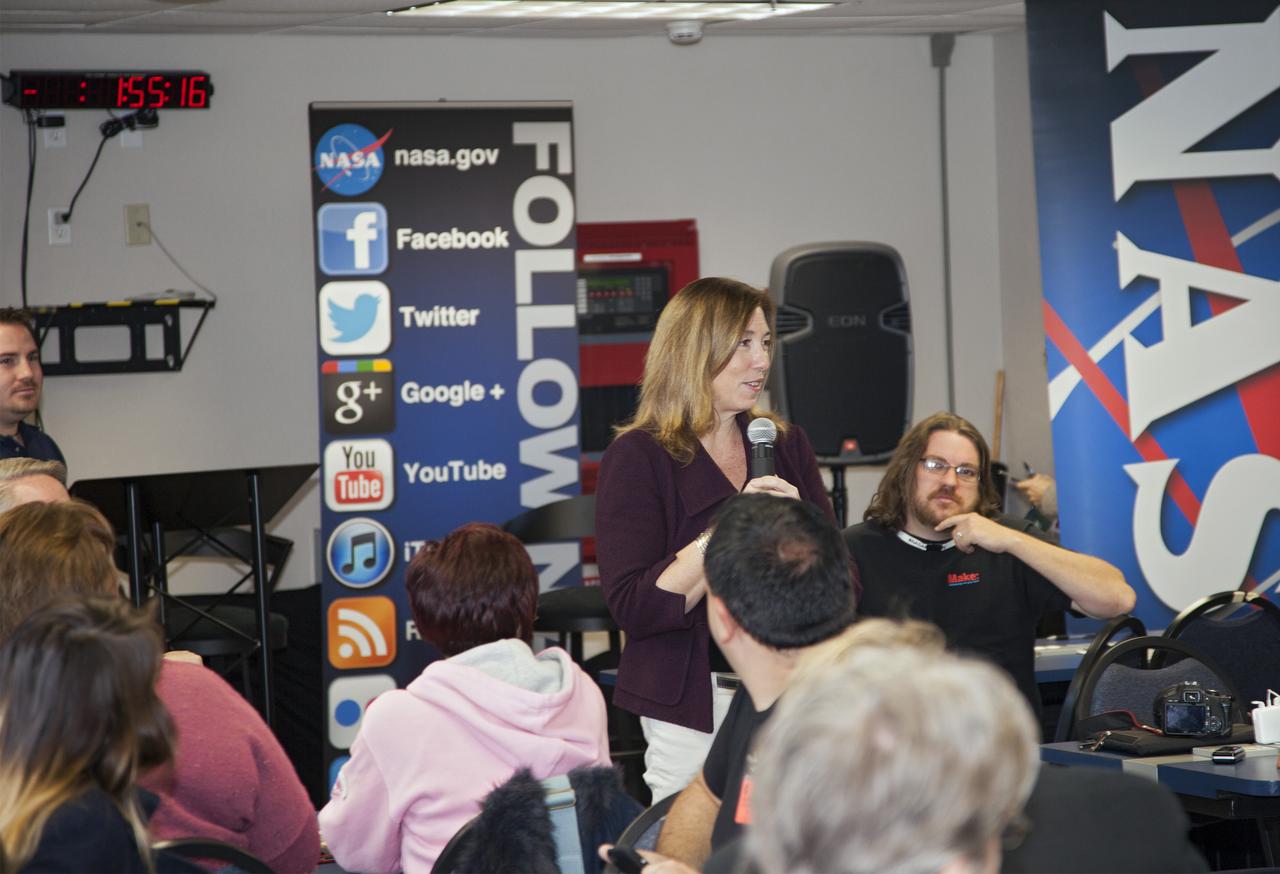
CAPE CANAVERAL, Fla. -- NASA Deputy Administrator Lori Garver speaks to some of the agency's social media followers during two days of presentations on the launch of SpaceX 2. The social media participants gathered at the Florida spaceport on Feb. 28 and March 1, to hear from key leaders who updated the space agency's current efforts. Photo credit: NASA_Lorne Mathre
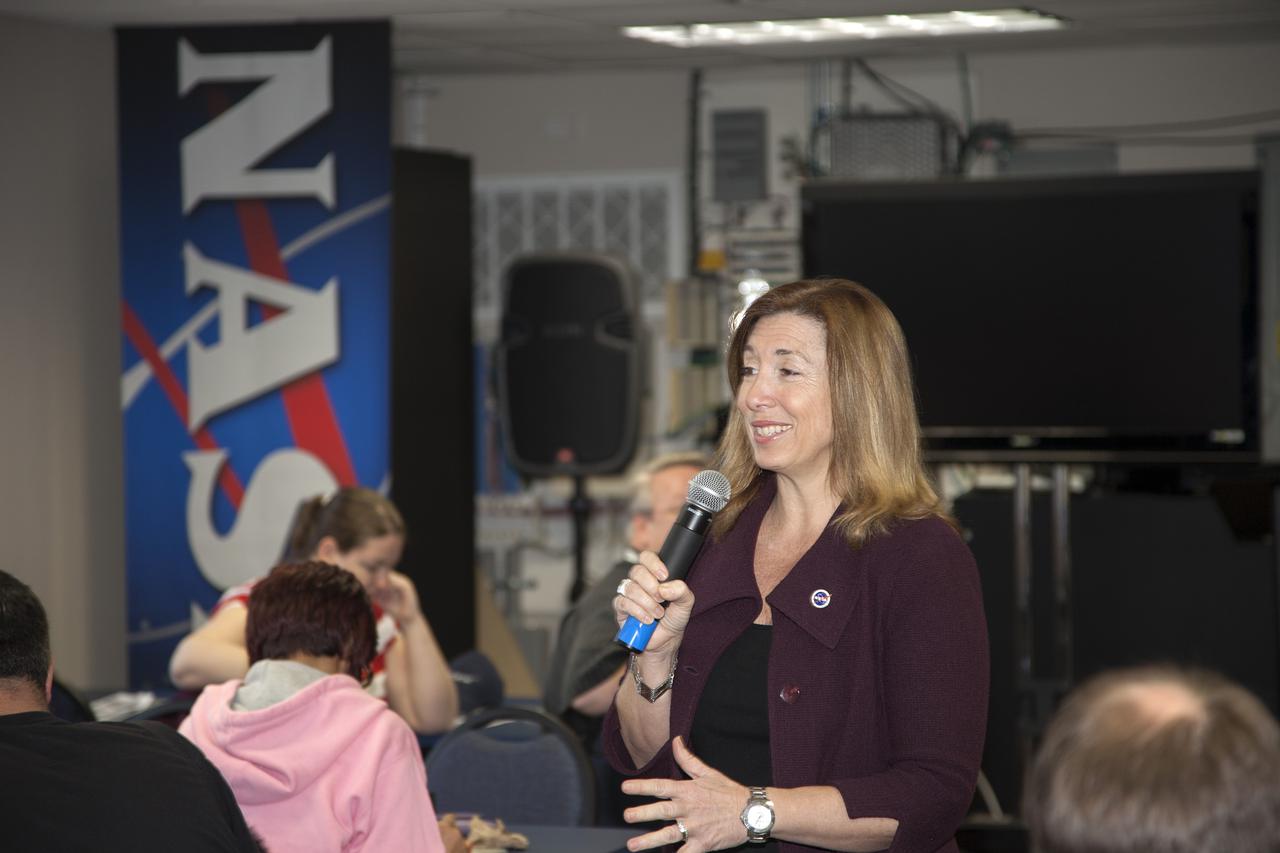
CAPE CANAVERAL, Fla. -- NASA Deputy Administrator Lori Garver speaks to some of the agency's social media followers during two days of presentations on the launch of SpaceX 2. The social media participants gathered at the Florida spaceport on Feb. 28 and March 1, to hear from key leaders who updated the space agency's current efforts. Photo credit: NASA_Lorne Mathre
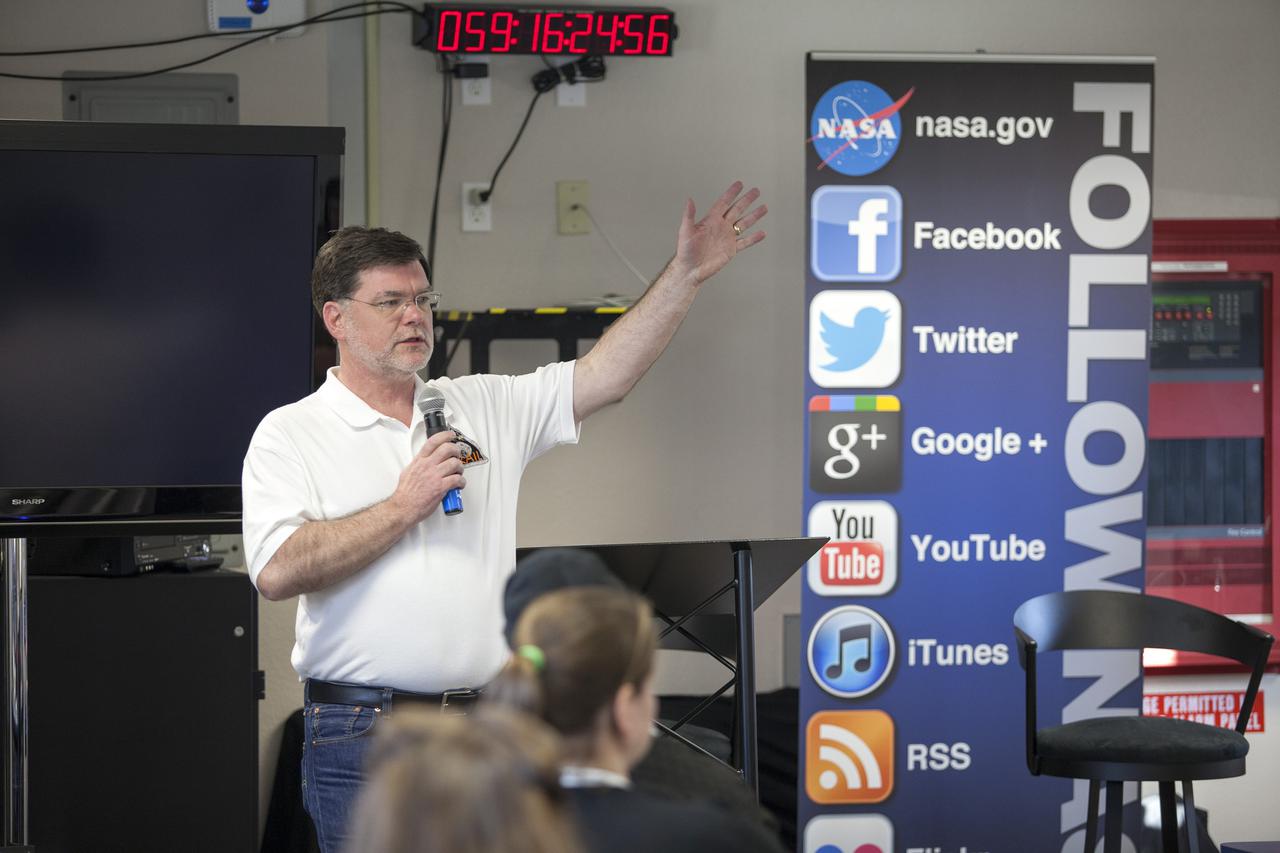
CAPE CANAVERAL, Fla. -- NASA Deputy Chief Technologist James Adams speaks to some of the agency's social media followers during two days of presentations on the launch of SpaceX-2. The social media participants gathered at the Florida spaceport on Feb. 28 and March 1, to hear from key leaders who updated the space agency's current efforts. Photo credit: NASA_Frankie Martin

Jason Townsend, NASA's Deputy Social Media Manager, kicks off the Lunar Atmosphere and Dust Environment Explorer (LADEE) NASA Social at Wallops Flight Facility, Thursday, Sept. 5, 2013 on Wallops Island, VA. Fifty of NASA's social media followers are attending a two-day event in support of the LADEE launch. Data from LADEE will provide unprecedented information about the environment around the moon and give scientists a better understanding of other planetary bodies in our solar system and beyond. LADEE is scheduled to launch at 11:27 p.m. Friday, Sept. 6, from NASA's Wallops Flight Facility. Photo Credit: (NASA/Carla Cioffi)
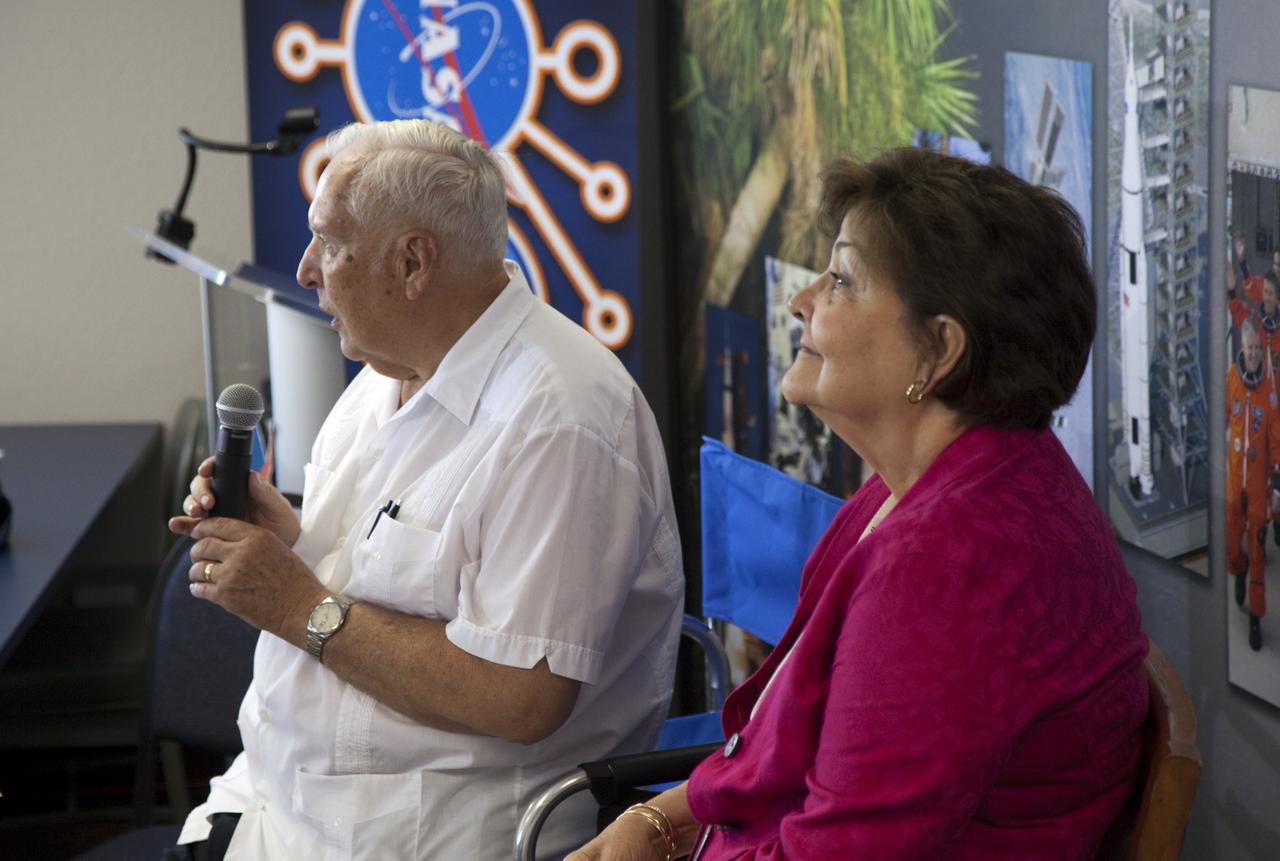
CAPE CANAVERAL, Fla. -- Former NASA Director of Public Affairs Hugh Harris, left, is joined by Jill Rock, of Kennedy's External Relations Office, in speaking to about 45 of NASA’s social media followers about the space agency's extensive efforts to host guests and VIPs over the years. They were among several speakers to address the participants during two days of presentations on the Kennedy Space Center's past, present and future. The social media participants gathered at the Florida spaceport on Aug. 2 and 3, 2012 to hear from key former and current leaders who related stories of the space agency's efforts to explore the unknown. It was the first social media event totally run by Kennedy. Photo credit: NASA/ Gianni Woods
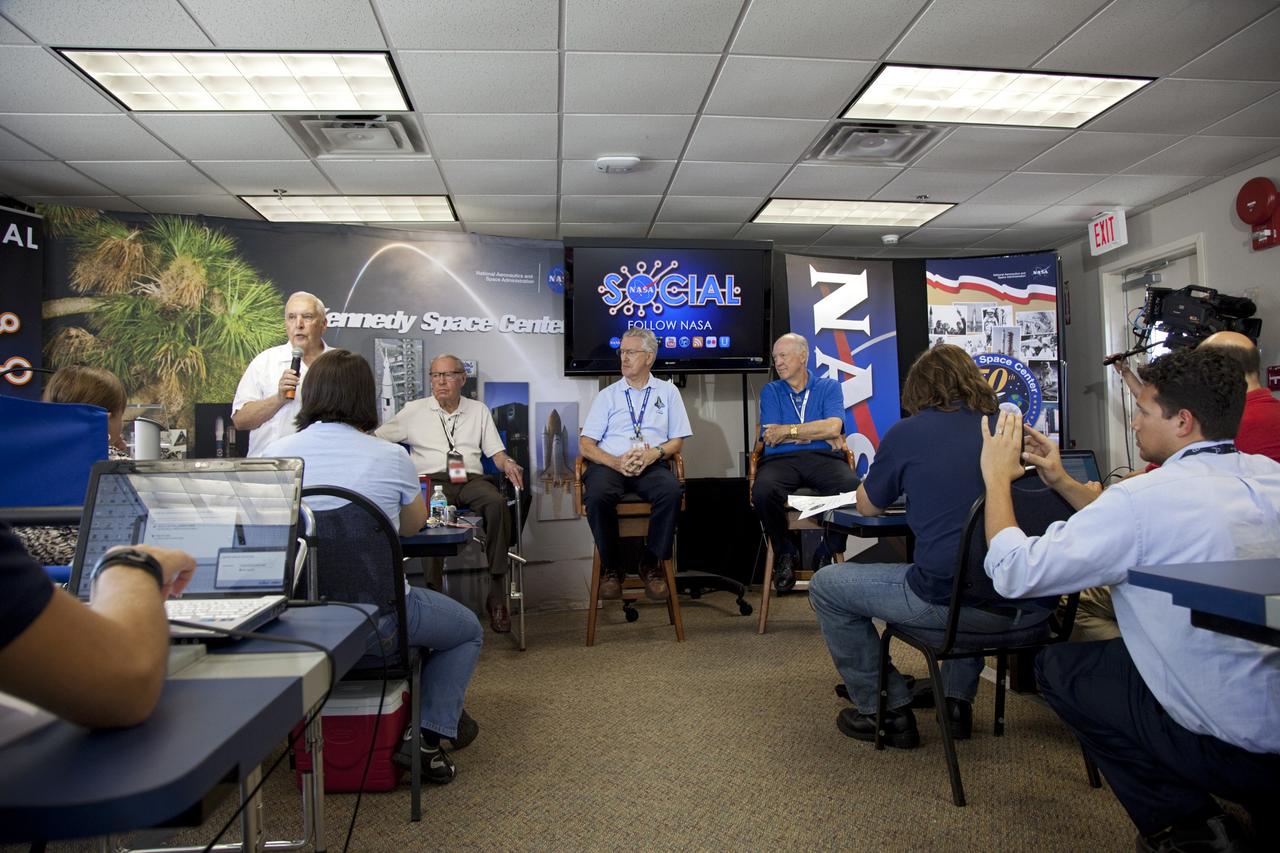
CAPE CANAVERAL, Fla. -- From the left, former NASA Director of Public Affairs Hugh Harris is joined by Jack King, former NASA chief of Public Information, John Tribe, retired chief engineer for Boeing/Rockwell Launch Support Services, and Roy Tharpe, president of Space Gateway Support, speak to about 45 of NASA’s social media followers for two days of presentations on the Kennedy Space Center's past, present and future. The social media participants gathered at the Florida spaceport on Aug. 2 and 3, 2012 to hear from key former and current leaders who related stories of the space agency's efforts to explore the unknown. It was the first social media event totally run by Kennedy. Photo credit: NASA/ Gianni Woods
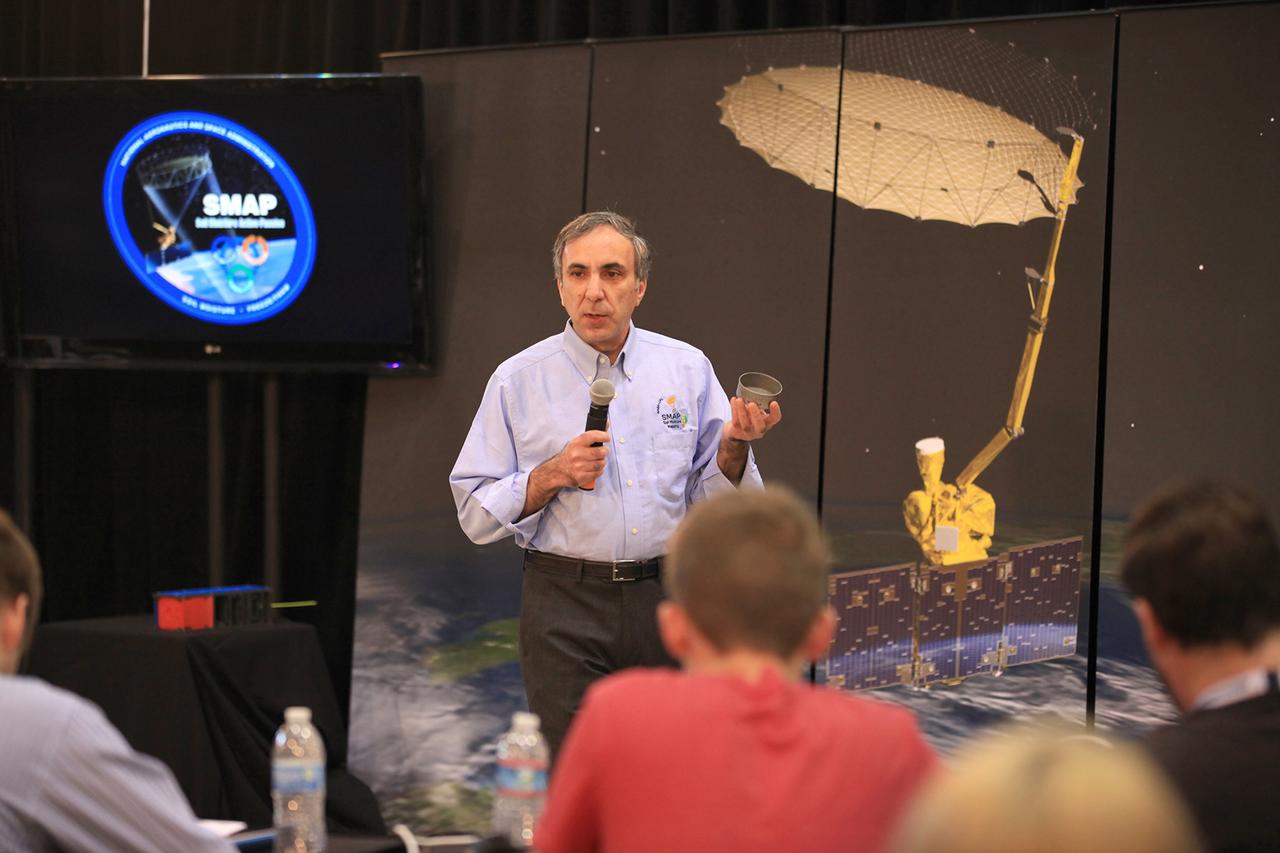
VANDENBERG AIR FORCE BASE, Calif. – Dara Entekhabi, science team leader at the Massachusetts Institute of Technology in Cambridge, Massachusetts, discusses the science and engineering of NASA's Soil Moisture Active Passive mission, or SMAP, with the audience of a NASA Social held at Vandenberg Air Force Base in California. This NASA Social brought together mission scientists and engineers with an audience of 70 students, educators, social media managers, bloggers, photographers and videographers who were selected from a pool of 325 applicants from 45 countries to participate in launch activities and communicate their experience with social media followers. The SMAP mission is scheduled to launch from Vandenberg on Jan. 29. To learn more about SMAP, visit http://www.nasa.gov/smap. Photo credit: NASA/Kim Shiflett
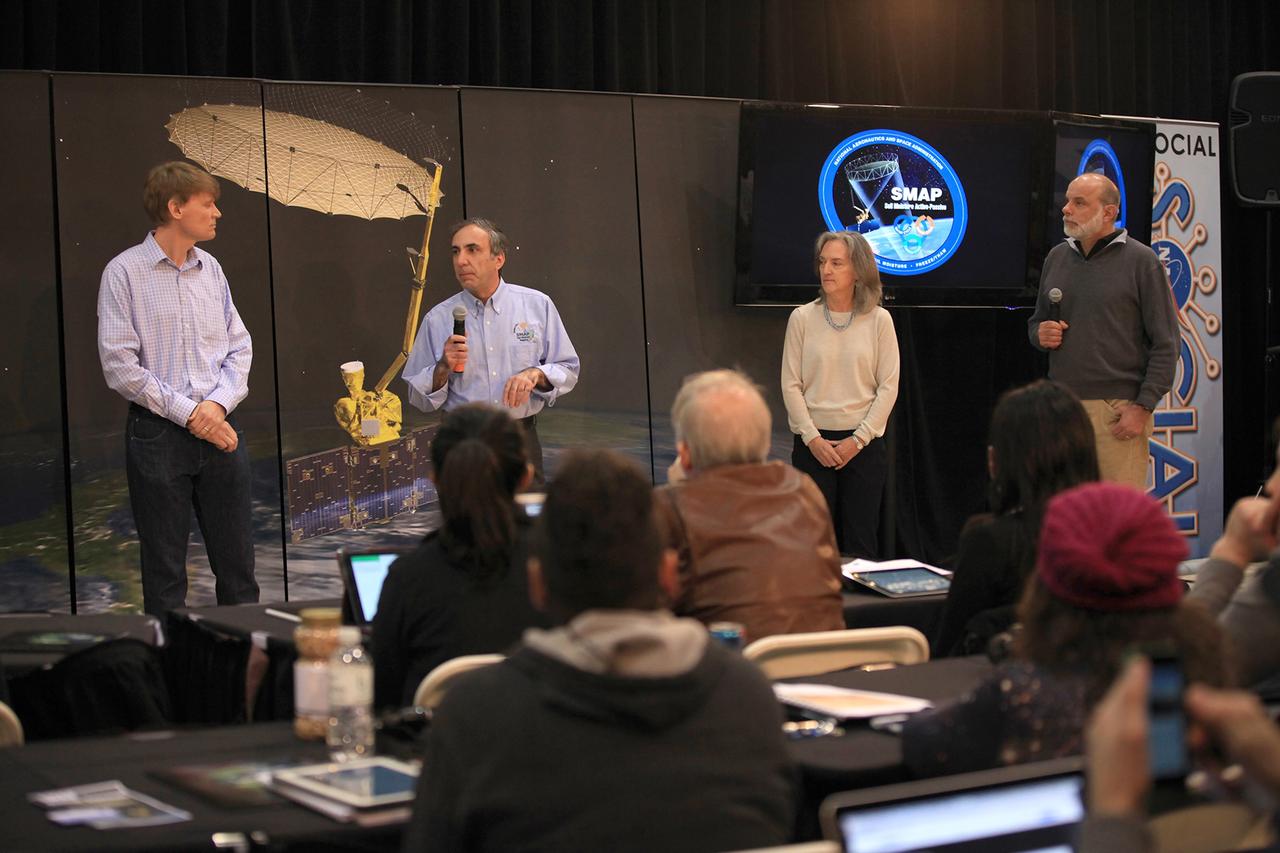
VANDENBERG AIR FORCE BASE, Calif. – Dara Entekhabi, science team leader at the Massachusetts Institute of Technology in Cambridge, Massachusetts, and other experts discuss the science and engineering of NASA's Soil Moisture Active Passive mission, or SMAP, with the audience of a NASA Social held at Vandenberg Air Force Base in California. This NASA Social brought together mission scientists and engineers with an audience of 70 students, educators, social media managers, bloggers, photographers and videographers who were selected from a pool of 325 applicants from 45 countries to participate in launch activities and communicate their experience with social media followers. The SMAP mission is scheduled to launch from Vandenberg on Jan. 29. To learn more about SMAP, visit http://www.nasa.gov/smap. Photo credit: NASA/Kim Shiflett
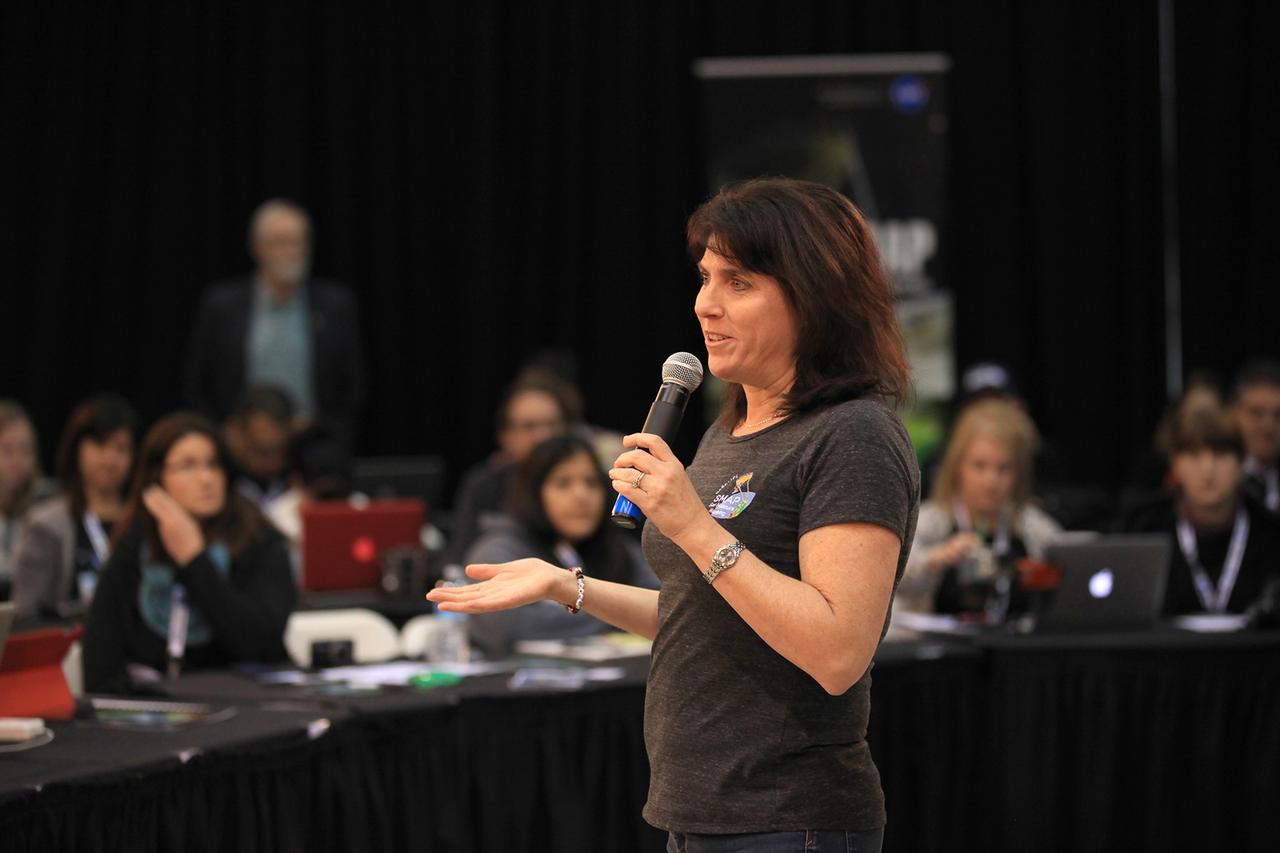
VANDENBERG AIR FORCE BASE, Calif. – Wendy Edelstein, instrument manager for NASA's Soil Moisture Active Passive mission, or SMAP, discusses the science and engineering of the mission with the audience of a NASA Social held at Vandenberg Air Force Base in California. This NASA Social brought together mission scientists and engineers with an audience of 70 students, educators, social media managers, bloggers, photographers and videographers who were selected from a pool of 325 applicants from 45 countries to participate in launch activities and communicate their experience with social media followers. The SMAP mission is scheduled to launch from Vandenberg on Jan. 29. To learn more about SMAP, visit http://www.nasa.gov/smap. Photo credit: NASA/Kim Shiflett
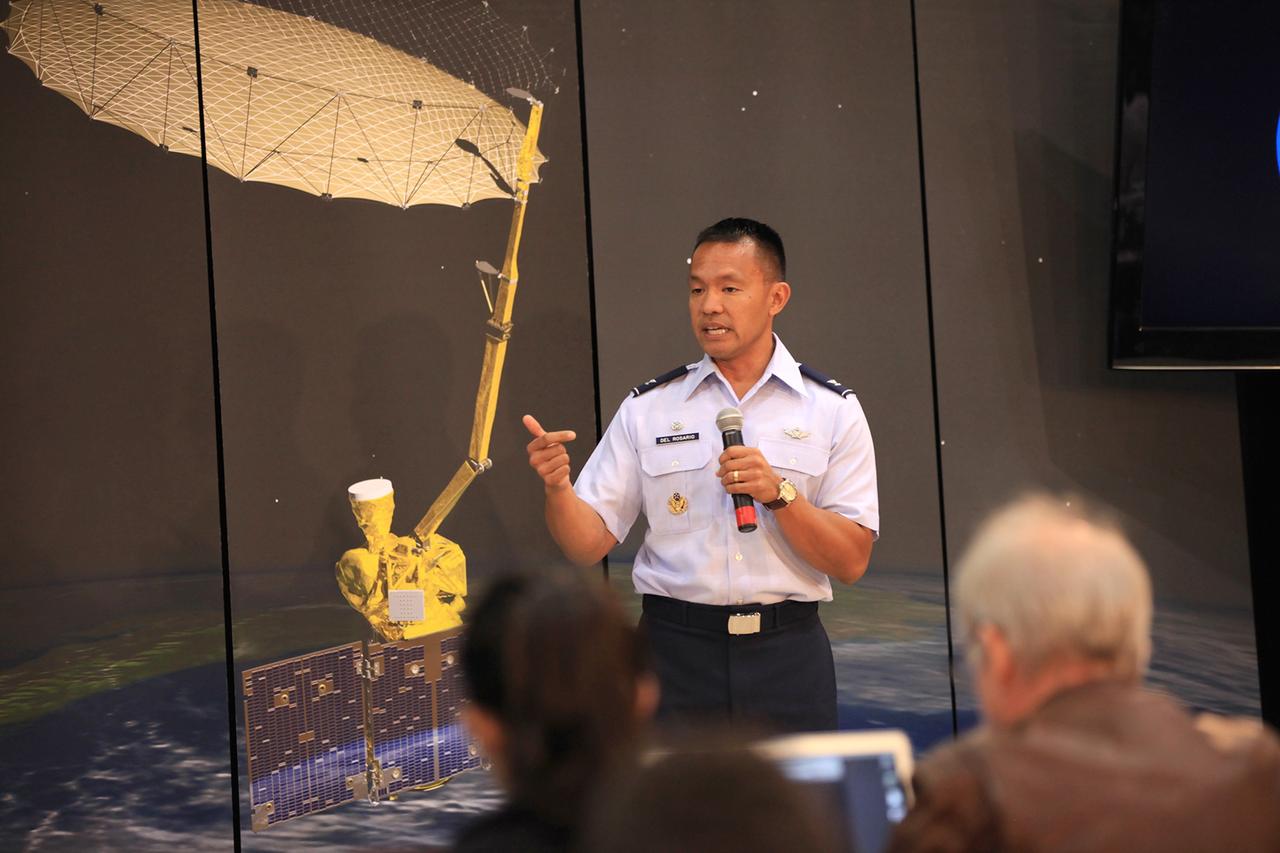
VANDENBERG AIR FORCE BASE, Calif. – Col. Marc Del Rosario, commander of the 30th Space Wing Operations Group, addresses the audience of a NASA Social held for NASA's Soil Moisture Active Passive mission, or SMAP, at Vandenberg Air Force Base in California. This NASA Social brought together mission scientists and engineers with an audience of 70 students, educators, social media managers, bloggers, photographers and videographers who were selected from a pool of 325 applicants from 45 countries to participate in launch activities and communicate their experience with social media followers. The SMAP mission is scheduled to launch from Vandenberg on Jan. 29. To learn more about SMAP, visit http://www.nasa.gov/smap. Photo credit: NASA/Kim Shiflett
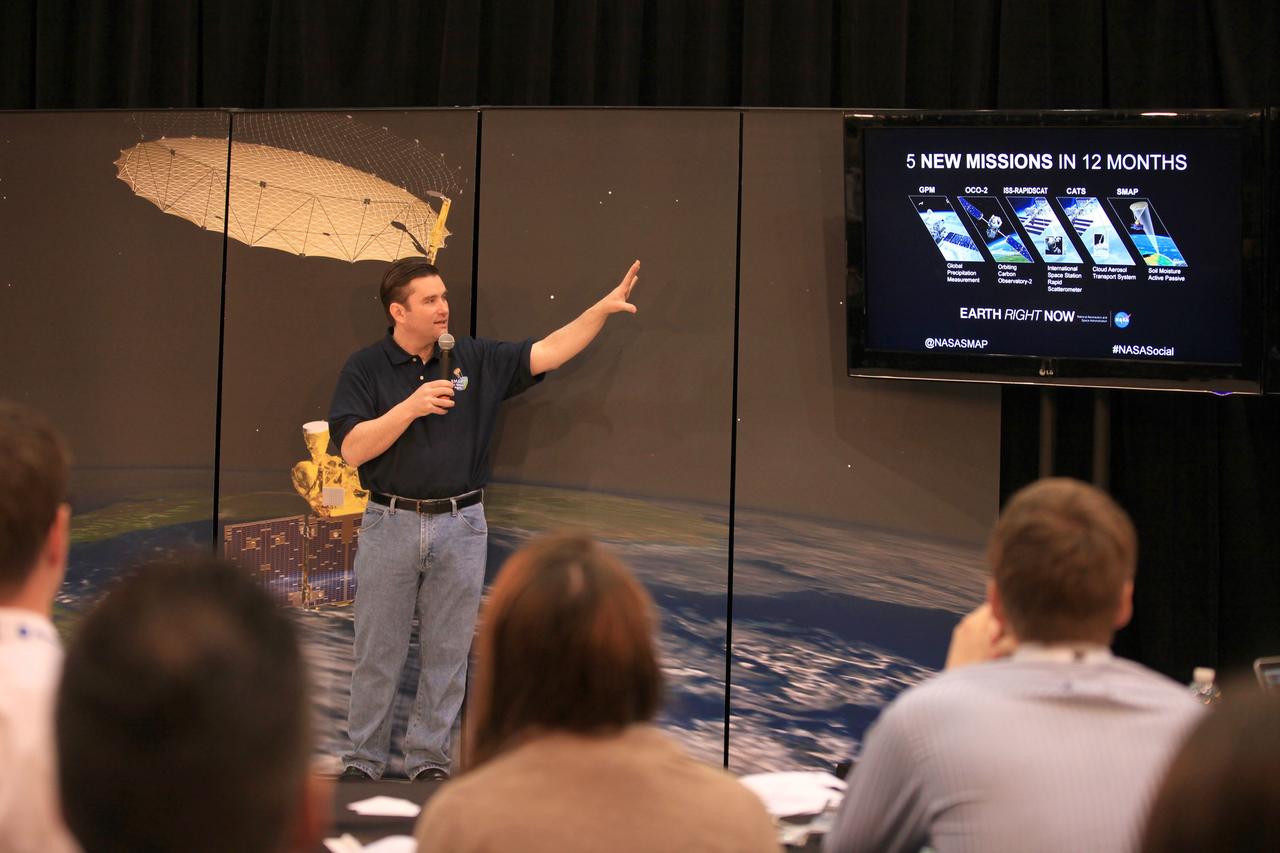
VANDENBERG AIR FORCE BASE, Calif. – Jared Entin, program scientist for NASA's Soil Moisture Active Passive mission, or SMAP, discusses the science and engineering of the mission with the audience of a NASA Social held at Vandenberg Air Force Base in California. This NASA Social brought together mission scientists and engineers with an audience of 70 students, educators, social media managers, bloggers, photographers and videographers who were selected from a pool of 325 applicants from 45 countries to participate in launch activities and communicate their experience with social media followers. The SMAP mission is scheduled to launch from Vandenberg on Jan. 29. To learn more about SMAP, visit http://www.nasa.gov/smap. Photo credit: NASA/Kim Shiflett
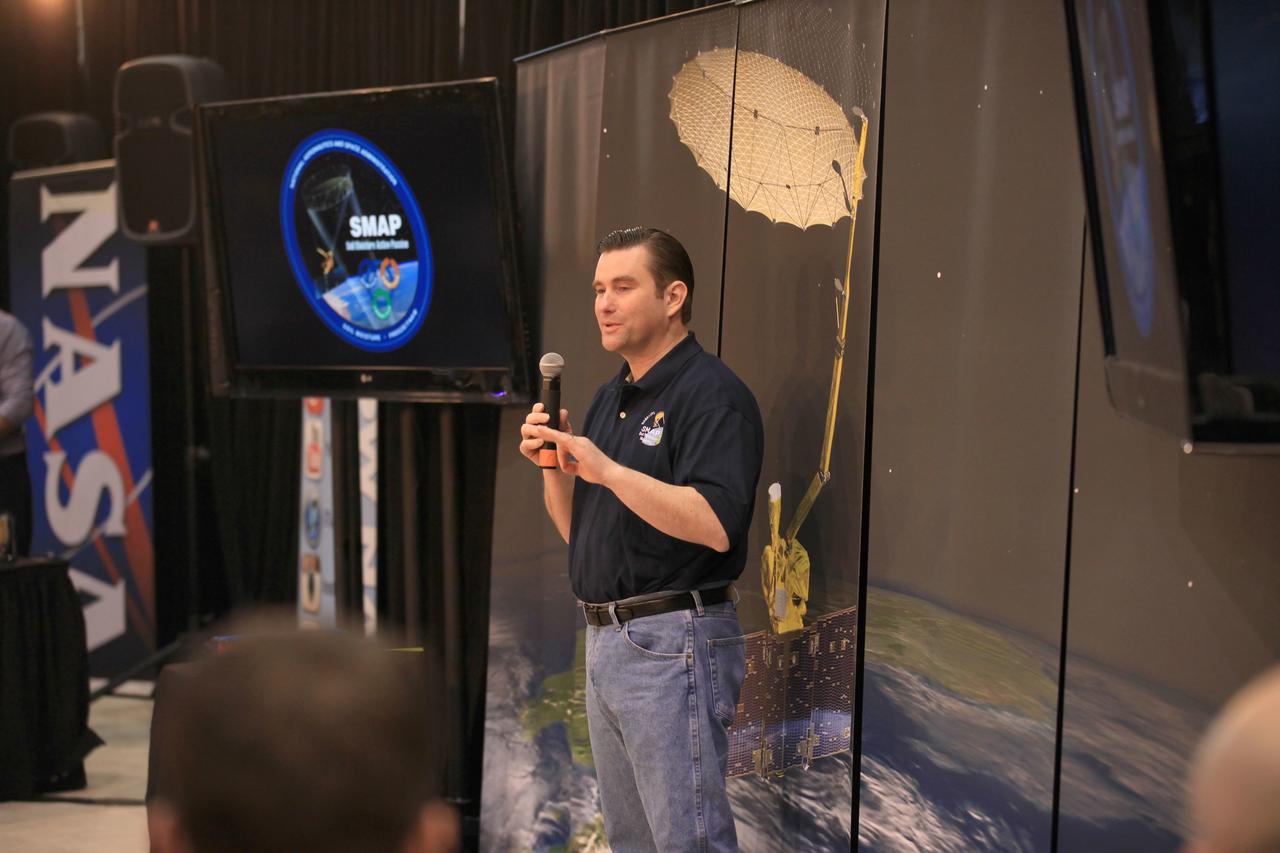
VANDENBERG AIR FORCE BASE, Calif. – Jared Entin, program scientist for NASA's Soil Moisture Active Passive mission, or SMAP, discusses the science and engineering of the mission with the audience of a NASA Social held at Vandenberg Air Force Base in California. This NASA Social brought together mission scientists and engineers with an audience of 70 students, educators, social media managers, bloggers, photographers and videographers who were selected from a pool of 325 applicants from 45 countries to participate in launch activities and communicate their experience with social media followers. The SMAP mission is scheduled to launch from Vandenberg on Jan. 29. To learn more about SMAP, visit http://www.nasa.gov/smap. Photo credit: NASA/Kim Shiflett
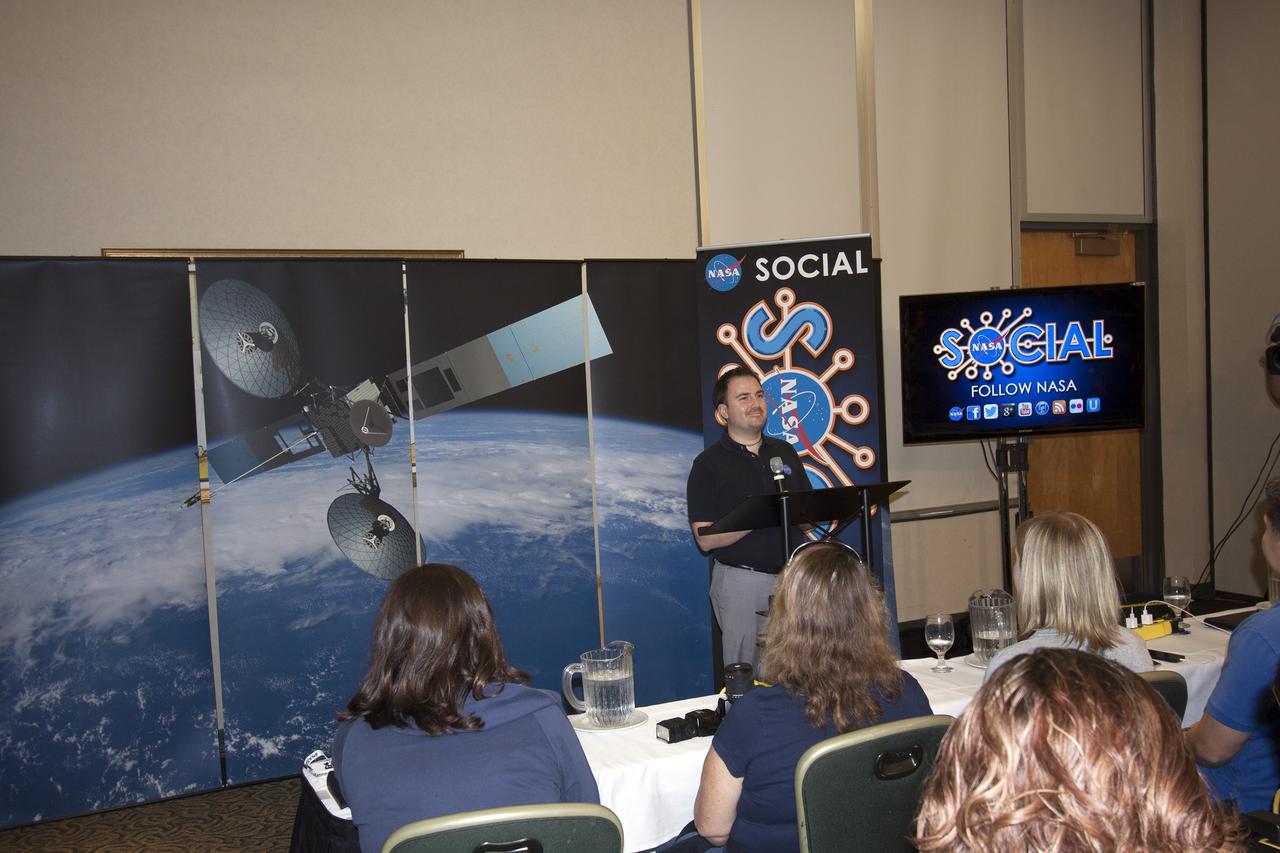
CAPE CANAVERAL, Fla. -- At NASA's Kennedy Space Center in Florida, Jason Townsend of NASA's Social Media Team welcomes agency social media followers to the first day of activities of a NASA Social revolving around NASA's Tracking and Data Relay Satellite-K mission. NASA Socials are in-person meetings for people who engage with the agency through Twitter, Facebook, Google+ and other social networks. The satellite, known as TDRS-K, is set to launch at 8:48 p.m. EST on Jan. 30 aboard a United Launch Alliance Atlas V rocket from Space Launch Complex 41 on nearby Cape Canaveral Air Force Station. About 50 followers were selected to participate in the TDRS-K prelaunch and launch activities and share them with their own fan base. The TDRS-K spacecraft is part of the next-generation series in the Tracking and Data Relay Satellite System, a constellation of space-based communication satellites providing tracking, telemetry, command and high-bandwidth data return services. For more information, visit http://www.nasa.gov/mission_pages/tdrs/index.html. Photo credit: NASA/Jim Grossmann
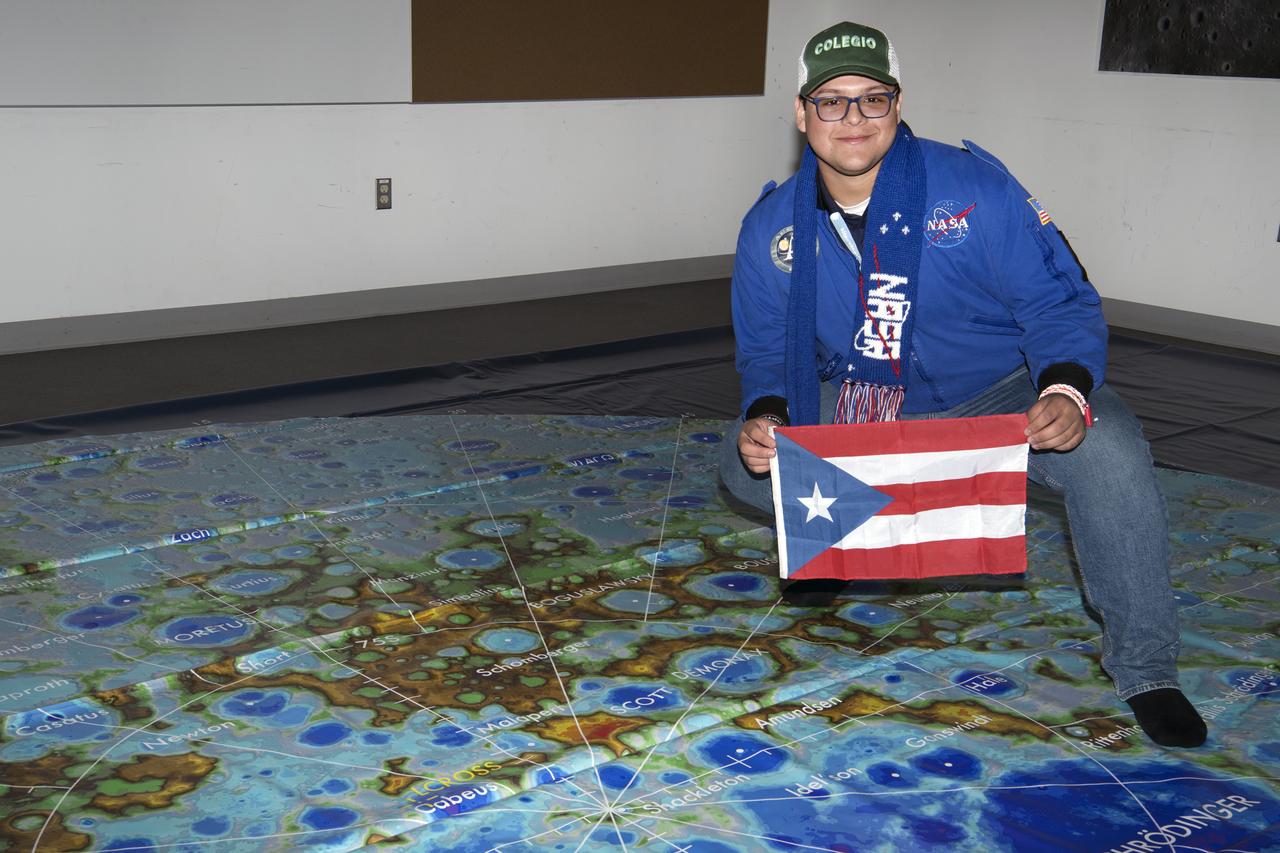
Social media followers visited GSFC Feb 10, 2020 learning role of Artemis, LRO Lunar Reconnaisssance Orbiter, and spoke with science experts while touring center Here student holds Puerto Rico flag over map
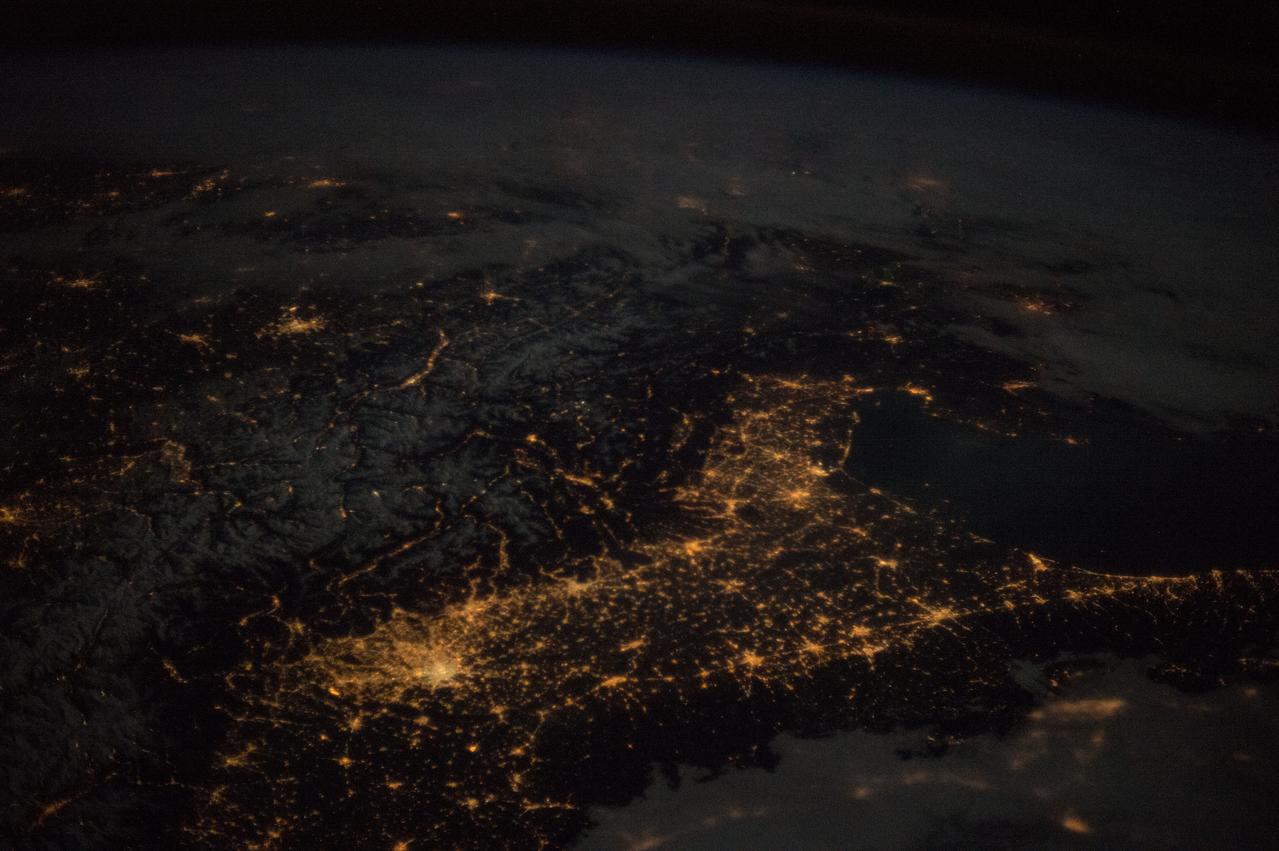
ISS046e024208 (01/25/2016) --- Expedition 46 flight engineer Tim Kopra of NASA shared this stunning nighttime photograph with his social media followers on Jan. 25, 2016, writing, "Beautiful night pass over Italy, Alps and Mediterranean."
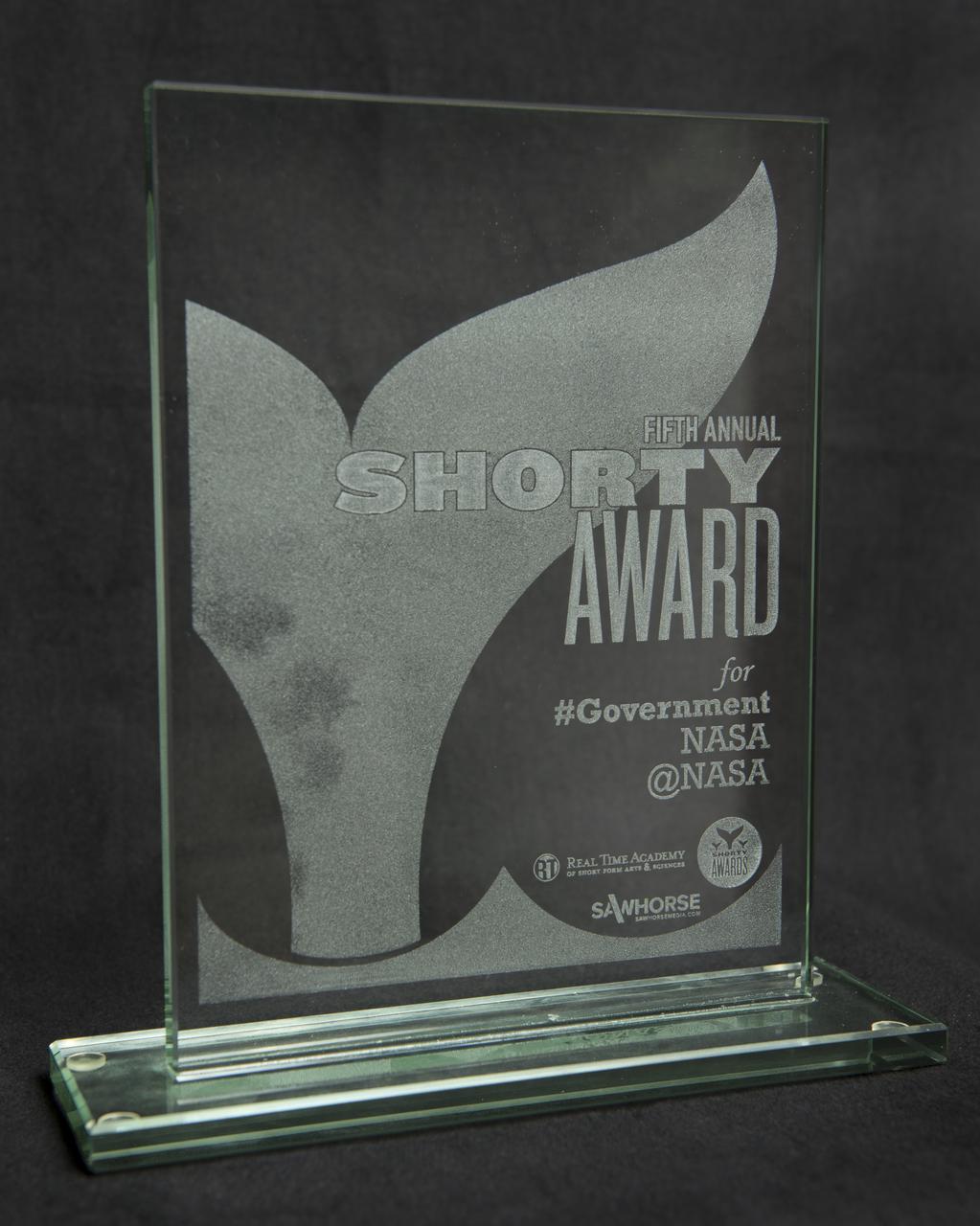
A Shorty Award is seen Wednesday, April 10, 2013 at NASA Headquarters in Washington. NASA's official Twitter feed, @NASA, has won its second consecutive Shorty award for the best government use of social media. The Shorty Award honors the best of social media across sites such as Twitter, Facebook, Tumblr, YouTube, Foursquare and others. NASA took the prize Monday, April 8, at the fifth Shorty Awards ceremony in New York. The @NASA acceptance tweet was, "We're sharing the universe 1 tweet at a time. Be inspired! Follow @NASA & RT if you love science & space. #ShortyAwards." Photo Credit: (NASA/Carla Cioffi)
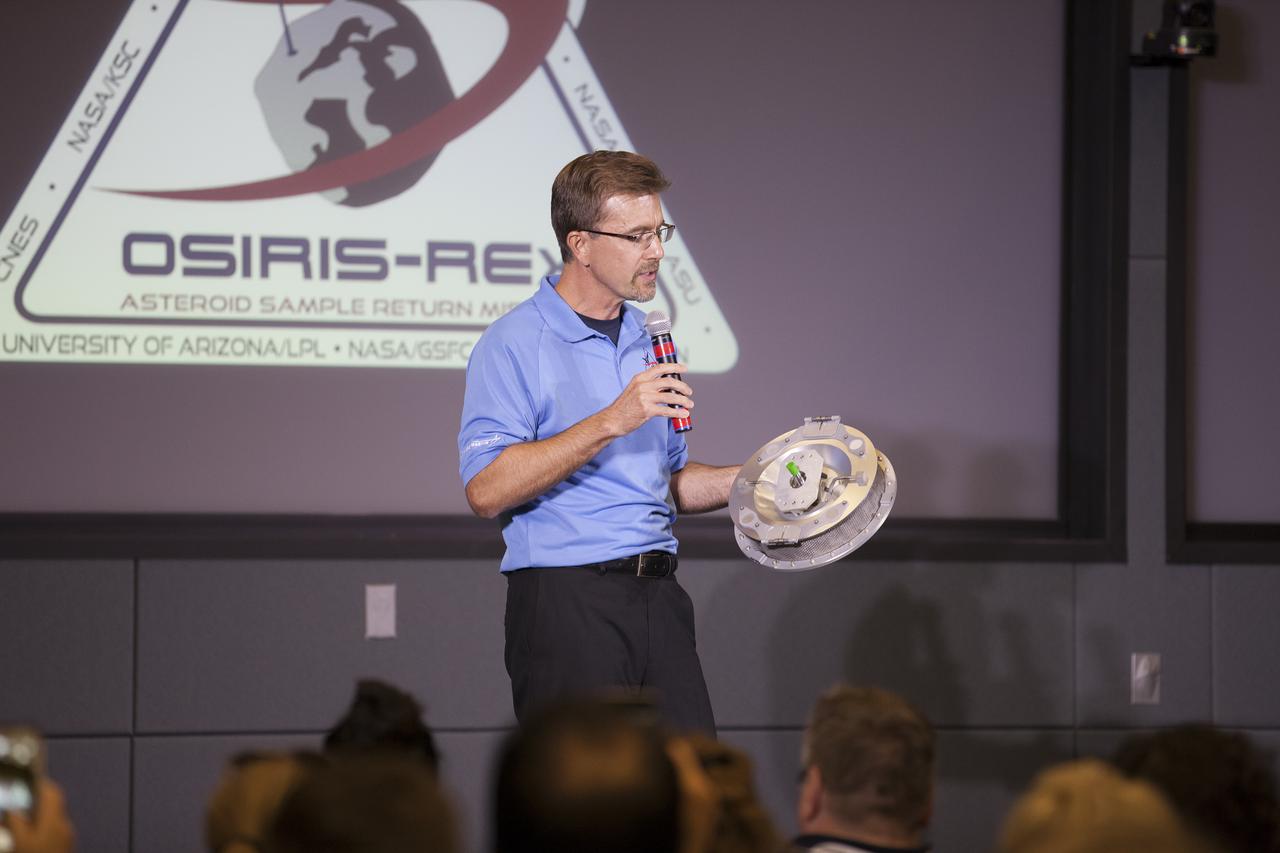
Tim Linn, chief system engineer with Lockheed Martin, discusses the unique design of the OSIRIS-REx spacecraft during a NASA Social with social media followers in the Operations Support Building II at NASA’s Kennedy Space Center in Florida. The presentation took place before launch of the agency’s Origins, Spectral Interpretation, Resource Identification, Security-Regolith Explorer, or OSIRIS-REx spacecraft.
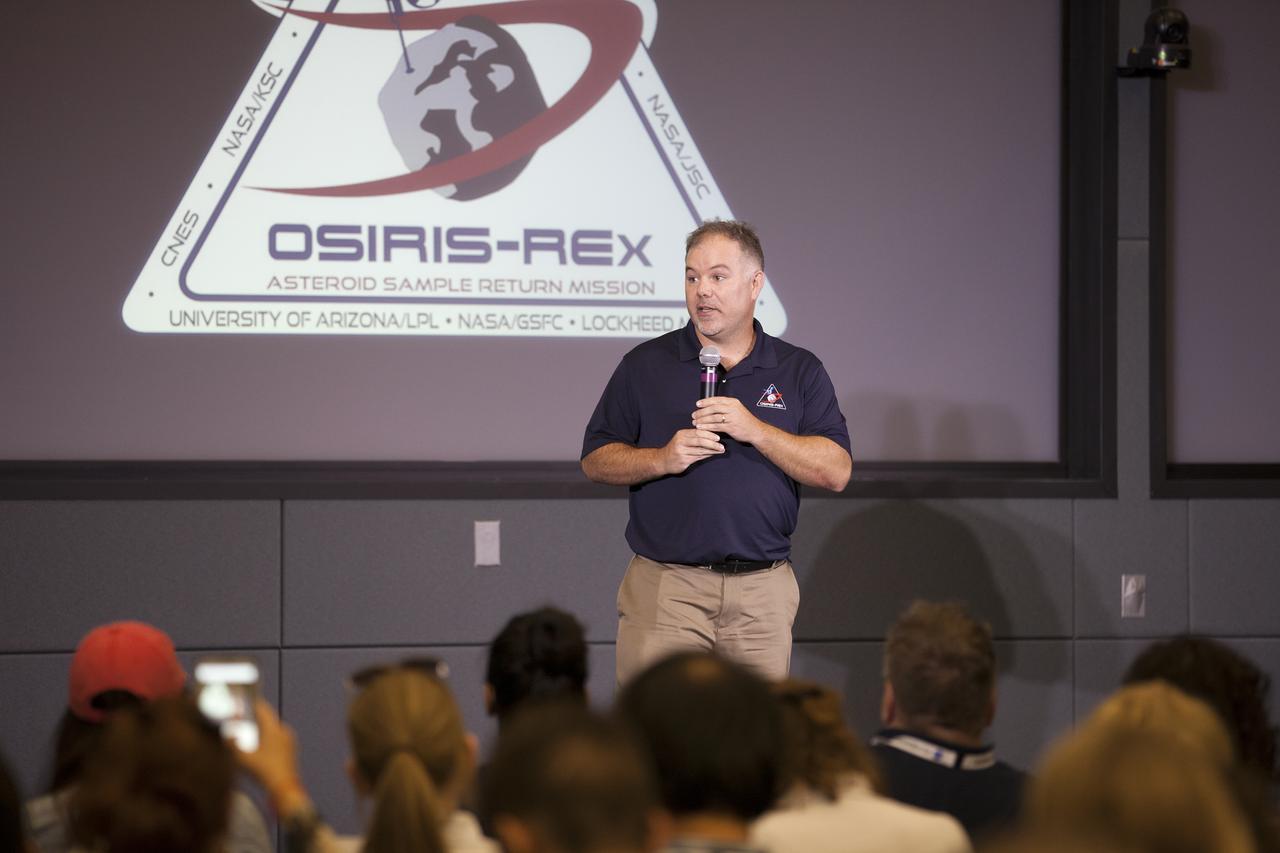
Daniel Glavin, OSIRIS-REx co-investigator at NASA’s Goddard Space Flight Center in Greenbelt, Maryland, talks to social media followers during a NASA Social in the Operations Support Building II at the agency’s Kennedy Space Center in Florida. The presentation took place before launch of the agency’s Origins, Spectral Interpretation, Resource Identification, Security-Regolith Explorer, or OSIRIS-REx spacecraft.
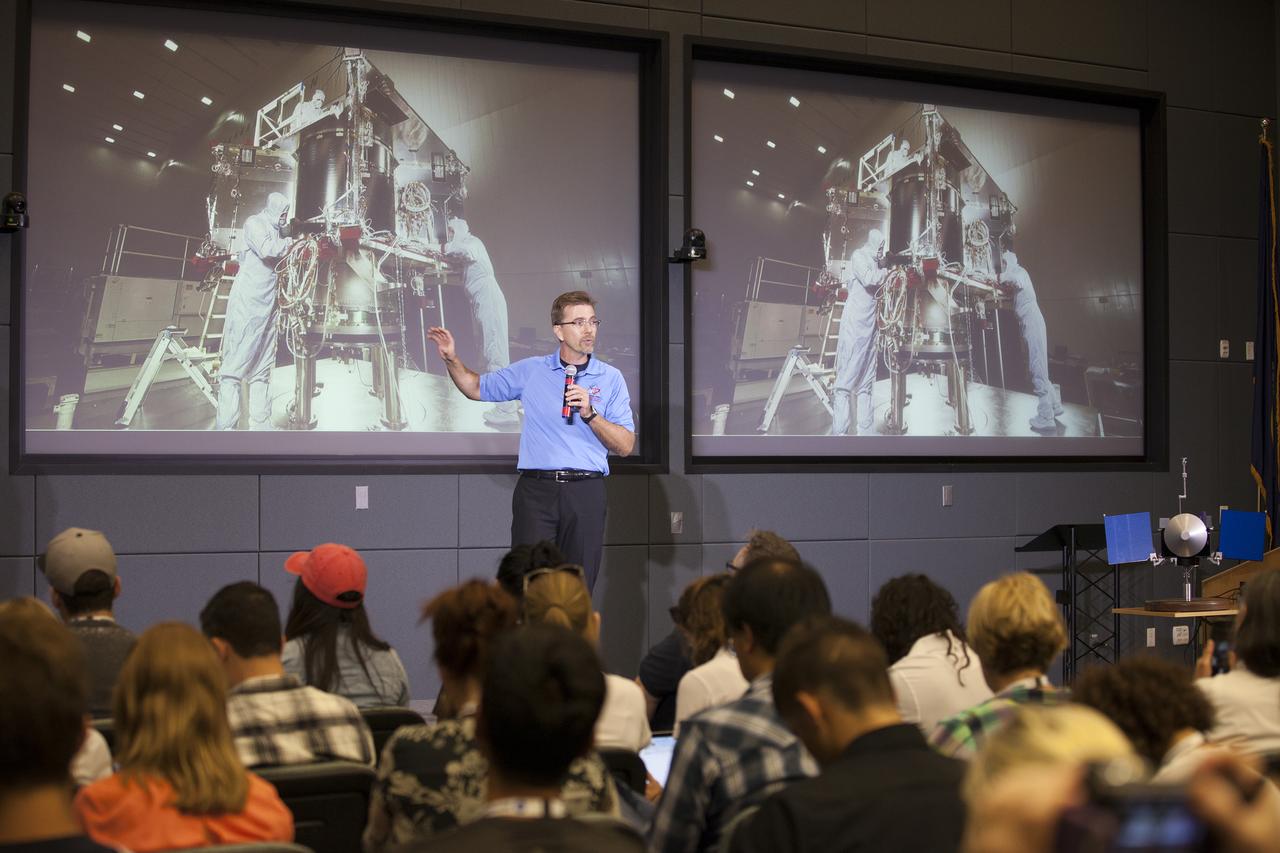
Tim Linn, chief system engineer with Lockheed Martin, discusses the unique design of the OSIRIS-REx spacecraft during a NASA Social with social media followers in the Operations Support Building II at NASA’s Kennedy Space Center in Florida. The presentation took place before launch of the agency’s Origins, Spectral Interpretation, Resource Identification, Security-Regolith Explorer, or OSIRIS-REx spacecraft.
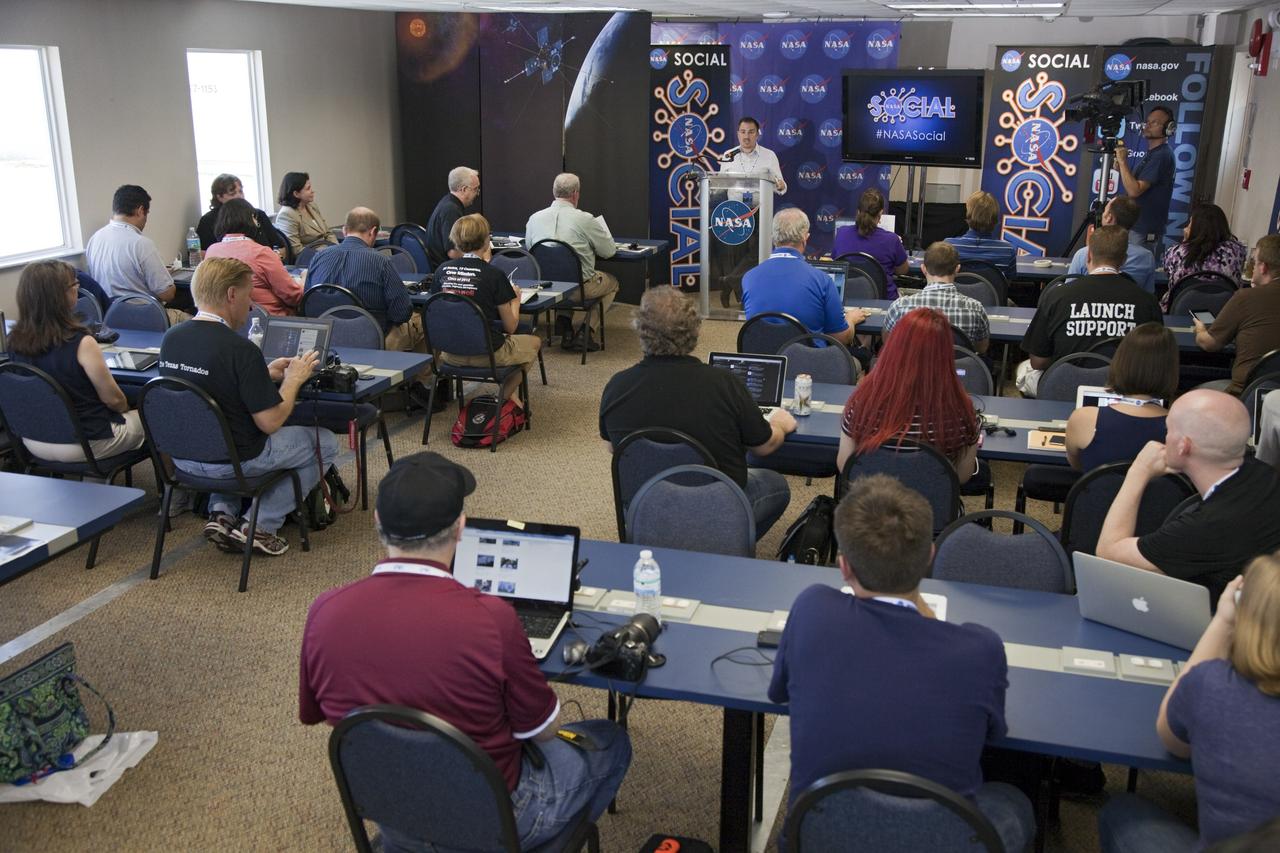
CAPE CANAVERAL, Fla. – At NASA's Kennedy Space Center in Florida, Jason Townsend of NASA's Social Media Team welcomes agency social media followers to the second day of activities revolving around NASA's Radiation Belt Storm Probes, or RBSP, mission. The probes are set to launch aboard a United Launch Alliance, or ULA, Atlas V rocket from nearby Cape Canaveral Air Force Station. About 40 followers were selected to participate in RBSP's prelaunch and launch activities and share them with their own fan base. The RBSP mission will help us understand the sun’s influence on Earth and near-Earth space by studying the Earth’s radiation belts on various scales of space and time. RBSP will begin its mission of exploration of Earth’s Van Allen radiation belts and the extremes of space weather. For more information, visit http://www.nasa.gov/rbsp. Photo credit: NASA/Frankie Martin
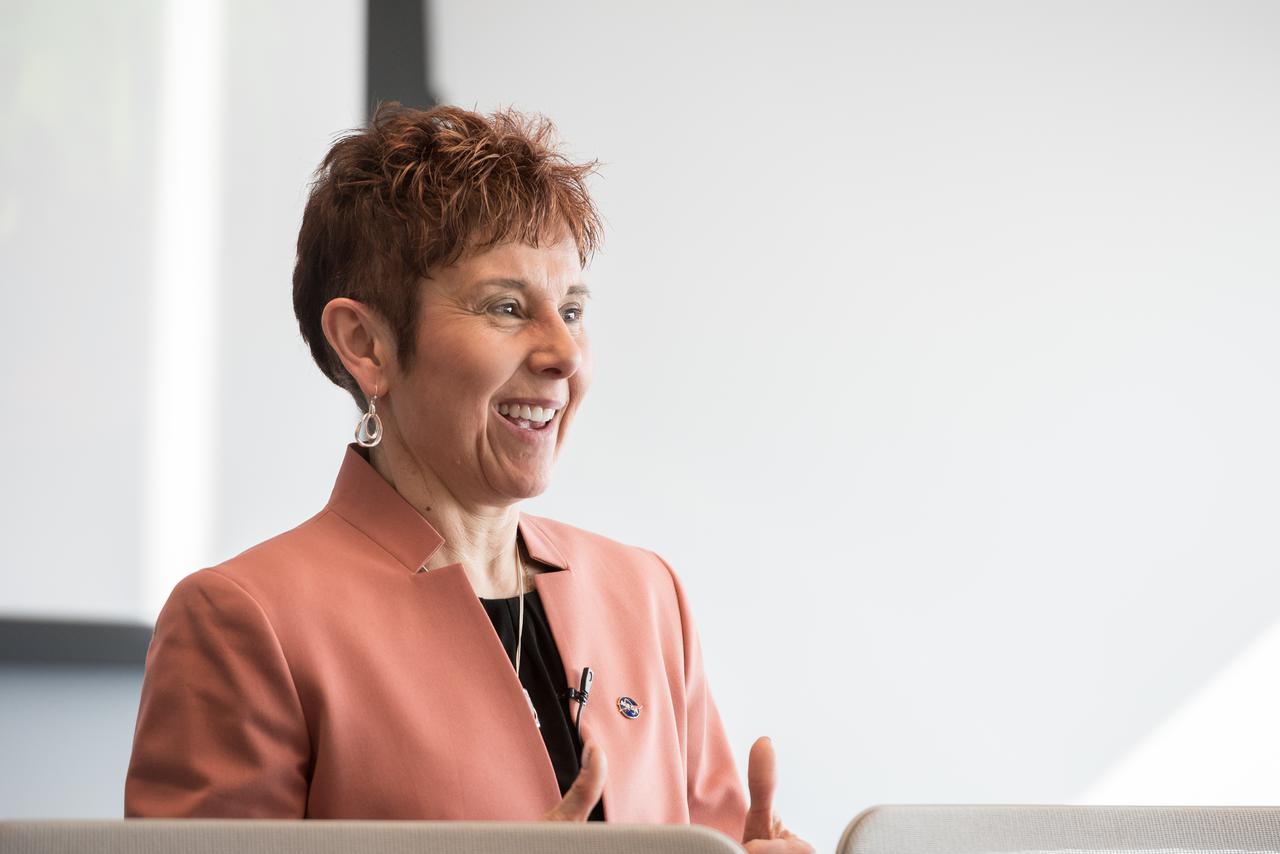
State of NASA Social Event
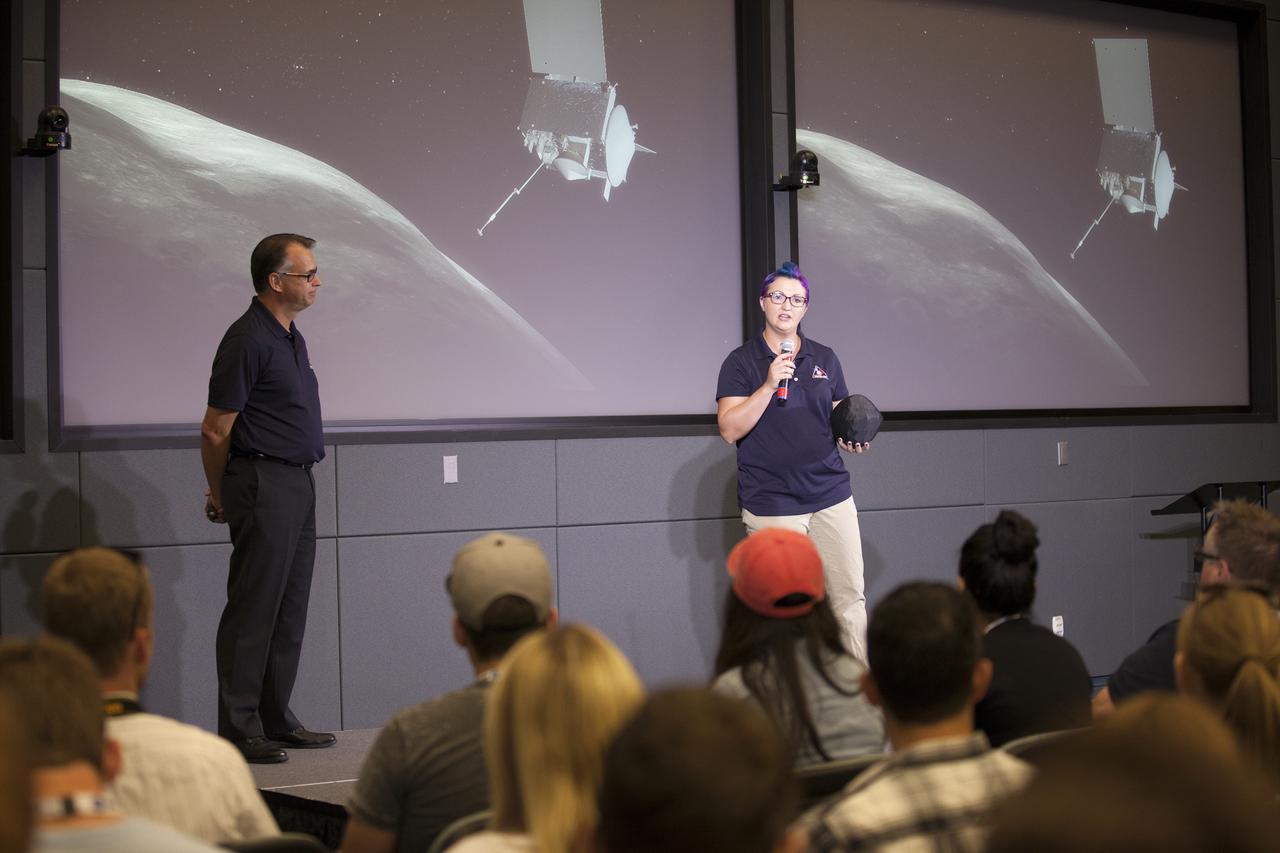
Social media followers were briefed by NASA scientists on asteroids, how they relate to the origins of our solar system and the search for life beyond Earth, during a NASA Social presentation in the Operations Support Building II at the agency’s Kennedy Space Center in Florida. The presentation took place before launch of the agency’s Origins, Spectral Interpretation, Resource Identification, Security-Regolith Explorer, or OSIRIS-REx spacecraft. From the left, are Dante Lauretta, OSIRIS-REx principal investigator from the University of Arizona at Tucson, and Christina Richey, OSIRIS-REx deputy program scientists at NASA Headquarters in Washington.

NASA Lunar Atmosphere and Dust Environment Explorer (LADEE) Program Scientist Sarah Noble talks during a NASA Social about the LADEE mission at NASA Wallops Flight Facility, Thursday, Sept. 5, 2013 on Wallops Island, VA. Fifty of NASA's social media followers are attending a two-day event in support of the LADEE launch. Data from LADEE will provide unprecedented information about the environment around the moon and give scientists a better understanding of other planetary bodies in our solar system and beyond. LADEE is scheduled to launch at 11:27 p.m. Friday, Sept. 6, from NASA's Wallops Flight Facility. Photo Credit: (NASA/Carla Cioffi)

A participant at a NASA Social on the Lunar Atmosphere and Dust Environment Explorer (LADEE) mission asks NASA Associate Administrator for the Science Mission Directorate John Grunsfeld a question, Thursday, Sept. 5, 2013 on Wallops Island, VA. Fifty of NASA's social media followers are attending a two-day event in support of the LADEE launch. Data from LADEE will provide unprecedented information about the environment around the moon and give scientists a better understanding of other planetary bodies in our solar system and beyond. LADEE is scheduled to launch at 11:27 p.m. Friday, Sept. 6, from NASA's Wallops Flight Facility. Photo Credit: (NASA/Carla Cioffi)
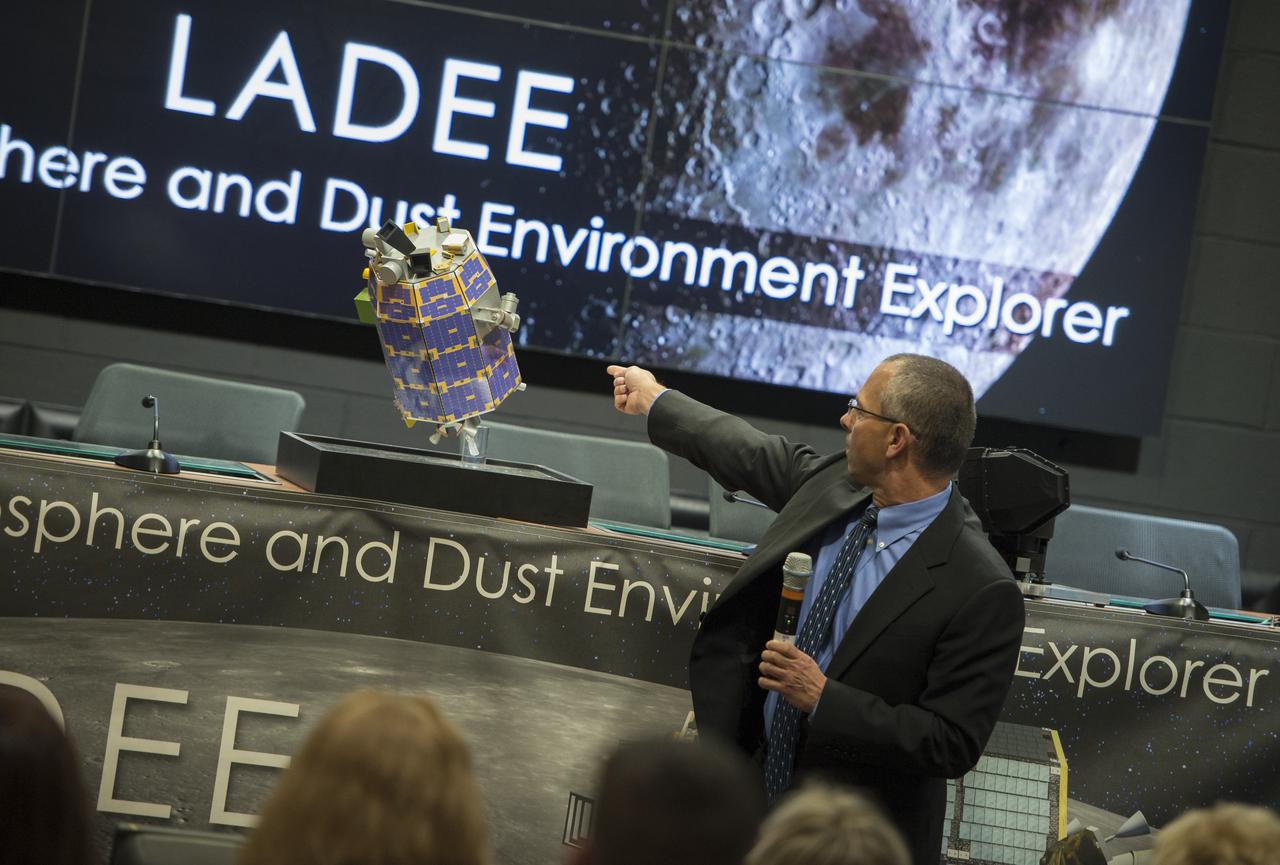
Bob Barber, Lunar Atmosphere and Dust Environment Explorer (LADEE) Spacecraft Systems Engineer at NASA Ames Research Center, points to a model of the LADEE spacecraft a NASA Social, Thursday, Sept. 5, 2013 at NASA Wallops Flight Facility in Virginia. Fifty of NASA's social media followers are attending a two-day event in support of the LADEE launch. Data from LADEE will provide unprecedented information about the environment around the moon and give scientists a better understanding of other planetary bodies in our solar system and beyond. LADEE is scheduled to launch at 11:27 p.m. Friday, Sept. 6, from NASA's Wallops Flight Facility. Photo Credit: (NASA/Carla Cioffi)

A participant at a NASA Social on the Lunar Atmosphere and Dust Environment Explorer (LADEE) mission asks a question, Thursday, Sept. 5, 2013 on Wallops Island, VA. Fifty of NASA's social media followers are attending a two-day event in support of the LADEE launch. Data from LADEE will provide unprecedented information about the environment around the moon and give scientists a better understanding of other planetary bodies in our solar system and beyond. LADEE is scheduled to launch at 11:27 p.m. Friday, Sept. 6, from NASA's Wallops Flight Facility. Photo Credit: (NASA/Carla Cioffi)

NASA Associate Administrator for the Science Mission Directorate John Grunsfeld talks during a NASA Social about the Lunar Atmosphere and Dust Environment Explorer (LADEE) mission at the NASA Wallops Flight Facility, Thursday, Sept. 5, 2013 on Wallops Island, VA. Fifty of NASA's social media followers are attending a two-day event in support of the LADEE launch. Data from LADEE will provide unprecedented information about the environment around the moon and give scientists a better understanding of other planetary bodies in our solar system and beyond. LADEE is scheduled to launch at 11:27 p.m. Friday, Sept. 6, from NASA's Wallops Flight Facility. Photo Credit: (NASA/Carla Cioffi)
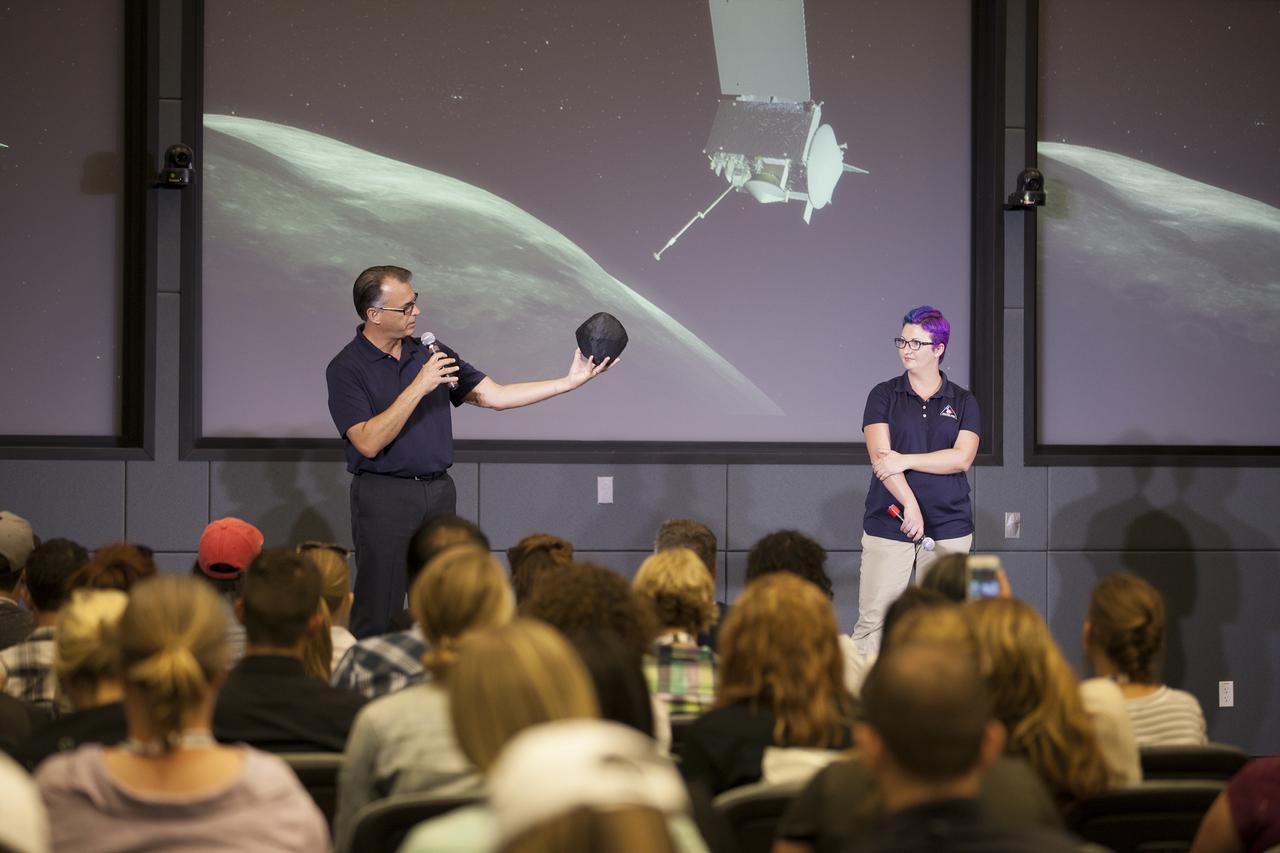
Social media followers were briefed by NASA scientists on asteroids, how they relate to the origins of our solar system and the search for life beyond Earth, during a NASA Social presentation in the Operations Support Building II at the agency’s Kennedy Space Center in Florida. The presentation took place before launch of the agency’s Origins, Spectral Interpretation, Resource Identification, Security-Regolith Explorer, or OSIRIS-REx spacecraft. From the left, are Dante Lauretta, OSIRIS-REx principal investigator from the University of Arizona at Tucson, and Christina Richey, OSIRIS-REx deputy program scientists at NASA Headquarters in Washington.
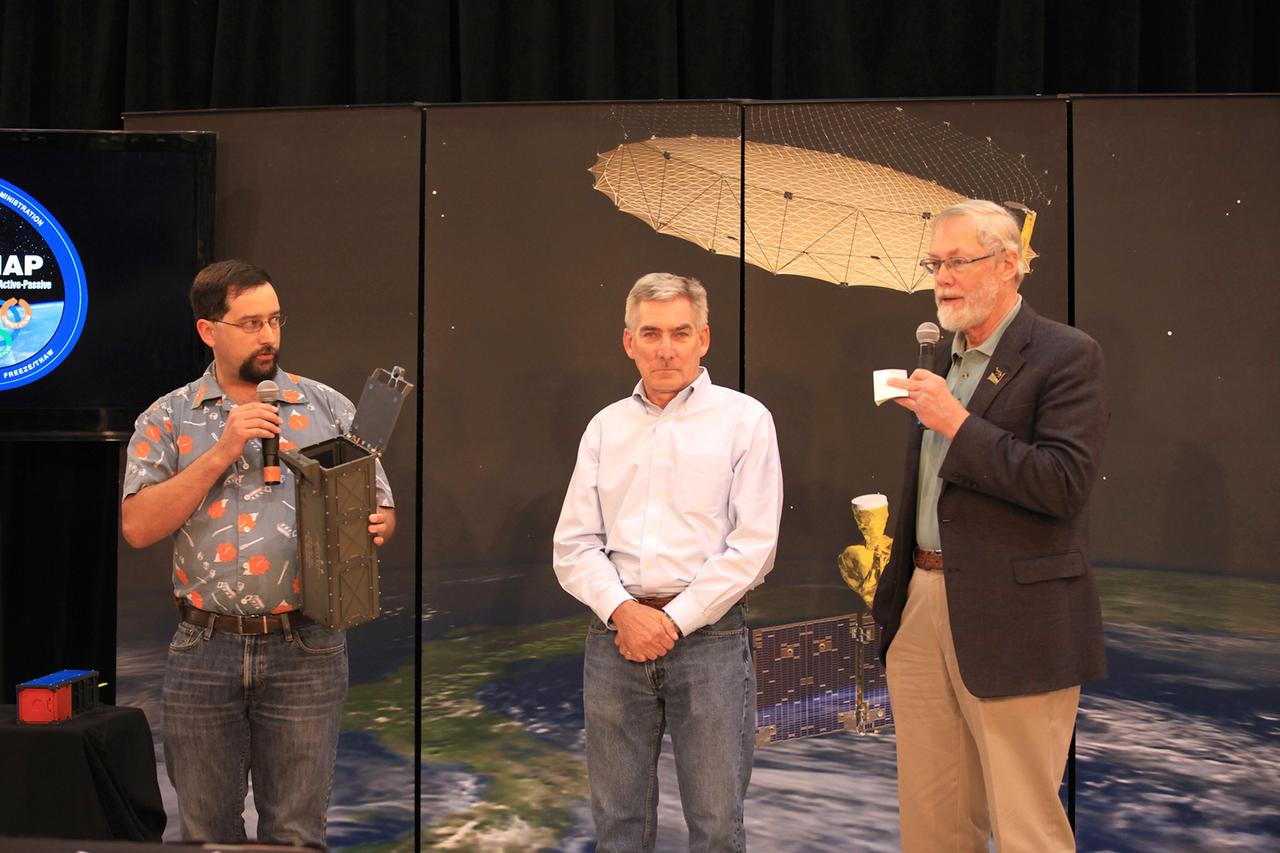
VANDENBERG AIR FORCE BASE, Calif. – From left, John Bellardo, co-principal investigator Cubesat at California Polytechnic, San Luis Obispo, David Rider, GRIFEX principal investigator at Jet Propulsion Laboratory, Pasadena, California, and Dave Klumpar, Firebird-II principal investigator and director of the Space Science and Engineering Laboratory at Montana State University in Bozeman, Montana, discuss three Educational Launch of Nanosatellites ELaNa CubeSat that are being flown as auxiliary payloads on NASA's Soil Moisture Active Passive mission, or SMAP, with the audience of a NASA Social held for at Vandenberg Air Force Base in California. This NASA Social brought together mission scientists and engineers with an audience of 70 students, educators, social media managers, bloggers, photographers and videographers who were selected from a pool of 325 applicants from 45 countries to participate in launch activities and communicate their experience with social media followers. The SMAP mission is scheduled to launch from Vandenberg on Jan. 29. To learn more about SMAP, visit http://www.nasa.gov/smap. Photo credit: NASA/Kim Shiflett
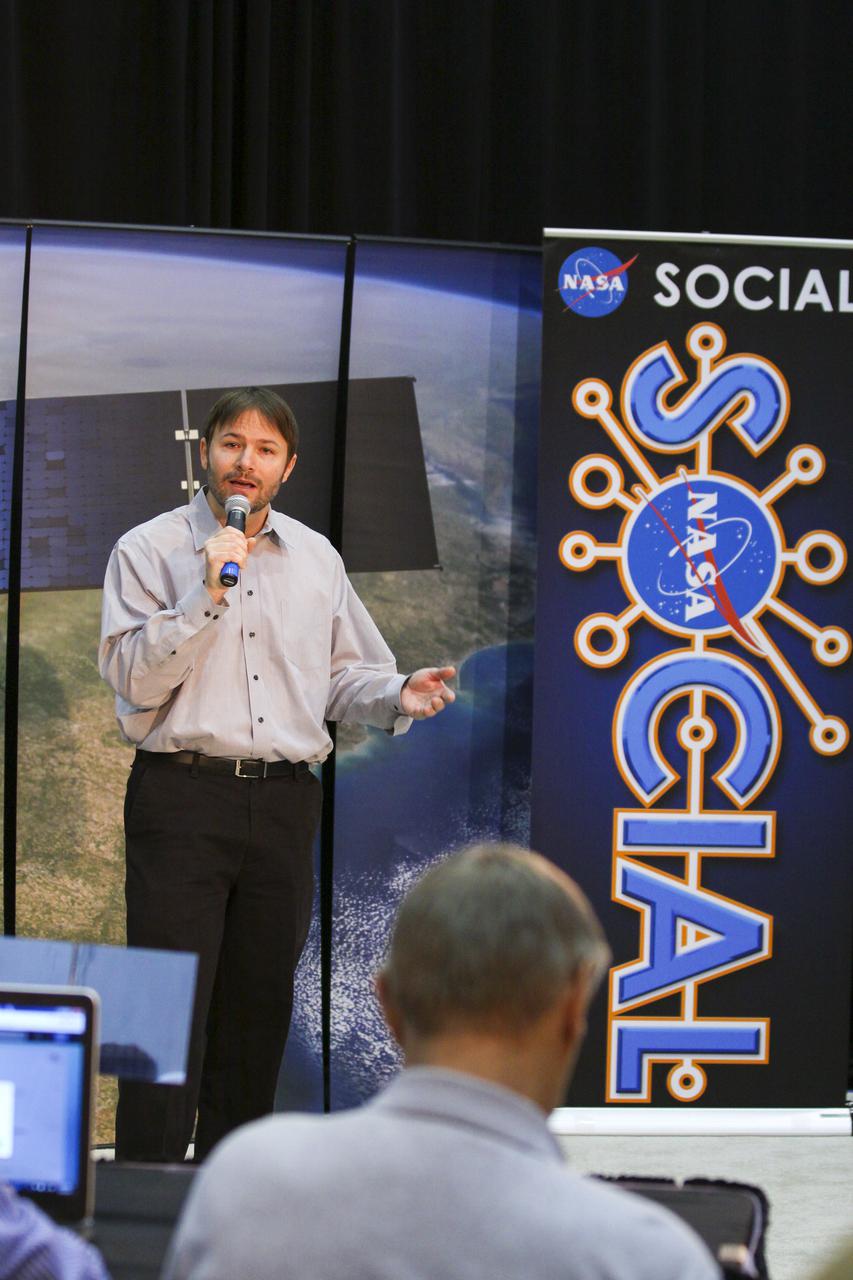
VANDENBERG AFB, Calif. -- John Yembrick, social media manager for NASA, speaks to NASA social media followers at Vandenberg Air Force Base, Calif., prior to the launch of the agency's Landsat Data Continuity Mission, or LDCM, satellite. The Landsat Data Continuity Mission LDCM is the future of Landsat satellites. It will continue to obtain valuable data and imagery to be used in agriculture, education, business, science, and government. The Landsat Program provides repetitive acquisition of high resolution multispectral data of the Earth's surface on a global basis. The data from the Landsat spacecraft constitute the longest record of the Earth's continental surfaces as seen from space. It is a record unmatched in quality, detail, coverage, and value. Liftoff is planned for Feb. 11, 2013 aboard a United Launch Alliance Atlas V rocket. For more information, visit: http:__www.nasa.gov_mission_pages_landsat_main_index.html Photo credit: NASA_Kim Shiflett
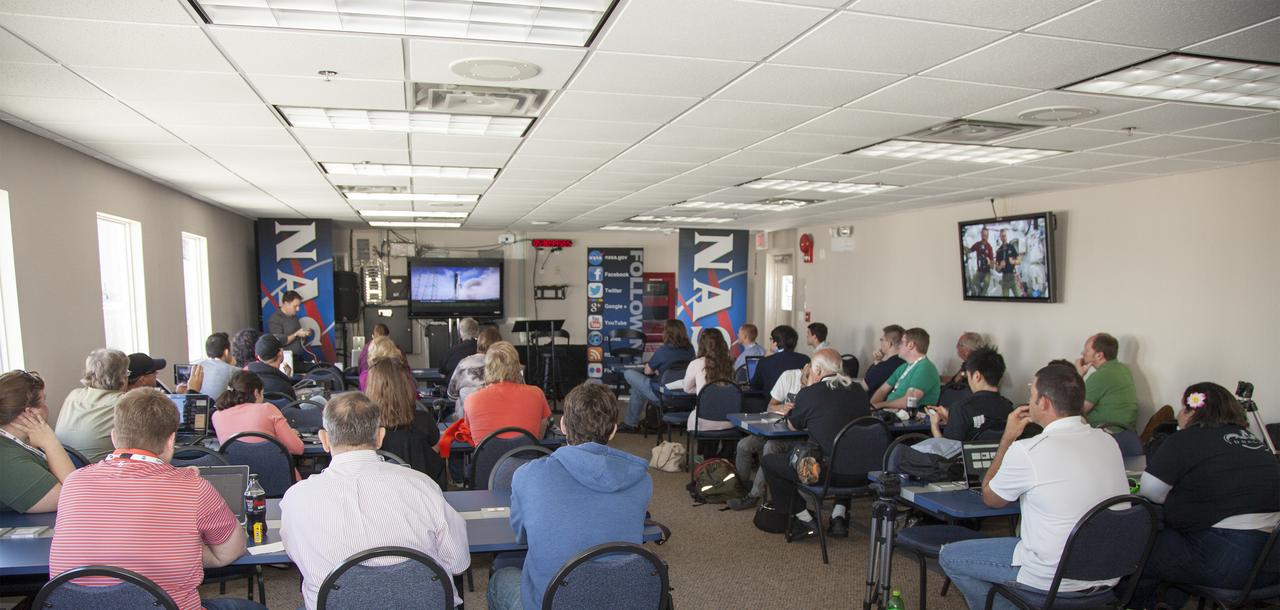
CAPE CANAVERAL, Fla. - At NASA Kennedy Space Center’s Press Site annex building in Florida, social media followers watch a movie titled, “Building Momentum,” during NASA Social media activities focused on the SpaceX 2 Commercial Resupply Mission to the International Space Station. Liftoff of the SpaceX Falcon 9 rocket and Dragon spacecraft is planned for March 1, 2013, at 10:10 a.m. EST, from Space Launch Complex-40 at Cape Canaveral Air Force Station, Fla. Dragon will be making its third trip to the space station. It will carry supplies and experiments to the orbiting laboratory. The mission is the second of 12 SpaceX flights contracted by NASA to resupply the space station. For more information, visit http:__www.nasa.gov_mission_pages_station_structure_launch_spacex2-feature.html Photo credit: NASA_Frankie Martin
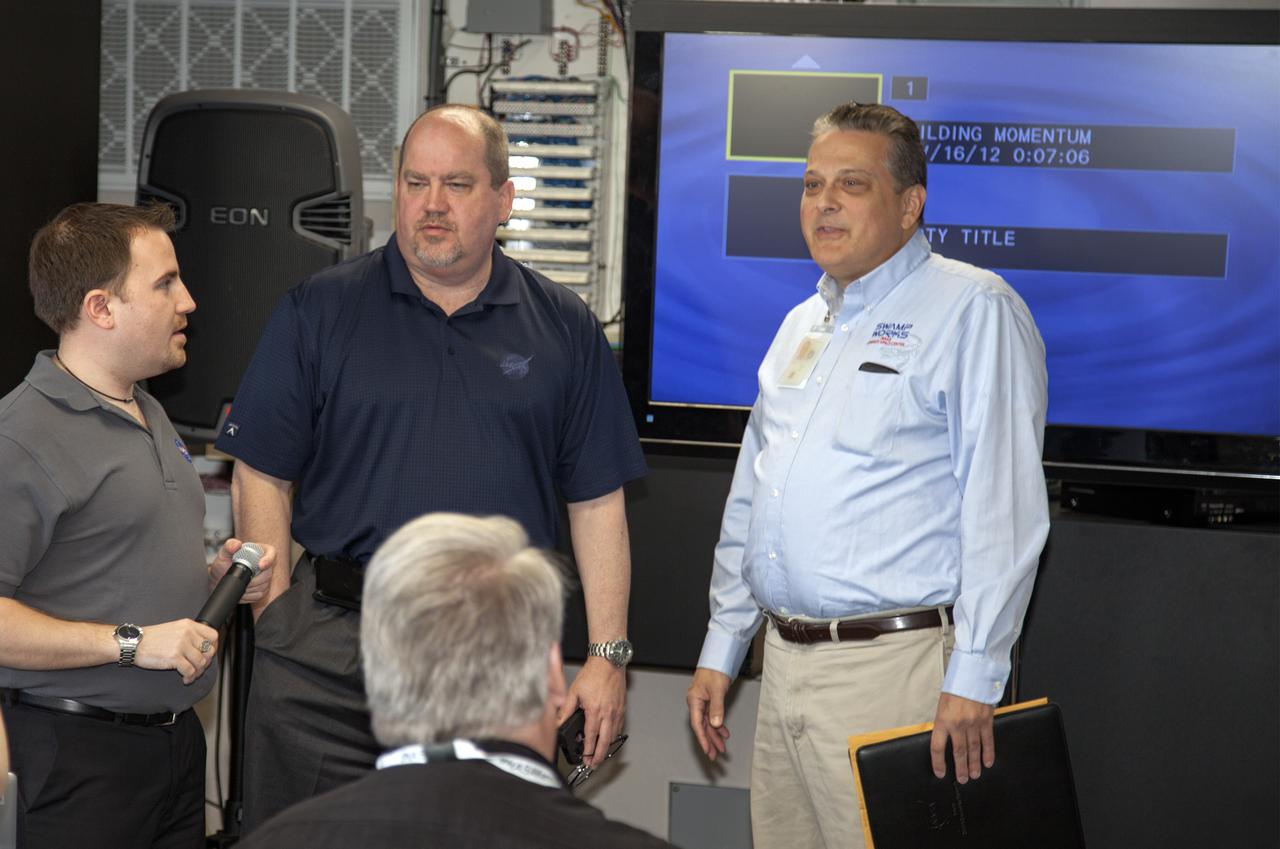
CAPE CANAVERAL, Fla. - At NASA Kennedy Space Center’s Press Site annex building in Florida, social media followers listen to NASA Social media coordinator Jason Townsend, far left, Bob Jacobs, NASA Deputy Associate Administrator for Communications, and Jack Fox, chief of the Surface Systems Office in Kennedy’s Engineering and Technology Directorate, describe the SpaceX 2 Commercial Resupply Mission to the International Space Station. Liftoff of the SpaceX Falcon 9 rocket and Dragon spacecraft is planned for March 1, 2013, at 10:10 a.m. EST, from Space Launch Complex-40 at Cape Canaveral Air Force Station, Fla. Dragon will be making its third trip to the space station. It will carry supplies and experiments to the orbiting laboratory. The mission is the second of 12 SpaceX flights contracted by NASA to resupply the space station. For more information, visit http:__www.nasa.gov_mission_pages_station_structure_launch_spacex2-feature.html Photo credit: NASA_Frankie Martin
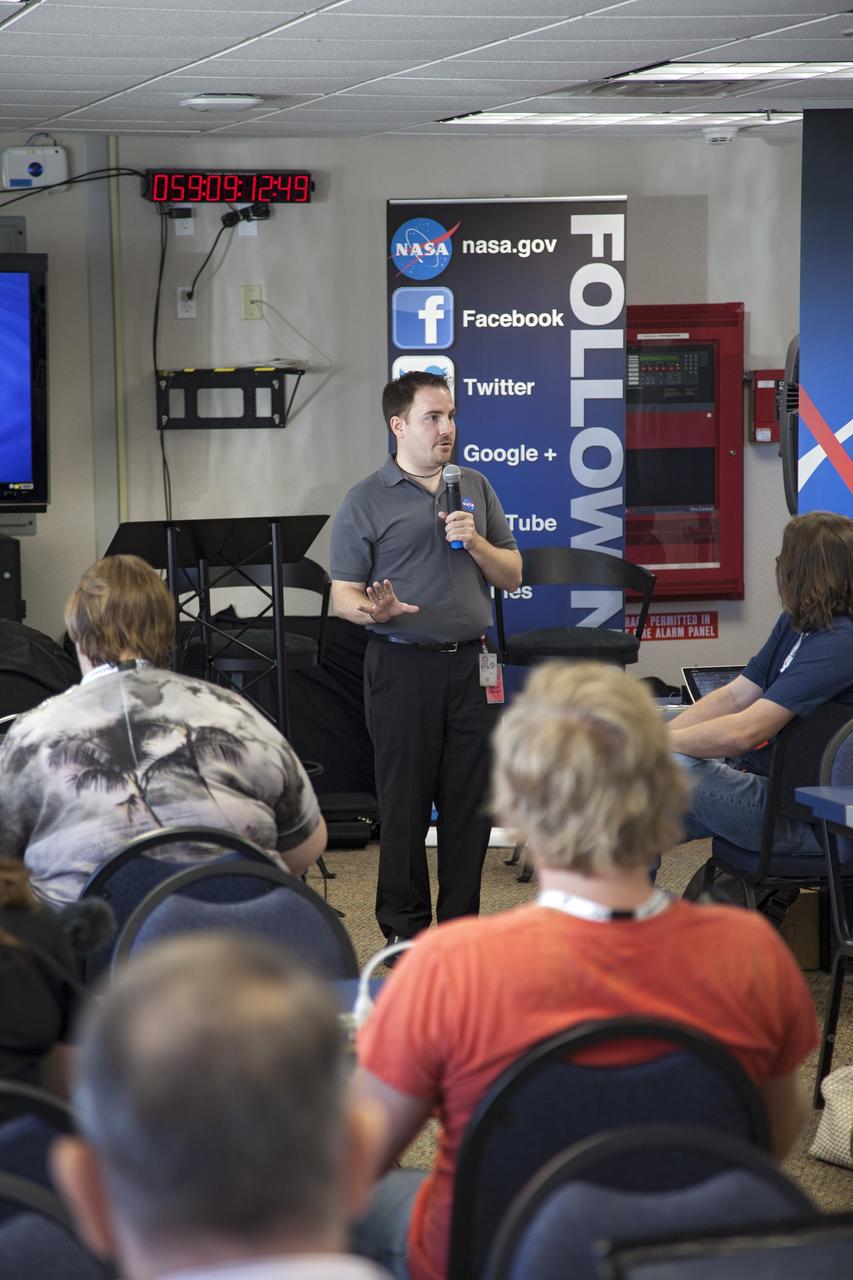
CAPE CANAVERAL, Fla. - At NASA’s Kennedy Space Center in Florida, NASA Social media coordinator Jason Townsend describes the SpaceX 2 Commercial Resupply Mission to the International Space Station to social media followers at the Kennedy Press Site annex building. Liftoff of the SpaceX Falcon 9 rocket and Dragon spacecraft is planned for March 1, 2013, at 10:10 a.m. EST, from Space Launch Complex-40 at Cape Canaveral Air Force Station, Fla. Dragon will be making its third trip to the space station. It will carry supplies and experiments to the orbiting laboratory. The mission is the second of 12 SpaceX flights contracted by NASA to resupply the space station. For more information, visit http://www.nasa.gov/mission_pages/station/structure/launch/spacex2-feature.html Photo credit: NASA/Frankie Martin
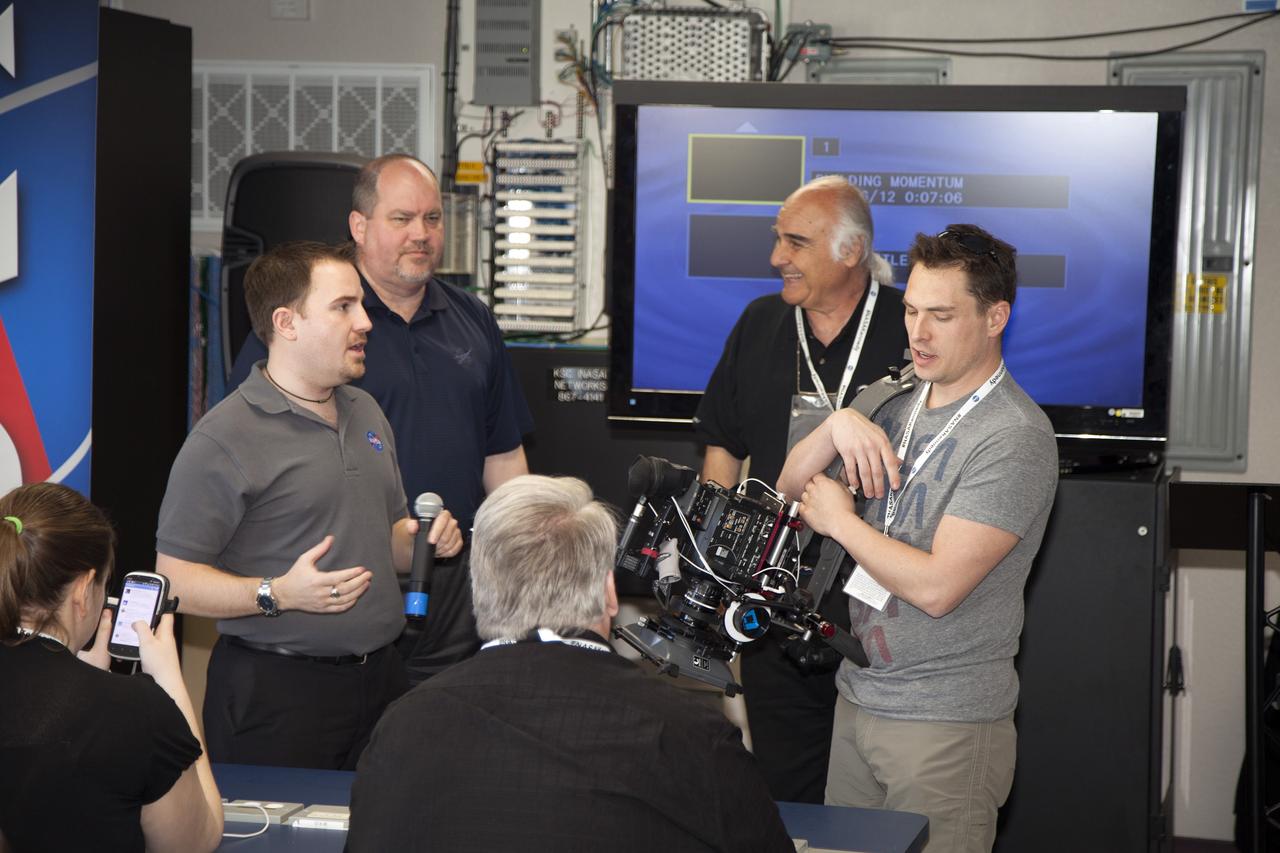
CAPE CANAVERAL, Fla. - At NASA’s Kennedy Space Center in Florida, social media followers, at right, listen to NASA Social media coordinator Jason Townsend, far left, describe the SpaceX 2 Commercial Resupply Mission to the International Space Station. Standing next to Townsend, is Bob Jacobs, NASA Deputy Associate Administrator for Communications. Liftoff of the SpaceX Falcon 9 rocket and Dragon spacecraft is planned for March 1, 2013, at 10:10 a.m. EST, from Space Launch Complex-40 at Cape Canaveral Air Force Station, Fla. Dragon will be making its third trip to the space station. It will carry supplies and experiments to the orbiting laboratory. The mission is the second of 12 SpaceX flights contracted by NASA to resupply the space station. For more information, visit http://www.nasa.gov/mission_pages/station/structure/launch/spacex2-feature.html Photo credit: NASA/Frankie Martin
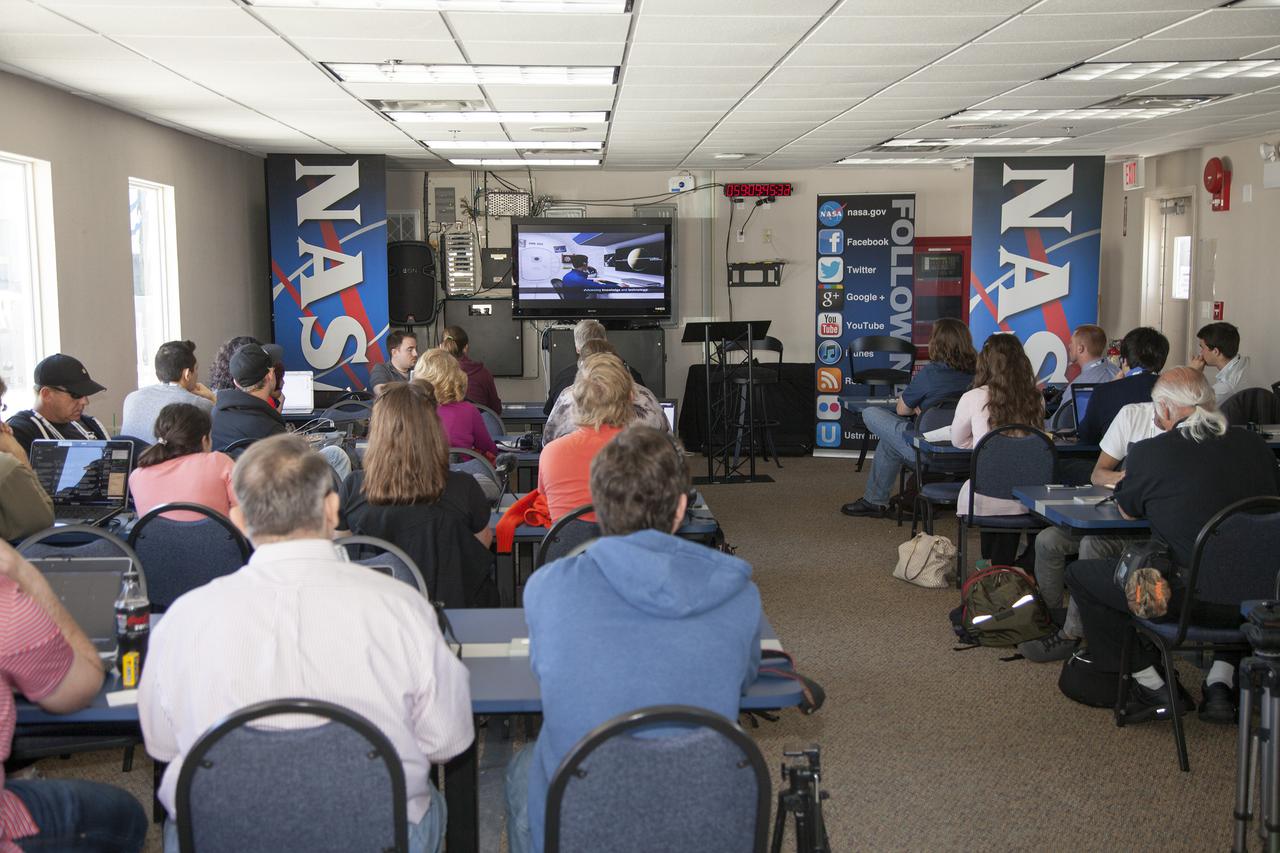
CAPE CANAVERAL, Fla. - At NASA Kennedy Space Center’s Press Site annex building in Florida, social media followers watch a movie titled, “Building Momentum,” during NASA Social media activities focused on the SpaceX 2 Commercial Resupply Mission to the International Space Station. Liftoff of the SpaceX Falcon 9 rocket and Dragon spacecraft is planned for March 1, 2013, at 10:10 a.m. EST, from Space Launch Complex-40 at Cape Canaveral Air Force Station, Fla. Dragon will be making its third trip to the space station. It will carry supplies and experiments to the orbiting laboratory. The mission is the second of 12 SpaceX flights contracted by NASA to resupply the space station. For more information, visit http:__www.nasa.gov_mission_pages_station_structure_launch_spacex2-feature.html Photo credit: NASA_Frankie Martin
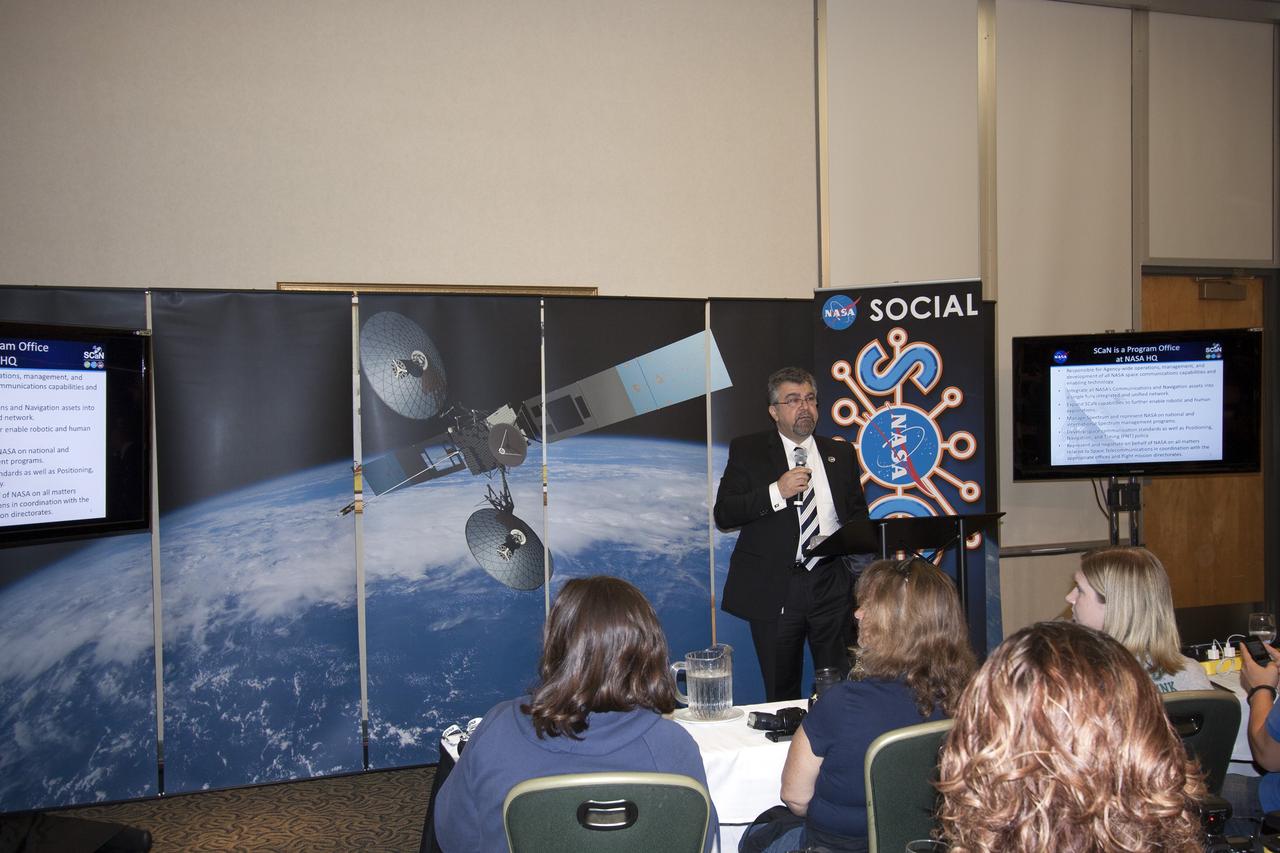
CAPE CANAVERAL, Fla. -- At NASA's Kennedy Space Center in Florida, Badri Younes, NASA deputy associate administrator for Space Communications and Navigation, or SCaN, addresses agency social media followers on the first day of activities of a NASA Social revolving around NASA's Tracking and Data Relay Satellite-K mission. NASA Socials are in-person meetings for people who engage with the agency through Twitter, Facebook, Google+ and other social networks. The satellite, known as TDRS-K, is set to launch at 8:48 p.m. EST on Jan. 30 aboard a United Launch Alliance Atlas V rocket from Space Launch Complex 41 on nearby Cape Canaveral Air Force Station. About 50 followers were selected to participate in the TDRS-K prelaunch and launch activities and share them with their own fan base. The TDRS-K spacecraft is part of the next-generation series in the Tracking and Data Relay Satellite System, a constellation of space-based communication satellites providing tracking, telemetry, command and high-bandwidth data return services. For more information, visit http://www.nasa.gov/mission_pages/tdrs/index.html. Photo credit: NASA/Jim Grossmann
CAPE CANAVERAL, Fla. -- At NASA's Kennedy Space Center in Florida, Michael Woltman, senior vehicle systems engineer for NASA's Launch Services Program, addresses agency social media followers on the first day of activities of a NASA Social revolving around NASA's Tracking and Data Relay Satellite-K mission. NASA Socials are in-person meetings for people who engage with the agency through Twitter, Facebook, Google+ and other social networks. The satellite, known as TDRS-K, is set to launch at 8:48 p.m. EST on Jan. 30 aboard a United Launch Alliance Atlas V rocket from Space Launch Complex 41 on nearby Cape Canaveral Air Force Station. About 50 followers were selected to participate in the TDRS-K prelaunch and launch activities and share them with their own fan base. The TDRS-K spacecraft is part of the next-generation series in the Tracking and Data Relay Satellite System, a constellation of space-based communication satellites providing tracking, telemetry, command and high-bandwidth data return services. For more information, visit http://www.nasa.gov/mission_pages/tdrs/index.html. Photo credit: NASA/Jim Grossmann
CAPE CANAVERAL, Fla. -- At NASA's Kennedy Space Center in Florida, agency social media followers prepare for the first day of activities of a NASA Social revolving around NASA's Tracking and Data Relay Satellite-K mission. NASA Socials are in-person meetings for people who engage with the agency through Twitter, Facebook, Google+ and other social networks. The satellite, known as TDRS-K, is set to launch at 8:48 p.m. EST on Jan. 30 aboard a United Launch Alliance Atlas V rocket from Space Launch Complex 41 on nearby Cape Canaveral Air Force Station. About 50 followers were selected to participate in the TDRS-K prelaunch and launch activities and share them with their own fan base. The TDRS-K spacecraft is part of the next-generation series in the Tracking and Data Relay Satellite System, a constellation of space-based communication satellites providing tracking, telemetry, command and high-bandwidth data return services. For more information, visit http://www.nasa.gov/mission_pages/tdrs/index.html. Photo credit: NASA/Jim Grossmann
CAPE CANAVERAL, Fla. -- At NASA's Kennedy Space Center in Florida, Jeff Gramling, project manager for NASA's Tracking and Data Relay Satellite-K, takes a question from an agency social media follower participating in the first day of activities of a NASA Social revolving around the satellite's mission. NASA Socials are in-person meetings for people who engage with the agency through Twitter, Facebook, Google+ and other social networks. The satellite, known as TDRS-K, is set to launch at 8:48 p.m. EST on Jan. 30 aboard a United Launch Alliance Atlas V rocket from Space Launch Complex 41 on nearby Cape Canaveral Air Force Station. About 50 followers were selected to participate in the TDRS-K prelaunch and launch activities and share them with their own fan base. The TDRS-K spacecraft is part of the next-generation series in the Tracking and Data Relay Satellite System, a constellation of space-based communication satellites providing tracking, telemetry, command and high-bandwidth data return services. For more information, visit http:__www.nasa.gov_mission_pages_tdrs_index.html. Photo credit: NASA_Jim Grossmann
CAPE CANAVERAL, Fla. -- At NASA's Kennedy Space Center in Florida, Nancy Bray of NASA Public Affairs welcomes agency social media followers to the first day of activities of a NASA Social revolving around NASA's Tracking and Data Relay Satellite-K mission. NASA Socials are in-person meetings for people who engage with the agency through Twitter, Facebook, Google+ and other social networks. The satellite, known as TDRS-K, is set to launch at 8:48 p.m. EST on Jan. 30 aboard a United Launch Alliance Atlas V rocket from Space Launch Complex 41 on nearby Cape Canaveral Air Force Station. About 50 followers were selected to participate in the TDRS-K prelaunch and launch activities and share them with their own fan base. The TDRS-K spacecraft is part of the next-generation series in the Tracking and Data Relay Satellite System, a constellation of space-based communication satellites providing tracking, telemetry, command and high-bandwidth data return services. For more information, visit http://www.nasa.gov/mission_pages/tdrs/index.html. Photo credit: NASA/Jim Grossmann
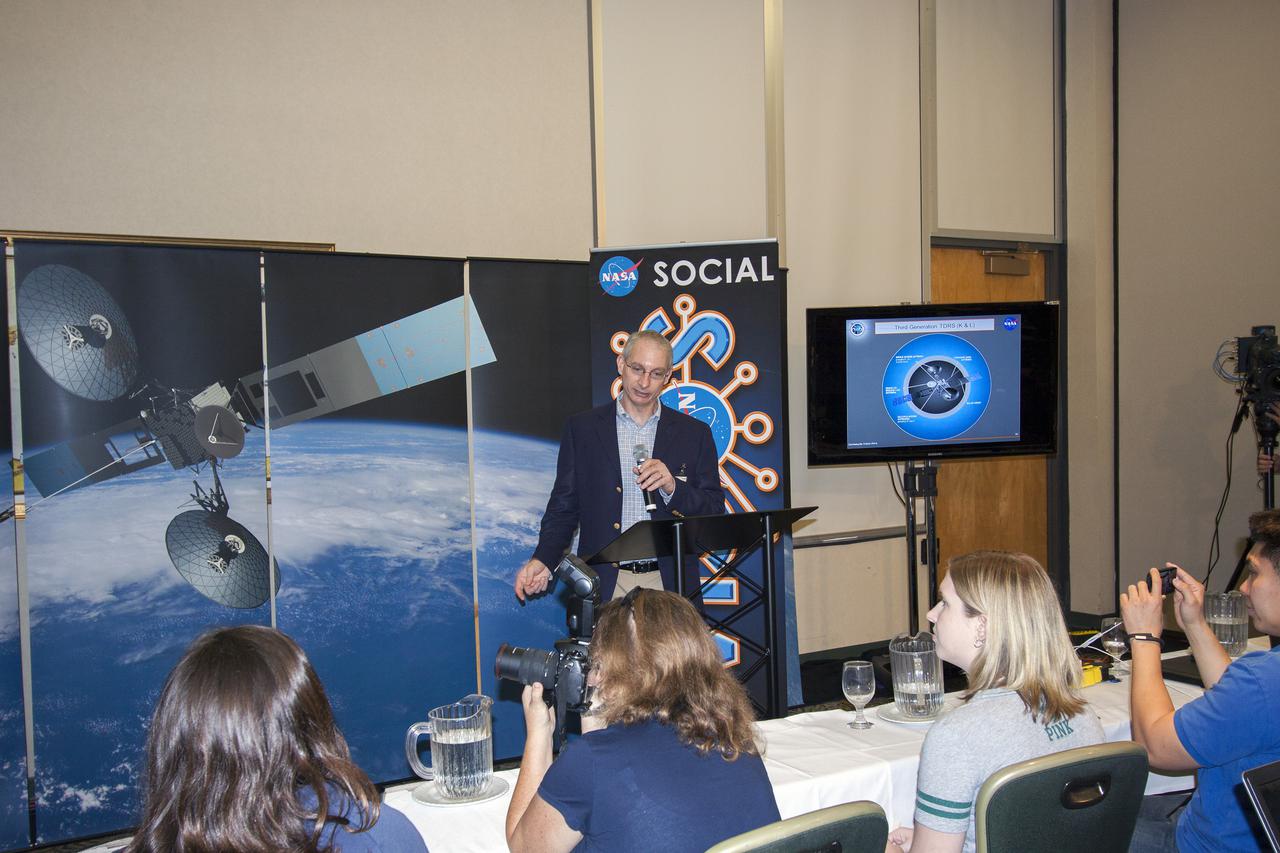
CAPE CANAVERAL, Fla. -- At NASA's Kennedy Space Center in Florida, Jeff Gramling, project manager for NASA's Tracking and Data Relay Satellite-K, addresses agency social media followers on the first day of activities of a NASA Social revolving around the satellite's mission. NASA Socials are in-person meetings for people who engage with the agency through Twitter, Facebook, Google+ and other social networks. The satellite, known as TDRS-K, is set to launch at 8:48 p.m. EST on Jan. 30 aboard a United Launch Alliance Atlas V rocket from Space Launch Complex 41 on nearby Cape Canaveral Air Force Station. About 50 followers were selected to participate in the TDRS-K prelaunch and launch activities and share them with their own fan base. The TDRS-K spacecraft is part of the next-generation series in the Tracking and Data Relay Satellite System, a constellation of space-based communication satellites providing tracking, telemetry, command and high-bandwidth data return services. For more information, visit http:__www.nasa.gov_mission_pages_tdrs_index.html. Photo credit: NASA_Jim Grossmann
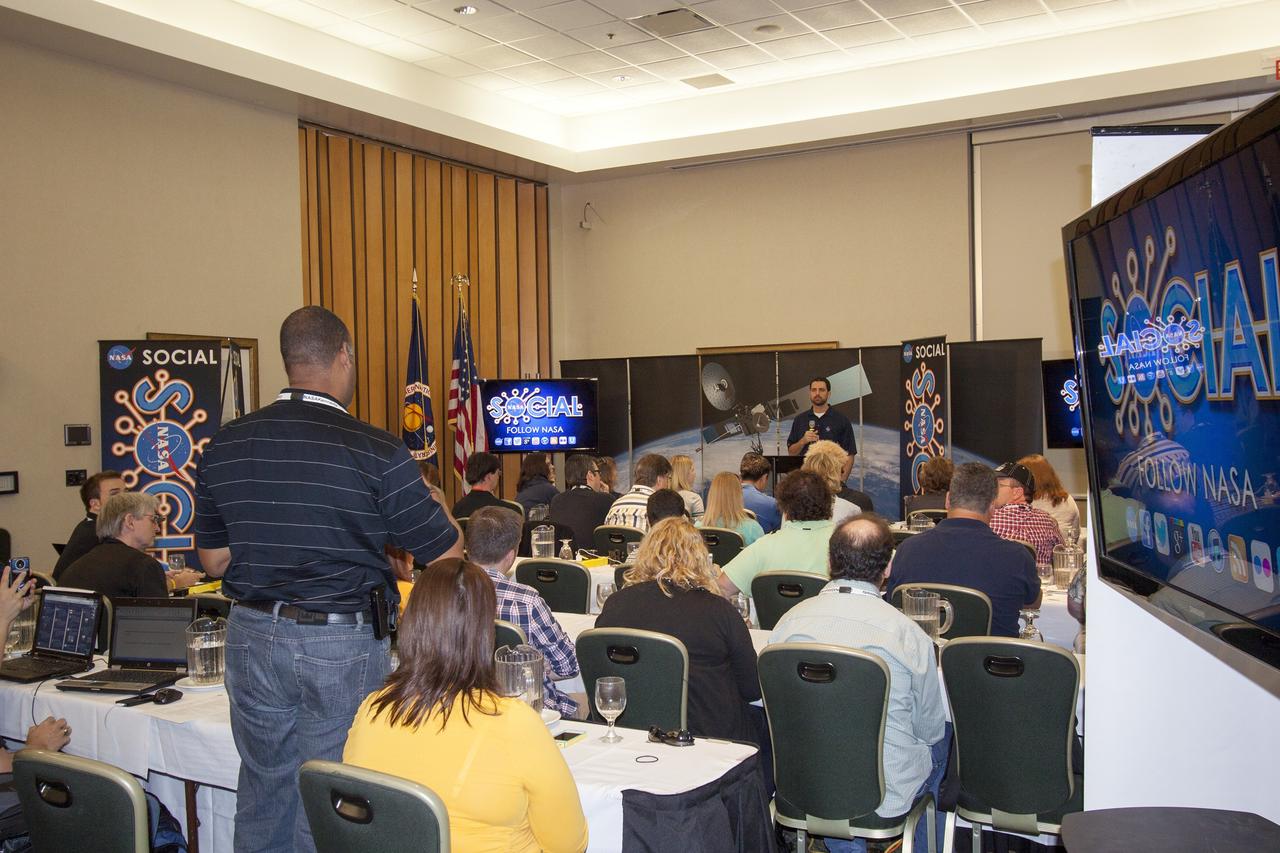
CAPE CANAVERAL, Fla. -- At NASA's Kennedy Space Center in Florida, Jeremy Parsons, technical manager for operations of NASA's Ground Systems Development and Operations Program, takes a question from an agency social media follower participating in the first day of activities of a NASA Social revolving around NASA's Tracking and Data Relay Satellite-K mission. NASA Socials are in-person meetings for people who engage with the agency through Twitter, Facebook, Google+ and other social networks. The satellite, known as TDRS-K, is set to launch at 8:48 p.m. EST on Jan. 30 aboard a United Launch Alliance Atlas V rocket from Space Launch Complex 41 on nearby Cape Canaveral Air Force Station. About 50 followers were selected to participate in the TDRS-K prelaunch and launch activities and share them with their own fan base. The TDRS-K spacecraft is part of the next-generation series in the Tracking and Data Relay Satellite System, a constellation of space-based communication satellites providing tracking, telemetry, command and high-bandwidth data return services. For more information, visit http://www.nasa.gov/mission_pages/tdrs/index.html. Photo credit: NASA/Jim Grossmann

CAPE CANAVERAL, Fla. -- At NASA's Kennedy Space Center in Florida, Gifford Moak, deputy project manager of resources for NASA's Tracking and Data Relay Satellite-K, addresses agency social media followers on the first day of activities of a NASA Social revolving around NASA's Tracking and Data Relay Satellite-K mission. NASA Socials are in-person meetings for people who engage with the agency through Twitter, Facebook, Google+ and other social networks. The satellite, known as TDRS-K, is set to launch at 8:48 p.m. EST on Jan. 30 aboard a United Launch Alliance Atlas V rocket from Space Launch Complex 41 on nearby Cape Canaveral Air Force Station. About 50 followers were selected to participate in the TDRS-K prelaunch and launch activities and share them with their own fan base. The TDRS-K spacecraft is part of the next-generation series in the Tracking and Data Relay Satellite System, a constellation of space-based communication satellites providing tracking, telemetry, command and high-bandwidth data return services. For more information, visit http:__www.nasa.gov_mission_pages_tdrs_index.html. Photo credit: NASA_Jim Grossmann
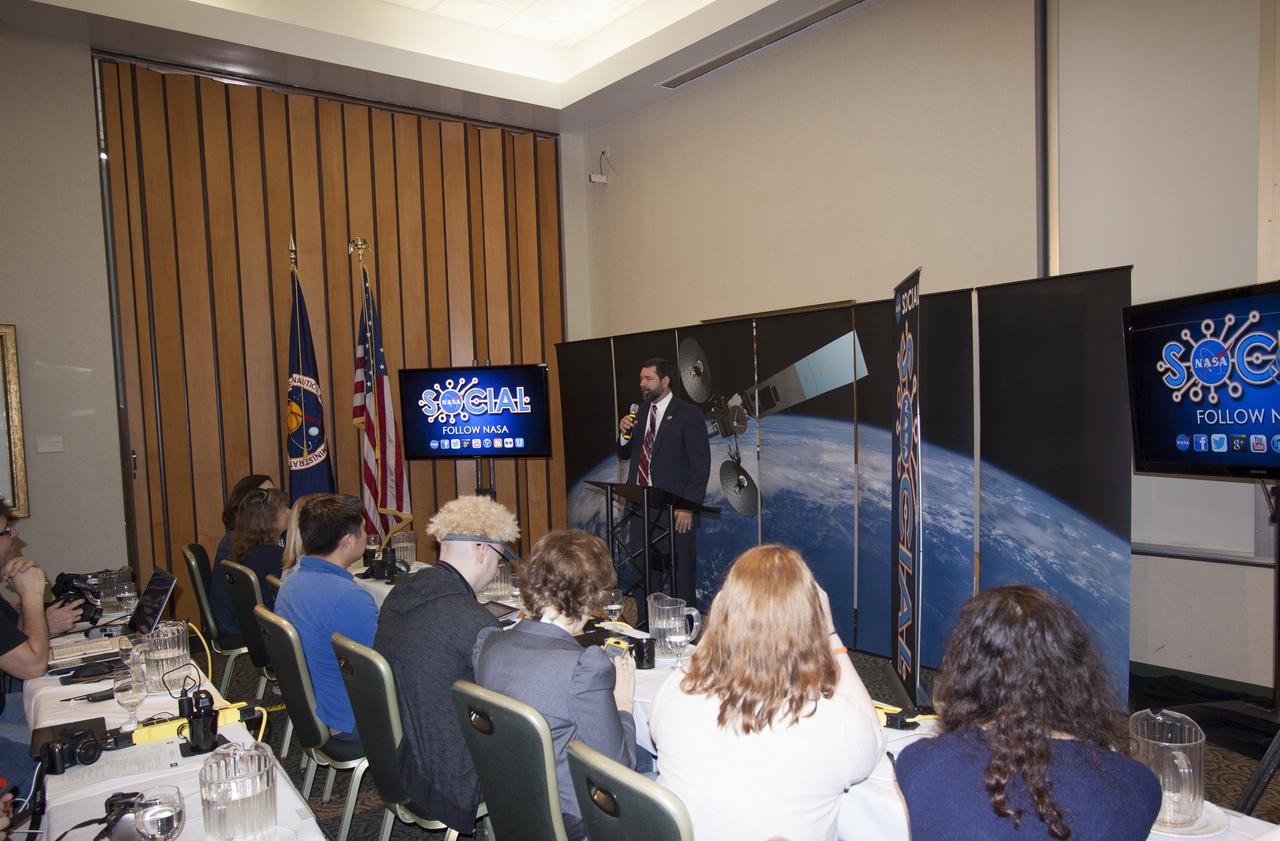
CAPE CANAVERAL, Fla. -- At NASA's Kennedy Space Center in Florida, Greg Williams, deputy associate administrator of NASA's Human Exploration and Operations Mission Directorate, addresses agency social media followers on the first day of activities of a NASA Social revolving around NASA's Tracking and Data Relay Satellite-K mission. NASA Socials are in-person meetings for people who engage with the agency through Twitter, Facebook, Google+ and other social networks. The satellite, known as TDRS-K, is set to launch at 8:48 p.m. EST on Jan. 30 aboard a United Launch Alliance Atlas V rocket from Space Launch Complex 41 on nearby Cape Canaveral Air Force Station. About 50 followers were selected to participate in the TDRS-K prelaunch and launch activities and share them with their own fan base. The TDRS-K spacecraft is part of the next-generation series in the Tracking and Data Relay Satellite System, a constellation of space-based communication satellites providing tracking, telemetry, command and high-bandwidth data return services. For more information, visit http://www.nasa.gov/mission_pages/tdrs/index.html. Photo credit: NASA/Jim Grossmann
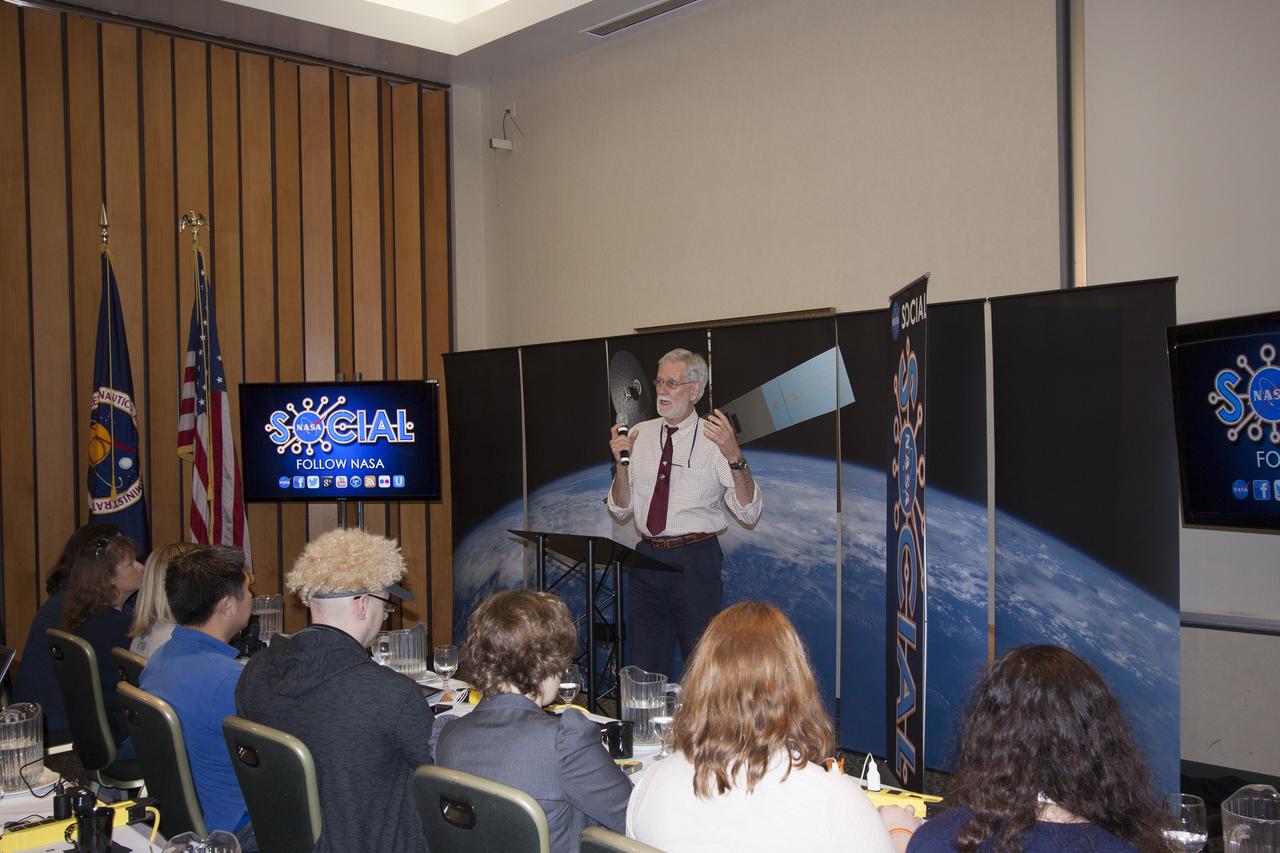
CAPE CANAVERAL, Fla. -- At NASA's Kennedy Space Center in Florida, Dr. Compton Tucker, senior scientist from NASA's Goddard Space Flight Center, addresses agency social media followers on the first day of activities of a NASA Social revolving around NASA's Tracking and Data Relay Satellite-K mission. NASA Socials are in-person meetings for people who engage with the agency through Twitter, Facebook, Google+ and other social networks. The satellite, known as TDRS-K, is set to launch at 8:48 p.m. EST on Jan. 30 aboard a United Launch Alliance Atlas V rocket from Space Launch Complex 41 on nearby Cape Canaveral Air Force Station. About 50 followers were selected to participate in the TDRS-K prelaunch and launch activities and share them with their own fan base. The TDRS-K spacecraft is part of the next-generation series in the Tracking and Data Relay Satellite System, a constellation of space-based communication satellites providing tracking, telemetry, command and high-bandwidth data return services. For more information, visit http://www.nasa.gov/mission_pages/tdrs/index.html. Photo credit: NASA/Jim Grossmann
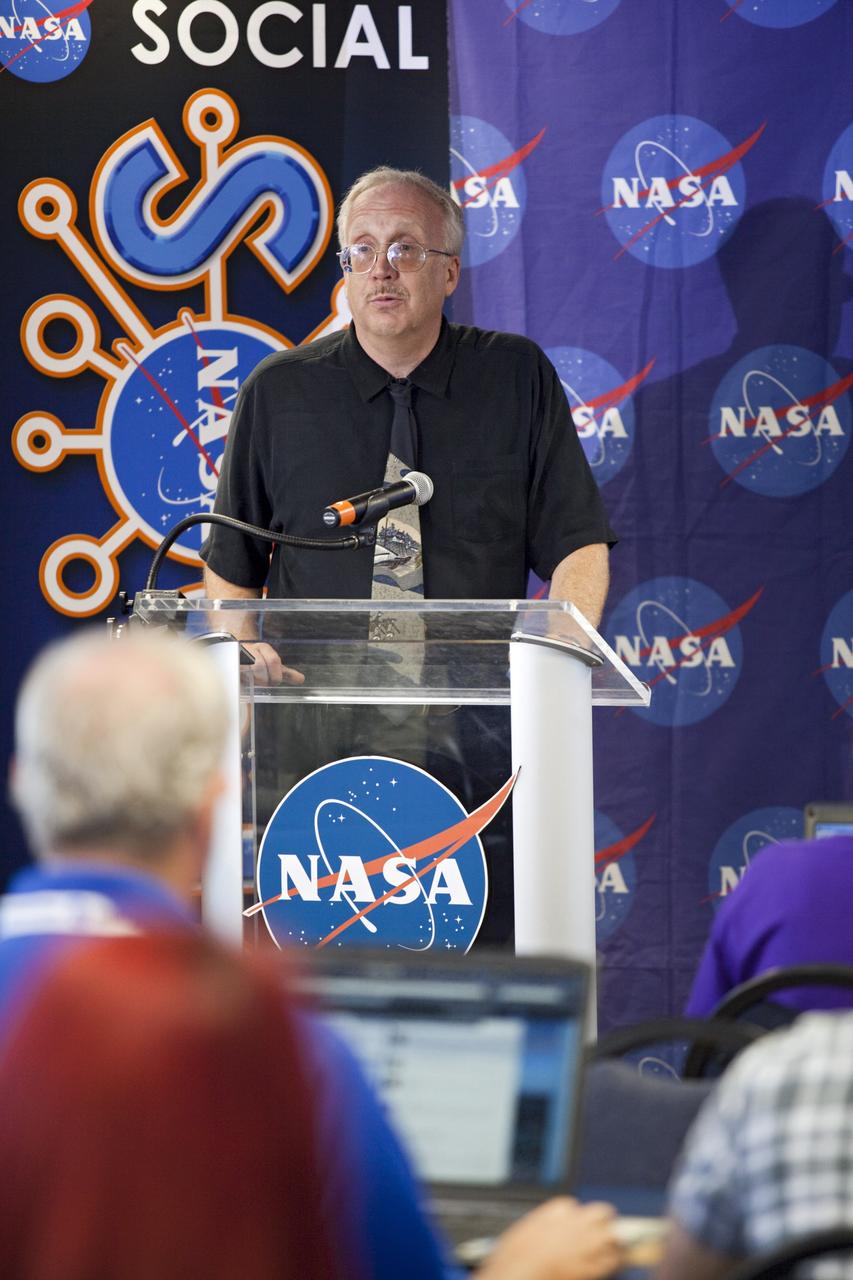
CAPE CANAVERAL, Fla. – At NASA's Kennedy Space Center in Florida, David Sibeck, NASA Living with a Star mission scientist from Goddard Space Flight Center, talks to agency social media followers during the second day of NASA Social activities revolving around NASA's Radiation Belt Storm Probes, or RBSP, mission. The probes are set to launch aboard a United Launch Alliance, or ULA, Atlas V rocket from nearby Cape Canaveral Air Force Station. About 40 followers were selected to participate in RBSP's prelaunch and launch activities. The RBSP mission will help us understand the sun’s influence on Earth and near-Earth space by studying the Earth’s radiation belts on various scales of space and time. RBSP will begin its mission of exploration of Earth’s Van Allen radiation belts and the extremes of space weather. For more information, visit http://www.nasa.gov/rbsp. Photo credit: NASA/Frankie Martin
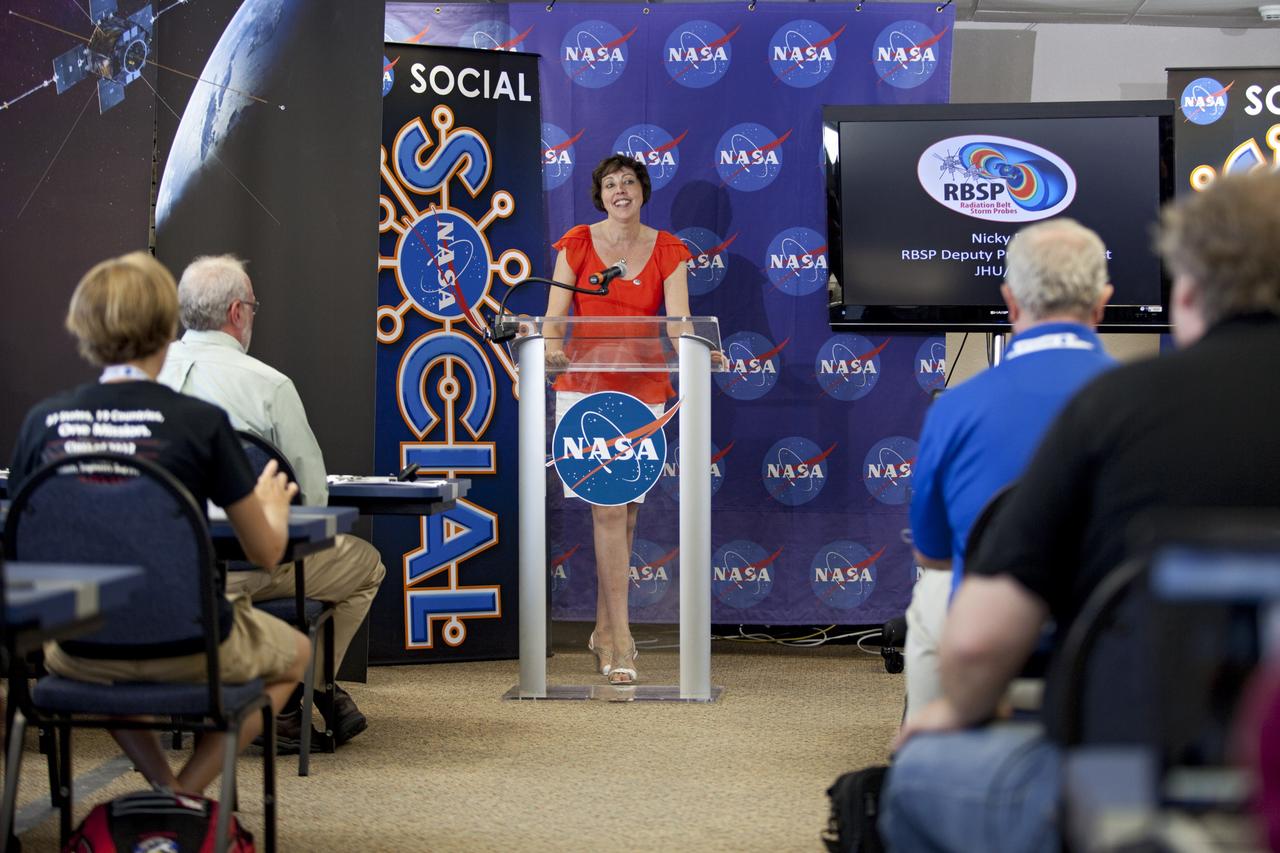
CAPE CANAVERAL, Fla. – At NASA's Kennedy Space Center in Florida, Nicky Fox, deputy project scientist of NASA's Radiation Belt Storm Probes, or RBSP, mission talks to agency social media followers during the second day of NASA Social activities. The probes are set to launch aboard a United Launch Alliance ULA Atlas V rocket from nearby Cape Canaveral Air Force Station. About 40 followers were selected to participate in RBSP's prelaunch and launch activities. The RBSP mission will help us understand the sun’s influence on Earth and near-Earth space by studying the Earth’s radiation belts on various scales of space and time. RBSP will begin its mission of exploration of Earth’s Van Allen radiation belts and the extremes of space weather. For more information, visit http://www.nasa.gov/rbsp. Photo credit: NASA/Frankie Martin
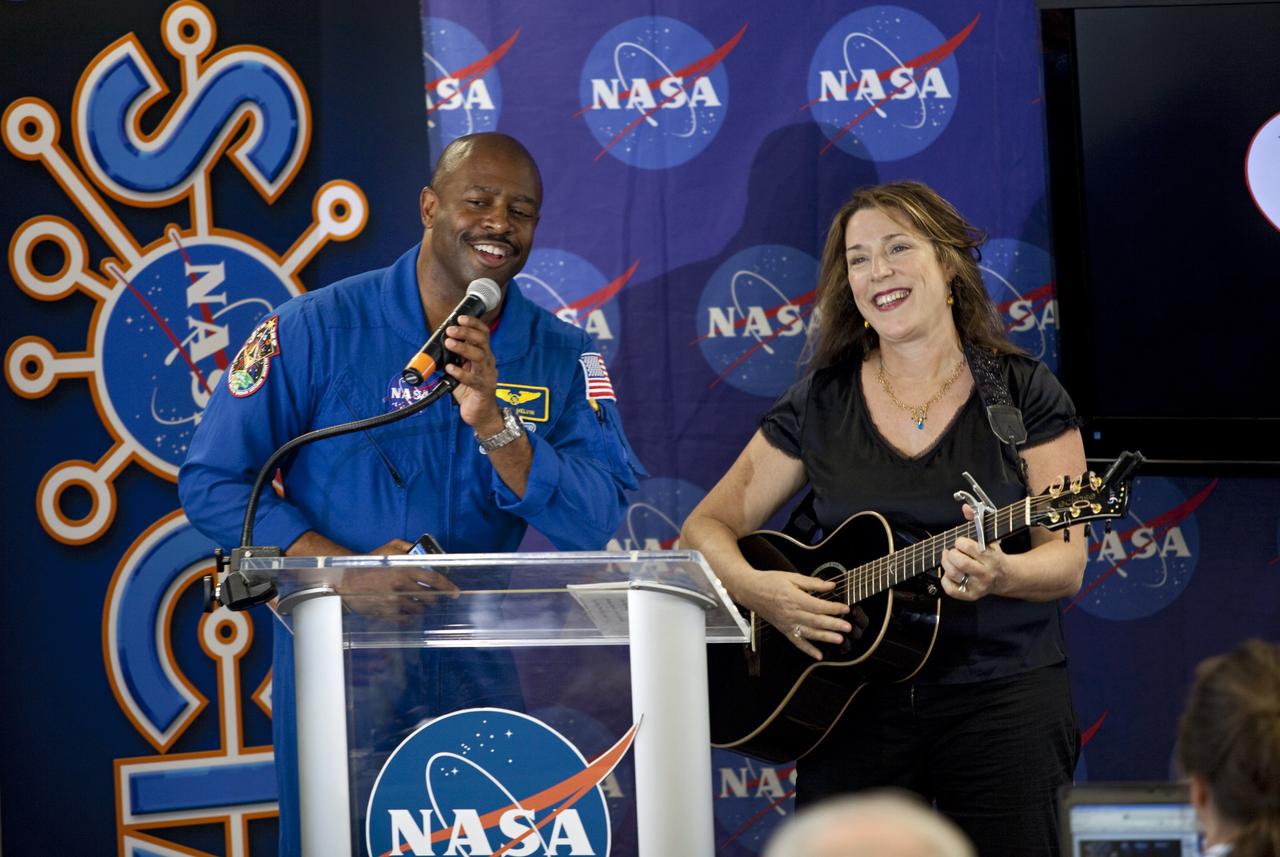
CAPE CANAVERAL, Fla. – At NASA's Kennedy Space Center in Florida, astronaut Leland Melvin, associate administrator of NASA Education, introduces performer Beth Nielson Chapman to agency social media followers during the second day of NASA Social activities revolving around NASA's Radiation Belt Storm Probes, or RBSP, mission. The probes are set to launch aboard a United Launch Alliance, or ULA, Atlas V rocket from nearby Cape Canaveral Air Force Station. About 40 followers were selected to participate in RBSP's prelaunch and launch activities. The RBSP mission will help us understand the sun’s influence on Earth and near-Earth space by studying the Earth’s radiation belts on various scales of space and time. RBSP will begin its mission of exploration of Earth’s Van Allen radiation belts and the extremes of space weather. For more information, visit http://www.nasa.gov/rbsp. Photo credit: NASA/Frankie Martin
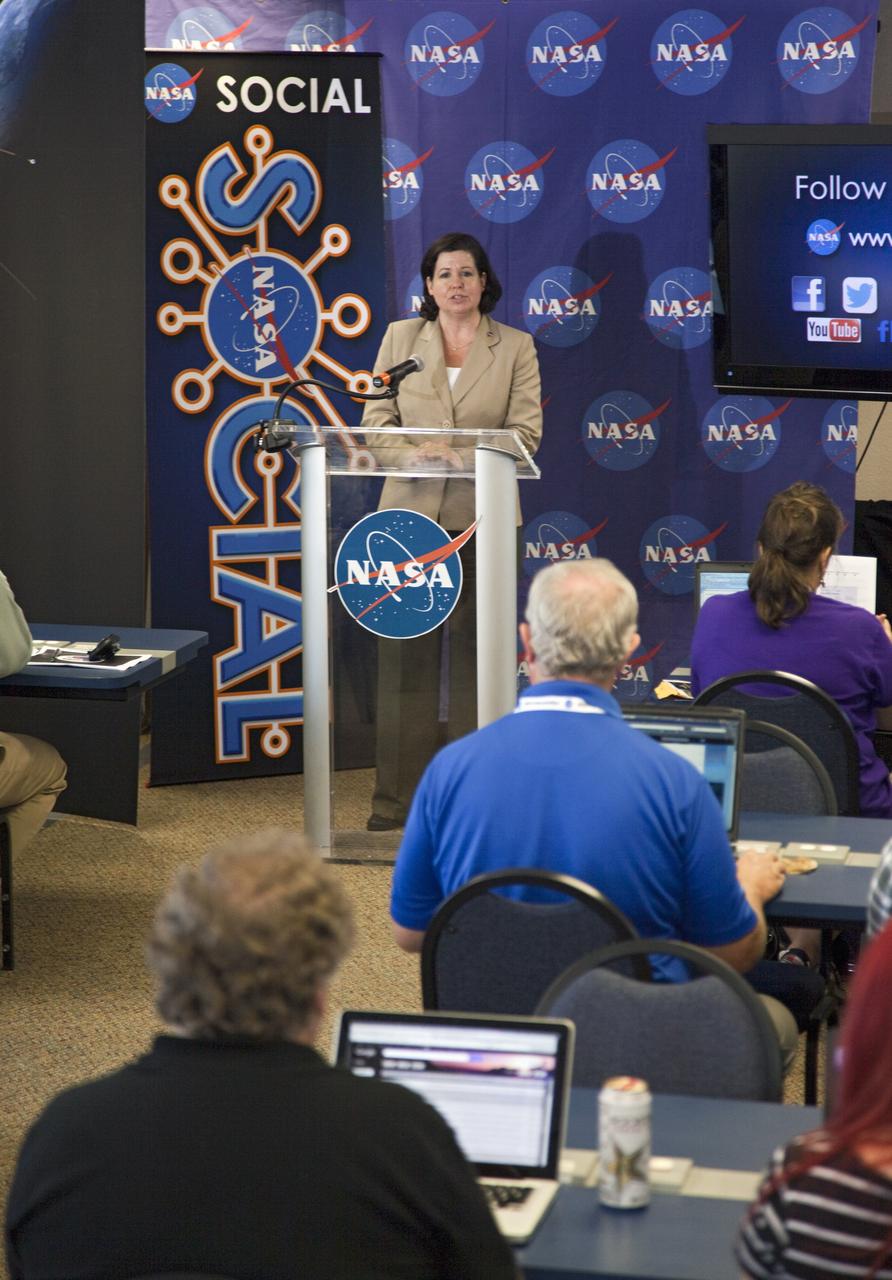
CAPE CANAVERAL, Fla. – At NASA's Kennedy Space Center in Florida, Barbara Giles, director of NASA's Science Mission Directorate Heliophysics Division, talks to agency social media followers during the second day of NASA Social activities revolving around NASA's Radiation Belt Storm Probes, or RBSP, mission. The probes are set to launch aboard a United Launch Alliance, or ULA, Atlas V rocket from nearby Cape Canaveral Air Force Station. About 40 followers were selected to participate in RBSP's prelaunch and launch activities. The RBSP mission will help us understand the sun’s influence on Earth and near-Earth space by studying the Earth’s radiation belts on various scales of space and time. RBSP will begin its mission of exploration of Earth’s Van Allen radiation belts and the extremes of space weather. For more information, visit http://www.nasa.gov/rbsp. Photo credit: NASA/Frankie Martin
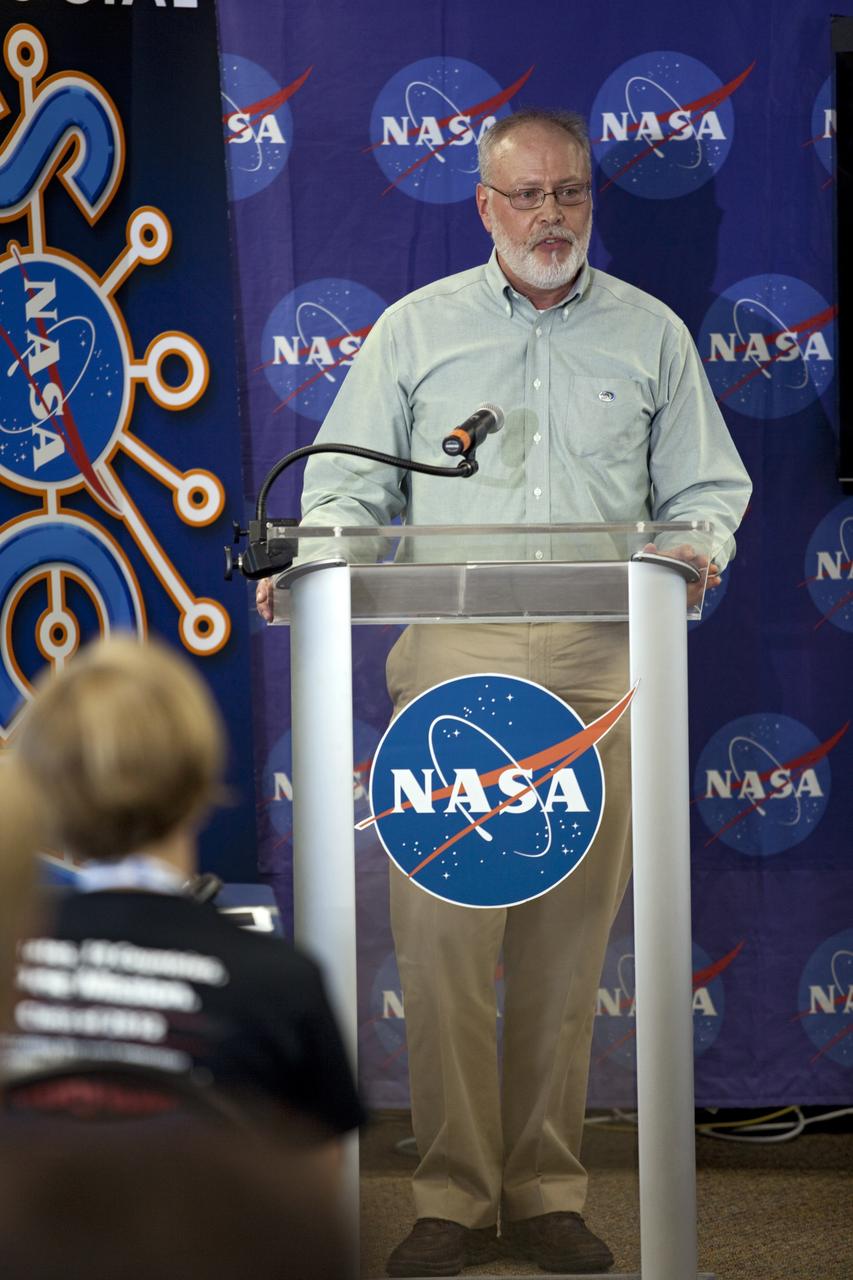
CAPE CANAVERAL, Fla. – At NASA's Kennedy Space Center in Florida, Dave "Kouch" Kusnierkiewicz, Space Department chief engineer from Johns Hopkins University's Applied Physics Laboratory, talks to agency social media followers during the second day of NASA Social activities revolving around NASA's Radiation Belt Storm Probes, or RBSP, mission. The probes are set to launch aboard a United Launch Alliance, or ULA, Atlas V rocket from nearby Cape Canaveral Air Force Station. About 40 followers were selected to participate in RBSP's prelaunch and launch activities. The RBSP mission will help us understand the sun’s influence on Earth and near-Earth space by studying the Earth’s radiation belts on various scales of space and time. RBSP will begin its mission of exploration of Earth’s Van Allen radiation belts and the extremes of space weather. For more information, visit http://www.nasa.gov/rbsp. Photo credit: NASA/Frankie Martin

CAPE CANAVERAL, Fla. – At NASA's Kennedy Space Center in Florida, astronaut Leland Melvin, associate administrator of NASA Education, talks to agency social media followers during the second day of NASA Social activities revolving around NASA's Radiation Belt Storm Probes, or RBSP, mission. The probes are set to launch aboard a United Launch Alliance, or ULA, Atlas V rocket from nearby Cape Canaveral Air Force Station. About 40 followers were selected to participate in RBSP's prelaunch and launch activities. The RBSP mission will help us understand the sun’s influence on Earth and near-Earth space by studying the Earth’s radiation belts on various scales of space and time. RBSP will begin its mission of exploration of Earth’s Van Allen radiation belts and the extremes of space weather. For more information, visit http://www.nasa.gov/rbsp. Photo credit: NASA/Frankie Martin
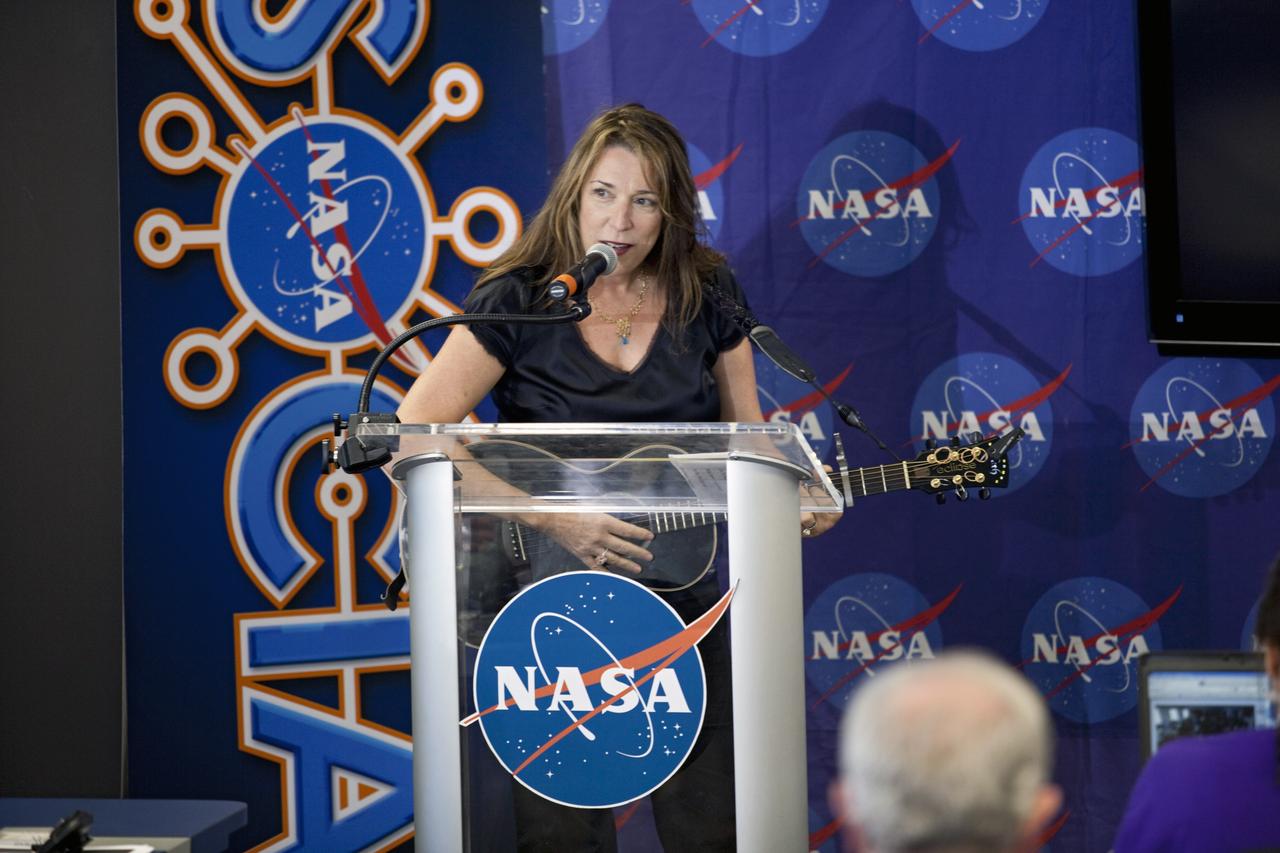
CAPE CANAVERAL, Fla. – At NASA's Kennedy Space Center in Florida, Beth Nielson Chapman performs "The Mighty Night Sky" for agency social media followers during the second day of NASA Social activities revolving around NASA's Radiation Belt Storm Probes, or RBSP, mission. The probes are set to launch aboard a United Launch Alliance, or ULA, Atlas V rocket from nearby Cape Canaveral Air Force Station. About 40 followers were selected to participate in RBSP's prelaunch and launch activities. The RBSP mission will help us understand the sun’s influence on Earth and near-Earth space by studying the Earth’s radiation belts on various scales of space and time. RBSP will begin its mission of exploration of Earth’s Van Allen radiation belts and the extremes of space weather. For more information, visit http://www.nasa.gov/rbsp. Photo credit: NASA/Frankie Martin
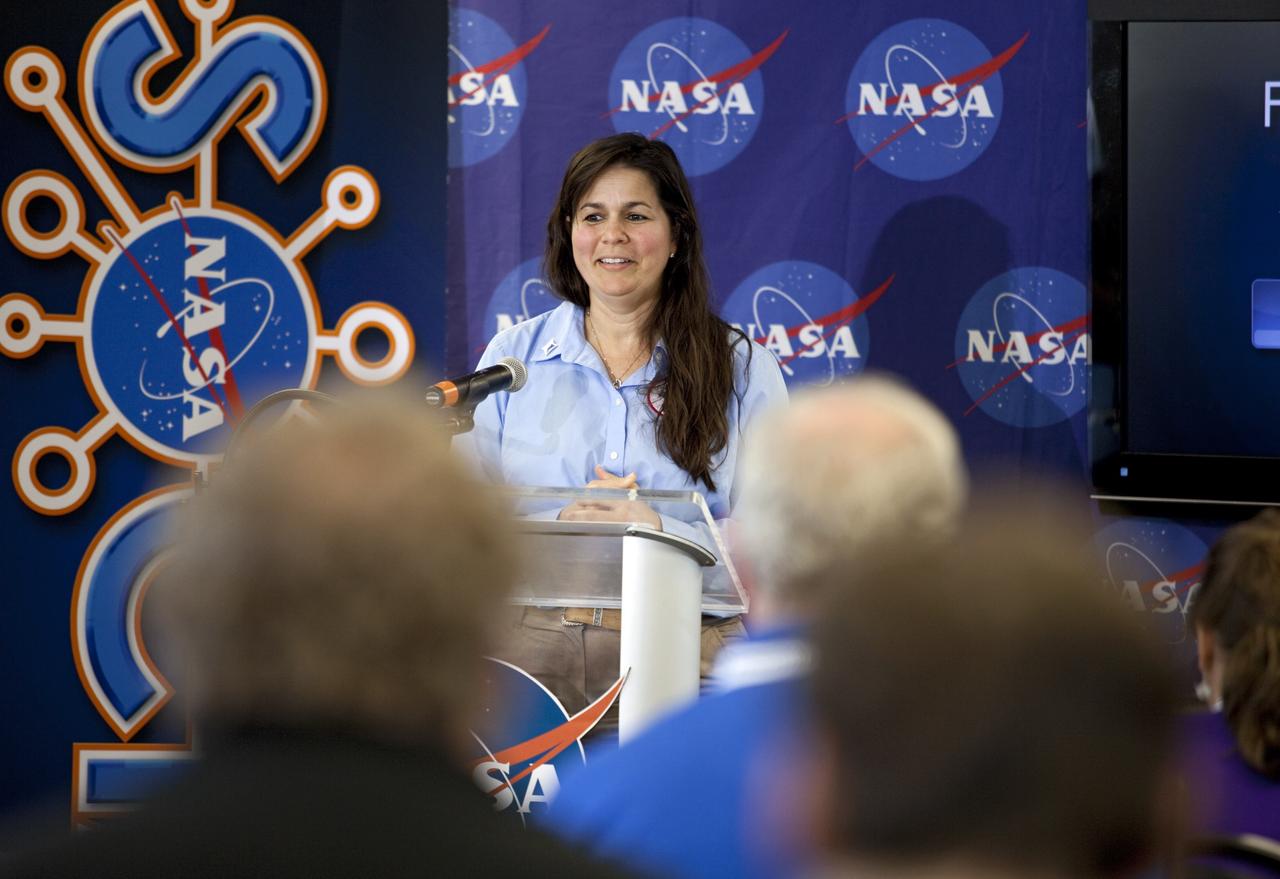
CAPE CANAVERAL, Fla. – At NASA's Kennedy Space Center in Florida, Aly Mendoza-Hill, NASA Launch Services Program mission manager, talks to agency social media followers during the second day of NASA Social activities revolving around NASA's Radiation Belt Storm Probes, or RBSP, mission. The probes are set to launch aboard a United Launch Alliance, or ULA, Atlas V rocket from nearby Cape Canaveral Air Force Station. About 40 followers were selected to participate in RBSP's prelaunch and launch activities. The RBSP mission will help us understand the sun’s influence on Earth and near-Earth space by studying the Earth’s radiation belts on various scales of space and time. RBSP will begin its mission of exploration of Earth’s Van Allen radiation belts and the extremes of space weather. For more information, visit http://www.nasa.gov/rbsp. Photo credit: NASA/Frankie Martin