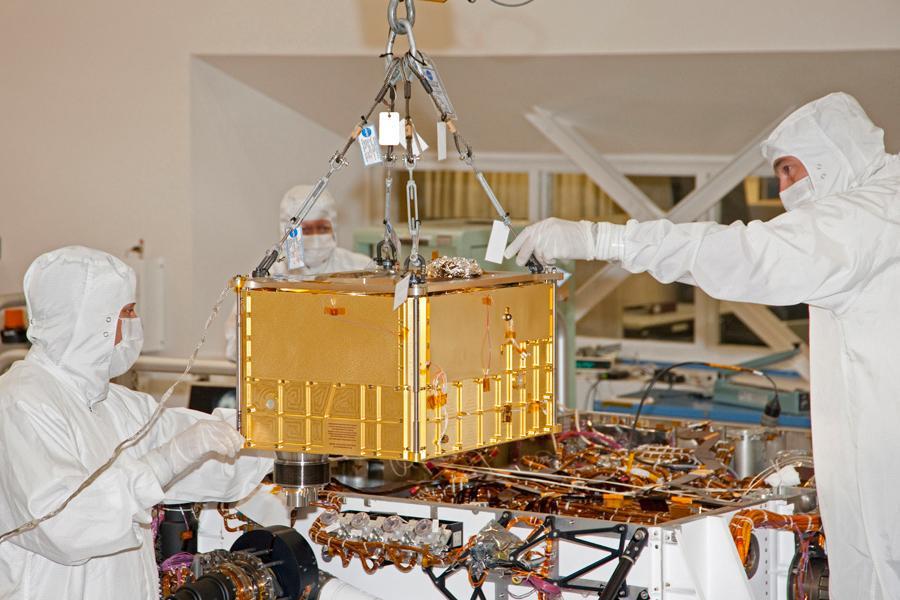
NASA Sample Analysis at Mars SAM instrument, largest of the 10 science instruments for NASA Mars Science Laboratory mission, will examine samples of Martian rocks, soil and atmosphere for information about chemicals that are important to life.
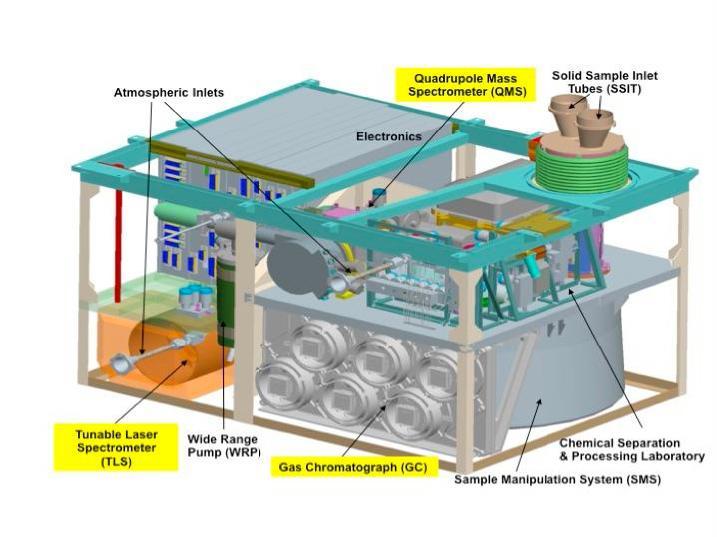
This schematic illustration for NASA Mars Science Laboratory Sample Analysis at Mars SAM instrument shows major components of the microwave-oven-size instrument, which will examine samples of Martian rocks, soil and atmosphere.
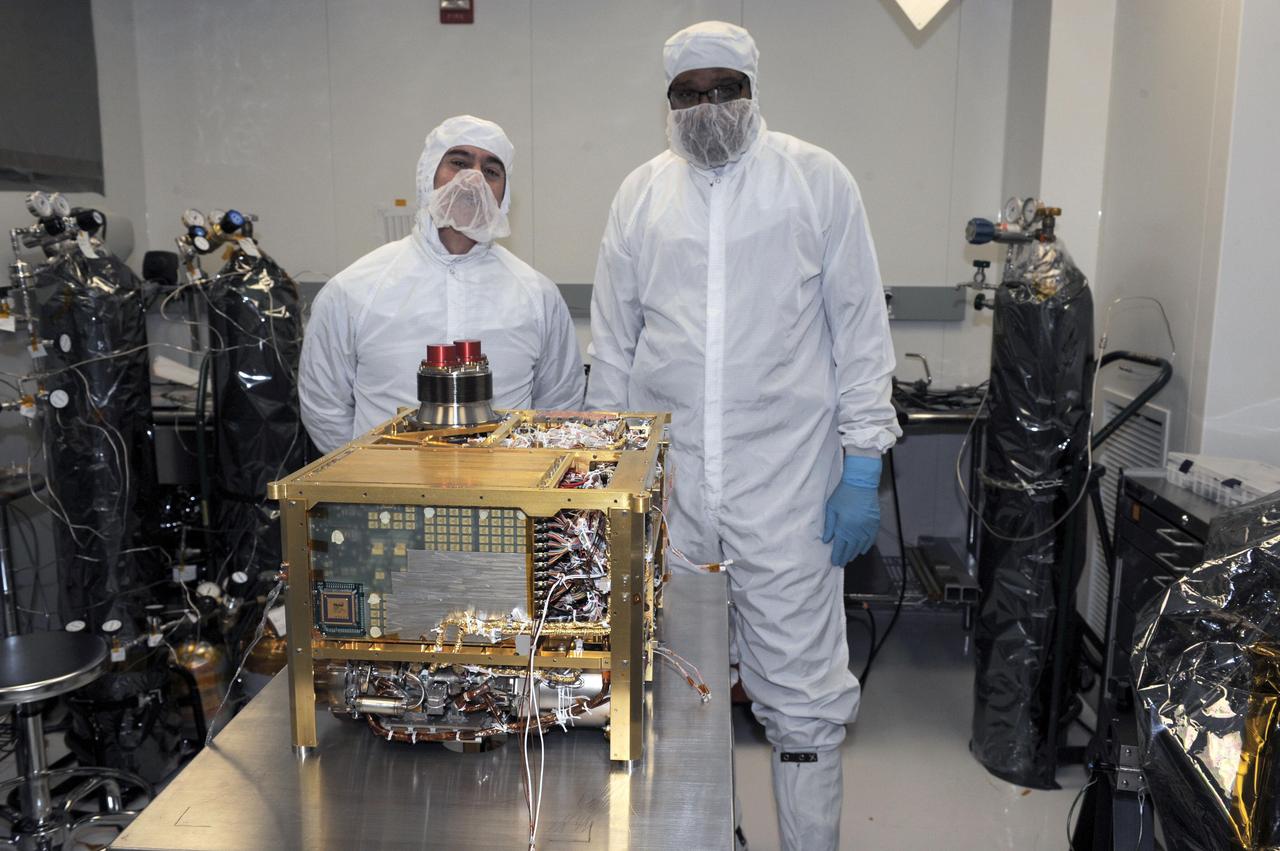
The Sample Analysis at Mars SAM instrument for NASA Mars Science Laboratory mission will study chemistry of rocks, soil and air as the mission rover, Curiosity, investigates Gale Crater on Mars.
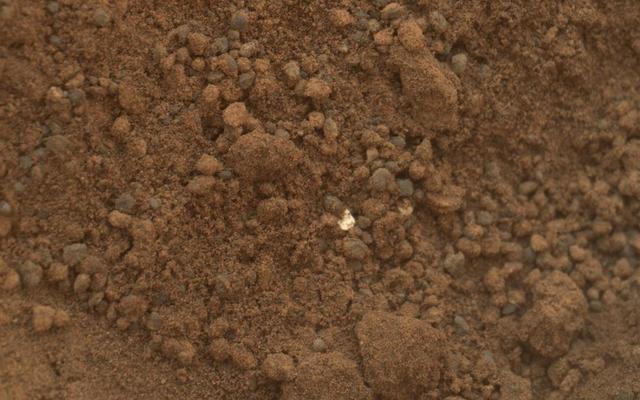
The mission science team assessed the bright particles in this scooped pit to be native Martian material rather than spacecraft debris as seen in this image from NASA Mars rover Curiosity as it collected its second scoop of Martian soil.
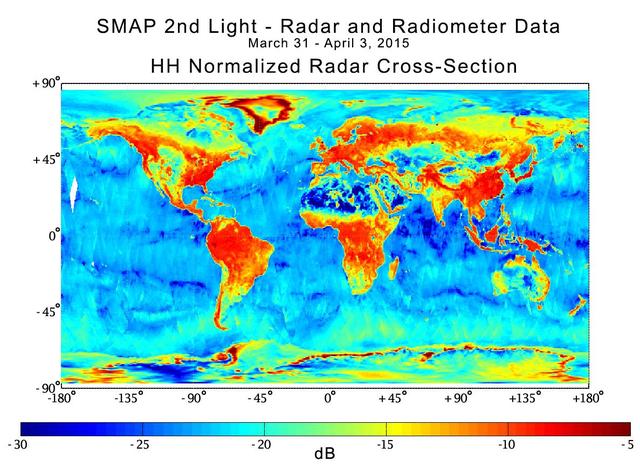
With its antenna now spinning at full speed, NASA new Soil Moisture Active Passive SMAP observatory has successfully re-tested its science instruments and generated its first global maps, a key step to beginning routine science operations in May, 2015
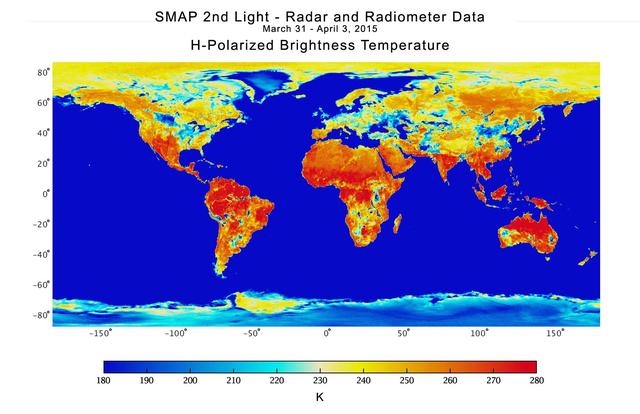
With its antenna now spinning at full speed, NASA new Soil Moisture Active Passive SMAP observatory has successfully re-tested its science instruments and generated its first global maps, a key step to beginning routine science operations in May, 2015
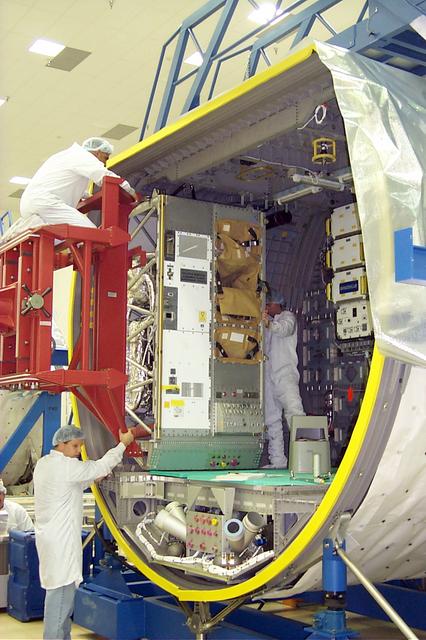
Interior of a Spacehab module showing the type of rack mounting that will be used, and crew working space that will be available, on the STS-107 Research 1 mission in 2002. Experiments plarned for the mission include soil mechanics, combustion physics, and cell science.
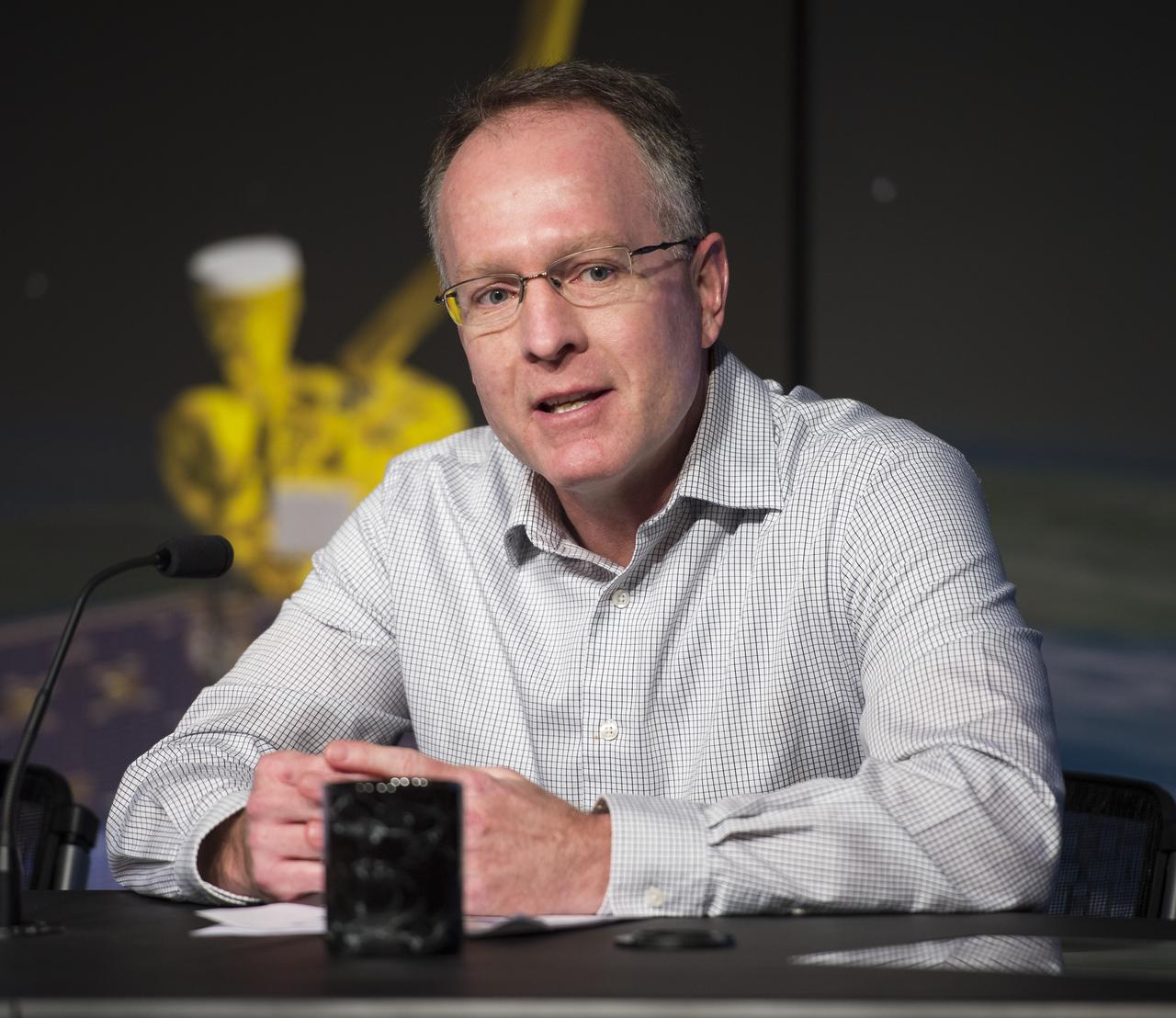
Brad Doorn, SMAP applications lead, Science Mission Directorate’s Applied Sciences Program at NASA Headquarters speaks during a briefing about the upcoming launch of the Soil Moisture Active Passive (SMAP) mission, Thursday, Jan. 08, 2015, at NASA Headquarters in Washington DC. The mission is scheduled for a Jan. 29 launch from Vandenberg Air Force Base in California, and will provide the most accurate, highest-resolution global measurements of soil moisture ever obtained from space. The data will be used to enhance scientists' understanding of the processes that link Earth's water, energy and carbon cycles. Photo Credit: (NASA/Aubrey Gemignani)

Christine Bonniksen, SMAP program executive with the Science Mission Directorate’s Earth Science Division at NASA Headquarters speaks during a briefing about the upcoming launch of the Soil Moisture Active Passive (SMAP) mission, Thursday, Jan. 08, 2015, at NASA Headquarters in Washington DC. The mission is scheduled for a Jan. 29 launch from Vandenberg Air Force Base in California, and will provide the most accurate, highest-resolution global measurements of soil moisture ever obtained from space. The data will be used to enhance scientists' understanding of the processes that link Earth's water, energy and carbon cycles. Photo Credit: (NASA/Aubrey Gemignani)
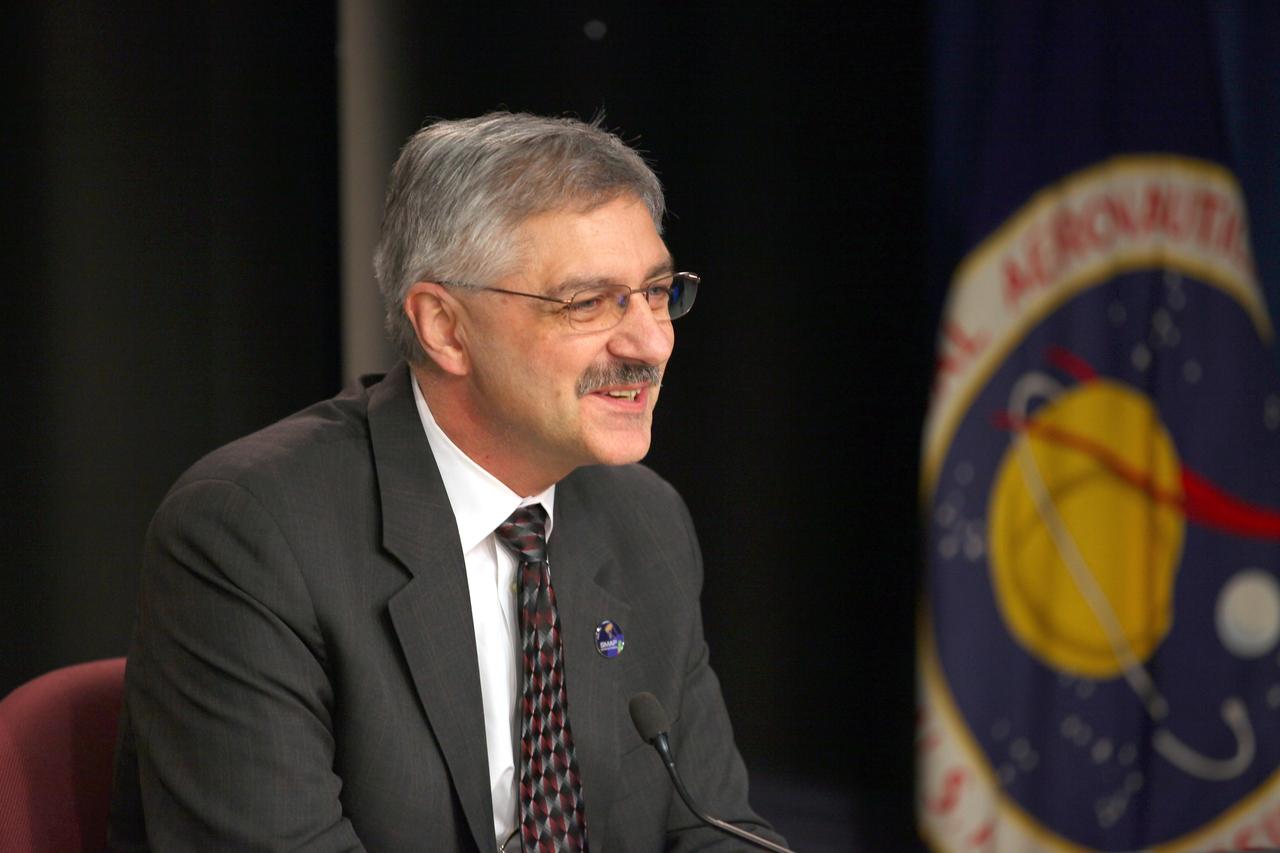
VANDENBERG AIR FORCE BASE, Calif. – Geoff Yoder, deputy associate administrator of the Science Mission Directorate at NASA Headquarters in Washington D.C., participates in a news conference at Vandenberg Air Force Base in California, following NASA's successful launch of the Soil Moisture Active Passive satellite, or SMAP, on its mission to study the Earth's soil moisture. To learn more about SMAP, visit http://www.nasa.gov/smap. Photo credit: NASA/Kim Shiflett
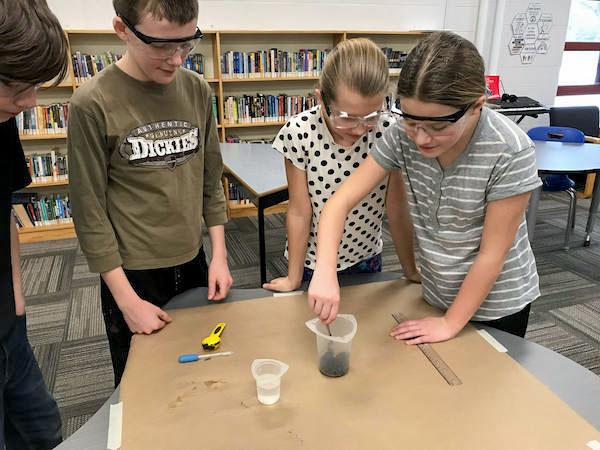
jsc2024e066515 (2/1/2024) --- Alma Public School students remove the sample compostable bag from garden soil following a 10-day period to measure the bag to determine the extent of decomposition. Their experiment, Will Soil Bacteria Biodegrade Compostable Plastic in Microgravity?, is part of the Nanoracks-National Center for Earth and Space Science Education-Surveyor-Student Spaceflight Experiments Program Mission 18 to ISS (Nanoracks-NCESSE-Surveyor-SSEP).
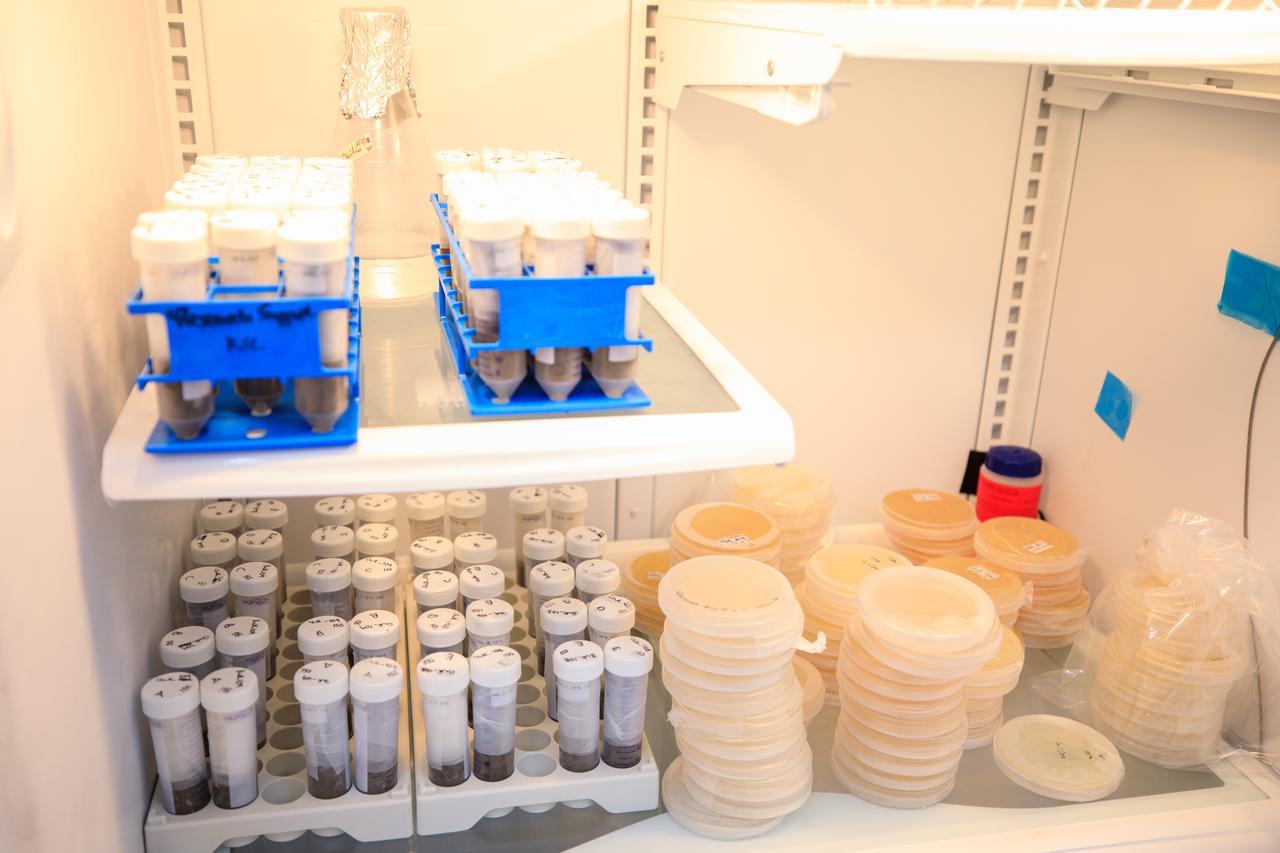
Seen here are science tubes containing soil and soil microbes for the Dynamics of Microbiomes in Space (DynaMoS) experiment after they’ve been prepared for flight to the International Space Station inside the Space Station Processing Facility at NASA’s Kennedy Space Center in Florida on July 11, 2022. The DynaMoS experiment will launch on SpaceX’s 25th cargo resupply services mission to examine how microgravity affects metabolic interactions in communities of soil microbes. This will help NASA understand the function of soil microorganisms in space versus on Earth and how they can be used to enhance plant growth for crew consumption during long-duration missions to the Moon and Mars. SpaceX’s Falcon 9 rocket and Dragon spacecraft are scheduled to lift off from Kennedy’s Launch Complex 39A at 8:44 p.m. EDT on Thursday, July 14.
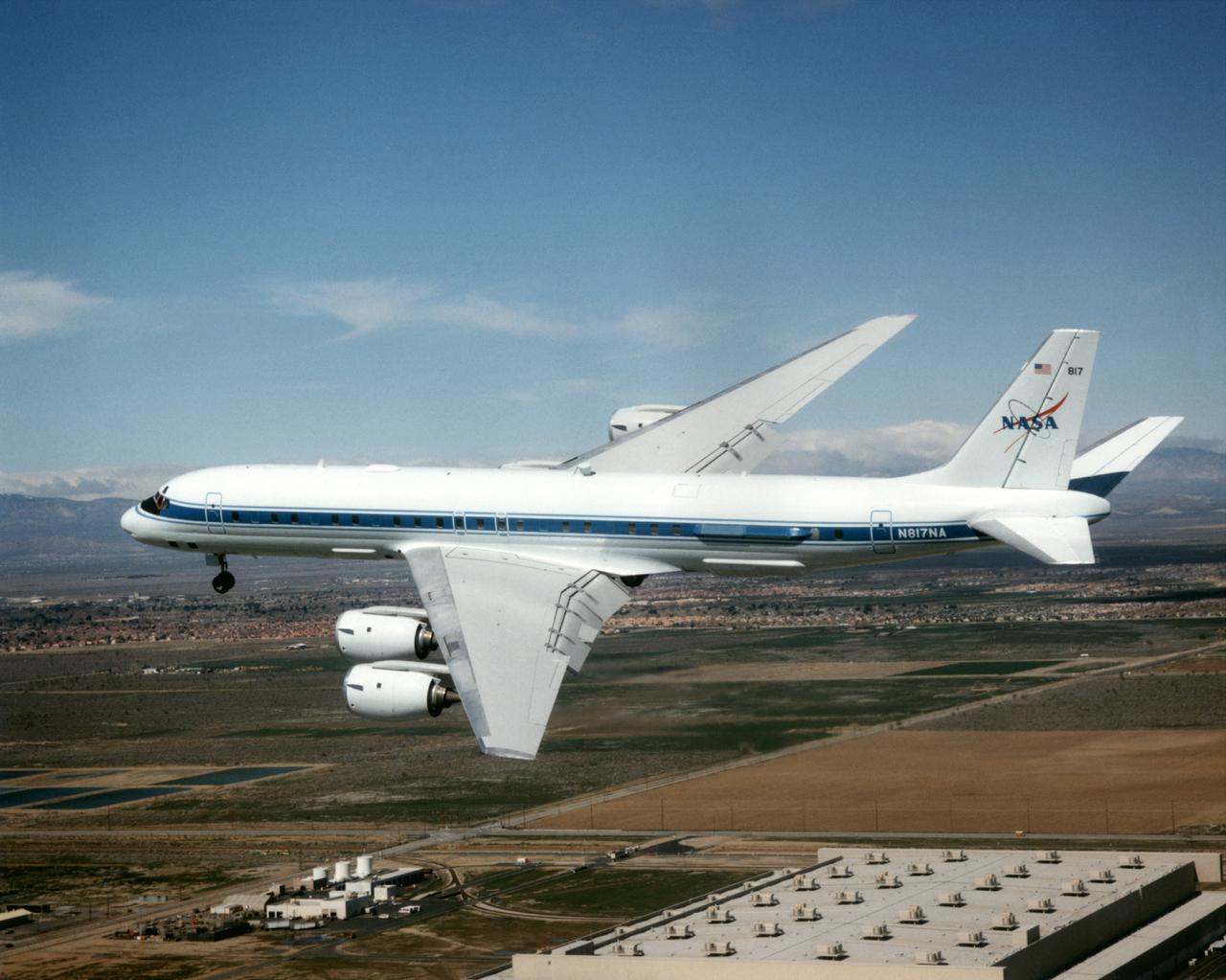
The DC-8 Airborne Laboratory in a left banking turn above the airport at Palmdale, California. The right wing is silhouetted against the blue sky, while the left wing contrasts with the desert terrain. The former airliner is a "dash-72" model and has a range of 5,400 miles. The craft can stay airborne for 12 hours and has an operational speed range between 300 and 500 knots. The research flights are made at between 500 and 41,000 feet. The aircraft can carry up to 30,000 lbs of research/science payload equipment installed in 15 mission-definable spaces.
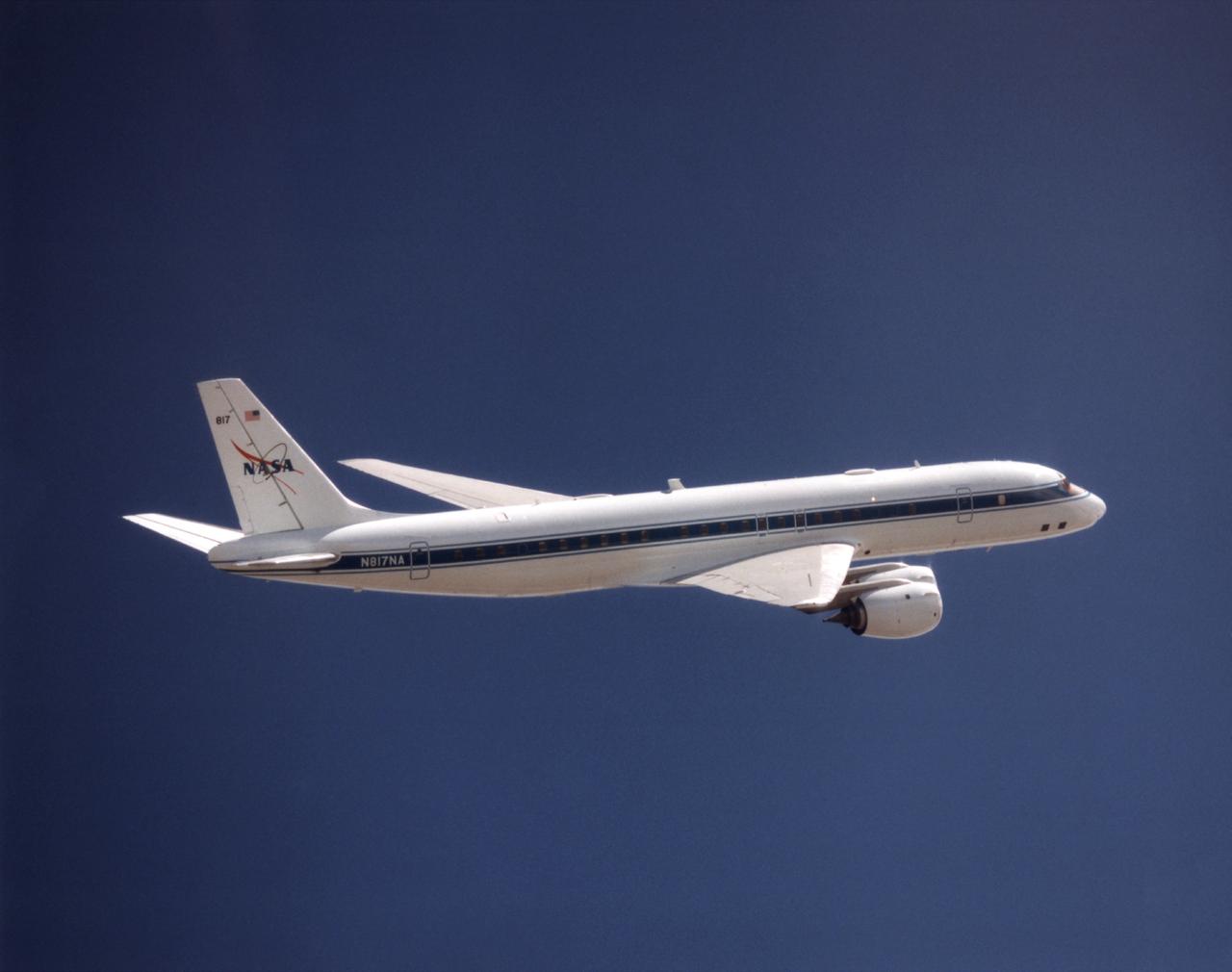
NASA's DC-8 Airborne Science platform shown against a background of a dark blue sky on February 20, 1998. The aircraft is shown from the right rear, slightly above its plane, with the right wing in the foreground and the left wing and horizontal tail in the background. The former airliner is a "dash-72" model and has a range of 5,400 miles. The craft can stay airborne for 12 hours and has an operational speed range between 300 and 500 knots. The research flights are made at between 500 and 41,000 feet. The aircraft can carry up to 30,000 lbs of research/science payload equipment installed in 15 mission-definable spaces.

NASA DC-8 airborne laboratory flying over Mint Canyon near the snow-covered San Gabriel Mountains of California. The mostly white aircraft is silhouetted against the darker mountains in the background.
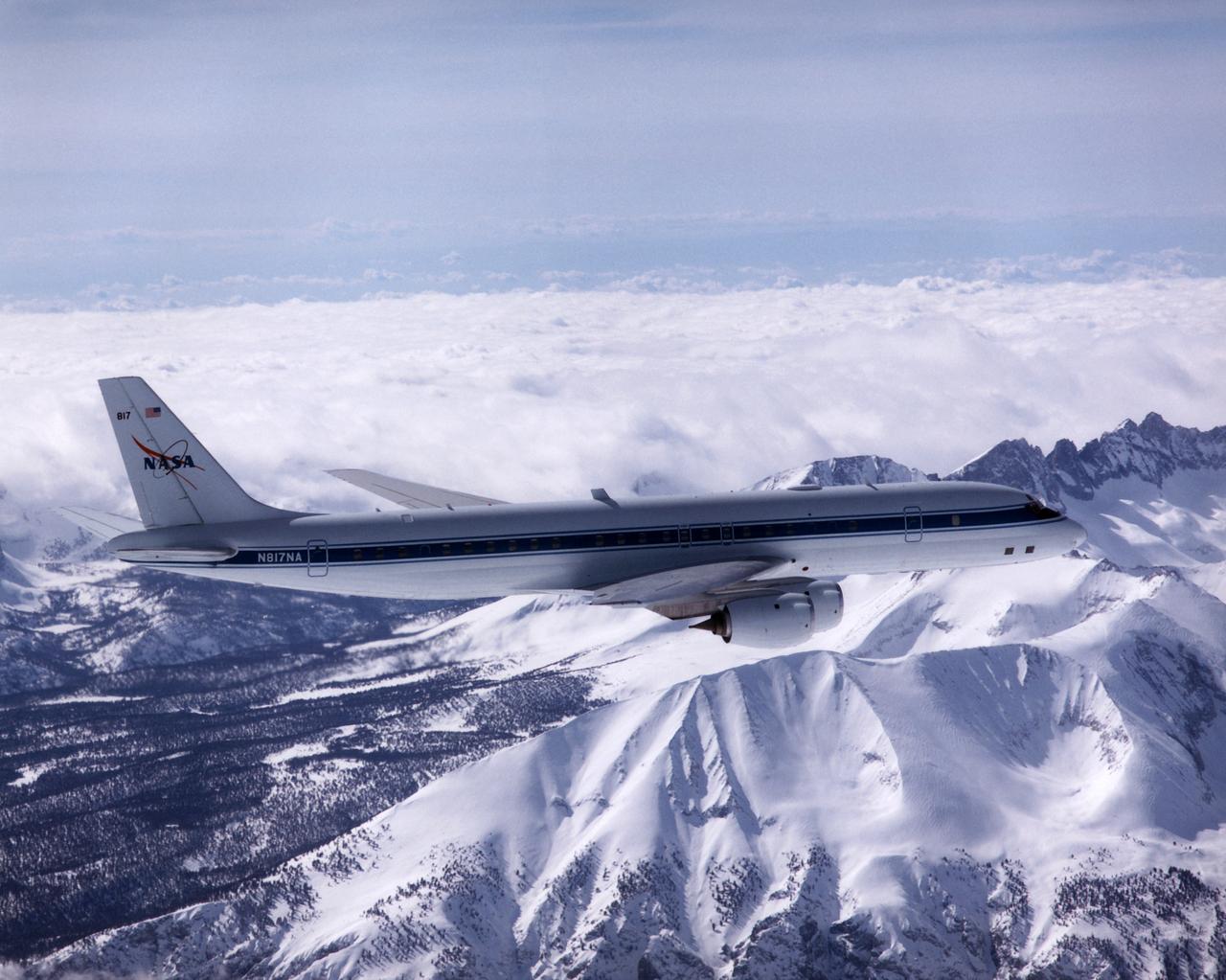
NASA's DC-8 Airborne Laboratory during a flight over the snow-covered Sierra Nevada Mountains. Over the past several years the DC-8 has conducted research missions in such diverse places as the Pacific in spring and Sweden in winter.
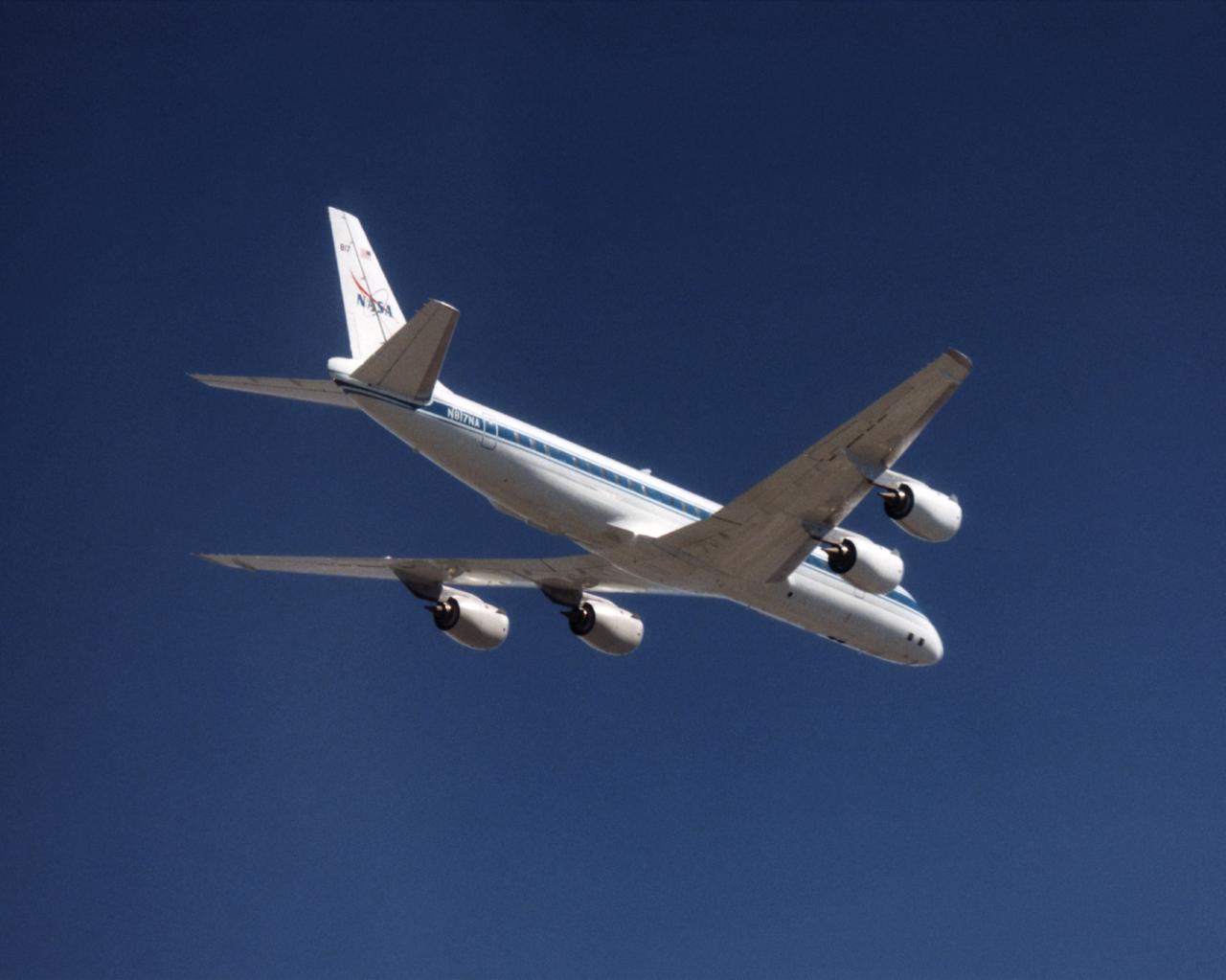
The NASA DC-8 in a right bank over the rugged Sierra Nevada Mountains. The former airliner is a "dash-72" model and has a range of 5,500 miles. The craft can stay airborne for 12 hours and has an operational speed range between 300 and 500 knots. The research flights are made at between 500 and 41,000 feet. The aircraft can carry up to 30,000 lbs of research/science payload equipment installed in 15 mission-definable spaces. In this photo, the aircraft is shown in flight from below, with the DC-8 silhouetted against a blue sky.
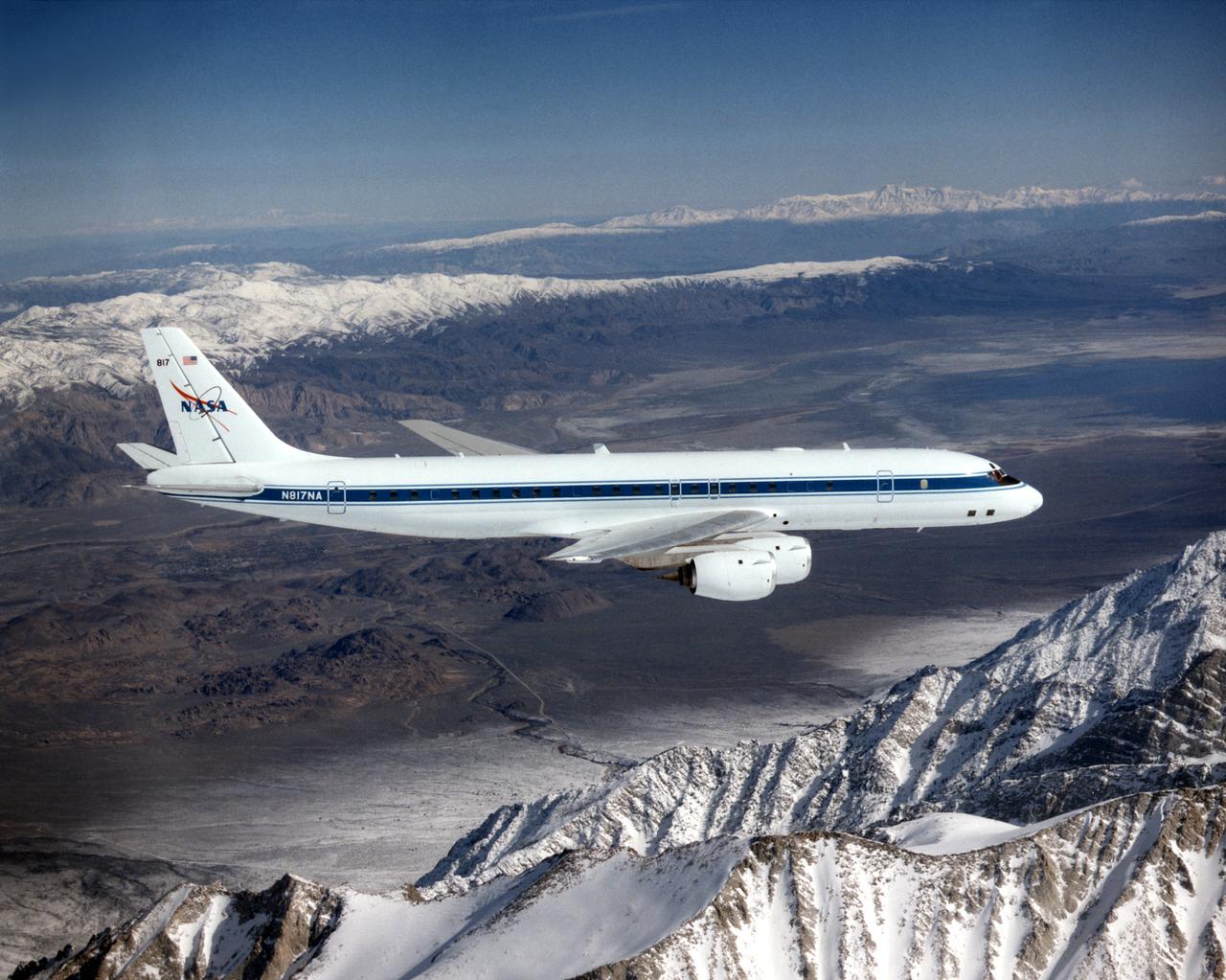
The DC-8 in flight near Lone Pine, Calif. In the foreground are the Sierra Nevada Mountains, covered with winter snow. In the distance are the White Mountains. The DC-8's fuselage is painted white with a dark blue stripe down the side. The wings are silver, while the engine pods are white. In this view of the airplane's right-hand side, only a few of its antennas are visible. The experimental payload can be as great as 30,000 pounds of equipment for gathering data of various sorts.
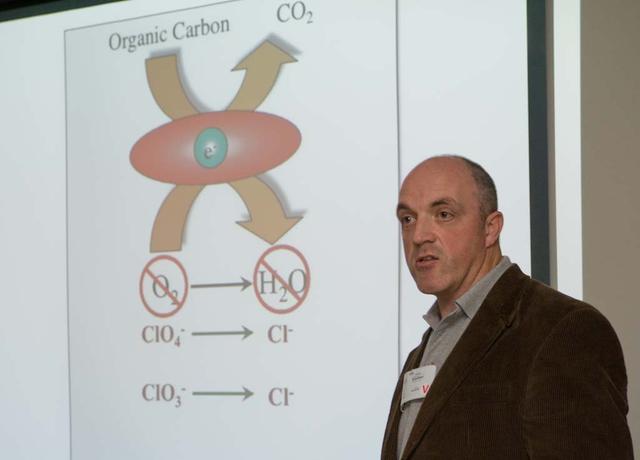
Directors Colloquium: Science Seminar by John Coates, Associate Professor of Microbiology at the University of California, Berkeley, on Microbial Perchlorate Reduction. The discovery of perchlorate in soils at the Phoenix Landing site, makes this type of organisms interesting analogues to potential life on Mars.
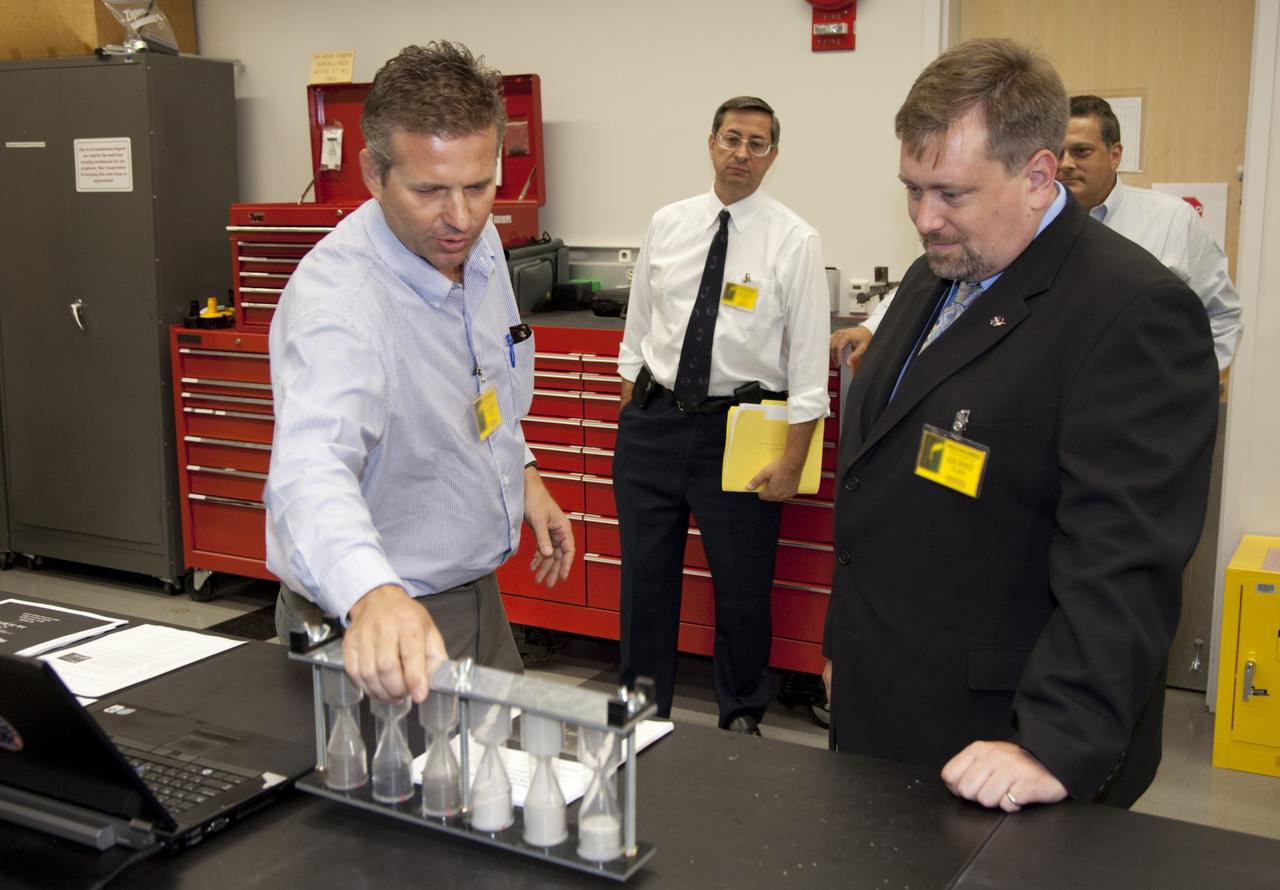
CAPE CANAVERAl, Fla. - Robert Mueller, left, explains differences in lunar, Martian and Earth soil using simulants to Dr. Mason Peck, NASA's chief Technologist, during a tour of the Space Life Sciences Laboratory at Kennedy. Peck toured the lab facility during a visit to the space center. Photo credit: NASA/Frankie Martin
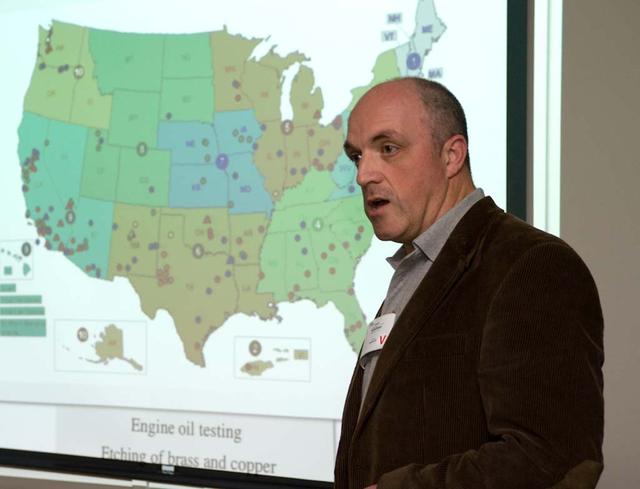
Directors Colloquium: Science Seminar by John Coates, Associate Professor of Microbiology at the University of California, Berkeley, on Microbial Perchlorate Reduction. The discovery of perchlorate in soils at the Phoenix Landing site, makes this type of organisms interesting analogues to potential life on Mars.
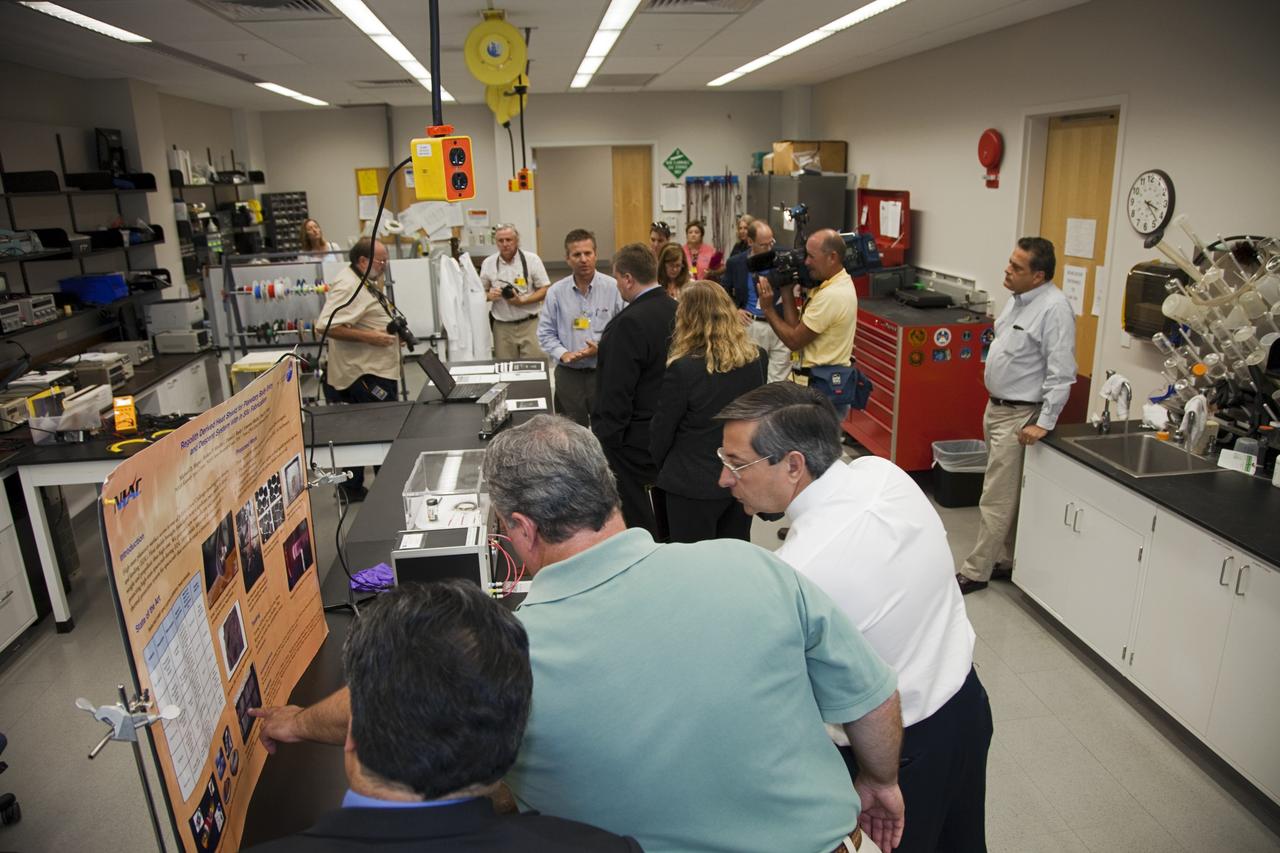
CAPE CANAVERAl, Fla. - Robert Mueller, left, explains differences in lunar, Martian and Earth soil using simulants to Dr. Mason Peck, NASA's chief Technologist, during a tour of the Space Life Sciences Laboratory at Kennedy. Peck toured the lab facility during a visit to the space center. Photo credit: NASA/Frankie Martin
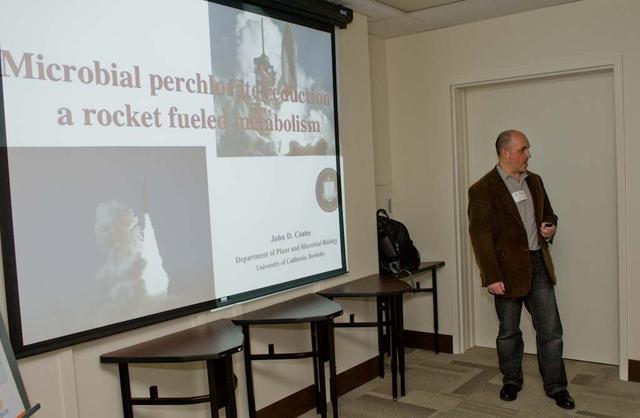
Directors Colloquium: Science Seminar by John Coates, Associate Professor of Microbiology at the University of California, Berkeley, on Microbial Perchlorate Reduction. The discovery of perchlorate in soils at the Phoenix Landing site, makes this type of organisms interesting analogues to potential life on Mars.
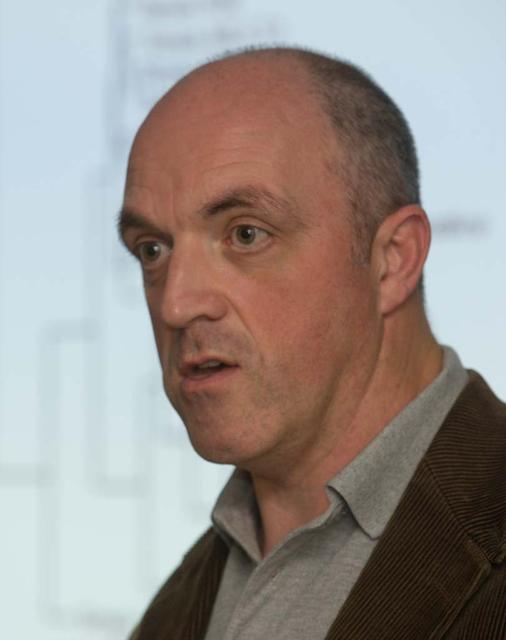
Directors Colloquium: Science Seminar by John Coates, Associate Professor of Microbiology at the University of California, Berkeley, on Microbial Perchlorate Reduction. The discovery of perchlorate in soils at the Phoenix Landing site, makes this type of organisms interesting analogues to potential life on Mars.
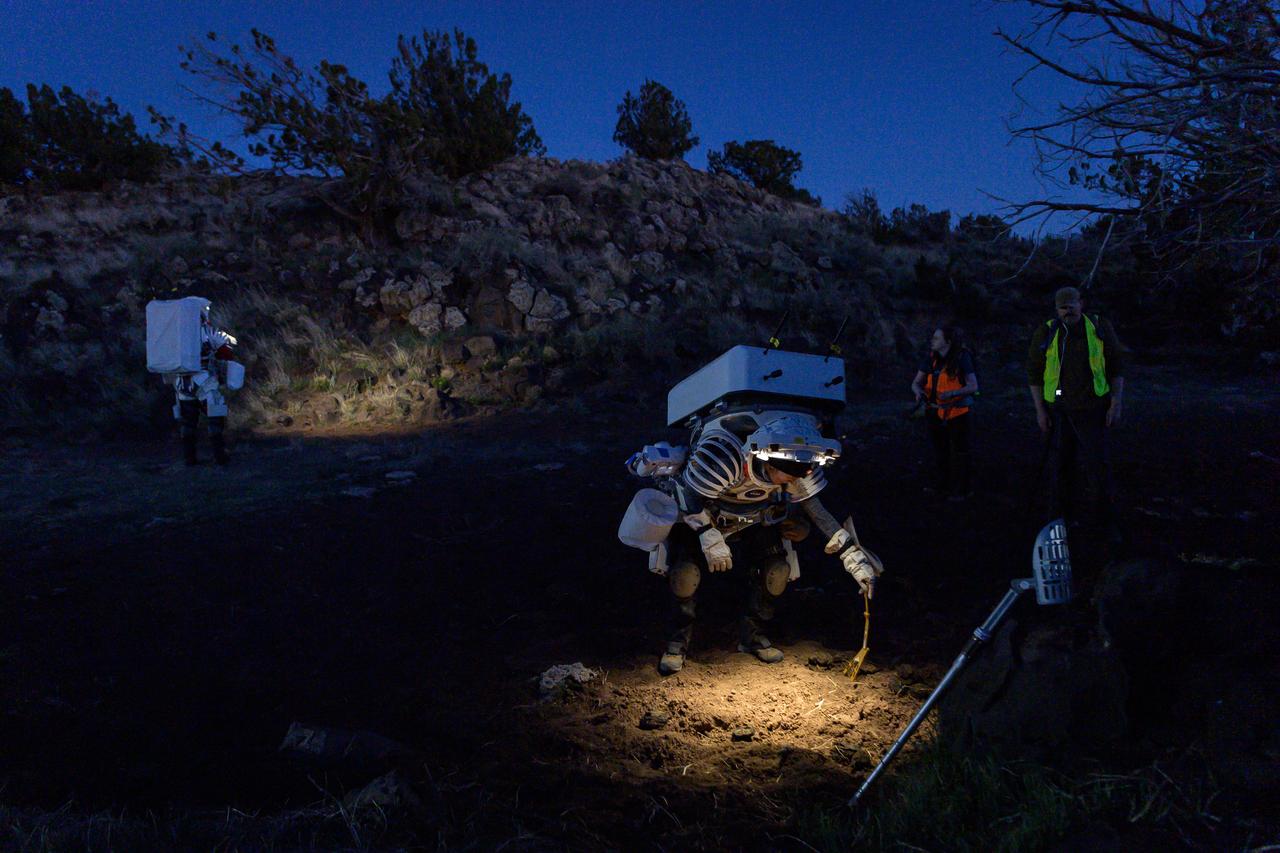
NASA astronaut Kate Rubins places a sample marker in the soil before collecting a sample during a nighttime simulated moonwalk in the San Francisco Volcanic Field in Northern Arizona on May 16, 2024. A sample marker provides a photographic reference point for science samples collected on the lunar surface. Credit: NASA/Josh Valcarcel
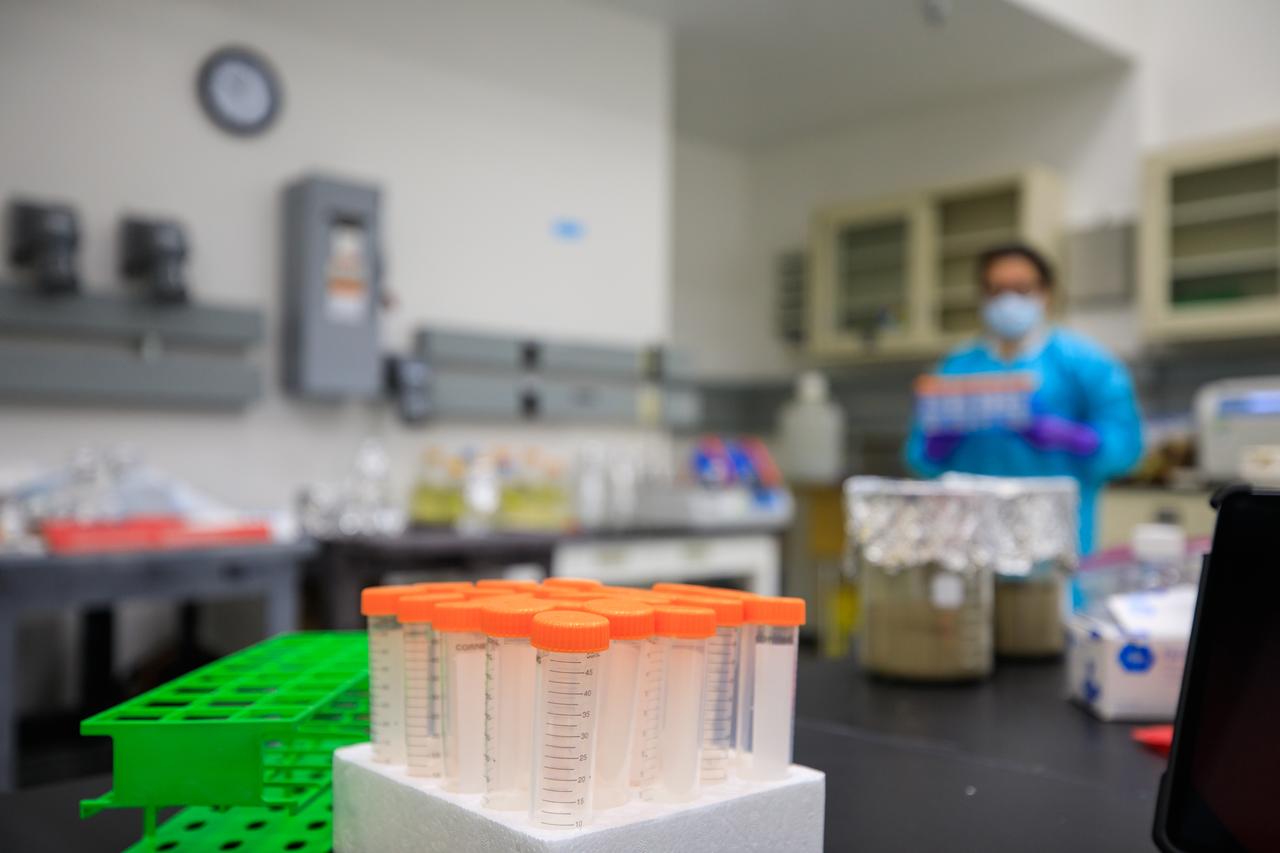
In this photo, science tubes containing bacterial cells are being prepped for cleaning as part of the Dynamics of Microbiomes in Space (DynaMoS) experiment inside the Space Station Processing Facility at NASA’s Kennedy Space Center in Florida on July 11, 2022. Once clean, the cells will be moved to a larger space for continued growth in order to generate enough biomass to inoculate the soil that will be used in the experiment. The DynaMoS experiment will launch on SpaceX’s 25th cargo resupply services mission to examine how microgravity affects metabolic interactions in communities of soil microbes. This will help NASA understand the function of soil microorganisms in space versus on Earth and how they can be used to enhance plant growth for crew consumption during long-duration missions to the Moon and Mars. SpaceX’s Falcon 9 rocket and Dragon spacecraft are scheduled to lift off from Kennedy’s Launch Complex 39A at 8:44 p.m. EDT on Thursday, July 14.
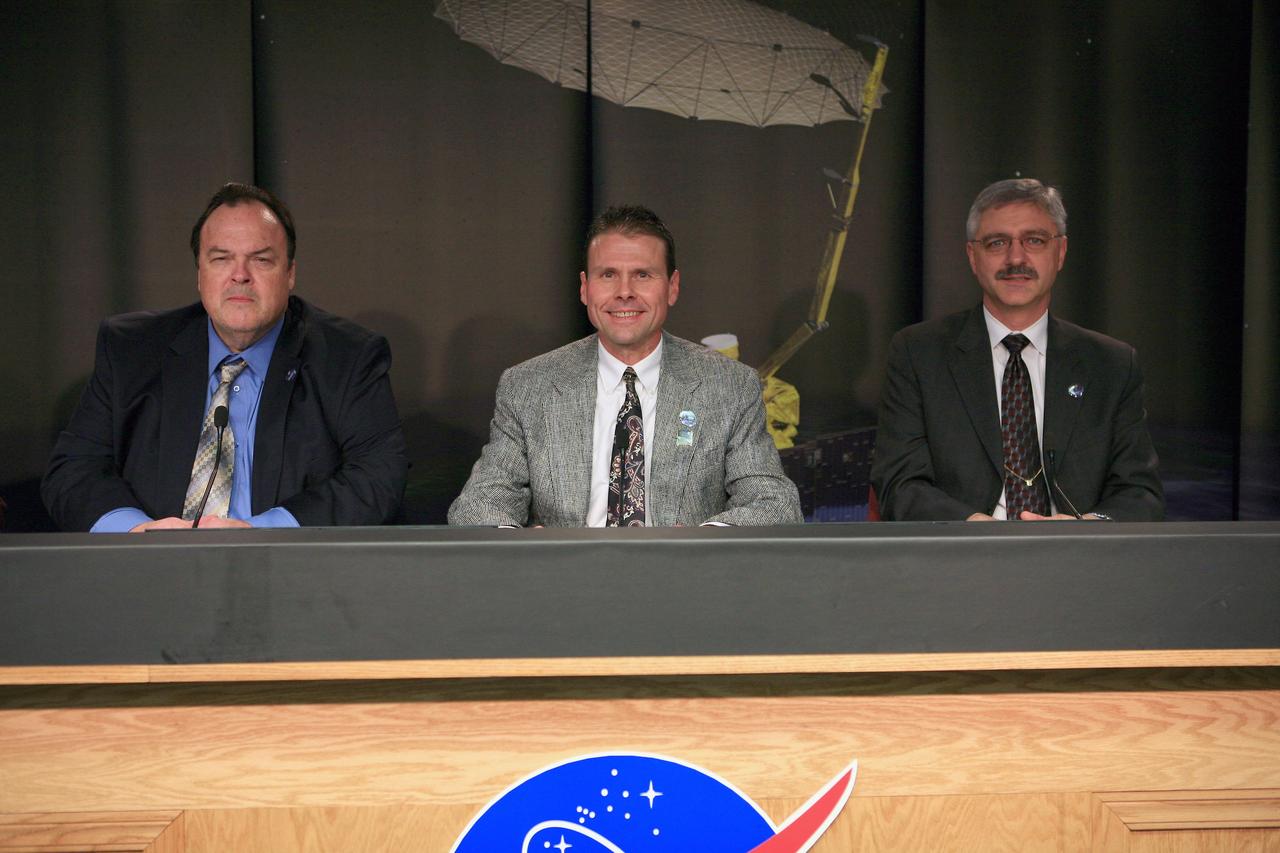
VANDENBERG AIR FORCE BASE, Calif. – During a news conference at Vandenberg Air Force Base in California, NASA officials discuss the launch of the Soil Moisture Active Passive satellite, or SMAP, and its mission to study the Earth's soil moisture. Participating in the briefing, from left, are Kent Kellogg, SMAP project manager at the Jet Propulsion Laboratory in Pasadena, California, Scott Higginbotham, NASA mission manager for Educational Launch of Nanosatellites, or ELaNa-X, at the Kennedy Space Center, and Geoff Yoder, deputy associate administrator of the Science Mission Directorate at NASA Headquarters. To learn more about SMAP, visit http://www.nasa.gov/smap. Photo credit: NASA/Kim Shiflett
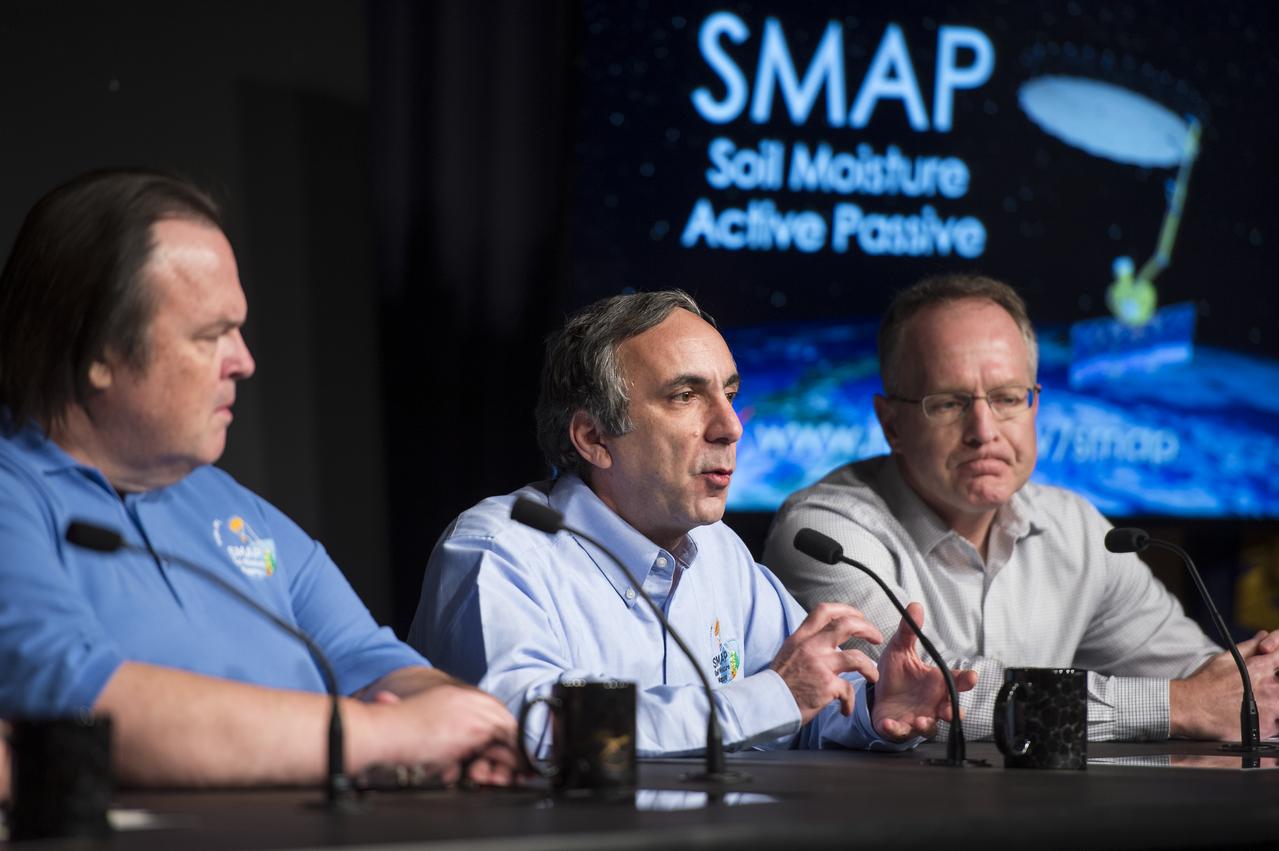
Dara Entekhabi, SMAP science team lead, Massachusetts Institute of Technology, center, speaks during a briefing about the upcoming launch of the Soil Moisture Active Passive (SMAP) mission, Thursday, Jan. 08, 2015, at NASA Headquarters in Washington DC. The mission is scheduled for a Jan. 29 launch from Vandenberg Air Force Base in California, and will provide the most accurate, highest-resolution global measurements of soil moisture ever obtained from space. The data will be used to enhance scientists' understanding of the processes that link Earth's water, energy and carbon cycles. Photo Credit: (NASA/Aubrey Gemignani)
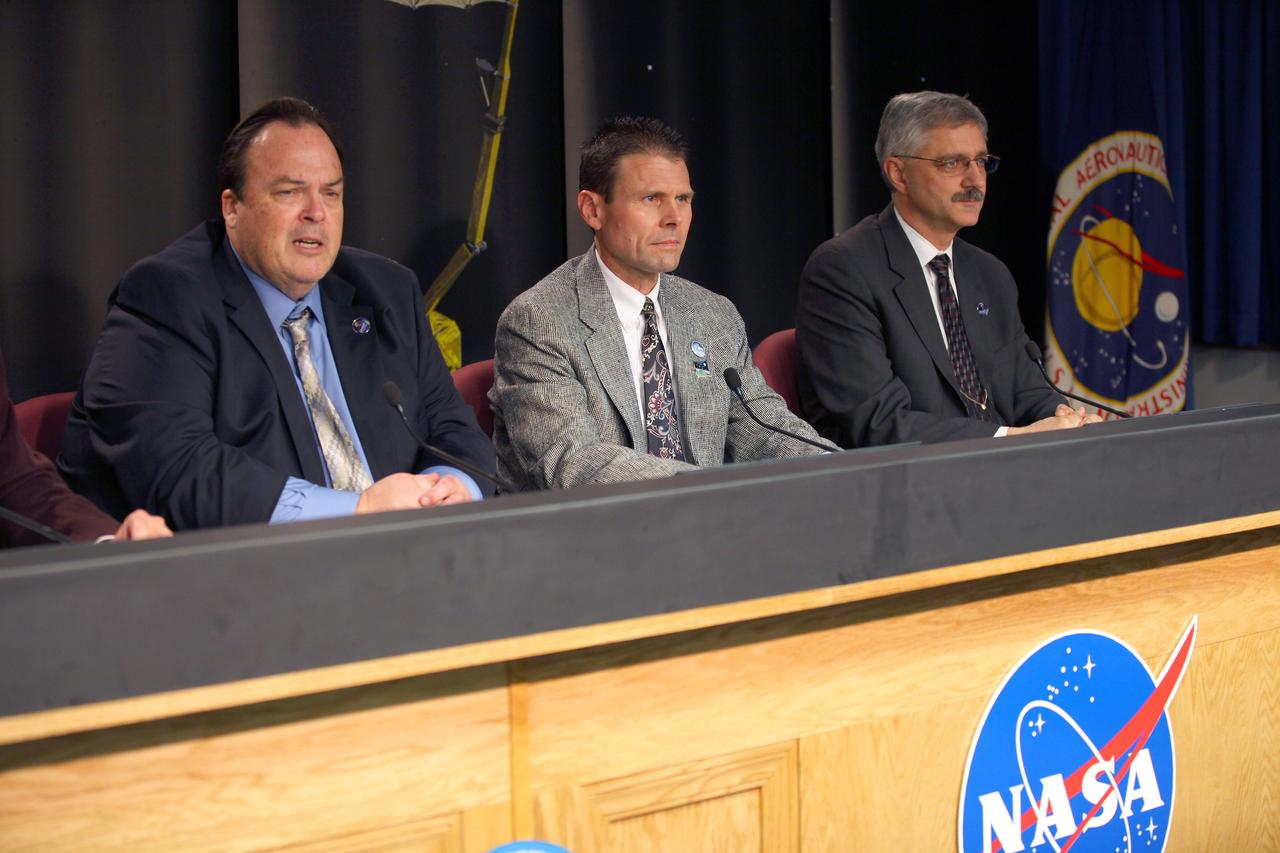
VANDENBERG AIR FORCE BASE, Calif. – During a news conference at Vandenberg Air Force Base in California, NASA officials discuss the launch of the Soil Moisture Active Passive satellite, or SMAP, and its mission to study the Earth's soil moisture. Participating in the briefing, from left, are Kent Kellogg, SMAP project manager at the Jet Propulsion Laboratory in Pasadena, California, Scott Higginbotham, NASA mission manager for Educational Launch of Nanosatellites, or ELaNa-X, at the Kennedy Space Center, and Geoff Yoder, deputy associate administrator of the Science Mission Directorate at NASA Headquarters. To learn more about SMAP, visit http://www.nasa.gov/smap. Photo credit: NASA/Kim Shiflett
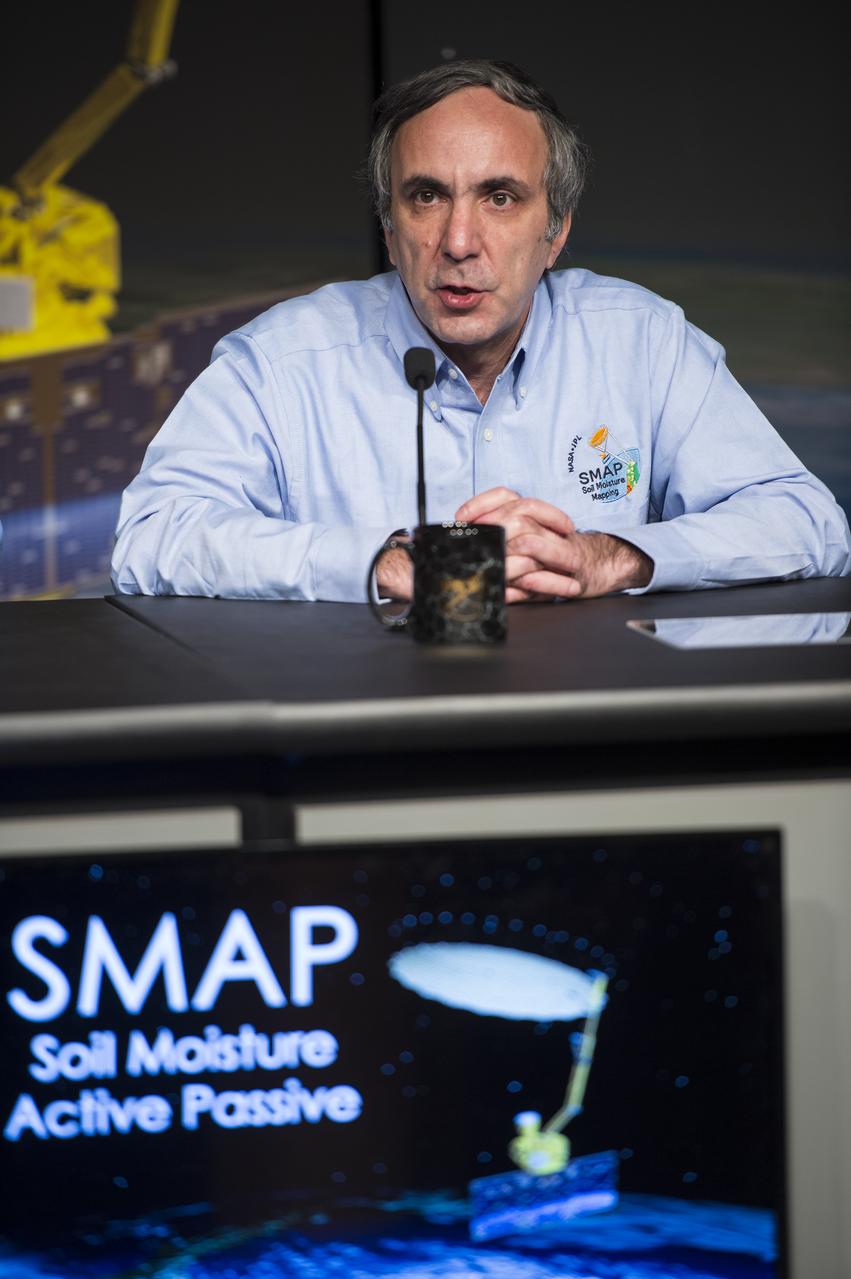
Dara Entekhabi, SMAP science team lead, Massachusetts Institute of Technology, speaks during a briefing about the upcoming launch of the Soil Moisture Active Passive (SMAP) mission, Thursday, Jan. 08, 2015, at NASA Headquarters in Washington DC. The mission is scheduled for a Jan. 29 launch from Vandenberg Air Force Base in California, and will provide the most accurate, highest-resolution global measurements of soil moisture ever obtained from space. The data will be used to enhance scientists' understanding of the processes that link Earth's water, energy and carbon cycles. Photo Credit: (NASA/Aubrey Gemignani)
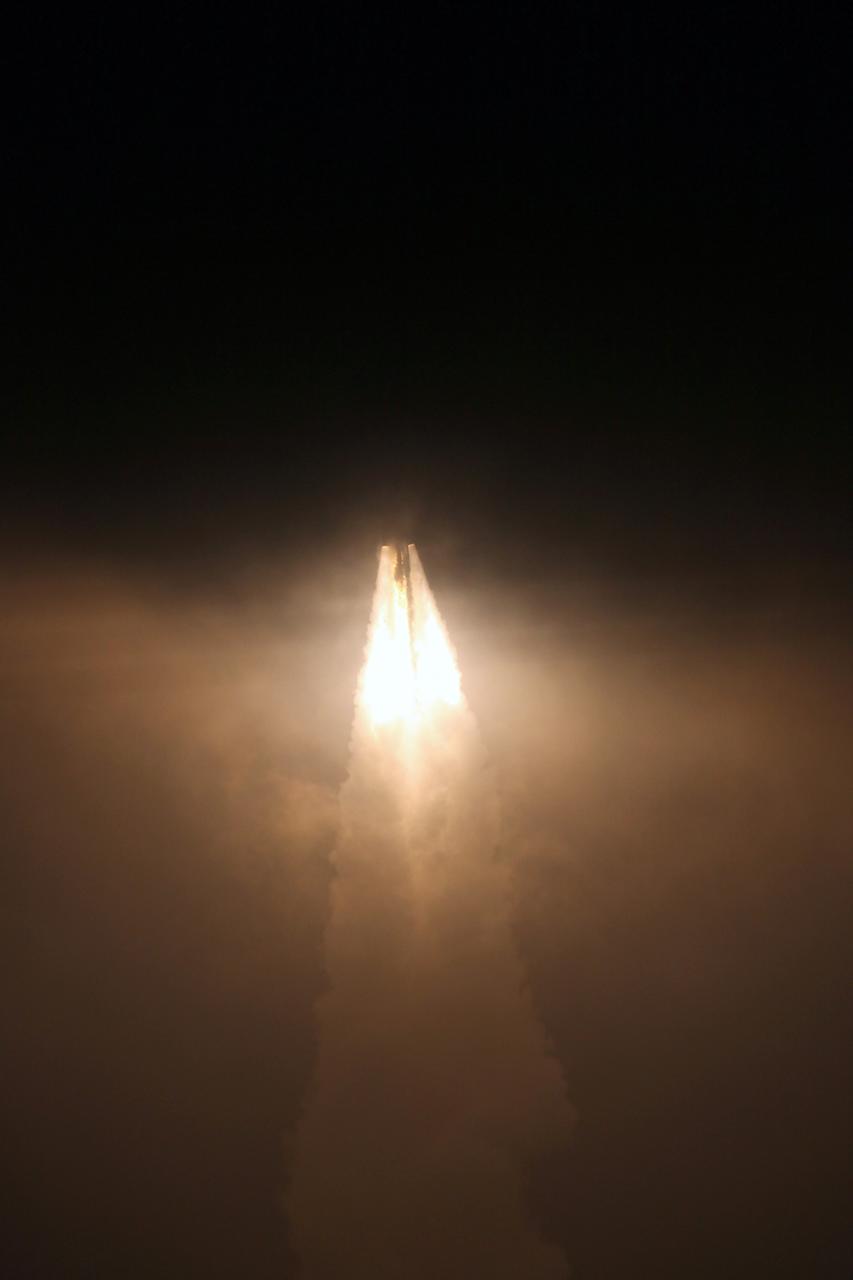
VANDENBERG AIR FORCE BASE, Calif. – A Delta II rocket lifts off Space Launch Complex 2 at Vandenberg Air Force Base, carrying NASA's Soil Moisture Active Passive satellite, or SMAP, to Earth orbit. Liftoff was at 9:22 a.m. EST. SMAP's measurements will be invaluable across many science and applications disciplines including hydrology, climate, carbon cycle, and the meteorological, environmental and ecology applications communities. SMAP is designed to produce the highest-resolution maps of soil moisture ever obtained from space. To learn more about SMAP, visit http://www.nasa.gov/smap. Photo credit: NASA/Kim Shiflett
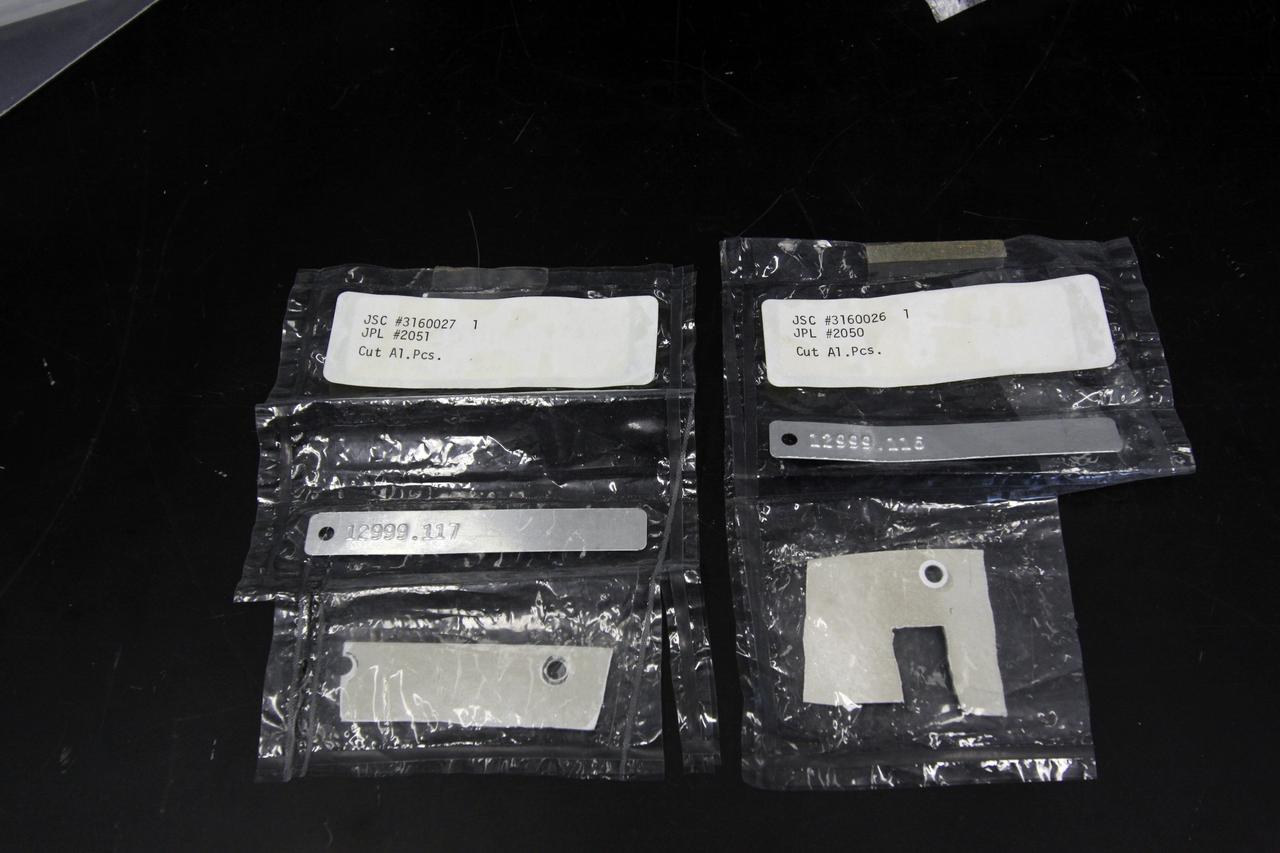
CAPE CANAVERAL, Fla. – In the Granular Mechanics and Regolith Operations (GMRO) Lab at NASA's Kennedy Space Center in Florida, pieces of the Surveyor 3 spacecraft returned from the lunar surface on the Apollo 12 mission are available for examination by the lab's staff. The GMRO Lab is one of several labs located in NASA's Space Life Sciences Laboratory (SLSL) facility. The lab is staffed by three physicists, six mechanical or aerospace engineers and several technicians who are studying how the rocket exhaust of landing vehicles affects lunar and Martian science missions, including the sandblasting of instruments with soil and dust ejecta and the disturbance or contamination of soil beneath the lander. For more information on the GMRO Lab, see p. 7 of the Spaceport News dated Nov. 11, 2011, at http://www.nasa.gov/centers/kennedy/pdf/603285main_nov11-2011.pdf. Photo credit: NASA/Jim Grossmann
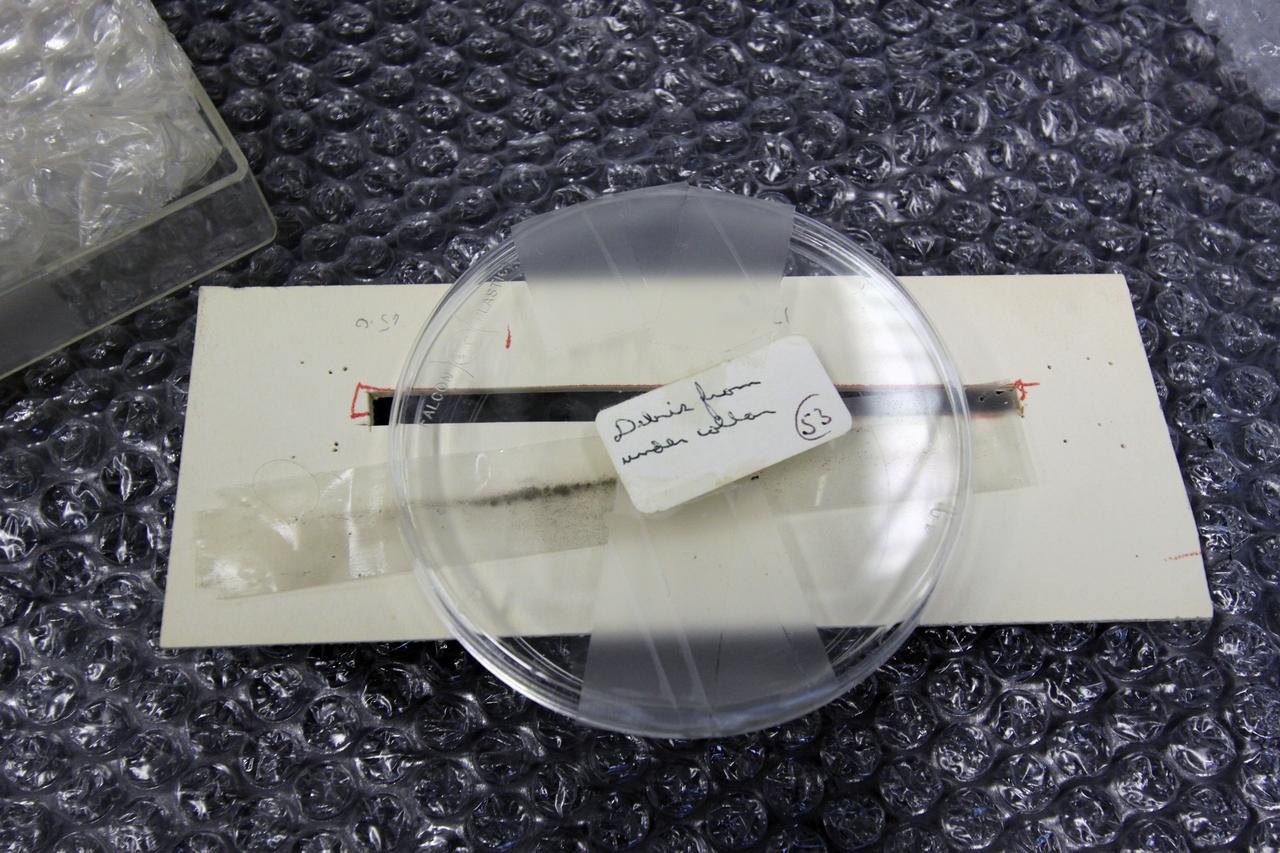
CAPE CANAVERAL, Fla. – In the Granular Mechanics and Regolith Operations (GMRO) Lab at NASA's Kennedy Space Center in Florida, a piece of the Surveyor 3 spacecraft returned from the lunar surface on the Apollo 12 mission is available for examination by the lab's staff. The GMRO Lab is one of several labs located in NASA's Space Life Sciences Laboratory (SLSL) facility. The lab is staffed by three physicists, six mechanical or aerospace engineers and several technicians who are studying how the rocket exhaust of landing vehicles affects lunar and Martian science missions, including the sandblasting of instruments with soil and dust ejecta and the disturbance or contamination of soil beneath the lander. For more information on the GMRO Lab, see p. 7 of the Spaceport News dated Nov. 11, 2011, at http://www.nasa.gov/centers/kennedy/pdf/603285main_nov11-2011.pdf. Photo credit: NASA/Jim Grossmann
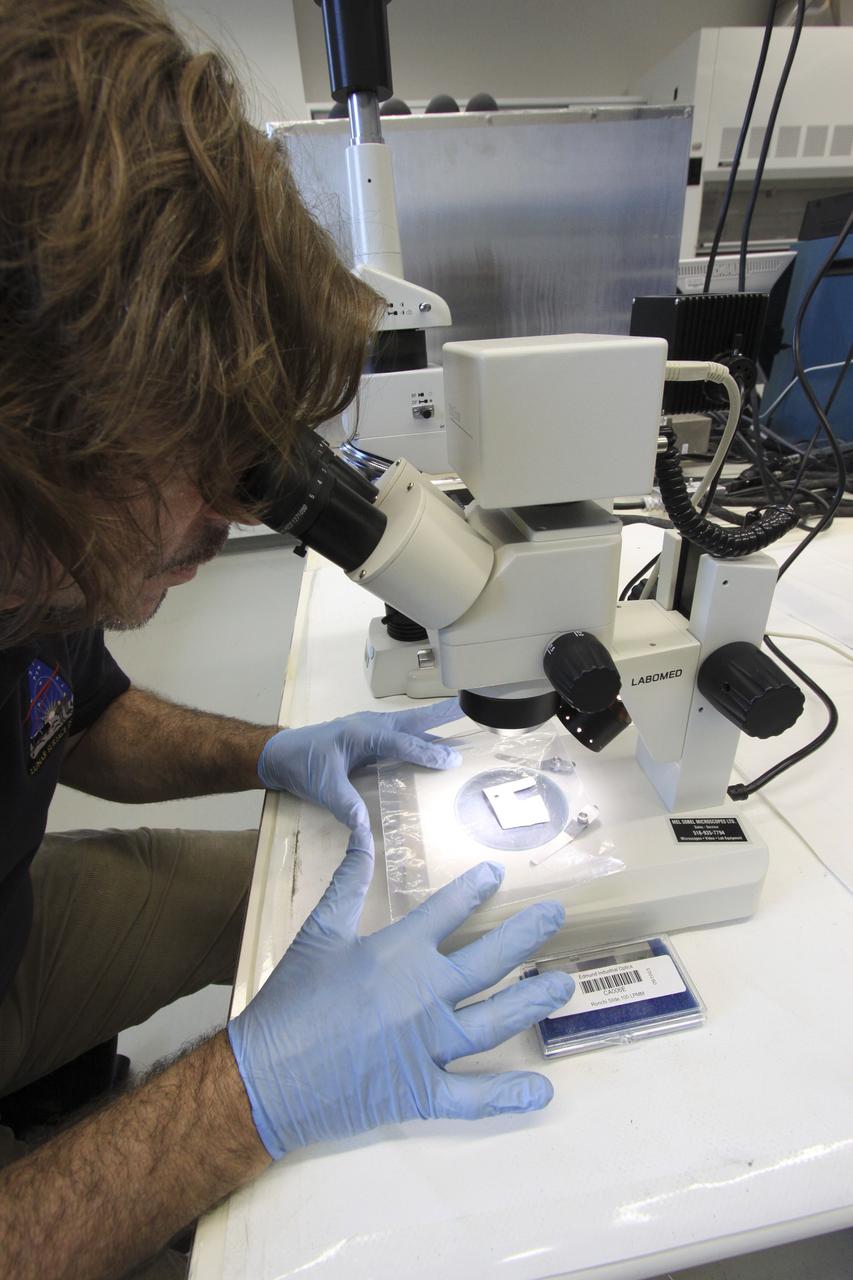
CAPE CANAVERAL, Fla. – In the Granular Mechanics and Regolith Operations (GMRO) Lab at NASA's Kennedy Space Center in Florida, Dr. Philip Metzger examines under a microscope a piece of the Surveyor 3 spacecraft returned from the lunar surface on the Apollo 12 mission. The GMRO Lab is one of several labs located in NASA's Space Life Sciences Laboratory (SLSL) facility. The lab is staffed by three physicists, six mechanical or aerospace engineers and several technicians who are studying how the rocket exhaust of landing vehicles affects lunar and Martian science missions, including the sandblasting of instruments with soil and dust ejecta and the disturbance or contamination of soil beneath the lander. For more information on the GMRO Lab, see p. 7 of the Spaceport News dated Nov. 11, 2011, at http://www.nasa.gov/centers/kennedy/pdf/603285main_nov11-2011.pdf. Photo credit: NASA/Jim Grossmann
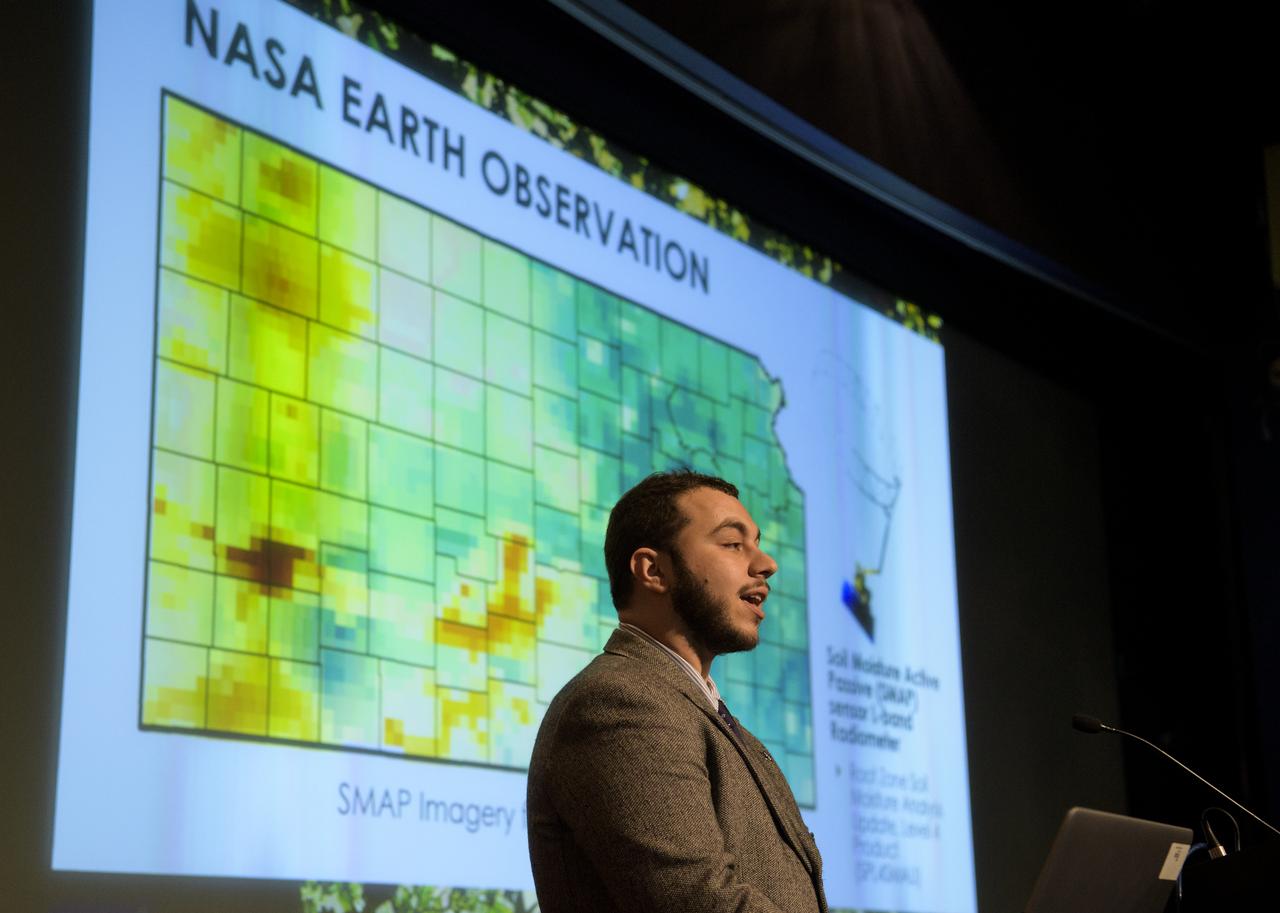
Max Dunsker speaks about the DEVELOP Kansas Agriculture and Food Security Project, which modeled soil drydown parameters for drought mitigation, during the 2019 Annual Earth Science Applications Showcase, Thursday, Aug. 1, 2019 at NASA Headquarters in Washington, DC. Every summer students and young professionals from NASA’s Applied Sciences’ DEVELOP National Program come to NASA Headquarters and present their research projects. DEVELOP is a training and development program where students work on Earth science research projects, mentored by science advisers from NASA and partner agencies, and extend research results to local communities. Photo Credit: (NASA/Joel Kowsky)
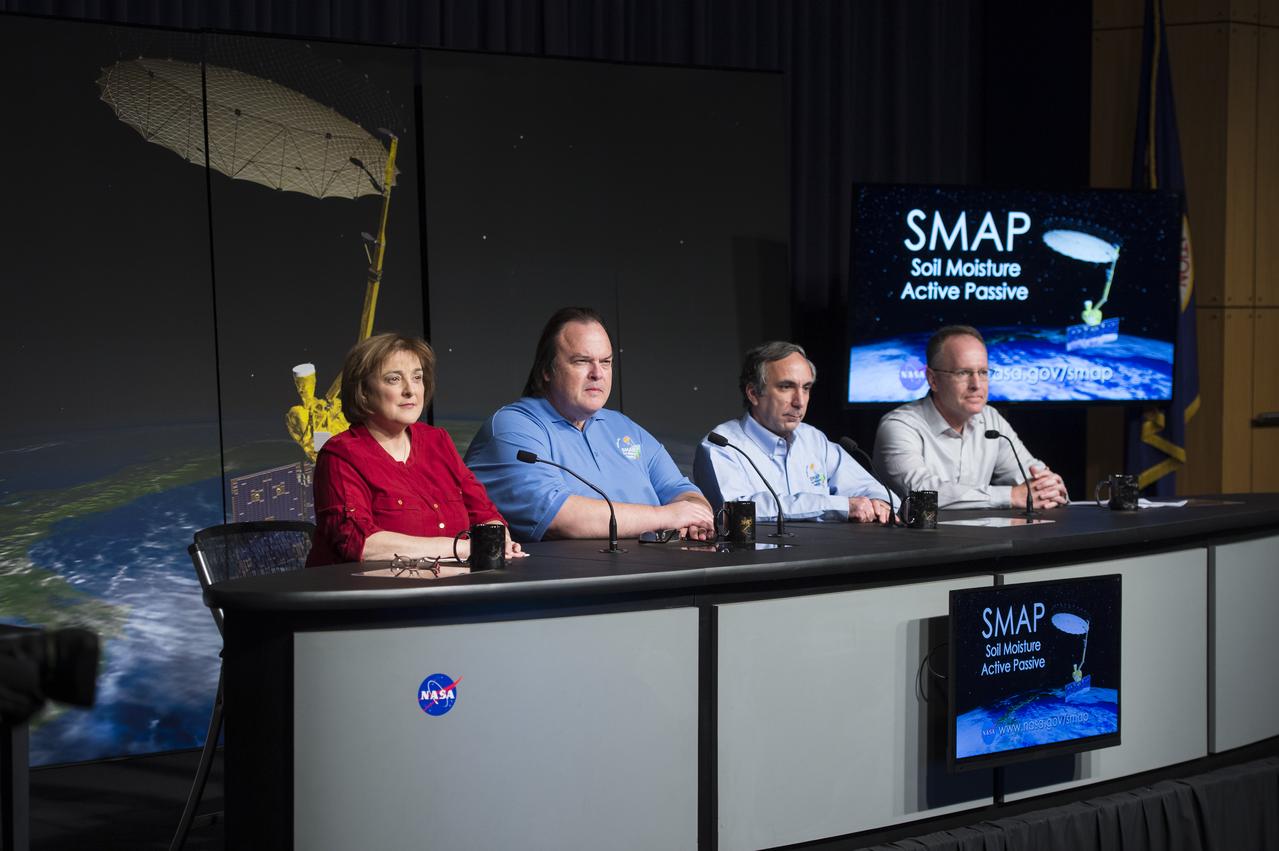
Christine Bonniksen, SMAP program executive with the Science Mission Directorate’s Earth Science Division, NASA Headquarters, left, Kent Kellogg, SMAP project manager, NASA Jet Propulsion Laboratory (JPL), second from left, Dara Entekhabi, SMAP science team lead, Massachusetts Institute of Technology, second from right, and Brad Doorn, SMAP applications lead, Science Mission Directorate’s Applied Sciences Program, NASA Headquarters, right, are seen during a briefing about the upcoming launch of the Soil Moisture Active Passive (SMAP) mission, Thursday, Jan. 08, 2015, at NASA Headquarters in Washington DC. The mission is scheduled for a Jan. 29 launch from Vandenberg Air Force Base in California, and will provide the most accurate, highest-resolution global measurements of soil moisture ever obtained from space. The data will be used to enhance scientists' understanding of the processes that link Earth's water, energy and carbon cycles. Photo Credit: (NASA/Aubrey Gemignani)
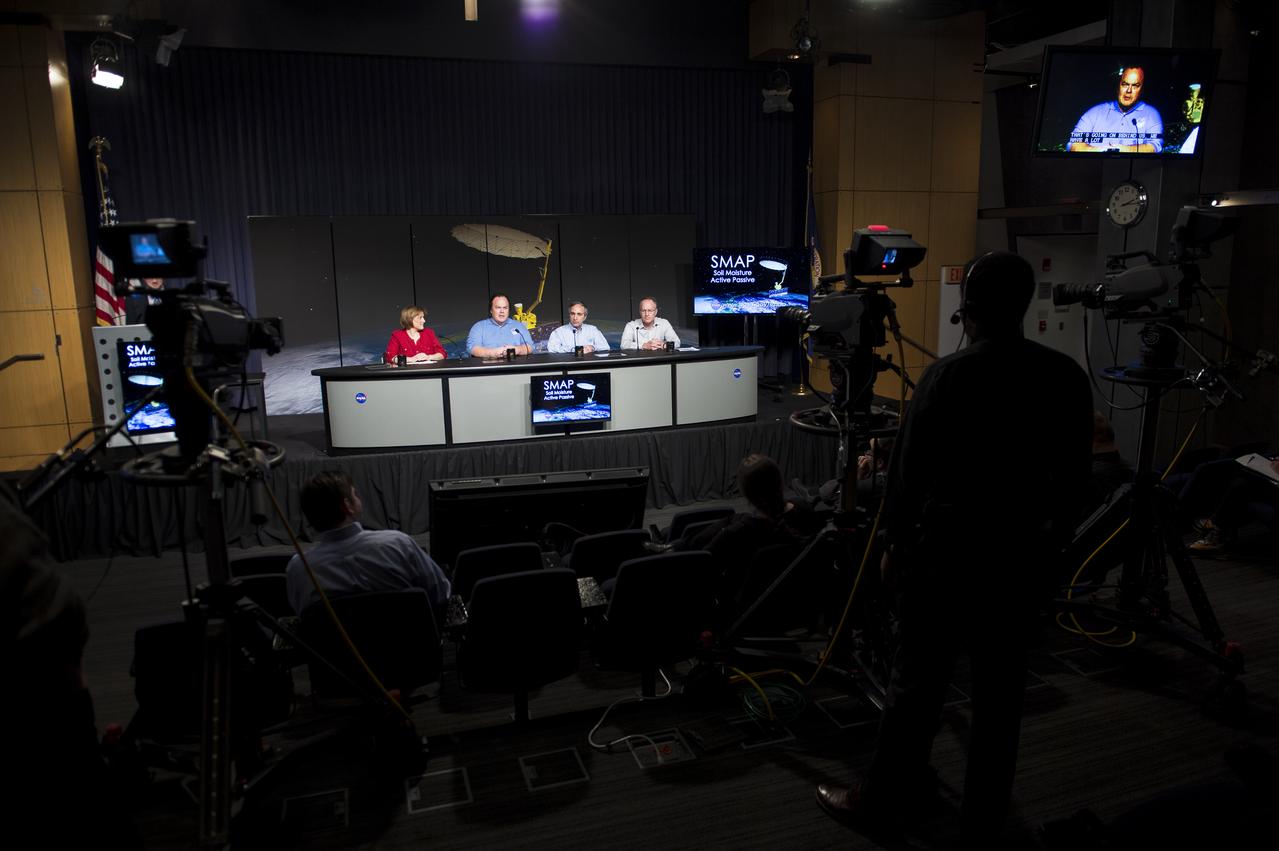
Christine Bonniksen, SMAP program executive with the Science Mission Directorate’s Earth Science Division, NASA Headquarters, left, Kent Kellogg, SMAP project manager, NASA Jet Propulsion Laboratory (JPL), second from left, Dara Entekhabi, SMAP science team lead, Massachusetts Institute of Technology, second from right, and Brad Doorn, SMAP applications lead, Science Mission Directorate’s Applied Sciences Program, NASA Headquarters, right, are seen during a briefing about the upcoming launch of the Soil Moisture Active Passive (SMAP) mission, Thursday, Jan. 08, 2015, at NASA Headquarters in Washington DC. The mission is scheduled for a Jan. 29 launch from Vandenberg Air Force Base in California, and will provide the most accurate, highest-resolution global measurements of soil moisture ever obtained from space. The data will be used to enhance scientists' understanding of the processes that link Earth's water, energy and carbon cycles. Photo Credit: (NASA/Aubrey Gemignani)
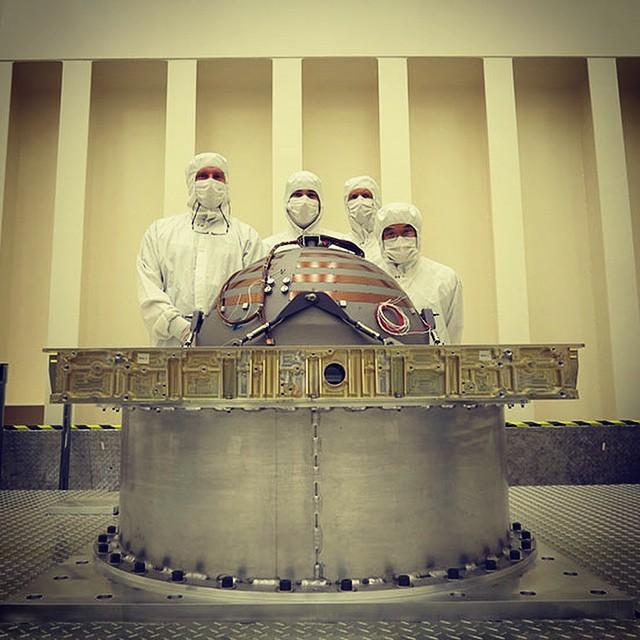
The Soil Moisture Active Passive (SMAP) mission, scheduled for launch on Jan. 29, will measure the moisture in Earth's soil with greater accuracy and higher resolution than any preceding mission, producing a global map of soil moisture every three days. Here are five quick facts about the spacecraft and what it studies. 1. Soil moisture is a tiny fraction of water with a big punch. Only 0.001 percent of Earth's total water is lodged in the top few feet of soil. That tiny percentage, however, affects all living things on land and plays an important role in moving water, carbon and heat between land and atmosphere. 2. Soil moisture can compound water risks. A flood follows a heavy rainfall -- but only if the ground cannot soak up the rain. Waterlogged soil makes a region more flood-prone. Going to the opposite extreme, a drought can parch soil to such an extent that plants are unable to grow even after a few rains have fallen. Knowing soil moisture allows hydrologists to make better decisions related to the risk of flooding and drought, such as how much water to retain in reservoirs. 3. Soil moisture controls the on-off switch for carbon dioxide cleanup. The world's vast northern forests remove carbon dioxide from the air as they grow, helping to clean up our emissions from burning fossil fuels. But when the ground freezes, that process switches off. Carbon dioxide builds up in the atmosphere until the ground thaws in the spring and plants begin growing again. Knowing where and for how long the ground is frozen or thawed is an important part of understanding the role of the northern forests in reducing greenhouse warming. SMAP will map frozen and thawed soils north of 45 degrees north latitude (about the latitude of Minneapolis), around the globe. 4. SMAP is a twofer. The spacecraft's radiometer produces an accurate reading of how much moisture is in the top two inches (five centimeters) of soil, but it has low spatial resolution, that is, one measurement covers a large area. A radar instrument produces an image with higher spatial resolution, but it can't measure soil moisture as accurately as a radiometer. Through sophisticated data processing, SMAP combines observations from the two instruments into a very accurate measurement with high spatial resolution. 5. SMAP has a huge, folding, spinning antenna. At 19 feet 8 inches (6 meters) in diameter, SMAP's rotating mesh antenna dwarfs the size of the instruments and spacecraft and is the largest rotating antenna of its kind that NASA has yet deployed. But the entire dish furls into a cylinder one foot (diameter) by four feet (30 by 120 centimeters) to fit inside the rocket’s fairing for launch, and it weighs only 128 pounds (about 58 kilograms). For more information about SMAP, see: <a href="http://smap.jpl.nasa.gov/" rel="nofollow">smap.jpl.nasa.gov/</a> <a href="http://www.nasa.gov/smap/" rel="nofollow">www.nasa.gov/smap/</a> <b><a href="http://www.nasa.gov/audience/formedia/features/MP_Photo_Guidelines.html" rel="nofollow">NASA image use policy.</a></b> <b><a href="http://www.nasa.gov/centers/goddard/home/index.html" rel="nofollow">NASA Goddard Space Flight Center</a></b> enables NASA’s mission through four scientific endeavors: Earth Science, Heliophysics, Solar System Exploration, and Astrophysics. Goddard plays a leading role in NASA’s accomplishments by contributing compelling scientific knowledge to advance the Agency’s mission. <b>Follow us on <a href="http://twitter.com/NASAGoddardPix" rel="nofollow">Twitter</a></b> <b>Like us on <a href="http://www.facebook.com/pages/Greenbelt-MD/NASA-Goddard/395013845897?ref=tsd" rel="nofollow">Facebook</a></b> <b>Find us on <a href="http://instagram.com/nasagoddard?vm=grid" rel="nofollow">Instagram</a></b>
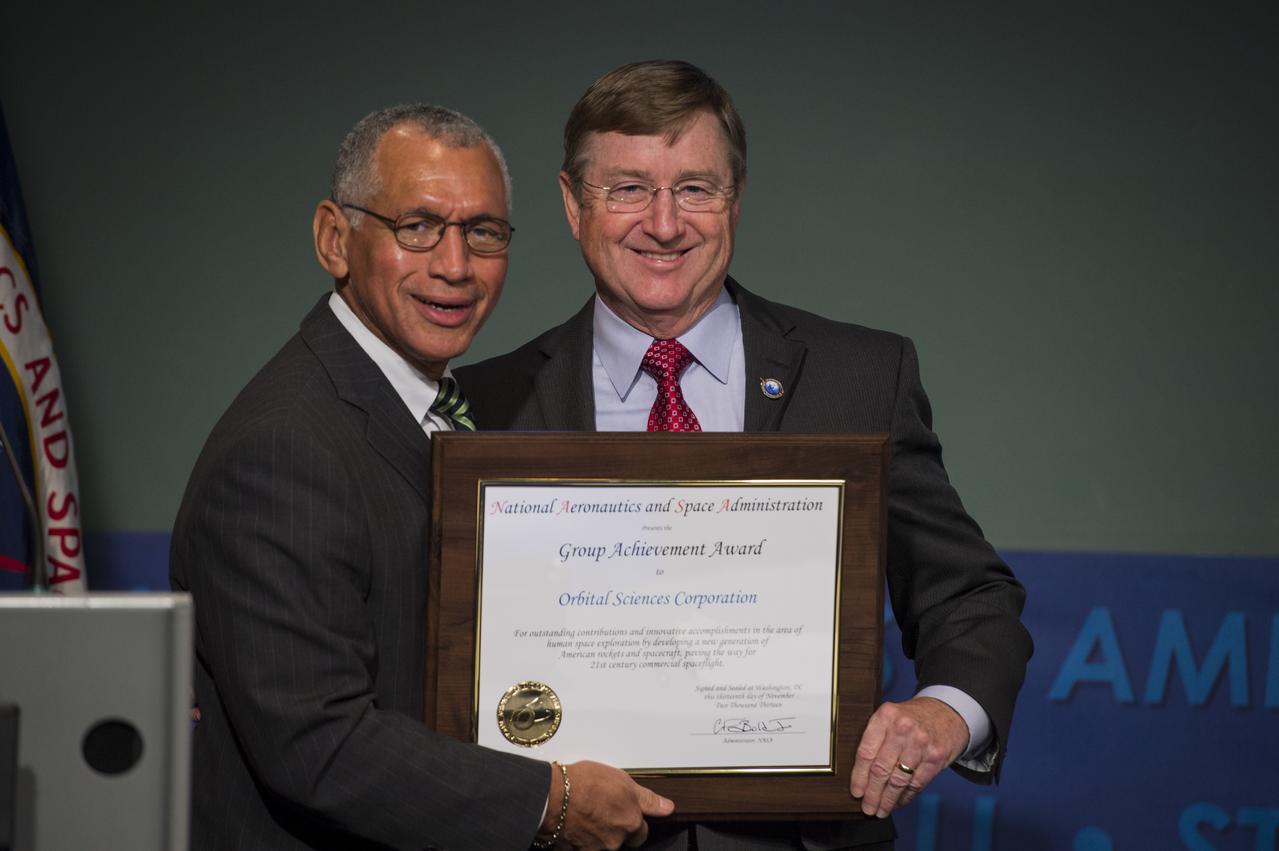
NASA Administrator Charles Bolden, left, presents NASA's Group Achievement Award to (L-R) Frank Culbertson, Executive Vice President and General Manager, Orbital Sciences Advanced Programs Group,at NASA Headquarters in Washington on Thursday, November 13, 2013. Culbertson received the award for outstanding contributions and innovative accomplishments in the completion of the Commercial Orbital Transportation Services (COTS) initiative. Through COTS, NASA's partners Space Exploration Technologies Corp. (SpaceX) and Orbital Sciences Corp., developed new U.S. rockets and spacecraft, launched from U.S. soil, capable of transporting cargo to low-Earth orbit and the International Space Station. Photo Credit: (NASA/Jay Westcott)
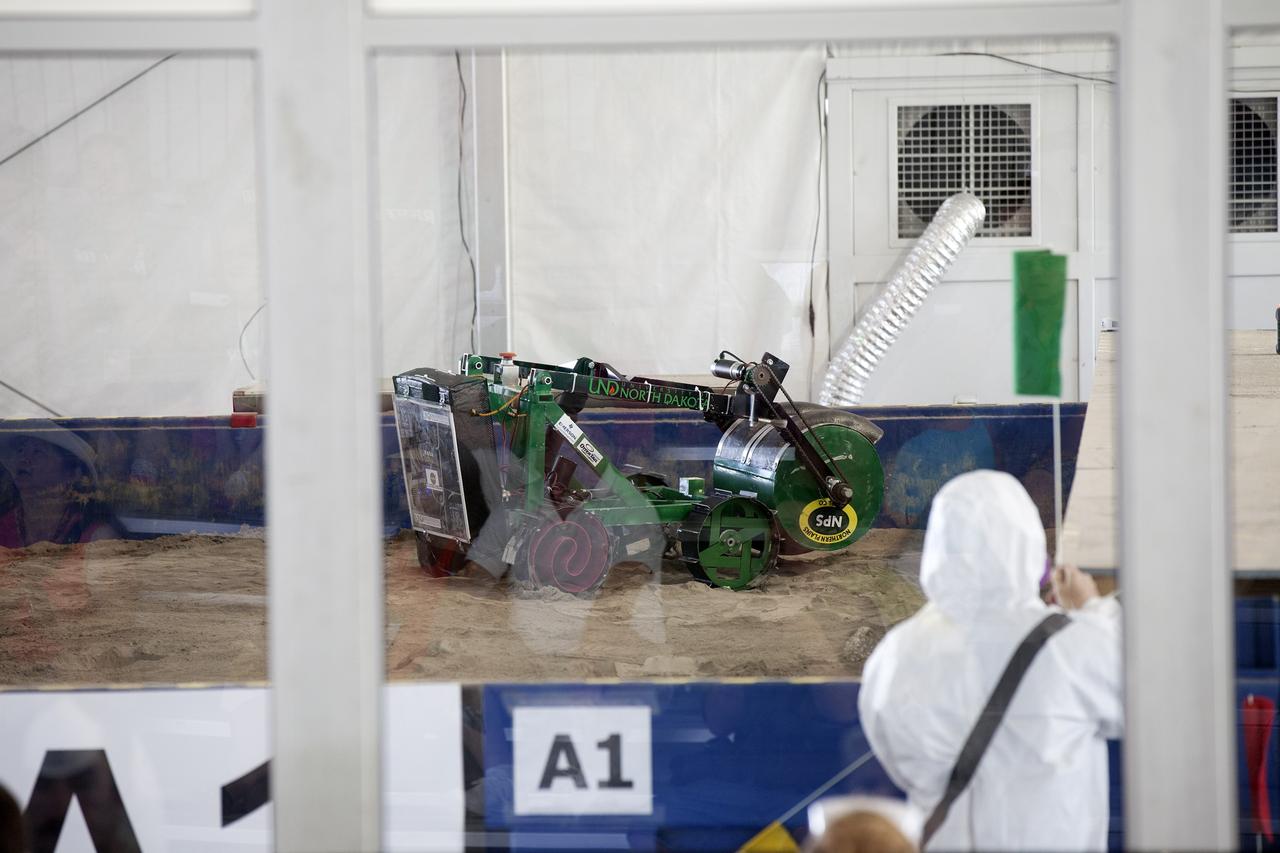
CAPE CANAVERAL, Fla. -- The University of North Dakota's robotic miner digs in the simulated Martian soil in the Caterpillar Mining Arena on the final day of NASA's 2014 Robotic Mining Competition at the Kennedy Space Center Visitor Complex in Florida. More than 35 teams from colleges and universities around the U.S. designed and built remote-controlled robots for the mining competition. The competition is a NASA Human Exploration and Operations Mission Directorate project designed to engage and retain students in science, technology, engineering and mathematics, or STEM, fields by expanding opportunities for student research and design. Teams use their remote-controlled robotics to maneuver and dig in a supersized sandbox filled with a crushed material that has characteristics similar to Martian soil. The objective of the challenge is to see which team’s robot can collect and move the most regolith within a specified amount of time. For more information, visit www.nasa.gov/nasarmc. Photo credit: NASA/Kim Shiflett

CAPE CANAVERAL, Fla. – Team members check their robot before the start of a mining session in simulated Martian soil in the Caterpillar Mining Arena during NASA’s 2014 Robotic Mining Competition at the Kennedy Space Center Visitor Complex in Florida. More than 35 teams from colleges and universities around the U.S. have designed and built remote-controlled robots for the mining competition. The competition is a NASA Human Exploration and Operations Mission Directorate project designed to engage and retain students in science, technology, engineering and mathematics, or STEM, fields by expanding opportunities for student research and design. Teams use their remote-controlled robotics to maneuver and dig in a supersized sandbox filled with a crushed material that has characteristics similar to Martian soil. The objective of the challenge is to see which team’s robot can collect and move the most regolith within a specified amount of time. For more information, visit www.nasa.gov/nasarmc. Photo credit: NASA/Kim Shiflett
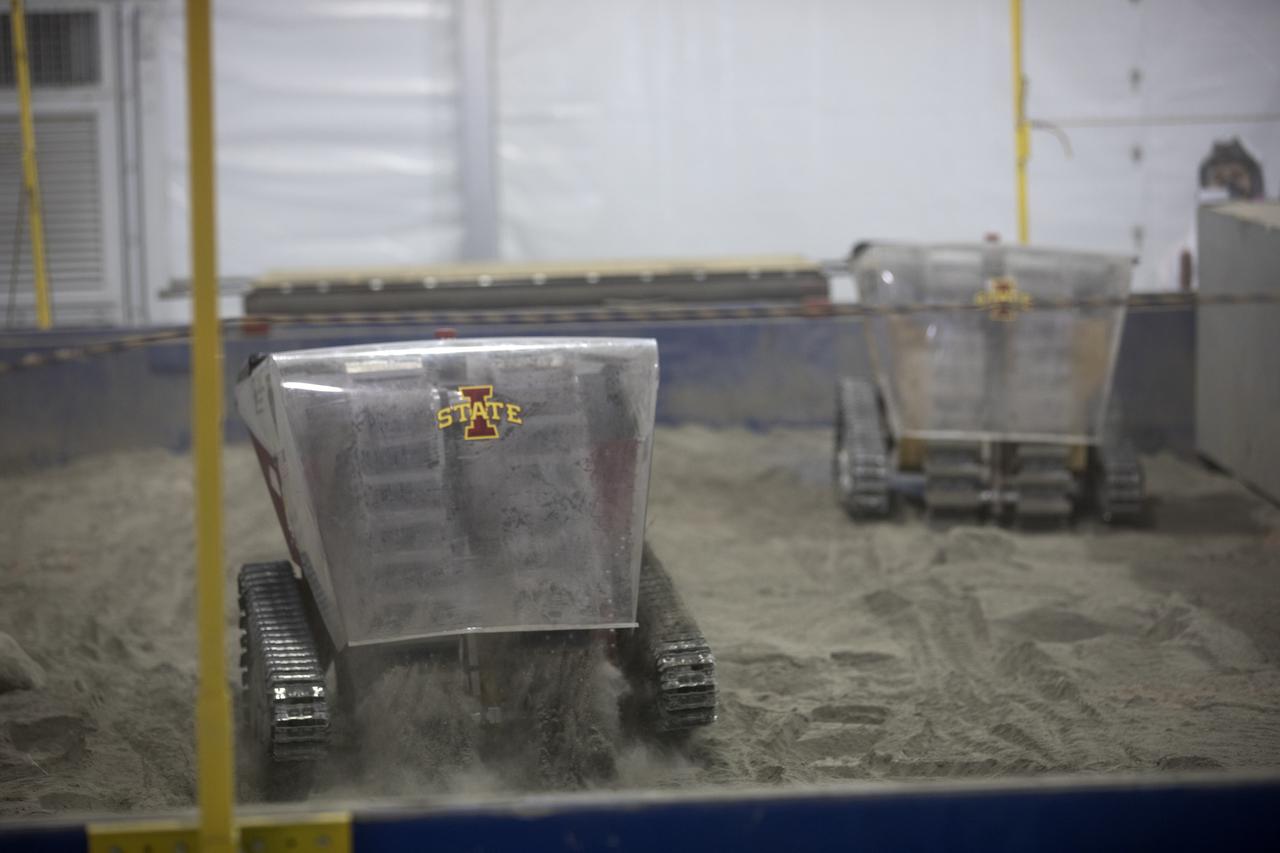
Twin mining robots from the University of Iowa dig in a supersized sandbox filled with BP-1, or simulated Martian soil, during NASA's 8th Annual Robotic Mining Competition at the Kennedy Space Center Visitor Complex in Florida. More than 40 student teams from colleges and universities around the U.S. are using their uniquely-designed mining robots to dig in a supersized sandbox filled with BP-1, or simulated Martian soil, and participate in other competition requirements. The Robotic Mining Competition is a NASA Human Exploration and Operations Mission Directorate project designed to encourage students in science, technology, engineering and math, or STEM fields. The project provides a competitive environment to foster innovative ideas and solutions that could be used on NASA's Journey to Mars.
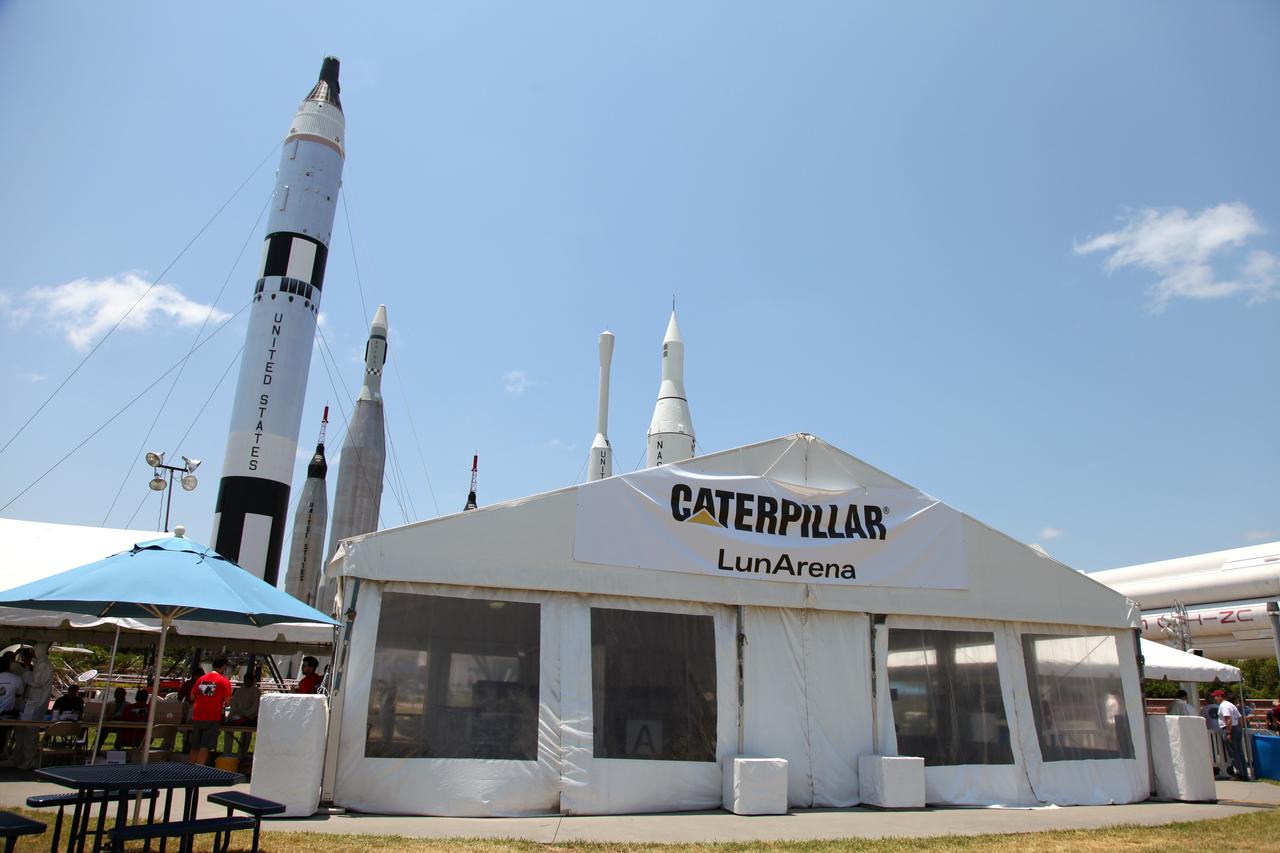
CAPE CANAVERAL, Fla. -- This tent called a "Lunarena" is a giant "sandbox," with about 60 tons of ultra-fine simulated lunar soil spread on the floor for NASA's second annual Lunabotics Mining Competition at the Kennedy Space Center Visitor Complex. Thirty-six teams of undergraduate and graduate students from the United States, Bangladesh, Canada, Colombia and India will participate in NASA's Lunabotics Mining Competition May 26 - 28 at the agency's Kennedy Space Center in Florida. The competition is designed to engage and retain students in science, technology, engineering and mathematics (STEM). Teams will maneuver their remote controlled or autonomous excavators, called lunabots, in about 60 tons of ultra-fine simulated lunar soil, called BP-1. The competition is an Exploration Systems Mission Directorate project managed by Kennedy's Education Division. The event also provides a competitive environment that could result in innovative ideas and solutions for NASA's future excavation of the moon. Photo credit: NASA/Frankie Martin
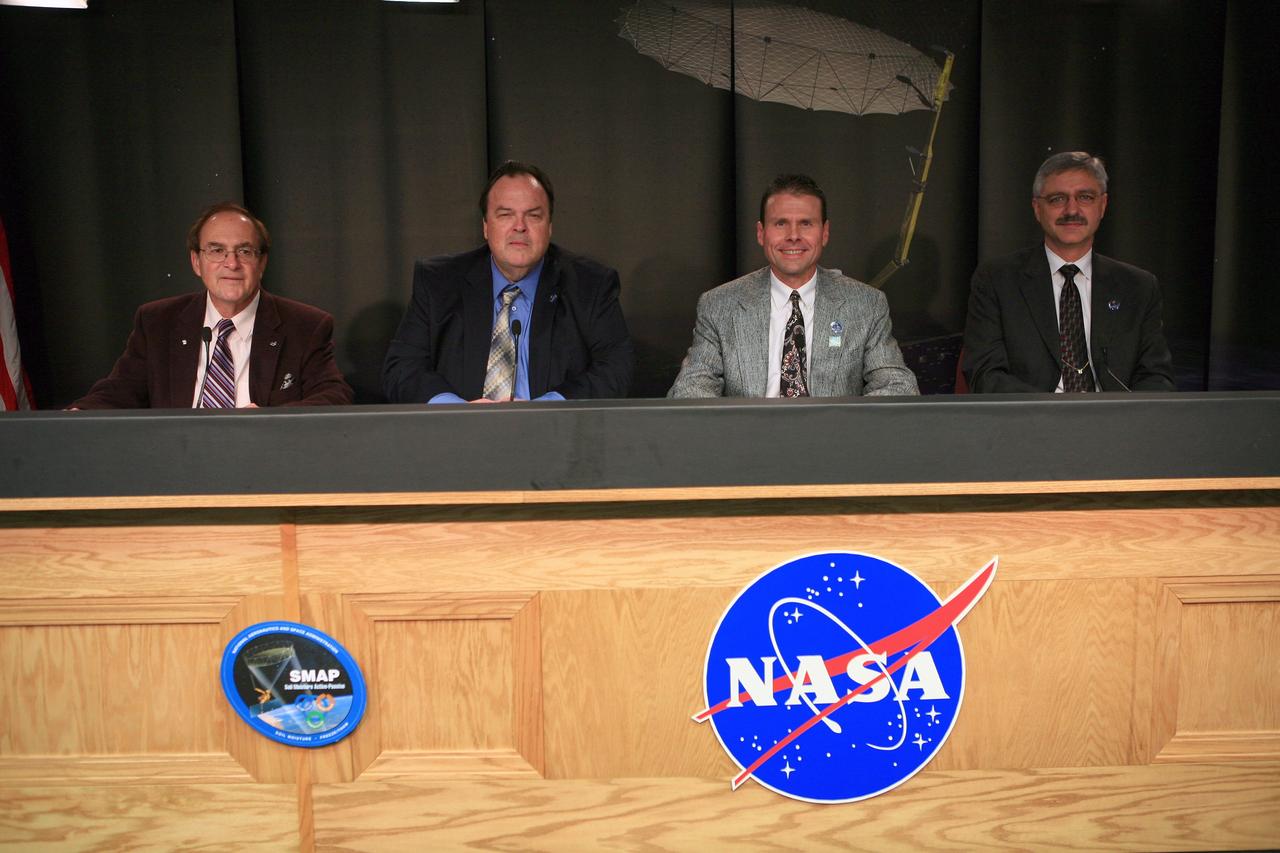
VANDENBERG AIR FORCE BASE, Calif. – During a news conference at Vandenberg Air Force Base in California, NASA officials discuss the launch of the Soil Moisture Active Passive satellite, or SMAP, and its mission to study the Earth's soil moisture. Participating in the briefing, from left, are George Diller of NASA Public Affairs, Kent Kellogg, SMAP project manager at the Jet Propulsion Laboratory in Pasadena, California, Scott Higginbotham, NASA mission manager for Educational Launch of Nanosatellites, or ELaNa-X, at the Kennedy Space Center, and Geoff Yoder, deputy associate administrator of the Science Mission Directorate at NASA Headquarters. To learn more about SMAP, visit http://www.nasa.gov/smap. Photo credit: NASA/Kim Shiflett
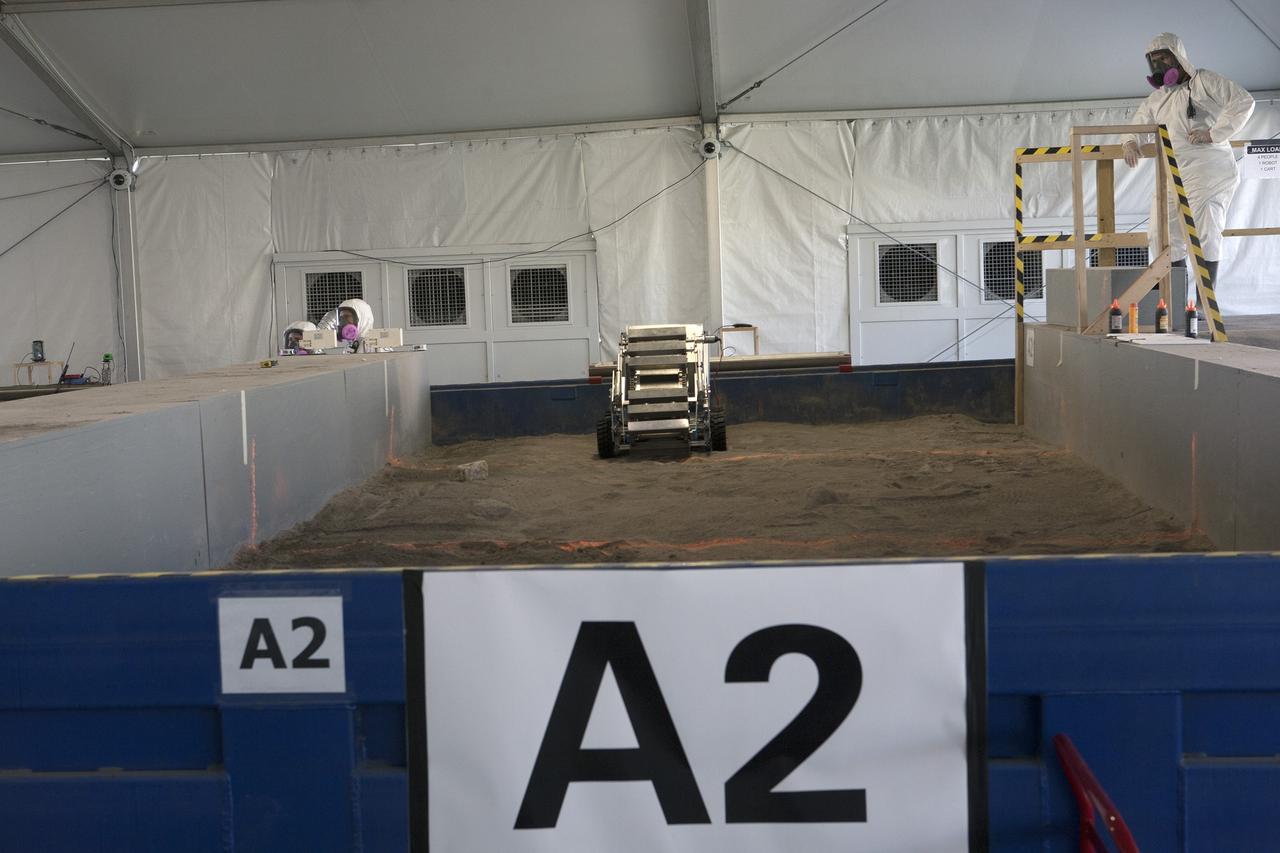
CAPE CANAVERAL, Fla. – Competition judges monitor the progress of a robot digging in the simulated Martian soil in the Caterpillar Mining Arena during NASA’s 2014 Robotic Mining Competition at the Kennedy Space Center Visitor Complex in Florida. More than 35 teams from around the U.S. have designed and built remote-controlled robots for the mining competition. The competition is a NASA Human Exploration and Operations Mission Directorate project designed to engage and retain students in science, technology, engineering and mathematics, or STEM, fields by expanding opportunities for student research and design. Teams use their remote-controlled robotics to maneuver and dig in a supersized sandbox filled with a crushed material that has characteristics similar to Martian soil. The objective of the challenge is to see which team’s robot can collect and move the most regolith within a specified amount of time. For more information, visit www.nasa.gov/nasarmc. Photo credit: NASA/Kim Shiflett

University students prepare their team's remote controlled or autonomous excavator, called a lunabot, to maneuver in about 60 tons of ultra-fine simulated lunar soil, called BP-1. Thirty-six teams of undergraduate and graduate students from the United States, Bangladesh, Canada, Colombia and India will participate in NASA's Lunabotics Mining Competition May 26 - 28 at the agency's Kennedy Space Center in Florida. The competition is designed to engage and retain students in science, technology, engineering and mathematics (STEM). Teams will maneuver their remote controlled or autonomous excavators, called lunabots, in about 60 tons of ultra-fine simulated lunar soil. The competition is an Exploration Systems Mission Directorate project managed by Kennedy's Education Division. The event also provides a competitive environment that could result in innovative ideas and solutions for NASA's future excavation of the moon. Photo credit: NASA/Jack Pfaller
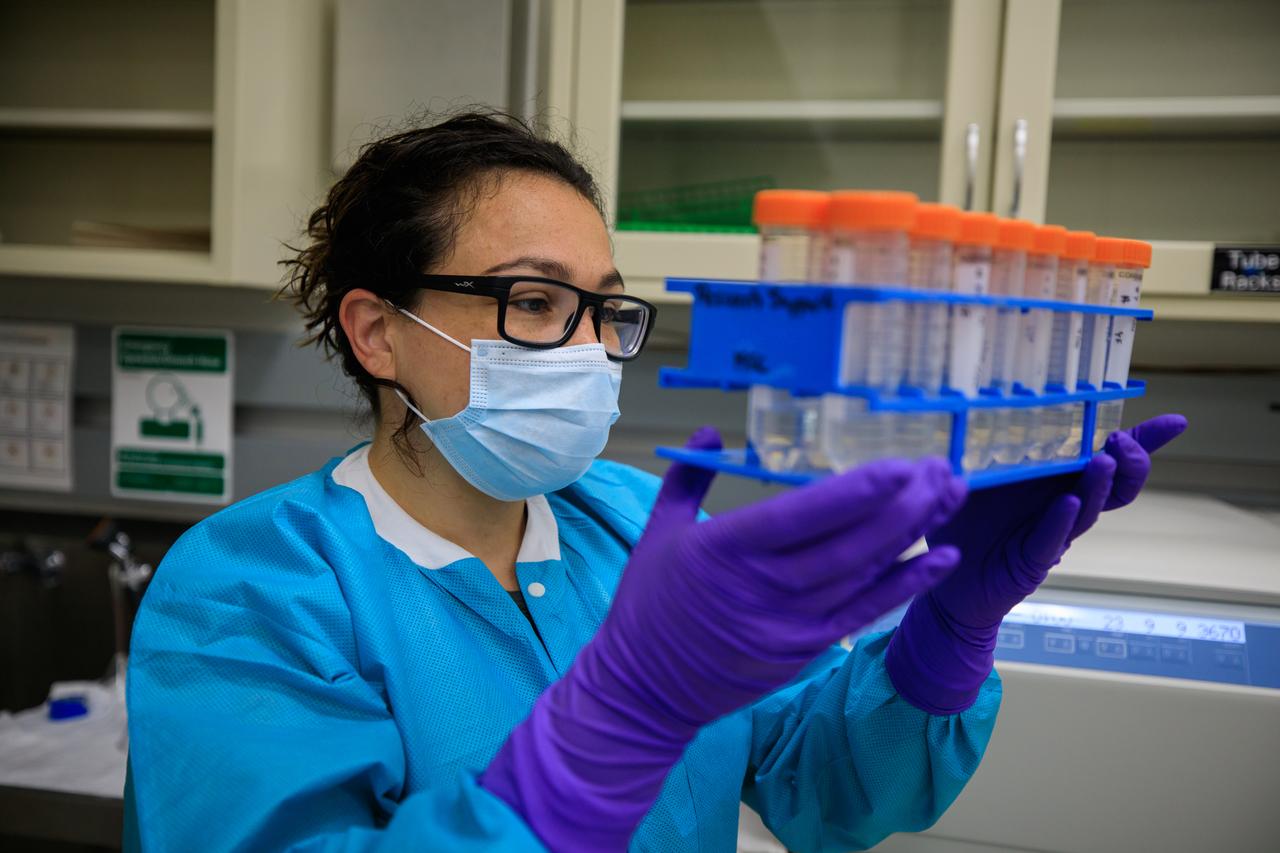
Marci Garcia, a research associate at Pacific Northwest National Laboratory (PNNL), examines some of the science tubes that make up the Dynamics of Microbiomes in Space (DynaMoS) experiment inside a laboratory at the Space Station Processing Facility on July 11, 2022. The DynaMoS experiment will launch on SpaceX’s 25th cargo resupply services mission to examine how microgravity affects metabolic interactions in communities of soil microbes. This will help NASA understand the function of soil microorganisms in space versus on Earth and how they can be used to enhance plant growth for crew consumption during long-duration missions to the Moon and Mars. SpaceX’s Falcon 9 rocket and Dragon spacecraft are scheduled to lift off from Kennedy’s Launch Complex 39A at 8:44 p.m. EDT on Thursday, July 14.
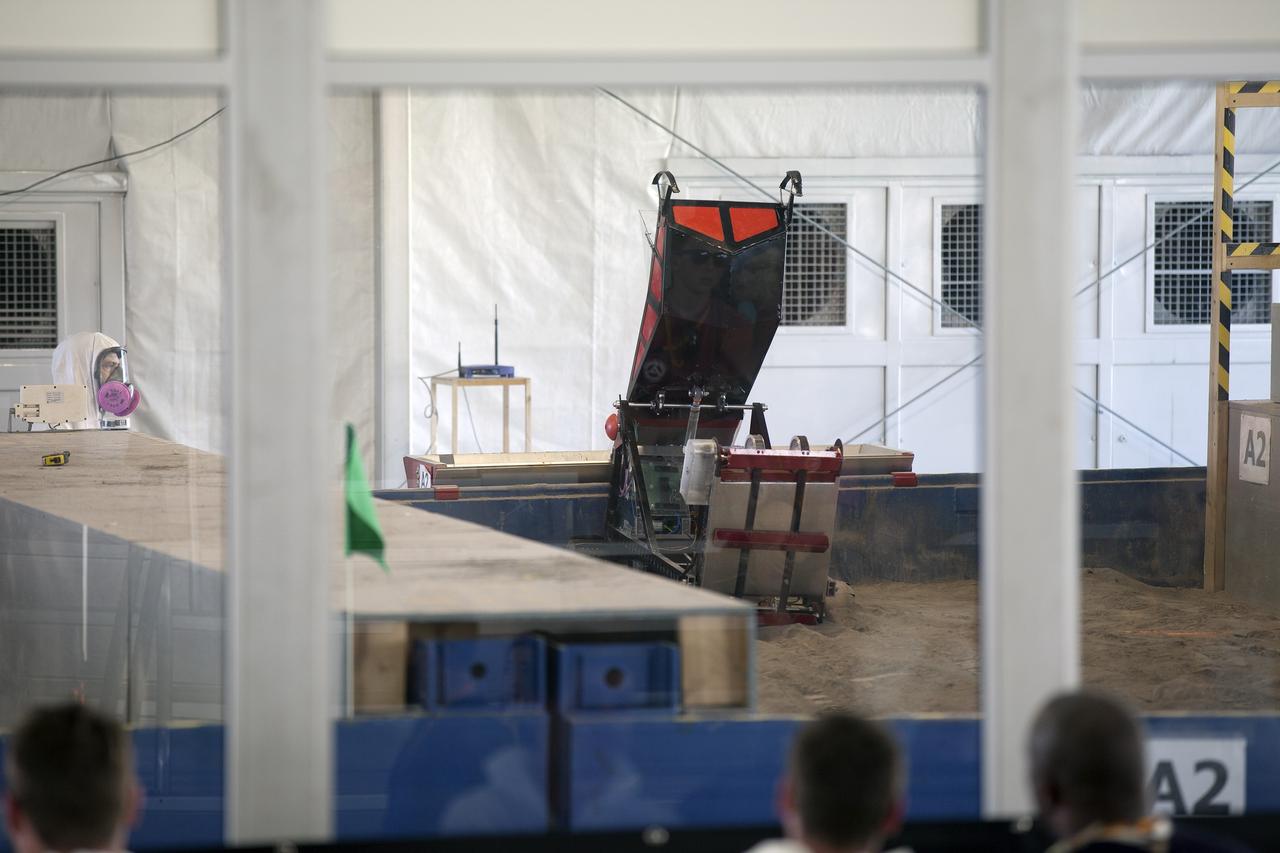
CAPE CANAVERAL, Fla. – A robot dumps its load of simulated Martian soil in a collector in the Caterpillar Mining Arena during NASA’s 2014 Robotic Mining Competition at the Kennedy Space Center Visitor Complex in Florida. A competition judge monitors the progress. More than 35 teams from colleges and universities around the U.S. have designed and built remote-controlled robots for the mining competition. The competition is a NASA Human Exploration and Operations Mission Directorate project designed to engage and retain students in science, technology, engineering and mathematics, or STEM, fields by expanding opportunities for student research and design. Teams use their remote-controlled robotics to maneuver and dig in a supersized sandbox filled with a crushed material that has characteristics similar to Martian soil. The objective of the challenge is to see which team’s robot can collect and move the most regolith within a specified amount of time. For more information, visit www.nasa.gov/nasarmc. Photo credit: NASA/Kim Shiflett
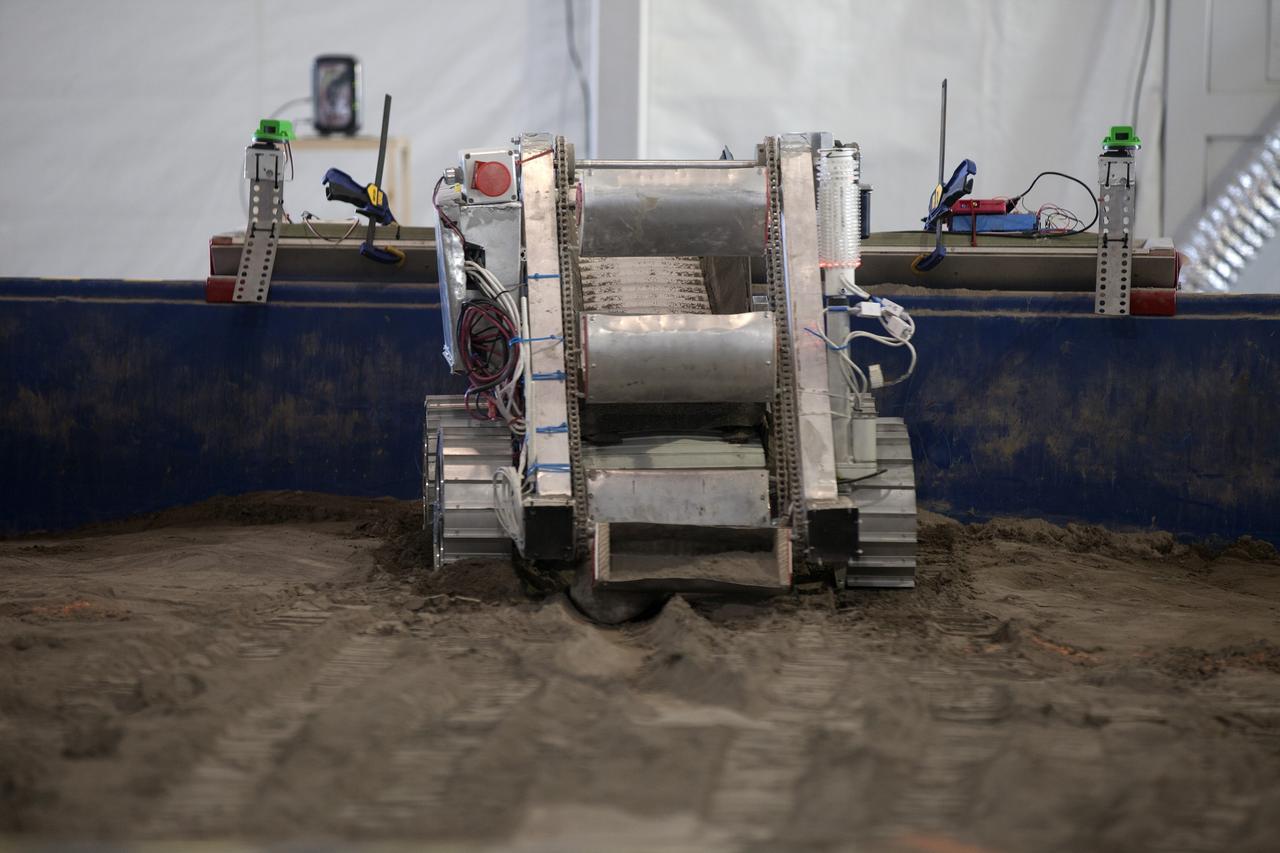
CAPE CANAVERAL, Fla. – A robot digs in the simulated Martian soil in the Caterpillar Mining Arena during NASA’s 2014 Robotic Mining Competition at the Kennedy Space Center Visitor Complex in Florida. More than 35 teams from around the U.S. have designed and built remote-controlled robots for the mining competition. The competition is a NASA Human Exploration and Operations Mission Directorate project designed to engage and retain students in science, technology, engineering and mathematics, or STEM, fields by expanding opportunities for student research and design. Teams use their remote-controlled robotics to maneuver and dig in a supersized sandbox filled with a crushed material that has characteristics similar to Martian soil. The objective of the challenge is to see which team’s robot can collect and move the most regolith within a specified amount of time. For more information, visit www.nasa.gov/nasarmc. Photo credit: NASA/Kim Shiflett
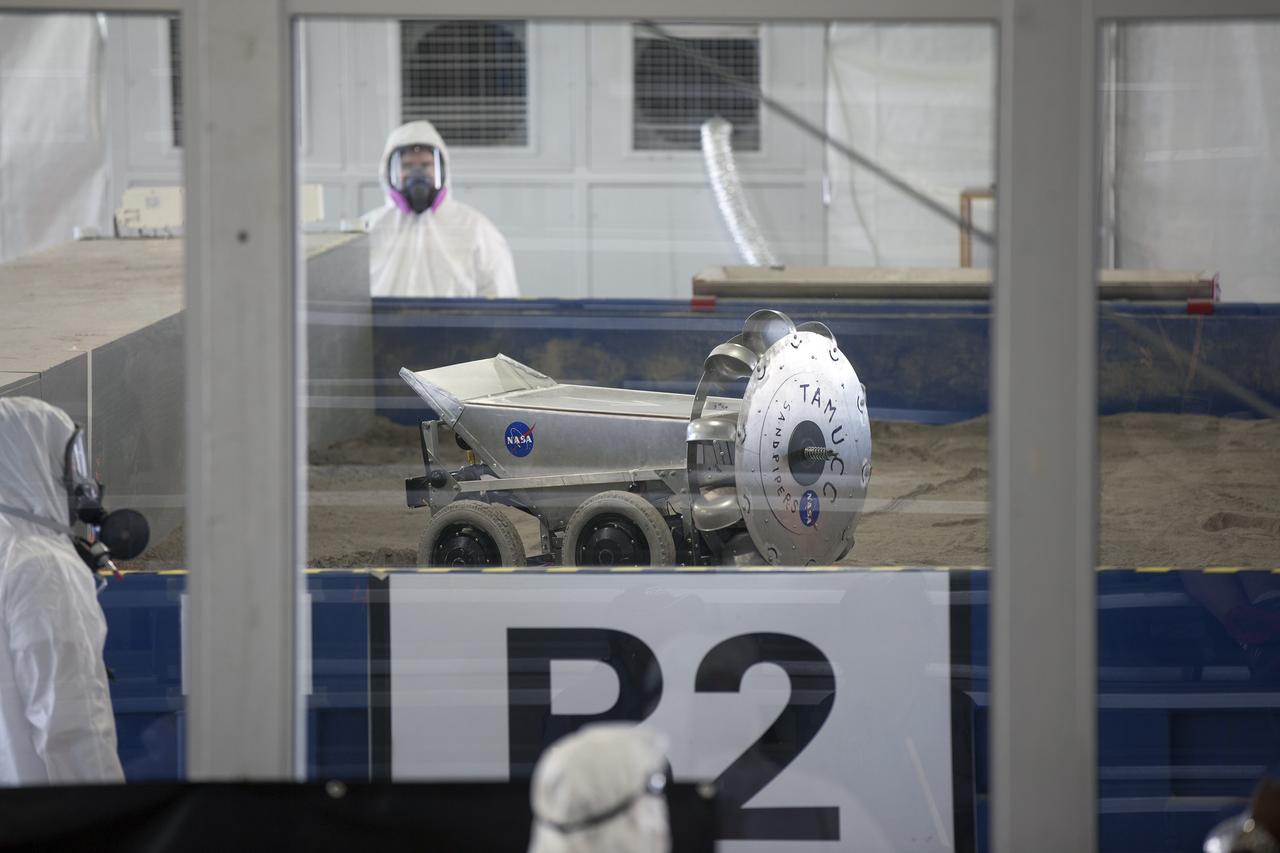
CAPE CANAVERAL, Fla. – Competition judges monitor the progress of a robot digging in the simulated Martian soil in the Caterpillar Mining Arena during NASA’s 2014 Robotic Mining Competition at the Kennedy Space Center Visitor Complex in Florida. More than 35 teams from colleges and universities around the U.S. have designed and built remote-controlled robots for the mining competition. The competition is a NASA Human Exploration and Operations Mission Directorate project designed to engage and retain students in science, technology, engineering and mathematics, or STEM, fields by expanding opportunities for student research and design. Teams use their remote-controlled robotics to maneuver and dig in a supersized sandbox filled with a crushed material that has characteristics similar to Martian soil. The objective of the challenge is to see which team’s robot can collect and move the most regolith within a specified amount of time. For more information, visit www.nasa.gov/nasarmc. Photo credit: NASA/Kim Shiflett
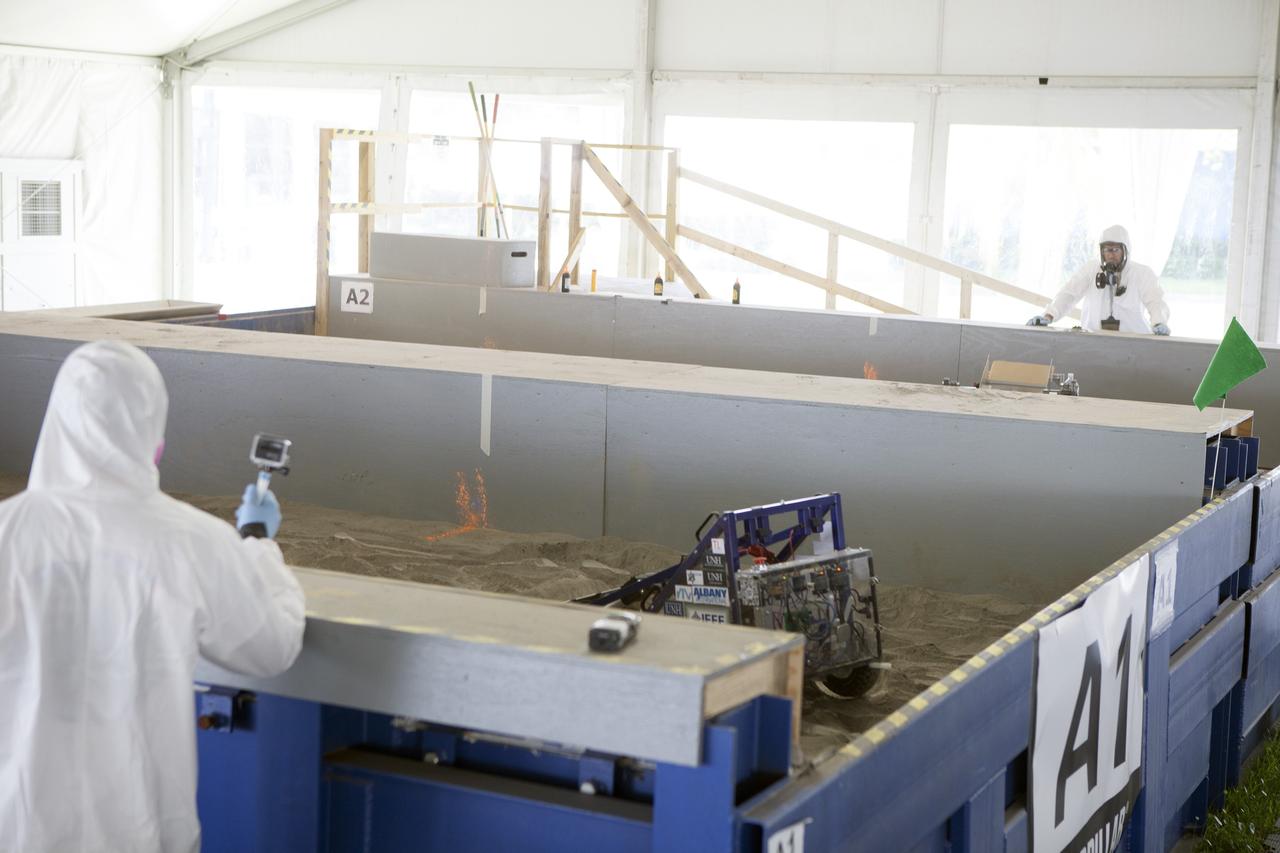
CAPE CANAVERAL, Fla. – Competition judges monitor two team's robots digging in the simulated Martian soil in the Caterpillar Mining Arena during NASA’s 2014 Robotic Mining Competition at the Kennedy Space Center Visitor Complex in Florida. More than 35 teams from colleges and universities around the U.S. have designed and built remote-controlled robots for the mining competition. The competition is a NASA Human Exploration and Operations Mission Directorate project designed to engage and retain students in science, technology, engineering and mathematics, or STEM, fields by expanding opportunities for student research and design. Teams use their remote-controlled robotics to maneuver and dig in a supersized sandbox filled with a crushed material that has characteristics similar to Martian soil. The objective of the challenge is to see which team’s robot can collect and move the most regolith within a specified amount of time. For more information, visit www.nasa.gov/nasarmc. Photo credit: NASA/Kim Shiflett
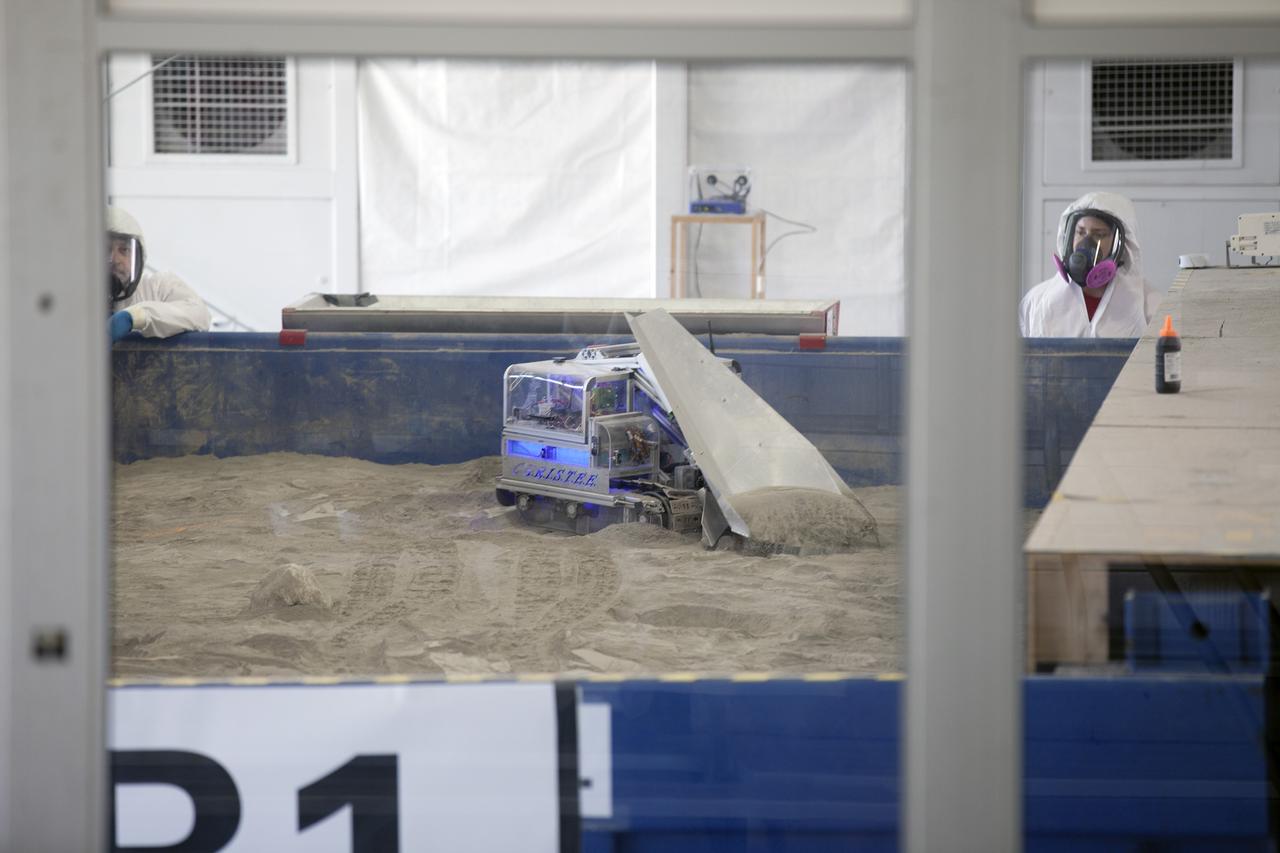
CAPE CANAVERAL, Fla. – A robot digs in the simulated Martian soil in the Caterpillar Mining Arena during NASA’s 2014 Robotic Mining Competition at the Kennedy Space Center Visitor Complex in Florida. More than 35 teams from colleges and universities around the U.S. have designed and built remote-controlled robots for the mining competition. The competition is a NASA Human Exploration and Operations Mission Directorate project designed to engage and retain students in science, technology, engineering and mathematics, or STEM, fields by expanding opportunities for student research and design. Teams use their remote-controlled robotics to maneuver and dig in a supersized sandbox filled with a crushed material that has characteristics similar to Martian soil. The objective of the challenge is to see which team’s robot can collect and move the most regolith within a specified amount of time. For more information, visit www.nasa.gov/nasarmc. Photo credit: NASA/Kim Shiflett
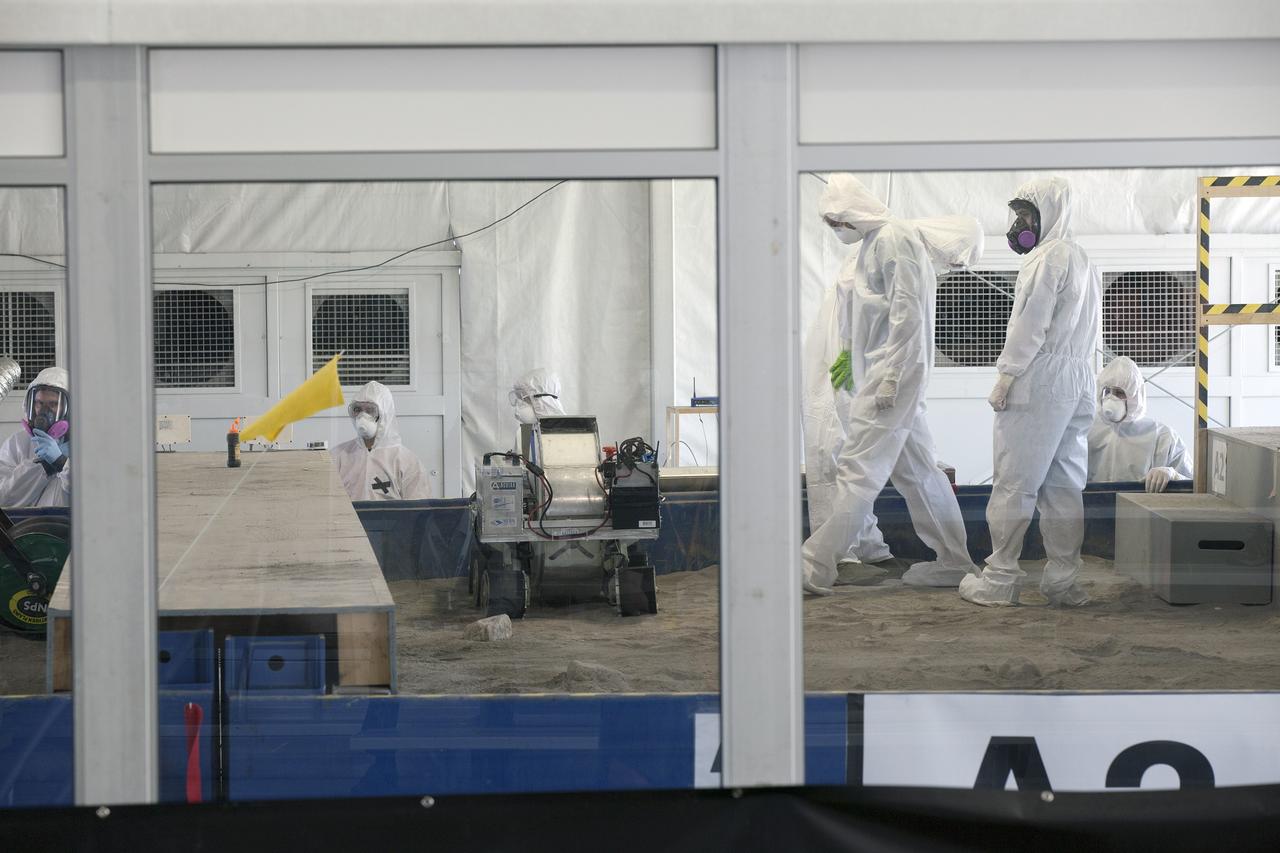
CAPE CANAVERAL, Fla. -- Team members prepare their robot to dig in simulated Martian soil in the Caterpillar Mining Arena on the final day of NASA's 2014 Robotic Mining Competition at the Kennedy Space Center Visitor Complex in Florida. More than 35 teams from colleges and universities around the U.S. designed and built remote-controlled robots for the mining competition. The competition is a NASA Human Exploration and Operations Mission Directorate project designed to engage and retain students in science, technology, engineering and mathematics, or STEM, fields by expanding opportunities for student research and design. Teams use their remote-controlled robotics to maneuver and dig in a supersized sandbox filled with a crushed material that has characteristics similar to Martian soil. The objective of the challenge is to see which team’s robot can collect and move the most regolith within a specified amount of time. For more information, visit www.nasa.gov/nasarmc. Photo credit: NASA/Kim Shiflett
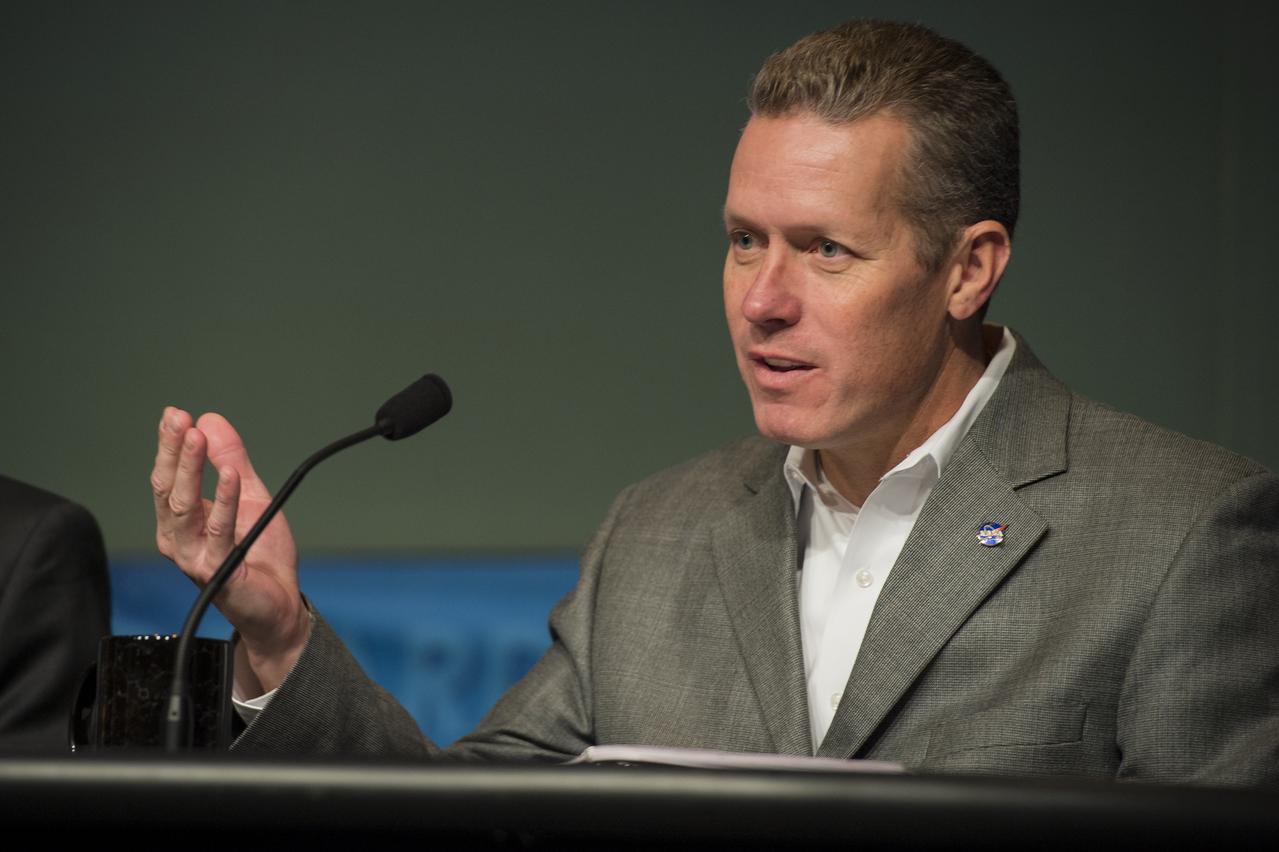
Phil McAlister, Director of Commercial Spaceflight Development at NASA, delivers remarks panel discussion on the Commercial Orbital Transportation Services (COTS) initiative at NASA Headquarters in Washington on Wednesday, November 13, 2013. Through COTS, NASA's partners Space Exploration Technologies Corp. (SpaceX) and Orbital Sciences Corp., developed new U.S. rockets and spacecraft, launched from U.S. soil, capable of transporting cargo to low-Earth orbit and the International Space Station. Photo Credit: (NASA/Jay Westcott)
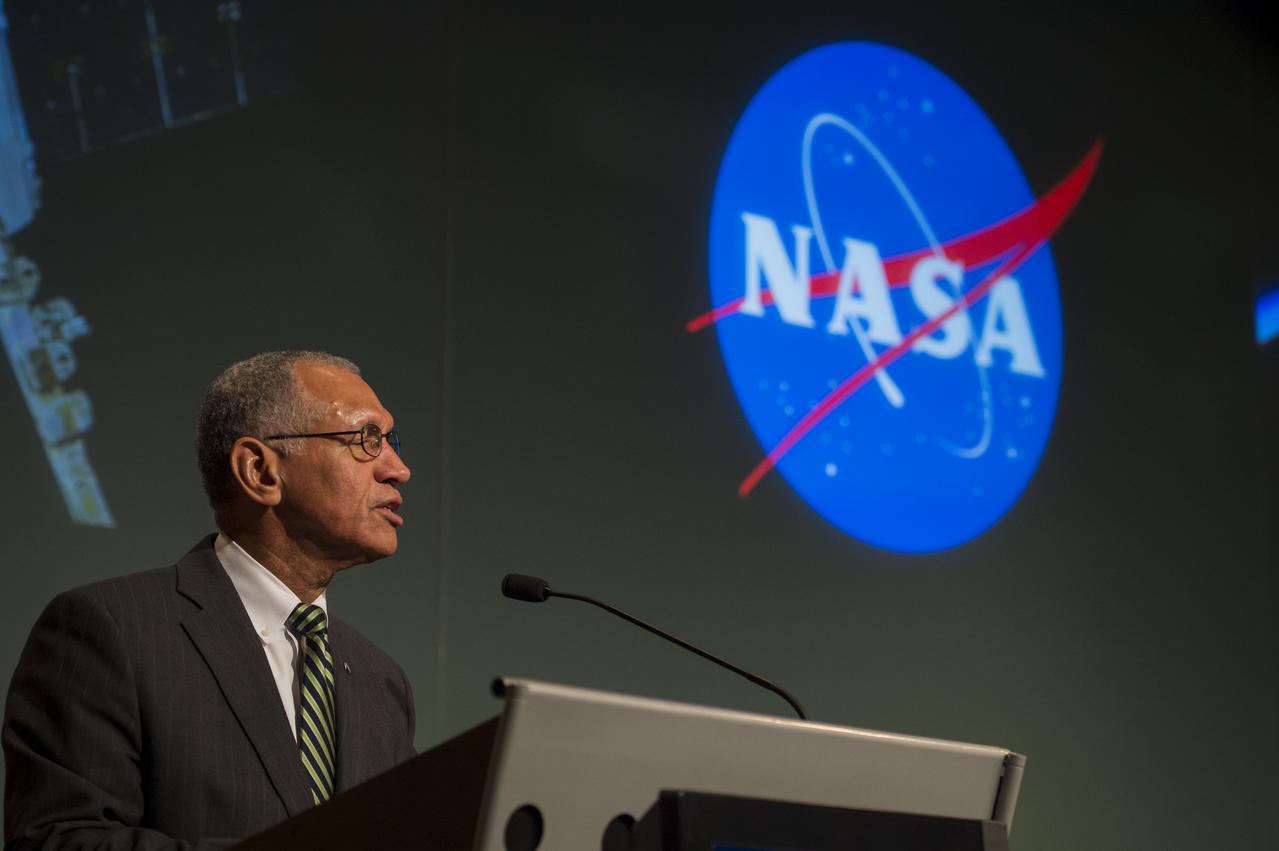
NASA Administrator Charles Bolden delivers remarks before a panel discussion on the Commercial Orbital Transportation Services (COTS) initiative at NASA Headquarters in Washington on Wednesday, November 13, 2013. Through COTS, NASA's partners Space Exploration Technologies Corp. (SpaceX) and Orbital Sciences Corp., developed new U.S. rockets and spacecraft, launched from U.S. soil, capable of transporting cargo to low-Earth orbit and the International Space Station. Photo Credit: (NASA/Jay Westcott)
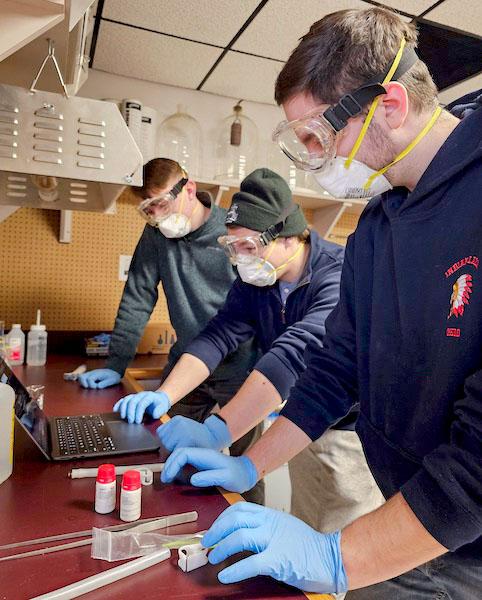
jsc2024e066535 (1/31/2024) --- The University of North Dakota Space Beans Crew looks over their data during the first run of their experiment, The Effects of 6-Benzylaminopurine Enriched Soil on the Growth of Phaseolus vulgaris (Black Beans) in Microgravity. Their experiment is part of the Nanoracks-National Center for Earth and Space Science Education-Surveyor-Student Spaceflight Experiments Program Mission 18 to ISS (Nanoracks-NCESSE-Surveyor-SSEP).
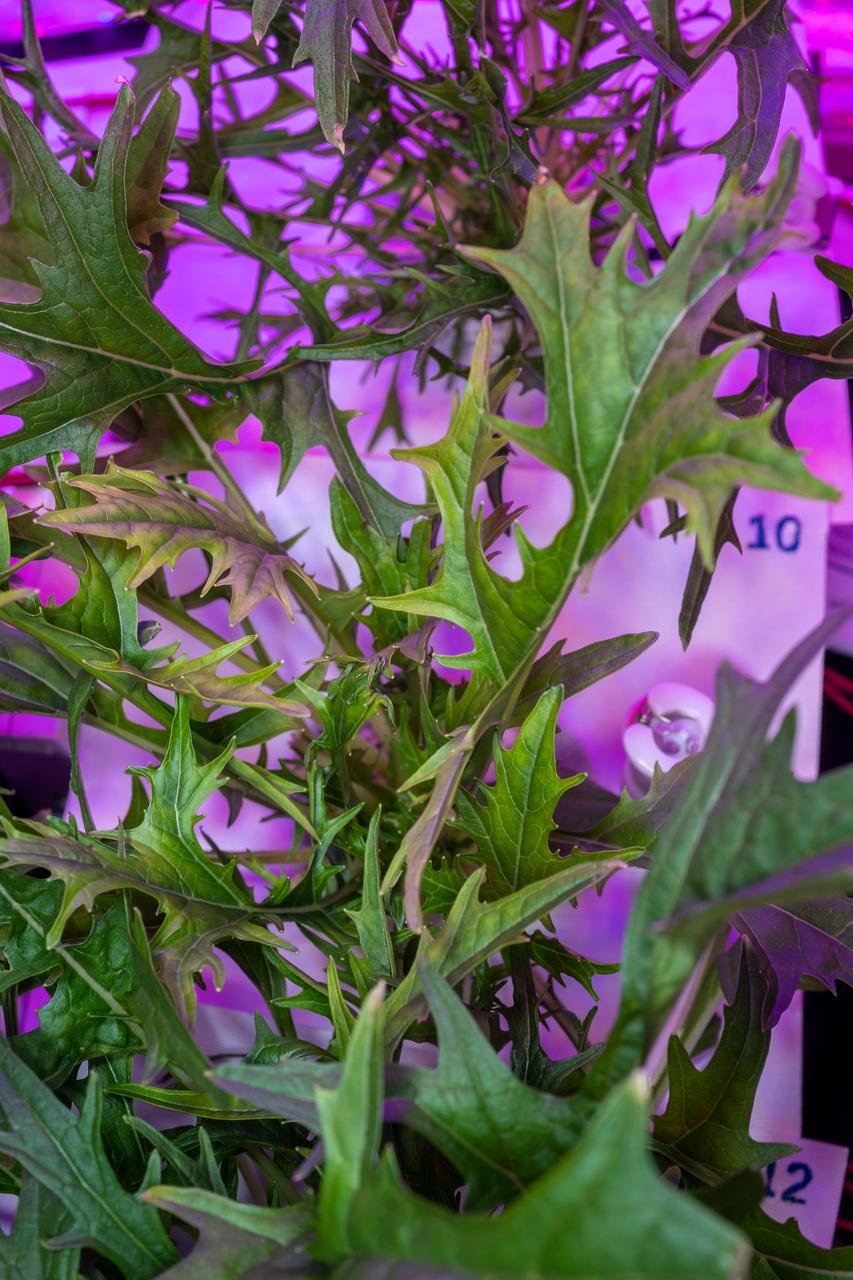
iss061e033379 (Nov. 7, 2019) --- Mizuna mustard greens are growing aboard the International Space Station to demonstrate the feasibility of space agriculture to provide fresh food for crews on deep space missions. The plants are grown under red-to-blue lighting and watered in pillows rather than soil in a specialized botany facility called VEGGIE. Crops are grown, harvested and consumed by astronauts with some samples stowed in science freezers for later analysis as part of the VEG-04 study.

Gwynne Shotwell, President of SpaceX, delivers remarks panel discussion on the Commercial Orbital Transportation Services (COTS) initiative at NASA Headquarters in Washington on Wednesday, November 13, 2013. Through COTS, NASA's partners Space Exploration Technologies Corp. (SpaceX) and Orbital Sciences Corp., developed new U.S. rockets and spacecraft, launched from U.S. soil, capable of transporting cargo to low-Earth orbit and the International Space Station. Photo Credit: (NASA/Jay Westcott)

Alan Lindenmoyer, Manager of Commercial Crew and Cargo Program at NASA, delivers remarks panel discussion on the Commercial Orbital Transportation Services (COTS) initiative at NASA Headquarters in Washington on Wednesday, November 13, 2013. Through COTS, NASA's partners Space Exploration Technologies Corp. (SpaceX) and Orbital Sciences Corp., developed new U.S. rockets and spacecraft, launched from U.S. soil, capable of transporting cargo to low-Earth orbit and the International Space Station. Photo Credit: (NASA/Jay Westcott)
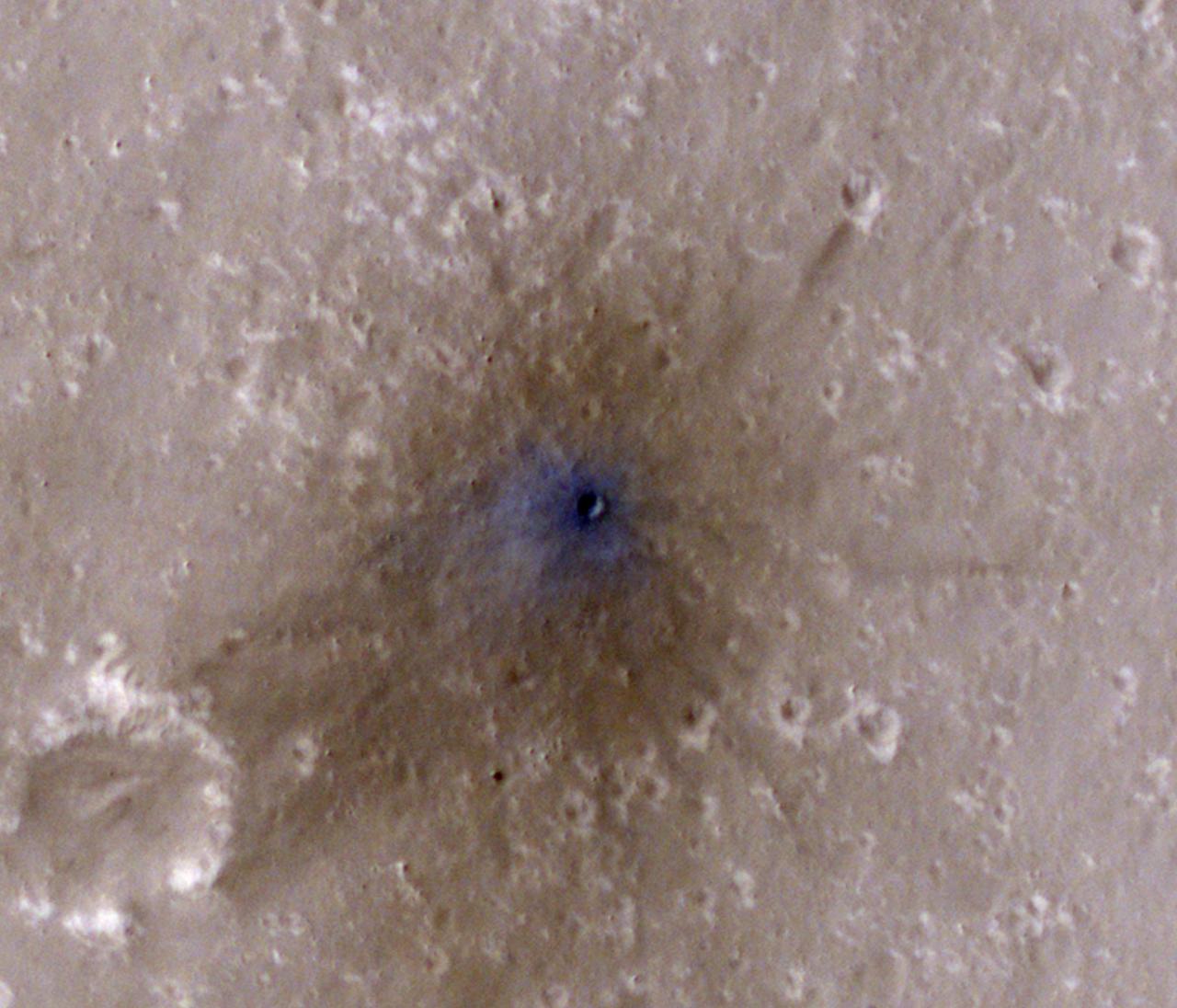
NASA's Mars Reconnaissance Orbiter captured this image of a meteoroid impact that was first detected by the agency's InSight lander using its seismometer. This crater was formed on Feb. 18, 2021. MRO's High Resolution Imaging Science Experiment (HiRISE) camera captured this scene in color. The ground is not actually blue; this enhanced-color image highlights certain hues in the scene to make details more visible to the human eye – in this case, dust and soil disturbed by the impact. https://photojournal.jpl.nasa.gov/catalog/PIA25409
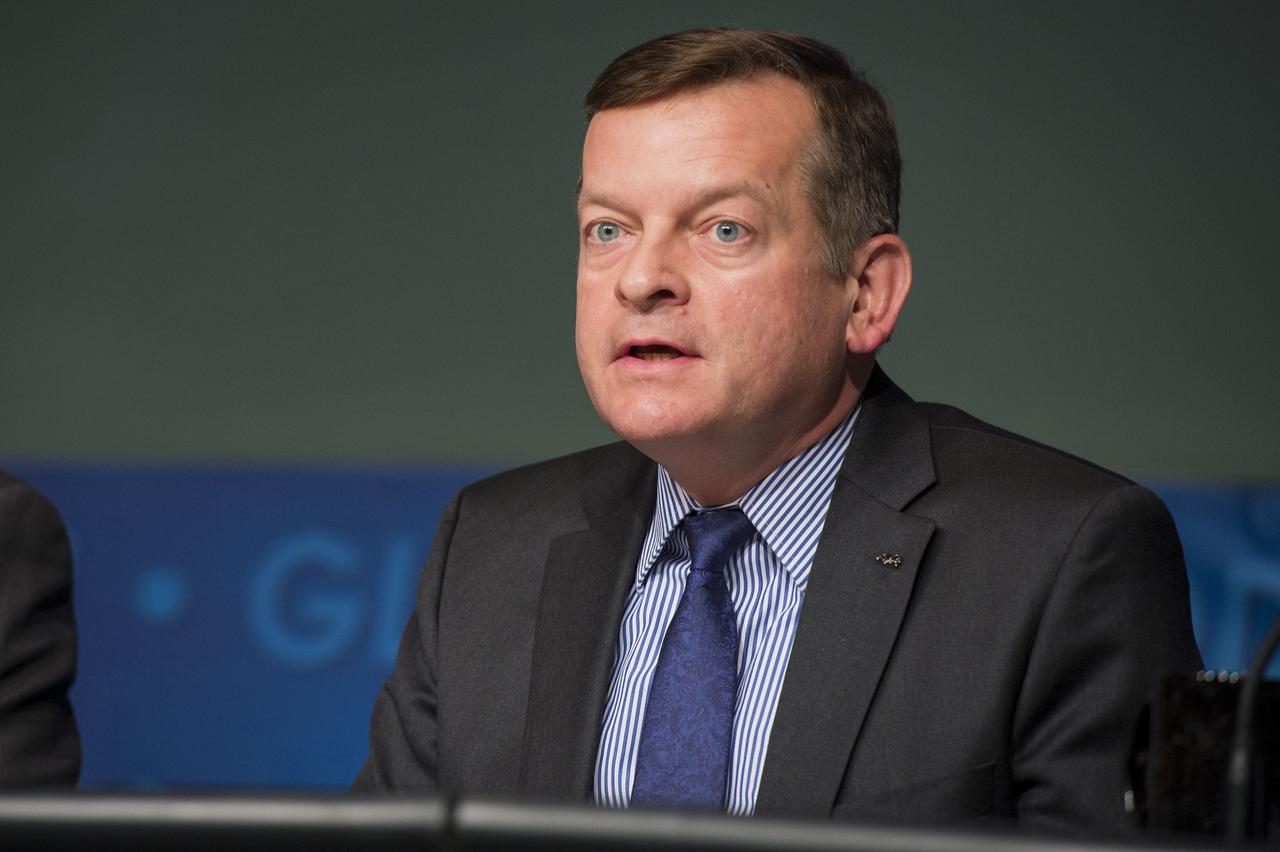
Frank Slazer, Vice President of Space Systems, Aerospace Industries Association, delivers remarks panel discussion on the Commercial Orbital Transportation Services (COTS) initiative at NASA Headquarters in Washington on Wednesday, November 13, 2013. Through COTS, NASA's partners Space Exploration Technologies Corp. (SpaceX) and Orbital Sciences Corp., developed new U.S. rockets and spacecraft, launched from U.S. soil, capable of transporting cargo to low-Earth orbit and the International Space Station. Photo Credit: (NASA/Jay Westcott)
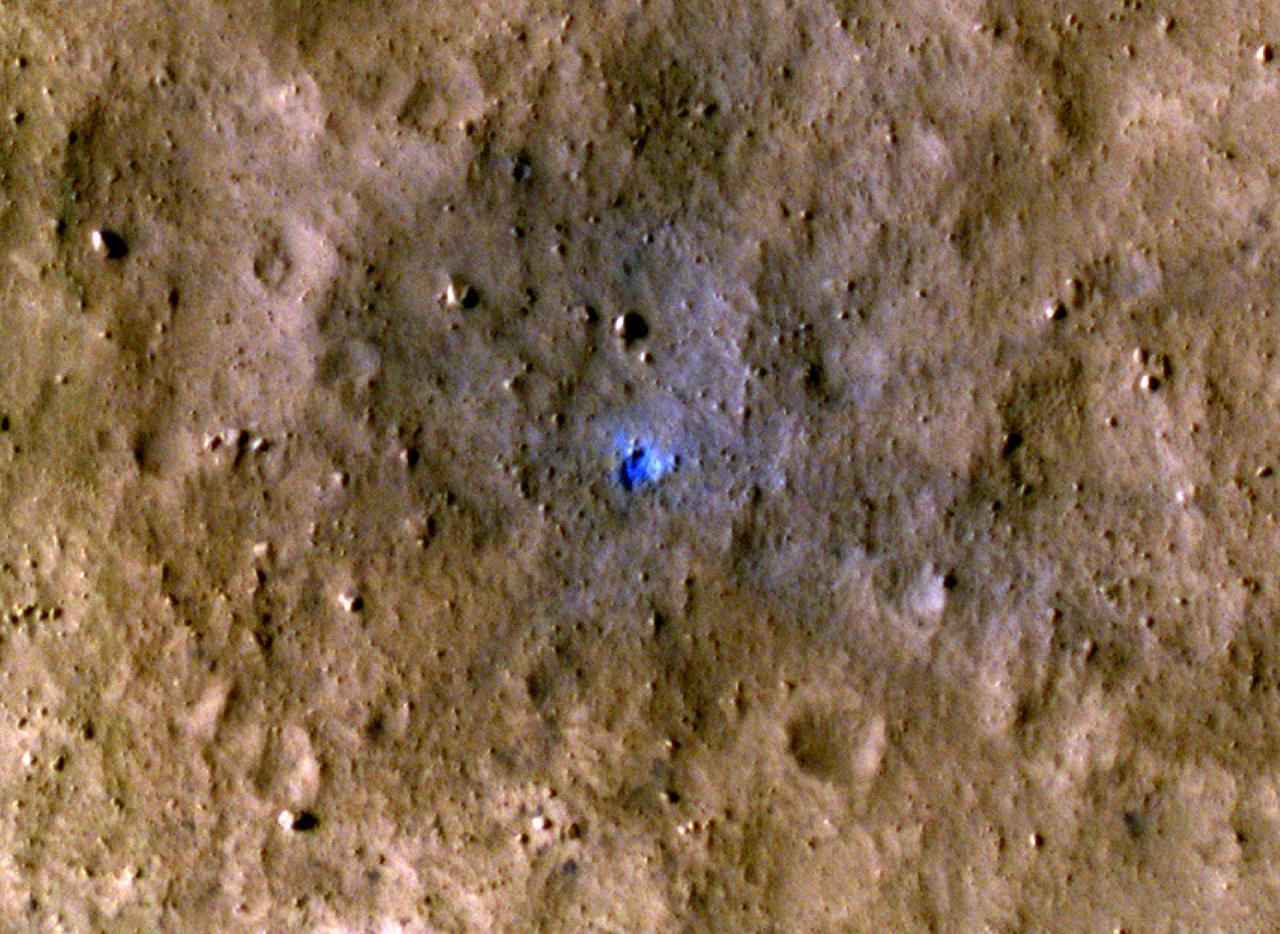
NASA's Mars Reconnaissance Orbiter captured this image of a meteoroid impact that was first detected by the agency's InSight lander using its seismometer. This crater was formed on Aug. 30, 2021. MRO's High Resolution Imaging Science Experiment (HiRISE) camera captured this scene in color. The ground is not actually blue; this enhanced-color image highlights certain hues in the scene to make details more visible to the human eye – in this case, dust and soil disturbed by the impact. https://photojournal.jpl.nasa.gov/catalog/PIA25411

NASA Administrator Charles Bolden delivers remarks before a panel discussion on the Commercial Orbital Transportation Services (COTS) initiative at NASA Headquarters in Washington on Wednesday, November 13, 2013. Through COTS, NASA's partners Space Exploration Technologies Corp. (SpaceX) and Orbital Sciences Corp., developed new U.S. rockets and spacecraft, launched from U.S. soil, capable of transporting cargo to low-Earth orbit and the International Space Station. Photo Credit: (NASA/Jay Westcott)

iss061e033363 (Nov. 7, 2019) --- Mizuna mustard greens are growing aboard the International Space Station to demonstrate the feasibility of space agriculture to provide fresh food for crews on deep space missions. The plants are grown under red-to-blue lighting and watered in pillows rather than soil in a specialized botany facility called VEGGIE. Crops are grown, harvested and consumed by astronauts with some samples stowed in science freezers for later analysis as part of the VEG-04 study.
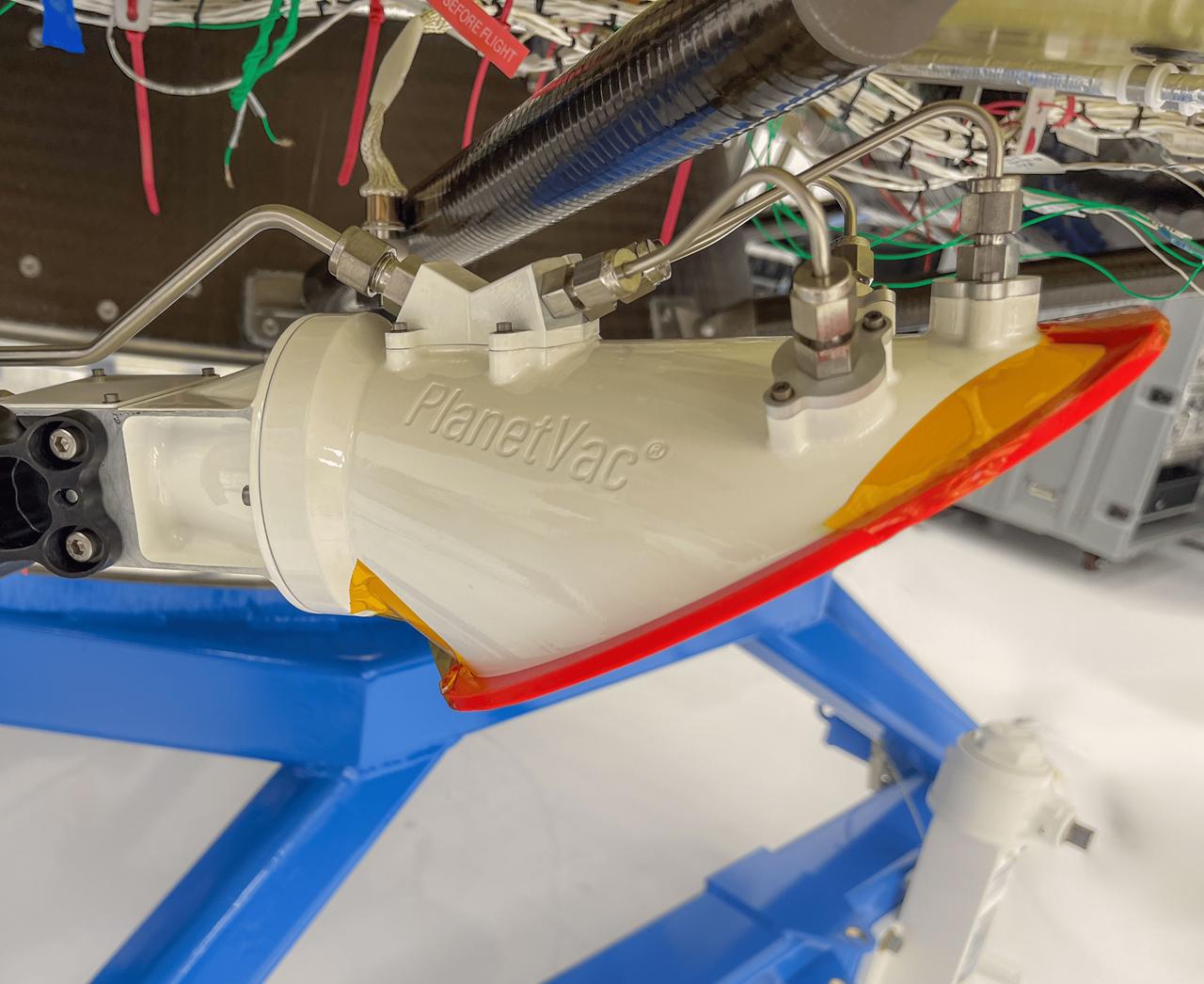
A technology demonstration flying aboard the next delivery for NASA’s CLPS (Commercial Lunar Payload Services) initiative could change how research teams collect and study soil and rock samples on other planetary bodies. Lunar PlanetVac, or LPV, is one of 10 payloads set to be carried to the Moon by the Blue Ghost 1 lunar lander in 2025. Developed by Honeybee Robotics, a Blue Origin company of Altadena, California, LPV is designed to, essentially, operate as a vacuum cleaner with a pneumatic, compressed gas-powered sample acquisition and delivery system to efficiently collect and transfer lunar soil from the surface to other science instruments or sample return containers. Investigations and demonstrations, such as LPV, launched on CLPS flights will help NASA study Earth’s nearest neighbor under Artemis and pave the way for future crewed missions on the Moon. NASA’s Marshall Space Flight Center in Huntsville, Alabama, manages the development for seven of the 10 CLPS payloads that will be carried on Firefly’s Blue Ghost lunar lander.
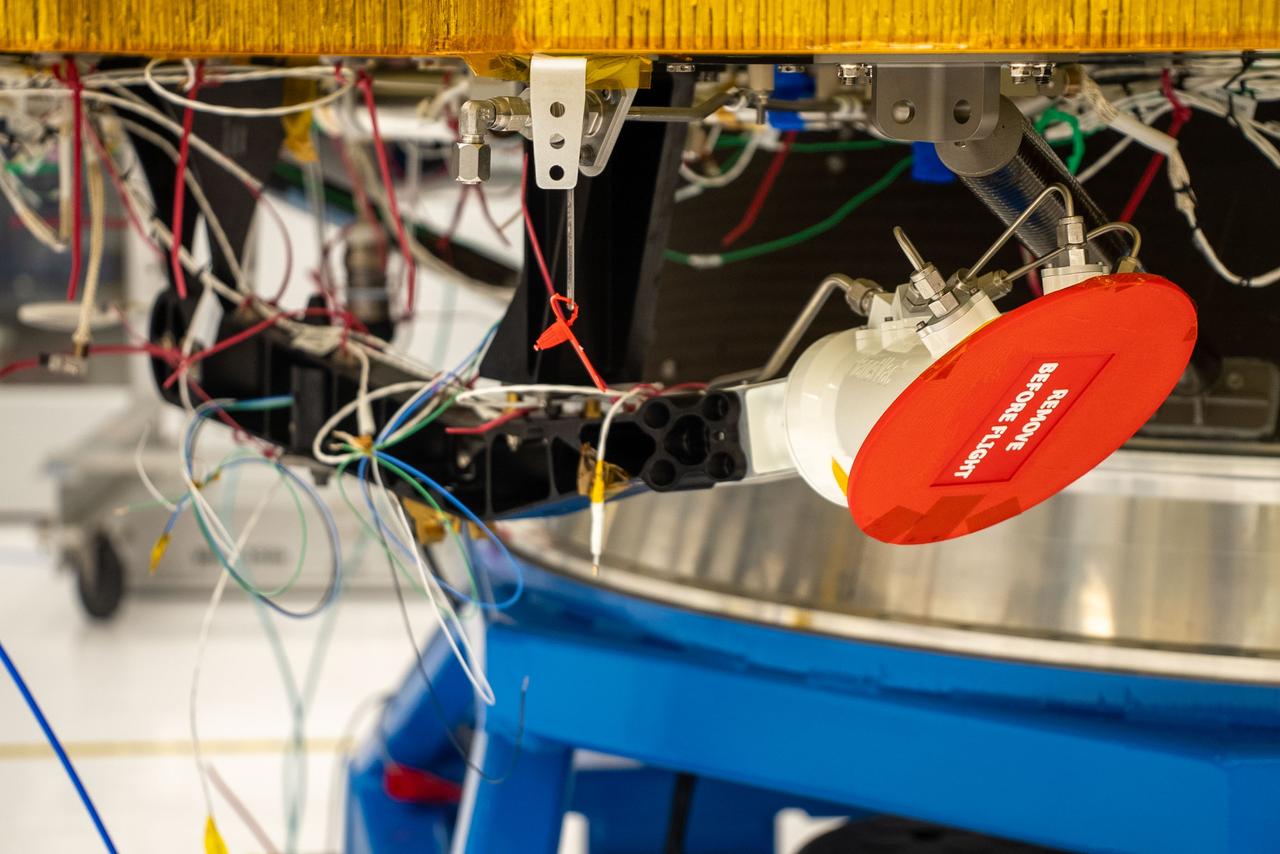

A technology demonstration flying aboard the next delivery for NASA’s CLPS (Commercial Lunar Payload Services) initiative could change how research teams collect and study soil and rock samples on other planetary bodies. Lunar PlanetVac, or LPV, is one of 10 payloads set to be carried to the Moon by the Blue Ghost 1 lunar lander in 2025. Developed by Honeybee Robotics, a Blue Origin company of Altadena, California, LPV is designed to, essentially, operate as a vacuum cleaner with a pneumatic, compressed gas-powered sample acquisition and delivery system to efficiently collect and transfer lunar soil from the surface to other science instruments or sample return containers. Investigations and demonstrations, such as LPV, launched on CLPS flights will help NASA study Earth’s nearest neighbor under Artemis and pave the way for future crewed missions on the Moon. NASA’s Marshall Space Flight Center in Huntsville, Alabama, manages the development for seven of the 10 CLPS payloads that will be carried on Firefly’s Blue Ghost lunar lander.
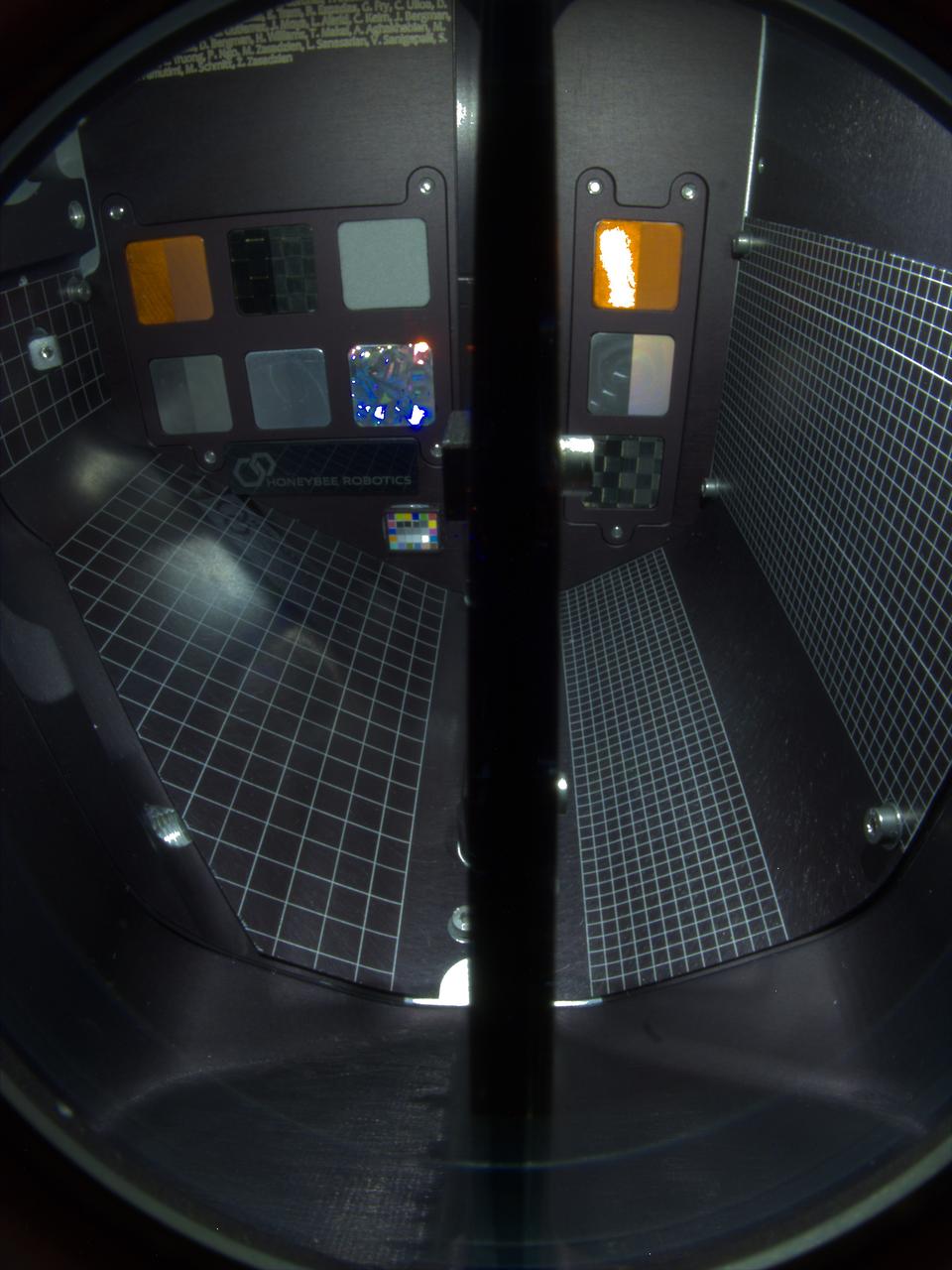

A technology demonstration flying aboard the next delivery for NASA’s CLPS (Commercial Lunar Payload Services) initiative could change how research teams collect and study soil and rock samples on other planetary bodies. Lunar PlanetVac, or LPV, is one of 10 payloads set to be carried to the Moon by the Blue Ghost 1 lunar lander in 2025. Developed by Honeybee Robotics, a Blue Origin company of Altadena, California, LPV is designed to, essentially, operate as a vacuum cleaner with a pneumatic, compressed gas-powered sample acquisition and delivery system to efficiently collect and transfer lunar soil from the surface to other science instruments or sample return containers. Investigations and demonstrations, such as LPV, launched on CLPS flights will help NASA study Earth’s nearest neighbor under Artemis and pave the way for future crewed missions on the Moon. NASA’s Marshall Space Flight Center in Huntsville, Alabama, manages the development for seven of the 10 CLPS payloads that will be carried on Firefly’s Blue Ghost lunar lander.
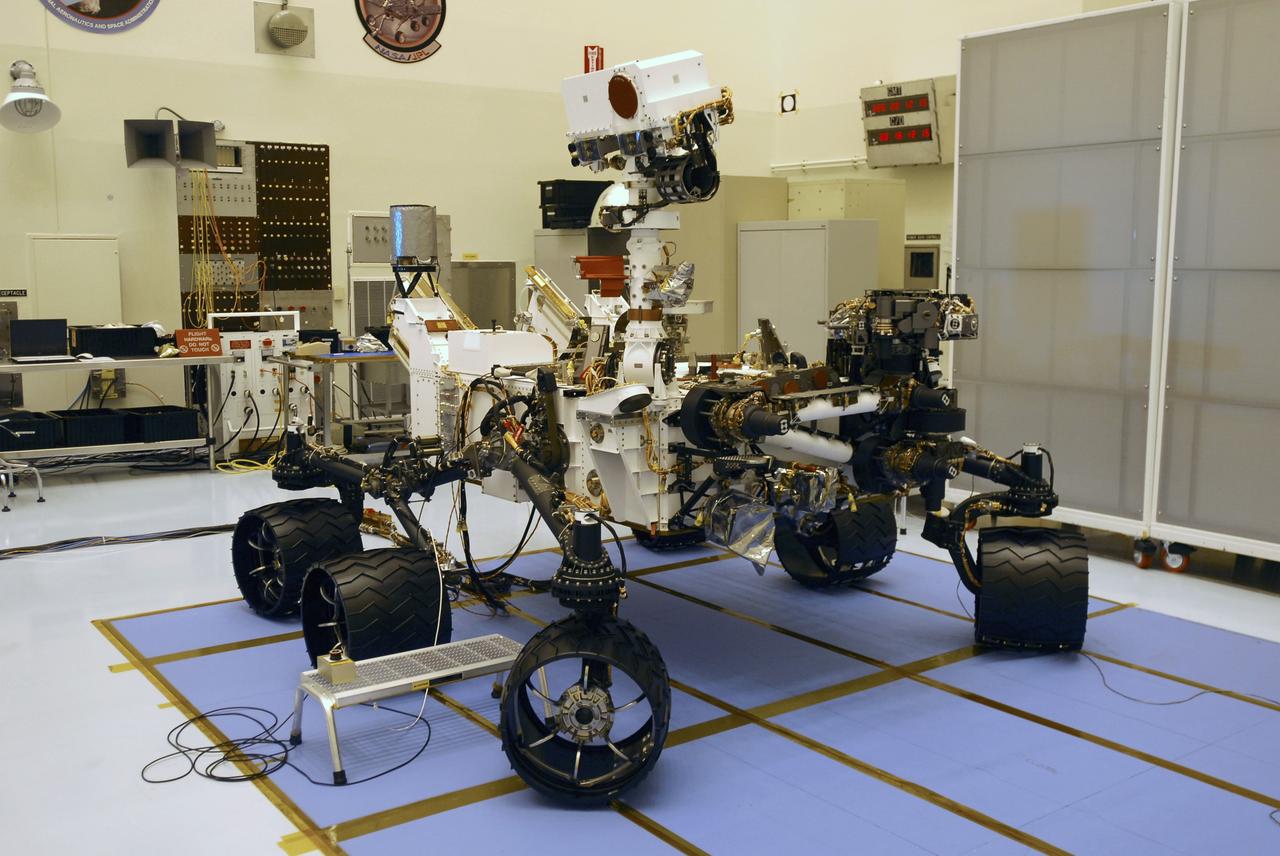
CAPE CANAVERAL, Fla. -- In the Payload Hazardous Servicing Facility at NASA's Kennedy Space Center in Florida, the robotic arm of the Mars Science Laboratory (MSL) rover, Curiosity, has been stowed against the body of the spacecraft. The arm will hold and maneuver instruments that will help scientists analyze Martian rocks and soil. Much like a human arm, the robotic arm has flexibility through shoulder, elbow, and wrist joints that permit the arm to extend, bend, and angle precisely against rocks and soil to grind away layers, take microscopic images and analyze their elemental composition. At the end of the arm is a hand-like structure, the turret, for holding various tools that can spin through a 350-degree turning range. A United Launch Alliance Atlas V-541 configuration will be used to loft MSL into space. Curiosity’s 10 science instruments are designed to search for evidence on whether Mars has had environments favorable to microbial life, including chemical ingredients for life. The unique rover will use a laser to look inside rocks and release its gasses so that the rover’s spectrometer can analyze and send the data back to Earth. MSL is scheduled to launch Nov. 25 from Space Launch Complex 41 on Cape Canaveral Air Force Station in Florida. For more information, visit http://www.nasa.gov/msl. Photo credit: NASA/Charisse Nahser
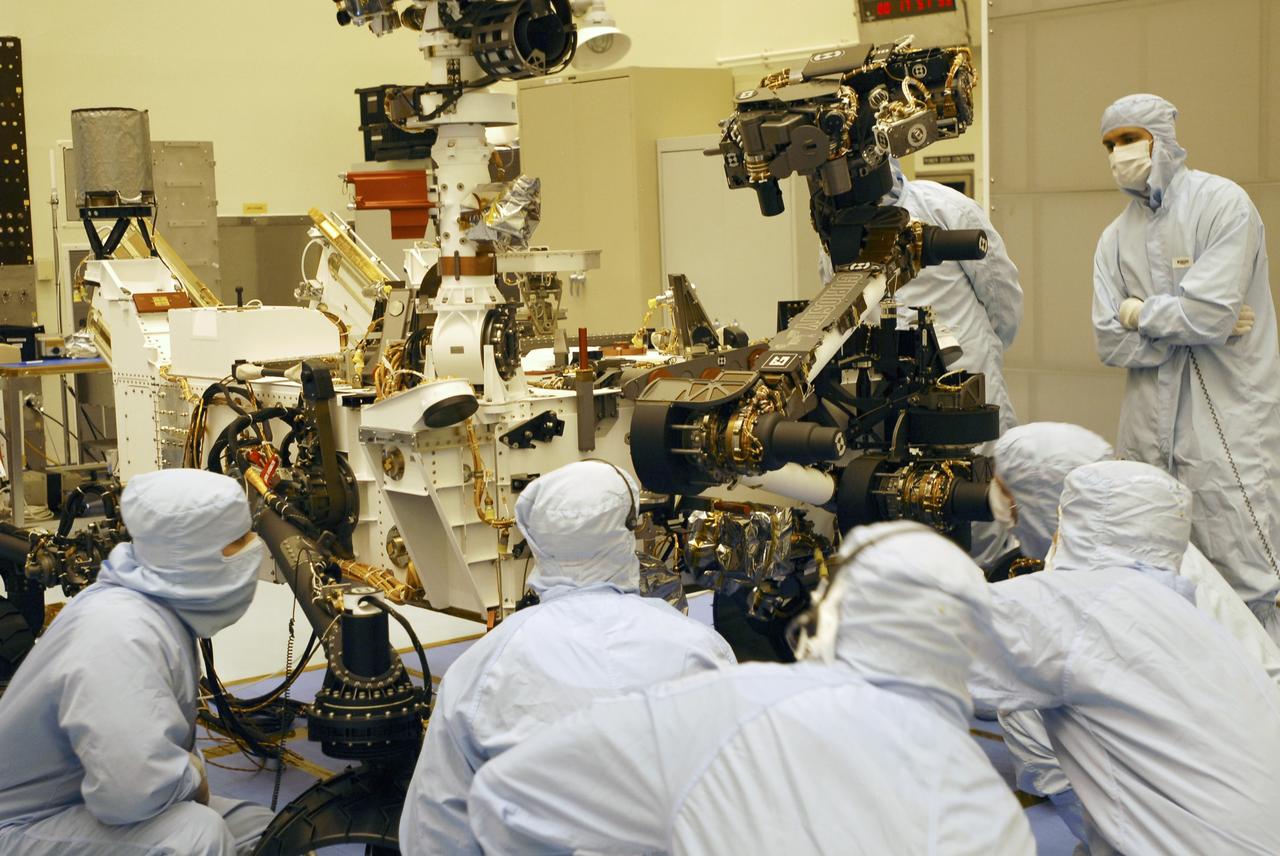
CAPE CANAVERAL, Fla. -- In the Payload Hazardous Servicing Facility at Kennedy Space Center in Florida, spacecraft technicians monitor the movement of the robotic arm of the Mars Science Laboratory (MSL) rover, Curiosity, as it is stowed against the body of the spacecraft. The arm will hold and maneuver instruments that will help scientists analyze Martian rocks and soil. Much like a human arm, the robotic arm has flexibility through shoulder, elbow, and wrist joints that permit the arm to extend, bend, and angle precisely against rocks and soil to grind away layers, take microscopic images and analyze their elemental composition. At the end of the arm is a hand-like structure, the turret, for holding various tools that can spin through a 350-degree turning range. A United Launch Alliance Atlas V-541 configuration will be used to loft MSL into space. Curiosity’s 10 science instruments are designed to search for evidence on whether Mars has had environments favorable to microbial life, including chemical ingredients for life. The unique rover will use a laser to look inside rocks and release its gasses so that the rover’s spectrometer can analyze and send the data back to Earth. MSL is scheduled to launch Nov. 25 from Space Launch Complex 41 on Cape Canaveral Air Force Station in Florida. For more information, visit http://www.nasa.gov/msl. Photo credit: NASA/Charisse Nahser
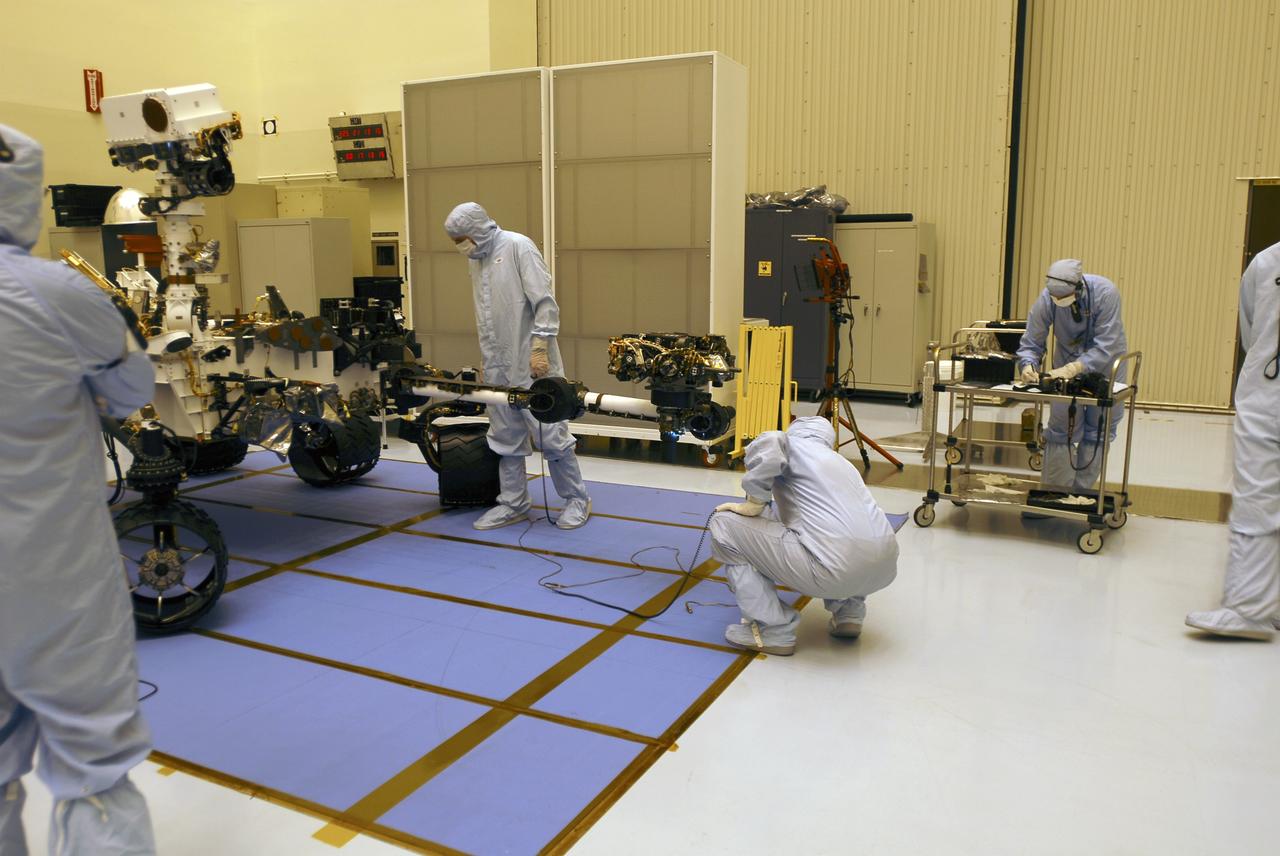
CAPE CANAVERAL, Fla. -- In the Payload Hazardous Servicing Facility at NASA's Kennedy Space Center in Florida, spacecraft technicians prepare to stow the robotic arm on the Mars Science Laboratory (MSL) rover, Curiosity. The arm will hold and maneuver instruments that will help scientists analyze Martian rocks and soil. Much like a human arm, the robotic arm has flexibility through shoulder, elbow, and wrist joints that permit the arm to extend, bend, and angle precisely against rocks and soil to grind away layers, take microscopic images and analyze their elemental composition. At the end of the arm is a hand-like structure, the turret, for holding various tools that can spin through a 350-degree turning range. A United Launch Alliance Atlas V-541 configuration will be used to loft MSL into space. Curiosity’s 10 science instruments are designed to search for evidence on whether Mars has had environments favorable to microbial life, including chemical ingredients for life. The unique rover will use a laser to look inside rocks and release its gasses so that the rover’s spectrometer can analyze and send the data back to Earth. MSL is scheduled to launch Nov. 25 from Space Launch Complex 41 on Cape Canaveral Air Force Station in Florida. For more information, visit http://www.nasa.gov/msl. Photo credit: NASA/Charisse Nahser
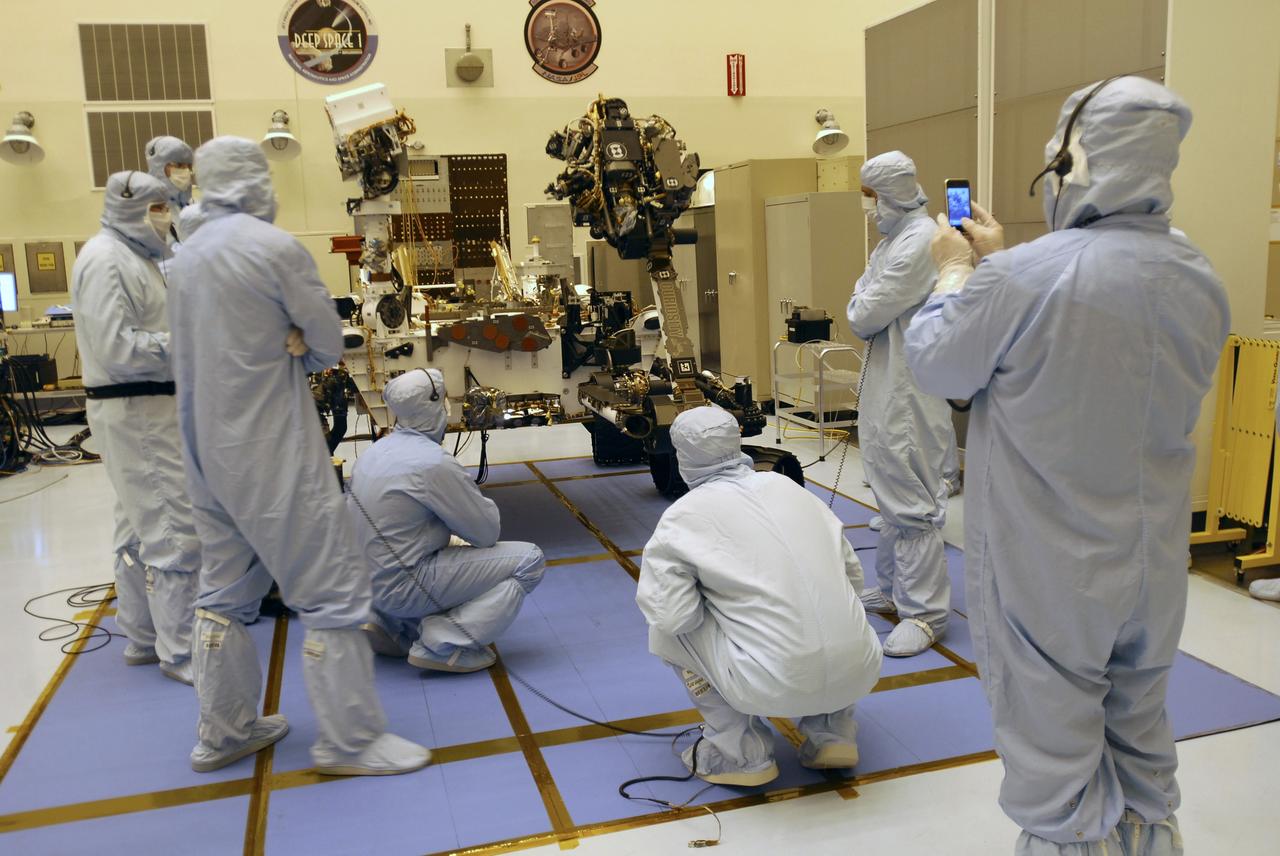
CAPE CANAVERAL, Fla. -- Under the watchful eyes of the spacecraft technicians in the Payload Hazardous Servicing Facility at NASA's Kennedy Space Center in Florida, the robotic arm of the Mars Science Laboratory (MSL) rover, Curiosity, moves into place against the body of the spacecraft. The arm will hold and maneuver instruments that will help scientists analyze Martian rocks and soil. Much like a human arm, the robotic arm has flexibility through shoulder, elbow, and wrist joints that permit the arm to extend, bend, and angle precisely against rocks and soil to grind away layers, take microscopic images and analyze their elemental composition. At the end of the arm is a hand-like structure, the turret, for holding various tools that can spin through a 350-degree turning range. A United Launch Alliance Atlas V-541 configuration will be used to loft MSL into space. Curiosity’s 10 science instruments are designed to search for evidence on whether Mars has had environments favorable to microbial life, including chemical ingredients for life. The unique rover will use a laser to look inside rocks and release its gasses so that the rover’s spectrometer can analyze and send the data back to Earth. MSL is scheduled to launch Nov. 25 from Space Launch Complex 41 on Cape Canaveral Air Force Station in Florida. For more information, visit http://www.nasa.gov/msl. Photo credit: NASA/Charisse Nahser
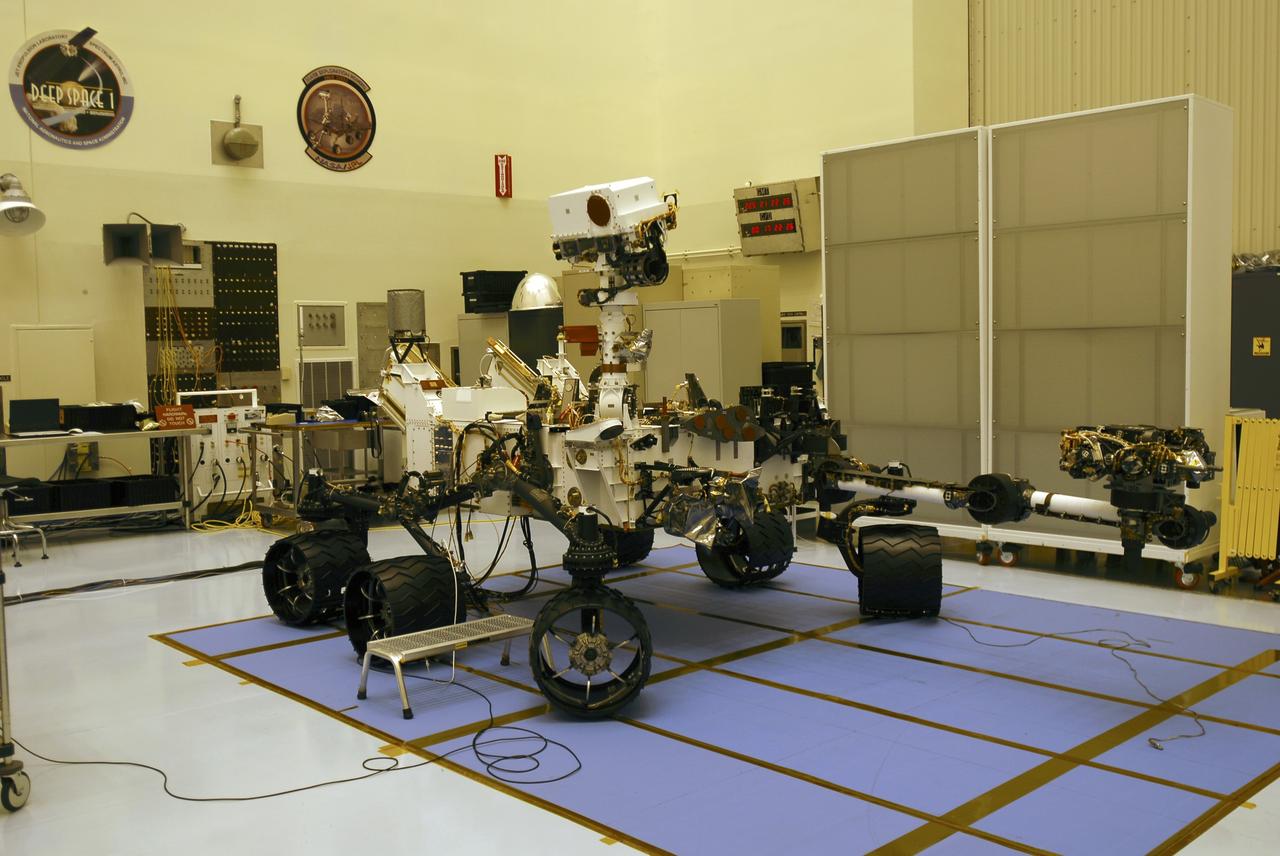
CAPE CANAVERAL, Fla. -- In the Payload Hazardous Servicing Facility at NASA's Kennedy Space Center in Florida, preparations are under way to stow the robotic arm on the Mars Science Laboratory (MSL) rover, Curiosity. The arm will hold and maneuver instruments that will help scientists analyze Martian rocks and soil. Much like a human arm, the robotic arm has flexibility through shoulder, elbow, and wrist joints that permit the arm to extend, bend, and angle precisely against rocks and soil to grind away layers, take microscopic images and analyze their elemental composition. At the end of the arm is a hand-like structure, the turret, for holding various tools that can spin through a 350-degree turning range. A United Launch Alliance Atlas V-541 configuration will be used to loft MSL into space. Curiosity’s 10 science instruments are designed to search for evidence on whether Mars has had environments favorable to microbial life, including chemical ingredients for life. The unique rover will use a laser to look inside rocks and release its gasses so that the rover’s spectrometer can analyze and send the data back to Earth. MSL is scheduled to launch Nov. 25 from Space Launch Complex 41 on Cape Canaveral Air Force Station in Florida. For more information, visit http://www.nasa.gov/msl. Photo credit: NASA/Charisse Nahser

CAPE CANAVERAL, Fla. -- In the Payload Hazardous Servicing Facility at NASA's Kennedy Space Center in Florida, spacecraft technicians discuss their readiness to stow the robotic arm on the Mars Science Laboratory (MSL) rover, Curiosity. The arm will hold and maneuver instruments that will help scientists analyze Martian rocks and soil. Much like a human arm, the robotic arm has flexibility through shoulder, elbow, and wrist joints that permit the arm to extend, bend, and angle precisely against rocks and soil to grind away layers, take microscopic images and analyze their elemental composition. At the end of the arm is a hand-like structure, the turret, for holding various tools that can spin through a 350-degree turning range. A United Launch Alliance Atlas V-541 configuration will be used to loft MSL into space. Curiosity’s 10 science instruments are designed to search for evidence on whether Mars has had environments favorable to microbial life, including chemical ingredients for life. The unique rover will use a laser to look inside rocks and release its gasses so that the rover’s spectrometer can analyze and send the data back to Earth. MSL is scheduled to launch Nov. 25 from Space Launch Complex 41 on Cape Canaveral Air Force Station in Florida. For more information, visit http://www.nasa.gov/msl. Photo credit: NASA/Charisse Nahser
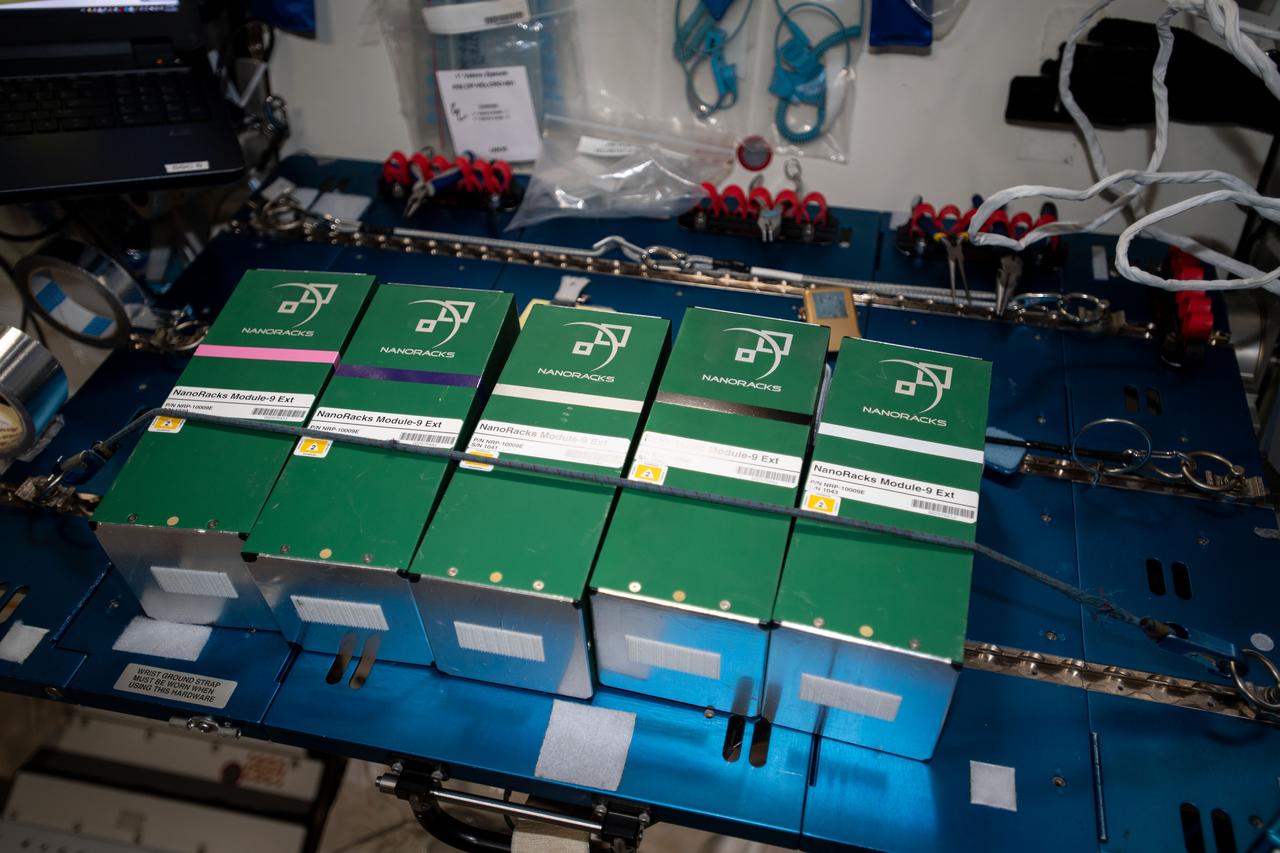
iss060e035405 (8/13/2019) --- A view the NanoRacks-NCESSE-Gemini NanoRacks-National Center for Earth and Space Science-Gemini (SSEP Mission 13) - Part of NanoRacks Module-9 Ext. aboard the International Space Station (ISS). The experiments range from examinations of water filtration and purification to synthetic soil production, rust formation, antibiotic effectiveness, growth and development of microacquatic organisms, and growth of plant, fungi, and bacteria. Each was chosen from more than 3,000 entries submitted by more than 23,000 U.S., Canadian, and Brazilian students. The experiments use NanoRacks MixStix, miniature laboratories activated by space station crew and eventually returned to the student teams on Earth for analysis.

CAPE CANAVERAL, Fla. - University students gather for the opening ceremony of NASA's first Lunabotics Mining Competition at the Kennedy Space Center Visitor Complex's Astronaut Hall of Fame. Twenty-two teams from around the country will maneuver their remote controlled or autonomous excavators, called lunabots, in about 60 tons of ultra-fine simulated lunar soil, called BP-1. The competition is an Exploration Systems Mission Directorate project managed by Kennedy's Education Division. The purpose is to engage and retain students in science, technology, engineering and mathematics, or STEM, fields. It also provides a competitive environment that could result in innovative ideas and solutions for NASA's future excavation of the moon. Photo credit: NASA_Dimitri Gerondidakis

NASA is sending a mobile robot to the south pole of the Moon to get a close-up view of the location and concentration of water ice in the region and for the first time ever, actually sample the water ice at the same pole where the first woman and next man will land in 2024 under the Artemis program. About the size of a golf cart, the Volatiles Investigating Polar Exploration Rover, or VIPER, will roam several miles, using its four science instruments — including a 1-meter drill — to sample various soil environments. Planned for delivery in December 2022, VIPER will collect about 100 days of data that will be used to inform development of the first global water resource maps of the Moon. Illustration by Daniel Rutter.
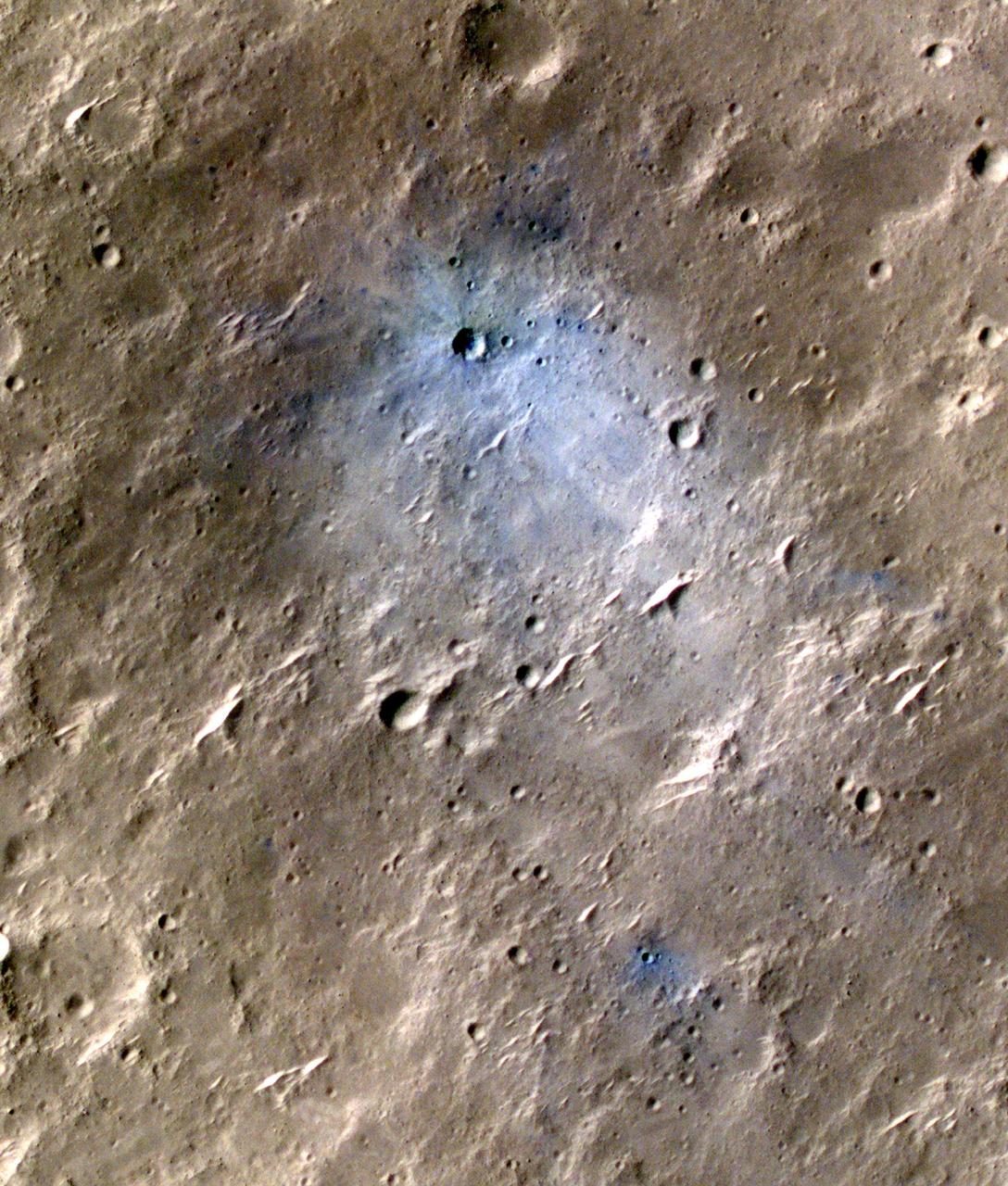
NASA's Mars Reconnaissance Orbiter captured this image of a meteoroid impact that was later associated with a seismic event detected by the agency's InSight lander using its seismometer. This crater was formed on May 27, 2020. MRO's Context Camera originally located the impact. Then, the spacecraft's High Resolution Imaging Science Experiment (HiRISE) camera captured this scene in color. The ground is not actually blue; this enhanced-color image highlights certain hues in the scene to make details more visible to the human eye – in this case, dust and soil disturbed by the impact. https://photojournal.jpl.nasa.gov/catalog/PIA25410
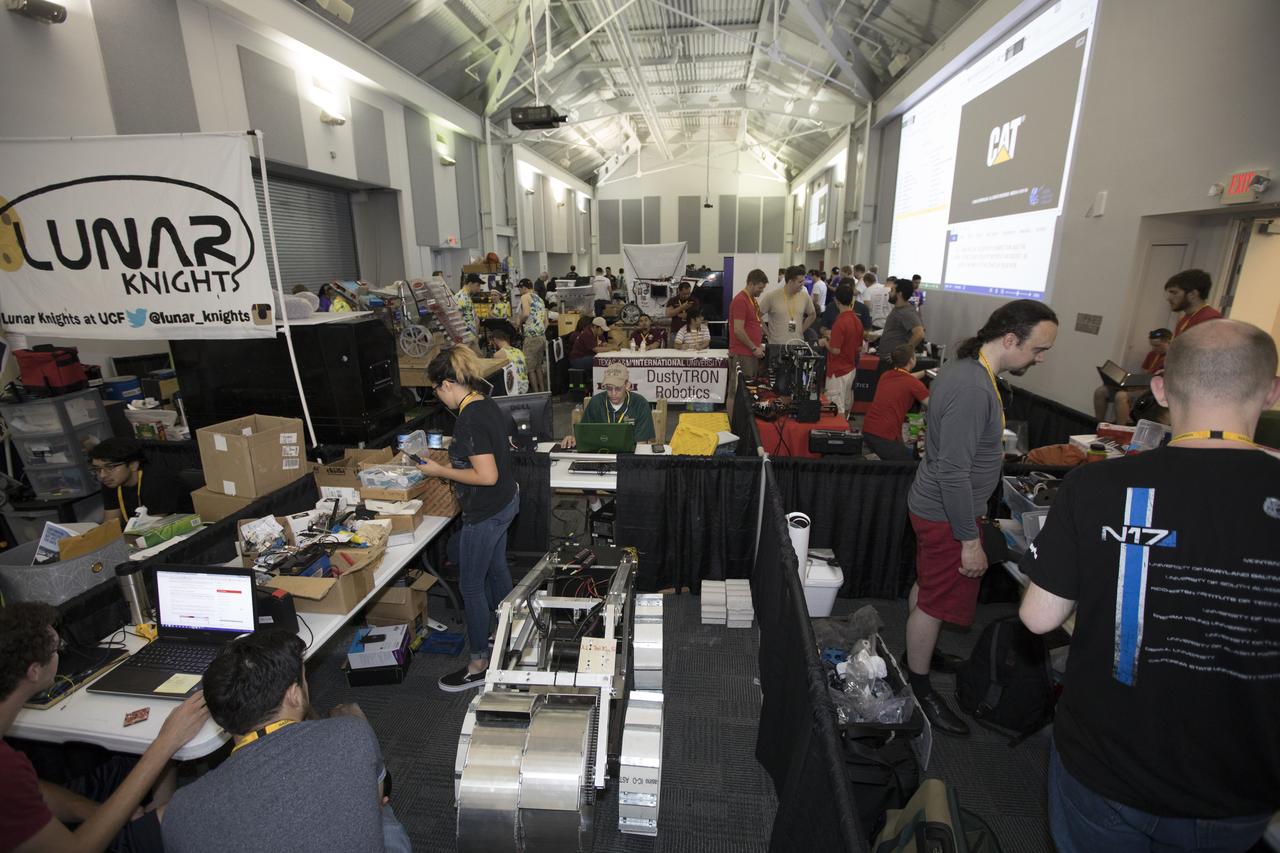
Energy levels are high in the RoboPit as teams prepare for NASA's 8th Annual Robotic Mining Competition at the Kennedy Space Center Visitor Complex in Florida. More than 40 student teams from colleges and universities around the U.S. arel using their mining robots to dig in a supersized sandbox filled with BP-1, or simulated Martian soil, and participate in other competition requirements. The Robotic Mining Competition is a NASA Human Exploration and Operations Mission Directorate project designed to encourage students in science, technology, engineering and math, or STEM fields. The project provides a competitive environment to foster innovative ideas and solutions that could be used on NASA's Journey to Mars.
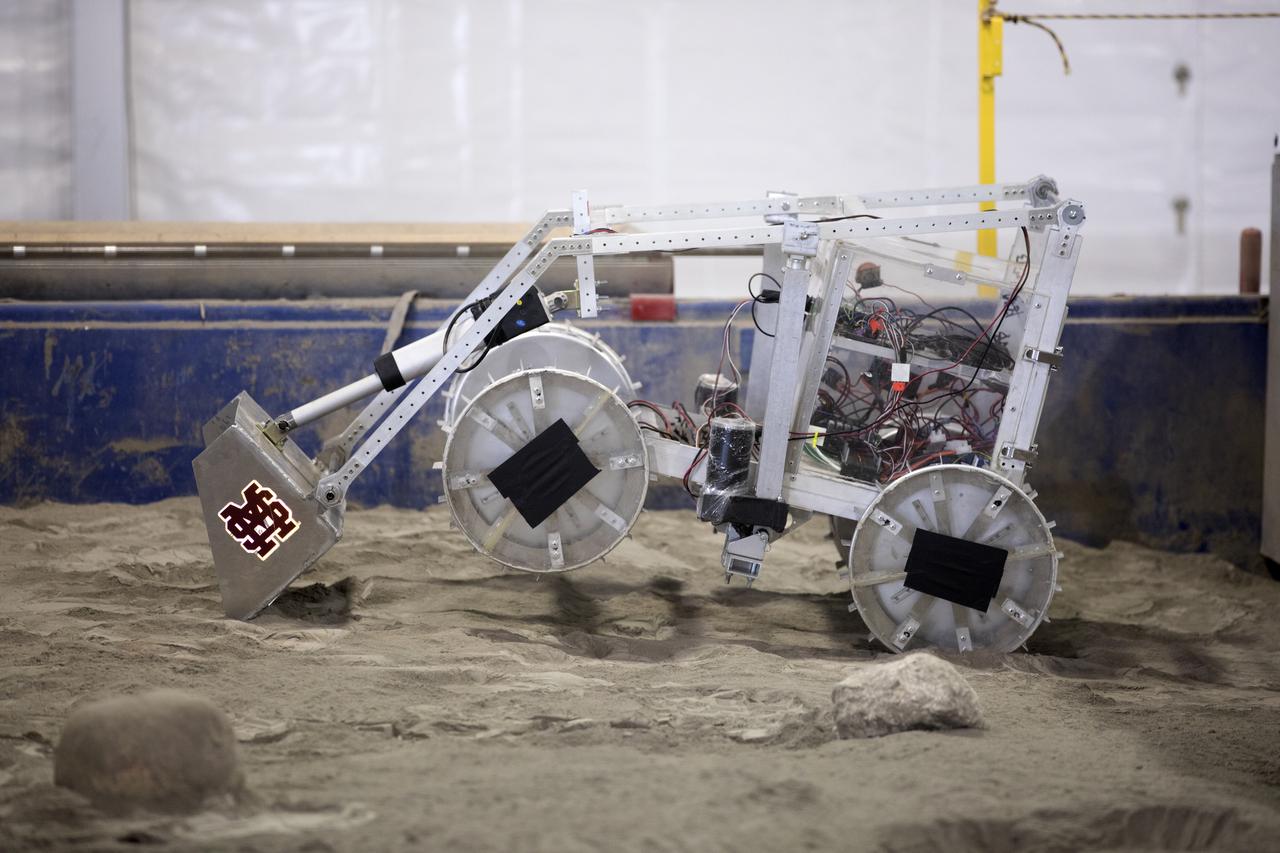
The robotic miner from Mississippi State University digs in the mining arena during NASA's 8th Annual Robotic Mining Competition at the Kennedy Space Center Visitor Complex in Florida. More than 40 student teams from colleges and universities around the U.S. are using their uniquely-designed mining robots to dig in a supersized sandbox filled with BP-1, or simulated Martian soil, and participate in other competition requirements. The Robotic Mining Competition is a NASA Human Exploration and Operations Mission Directorate project designed to encourage students in science, technology, engineering and math, or STEM fields. The project provides a competitive environment to foster innovative ideas and solutions that could be used on NASA's Journey to Mars.
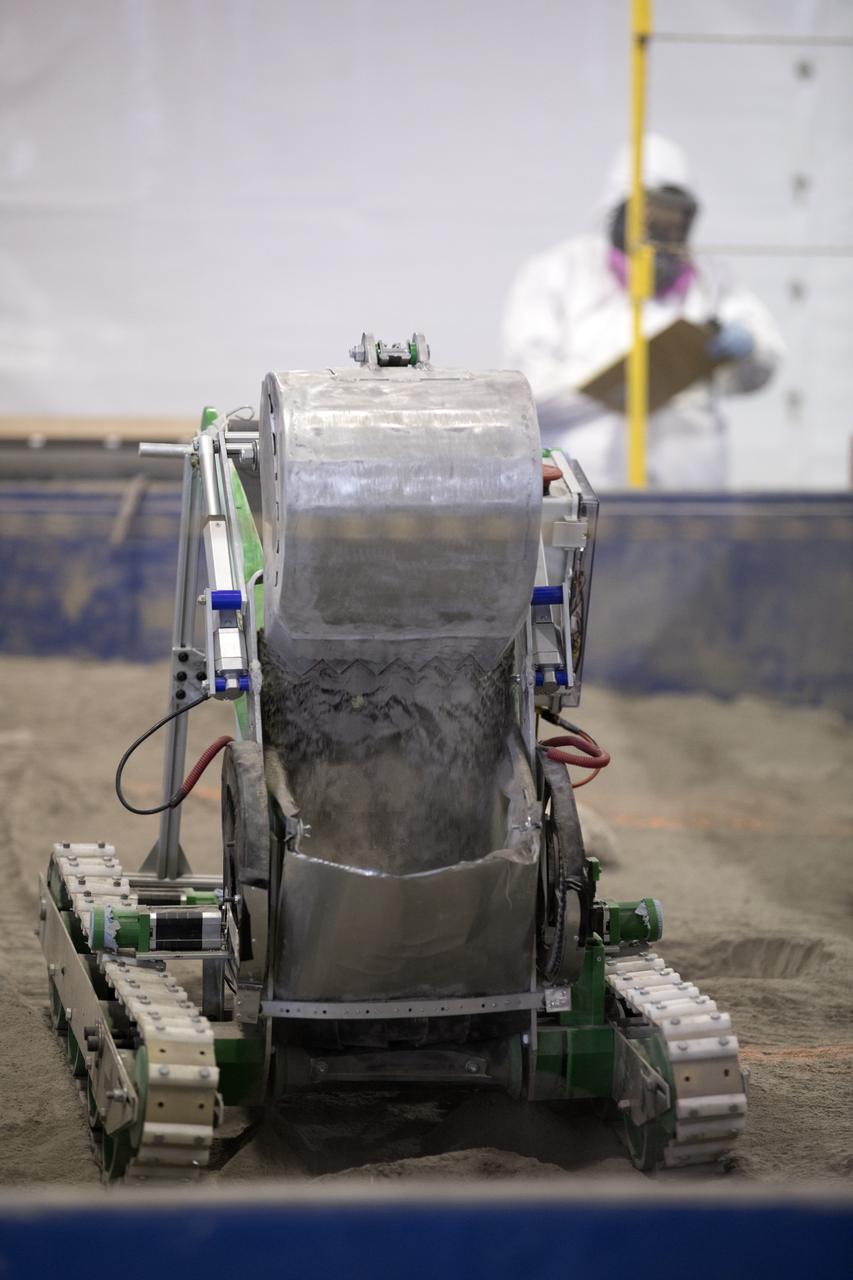
A robotic miner digs in the mining arena during NASA's 8th Annual Robotic Mining Competition at the Kennedy Space Center Visitor Complex in Florida. More than 40 student teams from colleges and universities around the U.S. are using their uniquely-designed mining robots to dig in a supersized sandbox filled with BP-1, or simulated Martian soil, and participate in other competition requirements. The Robotic Mining Competition is a NASA Human Exploration and Operations Mission Directorate project designed to encourage students in science, technology, engineering and math, or STEM fields. The project provides a competitive environment to foster innovative ideas and solutions that could be used on NASA's Journey to Mars.
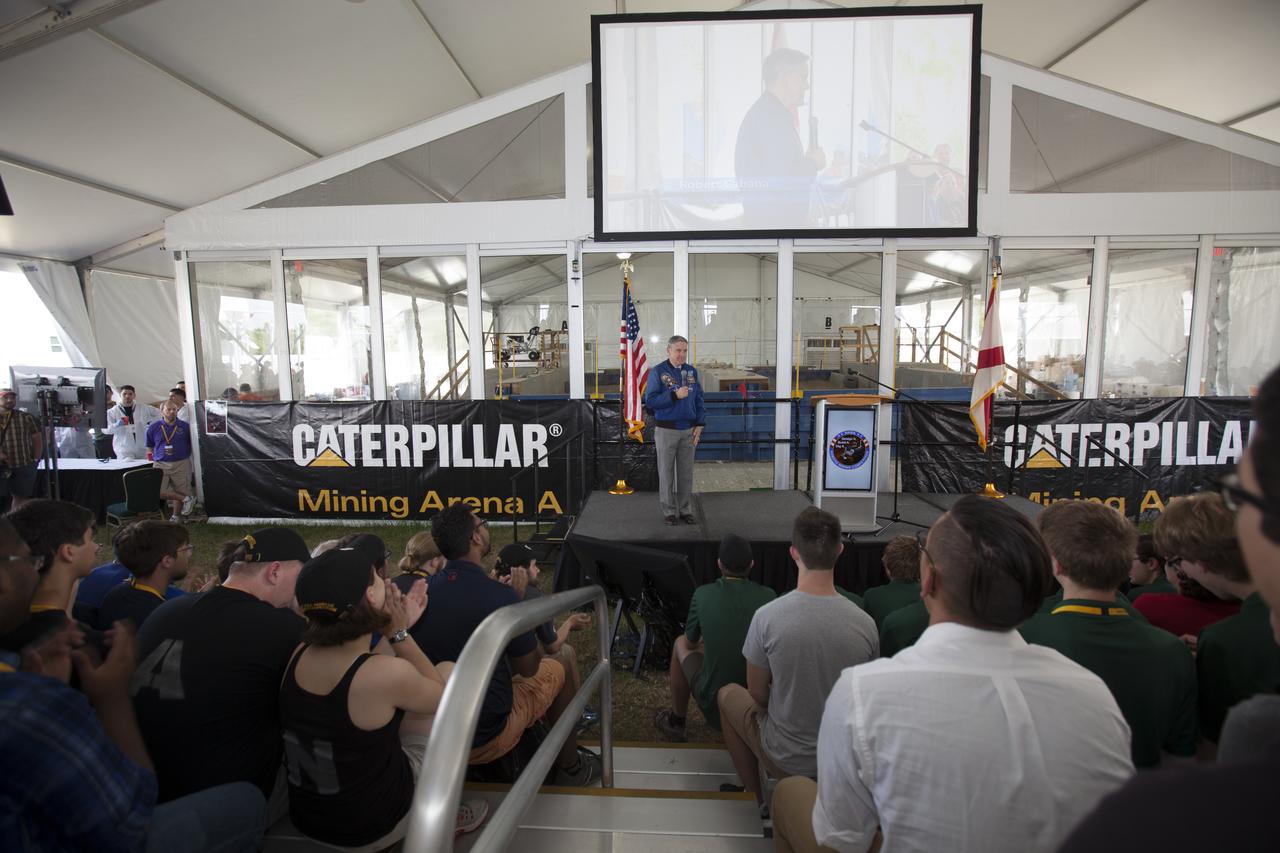
NASA Kennedy Space Center Director Bob Cabana welcomes participants to the agency's 8th Annual Robotic Mining Competition at the Kennedy Space Center Visitor Complex in Florida. More than 40 student teams from colleges and universities around the U.S. will use their mining robots to dig in a supersized sandbox filled with BP-1, or simulated Martian soil, and participate in other competition requirements. The Robotic Mining Competition is a NASA Human Exploration and Operations Mission Directorate project designed to encourage students in science, technology, engineering and math, or STEM fields. The project provides a competitive environment to foster innovative ideas and solutions that could be used on NASA's Journey to Mars.
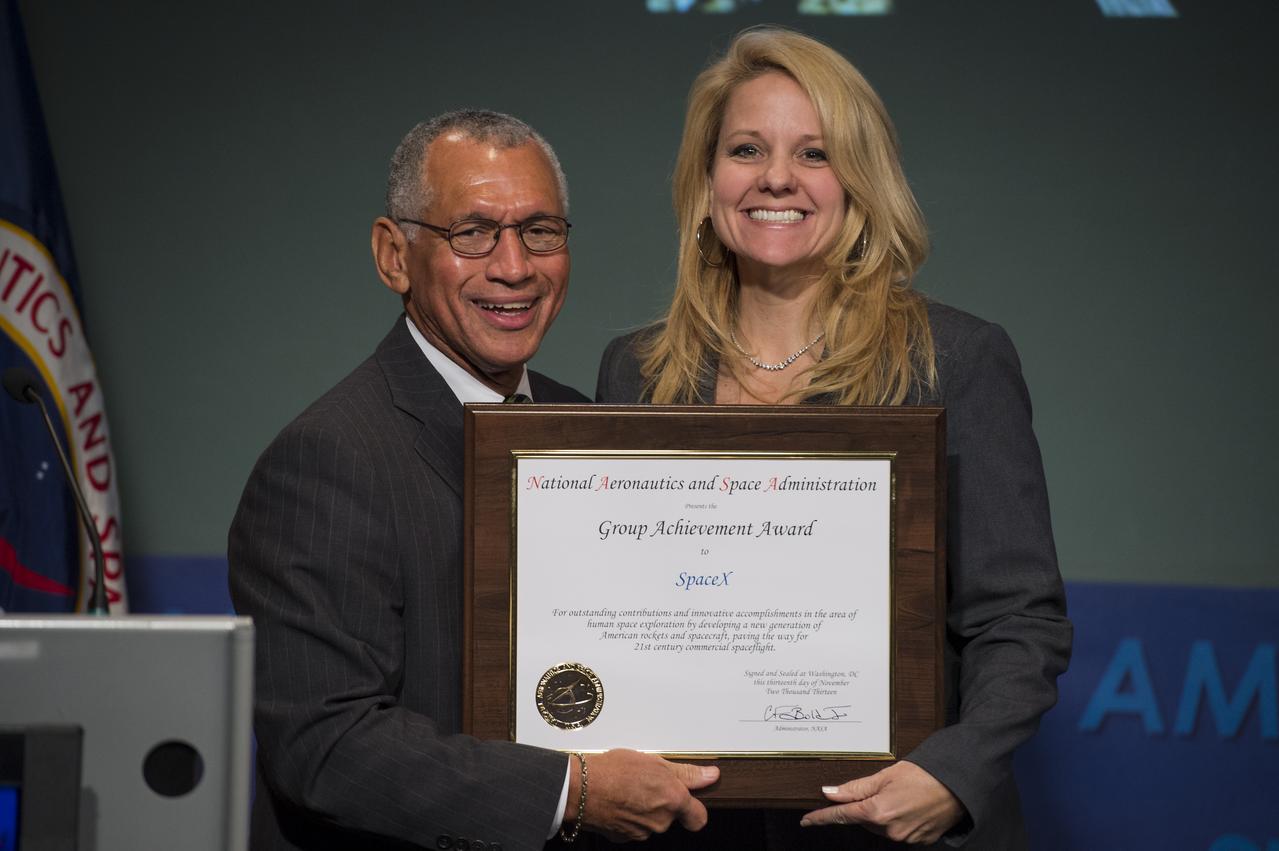
NASA Administrator Charles Bolden, left, presents NASA's Group Achievement Award to Gwynne Shotwell, President, SpaceX, at NASA Headquarters in Washington on Thursday, November 13, 2013. Shotwell received the award for outstanding contributions and innovative accomplishments in the completion of the Commercial Orbital Transportation Services (COTS) initiative. Through COTS, NASA's partners Space Exploration Technologies Corp. (SpaceX) and Orbital Sciences Corp., developed new U.S. rockets and spacecraft, launched from U.S. soil, capable of transporting cargo to low-Earth orbit and the International Space Station. Photo Credit: (NASA/Jay Westcott)
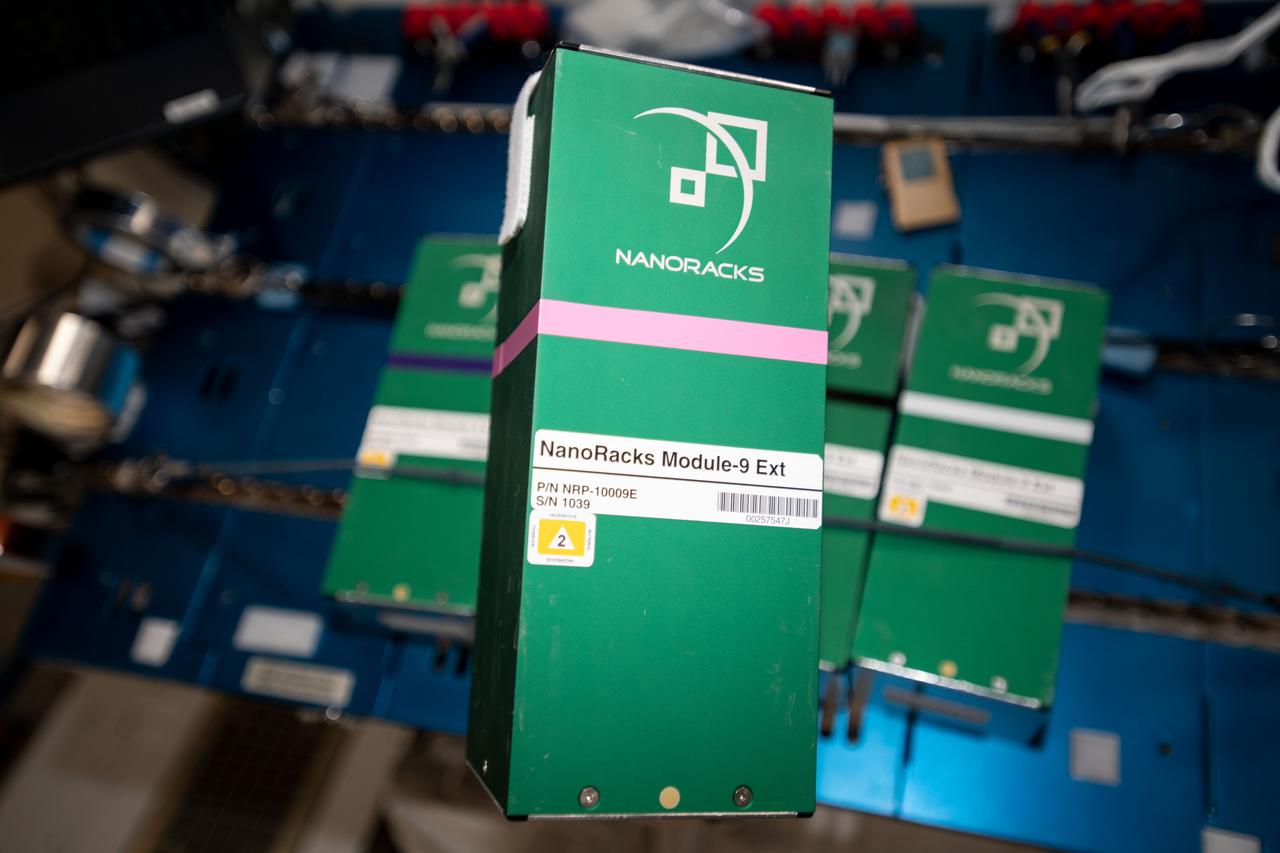
iss060e035407 (8/13/2019) --- A view the NanoRacks-NCESSE-Gemini NanoRacks-National Center for Earth and Space Science-Gemini (SSEP Mission 13) - Part of NanoRacks Module-9 Ext. The experiments range from examinations of water filtration and purification to synthetic soil production, rust formation, antibiotic effectiveness, growth and development of microacquatic organisms, and growth of plant, fungi, and bacteria. Each was chosen from more than 3,000 entries submitted by more than 23,000 U.S., Canadian, and Brazilian students. The experiments use NanoRacks MixStix, miniature laboratories activated by space station crew and eventually returned to the student teams on Earth for analysis.
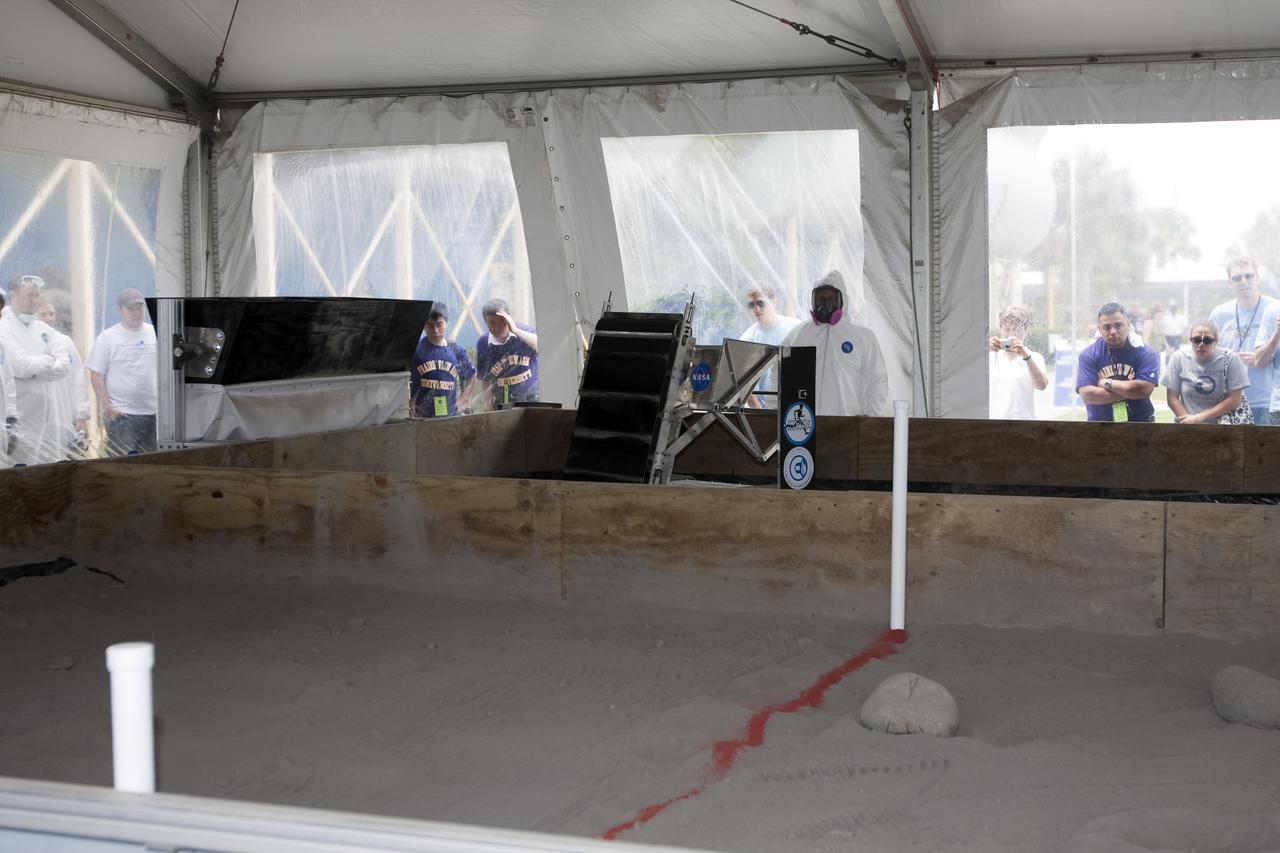
CAPE CANAVERAL, Fla. - Inside the 'Lunarena' at the Kennedy Space Center Visitor Complex's Astronaut Hall of Fame, university students are ready to maneuver their remote controlled or autonomous excavators, called lunabots, in about 60 tons of ultra-fine simulated lunar soil, called BP-1. Twenty-two teams from around the country are competing in NASA's first Lunabotics Mining Competition. The competition is an Exploration Systems Mission Directorate project managed by Kennedy's Education Division. The purpose is to engage and retain students in science, technology, engineering and mathematics, or STEM, fields. It also provides a competitive environment that could result in innovative ideas and solutions for NASA's future excavation of the moon. Photo credit: NASA_Dimitri Gerondidakis
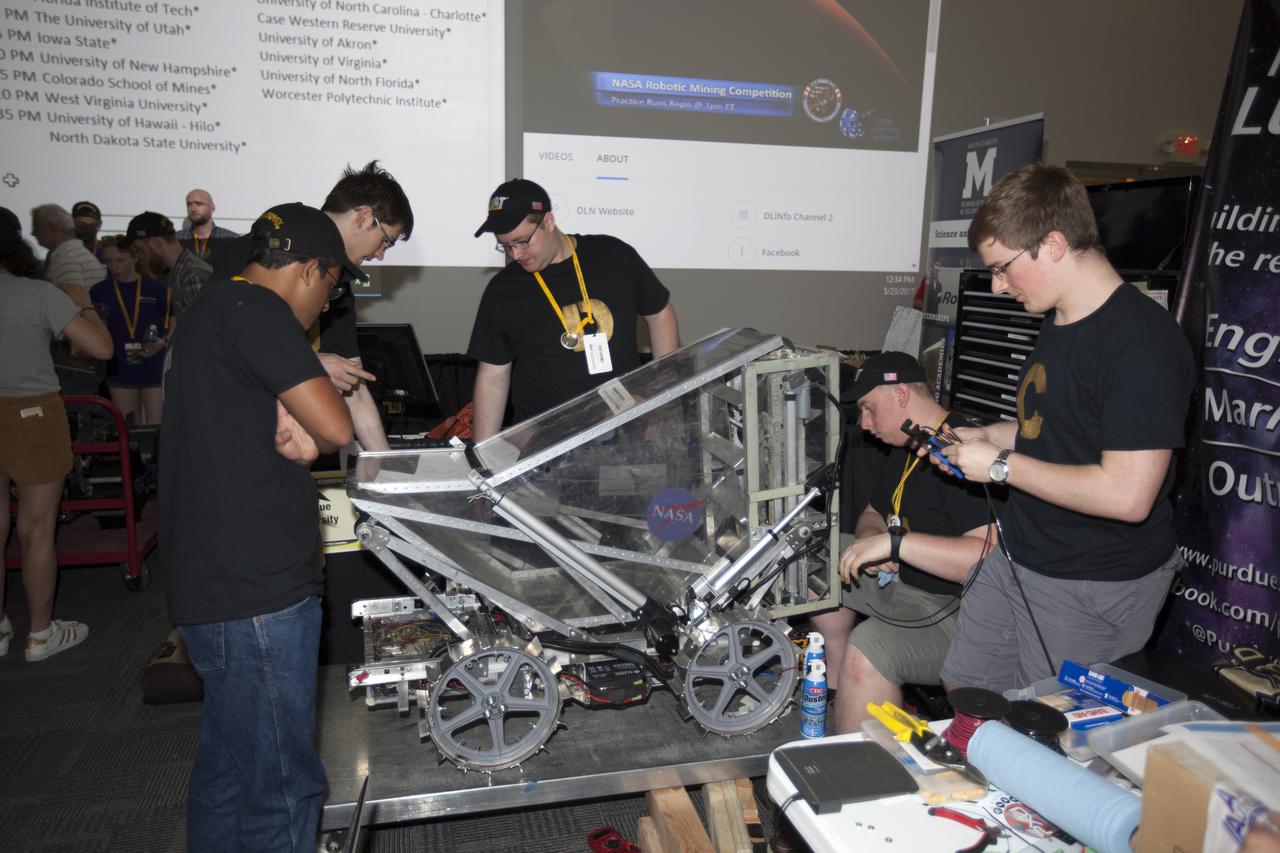
Team members from Purdue University prepare their uniquely-designed robot miner in the RoboPit at NASA's 8th Annual Robotic Mining Competition at the Kennedy Space Center Visitor Complex in Florida. More than 40 student teams from colleges and universities around the U.S. will use their uniquely-designed mining robots to dig in a supersized sandbox filled with BP-1, or simulated Martian soil, and participate in other competition requirements. The Robotic Mining Competition is a NASA Human Exploration and Operations Mission Directorate project designed to encourage students in science, technology, engineering and math, or STEM fields. The project provides a competitive environment to foster innovative ideas and solutions that could be used on NASA's Journey to Mars.
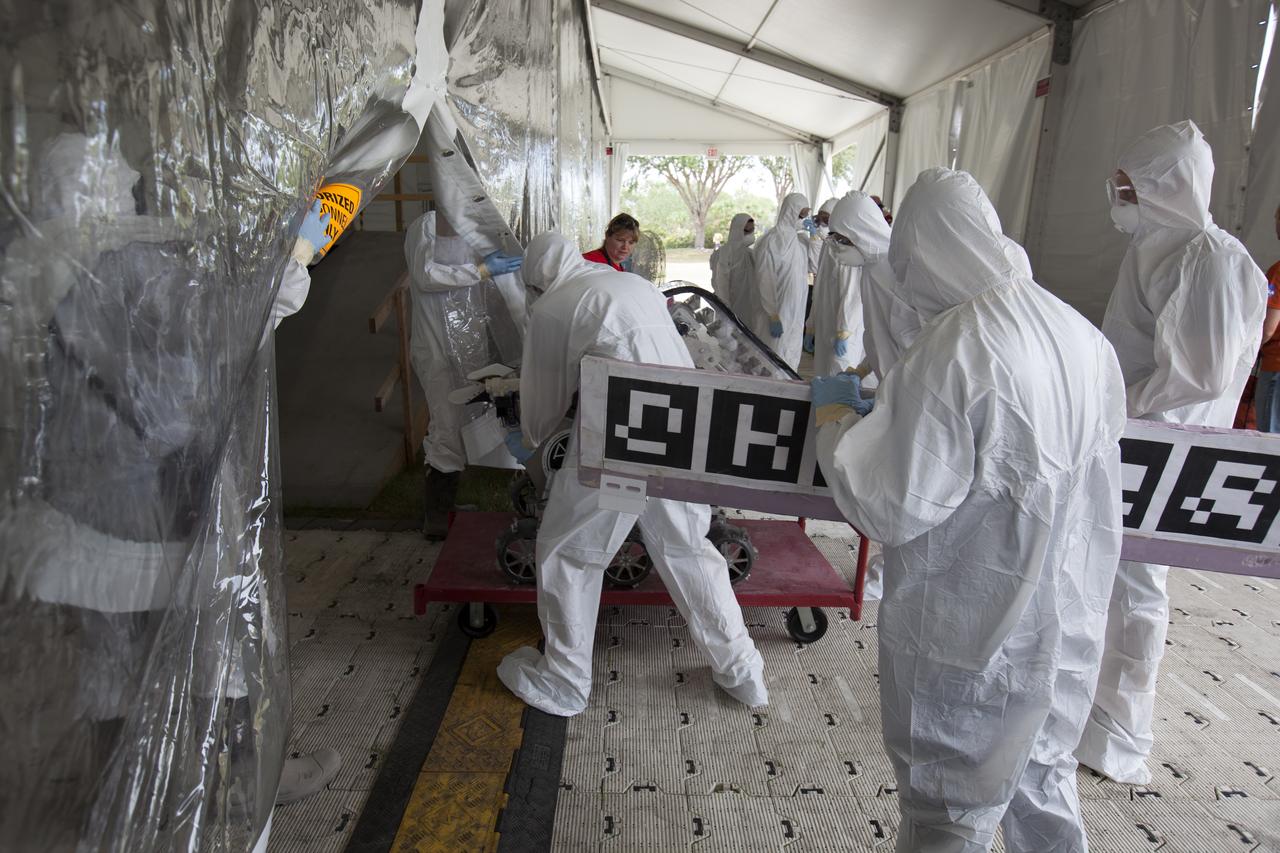
College team members prepare to enter the robotic mining arena for a test run during NASA's 8th Annual Robotic Mining Competition at the Kennedy Space Center Visitor Complex in Florida. More than 40 student teams from colleges and universities around the U.S. will use their uniquely-designed mining robots to dig in a supersized sandbox filled with BP-1, or simulated Martian soil, and participate in other competition requirements. The Robotic Mining Competition is a NASA Human Exploration and Operations Mission Directorate project designed to encourage students in science, technology, engineering and math, or STEM fields. The project provides a competitive environment to foster innovative ideas and solutions that could be used on NASA's Journey to Mars.
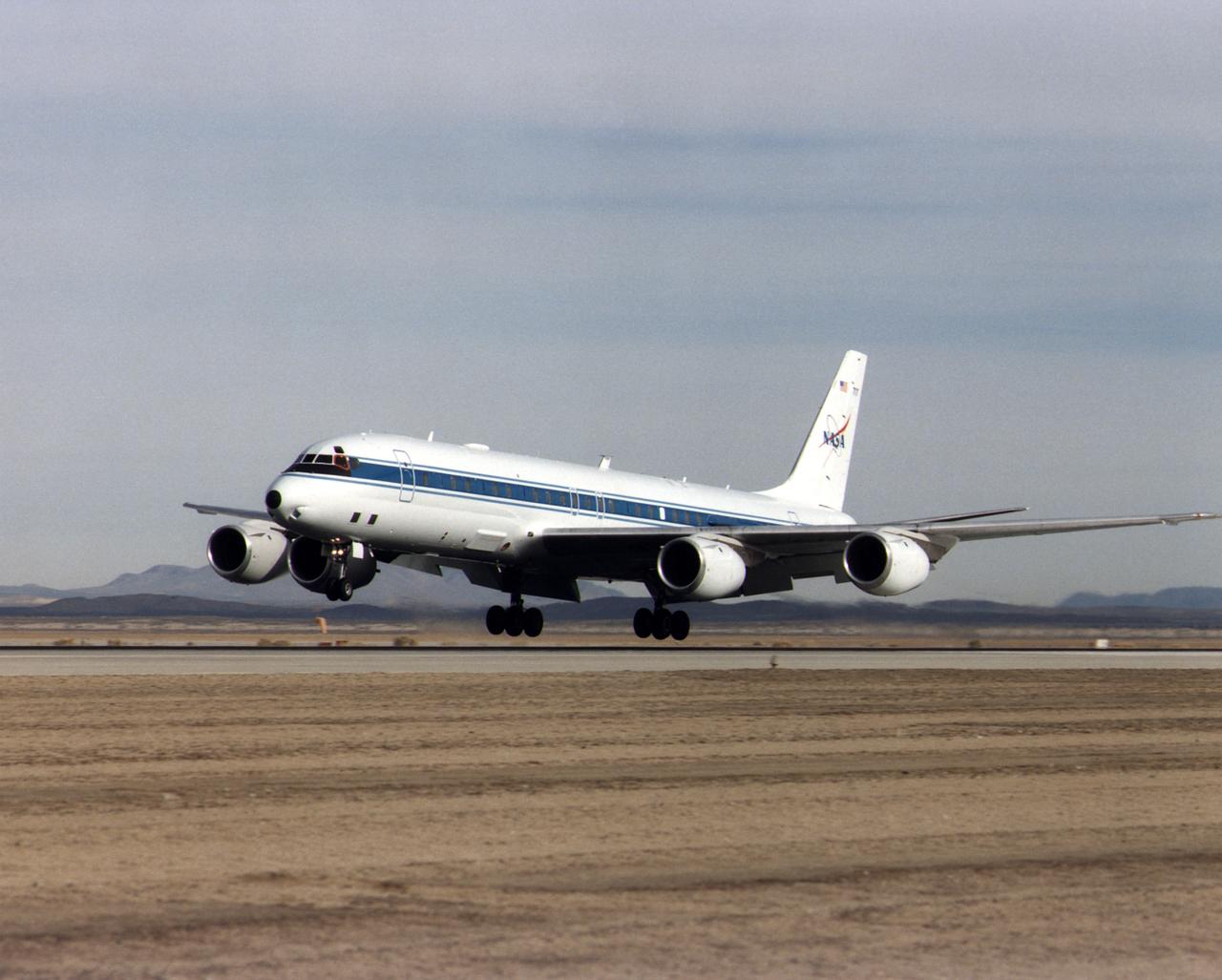
NASA's DC-8 Airborne Science platform landed at Edwards Air Force Base, California, to join the fleet of aircraft at NASA's Dryden Flight Research Center. The white aircraft with a blue stripe running horizontally from the nose to the tail is shown with its main landing gear just above the runway. The former airliner is a "dash-72" model and has a range of 5,400 miles. The craft can stay airborne for 12 hours and has an operational speed range between 300 and 500 knots. The research flights are made at between 500 and 41,000 feet. The aircraft can carry up to 30,000 lbs of research/science payload equipment installed in 15 mission-definable spaces.
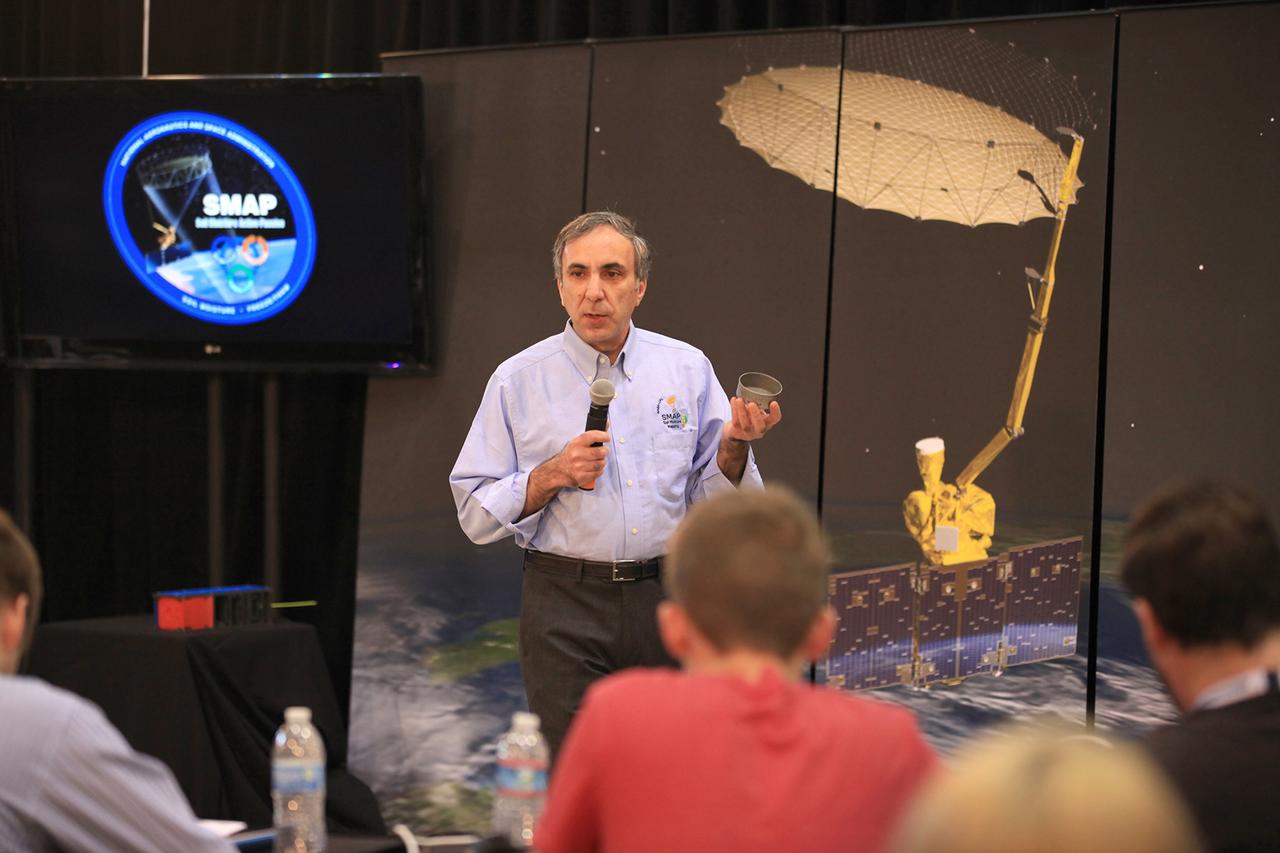
VANDENBERG AIR FORCE BASE, Calif. – Dara Entekhabi, science team leader at the Massachusetts Institute of Technology in Cambridge, Massachusetts, discusses the science and engineering of NASA's Soil Moisture Active Passive mission, or SMAP, with the audience of a NASA Social held at Vandenberg Air Force Base in California. This NASA Social brought together mission scientists and engineers with an audience of 70 students, educators, social media managers, bloggers, photographers and videographers who were selected from a pool of 325 applicants from 45 countries to participate in launch activities and communicate their experience with social media followers. The SMAP mission is scheduled to launch from Vandenberg on Jan. 29. To learn more about SMAP, visit http://www.nasa.gov/smap. Photo credit: NASA/Kim Shiflett
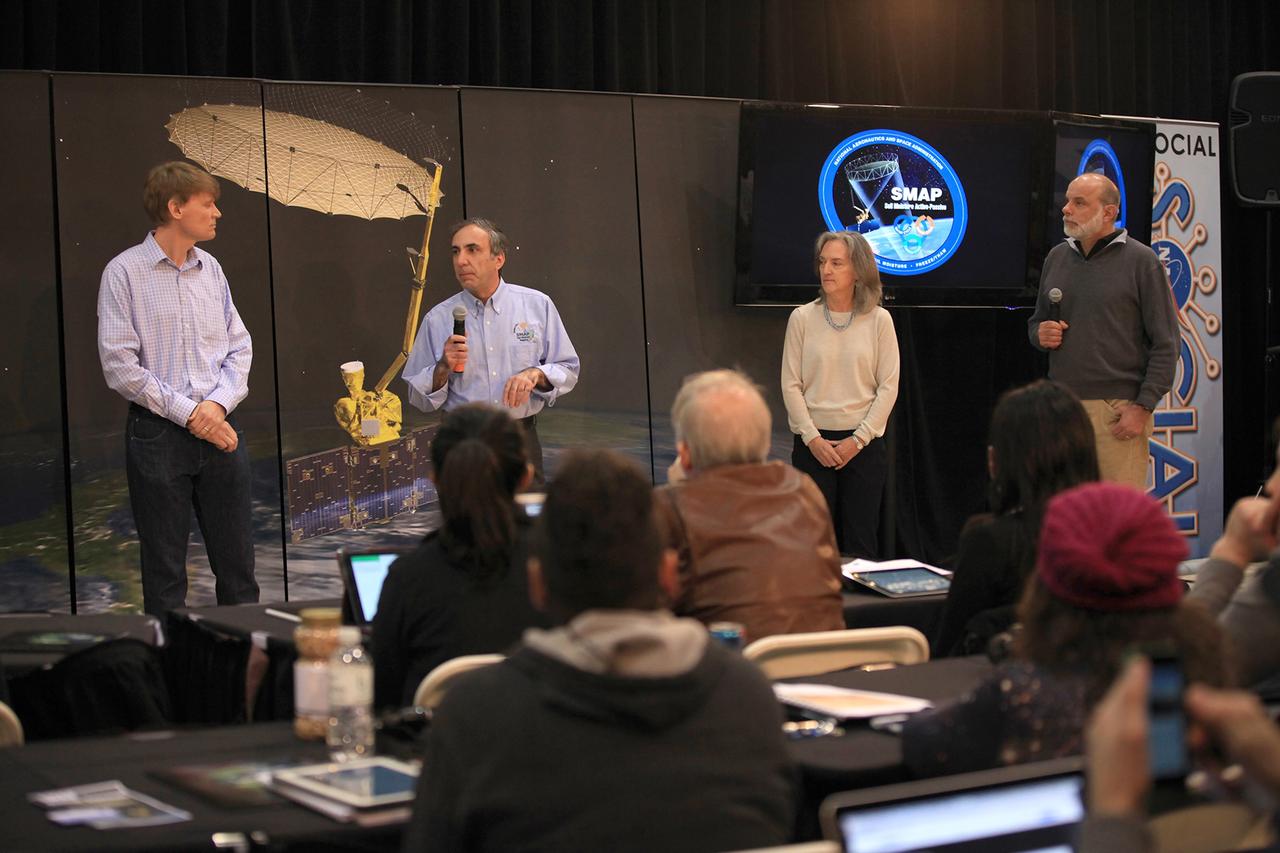
VANDENBERG AIR FORCE BASE, Calif. – Dara Entekhabi, science team leader at the Massachusetts Institute of Technology in Cambridge, Massachusetts, and other experts discuss the science and engineering of NASA's Soil Moisture Active Passive mission, or SMAP, with the audience of a NASA Social held at Vandenberg Air Force Base in California. This NASA Social brought together mission scientists and engineers with an audience of 70 students, educators, social media managers, bloggers, photographers and videographers who were selected from a pool of 325 applicants from 45 countries to participate in launch activities and communicate their experience with social media followers. The SMAP mission is scheduled to launch from Vandenberg on Jan. 29. To learn more about SMAP, visit http://www.nasa.gov/smap. Photo credit: NASA/Kim Shiflett
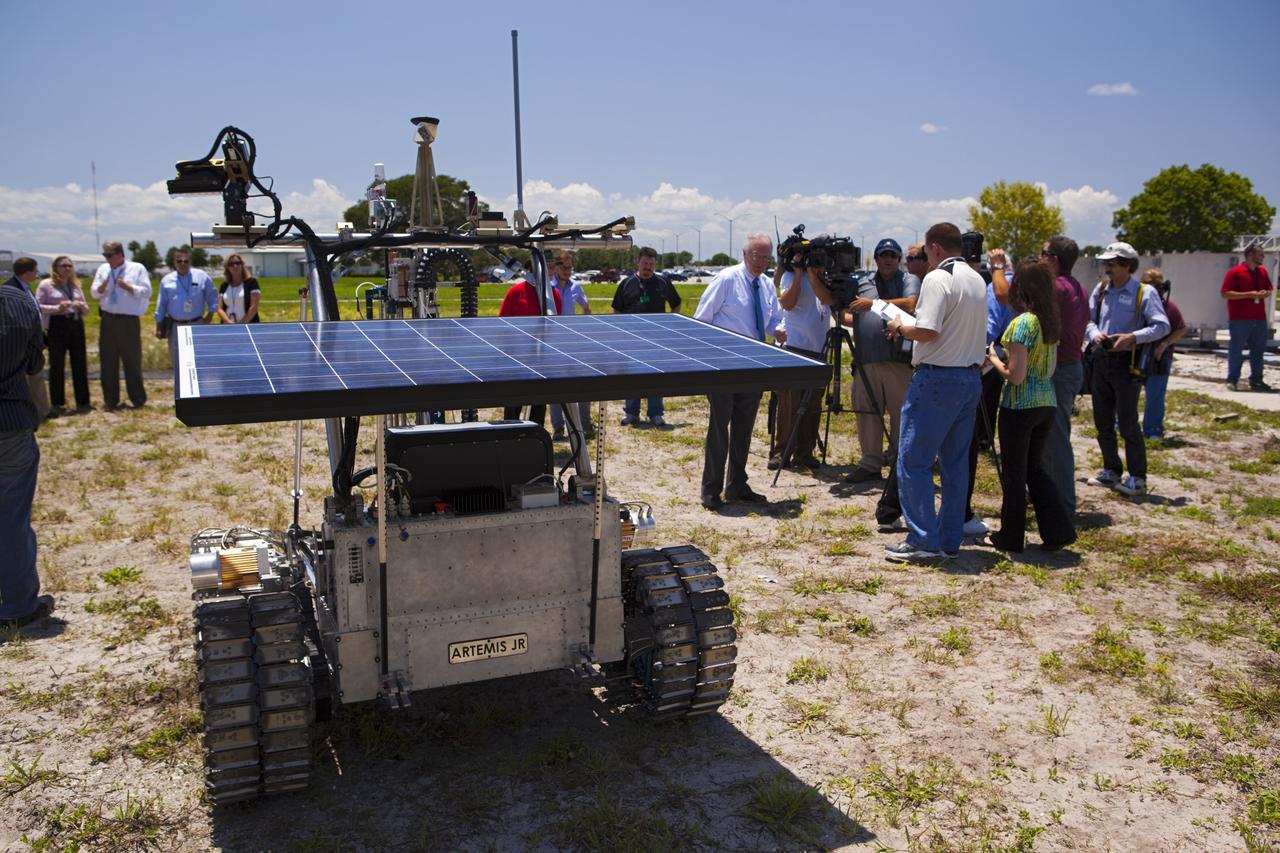
CAPE CANAVERAL, Fla. – The solar array on the prototype rover Artemis Jr. for NASA’s Regolith and Environment Science and Oxygen and Lunar Volatile Extraction, or RESOLVE, project soaks up the sunlight during a rover demonstration for media representatives in a field beside the Operations and Checkout Building at NASA’s Kennedy Space Center in Florida. The rover and its drill are provided by the Canadian Space Agency and work in concert with NASA science instruments to prospect for water, ice and other lunar resources. RESOLVE also will demonstrate how future explorers can take advantage of resources at potential landing sites by manufacturing oxygen from soil. NASA will conduct field tests in July outside of Hilo, Hawaii, with equipment and concept vehicles that demonstrate how explorers might prospect for resources and make their own oxygen for survival while on other planetary bodies. For more information, visit http://www.nasa.gov/exploration/analogs/index.html. Photo credit: NASA/Dimitri Gerondidakis
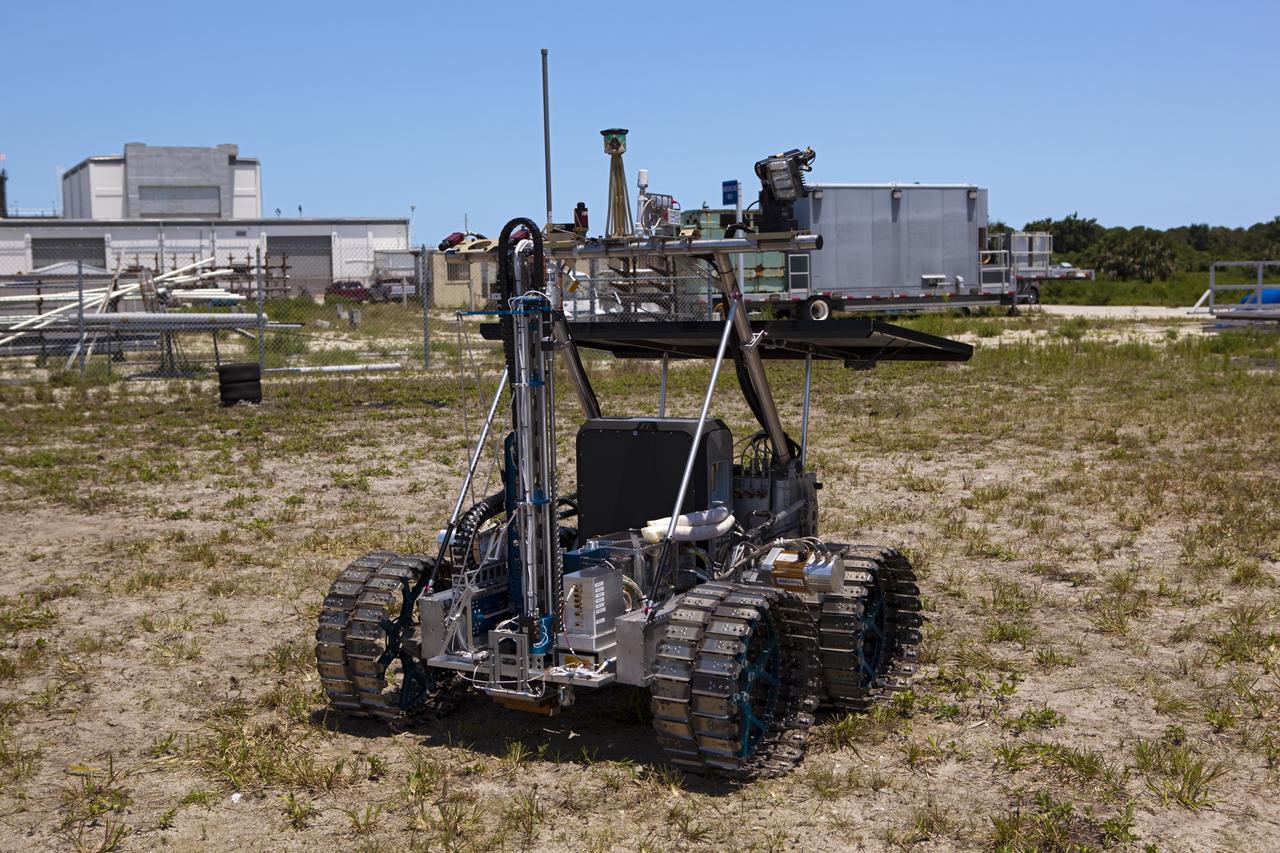
CAPE CANAVERAL, Fla. – A demonstration of the prototype rover Artemis Jr. for NASA’s Regolith and Environment Science and Oxygen and Lunar Volatile Extraction, or RESOLVE, project is conducted in a field beside the Operations and Checkout Building at NASA’s Kennedy Space Center in Florida. The rover and its drill are provided by the Canadian Space Agency and work in concert with NASA science instruments to prospect for water, ice and other lunar resources. RESOLVE also will demonstrate how future explorers can take advantage of resources at potential landing sites by manufacturing oxygen from soil. NASA will conduct field tests in July outside of Hilo, Hawaii, with equipment and concept vehicles that demonstrate how explorers might prospect for resources and make their own oxygen for survival while on other planetary bodies. For more information, visit http://www.nasa.gov/exploration/analogs/index.html. Photo credit: NASA/Dimitri Gerondidakis

CAPE CANAVERAL, Fla. – A U.S. flag at NASA's Press Site is a fitting setting for the liftoff from American soil of the Falcon 9 rocket and Dragon capsule from Space Launch Complex 40 on Cape Canaveral Air Force Station in Florida. The rocket is carrying the SpaceX CRS-4 mission to orbit. Liftoff was at 1:52 a.m. EDT. The mission is the fourth of 12 SpaceX flights NASA contracted with the company to resupply the space station. It will be the fifth trip by a Dragon spacecraft to the orbiting laboratory. The spacecraft’s 2.5 tons of supplies, science experiments, and technology demonstrations include critical materials to support 255 science and research investigations that will occur during the station's Expeditions 41 and 42. To learn more about the mission, visit http://www.nasa.gov/mission_pages/station/structure/launch/index.html. Photo credit: NASA/Frankie Martin
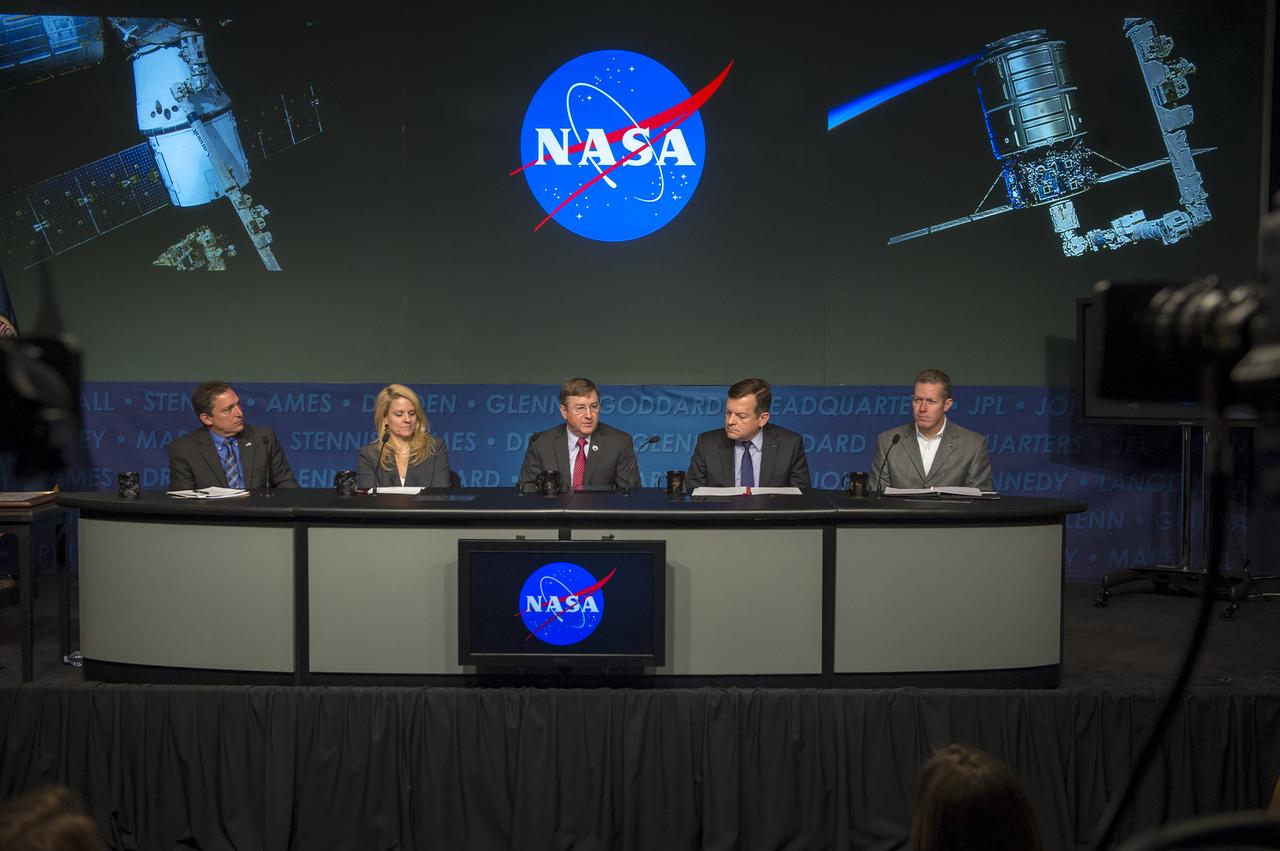
L-R: Alan Lindenmoyer, Manager of Commercial Crew and Cargo Program, NASA; Gwynne Shotwell, President, SpaceX; Frank Culbertson, Executive Vice President and General Manager, Orbital Sciences Advanced Programs Group; Frank Slazer, Vice President of Space Systems, Aerospace Industries Association and Phil McAlister, Director of Commercial Spaceflight Development at NASA, participate in a panel discussion on the Commercial Orbital Transportation Services (COTS) initiative at NASA Headquarters in Washington on Wednesday, November 13, 2013. Through COTS, NASA's partners Space Exploration Technologies Corp. (SpaceX) and Orbital Sciences Corp., developed new U.S. rockets and spacecraft, launched from U.S. soil, capable of transporting cargo to low-Earth orbit and the International Space Station. Photo Credit: (NASA/Jay Westcott)
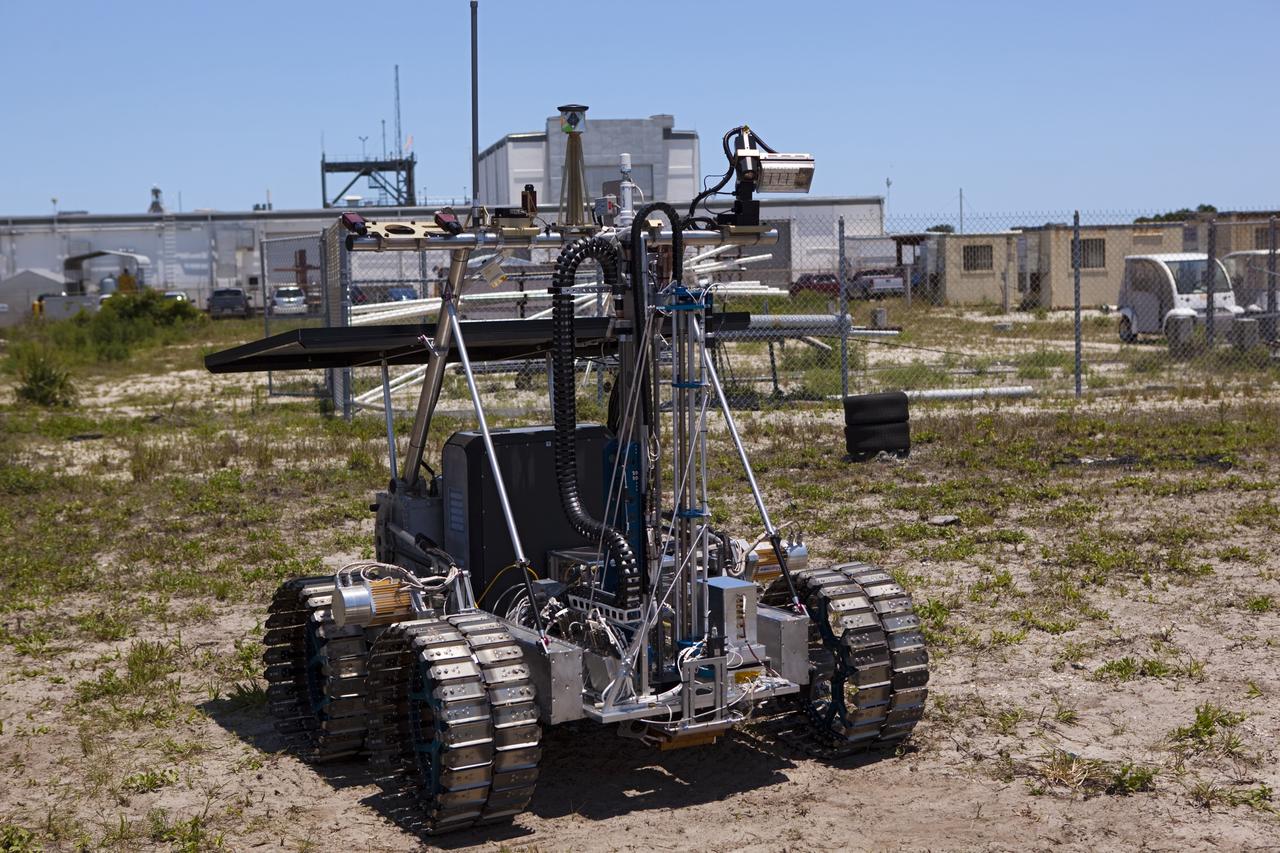
CAPE CANAVERAL, Fla. – A demonstration of the prototype rover Artemis Jr. for NASA’s Regolith and Environment Science and Oxygen and Lunar Volatile Extraction, or RESOLVE, project is conducted in a field beside the Operations and Checkout Building at NASA’s Kennedy Space Center in Florida. The rover and its drill are provided by the Canadian Space Agency and work in concert with NASA science instruments to prospect for water, ice and other lunar resources. RESOLVE also will demonstrate how future explorers can take advantage of resources at potential landing sites by manufacturing oxygen from soil. NASA will conduct field tests in July outside of Hilo, Hawaii, with equipment and concept vehicles that demonstrate how explorers might prospect for resources and make their own oxygen for survival while on other planetary bodies. For more information, visit http://www.nasa.gov/exploration/analogs/index.html. Photo credit: NASA/Dimitri Gerondidakis
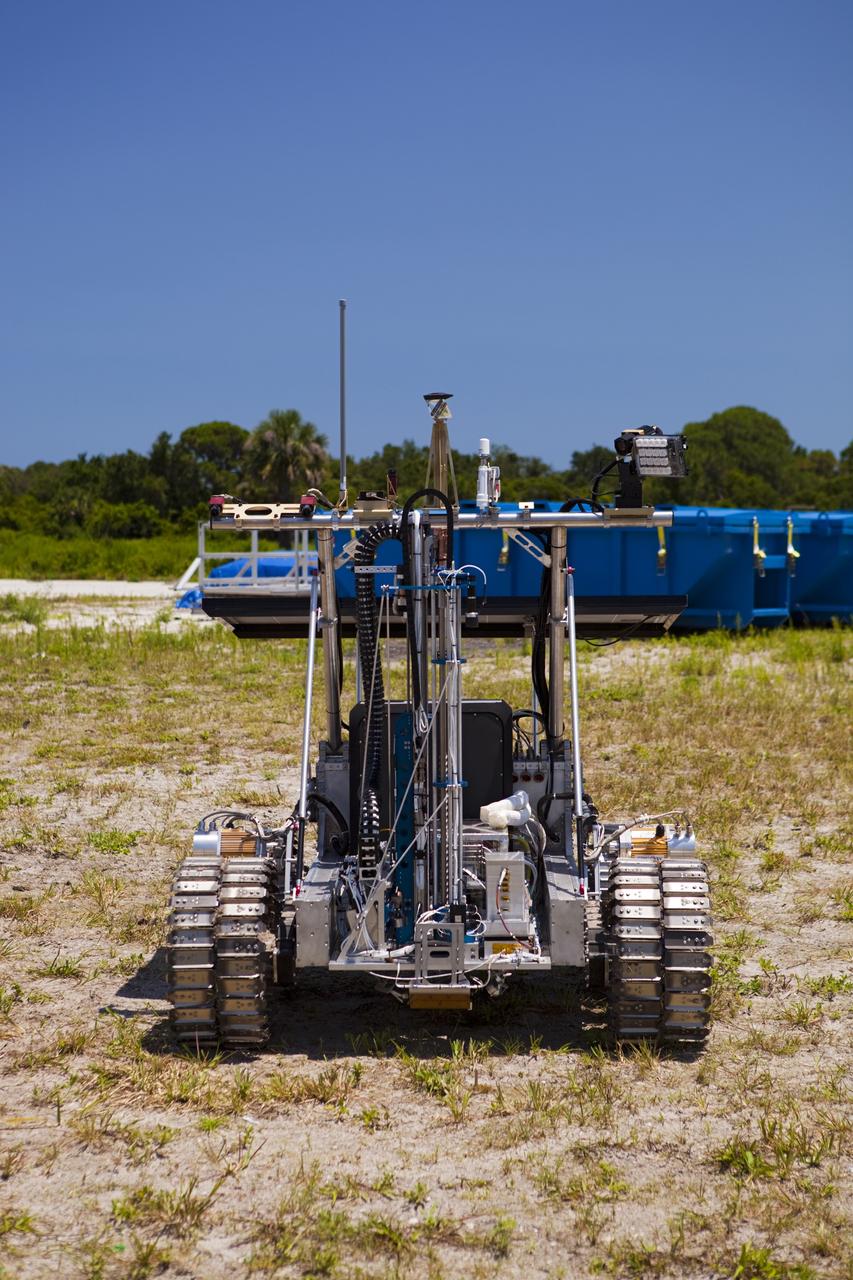
CAPE CANAVERAL, Fla. – A demonstration of the prototype rover Artemis Jr. for NASA’s Regolith and Environment Science and Oxygen and Lunar Volatile Extraction, or RESOLVE, project is conducted in a field beside the Operations and Checkout Building at NASA’s Kennedy Space Center in Florida. The rover and its drill are provided by the Canadian Space Agency and work in concert with NASA science instruments to prospect for water, ice and other lunar resources. RESOLVE also will demonstrate how future explorers can take advantage of resources at potential landing sites by manufacturing oxygen from soil. NASA will conduct field tests in July outside of Hilo, Hawaii, with equipment and concept vehicles that demonstrate how explorers might prospect for resources and make their own oxygen for survival while on other planetary bodies. For more information, visit http://www.nasa.gov/exploration/analogs/index.html. Photo credit: NASA/Dimitri Gerondidakis

Lake Mackay is the largest of hundreds of ephemeral lakes scattered throughout Western Australia and the Northern Territory, and is the second largest lake in Australia. The darker areas indicate some form of desert vegetation or algae, moisture within the soils, and lowest elevations where water pools. The image was acquired on September 19, 2010 and covers an area of 27 x 41 km. With its 14 spectral bands from the visible to the thermal infrared wavelength region and its high spatial resolution of 15 to 90 meters (about 50 to 300 feet), ASTER images Earth to map and monitor the changing surface of our planet. ASTER is one of five Earth-observing instruments launched Dec. 18, 1999, on Terra. The instrument was built by Japan's Ministry of Economy, Trade and Industry. A joint U.S./Japan science team is responsible for validation and calibration of the instrument and data products. The broad spectral coverage and high spectral resolution of ASTER provides scientists in numerous disciplines with critical information for surface mapping and monitoring of dynamic conditions and temporal change. Example applications are: monitoring glacial advances and retreats; monitoring potentially active volcanoes; identifying crop stress; determining cloud morphology and physical properties; wetlands evaluation; thermal pollution monitoring; coral reef degradation; surface temperature mapping of soils and geology; and measuring surface heat balance. The U.S. science team is located at NASA's Jet Propulsion Laboratory, Pasadena, Calif. The Terra mission is part of NASA's Science Mission Directorate, Washington, D.C. More information about ASTER is available at <a href="http://asterweb.jpl.nasa.gov/" rel="nofollow">asterweb.jpl.nasa.gov/</a>. Image Credit: NASA/GSFC/METI/ERSDAC/JAROS, and U.S./Japan ASTER Science Team

CAPE CANAVERAL, Fla. -- Inside the "Lunarena" at the Kennedy Space Center Visitor in Florida, university students maneuver their remote controlled or autonomous excavators, called lunabots, in a "sand box" of ultra-fine simulated lunar soil during NASA's second annual Lunabotics Mining Competition. Thirty-six teams of undergraduate and graduate students from the United States, Bangladesh, Canada, Colombia and India will participate in NASA's Lunabotics Mining Competition May 26 - 28 at the agency's Kennedy Space Center in Florida. The competition is designed to engage and retain students in science, technology, engineering and mathematics (STEM). Teams will maneuver their remote controlled or autonomous excavators, called lunabots, in about 60 tons of ultra-fine simulated lunar soil, called BP-1. The competition is an Exploration Systems Mission Directorate project managed by Kennedy's Education Division. The event also provides a competitive environment that could result in innovative ideas and solutions for NASA's future excavation of the moon. Photo credit: NASA/Jim Grossmann
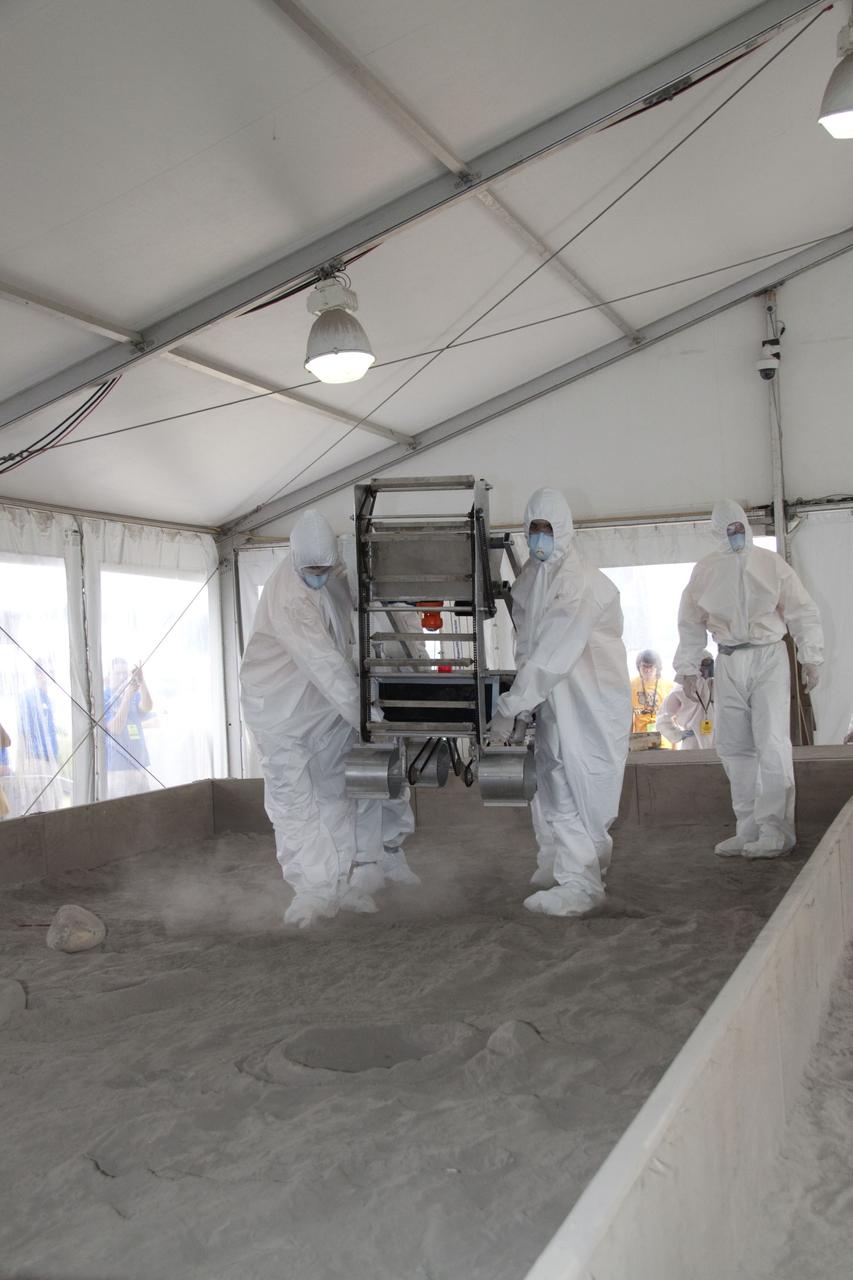
CAPE CANAVERAL, Fla. -- Inside the "Lunarena" at the Kennedy Space Center Visitor Complex in Florida, university students maneuver their remote controlled or autonomous excavators, called lunabots, in a "sand box" of ultra-fine simulated lunar soil during NASA's second annual Lunabotics Mining Competition. Thirty-six teams of undergraduate and graduate students from the United States, Bangladesh, Canada, Colombia and India will participate in NASA's Lunabotics Mining Competition May 26 - 28 at the agency's Kennedy Space Center in Florida. The competition is designed to engage and retain students in science, technology, engineering and mathematics (STEM). Teams will maneuver their remote controlled or autonomous excavators, called lunabots, in about 60 tons of ultra-fine simulated lunar soil, called BP-1. The competition is an Exploration Systems Mission Directorate project managed by Kennedy's Education Division. The event also provides a competitive environment that could result in innovative ideas and solutions for NASA's future excavation of the moon. Photo credit: NASA/Jack Pfaller
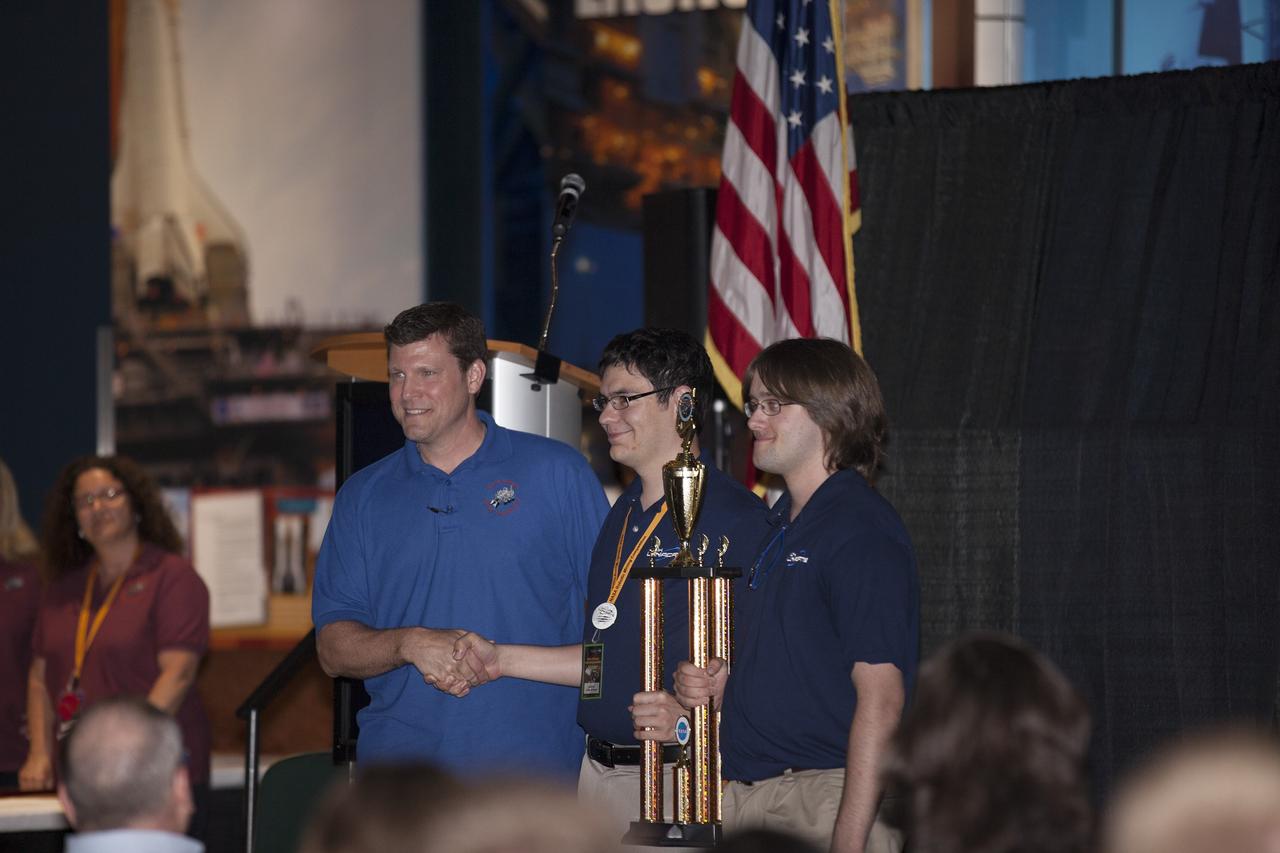
CAPE CANAVERAL, Fla. -- Kennedy Space Center engineer Marc Seibert presents the Communication Award to the University of New Hampshire team members during NASA's 2014 Robotic Mining Competition award ceremony inside the Space Shuttle Atlantis attraction at the Kennedy Space Center Visitor Complex in Florida. The team moved 10 kilograms of simulated Martian soil with its robot while using the least amount of communication power. More than 35 teams from colleges and universities around the U.S. designed and built remote-controlled robots for the mining competition. The competition is a NASA Human Exploration and Operations Mission Directorate project designed to engage and retain students in science, technology, engineering and mathematics, or STEM, fields by expanding opportunities for student research and design. Teams use their remote-controlled robotics to maneuver and dig in a supersized sandbox filled with a crushed material that has characteristics similar to Martian soil. The objective of the challenge is to see which team’s robot can collect and move the most regolith within a specified amount of time. The competition includes on-site mining, writing a systems engineering paper, performing outreach projects for K-12 students, slide presentation and demonstrations, and team spirit. For more information, visit www.nasa.gov/nasarmc. Photo credit: NASA/Kim Shiflett
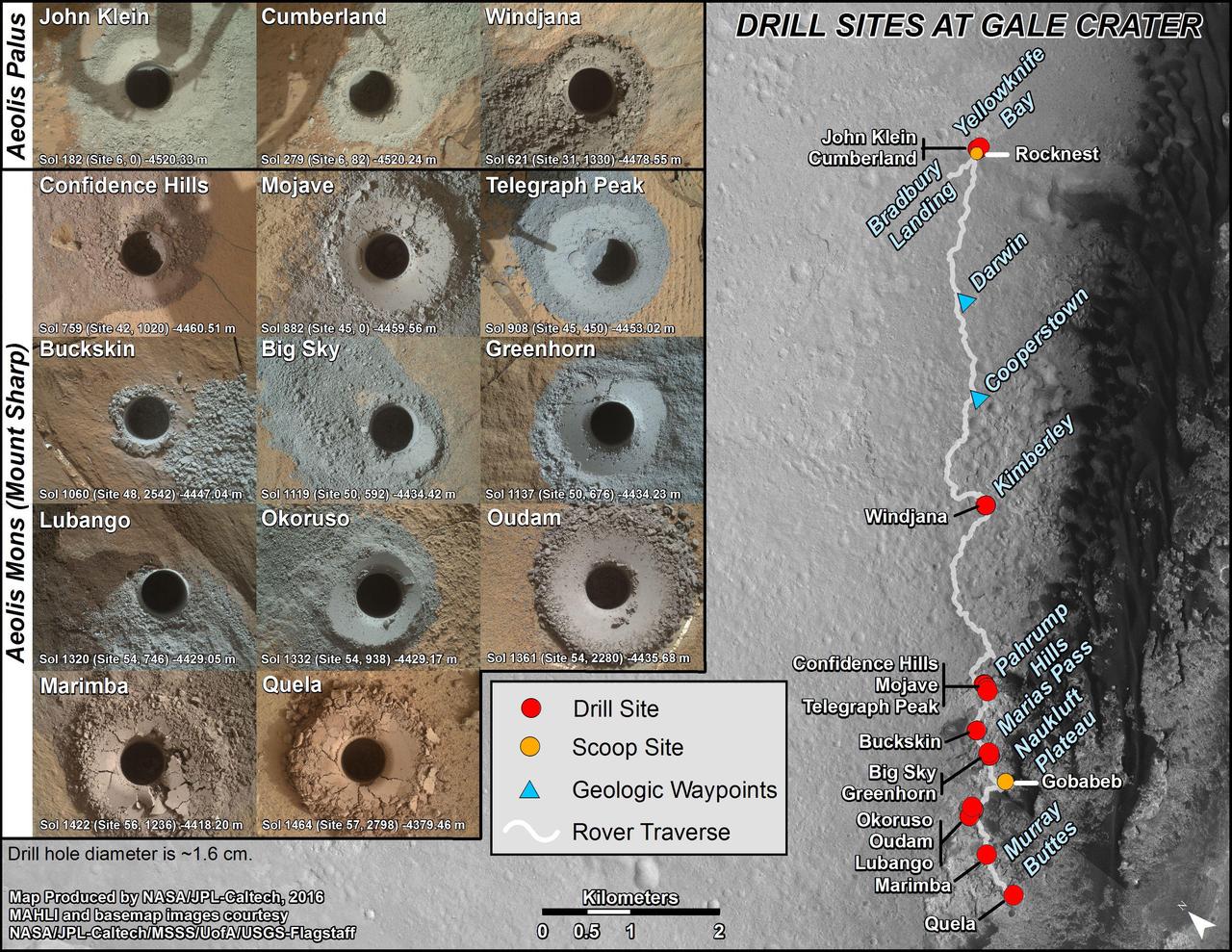
This graphic maps locations of the sites where NASA's Curiosity Mars rover collected its first 18 rock or soil samples for analysis by laboratory instruments inside the vehicle. It also presents images of the drilled holes where 14 rock-powder samples were acquired. Curiosity scooped two soil samples at each of the other two sites: Rocknest and Gobabeb. The diameter of each drill hole is about 0.6 inch (1.6 centimeters), slightly smaller than a U.S. dime. The images used here are raw color, as recorded by the rover's Mars Hand Lens Imager (MAHLI) camera. Notice the differences in color of the material at different drilling sites. For the map, north is toward upper left corner. The scale bar represents 2 kilometers (1.2 miles). The base map is from the High Resolution Imaging Science Experiment (HiRISE) camera on NASA's Mars Reconnaissance Orbiter. The latest sample site included is "Quela,"where Curiosity drilled into bedrock of the Murray formation on Sept. 18, 2016, during the 1,464th Martian day, or sol, of the mission. Curiosity landed in August 2012 on the plain (named Aeolis Palus) near Mount Sharp (or Aeolis Mons). More drilling samples collected by MSL are available at http://photojournal.jpl.nasa.gov/catalog/PIA20845