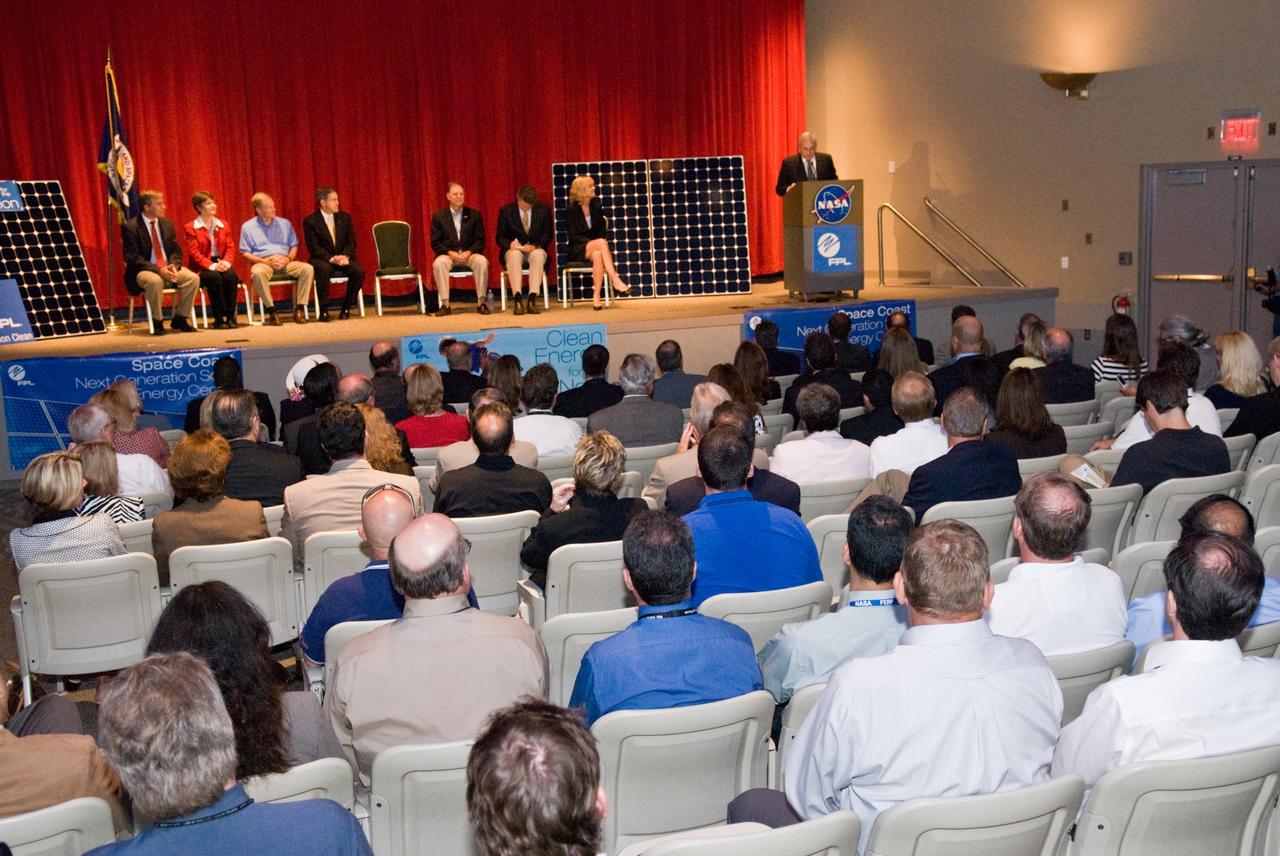
CAPE CANAVERAL, Fla. – Armando Olivera, president and CEO of Florida Power & Light, or FPL, speaks to guests at the groundbreaking ceremony for the joint NASA and FPL solar power project at NASA's Kennedy Space Center. Others on the stage are, from left, Ed Smeloff with SunPower Corporation, Florida Rep. Suzanne Kosmas, Sen. Bill Nelson, Center Director Bob Cabana, Florida Rep. Bill Posey, Eric Draper, deputy director of Audubon of Florida, and Pam Rauch, vice president of External Affairs for FPL. FPL, Florida's largest electric utility, will build and maintain two solar photovoltaic power generation systems at Kennedy. One will produce an estimated 10 megawatts of emissions-free power for FPL customers, which is enough energy to serve roughly 1,100 homes. The second is a one-megawatt solar power facility that will provide renewable energy directly to Kennedy. The FPL facilities at NASA will help provide Florida residents and America's space program with new sources of clean energy that will cut reliance on fossil fuels and improve the environment by reducing greenhouse gas emissions. The one megawatt facility also will help NASA meet its goal for use of power generated from renewable energy. Photo credit: NASA/Kim Shiflett
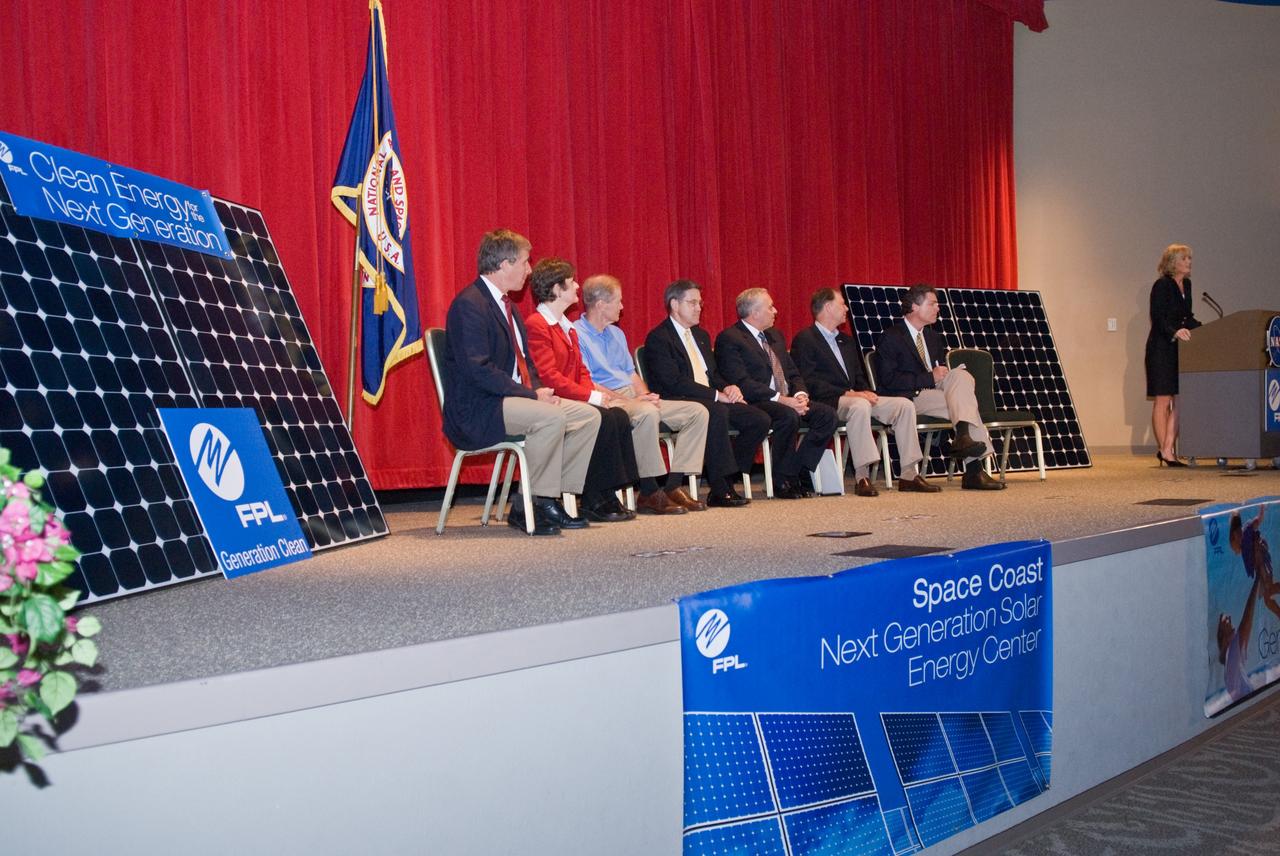
CAPE CANAVERAL, Fla. – Pam Rauch, vice president of External Affairs for Florida Power & Light, or FPL, speaks to guests at the groundbreaking ceremony for the joint NASA and FPL solar power project at NASA's Kennedy Space Center. Others on the stage are Ed Smeloff with SunPower Corporation, Florida Rep. Suzanne Kosmas, Sen. Bill Nelson, Center Director Bob Cabana, Armando Olivera, president and CEO of FPL, Florida Rep. Bill Posey and Eric Draper, deputy director of Audubon of Florida. FPL, Florida's largest electric utility, will build and maintain two solar photovoltaic power generation systems at Kennedy. One will produce an estimated 10 megawatts of emissions-free power for FPL customers, which is enough energy to serve roughly 1,100 homes. The second is a one-megawatt solar power facility that will provide renewable energy directly to Kennedy. The FPL facilities at NASA will help provide Florida residents and America's space program with new sources of clean energy that will cut reliance on fossil fuels and improve the environment by reducing greenhouse gas emissions. The one megawatt facility also will help NASA meet its goal for use of power generated from renewable energy. Photo credit: NASA/Kim Shiflett
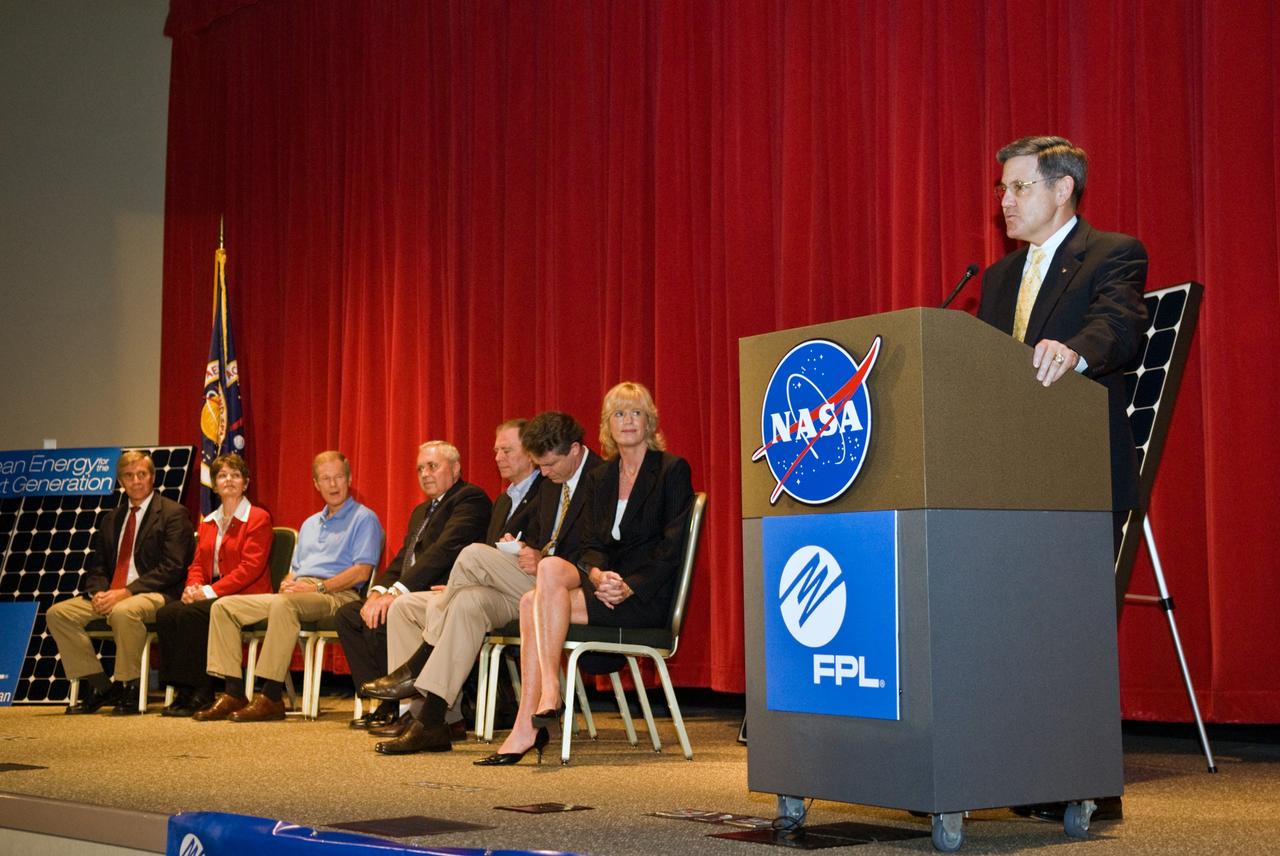
CAPE CANAVERAL, Fla. – Center Director of NASA's Kennedy Space Center in Florida, Bob Cabana addresses guests at the groundbreaking ceremony for the joint NASA and Florida Power & Light, or FPL, solar power project at Kennedy. Others on the stage are (from left) Ed Smeloff with SunPower Corporation, Florida Rep. Suzanne Kosmas, Sen. Bill Nelson, Armando Olivera, president and CEO of FPL, Florida Rep. Bill Posey, Eric Draper, deputy director of Audubon of Florida, and Pam Rauch, vice president of External Affairs for FPL. FPL, Florida's largest electric utility, will build and maintain two solar photovoltaic power generation systems at Kennedy. One will produce an estimated 10 megawatts of emissions-free power for FPL customers, which is enough energy to serve roughly 1,100 homes. The second is a one-megawatt solar power facility that will provide renewable energy directly to Kennedy. The FPL facilities at NASA will help provide Florida residents and America's space program with new sources of clean energy that will cut reliance on fossil fuels and improve the environment by reducing greenhouse gas emissions. The one megawatt facility also will help NASA meet its goal for use of power generated from renewable energy. Photo credit: NASA/Kim Shiflett
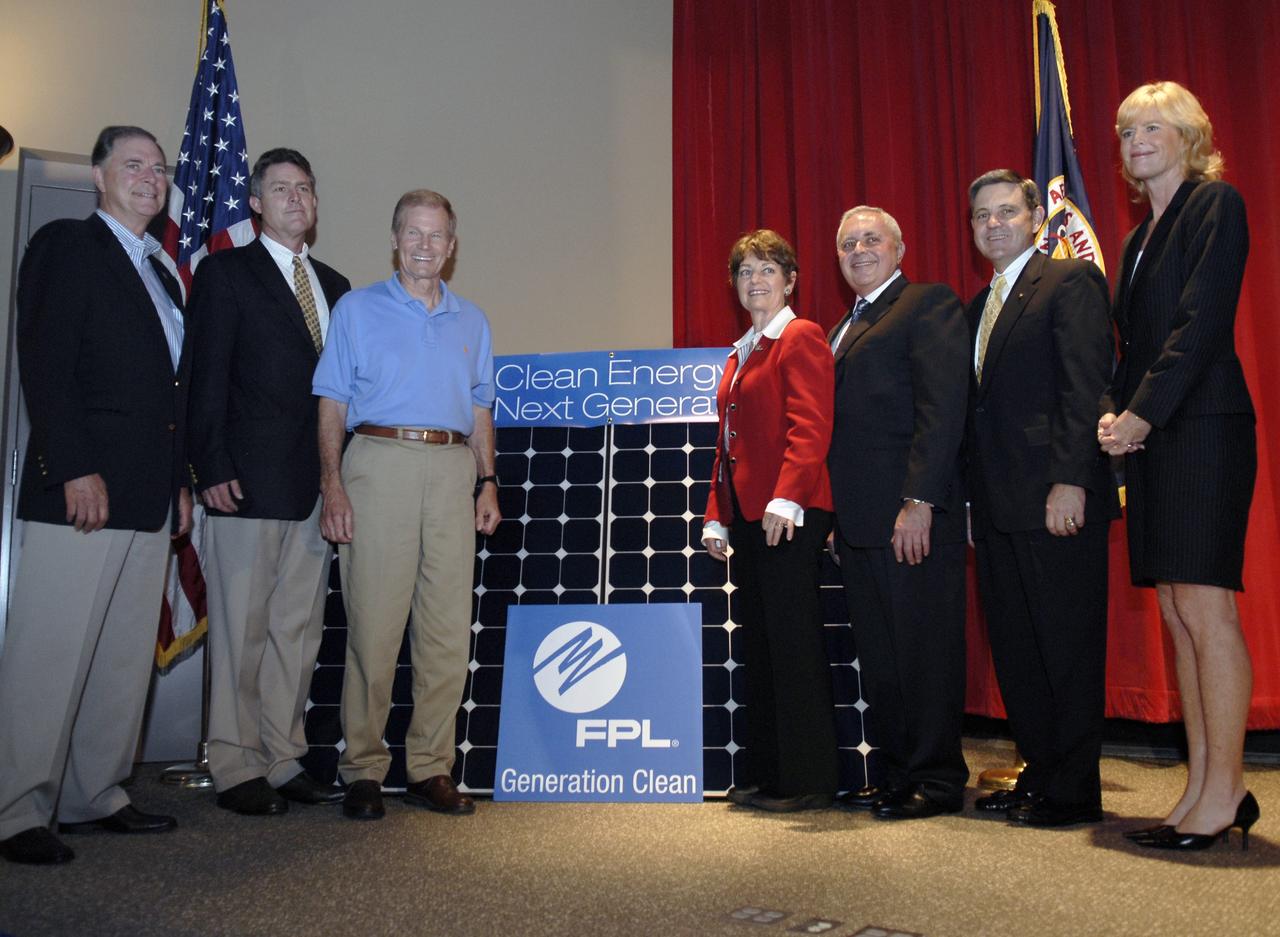
CAPE CANAVERAL, Fla. – Gathering on stage for the groundbreaking ceremony for the joint NASA and Florida Power & Light, or FPL, solar power project at NASA's Kennedy Space Center are Florida Rep. Bill Posey, Eric Draper, deputy director of Audubon of Florida, Sen. Bill Nelson, Florida Rep. Suzanne Kosmas, Armando Olivera, president and CEO of FPL, Center Director Bob Cabana and Pam Rauch, vice president of External Affairs for FPL. FPL, Florida's largest electric utility, will build and maintain two solar photovoltaic power generation systems at Kennedy. One will produce an estimated 10 megawatts of emissions-free power for FPL customers, which is enough energy to serve roughly 1,100 homes. The second is a one-megawatt solar power facility that will provide renewable energy directly to Kennedy. The FPL facilities at NASA will help provide Florida residents and America's space program with new sources of clean energy that will cut reliance on fossil fuels and improve the environment by reducing greenhouse gas emissions. The one megawatt facility also will help NASA meet its goal for use of power generated from renewable energy. Photo credit: NASA/Kim Shiflett
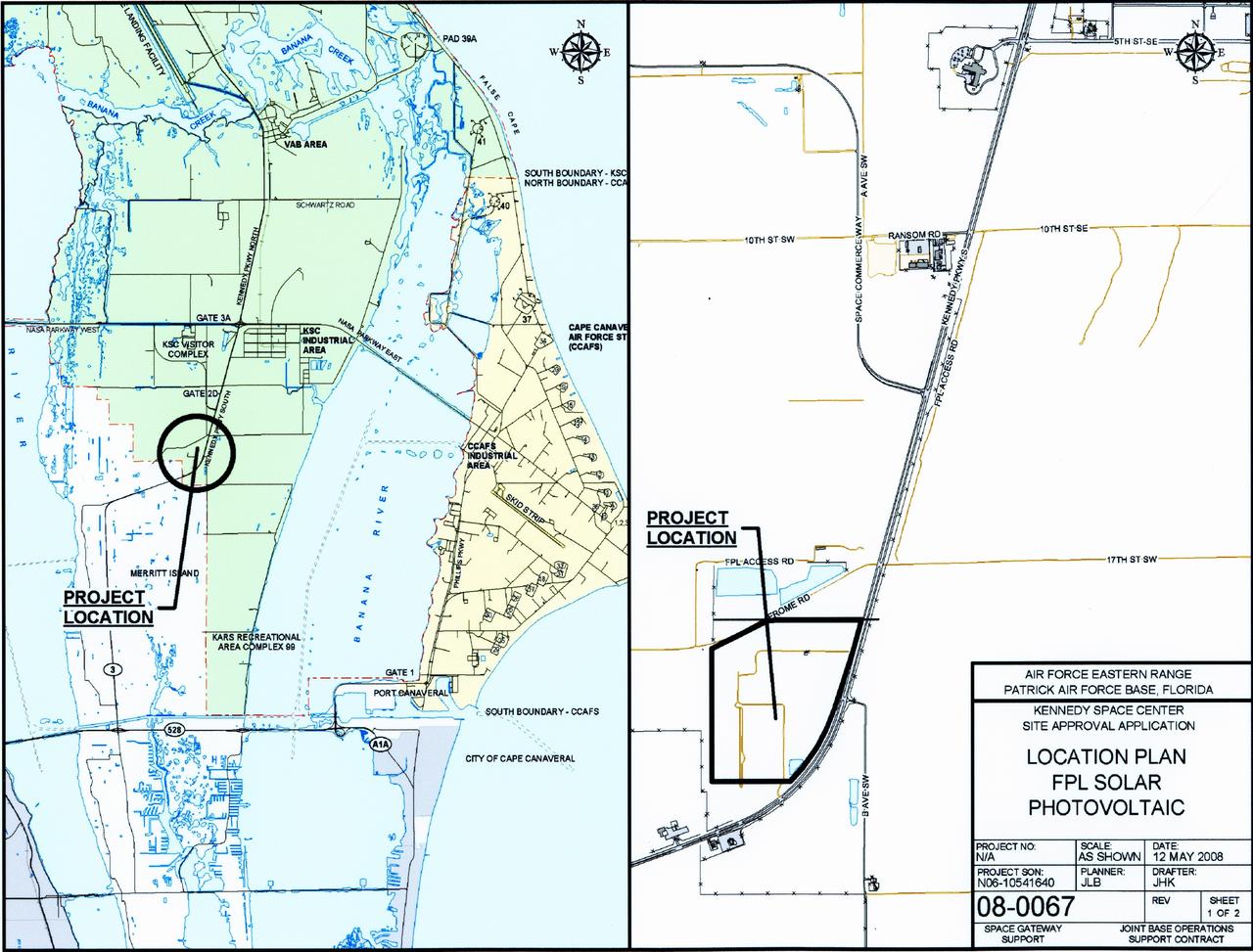
CAPE CANAVERAL, Fla. – These maps show one of the locations of the proposed solar power systems that NASA and Florida Power & Light Company are beginning to construct on NASA's Kennedy Space Center as part of a public-private partnership that promotes a clean-energy future. A groundbreaking ceremony took place on May 27 at the Kennedy Space Center Visitor Complex. FPL, Florida's largest electric utility, will build and maintain two solar photovoltaic power generation systems at Kennedy. One will produce an estimated 10 megawatts of emissions-free power for FPL customers, which is enough energy to serve roughly 1,100 homes. The second is a one-megawatt solar power facility that will provide renewable energy directly to Kennedy. The FPL facilities at NASA will help provide Florida residents and America's space program with new sources of clean energy that will cut reliance on fossil fuels and improve the environment by reducing greenhouse gas emissions. The one megawatt facility also will help NASA meet its goal for use of power generated from renewable energy. Photo courtesy of FPL
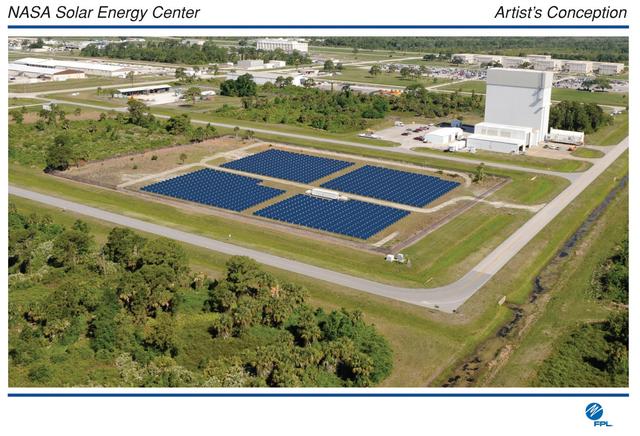
CAPE CANAVERAL, Fla. – This is a rendering of one of two proposed solar power systems that NASA and Florida Power & Light Company are beginning to construct on NASA's Kennedy Space Center as part of a public-private partnership that promotes a clean-energy future. A groundbreaking ceremony took place on May 27 at the Kennedy Space Center Visitor Complex. FPL, Florida's largest electric utility, will build and maintain two solar photovoltaic power generation systems at Kennedy. One will produce an estimated 10 megawatts of emissions-free power for FPL customers, which is enough energy to serve roughly 1,100 homes. The second is a one-megawatt solar power facility that will provide renewable energy directly to Kennedy. The FPL facilities at NASA will help provide Florida residents and America's space program with new sources of clean energy that will cut reliance on fossil fuels and improve the environment by reducing greenhouse gas emissions. The one megawatt facility also will help NASA meet its goal for use of power generated from renewable energy. Photo courtesy of FPL

CAPE CANAVERAL, Fla. – An aerial view of the site in the Industrial Area of NASA's Kennedy Space Center in Florida where a solar power system will be built. The solar power systems are being constructed by NASA and Florida Power & Light Company as part of a public-private partnership that promotes a clean-energy future. A groundbreaking ceremony took place on May 27 at the Kennedy Space Center Visitor Complex. FPL, Florida's largest electric utility, will build and maintain two solar photovoltaic power generation systems at Kennedy. One will produce an estimated 10 megawatts of emissions-free power for FPL customers, which is enough energy to serve roughly 1,100 homes. The second, which will be built on the pictured location, is a one-megawatt solar power facility that will provide renewable energy directly to Kennedy. The FPL facilities at NASA will help provide Florida residents and America's space program with new sources of clean energy that will cut reliance on fossil fuels and improve the environment by reducing greenhouse gas emissions. The one megawatt facility also will help NASA meet its goal for use of power generated from renewable energy. Photo credit: NASA/Kim Shiflett
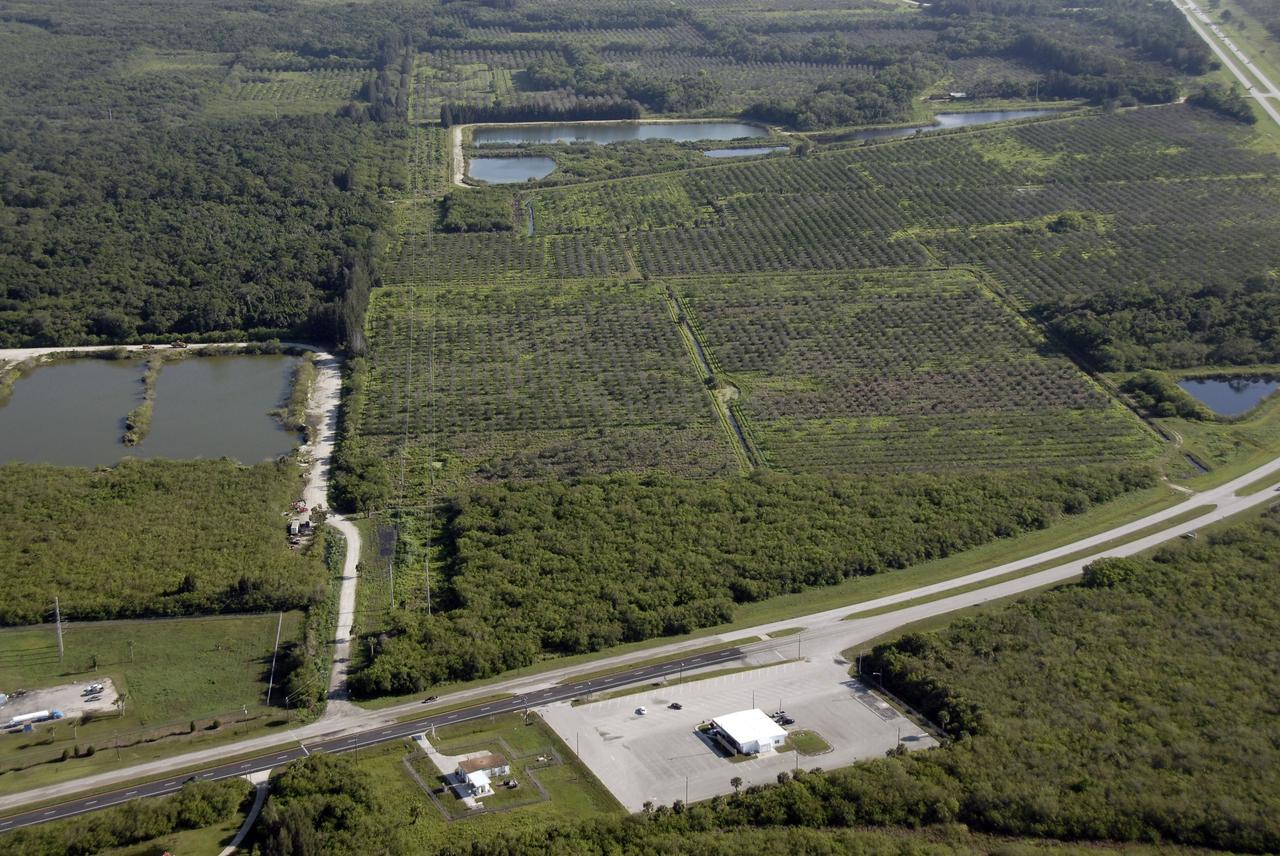
CAPE CANAVERAL, Fla. – An aerial view of the site on S.R. 3 on NASA's Kennedy Space Center in Florida where a solar power system will be built. The solar power systems are being constructed by NASA and Florida Power & Light Company as part of a public-private partnership that promotes a clean-energy future. A groundbreaking ceremony took place on May 27 at the Kennedy Space Center Visitor Complex. FPL, Florida's largest electric utility, will build and maintain two solar photovoltaic power generation systems at Kennedy. One, which will be built on the pictured location, will produce an estimated 10 megawatts of emissions-free power for FPL customers, which is enough energy to serve roughly 1,100 homes. The second is a one-megawatt solar power facility that will provide renewable energy directly to Kennedy. The FPL facilities at NASA will help provide Florida residents and America's space program with new sources of clean energy that will cut reliance on fossil fuels and improve the environment by reducing greenhouse gas emissions. The one megawatt facility also will help NASA meet its goal for use of power generated from renewable energy. Photo credit: NASA/Kim Shiflett
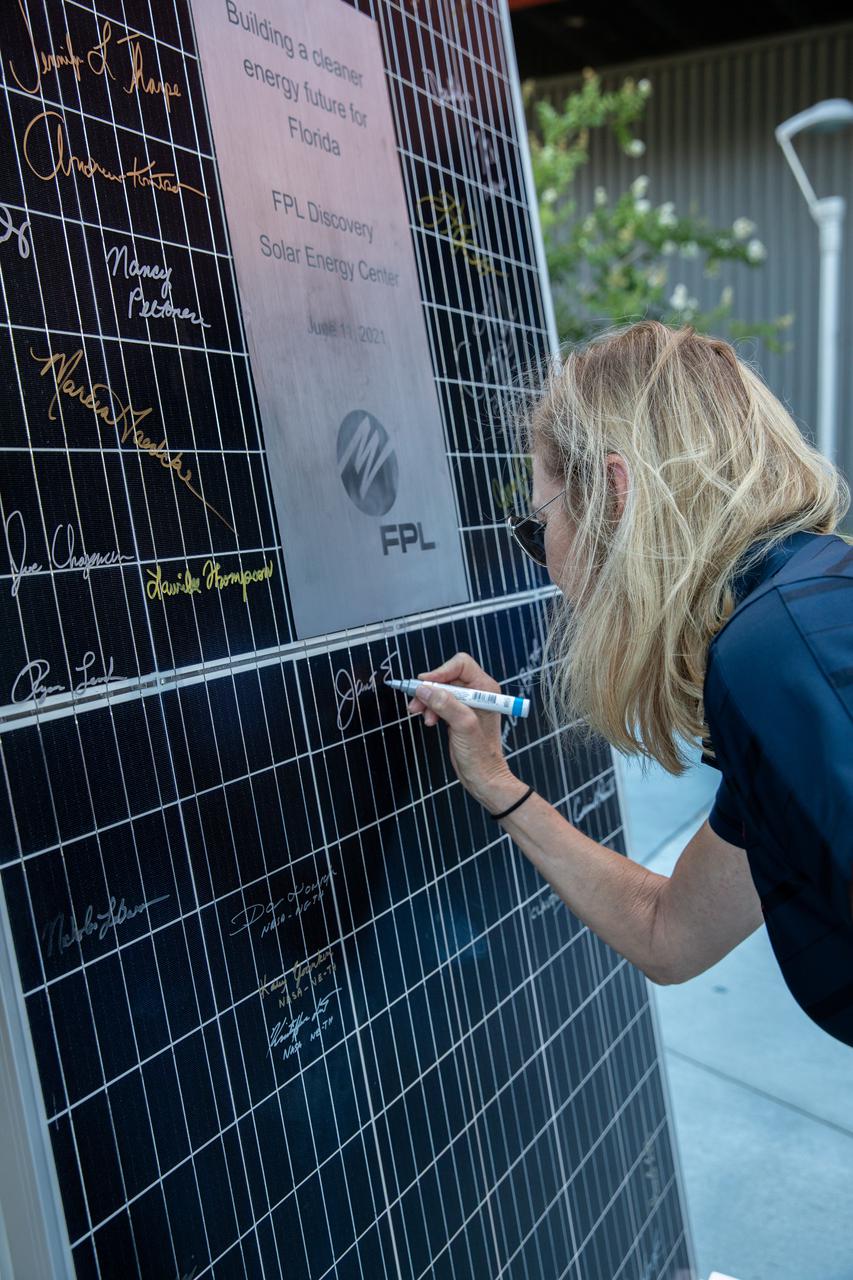
As part of a ribbon-cutting ceremony held on June 11, 2021, Janet Petro, acting director of NASA’s Kennedy Space Center in Florida, signs a solar panel which will be put on display at the Visitor Complex to commemorate the Florida Power and Light’s (FPL) Discovery Solar Energy Center becoming operational at the center. Discovery Solar Energy Center is a 74.5-megawatt solar site, spanning 491 acres at the spaceport. The site contains about 250,000 solar panels in total, producing enough energy to power approximately 15,000 homes. Harnessing energy from the Sun, the panels do not directly power anything at Kennedy, but rather, send energy directly to FPL's electricity grid for distribution to existing customers. Construction began in spring 2020, and the energy center became fully operational on May 30, 2021.
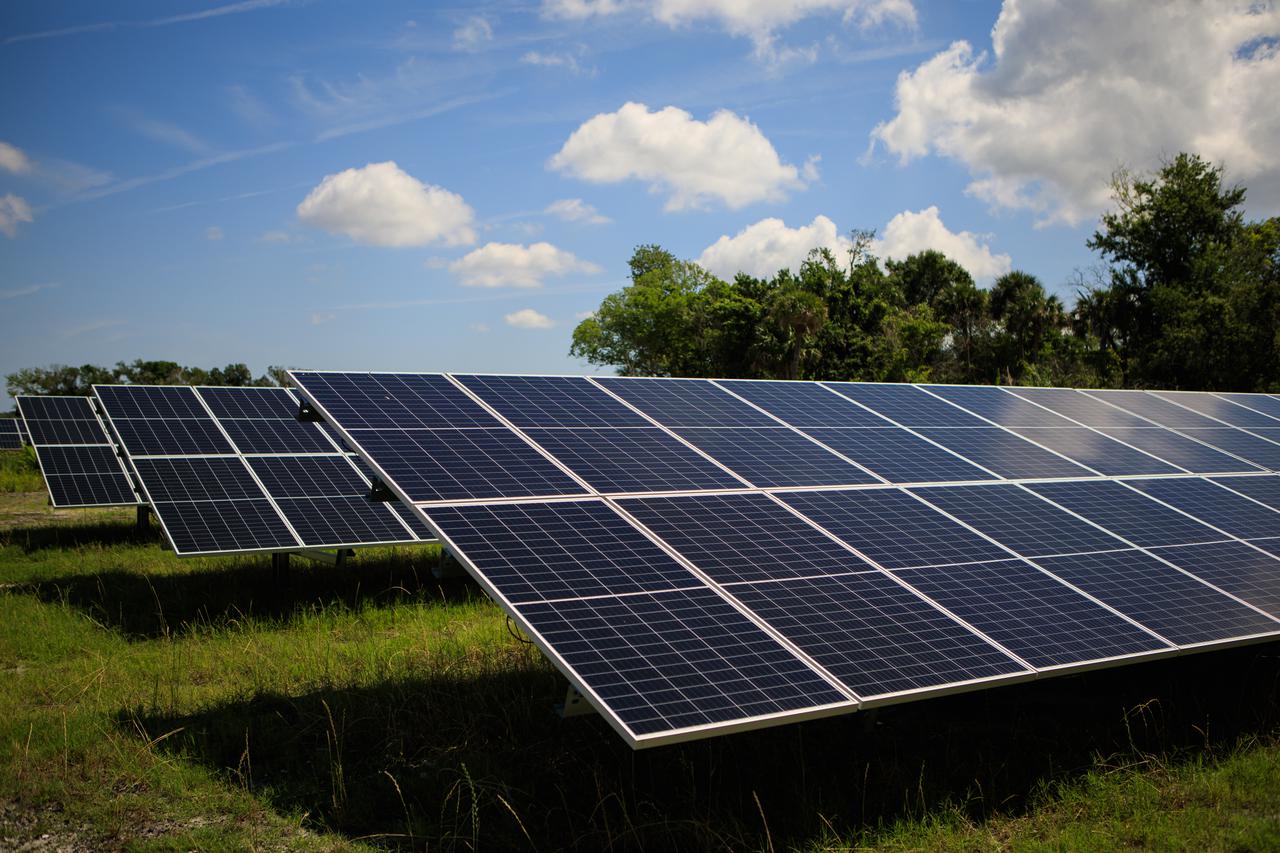
In this view are solar panels that are part of Florida Power and Light’s (FPL) new Discovery Solar Energy Center – a 74.5-megawatt solar site, spanning 491 acres at NASA’s Kennedy Space Center in Florida. The site contains about 250,000 solar panels in total, producing enough energy to power approximately 15,000 homes. Harnessing energy from the Sun, the panels do not directly power anything at Kennedy, but rather, send energy directly to FPL's electricity grid for distribution to existing customers. Construction began in spring 2020, and the energy center became fully operational on May 30, 2021.
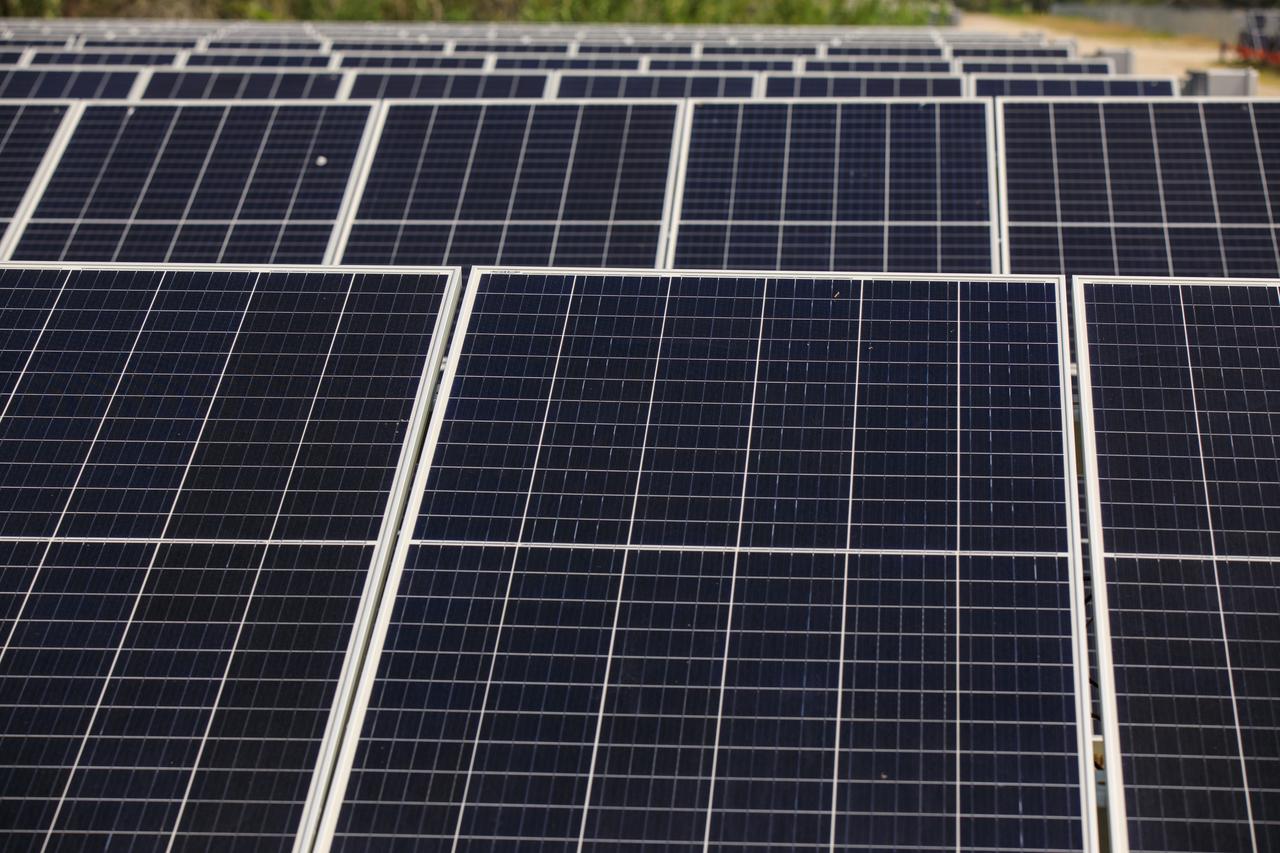
Seen here is an up-close view of solar panels that are part of Florida Power and Light’s (FPL) new Discovery Solar Energy Center – a 74.5-megawatt solar site, spanning 491 acres at NASA’s Kennedy Space Center in Florida. The site contains about 250,000 solar panels in total, producing enough energy to power approximately 15,000 homes. Harnessing energy from the Sun, the panels do not directly power anything at Kennedy, but rather, send energy directly to FPL's electricity grid for distribution to existing customers. Construction began in spring 2020, and the energy center became fully operational on May 30, 2021.
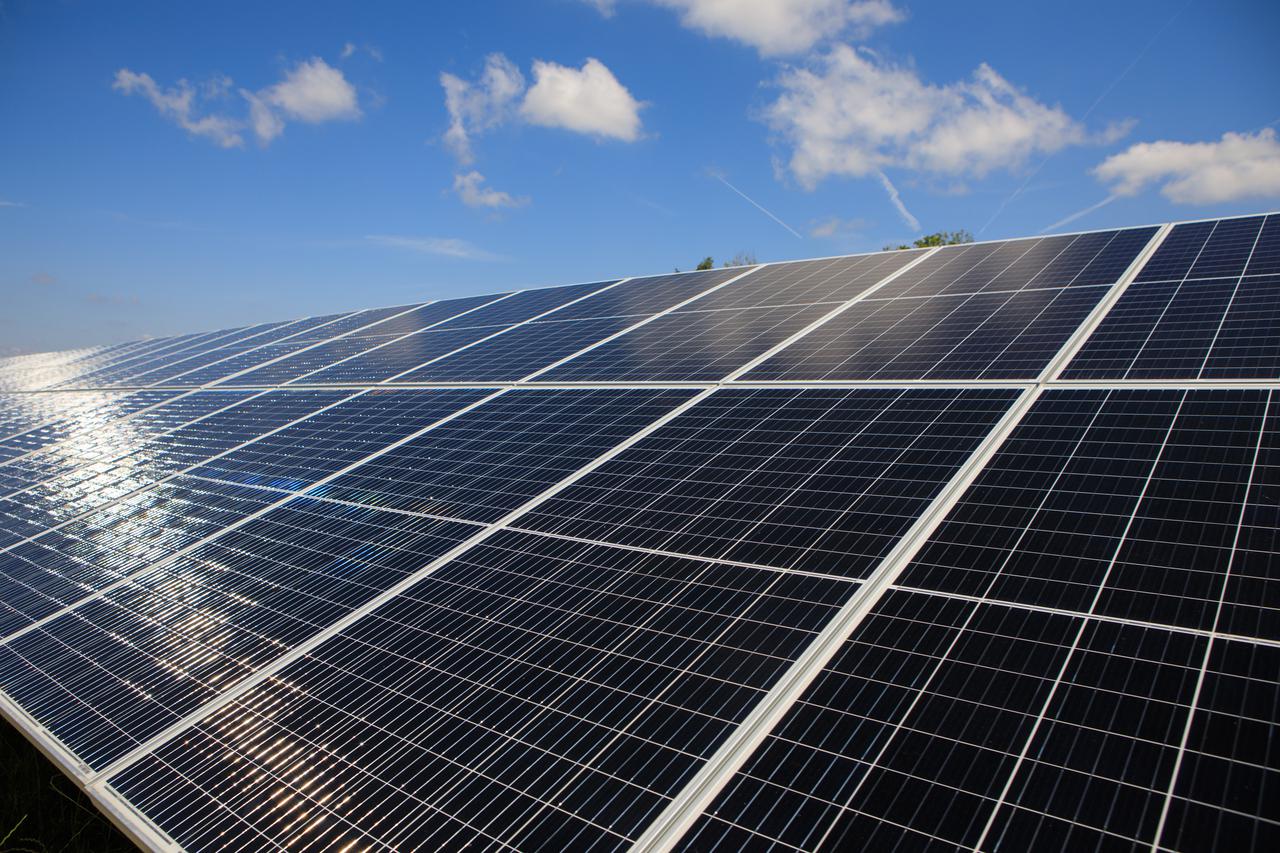
Seen here is an up-close view of solar panels that are part of Florida Power and Light’s (FPL) new Discovery Solar Energy Center – a 74.5-megawatt solar site, spanning 491 acres at NASA’s Kennedy Space Center in Florida. The site contains about 250,000 solar panels in total, producing enough energy to power approximately 15,000 homes. Harnessing energy from the Sun, the panels do not directly power anything at Kennedy, but rather, send energy directly to FPL's electricity grid for distribution to existing customers. Construction began in spring 2020, and the energy center became fully operational on May 30, 2021.
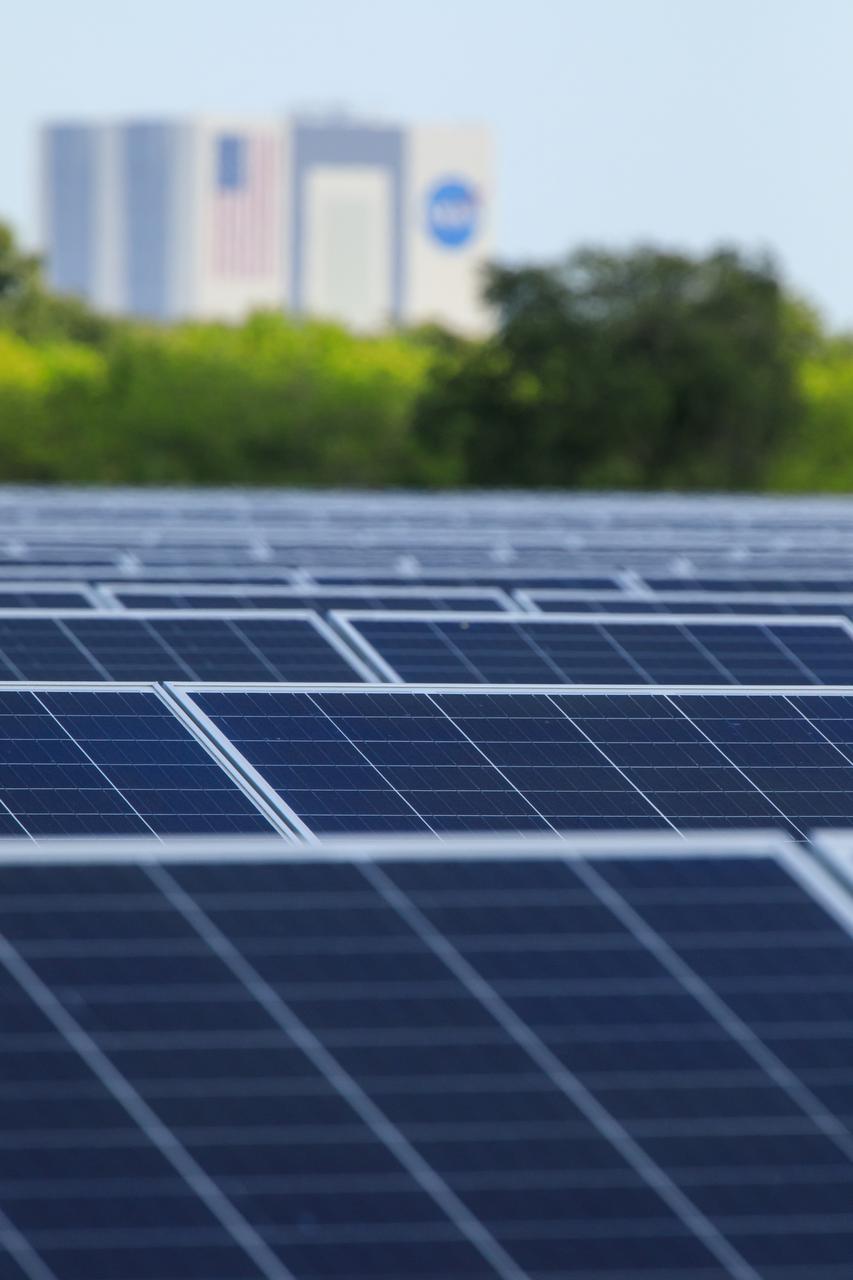
Seen here, with the iconic Vehicle Assembly Building in the background, is an up-close view of solar panels that are part of Florida Power and Light’s (FPL) new Discovery Solar Energy Center at NASA’s Kennedy Space Center in Florida. The 74.5-megawatt solar site spans 491 acres at Kennedy and contains about 250,000 solar panels. Harnessing energy from the Sun, the panels produce enough energy to power approximately 15,000 homes. The panels do not directly power anything at Kennedy, and instead, send energy directly to FPL’s electricity grid for distribution to existing customers. Construction began in spring 2020, and the energy center became fully operational on May 30, 2021.
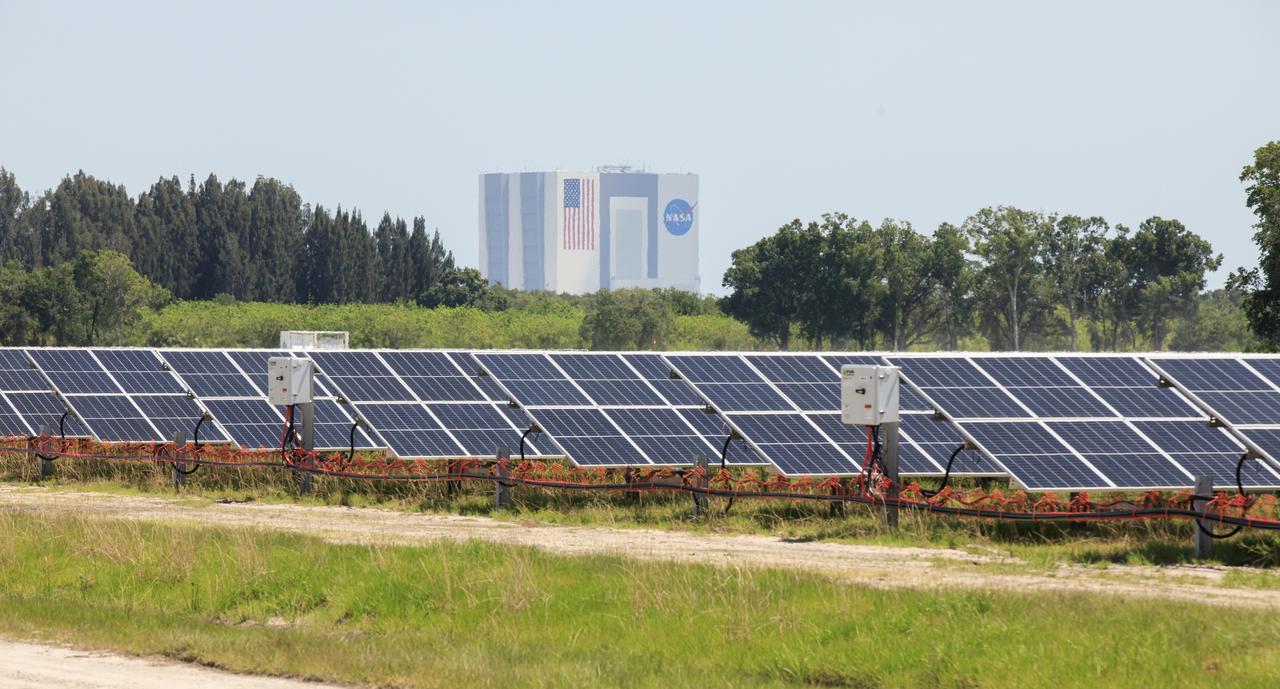
With the iconic Vehicle Assembly Building serving as the backdrop, a portion of the solar panels that make up Florida Power and Light’s (FPL) new Discovery Solar Energy Center is seen at NASA’s Kennedy Space Center in Florida. The 74.5-megawatt solar site spans 491 acres at Kennedy and contains about 250,000 solar panels. Harnessing energy from the Sun, the panels produce enough energy to power approximately 15,000 homes. The panels do not directly power anything at Kennedy, and instead, send energy directly to FPL’s electricity grid for distribution to existing customers. Construction began in spring 2020, and the energy center became fully operational on May 30, 2021.
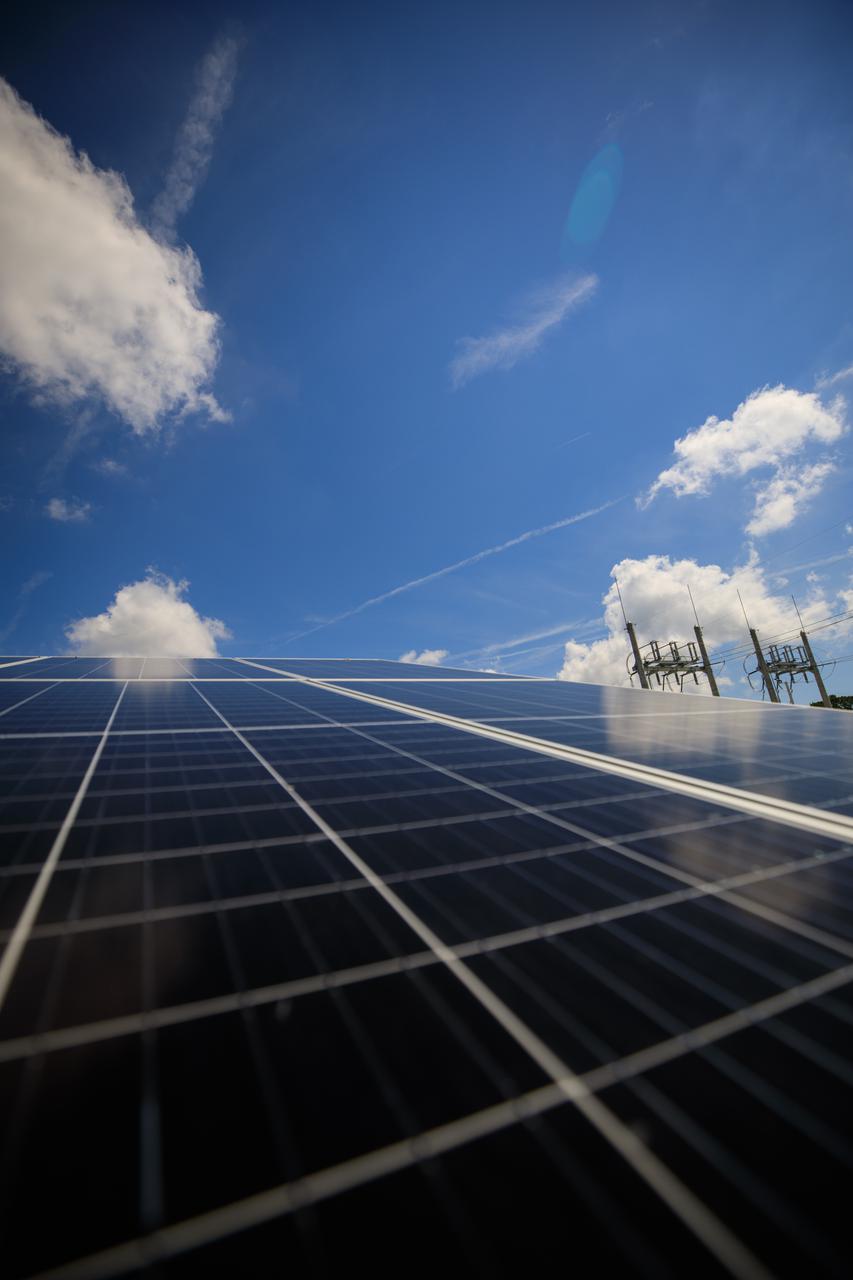
Seen here is an up-close view of solar panels that are part of Florida Power and Light’s (FPL) new Discovery Solar Energy Center – a 74.5-megawatt solar site, spanning 491 acres at NASA’s Kennedy Space Center in Florida. The site contains about 250,000 solar panels in total, producing enough energy to power approximately 15,000 homes. Harnessing energy from the Sun, the panels do not directly power anything at Kennedy, but rather, send energy directly to FPL's electricity grid for distribution to existing customers. Construction began in spring 2020, and the energy center became fully operational on May 30, 2021.
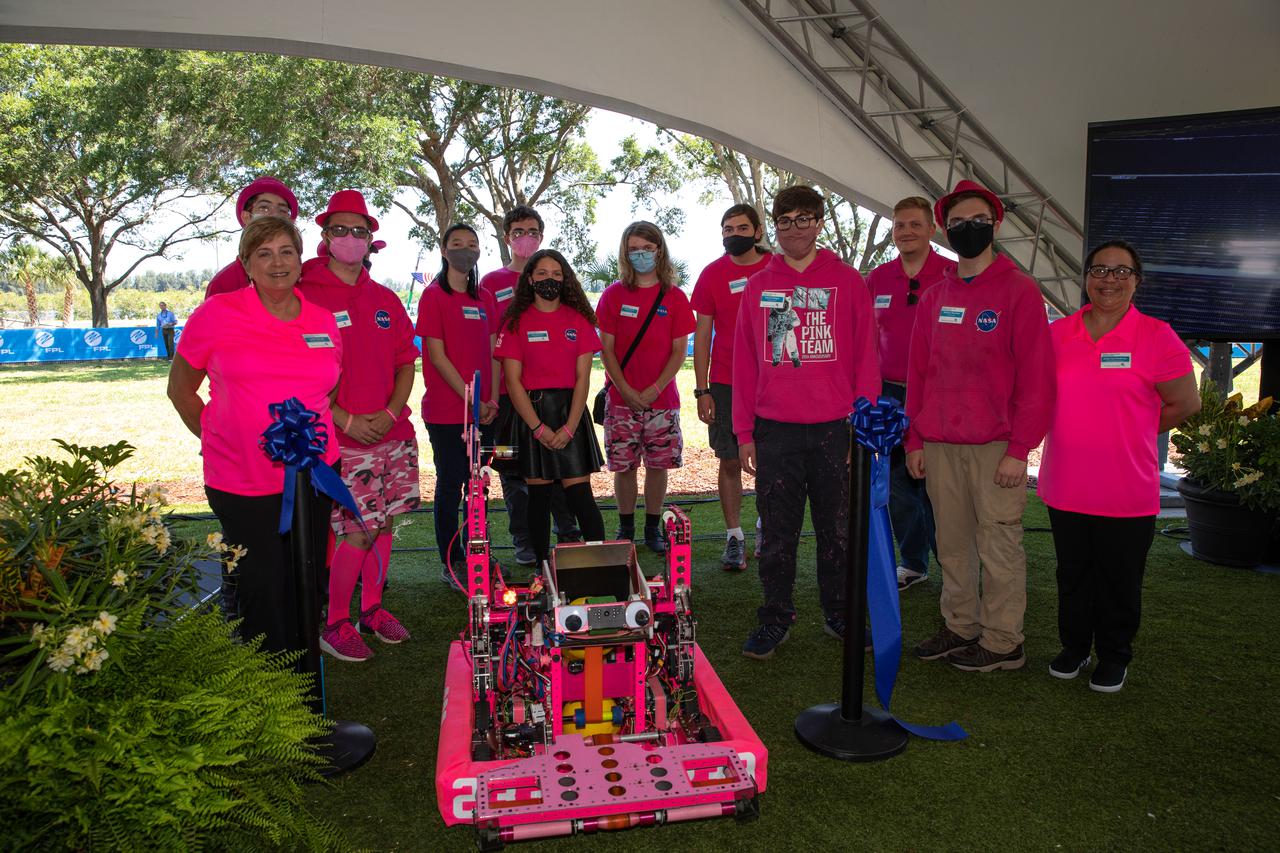
Students and faculty from Rockledge High School’s Pink Team, a robotics team mentored by NASA engineers, pose for a photo at NASA’s Kennedy Space Center Visitor Complex in Florida on June 11, 2021. Using the school’s 2021 competition robot – affectionately named “Pinky” – the Pink Team re-engineered their robot to carry a large pair of scissors to cut the ceremonial ribbon for the Florida Power and Light’s (FPL) Discovery Solar Energy Center becoming operational at the center. Discovery Solar Energy Center is a 74.5-megawatt solar site, spanning 491 acres at the spaceport. The site contains about 250,000 solar panels in total, producing enough energy to power approximately 15,000 homes. Harnessing energy from the Sun, the panels do not directly power anything at Kennedy, but rather, send energy directly to FPL's electricity grid for distribution to existing customers. Construction began in spring 2020, and the energy center became fully operational on May 30, 2021.
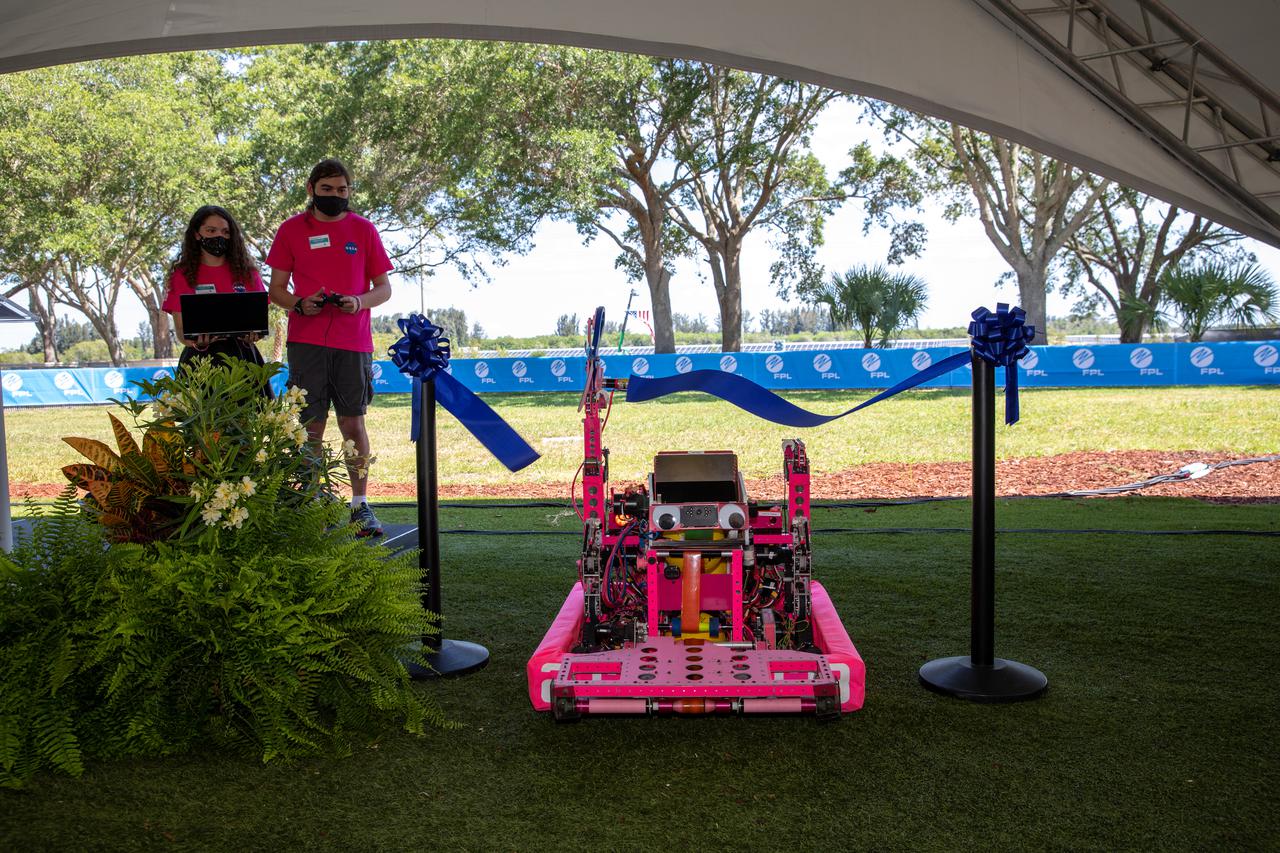
Students from Rockledge High School’s Pink Team, a robotics team mentored by NASA engineers, control the school’s 2021 competition robot – affectionately named “Pinky” – as it cuts the ceremonial ribbon to commemorate the Florida Power and Light’s (FPL) Discovery Solar Energy Center becoming operational at NASA’s Kennedy Space Center in Florida on June 11, 2021. The Pink Team re-engineered their robot to carry a large pair of scissors specifically for the ceremony, which took place at the center’s Visitor Complex. Discovery Solar Energy Center is a 74.5-megawatt solar site, spanning 491 acres at the spaceport. The site contains about 250,000 solar panels in total, producing enough energy to power approximately 15,000 homes. Harnessing energy from the Sun, the panels do not directly power anything at Kennedy, but rather, send energy directly to FPL's electricity grid for distribution to existing customers. Construction began in spring 2020, and the energy center became fully operational on May 30, 2021.
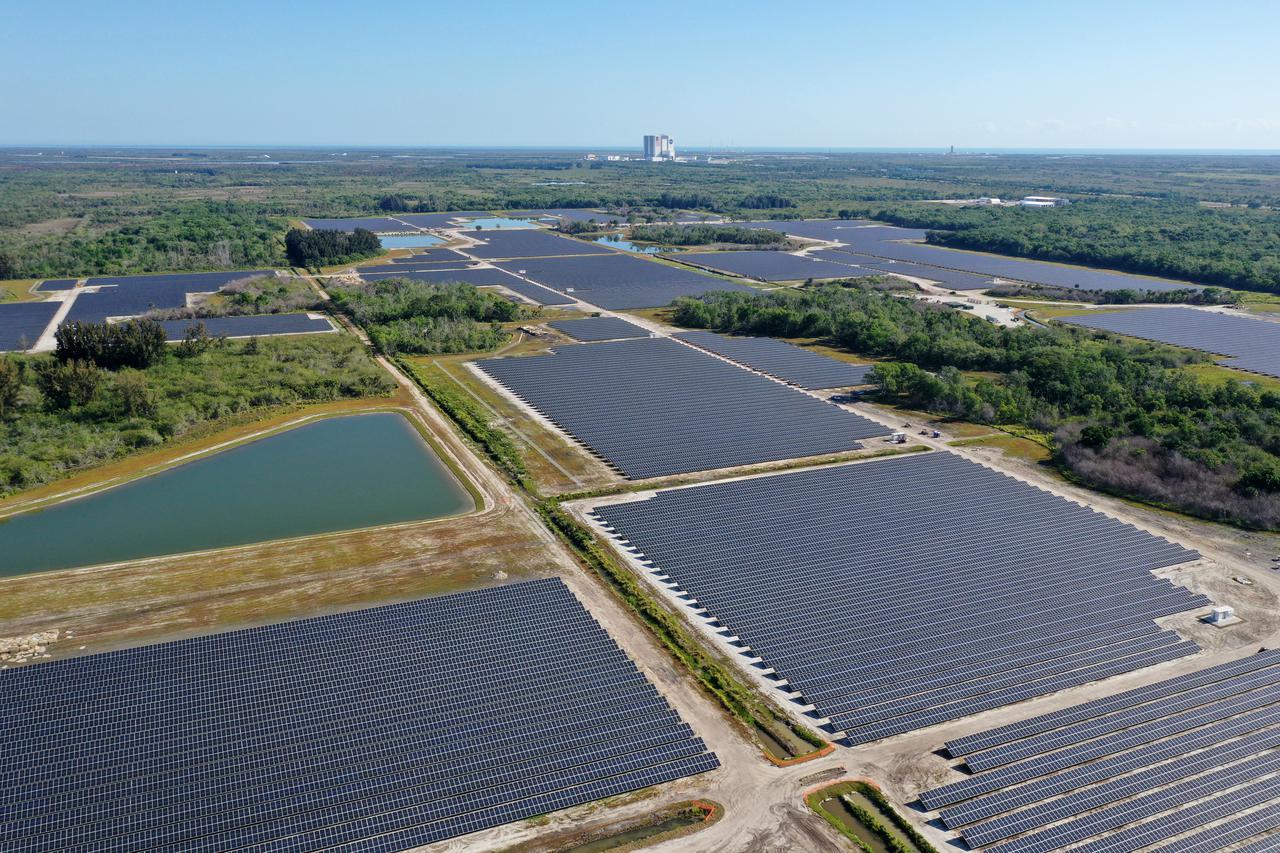
Florida Power and Light’s (FPL) new Discovery Solar Energy Center is a 74.5 megawatt solar site, spanning 491 acres at NASA’s Kennedy Space Center in Florida. The site contains about 250,000 solar panels, and once it’s operational, will produce enough energy to power approximately 15,000 homes. Construction began in spring 2020, and teams expect to have the solar site finished by May 2021. Harnessing energy from the Sun, the panels will not directly power anything at Kennedy, but rather, will send energy directly to FPL’s electricity grid for distribution to existing customers.

NASA Kennedy Space Center's Sam Ball, third from left, speaks during the Energy Action Day employee event held in NASA Kennedy Space Center's Space Station Processing Facility. Part of Energy Awareness Month, the event featured subject matter experts in the area of solar energy, its connections to the space program and options for residential solar power. From left to right are Nick Murdock, energy and water program manager at Kennedy; Chuck Tatro of NASA's Launch Services Program; Ball; Anuj Chokshi of FPL; Bill McMullen of Southern Power; John Sherwin of the Florida Solar Energy Center in Cocoa; and Lorraine Koss of the Brevard County Solar Co-op.
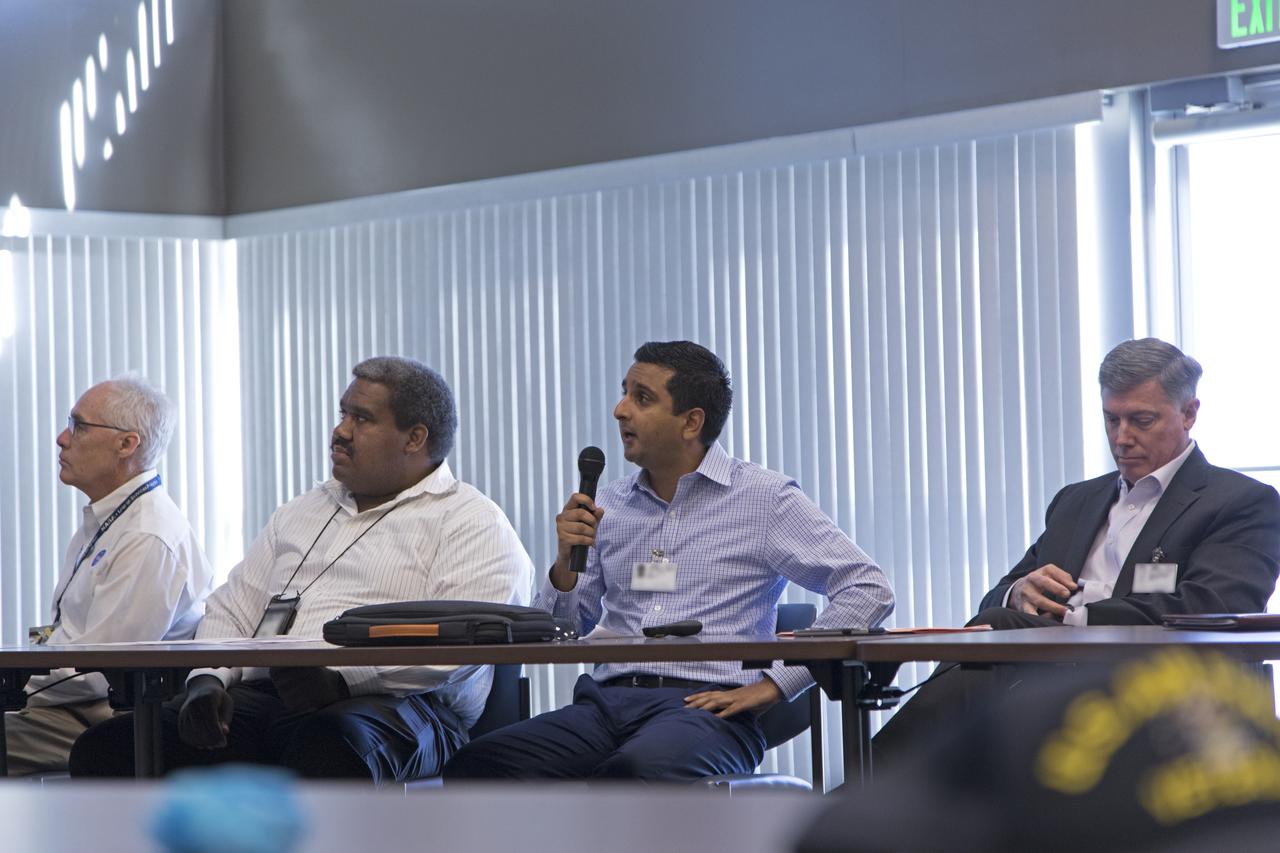
Anuj Chokshi of FPL, center, speaks during the Energy Action Day employee event held in NASA Kennedy Space Center's Space Station Processing Facility. Part of Energy Awareness Month, the event featured subject matter experts in the area of solar energy, its connections to the space program and options for residential solar power. From left to right are Chuck Tatro of NASA's Launch Services Program; Sam Ball of NASA Kennedy's Engineering directorate; Chokshi; and Bill McMullen of Southern Power.
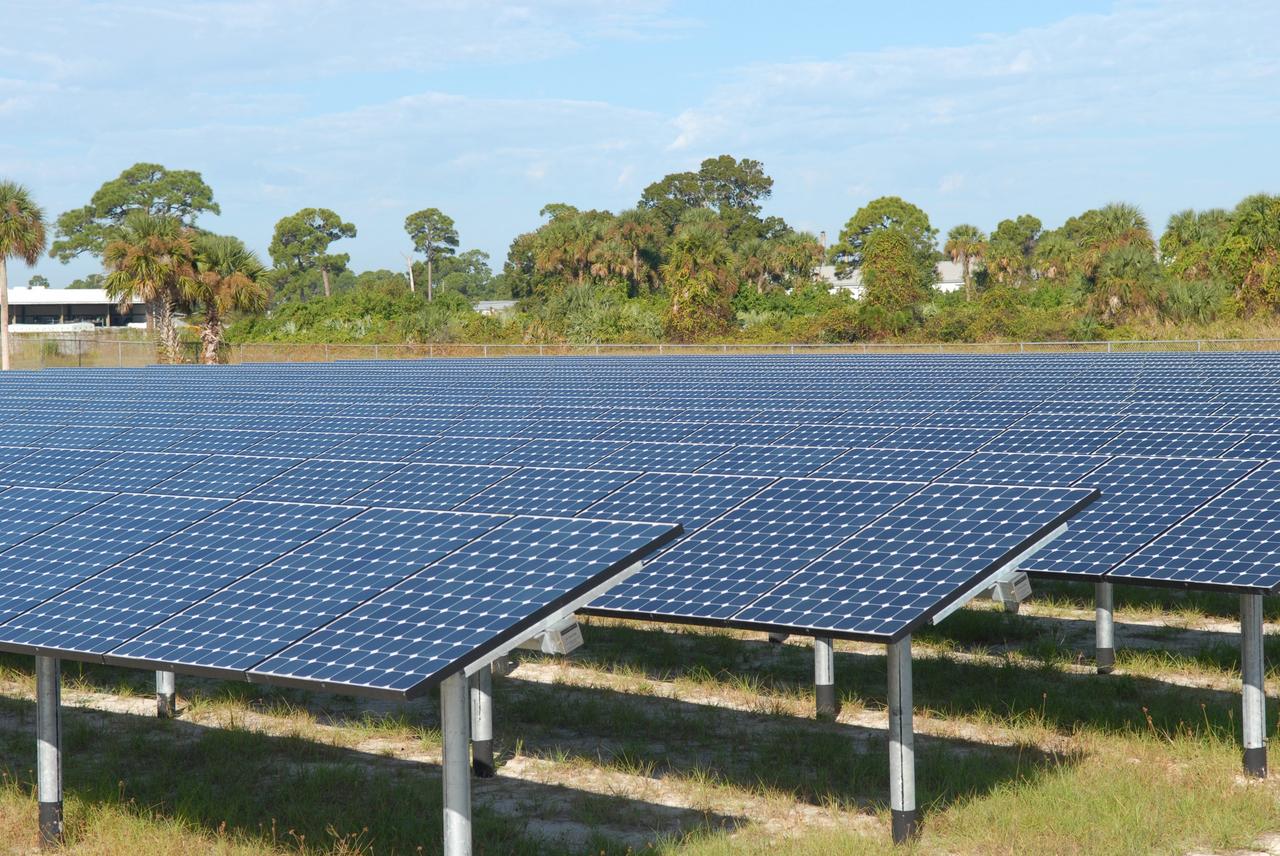
CAPE CANAVERAL, Fla. – NASA's first large-scale solar power generation facility opens at NASA's Kennedy Space Center in Florida. Representatives from NASA, Florida Power & Light Company, or FPL, and SunPower Corporation formally commissioned the one-megawatt facility and announced plans to pursue a new research, development and demonstration project at Kennedy to advance America's use of renewable energy. The facility is the first element of a major renewable energy project currently under construction at Kennedy. The completed system features a fixed-tilt, ground-mounted solar power system designed and built by SunPower, along with SunPower solar panels. A 10-megawatt solar farm, which SunPower is building on nearby Kennedy property, will supply power to FPL's customers when it is completed in April 2010. Photo credit: NASA/Jim Grossmann
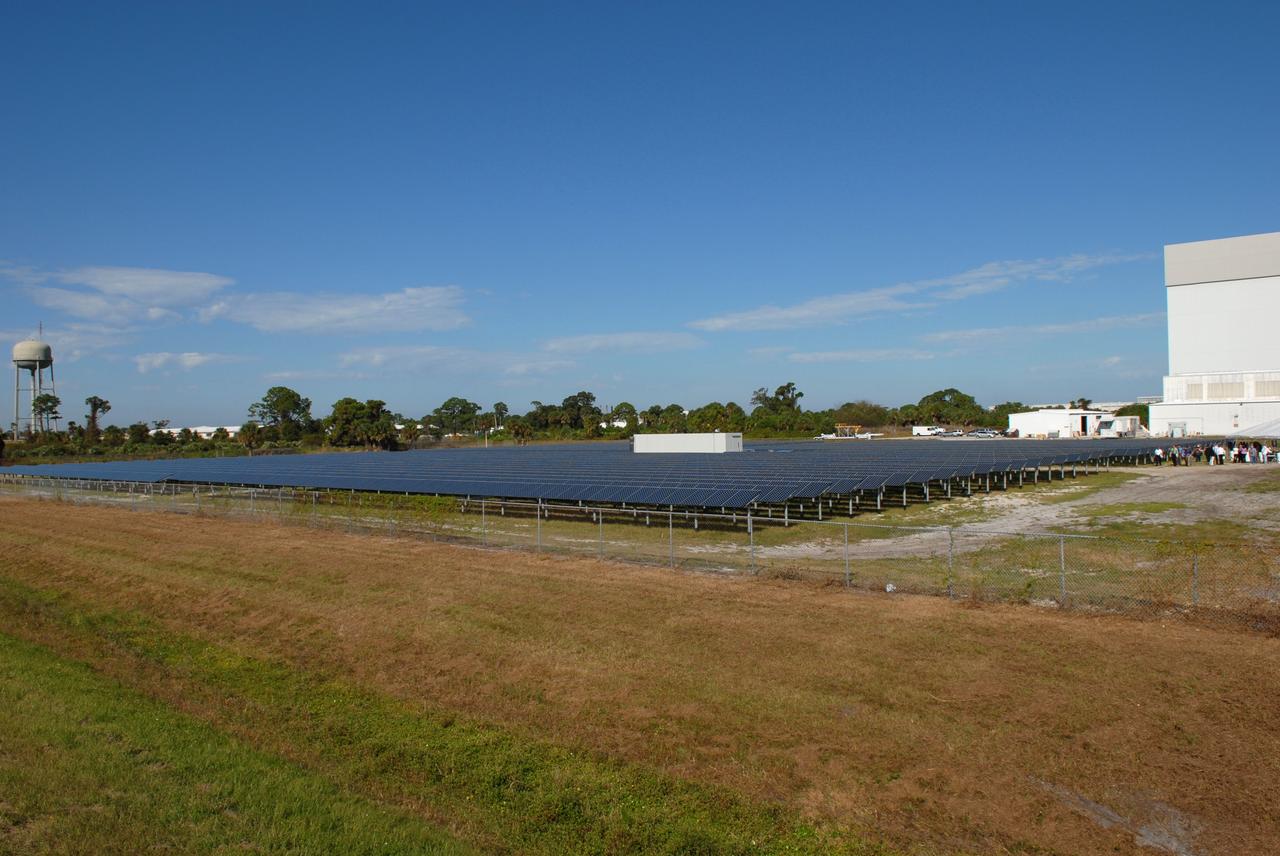
CAPE CANAVERAL, Fla. – NASA's first large-scale solar power generation facility is ready for operation at NASA's Kennedy Space Center in Florida. Representatives from NASA, Florida Power & Light Company, or FPL, and SunPower Corporation formally commissioned the one-megawatt facility and announced plans to pursue a new research, development and demonstration project at Kennedy to advance America's use of renewable energy. The facility is the first element of a major renewable energy project currently under construction at Kennedy. The completed system features a fixed-tilt, ground-mounted solar power system designed and built by SunPower, along with SunPower solar panels. A 10-megawatt solar farm, which SunPower is building on nearby Kennedy property, will supply power to FPL's customers when it is completed in April 2010. Photo credit: NASA/Jim Grossmann
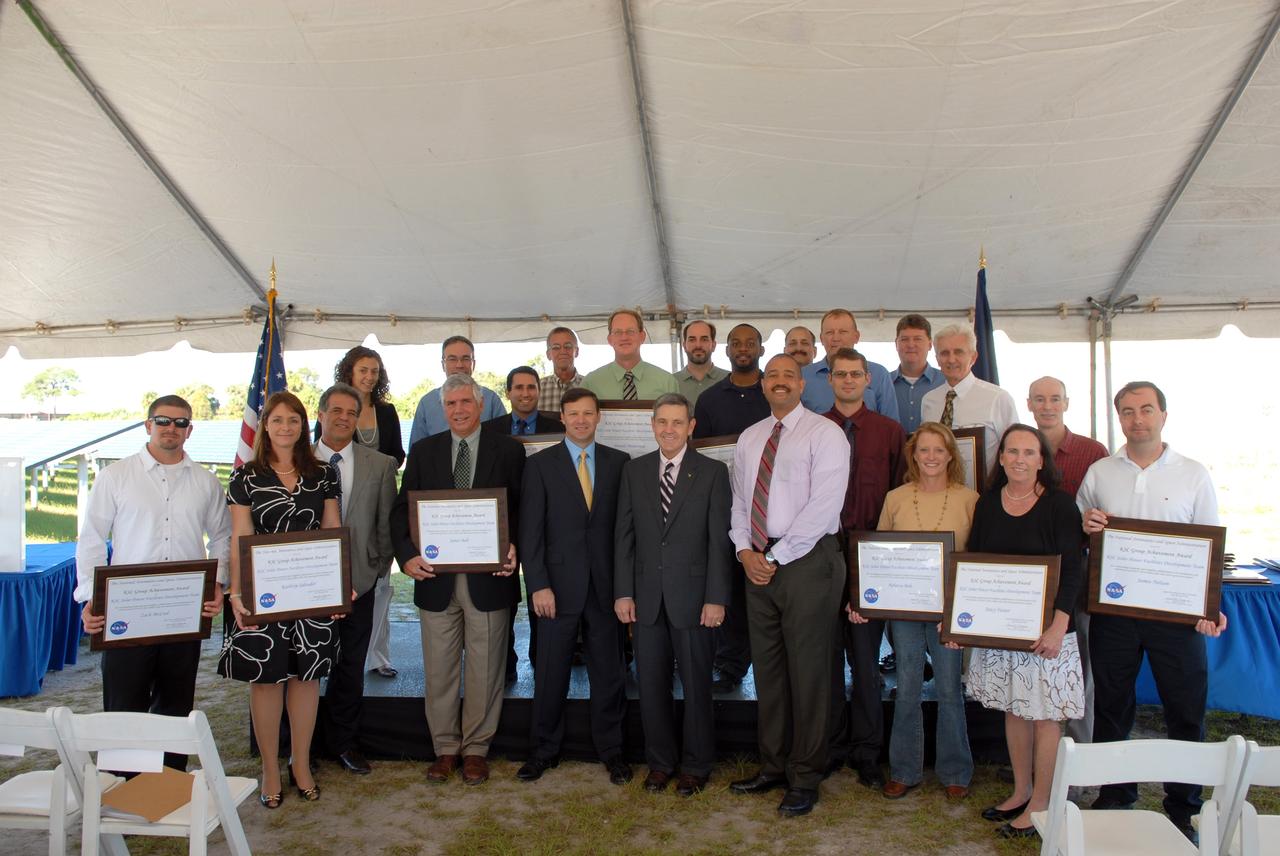
CAPE CANAVERAL, Fla. – At NASA's Kennedy Space Center in Florida, recipients of a NASA Team Award for their parts in the successful construction of NASA's first large-scale solar power generation facility pose for a group portrait. Representatives from NASA, Florida Power & Light Company, or FPL, and SunPower Corporation formally commissioned the one-megawatt facility and announced plans to pursue a new research, development and demonstration project at Kennedy to advance America's use of renewable energy. The facility is the first element of a major renewable energy project currently under construction at Kennedy. The completed system features a fixed-tilt, ground-mounted solar power system designed and built by SunPower, along with SunPower solar panels. A 10-megawatt solar farm, which SunPower is building on nearby Kennedy property, will supply power to FPL's customers when it is completed in April 2010. Photo credit: NASA/Jim Grossmann
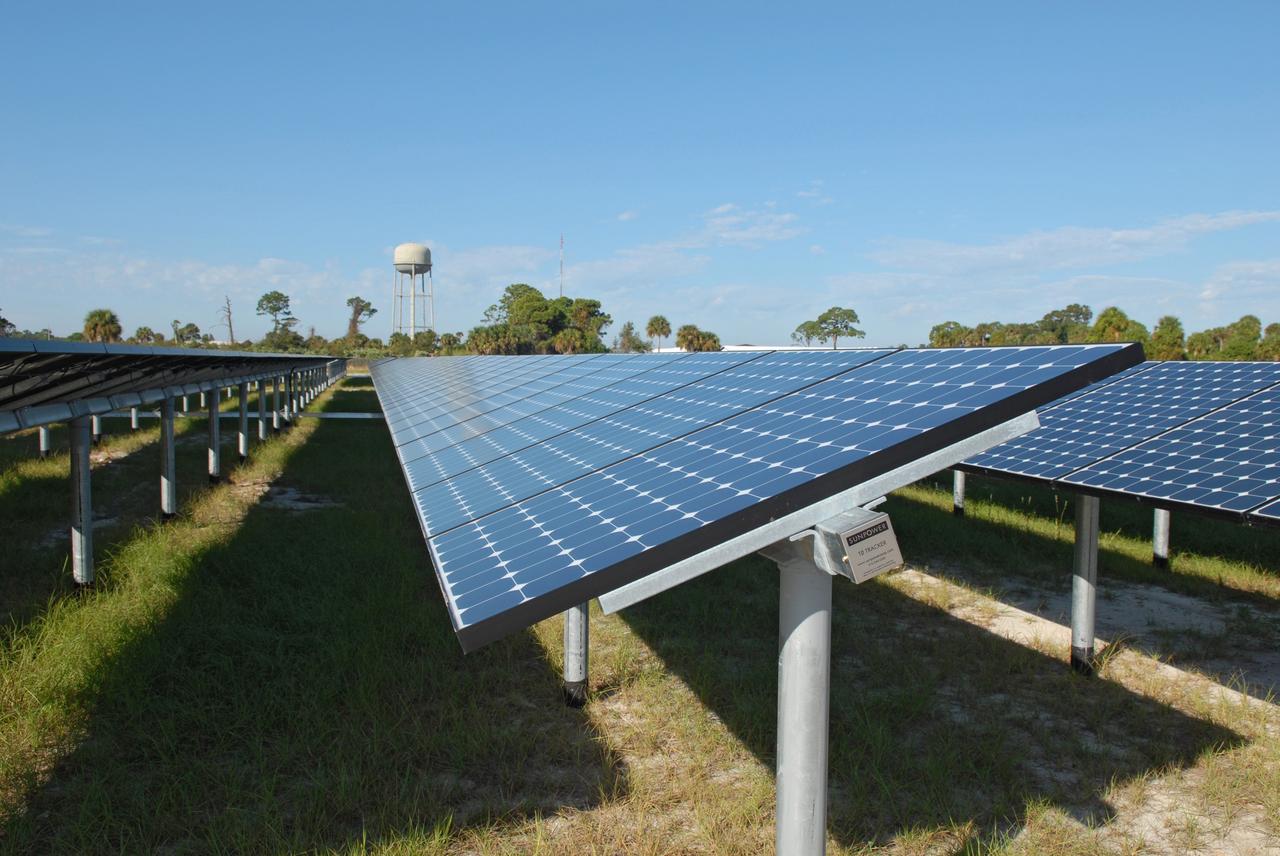
CAPE CANAVERAL, Fla. – NASA's first large-scale solar power generation facility is unveiled at NASA's Kennedy Space Center in Florida. Representatives from NASA, Florida Power & Light Company, or FPL, and SunPower Corporation formally commissioned the one-megawatt facility and announced plans to pursue a new research, development and demonstration project at Kennedy to advance America's use of renewable energy. The facility is the first element of a major renewable energy project currently under construction at Kennedy. The completed system features a fixed-tilt, ground-mounted solar power system designed and built by SunPower, along with SunPower solar panels. A 10-megawatt solar farm, which SunPower is building on nearby Kennedy property, will supply power to FPL's customers when it is completed in April 2010. Photo credit: NASA/Jim Grossmann
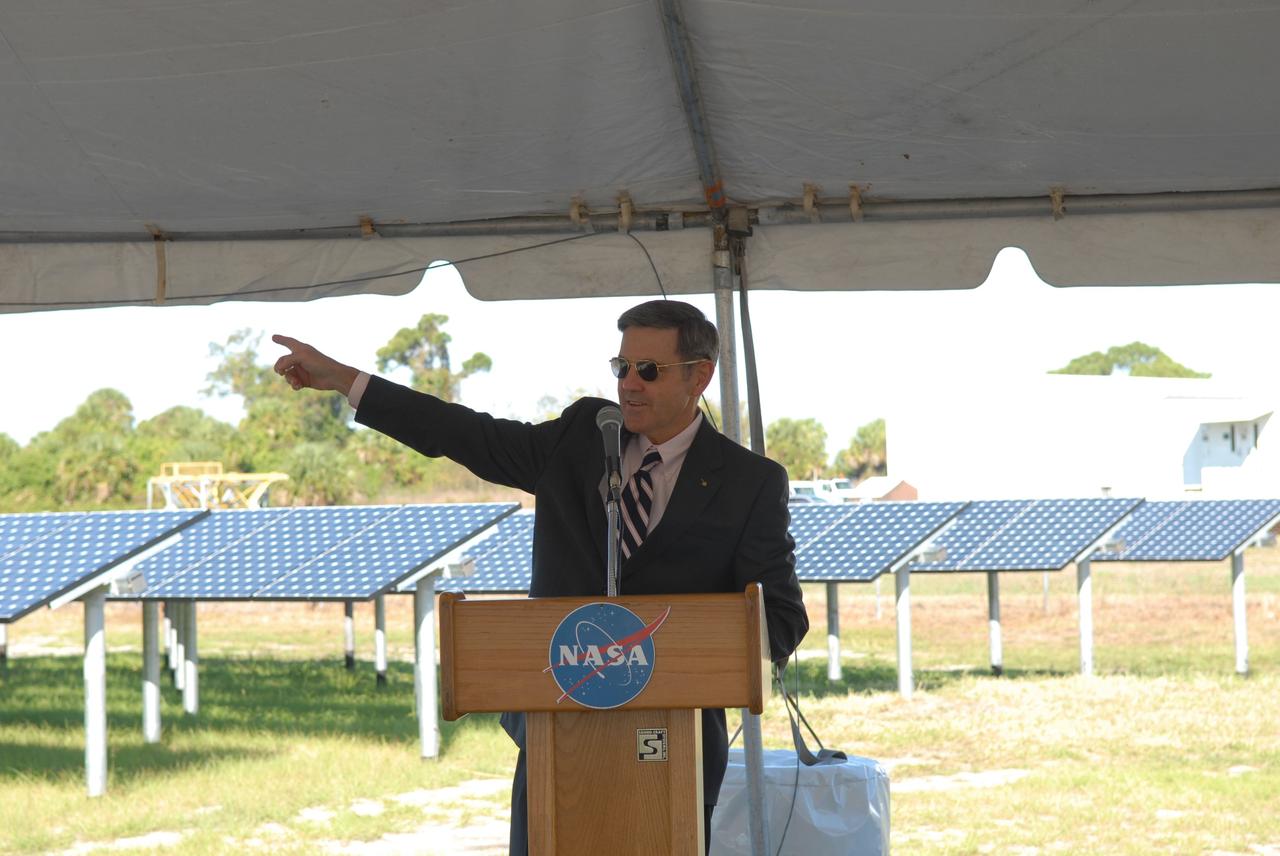
CAPE CANAVERAL, Fla. – NASA Kennedy Space Center Director Bob Cabana addresses the audience on hand for the unveiling of NASA's first large-scale solar power generation facility at Kennedy in Florida. Representatives from NASA, Florida Power & Light Company, or FPL, and SunPower Corporation formally commissioned the one-megawatt facility and announced plans to pursue a new research, development and demonstration project at Kennedy to advance America's use of renewable energy. The facility is the first element of a major renewable energy project currently under construction at Kennedy. The completed system features a fixed-tilt, ground-mounted solar power system designed and built by SunPower, along with SunPower solar panels. A 10-megawatt solar farm, which SunPower is building on nearby Kennedy property, will supply power to FPL's customers when it is completed in April 2010. Photo credit: NASA/Jim Grossmann
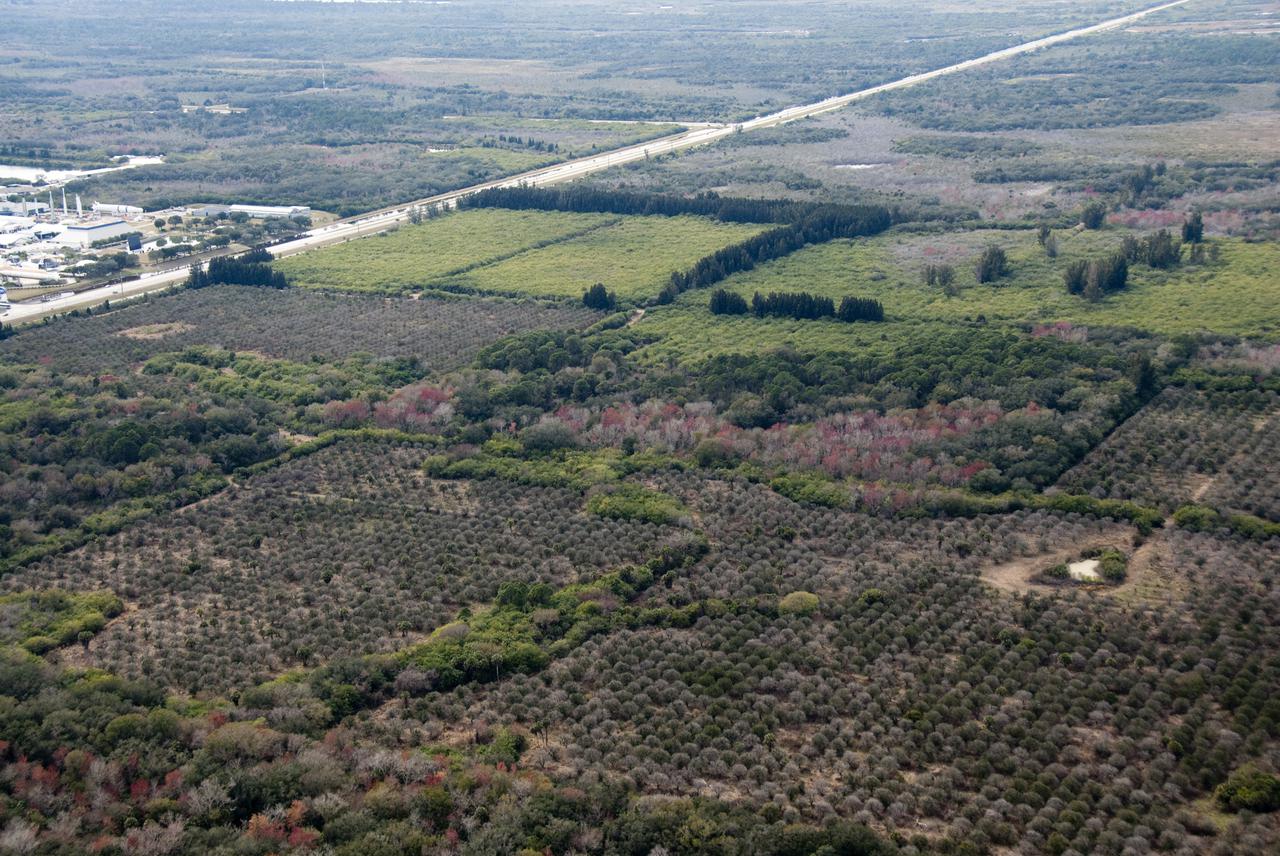
CAPE CANAVERAL, Fla. - This aerial view combines NASA's Kennedy Space Center Visitor Complex (left) and the proposed 500-acre site for one of the largest solar power plants of its kind. The planned 100-megawatt photovoltaic solar plant would use similar panels to those already built at Kennedy by the SunPower Corp. The energy produced by the proposed facility would be used to provide power to Florida Power and Light customers. Kennedy Center Director Bob Cabana, FPL Vice President and Chief Development Officer Eric Silagy and a SunPower Corp. representative made a joint announcement regarding the new construction during a ceremony held in November 2009 to commission a 1-megawatt solar plant. Included in the announcement were plans to establish a permanent renewable energy research and development center at Exploration Park, Kennedy's new business complex. The dedicated RandD facility proposed for Exploration Park could result in at least 50 high-salary science and engineering positions permanently established at Kennedy by SunPower and FPL's other partners, a potential for solar panel manufacturing located nearby and as many as 1,000 new construction jobs. FPL and Kennedy have initiated environmental studies and a plan to support the next project, which could be initiated before the end of 2010. Photo credit: NASA_Kim Shiflett
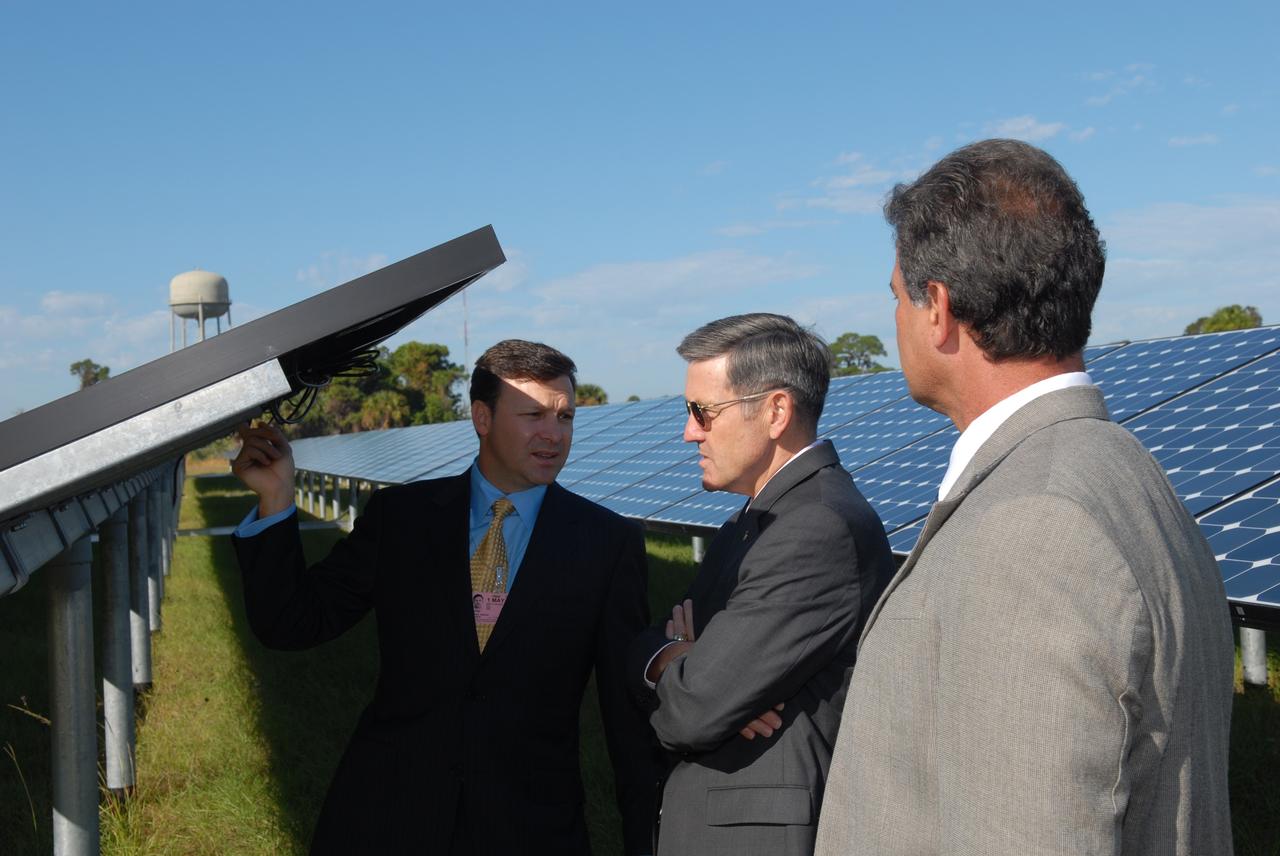
CAPE CANAVERAL, Fla. – Florida Power & Light Company Vice President and Chief Development Officer Eric Silagy, left, and NASA Kennedy Space Center Director Bob Cabana, center, examine one of the solar panels at the unveiling of NASA's first large-scale solar power generation facility at Kennedy in Florida. Representatives from NASA, Florida Power & Light Company, or FPL, and SunPower Corporation formally commissioned the one-megawatt facility and announced plans to pursue a new research, development and demonstration project at Kennedy to advance America's use of renewable energy. The facility is the first element of a major renewable energy project currently under construction at Kennedy. The completed system features a fixed-tilt, ground-mounted solar power system designed and built by SunPower, along with SunPower solar panels. A 10-megawatt solar farm, which SunPower is building on nearby Kennedy property, will supply power to FPL's customers when it is completed in April 2010. Photo credit: NASA/Jim Grossmann
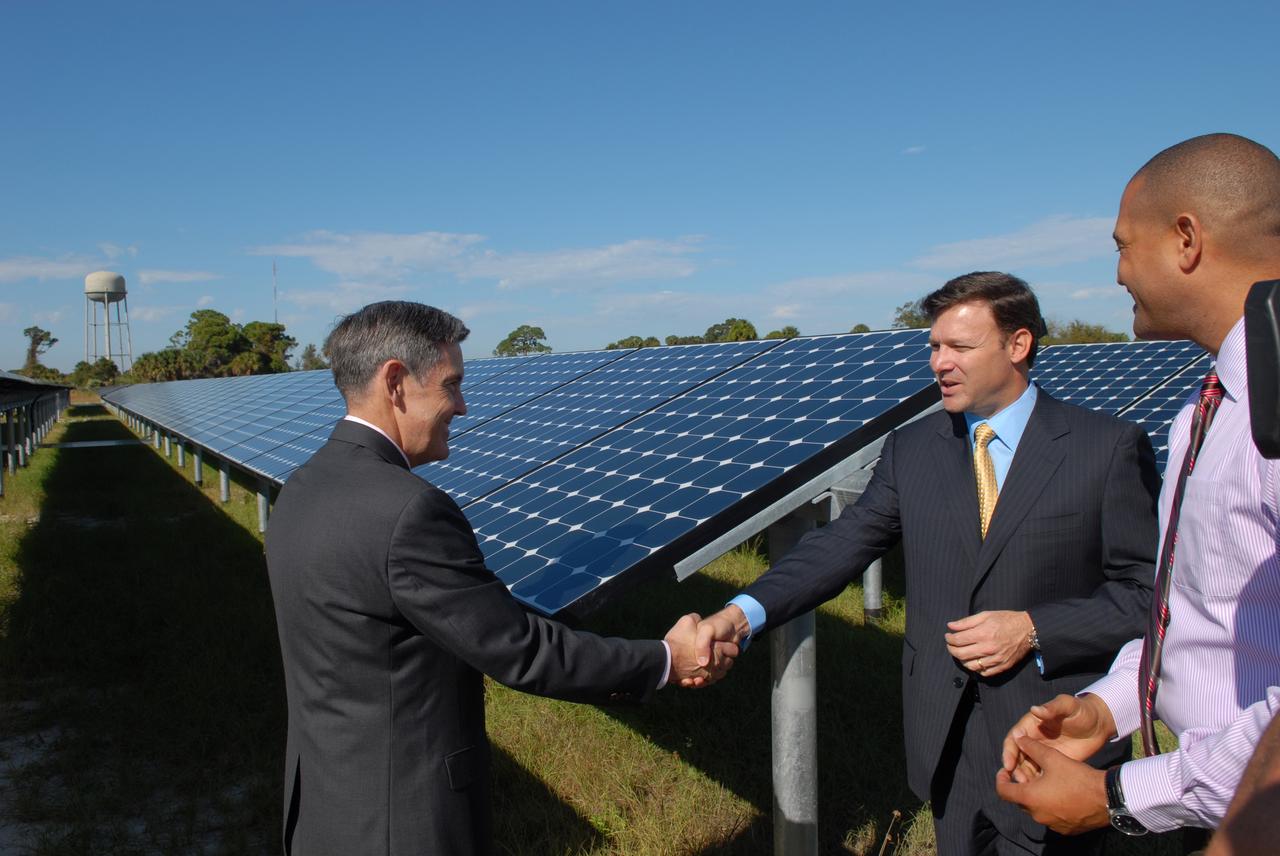
CAPE CANAVERAL, Fla. – At NASA's Kennedy Space Center in Florida, Kennedy Director Bob Cabana, left, congratulates, Eric Silagy, Florida Power & Light Company vice president and chief development officer, for his part in the construction of NASA's first large-scale solar power generation facility as Roderick Roche, senior manager, Project Management Office of North America, SunPower Corporation, looks on. Representatives from NASA, Florida Power & Light Company, or FPL, and SunPower Corporation formally commissioned the one-megawatt facility and announced plans to pursue a new research, development and demonstration project at Kennedy to advance America's use of renewable energy. The facility is the first element of a major renewable energy project currently under construction at Kennedy. The completed system features a fixed-tilt, ground-mounted solar power system designed and built by SunPower, along with SunPower solar panels. A 10-megawatt solar farm, which SunPower is building on nearby Kennedy property, will supply power to FPL's customers when it is completed in April 2010. Photo credit: NASA/Jim Grossmann
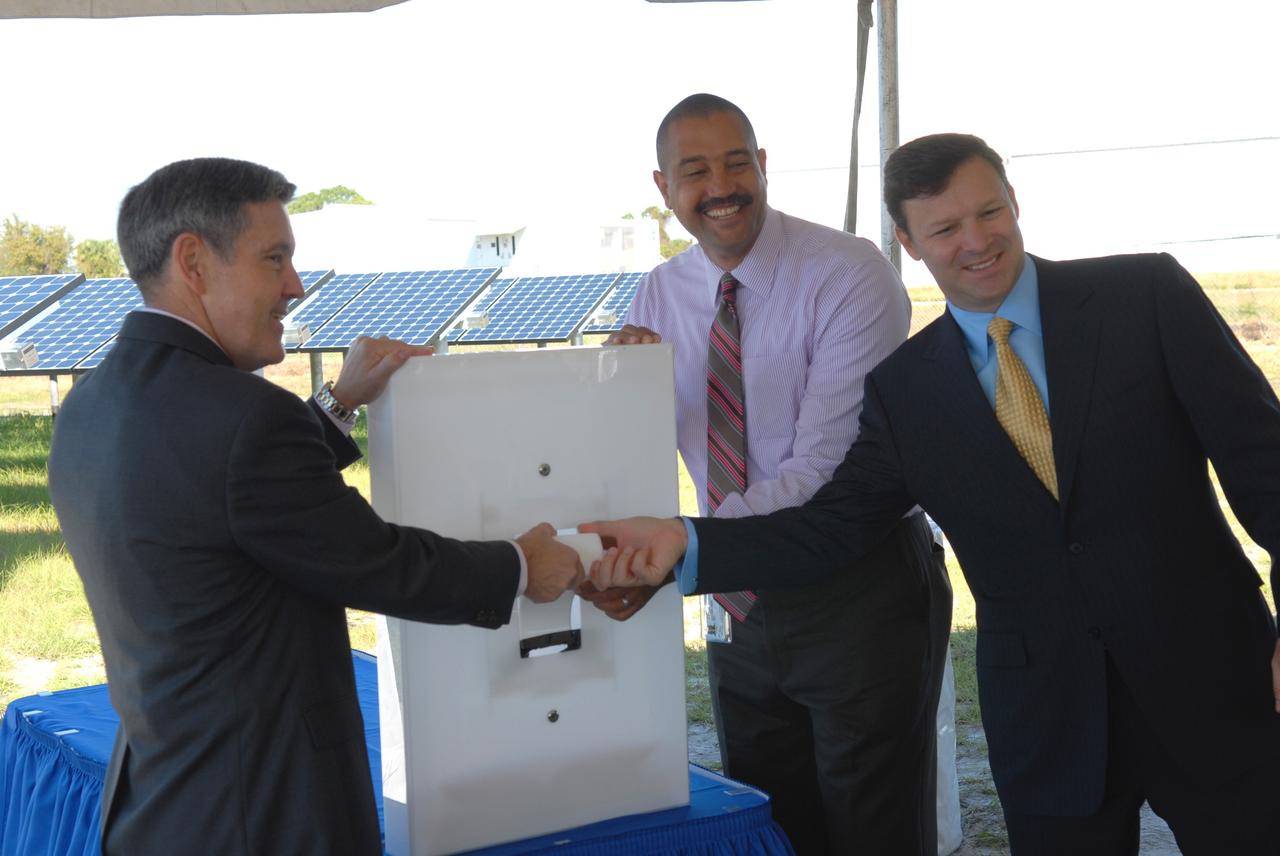
CAPE CANAVERAL, Fla. – A ceremonial "flipping of the switch" officially begins operation of NASA's first large-scale solar power generation facility at NASA's Kennedy Space Center in Florida. Flipping the four-foot-tall light switch in unison are, from left, Bob Cabana, Kennedy center director; Roderick Roche, senior manager, Project Management Office of North America, SunPower Corporation; and Eric Silagy, Florida Power & Light Company vice president and chief development officer. Representatives from NASA, Florida Power & Light Company, or FPL, and SunPower Corporation formally commissioned the one-megawatt facility and announced plans to pursue a new research, development and demonstration project at Kennedy to advance America's use of renewable energy. The facility is the first element of a major renewable energy project currently under construction at Kennedy. The completed system features a fixed-tilt, ground-mounted solar power system designed and built by SunPower, along with SunPower solar panels. A 10-megawatt solar farm, which SunPower is building on nearby Kennedy property, will supply power to FPL's customers when it is completed in April 2010. Photo credit: NASA/Jim Grossmann
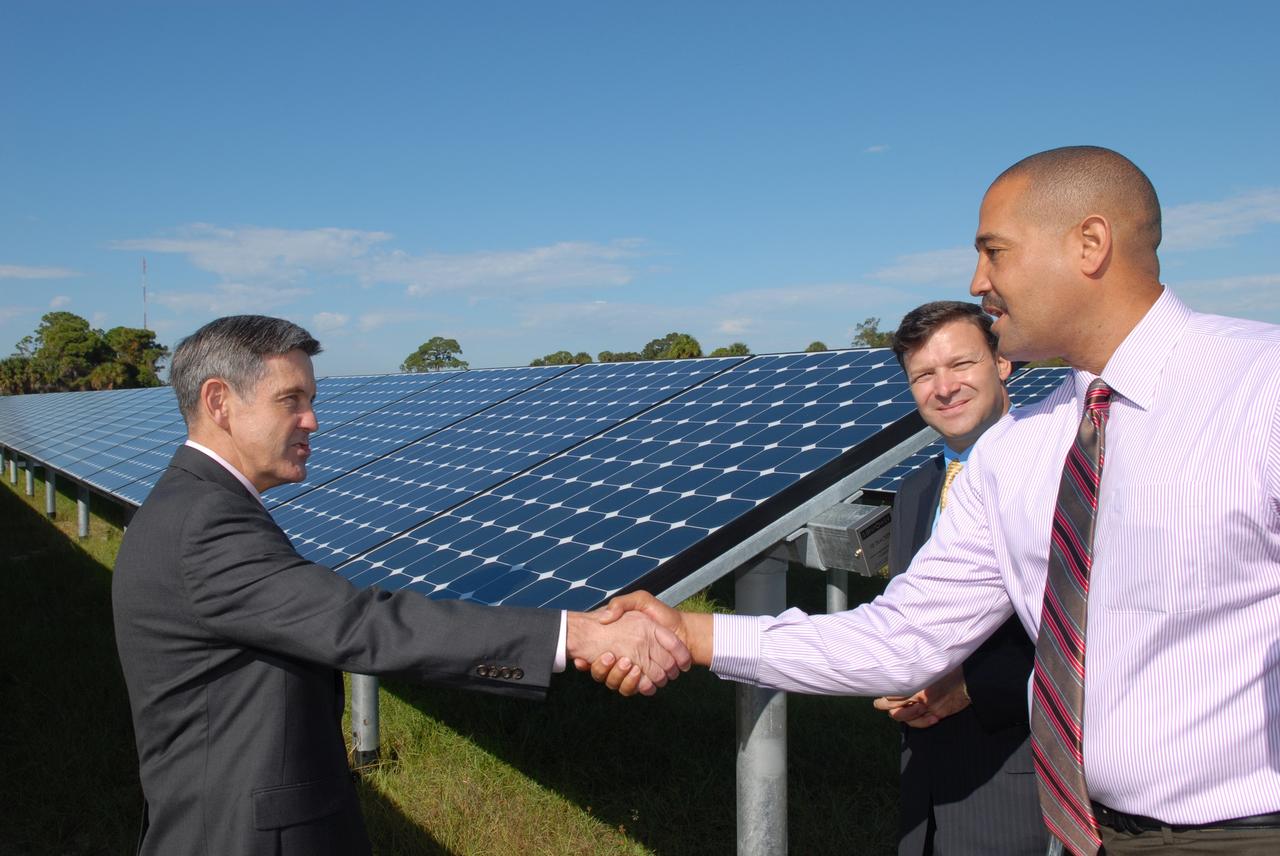
CAPE CANAVERAL, Fla. – At NASA's Kennedy Space Center in Florida, Kennedy Director Bob Cabana, left, congratulates Roderick Roche, senior manager, Project Management Office of North America, SunPower Corporation, for his part in the construction of NASA's first large-scale solar power generation facility as Eric Silagy, Florida Power & Light Company vice president and chief development officer, looks on. Representatives from NASA, Florida Power & Light Company, or FPL, and SunPower Corporation formally commissioned the one-megawatt facility and announced plans to pursue a new research, development and demonstration project at Kennedy to advance America's use of renewable energy. The facility is the first element of a major renewable energy project currently under construction at Kennedy. The completed system features a fixed-tilt, ground-mounted solar power system designed and built by SunPower, along with SunPower solar panels. A 10-megawatt solar farm, which SunPower is building on nearby Kennedy property, will supply power to FPL's customers when it is completed in April 2010. Photo credit: NASA/Jim Grossmann
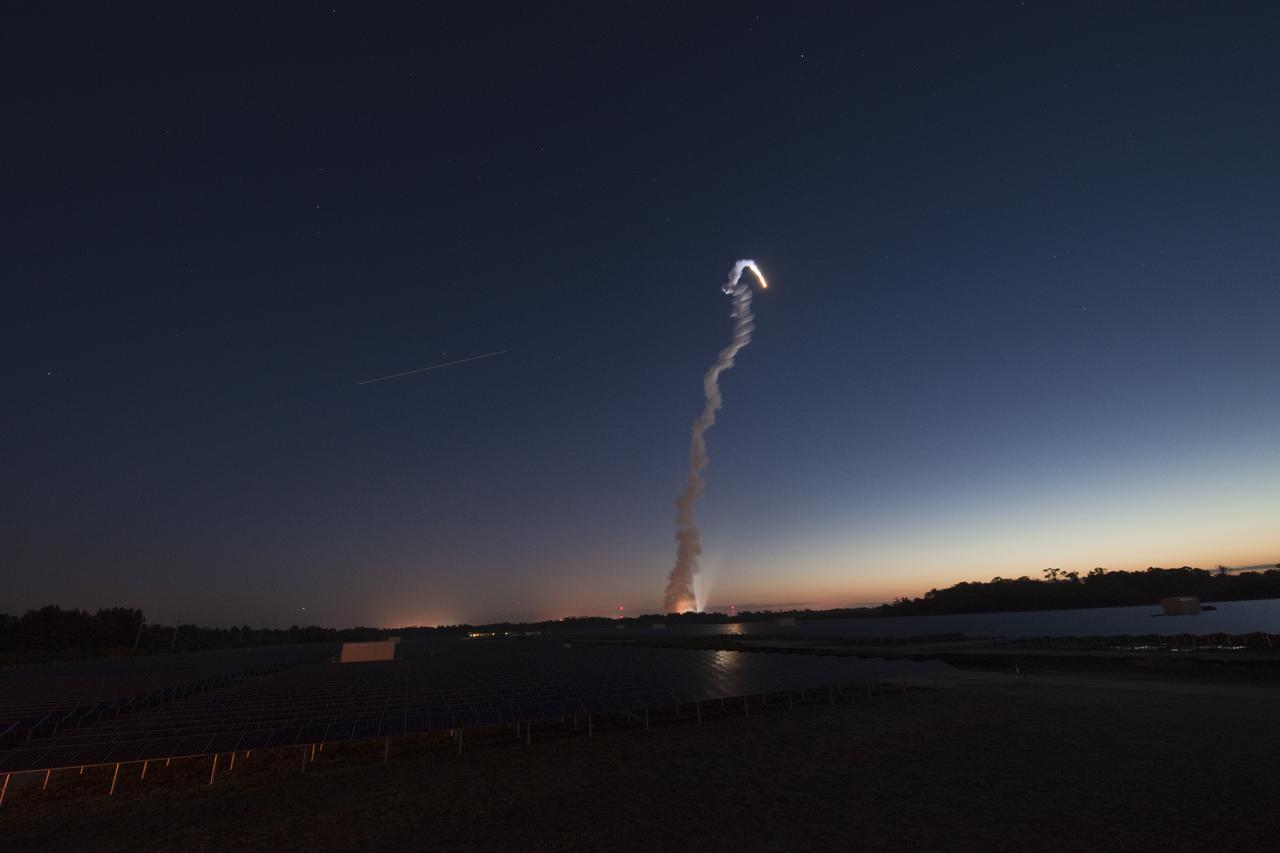
CAPE CANAVERAL, Fla. - The launch of space shuttle Discovery on the STS-131 mission was captured from a field of Florida Power and Light solar panels (foreground) off of S.R. 3 at NASA's Kennedy Space Center in Florida. NASA and FPL are members of a public-private partnership that promotes a clean-energy future and this site will produce an estimated 10 megawatts of emissions-free power for FPandL customers. Shuttle Discovery lifted off at 6:21 a.m. EDT on April 5, 2010. The seven-member STS-131 crew will deliver the multi-purpose logistics module Leonardo, filled with supplies, a new crew sleeping quarters and science racks that will be transferred to the International Space Station's laboratories. The crew also will switch out a gyroscope on the station’s truss, install a spare ammonia storage tank and retrieve a Japanese experiment from the station’s exterior. STS-131 is the 33rd shuttle mission to the station and the 131st shuttle mission overall. For information on the STS-131 mission and crew, visit http:__www.nasa.gov_mission_pages_shuttle_shuttlemissions_sts131_index.html. Photo credit: Courtesy of Adam Nehr
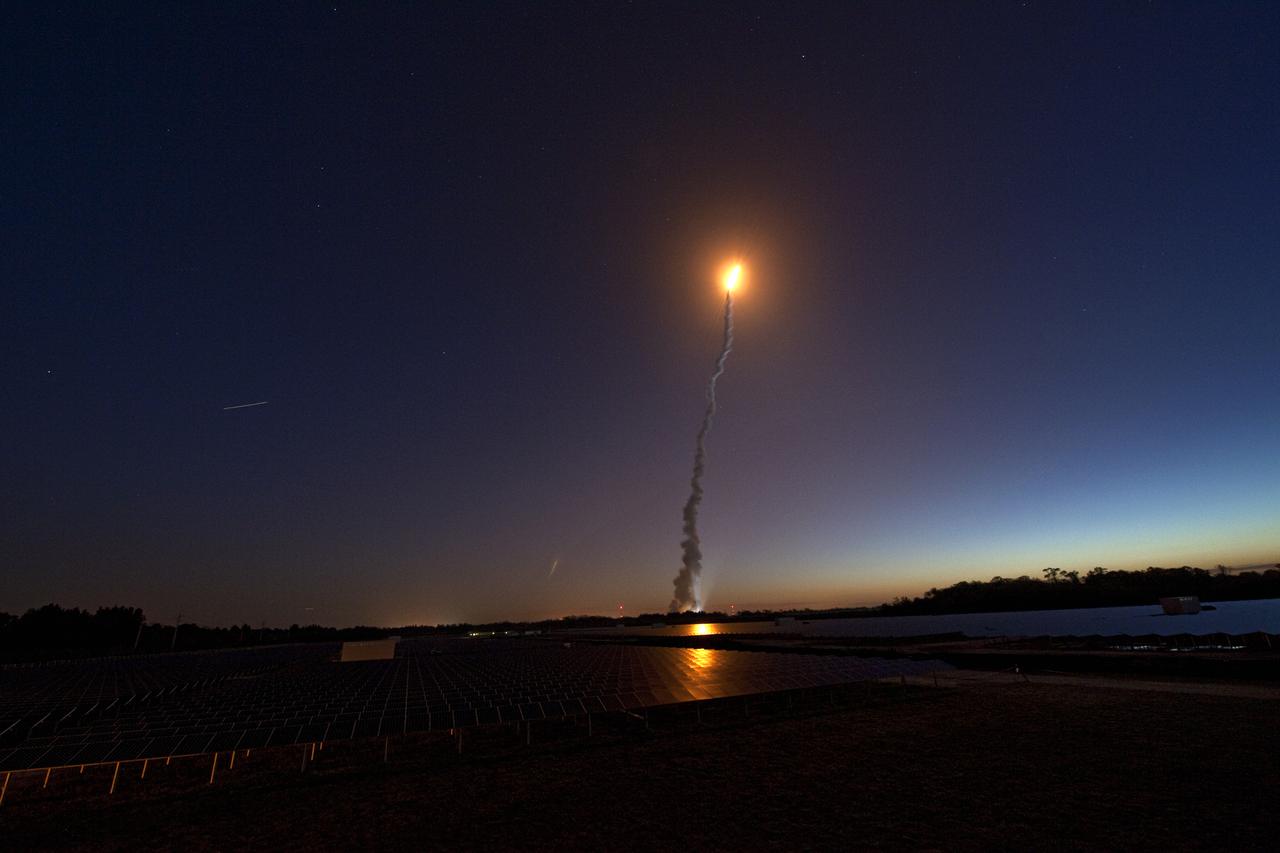
CAPE CANAVERAL, Fla. - The launch of space shuttle Discovery on the STS-131 mission was captured from a field of Florida Power and Light solar panels (foreground) off of S.R. 3 at NASA's Kennedy Space Center in Florida. NASA and FPL are members of a public-private partnership that promotes a clean-energy future and this site will produce an estimated 10 megawatts of emissions-free power for FPandL customers. Shuttle Discovery lifted off at 6:21 a.m. EDT on April 5, 2010. The seven-member STS-131 crew will deliver the multi-purpose logistics module Leonardo, filled with supplies, a new crew sleeping quarters and science racks that will be transferred to the International Space Station's laboratories. The crew also will switch out a gyroscope on the station’s truss, install a spare ammonia storage tank and retrieve a Japanese experiment from the station’s exterior. STS-131 is the 33rd shuttle mission to the station and the 131st shuttle mission overall. For information on the STS-131 mission and crew, visit http:__www.nasa.gov_mission_pages_shuttle_shuttlemissions_sts131_index.html. Photo credit: Courtesy of Adam Nehr