Solar Power
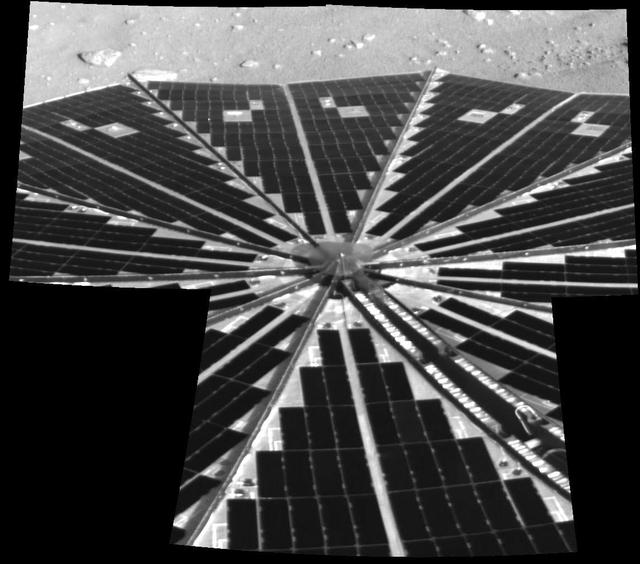
Solar Power Grid Unfurled
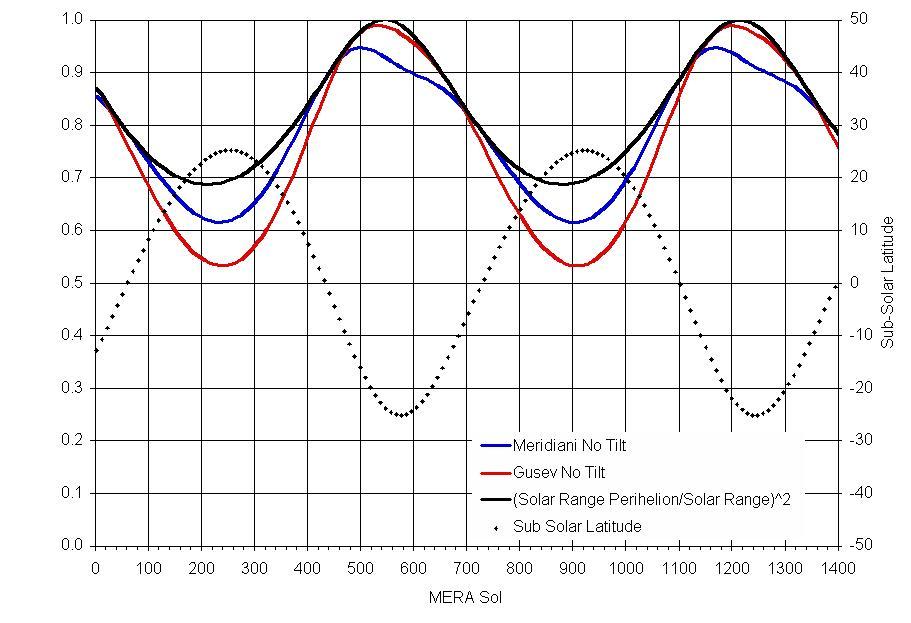
Solar Power on Mars
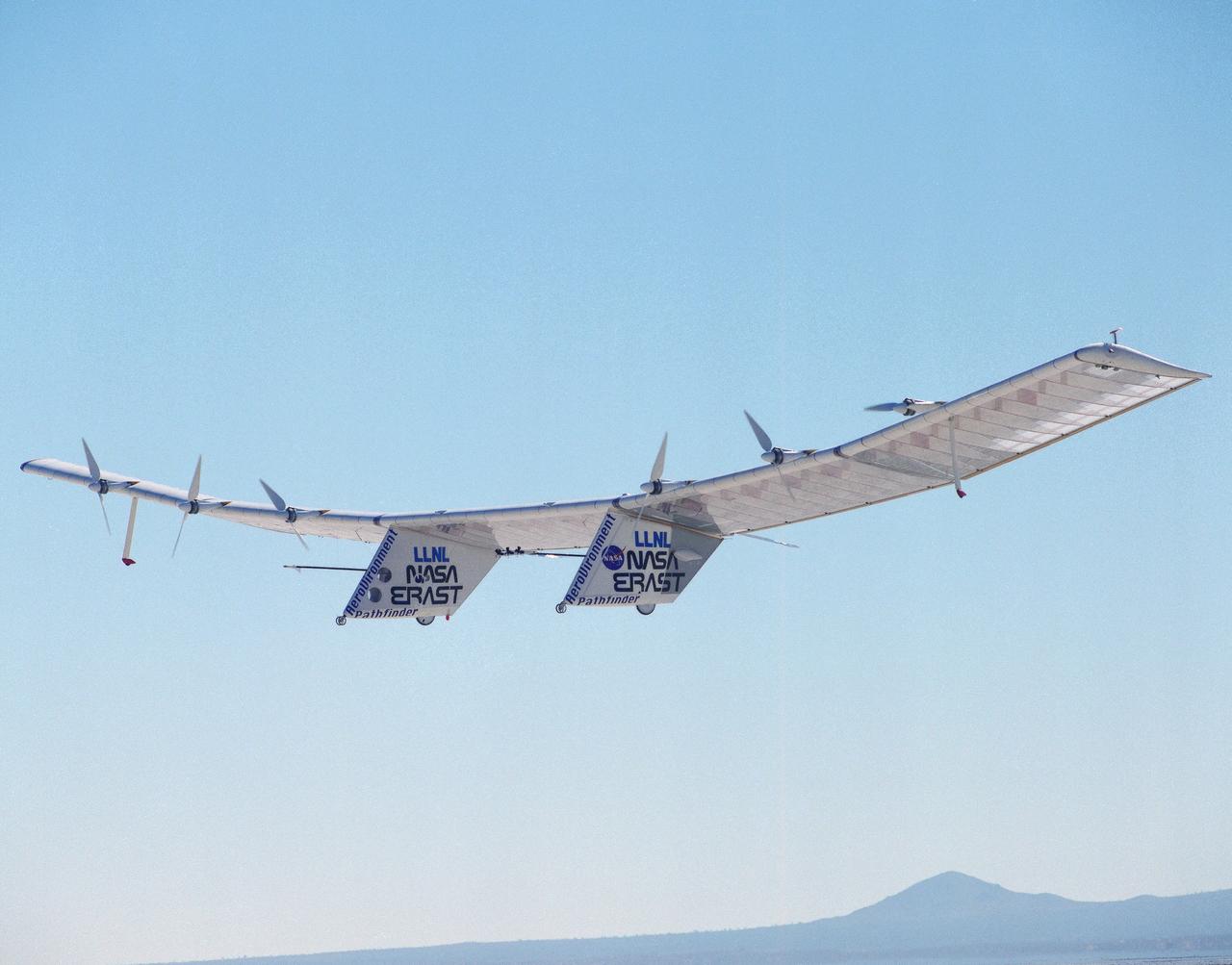
The Pathfinder solar-powered remotely piloted aircraft climbs to a record-setting altitude of 50,567 feet during a flight Sept. 11, 1995, at NASA's Dryden Flight Research Center, Edwards, California. The flight was part of the NASA ERAST (Environmental Research Aircraft and Sensor Technology) program. The Pathfinder was designed and built by AeroVironment Inc., Monrovia, California. Solar arrays cover nearly all of the upper wing surface and produce electricity to power the aircraft's six motors.
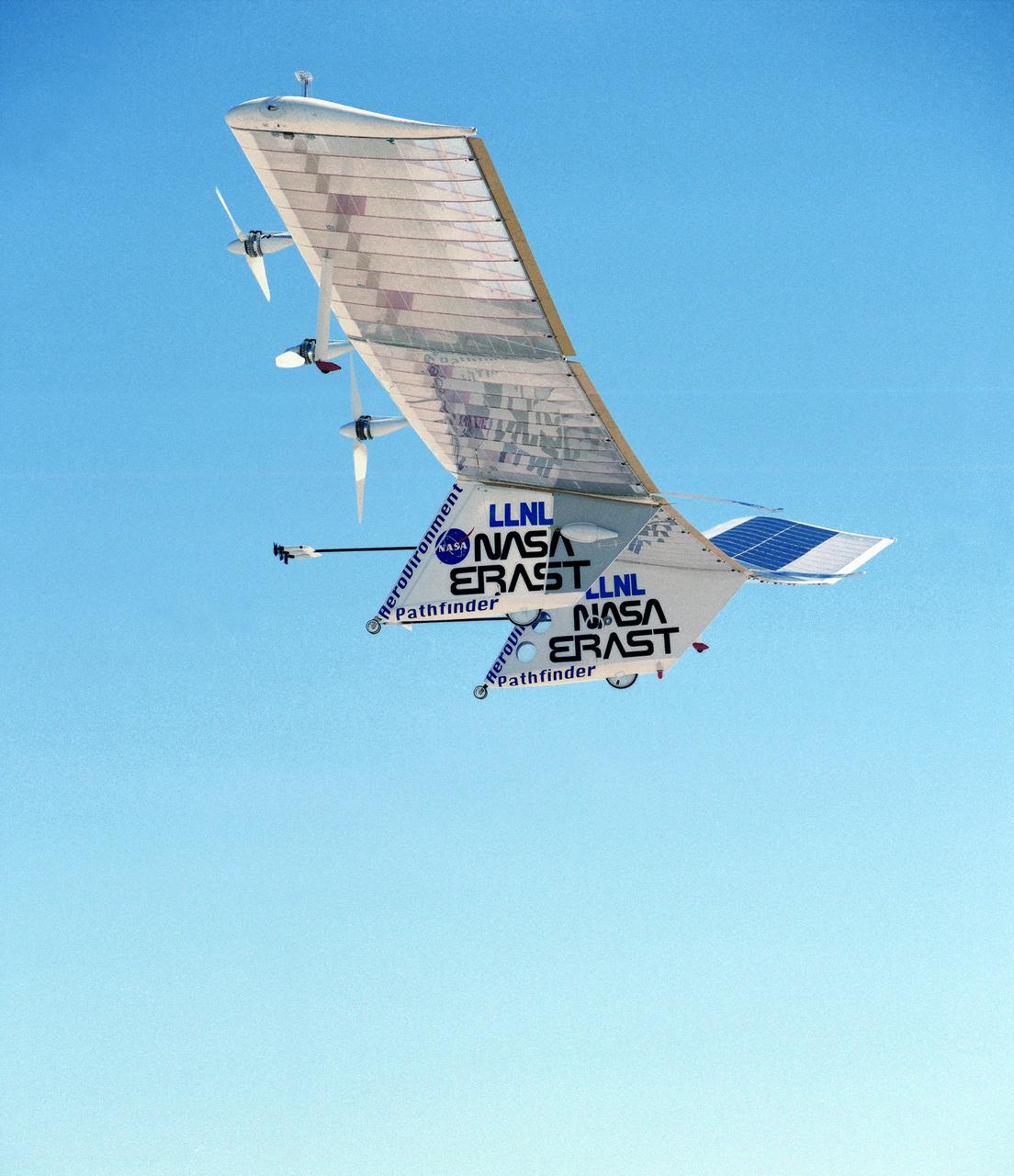
The Pathfinder solar-powered remotely piloted aircraft climbs to a record-setting altitude of 50,567 feet during a flight Sept. 11, 1995, at NASA's Dryden Flight Research Center, Edwards, California.
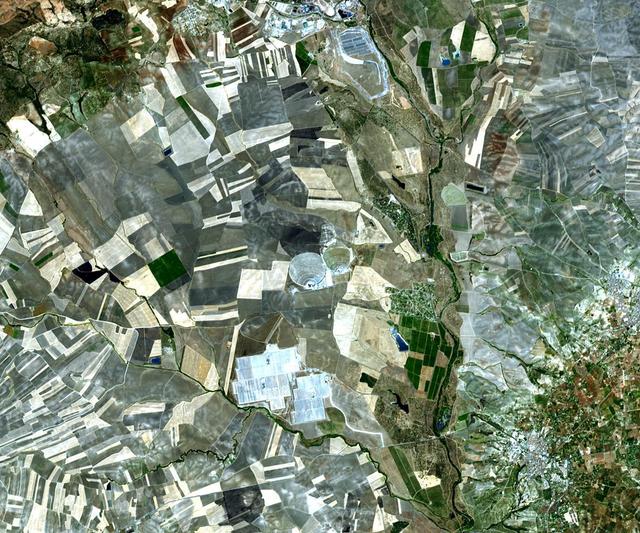
The world largest solar power tower recently began operating outside Seville, Spain -- and it marks a historic moment in the saga of renewable energy. This image was acquired by NASA Terra spacecraft.
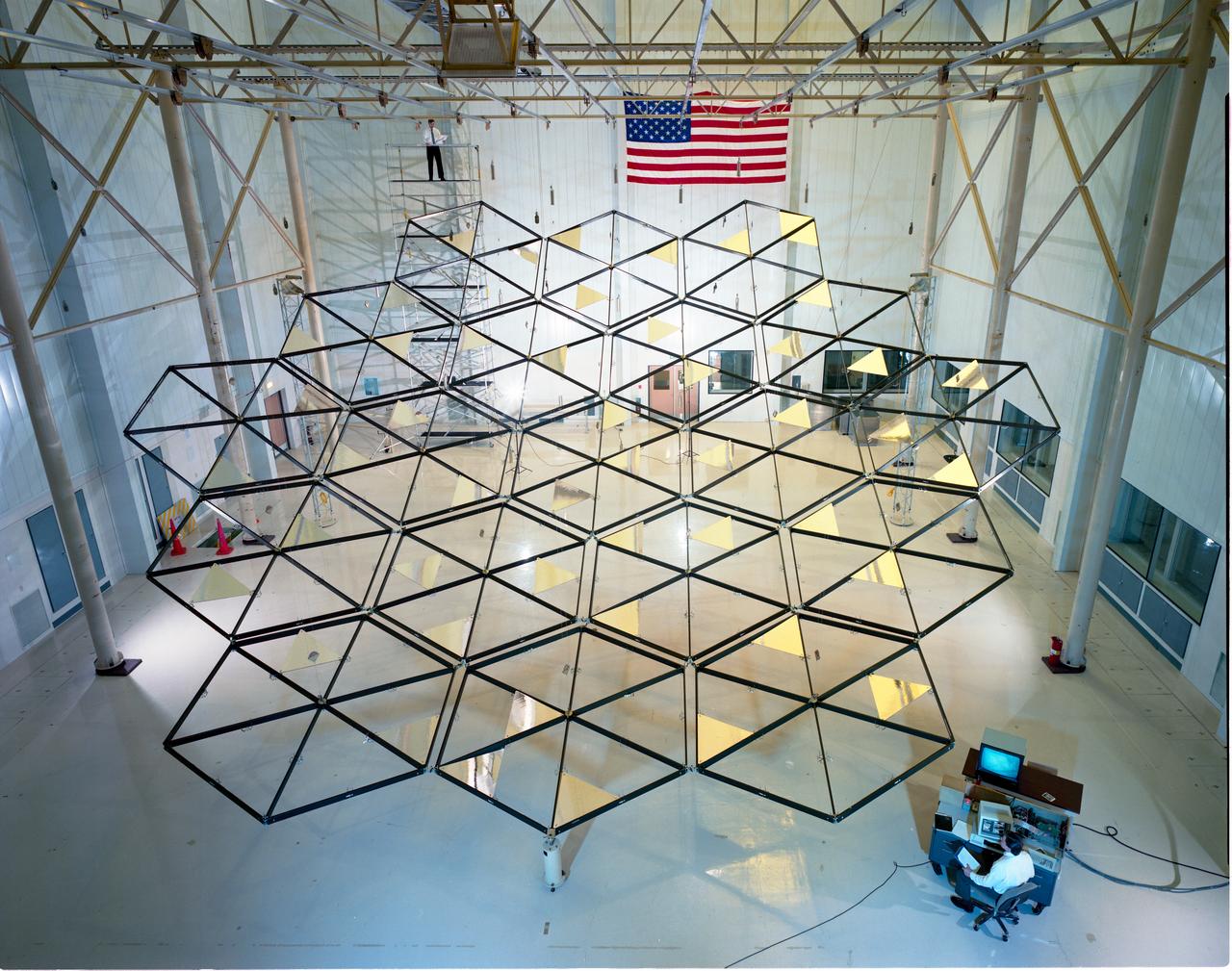
Testing of the Solar Dynamic Collector for Space Freedom. The solar dynamic power system includes a solar concentrator, which collects sunlight; a receiver, which accepts and stores the concentrated solar energy and transfers this energy to a gas; a Brayton turbine, alternator, and compressor unit, which generates electric power; and a radiator, which rejects waste heat.
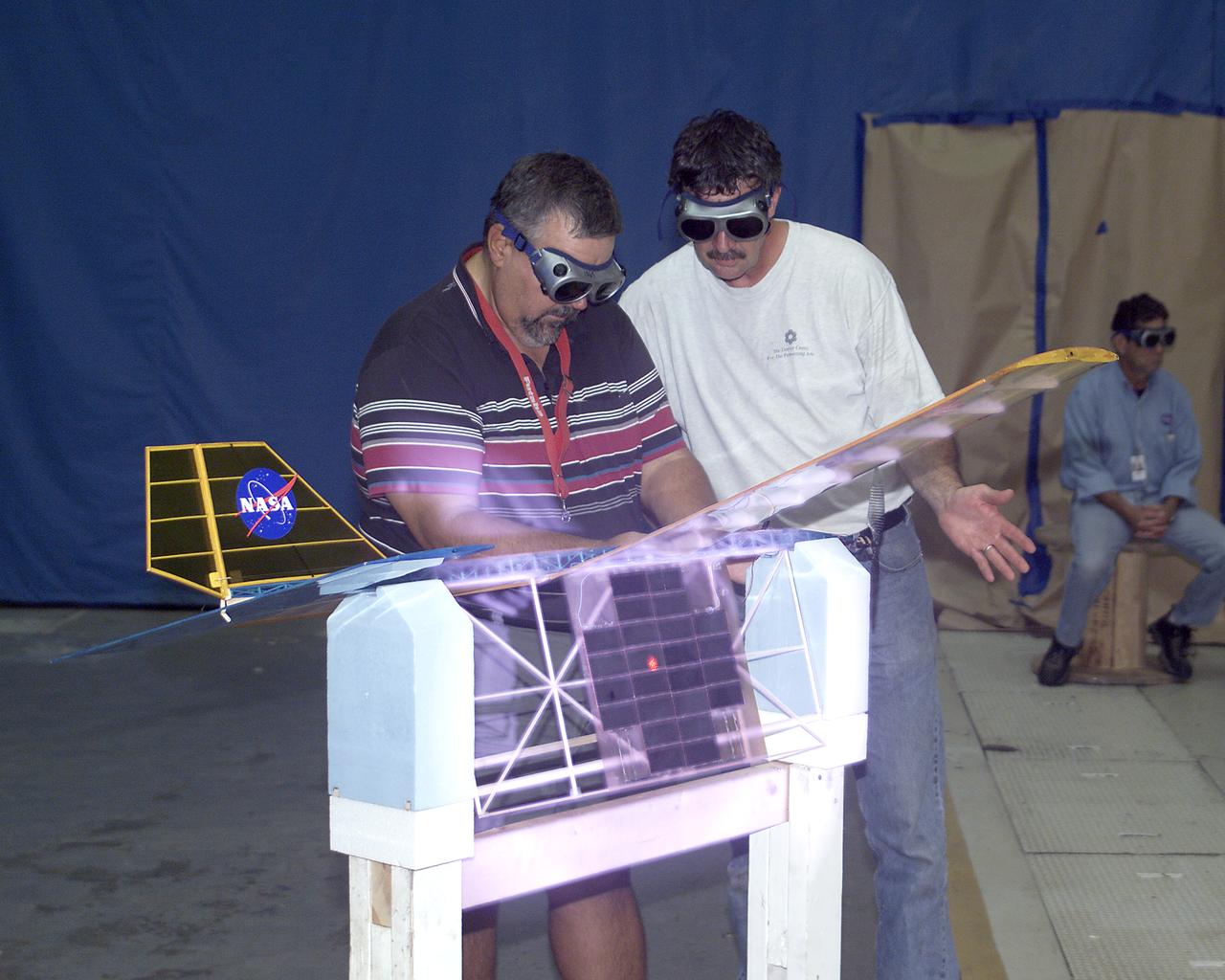
With a laser beam centered on its solar panel, a lightweight model aircraft is checked out by technician Tony Frakowiak and researcher Tim Blackwell before its power-beamed demonstration flight.
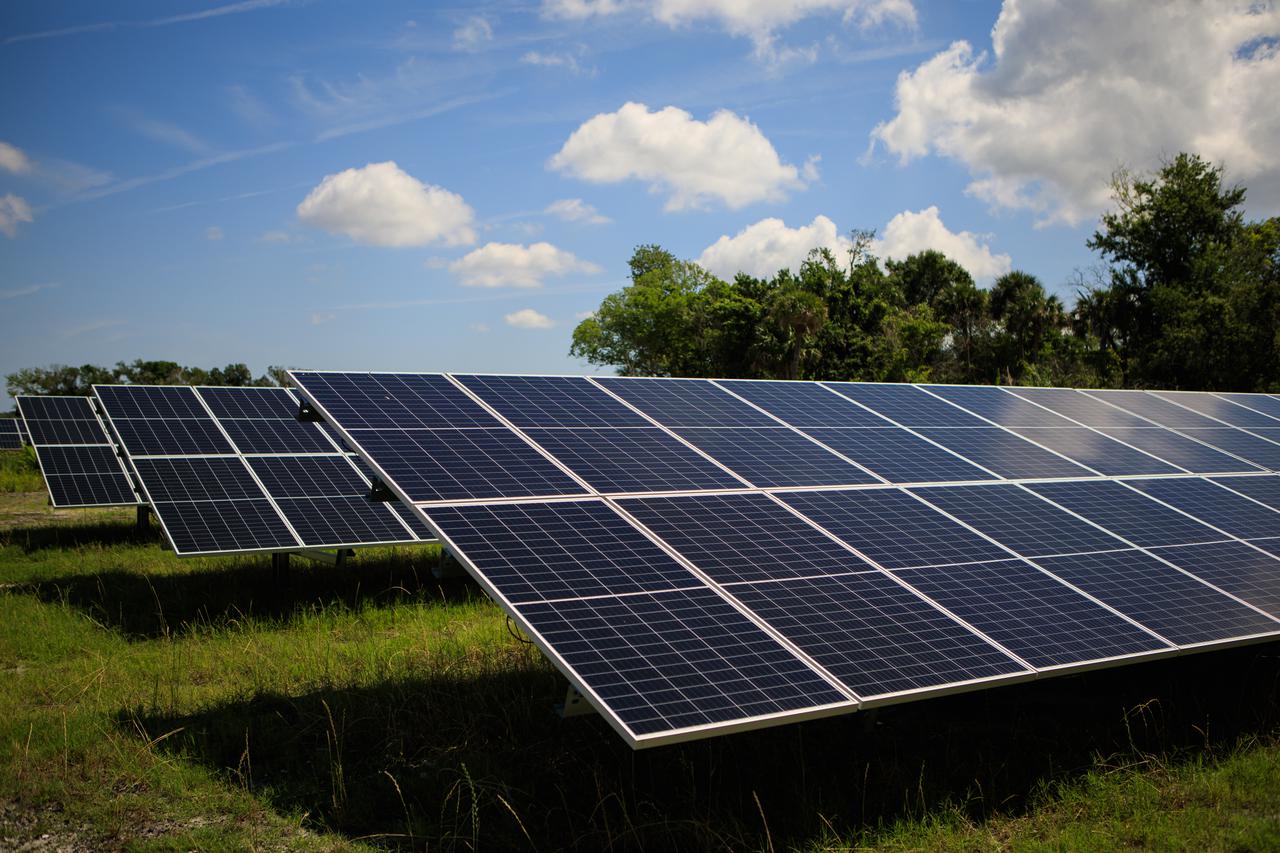
In this view are solar panels that are part of Florida Power and Light’s (FPL) new Discovery Solar Energy Center – a 74.5-megawatt solar site, spanning 491 acres at NASA’s Kennedy Space Center in Florida. The site contains about 250,000 solar panels in total, producing enough energy to power approximately 15,000 homes. Harnessing energy from the Sun, the panels do not directly power anything at Kennedy, but rather, send energy directly to FPL's electricity grid for distribution to existing customers. Construction began in spring 2020, and the energy center became fully operational on May 30, 2021.
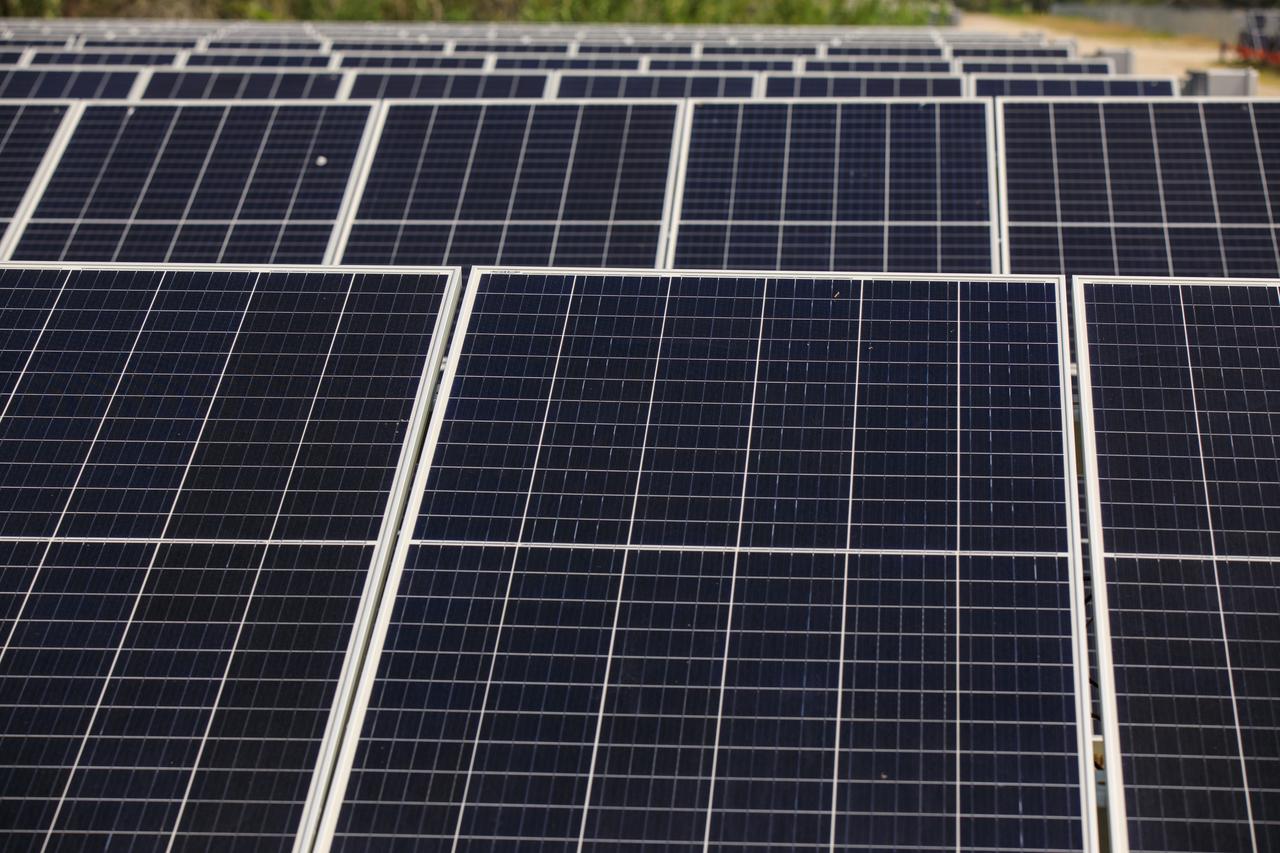
Seen here is an up-close view of solar panels that are part of Florida Power and Light’s (FPL) new Discovery Solar Energy Center – a 74.5-megawatt solar site, spanning 491 acres at NASA’s Kennedy Space Center in Florida. The site contains about 250,000 solar panels in total, producing enough energy to power approximately 15,000 homes. Harnessing energy from the Sun, the panels do not directly power anything at Kennedy, but rather, send energy directly to FPL's electricity grid for distribution to existing customers. Construction began in spring 2020, and the energy center became fully operational on May 30, 2021.
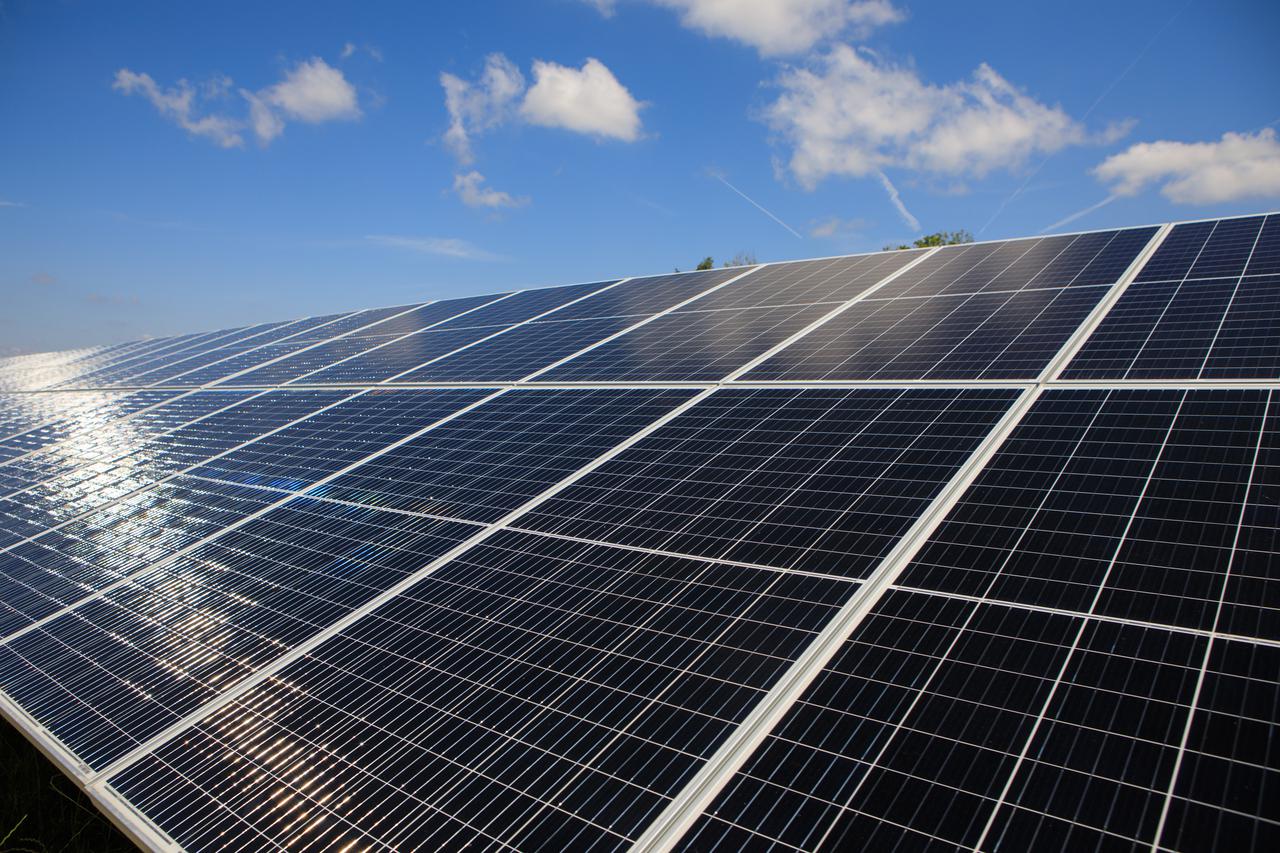
Seen here is an up-close view of solar panels that are part of Florida Power and Light’s (FPL) new Discovery Solar Energy Center – a 74.5-megawatt solar site, spanning 491 acres at NASA’s Kennedy Space Center in Florida. The site contains about 250,000 solar panels in total, producing enough energy to power approximately 15,000 homes. Harnessing energy from the Sun, the panels do not directly power anything at Kennedy, but rather, send energy directly to FPL's electricity grid for distribution to existing customers. Construction began in spring 2020, and the energy center became fully operational on May 30, 2021.
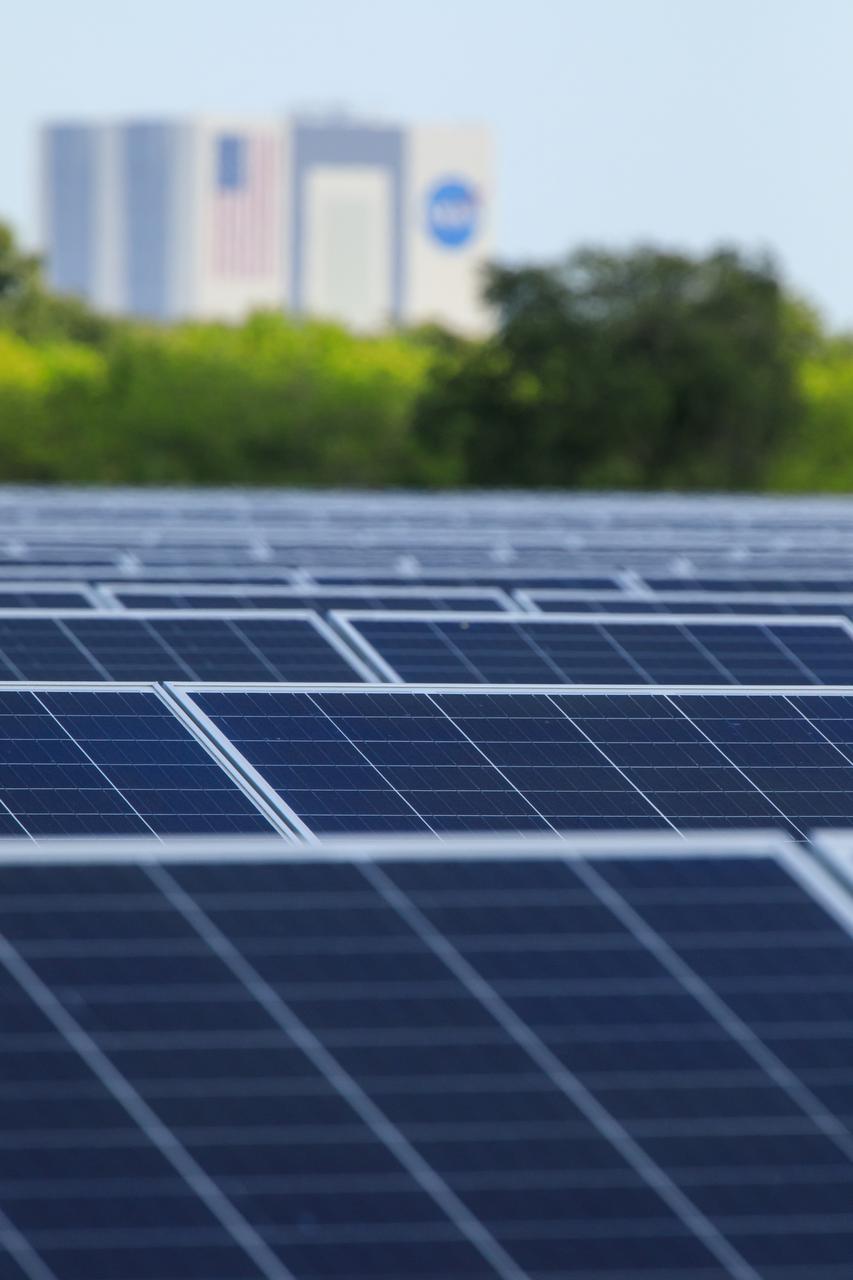
Seen here, with the iconic Vehicle Assembly Building in the background, is an up-close view of solar panels that are part of Florida Power and Light’s (FPL) new Discovery Solar Energy Center at NASA’s Kennedy Space Center in Florida. The 74.5-megawatt solar site spans 491 acres at Kennedy and contains about 250,000 solar panels. Harnessing energy from the Sun, the panels produce enough energy to power approximately 15,000 homes. The panels do not directly power anything at Kennedy, and instead, send energy directly to FPL’s electricity grid for distribution to existing customers. Construction began in spring 2020, and the energy center became fully operational on May 30, 2021.
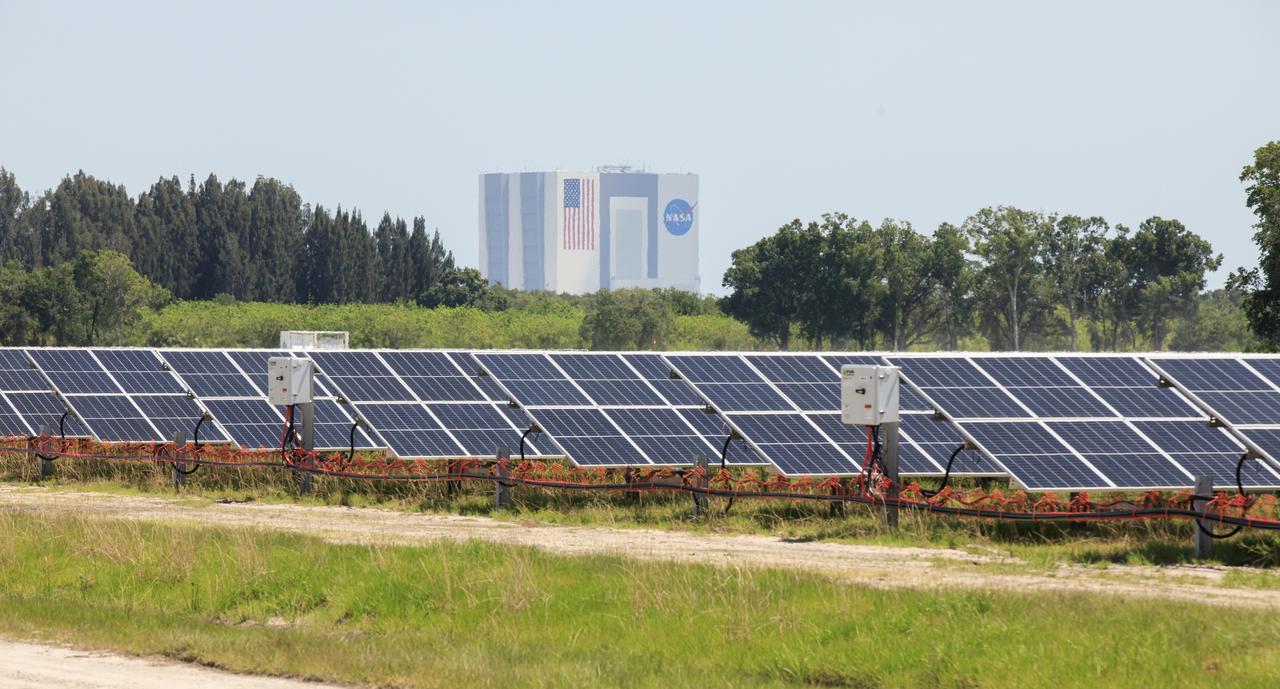
With the iconic Vehicle Assembly Building serving as the backdrop, a portion of the solar panels that make up Florida Power and Light’s (FPL) new Discovery Solar Energy Center is seen at NASA’s Kennedy Space Center in Florida. The 74.5-megawatt solar site spans 491 acres at Kennedy and contains about 250,000 solar panels. Harnessing energy from the Sun, the panels produce enough energy to power approximately 15,000 homes. The panels do not directly power anything at Kennedy, and instead, send energy directly to FPL’s electricity grid for distribution to existing customers. Construction began in spring 2020, and the energy center became fully operational on May 30, 2021.
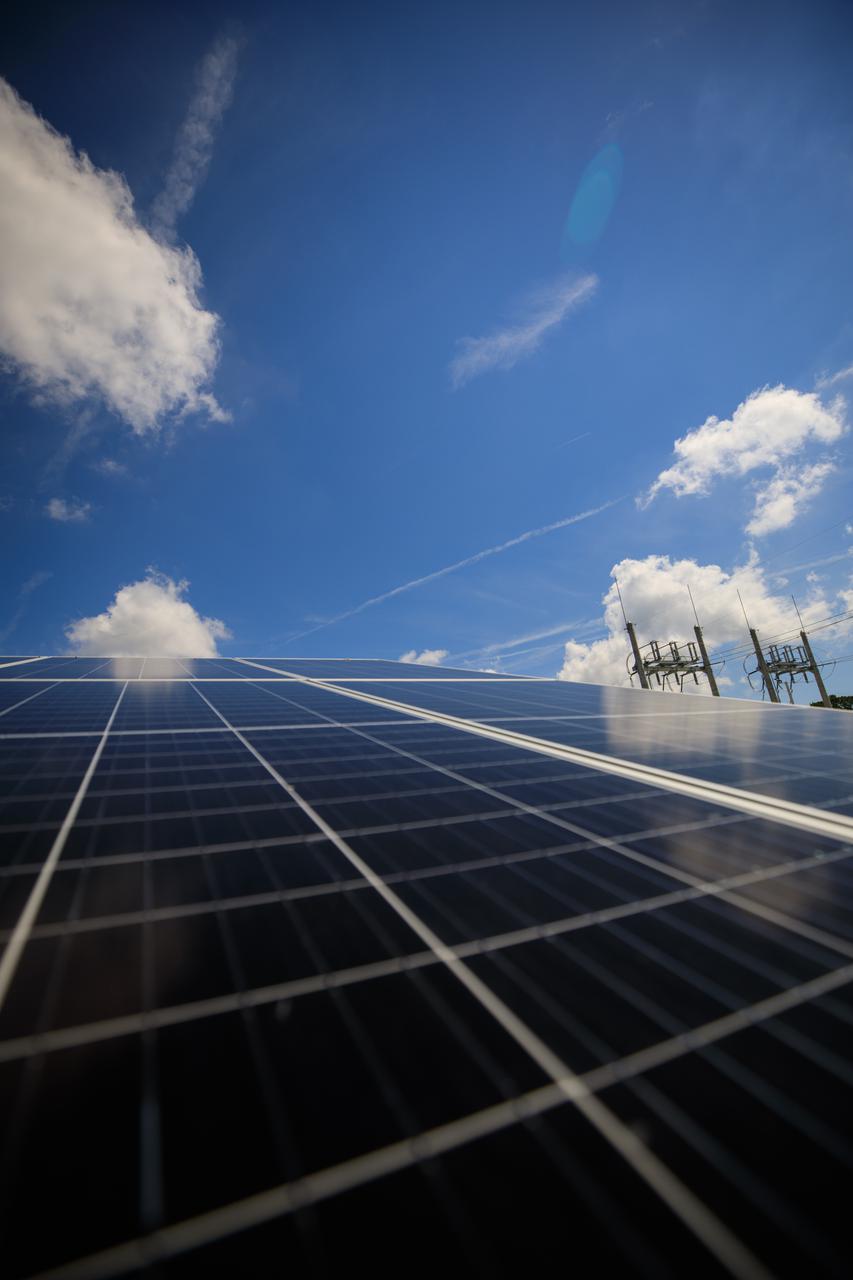
Seen here is an up-close view of solar panels that are part of Florida Power and Light’s (FPL) new Discovery Solar Energy Center – a 74.5-megawatt solar site, spanning 491 acres at NASA’s Kennedy Space Center in Florida. The site contains about 250,000 solar panels in total, producing enough energy to power approximately 15,000 homes. Harnessing energy from the Sun, the panels do not directly power anything at Kennedy, but rather, send energy directly to FPL's electricity grid for distribution to existing customers. Construction began in spring 2020, and the energy center became fully operational on May 30, 2021.
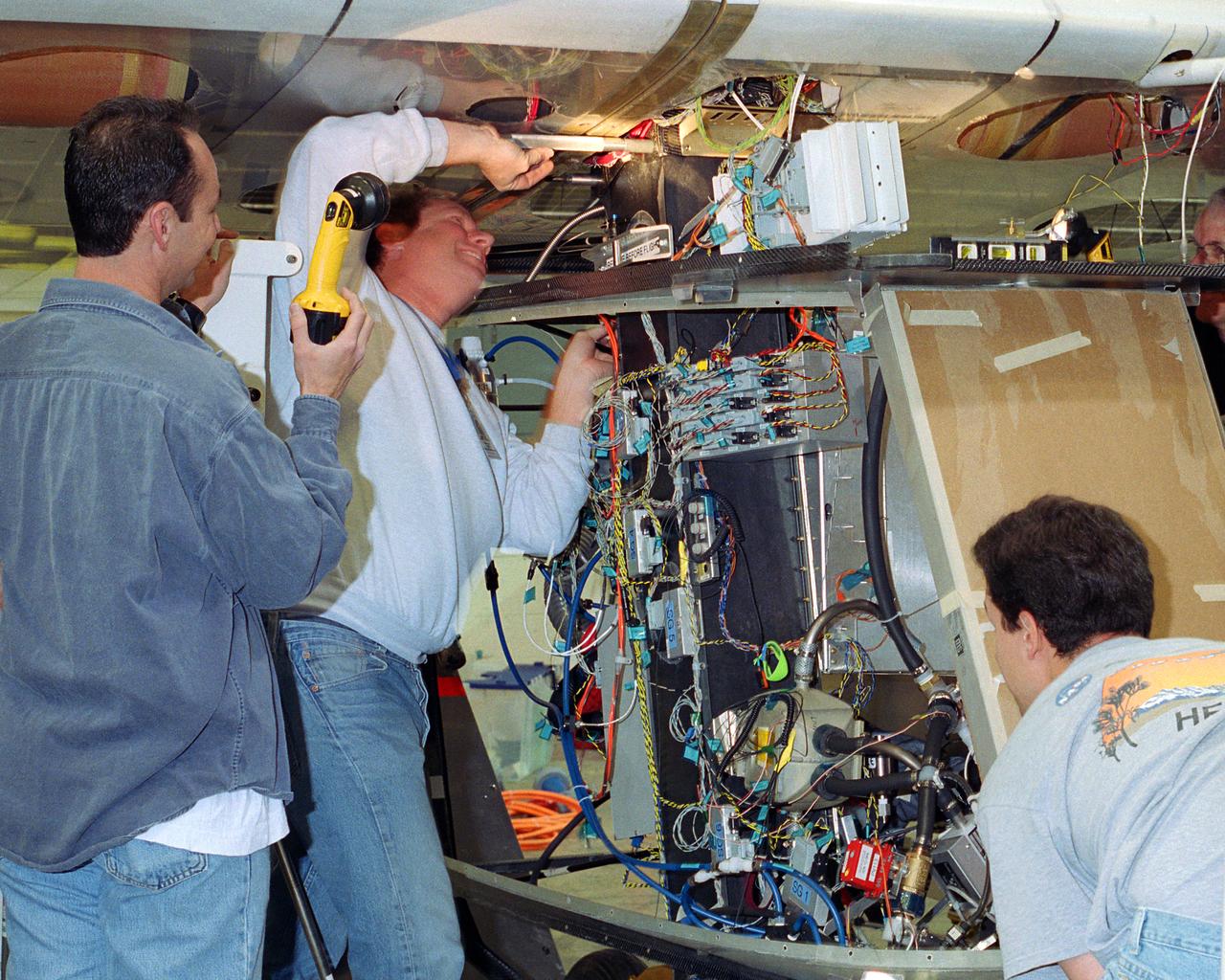
Aerovironment technicians carefully line up attachments as a fuel cell electrical system is installed on the Helios Prototype solar powered flying wing. The fuel cell system will power the aircraft at night during NASA-sponsored long-endurance demonstration flight in the summer of 2003.
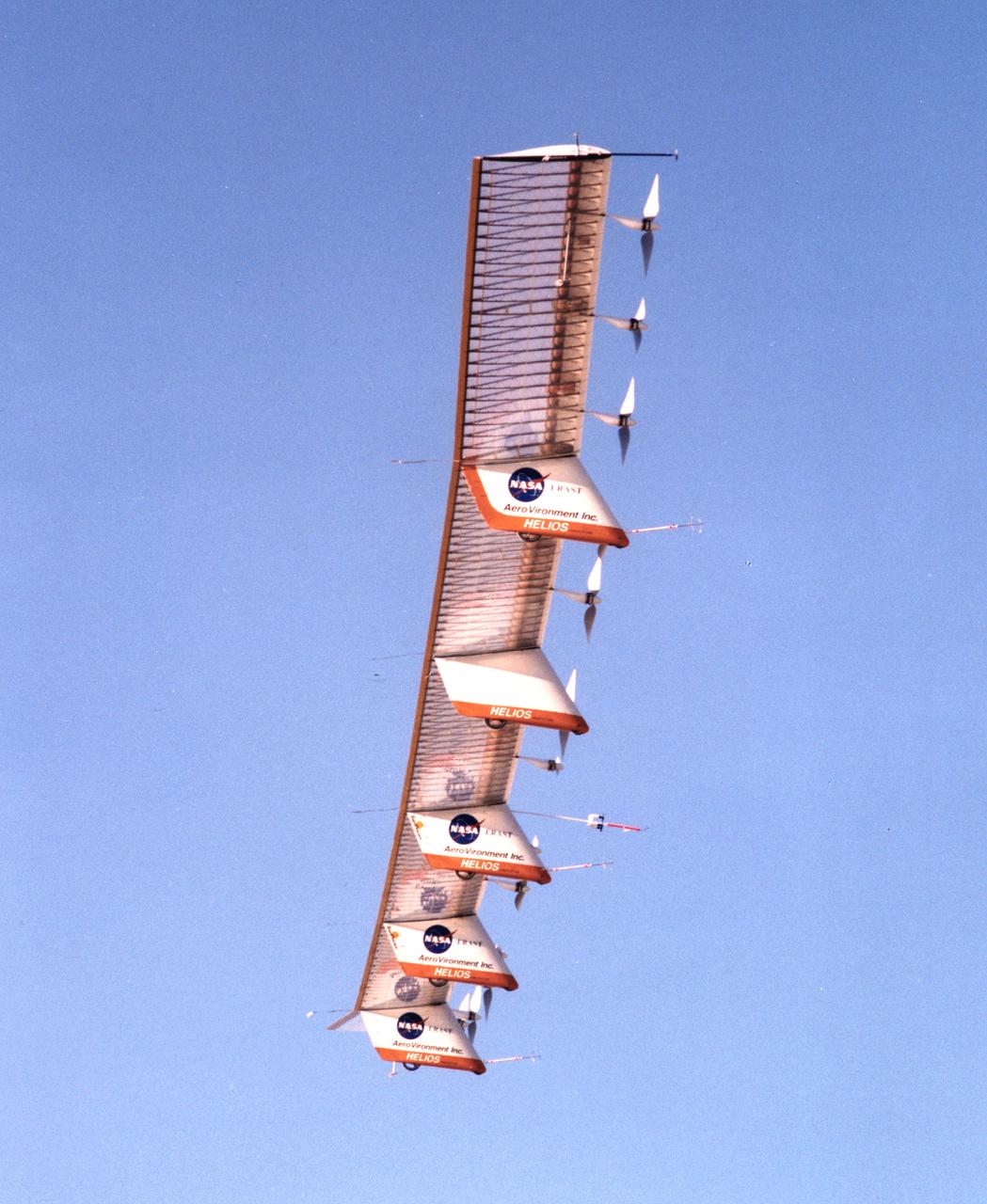
The Helios Prototype is an enlarged version of the Centurion flying wing, which flew a series of test flights at Dryden in late 1998. The craft has a wingspan of 247 feet, 41 feet greater than the Centurion, 2 1/2 times that of its solar-powered Pathfinder flying wing, and longer than either the Boeing 747 jetliner or Lockheed C-5 transport aircraft.
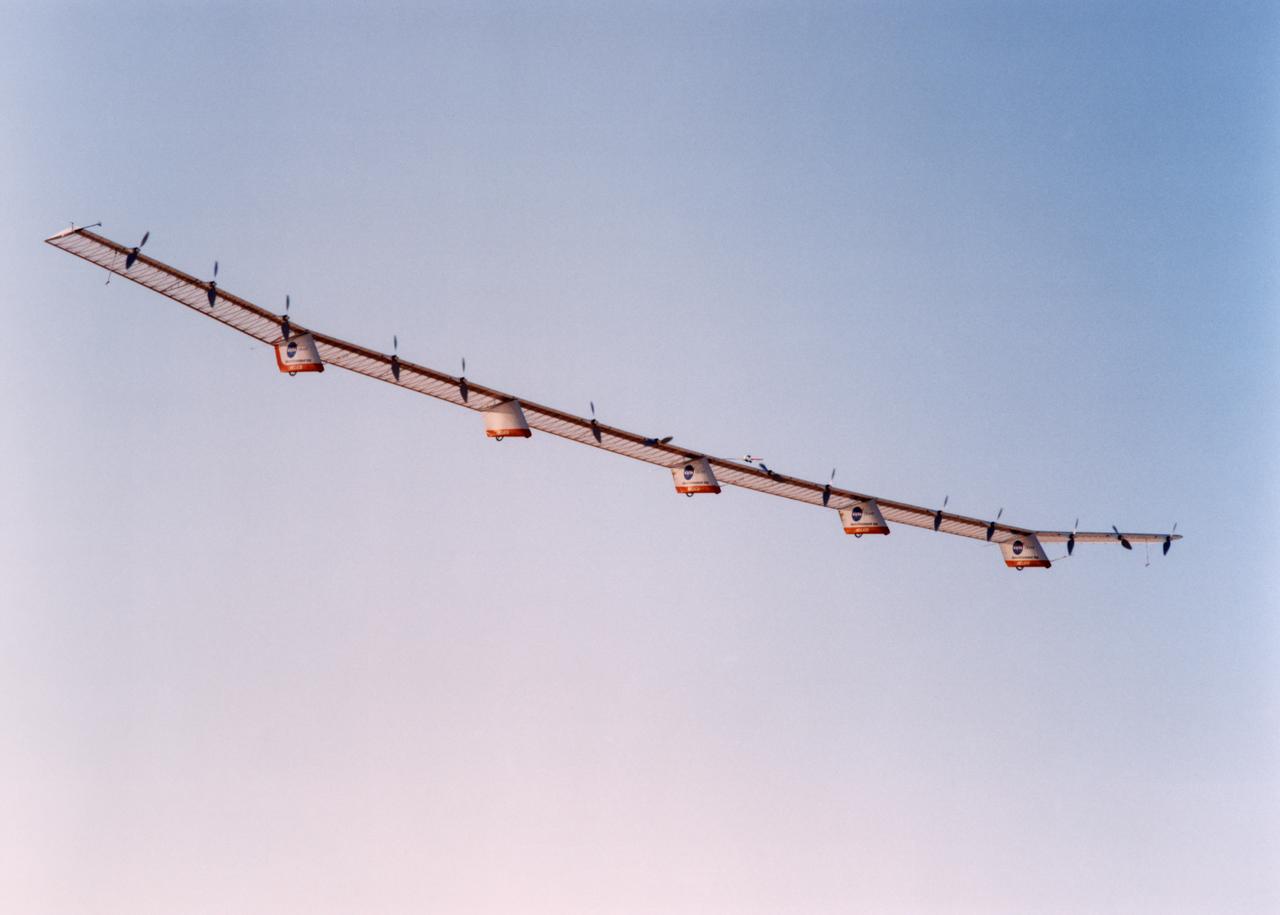
The Helios Prototype is an enlarged version of the Centurion flying wing, which flew a series of test flights at Dryden in late 1998. The craft has a wingspan of 247 feet, 41 feet greater than the Centurion, 2 1/2 times that of its solar-powered Pathfinder flying wing, and longer than either the Boeing 747 jetliner or Lockheed C-5 transport aircraft.
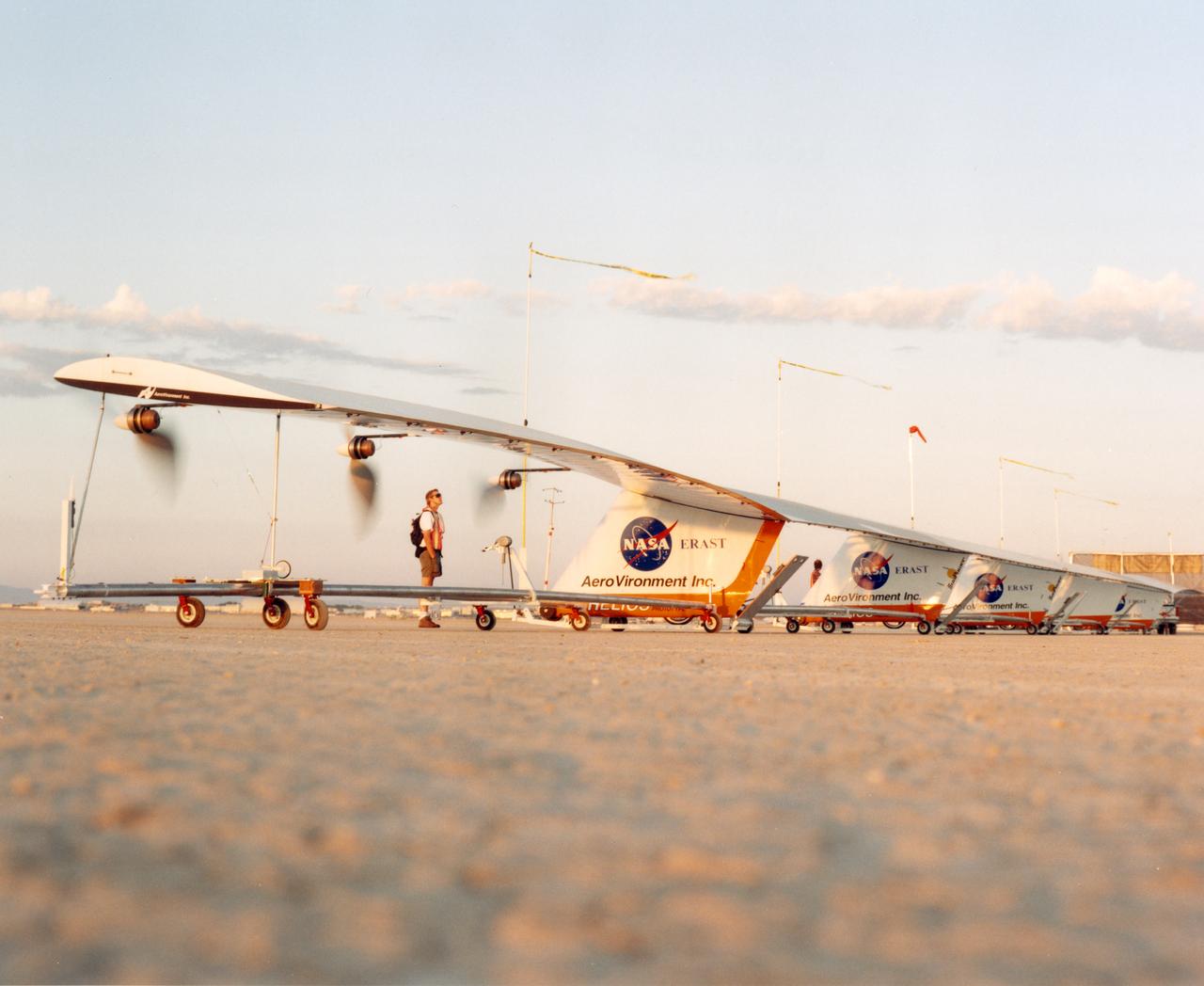
The Helios Prototype is an enlarged version of the Centurion flying wing, which flew a series of test flights at Dryden in late 1998. The craft has a wingspan of 247 feet, 41 feet greater than the Centurion, 2 1/2 times that of its solar-powered Pathfinder flying wing, and longer than either the Boeing 747 jetliner or Lockheed C-5 transport aircraft.
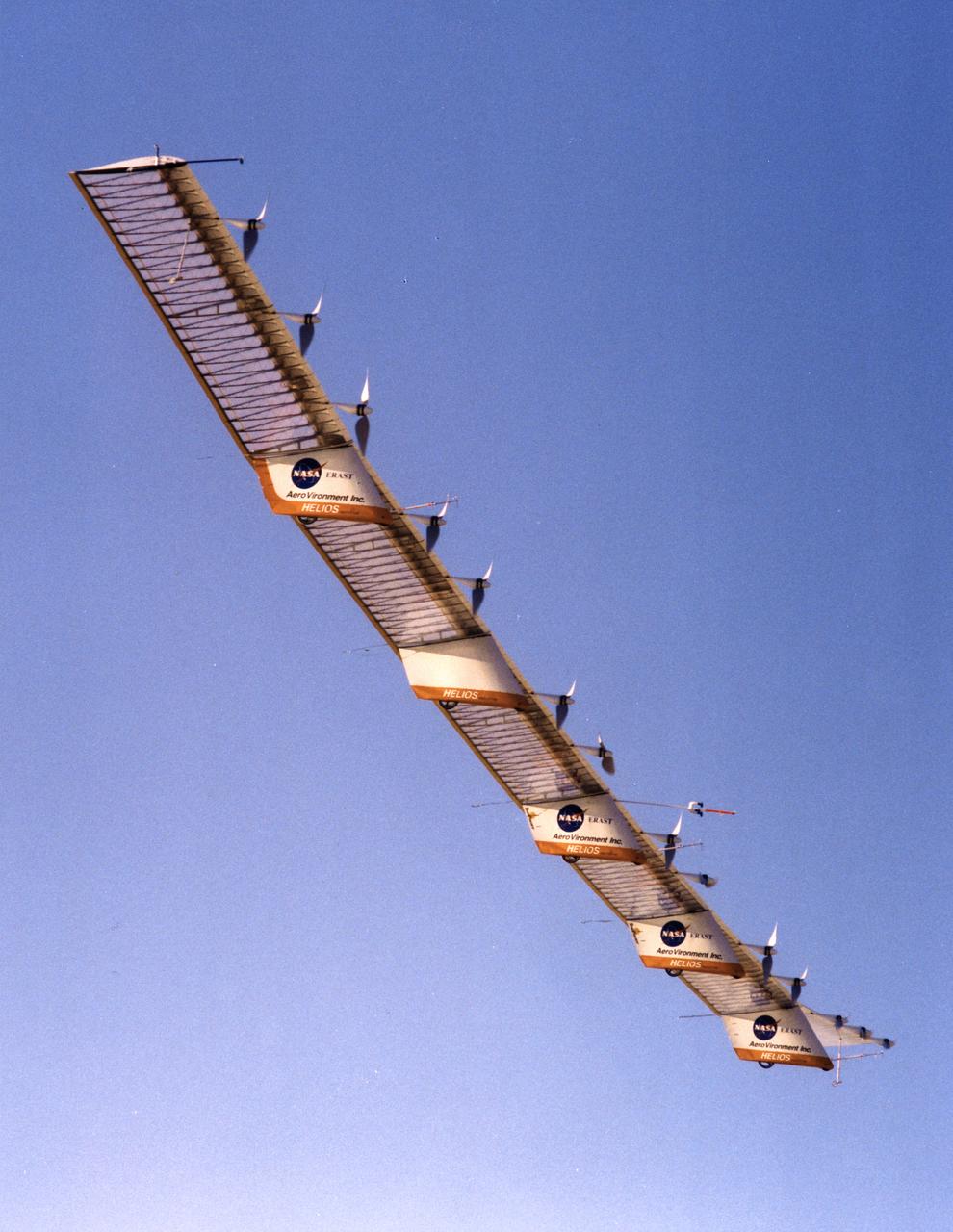
The Helios Prototype is an enlarged version of the Centurion flying wing, which flew a series of test flights at Dryden in late 1998. The craft has a wingspan of 247 feet, 41 feet greater than the Centurion, 2 1/2 times that of its solar-powered Pathfinder flying wing, and longer than either the Boeing 747 jetliner or Lockheed C-5 transport aircraft.
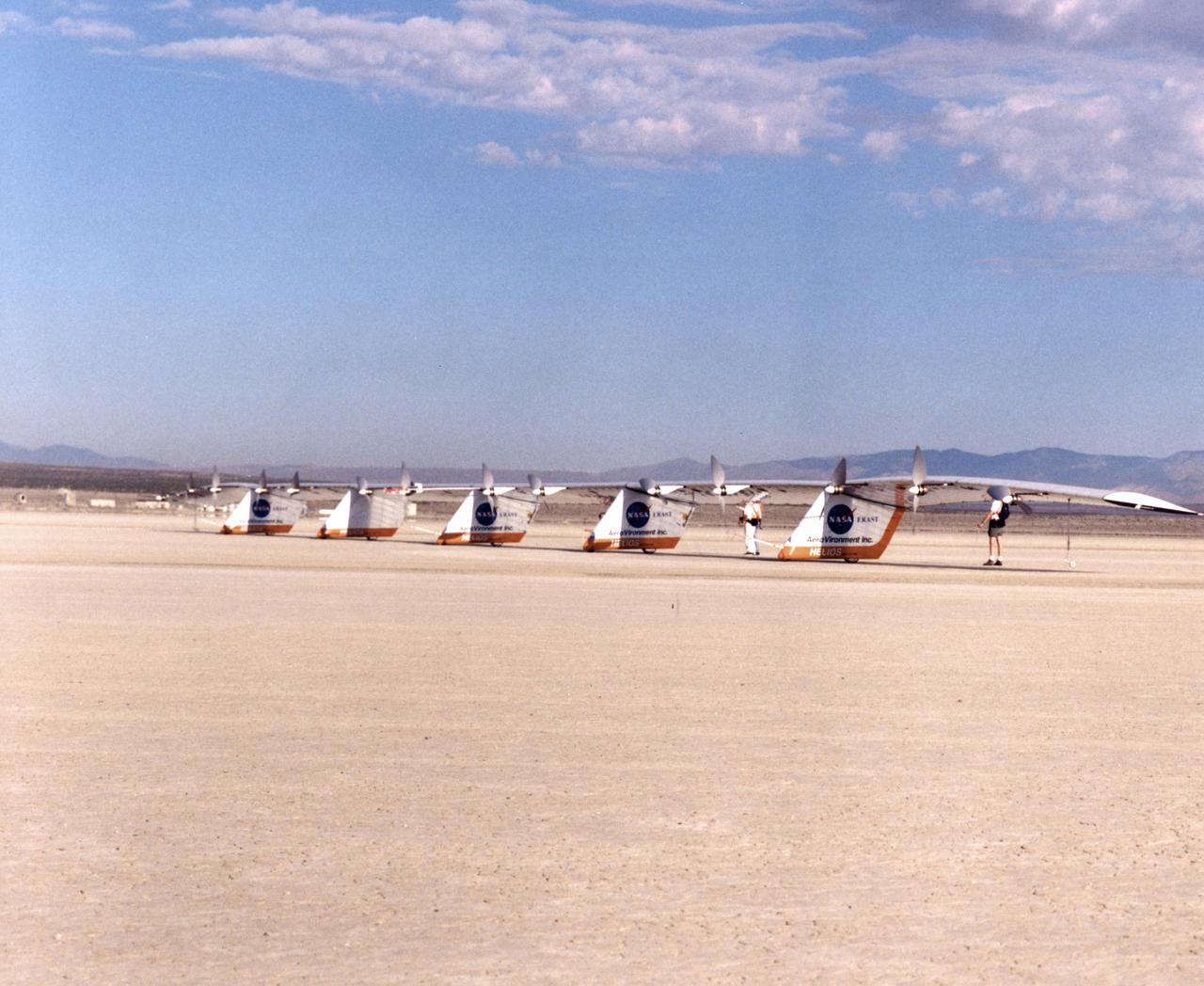
The Helios Prototype is an enlarged version of the Centurion flying wing, which flew a series of test flights at Dryden in late 1998. The craft has a wingspan of 247 feet, 41 feet greater than the Centurion, 2 1/2 times that of its solar-powered Pathfinder flying wing, and longer than either the Boeing 747 jetliner or Lockheed C-5 transport aircraft.
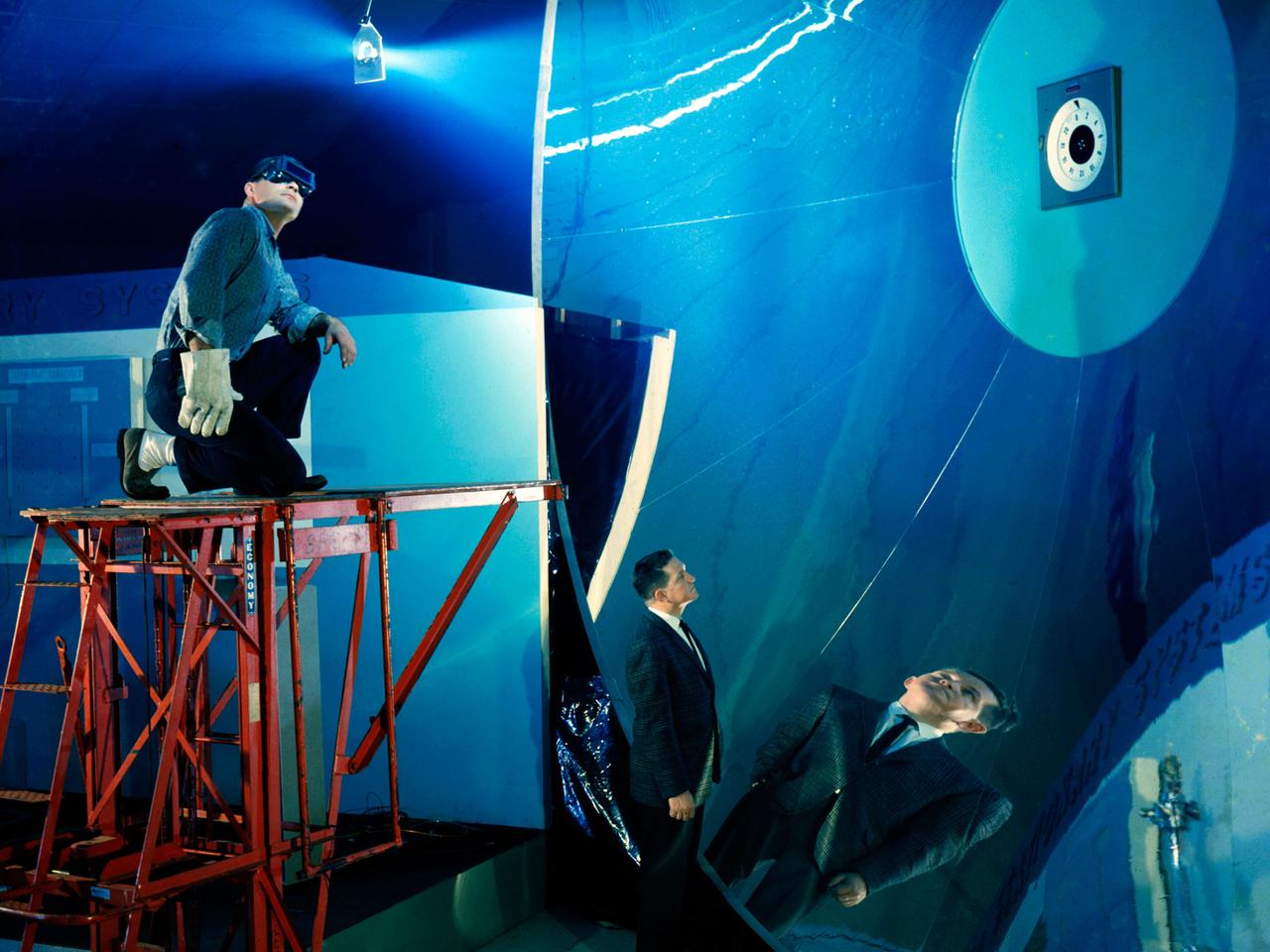
NASA’s Lewis Research Center conducted extensive research programs in the 1960s and 1970s to develop systems that provide electrical power in space. One system, the Brayton cycle engine, converted solar thermal energy into electrical power. This system operated on a closed-loop Brayton thermodynamic cycle. The Brayton system relied on this large mirror to collect radiation from the sun. The mirror concentrated the Sun's rays on a heat storage receiver which warmed the Brayton system’s working fluid, a helium-xenon gas mixture. The heated fluid powered the system’s generator which produced power. In the mid-1960s Lewis researchers constructed this 30-foot diameter prototype of a parabolic solar mirror for the Brayton cycle system. The mirror had to be rigid, impervious to micrometeorite strikes, and lightweight. This mirror was comprised of twelve 1-inch thick magnesium plate sections that were coated with aluminum. The mirror could be compactly broken into its sections for launch.
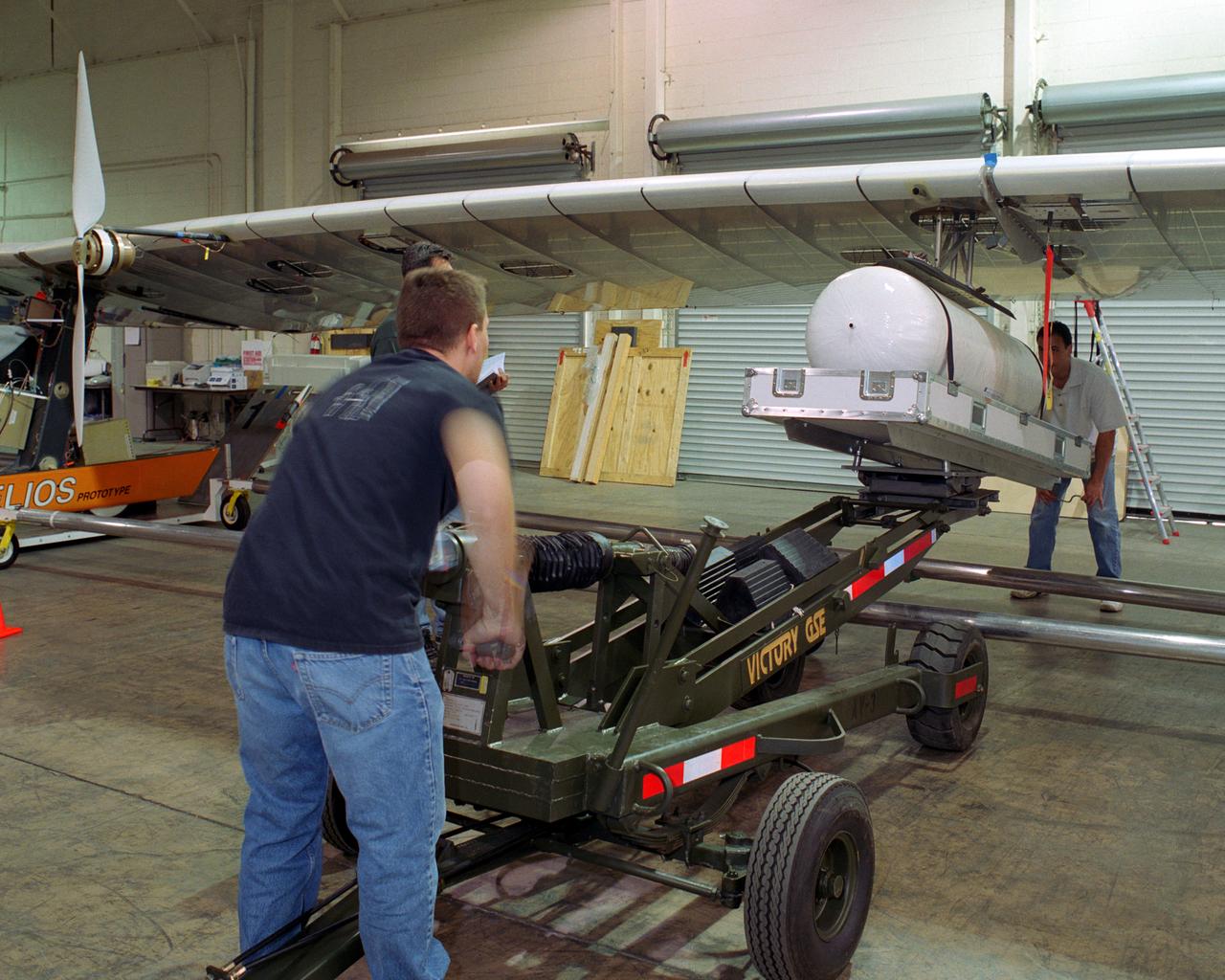
Technicians for AeroVironment, Inc., jack up a pressure tank to the wing of the Helios Prototype solar-electric flying wing. The tank carries pressurized hydrogen to fuel an experimental fuel cell system that powered the aircraft at night during an almost two-day long-endurance flight demonstration in the summer of 2003.

The Pathfinder solar-powered aircraft sits on Rogers Dry Lake at NASA's Dryden Flight Research Center, Edwards, California, before a research flight.
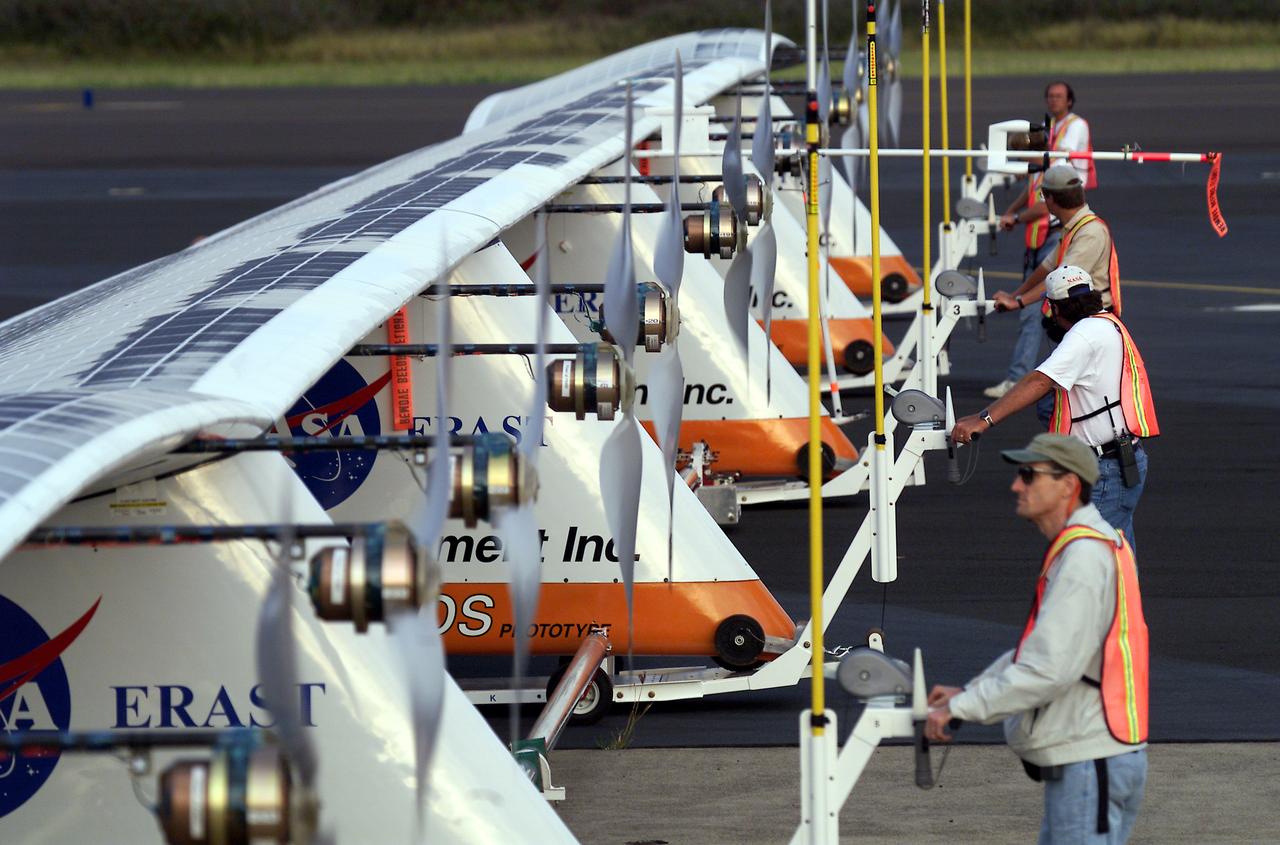
Ground crewmen maneuver AeroVironment's solar-powered Helios Prototype flying wing on its ground support dolly during functional checkouts prior to its first flights under solar power from the U.S. Navy's Pacific Missile Range Facility on Kaua'i, Hawaii.
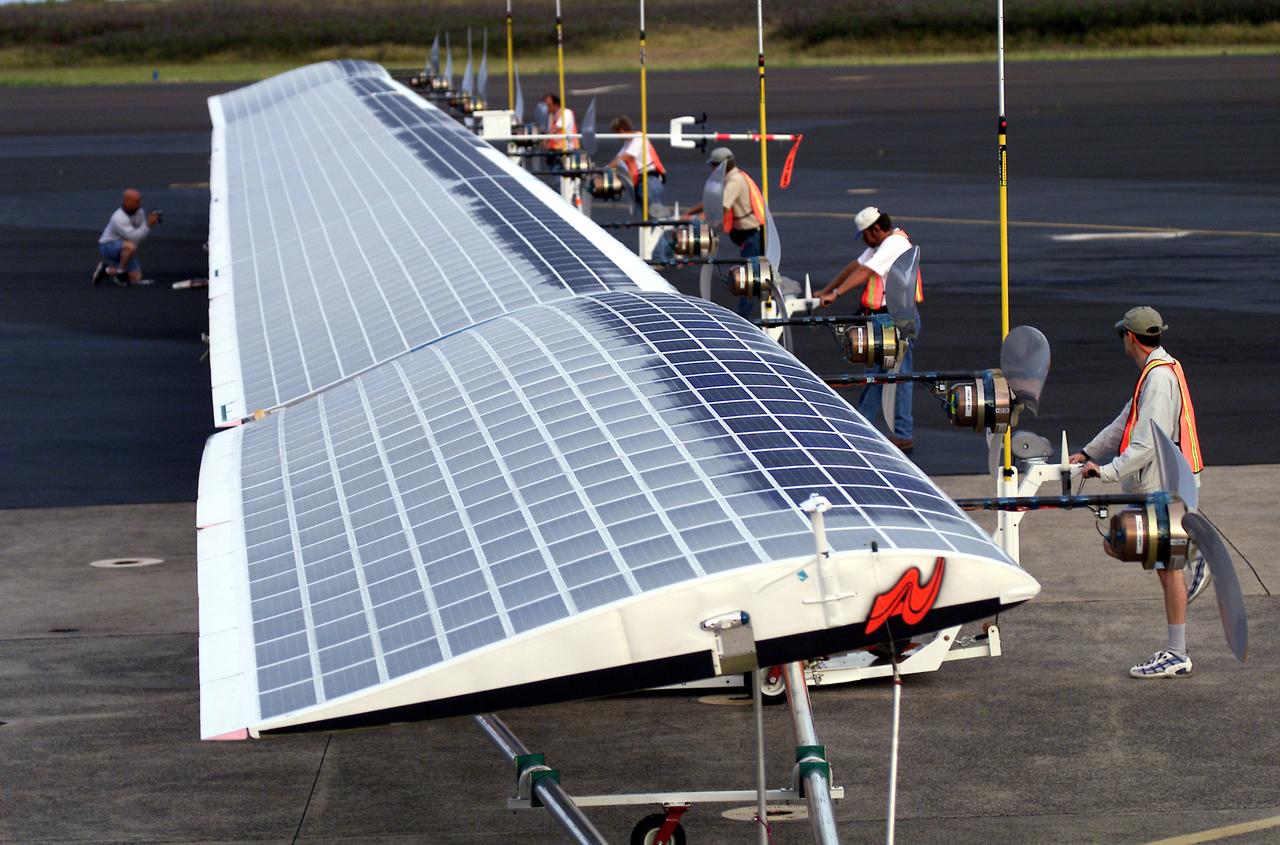
Ground crewmen maneuver AeroVironment's solar-powered Helios Prototype flying wing on its ground support dolly during functional checkouts prior to its first flights under solar power from the U.S. Navy's Pacific Missile Range Facility on Kaua'i, Hawaii.
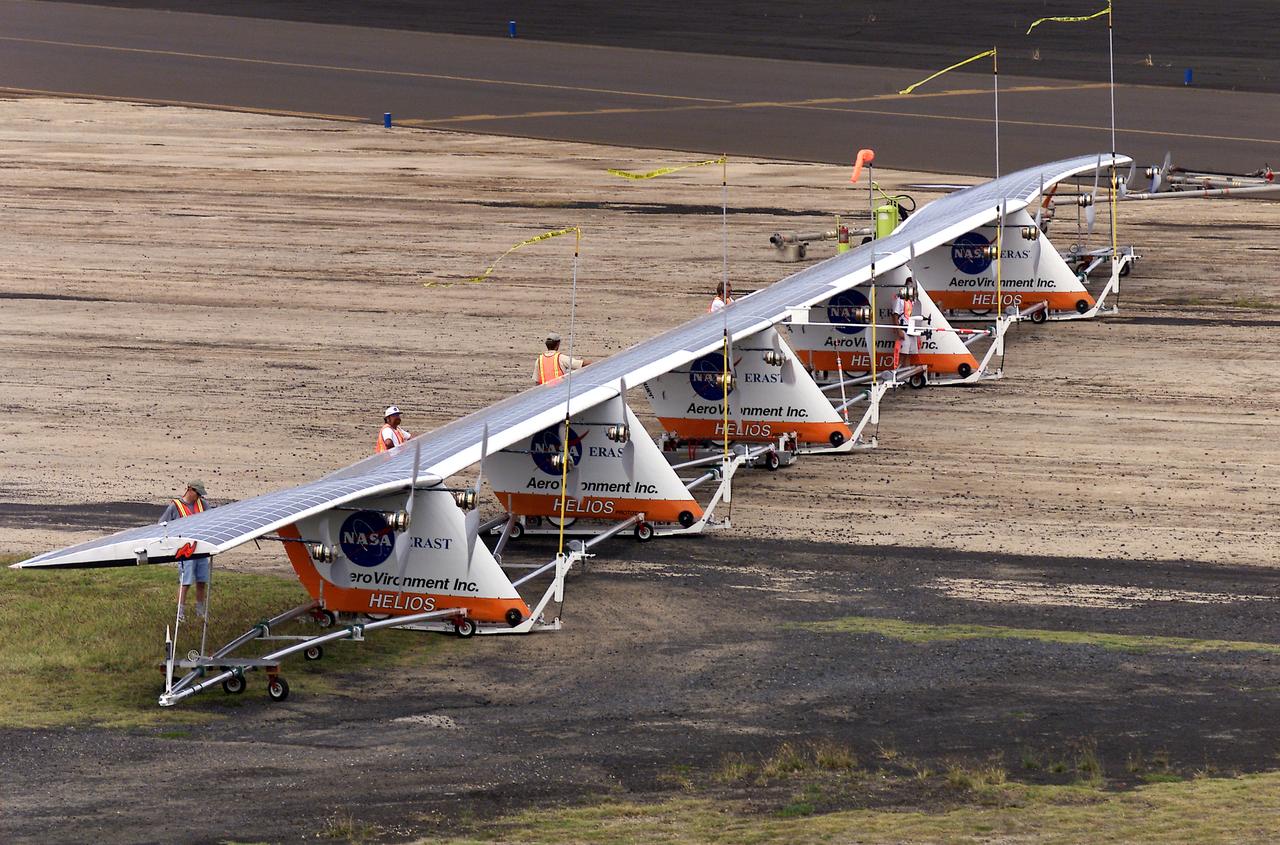
Ground crewmen maneuver AeroVironment's solar-powered Helios Prototype flying wing on its ground support dolly during functional checkouts prior to its first flights under solar power from the U.S. Navy's Pacific Missile Range Facility on Kaua'i, Hawaii.
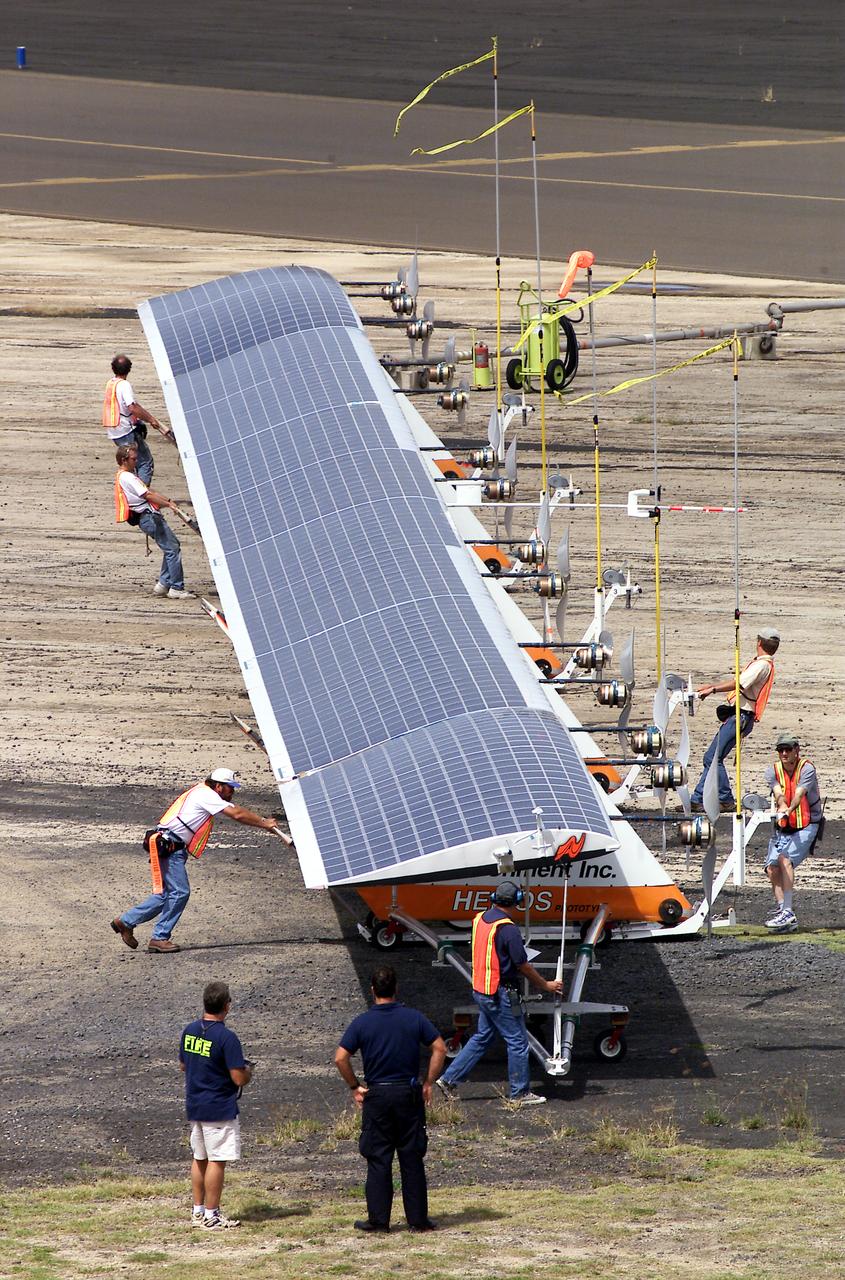
Ground crewmen maneuver AeroVironment's solar-powered Helios Prototype flying wing on its ground support dolly during functional checkouts prior to its first flights under solar power from the U.S. Navy's Pacific Missile Range Facility on Kaua'i, Hawaii.
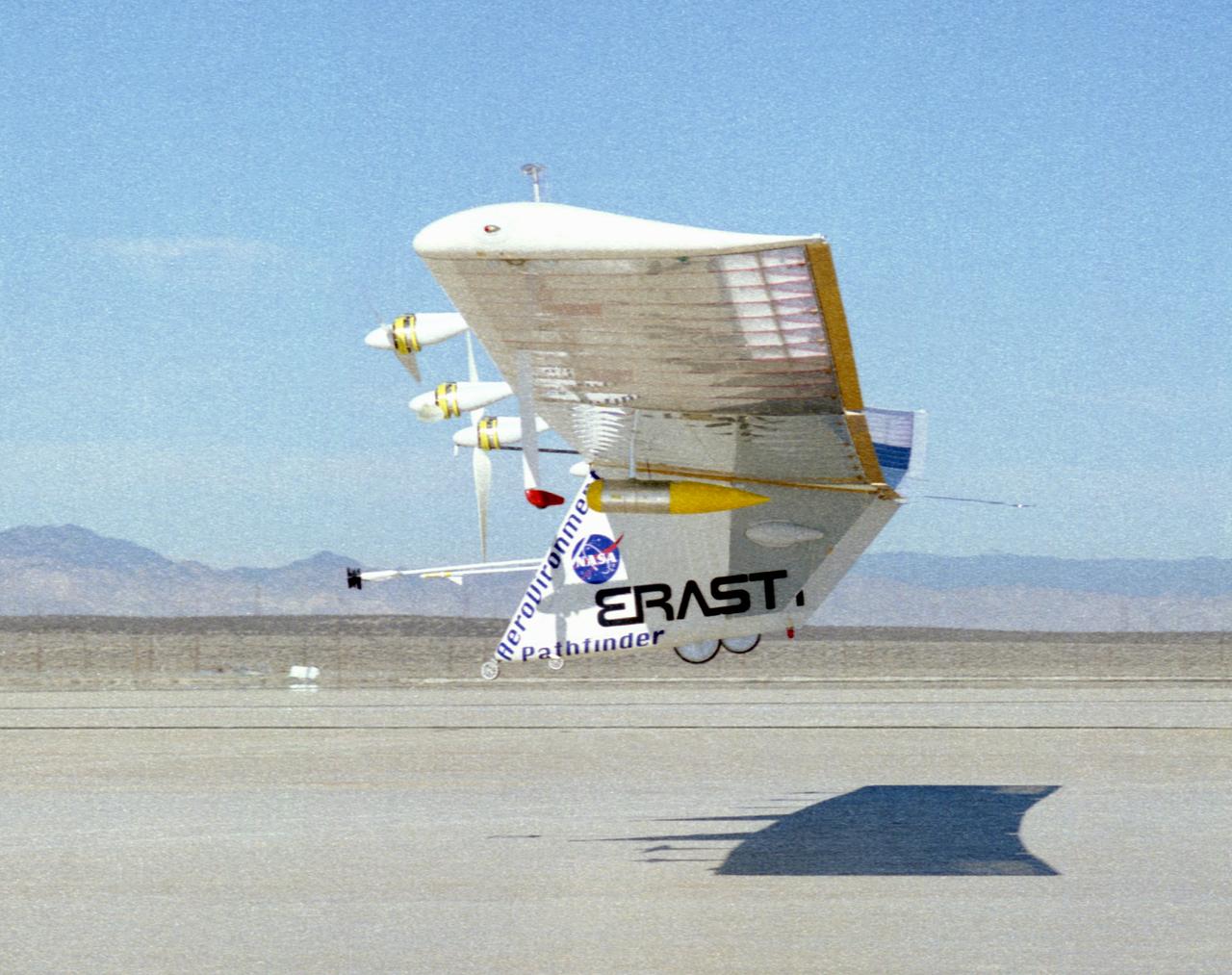
The Pathfinder solar-powered research aircraft heads for landing on the bed of Rogers Dry Lake at the Dryden Flight Research Center, Edwards, California, after a successful test flight Nov. 19, 1996.
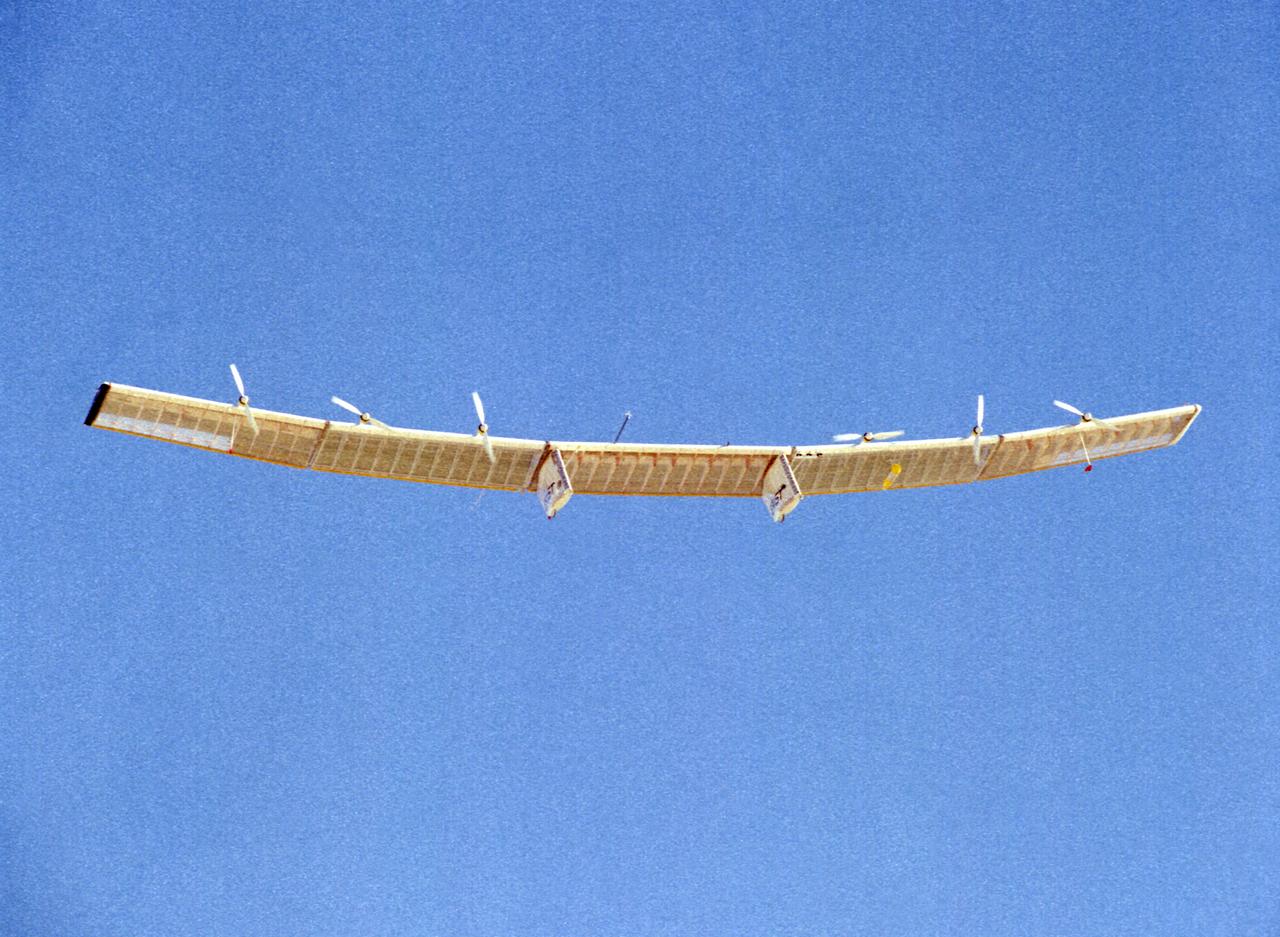
The Pathfinder solar-powered research aircraft is silhouetted against a clear blue sky as it soars aloft during a checkout flight from the Dryden Flight Research Center, Edwards, California, November, 1996.
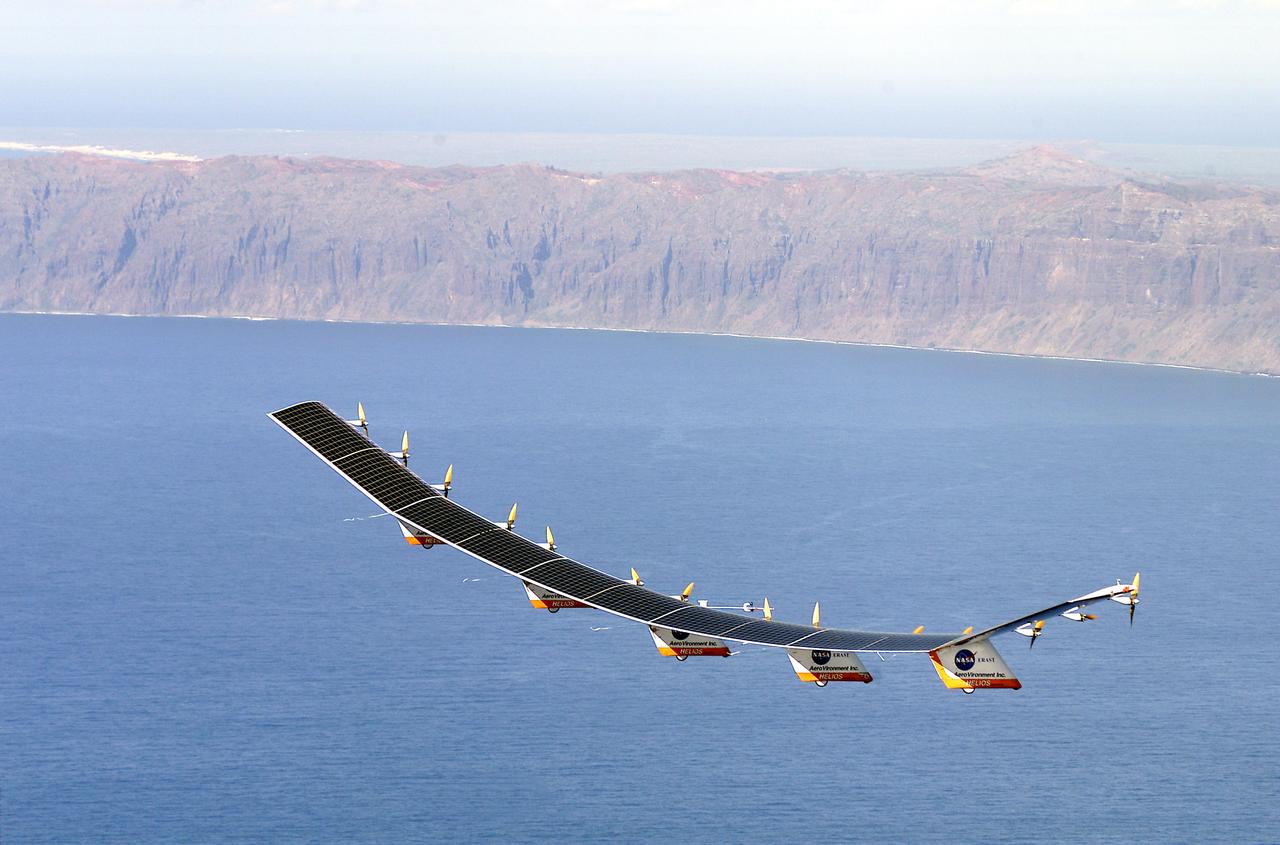
The solar-electric Helios Prototype flying wing is shown near the Hawaiian island of Niihau during its first test flight on solar power from the U.S. Navy's Pacific Missile Range Facility on Kauai, Hawaii, July 14, 2001. The 18-hour flight was a functional checkout of the aircraft's systems and performance in preparation for an attempt to reach sustained flight at 100,000 feet altitude later this summer.
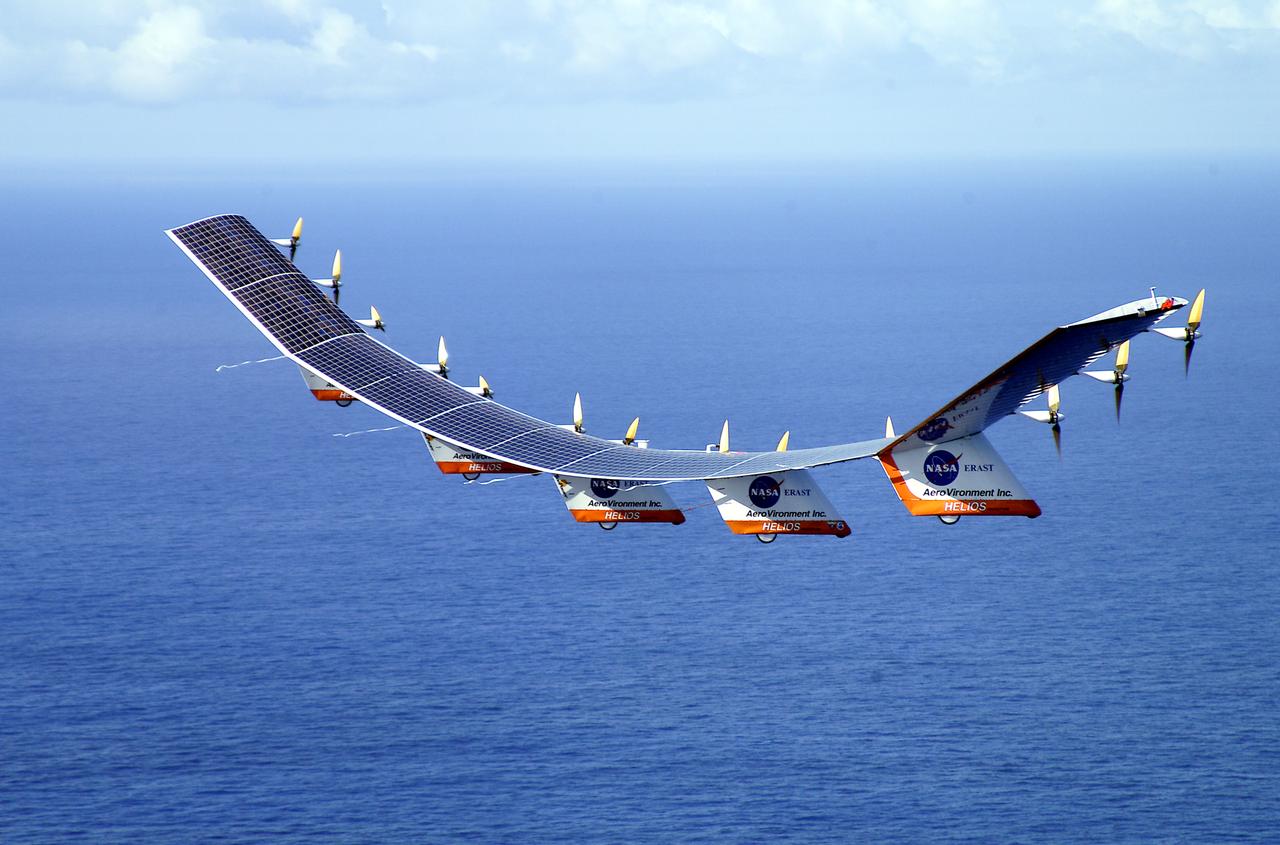
The solar-electric Helios Prototype flying wing is shown over the Pacific Ocean during its first test flight on solar power from the U.S. Navy's Pacific Missile Range Facility on Kauai, Hawaii, July 14, 2001. The 18-hour flight was a functional checkout of the aircraft's systems and performance in preparation for an attempt to reach sustained flight at 100,000 feet altitude later this summer.
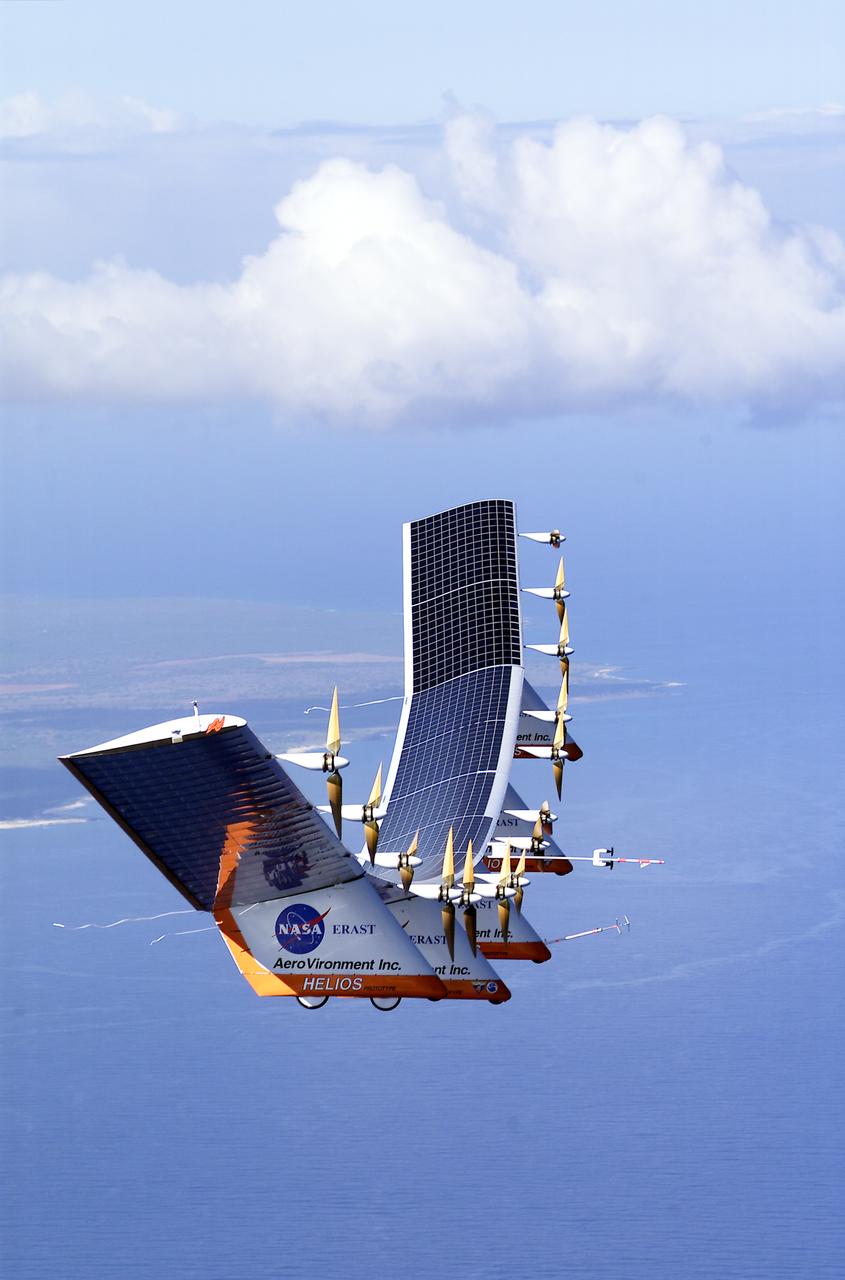
The solar-electric Helios Prototype flying wing is shown near the Hawaiian island of Niihau during its first test flight on solar power from the U.S. Navy's Pacific Missile Range Facility on Kauai, Hawaii, July 14, 2001. The 18-hour flight was a functional checkout of the aircraft's systems and performance in preparation for an attempt to reach sustained flight at 100,000 feet altitude later this summer.
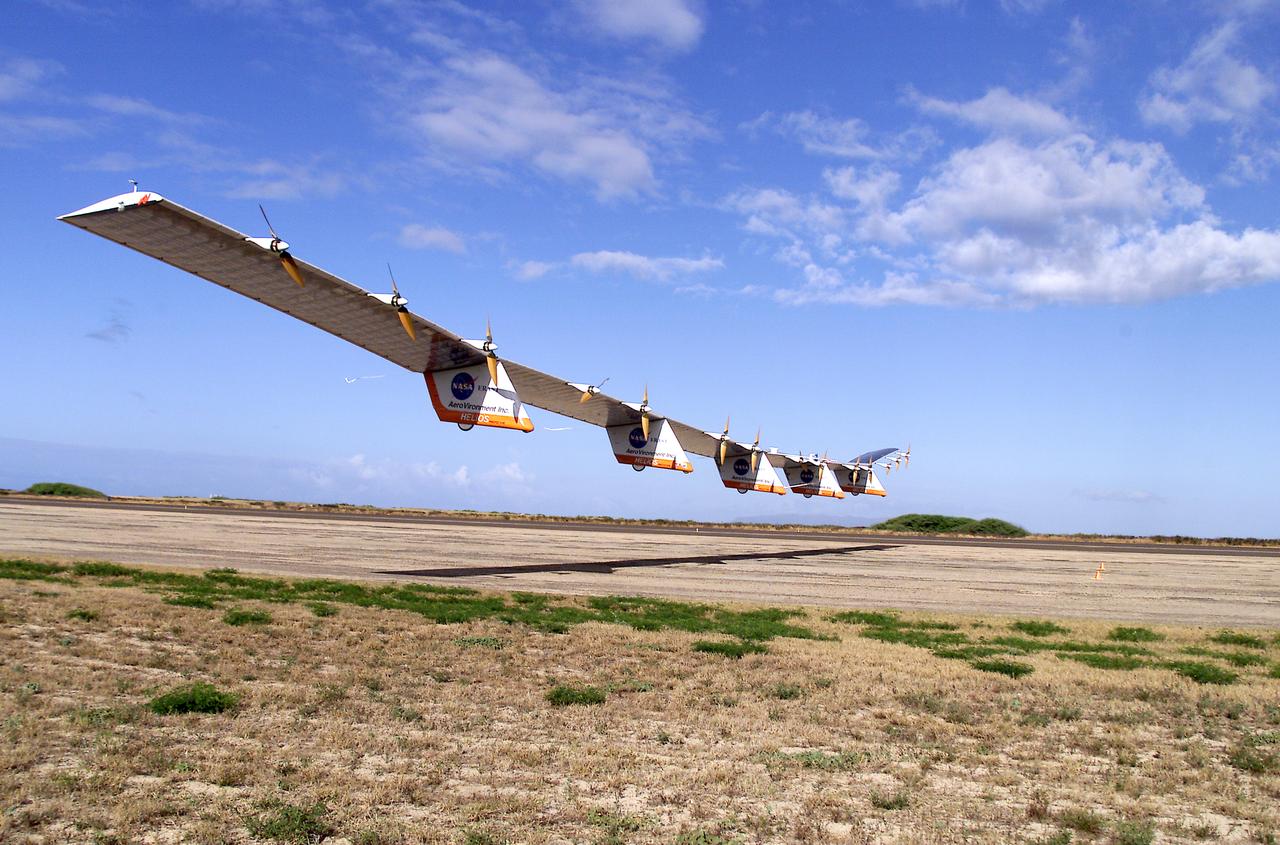
The solar-electric Helios Prototype flying wing is shown moments after takeoff, beginning its first test flight on solar power from the U.S. Navy's Pacific Missile Range Facility on Kauai, Hawaii, July 14, 2001. The 18-hour flight was a functional checkout of the aircraft's systems and performance in preparation for an attempt to reach sustained flight at 100,000 feet altitude later this summer.
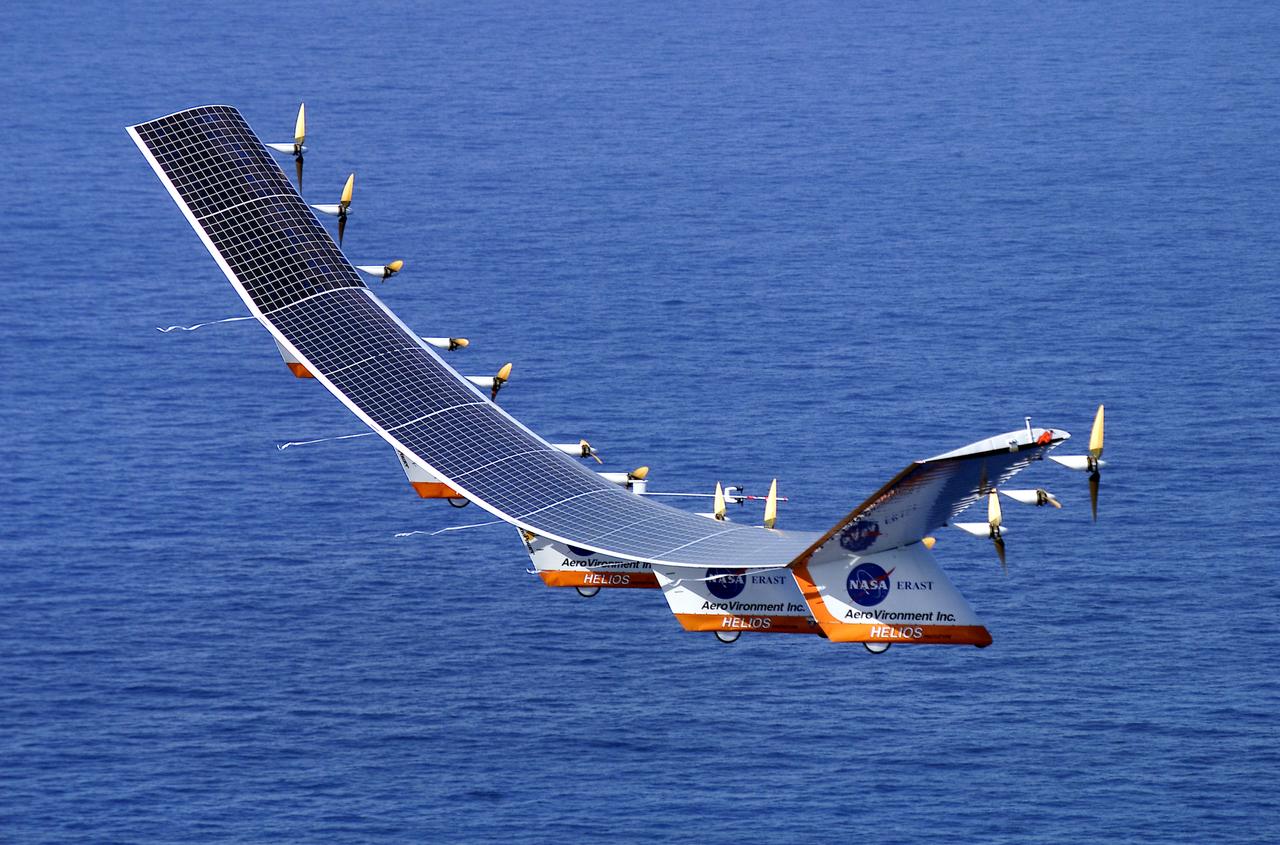
The solar-electric Helios Prototype flying wing is shown over the Pacific Ocean during its first test flight on solar power from the U.S. Navy's Pacific Missile Range Facility on Kauai, Hawaii, July 14, 2001. The 18-hour flight was a functional checkout of the aircraft's systems and performance in preparation for an attempt to reach sustained flight at 100,000 feet altitude later this summer.
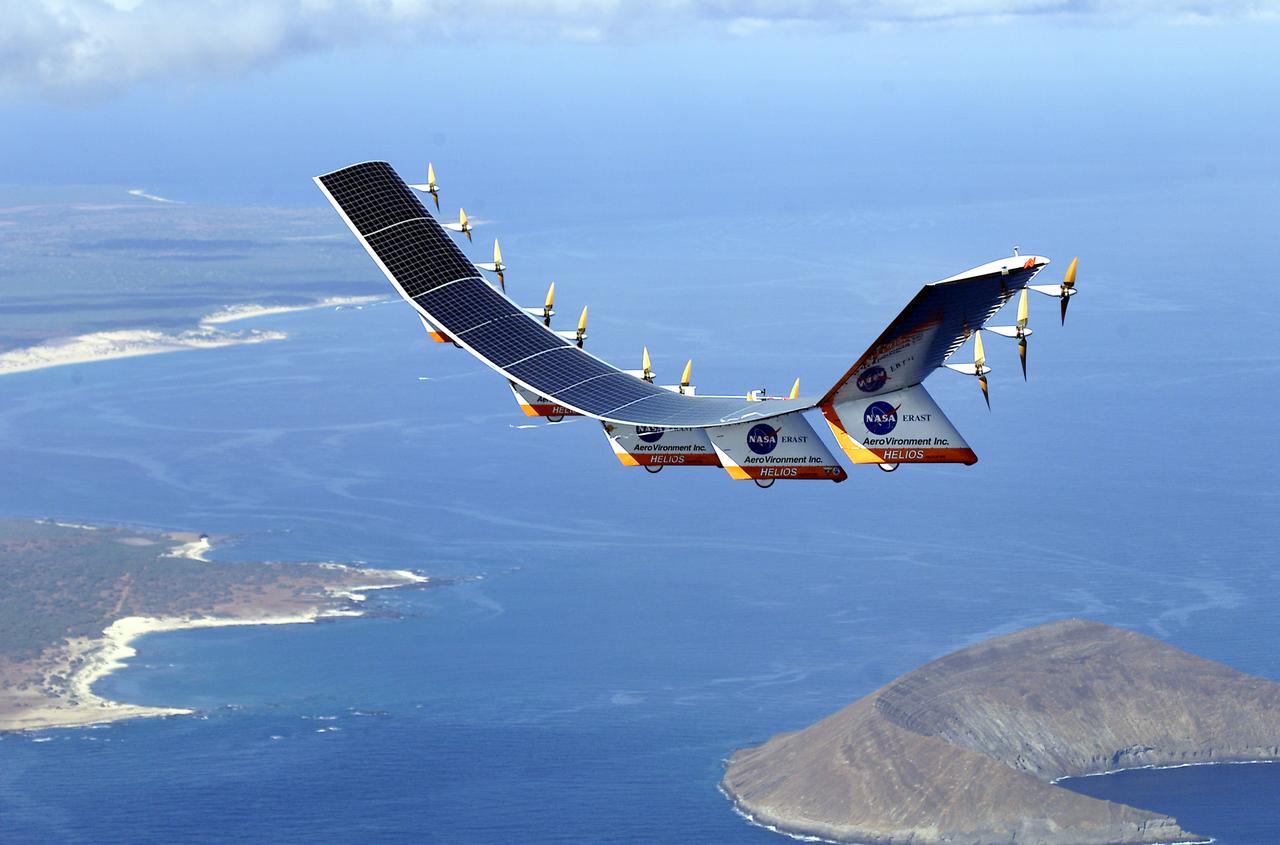
The solar-electric Helios Prototype flying wing is shown near the Hawaiian islands of Niihau and Lehua during its first test flight on solar power from the U.S. Navy's Pacific Missile Range Facility on Kauai, Hawaii, July 14, 2001. The 18-hour flight was a functional checkout of the aircraft's systems and performance in preparation for an attempt to reach sustained flight at 100,000 feet altitude later this summer.
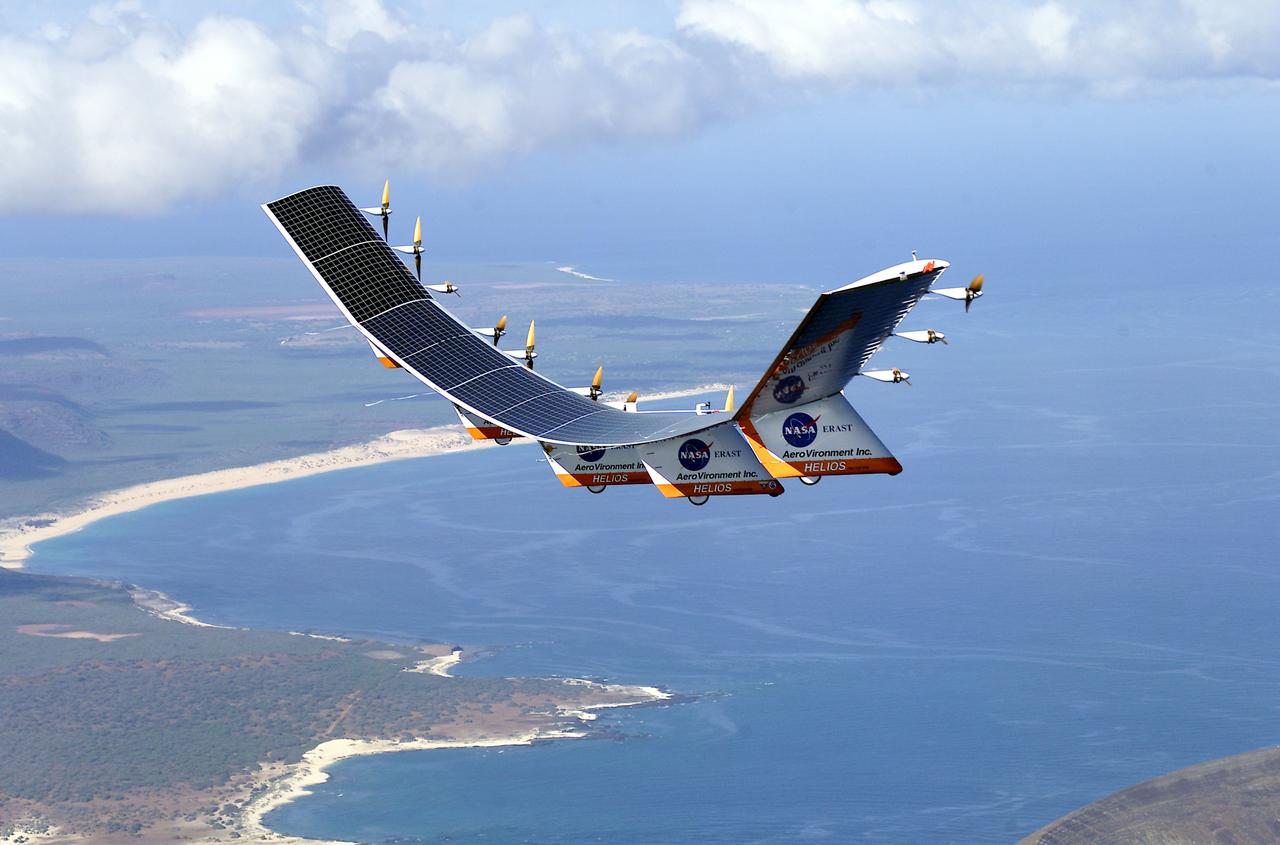
The solar-electric Helios Prototype flying wing is shown near the Hawaiian islands of Niihau and Lehua during its first test flight on solar power from the U.S. Navy's Pacific Missile Range Facility on Kauai, Hawaii, July 14, 2001. The 18-hour flight was a functional checkout of the aircraft's systems and performance in preparation for an attempt to reach sustained flight at 100,000 feet altitude later this summer.
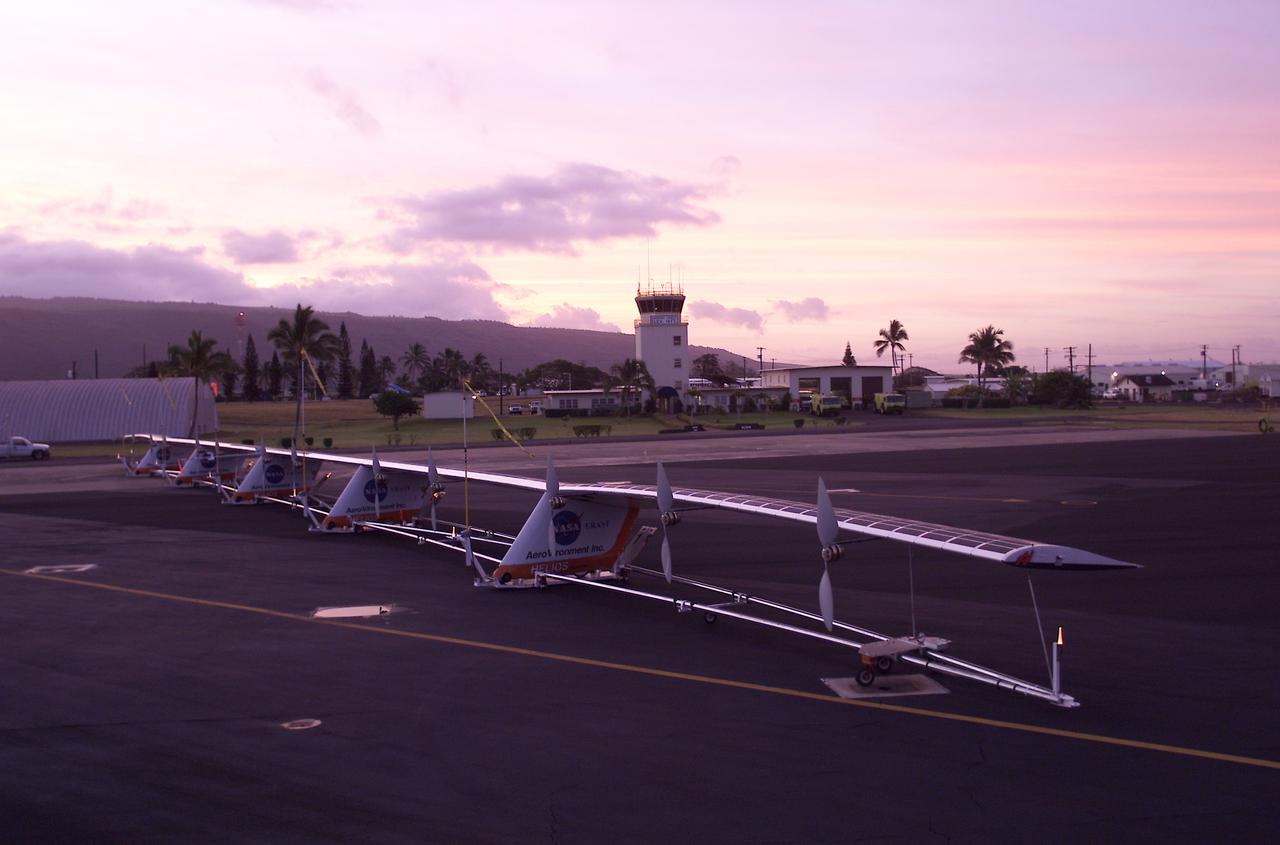
The 247-foot length of the Helios prototype wing is in evidence as the high-altitude, solar-powered flying wing rests on its ground dolly during pre-flight tests at the U.S. Navy's Pacific Missile Range Facility on Kaua'i, Hawaii.
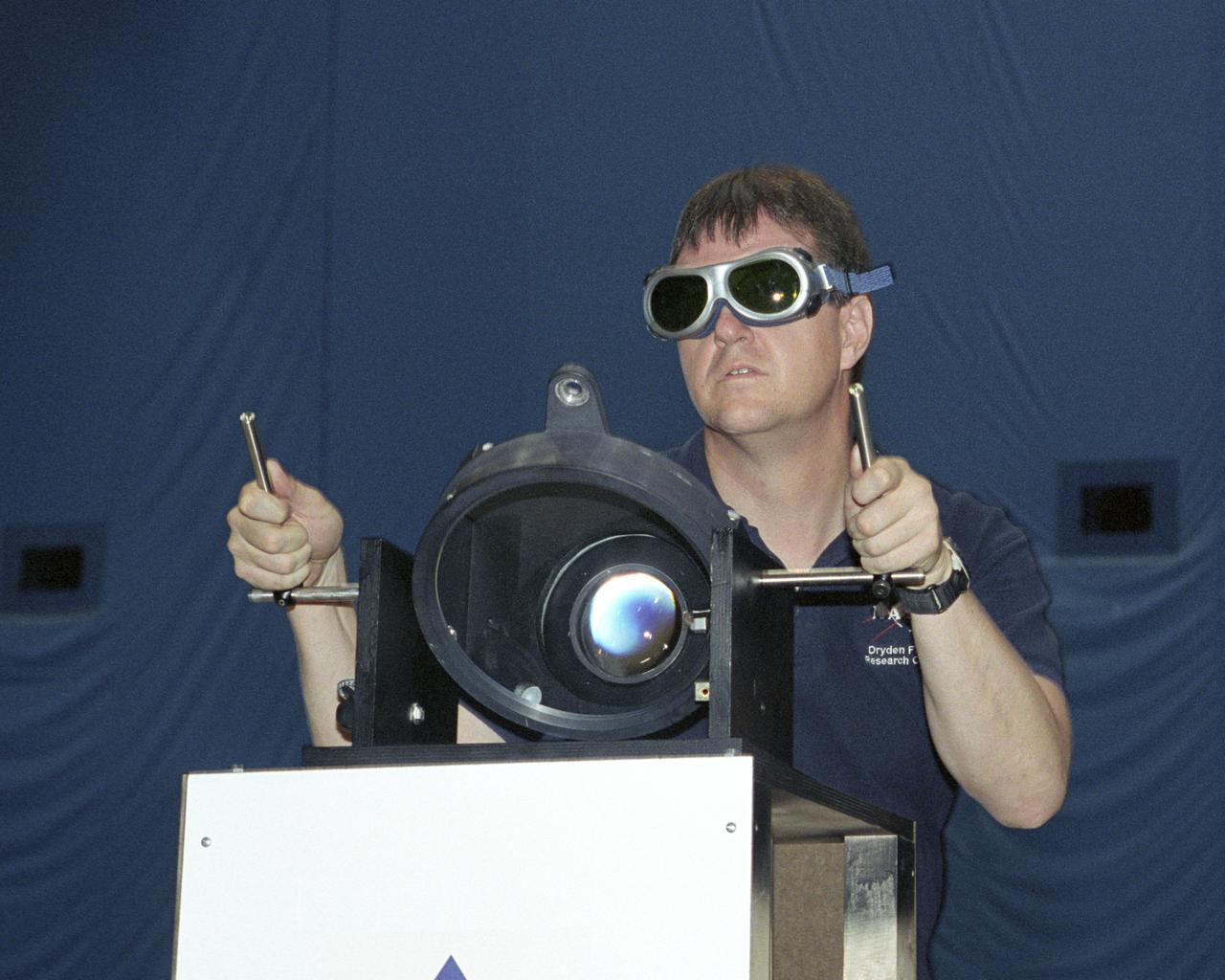
NASA Dryden project engineer Dave Bushman carefully aims the optics of a laser device at a solar cell panel on a model aircraft during the first flight demonstration of an aircraft powered by laser light.
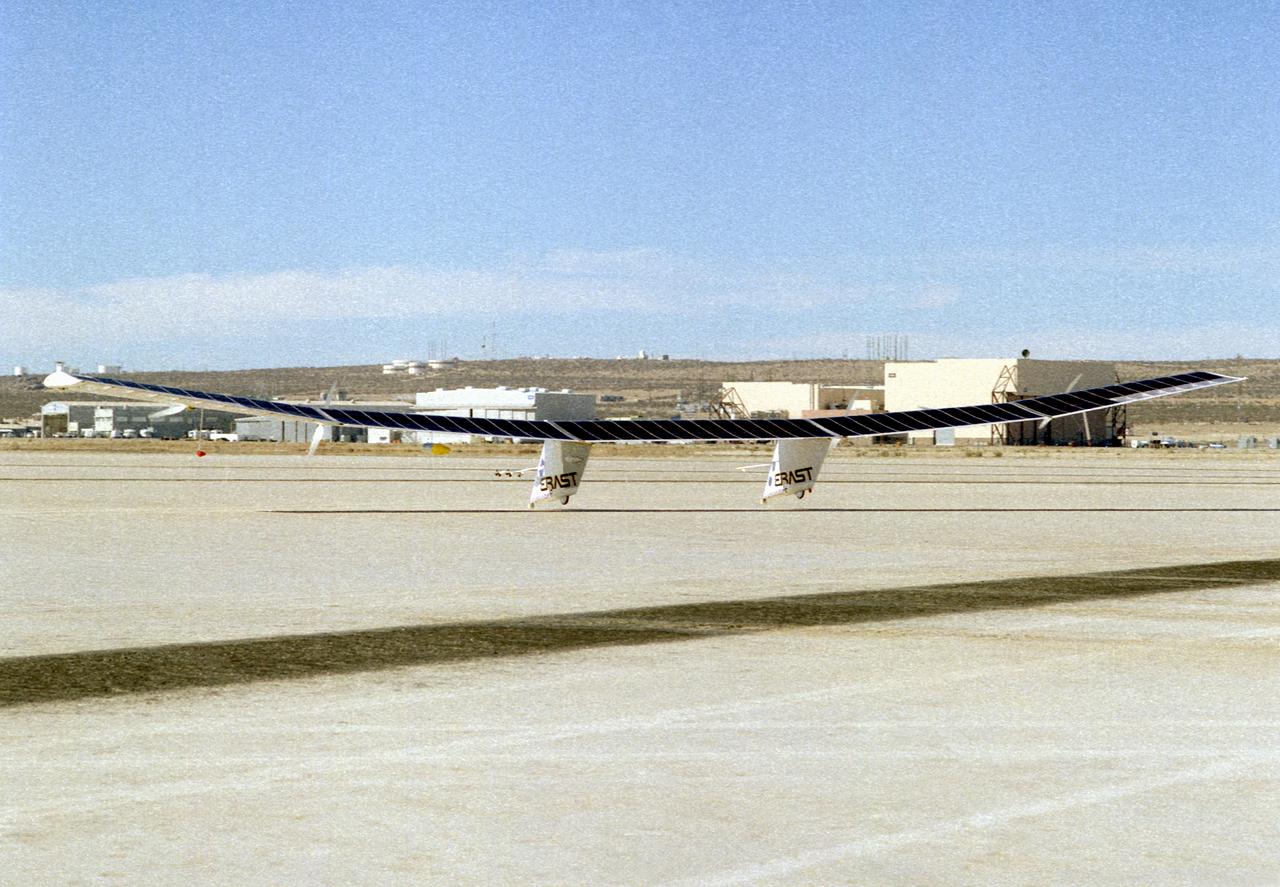
The Pathfinder research aircraft's solar cell arrays are prominently displayed as it touches down on the bed of Rogers Dry Lake at the Dryden Flight Research Center, Edwards, California, following a test flight. The solar arrays covered more than 75 percent of Pathfinder's upper wing surface, and provided electricity to power its six electric motors, flight controls, communications links and a host of scientific sensors.
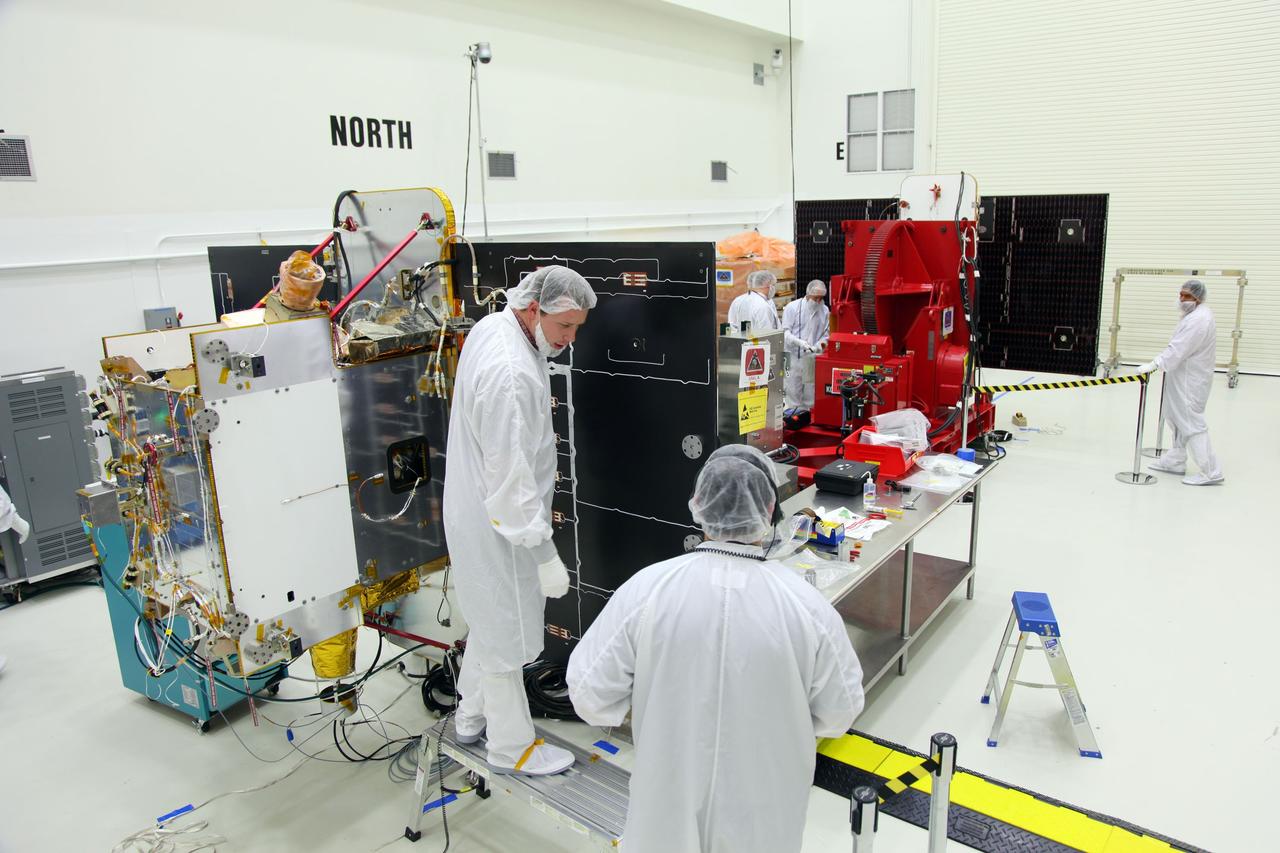
CAPE CANAVERAL, Fla. -- In the Astrotech payload processing facility in Titusville, Fla., technicians prepare a solar panel for attachment to NASA's Gravity Recovery and Interior Laboratory, or GRAIL. The United Launch Alliance Delta II rocket that will carry the twin GRAIL spacecraft into lunar orbit is fully stacked at NASA's Space Launch Complex 17B and launch is scheduled for Sept. 8. The GRAIL mission is a part of NASA's Discovery Program. GRAIL will fly twin spacecraft in tandem orbits around the moon for several months to measure its gravity field. The mission also will answer longstanding questions about Earth's moon and provide scientists a better understanding of how Earth and other rocky planets in the solar system formed. For more information, visit http://solarsystem.nasa.gov/grail. Photo credit: NASA/Frank Michaux
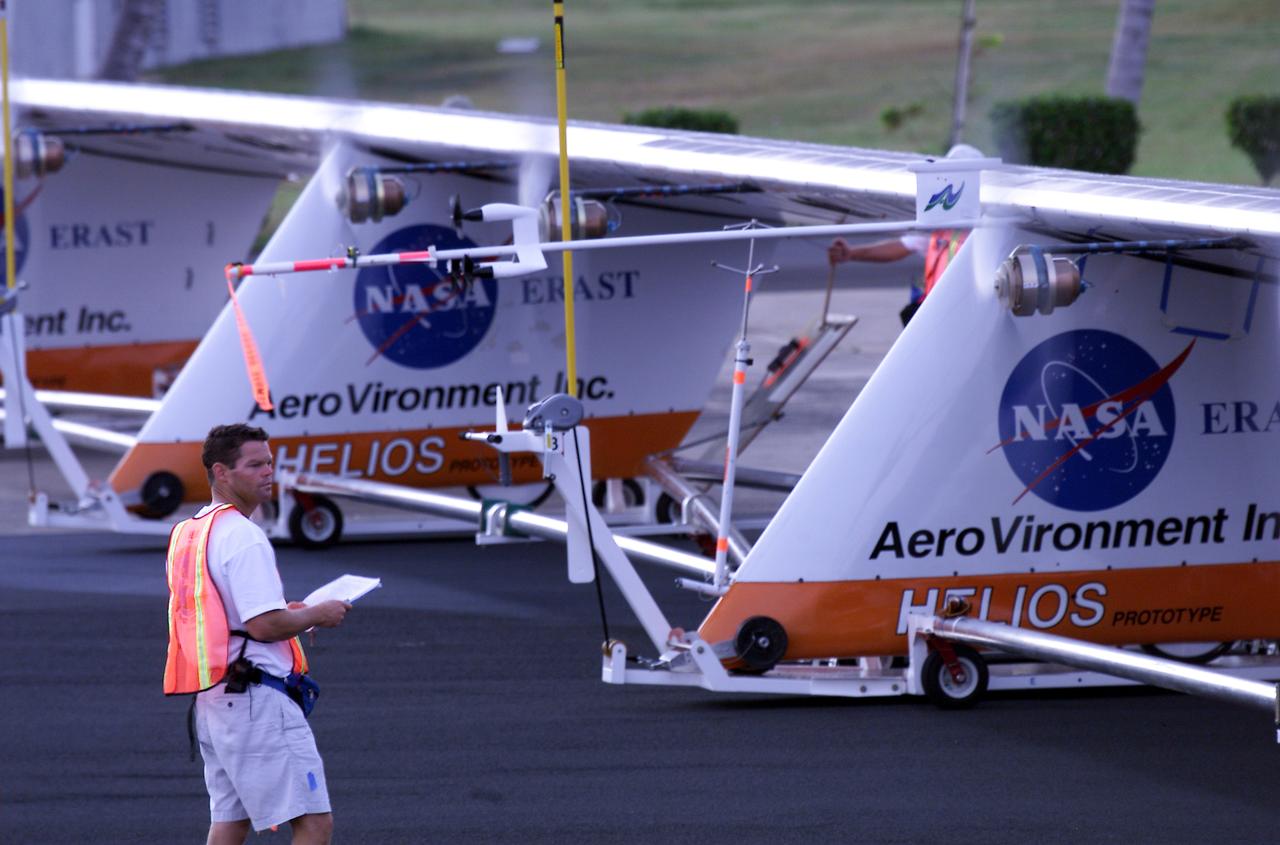
Helios Prototype crew chief Marshall MacCready of AeroVironment, Inc., carefully monitors motor runs during ground checkout of the solar-powered flying wing prior to its first flight from the U.S. Navy's Pacific Missile Range Facility on Kaua'i, Hawaii.
Juno is a solar-powered NASA spacecraft that spans the width of a basketball court and makes long, looping orbits around giant planet Jupiter
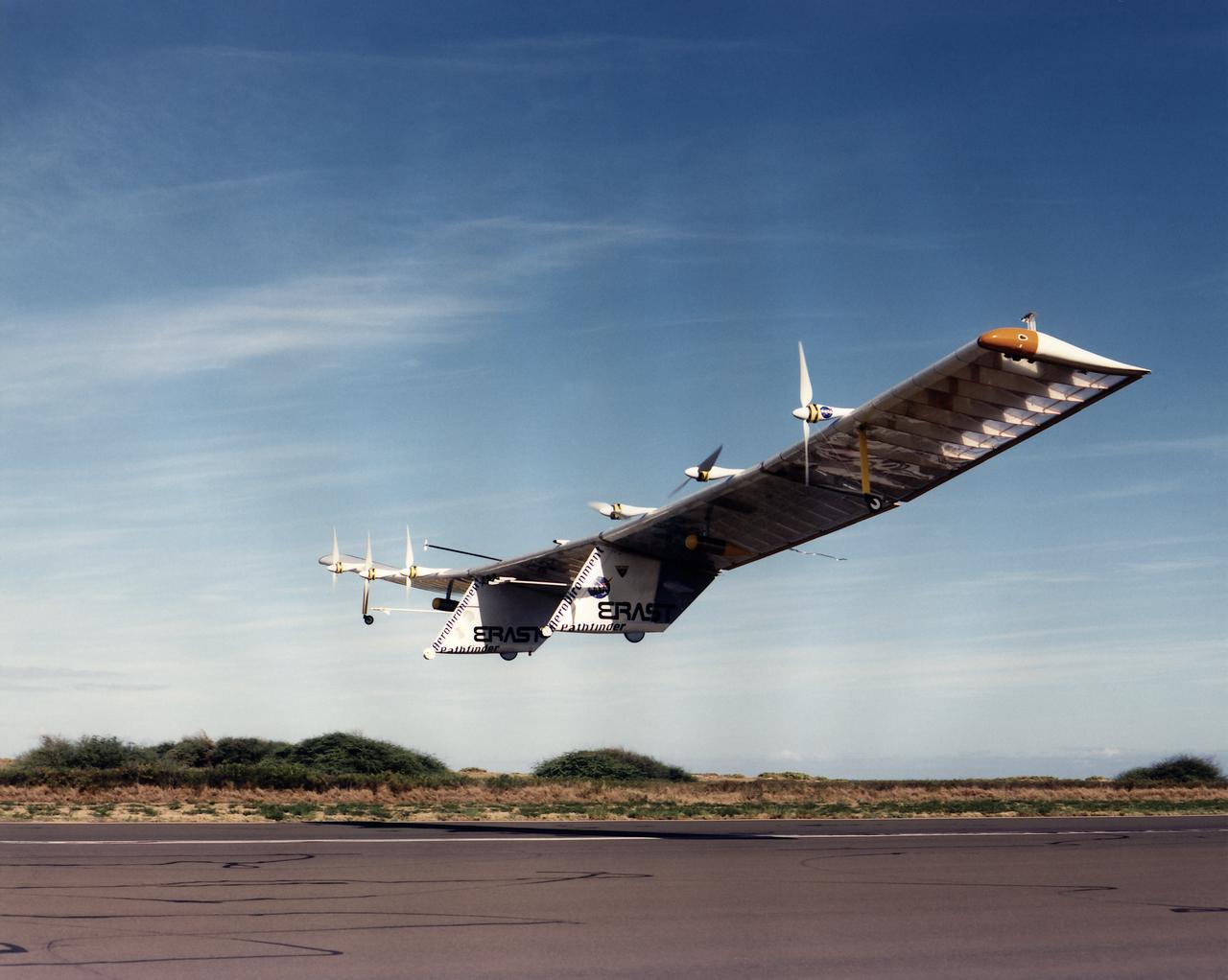
Pathfinder, NASA's solar-powered, remotely-piloted aircraft is shown while it was conducting a series of science flights to highlight the aircraft's science capabilities while collecting imagery of forest and coastal zone ecosystems on Kauai, Hawaii. The flights also tested two new scientific instruments, a high-spectral-resolution Digital Array Scanned Interferometer (DASI) and a high-spatial-resolution Airborne Real-Time Imaging System (ARTIS). The remote sensor payloads were designed by NASA's Ames Research Center, Moffett Field, California, to support NASA's Mission to Planet Earth science programs.
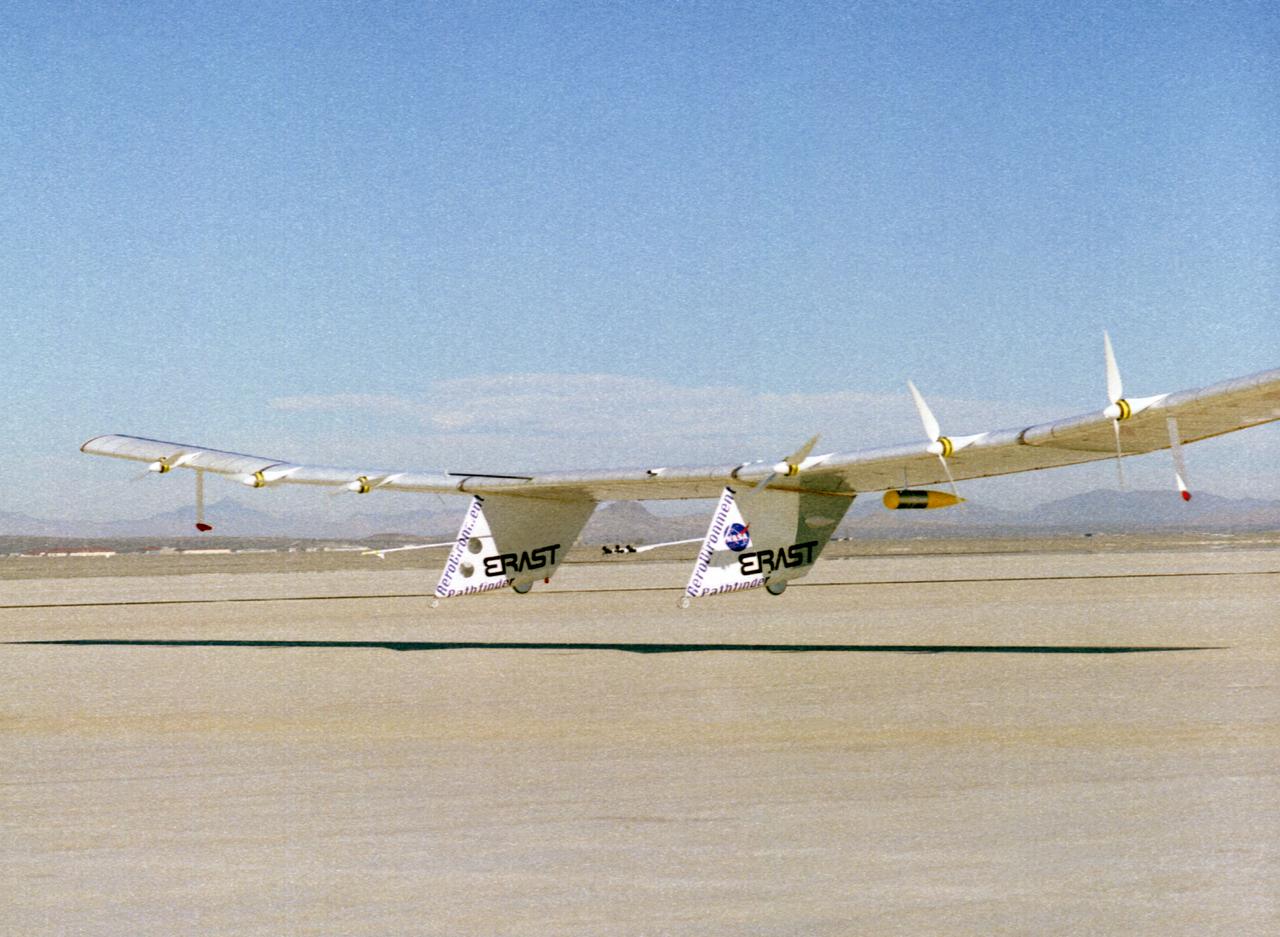
The Pathfinder solar-powered research aircraft settles in for landing on the bed of Rogers Dry Lake at the Dryden Flight Research Center, Edwards, California, after a successful test flight Nov. 19, 1996. The ultra-light craft flew a racetrack pattern at low altitudes over the flight test area for two hours while project engineers checked out various systems and sensors on the uninhabited aircraft. The Pathfinder was controlled by two pilots, one in a mobile control unit which followed the craft, the other in a stationary control station. Pathfinder, developed by AeroVironment, Inc., is one of several designs being evaluated under NASA's Environmental Research Aircraft and Sensor Technology (ERAST) program.

Six iROSA solar arrays in the planned configuration will augment the power drawn from the existing arrays on the International Space Station. Power channels shown are 1A, 2B, 3A, 3B, 4A, and 4B.
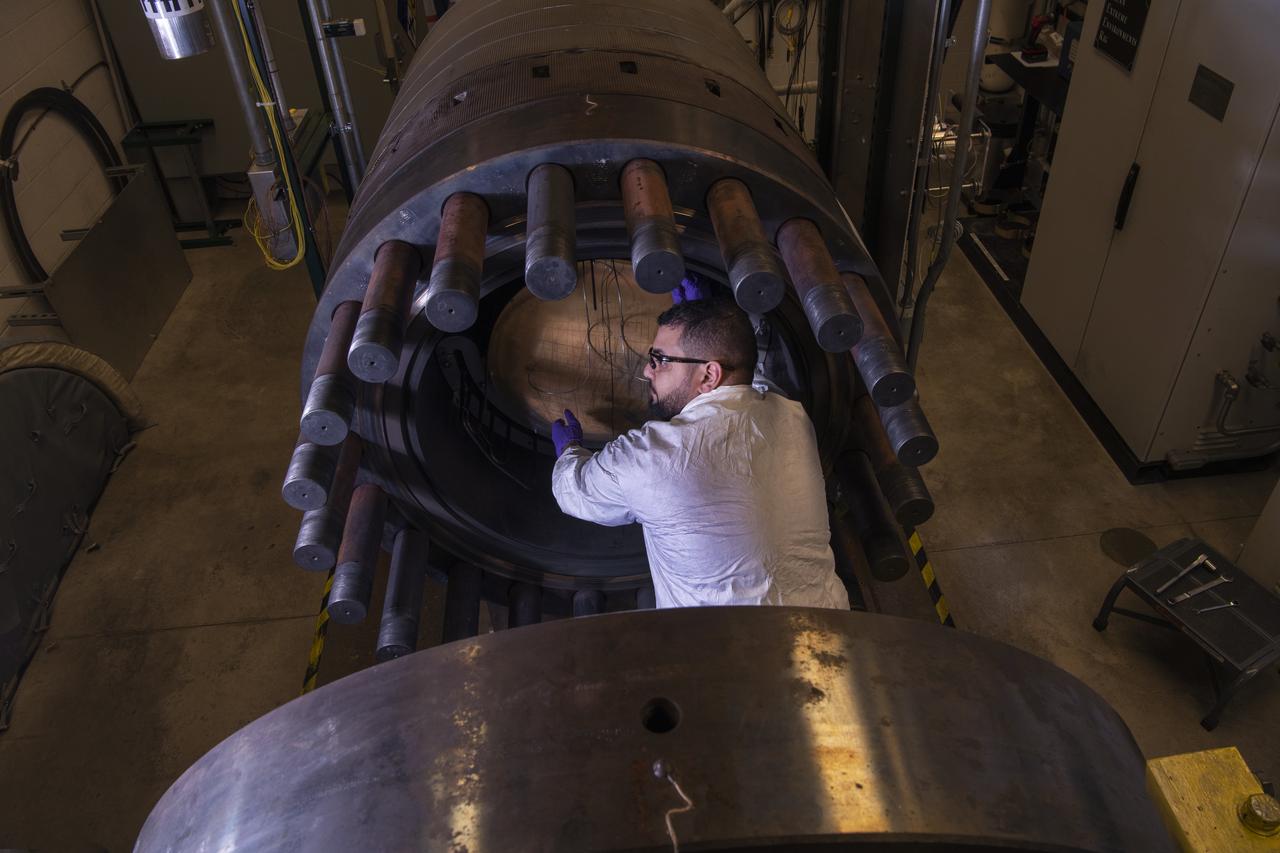
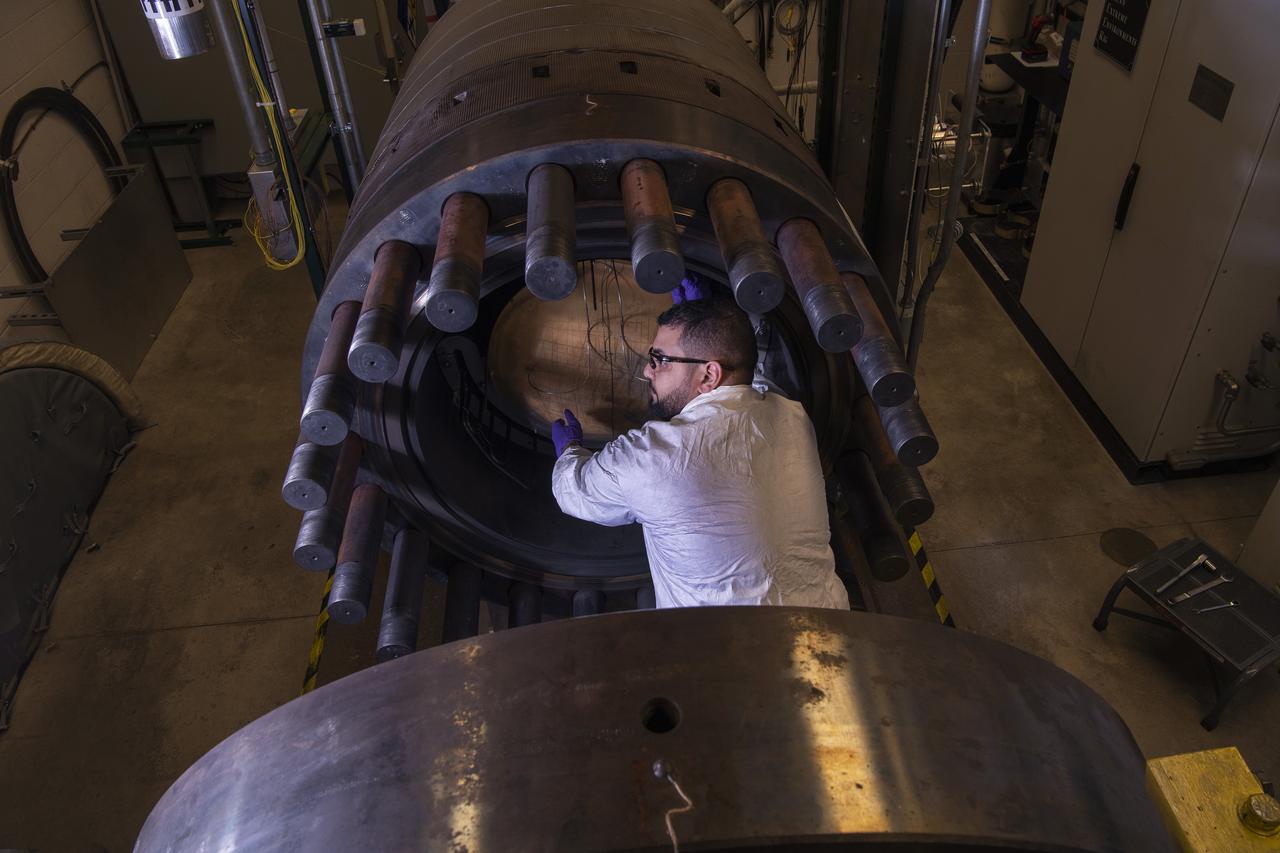
Juno testing in Glenn Extreme Environments Rig, GEER Laboratory. Juno is a solar-powered NASA spacecraft that spans the width of a basketball court and makes long, looping orbits around giant planet Jupiter
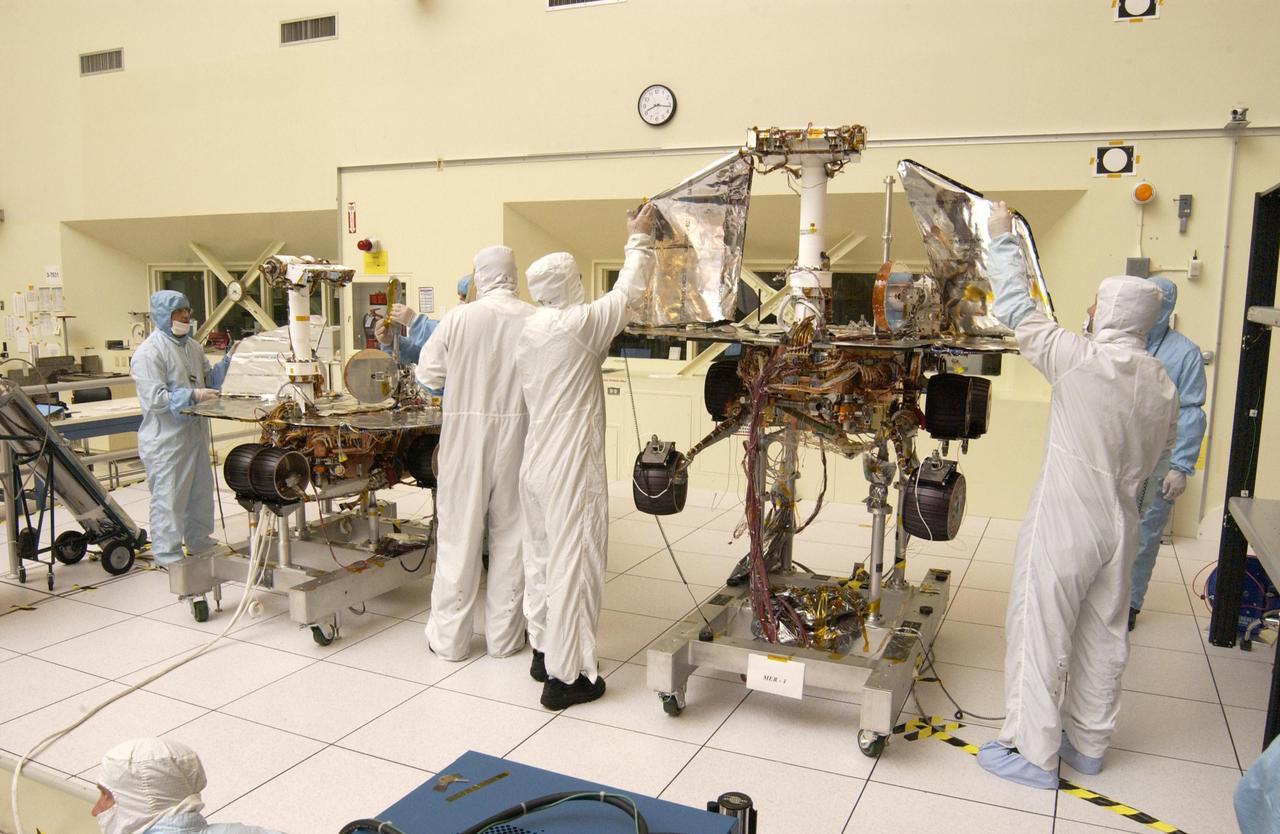
JPL engineers hand-deploying the solar arrays that provide the electrical power on NASA Mars Exploration Rover 1.
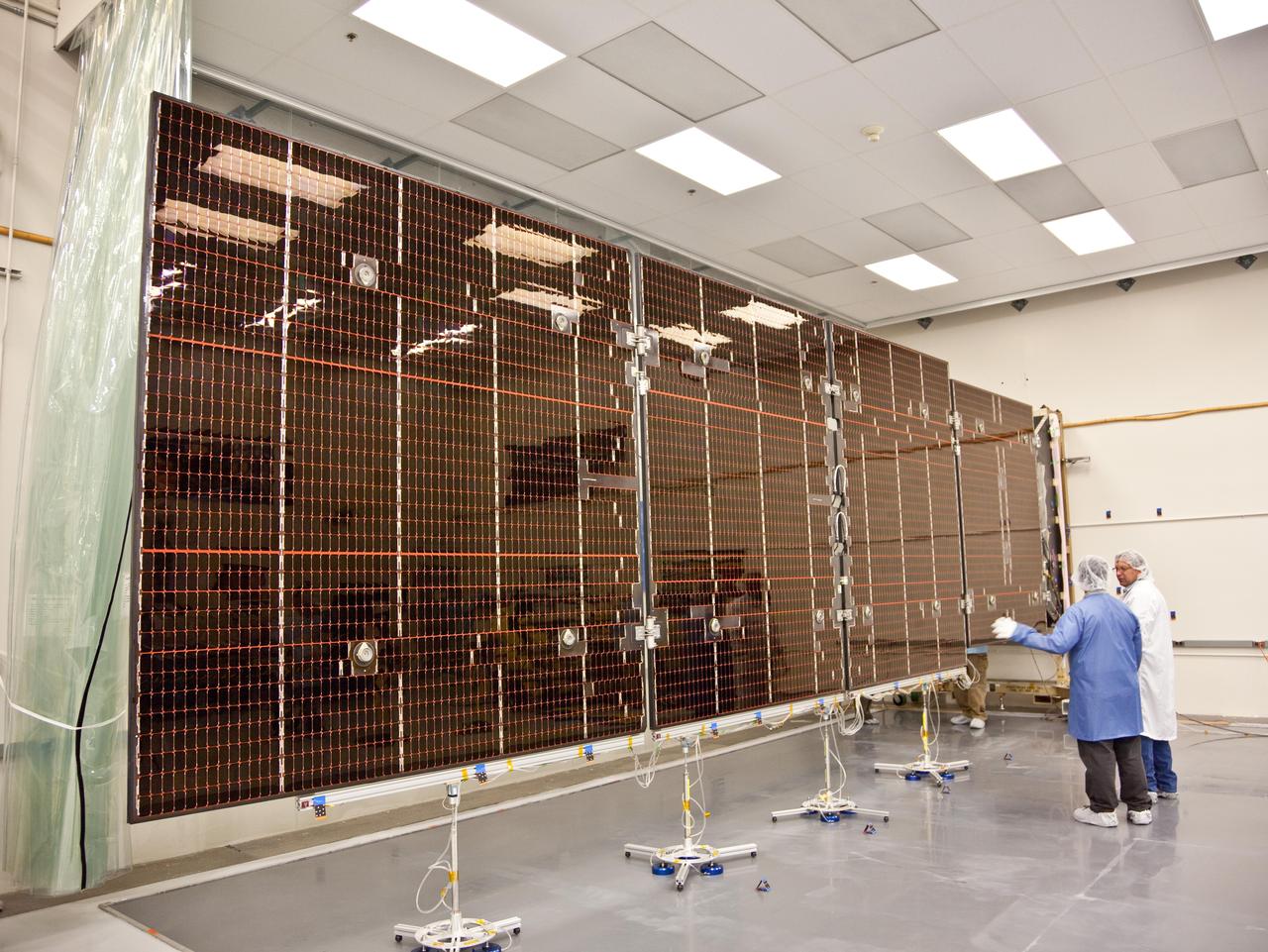
Technicians test the deployment of one of the three massive solar arrays that power NASA Juno spacecraft.
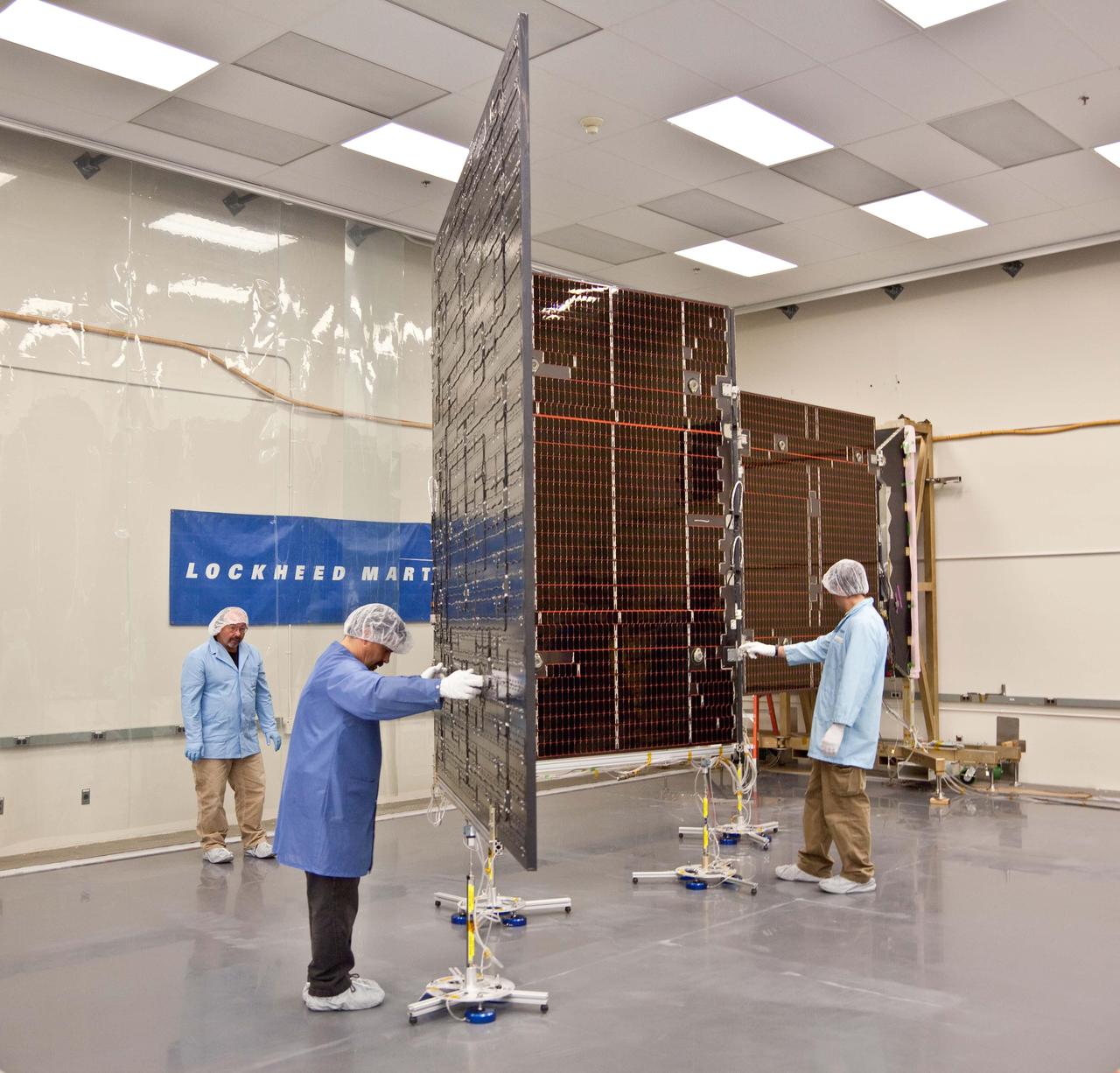
Technicians test the deployment of one of the three massive solar arrays that power NASA Juno spacecraft.
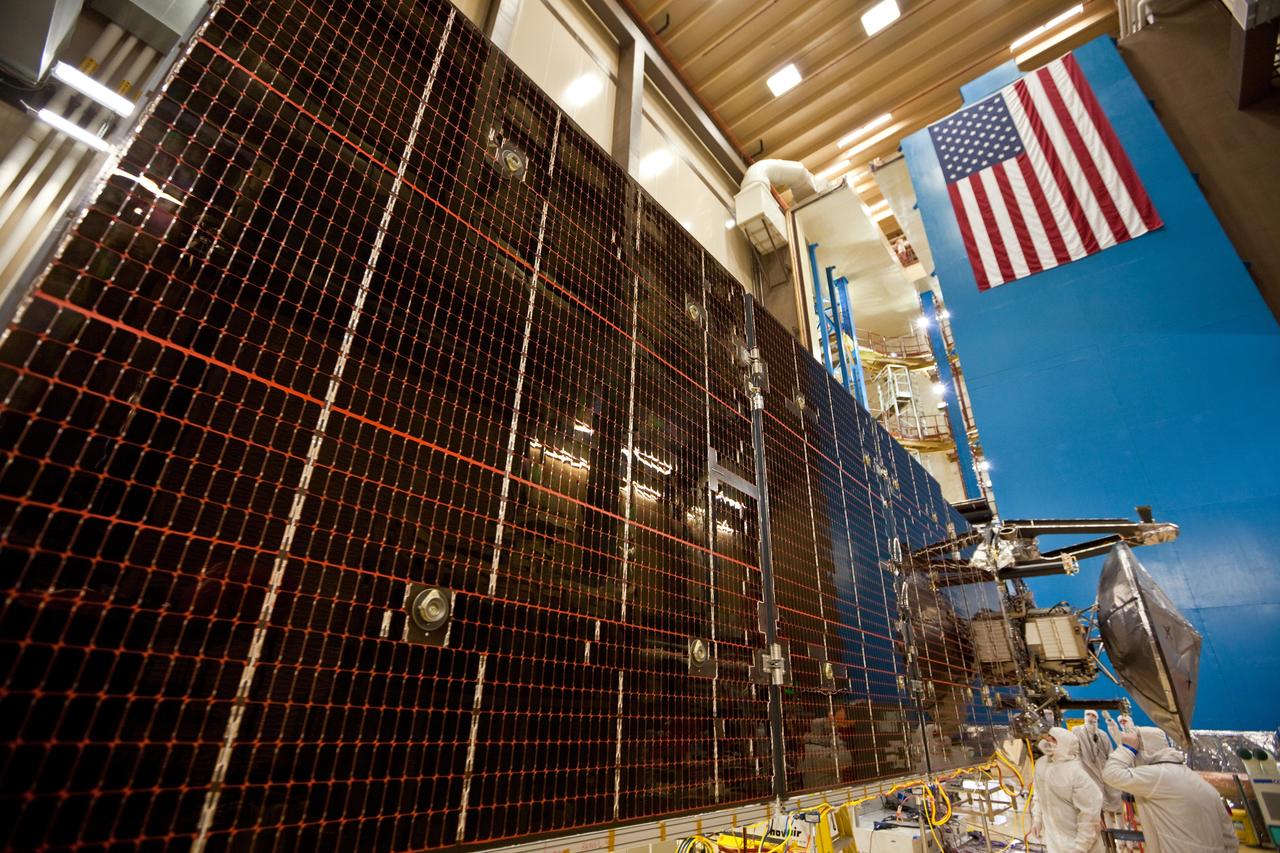
Technicians test the deployment of one of the three massive solar arrays that power NASA Juno spacecraft.
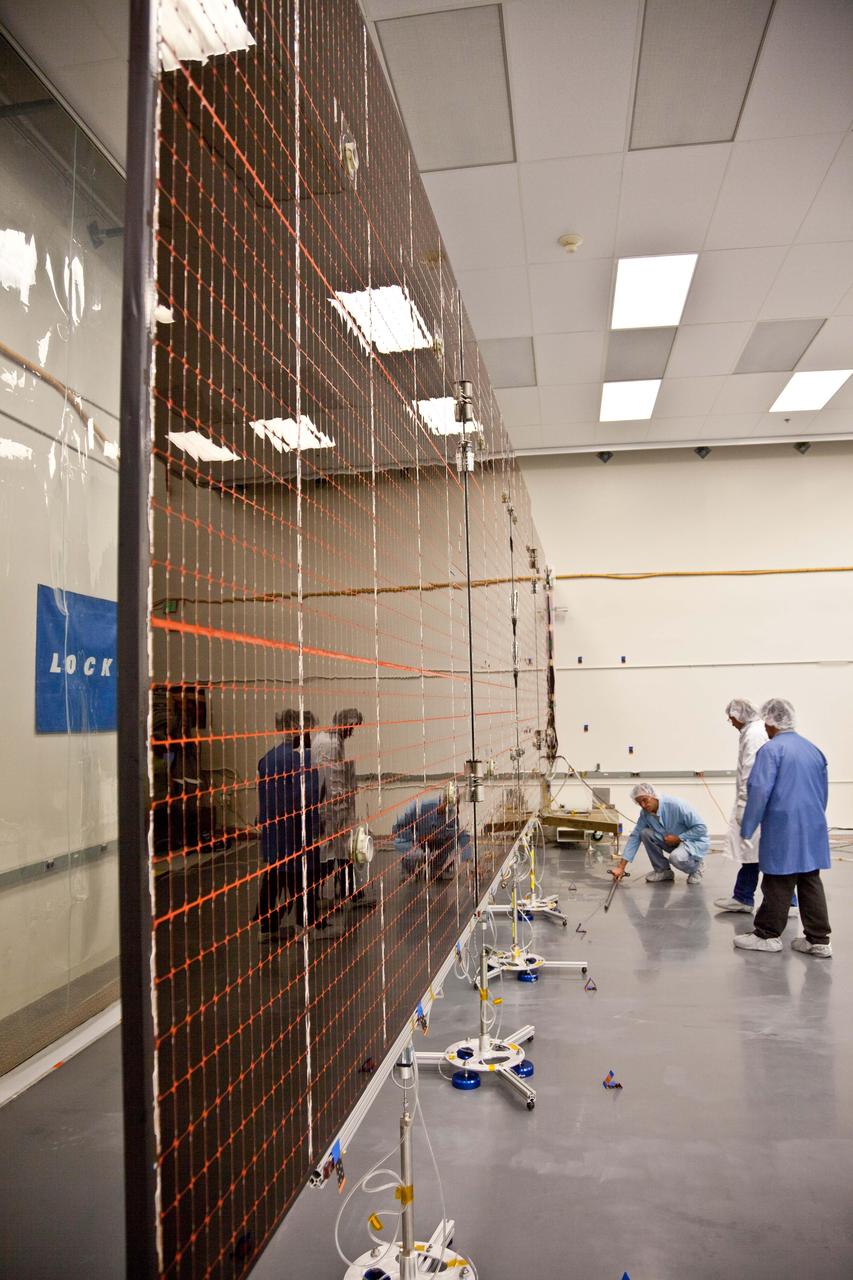
Technicians test the deployment of one of the three massive solar arrays that power NASA Juno spacecraft.

Using powerful ground-and space-based NASA telescopes, scientists have obtained a moving look at some of the wildest, weirdest weather in the solar system.
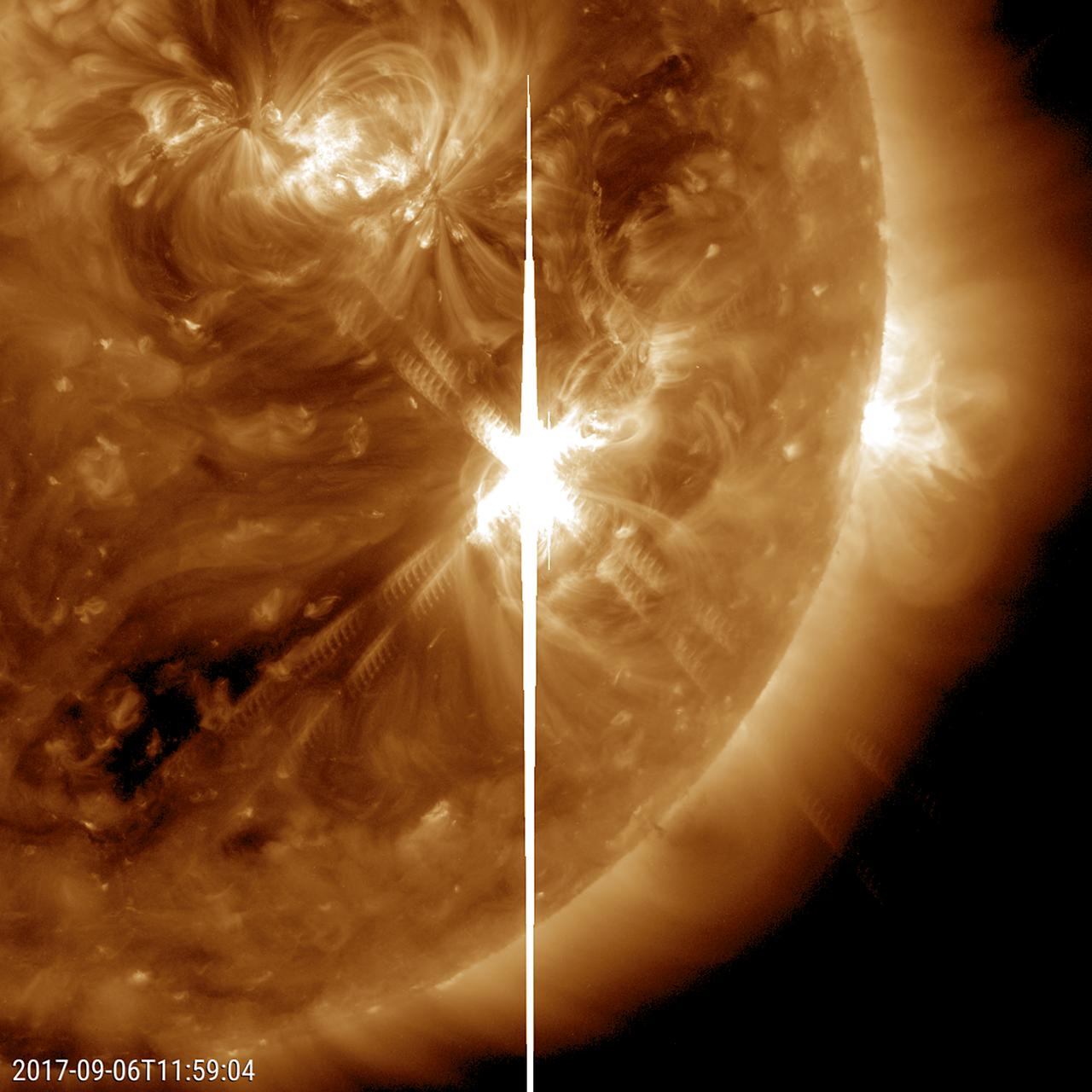
A large sunspot was the source of a powerful solar flare (an X 9.3) and a coronal mass ejection (Sept. 6, 2017). The flare was the largest solar flare of the last decade. For one thing, it created a strong shortwave radio blackout over Europe, Africa and the Atlantic Ocean. Sunspot 2673 has been also the source of several other smaller to medium-sized solar flares over the past few days. Data from the SOHO spacecraft shows the large cloud of particles blasting into space just after the flare. Note: the bright vertical line and the other rays with barred lines are aberrations in our instruments caused by the bright flash of the flare. https://photojournal.jpl.nasa.gov/catalog/PIA21949
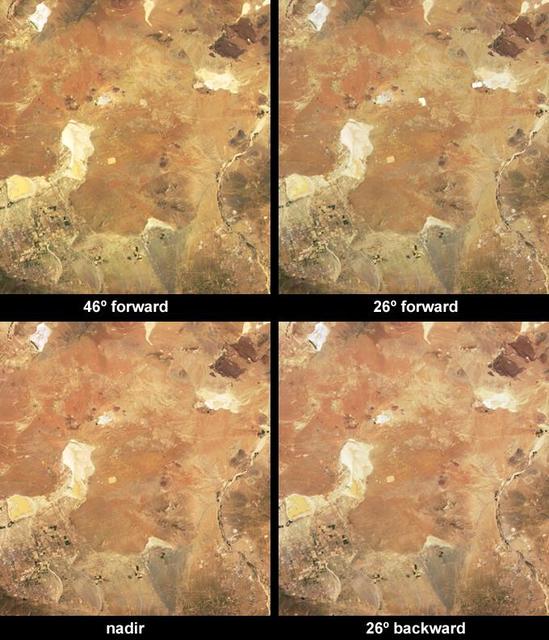
These images, from 8 April 2003 show that depending upon the position of the Sun, the solar power stations in California Mohave Desert can reflect solar energy from their large, mirror-like surfaces directly toward one of NASA Terra cameras.
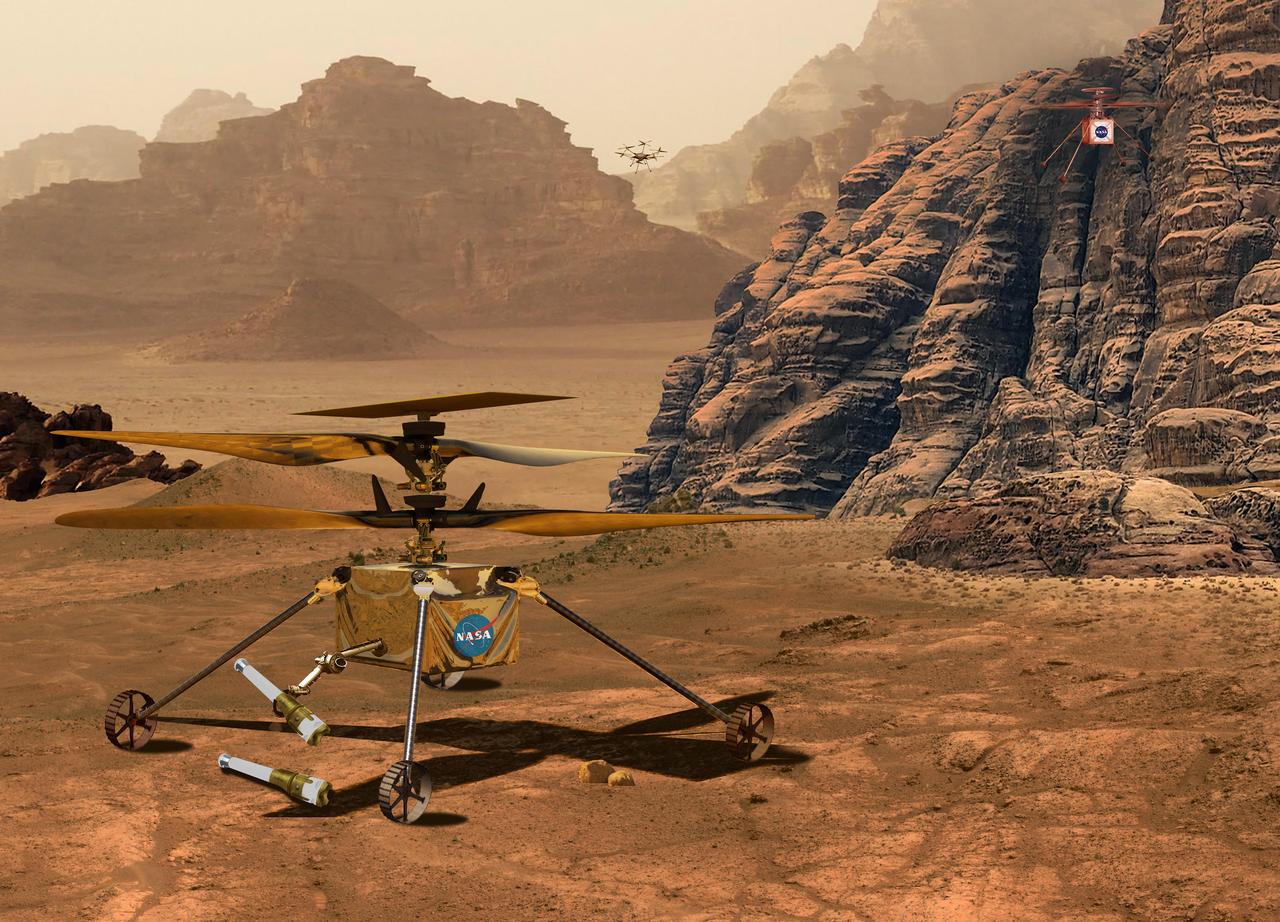
This illustration depicts three different of models of NASA's solar-powered Mars helicopter. In the upper right is the Ingenuity Mars Helicopter, currently operating at Jezero Crater. Depicted in the foreground is one of two Sample Recovery Helicopters slated to fly to Mars as part of the Mars Sample Return Campaign. NASA is developing the Sample Recovery Helicopters to serve as backups to the agency's Perseverance rover in transporting sample tubes to the Sample Return Lander. In the upper center of image is the Mars Science Helicopter concept. A proposed follow-on to Ingenuity, the six-rotor Mars Science Helicopter could be used during future Mars missions to serve as an aerial scout and carry between 4.5 and 11 pounds (2 to 5 kilograms) of payload, including science instruments, to study terrain that rovers can't reach. https://photojournal.jpl.nasa.gov/catalog/PIA25338
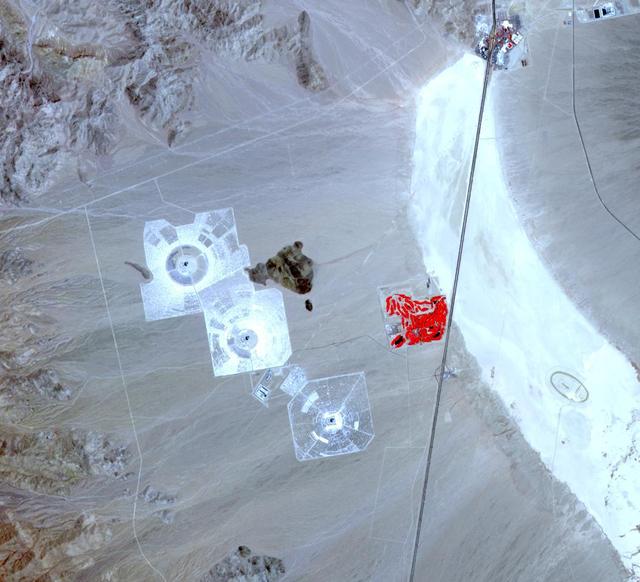
On May 30, 2013, NASA Terra spacecraft acquired this image of the largest solar plant of its kind in the world started producing power in southern California Mojave Desert near the Nevada border.

This image shows Loki, the most powerful volcano in the solar system, which has been constantly active on Jupiter moon Io. NASA Galileo spacecraft took these images during its approach to Io on October 10, 1999.
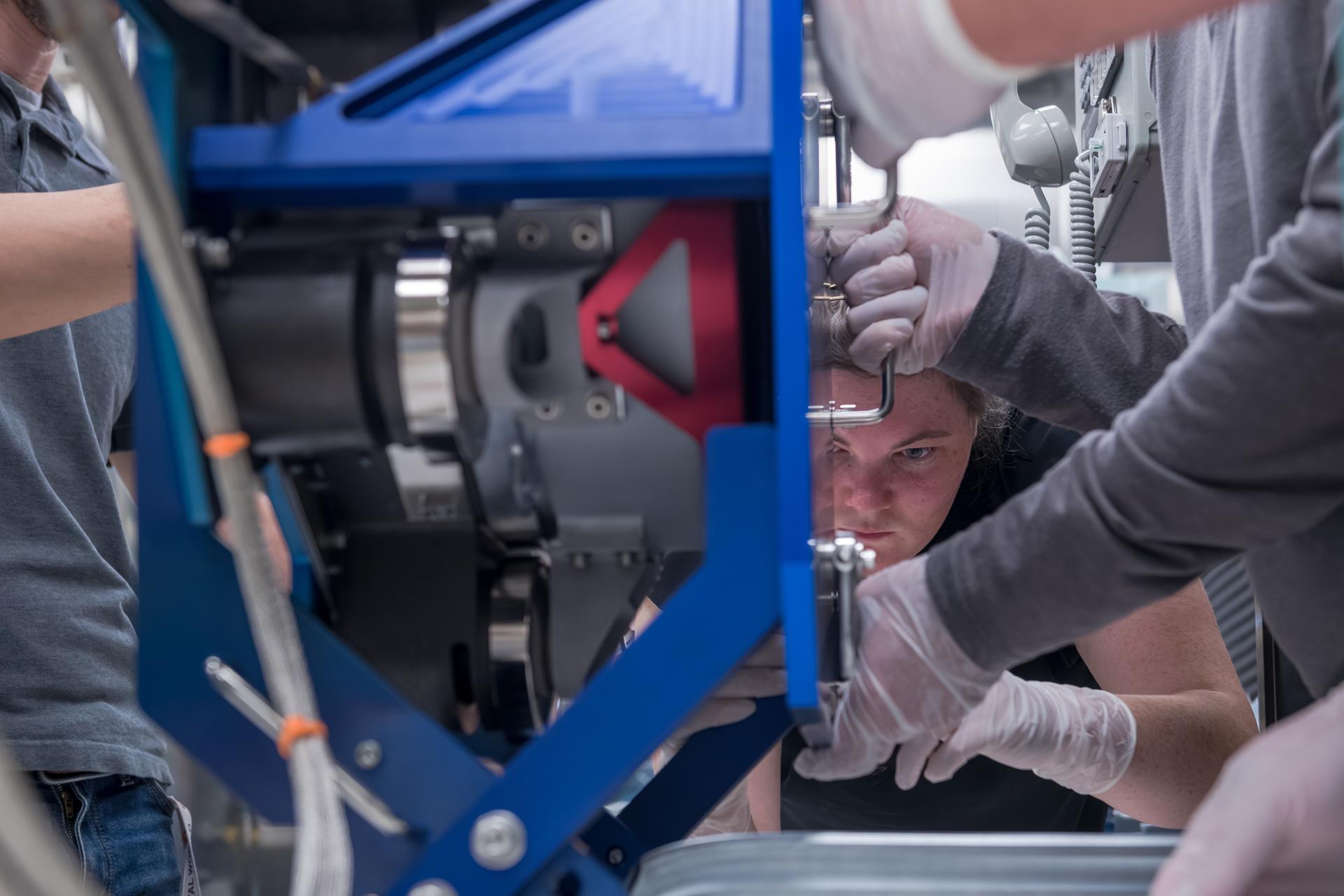
Engineers at NASA’s Glenn Research Center in Cleveland prepare the third and final Advanced Electric Propulsion System (AEPS) thruster for acceptance testing. Following successful testing, the thruster was delivered to Lanteris Space Systems in Palo Alto, California, for installation on the primary structure Gateway’s Power and Propulsion Element. Credit: NASA
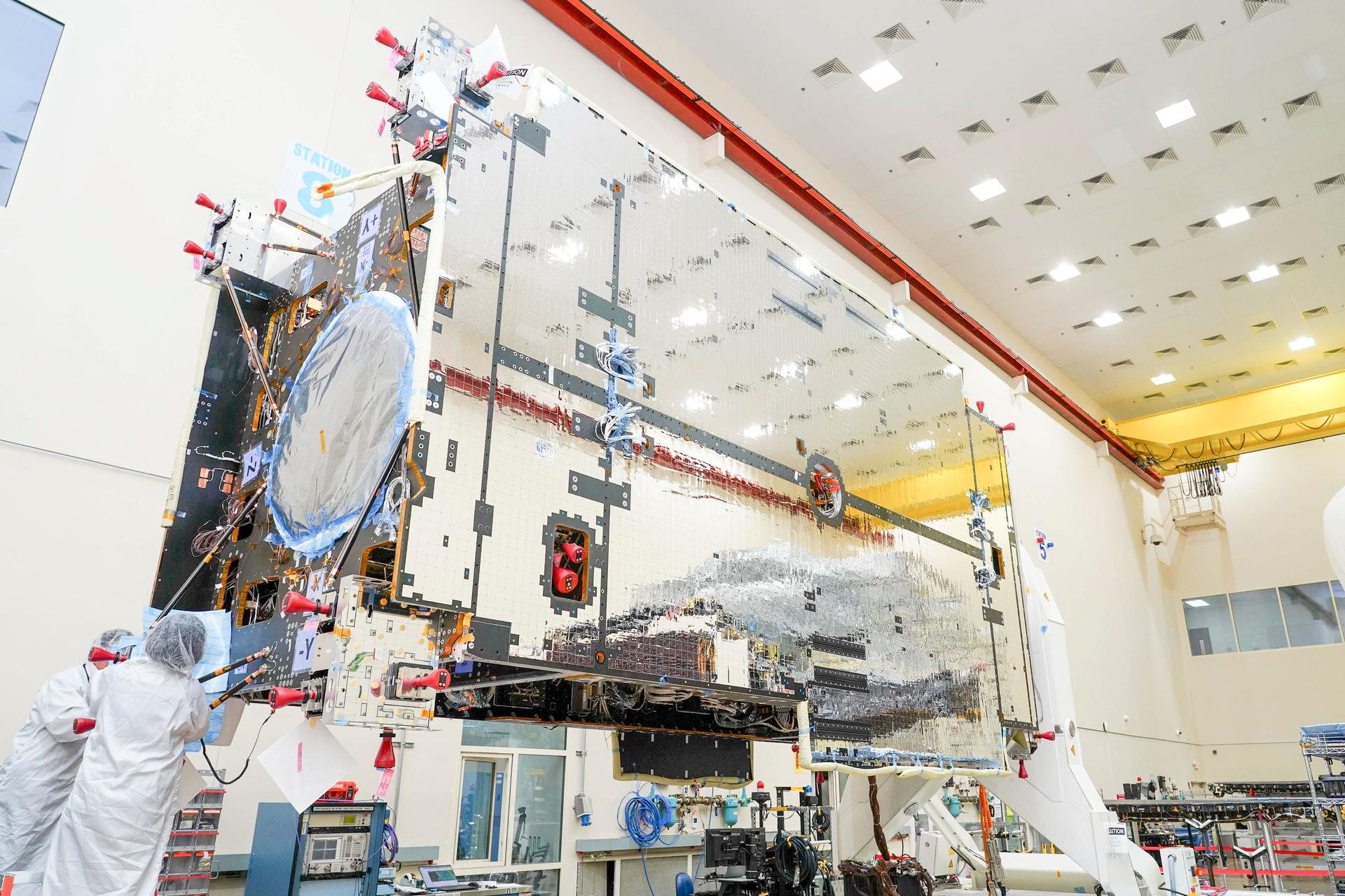
The primary structure of Gateway’s Power and Propulsion Element (PPE) undergoing assembly, integration, and testing at Lanteris Space Systems in Palo Alto, California, on September 29, 2025. Credit: Lanteris Space Systems
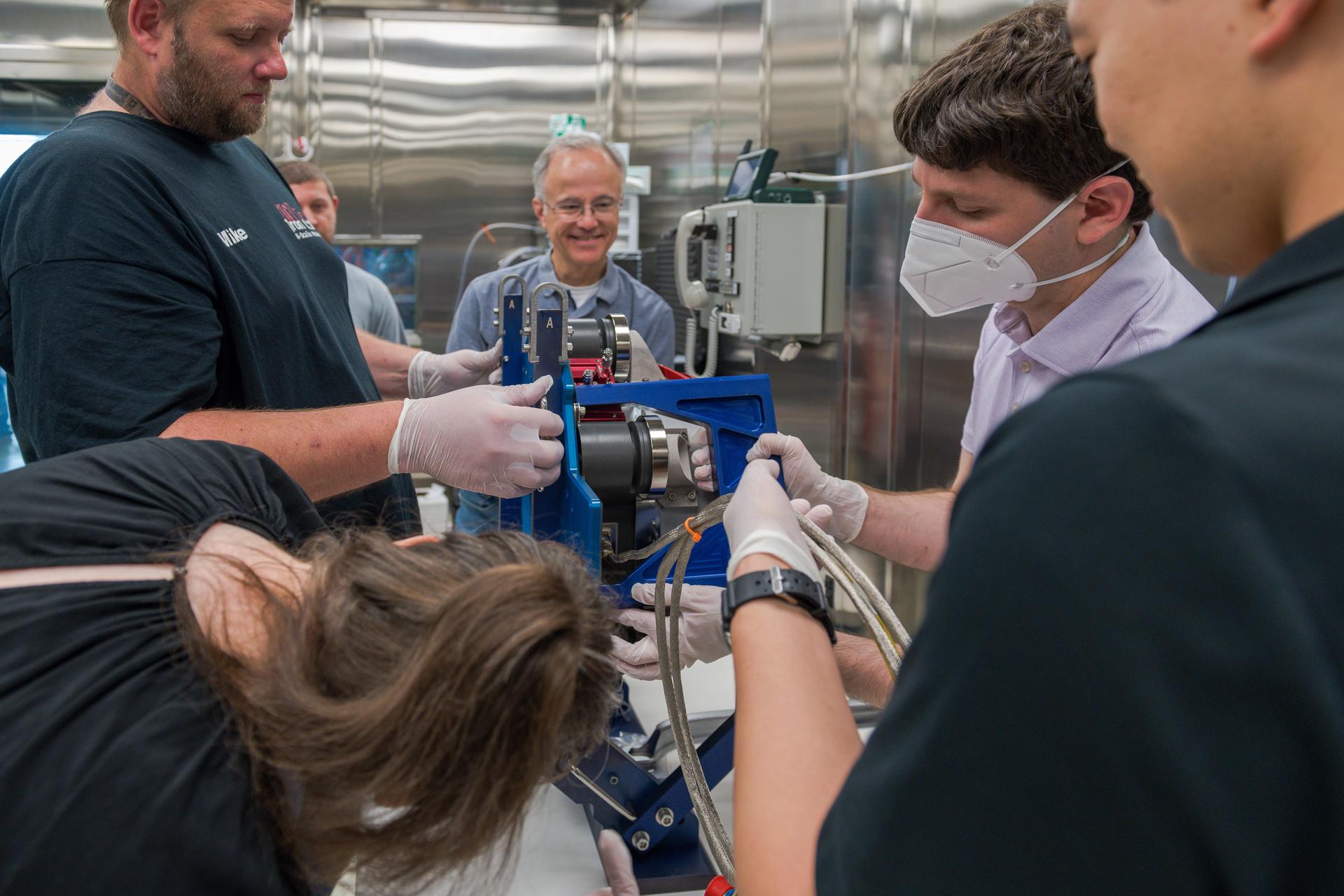
Engineers at NASA’s Glenn Research Center in Cleveland work together to position and secure the second of three Advanced Electric Propulsion System (AEPS) thrusters for acceptance testing. Following testing, the thruster was delivered to Lanteris Space Systems in Palo Alto, California, for installation on Gateway’s Power and Propulsion Element. Credit: NASA
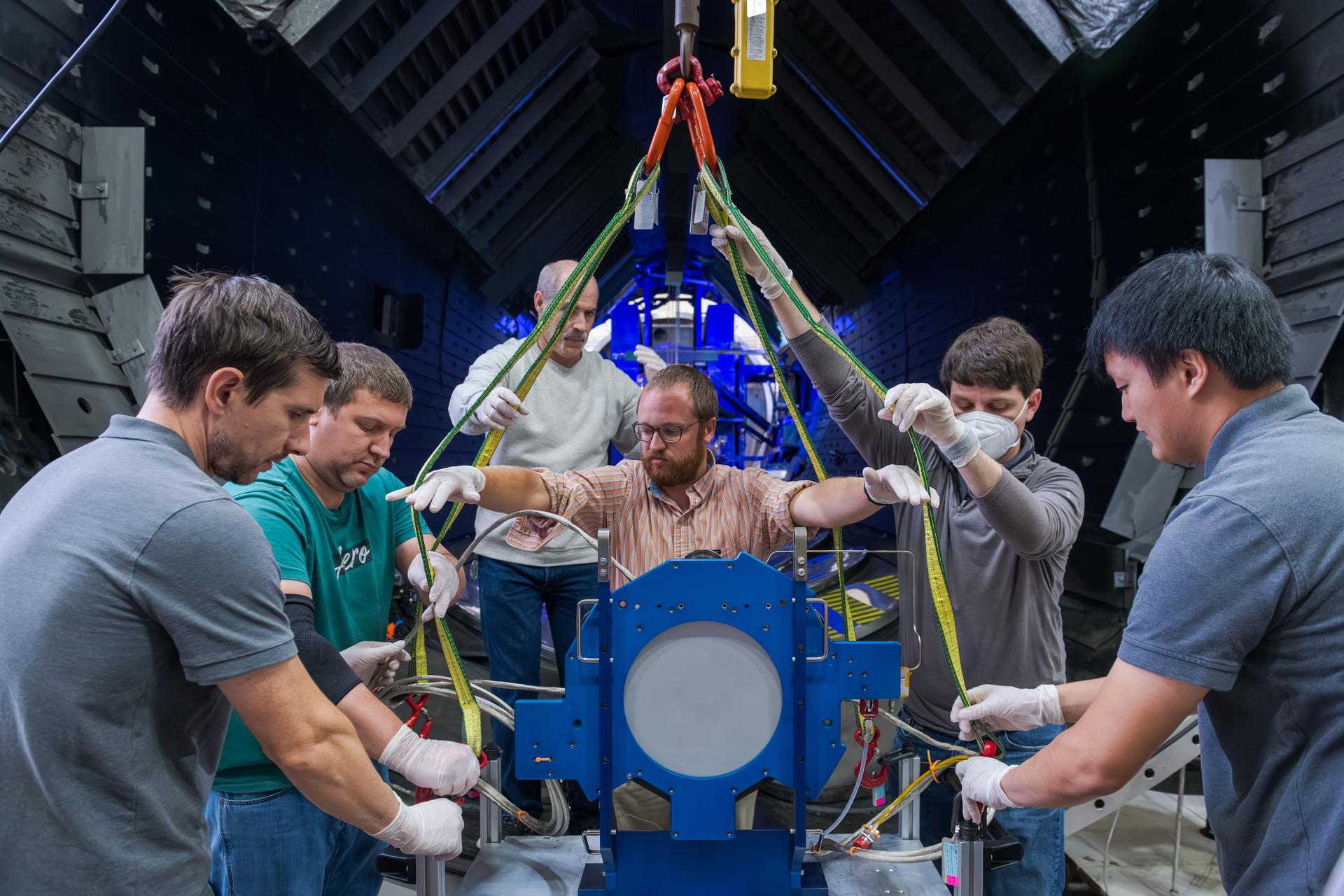
Teams at NASA’s Glenn Research Center in Cleveland conduct acceptance testing on the third and final Advanced Electric Propulsion System (AEPS) thrusters for Gateway’s Power and Propulsion Element (PPE). After successfully completing testing, the thruster was delivered to Lanteris Space Systems in Palo Alto, California, for installation on PPE’s primary structure. Credit: NASA
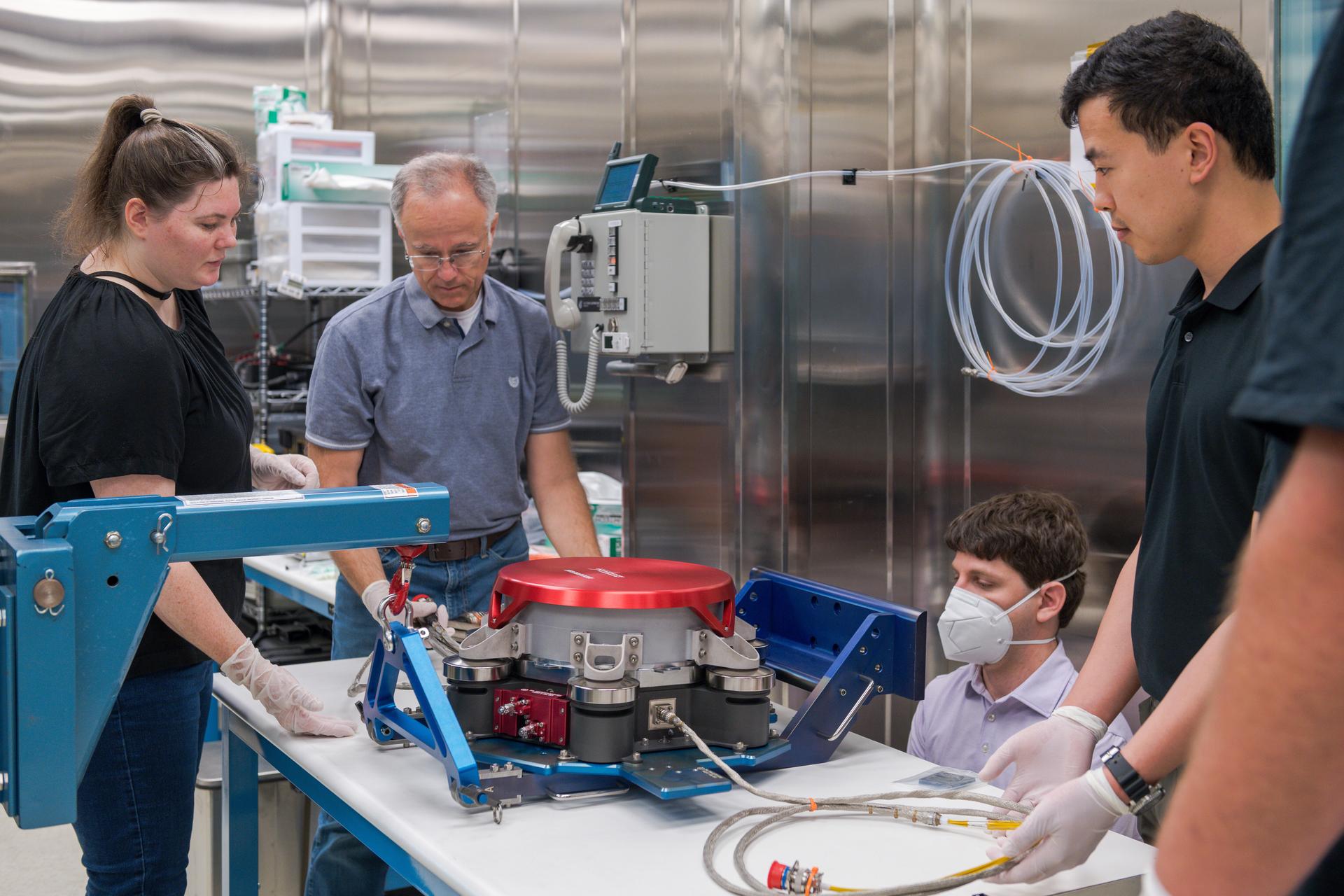
Engineers at NASA’s Glenn Research Center in Cleveland work together to position and secure the second of three Advanced Electric Propulsion System (AEPS) thrusters for acceptance testing. Following testing, the thruster was delivered to Lanteris Space Systems in Palo Alto, California, for installation on Gateway’s Power and Propulsion Element. Credit: NASA
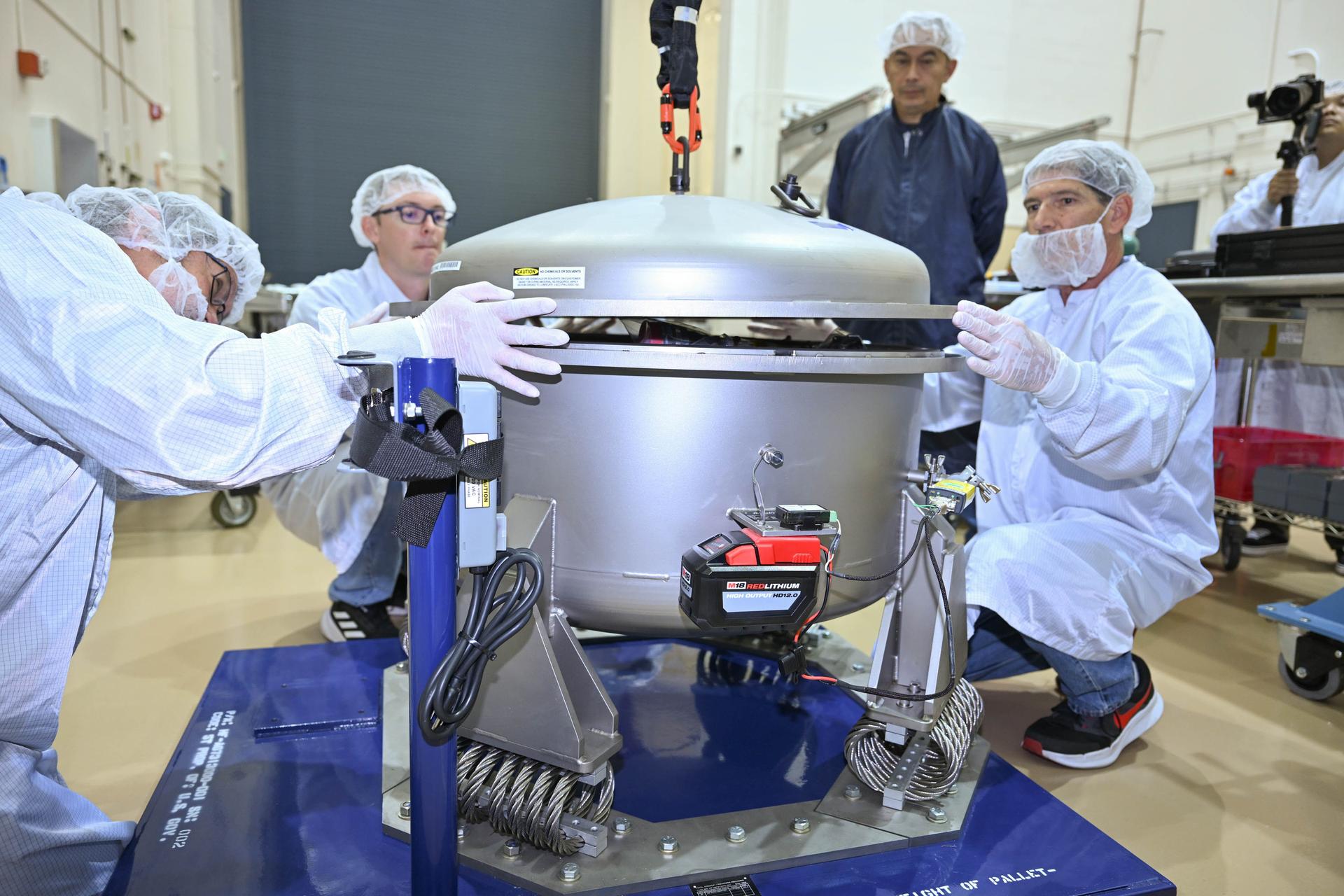
Technicians at Lanteris Space Systems in Palo Alto, California, remove the first of three Advanced Electric Propulsion System (AEPS) flight thrusters from its transport container following delivery from NASA’s Glenn Research Center. The thruster previously completed acceptance testing at Glenn and will be prepared for integration with Gateway’s Power and Propulsion Element (PPE). Credit: Lanteris Space Systems
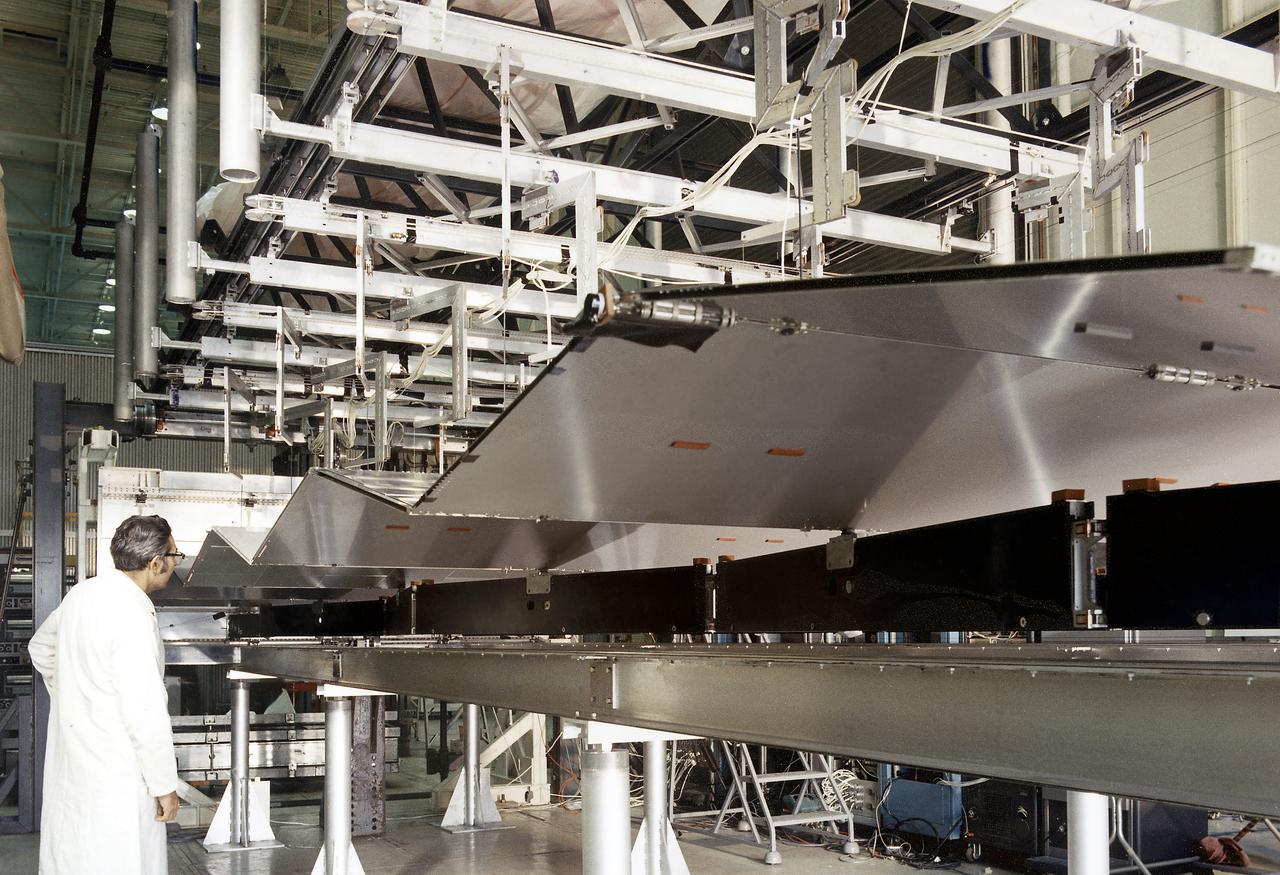
This is a photograph of a technician checking on a solar array wing for the Orbital Workshop as it is deployed. A solar array, consisting of two wings covered on one side with solar cells, was mounted outside the workshop to generate electrical power to augment the power generated by another solar array mounted on the solar observatory.
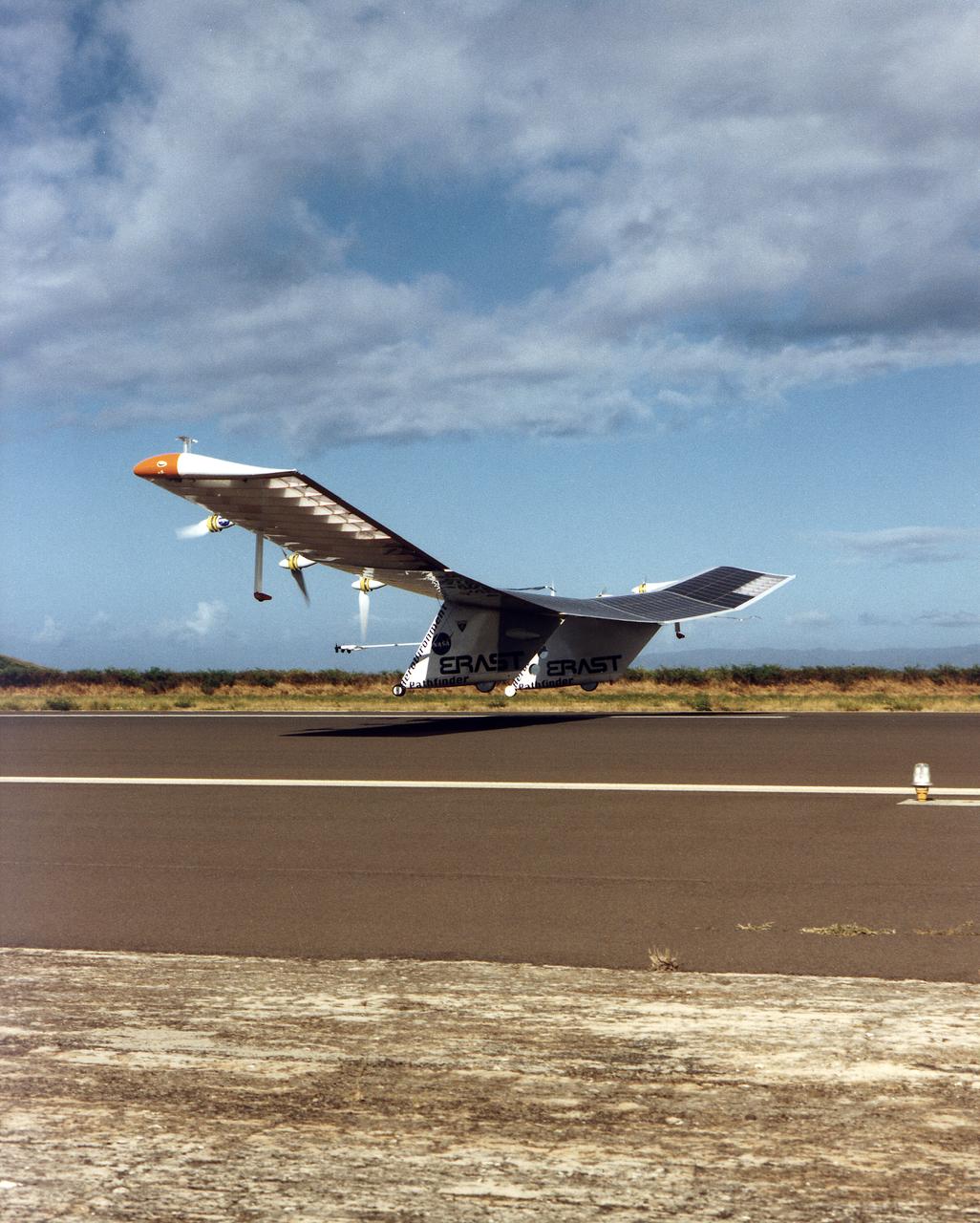
The Pathfinder aircraft has set a new unofficial world record for high-altitude flight of over 71,500 feet for solar-powered aircraft at the U.S. Navy's Pacific Missile Range Facility, Kauai, Hawaii. Pathfinder was designed and manufactured by AeroVironment, Inc, of Simi Valley, California, and was operated by the firm under a jointly sponsored research agreement with NASA's Dryden Flight Research Center, Edwards, California. Pathfinder's record-breaking flight occurred July 7, 1997. The aircraft took off at 11:34 a.m. PDT, passed its previous record altitude of 67,350 feet at about 5:45 p.m. and then reached its new record altitude at 7 p.m. The mission ended with a perfect nighttime landing at 2:05 a.m. PDT July 8. The new record is the highest altitude ever attained by a propellor-driven aircraft. Before Pathfinder, the altitude record for propellor-driven aircraft was 67,028 feet, set by the experimental Boeing Condor remotely piloted aircraft.
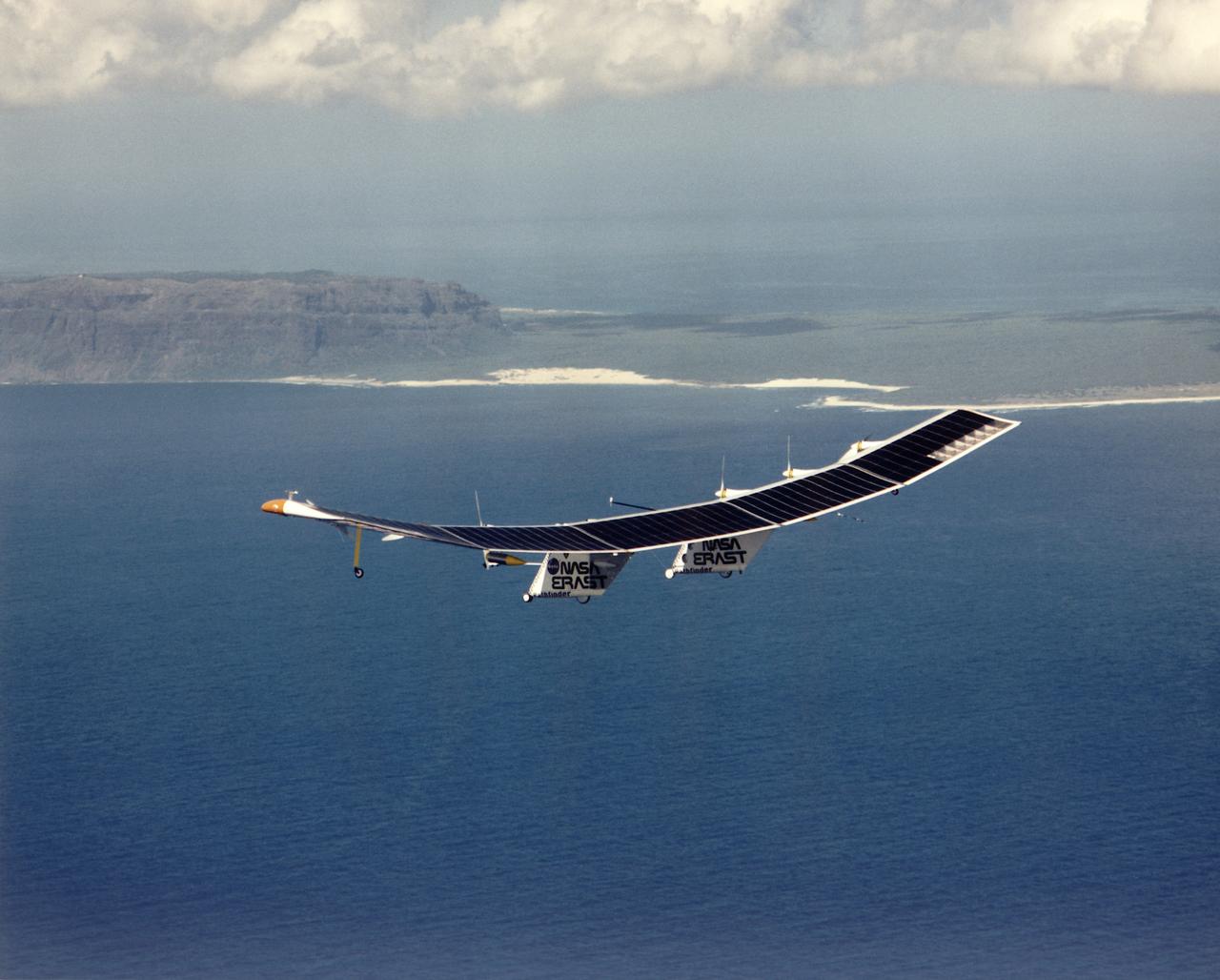
Pathfinder, NASA's solar-powered, remotely-piloted aircraft is shown while it was conducting a series of science flights to highlight the aircraft's science capabilities while collecting imagery of forest and coastal zone ecosystems on Kauai, Hawaii. The flights also tested two new scientific instruments, a high spectral resolution Digital Array Scanned Interferometer (DASI) and a high spatial resolution Airborne Real-Time Imaging System (ARTIS). The remote sensor payloads were designed by NASA's Ames Research Center, Moffett Field, California, to support NASA's Mission to Planet Earth science programs.
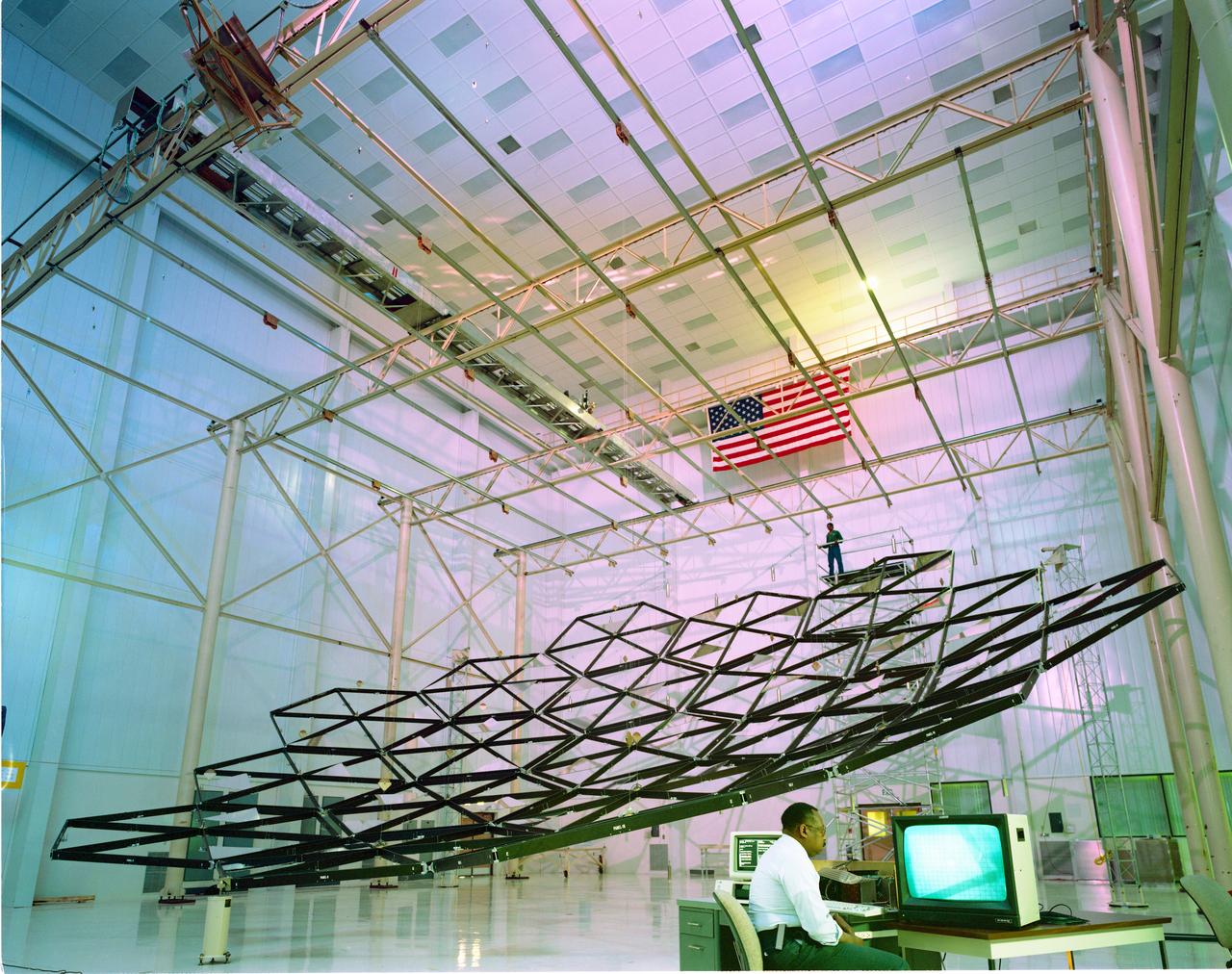
Testing of the Solar Dynamic Collector for Space Freedom. The solar dynamic power system includes a solar concentrator, which collects sunlight; a receiver, which accepts and stores the concentrated solar energy and transfers this energy to a gas; a Brayton turbine, alternator, and compressor unit, which generates electric power; and a radiator, which rejects waste heat.
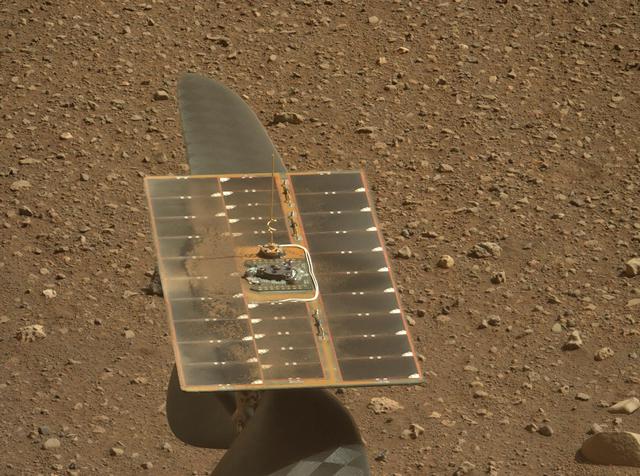
The solar panel of NASA's Ingenuity Mars Helicopter's solar panel as seen by Mastcam-Z, a pair of zoomable cameras aboard NASA's Perseverance Mars rover. Roughly 6.5 by 17 inches (425 mm by 165 mm), the panel charges six lithium-ion batteries inside the helicopter. The small amount of dust on the panel may have accumulated above the helicopter during landing and fallen onto it during helicopter deployment. This dust has had no adverse impact on the helicopter's power. Solar cells in the array are optimized for the solar spectrum encountered at Mars, and the stored energy is used to operate heaters for the cold Martian nights as well as power the helicopter during flight operations. Power expended by the helicopter during an up-to-90-second flight is about 350 watts. The image is not white balanced; instead it is displayed in a preliminary calibrated version of a natural-color composite, approximately simulating the colors of the scene that we would see if we were there viewing it ourselves. Arizona State University in Tempe leads the operations of the Mastcam-Z instrument, working in collaboration with Malin Space Science Systems in San Diego. A key objective for Perseverance's mission on Mars is astrobiology, including the search for signs of ancient microbial life. The rover will characterize the planet's geology and past climate, pave the way for human exploration of the Red Planet, and be the first mission to collect and cache Martian rock and regolith (broken rock and dust). Subsequent NASA missions, in cooperation with ESA (European Space Agency), would send spacecraft to Mars to collect these sealed samples from the surface and return them to Earth for in-depth analysis. The Mars 2020 Perseverance mission is part of NASA's Moon to Mars exploration approach, which includes Artemis missions to the Moon that will help prepare for human exploration of the Red Planet. https://photojournal.jpl.nasa.gov/catalog/PIA24545
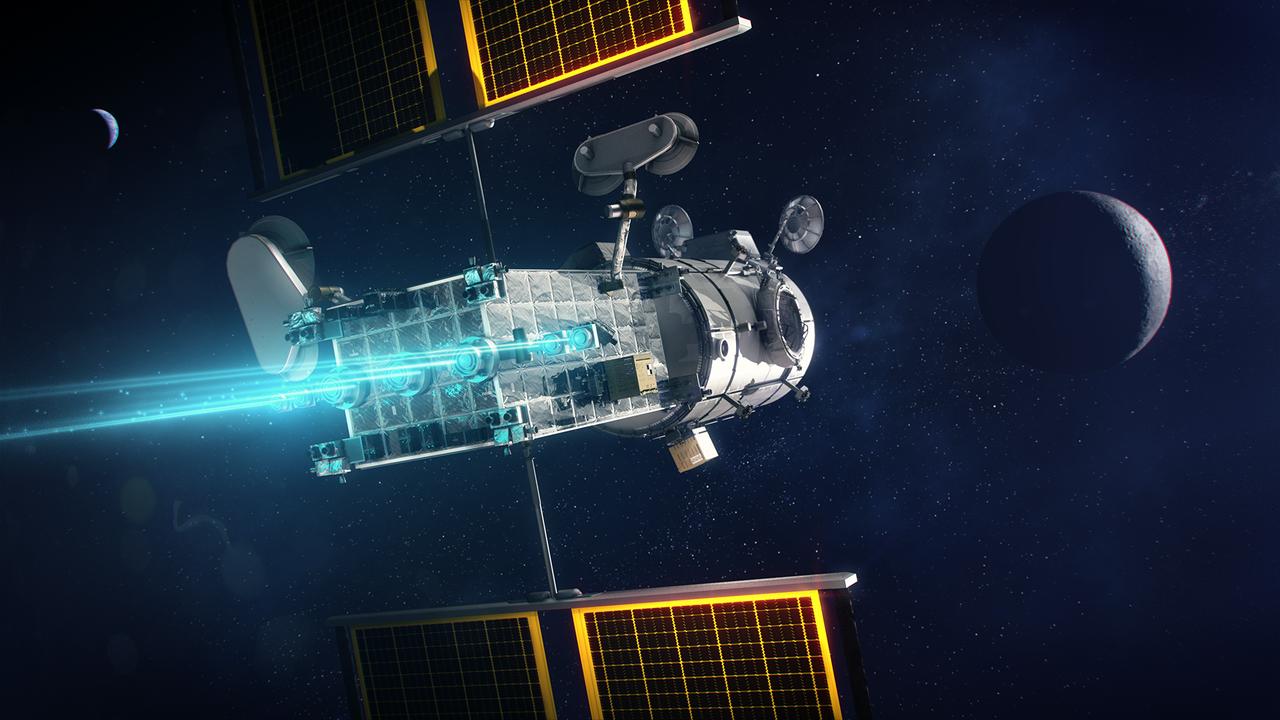
The Power and Propulsion Element's 12 kw thrusters will make Gateway the most powerful solar electric spacecraft ever flown.
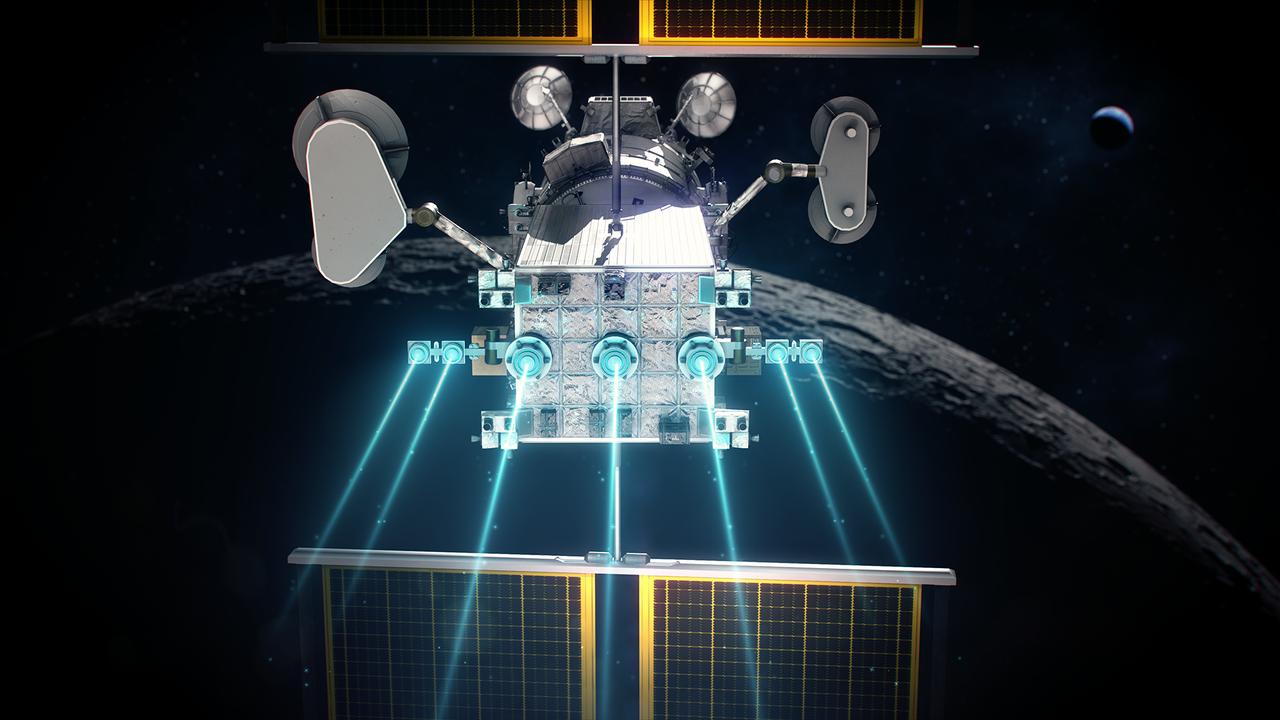
The Power and Propulsion Element's 12 kw thrusters will make Gateway the most powerful solar electric spacecraft ever flown.
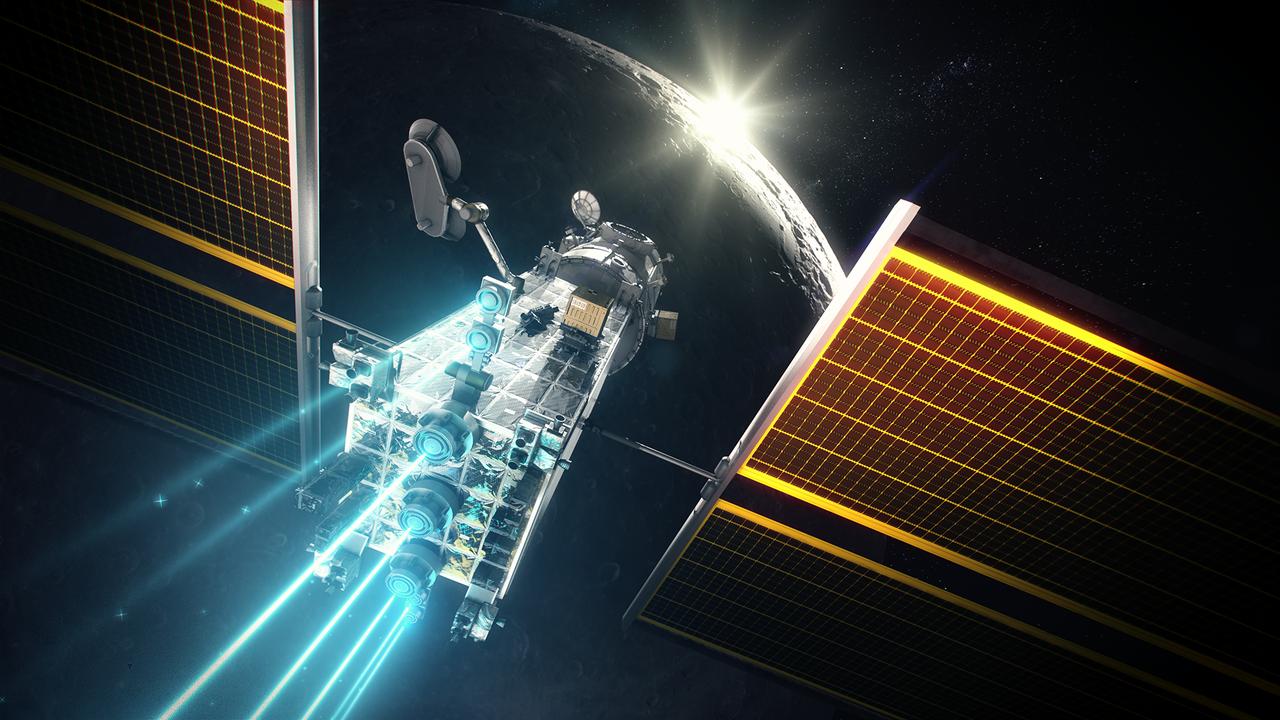
The Power and Propulsion Element's 12 kw thrusters will make Gateway the most powerful solar electric spacecraft ever flown.
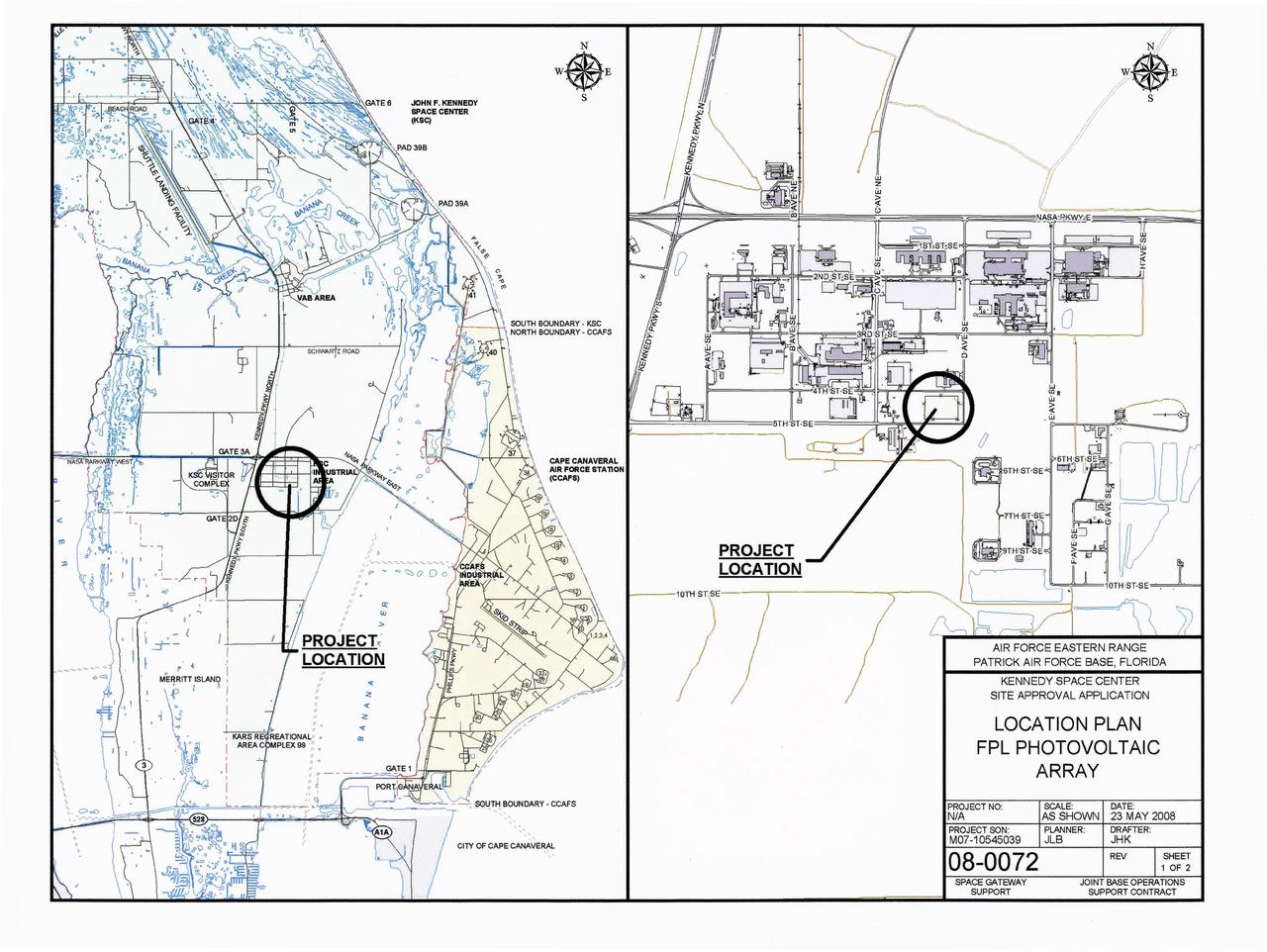
CAPE CANAVERAL, Fla. – This map shows the two sites within NASA's Kennedy Space Center where a solar photovoltaic power generation system will be built as the result of an agreement between NASA and Florida Power & Light. The agreement is part of a new initiative that will cut reliance on fossil fuels and improve the environment by reducing greenhouse gas emissions. The major facility will produce an estimated 10 megawatts of electrical power, which can serve roughly 3,000 homes. A separate one-megawatt solar power facility will support the electrical needs of the center.
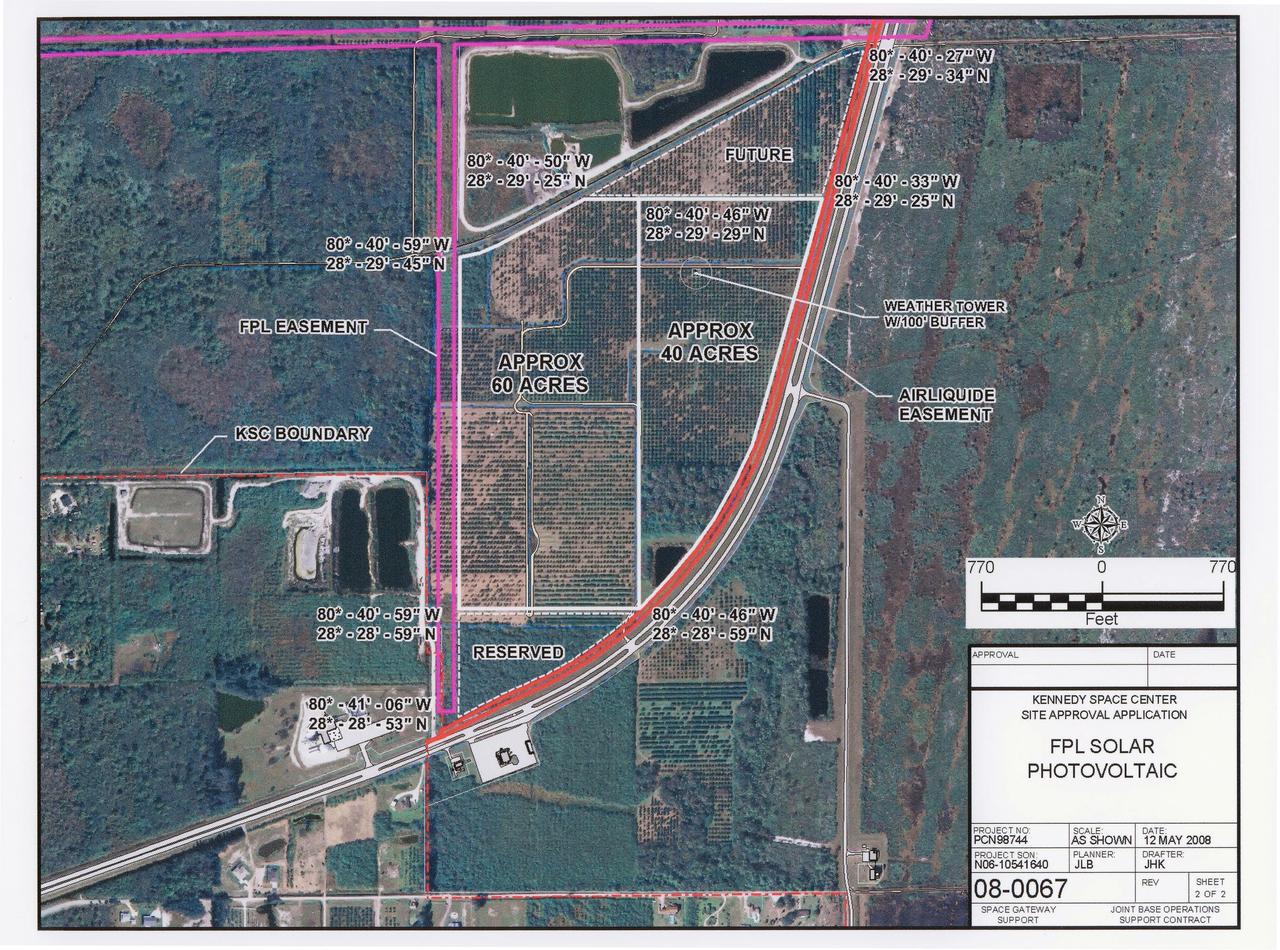
CAPE CANAVERAL, Fla. – This map shows the area within NASA's Kennedy Space Center where a solar photovoltaic power generation system will be built as the result of an agreement between NASA and Florida Power & Light. The agreement is part of a new initiative that will cut reliance on fossil fuels and improve the environment by reducing greenhouse gas emissions. The major facility will produce an estimated 10 megawatts of electrical power, which can serve roughly 3,000 homes. A separate one-megawatt solar power facility will support the electrical needs of the center.
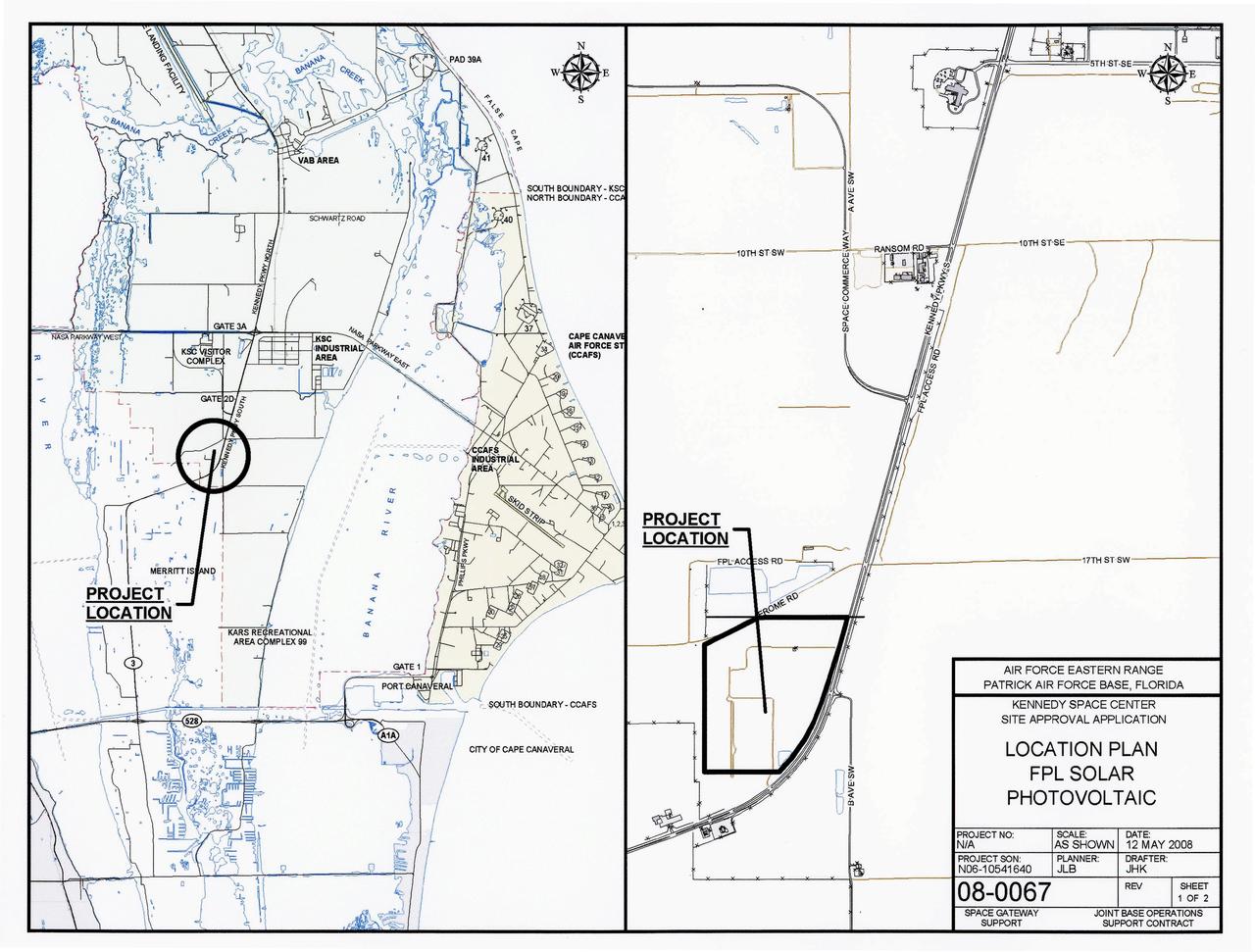
CAPE CANAVERAL, Fla. – This map shows the two sites within NASA's Kennedy Space Center where a solar photovoltaic power generation system will be built as the result of an agreement between NASA and Florida Power & Light. The agreement is part of a new initiative that will cut reliance on fossil fuels and improve the environment by reducing greenhouse gas emissions. The major facility will produce an estimated 10 megawatts of electrical power, which can serve roughly 3,000 homes. A separate one-megawatt solar power facility will support the electrical needs of the center.
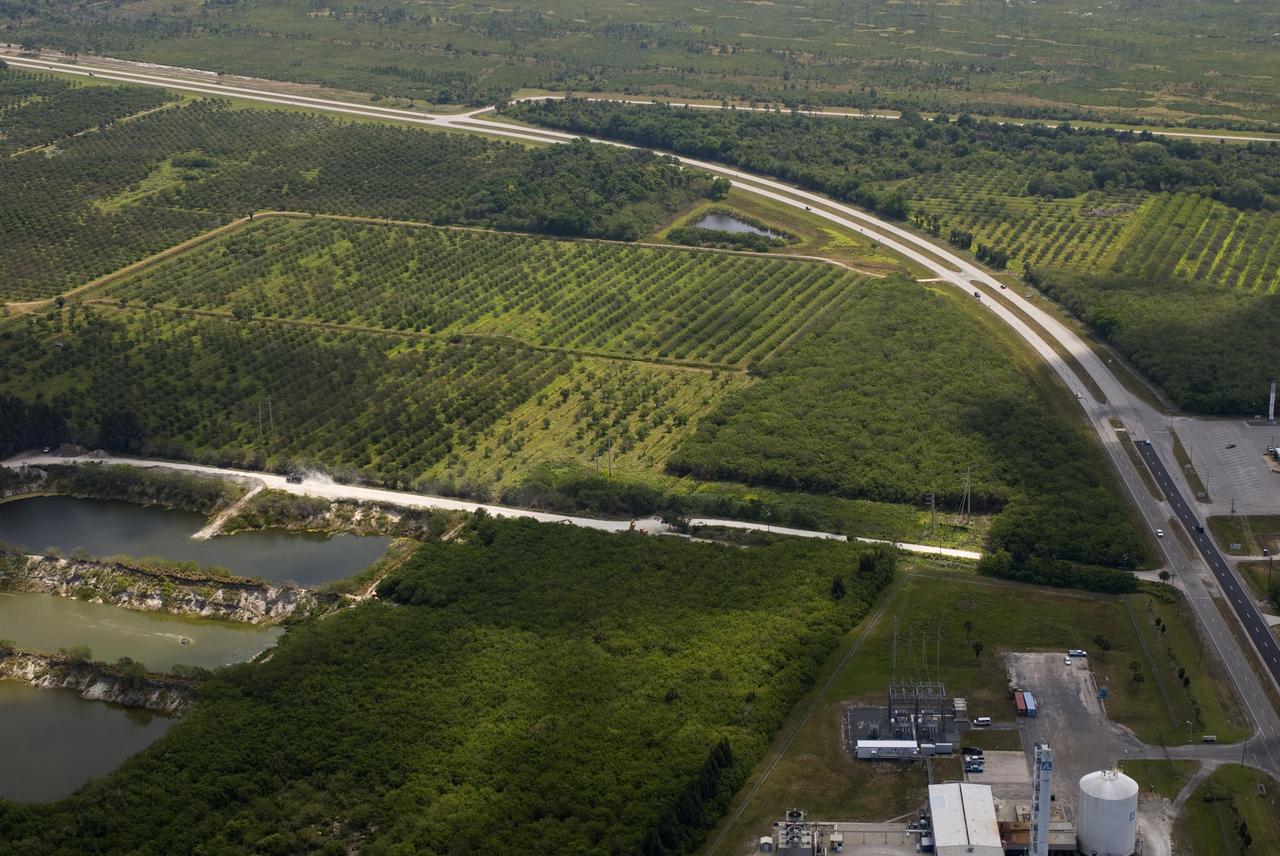
CAPE CANAVERAL, Fla. – This photo shows the area within NASA's Kennedy Space Center where a solar photovoltaic power generation system will be built as the result of an agreement between NASA and Florida Power & Light. The agreement is part of a new initiative that will cut reliance on fossil fuels and improve the environment by reducing greenhouse gas emissions. The major facility will produce an estimated 10 megawatts of electrical power, which can serve roughly 3,000 homes. A separate one-megawatt solar power facility will support the electrical needs of the center.
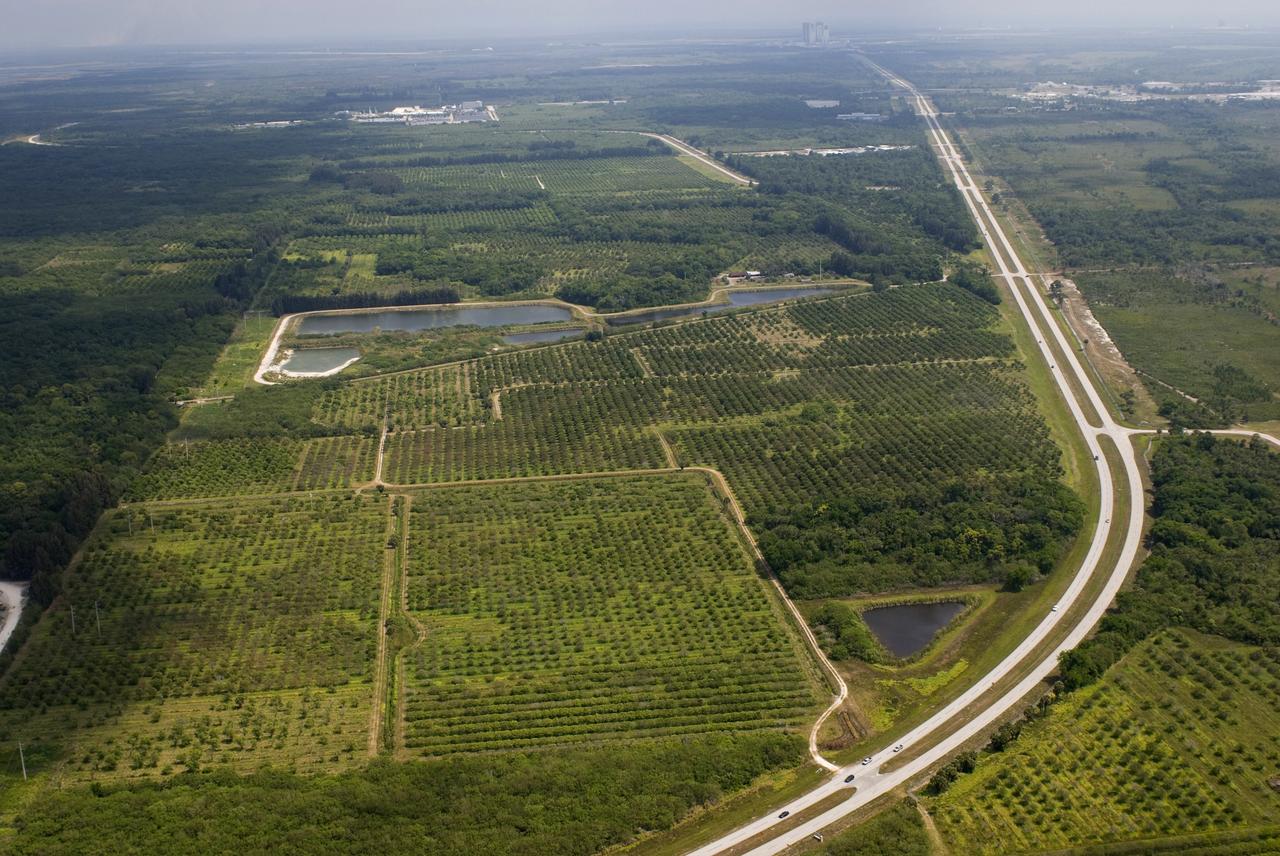
CAPE CANAVERAL, Fla. – This photo shows the area within NASA's Kennedy Space Center where a solar photovoltaic power generation system will be built as the result of an agreement between NASA and Florida Power & Light. The agreement is part of a new initiative that will cut reliance on fossil fuels and improve the environment by reducing greenhouse gas emissions. The major facility will produce an estimated 10 megawatts of electrical power, which can serve roughly 3,000 homes. A separate one-megawatt solar power facility will support the electrical needs of the center.
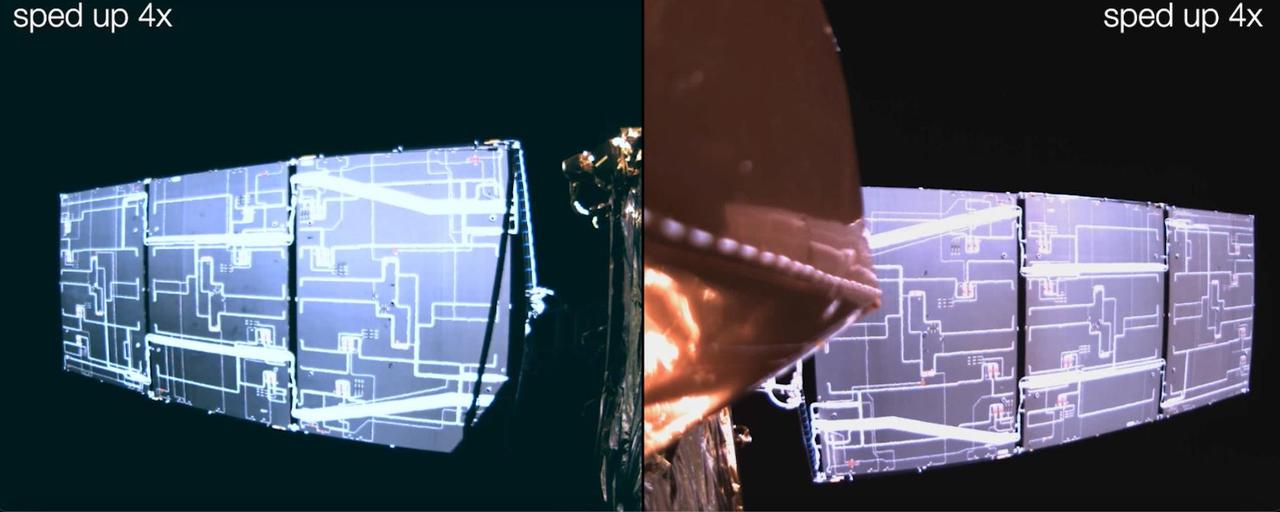
This video is a series of images showing the deployment of the solar arrays that power the international Surface Water and Ocean Topography satellite (SWOT). The mission captured the roughly 10-minute process with two of the four commercial cameras aboard the satellite (the same type used to capture NASA's Perseverance rover landing on Mars). The satellite launched Dec. 16, 2022, at 3:46 a.m. PST from Vandenberg Space Force Base in California, and the arrays started their deployment at 5:01 a.m. PST. SWOT's two solar arrays measure 48.8 feet (14.9 meters) from end to end, with a total surface area of 335 square feet (31 square meters). Extending from opposite sides of the spacecraft bus, the arrays remain pointed at the Sun via small motors. They provide 8 kilowatts of power to the satellite, which has a 1.5-kilowatt total power demand. SWOT will survey the height of water in Earth's lakes, rivers, reservoirs, and the ocean. The satellite will cover the planet's surface at least once every 21 days and has a prime mission of three years. It was jointly developed by NASA and France's Centre National d'Études Spatiales (CNES), with contributions from the Canadian Space Agency (CSA) and the UK Space Agency. Movie available at https://photojournal.jpl.nasa.gov/catalog/PIA25563
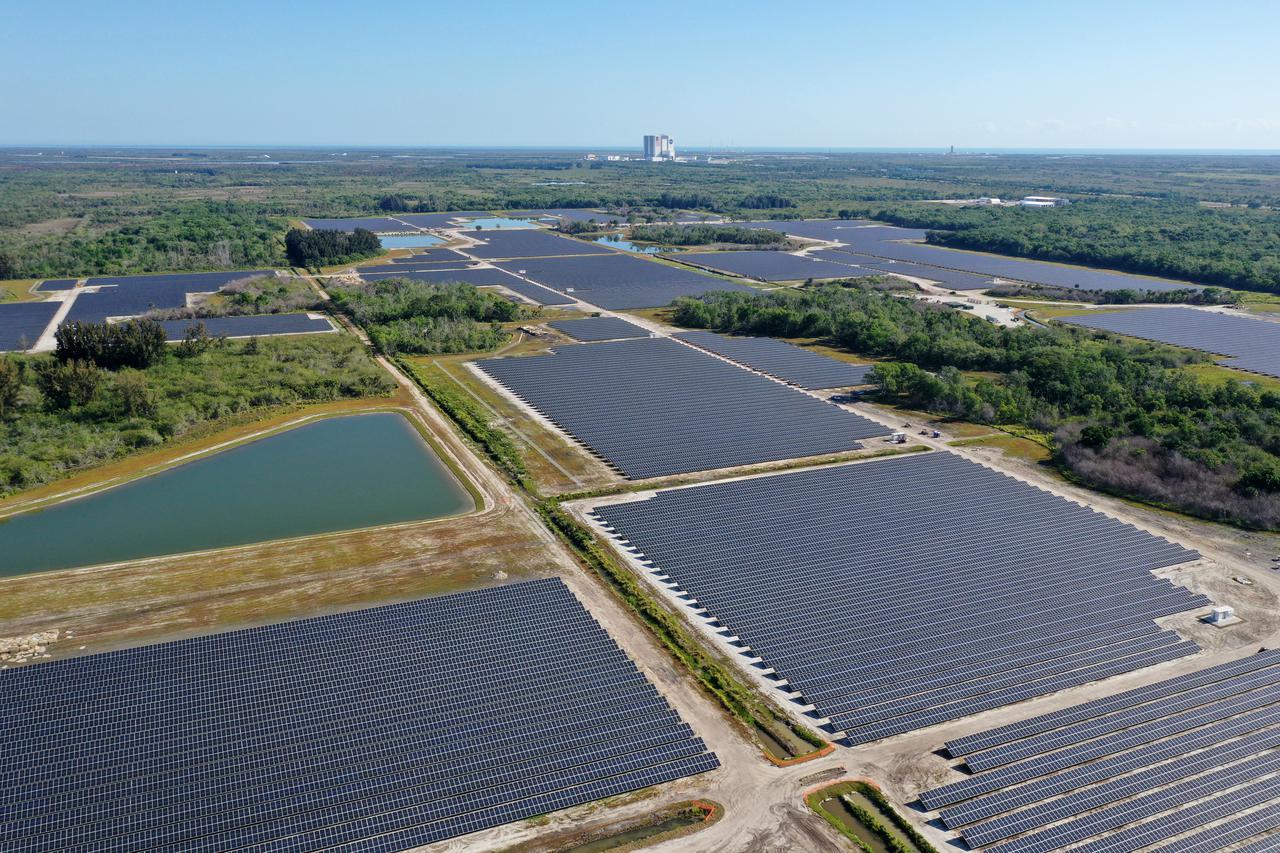
Florida Power and Light’s (FPL) new Discovery Solar Energy Center is a 74.5 megawatt solar site, spanning 491 acres at NASA’s Kennedy Space Center in Florida. The site contains about 250,000 solar panels, and once it’s operational, will produce enough energy to power approximately 15,000 homes. Construction began in spring 2020, and teams expect to have the solar site finished by May 2021. Harnessing energy from the Sun, the panels will not directly power anything at Kennedy, but rather, will send energy directly to FPL’s electricity grid for distribution to existing customers.
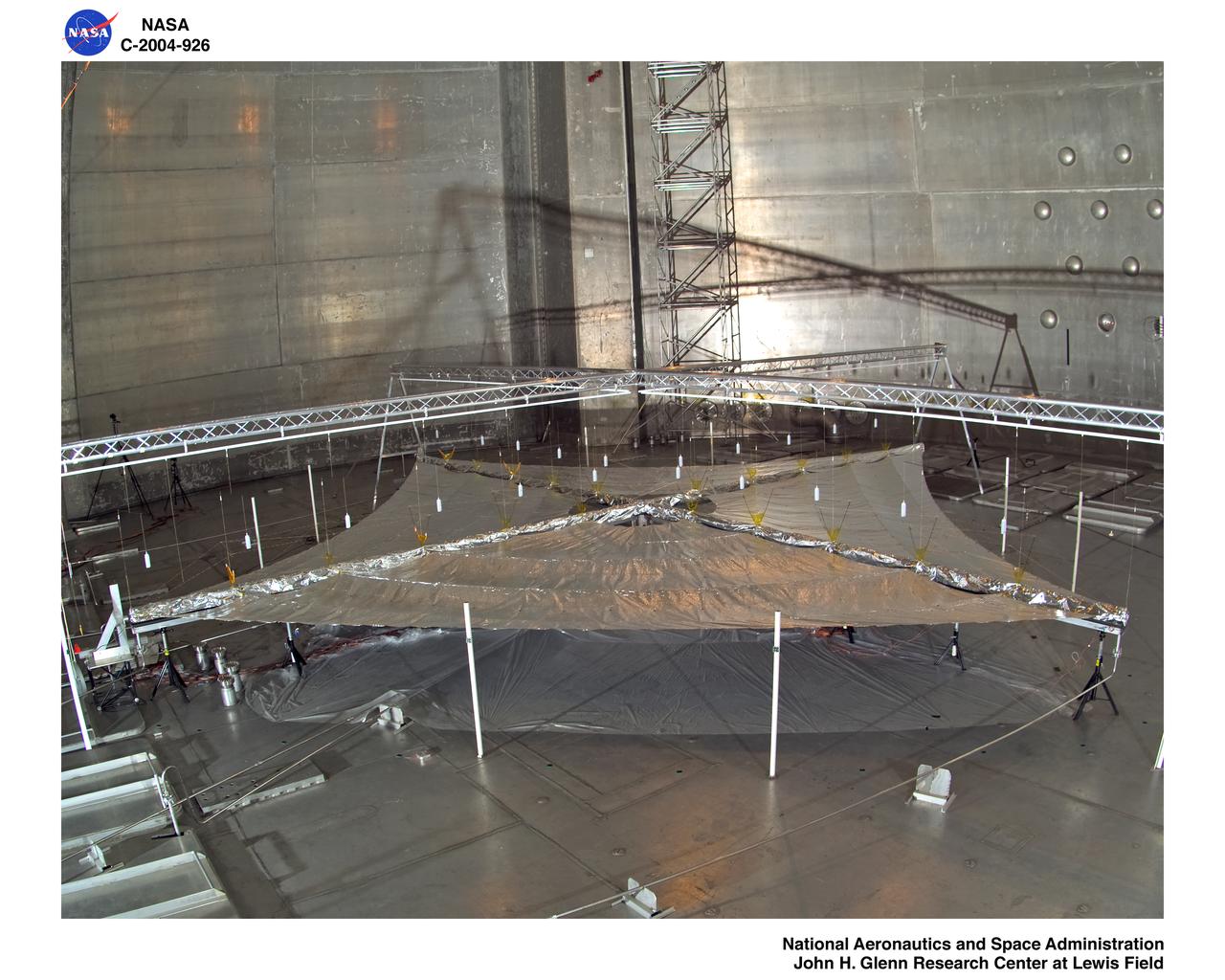
Solar Sail Testing at the Plum Brook Space Power Facility (SPF)
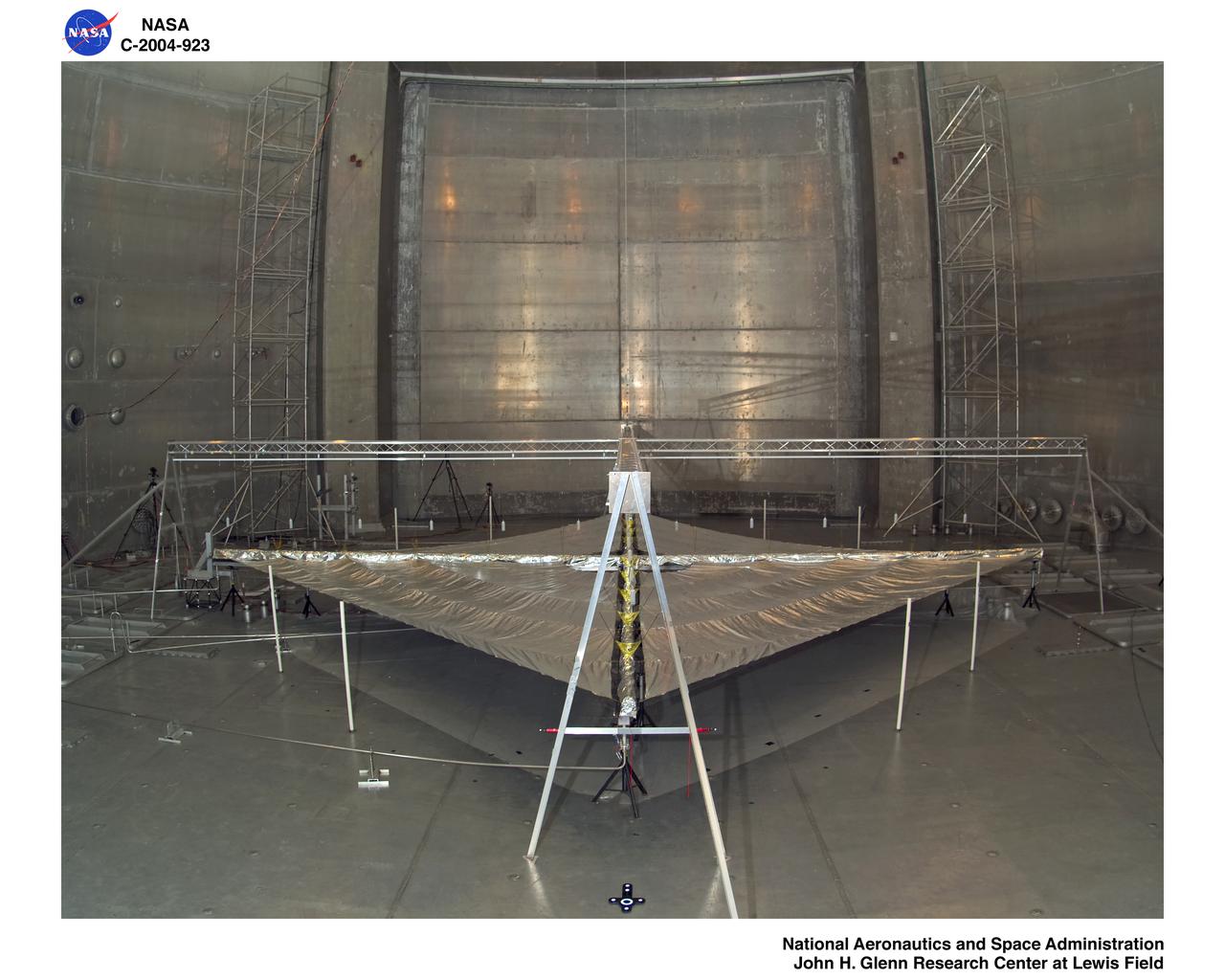
Solar Sail Testing at the Plum Brook Space Power Facility (SPF)
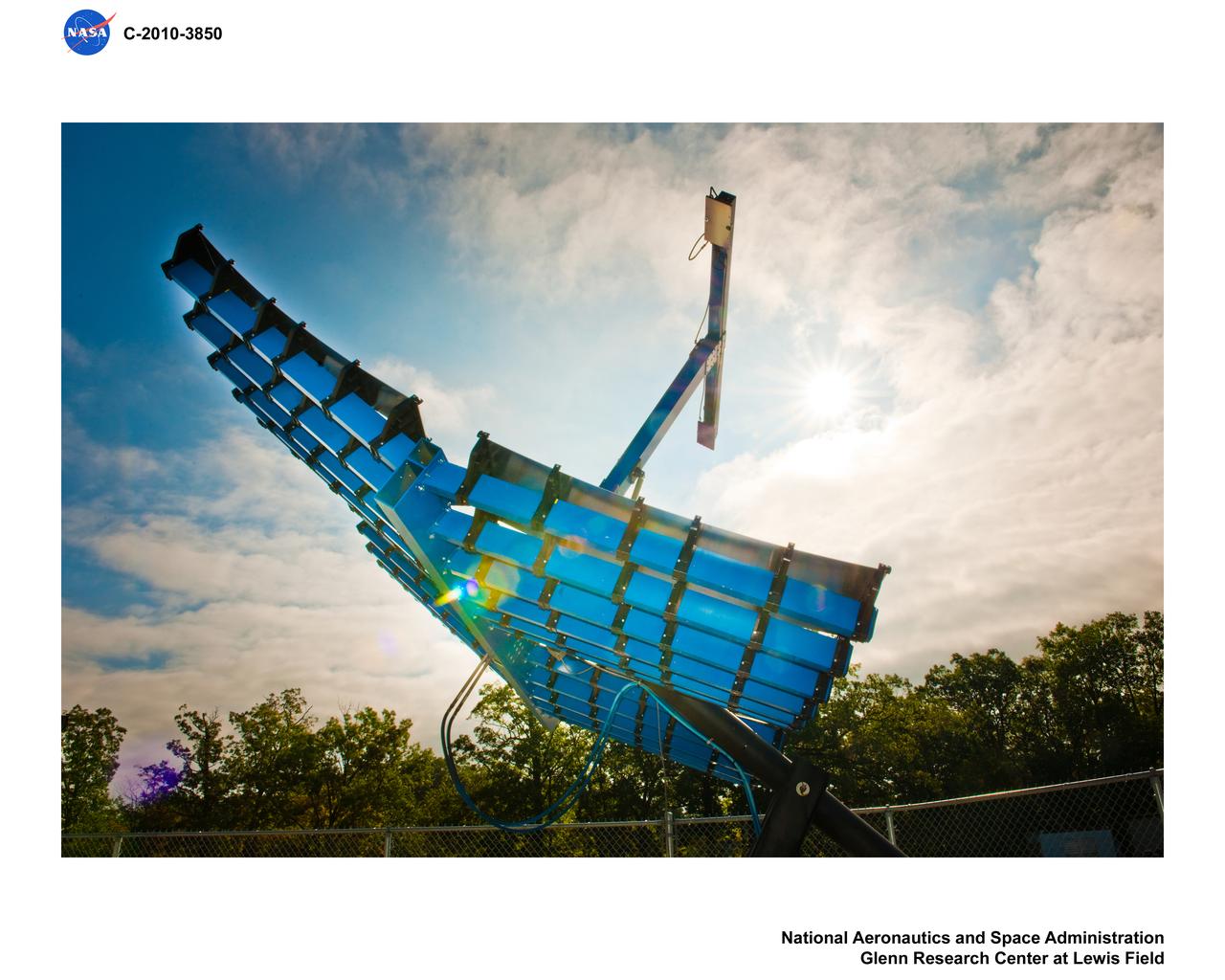
Power Energy Storage and Conversion - StarGen Inc. Solar Collector
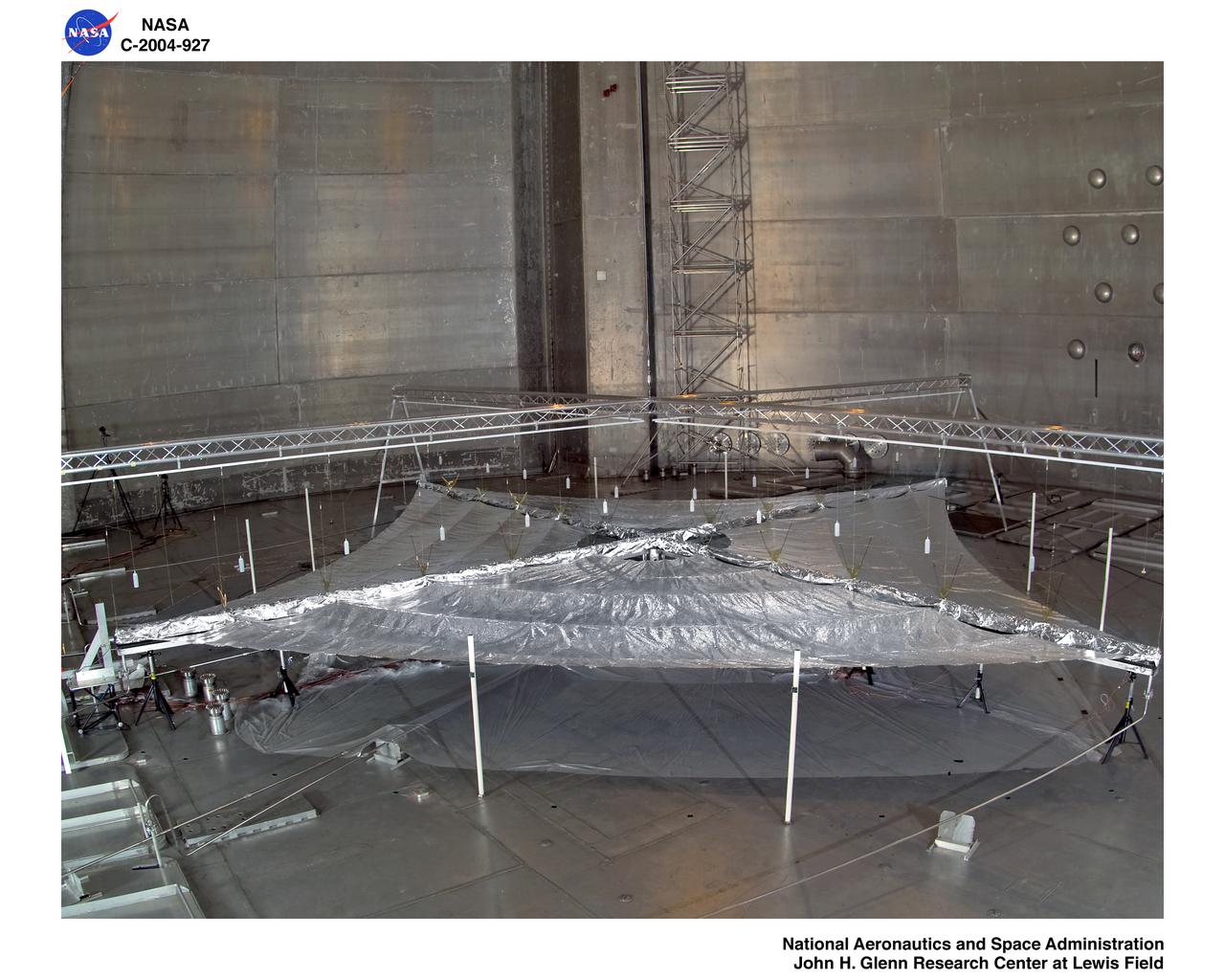
Solar Sail Testing at the Plum Brook Space Power Facility (SPF)
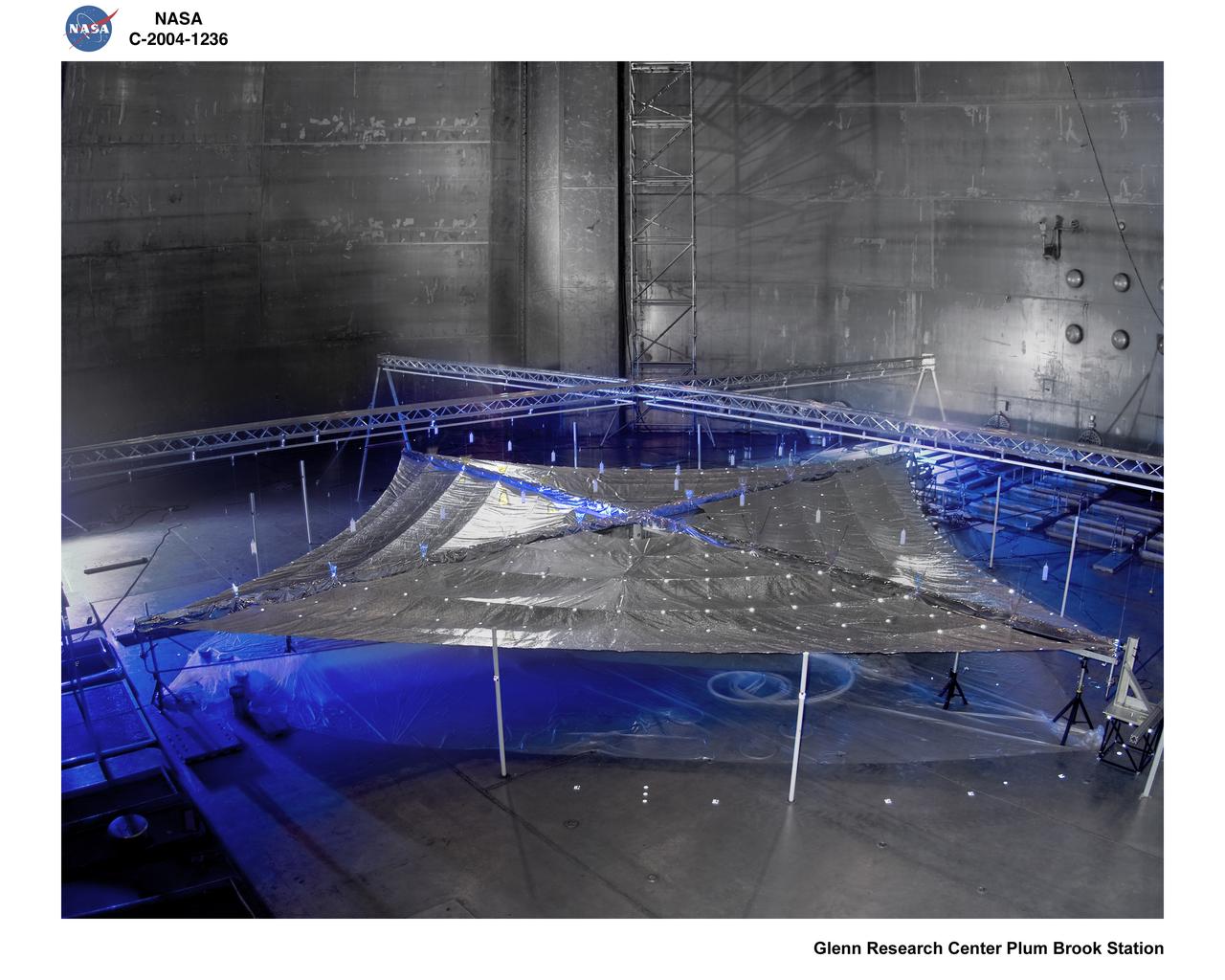
Solar Sail Testing at the NASA Plum Brook Space Power Facility (SPF)

NASA Mars Exploration Rover Opportunity drove about 12 feet 3.67 meters on May 8, 2012, after spending 19 weeks working on the north slope of an outcrop called Greeley Haven while solar power was too low for driving during the Martian winter.
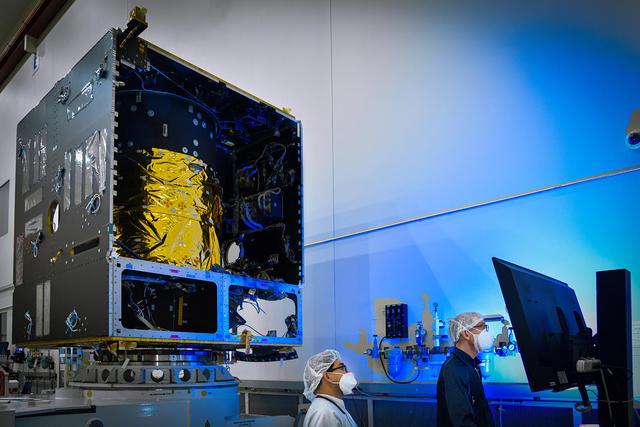
In this photo, taken in November 2020, technicians power on the main body of NASA's Psyche spacecraft — called the Solar Electric Propulsion (SEP) Chassis — for the first time, in a clean room at Maxar Technologies in Palo Alto, California. Maxar will deliver the SEP Chassis to NASA's Jet Propulsion Laboratory in Southern California in spring of 2021. Set to launch in August 2022, Psyche will investigate the composition of a metal-rich asteroid of the same name that lies in the main asteroid belt between Mars and Jupiter. The spacecraft will arrive in early 2026 and orbit the asteroid for nearly two years. https://photojournal.jpl.nasa.gov/catalog/PIA24326
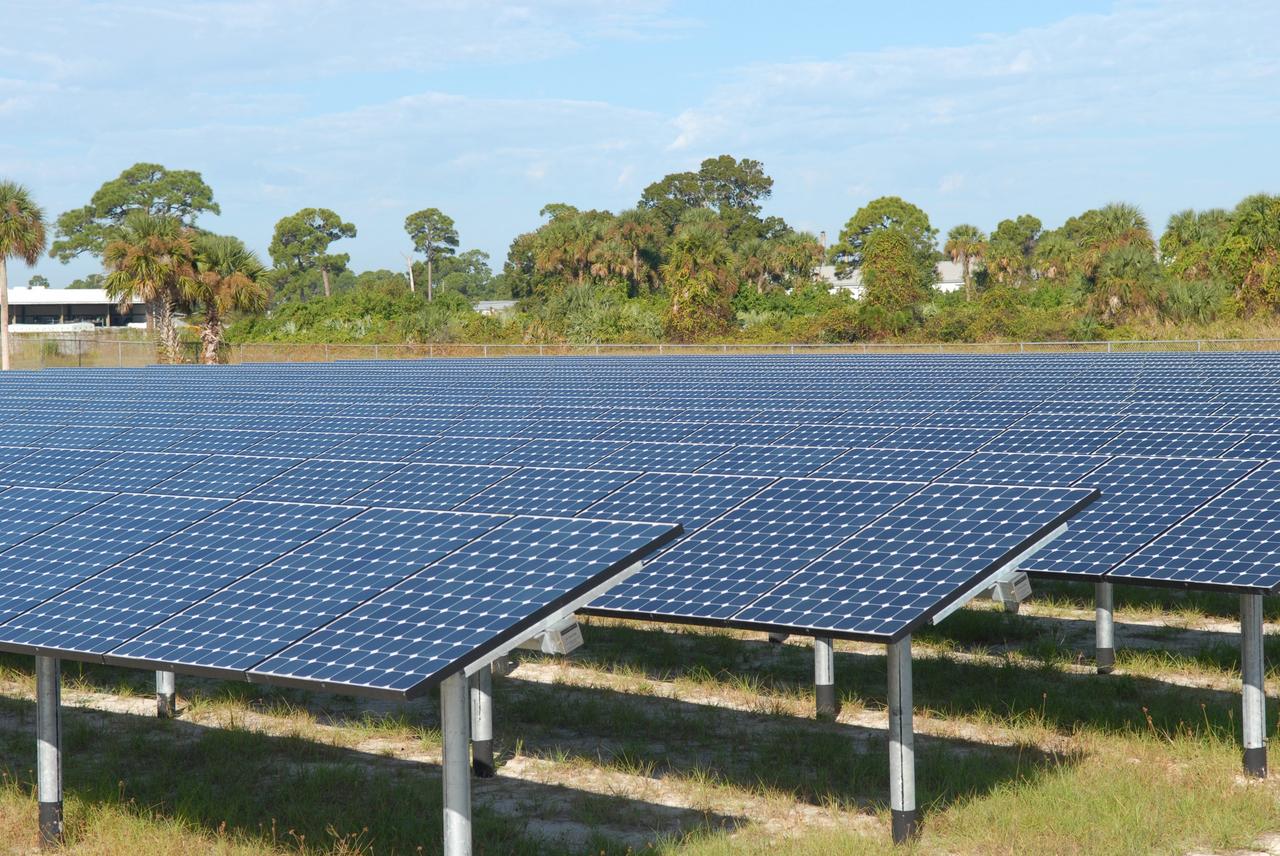
CAPE CANAVERAL, Fla. – NASA's first large-scale solar power generation facility opens at NASA's Kennedy Space Center in Florida. Representatives from NASA, Florida Power & Light Company, or FPL, and SunPower Corporation formally commissioned the one-megawatt facility and announced plans to pursue a new research, development and demonstration project at Kennedy to advance America's use of renewable energy. The facility is the first element of a major renewable energy project currently under construction at Kennedy. The completed system features a fixed-tilt, ground-mounted solar power system designed and built by SunPower, along with SunPower solar panels. A 10-megawatt solar farm, which SunPower is building on nearby Kennedy property, will supply power to FPL's customers when it is completed in April 2010. Photo credit: NASA/Jim Grossmann
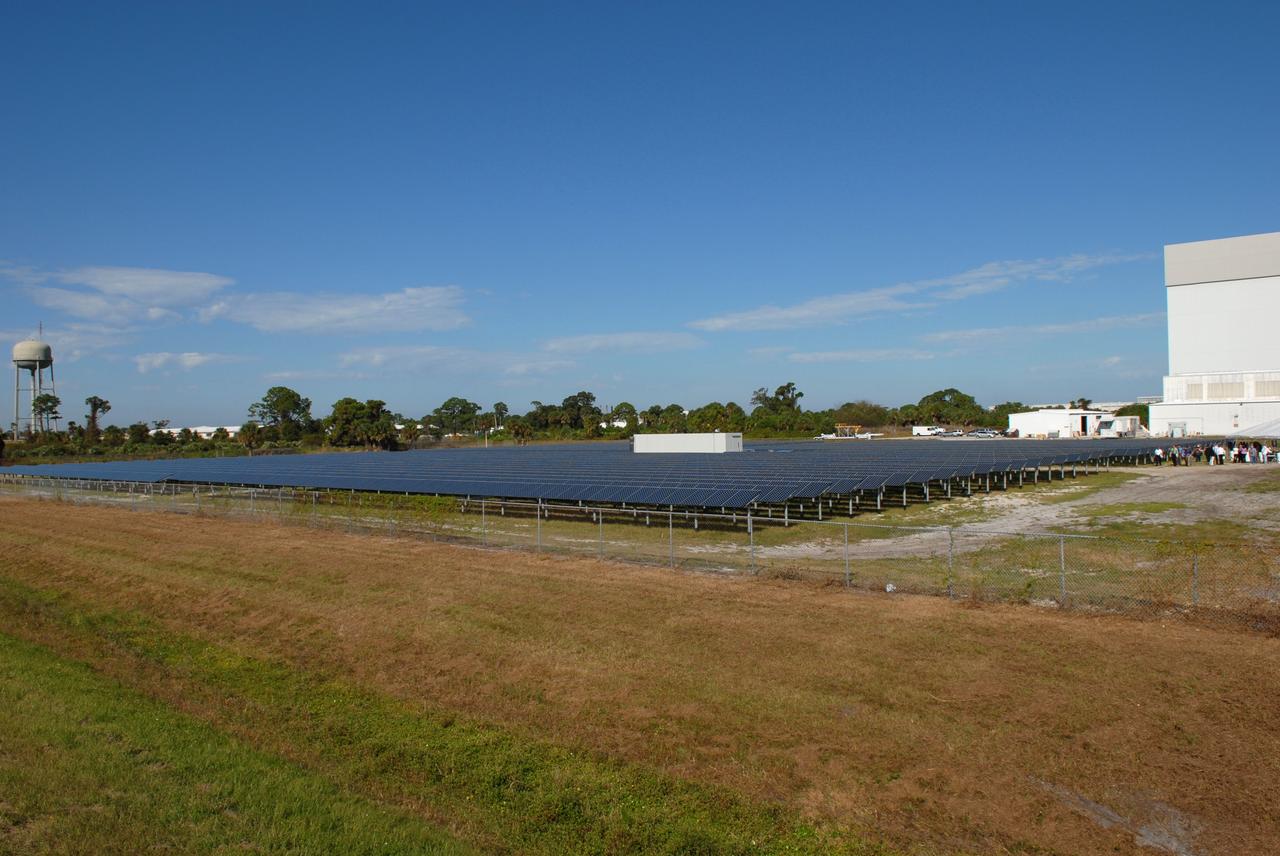
CAPE CANAVERAL, Fla. – NASA's first large-scale solar power generation facility is ready for operation at NASA's Kennedy Space Center in Florida. Representatives from NASA, Florida Power & Light Company, or FPL, and SunPower Corporation formally commissioned the one-megawatt facility and announced plans to pursue a new research, development and demonstration project at Kennedy to advance America's use of renewable energy. The facility is the first element of a major renewable energy project currently under construction at Kennedy. The completed system features a fixed-tilt, ground-mounted solar power system designed and built by SunPower, along with SunPower solar panels. A 10-megawatt solar farm, which SunPower is building on nearby Kennedy property, will supply power to FPL's customers when it is completed in April 2010. Photo credit: NASA/Jim Grossmann
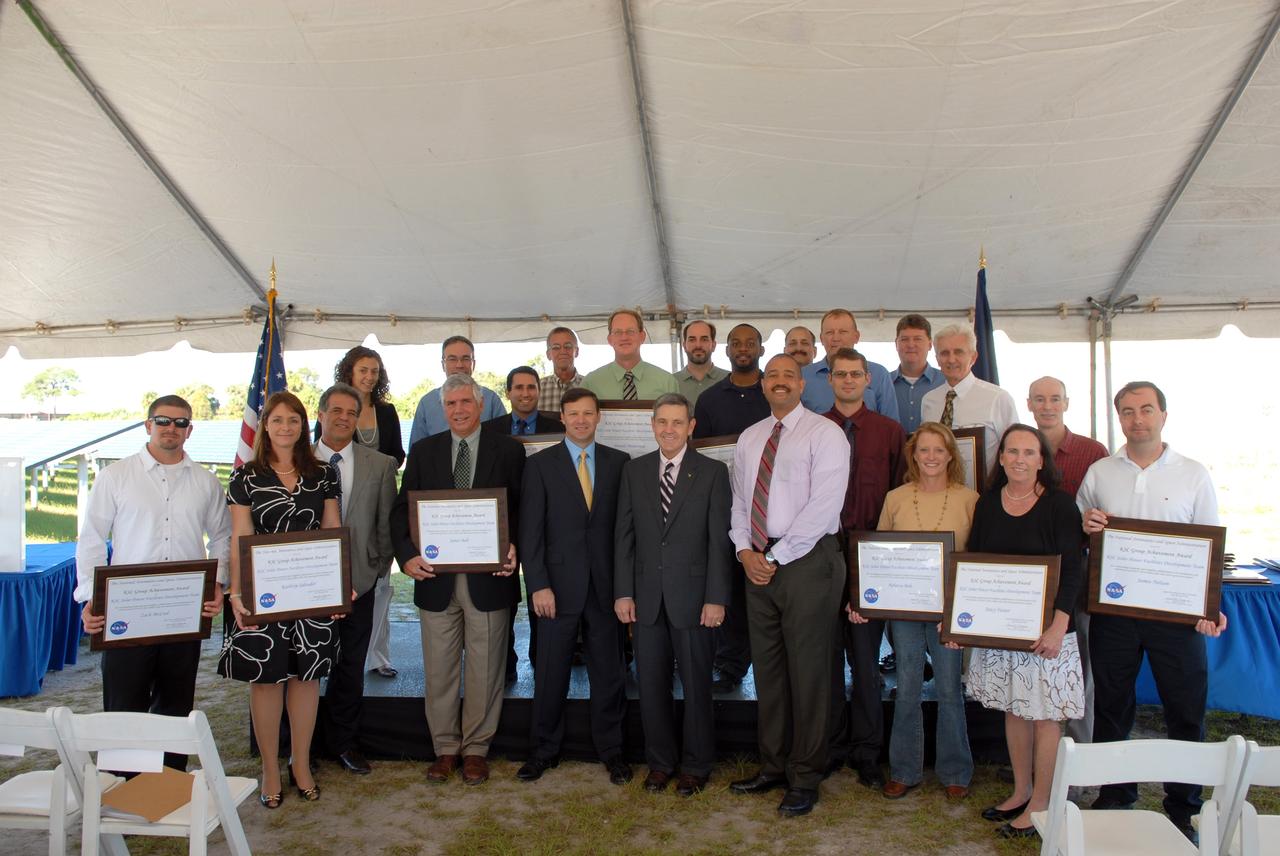
CAPE CANAVERAL, Fla. – At NASA's Kennedy Space Center in Florida, recipients of a NASA Team Award for their parts in the successful construction of NASA's first large-scale solar power generation facility pose for a group portrait. Representatives from NASA, Florida Power & Light Company, or FPL, and SunPower Corporation formally commissioned the one-megawatt facility and announced plans to pursue a new research, development and demonstration project at Kennedy to advance America's use of renewable energy. The facility is the first element of a major renewable energy project currently under construction at Kennedy. The completed system features a fixed-tilt, ground-mounted solar power system designed and built by SunPower, along with SunPower solar panels. A 10-megawatt solar farm, which SunPower is building on nearby Kennedy property, will supply power to FPL's customers when it is completed in April 2010. Photo credit: NASA/Jim Grossmann
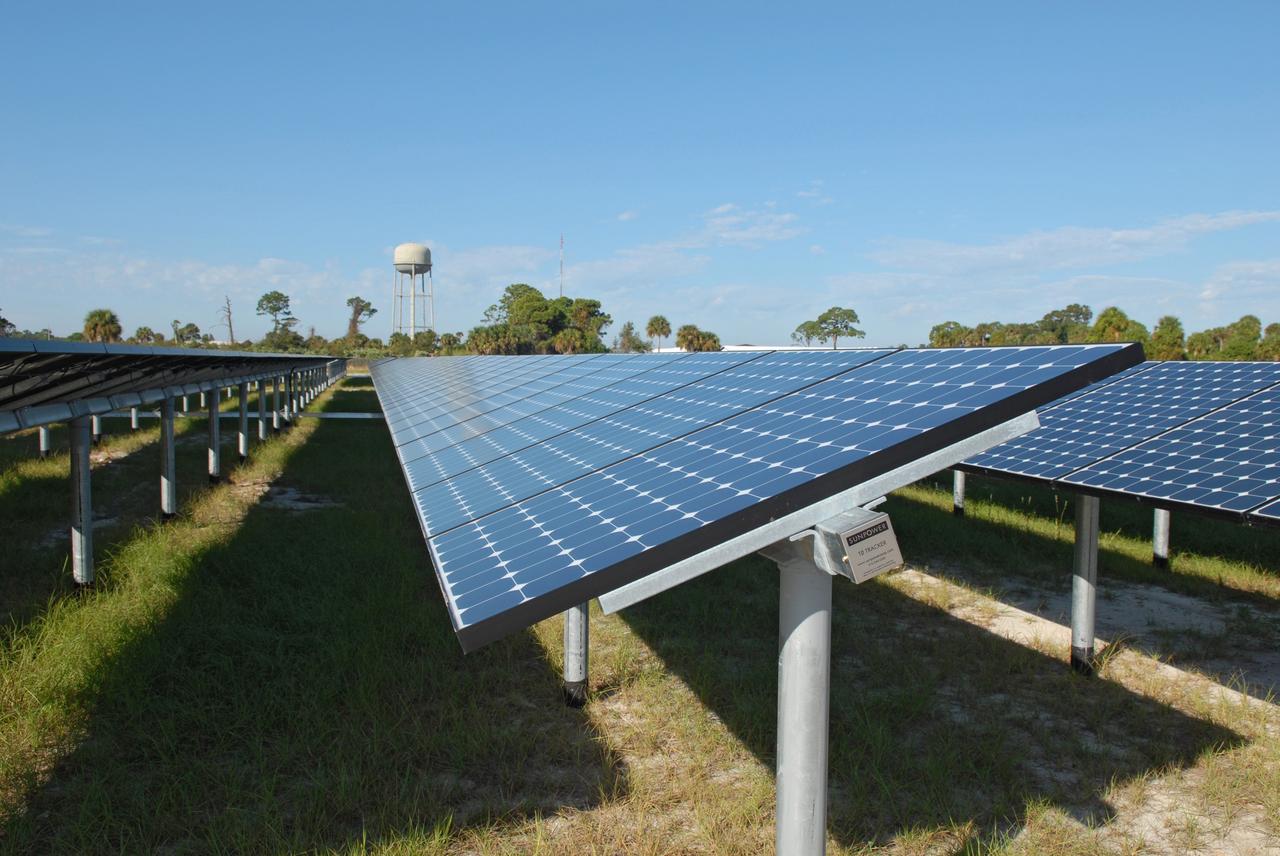
CAPE CANAVERAL, Fla. – NASA's first large-scale solar power generation facility is unveiled at NASA's Kennedy Space Center in Florida. Representatives from NASA, Florida Power & Light Company, or FPL, and SunPower Corporation formally commissioned the one-megawatt facility and announced plans to pursue a new research, development and demonstration project at Kennedy to advance America's use of renewable energy. The facility is the first element of a major renewable energy project currently under construction at Kennedy. The completed system features a fixed-tilt, ground-mounted solar power system designed and built by SunPower, along with SunPower solar panels. A 10-megawatt solar farm, which SunPower is building on nearby Kennedy property, will supply power to FPL's customers when it is completed in April 2010. Photo credit: NASA/Jim Grossmann
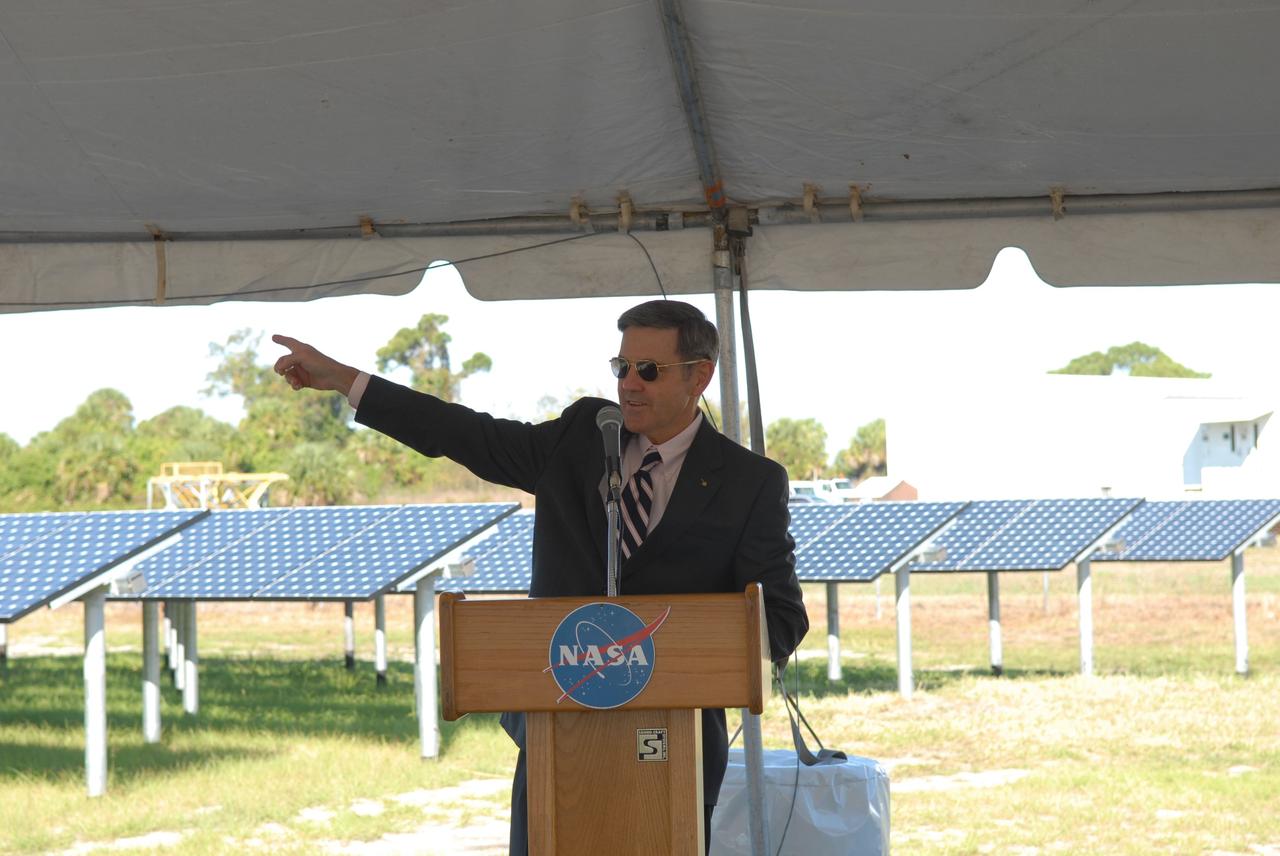
CAPE CANAVERAL, Fla. – NASA Kennedy Space Center Director Bob Cabana addresses the audience on hand for the unveiling of NASA's first large-scale solar power generation facility at Kennedy in Florida. Representatives from NASA, Florida Power & Light Company, or FPL, and SunPower Corporation formally commissioned the one-megawatt facility and announced plans to pursue a new research, development and demonstration project at Kennedy to advance America's use of renewable energy. The facility is the first element of a major renewable energy project currently under construction at Kennedy. The completed system features a fixed-tilt, ground-mounted solar power system designed and built by SunPower, along with SunPower solar panels. A 10-megawatt solar farm, which SunPower is building on nearby Kennedy property, will supply power to FPL's customers when it is completed in April 2010. Photo credit: NASA/Jim Grossmann
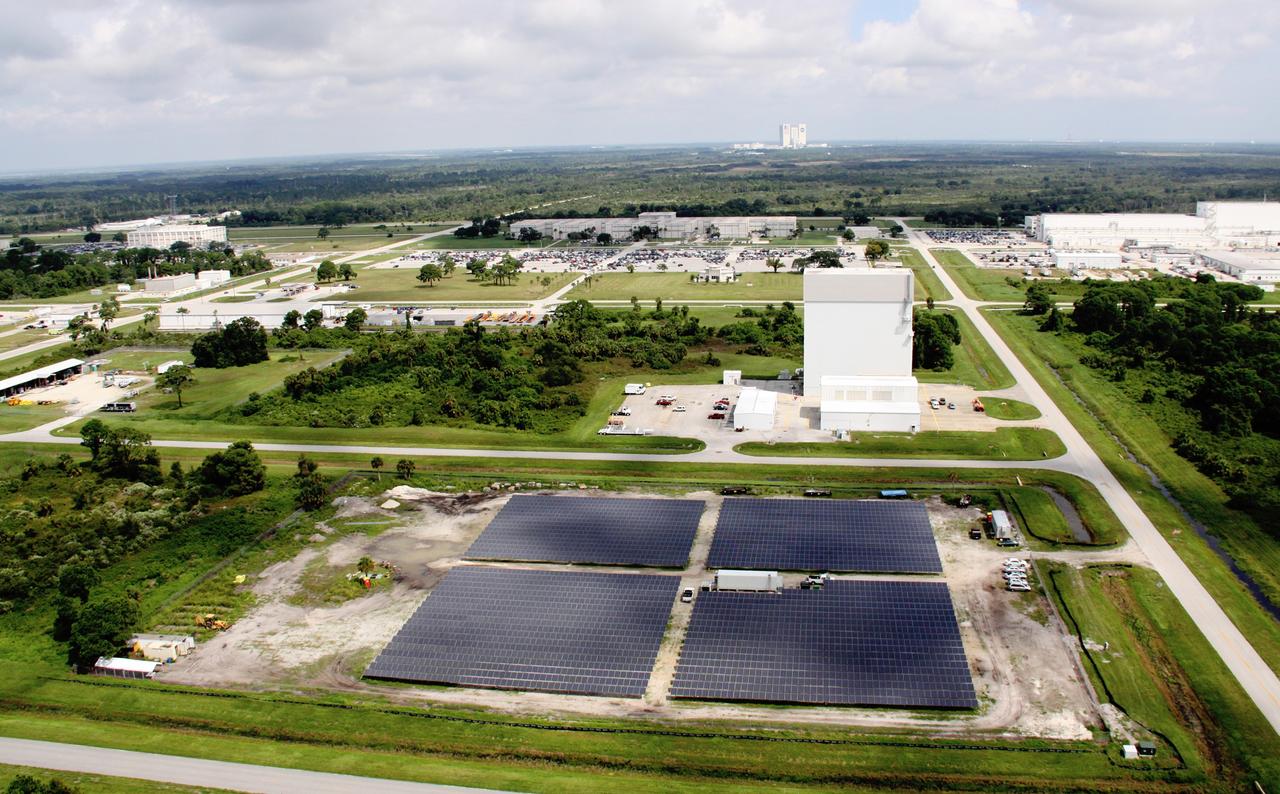
CAPE CANAVERAL, Fla. – An aerial view of the site in the Industrial Area of NASA's Kennedy Space Center in Florida where a solar power system is being built. The solar power systems are being constructed by NASA and Florida Power & Light Company as part of a public-private partnership that promotes a clean-energy future. This site located on 10 acres will produce about one megawatt of electricity for Kennedy to use. Photo credit: NASA/Troy Cryder
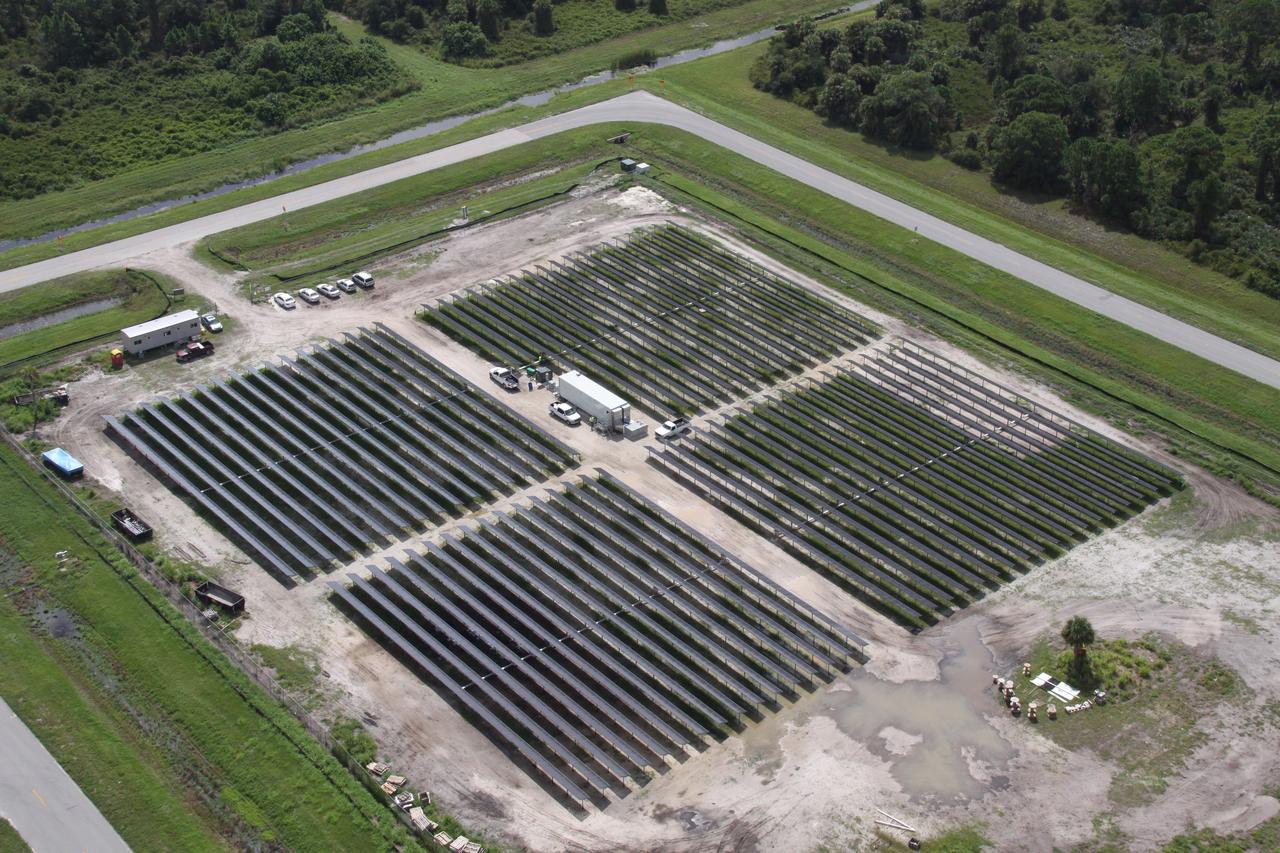
CAPE CANAVERAL, Fla. – An aerial view of the site in the Industrial Area of NASA's Kennedy Space Center in Florida where a solar power system is being built. The solar power systems are being constructed by NASA and Florida Power & Light Company as part of a public-private partnership that promotes a clean-energy future. This site located on 10 acres will produce about one megawatt of electricity for Kennedy to use. Photo credit: NASA/Troy Cryder

CAPE CANAVERAL, Fla. – An aerial view of the site in the Industrial Area of NASA's Kennedy Space Center in Florida where a solar power system will be built. The solar power systems are being constructed by NASA and Florida Power & Light Company as part of a public-private partnership that promotes a clean-energy future. A groundbreaking ceremony took place on May 27 at the Kennedy Space Center Visitor Complex. FPL, Florida's largest electric utility, will build and maintain two solar photovoltaic power generation systems at Kennedy. One will produce an estimated 10 megawatts of emissions-free power for FPL customers, which is enough energy to serve roughly 1,100 homes. The second, which will be built on the pictured location, is a one-megawatt solar power facility that will provide renewable energy directly to Kennedy. The FPL facilities at NASA will help provide Florida residents and America's space program with new sources of clean energy that will cut reliance on fossil fuels and improve the environment by reducing greenhouse gas emissions. The one megawatt facility also will help NASA meet its goal for use of power generated from renewable energy. Photo credit: NASA/Kim Shiflett
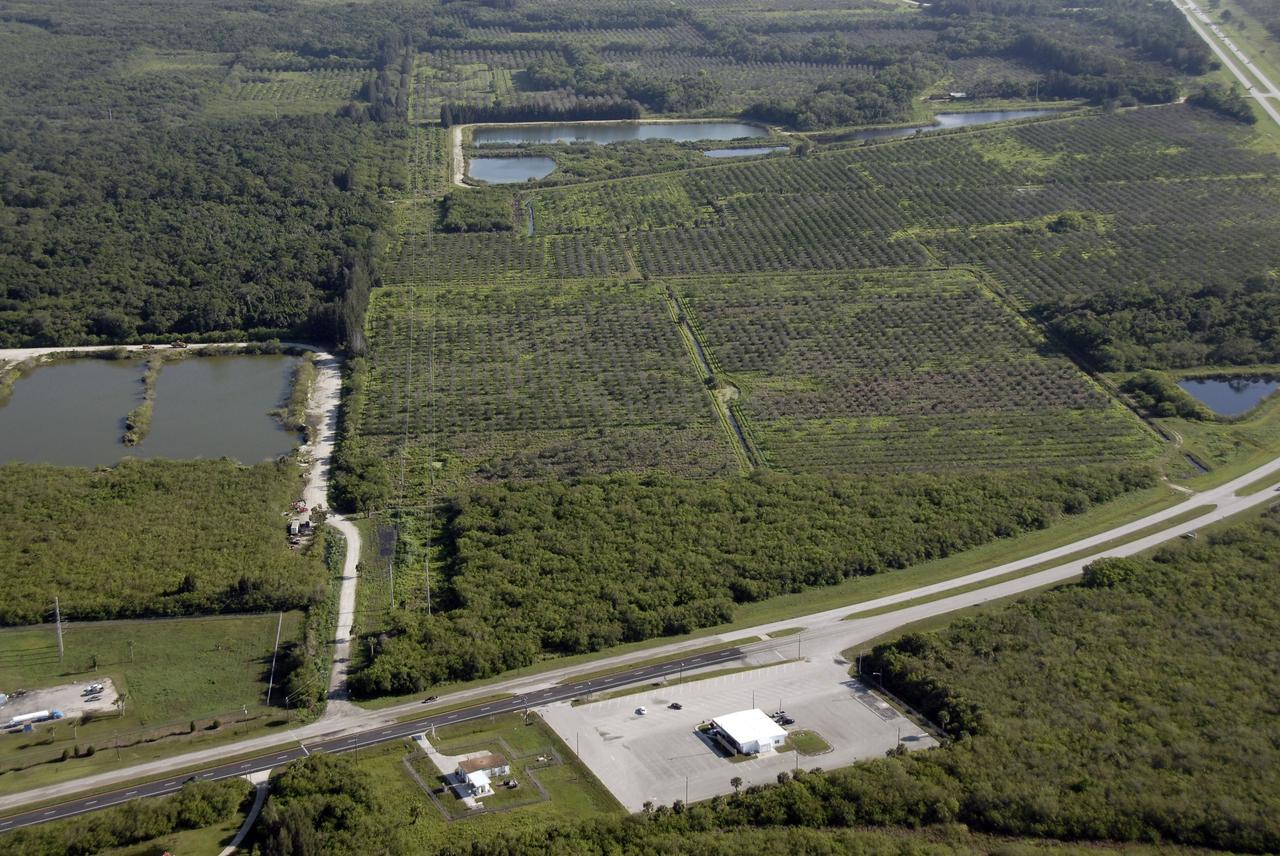
CAPE CANAVERAL, Fla. – An aerial view of the site on S.R. 3 on NASA's Kennedy Space Center in Florida where a solar power system will be built. The solar power systems are being constructed by NASA and Florida Power & Light Company as part of a public-private partnership that promotes a clean-energy future. A groundbreaking ceremony took place on May 27 at the Kennedy Space Center Visitor Complex. FPL, Florida's largest electric utility, will build and maintain two solar photovoltaic power generation systems at Kennedy. One, which will be built on the pictured location, will produce an estimated 10 megawatts of emissions-free power for FPL customers, which is enough energy to serve roughly 1,100 homes. The second is a one-megawatt solar power facility that will provide renewable energy directly to Kennedy. The FPL facilities at NASA will help provide Florida residents and America's space program with new sources of clean energy that will cut reliance on fossil fuels and improve the environment by reducing greenhouse gas emissions. The one megawatt facility also will help NASA meet its goal for use of power generated from renewable energy. Photo credit: NASA/Kim Shiflett
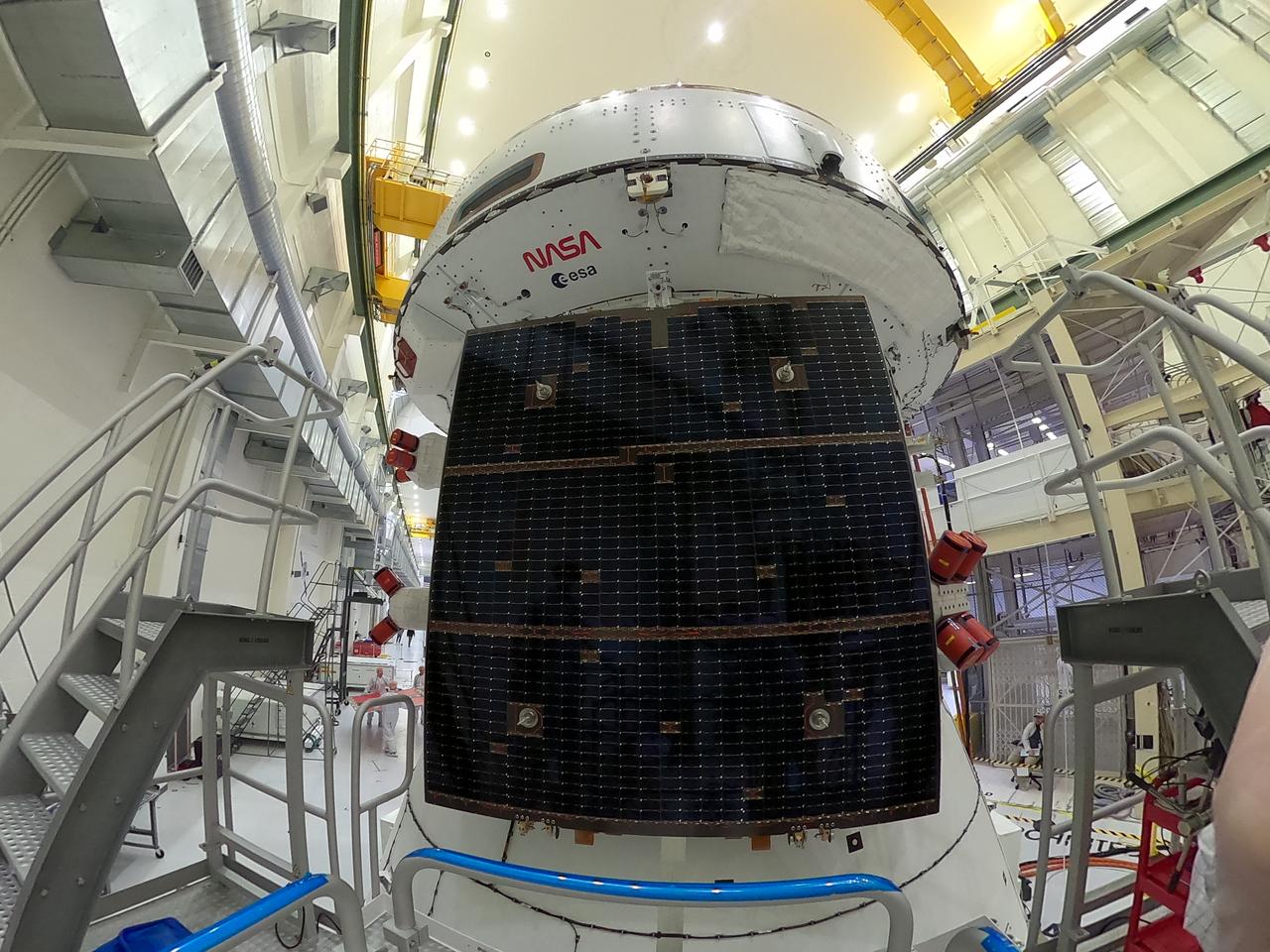
Technicians install four solar array wings on NASA’s Artemis II Orion spacecraft inside the Neil A. Armstrong Operations and Checkout Building at NASA’s Kennedy Space Center in Florida on Monday, March 3, 2025. Each solar array is nearly 23 feet long and can turn on two axes to remain aligned with the Sun for maximum power. Orion’s solar arrays, manufactured and installed by ESA (European Space Agency) and its contractor Airbus, will deliver power to the service module that provides propulsion, thermal control, and electrical power to the spacecraft, as well as air and water for the crew.
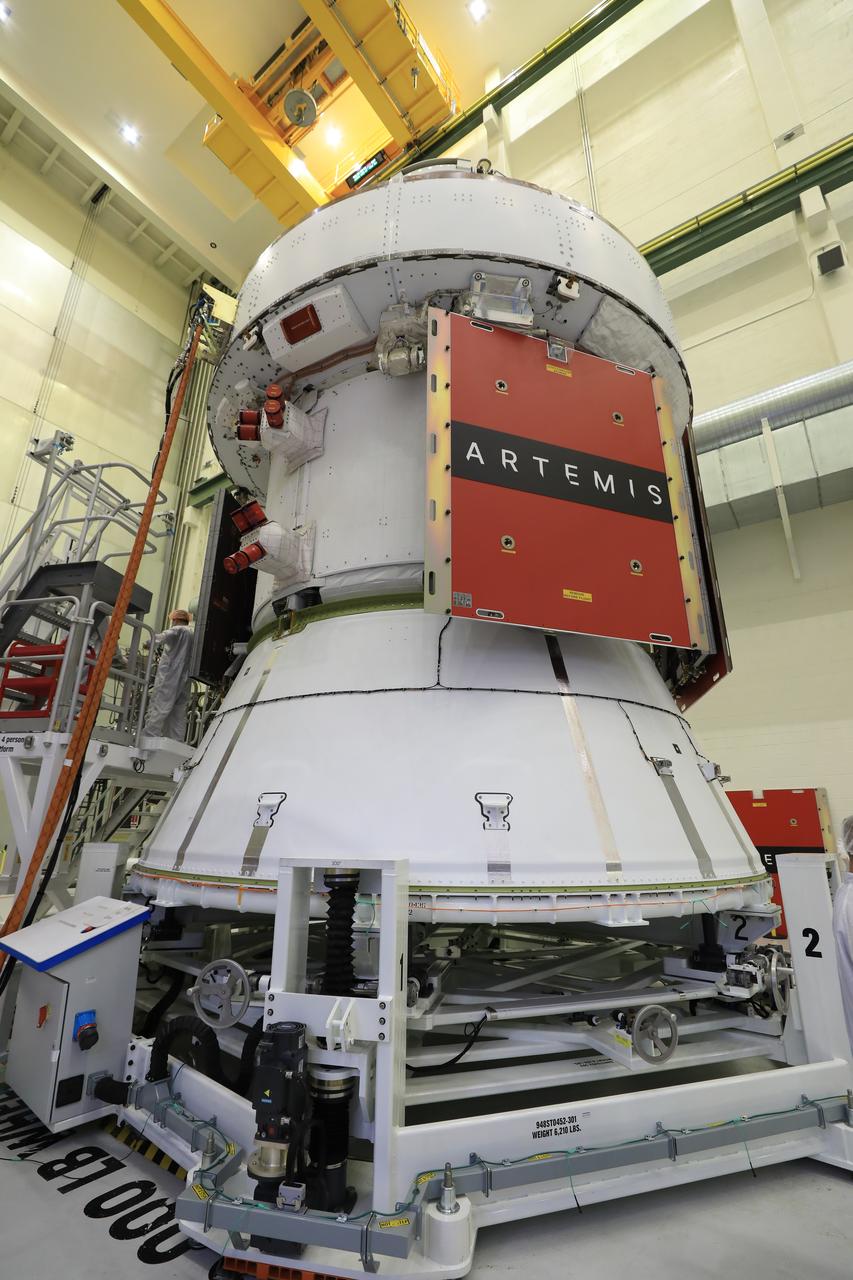
Technicians install four solar array wings on NASA’s Artemis II Orion spacecraft inside the Neil A. Armstrong Operations and Checkout Building at NASA’s Kennedy Space Center in Florida on Monday, March 3, 2025. Each solar array is nearly 23 feet long and can turn on two axes to remain aligned with the Sun for maximum power. Orion’s solar arrays, manufactured and installed by ESA (European Space Agency) and its contractor Airbus, will deliver power to the service module that provides propulsion, thermal control, and electrical power to the spacecraft, as well as air and water for the crew.
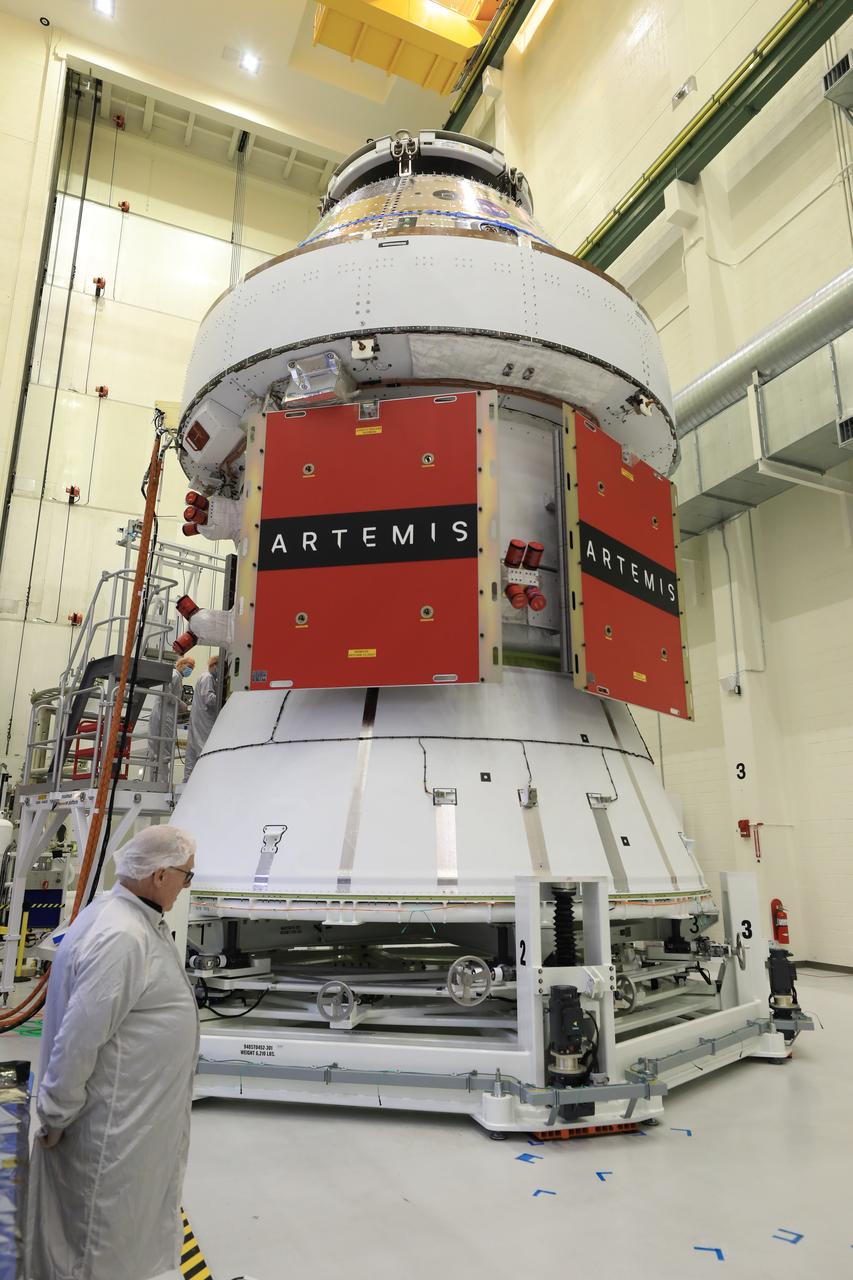
Technicians install four solar array wings on NASA’s Artemis II Orion spacecraft inside the Neil A. Armstrong Operations and Checkout Building at NASA’s Kennedy Space Center in Florida on Monday, March 3, 2025. Each solar array is nearly 23 feet long and can turn on two axes to remain aligned with the Sun for maximum power. Orion’s solar arrays, manufactured and installed by ESA (European Space Agency) and its contractor Airbus, will deliver power to the service module that provides propulsion, thermal control, and electrical power to the spacecraft, as well as air and water for the crew.
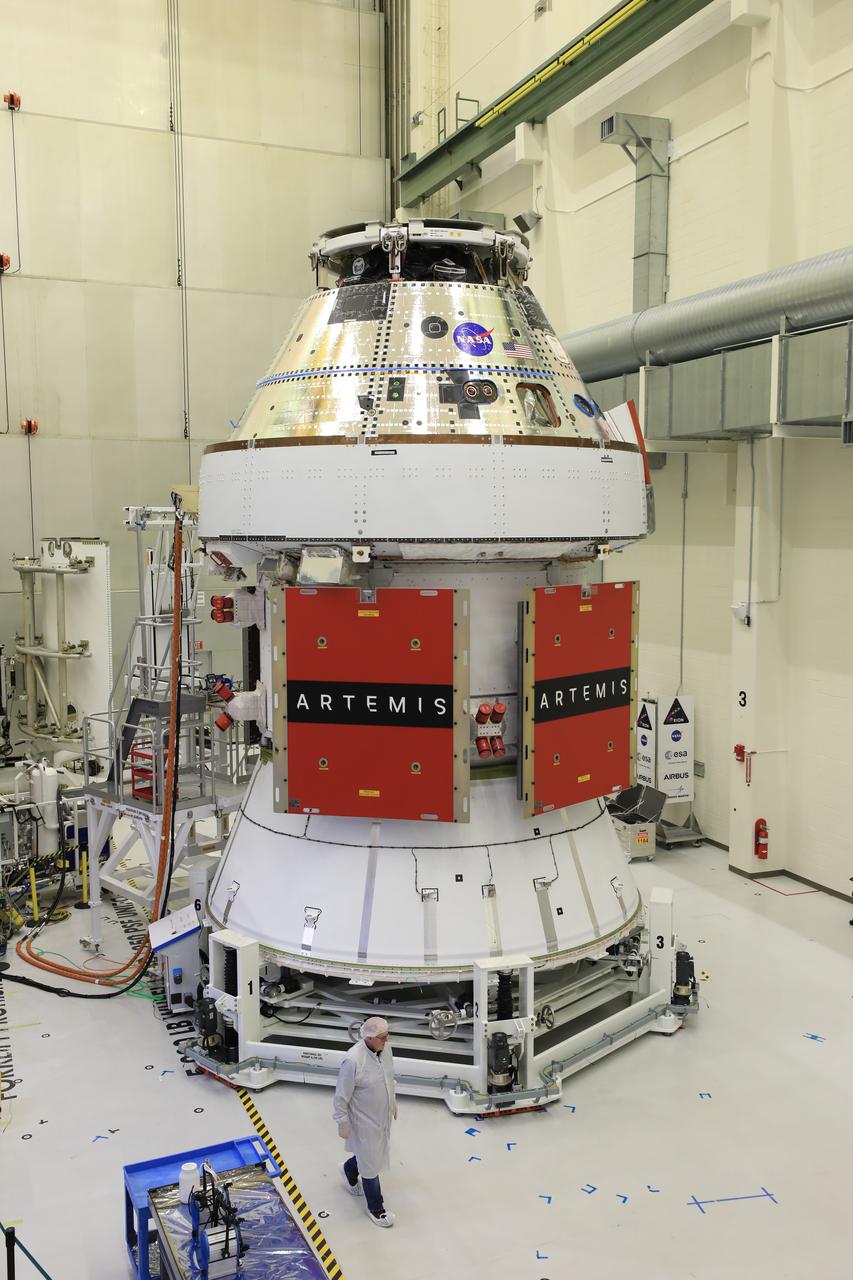
Technicians install four solar array wings on NASA’s Artemis II Orion spacecraft inside the Neil A. Armstrong Operations and Checkout Building at NASA’s Kennedy Space Center in Florida on Monday, March 3, 2025. Each solar array is nearly 23 feet long and can turn on two axes to remain aligned with the Sun for maximum power. Orion’s solar arrays, manufactured and installed by ESA (European Space Agency) and its contractor Airbus, will deliver power to the service module that provides propulsion, thermal control, and electrical power to the spacecraft, as well as air and water for the crew.
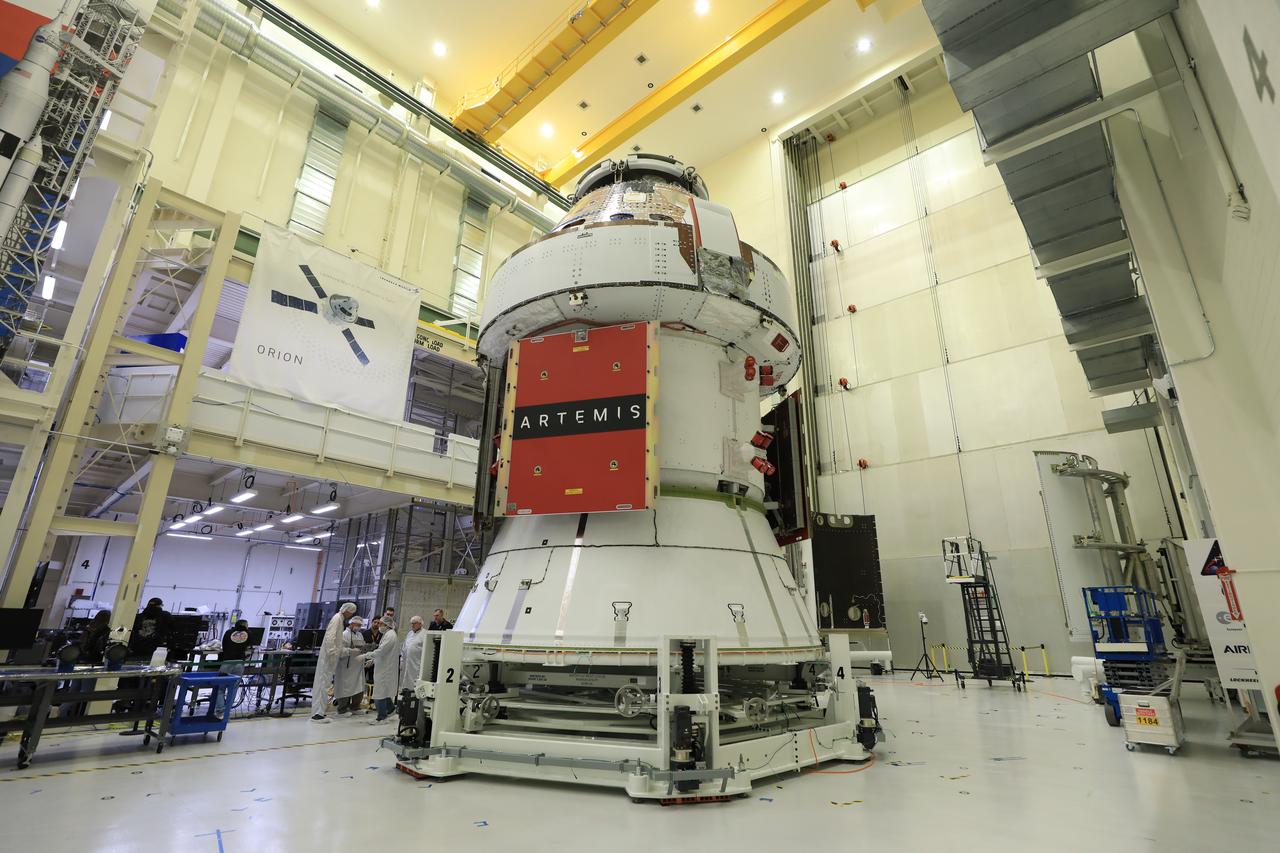
Technicians install four solar array wings on NASA’s Artemis II Orion spacecraft inside the Neil A. Armstrong Operations and Checkout Building at NASA’s Kennedy Space Center in Florida on Monday, March 3, 2025. Each solar array is nearly 23 feet long and can turn on two axes to remain aligned with the Sun for maximum power. Orion’s solar arrays, manufactured and installed by ESA (European Space Agency) and its contractor Airbus, will deliver power to the service module that provides propulsion, thermal control, and electrical power to the spacecraft, as well as air and water for the crew.
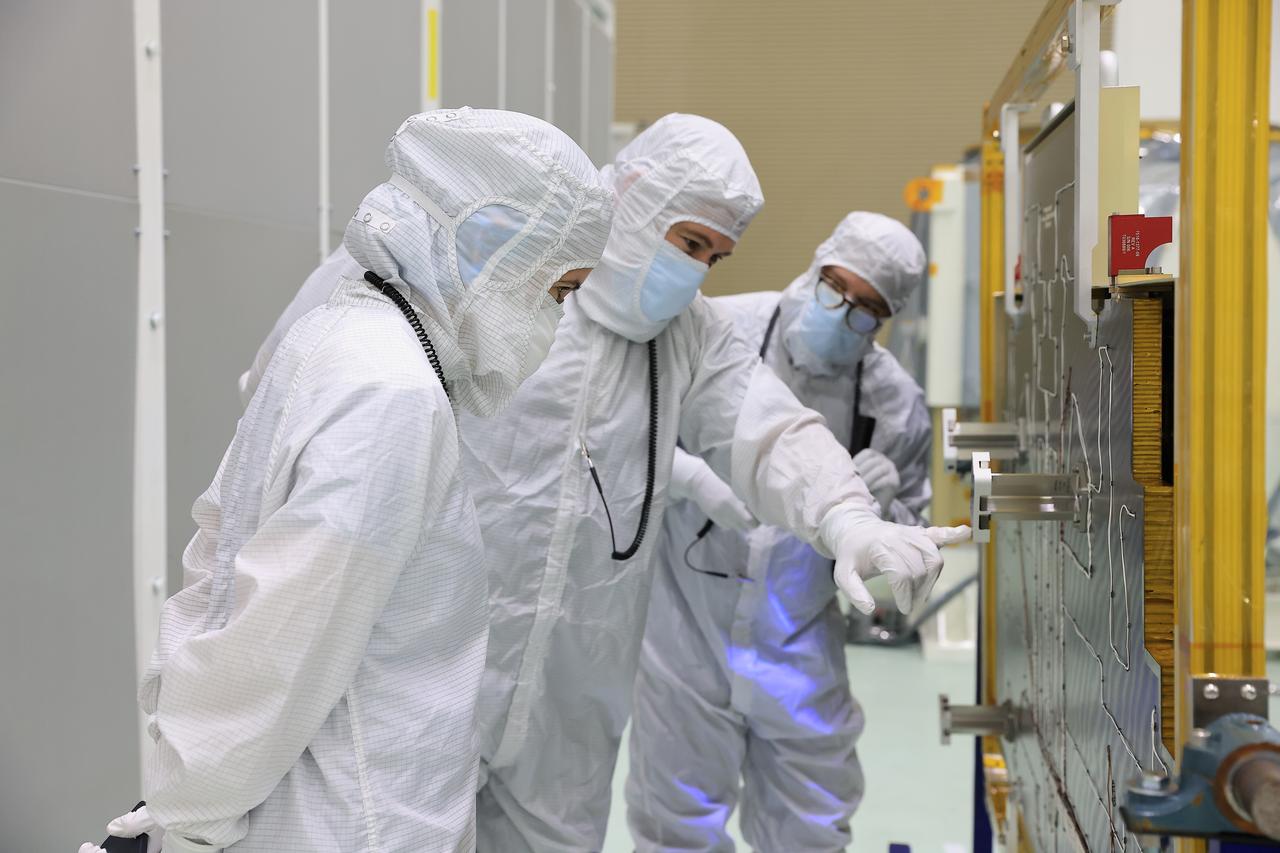
Technicians at the Astrotech Space Operations Facility near NASA’s Kennedy Space Center in Florida install the two-panel solar array on Thursday, July 17, 2025, that will help power the agency’s IMAP (Interstellar Mapping and Acceleration Probe) observatory on its upcoming journey one million miles away from Earth. Each panel of the solar array, located on the top of IMAP, consists of 16 strings of solar cells, with 36 cells per string, and combined will convert sunlight into 500 watts of power, more than enough for the observatory, which as a system uses less power than five 100-watt incandescent light bulbs.