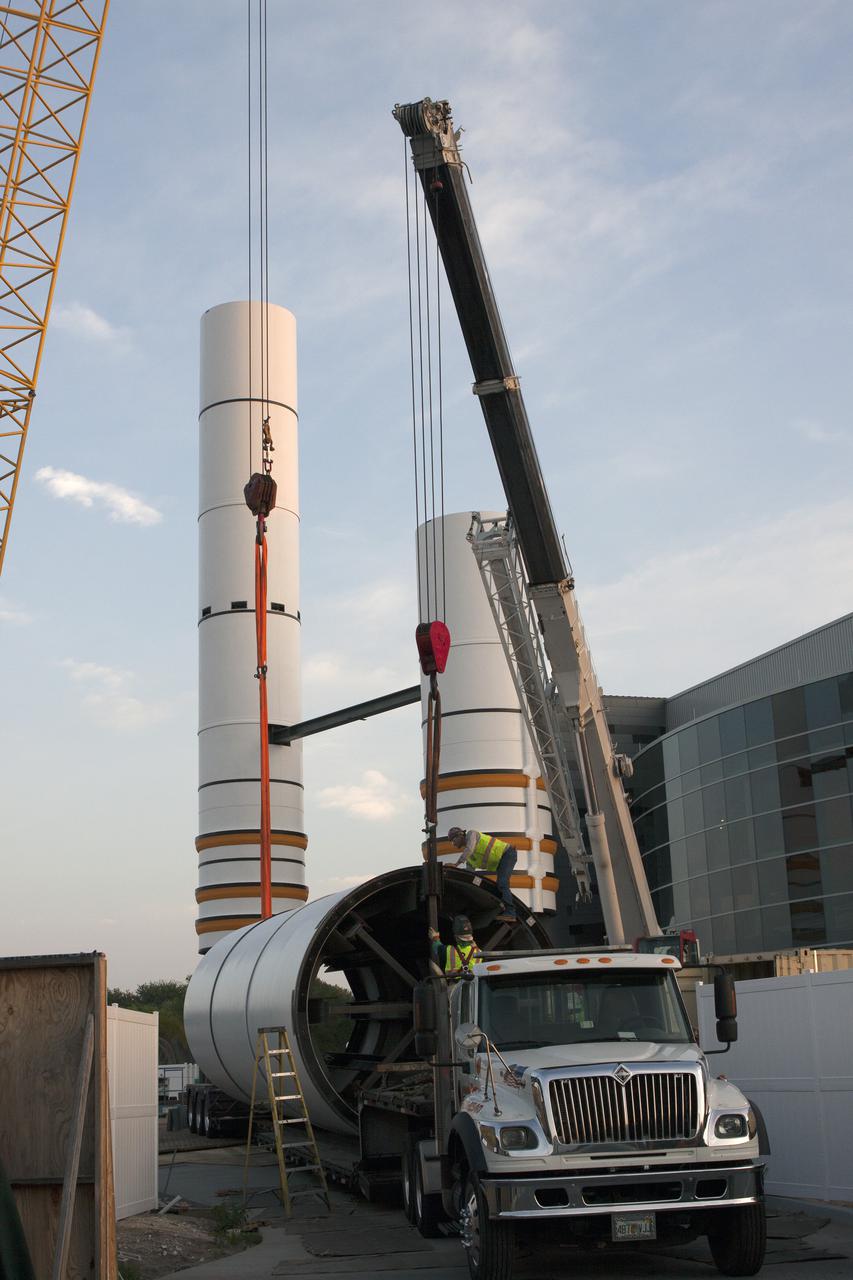
CAPE CANAVERAL, Fla. – Workers prepare to lift a segment for a set of twin, full-size replica Solid Rocket Boosters SRBs in front of the Space Shuttle Atlantis exhibit under construction at the Kennedy Space Center Visitor Complex in Florida. Atlantis is housed in the building behind the SRB stack. An external tank replica will be added later to the middle of the SRBs to complete the display. The SRBs stand 150 feet tall, while the external tank will reach 184 feet when it is finished. The shuttle was mounted to the stack and depended on the power of the SRBs to lift it off the launch pad and start it on its way to space. The external tank was loaded with liquid propellants for the shuttle's three main engines. Photo credit: NASA_Jim Grossmann
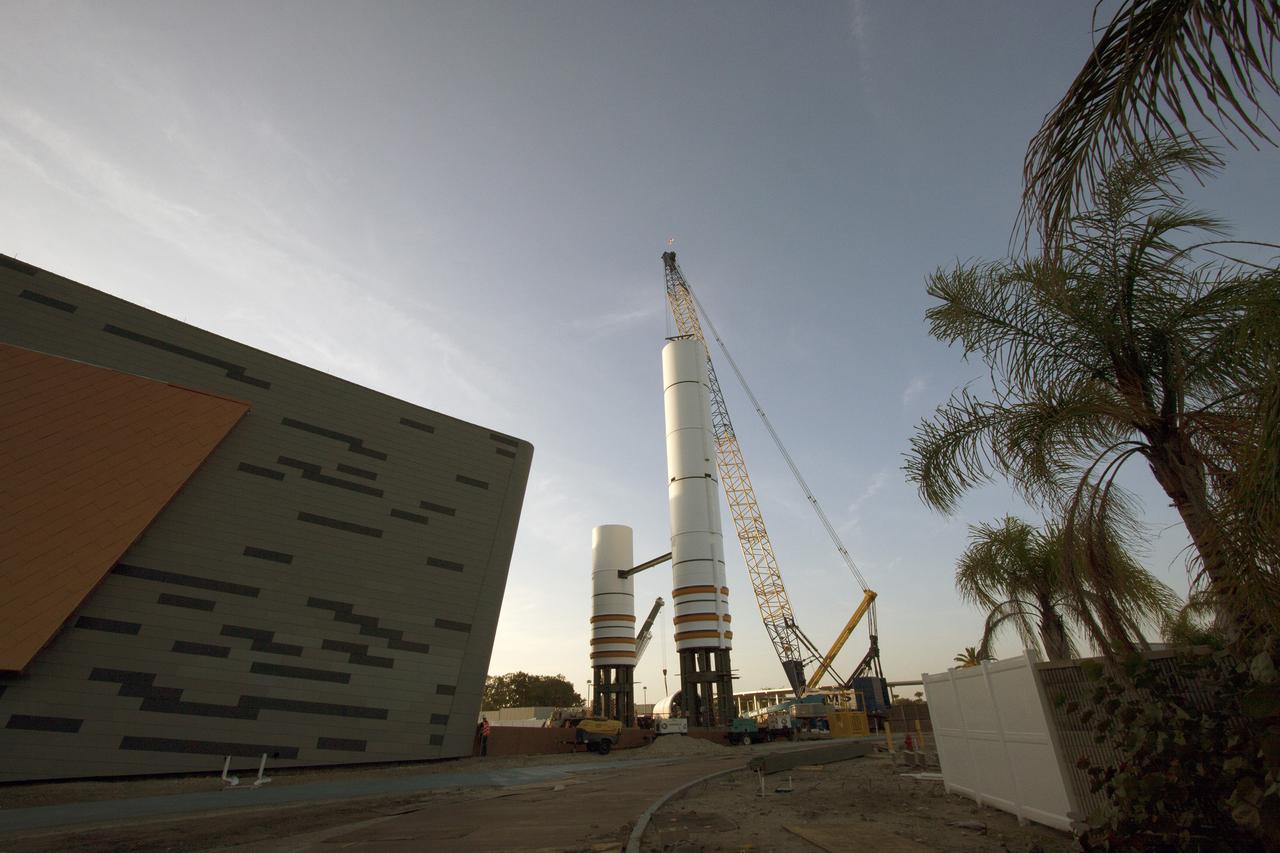
CAPE CANAVERAL, Fla. – Workers prepare to lift a segment for a set of twin, full-size replica Solid Rocket Boosters SRBs in front of the Space Shuttle Atlantis exhibit under construction at the Kennedy Space Center Visitor Complex in Florida. Atlantis is housed in the building behind the SRB stack. An external tank replica will be added later to the middle of the SRBs to complete the display. The SRBs stand 150 feet tall, while the external tank will reach 184 feet when it is finished. The shuttle was mounted to the stack and depended on the power of the SRBs to lift it off the launch pad and start it on its way to space. The external tank was loaded with liquid propellants for the shuttle's three main engines. Photo credit: NASA_Jim Grossmann
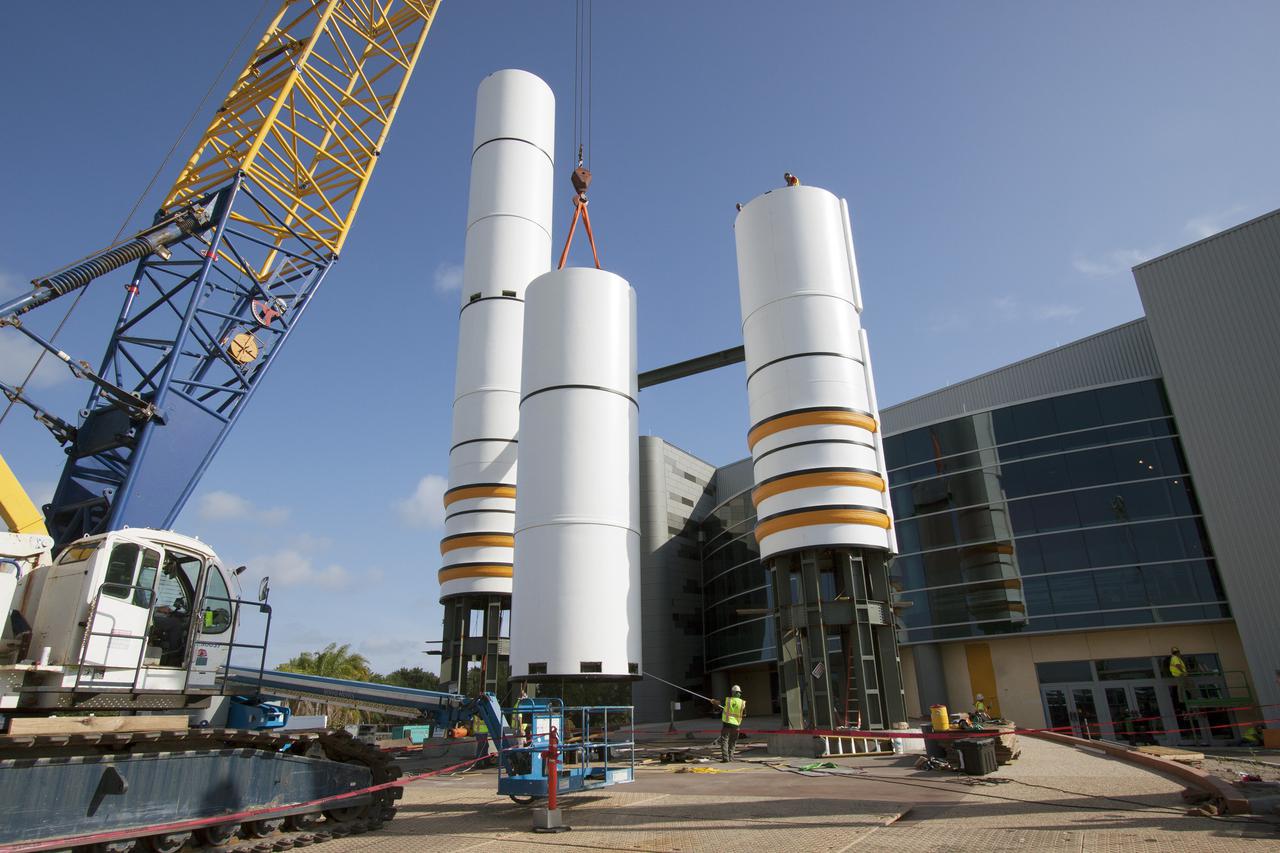
CAPE CANAVERAL, Fla. – A crane lifts a segment for a set of twin, full-size replica Solid Rocket Boosters SRBs in front of the Space Shuttle Atlantis exhibit under construction at the Kennedy Space Center Visitor Complex in Florida. Atlantis is housed in the building behind the SRB stack. An external tank replica will be added later to the middle of the SRBs to complete the display. The SRBs stand 150 feet tall, while the external tank will reach 184 feet when it is finished. The shuttle was mounted to the stack and depended on the power of the SRBs to lift it off the launch pad and start it on its way to space. The external tank was loaded with liquid propellants for the shuttle's three main engines. Photo credit: NASA_Jim Grossmann
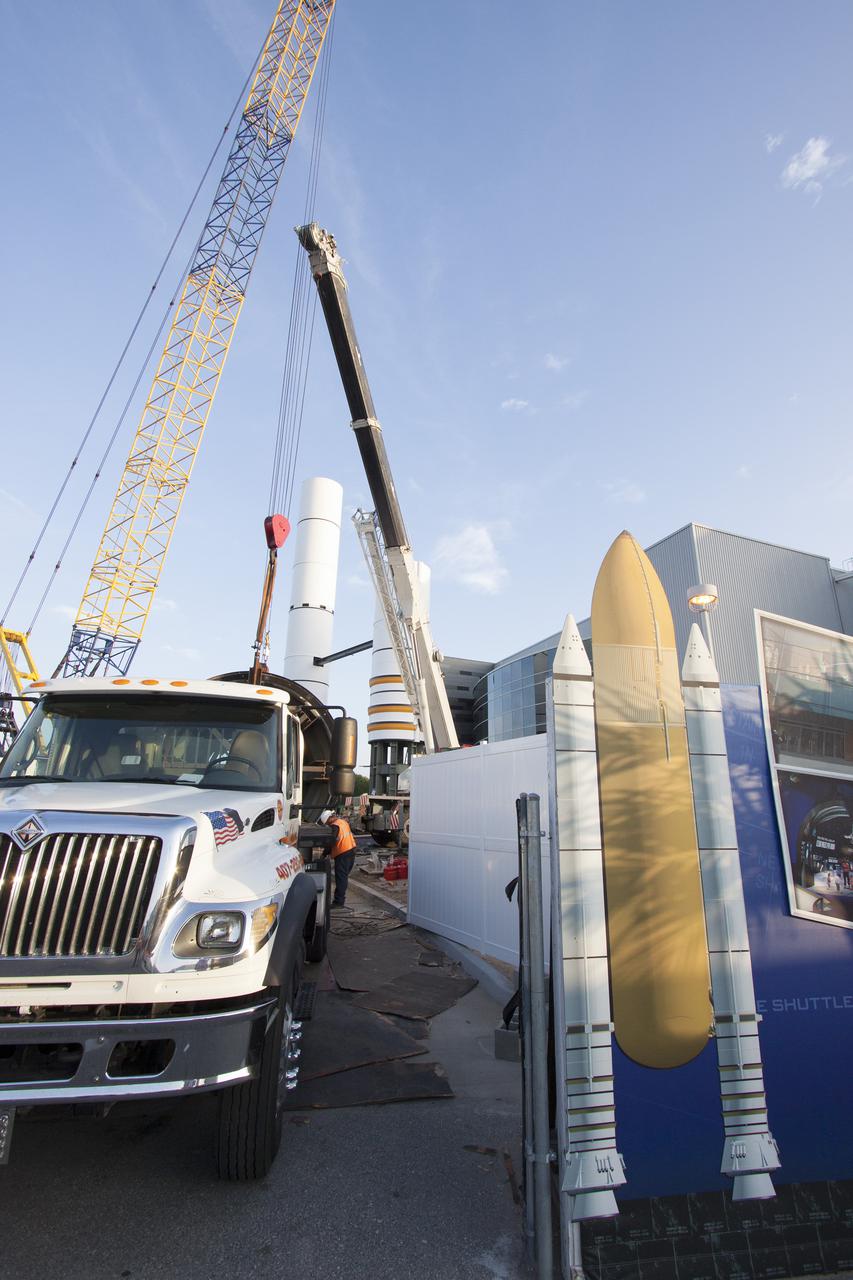
CAPE CANAVERAL, Fla. – Workers prepare to lift a segment for a set of twin, full-size replica Solid Rocket Boosters SRBs in front of the Space Shuttle Atlantis exhibit under construction at the Kennedy Space Center Visitor Complex in Florida. Atlantis is housed in the building behind the SRB stack. An external tank replica will be added later to the middle of the SRBs to complete the display. The SRBs stand 150 feet tall, while the external tank will reach 184 feet when it is finished. The shuttle was mounted to the stack and depended on the power of the SRBs to lift it off the launch pad and start it on its way to space. The external tank was loaded with liquid propellants for the shuttle's three main engines. Photo credit: NASA_Jim Grossmann
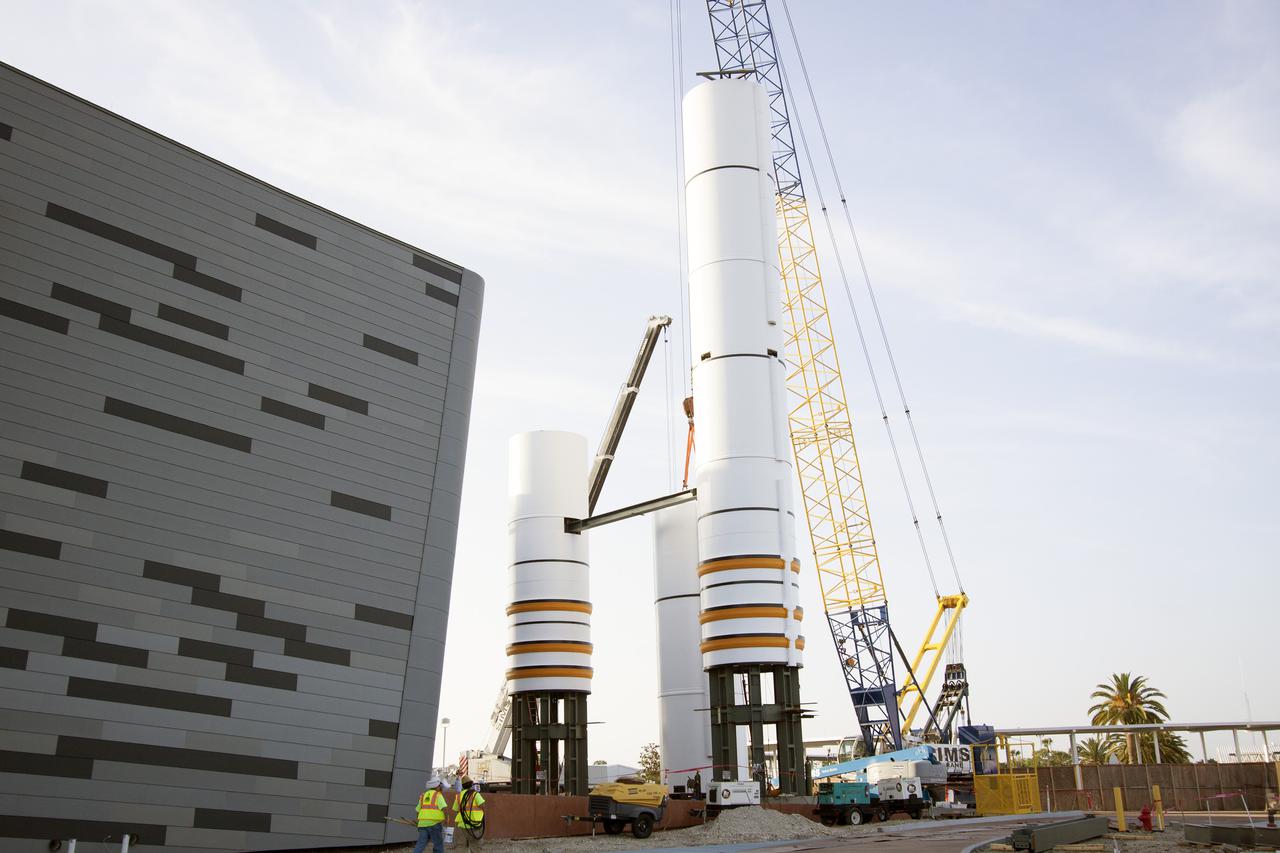
CAPE CANAVERAL, Fla. – A crane lifts a segment for a set of twin, full-size replica Solid Rocket Boosters SRBs in front of the Space Shuttle Atlantis exhibit under construction at the Kennedy Space Center Visitor Complex in Florida. Atlantis is housed in the building behind the SRB stack. An external tank replica will be added later to the middle of the SRBs to complete the display. The SRBs stand 150 feet tall, while the external tank will reach 184 feet when it is finished. The shuttle was mounted to the stack and depended on the power of the SRBs to lift it off the launch pad and start it on its way to space. The external tank was loaded with liquid propellants for the shuttle's three main engines. Photo credit: NASA_Jim Grossmann
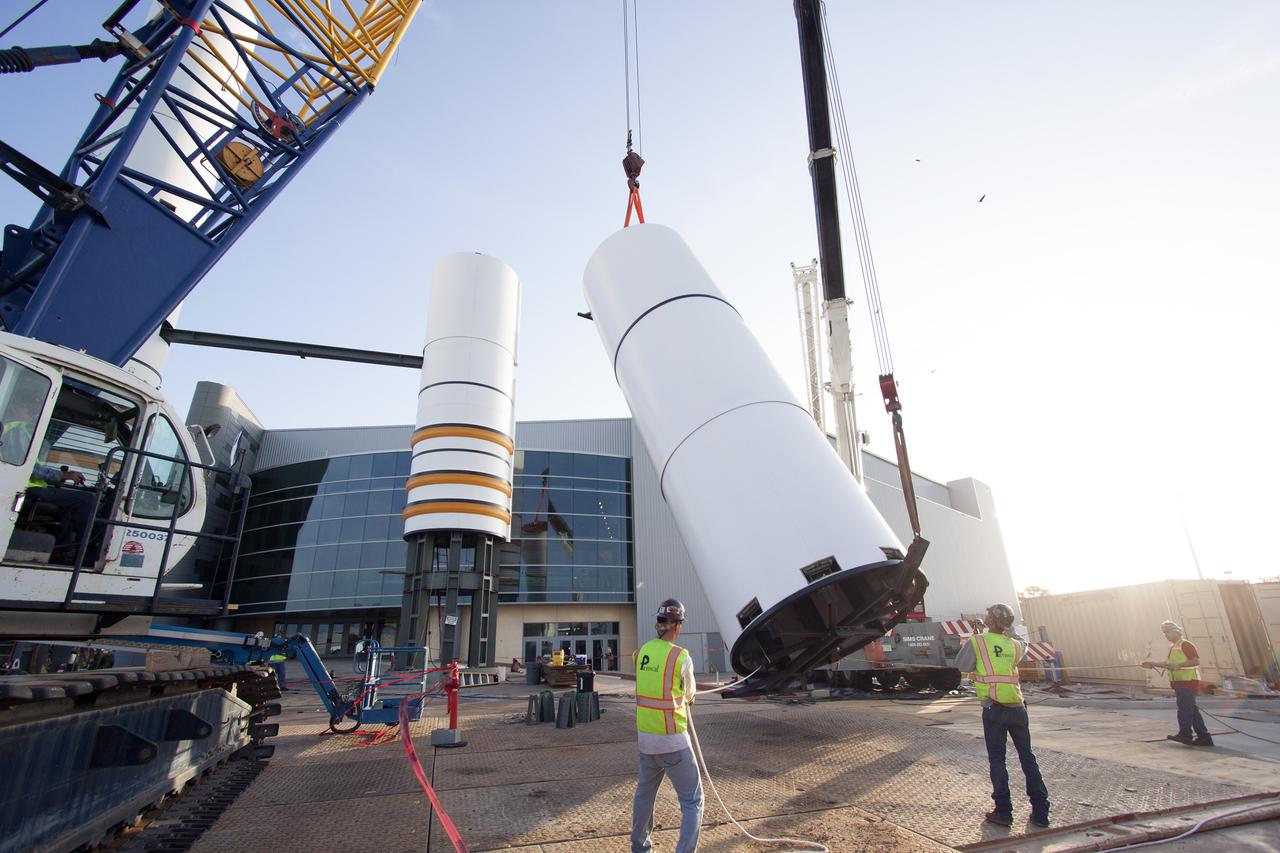
CAPE CANAVERAL, Fla. – A crane lifts a segment for a set of twin, full-size replica Solid Rocket Boosters SRBs in front of the Space Shuttle Atlantis exhibit under construction at the Kennedy Space Center Visitor Complex in Florida. Atlantis is housed in the building behind the SRB stack. An external tank replica will be added later to the middle of the SRBs to complete the display. The SRBs stand 150 feet tall, while the external tank will reach 184 feet when it is finished. The shuttle was mounted to the stack and depended on the power of the SRBs to lift it off the launch pad and start it on its way to space. The external tank was loaded with liquid propellants for the shuttle's three main engines. Photo credit: NASA_Jim Grossmann
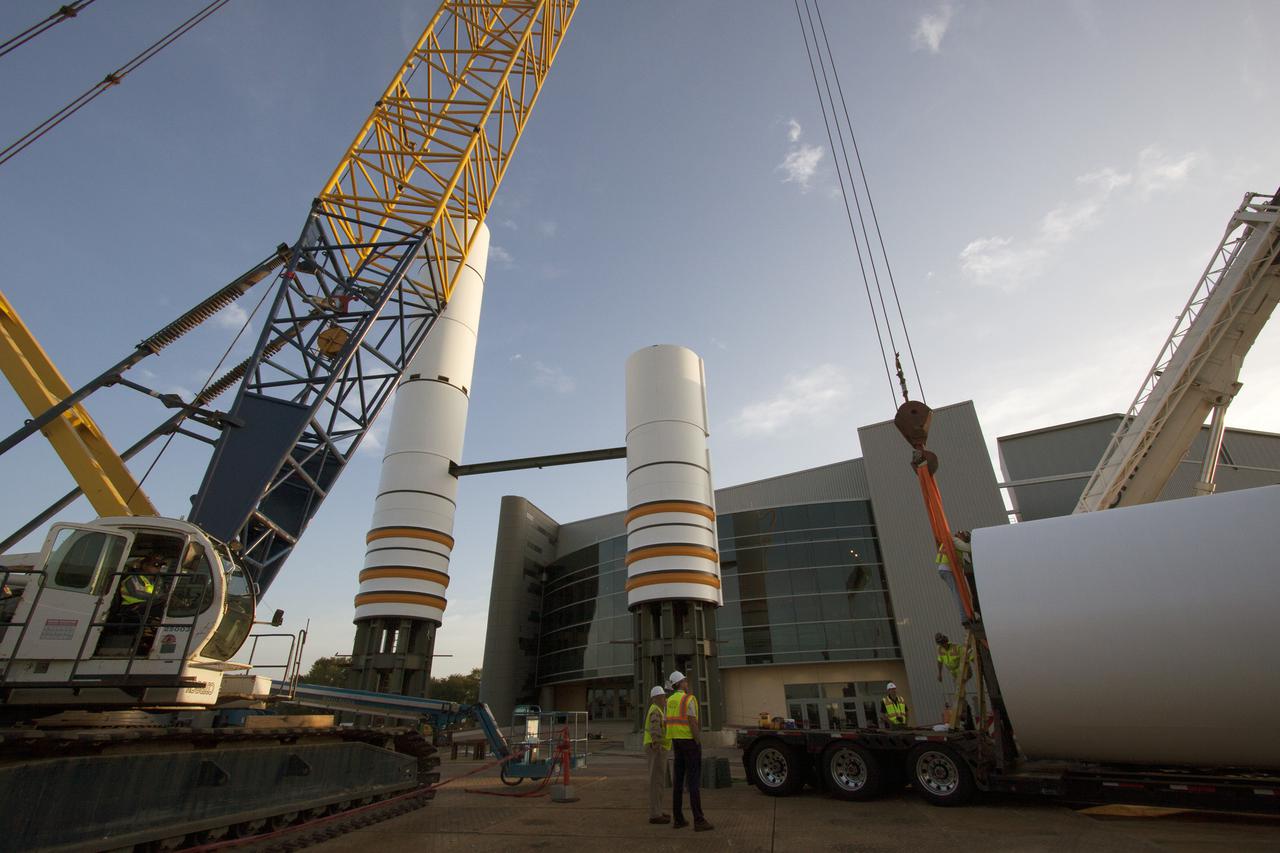
CAPE CANAVERAL, Fla. – Workers prepare to lift a segment for a set of twin, full-size replica Solid Rocket Boosters SRBs in front of the Space Shuttle Atlantis exhibit under construction at the Kennedy Space Center Visitor Complex in Florida. Atlantis is housed in the building behind the SRB stack. An external tank replica will be added later to the middle of the SRBs to complete the display. The SRBs stand 150 feet tall, while the external tank will reach 184 feet when it is finished. The shuttle was mounted to the stack and depended on the power of the SRBs to lift it off the launch pad and start it on its way to space. The external tank was loaded with liquid propellants for the shuttle's three main engines. Photo credit: NASA_Jim Grossmann
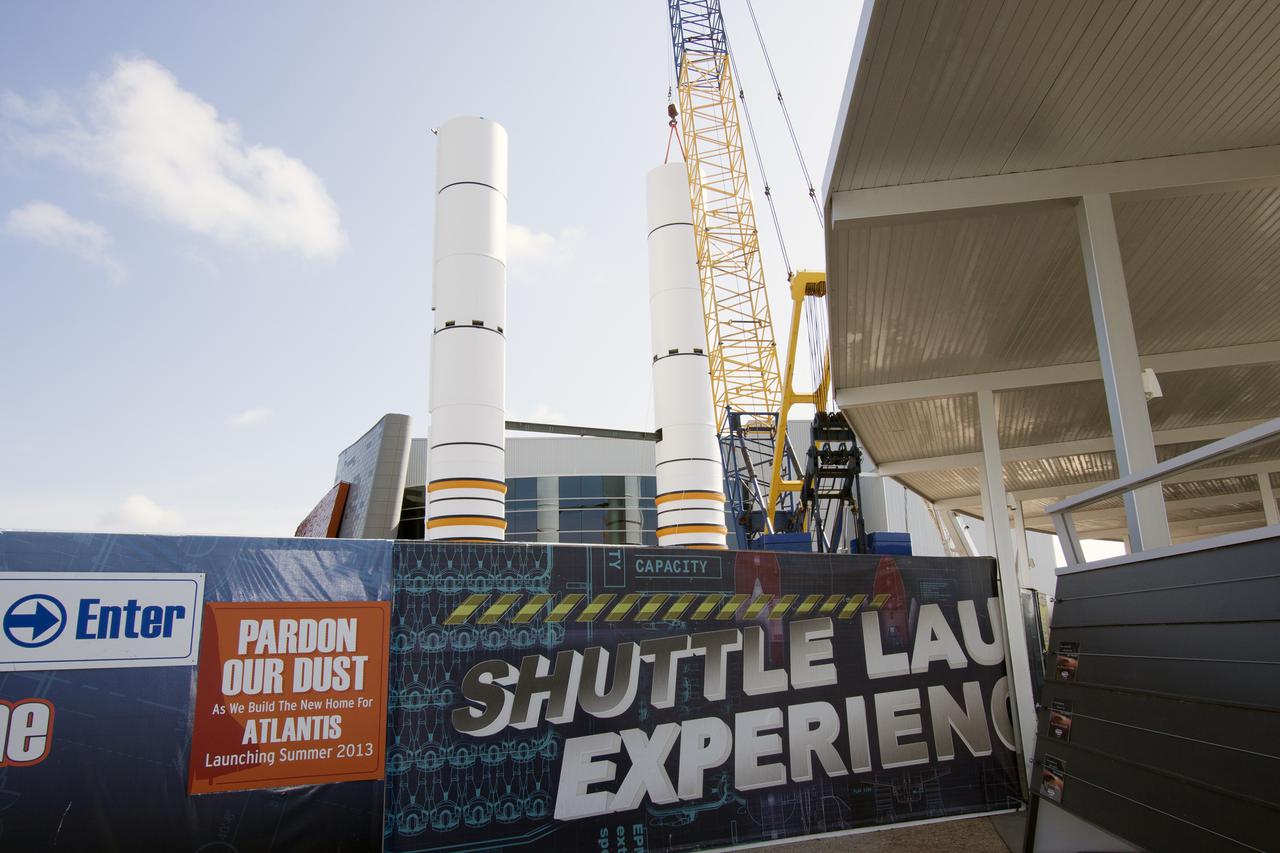
CAPE CANAVERAL, Fla. – A crane lifts a segment for a set of twin, full-size replica Solid Rocket Boosters SRBs in front of the Space Shuttle Atlantis exhibit under construction at the Kennedy Space Center Visitor Complex in Florida. Atlantis is housed in the building behind the SRB stack. An external tank replica will be added later to the middle of the SRBs to complete the display. The SRBs stand 150 feet tall, while the external tank will reach 184 feet when it is finished. The shuttle was mounted to the stack and depended on the power of the SRBs to lift it off the launch pad and start it on its way to space. The external tank was loaded with liquid propellants for the shuttle's three main engines. Photo credit: NASA_Jim Grossmann
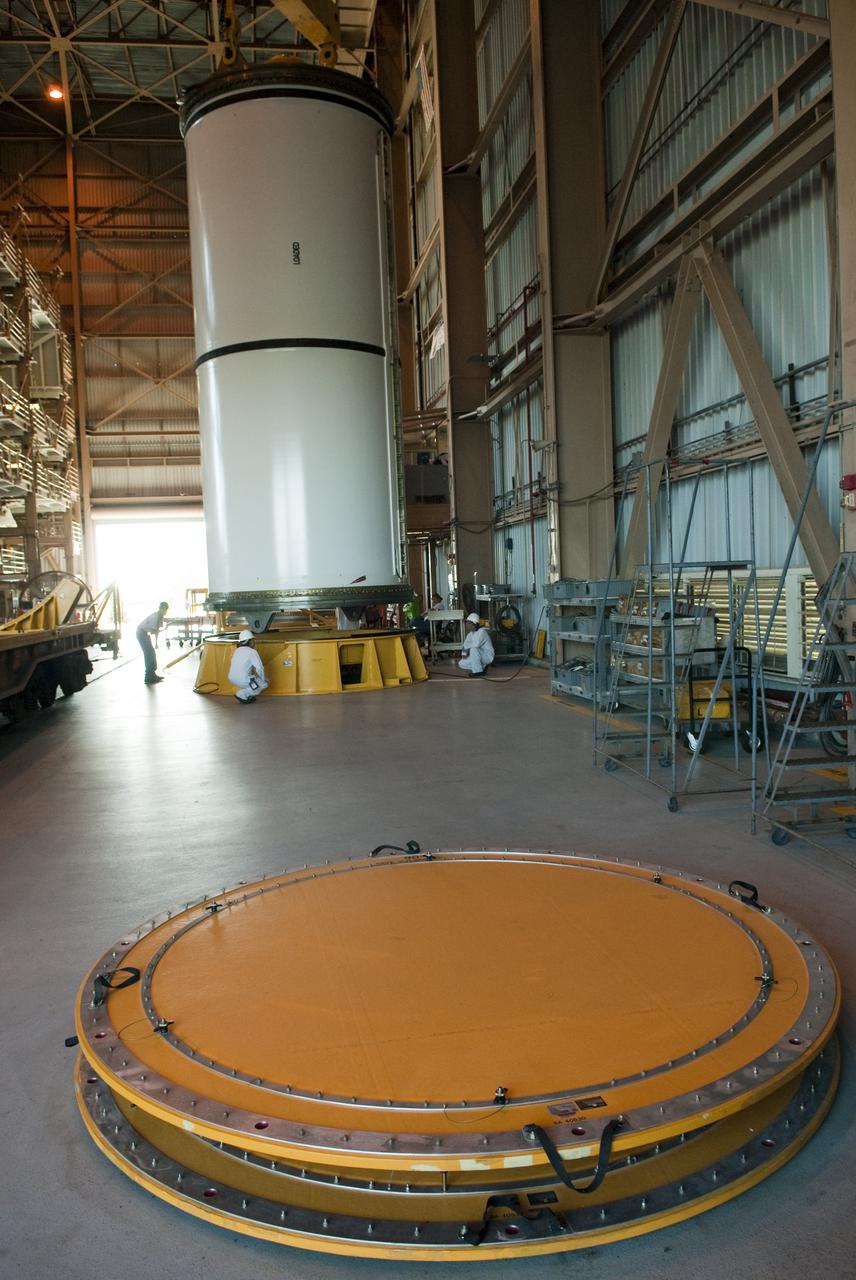
CAPE CANAVERAL, Fla. -- Under the watchful eyes of technicians, the solid rocket booster segment is lowered onto a work stand in the Rotation, Processing and Surge Facility at NASA's Kennedy Space Center in Florida. The segments will be used for space shuttle Atlantis on what currently is planned as the 'launch on need,' or potential rescue mission for the final shuttle flight, Endeavour's STS-134 mission. For information, visit www.nasa.gov_shuttle. Photo credit: NASA_Cory Huston
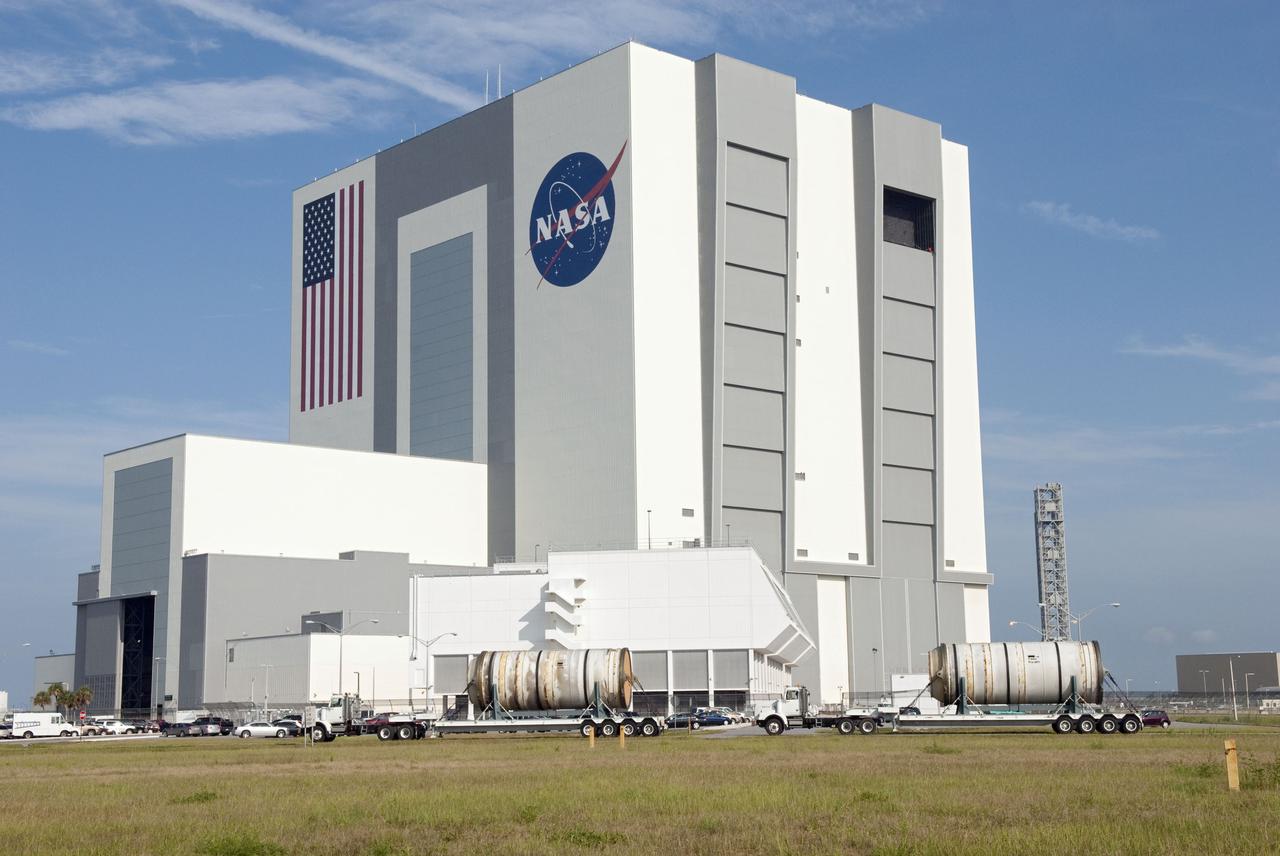
CAPE CANAVERAL, Fla. -- At NASA's Kennedy Space Center in Florida, spent solid rocket booster segments used for the STS-132 mission are being transported from Hangar AF to the Locomotive Maintenance Facility. They will be loaded onto railcars and returned to the ATK solid rocket booster plant in Promontory, Utah. Photo credit: NASA_Jim Grossmann
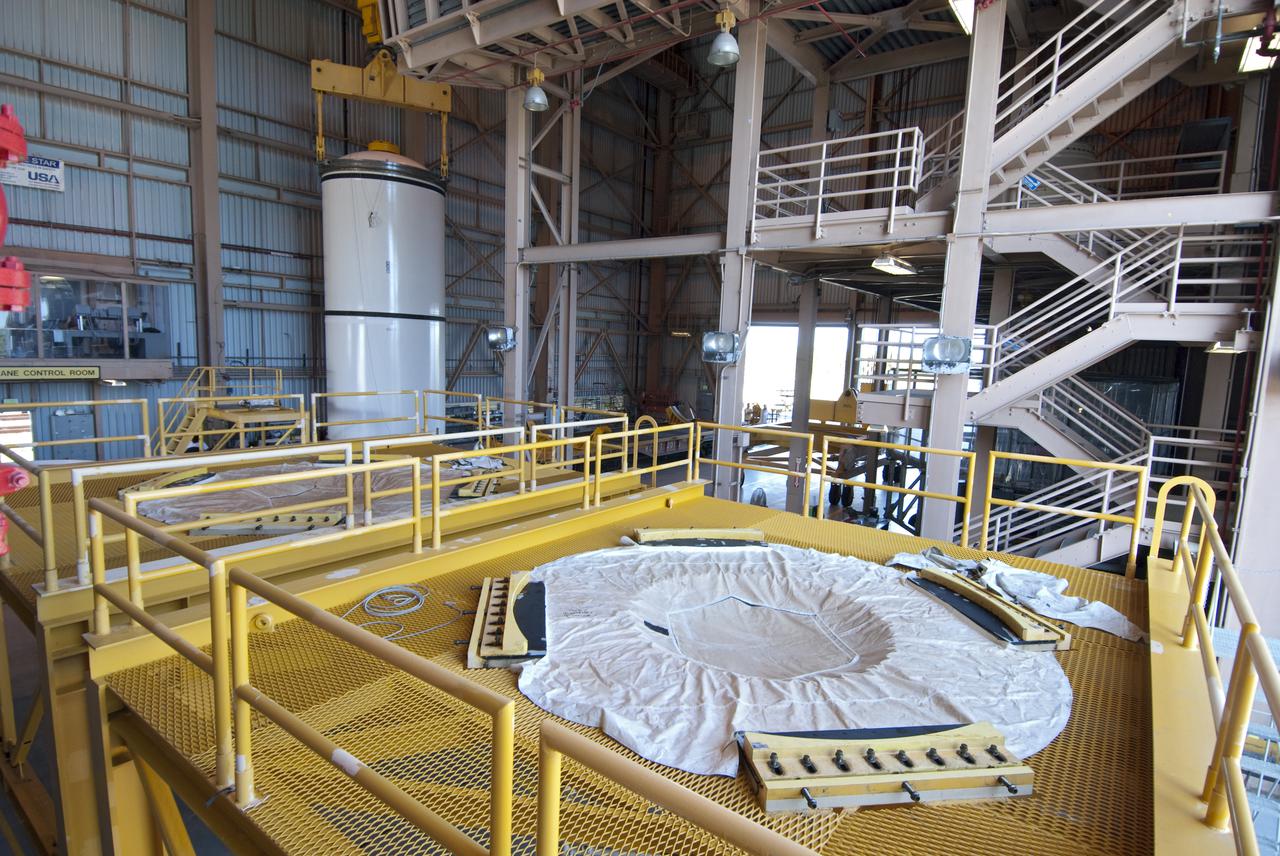
CAPE CANAVERAL, Fla. -- Transportation and storage pallets in the Rotation, Processing and Surge Facility at NASA's Kennedy Space Center in Florida await the arrival of the final solid rocket booster segments. The segments will be used for space shuttle Atlantis on what currently is planned as the 'launch on need,' or potential rescue mission for the final shuttle flight, Endeavour's STS-134 mission. For information, visit www.nasa.gov_shuttle. Photo credit: NASA_Cory Huston
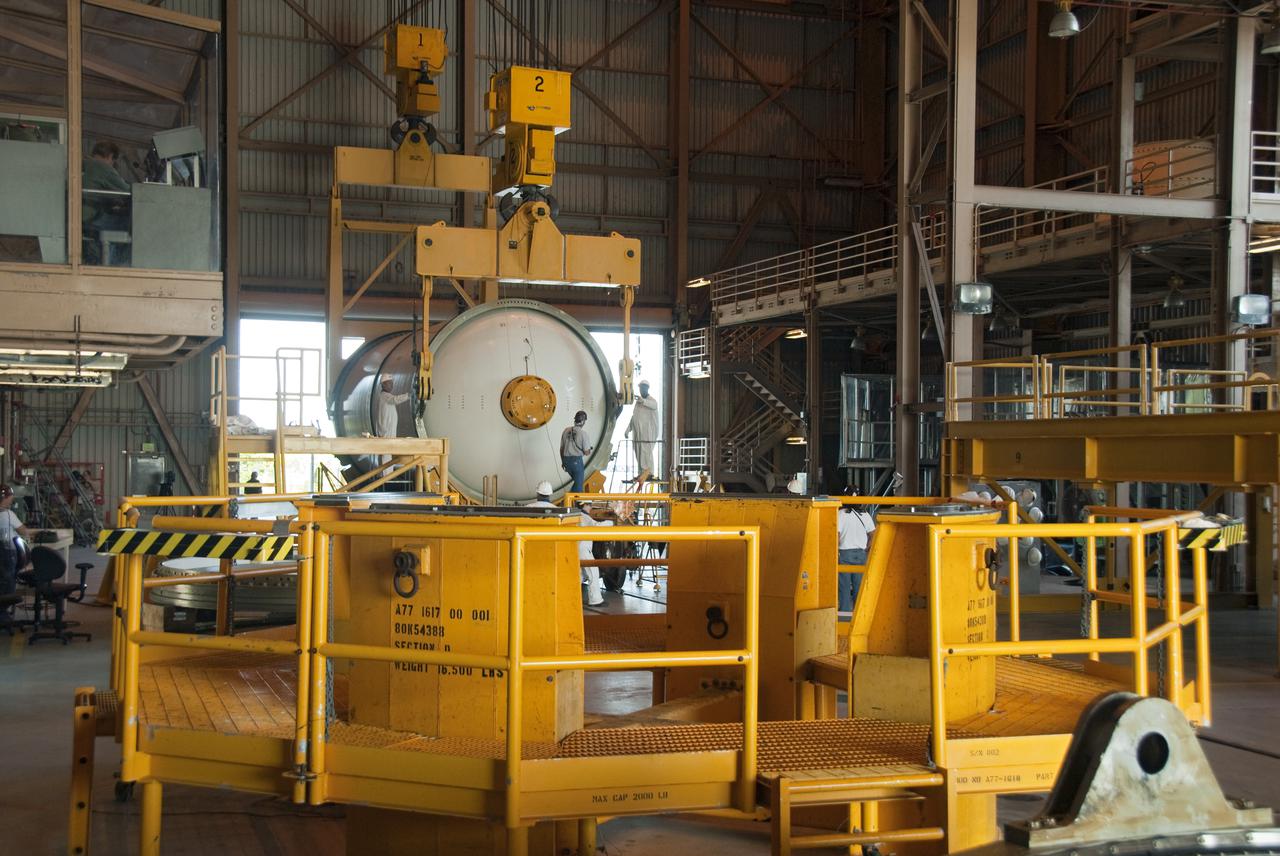
CAPE CANAVERAL, Fla. -- At NASA's Kennedy Space Center in Florida, workers prepare to lift and stack the final solid rocket booster segment in the Rotation, Processing and Surge Facility. The segments will be used for space shuttle Atlantis on what currently is planned as the 'launch on need,' or potential rescue mission for the final shuttle flight, Endeavour's STS-134 mission. For information, visit www.nasa.gov_shuttle. Photo credit: NASA_Cory Huston
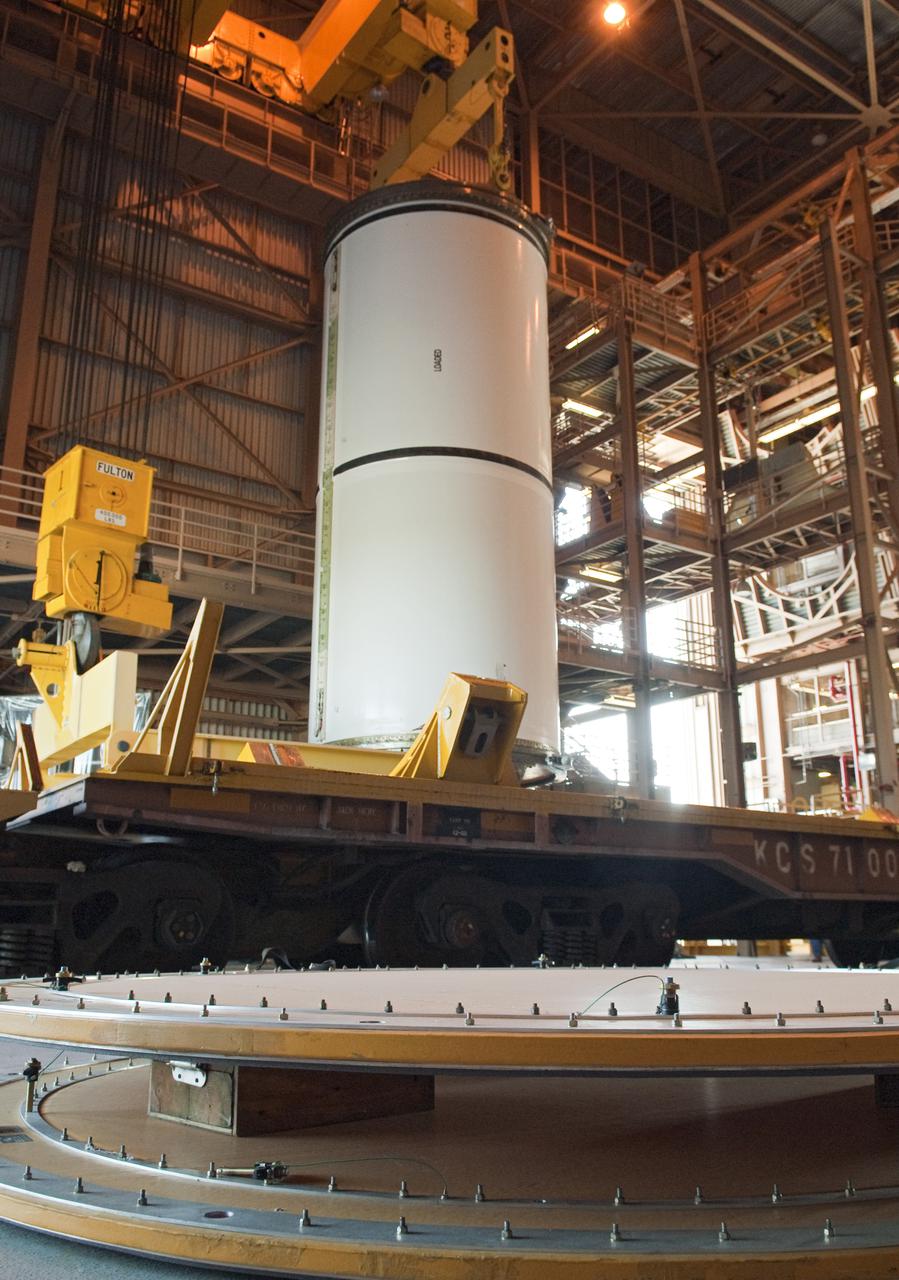
CAPE CANAVERAL, Fla. -- In the Rotation, Processing and Surge Facility at NASA's Kennedy Space Center in Florida, the booster segment is ready to be moved to a work stand. The segments will be used for space shuttle Atlantis on what currently is planned as the 'launch on need,' or potential rescue mission for the final shuttle flight, Endeavour's STS-134 mission. For information, visit www.nasa.gov_shuttle. Photo credit: NASA_Cory Huston
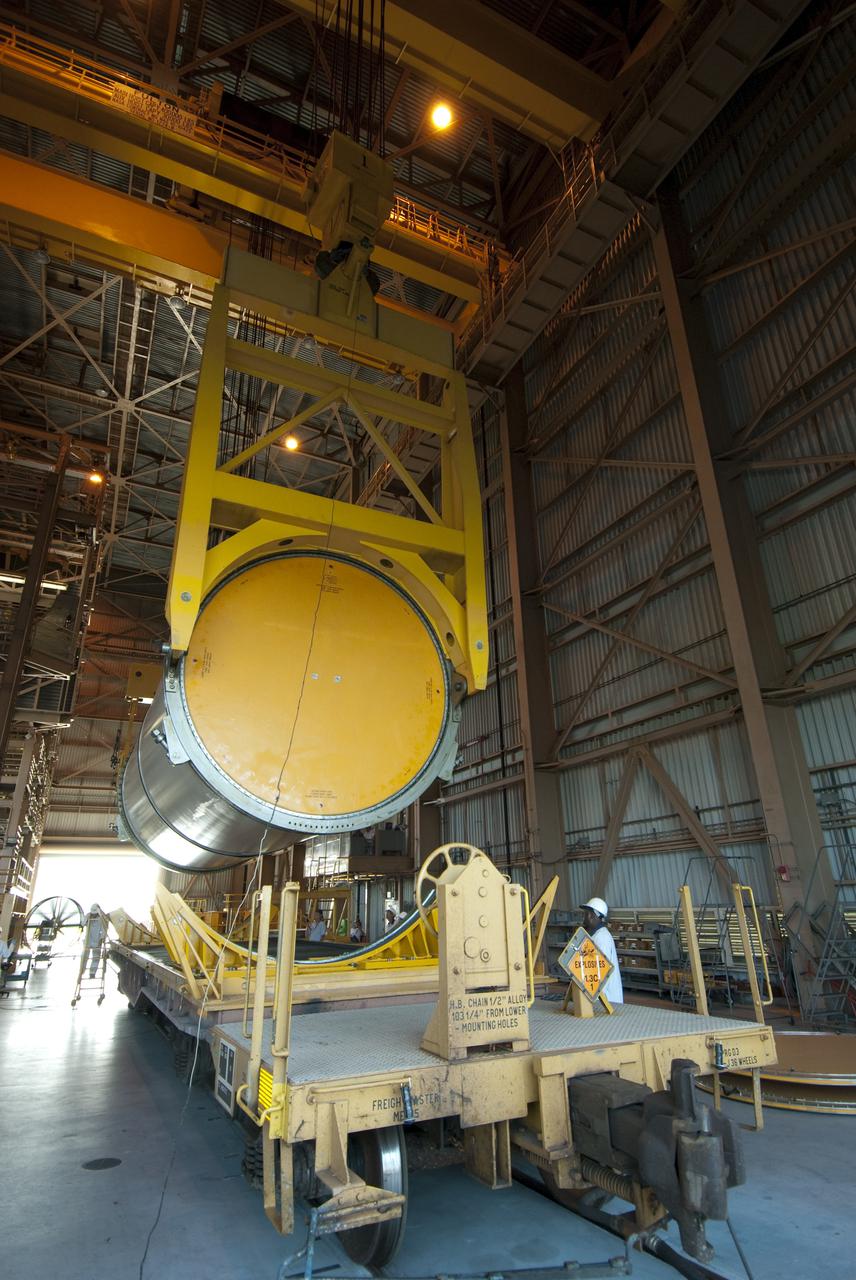
CAPE CANAVERAL, Fla. -- Twin cranes hoist the first solid rocket booster segment from a rail car in the Rotation, Processing and Surge Facility at NASA's Kennedy Space Center in Florida. It will then be rotated into a vertical position and placed a work stand. The segments will be used for space shuttle Atlantis on what currently is planned as the 'launch on need,' or potential rescue mission for the final shuttle flight, Endeavour's STS-134 mission. For information, visit www.nasa.gov_shuttle. Photo credit: NASA_Cory Huston
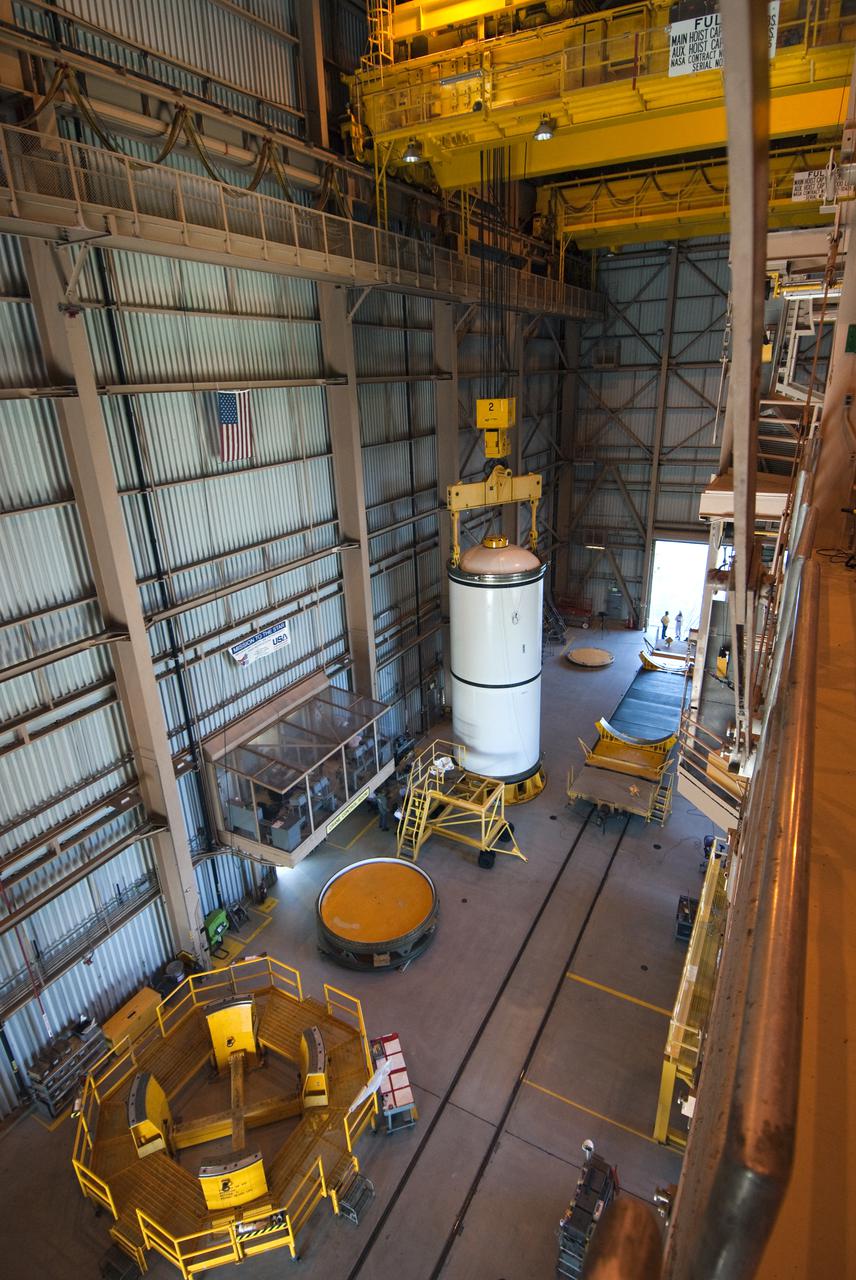
CAPE CANAVERAL, Fla. -- This overhead view in the Rotation, Processing and Surge Facility at NASA's Kennedy Space Center in Florida, shows the booster segment seated in the work stand and the transportation and storage pallet where it will be moved. The segments will be used for space shuttle Atlantis on what currently is planned as the 'launch on need,' or potential rescue mission for the final shuttle flight, Endeavour's STS-134 mission. For information, visit www.nasa.gov_shuttle. Photo credit: NASA_Cory Huston
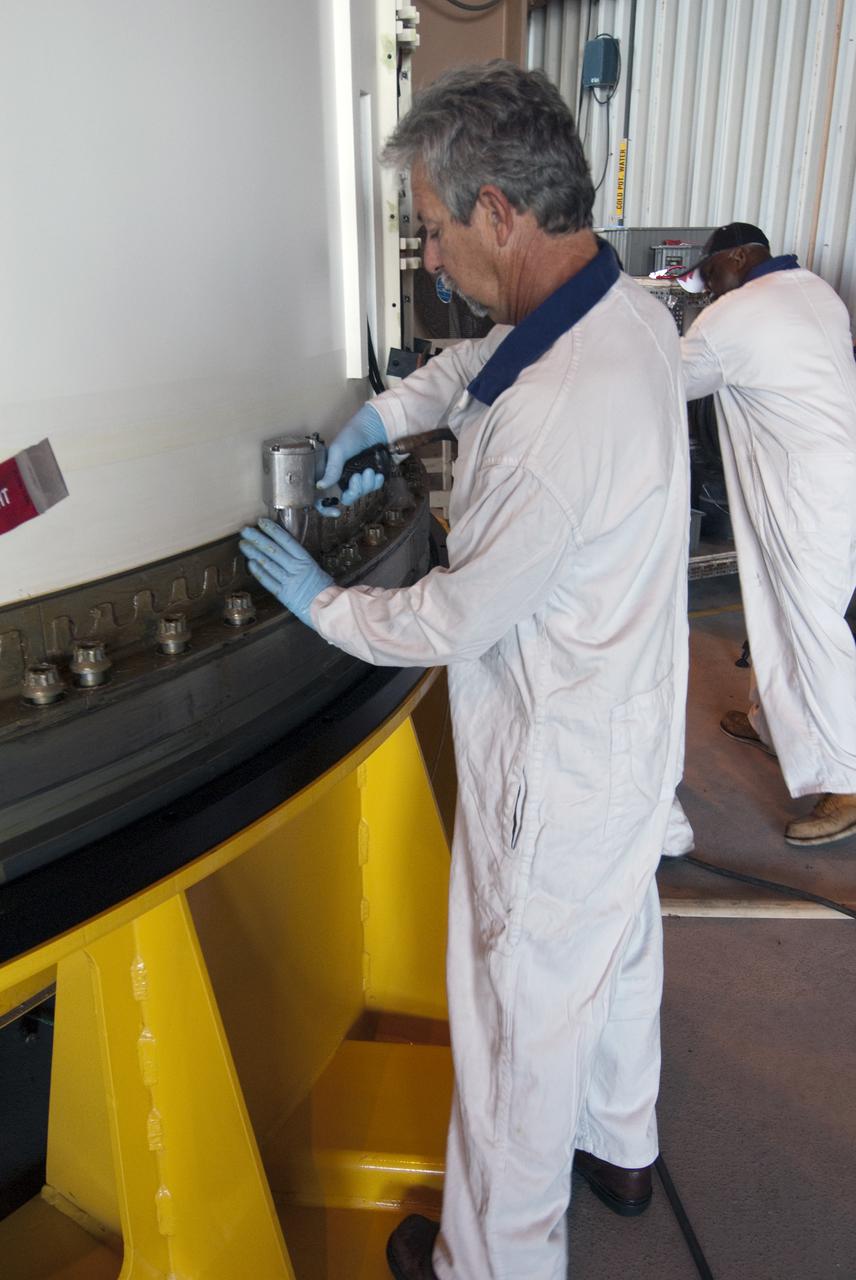
CAPE CANAVERAL, Fla. -- A technician in the Rotation, Processing and Surge Facility at NASA's Kennedy Space Center in Florida, loosens a bolt to remove the segment's aft handling ring before it is moved onto a transportation and storage pallet. The segments will be used for space shuttle Atlantis on what currently is planned as the 'launch on need,' or potential rescue mission for the final shuttle flight, Endeavour's STS-134 mission. For information, visit www.nasa.gov_shuttle. Photo credit: NASA_Cory Huston
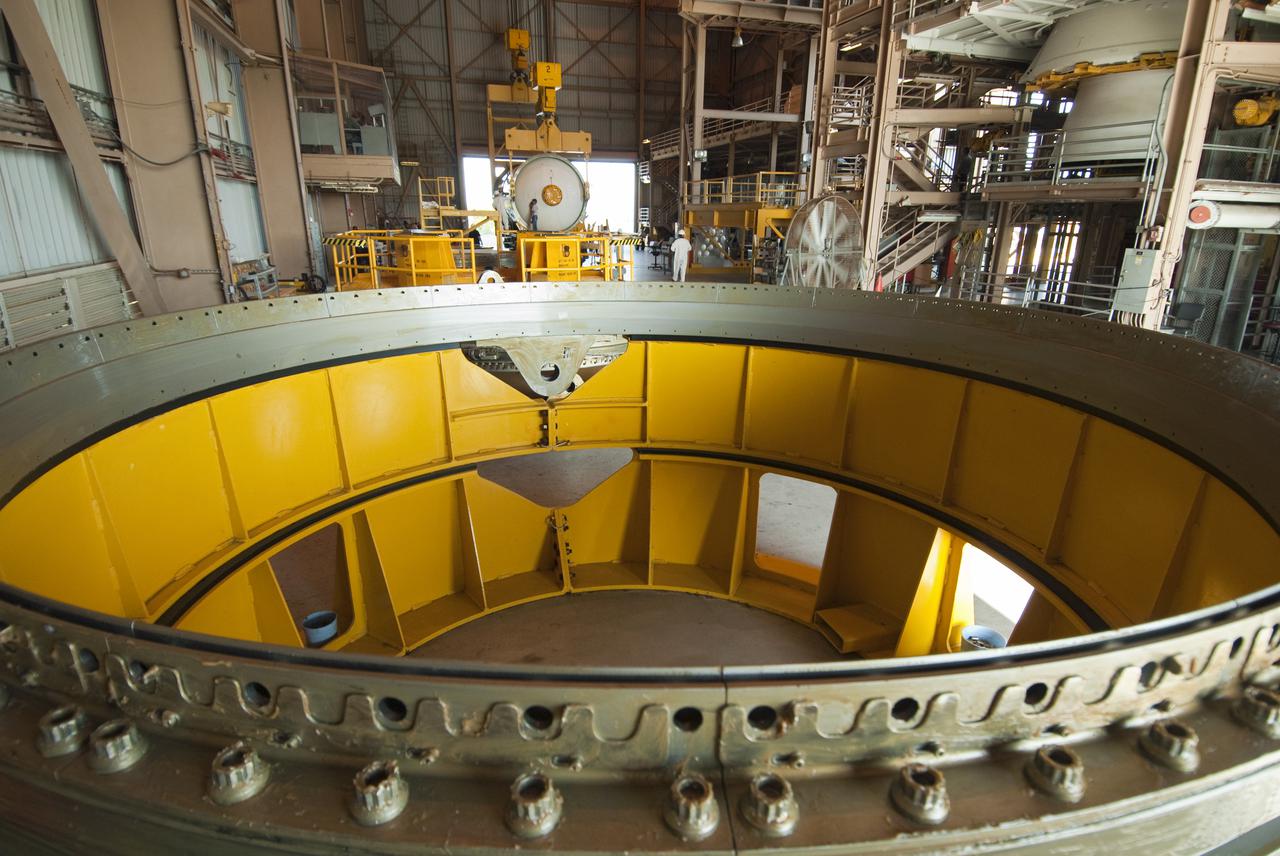
CAPE CANAVERAL, Fla. -- A work stand in the Rotation, Processing and Surge Facility at NASA's Kennedy Space Center in Florida awaits the arrival of the final solid rocket booster segment. The segments will be used for space shuttle Atlantis on what currently is planned as the 'launch on need,' or potential rescue mission for the final shuttle flight, Endeavour's STS-134 mission. For information, visit www.nasa.gov_shuttle. Photo credit: NASA_Cory Huston
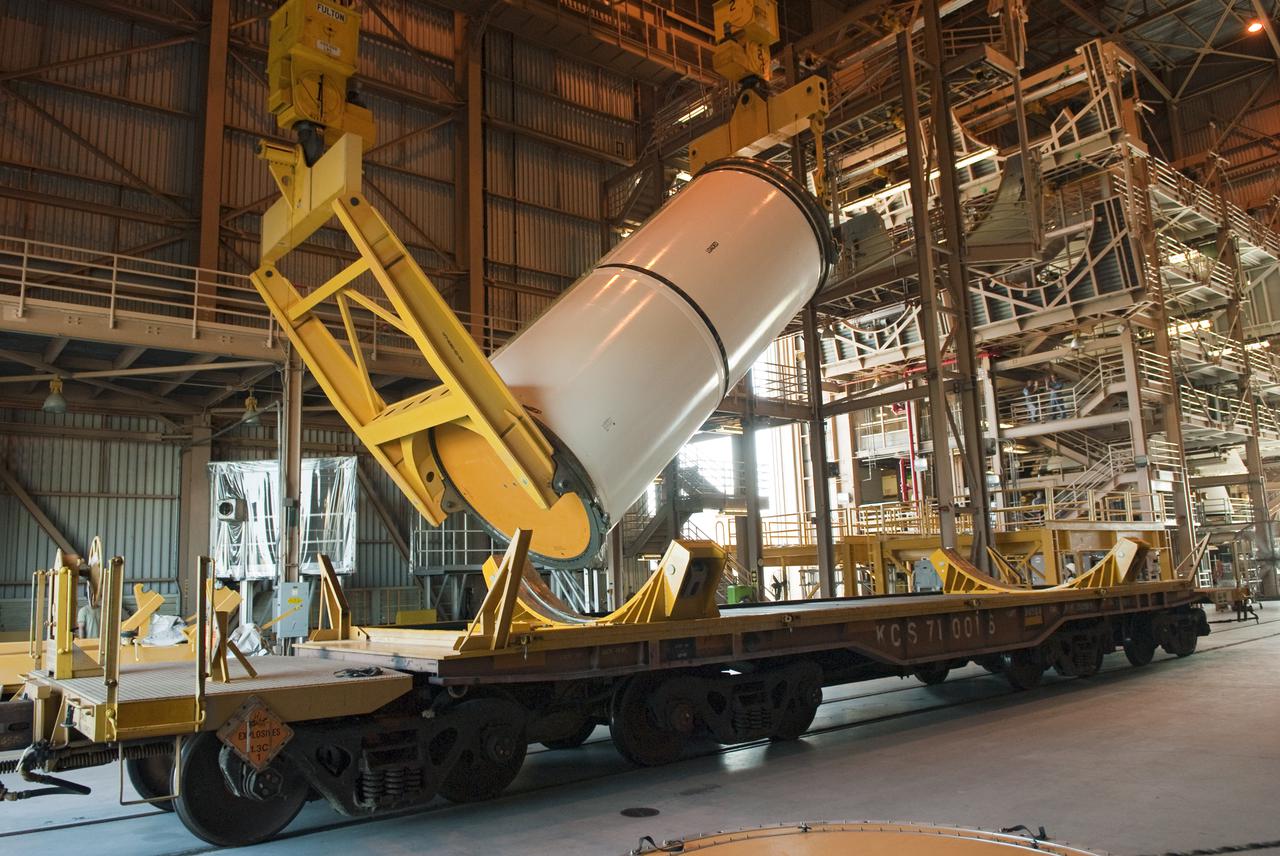
CAPE CANAVERAL, Fla. -- In the Rotation, Processing and Surge Facility at NASA's Kennedy Space Center in Florida, twin cranes hoist the first solid rocket booster segment into a vertical position. The segments will be used for space shuttle Atlantis on what currently is planned as the 'launch on need,' or potential rescue mission for the final shuttle flight, Endeavour's STS-134 mission. For information, visit www.nasa.gov_shuttle. Photo credit: NASA_Cory Huston
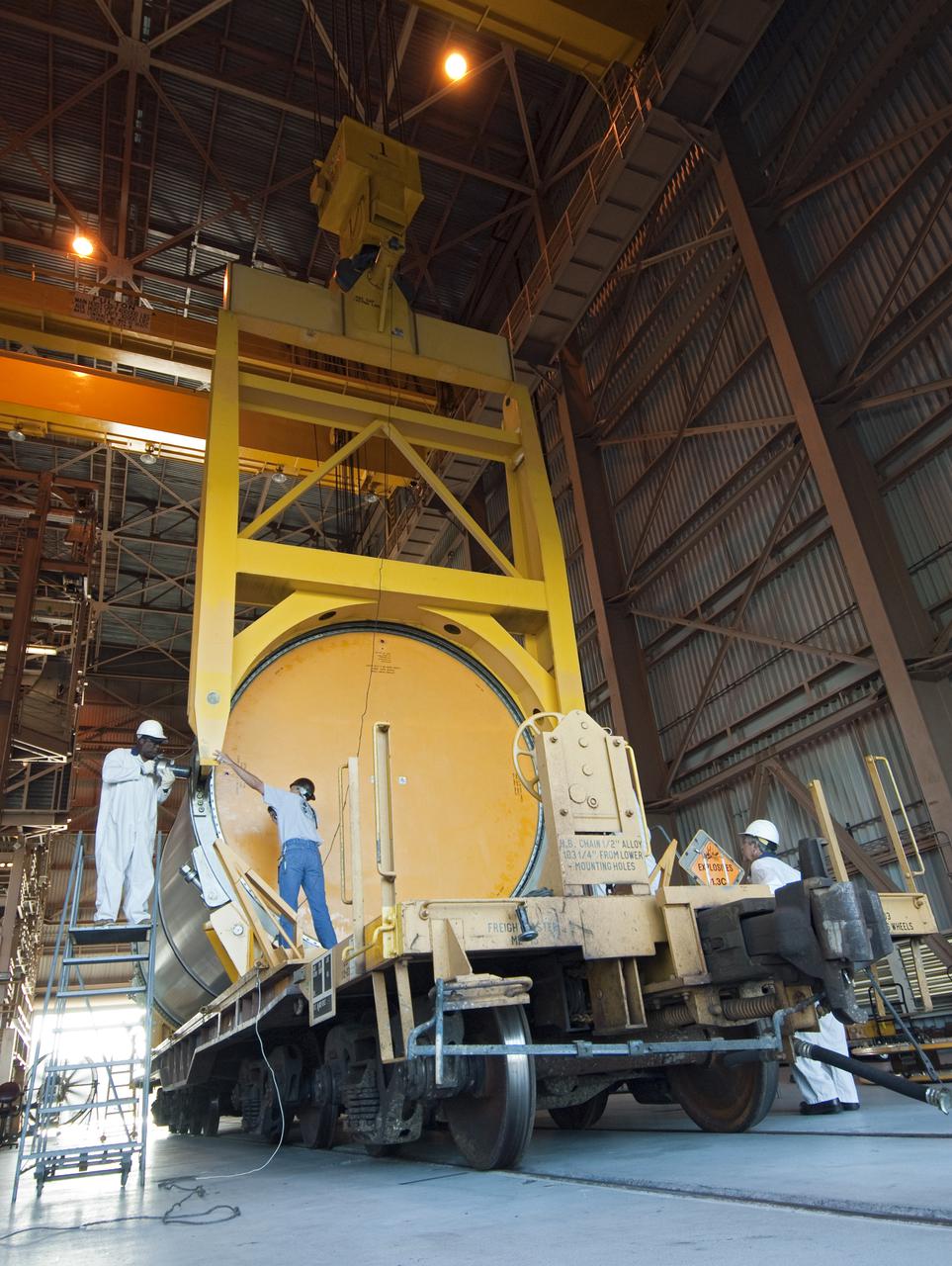
CAPE CANAVERAL, Fla. - At NASA's Kennedy Space Center in Florida, workers connect the solid rocket booster segment to two overhead cranes in the Rotation, Processing and Surge Facility. The segments will be used for space shuttle Atlantis on what currently is planned as the 'launch on need,' or potential rescue mission for the final shuttle flight, Endeavour's STS-134 mission. For information, visit www.nasa.gov_shuttle. Photo credit: NASA_Cory Huston
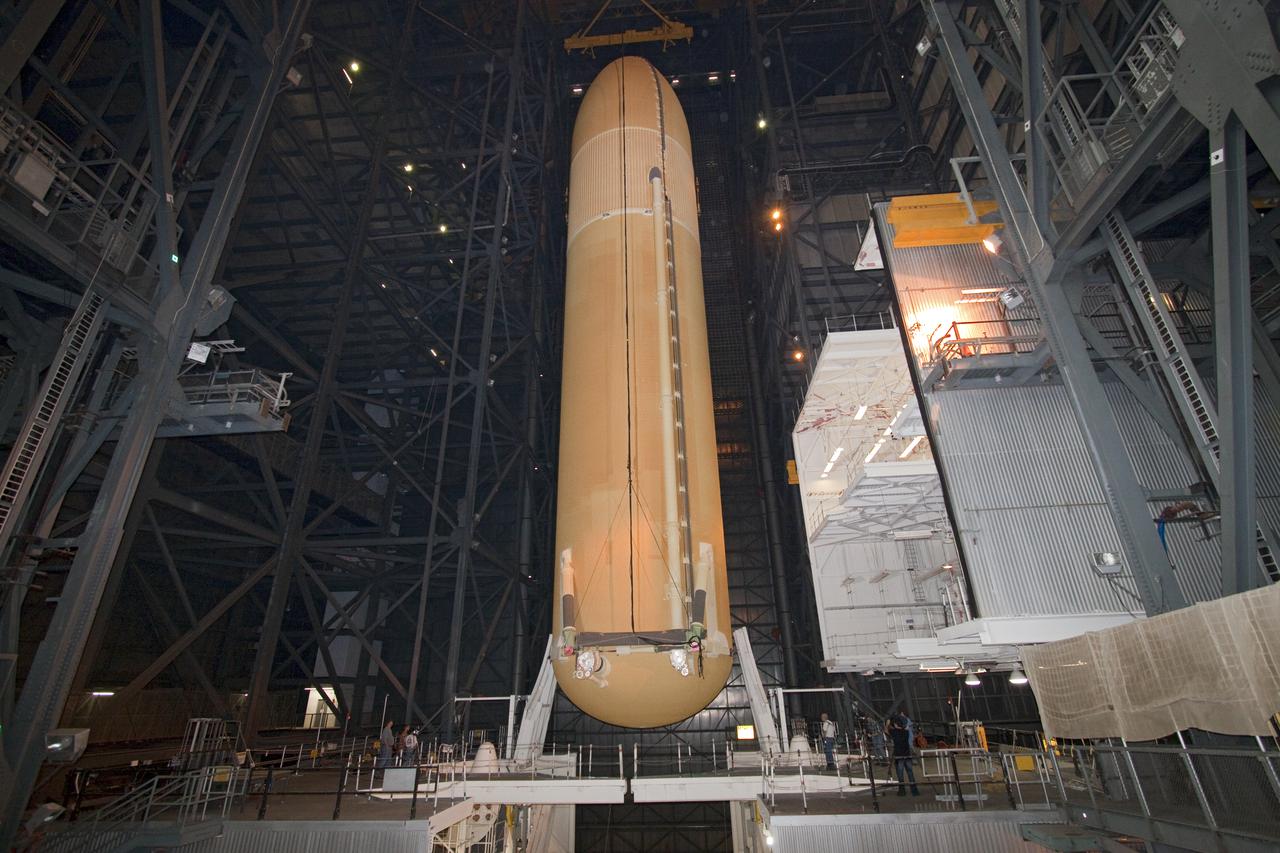
CAPE CANAVERAL, Fla. -- In the Vehicle Assembly Building at NASA's Kennedy Space Center in Florida, external fuel tank ET-137 for space shuttle Discovery's STS-133 mission is lowered into position to be attached to the twin solid rocket boosters. Discovery will deliver NASA's Permanent Multi-purpose Module, or PMM, the Express Logistics Carrier 4, and critical spare parts to the International Space Station. Launch is targeted for fall 2010. Photo credit: NASA_Jack Pfaller