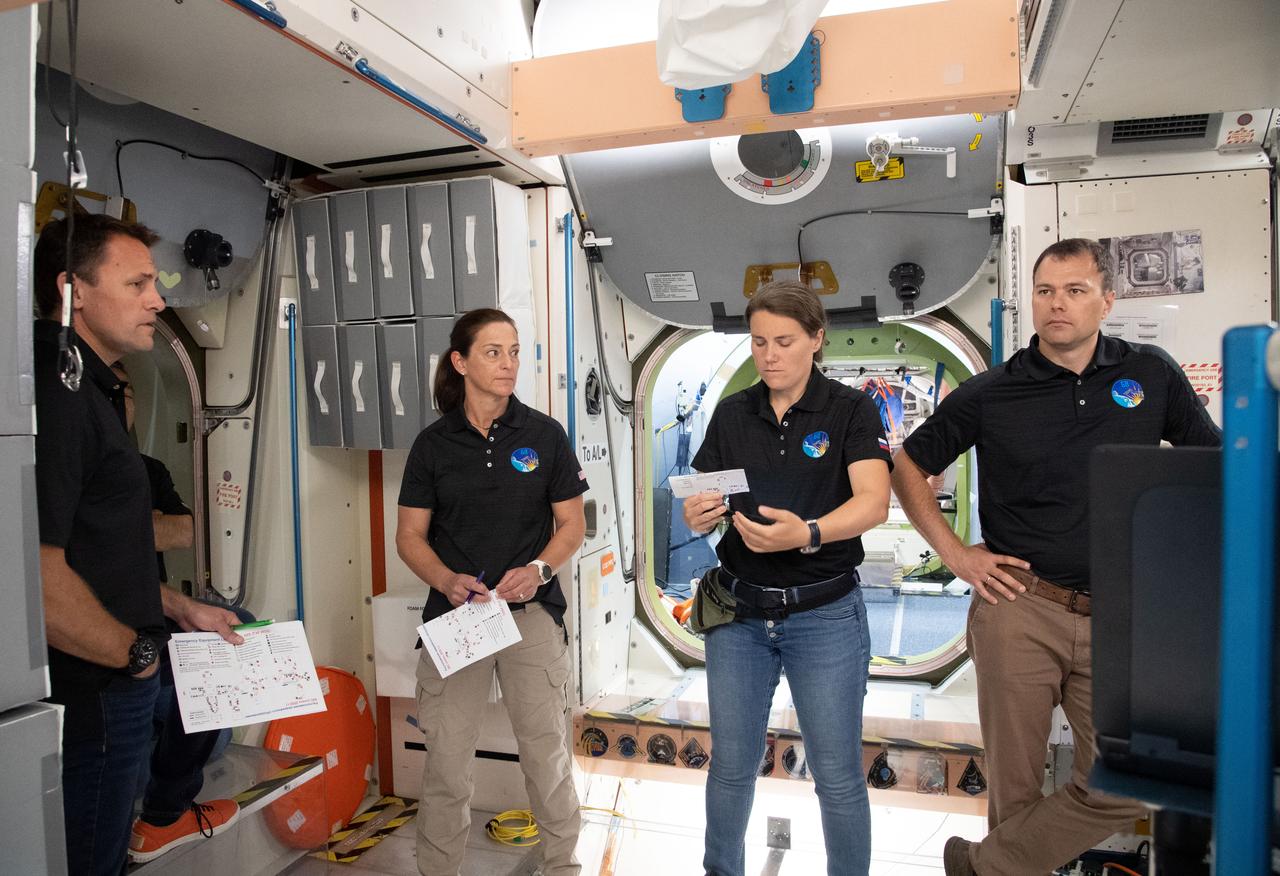
Expedition 68 trains for their upcoming International Space Station mission inside a mockup that models the real orbiting lab at NASA's Johnson Space Center in Houston, Texas. Credit: NASA/James Blair
That No Space Station
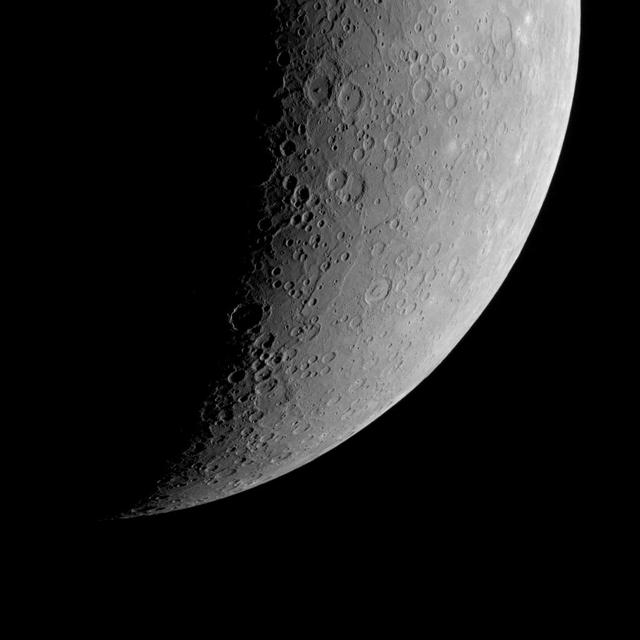
Terror in Space
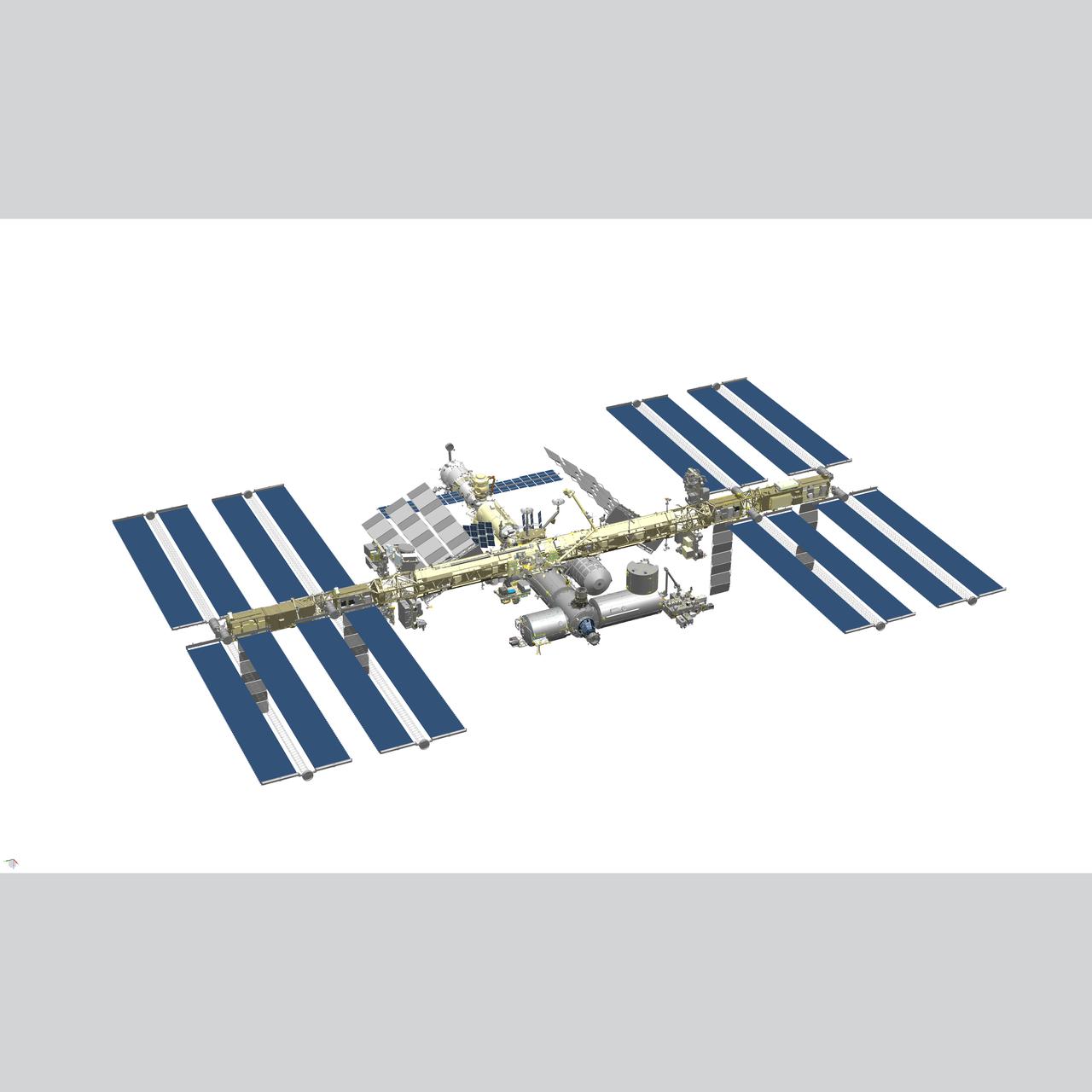
2020 International Space Station Configuration
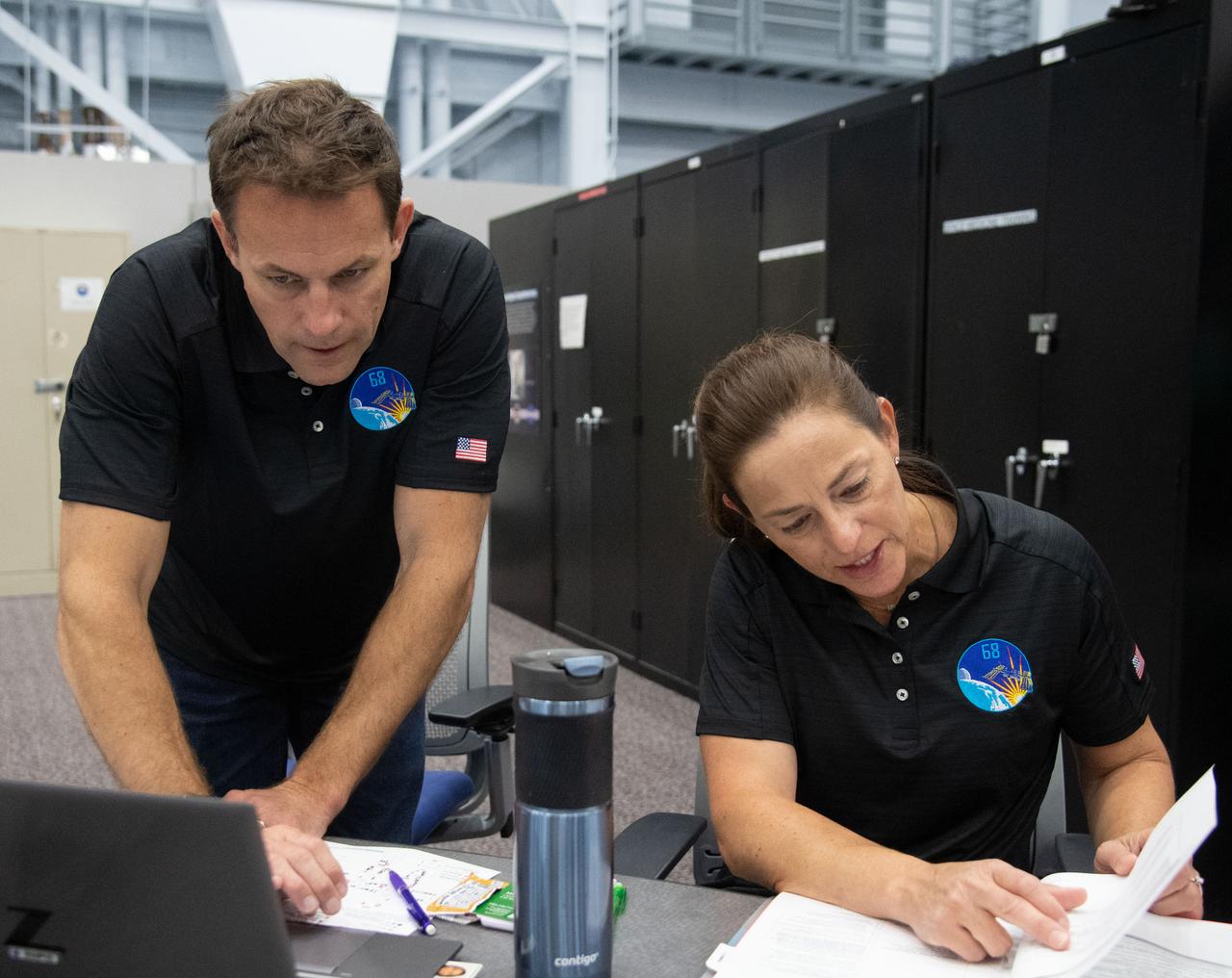
Expedition 68 crewmembers train for the unlikely event of an emergency by training inside a mockup that models the real orbiting lab at NASA's Johnson Space Center in Houston, Texas in preparation for their upcoming International Space Station mission. Credit: NASA/James Blair

In this artist's rendering of NASA's Spitzer Space Telescope in space, the background is shown in infrared light. https://photojournal.jpl.nasa.gov/catalog/PIA23643

The Space Launch System (SLS) rocket and Orion Spacecraft roll out of the Vehicle Assembly Building (VAB) to Launch Pad 39B at NASA's Kennedy Space Center in Florida for the first time on March 17, 2022.
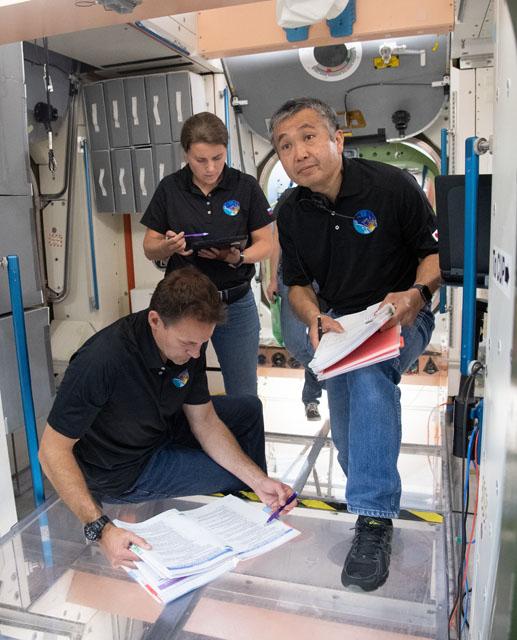
NASA Astronaut Josh Cassada, JAXA astronaut Koichi Wakata, and Roscosmos cosmonaut Anna Kikina train for their upcoming SpaceX Crew-5 mission to the International Space Station inside a mockup facility at NASA's Johnson Space Center in Houston, Texas. Credit: NASA/James Blair
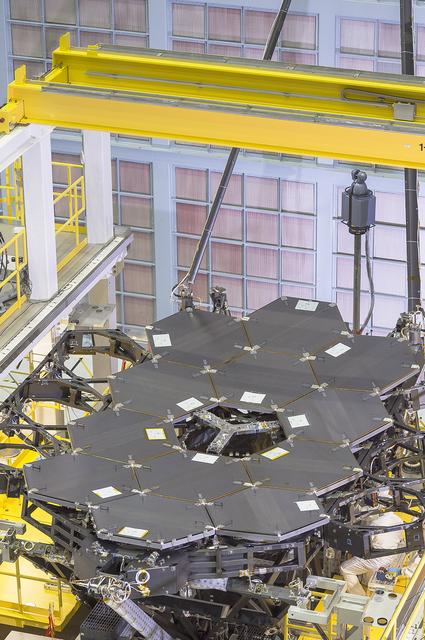
A view of the one dozen (out of 18) flight mirror segments that make up the primary mirror on NASA's James Webb Space Telescope have been installed at NASA's Goddard Space Flight Center. Credits: NASA/Chris Gunn More: Since December 2015, the team of scientists and engineers have been working tirelessly to install all the primary mirror segments onto the telescope structure in the large clean room at NASA's Goddard Space Flight Center in Greenbelt, Maryland. The twelfth mirror was installed on January 2, 2016. "This milestone signifies that all of the hexagonal shaped mirrors on the fixed central section of the telescope structure are installed and only the 3 mirrors on each wing are left for installation," said Lee Feinberg, NASA's Optical Telescope Element Manager at NASA Goddard. "The incredibly skilled and dedicated team assembling the telescope continues to find ways to do things faster and more efficiently." Each hexagonal-shaped segment measures just over 4.2 feet (1.3 meters) across and weighs approximately 88 pounds (40 kilograms). After being pieced together, the 18 primary mirror segments will work together as one large 21.3-foot (6.5-meter) mirror. The primary mirror will unfold and adjust to shape after launch. The mirrors are made of ultra-lightweight beryllium. The mirrors are placed on the telescope's backplane using a robotic arm, guided by engineers. The full installation is expected to be completed in a few months. The mirrors were built by Ball Aerospace & Technologies Corp., Boulder, Colorado. Ball is the principal subcontractor to Northrop Grumman for the optical technology and lightweight mirror system. The installation of the mirrors onto the telescope structure is performed by Harris Corporation of Rochester, New York. Harris Corporation leads integration and testing for the telescope. While the mirror assembly is a very significant milestone, there are many more steps involved in assembling the Webb telescope. The primary mirror and the tennis-court-sized sunshield are the largest and most visible components of the Webb telescope. However, there are four smaller components that are less visible, yet critical. The instruments that will fly aboard Webb - cameras and spectrographs with detectors able to record extremely faint signals — are part of the Integrated Science Instrument Module (ISIM), which is currently undergoing its final cryogenic vacuum test and will be integrated with the mirror later this year.
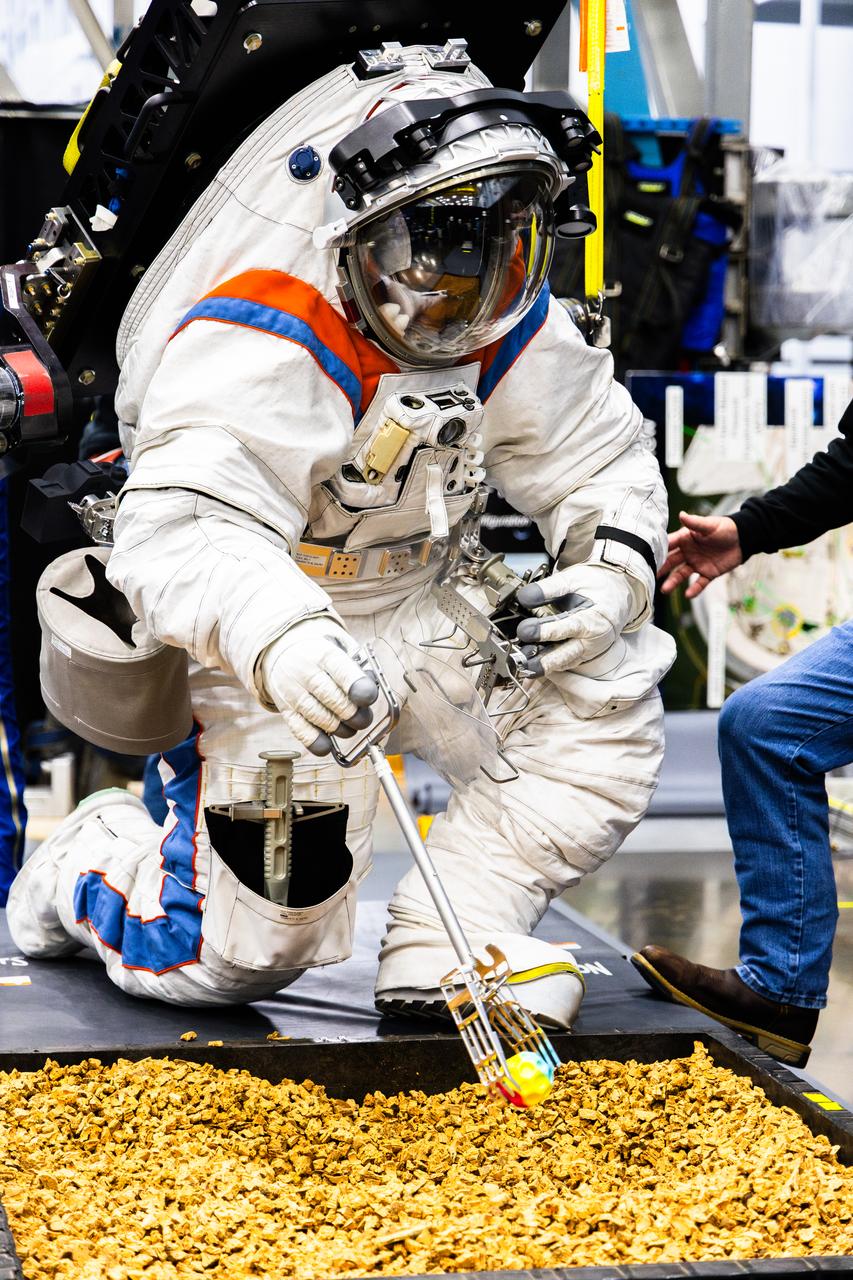
An Axiom Space engineer uses tongs to pick up a simulated lunar rock while wearing the AxEMU (Axiom Extravehicular Mobility Unit) spacesuit during testing at NASA’s Johnson Space Center. Image Credit: Axiom Space
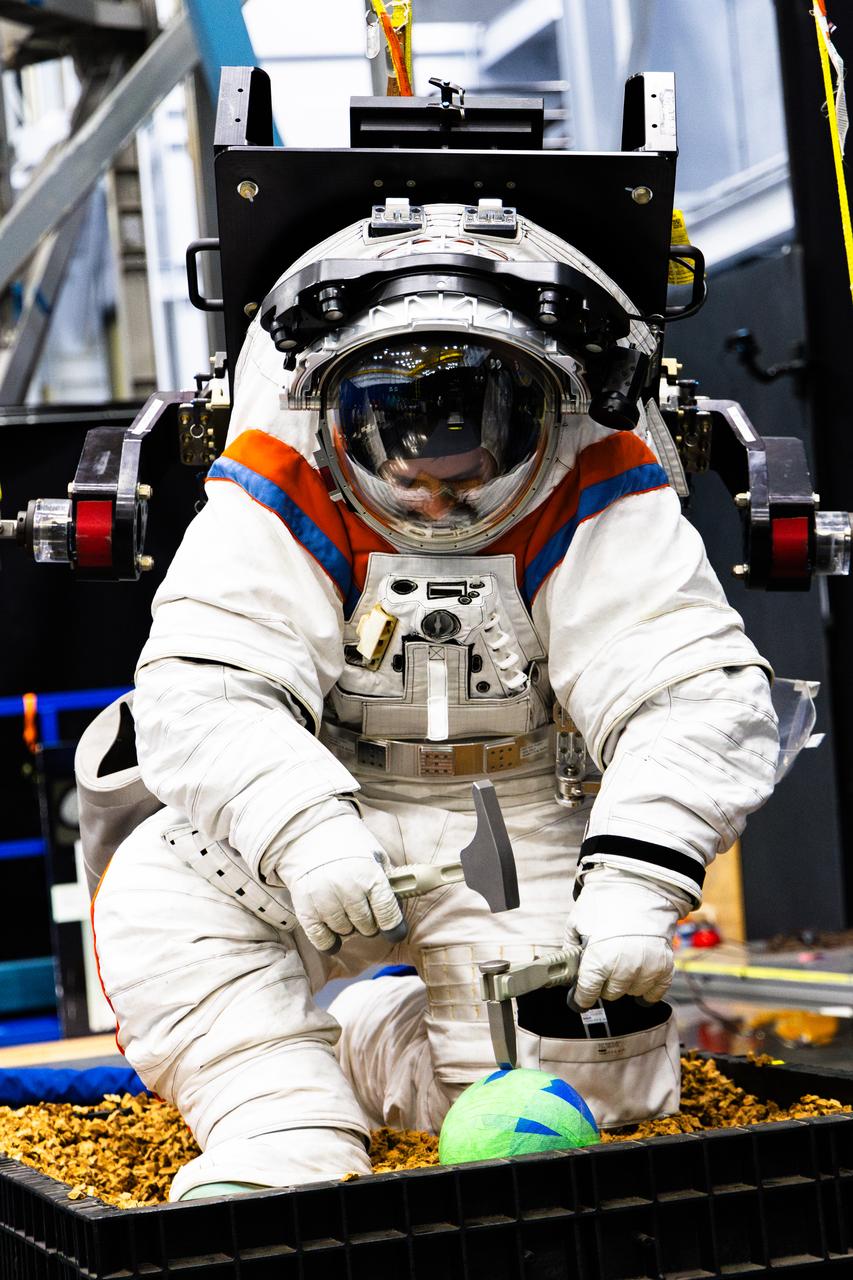
An Axiom Space engineer uses a hammer and chisel to chip off simulated lunar rocks while wearing the AxEMU (Axiom Extravehicular Mobility Unit) spacesuit during testing at NASA’s Johnson Space Center. Image Credit: Axiom Space
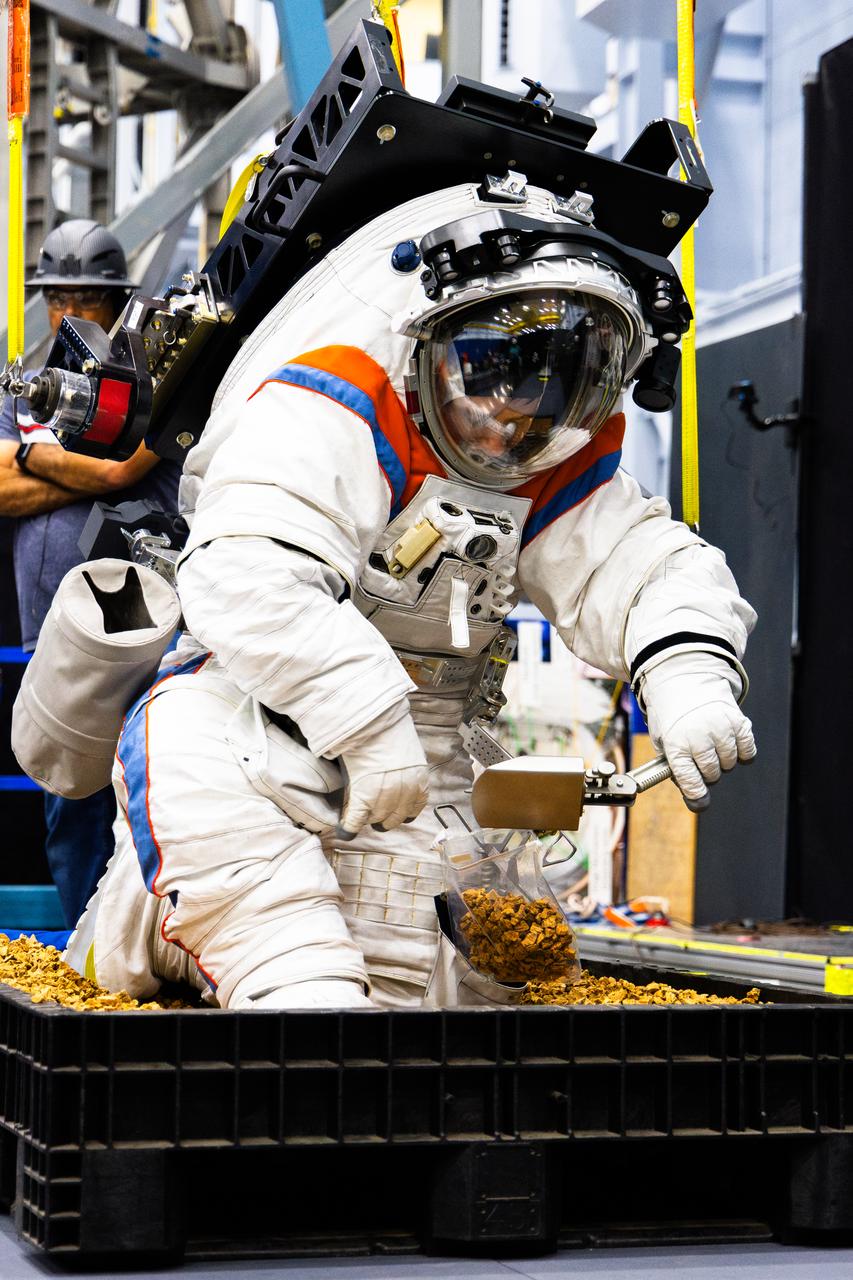
An Axiom Space engineer kneels down to collect simulated lunar samples using a geology tool while wearing the AxEMU (Axiom Extravehicular Mobility Unit) spacesuit during testing at NASA’s Johnson Space Center. Image Credit: Axiom Space
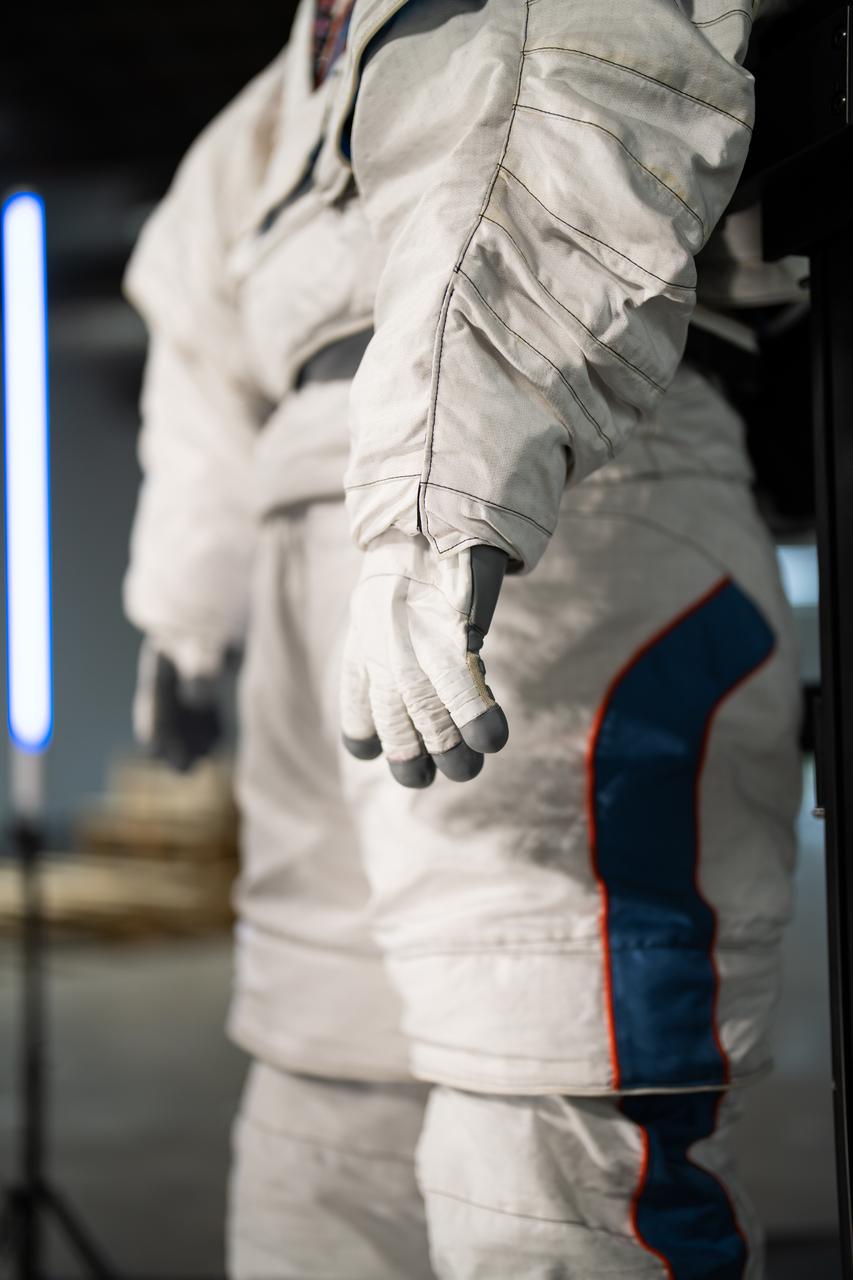
An up close image of a glove on Axiom Space's AxEMU (Axiom Extravehicular Mobility Unit) lunar spacesuit. Image Credit: Axiom Space
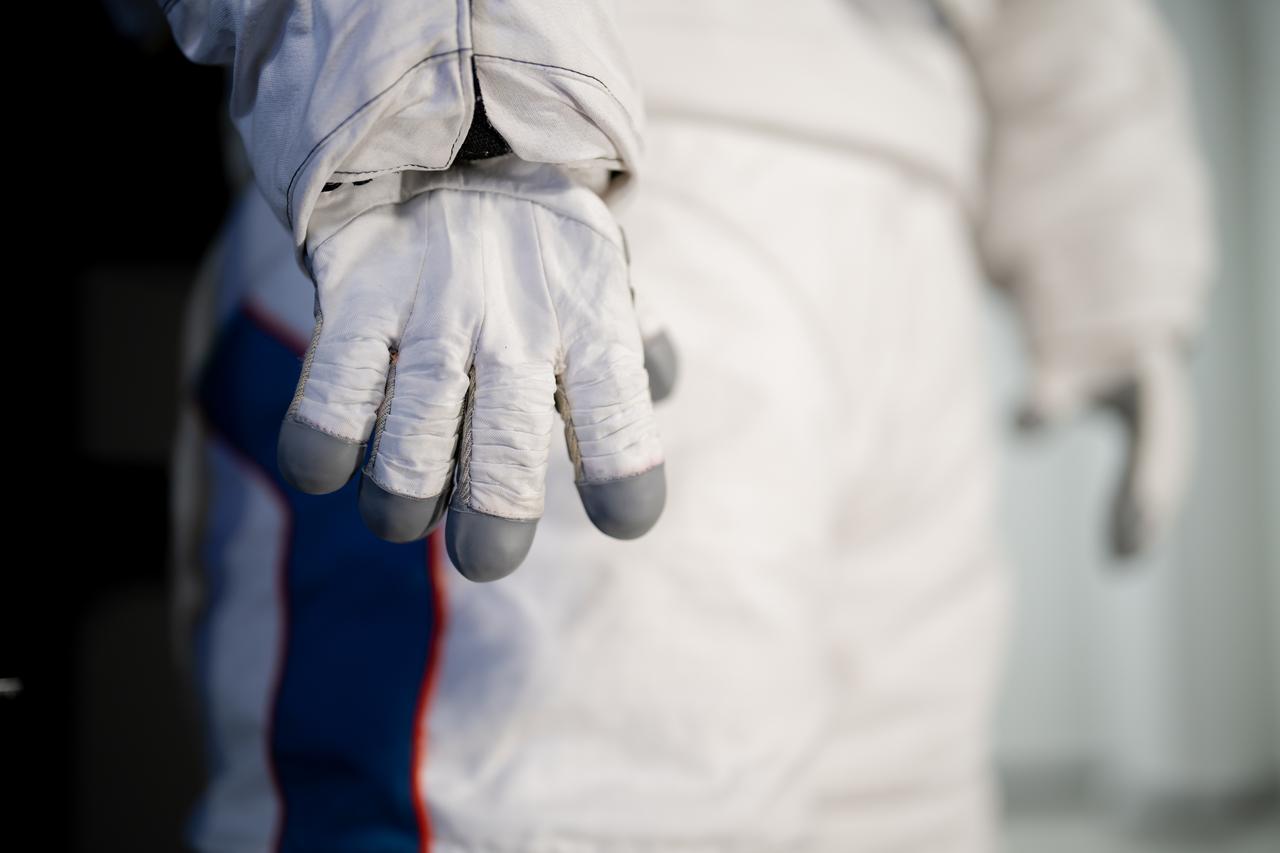
An up close image of a glove on Axiom Space's AxEMU (Axiom Extravehicular Mobility Unit) lunar spacesuit. Image Credit: Axiom Space

NASA Spitzer Space Telescope has at last found buckyballs resembling soccer balls in space shown in this artist concept using Hubble picture of the NGC 2440 nebula. Hubble image cred: NASA, ESA, STScI
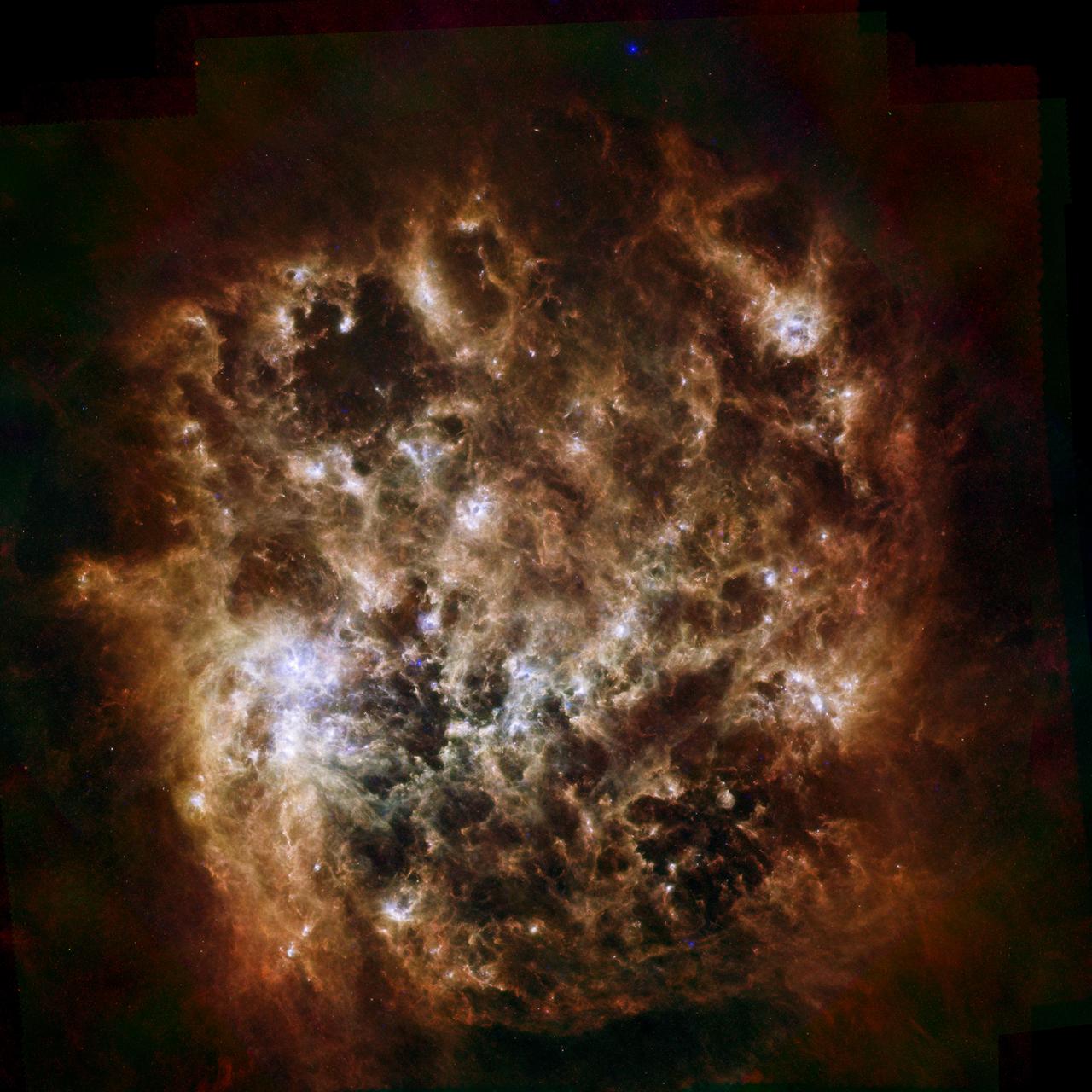
This image shows the Large Magellanic Cloud galaxy in infrared light as seen by ESA Herschel Space Observatory and NASA Spitzer Space Telescope. The brightest center-left region is called 30 Doradus, or the Tarantula Nebula.
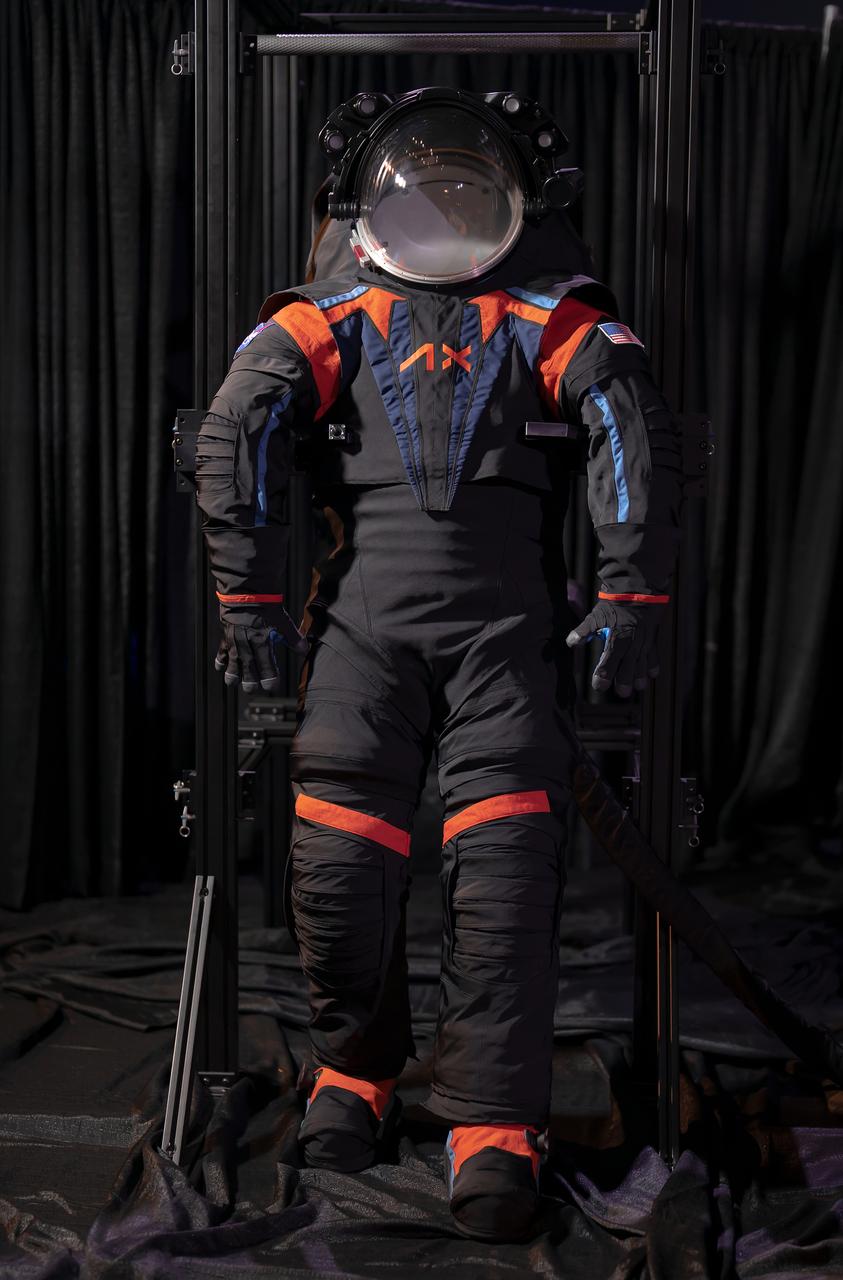
The Artemis III spacesuit prototype, the AxEMU. Though this prototype uses a dark gray cover material, the final version will likely be all-white when worn by NASA astronauts on the Moon’s surface, to help keep the astronauts safe and cool while working in the harsh environment of space. Image Credit: Axiom Space
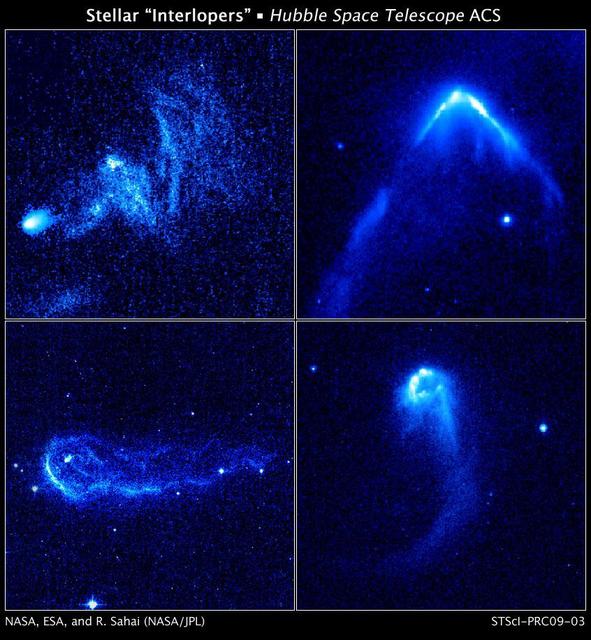
Stellar Interlopers Caught Speeding Through Space

Saturn from Far and Near Hubble Space Telescope

Hubble Space Telescope Resolves Volcanoes on Io
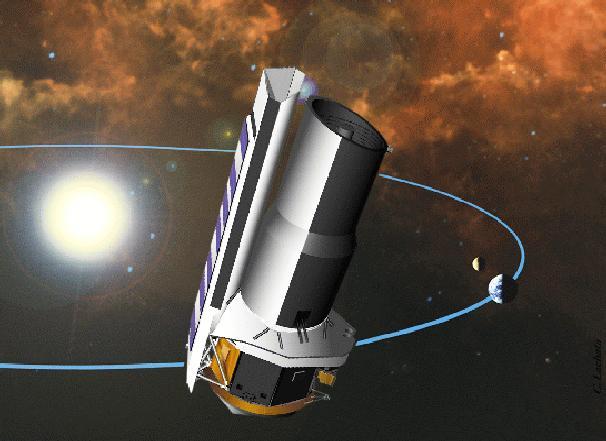
This image was used in a contest to rename the Space InfraRed Telescope Facility SIRTF, now known as the Spitzer Space Telescope.

The Space Launch System (SLS) rocket and Orion Spacecraft roll out of the Vehicle Assembly Building (VAB) to Launch Pad 39B at NASA's Kennedy Space Center in Florida for the first time on March 17, 2022.
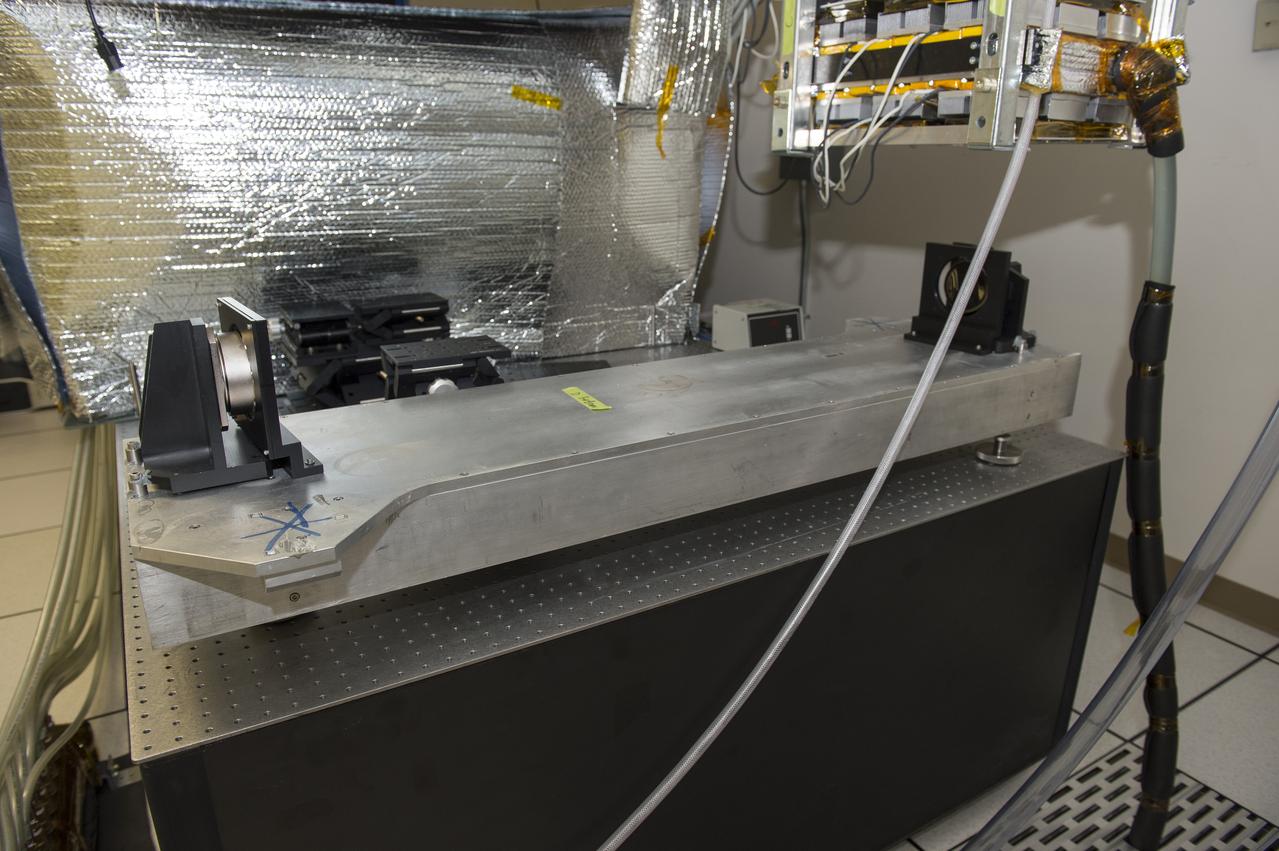
Next Generation PIAA mirrors were made by Tinsley and are inside the enclosure. Shows dummy set-up uning early PIAA mirors made by Axsys on loan to Ames from JPL.
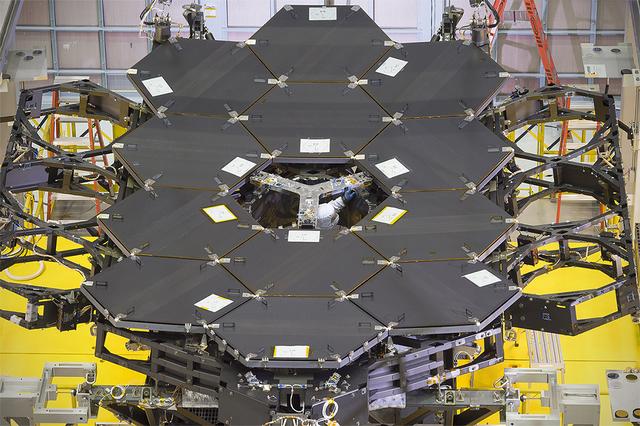
Caption: One dozen (out of 18) flight mirror segments that make up the primary mirror on NASA's James Webb Space Telescope have been installed at NASA's Goddard Space Flight Center. Credits: NASA/Chris Gunn More: Since December 2015, the team of scientists and engineers have been working tirelessly to install all the primary mirror segments onto the telescope structure in the large clean room at NASA's Goddard Space Flight Center in Greenbelt, Maryland. The twelfth mirror was installed on January 2, 2016. "This milestone signifies that all of the hexagonal shaped mirrors on the fixed central section of the telescope structure are installed and only the 3 mirrors on each wing are left for installation," said Lee Feinberg, NASA's Optical Telescope Element Manager at NASA Goddard. "The incredibly skilled and dedicated team assembling the telescope continues to find ways to do things faster and more efficiently." Each hexagonal-shaped segment measures just over 4.2 feet (1.3 meters) across and weighs approximately 88 pounds (40 kilograms). After being pieced together, the 18 primary mirror segments will work together as one large 21.3-foot (6.5-meter) mirror. The primary mirror will unfold and adjust to shape after launch. The mirrors are made of ultra-lightweight beryllium. The mirrors are placed on the telescope's backplane using a robotic arm, guided by engineers. The full installation is expected to be completed in a few months. The mirrors were built by Ball Aerospace & Technologies Corp., Boulder, Colorado. Ball is the principal subcontractor to Northrop Grumman for the optical technology and lightweight mirror system. The installation of the mirrors onto the telescope structure is performed by Harris Corporation of Rochester, New York. Harris Corporation leads integration and testing for the telescope. While the mirror assembly is a very significant milestone, there are many more steps involved in assembling the Webb telescope. The primary mirror and the tennis-court-sized sunshield are the largest and most visible components of the Webb telescope. However, there are four smaller components that are less visible, yet critical. The instruments that will fly aboard Webb - cameras and spectrographs with detectors able to record extremely faint signals — are part of the Integrated Science Instrument Module (ISIM), which is currently undergoing its final cryogenic vacuum test and will be integrated with the mirror later this year.
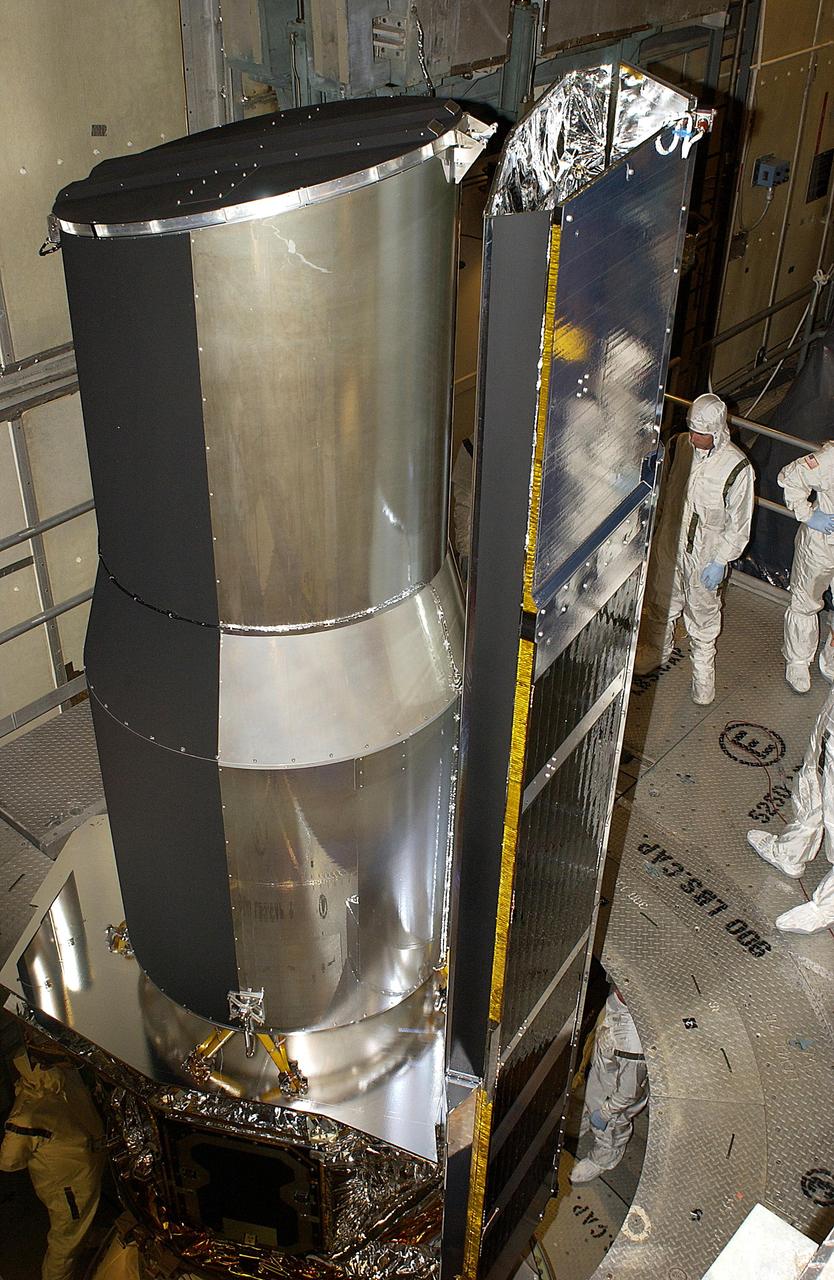
The Spitzer Space Telescope (formerly the Space Infrared Telescope Facility or SIRTF) is readied for launch at Cape Canaveral Air Force Station, in 2003. https://photojournal.jpl.nasa.gov/catalog/PIA23644
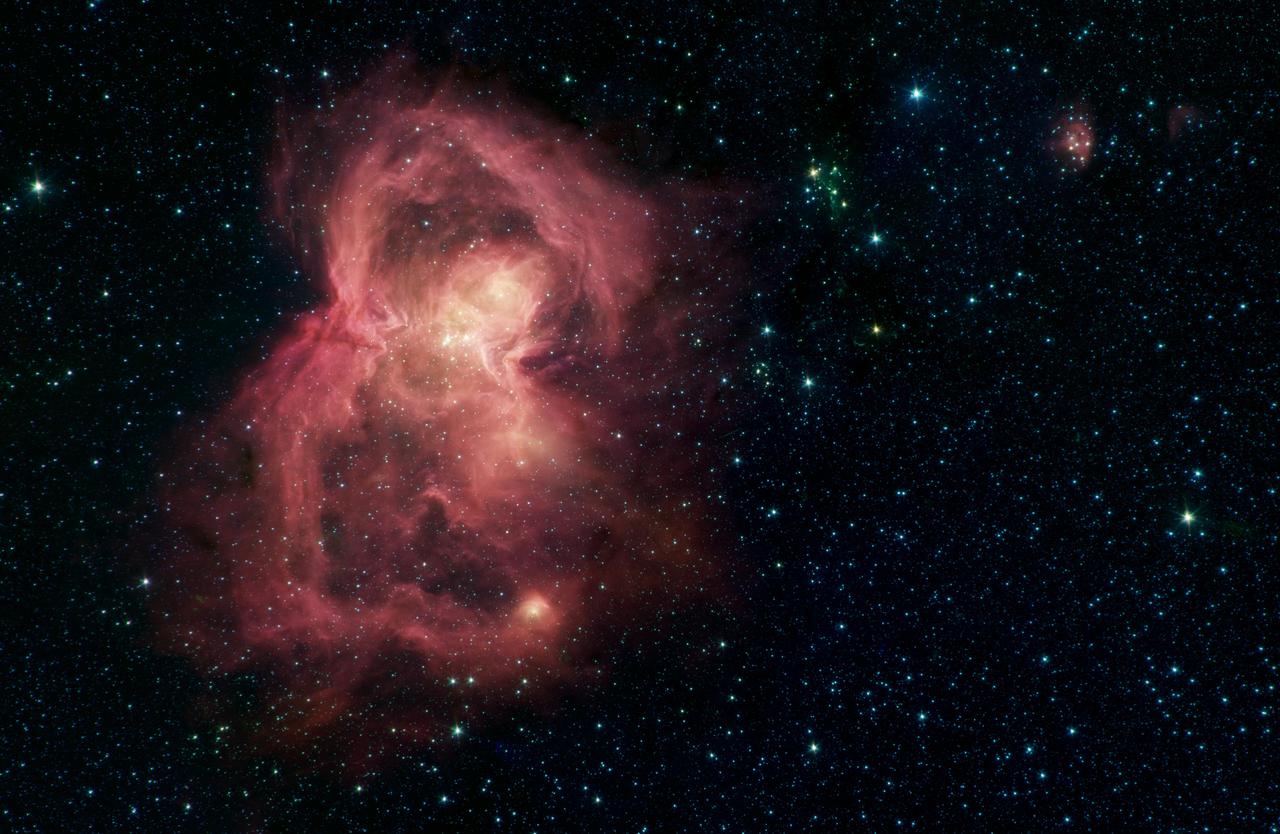
What looks like a red butterfly in space is in reality a nursery for hundreds of baby stars, revealed in this infrared image from NASA's Spitzer Space Telescope. Officially named W40, the butterfly is a nebula - a giant cloud of gas and dust in space where new stars may form. The butterfly's two "wings" are giant bubbles of hot, interstellar gas blowing from the hottest, most massive stars in this region. The material that forms W40's wings was ejected from a dense cluster of stars that lies between the wings in the image. The hottest, most massive of these stars, W40 IRS 1a, lies near the center of the star cluster. W40 is about 1,400 light-years from the Sun, about the same distance as the well-known Orion nebula, although the two are almost 180 degrees apart in the sky. They are two of the nearest regions in which massive stars - with masses upwards of 10 times that of the Sun - have been observed to be forming. The W40 star-forming region was observed as part of a Spitzer Legacy Survey, and the resulting mosaic image was published as part of the MYStIX (Massive Young stellar clusters Study in Infrared and X-rays) survey of young stellar objects. The Spitzer picture is composed of four images taken with the telescope's Infrared Array Camera (IRAC) in different wavelengths of infrared light: 3.6, 4.5, 5.8 and 8.0 µm (shown as blue, green, orange and red). Organic molecules made of carbon and hydrogen, called polycyclic aromatic hydrocarbons (PAHs), are excited by interstellar radiation and become luminescent at wavelengths near 8.0 microns, giving the nebula its reddish features. Stars are brighter at the shorter wavelengths, giving them a blue tint. Some of the youngest stars are surrounded by dusty disks of material, which glow with a yellow or red hue. https://photojournal.jpl.nasa.gov/catalog/PIA23121
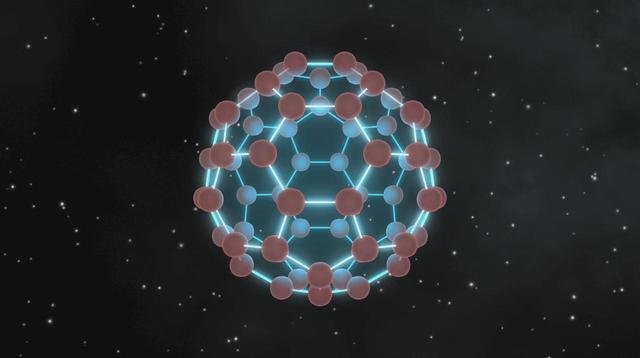
This image illustrates that buckyballs -- discovered in space by NASA Spitzer Space Telescope -- closely resemble old fashioned, black-and-white soccer balls, only on much smaller scales.
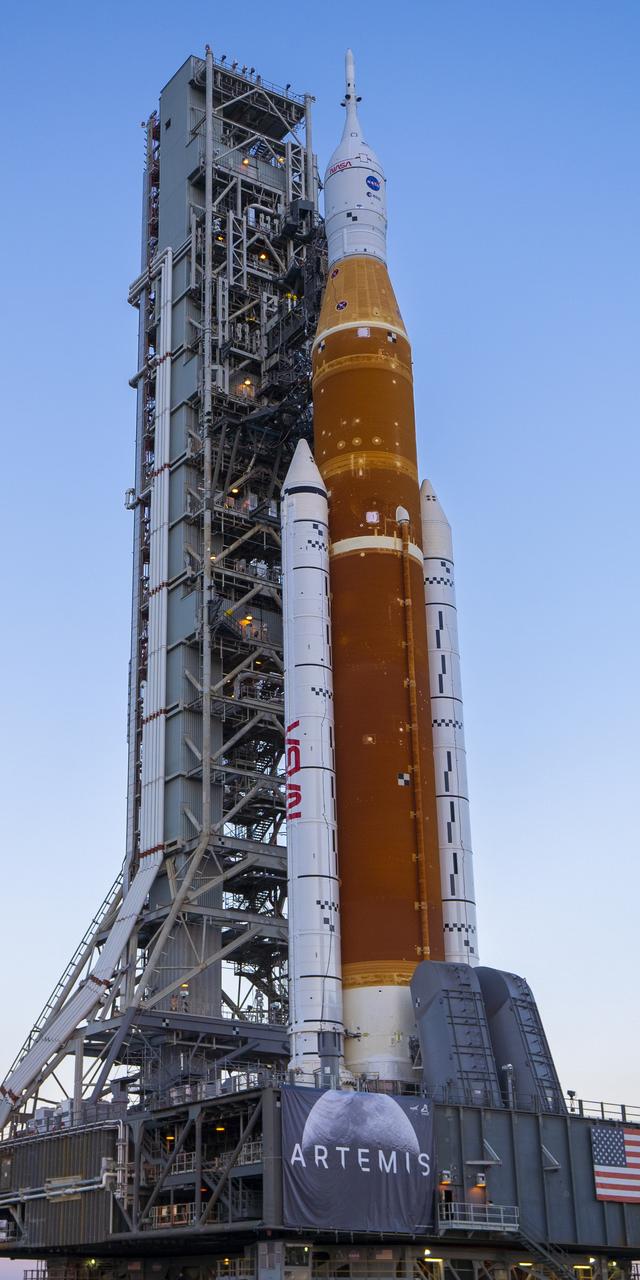
Space Launch System (SLS) rocket and Orion Spacecraft rollout at Kennedy Space Center
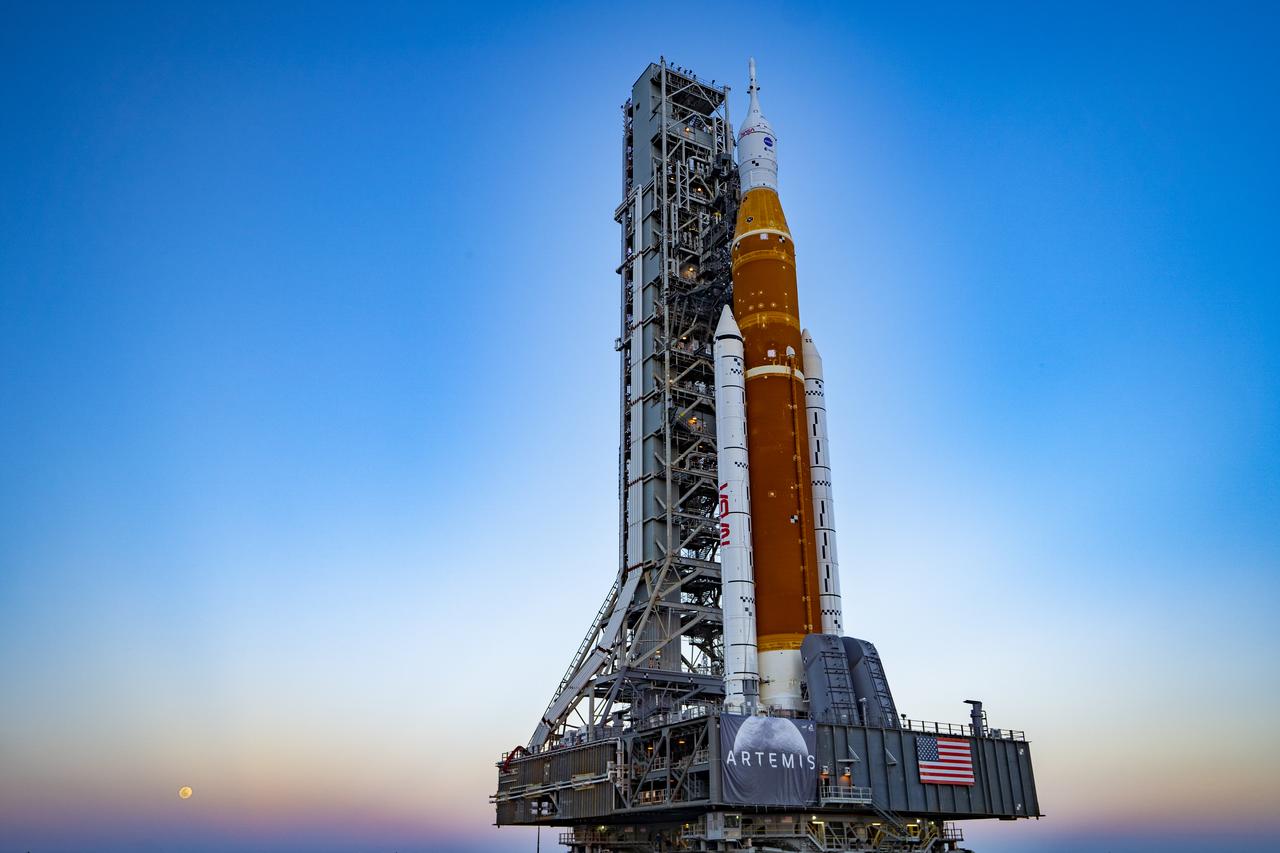
Space Launch System (SLS) rocket and Orion Spacecraft rollout at Kennedy Space Center
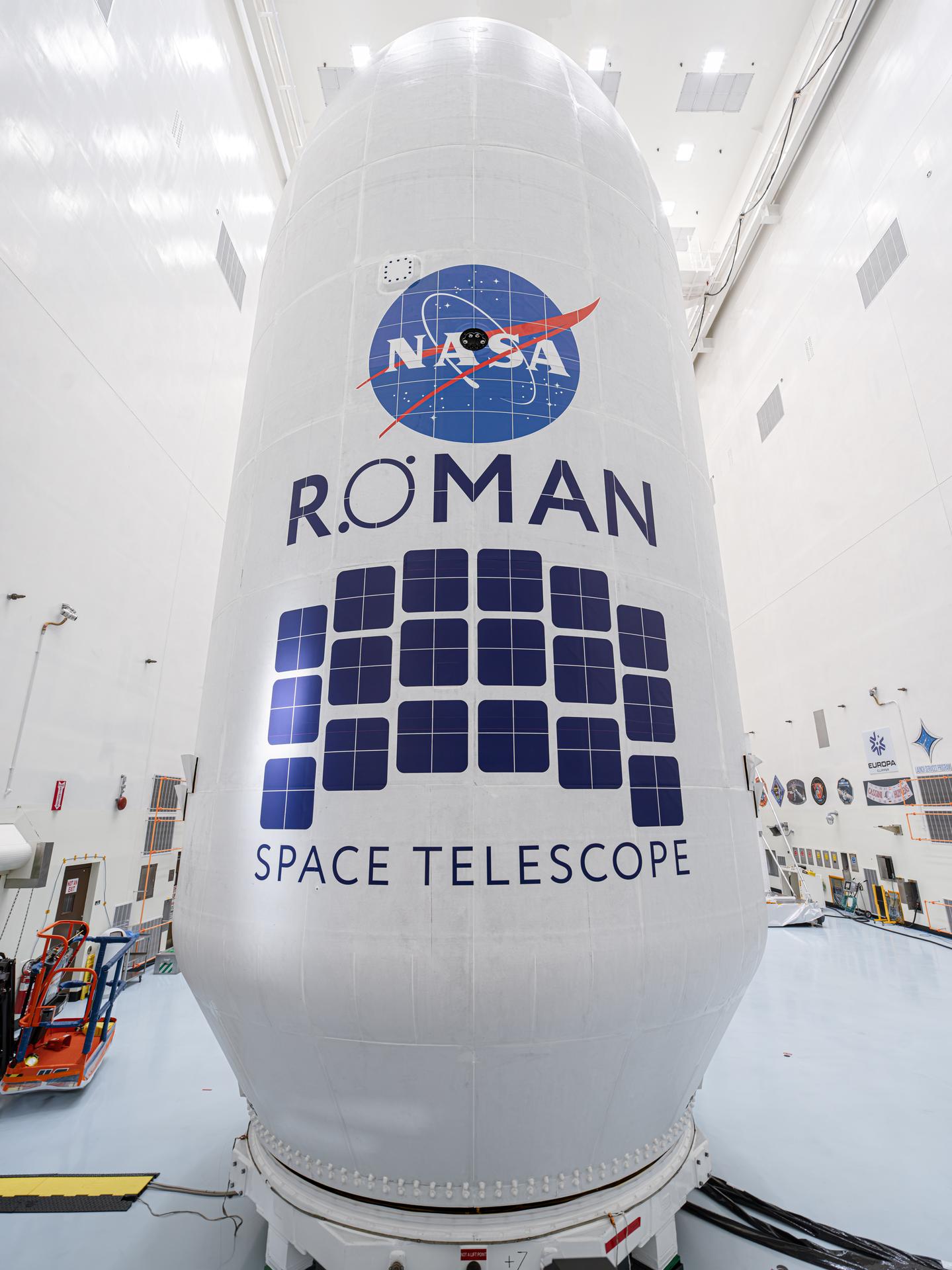
NASA’s Nancy Grace Roman Space Telescope is photographed after encapsulation inside its payload fairing in the Payload Hazardous Servicing Facility at NASA’s Kennedy Space Center in Florida on Monday, Aug. 24, 2026, ahead of mating to a SpaceX Falcon Heavy rocket. Encapsulation shields the spacecraft during rollout, ascent, and the early phases of flight. Roman will investigate dark energy and dark matter, conduct a statistical census of planetary systems, and enable a broad range of additional astrophysics research. Liftoff from Launch Complex 39A at Kennedy is targeted for no earlier than Sunday, Aug. 30, 2026.
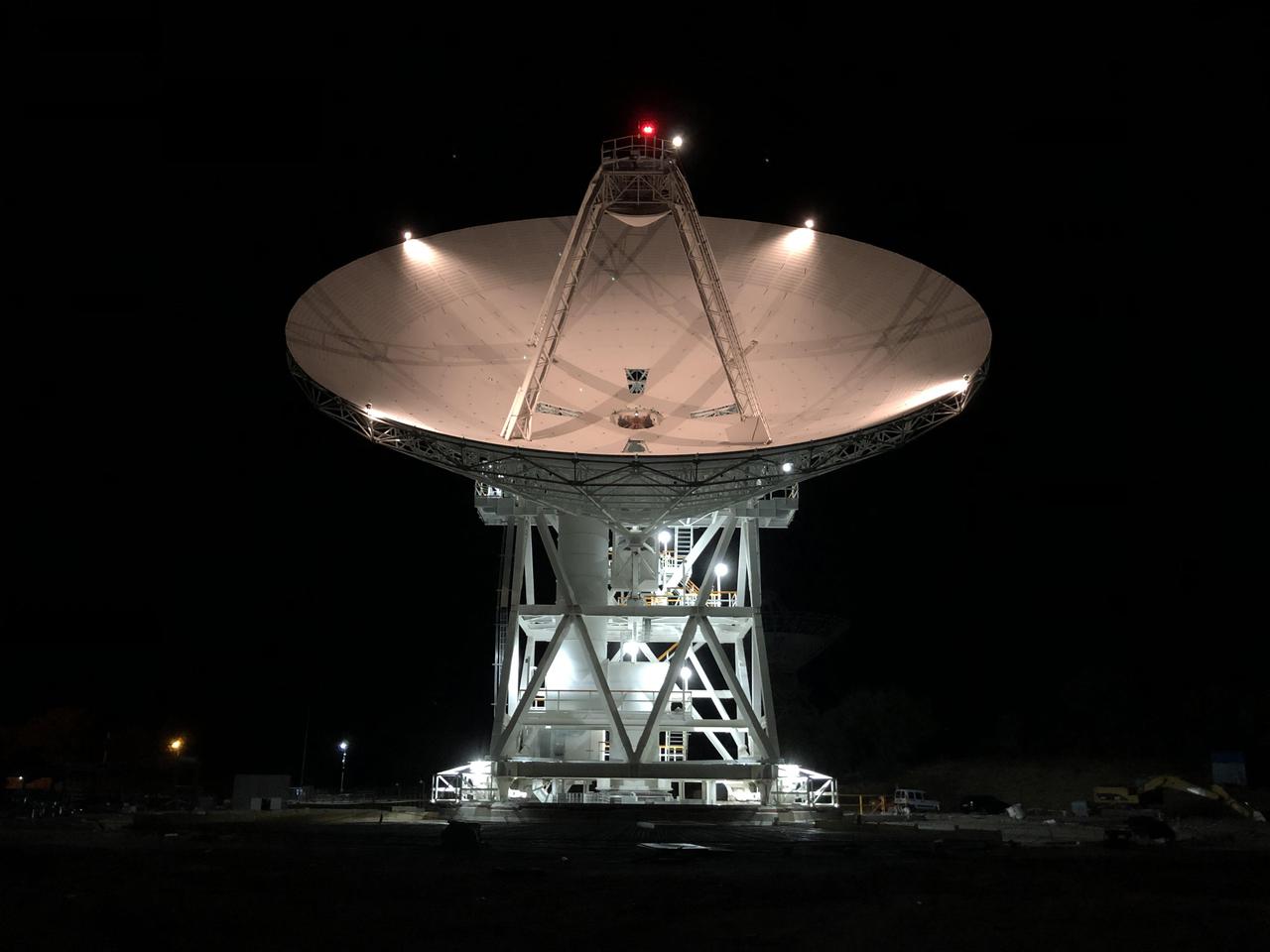
Deep Space Station 56, or DSS-56, is a powerful 34-meter-wide (112-foot-wide) antenna that was added to the Deep Space Network's Madrid Deep Space Communications Complex in Spain in early 2021 after beginning construction in 2017. Deep Space Network (DSN) radio antennas communicate with spacecraft throughout the solar system. Previous antennas have been limited in the frequency bands they can receive and transmit, often being restricted to communicating only with specific spacecraft. DSS-56 is the first to use the DSN's full range of communication frequencies. This means DSS-56 is an "all-in-one" antenna that can communicate with all the missions that the DSN supports and can be used as a backup for any of the Madrid complex's other antennas. With the addition of DSS-56 and other 34-meter antennas to all three DSN complexes, the network is preparing to play a critical role in ensuring communication and navigation support for upcoming Moon and Mars missions and the crewed Artemis missions. https://photojournal.jpl.nasa.gov/catalog/PIA24163

ESA Herschel Space Observatory found oxygen molecules in a dense patch of gas and dust adjacent to star-forming regions in the Orion nebula.
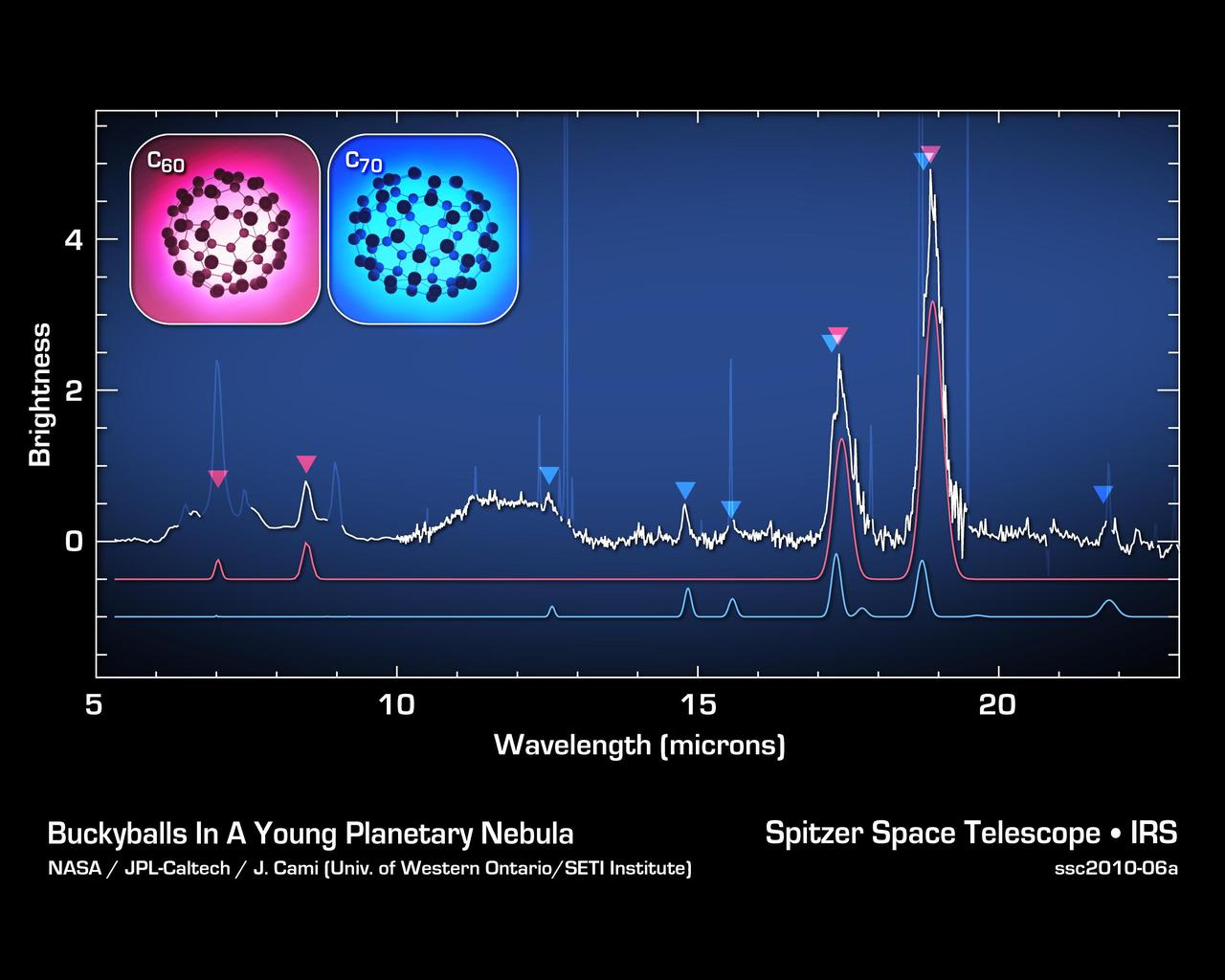
These data from NASA Spitzer Space Telescope show the signatures of buckyballs in space. Buckyballs, also called C60 or buckministerfullerenes, after architect Buckminister Fuller geodesic domes.

DSS43 is a 70-meter-wide (230-feet-wide) radio antenna at the Deep Space Network's Canberra facility in Australia. It is the only antenna that can send commands to the Voyager 2 spacecraft. https://photojournal.jpl.nasa.gov/catalog/PIA23682
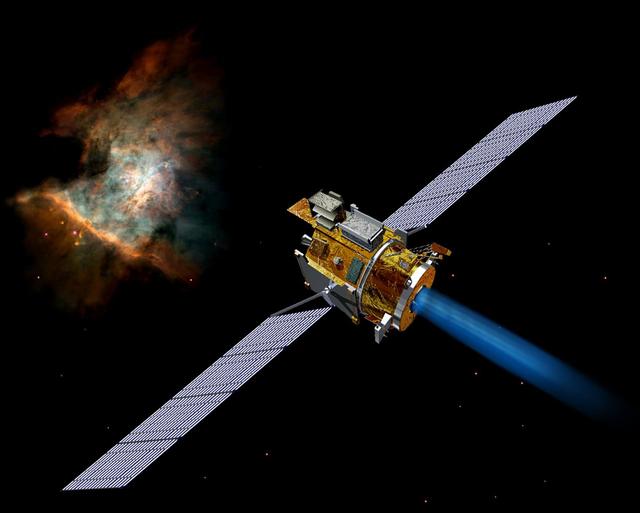
Artist concept of the Deep Space 1 spacecraft from December, 2002. http://photojournal.jpl.nasa.gov/catalog/PIA04242
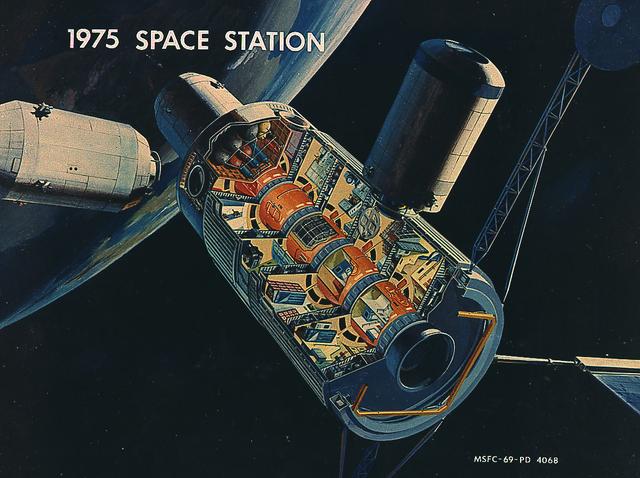
This picture illustrates a concept of a 33-Foot-Diameter Space Station Leading to a Space Base. In-house work of the Marshall Space Flight Center, as well as a Phase B contract with the McDornel Douglas Astronautics Company, resulted in a preliminary design for a space station in 1969 and l970. The Marshall-McDonnel Douglas approach envisioned the use of two common modules as the core configuration of a 12-man space station. Each common module was 33 feet in diameter and 40 feet in length and provided the building blocks, not only for the space station, but also for a 50-man space base. Coupled together, the two modules would form a four-deck facility: two decks for laboratories and two decks for operations and living quarters. Zero-gravity would be the normal mode of operation, although the station would have an artificial gravity capability. This general-purpose orbital facility was to provide wide-ranging research capabilities. The design of the facility was driven by the need to accommodate a broad spectrum of activities in support of astronomy, astrophysics, aerospace medicine, biology, materials processing, space physics, and space manufacturing. To serve the needs of Earth observations, the station was to be placed in a 242-nautical-mile orbit at a 55-degree inclination. An Intermediate-21 vehicle (comprised of Saturn S-IC and S-II stages) would have launched the station in 1977.

This is an illustration of the Space Base concept. In-house work of the Marshall Space Flight Center, as well as a Phase B contract with the McDornel Douglas Astronautics Company, resulted in a preliminary design for a space station in 1969 and l970. The Marshall-McDonnel Douglas approach envisioned the use of two common modules as the core configuration of a 12-man space station. Each common module was 33 feet in diameter and 40 feet in length and provided the building blocks, not only for the space station, but also for a 50-man space base. Coupled together, the two modules would form a four-deck facility: two decks for laboratories and two decks for operations and living quarters. Zero-gravity would be the normal mode of operation, although the station would have an artificial-gravity capability. This general-purpose orbital facility was to provide wide-ranging research capabilities. The design of the facility was driven by the need to accommodate a broad spectrum of activities in support of astronomy, astrophysics, aerospace medicine, biology, materials processing, space physics, and space manufacturing. To serve the needs of Earth observations, the station was to be placed in a 242-nautical-mile orbit at a 55-degree inclination. An Intermediate-21 vehicle (comprised of Saturn S-IC and S-II stages) would have launched the station in 1977.
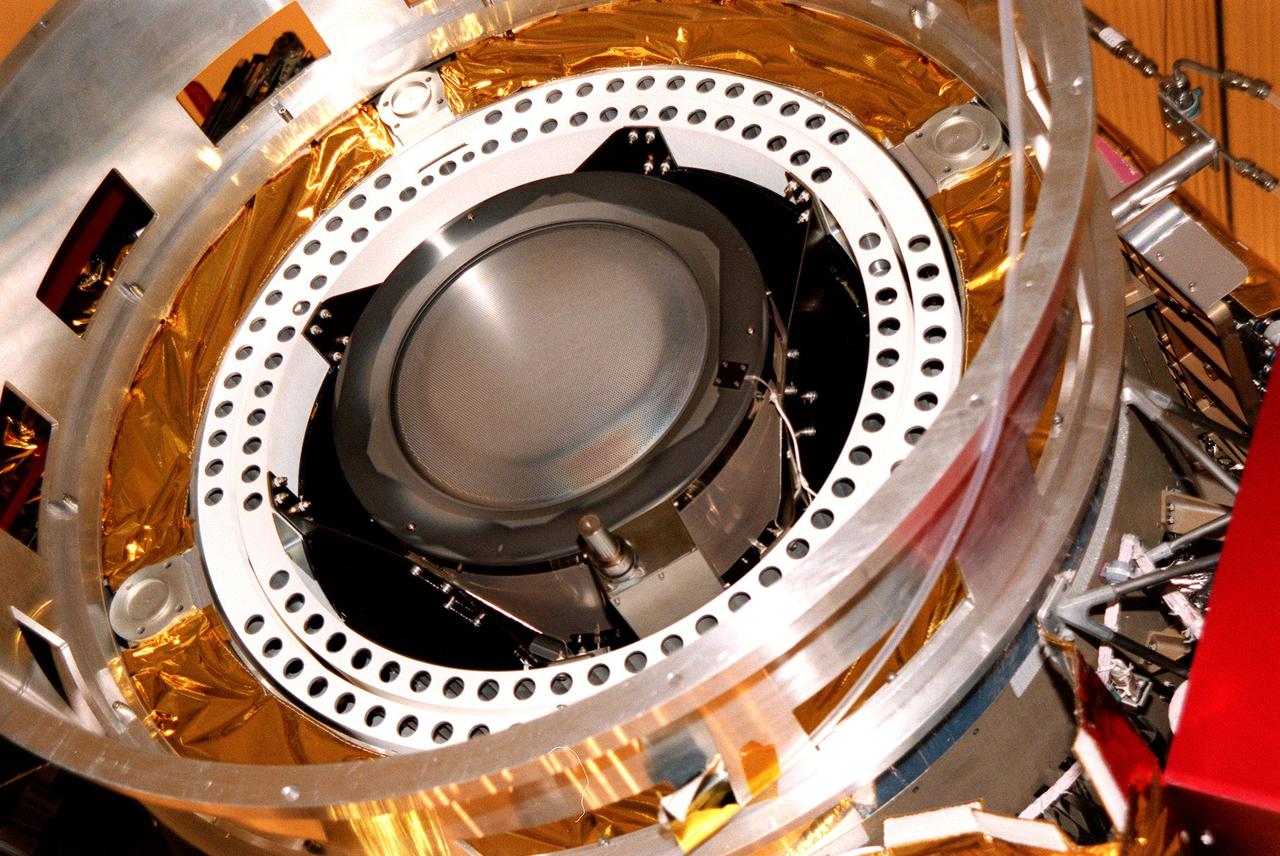
Kennedy Space Center, Florida. - Deep Space 1 is lifted from its work platform, giving a closeup view of the experimental solar-powered ion propulsion engine. The ion propulsion engine is the first non-chemical propulsion to be used as the primary means of propelling a spacecraft. The first flight in NASA's New Millennium Program, Deep Space 1 is designed to validate 12 new technologies for scientific space missions of the next century. Another onboard experiment includes software that tracks celestial bodies so the spacecraft can make its own navigation decisions without the intervention of ground controllers. Deep Space 1 will complete most of its mission objectives within the first two months, but may also do a flyby of a near-Earth asteroid, 1992 KD, in July 1999. Deep Space 1 will be launched aboard a Boeing Delta 7326 rocket from Launch Pad 17A, Cape Canaveral Air Station, in October. Delta II rockets are medium capacity expendable launch vehicles derived from the Delta family of rockets built and launched since 1960. Since then there have been more than 245 Delta launches. http://photojournal.jpl.nasa.gov/catalog/PIA04232

NASA Spitzer Space Telescope has detected the solid form of buckyballs in space for the first time. To form a solid particle, the buckyballs must stack together, as illustrated in this artist concept showing the very beginnings of the process.
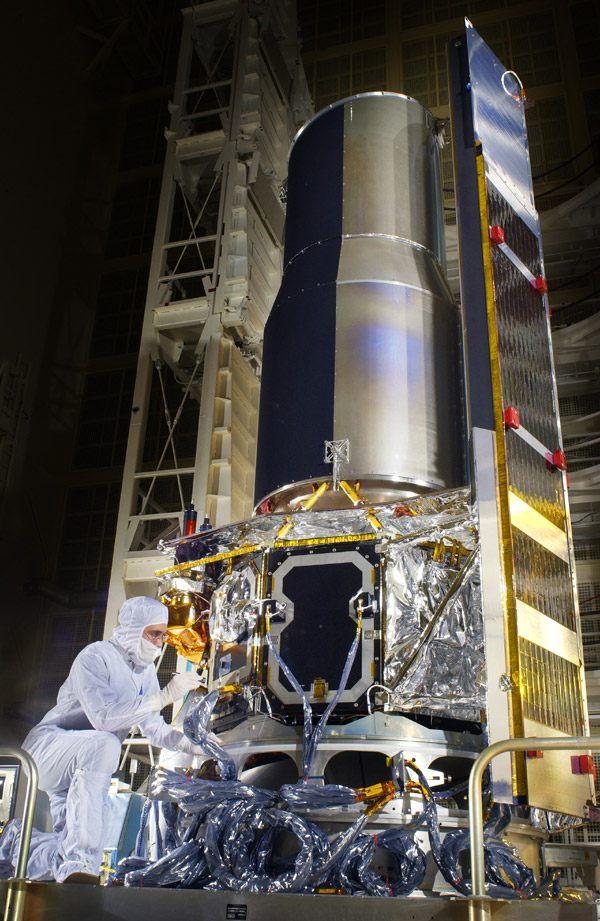
Technicians put final touches on NASA Space Infrared Telescope Facility at Lockheed Martin Aeronautics in Sunnyvale, Calif., which launched on August 25, 2003. The telescope is now known as the Spitzer Space Telescope.
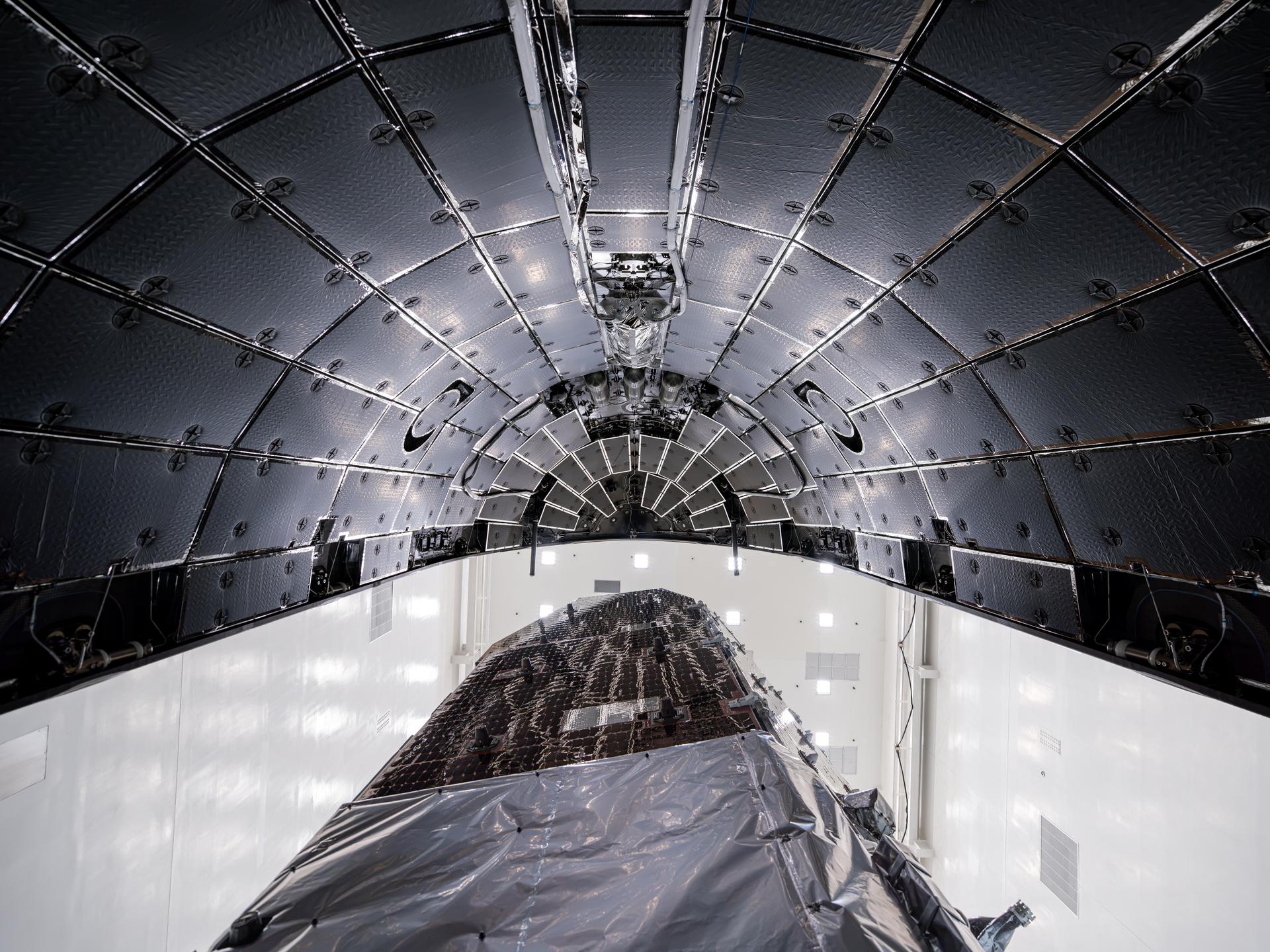
Teams inside the Payload Hazardous Servicing Facility at NASA’s Kennedy Space Center in Florida encapsulate the agency’s Nancy Grace Roman Space Telescope within the payload fairing on Friday, Aug. 21, 2026, ahead of mating to a SpaceX Falcon Heavy rocket. Encapsulation shields the spacecraft during rollout, ascent, and the early phases of flight. Roman will investigate dark energy and dark matter, conduct a statistical census of planetary systems, and enable a broad range of additional astrophysics research. Liftoff from Launch Complex 39A at Kennedy is targeted for no earlier than Sunday, Aug. 30, 2026.
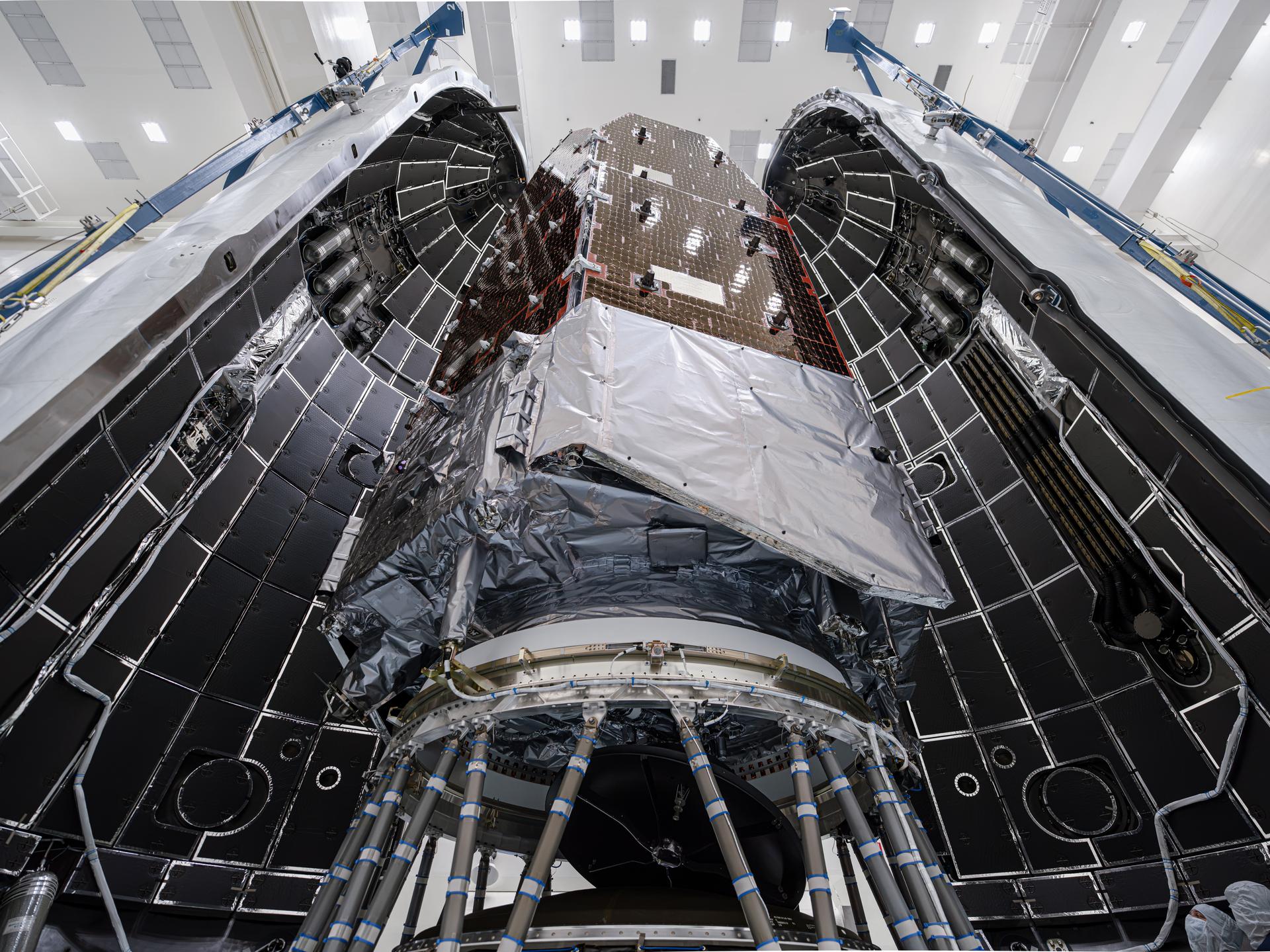
Teams inside the Payload Hazardous Servicing Facility at NASA’s Kennedy Space Center in Florida encapsulate the agency’s Nancy Grace Roman Space Telescope within the payload fairing on Friday, Aug. 21, 2026, ahead of mating to a SpaceX Falcon Heavy rocket. Encapsulation shields the spacecraft during rollout, ascent, and the early phases of flight. Roman will investigate dark energy and dark matter, conduct a statistical census of planetary systems, and enable a broad range of additional astrophysics research. Liftoff from Launch Complex 39A at Kennedy is targeted for no earlier than Sunday, Aug. 30, 2026.
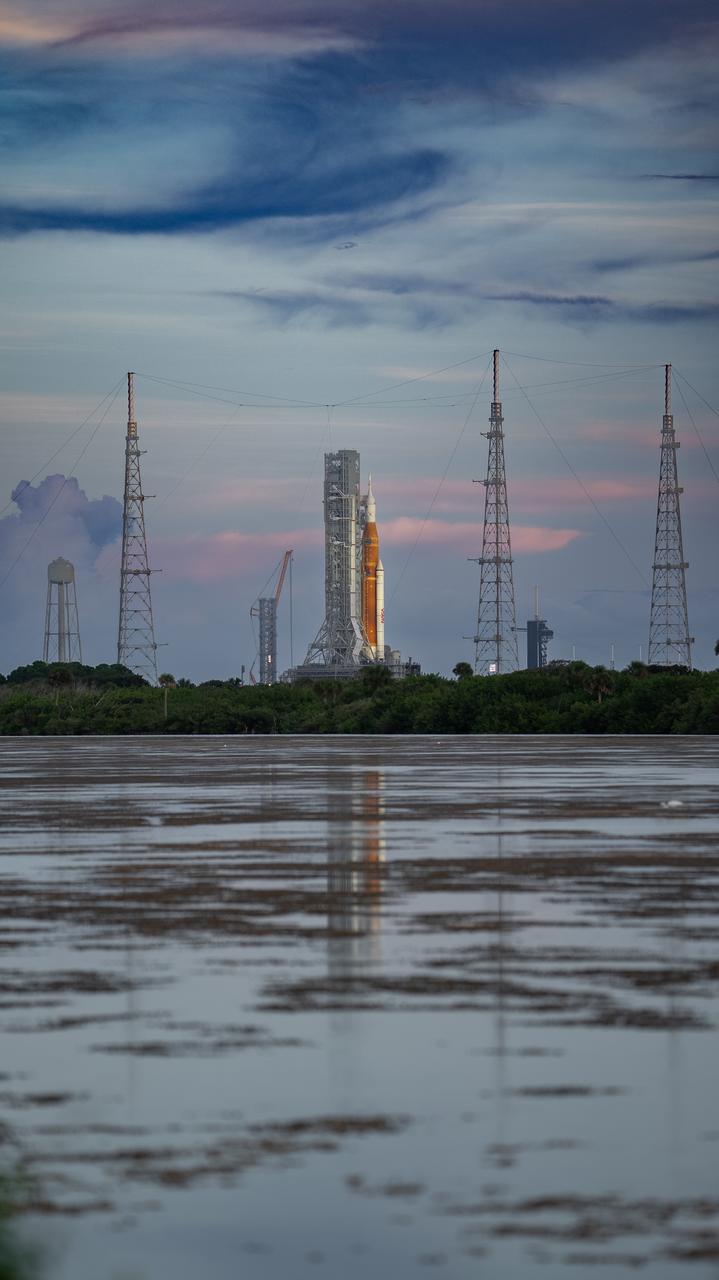
NASA’s Space Launch System (SLS) rocket with the Orion spacecraft aboard is seen atop the mobile launcher at Launch Pad 39B at NASA’s Kennedy Space Center in Florida. Artemis I mission is the first integrated test of the agency’s deep space exploration systems: the Space Launch System rocket, Orion spacecraft, and supporting ground systems. The mission is the first in a series of increasingly complex missions to the Moon. Launch of the uncrewed flight test is targeted for no earlier than Sept. 3 at 2:17 p.m. ET. With Artemis missions, NASA will land the first woman and first person of color on the Moon, using innovative technologies to explore more of the lunar surface than ever before.
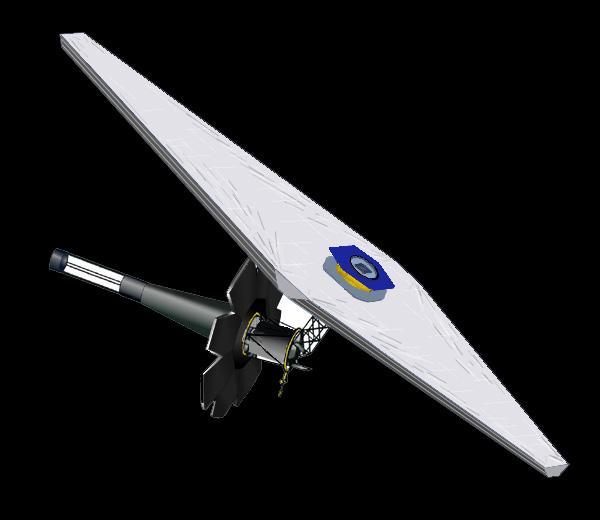
Artist concept of Next Generation Space Telescope from December, 2002. http://photojournal.jpl.nasa.gov/catalog/PIA04243

Zinnia seeds grown in the Veggie plant growth system on the International Space Station were planted and are growing in the Veggie Laboratory in the Space Station Processing Facility (SSPF) at NASA's Kennedy Space Center in Florida on Nov. 27, 2018.
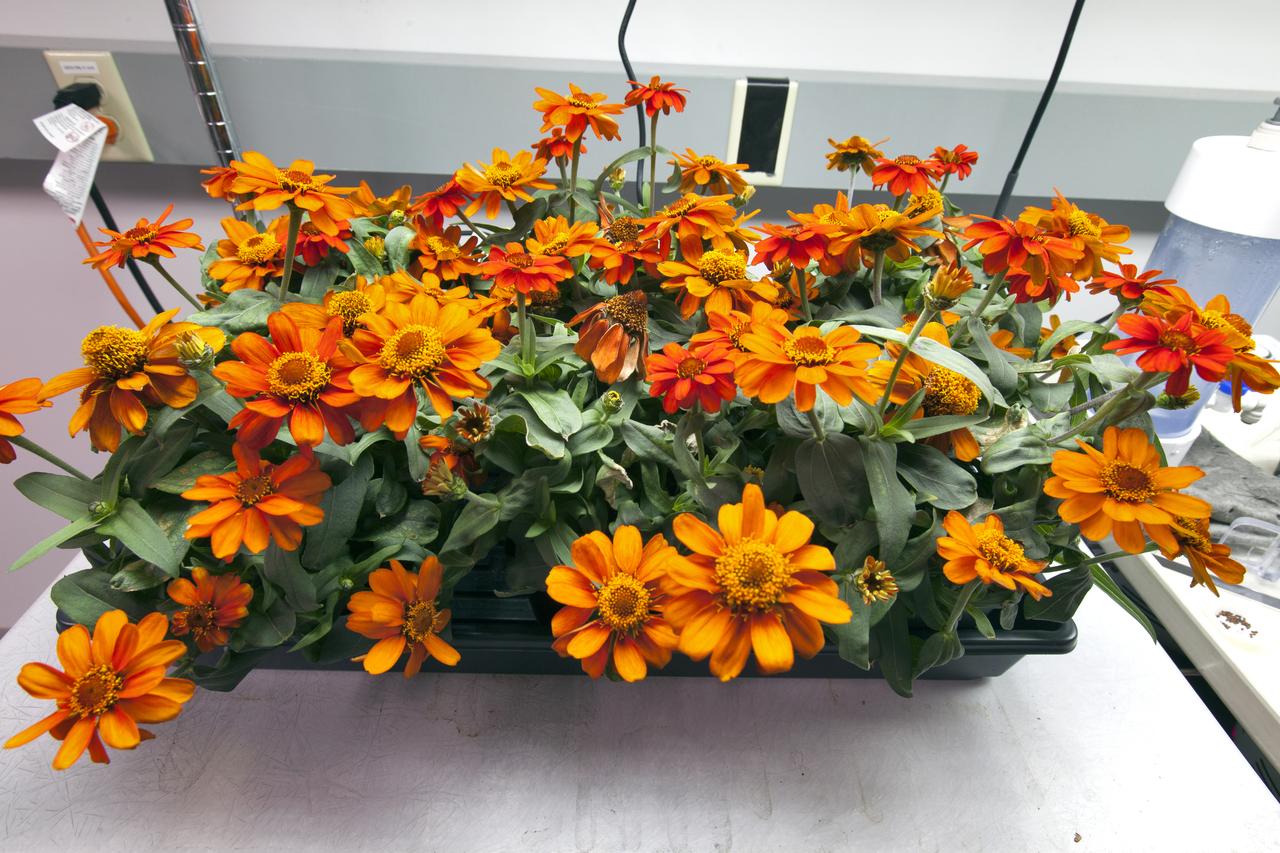
Zinnia seeds grown in the Veggie plant growth system on the International Space Station were planted and are growing in the Veggie Laboratory in the Space Station Processing Facility (SSPF) at NASA's Kennedy Space Center in Florida on Nov. 27, 2018.
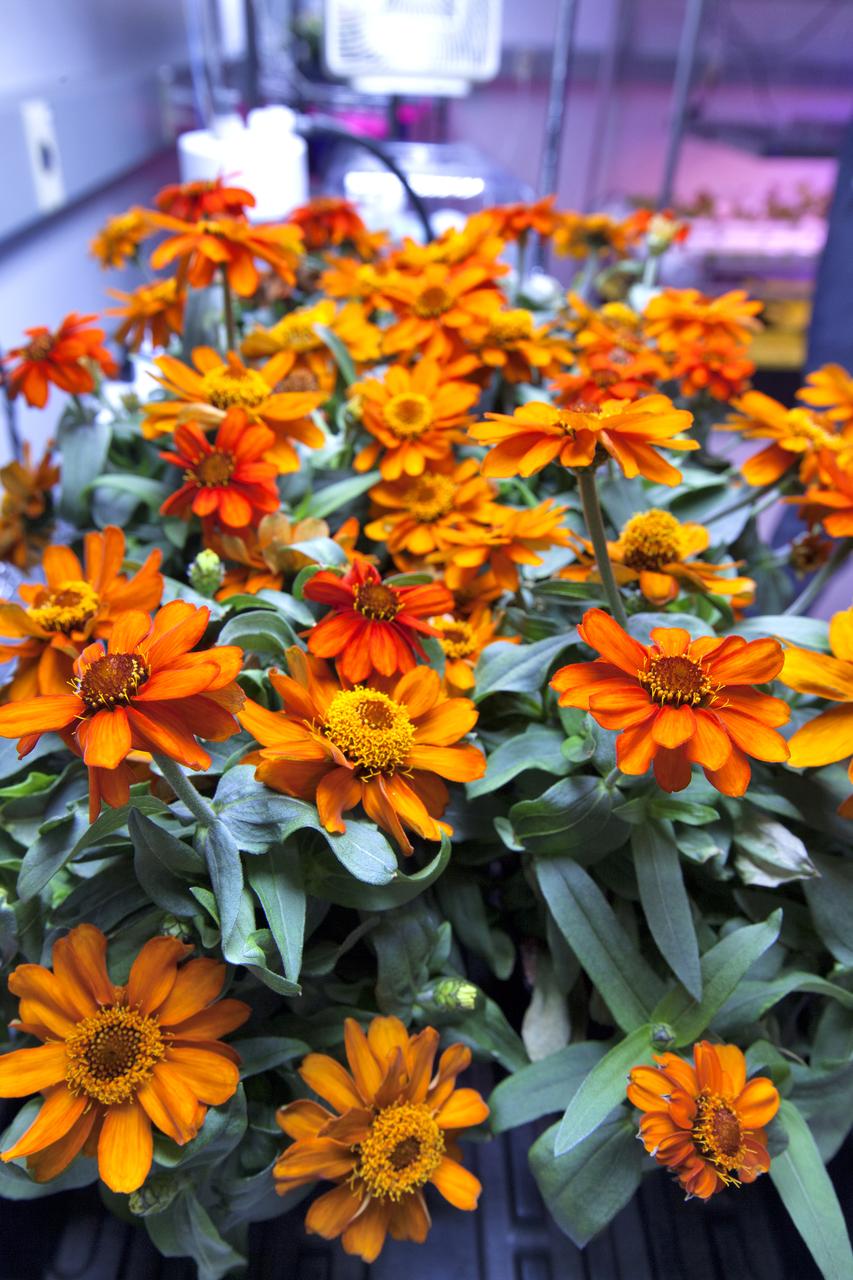
Zinnia seeds grown in the Veggie plant growth system on the International Space Station were planted and are growing in the Veggie Laboratory in the Space Station Processing Facility (SSPF) at NASA's Kennedy Space Center in Florida on Nov. 27, 2018.
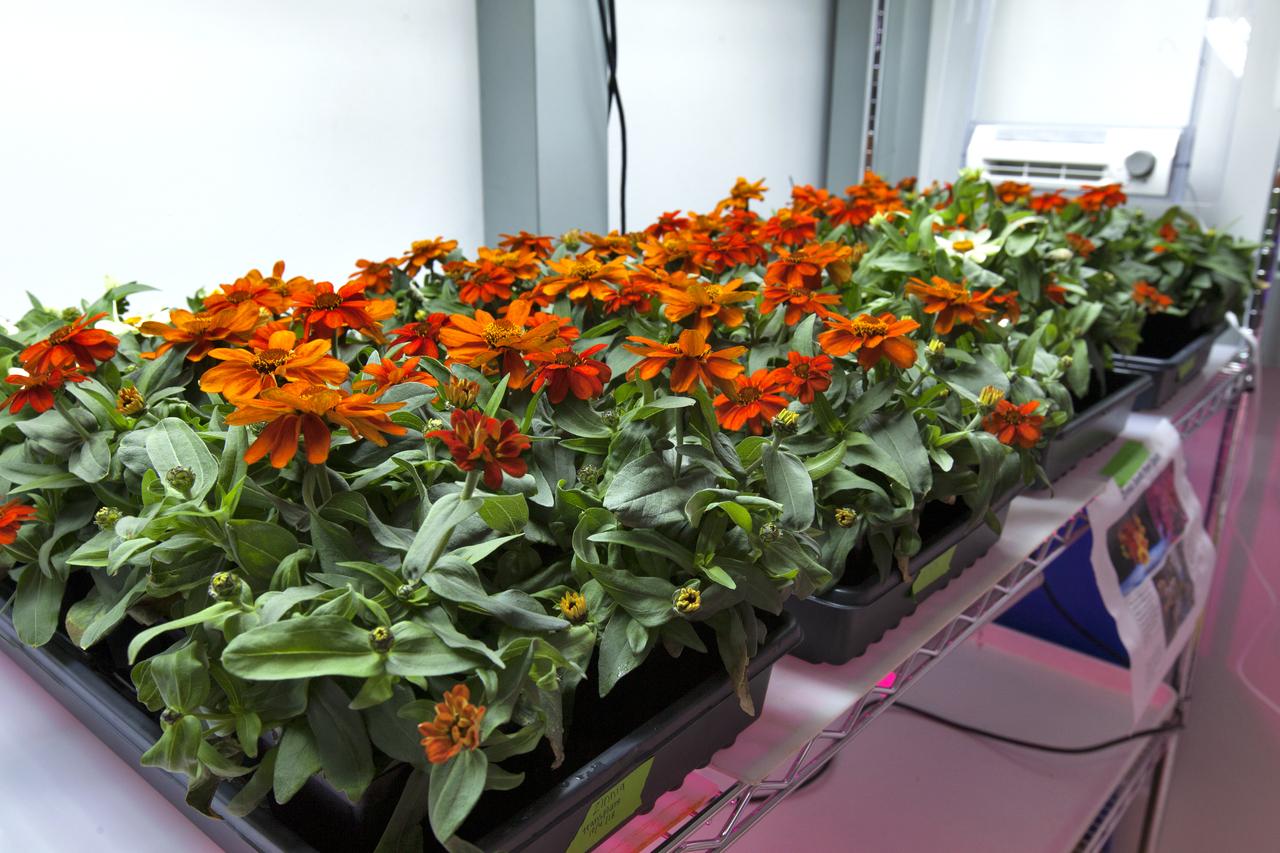
Zinnia seeds grown in the Veggie plant growth system on the International Space Station were planted and are growing in the Veggie Laboratory in the Space Station Processing Facility (SSPF) at NASA's Kennedy Space Center in Florida on Nov. 27, 2018.
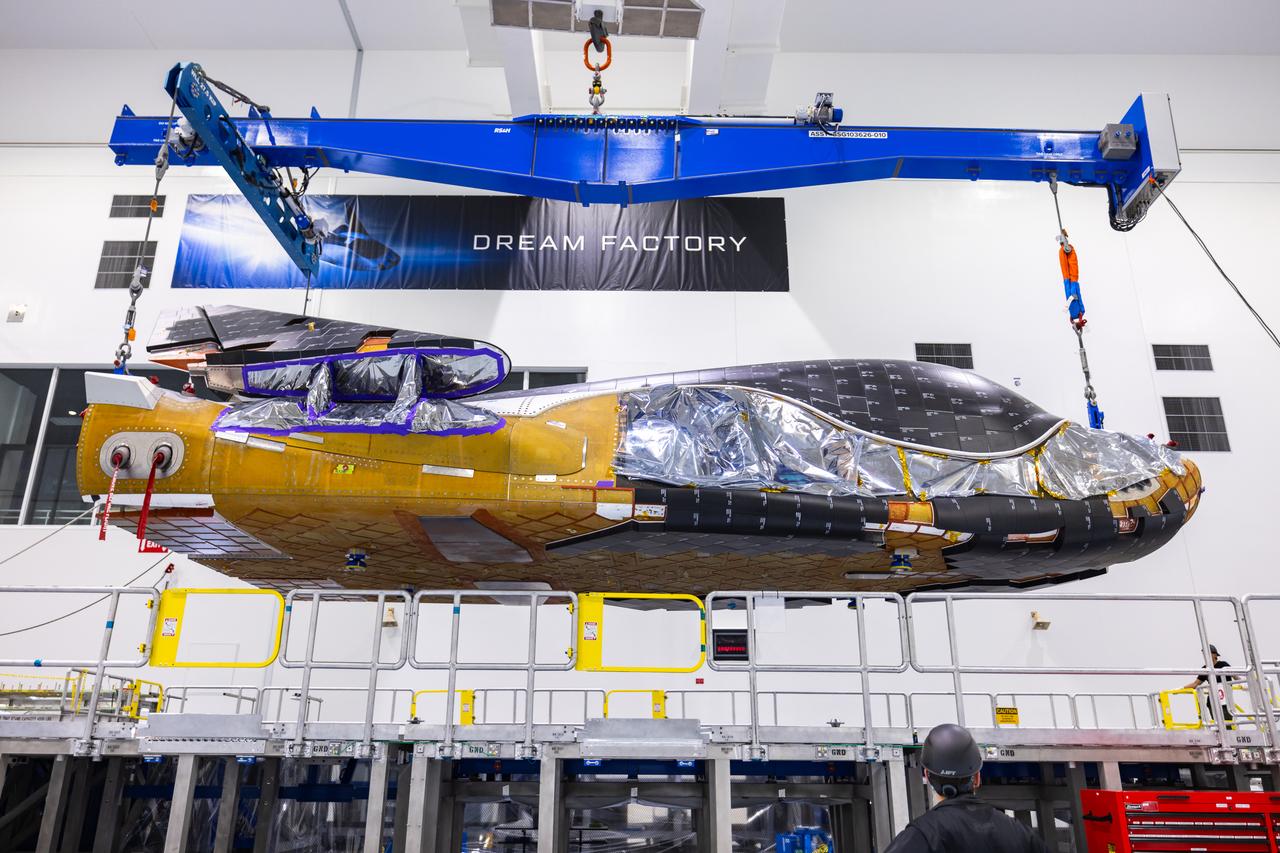
Dream Chaser Tenacity, Sierra Space's uncrewed cargo spaceplane is lifted and moved by crane inside the Space Systems Processing Facility (SSPF) at NASA’s Kennedy Space Center in Florida on Monday, May 20, 2024. Dream Chaser Tenacity will undergo final testing and prelaunch processing inside the high bay of the SSPF ahead of its inaugural launch atop a ULA (United Launch Alliance) Vulcan rocket from nearby Cape Canaveral Space Force Station. The reusable transportation system is contracted to perform a minimum of seven cargo missions to the International Space Station as part of the agency’s efforts to expand commercial resupply services to low Earth orbit.
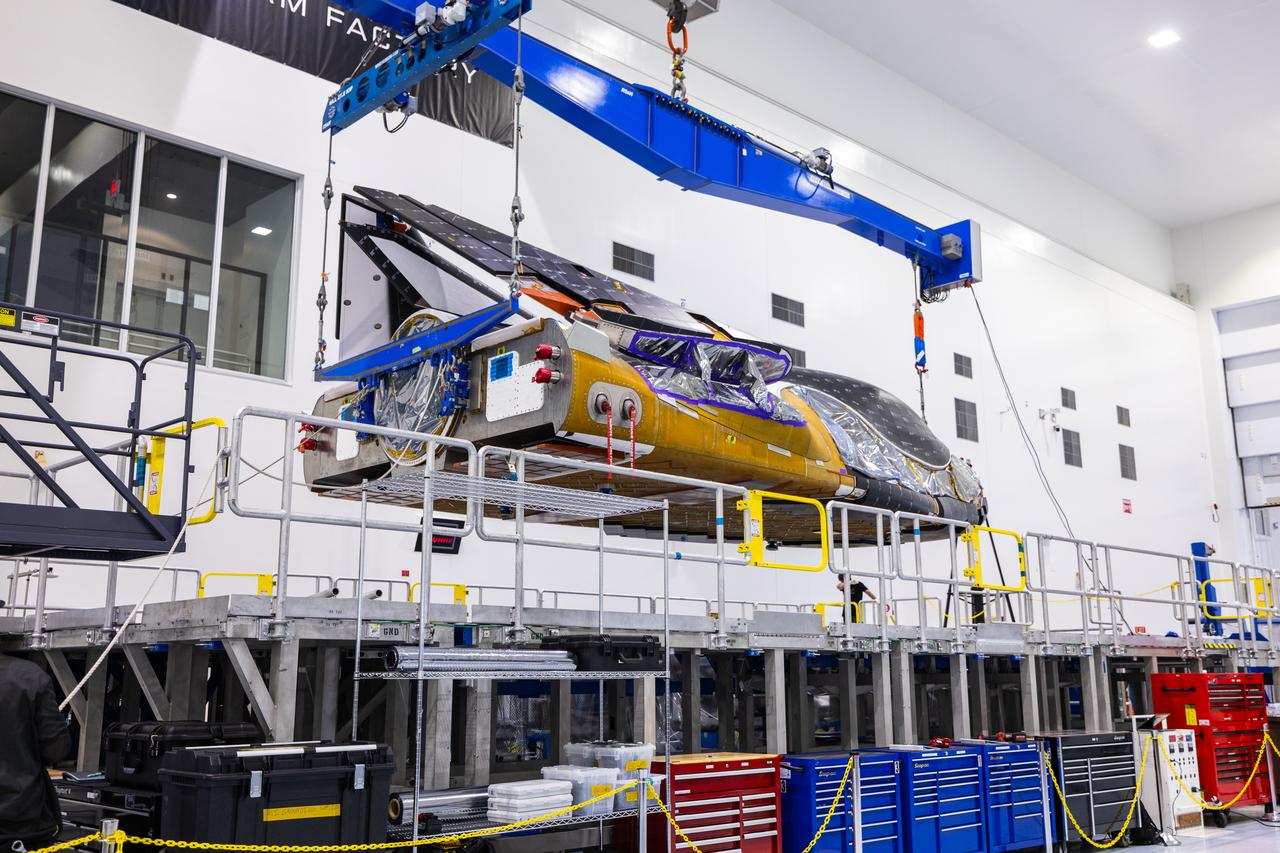
Dream Chaser Tenacity, Sierra Space's uncrewed cargo spaceplane is lifted and moved by crane inside the Space Systems Processing Facility (SSPF) at NASA’s Kennedy Space Center in Florida on Monday, May 20, 2024. Dream Chaser Tenacity will undergo final testing and prelaunch processing inside the high bay of the SSPF ahead of its inaugural launch atop a ULA (United Launch Alliance) Vulcan rocket from nearby Cape Canaveral Space Force Station. The reusable transportation system is contracted to perform a minimum of seven cargo missions to the International Space Station as part of the agency’s efforts to expand commercial resupply services to low Earth orbit.

A close-up view of a zinnia flower grown in the Veggie Laboratory in the Space Station Processing Facility (SSPF) at NASA's Kennedy Space Center in Florida, on Nov. 27, 2018. Seeds from zinnias growing on the space station were returned to Earth. Researchers in the SSPF planted the seeds in the Veggie control unit and grew the colorful flowers.
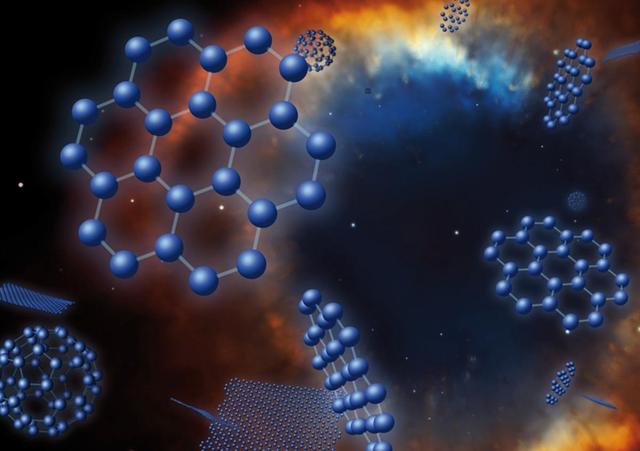
This is an artist concept, based on data from NASA Spitzer Space Telescope, of graphene, buckyballs and C70 superimposed on an image of the Helix planetary nebula, a puffed-out cloud of material expelled by a dying star.
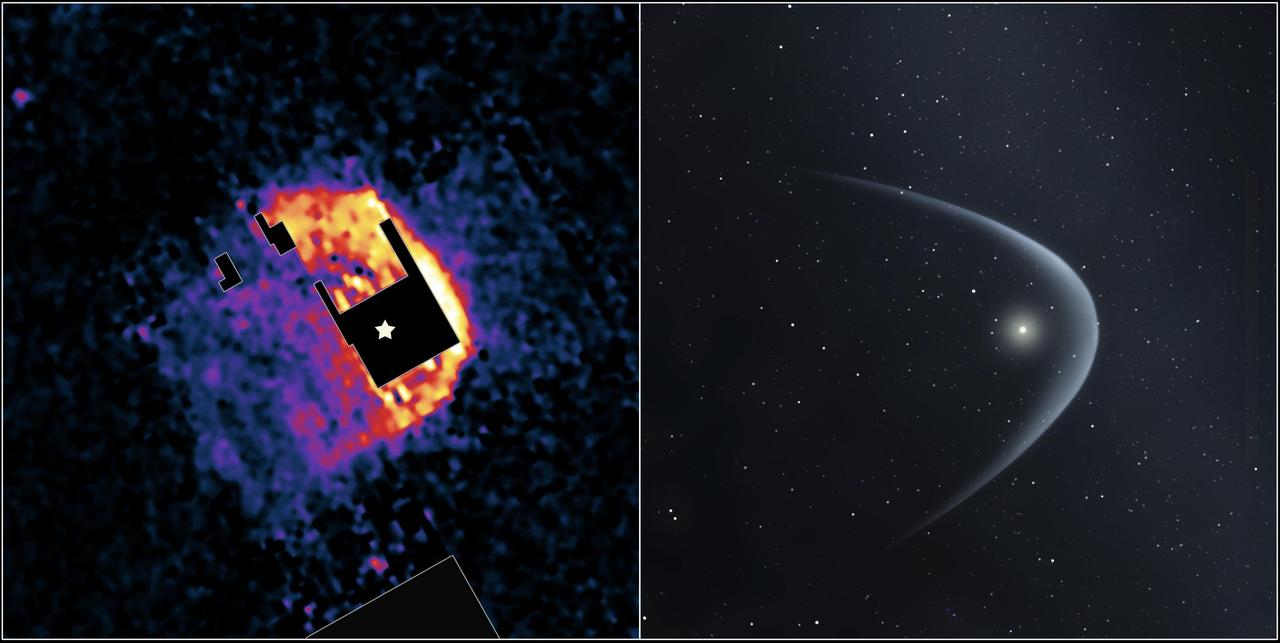
This image from NASA Spitzer Space Telescope left panel shows the bow shock of a dying star named R Hydrae, or R Hya, in the constellation Hydra.

An infrared photo of the Small Magellanic Cloud taken by NASA Spitzer Space Telescope is shown in this artist illustration; an example of a planetary nebula, and a magnified depiction of buckyballs.
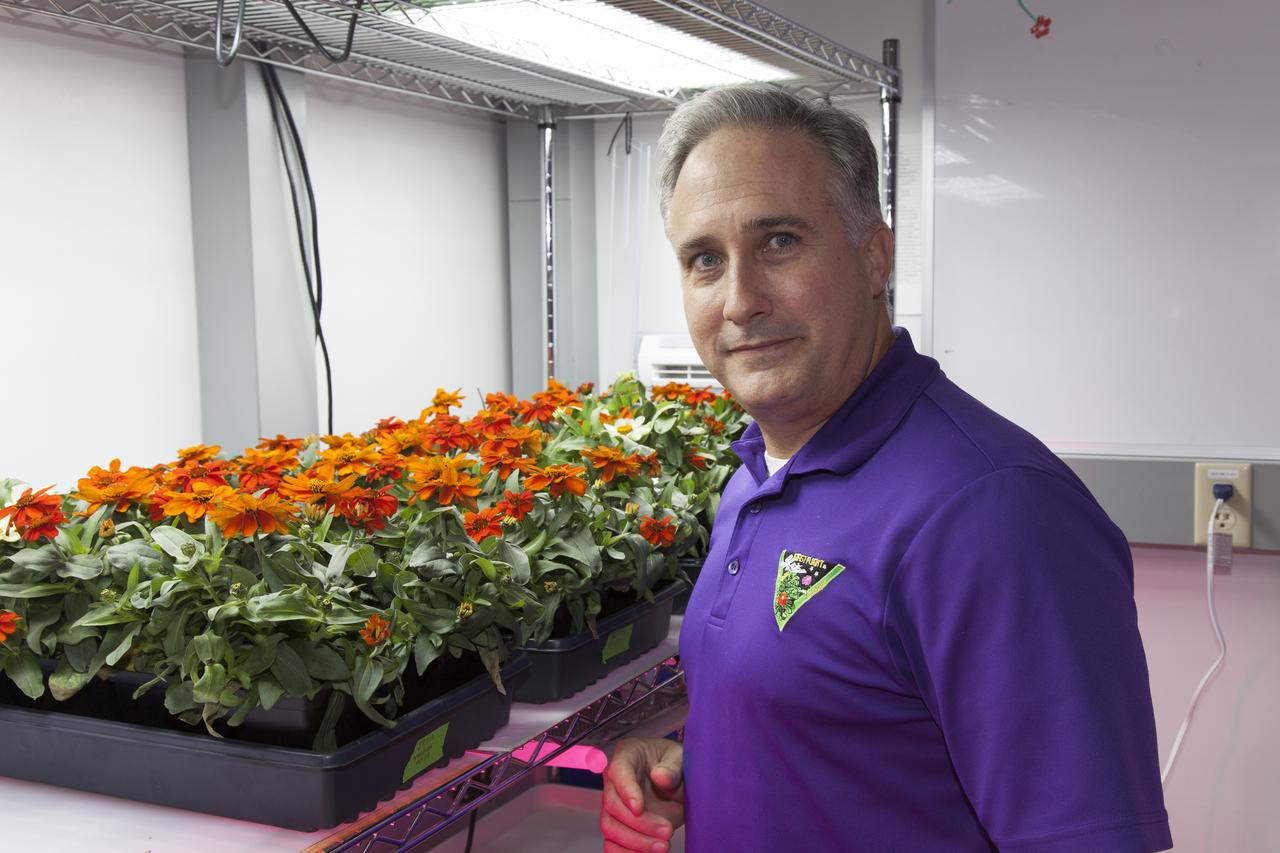
Trent Smith, Veggie project manager, Exploration Research and Technology Programs, is in the Veggie Laboratory in the Space Station Processing Facility (SSPF) at NASA's Kennedy Space Center in Florida on Nov. 27, 2018. Next to him are zinnia flowers grown from seeds germinated in the Veggie plant growth system on the International Space Station. The seeds were returned to Earth and researchers in the SSPF planted them in the Veggie control unit and grew the colorful flowers.
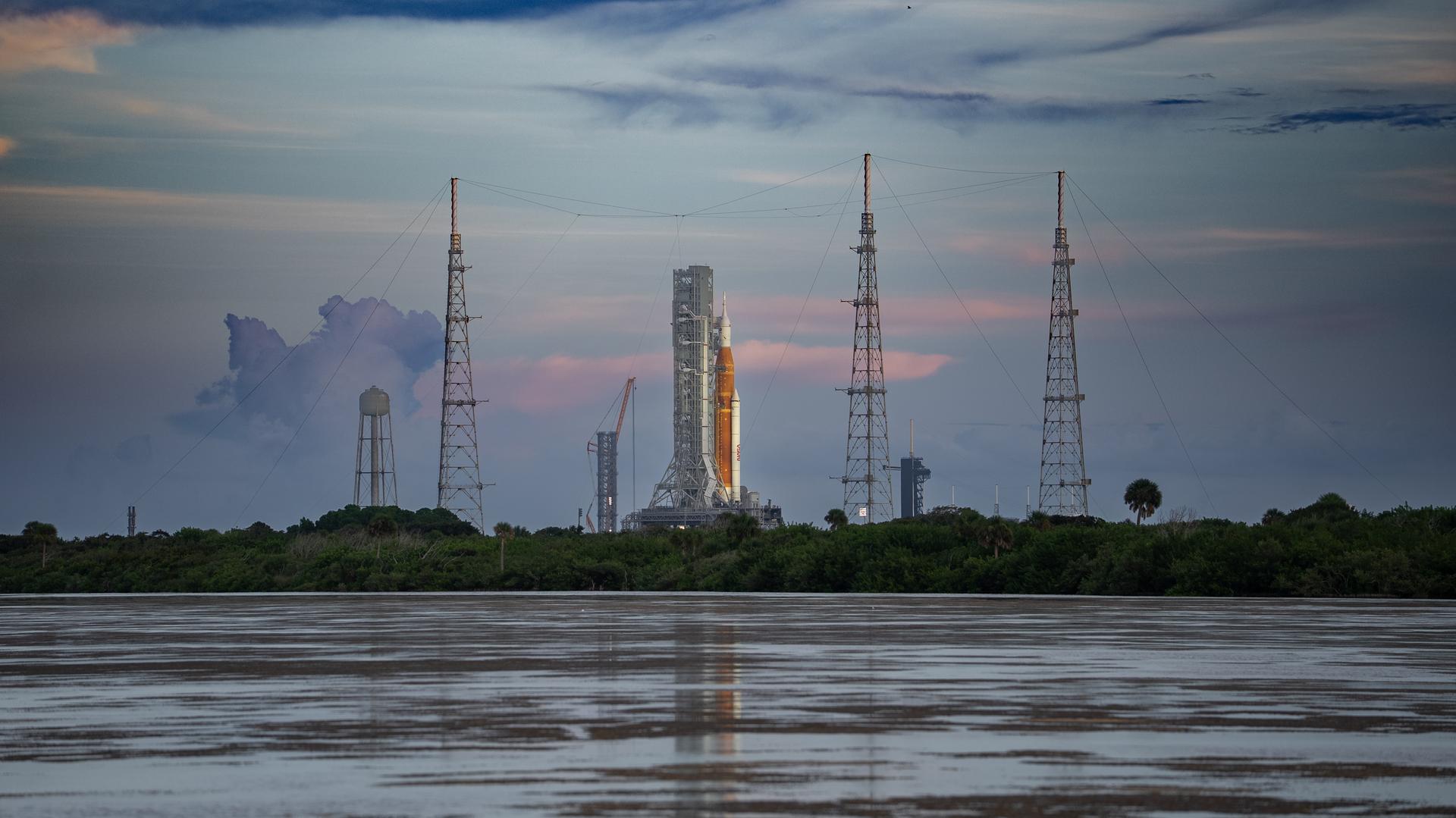
NASA’s Space Launch System (SLS) rocket with the Orion spacecraft aboard is seen atop the mobile launcher at Launch Pad 39B at NASA’s Kennedy Space Center in Florida. Artemis I mission is the first integrated test of the agency’s deep space exploration systems: the Space Launch System rocket, Orion spacecraft, and supporting ground systems. The mission is the first in a series of increasingly complex missions to the Moon. Launch of the uncrewed flight test is targeted for no earlier than Sept. 3 at 2:17 p.m. ET. With Artemis missions, NASA will land the first woman and first person of color on the Moon, using innovative technologies to explore more of the lunar surface than ever before.
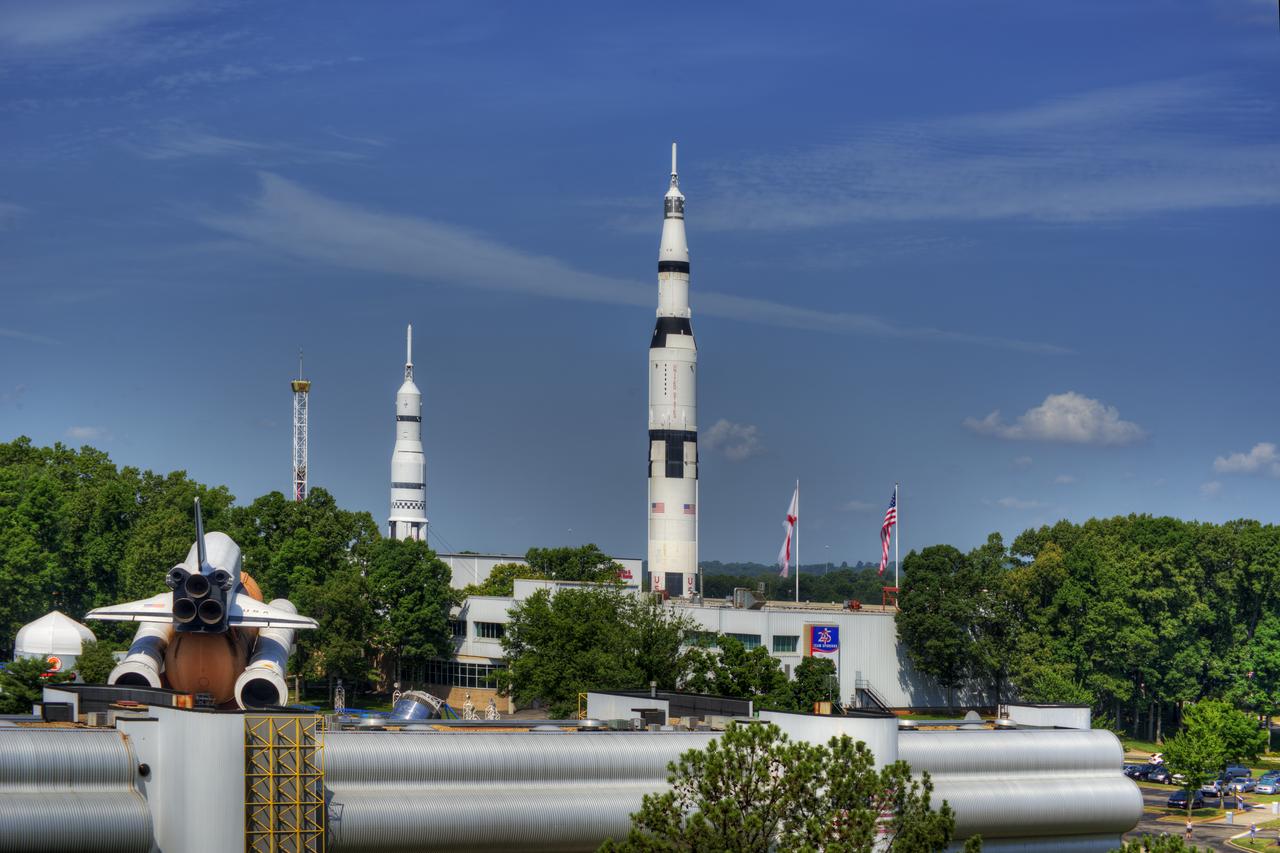
VIEW OF THE U.S. SPACE AND ROCKET CENTER, LOOKING WEST, FROM THE ROOF OF THE MARRIOTT HOTEL
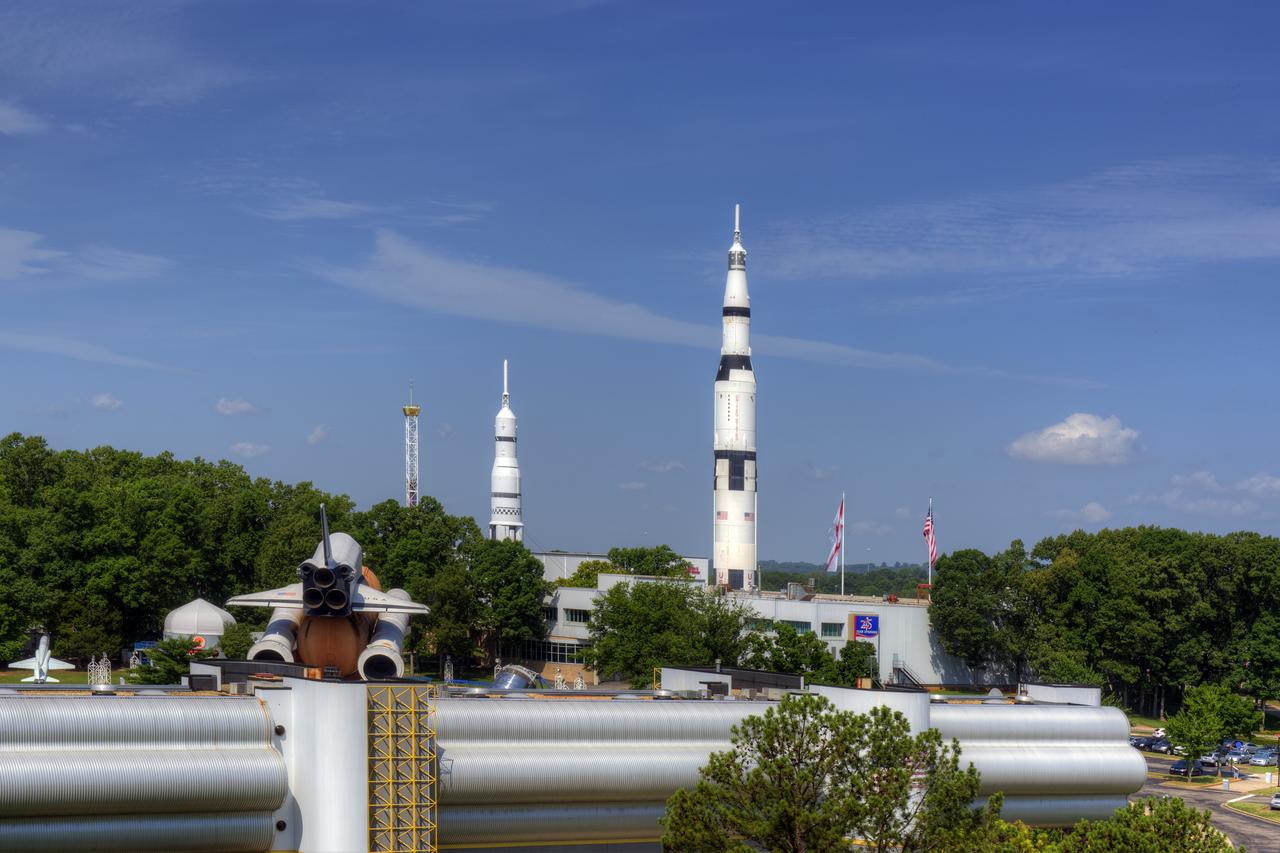
VIEW OF THE U.S. SPACE AND ROCKET CENTER, LOOKING WEST, FROM THE ROOF OF THE MARRIOTT HOTEL.
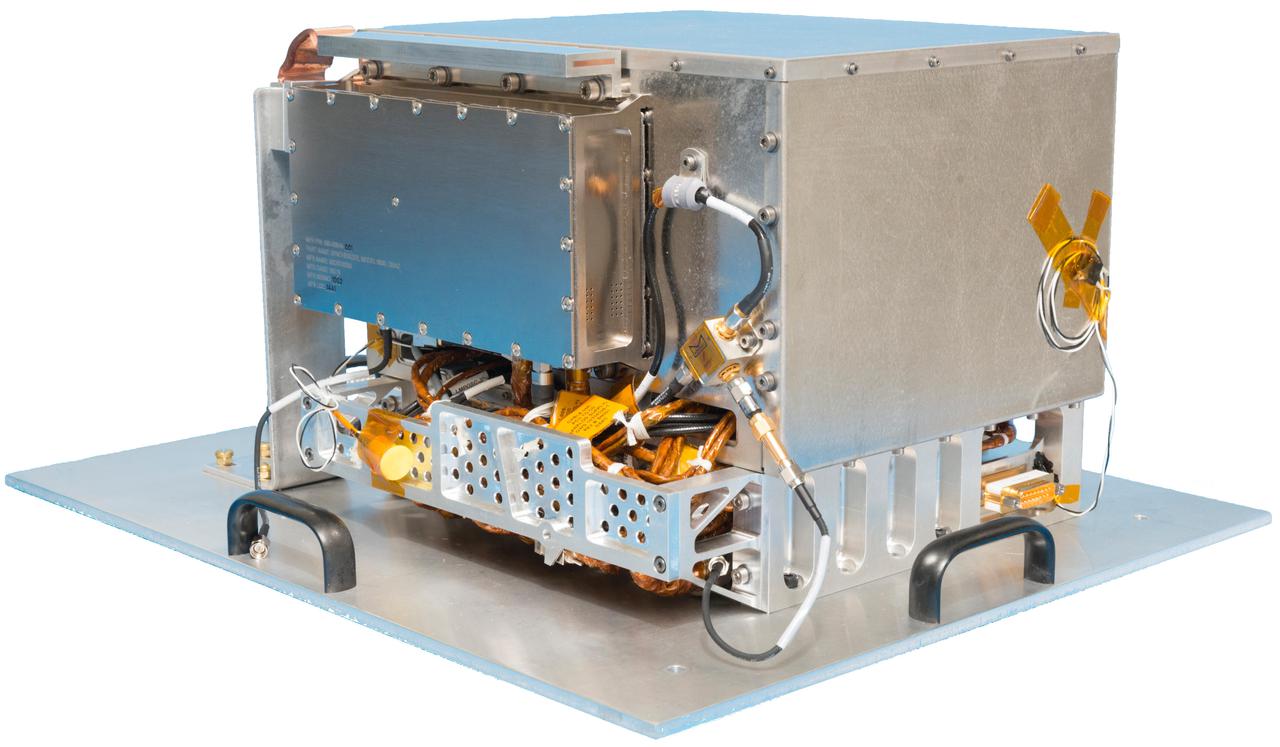
NASA's Deep Space Atomic Clock could revolutionize deep space navigation. One key requirement for the technology demonstration was a compact design. The complete hardware package is shown here and is only about 10 inches (25 centimeters) on each side. https://photojournal.jpl.nasa.gov/catalog/PIA24573
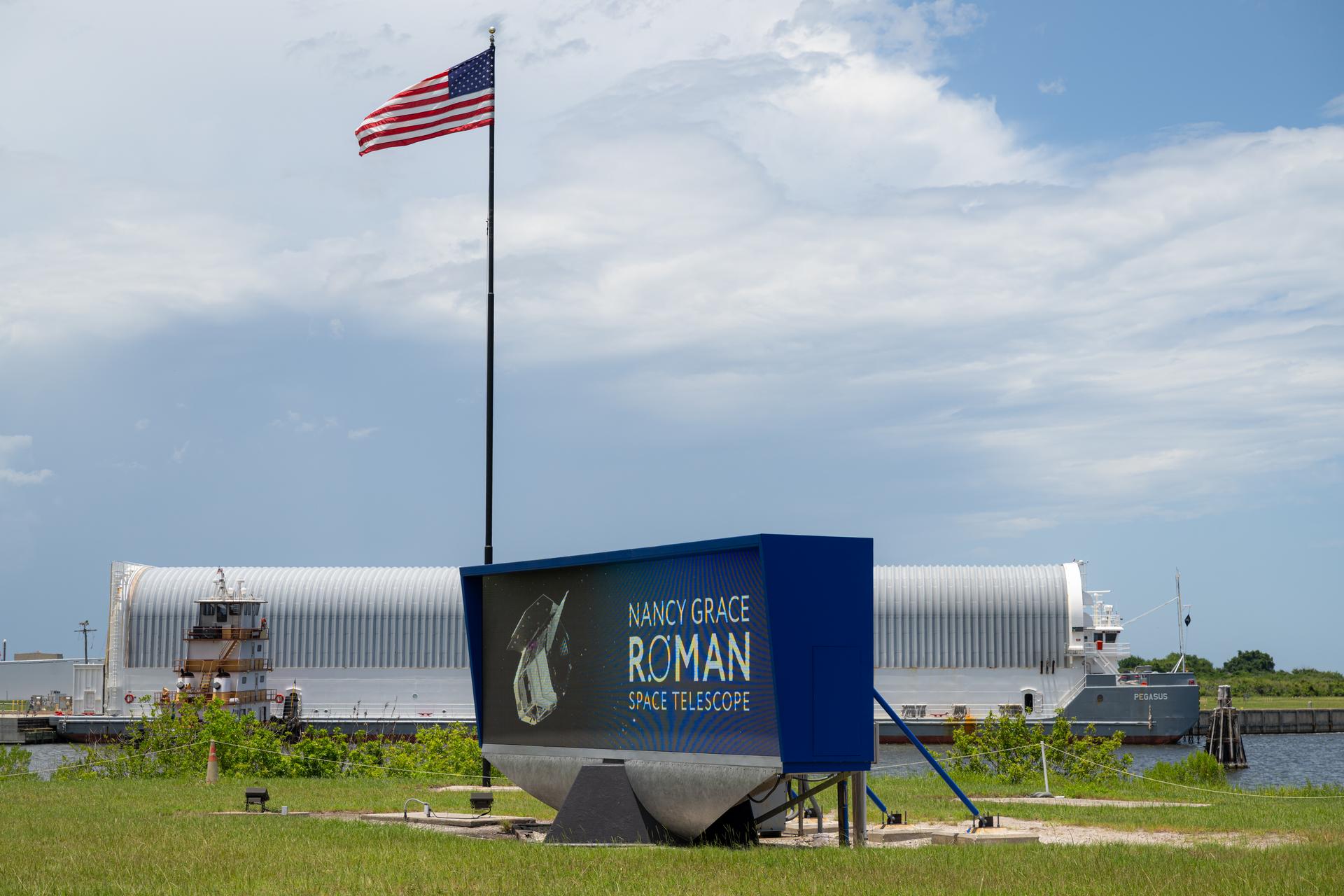
NASA’s Pegasus barge is seen, Sunday, June 21, at NASA’s Kennedy Space Center in Florida. The Pegasus barge delivered NASA’s Nancy Grace Roman Space Telescope and a weather cover for the Artemis III SLS (Space Launch System) rocket core stage to Kennedy. Photo Credit: (NASA/John Kraus)
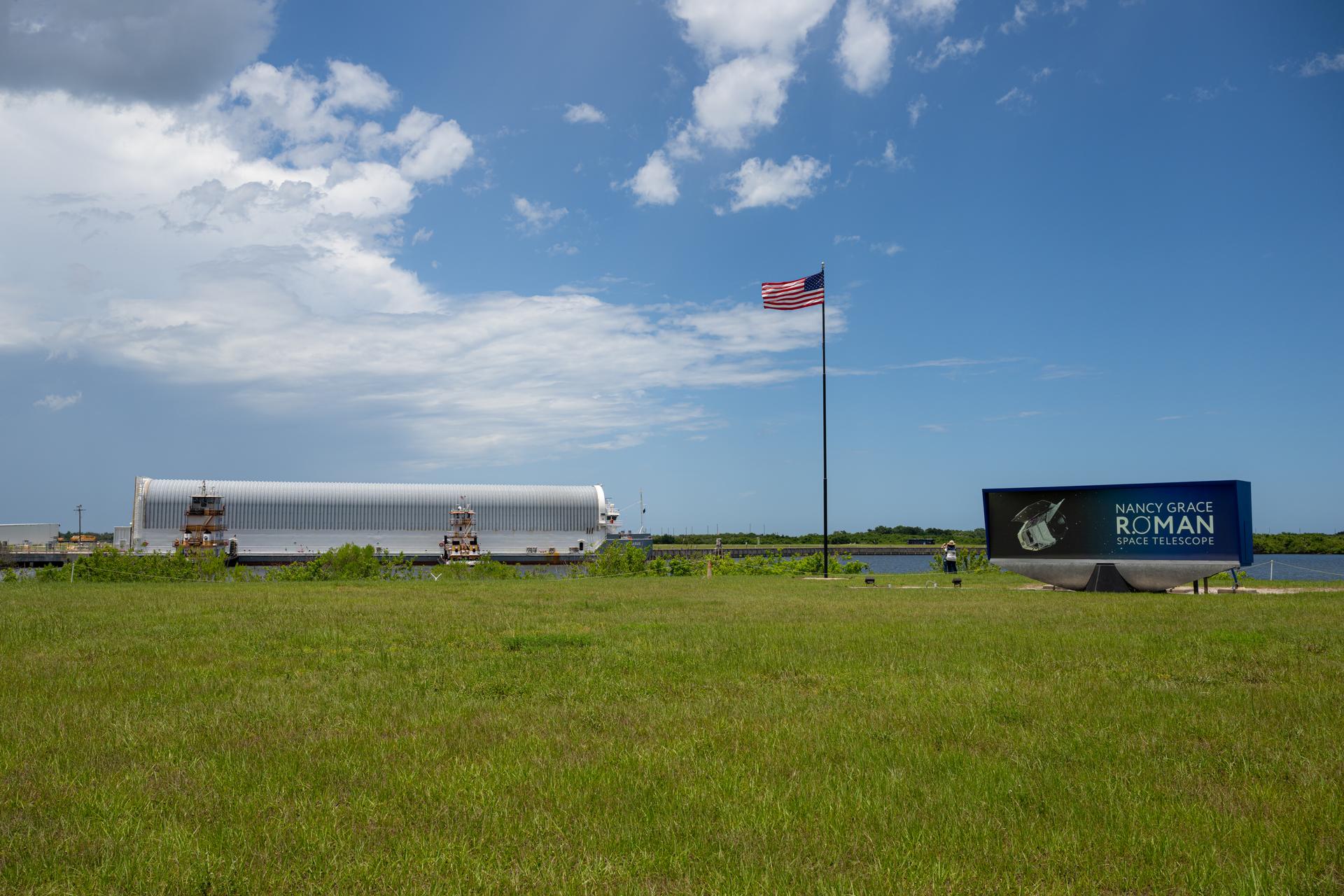
NASA’s Pegasus barge is seen, Sunday, June 21, at NASA’s Kennedy Space Center in Florida. The Pegasus barge delivered NASA’s Nancy Grace Roman Space Telescope and a weather cover for the Artemis III SLS (Space Launch System) rocket core stage to Kennedy. Photo Credit: (NASA/John Kraus)

NASA Administrator Charles Bolden announces where four space shuttle orbiters will be permanently displayed at the conclusion of the Space Shuttle Program during an event held at one of the Orbiter Processing Facilities, Tuesday, April 12, 2011, at Kennedy Space Center in Cape Canaveral, Fla. The four orbiters, Enterprise, which currently is on display at the Smithsonian's Steven F. Udvar-Hazy Center near Washington Dulles International Airport, will move to the Intrepid Sea, Air & Space Museum in New York, Discovery will move to Udvar-Hazy, Endeavour will be displayed at the California Science Center in Los Angeles and Atlantis, in background, will be displayed at the Kennedy Space Center Visitor’s Complex. Photo Credit: (NASA/Bill Ingalls)

NASA Administrator Charles Bolden, left, and Kennedy Space Center director Robert Cabana pose for a photo as space shuttle Atlantis rolls toward its new home at the Kennedy Space Center Visitor Complex, early Friday, Nov. 2, 2012, in Cape Canaveral, Fla. The spacecraft traveled 125,935,769 miles during 33 spaceflights, including 12 missions to the International Space Station. Its final flight, STS-135, closed out the Space Shuttle Program era with a landing on July 21, 2011. Photo Credit: (NASA/Bill Ingalls)
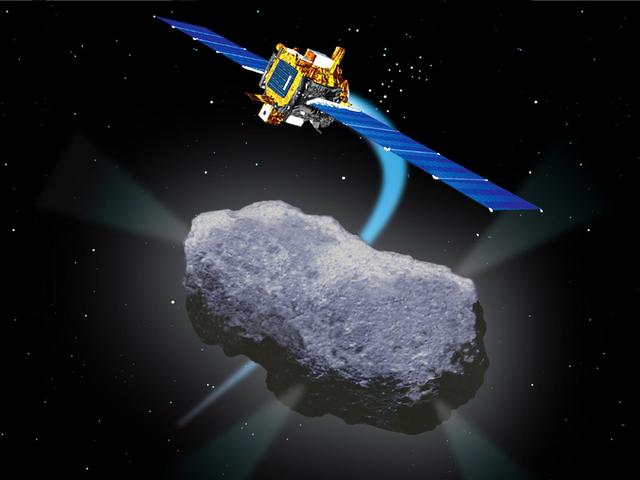
Artist concept of NASA Deep Space 1 Encounter with Comet Borrelly.
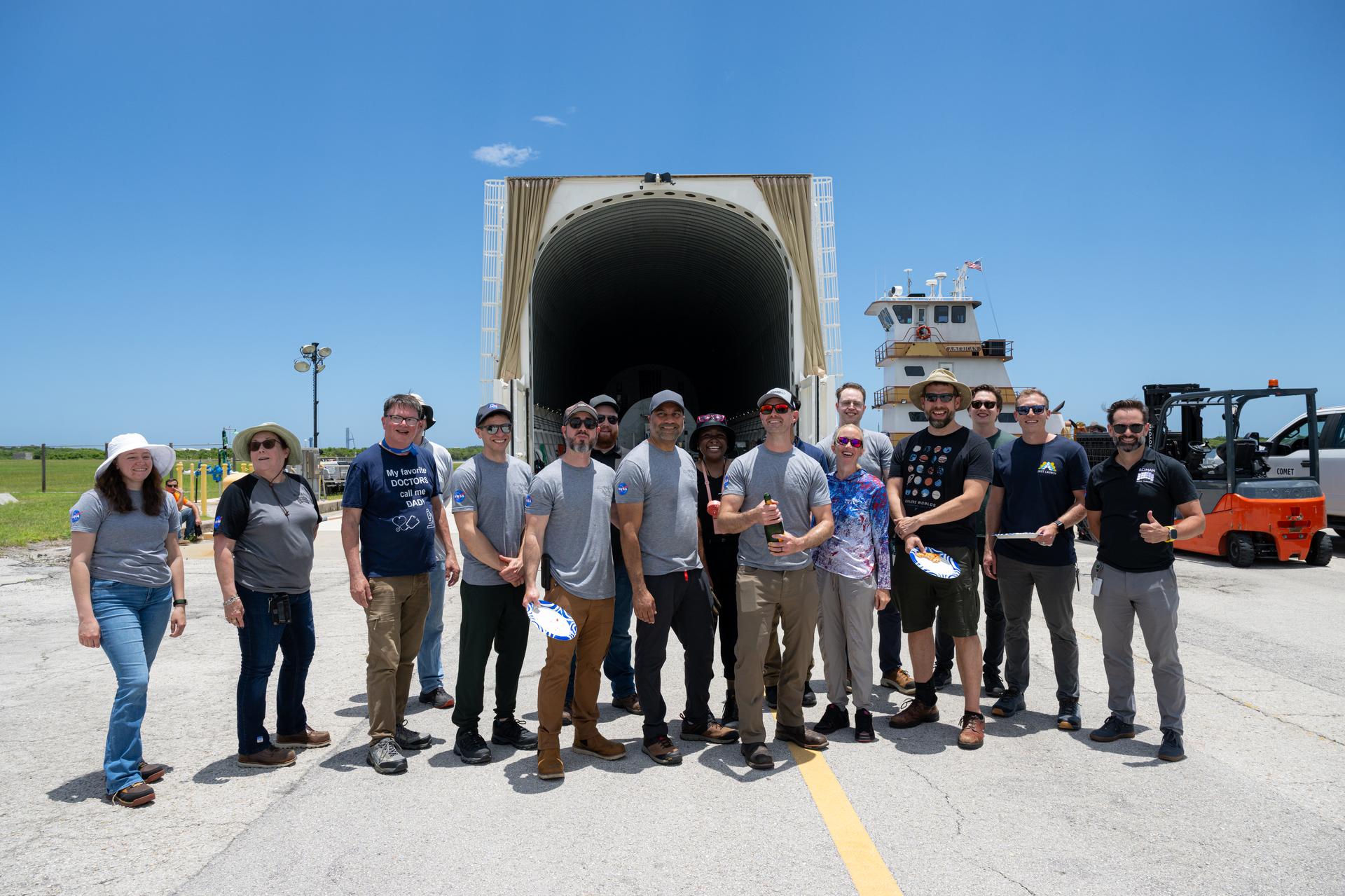
Members of the Nancy Grace Roman Space Telescope transport team pose for a photograph with NASA’s Pegasus barge, Sunday, June 21, at NASA’s Kennedy Space Center in Florida. The Pegasus barge delivered NASA’s Nancy Grace Roman Space Telescope and a weather cover for the Artemis III SLS (Space Launch System) rocket core stage to Kennedy. Photo Credit: (NASA/John Kraus)

Kennedy Space Center Director Robert Cabana, left, and NASA Administrator Charles Bolden talk about space shuttle Atlantis, Friday, Nov. 2, 2012, in Cape Canaveral, Fla. The spacecraft traveled 125,935,769 miles during 33 spaceflights, including 12 missions to the International Space Station. Its final flight, STS-135, closed out the Space Shuttle Program era with a landing on July 21, 2011. Photo Credit: (NASA/Bill Ingalls)

Kennedy Space Center Director Robert Cabana speaks at the signing ceremony for space shuttle Atlantis, background, Friday, Nov. 2, 2012, in Cape Canaveral, Fla. The spacecraft traveled 125,935,769 miles during 33 spaceflights, including 12 missions to the International Space Station. Its final flight, STS-135, closed out the Space Shuttle Program era with a landing on July 21, 2011. Photo Credit: (NASA/Bill Ingalls)

Onlookers wearing commemorative t-shirts watch as space shuttle Atlantis rolls to ts new home at the Kennedy Space Center Visitor Complex, early Friday, Nov. 2, 2012, in Cape Canaveral, Fla. The spacecraft traveled 125,935,769 miles during 33 spaceflights, including 12 missions to the International Space Station. Its final flight, STS-135, closed out the Space Shuttle Program era with a landing on July 21, 2011. Photo Credit: (NASA/Bill Ingalls)

Space shuttle Atlantis is seen during its trip to its new home at the Kennedy Space Center Visitor Complex, early Friday, Nov. 2, 2012, in Cape Canaveral, Fla. The spacecraft traveled 125,935,769 miles during 33 spaceflights, including 12 missions to the International Space Station. Its final flight, STS-135, closed out the Space Shuttle Program era with a landing on July 21, 2011. Photo Credit: (NASA/Bill Ingalls)

Space shuttle Atlantis, (OV-104), is seen as it begins its trip to its new home at the Kennedy Space Center Visitor Complex, early Friday, Nov. 2, 2012, in Cape Canaveral, Fla. The spacecraft traveled 125,935,769 miles during 33 spaceflights, including 12 missions to the International Space Station. Its final flight, STS-135, closed out the Space Shuttle Program era with a landing on July 21, 2011. Photo Credit: (NASA/Bill Ingalls)

Space shuttle Atlantis is seen as it rolls down Kennedy Parkway on its way to its new home at the Kennedy Space Center Visitor Complex, Friday, Nov. 2, 2012, in Cape Canaveral, Fla. The spacecraft traveled 125,935,769 miles during 33 spaceflights, including 12 missions to the International Space Station. Its final flight, STS-135, closed out the Space Shuttle Program era with a landing on July 21, 2011. Photo Credit: (NASA/Bill Ingalls)

Space shuttle Atlantis is seen near the Orbiter Processing Facility during its trip to its new home at the Kennedy Space Center Visitor Complex, early Friday, Nov. 2, 2012, in Cape Canaveral, Fla. The spacecraft traveled 125,935,769 miles during 33 spaceflights, including 12 missions to the International Space Station. Its final flight, STS-135, closed out the Space Shuttle Program era with a landing on July 21, 2011. Photo Credit: (NASA/Bill Ingalls)

Space shuttle Atlantis, (OV-104), is seen as it begins its trip to its new home at the Kennedy Space Center Visitor Complex, early Friday, Nov. 2, 2012, in Cape Canaveral, Fla. The spacecraft traveled 125,935,769 miles during 33 spaceflights, including 12 missions to the International Space Station. Its final flight, STS-135, closed out the Space Shuttle Program era with a landing on July 21, 2011. Photo Credit: (NASA/Bill Ingalls)

A small color guard carry flags during the procession for space shuttle Atlantis as it makes its way to its new home at the Kennedy Space Center Visitor Complex, early Friday, Nov. 2, 2012, in Cape Canaveral, Fla. The spacecraft traveled 125,935,769 miles during 33 spaceflights, including 12 missions to the International Space Station. Its final flight, STS-135, closed out the Space Shuttle Program era with a landing on July 21, 2011. Photo Credit: (NASA/Bill Ingalls)

A large group of Astronauts from the Shuttle and Apollo projects wave to crowds as the Space shuttle Atlantis makes its trip to its new home at the Kennedy Space Center Visitor Complex, early Friday, Nov. 2, 2012, in Cape Canaveral, Fla. The spacecraft traveled 125,935,769 miles during 33 spaceflights, including 12 missions to the International Space Station. Its final flight, STS-135, closed out the Space Shuttle Program era with a landing on July 21, 2011. Photo Credit: (NASA/Bill Ingalls)

Space shuttle Atlantis is seen during its trip to its new home at the Kennedy Space Center Visitor Complex, early Friday, Nov. 2, 2012, in Cape Canaveral, Fla. The spacecraft traveled 125,935,769 miles during 33 spaceflights, including 12 missions to the International Space Station. Its final flight, STS-135, closed out the Space Shuttle Program era with a landing on July 21, 2011. Photo Credit: (NASA/Bill Ingalls)

Space shuttle Atlantis rolls away from the Vehicle Assembly Building as it begins its trip to its new home at the Kennedy Space Center Visitor Complex, early Friday, Nov. 2, 2012, in Cape Canaveral, Fla. The spacecraft traveled 125,935,769 miles during 33 spaceflights, including 12 missions to the International Space Station. Its final flight, STS-135, closed out the Space Shuttle Program era with a landing on July 21, 2011. Photo Credit: (NASA/Bill Ingalls)

The Titusville High School band parades ahead of space shuttle Atlantis as it makes its way to its new home at the Kennedy Space Center Visitor Complex, early Friday, Nov. 2, 2012, in Cape Canaveral, Fla. The spacecraft traveled 125,935,769 miles during 33 spaceflights, including 12 missions to the International Space Station. Its final flight, STS-135, closed out the Space Shuttle Program era with a landing on July 21, 2011. Photo Credit: (NASA/Bill Ingalls)

Space shuttle Atlantis is seen during its trip to its new home at the Kennedy Space Center Visitor Complex, early Friday, Nov. 2, 2012, in Cape Canaveral, Fla. The spacecraft traveled 125,935,769 miles during 33 spaceflights, including 12 missions to the International Space Station. Its final flight, STS-135, closed out the Space Shuttle Program era with a landing on July 21, 2011. Photo Credit: (NASA/Bill Ingalls)
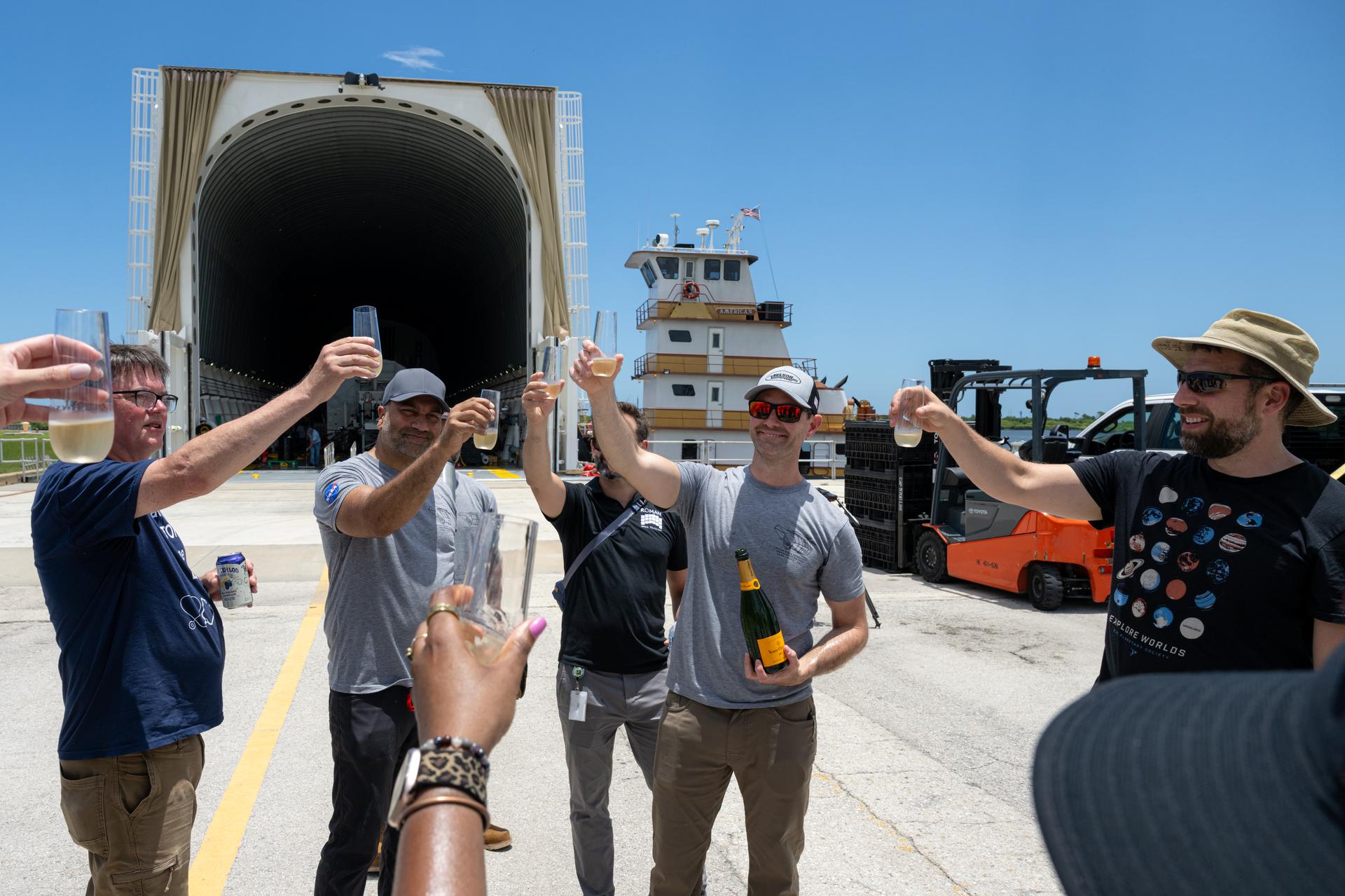
Members of the Nancy Grace Roman Space Telescope transport team celebrate with a toast following the arrival of NASA’s Pegasus barge, Sunday, June 21, at NASA’s Kennedy Space Center in Florida. The Pegasus barge delivered NASA’s Nancy Grace Roman Space Telescope and a weather cover for the Artemis III SLS (Space Launch System) rocket core stage to Kennedy. Photo Credit: (NASA/John Kraus)

Space shuttle Atlantis is seen during its trip to its new home at the Kennedy Space Center Visitor Complex, early Friday, Nov. 2, 2012, in Cape Canaveral, Fla. The spacecraft traveled 125,935,769 miles during 33 spaceflights, including 12 missions to the International Space Station. Its final flight, STS-135, closed out the Space Shuttle Program era with a landing on July 21, 2011. Photo Credit: (NASA/Bill Ingalls)

Space shuttle Atlantis is seen during its trip to its new home at the Kennedy Space Center Visitor Complex, early Friday, Nov. 2, 2012, in Cape Canaveral, Fla. The spacecraft traveled 125,935,769 miles during 33 spaceflights, including 12 missions to the International Space Station. Its final flight, STS-135, closed out the Space Shuttle Program era with a landing on July 21, 2011. Photo Credit: (NASA/Bill Ingalls)

Space shuttle Atlantis is seen as it rolls out of the Vehicle Assembly Building to start its trip to its new home at the Kennedy Space Center Visitor Complex, Friday, Nov. 2, 2012, in Cape Canaveral, Fla. The spacecraft traveled 125,935,769 miles during 33 spaceflights, including 12 missions to the International Space Station. Its final flight, STS-135, closed out the Space Shuttle Program era with a landing on July 21, 2011. Photo Credit: (NASA/Bill Ingalls)

Cheryl Hurst, Director of Education and External Relations at Kennedy Space Center, speaks at the signing ceremony for space shuttle Atlantis, background, Friday, Nov. 2, 2012, in Cape Canaveral, Fla. The spacecraft traveled 125,935,769 miles during 33 spaceflights, including 12 missions to the International Space Station. Its final flight, STS-135, closed out the Space Shuttle Program era with a landing on July 21, 2011. Photo Credit: (NASA/Bill Ingalls)

An onlooker holds up a mobile device to record space shuttle Atlantis as it rolls to ts new home at the Kennedy Space Center Visitor Complex, early Friday, Nov. 2, 2012, in Cape Canaveral, Fla. The spacecraft traveled 125,935,769 miles during 33 spaceflights, including 12 missions to the International Space Station. Its final flight, STS-135, closed out the Space Shuttle Program era with a landing on July 21, 2011. Photo Credit: (NASA/Bill Ingalls)

Space shuttle Atlantis is seen during its trip to its new home at the Kennedy Space Center Visitor Complex, early Friday, Nov. 2, 2012, in Cape Canaveral, Fla. The spacecraft traveled 125,935,769 miles during 33 spaceflights, including 12 missions to the International Space Station. Its final flight, STS-135, closed out the Space Shuttle Program era with a landing on July 21, 2011. Photo Credit: (NASA/Bill Ingalls)
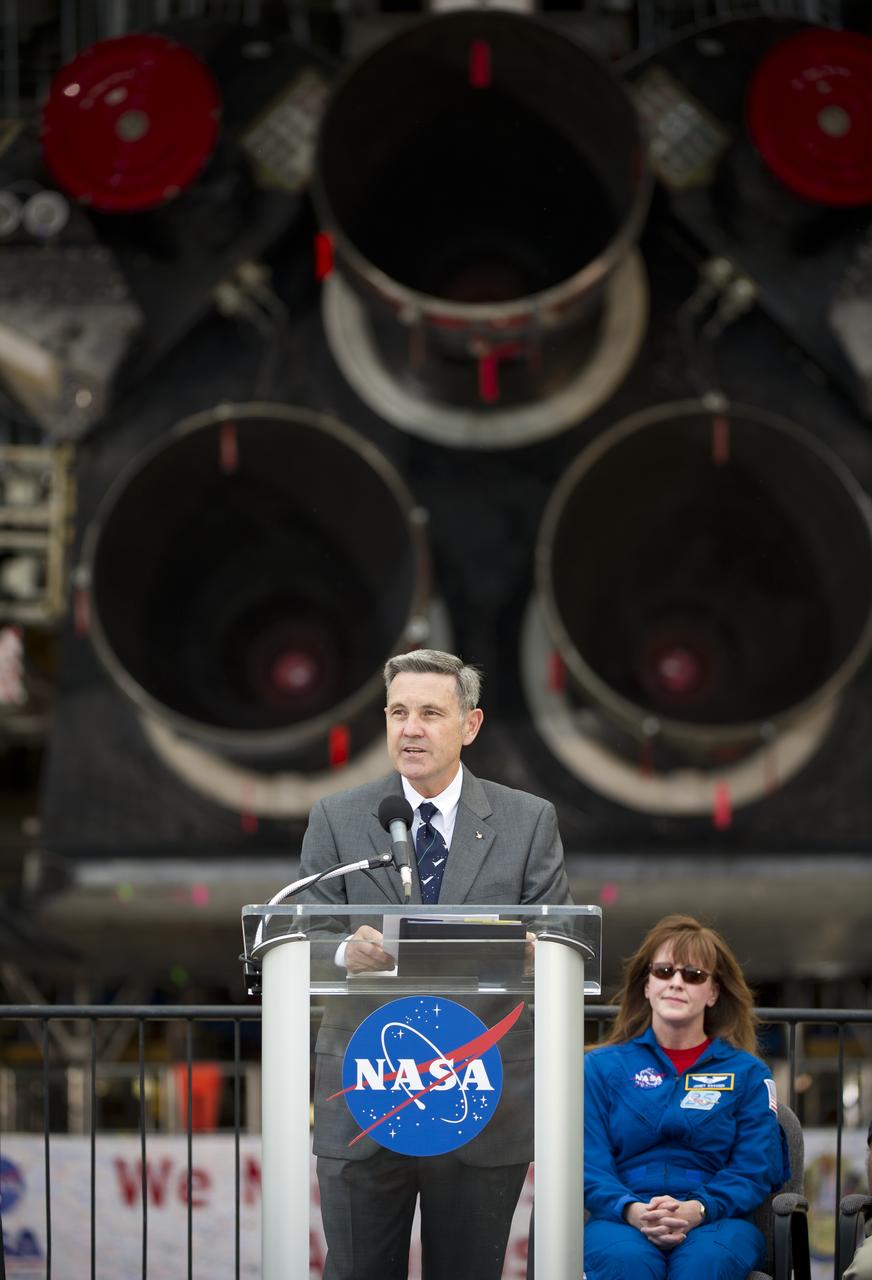
NASA Kennedy Space Center Director and former astronaut Bob Cabana introduces NASA Administrator Charles Bolden where Bolden announced where four space shuttle orbiters will be permanently displayed at the conclusion of the Space Shuttle Program during an event held at one of the Orbiter Processing Facilities, Tuesday, April 12, 2011, at Kennedy Space Center in Cape Canaveral, Fla. The four orbiters, Enterprise, which currently is on display at the Smithsonian's Steven F. Udvar-Hazy Center near Washington Dulles International Airport, will move to the Intrepid Sea, Air & Space Museum in New York, Discovery will move to Udvar-Hazy, Endeavour will be displayed at the California Science Center in Los Angeles and Atlantis, in background, will be displayed at the Kennedy Space Center Visitor’s Complex. Photo Credit: (NASA/Bill Ingalls)

The space shuttle Atlantis is seen in the Orbiter Processing Facility at an event where NASA Administrator Charles Bolden announced where four space shuttle orbiters will be permanently displayed at the conclusion of the Space Shuttle Program, Tuesday, April 12, 2011, at Kennedy Space Center in Cape Canaveral, Fla. The four orbiters, Enterprise, which currently is on display at the Smithsonian's Steven F. Udvar-Hazy Center near Washington Dulles International Airport, will move to the Intrepid Sea, Air & Space Museum in New York, Discovery will move to Udvar-Hazy, Endeavour will be displayed at the California Science Center in Los Angeles and Atlantis, will be displayed at the Kennedy Space Center Visitor’s Complex. Photo Credit: (NASA/Bill Ingalls)
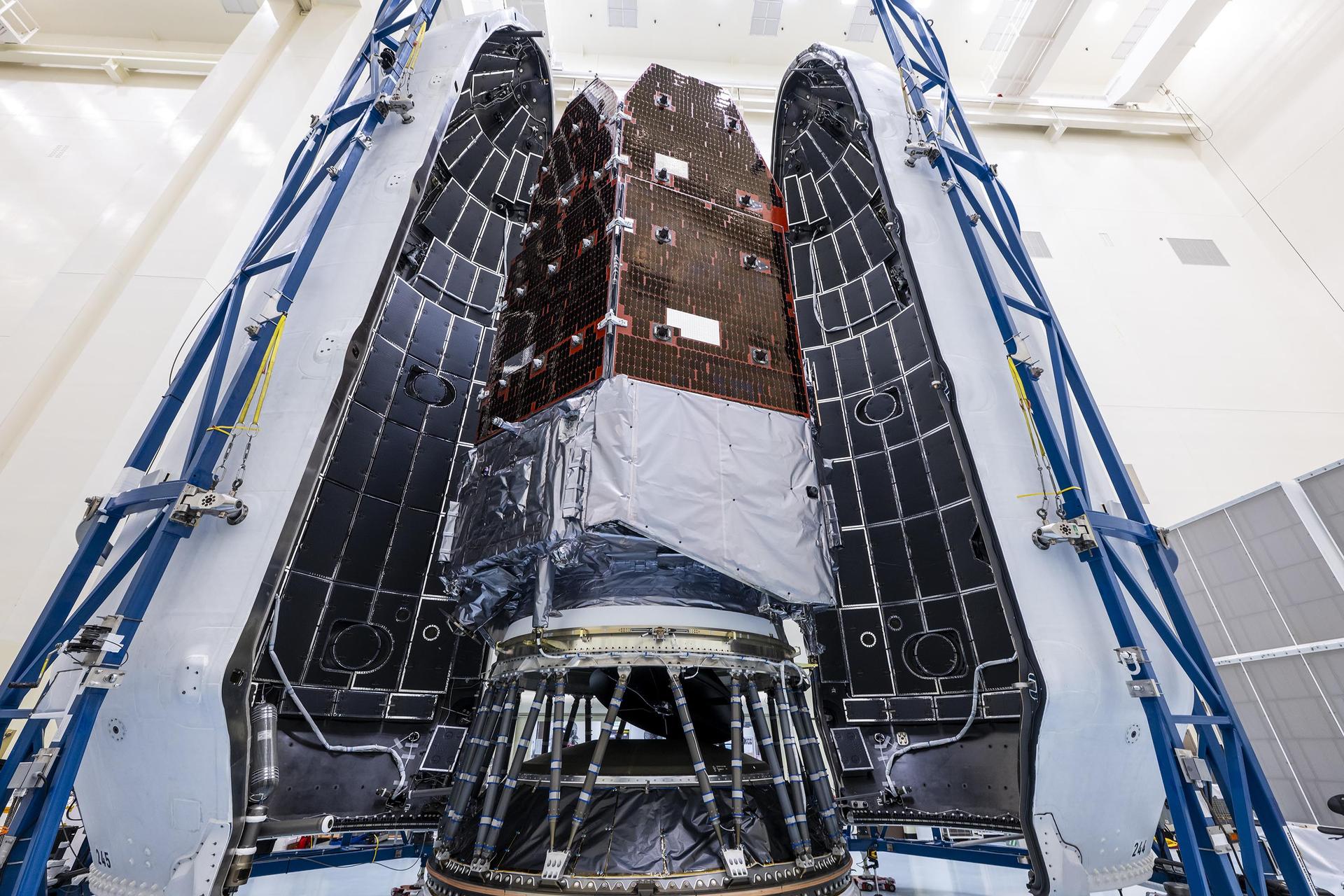
Teams inside the Payload Hazardous Servicing Facility at NASA’s Kennedy Space Center in Florida encapsulate the agency’s Nancy Grace Roman Space Telescope within the payload fairing on Friday, Aug. 21, 2026, ahead of mating to a SpaceX Falcon Heavy rocket. Encapsulation shields the spacecraft during rollout, ascent, and the early phases of flight. Roman will investigate dark energy and dark matter, conduct a statistical census of planetary systems, and enable a broad range of additional astrophysics research. Liftoff from Launch Complex 39A at Kennedy is targeted for no earlier than Sunday, Aug. 30, 2026.
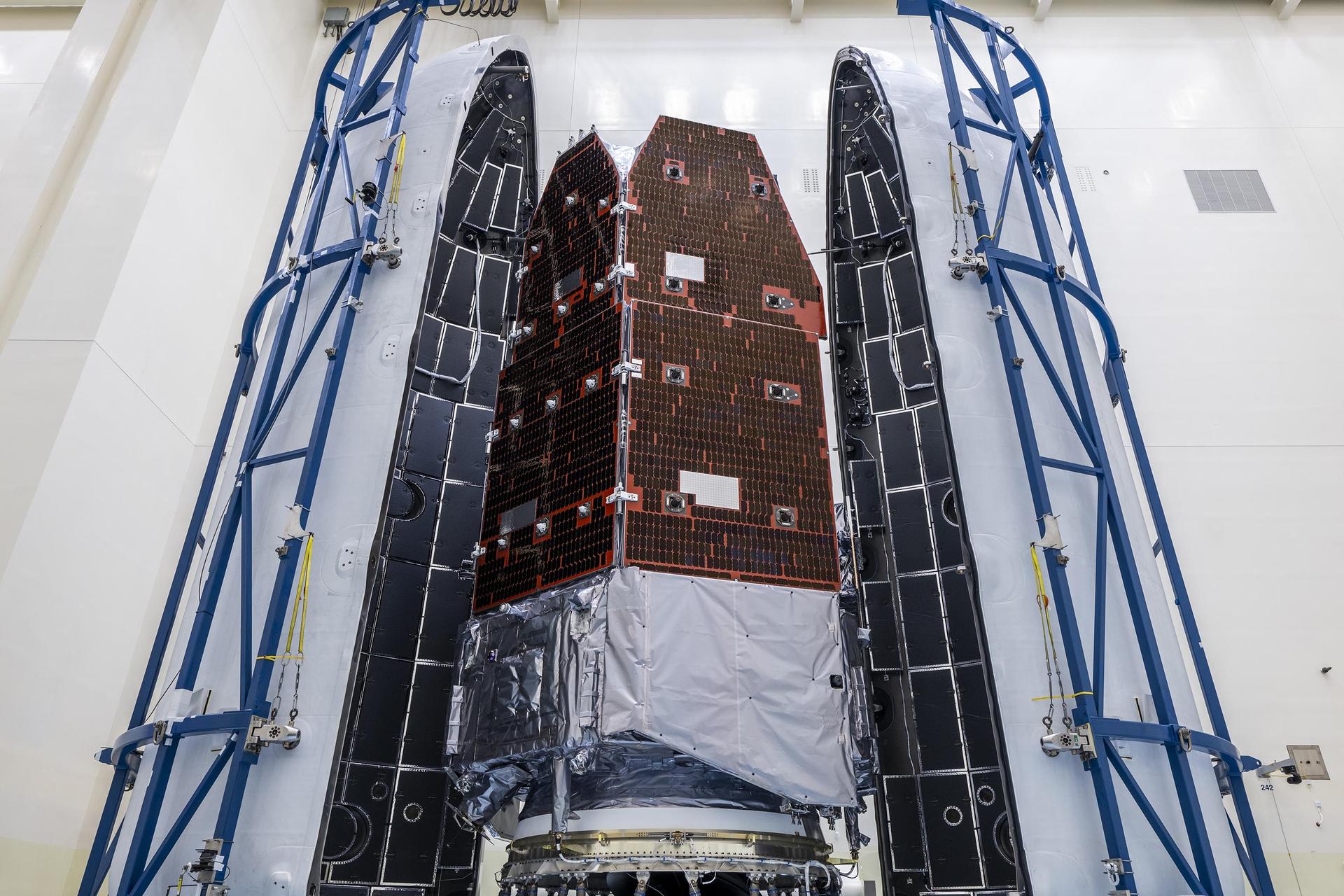
Teams inside the Payload Hazardous Servicing Facility at NASA’s Kennedy Space Center in Florida encapsulate the agency’s Nancy Grace Roman Space Telescope within the payload fairing on Friday, Aug. 21, 2026, ahead of mating to a SpaceX Falcon Heavy rocket. Encapsulation shields the spacecraft during rollout, ascent, and the early phases of flight. Roman will investigate dark energy and dark matter, conduct a statistical census of planetary systems, and enable a broad range of additional astrophysics research. Liftoff from Launch Complex 39A at Kennedy is targeted for no earlier than Sunday, Aug. 30, 2026.
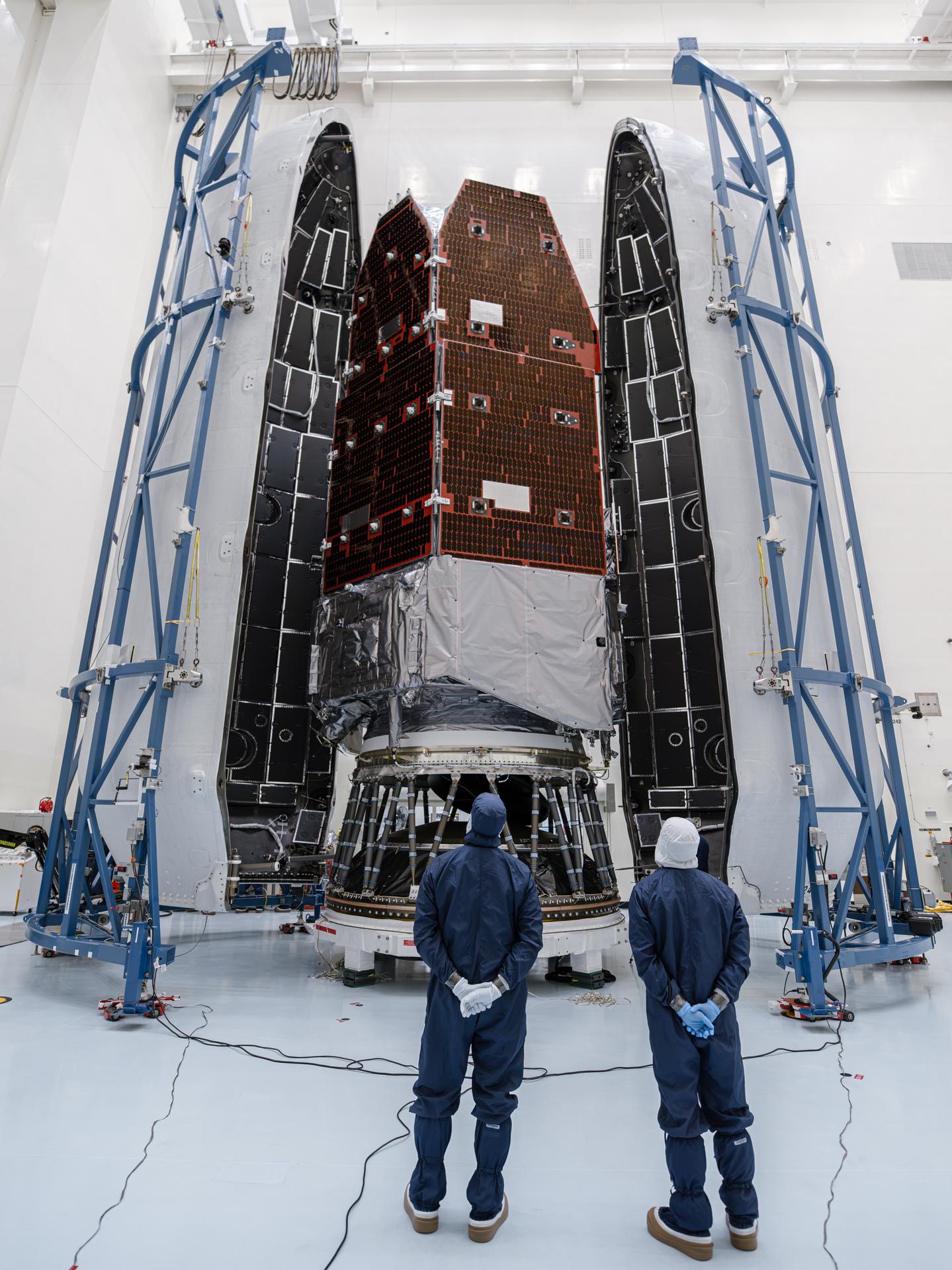
Teams inside the Payload Hazardous Servicing Facility at NASA’s Kennedy Space Center in Florida encapsulate the agency’s Nancy Grace Roman Space Telescope within the payload fairing on Friday, Aug. 21, 2026, ahead of mating to a SpaceX Falcon Heavy rocket. Encapsulation shields the spacecraft during rollout, ascent, and the early phases of flight. Roman will investigate dark energy and dark matter, conduct a statistical census of planetary systems, and enable a broad range of additional astrophysics research. Liftoff from Launch Complex 39A at Kennedy is targeted for no earlier than Sunday, Aug. 30, 2026.
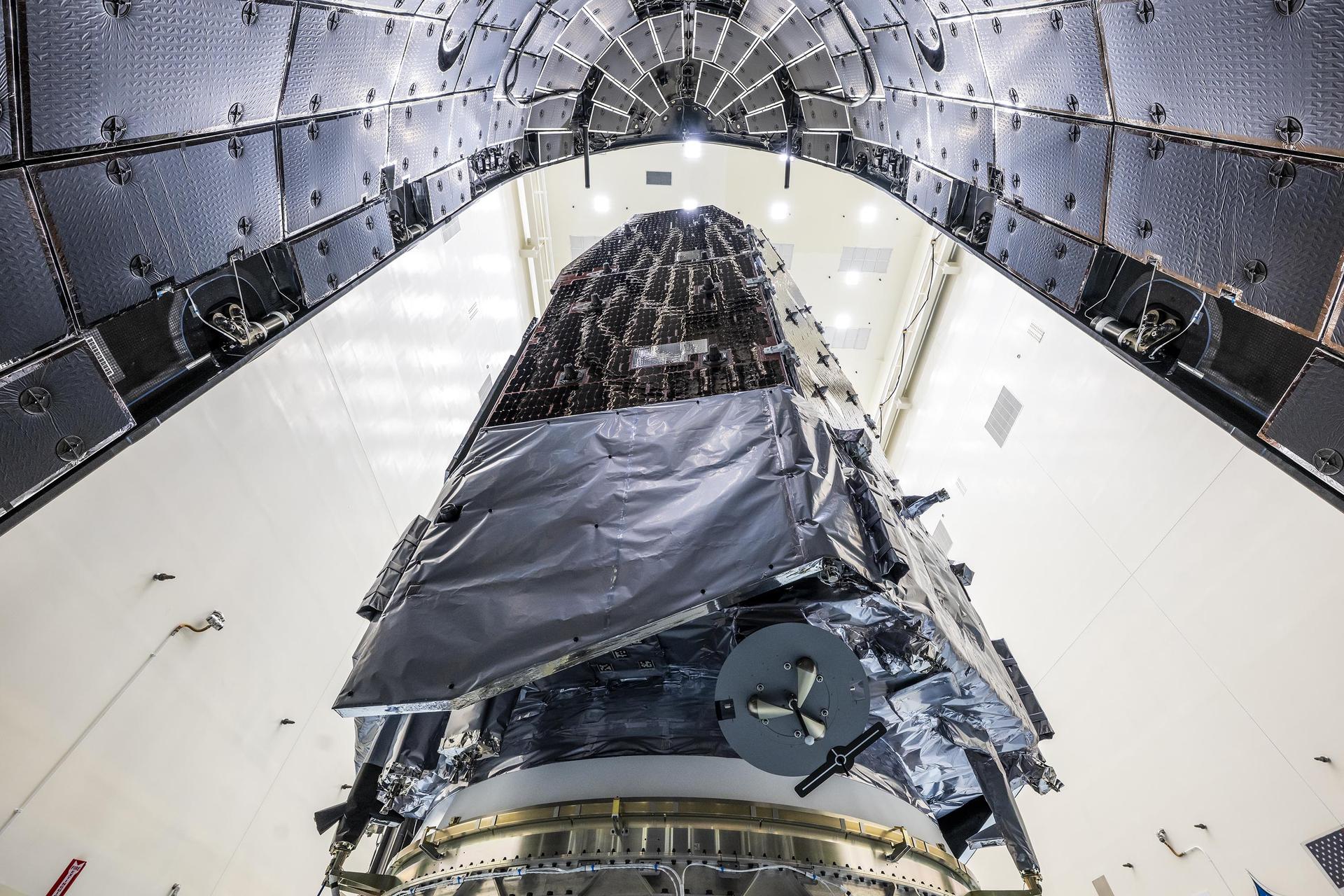
Teams inside the Payload Hazardous Servicing Facility at NASA’s Kennedy Space Center in Florida encapsulate the agency’s Nancy Grace Roman Space Telescope within the payload fairing on Friday, Aug. 21, 2026, ahead of mating to a SpaceX Falcon Heavy rocket. Encapsulation shields the spacecraft during rollout, ascent, and the early phases of flight. Roman will investigate dark energy and dark matter, conduct a statistical census of planetary systems, and enable a broad range of additional astrophysics research. Liftoff from Launch Complex 39A at Kennedy is targeted for no earlier than Sunday, Aug. 30, 2026.
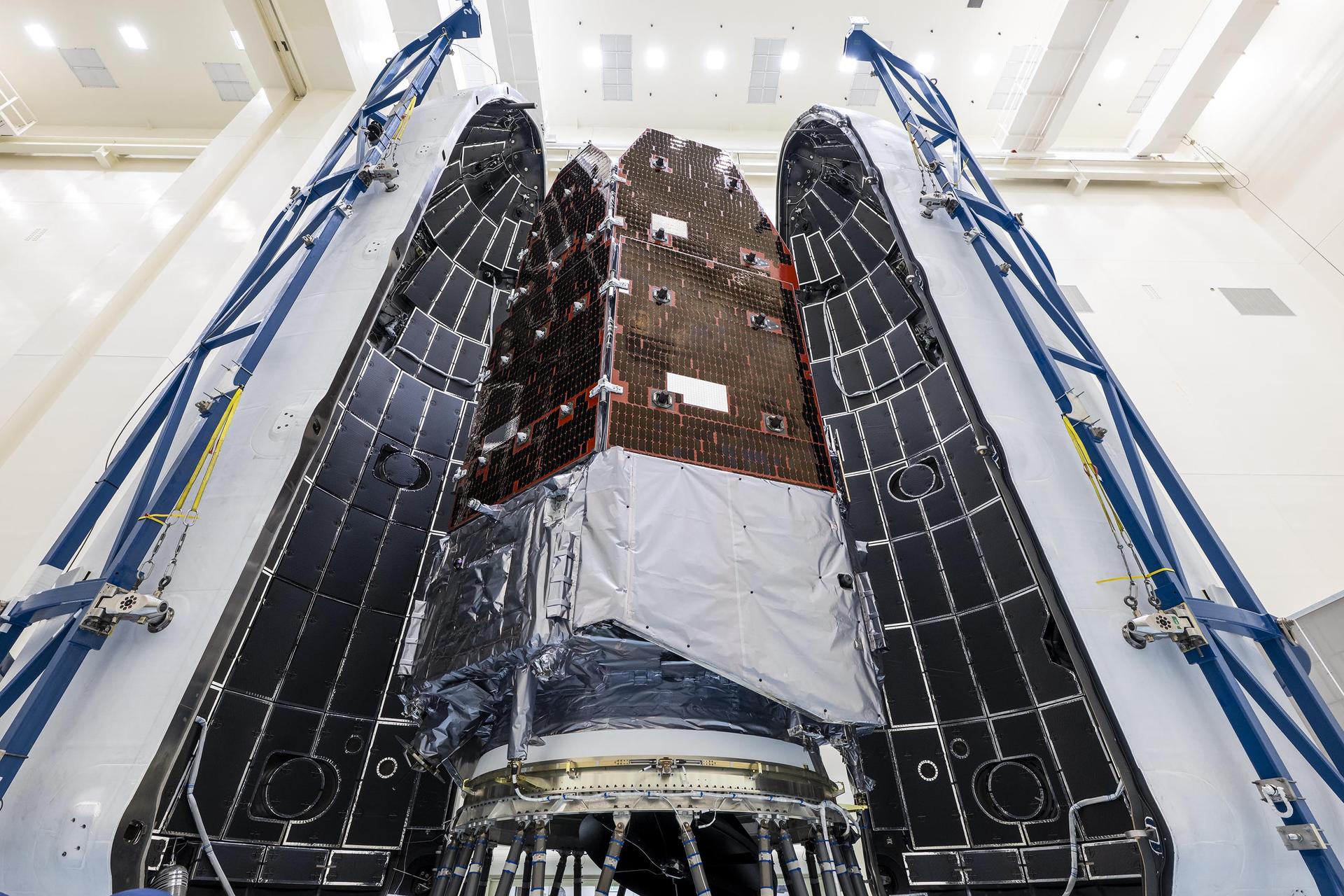
Teams inside the Payload Hazardous Servicing Facility at NASA’s Kennedy Space Center in Florida prepare the agency’s Nancy Grace Roman Space Telescope for encapsulation within its payload fairing on Wednesday, Aug. 19, 2026, ahead of mating to a SpaceX Falcon Heavy rocket. Encapsulation shields the spacecraft during rollout, ascent, and the early phases of flight. Roman will investigate dark energy and dark matter, conduct a statistical census of planetary systems, and enable a broad range of additional astrophysics research. Liftoff from Launch Complex 39A at Kennedy is targeted for no earlier than Sunday, Aug. 30, 2026.
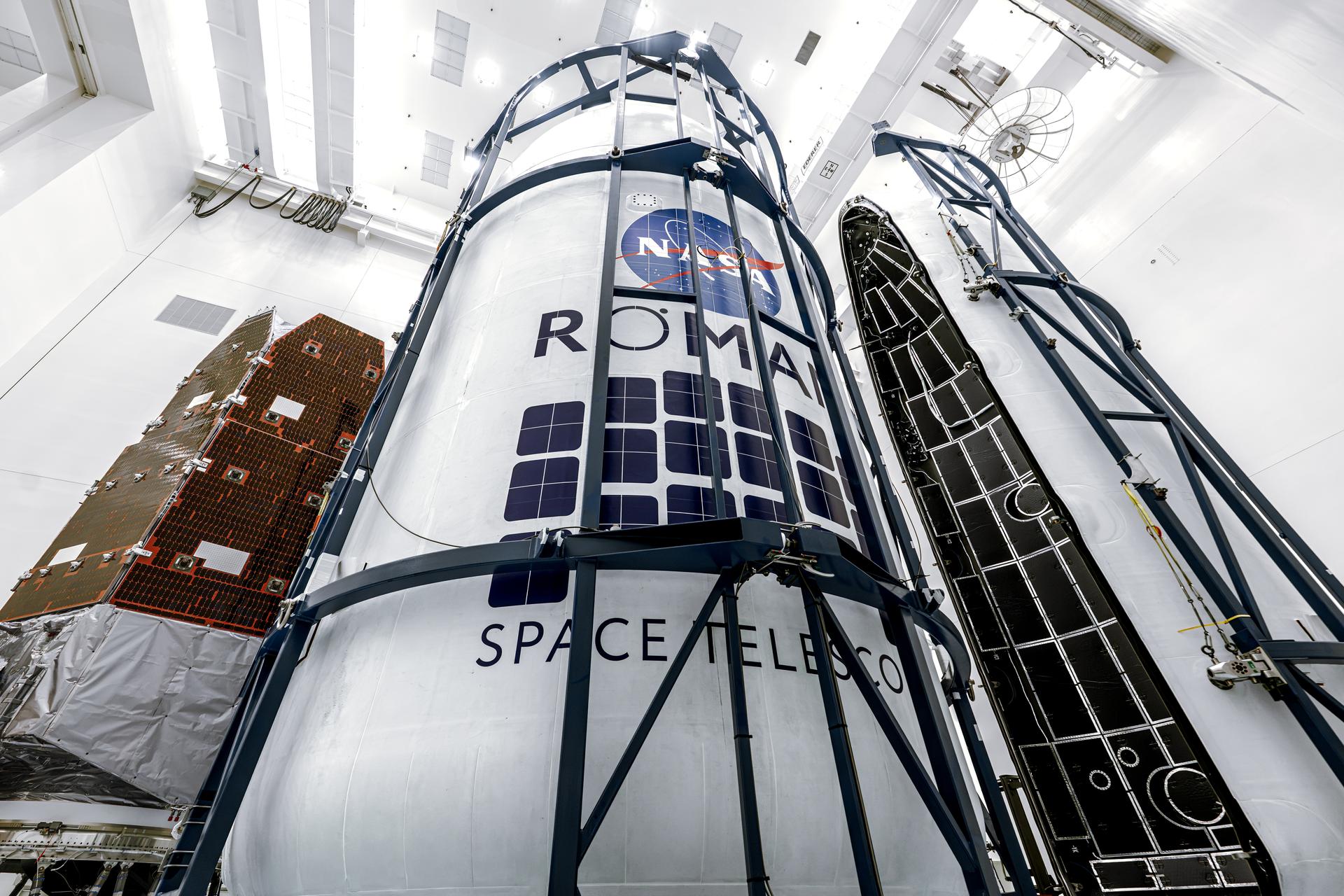
Teams inside the Payload Hazardous Servicing Facility at NASA’s Kennedy Space Center in Florida encapsulate the agency’s Nancy Grace Roman Space Telescope within the payload fairing on Friday, Aug. 21, 2026, ahead of mating to a SpaceX Falcon Heavy rocket. Encapsulation shields the spacecraft during rollout, ascent, and the early phases of flight. Roman will investigate dark energy and dark matter, conduct a statistical census of planetary systems, and enable a broad range of additional astrophysics research. Liftoff from Launch Complex 39A at Kennedy is targeted for no earlier than Sunday, Aug. 30, 2026.
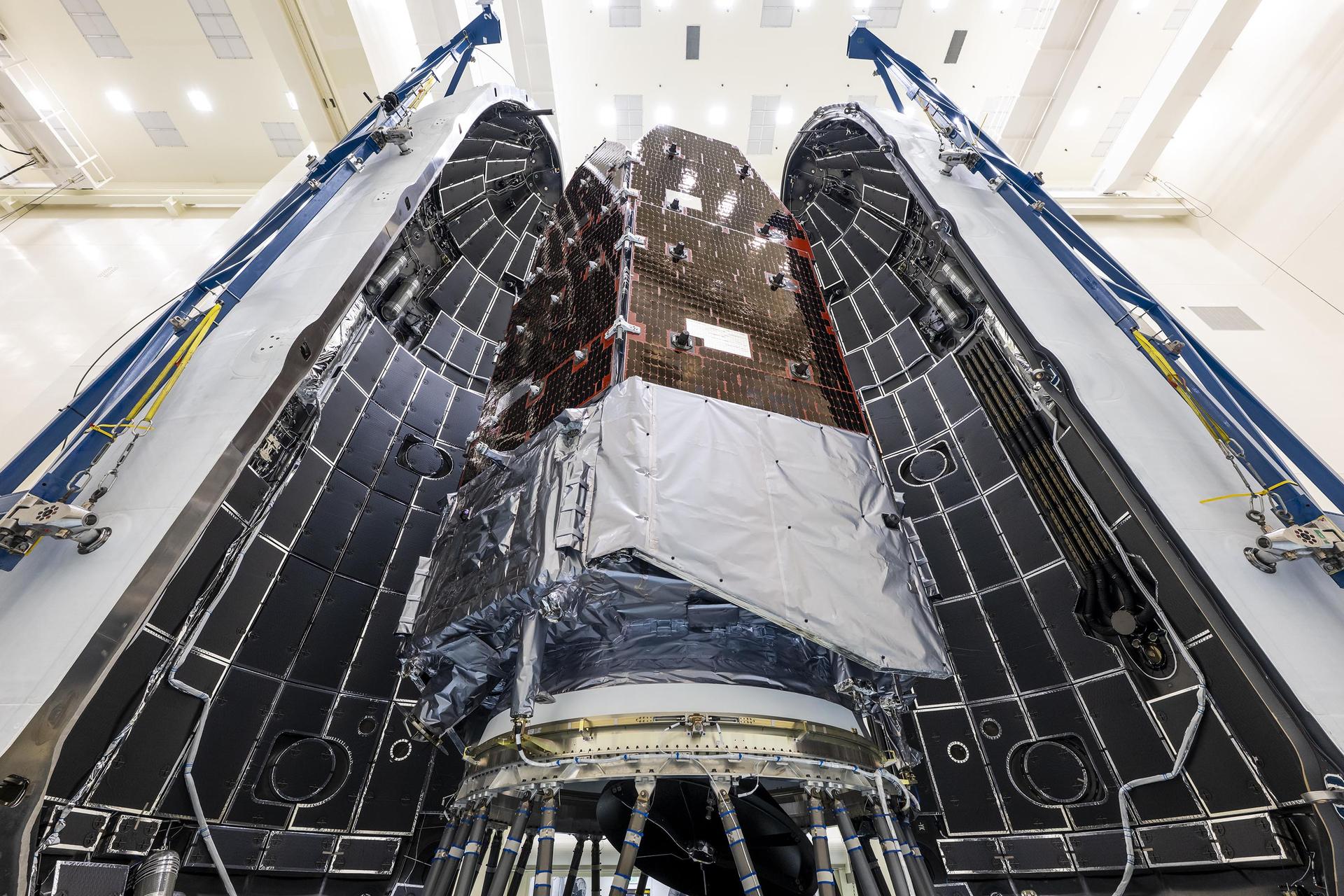
Teams inside the Payload Hazardous Servicing Facility at NASA’s Kennedy Space Center in Florida encapsulate the agency’s Nancy Grace Roman Space Telescope within the payload fairing on Friday, Aug. 21, 2026, ahead of mating to a SpaceX Falcon Heavy rocket. Encapsulation shields the spacecraft during rollout, ascent, and the early phases of flight. Roman will investigate dark energy and dark matter, conduct a statistical census of planetary systems, and enable a broad range of additional astrophysics research. Liftoff from Launch Complex 39A at Kennedy is targeted for no earlier than Sunday, Aug. 30, 2026.
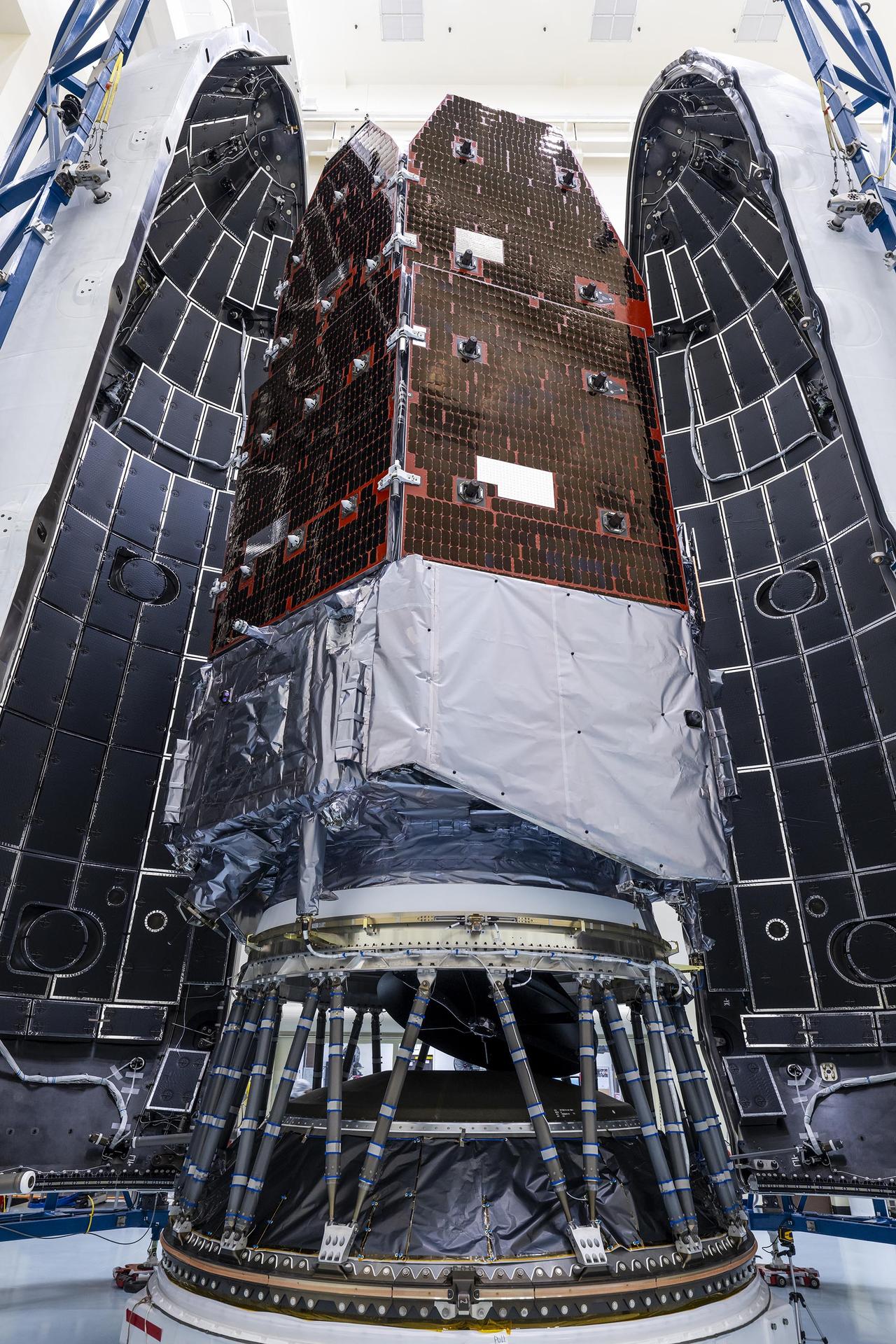
Teams inside the Payload Hazardous Servicing Facility at NASA’s Kennedy Space Center in Florida encapsulate the agency’s Nancy Grace Roman Space Telescope within the payload fairing on Friday, Aug. 21, 2026, ahead of mating to a SpaceX Falcon Heavy rocket. Encapsulation shields the spacecraft during rollout, ascent, and the early phases of flight. Roman will investigate dark energy and dark matter, conduct a statistical census of planetary systems, and enable a broad range of additional astrophysics research. Liftoff from Launch Complex 39A at Kennedy is targeted for no earlier than Sunday, Aug. 30, 2026.
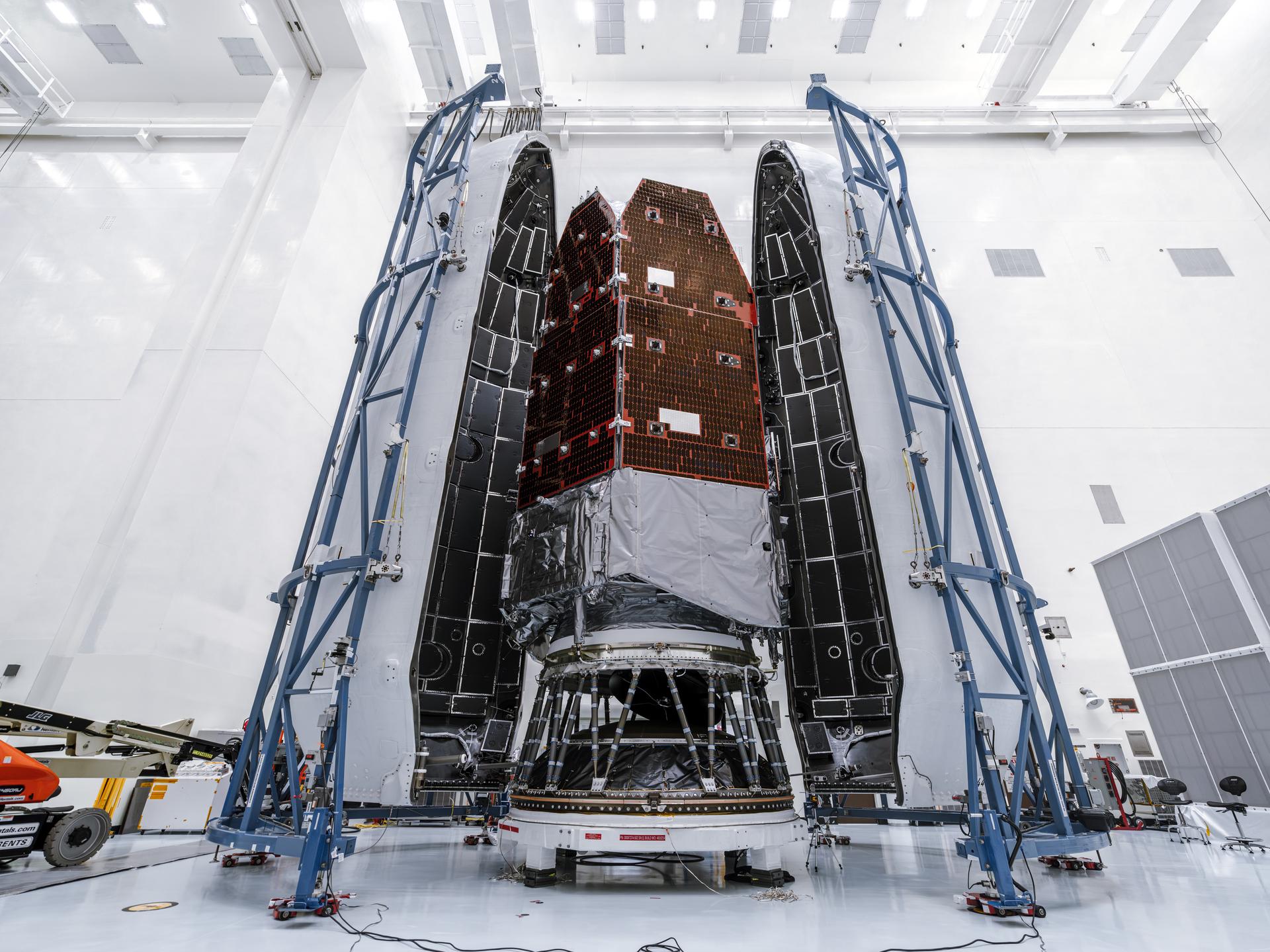
Teams inside the Payload Hazardous Servicing Facility at NASA’s Kennedy Space Center in Florida encapsulate the agency’s Nancy Grace Roman Space Telescope within the payload fairing on Friday, Aug. 21, 2026, ahead of mating to a SpaceX Falcon Heavy rocket. Encapsulation shields the spacecraft during rollout, ascent, and the early phases of flight. Roman will investigate dark energy and dark matter, conduct a statistical census of planetary systems, and enable a broad range of additional astrophysics research. Liftoff from Launch Complex 39A at Kennedy is targeted for no earlier than Sunday, Aug. 30, 2026.
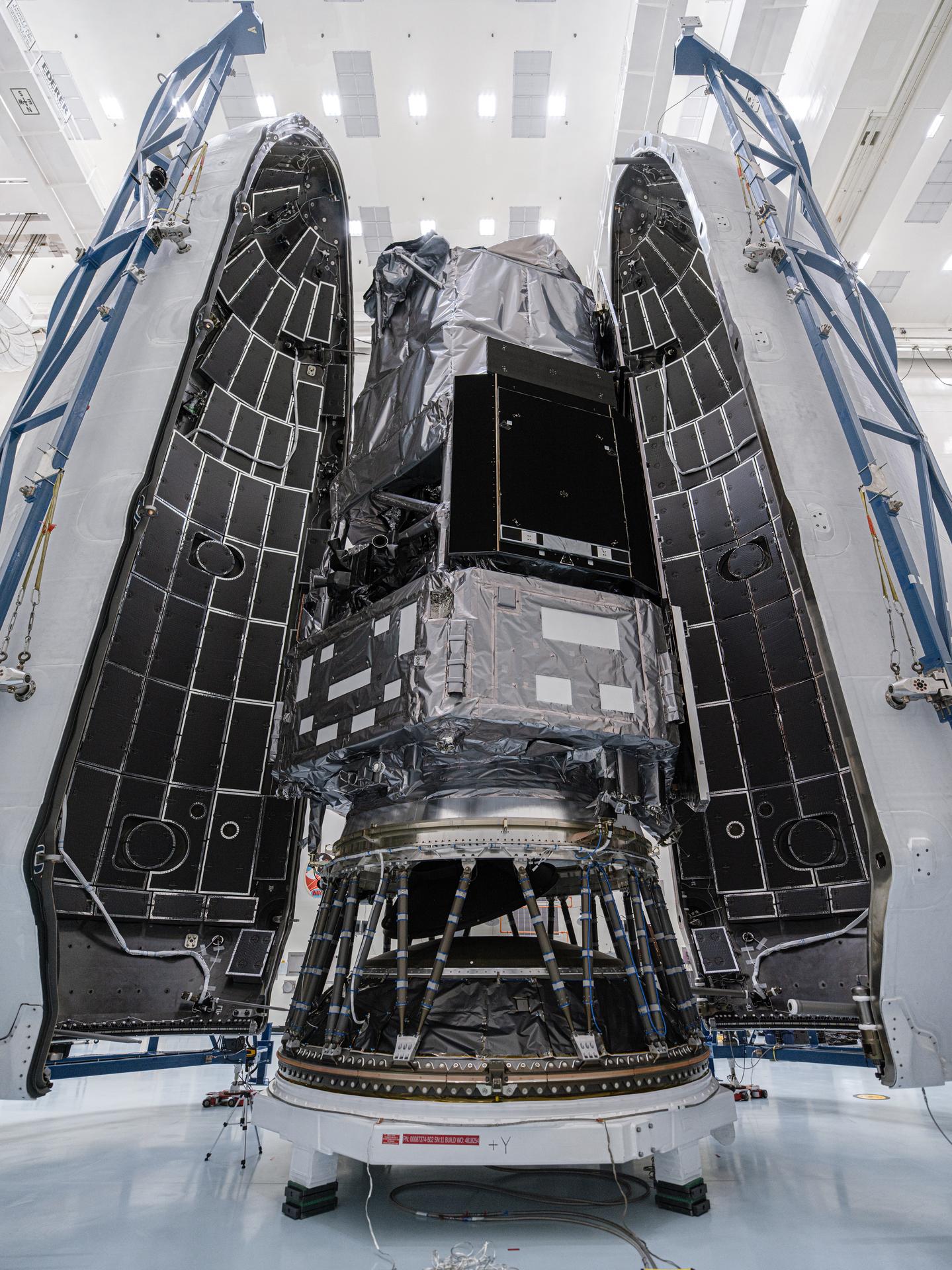
Teams inside the Payload Hazardous Servicing Facility at NASA’s Kennedy Space Center in Florida encapsulate the agency’s Nancy Grace Roman Space Telescope within the payload fairing on Friday, Aug. 21, 2026, ahead of mating to a SpaceX Falcon Heavy rocket. Encapsulation shields the spacecraft during rollout, ascent, and the early phases of flight. Roman will investigate dark energy and dark matter, conduct a statistical census of planetary systems, and enable a broad range of additional astrophysics research. Liftoff from Launch Complex 39A at Kennedy is targeted for no earlier than Sunday, Aug. 30, 2026.
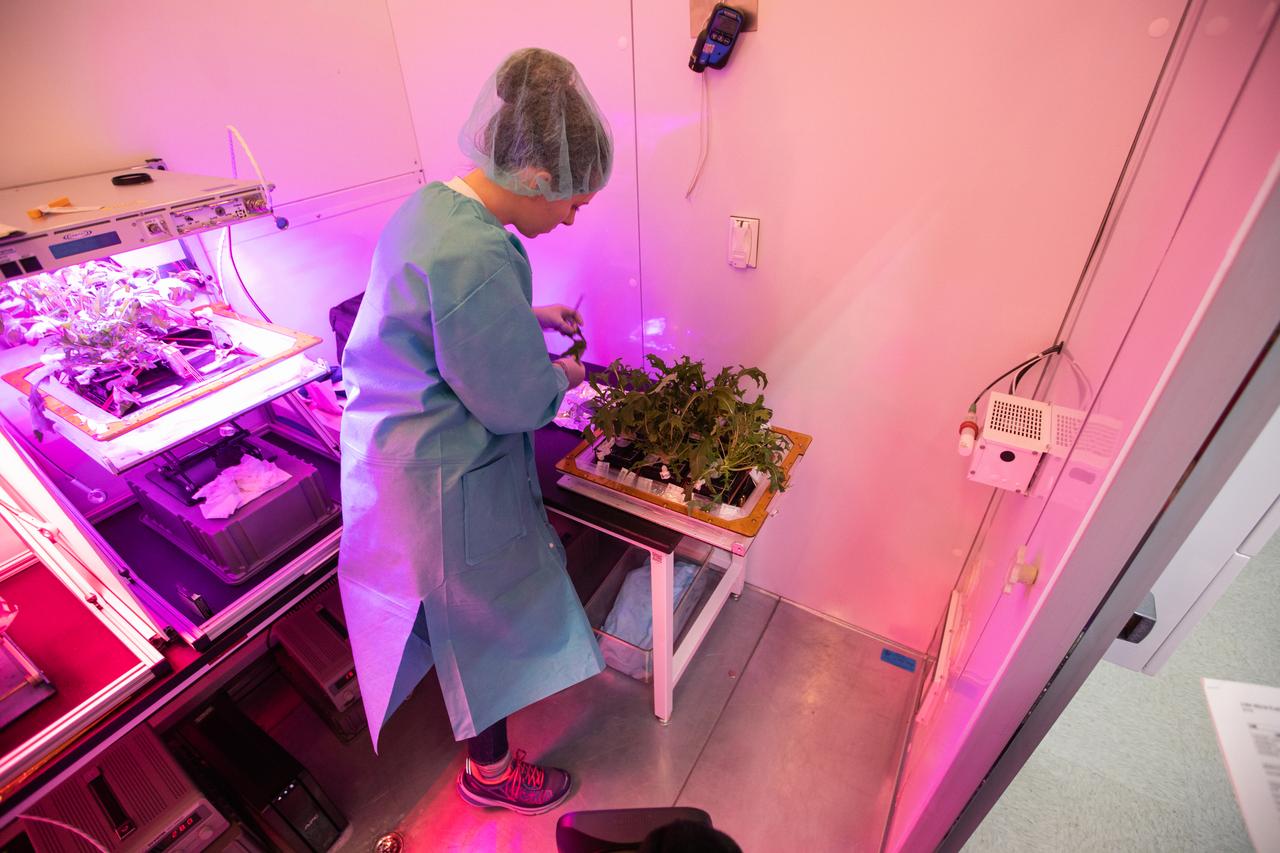
Jess Bunchek, a veggie plant scientist and pseudonaut, harvests mizuna mustard inside the Veggie harvest chamber in the Space Station Processing Facility at NASA’s Kennedy Space Center in Florida on Feb. 19, 2019, as part of the Experiment Verification Test for the VEG-04B mission that will launch to the International Space Station later this year. VEG-04B examines the interactions between light and spaceflight by growing plants under two different LED lighting conditions. A similar harvest will be conducted on the space station after a grow-out duration of 56 days. Ultimately, fresh vegetables grown in space will be an essential supplement to the crew’s pre-packaged diet, prepping them for long-duration space exploration.
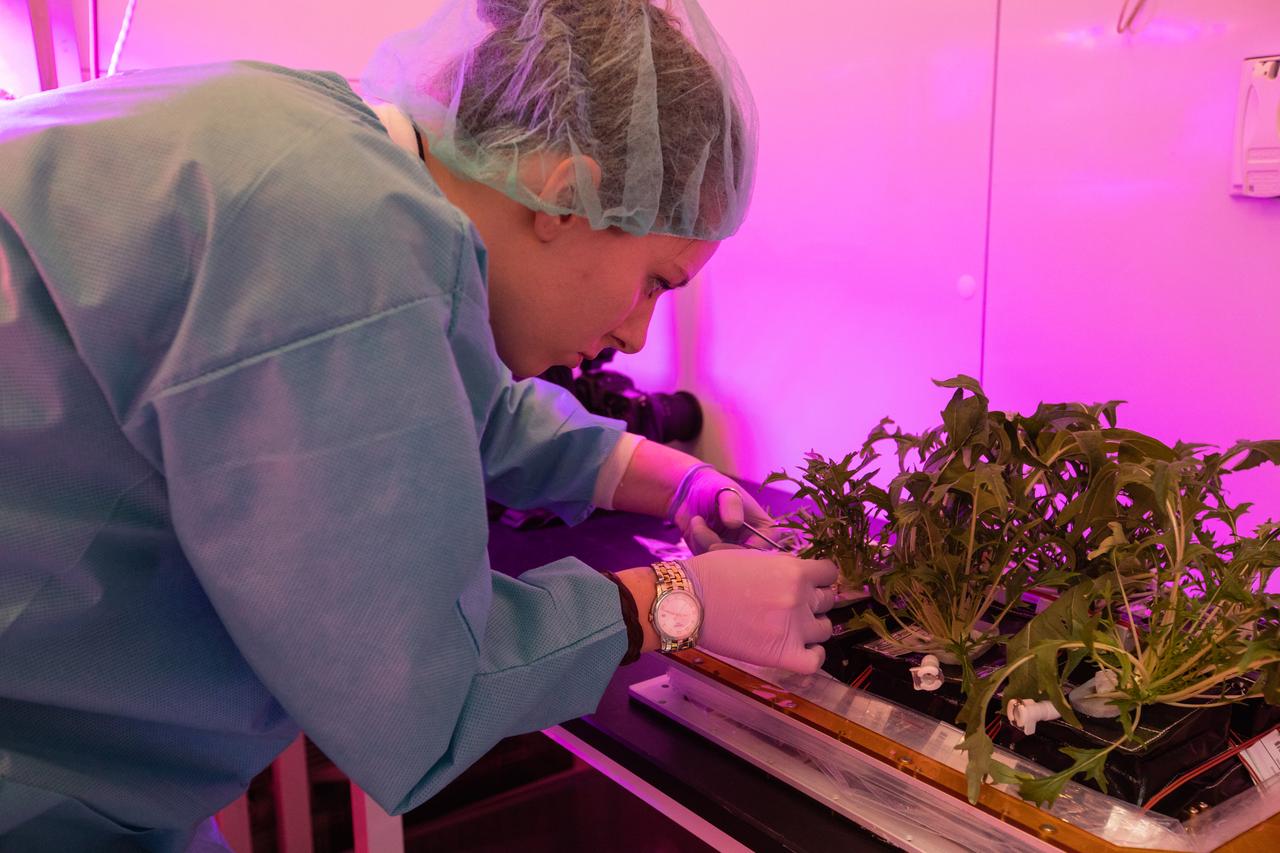
Jess Bunchek, a veggie plant scientist and pseudonaut, harvests mizuna mustard inside the Veggie harvest chamber in the Space Station Processing Facility at NASA’s Kennedy Space Center in Florida on Feb. 19, 2019, as part of the Experiment Verification Test for the VEG-04B mission that will launch to the International Space Station later this year. VEG-04B examines the interactions between light and spaceflight by growing plants under two different LED lighting conditions. A similar harvest will be conducted on the space station after a grow-out duration of 56 days. Ultimately, fresh vegetables grown in space will be an essential supplement to the crew’s pre-packaged diet, prepping them for long-duration space exploration.