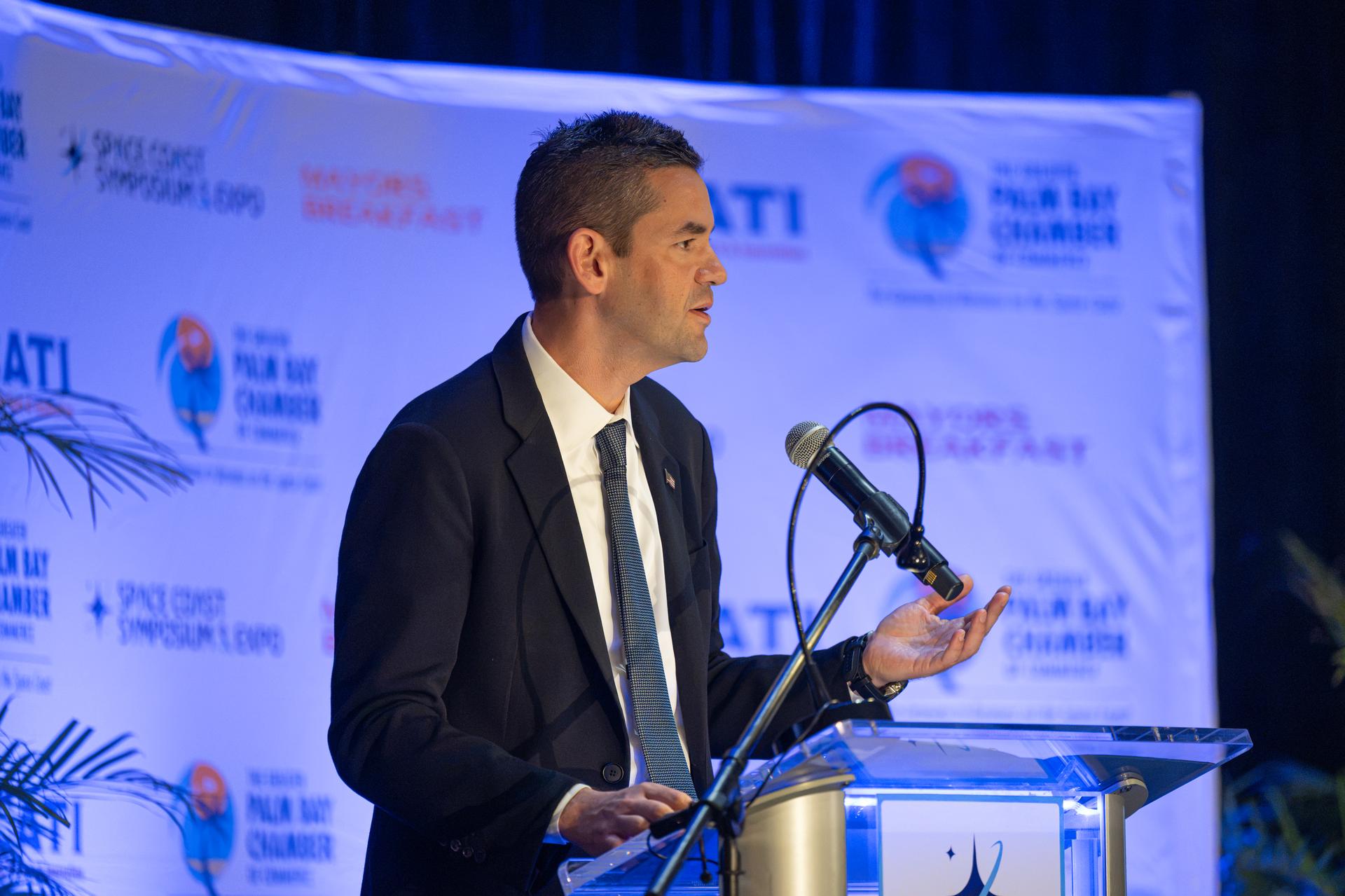
NASA Administrator Jared Isaacman speaks during a fireside chat, Friday, Aug. 21, 2026, at the 8th Annual Space Coast Symposium & Expo in Cape Canaveral, Fla. Photo Credit: (NASA/John Kraus)

NASA Administrator Jared Isaacman, left, participates in a fireside chat with U.S. Rep. Mike Haridopolos of Florida’s 8th congressional district, right, Friday, Aug. 21, 2026, at the 8th Annual Space Coast Symposium & Expo in Cape Canaveral, Fla. Photo Credit: (NASA/John Kraus)
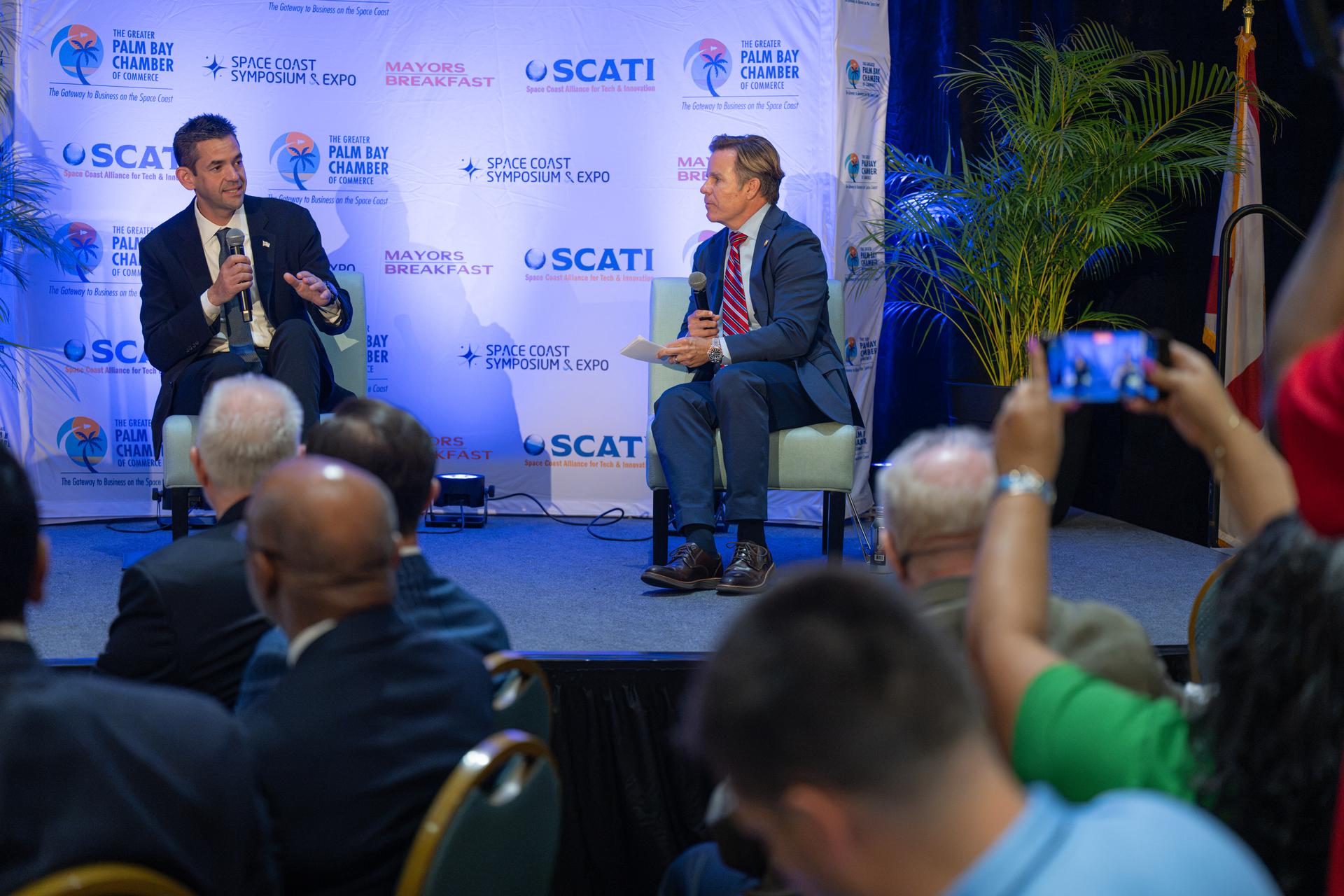
NASA Administrator Jared Isaacman, left, participates in a fireside chat with U.S. Rep. Mike Haridopolos of Florida’s 8th congressional district, right, Friday, Aug. 21, 2026, at the 8th Annual Space Coast Symposium & Expo in Cape Canaveral, Fla. Photo Credit: (NASA/John Kraus)

NASA Administrator Jared Isaacman, left, participates in a fireside chat with U.S. Rep. Mike Haridopolos of Florida’s 8th congressional district, right, Friday, Aug. 21, 2026, at the 8th Annual Space Coast Symposium & Expo in Cape Canaveral, Fla. Photo Credit: (NASA/John Kraus)

NASA Administrator Jared Isaacman, center, participates in a fireside chat with U.S. Rep. Mike Haridopolos of Florida’s 8th congressional district, right, Friday, Aug. 21, 2026, at the 8th Annual Space Coast Symposium & Expo in Cape Canaveral, Fla. Photo Credit: (NASA/John Kraus)

NASA Administrator Jared Isaacman, left, participates in a fireside chat with U.S. Rep. Mike Haridopolos of Florida’s 8th congressional district, right, Friday, Aug. 21, 2026, at the 8th Annual Space Coast Symposium & Expo in Cape Canaveral, Fla. Photo Credit: (NASA/John Kraus)

NASA Administrator Jared Isaacman, left, participates in a fireside chat with U.S. Rep. Mike Haridopolos of Florida’s 8th congressional district, center, Friday, Aug. 21, 2026, at the 8th Annual Space Coast Symposium & Expo in Cape Canaveral, Fla. Photo Credit: (NASA/John Kraus)
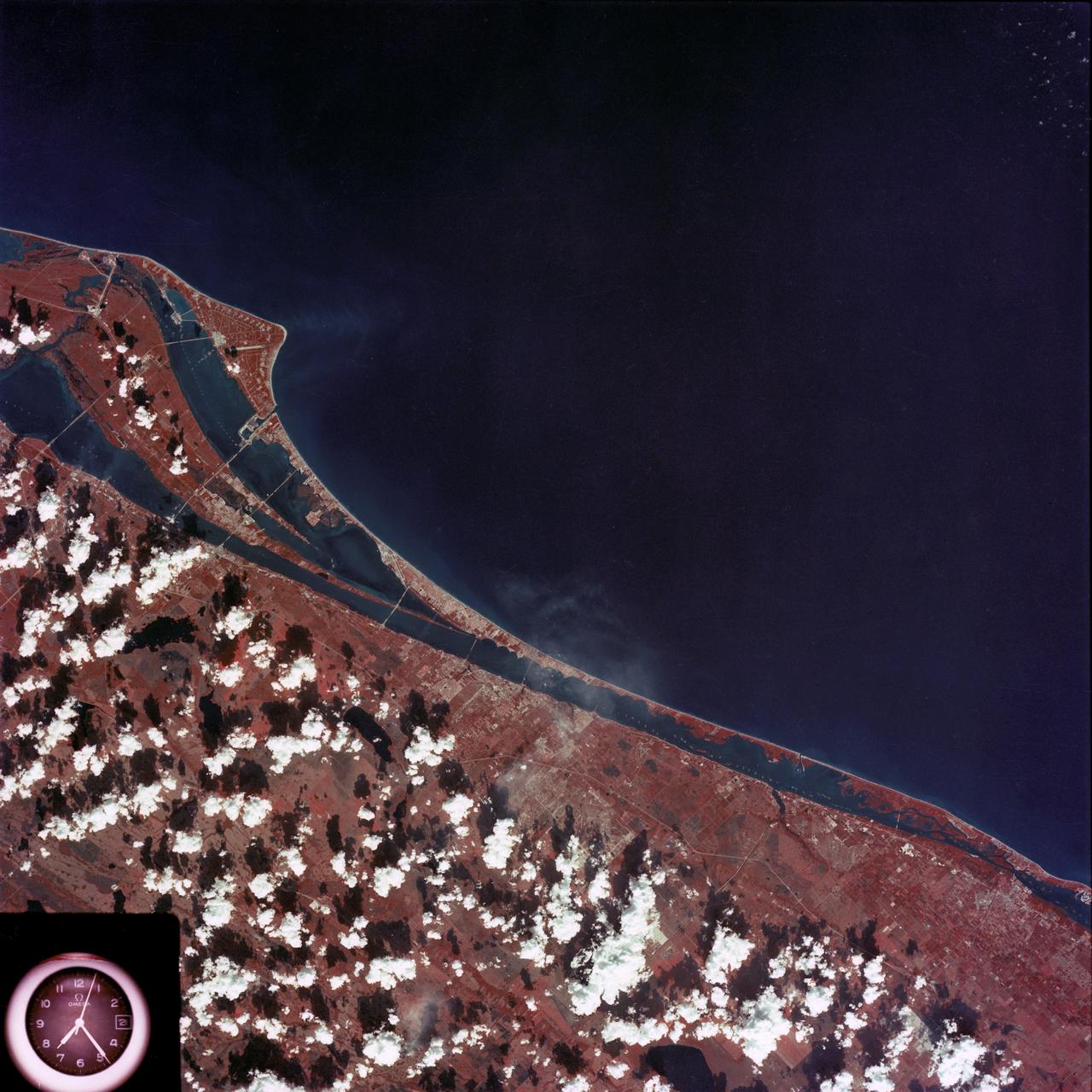
SL4-93-167 (February 1974) --- A vertical view of the Kennedy Space Center and the Florida Atlantic coast area is seen in this Skylab 4 Earth Resources Experiments Package S190-B (five-inch earth terrain camera) infrared photography taken from the Skylab space station in Earth orbit. This photograph shows the major land-ocean features of the Florida coast near Vero Beach northward to Cape Canaveral and the KSC complex. The launch pads for the Skylab missions are clearly visible. Identification of living vegetation is possible through the use of the color infrared film. Various shades of red portray differences in the vegetation such as shown in the patterns in the agricultural area near Vero Beach. In the Kennedy Space Center, the nearly continuous and uniform red color shows that most of the land areas are heavily vegetated. The white coastal beach areas are strongly contrasted to the red land and the blue Atlantic Ocean. Old dunal areas in KSC are visible on Merritt Island which is separated from the Launch areas by the Banana River and the mainland by the Indian River. Federal and state highways and numerous causeways over the rivers are easily identified. The Florida mainland is partly shadowed by small white clouds which cast a pronounced shadow to the east of each cloud indicated the Sun is west of solar noon. Federal agencies participating with NASA on the EREP project are the Departments of Agriculture, Commerce, Interior, the Environmental Protection Agency and the Core of Engineers. All EREP photography is available to the public through the Department of Interior's Earth Resources Observations Systems Data Center, Sioux Falls, South Dakota, 57198. Photo credit: NASA
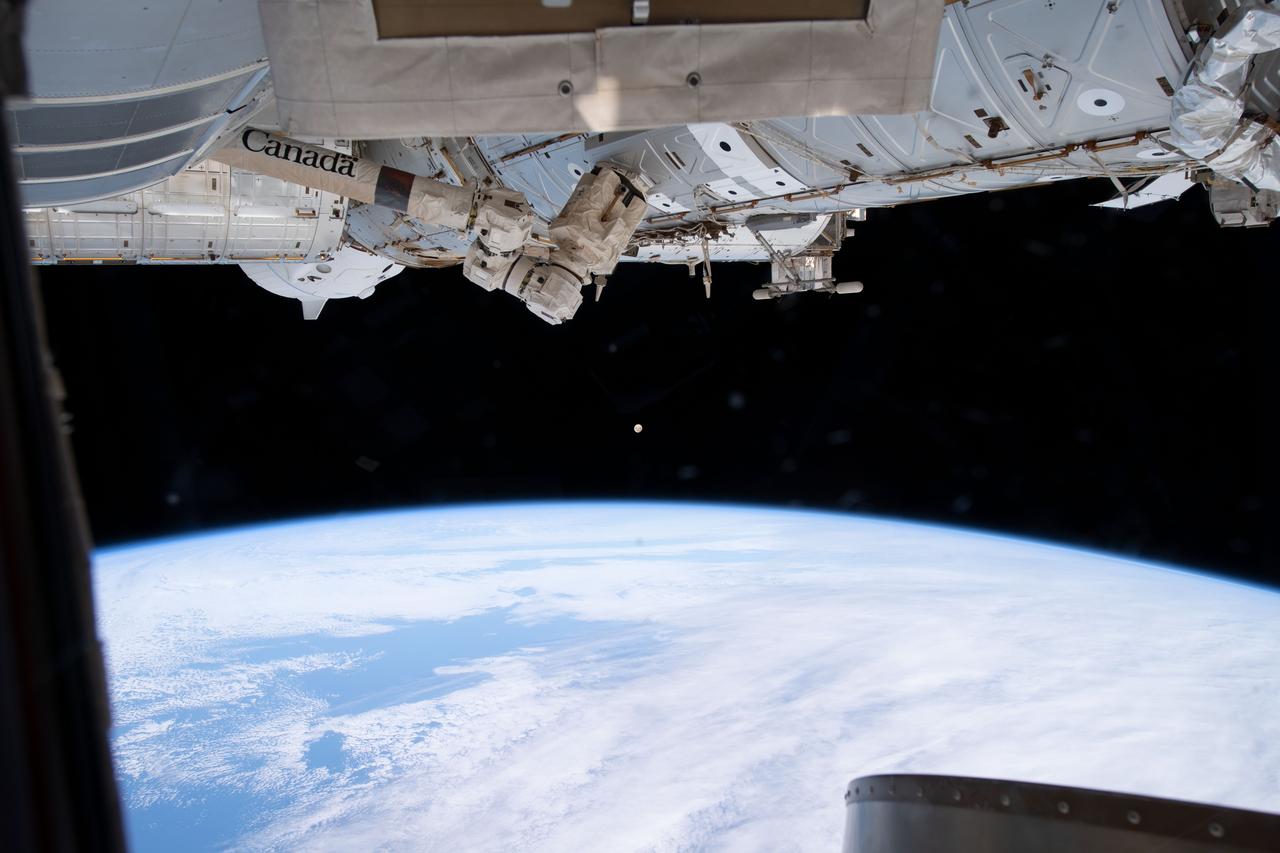
iss069e027342 (July 2, 2023) -- An almost-full moon glows in the back as the space station orbits 268 miles above the coast of Argentina.
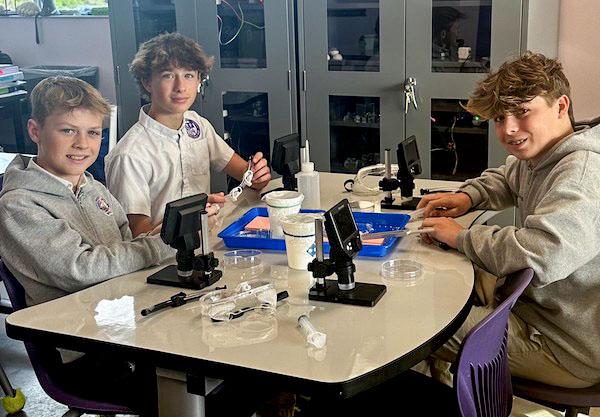
jsc2024e066527 (10/4/2024) --- Pinecrest Academy Space Coast students Cameron Winchester, Chase Elden-Moore and Baylen Wreggit experiment on tardigrades extending the efficacy of Hemlibra. Their experiment is part of the Nanoracks-National Center for Earth and Space Science Education-Surveyor-Student Spaceflight Experiments Program Mission 18 to ISS (Nanoracks-NCESSE-Surveyor-SSEP).
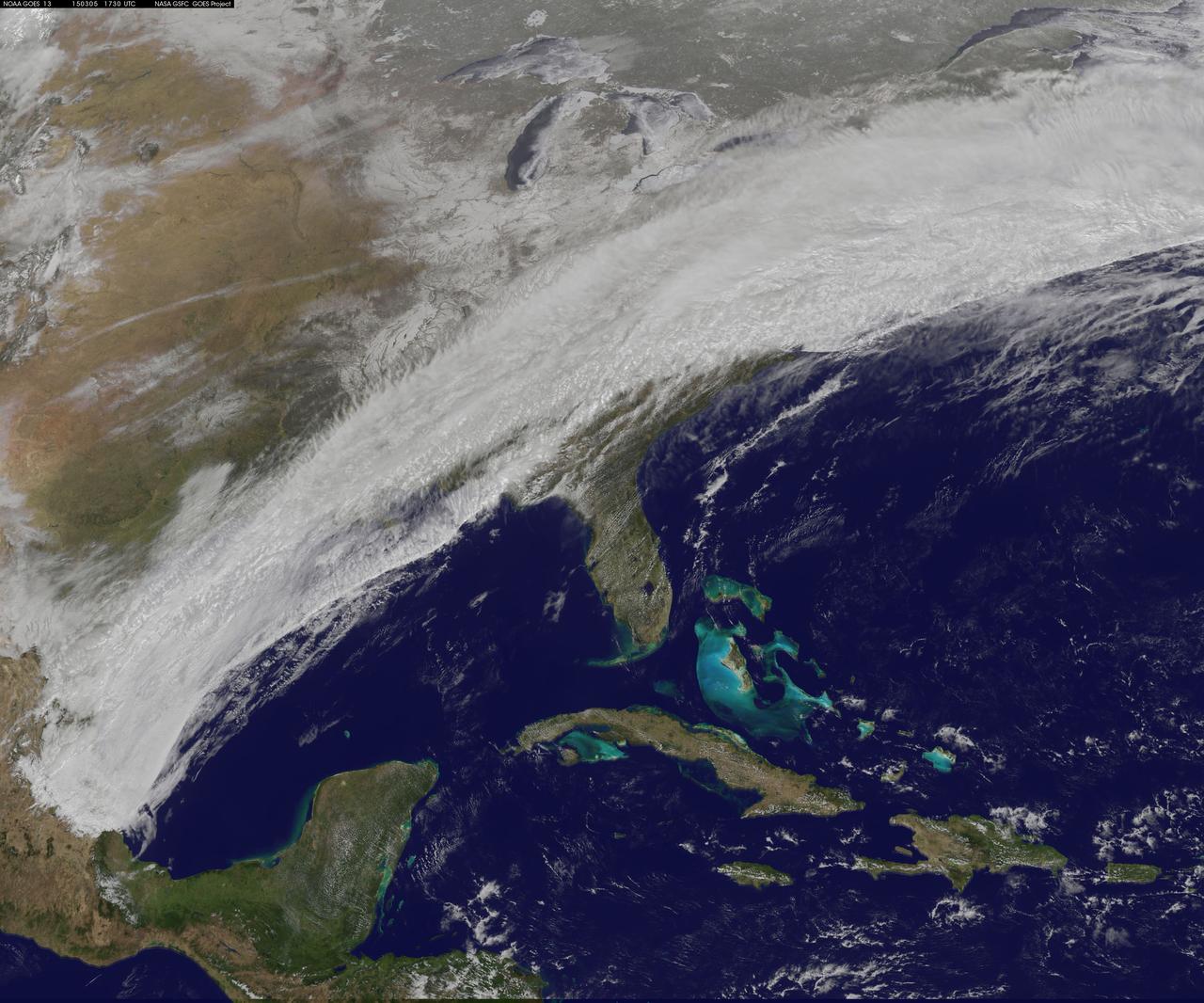
This GOES-East image from March 5 at 17:30 UTC (12:30 p.m. EST) shows clouds associated with a cold front push east and south that brought winter weather to the U.S. East Coast. Credit: NASA/NOAA GOES Project <b><a href="http://www.nasa.gov/audience/formedia/features/MP_Photo_Guidelines.html" rel="nofollow">NASA image use policy.</a></b> <b><a href="http://www.nasa.gov/centers/goddard/home/index.html" rel="nofollow">NASA Goddard Space Flight Center</a></b> enables NASA’s mission through four scientific endeavors: Earth Science, Heliophysics, Solar System Exploration, and Astrophysics. Goddard plays a leading role in NASA’s accomplishments by contributing compelling scientific knowledge to advance the Agency’s mission. <b>Follow us on <a href="http://twitter.com/NASAGoddardPix" rel="nofollow">Twitter</a></b> <b>Like us on <a href="http://www.facebook.com/pages/Greenbelt-MD/NASA-Goddard/395013845897?ref=tsd" rel="nofollow">Facebook</a></b> <b>Find us on <a href="http://instagrid.me/nasagoddard/?vm=grid" rel="nofollow">Instagram</a></b>
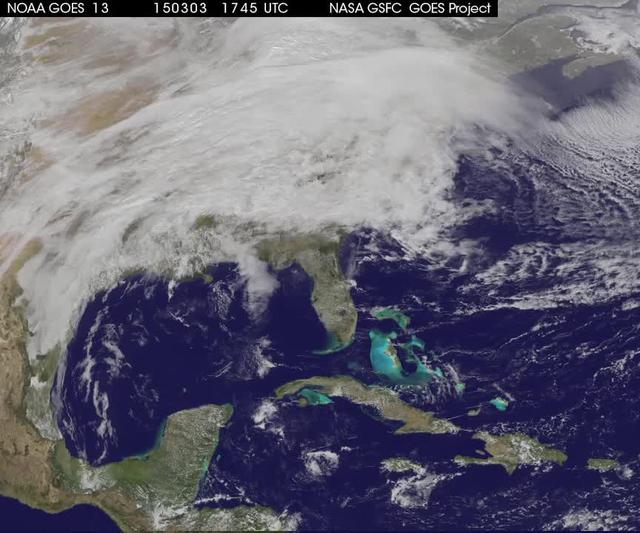
A winter storm was bringing snow, sleet and freezing rain from lower Mississippi Valley to Northeastern U.S. on Thursday, March 5, 2015. A new NASA animation of NOAA's GOES-East satellite imagery showed the progression of the clouds associated with the storm system that triggered winter storm warnings and winter weather advisories from the southern Plains eastward through the Mid-Atlantic and southern New England coast. The system also triggered flood warnings along and to the west of the central Appalachians. An animation of GOES satellite visible and infrared imagery from March 3 through March 5 showed clouds associated with a cold front push over U.S. East coast. Behind the front, Arctic air is expected to drop low temperatures into the single numbers from Washington, D.C. to Minnesota overnight. Temperatures in the Carolinas and Tennessee are expected to drop to the low 20s. NOAA's National Weather Service Weather Prediction Center (NWS NPC) in College Park, Maryland noted "a strong cold front moving across the eastern U.S. will bring heavy snow from parts of the Ohio Valley to the Northeast today (March 5) with rain, freezing rain and sleet possible from parts of the lower Mississippi Valley across the Southeast to the southern Mid-Atlantic. Snowfall totals of 5 to 10 inches are possible for some areas. Winter Storm Warnings remain in effect from Texas to Nantucket." The animation ends at 17:45 UTC (12:45 p.m. EST). Before the end of the animation, the low pressure center along an arctic frontal boundary was nearly stationary over western North Carolina at 9 a.m. EST on March 5, according to the NWS NPC. NWS radar and surface observations indicated an extended swath of precipitation from near the Texas Gulf Coast through the interior eastern U.S. into southern New England. NPC's storm summary noted at that time "rain was changing to sleet/freezing rain and to all snow along a band within this swath as colder air continues to filter in from the north. Some areas in Tennessee, the northern mid-Atlantic and southern New England were reporting moderate to heavy snow." To create the video and imagery, NASA/NOAA's GOES Project takes the cloud data from NOAA's GOES-East satellite and overlays it on a true-color image of land and ocean created by data from the Moderate Resolution Imaging Spectroradiometer, or MODIS, instrument that flies aboard NASA's Aqua and Terra satellites. Together, those data created the entire picture of the storm and show its movement. After the storm system passes, the snow on the ground becomes visible. GOES satellites provide the kind of continuous monitoring necessary for intensive data analysis. Geostationary describes an orbit in which a satellite is always in the same position with respect to the rotating Earth. This allows GOES to hover continuously over one position on Earth's surface, appearing stationary. For updated information about the storm system, visit NOAA's NWS website: <a href="http://www.weather.gov" rel="nofollow">www.weather.gov</a> For more information about GOES satellites, visit: <a href="http://www.goes.noaa.gov/" rel="nofollow">www.goes.noaa.gov/</a> or goes.gsfc.nasa.gov/ Rob Gutro NASA's Goddard Space Flight Center <b><a href="http://www.nasa.gov/audience/formedia/features/MP_Photo_Guidelines.html" rel="nofollow">NASA image use policy.</a></b> <b><a href="http://www.nasa.gov/centers/goddard/home/index.html" rel="nofollow">NASA Goddard Space Flight Center</a></b> enables NASA’s mission through four scientific endeavors: Earth Science, Heliophysics, Solar System Exploration, and Astrophysics. Goddard plays a leading role in NASA’s accomplishments by contributing compelling scientific knowledge to advance the Agency’s mission. <b>Follow us on <a href="http://twitter.com/NASAGoddardPix" rel="nofollow">Twitter</a></b> <b>Like us on <a href="http://www.facebook.com/pages/Greenbelt-MD/NASA-Goddard/395013845897?ref=tsd" rel="nofollow">Facebook</a></b> <b>Find us on <a href="http://instagrid.me/nasagoddard/?vm=grid" rel="nofollow">Instagram</a></b>
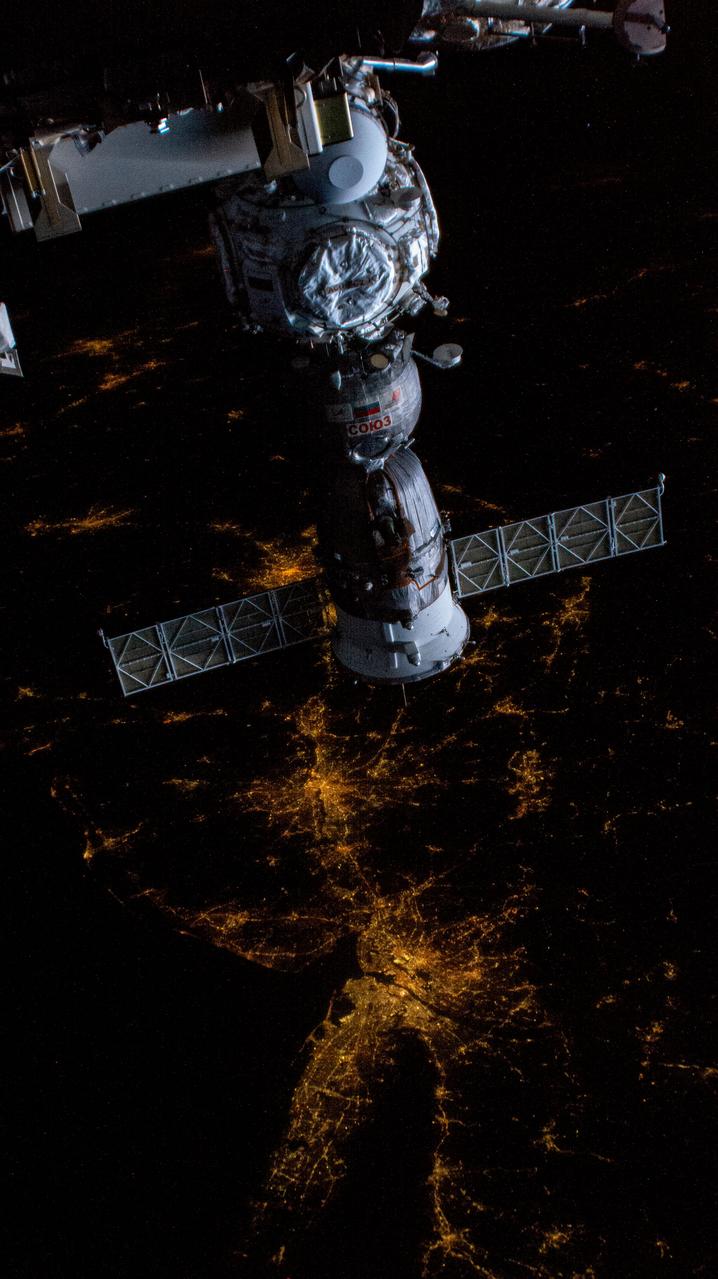
iss069e010181 (May 12, 2023) --- The Soyuz MS-23 crew ship is pictured docked to the Prichal docking module as the International Space Station orbited 261 miles above the northeast coast of the United States. The city lights of New York City and the surrounding metropolitan area are easily visible from the orbital outpost.
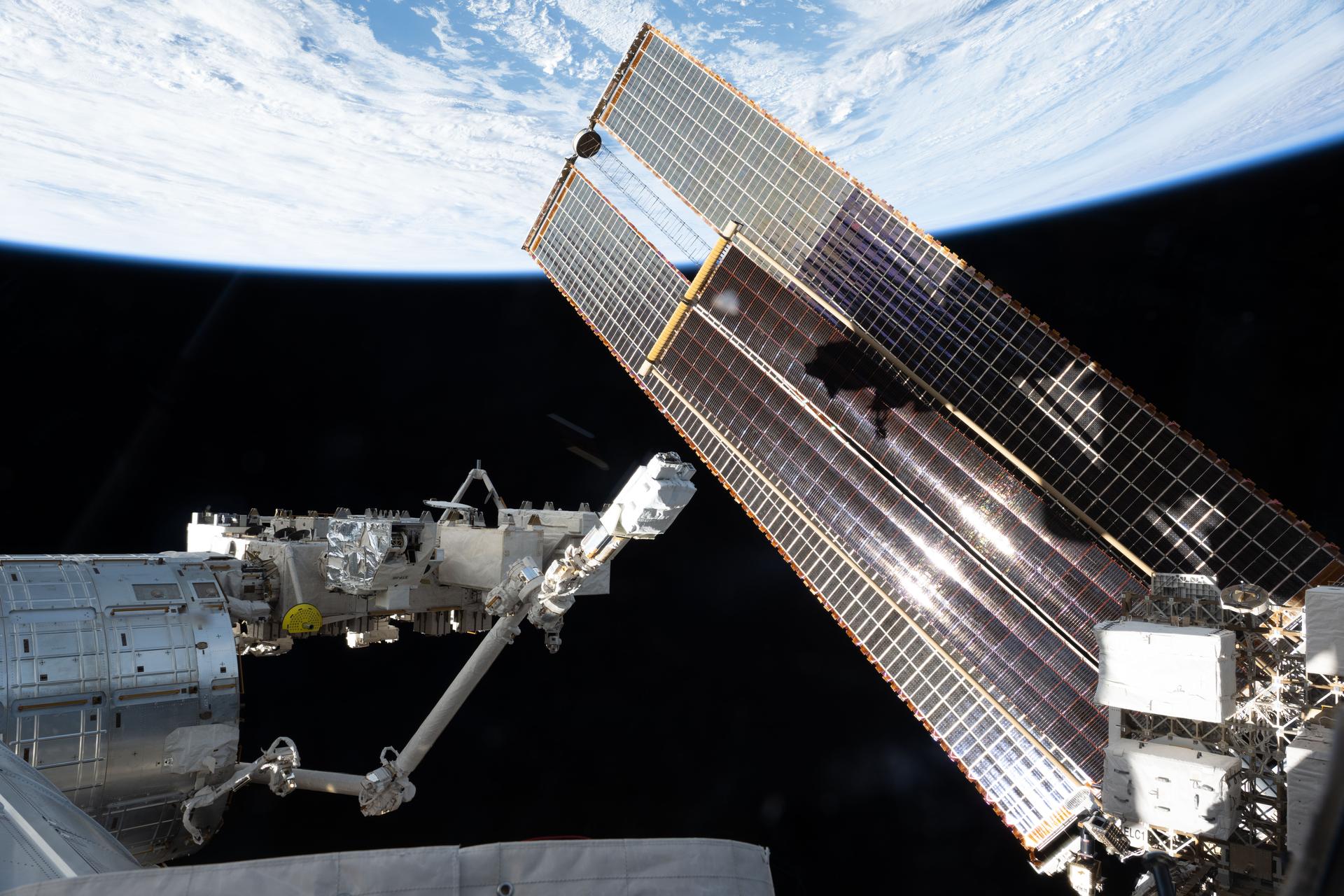
iss073e0869068 (Oct. 10, 2025) --- A set of the International Space Station's main solar arrays, partially overlapped by a smaller set of roll-out solar arrays, stretches across the photograph as the International Space Station orbited 262 miles above the Atlantic Ocean off the coast of Portugal. At left, the Japanese robotic arm with the small satellite orbital deployer attached, extends from the Kibo laboratory module.

Leaders from NASA’s Commercial Crew Program and Exploration Ground Systems at the agency’s Kennedy Space Center in Florida, and members of the U.S. Coast Guard Sector Jacksonville pose for photos during a NASA Silver Group Achievement award ceremony held inside Kennedy’s headquarters building on Thursday, March 14, 2024. The agency’s Silver Group Achievement Award is presented to U.S. Coast Guard Admiral Linda Fagan to recognize the commitment of the U.S. Coast Guard Sector Jacksonville in providing splashdown and recovery support for the safe return of crew and cargo space capsules.

U.S. Coast Guard Admiral Linda Fagan receives NASA’s Silver Group Achievement Award from NASA’s Kennedy Space Center Director Janet Petro in a ceremony held at Kennedy’s headquarters building on Thursday, March 14, 2024. The Silver Group Achievement Award recognizes the commitment of the U.S. Coast Guard Sector Jacksonville in providing splashdown and recovery support for the safe return of crew and cargo space capsules.

U.S. Coast Guard Admiral Linda Fagan receives NASA’s Silver Group Achievement Award during a ceremony held the headquarters building at NASA’s Kennedy Space Center in Florida on Thursday, March 14, 2024. The Silver Group Achievement Award recognizes the commitment of the U.S. Coast Guard Sector Jacksonville in providing splashdown and recovery support for the safe return of crew and cargo space capsules.
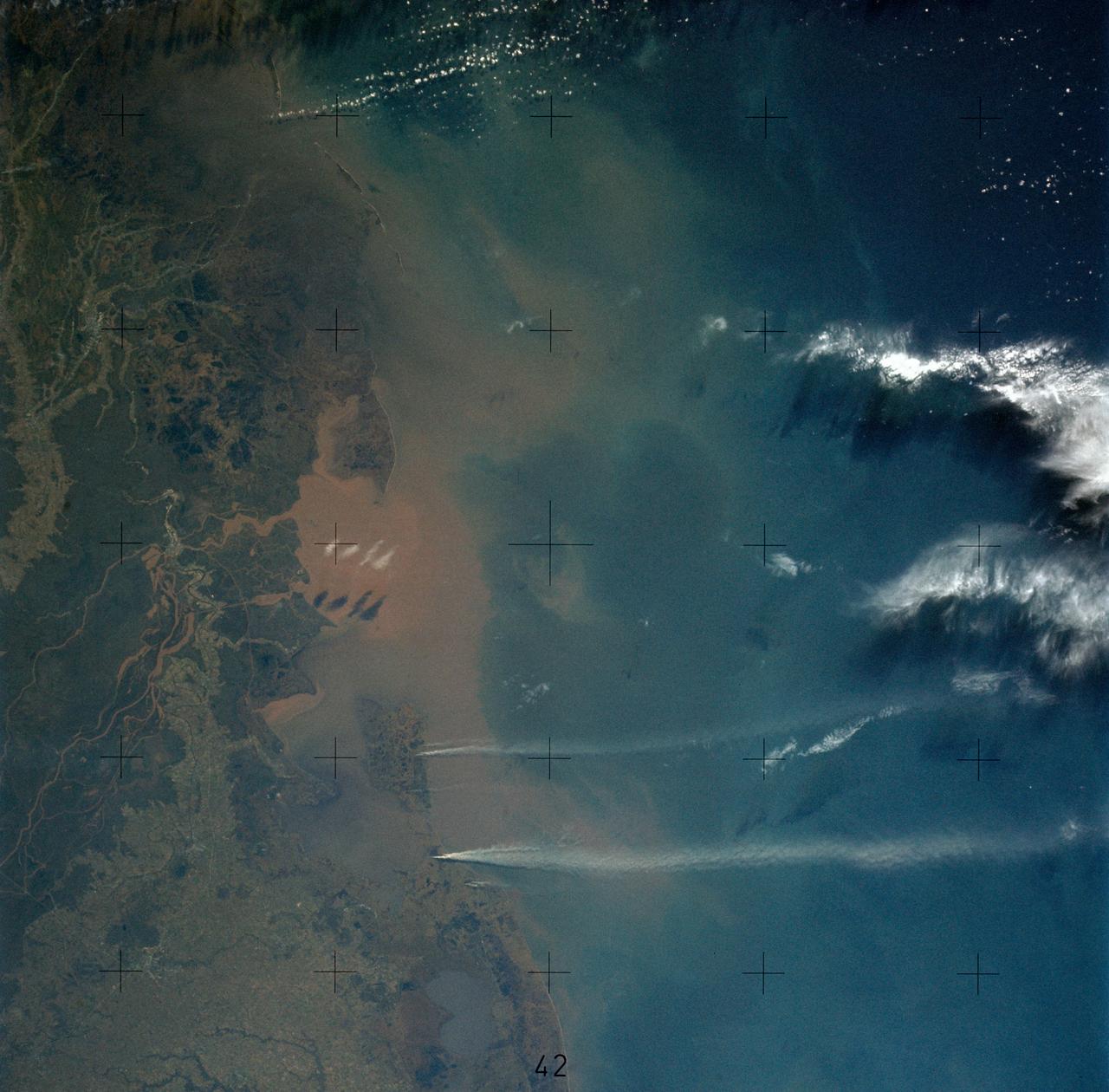
SL4-136-3475 (February 1974) --- A vertical view of the Gulf coast area of Louisiana (29.0N, 92.0W) as seen from the Skylab space station in Earth orbit. A Skylab 4 crewman used a hand-held 70mm Hasselblad camera to take this picture. This view extends from White Lake and Pecan Island (bottom border) eastward to the Mississippi River delta (top left). Atchafalaya Bay (red) is in the center. The Bayou Teche area is included in this view. A prominent feature of this photograph is two large white smoke plumes extending from Louisiana south into the Gulf of Mexico. The larger smoke plume originates on the southern shore of Vermillion Bay. The other plume extends from the southern shore of Marsh Island. The prononced narrow width and length of the plumes indicate that a strong offshore wind is present. Approximately 100 miles of the plumes are visible in this photograph; but they probably extend well into the Gulf of Mexico. Photo credit: NASA
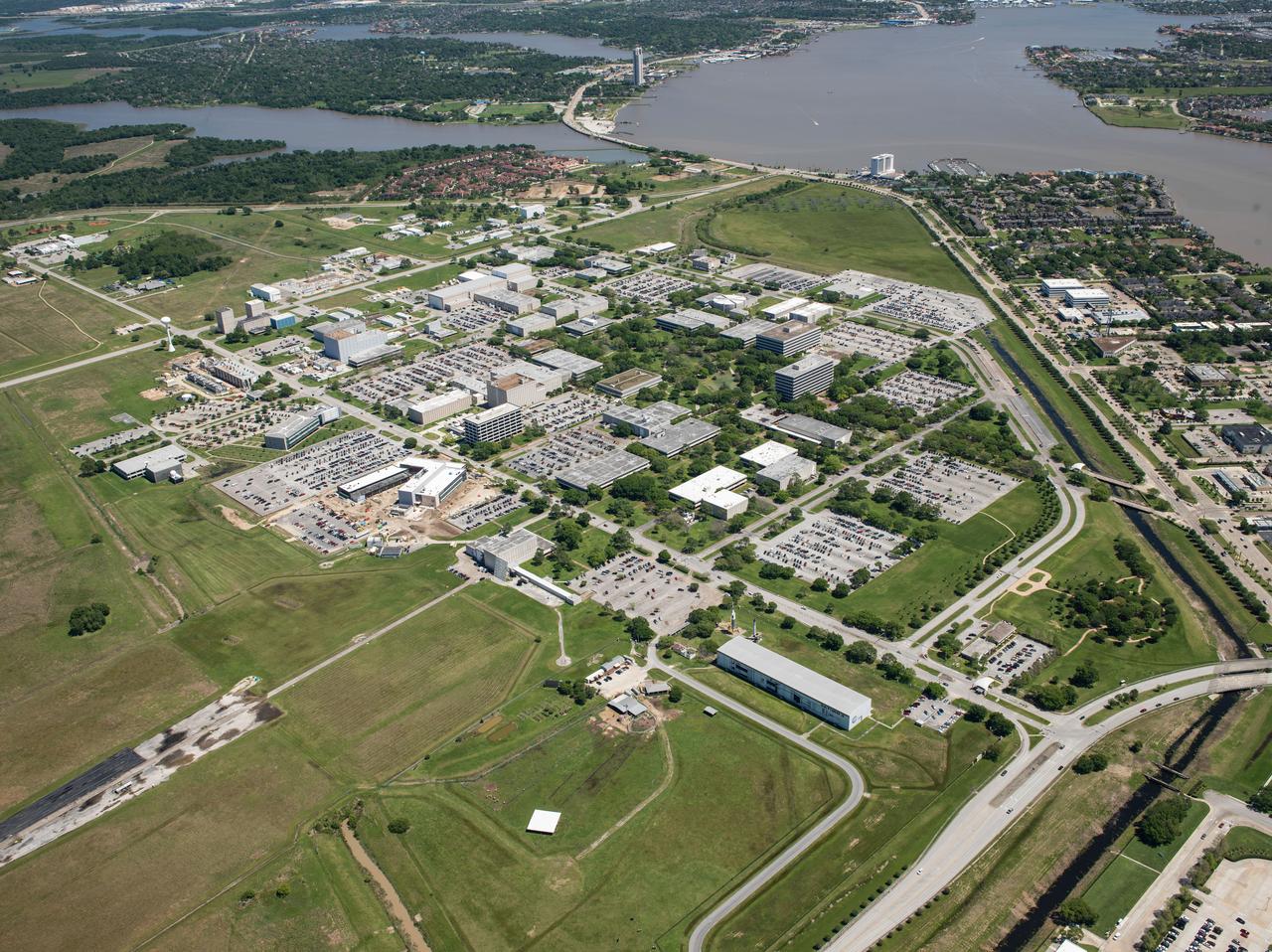
jsc2017e039526 (March 31, 2017) --- Aerial photograph of Johnson Space Center facilities taken from a U.S. Coast Guard H-65 helicopter.
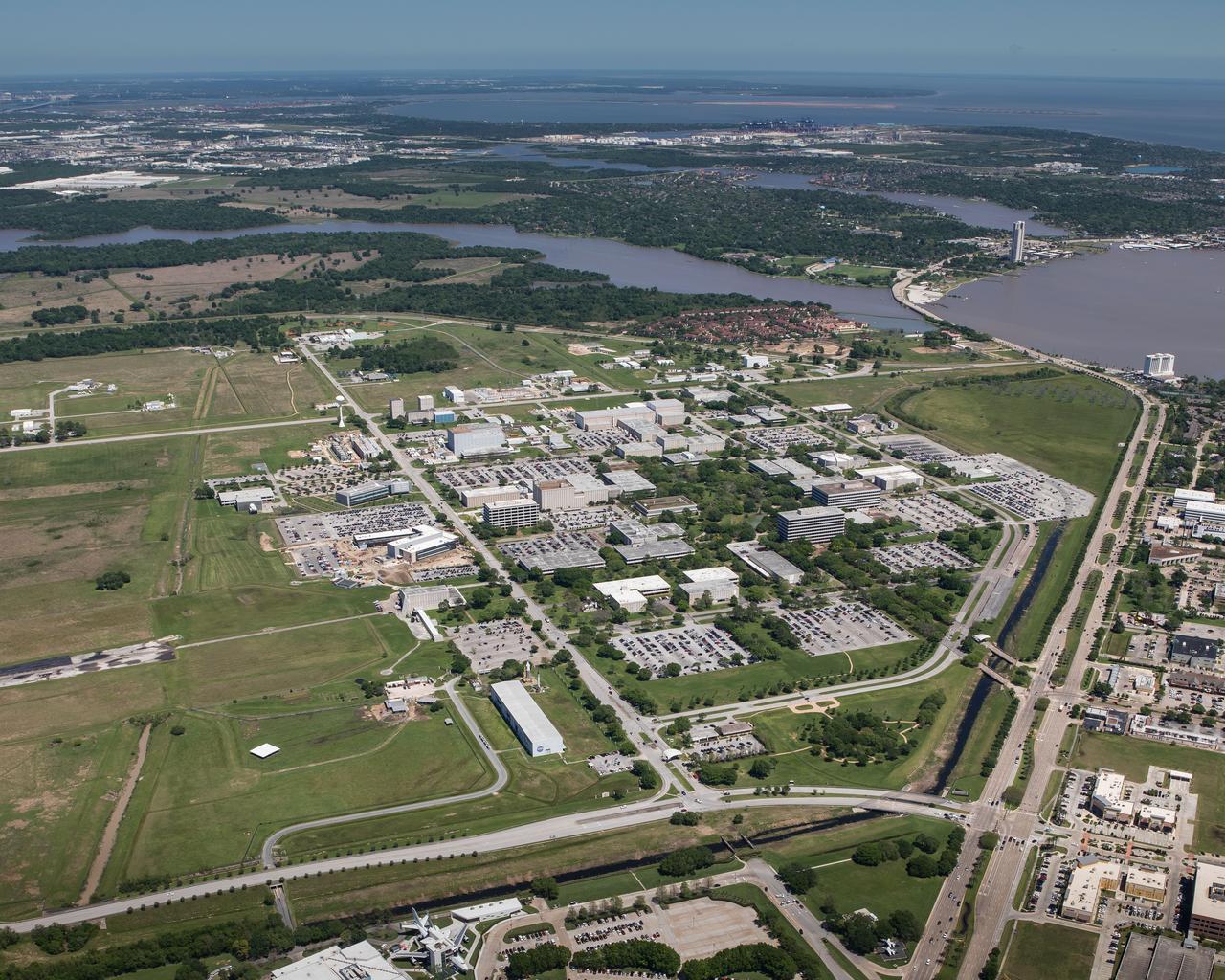
jsc2017e039526 (March 31, 2017) --- Aerial photograph of Johnson Space Center facilities taken from a U.S. Coast Guard H-65 helicopter.
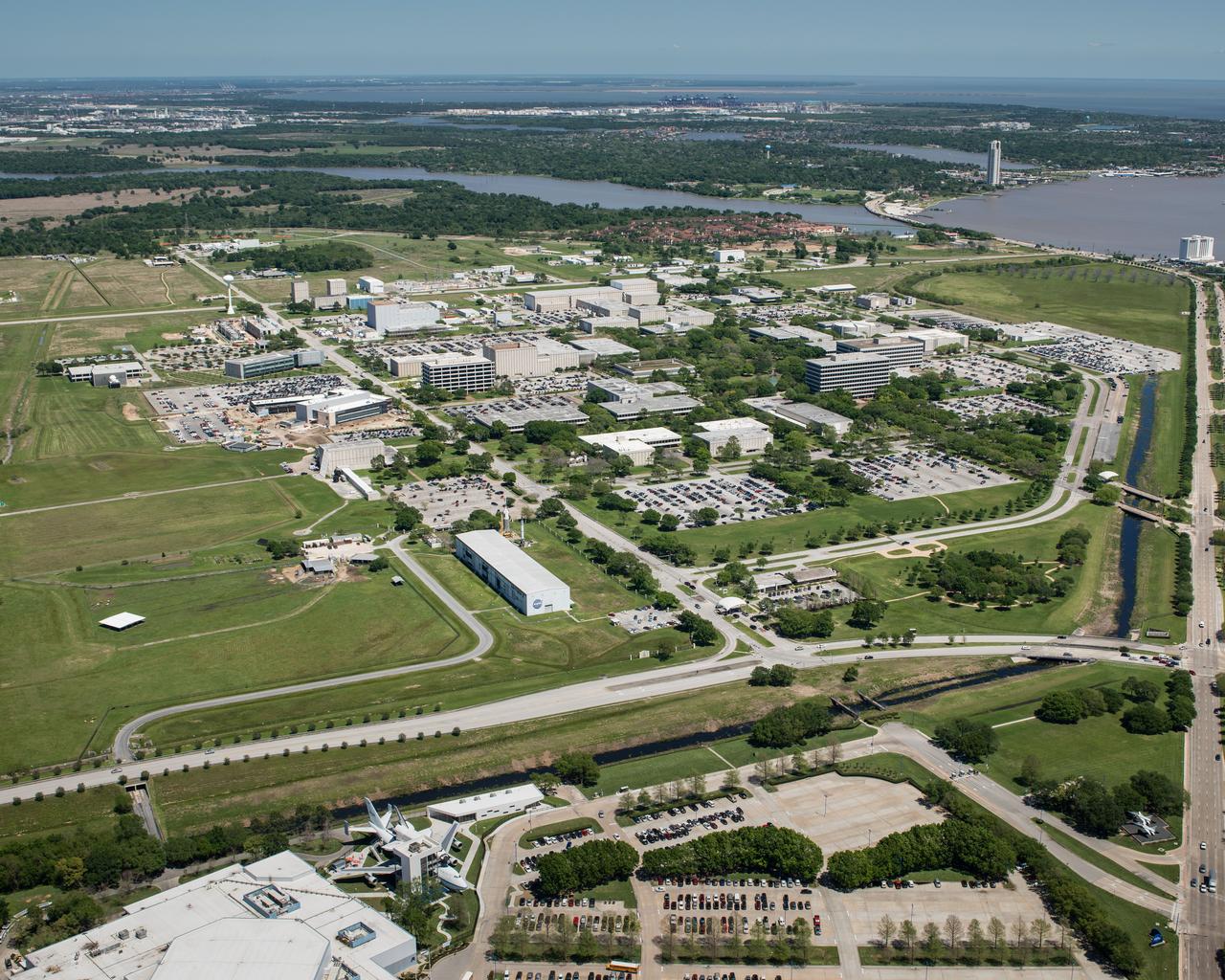
jsc2017e039531 (March 31, 2017) --- Aerial photograph of Johnson Space Center facilities taken from a U.S. Coast Guard H-65 helicopter.
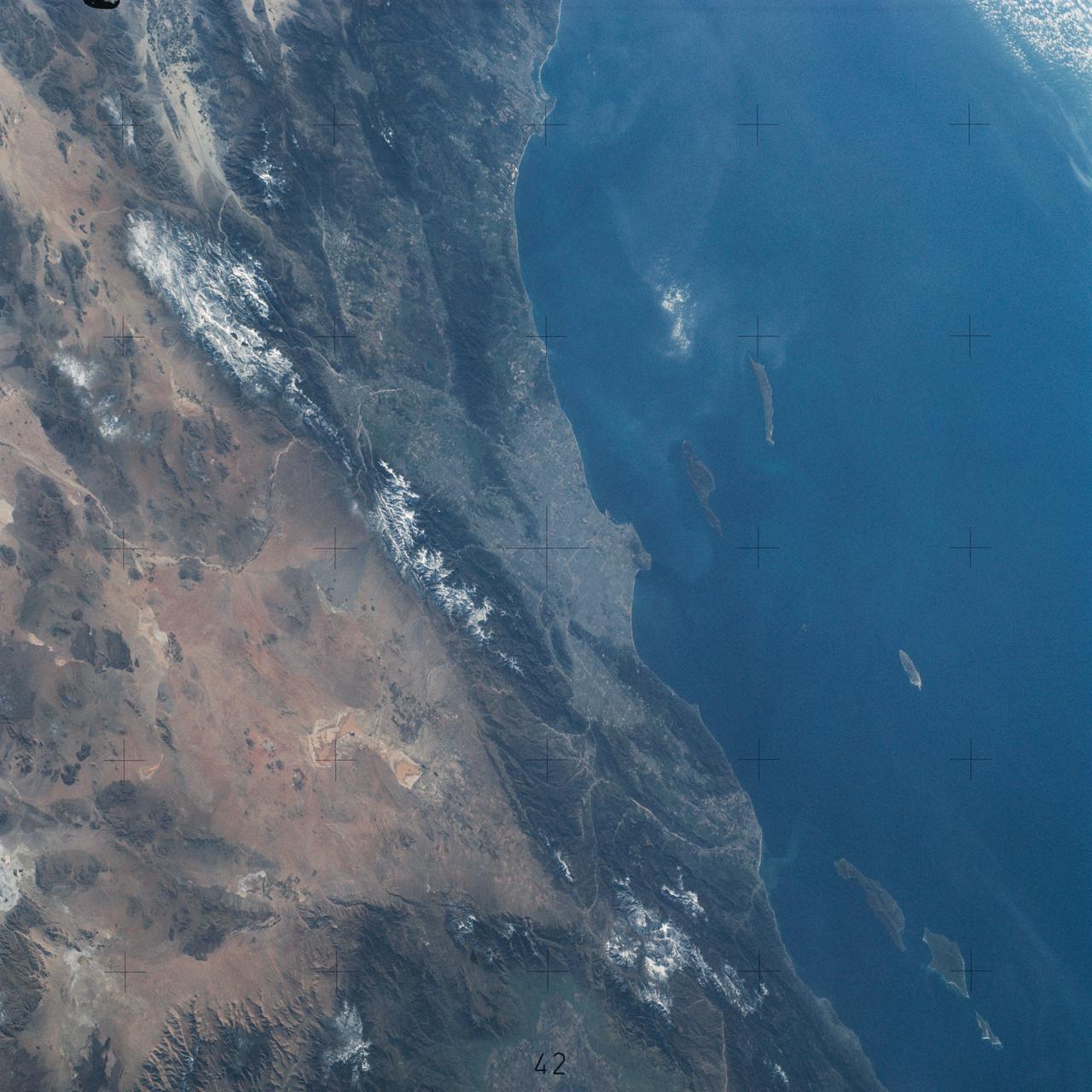
SL4-142-4542 (November 1973-February 1974) --- An oblique view of the Pacific Coast of Southern California, including the Los Angeles and San Diego areas, as seen from the Skylab space station in Earth orbit. This picture was taken by one of the Skylab 4 crewmen using a hand-held 70mm Hasselblad camera with a 100mm lens and SO-368 medium-speed Ektachrome film. The visible coastline extends from San Diego northwesterly to Santa Barbara. The Mojave Desert occupies much of the photograph. This view also includes the Channel Islands off the coast. Note that the higher elevations of the mountains are covered with snow. Photo credit: NASA

iss058e005915 (Jan. 27, 2019) --- The Sun's glint reflects off the Gulf of Mexico and outlines the coasts of Texas and Louisiana. The International Space Station was orbiting 254 miles above Louisiana when an Expedition 58 crew member photographed the Gulf coast including Matagorda Bay, Galvestion Bay and Sabine Lake.
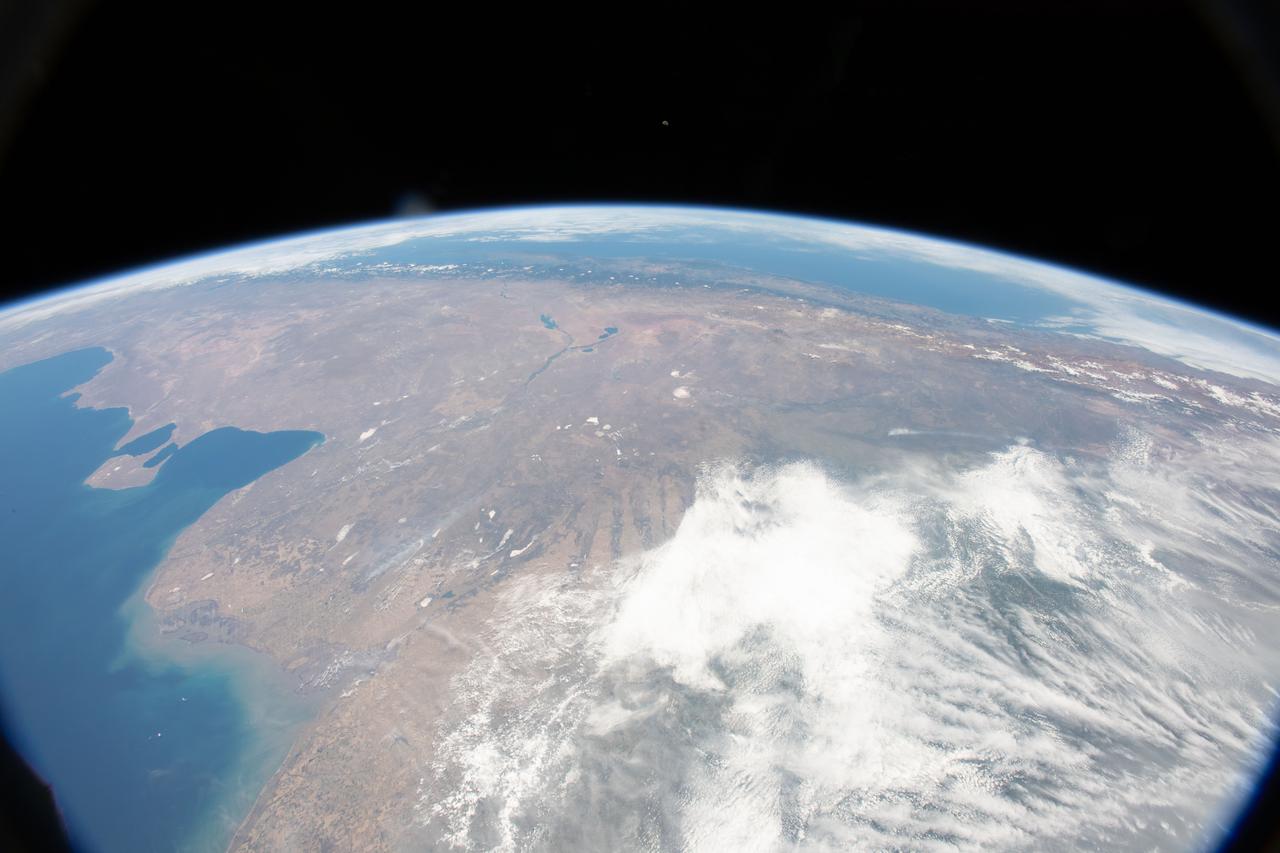
iss058e006004 (Jan. 26, 2019) --- This photograph of South America from bottom to top looks from the northeast coast of Argentina to southwest across Chile, the Andes mountains and the Pacific Ocean. The International Space Station was orbiting 259 miles above the Atlantic coast of the South American continent.

An orbital sunrise illuminates the cloud tops in this photograph from the International Space Station as it soared 262 miles above Namibia near the Atlantic coast.

Abu Dhabi, the capital of the United Arab Emirates on the Persian Gulf coast, is pictured from the International Space Station as it soared 257 miles above the Middle East.
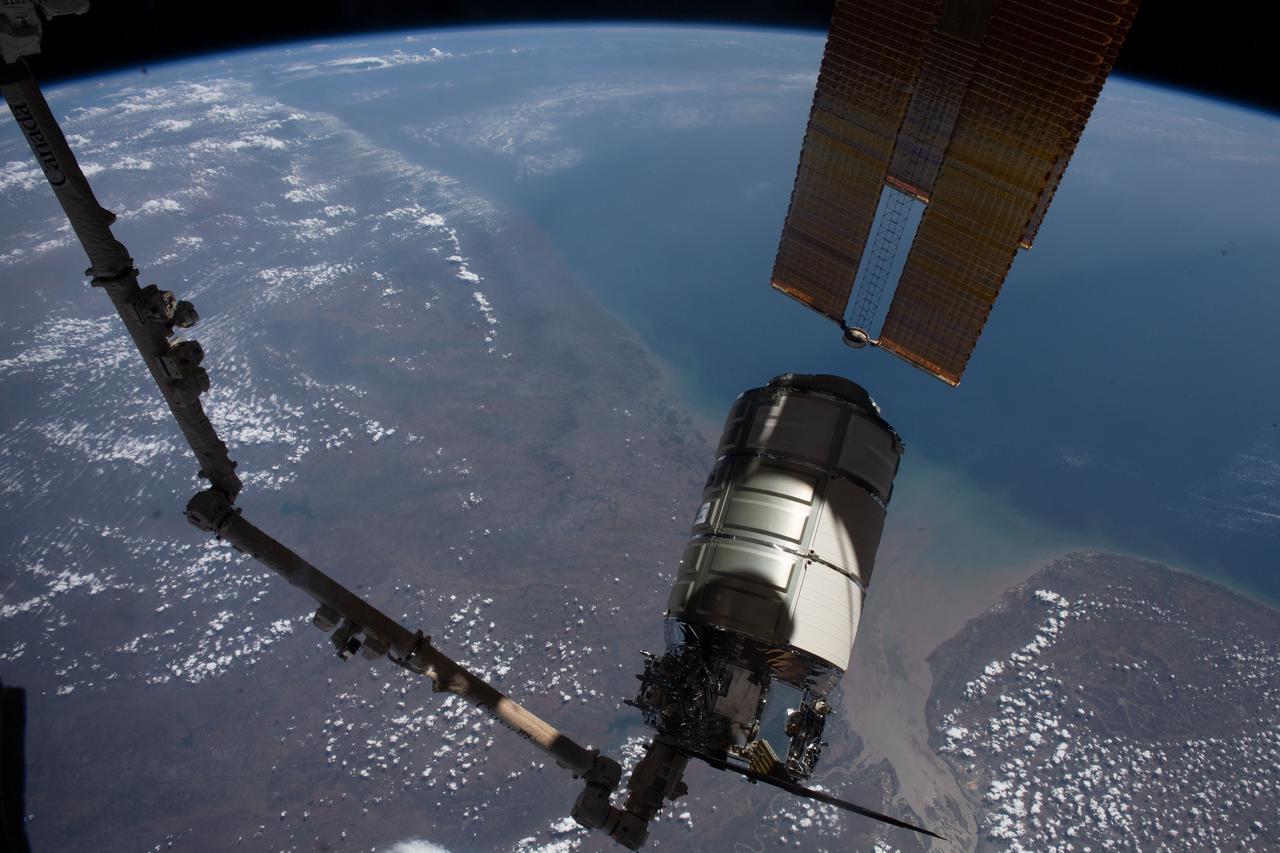
iss069e004909 (April 21, 2023) --- The Cygnus space freighter from Northrop Grumman is pictured in the grips of the Canadarm2 robotic arm as the International Space Station orbited 258 miles above the Arabian Sea coast of India.

iss069e004825 (April 21, 2023) --- The Cygnus space freighter from Northrop Grumman is poised for release from the Canadarm2 robotic arm as the International Space Station orbited 263 miles above the Atlantic Ocean off the coast of Ireland.
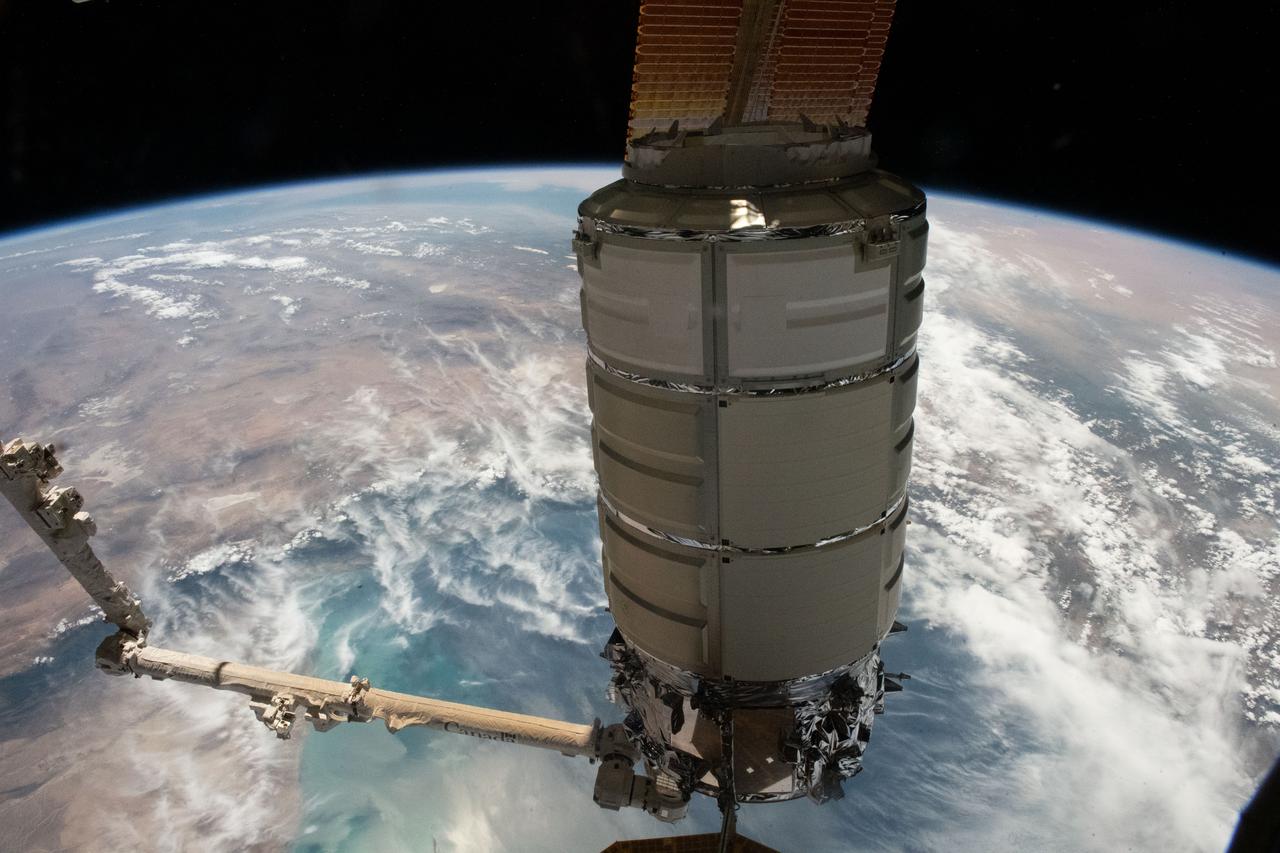
iss069e004895 (April 21, 2023) --- The Cygnus space freighter from Northrop Grumman is pictured in the grips of the Canadarm2 robotic arm as the International Space Station orbited 261 miles above the Caspian Sea off the coast of Turkmenistan.

iss058e023922 (Feb. 20, 2019) --- Tropical Cyclone Oma is pictured as the International Space Station orbited 256 miles above the Coral Sea off the coast of Queensland, Australia.

iss071e462173 (Aug. 8, 2024) --- Wildfires in northern California are pictured from the International Space Station as it orbited 261 miles above the Pacific Ocean off the coast of Washington's Olympic National Forest.
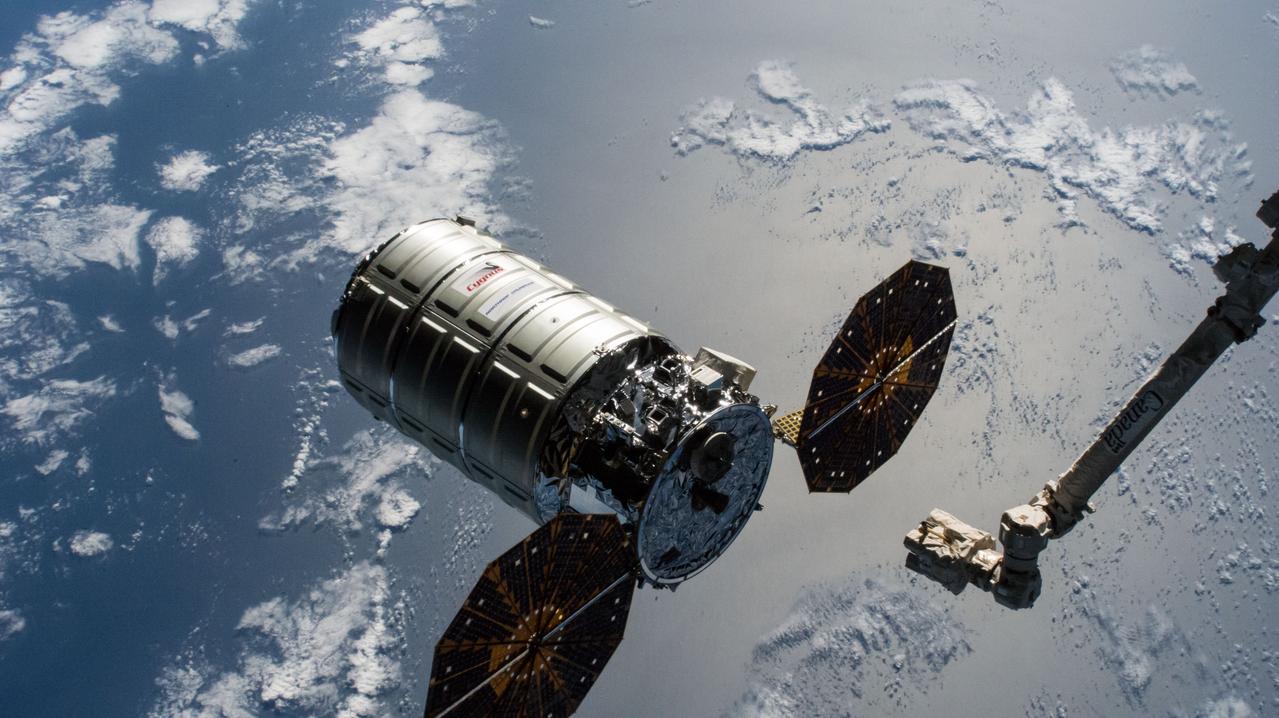
iss058e011814 (Feb. 8, 2019) --- The Cygnus cargo craft from Northrop Grumman is released from the grips of the Canadarm2 robotic arm as the International Space Station was orbiting over the Pacific Ocean off the coast of Peru.
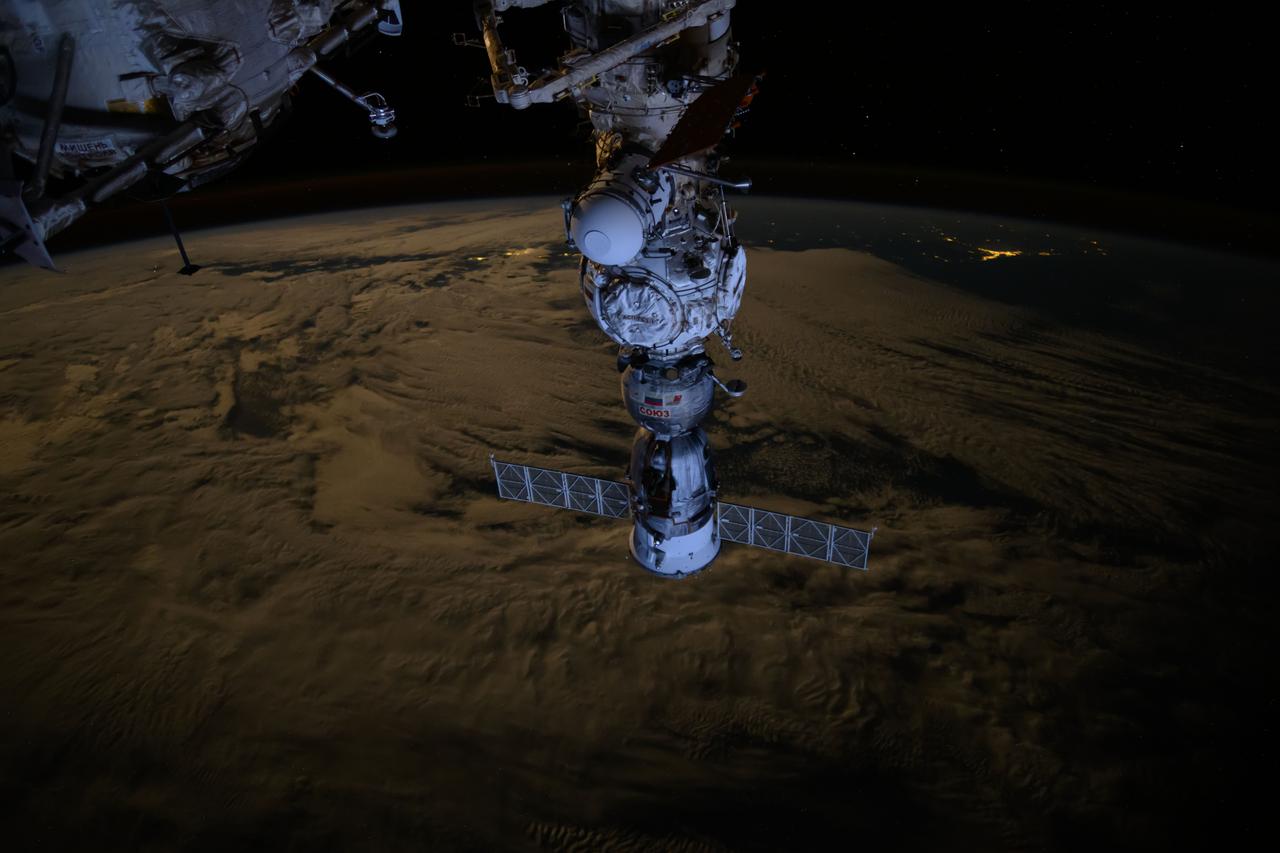
iss071e365226 (July 19, 2024) --- The Soyuz MS-25 crew ship is picture docked to the Prichal docking module as the International Space Station orbited 271 miles above the Tasman Sea off the coast of New Zealand.

iss058e002592 (Jan. 9, 2019) --- The SpaceX Dragon cargo craft is pictured attached to the International Space Station's Harmony module as the orbital complex flew 258 miles above the Indian Ocean off the eastern coast of South Africa.
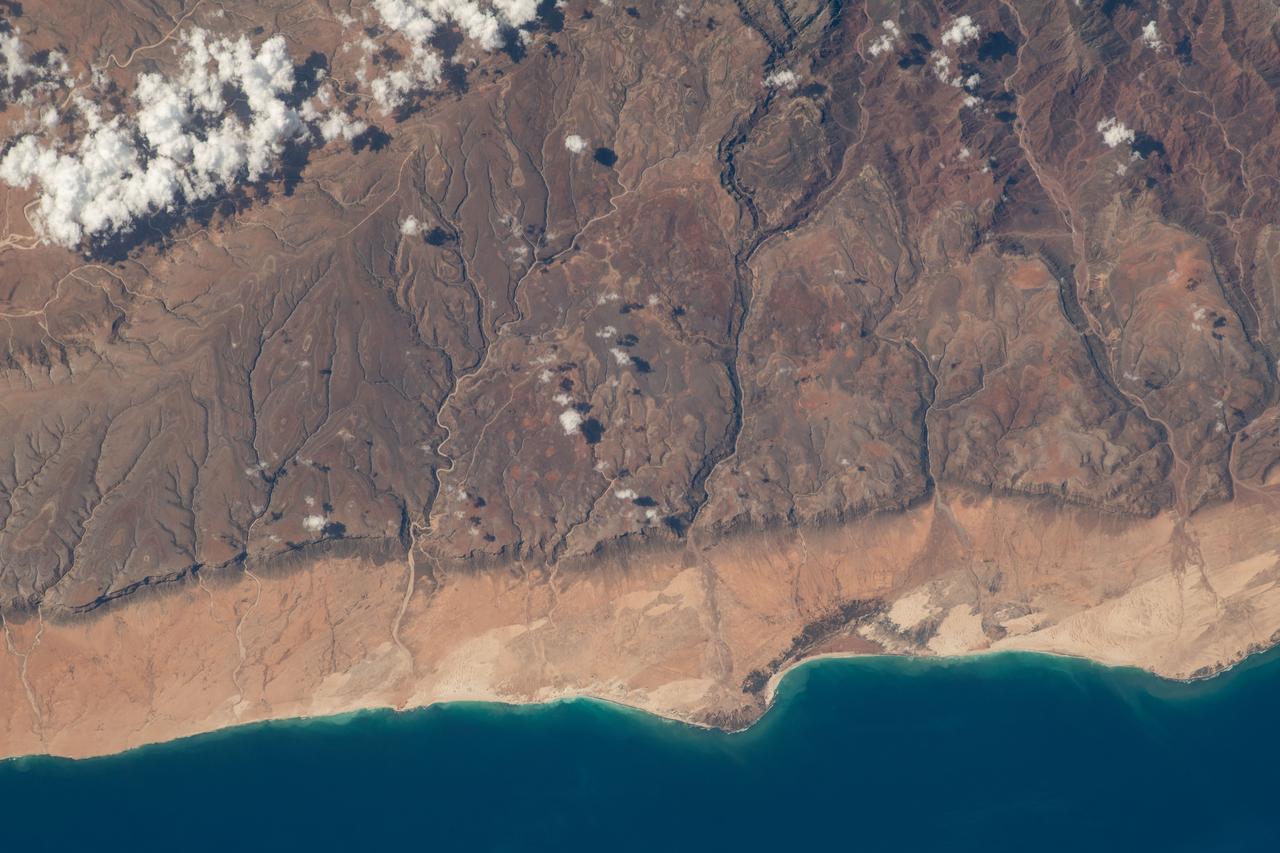
iss069e004768 (April 20, 2023) --- The southern coast of Yemeni's island of Socotra in the Arabian Sea was pictured by NASA astronaut and Expedition 69 Flight Engineer Woody Hoburg as the International Space Station orbited 257 miles above.
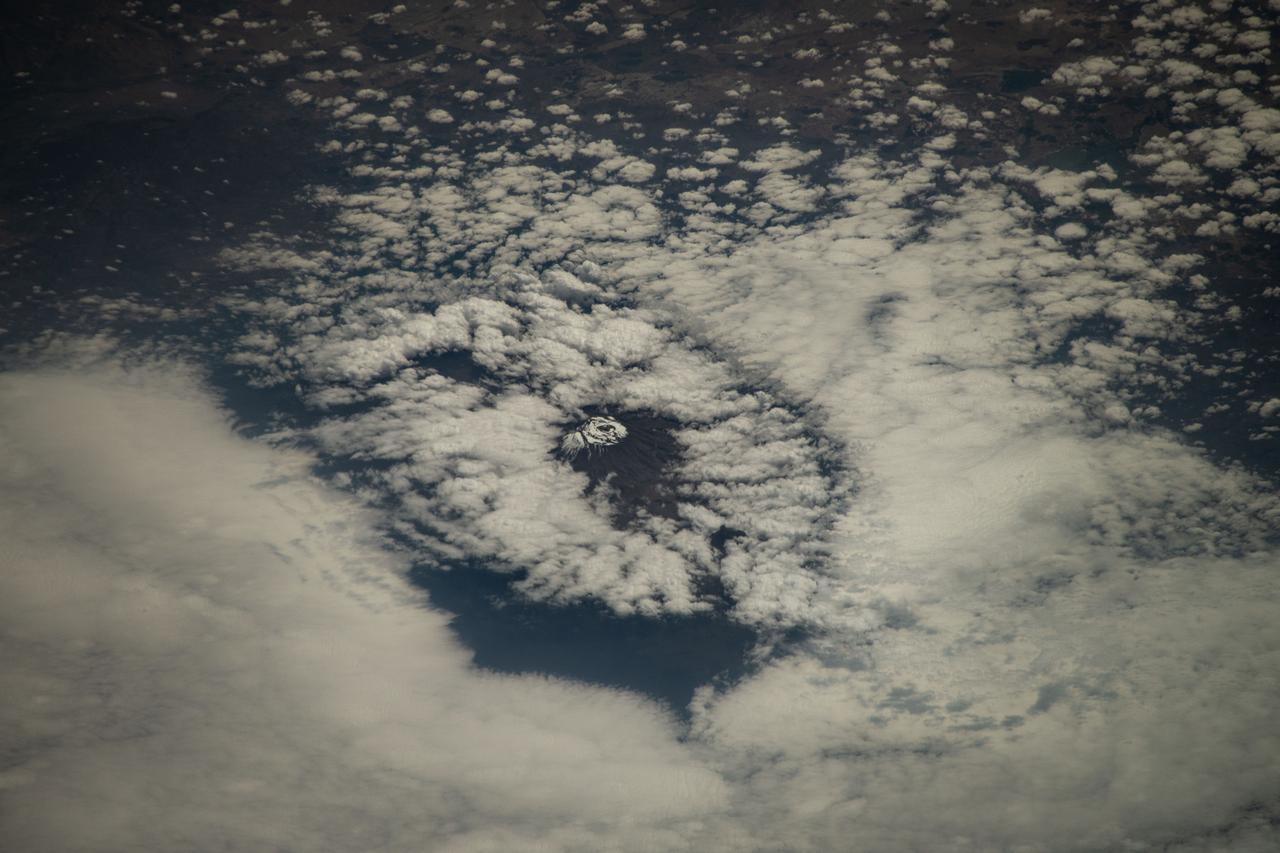
iss071e378517 (July 21, 2024) --- Mount Kilimanjaro, surrounded by clouds and the highest mountian in Africa, is pictured from the International Space Station as it orbited 261 miles above the Indian Ocean off the coast of Tanzania.

iss072e420661 (Jan. 1, 2025) --- New Year's Day dawns on Cuba as the sunlight gleams off its Atlantic and Caribbean coasts in this photograph from the International Space Station as it orbited 260 miles above the Gulf of Mexico.
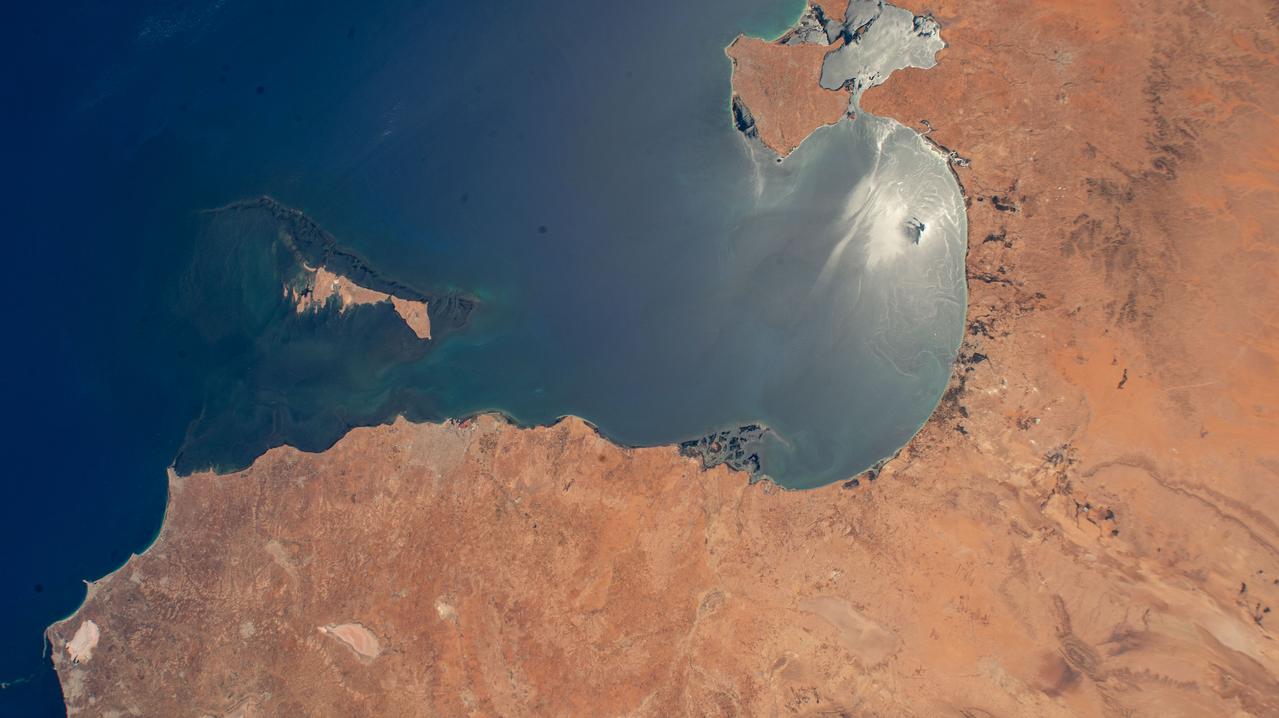
iss071e414023 (Aug. 2, 2024) --- The sun's glint beams off the Gulf of Gabes on the coast of Tunisia with Sharqi Island in the Mediterranean Sea in this photograph taken from the International Space Station as it orbited 262 miles above the African nation.

This space radar image shows the rugged topography of Santa Cruz Island, part of the Channel Islands National Park in the Pacific Ocean off the coast of Santa Barbara and Ventura, Calif.
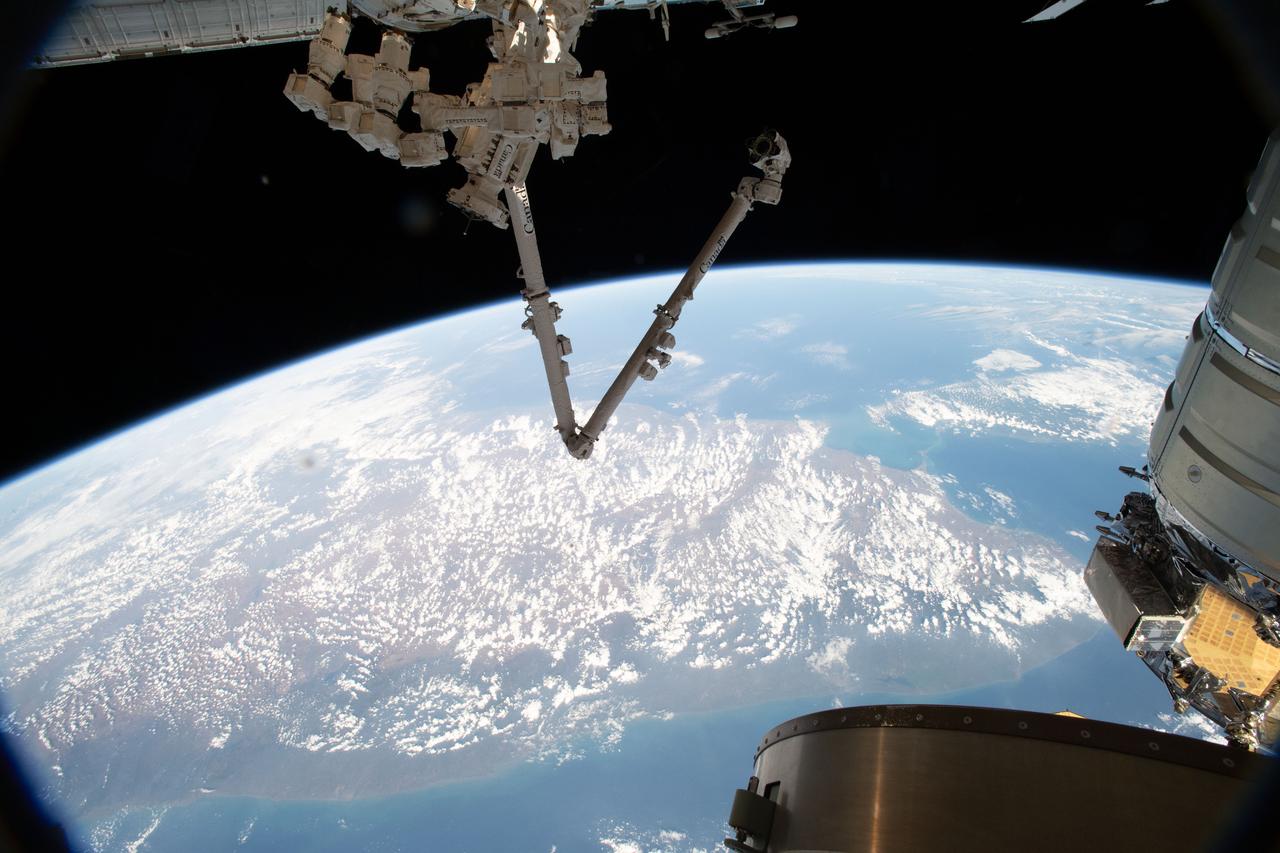
iss058e005961 (Jan. 26, 2019) --- The International Space Station's Canadarm2 robotic arm and its Dextre robotic hand are seen as the orbital complex flew 252 miles above the Arabian Sea off the coast of India.
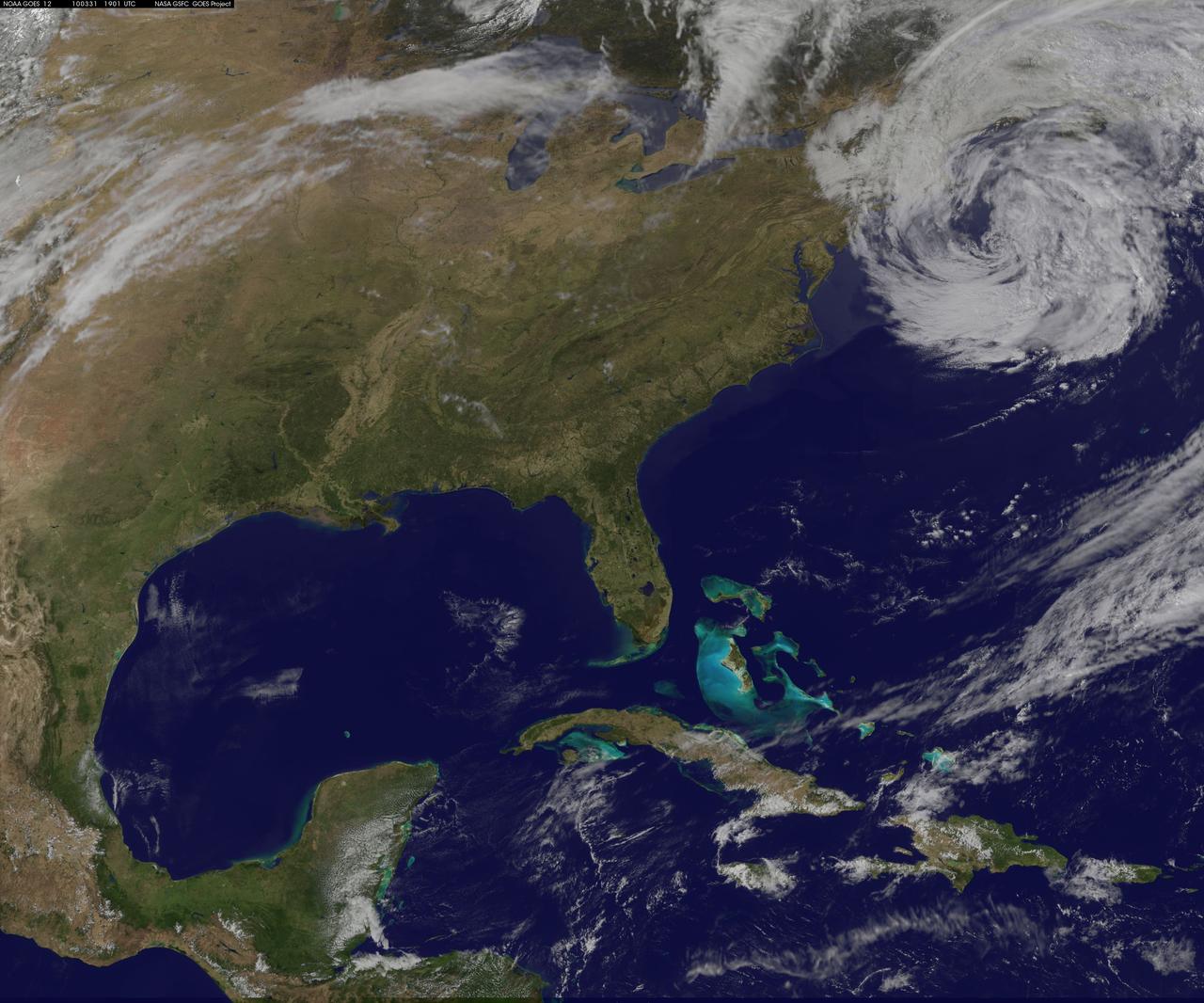
NASA GOES-12 satellite image showing the US east coast on March 31, 2010 3:01 PM EDT. <b><a href="http://goes.gsfc.nasa.gov/" rel="nofollow">Credit: NOAA/NASA GOES Project</a><b> <b><a href="http://www.nasa.gov/centers/goddard/home/index.html" rel="nofollow">NASA Goddard Space Flight Center</a></b> is home to the nation's largest organization of combined scientists, engineers and technologists that build spacecraft, instruments and new technology to study the Earth, the sun, our solar system, and the universe. <b>Follow us on <a href="http://twitter.com/NASA_GoddardPix" rel="nofollow">Twitter</a></b> <b>Join us on <a href="http://www.facebook.com/pages/Greenbelt-MD/NASA-Goddard/395013845897?ref=tsd" rel="nofollow">Facebook</a></b></b></b>

SL4-138-3756 (28 Dec. 1973) --- The northern half of Mauritania's Atlantic Coast, as photographed from the Skylab space station in Earth orbit by one of the Skylab 4 crewmen. The camera used was a hand-held 70mm Hasselblad, with SO-368 medium-speed Ektachrome. Spanish Sahara is just out of the picture to the north. The linear chains of sand dunes leading to the sea were the objects of study in an effort to better understand deserts and their formations. Photographs such as this were compared with similar ones taken over the drought-stricken areas including Mali and Niger in an attempt to understand the desertification processes which may be occurring there. Photo credit: NASA
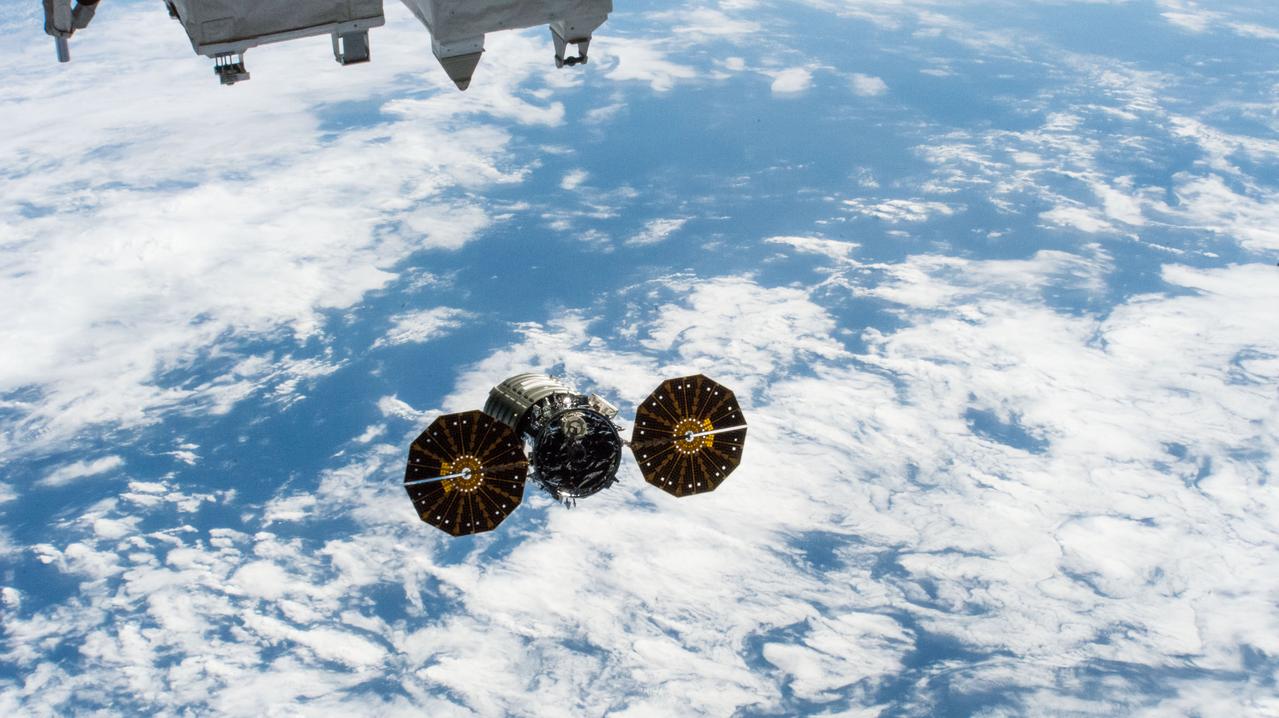
iss058e011816 (Feb. 8, 2019) --- The Cygnus cargo craft from Northrop Grumman begins its departure from the International Space Station as both spacecraft were orbiting 252 miles over the Pacific Ocean off the coast of Peru.
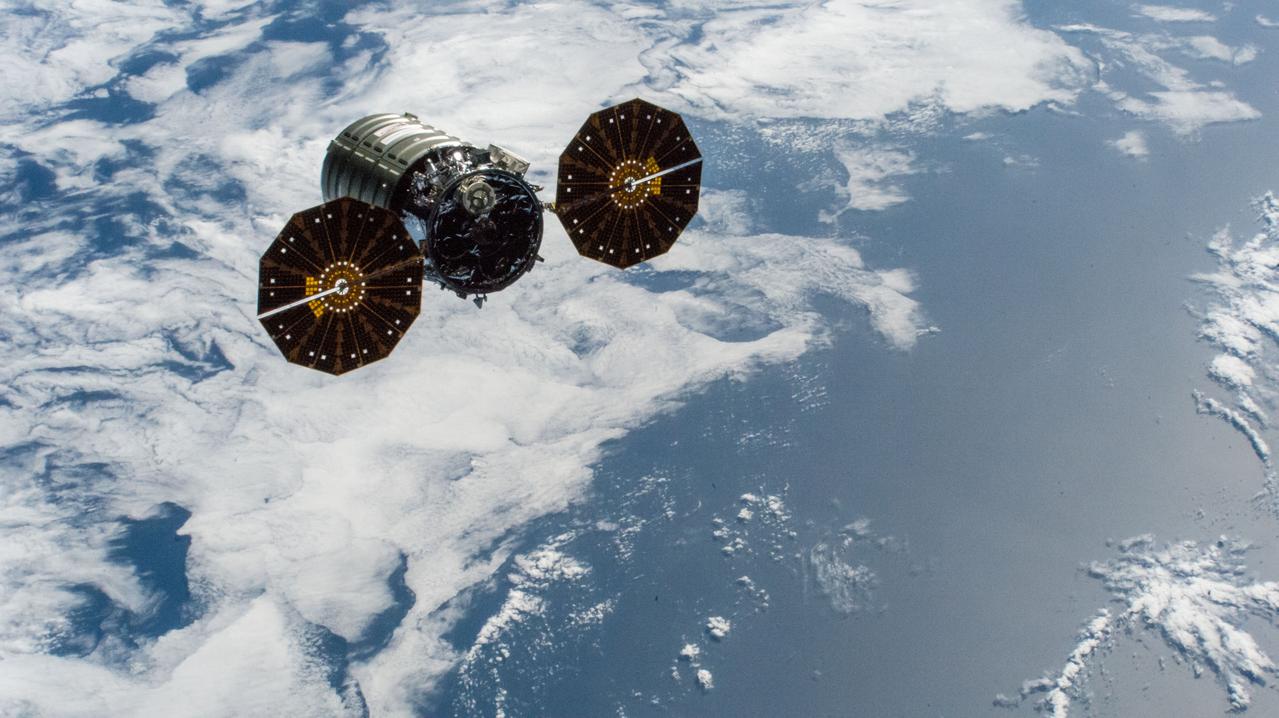
iss058e011815 (Feb. 8, 2019) --- The Cygnus cargo craft from Northrop Grumman begins its departure from the International Space Station as both spacecraft were orbiting 252 miles over the Pacific Ocean off the coast of Peru.

iss072e519889 (Jan. 23, 2025) --- The city lights of Kuwait City, the capital of Kuwait with a population of about 3 million on the Persian Gulf coast, are pictured at approximately 9:49 p.m. local time from the International Space Station as it orbited 258 miles above.
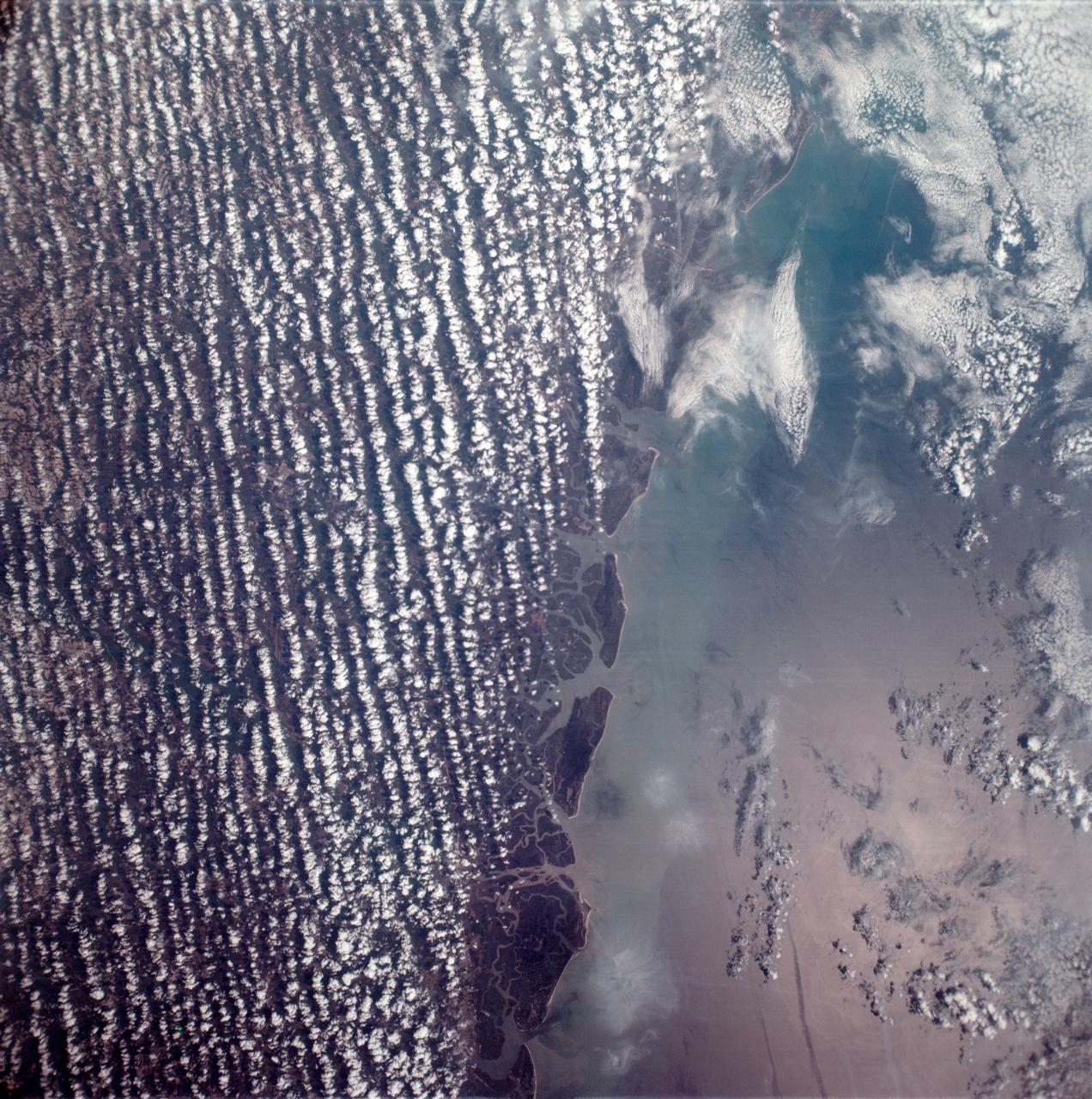
AS6-02-1485 (4 April 1968) --- View of the east coast of the United States as photographed from the National Aeronautics and Space Administration's unmanned Apollo 6 (Spacecraft 020/Saturn 502) space mission. This photograph was taken during a pass over Georgia, between Savannah and Brunswick. Altitude of the spacecraft was 100 nautical miles. Numerous jet aircraft contrails can be seen over the Atlantic Ocean. Sun glint on the surface of the ocean permits oceanographers to determine conditions of the water. This photograph was taken April 4, 1968, three hours and 14 minutes after liftoff, using Eastman Kodak SO-121 high resolution aerial Ektachrome film (exposure setting f/5.6 at 1/500 second), in a J. A. Maurer model 220G camera.
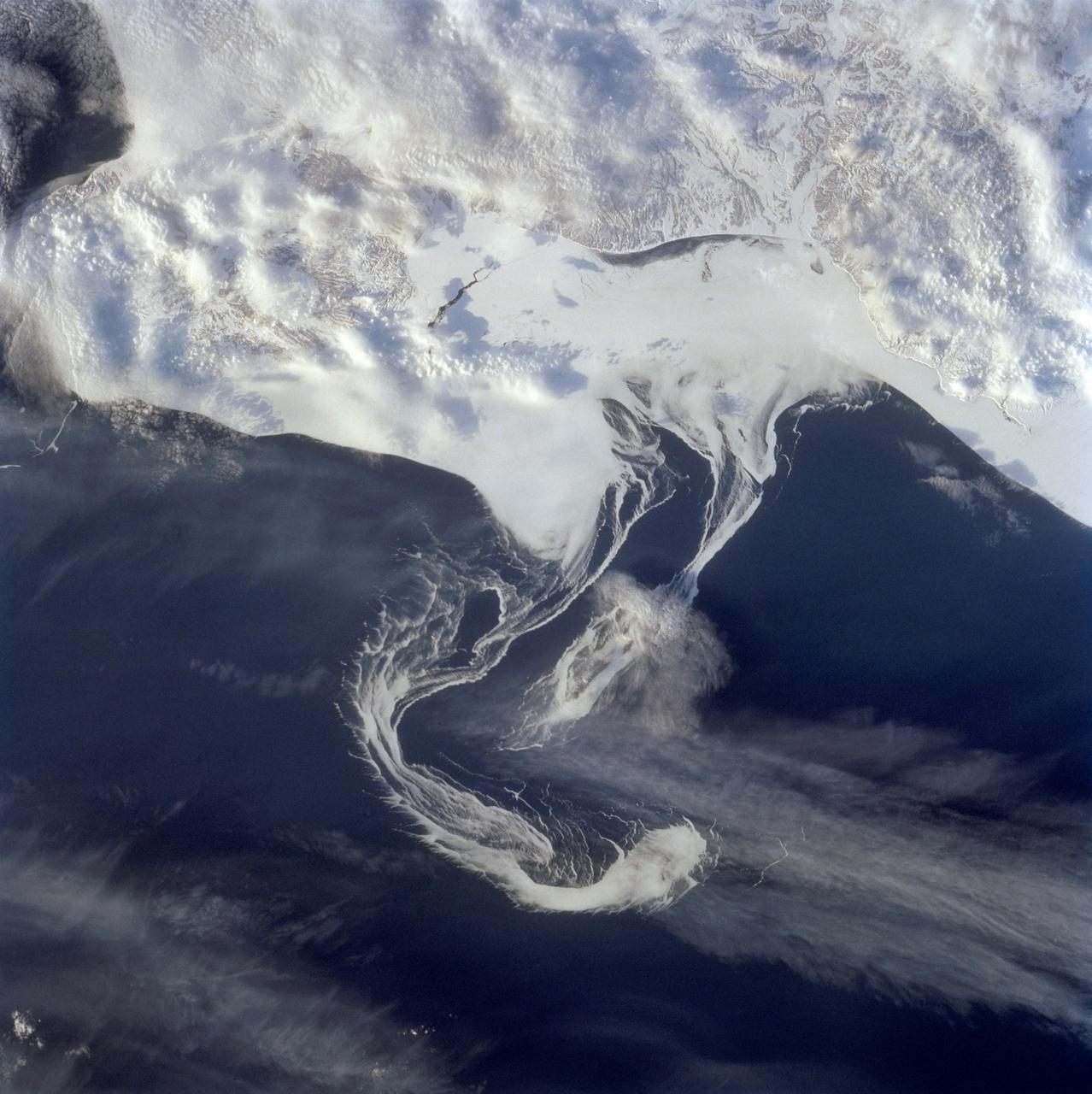
STS060-73-038 (3-11 Feb 1994) --- Pack ice is documented in this photograph along the coast of the Kamchatka Peninsula of Russia in Zaliv Ozernoj. Newly formed ice continually breaks away from the land and takes the form imposed by coastal currents. Detailed photographs of the ice provide information to scientists in both Russia and the united States about the location and fluctuation of ice edges, and how this new sea ice interacts with ocean and littoral currents. This information results in better ice warnings to shipping traffic and provides data points for long-range climate change research for both the Mission-To-Planet Earth and the Russian Priroda ("Nature") monitoring and assessment programs that are respectively coordinated by NASA and the Russian Academy of Sciences. This photography of ice development in the North Pacific, North Atlantic, the Southern Ocean, the Baltic and North Seas, and the Great Lakes is of great interest to the international scientific community. NASA scientists feel high-resolution analog and digital photography from the Space Shuttle and future craft can be a particularly important component in satisfying their data needs on both an operational and a long-term research basis.
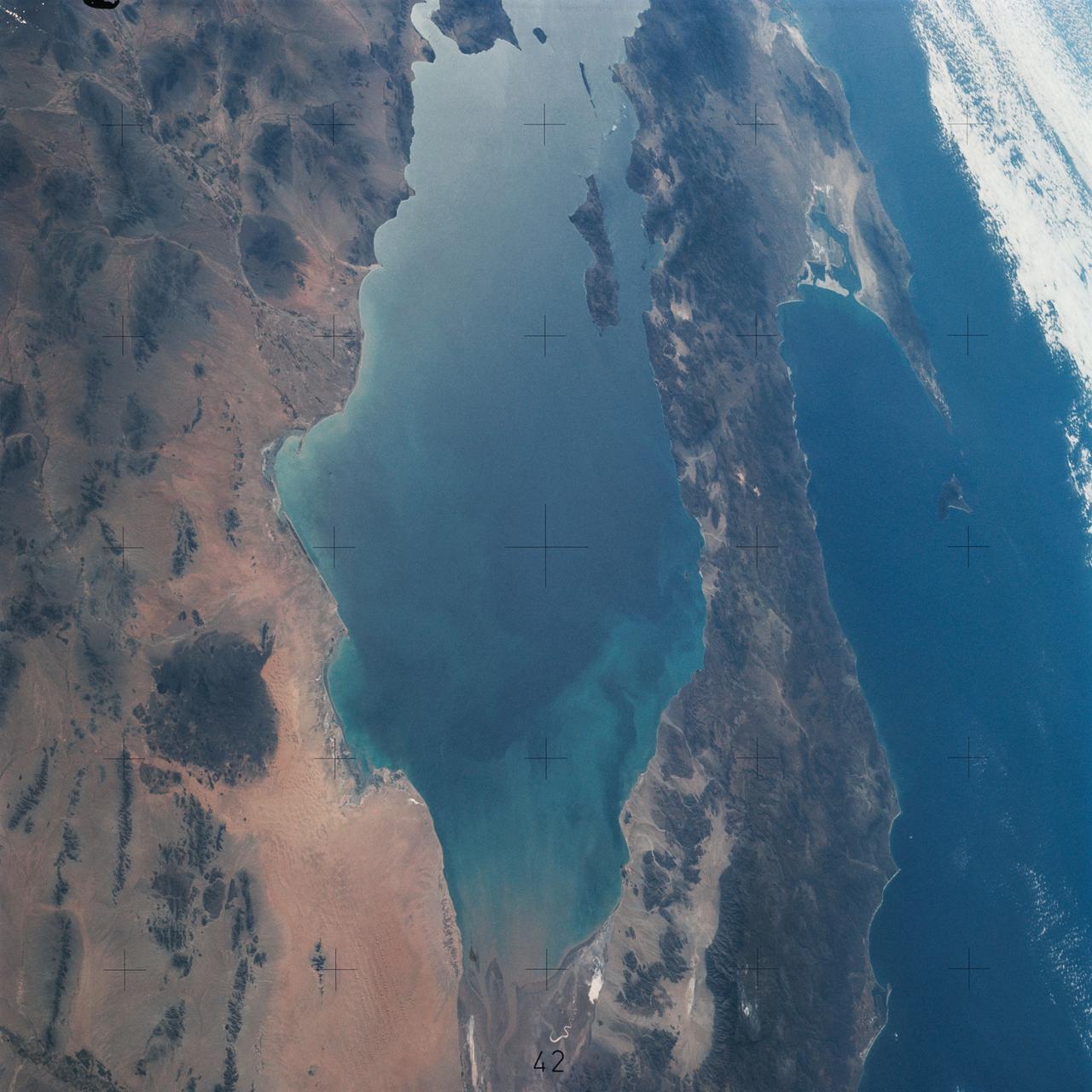
SL4-142-4548 (27 Jan. 1974) --- An oblique view of northwestern Mexico, as photographed from the Skylab space station in Earth orbit by one of the Skylab 4 crewmen. The camera used was a hand-held 70mm Hasselblad, with SO-368 medium-speed Ektachrome film. This photograph was taken on a sweep down the coast to document the fault patterns of southern California and northwest Mexico. SL4-142-4532 gives an excellent overview of the entire region. The specific reason for this picture was an attempt to see if the Agua Blanca Fault in Baja California extends to the east toward the Gulf of California. Several attempts were made by the Skylab 4 crew to visually detect such an extension, but none was found. The report was that the fault disappeared into an area of sand and heavily eroded material that obscured any feature that might be present deeper. This area of sand and loose material is the light-colored area in the center of Baja at the extreme north part of the photograph. In addition to this geology the Pinacate volcanic field in Sonora, the sand dunes in Sonora, and the sediment flow patterns of the Colorado River entering the Gulf are additional areas of study utilizing this photograph. Photo credit: NASA
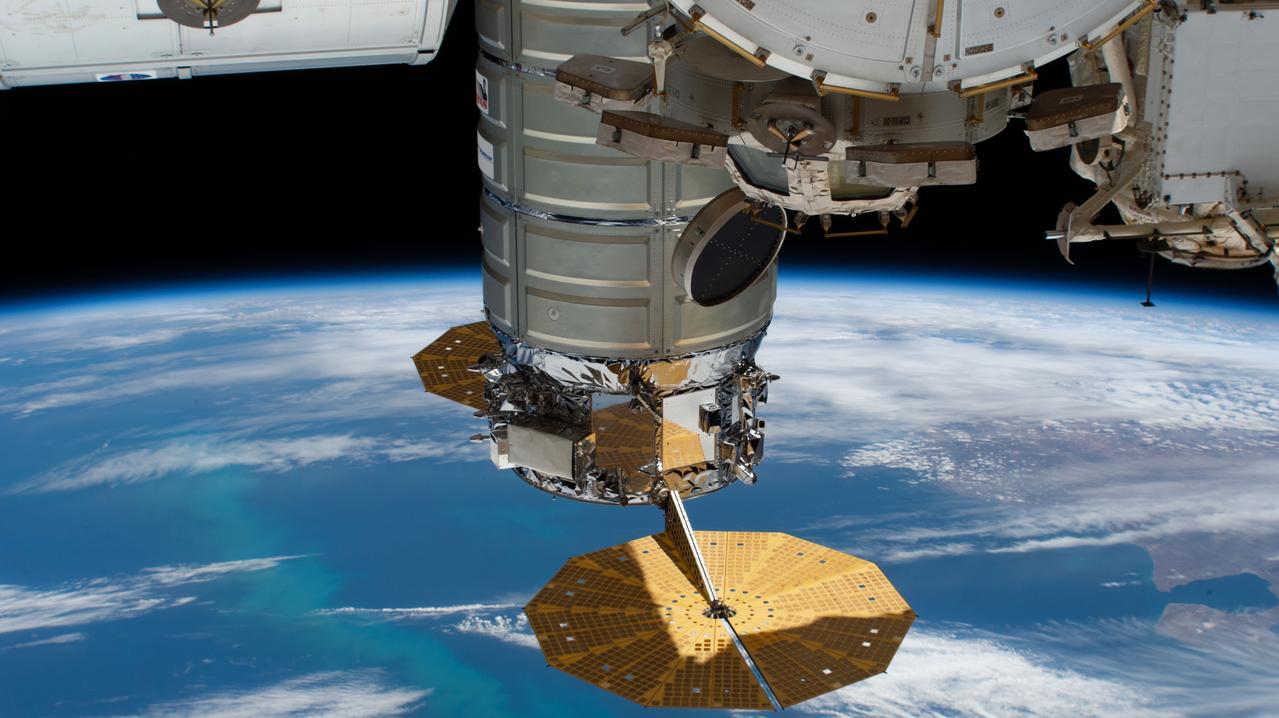
iss058e002245 (Jan. 7, 2019) --- The U.S. Cygnus space freighter from Northrop Grumman and its prominent cymbal-shaped UltraFlex solar arrays are pictured as the International Space Station orbited 262 miles above the Atlantic Ocean off the coast of Argentina. Towards the top center of the photograph is the seven-windowed cupola with its shutters open.
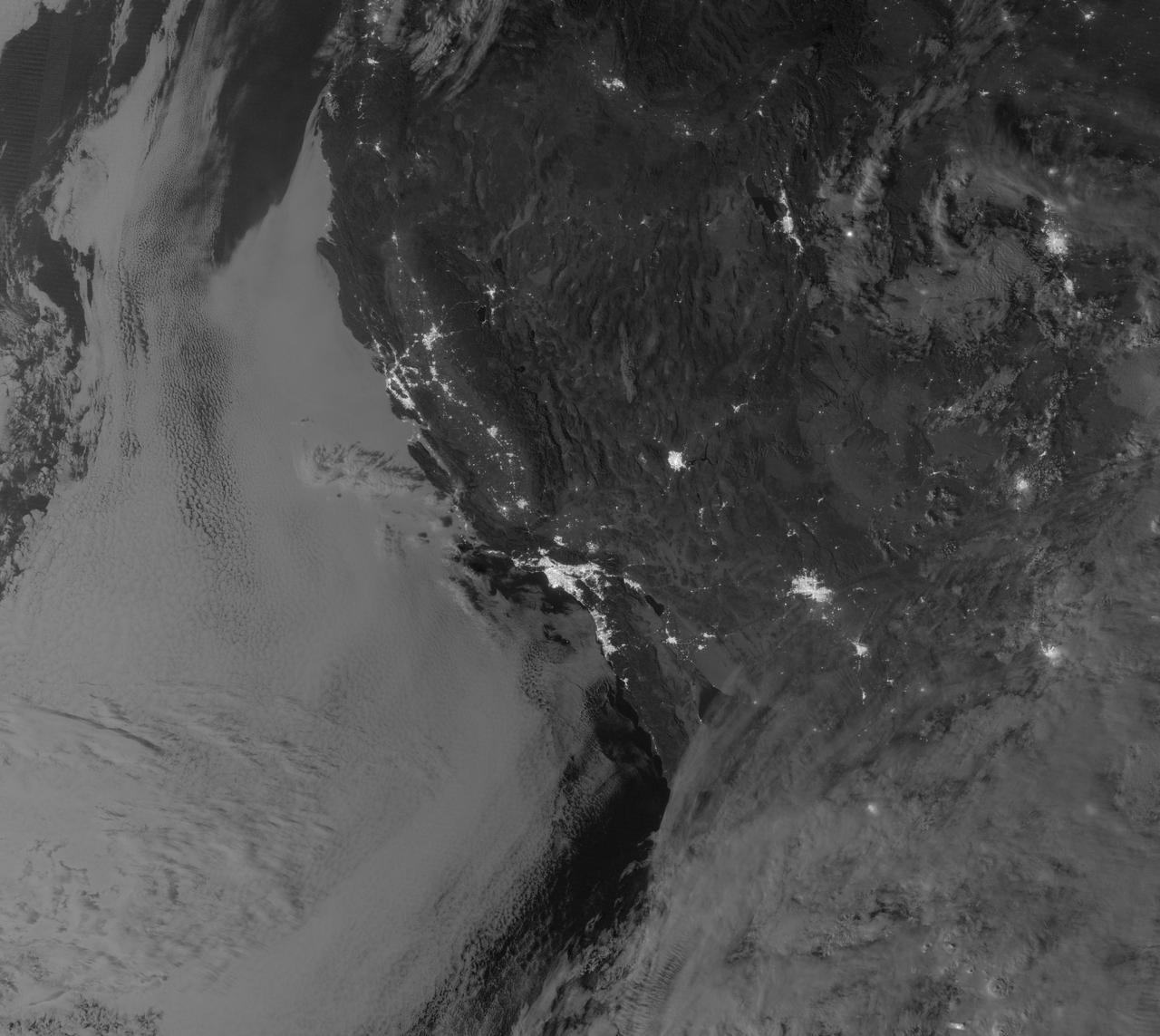
NASA image acquired September 27, 2012 On September 27, 2012, the Visible Infrared Imaging Radiometer Suite (VIIRS) on the Suomi NPP satellite captured this nighttime view of low-lying marine layer clouds along the coast of California. The image was captured by the VIIRS “day-night band,” which detects light in a range of wavelengths from green to near-infrared and uses filtering techniques to observe signals such as gas flares, auroras, wildfires, city lights, and reflected moonlight. An irregularly-shaped patch of high clouds hovers off the coast of California, and moonlight caused the high clouds to cast distinct shadows on the marine layer clouds below. VIIRS acquired the image when the Moon was in its waxing gibbous phase, meaning it was more than half-lit, but less than full. Low clouds pose serious hazards for air and ship traffic, but satellites have had difficulty detecting them in the past. To illustrate this, the second image shows the same scene in thermal infrared, the band that meteorologists generally use to monitor clouds at night. Only high clouds are visible; the low clouds do not show up at all because they are roughly the same temperature as the ground. NASA Earth Observatory image by Jesse Allen and Robert Simmon, using VIIRS Day-Night Band data from the Suomi National Polar-orbiting Partnership. Suomi NPP is the result of a partnership between NASA, the National Oceanic and Atmospheric Administration, and the Department of Defense. Caption by Adam Voiland. Instrument: Suomi NPP - VIIRS Credit: <b><a href="http://www.earthobservatory.nasa.gov/" rel="nofollow"> NASA Earth Observatory</a></b> <b>Click here to view all of the <a href="http://earthobservatory.nasa.gov/Features/NightLights/" rel="nofollow"> Earth at Night 2012 images </a></b> <b>Click here to <a href="http://earthobservatory.nasa.gov/NaturalHazards/view.php?id=79758" rel="nofollow"> read more </a> about this image </b> <b><a href="http://www.nasa.gov/audience/formedia/features/MP_Photo_Guidelines.html" rel="nofollow">NASA image use policy.</a></b> <b><a href="http://www.nasa.gov/centers/goddard/home/index.html" rel="nofollow">NASA Goddard Space Flight Center</a></b> enables NASA’s mission through four scientific endeavors: Earth Science, Heliophysics, Solar System Exploration, and Astrophysics. Goddard plays a leading role in NASA’s accomplishments by contributing compelling scientific knowledge to advance the Agency’s mission. <b>Follow us on <a href="http://twitter.com/NASA_GoddardPix" rel="nofollow">Twitter</a></b> <b>Like us on <a href="http://www.facebook.com/pages/Greenbelt-MD/NASA-Goddard/395013845897?ref=tsd" rel="nofollow">Facebook</a></b> <b>Find us on <a href="http://instagram.com/nasagoddard?vm=grid" rel="nofollow">Instagram</a></b>

This is a space radar image of the area around the Unzen volcano, on the west coast of Kyushu Island in southwestern Japan. Unzen, which appears in this image as a large triangular peak with a white flank near the center of the peninsula, has been continuously active since a series of powerful eruptions began in 1991. The image was acquired by the Spaceborne Imaging Radar-C/X-band Synthetic Aperture Radar (SIR-C/X-SAR) aboard the space shuttle Endeavour on its 93rd orbit on April 15, 1994. The image shows an area 41.5 kilometers by 32.8 kilometers (25.7 miles by 20.3 miles) that is centered at 32.75 degrees north latitude and 130.15 degrees east longitude. North is toward the upper left of the image. The radar illumination is from the top of the image. The colors in this image were obtained using the following radar channels: red represents the L-band (vertically transmitted and received); green represents the average of L-band and C-band (vertically transmitted and received); blue represents the C-band (vertically transmitted and received). Unzen is one of 15 "Decade" volcanoes identified by the scientific community as posing significant potential threats to large local populations. The city of Shimabara sits along the coast at the foot of Unzen on its east and northeast sides. At the summit of Unzen a dome of thick lava has been growing continuously since 1991. Collapses of the sides of this dome have generated deadly avalanches of hot gas and rock known as pyroclastic flows. Volcanologists can use radar image data to monitor the growth of lava domes, to better understand and predict potentially hazardous collapses. http://photojournal.jpl.nasa.gov/catalog/PIA00504

SL3-40-077 (July-September 1973) --- A vertical view of the Mediterranean coastal area of southeastern France as photographed from Earth orbit by one of the six lenses of the Itek-furnished S190-A Multispectral Photographic Facility Experiment aboard the Skylab space station. This view of the coast extends from the eastern outskirts of Marseilles easterly to Cannes, and includes the city of Toulon. The S190-A experiment is part of the Skylab Earth Resources Experiments Package. Federal agencies participating with NASA on the EREP project are the Departments of Agriculture, Commerce, Interior, the Environmental Protection Agency and the Corps of Engineers. All EREP photography is available to the public through the Department of Interior?s Earth Resources Observations Systems Data Center, Sioux Falls, South Dakota, 57198. Photo credit: NASA
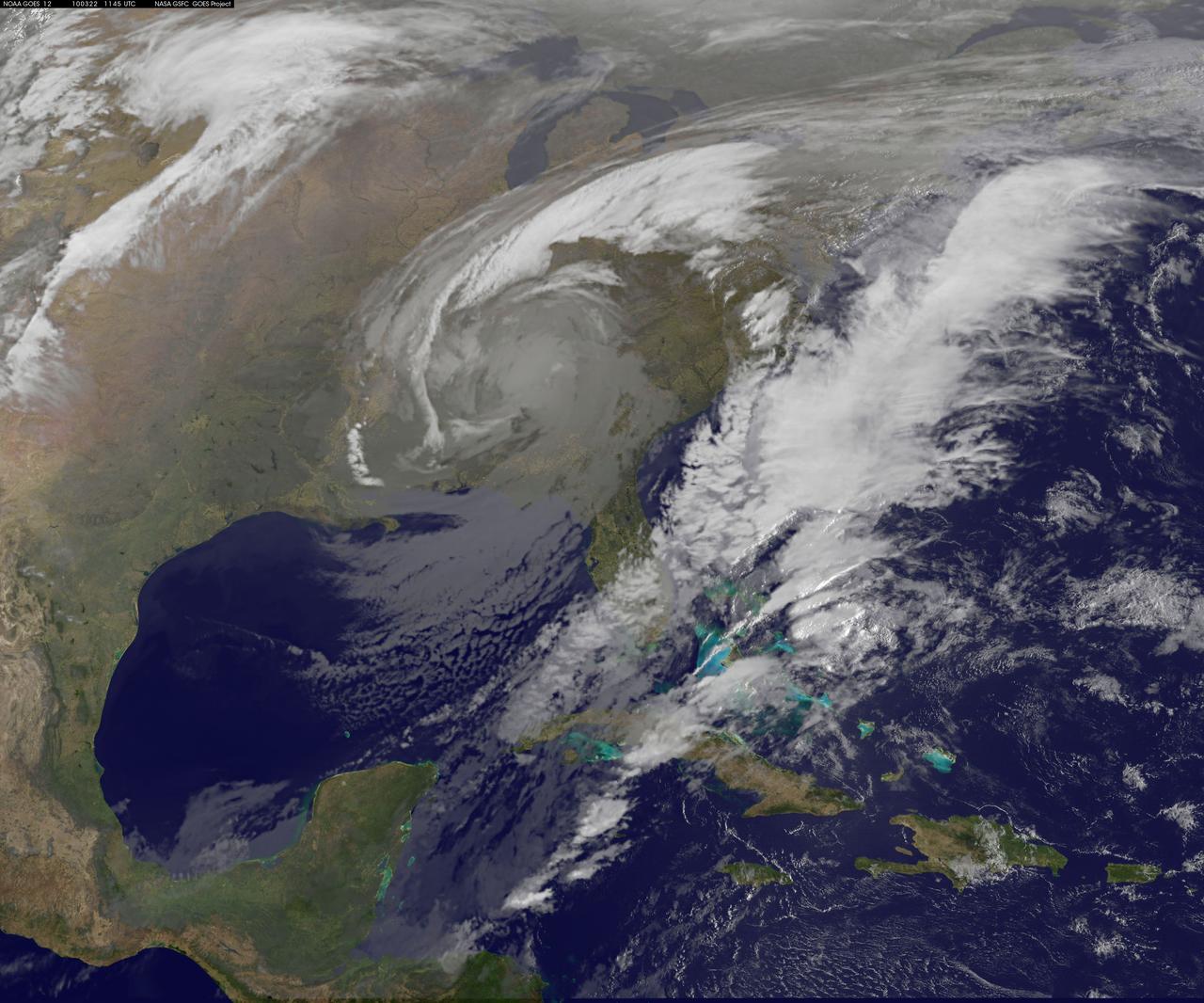
GOES 12 satellite image showing the US east coast on March 22, 2010 6:45 AM EDT. <b><a href="http://goes.gsfc.nasa.gov/" rel="nofollow">Credit: NOAA/NASA GOES Project</a><b> <b><a href="http://www.nasa.gov/centers/goddard/home/index.html" rel="nofollow">NASA Goddard Space Flight Center</a></b> is home to the nation's largest organization of combined scientists, engineers and technologists that build spacecraft, instruments and new technology to study the Earth, the sun, our solar system, and the universe. <b>Follow us on <a href="http://twitter.com/NASA_GoddardPix" rel="nofollow">Twitter</a></b> <b>Join us on <a href="http://www.facebook.com/pages/Greenbelt-MD/NASA-Goddard/395013845897?ref=tsd" rel="nofollow">Facebook</a></b></b></b>
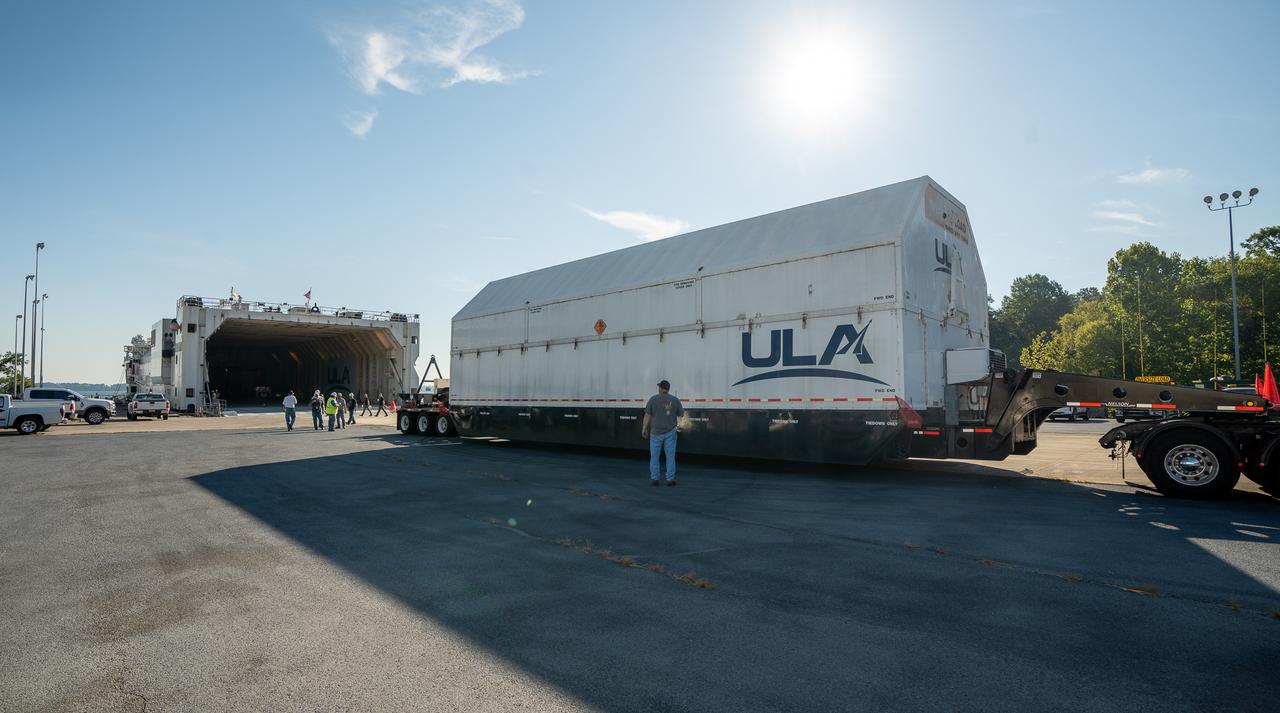
These images and videos show how crews in Alabama prepared the ICPS (interim cryogenic propulsion stage) for NASA’s SLS (Space Launch System) rocket for shipment to Florida between July 29-31. The ICPS in the photos and videos will help power NASA’s Artemis III mission to the Moon. The SLS upper stage is manufactured by United Launch Alliance at its facility in Decatur. Its RL10 engine is produced by Aerojet Rocketdyne, the SLS engines lead contractor, in West Palm Beach, Florida. ULA is working with Boeing, the SLS core stage and exploration upper stage lead contractor, to develop ICPS. ULA’s R/S RocketShip is transporting the flight hardware to its sister facility in Florida near NASA’s Kennedy Space Center for final checkouts. The ICPS for Artemis III is the last of its kind as SLS transitions to its next, more powerful Block 1B configuration with an upgraded upper stage beginning with Artemis IV. NASA is working to land the first woman and first person of color on the Moon under Artemis. SLS is part of NASA’s backbone for deep space exploration, along with Orion and the Gateway in orbit around the Moon. SLS is the only rocket that can send Orion, astronauts, and supplies to the Moon in a single mission.
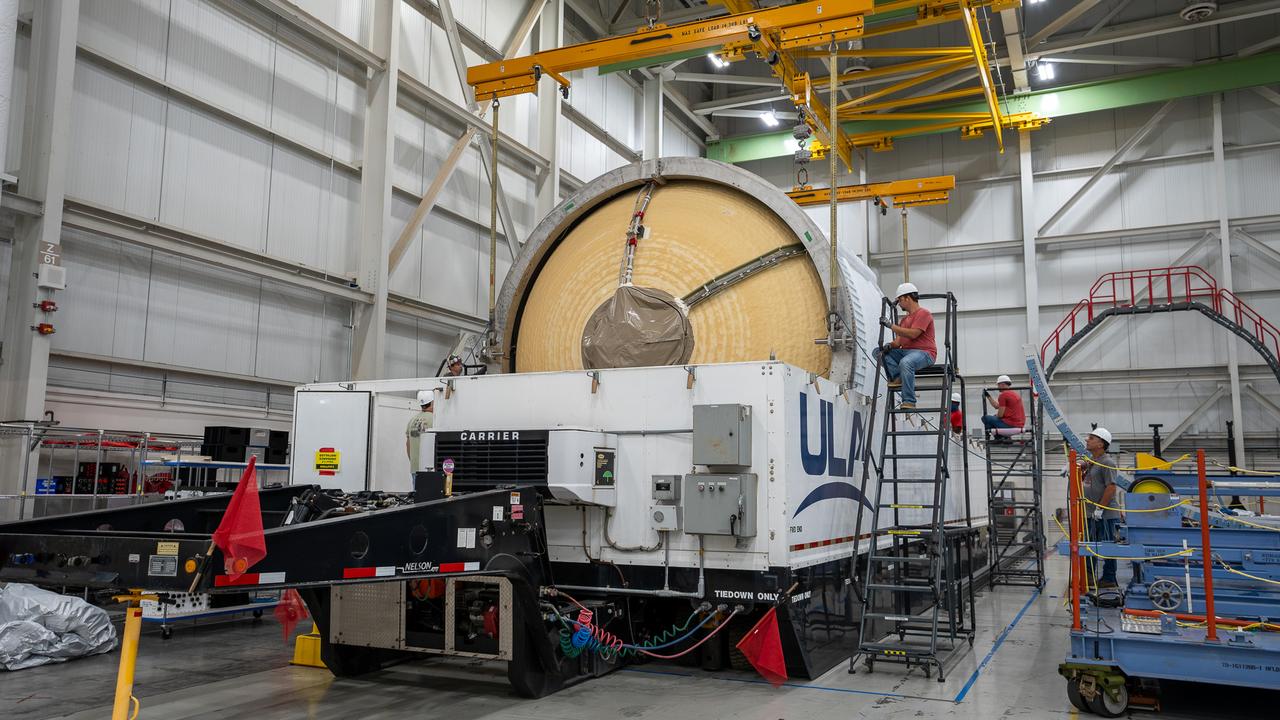
These images and videos show how crews in Alabama prepared the ICPS (interim cryogenic propulsion stage) for NASA’s SLS (Space Launch System) rocket for shipment to Florida between July 29-31. The ICPS in the photos and videos will help power NASA’s Artemis III mission to the Moon. The SLS upper stage is manufactured by United Launch Alliance at its facility in Decatur. Its RL10 engine is produced by Aerojet Rocketdyne, the SLS engines lead contractor, in West Palm Beach, Florida. ULA is working with Boeing, the SLS core stage and exploration upper stage lead contractor, to develop ICPS. ULA’s R/S RocketShip is transporting the flight hardware to its sister facility in Florida near NASA’s Kennedy Space Center for final checkouts. The ICPS for Artemis III is the last of its kind as SLS transitions to its next, more powerful Block 1B configuration with an upgraded upper stage beginning with Artemis IV. NASA is working to land the first woman and first person of color on the Moon under Artemis. SLS is part of NASA’s backbone for deep space exploration, along with Orion and the Gateway in orbit around the Moon. SLS is the only rocket that can send Orion, astronauts, and supplies to the Moon in a single mission.

These images and videos show how crews in Alabama prepared the ICPS (interim cryogenic propulsion stage) for NASA’s SLS (Space Launch System) rocket for shipment to Florida between July 29-31. The ICPS in the photos and videos will help power NASA’s Artemis III mission to the Moon. The SLS upper stage is manufactured by United Launch Alliance at its facility in Decatur. Its RL10 engine is produced by Aerojet Rocketdyne, the SLS engines lead contractor, in West Palm Beach, Florida. ULA is working with Boeing, the SLS core stage and exploration upper stage lead contractor, to develop ICPS. ULA’s R/S RocketShip is transporting the flight hardware to its sister facility in Florida near NASA’s Kennedy Space Center for final checkouts. The ICPS for Artemis III is the last of its kind as SLS transitions to its next, more powerful Block 1B configuration with an upgraded upper stage beginning with Artemis IV. NASA is working to land the first woman and first person of color on the Moon under Artemis. SLS is part of NASA’s backbone for deep space exploration, along with Orion and the Gateway in orbit around the Moon. SLS is the only rocket that can send Orion, astronauts, and supplies to the Moon in a single mission.
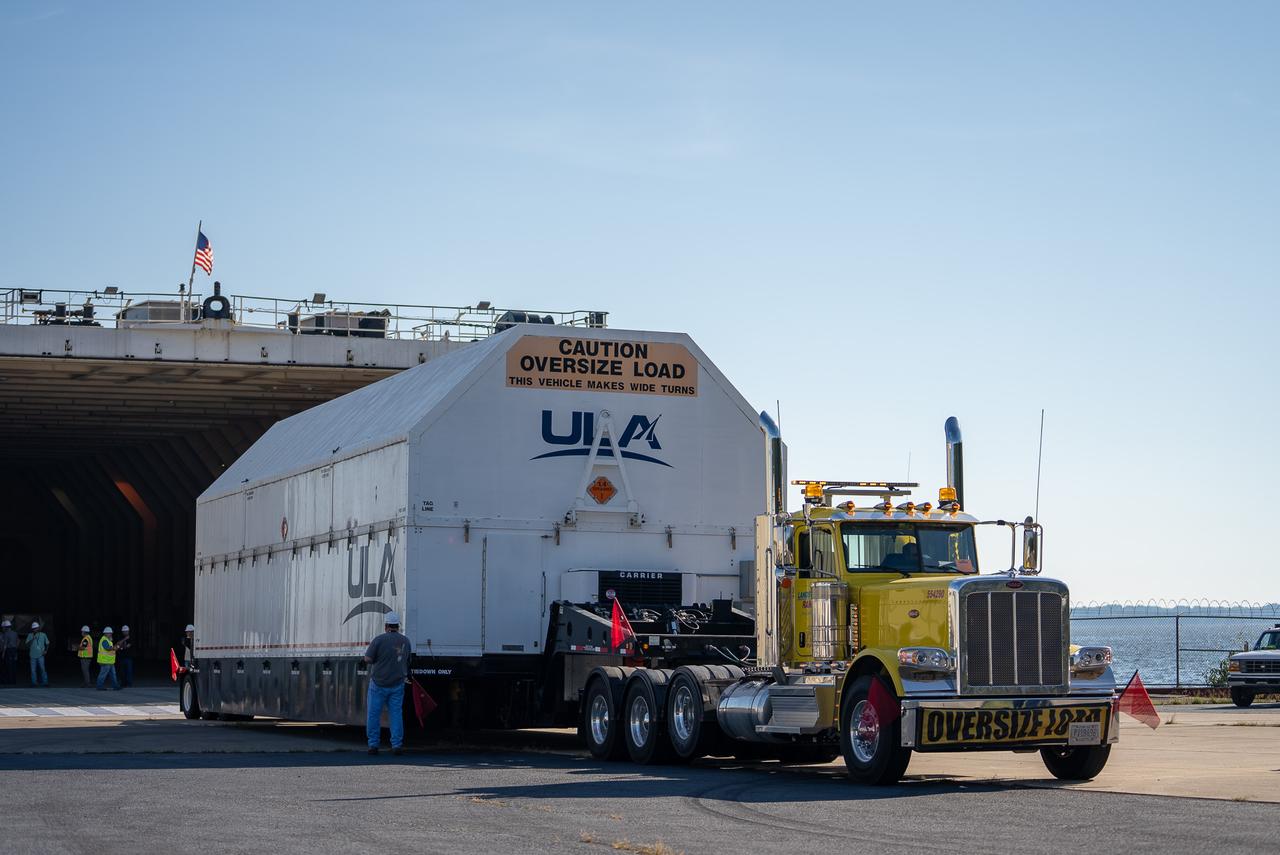
These images and videos show how crews in Alabama prepared the ICPS (interim cryogenic propulsion stage) for NASA’s SLS (Space Launch System) rocket for shipment to Florida between July 29-31. The ICPS in the photos and videos will help power NASA’s Artemis III mission to the Moon. The SLS upper stage is manufactured by United Launch Alliance at its facility in Decatur. Its RL10 engine is produced by Aerojet Rocketdyne, the SLS engines lead contractor, in West Palm Beach, Florida. ULA is working with Boeing, the SLS core stage and exploration upper stage lead contractor, to develop ICPS. ULA’s R/S RocketShip is transporting the flight hardware to its sister facility in Florida near NASA’s Kennedy Space Center for final checkouts. The ICPS for Artemis III is the last of its kind as SLS transitions to its next, more powerful Block 1B configuration with an upgraded upper stage beginning with Artemis IV. NASA is working to land the first woman and first person of color on the Moon under Artemis. SLS is part of NASA’s backbone for deep space exploration, along with Orion and the Gateway in orbit around the Moon. SLS is the only rocket that can send Orion, astronauts, and supplies to the Moon in a single mission.
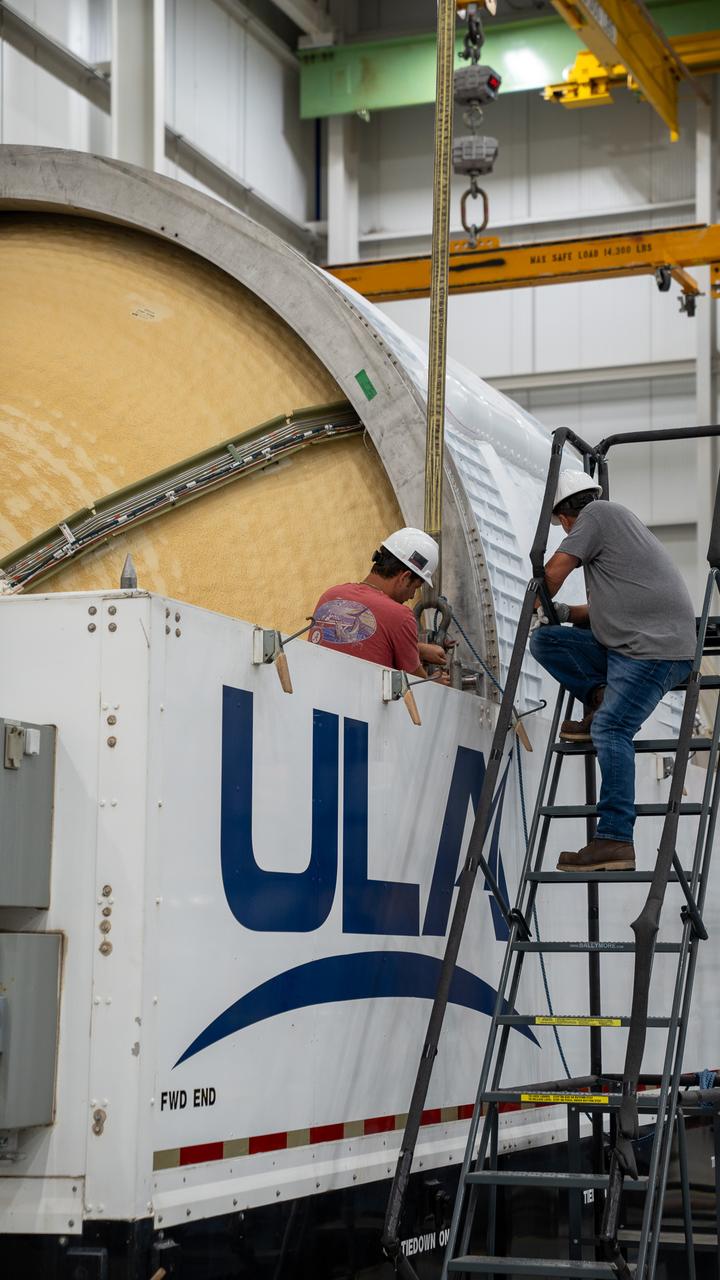
These images and videos show how crews in Alabama prepared the ICPS (interim cryogenic propulsion stage) for NASA’s SLS (Space Launch System) rocket for shipment to Florida between July 29-31. The ICPS in the photos and videos will help power NASA’s Artemis III mission to the Moon. The SLS upper stage is manufactured by United Launch Alliance at its facility in Decatur. Its RL10 engine is produced by Aerojet Rocketdyne, the SLS engines lead contractor, in West Palm Beach, Florida. ULA is working with Boeing, the SLS core stage and exploration upper stage lead contractor, to develop ICPS. ULA’s R/S RocketShip is transporting the flight hardware to its sister facility in Florida near NASA’s Kennedy Space Center for final checkouts. The ICPS for Artemis III is the last of its kind as SLS transitions to its next, more powerful Block 1B configuration with an upgraded upper stage beginning with Artemis IV. NASA is working to land the first woman and first person of color on the Moon under Artemis. SLS is part of NASA’s backbone for deep space exploration, along with Orion and the Gateway in orbit around the Moon. SLS is the only rocket that can send Orion, astronauts, and supplies to the Moon in a single mission.
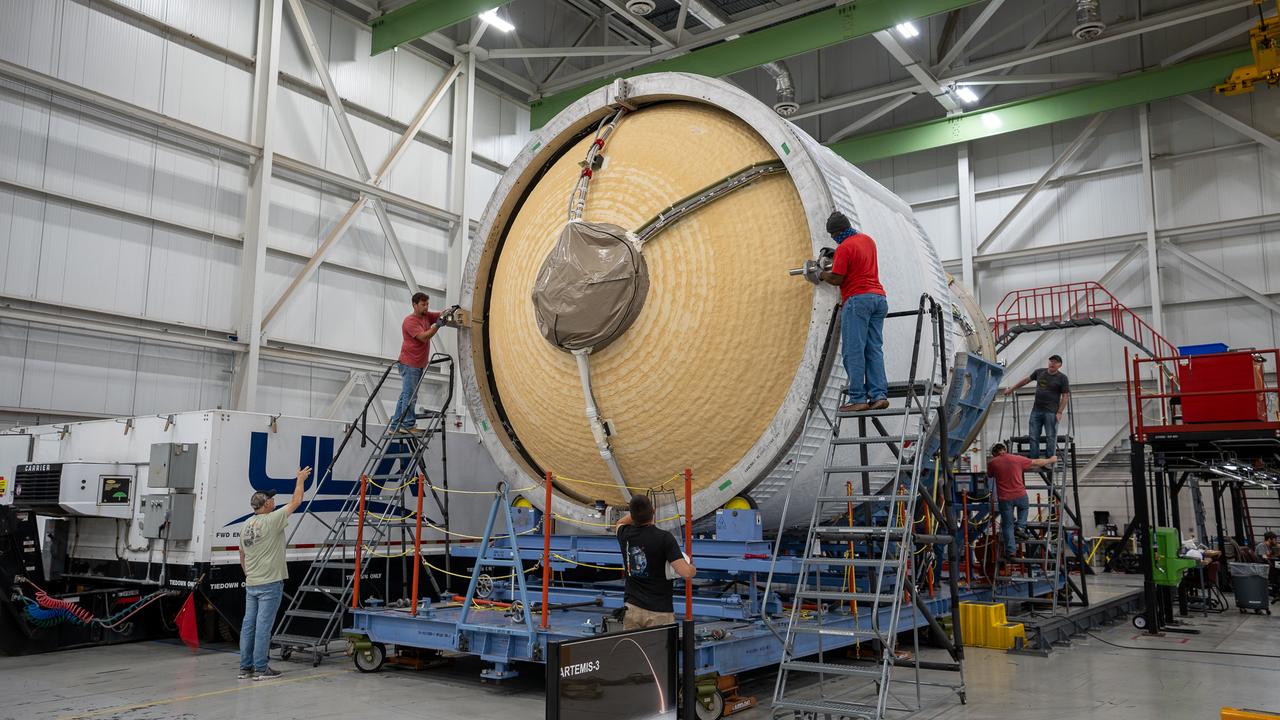
These images and videos show how crews in Alabama prepared the ICPS (interim cryogenic propulsion stage) for NASA’s SLS (Space Launch System) rocket for shipment to Florida between July 29-31. The ICPS in the photos and videos will help power NASA’s Artemis III mission to the Moon. The SLS upper stage is manufactured by United Launch Alliance at its facility in Decatur. Its RL10 engine is produced by Aerojet Rocketdyne, the SLS engines lead contractor, in West Palm Beach, Florida. ULA is working with Boeing, the SLS core stage and exploration upper stage lead contractor, to develop ICPS. ULA’s R/S RocketShip is transporting the flight hardware to its sister facility in Florida near NASA’s Kennedy Space Center for final checkouts. The ICPS for Artemis III is the last of its kind as SLS transitions to its next, more powerful Block 1B configuration with an upgraded upper stage beginning with Artemis IV. NASA is working to land the first woman and first person of color on the Moon under Artemis. SLS is part of NASA’s backbone for deep space exploration, along with Orion and the Gateway in orbit around the Moon. SLS is the only rocket that can send Orion, astronauts, and supplies to the Moon in a single mission.
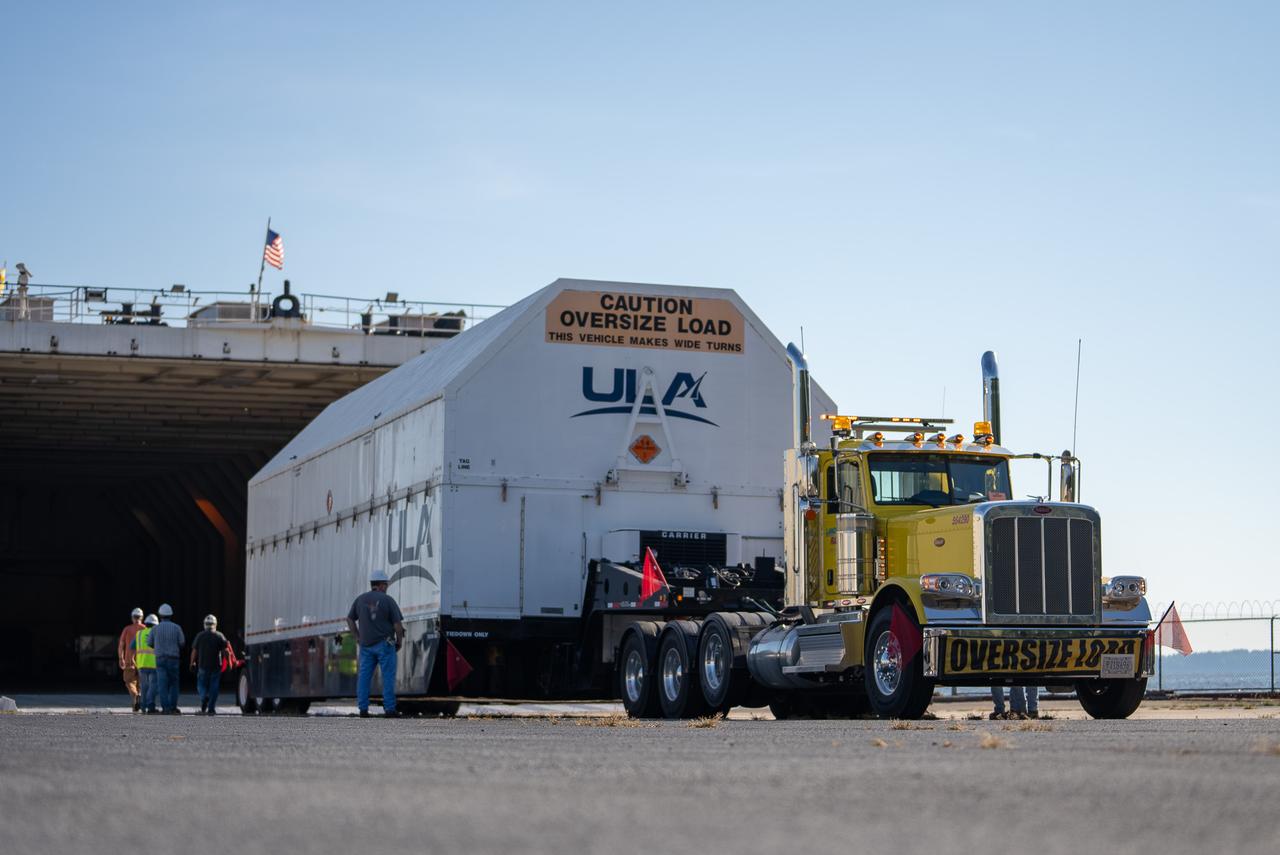
These images and videos show how crews in Alabama prepared the ICPS (interim cryogenic propulsion stage) for NASA’s SLS (Space Launch System) rocket for shipment to Florida between July 29-31. The ICPS in the photos and videos will help power NASA’s Artemis III mission to the Moon. The SLS upper stage is manufactured by United Launch Alliance at its facility in Decatur. Its RL10 engine is produced by Aerojet Rocketdyne, the SLS engines lead contractor, in West Palm Beach, Florida. ULA is working with Boeing, the SLS core stage and exploration upper stage lead contractor, to develop ICPS. ULA’s R/S RocketShip is transporting the flight hardware to its sister facility in Florida near NASA’s Kennedy Space Center for final checkouts. The ICPS for Artemis III is the last of its kind as SLS transitions to its next, more powerful Block 1B configuration with an upgraded upper stage beginning with Artemis IV. NASA is working to land the first woman and first person of color on the Moon under Artemis. SLS is part of NASA’s backbone for deep space exploration, along with Orion and the Gateway in orbit around the Moon. SLS is the only rocket that can send Orion, astronauts, and supplies to the Moon in a single mission.
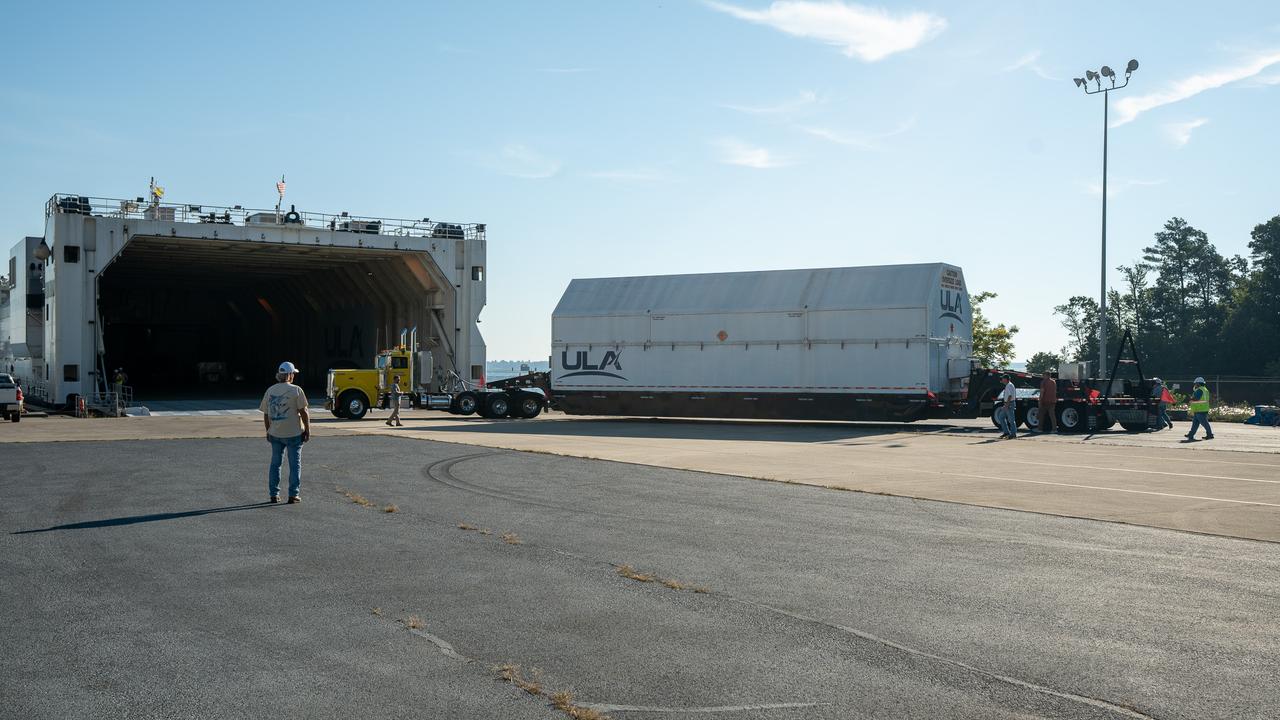
These images and videos show how crews in Alabama prepared the ICPS (interim cryogenic propulsion stage) for NASA’s SLS (Space Launch System) rocket for shipment to Florida between July 29-31. The ICPS in the photos and videos will help power NASA’s Artemis III mission to the Moon. The SLS upper stage is manufactured by United Launch Alliance at its facility in Decatur. Its RL10 engine is produced by Aerojet Rocketdyne, the SLS engines lead contractor, in West Palm Beach, Florida. ULA is working with Boeing, the SLS core stage and exploration upper stage lead contractor, to develop ICPS. ULA’s R/S RocketShip is transporting the flight hardware to its sister facility in Florida near NASA’s Kennedy Space Center for final checkouts. The ICPS for Artemis III is the last of its kind as SLS transitions to its next, more powerful Block 1B configuration with an upgraded upper stage beginning with Artemis IV. NASA is working to land the first woman and first person of color on the Moon under Artemis. SLS is part of NASA’s backbone for deep space exploration, along with Orion and the Gateway in orbit around the Moon. SLS is the only rocket that can send Orion, astronauts, and supplies to the Moon in a single mission.
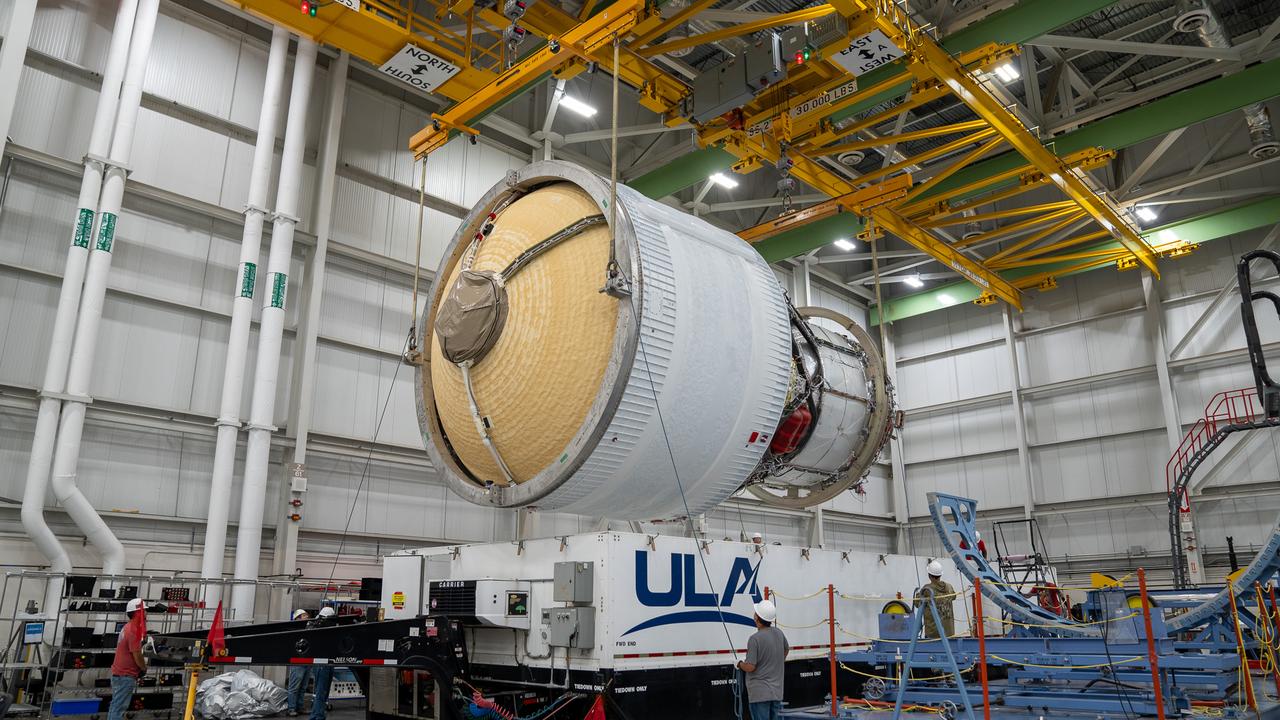
These images and videos show how crews in Alabama prepared the ICPS (interim cryogenic propulsion stage) for NASA’s SLS (Space Launch System) rocket for shipment to Florida between July 29-31. The ICPS in the photos and videos will help power NASA’s Artemis III mission to the Moon. The SLS upper stage is manufactured by United Launch Alliance at its facility in Decatur. Its RL10 engine is produced by Aerojet Rocketdyne, the SLS engines lead contractor, in West Palm Beach, Florida. ULA is working with Boeing, the SLS core stage and exploration upper stage lead contractor, to develop ICPS. ULA’s R/S RocketShip is transporting the flight hardware to its sister facility in Florida near NASA’s Kennedy Space Center for final checkouts. The ICPS for Artemis III is the last of its kind as SLS transitions to its next, more powerful Block 1B configuration with an upgraded upper stage beginning with Artemis IV. NASA is working to land the first woman and first person of color on the Moon under Artemis. SLS is part of NASA’s backbone for deep space exploration, along with Orion and the Gateway in orbit around the Moon. SLS is the only rocket that can send Orion, astronauts, and supplies to the Moon in a single mission.
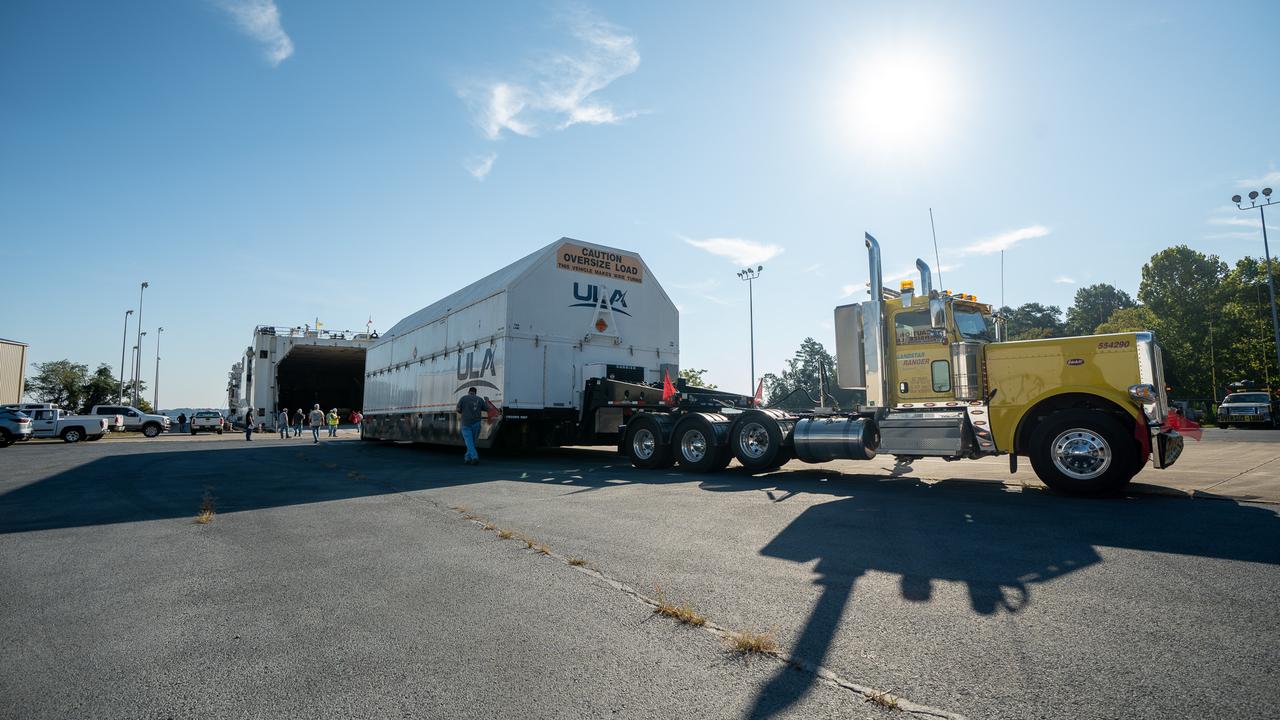
These images and videos show how crews in Alabama prepared the ICPS (interim cryogenic propulsion stage) for NASA’s SLS (Space Launch System) rocket for shipment to Florida between July 29-31. The ICPS in the photos and videos will help power NASA’s Artemis III mission to the Moon. The SLS upper stage is manufactured by United Launch Alliance at its facility in Decatur. Its RL10 engine is produced by Aerojet Rocketdyne, the SLS engines lead contractor, in West Palm Beach, Florida. ULA is working with Boeing, the SLS core stage and exploration upper stage lead contractor, to develop ICPS. ULA’s R/S RocketShip is transporting the flight hardware to its sister facility in Florida near NASA’s Kennedy Space Center for final checkouts. The ICPS for Artemis III is the last of its kind as SLS transitions to its next, more powerful Block 1B configuration with an upgraded upper stage beginning with Artemis IV. NASA is working to land the first woman and first person of color on the Moon under Artemis. SLS is part of NASA’s backbone for deep space exploration, along with Orion and the Gateway in orbit around the Moon. SLS is the only rocket that can send Orion, astronauts, and supplies to the Moon in a single mission.
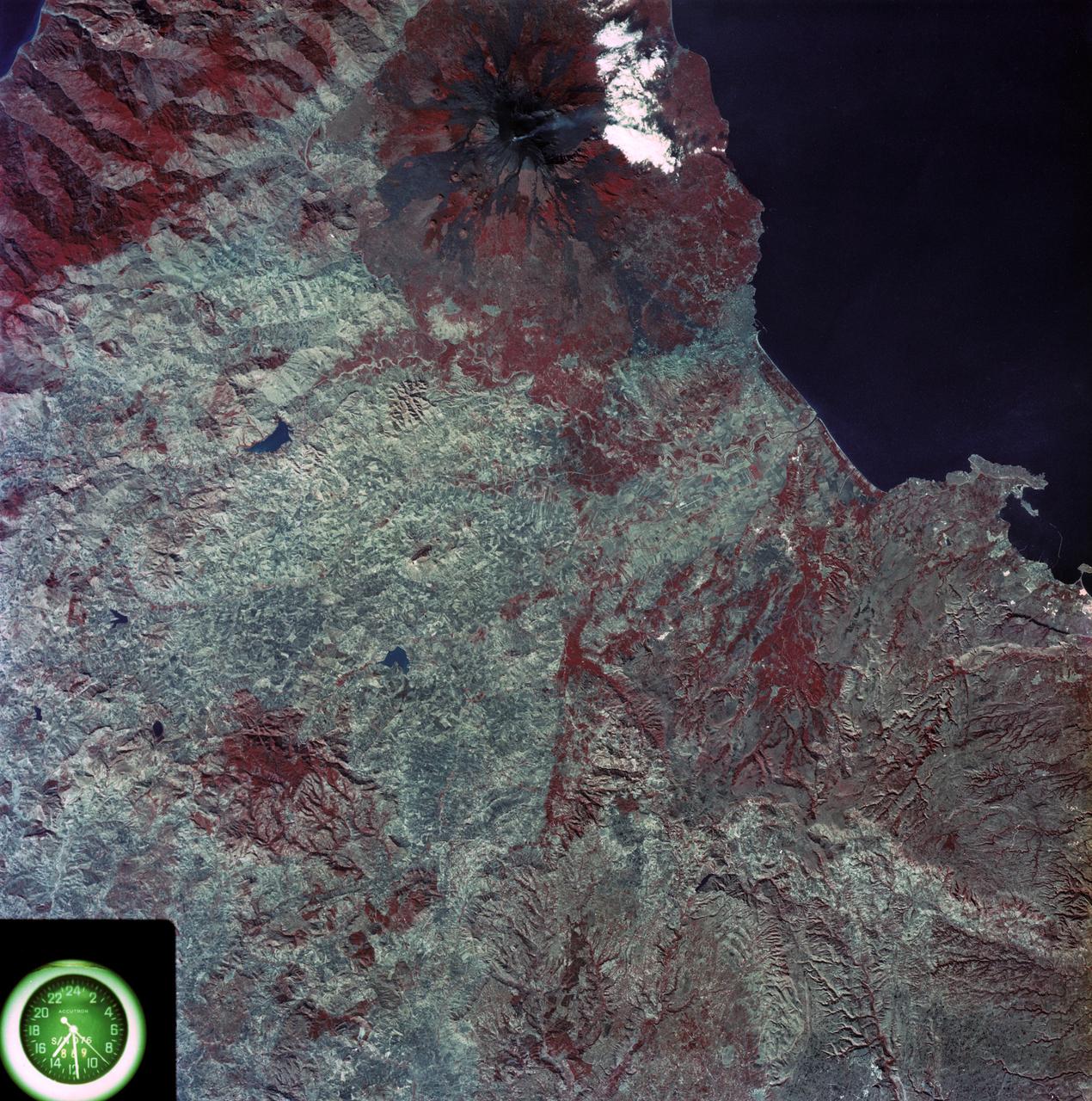
SL3-87-355 (July-September 1973) --- A vertical view of the eastern coast of Sicily area is seen in this Skylab 3 Earth Resources Experiments Package S190-B (five-inch earth terrain camera) infrared photograph taken from the Skylab space station in Earth orbit. Mount Etna, the highest volcano in Europe (10,958 feet), is still active as evidenced by the thin plume of smoke emanating from its crest. (The altitude is approximate because the height of the volcano changes with each eruption). On the flanks of Etna recent lava flows appear black in contrast to the older flows and volcanic debris that are red. Numerous small, circular cinder cones on the flanks represent sites of previous eruptions. Catania, on the Mediterranean coast south of Etna, is the largest of several cities and villages which appear as light-gray patches on the lower slopes of the volcano. Plano de Catania, south of the city of Catania, is outlined by polygonal light and dark agricultural tracts. Several lakes, the largest of which is Lake Pozzillo, show up as dark blue in the photograph. The unusual colors in the picture are due to the use of color infrared film in which vegetation appears red. This is very evident on the slopes of Etna, in the Monti Nebrodi area at upper let, and in the local areas in the lower part of the picture. Studies of Mount Etna and related volcanic features will be undertaken by Professor Roberto Cassinis of Servizio Geologio d?Italia, Rome. Federal agencies participating with NASA on the EREP project are the Departments of Agriculture, Commerce, Interior, the Environmental Protection Agency and the Corps of Engineers. All EREP photography is available to the public through the Department of Interior?s Earth Resources Observation Systems Data Center, Sioux Falls, South Dakota, 57198. Photo credit: NASA
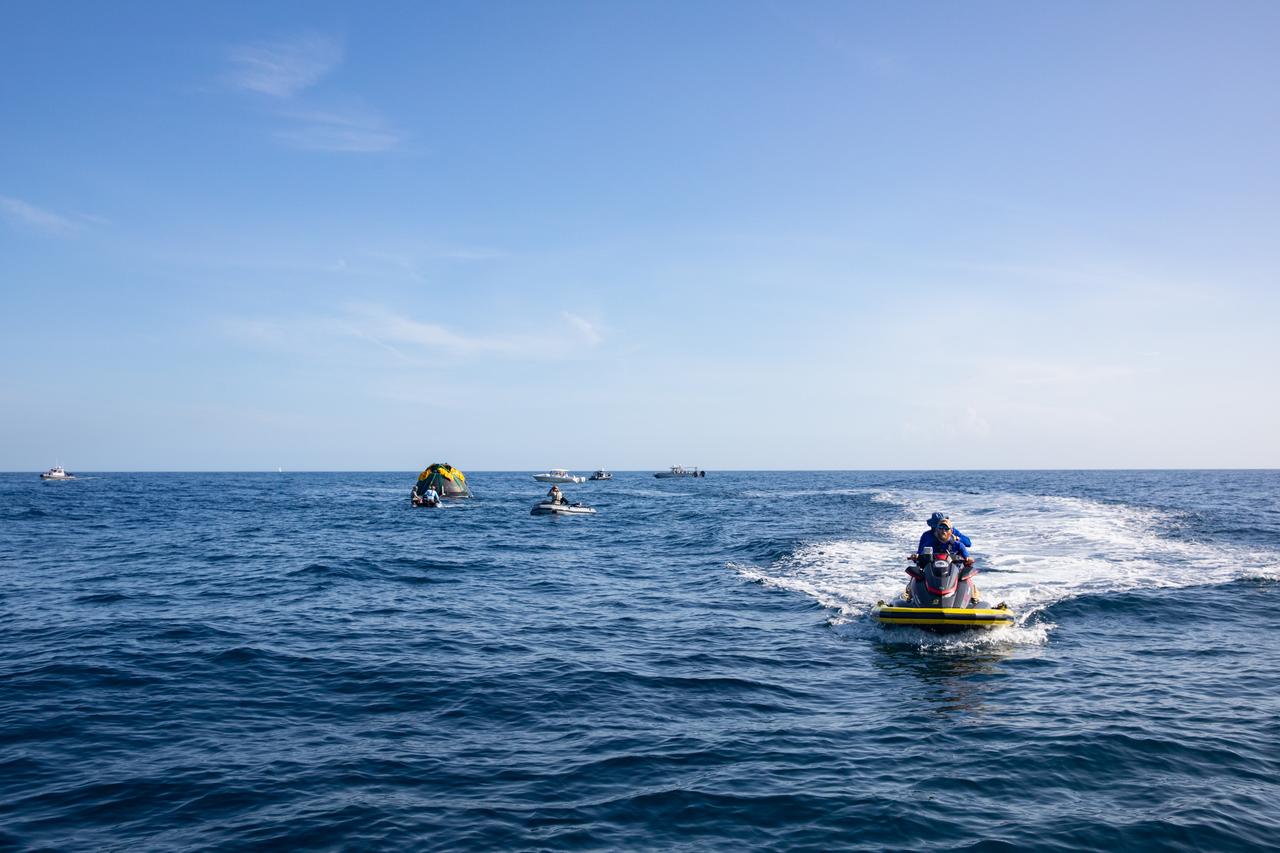
Teams with NASA and the Department of Defense (DoD) rehearse recovery procedures for an ascent abort scenario off the coast of Florida near the agency’s Kennedy Space Center on Thursday, June 12, 2025. Utilizing mannequin crew members inside the Crew Module Test Article (CMTA) – a full-scale mockup of the Orion spacecraft – the simulations practiced abort timelines and joint NASA and DoD recovery procedures supported by Artemis II launch and flight control teams, as NASA prepares to send four astronauts around the Moon and back next year as part of the agency’s first crewed Artemis mission.
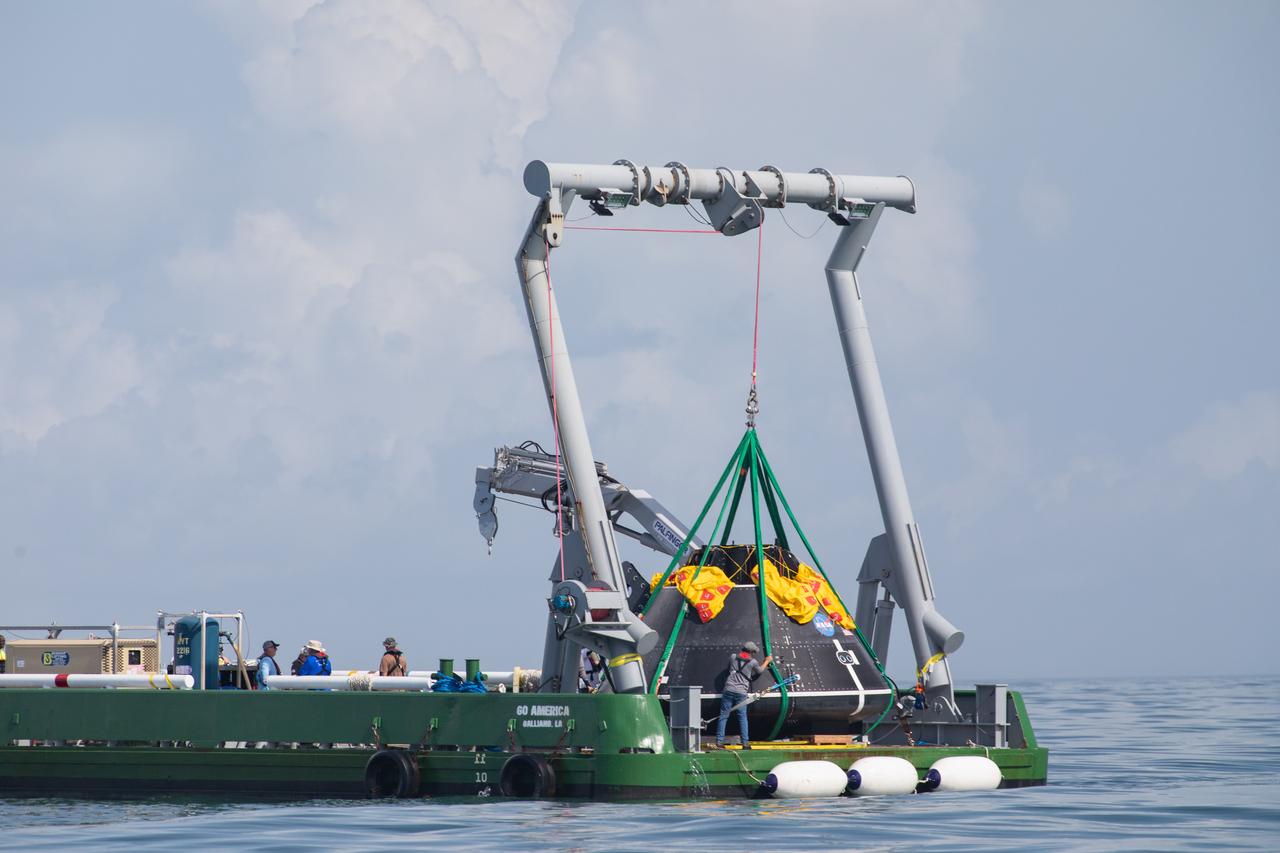
Teams with NASA and the Department of Defense (DoD) rehearse recovery procedures for a launch pad abort scenario off the coast of Florida near the agency’s Kennedy Space Center on Wednesday, June 11, 2025. Utilizing mannequin crew members inside the Crew Module Test Article (CMTA) – a full-scale mockup of the Orion spacecraft – the simulations practiced abort timelines and joint NASA and DoD recovery procedures supported by Artemis II launch and flight control teams, as NASA prepares to send four astronauts around the Moon and back next year as part of the agency’s first crewed Artemis mission.
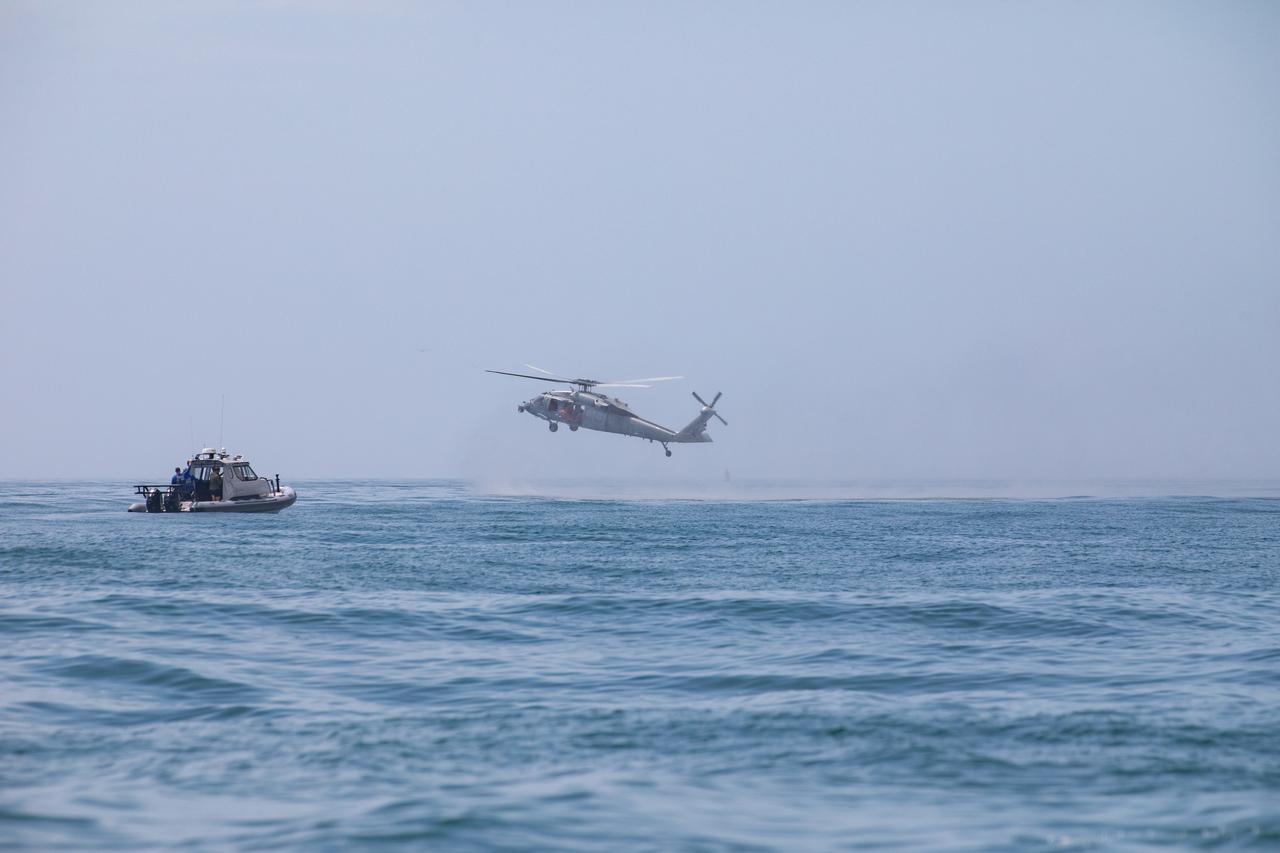
Teams with NASA and the Department of Defense (DoD) rehearse recovery procedures for a launch pad abort scenario off the coast of Florida near the agency’s Kennedy Space Center on Wednesday, June 11, 2025. Utilizing mannequin crew members inside the Crew Module Test Article (CMTA) – a full-scale mockup of the Orion spacecraft – the simulations practiced abort timelines and joint NASA and DoD recovery procedures supported by Artemis II launch and flight control teams, as NASA prepares to send four astronauts around the Moon and back next year as part of the agency’s first crewed Artemis mission.
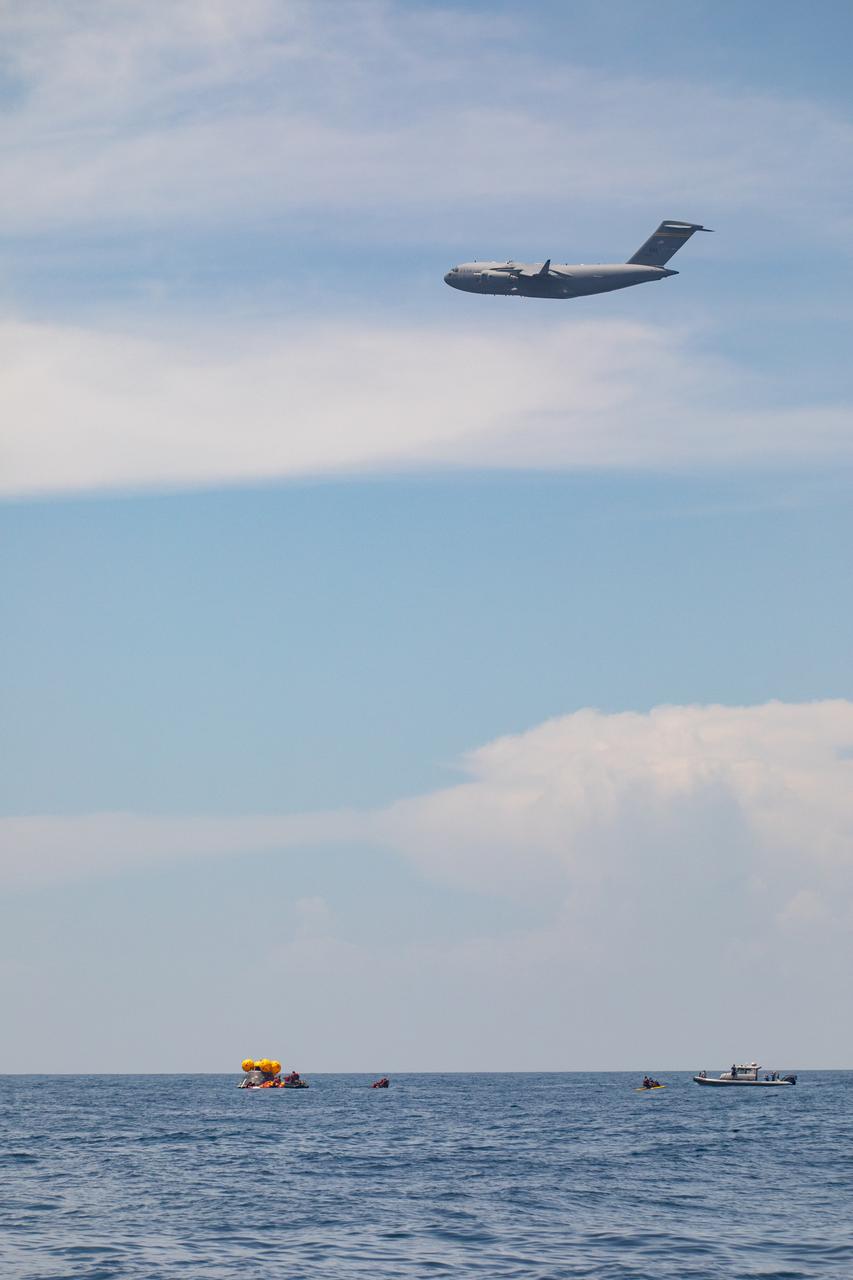
Teams with NASA and the Department of Defense (DoD) rehearse recovery procedures for an ascent abort scenario off the coast of Florida near the agency’s Kennedy Space Center on Thursday, June 12, 2025. Utilizing mannequin crew members inside the Crew Module Test Article (CMTA) – a full-scale mockup of the Orion spacecraft – the simulations practiced abort timelines and joint NASA and DoD recovery procedures supported by Artemis II launch and flight control teams, as NASA prepares to send four astronauts around the Moon and back next year as part of the agency’s first crewed Artemis mission.
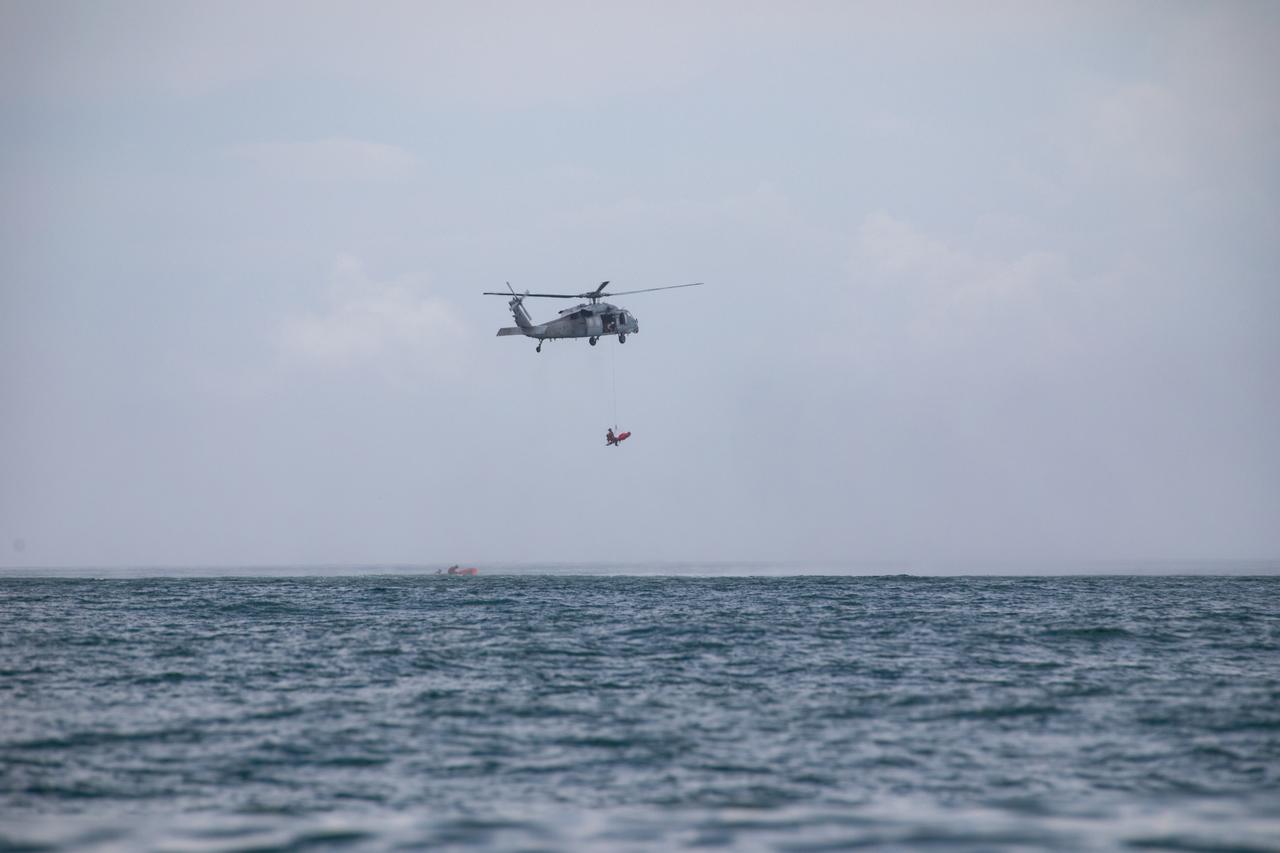
Teams with NASA and the Department of Defense (DoD) rehearse recovery procedures for a launch pad abort scenario off the coast of Florida near the agency’s Kennedy Space Center on Wednesday, June 11, 2025. Utilizing mannequin crew members inside the Crew Module Test Article (CMTA) – a full-scale mockup of the Orion spacecraft – the simulations practiced abort timelines and joint NASA and DoD recovery procedures supported by Artemis II launch and flight control teams, as NASA prepares to send four astronauts around the Moon and back next year as part of the agency’s first crewed Artemis mission.
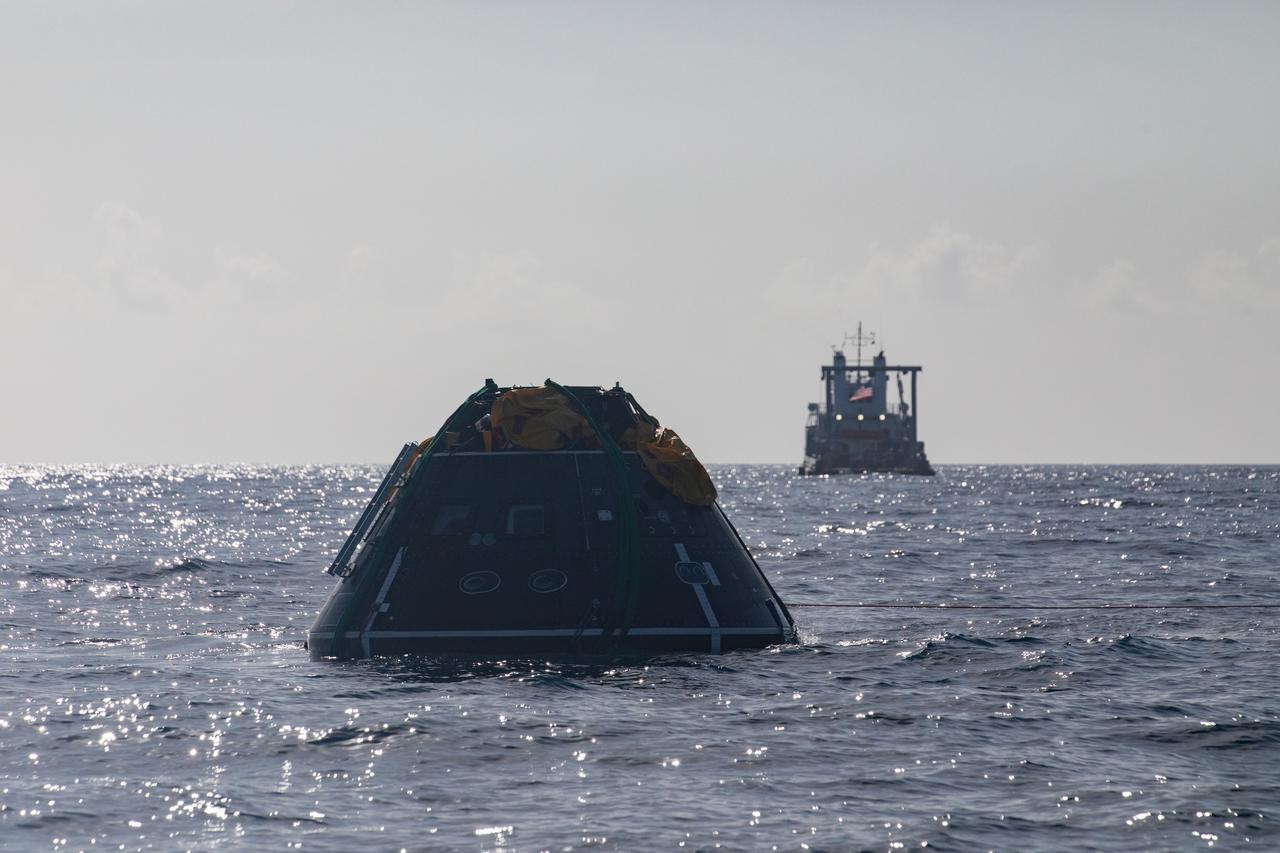
Teams with NASA and the Department of Defense (DoD) rehearse recovery procedures for an ascent abort scenario off the coast of Florida near the agency’s Kennedy Space Center on Thursday, June 12, 2025. Utilizing mannequin crew members inside the Crew Module Test Article (CMTA) – a full-scale mockup of the Orion spacecraft – the simulations practiced abort timelines and joint NASA and DoD recovery procedures supported by Artemis II launch and flight control teams, as NASA prepares to send four astronauts around the Moon and back next year as part of the agency’s first crewed Artemis mission.
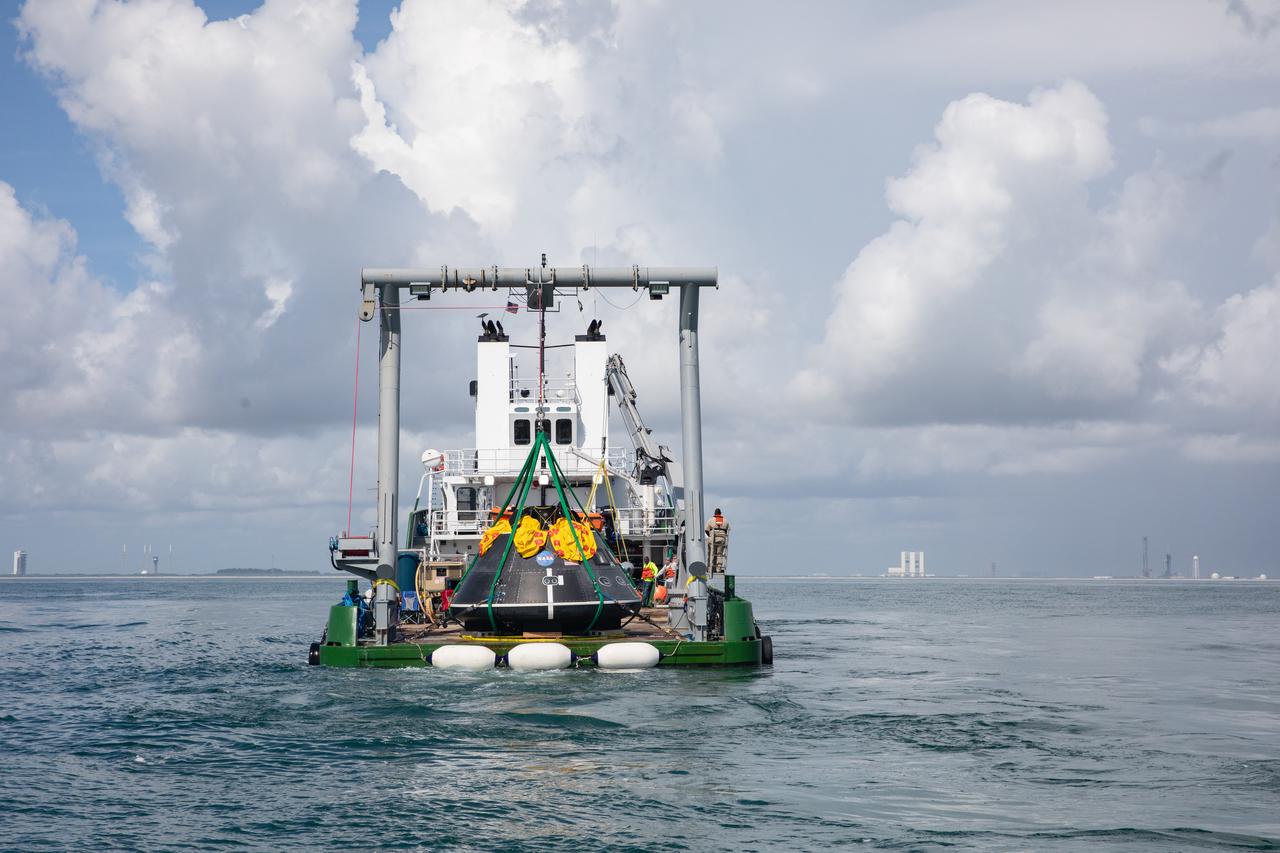
Teams with NASA and the Department of Defense (DoD) rehearse recovery procedures for a launch pad abort scenario off the coast of Florida near the agency’s Kennedy Space Center on Wednesday, June 11, 2025. Utilizing mannequin crew members inside the Crew Module Test Article (CMTA) – a full-scale mockup of the Orion spacecraft – the simulations practiced abort timelines and joint NASA and DoD recovery procedures supported by Artemis II launch and flight control teams, as NASA prepares to send four astronauts around the Moon and back next year as part of the agency’s first crewed Artemis mission.
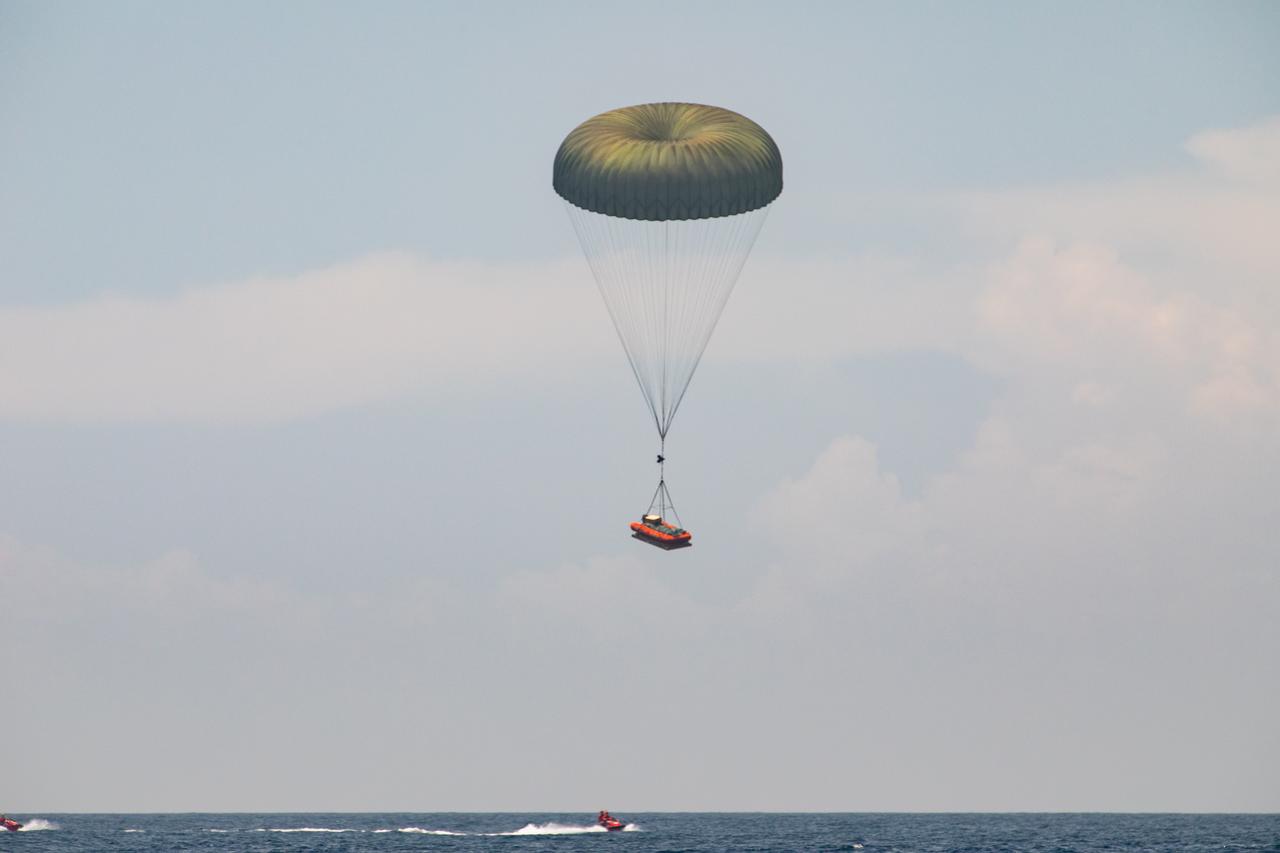
Teams with NASA and the Department of Defense (DoD) rehearse recovery procedures for an ascent abort scenario off the coast of Florida near the agency’s Kennedy Space Center on Thursday, June 12, 2025. Utilizing mannequin crew members inside the Crew Module Test Article (CMTA) – a full-scale mockup of the Orion spacecraft – the simulations practiced abort timelines and joint NASA and DoD recovery procedures supported by Artemis II launch and flight control teams, as NASA prepares to send four astronauts around the Moon and back next year as part of the agency’s first crewed Artemis mission.
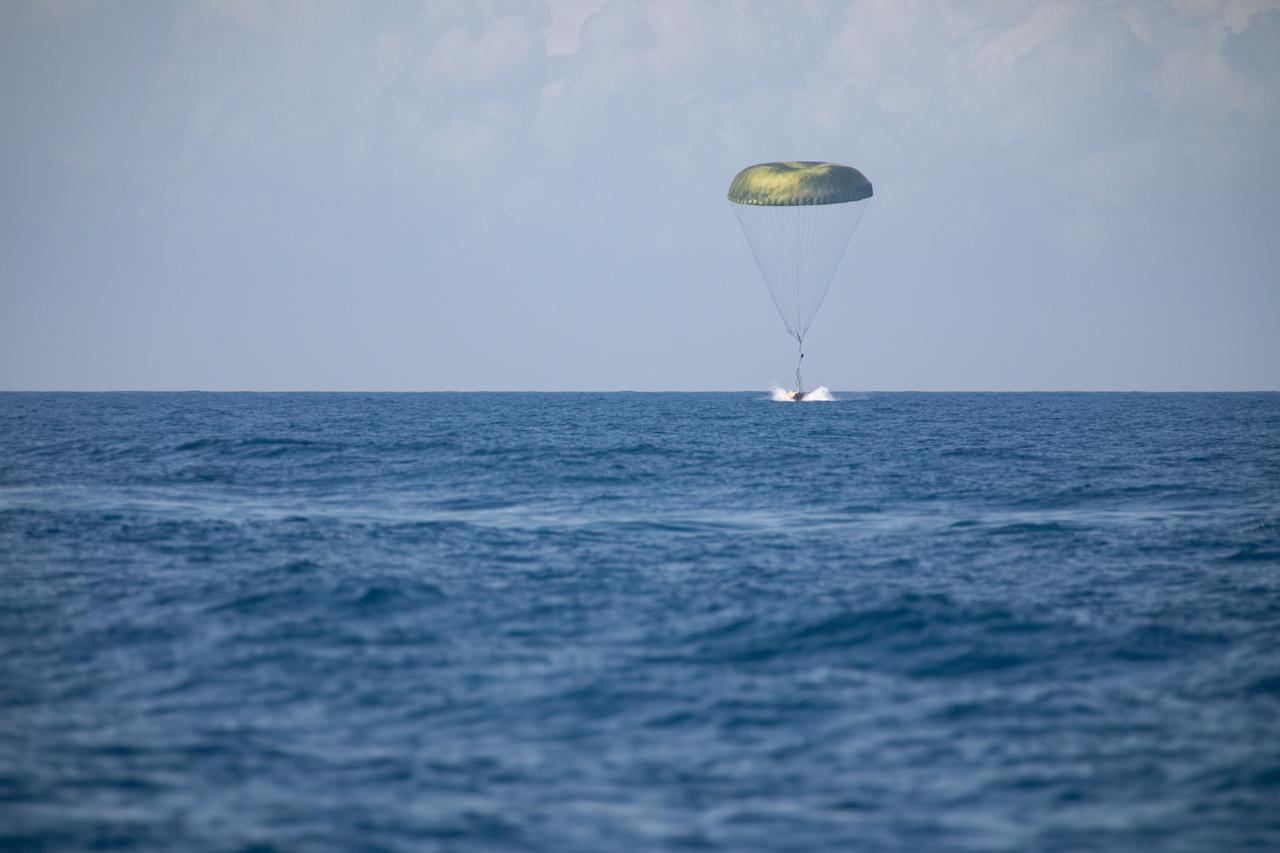
Teams with NASA and the Department of Defense (DoD) rehearse recovery procedures for an ascent abort scenario off the coast of Florida near the agency’s Kennedy Space Center on Thursday, June 12, 2025. Utilizing mannequin crew members inside the Crew Module Test Article (CMTA) – a full-scale mockup of the Orion spacecraft – the simulations practiced abort timelines and joint NASA and DoD recovery procedures supported by Artemis II launch and flight control teams, as NASA prepares to send four astronauts around the Moon and back next year as part of the agency’s first crewed Artemis mission.
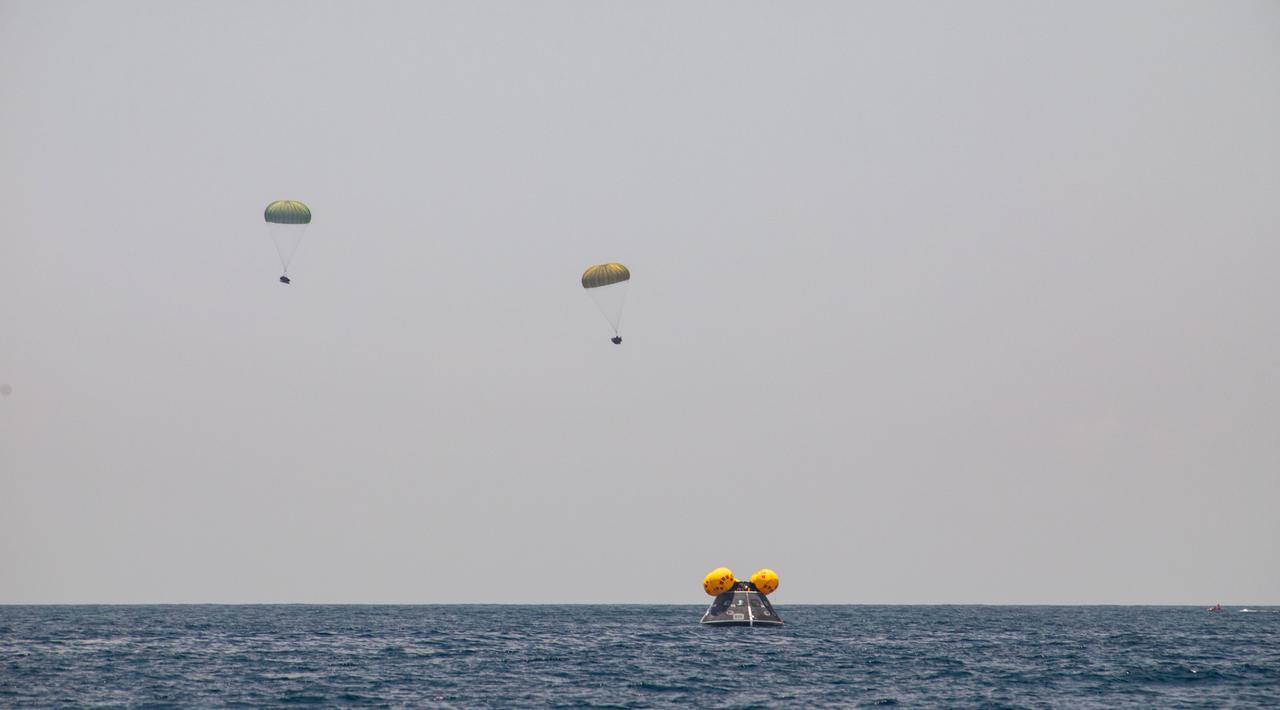
Teams with NASA and the Department of Defense (DoD) rehearse recovery procedures for an ascent abort scenario off the coast of Florida near the agency’s Kennedy Space Center on Thursday, June 12, 2025. Utilizing mannequin crew members inside the Crew Module Test Article (CMTA) – a full-scale mockup of the Orion spacecraft – the simulations practiced abort timelines and joint NASA and DoD recovery procedures supported by Artemis II launch and flight control teams, as NASA prepares to send four astronauts around the Moon and back next year as part of the agency’s first crewed Artemis mission.
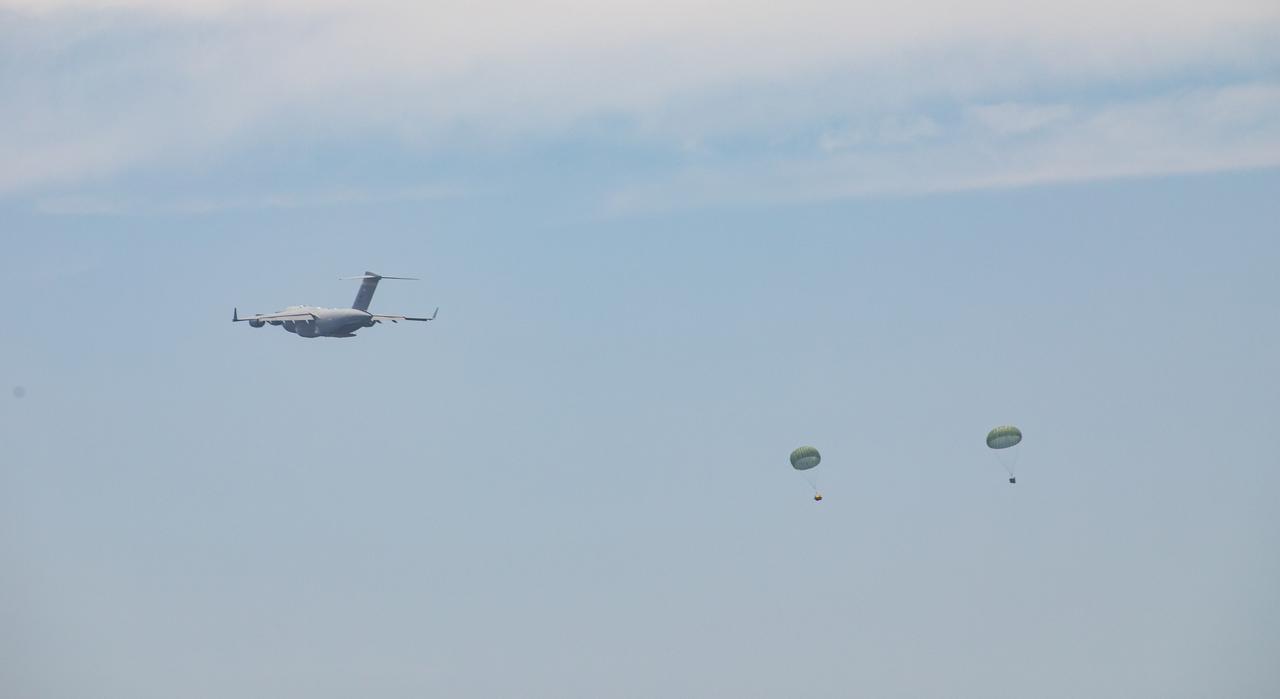
Teams with NASA and the Department of Defense (DoD) rehearse recovery procedures for an ascent abort scenario off the coast of Florida near the agency’s Kennedy Space Center on Thursday, June 12, 2025. Utilizing mannequin crew members inside the Crew Module Test Article (CMTA) – a full-scale mockup of the Orion spacecraft – the simulations practiced abort timelines and joint NASA and DoD recovery procedures supported by Artemis II launch and flight control teams, as NASA prepares to send four astronauts around the Moon and back next year as part of the agency’s first crewed Artemis mission.
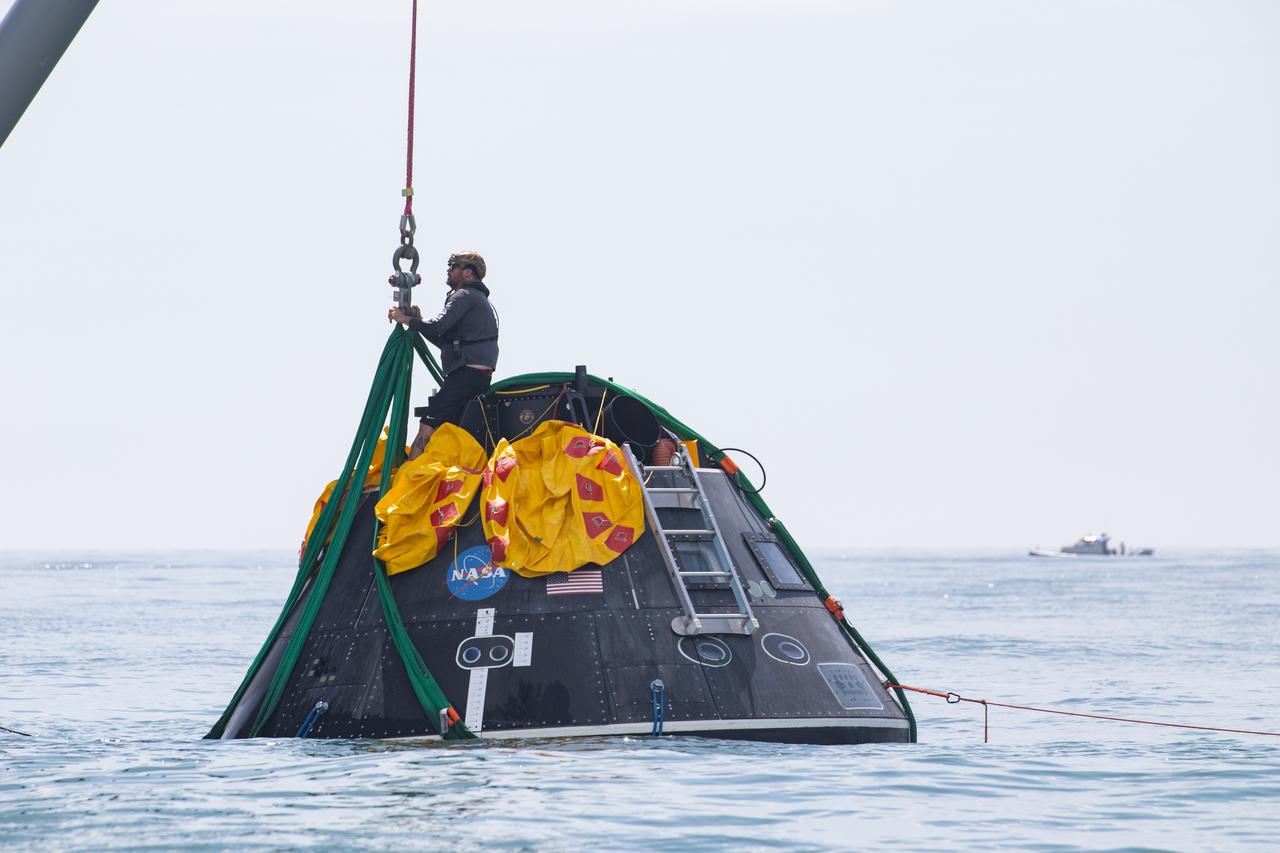
Teams with NASA and the Department of Defense (DoD) rehearse recovery procedures for a launch pad abort scenario off the coast of Florida near the agency’s Kennedy Space Center on Wednesday, June 11, 2025. Utilizing mannequin crew members inside the Crew Module Test Article (CMTA) – a full-scale mockup of the Orion spacecraft – the simulations practiced abort timelines and joint NASA and DoD recovery procedures supported by Artemis II launch and flight control teams, as NASA prepares to send four astronauts around the Moon and back next year as part of the agency’s first crewed Artemis mission.
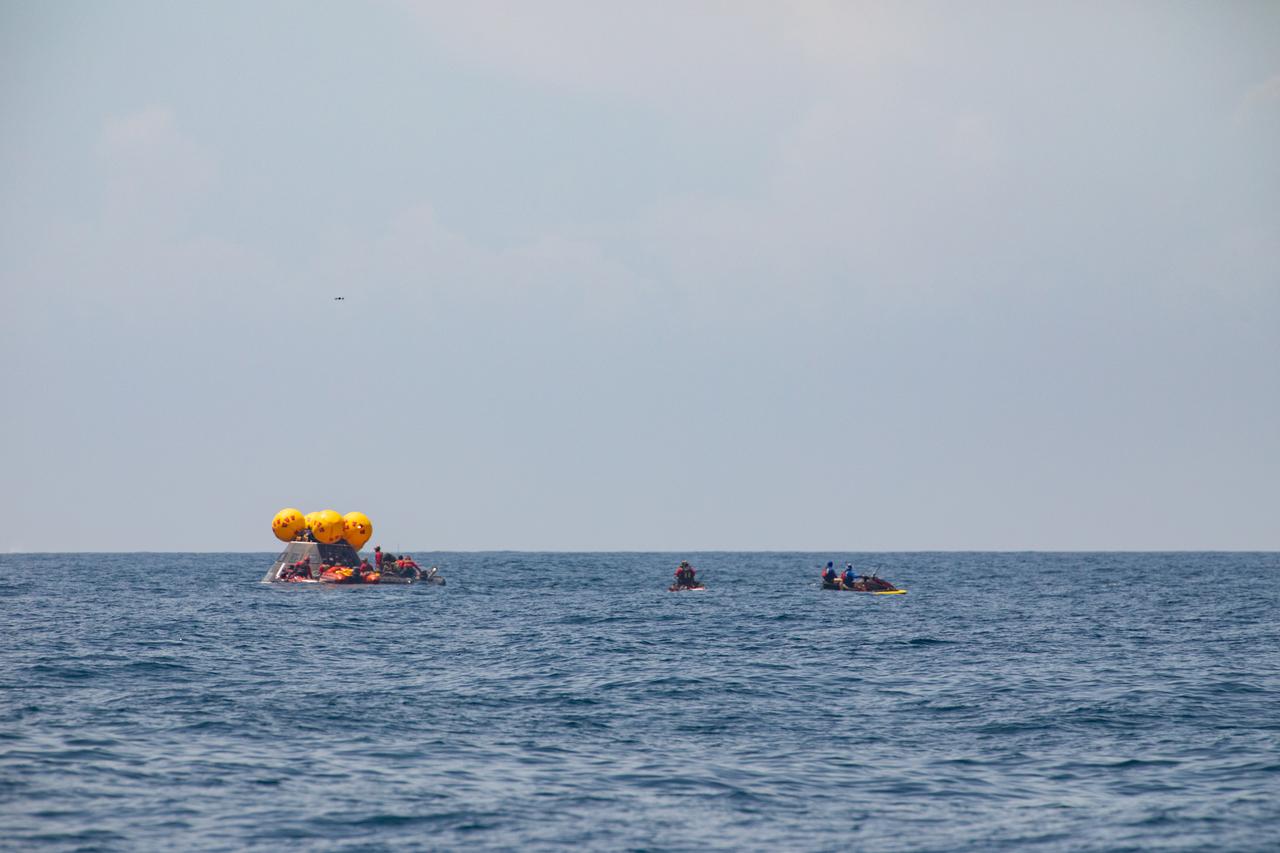
Teams with NASA and the Department of Defense (DoD) rehearse recovery procedures for an ascent abort scenario off the coast of Florida near the agency’s Kennedy Space Center on Thursday, June 12, 2025. Utilizing mannequin crew members inside the Crew Module Test Article (CMTA) – a full-scale mockup of the Orion spacecraft – the simulations practiced abort timelines and joint NASA and DoD recovery procedures supported by Artemis II launch and flight control teams, as NASA prepares to send four astronauts around the Moon and back next year as part of the agency’s first crewed Artemis mission.
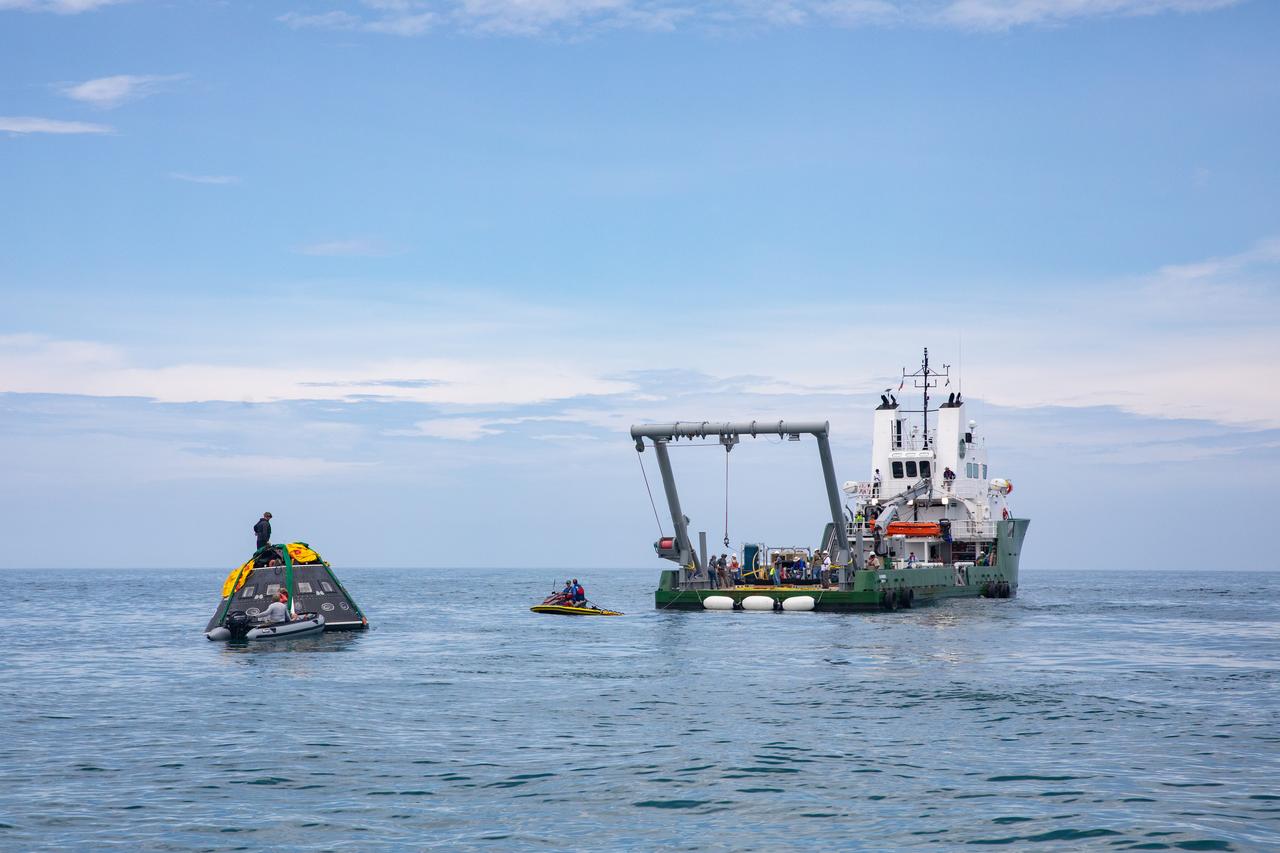
Teams with NASA and the Department of Defense (DoD) rehearse recovery procedures for a launch pad abort scenario off the coast of Florida near the agency’s Kennedy Space Center on Wednesday, June 11, 2025. Utilizing mannequin crew members inside the Crew Module Test Article (CMTA) – a full-scale mockup of the Orion spacecraft – the simulations practiced abort timelines and joint NASA and DoD recovery procedures supported by Artemis II launch and flight control teams, as NASA prepares to send four astronauts around the Moon and back next year as part of the agency’s first crewed Artemis mission.
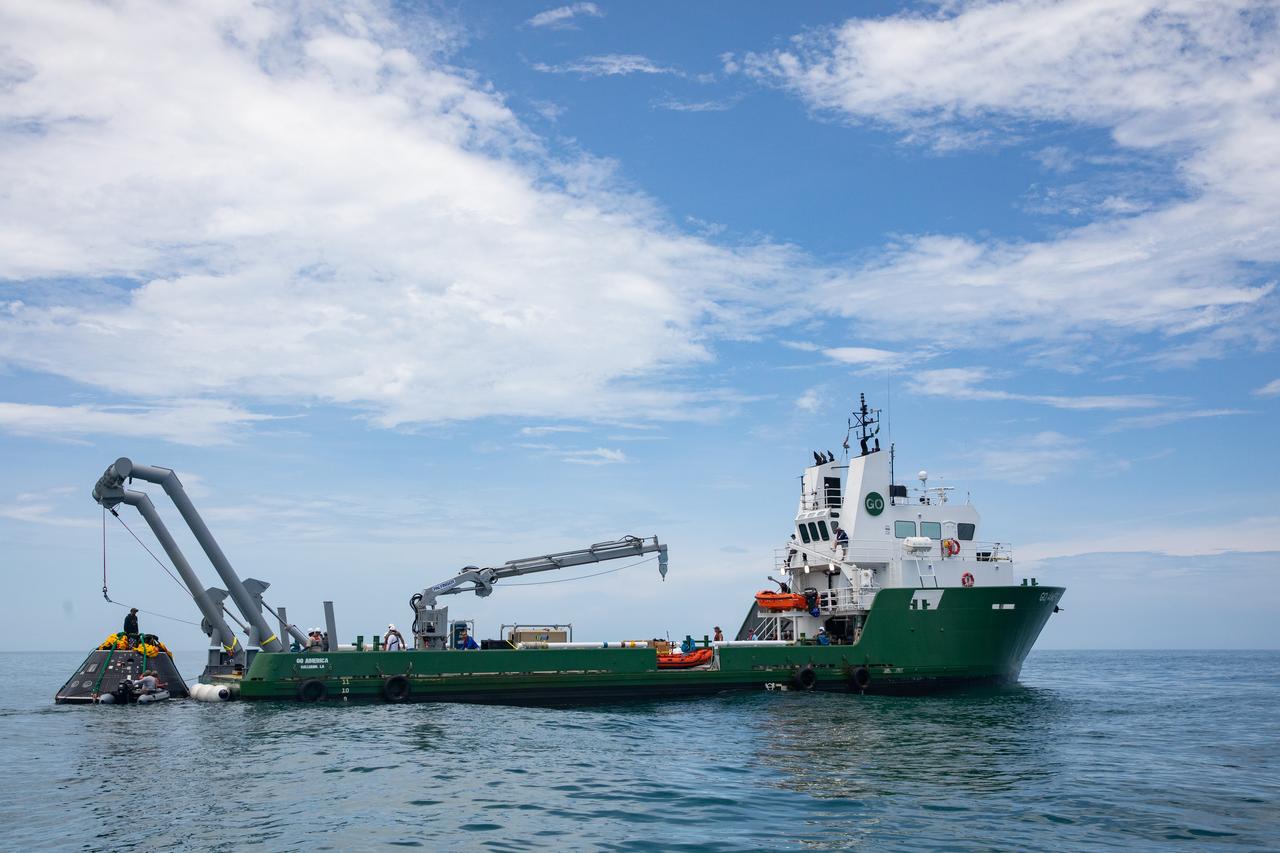
Teams with NASA and the Department of Defense (DoD) rehearse recovery procedures for a launch pad abort scenario off the coast of Florida near the agency’s Kennedy Space Center on Wednesday, June 11, 2025. Utilizing mannequin crew members inside the Crew Module Test Article (CMTA) – a full-scale mockup of the Orion spacecraft – the simulations practiced abort timelines and joint NASA and DoD recovery procedures supported by Artemis II launch and flight control teams, as NASA prepares to send four astronauts around the Moon and back next year as part of the agency’s first crewed Artemis mission.
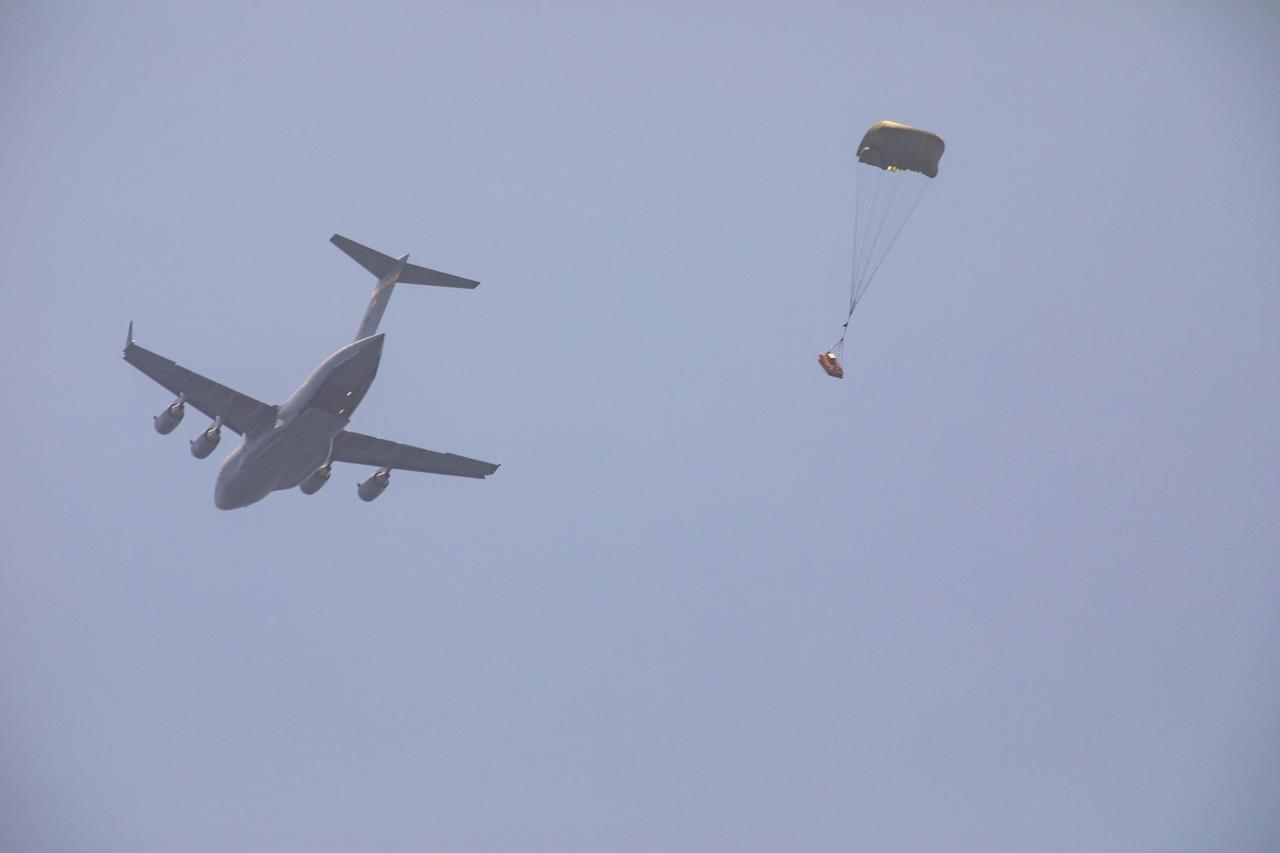
Teams with NASA and the Department of Defense (DoD) rehearse recovery procedures for an ascent abort scenario off the coast of Florida near the agency’s Kennedy Space Center on Thursday, June 12, 2025. Utilizing mannequin crew members inside the Crew Module Test Article (CMTA) – a full-scale mockup of the Orion spacecraft – the simulations practiced abort timelines and joint NASA and DoD recovery procedures supported by Artemis II launch and flight control teams, as NASA prepares to send four astronauts around the Moon and back next year as part of the agency’s first crewed Artemis mission.
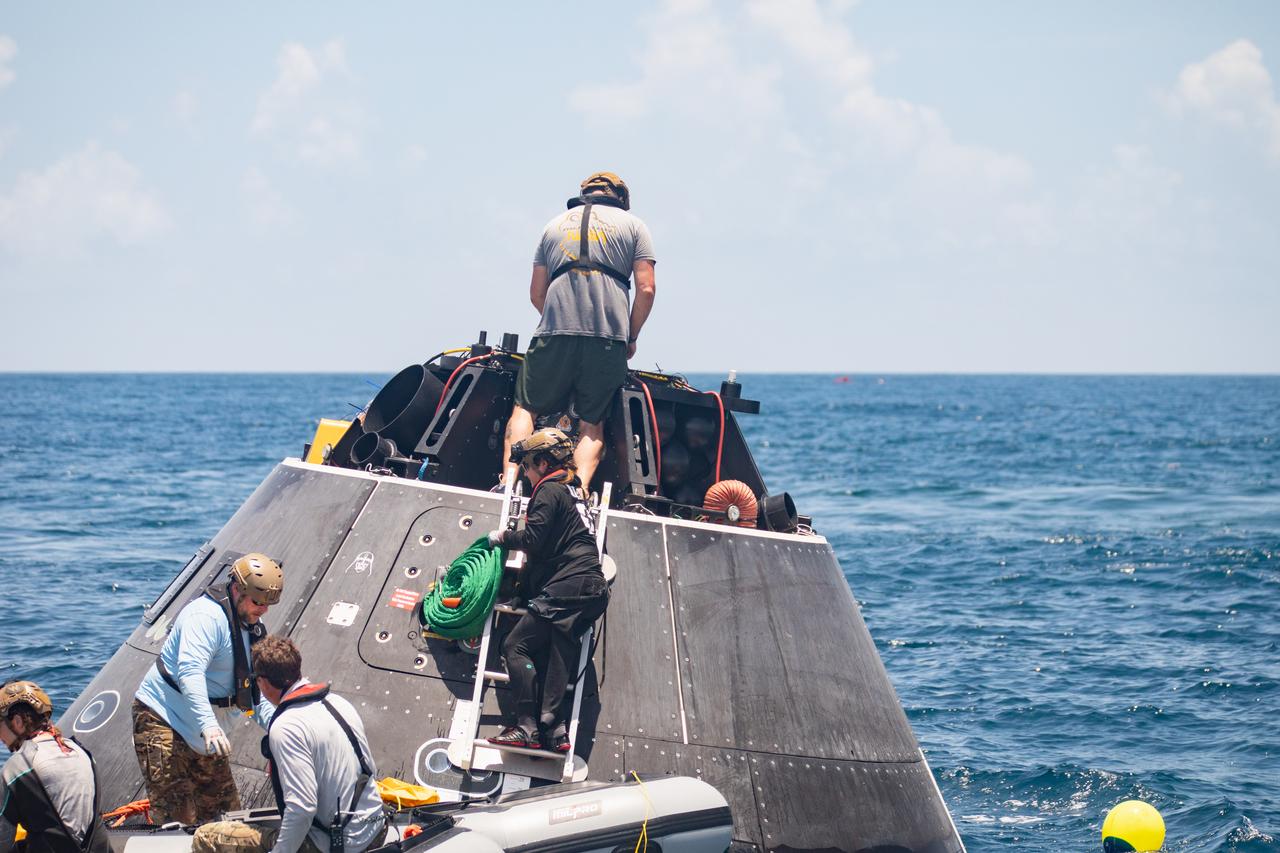
Teams with NASA and the Department of Defense (DoD) rehearse recovery procedures for an ascent abort scenario off the coast of Florida near the agency’s Kennedy Space Center on Thursday, June 12, 2025. Utilizing mannequin crew members inside the Crew Module Test Article (CMTA) – a full-scale mockup of the Orion spacecraft – the simulations practiced abort timelines and joint NASA and DoD recovery procedures supported by Artemis II launch and flight control teams, as NASA prepares to send four astronauts around the Moon and back next year as part of the agency’s first crewed Artemis mission.
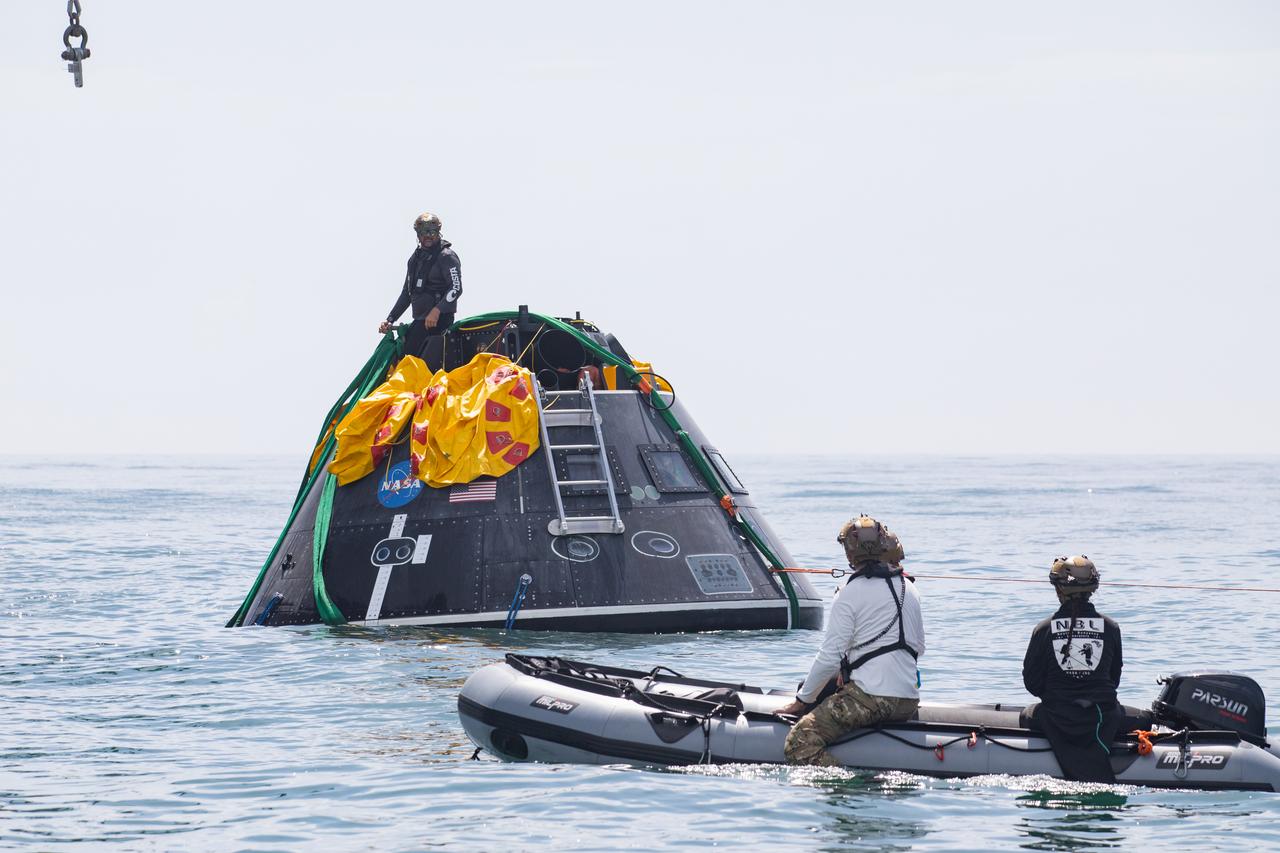
Teams with NASA and the Department of Defense (DoD) rehearse recovery procedures for a launch pad abort scenario off the coast of Florida near the agency’s Kennedy Space Center on Wednesday, June 11, 2025. Utilizing mannequin crew members inside the Crew Module Test Article (CMTA) – a full-scale mockup of the Orion spacecraft – the simulations practiced abort timelines and joint NASA and DoD recovery procedures supported by Artemis II launch and flight control teams, as NASA prepares to send four astronauts around the Moon and back next year as part of the agency’s first crewed Artemis mission.
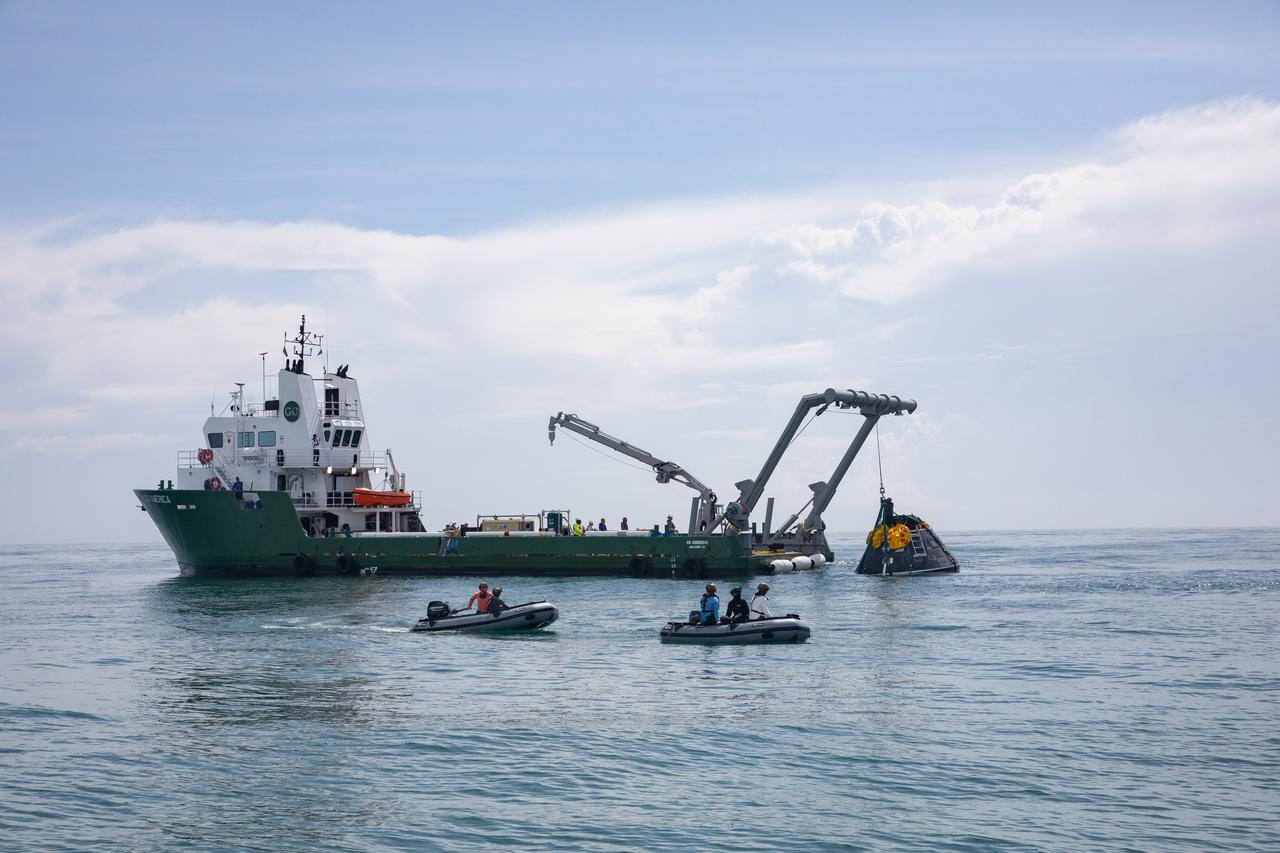
Teams with NASA and the Department of Defense (DoD) rehearse recovery procedures for a launch pad abort scenario off the coast of Florida near the agency’s Kennedy Space Center on Wednesday, June 11, 2025. Utilizing mannequin crew members inside the Crew Module Test Article (CMTA) – a full-scale mockup of the Orion spacecraft – the simulations practiced abort timelines and joint NASA and DoD recovery procedures supported by Artemis II launch and flight control teams, as NASA prepares to send four astronauts around the Moon and back next year as part of the agency’s first crewed Artemis mission.
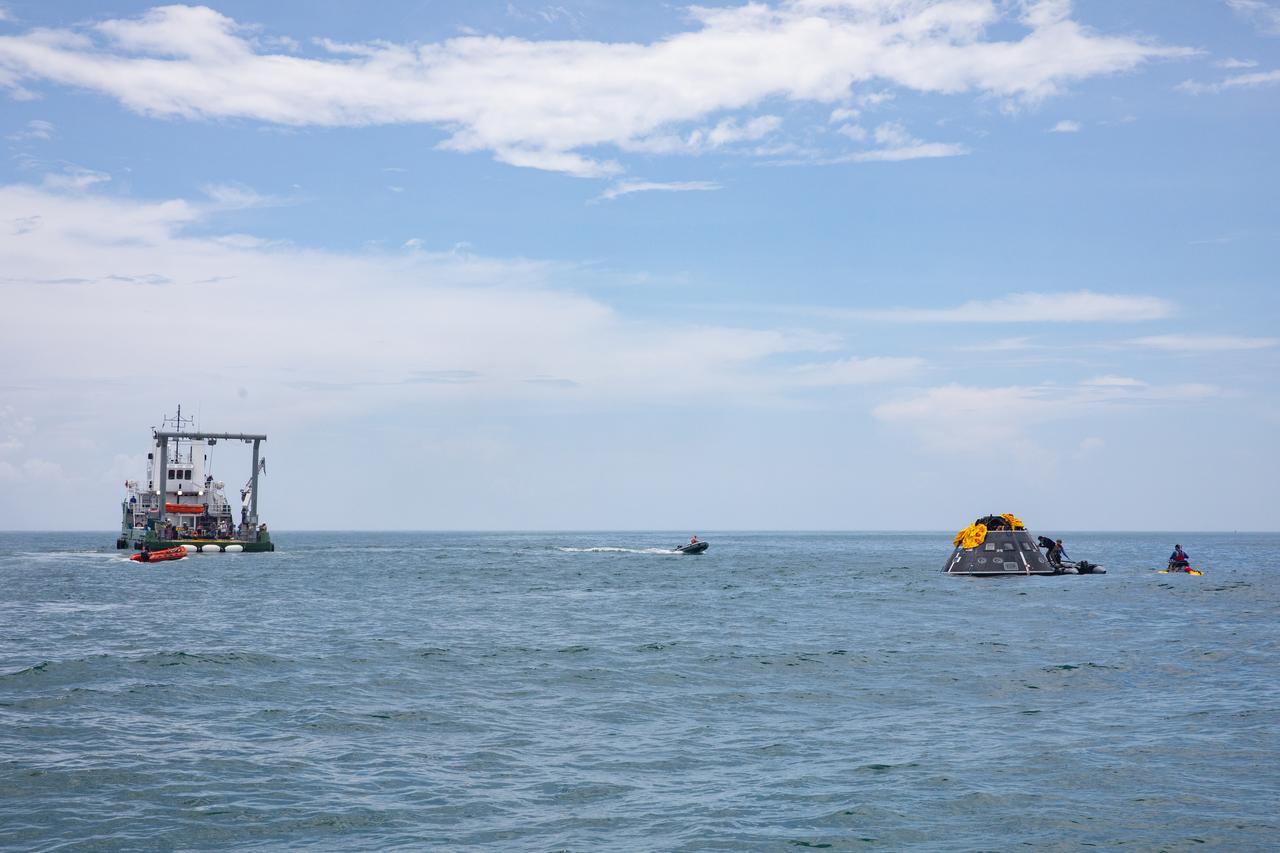
Teams with NASA and the Department of Defense (DoD) rehearse recovery procedures for a launch pad abort scenario off the coast of Florida near the agency’s Kennedy Space Center on Wednesday, June 11, 2025. Utilizing mannequin crew members inside the Crew Module Test Article (CMTA) – a full-scale mockup of the Orion spacecraft – the simulations practiced abort timelines and joint NASA and DoD recovery procedures supported by Artemis II launch and flight control teams, as NASA prepares to send four astronauts around the Moon and back next year as part of the agency’s first crewed Artemis mission.
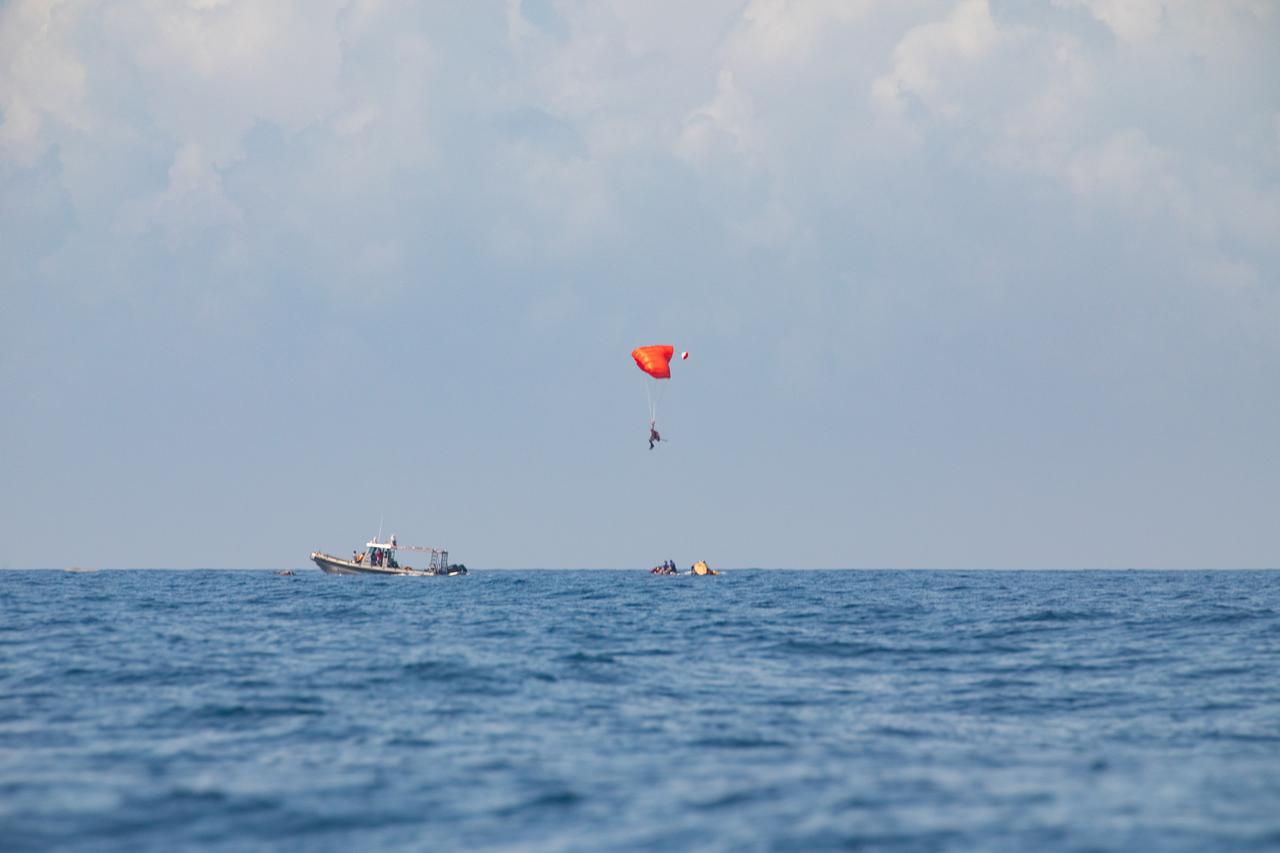
Teams with NASA and the Department of Defense (DoD) rehearse recovery procedures for an ascent abort scenario off the coast of Florida near the agency’s Kennedy Space Center on Thursday, June 12, 2025. Utilizing mannequin crew members inside the Crew Module Test Article (CMTA) – a full-scale mockup of the Orion spacecraft – the simulations practiced abort timelines and joint NASA and DoD recovery procedures supported by Artemis II launch and flight control teams, as NASA prepares to send four astronauts around the Moon and back next year as part of the agency’s first crewed Artemis mission.
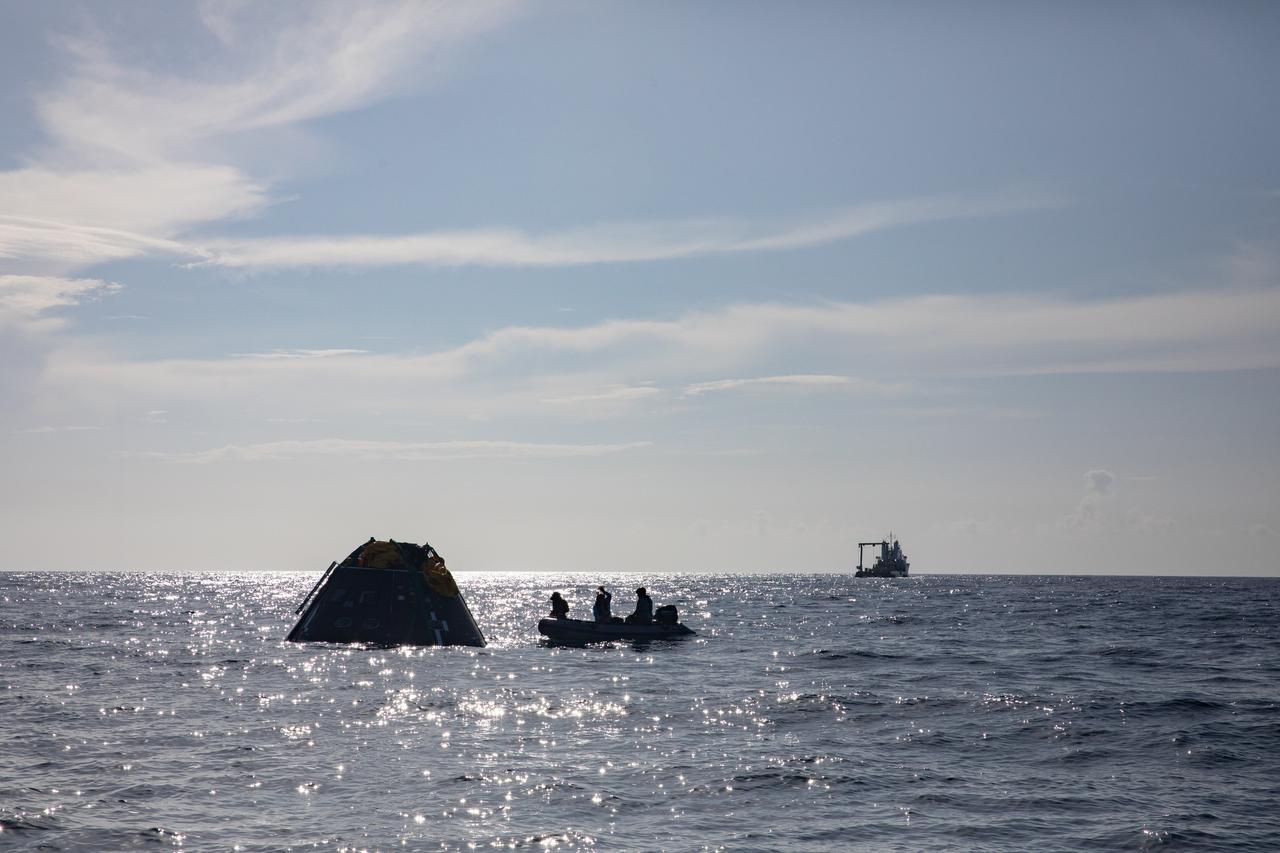
Teams with NASA and the Department of Defense (DoD) rehearse recovery procedures for an ascent abort scenario off the coast of Florida near the agency’s Kennedy Space Center on Thursday, June 12, 2025. Utilizing mannequin crew members inside the Crew Module Test Article (CMTA) – a full-scale mockup of the Orion spacecraft – the simulations practiced abort timelines and joint NASA and DoD recovery procedures supported by Artemis II launch and flight control teams, as NASA prepares to send four astronauts around the Moon and back next year as part of the agency’s first crewed Artemis mission.
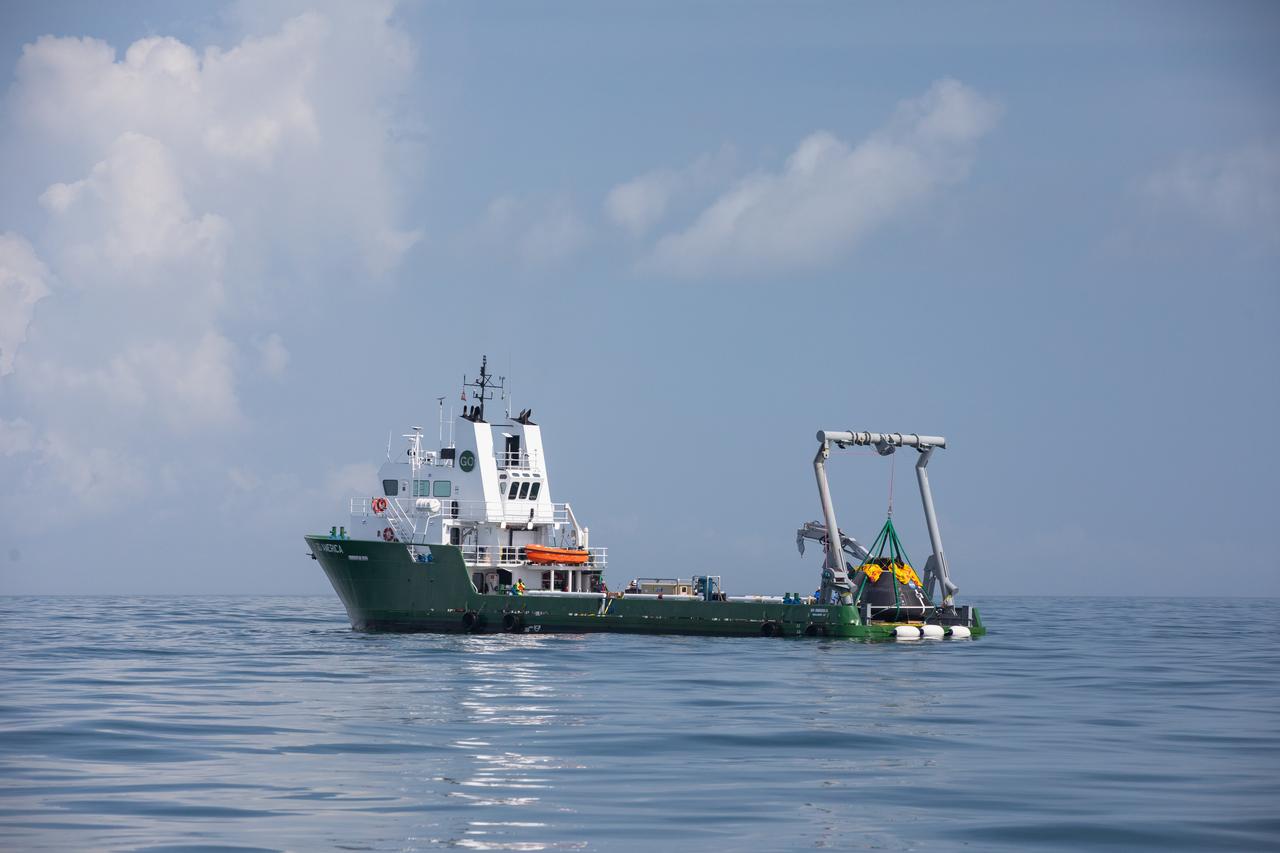
Teams with NASA and the Department of Defense (DoD) rehearse recovery procedures for a launch pad abort scenario off the coast of Florida near the agency’s Kennedy Space Center on Wednesday, June 11, 2025. Utilizing mannequin crew members inside the Crew Module Test Article (CMTA) – a full-scale mockup of the Orion spacecraft – the simulations practiced abort timelines and joint NASA and DoD recovery procedures supported by Artemis II launch and flight control teams, as NASA prepares to send four astronauts around the Moon and back next year as part of the agency’s first crewed Artemis mission.
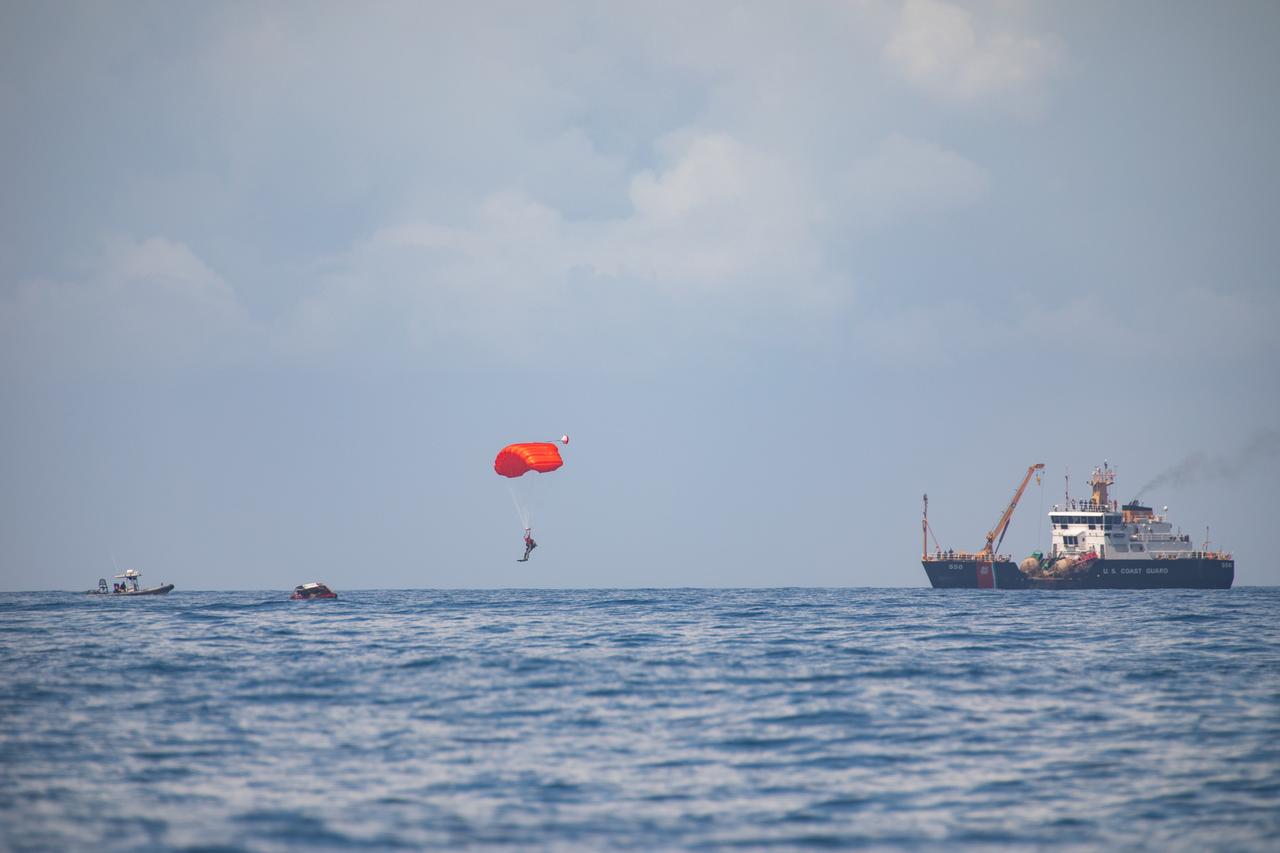
Teams with NASA and the Department of Defense (DoD) rehearse recovery procedures for an ascent abort scenario off the coast of Florida near the agency’s Kennedy Space Center on Thursday, June 12, 2025. Utilizing mannequin crew members inside the Crew Module Test Article (CMTA) – a full-scale mockup of the Orion spacecraft – the simulations practiced abort timelines and joint NASA and DoD recovery procedures supported by Artemis II launch and flight control teams, as NASA prepares to send four astronauts around the Moon and back next year as part of the agency’s first crewed Artemis mission.
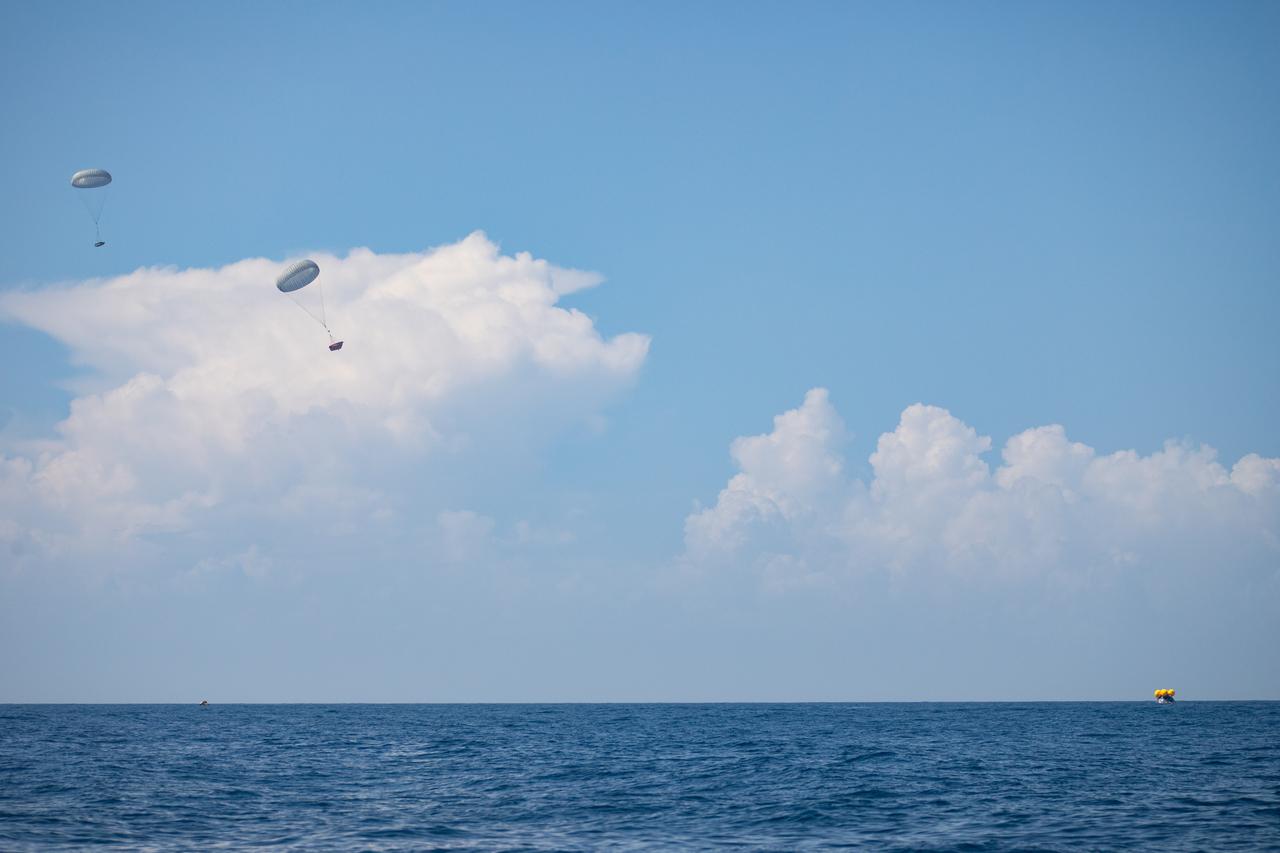
Teams with NASA and the Department of Defense (DoD) rehearse recovery procedures for an ascent abort scenario off the coast of Florida near the agency’s Kennedy Space Center on Thursday, June 12, 2025. Utilizing mannequin crew members inside the Crew Module Test Article (CMTA) – a full-scale mockup of the Orion spacecraft – the simulations practiced abort timelines and joint NASA and DoD recovery procedures supported by Artemis II launch and flight control teams, as NASA prepares to send four astronauts around the Moon and back next year as part of the agency’s first crewed Artemis mission.
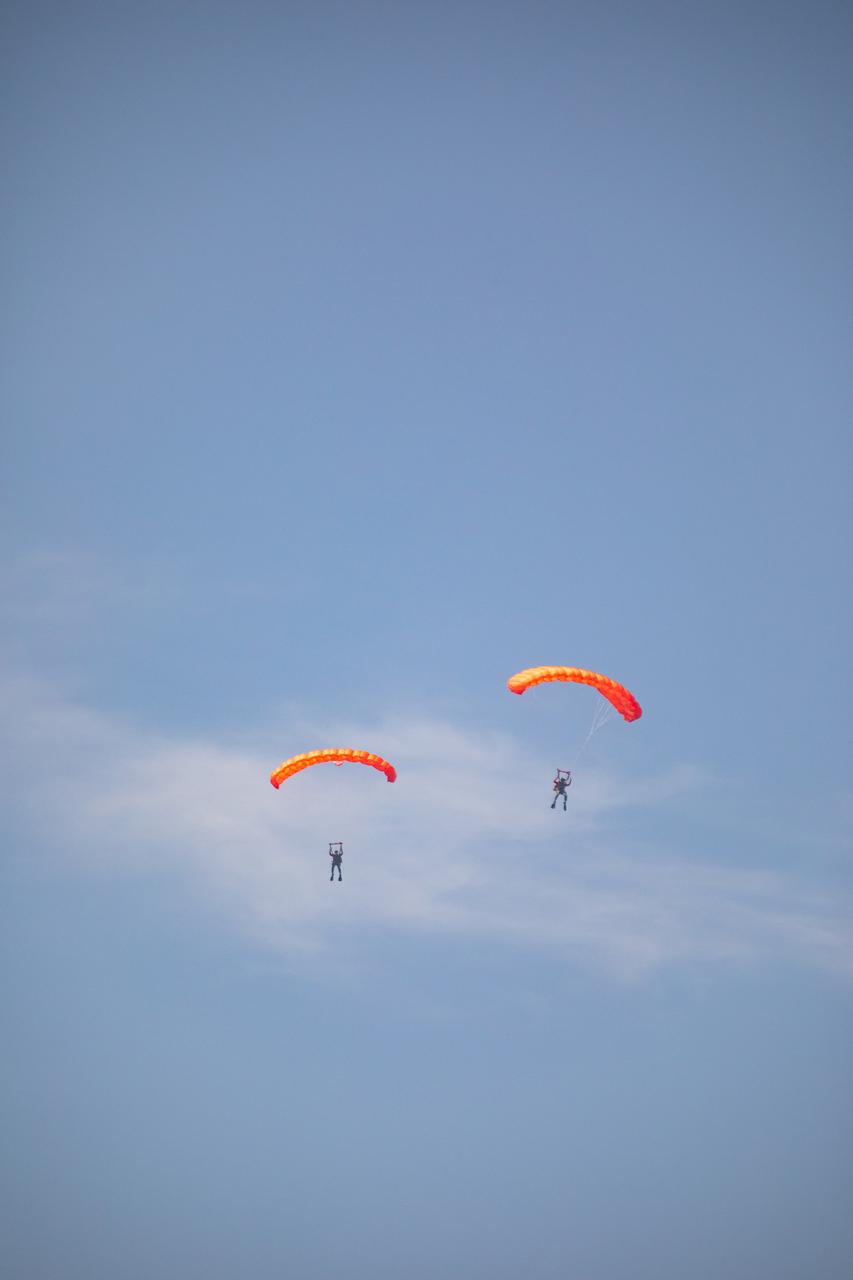
Teams with NASA and the Department of Defense (DoD) rehearse recovery procedures for an ascent abort scenario off the coast of Florida near the agency’s Kennedy Space Center on Thursday, June 12, 2025. Utilizing mannequin crew members inside the Crew Module Test Article (CMTA) – a full-scale mockup of the Orion spacecraft – the simulations practiced abort timelines and joint NASA and DoD recovery procedures supported by Artemis II launch and flight control teams, as NASA prepares to send four astronauts around the Moon and back next year as part of the agency’s first crewed Artemis mission.
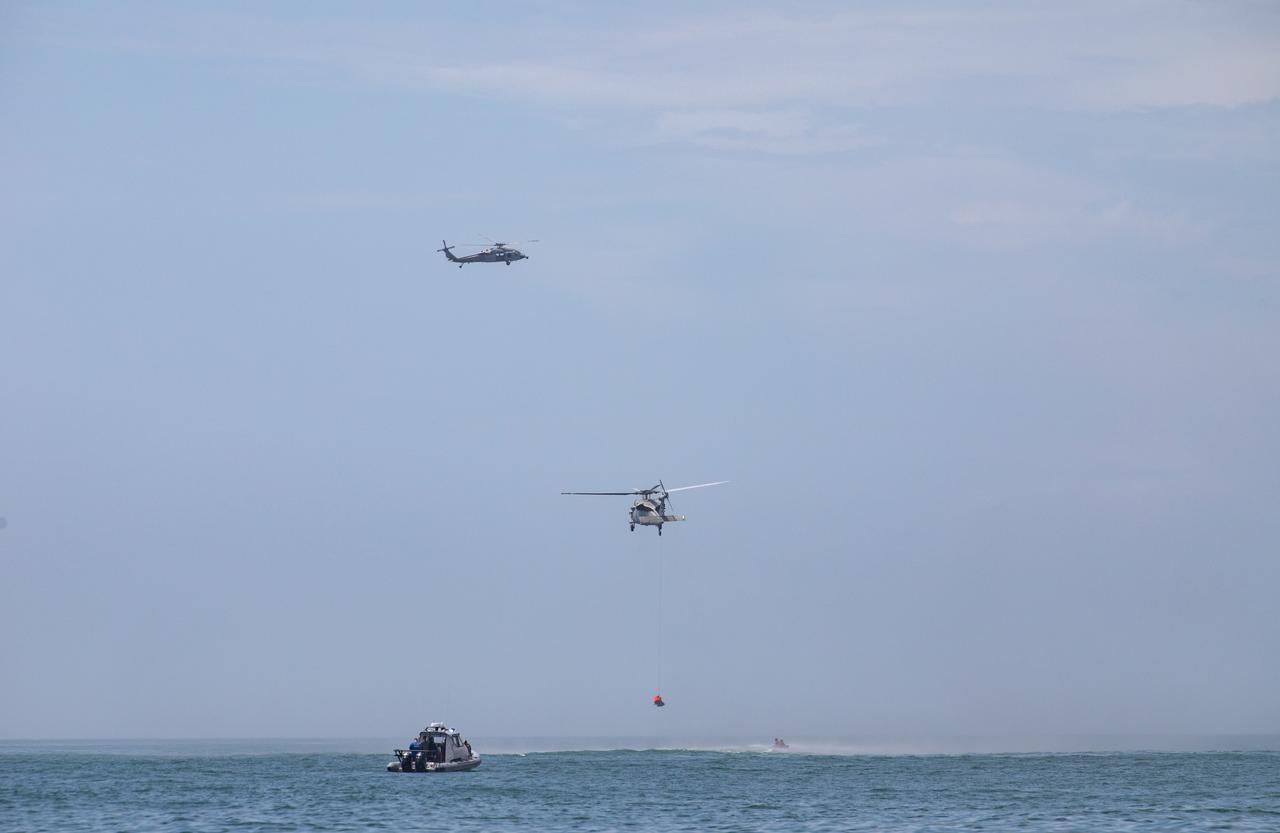
Teams with NASA and the Department of Defense (DoD) rehearse recovery procedures for a launch pad abort scenario off the coast of Florida near the agency’s Kennedy Space Center on Wednesday, June 11, 2025. Utilizing mannequin crew members inside the Crew Module Test Article (CMTA) – a full-scale mockup of the Orion spacecraft – the simulations practiced abort timelines and joint NASA and DoD recovery procedures supported by Artemis II launch and flight control teams, as NASA prepares to send four astronauts around the Moon and back next year as part of the agency’s first crewed Artemis mission.
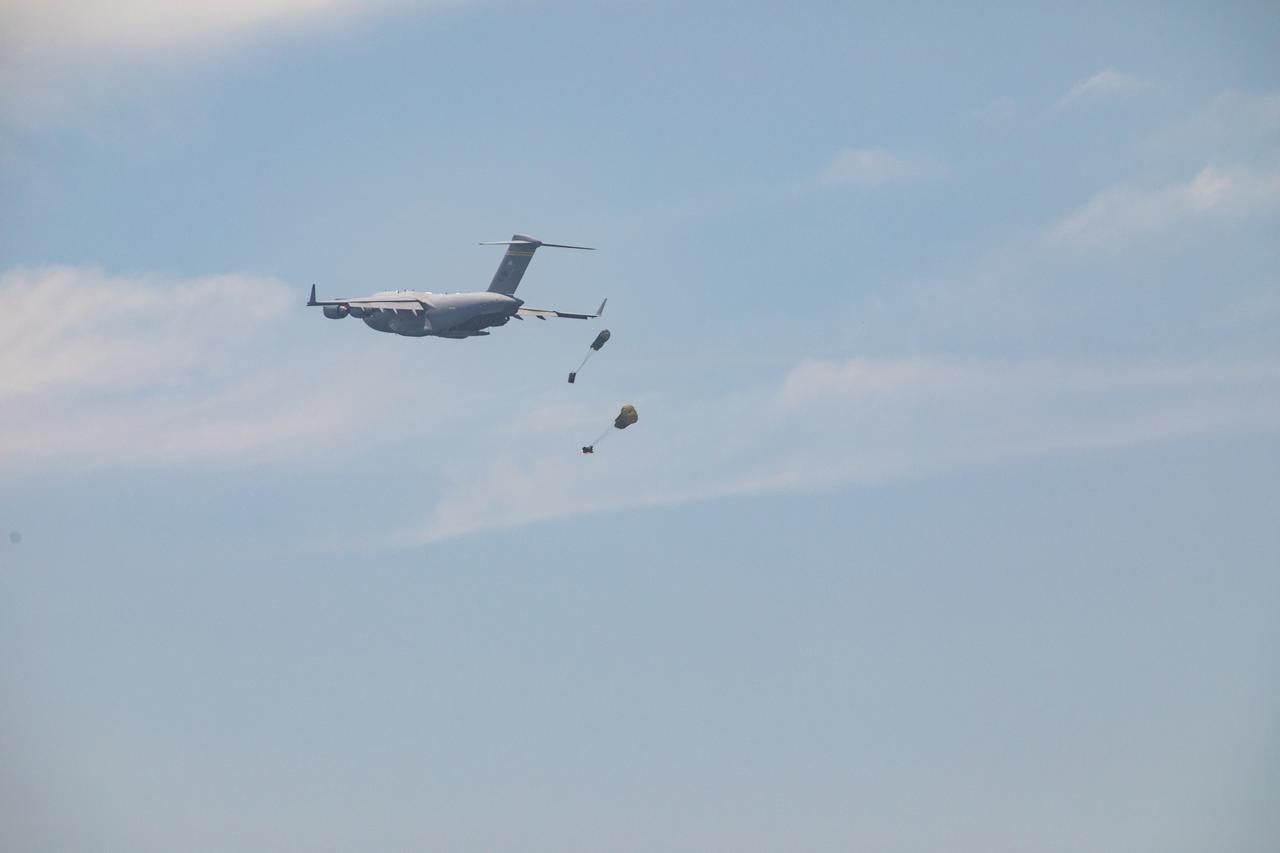
Teams with NASA and the Department of Defense (DoD) rehearse recovery procedures for an ascent abort scenario off the coast of Florida near the agency’s Kennedy Space Center on Thursday, June 12, 2025. Utilizing mannequin crew members inside the Crew Module Test Article (CMTA) – a full-scale mockup of the Orion spacecraft – the simulations practiced abort timelines and joint NASA and DoD recovery procedures supported by Artemis II launch and flight control teams, as NASA prepares to send four astronauts around the Moon and back next year as part of the agency’s first crewed Artemis mission.
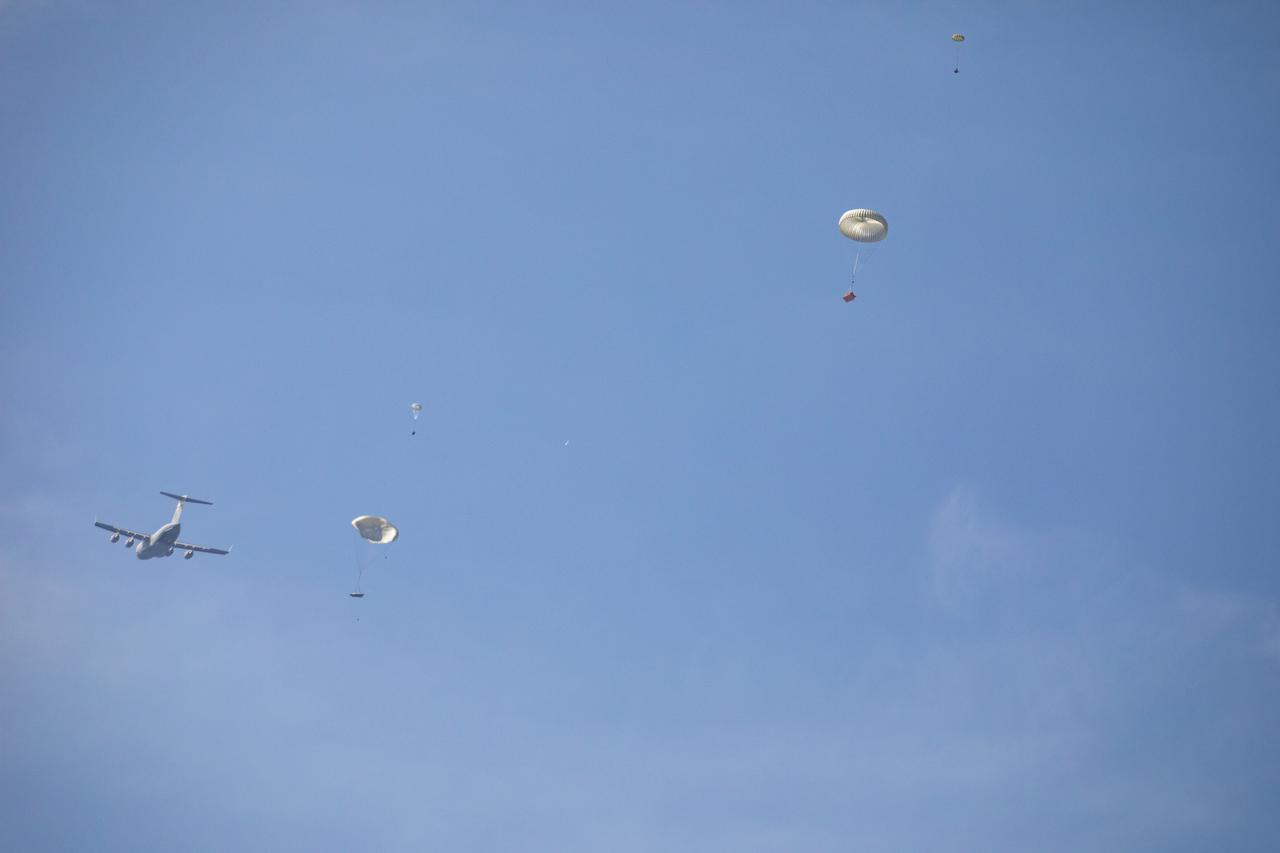
Teams with NASA and the Department of Defense (DoD) rehearse recovery procedures for an ascent abort scenario off the coast of Florida near the agency’s Kennedy Space Center on Thursday, June 12, 2025. Utilizing mannequin crew members inside the Crew Module Test Article (CMTA) – a full-scale mockup of the Orion spacecraft – the simulations practiced abort timelines and joint NASA and DoD recovery procedures supported by Artemis II launch and flight control teams, as NASA prepares to send four astronauts around the Moon and back next year as part of the agency’s first crewed Artemis mission.
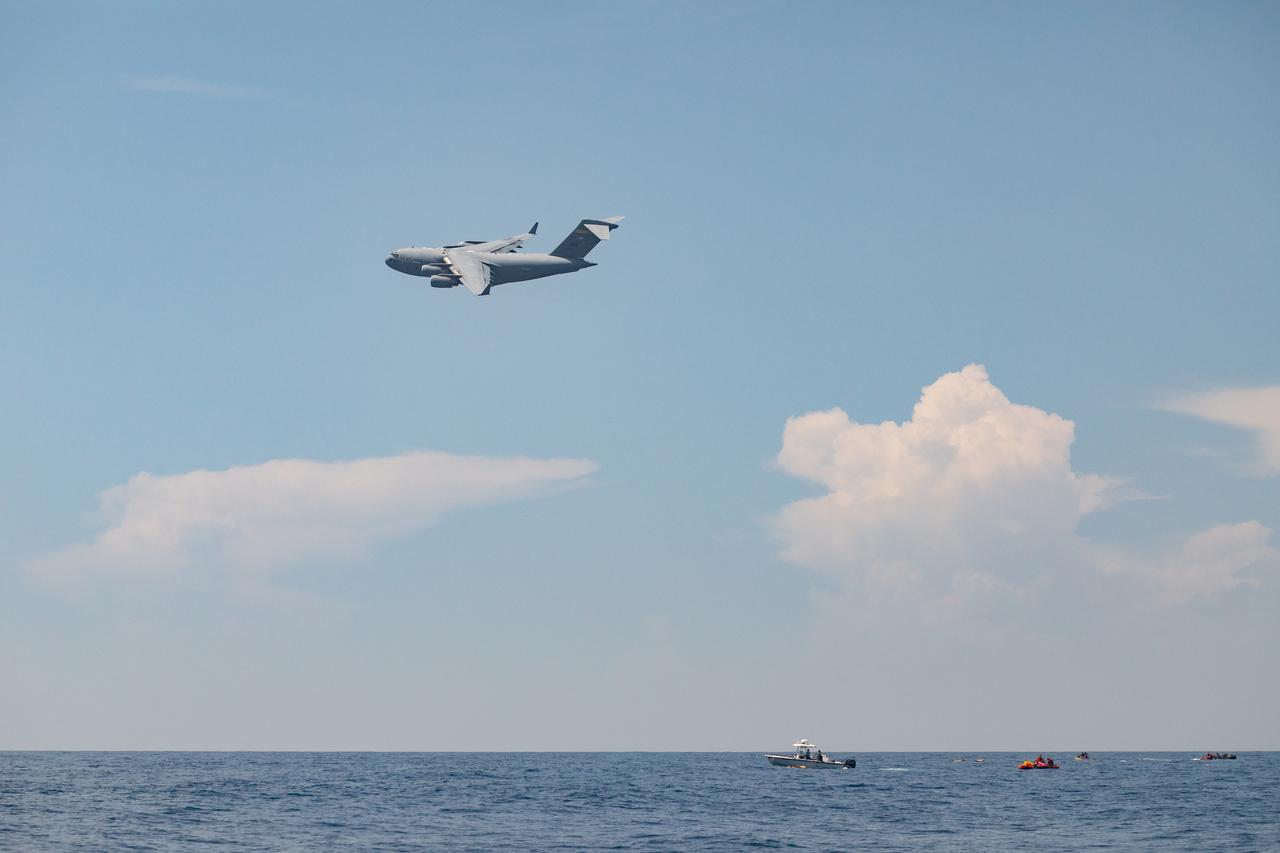
Teams with NASA and the Department of Defense (DoD) rehearse recovery procedures for an ascent abort scenario off the coast of Florida near the agency’s Kennedy Space Center on Thursday, June 12, 2025. Utilizing mannequin crew members inside the Crew Module Test Article (CMTA) – a full-scale mockup of the Orion spacecraft – the simulations practiced abort timelines and joint NASA and DoD recovery procedures supported by Artemis II launch and flight control teams, as NASA prepares to send four astronauts around the Moon and back next year as part of the agency’s first crewed Artemis mission.
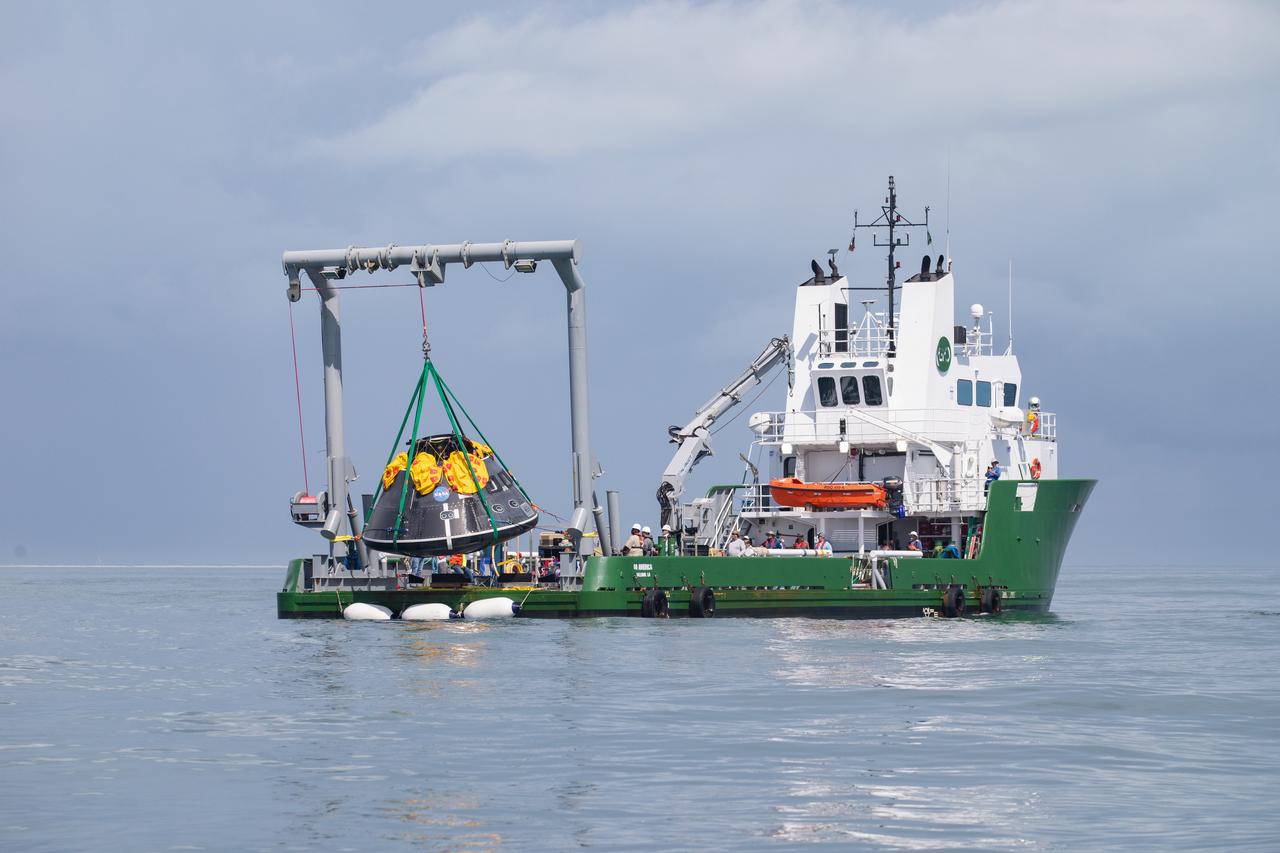
Teams with NASA and the Department of Defense (DoD) rehearse recovery procedures for a launch pad abort scenario off the coast of Florida near the agency’s Kennedy Space Center on Wednesday, June 11, 2025. Utilizing mannequin crew members inside the Crew Module Test Article (CMTA) – a full-scale mockup of the Orion spacecraft – the simulations practiced abort timelines and joint NASA and DoD recovery procedures supported by Artemis II launch and flight control teams, as NASA prepares to send four astronauts around the Moon and back next year as part of the agency’s first crewed Artemis mission.
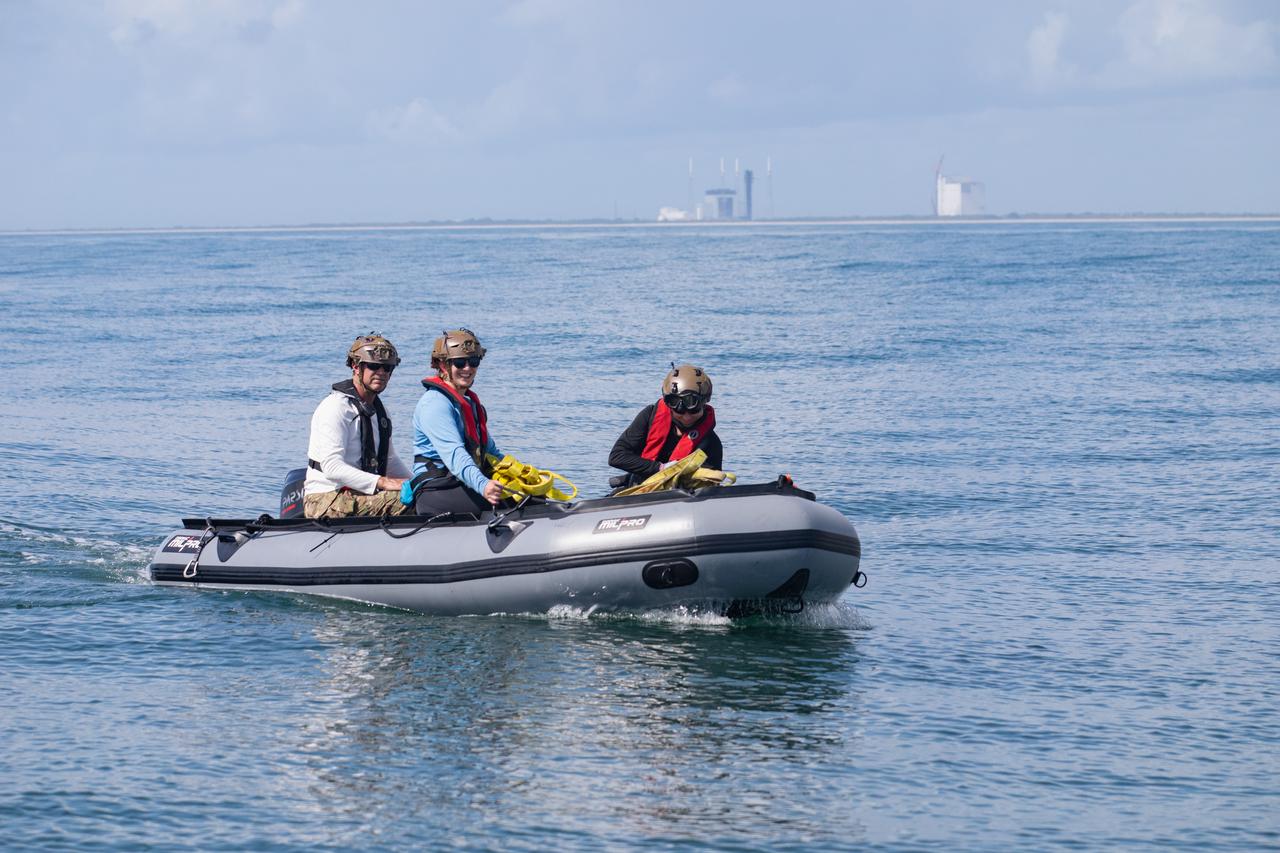
Teams with NASA and the Department of Defense (DoD) rehearse recovery procedures for a launch pad abort scenario off the coast of Florida near the agency’s Kennedy Space Center on Wednesday, June 11, 2025. Utilizing mannequin crew members inside the Crew Module Test Article (CMTA) – a full-scale mockup of the Orion spacecraft – the simulations practiced abort timelines and joint NASA and DoD recovery procedures supported by Artemis II launch and flight control teams, as NASA prepares to send four astronauts around the Moon and back next year as part of the agency’s first crewed Artemis mission.
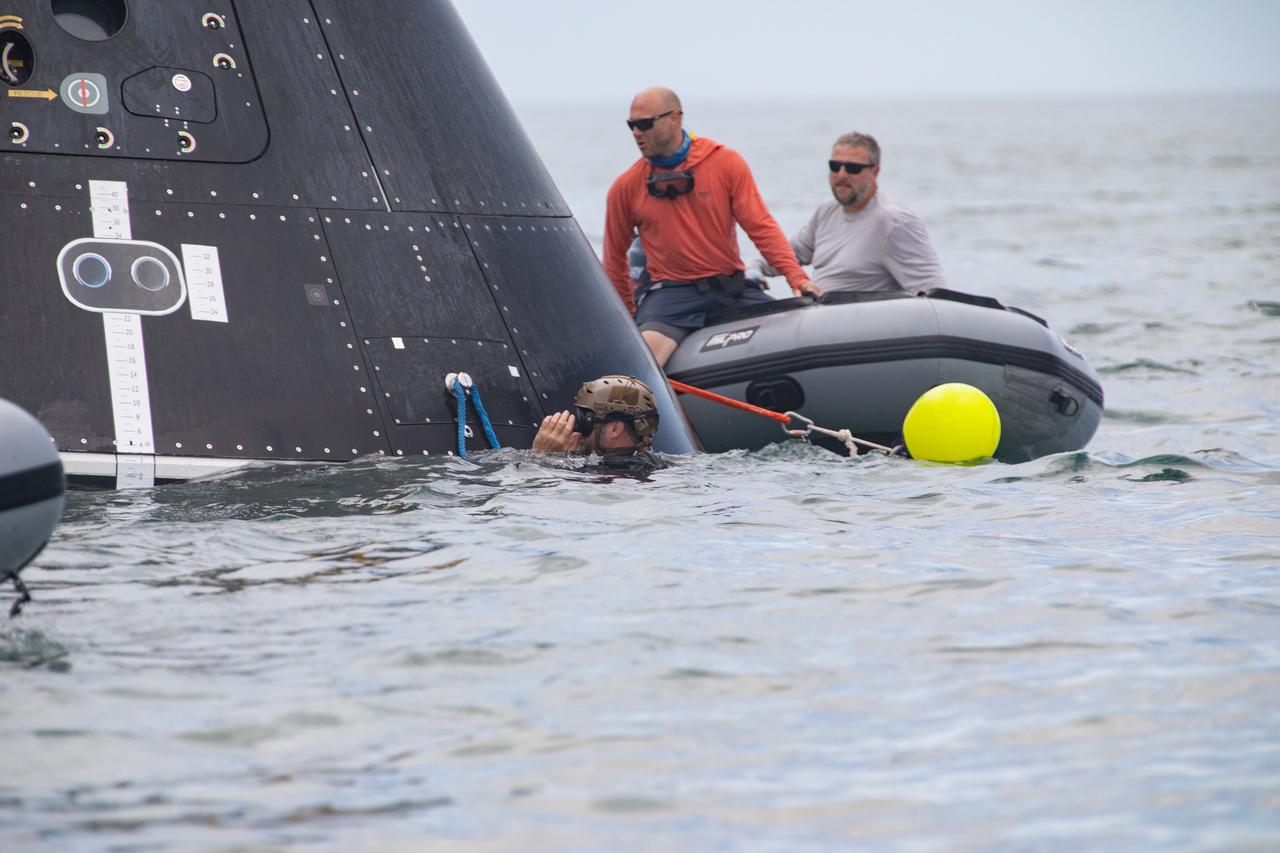
Teams with NASA and the Department of Defense (DoD) rehearse recovery procedures for a launch pad abort scenario off the coast of Florida near the agency’s Kennedy Space Center on Wednesday, June 11, 2025. Utilizing mannequin crew members inside the Crew Module Test Article (CMTA) – a full-scale mockup of the Orion spacecraft – the simulations practiced abort timelines and joint NASA and DoD recovery procedures supported by Artemis II launch and flight control teams, as NASA prepares to send four astronauts around the Moon and back next year as part of the agency’s first crewed Artemis mission.
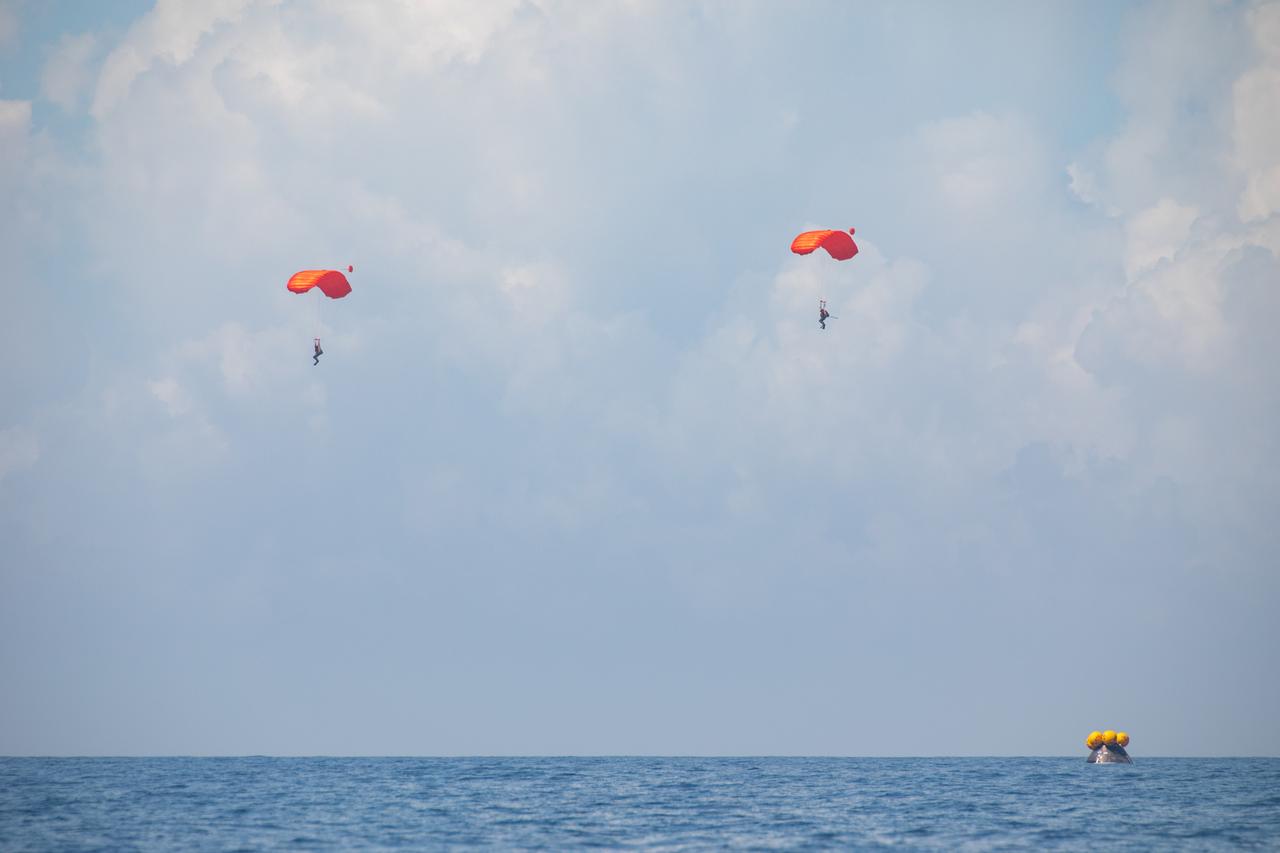
Teams with NASA and the Department of Defense (DoD) rehearse recovery procedures for an ascent abort scenario off the coast of Florida near the agency’s Kennedy Space Center on Thursday, June 12, 2025. Utilizing mannequin crew members inside the Crew Module Test Article (CMTA) – a full-scale mockup of the Orion spacecraft – the simulations practiced abort timelines and joint NASA and DoD recovery procedures supported by Artemis II launch and flight control teams, as NASA prepares to send four astronauts around the Moon and back next year as part of the agency’s first crewed Artemis mission.
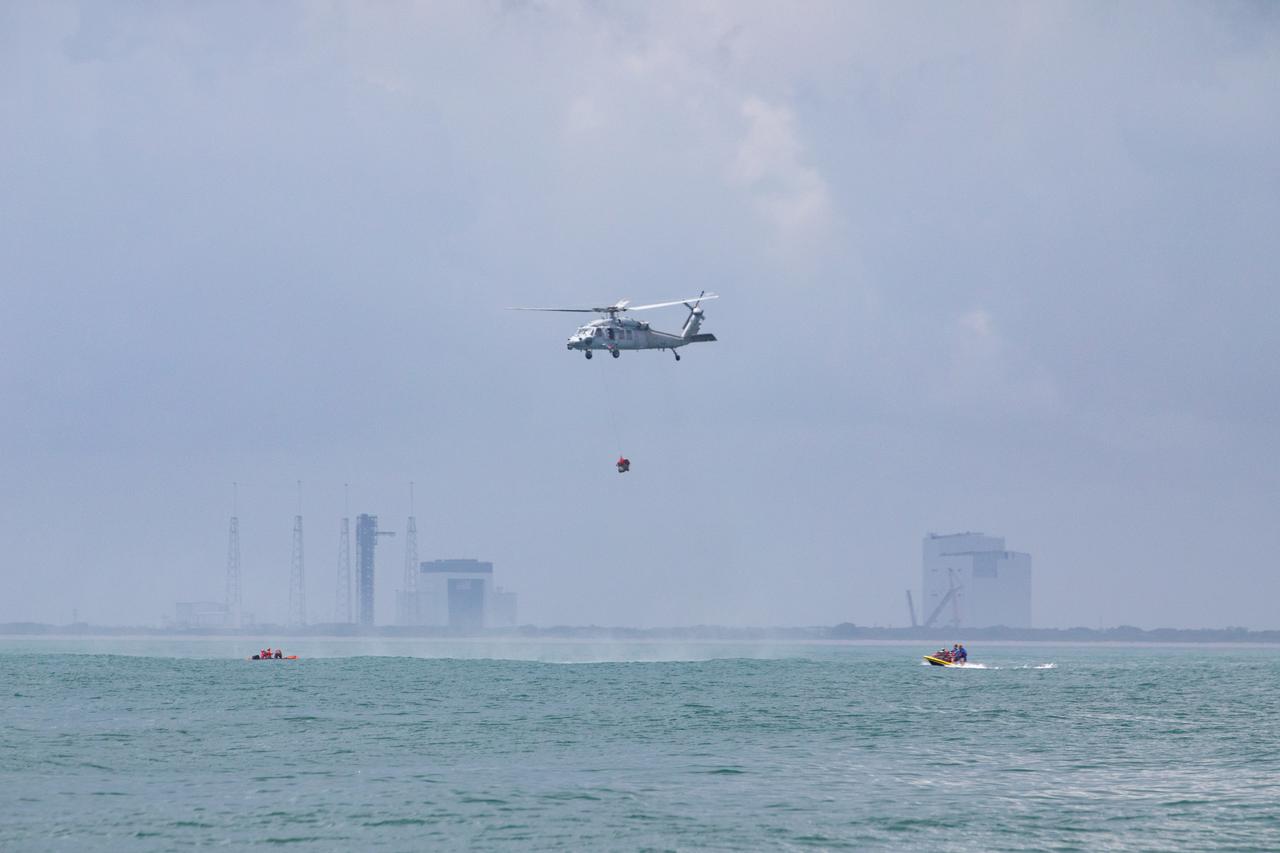
Teams with NASA and the Department of Defense (DoD) rehearse recovery procedures for a launch pad abort scenario off the coast of Florida near the agency’s Kennedy Space Center on Wednesday, June 11, 2025. Utilizing mannequin crew members inside the Crew Module Test Article (CMTA) – a full-scale mockup of the Orion spacecraft – the simulations practiced abort timelines and joint NASA and DoD recovery procedures supported by Artemis II launch and flight control teams, as NASA prepares to send four astronauts around the Moon and back next year as part of the agency’s first crewed Artemis mission.
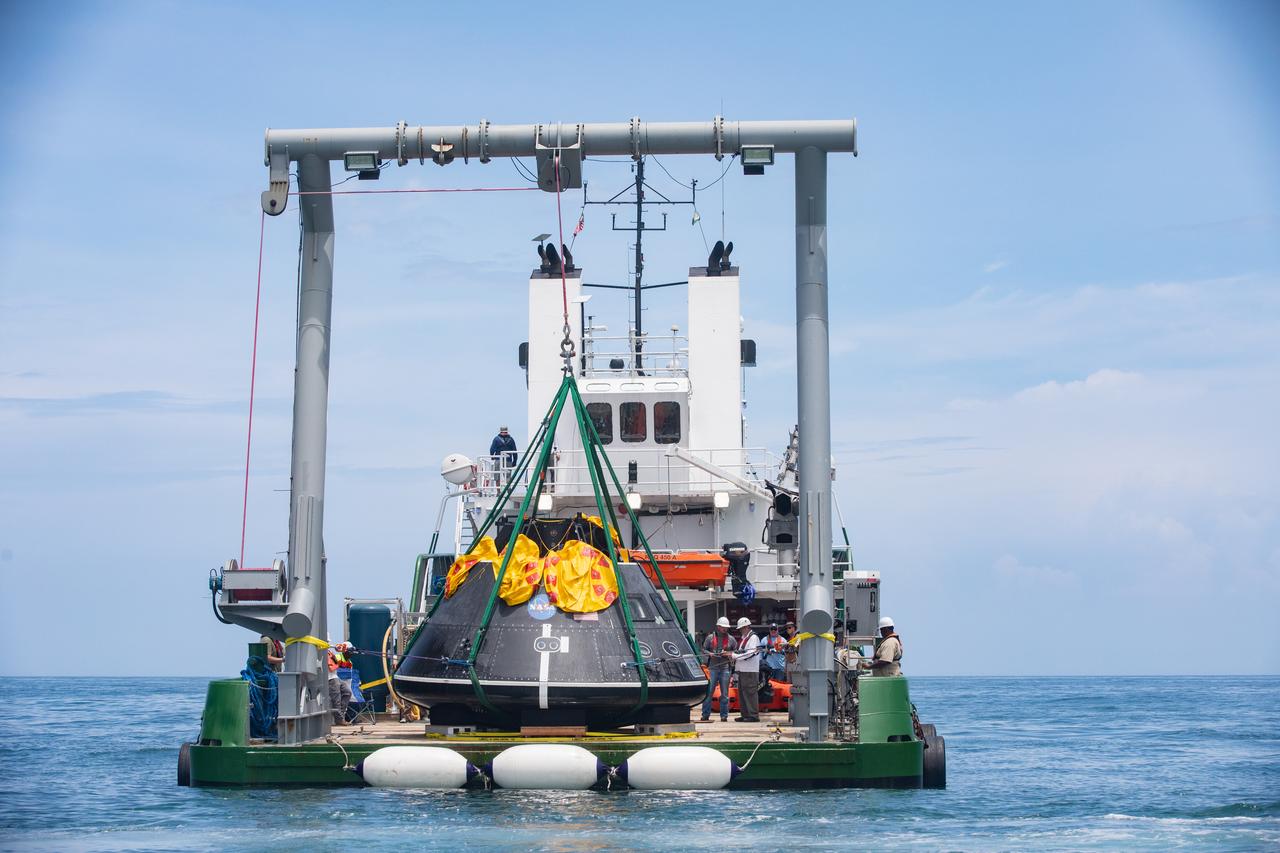
Teams with NASA and the Department of Defense (DoD) rehearse recovery procedures for a launch pad abort scenario off the coast of Florida near the agency’s Kennedy Space Center on Wednesday, June 11, 2025. Utilizing mannequin crew members inside the Crew Module Test Article (CMTA) – a full-scale mockup of the Orion spacecraft – the simulations practiced abort timelines and joint NASA and DoD recovery procedures supported by Artemis II launch and flight control teams, as NASA prepares to send four astronauts around the Moon and back next year as part of the agency’s first crewed Artemis mission.