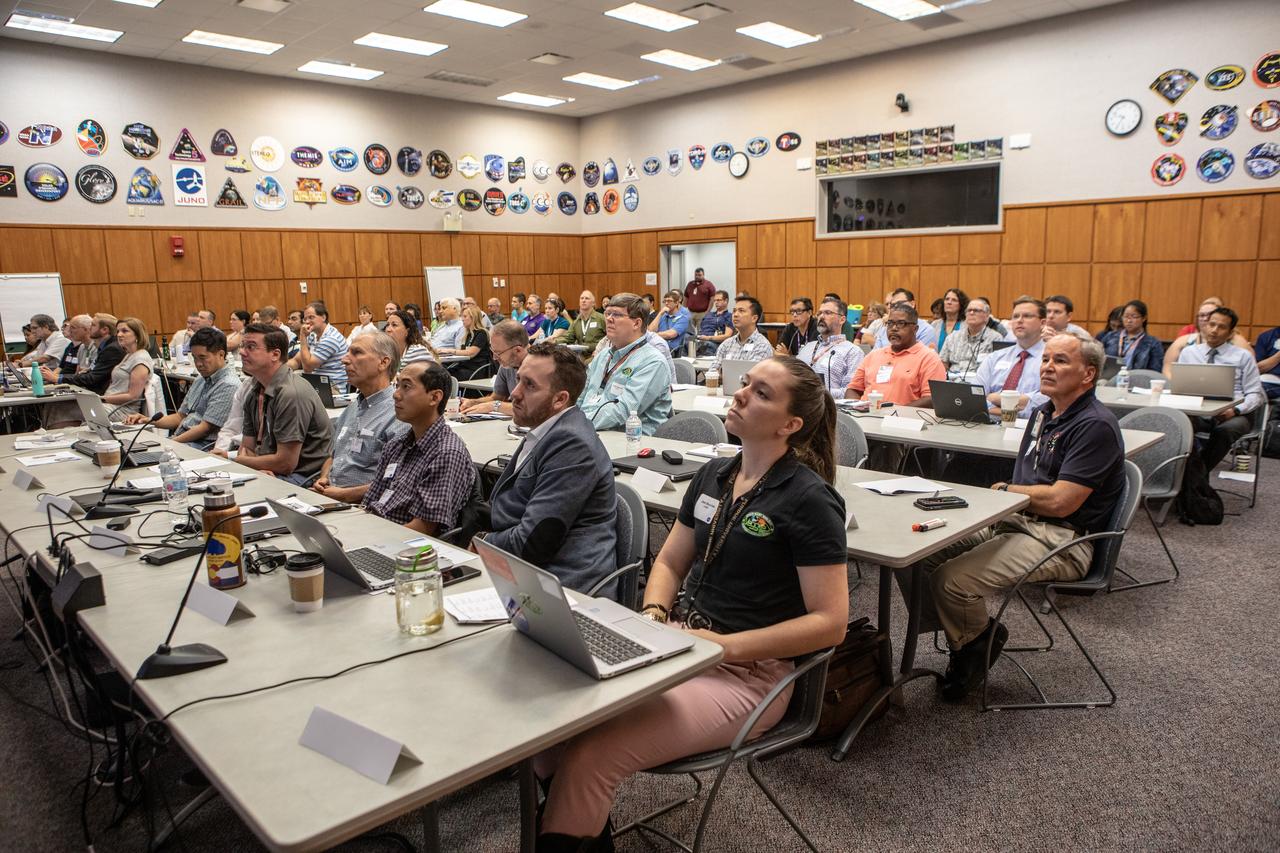
Participants listen to presentations during a two-day workshop, Aug. 6 and 7, 2019, focusing on robotics and automation in space crop production. The workshop was hosted by the Exploration Research and Technology Programs at NASA’s Kennedy Space Center in Florida. Participants from around the world and members of NASA, industry, academia and other government agencies met to share their knowledge to enable a common goal of sustaining human operations on the Moon, in deep space and eventually on Mars. Keynote speakers and representatives from different organizations presented data gleaned from their research.
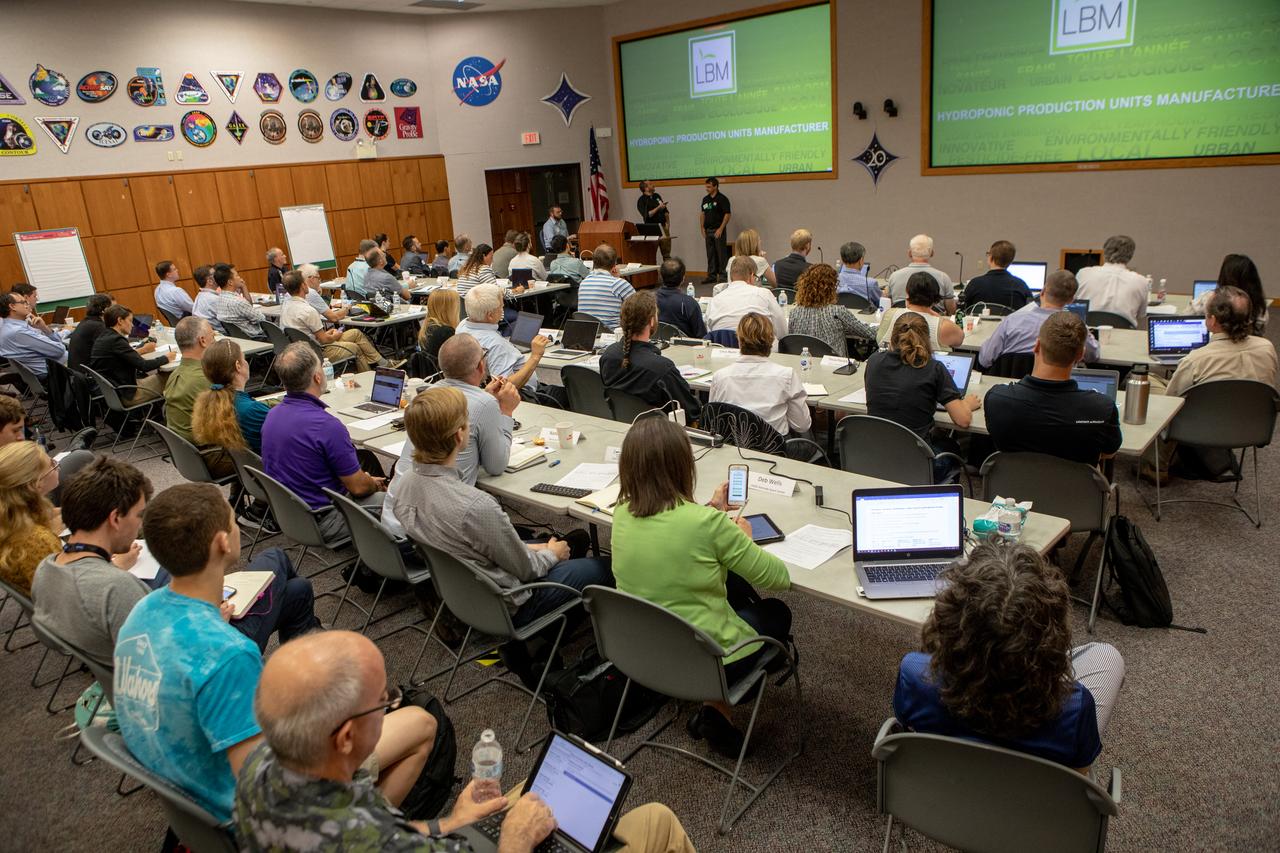
Participants listen to presentations during a two-day workshop, Aug. 6 and 7, 2019, focusing on robotics and automation in space crop production. The workshop was hosted by the Exploration Research and Technology Programs at NASA’s Kennedy Space Center in Florida. Participants from around the world and members of NASA, industry, academia and other government agencies met to share their knowledge to enable a common goal of sustaining human operations on the Moon, in deep space and eventually on Mars. Keynote speakers and representatives from different organizations presented data gleaned from their research.
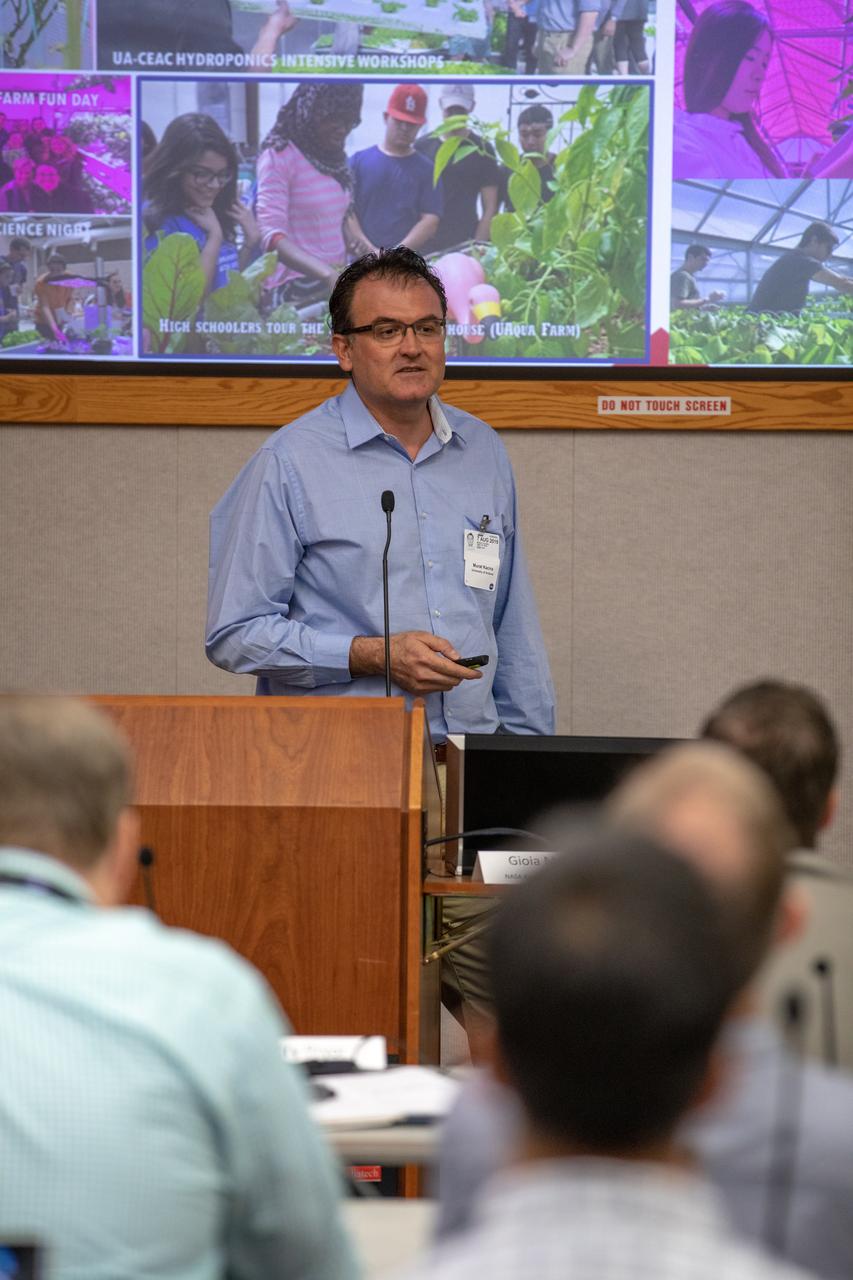
The Exploration Research and Technology Programs at NASA’s Kennedy Space Center in Florida hosted a two-day workshop, Aug. 6 and 7, 2019, focusing on robotics and automation in space crop production. Participants from around the world and members of NASA, industry, academia and other government agencies met to share their knowledge to enable a common goal of sustaining human operations on the Moon, in deep space and eventually on Mars. Keynote speakers and representatives from different organizations presented data gleaned from their research.. Murat Kacira, a professor in the Department of Agricultural and Biosystems Engineering and director of the Controlled Environment Agriculture Program at the University of Arizona presents to workshop attendees on Aug. 6.
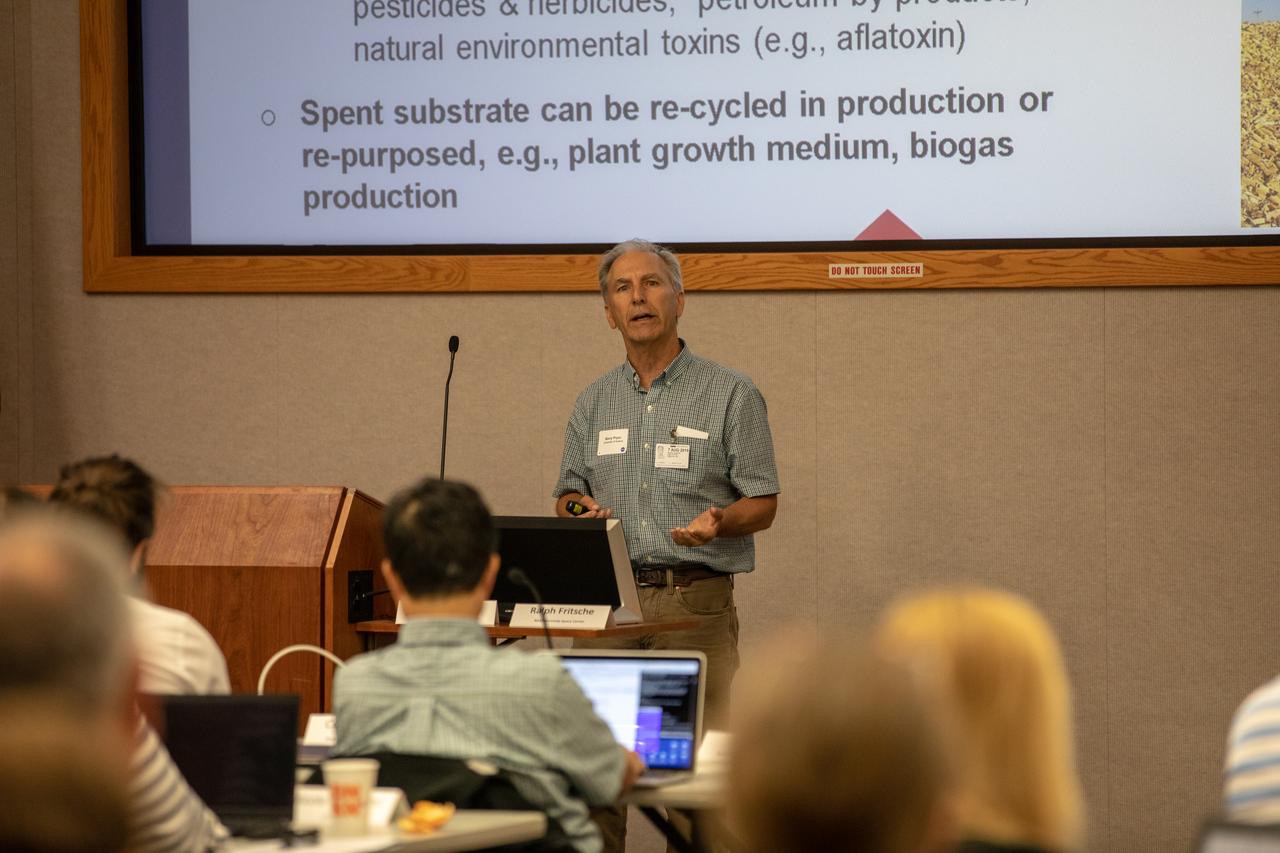
The Exploration Research and Technology Programs at NASA’s Kennedy Space Center in Florida hosted a two-day workshop, Aug. 6 and 7, 2019, focusing on robotics and automation in space crop production. Participants from around the world and members of NASA, industry, academia and other government agencies met to share their knowledge to enable a common goal of sustaining human operations on the Moon, in deep space and eventually on Mars. Keynote speakers and representatives from different organizations presented data gleaned from their research. Barry Pryor, a professor with the School of Plant Sciences at the University of Arizona presents to workshop attendees on Aug. 6.
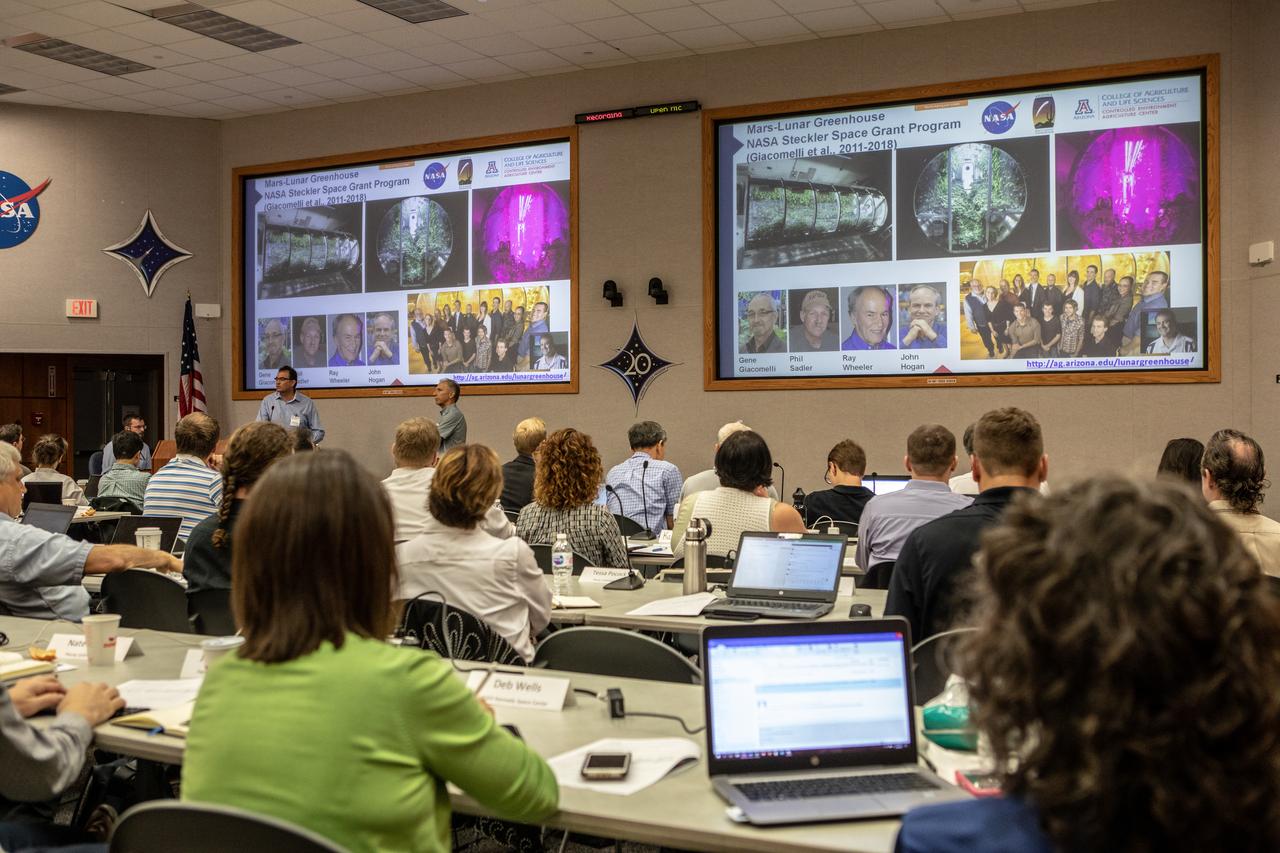
The Exploration Research and Technology Programs at NASA’s Kennedy Space Center in Florida hosted a two-day workshop, Aug. 6 and 7, 2019, focusing on robotics and automation in space crop production. Participants from around the world and members of NASA, industry, academia and other government agencies met to share their knowledge to enable a common goal of sustaining human operations on the Moon, in deep space and eventually on Mars. Keynote speakers and representatives from different organizations presented data gleaned from their research. Murat Kacira, left, a professor in the Department of Agricultural and Biosystems Engineering and director of the Controlled Environment Agriculture Program at the University of Arizona, and Barry Pryor, a professor with the School of Plant Sciences, also at the University of Arizona, present to workshop attendees on Aug. 6.
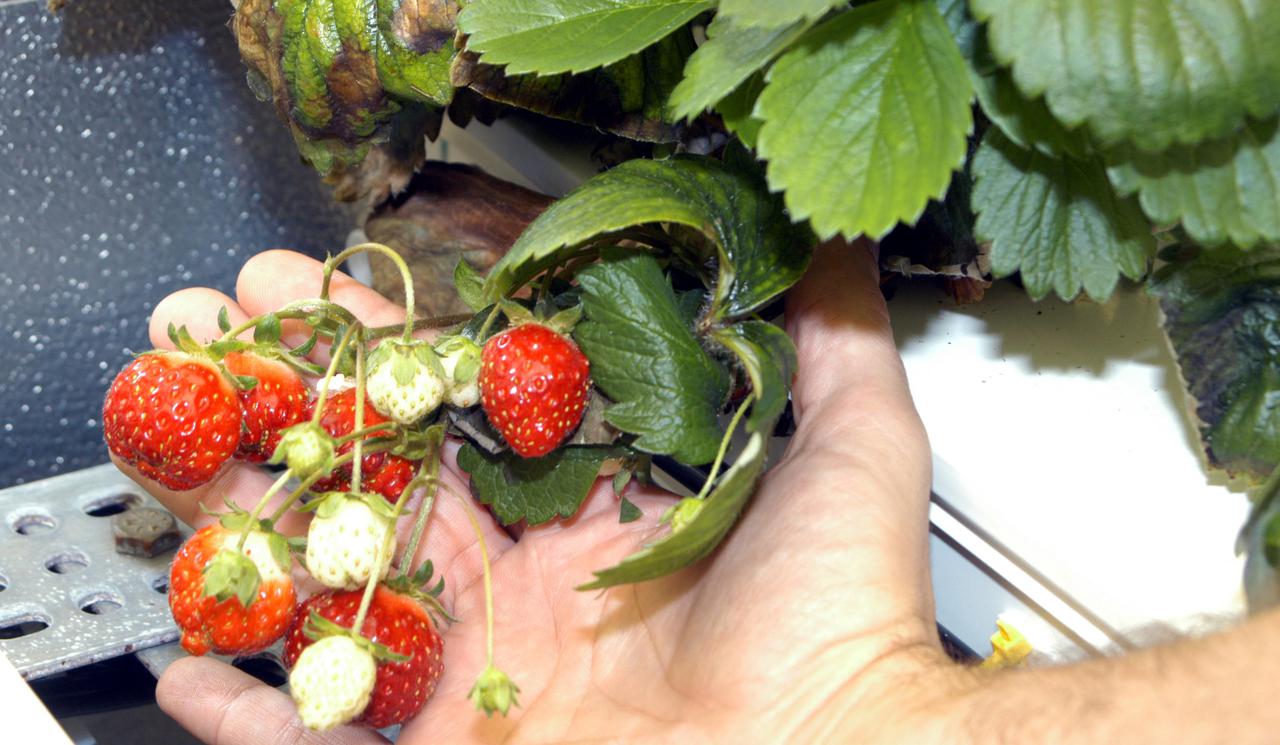
KENNEDY SPACE CENTER, FLA. - A crop of strawberries grown in a controlled environment chamber at the Space Life Sciences Lab is displayed during a tour of the facility for members of the news media. In missions to the International Space Station or early planetary outposts, plant production systems will likely be small and rely upon the spacecraft or habitat environment to regulate temperature, relative humidity, and carbon dioxide concentrations. Various crops are being grown in conditions that might be experienced in a spacecraft to evaluate the effects of different environmental conditions on plant growth, crop yield, and product quality.
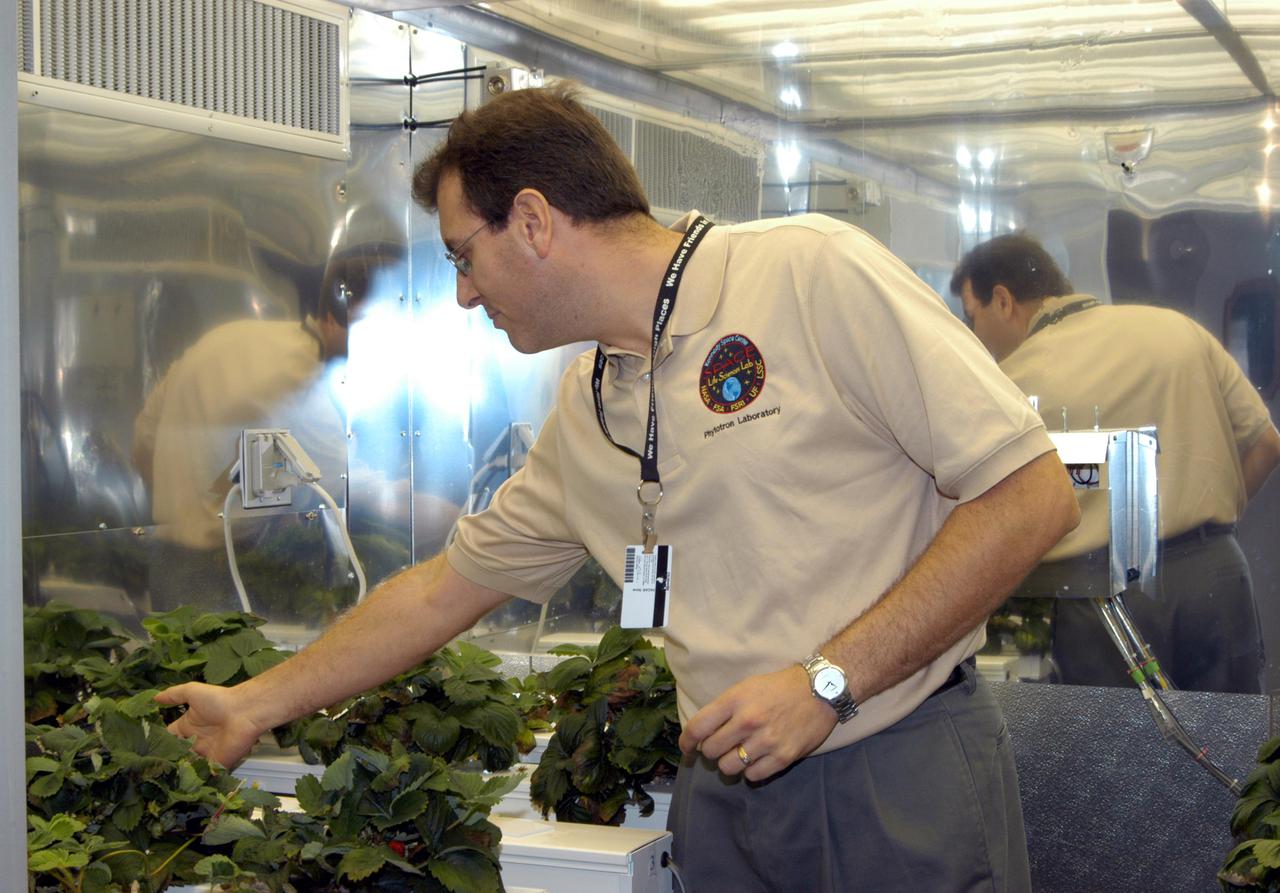
KENNEDY SPACE CENTER, FLA. - Jeff Richards, a plant physiologist with Dynamac Corporation, displays a crop of strawberries grown in a controlled environment chamber at the Space Life Sciences Lab during a tour of the facility for members of the news media. In missions to the International Space Station or early planetary outposts, plant production systems will likely be small and rely upon the spacecraft or habitat environment to regulate temperature, relative humidity, and carbon dioxide concentrations. Various crops are being grown in conditions that might be experienced in a spacecraft to evaluate the effects of different environmental conditions on plant growth, crop yield, and product quality.
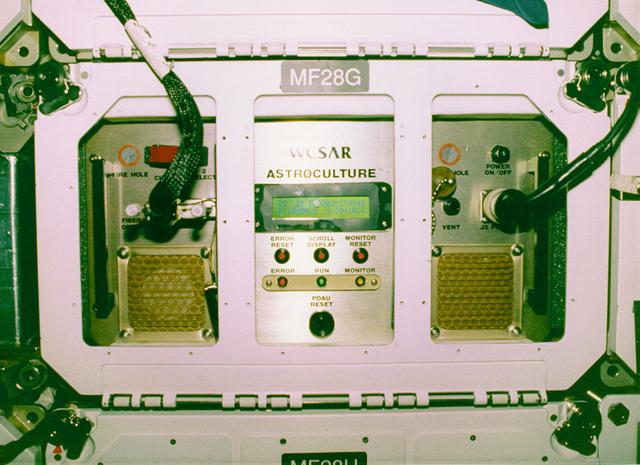
Research with plants in microgravity offers many exciting opportunities to gain new insights and could improve products on Earth ranging from crop production to fragrances and food flavorings. The ASTROCULTURE facility is a lead commercial facility for plant growth and plant research in microgravity and was developed by the Wisconsin Center for Space Automation and Robotics (WSCAR), a NASA Commercial Space Center. On STS-95 it will support research that could help improve crop development leading to plants that are more disease resistant or have a higher yield and provide data on the production of plant essential oils---oils that contain the essence of the plant and provide both fragrance and flavoring. On STS-95, a flowering plant will be grown in ASTROCULTURE and samples taken using a method developed by the industry partner for this investigation. On Earth the samples will be analyzed by gas chromatography/mass spectrometry and the data used to evaluate both the production of fragrant oils in microgravity and in the development of one or more products.

From left, Trent Smith, a senior leader of the NASA Kennedy Space Crop Production team, welcomes NASA astronaut Jessica Watkins, CSA (Canadian Space Agency) astronaut Joshua Kutryk, and NASA astronaut Luke Delaney to the Plant Processing Area inside the Space Systems Processing Facility at NASA’s Kennedy Space Center in Florida for a tour of the facility on Tuesday, May 12, 2026. Watkins, Delaney, and Kutryk, along with Roscosmos cosmonaut Sergey Teteryatnikov (not pictured), are part of NASA's SpaceX Crew-13 mission to the International Space Station and will explore the possibility of growing crops outside of the station’s Veggie chamber – one of two enclosed areas currently used to grow crops on the orbiting laboratory.

This photograph shows microgreens grown at the Plant Processing Area inside the Space Systems Processing Facility at NASA’s Kennedy Space Center in Florida on Tuesday, May 12, 2026. NASA Kennedy is home to the agency’s space crop production research efforts, including a team focused on growing crops to feed astronauts at the International Space Station and on other long duration missions to the Moon and Mars.
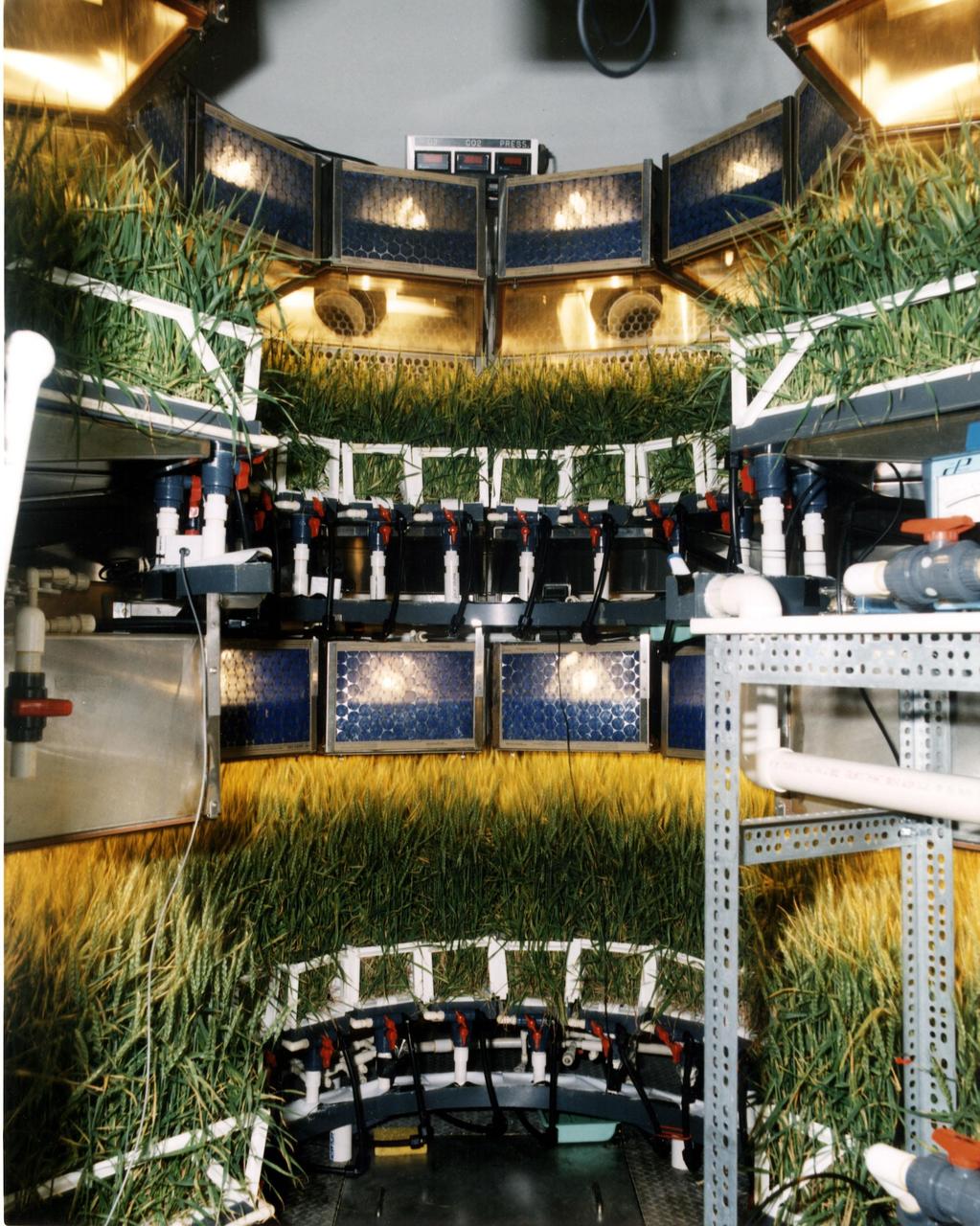
Original photo and caption dated June 22, 1988: "A dwarf wheat variety known as Yecoro Rojo flourishes in KSC's Biomass Production Chamber. Researchers are gathering information on the crop's ability to produce food, water and oxygen, and then remove carbon dioxide. The confined quarters associated with space travel require researchers to focus on smaller plants that yield proportionately large amounts of biomass. This wheat crop takes about 85 days to grow before harvest."
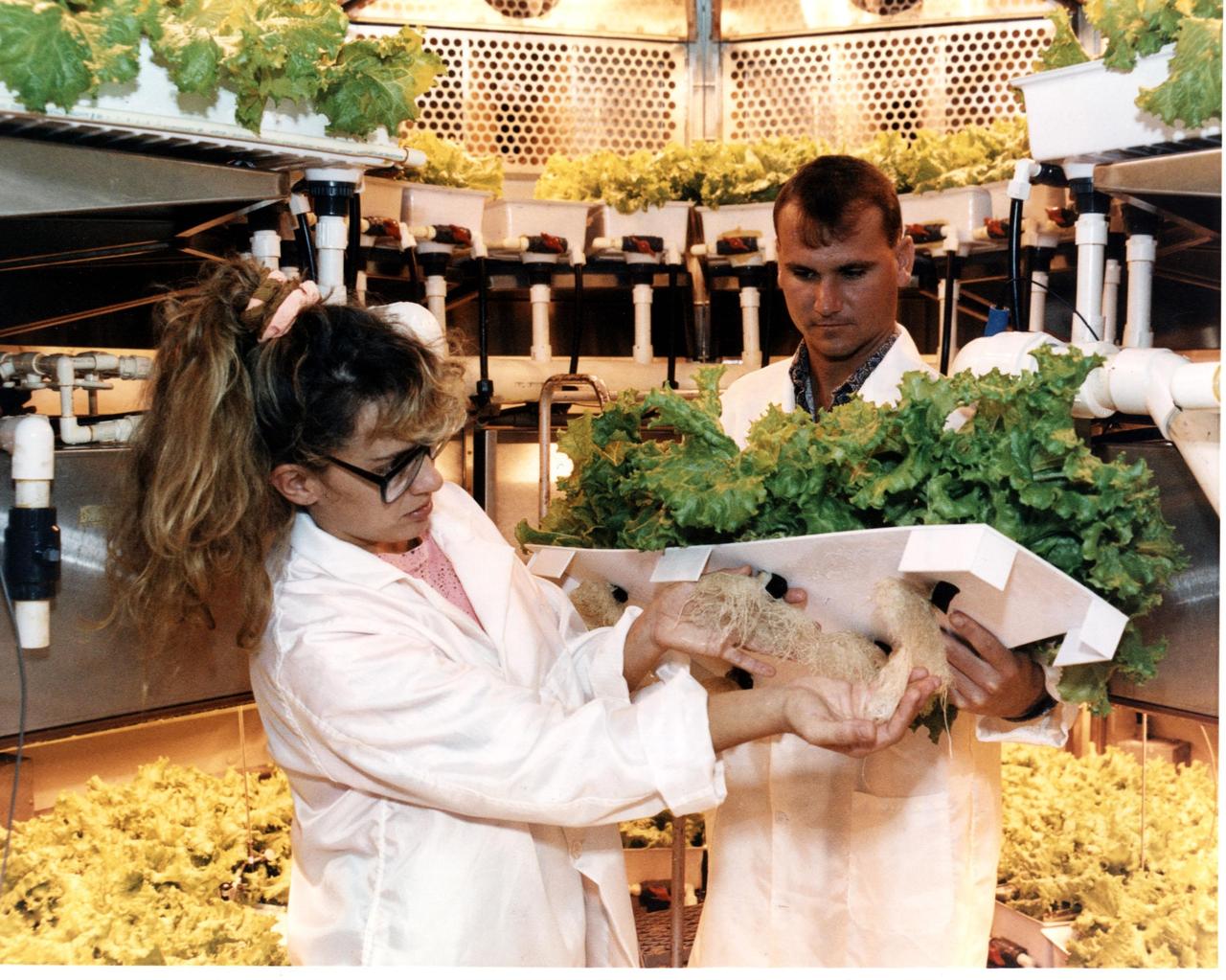
Original photo and caption dated October 8, 1991: <i>"Plant researchers Lisa Ruffe and Neil Yorio prepare to harvest a crop of Waldann's Green Lettuce from KSC's Biomass Production Chamber (BPC). KSC researchers have grown several different crops in the BPC to determine which plants will better produce food, water and oxygen on long-duration space missions."</i
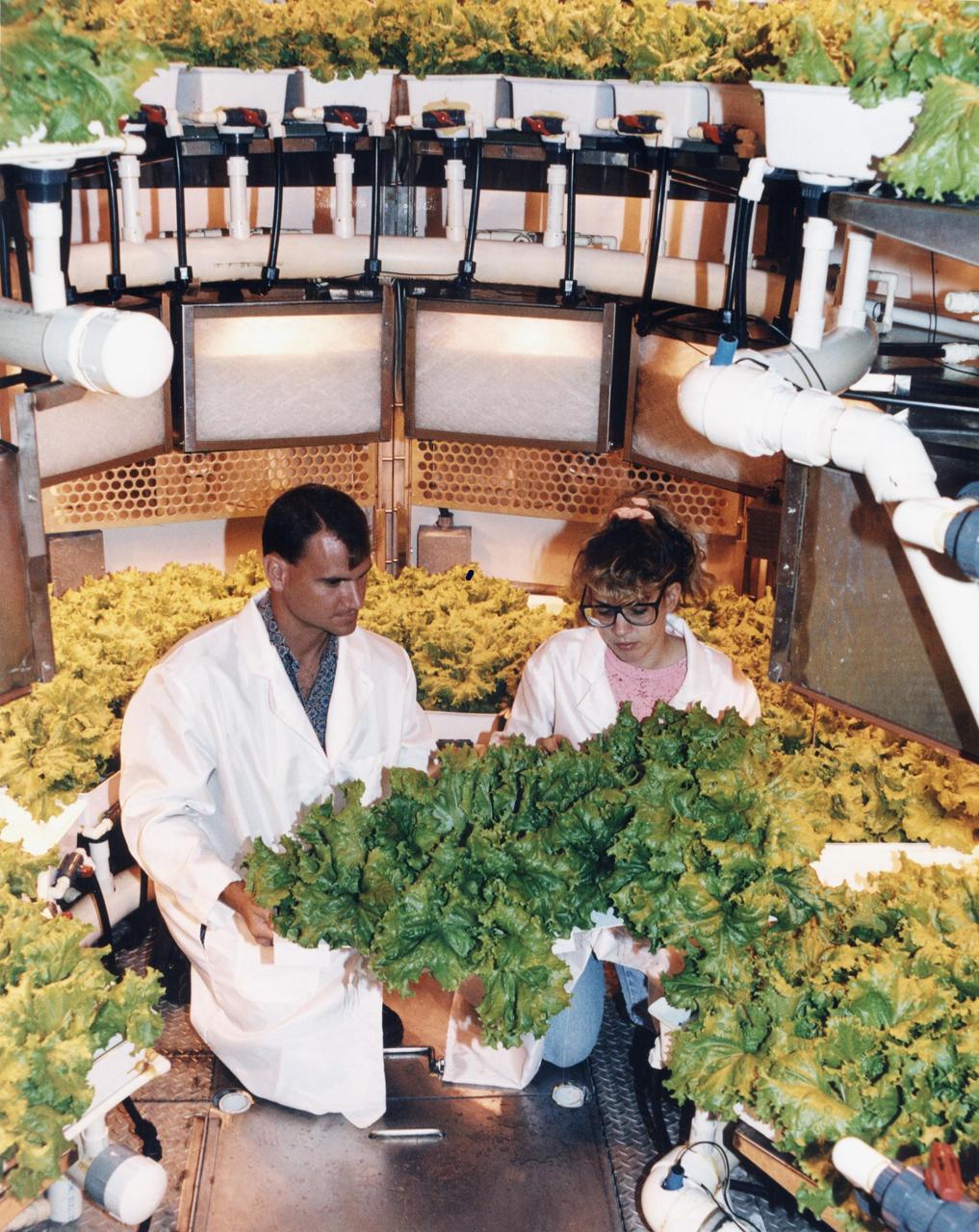
Original photo and caption dated October 8, 1991: "Plant researchers Neil Yorio and Lisa Ruffe prepare to harvest a crop of Waldann's Green Lettuce from KSC's Biomass Production Chamber (BPC). KSC researchers have grown several different crops in the BPC to determine which plants will better produce food, water and oxygen on long-duration space missions."

Shown here are microgreens – a quick-growing, highly nutritious crop – inside the Plant Production Area at NASA’s Kennedy Space Center’s Space Station Processing Facility in Florida on April 17, 2023. The microgreens will be used to make mixes to create complex flavors to help with menu fatigue in space.

Matthew Mickens, project scientist, space crop production at NASA’s Kennedy Space Center, participates in an employee incentive flying event with NASA Administrator Jared Isaacman's personal F-5 aircraft, Friday, March 6, 2026, at NASA’s Kennedy Space Center in Florida. Photo Credit: (NASA/John Kraus)

From left, Natasha Haveman, project scientist, NASA astronaut Jessica Watkins, Trent Smith, a senior leader of the NASA Kennedy Space Crop Production team, NASA astronauts Stan Love and Luke Delaney, and CSA (Canadian Space Agency) astronaut Joshua Kutryk view crops grown in the Plant Processing Area inside the Space Systems Processing Facility at NASA’s Kennedy Space Center in Florida during a tour on Tuesday, May 12, 2026. Watkins, Delaney, and Kutryk, along with Roscosmos cosmonaut Sergey Teteryatnikov (not pictured), are part of NASA's SpaceX Crew-13 mission to the International Space Station and will explore the possibility of growing crops outside of the station’s Veggie chamber – one of two enclosed areas currently used to grow crops on the orbiting laboratory.
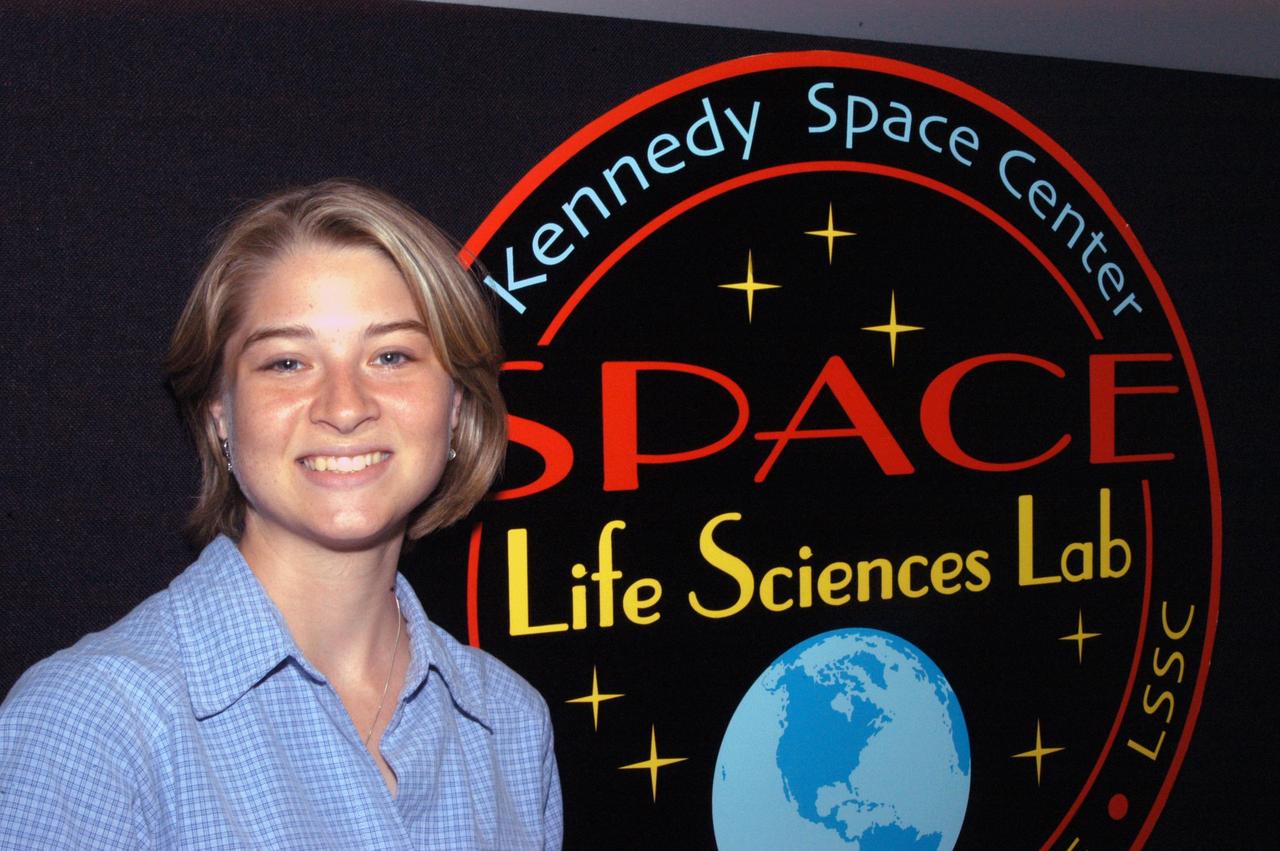
KENNEDY SPACE CENTER, FLA. - Kimberly Beck, a college trainee in Controlled Biological Systems in the Spaceflight and Life Sciences Training Program, is helping with growth studies supporting payload development. Behind her is part of the WONDER (Water Offset Nutrient Delivery Experiment) flight payload that is investigating hydroponic plant crop production in microgravity.

iss067e149651 (June 24, 2022) --- NASA astronauts Jessica Watkins and Bob Hines work on XROOTS, which used the station’s Veggie facility to test liquid- and air-based techniques to grow plants rather than traditional growth media. These techniques could enable production of crops on a larger scale for future space exploration.
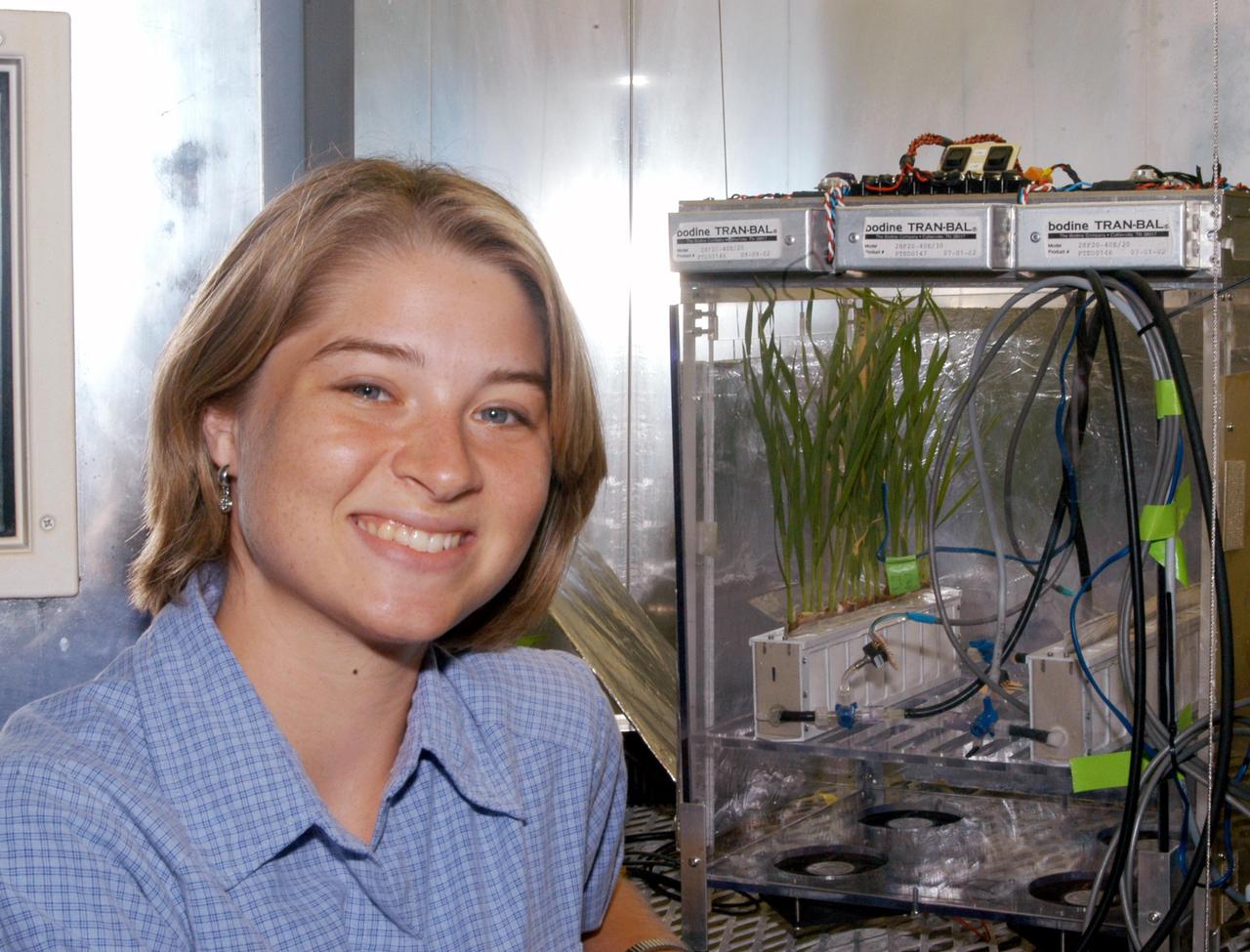
KENNEDY SPACE CENTER, FLA. - Kimberly Beck is a Controlled Biological Systems trainee in the Spaceflight and Life Sciences Training Program. She is helping with growth studies supporting the WONDER (Water Offset Nutrient Delivery Experiment) flight payload, which is investigating hydroponic plant crop production in microgravity.
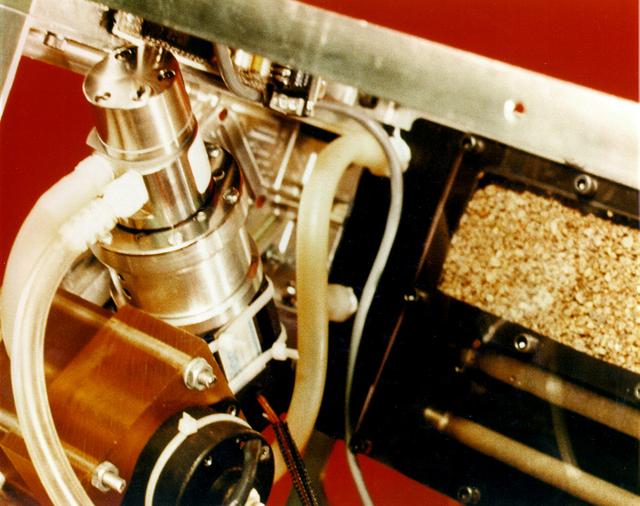
Research with plants in microgravity offers many exciting opportunities to gain new insights and could improve products on Earth ranging from crop production to fragrances and food flavorings. The ASTROCULTURE facility is a lead commercial facility for plant growth and plant research in microgravity and was developed by the Wisconsin Center for Space Automation and Robotics (WSCAR), a NASA Commercial Space Center. On STS-95 it will support research that could help improve crop development leading to plants that are more disease resistant or have a higher yield and provide data on the production of plant essential oils---oils that contain the essence of the plant and provide both fragrance and flavoring. On STS-95, a flowering plant will be grown in ASTROCULTURE and samples taken using a method developed by the industry partner for this investigation. On Earth, the samples will be analyzed by gas chromatography/mass spectrometry and the data used to evaluate both the production of fragrant oils in microgravity and in the development of one or more products. The ASTROCULTURE payload uses these pourous tubes with precise pressure sensing and control for fluid delivery to the plant root tray.
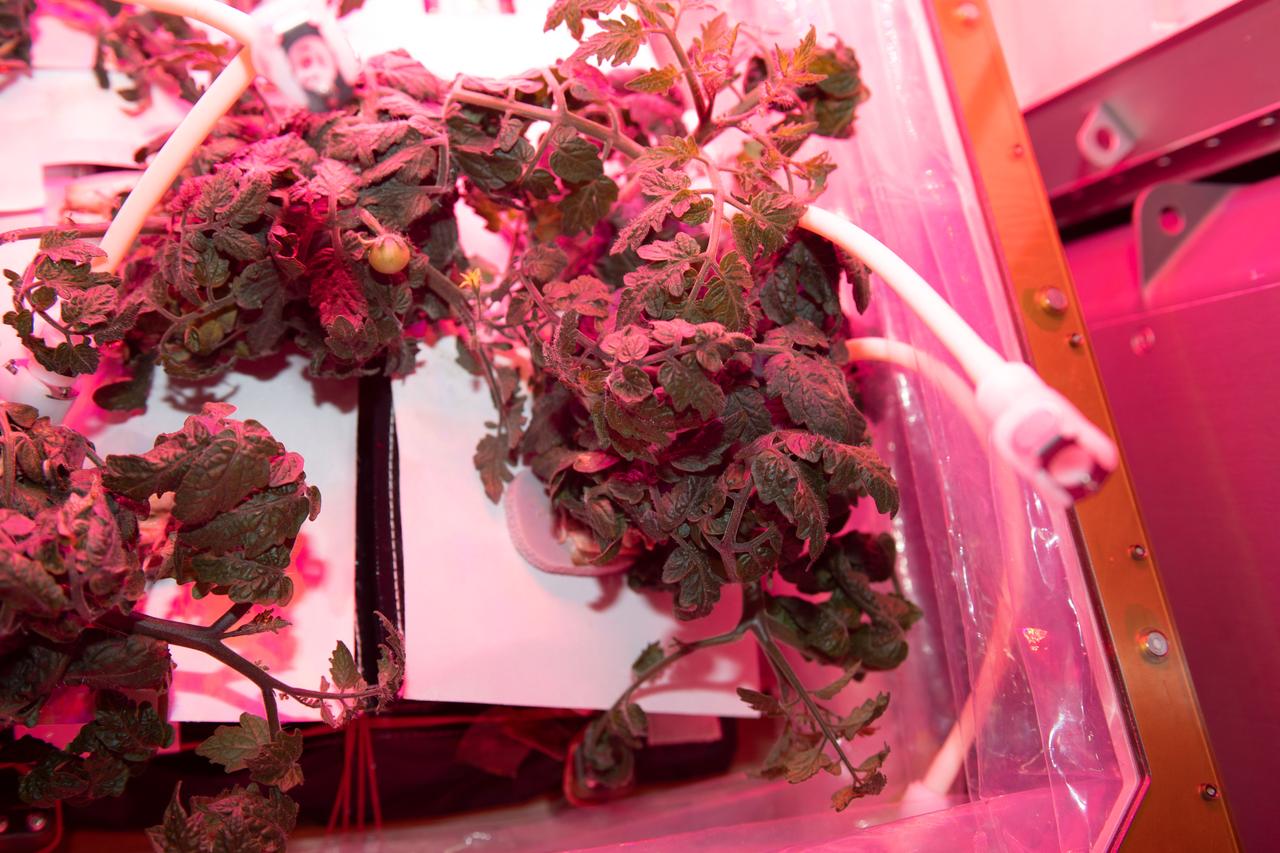
iss068e045298 (Feb. 5, 2023) --- A view of red dwarf tomato plants growing in the Veggie plant growth facility aboard the International Space Station as part of the Pick-and-Eat Salad-Crop Productivity, Nutritional Value, and Acceptability to Supplement the ISS Food System (Veg-05) investigation. Veg-05 is the next step in efforts to address the need for a continuous fresh-food production system in space. This experiment focuses on studying the impact of light quality and fertilizer on fruit production, microbial safety, nutritional value, taste acceptability by the astronauts, and the overall behavioral health benefits of having plants and fresh food in space.

These ‘Red Robin’ dwarf tomato plants, photographed Jan. 10, 2020, inside a laboratory in the Space Station Processing Facility at NASA Kennedy Space Center in Florida, are growing from seeds that have been exposed to simulated solar particle radiation. The plants’ edible mass and nutrients will be measured and compared to those of a control crop, grown from non-irradiated seeds. The project was designed to confirm that nutritious, high-quality produce can be reliably grown in deep space, or to provide a baseline to guide development of countermeasures to protect future crop foods from radiation during missions beyond low-Earth orbit. The investigation on space radiation impact on seeds and crop production also will be carried on the Materials International Space Station Experiment (MISSE) platform outside the station, supported NASA’s Space Technology Mission Directorate and the Space Biology Program, and potentially on future beyond-low-Earth platforms.

These ‘Red Robin’ dwarf tomato plants, photographed Jan. 10, 2020, inside a laboratory in the Space Station Processing Facility at NASA Kennedy Space Center in Florida, are growing from seeds that have been exposed to simulated solar particle radiation. The plants’ edible mass and nutrients will be measured and compared to those of a control crop, grown from non-irradiated seeds. The project was designed to confirm that nutritious, high-quality produce can be reliably grown in deep space, or to provide a baseline to guide development of countermeasures to protect future crop foods from radiation during missions beyond low-Earth orbit. The investigation on space radiation impact on seeds and crop production also will be carried on the Materials International Space Station Experiment (MISSE) platform outside the station, supported NASA’s Space Technology Mission Directorate and the Space Biology Program, and potentially on future beyond-low-Earth platforms.

These ‘Red Robin’ dwarf tomato plants, photographed Jan. 10, 2020, inside a laboratory in the Space Station Processing Facility at NASA Kennedy Space Center in Florida, are growing from seeds that have been exposed to simulated solar particle radiation. The plants’ edible mass and nutrients will be measured and compared to those of a control crop, grown from non-irradiated seeds. The project was designed to confirm that nutritious, high-quality produce can be reliably grown in deep space, or to provide a baseline to guide development of countermeasures to protect future crop foods from radiation during missions beyond low-Earth orbit. The investigation on space radiation impact on seeds and crop production also will be carried on the Materials International Space Station Experiment (MISSE) platform outside the station, supported NASA’s Space Technology Mission Directorate and the Space Biology Program, and potentially on future beyond-low-Earth platforms.

NASA astronaut Luke Delaney (front), along with CSA (Canadian Space Agency) astronaut Joshua Kutryk, NASA astronauts Jessica Watkins and Stan Love, Project Scientist Natasha Haveman, and Trent Smith, a senior leader of the NASA Kennedy Space Crop Production team, view microgreens at the Plant Processing Area inside the Space Systems Processing Facility at NASA’s Kennedy Space Center in Florida on Tuesday, May 12, 2026. Watkins, Delaney, Kutryk, and Roscosmos cosmonaut Sergey Teteryatnikov (not pictured) are part of NASA's SpaceX Crew-13 mission to the International Space Station and will explore the possibility of growing crops outside of the station’s Veggie chamber – one of two enclosed areas currently used to grow crops on the orbiting laboratory.
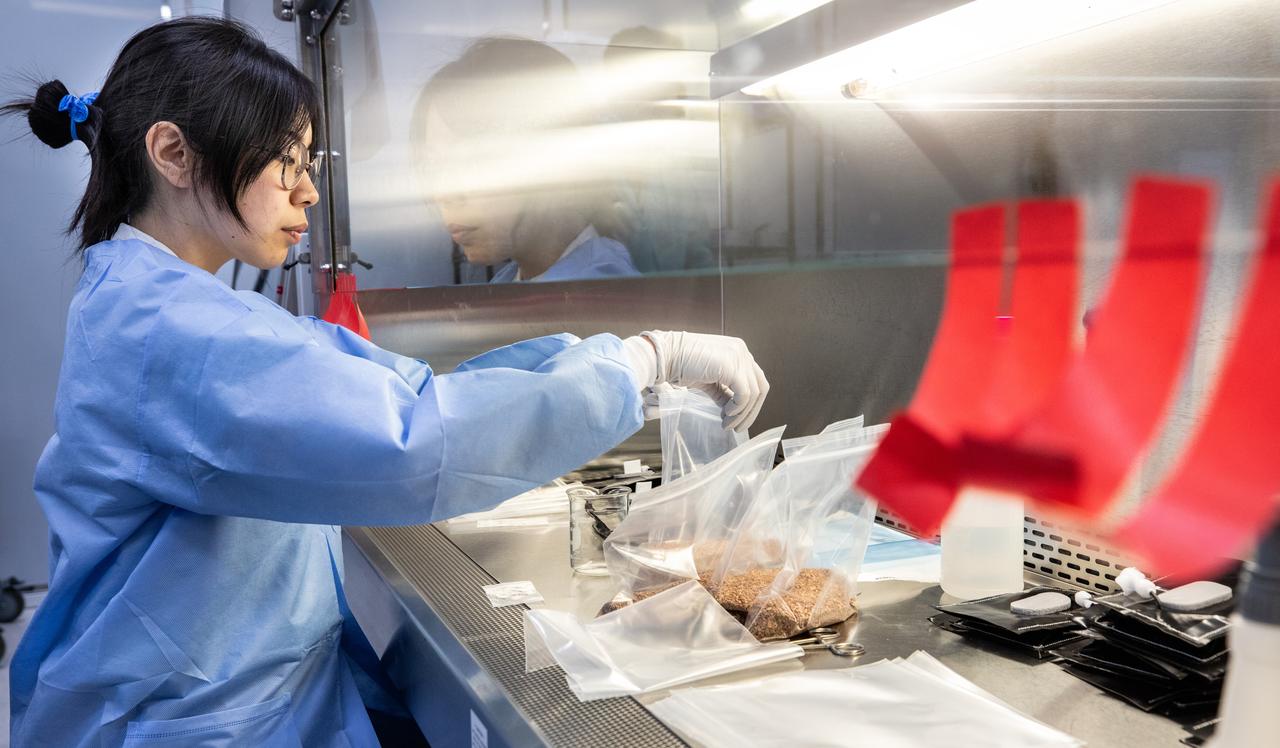
A member of the space crop production team pours substrate and controlled release fertilizer into a Veggie plant pillow on Thursday, May 29, 2025, inside the Space Systems Processing Facility at NASA’s Kennedy Space Center in Florida. The plant pillows, along with Veg-03 MNO seed films, which will carry seeds of Red Russian kale, Wasabi mustard greens, and Dragoon lettuce, are set to fly aboard NASA’s SpaceX Crew-11 mission to the International Space Station to grow in the space environment to study how microgravity impacts crop development compared to ground-grown plants. Seed films enable seed handling and planting of seeds into plant pillows allowing for astronaut choice of crops to grow. Plants can provide whole food nutrition, improve menu variety, and positively impact behavioral health of astronauts on long duration missions to the Moon and Mars and space crop research aboard the orbiting laboratory is enabled by NASA’s Biological and Physical Sciences Division and the International Space Station Program.

A member of the space crop production team pours substrate and controlled release fertilizer into a Veggie plant pillow on Thursday, May 29, 2025, inside the Space Systems Processing Facility at NASA’s Kennedy Space Center in Florida. The plant pillows, along with Veg-03 MNO seed films, which will carry seeds of Red Russian kale, Wasabi mustard greens, and Dragoon lettuce, are set to fly aboard NASA’s SpaceX Crew-11 mission to the International Space Station to grow in the space environment to study how microgravity impacts crop development compared to ground-grown plants. Seed films enable seed handling and planting of seeds into plant pillows allowing for astronaut choice of crops to grow. Plants can provide whole food nutrition, improve menu variety, and positively impact behavioral health of astronauts on long duration missions to the Moon and Mars and space crop research aboard the orbiting laboratory is enabled by NASA’s Biological and Physical Sciences Division and the International Space Station Program.
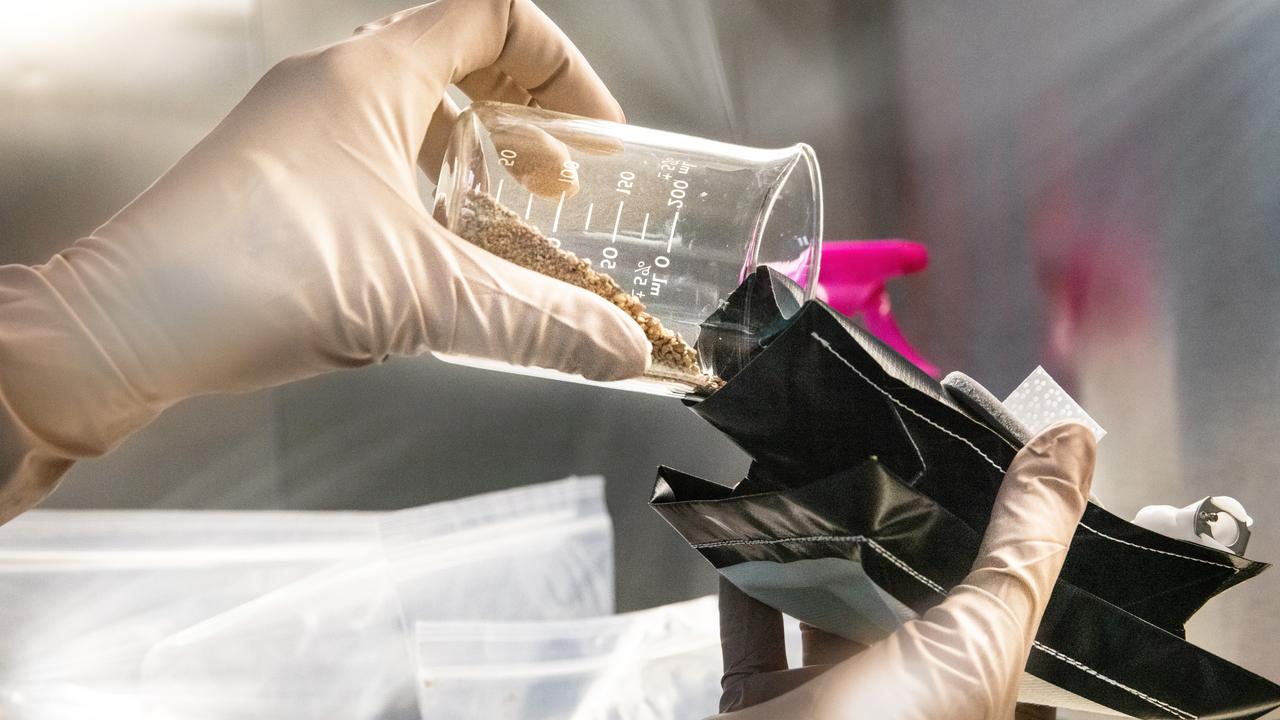
A member of the space crop production team pours substrate and controlled release fertilizer into a Veggie plant pillow on Thursday, May 29, 2025, inside the Space Systems Processing Facility at NASA’s Kennedy Space Center in Florida. The plant pillows, along with Veg-03 MNO seed films, which will carry seeds of Red Russian kale, Wasabi mustard greens, and Dragoon lettuce, are set to fly aboard NASA’s SpaceX Crew-11 mission to the International Space Station to grow in the space environment to study how microgravity impacts crop development compared to ground-grown plants. Seed films enable seed handling and planting of seeds into plant pillows allowing for astronaut choice of crops to grow. Plants can provide whole food nutrition, improve menu variety, and positively impact behavioral health of astronauts on long duration missions to the Moon and Mars and space crop research aboard the orbiting laboratory is enabled by NASA’s Biological and Physical Sciences Division and the International Space Station Program.
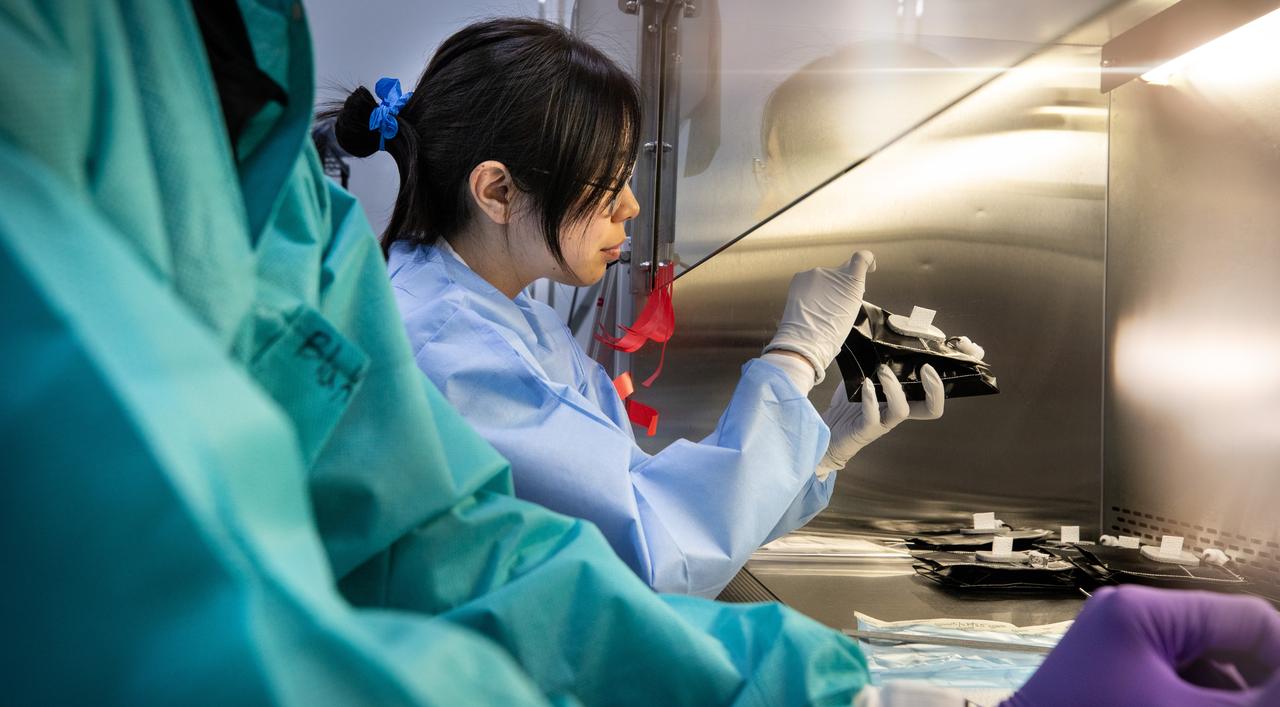
A member of the space crop production team pours substrate and controlled release fertilizer into a Veggie plant pillow on Thursday, May 29, 2025, inside the Space Systems Processing Facility at NASA’s Kennedy Space Center in Florida. The plant pillows, along with Veg-03 MNO seed films, which will carry seeds of Red Russian kale, Wasabi mustard greens, and Dragoon lettuce, are set to fly aboard NASA’s SpaceX Crew-11 mission to the International Space Station to grow in the space environment to study how microgravity impacts crop development compared to ground-grown plants. Seed films enable seed handling and planting of seeds into plant pillows allowing for astronaut choice of crops to grow. Plants can provide whole food nutrition, improve menu variety, and positively impact behavioral health of astronauts on long duration missions to the Moon and Mars and space crop research aboard the orbiting laboratory is enabled by NASA’s Biological and Physical Sciences Division and the International Space Station Program.
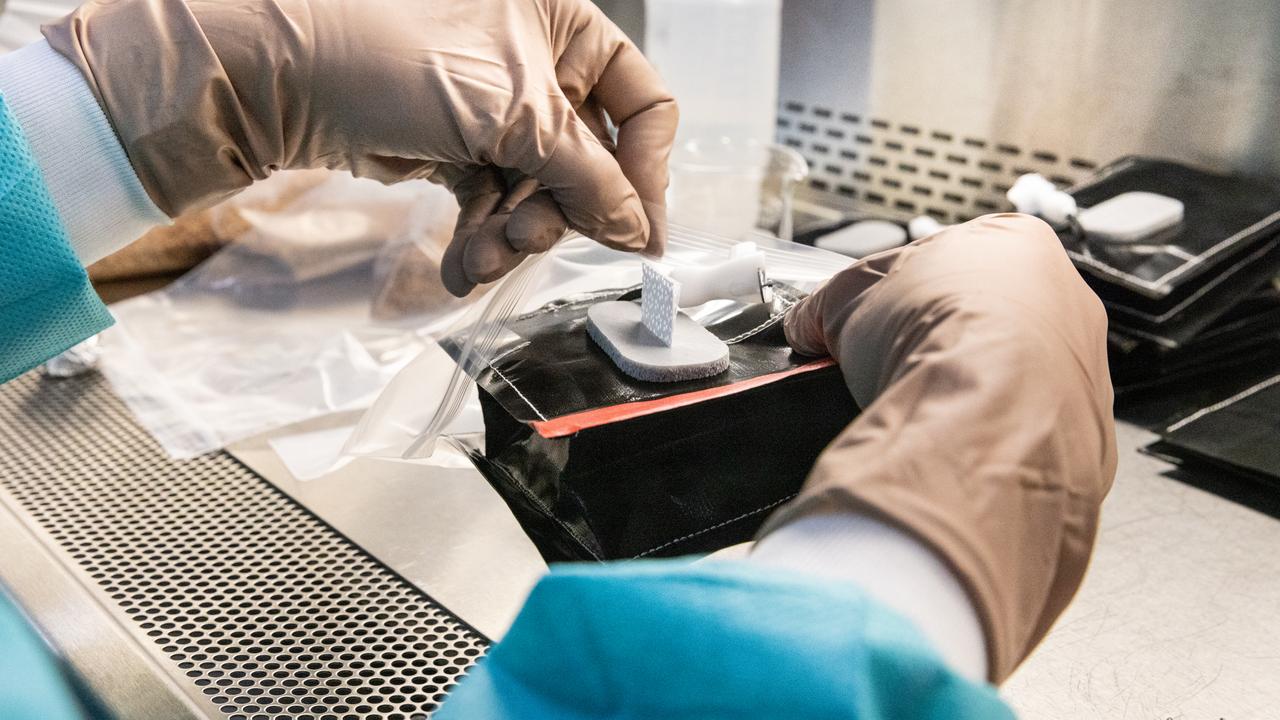
A member of the space crop production team pours substrate and controlled release fertilizer into a Veggie plant pillow on Thursday, May 29, 2025, inside the Space Systems Processing Facility at NASA’s Kennedy Space Center in Florida. The plant pillows, along with Veg-03 MNO seed films, which will carry seeds of Red Russian kale, Wasabi mustard greens, and Dragoon lettuce, are set to fly aboard NASA’s SpaceX Crew-11 mission to the International Space Station to grow in the space environment to study how microgravity impacts crop development compared to ground-grown plants. Seed films enable seed handling and planting of seeds into plant pillows allowing for astronaut choice of crops to grow. Plants can provide whole food nutrition, improve menu variety, and positively impact behavioral health of astronauts on long duration missions to the Moon and Mars and space crop research aboard the orbiting laboratory is enabled by NASA’s Biological and Physical Sciences Division and the International Space Station Program.
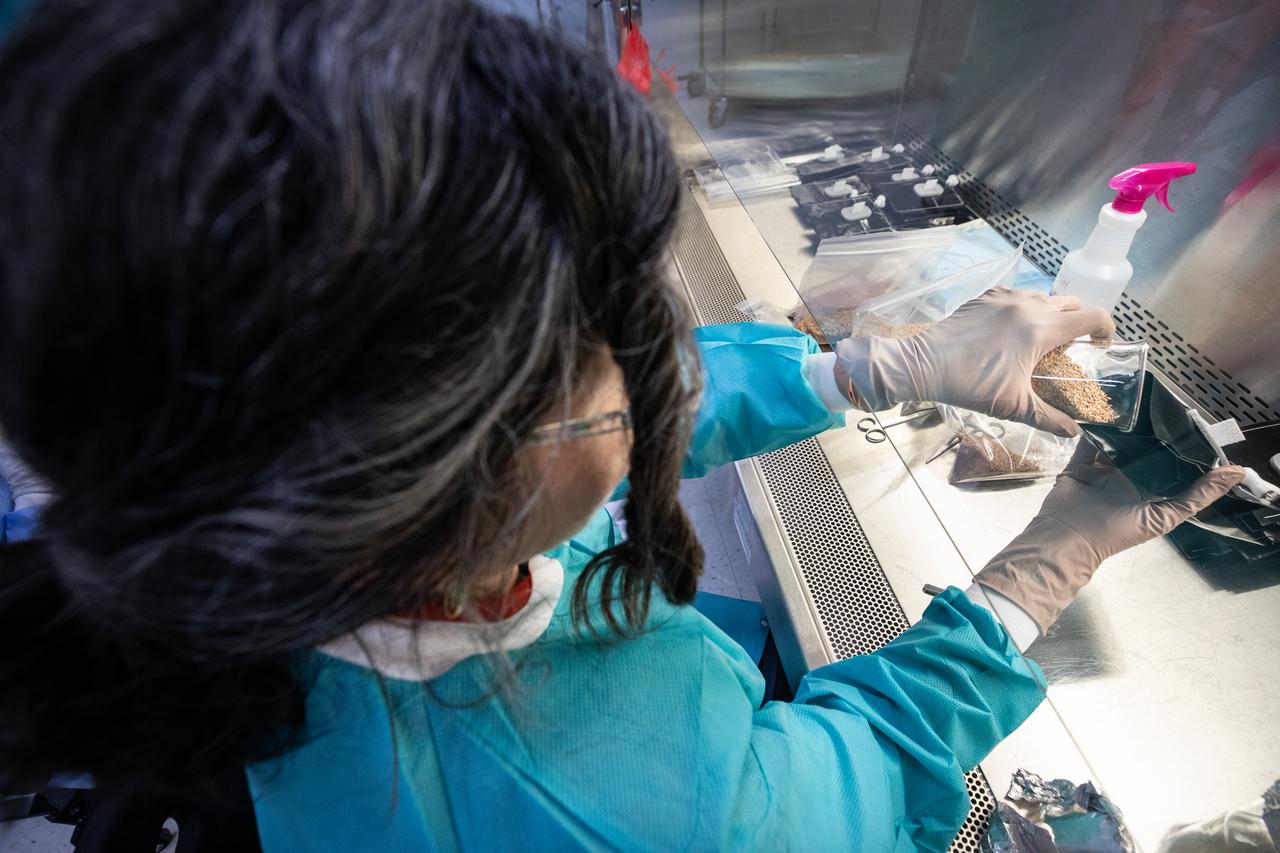
A member of the space crop production team pours substrate and controlled release fertilizer into a Veggie plant pillow on Thursday, May 29, 2025, inside the Space Systems Processing Facility at NASA’s Kennedy Space Center in Florida. The plant pillows, along with Veg-03 MNO seed films, which will carry seeds of Red Russian kale, Wasabi mustard greens, and Dragoon lettuce, are set to fly aboard NASA’s SpaceX Crew-11 mission to the International Space Station to grow in the space environment to study how microgravity impacts crop development compared to ground-grown plants. Seed films enable seed handling and planting of seeds into plant pillows allowing for astronaut choice of crops to grow. Plants can provide whole food nutrition, improve menu variety, and positively impact behavioral health of astronauts on long duration missions to the Moon and Mars and space crop research aboard the orbiting laboratory is enabled by NASA’s Biological and Physical Sciences Division and the International Space Station Program.
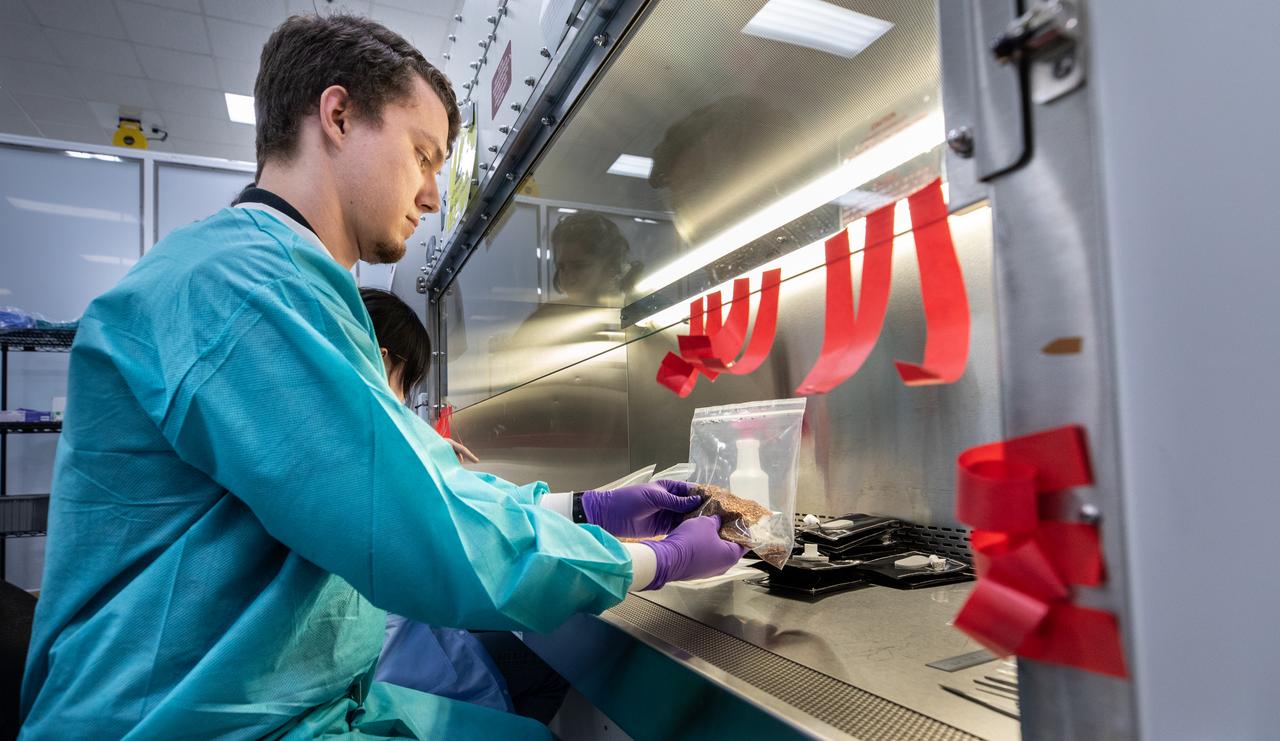
A member of the space crop production team pours substrate and controlled release fertilizer into a Veggie plant pillow on Thursday, May 29, 2025, inside the Space Systems Processing Facility at NASA’s Kennedy Space Center in Florida. The plant pillows, along with Veg-03 MNO seed films, which will carry seeds of Red Russian kale, Wasabi mustard greens, and Dragoon lettuce, are set to fly aboard NASA’s SpaceX Crew-11 mission to the International Space Station to grow in the space environment to study how microgravity impacts crop development compared to ground-grown plants. Seed films enable seed handling and planting of seeds into plant pillows allowing for astronaut choice of crops to grow. Plants can provide whole food nutrition, improve menu variety, and positively impact behavioral health of astronauts on long duration missions to the Moon and Mars and space crop research aboard the orbiting laboratory is enabled by NASA’s Biological and Physical Sciences Division and the International Space Station Program.
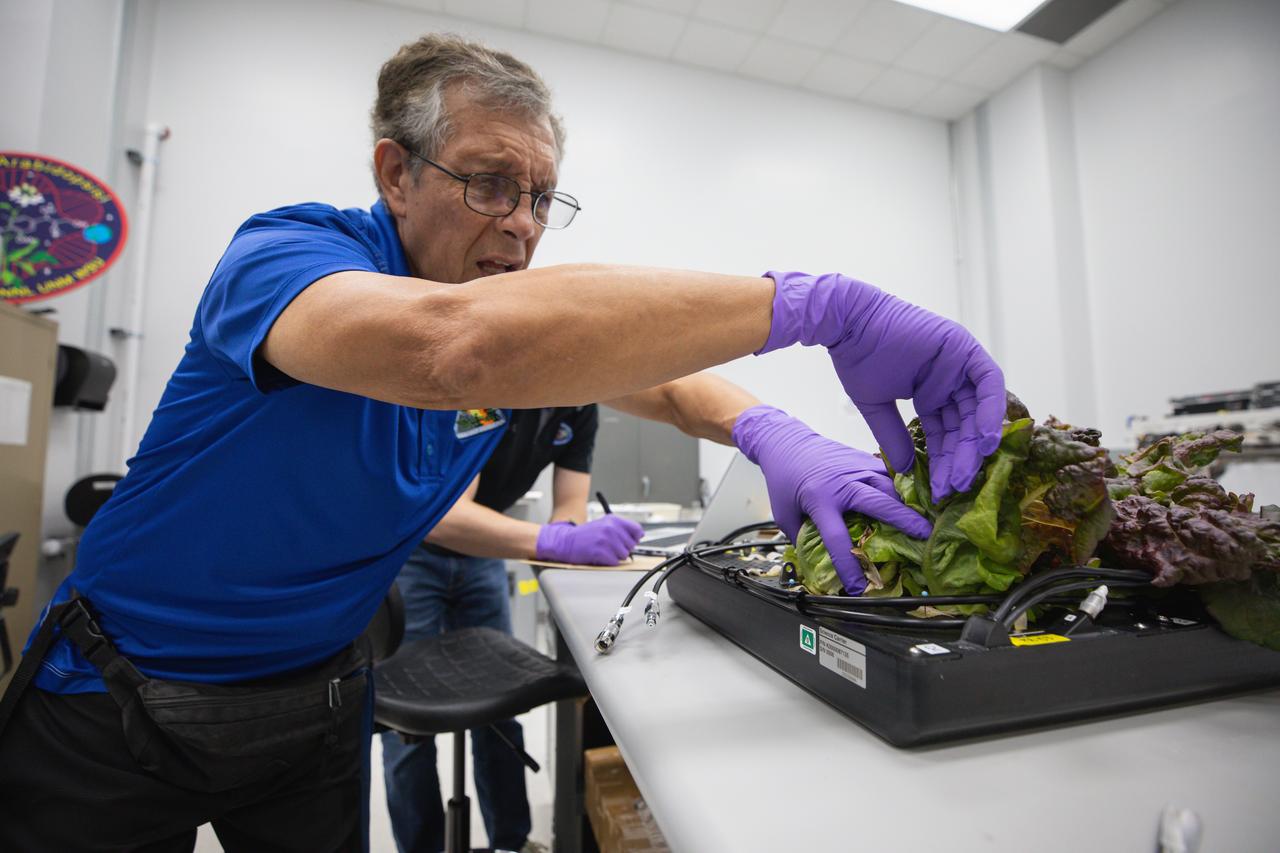
Space crop production scientist Oscar Monje harvests Outredgeous romaine lettuce for preflight testing of the Plant Habitat-07 (PH-07) experiment inside a laboratory at the Space Systems Processing Facility at NASA’s Kennedy Space Center in Florida on Thursday, Aug. 29, 2024. PH-07 will be sent to the International Space Station on NASA’s SpaceX 31st commercial resupply services mission to study how optimal and suboptimal moisture conditions impact plant growth, nutrient content, and the plant microbiome.
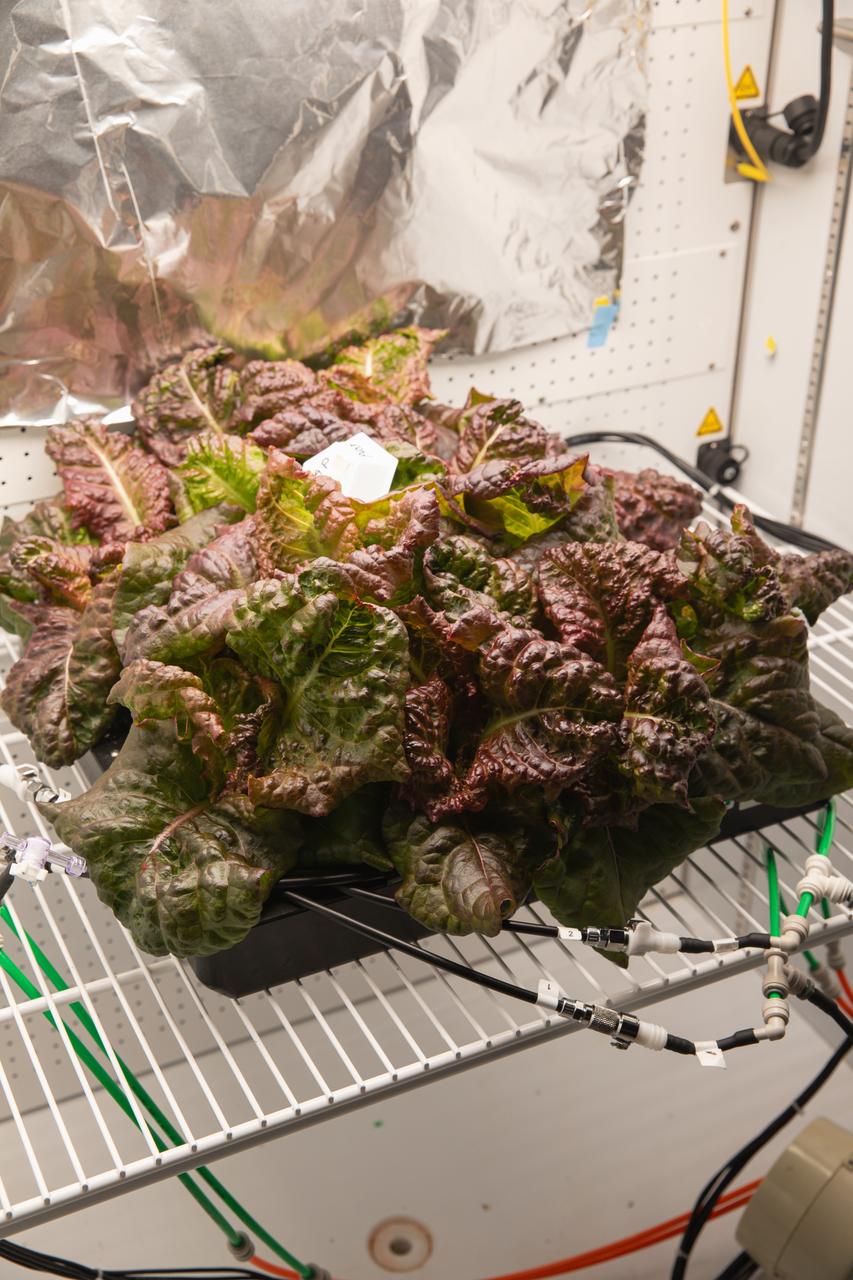
Space crop production scientists inside a laboratory at the Space Systems Processing Facility at NASA’s Kennedy Space Center in Florida harvest Outredgeous romaine lettuce for preflight testing of the Plant Habitat-07 (PH-07) experiment on Thursday, Aug. 29, 2024. PH-07 will be sent to the International Space Station on NASA’s SpaceX 31st commercial resupply services mission to study how optimal and suboptimal moisture conditions impact plant growth, nutrient content, and the plant microbiome.

Matthew Mickens, project scientist, space crop production at NASA’s Kennedy Space Center, left, and Clara Wright, chief of the laboratories, development, and testing division within the engineering directorate at NASA’s Kennedy Space Center, right, are seen following an employee incentive flying event using NASA Administrator Jared Isaacman's personal F-5 aircraft, Friday, March 6, 2026, at NASA’s Kennedy Space Center in Florida. Photo Credit: (NASA/John Kraus)

Matthew Mickens, project scientist, space crop production at NASA’s Kennedy Space Center, left, and Clara Wright, chief of the laboratories, development, and testing division within the engineering directorate at NASA’s Kennedy Space Center, right, are seen following an employee incentive flying event using NASA Administrator Jared Isaacman's personal F-5 aircraft, Friday, March 6, 2026, at NASA’s Kennedy Space Center in Florida. Photo Credit: (NASA/John Kraus)
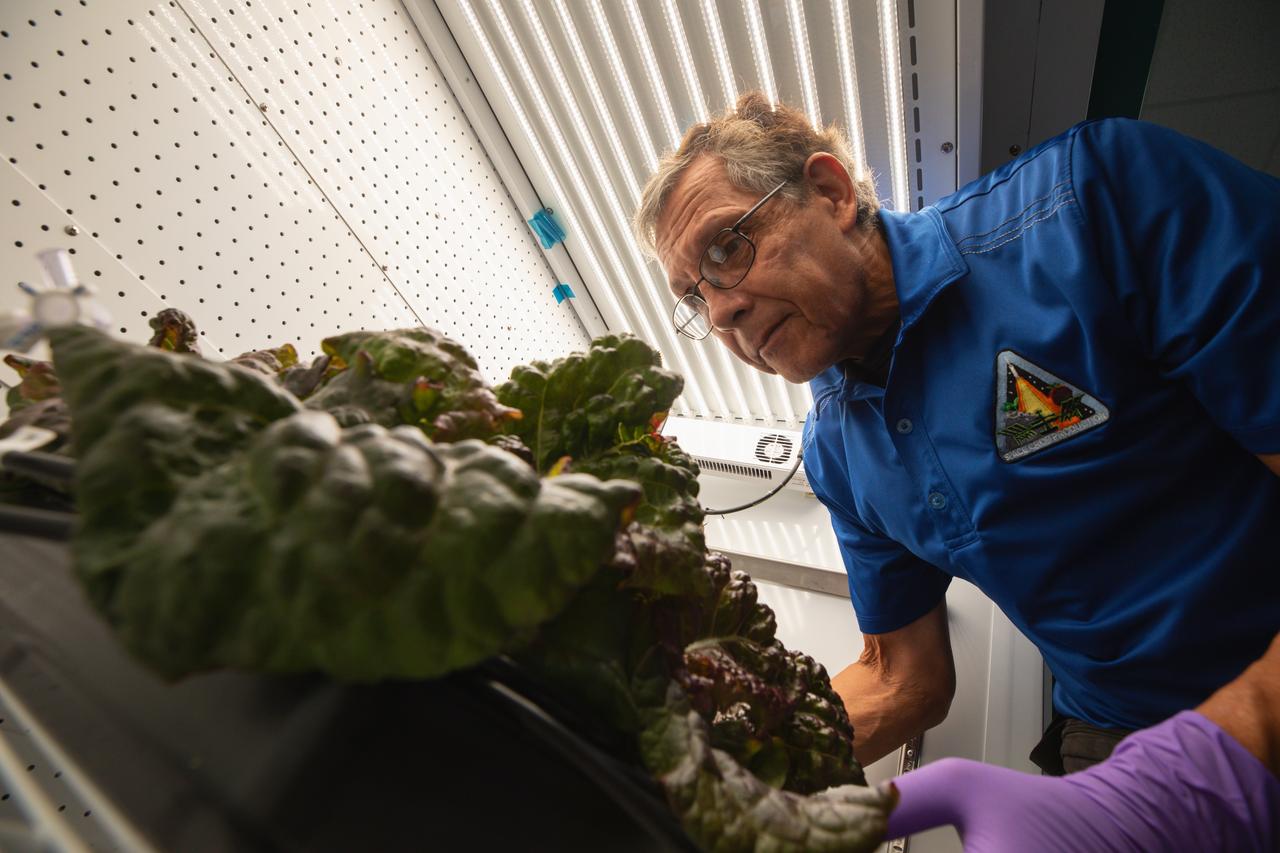
Space crop production scientist Oscar Monje harvests Outredgeous romaine lettuce for preflight testing of the Plant Habitat-07 (PH-07) experiment inside a laboratory at the Space Systems Processing Facility at NASA’s Kennedy Space Center in Florida on Thursday, Aug. 29, 2024. PH-07 will be sent to the International Space Station on NASA’s SpaceX 31st commercial resupply services mission to study how optimal and suboptimal moisture conditions impact plant growth, nutrient content, and the plant microbiome.
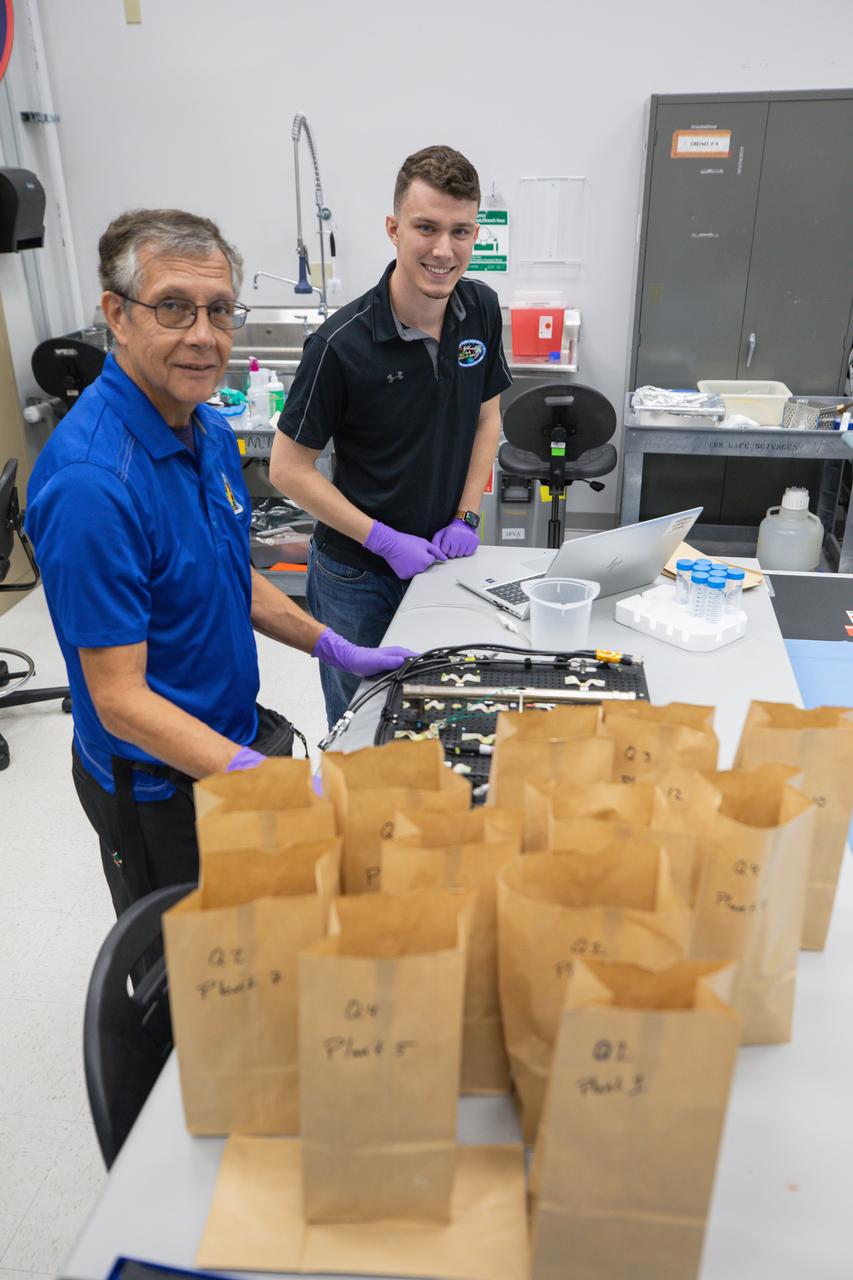
Space crop production scientists Oscar Monje (left) and Blake Costine harvest Outredgeous romaine lettuce for preflight testing of the Plant Habitat-07 (PH-07) experiment inside a laboratory at the Space Systems Processing Facility at NASA’s Kennedy Space Center in Florida on Thursday, Aug. 29, 2024. PH-07 will be sent to the International Space Station on NASA’s SpaceX 31st commercial resupply services mission to study how optimal and suboptimal moisture conditions impact plant growth, nutrient content, and the plant microbiome.
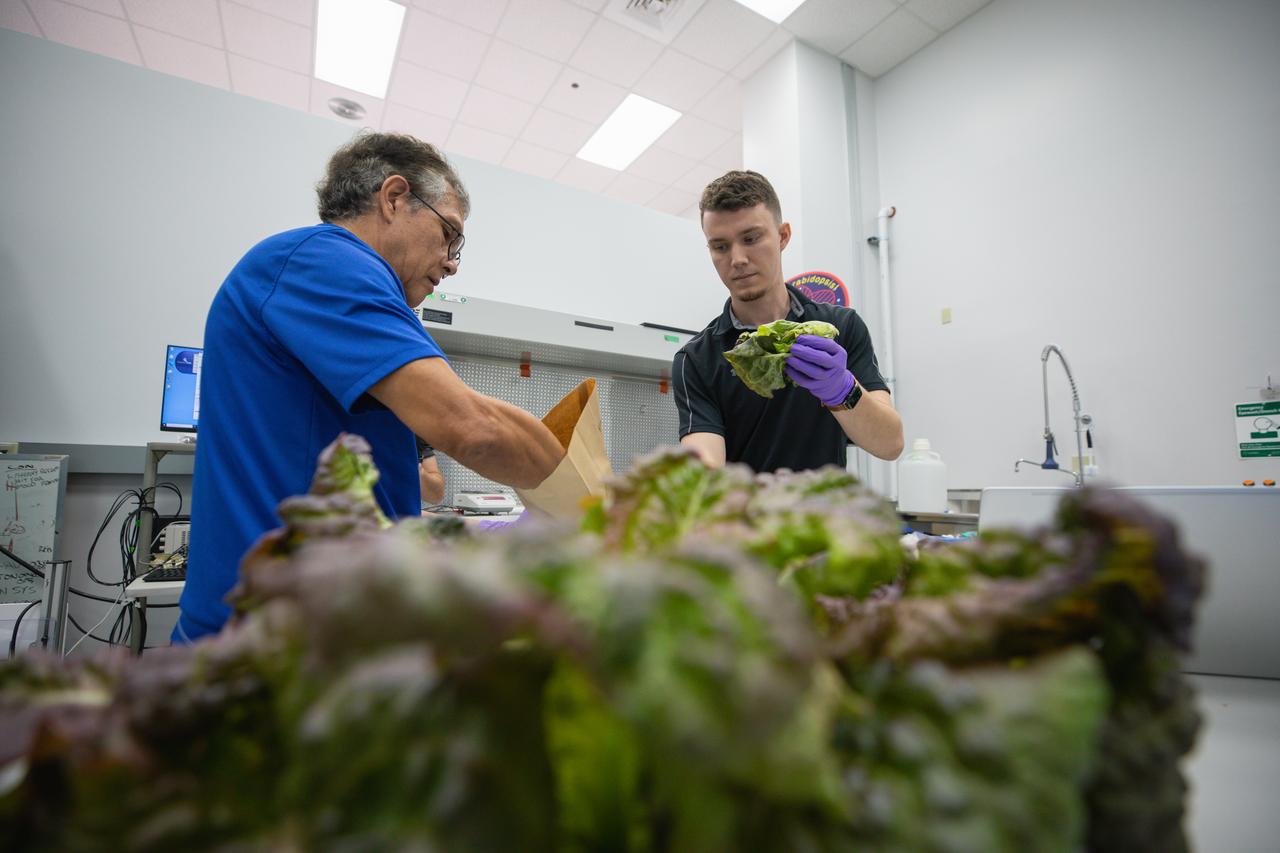
Space crop production scientists Oscar Monje (left) and Blake Costine harvest Outredgeous romaine lettuce for preflight testing of the Plant Habitat-07 (PH-07) experiment inside a laboratory at the Space Systems Processing Facility at NASA’s Kennedy Space Center in Florida on Thursday, Aug. 29, 2024. PH-07 will be sent to the International Space Station on NASA’s SpaceX 31st commercial resupply services mission to study how optimal and suboptimal moisture conditions impact plant growth, nutrient content, and the plant microbiome.
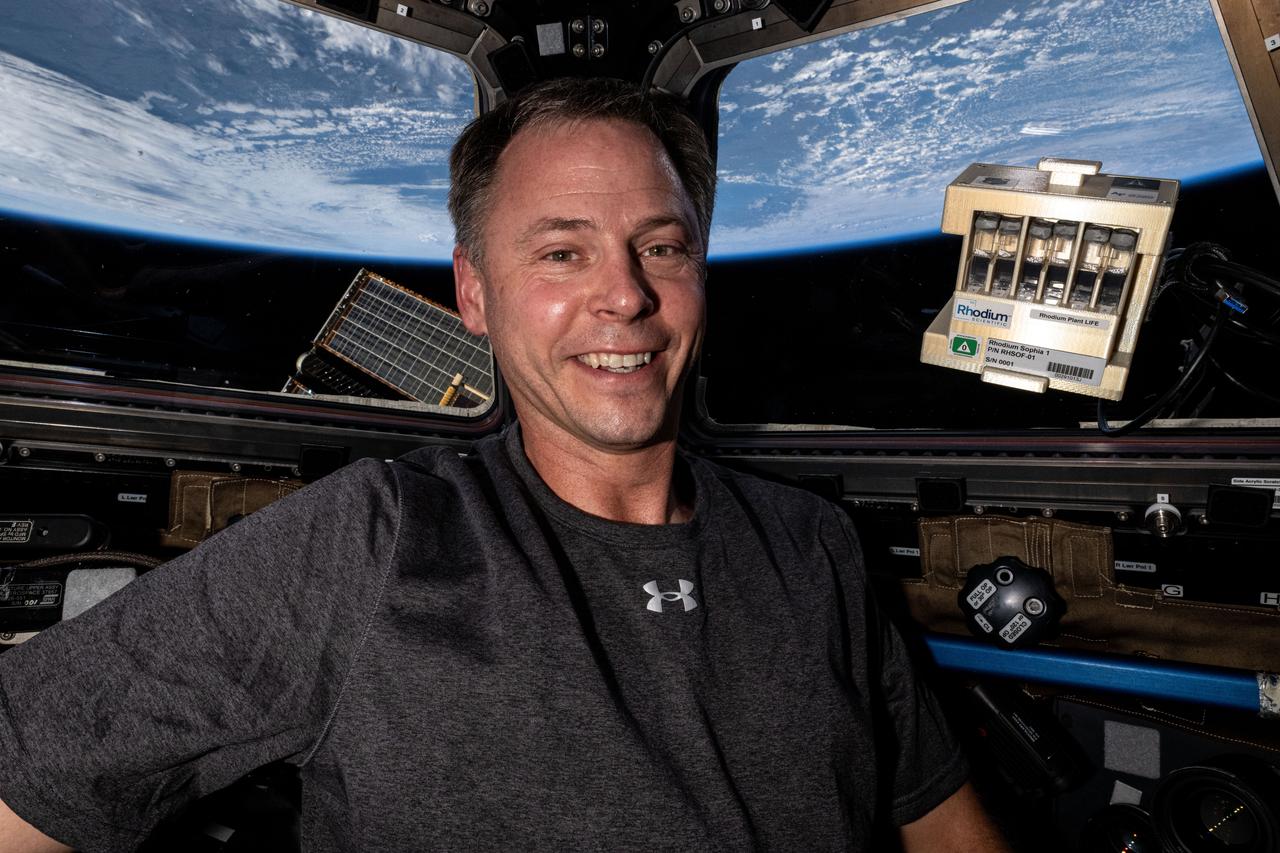
iss072e034791 (Oct. 11, 2024) --- NASA astronaut and Expedition 72 Flight Engineer Nick Hague is pictured inside the cupola with space botany hardware that supports the Rhodium Plant LIFE investigation. The experiment studies the affects of radiation and microgravity on plant growth to promote self-sustainable long-term human missions and increase crop production on Earth. The International Space Station was orbiting 259 miles above the Alps in Austria at the time of this photograph.
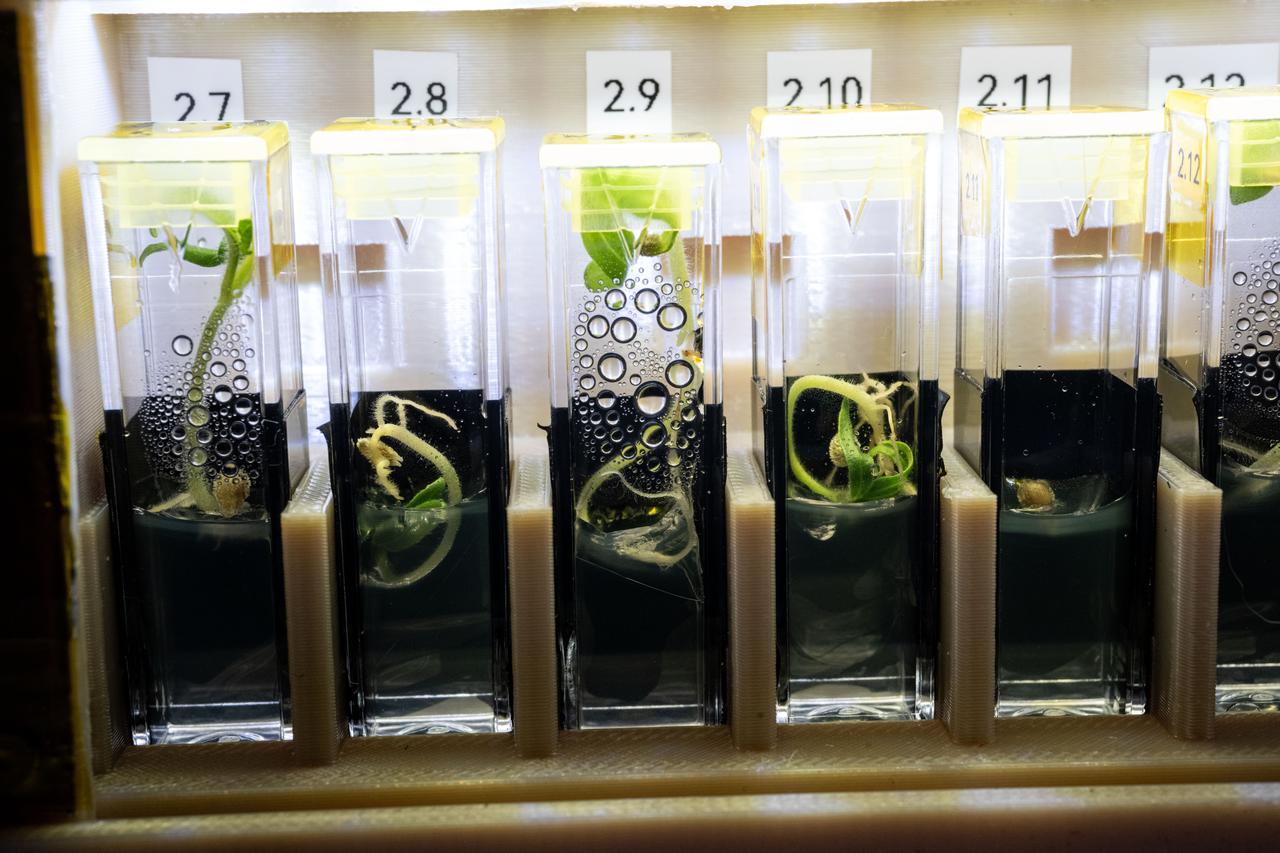
iss073e0032789 (May 16, 2025) --- Genetically modified, extemely dwarf tomato plants are pictured growing inside specialized research hardware, called Rhodium BioCuvettes, aboard the International Space Station's Destiny laboratory module. The space botany experiment tests the plants ability to grow without photosynthesis and survive in confined environments in weightlessness potentially supporting crop production on spacecraft.

iss073e0071009 (May 11, 2025) --- NASA astronaut and Expedition 73 Flight Engineer Jonny Kim photographs genetically modified, extemely dwarf tomato plants growing inside specialized research hardware, called Rhodium BioCuvettes, aboard the International Space Station's Destiny laboratory module. The space botany experiment tests the plants ability to grow without photosynthesis and survive in confined environments in weightlessness potentially supporting crop production on spacecraft.
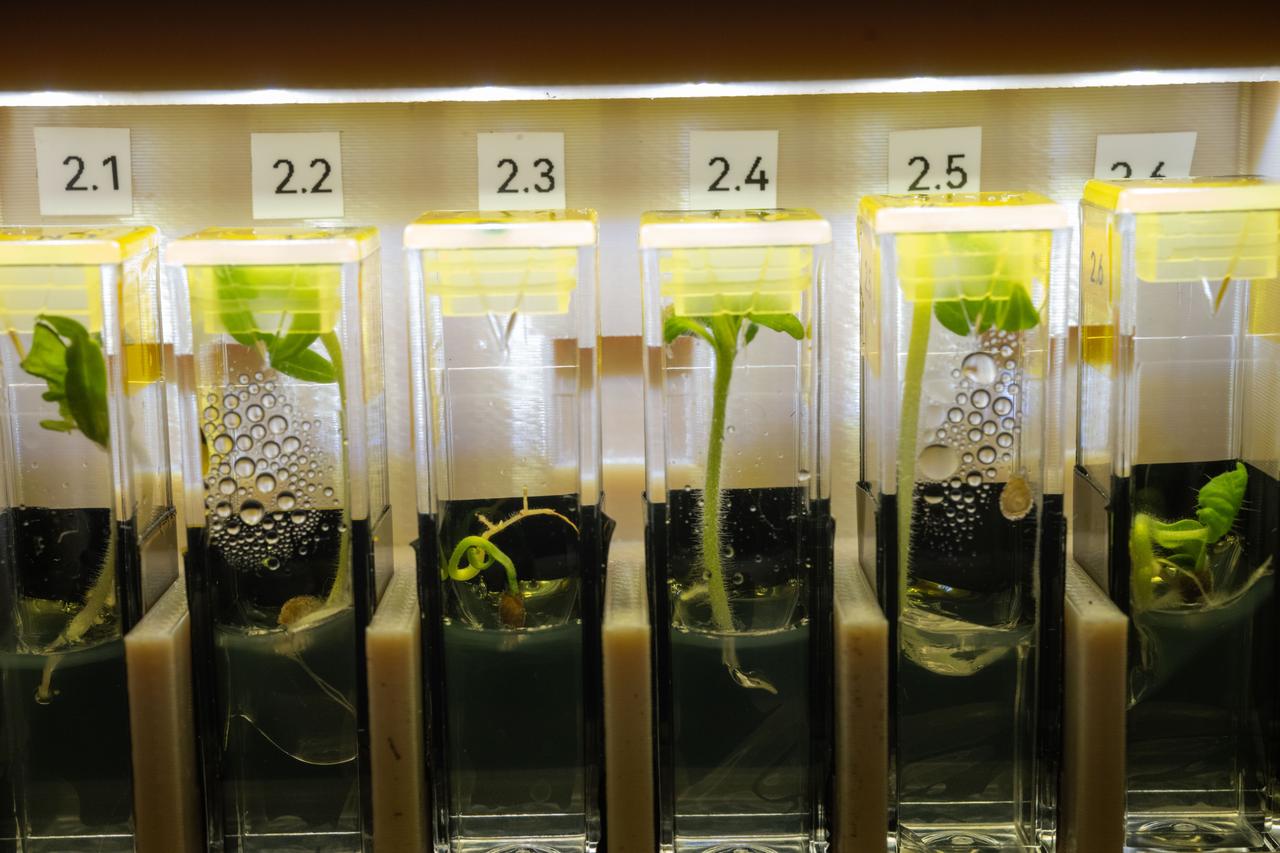
iss073e0031528 (May 15, 2025) --- Genetically modified, extemely dwarf tomato plants are pictured growing inside specialized research hardware, called Rhodium BioCuvettes, aboard the International Space Station's Destiny laboratory module. The space botany experiment tests the plants ability to grow without photosynthesis and survive in confined environments in weightlessness potentially supporting crop production on spacecraft.
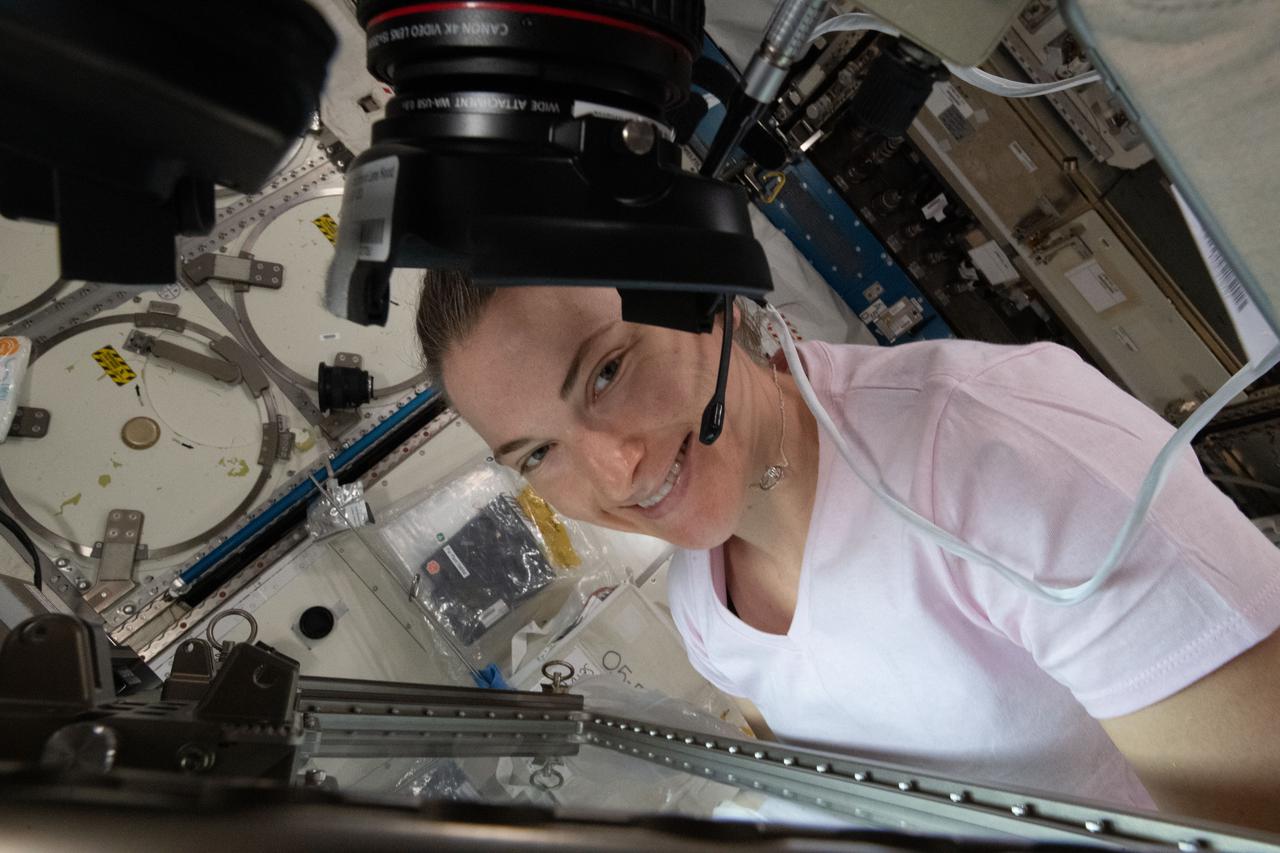
iss066e153087 (Fab. 29, 2022) --- NASA astronaut and Expedition 66 Flight Engineer Kayla Barron works inside the Life Science Glovebox conducting botany research for the Plant Habitat-05 investigation. The space agriculture study explores genetic expression in cotton cultures to learn more about the process of plant regeneration possibly improving crop production on Earth.
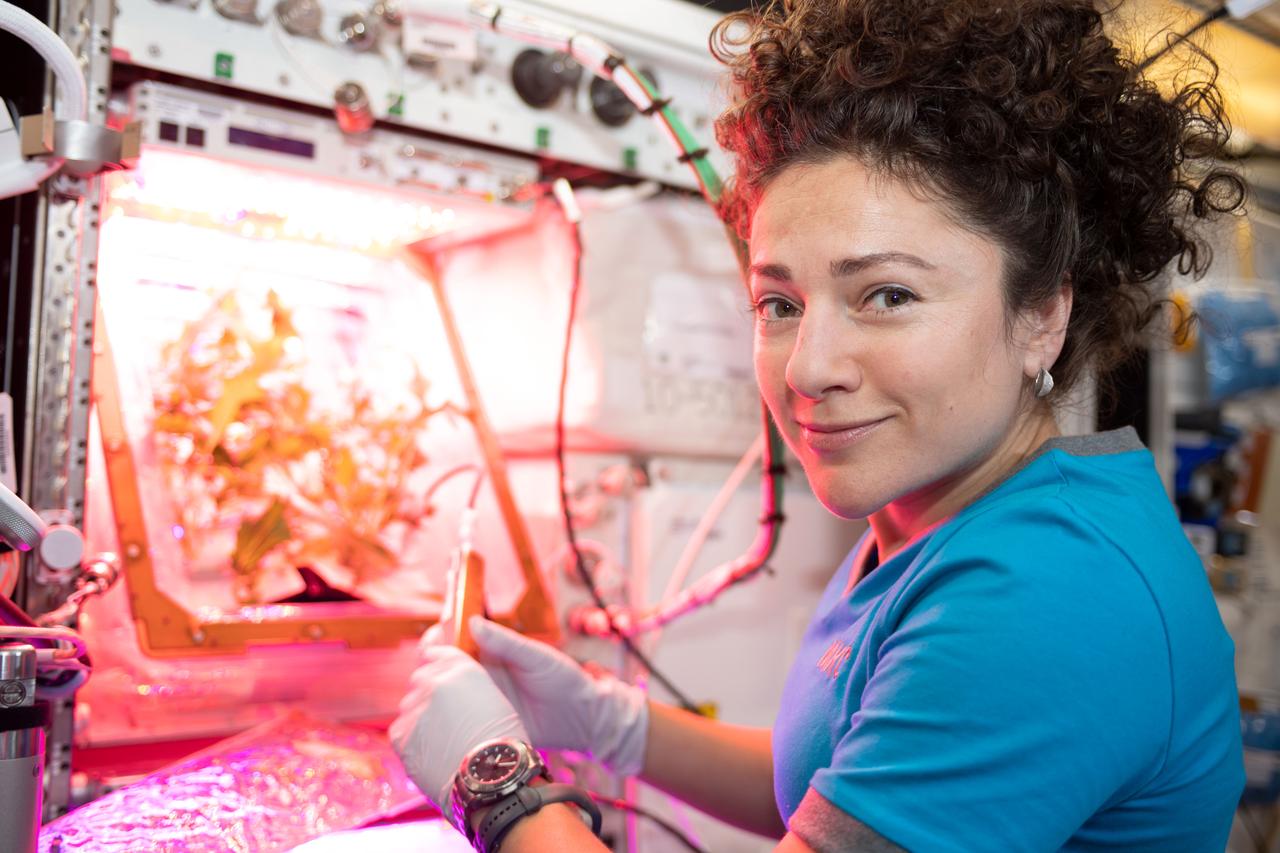
iss061e014149 (Oct. 27, 2019) --- NASA astronaut Jessica Meir waters plant pillows where Mizuna mustard greens are raised as part of the Veg-04B experiment. This investigation is part of a phased research project to address the need for a continuous fresh food production system in space and focuses on the effects of light quality and fertilizer on a leafy crop. Taste is assessed by the crew.
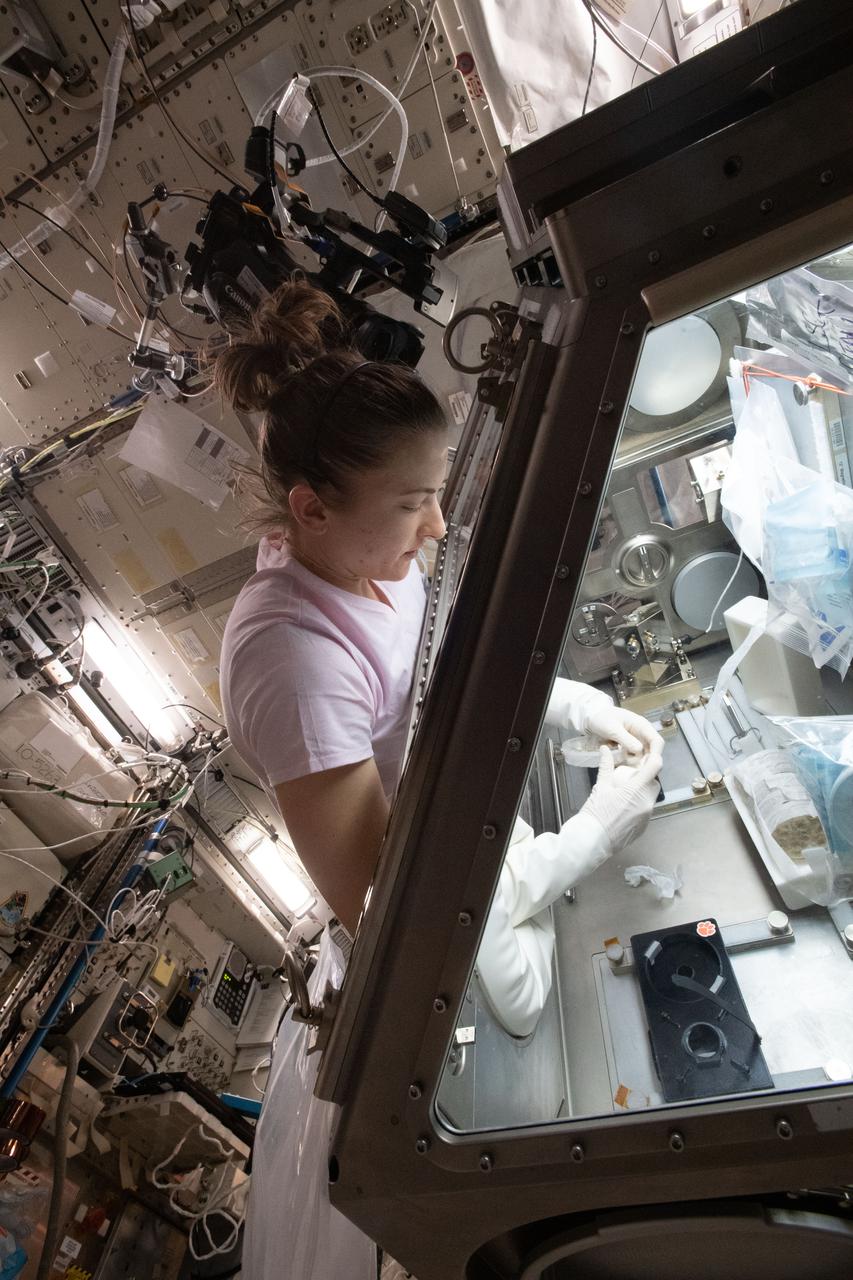
iss066e153063 (Fab. 29, 2022) --- NASA astronaut and Expedition 66 Flight Engineer Kayla Barron works inside the Life Science Glovebox conducting botany research for the Plant Habitat-05 investigation. The space agriculture study explores genetic expression in cotton cultures to learn more about the process of plant regeneration possibly improving crop production on Earth.
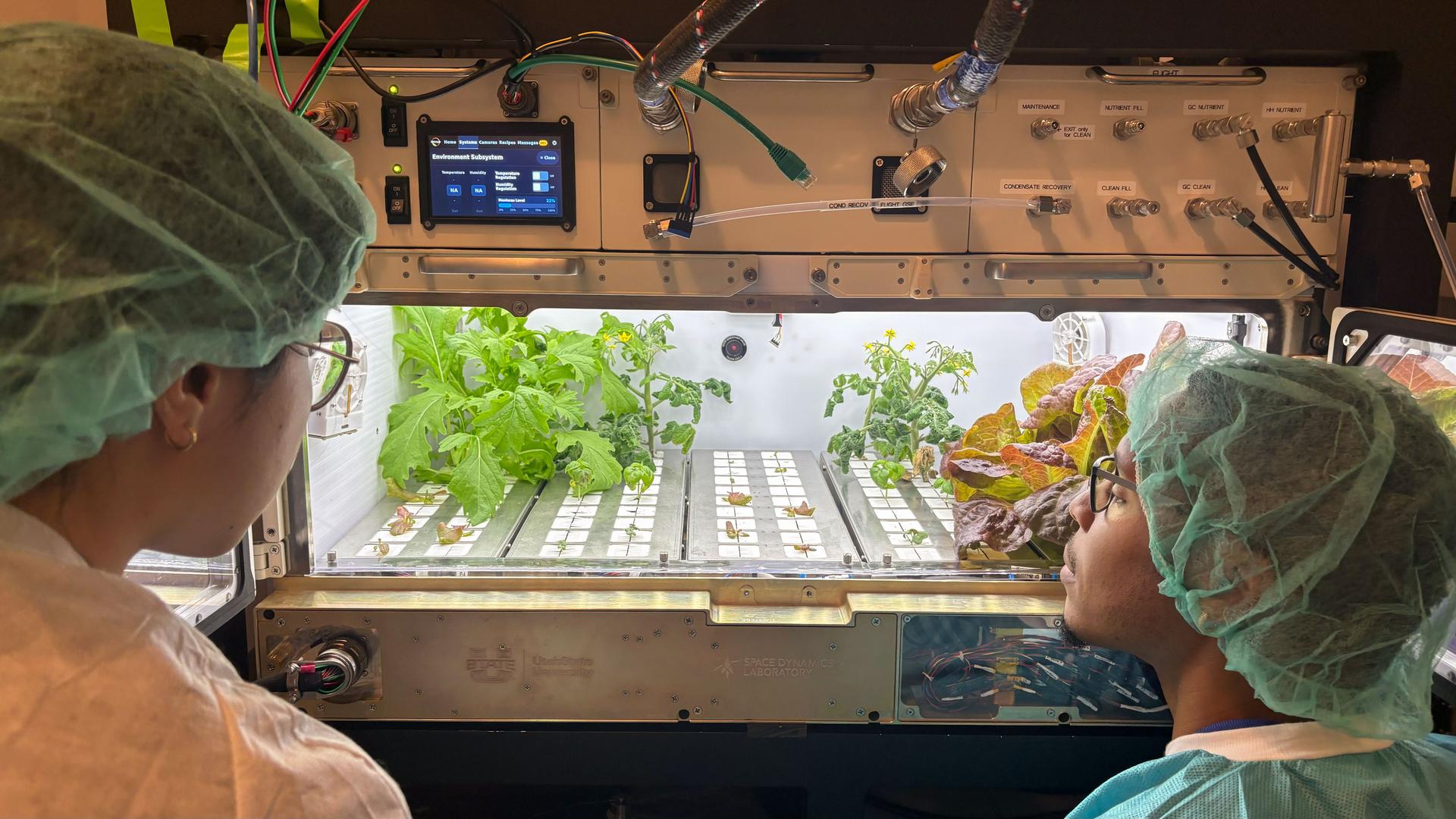
jsc2026e415098 (September 08, 2026) --- Preflight image of scientists inspecting a variety of plants in Utah State University’s OHALO III module. This facility aims to validate plant water delivery, volume optimization, and advance knowledge on crop production, which could inform design decisions for future plant systems on deep space missions. Credit: NASA KSC.
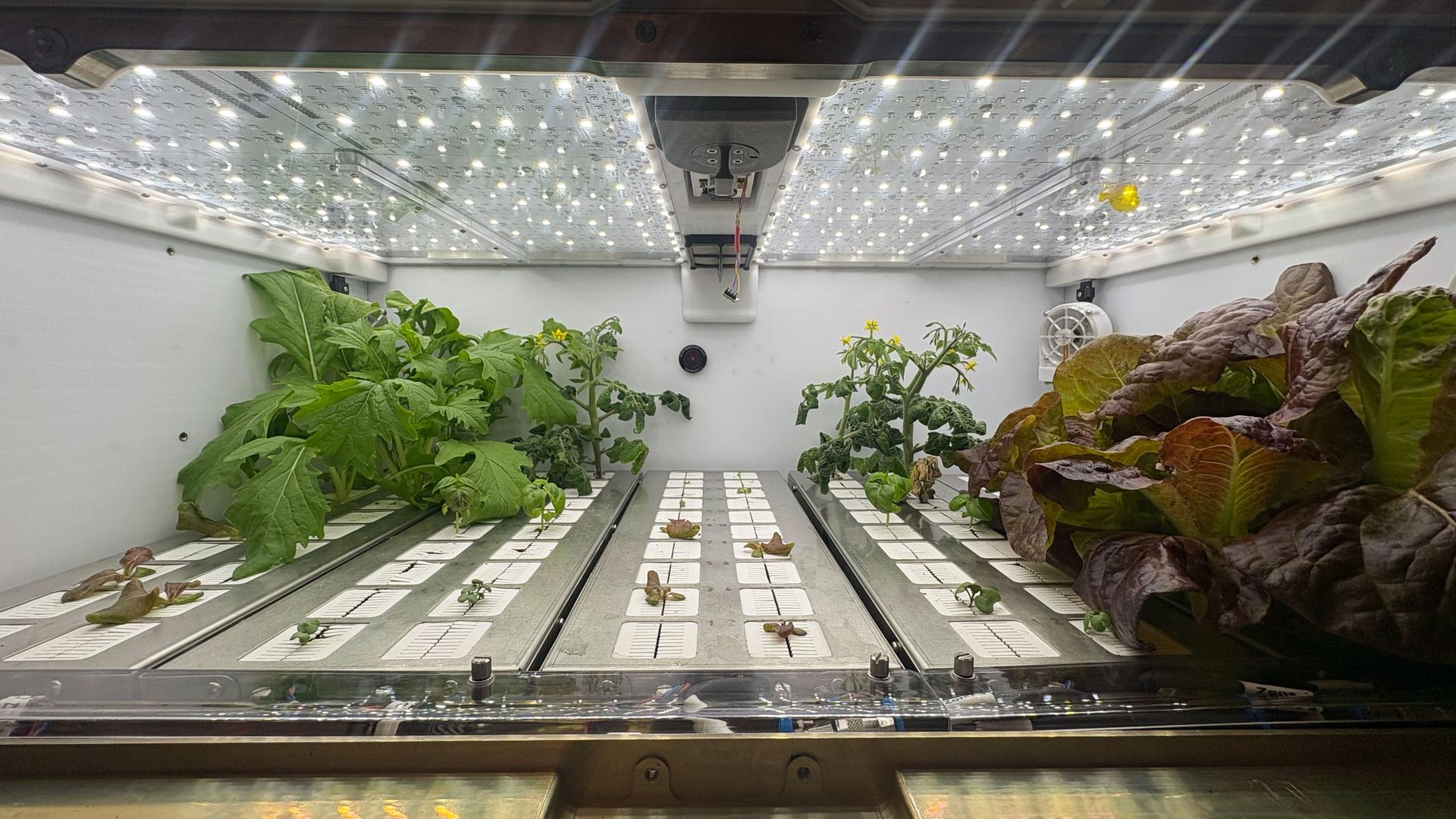
jsc2026e415099 (September 08, 2026) --- Preflight image of Utah State University’s OHALO III module with a variety of plants growing from the Utah Re-usable Root Modules (URRMs). This facility aims to validate plant water delivery, volume optimization, and advance knowledge on crop production, which could inform design decisions for future plant systems on deep space missions. Credit: NASA KSC.

iss066e153092 (Fab. 29, 2022) -- Cotton cell samples, held by NASA astronaut and Expedition 66 Flight Engineer Kayla Barron, are pictured growing on a petri dish inside the Advanced Plant Habitat. The samples were grown and harvested for the Plant Habitat-05 space agriculture study that explores genetic expression in cotton cultures to learn more about the process of plant regeneration possibly improving crop production on Earth.
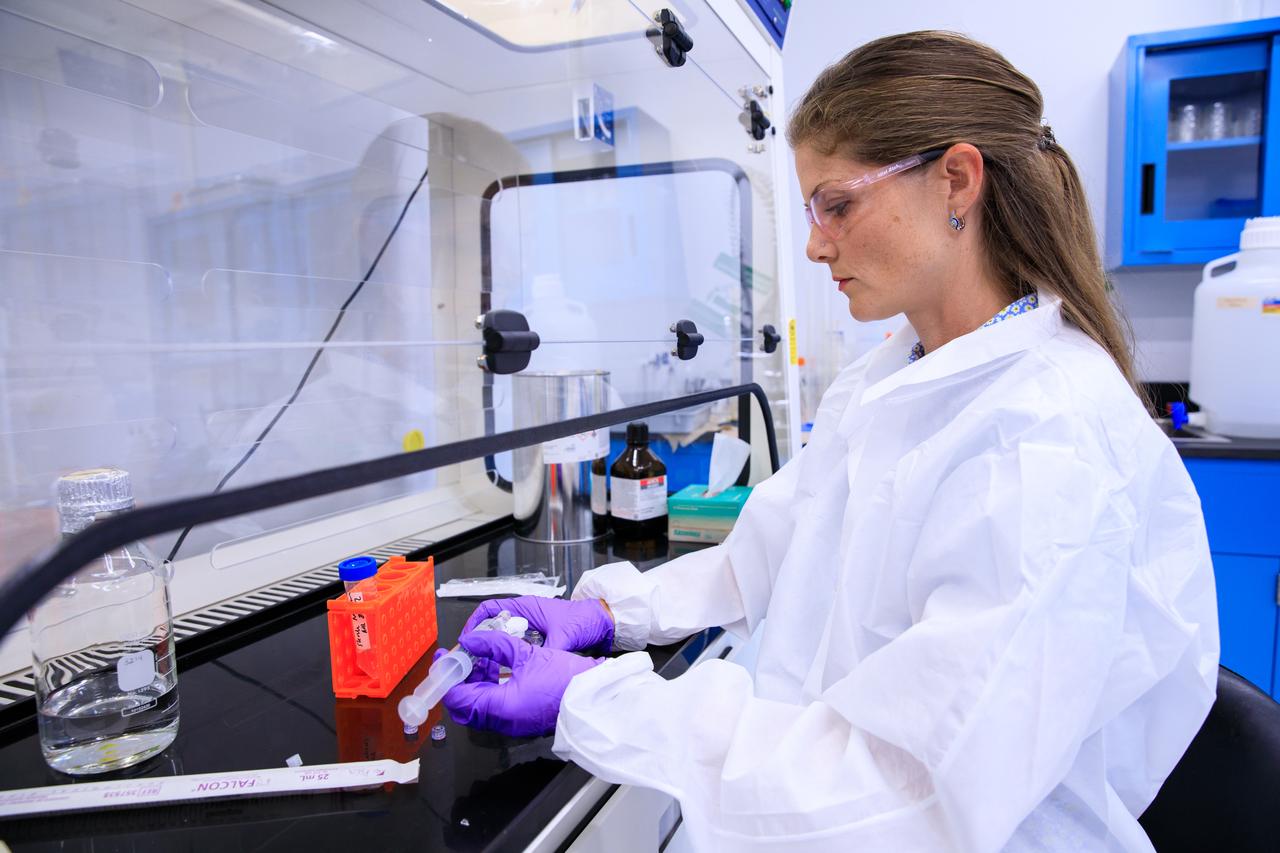
Aubrey O’Rourke, a project scientist at NASA’s Kennedy Space Center, is a member of the Crop Production team at the Florida spaceport. One key project on which she is working involves the building and deploying of an automatic genomic sequencer for spaceflight applications. The capability will allow NASA to conduct fundamental research as well as microbial monitoring of water and foods systems off-planet and at remote locations on Earth.
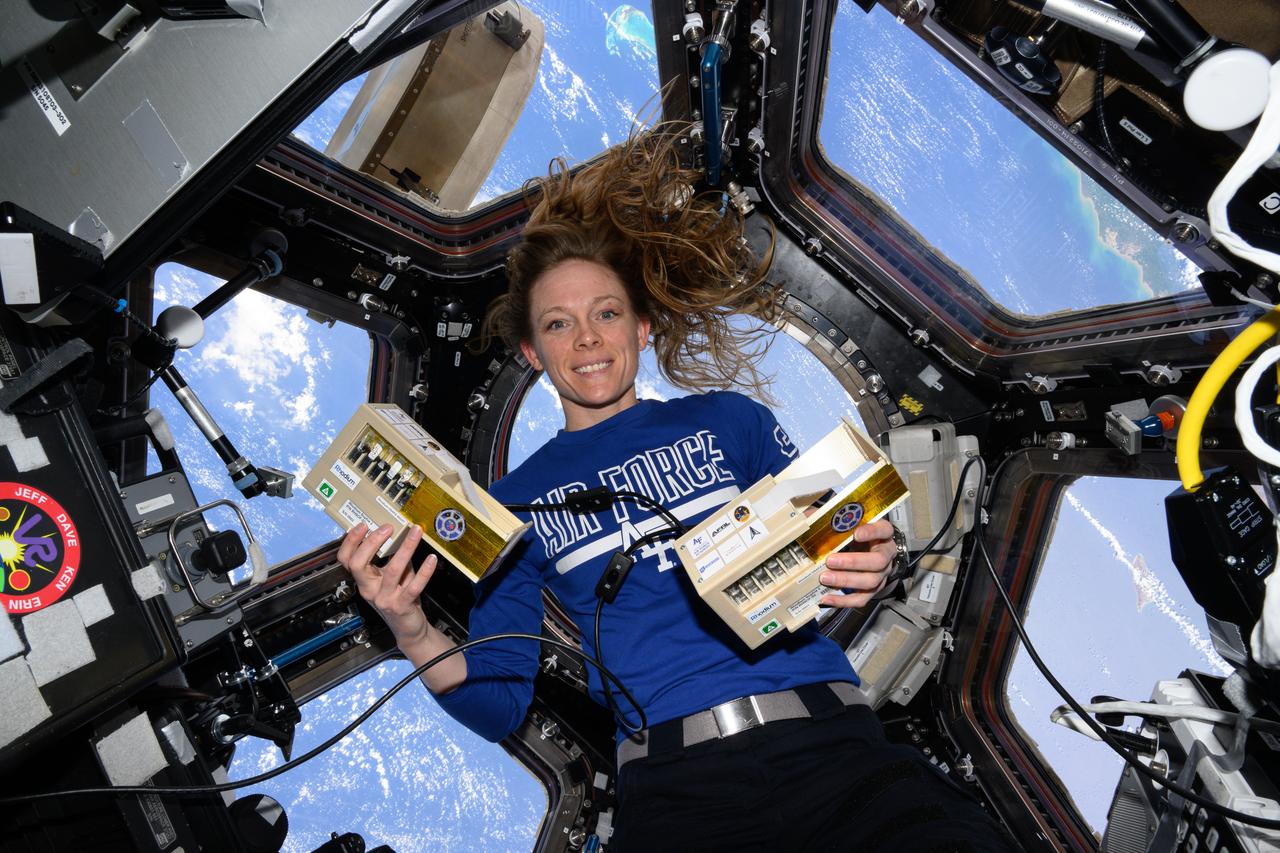
iss073e0076885 (5/21/2025) --- NASA astronaut Nichole Ayers is pictured inside the cupola with space botany hardware that supports the LEO Integrated Flori-culture Experiment (LIFE) 01 (Rhodium Plant LIFE) investigation. The investigation studies the affects of radiation and microgravity on plant growth to promote self-sustainable long-term human missions and increase crop production on Earth.
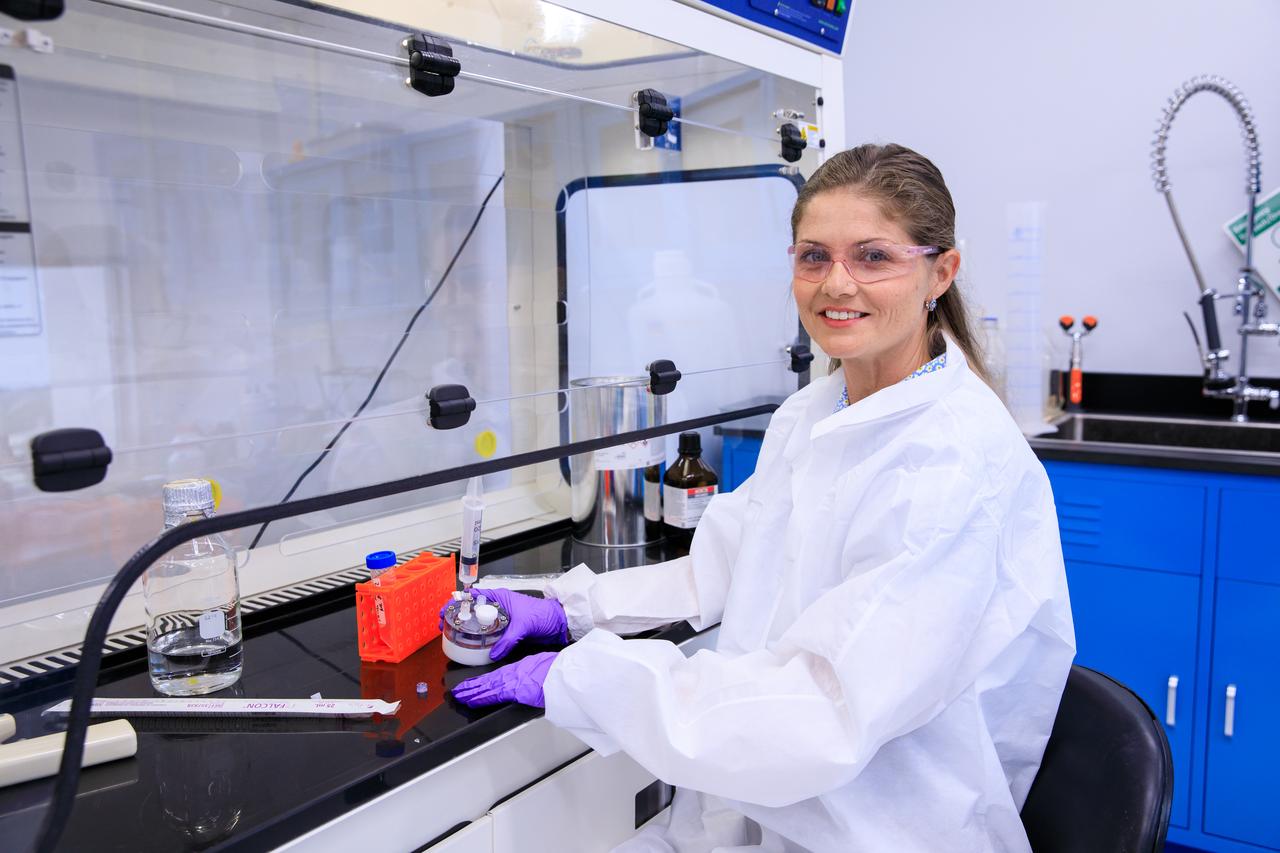
Aubrey O’Rourke, a project scientist at NASA’s Kennedy Space Center, is a member of the Crop Production team at the Florida spaceport. One key project on which she is working involves the building and deploying of an automatic genomic sequencer for spaceflight applications. The capability will allow NASA to conduct fundamental research as well as microbial monitoring of water and foods systems off-planet and at remote locations on Earth.
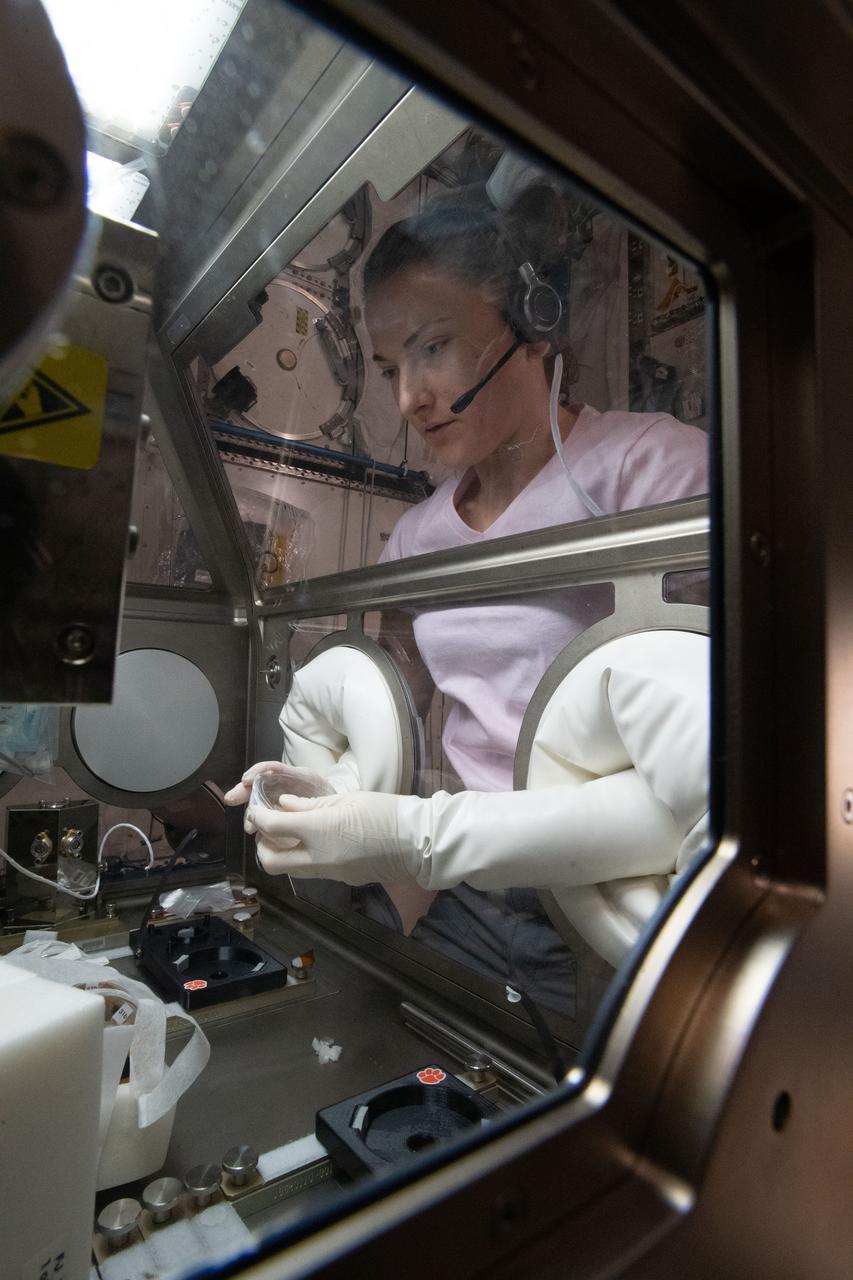
iss066e153069 (Fab. 29, 2022) --- NASA astronaut and Expedition 66 Flight Engineer Kayla Barron works inside the Life Science Glovebox conducting botany research for the Plant Habitat-05 investigation. The space agriculture study explores genetic expression in cotton cultures to learn more about the process of plant regeneration possibly improving crop production on Earth.
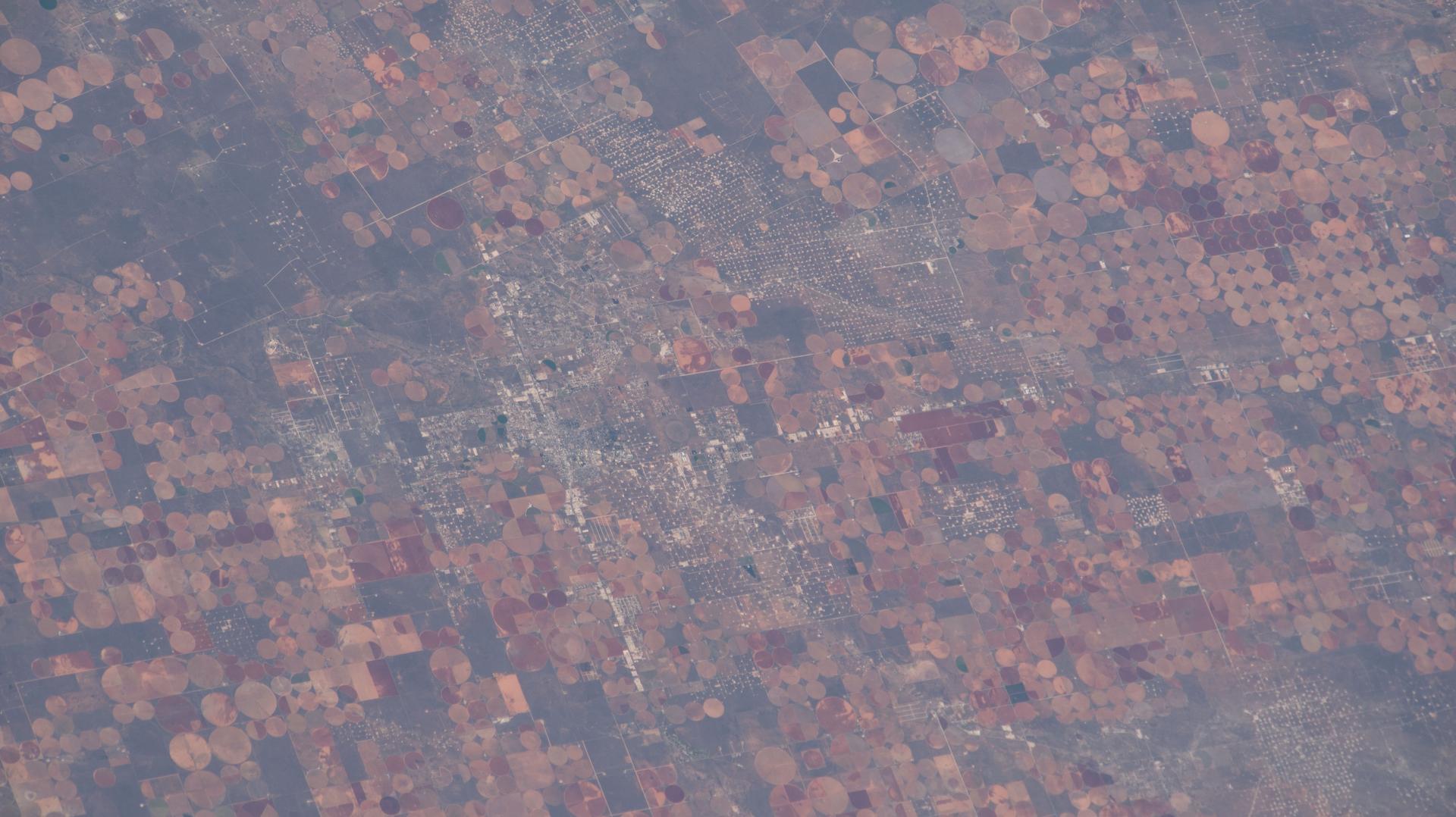
iss074e0603632 (May 16, 2026) --- Industrial-scale farming and oil production exist side-by-side and compete for land and water resources in western Texas. The crop circles are center-pivot irrigation systems used to cultivate cotton, sorghum, wheat, hay, and corn. The grid set against the circular farms is a dense network of well sites, pipelines, and roads that support the petroleum infrastructure. The International Space Station was orbiting 259 miles above the Texas–Oklahoma border at the time of this photograph. Credit: NASA
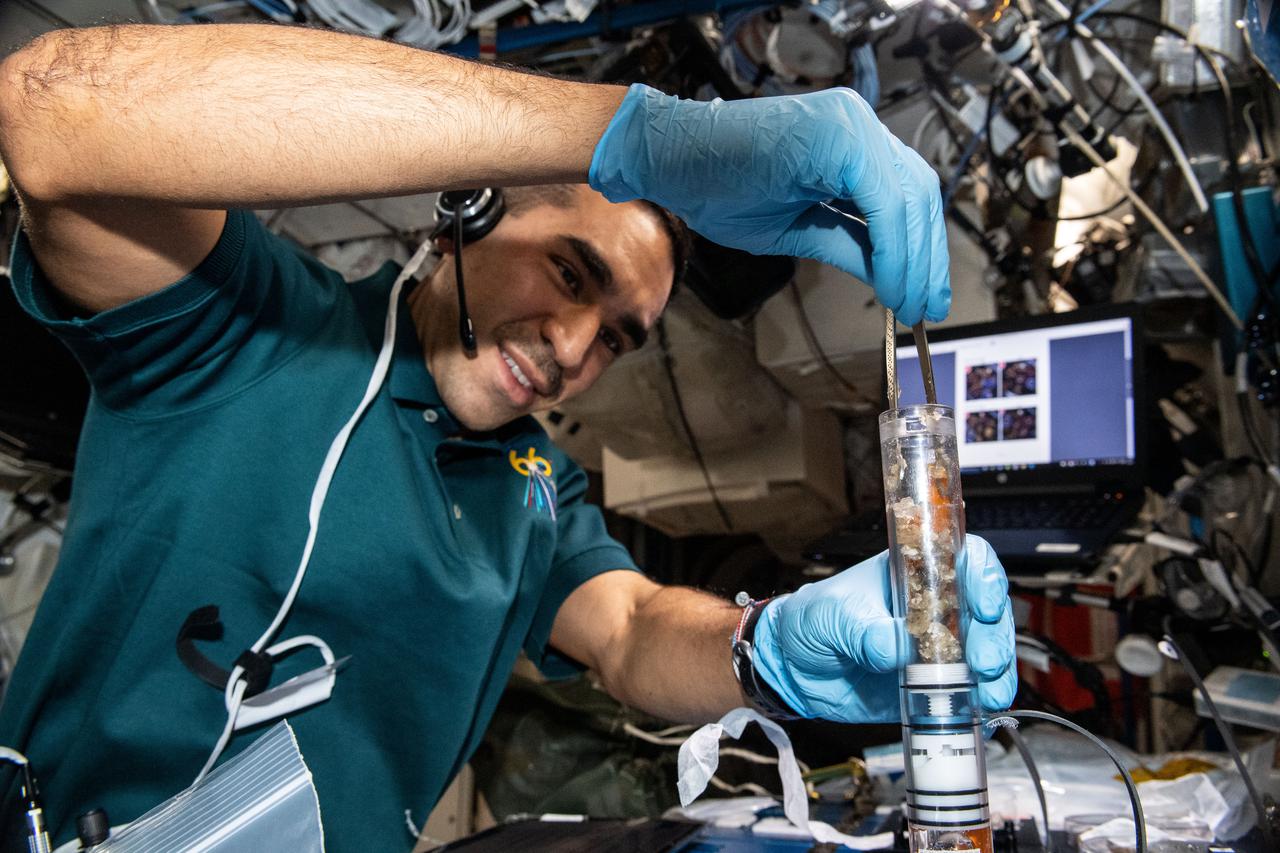
iss066e184149 (March 28, 2022) --- NASA astronaut and Expedition 66 Flight Engineer Raja Chari performs the final harvest of cotton cell cultures as part of the Plant Habitat-05 investigation (PH-05). The space agriculture study explored genetic expression in cotton cell cultures to learn more about the process of plant regeneration, potentially improving crop production on Earth.
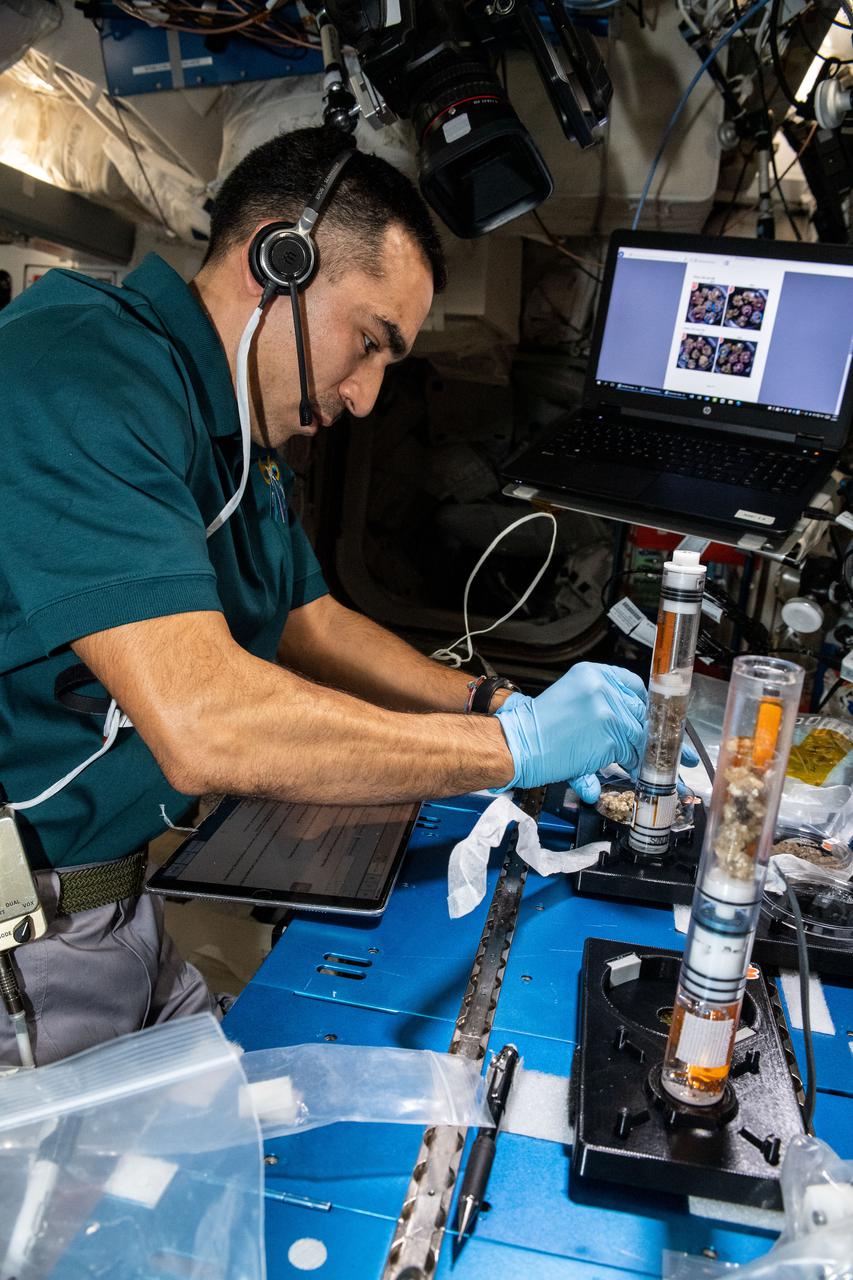
iss066e184146 (March 28, 2022) --- NASA astronaut and Expedition 66 Flight Engineer Raja Chari performs the final harvest of cotton cell cultures as part of the Plant Habitat-05 investigation (PH-05). The space agriculture study explored genetic expression in cotton cell cultures to learn more about the process of plant regeneration, potentially improving crop production on Earth.
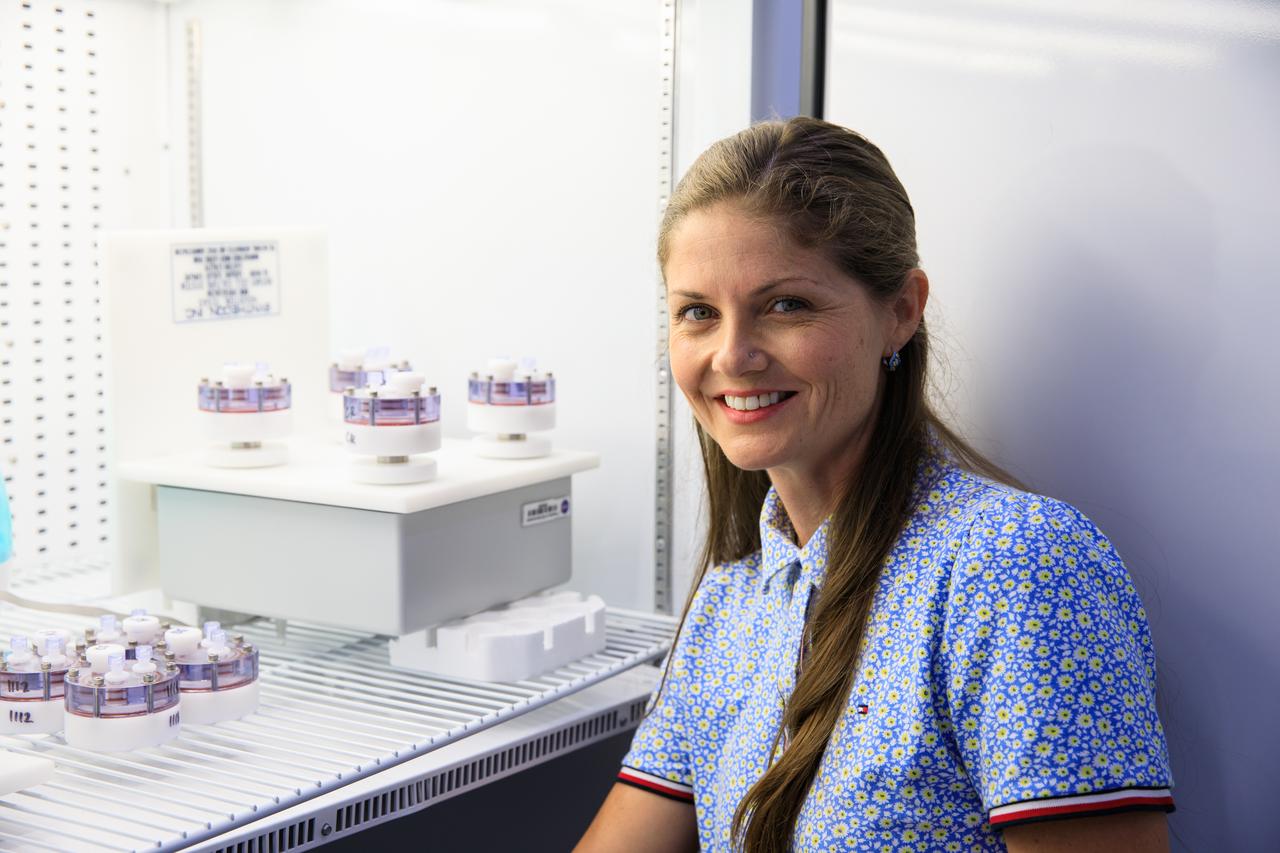
Aubrey O’Rourke, a project scientist at NASA’s Kennedy Space Center, is a member of the Crop Production team at the Florida spaceport. One key project on which she is working involves the building and deploying of an automatic genomic sequencer for spaceflight applications. The capability will allow NASA to conduct fundamental research as well as microbial monitoring of water and foods systems off-planet and at remote locations on Earth.
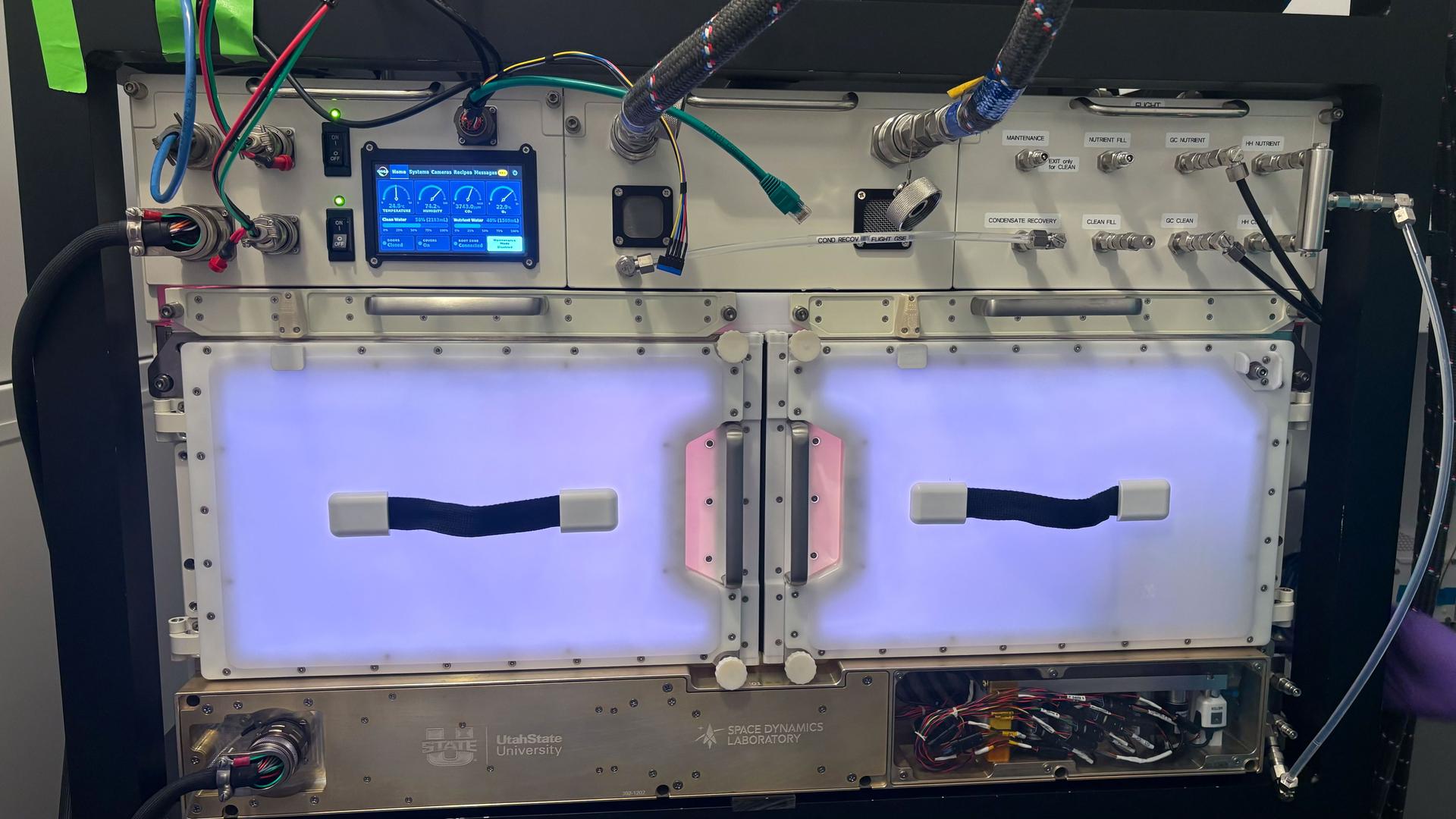
jsc2026e415100 (September 08, 2026) --- Preflight image of Utah State University’s OHALO III module in a closed configuration. This facility aims to validate plant water delivery and volume optimization in the microgravity environment. OHALO III could advance knowledge on crop production and inform design decisions for plant systems on future deep space missions. Credit: NASA KSC.
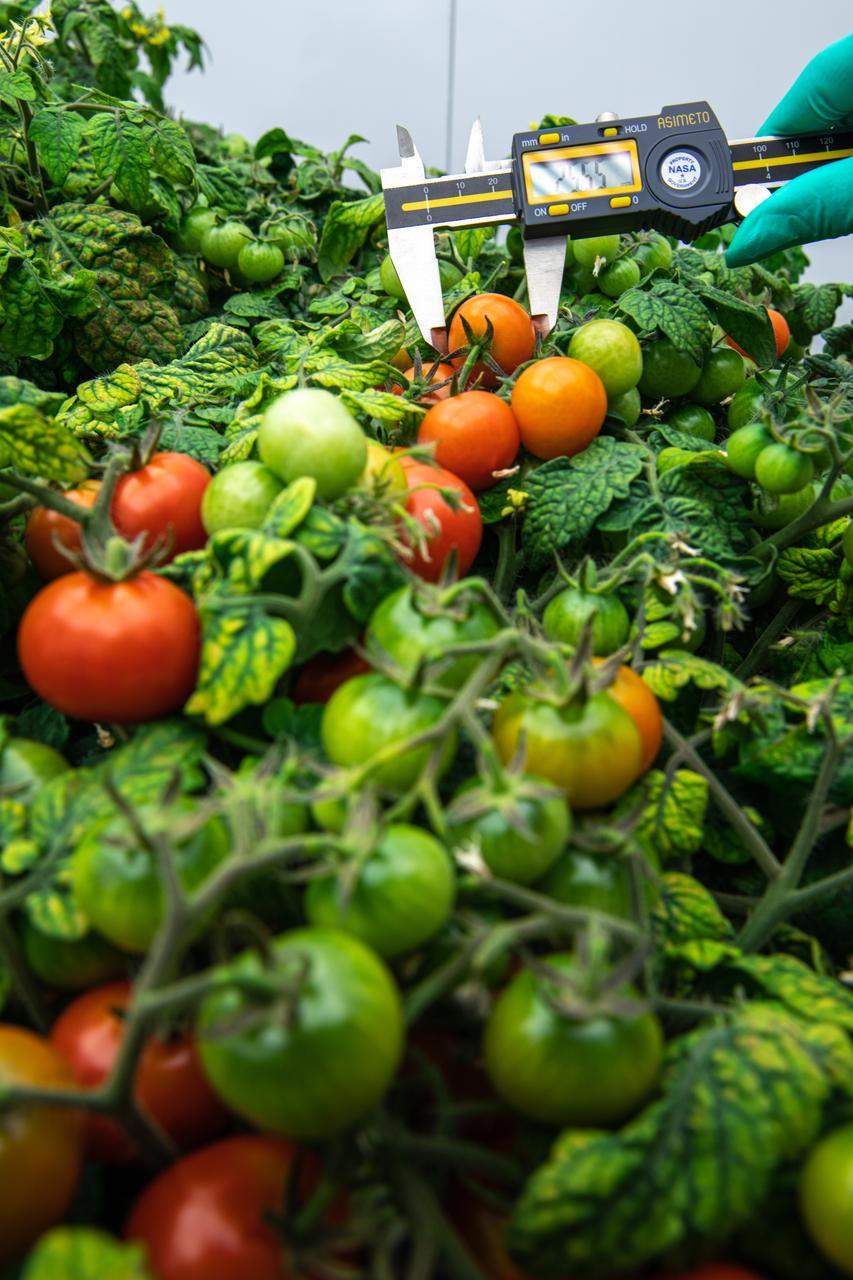
Lashelle Spencer, plant scientist with the Laboratory Support Services and Operations (LASSO) contract at NASA’s Kennedy Space Center in Florida, takes measurements on ‘Red Robin’ dwarf tomato plants, Jan. 10, 2020, inside a laboratory in the spaceport’s Space Station Processing Facility. The tomatoes are growing from seeds that have been exposed to simulated solar particle radiation. The plants’ edible mass and nutrients will be measured and compared to those of a control crop, grown from non-irradiated seeds. The project was designed to confirm that nutritious, high-quality produce can be reliably grown in deep space, or to provide a baseline to guide development of countermeasures to protect future crop foods from radiation during missions beyond low-Earth orbit. The investigation on space radiation impact on seeds and crop production also will be carried on the Materials International Space Station Experiment (MISSE) platform outside the station, supported NASA’s Space Technology Mission Directorate and the Space Biology Program, and potentially on future beyond-low-Earth platforms.

Lashelle Spencer, plant scientist with the Laboratory Support Services and Operations (LASSO) contract at NASA’s Kennedy Space Center in Florida, takes measurements on ‘Red Robin’ dwarf tomato plants, Jan. 10, 2020, inside a laboratory in the spaceport’s Space Station Processing Facility. The tomatoes are growing from seeds that have been exposed to simulated solar particle radiation. The plants’ edible mass and nutrients will be measured and compared to those of a control crop, grown from non-irradiated seeds. The project was designed to confirm that nutritious, high-quality produce can be reliably grown in deep space, or to provide a baseline to guide development of countermeasures to protect future crop foods from radiation during missions beyond low-Earth orbit. The investigation on space radiation impact on seeds and crop production also will be carried on the Materials International Space Station Experiment (MISSE) platform outside the station, supported NASA’s Space Technology Mission Directorate and the Space Biology Program, and potentially on future beyond-low-Earth platforms.
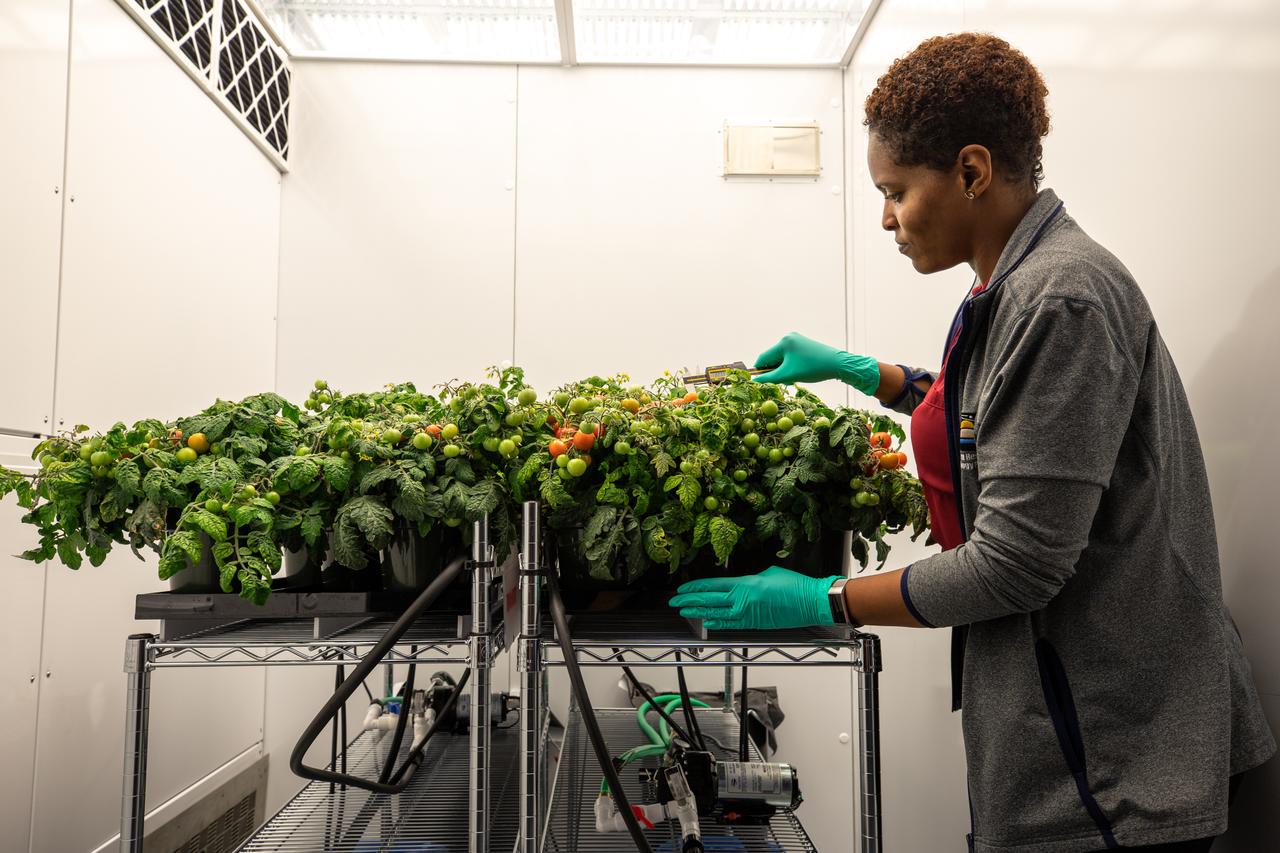
Lashelle Spencer, plant scientist with the Laboratory Support Services and Operations (LASSO) contract at NASA’s Kennedy Space Center in Florida, takes measurements on ‘Red Robin’ dwarf tomato plants, Jan. 10, 2020, inside a laboratory in the spaceport’s Space Station Processing Facility. The tomatoes are growing from seeds that have been exposed to simulated solar particle radiation. The plants’ edible mass and nutrients will be measured and compared to those of a control crop, grown from non-irradiated seeds. The project was designed to confirm that nutritious, high-quality produce can be reliably grown in deep space, or to provide a baseline to guide development of countermeasures to protect future crop foods from radiation during missions beyond low-Earth orbit. The investigation on space radiation impact on seeds and crop production also will be carried on the Materials International Space Station Experiment (MISSE) platform outside the station, supported NASA’s Space Technology Mission Directorate and the Space Biology Program, and potentially on future beyond-low-Earth platforms.
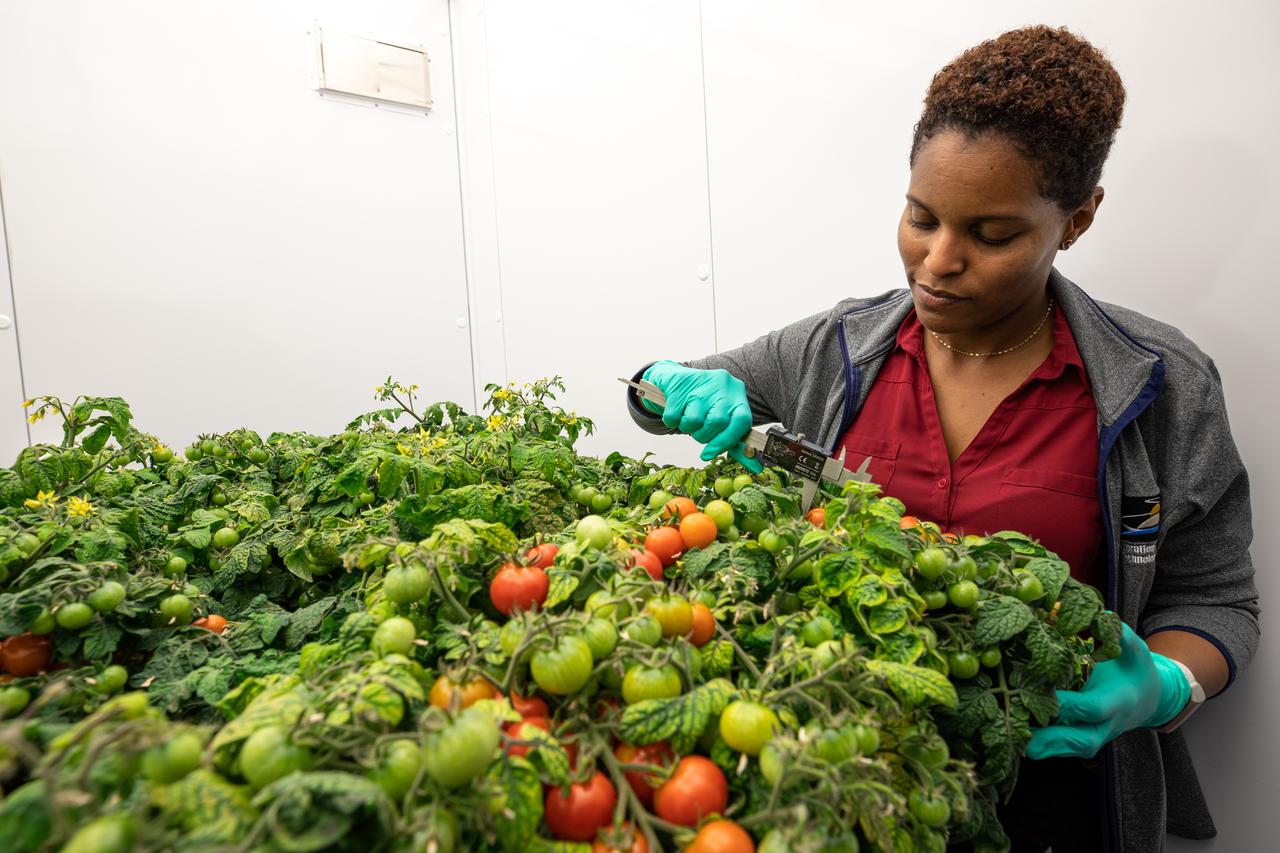
Lashelle Spencer, plant scientist with the Laboratory Support Services and Operations (LASSO) contract at NASA’s Kennedy Space Center in Florida, takes measurements on ‘Red Robin’ dwarf tomato plants, Jan. 10, 2020, inside a laboratory in the spaceport’s Space Station Processing Facility. The tomatoes are growing from seeds that have been exposed to simulated solar particle radiation. The plants’ edible mass and nutrients will be measured and compared to those of a control crop, grown from non-irradiated seeds. The project was designed to confirm that nutritious, high-quality produce can be reliably grown in deep space, or to provide a baseline to guide development of countermeasures to protect future crop foods from radiation during missions beyond low-Earth orbit. The investigation on space radiation impact on seeds and crop production also will be carried on the Materials International Space Station Experiment (MISSE) platform outside the station, supported NASA’s Space Technology Mission Directorate and the Space Biology Program, and potentially on future beyond-low-Earth platforms.
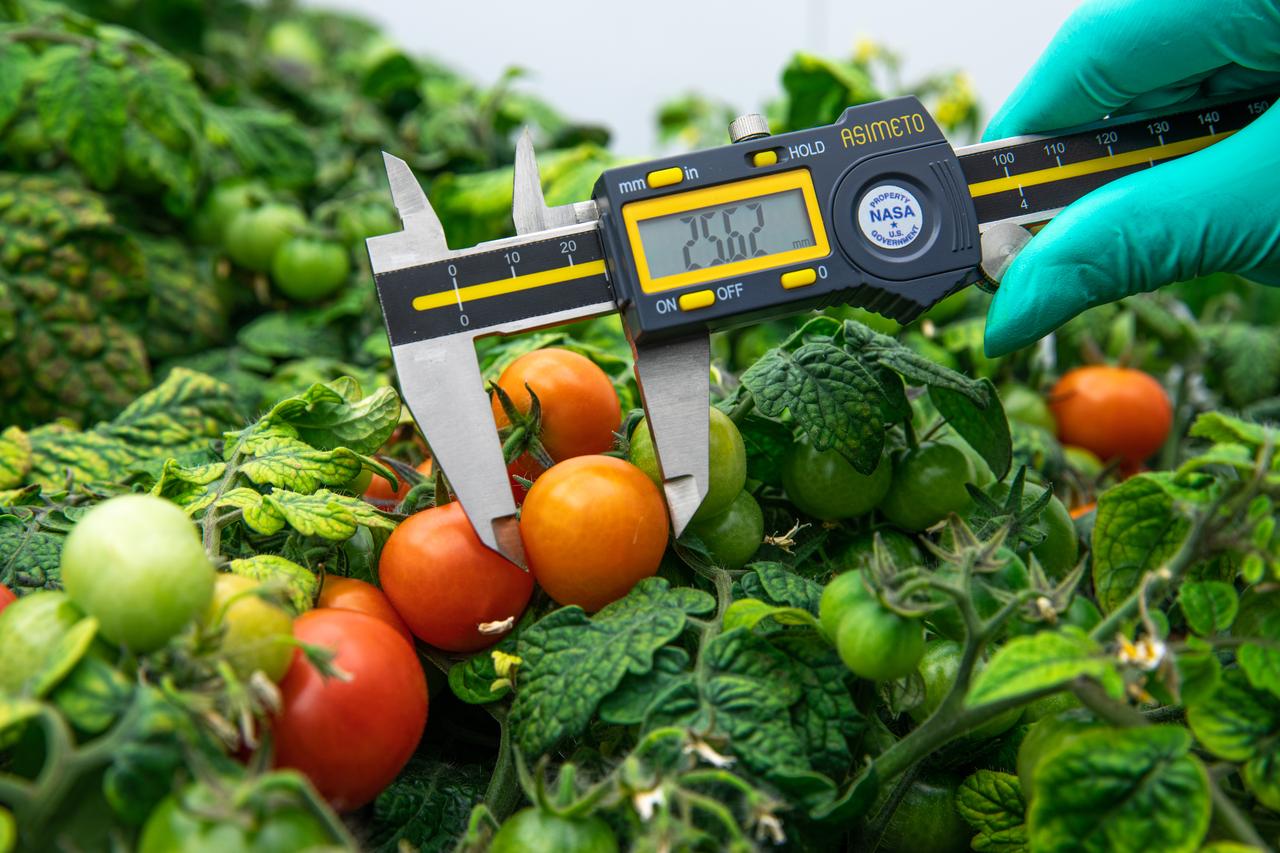
Lashelle Spencer, plant scientist with the Laboratory Support Services and Operations (LASSO) contract at NASA’s Kennedy Space Center in Florida, takes measurements on ‘Red Robin’ dwarf tomato plants, Jan. 10, 2020, inside a laboratory in the spaceport’s Space Station Processing Facility. The tomatoes are growing from seeds that have been exposed to simulated solar particle radiation. The plants’ edible mass and nutrients will be measured and compared to those of a control crop, grown from non-irradiated seeds. The project was designed to confirm that nutritious, high-quality produce can be reliably grown in deep space, or to provide a baseline to guide development of countermeasures to protect future crop foods from radiation during missions beyond low-Earth orbit. The investigation on space radiation impact on seeds and crop production also will be carried on the Materials International Space Station Experiment (MISSE) platform outside the station, supported NASA’s Space Technology Mission Directorate and the Space Biology Program, and potentially on future beyond-low-Earth platforms.
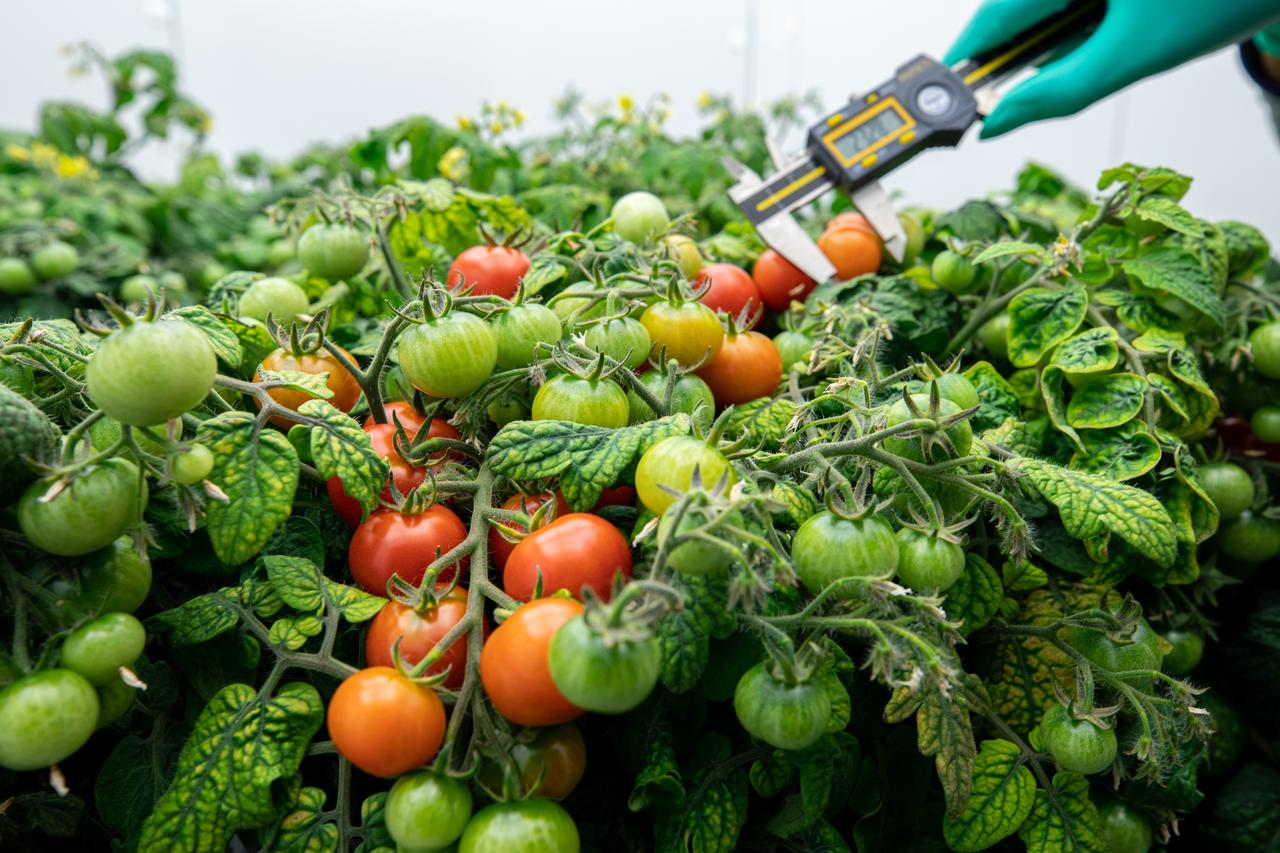
Lashelle Spencer, plant scientist with the Laboratory Support Services and Operations (LASSO) contract at NASA’s Kennedy Space Center in Florida, takes measurements on ‘Red Robin’ dwarf tomato plants, Jan. 10, 2020, inside a laboratory in the spaceport’s Space Station Processing Facility. The tomatoes are growing from seeds that have been exposed to simulated solar particle radiation. The plants’ edible mass and nutrients will be measured and compared to those of a control crop, grown from non-irradiated seeds. The project was designed to confirm that nutritious, high-quality produce can be reliably grown in deep space, or to provide a baseline to guide development of countermeasures to protect future crop foods from radiation during missions beyond low-Earth orbit. The investigation on space radiation impact on seeds and crop production also will be carried on the Materials International Space Station Experiment (MISSE) platform outside the station, supported NASA’s Space Technology Mission Directorate and the Space Biology Program, and potentially on future beyond-low-Earth platforms.
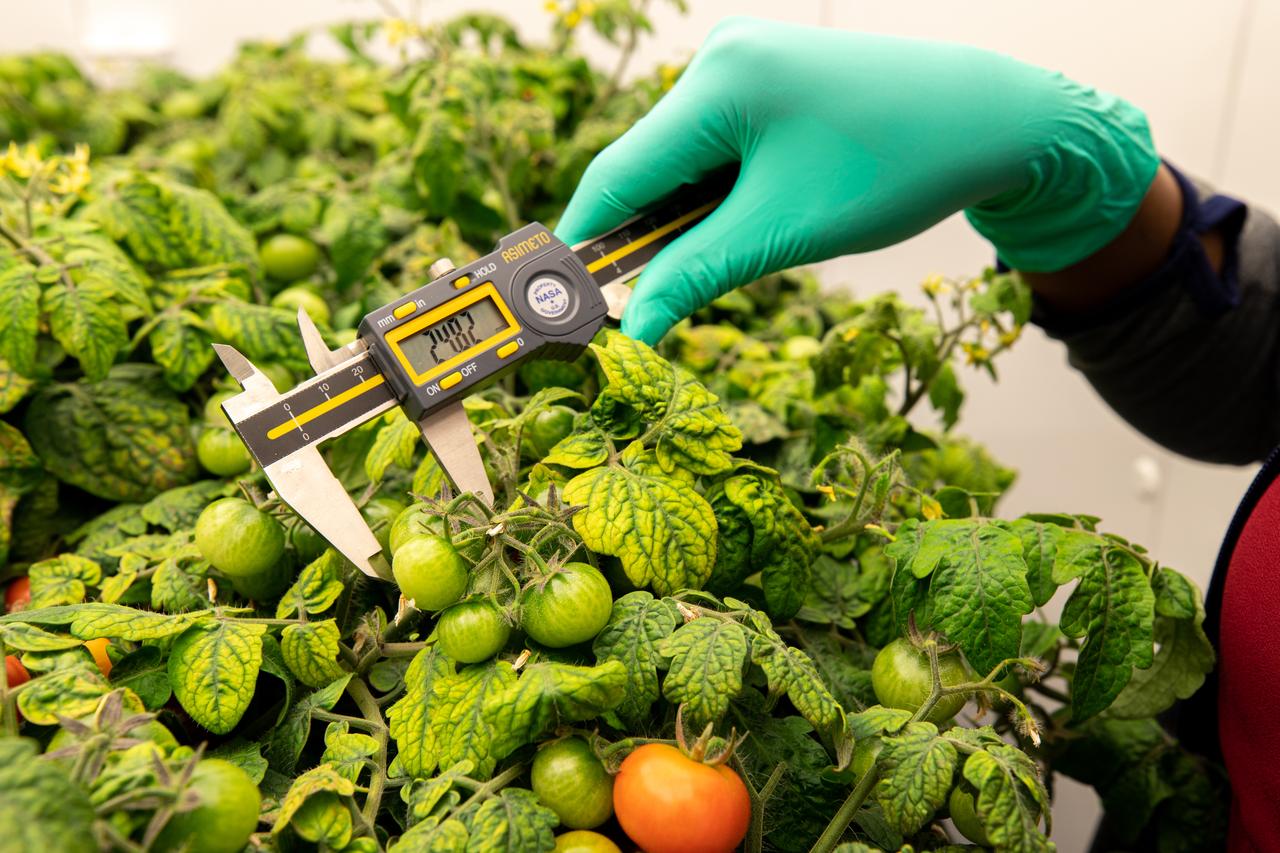
Lashelle Spencer, plant scientist with the Laboratory Support Services and Operations (LASSO) contract at NASA’s Kennedy Space Center in Florida, takes measurements on ‘Red Robin’ dwarf tomato plants, Jan. 10, 2020, inside a laboratory in the spaceport’s Space Station Processing Facility. The tomatoes are growing from seeds that have been exposed to simulated solar particle radiation. The plants’ edible mass and nutrients will be measured and compared to those of a control crop, grown from non-irradiated seeds. The project was designed to confirm that nutritious, high-quality produce can be reliably grown in deep space, or to provide a baseline to guide development of countermeasures to protect future crop foods from radiation during missions beyond low-Earth orbit. The investigation on space radiation impact on seeds and crop production also will be carried on the Materials International Space Station Experiment (MISSE) platform outside the station, supported NASA’s Space Technology Mission Directorate and the Space Biology Program, and potentially on future beyond-low-Earth platforms.

Lashelle Spencer, plant scientist with the Laboratory Support Services and Operations (LASSO) contract at NASA’s Kennedy Space Center in Florida, takes measurements on ‘Red Robin’ dwarf tomato plants, Jan. 10, 2020, inside a laboratory in the spaceport’s Space Station Processing Facility. The tomatoes are growing from seeds that have been exposed to simulated solar particle radiation. The plants’ edible mass and nutrients will be measured and compared to those of a control crop, grown from non-irradiated seeds. The project was designed to confirm that nutritious, high-quality produce can be reliably grown in deep space, or to provide a baseline to guide development of countermeasures to protect future crop foods from radiation during missions beyond low-Earth orbit. The investigation on space radiation impact on seeds and crop production also will be carried on the Materials International Space Station Experiment (MISSE) platform outside the station, supported NASA’s Space Technology Mission Directorate and the Space Biology Program, and potentially on future beyond-low-Earth platforms.
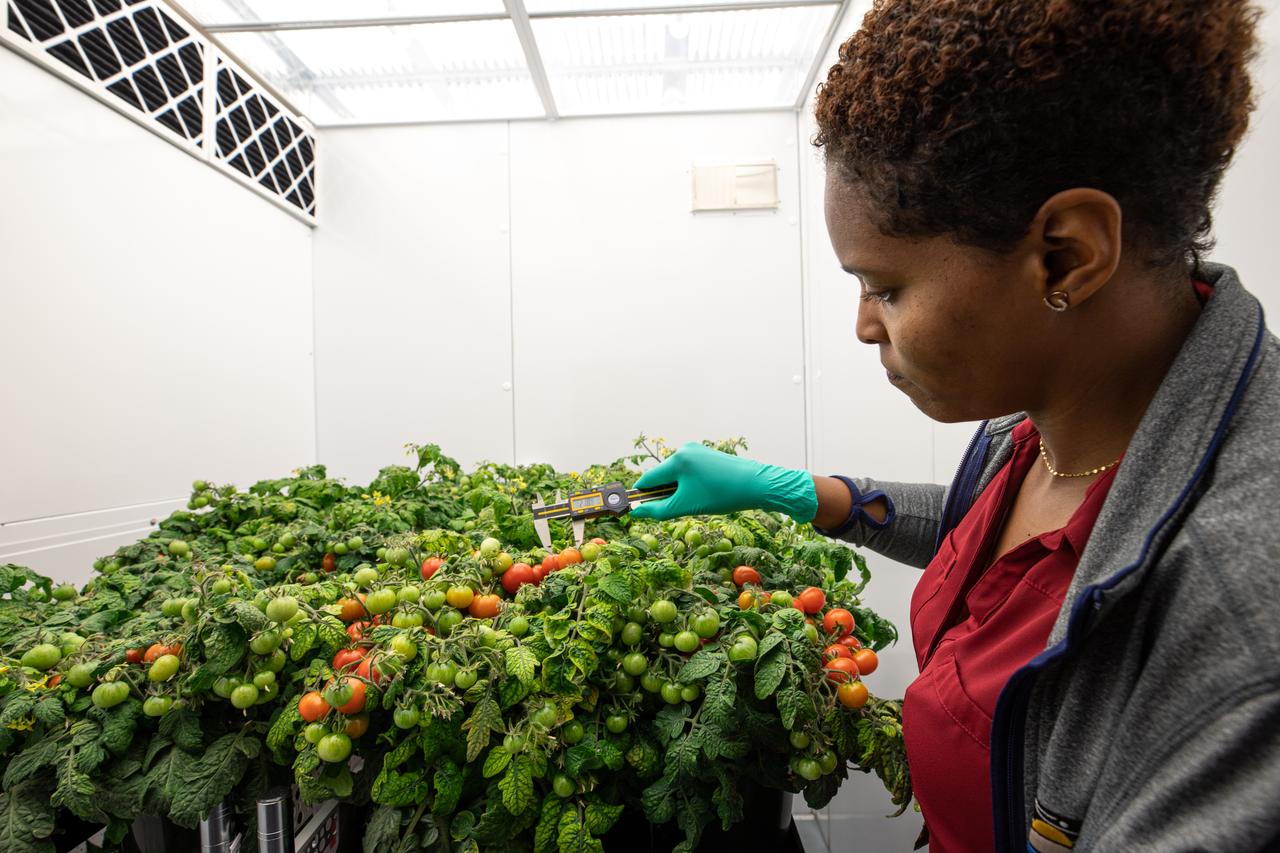
Lashelle Spencer, plant scientist with the Laboratory Support Services and Operations (LASSO) contract at NASA’s Kennedy Space Center in Florida, takes measurements on ‘Red Robin’ dwarf tomato plants, Jan. 10, 2020, inside a laboratory in the spaceport’s Space Station Processing Facility. The tomatoes are growing from seeds that have been exposed to simulated solar particle radiation. The plants’ edible mass and nutrients will be measured and compared to those of a control crop, grown from non-irradiated seeds. The project was designed to confirm that nutritious, high-quality produce can be reliably grown in deep space, or to provide a baseline to guide development of countermeasures to protect future crop foods from radiation during missions beyond low-Earth orbit. The investigation on space radiation impact on seeds and crop production also will be carried on the Materials International Space Station Experiment (MISSE) platform outside the station, supported NASA’s Space Technology Mission Directorate and the Space Biology Program, and potentially on future beyond-low-Earth platforms.
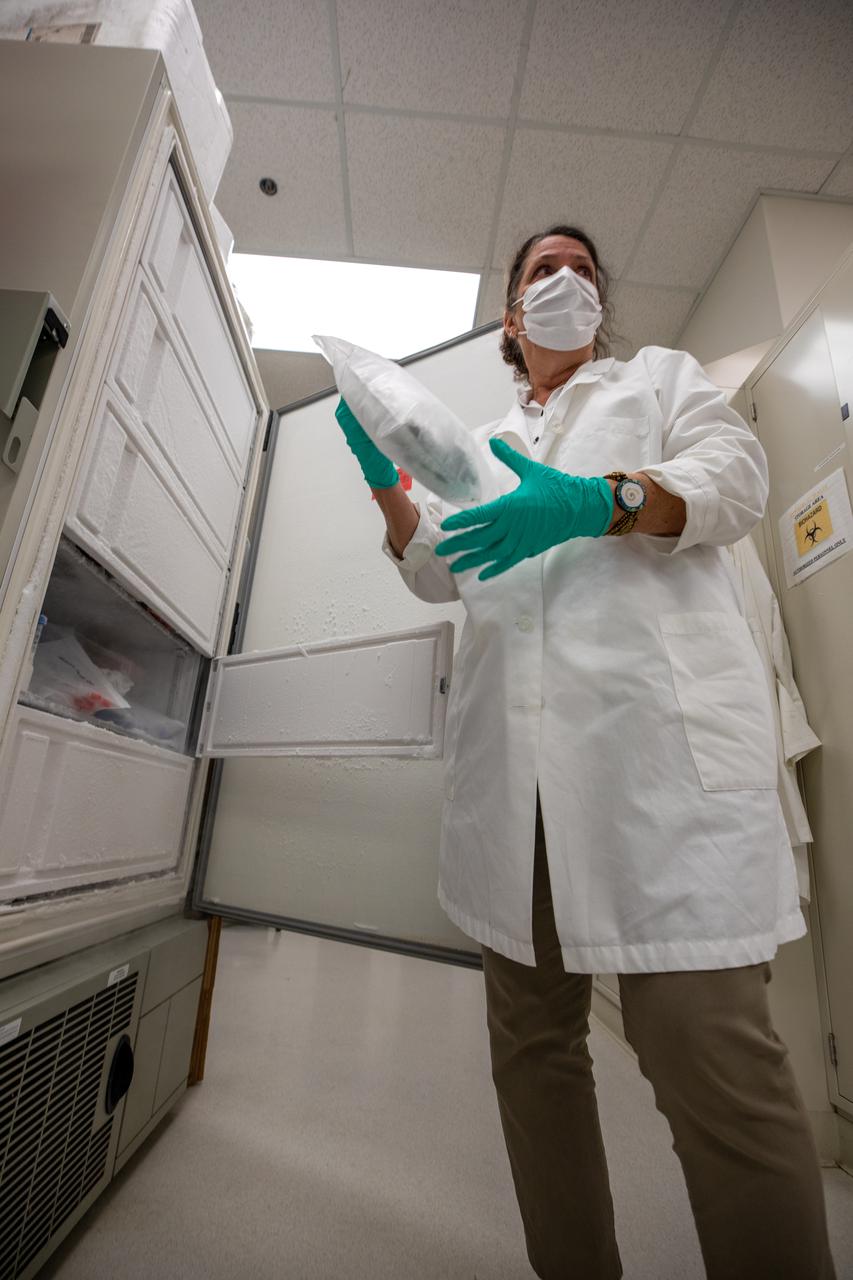
Inside the Microbiology Lab at NASA’s Kennedy Space Center in Florida on Oct. 6, 2021, Microbiology Lead Mary Hummerick works with frozen lettuce samples that recently returned from the International Space Station as part of NASA’s SpaceX 23rd commercial resupply services mission. The experiment, titled VEG-03J, involved “Outredgeous” red romaine lettuce grown in the Veggie Production System (Veggie) on the space station and demonstrated a new way of storing, handling, and planting seeds in space. NASA is studying how to effectively grow crops in space so plants can provide supplemental nutrients to astronaut crews on long-duration missions, such as a mission to Mars.
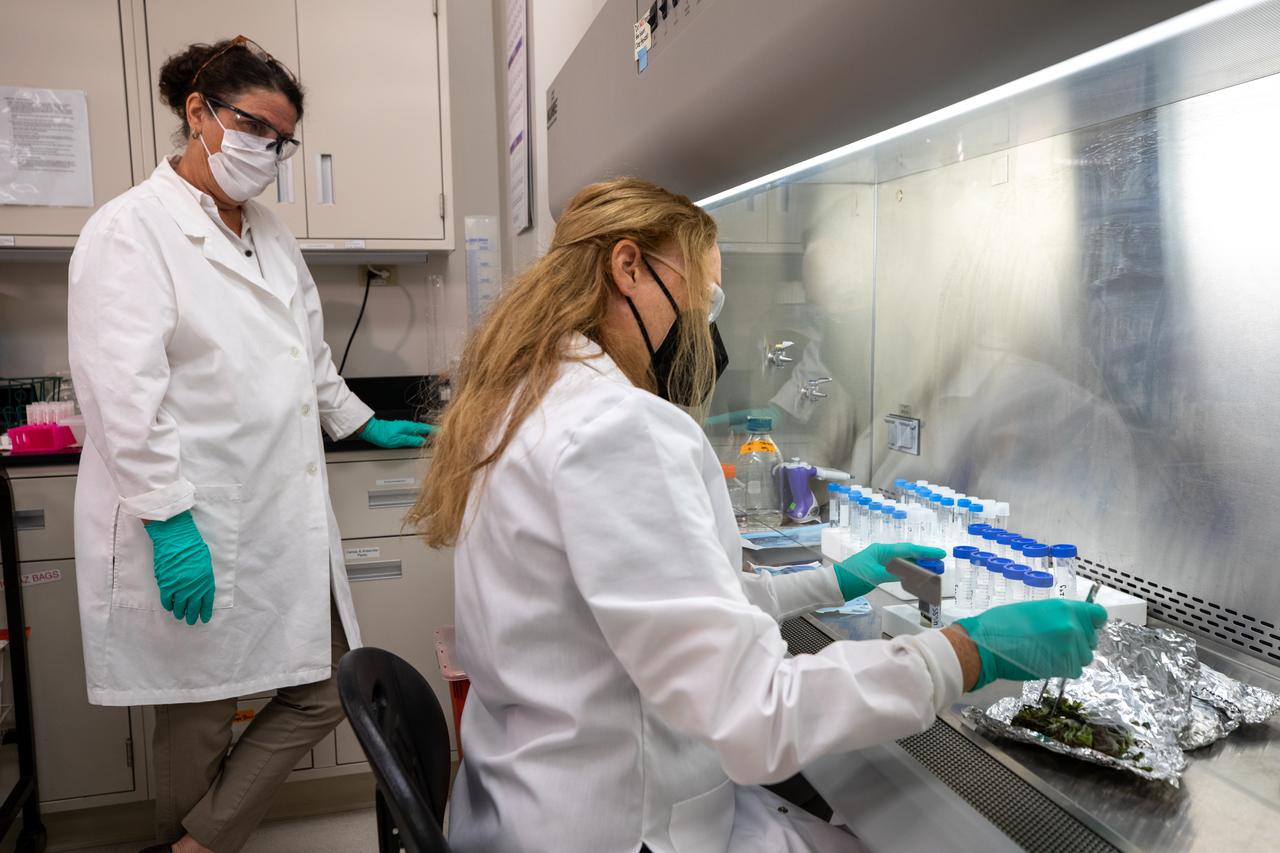
Inside the Microbiology Lab at NASA’s Kennedy Space Center in Florida on Oct. 6, 2021, Microbiology Lead Mary Hummerick, left, and Microbiologist Jennifer Gooden work with frozen lettuce samples that recently returned from the International Space Station as part of NASA’s SpaceX 23rd commercial resupply services mission. The experiment, titled VEG-03J, involved “Outredgeous” red romaine lettuce grown in the Veggie Production System (Veggie) on the space station and demonstrated a new way of storing, handling, and planting seeds in space. NASA is studying how to effectively grow crops in space so plants can provide supplemental nutrients to astronaut crews on long-duration missions, such as a mission to Mars.
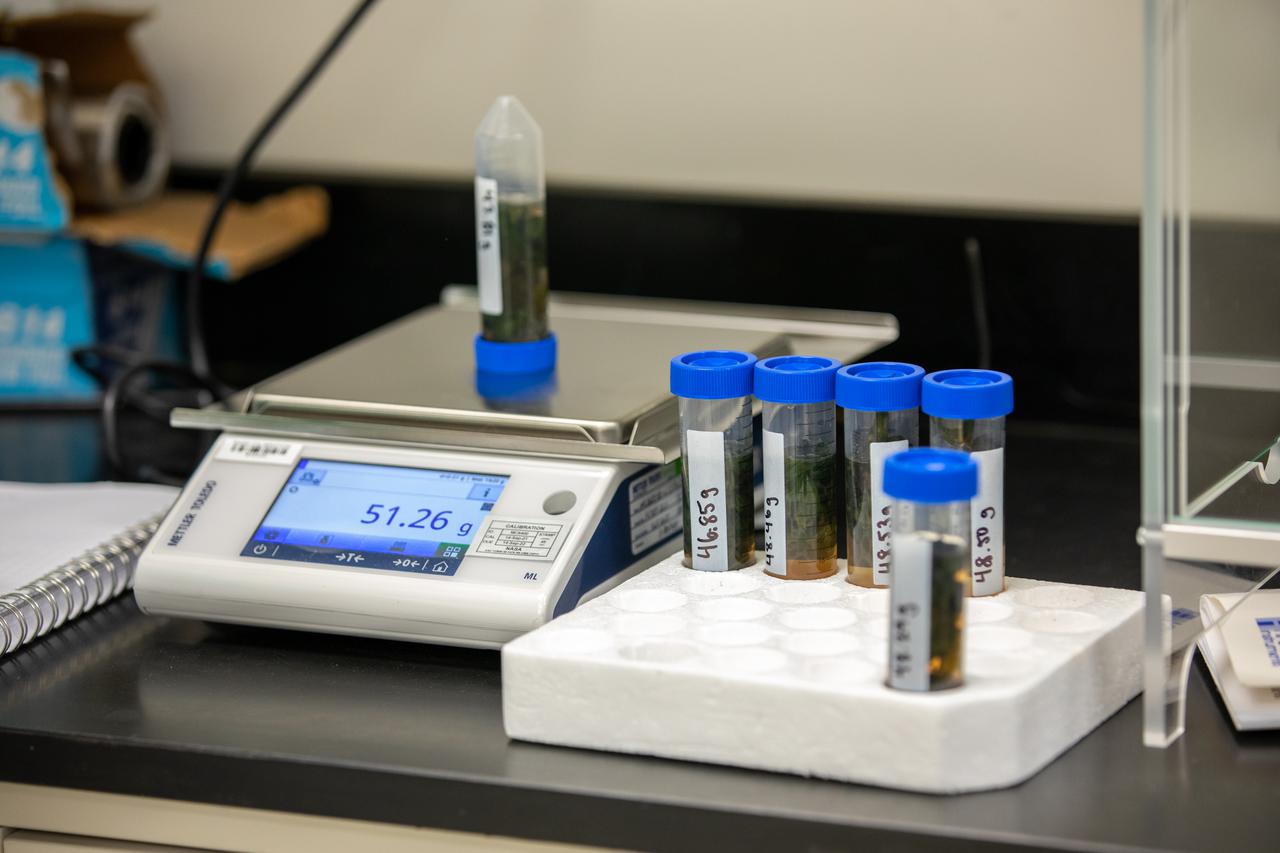
Inside the Microbiology Lab at NASA’s Kennedy Space Center in Florida on Oct. 6, 2021, microbiologists work with frozen lettuce samples that recently returned from the International Space Station as part of NASA’s SpaceX 23rd commercial resupply services mission. The experiment, titled VEG-03J, involved “Outredgeous” red romaine lettuce grown in the Veggie Production System (Veggie) on the space station and demonstrated a new way of storing, handling, and planting seeds in space. NASA is studying how to effectively grow crops in space so plants can provide supplemental nutrients to astronaut crews on long-duration missions, such as a mission to Mars.
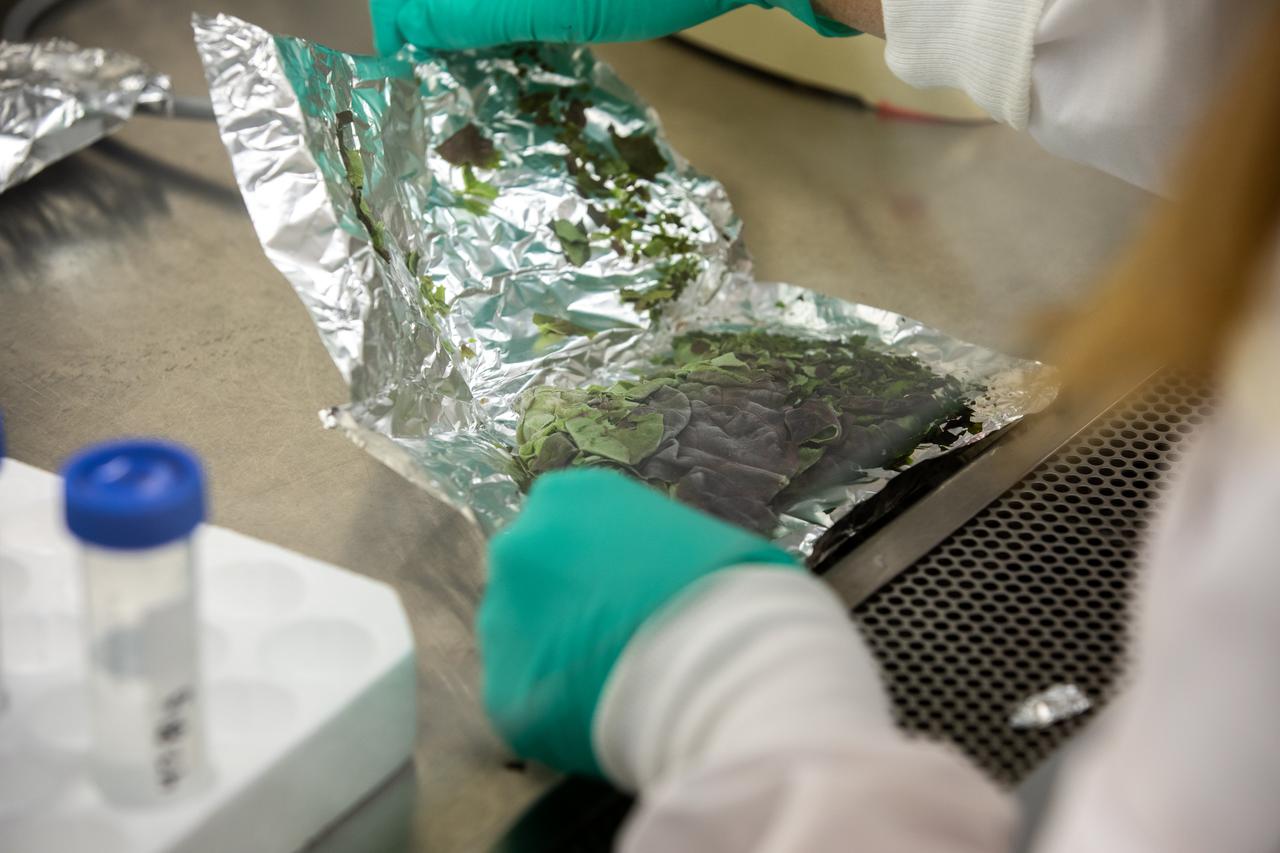
Inside the Microbiology Lab at NASA’s Kennedy Space Center in Florida on Oct. 6, 2021, Microbiologist Jennifer Gooden works with frozen lettuce samples that recently returned from the International Space Station as part of NASA’s SpaceX 23rd commercial resupply services mission. The experiment, titled VEG-03J, involved “Outredgeous” red romaine lettuce grown in the Veggie Production System (Veggie) on the space station and demonstrated a new way of storing, handling, and planting seeds in space. NASA is studying how to effectively grow crops in space so plants can provide supplemental nutrients to astronaut crews on long-duration missions, such as a mission to Mars.
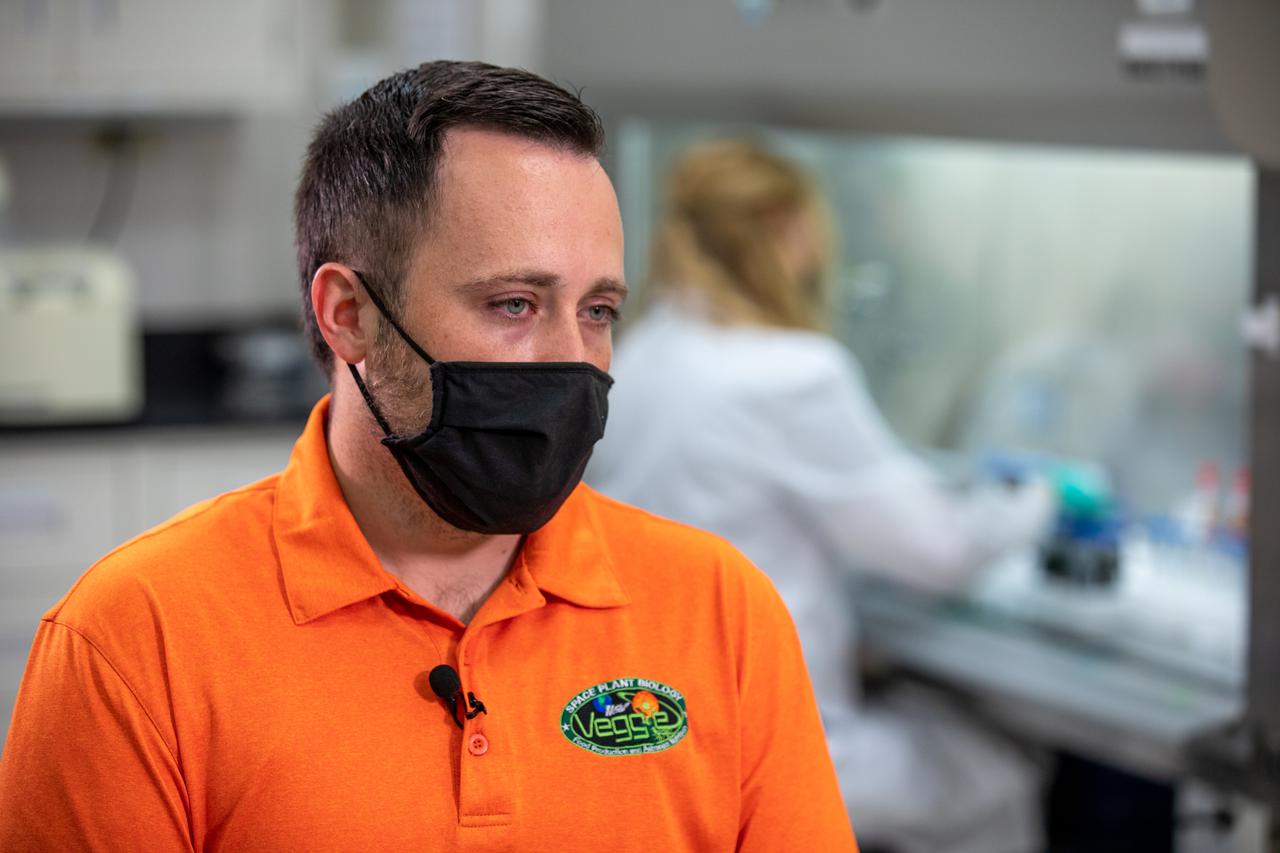
Inside the Microbiology Lab at NASA’s Kennedy Space Center in Florida on Oct. 6, 2021, Microbiologist Aaron Curry works with frozen lettuce samples that recently returned from the International Space Station as part of NASA’s SpaceX 23rd commercial resupply services mission. The experiment, titled VEG-03J, involved “Outredgeous” red romaine lettuce grown in the Veggie Production System (Veggie) on the space station and demonstrated a new way of storing, handling, and planting seeds in space. NASA is studying how to effectively grow crops in space so plants can provide supplemental nutrients to astronaut crews on long-duration missions, such as a mission to Mars.
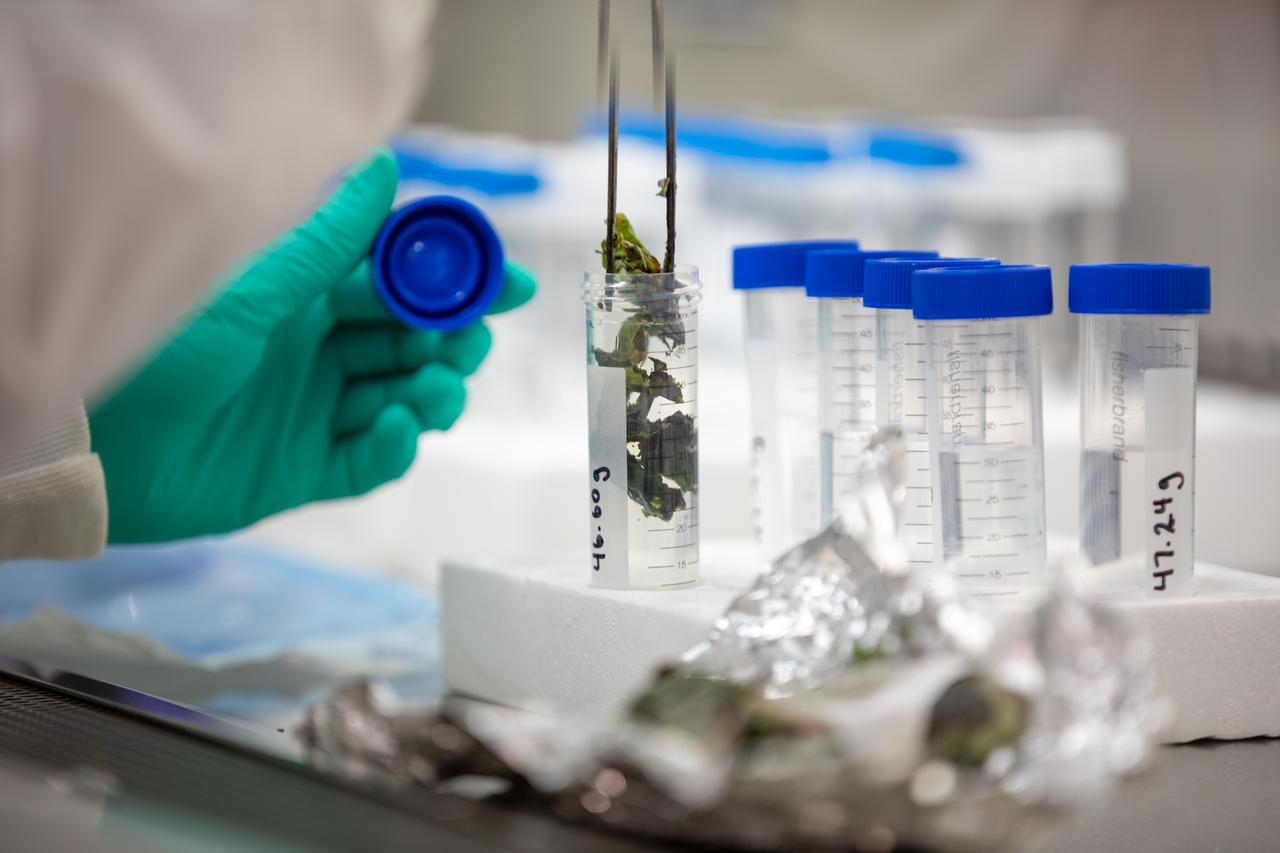
Inside the Microbiology Lab at NASA’s Kennedy Space Center in Florida on Oct. 6, 2021, a microbiologist works with frozen lettuce samples that recently returned from the International Space Station as part of NASA’s SpaceX 23rd commercial resupply services mission. The experiment, titled VEG-03J, involved “Outredgeous” red romaine lettuce grown in the Veggie Production System (Veggie) on the space station and demonstrated a new way of storing, handling, and planting seeds in space. NASA is studying how to effectively grow crops in space so plants can provide supplemental nutrients to astronaut crews on long-duration missions, such as a mission to Mars.
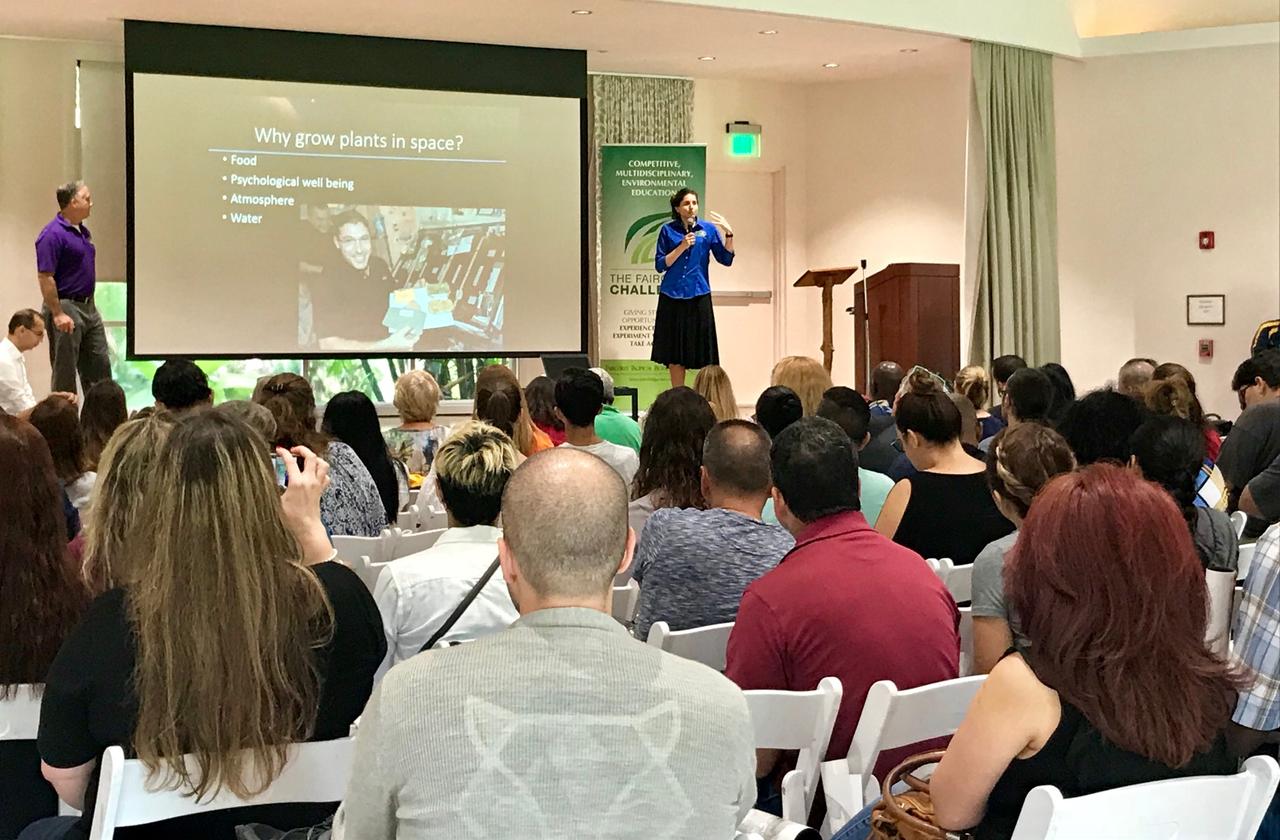
Kennedy scientists Trent Smith, left, and Dr. Gioia Massa speak to middle and high school teachers at Fairchild Tropical Botanic Garden in Miami during the kickoff of the 2017-2018 Fairchild Challenge-Growing Beyond Earth. More than 130 teachers gathered for the opening workshop, where they learned about food production in space and the Veggie hardware currently on the International Space Station. NASA has partnered with Fairchild to create this STEM-based challenge in which students will follow specific research protocols and analyze plant growth factors, flavor and nutrition, in order to help NASA choose the next crops for astronauts to grow aboard the station.
![jsc2025e047405 (5/28/2025) --- Image of the preparative zone of cultured tobacco cells with visualized microtubules (yellow: microtubules [preparative zone], magenta: nuclei). For the Effects of the Space Environment on Cell Division in Plants (Plant Cell Division) investigation, plant samples are collected that are fixed and frozen for analysis of microstructures, microtubules, proteomes, and transcriptome and imaged using the JAXA Confocal Microscope (COSMIC). The Plant Cell Division investigation provides researchers with a better understanding of how gravity affects the body plan of plants could support production of food crops on future spaceflight missions. Image courtesy of University of Toyama.](https://images-assets.nasa.gov/image/jsc2025e047405/jsc2025e047405~thumb.jpg)
jsc2025e047405 (5/28/2025) --- Image of the preparative zone of cultured tobacco cells with visualized microtubules (yellow: microtubules [preparative zone], magenta: nuclei). For the Effects of the Space Environment on Cell Division in Plants (Plant Cell Division) investigation, plant samples are collected that are fixed and frozen for analysis of microstructures, microtubules, proteomes, and transcriptome and imaged using the JAXA Confocal Microscope (COSMIC). The Plant Cell Division investigation provides researchers with a better understanding of how gravity affects the body plan of plants could support production of food crops on future spaceflight missions. Image courtesy of University of Toyama.
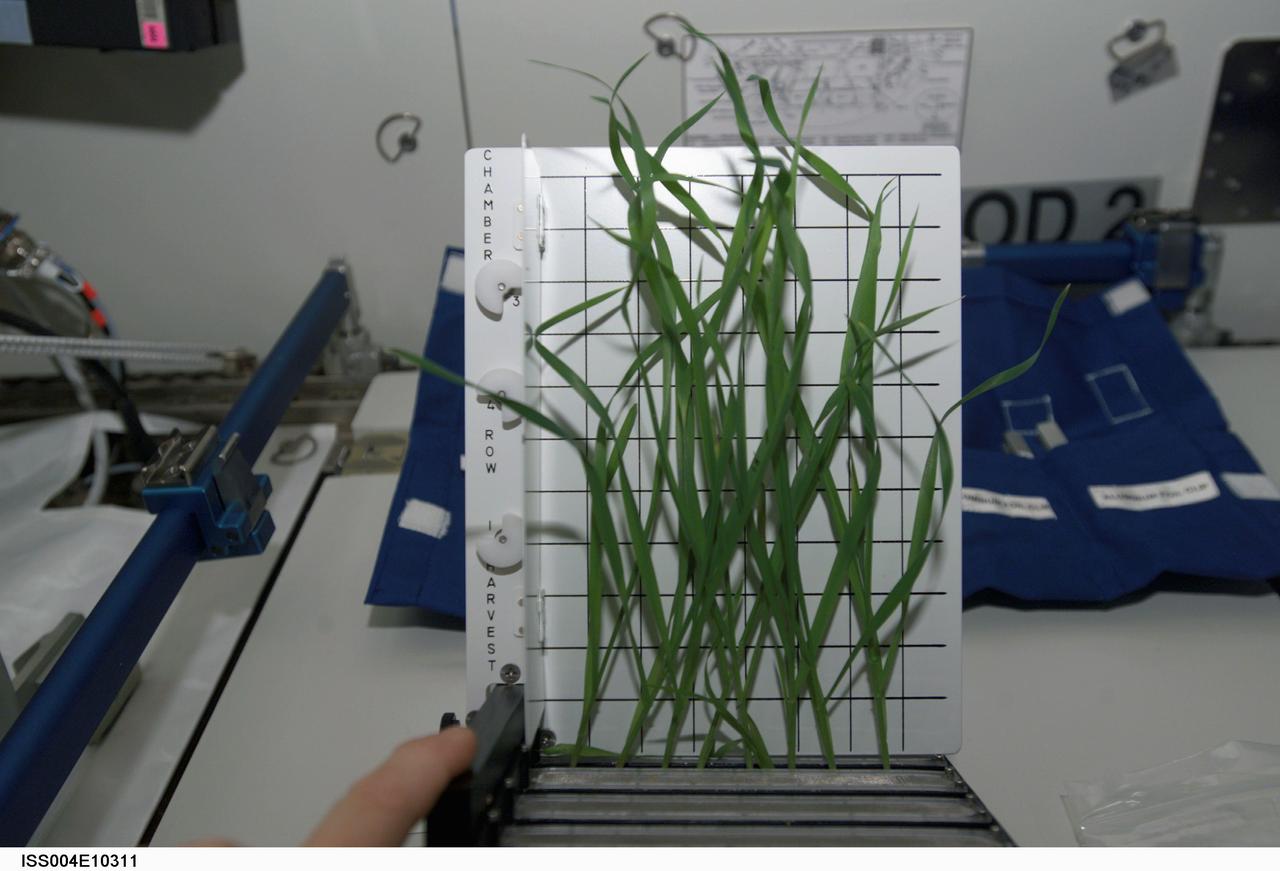
Dwarf wheat were photographed aboard the International Space Station in April 2002. Lessons from on-orbit research on plants will have applications to terrestrial agriculture as well as for long-term space missions. Alternative agricultural systems that can efficiently produce greater quantities of high-quality crops in a small area are important for future space expeditions. Also regenerative life-support systems that include plants will be an important component of long-term space missions. Data from the Biomass Production System (BPS) and the Photosynthesis Experiment and System Testing and Operations (PESTO) will advance controlled-environment agricultural systems and will help farmers produce better, healthier crops in a small area. This same knowledge is critical to closed-loop life support systems for spacecraft. The BPS comprises a miniature environmental control system for four plant growth chambers, all in the volume of two space shuttle lockers. The experience with the BPS on orbit is providing valuable design and operational lessons that will be incorporated into the Plant Growth Units. The objective of PESTO was to flight verify the BPS hardware and to determine how the microgravity environment affects the photosynthesis and metabolic function of Super Dwarf wheat and Brassica rapa (a member of the mustard family).

Sean Gustafson, senior advisor to the NASA Administrator, left; Matthew Mickens, project scientist, space crop production, at NASA’s Kennedy Space Center, second from left; Trey Carlson, chief of staff at NASA’s Kennedy Space Center, third from left; Spencer Barr, Exploration Ground Systems mission assurance manager at NASA’s Kennedy Space Center, fourth from left; Clara Wright, chief of the laboratories, development, and testing division within the engineering directorate at NASA’s Kennedy Space Center, fifth from left; and Jerry Kerby, pilot, right, pose for a photograph following an employee incentive flying event with NASA Administrator Jared Isaacman's personal F-5 aircraft, Friday, March 6, 2026, at NASA’s Kennedy Space Center in Florida. Photo Credit: (NASA/John Kraus)
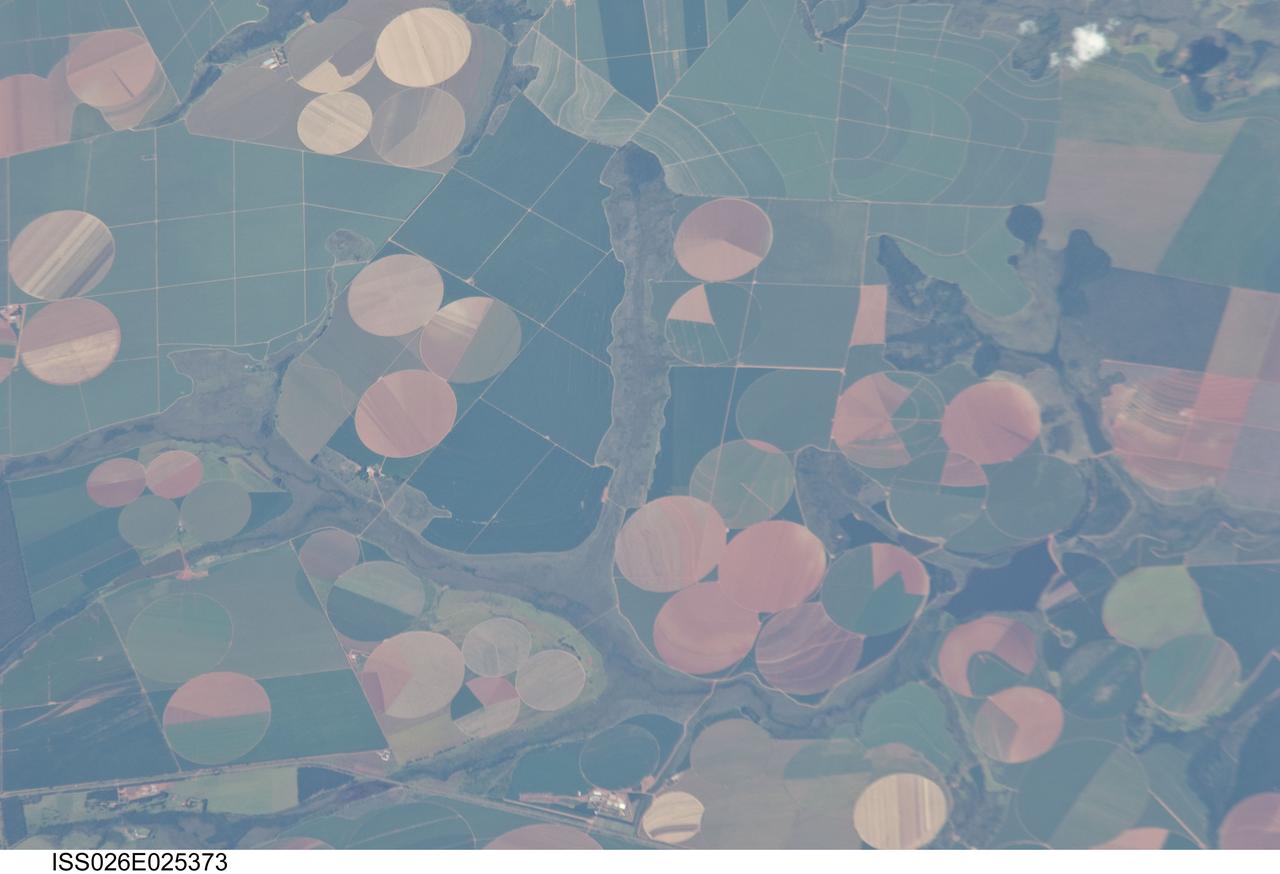
ISS026-E-025373 (10 Feb. 2011) --- Agricultural fields near Perdizes, Minas Gerais, Brazil are featured in this image photographed by an Expedition 26 crew member on the International Space Station. This detailed photograph illustrates diverse agricultural landscape patterns in the western part of the Brazilian State of Minas Gerais. Perhaps most widely known for its mineral wealth, Minas Gerais is also a large agricultural producer in Brazil. The fields in the image are located to the southwest of the city of Perdizes, which means “partridges” in Portuguese. A mix of regularly-gridded polygonal fields, and circular center-pivot fields, marks the human land use of the region. Small tributary streams (and their adjacent floodplains) of the Araguari River extend like fingers throughout the agricultural landscape. The visual diversity of field forms is matched by the variety of crops produced here: sunflowers, wheat, potatoes, coffee, rice, soybeans, and corn are among the agricultural products of the region. While the Northern Hemisphere is still in the grip of winter, crops are growing in the Southern Hemisphere as indicated by the many green fields in the image. Fallow fields—fields not in active agricultural use—display the violet, reddish to light tan soils common to this part of Brazil. The darker soils are often rich in iron and aluminum oxides, and are typical of highly weathered soil material that forms in hot, humid climates.
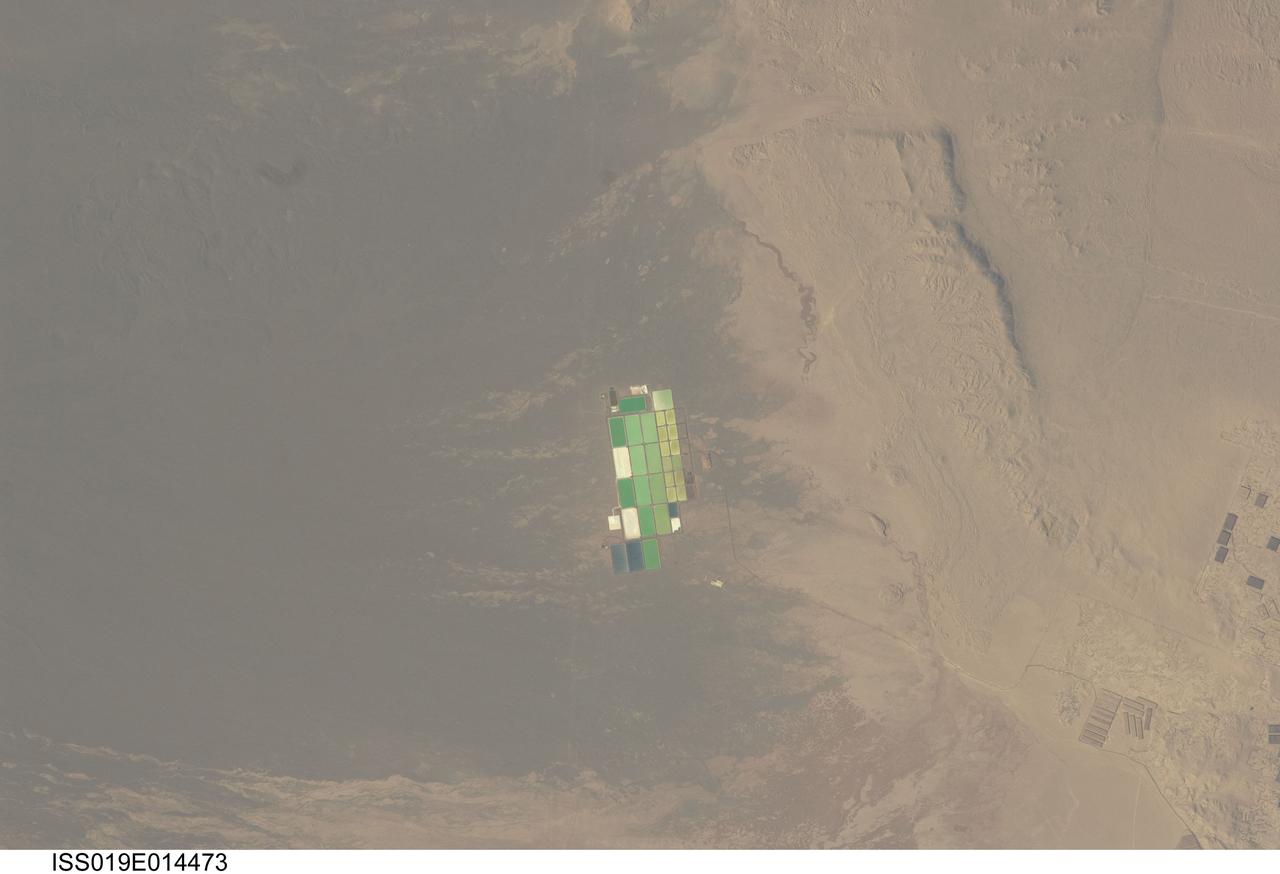
ISS019-E-014473 (5 May 2009) --- Salt ponds in Nueva Victoria, northern Chile are featured in this image photographed by an Expedition 19 crew member on the International Space Station. This view shows a long alluvial fan, sloping from east to west (left to right) in northern Chile with solar evaporation (or salt) ponds, some brightly colored, near the foot of the fan. The alluvial fan sediments are brown and contrast sharply with tan sediments of the Pampa del Tamarugal, the great hyper arid inner valley of Chile?s northern Atacama Desert. Nitrates and many other minerals are mined in this region. A few extraction pits and ore dumps are visible at bottom right, but most of the shallow diggings (0.5?5 meters deep) of a mine extracting caliche deposits ? a hard, cemented layer in the soil formed by downward movement and redeposition of sodium salts ? lie just outside the picture. Iodine is one of the products from mining; it is first extracted by a process known as heap leaching. Waste liquids from the iodine plants are dried in the tan and brightly colored evaporation ponds to crystallize nitrate salts for collection. Fertilizer production for higher-value crops is the main use for the recovered nitrates, but there are many other uses including the manufacture of pharmaceuticals, explosives, glass, ceramics, water treatment and metallurgical processes.
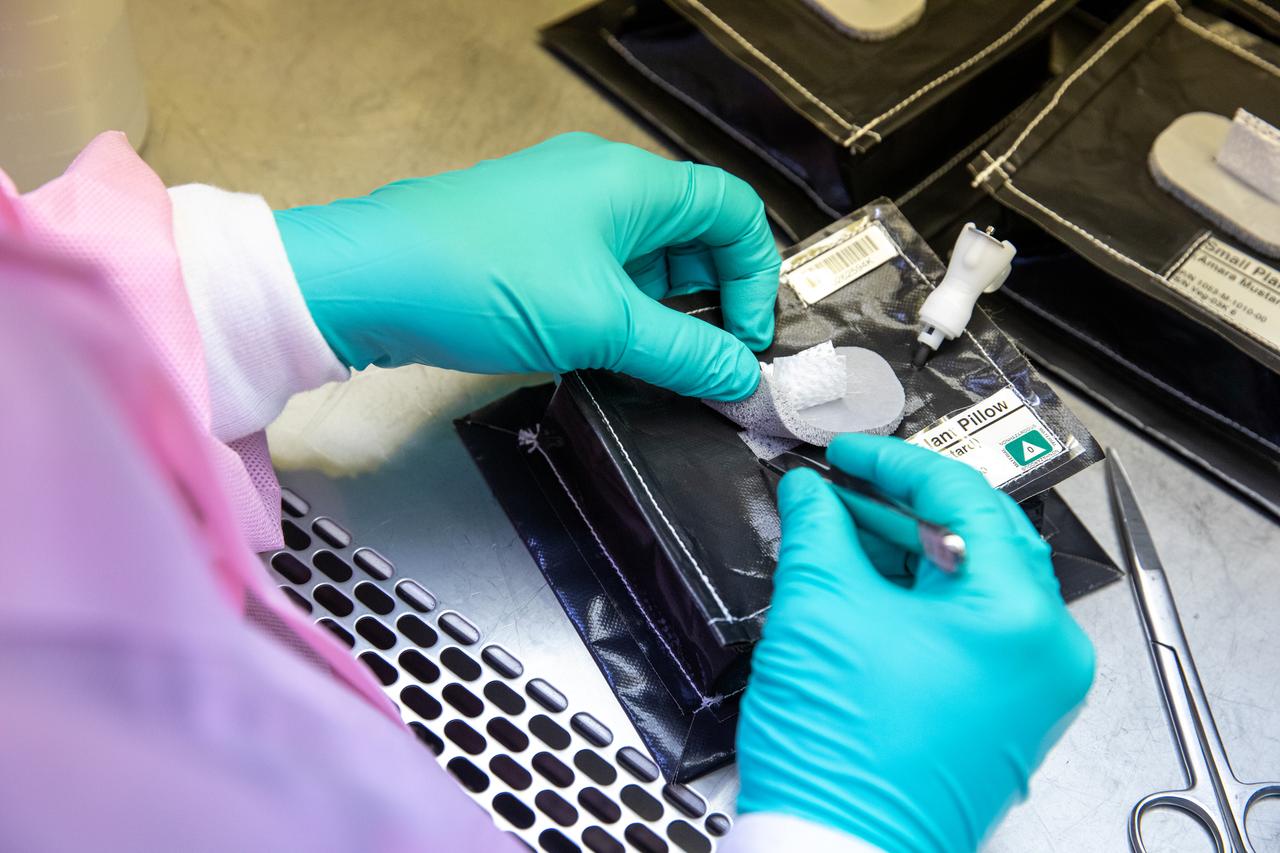
On Jan. 21, 2020, inside the Space Station Processing Facility at NASA’s Kennedy Space Center in Florida, intern Emily Kennebeck prepares plant pillows for their flight to the International Space Station. The pillows, which are a common method used to grow plants in space, are being sent to the orbiting laboratory on Northrop Grumman’s 13th resupply services (NG-13) mission for a series of VEG-03 experiments that will study the growth of three types of leafy greens in a microgravity environment. Once the pillows are assembled and packaged for flight, they will be transported to the agency’s Wallops Flight Facility in Virginia, where liftoff will occur. NG-13 is scheduled to launch on Feb. 9, 2020, at 5:39 p.m. EST.
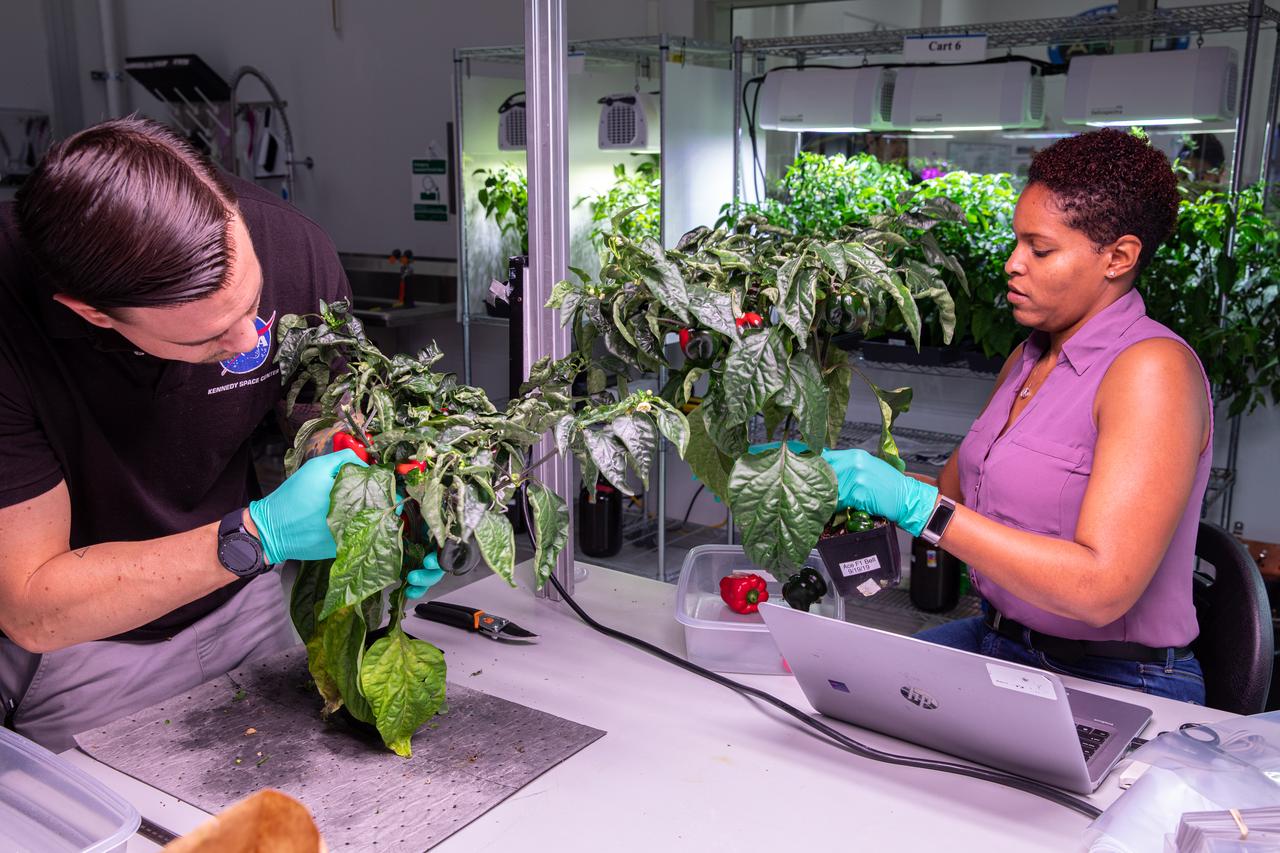
Jason Fischer (left), a research scientist, and Lashelle Spencer, a plant scientist, with the Laboratory Support Services and Operations contract at NASA’s Kennedy Space Center in Florida, harvest peppers from pepper plants on Jan. 15, 2020, that were grown in the Space Station Processing Facility for a growth assessment test in preparation for sending them to space. As NASA prepares to send humans beyond low-Earth orbit, the ability for astronauts to grow a variety of fresh fruits and vegetables in space will be critical. Fresh produce will be an essential supplement to the crew’s pre-packaged diet during long-duration space exploration when they are away from Earth for extended periods of time.
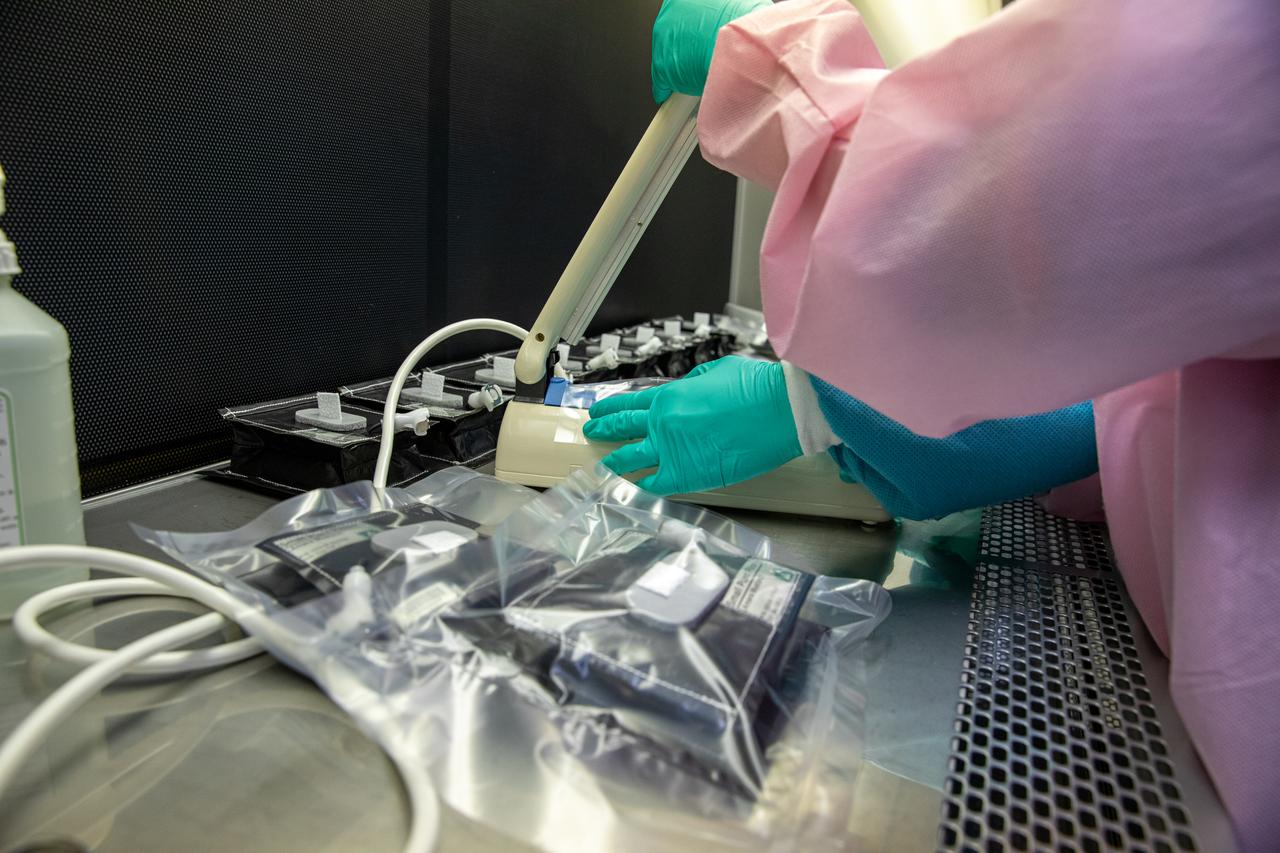
On Jan. 21, 2020, inside the Space Station Processing Facility at NASA’s Kennedy Space Center in Florida, intern Emily Kennebeck prepares plant pillows for their upcoming flight to the International Space Station. The pillows, which are a common method used to grow plants in space, are being sent to the orbiting laboratory on Northrop Grumman’s 13th resupply services (NG-13) mission for a series of VEG-03 experiments that will study the growth of three types of leafy greens in a microgravity environment. Once the pillows are assembled and packaged for flight, they will be transported to the agency’s Wallops Flight Facility in Virginia, where liftoff will occur. NG-13 is scheduled to launch on Feb. 9, 2020, at 5:39 p.m. EST.
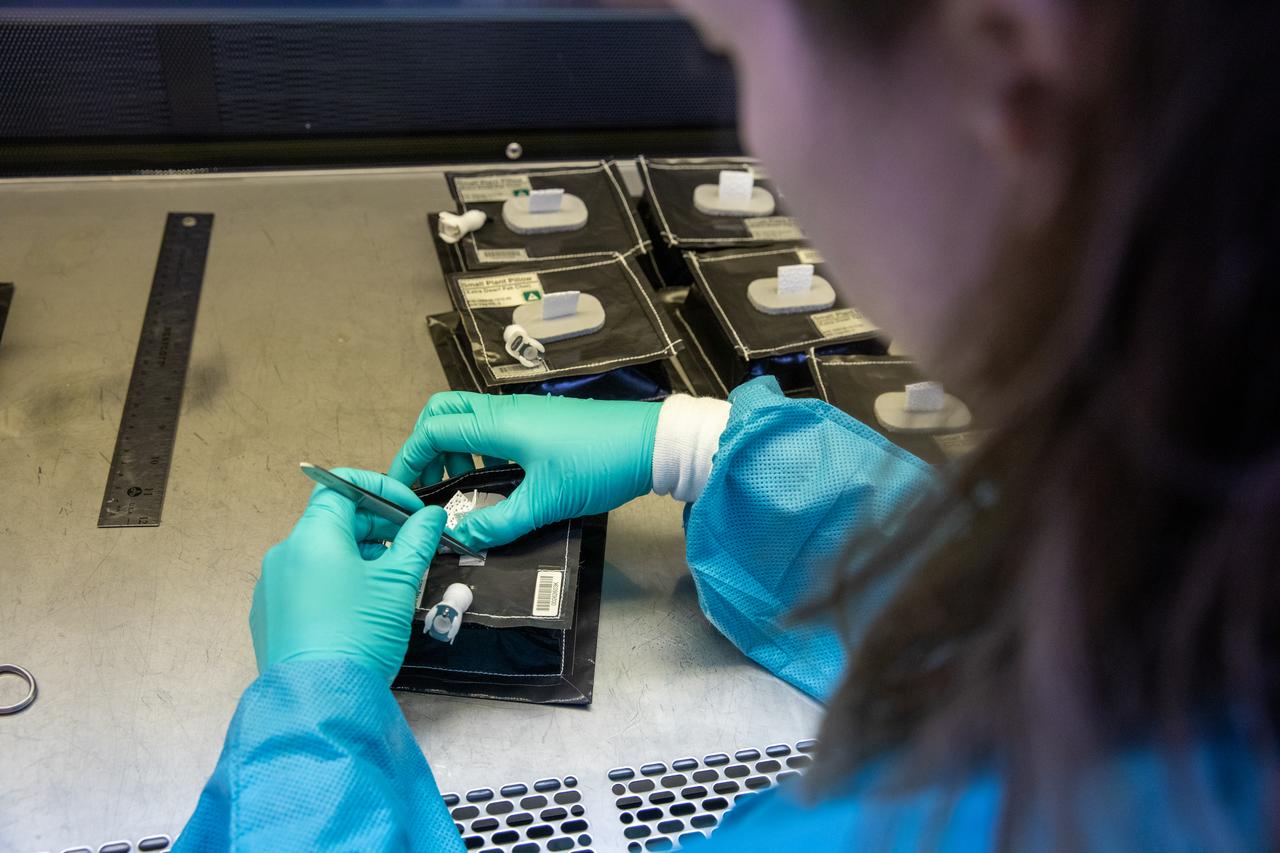
Inside the Space Station Processing Facility on Jan. 21, 2020, Jess Bunchek, a pseudonaut and associate scientist at NASA’s Kennedy Space Center in Florida, prepares plant pillows for their flight to the International Space Station. The pillows, which are a common method used to grow plants in space, are being sent to the orbiting laboratory on Northrop Grumman’s 13th resupply services (NG-13) mission for a series of VEG-03 experiments that will study the growth of three types of leafy greens in a microgravity environment. Once the pillows are assembled and packaged for flight, they will be transported to the agency’s Wallops Flight Facility in Virginia, where liftoff will occur. NG-13 is scheduled to launch on Feb. 9, 2020, at 5:39 p.m. EST.
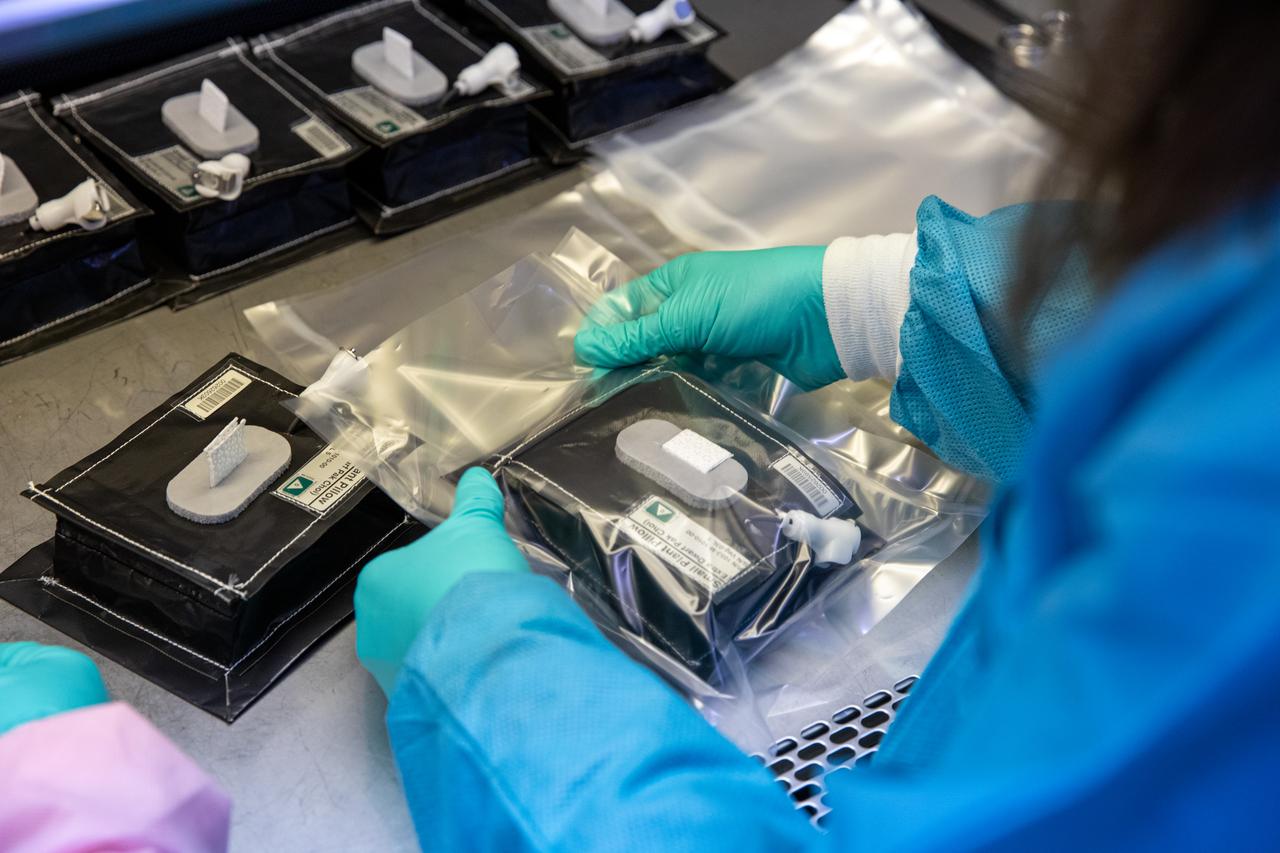
Inside the Space Station Processing Facility on Jan. 21, 2020, Jess Bunchek, a pseudonaut and associate scientist at NASA’s Kennedy Space Center in Florida, prepares plant pillows for their flight to the International Space Station. The pillows, which are a common method used to grow plants in space, are being sent to the orbiting laboratory on Northrop Grumman’s 13th resupply services (NG-13) mission for a series of VEG-03 experiments that will study the growth of three types of leafy greens in a microgravity environment. Once the pillows are assembled and packaged for flight, they will be transported to the agency’s Wallops Flight Facility in Virginia, where liftoff will occur. NG-13 is scheduled to launch on Feb. 9, 2020, at 5:39 p.m. EST.
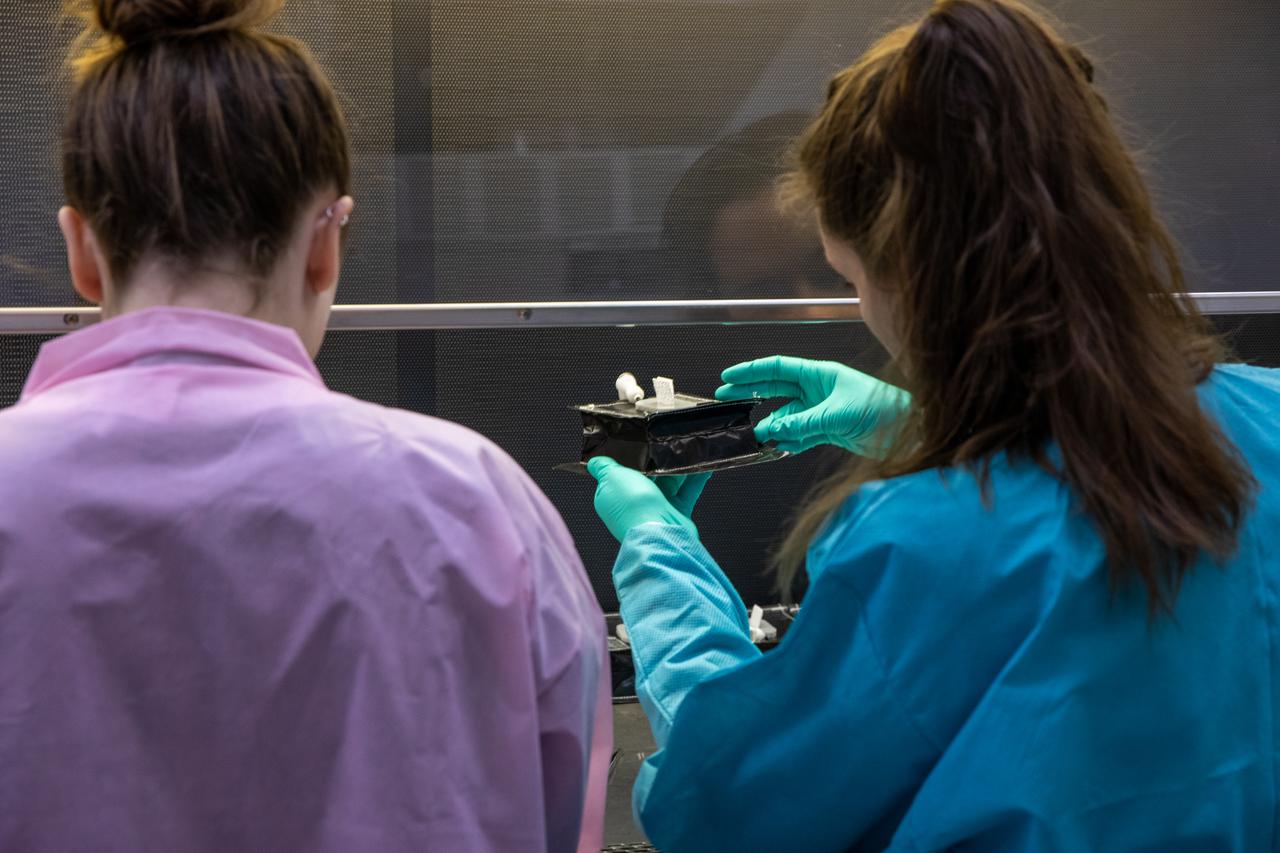
On Jan. 21, 2020, inside the Space Station Processing Facility at NASA’s Kennedy Space Center in Florida, intern Emily Kennebeck (left) and Jess Bunchek, a pseudonaut and associate scientist, prepare plant pillows for their flight to the International Space Station. The pillows, which are a common method used to grow plants in space, are being sent to the orbiting laboratory on Northrop Grumman’s 13th resupply services (NG-13) mission for a series of VEG-03 experiments that will study the growth of three types of leafy greens in a microgravity environment. Once the pillows are assembled and packaged for flight, they will be transported to the agency’s Wallops Flight Facility in Virginia, where liftoff will occur. NG-13 is scheduled to launch on Feb. 9, 2020, at 5:39 p.m. EST.
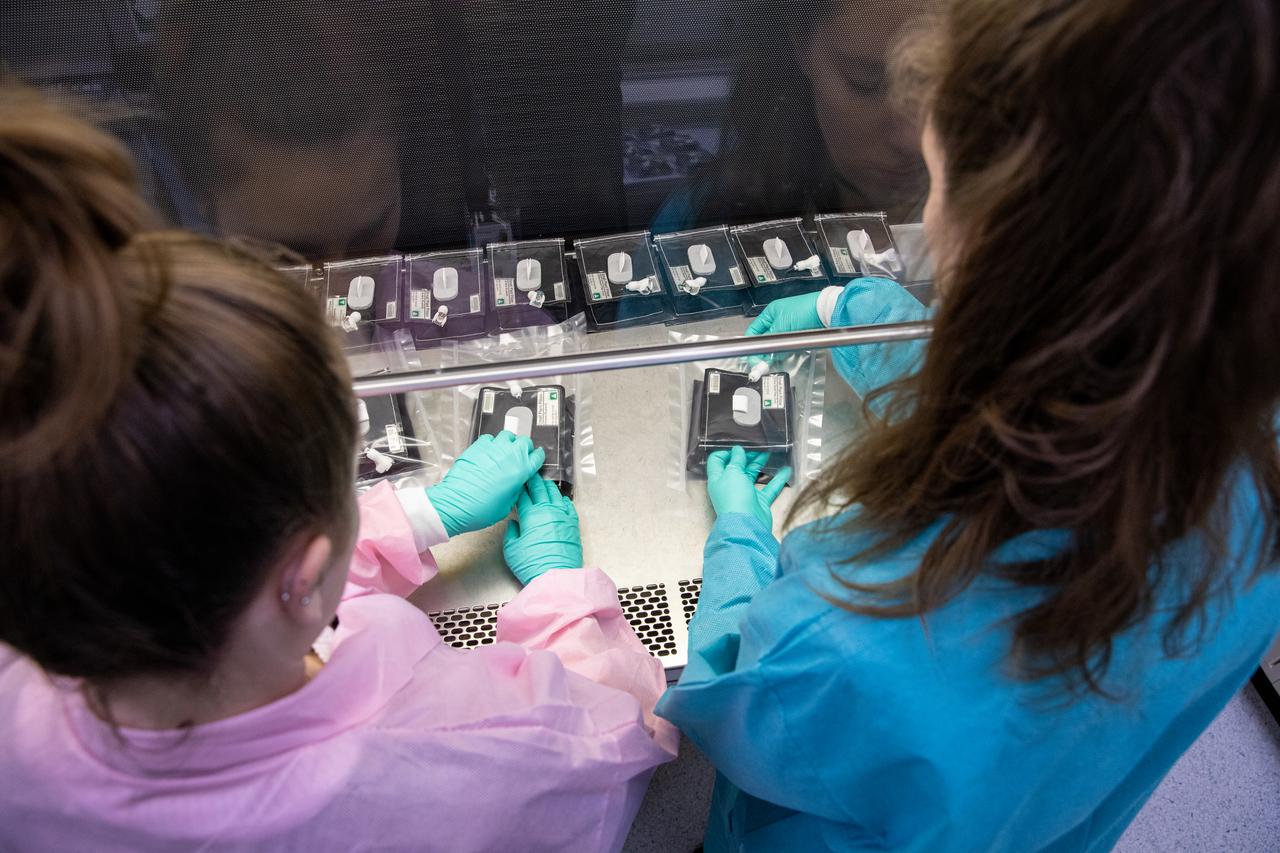
On Jan. 21, 2020, inside the Space Station Processing Facility at NASA’s Kennedy Space Center in Florida, intern Emily Kennebeck (left) and Jess Bunchek, a pseudonaut and associate scientist, prepare plant pillows for their upcoming flight to the International Space Station. The pillows, which are a common method used to grow plants in space, are being sent to the orbiting laboratory on Northrop Grumman’s 13th resupply services (NG-13) mission for a series of VEG-03 experiments that will study the growth of three types of leafy greens in a microgravity environment. Once the pillows are assembled and packaged for flight, they will be transported to the agency’s Wallops Flight Facility in Virginia, where liftoff will occur. NG-13 is scheduled to launch on Feb. 9, 2020, at 5:39 p.m. EST.
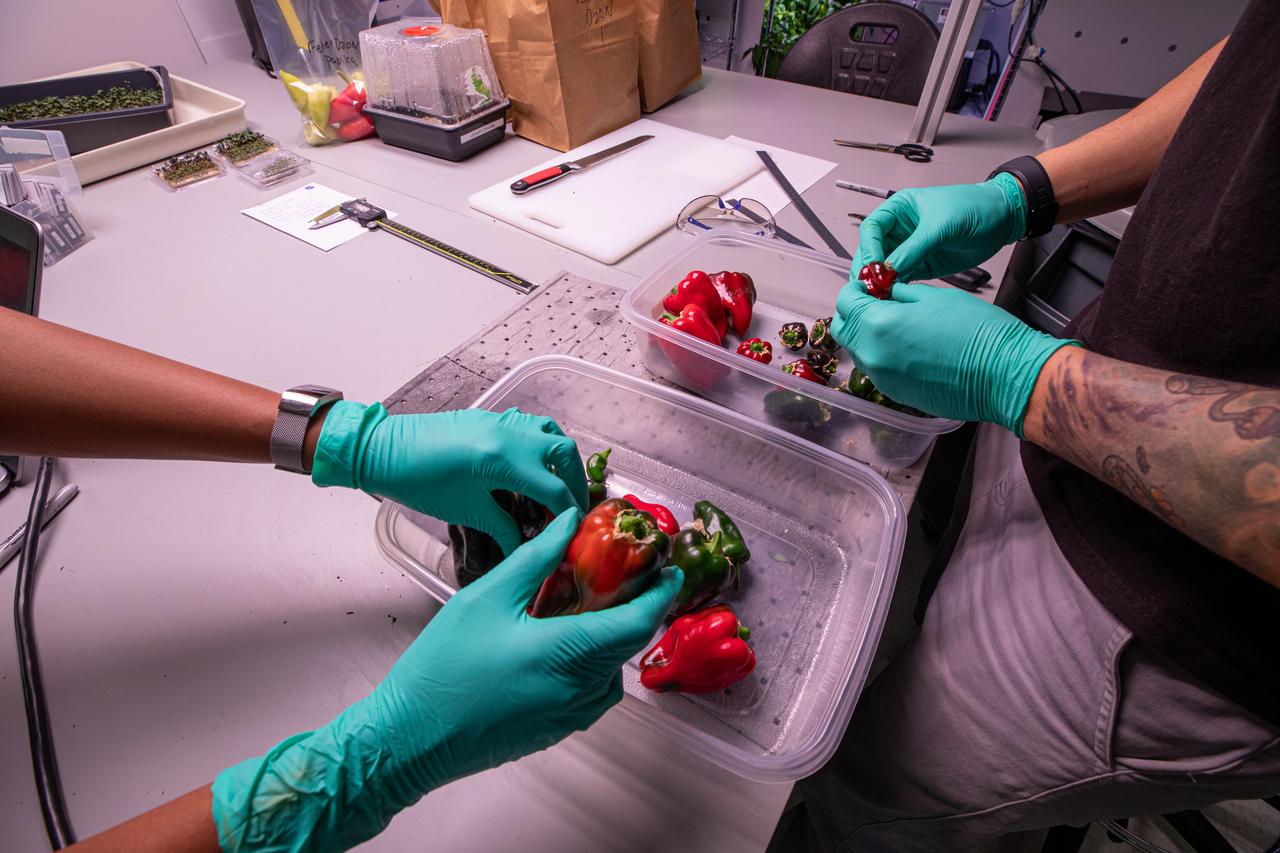
Research scientists at NASA’s Kennedy Space Center in Florida are preparing to weigh peppers grown inside the Space Station Processing Facility on Jan. 15, 2020, during a growth assessment in preparation for sending them to space. Scientists waited until the peppers were red, or nearly all red, before harvesting them. Fresh produce will be an essential supplement to the pre-packaged diet for astronauts during long-duration space exploration when they are away from Earth for extended periods of time.
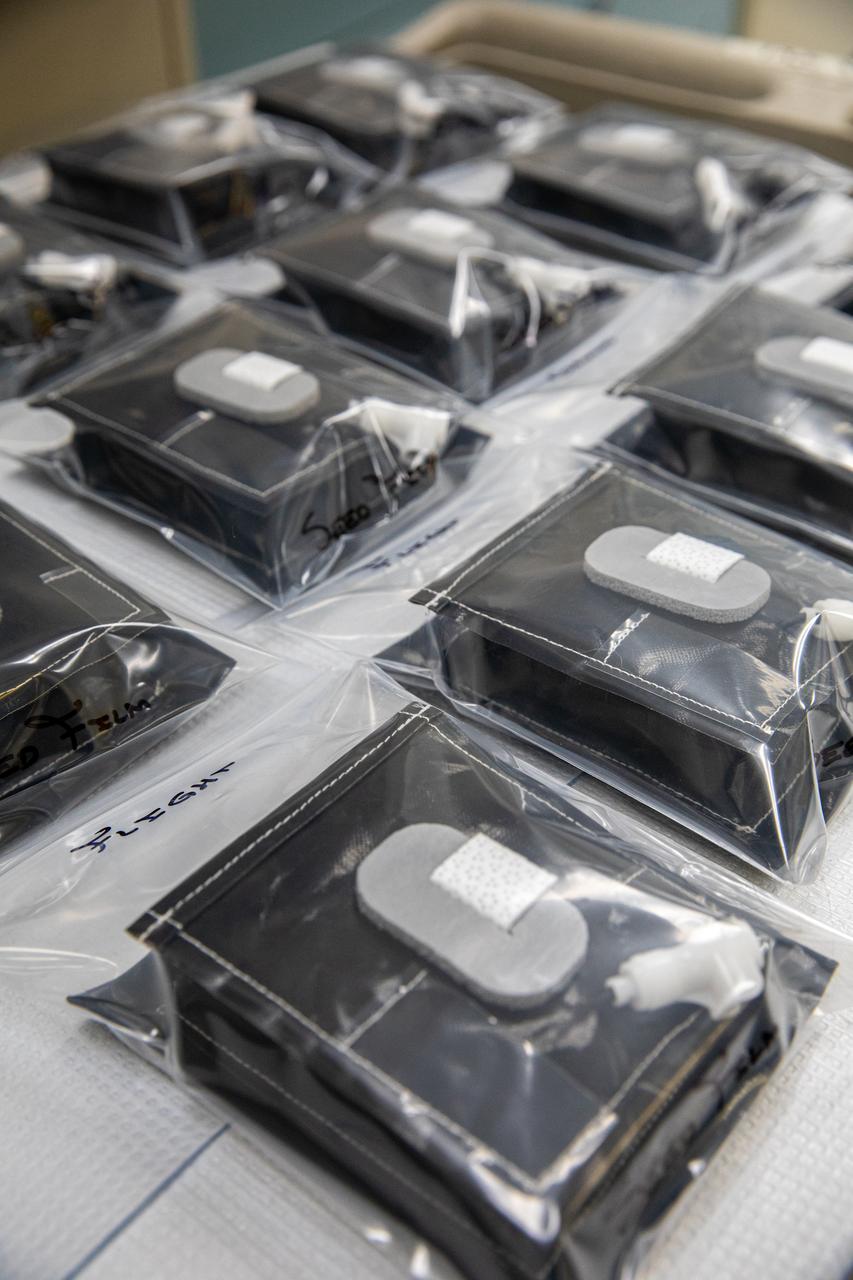
On Jan. 21, 2020, inside the Space Station Processing Facility at NASA’s Kennedy Space Center in Florida, plant pillows are packaged for their upcoming flight to the International Space Station on Northrop Grumman’s 13th resupply services (NG-13) mission. The pillows, which are a common method used to grow plants in space, are being sent to the orbiting laboratory for a series of VEG-03 experiments that will study the growth of three types of leafy greens in a microgravity environment. Once the pillows are assembled and packaged for flight, they will be transported to the agency’s Wallops Flight Facility in Virginia, where liftoff will occur. NG-13 is scheduled to launch on Feb. 9, 2020, at 5:39 p.m. EST.
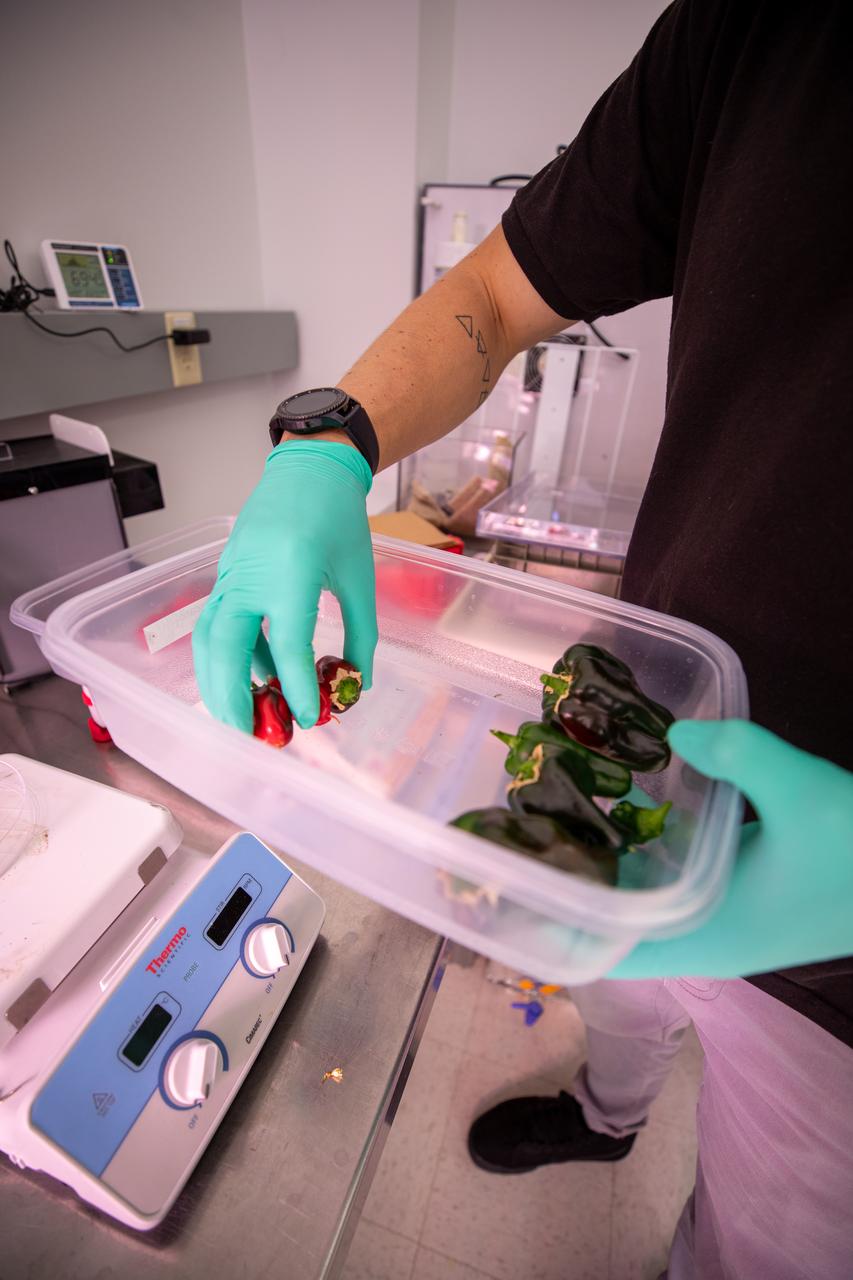
Jason Fischer, a research scientist with the Laboratory Support Services and Operations contract at NASA’s Kennedy Space Center in Florida, weighs peppers that were harvested from inside the Space Station Processing Facility on Jan. 15, 2020, prior to weighing them in preparation for sending them to space. As NASA prepares to send humans beyond low-Earth orbit, the ability for astronauts to grow a variety of fresh fruits and vegetables in space will be critical. Fresh produce will be an essential supplement to the crew’s pre-packaged diet during long-duration space exploration when they are away from Earth for extended periods of time.
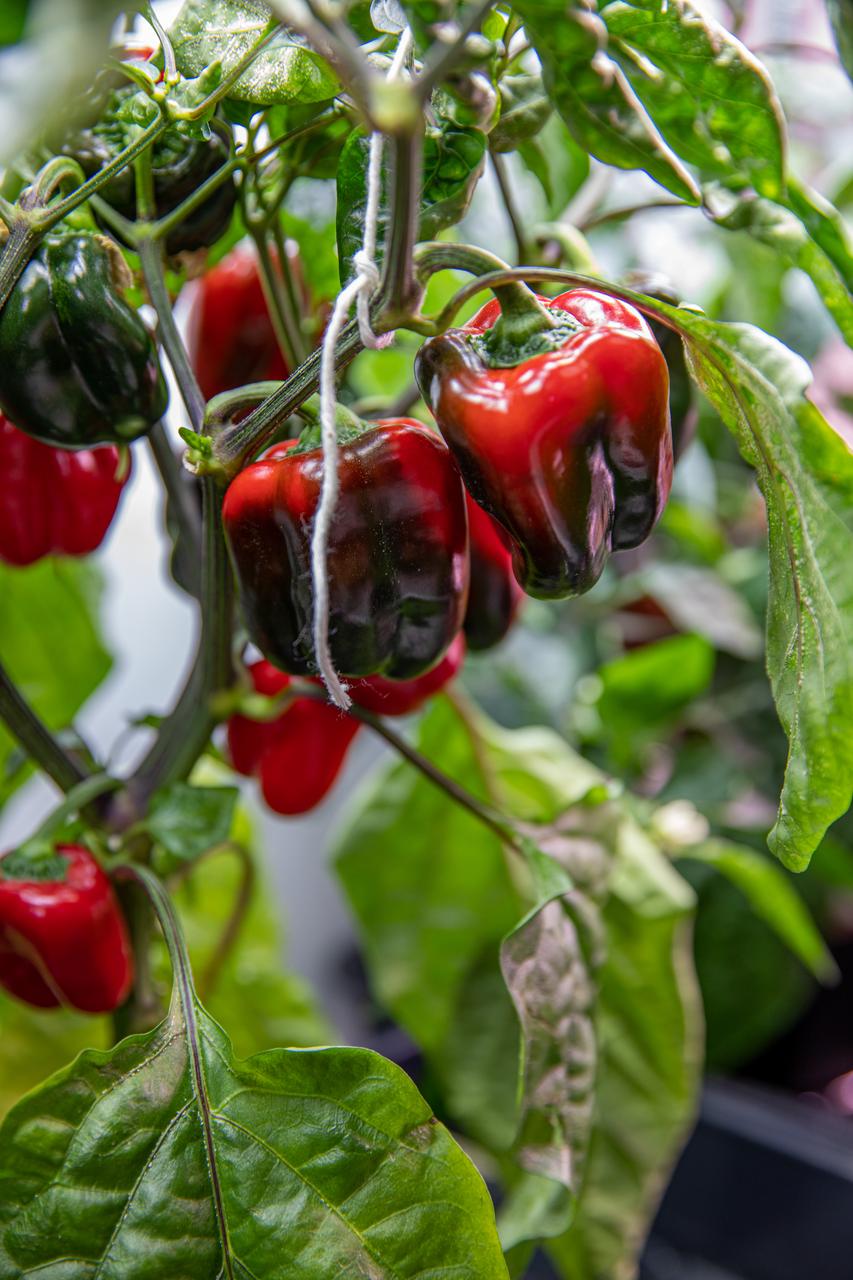
Researchers are growing green peppers inside the Space Station Processing Facility at NASA’s Kennedy Space Center in Florida on Jan. 15, 2020, in preparation for sending them to space. As NASA prepares to send humans beyond low-Earth orbit, the ability for astronauts to grow a variety of fresh fruits and vegetables in space will be critical. Fresh produce will be an essential supplement to the crew’s pre-packaged diet during long-duration space exploration when they are away from Earth for extended periods of time.
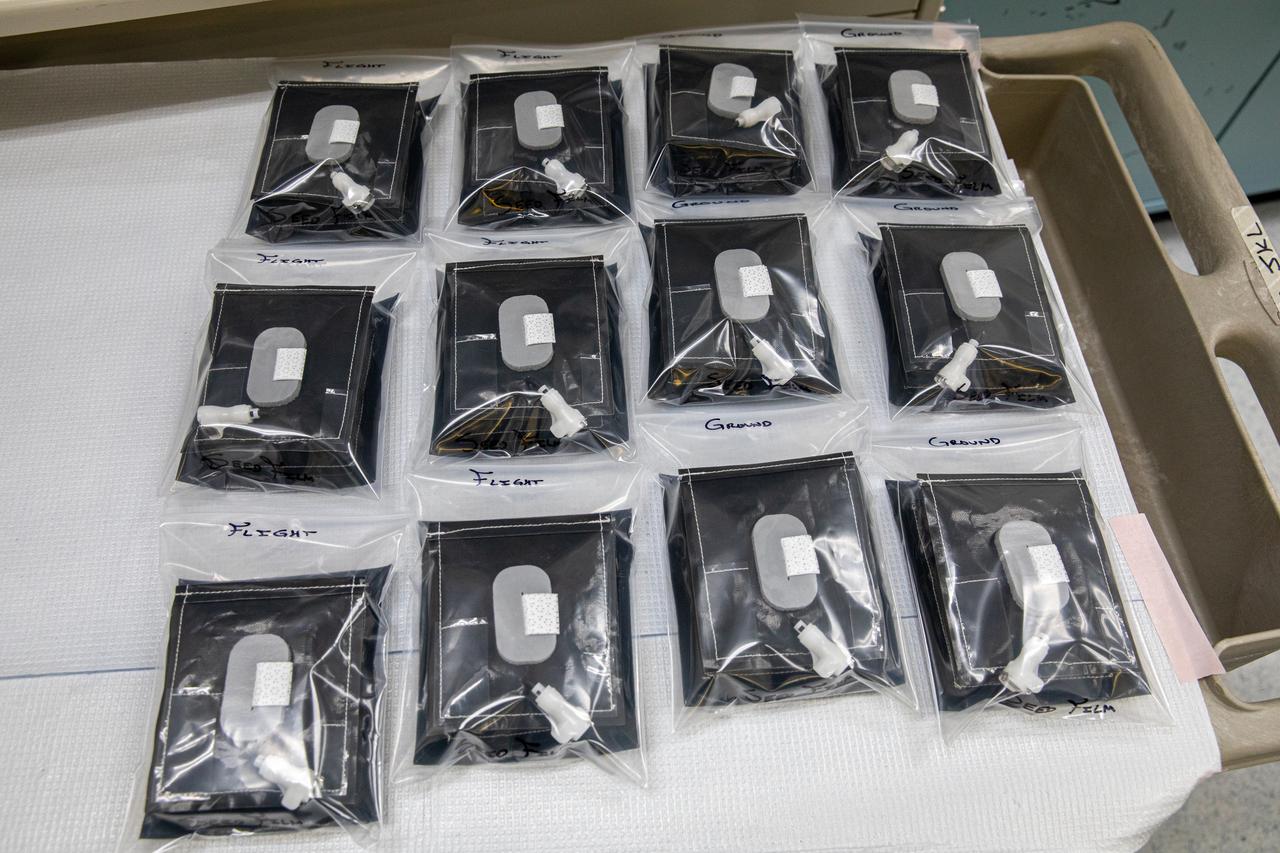
On Jan. 21, 2020, inside the Space Station Processing Facility at NASA’s Kennedy Space Center in Florida, plant pillows are packaged for their upcoming flight to the International Space Station on Northrop Grumman’s 13th resupply services (NG-13) mission. The pillows, which are a common method used to grow plants in space, are being sent to the orbiting laboratory for a series of VEG-03 experiments that will study the growth of three types of leafy greens in a microgravity environment. Once the pillows are assembled and packaged for flight, they will be transported to the agency’s Wallops Flight Facility in Virginia, where liftoff will occur. NG-13 is scheduled to launch on Feb. 9, 2020, at 5:39 p.m. EST.
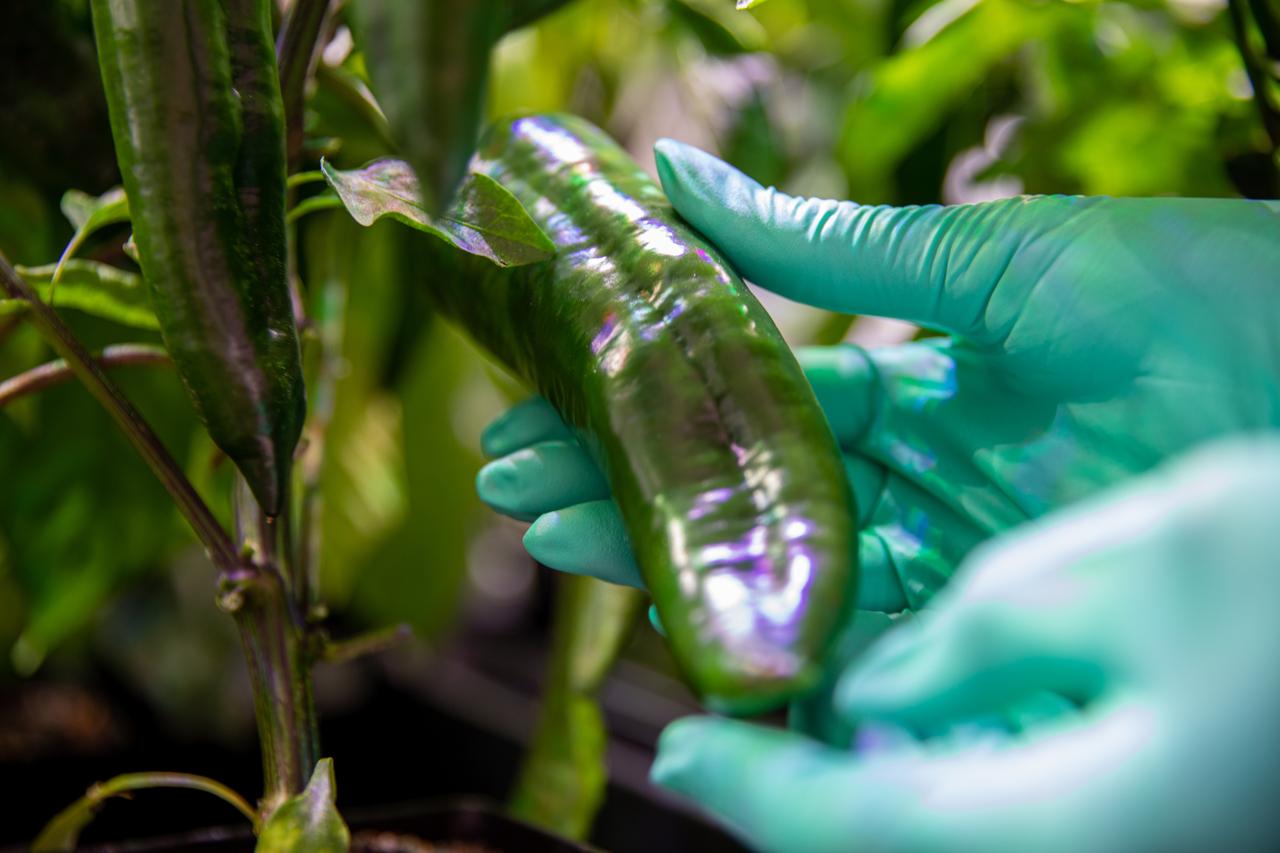
Researchers are growing green peppers inside the Space Station Processing Facility at NASA’s Kennedy Space Center in Florida on Jan. 15, 2020, in preparation for sending them to space. As NASA prepares to send humans beyond low-Earth orbit, the ability for astronauts to grow a variety of fresh fruits and vegetables in space will be critical. Fresh produce will be an essential supplement to the crew’s pre-packaged diet during long-duration space exploration when they are away from Earth for extended periods of time.
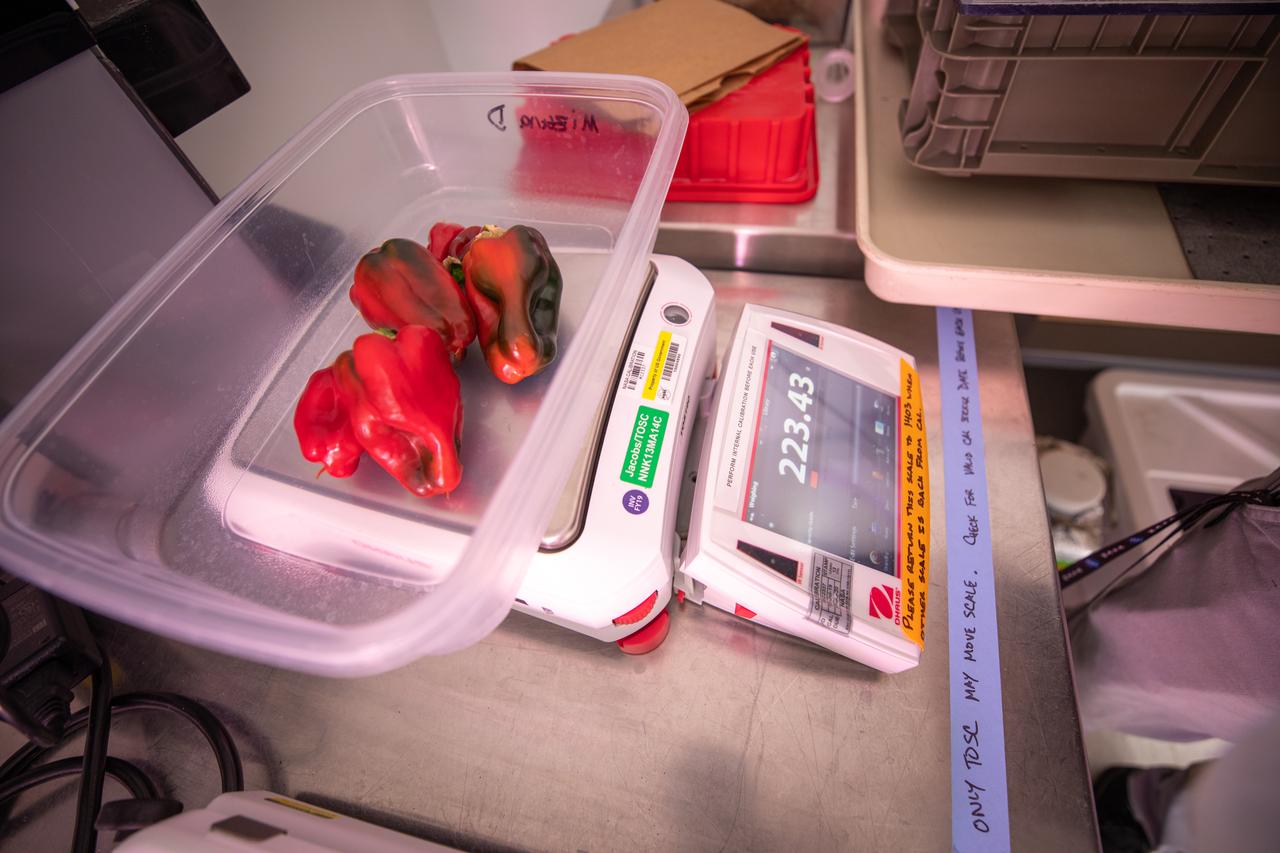
Peppers that were grown and harvested inside the Space Station Processing Facility at NASA’s Kennedy Space Center in Florida are weighed on Jan. 15, 2020, in preparation for sending them to space. As NASA prepares to send humans beyond low-Earth orbit, the ability for astronauts to grow a variety of fresh fruits and vegetables in space will be critical. Fresh produce will be an essential supplement to the crew’s pre-packaged diet during long-duration space exploration when they are away from Earth for extended periods of time.
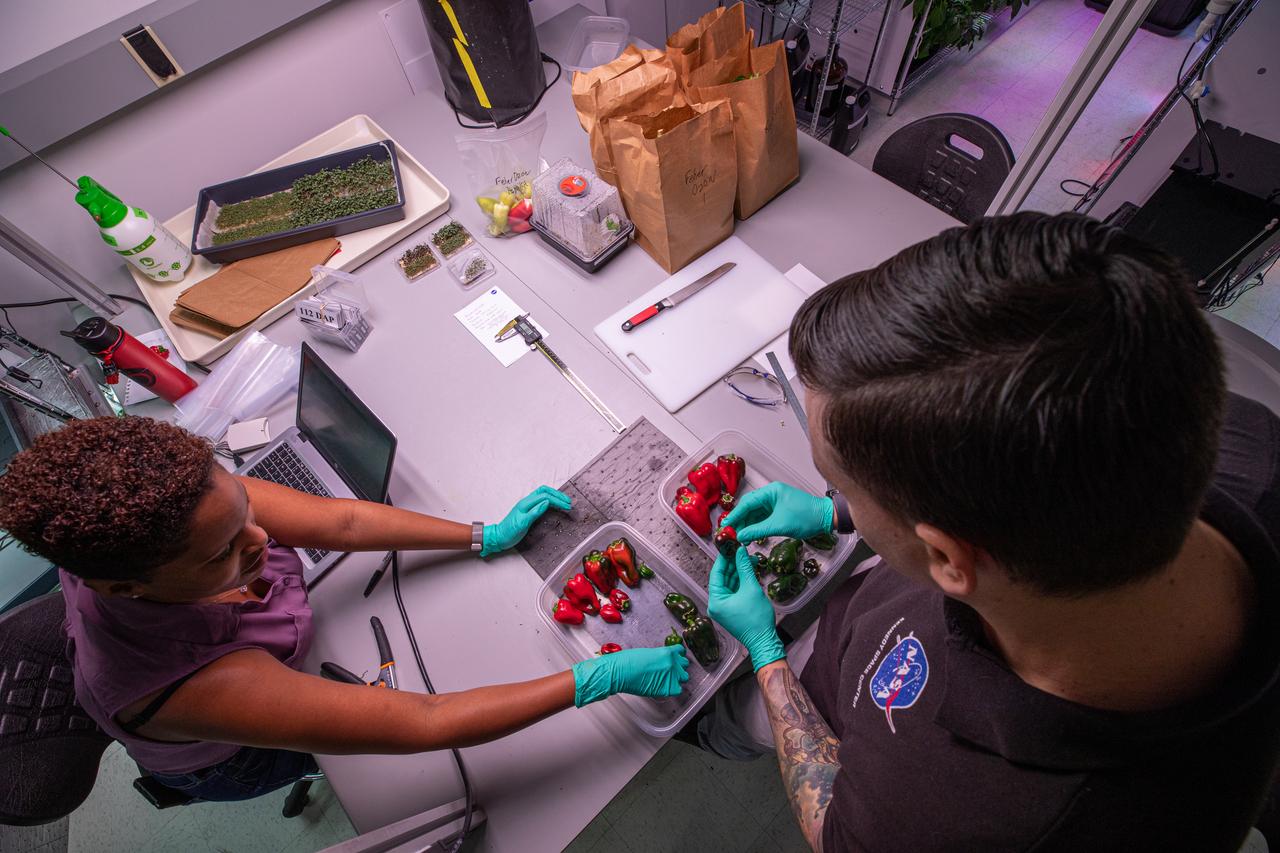
Plant Scientist Lashelle Spencer (left) and Research Scientist Jason Fischer with the Laboratory Support Services and Operations contract at NASA’s Kennedy Space Center in Florida remove the stems from peppers that were grown inside the Space Station Processing Facility on Jan. 15, 2020, prior to weighing them in preparation for sending them to space. As NASA prepares to send humans beyond low-Earth orbit, the ability for astronauts to grow a variety of fresh fruits and vegetables in space will be critical. Fresh produce will be an essential supplement to the crew’s pre-packaged diet during long-duration space exploration when they are away from Earth for extended periods of time.

Jason Fischer (left), a research scientist, and Lashelle Spencer, a plant scientist, with the Laboratory Support Services and Operations contract at NASA’s Kennedy Space Center in Florida, observe and document the growth of pepper plants prior to harvesting them on Jan. 15, 2020, inside the Space Station Processing Facility in preparation for sending them to space. As NASA prepares to send humans beyond low-Earth orbit, the ability for astronauts to grow a variety of fresh fruits and vegetables in space will be critical. Fresh produce will be an essential supplement to the crew’s pre-packaged diet during long-duration space exploration when they are away from Earth for extended periods of time.
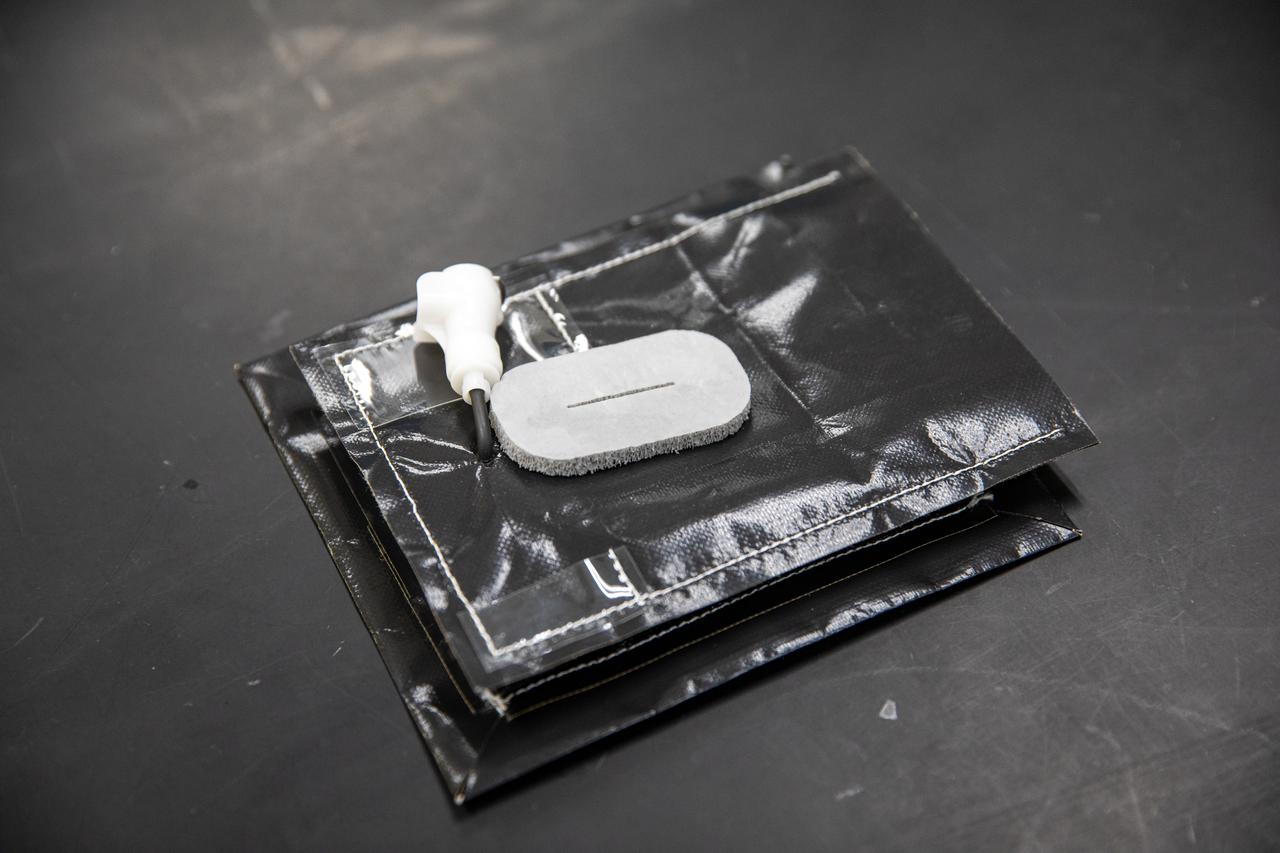
A plant pillow is photographed inside the Space Station Processing Facility at NASA’s Kennedy Space Center in Florida on Jan. 21, 2020, prior to being packaged for flight to the International Space Station. A number of plant pillows are being prepped to fly to the orbiting laboratory on Northrop Grumman’s 13th resupply services (NG-13) mission for a series of VEG-03 experiments that will study the growth of three types of leafy greens in a microgravity environment. Once the pillows are ready for flight, they will be transported to the agency’s Wallops Flight Facility in Virginia, where liftoff will occur. NG-13 is scheduled to launch on Feb. 9, 2020, at 5:39 p.m. EST.
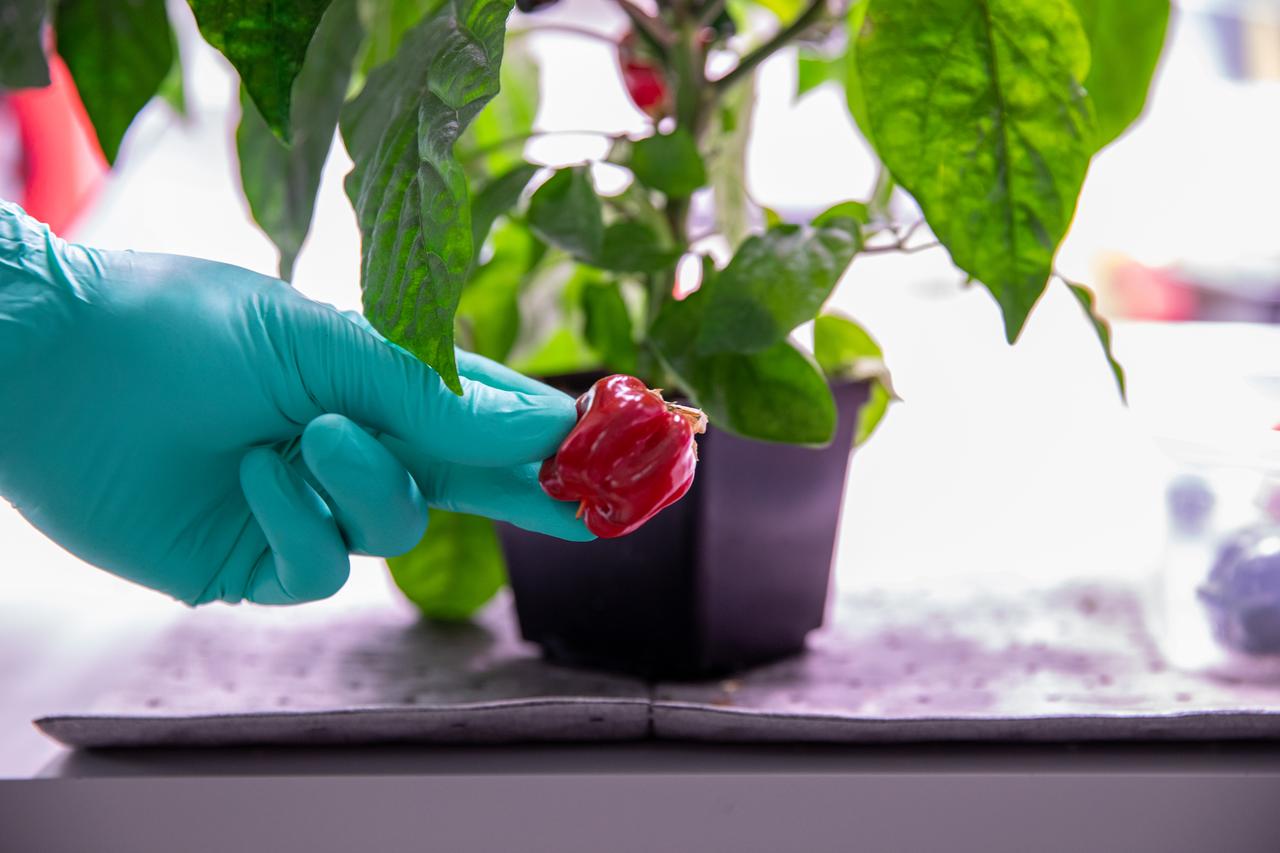
Inside the Space Station Processing Facility at NASA’s Kennedy Space Center in Florida, peppers are harvested on Jan. 15, 2020, for a growth assessment in preparation for sending them to space. As NASA prepares to send humans beyond low-Earth orbit, the ability for astronauts to grow a variety of fresh fruits and vegetables in space will be critical. Fresh produce will be an essential supplement to the crew’s pre-packaged diet during long-duration space exploration when they are away from Earth for extended periods of time.
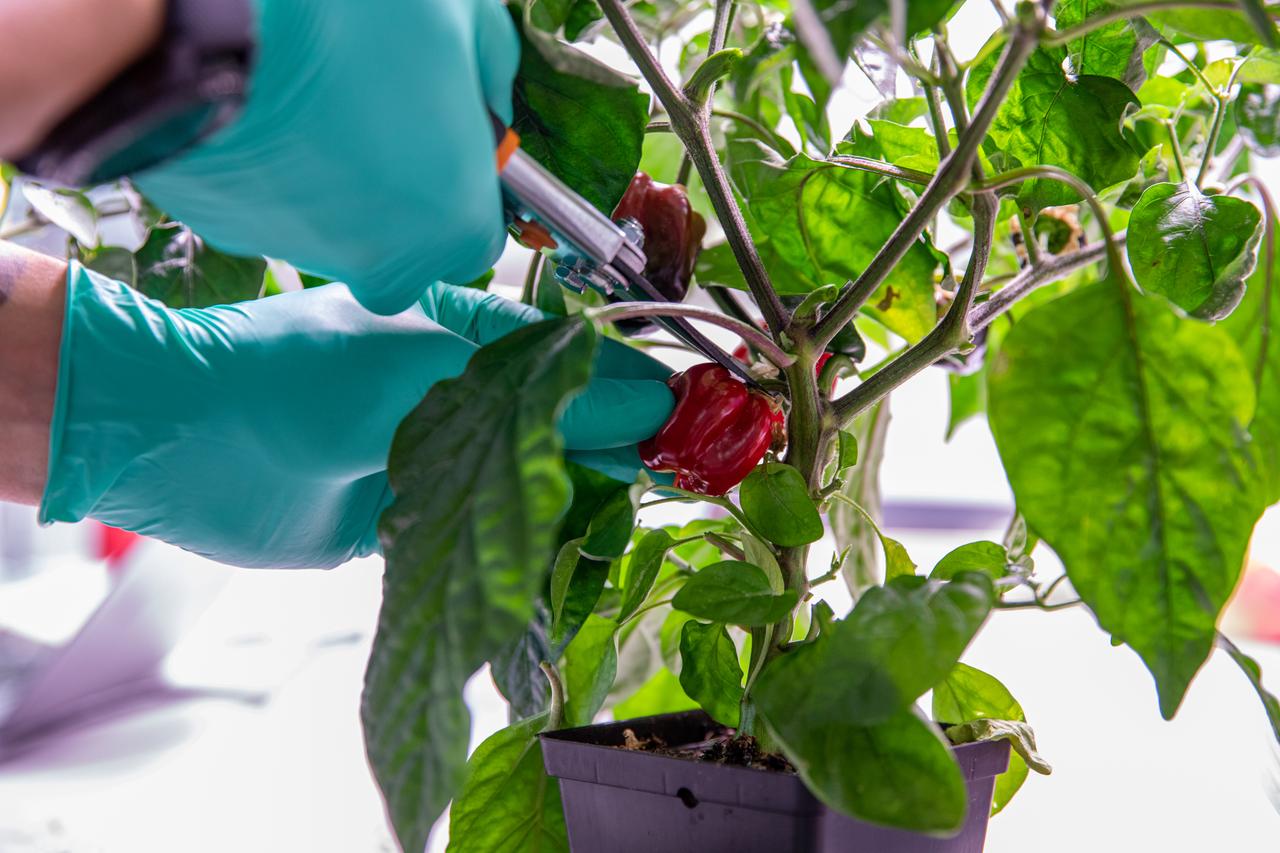
Jason Fischer, a research scientist with the Laboratory Support Services and Operations contract at NASA’s Kennedy Space Center in Florida, observes and documents the growth of peppers prior to harvesting them on Jan. 15, 2020, inside the Space Station Processing Facility in preparation for sending them to space. As NASA prepares to send humans beyond low-Earth orbit, the ability for astronauts to grow a variety of fresh fruits and vegetables in space will be critical. Fresh produce will be an essential supplement to the crew’s pre-packaged diet during long-duration space exploration when they are away from Earth for extended periods of time.
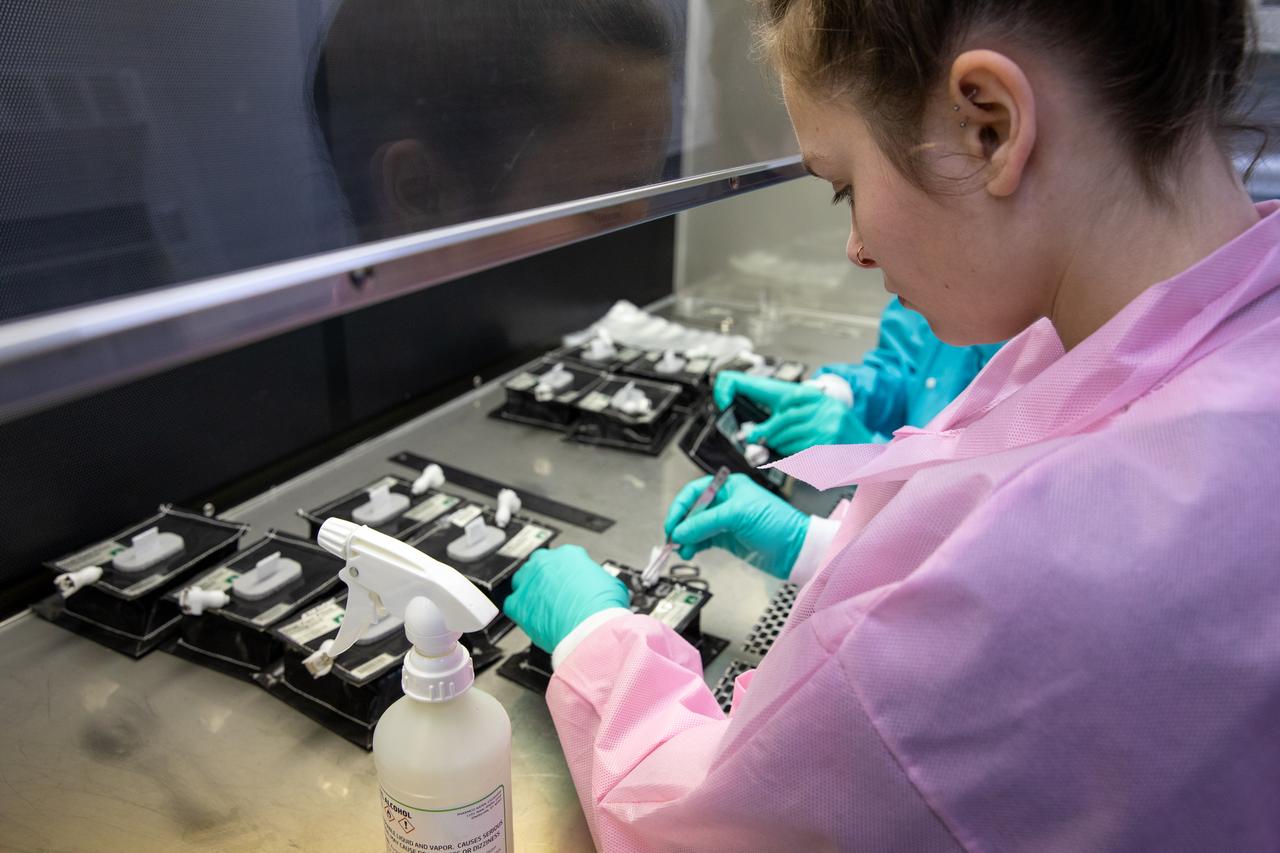
On Jan. 21, 2020, inside the Space Station Processing Facility at NASA’s Kennedy Space Center in Florida, intern Emily Kennebeck prepares plant pillows for their flight to the International Space Station. The pillows, which are a common method used to grow plants in space, are being sent to the orbiting laboratory on Northrop Grumman’s 13th resupply services (NG-13) mission for a series of VEG-03 experiments that will study the growth of three types of leafy greens in a microgravity environment. Once the pillows are assembled and packaged for flight, they will be transported to the agency’s Wallops Flight Facility in Virginia, where liftoff will occur. NG-13 is scheduled to launch on Feb. 9, 2020, at 5:39 p.m. EST.
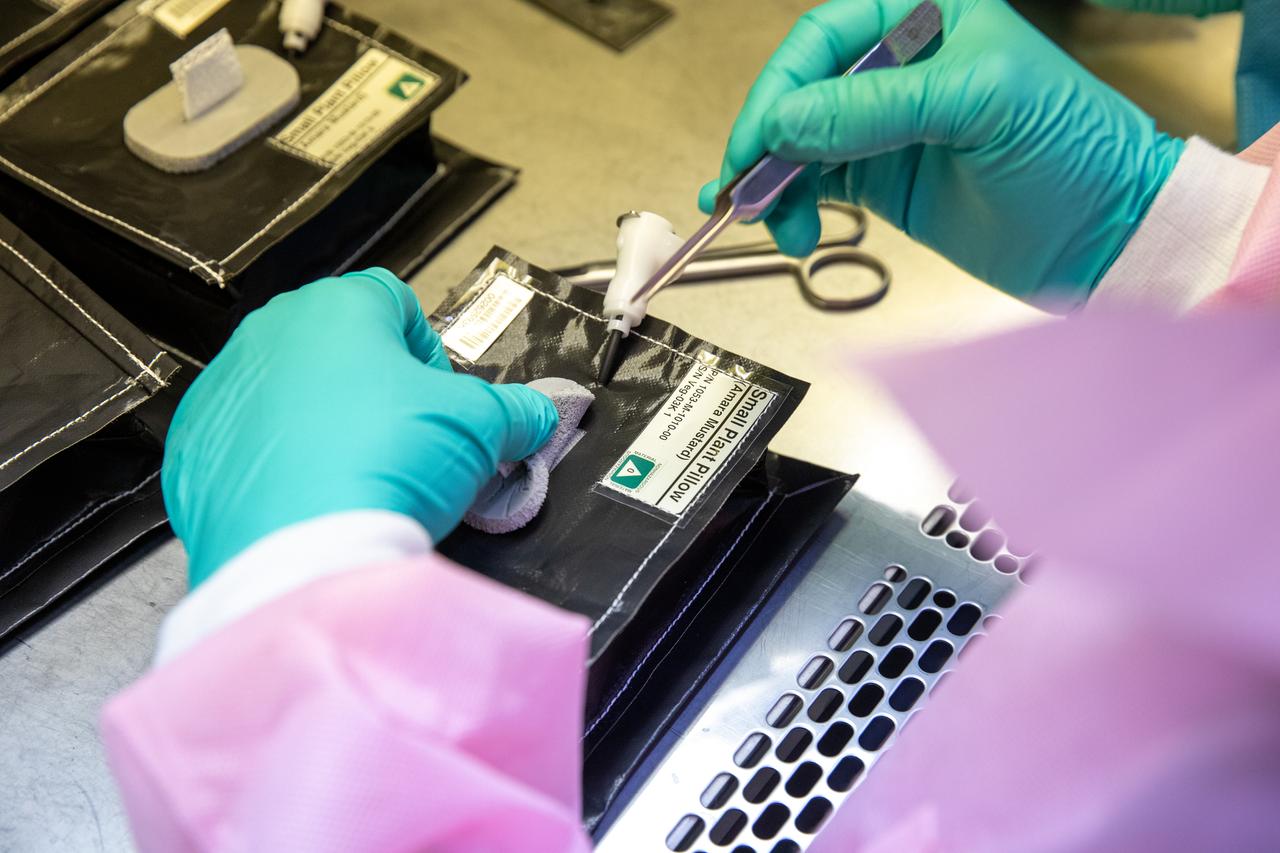
Inside the Space Station Processing Facility on Jan. 21, 2020, Emily Kennebeck, an intern at NASA’s Kennedy Space Center in Florida, prepares plant pillows for their flight to the International Space Station. The pillows, which are a common method used to grow plants in space, are being sent to the orbiting laboratory on Northrop Grumman’s 13th resupply services (NG-13) mission for a series of VEG-03 experiments that will study the growth of three types of leafy greens in a microgravity environment. Once the pillows are assembled and packaged for flight, they will be transported to the agency’s Wallops Flight Facility in Virginia, where liftoff will occur. NG-13 is scheduled to launch on Feb. 9, 2020, at 5:39 p.m. EST.